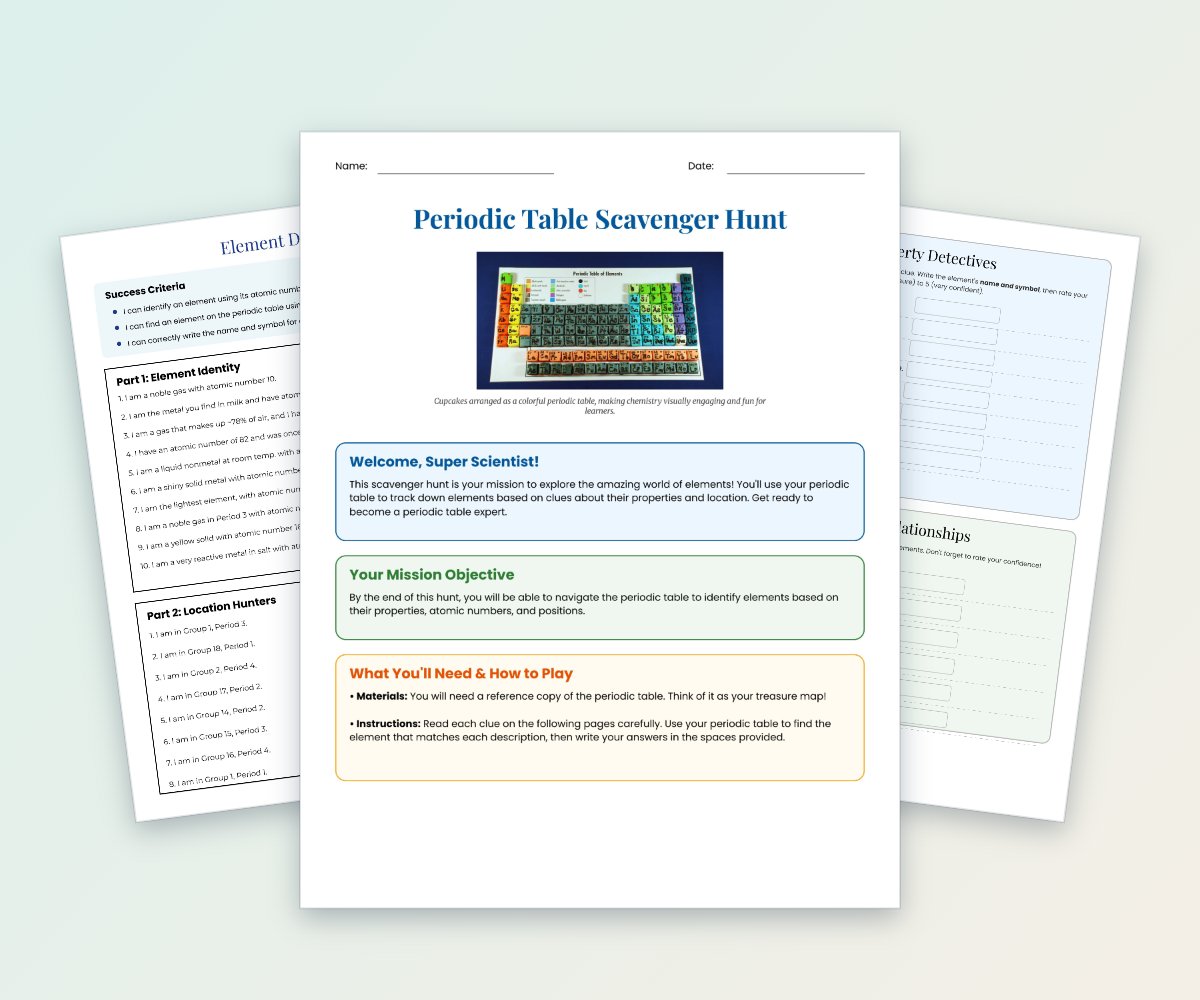
Periodic Table Scavenger Hunt
Students solve element clues using atomic numbers, properties, groups, and periods on the periodic table.
$4
Clear, practical resources for busy educators, organized so you can get from search to ready-to-teach quickly.
Students solve element clues using atomic numbers, properties, groups, and periods on the periodic table.
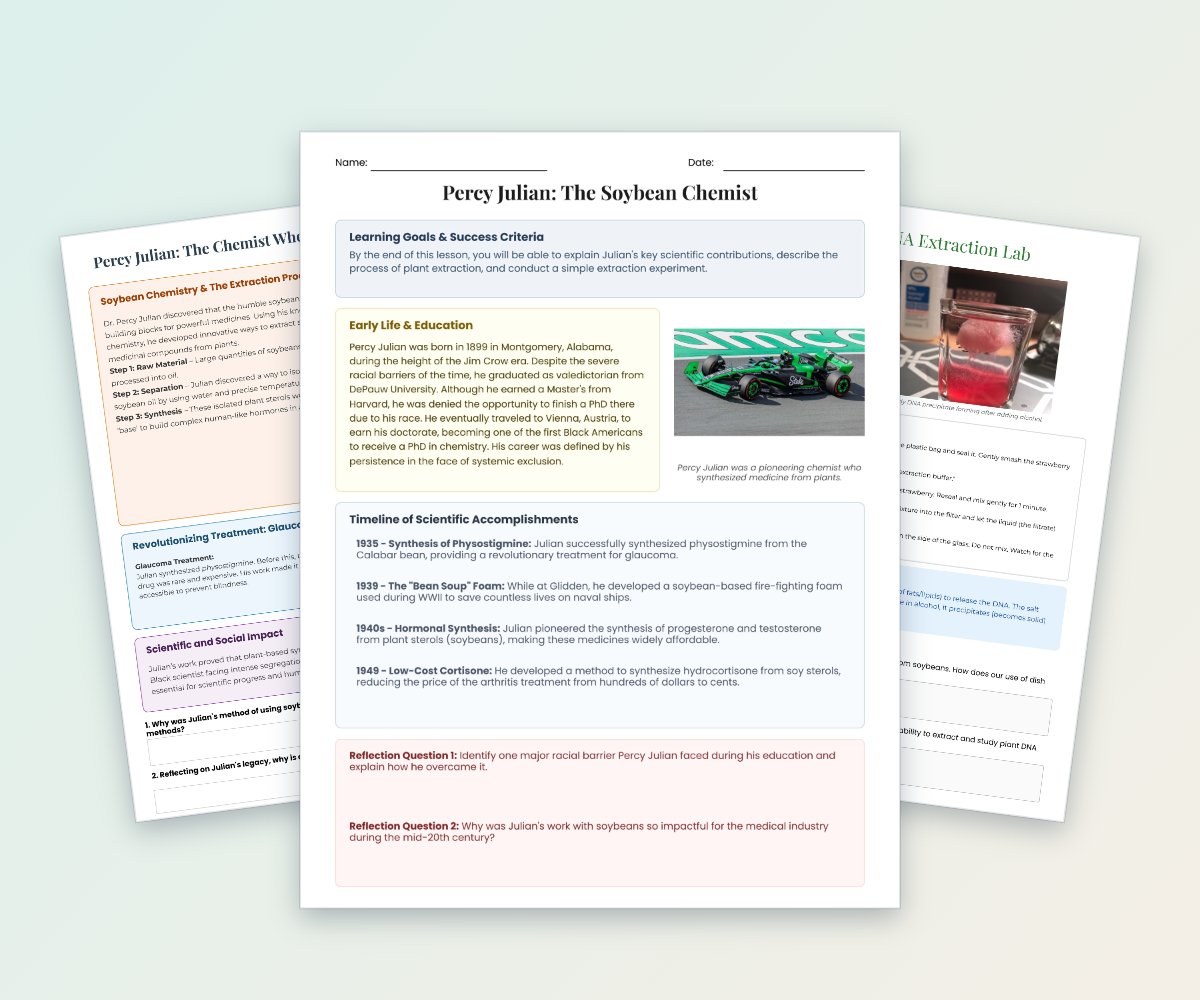
This lesson explores Percy Julian’s scientific achievements, including plant-based synthesis of medicines and soybean chemistry.
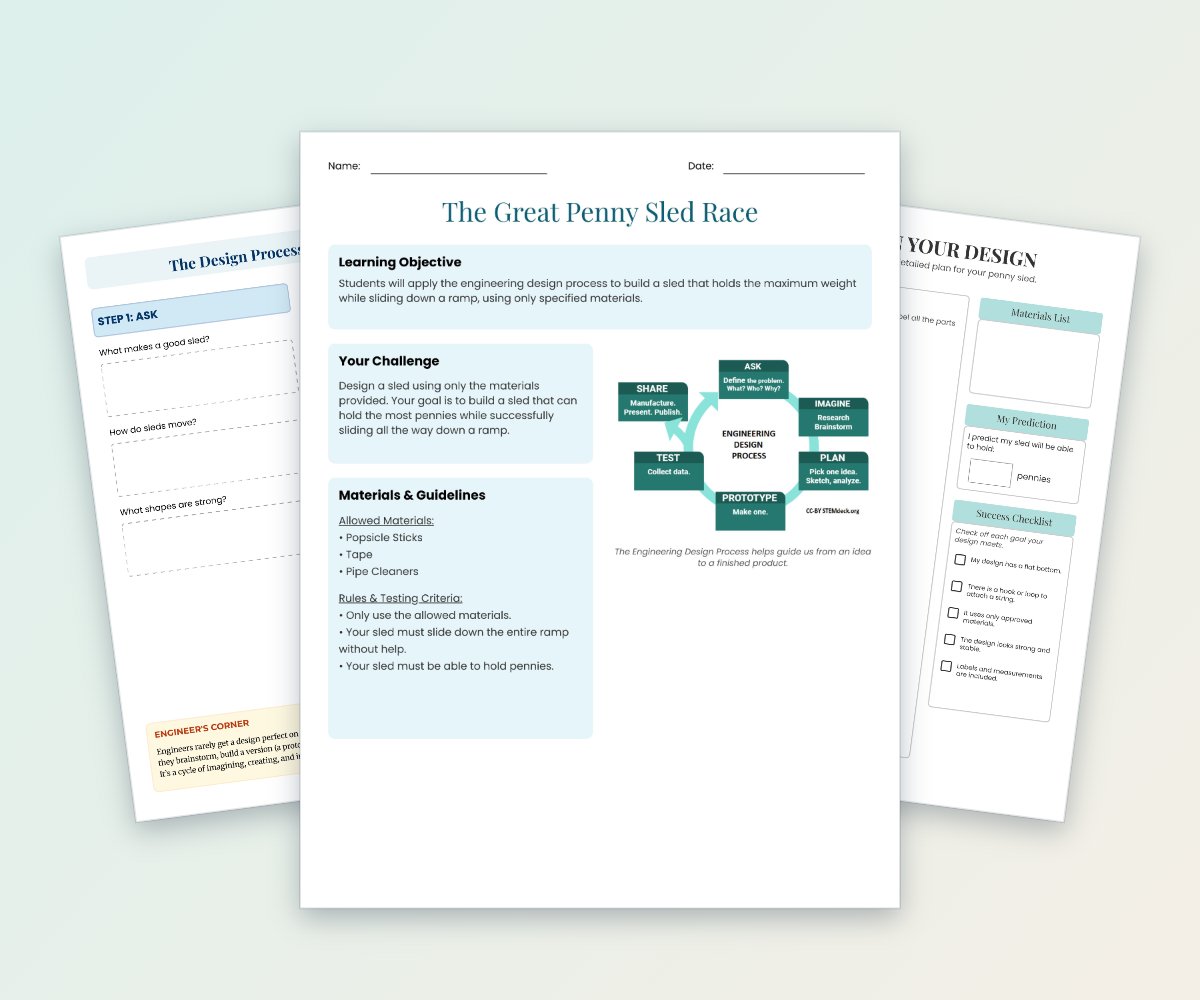
Students design, build, and test a sled made from limited materials to determine how many pennies it can carry down a ramp.
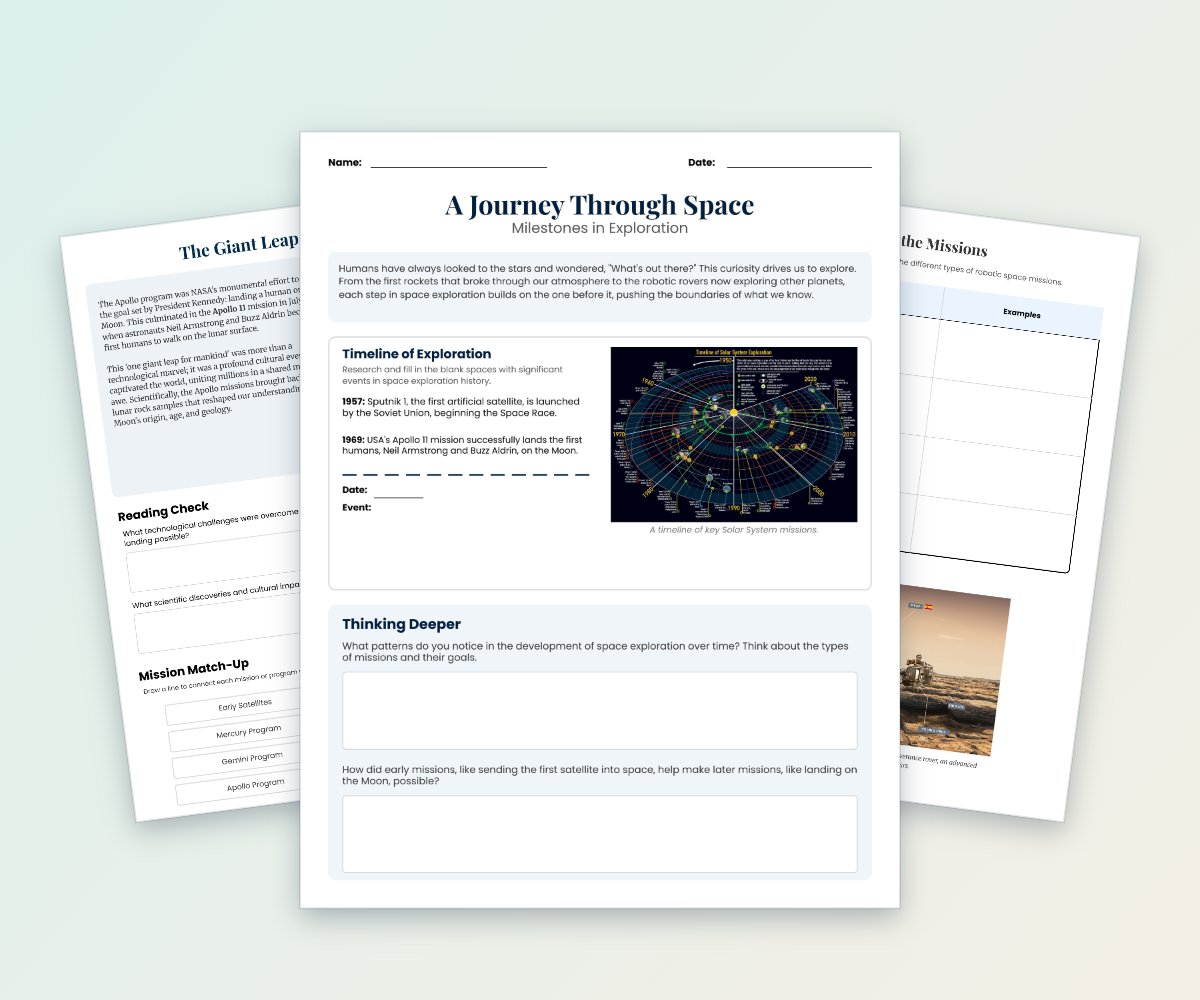
Students explore major milestones in space exploration, including Sputnik, Apollo 11, and robotic missions.
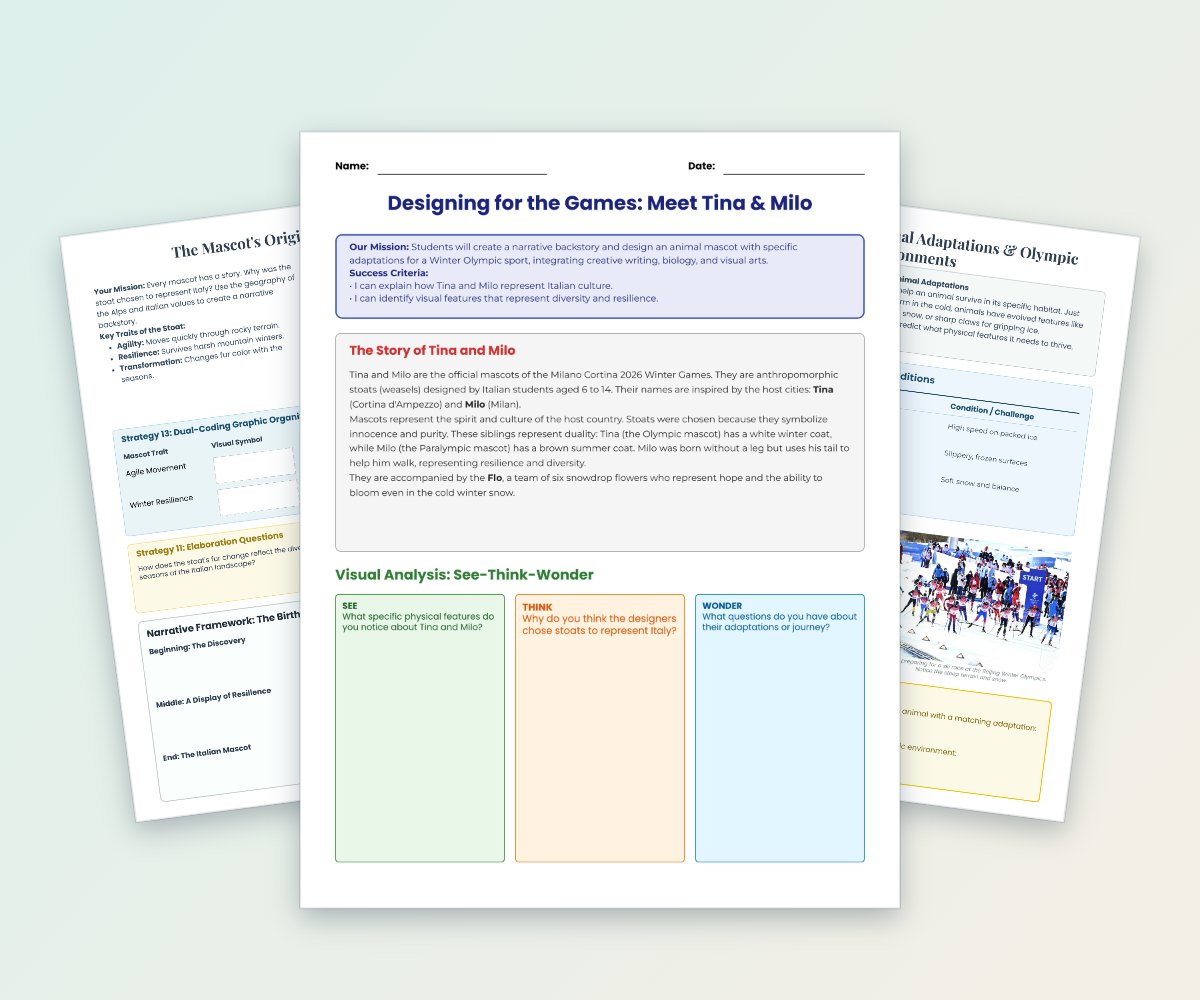
Students analyze the Milano Cortina 2026 mascots, explore stoat adaptations and Italian geography, and design an original Olympic winter-sport mascot.
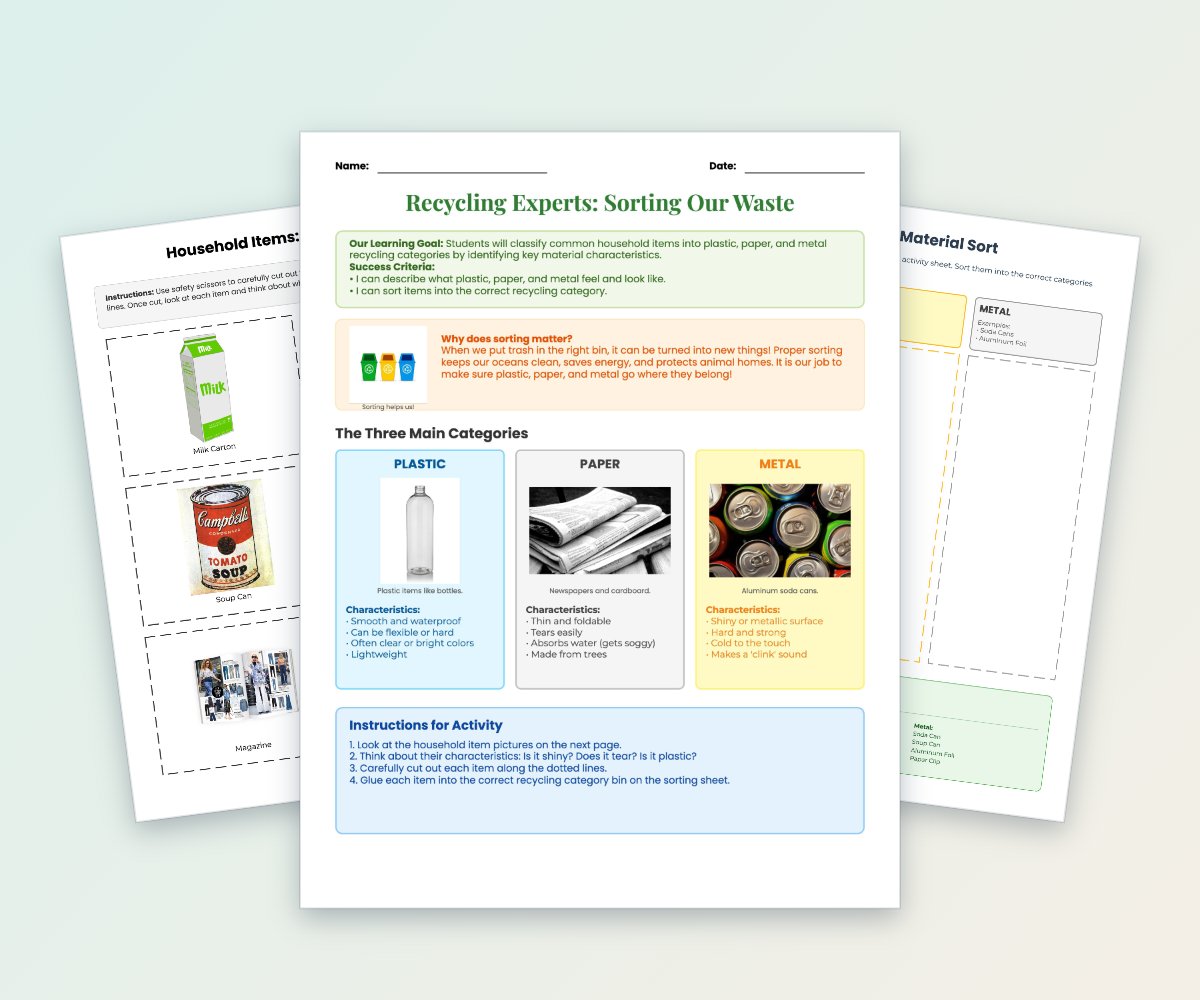
Students learn to identify plastic, paper, and metal by their observable characteristics, then sort household items into recycling categories.
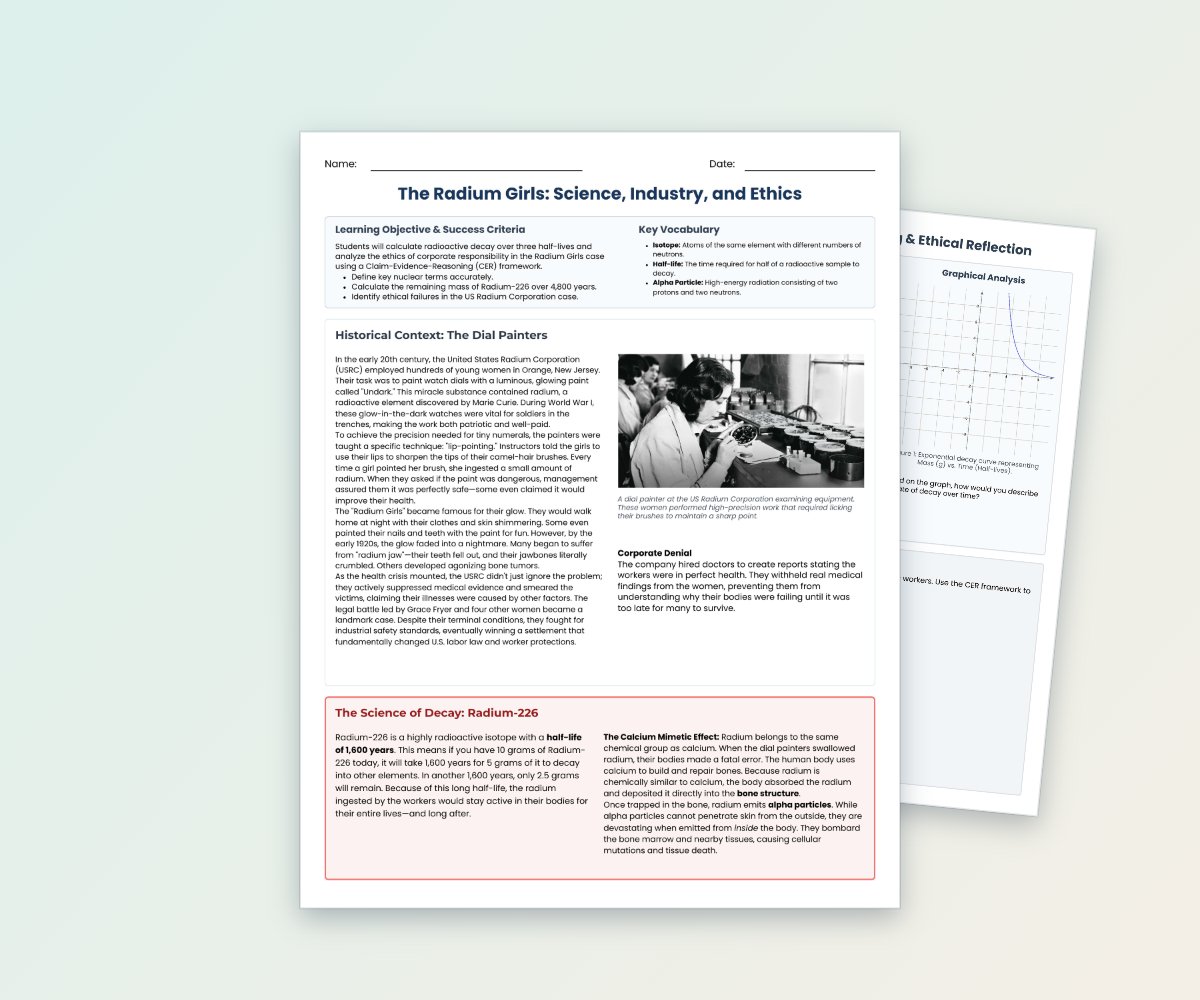
This two-page worksheet introduces isotopes, half-life, alpha particles, and radioactive decay through the history of the Radium Girls.
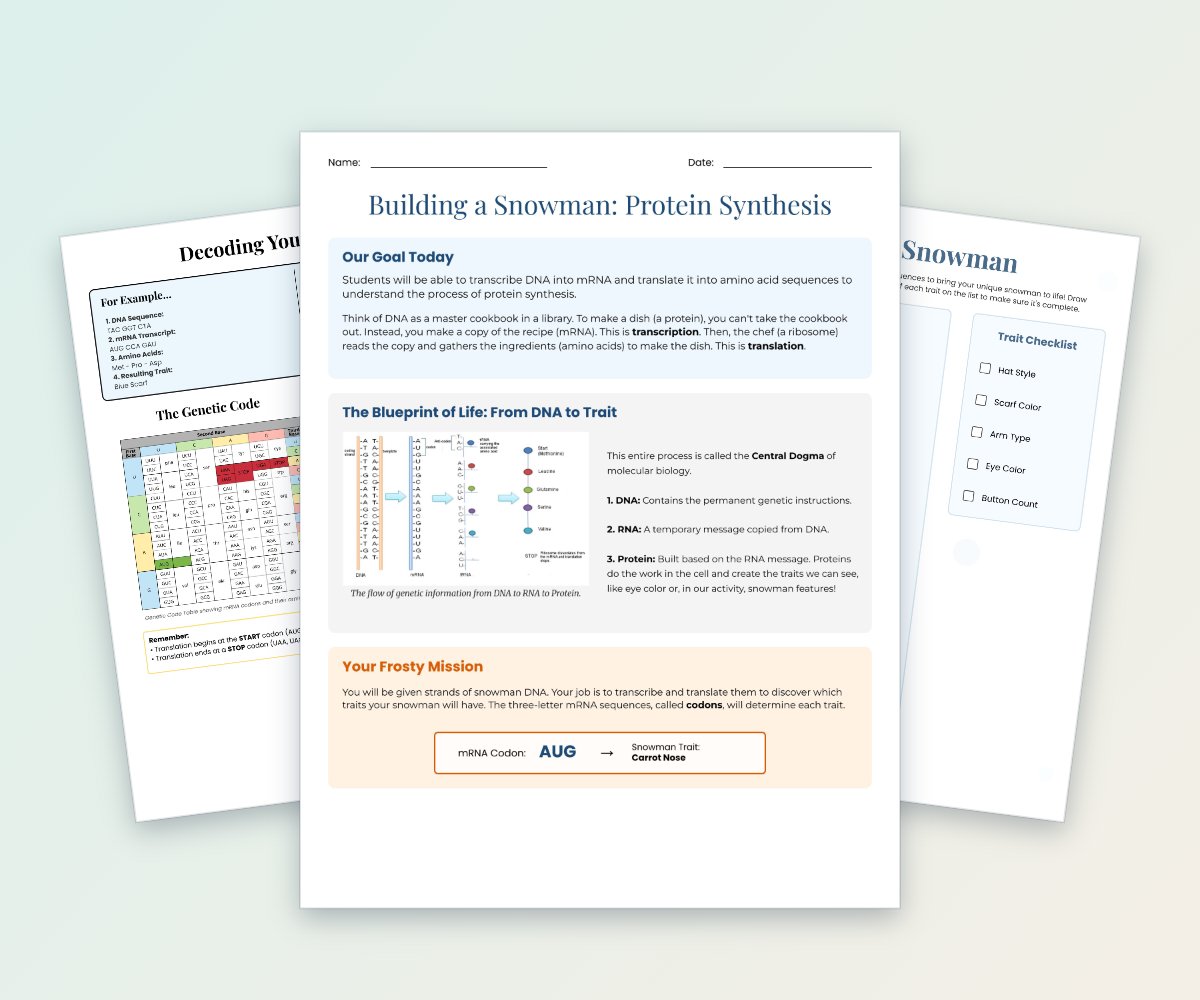
Students transcribe DNA into mRNA and translate codons into amino acid sequences using a snowman-themed activity.
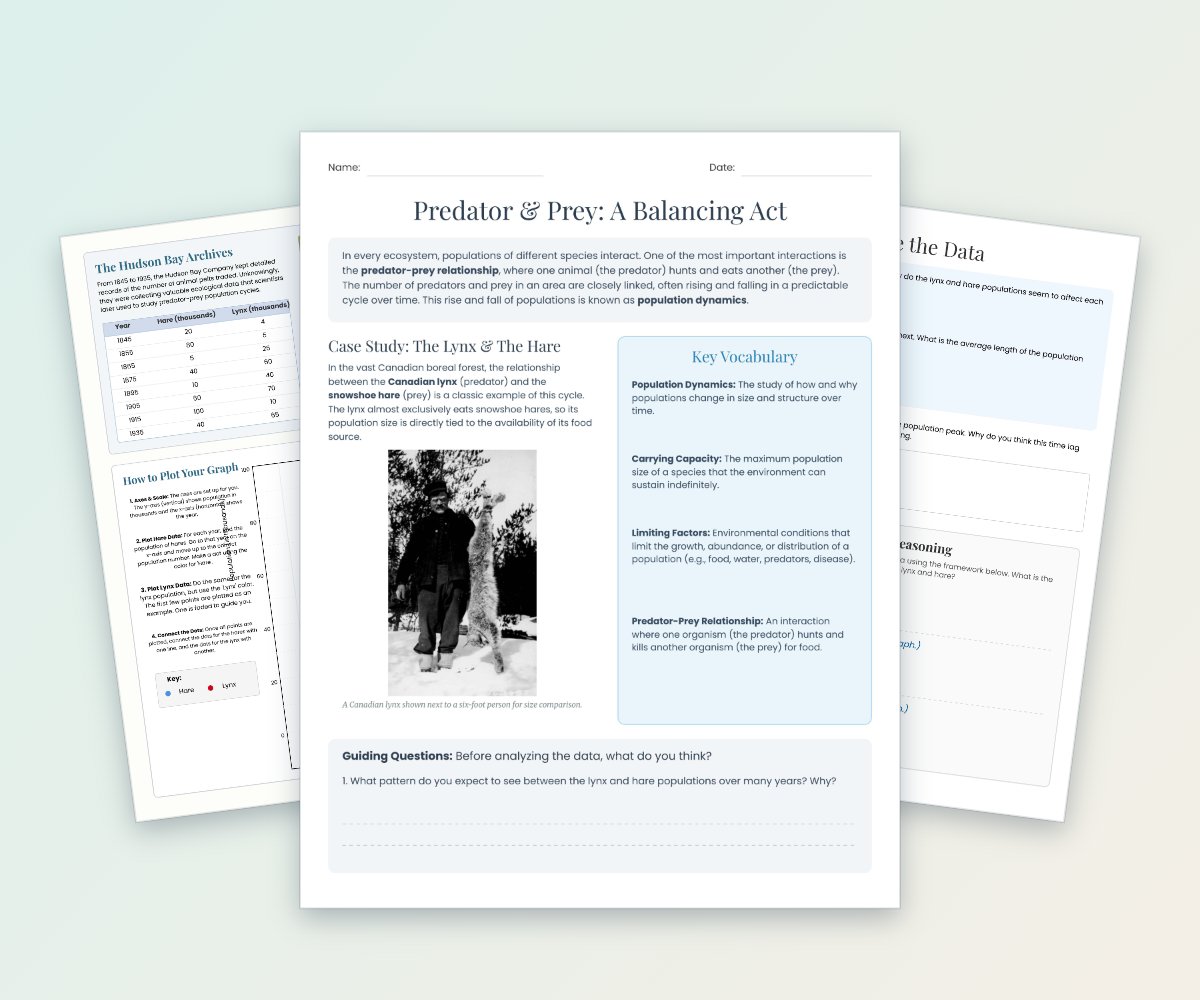
Students learn how predator and prey populations interact through vocabulary, guiding questions, and a Canadian lynx and snowshoe hare case study.
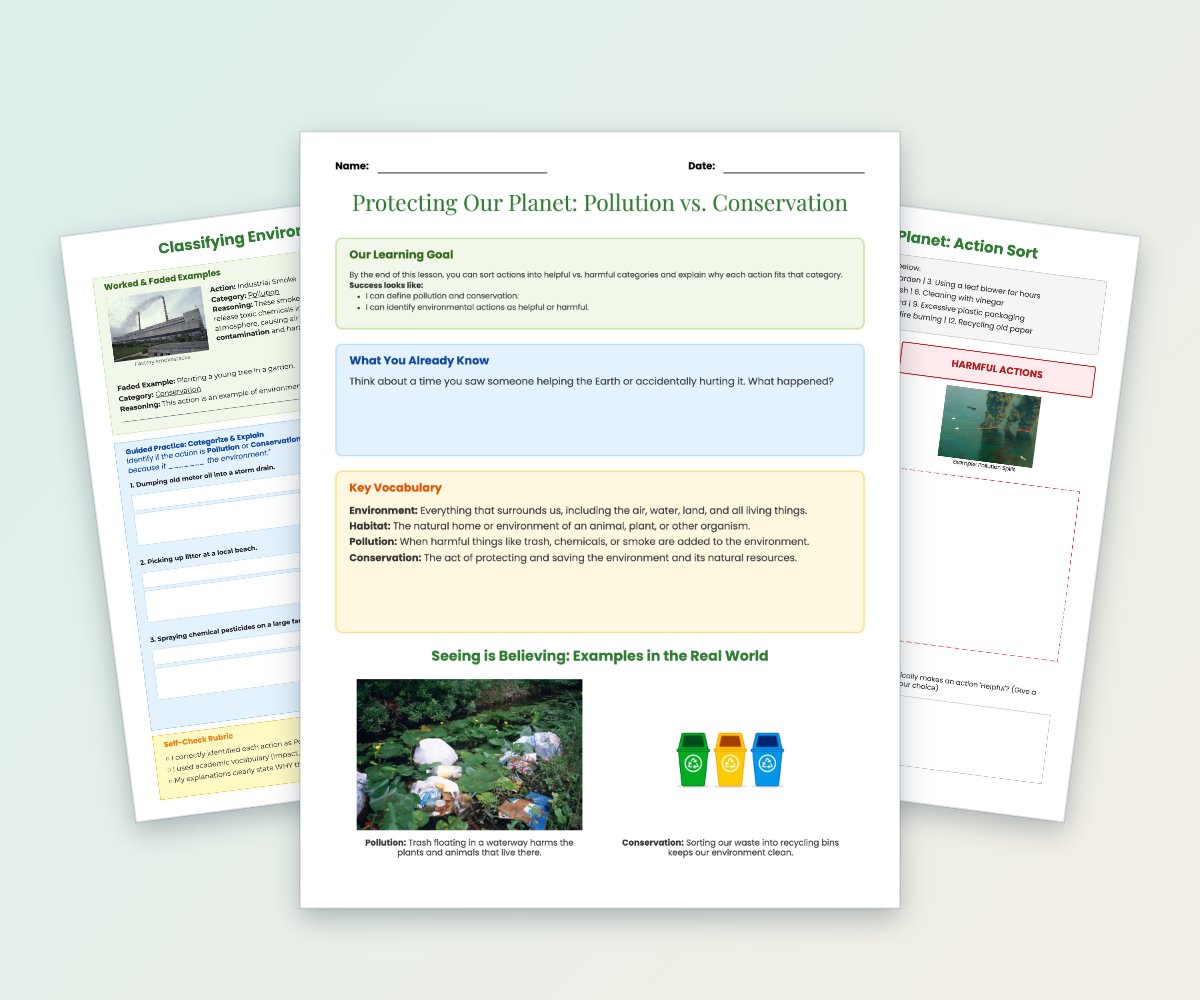
This four-page environmental science resource teaches students to distinguish pollution from conservation actions.
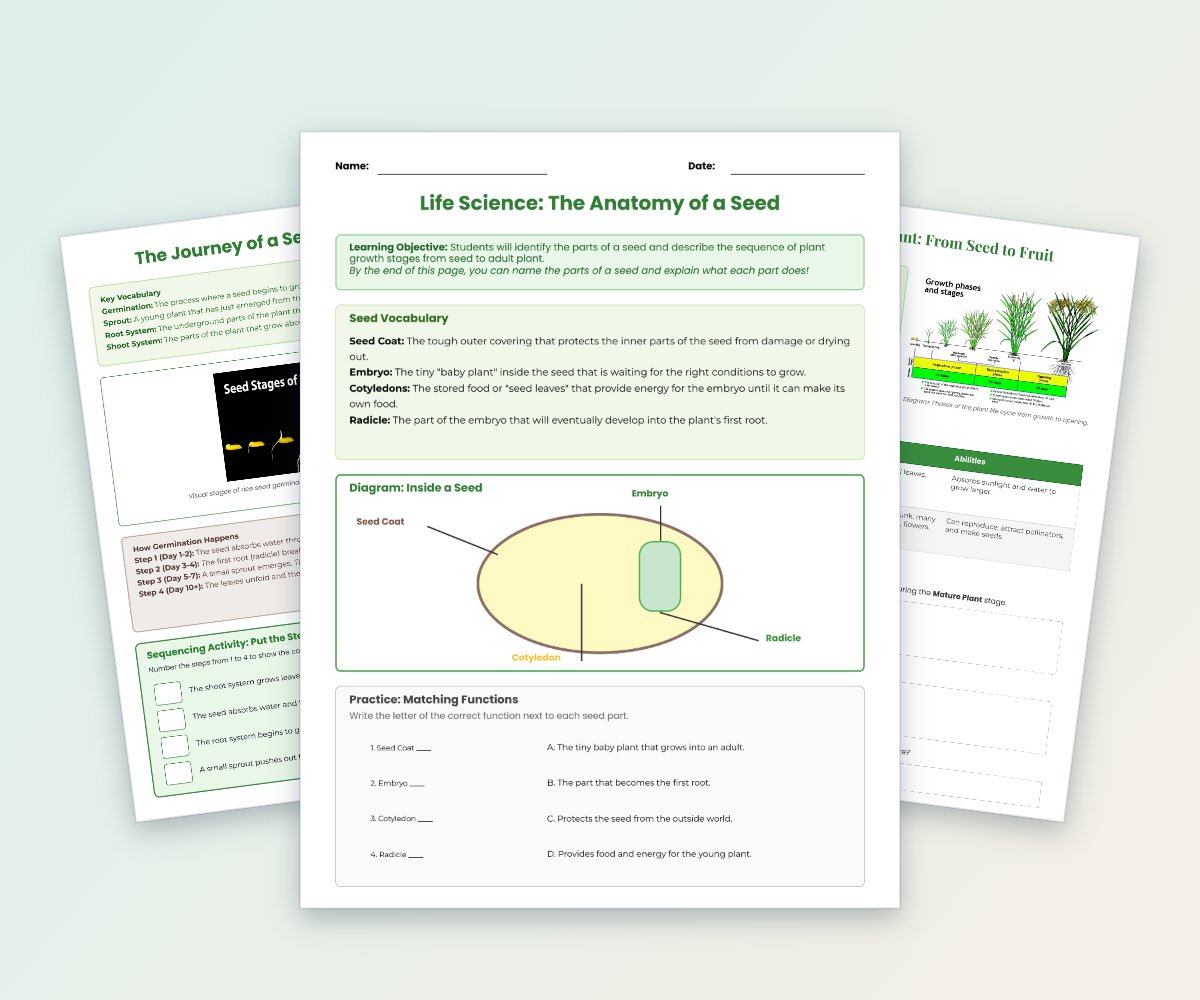
This printable packet introduces seed parts, their functions, germination stages, and the journey from seed to mature plant.
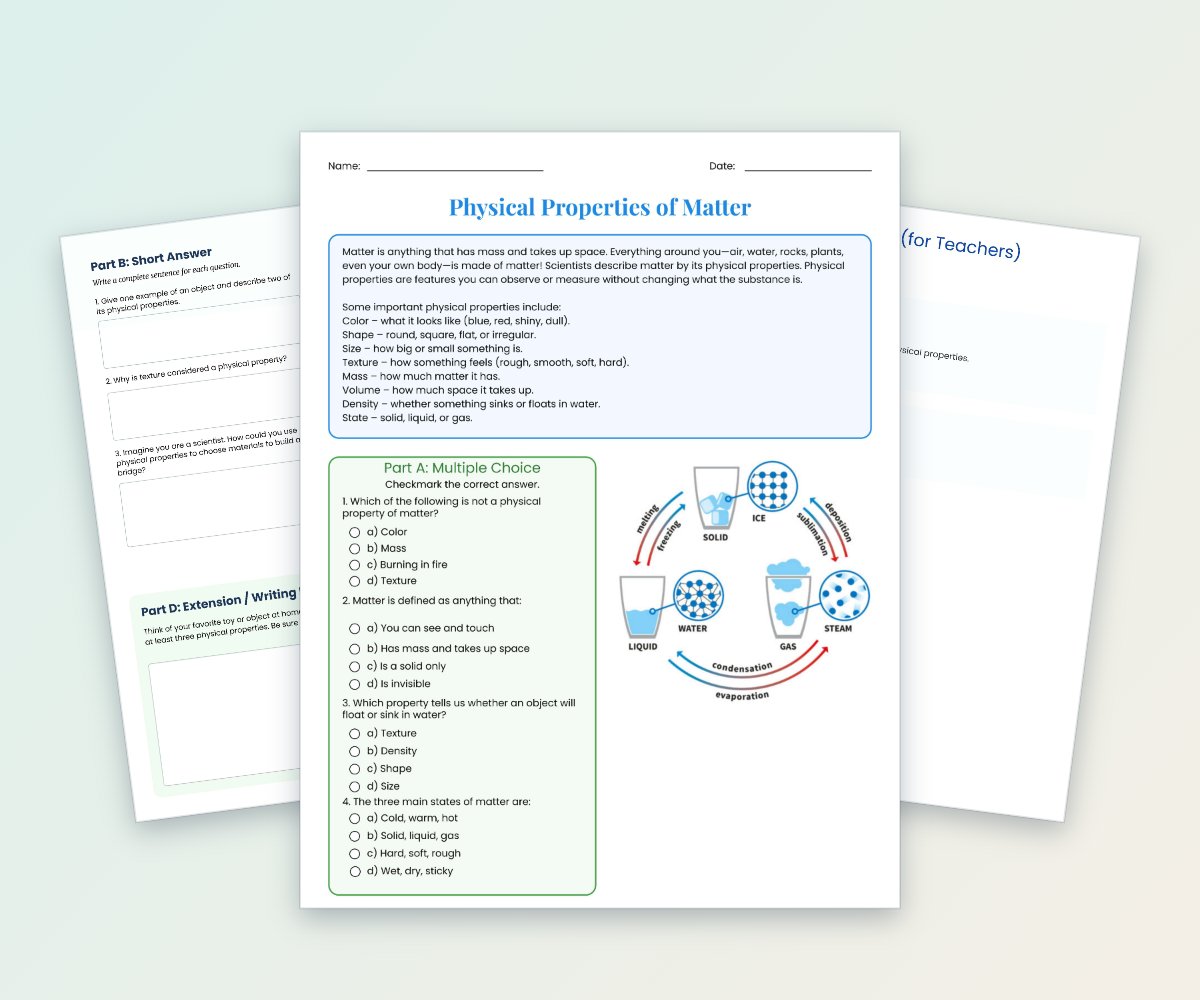
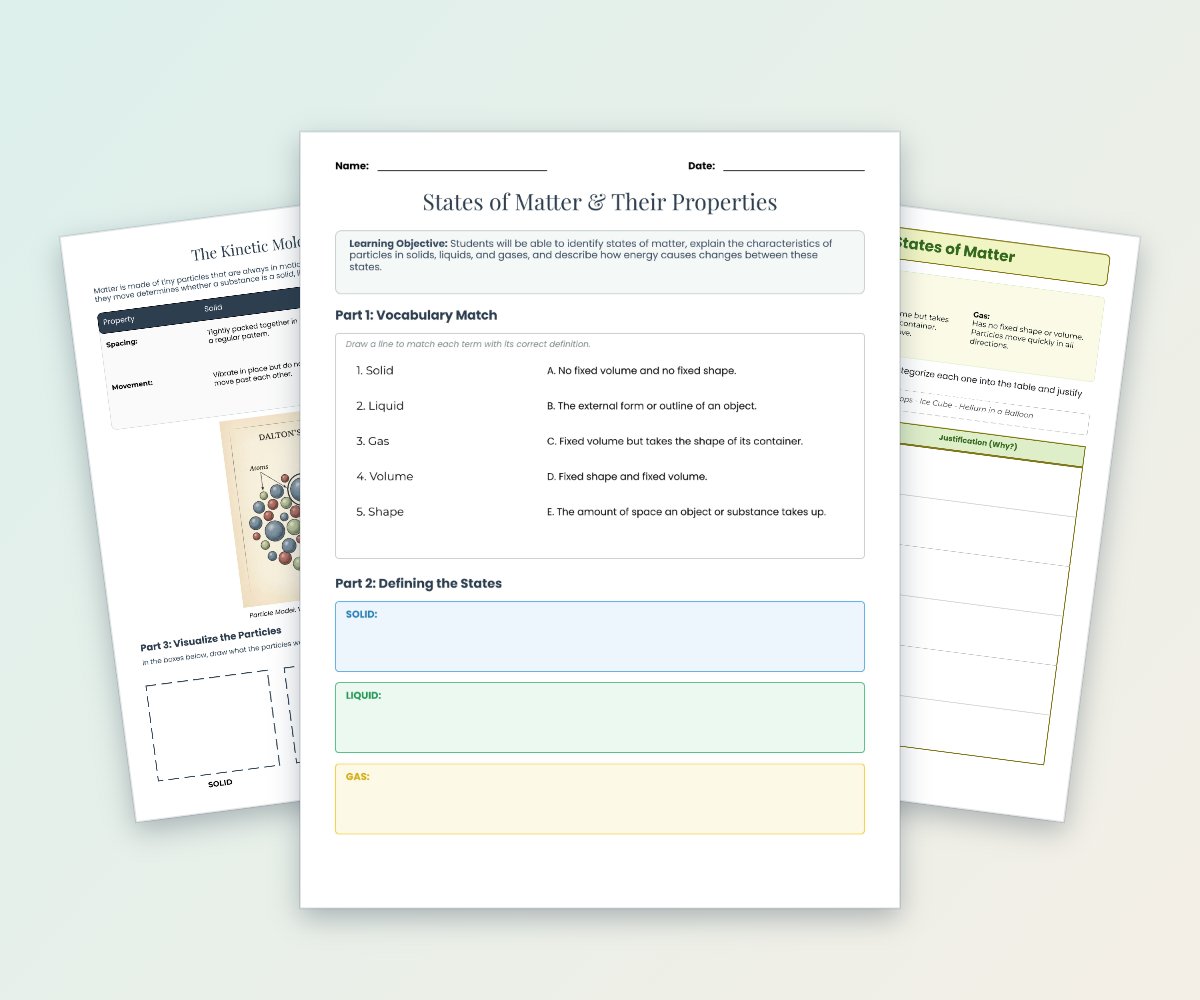
This three-page worksheet introduces physical properties of matter, including color, shape, texture, mass, volume, density, and states of matter.
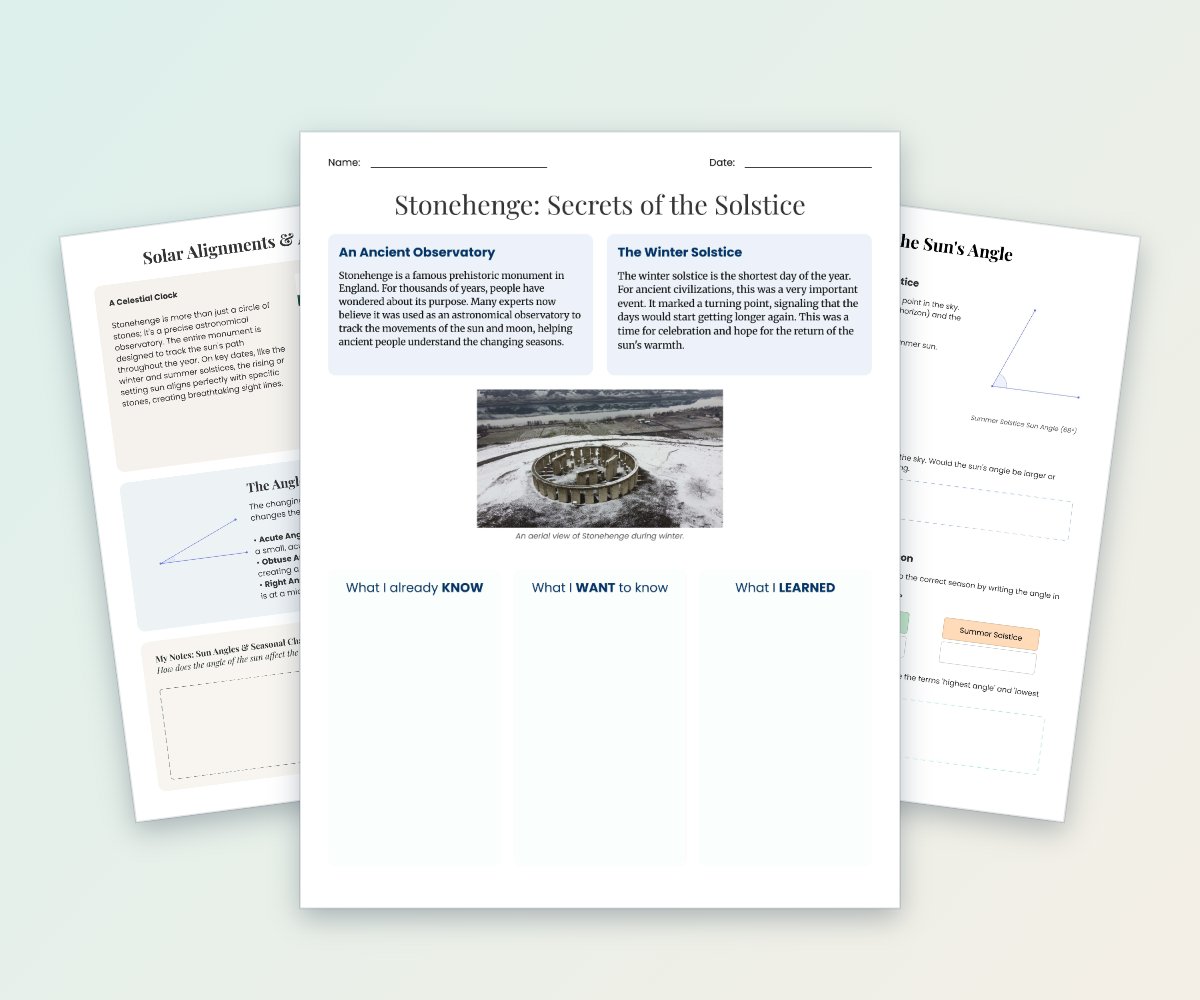
Students explore Stonehenge’s possible astronomical purpose, the winter and summer solstices, Earth’s tilt, and seasonal changes.
This six-page worksheet pack reviews solids, liquids, gases, particle motion, properties, and phase changes.
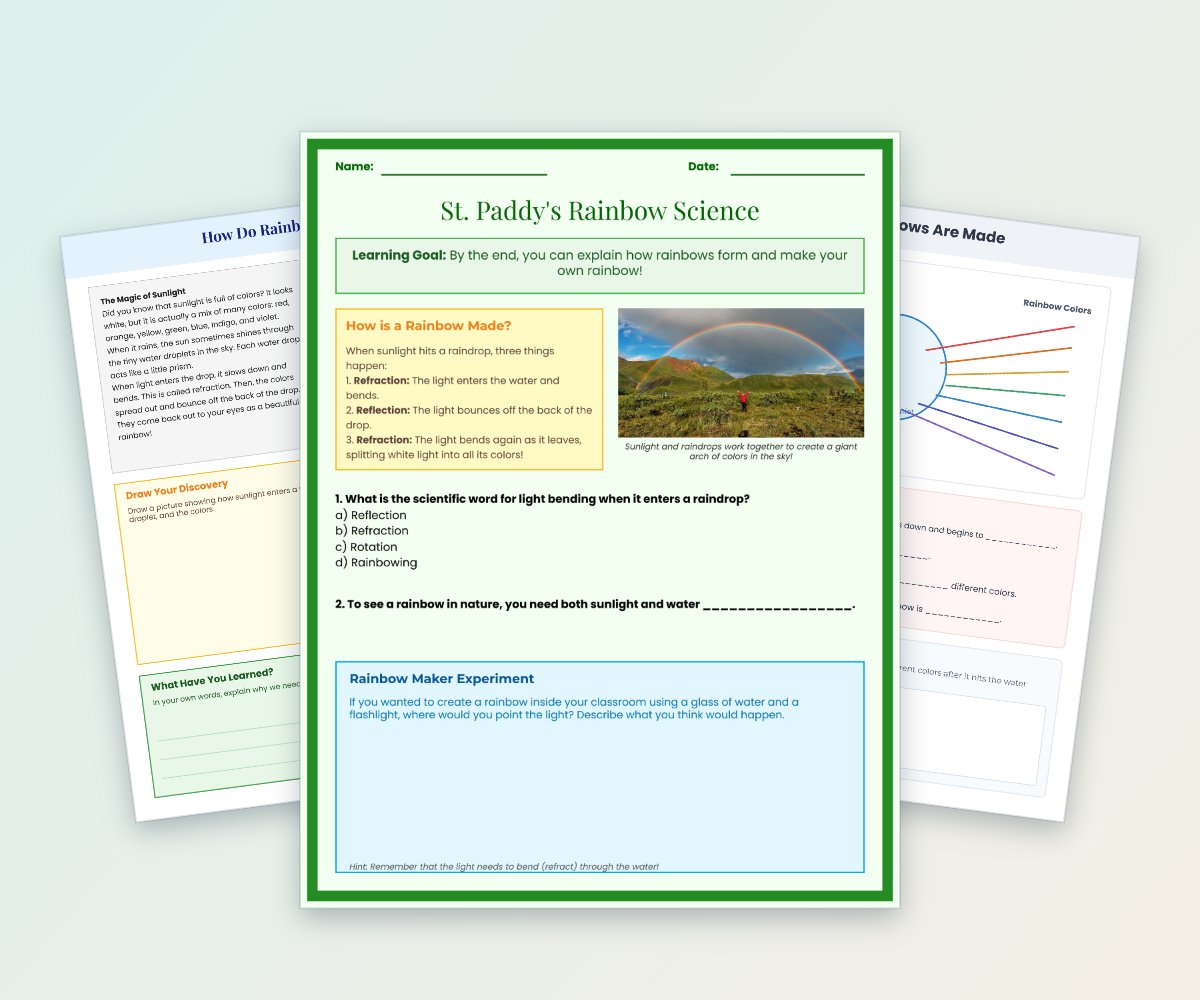
This five-page science activity pack teaches students how refraction and reflection create rainbows.
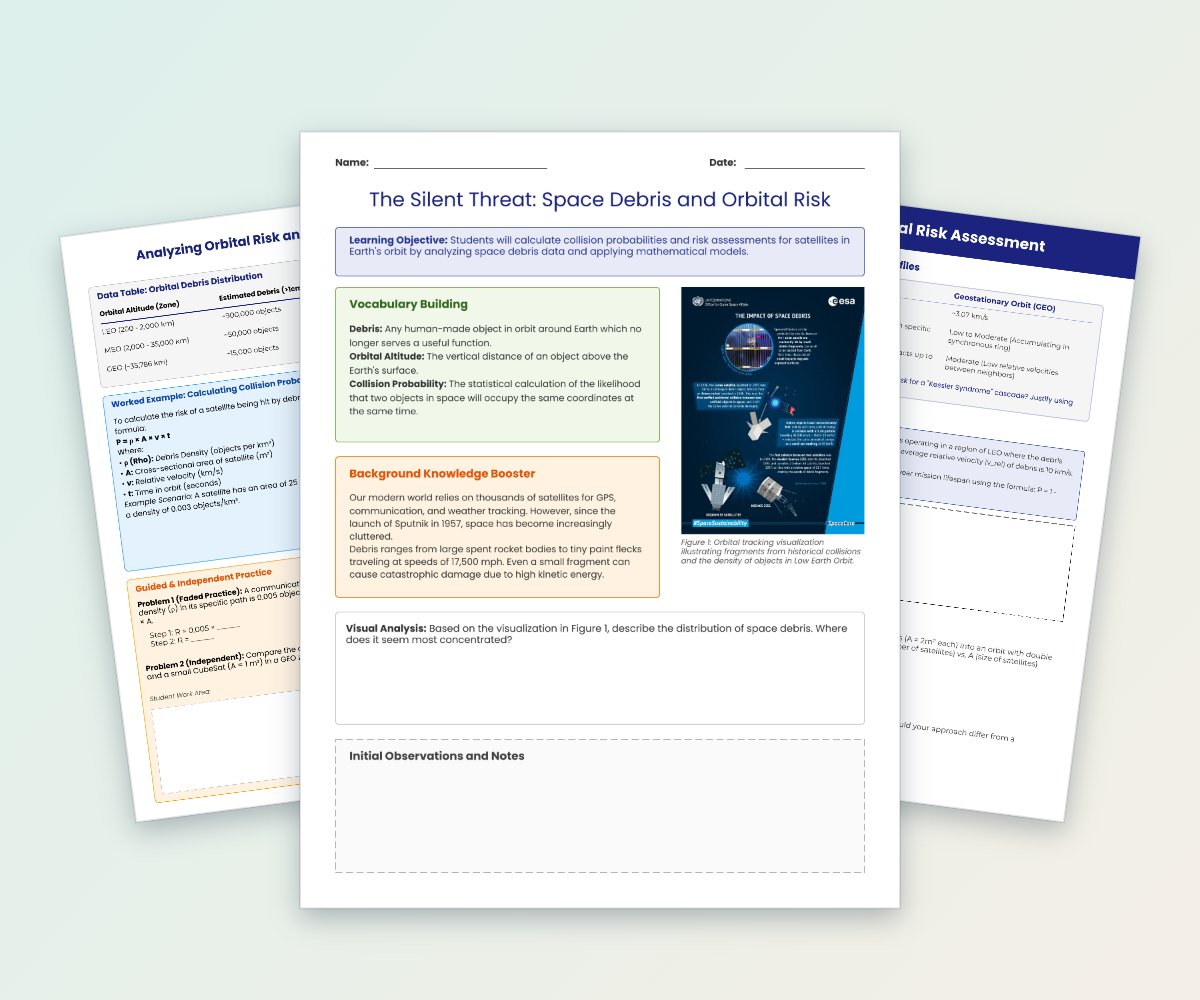
Students investigate space debris, orbital altitude, debris density, and satellite collision risk.
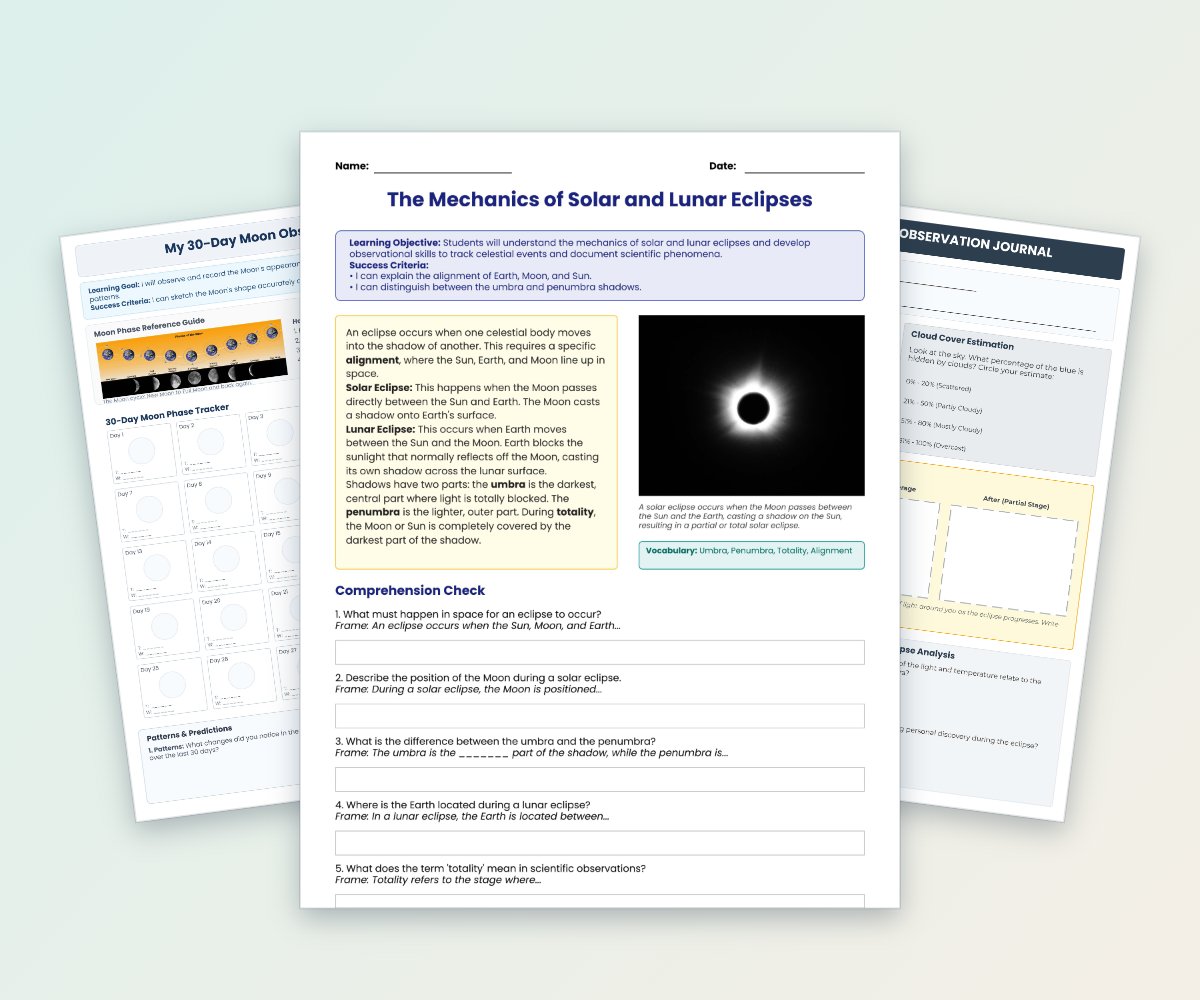
This three-page science journal introduces solar and lunar eclipses, including alignment, umbra, penumbra, and totality.
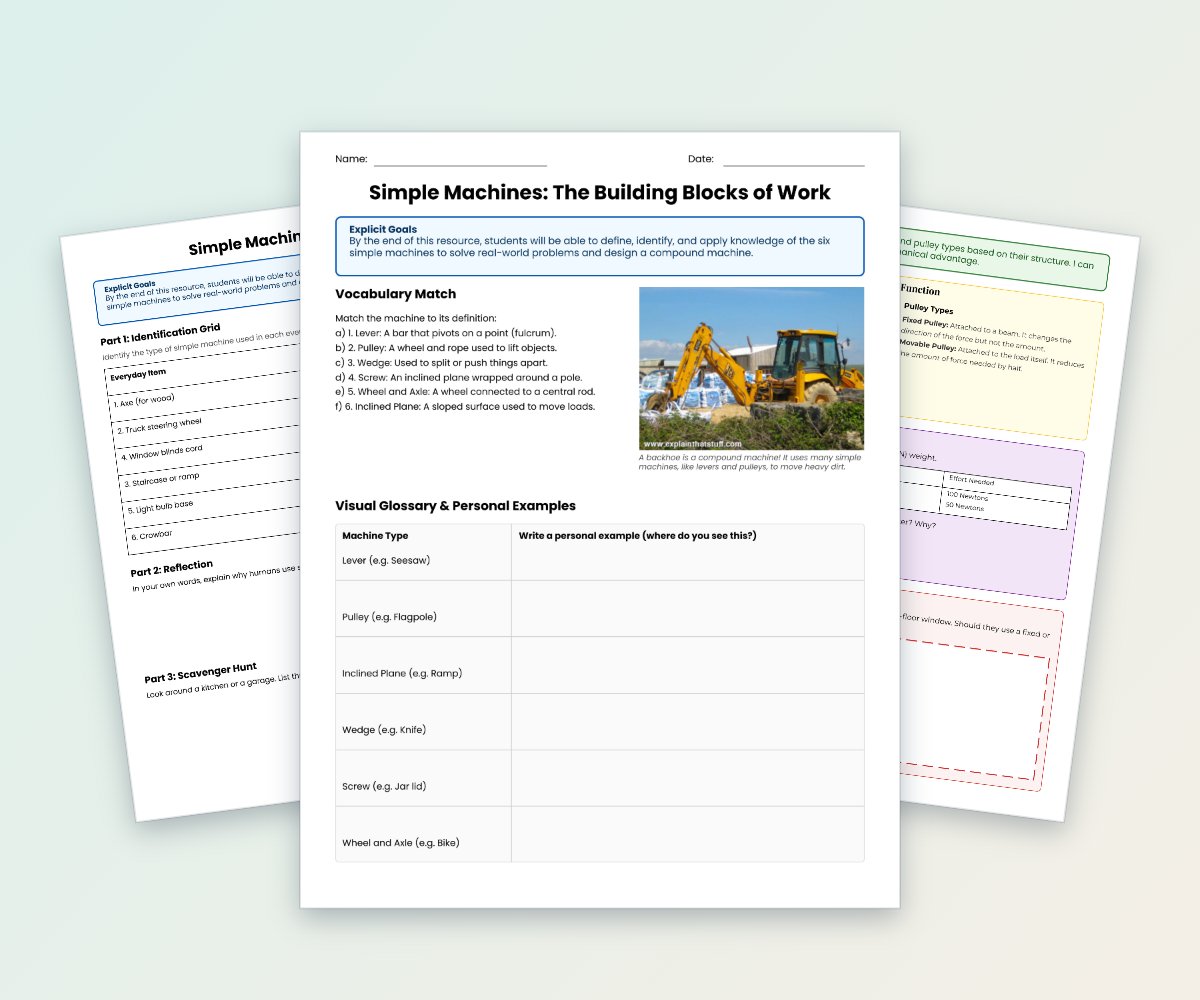
This interactive workbook introduces the six simple machines through vocabulary matching, visual examples, everyday-item identification, reflection, and a scavenger hunt.
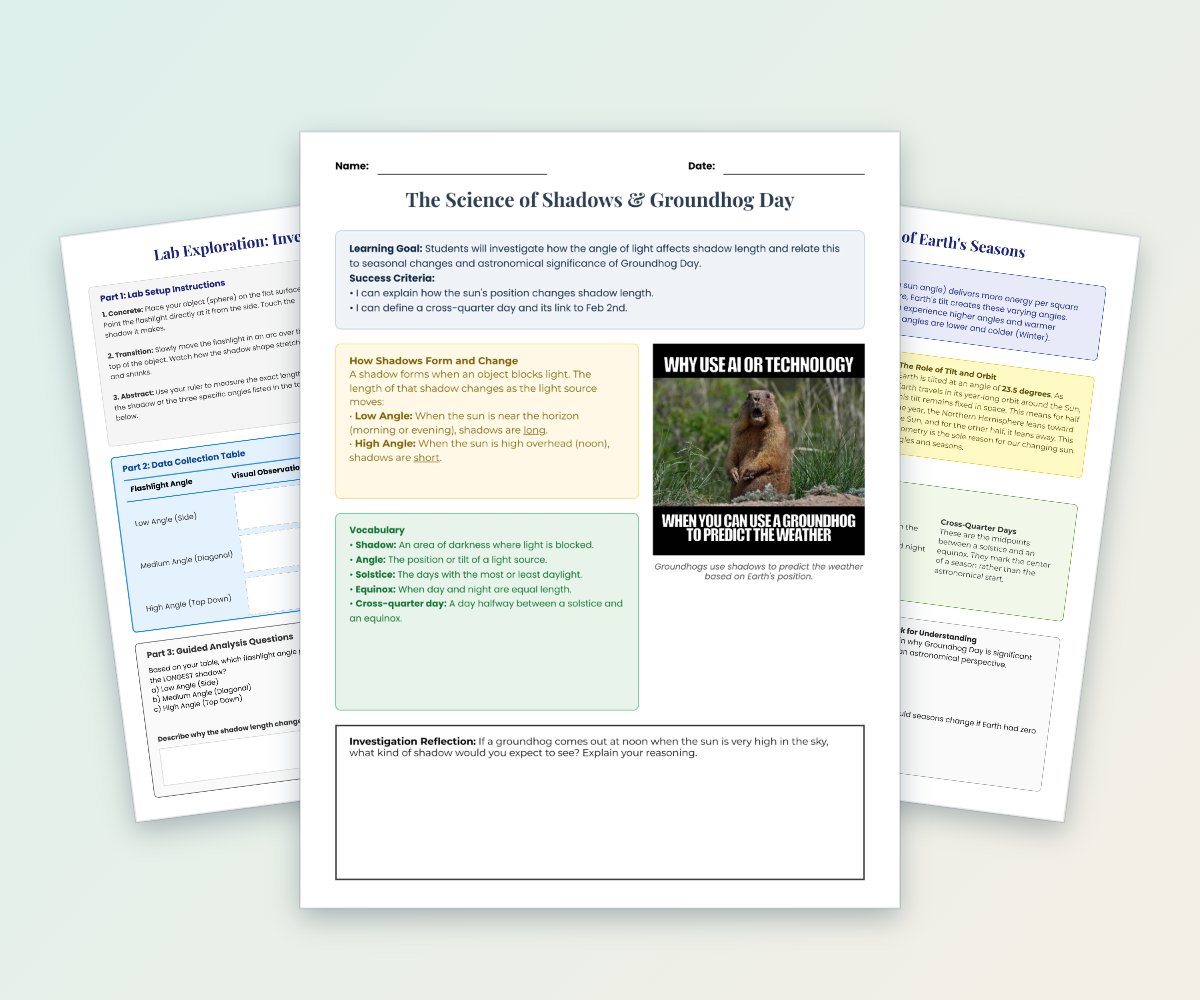
Students investigate how light angle affects shadow length using a flashlight, object, ruler, and data table.
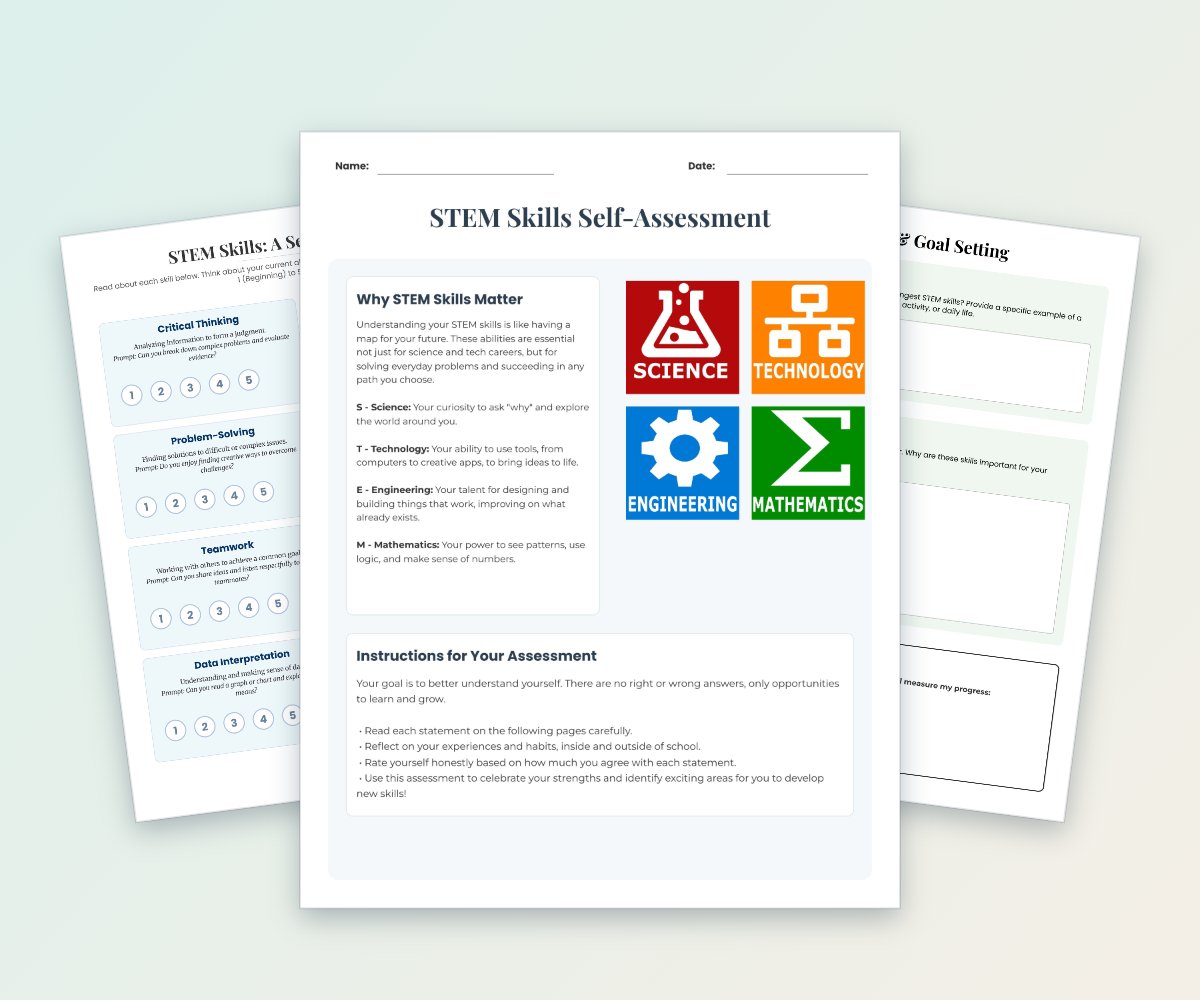
This three-page self-assessment helps students evaluate their skills in critical thinking, problem-solving, teamwork, data interpretation, creativity, communication, and technical skills.
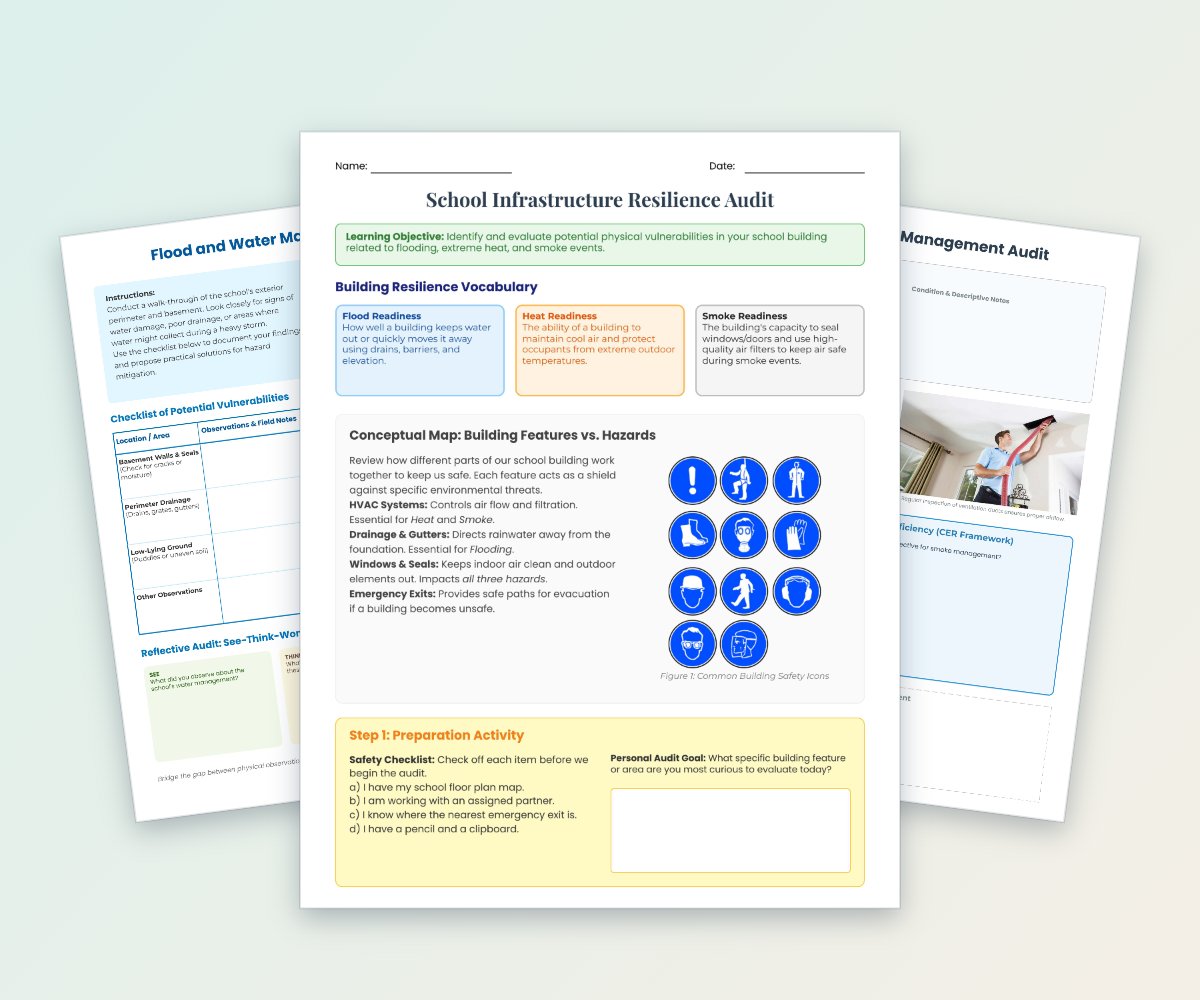
Students investigate how school building features respond to flooding, extreme heat, and smoke events.
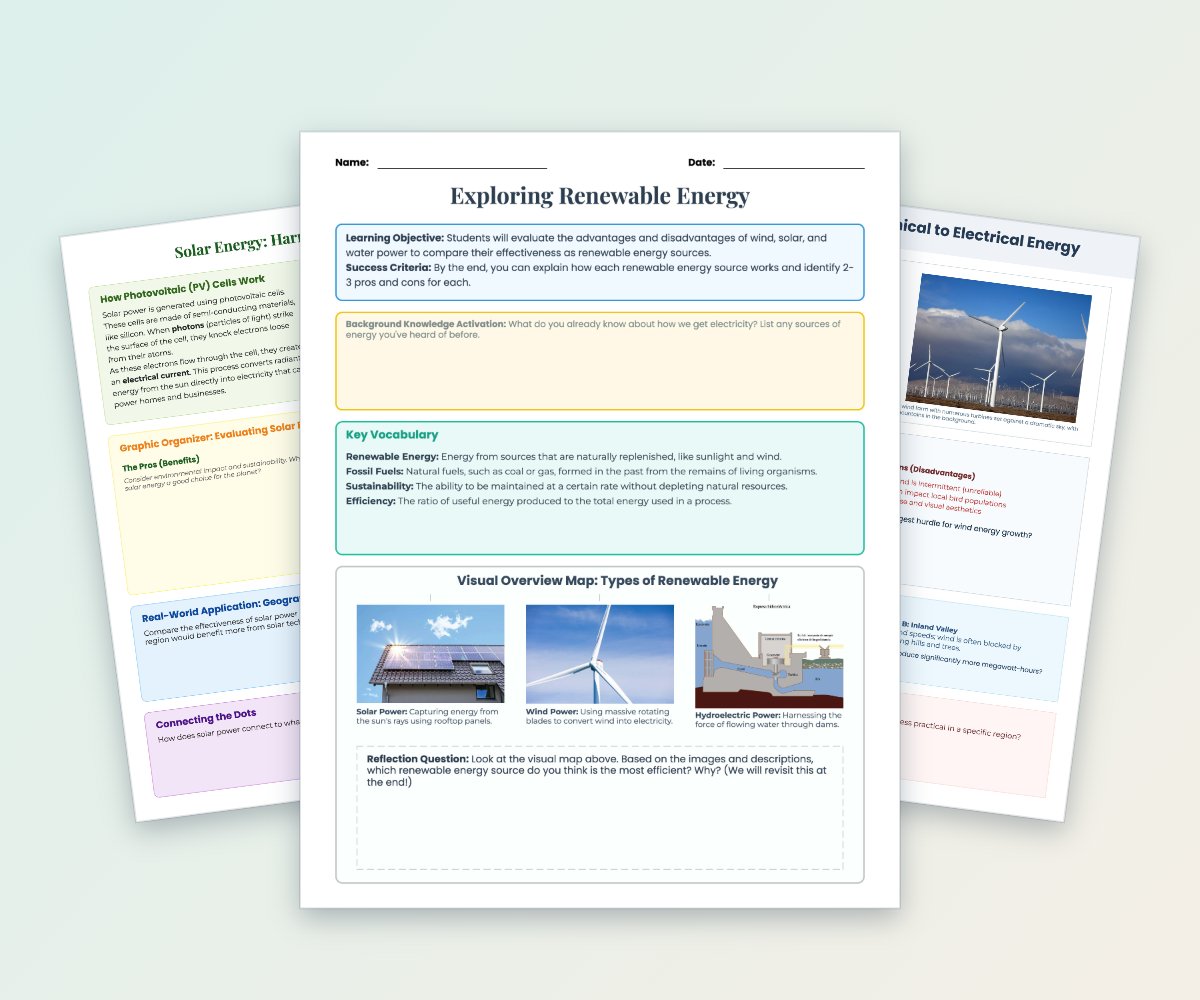
Introduce students to solar, wind, and hydroelectric power through background information, key vocabulary, visual mapping, and guided reflection.
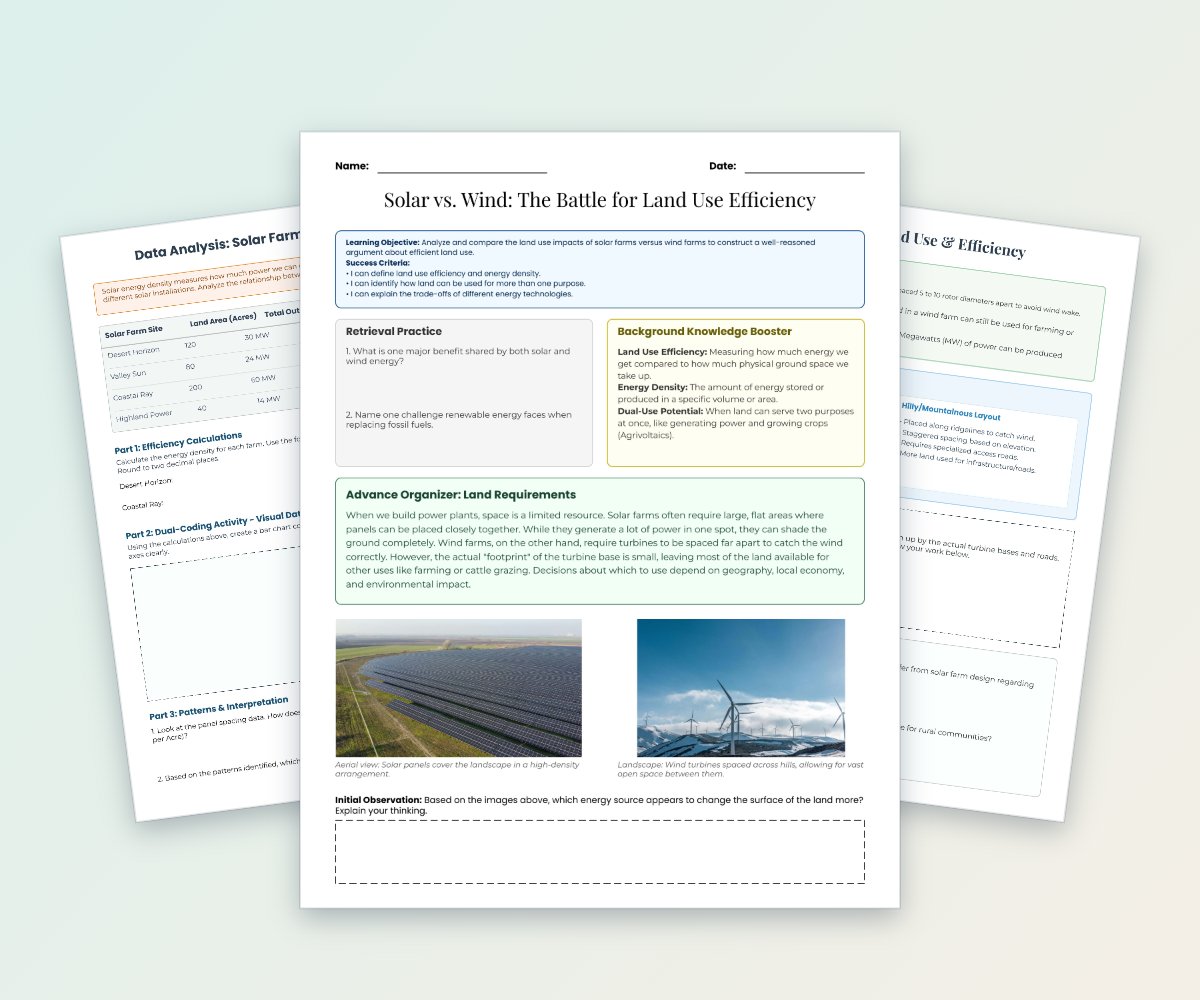
Students compare solar and wind energy through background reading, land-use analysis, energy-density calculations, and evidence-based argument writing.