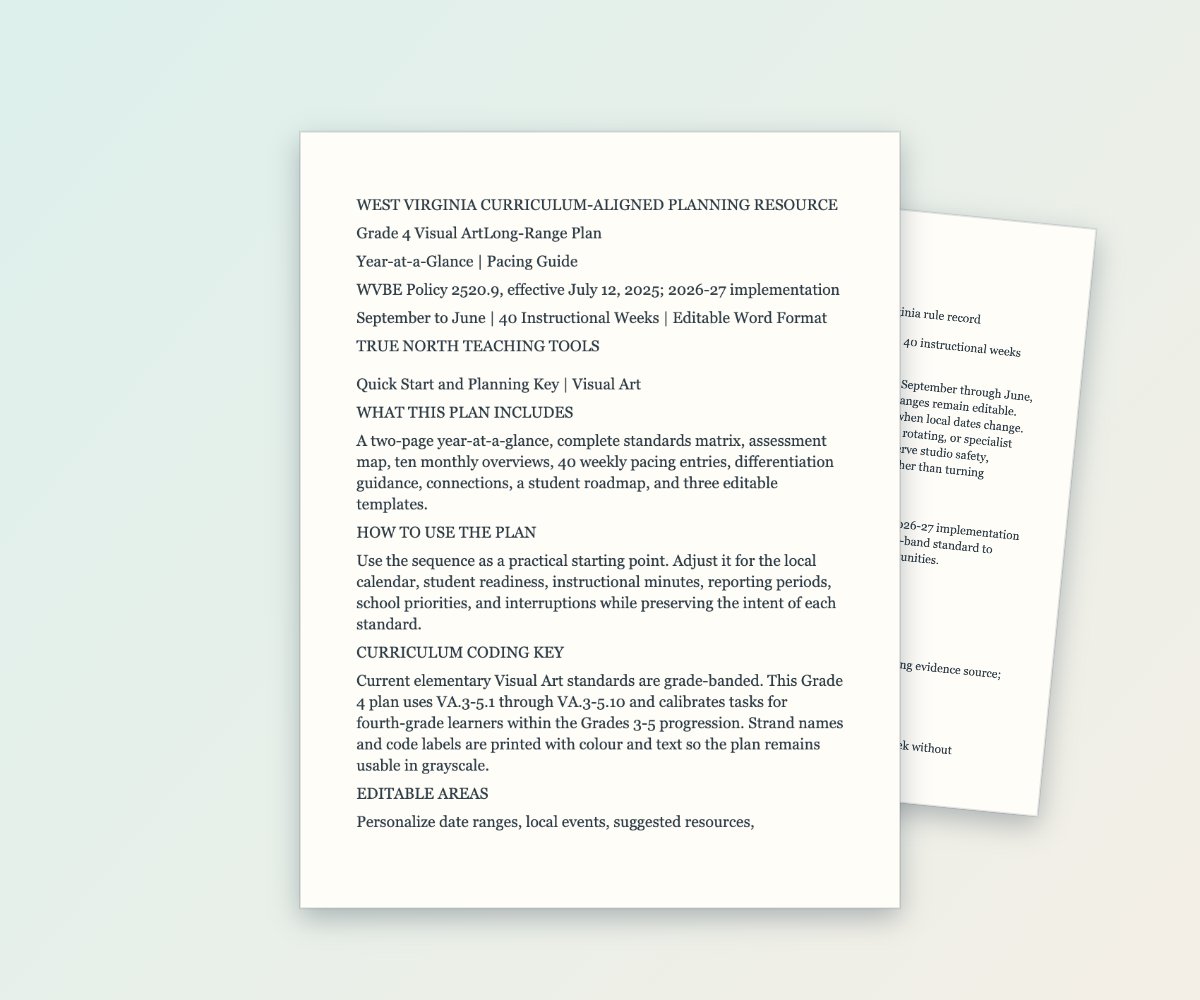
Grade 4 Visual Art Long-Range Plan
A 40-week, editable Grade 4 visual art long-range plan aligned to West Virginia standards and designed for September through June.
$5
Clear, practical resources for busy educators, organized so you can get from search to ready-to-teach quickly.
A 40-week, editable Grade 4 visual art long-range plan aligned to West Virginia standards and designed for September through June.
A 40-page editable Grade 4 visual arts long-range plan covering September through June.
This editable 40-week Grade 4 visual arts long-range plan includes a year-at-a-glance, Missouri standards matrix, monthly overviews, pacing guidance, assessment mapping, differentiation supports, and
This editable 40-week Grade 4 visual arts long-range plan maps instruction to the 2022 Colorado Academic Standards.
This editable 40-week long-range plan organizes Grade 4 visual arts instruction from September through June.
This 40-page editable long-range plan maps Grade 4 visual arts instruction across 40 weeks using Massachusetts Grade 3–4 standards.
This editable 40-week visual arts plan includes a year-at-a-glance, curriculum coverage matrix, monthly sequence, assessment map, differentiation support, and student roadmap.
This editable 40-page plan provides year-at-a-glance organization, National Core Arts Standards mapping, assessment guidance, monthly overviews, and weekly pacing for Grade 4 visual art.
This editable 40-week long-range plan provides a complete Grade 4 visual arts sequence, curriculum coverage matrix, monthly pacing, and assessment guidance.
This editable 40-week long-range plan organizes Grade 4 visual arts instruction into ten four-week units.
This editable 40-week Grade 4 visual arts long-range plan includes a year-at-a-glance, curriculum matrix, assessment map, monthly overviews, pacing guidance, differentiation, and curriculum connection
This editable 40-week long-range plan provides a year-at-a-glance schedule, monthly planning pages, weekly pacing, curriculum coverage guidance, and assessment evidence suggestions for Grade 4 visual
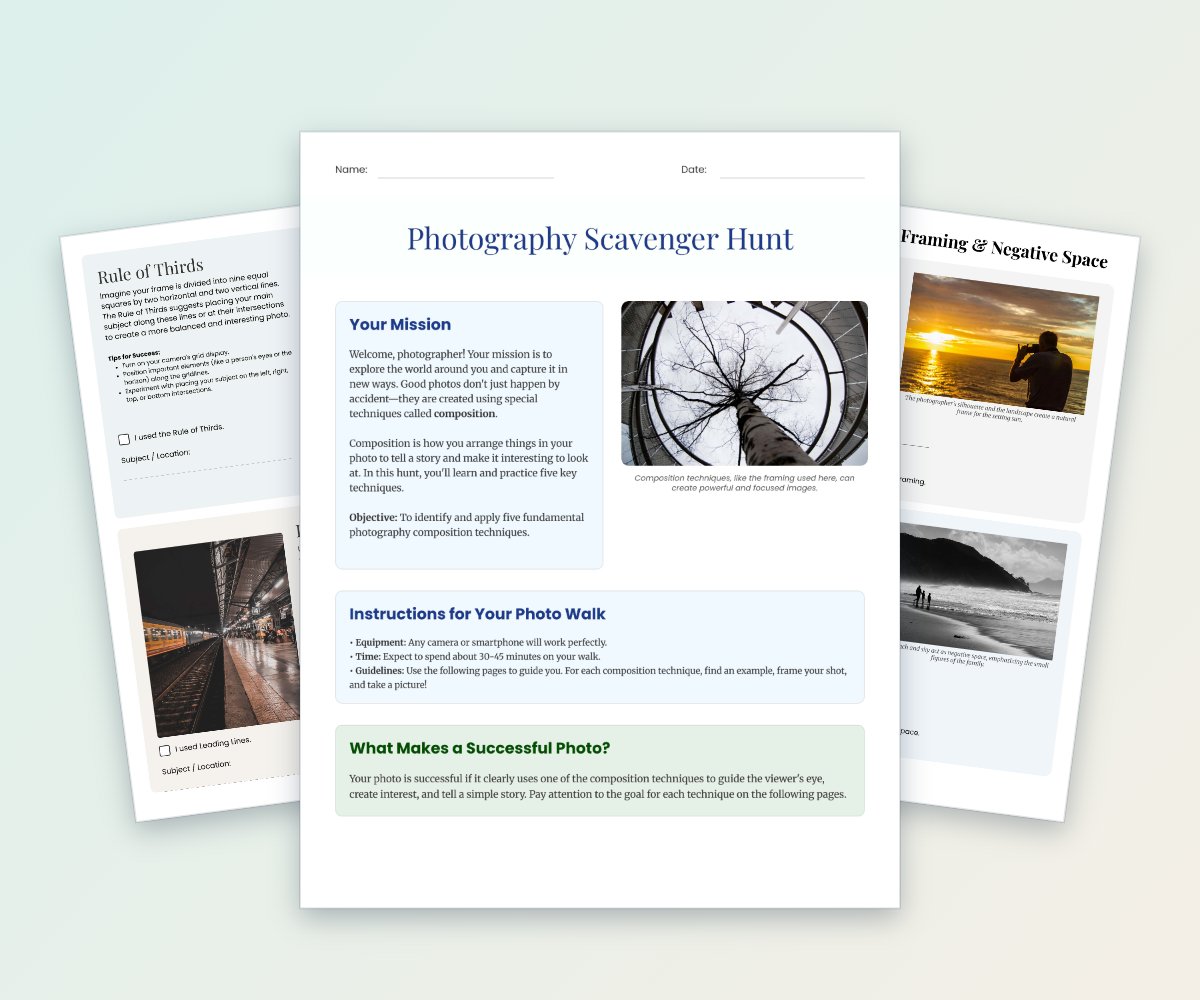
Students explore their surroundings and capture photographs demonstrating five fundamental composition techniques, including rule of thirds, leading lines, framing, and negative space.
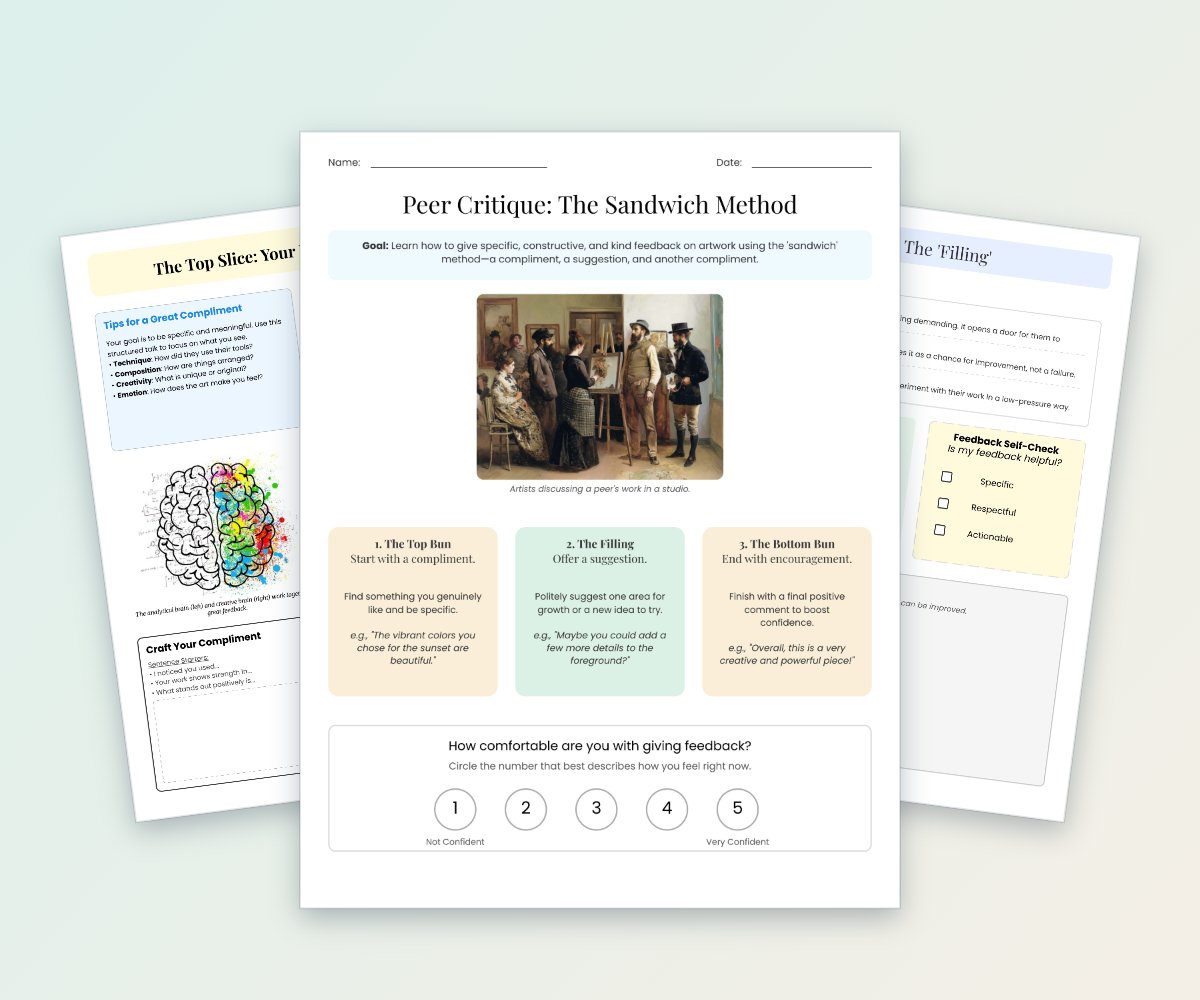
This four-page worksheet teaches students to give kind, specific, and actionable feedback on artwork using the sandwich method: compliment, suggestion, and encouragement.
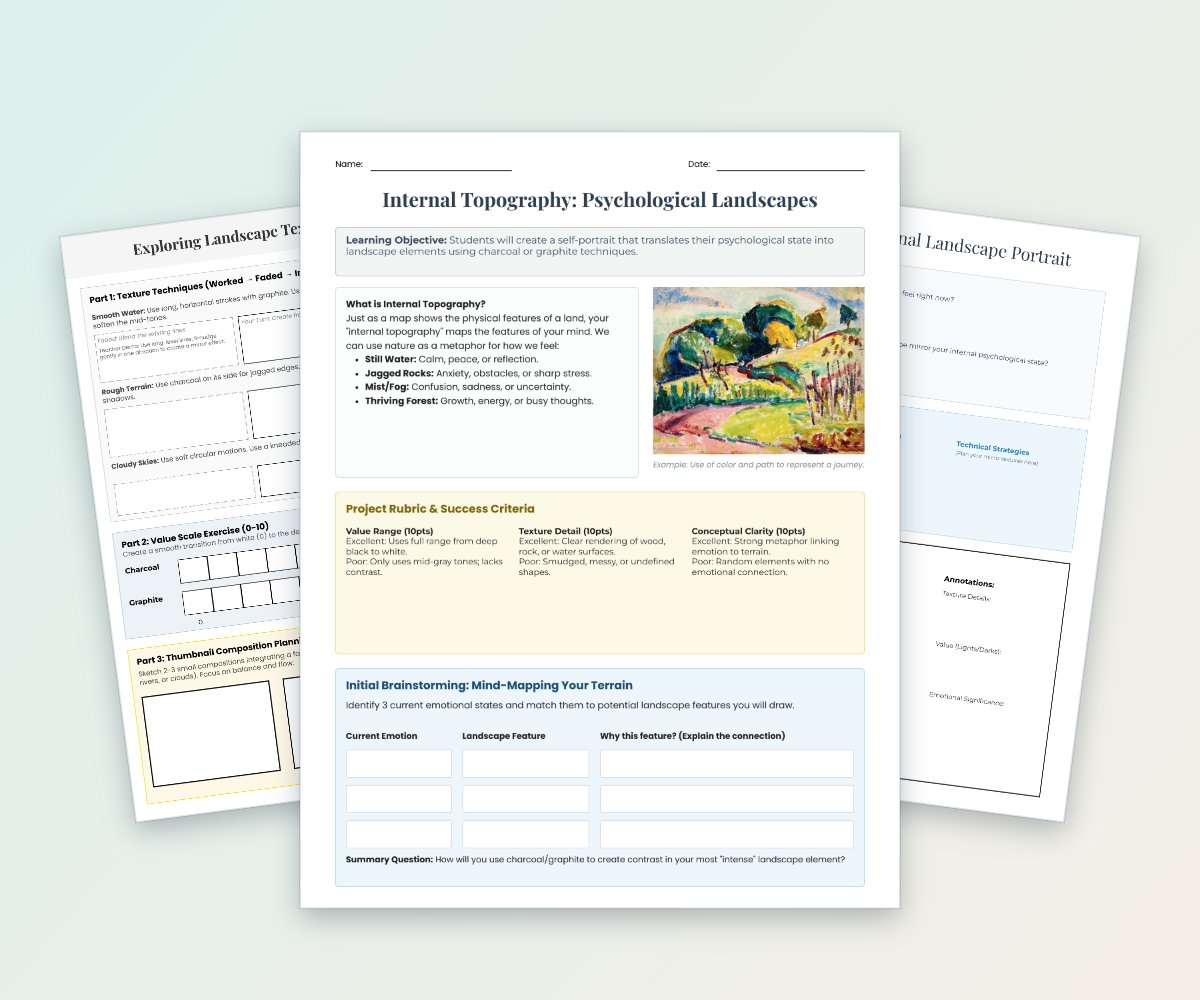
Students translate emotional states into landscape elements within a self-portrait using charcoal or graphite.
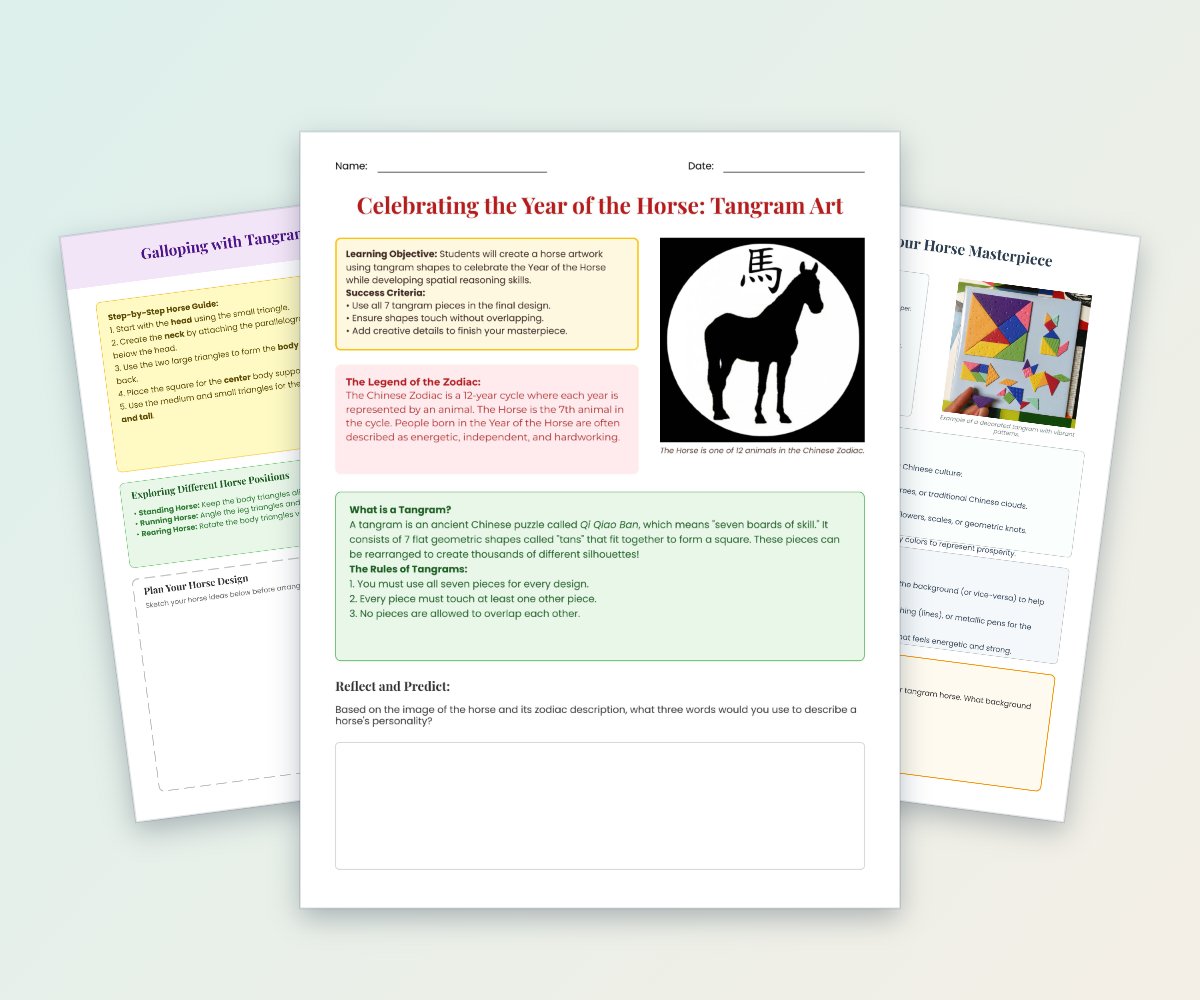
Students create a horse artwork using all seven tangram pieces while learning about spatial reasoning and the Chinese Zodiac.
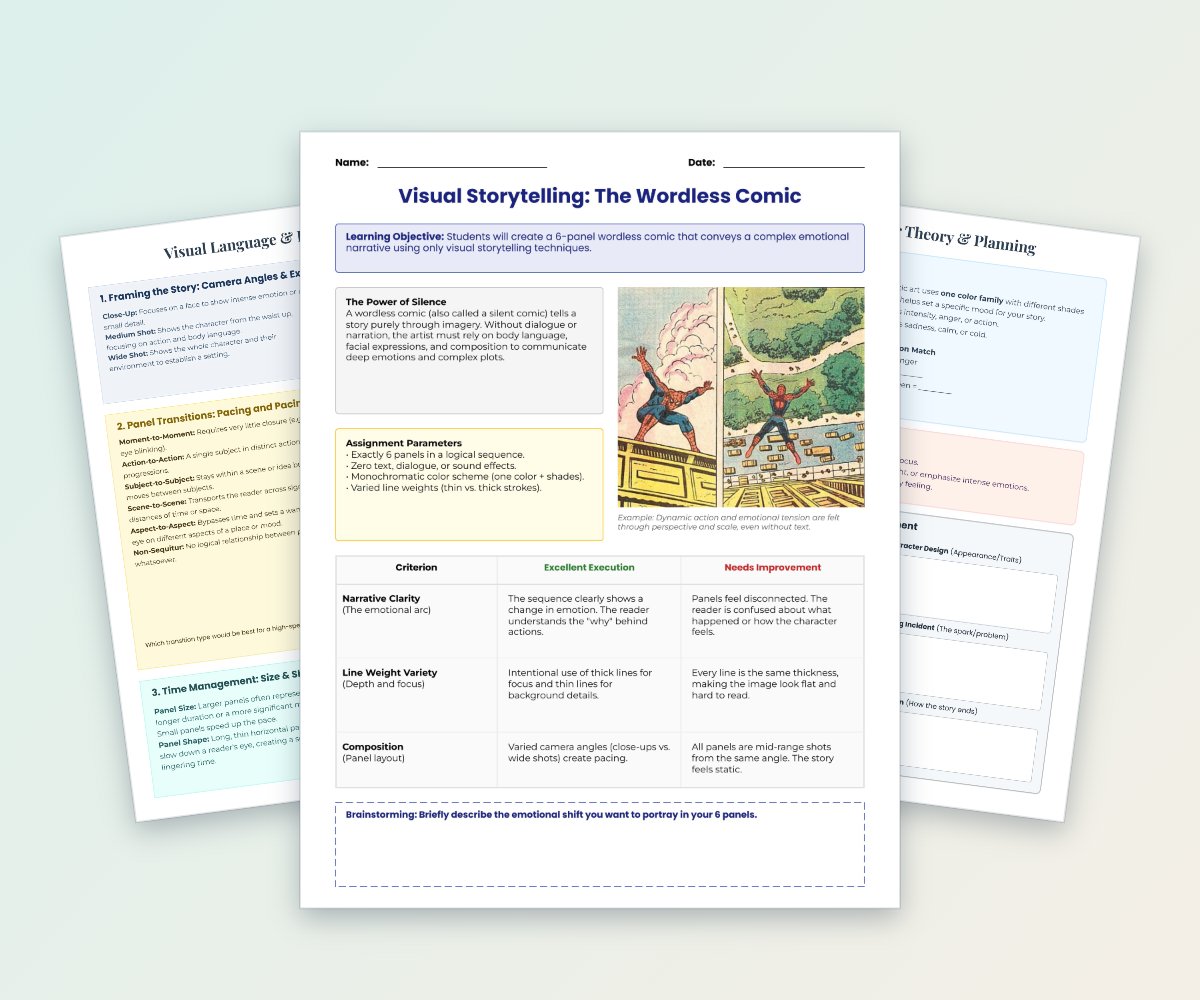
Students create a six-panel wordless comic that communicates an emotional narrative through imagery alone.
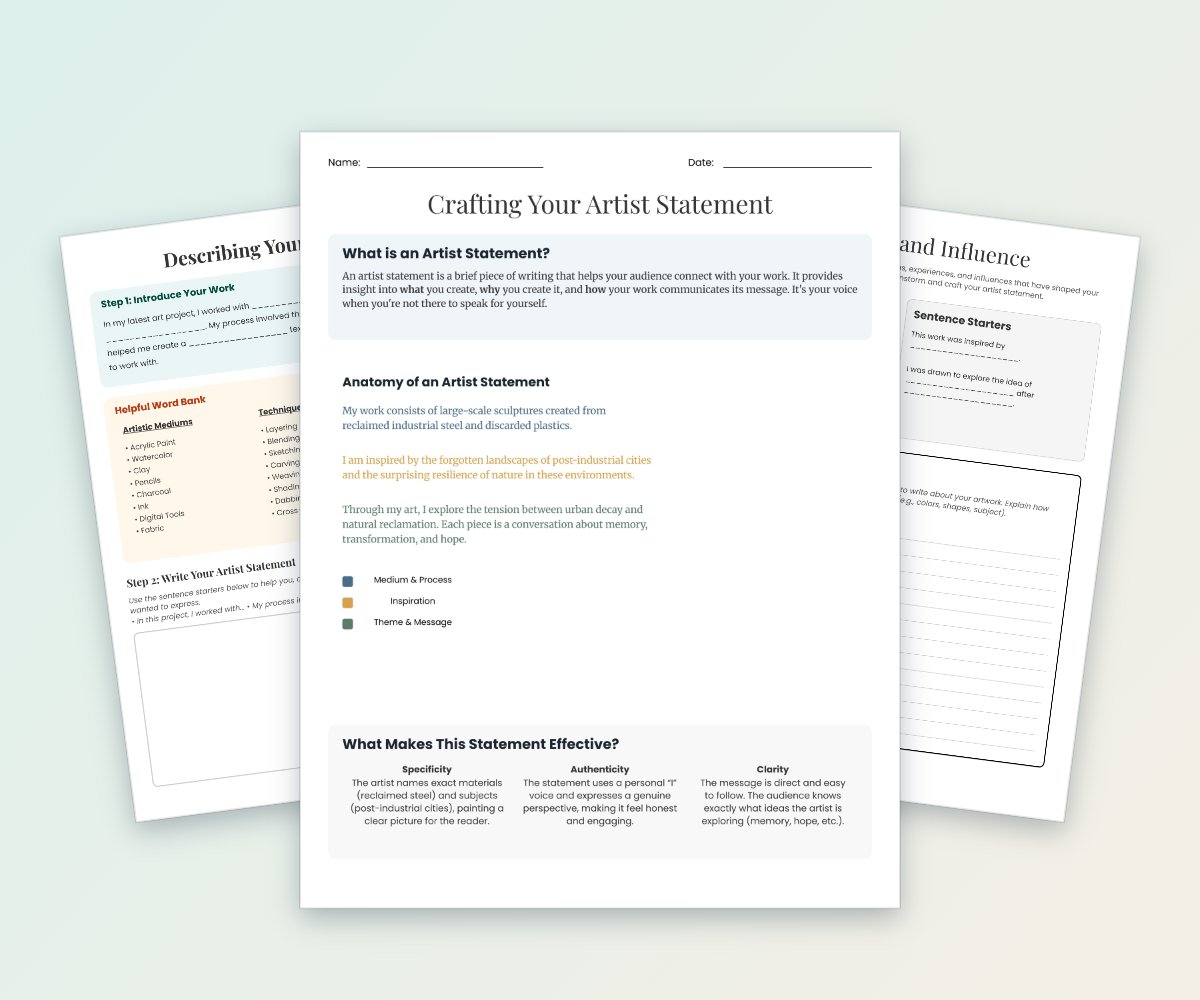
This four-page worksheet guides students through understanding and writing an artist statement.
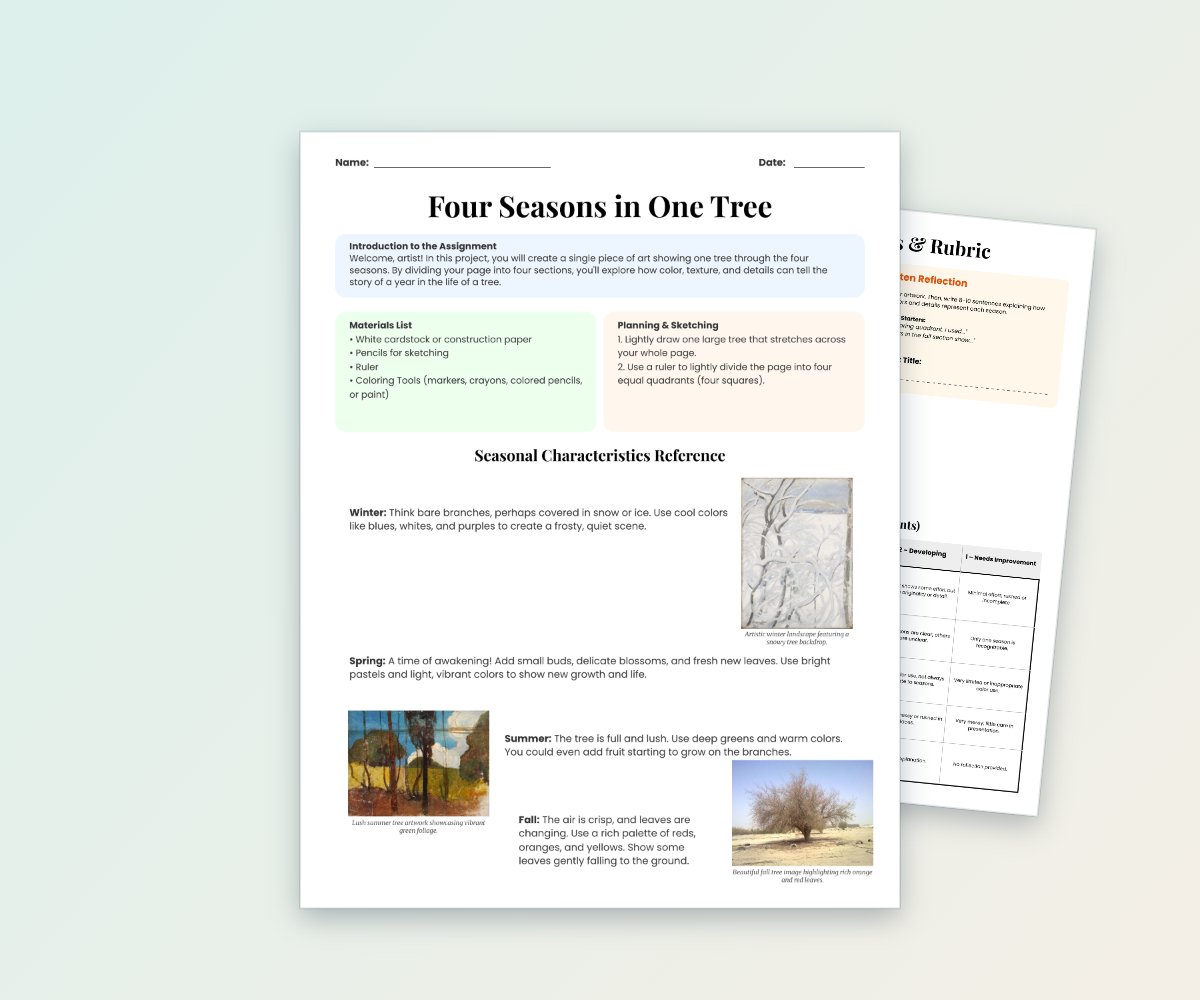
Students create one tree divided into four sections to represent winter, spring, summer, and fall.
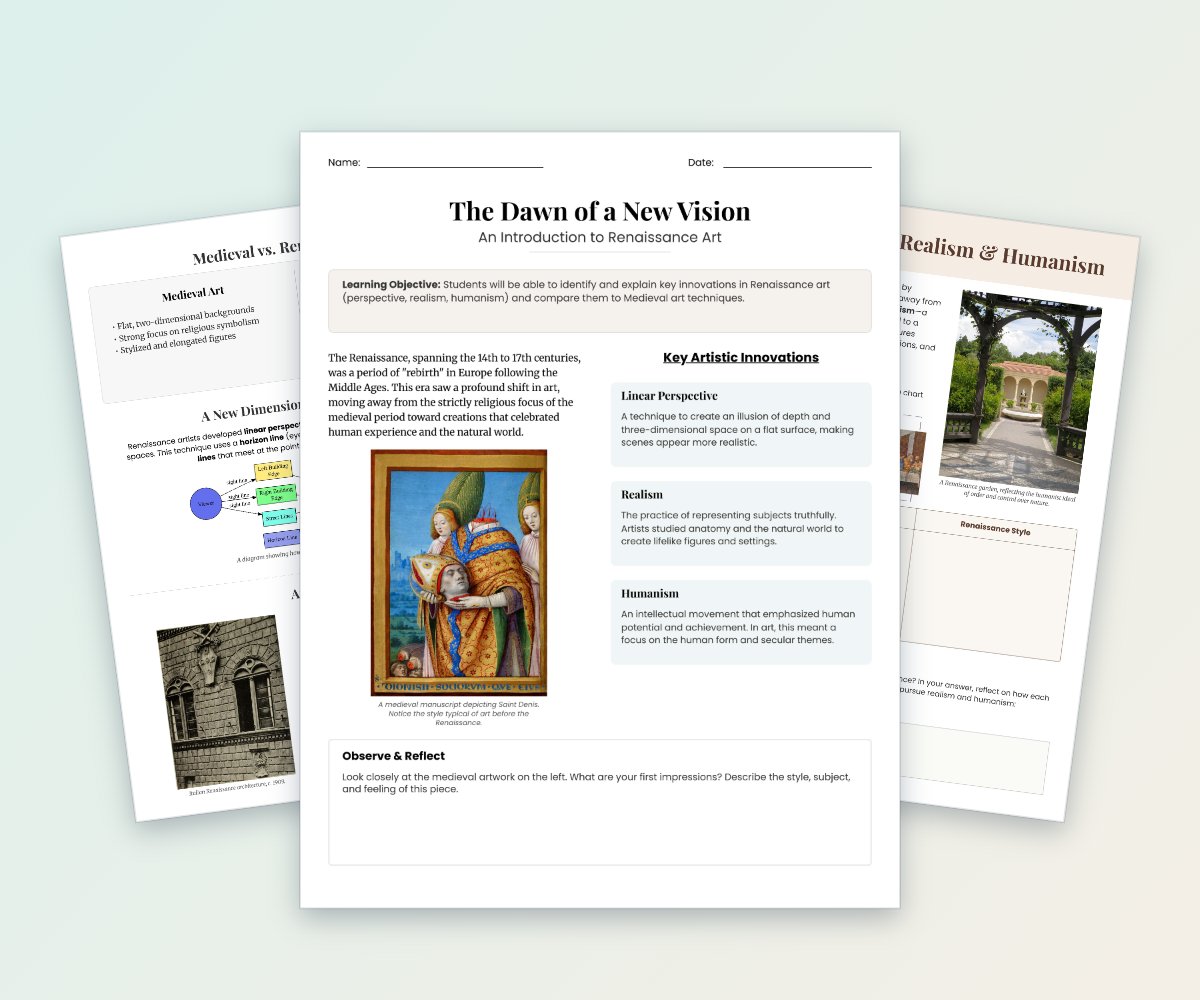
Introduce students to Renaissance art innovations, including linear perspective, realism, and humanism.
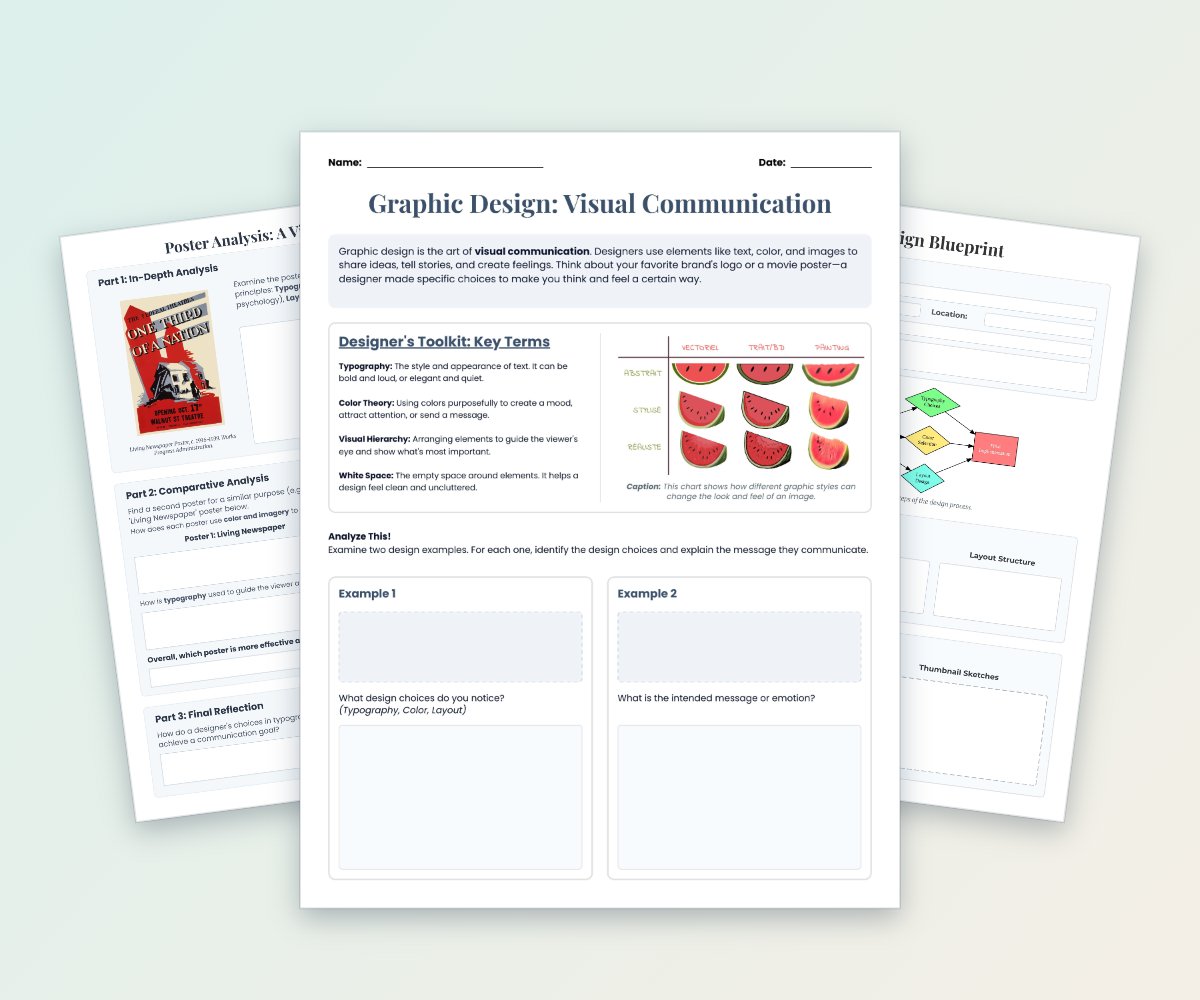
Students explore typography, color theory, visual hierarchy, white space, and visual communication through guided poster analysis.
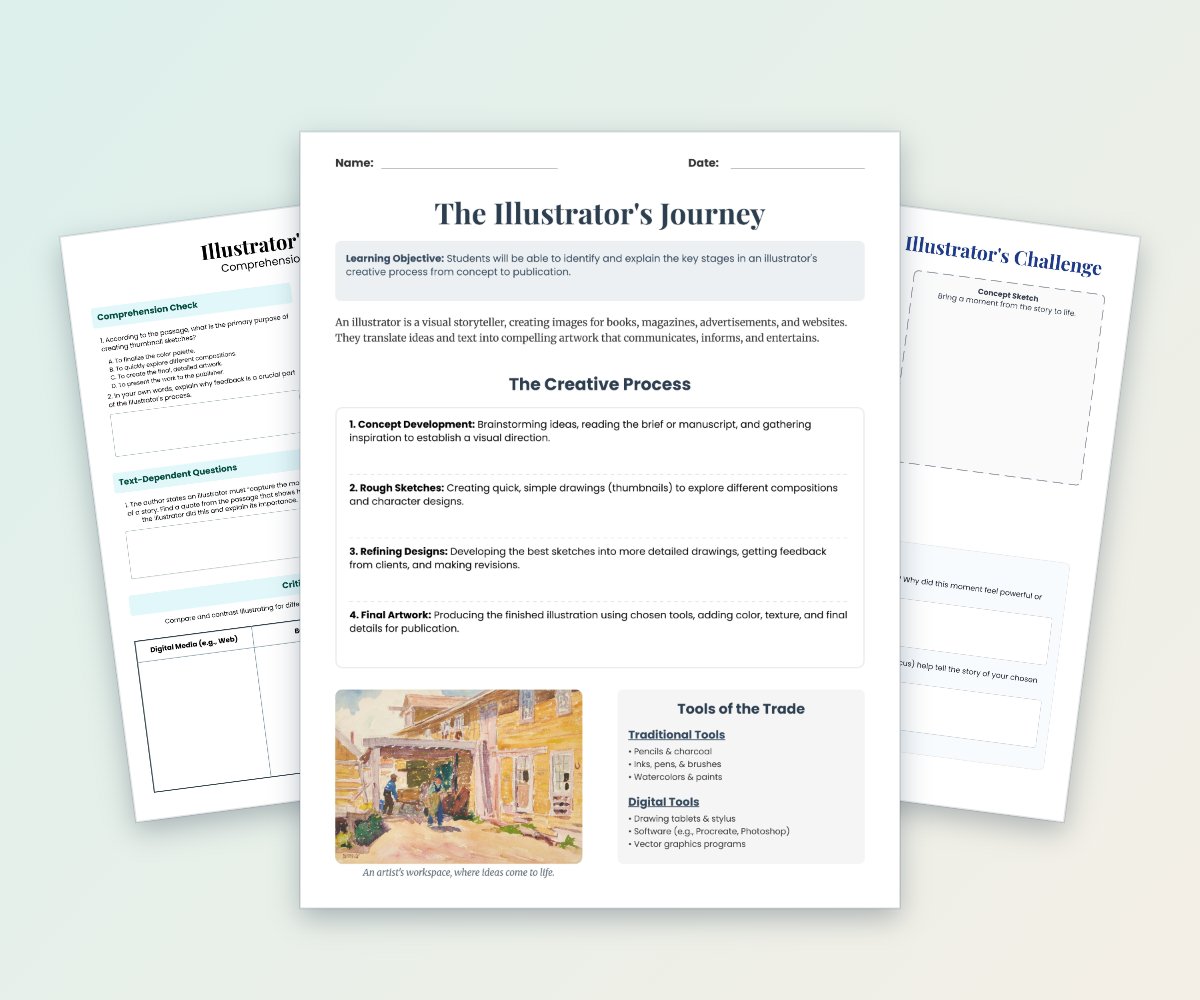
This three-page worksheet introduces the stages of an illustrator’s creative process, from concept development and rough sketches to refinement and final artwork.
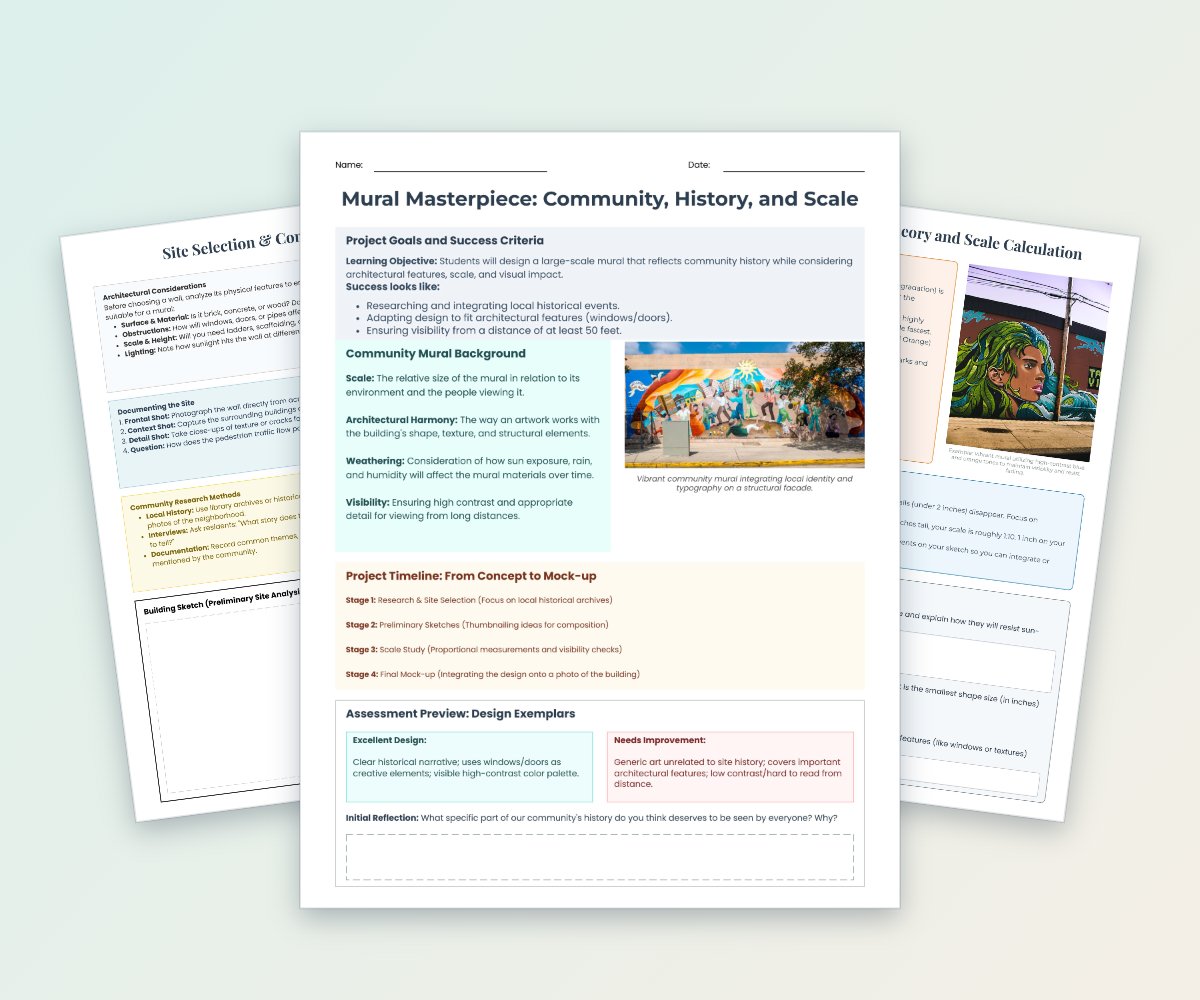
Students design a large-scale mural connected to community history while considering architectural features, scale, visibility, materials, and weathering.
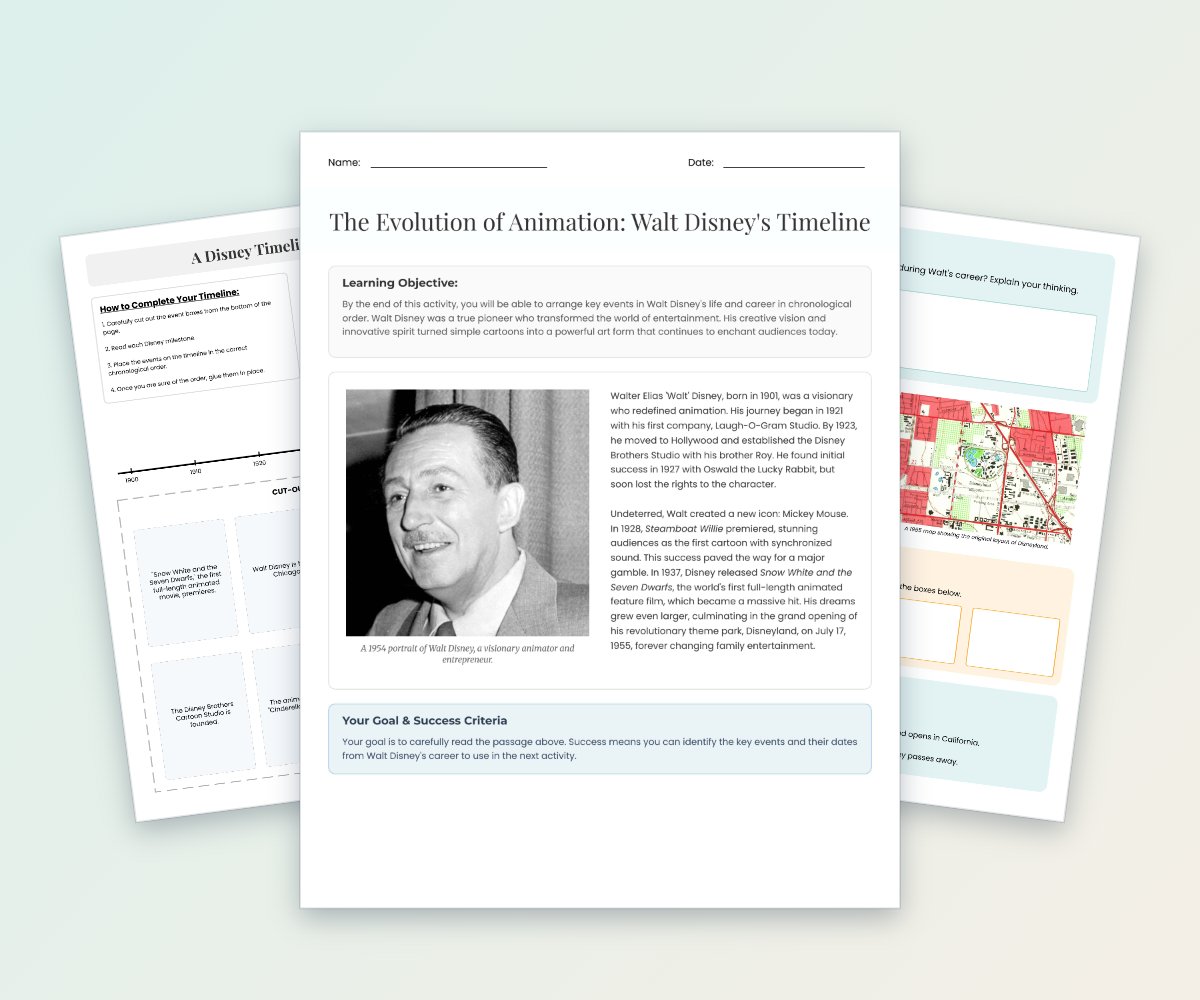
Students read a concise overview of Walt Disney's career and arrange major milestones in chronological order.
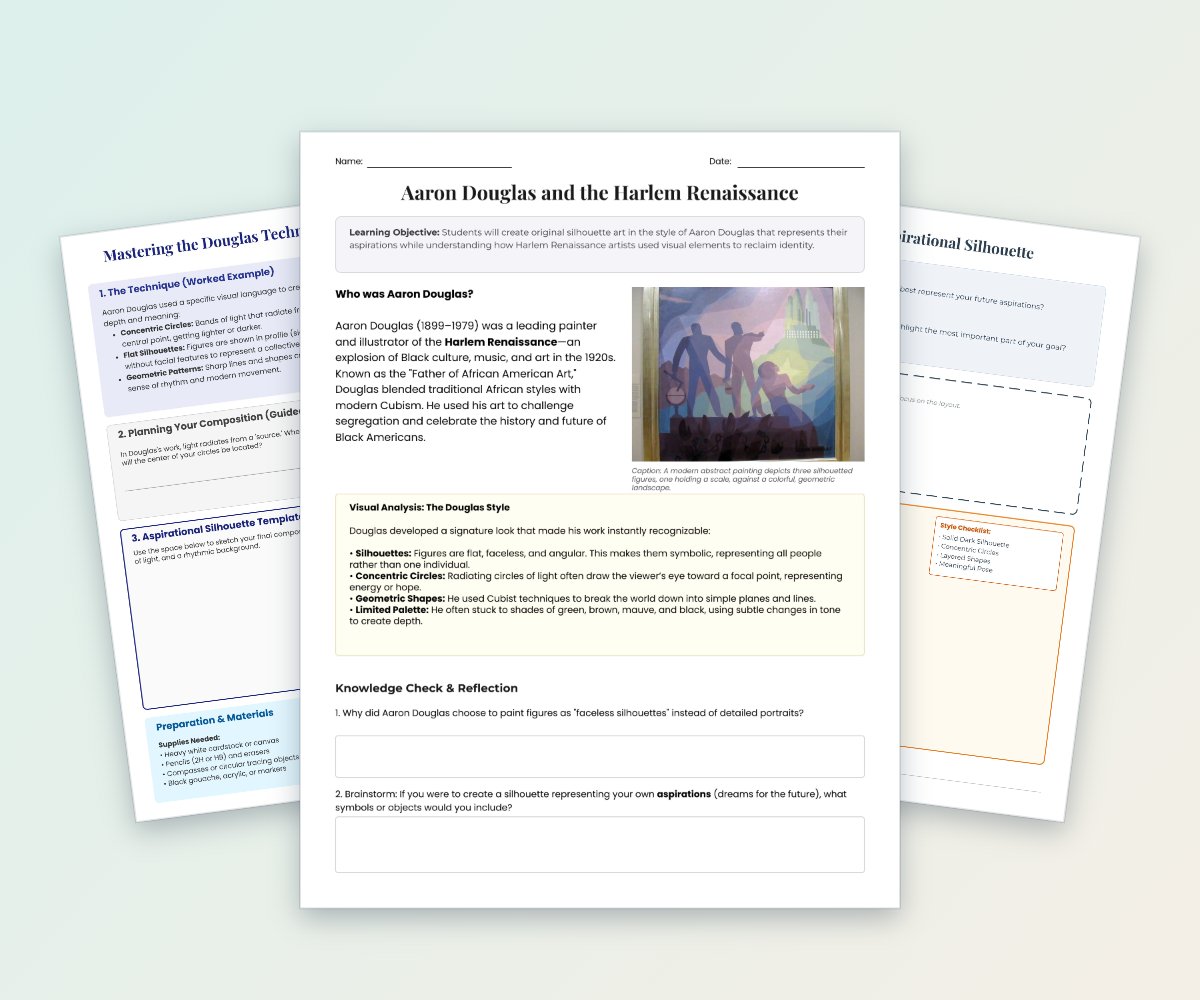
Students learn about Aaron Douglas and analyze his use of silhouettes, concentric circles, geometric shapes, and limited color palettes.
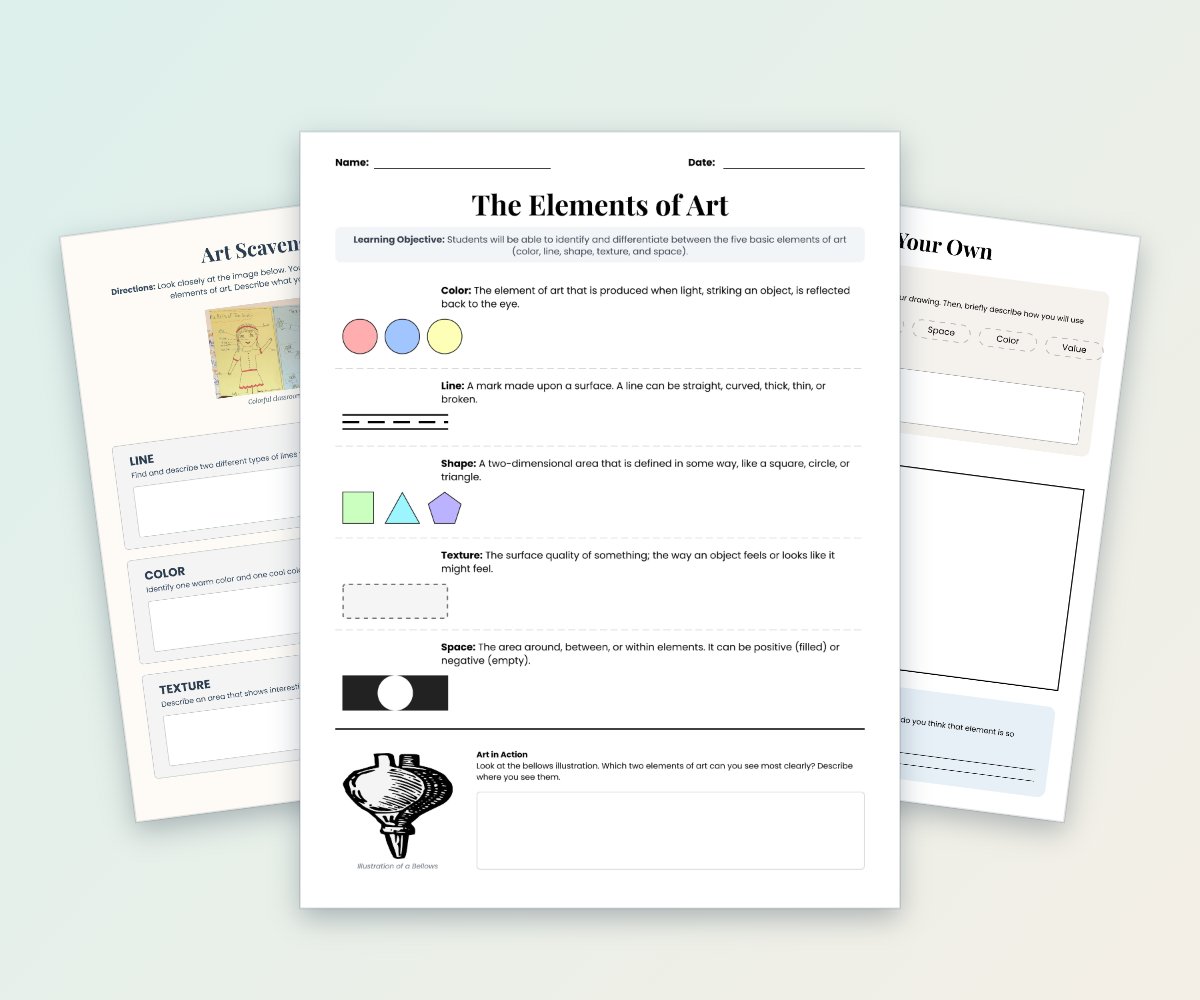
This three-page worksheet introduces color, line, shape, texture, and space through student-friendly definitions and visual examples.
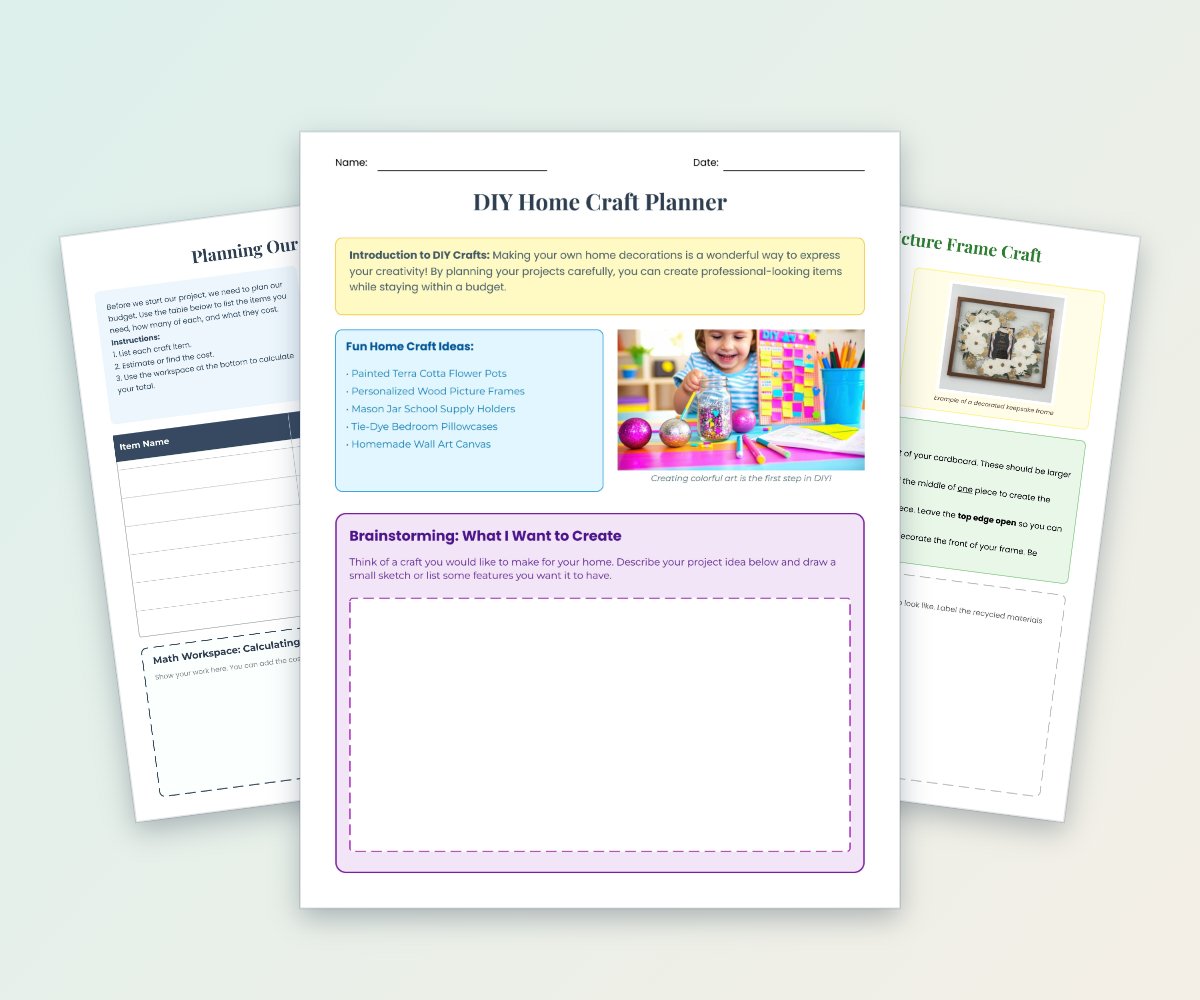
This four-page student activity pack guides learners through planning home crafts, creating supply lists, estimating costs, and sketching designs.
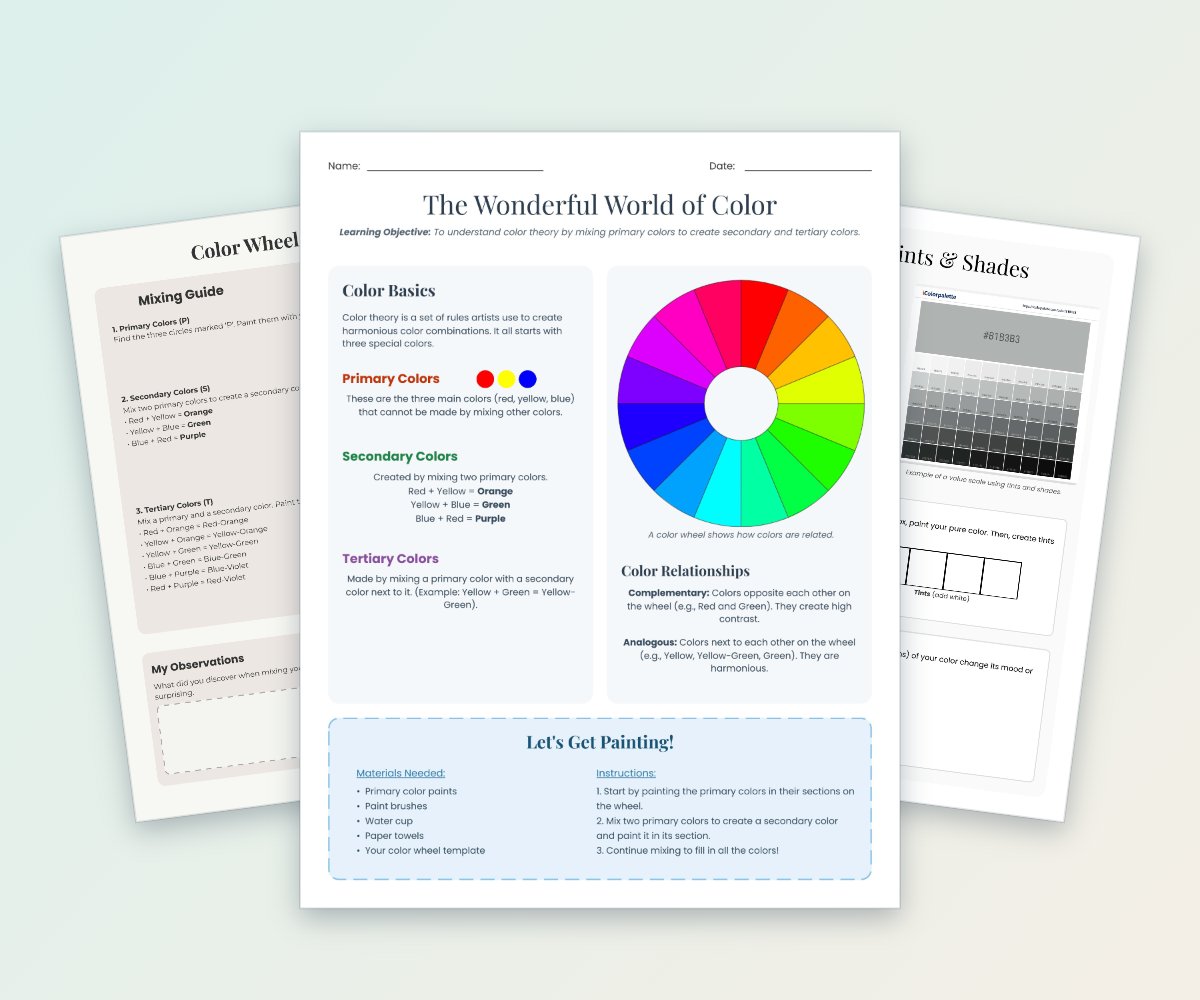
This three-page art activity introduces primary, secondary, and tertiary colors, complementary and analogous color relationships, and tints and shades.
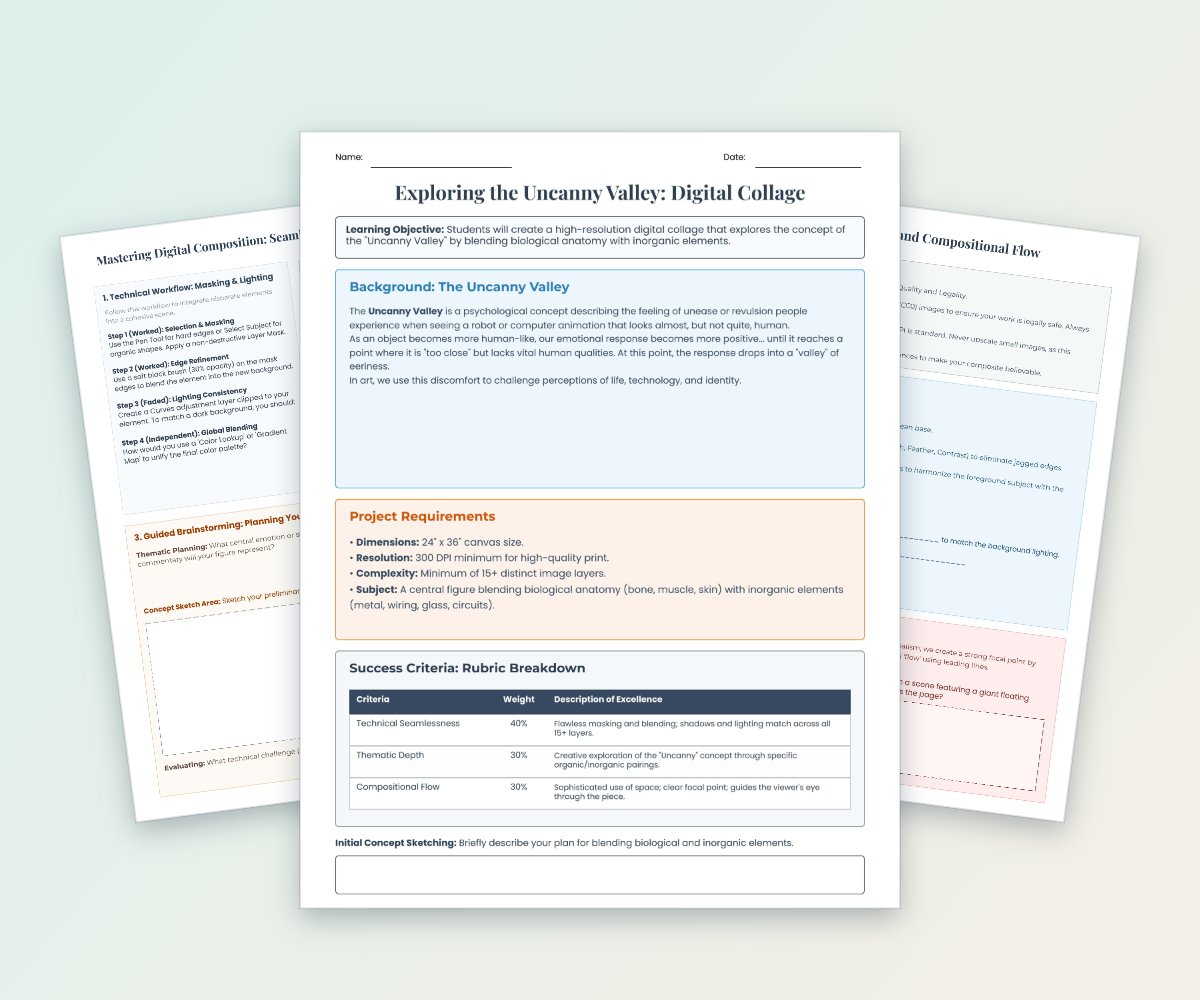
Students explore the psychological concept of the uncanny valley by creating a digital collage that combines biological anatomy with inorganic elements.