Tourism Campaign Project: Regional Analysis and Multi-Channel Marketing
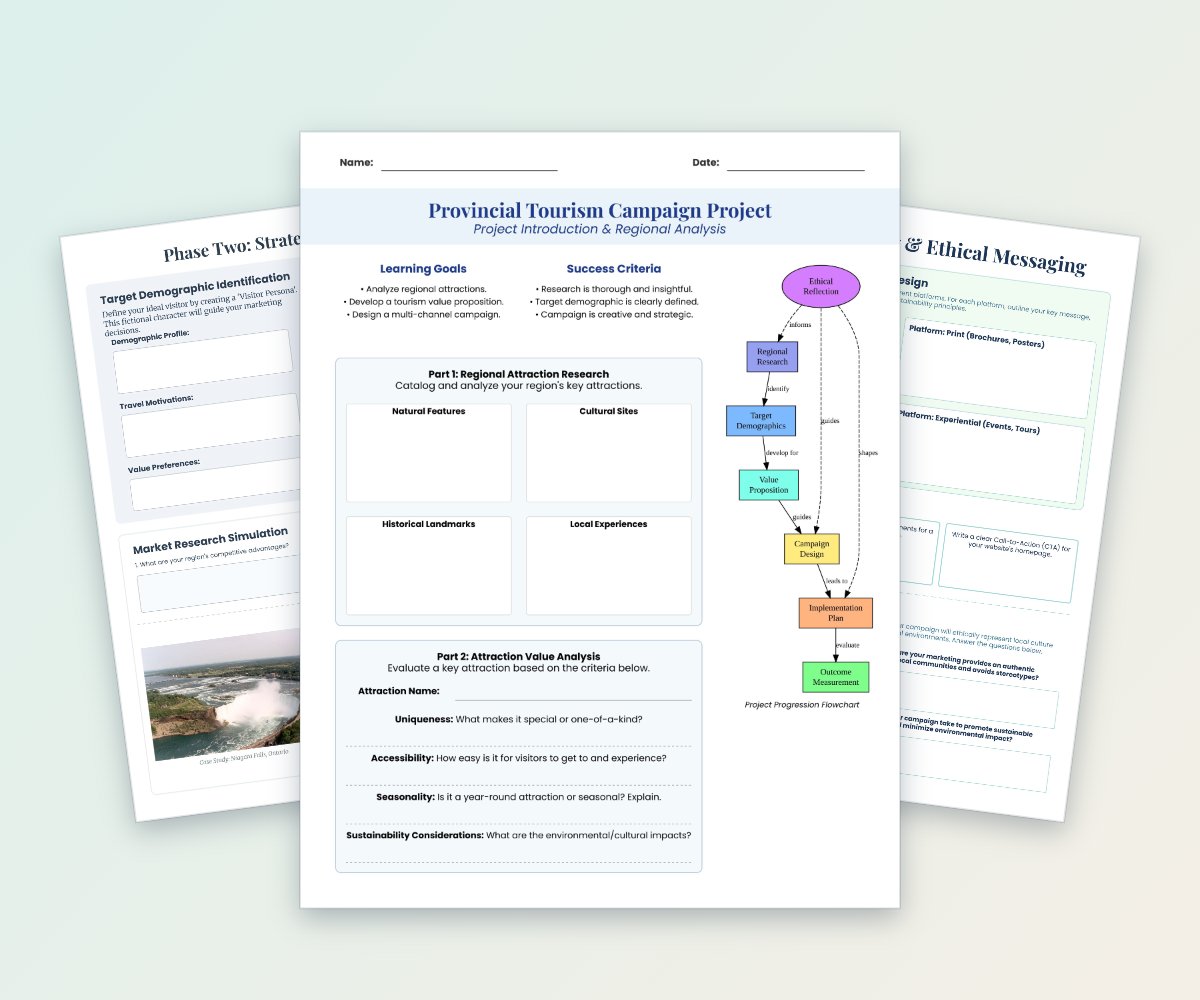
Students research regional attractions, analyze their tourism value, define a target visitor persona, and develop a compelling value proposition.
$5
Safety guides, skills lessons and project resources for shops, labs and career programs, built for hands-on learning.
Students research regional attractions, analyze their tourism value, define a target visitor persona, and develop a compelling value proposition.
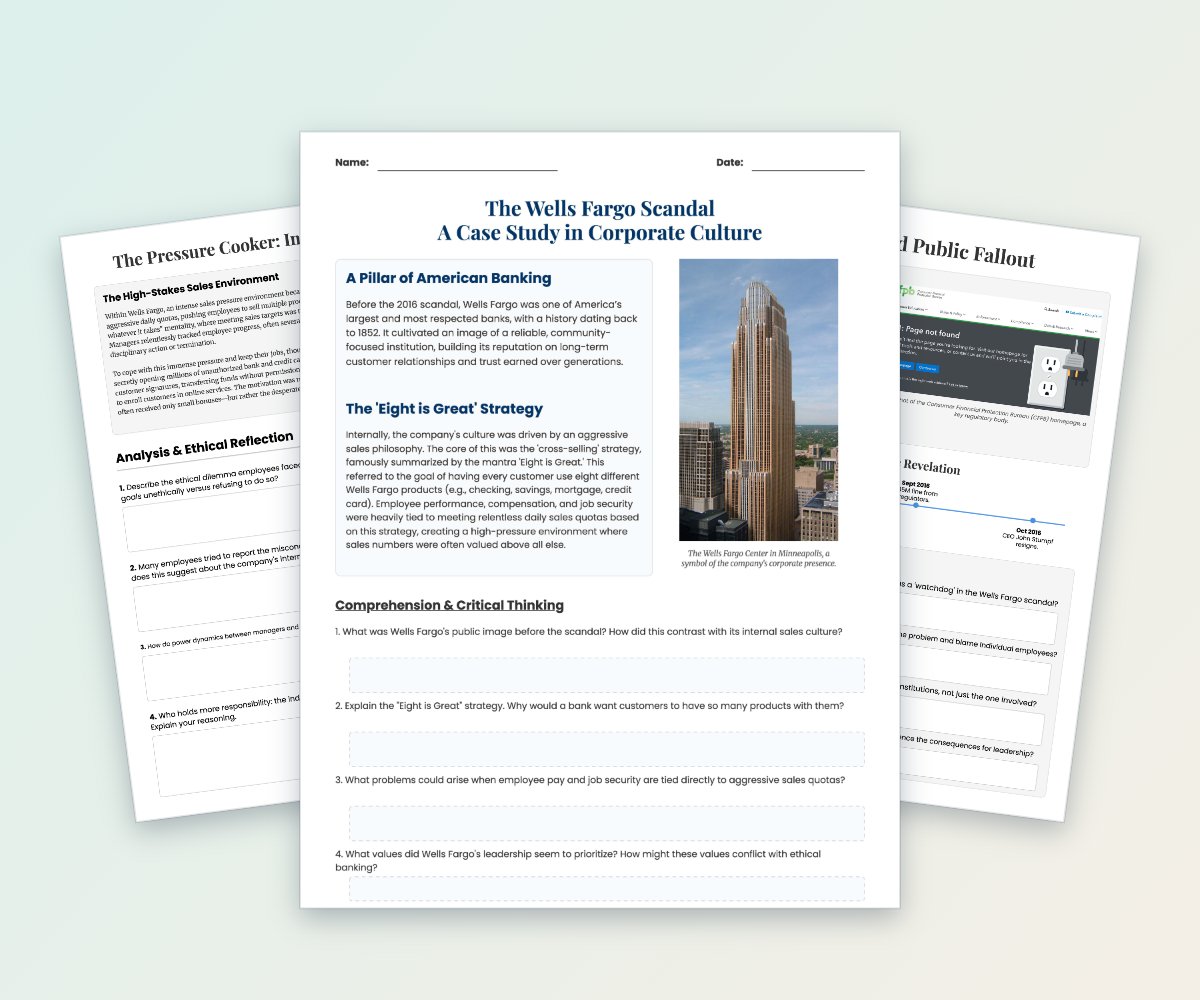
Students examine Wells Fargo’s aggressive sales culture, the “Eight is Great” strategy, and the unauthorized account scandal.
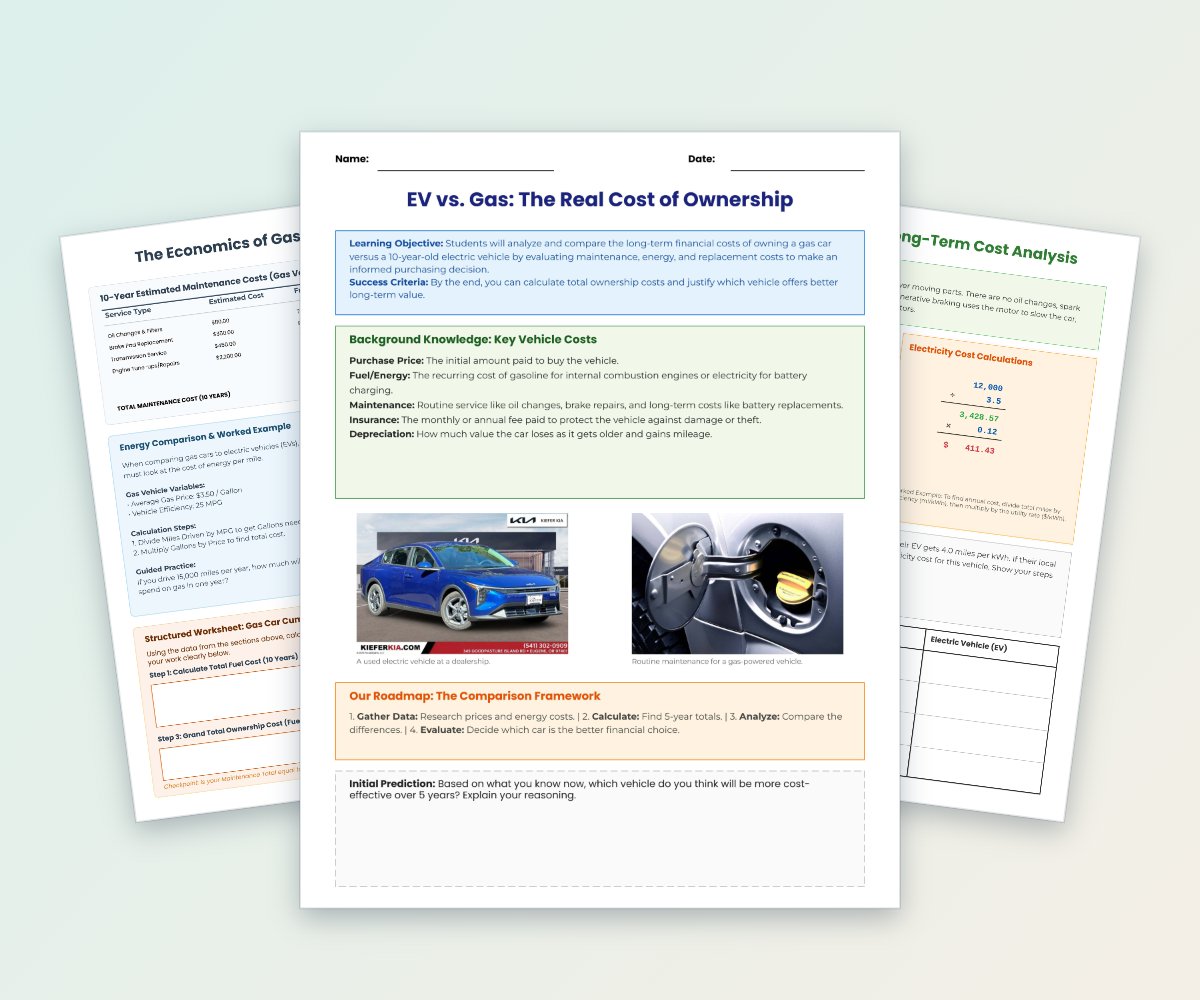
Students compare the long-term costs of owning a used electric vehicle and a gas-powered vehicle.
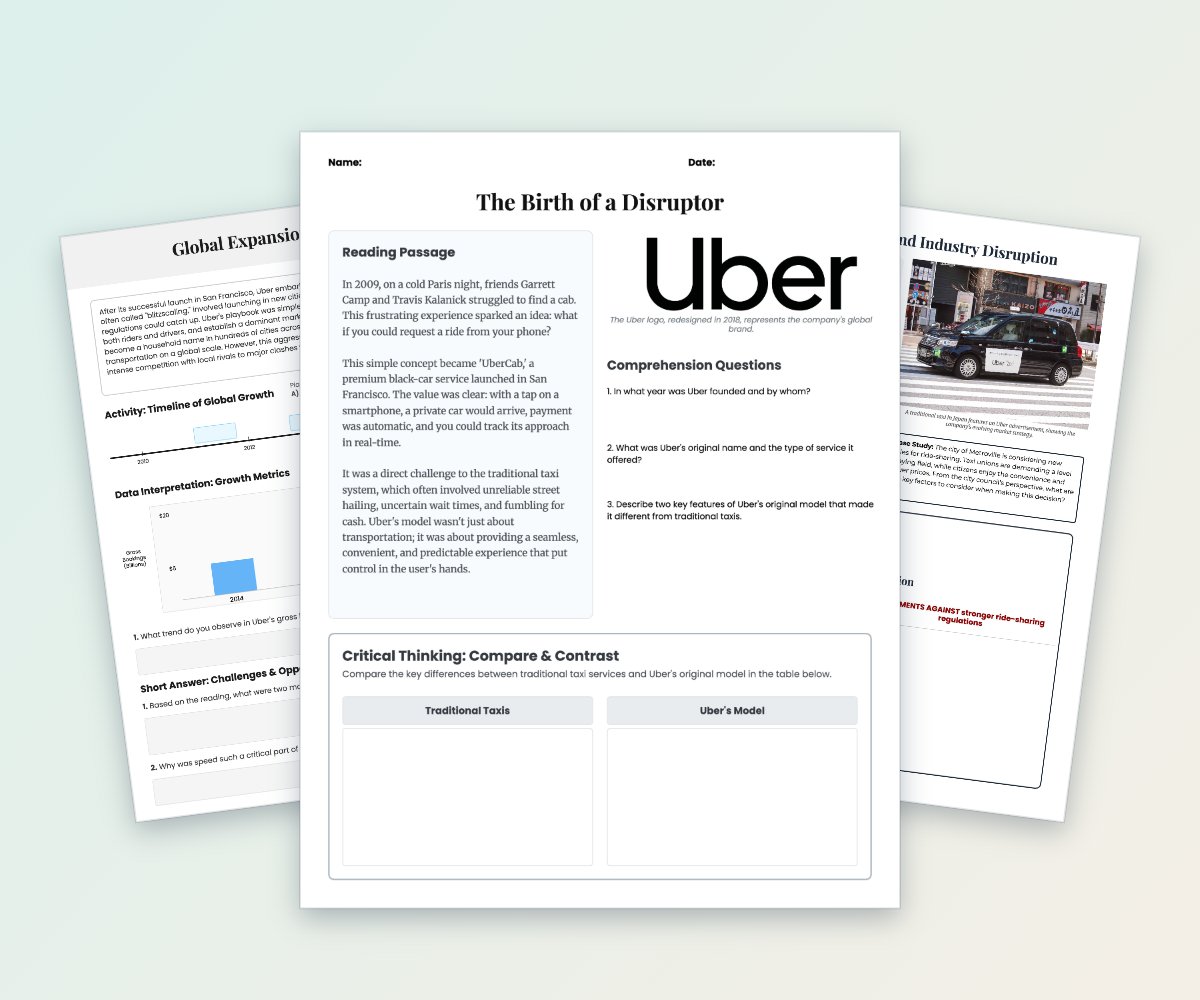
Students read about Uber's founding, disruptive business model, global expansion, and challenges.
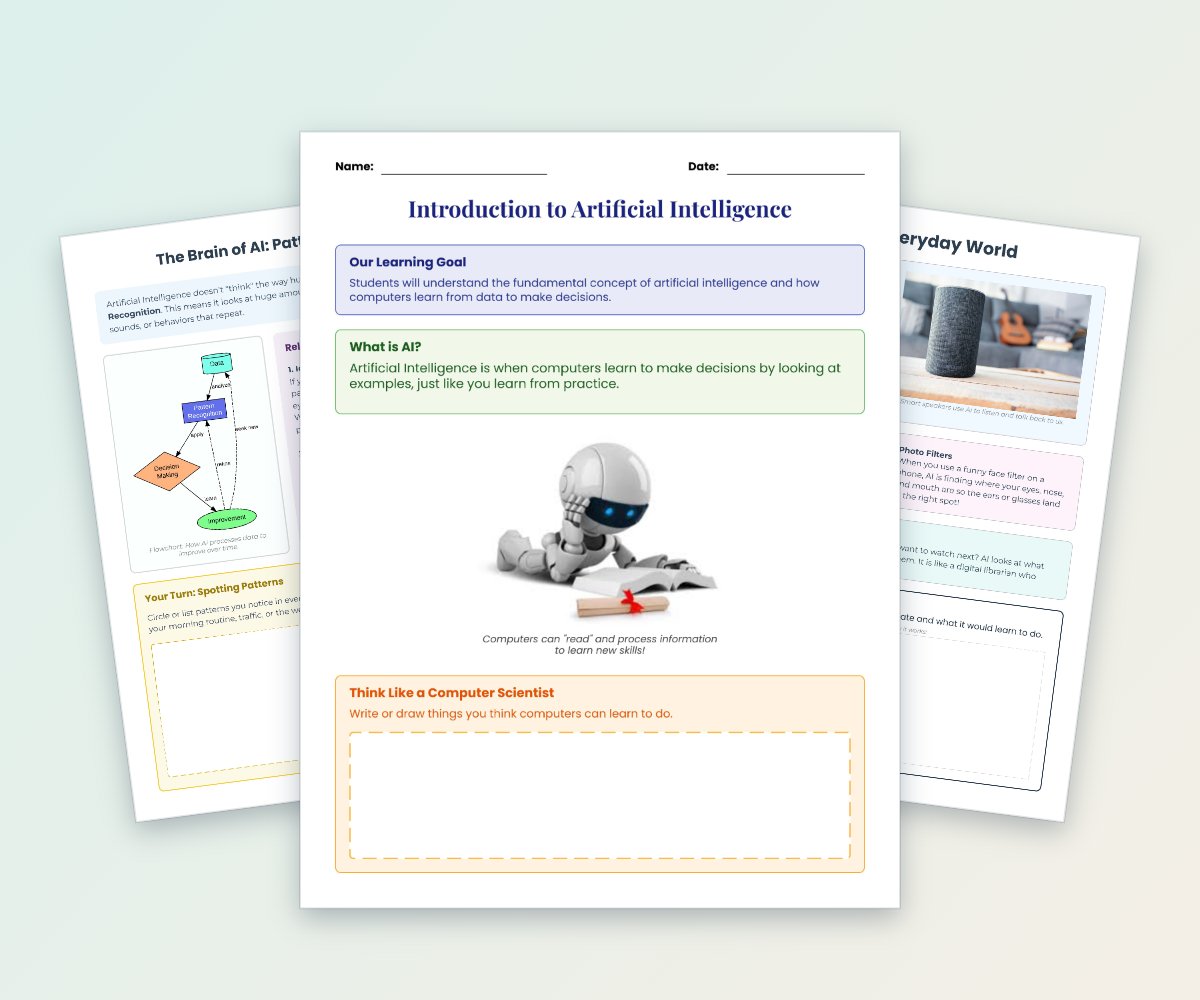
Introduce students to artificial intelligence, machine learning from data, and pattern recognition through accessible explanations and everyday examples.
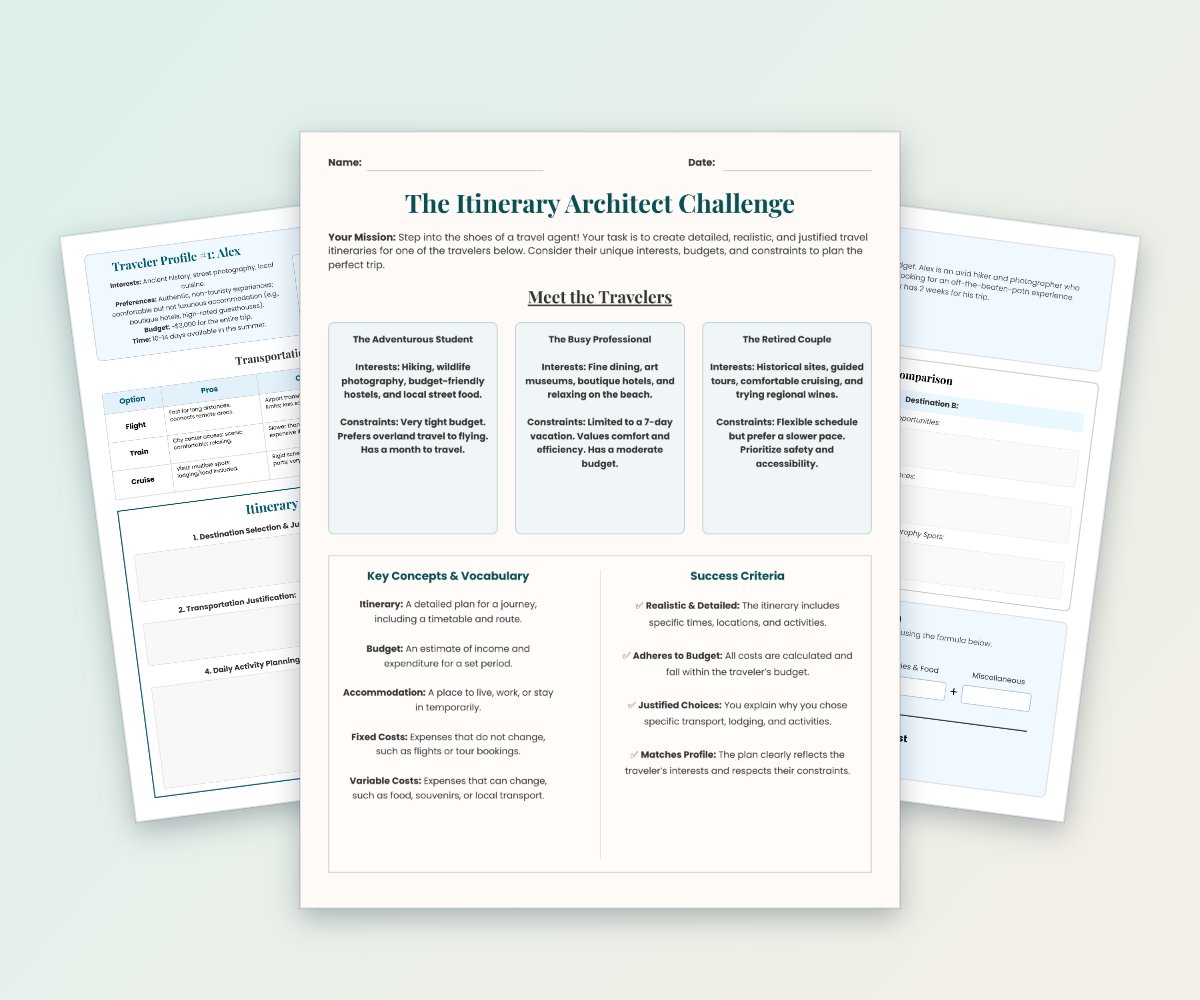
Students act as travel agents to design realistic itineraries based on traveler interests, budgets, schedules, and constraints.
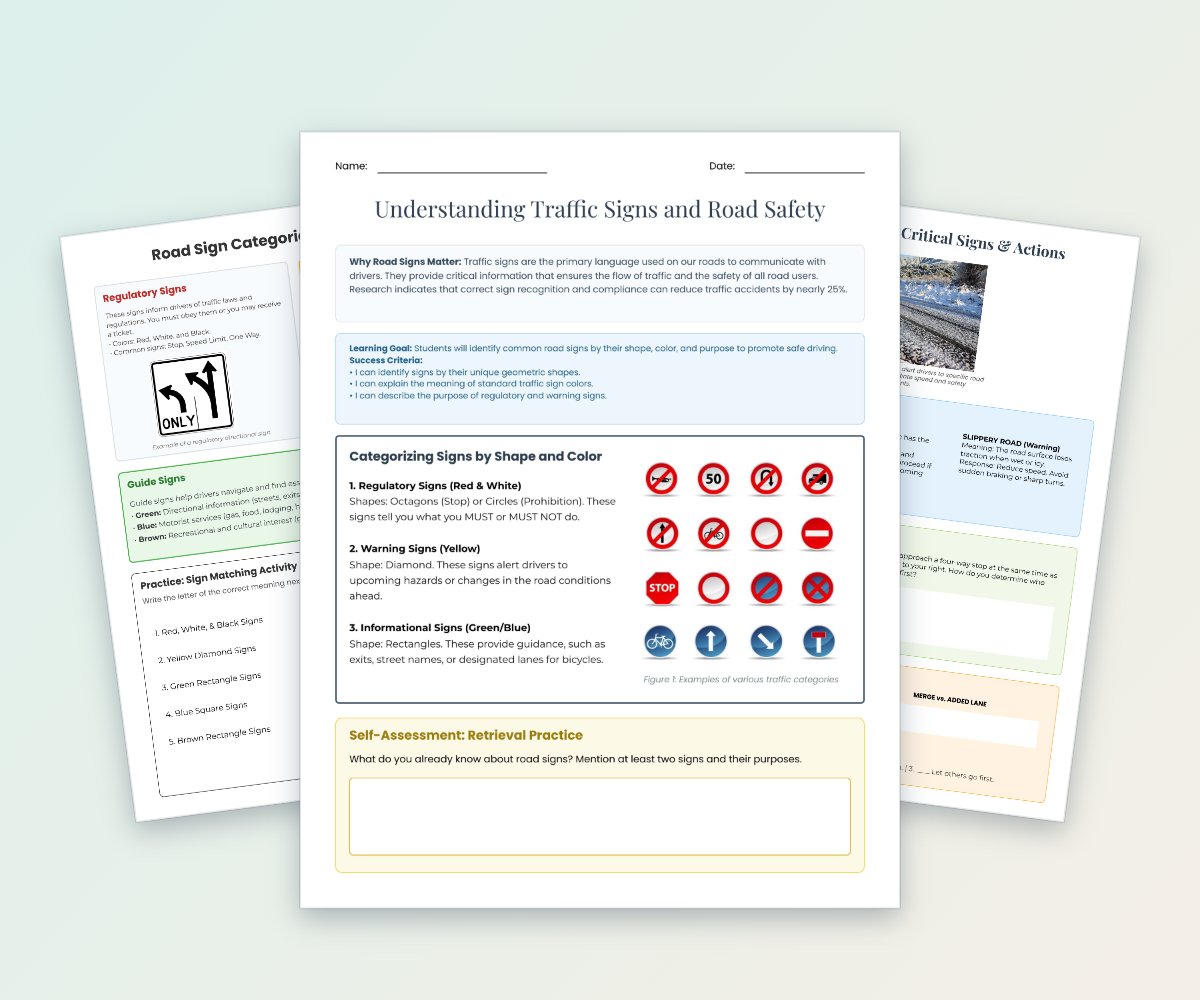
This four-page resource introduces regulatory, warning, and informational traffic signs through explanations, examples, self-assessment, and a sign-matching activity.
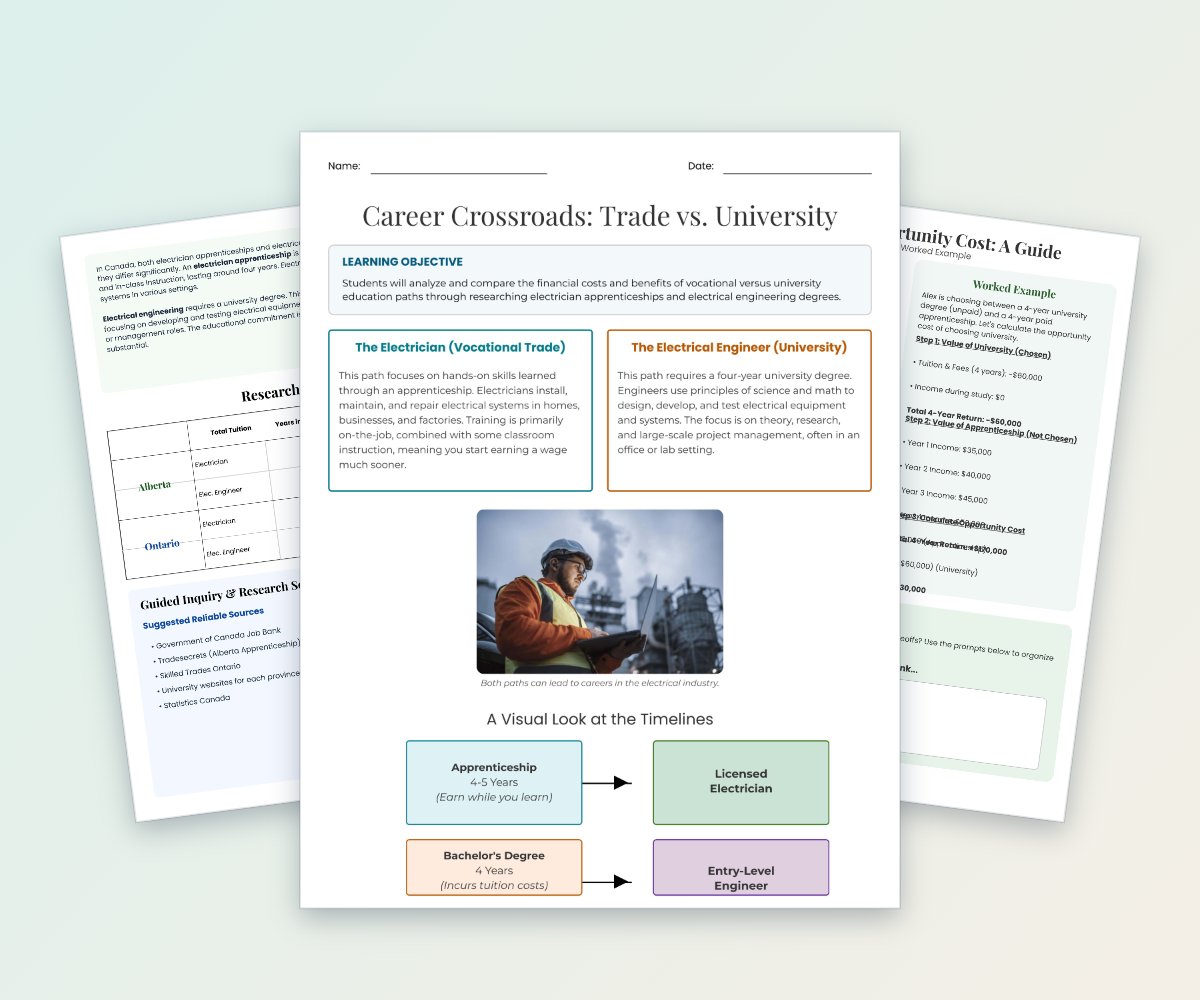
This four-page career exploration activity compares electrician apprenticeships with university electrical engineering programs.
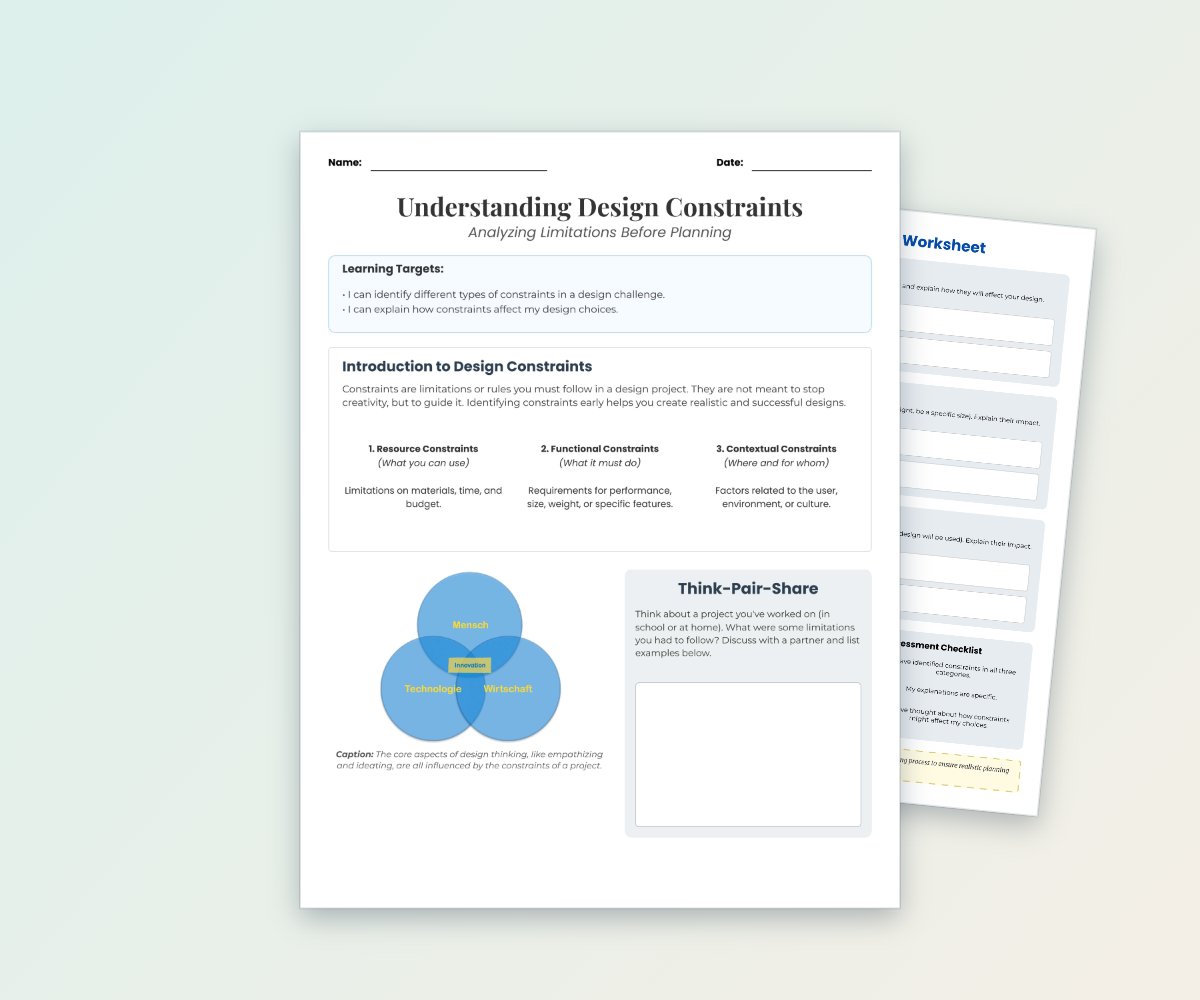
This two-page worksheet introduces resource, functional, and contextual design constraints before students begin planning a project.
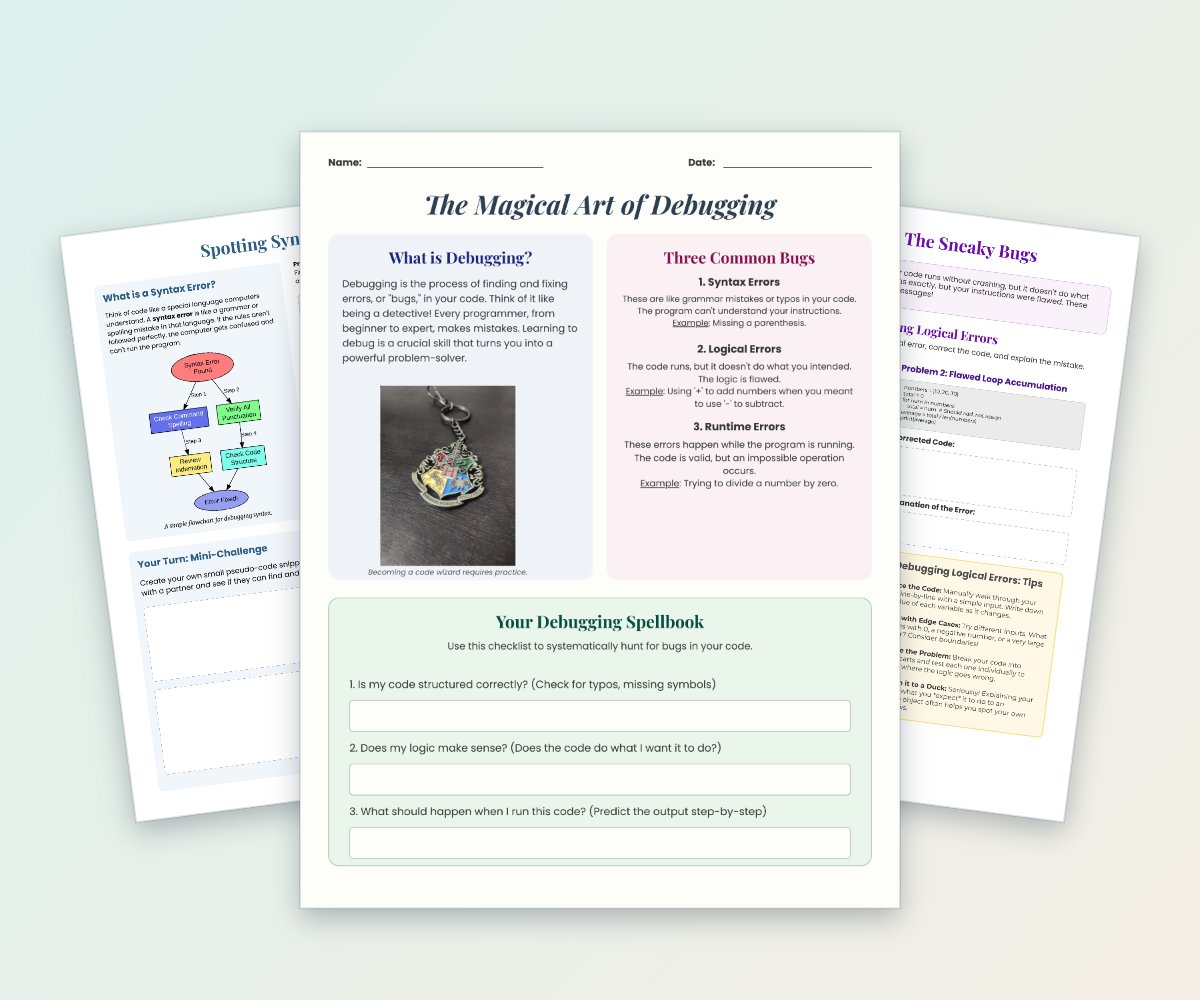
This four-page computer science worksheet introduces syntax, logical, and runtime errors through clear explanations and examples.
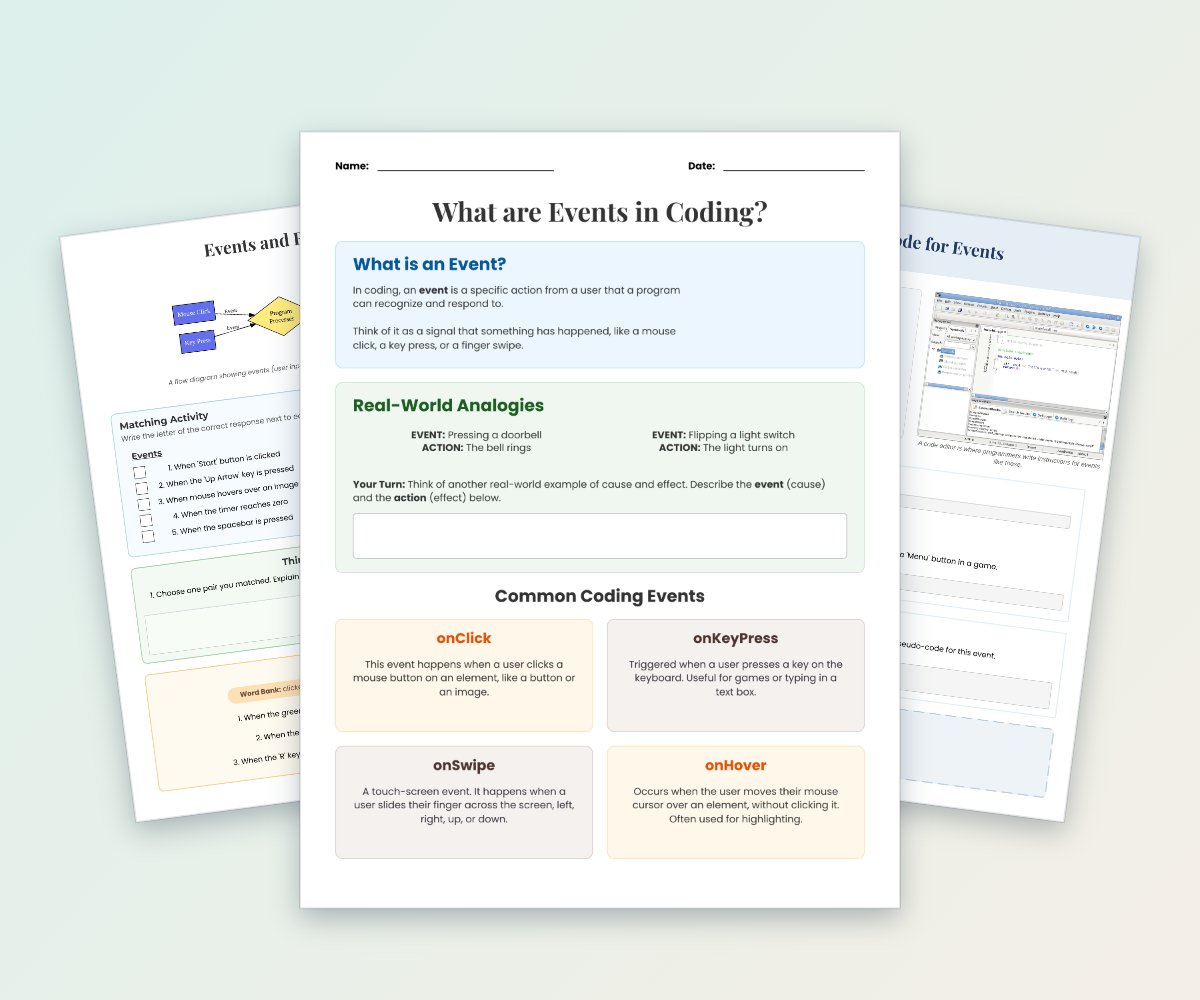
This four-page worksheet introduces coding events such as clicks, key presses, swipes, and hovers.
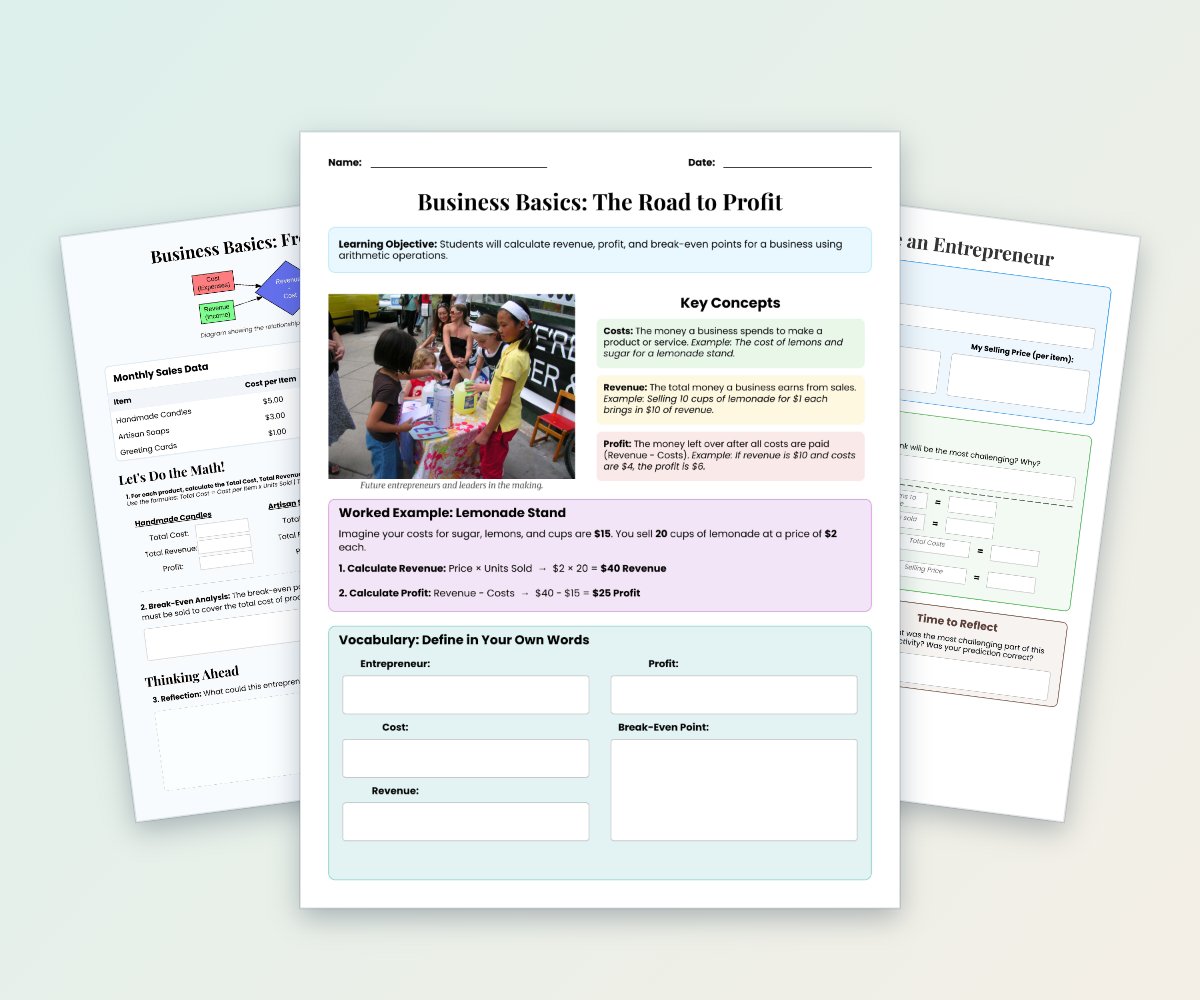
Students learn to calculate revenue, total costs, profit, and break-even points using lemonade-stand and product-sales examples.
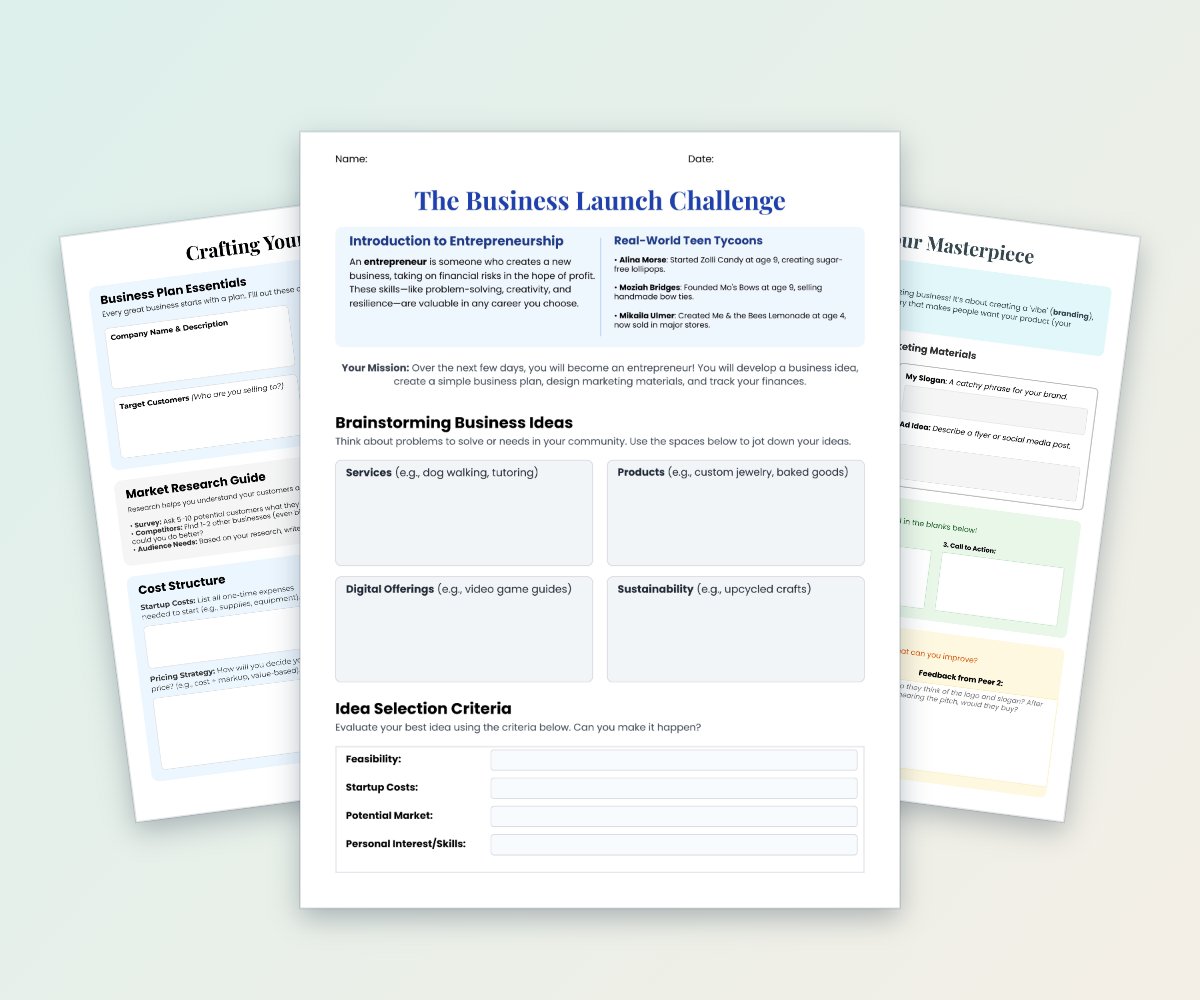
Students develop a business idea and work through feasibility, target customers, market research, startup costs, pricing, revenue, and break-even planning.
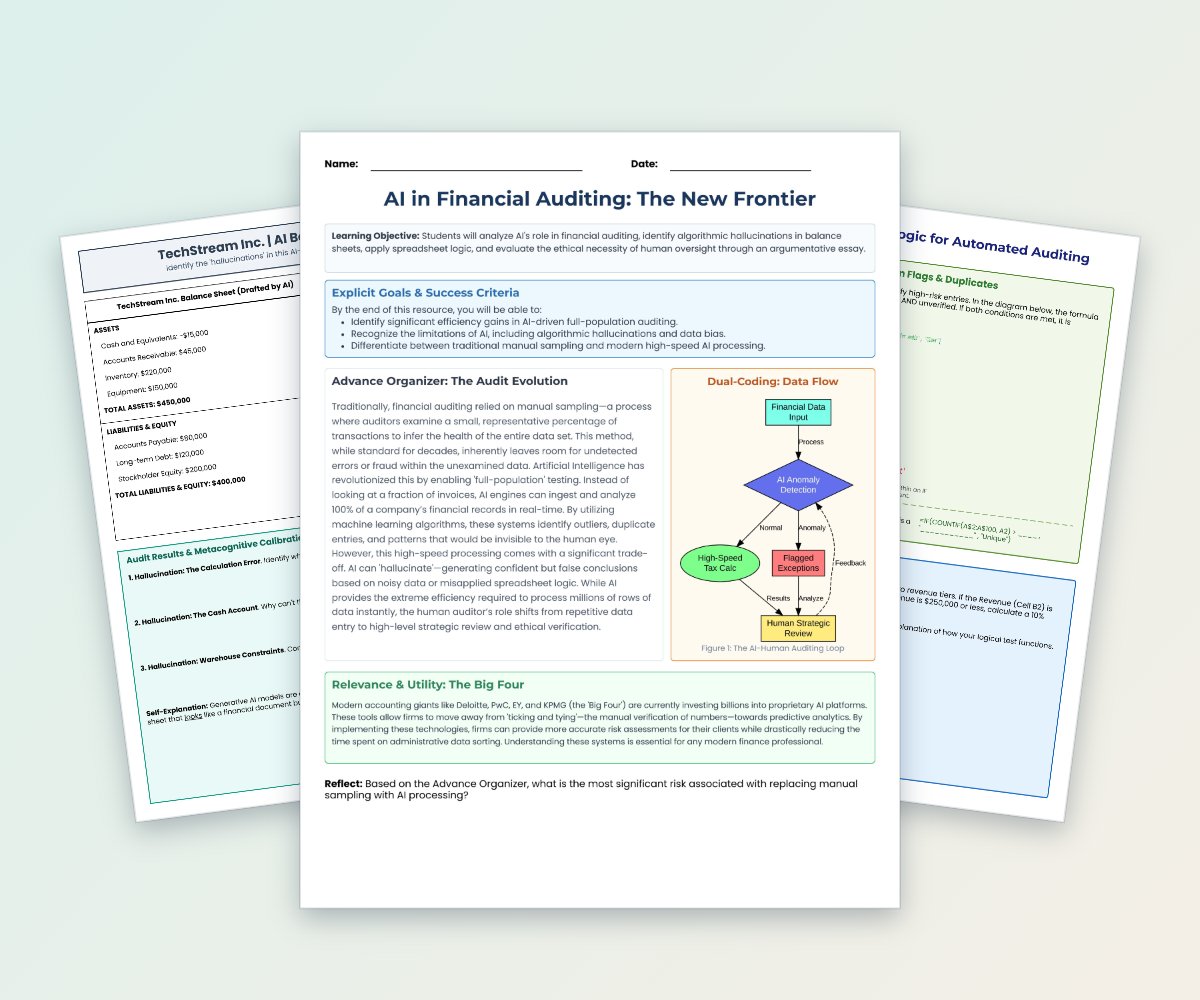
This five-page instructional resource introduces students to AI-powered full-population auditing, algorithmic hallucinations, data bias, and the continuing importance of human oversight.
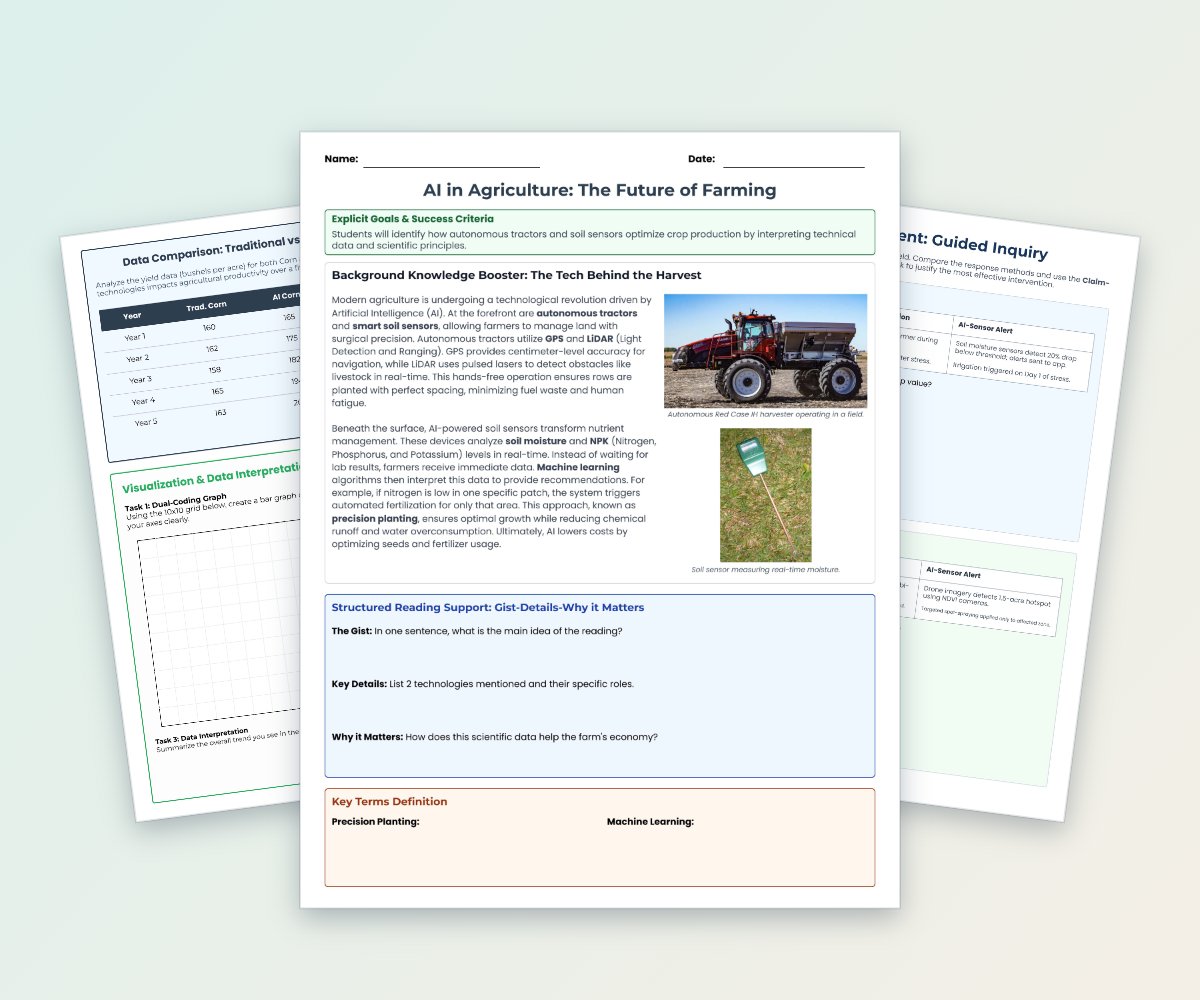
Students explore autonomous tractors, soil sensors, GPS, LiDAR, and machine learning in modern farming.
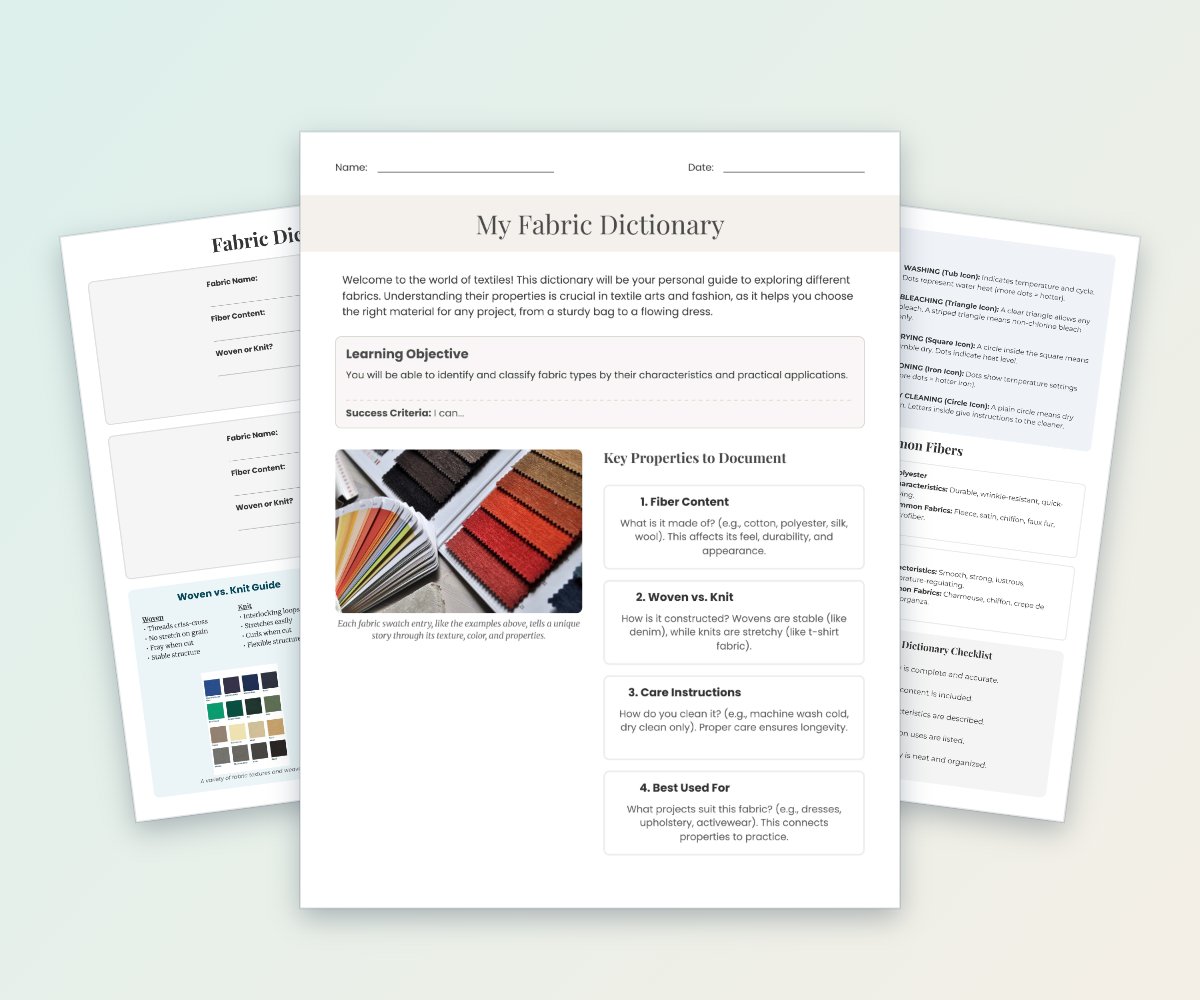
Students create a personal fabric dictionary by recording fiber content, construction, care instructions, and practical uses.
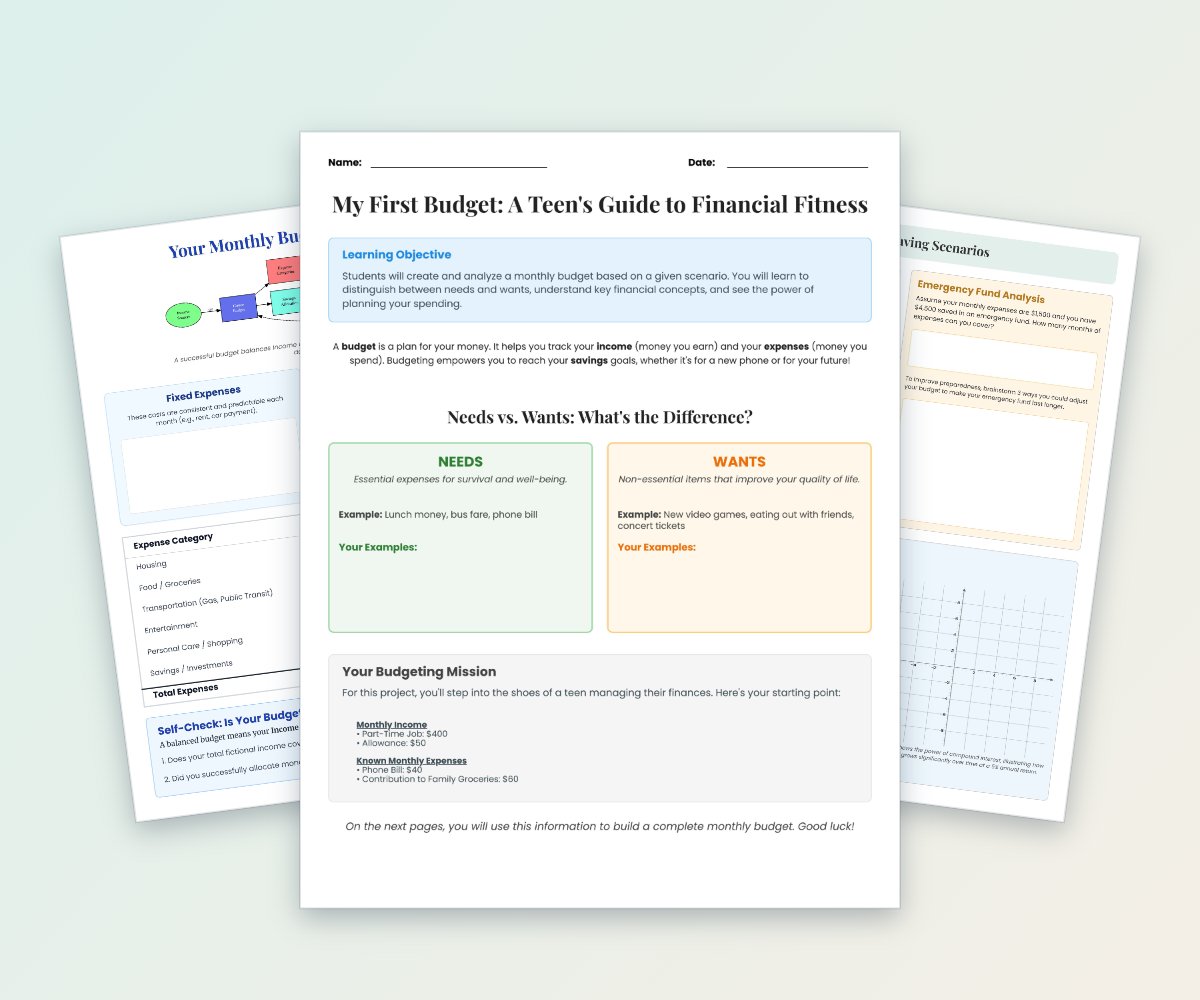
This six-page financial literacy guide helps teens distinguish needs from wants, create a monthly budget, and evaluate spending decisions.
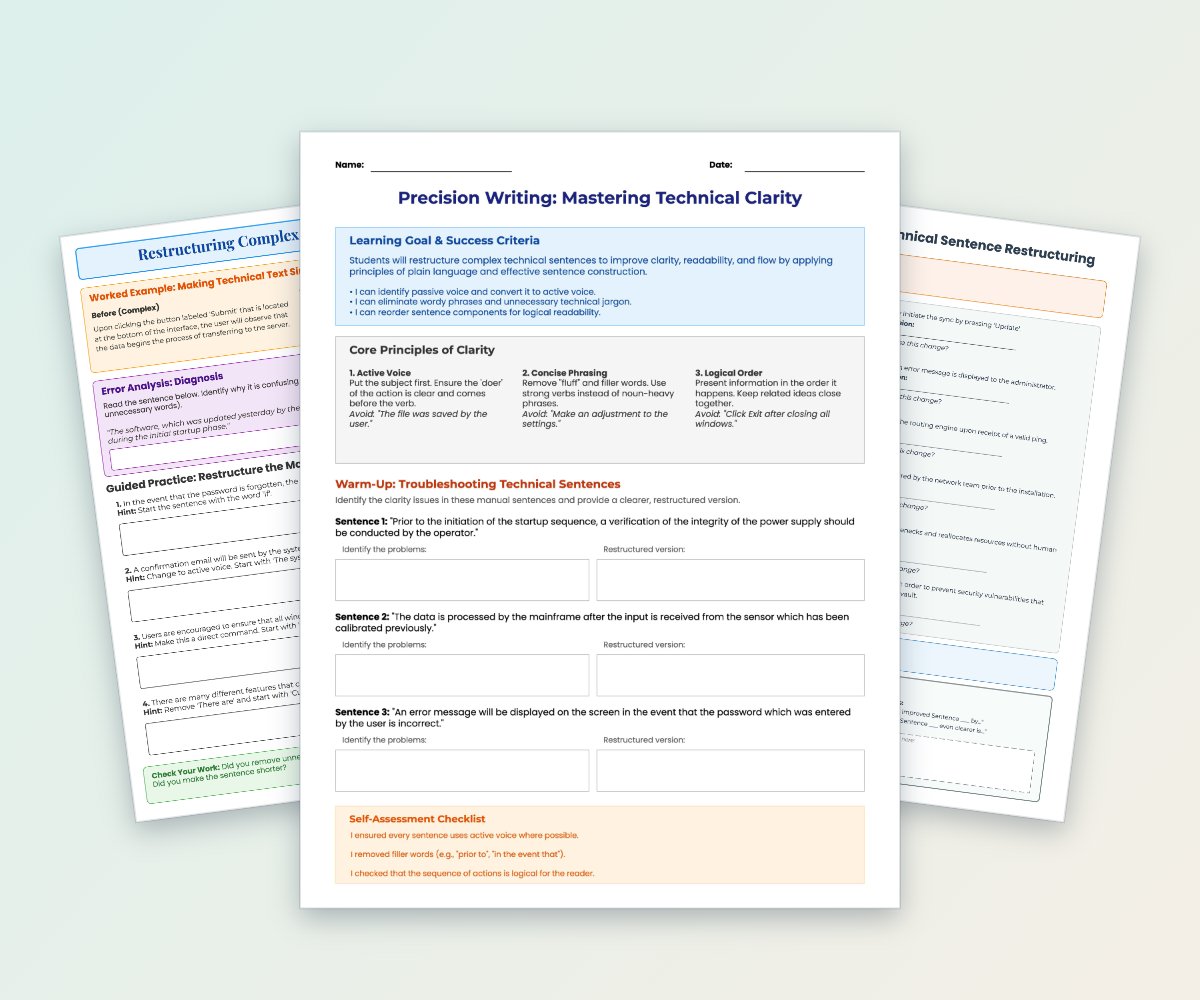
Students practice revising complex technical sentences by using active voice, concise phrasing, and logical ordering.
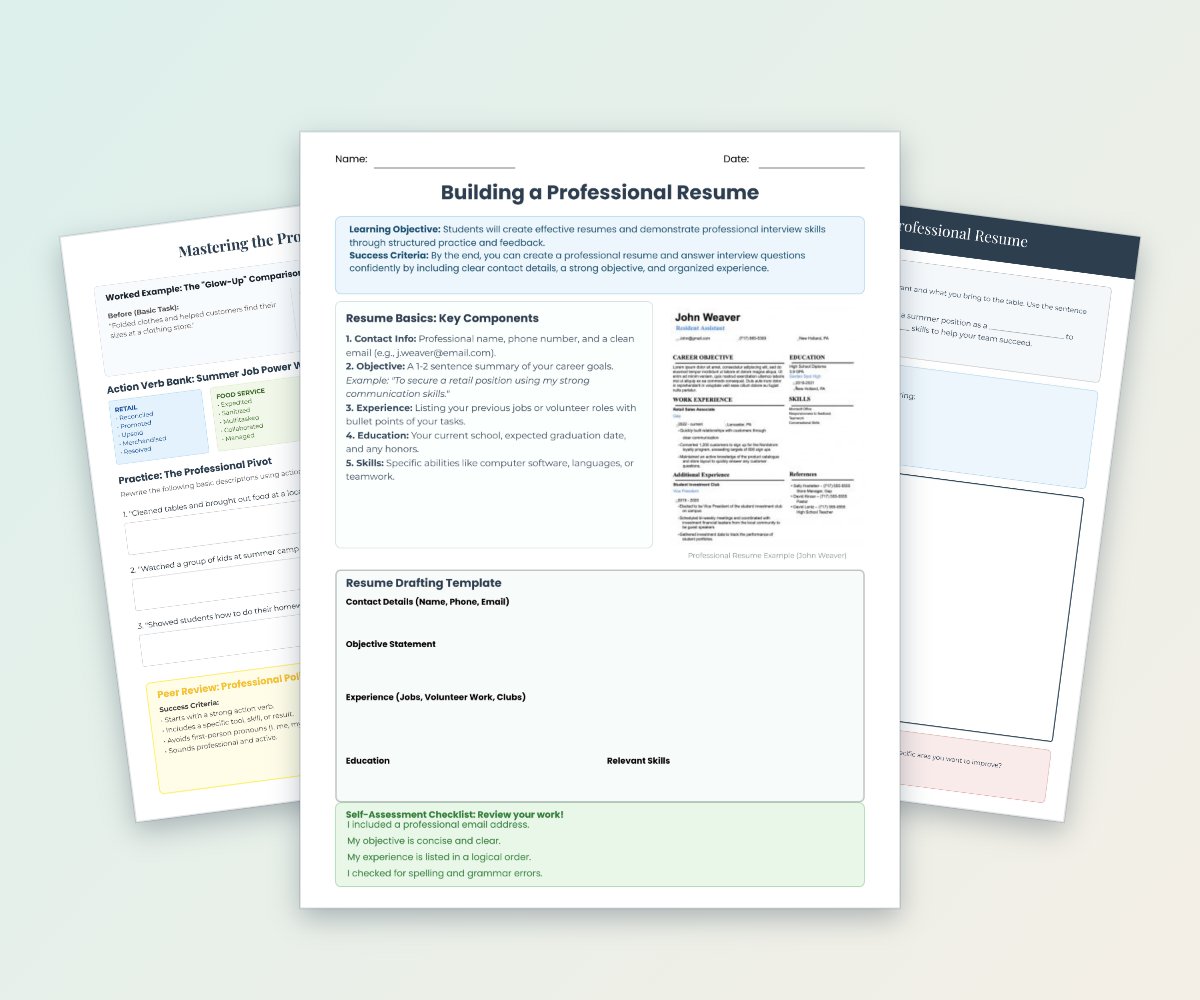
Students build a professional resume, revise basic job descriptions with strong action verbs, and practice workplace communication.
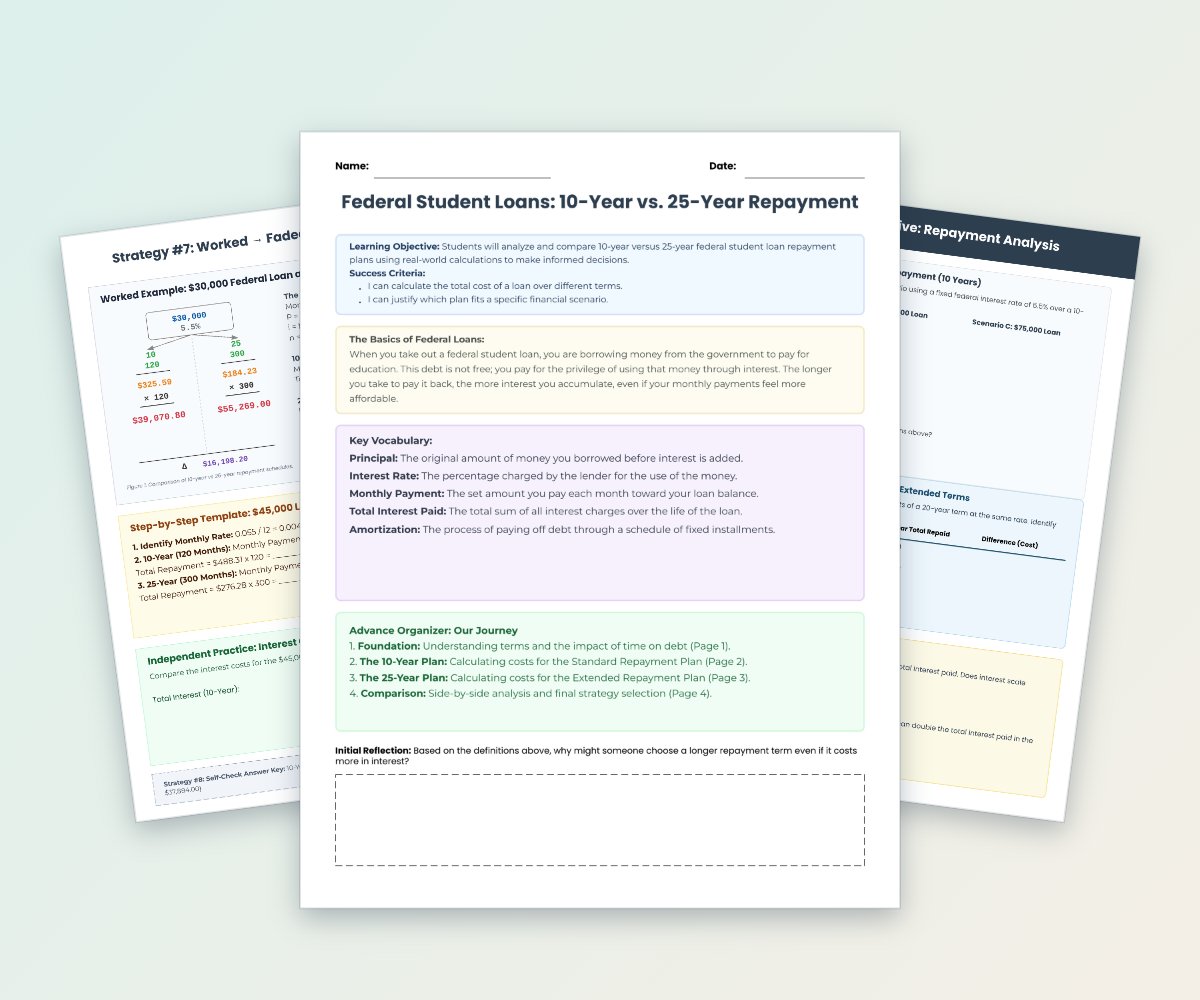
Students compare 10-year and 25-year federal student loan repayment plans through vocabulary, worked examples, formulas, and loan scenarios.
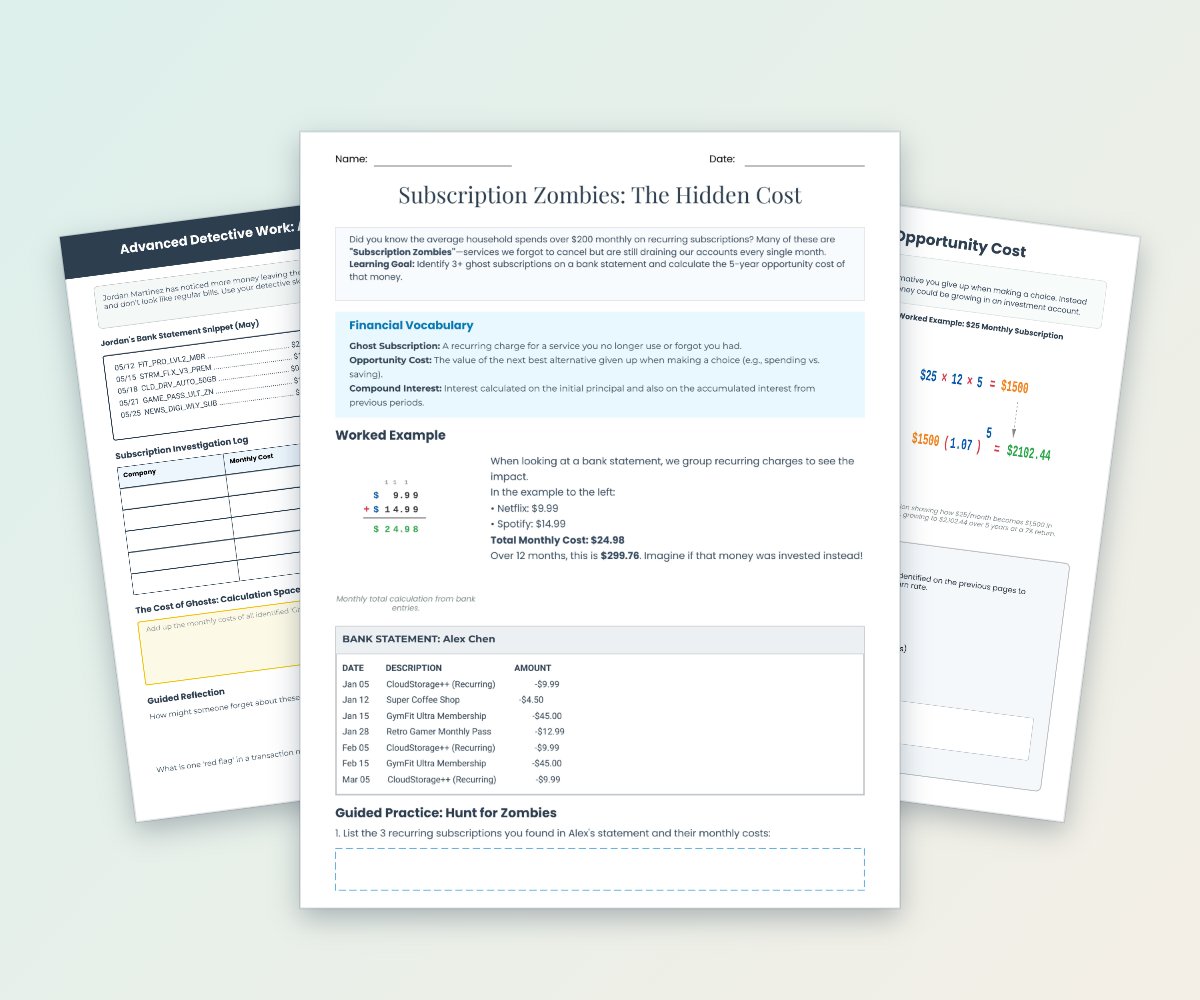
Students investigate recurring charges, identify forgotten subscriptions, calculate monthly and long-term costs, and consider opportunity cost.
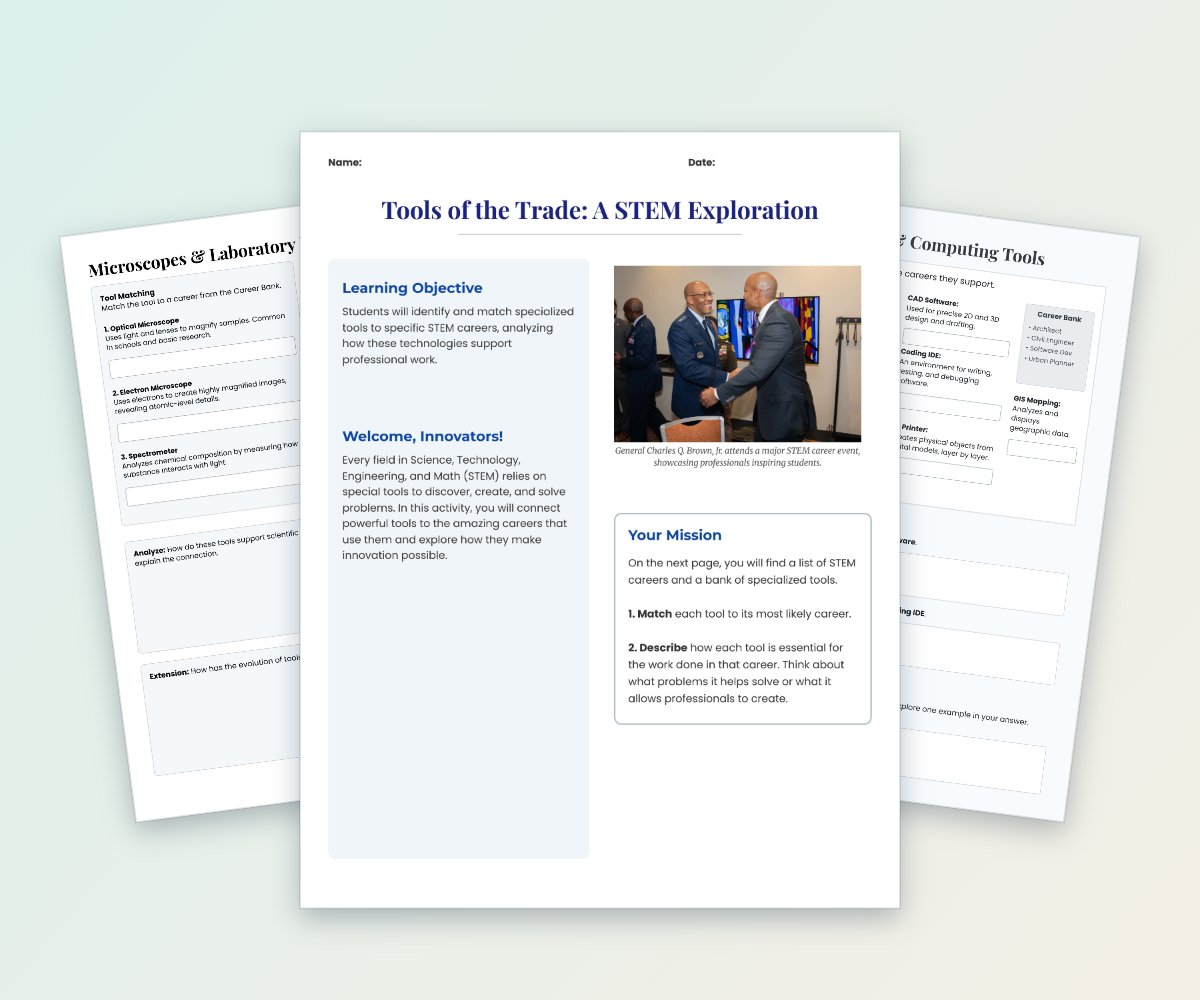
Students match specialized scientific and digital tools to STEM careers, including microbiologists, forensic scientists, architects, and software developers.
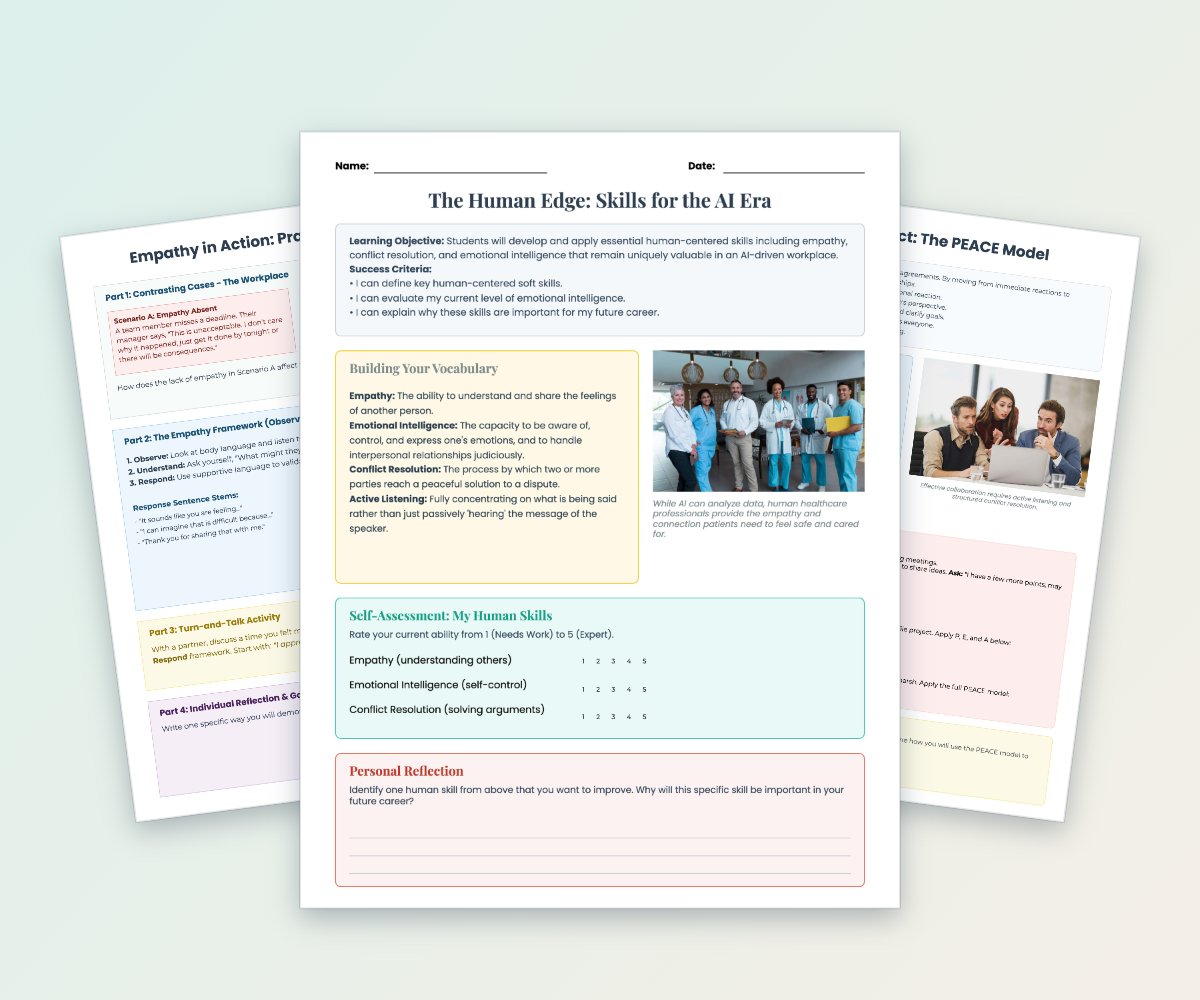
Students explore human-centered skills that remain valuable in an AI-driven workplace, including empathy, emotional intelligence, conflict resolution, and active listening.
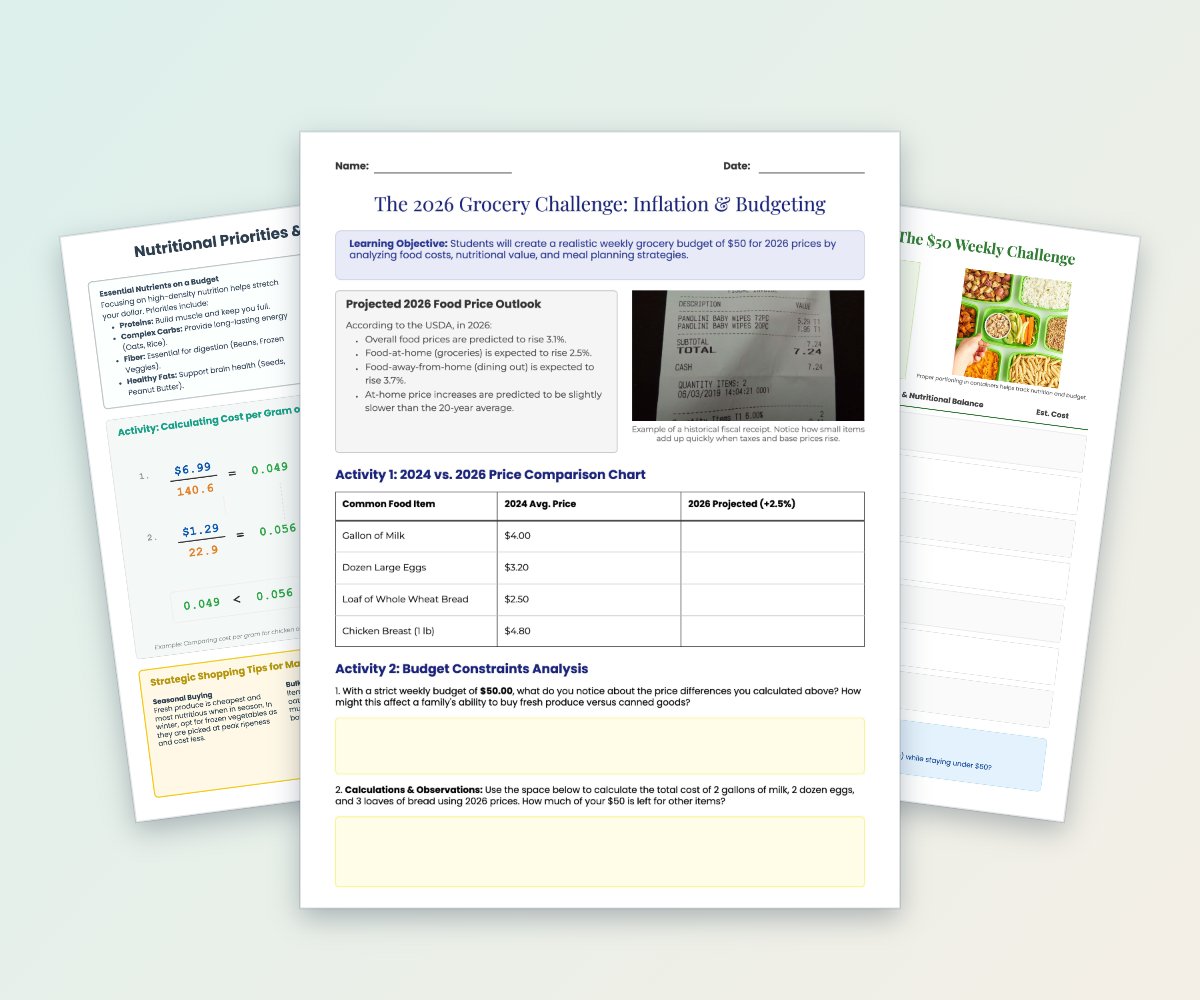
Students analyze projected food-price increases, compare 2024 and 2026 grocery costs, and build a realistic $50 weekly budget.
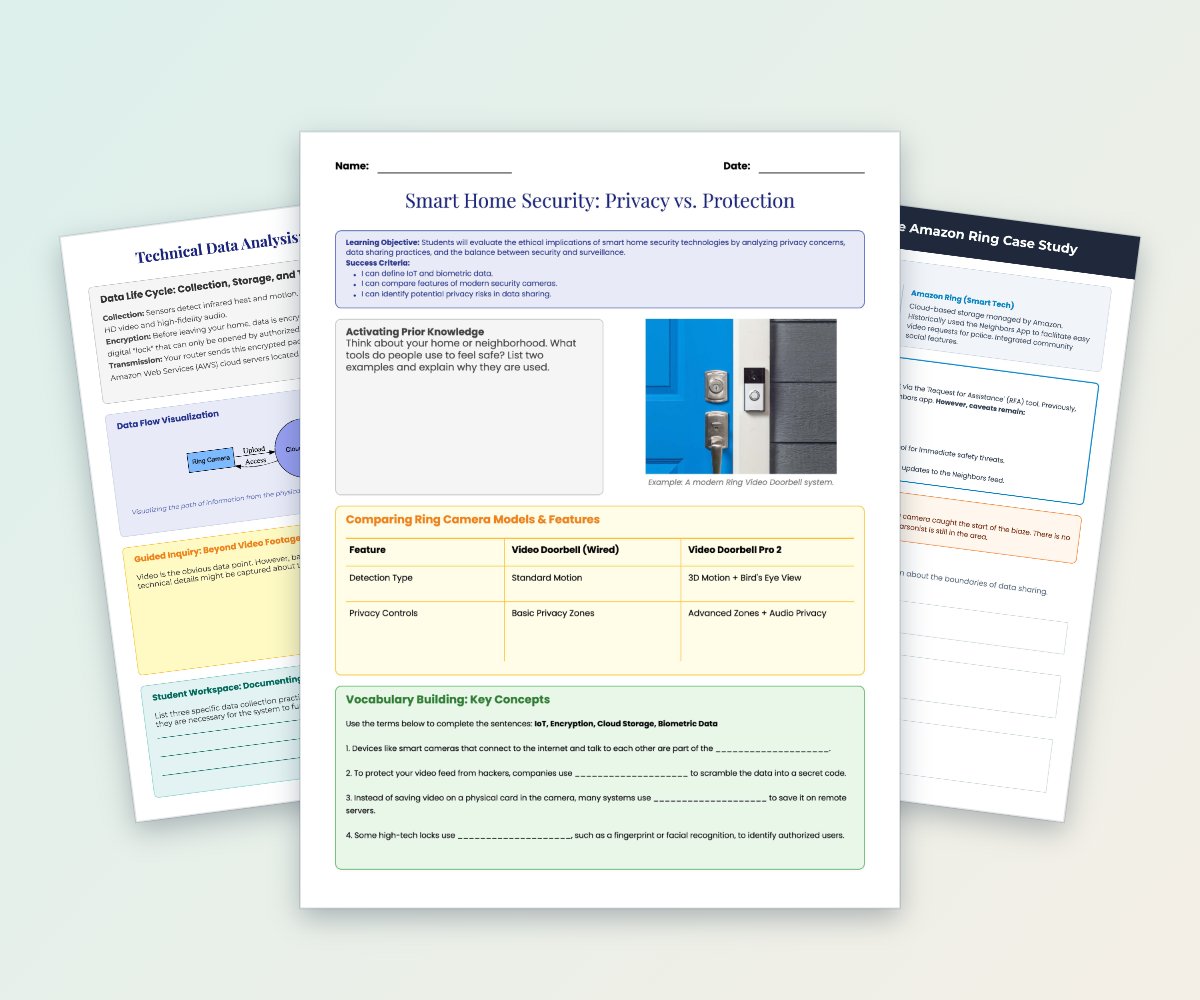
Students examine smart-home security technologies, including cameras, biometric data, encryption, cloud storage, and data transmission.
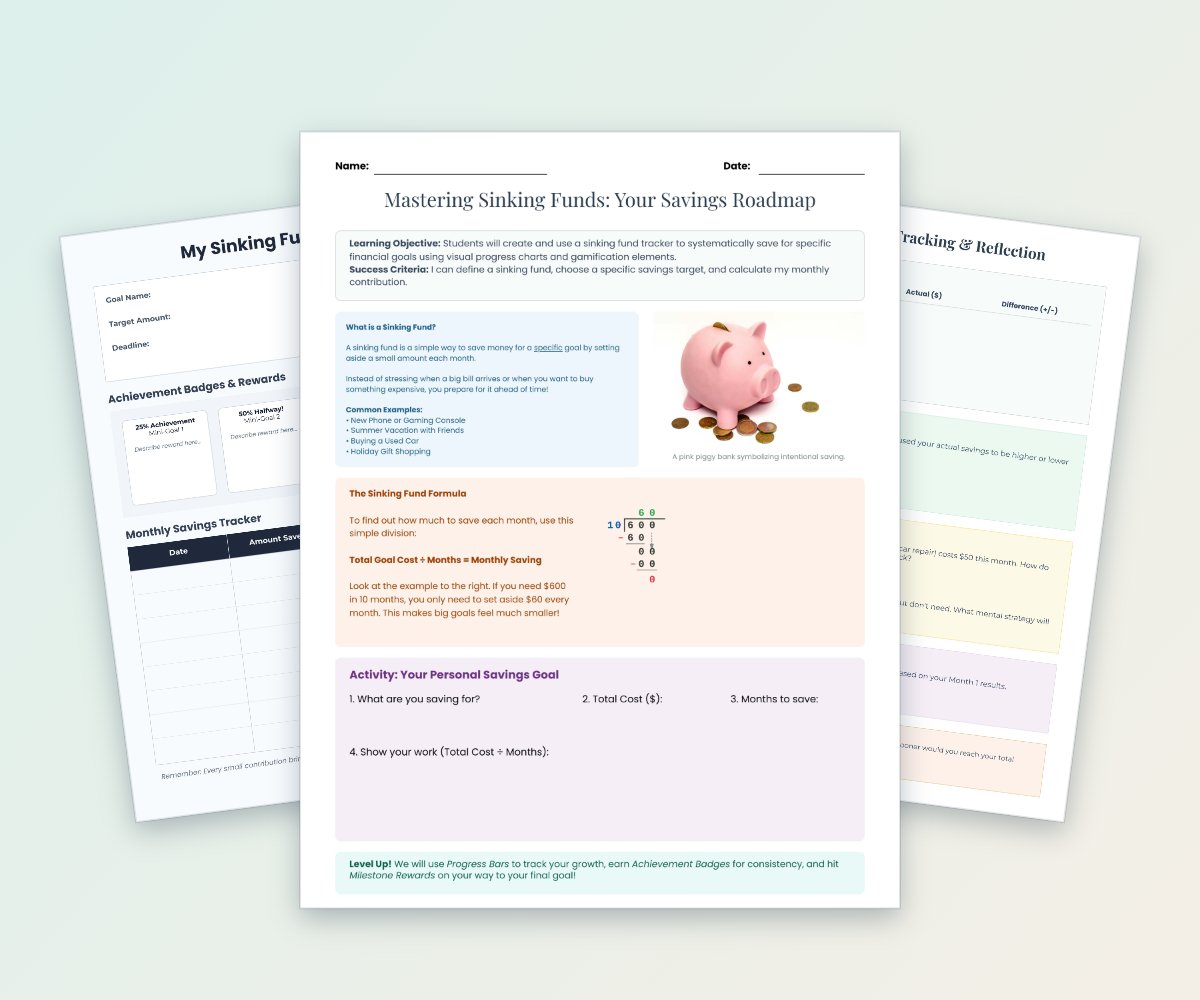
Students learn how sinking funds support specific savings goals through formulas, progress tracking, achievement milestones, and reflection.
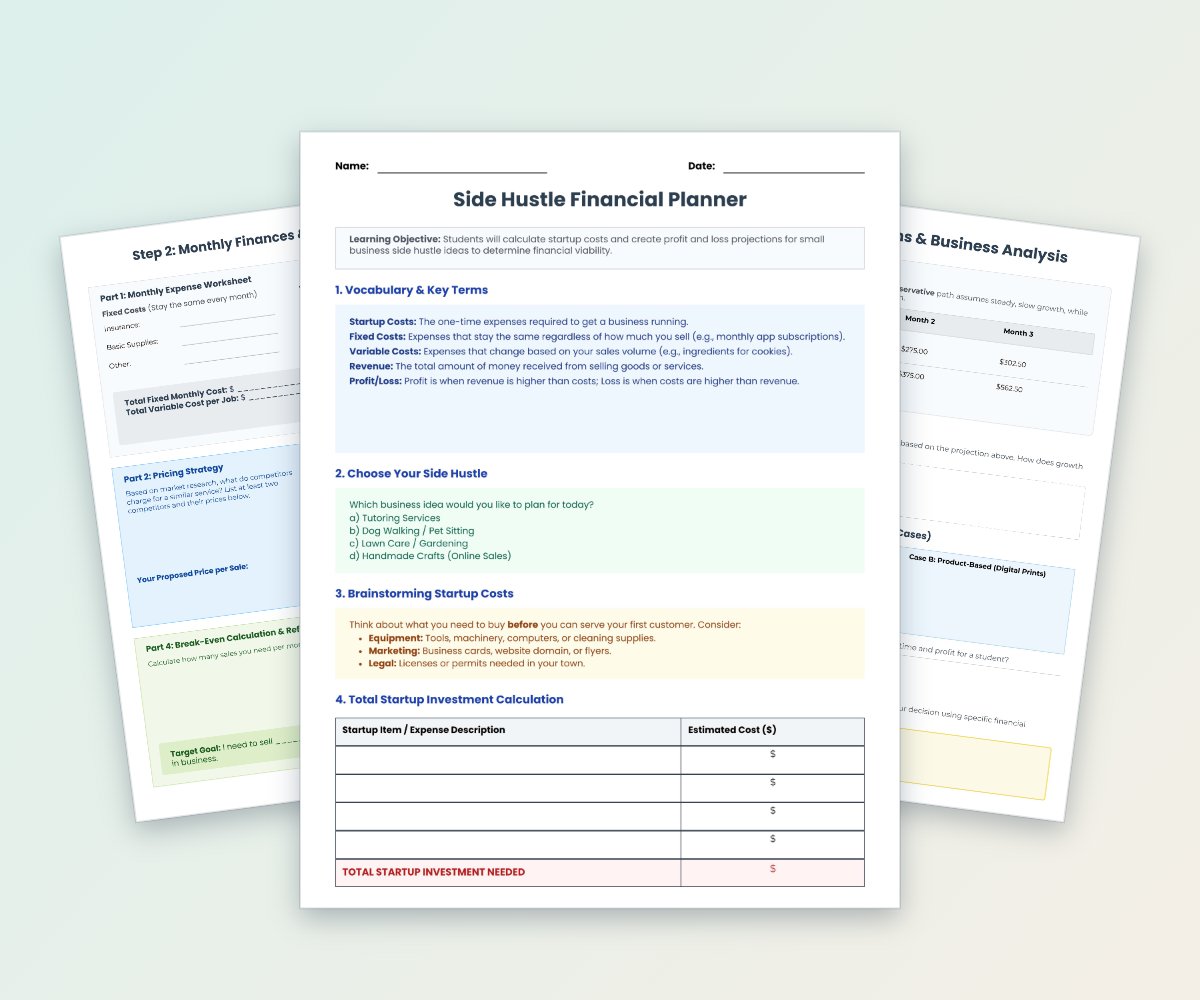
Students choose a side hustle and calculate startup costs, fixed and variable expenses, pricing, break-even points, and projected profit or loss.
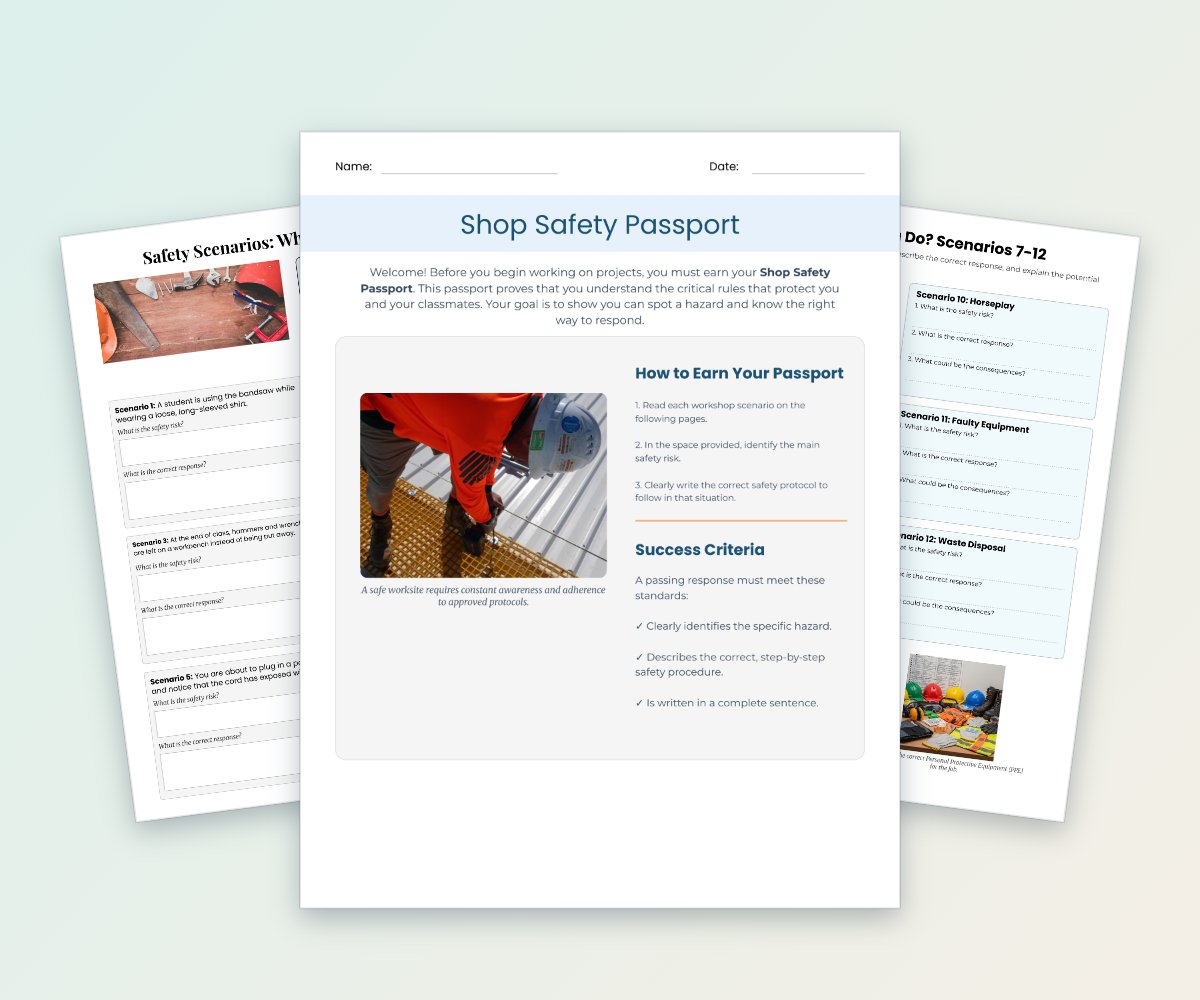
Students read workshop safety scenarios, identify hazards, and describe appropriate safety responses.
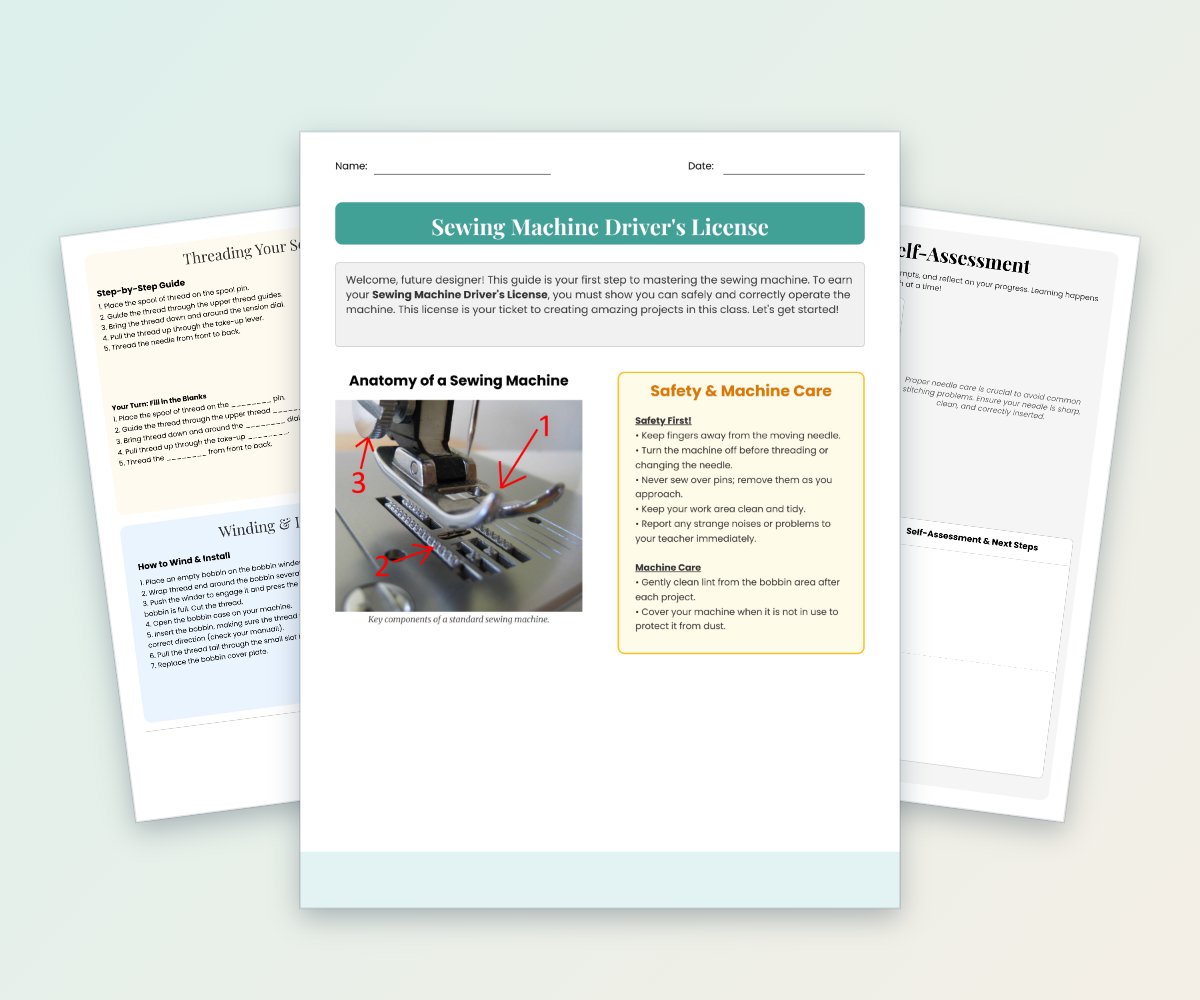
Teach students the fundamentals of sewing-machine operation, including machine anatomy, safety, threading, bobbin installation, and troubleshooting.
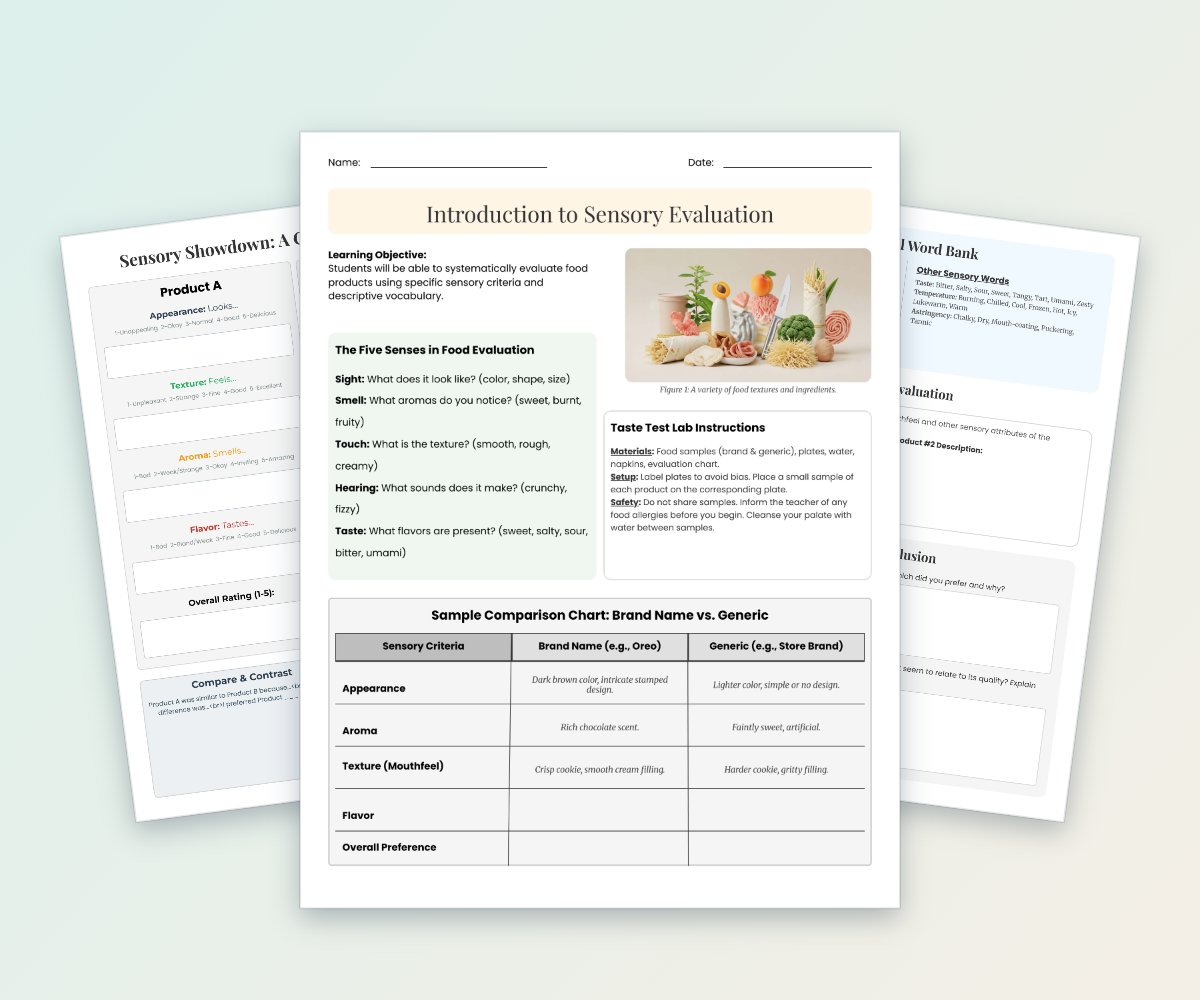
Students learn to evaluate food products using sight, smell, touch, hearing, and taste.
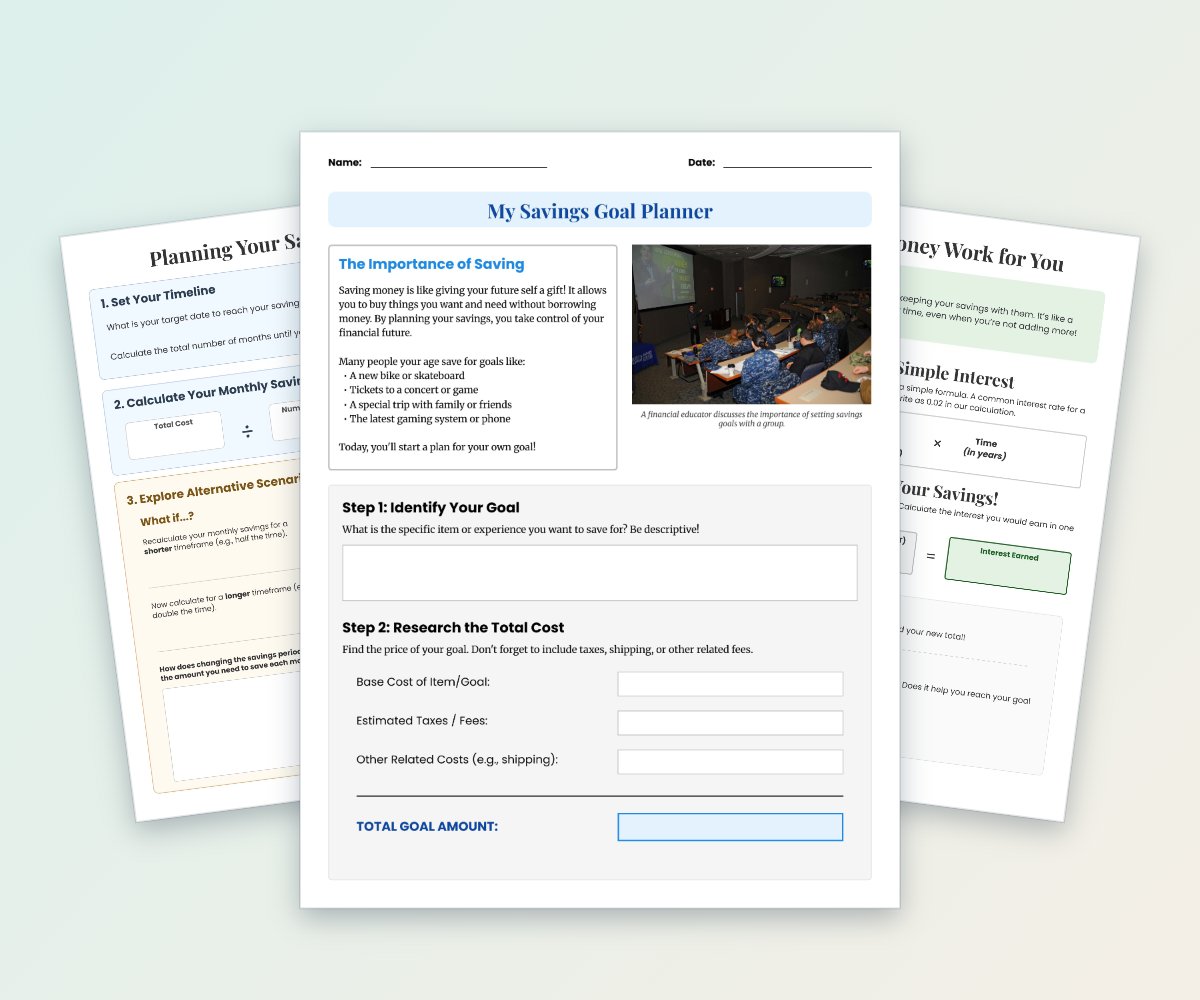
Students set a personal savings goal, research its total cost, create a savings timeline, and calculate required monthly savings.
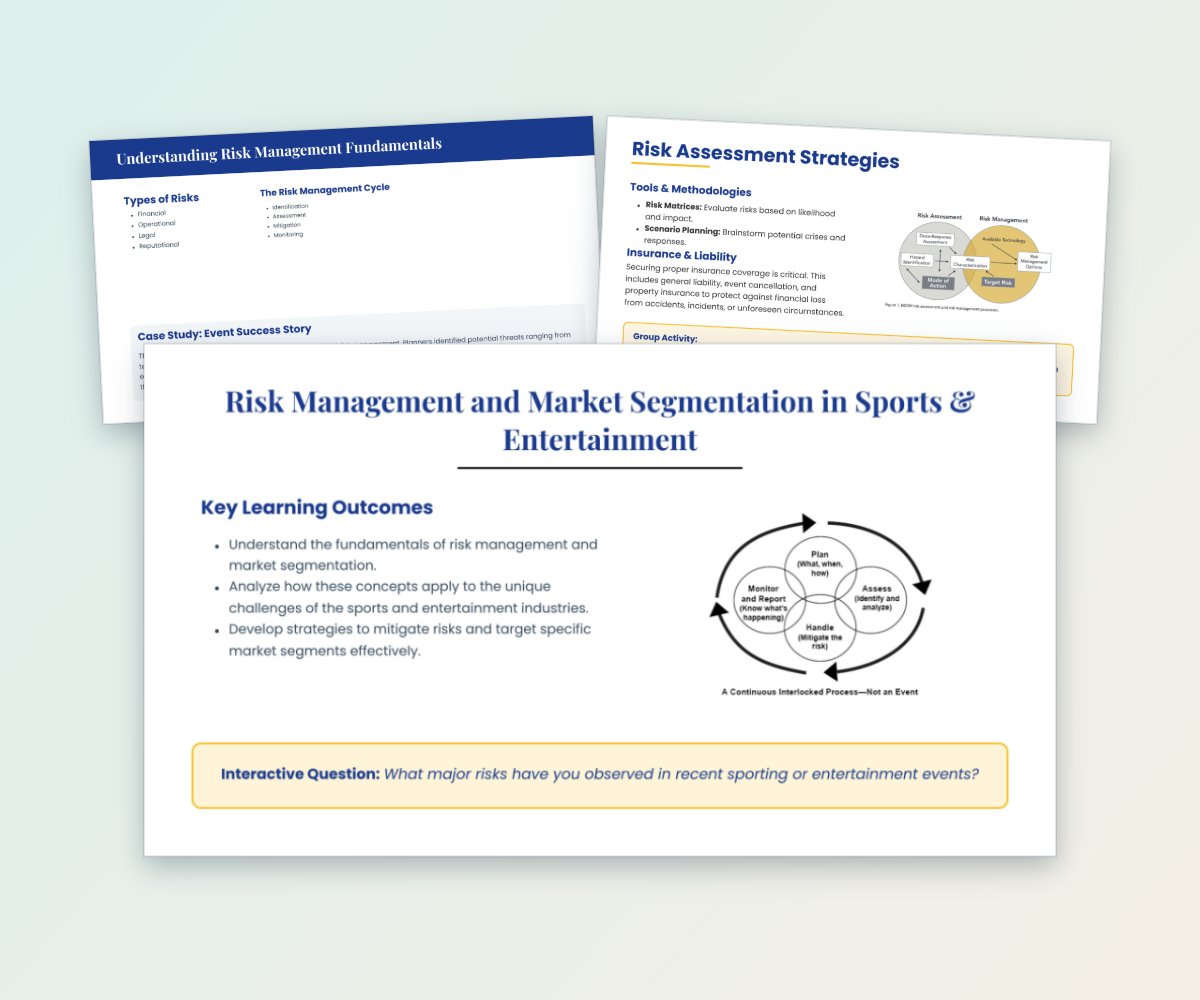
Teach foundational risk management and market segmentation concepts in sports and entertainment contexts.
This 10-slide presentation introduces risk management and market segmentation in the sports and entertainment industries.
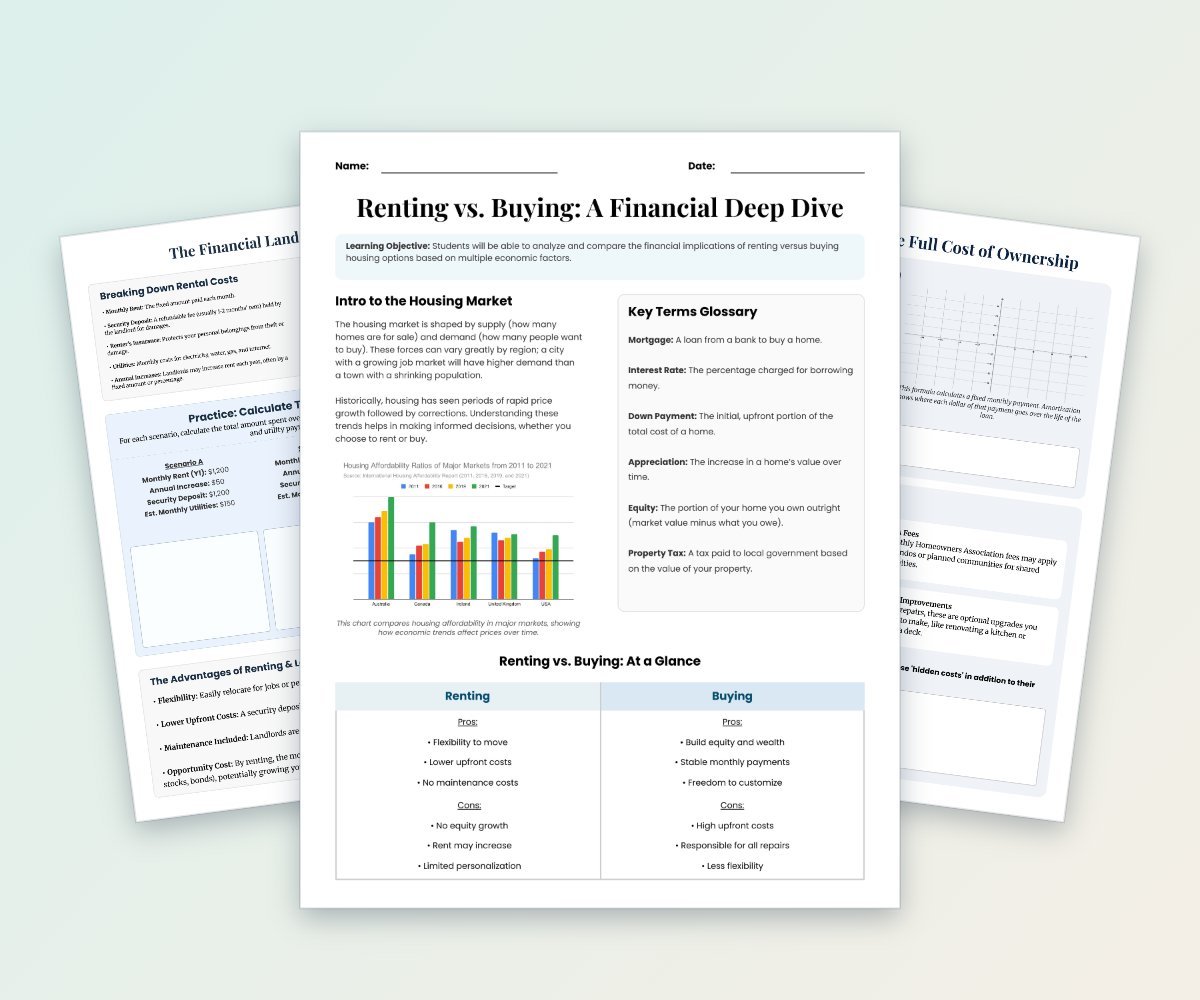
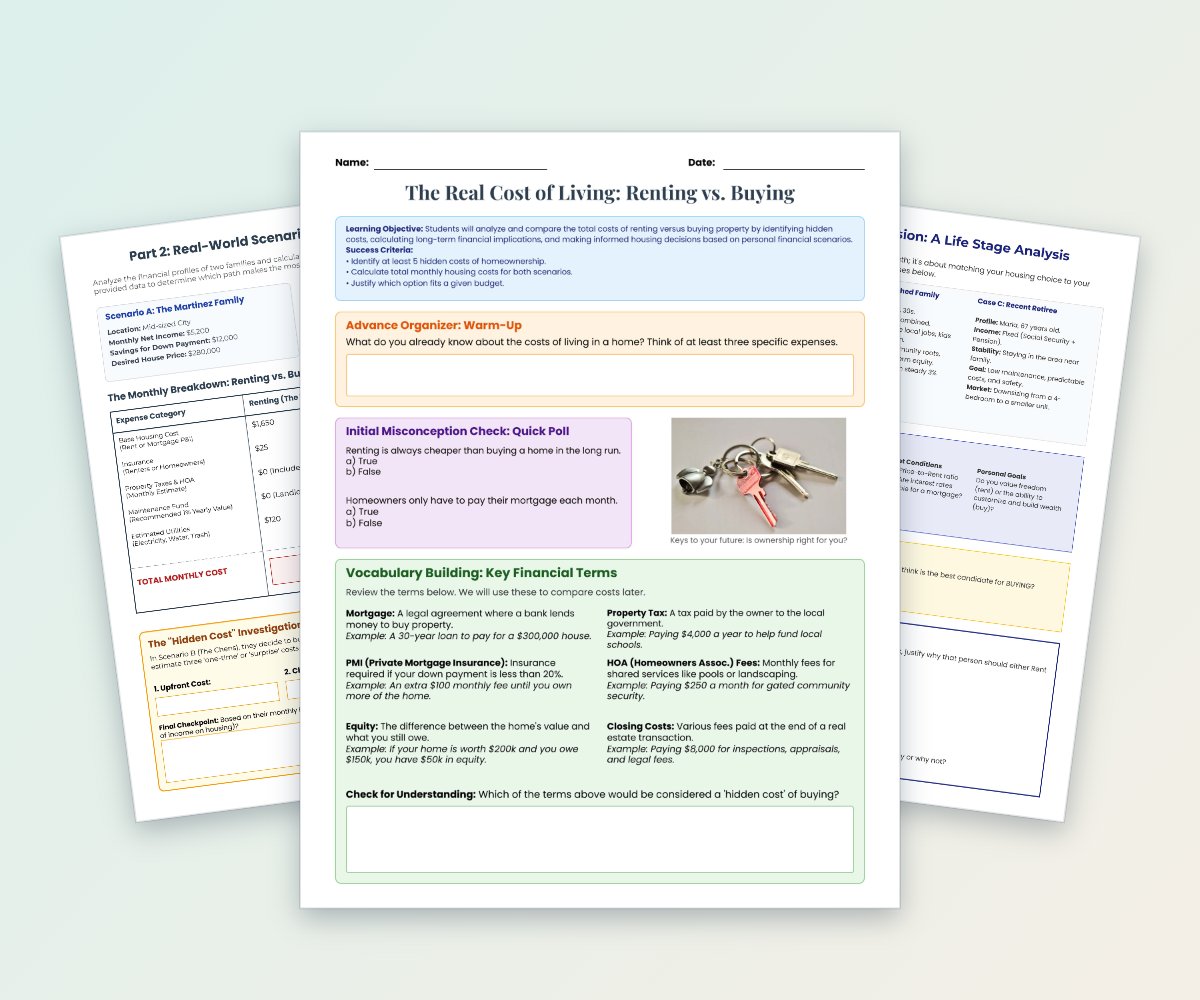
Students explore housing markets, compare the advantages and disadvantages of renting and buying, and learn essential housing-finance vocabulary.
Students compare renting and buying by identifying hidden costs, reviewing key housing terms, and calculating monthly expenses.
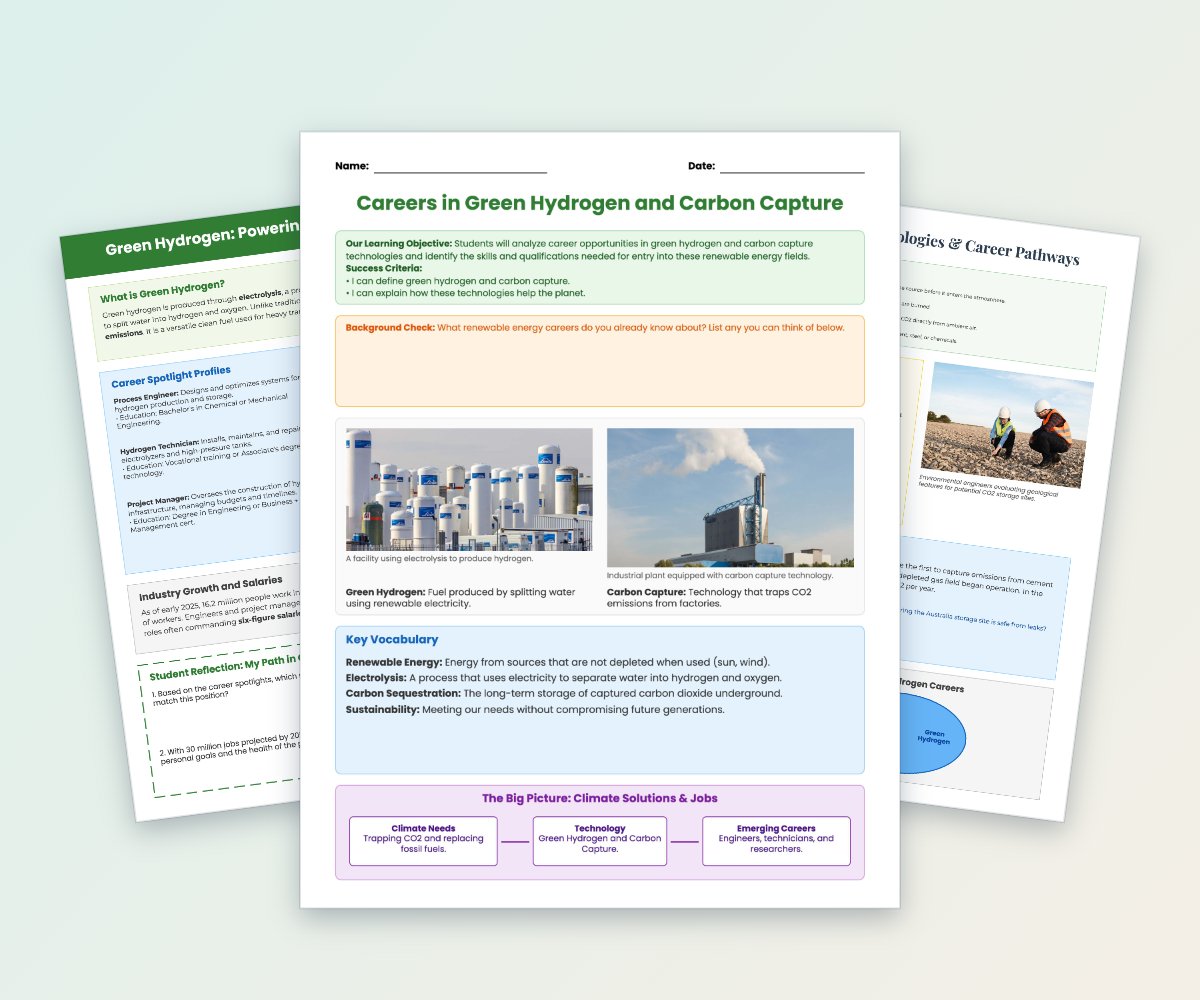
This career-focused lesson introduces green hydrogen and carbon capture technologies while connecting climate solutions to emerging employment opportunities.
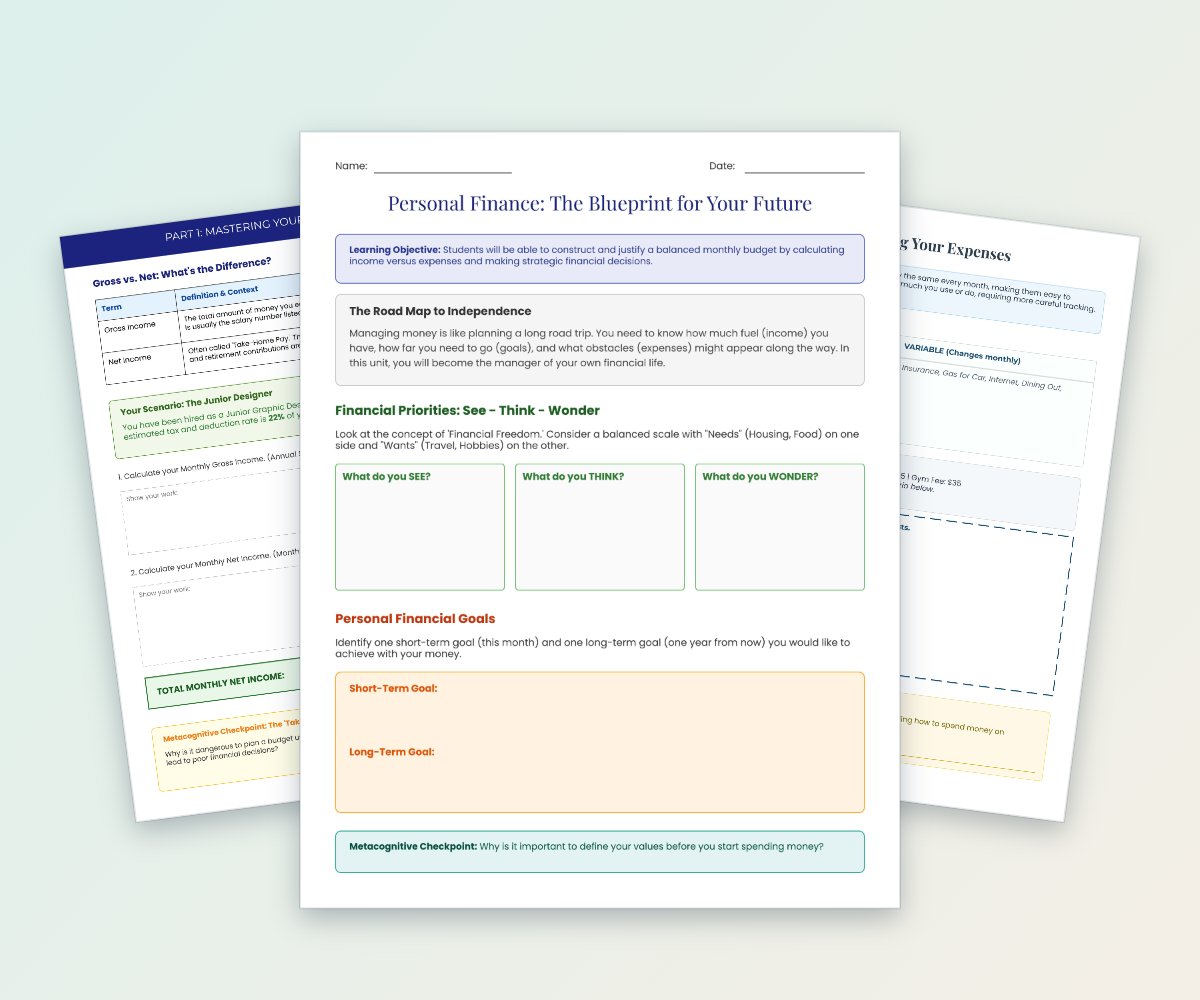
Students build and justify a balanced monthly budget using a realistic Junior Graphic Designer income scenario.
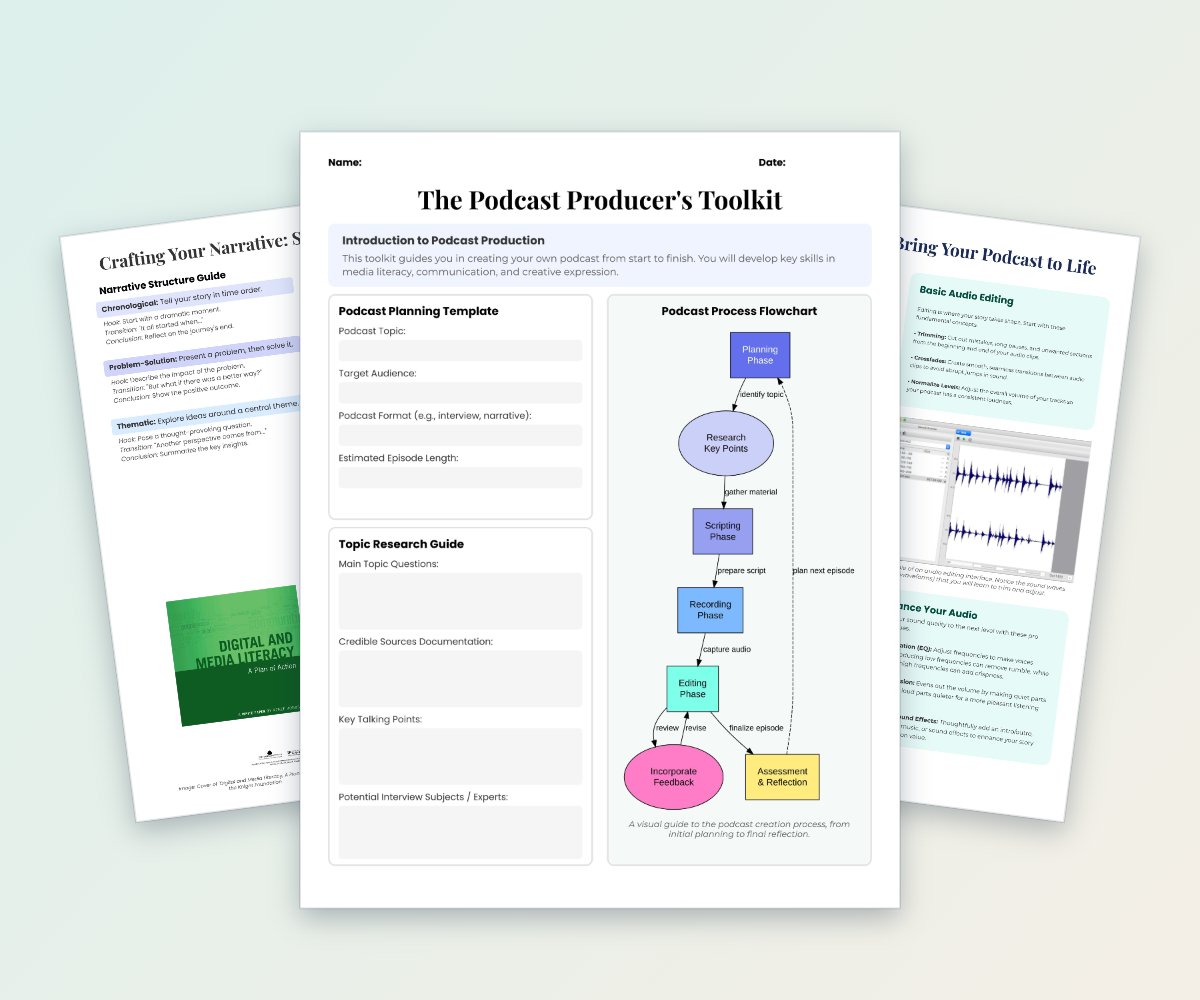
This four-page toolkit guides students through planning, researching, scripting, recording, editing, and reflecting on a podcast episode.
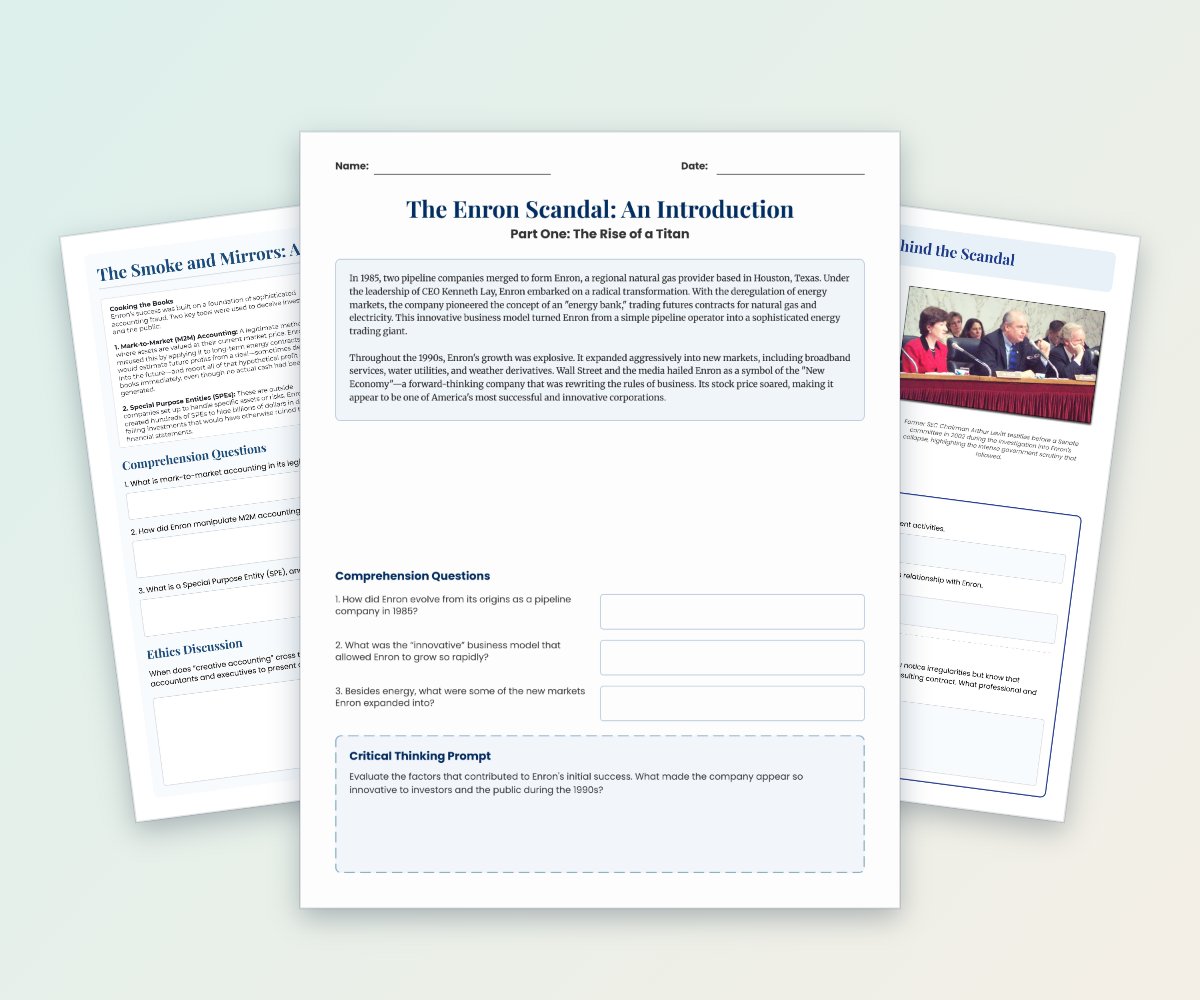
This five-page resource introduces Enron’s rise, energy trading model, mark-to-market accounting, and special purpose entities.
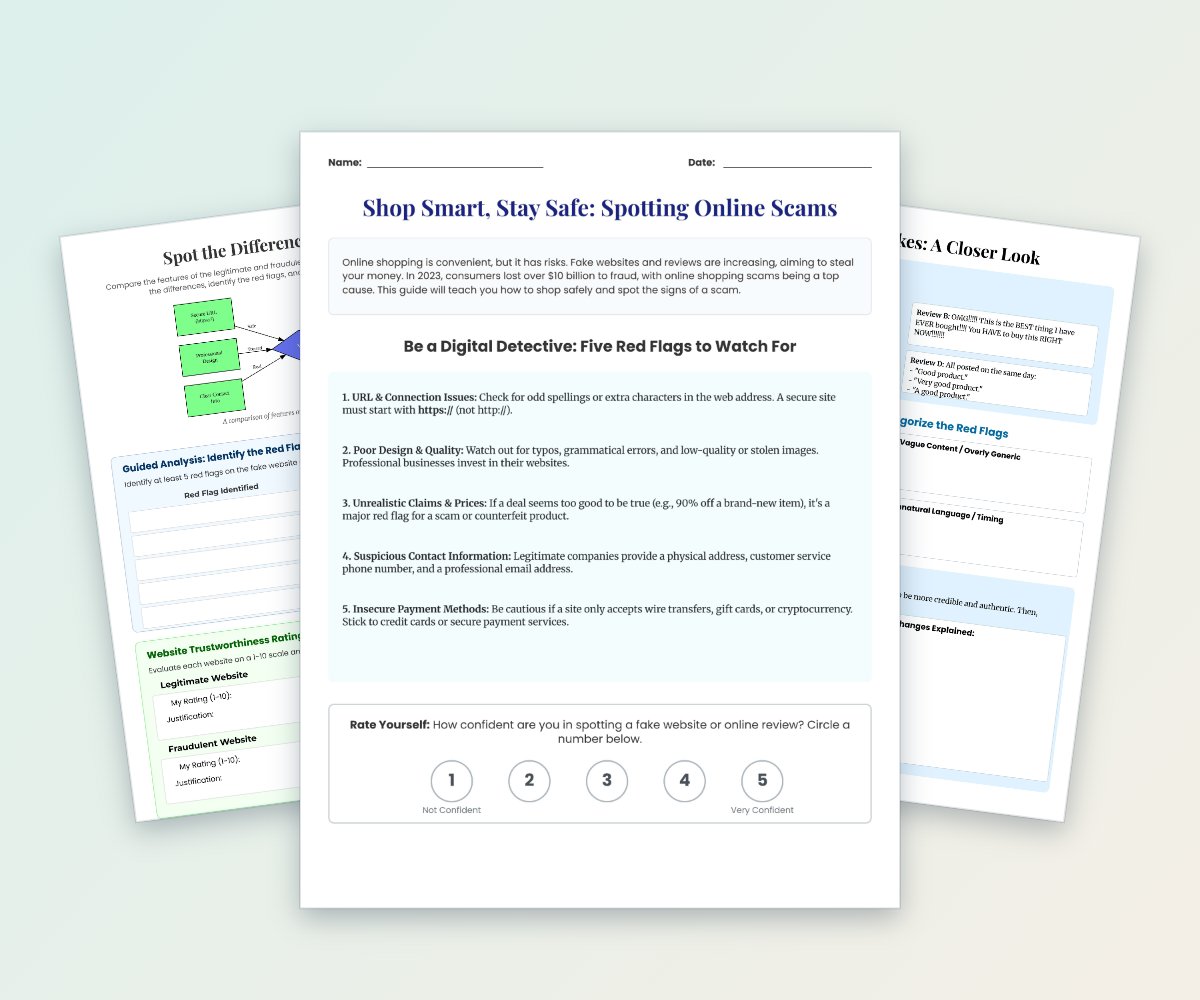
This four-page guide helps students identify online shopping scams by examining website security, design, pricing, contact information, payment methods, and suspicious reviews.
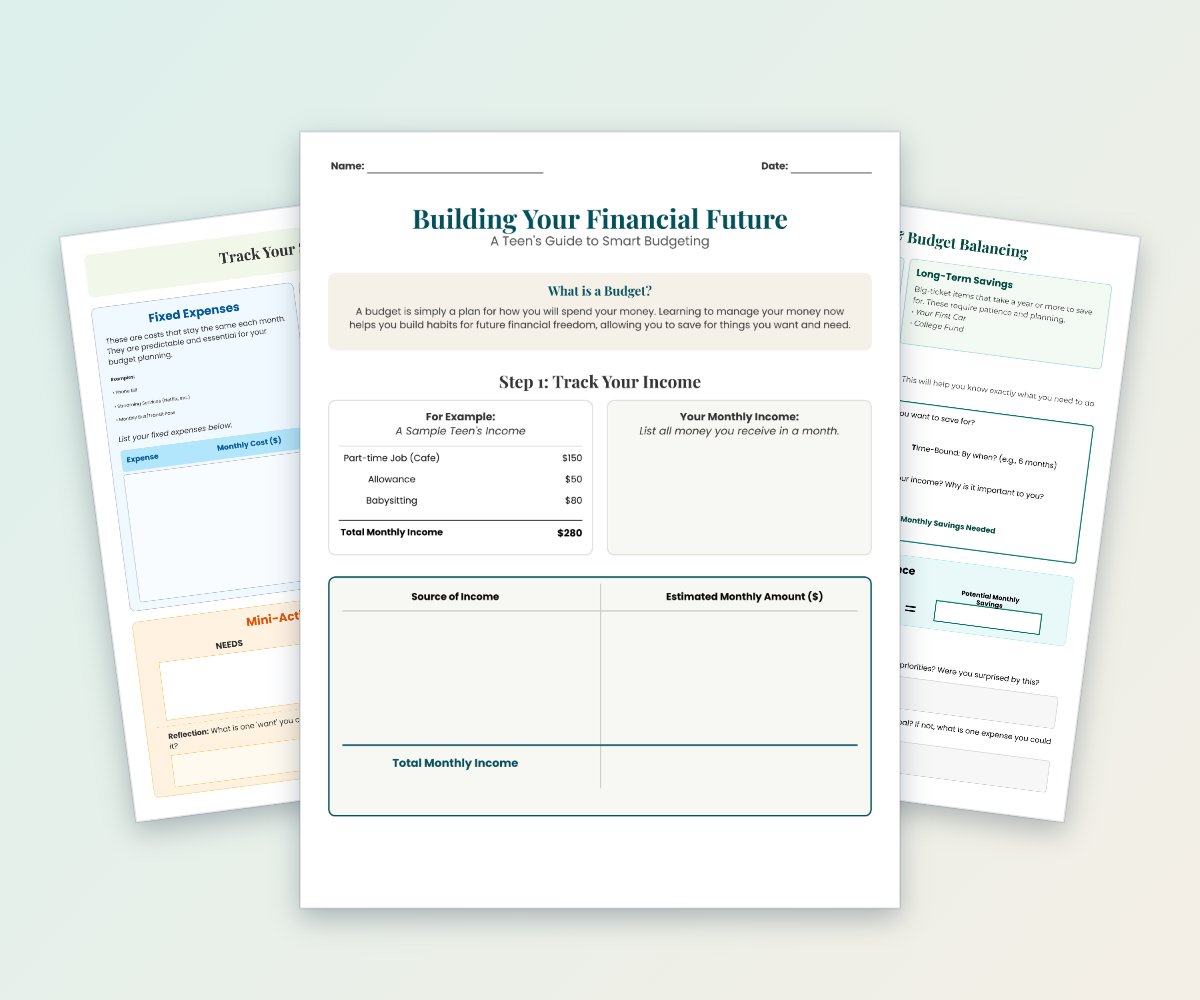
Help teens build practical budgeting skills by tracking income, distinguishing fixed and variable expenses, and identifying wants versus needs.