Moi et ma famille: Describing Myself and Others French Unit
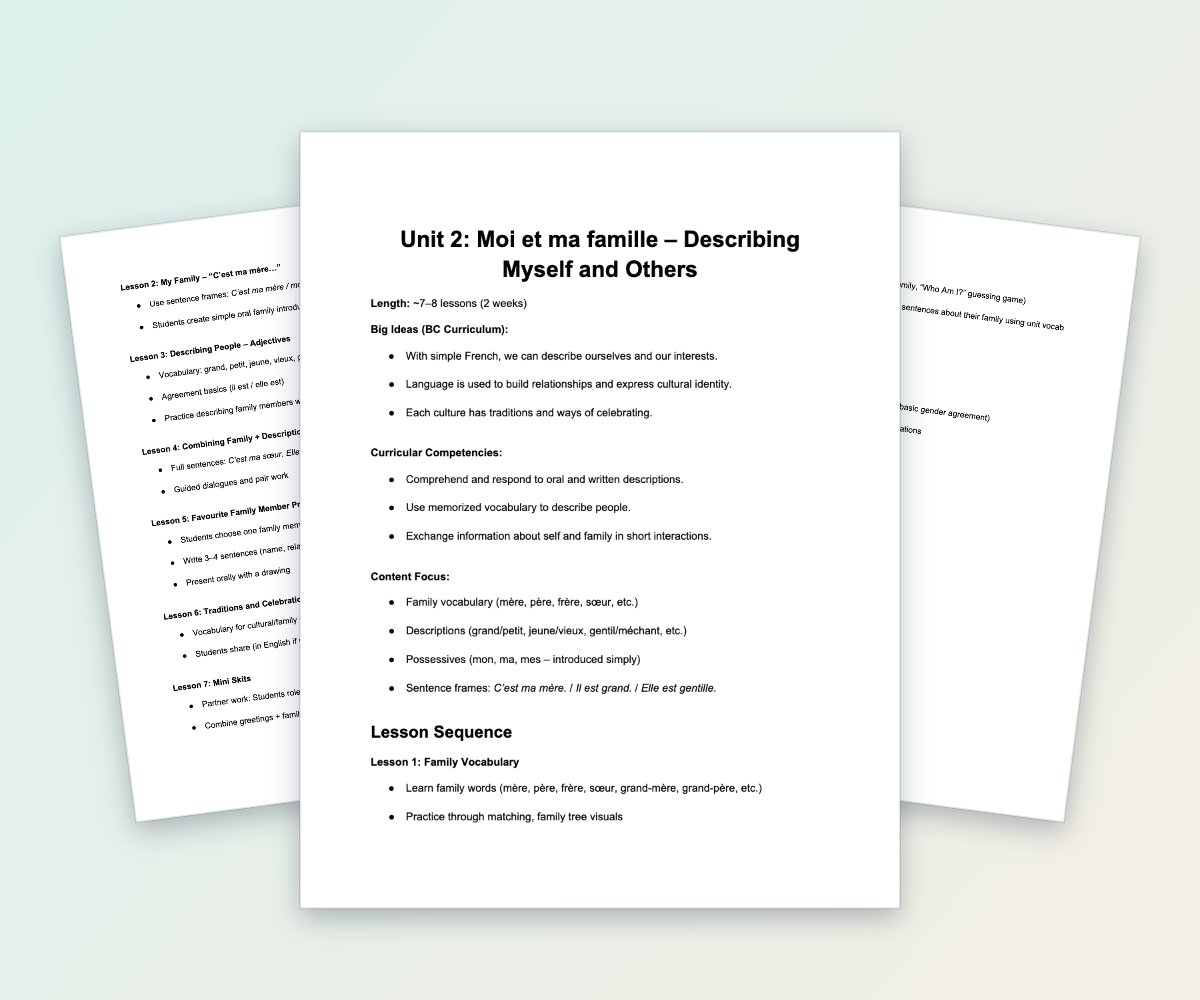
A two-week French unit covering family vocabulary, adjectives, possessives, sentence frames, traditions, dialogues, games, and oral presentations.
$12
Clear, practical resources for busy educators, organized so you can get from search to ready-to-teach quickly.
A two-week French unit covering family vocabulary, adjectives, possessives, sentence frames, traditions, dialogues, games, and oral presentations.
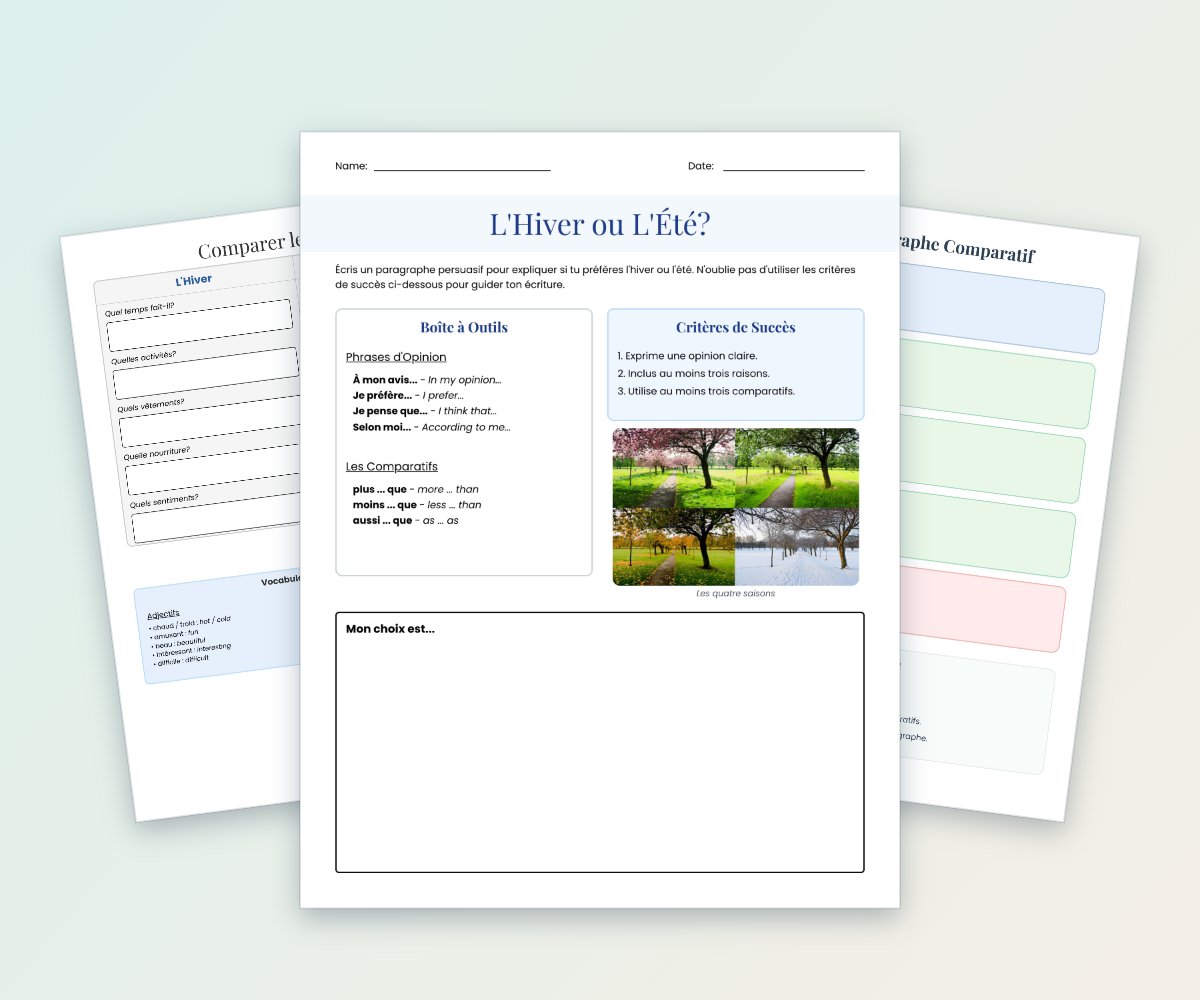
Students write a persuasive paragraph explaining whether they prefer winter or summer.
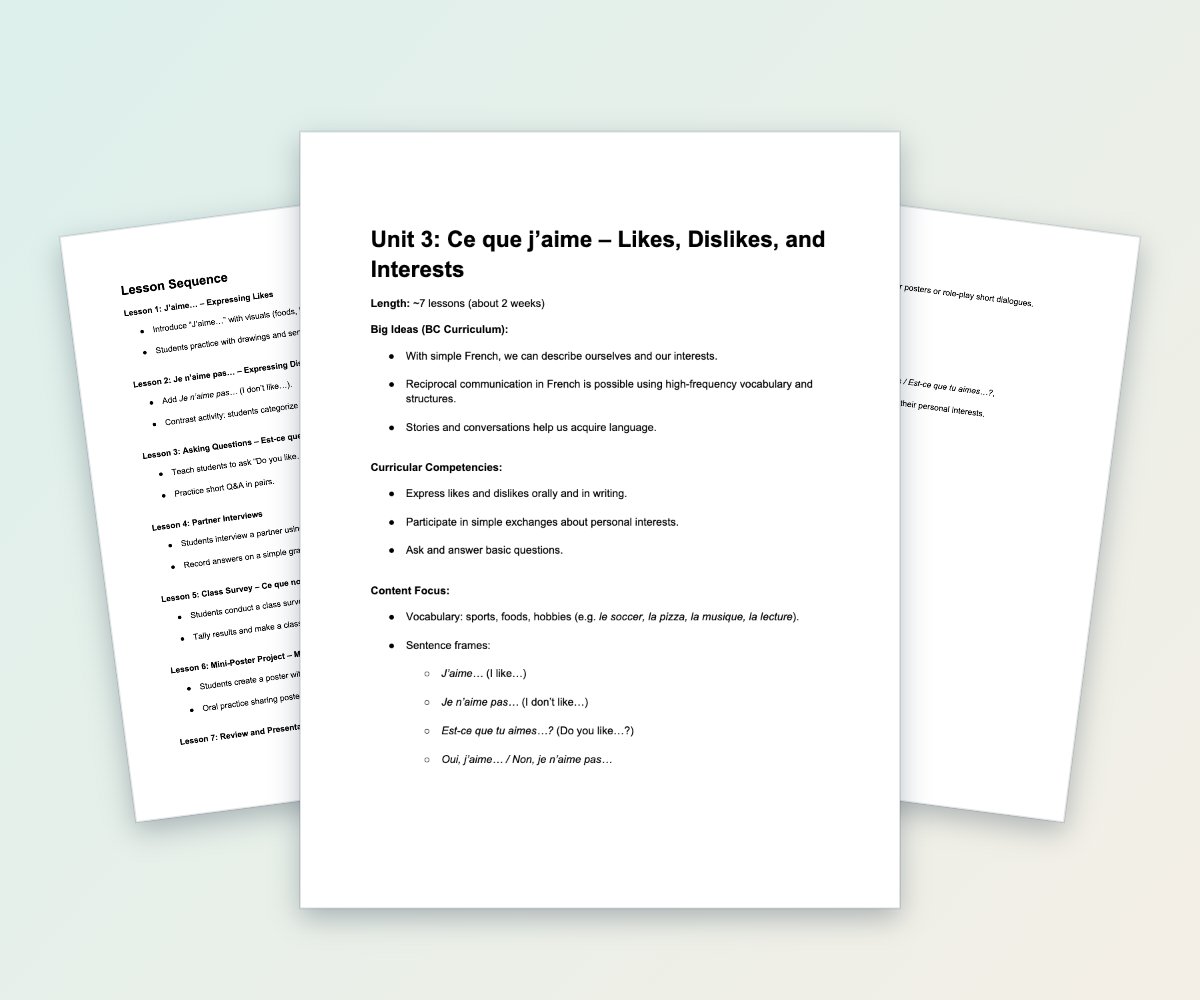
This 33-page French unit helps students express preferences, ask and answer questions, conduct surveys, and present personal interests.
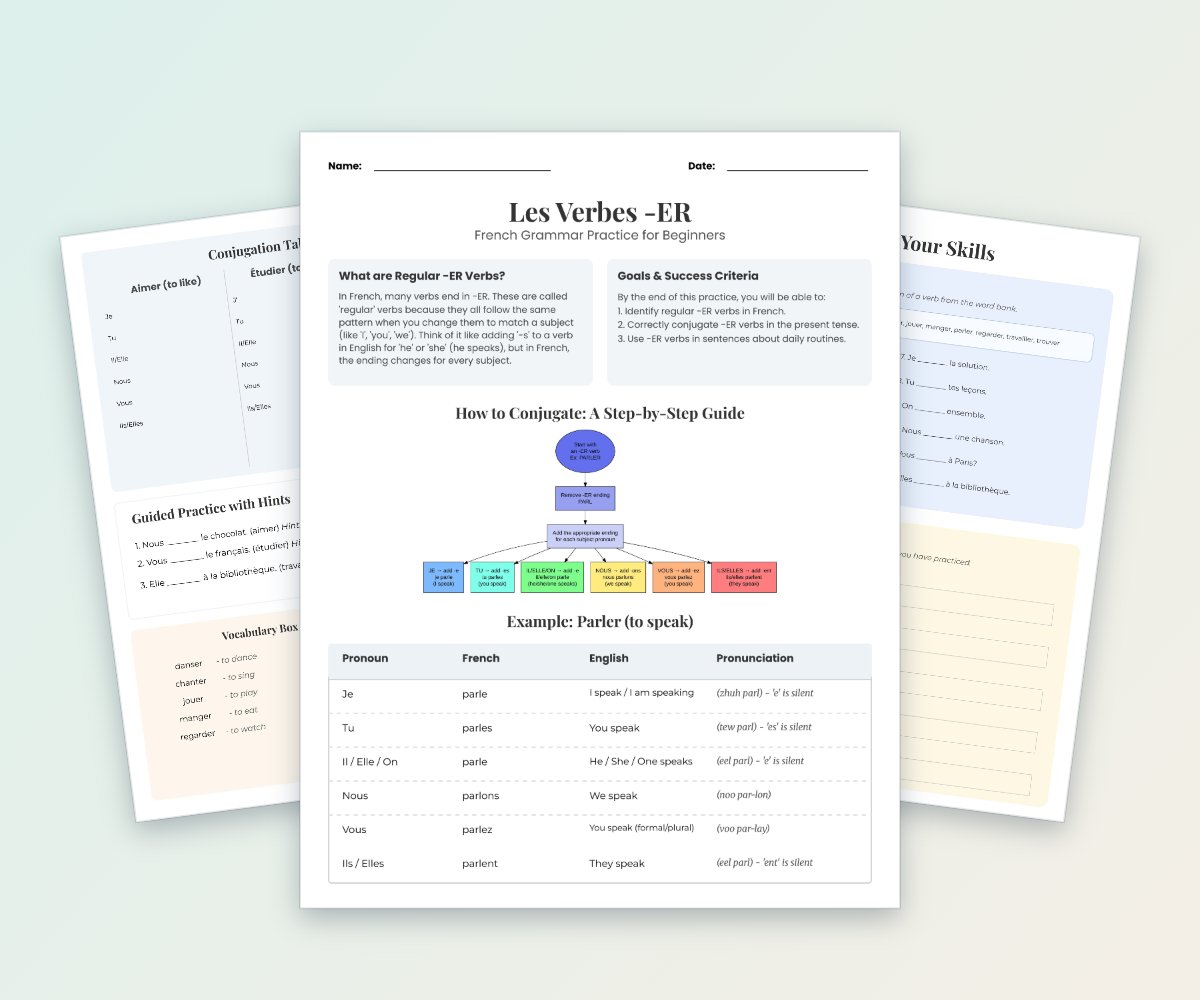
This five-page French grammar practice resource introduces regular -ER verbs in the present tense.
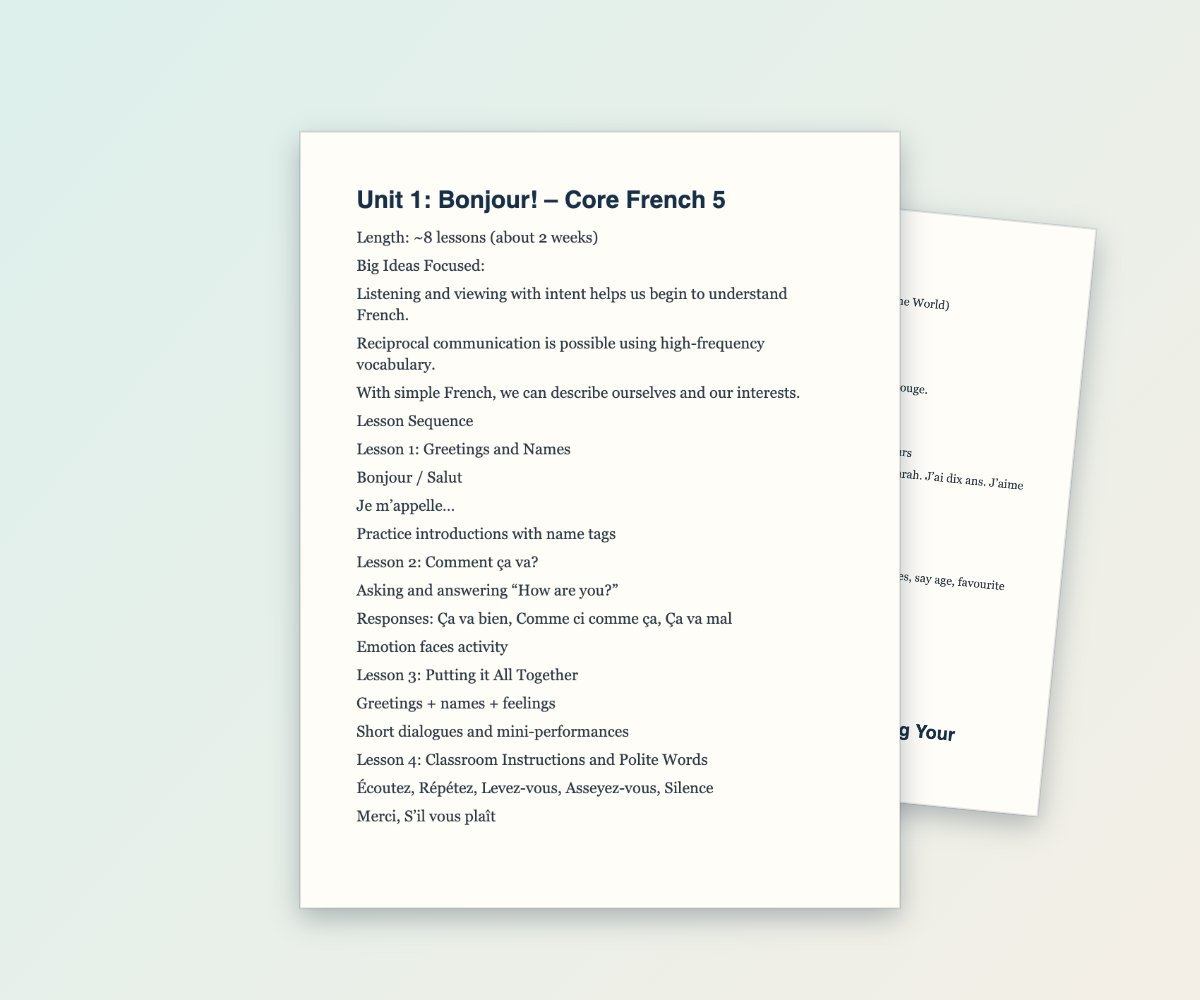
This eight-lesson Core French unit introduces Grade 5 students to greetings, introductions, feelings, classroom instructions, numbers, colours, and simple conversations.
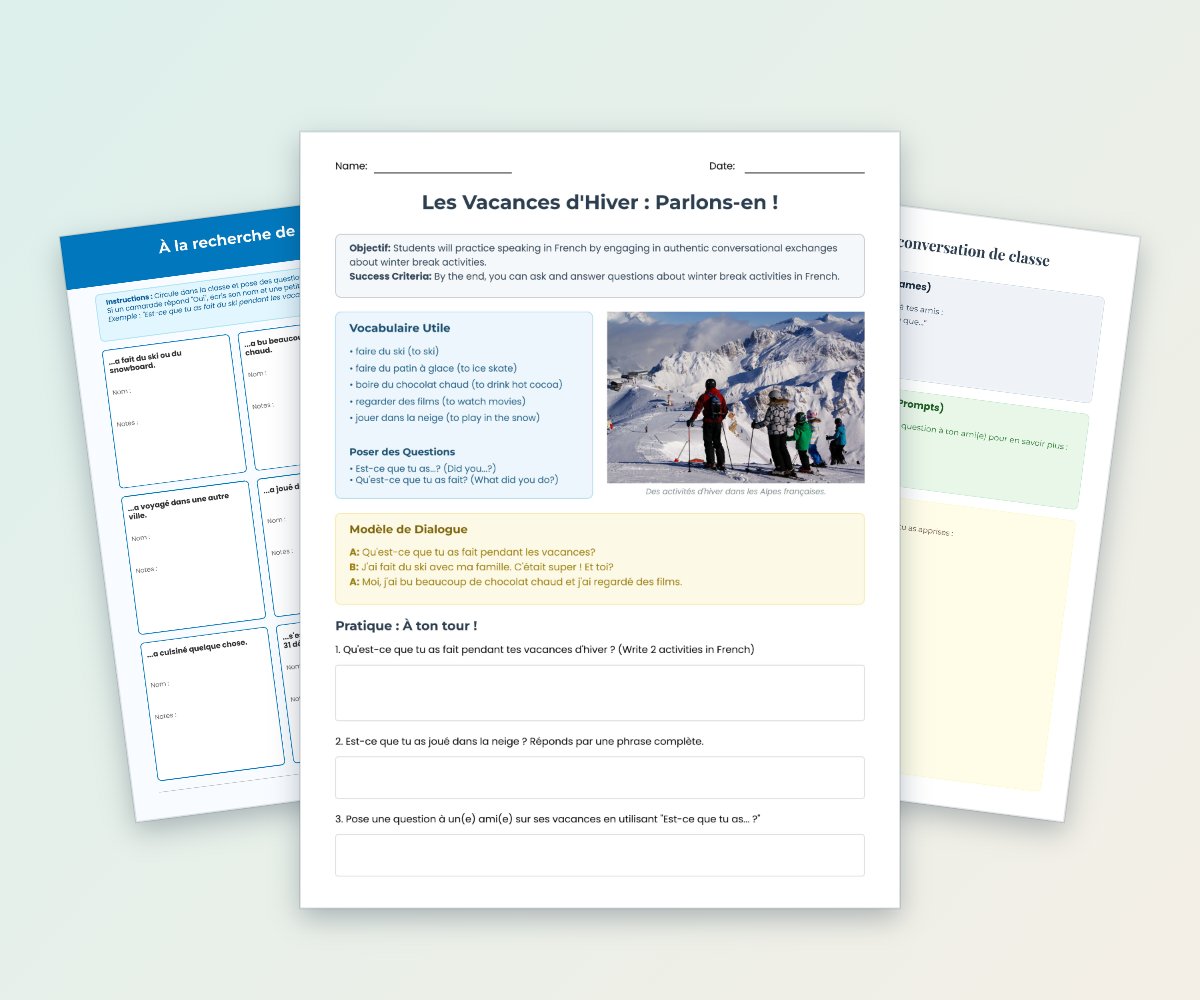
Students practice asking and answering questions in French about winter break activities.
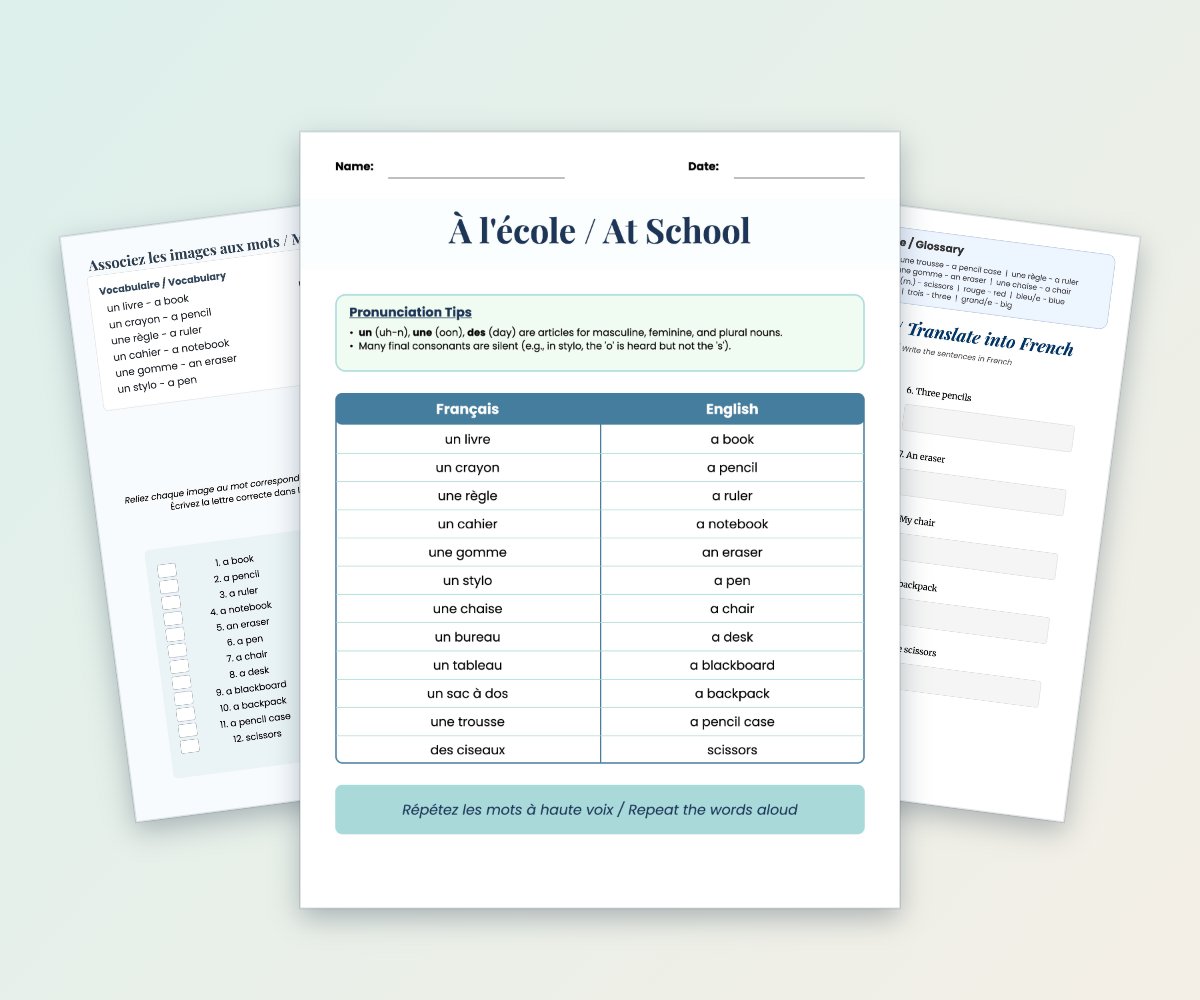
This bilingual French worksheet teaches common school-related vocabulary, including classroom objects, articles, colors, numbers, and possessive words.
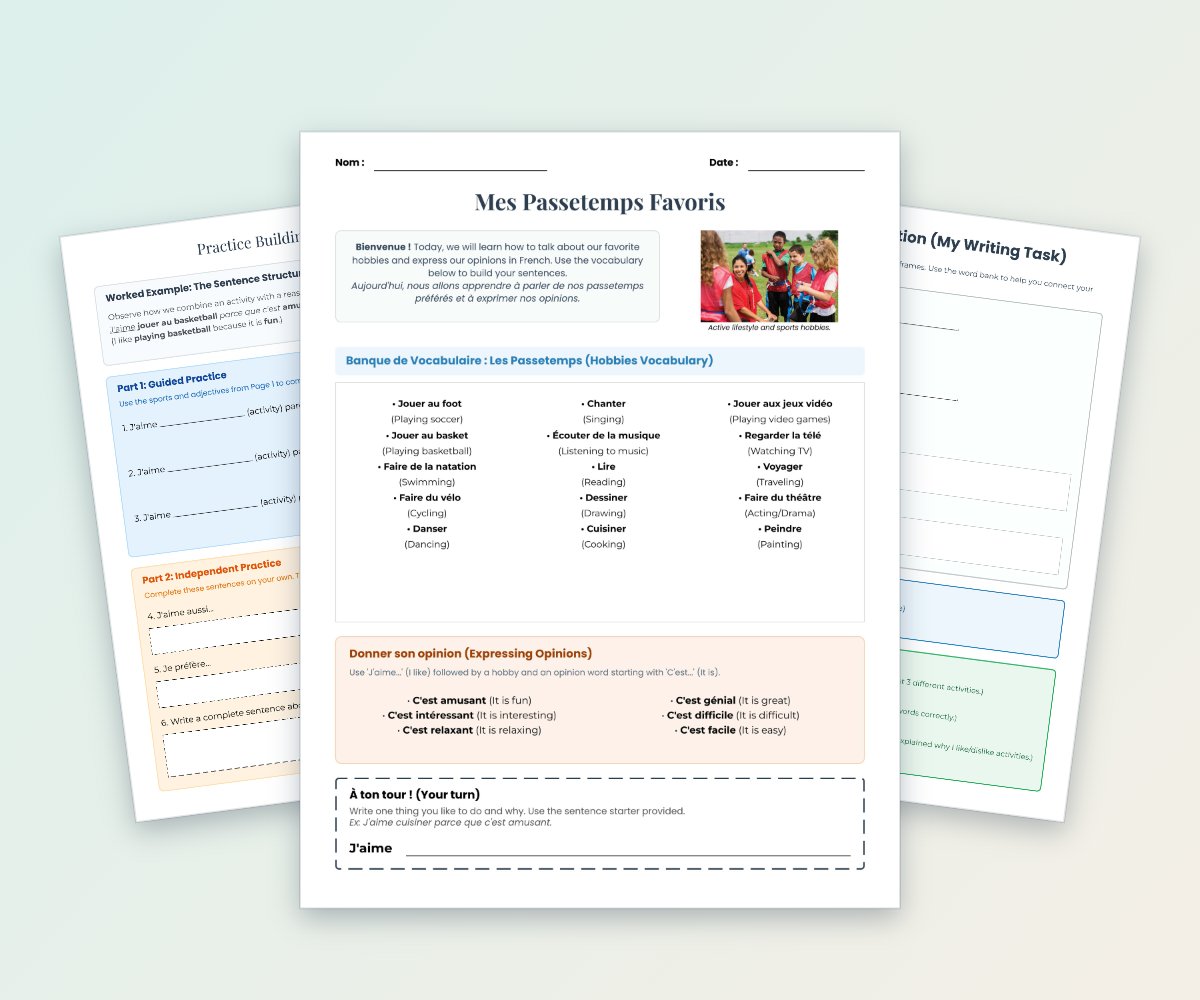
Students learn French vocabulary for hobbies and activities, then use opinion words and sentence frames to express preferences.
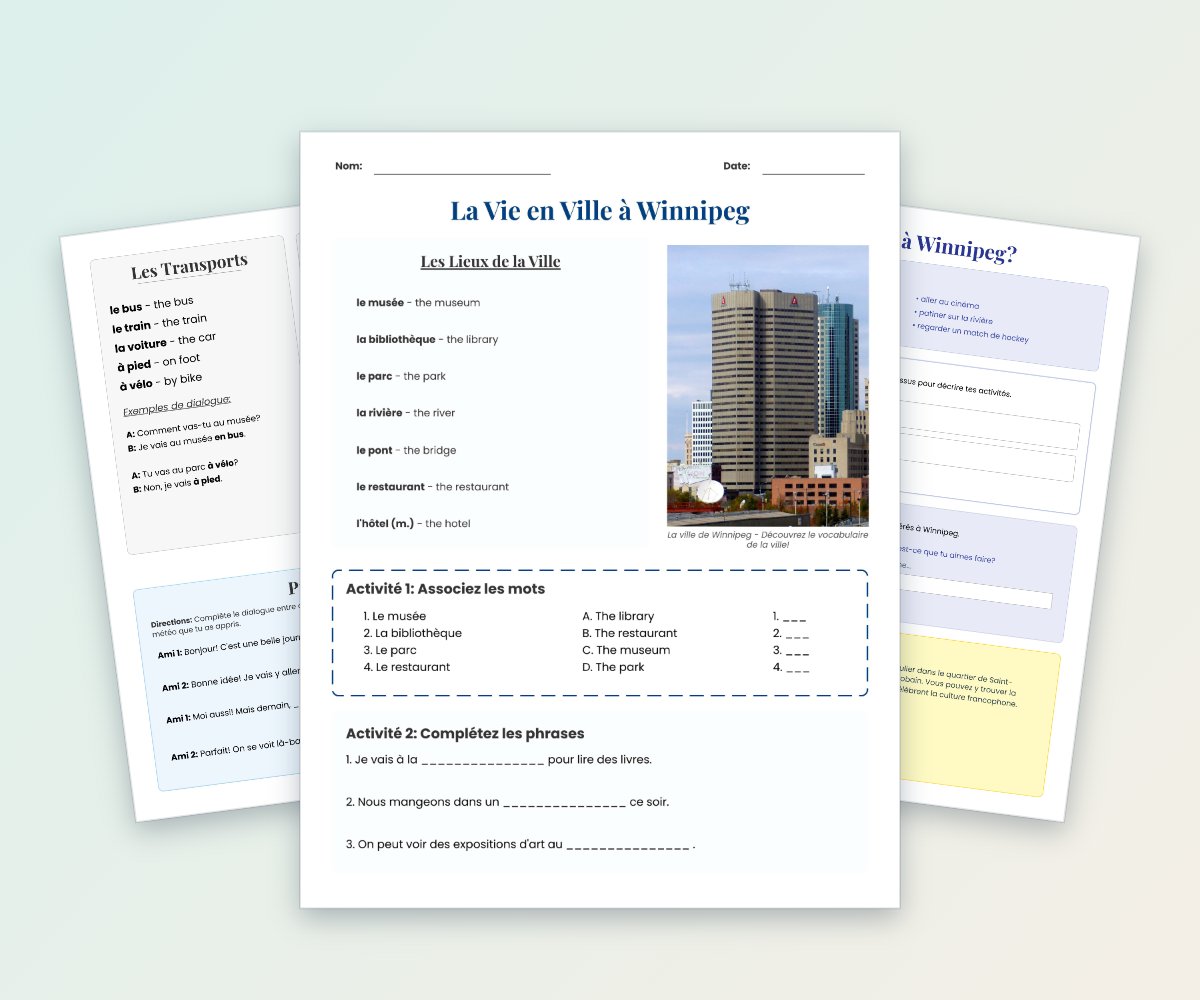
This four-page French activity pack teaches vocabulary for places in Winnipeg, transportation, weather, and weekend activities.
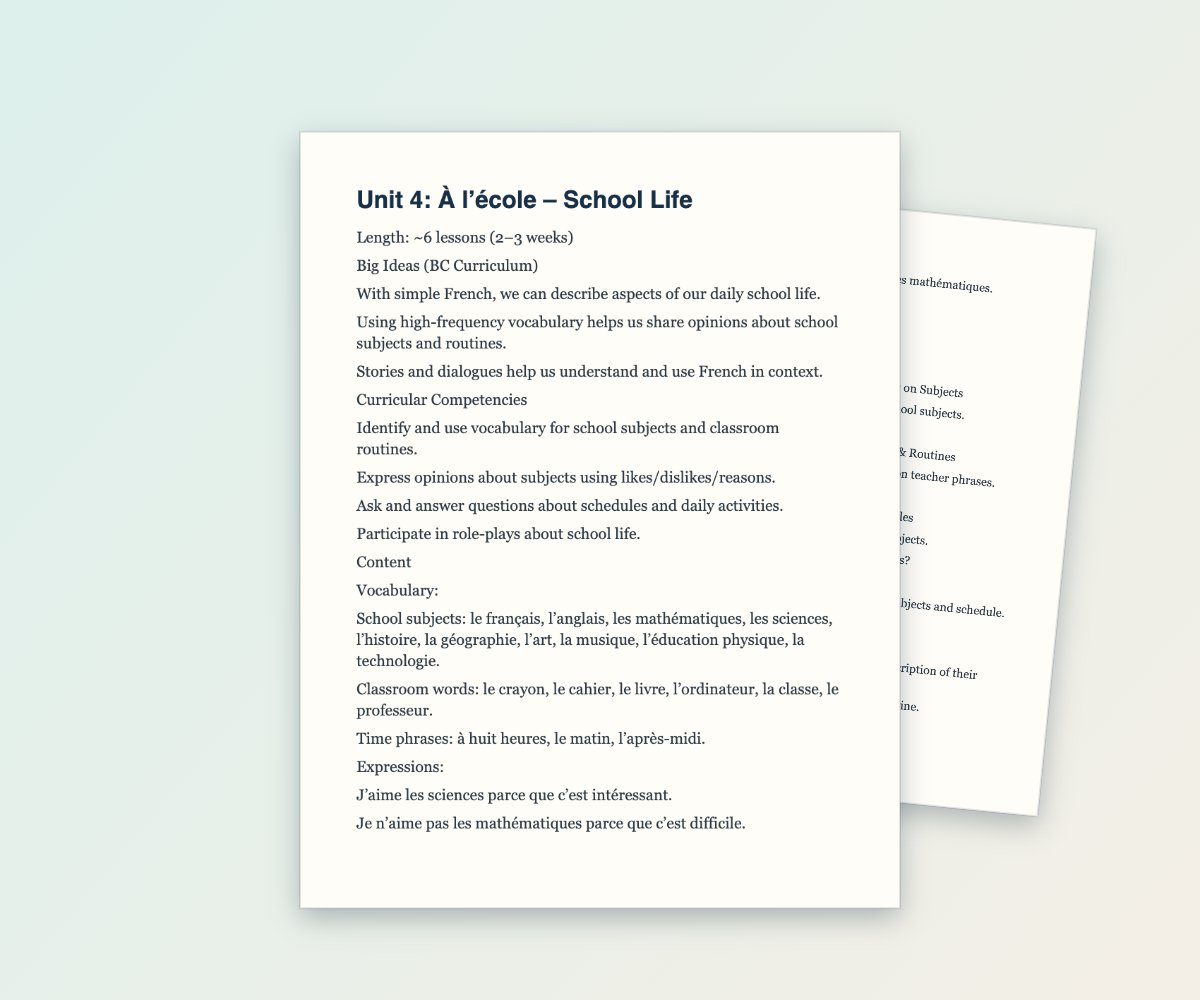
A six-lesson Core French unit on school subjects, classroom objects, routines, schedules, preferences, and daily school life.
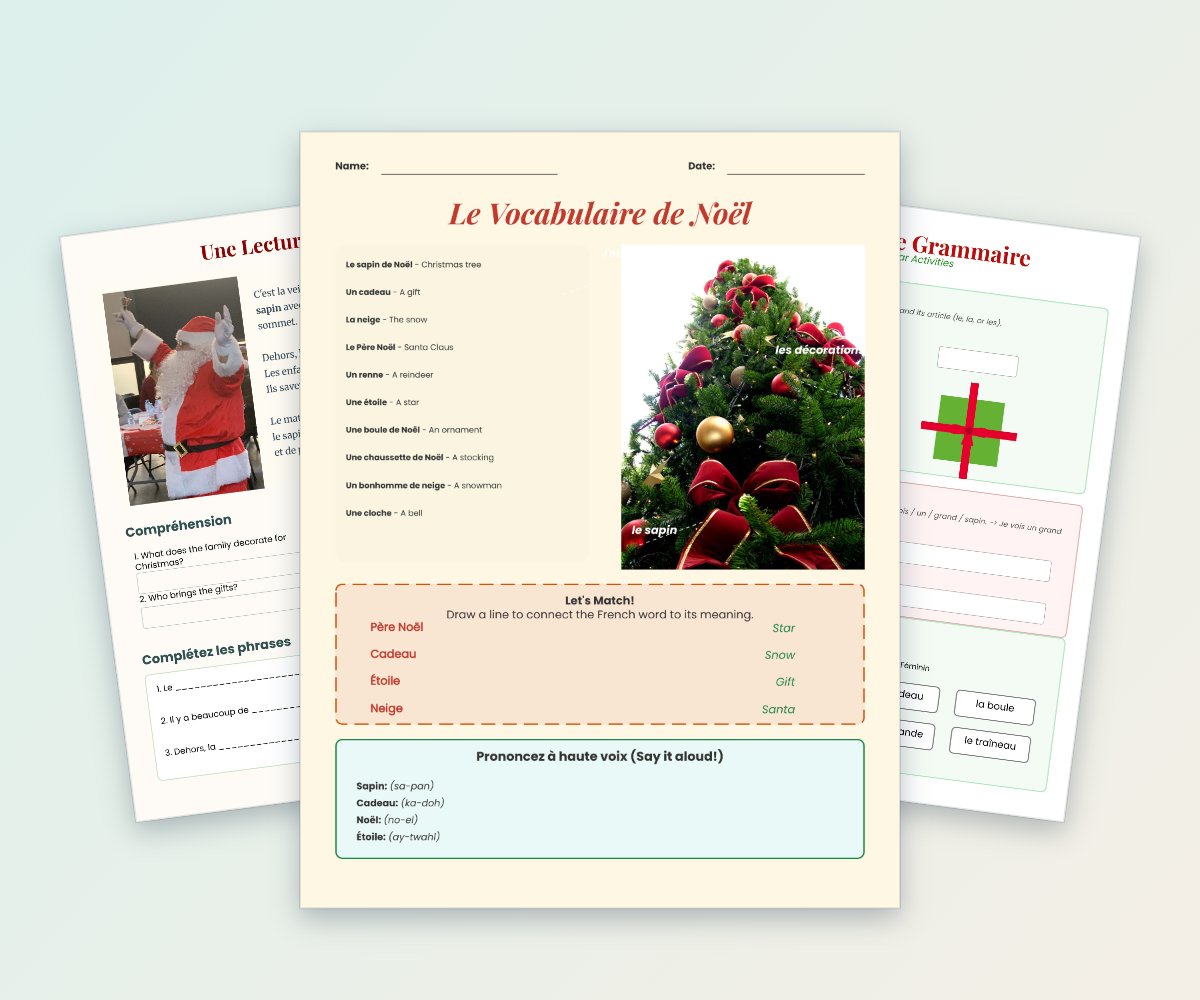
This four-page French activity pack teaches Christmas vocabulary through matching, pronunciation, reading comprehension, sentence construction, noun gender, and a guided letter-writing task.
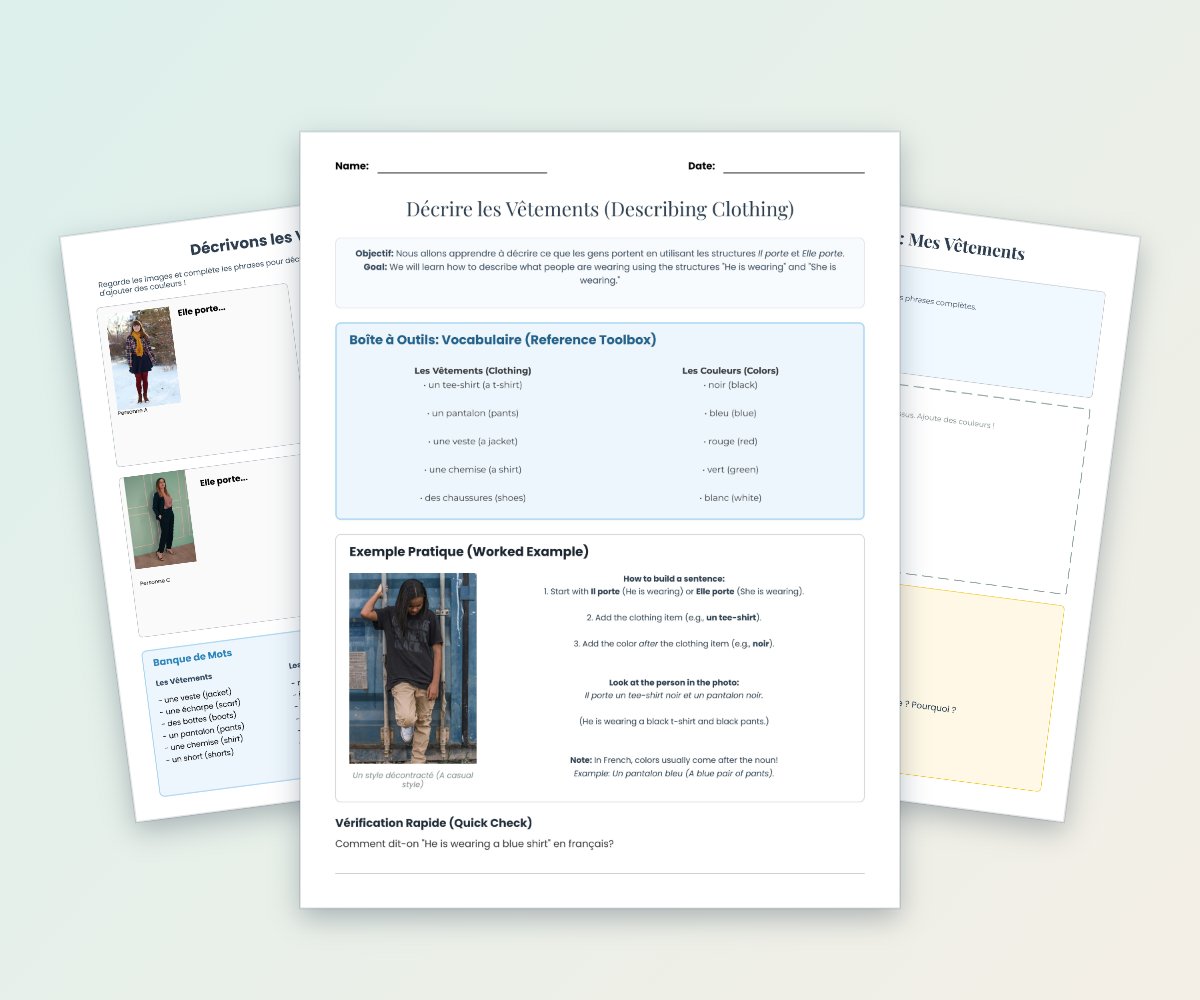
Students learn French clothing and color vocabulary while practicing sentences with “Il porte,” “Elle porte,” and “Je porte.” Activities include picture descriptions, personal writing, a fashion drawi
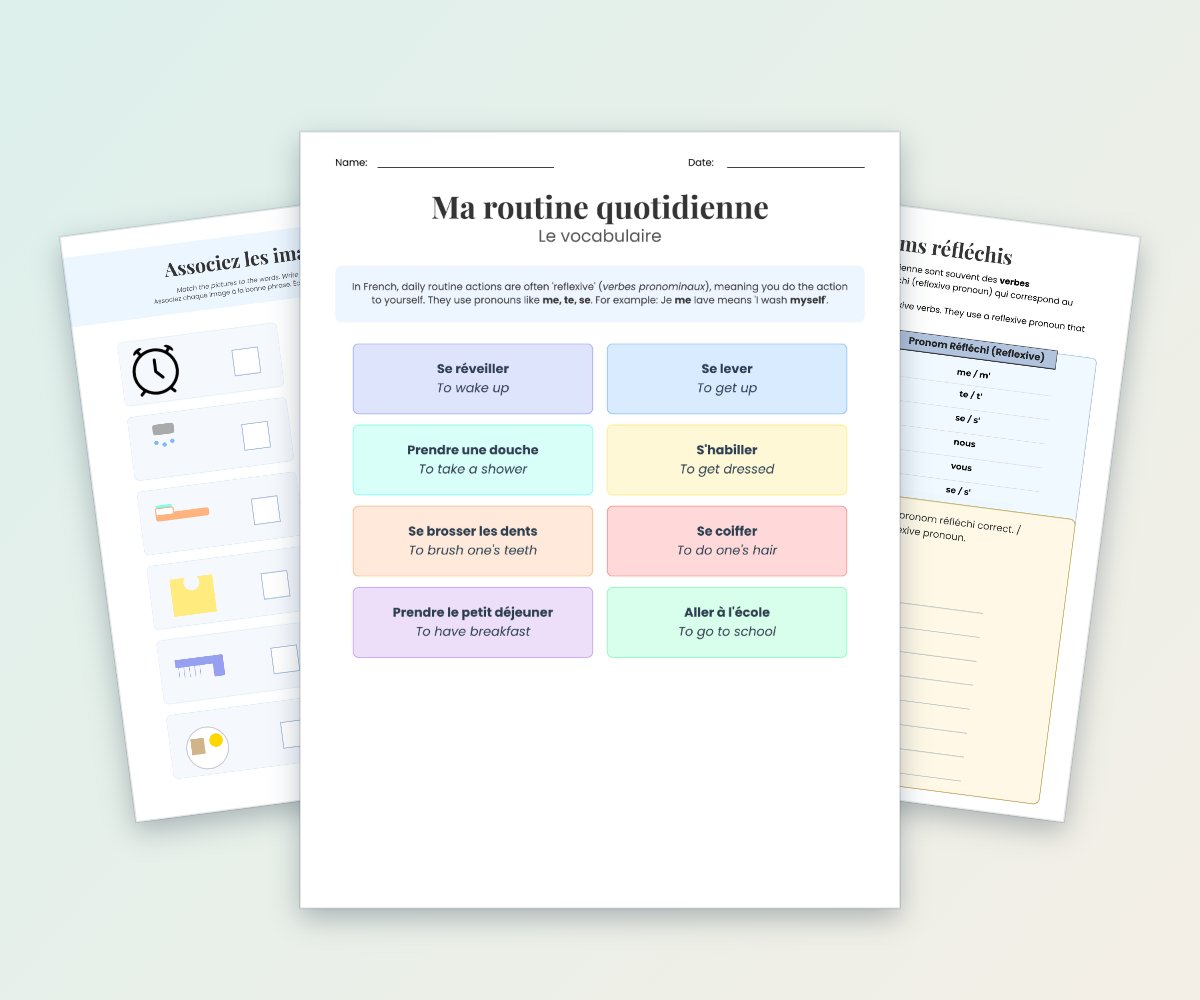
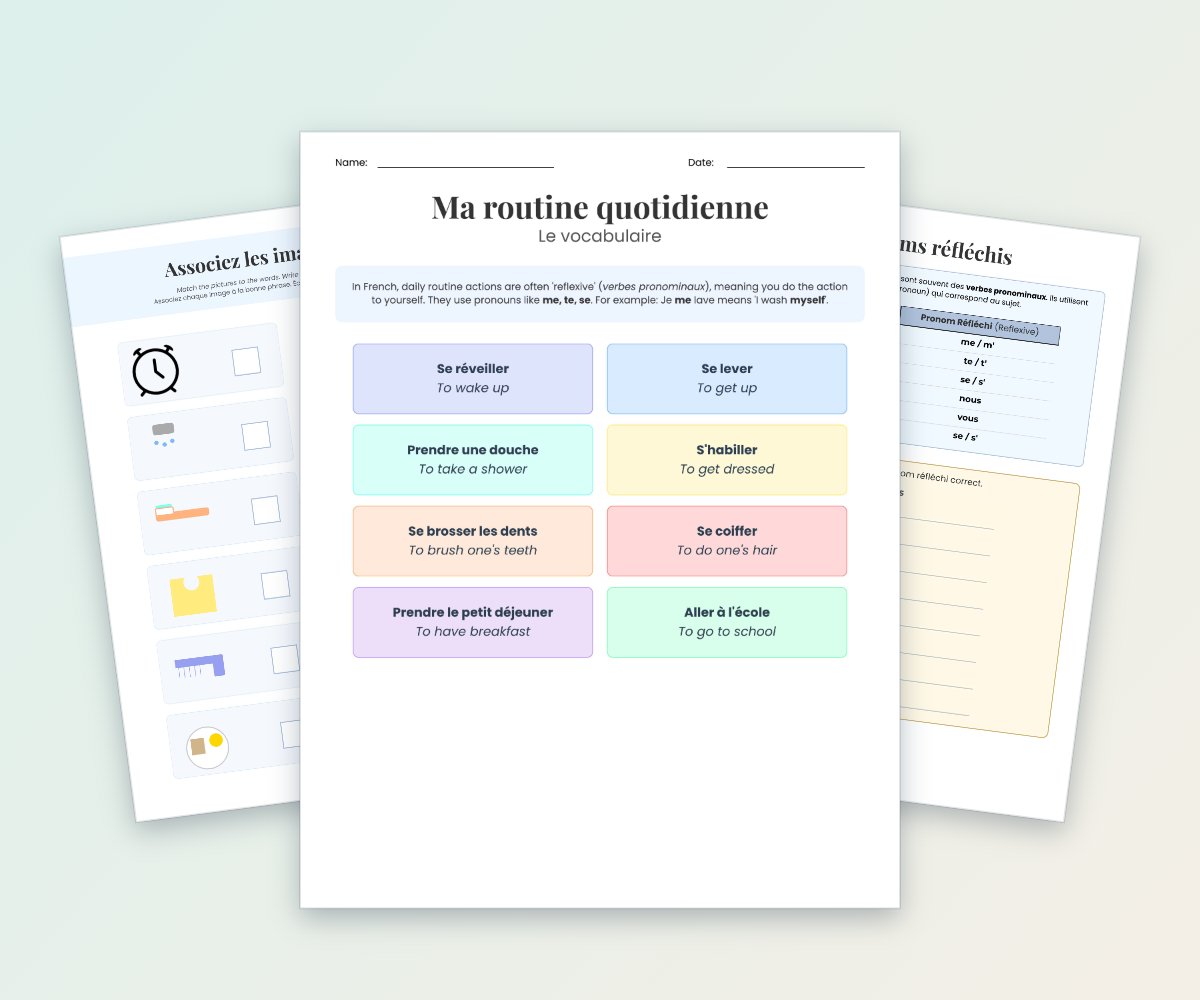
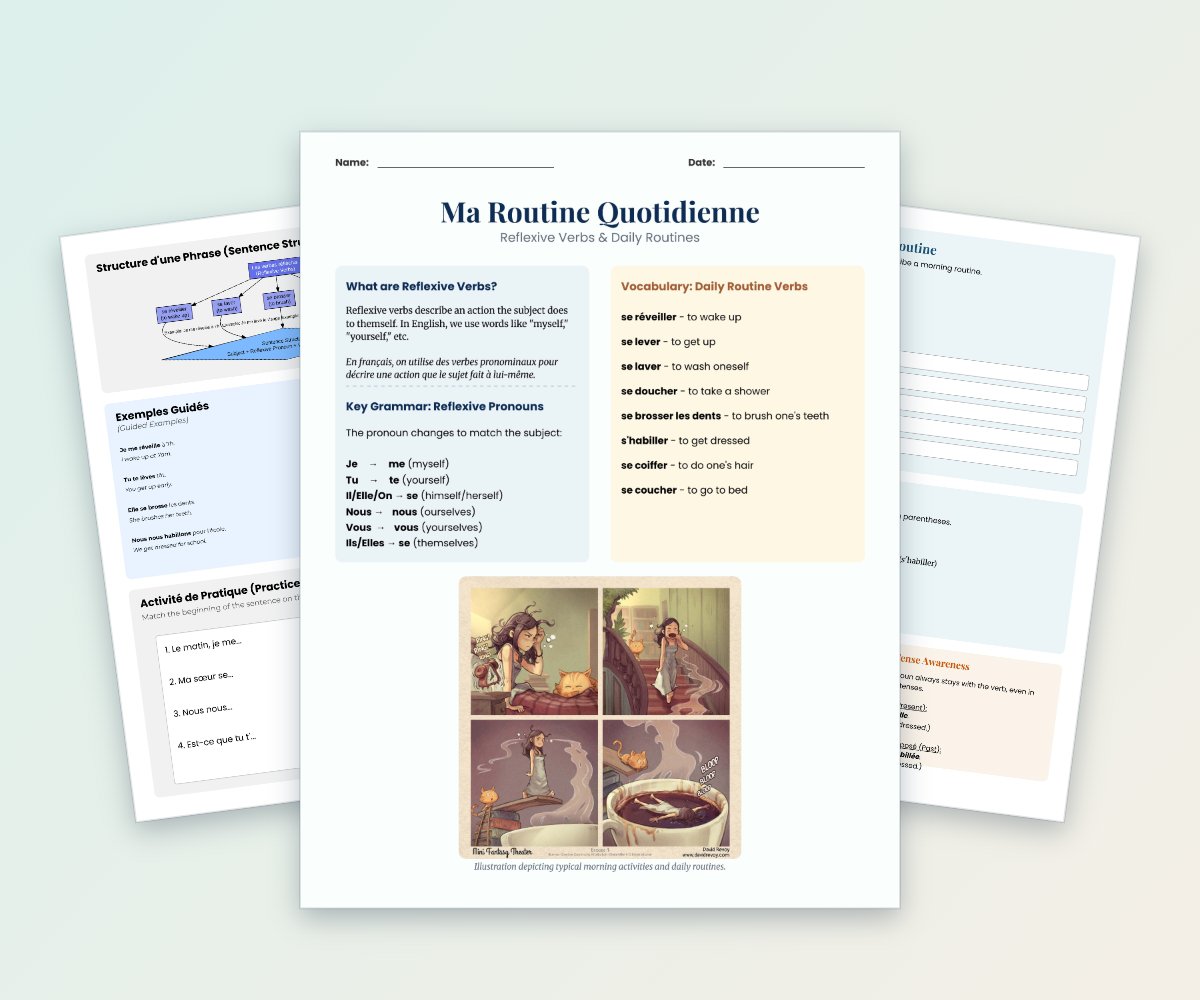
This five-page French activity pack introduces vocabulary for daily routines and practice with reflexive pronouns.
This five-page French resource introduces daily routine vocabulary and reflexive pronouns through picture matching, sentence completion, sequencing, and guided writing.
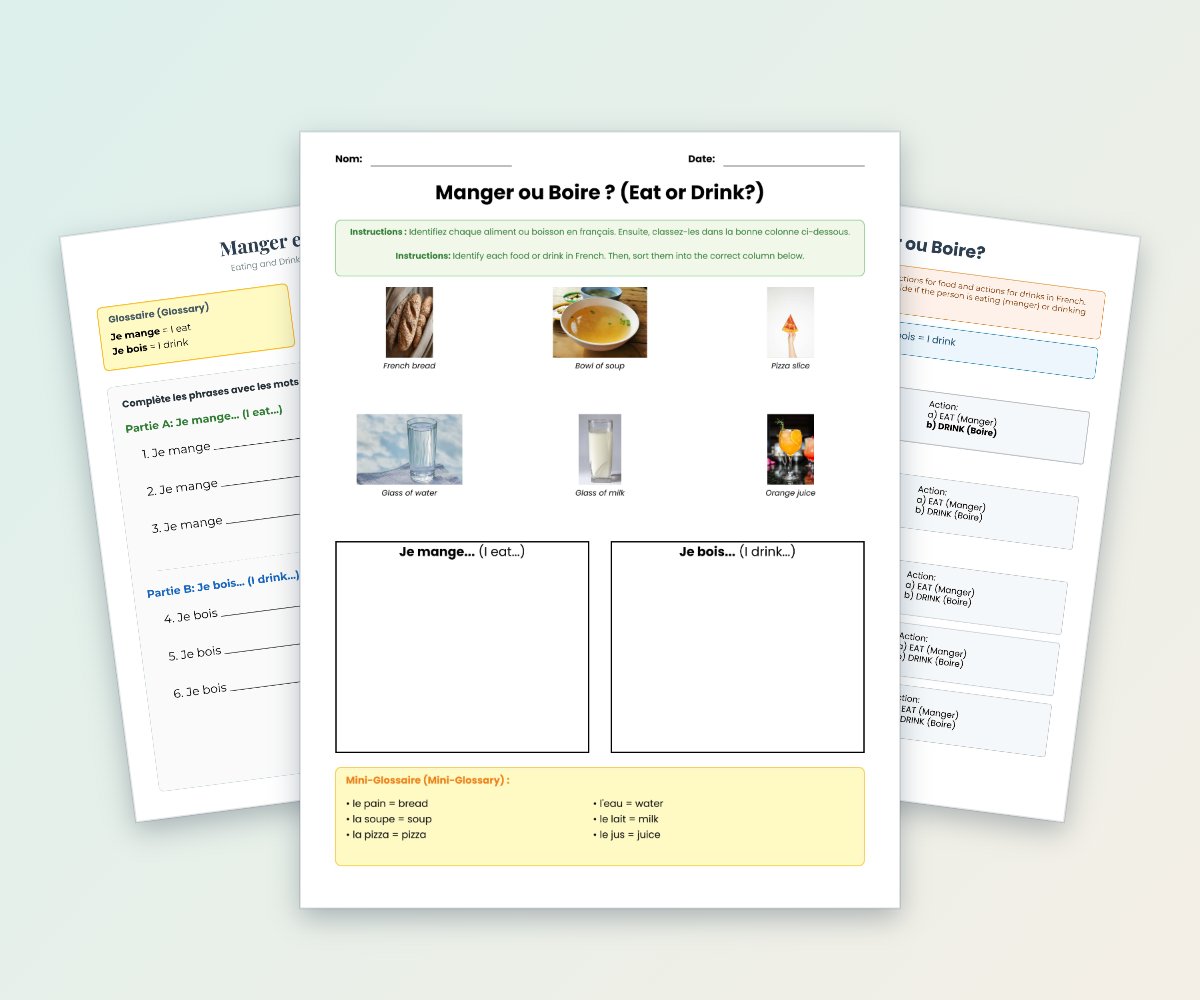
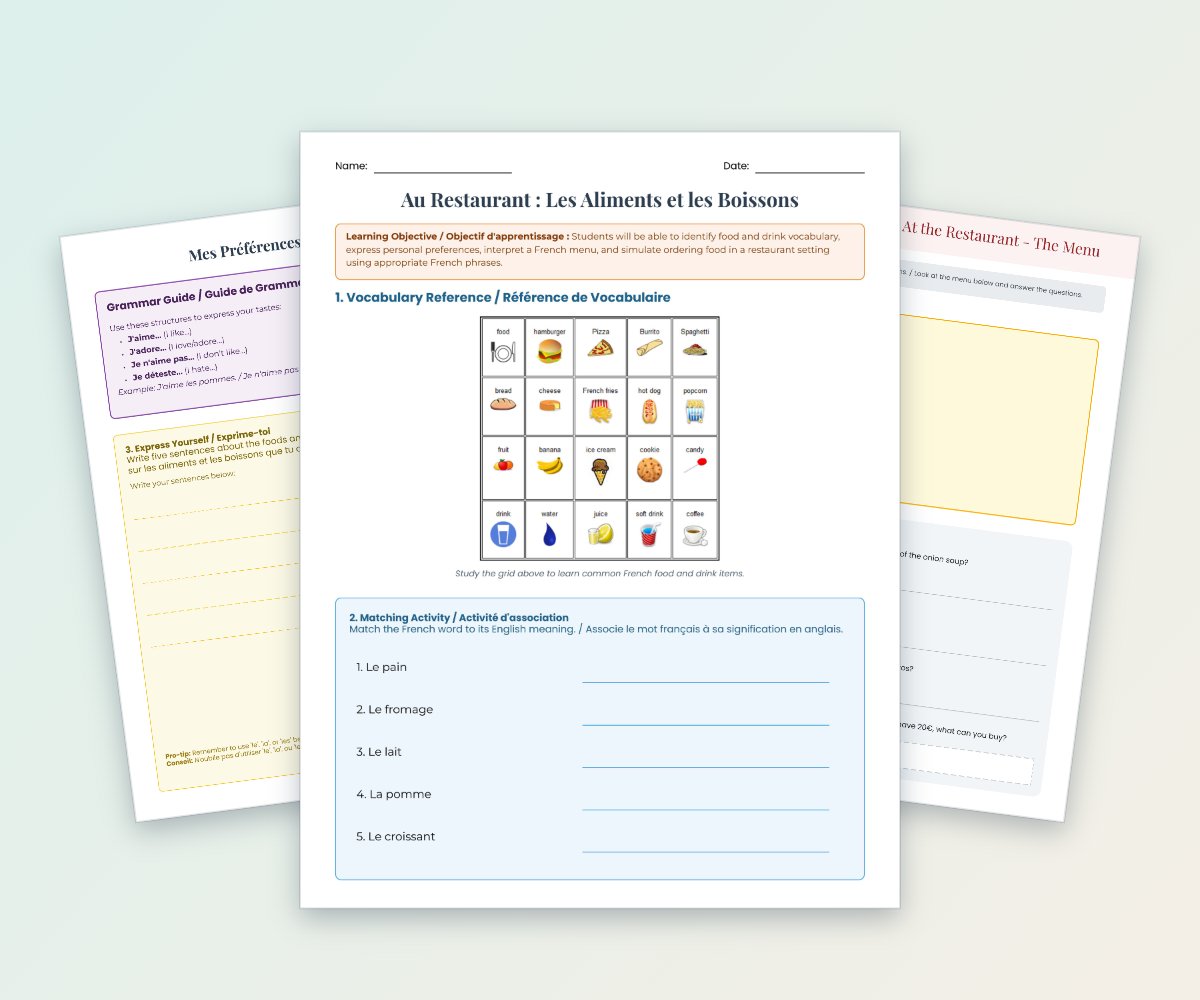
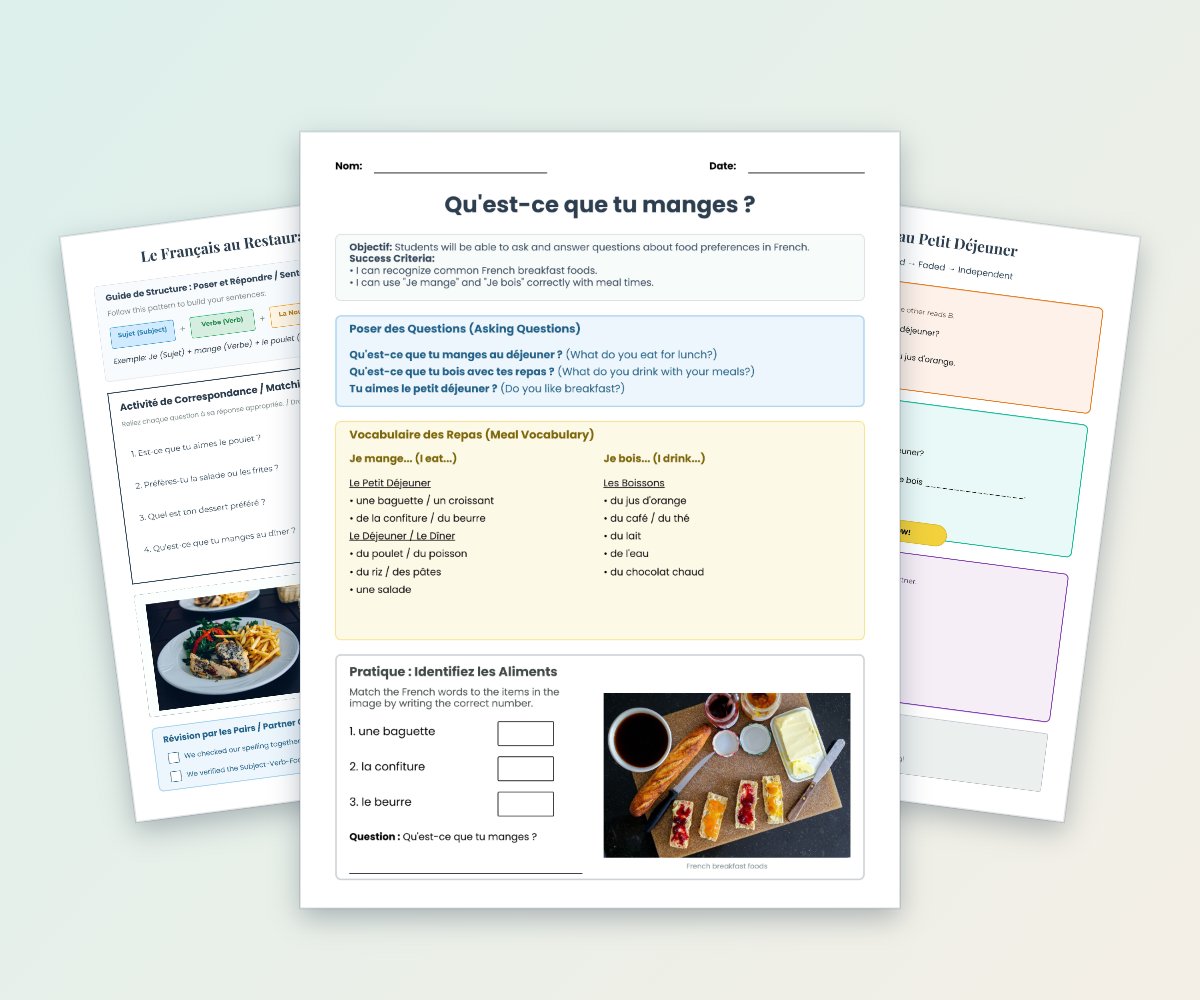
This four-page French activity pack helps students identify food and beverage vocabulary and distinguish between manger and boire.
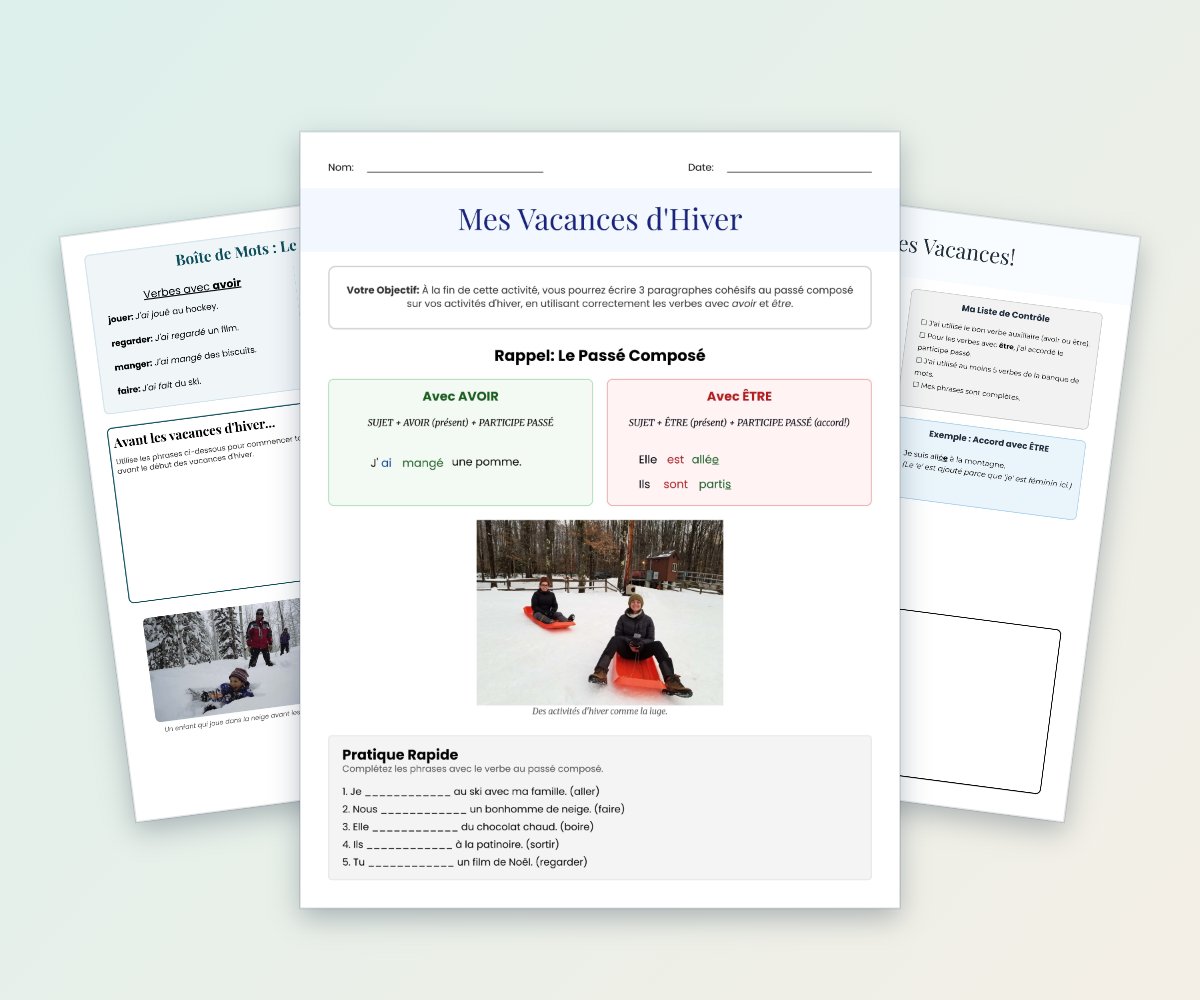
This French writing activity guides students in writing cohesive paragraphs about winter vacations using the passé composé.
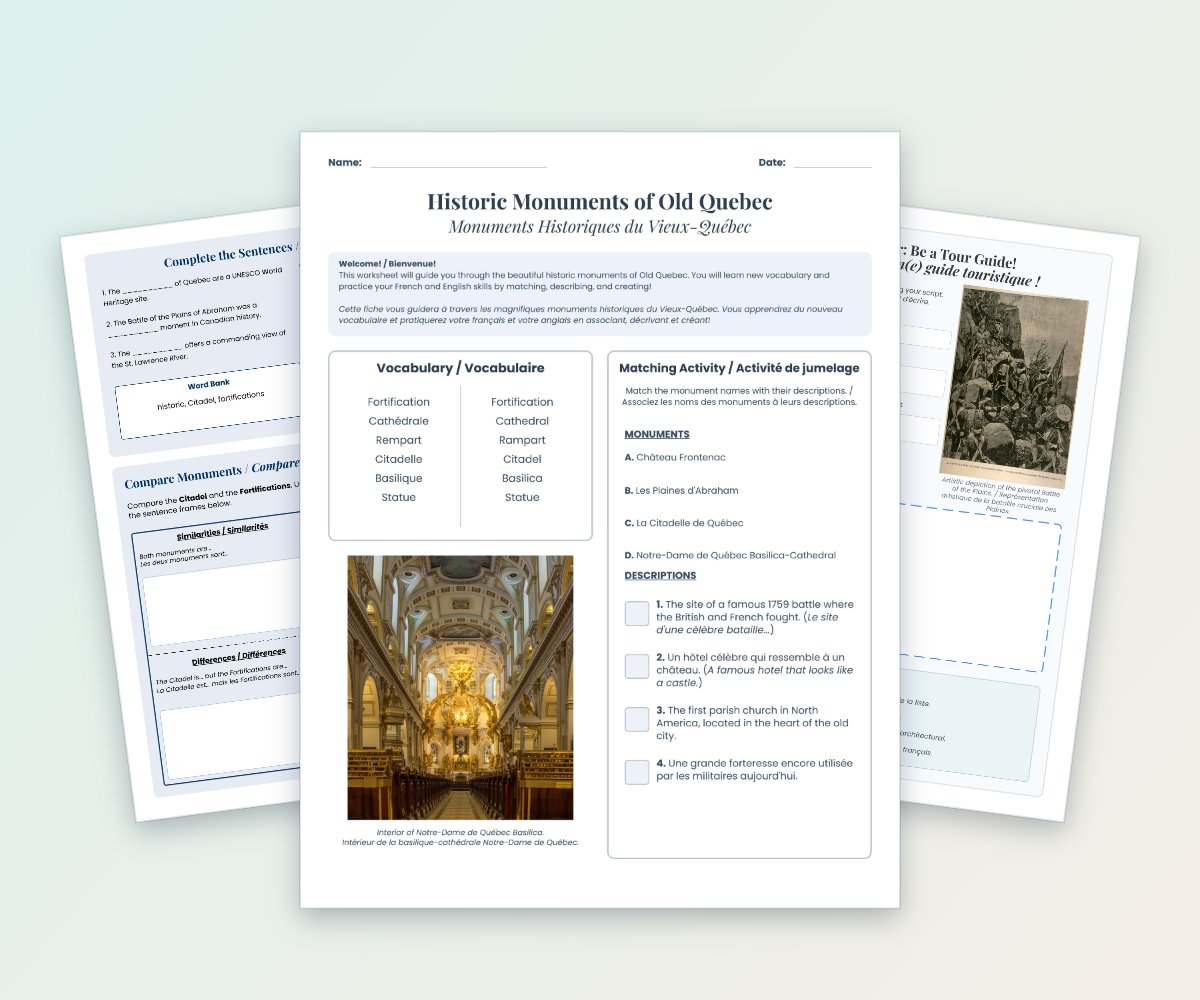
This bilingual French-English worksheet introduces students to historic monuments of Old Quebec, including the Citadel, fortifications, Château Frontenac, and the Plains of Abraham.
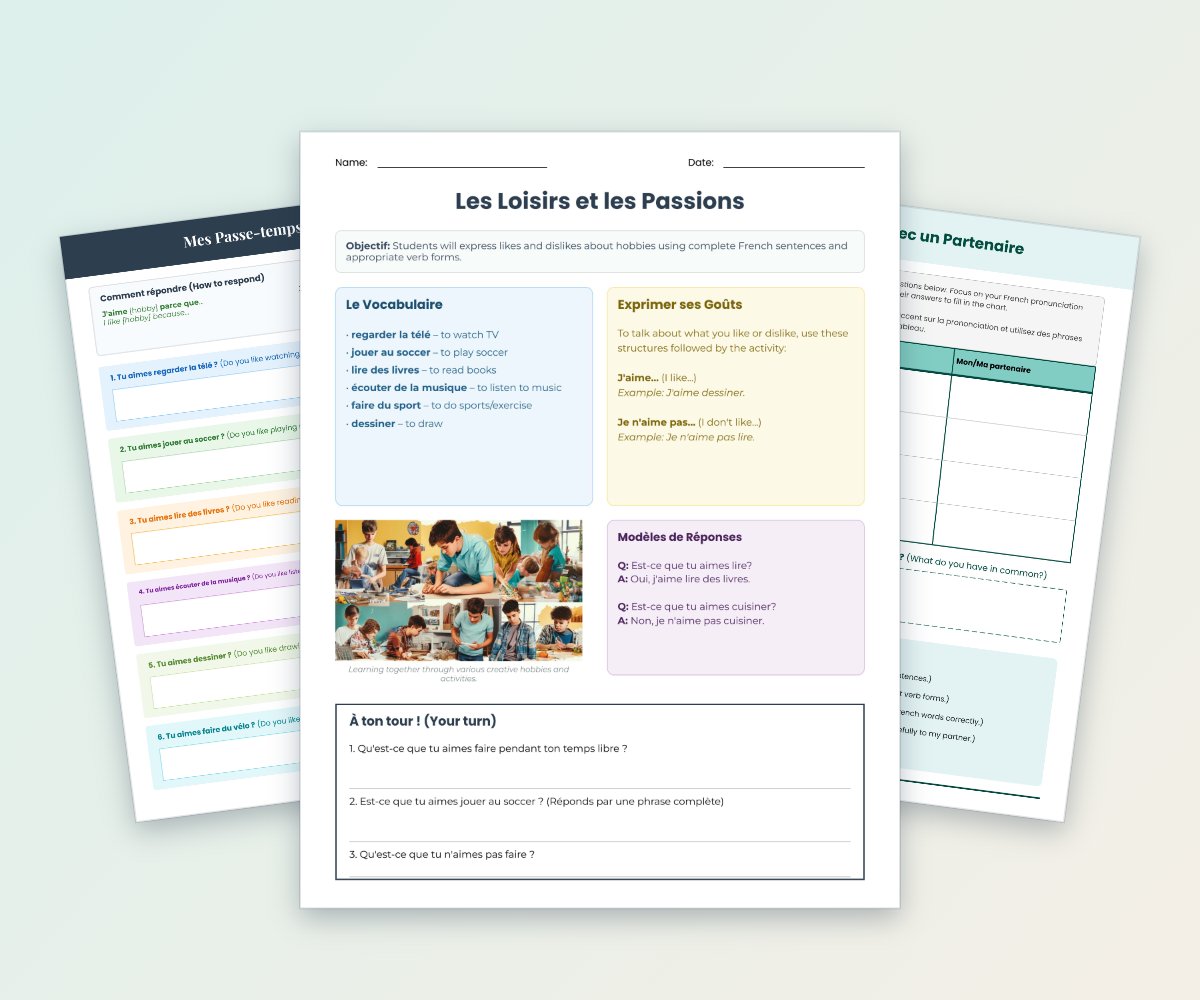
Students learn hobby vocabulary and practice expressing likes and dislikes in complete French sentences.
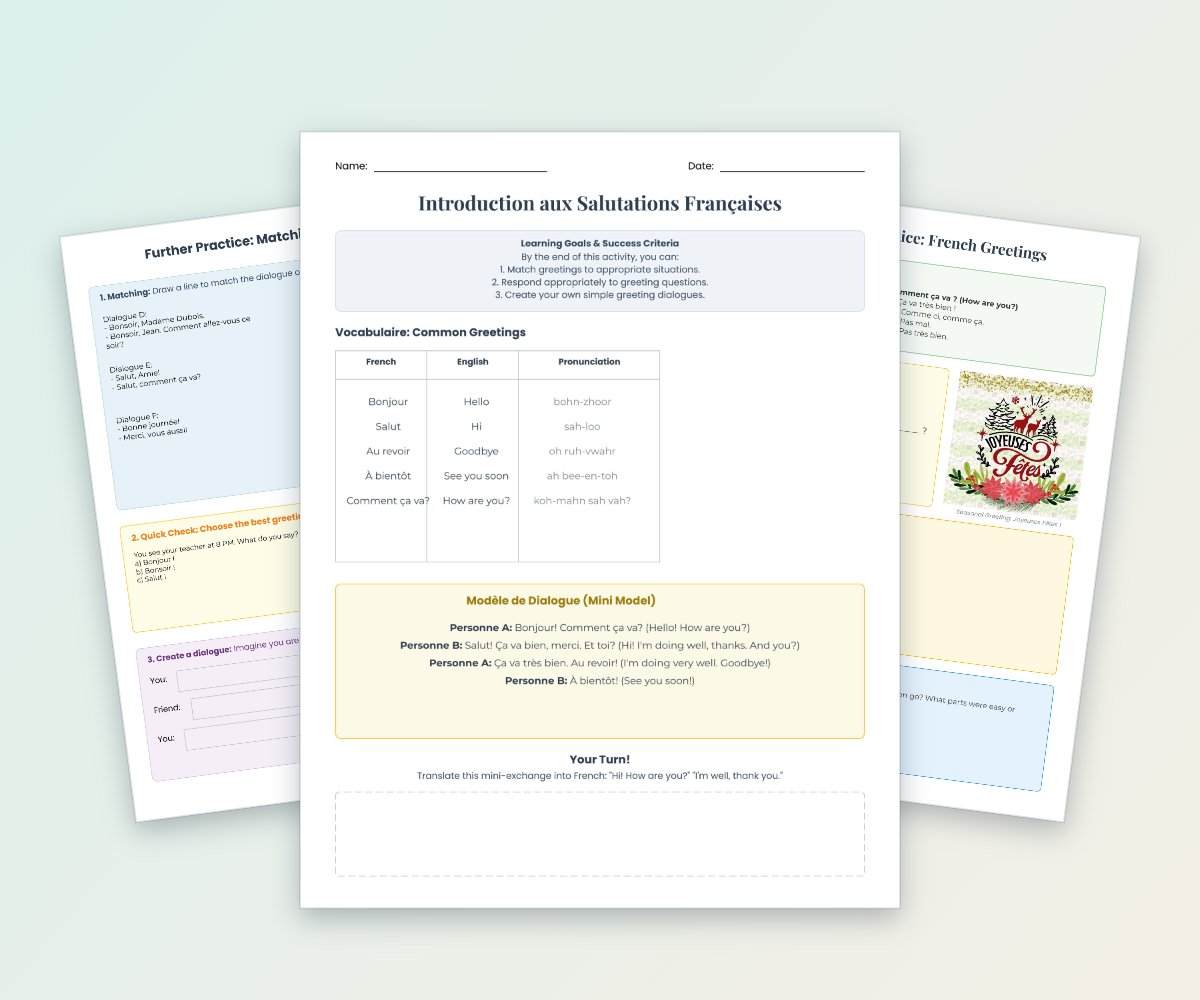
Students learn common French greetings, expressions for asking how someone is doing, and appropriate formal and informal responses.
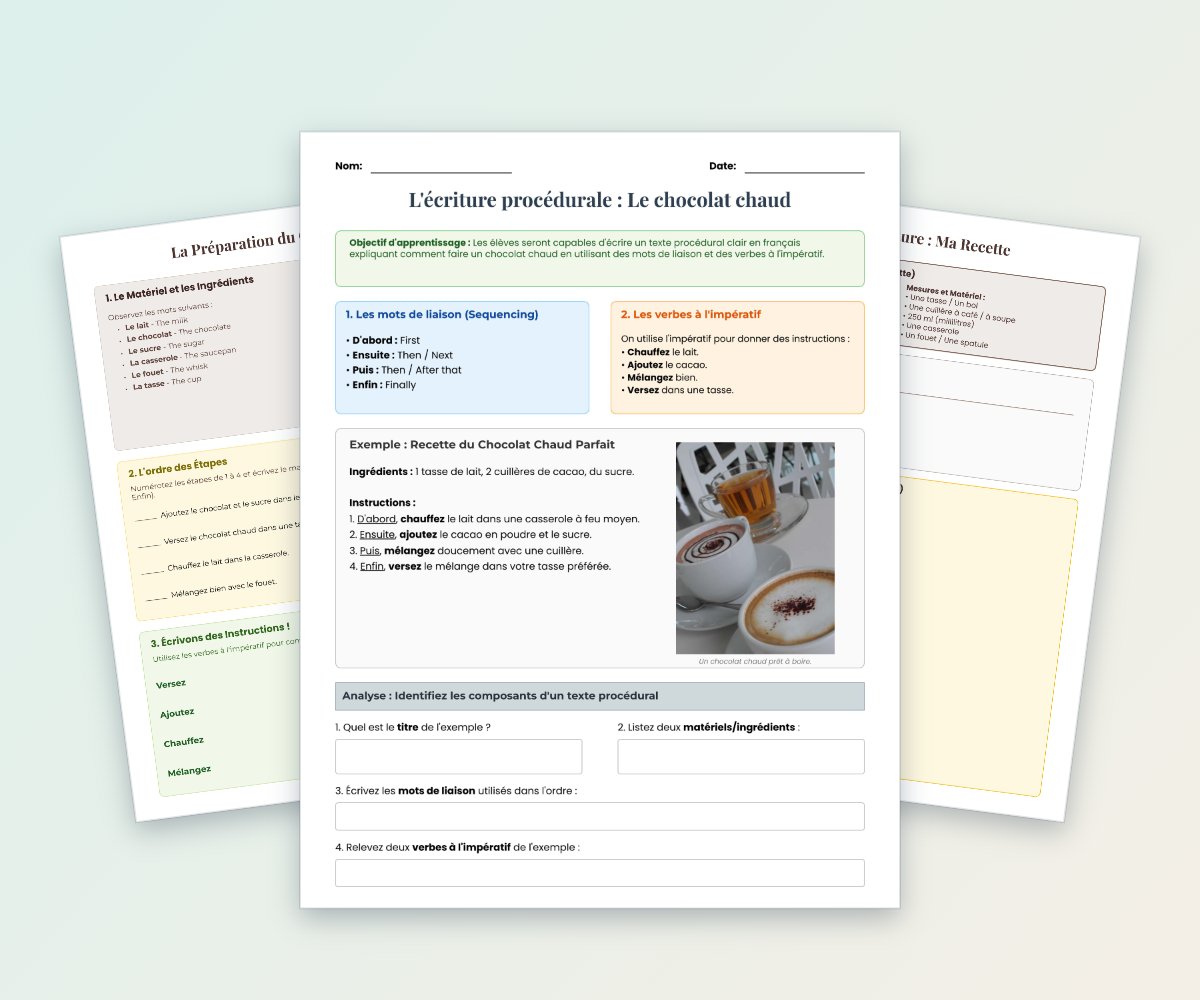
Students analyze and write a French procedural text using a hot chocolate recipe.
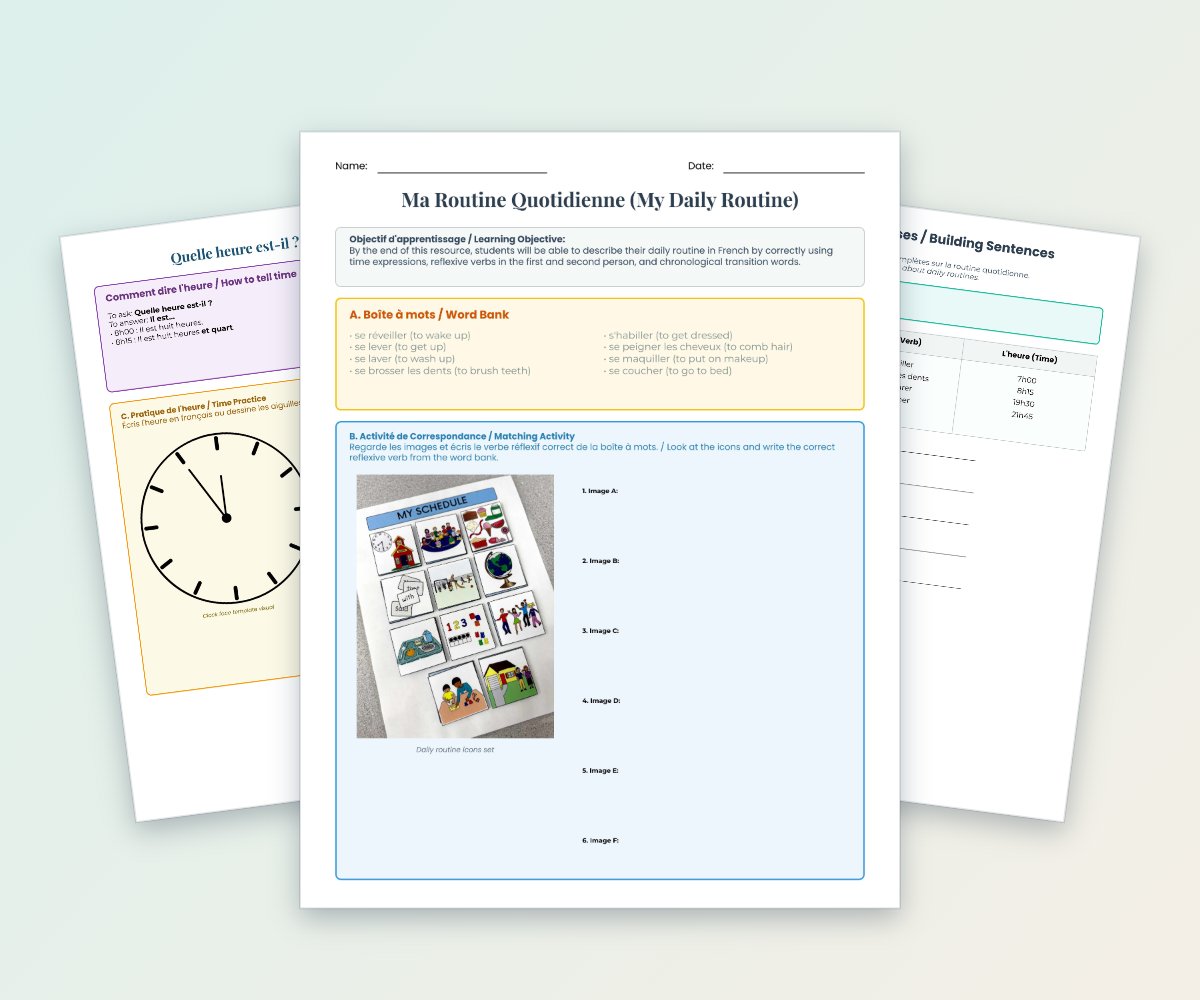
This six-page Core French worksheet pack helps students describe daily routines using reflexive verbs, time expressions, and chronological transition words.
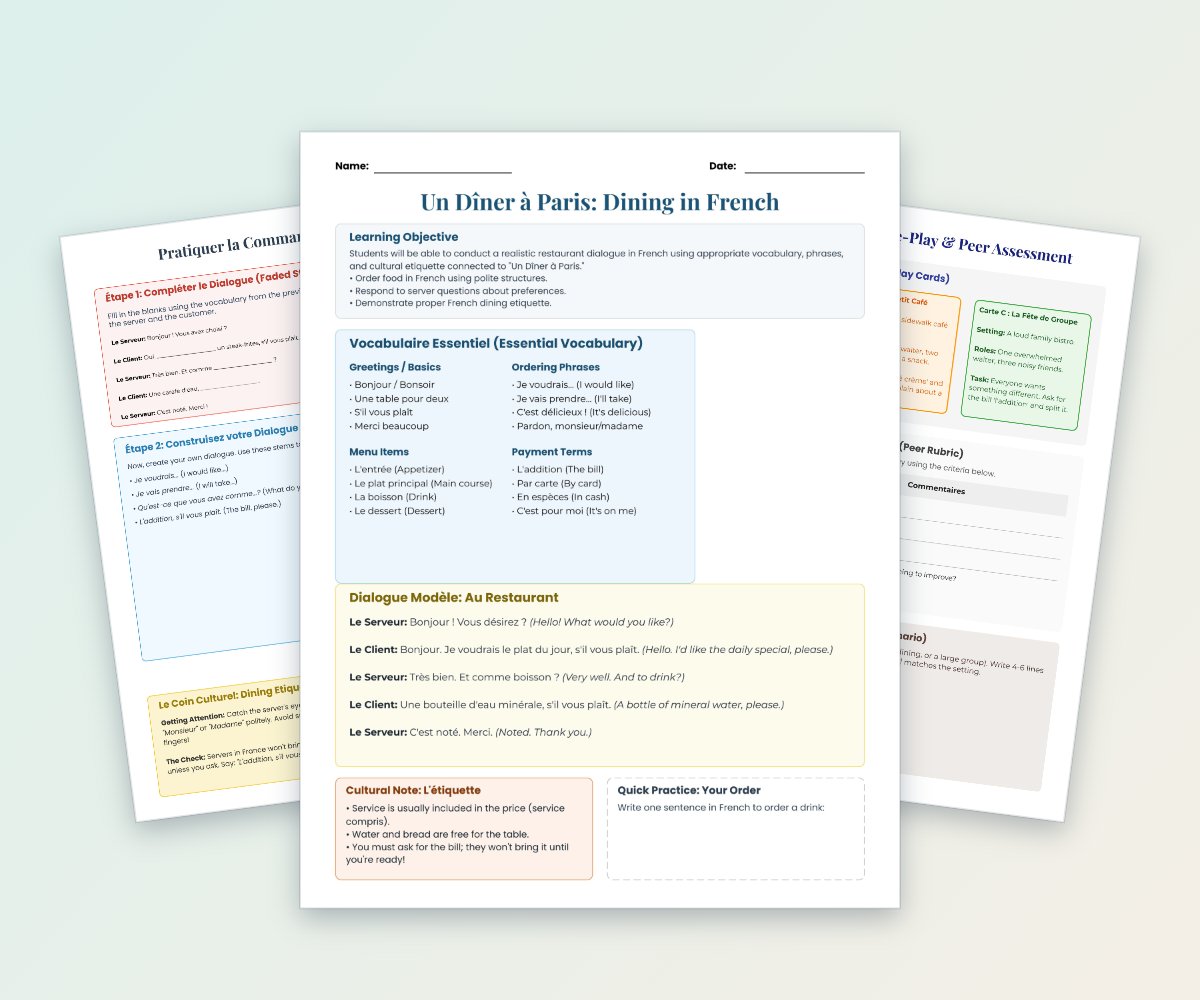
Students practice ordering food, responding to server questions, and requesting the bill in French through a modeled restaurant dialogue and guided activities.
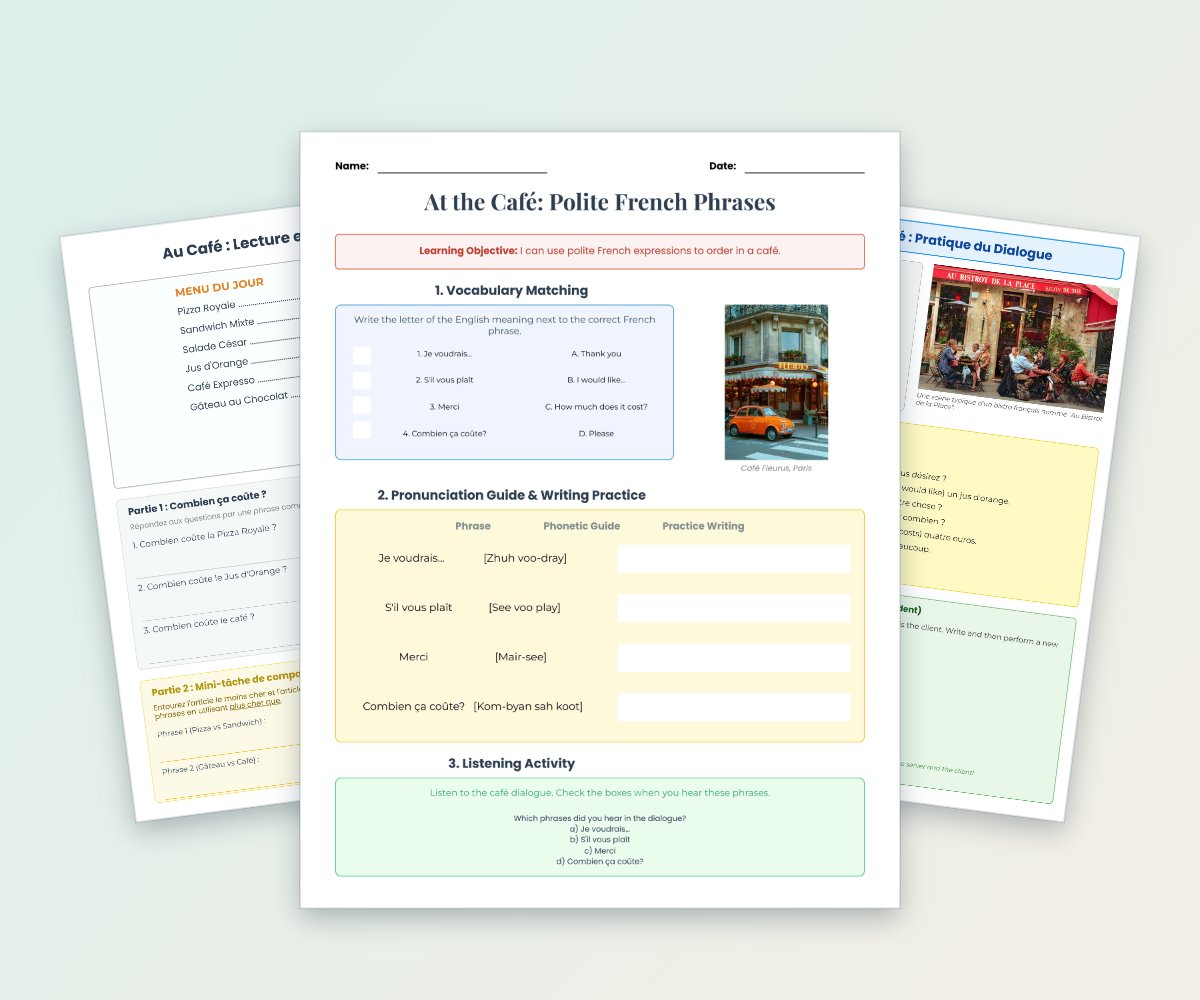
Students learn polite French expressions for ordering food and drinks in a café through vocabulary matching, pronunciation practice, listening, reading, and price-comparison activities.
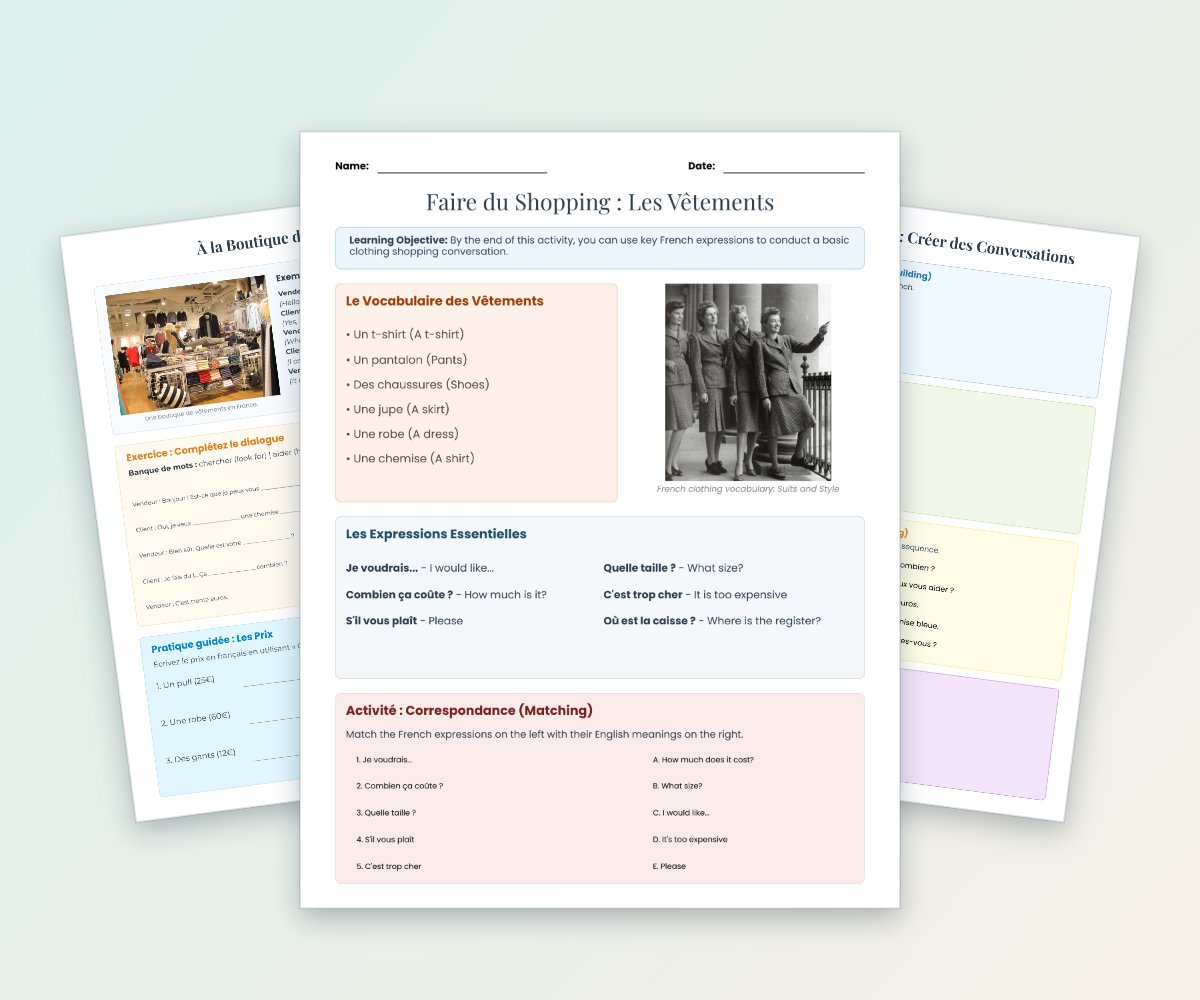
This four-page French activity pack teaches clothing vocabulary and useful shopping expressions through matching, dialogue completion, price practice, sentence building, and conversation sequencing.
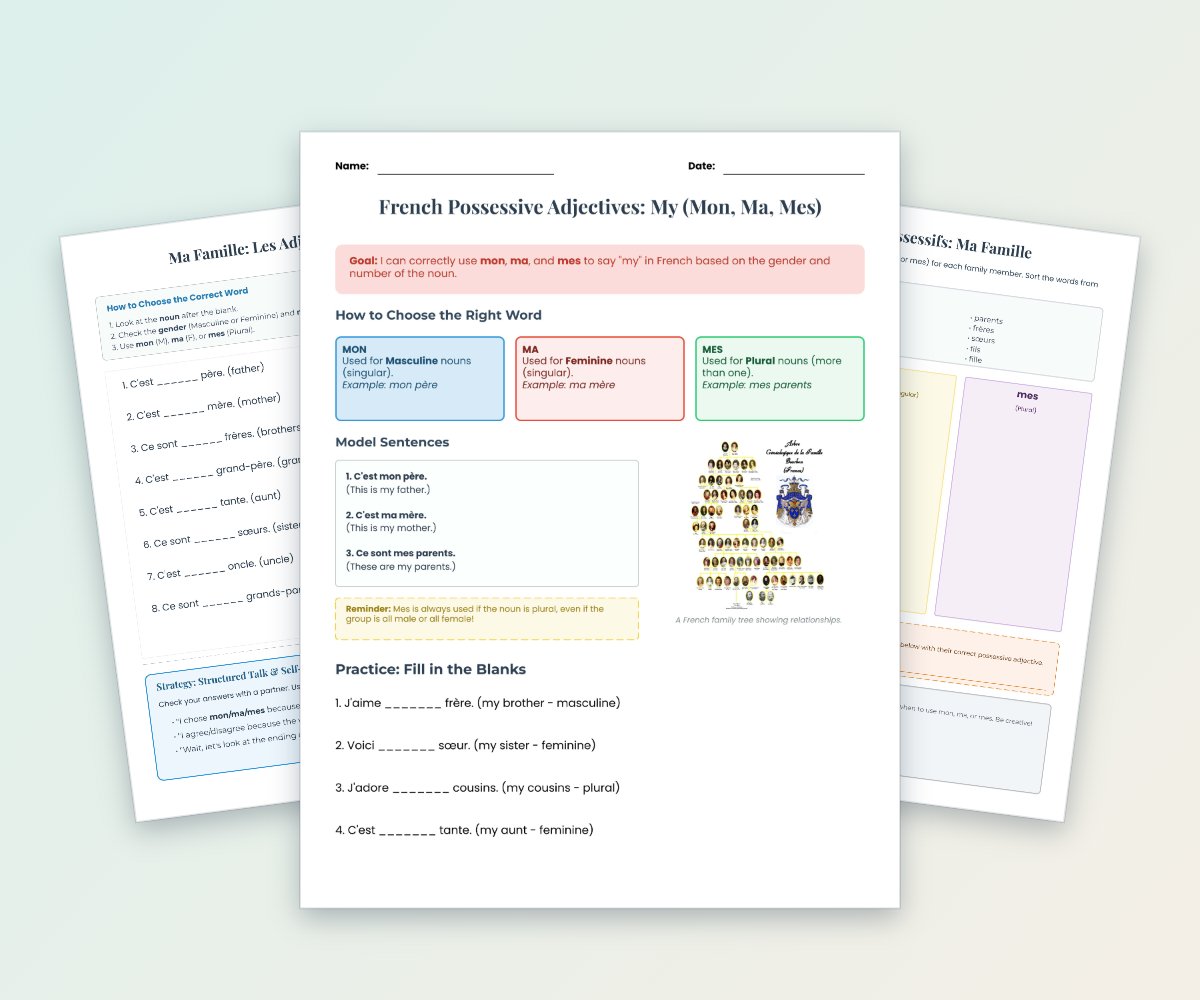
Teach students to choose mon, ma, or mes based on the gender and number of French nouns.
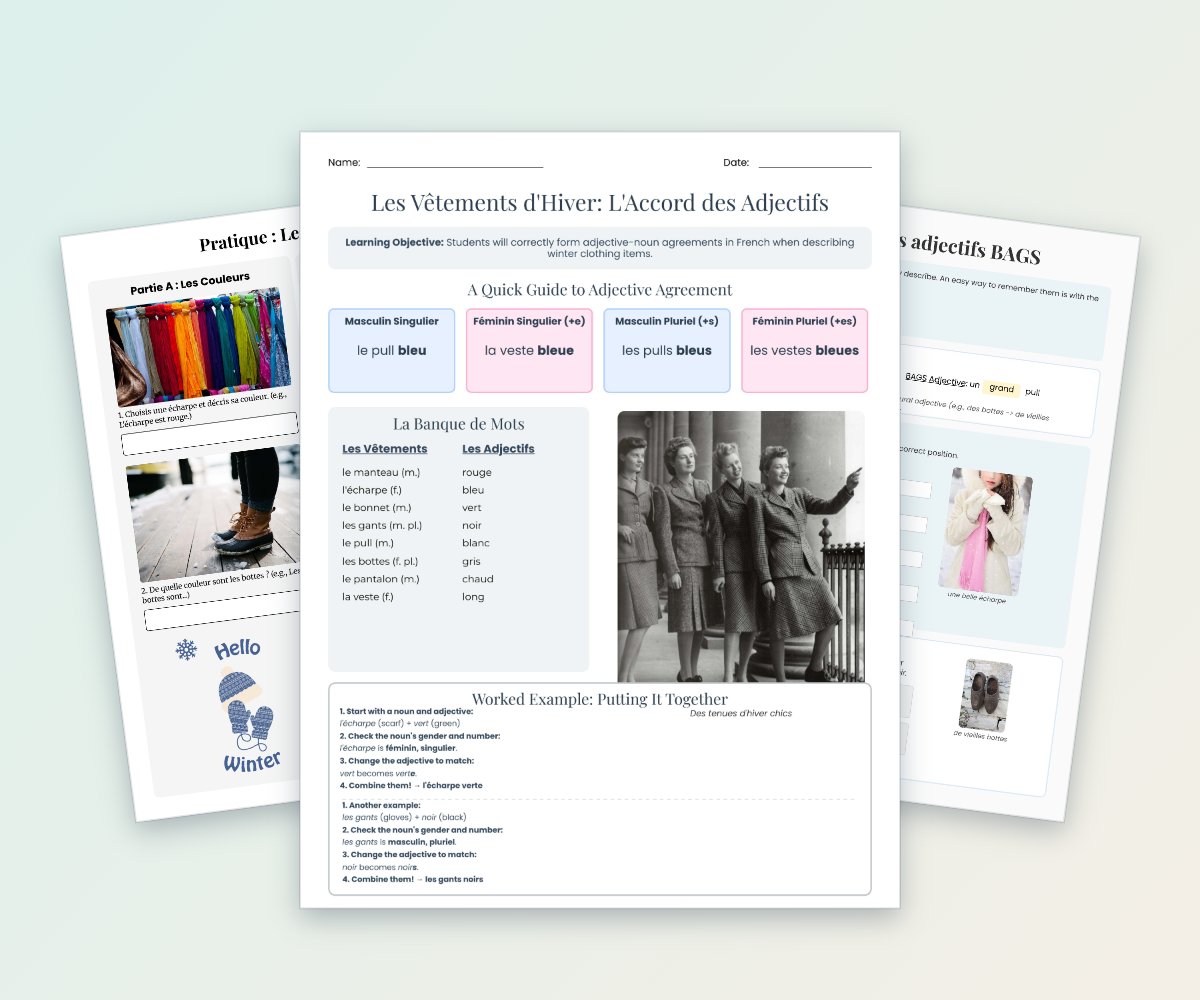
Students practice matching French adjectives to winter clothing nouns for gender and number.
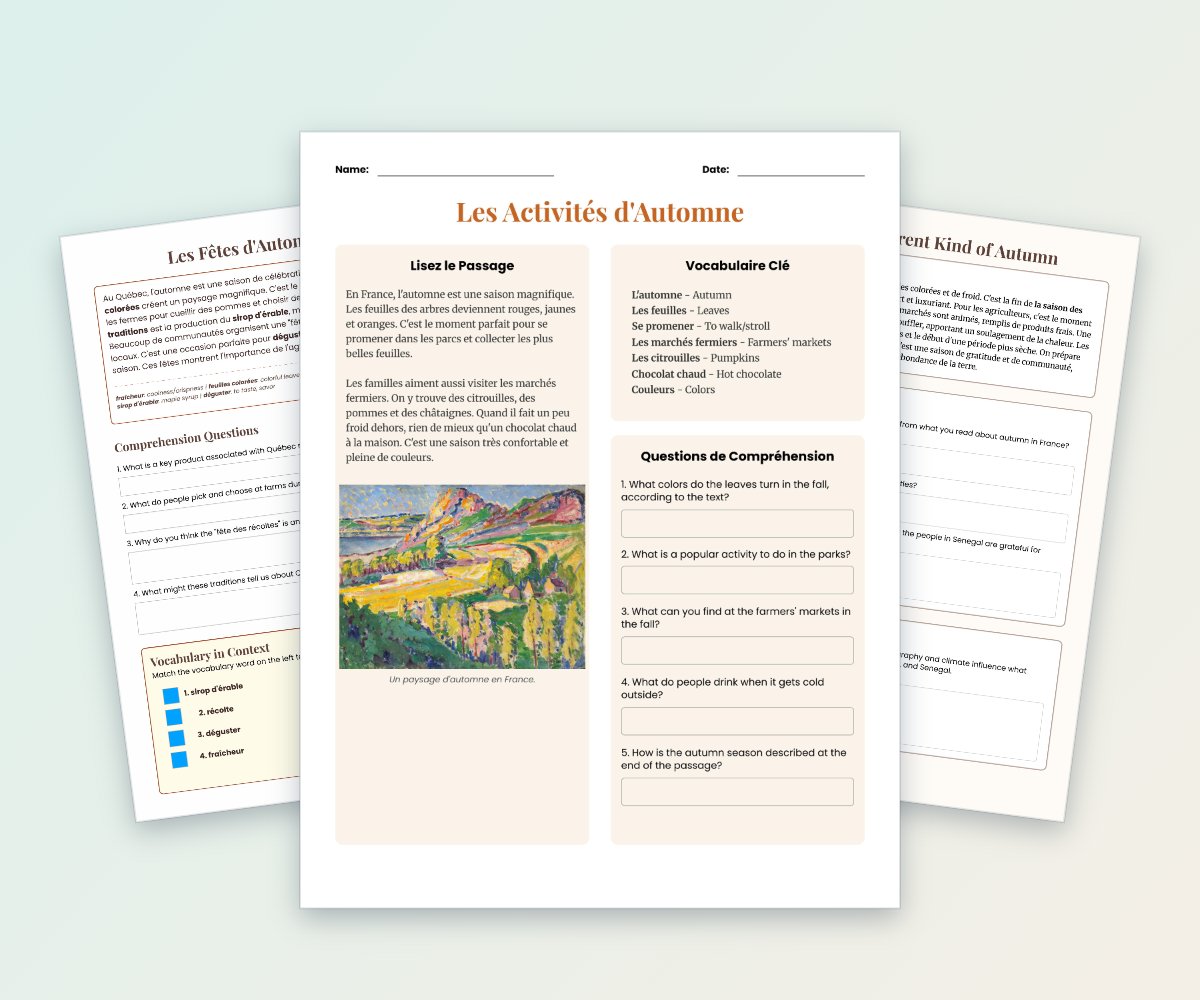
This four-page French activity pack features reading passages about autumn traditions in France and Quebec.
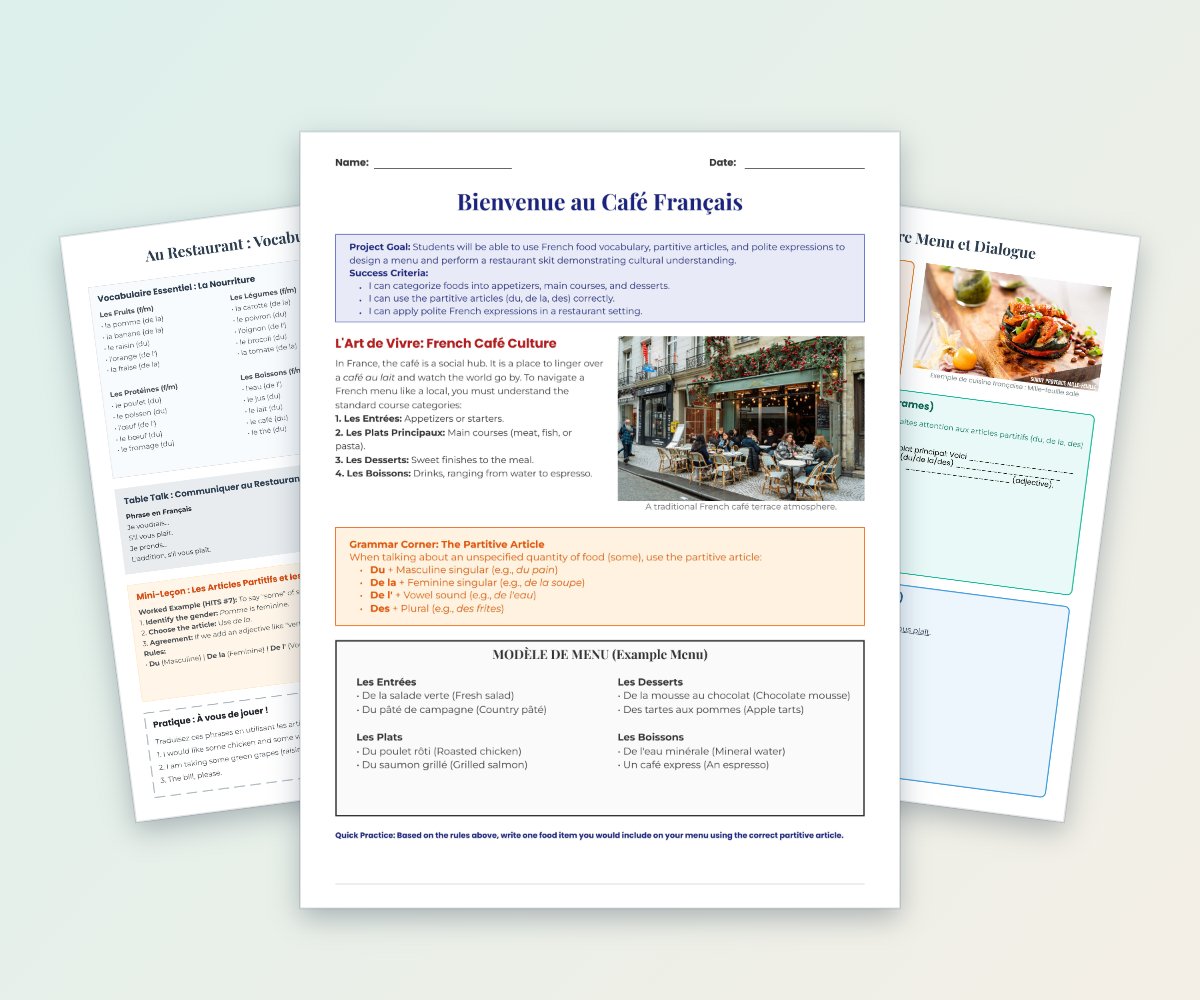
Students design a French café menu and perform a restaurant skit using food vocabulary, partitive articles, and polite expressions.
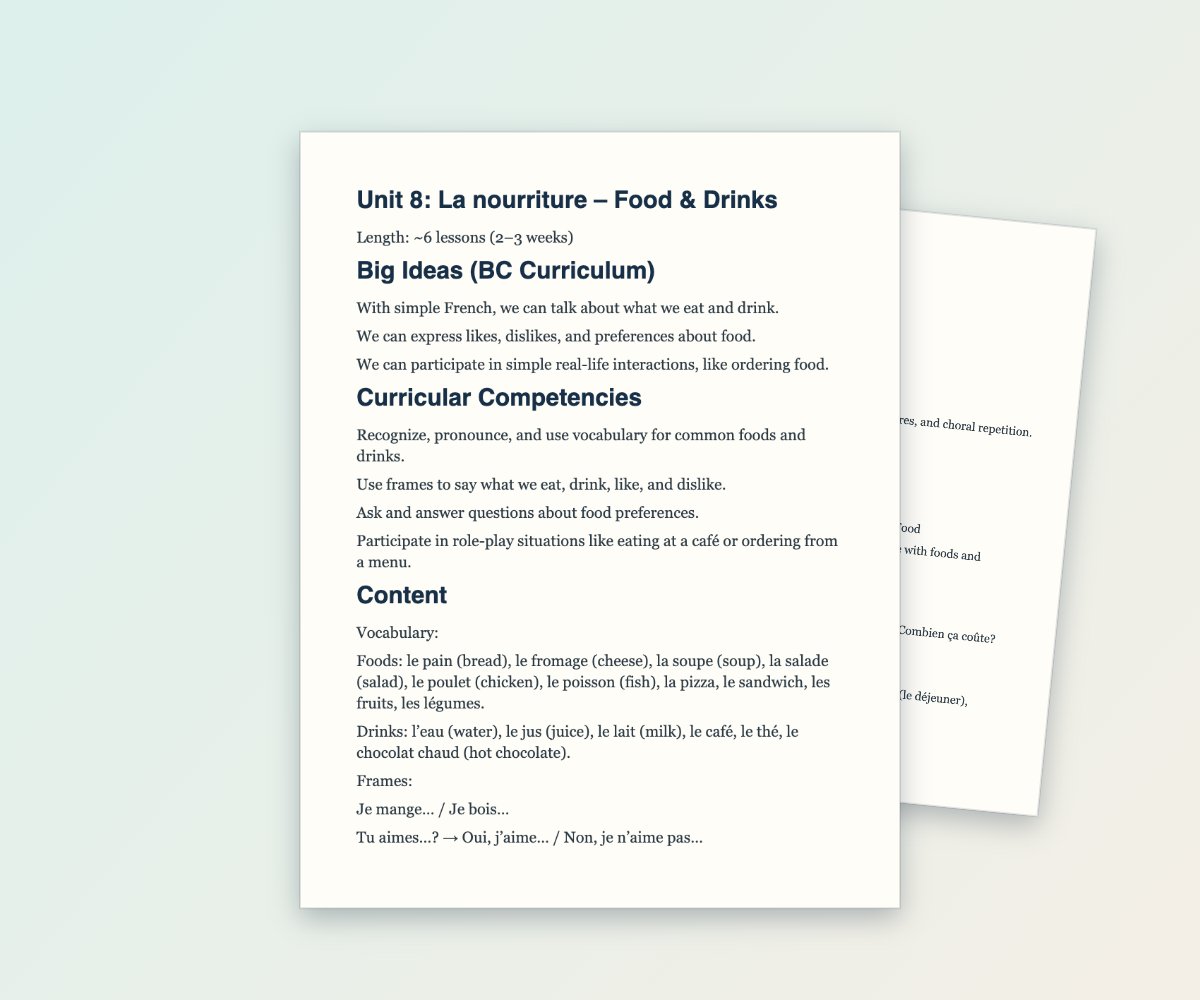
This six-lesson unit develops French vocabulary for foods, drinks, meals, likes and dislikes, and ordering at a café.
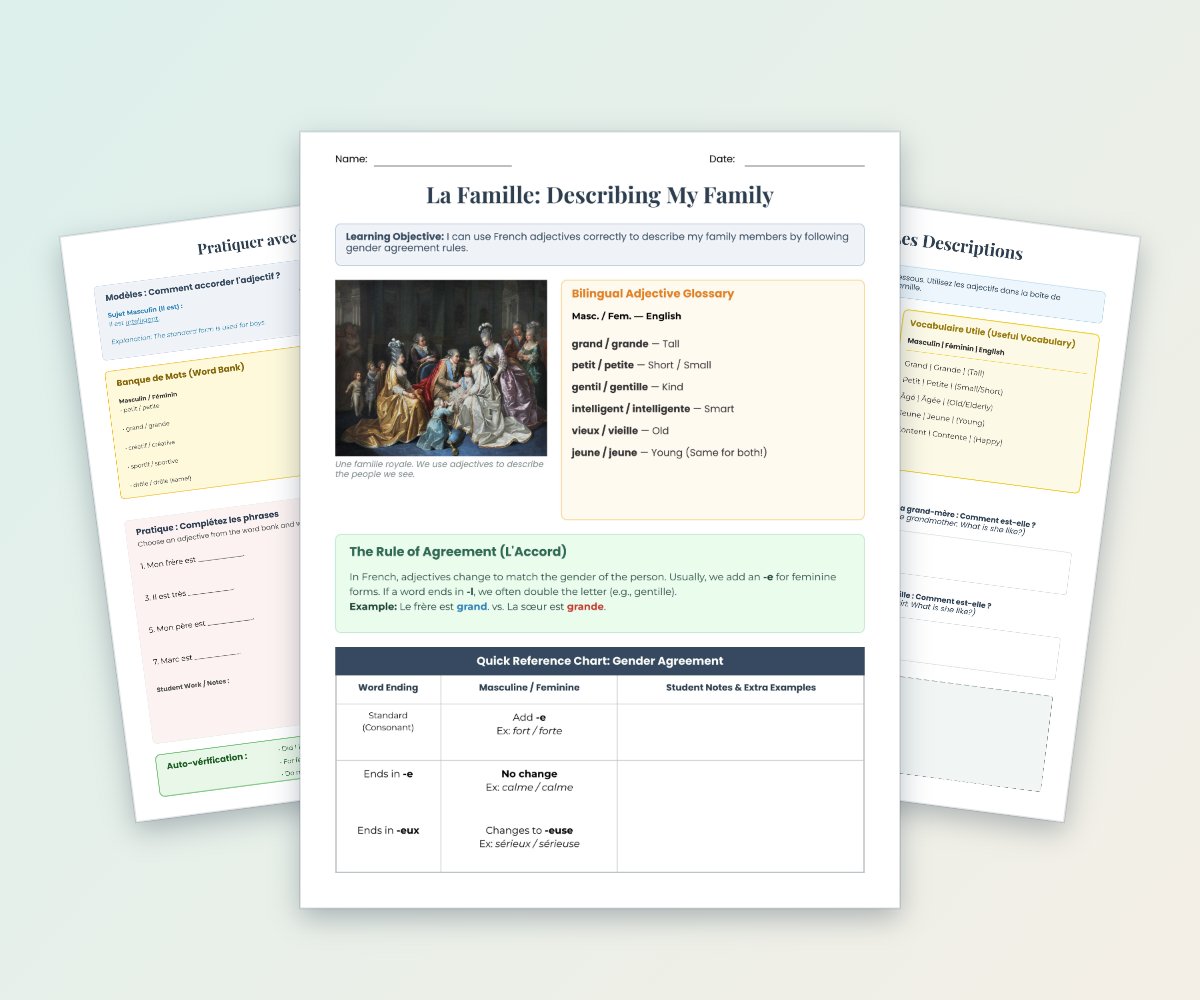
This four-page French worksheet teaches students to describe family members using vocabulary and gender-agreement rules for adjectives.
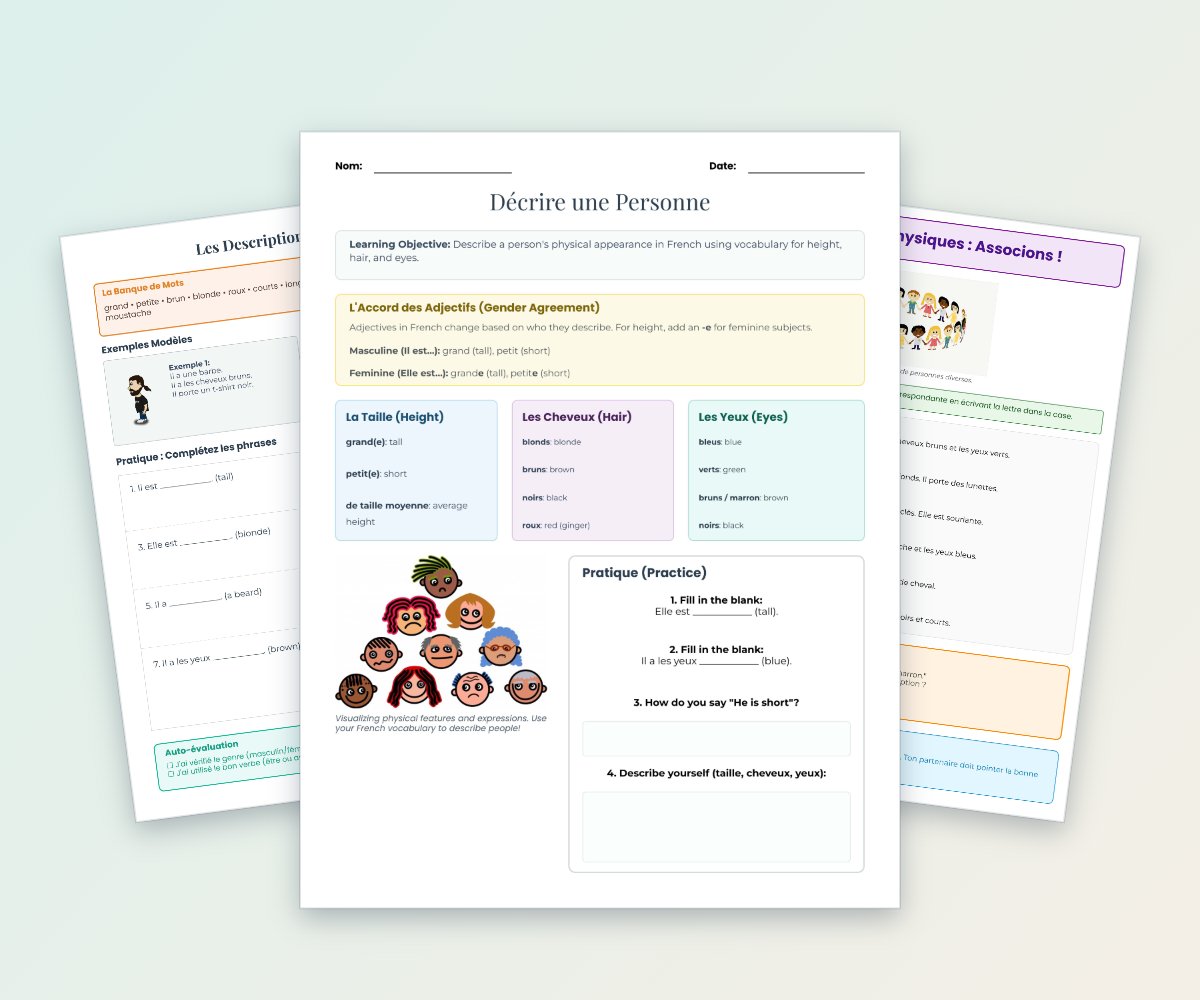
This four-page French worksheet teaches students to describe people using vocabulary for height, hair, eyes, facial features, and clothing.
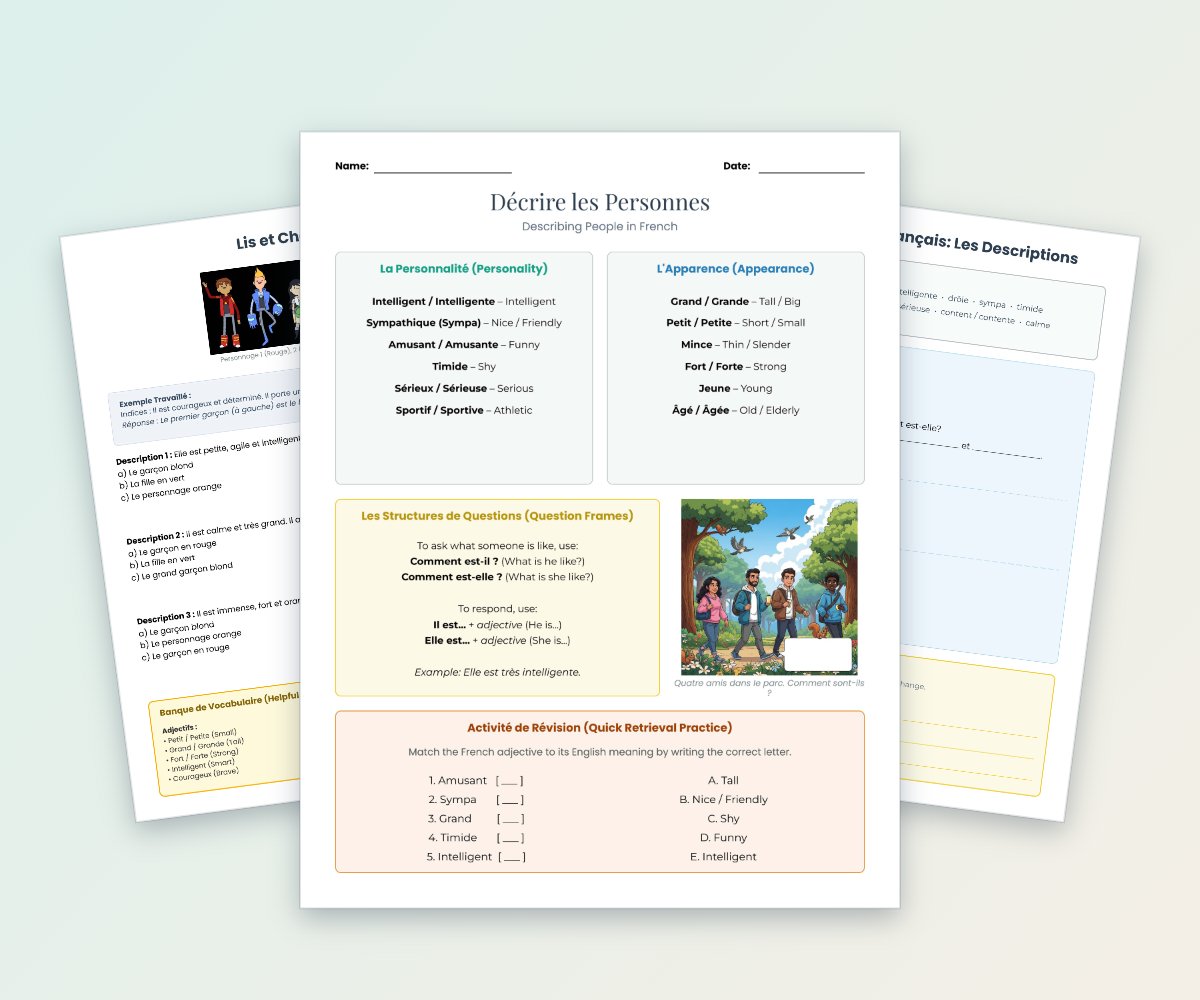
This four-page French activity pack teaches personality and appearance adjectives, question frames, vocabulary, reading practice, and dialogue prompts.
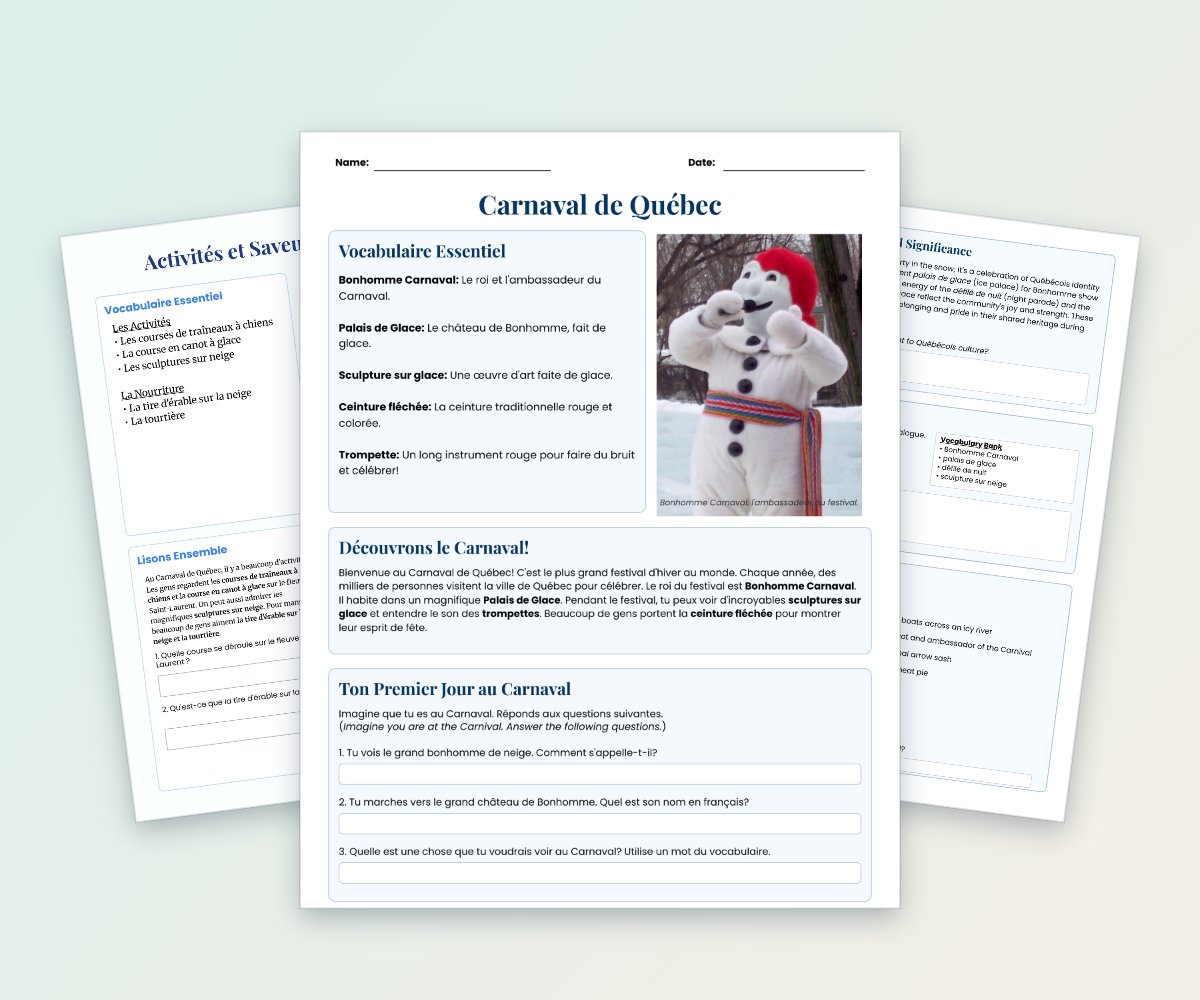
Introduce students to Quebec’s Winter Carnival through French vocabulary, cultural reading passages, listening comprehension, and short written responses.
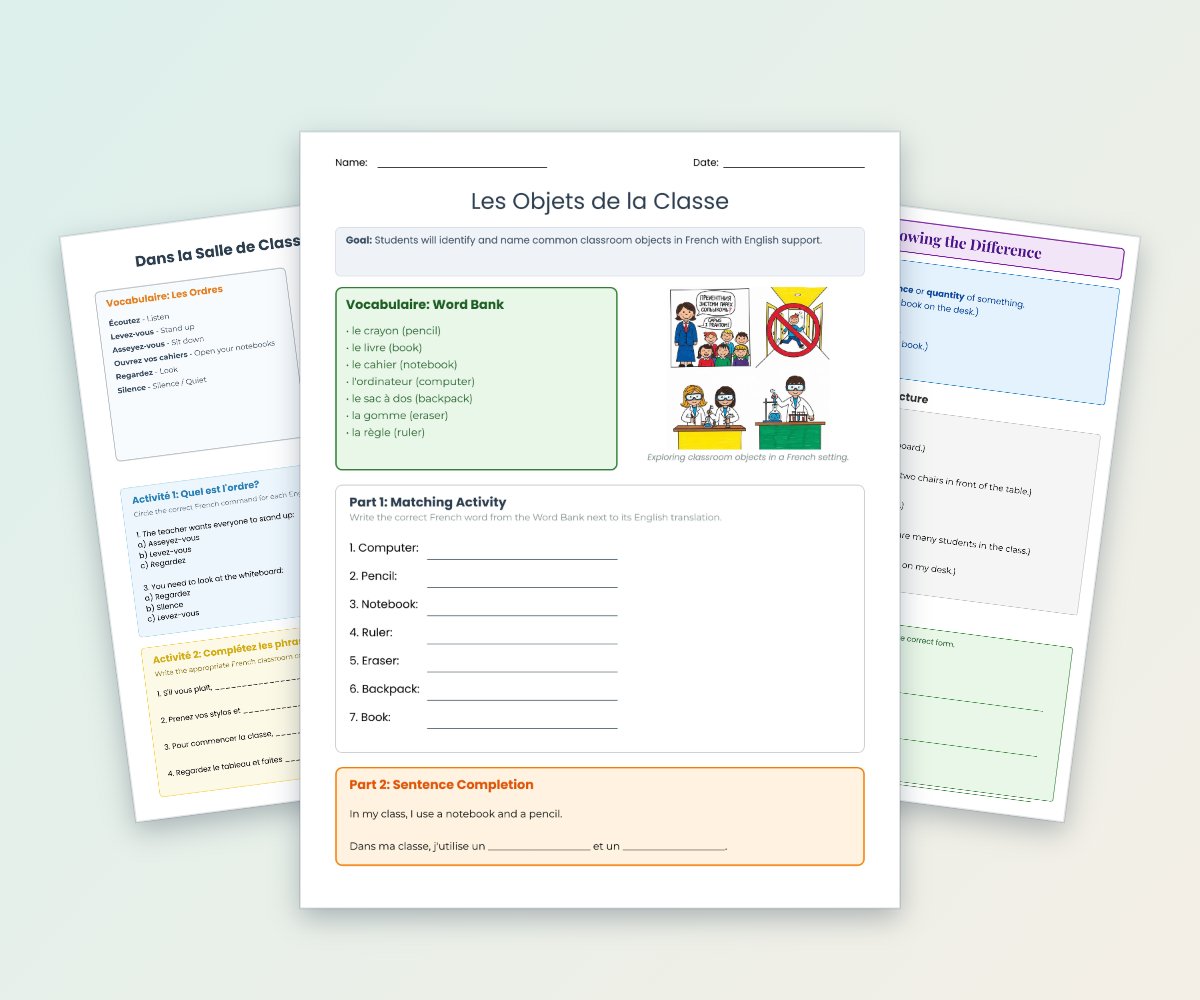
This four-page worksheet introduces French classroom objects, classroom commands, and the distinction between “il y a” and “c’est.” English support, matching, multiple-choice, and sentence-completion
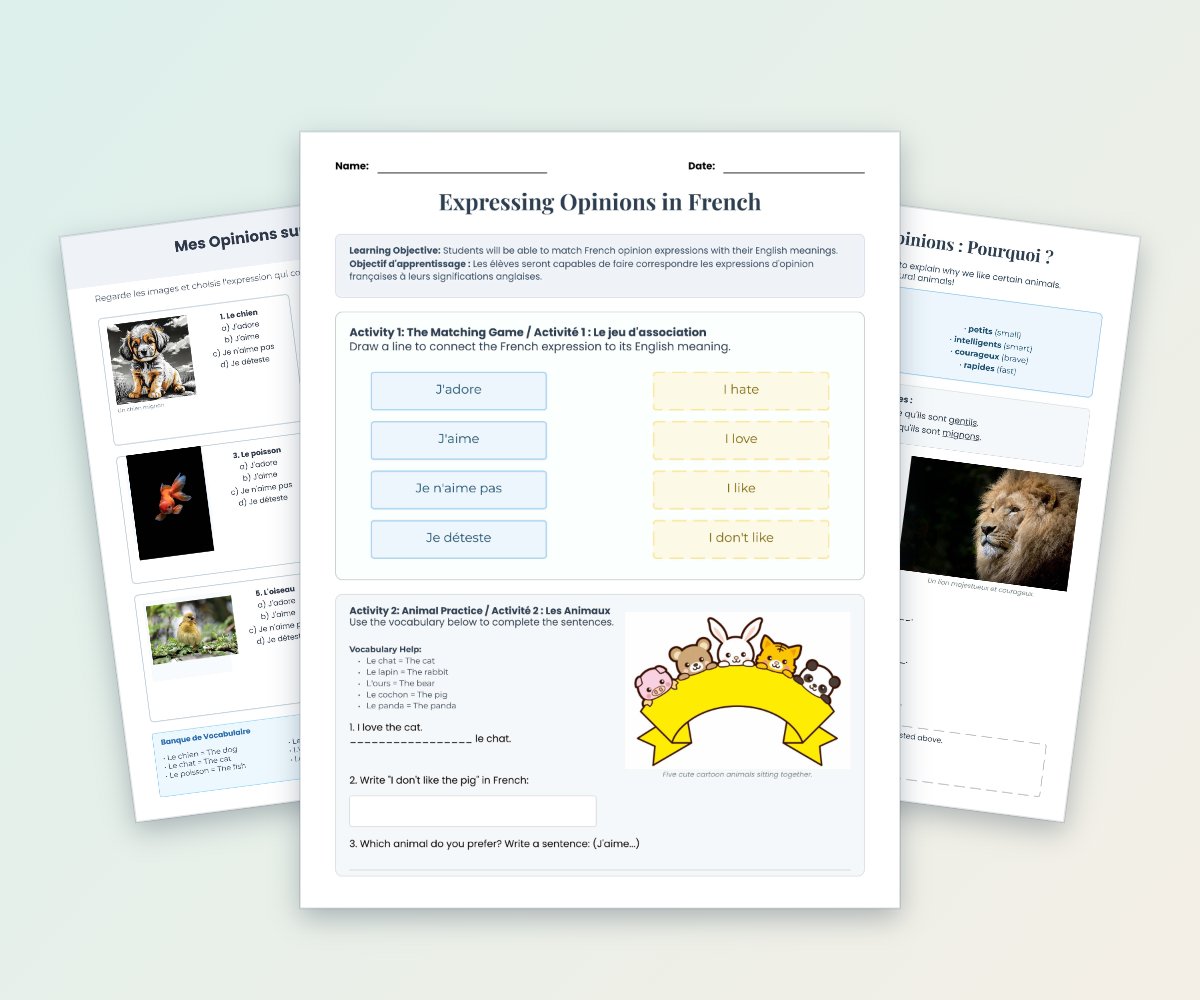
This four-page bilingual French worksheet helps students express likes, dislikes, and preferences using animal vocabulary.
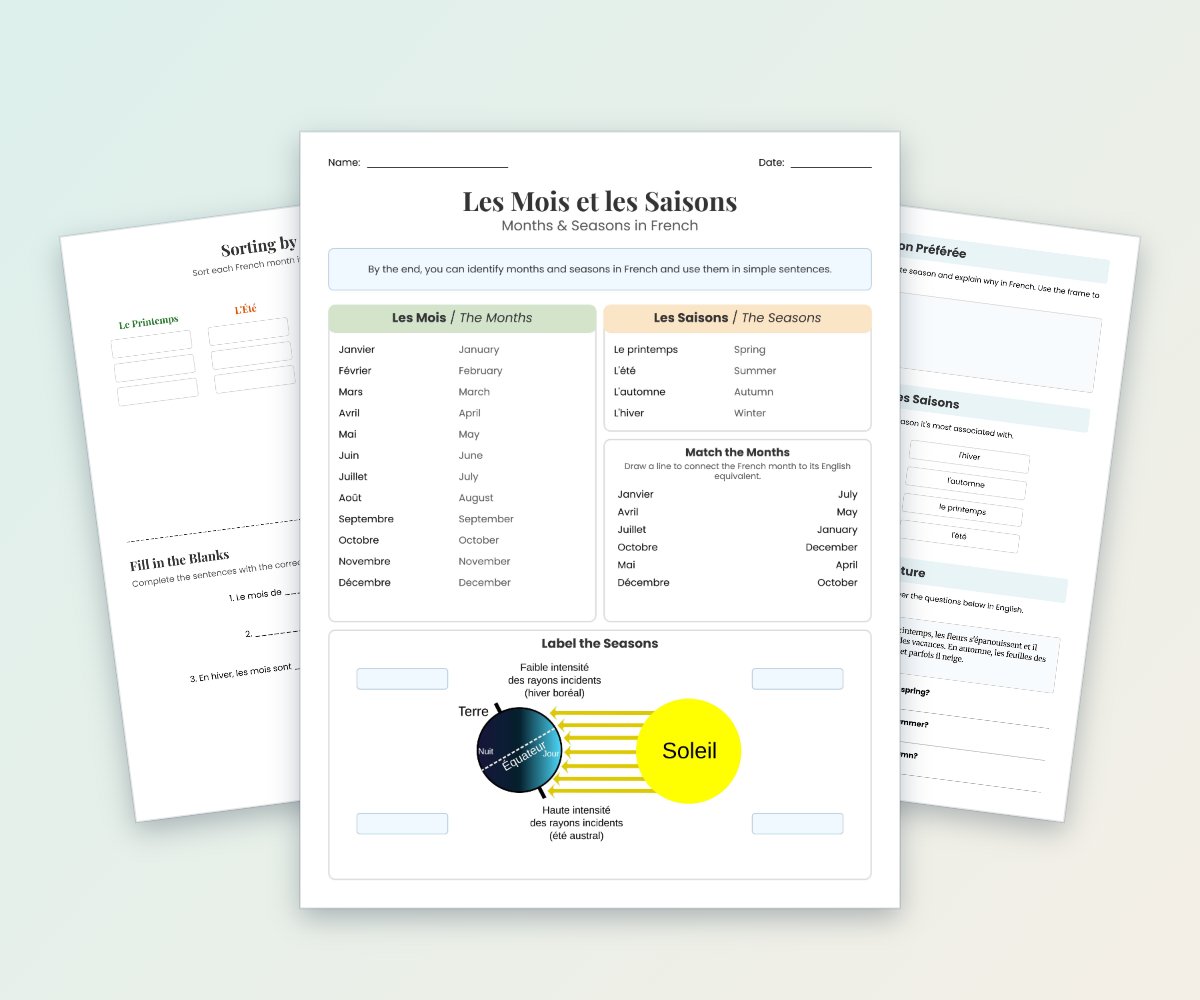
This four-page French activity pack introduces the months, seasons, and seasonal weather vocabulary through matching, sorting, fill-in-the-blank, reading comprehension, and writing tasks.
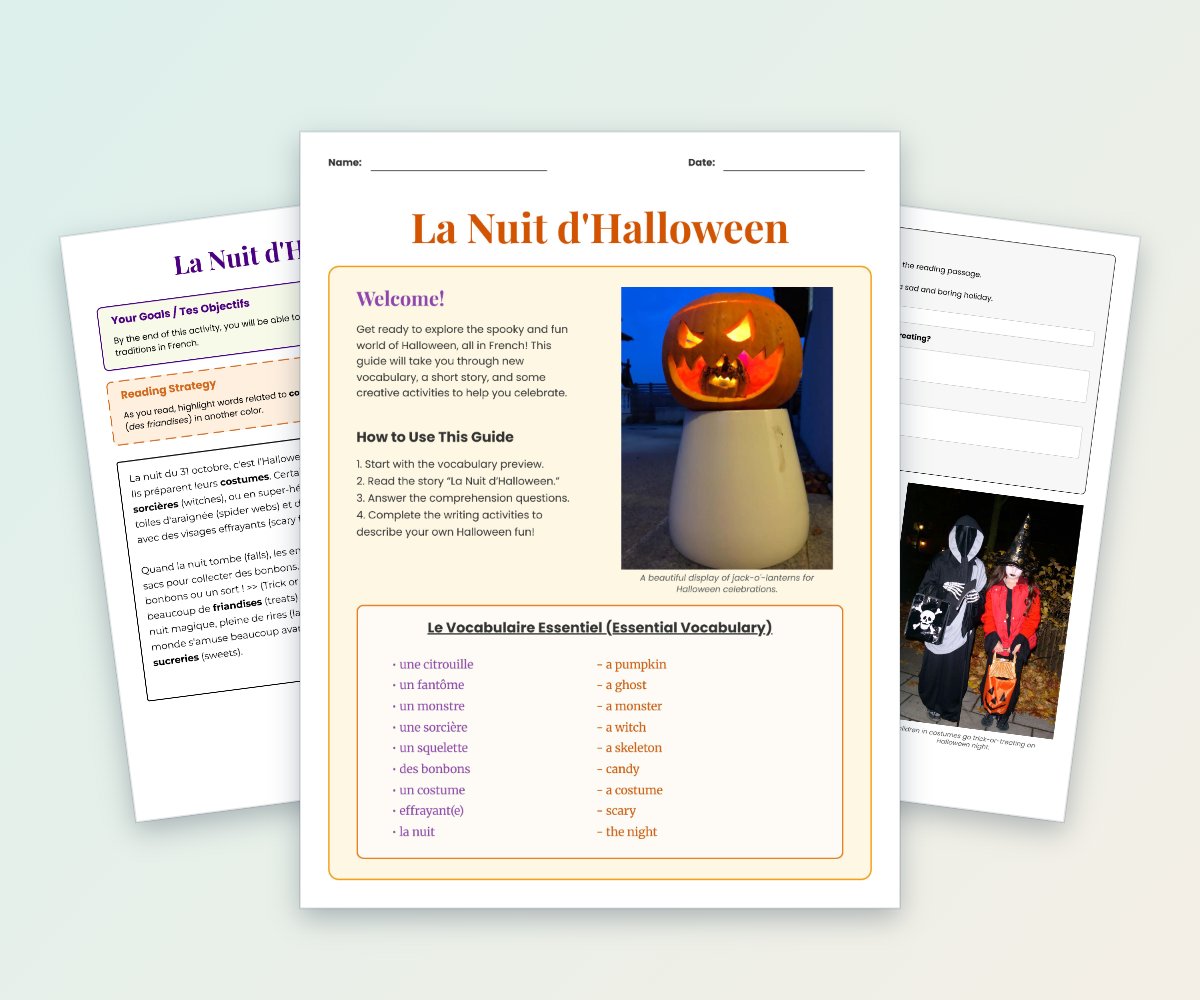
This beginner French activity pack introduces Halloween vocabulary through a short illustrated reading passage.
This bilingual Core French pack introduces food and drink vocabulary, preference expressions, menu interpretation, and restaurant language.
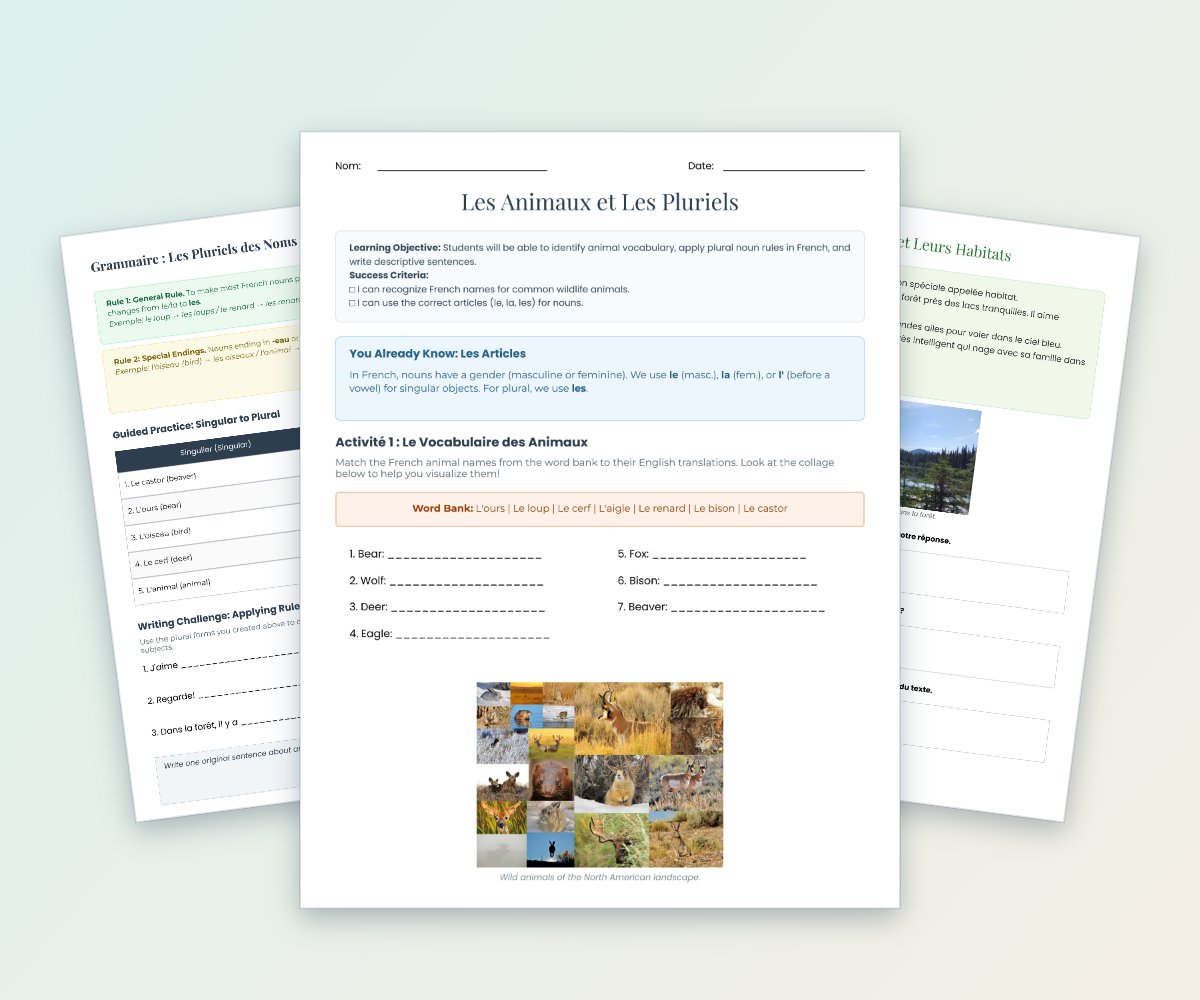
This six-page Core French worksheet pack introduces common animal vocabulary and habitats through matching, grammar practice, translation, reading, and sentence-writing activities.
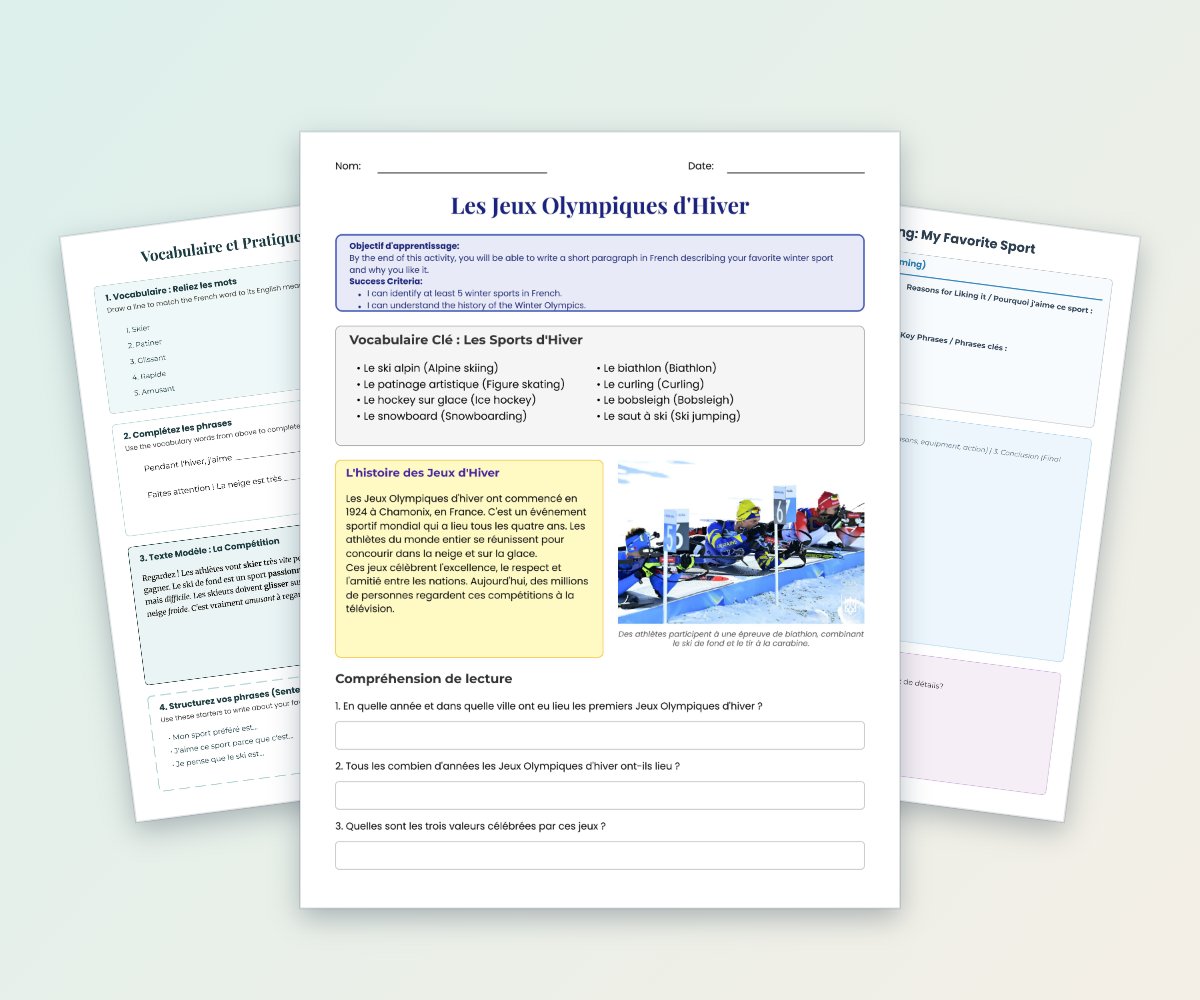
This four-page French activity introduces winter sports vocabulary and the history of the Winter Olympics.
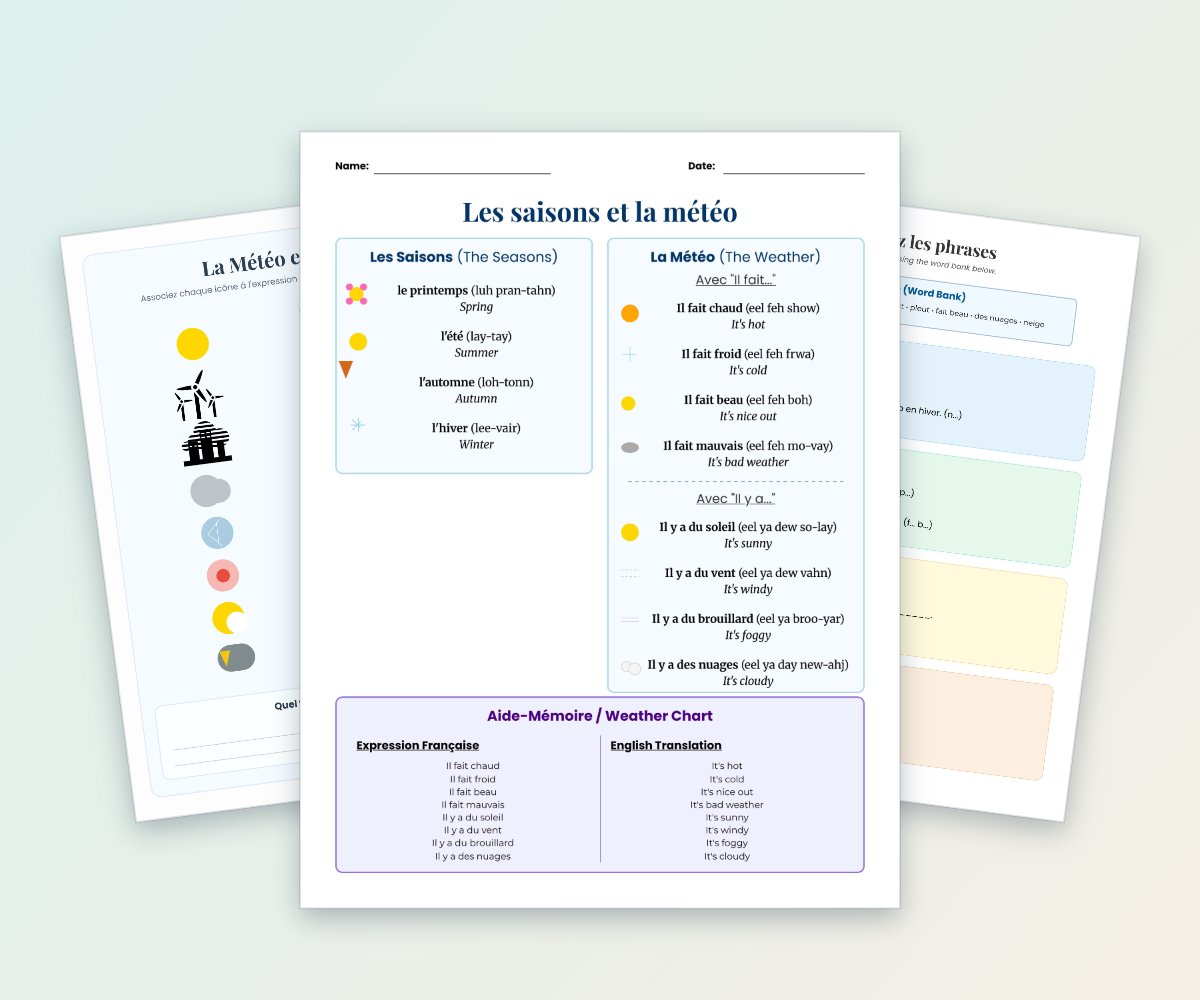
This five-page French activity pack introduces seasons and common weather expressions with English translations and pronunciation support.
Teach French reflexive verbs, pronouns, sentence structure, and daily-routine vocabulary with bilingual explanations and guided examples.
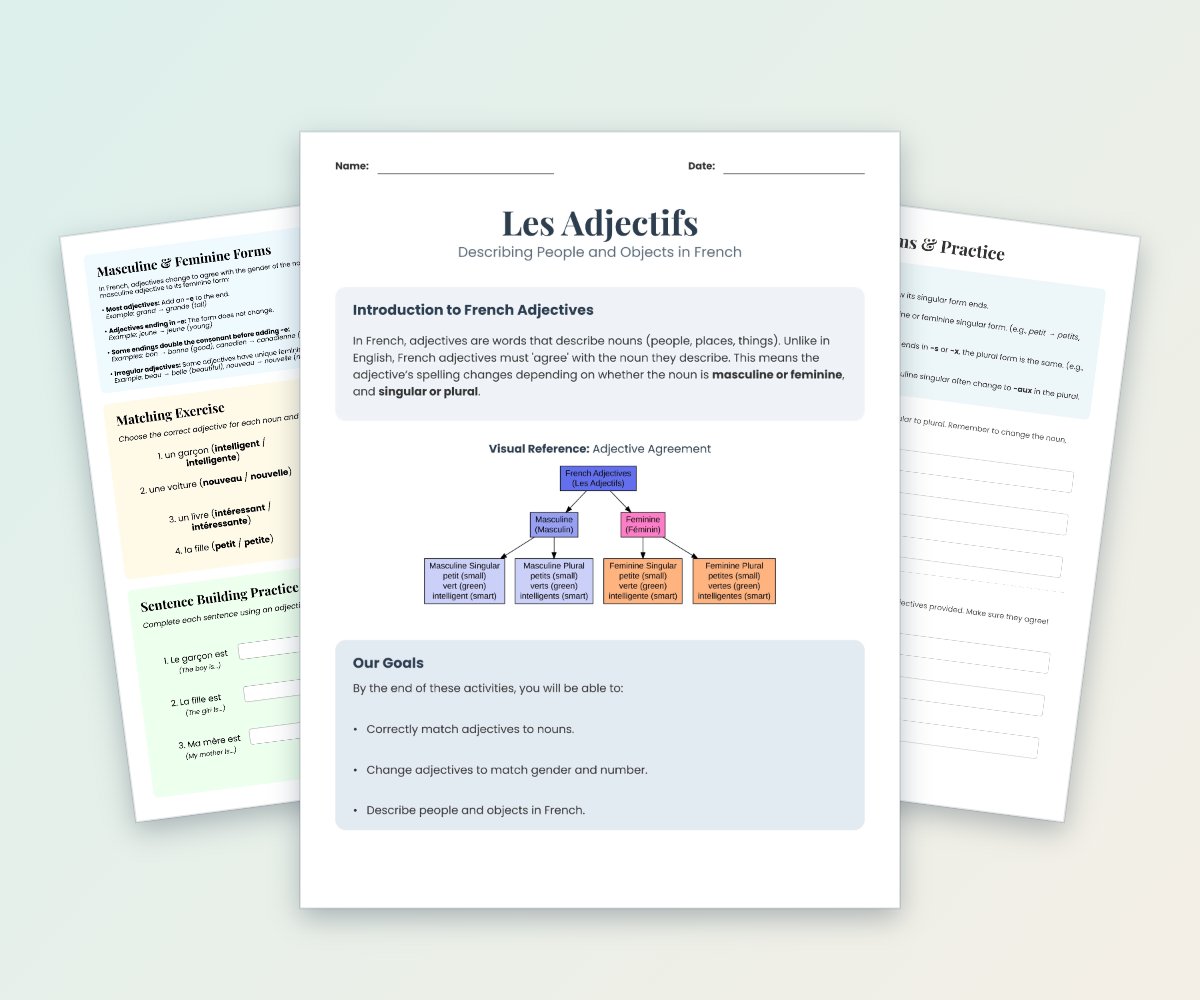
This five-page French language resource introduces adjective agreement for gender and number, including masculine, feminine, singular, and plural forms.
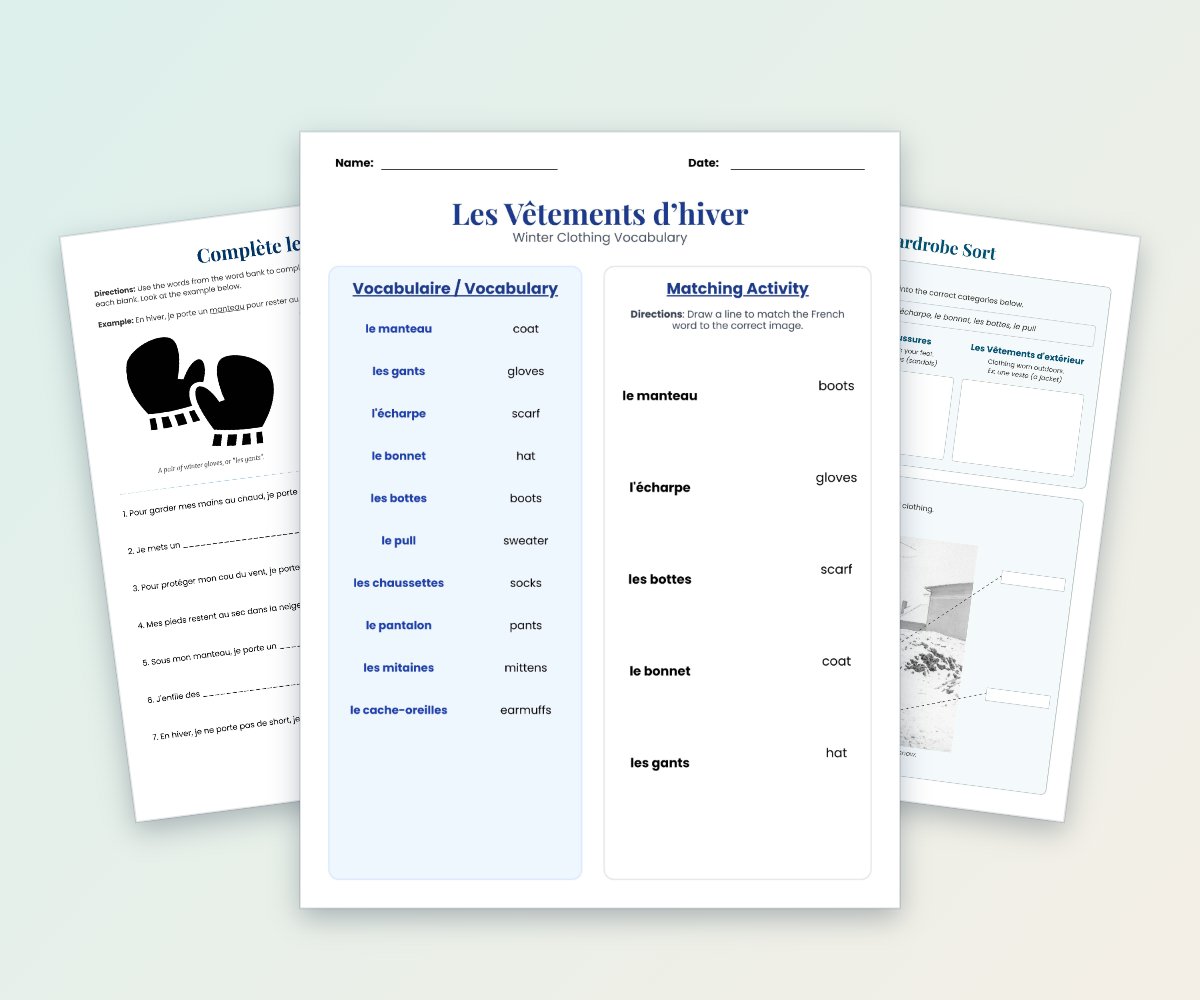
Teach French winter clothing vocabulary through matching, sentence completion, categorizing, picture labeling, and guided writing activities.
This four-page French activity pack helps students ask and answer questions about meals, food preferences, and beverages.
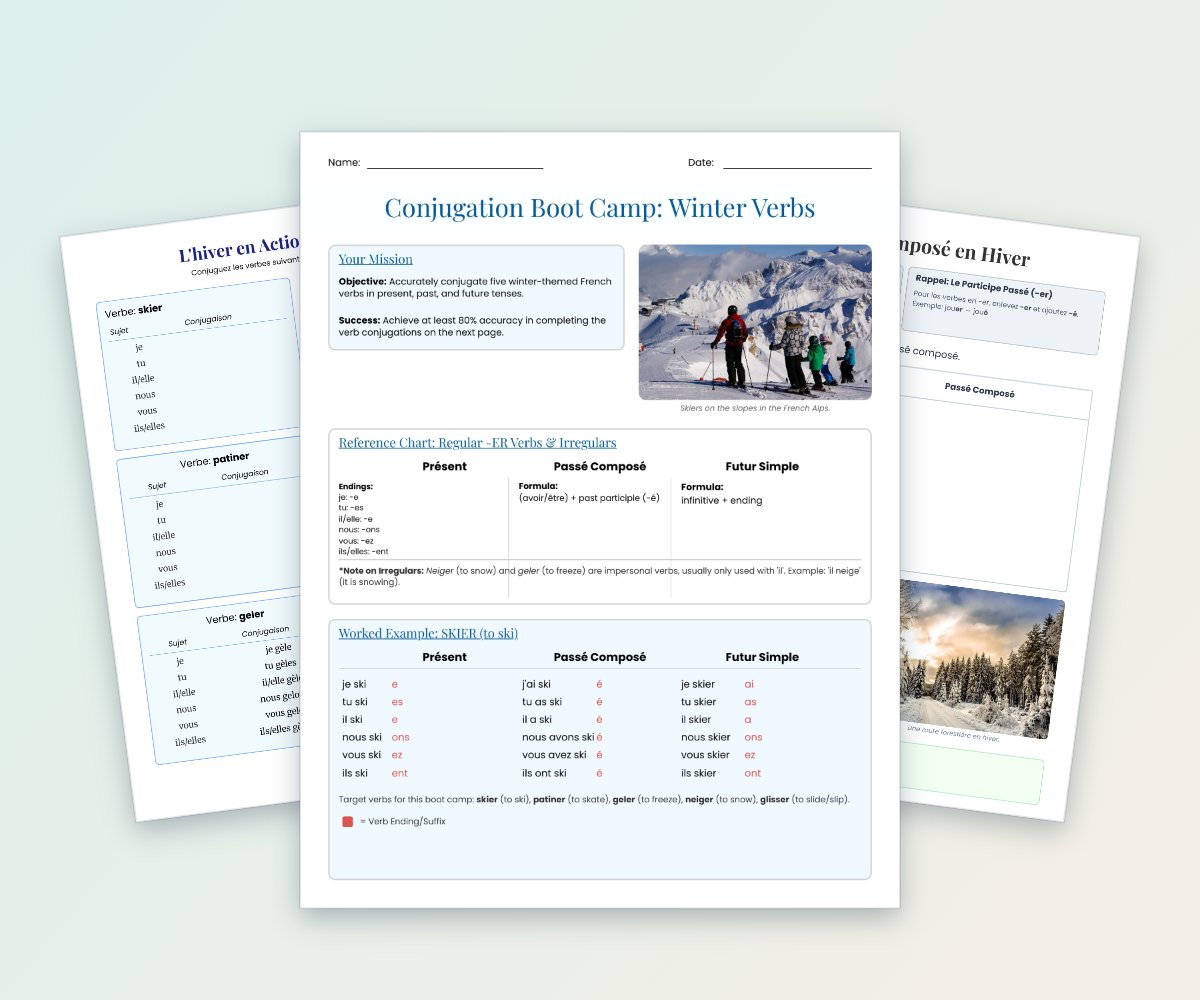
Students practice conjugating five winter-themed French verbs—skier, patiner, geler, neiger, and glisser—in the present, passé composé, and futur simple.
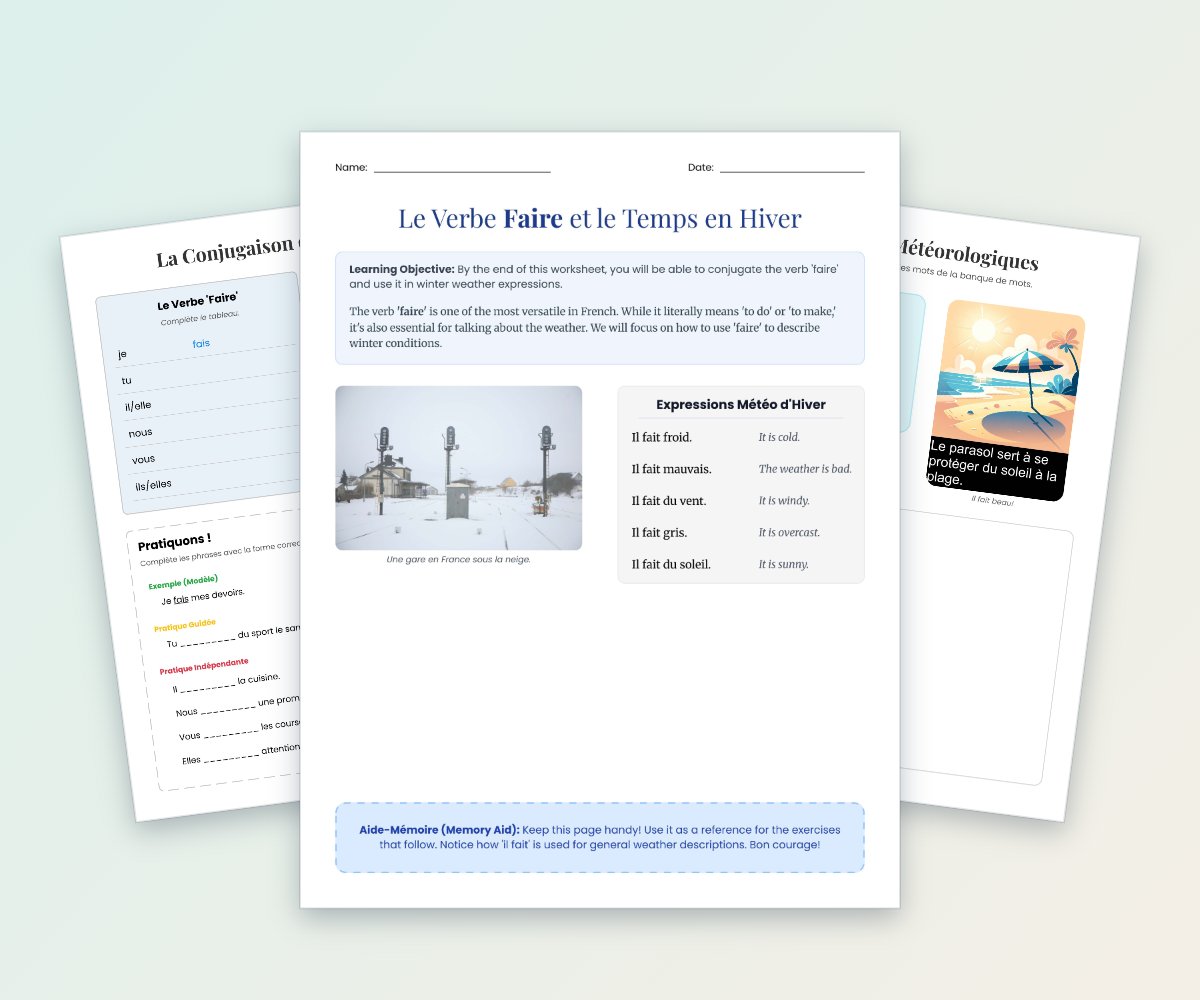
Students practice conjugating the French verb faire and using it in common winter weather expressions.
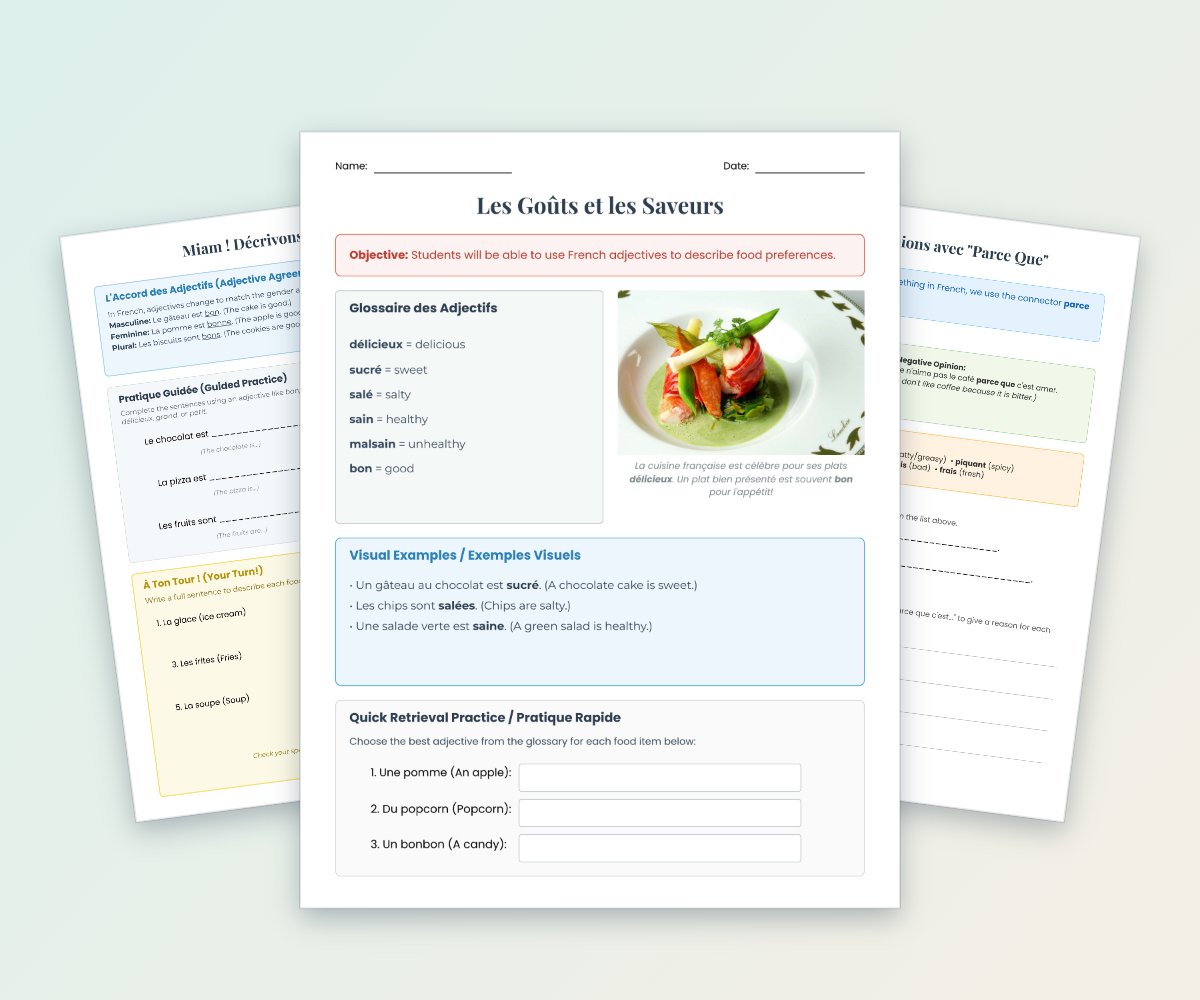
Students learn French adjectives for describing food, including sweet, salty, healthy, and delicious.