
Grade 6 Science Long-Range Plan: Georgia Standards
This editable 40-page long-range plan provides a full September-to-June pacing framework for Grade 6 science aligned with Georgia Standards of Excellence.
$24
Clear, practical resources for busy educators, organized so you can get from search to ready-to-teach quickly.
This editable 40-page long-range plan provides a full September-to-June pacing framework for Grade 6 science aligned with Georgia Standards of Excellence.
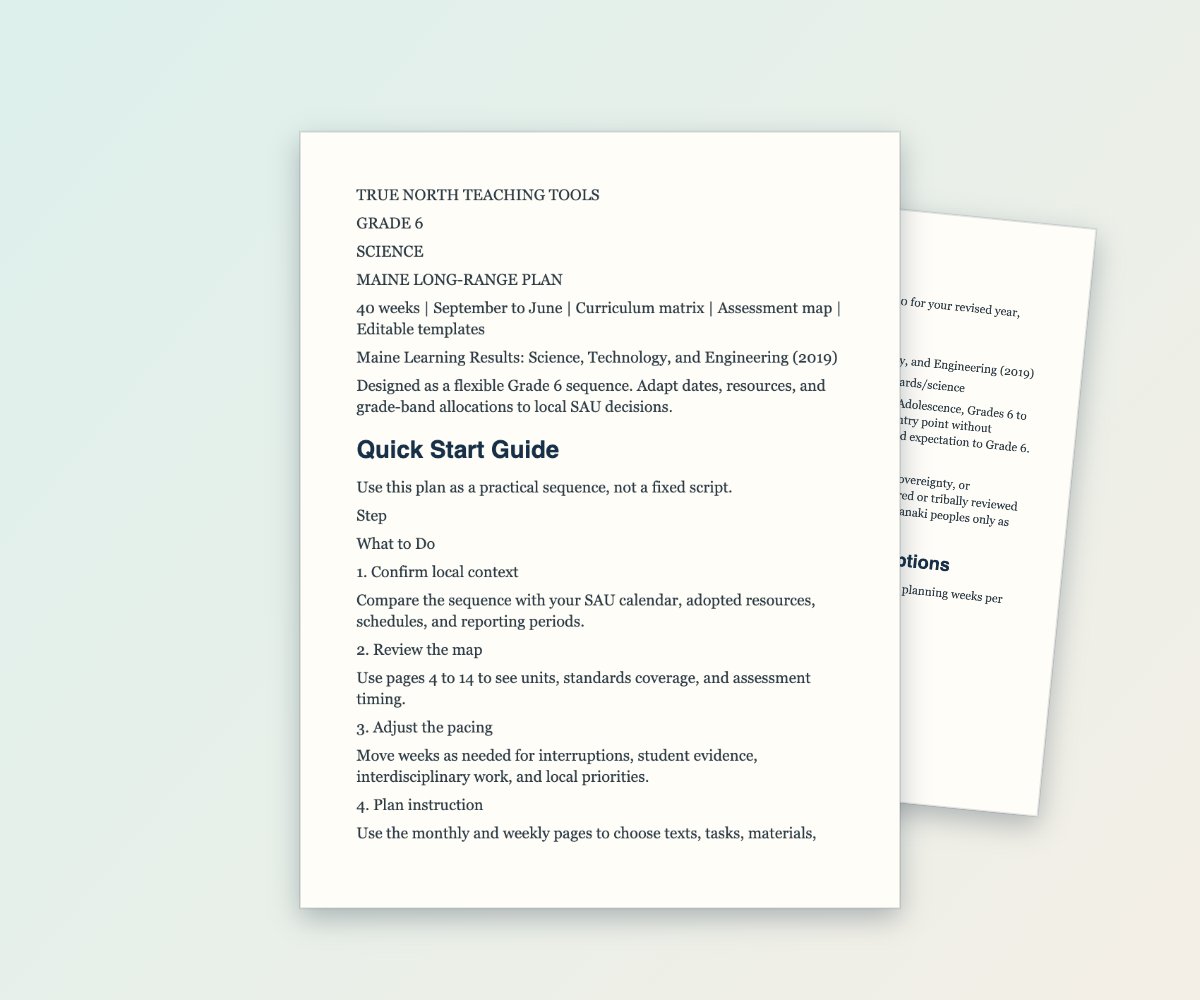
This editable 40-page long-range plan provides a year-at-a-glance, curriculum map, assessment map, monthly overviews, and 40 weeks of pacing.
A 40-page editable year-long science plan for Grade 6, covering 40 instructional weeks from September through June.
An editable 40-week Grade 6 science long-range plan aligned with New Jersey Student Learning Standards and the NJDOE model curriculum sequence.
A 40-week editable Grade 6 science long-range plan aligned to the Massachusetts Science and Technology/Engineering Curriculum Framework.
A complete 40-week editable long-range plan for Grade 6 Science aligned to Arizona Science Standards.
This editable 40-page long-range plan provides a September-to-June Grade 6 science sequence aligned to Louisiana Student Standards.
This editable 40-week long-range plan provides a September-to-June science sequence aligned with Kentucky Academic Standards.
This 40-page editable Word long-range plan provides a full-year Grade 6 science scope and sequence aligned with South Carolina College- and Career-Ready Science Standards.
Introduce beginning-of-year science routines with ready-to-use slides on lab safety, scientific tools, observations, evidence, and inquiry.
This editable 40-page long-range plan organizes Alberta Grade 6 Science instruction from September through June.
This editable 40-week pacing guide supports Grade 6 science planning using the 2023 North Carolina K–12 Science Standards.
This editable 40-page long-range plan provides a full-year Grade 6 science roadmap aligned with California Next Generation Science Standards.
An editable 40-page Grade 6 science long-range plan aligned with the 2026 Oklahoma Academic Standards for Science.
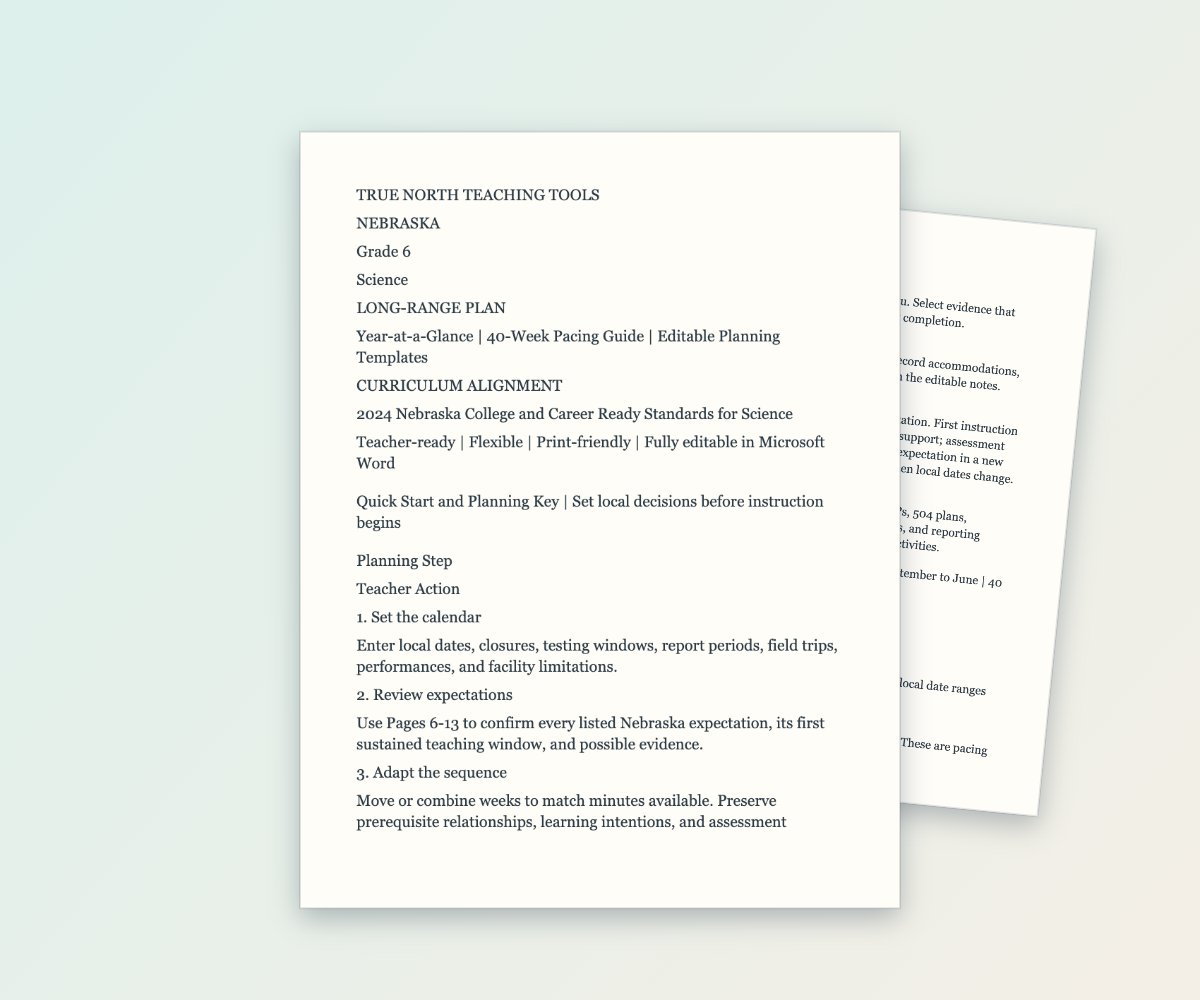
This editable 40-week Grade 6 science long-range plan provides a year-at-a-glance pacing guide aligned to the 2024 Nebraska College and Career Ready Standards for Science.
A 40-week editable long-range plan aligned with the Manitoba Grade 6 Science framework.
This editable 40-week Grade 6 science long-range plan provides a year-at-a-glance overview, standards mapping, pacing guidance, assessment planning, and weekly evidence columns.
Plan a full September-to-June Grade 6 science program across diversity of living things, the solar system, electricity, and flight.
A complete editable September-to-June long-range plan aligned with Saskatchewan Grade 6 Science outcomes.
Plan a full Grade 6 science year with a 40-week pacing sequence, Iowa standards mapping, assessment guidance, monthly overviews, and differentiation supports.
Plan a full 40-week Grade 6 science year with editable year-at-a-glance, monthly planning, weekly pacing, standards coverage, assessment checkpoints, and flexible instructional guidance.
This editable 40-week Grade 6 science long-range plan includes a year-at-a-glance, curriculum coverage matrix, monthly overviews, weekly pacing, assessment planning, differentiation, and cross-curricu
A 40-week editable Grade 6 science long-range plan aligned with Utah Science with Engineering Education (SEEd) Standards.
This editable 40-week Grade 6 science long-range plan provides annual sequencing, curriculum coverage, assessment guidance, monthly overviews, and weekly pacing.
This editable 40-week Grade 6 science long-range plan includes a year-at-a-glance, curriculum coverage matrix, assessment map, monthly overviews, weekly entries, and planning templates.
This editable 40-week long-range plan organizes Grade 6 science instruction from September through June.
A complete editable 40-week Grade 6 science long-range plan aligned to the Wisconsin Standards for Science (2017).
This editable 40-week long-range plan provides a complete Grade 6 science sequence aligned with Ohio Learning Standards and Model Curriculum.
This editable 40-page long-range plan provides a full September-to-June Grade 6 science overview, monthly pacing, weekly organization, assessment guidance, differentiation support, and cross-curricula
This editable, ready-to-teach presentation introduces constellations, asterisms, sky regions, perspective, and how time, season, and location change what we see.
This editable 40-week Grade 6 science long-range plan aligns instruction to Connecticut’s adopted Next Generation Science Standards and CSDE model sequence.
This 50-slide presentation introduces students to dinosaurs through fossil evidence, body structures, habitats, diets, and deep time.
Plan a full September-to-June Grade 6 science year with year-at-a-glance planning, monthly overviews, weekly pacing, assessment mapping, and differentiation guidance.
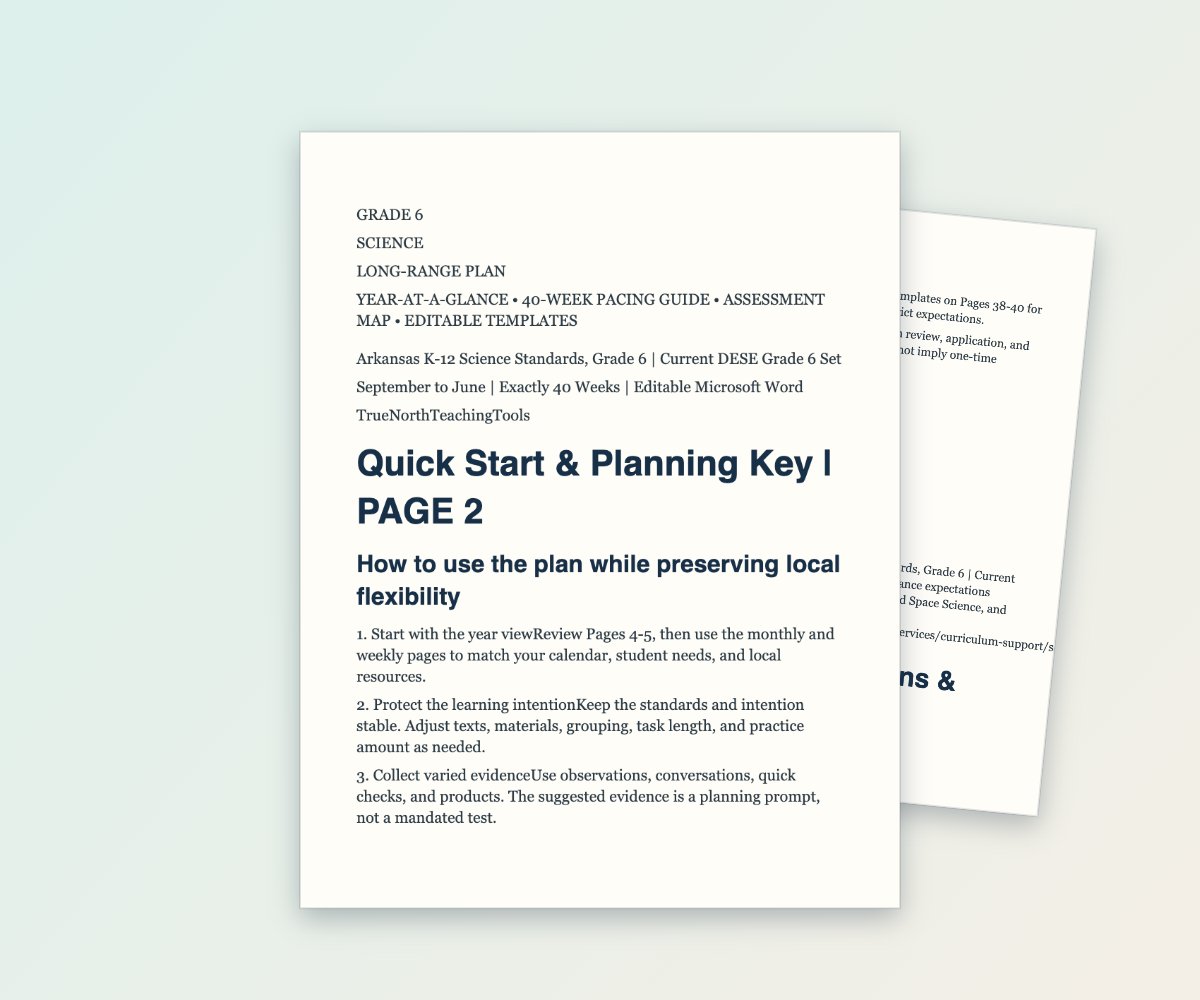
This editable 40-week long-range plan organizes Grade 6 science instruction from September through June using Arkansas K-12 Science Standards.
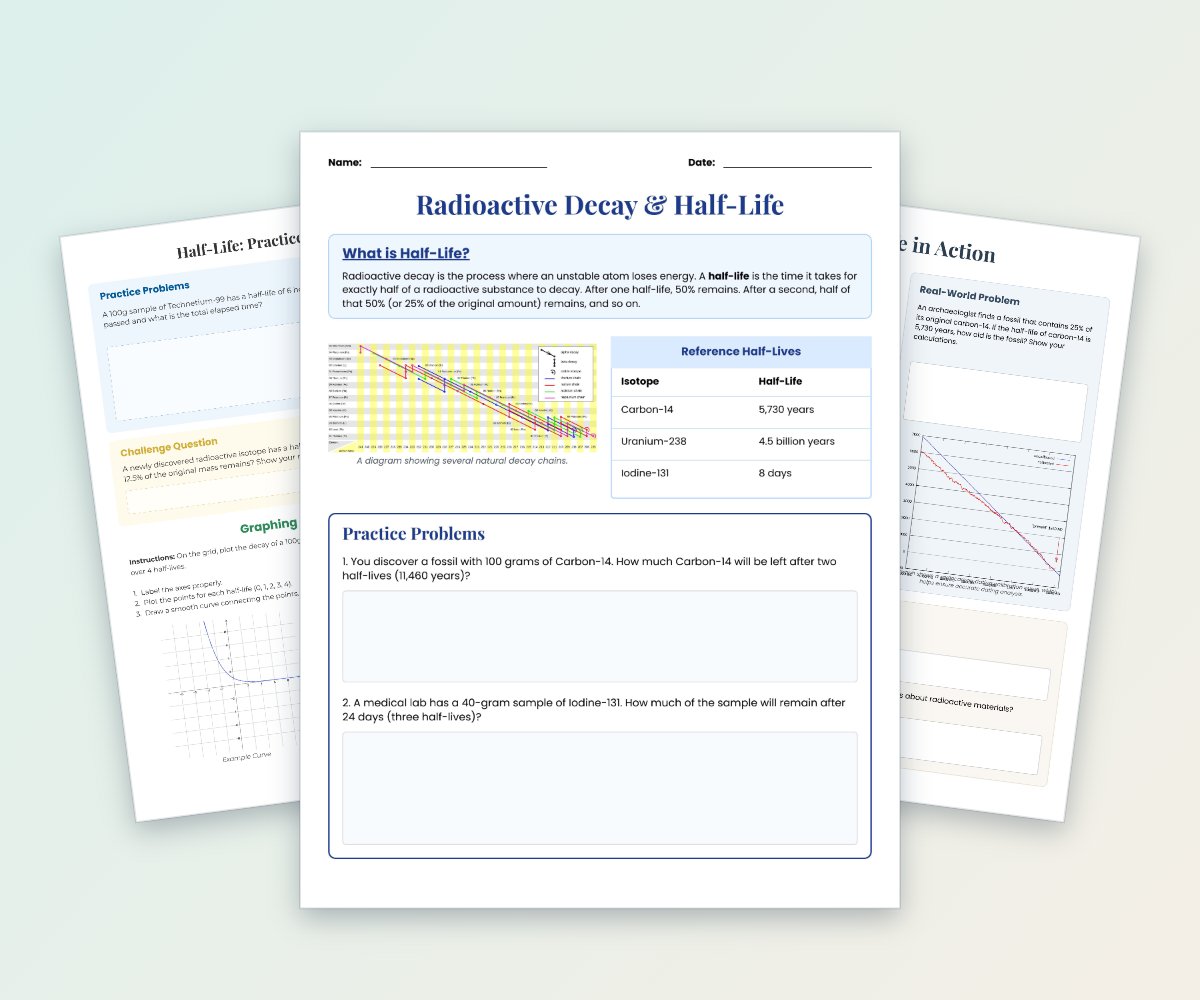
This three-page worksheet introduces radioactive decay and half-life with reference data, calculation practice, graphing, challenge questions, and real-world applications.
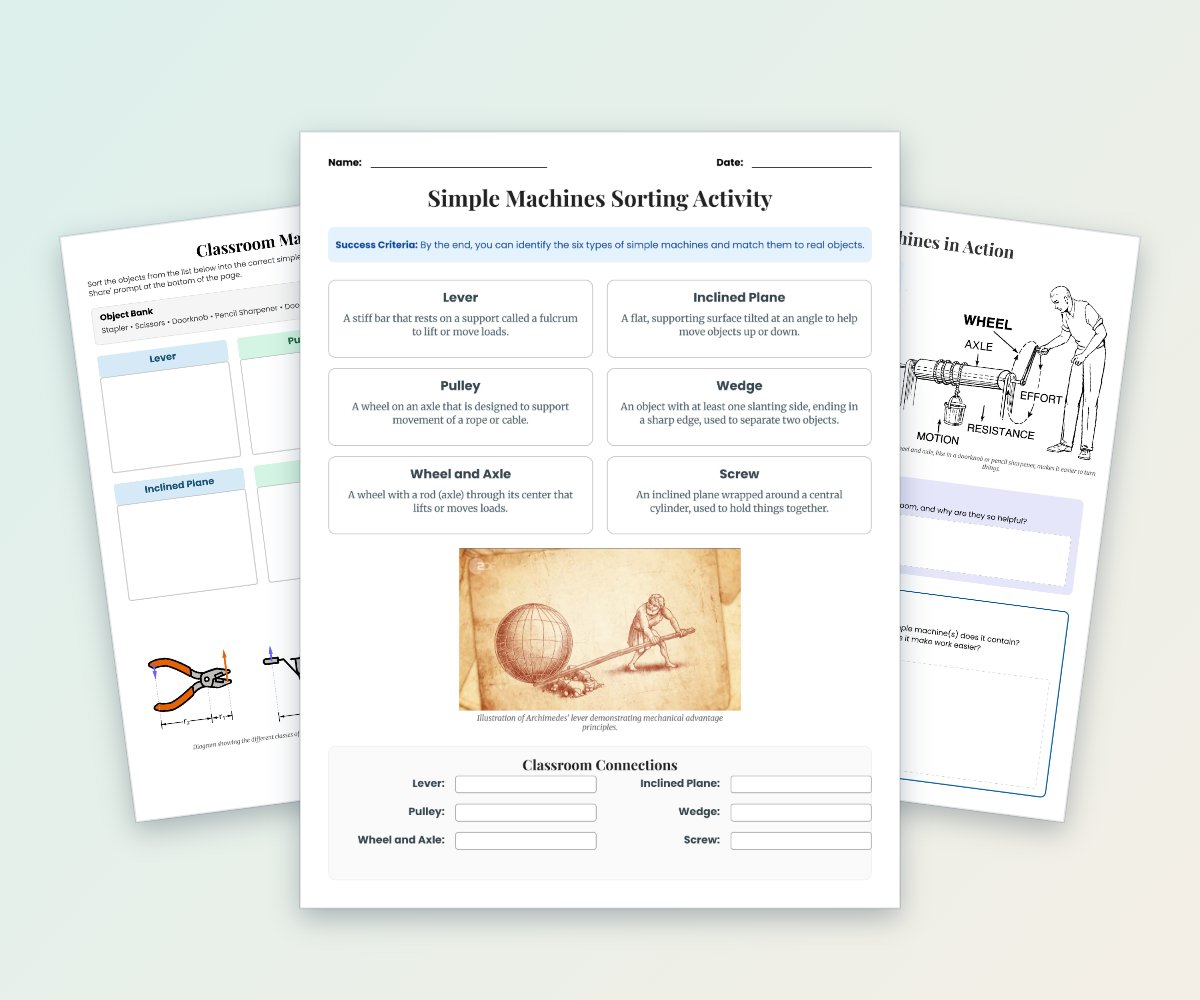
Students learn the six types of simple machines, match them to familiar objects, and explain how they make work easier.
This editable 40-week Grade 6 science long-range plan provides a September-to-June curriculum sequence, standards coverage, assessment mapping, and pacing guidance.
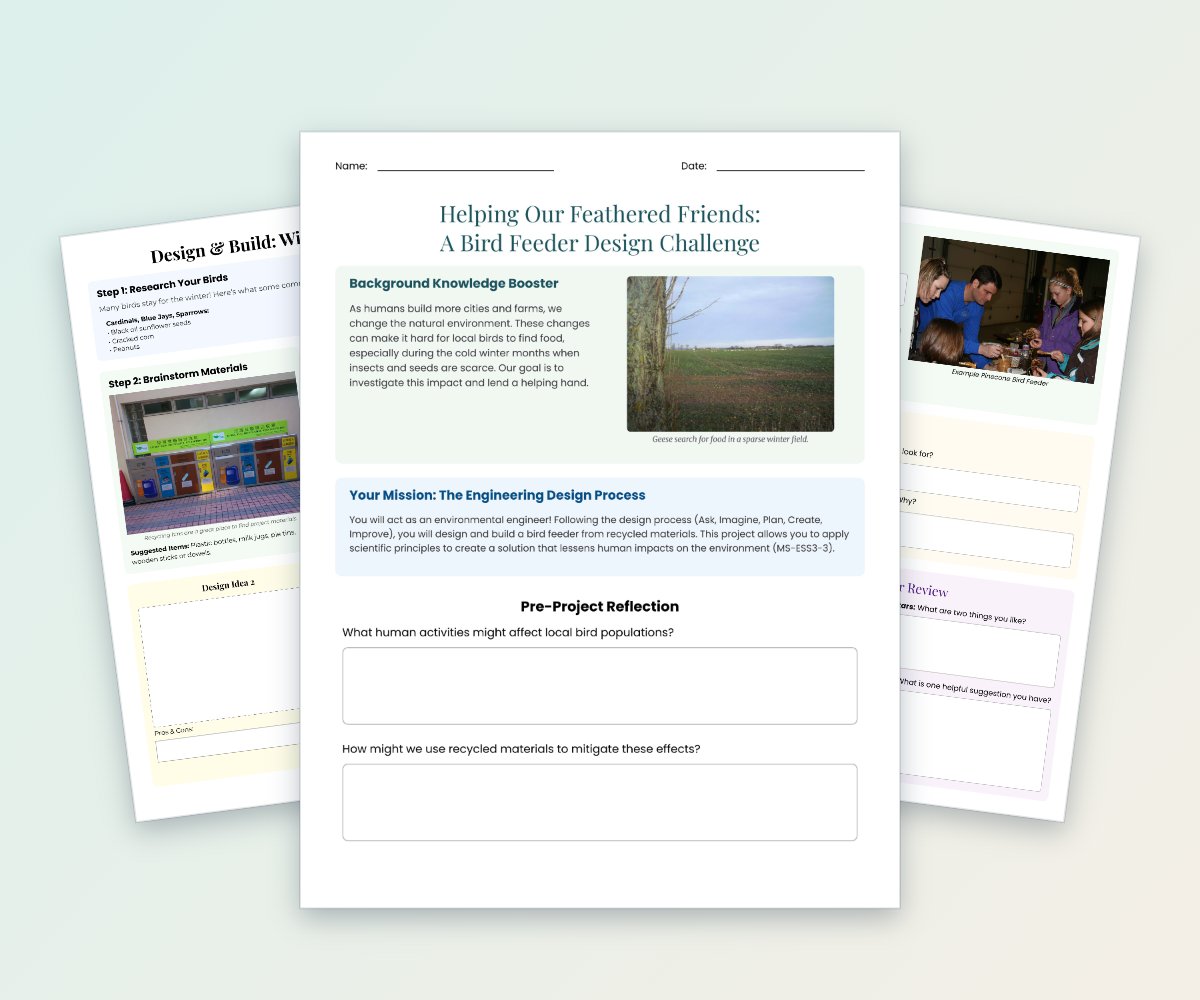
Students investigate how human activities affect local bird populations and design a bird feeder using recycled materials.
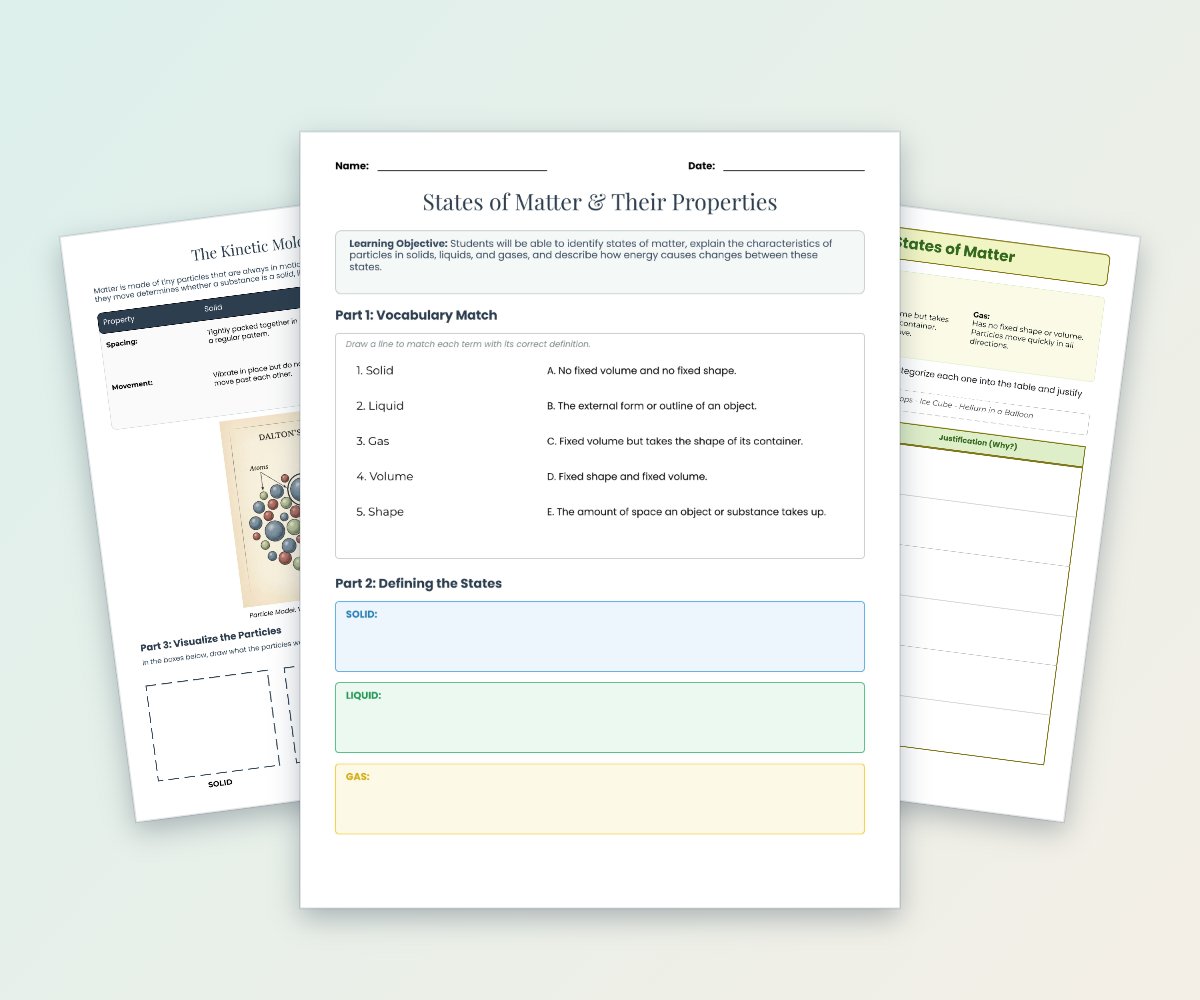
This six-page worksheet pack reviews solids, liquids, gases, particle motion, properties, and phase changes.
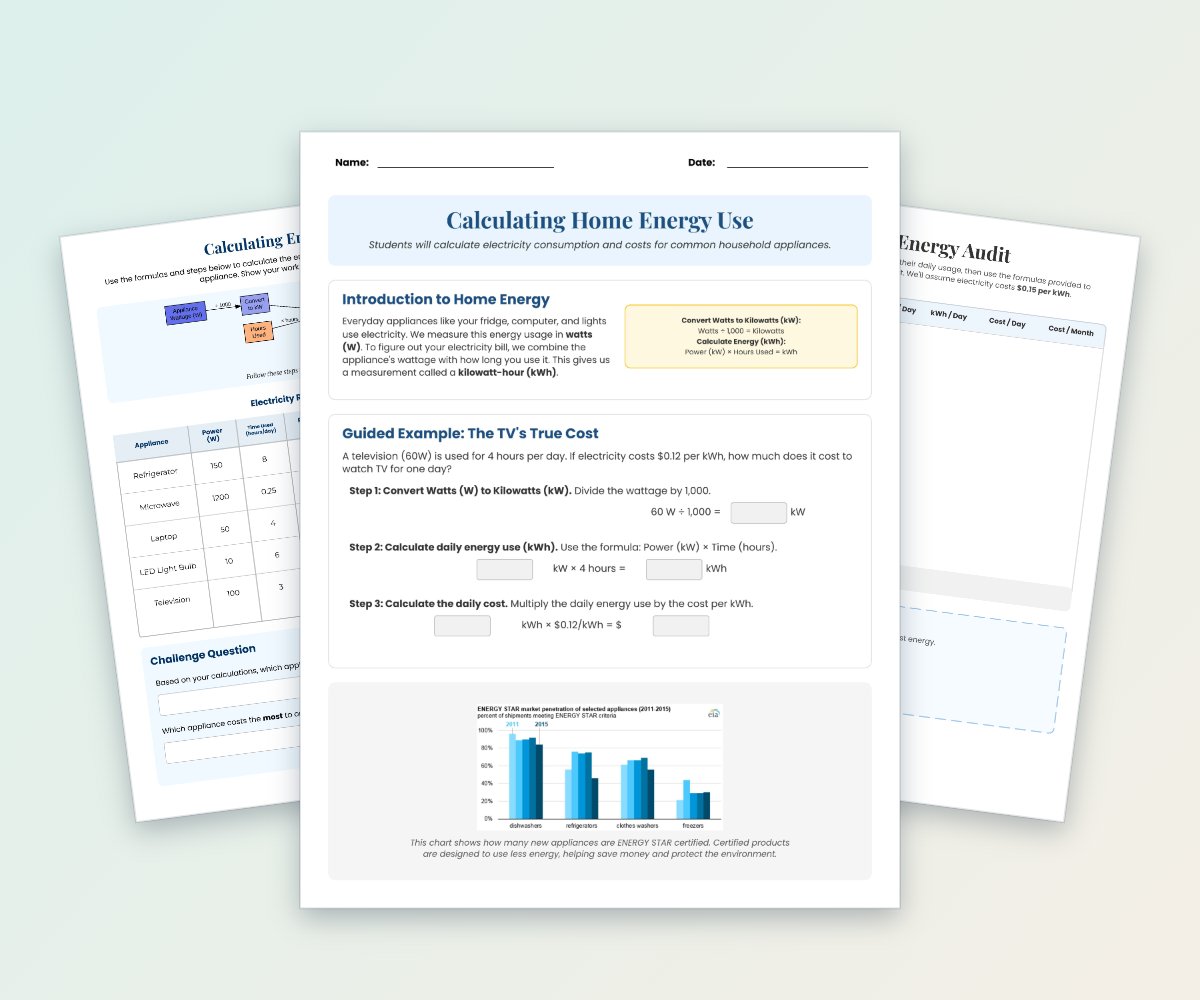
Students calculate kilowatt-hours and electricity costs for common household appliances using guided examples, formulas, and practice tables.
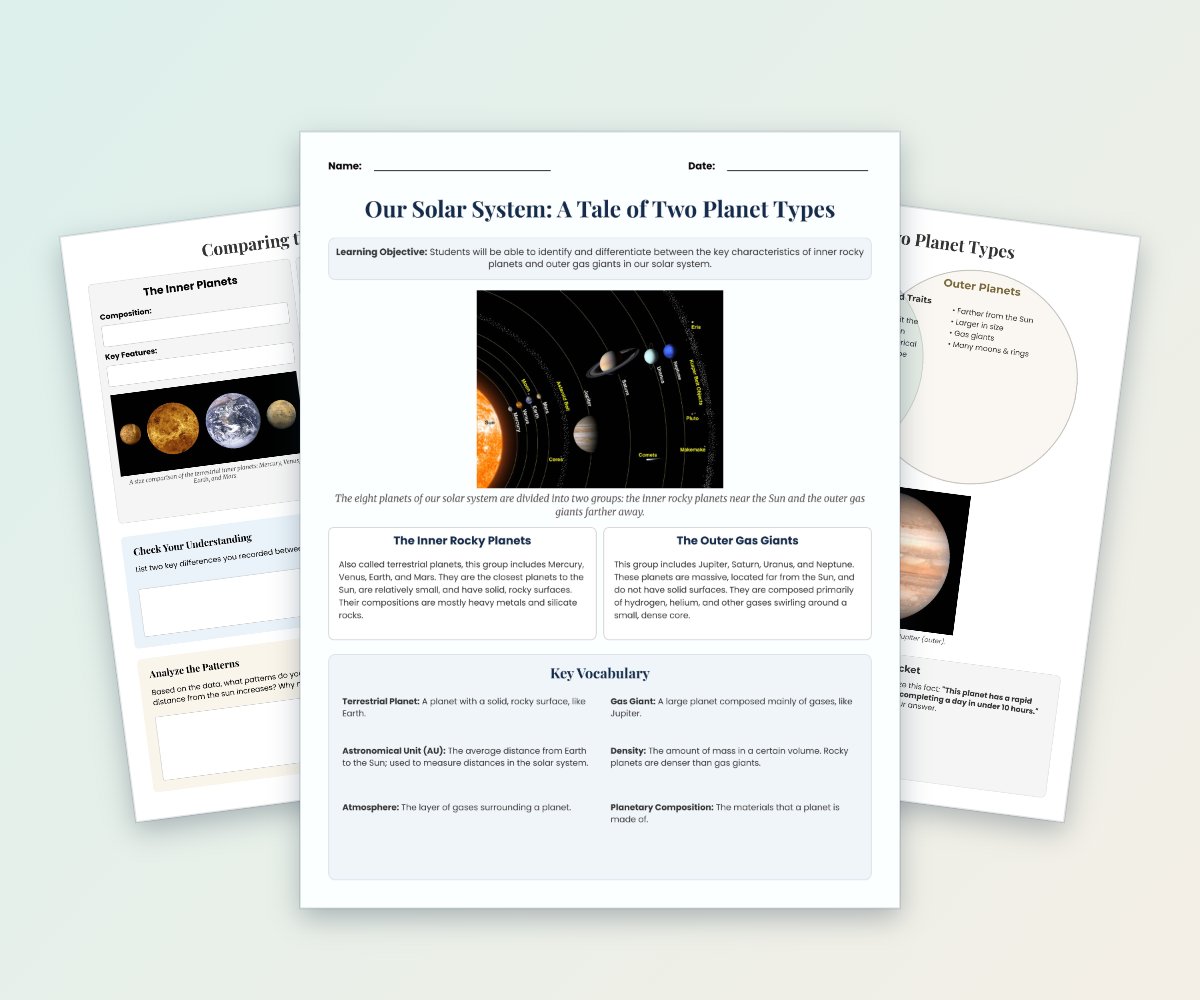
This three-page worksheet explains the differences between inner rocky planets and outer gas giants.
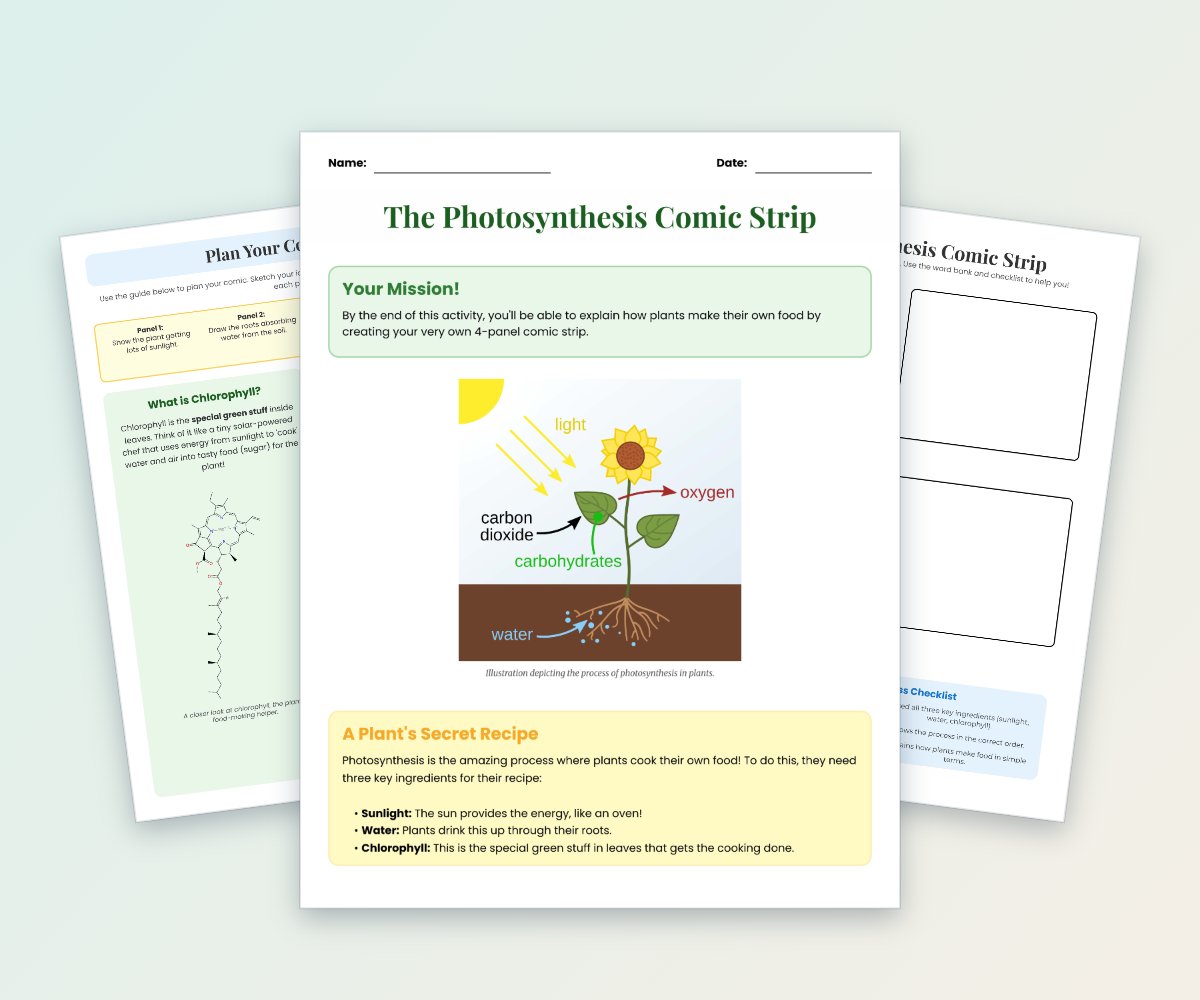
Students learn how plants use sunlight, water, and chlorophyll to make food through a guided comic-strip activity.
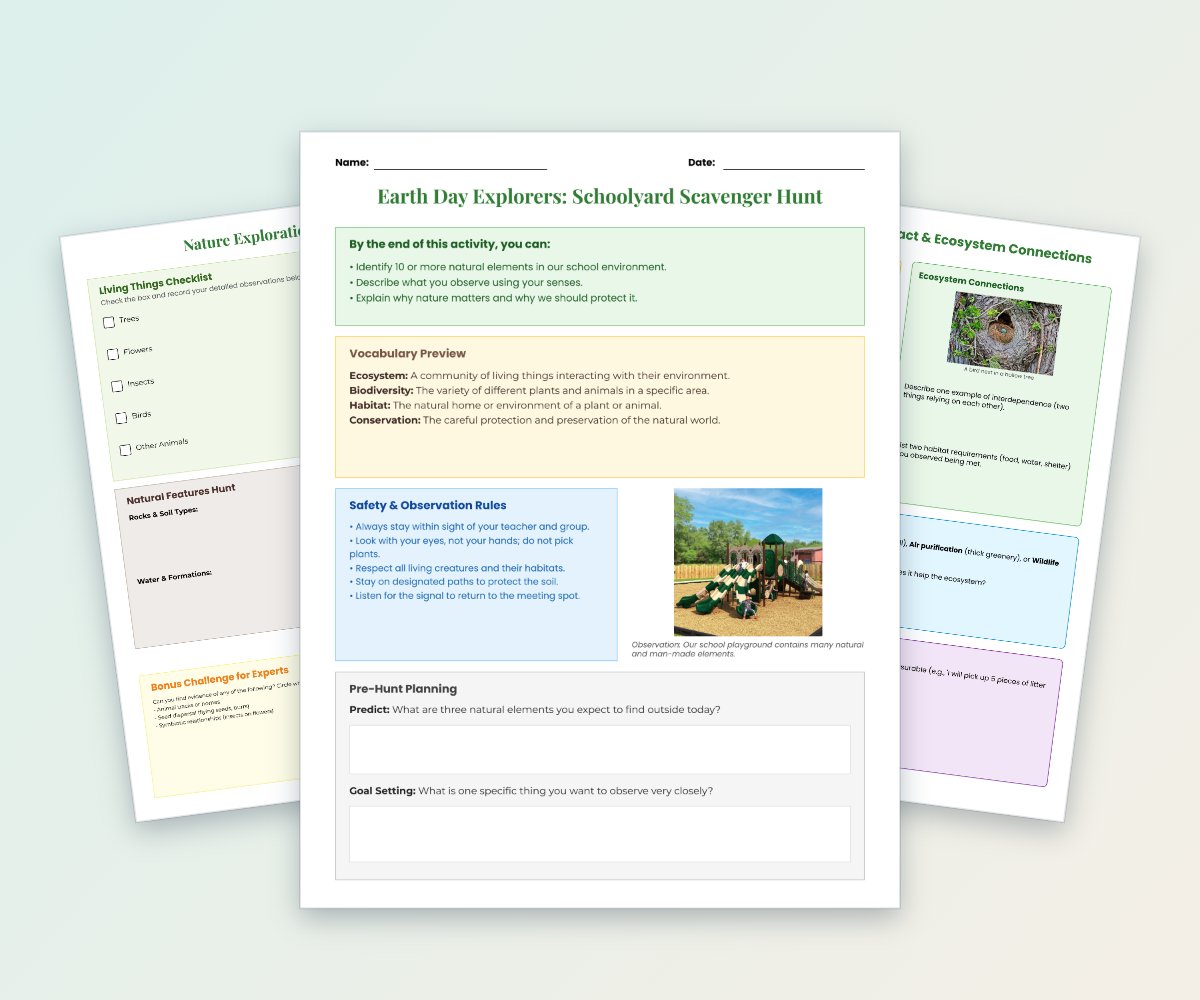
Students explore their schoolyard to identify natural elements, record sensory observations, and investigate habitats, biodiversity, seasonal changes, and human impact.
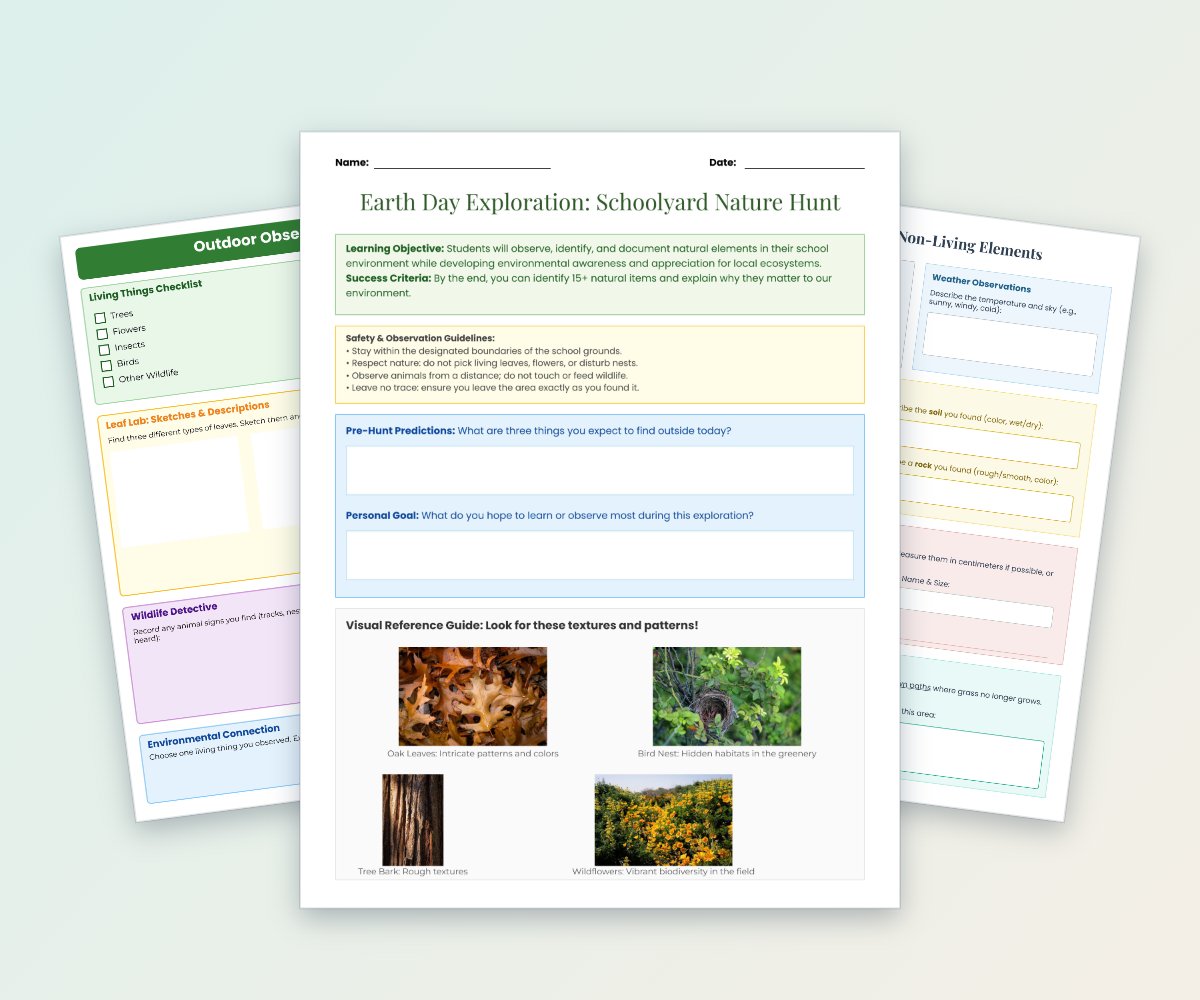
This Earth Day activity guides students through a schoolyard nature hunt focused on living and non-living elements, wildlife signs, textures, weather, and human impact.
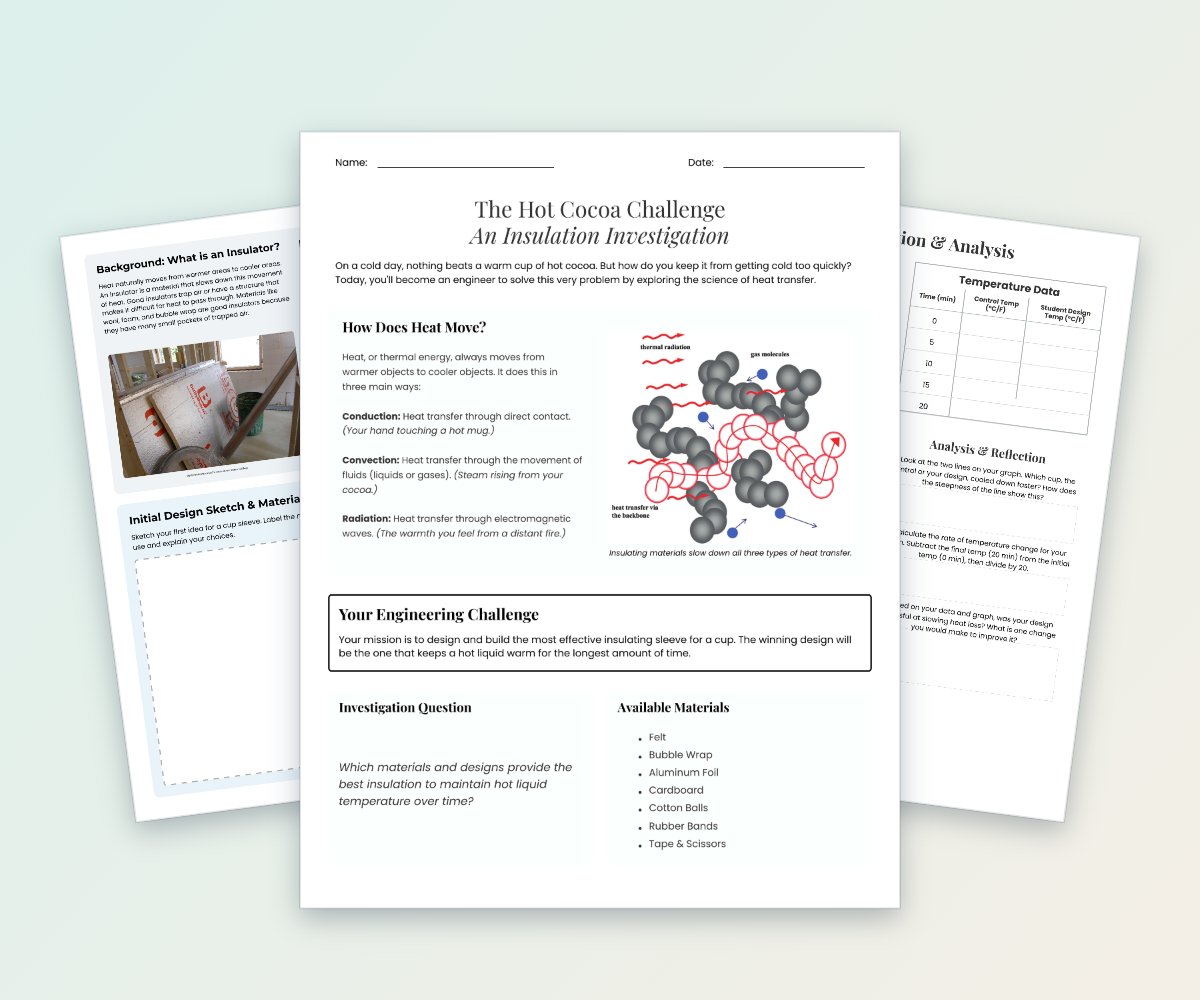
Students investigate conduction, convection, and radiation by designing and testing an insulating sleeve for a cup of hot cocoa.
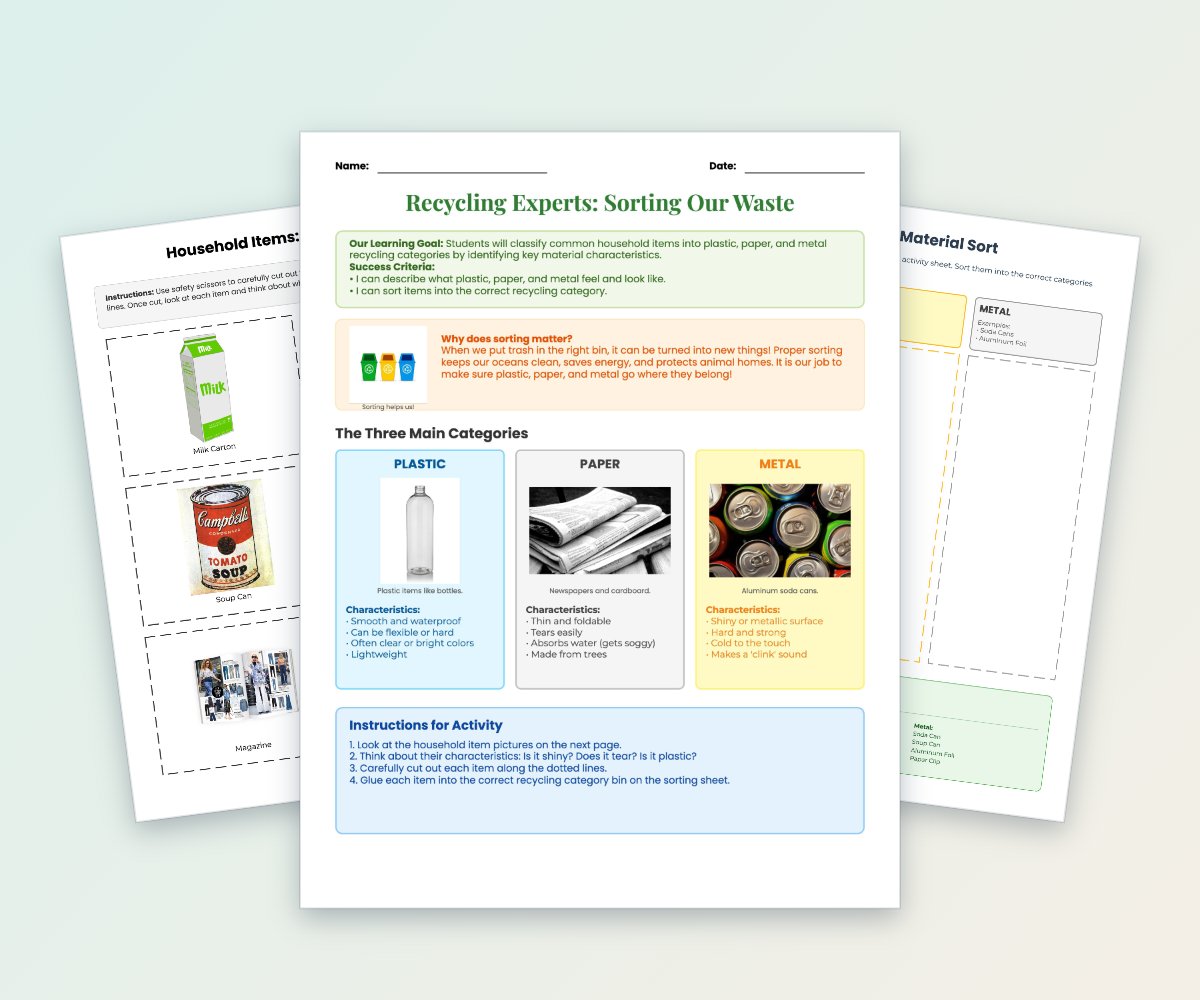
Students learn to identify plastic, paper, and metal by their observable characteristics, then sort household items into recycling categories.
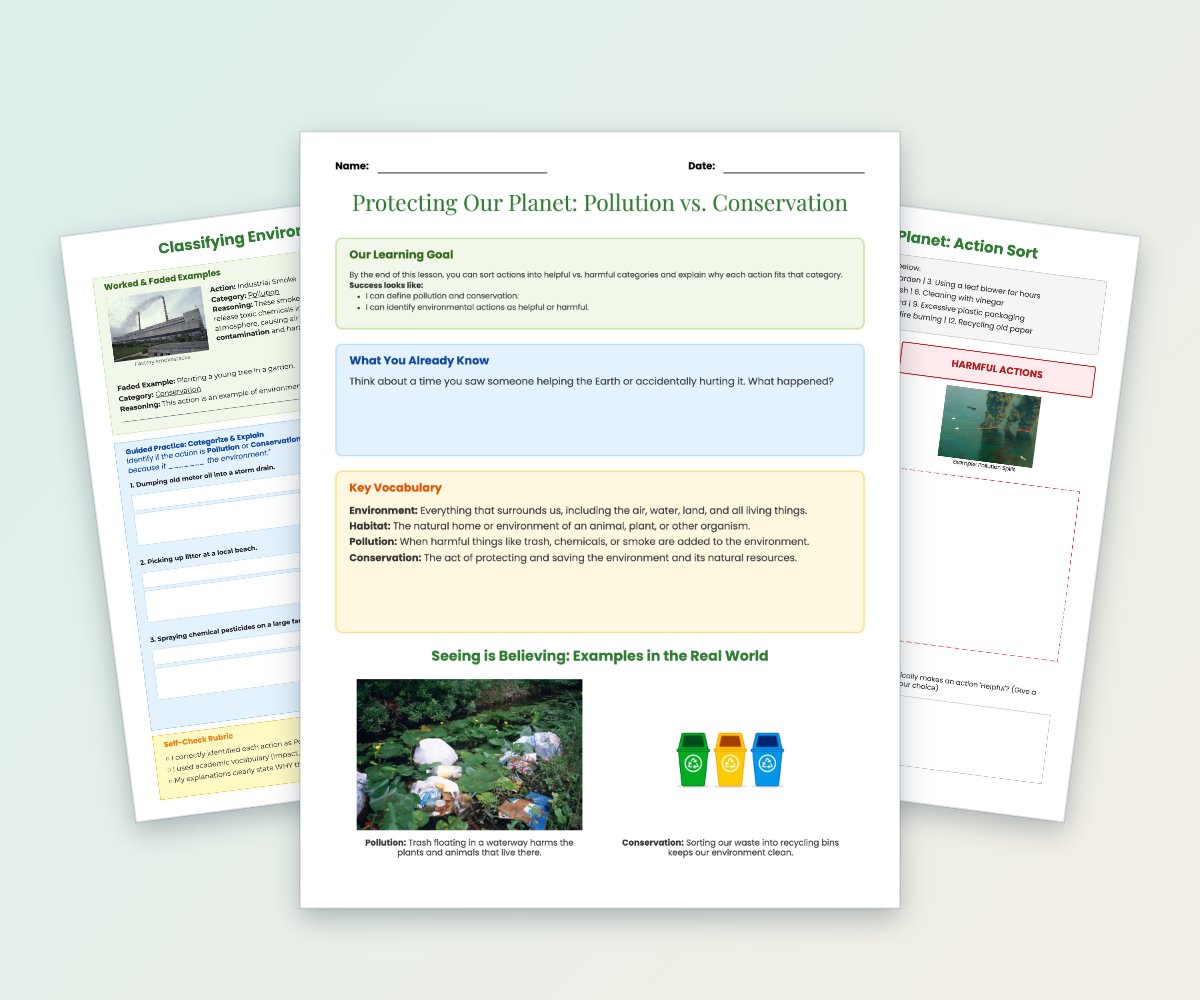
This four-page environmental science resource teaches students to distinguish pollution from conservation actions.
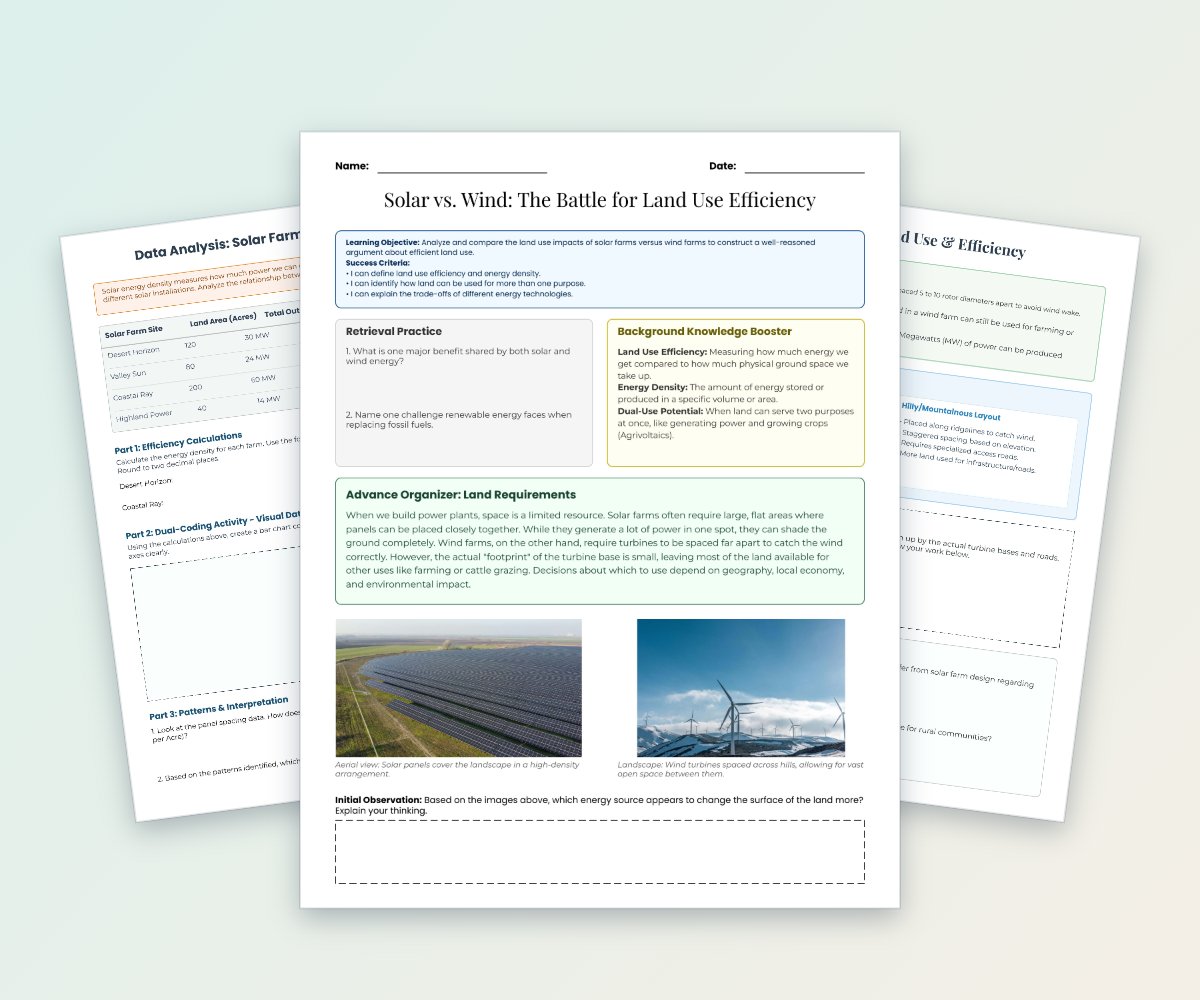
Students compare solar and wind energy through background reading, land-use analysis, energy-density calculations, and evidence-based argument writing.