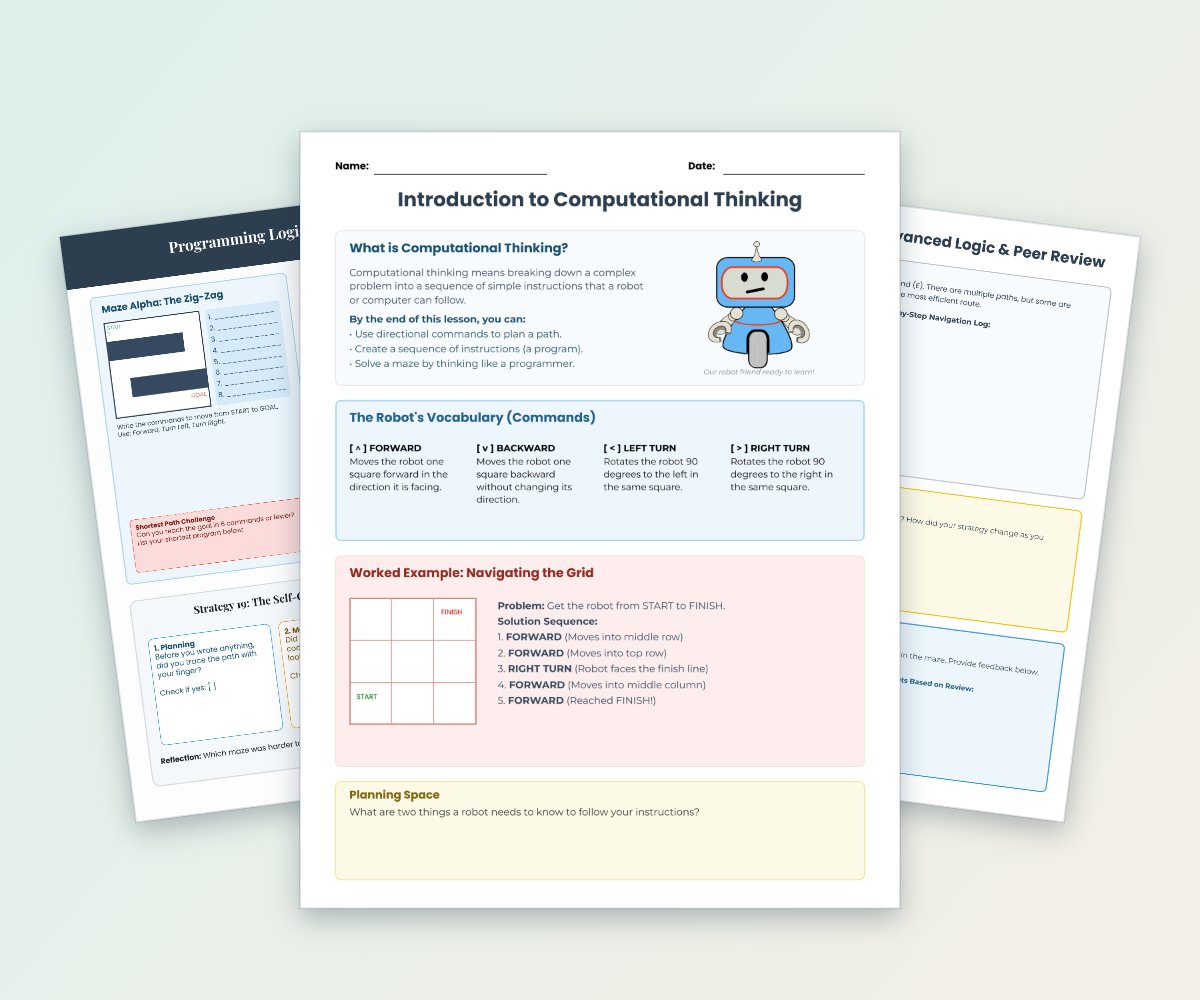
Program the Robot: Introduction to Computational Thinking
Introduce students to computational thinking through directional commands, robot vocabulary, and maze-navigation programming challenges.
$3
Clear, practical resources for busy educators, organized so you can get from search to ready-to-teach quickly.
Introduce students to computational thinking through directional commands, robot vocabulary, and maze-navigation programming challenges.
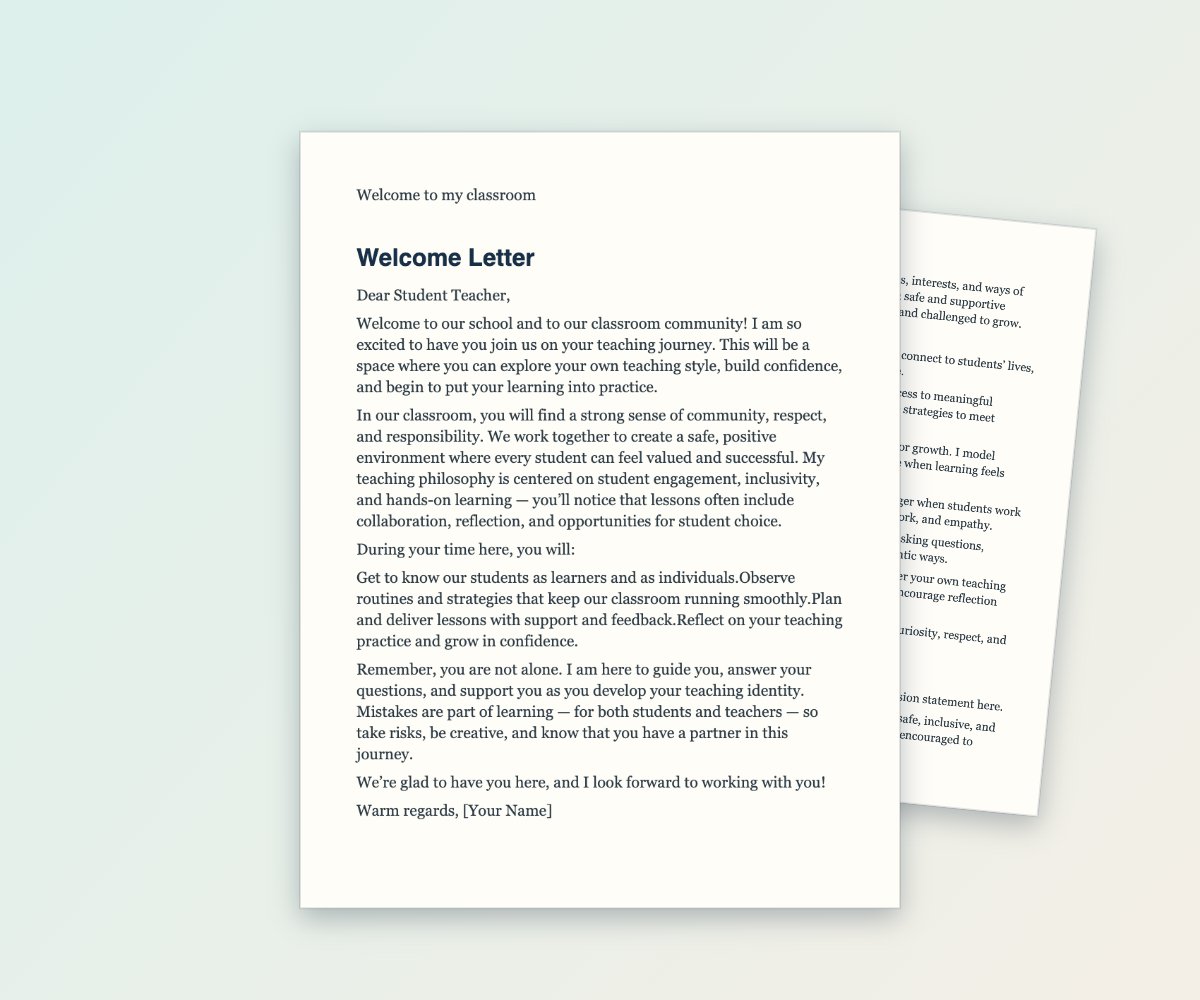
A comprehensive binder for student teachers entering classroom placements.
This four-page student guide teaches learners how to recognize phishing, fake prizes, suspicious links, urgent language, and requests for personal information.
Students learn daily brushing and flossing steps by cutting, sequencing, and gluing illustrated directions.
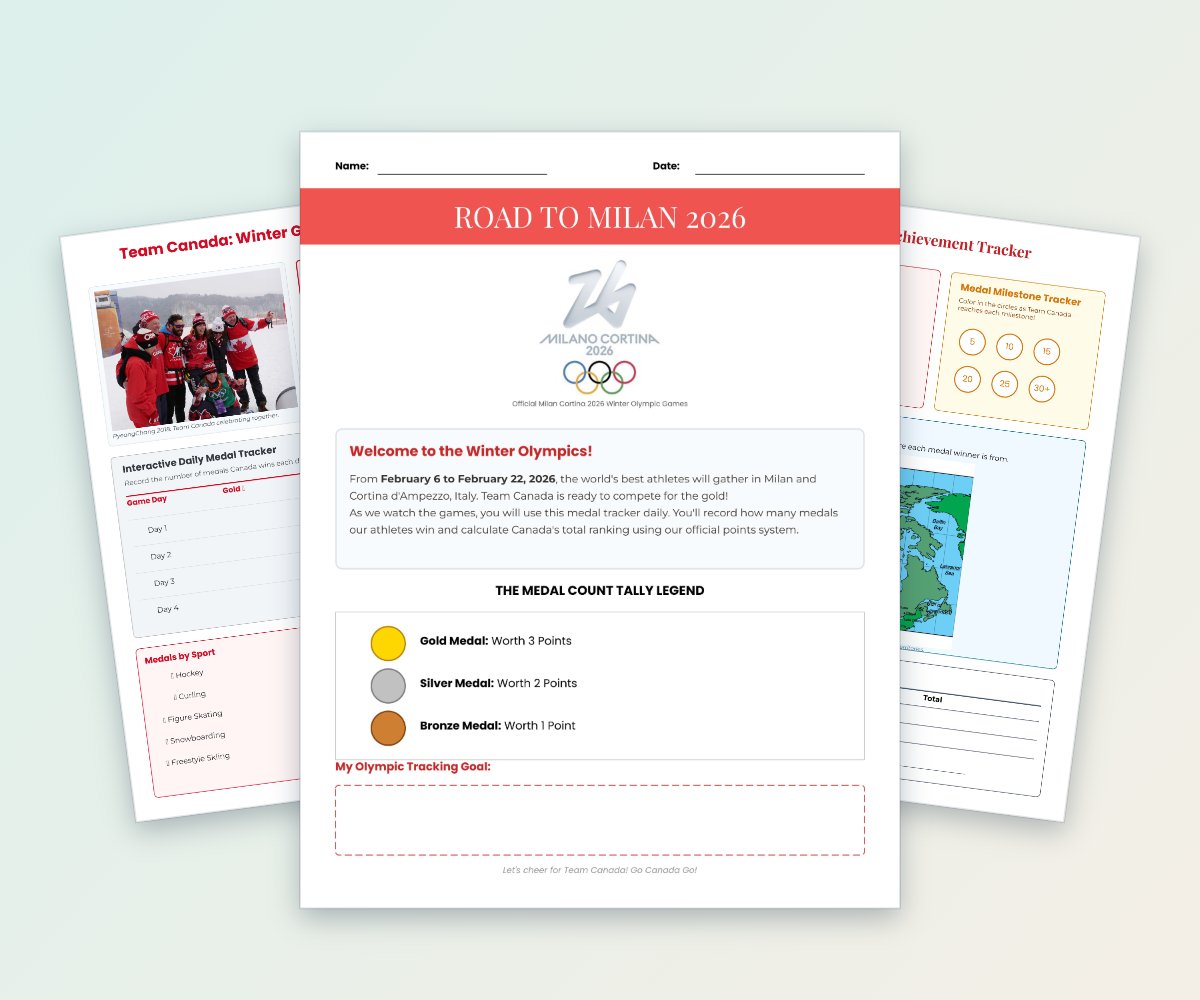
Students track Team Canada’s daily medals during the 2026 Winter Olympics and calculate totals using a gold, silver, and bronze points system.
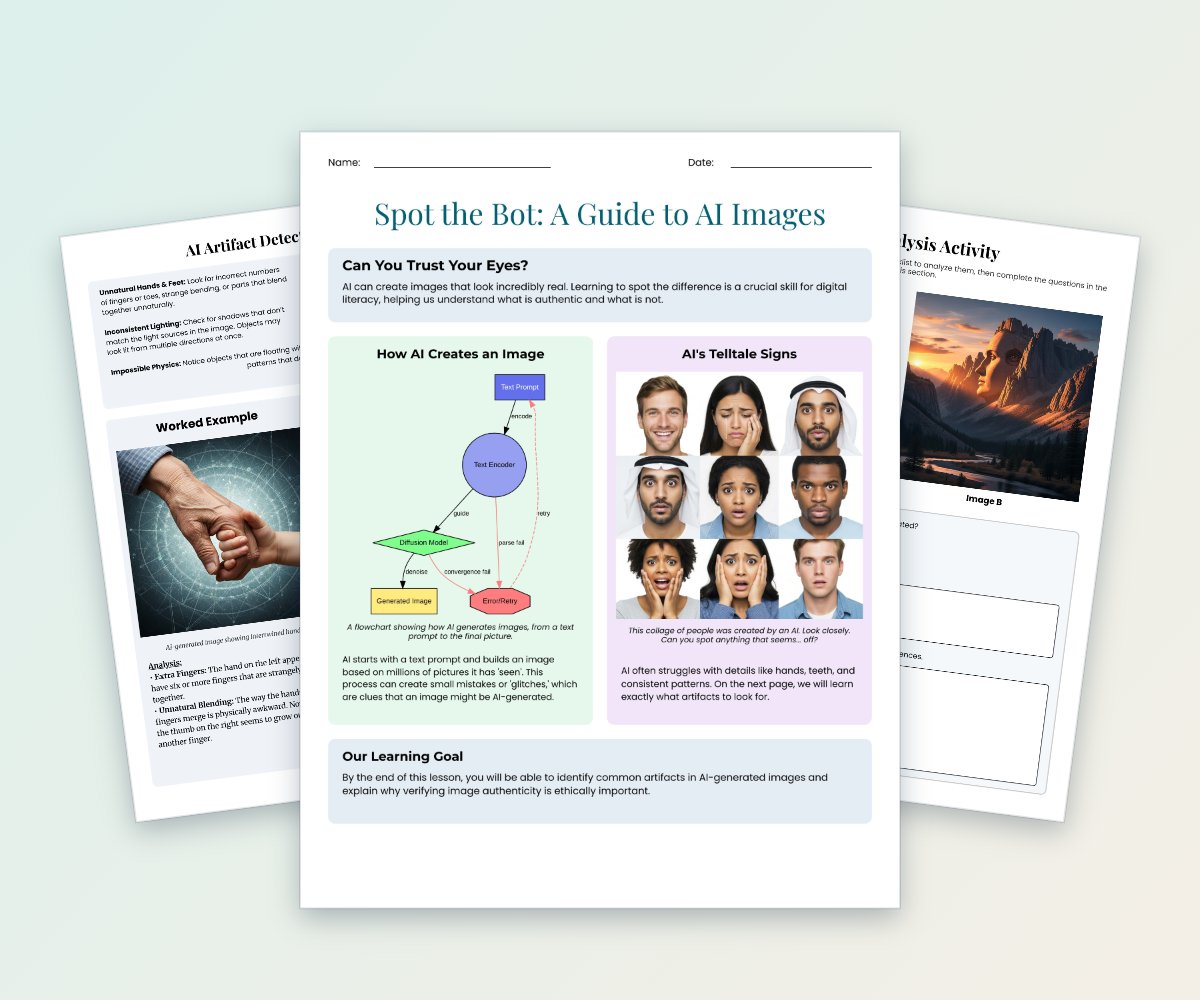
This four-page lesson introduces how AI-generated images are created and teaches students to identify common visual artifacts.
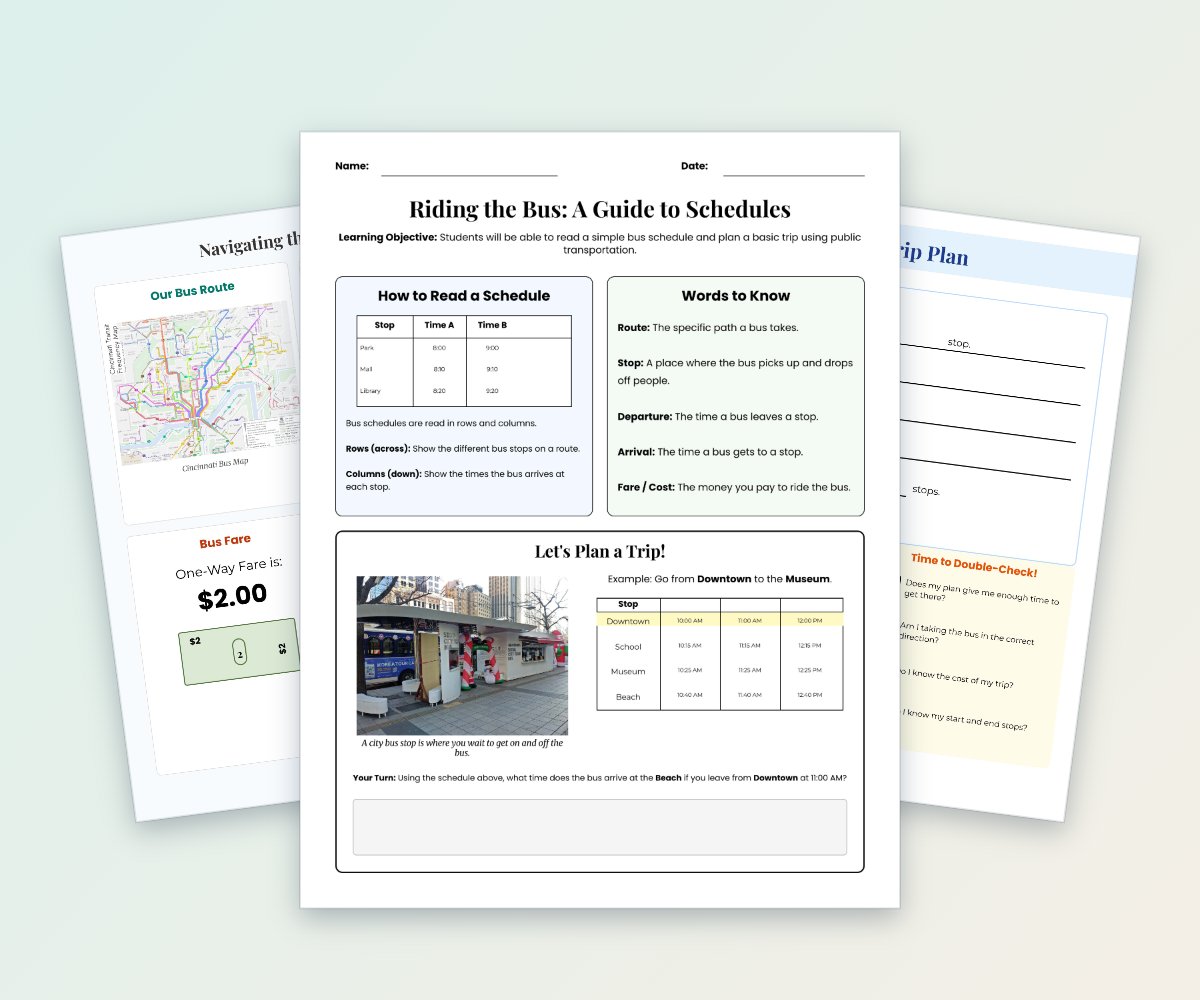
This four-page guide introduces bus routes, stops, arrival and departure times, fares, and schedule reading.
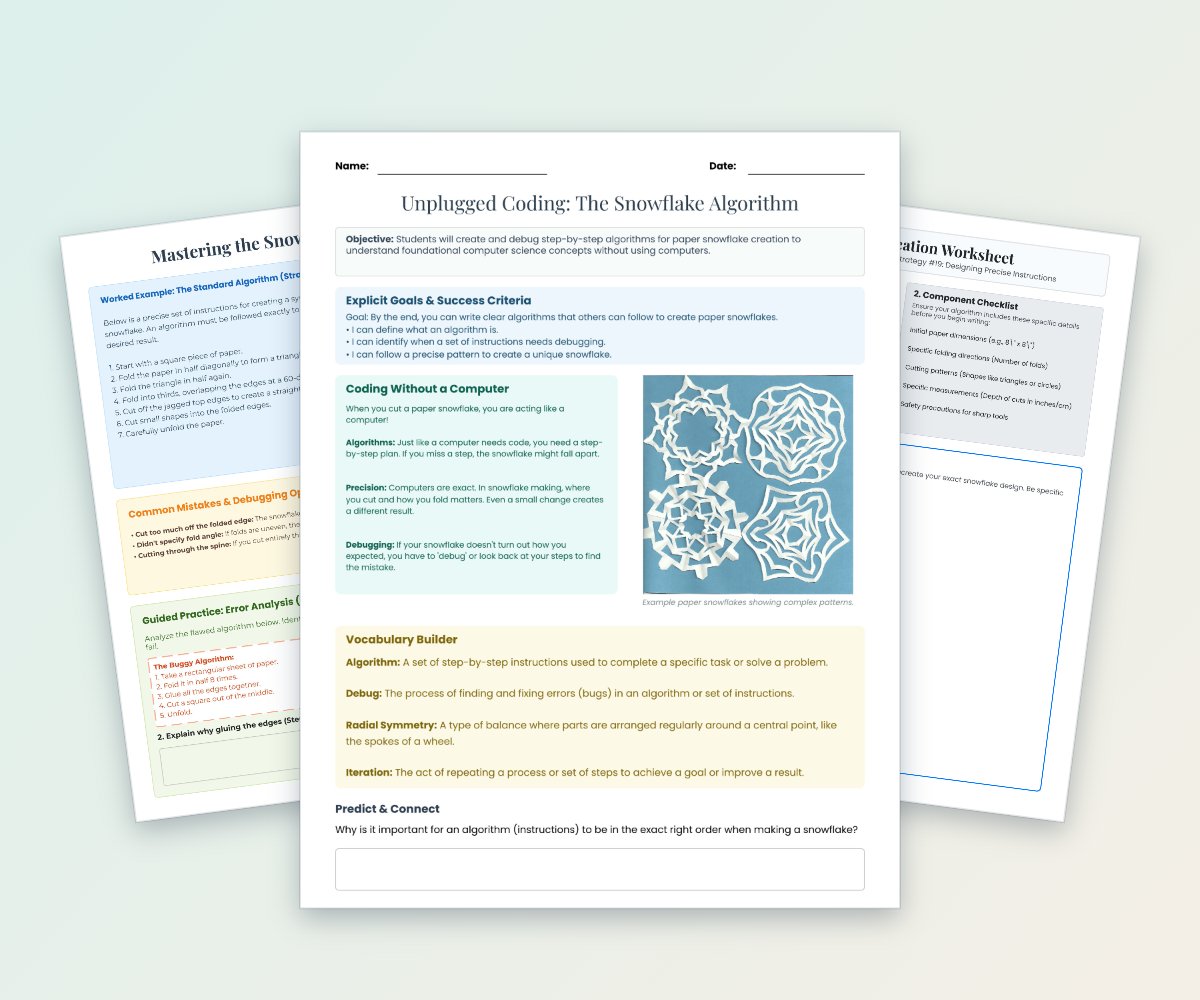
Students create paper snowflakes while learning how algorithms, precision, debugging, iteration, and radial symmetry work.
This six-page printable helps students set summer learning goals, create a reading plan, track genres and books, and reflect on progress.
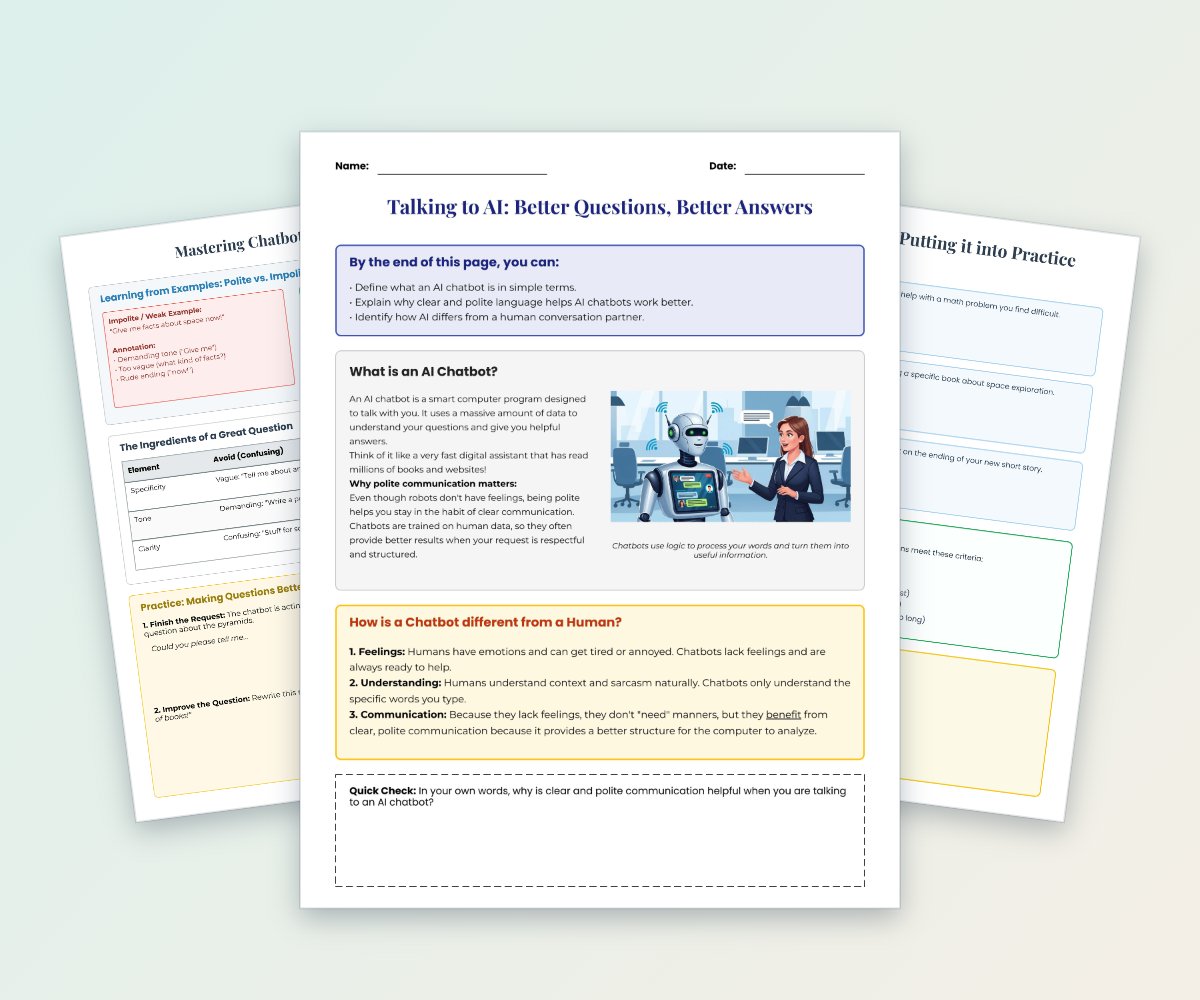
This four-page worksheet introduces AI chatbots and explains how clear, specific, and polite prompts improve responses.
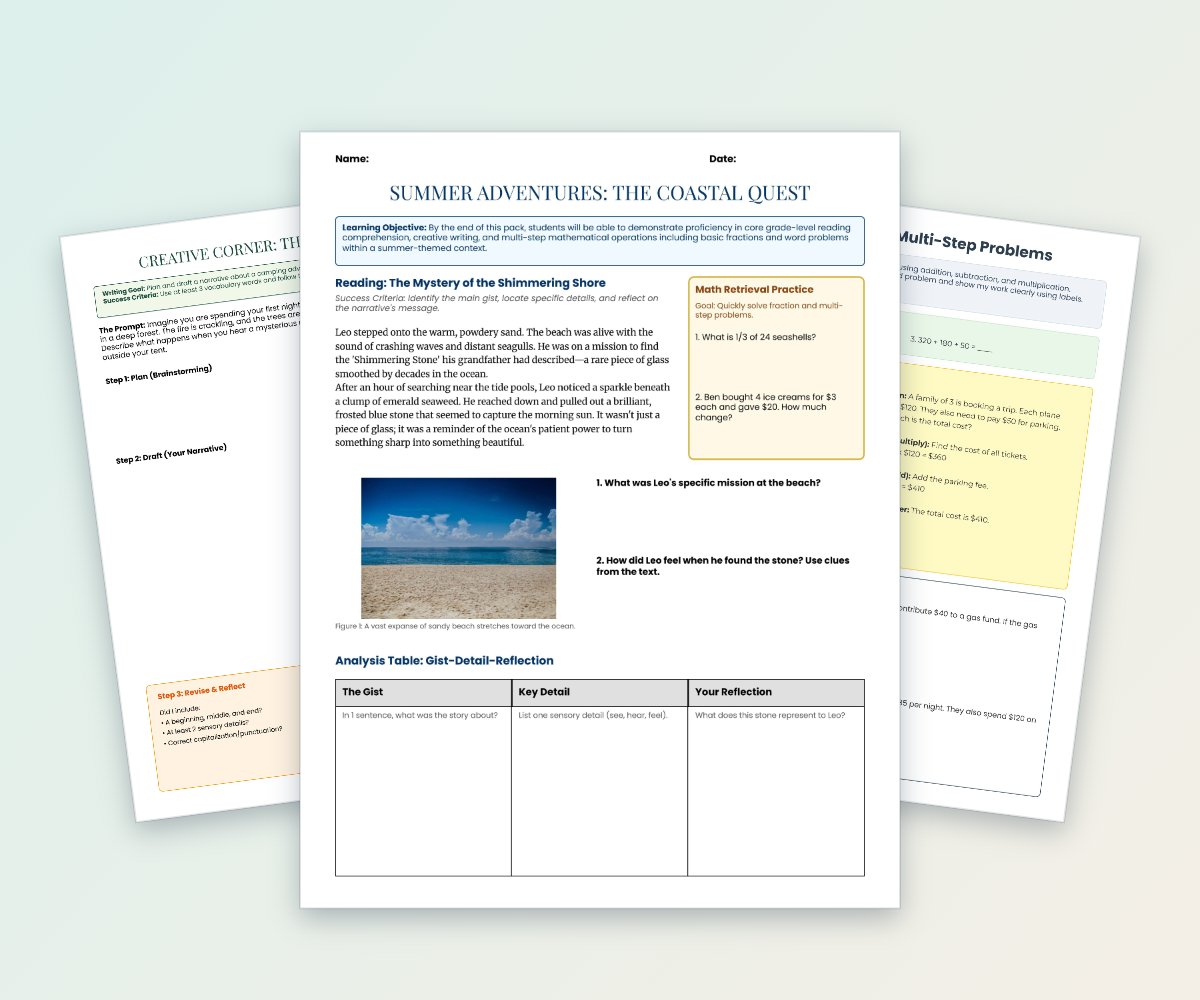
This summer-themed review pack combines a narrative reading passage, comprehension questions, creative writing planning and drafting, fraction practice, and multi-step money problems.
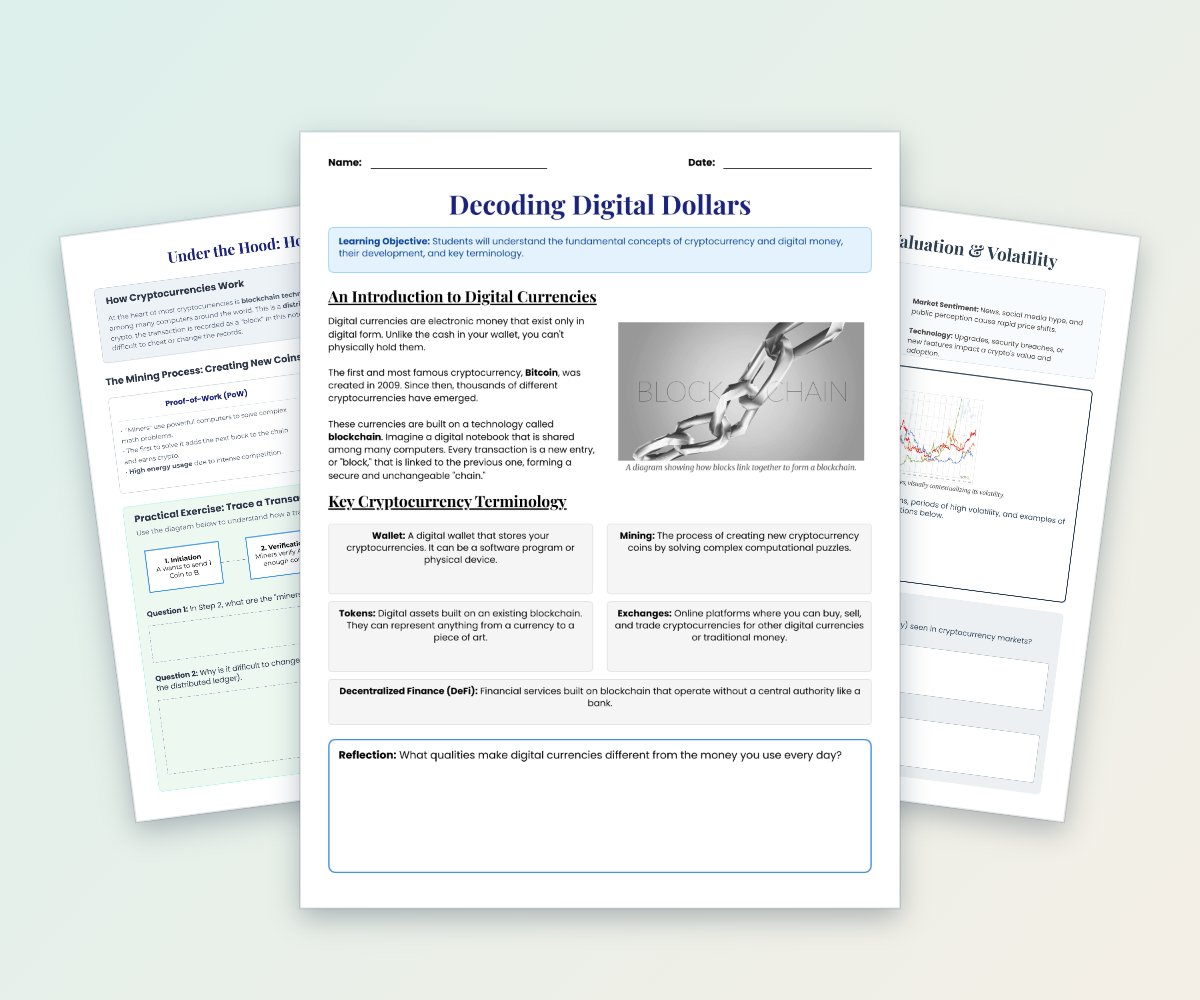
This six-page instructional resource introduces digital currencies, cryptocurrency terminology, blockchain technology, mining, proof-of-work, and proof-of-stake.
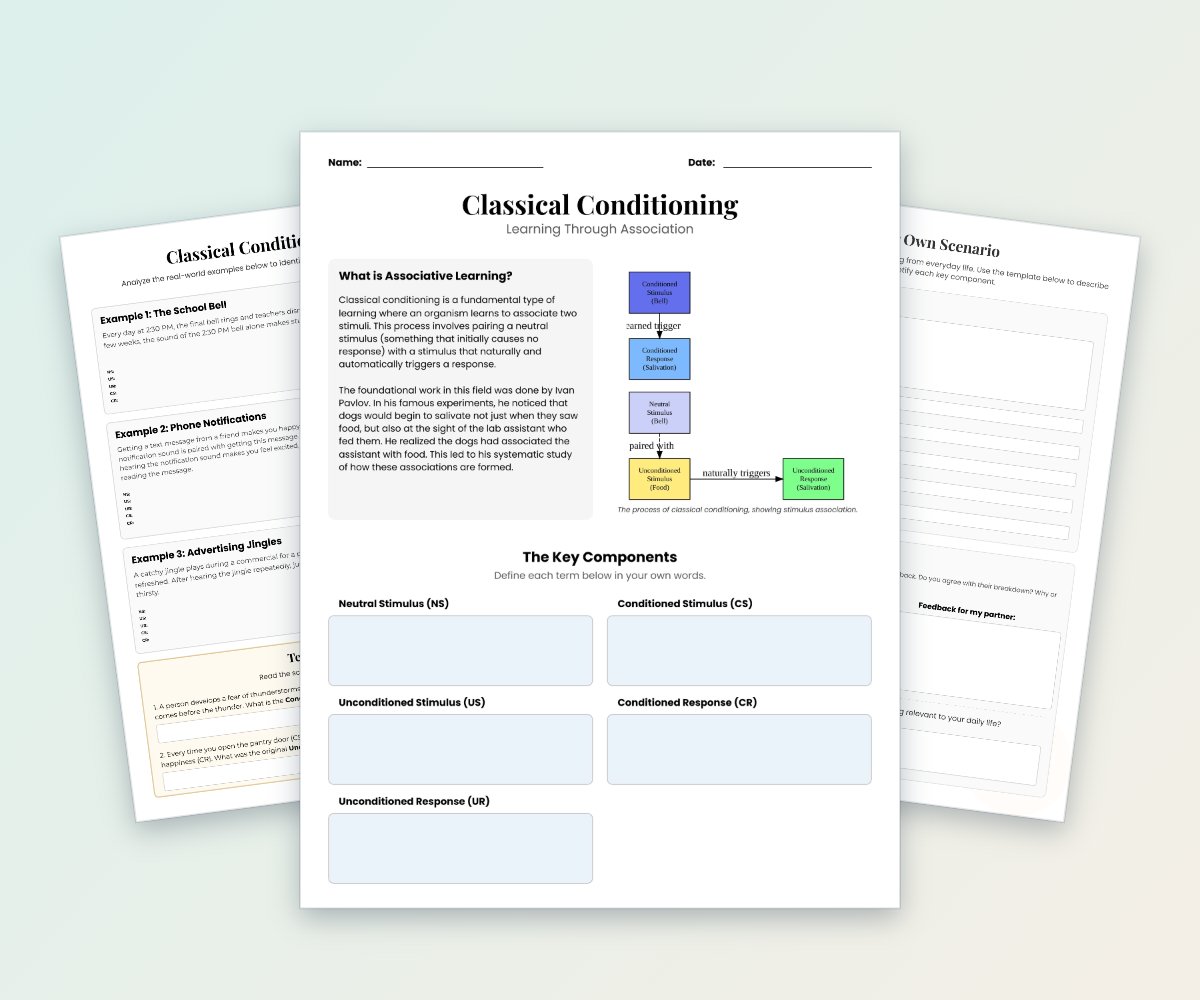
This three-page worksheet introduces classical conditioning and associative learning through explanations of Pavlov’s experiments, key vocabulary, diagrams, and real-world examples.
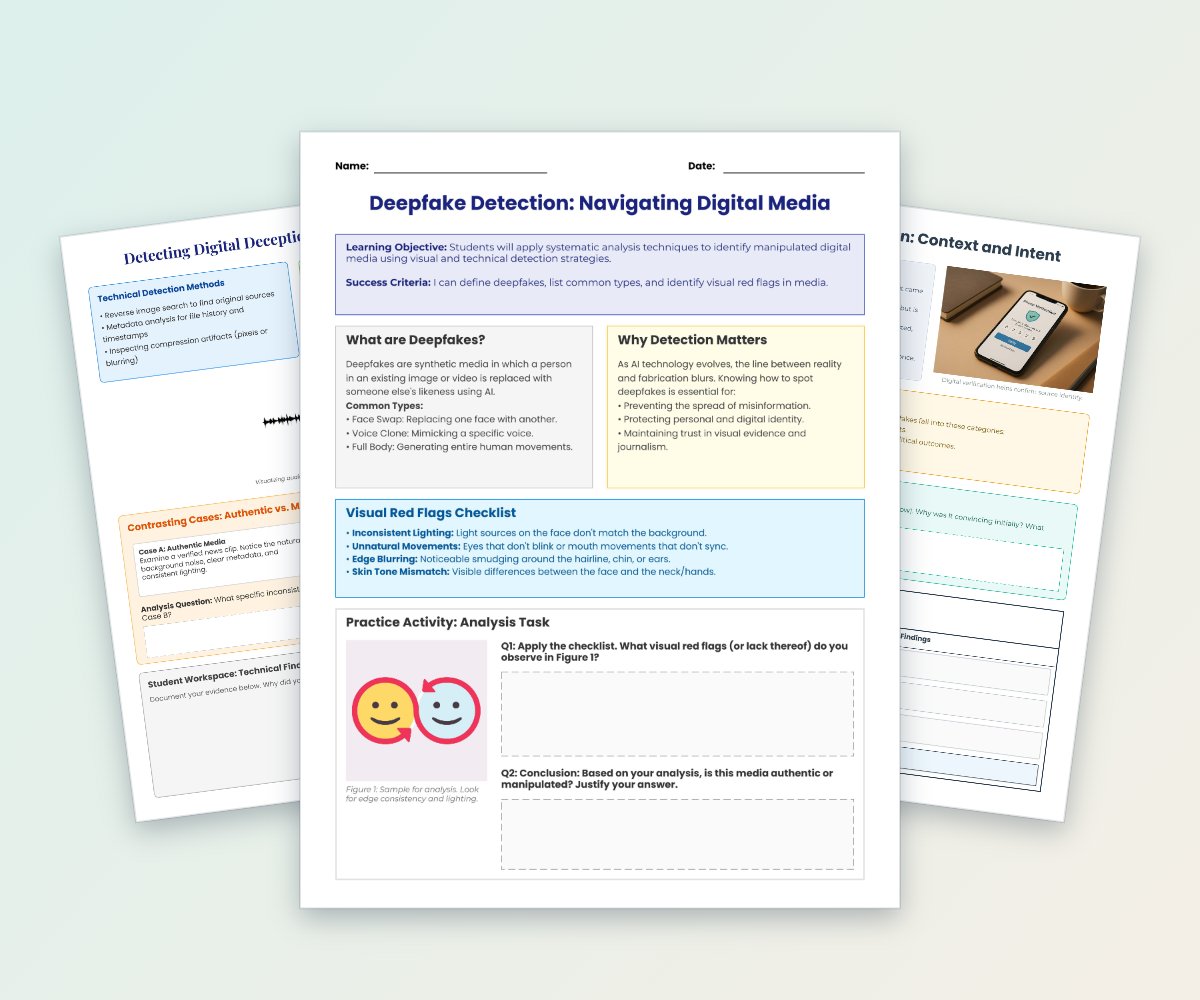
Students learn what deepfakes are, explore common forms, and use visual and technical indicators to evaluate digital media.