Grade 3 Maine Science Long-Range Plan
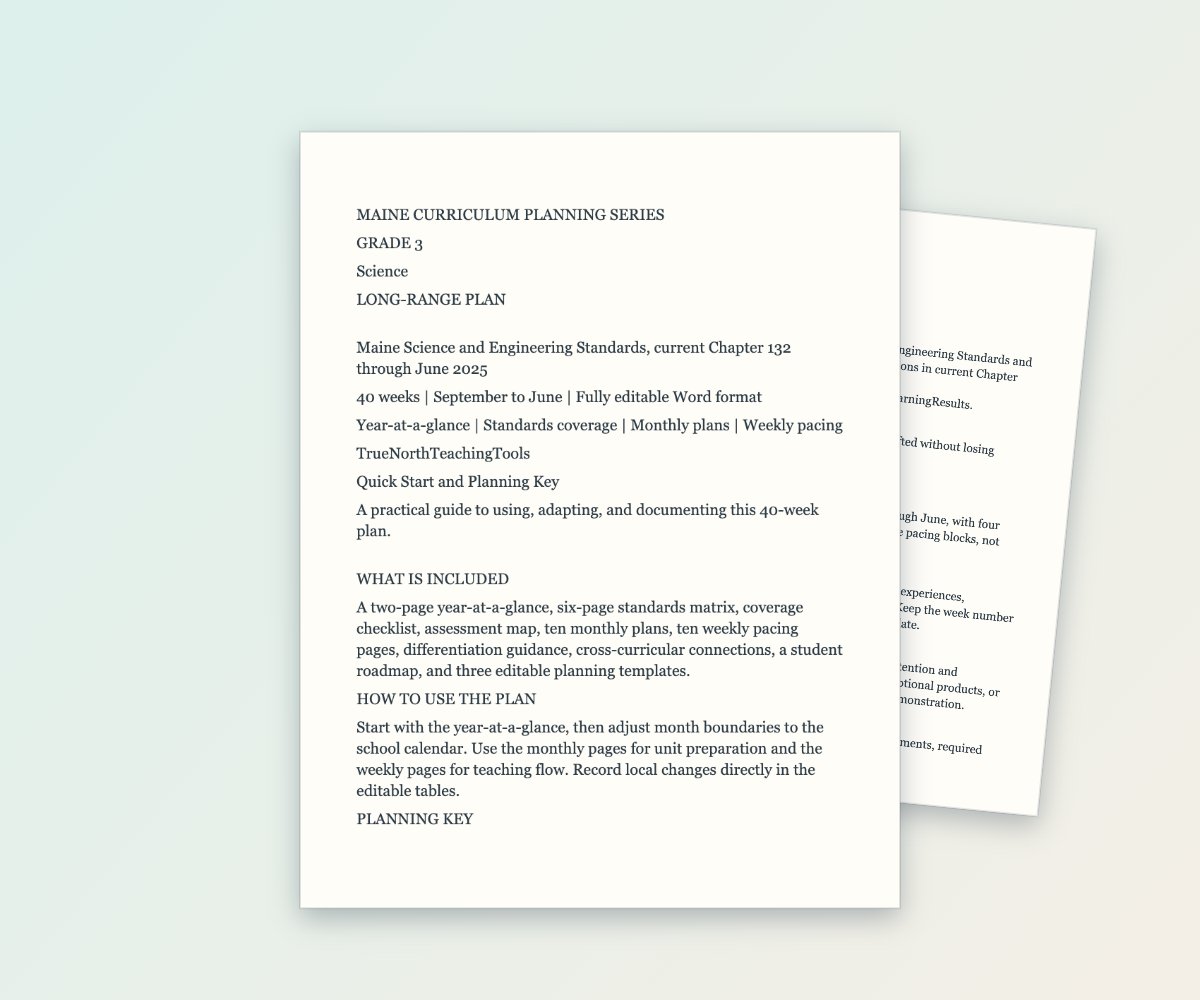
A fully editable 40-week Grade 3 science long-range plan aligned with Maine Science and Engineering Standards through June 2025.
$5
Clear, practical resources for busy educators, organized so you can get from search to ready-to-teach quickly.
A fully editable 40-week Grade 3 science long-range plan aligned with Maine Science and Engineering Standards through June 2025.
This editable 40-page long-range plan provides a full September-to-June sequence for Grade 3 Massachusetts Science and Technology/Engineering standards.
This editable 40-week long-range plan organizes Grade 3 Ohio science instruction from September through June.
This editable 40-page long-range plan provides a full year of Grade 3 science pacing across physical, life, Earth, and engineering sciences.
This editable 40-page long-range plan provides a complete Grade 3 science year-at-a-glance, curriculum coverage matrix, monthly overviews, weekly pacing, assessment map, differentiation guidance, and
This editable 40-page long-range plan organizes Grade 3 science instruction across 40 weeks from September through June.
This editable 40-week long-range plan organizes Grade 3 science instruction using Washington State 2013 K–12 Science Learning Standards.
This editable 40-week Grade 3 science long-range plan includes year-at-a-glance and monthly overviews, a curriculum matrix, assessment map, differentiation guidance, and cross-curricular connections.
Plan a full 40-week Grade 3 science year with an annual sequence, curriculum coverage matrix, monthly planning, assessment guidance, differentiation support, and editable templates.
This editable 40-week long-range plan supports Grade 3 science instruction aligned with Nebraska College and Career Ready Standards.
A 40-page editable long-range science plan covering September through June, with weekly pacing, monthly overviews, standards alignment, assessment guidance, differentiation, and student roadmap pages.
This editable 40-week Grade 3 science long-range plan provides Illinois-aligned pacing from September through June.
Plan a full 40-week Grade 3 science year with monthly themes, standards alignment, learning intentions, evidence of learning, and practical instructional tasks.
This editable 40-page long-range plan provides a September-to-June pacing guide for Grade 3 science.
This editable 40-page long-range plan provides a full September-to-June sequence aligned to California Grade 3 Next Generation Science Standards.
A complete 40-week long-range plan for Saskatchewan Grade 3 Science, covering plant growth, structures and materials, magnetism, static electricity, and soils.
This 50-slide science lesson teaches students about butterfly anatomy, the four life cycle stages, and metamorphosis.
This editable 40-week long-range plan organizes Grade 3 science instruction from September through June using Indiana Academic Standards.
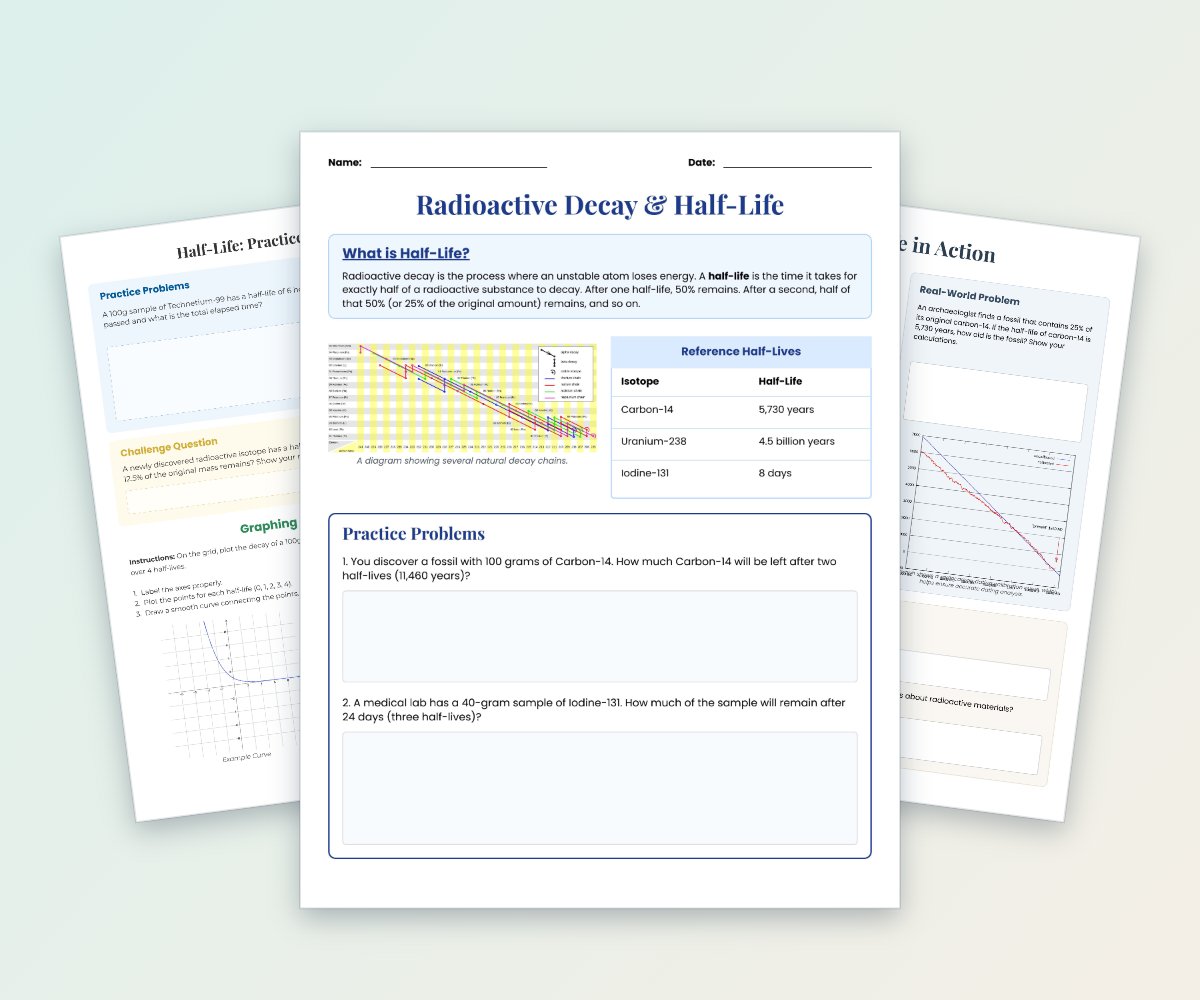
This three-page worksheet introduces radioactive decay and half-life with reference data, calculation practice, graphing, challenge questions, and real-world applications.
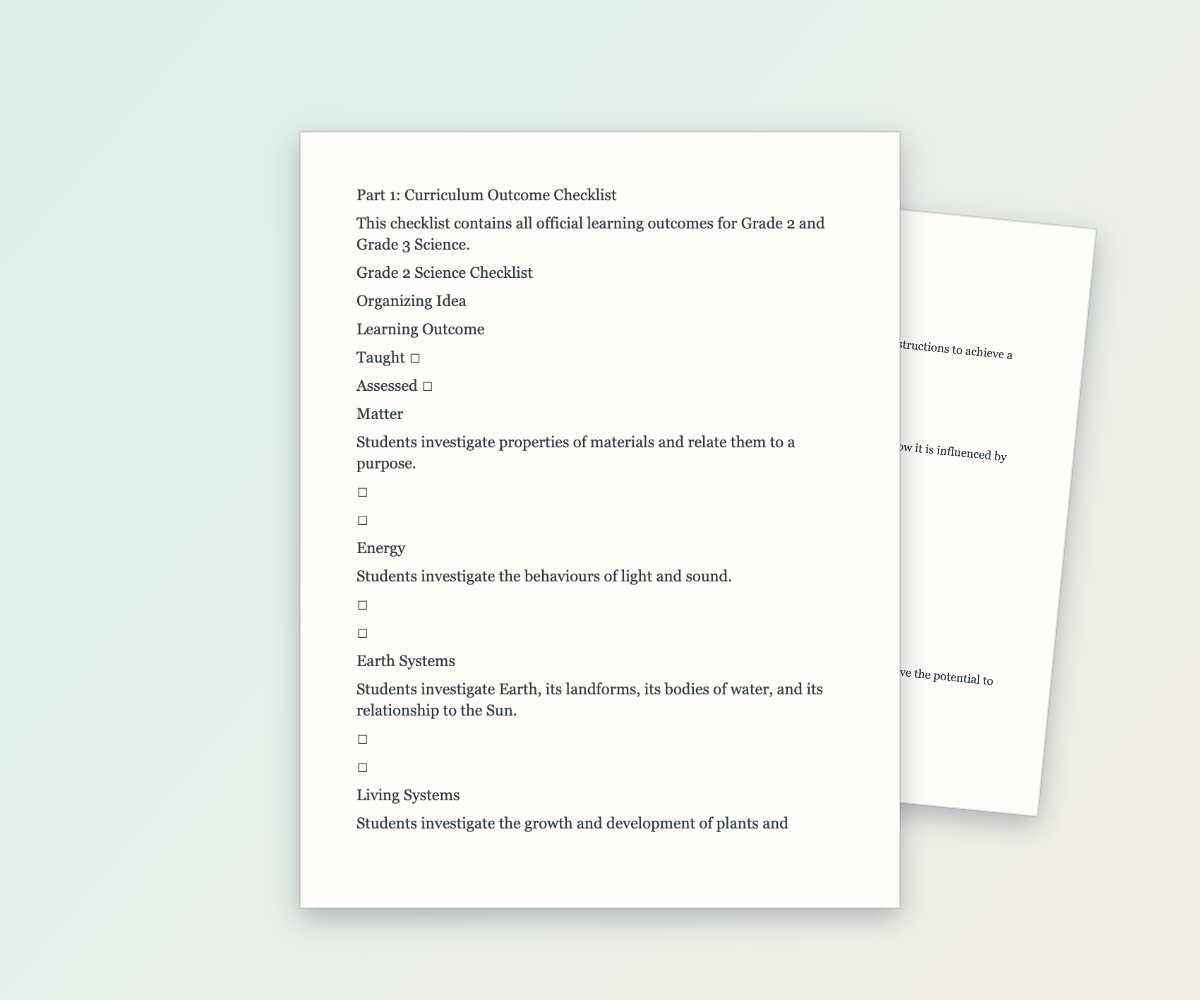
This editable 14-page long-range plan organizes Grade 2 and Grade 3 Alberta Science outcomes into a full-year sequence.
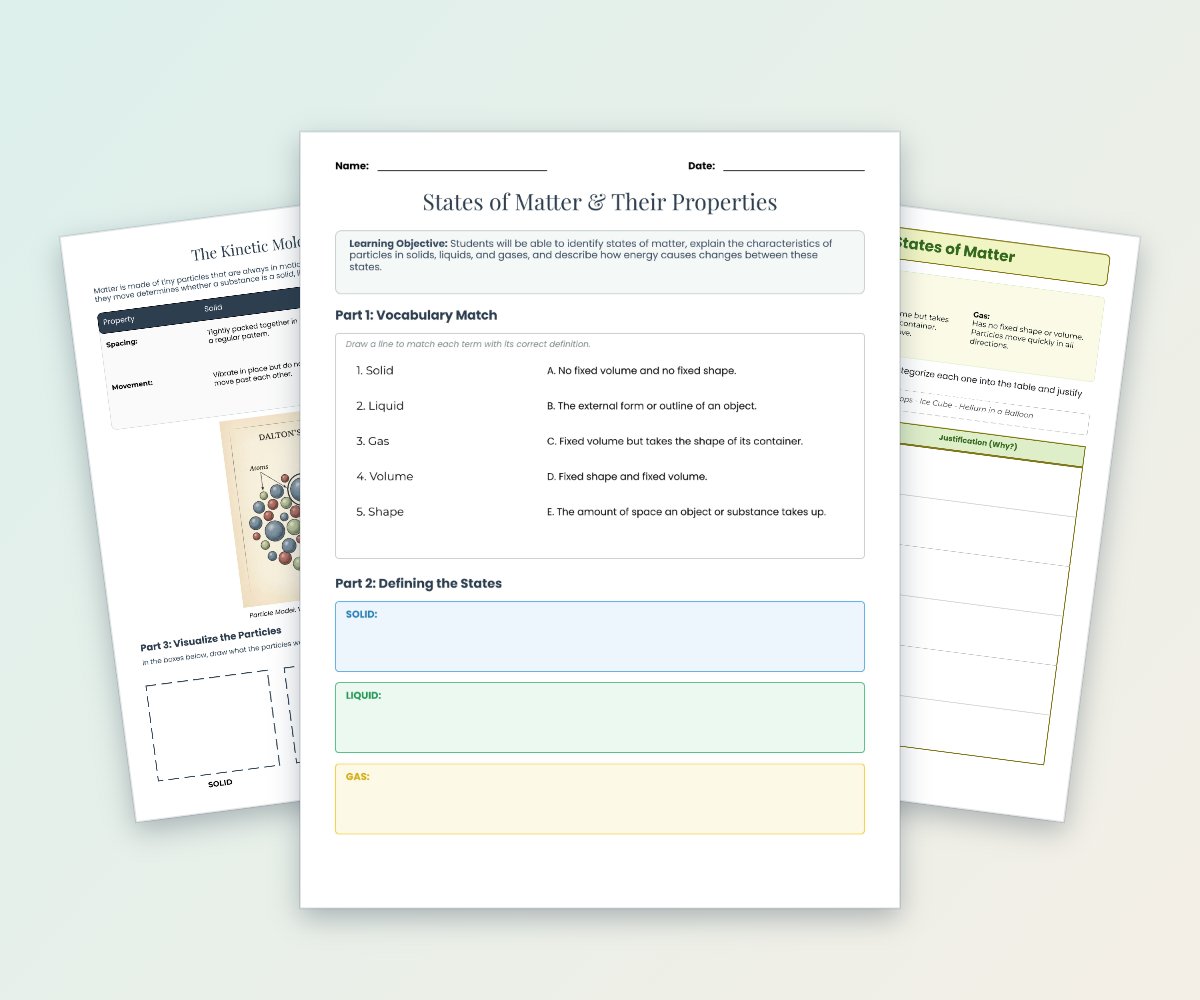
This six-page worksheet pack reviews solids, liquids, gases, particle motion, properties, and phase changes.
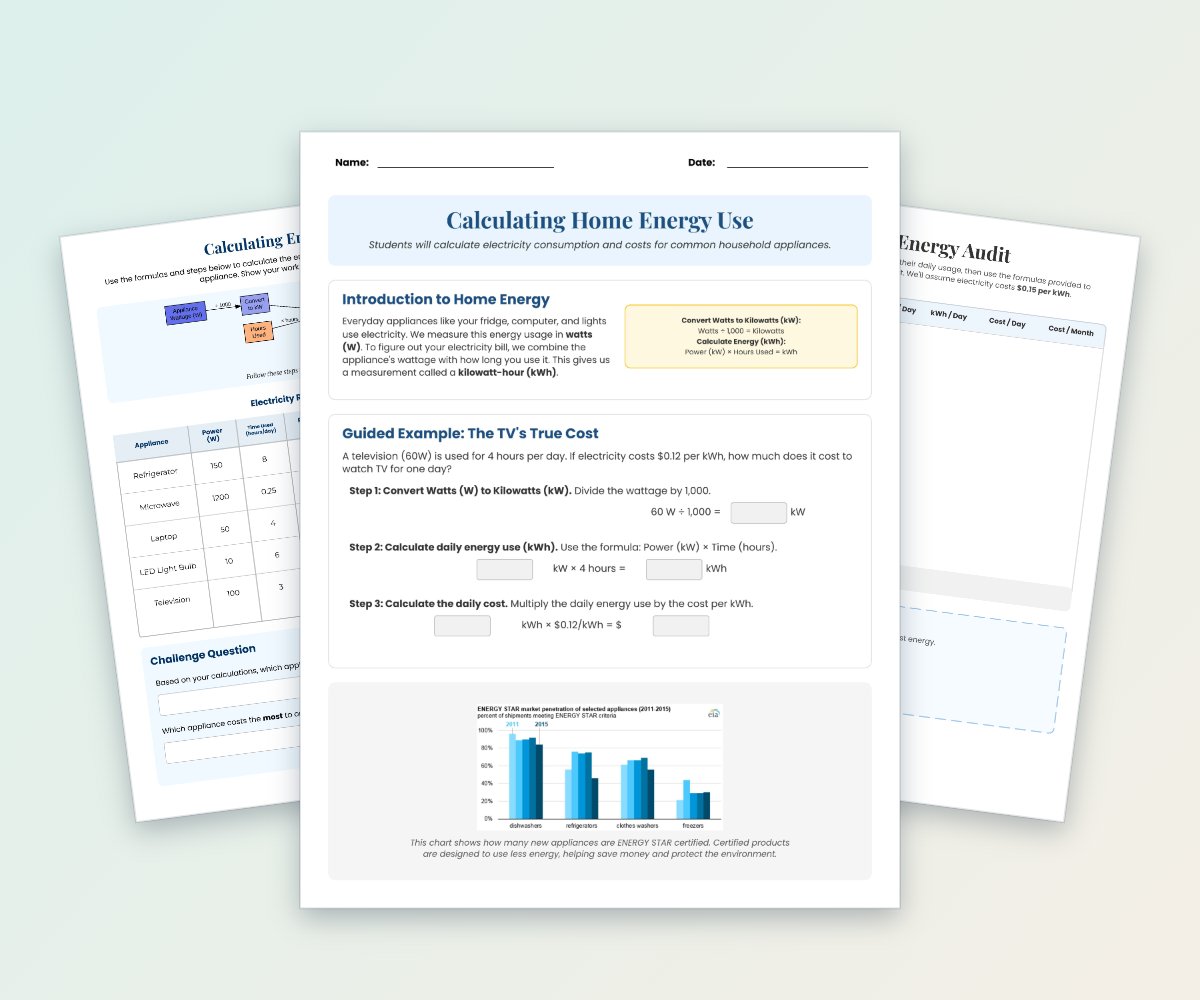
Students calculate kilowatt-hours and electricity costs for common household appliances using guided examples, formulas, and practice tables.
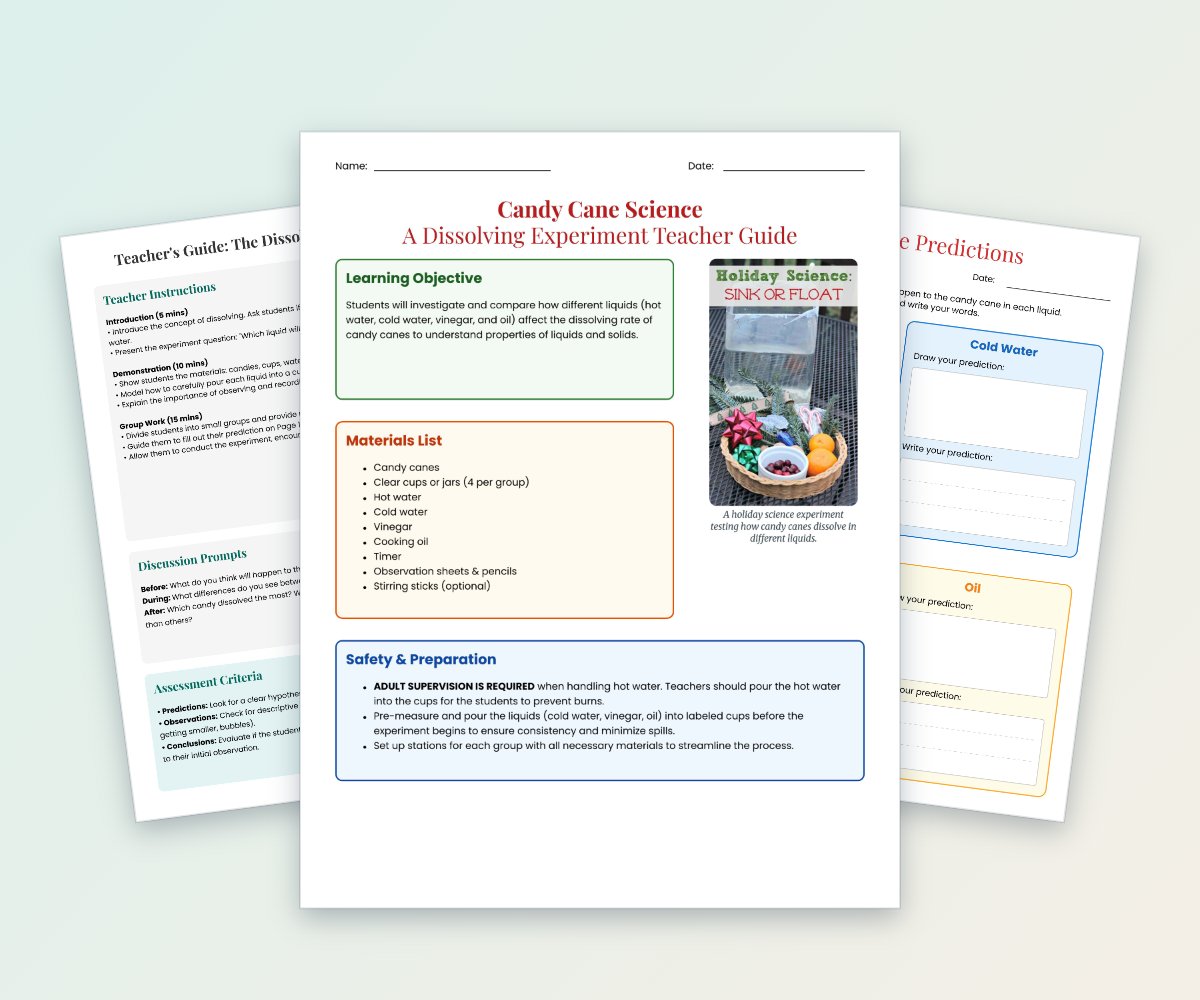
Students investigate how hot water, cold water, vinegar, and cooking oil affect the dissolving rate of candy canes.
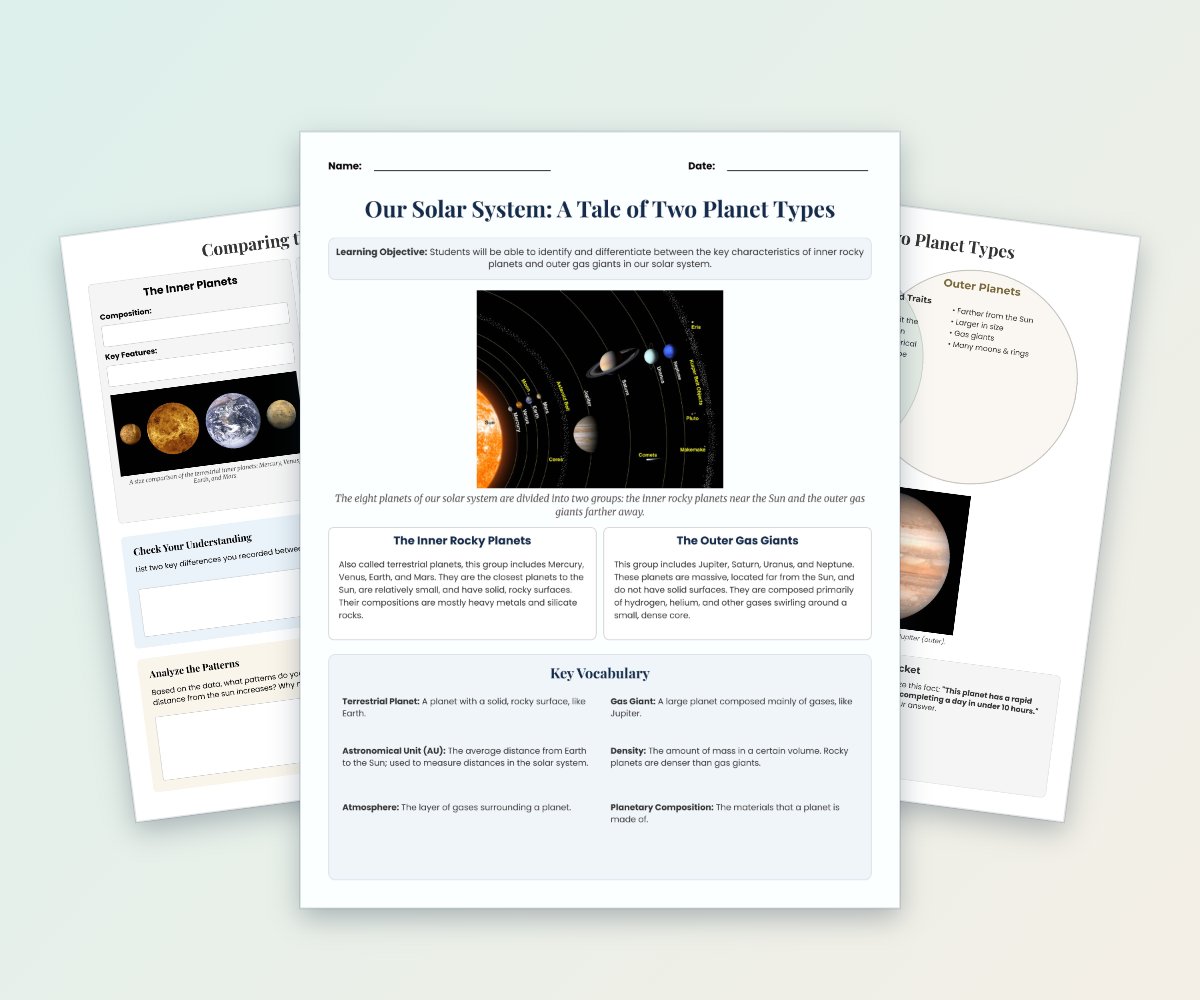
This three-page worksheet explains the differences between inner rocky planets and outer gas giants.
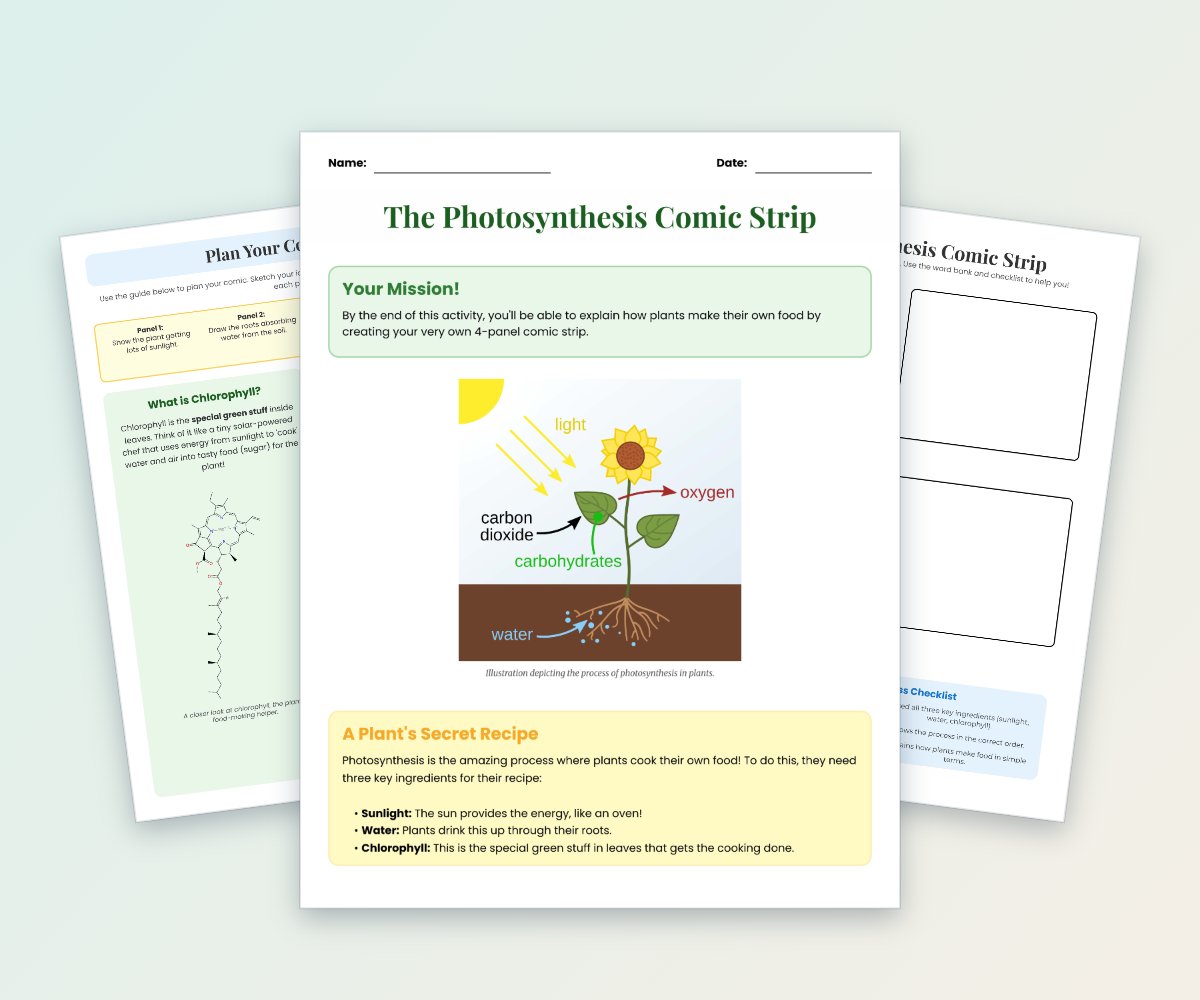
Students learn how plants use sunlight, water, and chlorophyll to make food through a guided comic-strip activity.
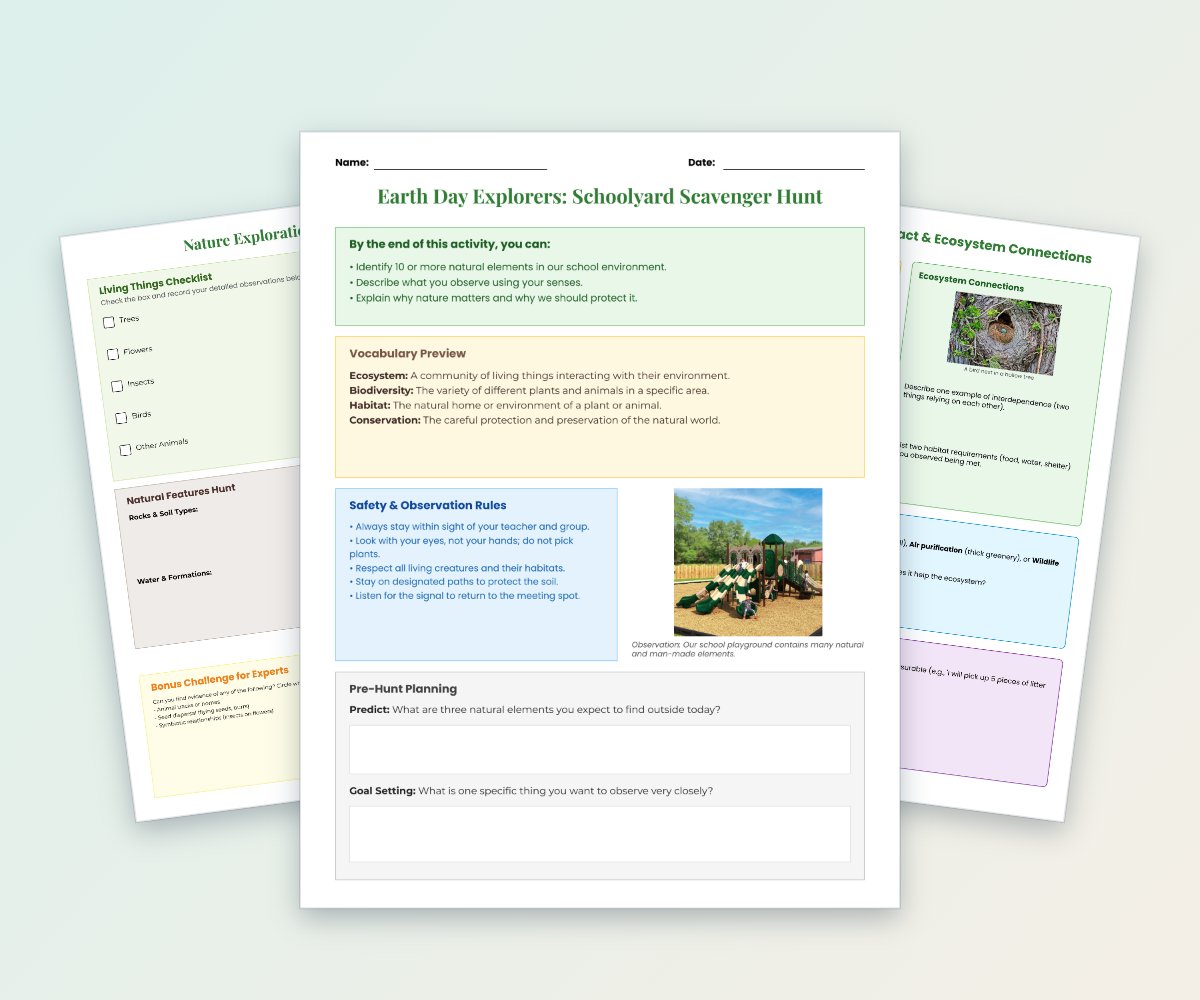
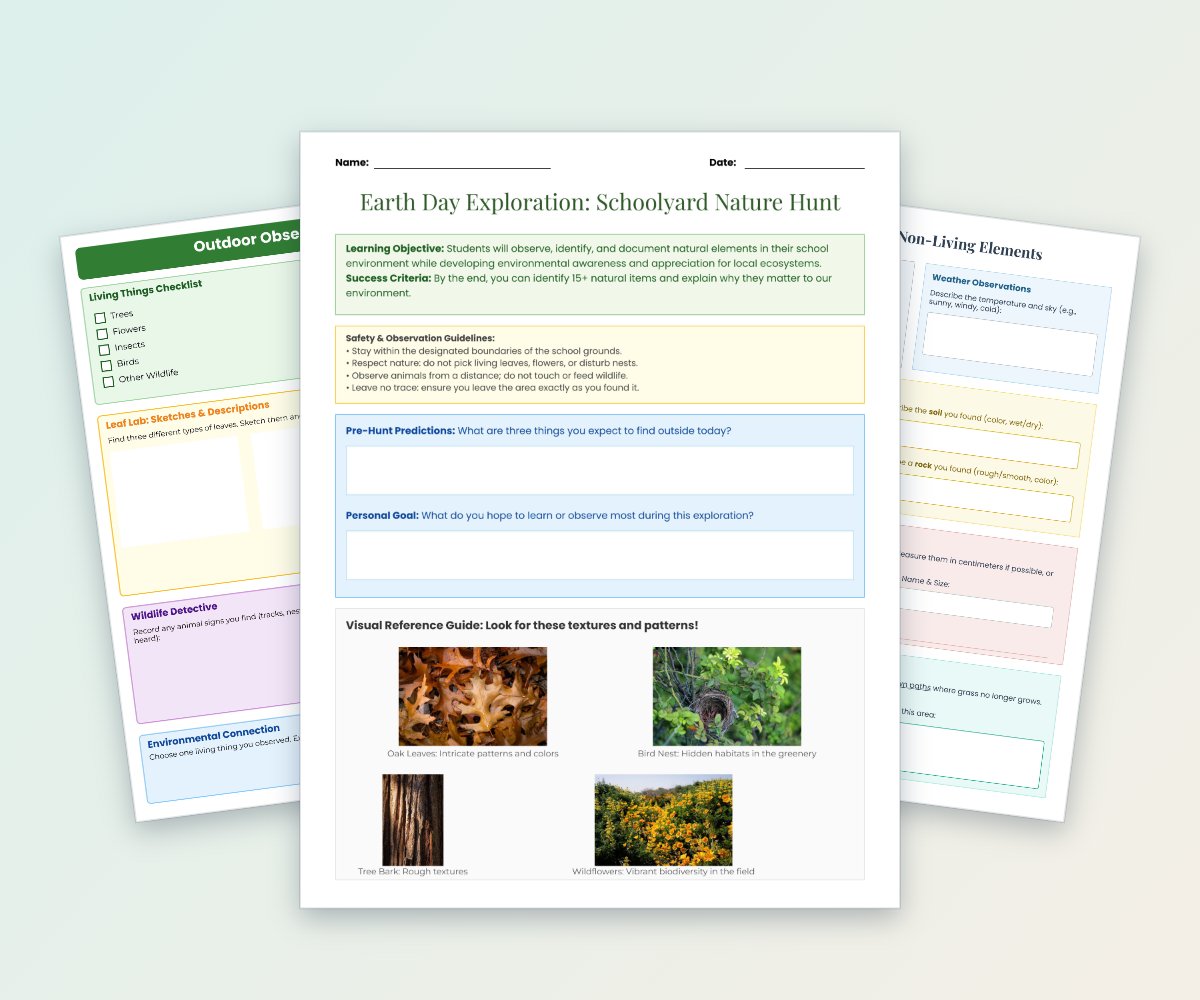
Students explore their schoolyard to identify natural elements, record sensory observations, and investigate habitats, biodiversity, seasonal changes, and human impact.
This Earth Day activity guides students through a schoolyard nature hunt focused on living and non-living elements, wildlife signs, textures, weather, and human impact.
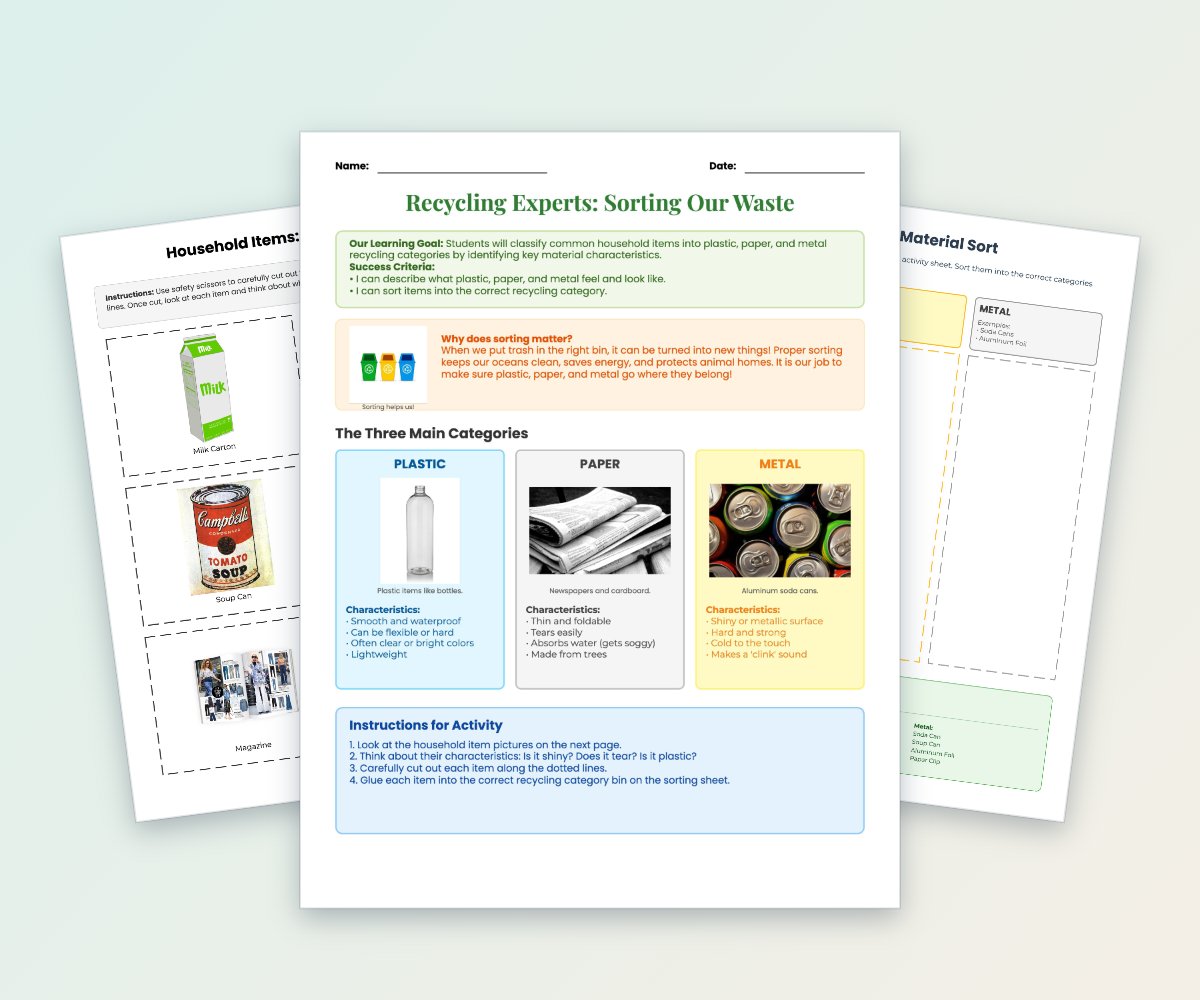
Students learn to identify plastic, paper, and metal by their observable characteristics, then sort household items into recycling categories.
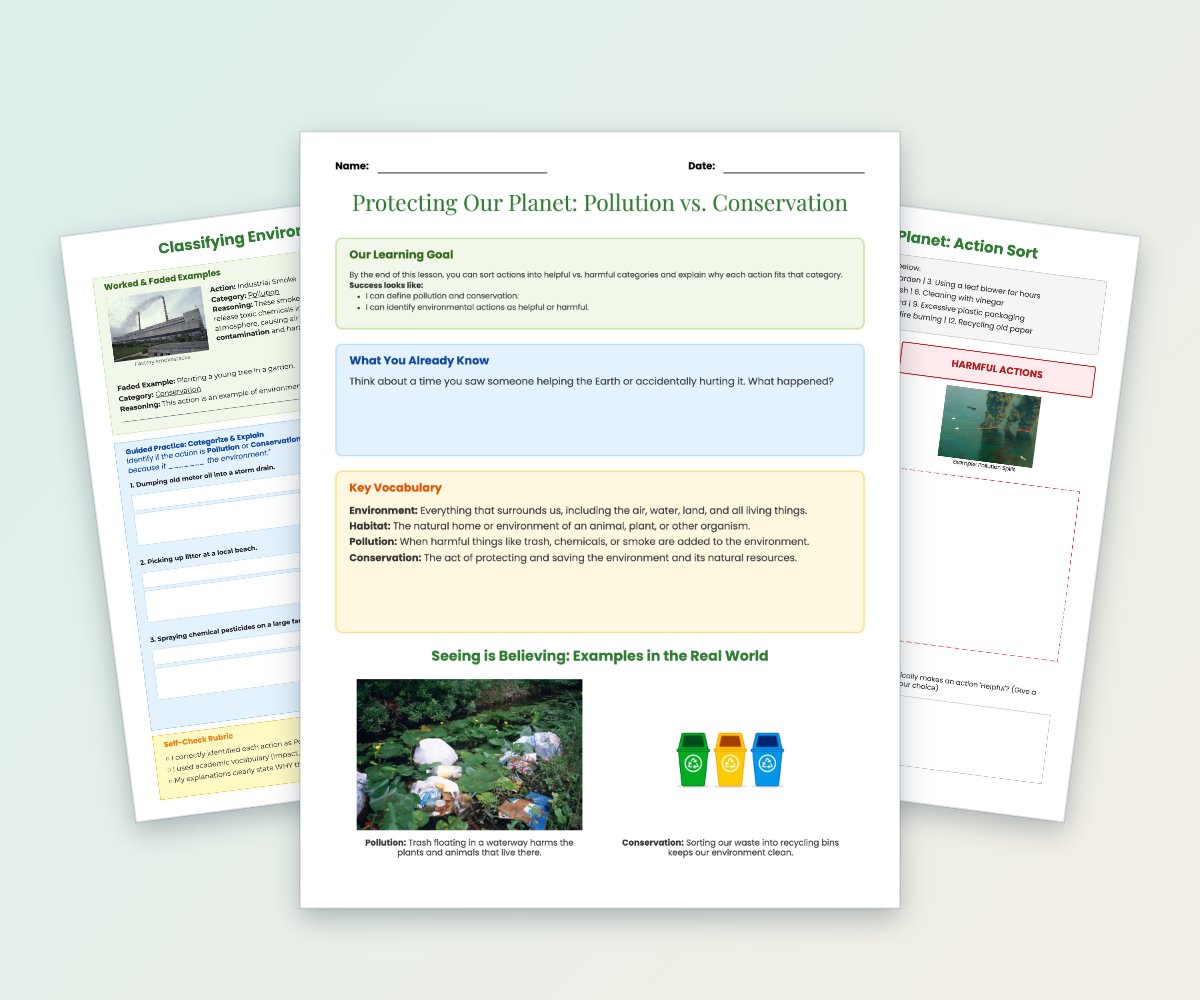
This four-page environmental science resource teaches students to distinguish pollution from conservation actions.
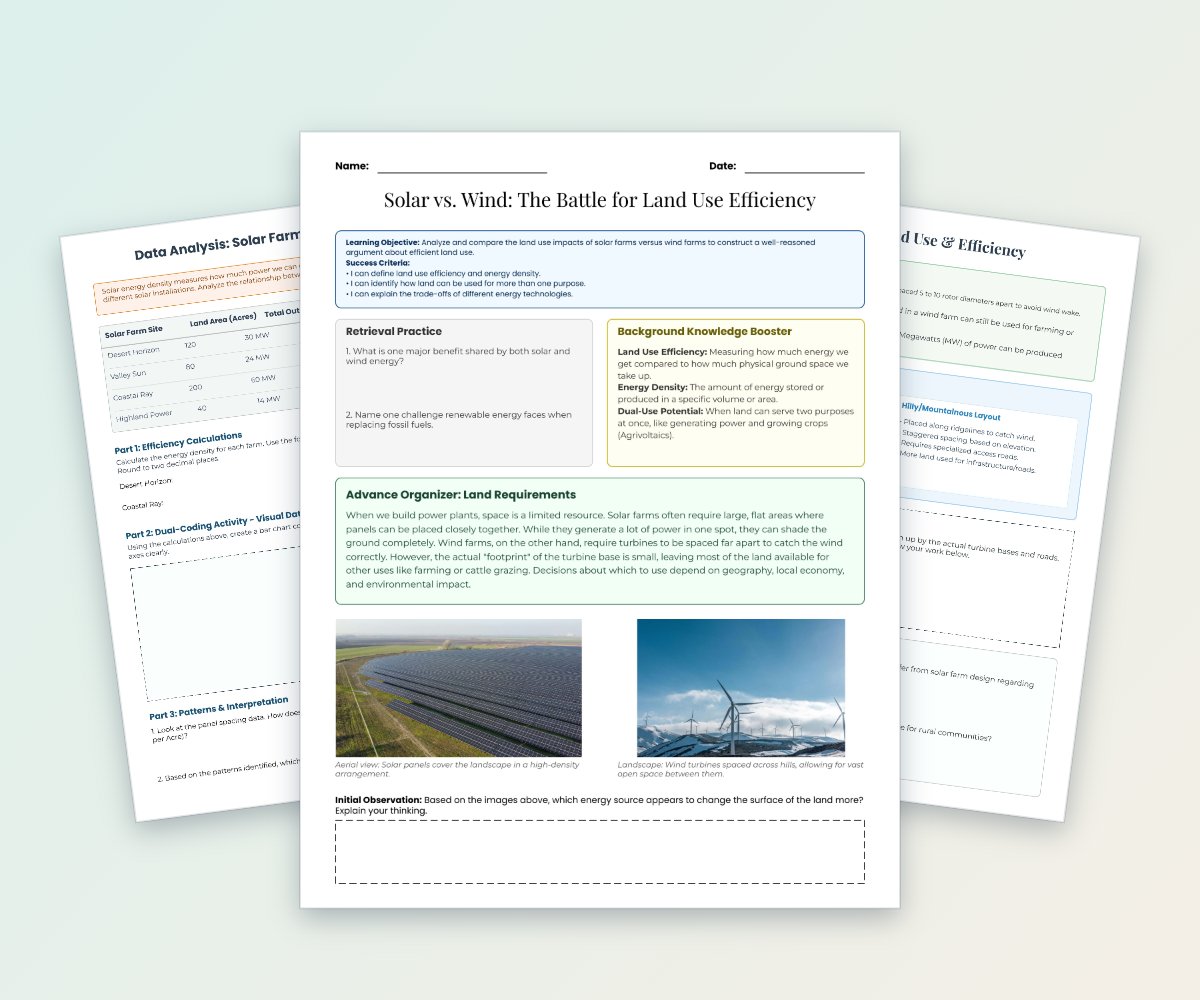
Students compare solar and wind energy through background reading, land-use analysis, energy-density calculations, and evidence-based argument writing.
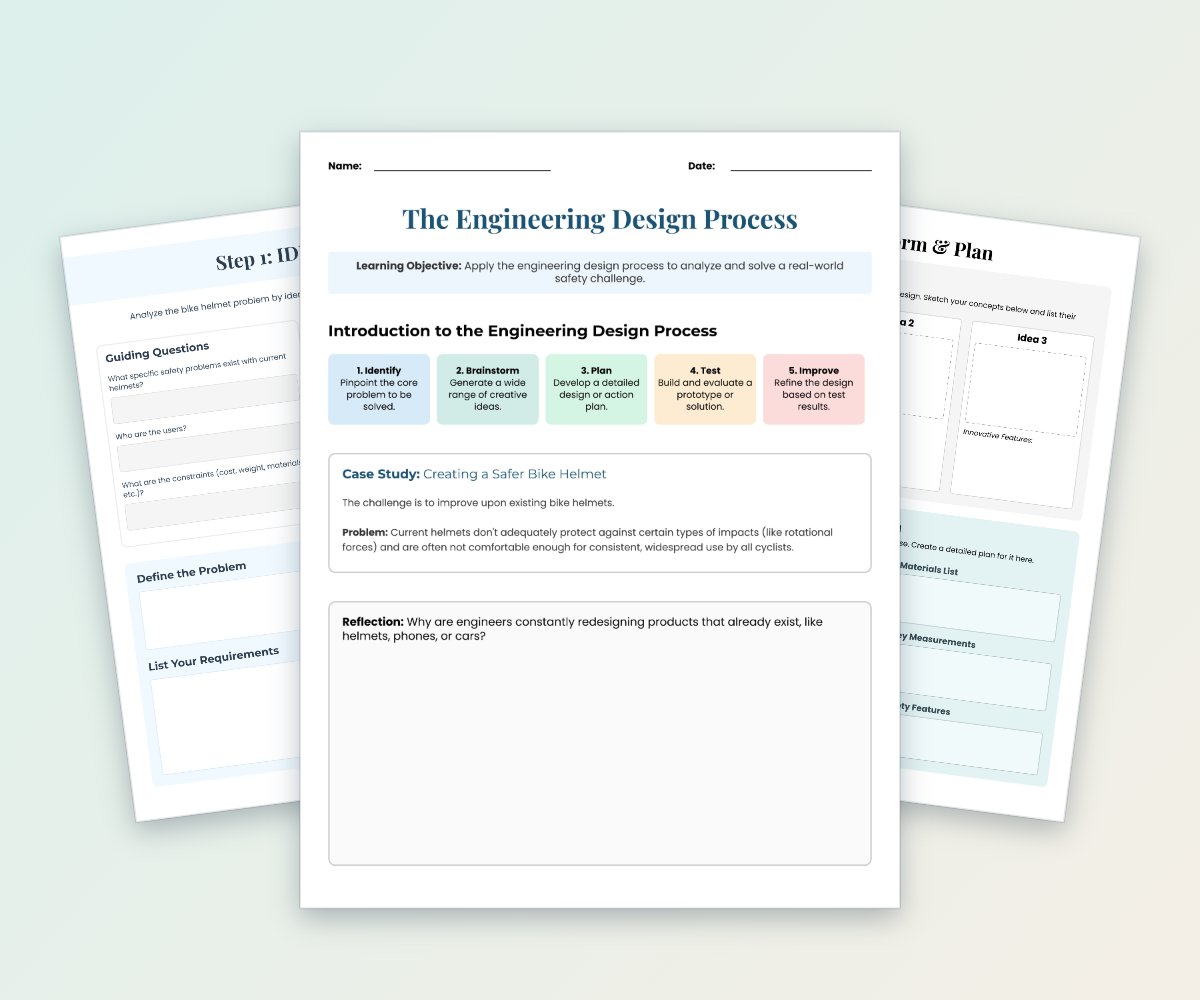
Students apply the engineering design process to analyze a bike helmet safety challenge.
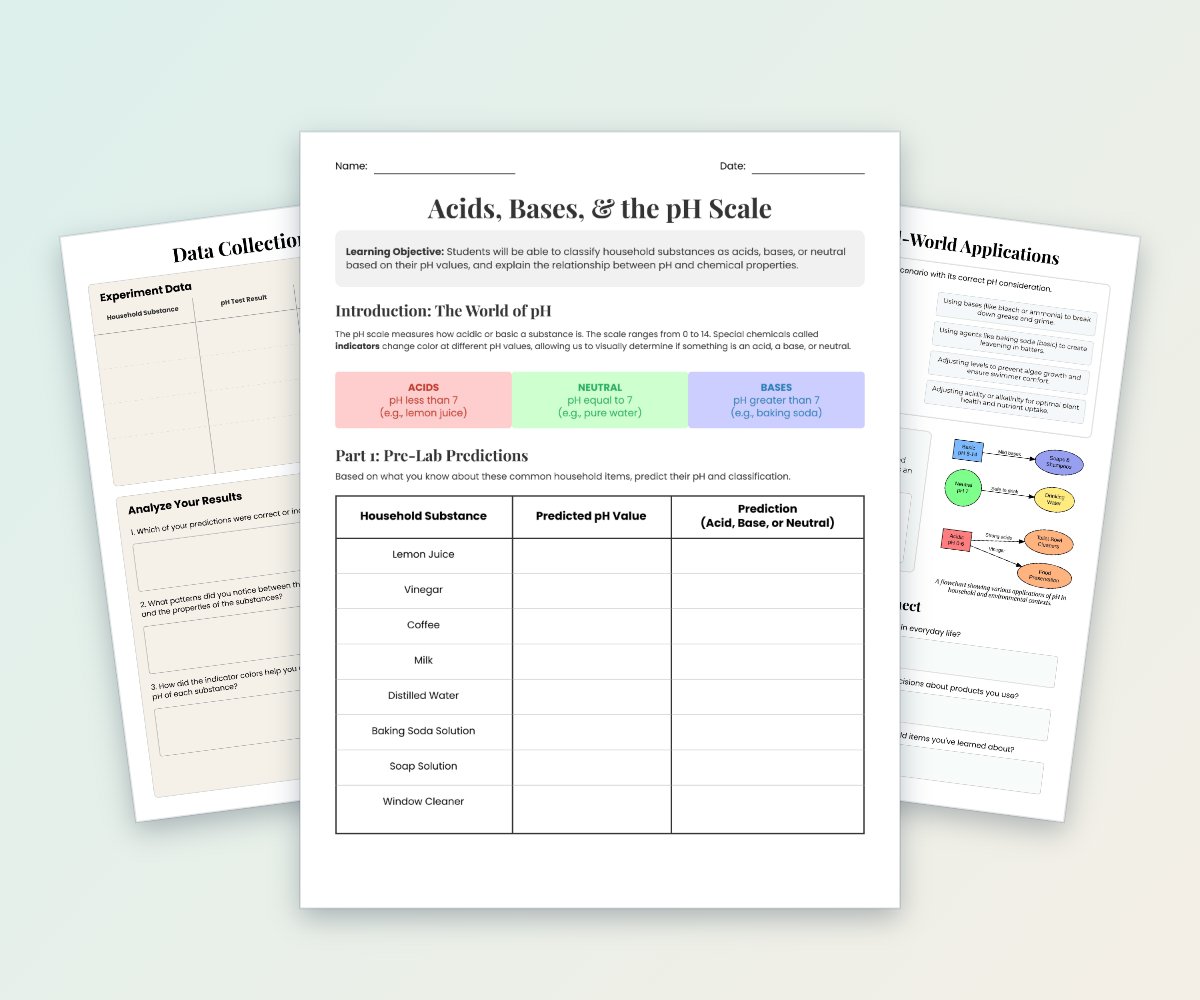
This three-page science worksheet introduces the pH scale and helps students classify household substances as acidic, basic, or neutral.
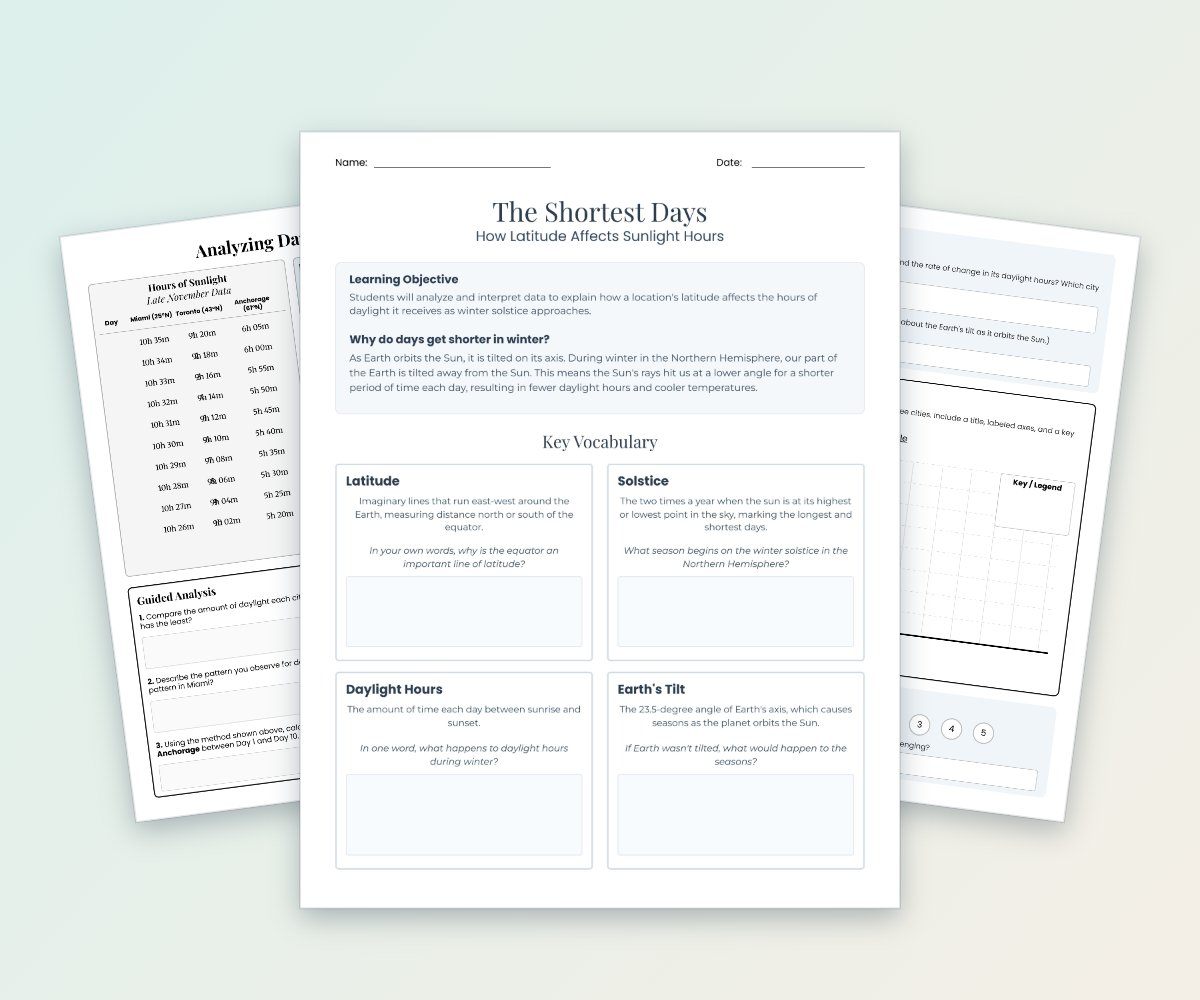
Students explore how latitude affects daylight hours as the winter solstice approaches.
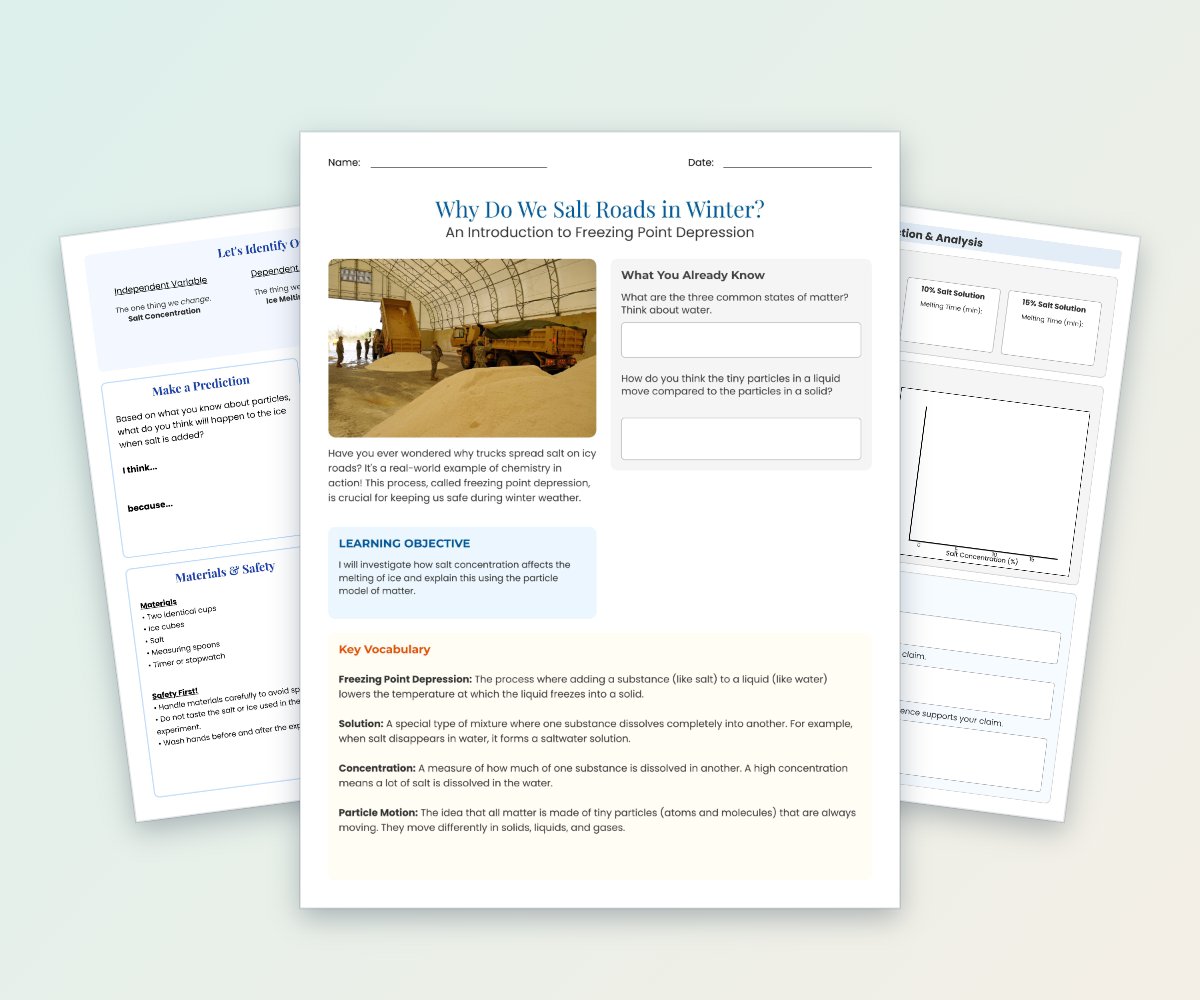
Students investigate how salt concentration affects ice melting and explain the results using the particle model of matter.
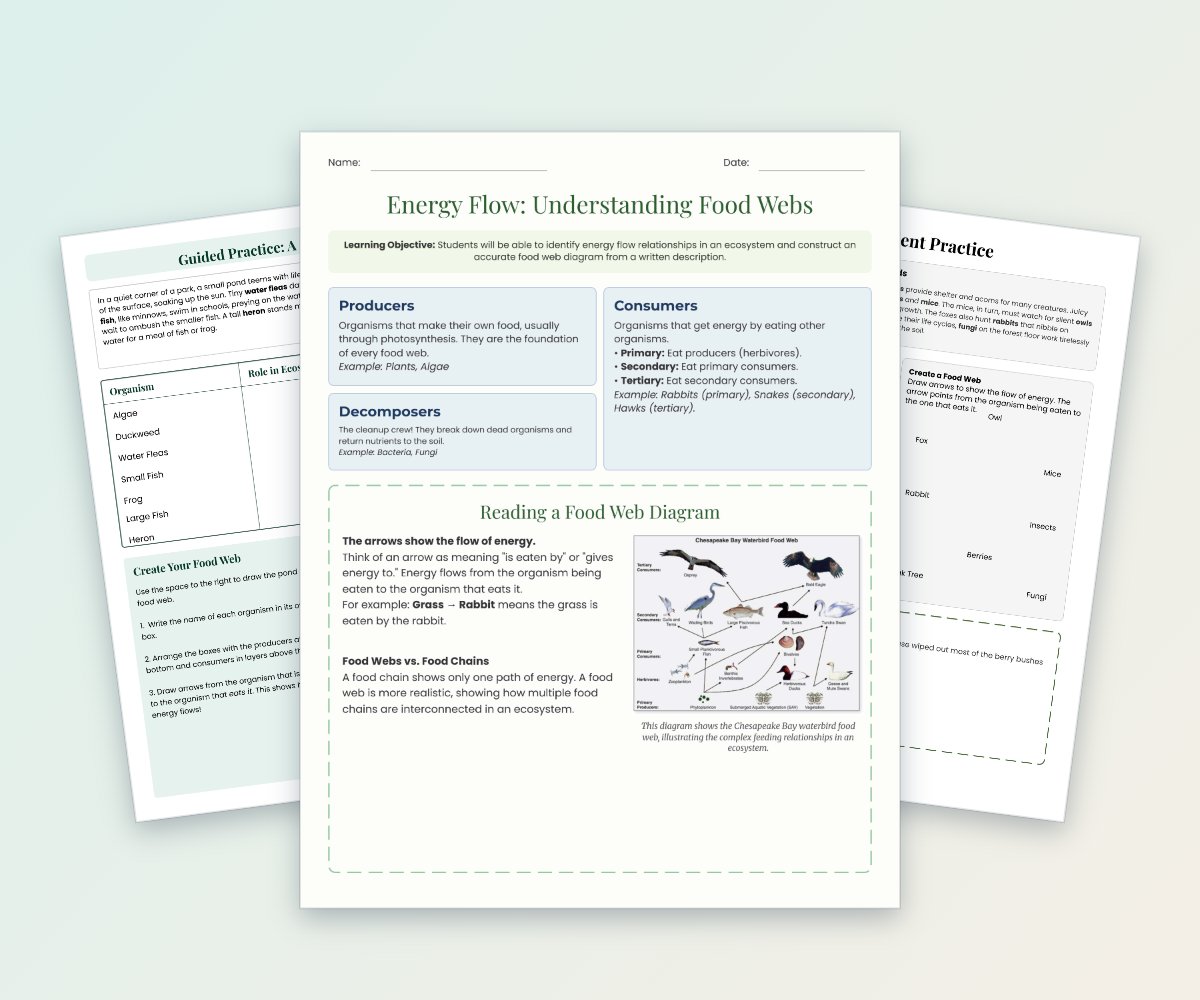
This four-page science resource introduces producers, consumers, decomposers, food chains, and energy flow in ecosystems.
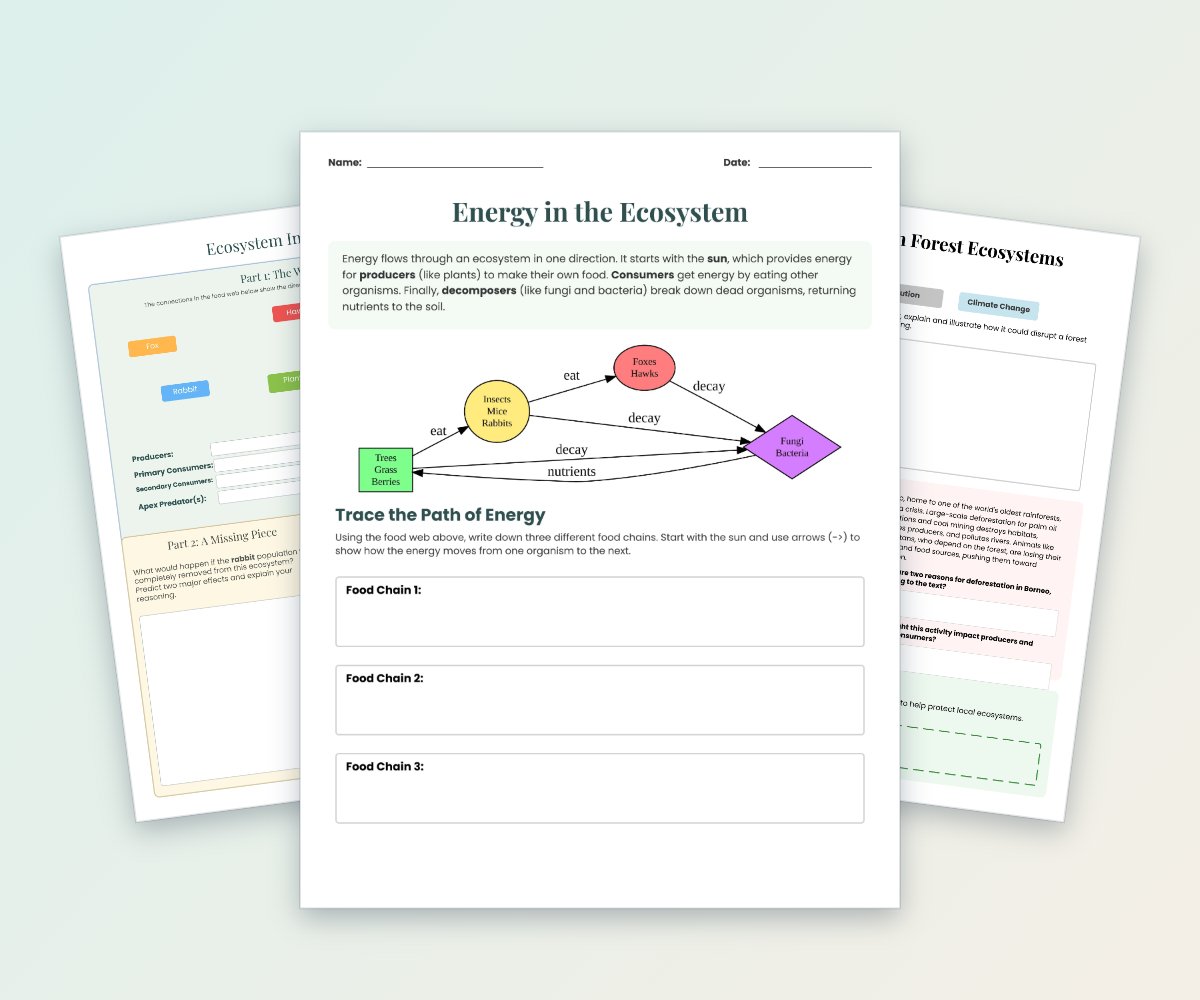
Students explore how energy moves through ecosystems by tracing food chains, identifying trophic roles, and analyzing food-web changes.
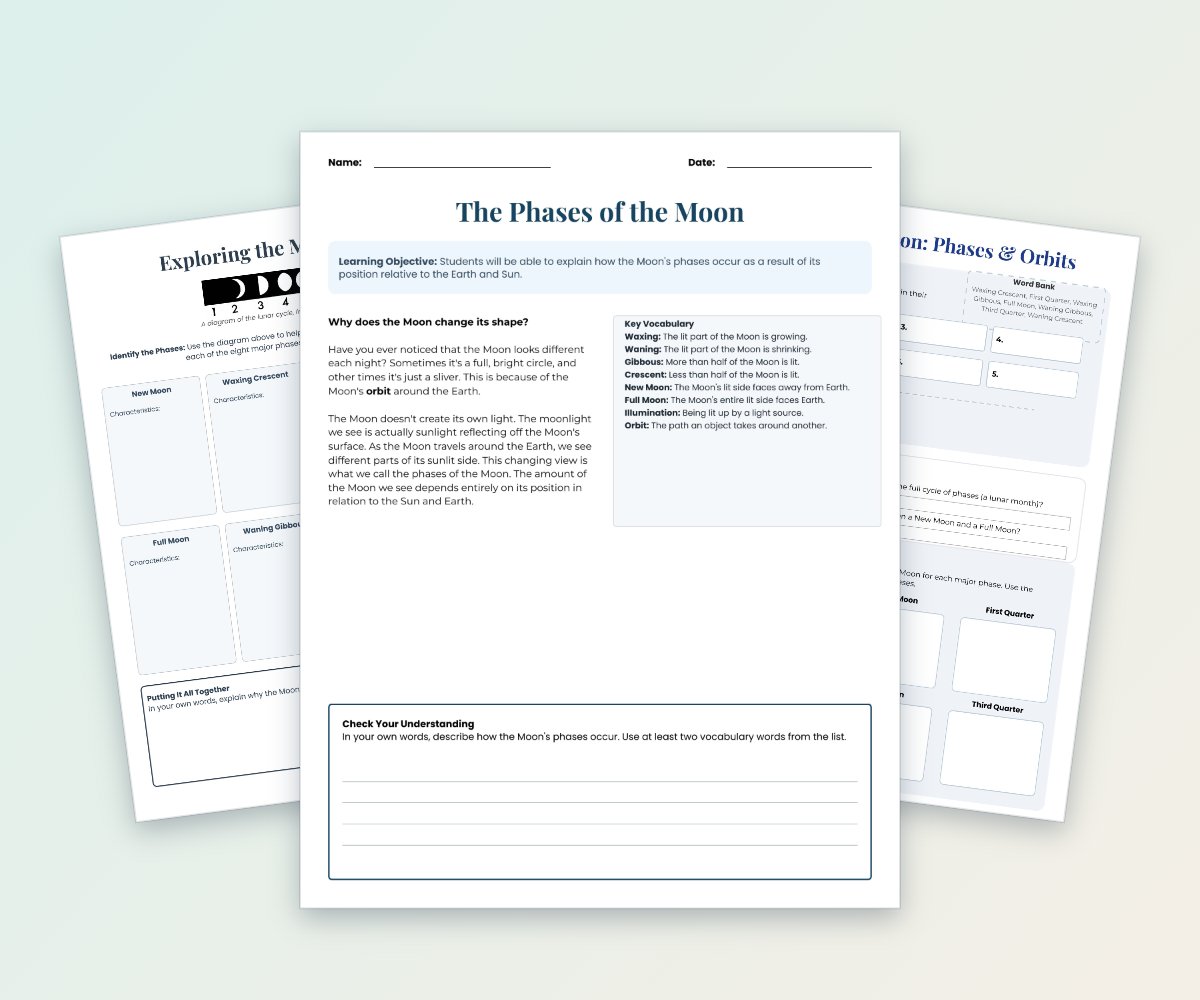
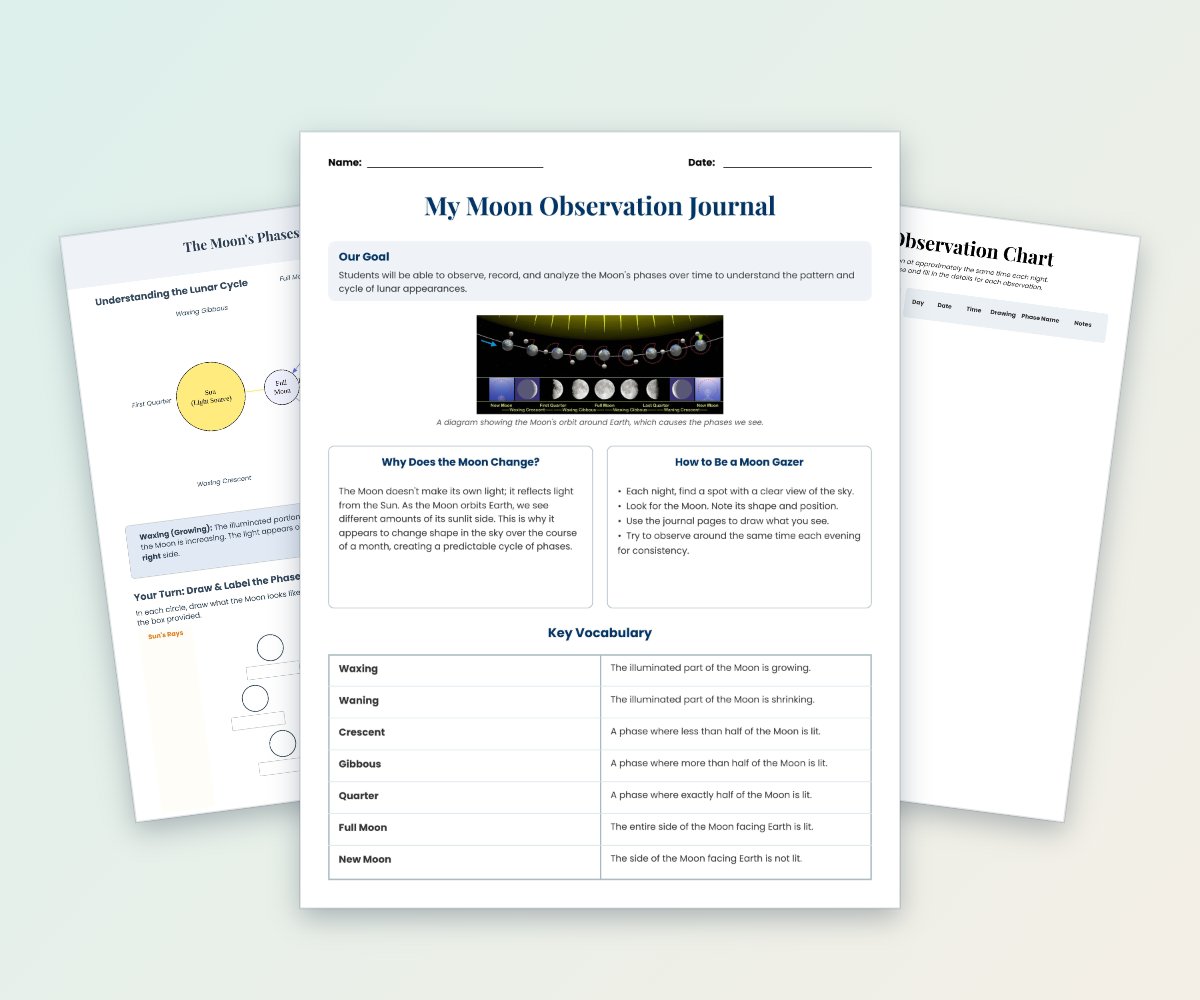
A four-page worksheet explaining how the Moon’s position relative to Earth and the Sun creates its phases.
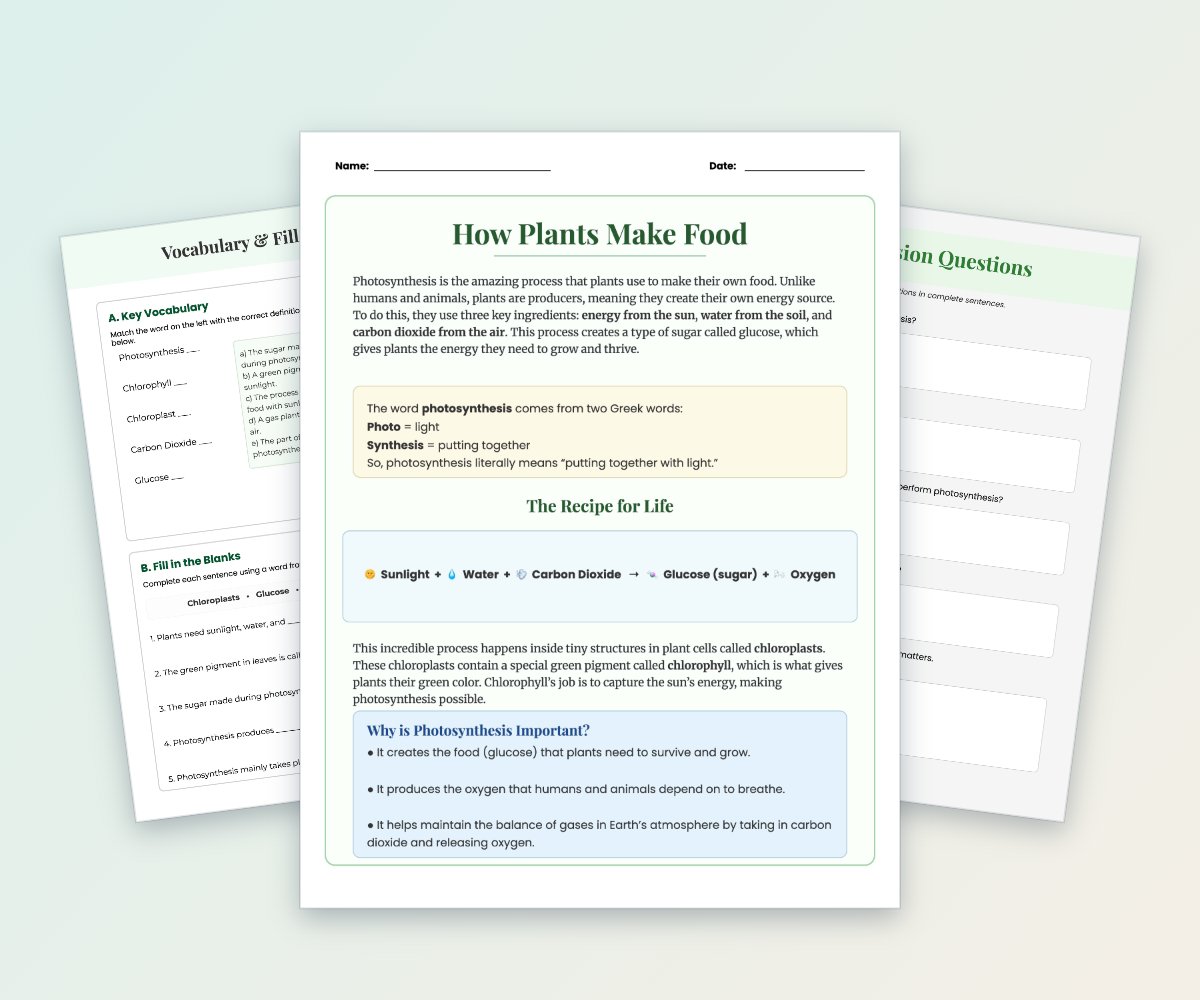
This five-page resource introduces how plants make food through photosynthesis, including sunlight, water, carbon dioxide, glucose, oxygen, chlorophyll, and chloroplasts.
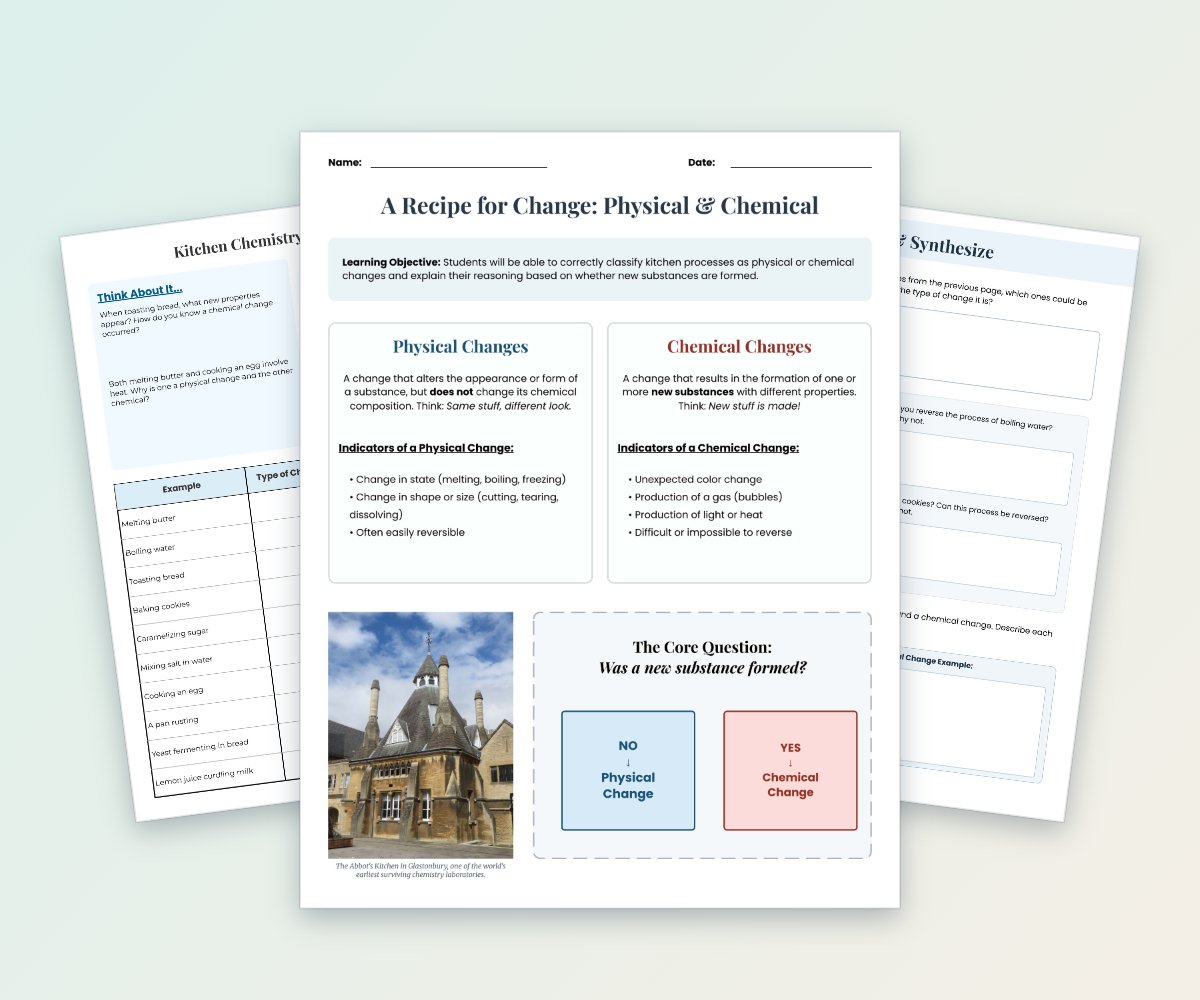
This three-page worksheet introduces physical and chemical changes using familiar kitchen processes such as melting butter, baking cookies, and rusting.
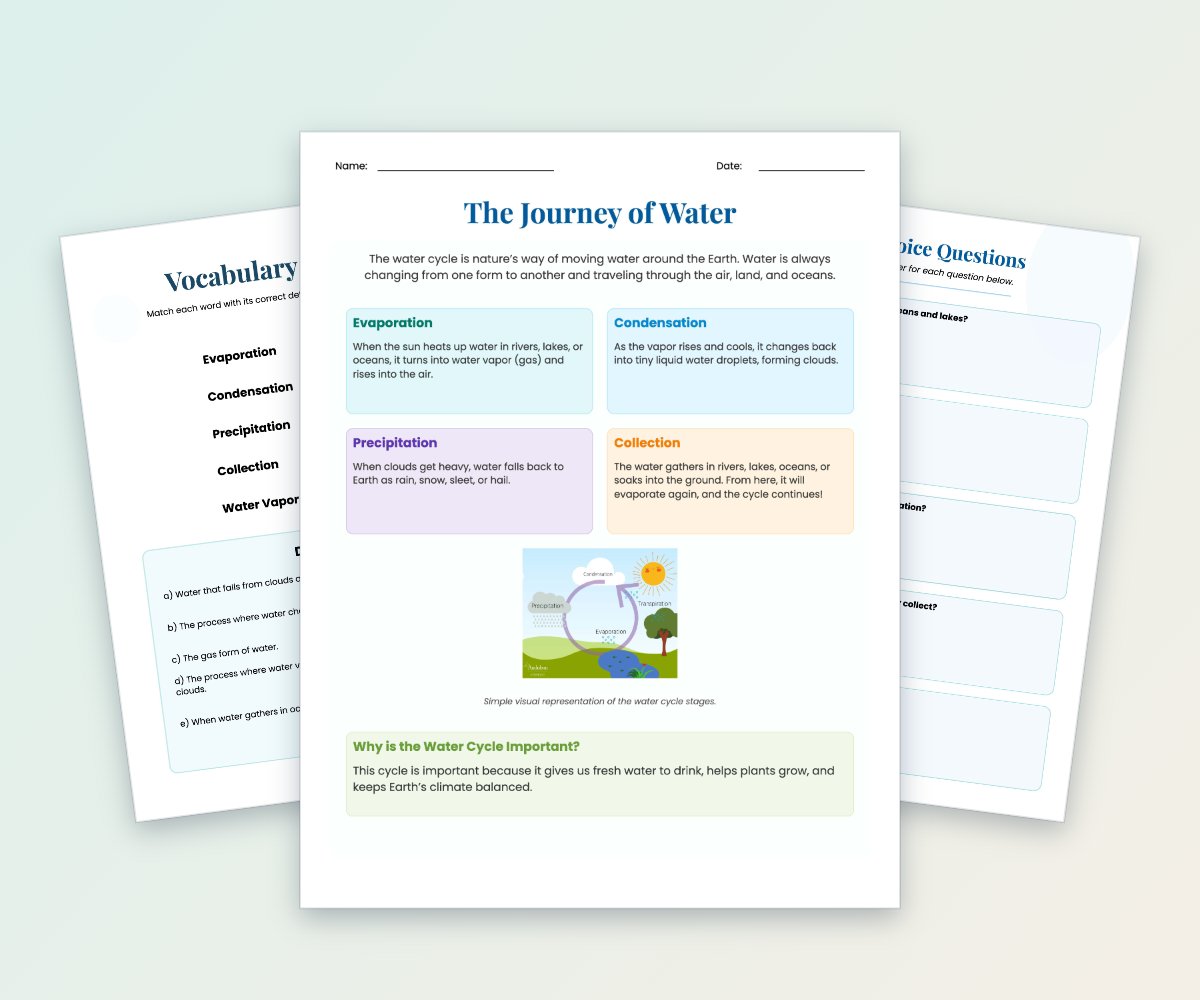
This six-page resource introduces evaporation, condensation, precipitation, collection, and water vapor through student-friendly explanations and visuals.
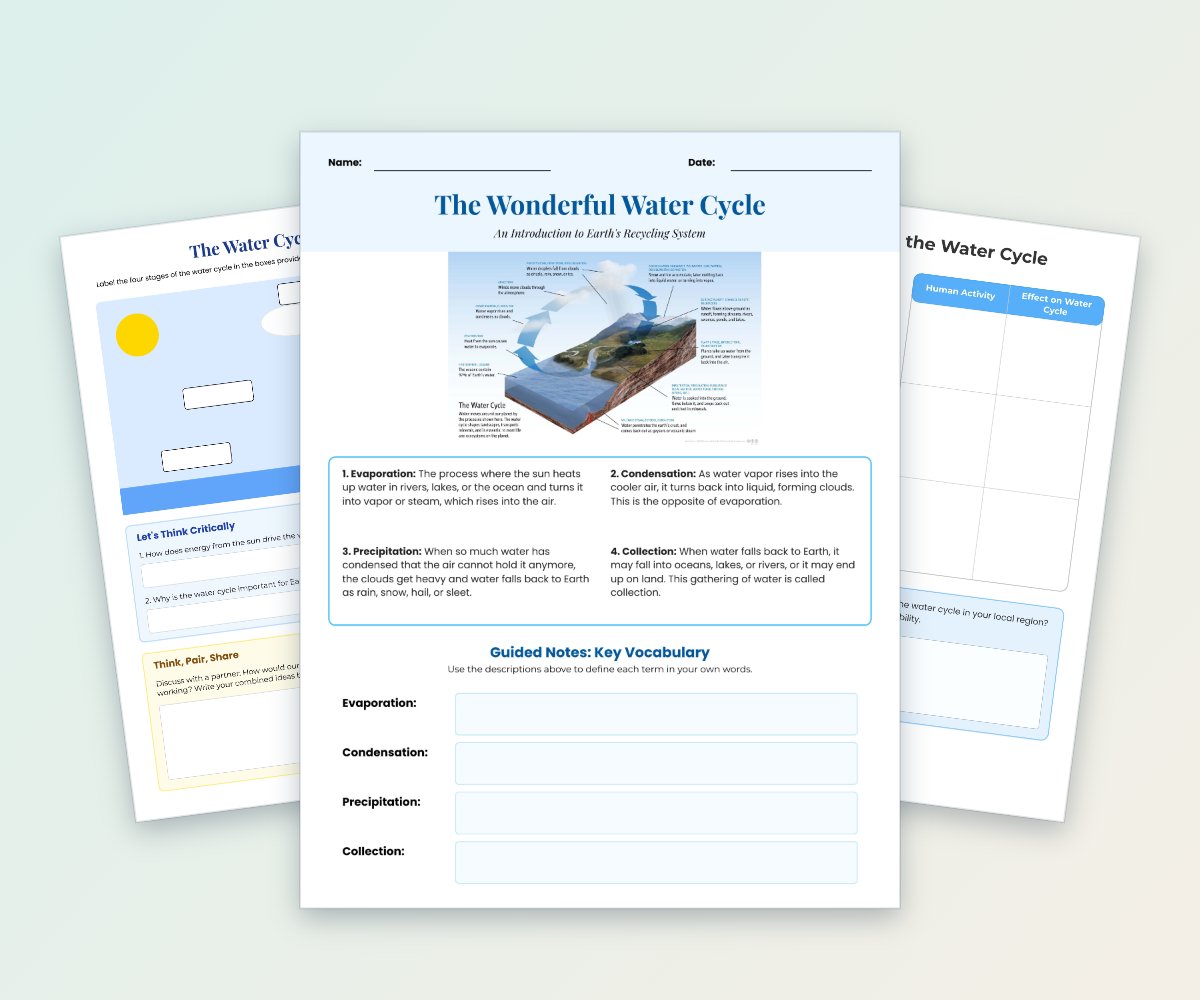
This four-page resource introduces evaporation, condensation, precipitation, and collection through an illustrated water-cycle overview and guided notes.
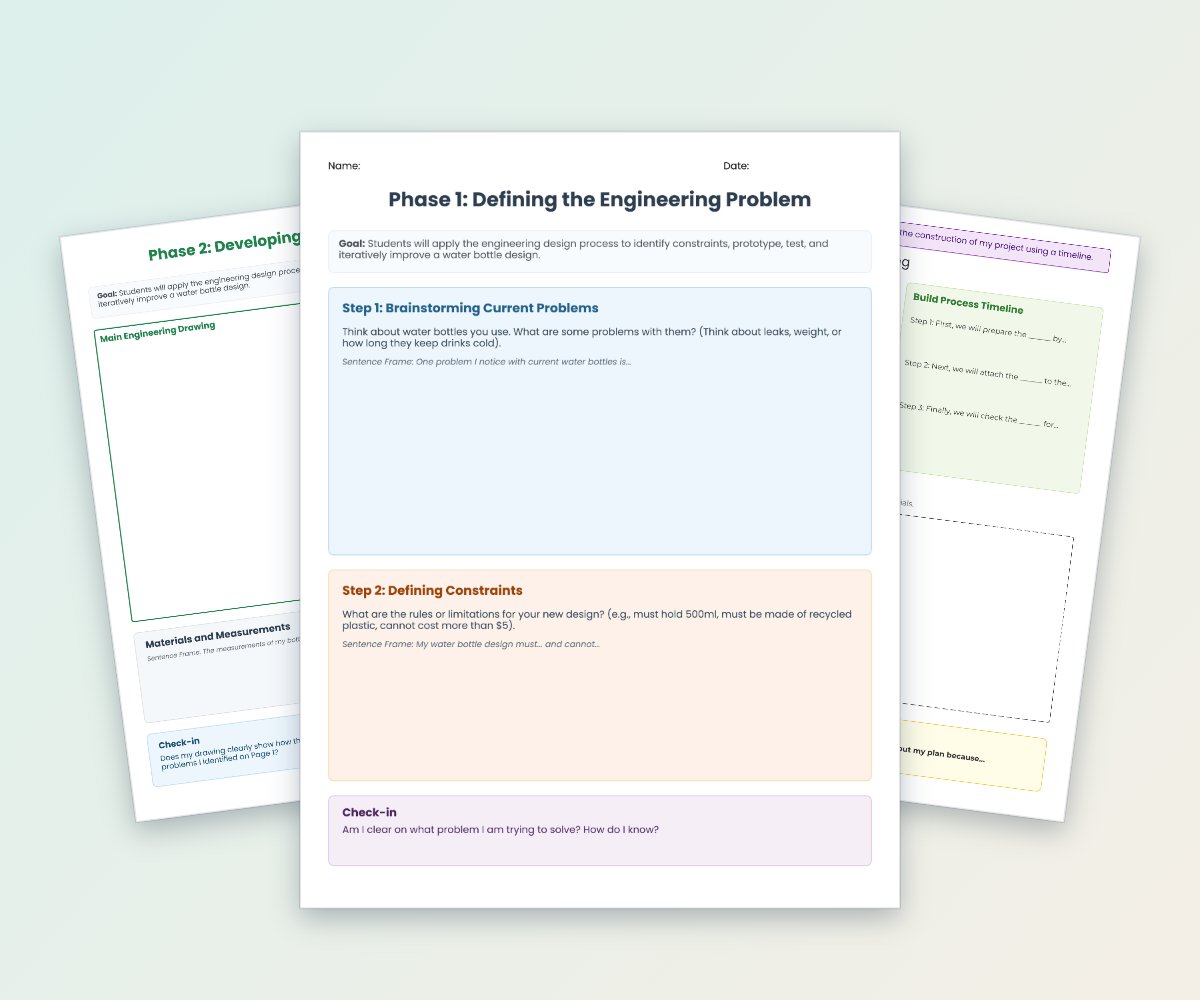
Students identify water bottle problems, define design constraints, sketch a prototype, plan construction, and collect testing data.
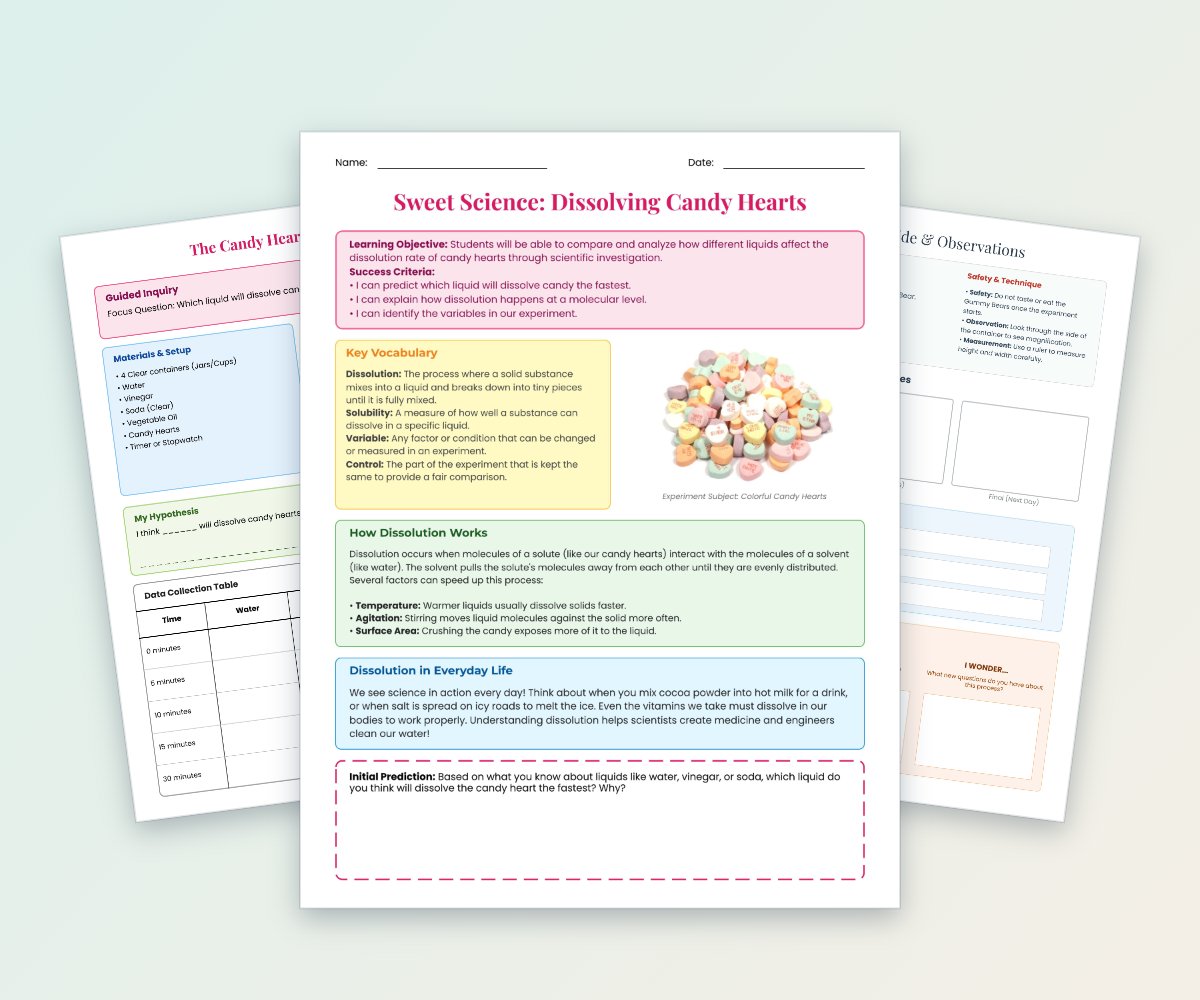
Students investigate how water, vinegar, soda, and vegetable oil affect the dissolution rate of candy hearts.
Students learn why the Moon appears to change shape and use a 30-day observation chart to track its phases.
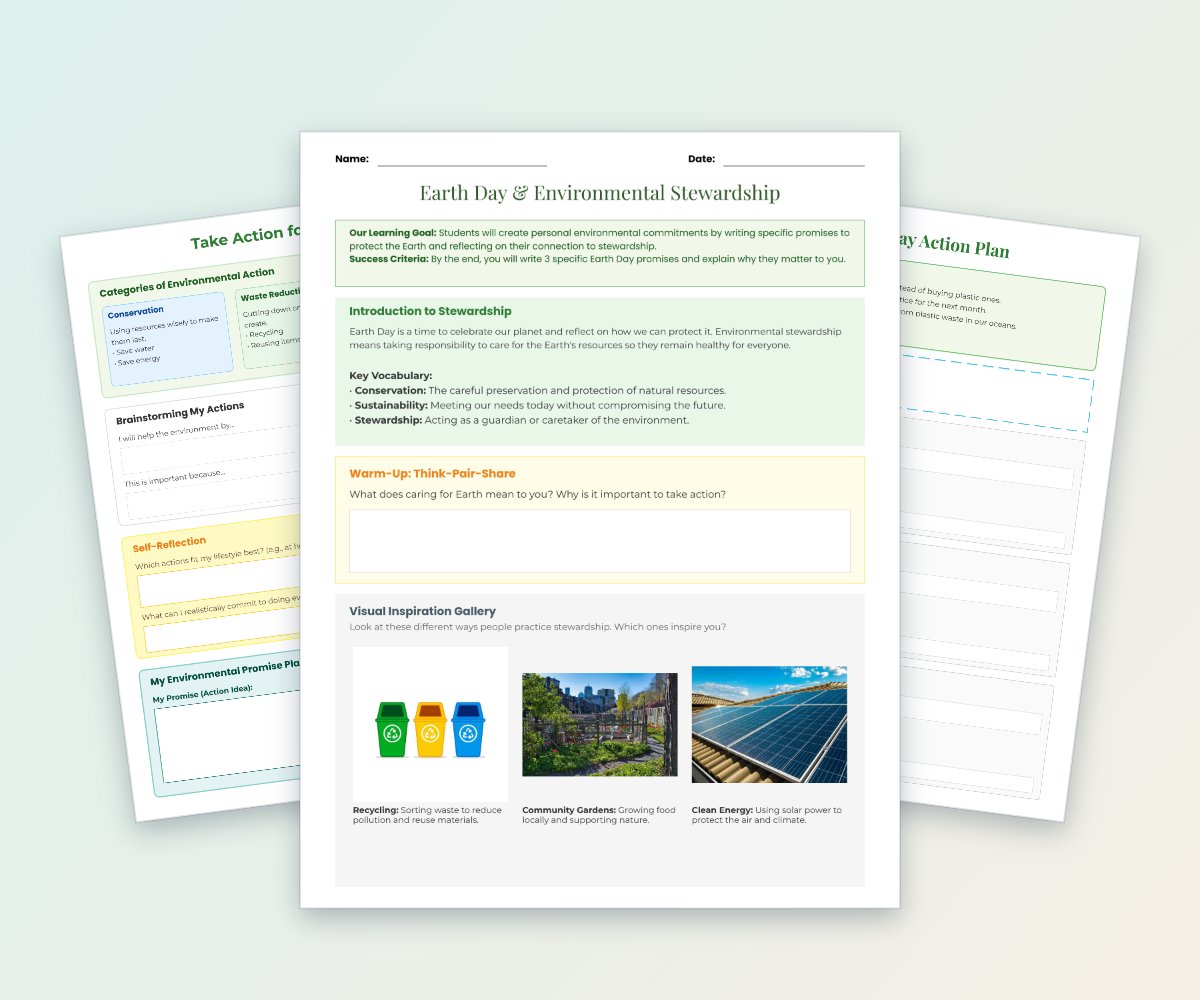
This four-page Earth Day activity pack guides students through environmental stewardship vocabulary, discussion, action brainstorming, and personal promise planning.
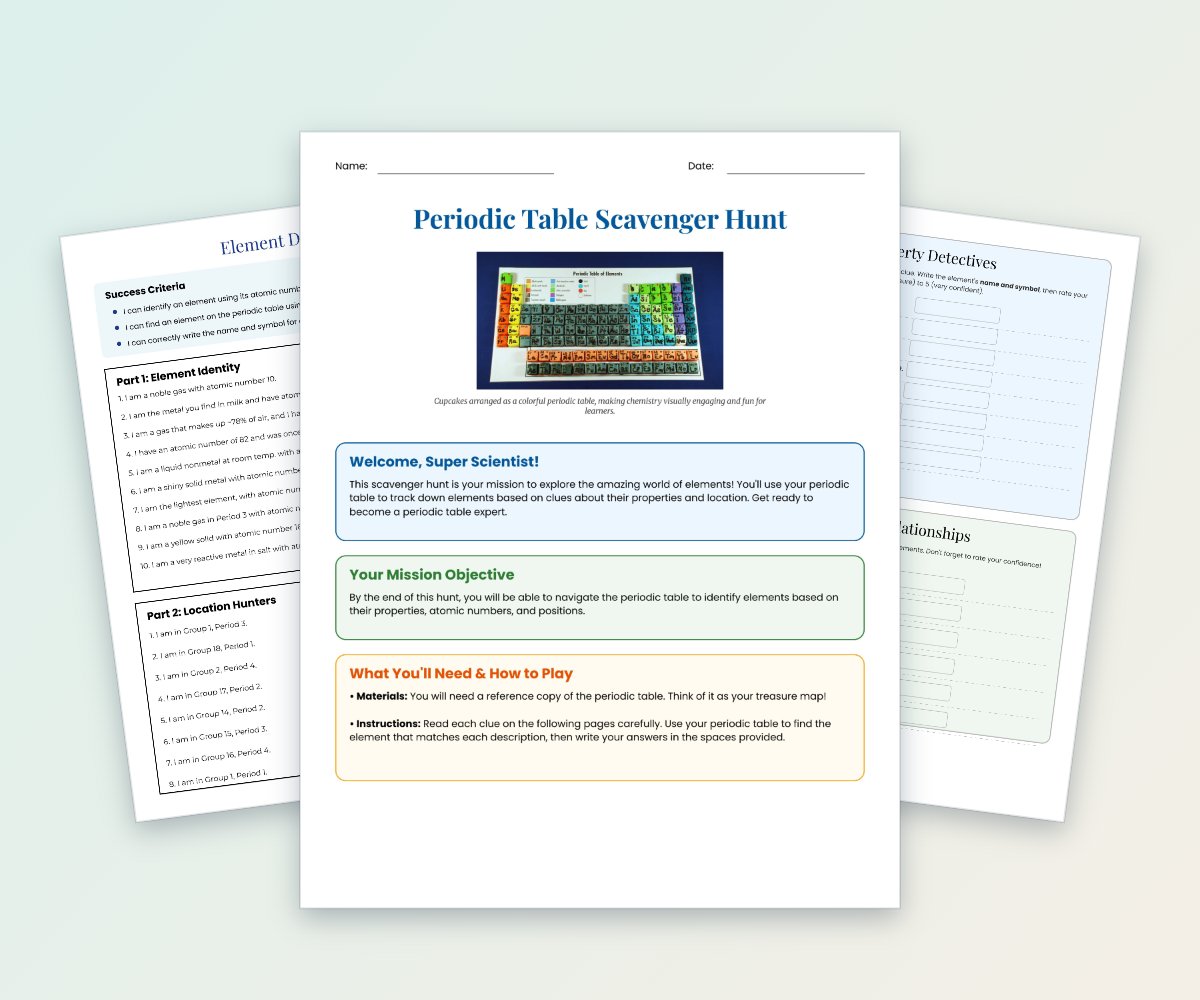
Students solve element clues using atomic numbers, properties, groups, and periods on the periodic table.
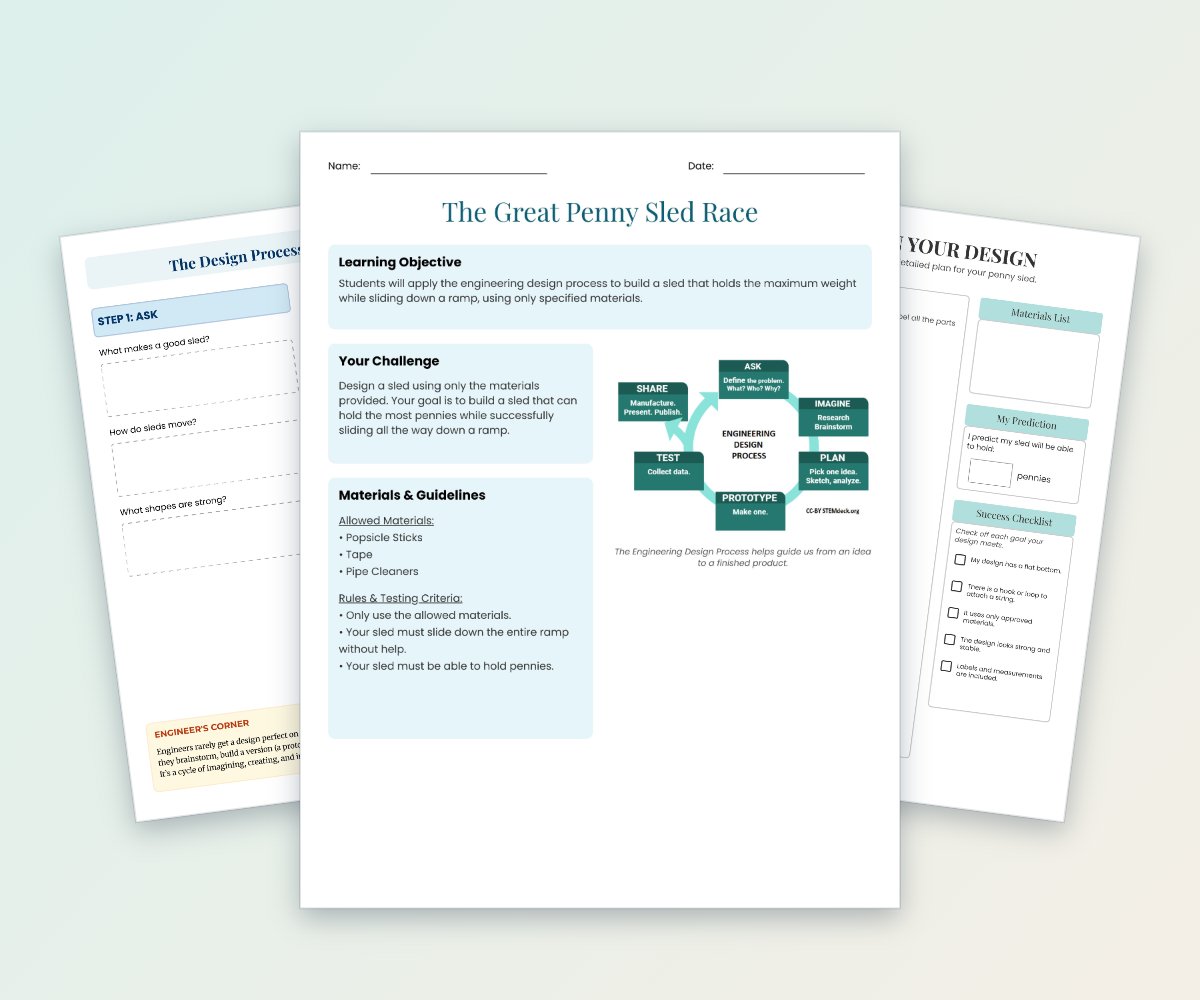
Students design, build, and test a sled made from limited materials to determine how many pennies it can carry down a ramp.
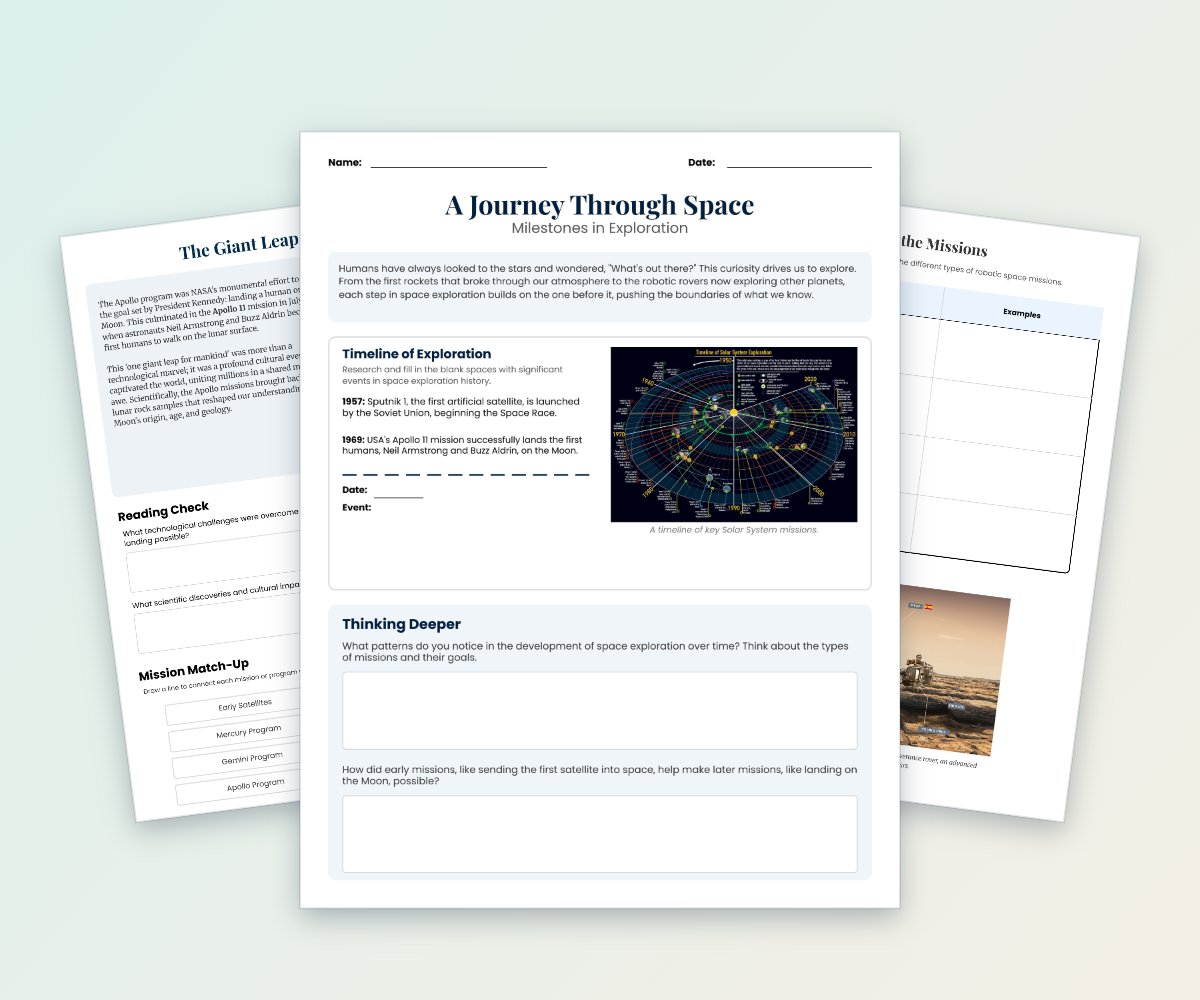
Students explore major milestones in space exploration, including Sputnik, Apollo 11, and robotic missions.