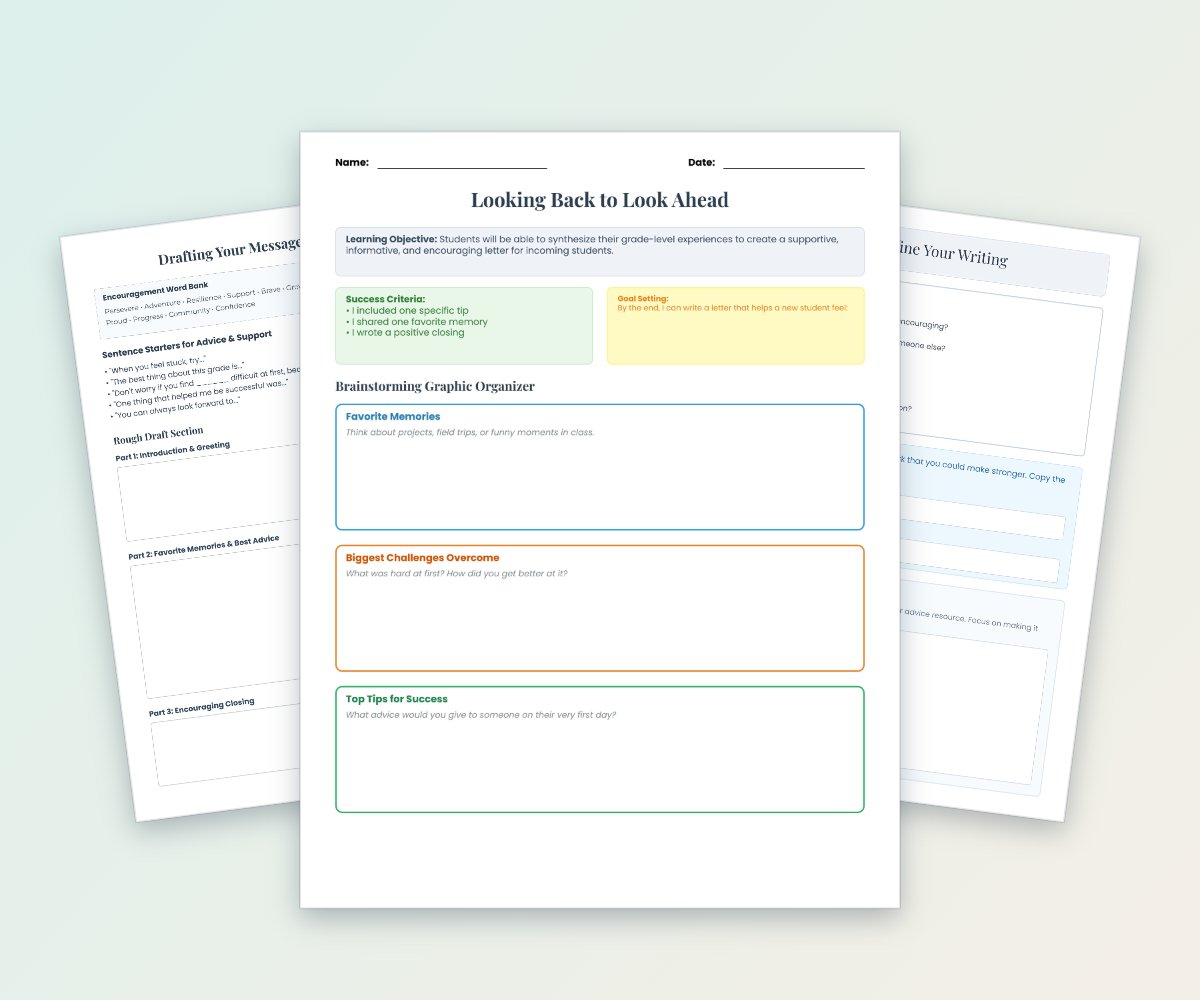
Welcome to Our Grade: A Letter Writing Pack
Students reflect on their grade-level experiences and write an encouraging letter to incoming students.
$5
Clear, practical resources for busy educators, organized so you can get from search to ready-to-teach quickly.
Students reflect on their grade-level experiences and write an encouraging letter to incoming students.
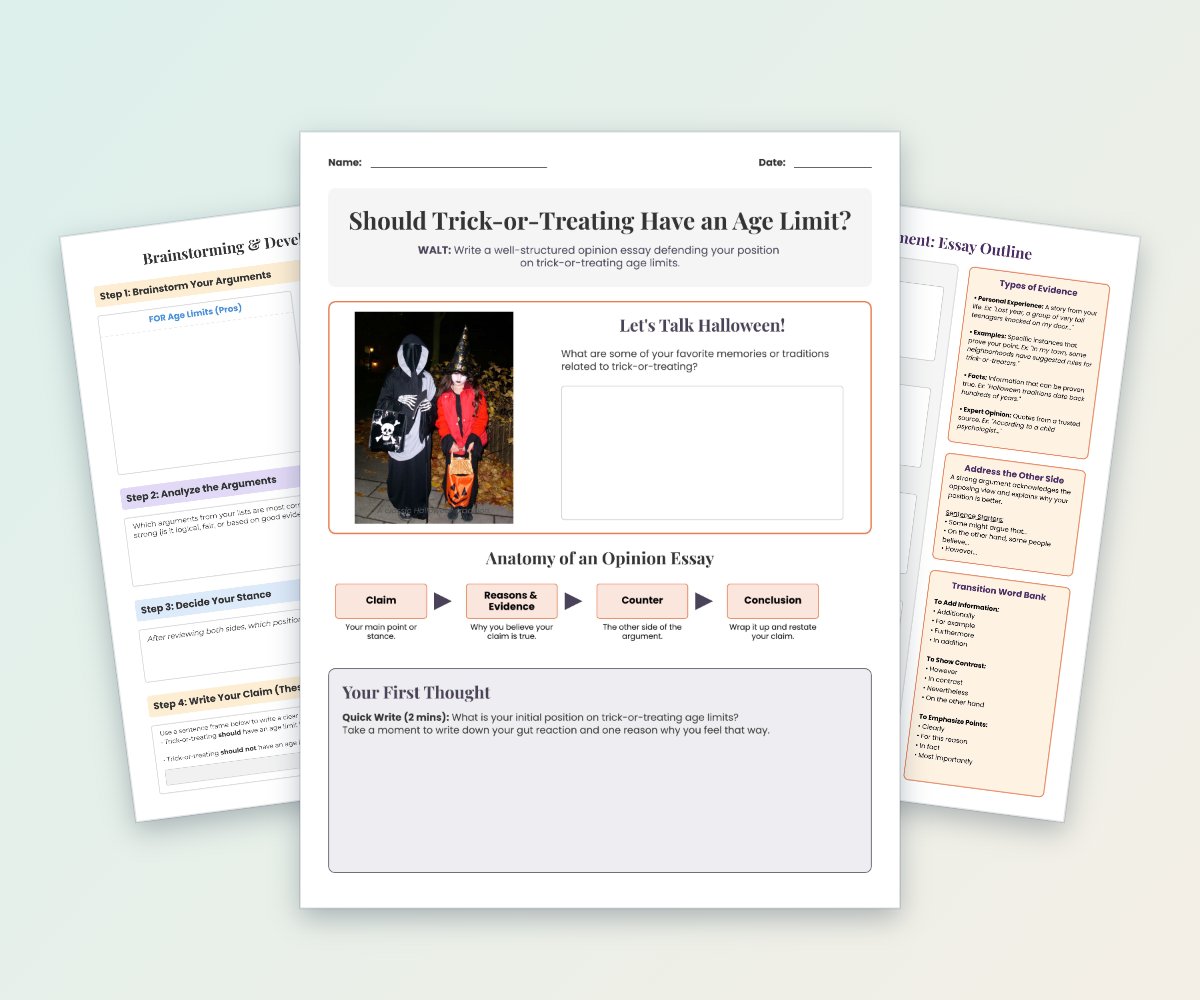
This six-page writing guide helps students develop and defend an opinion about whether trick-or-treating should have an age limit.
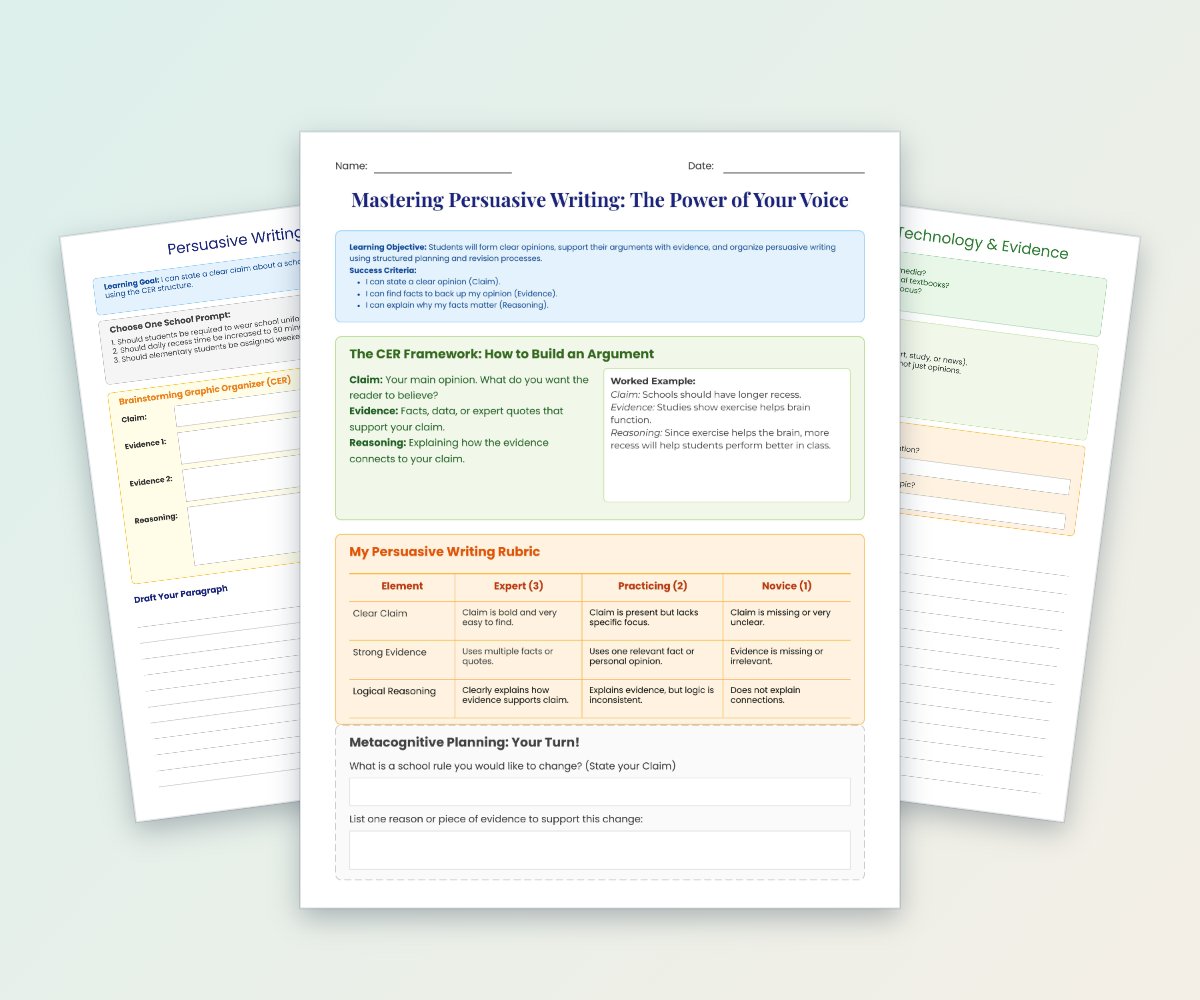
This eight-page writing pack teaches students to develop claims, support opinions with evidence, explain reasoning, and organize persuasive paragraphs using the CER framework.
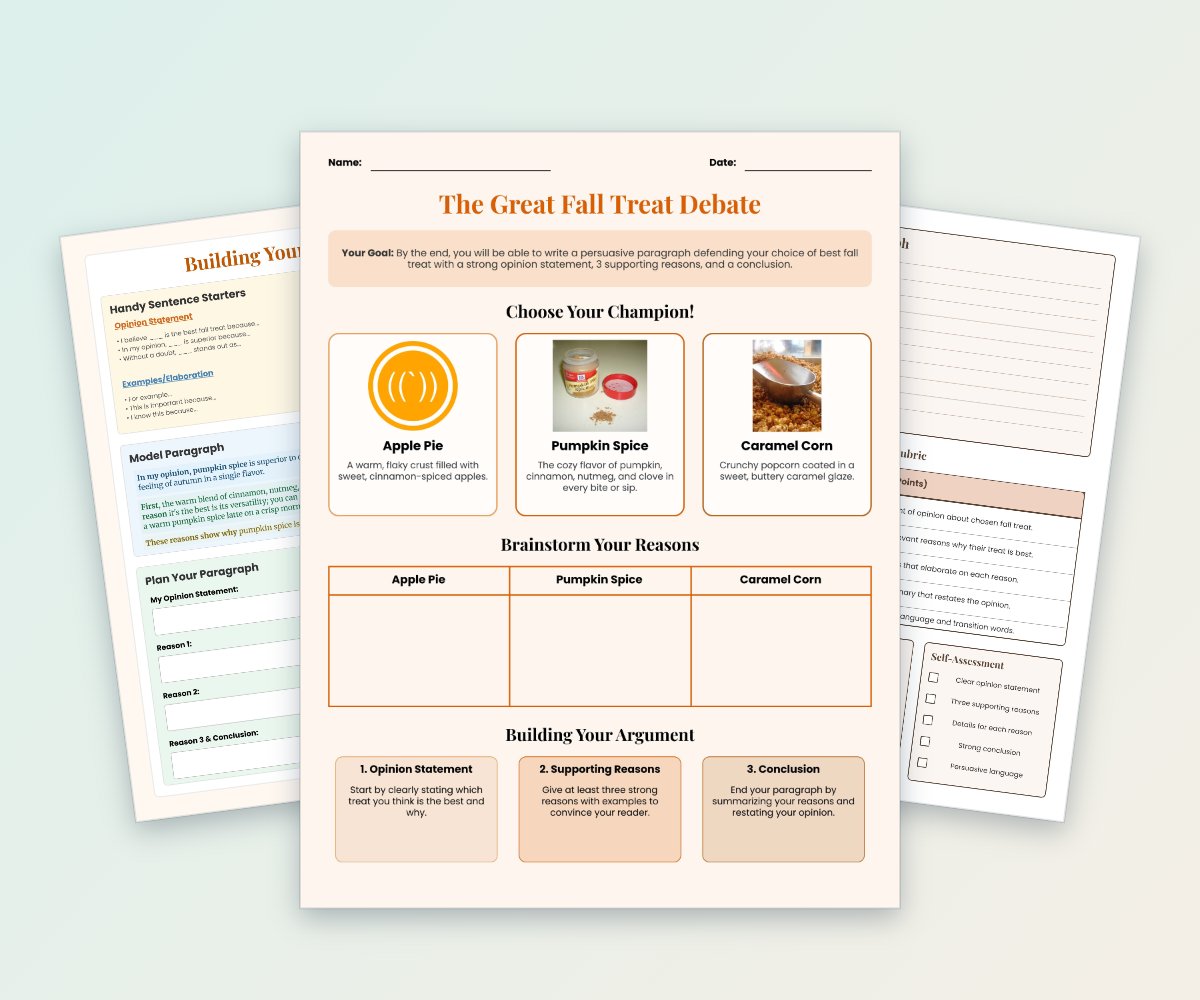
Students choose a favorite fall treat and develop a persuasive paragraph with an opinion statement, three supporting reasons, examples, and a conclusion.
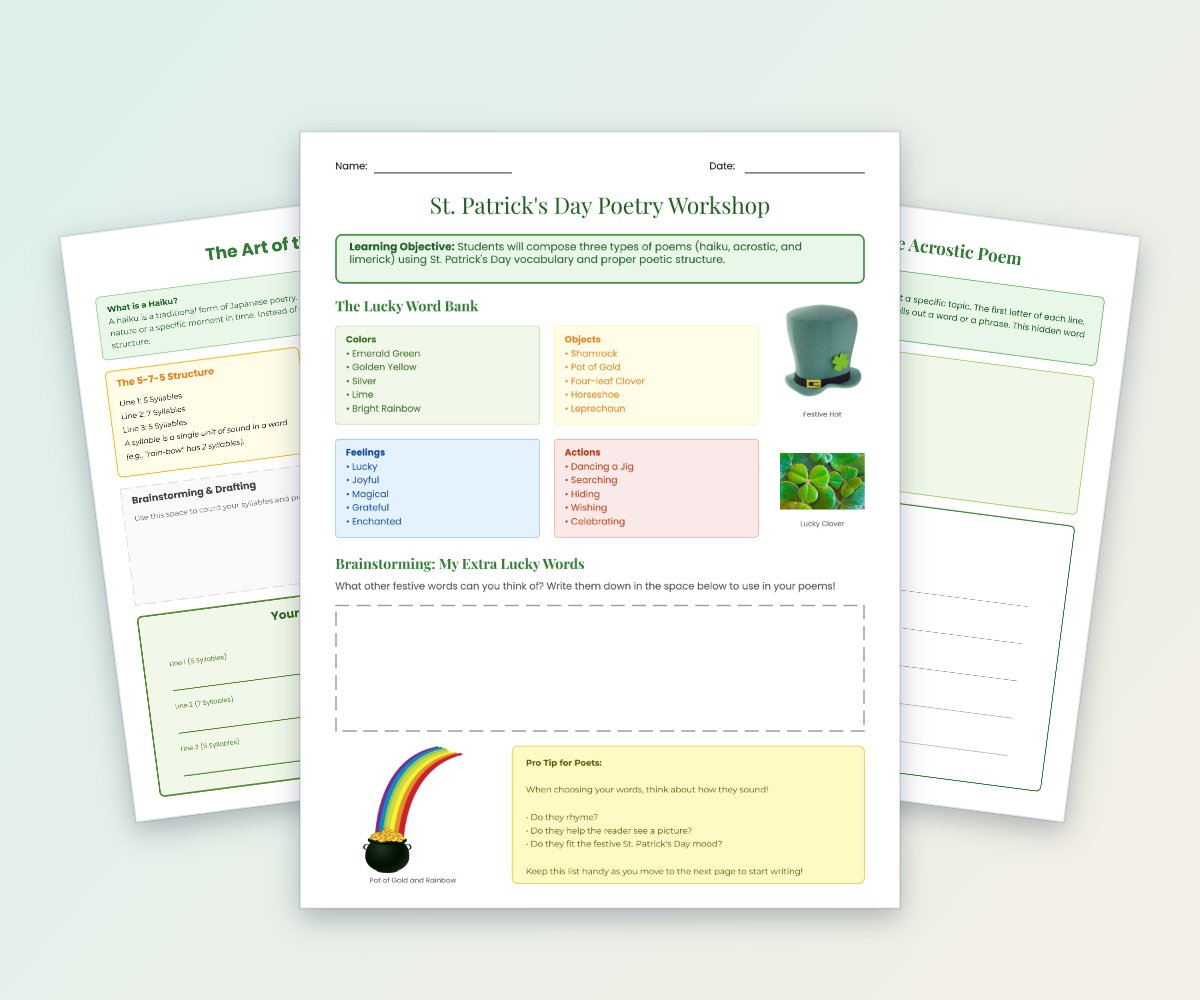
Students learn and practice writing haiku, acrostic poems, and limericks using St.
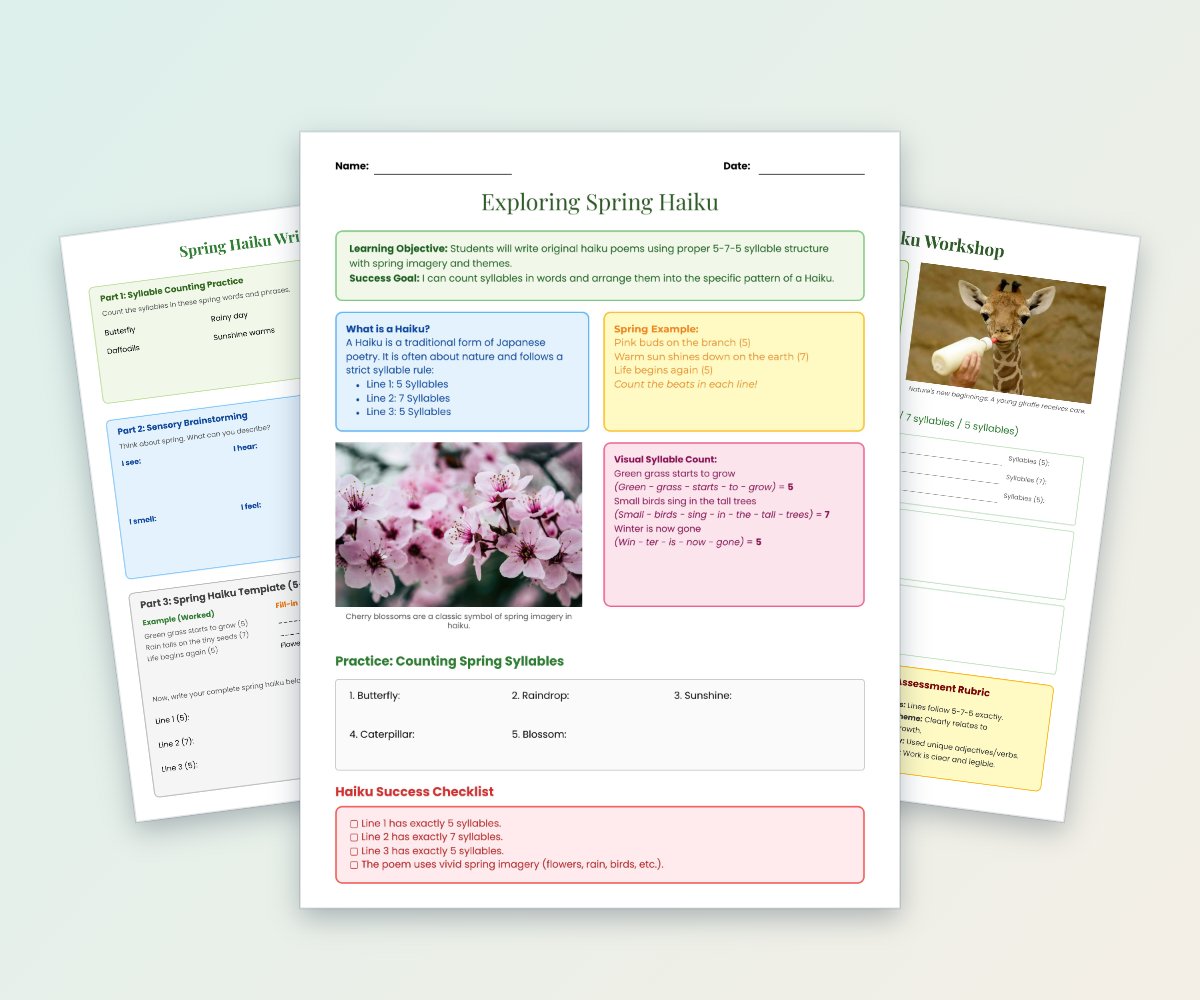
Teach students to write spring-themed haiku using the traditional 5-7-5 syllable structure.
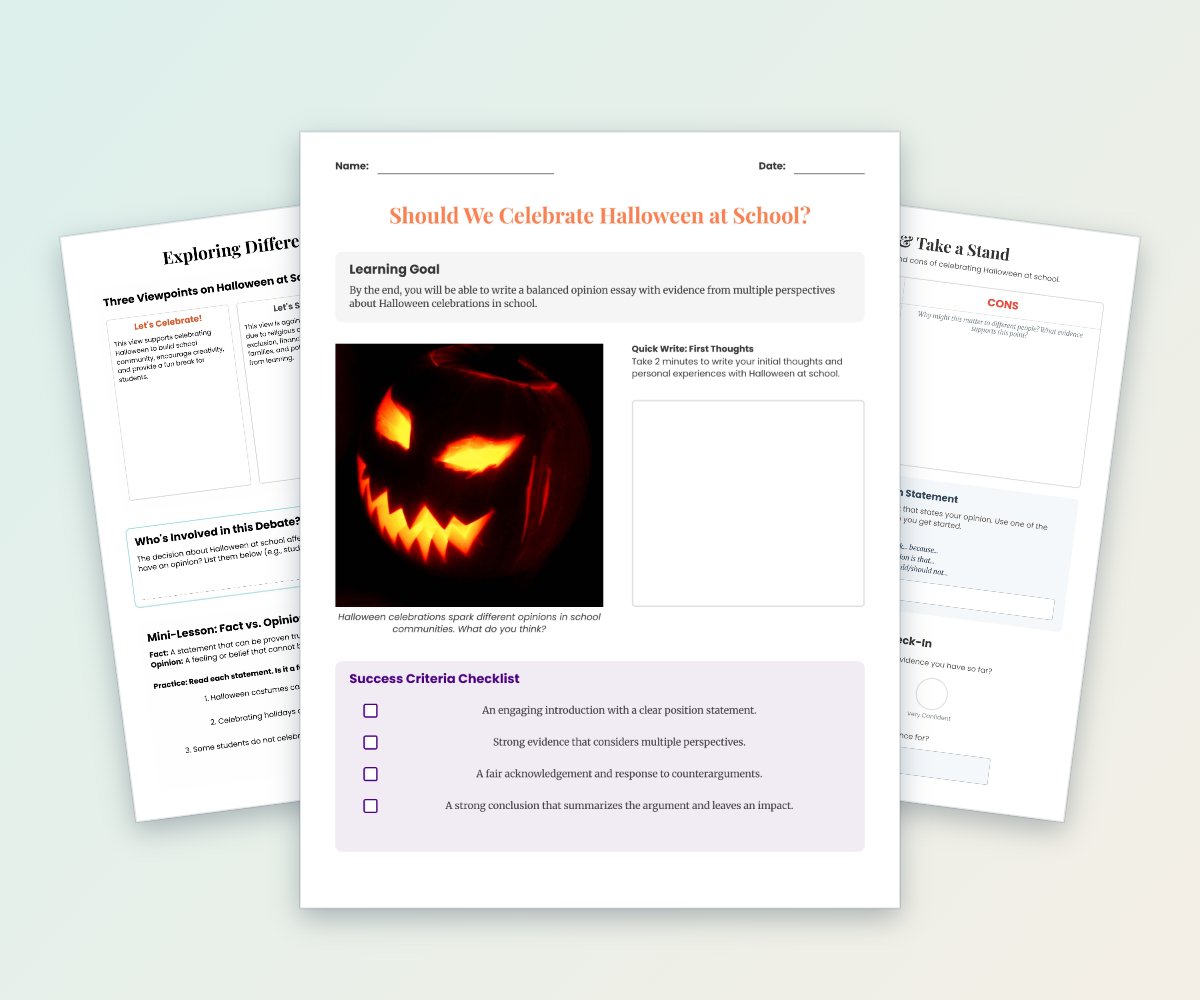
This eight-page writing resource guides students through developing a balanced opinion essay about Halloween celebrations at school.
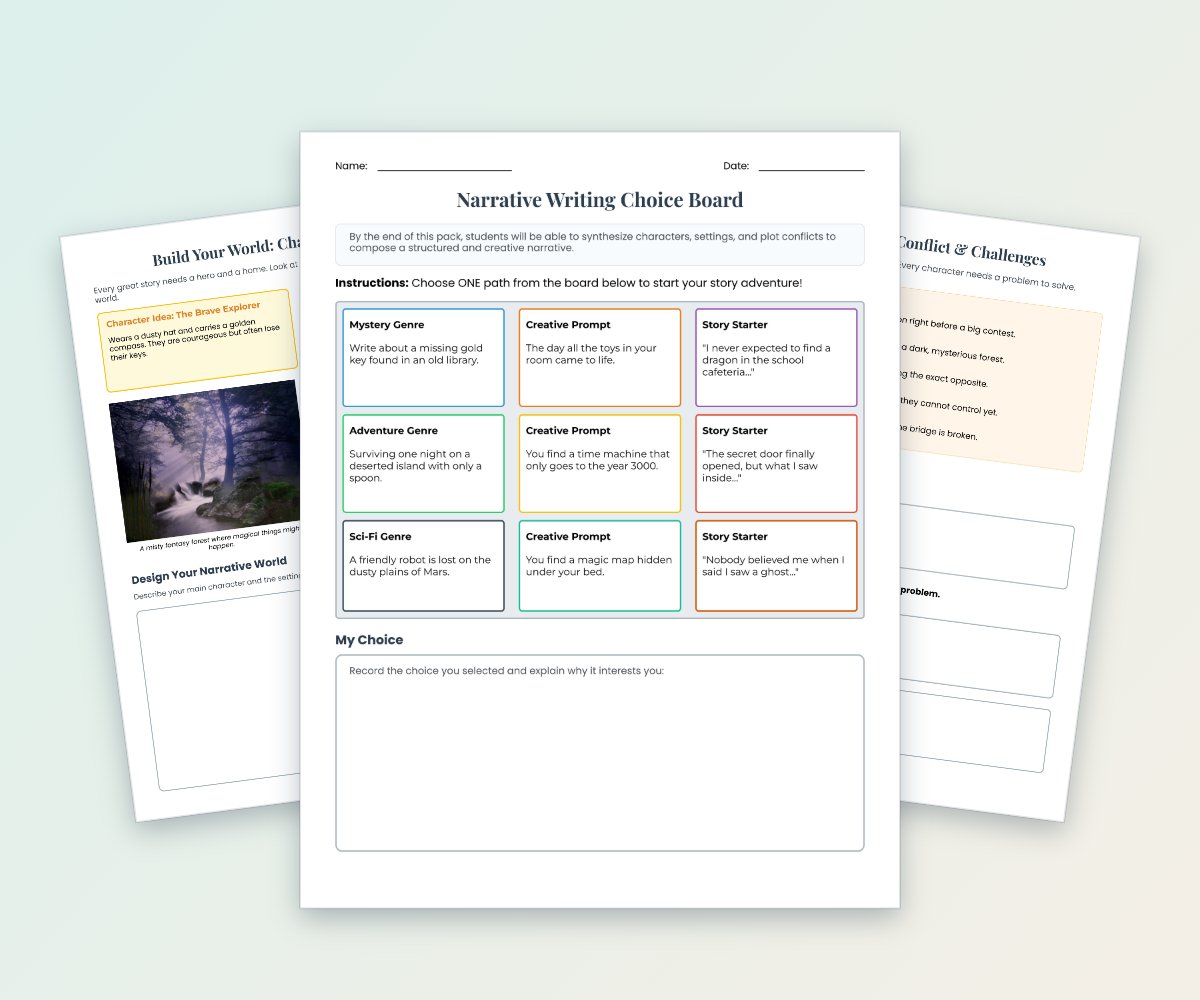
Guide students through planning creative narratives using genre-based choice boards, story starters, character and setting prompts, conflict development, and plot mapping.
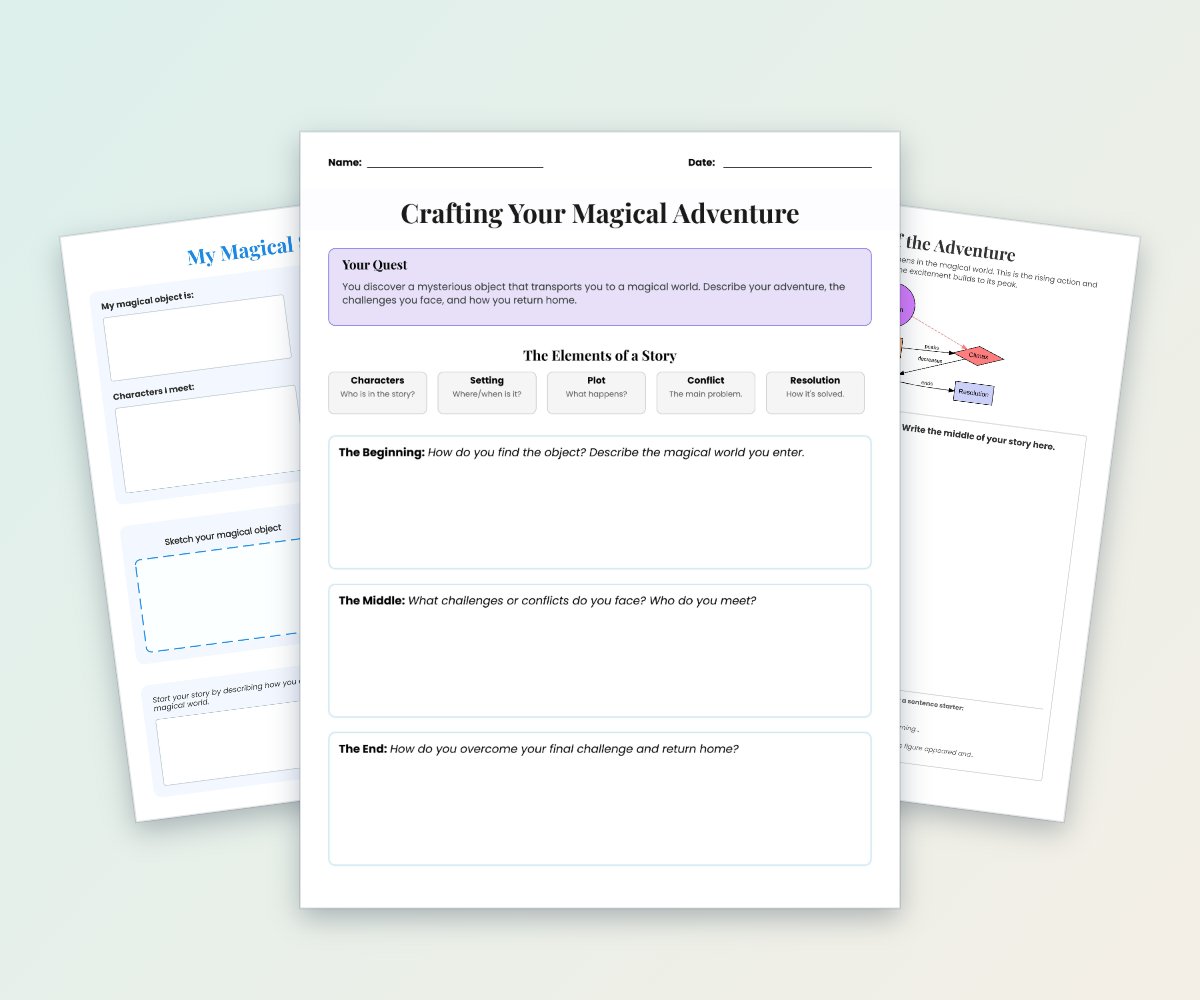
Students plan and write a magical adventure using story elements including characters, setting, conflict, rising action, climax, and resolution.
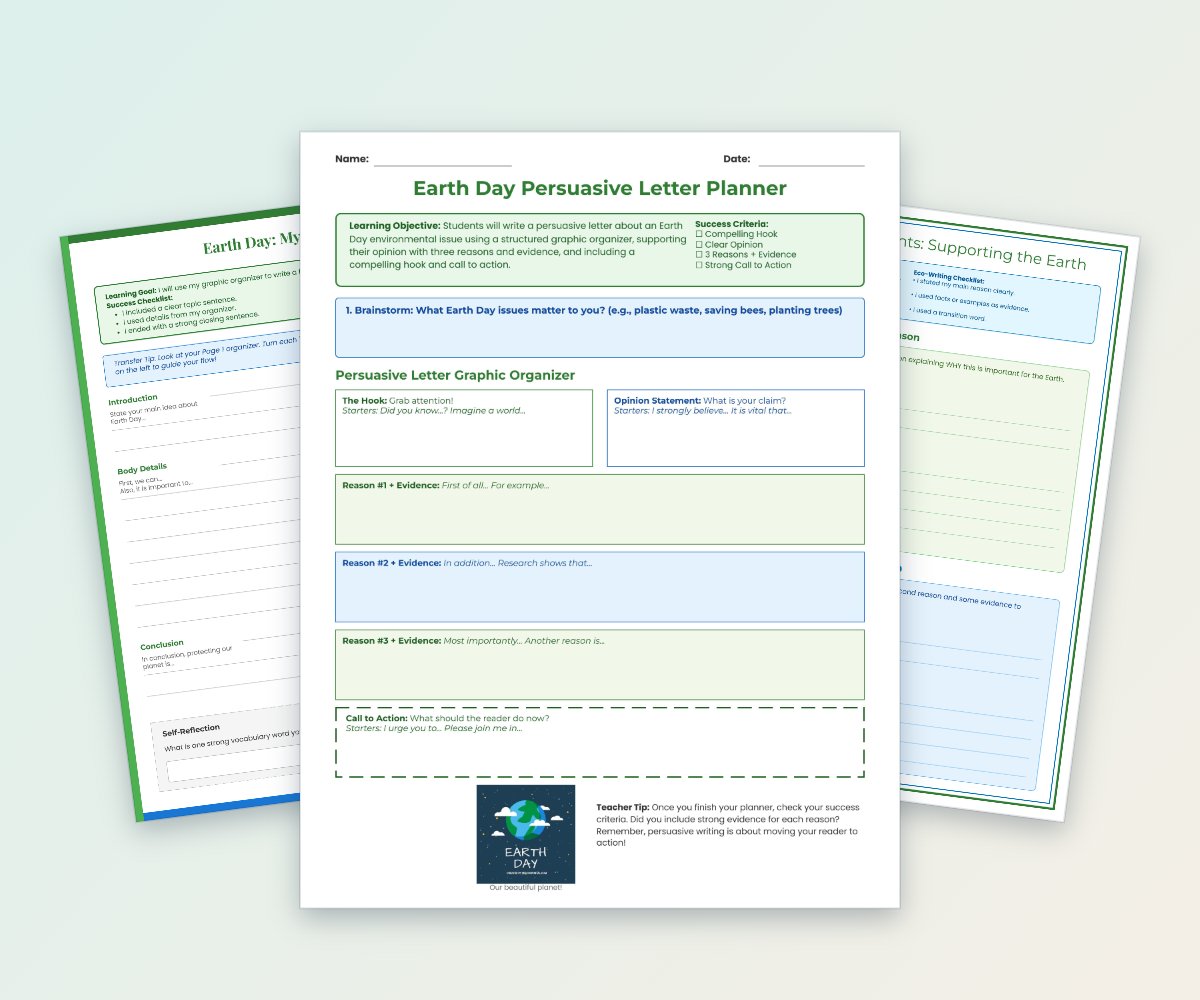
Students plan and draft a persuasive Earth Day letter about an environmental issue.
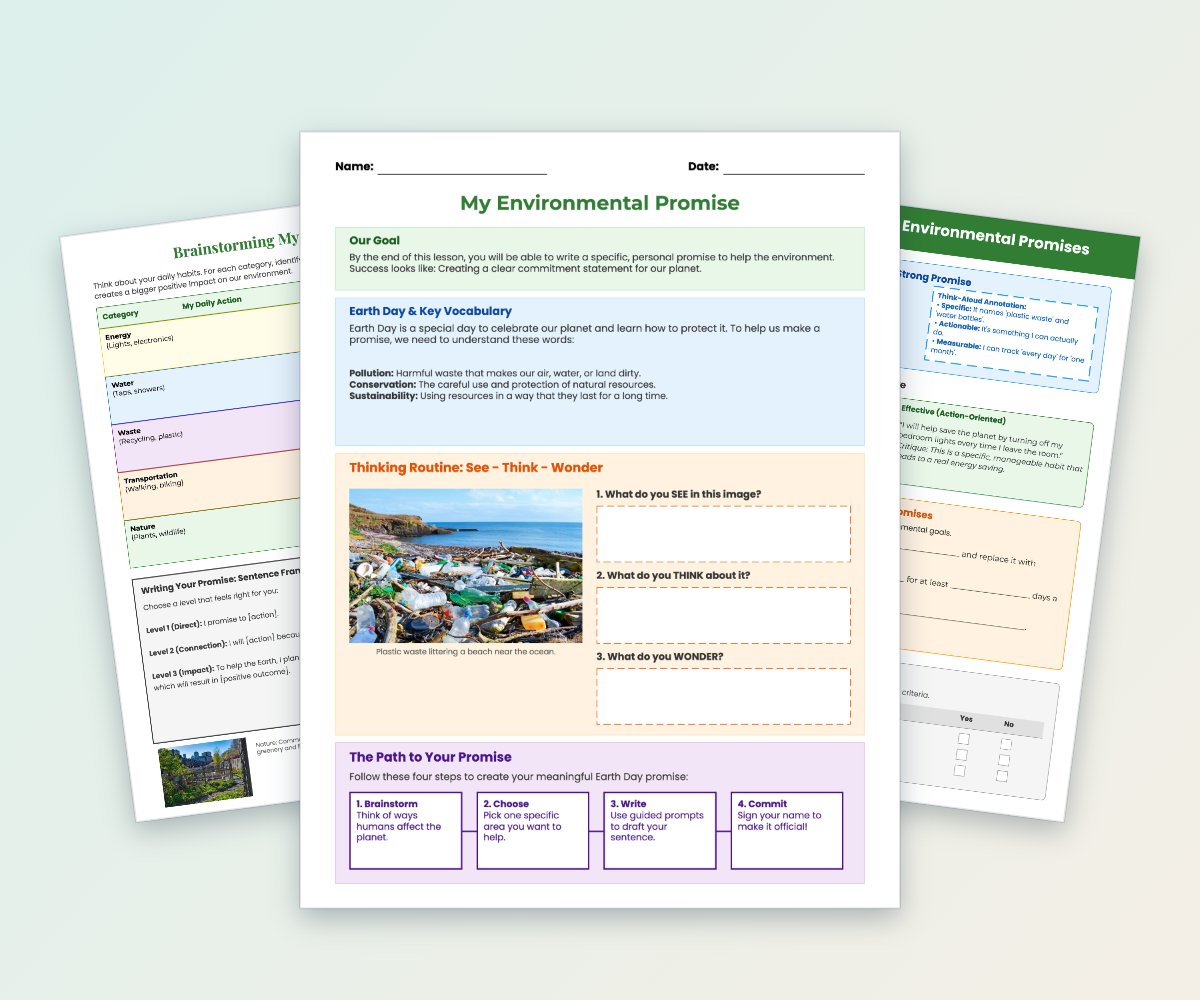
Guide students through creating a specific personal promise to help the environment.
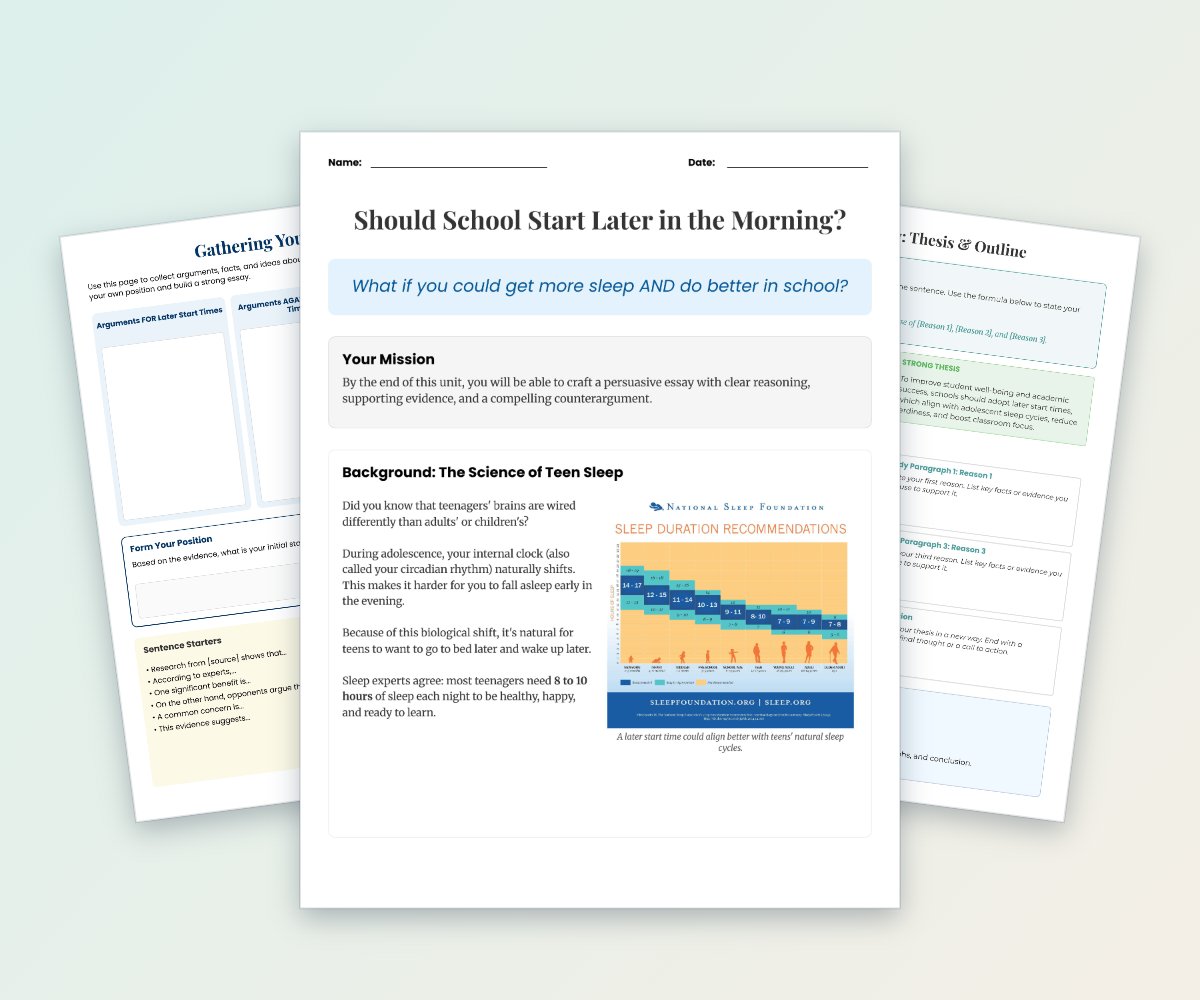
This six-page writing unit guides students through researching school start times, weighing arguments, forming a position, and planning a persuasive essay.
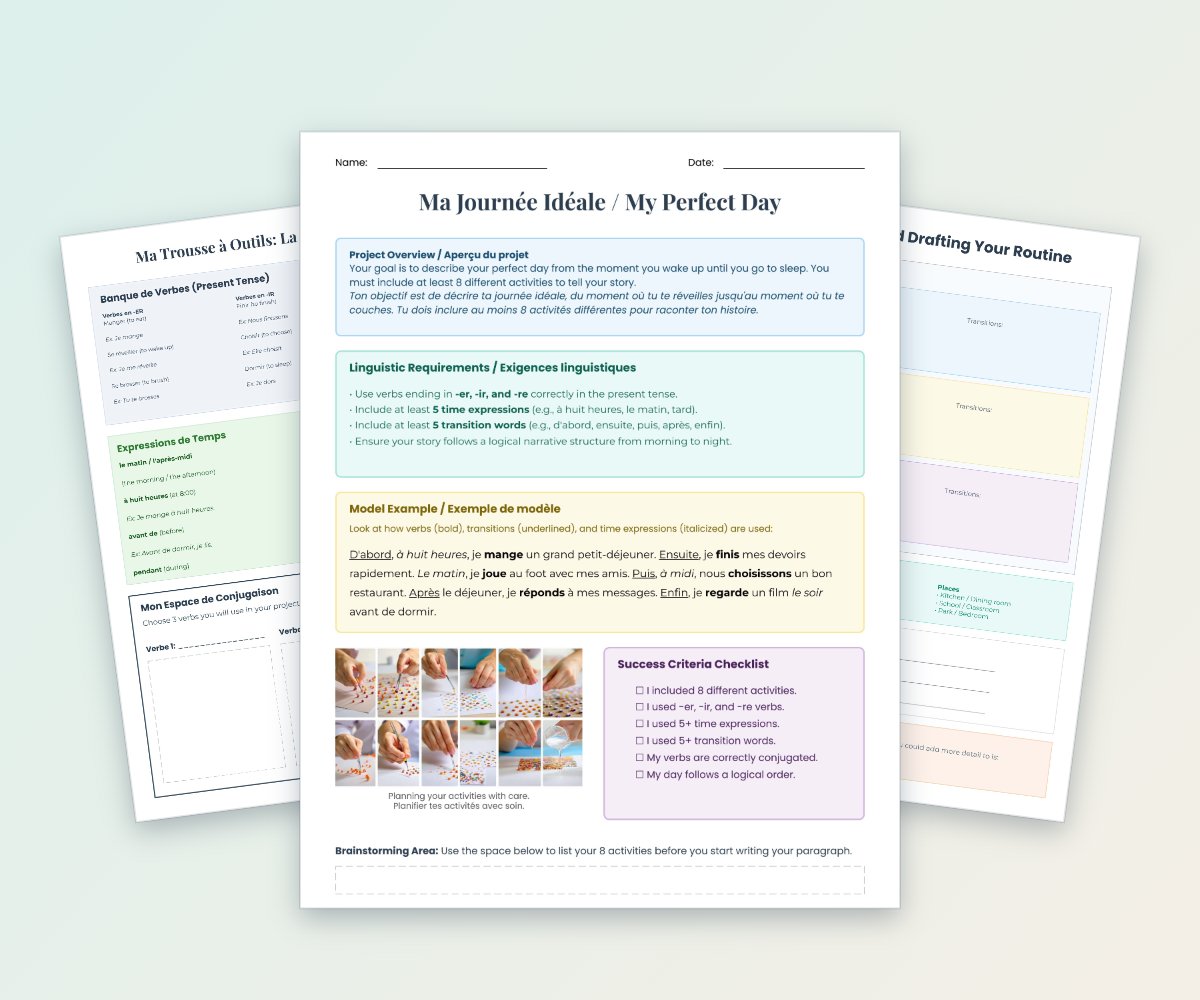
Students describe their perfect day in French using at least eight activities, time expressions, transition words, and present-tense verbs.
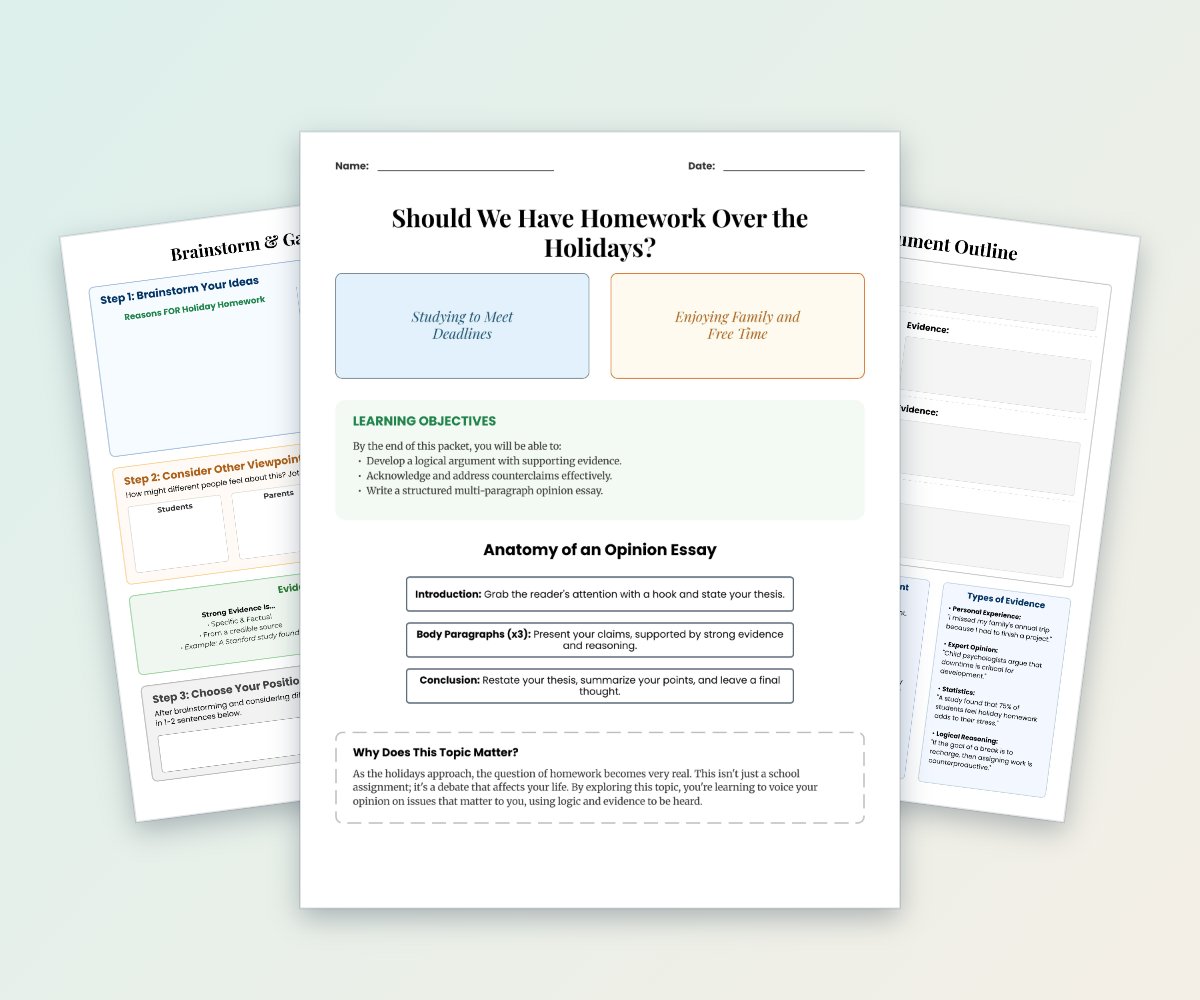
This seven-page guide helps students develop and organize an opinion essay about homework over the holidays.
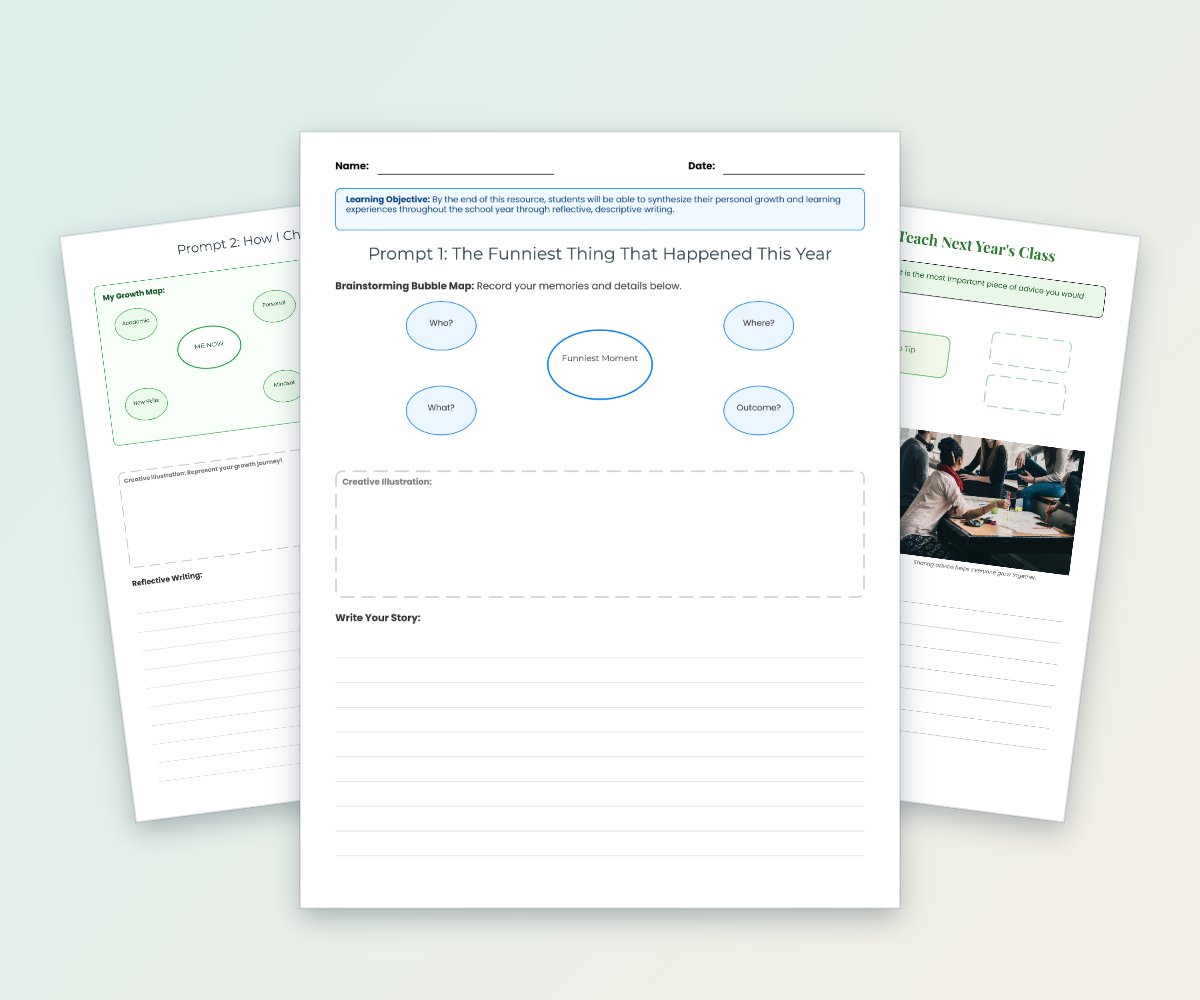
Guide students through reflective end-of-year writing with prompts about growth, challenges, memories, advice, and summer goals.
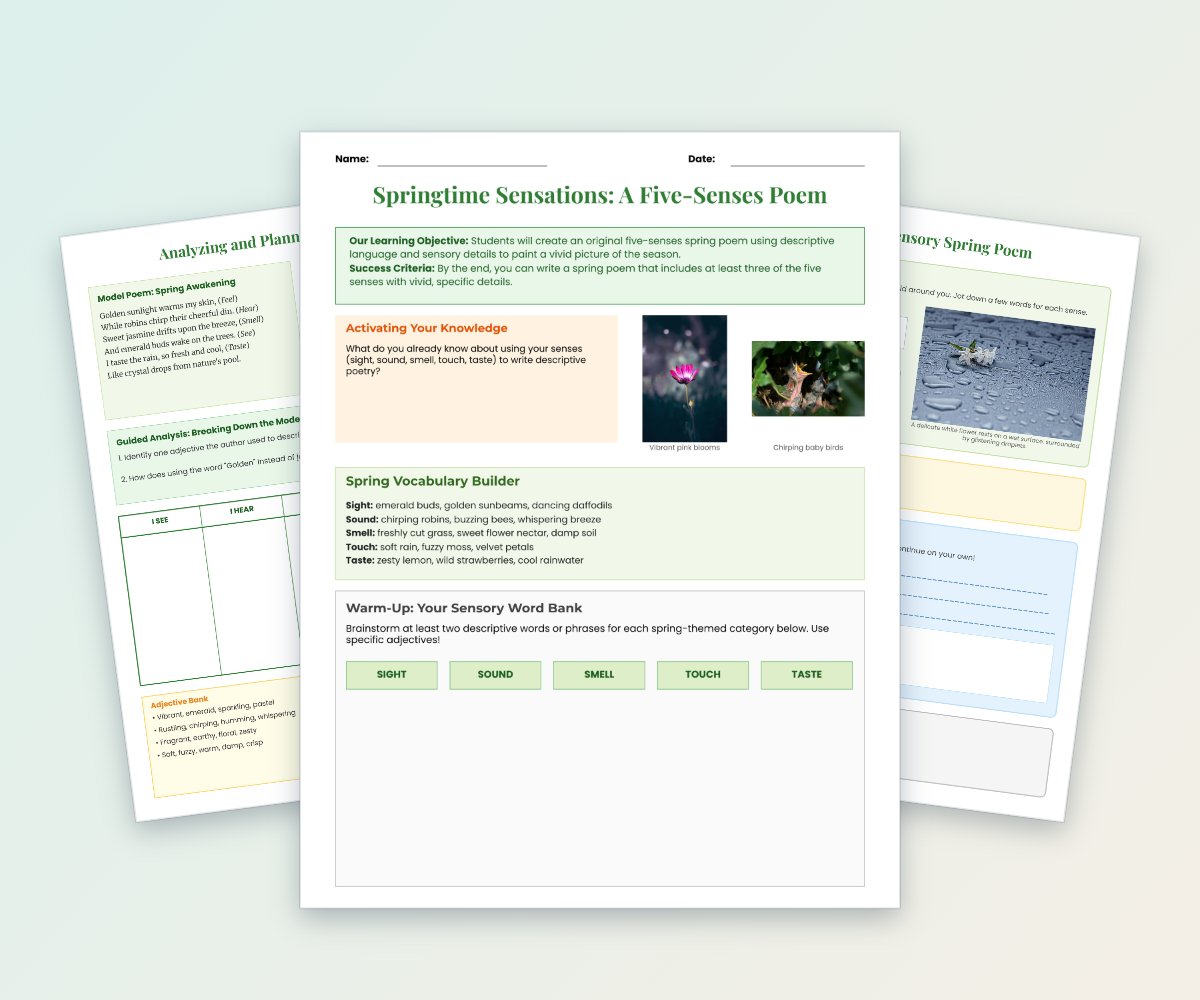
Students use the five senses and descriptive language to plan and draft an original spring poem.
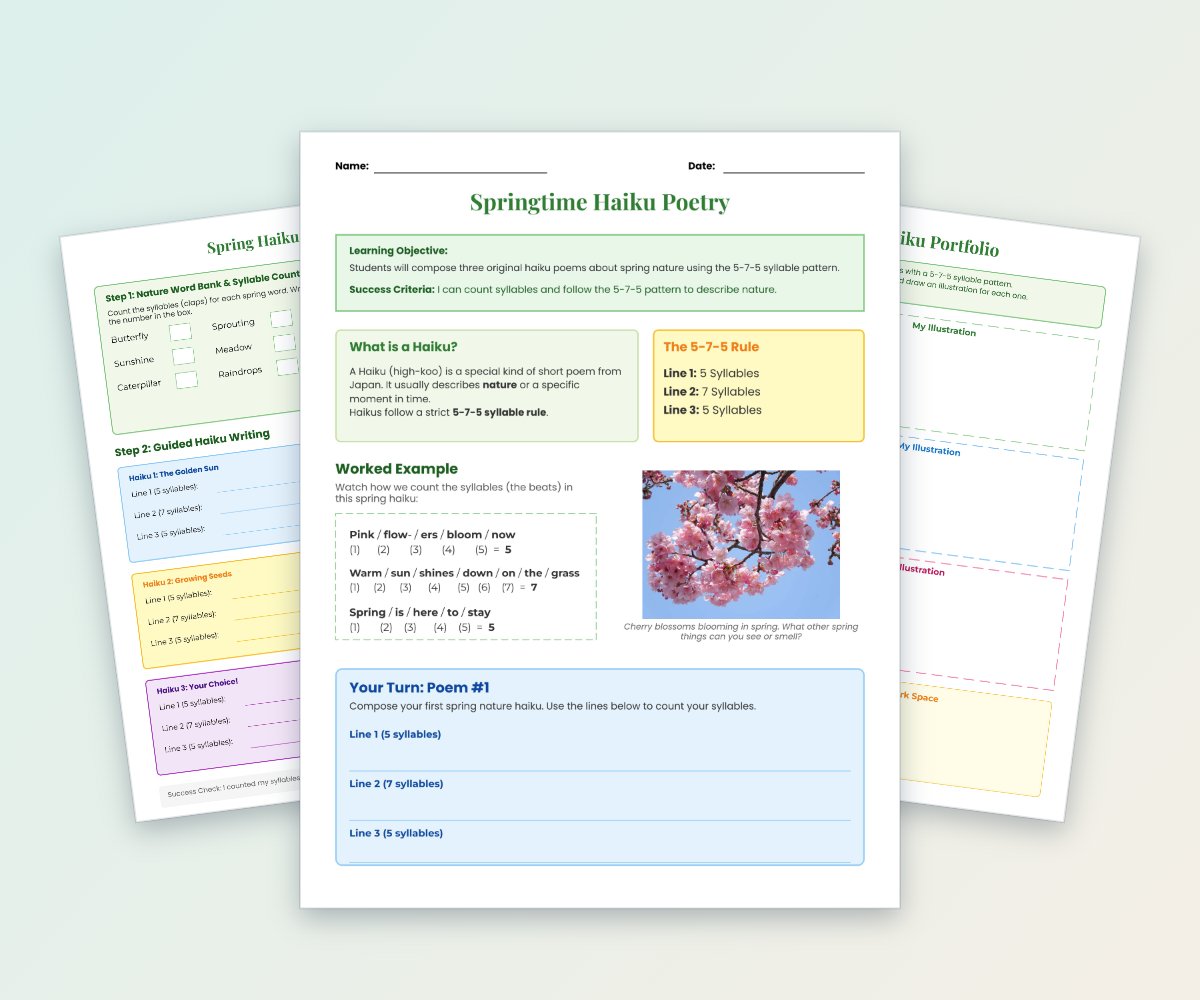
This spring-themed haiku workshop teaches students the 5-7-5 syllable pattern through examples, nature vocabulary, syllable counting, and guided writing.
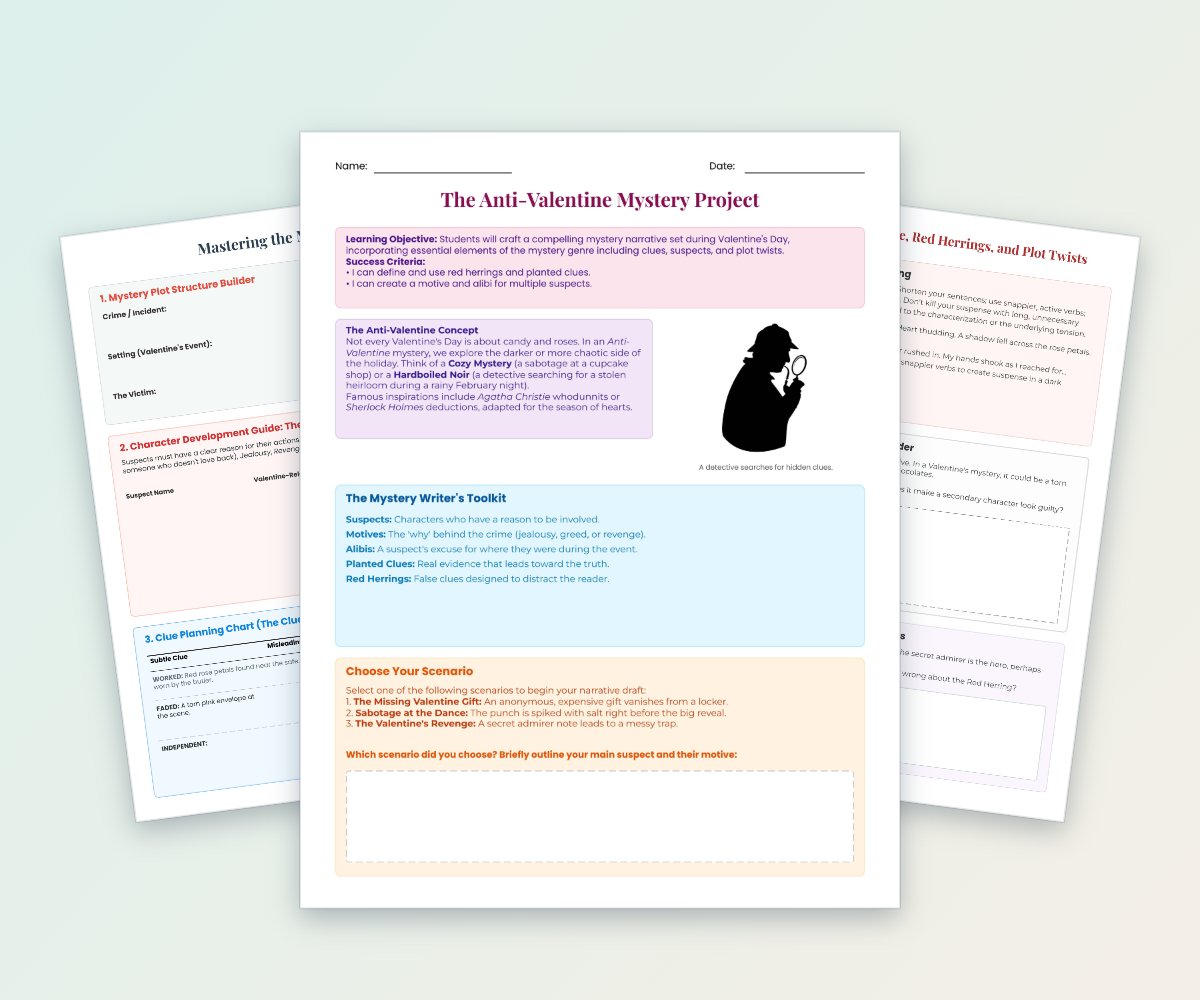
Students develop a Valentine's-themed mystery narrative using suspects, motives, alibis, planted clues, red herrings, and plot twists.
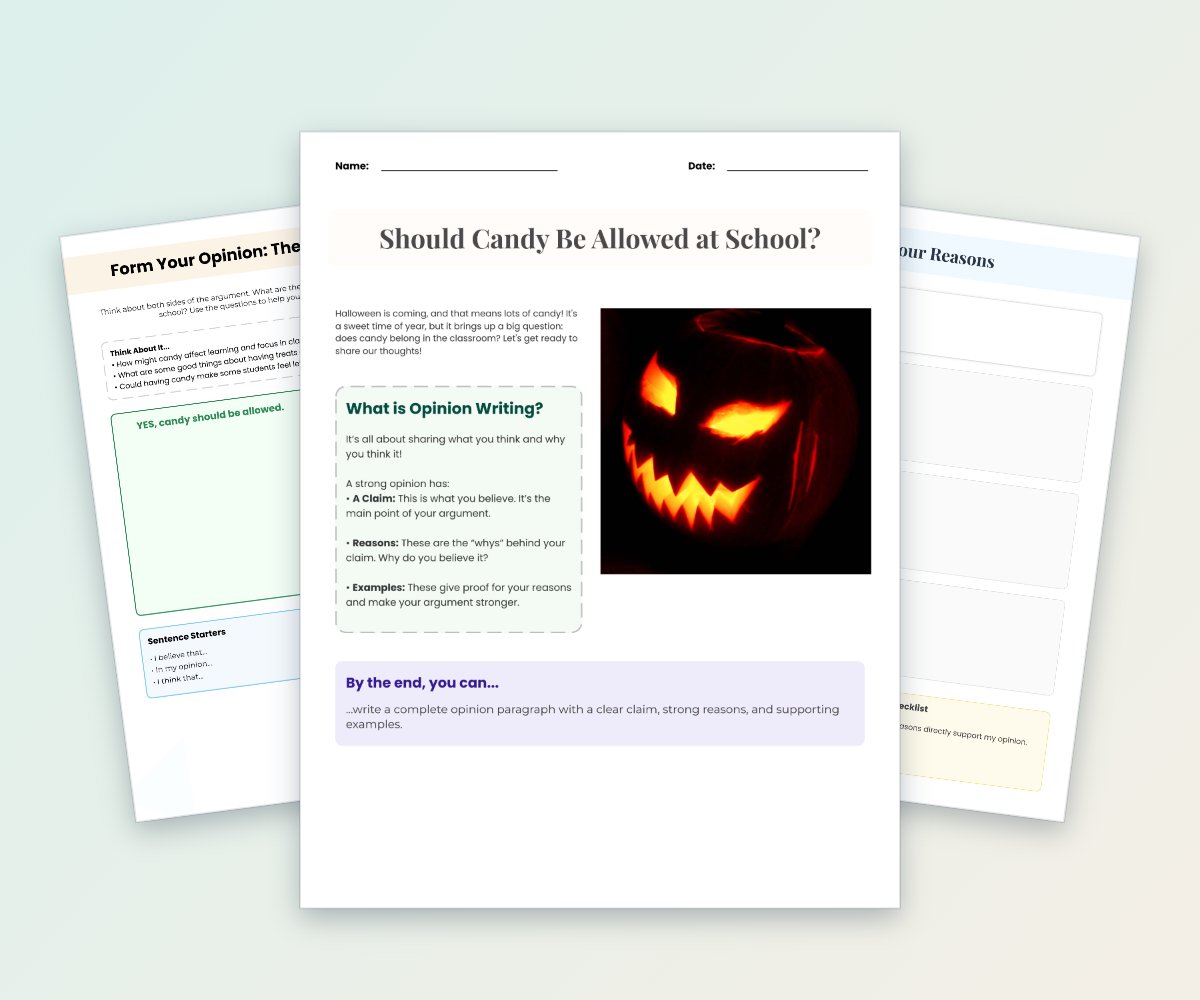
Students consider whether candy should be allowed at school and develop an evidence-supported opinion.
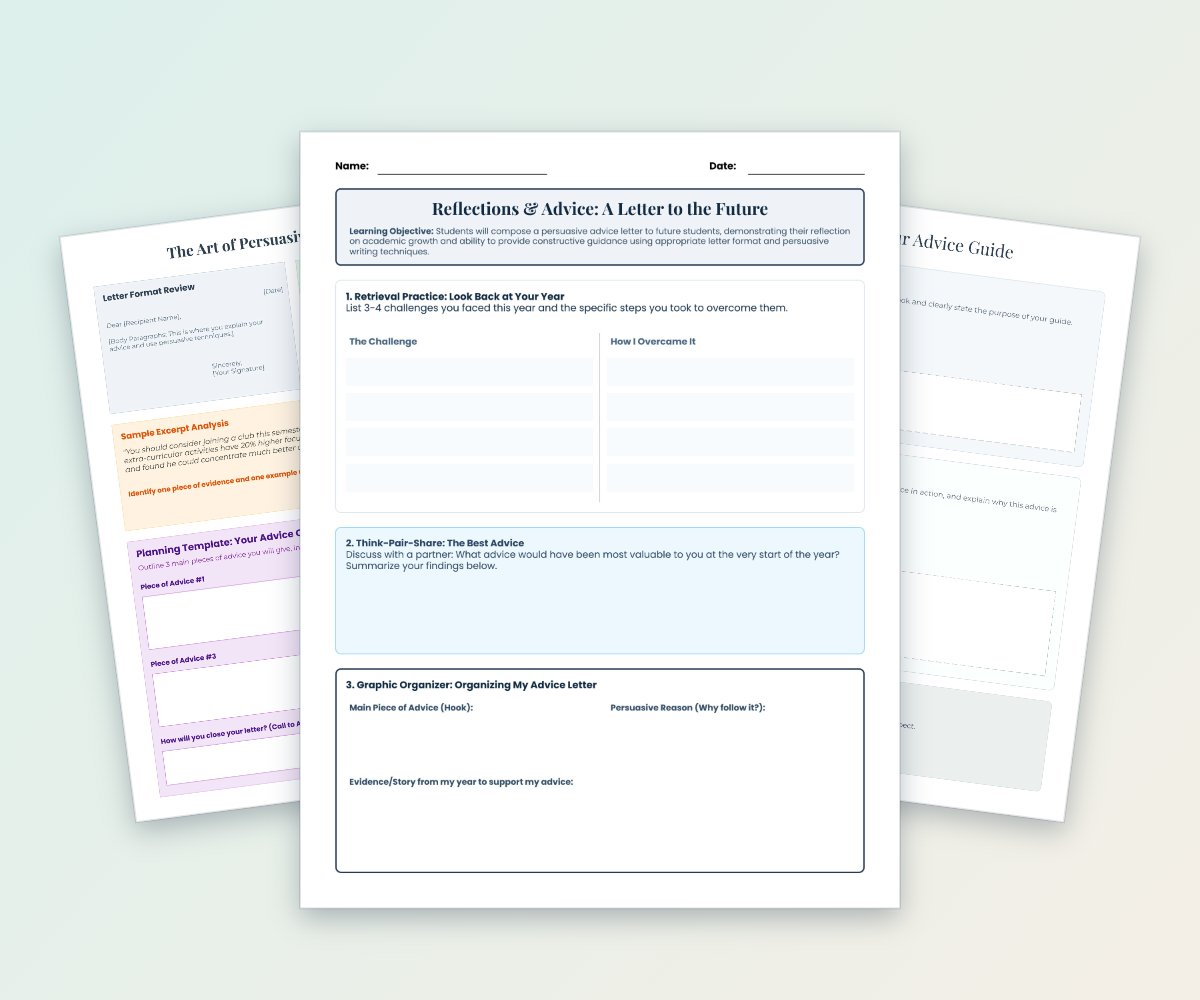
Guide students in reflecting on their academic year and composing persuasive advice letters for future students.
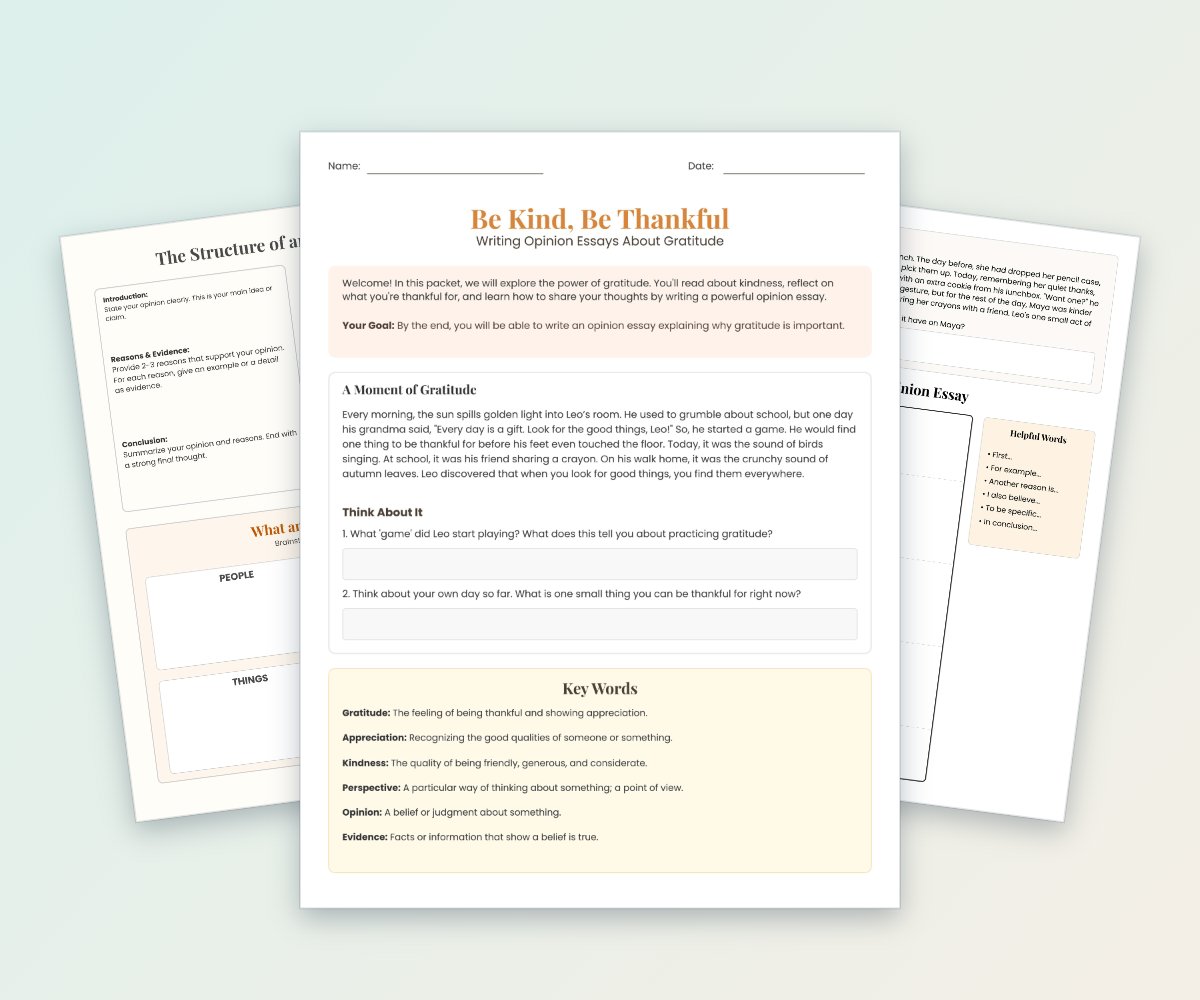
This six-page writing packet helps students explore gratitude and kindness while learning to write an opinion essay.
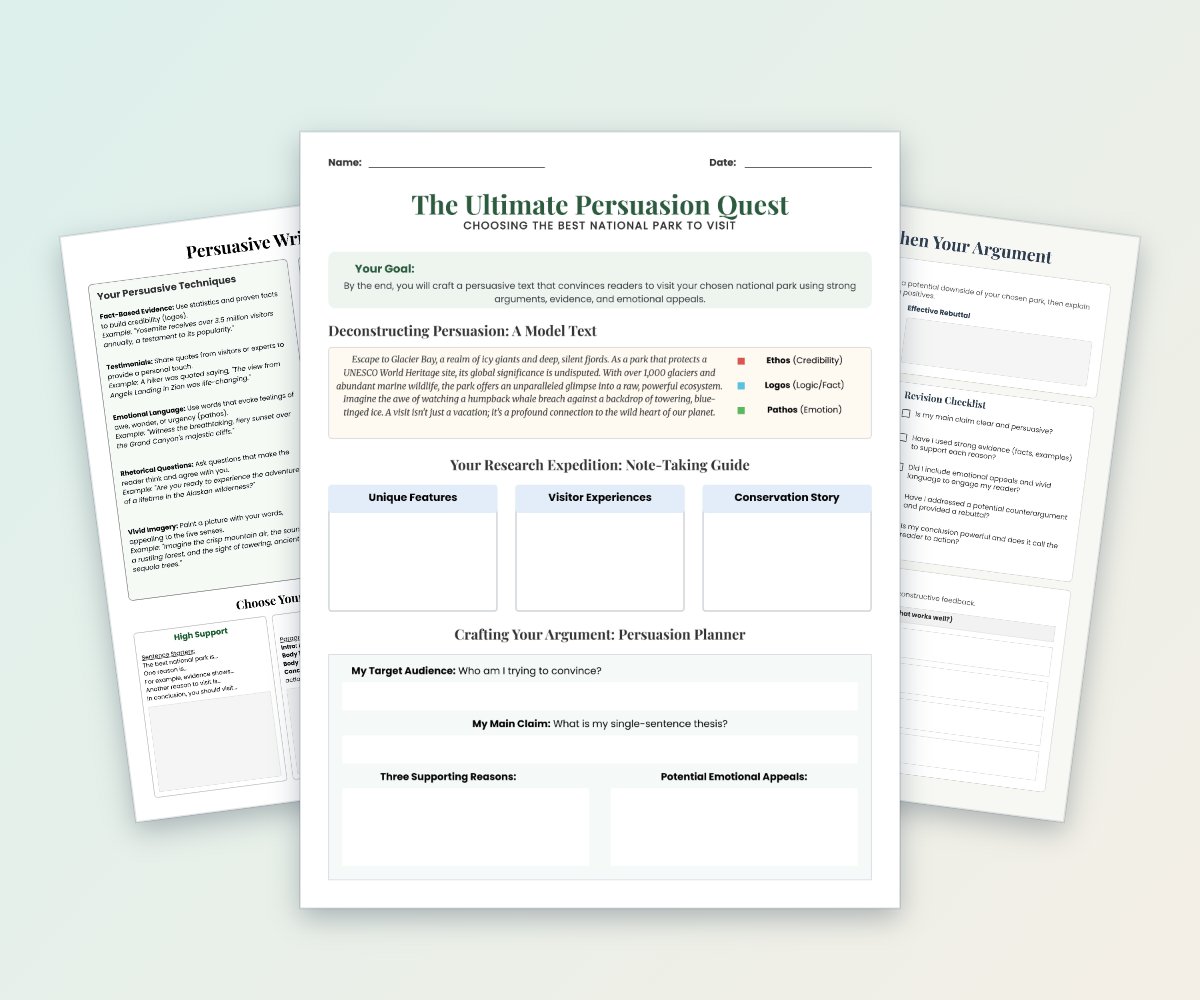
Guide students through researching a national park and crafting a persuasive text using evidence, emotional appeals, and audience awareness.
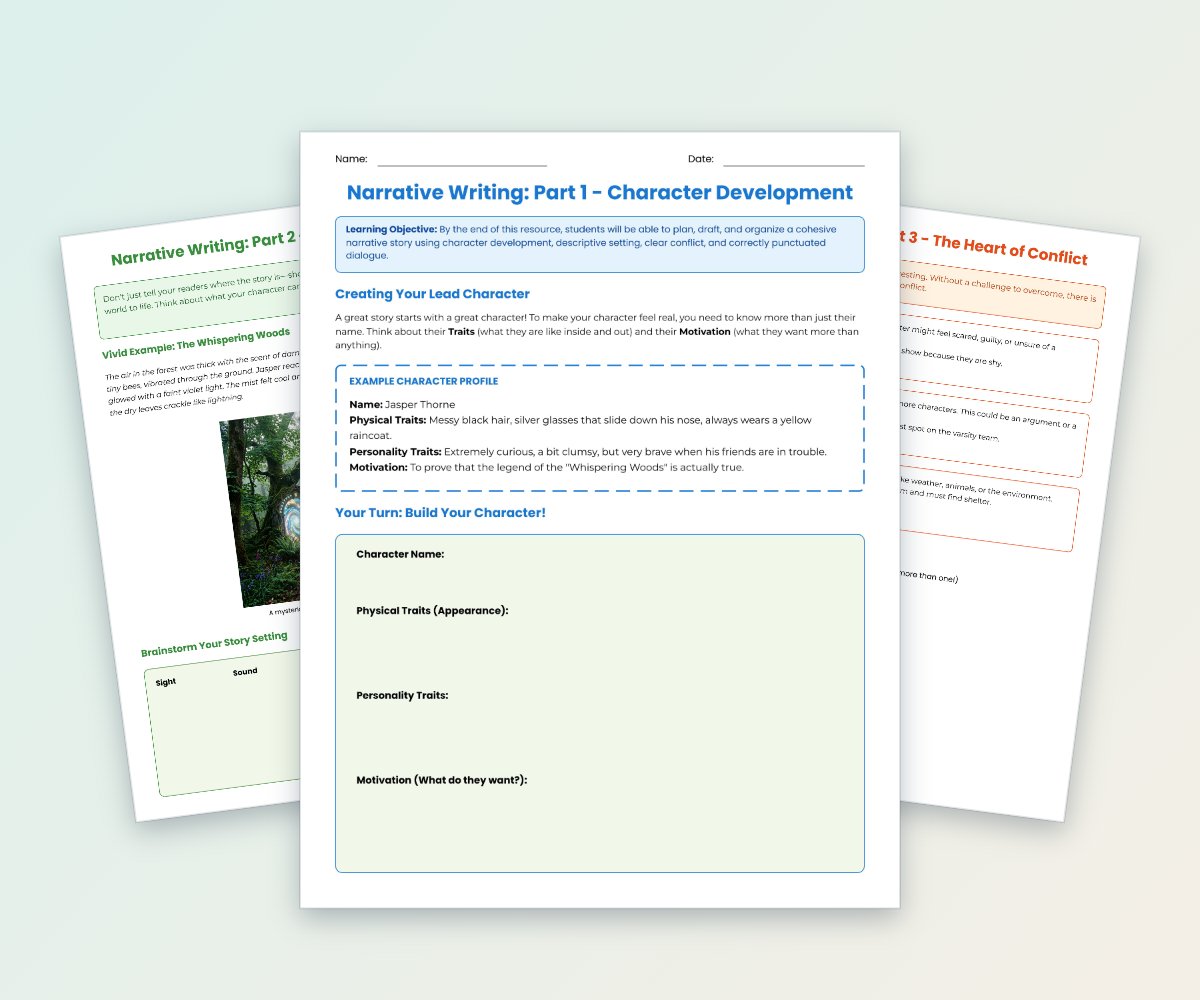
Guide students through developing characters, settings, conflict, and dialogue to plan and draft cohesive narrative stories.
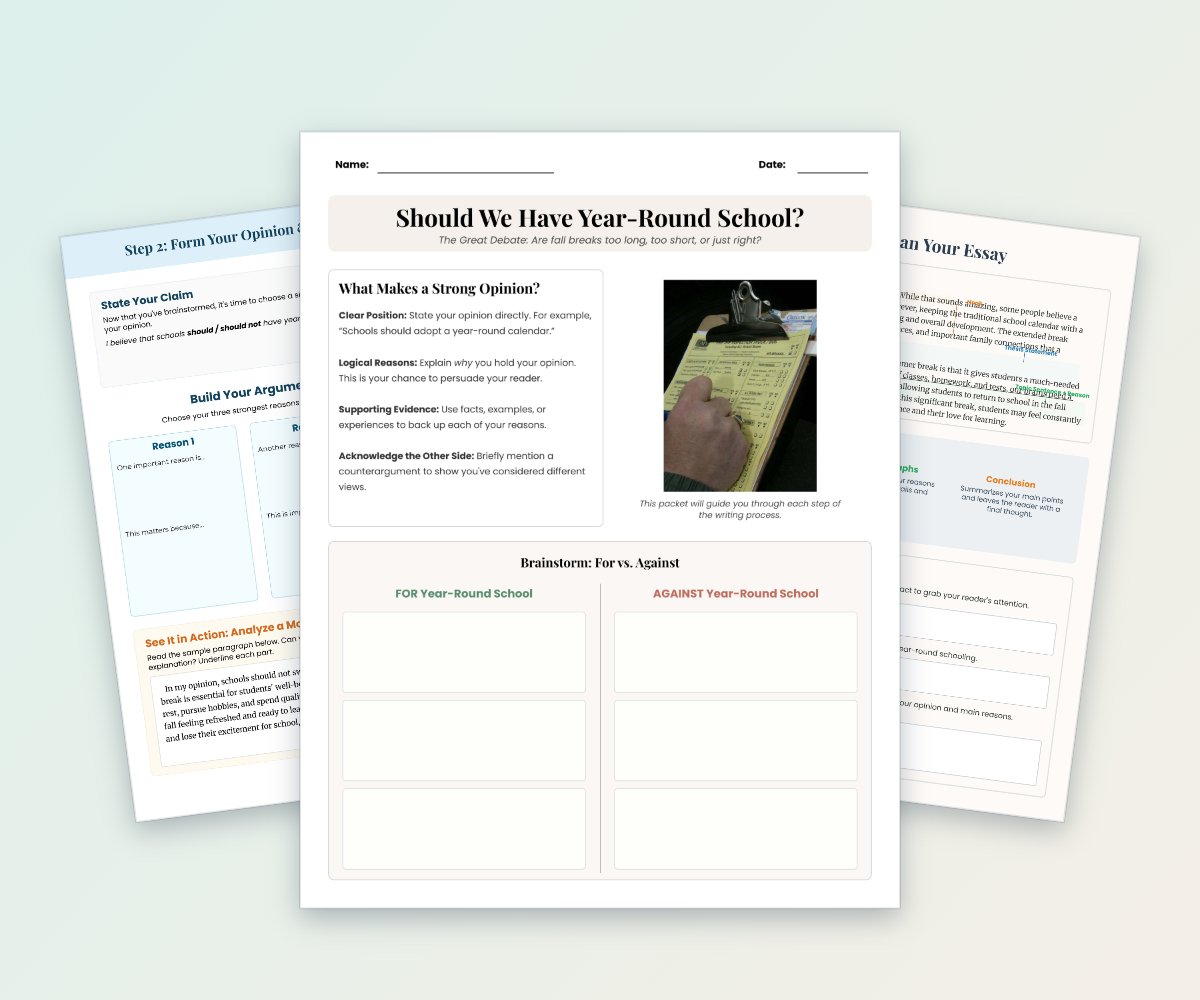
This six-page writing guide leads students through brainstorming, forming a claim, developing reasons, using evidence, acknowledging counterarguments, and analyzing a model paragraph.
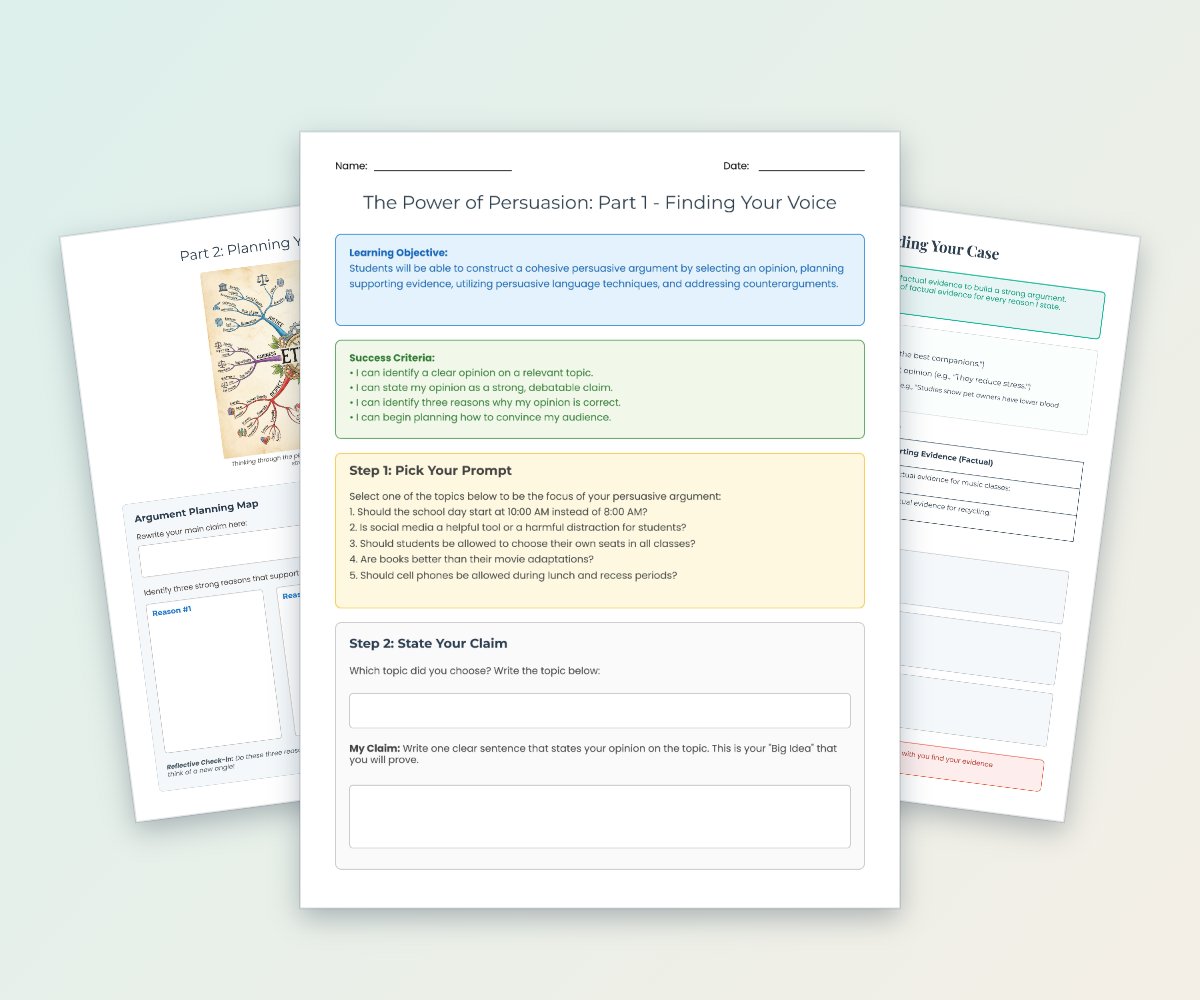
This six-page writing resource guides students through choosing a topic, forming a debatable claim, developing supporting reasons, and selecting factual evidence.
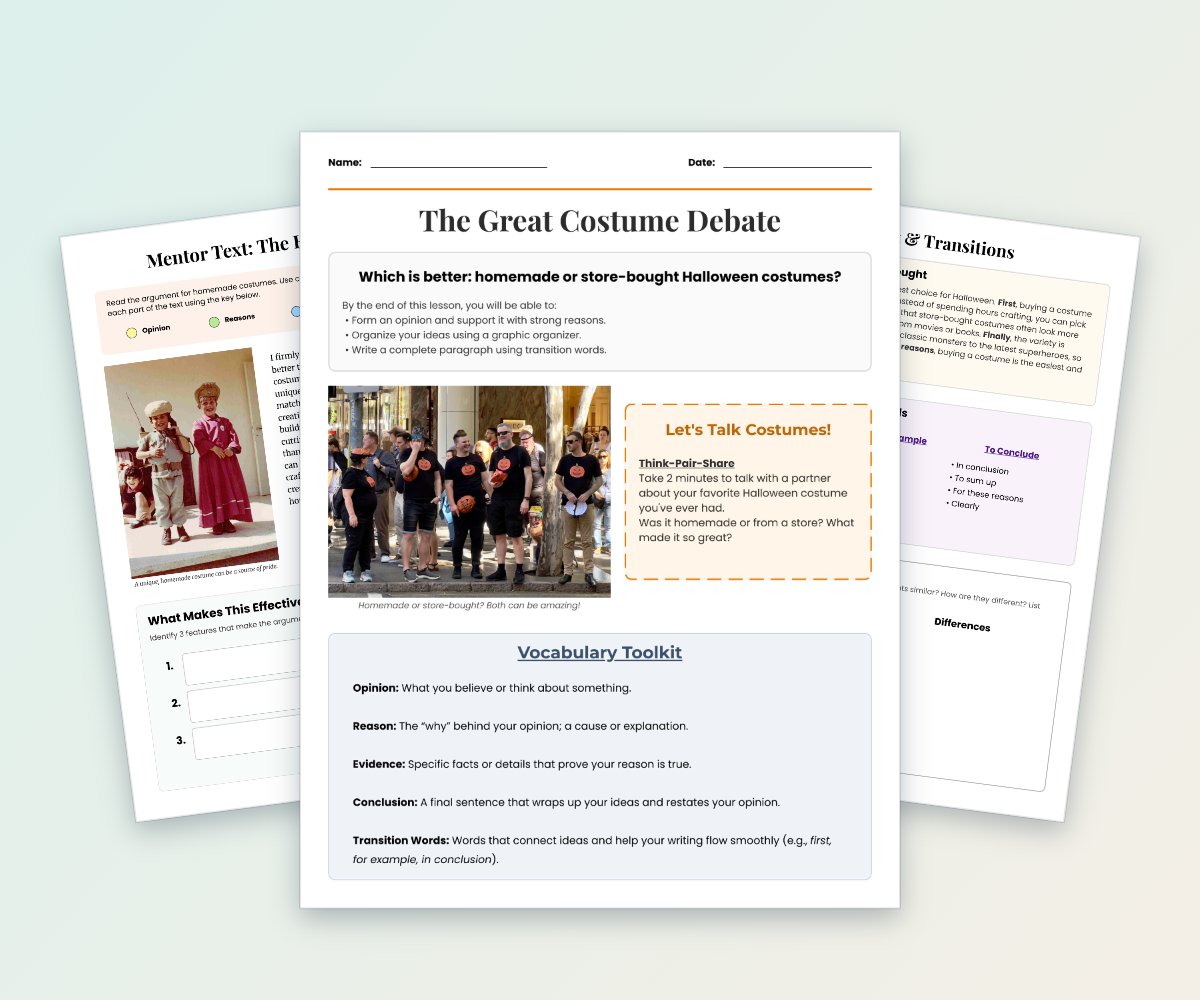
Students examine arguments about homemade and store-bought Halloween costumes, identify persuasive features, and organize their own opinions.
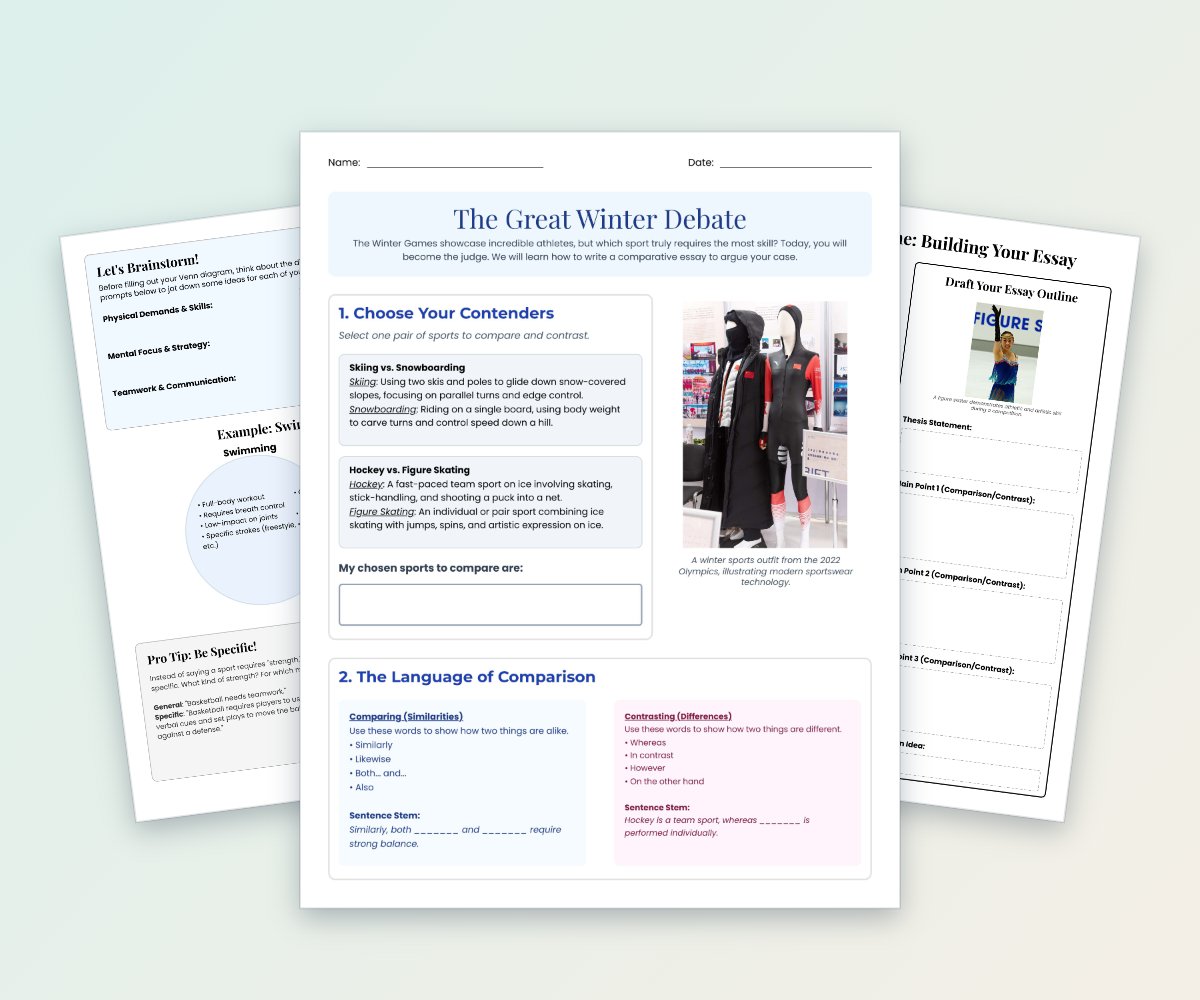
Students choose two winter sports, identify similarities and differences, and develop ideas for a comparative essay.
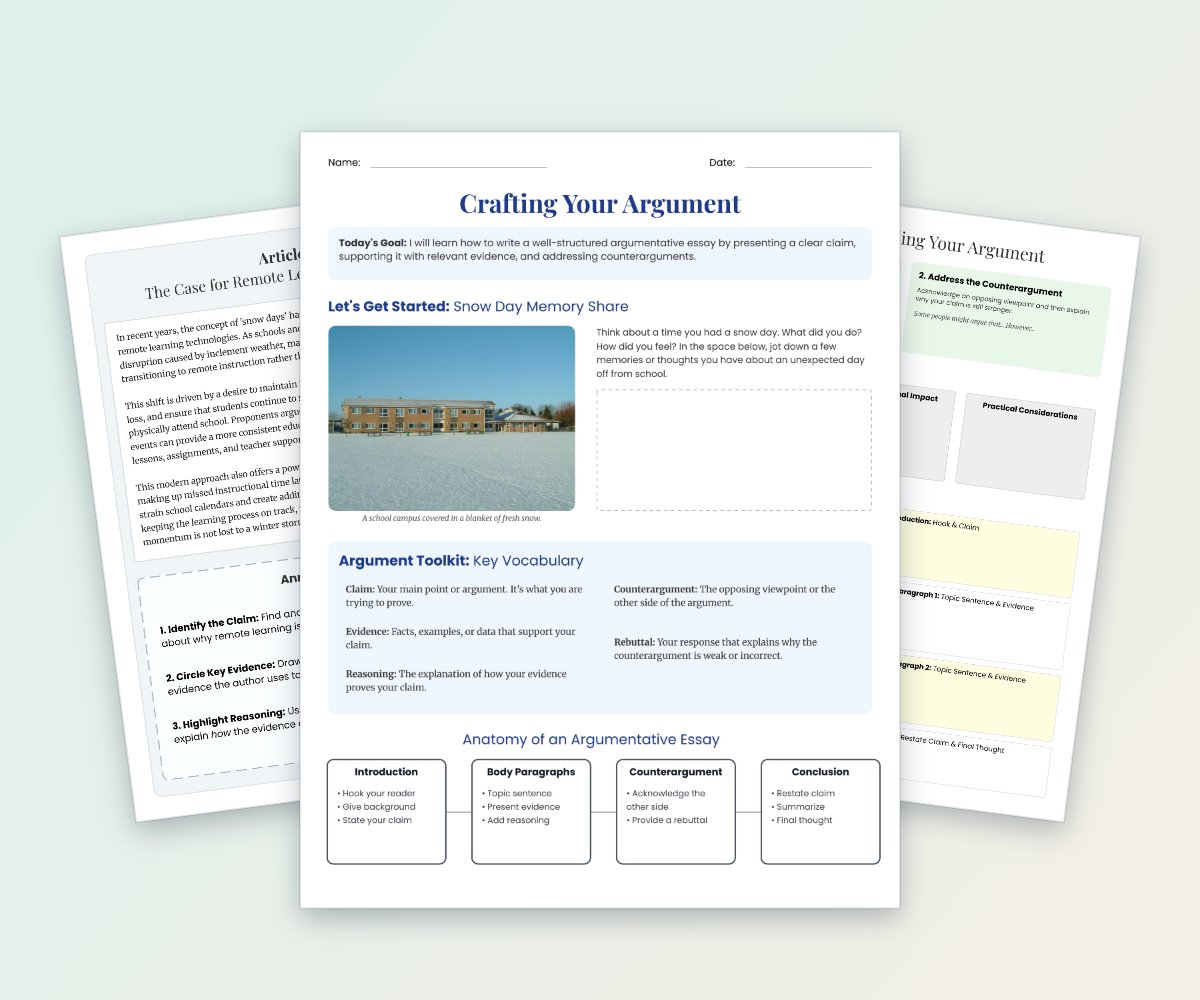
This four-page resource introduces students to argumentative essay writing through claim, evidence, reasoning, counterargument, and rebuttal.
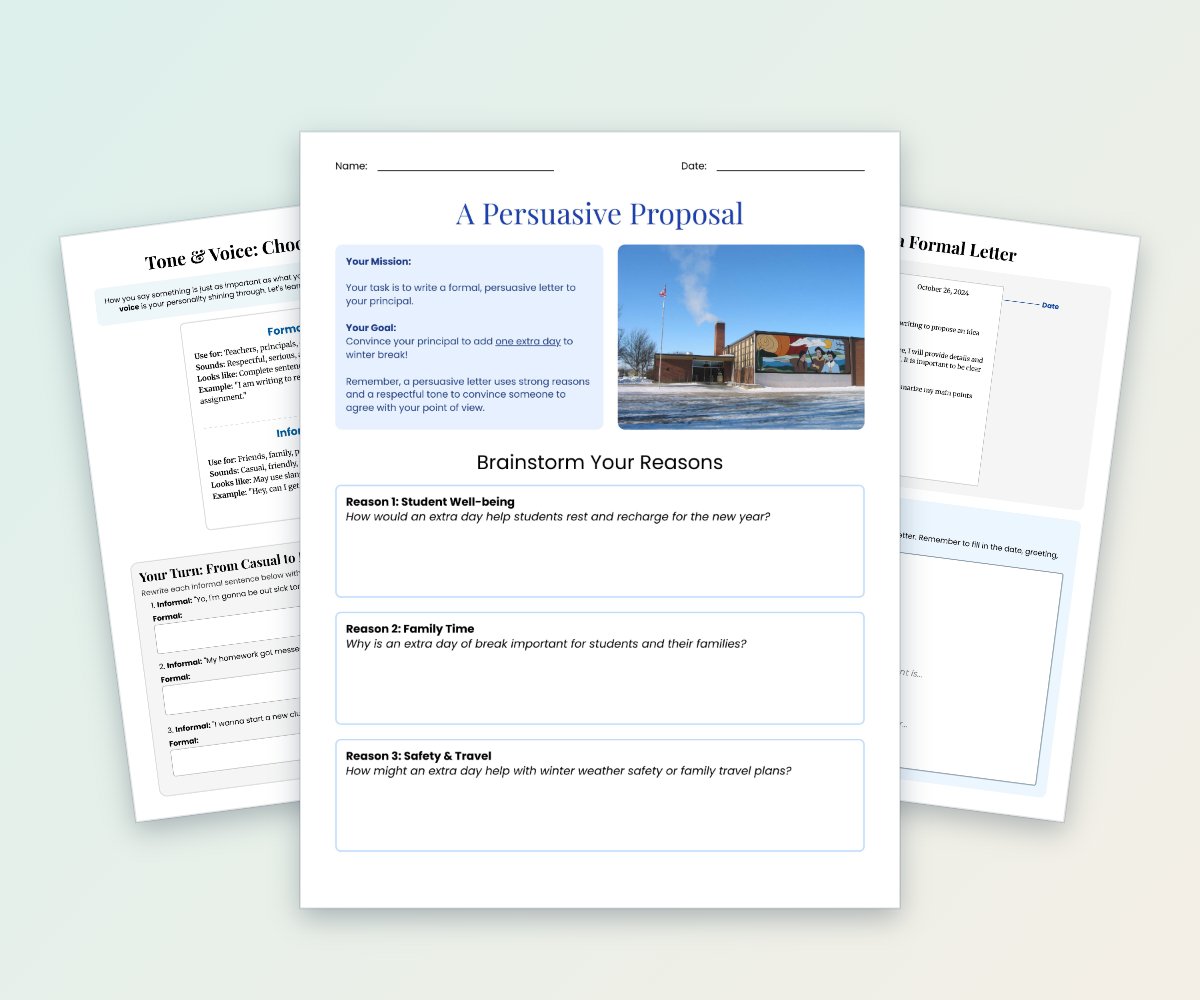
This four-page writing guide helps students plan and draft a formal persuasive letter to their principal.
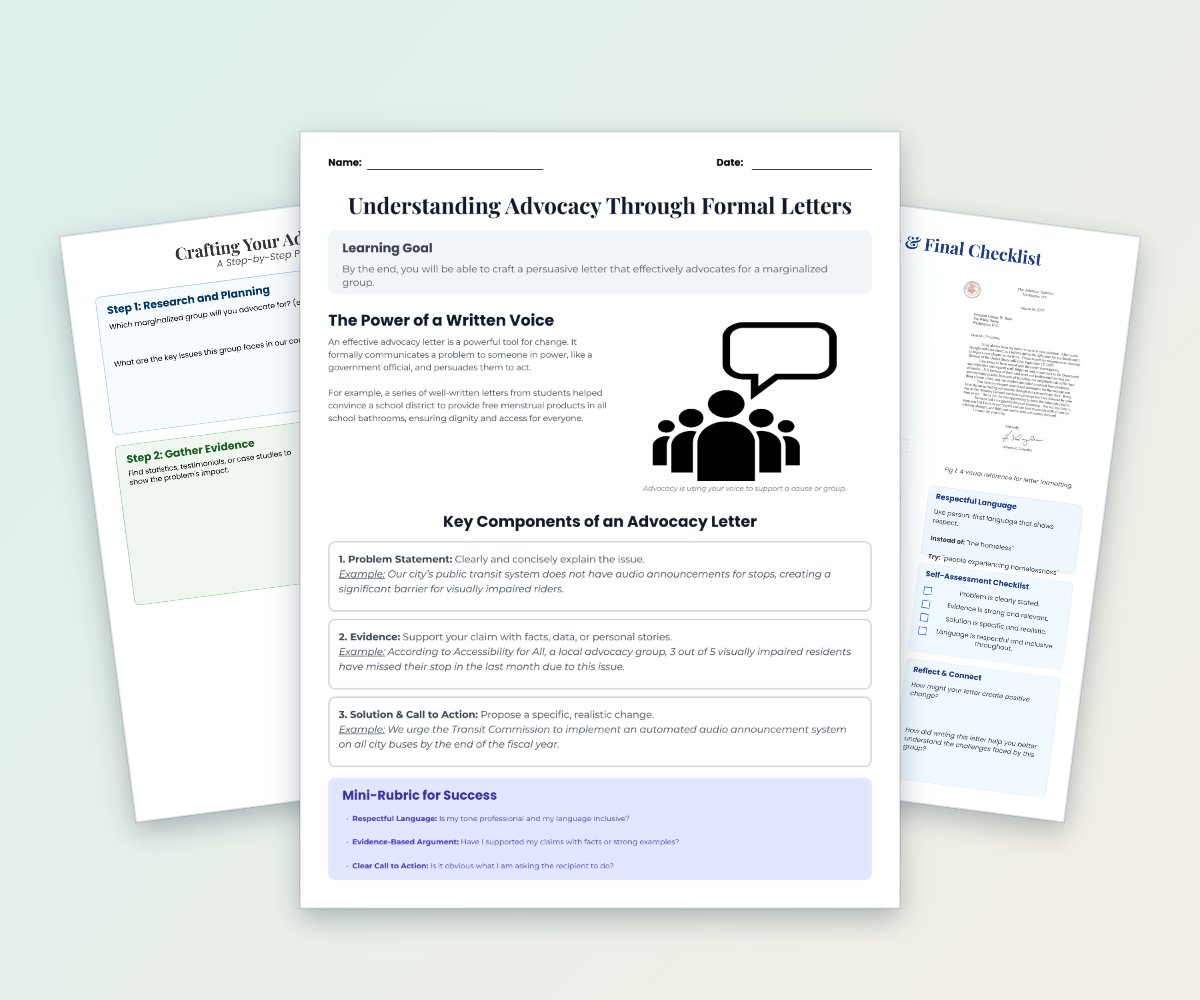
This concise writing resource guides students through crafting persuasive advocacy letters about issues affecting marginalized groups.
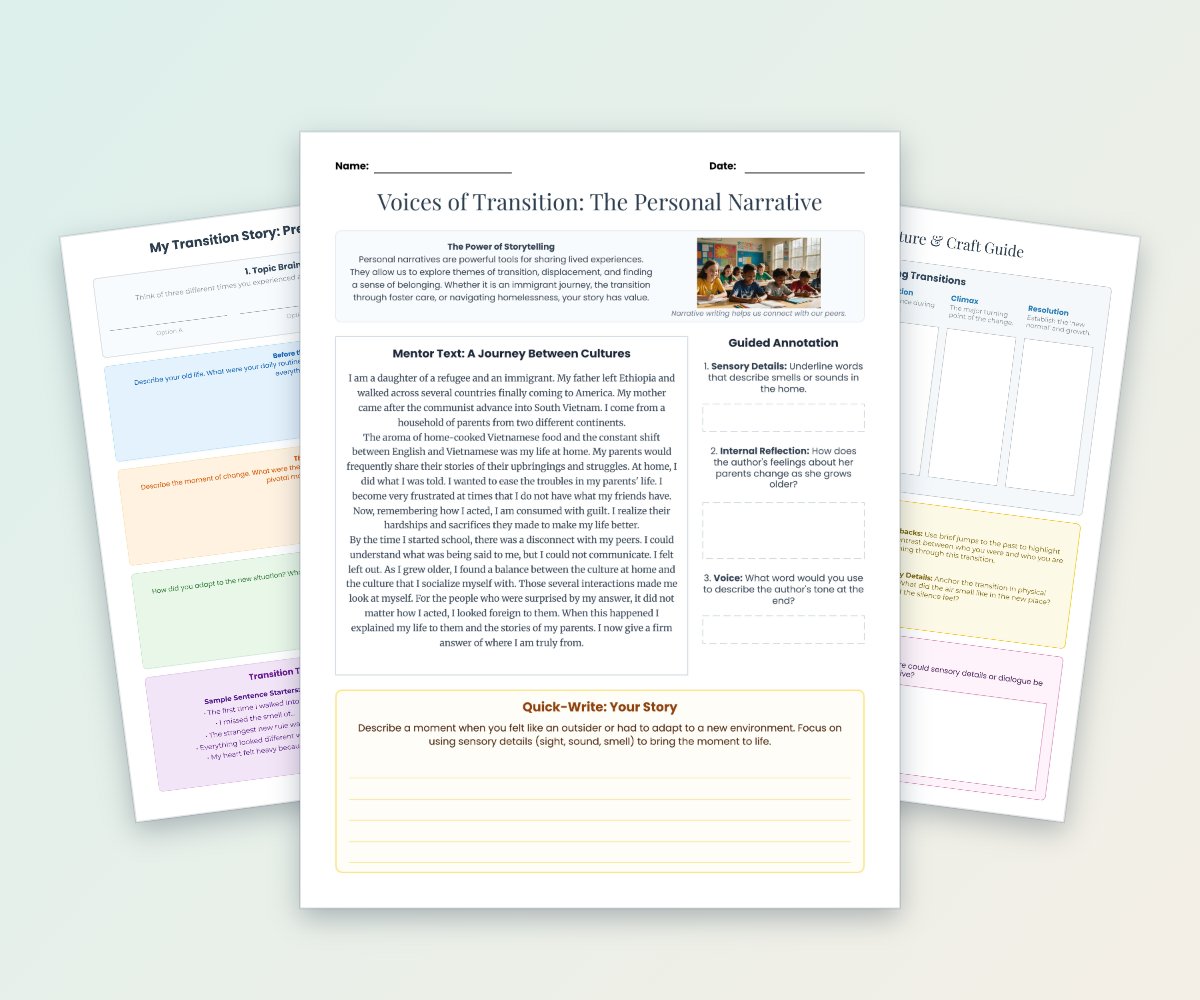
This four-page resource guides students through exploring personal narratives about transition, displacement, identity, and belonging.
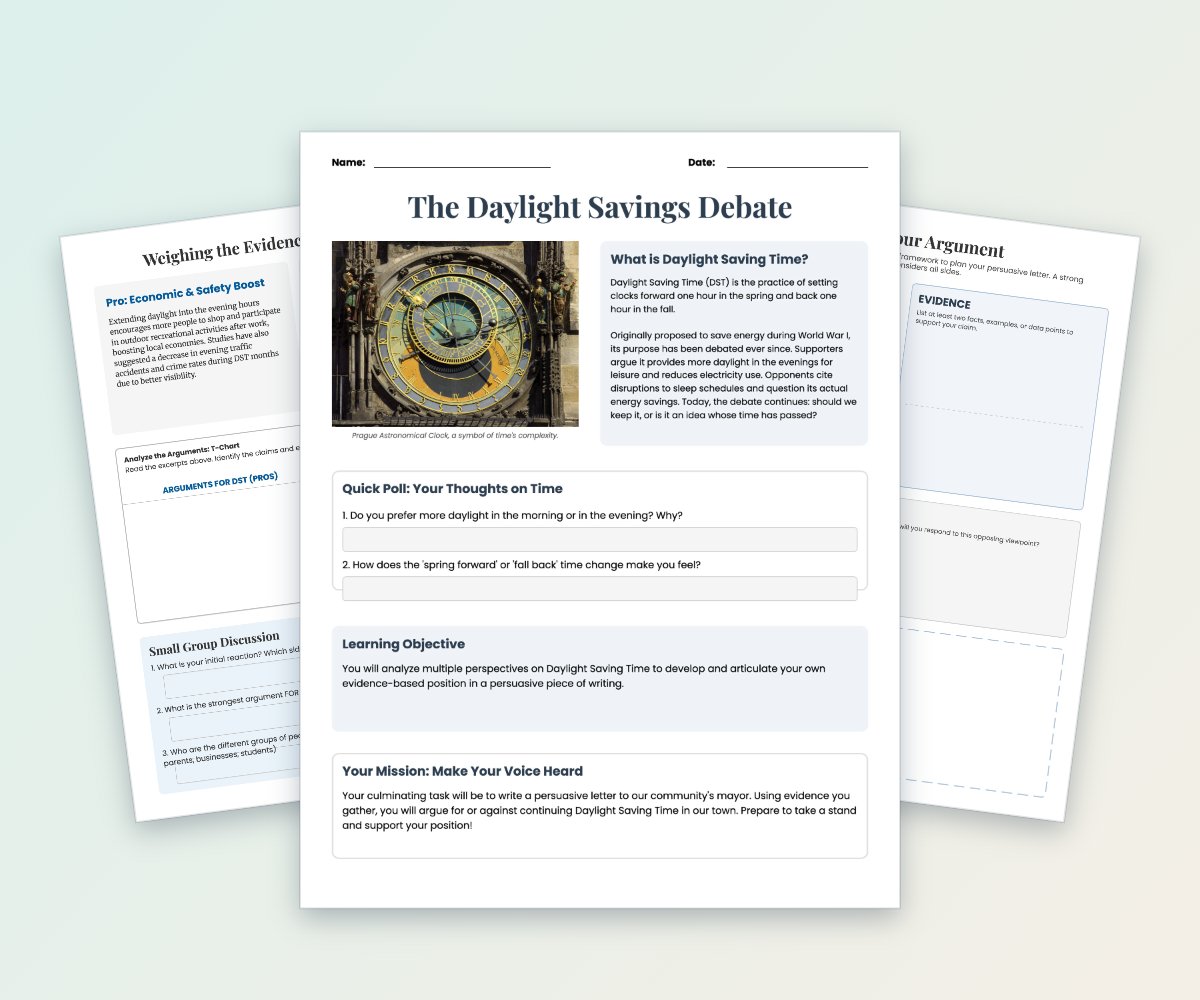
Students examine arguments for and against Daylight Saving Time, identify claims and evidence, and discuss affected stakeholders.
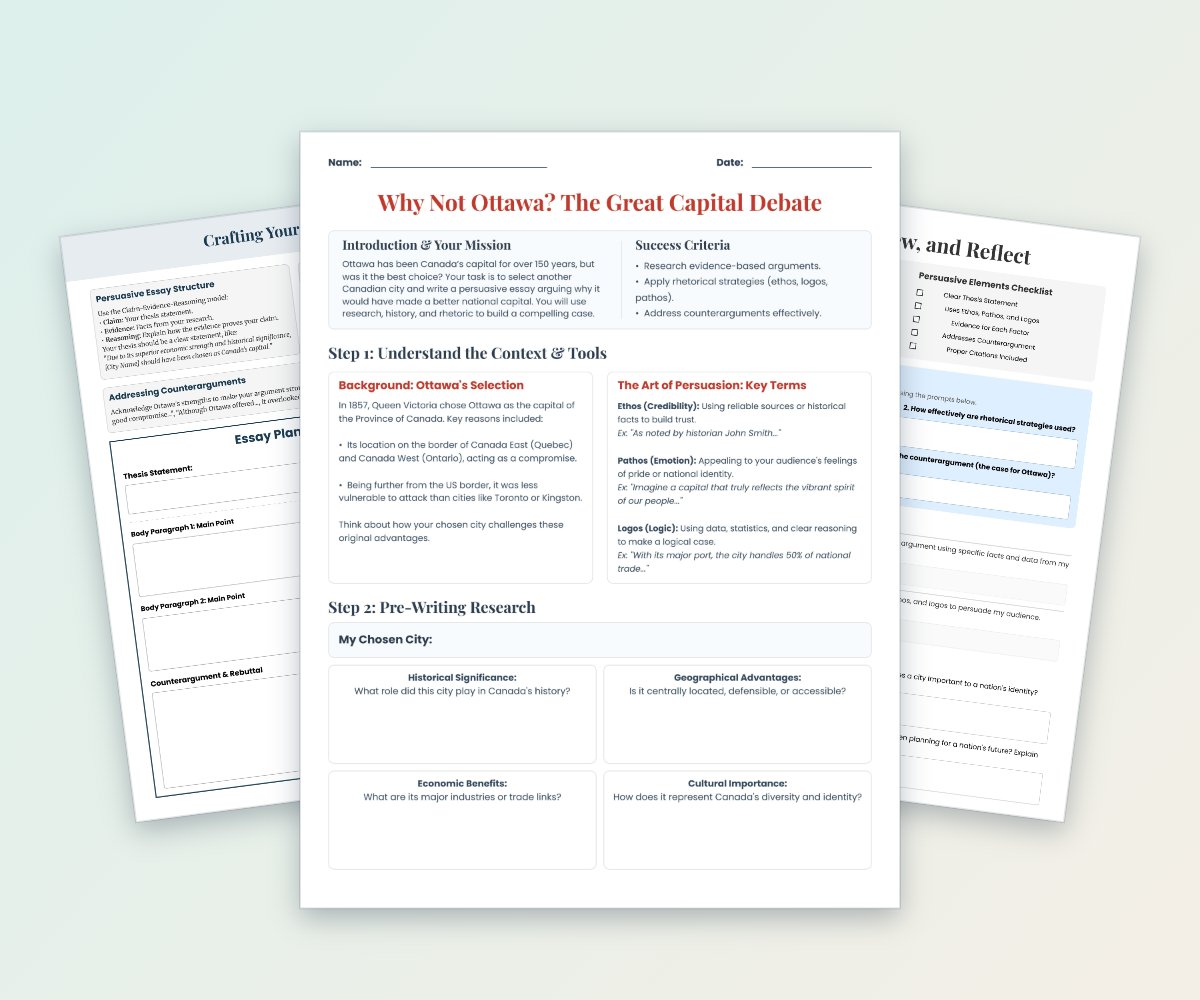
Students research a Canadian city and argue why it would have been a better national capital than Ottawa.
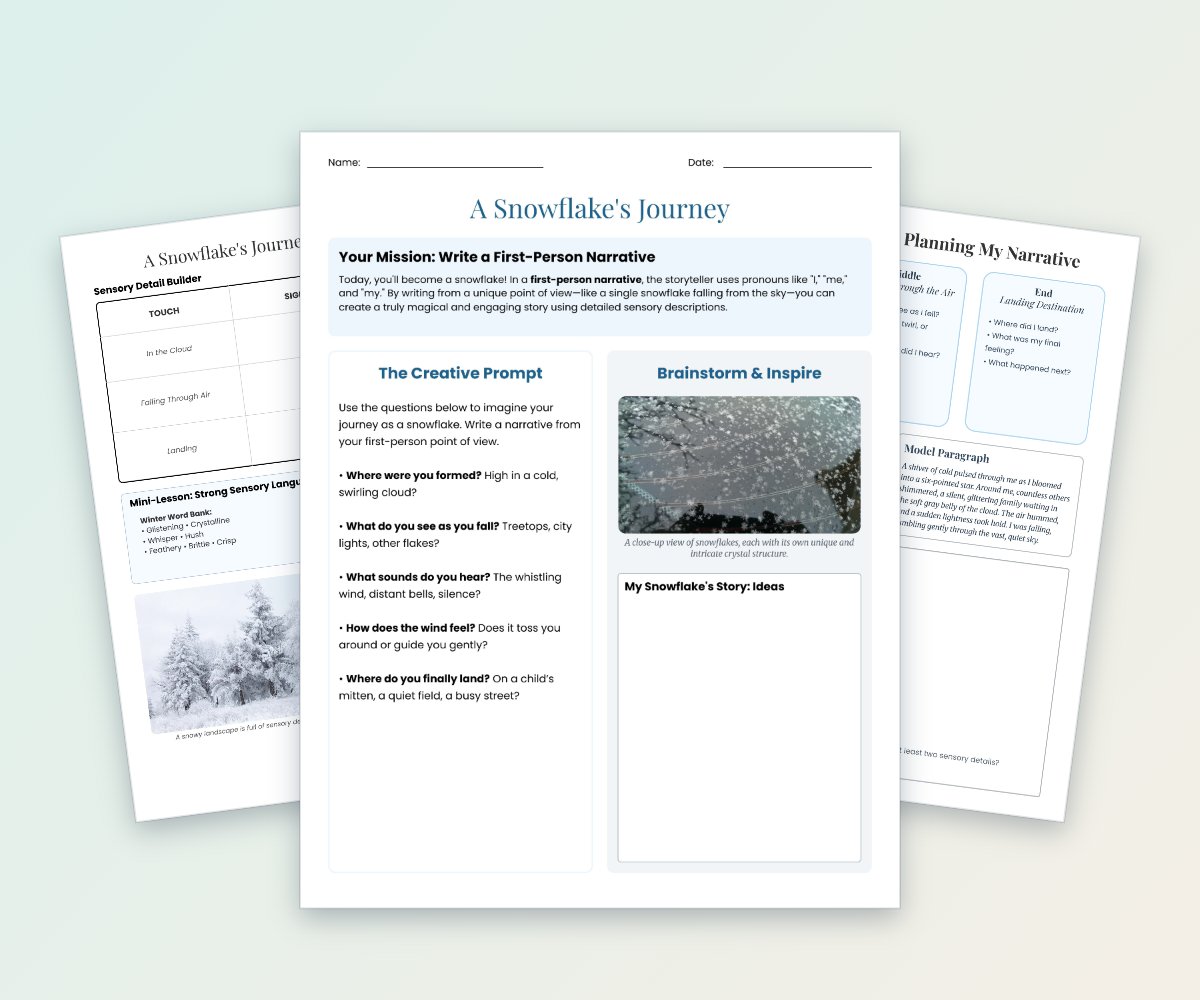
Students write a first-person narrative from the perspective of a snowflake.