Arkansas Grade 3 Mathematics Long-Range Plan
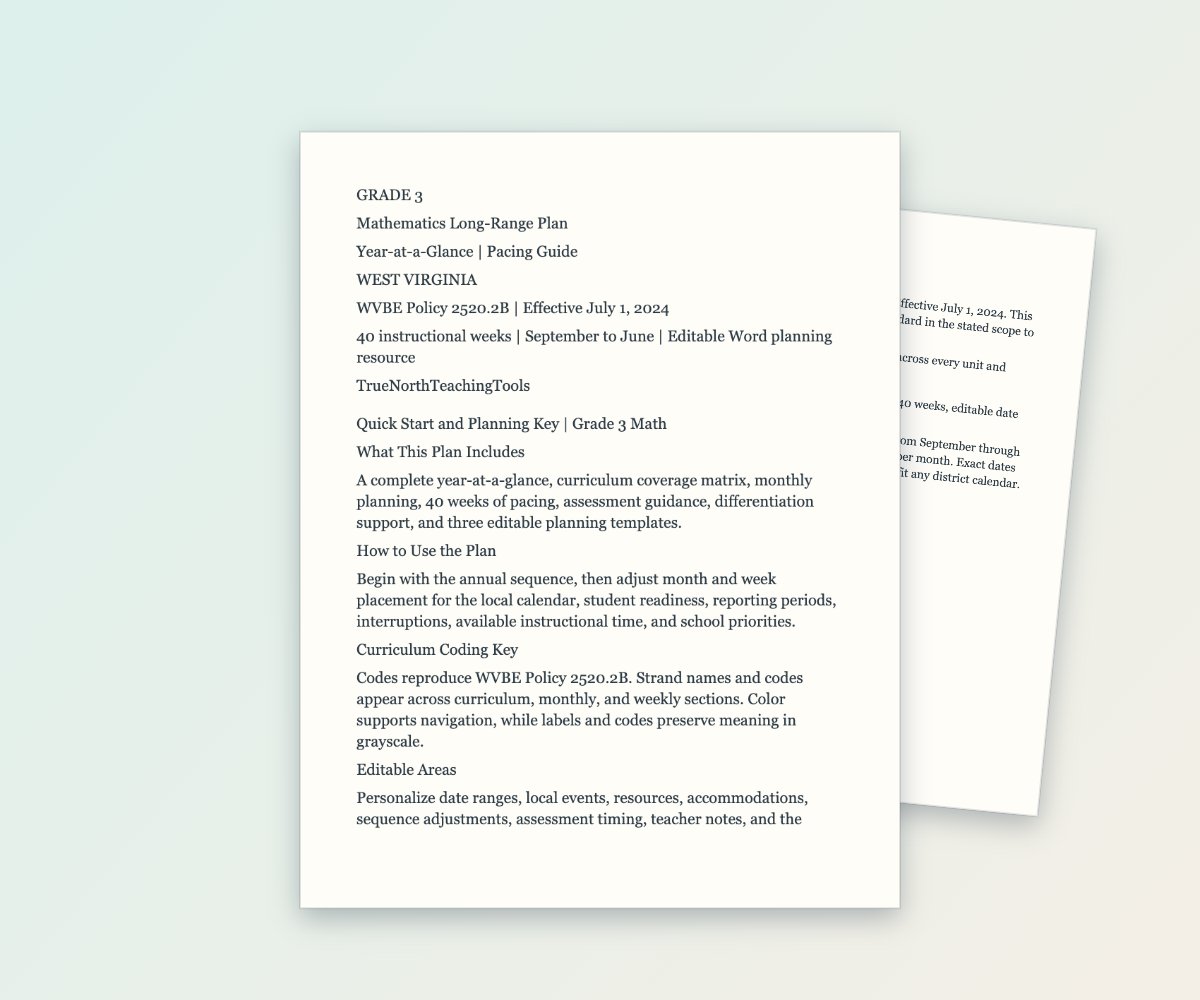
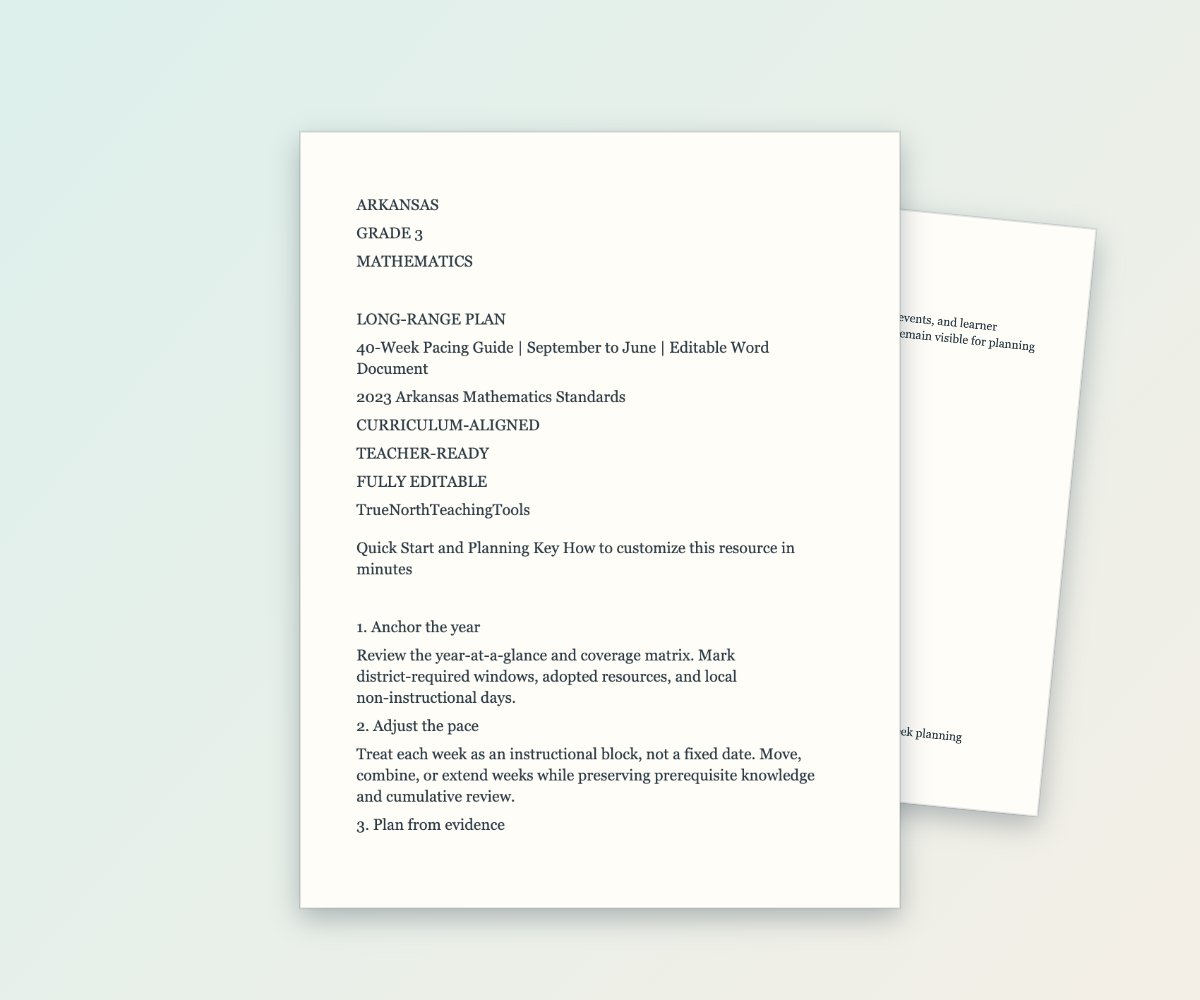
This editable 40-week pacing guide organizes Grade 3 mathematics instruction from September through June using the 2023 Arkansas Mathematics Standards.
$5
Clear, practical resources for busy educators, organized so you can get from search to ready-to-teach quickly.
This editable 40-week pacing guide organizes Grade 3 mathematics instruction from September through June using the 2023 Arkansas Mathematics Standards.
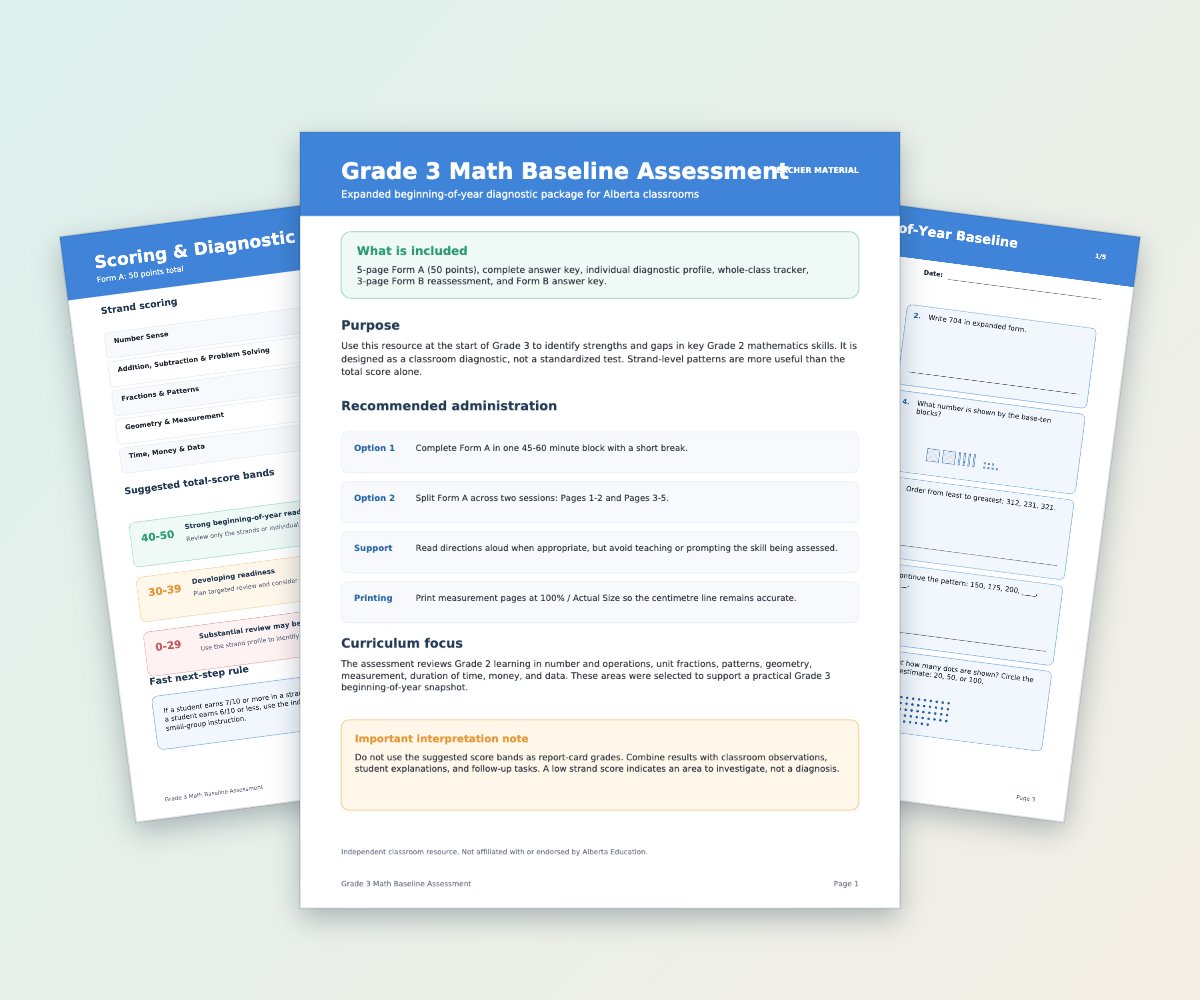
This expanded assessment package identifies Grade 3 students’ strengths and gaps in key Grade 2 mathematics skills.
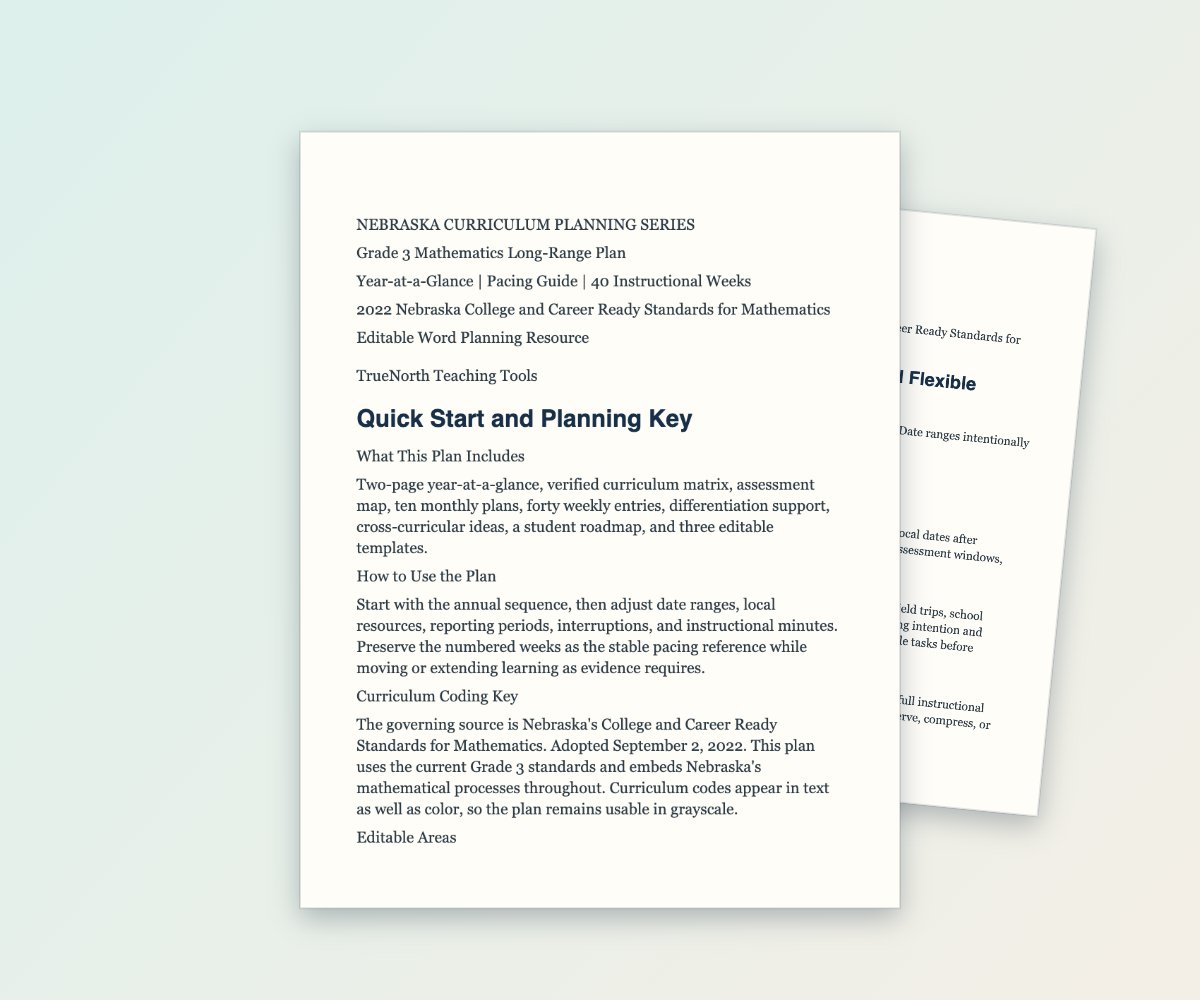
A complete 40-week editable long-range plan for Grade 3 mathematics aligned with Nebraska’s 2022 College and Career Ready Standards.
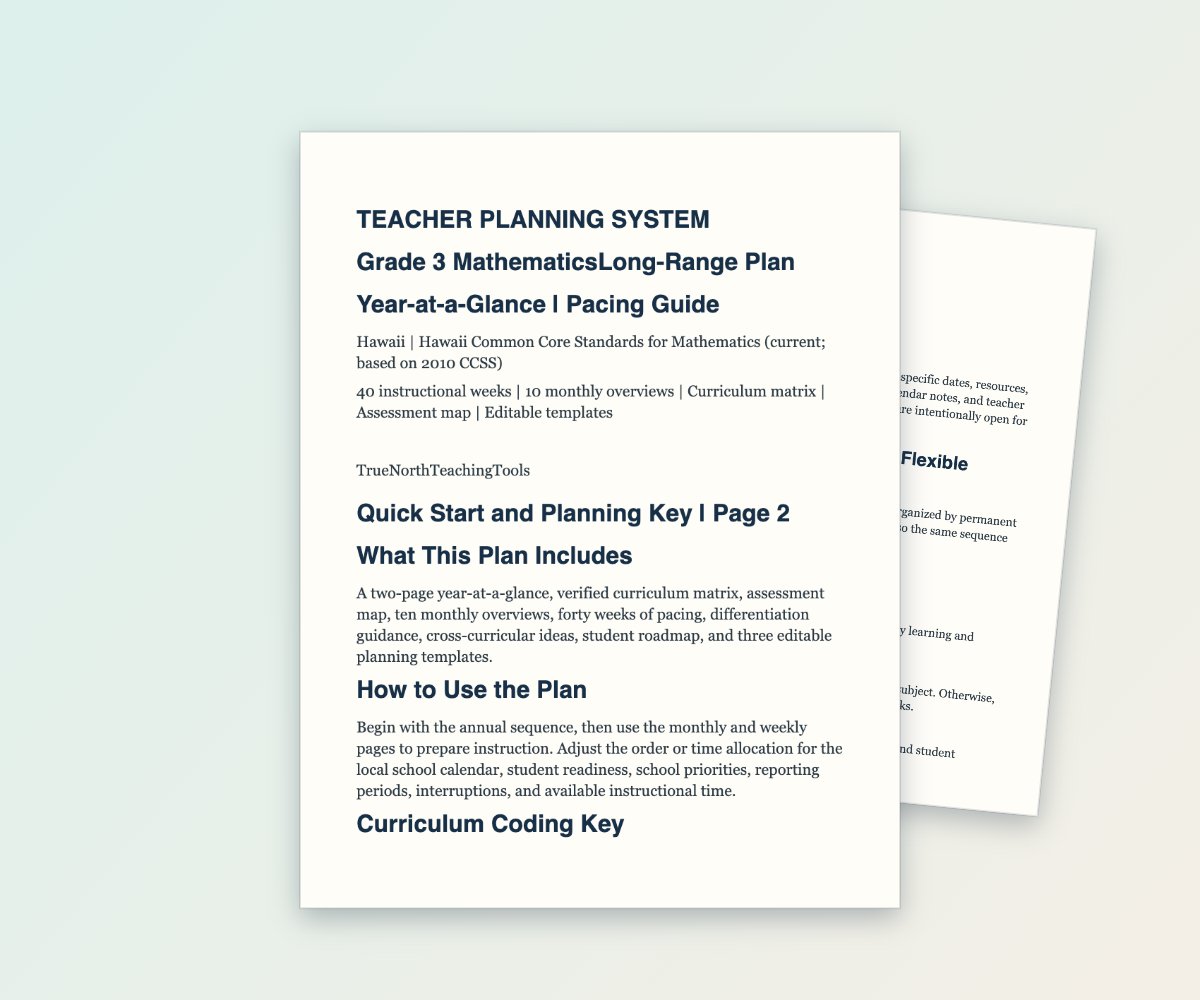
This editable 40-page planning system provides a year-at-a-glance, curriculum matrix, assessment map, monthly overviews, and 40 weeks of pacing for Grade 3 mathematics.
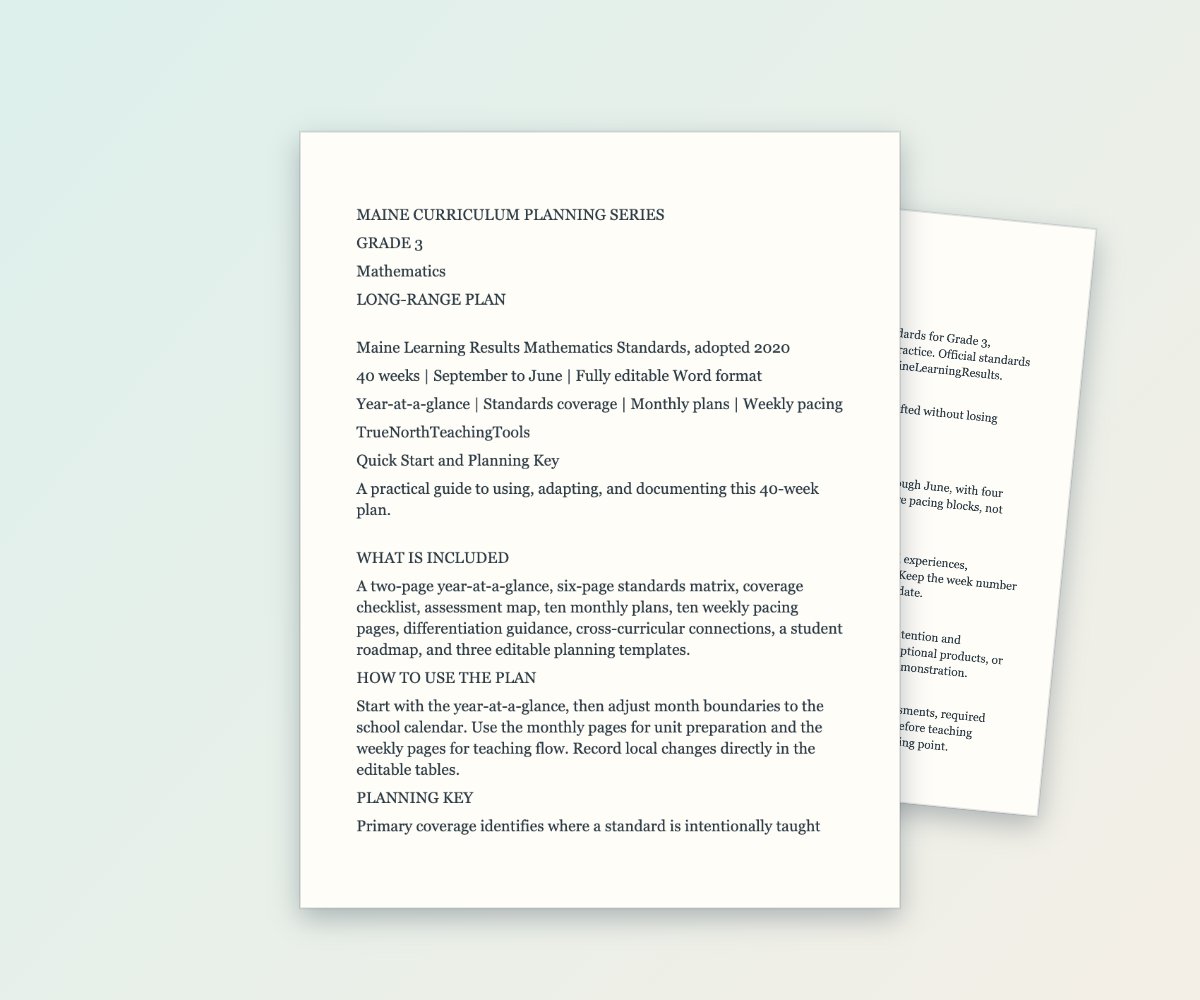
A fully editable 40-week mathematics long-range plan covering September through June.
This editable 40-week long-range plan provides a year-at-a-glance, curriculum coverage matrix, monthly and weekly pacing, assessment guidance, differentiation support, and planning templates.
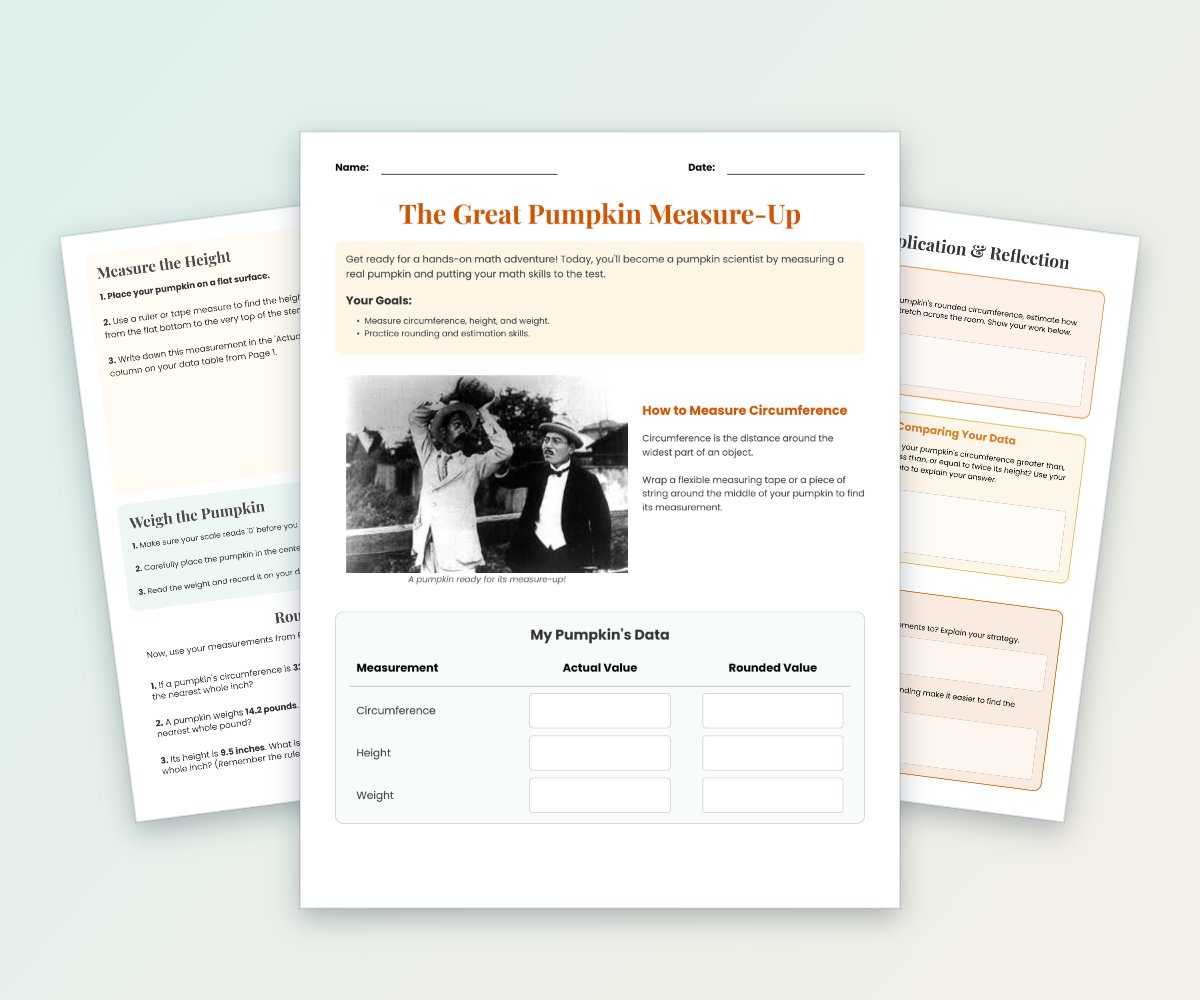
Students measure a real pumpkin’s circumference, height, and weight, record actual and rounded values, and practice estimation.
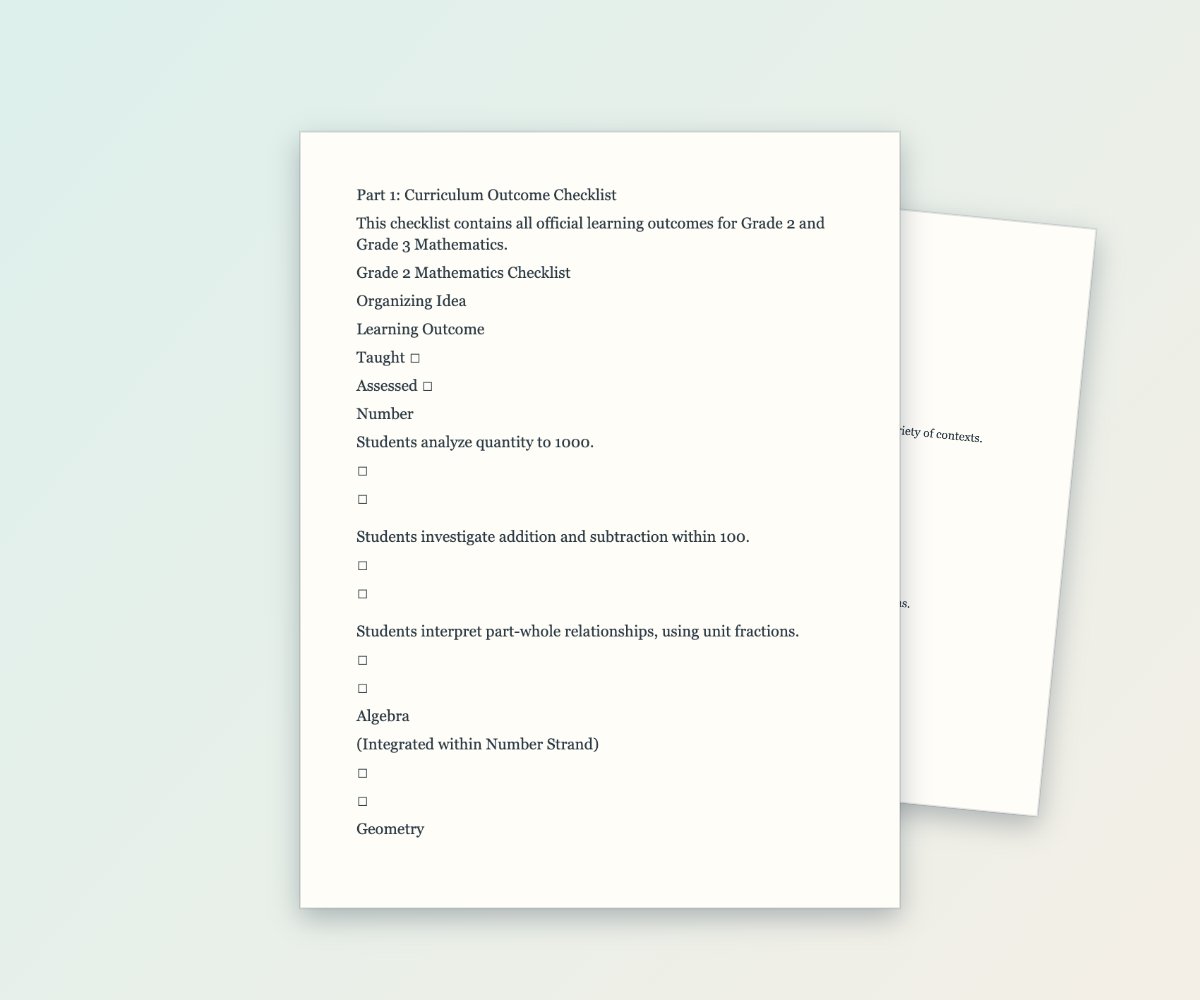
This editable long-range plan covers Grade 2 and Grade 3 Mathematics outcomes in the Alberta curriculum.
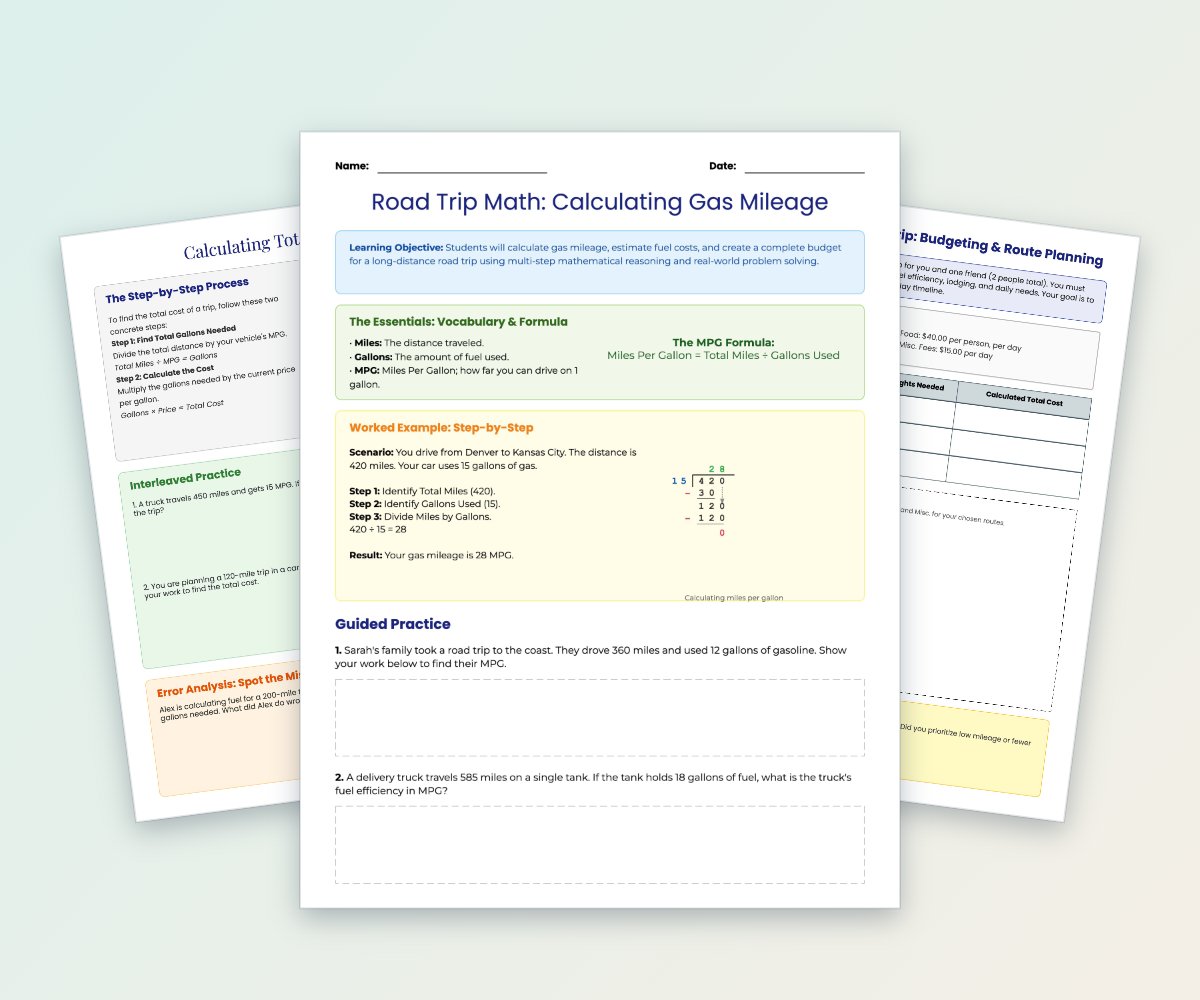
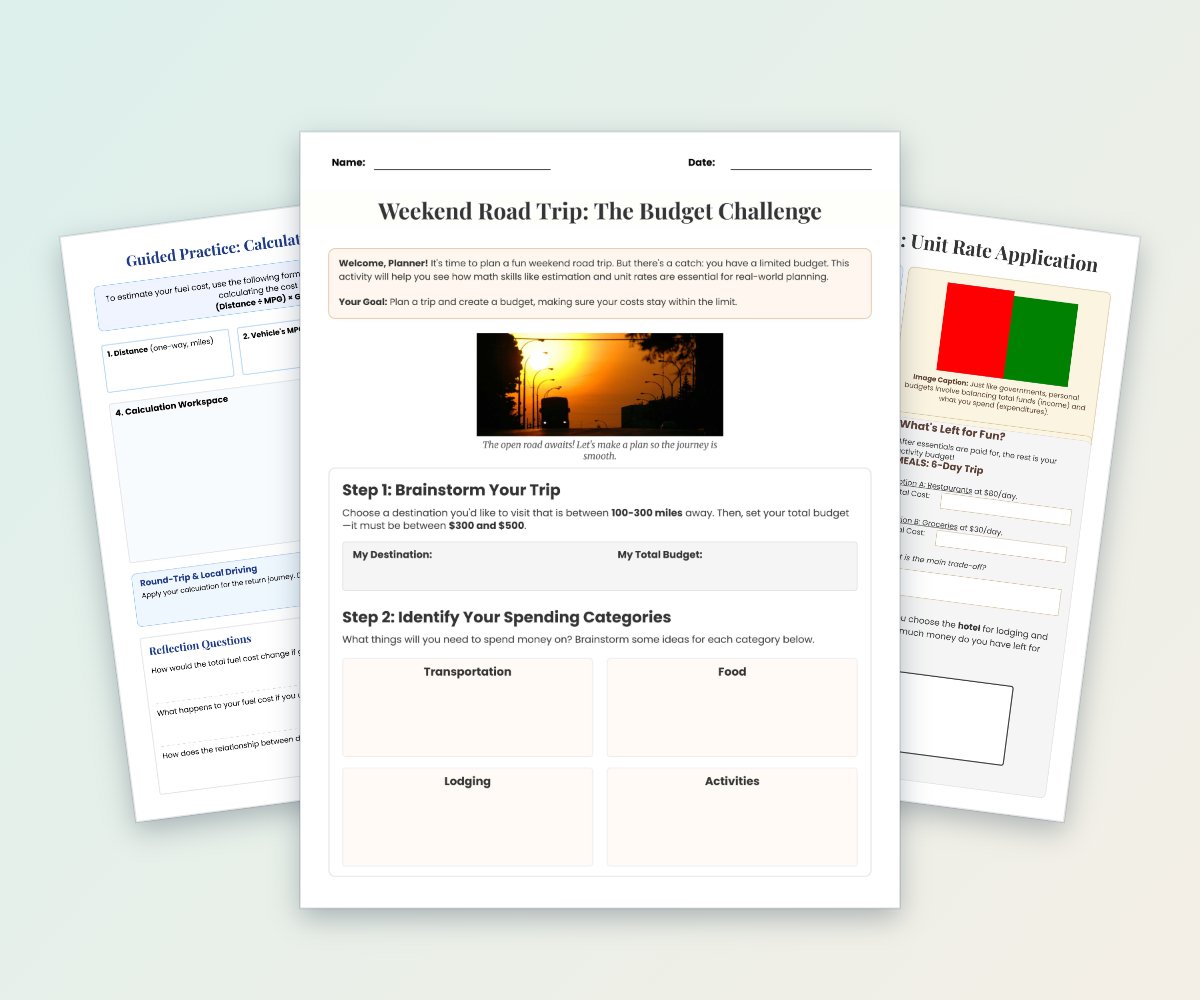
Students calculate miles per gallon, estimate fuel costs, analyze errors, and create a budget for a long-distance road trip.
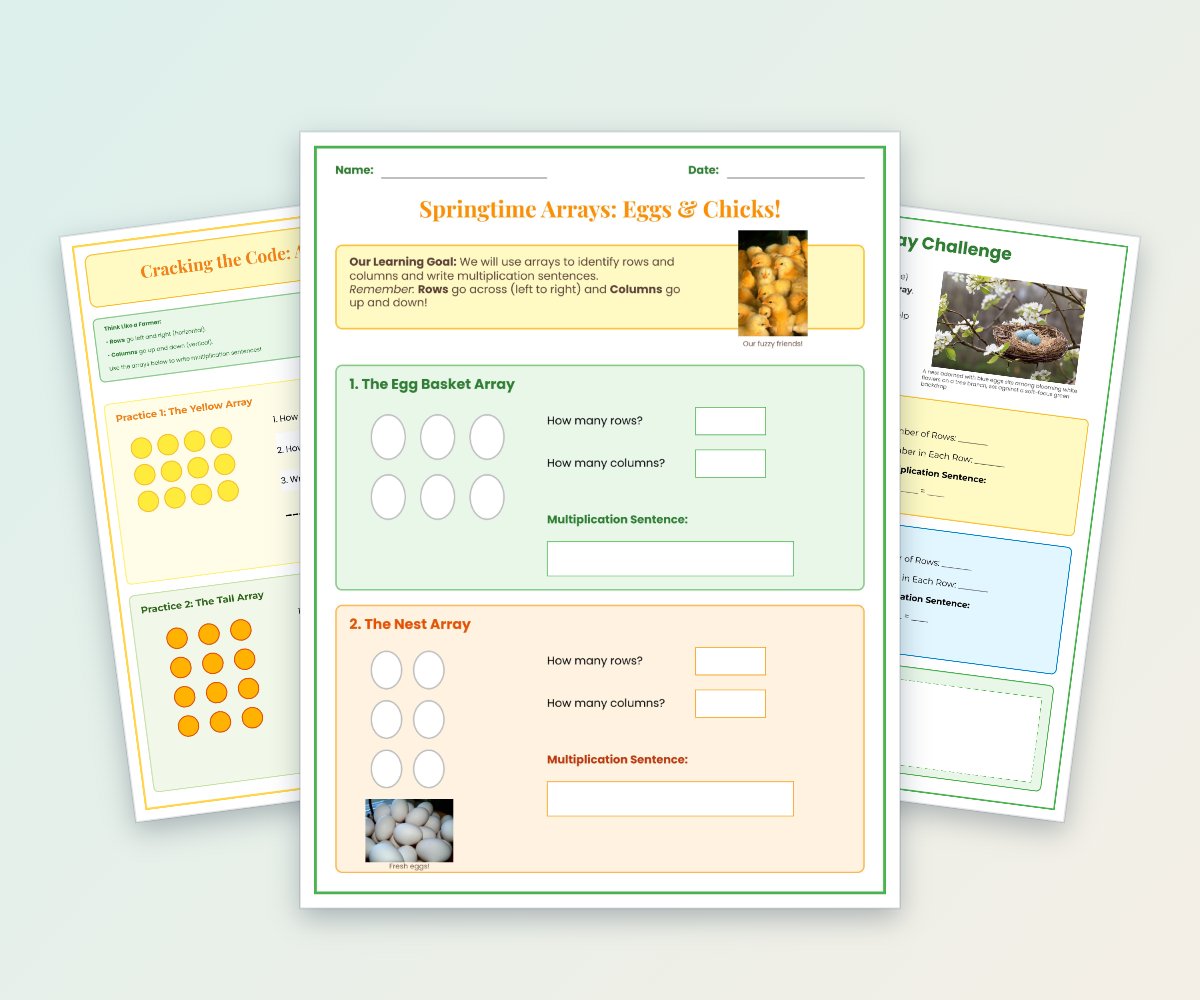
Students identify rows and columns, write multiplication sentences, and represent facts using spring-themed egg and chick arrays.
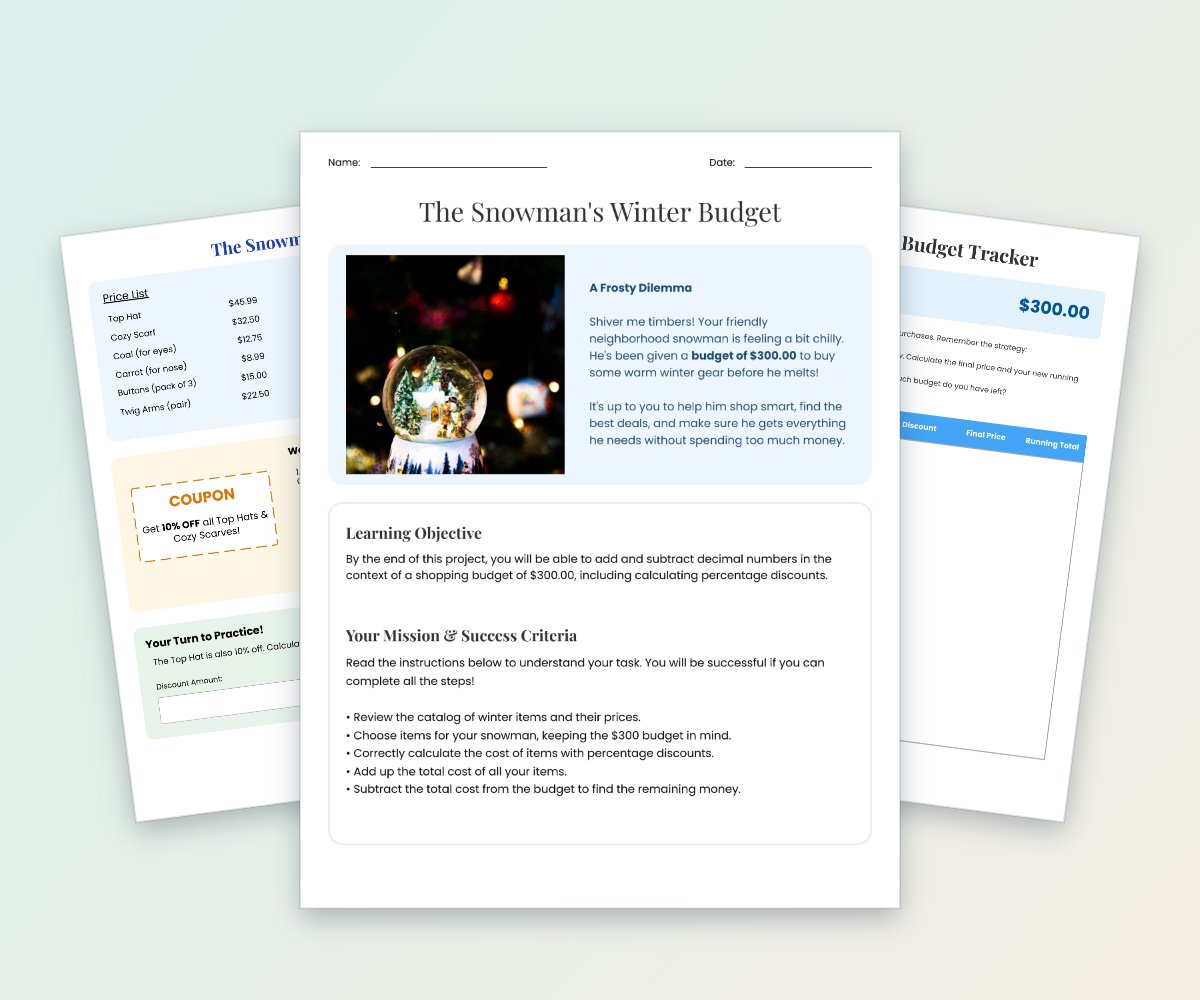
Students help a snowman shop for winter items within a $300 budget while calculating percentage discounts, final prices, totals, and remaining money.
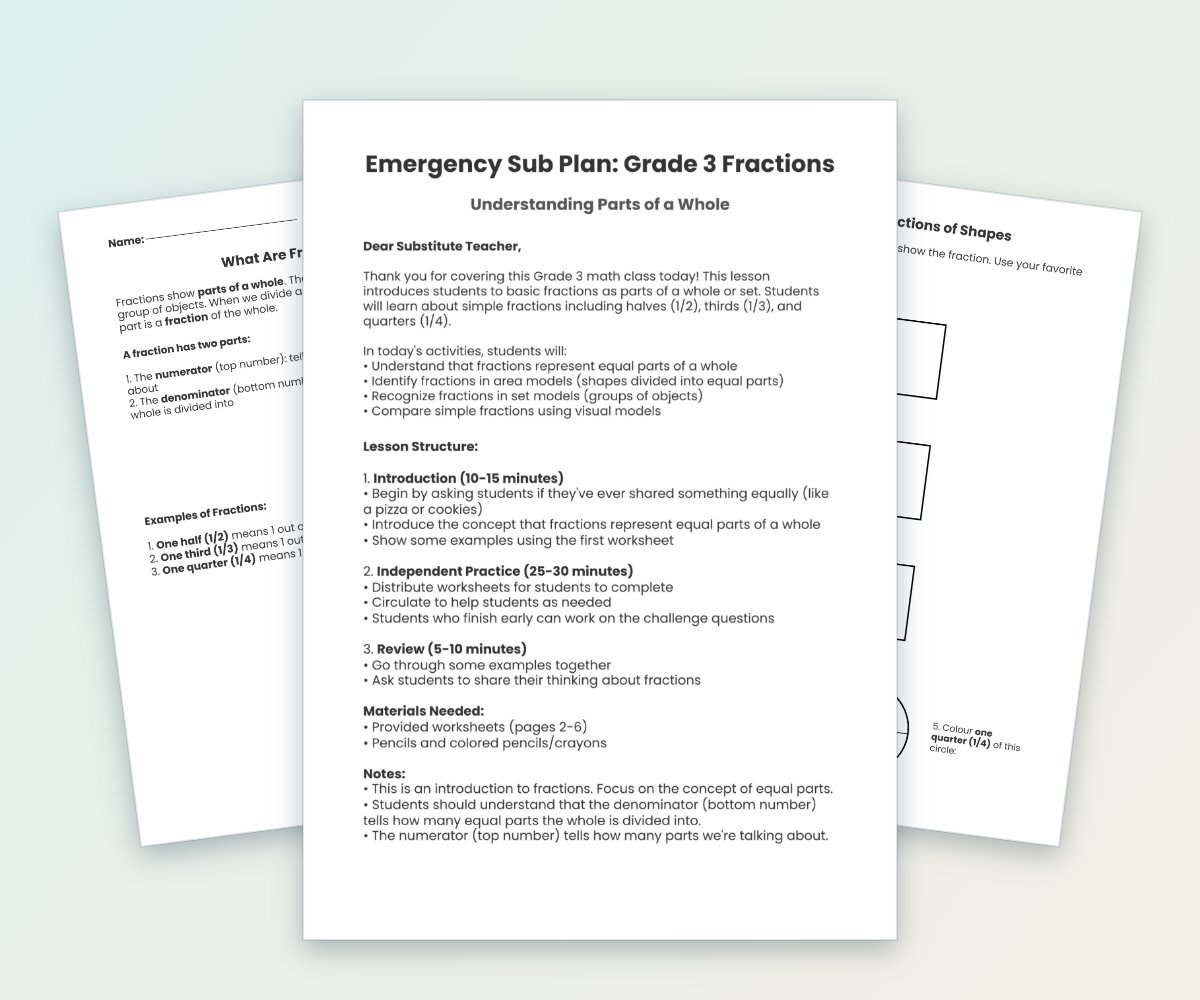
This six-page emergency substitute plan introduces Grade 3 students to fractions as equal parts of wholes and sets.
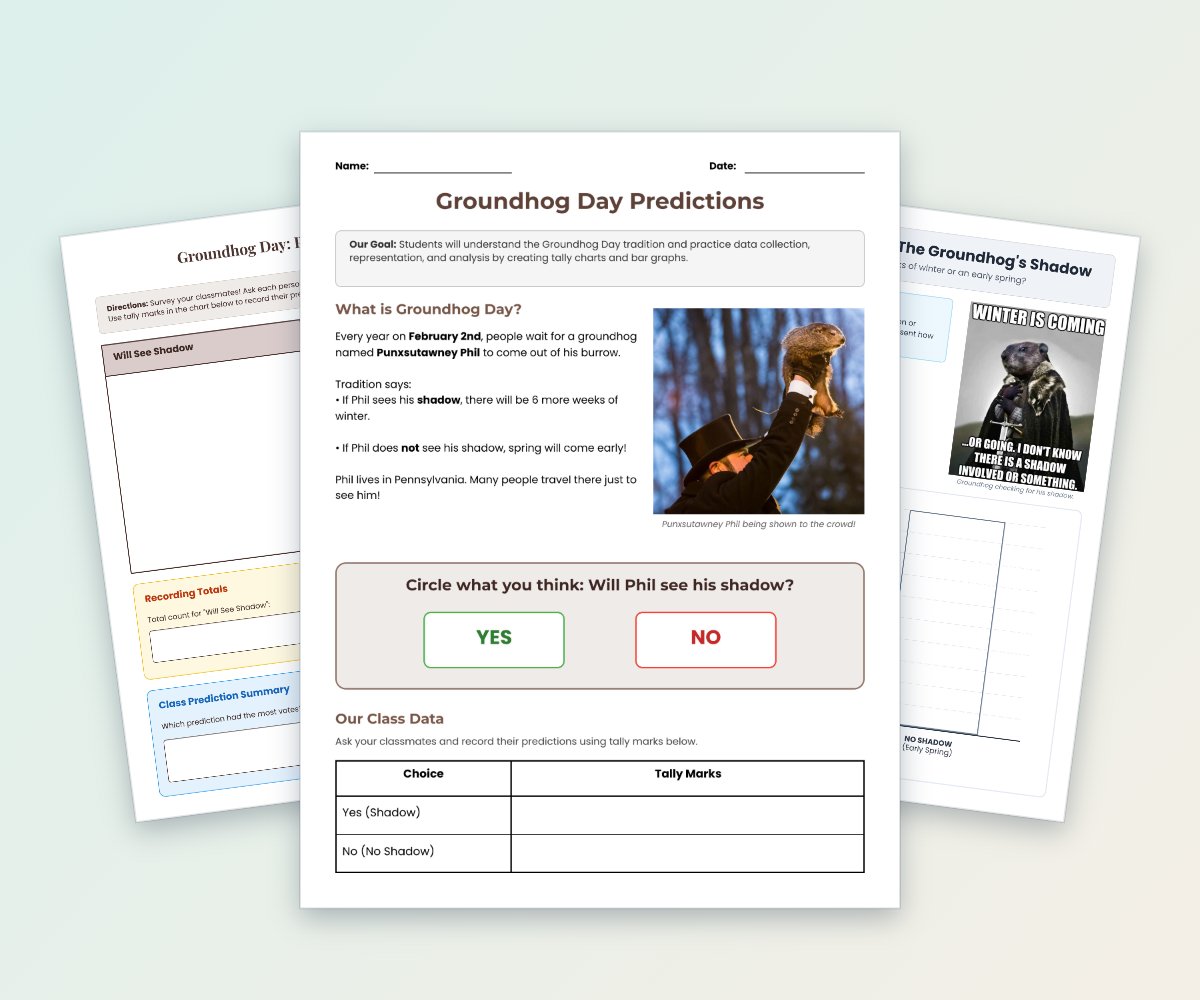
Students learn about the Groundhog Day tradition, survey classmates about their predictions, and record results with tally marks.
This 30-slide presentation provides back-to-school logic puzzles and brain teasers for warm-ups, early finishers, or transition activities.
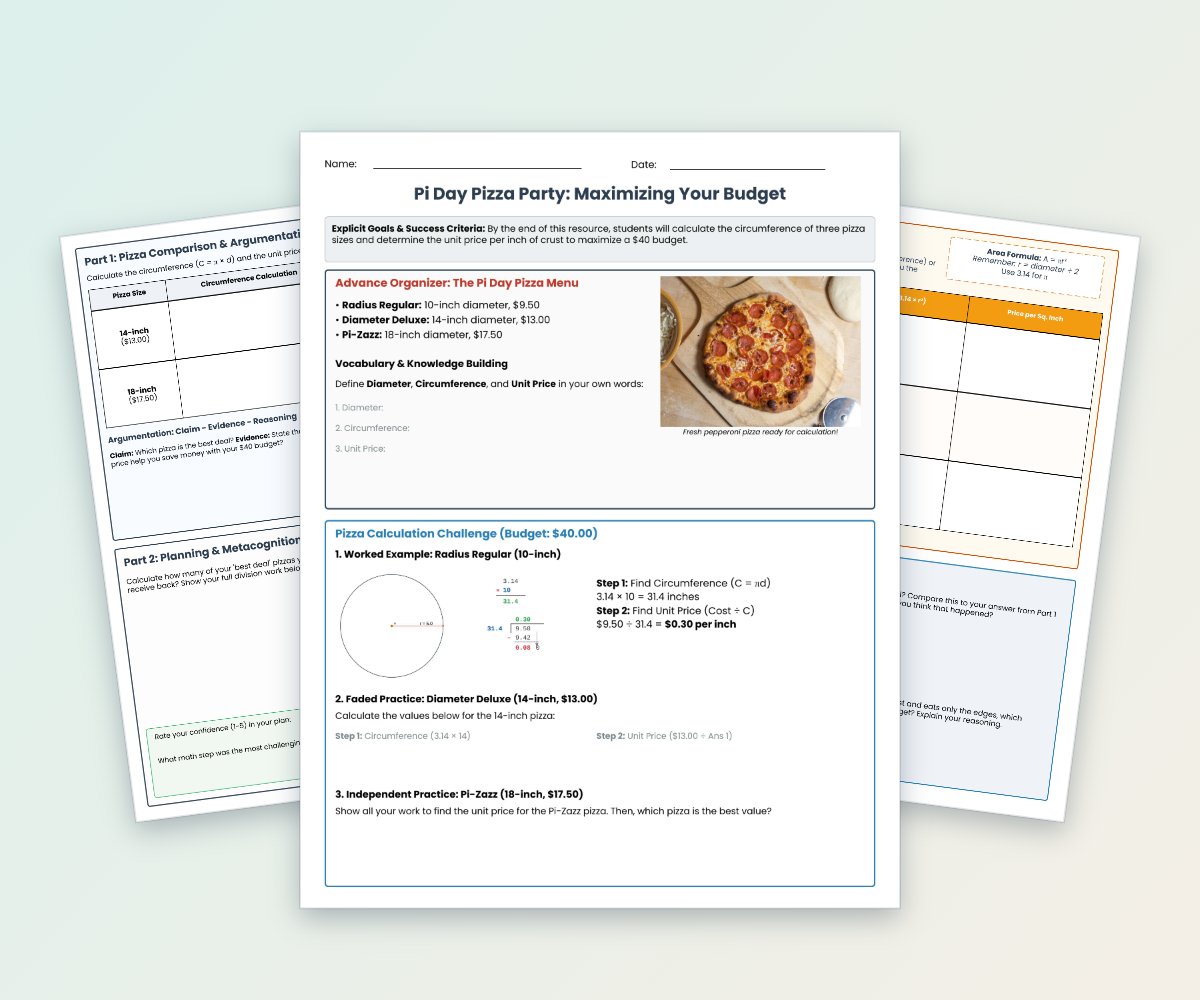
Students calculate pizza circumference, compare unit prices, maximize a $40 budget, and evaluate area-based value.
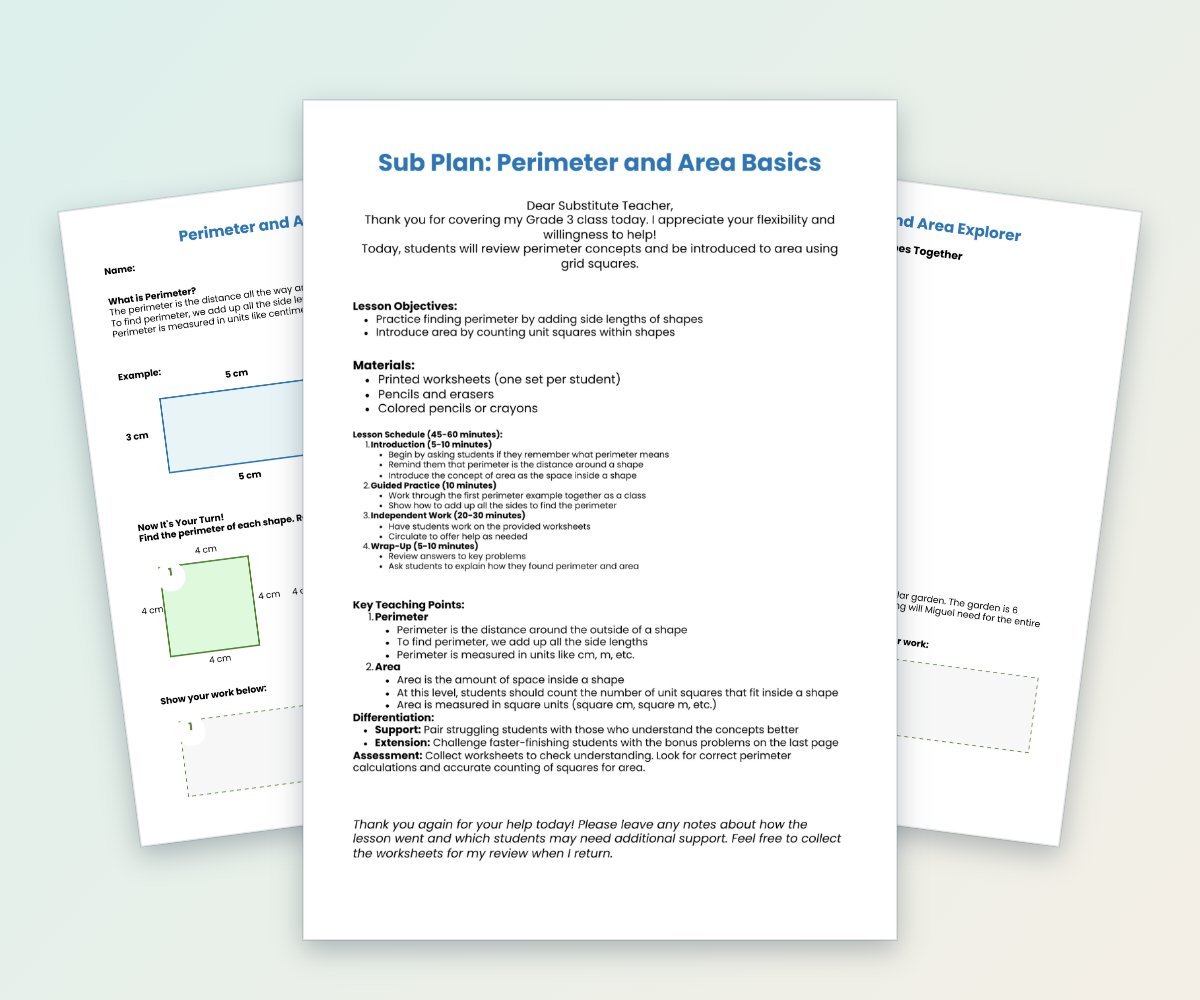
This seven-page Grade 3 substitute lesson introduces perimeter and area through teacher guidance, worked examples, and student practice worksheets.
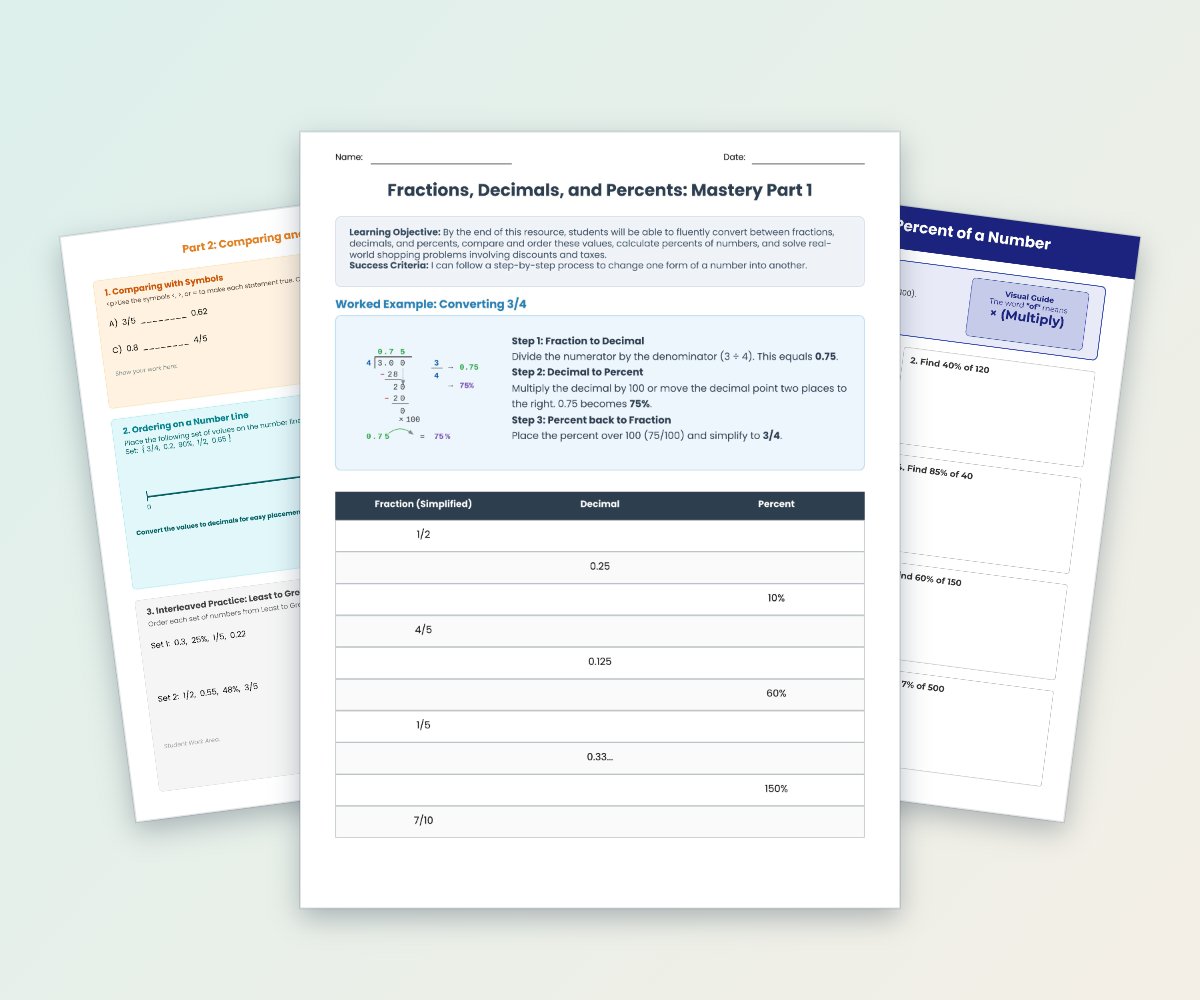
This six-page review pack teaches students to convert among fractions, decimals, and percents, compare and order values, calculate percentages, and solve shopping problems.
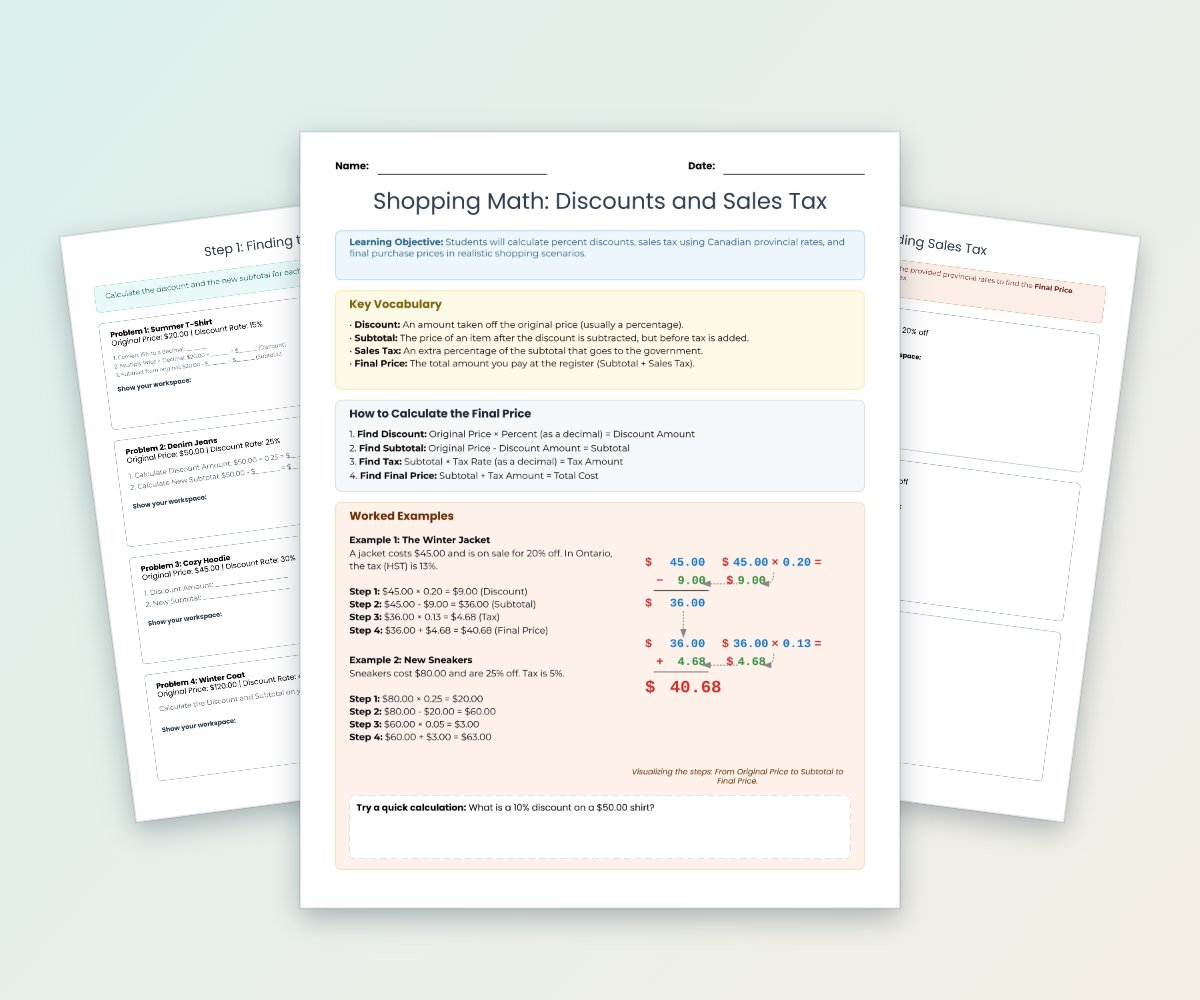
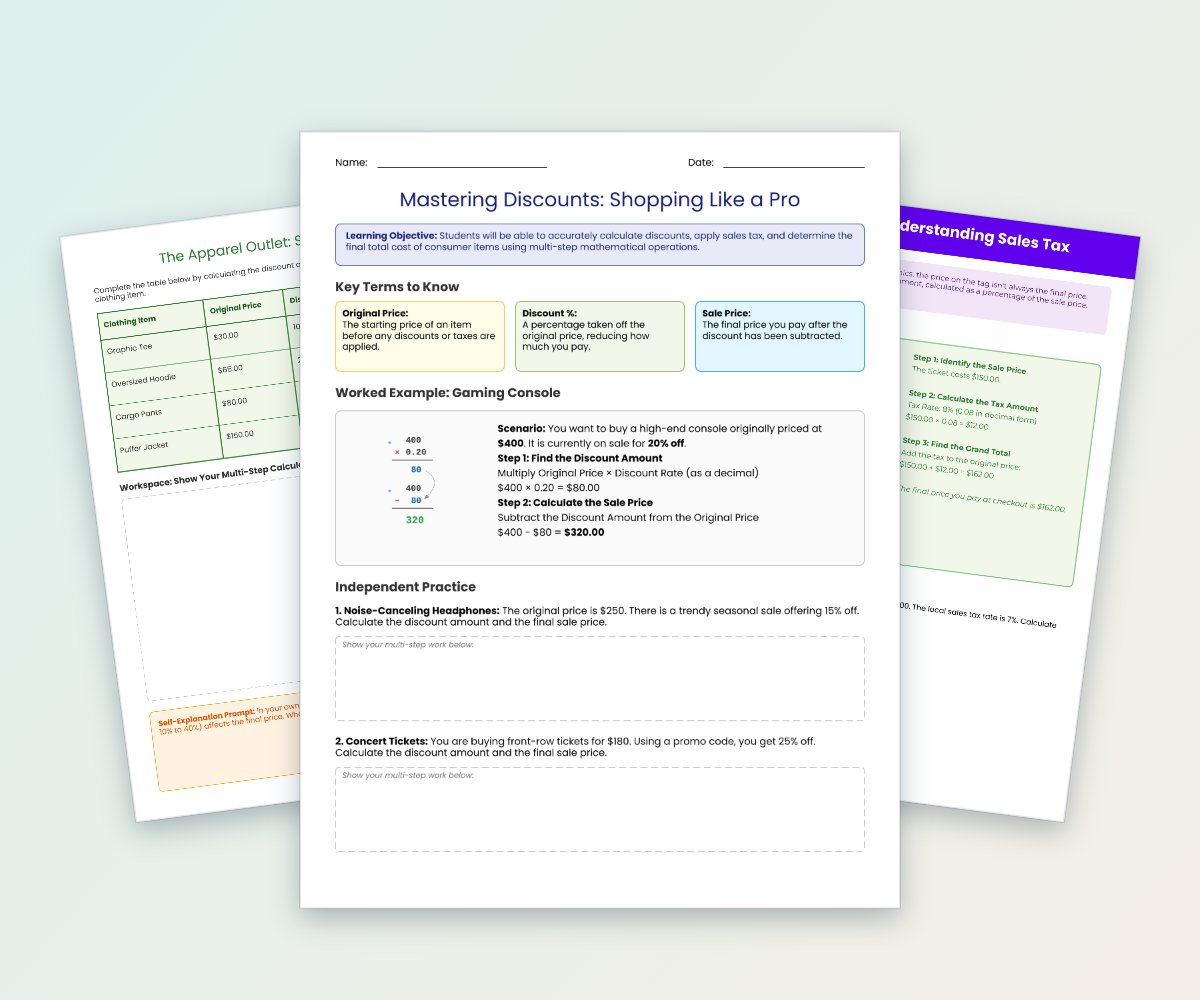
Students practice calculating percentage discounts, subtotals, sales tax, and final purchase prices using realistic shopping scenarios.
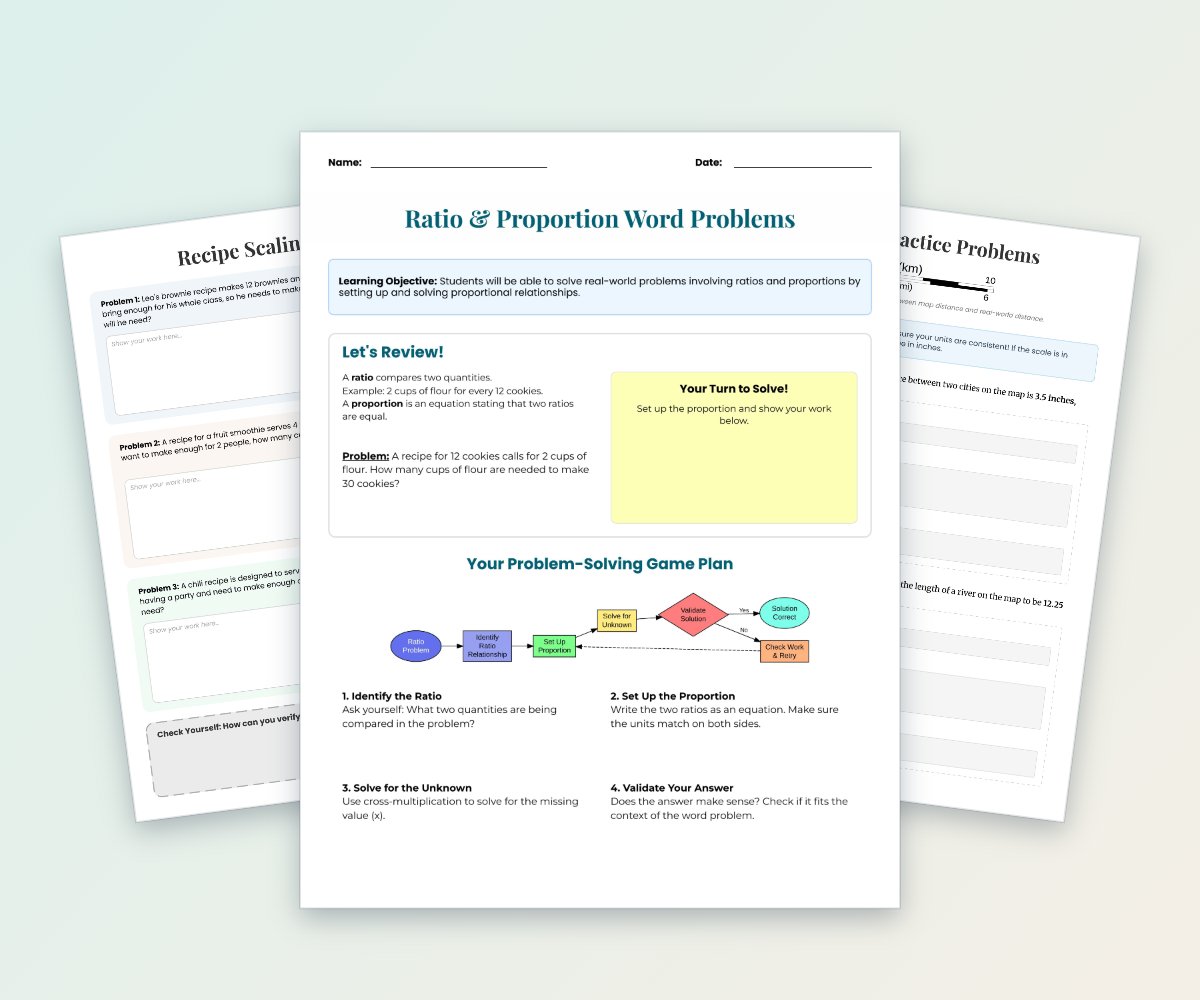
Students review ratios and proportions, then solve real-world problems involving recipe scaling and map scales.
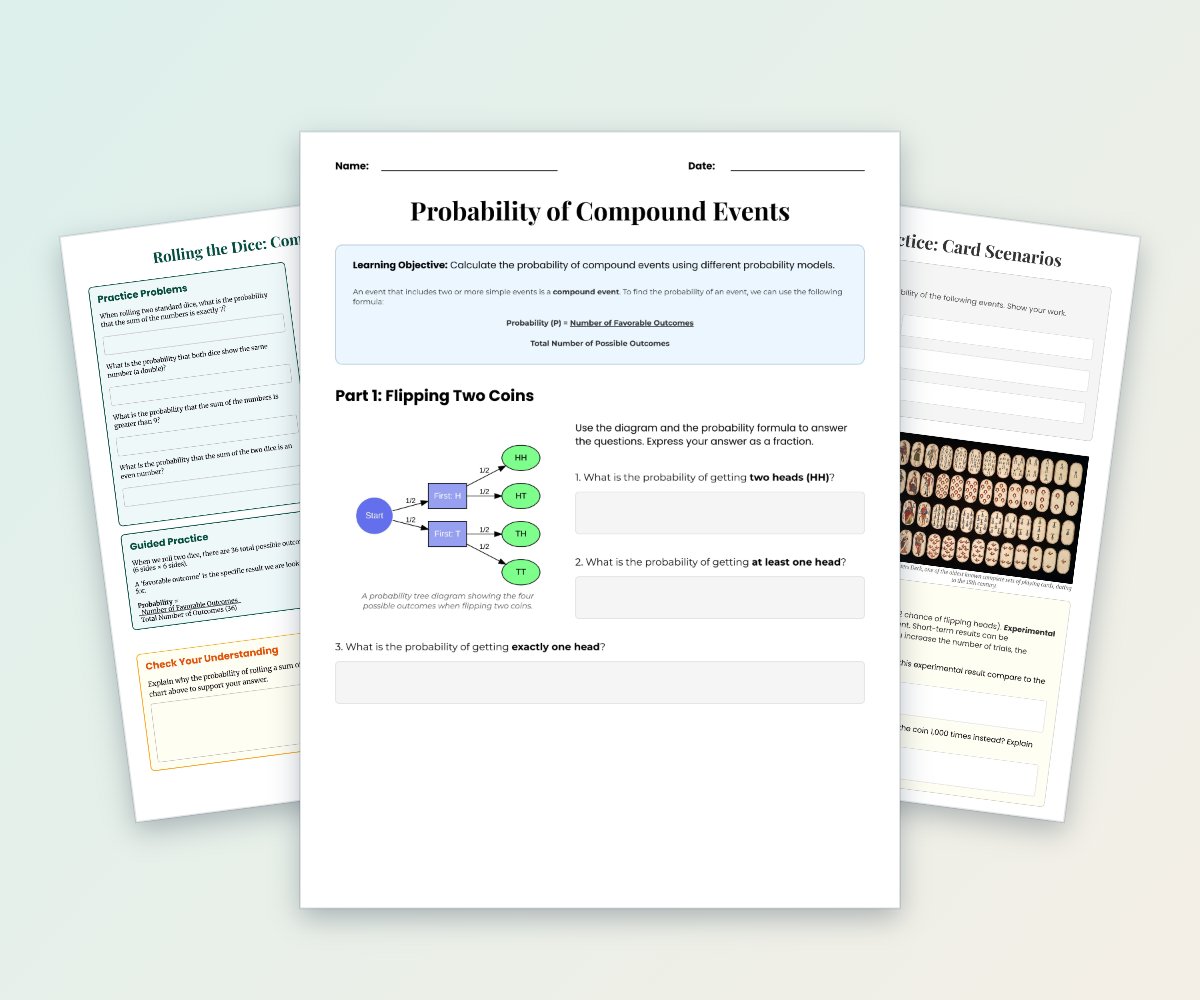
This four-page worksheet teaches students to calculate compound-event probabilities using coin flips, dice, card draws, tree diagrams, outcome charts, and probability models.
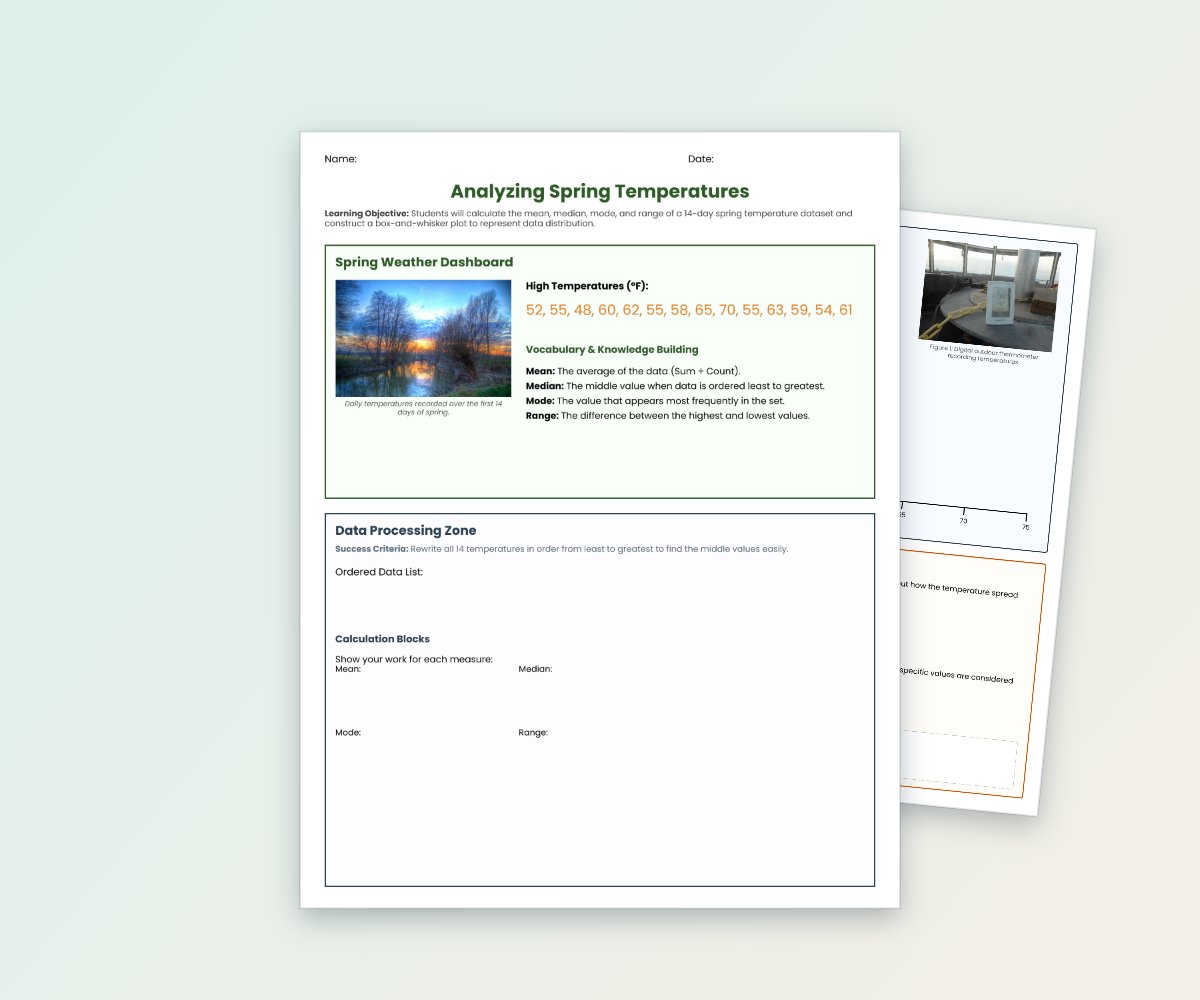
Students analyze a 14-day spring temperature dataset by calculating the mean, median, mode, and range.
Students calculate discount amounts, sale prices, sales tax, and final costs using realistic shopping scenarios.
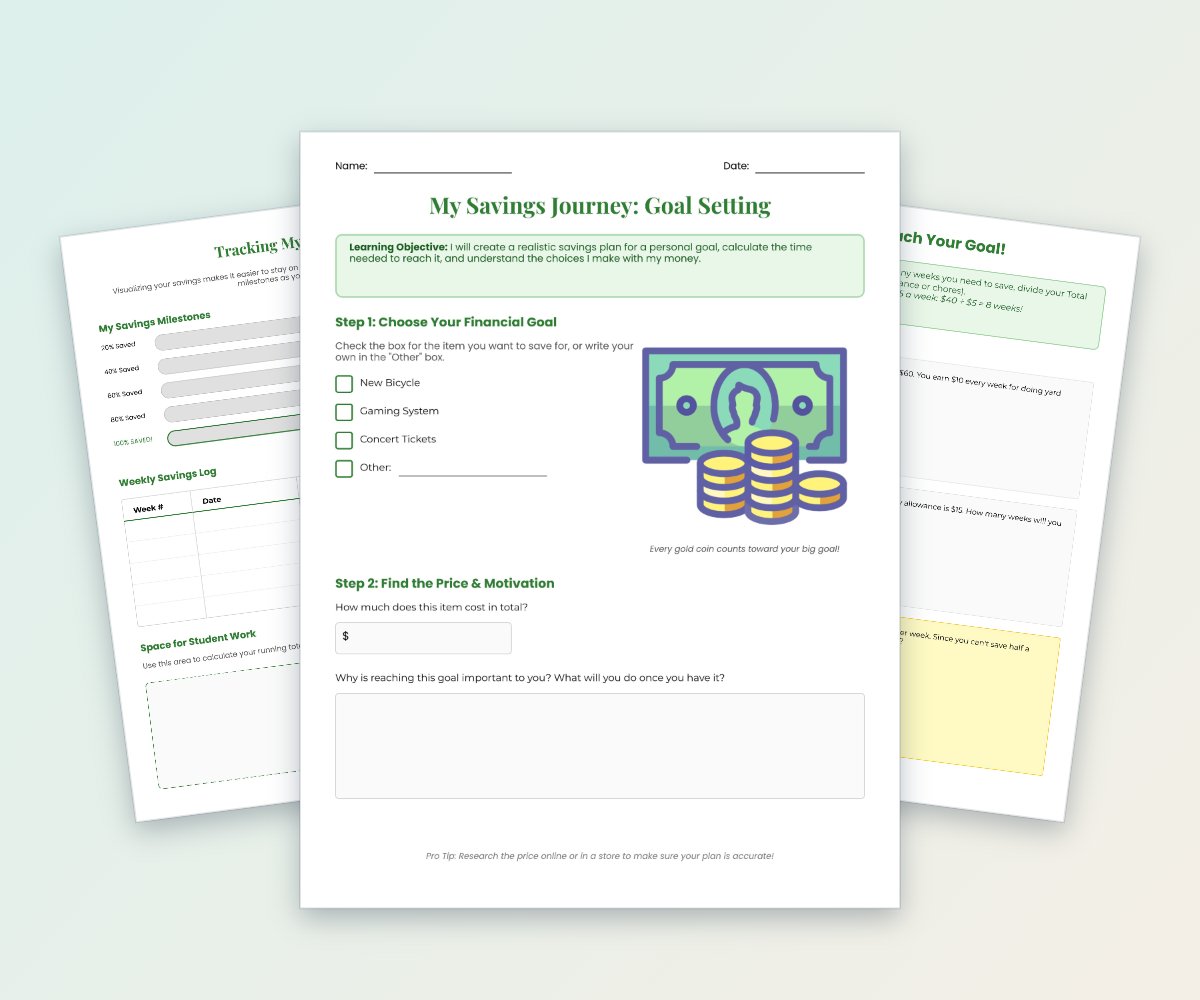
Students create a savings goal, calculate the time needed to reach it, track deposits, and reflect on spending tradeoffs.
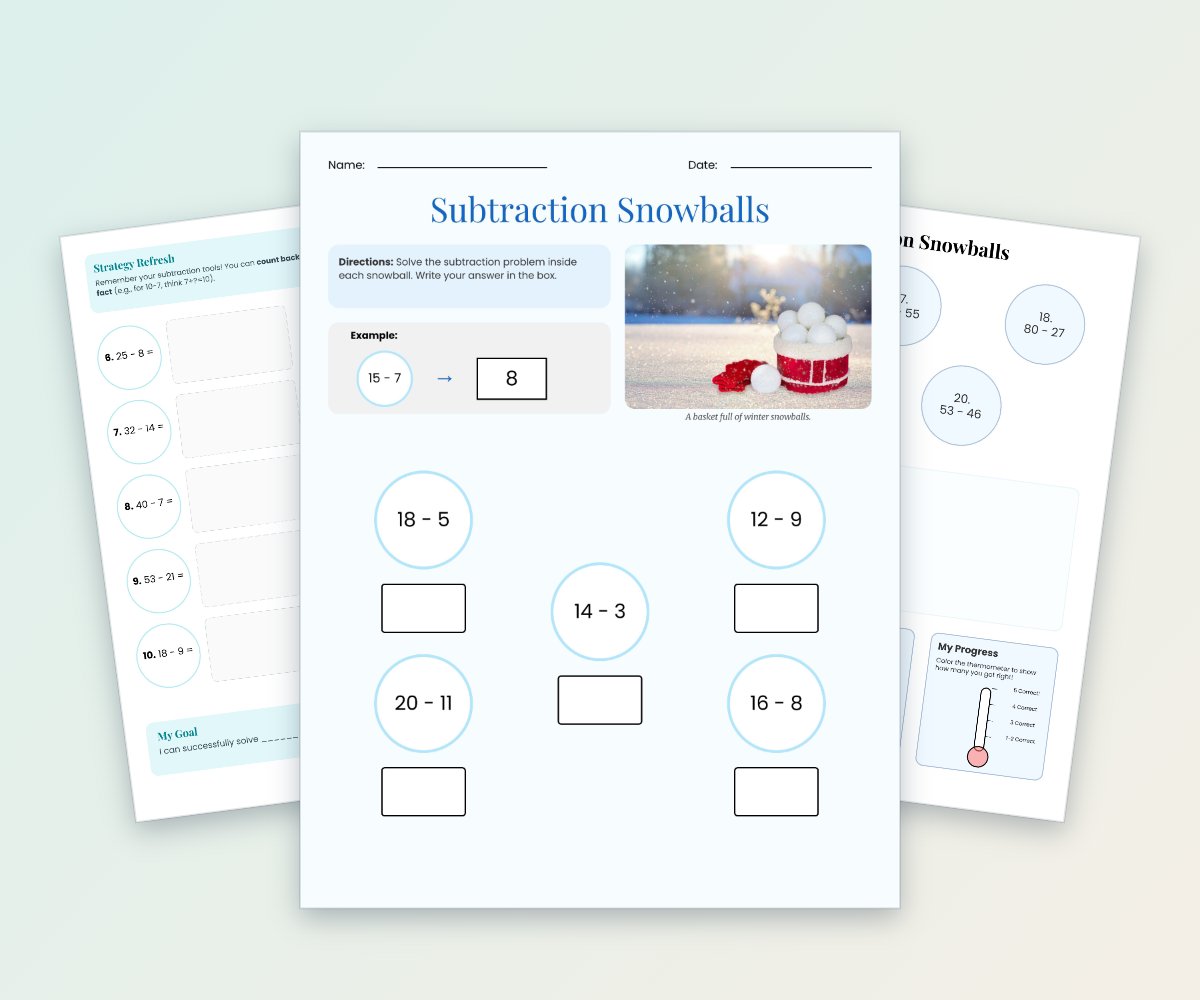
Students solve 20 subtraction problems, including two-digit subtraction with regrouping.
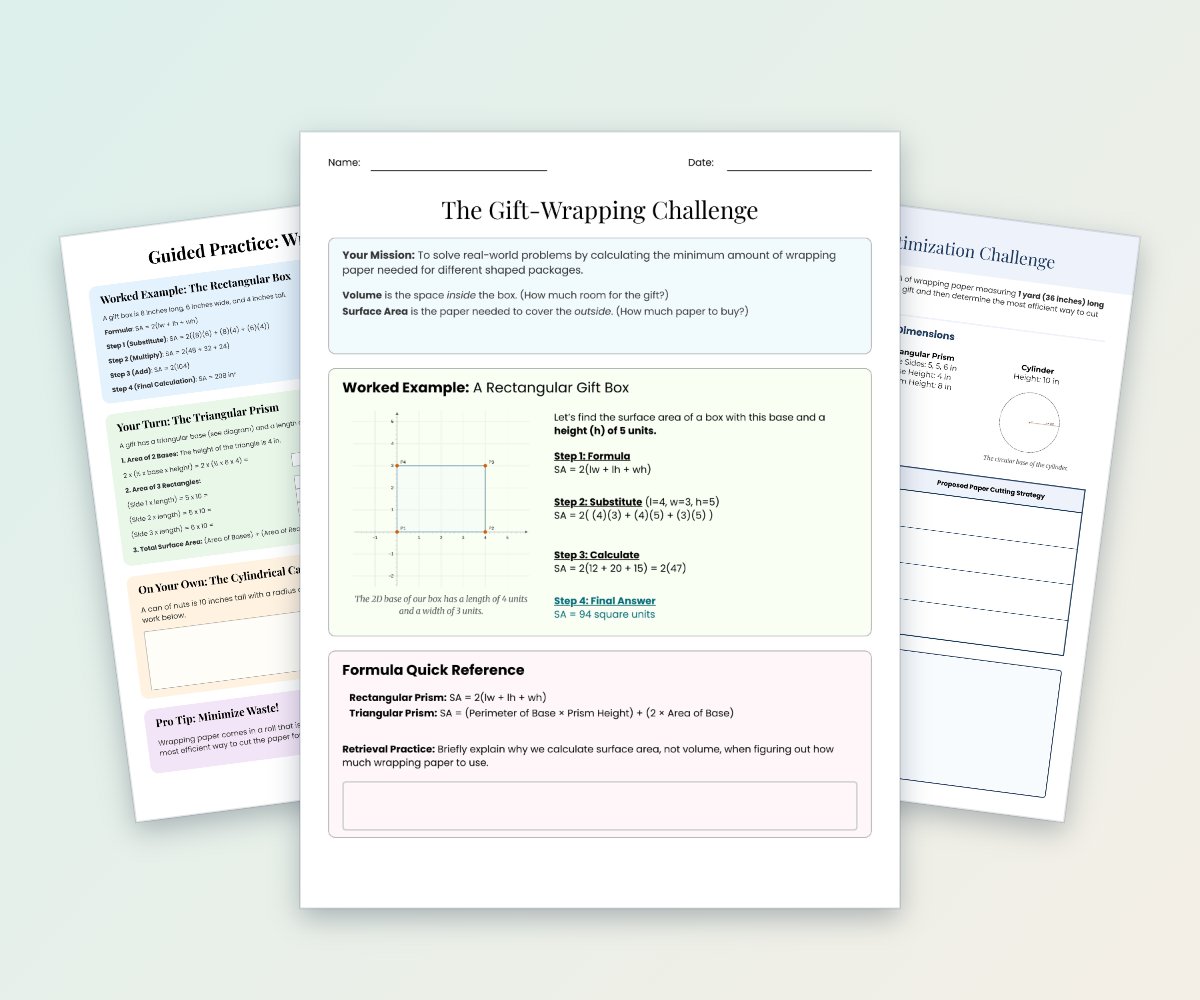
Students calculate the surface area of rectangular prisms, triangular prisms, cubes, and cylinders in a gift-wrapping context.
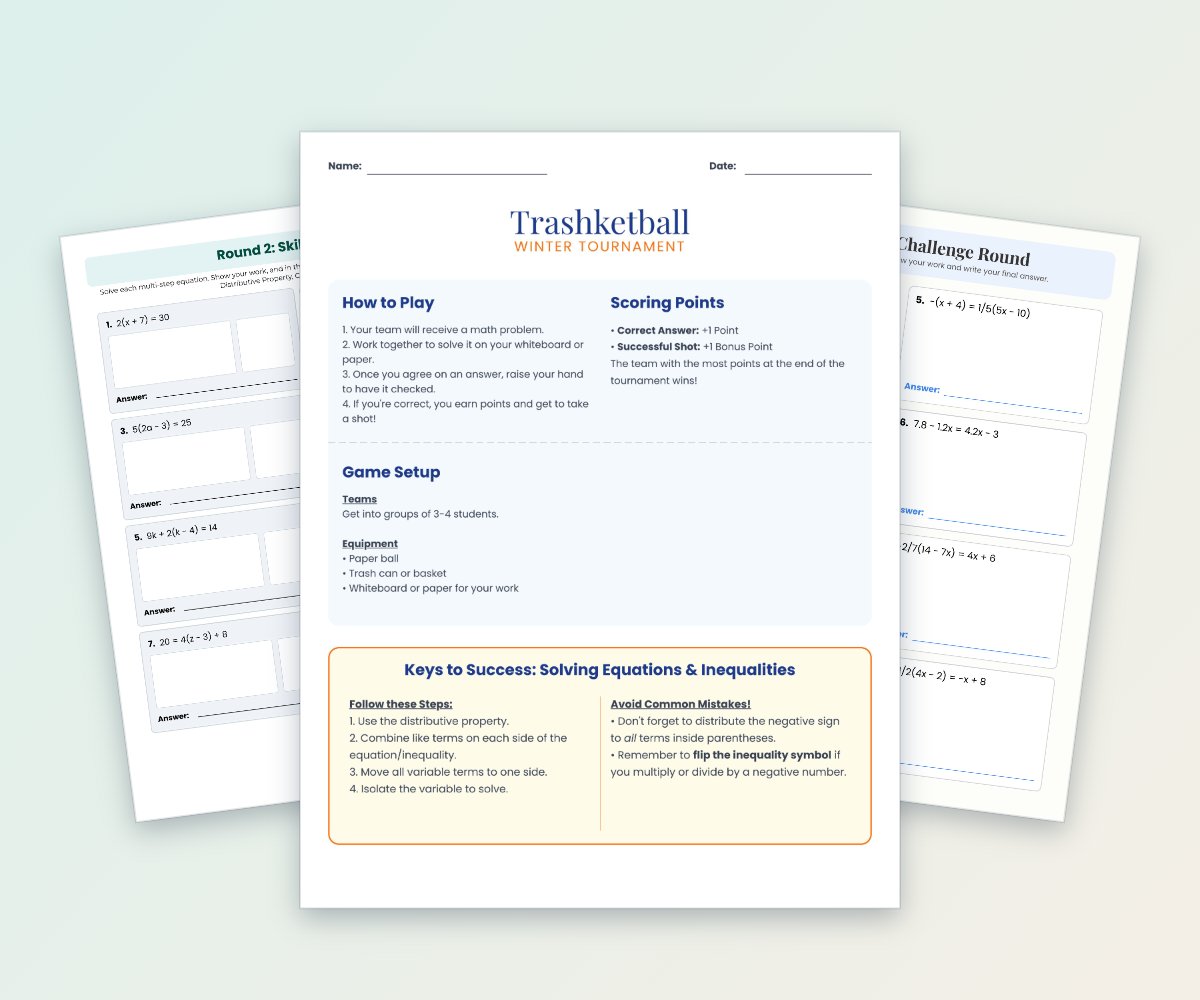
Engage students in a competitive Trashketball tournament featuring collaborative practice with multi-step equations and inequalities.
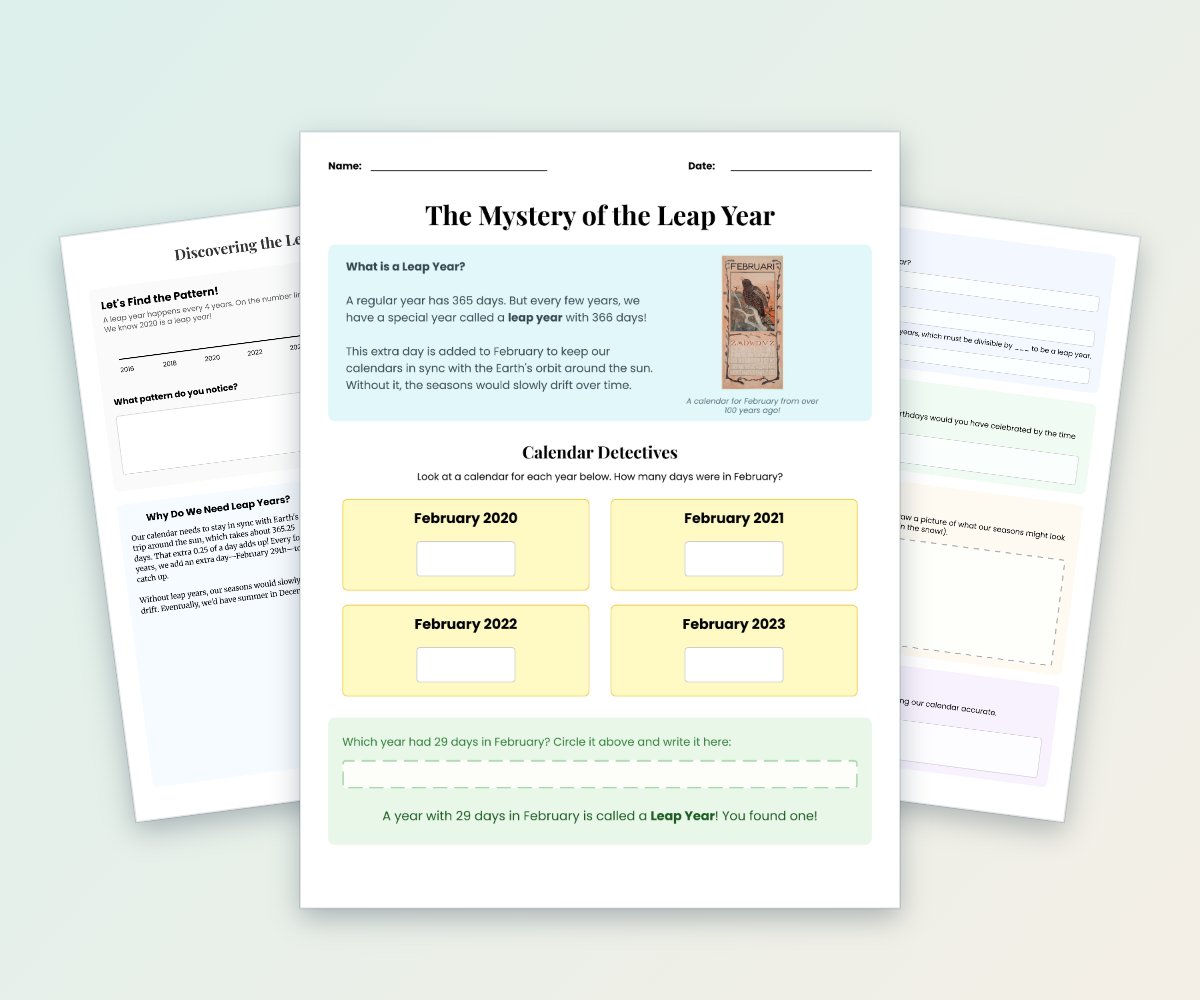
This three-page worksheet introduces leap years through calendar investigation, number patterns, prediction, review questions, and a real-world birthday challenge.
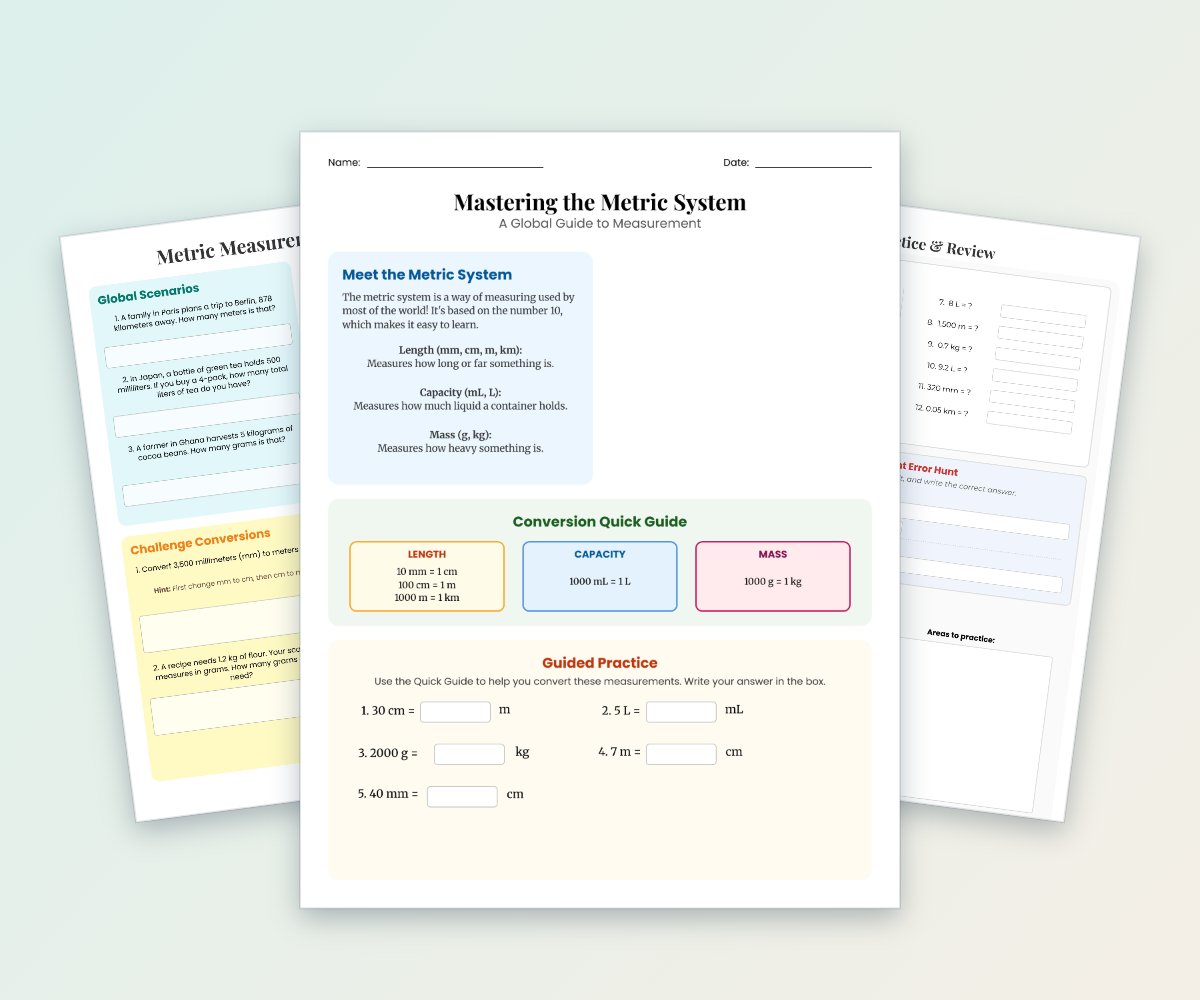
This three-page math resource introduces metric units for length, capacity, and mass, then provides guided practice, global word problems, mixed conversions, comparisons, and error analysis.
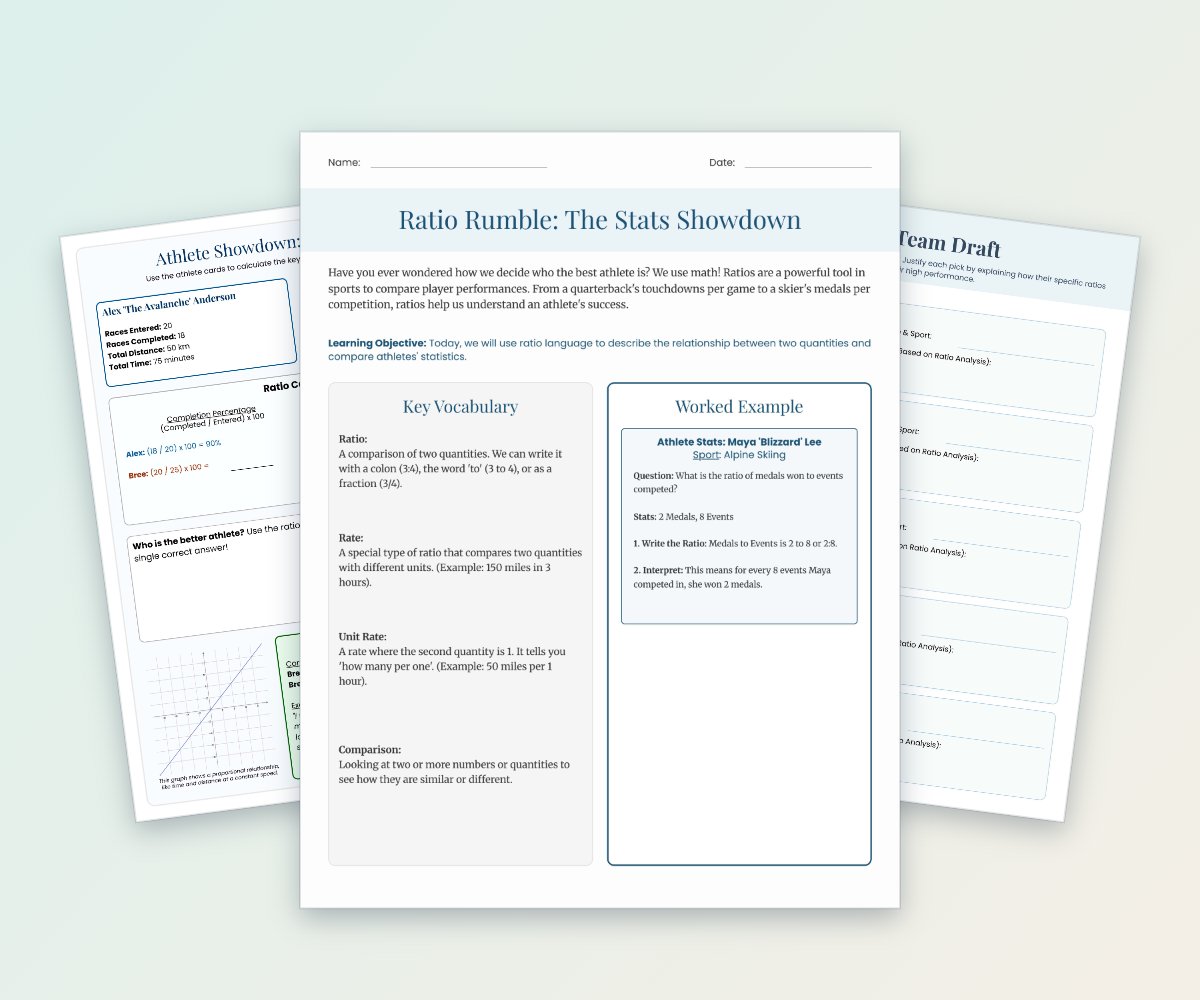
Students use sports statistics to calculate ratios, rates, unit rates, completion percentages, and speed.
Students plan a weekend road trip within a fixed budget while estimating fuel, food, lodging, and activity costs.
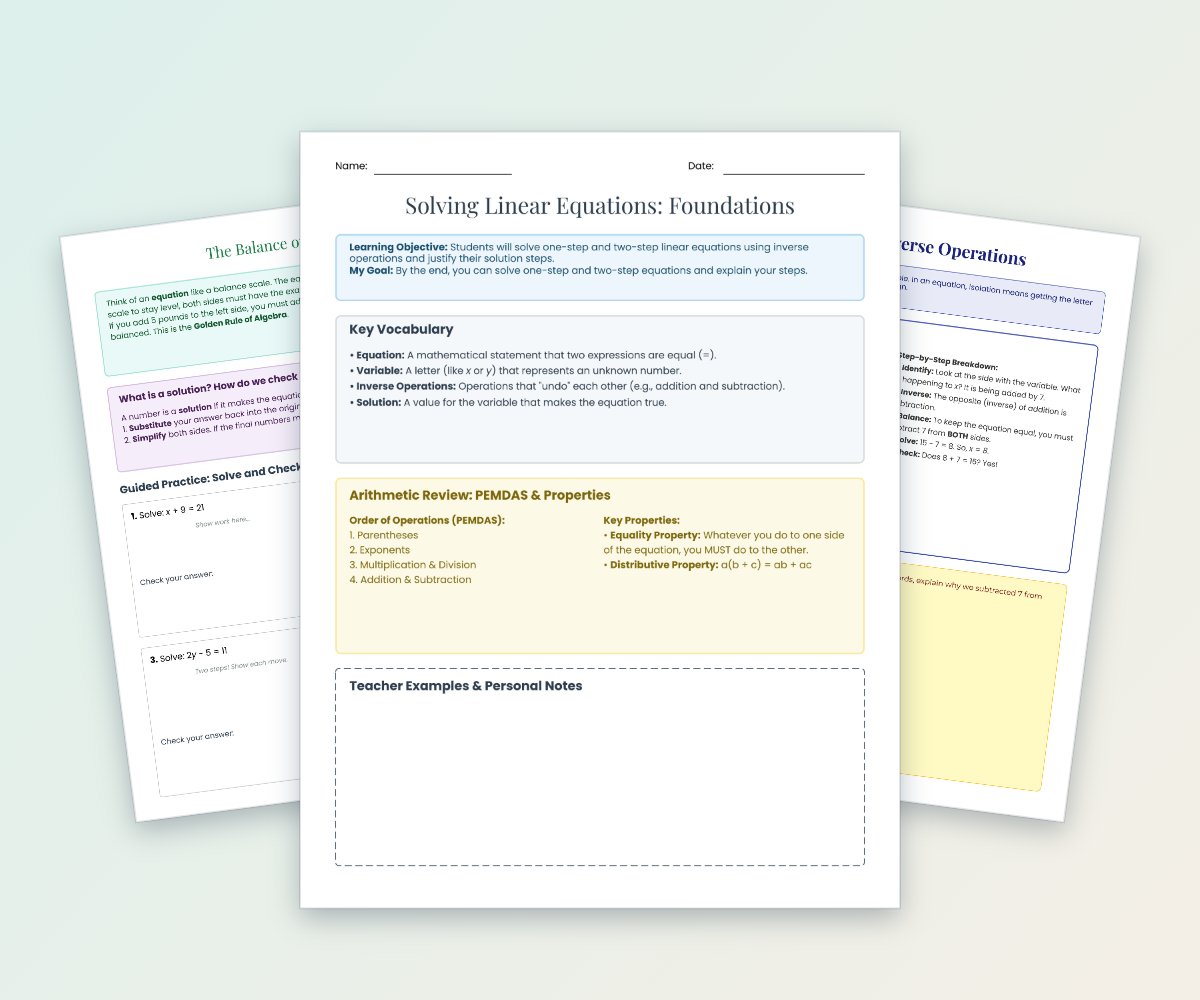
This 8-page student workbook teaches learners to solve one-step and two-step linear equations using inverse operations, equality properties, and equation-checking strategies.
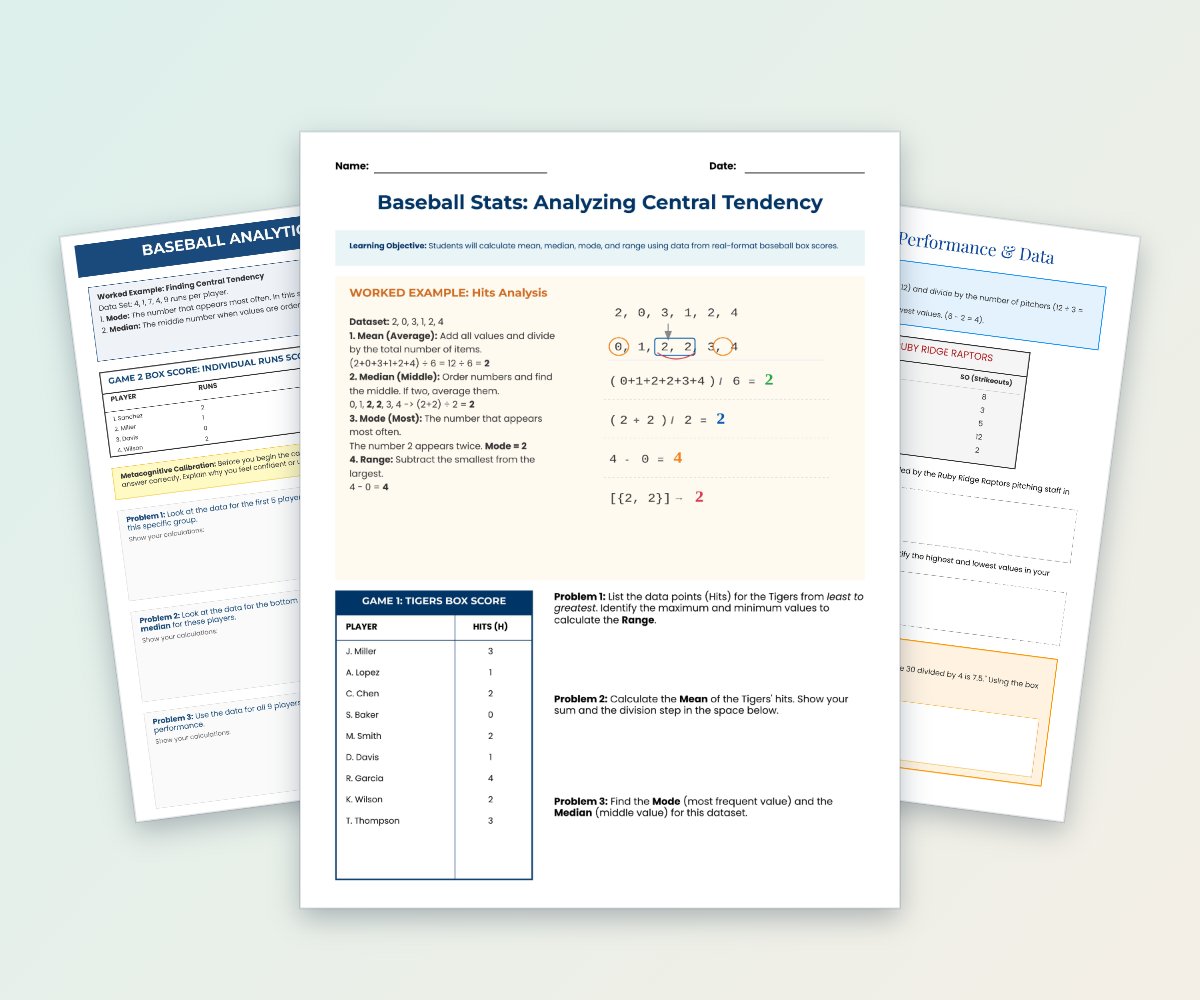
Students analyze baseball box scores and calculate mean, median, mode, and range using realistic player statistics.
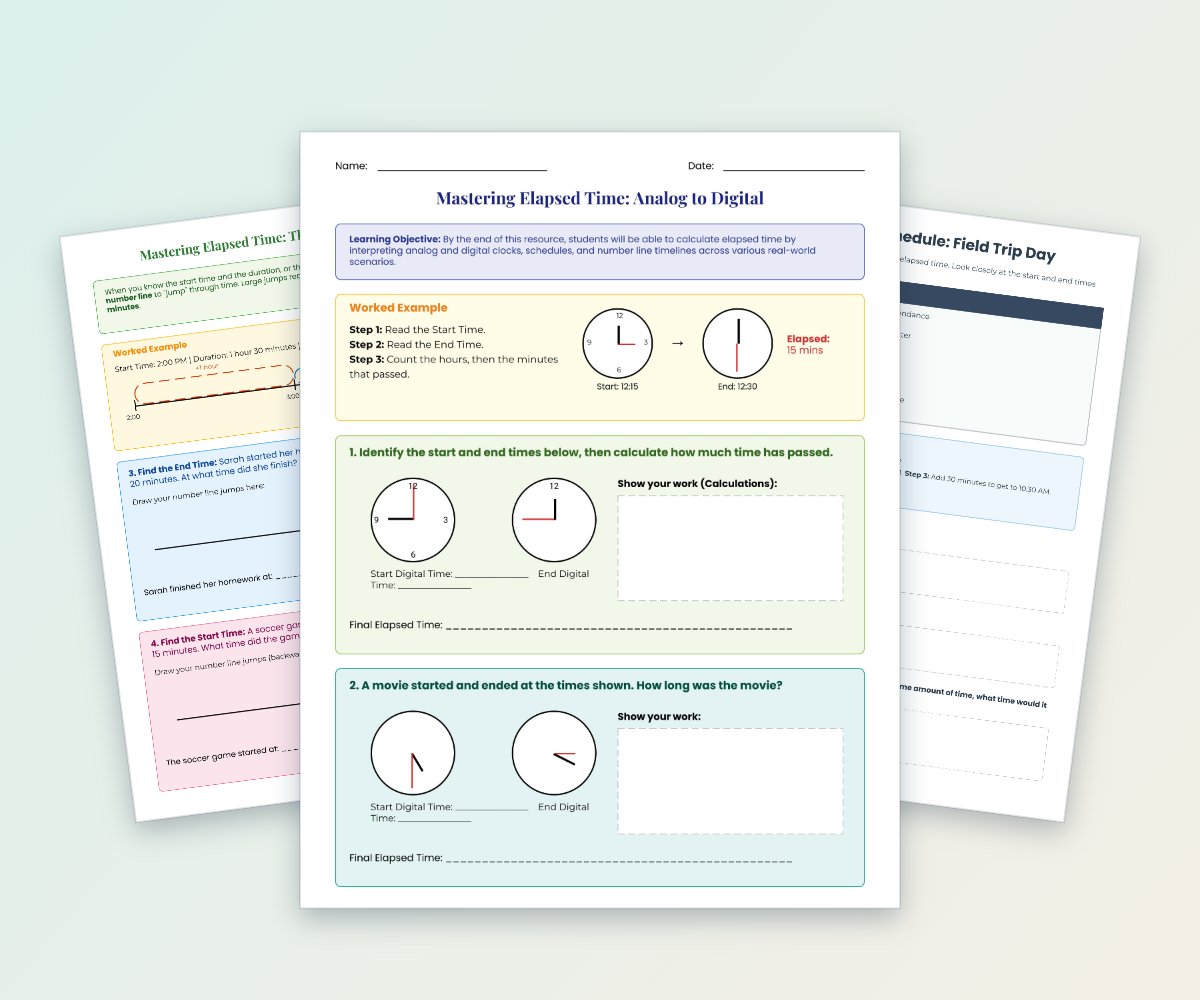
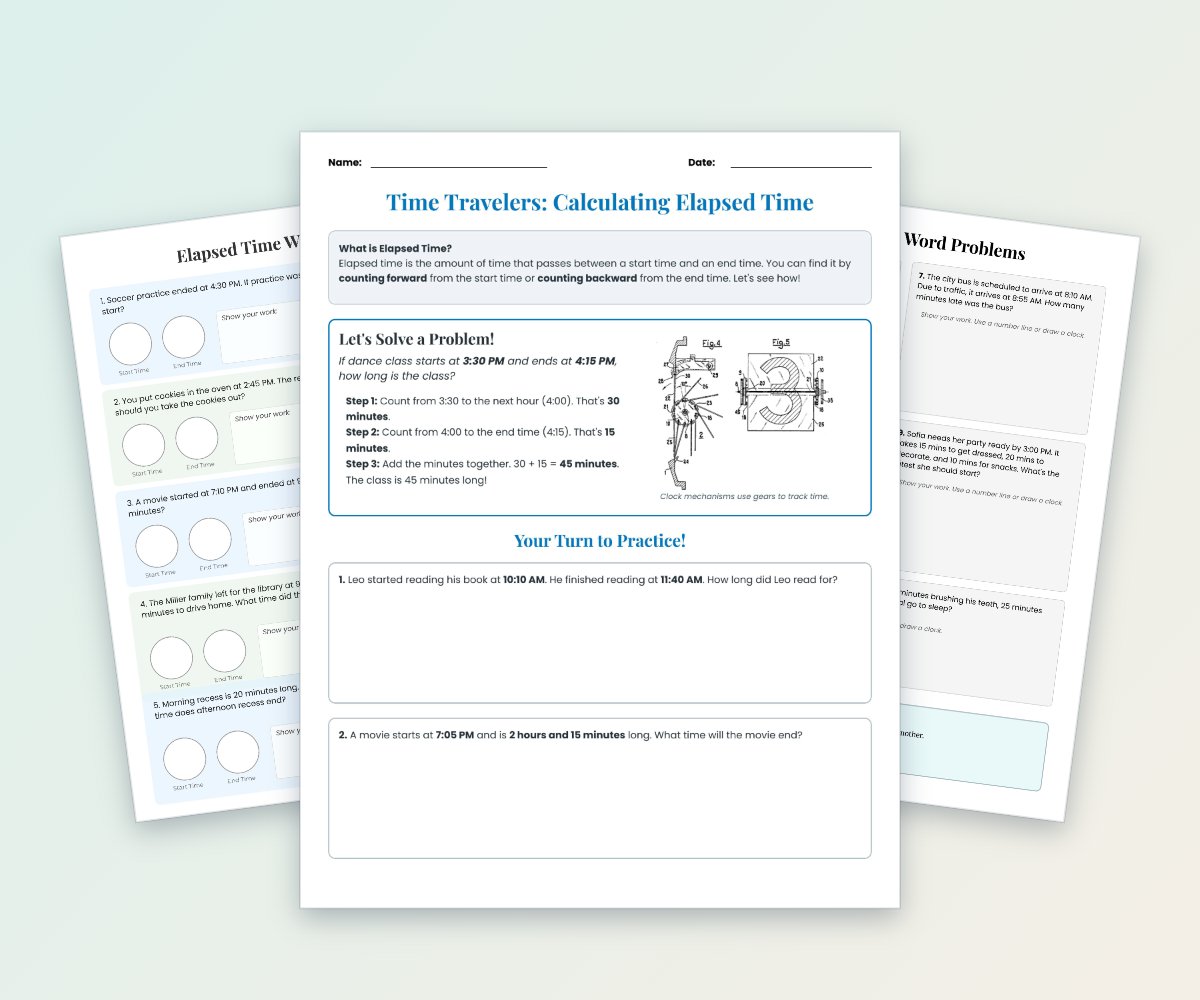
This six-page resource helps students calculate elapsed time using analog and digital clocks, number line strategies, and real-world schedules.
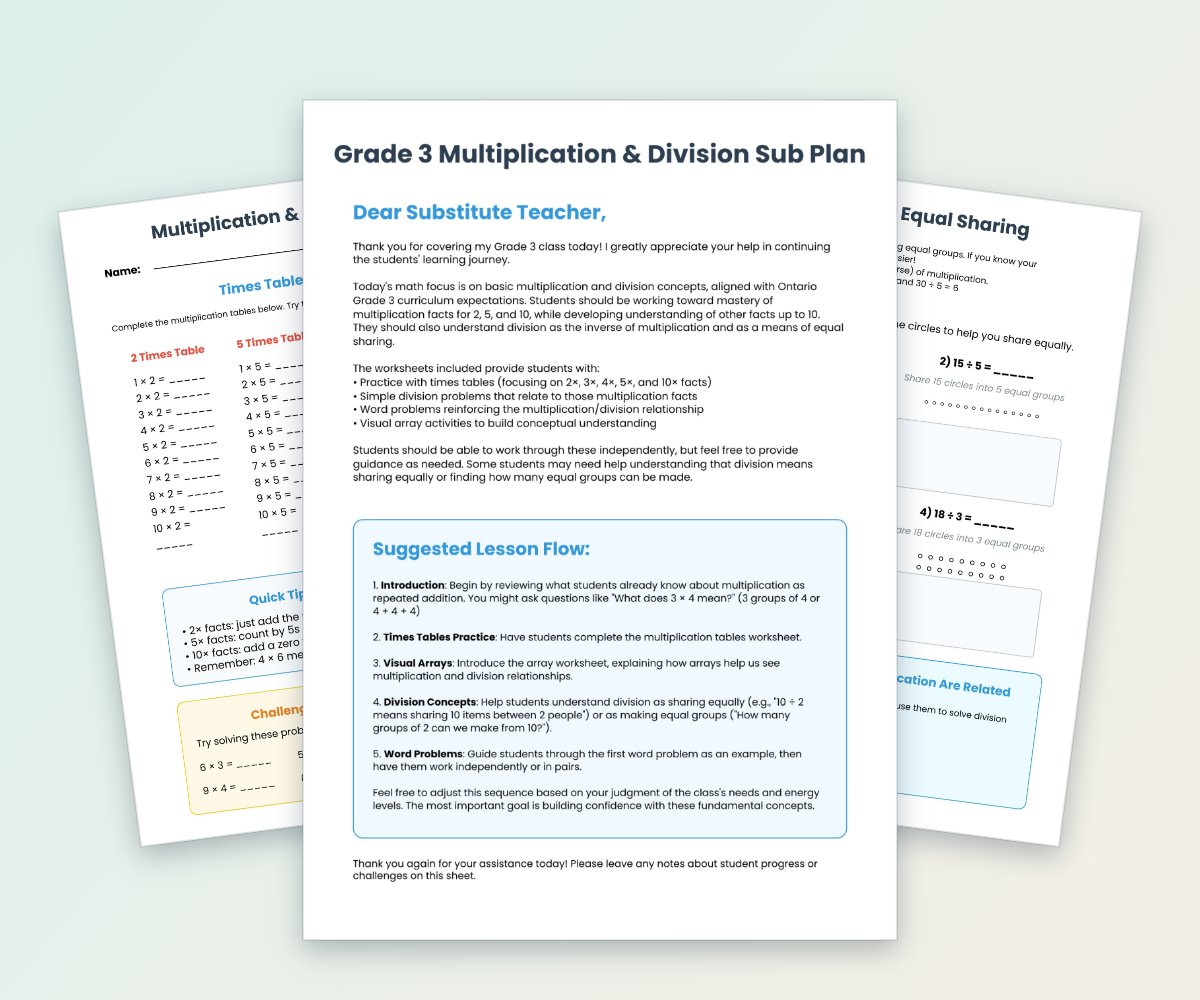
This five-page substitute lesson plan provides a structured Grade 3 math day focused on multiplication and division.
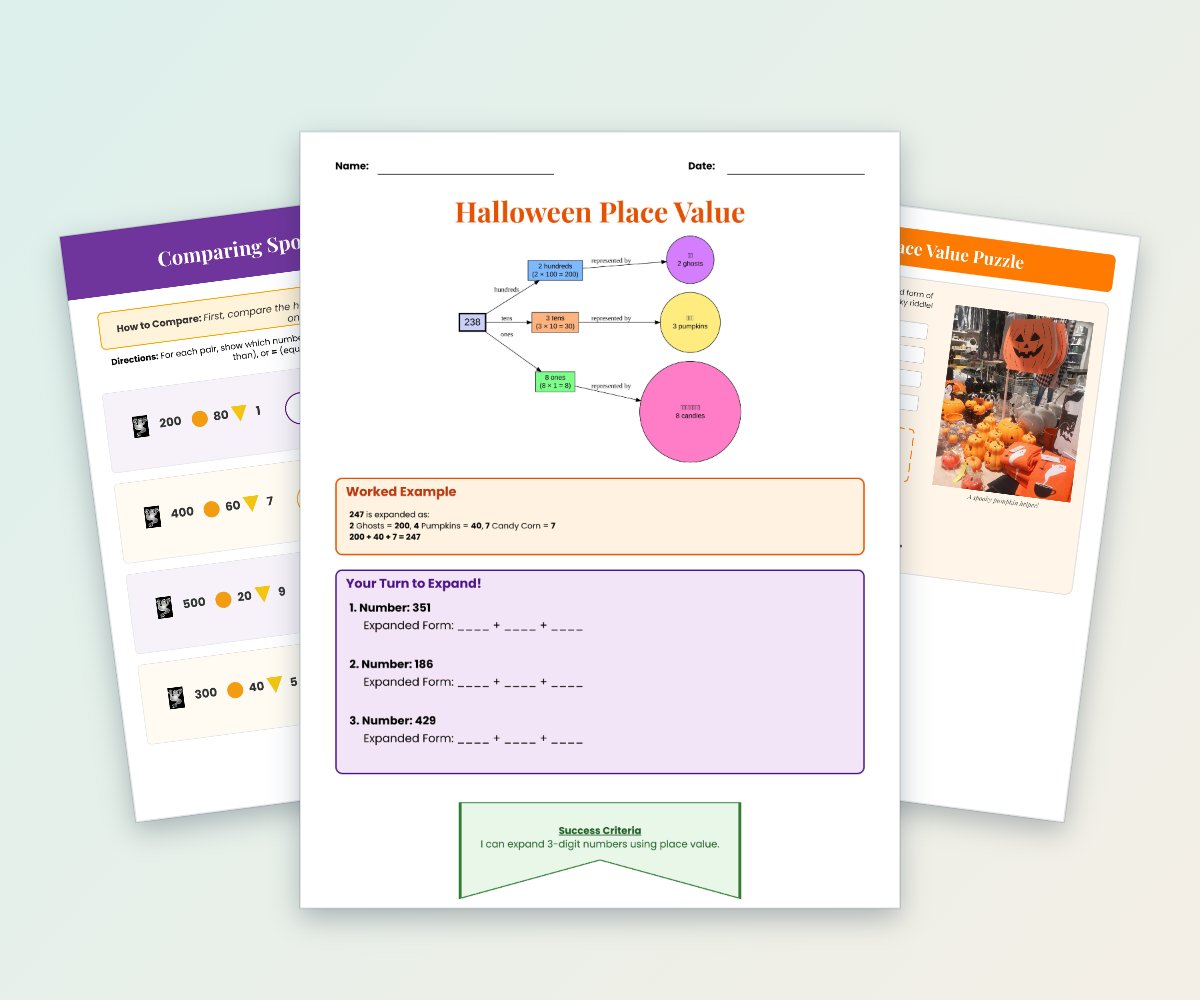
This Halloween-themed activity pack gives students practice expanding three-digit numbers, comparing numbers using greater-than and less-than symbols, and converting place-value representations into s
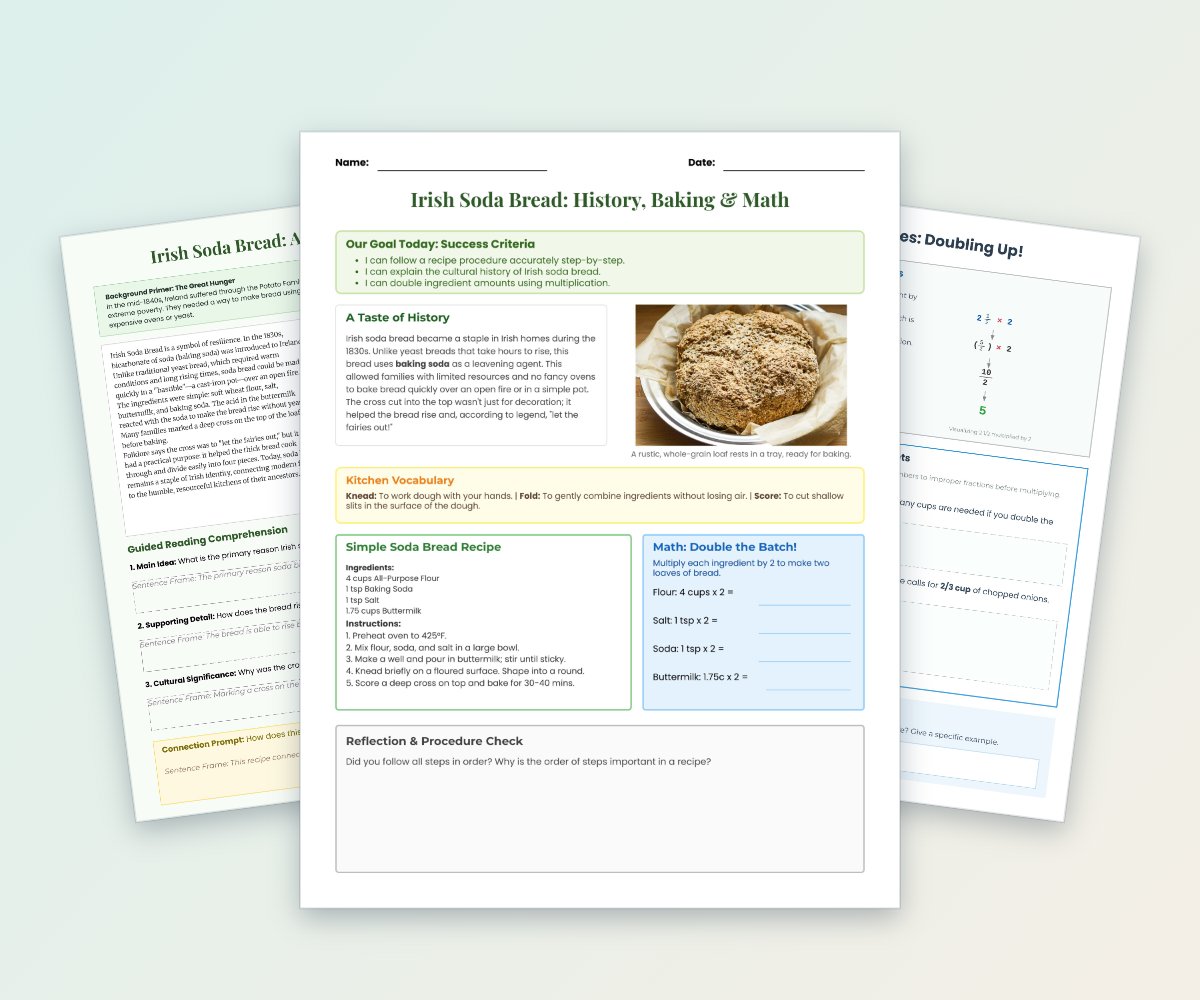
Students explore the history of Irish soda bread, learn kitchen vocabulary, follow a recipe procedure, and double ingredient quantities.
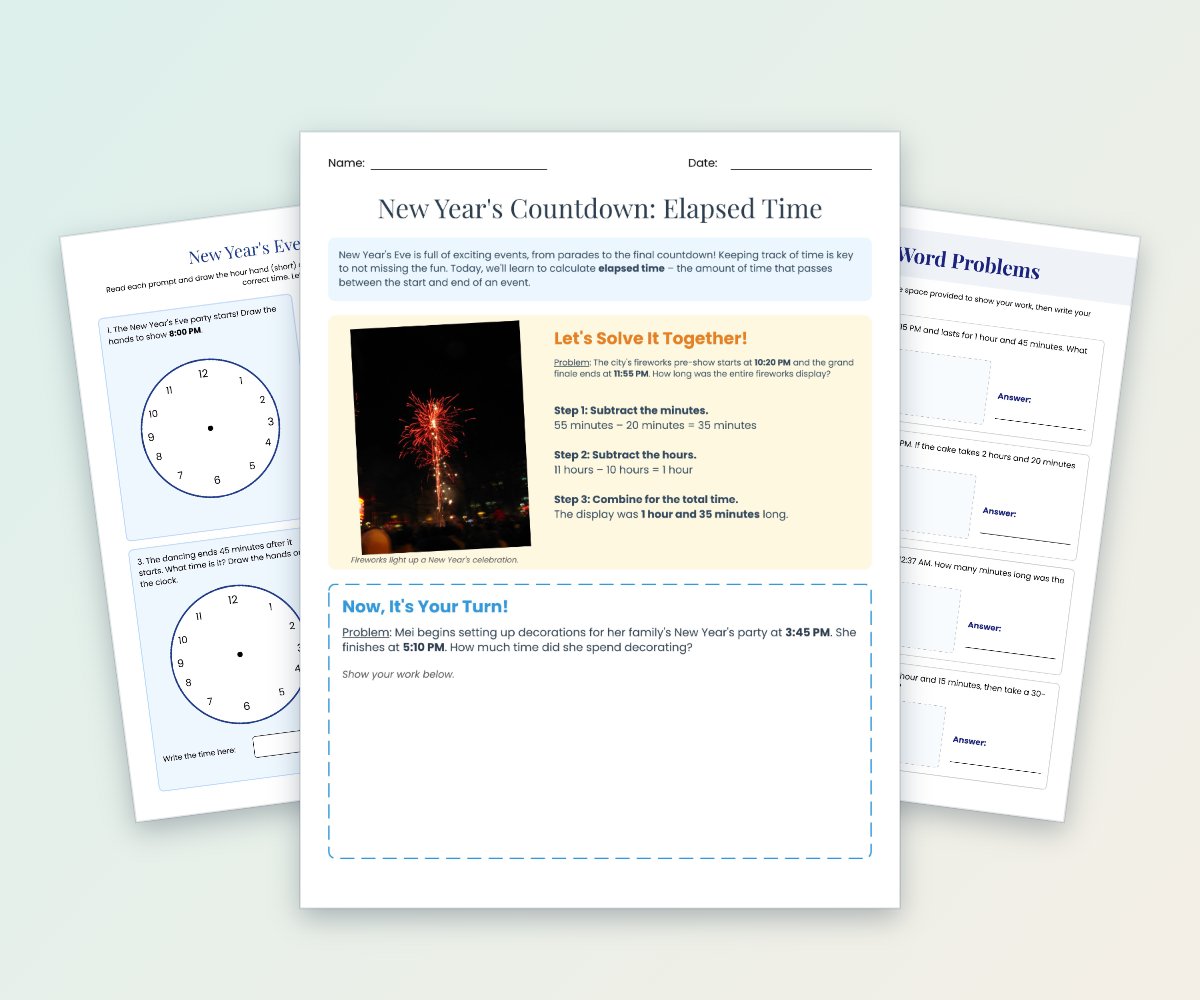
Students practice calculating elapsed time, reading and drawing analog clocks, and solving real-world New Year's-themed time problems.
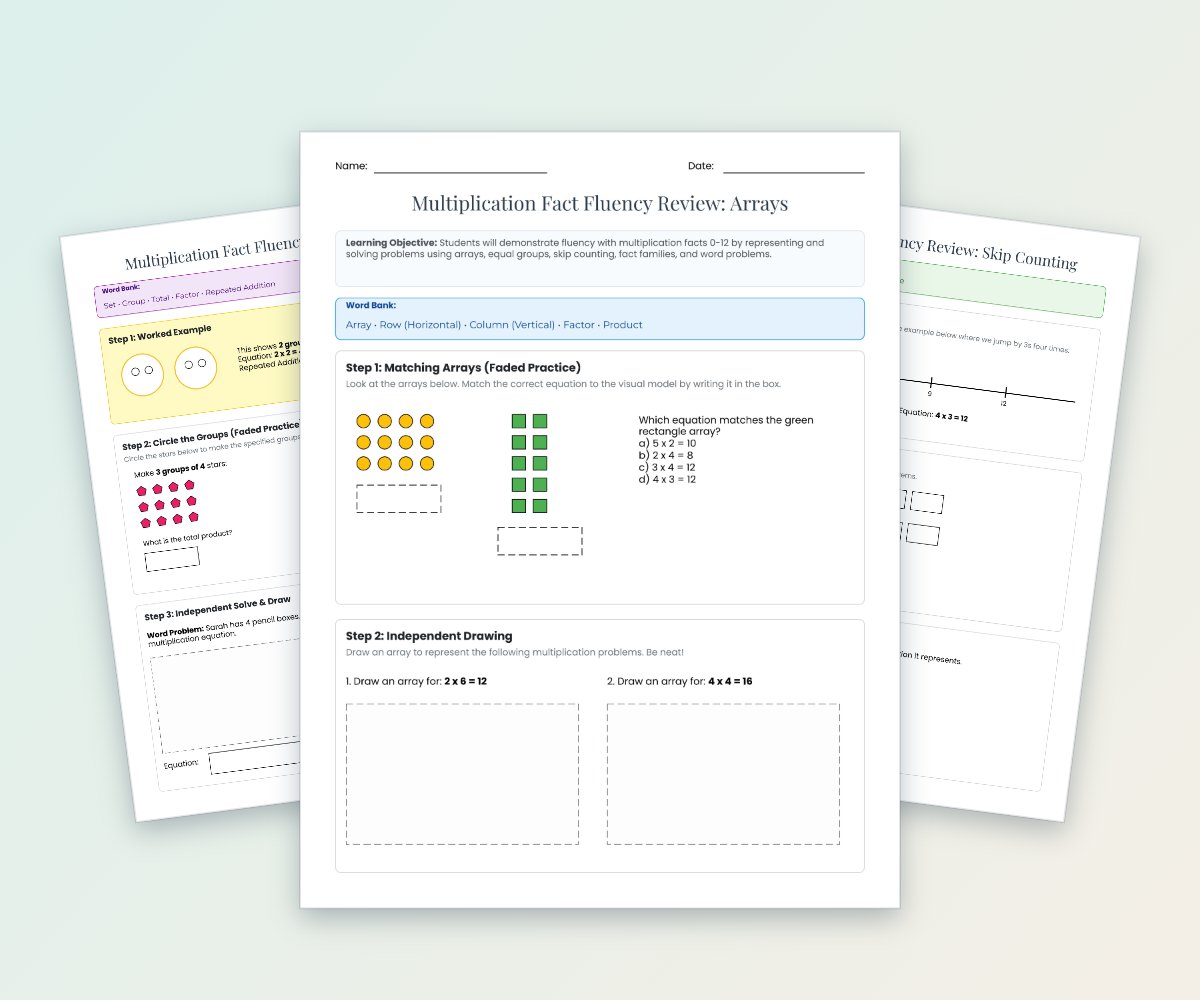
This six-page worksheet pack builds multiplication fact fluency using arrays, equal groups, skip counting, fact families, and word problems.
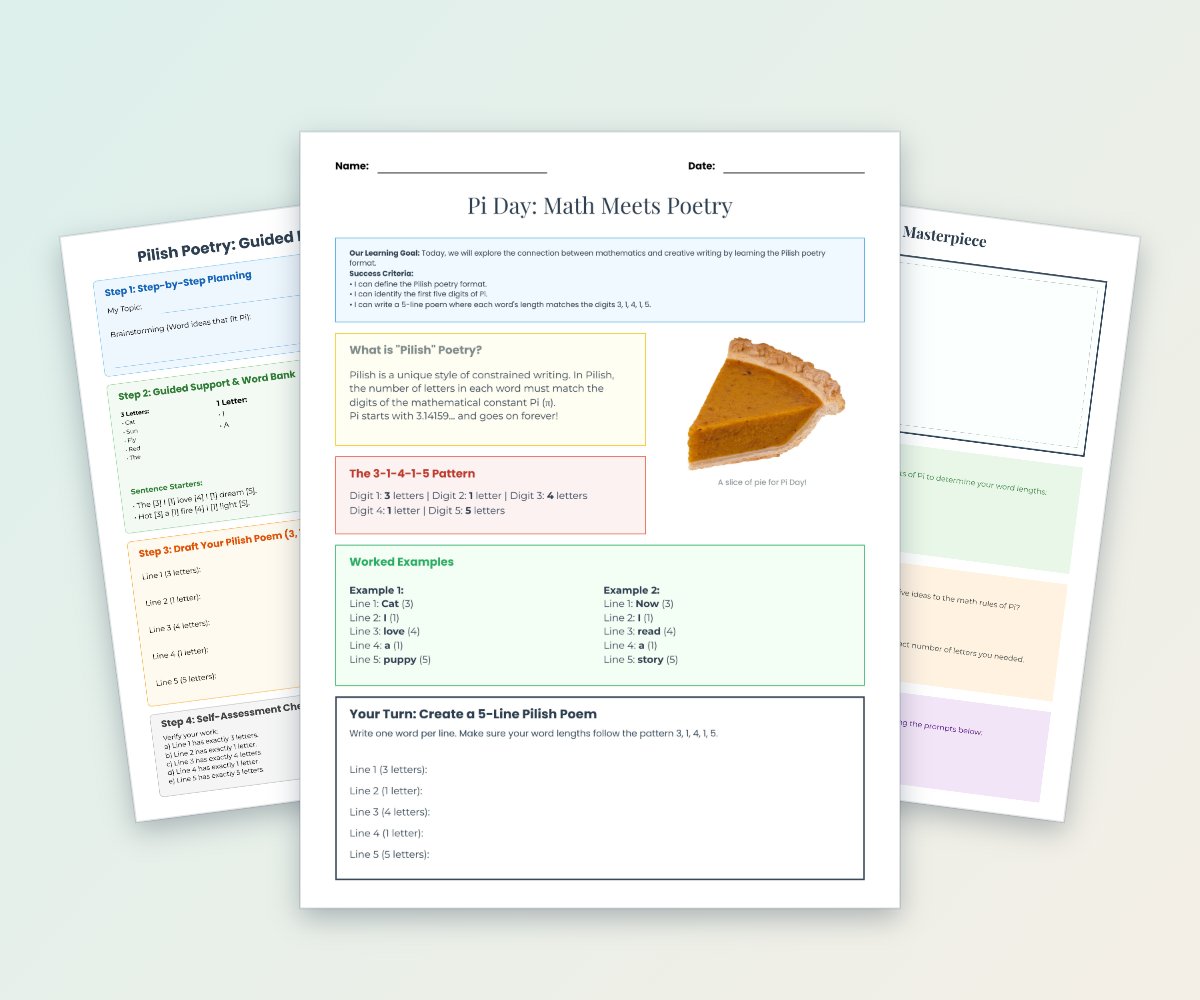
Students explore the digits of pi through Pilish, a constrained poetry format in which word lengths follow a numerical pattern.
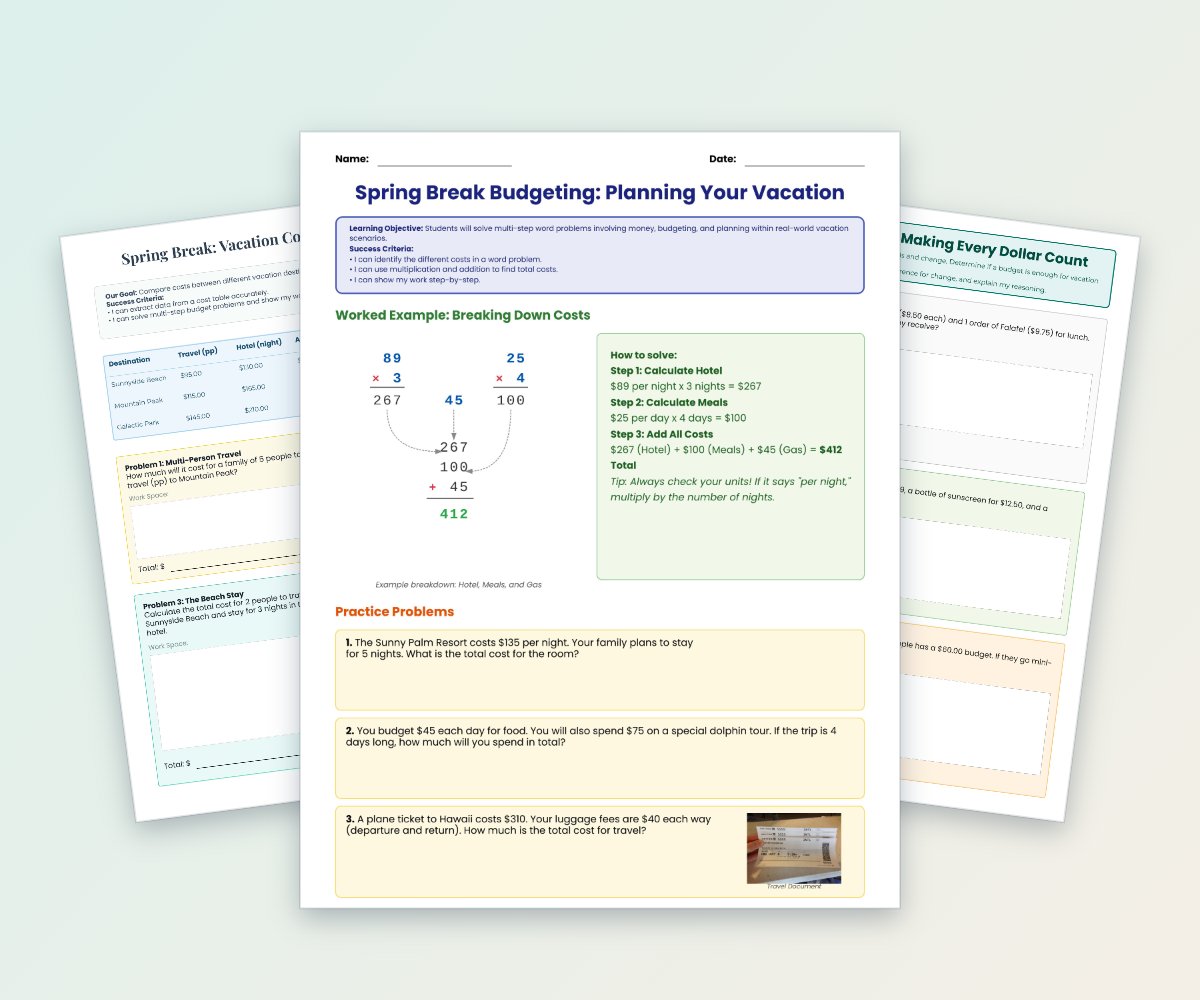
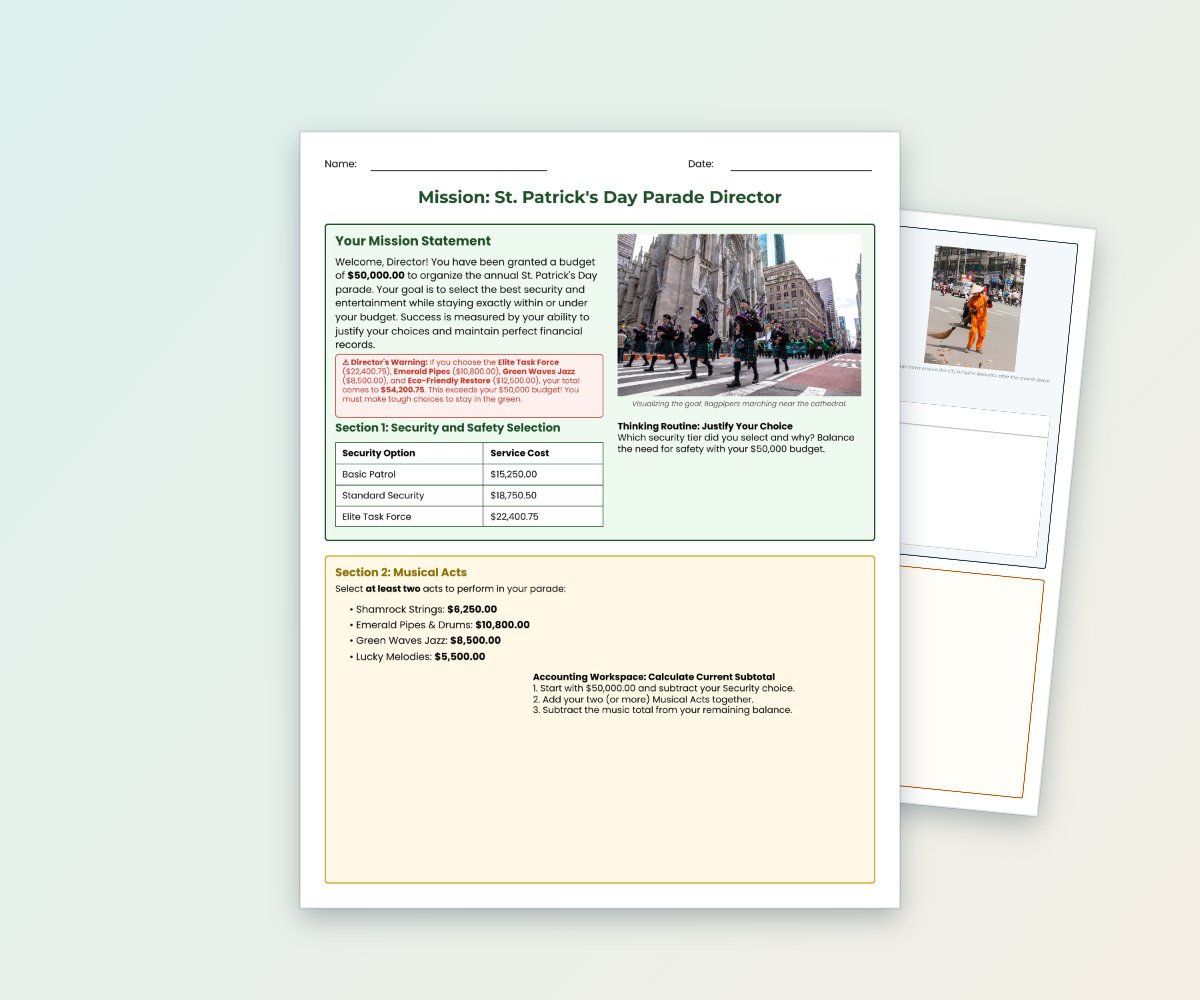
Students practice multiplication, addition, subtraction, cost comparison, and budgeting through realistic spring break vacation scenarios.
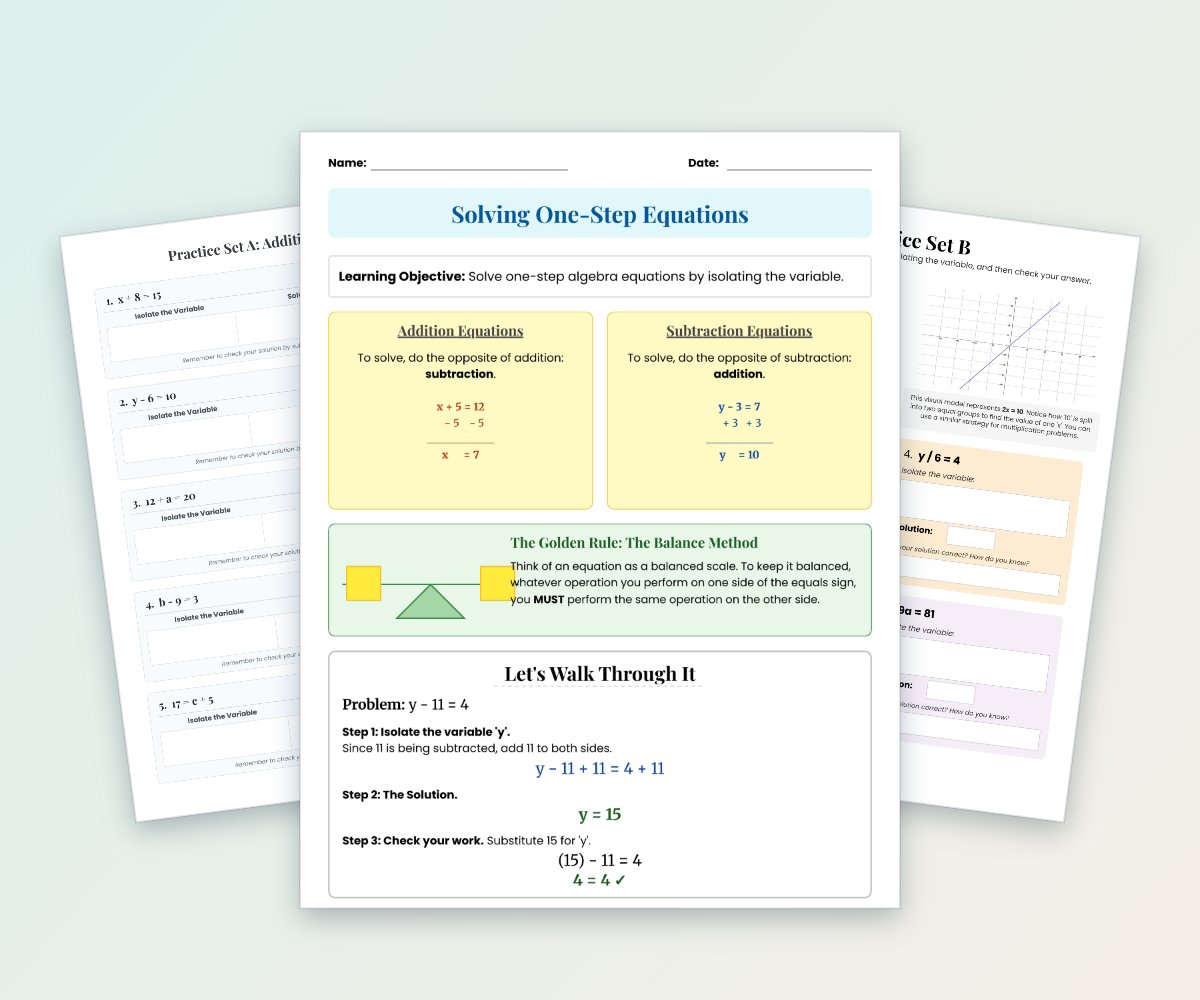
This four-page guide introduces solving one-step equations using inverse operations and the balance method.
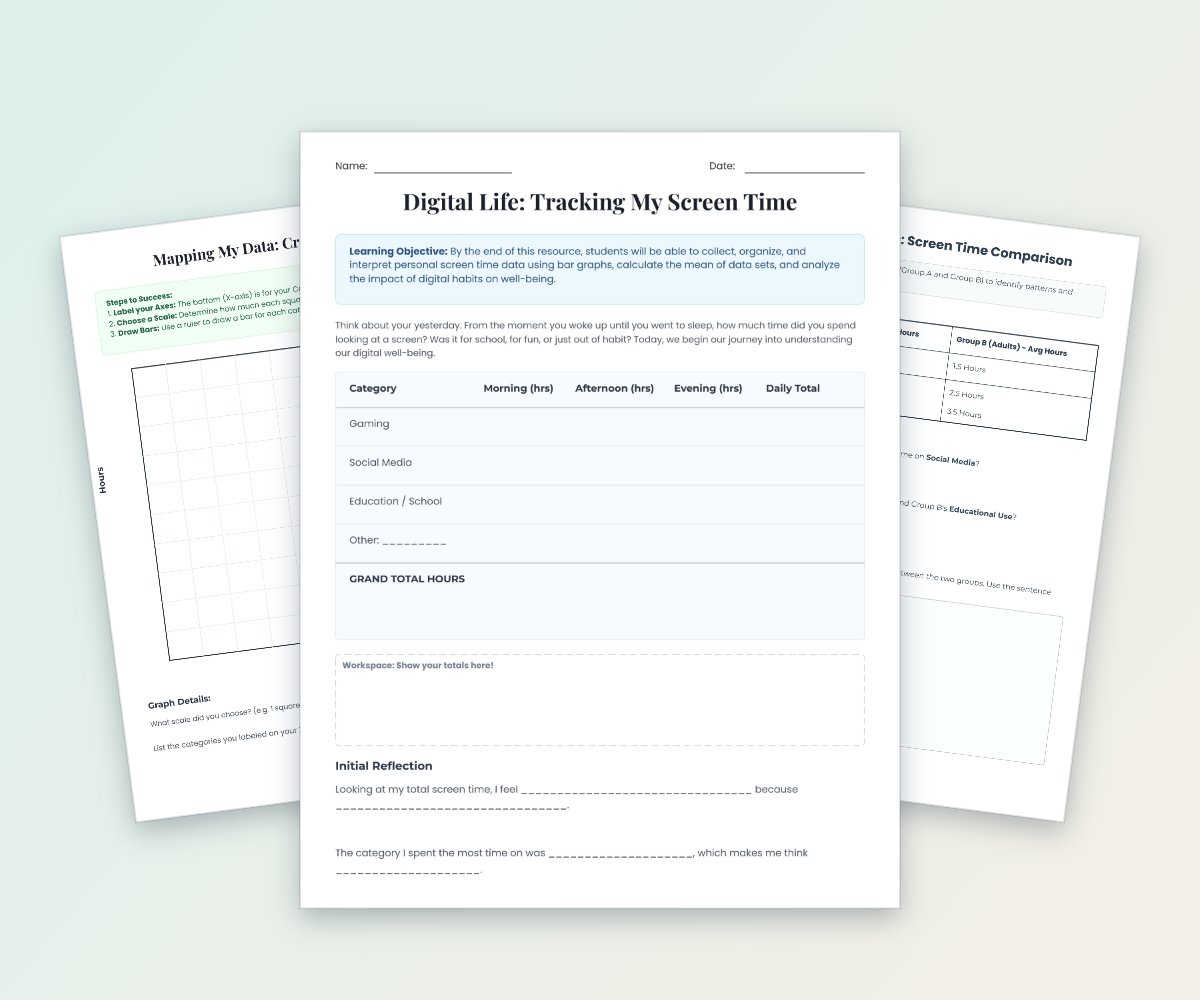
Students track their personal screen time, organize data by category and time of day, and create bar graphs.
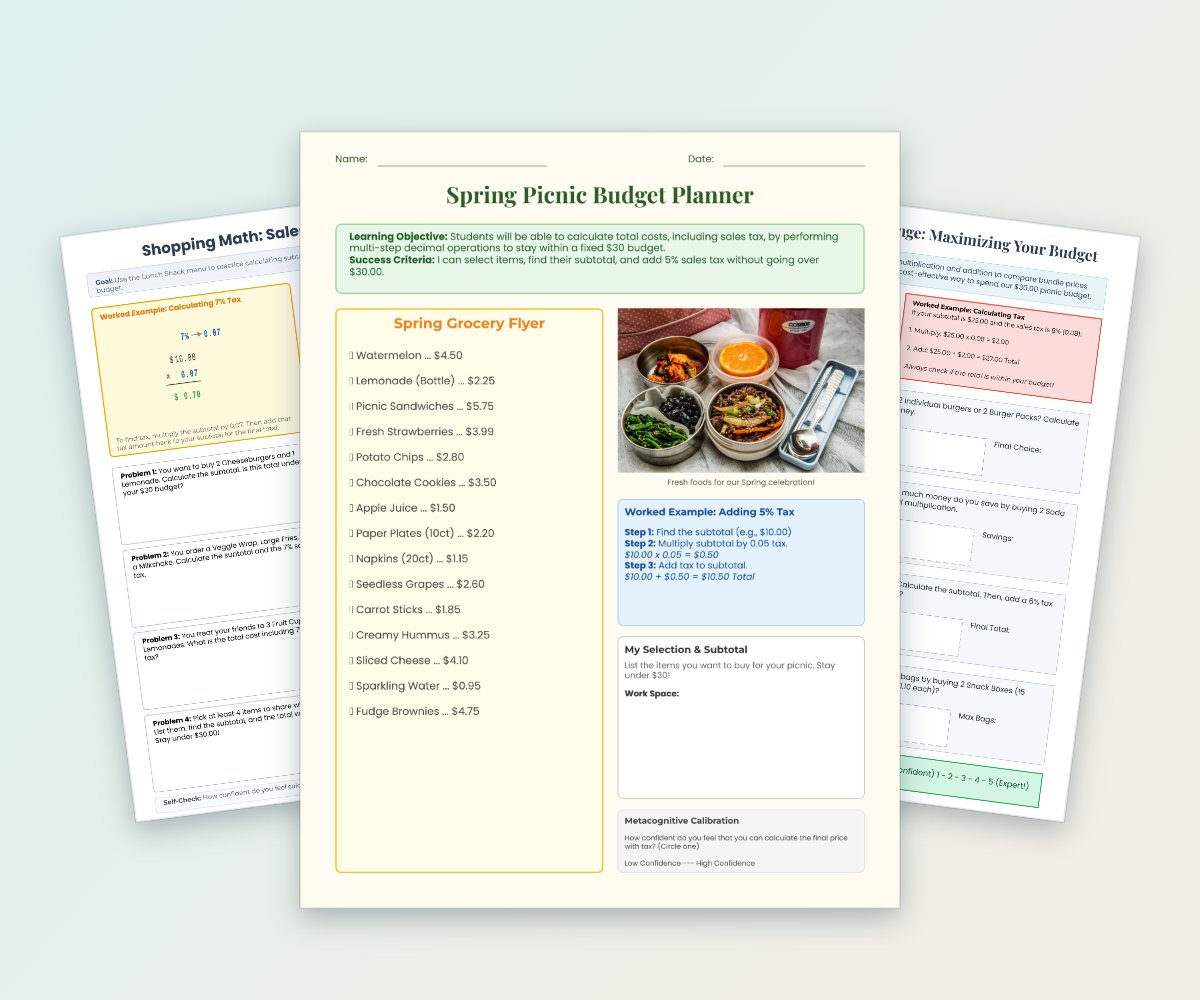
Students plan picnic purchases using grocery and restaurant flyers, calculate subtotals and sales tax, and stay within a fixed budget.
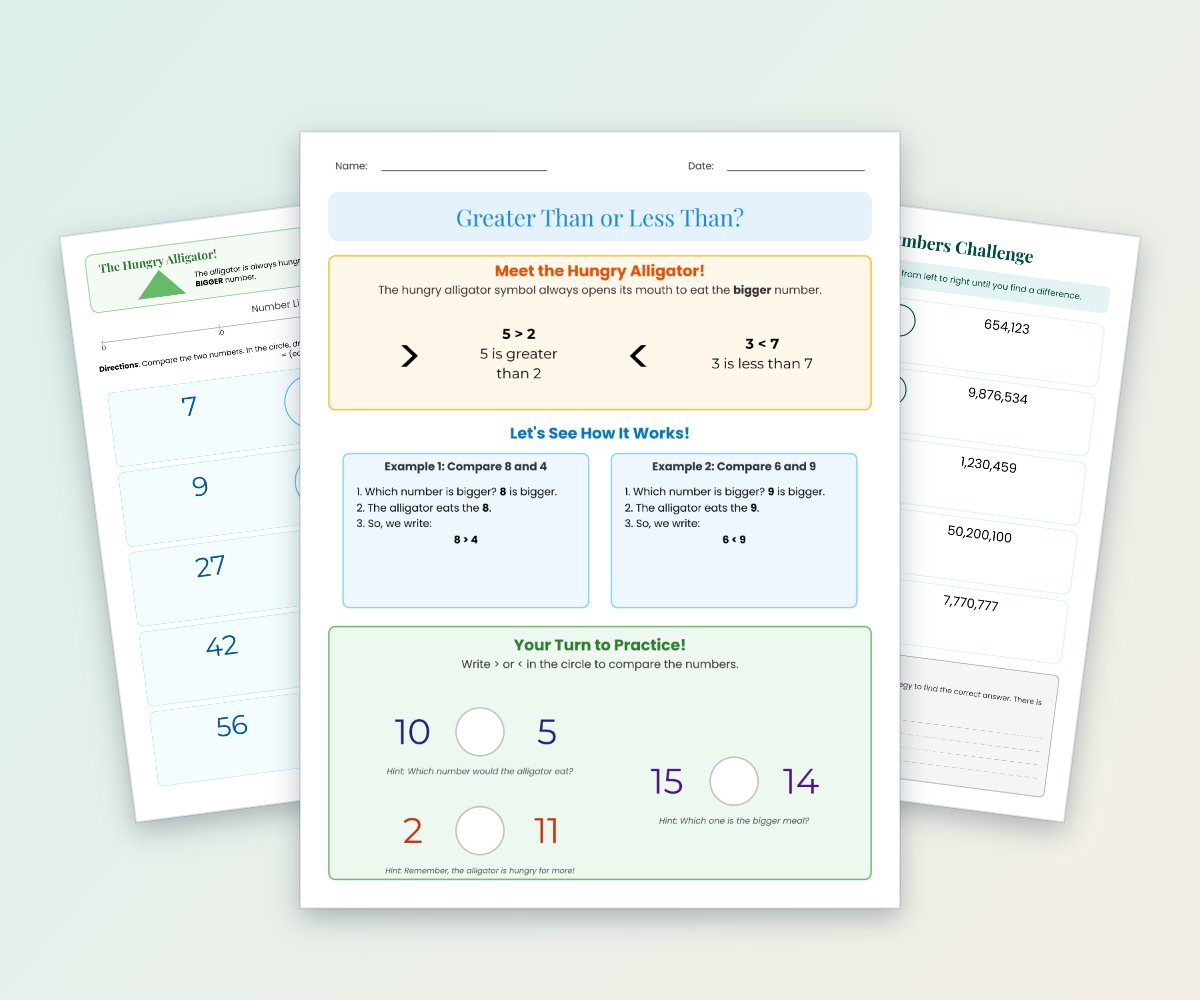
This three-page worksheet helps students compare numbers using greater-than, less-than, and equal-to symbols.
This four-page worksheet introduces elapsed time through a worked example and guided practice.