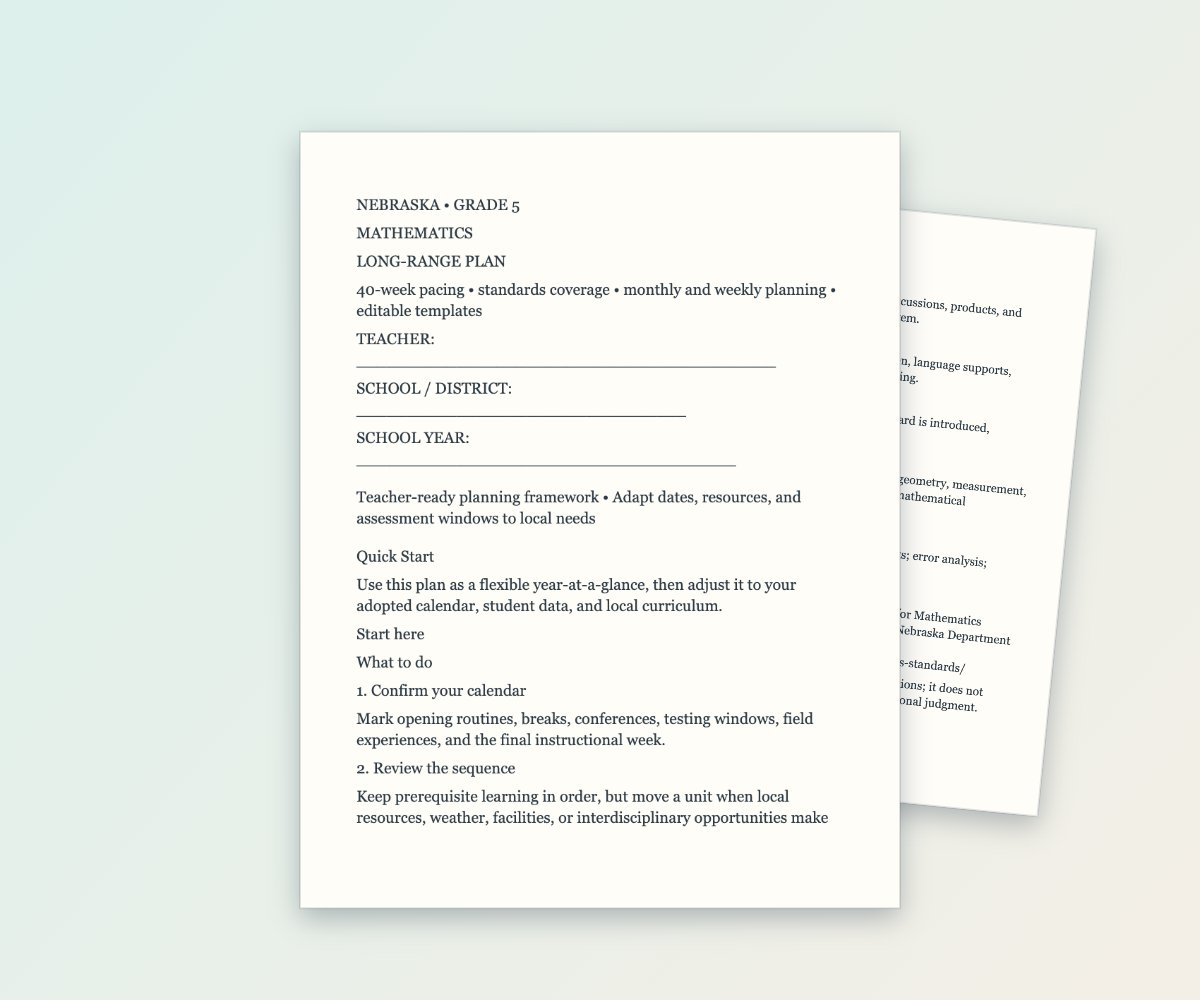

Grade 5 Nevada Mathematics Long-Range Plan
A complete 40-week Grade 5 mathematics long-range plan aligned with current Nevada Academic Content Standards.
$24.99
Clear, practical resources for busy educators, organized so you can get from search to ready-to-teach quickly.
A complete 40-week Grade 5 mathematics long-range plan aligned with current Nevada Academic Content Standards.
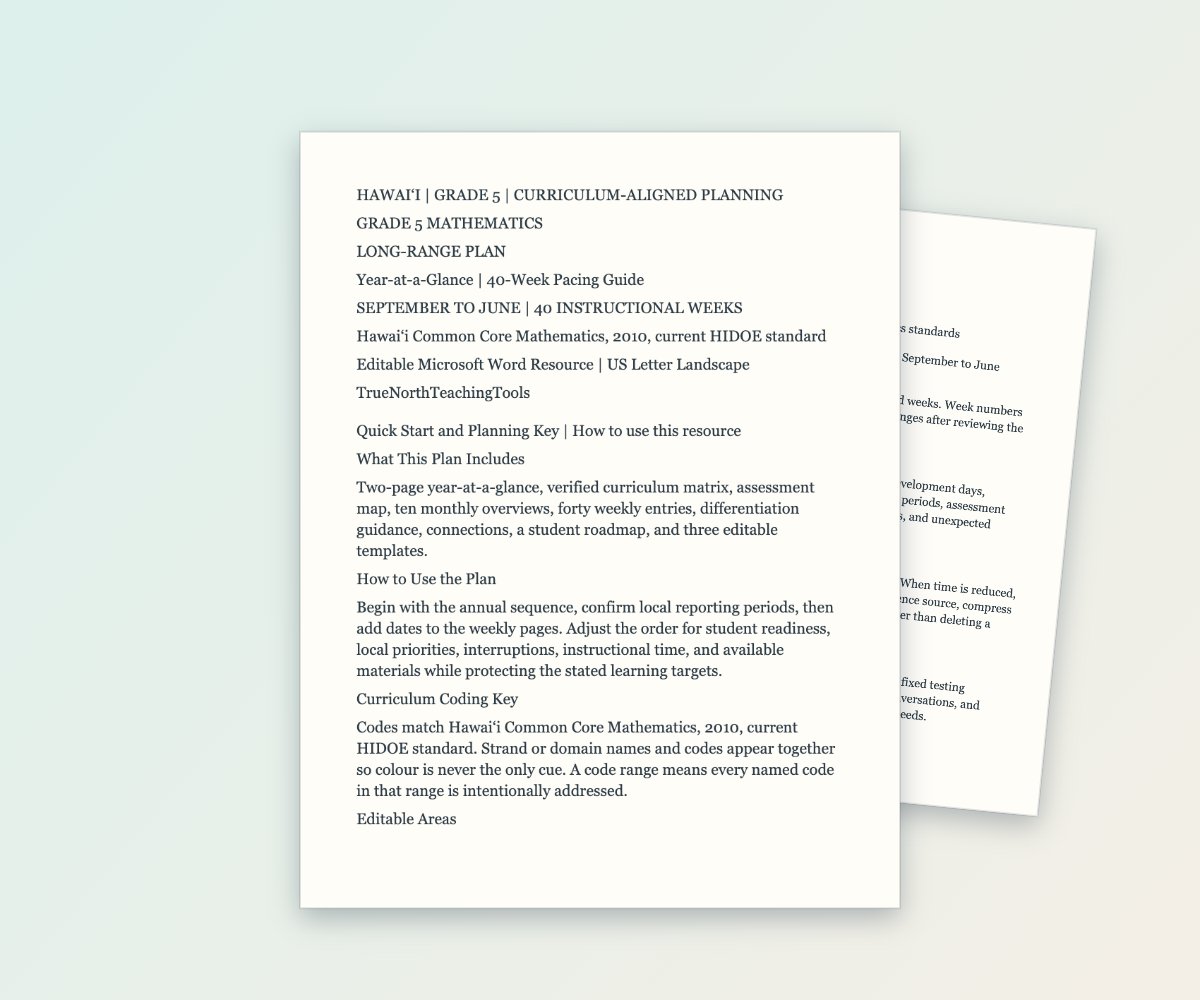
A comprehensive 40-week Grade 5 mathematics long-range plan aligned with Hawaiʻi Common Core Mathematics standards and HIDOE expectations.
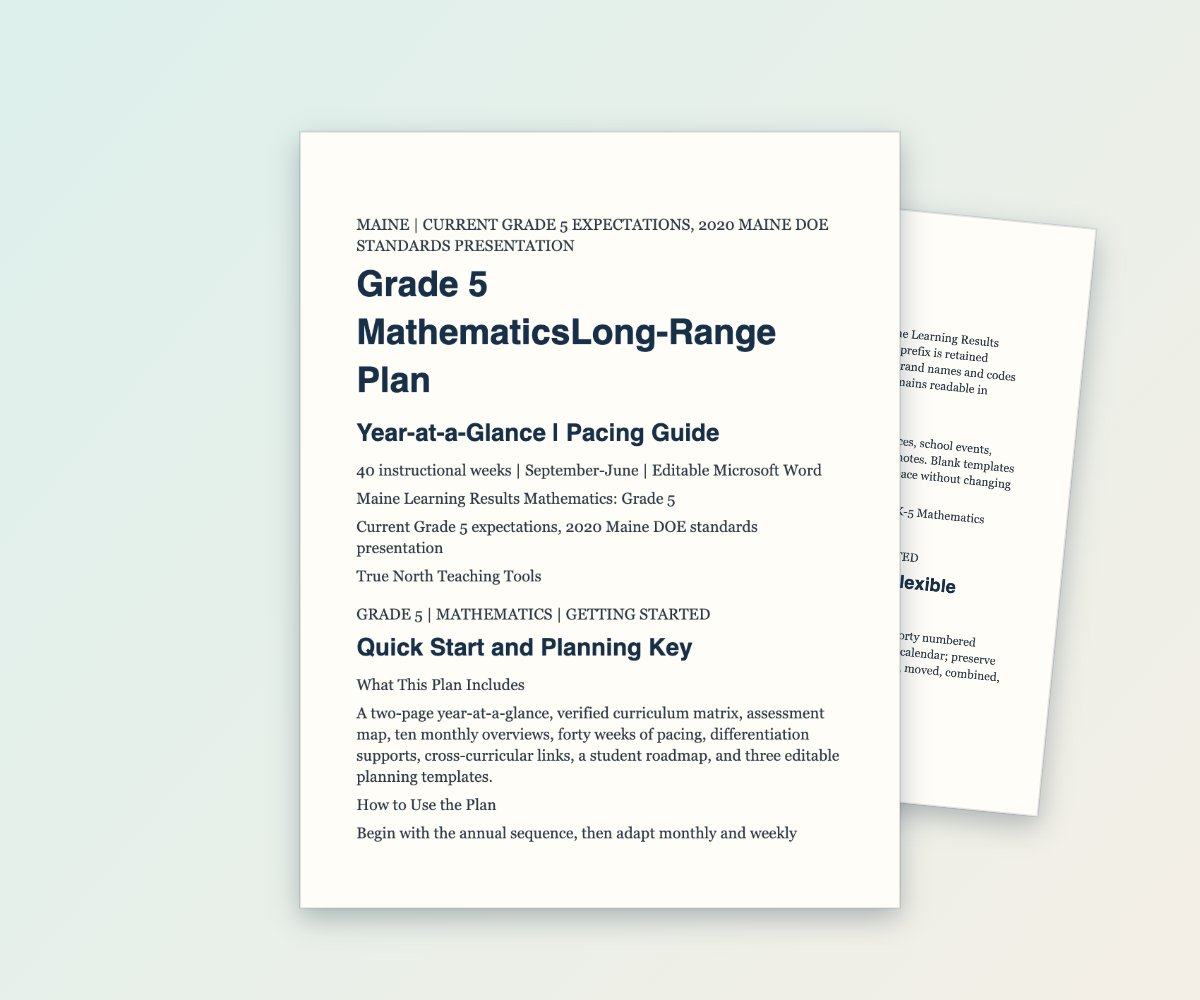
This editable 40-page long-range plan provides a full 40-week Grade 5 mathematics sequence aligned with Maine Learning Results.
This editable 40-week long-range plan supports Grade 5 mathematics instruction from September through June.
A 40-week editable long-range plan for Grade 5 mathematics, covering standards, monthly overviews, weekly pacing, assessments, differentiation, and cross-curricular connections.
A 40-week, September-to-June Grade 5 mathematics long-range plan aligned with the 2021 Wisconsin Standards for Mathematics.
A complete editable Grade 5 mathematics long-range plan aligned with Saskatchewan Mathematics 5 (2008).
Plan a full 40-week Grade 5 mathematics year with a year-at-a-glance sequence, curriculum coverage matrix, assessment map, monthly overviews, and weekly pacing entries.
A complete 40-week Grade 5 mathematics long-range plan aligned with the Saskatchewan Mathematics 5 curriculum.
A comprehensive editable September-to-June long-range plan for Saskatchewan Grade 5 Mathematics.
This editable 40-week long-range plan supports Grade 5 mathematics instruction from September through June.
A teacher-ready, editable 40-week Grade 5 mathematics long-range plan covering September through June.
This editable 40-week long-range plan organizes Grade 5 mathematics instruction from September through June using Connecticut Core Standards.
This 40-page editable long-range plan provides a September-to-June Grade 5 mathematics scope and sequence aligned with New Mexico standards and Common Core mathematical practices.
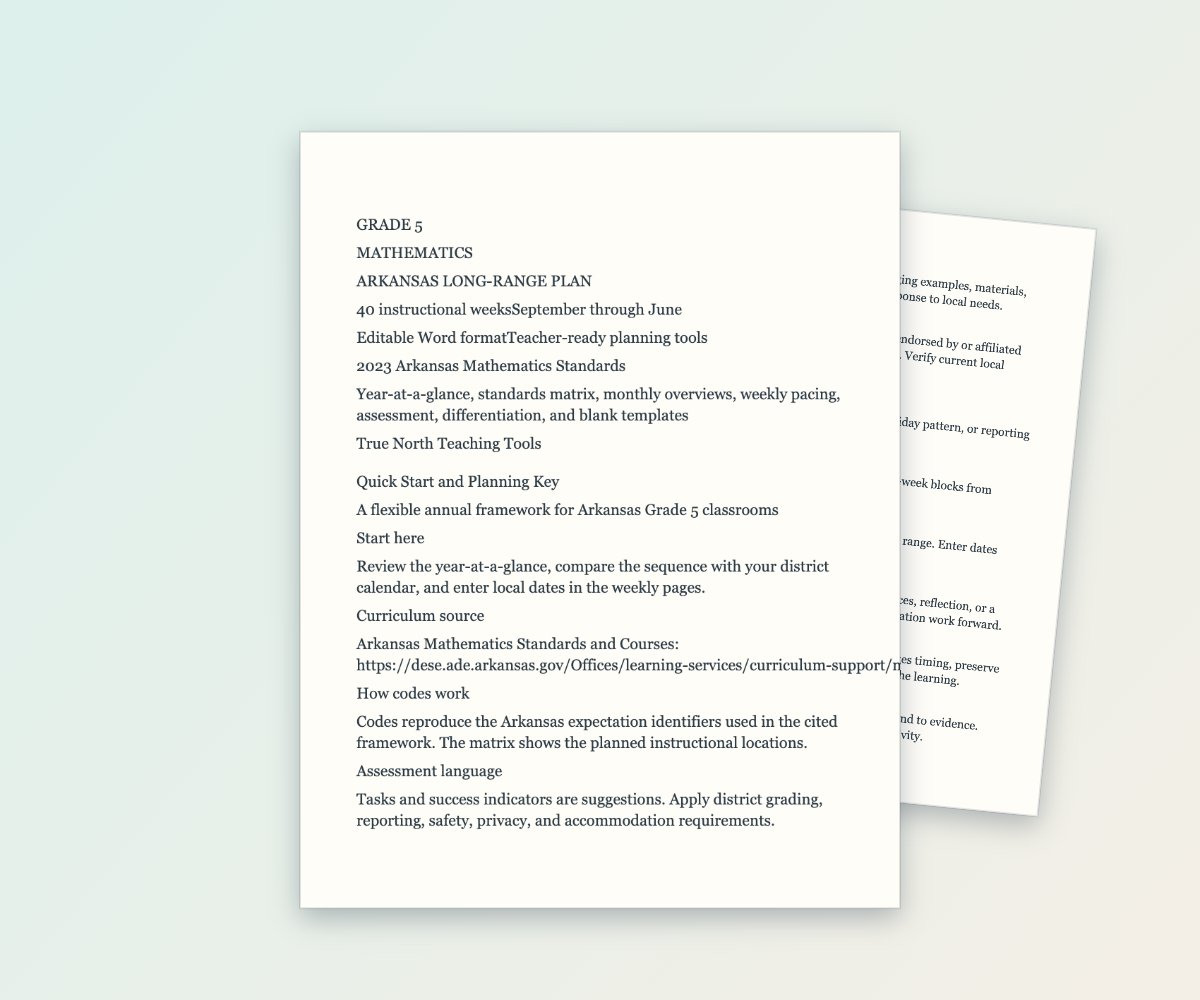
A 40-week editable mathematics long-range plan for Arkansas Grade 5 classrooms, spanning September through June.
This editable 40-week long-range plan maps Maryland Grade 5 mathematics standards across the September–June school year.
This editable 40-week long-range plan provides monthly overviews, weekly pacing, standards alignment, assessment planning, and flexible adjustments for Grade 5 mathematics.
This editable 40-week long-range plan provides a year-at-a-glance schedule, standards matrix, assessment map, monthly overviews, and weekly pacing entries.
This editable 40-week Grade 5 mathematics long-range plan includes a year-at-a-glance, standards coverage matrix, assessment map, monthly overviews, weekly pacing, differentiation supports, and cross-
This editable 40-week long-range plan organizes Grade 5 mathematics instruction from September through June using Kentucky Academic Standards.
A 40-page editable annual mathematics plan organized into a year-at-a-glance overview, monthly outlines, and 40 weeks of pacing.
A 40-week editable Grade 5 mathematics long-range plan covering place value, computation, fractions, algebraic reasoning, geometry, measurement, and data.
This editable 40-week planning system organizes Virginia Grade 5 Mathematics Standards of Learning into year-at-a-glance, monthly, and weekly pacing plans.
This editable 40-week long-range plan organizes Grade 5 mathematics instruction across number, algebra, geometry, measurement, and data.
This editable 40-page long-range plan includes a year-at-a-glance, curriculum matrix, assessment map, and flexible 40-week pacing guide for Grade 5 mathematics.
This editable 40-page long-range plan provides a year-at-a-glance schedule, standards coverage matrix, assessment map, monthly overviews, weekly pacing entries, differentiation guidance, and planning
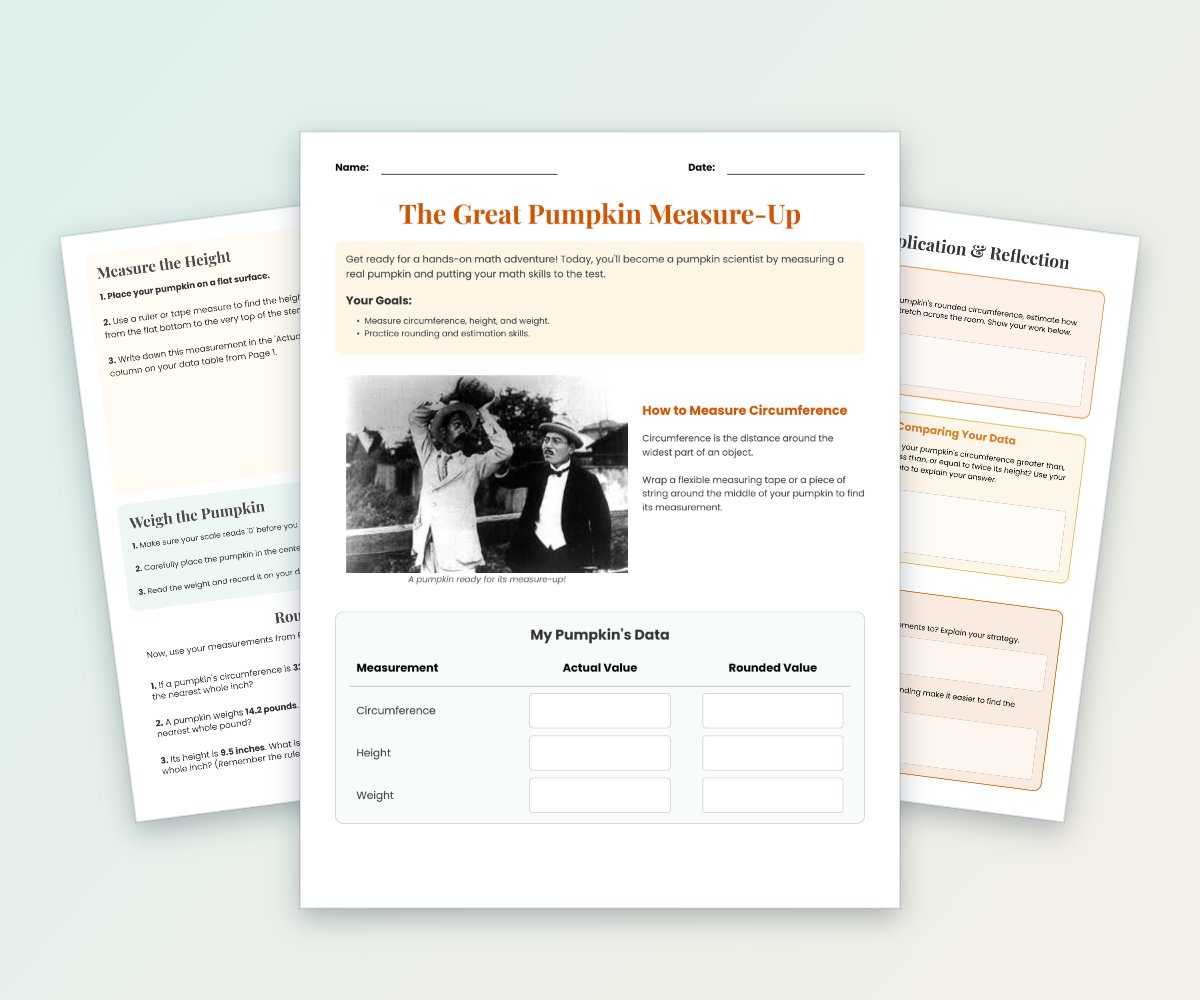
Students measure a real pumpkin’s circumference, height, and weight, record actual and rounded values, and practice estimation.
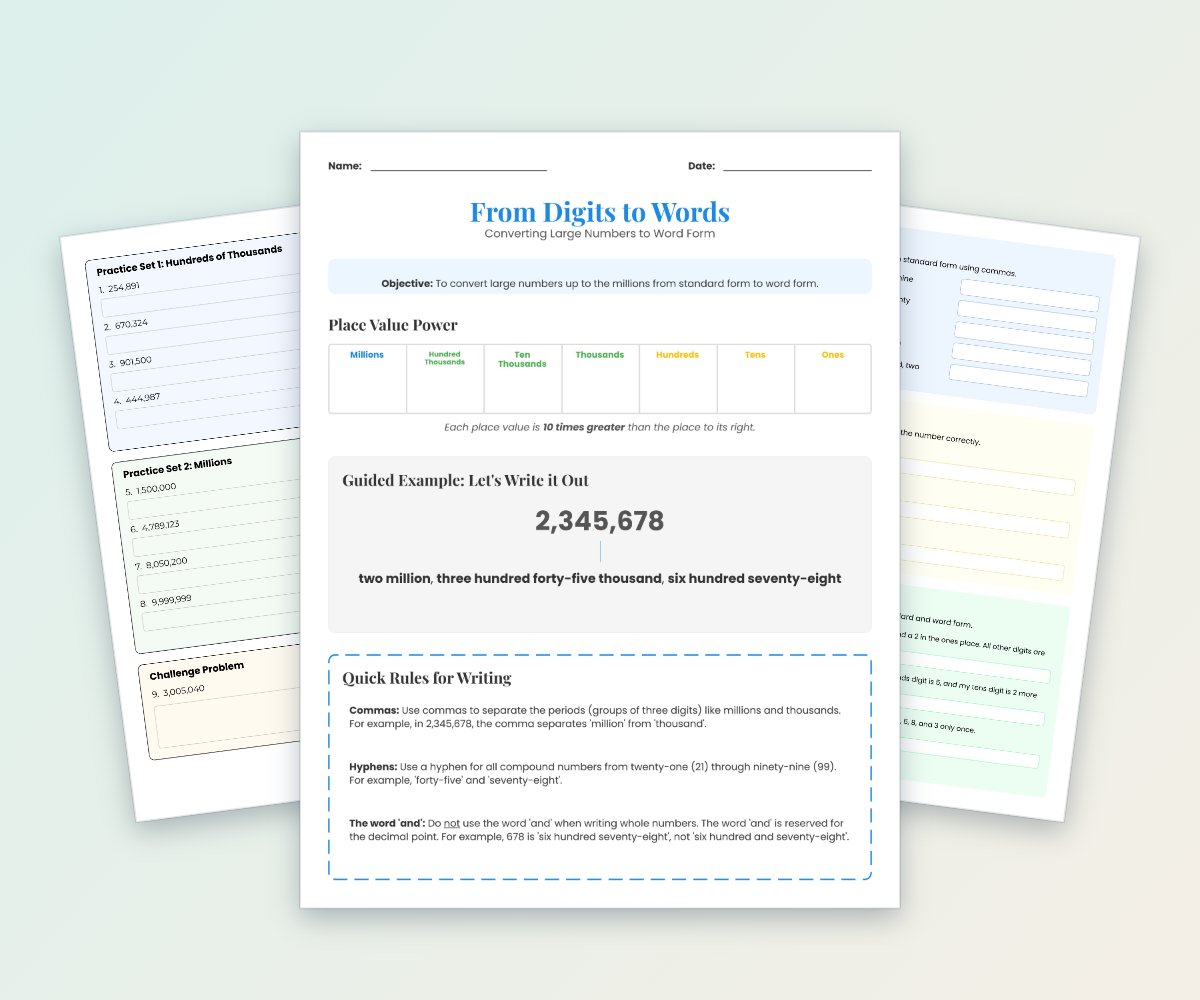
This four-page math worksheet helps students convert large numbers up to the millions between standard and word form.
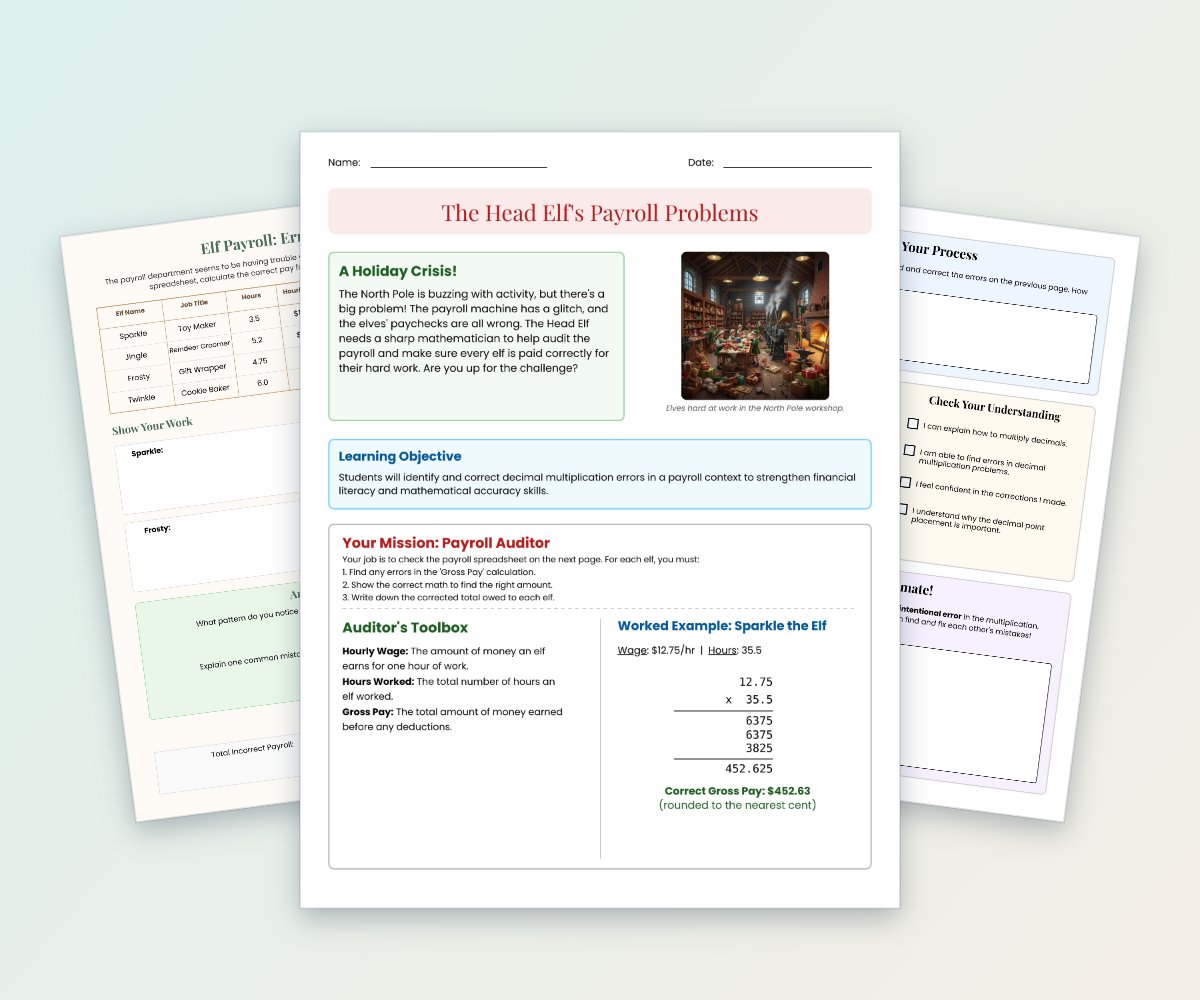
Students audit a fictional elf payroll spreadsheet by identifying multiplication errors, calculating corrected gross pay, and explaining their methods.
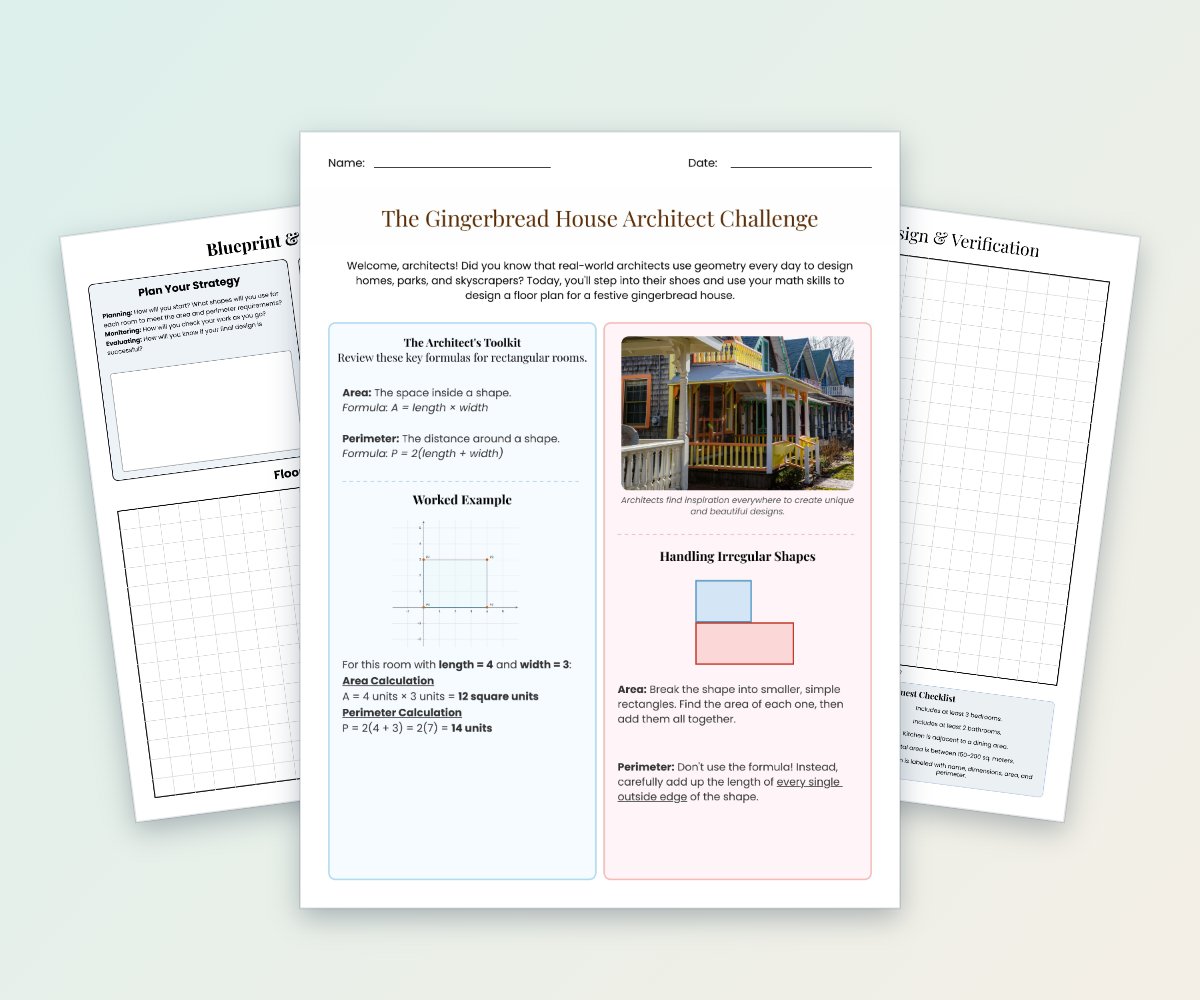
Students become architects as they design a gingerbread house floor plan using area, perimeter, irregular shapes, and scale.
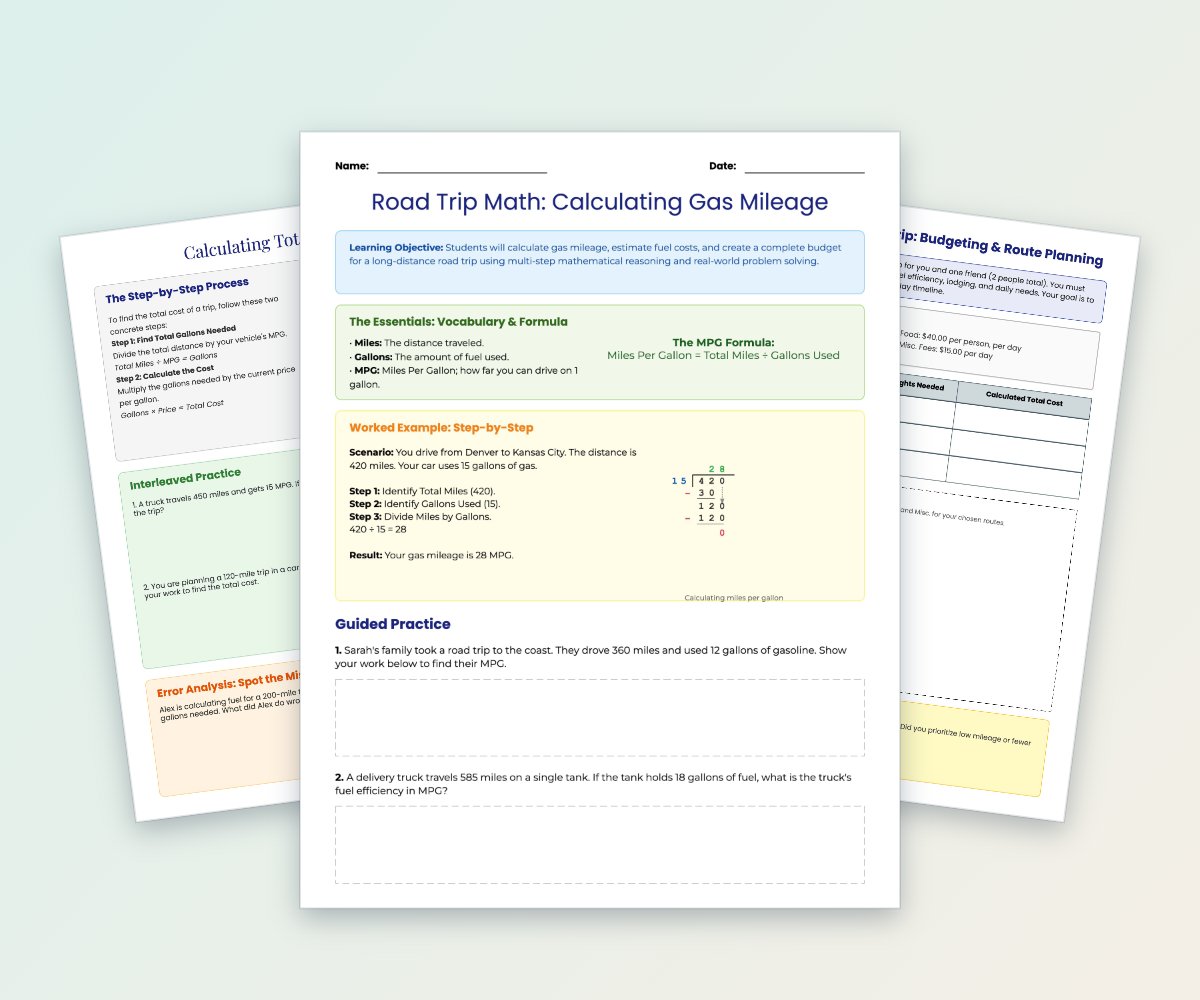
Students calculate miles per gallon, estimate fuel costs, analyze errors, and create a budget for a long-distance road trip.
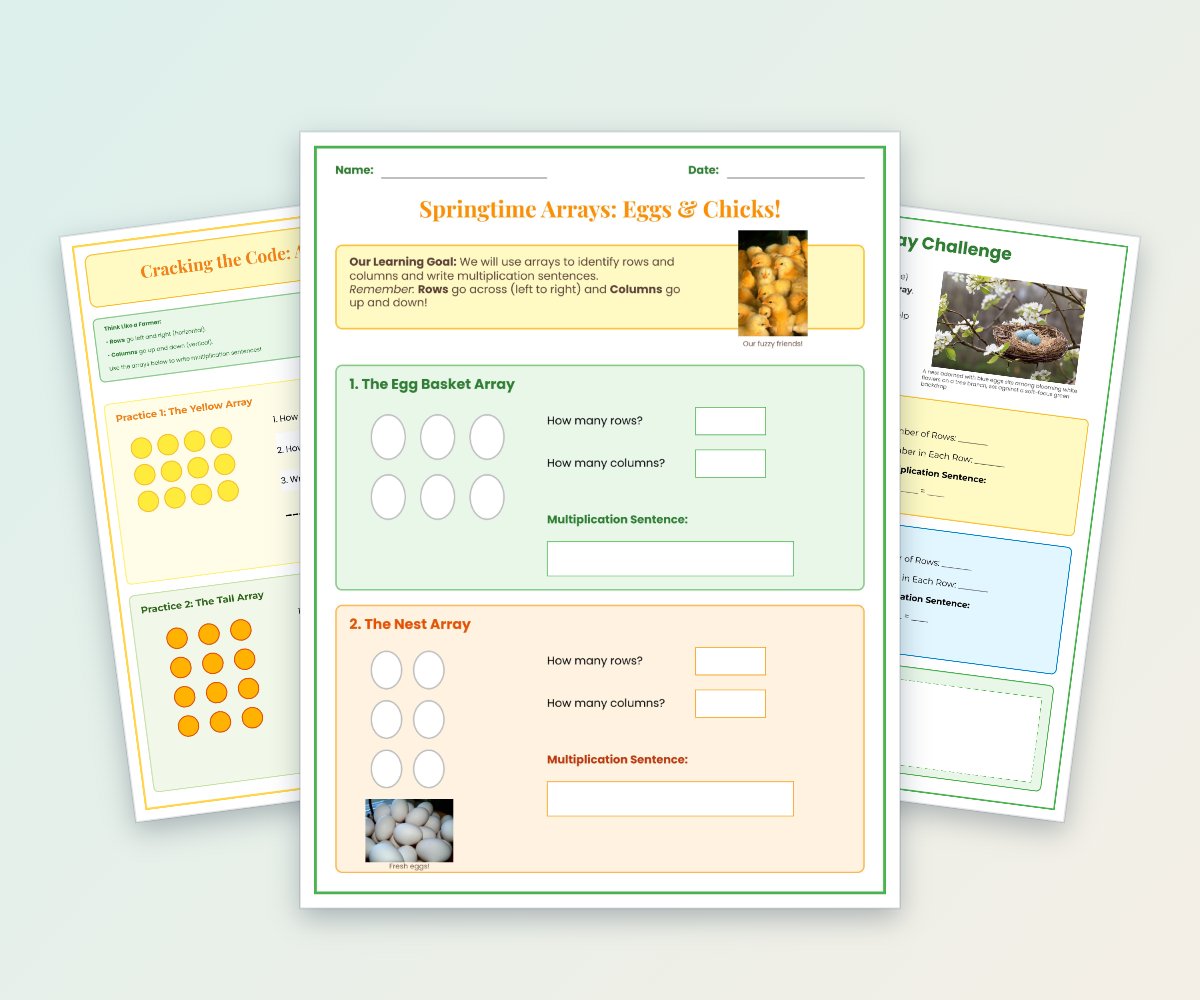
Students identify rows and columns, write multiplication sentences, and represent facts using spring-themed egg and chick arrays.
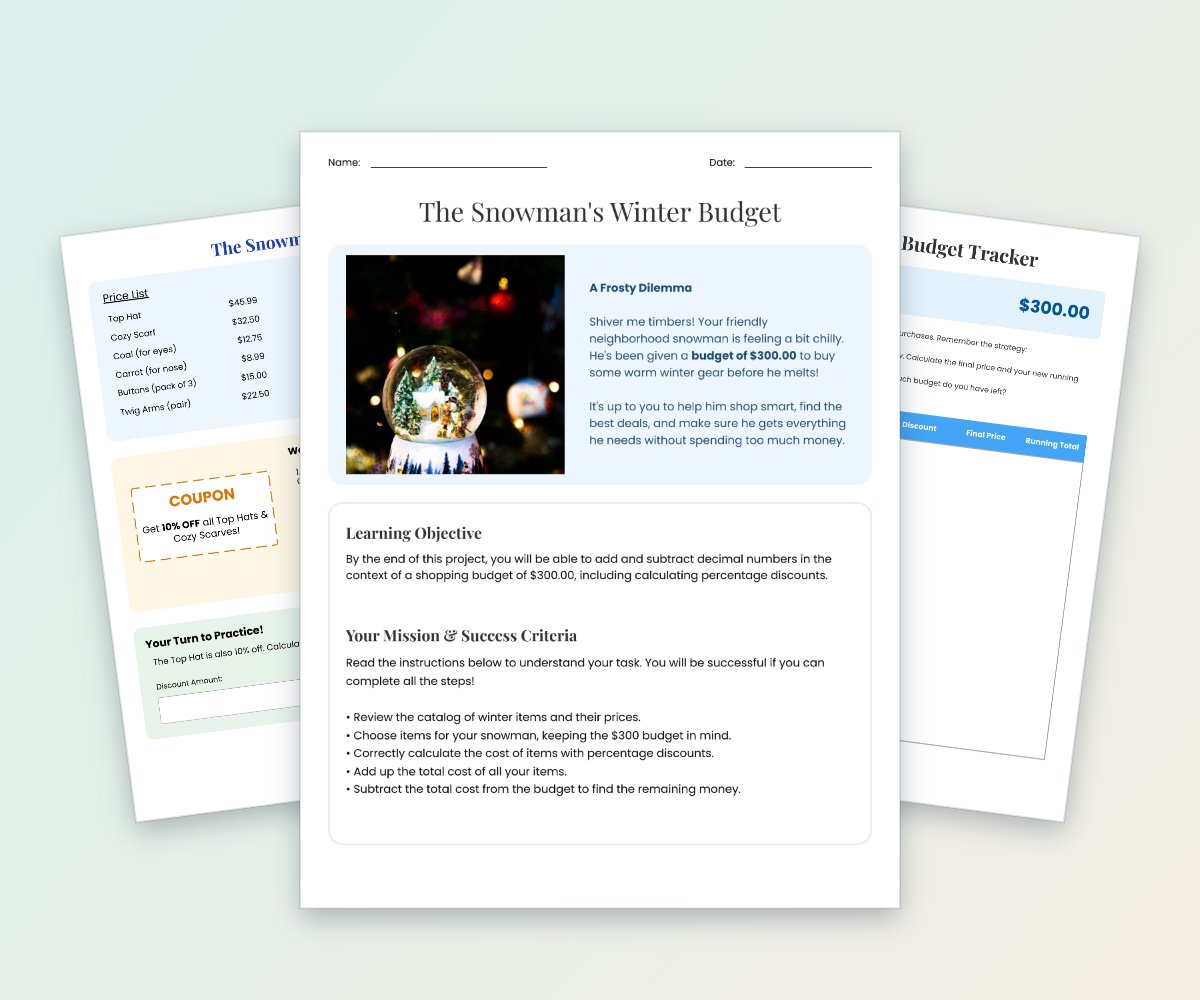
Students help a snowman shop for winter items within a $300 budget while calculating percentage discounts, final prices, totals, and remaining money.
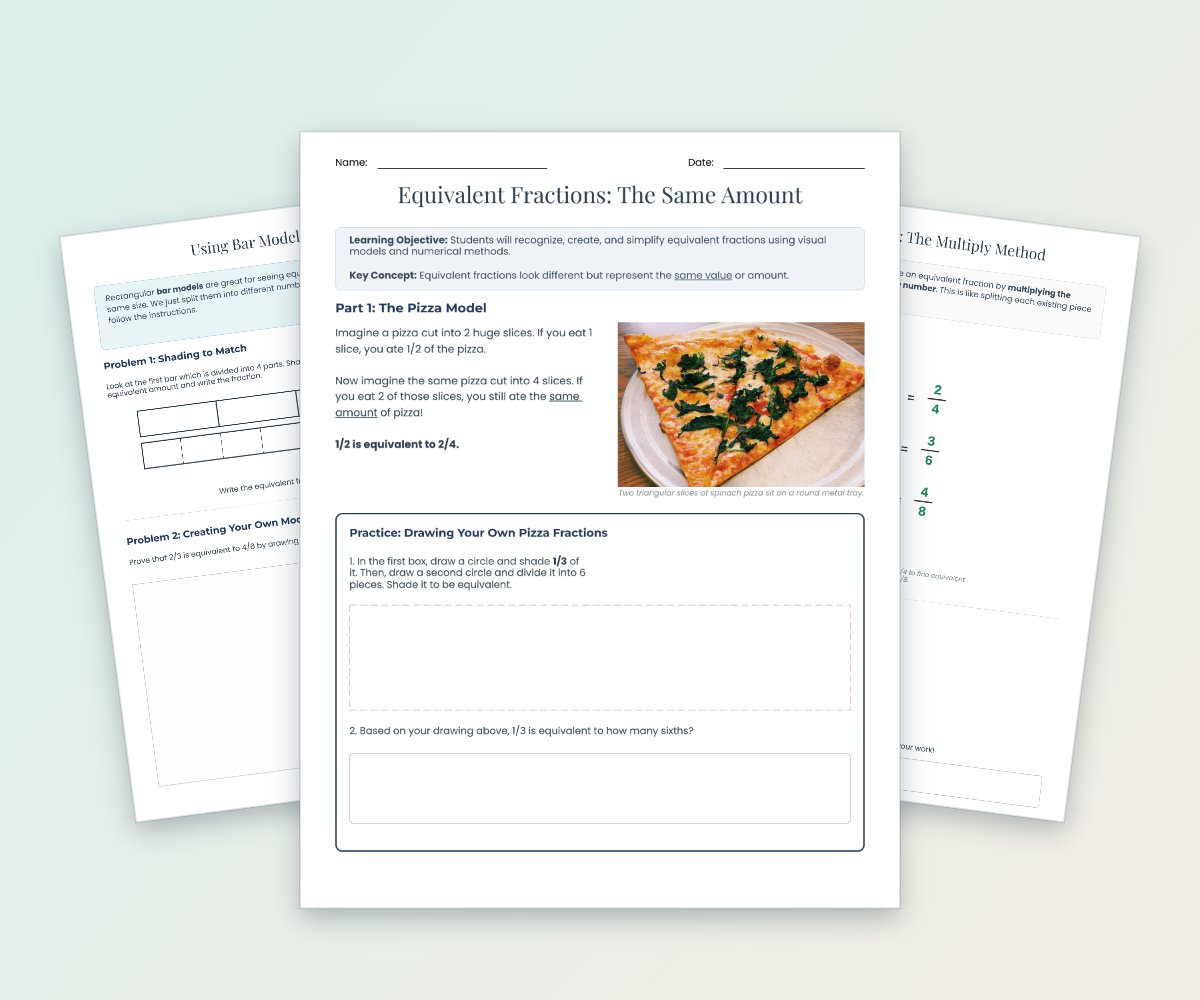
This eight-page worksheet pack teaches students to recognize, create, compare, and simplify equivalent fractions.
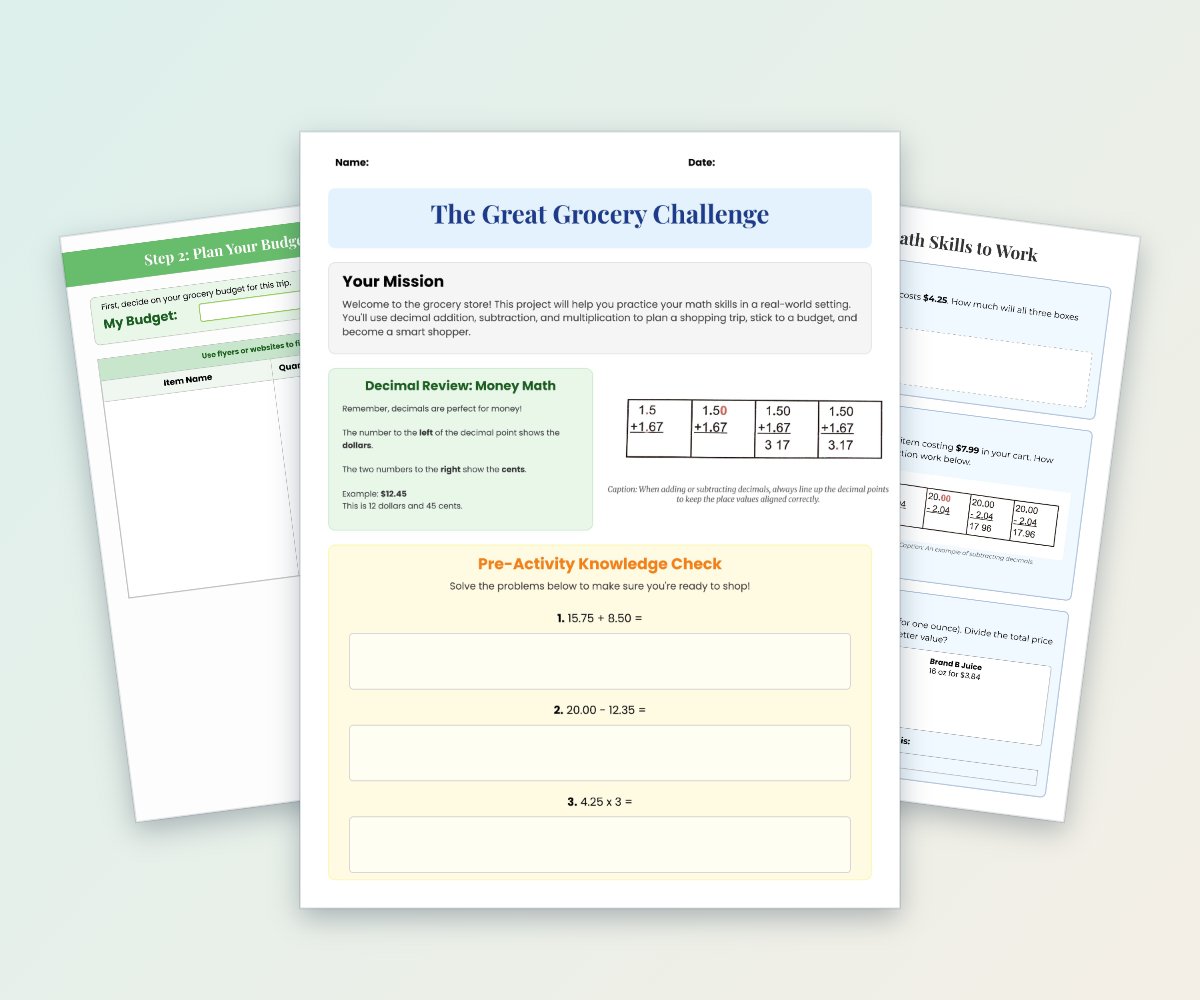
Students plan a grocery trip, create a shopping list, and use decimal addition, subtraction, multiplication, division, budgeting, and sales tax calculations.
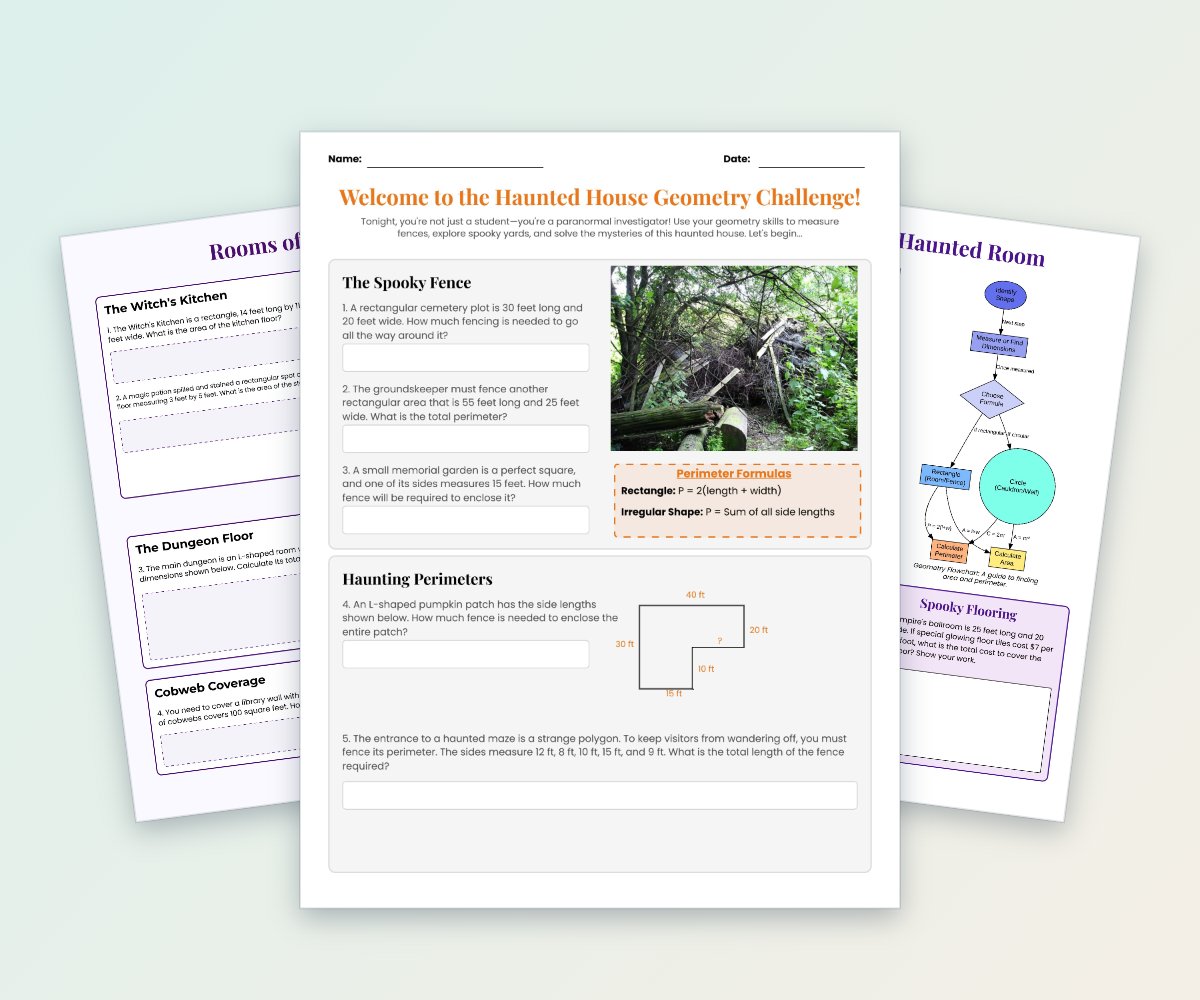
Students solve themed geometry problems involving the perimeter and area of rectangles, squares, polygons, and L-shaped figures.
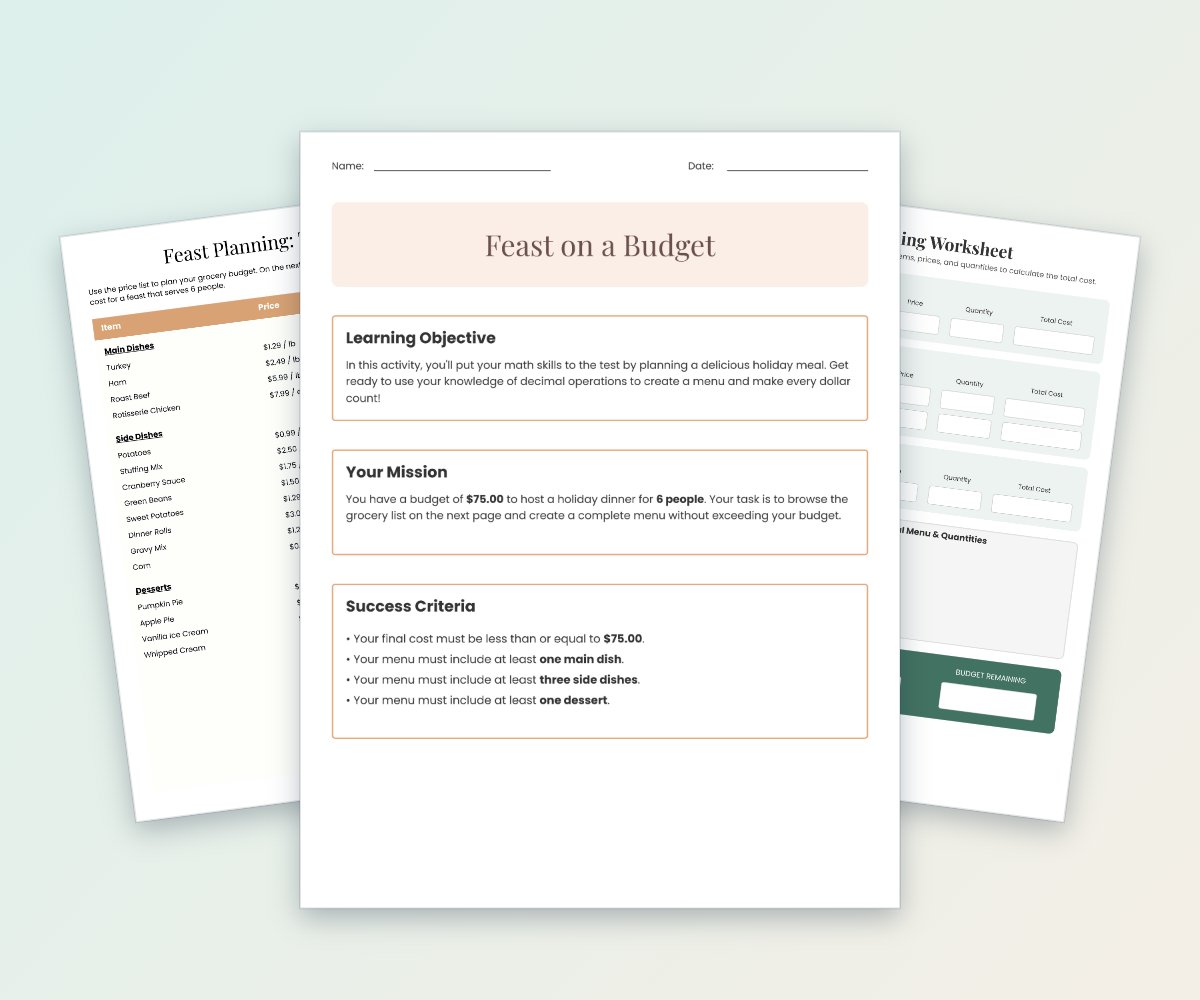
Students plan a holiday dinner for six people using a $75 budget and a grocery price list.
This 30-slide presentation provides back-to-school logic puzzles and brain teasers for warm-ups, early finishers, or transition activities.
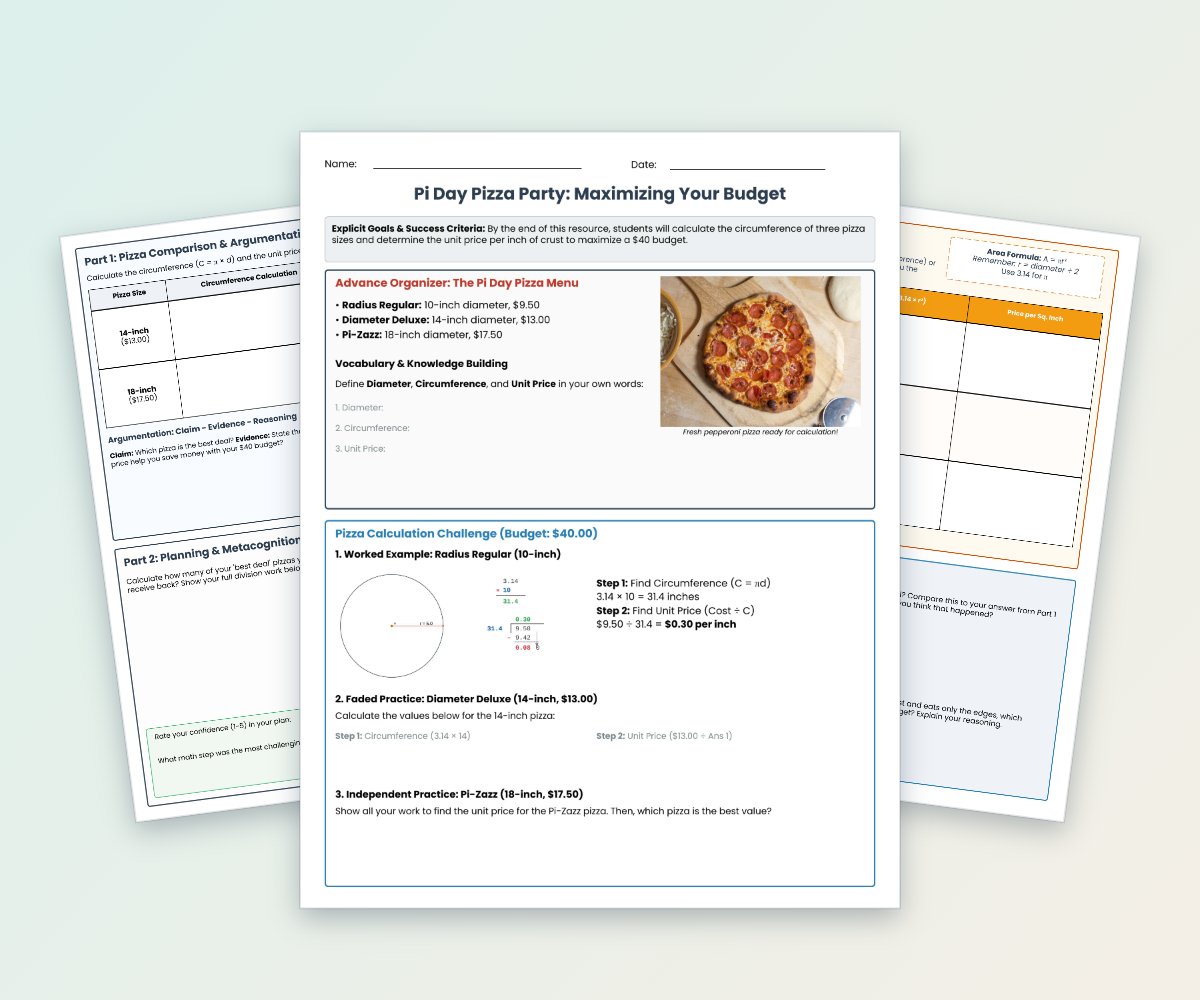
Students calculate pizza circumference, compare unit prices, maximize a $40 budget, and evaluate area-based value.
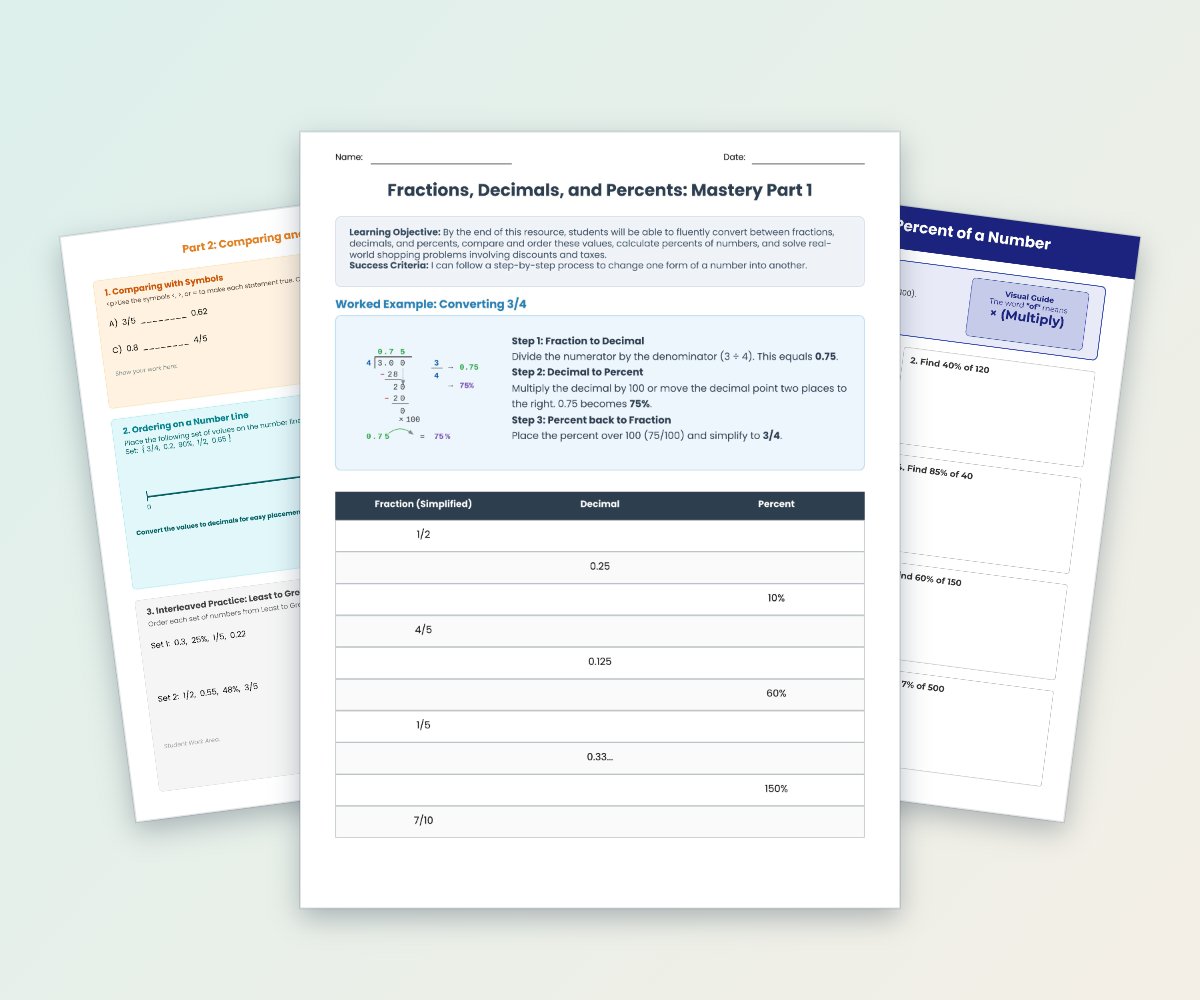
This six-page review pack teaches students to convert among fractions, decimals, and percents, compare and order values, calculate percentages, and solve shopping problems.
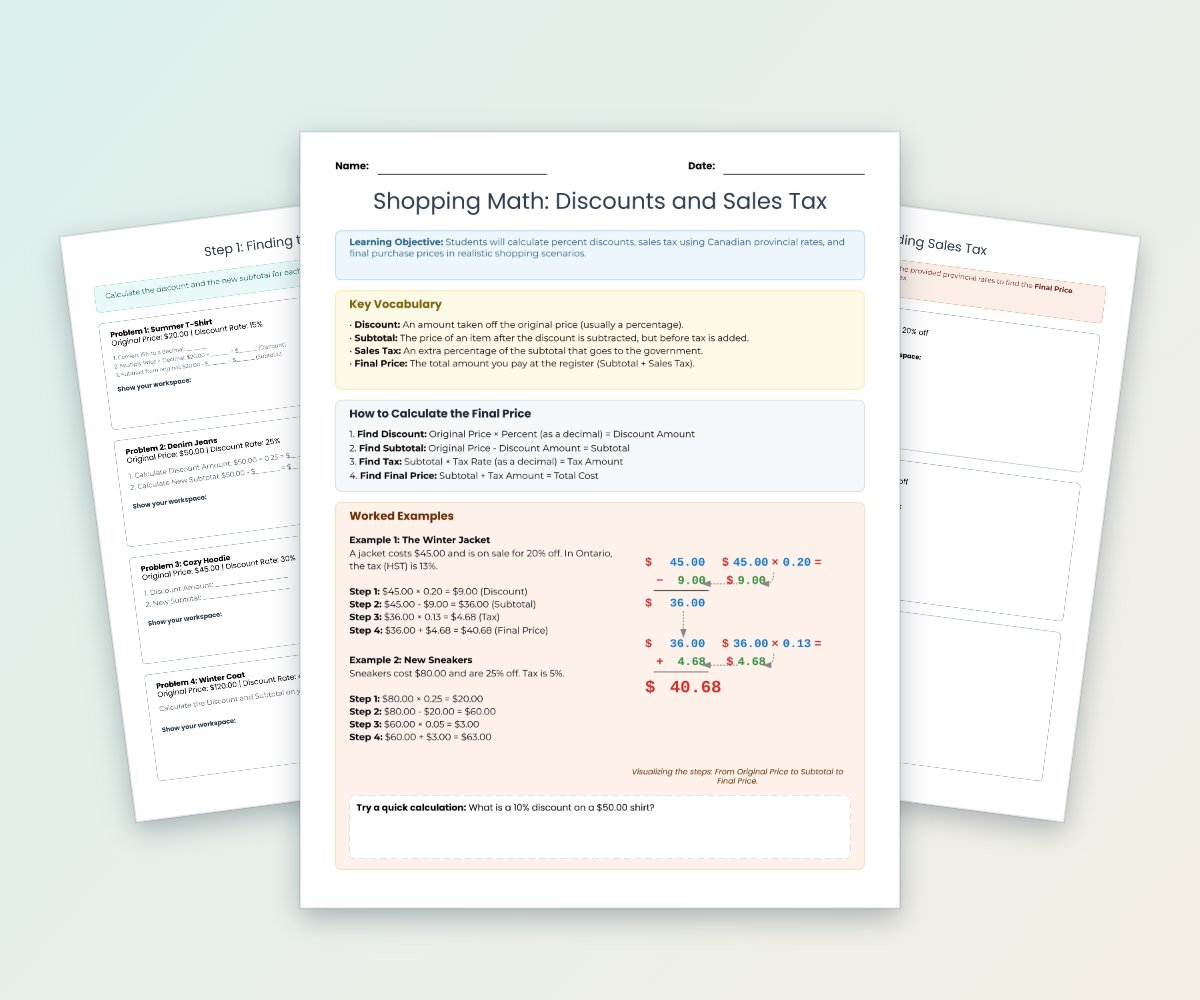
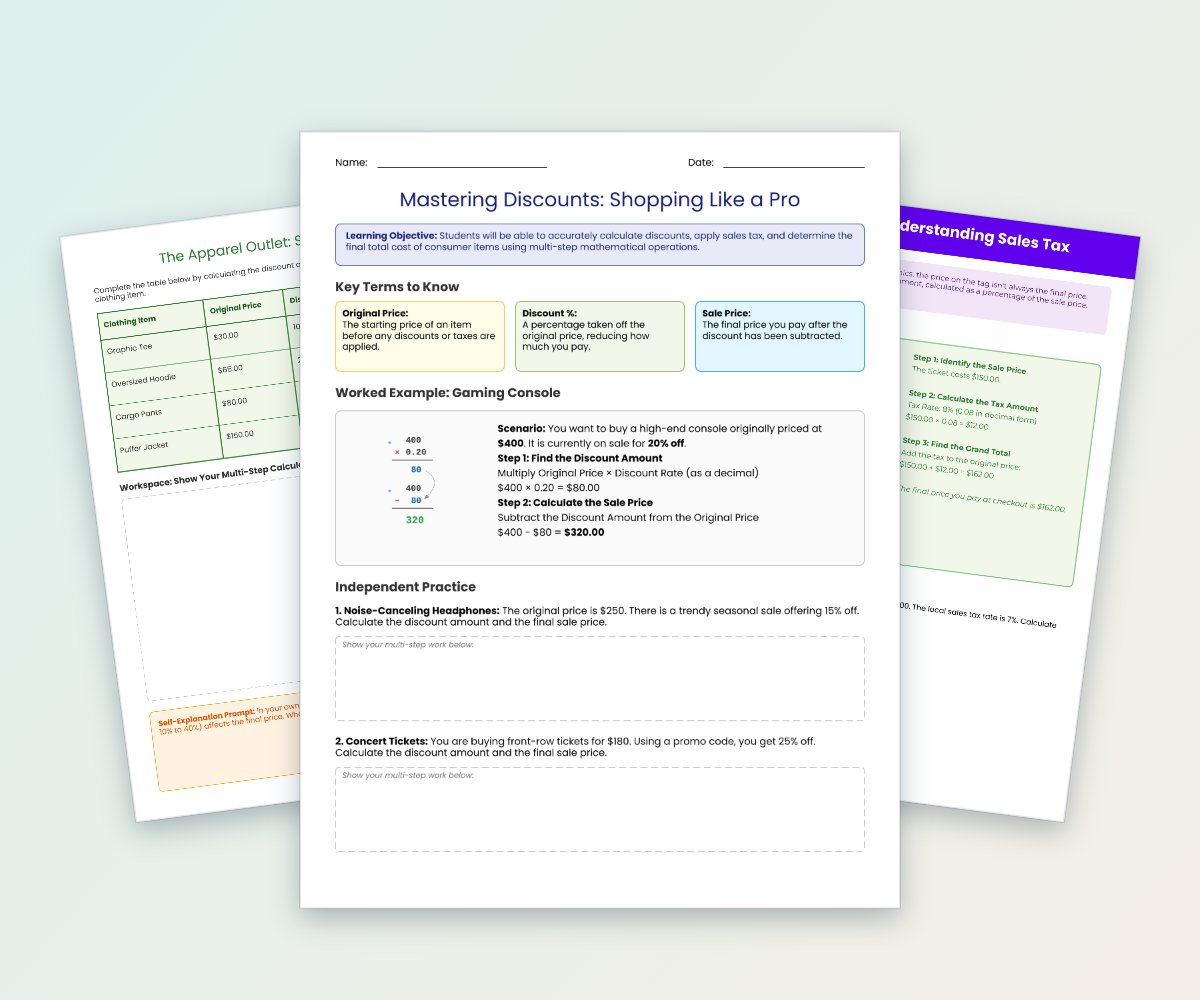
Students practice calculating percentage discounts, subtotals, sales tax, and final purchase prices using realistic shopping scenarios.
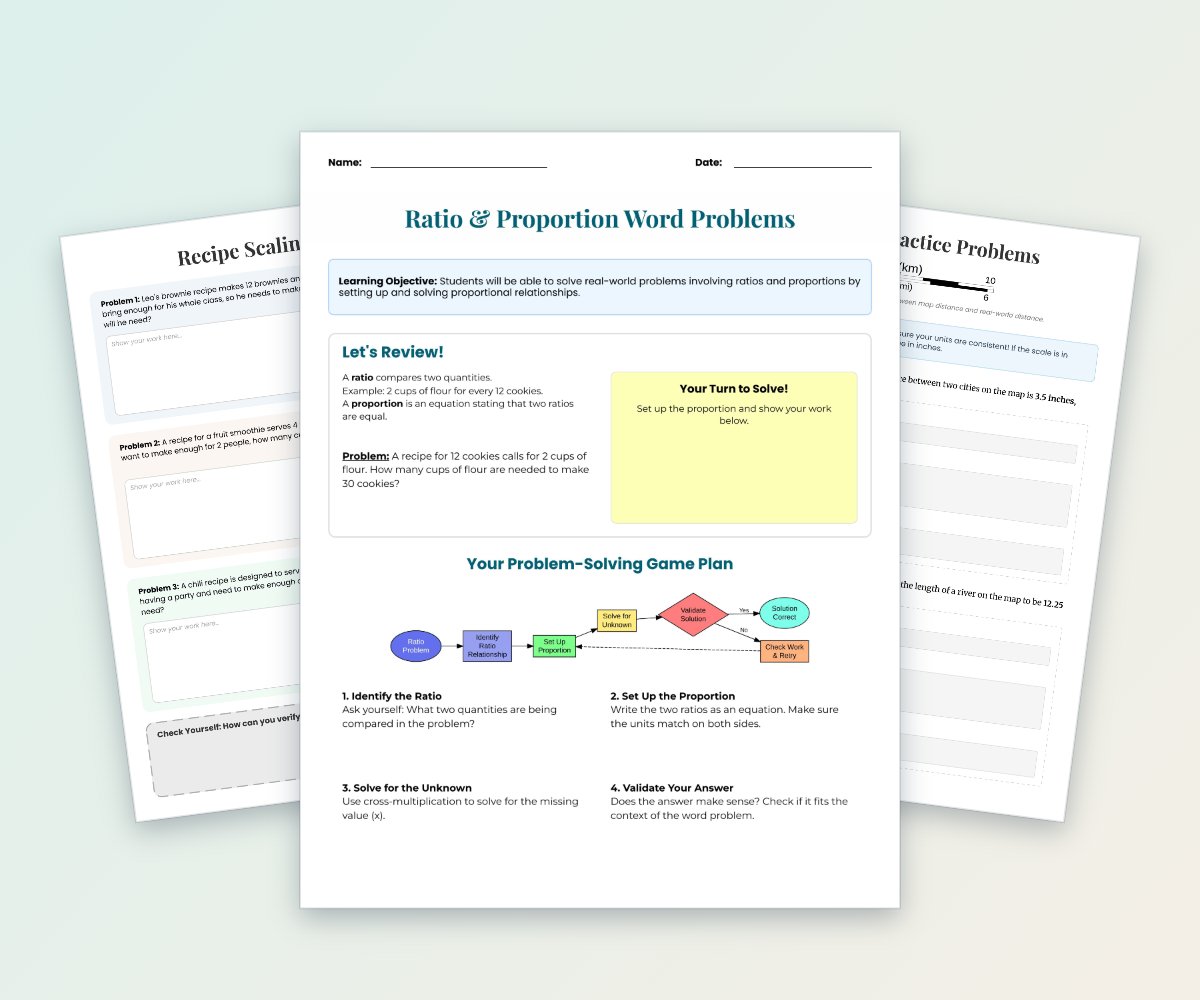
Students review ratios and proportions, then solve real-world problems involving recipe scaling and map scales.
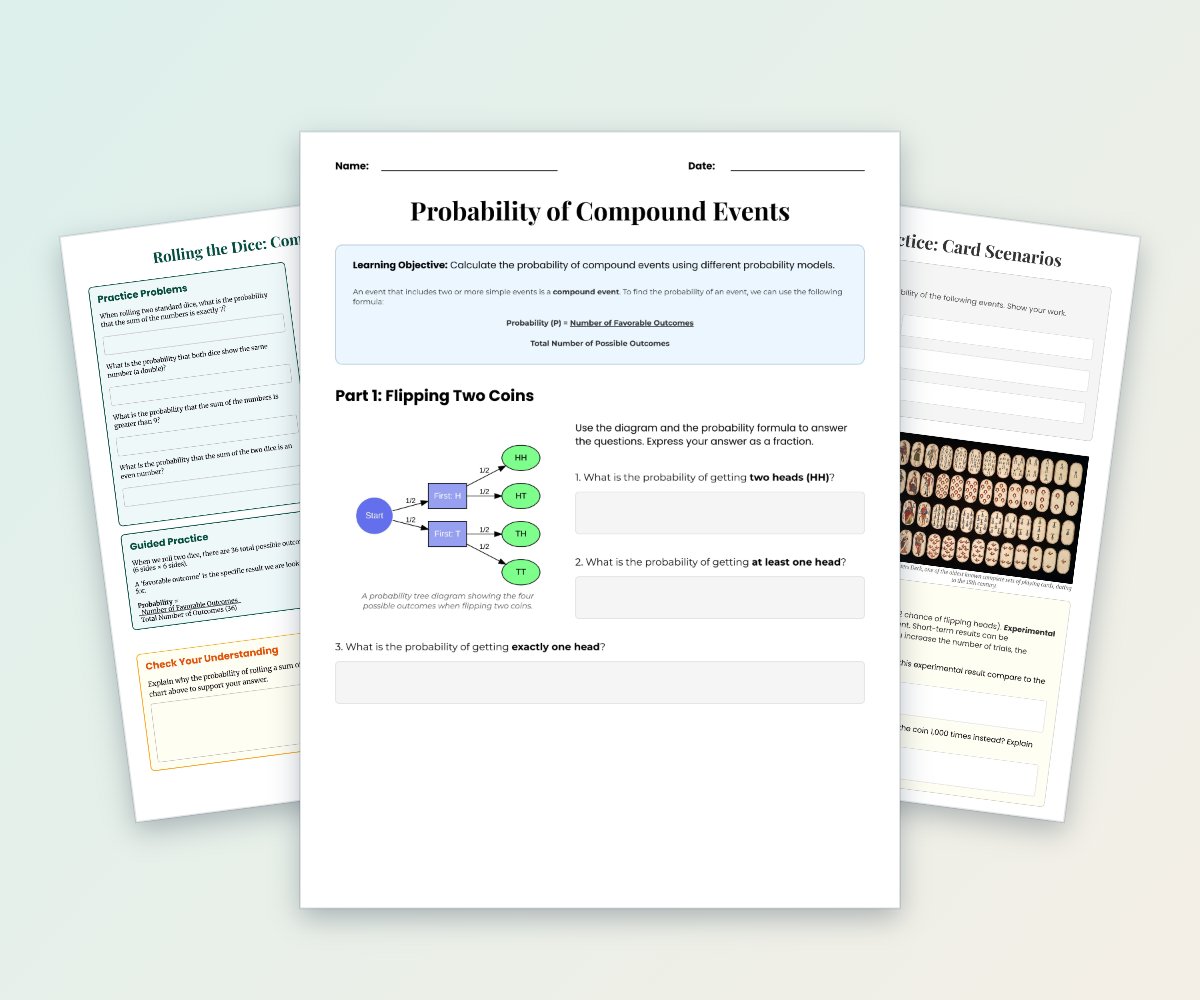
This four-page worksheet teaches students to calculate compound-event probabilities using coin flips, dice, card draws, tree diagrams, outcome charts, and probability models.
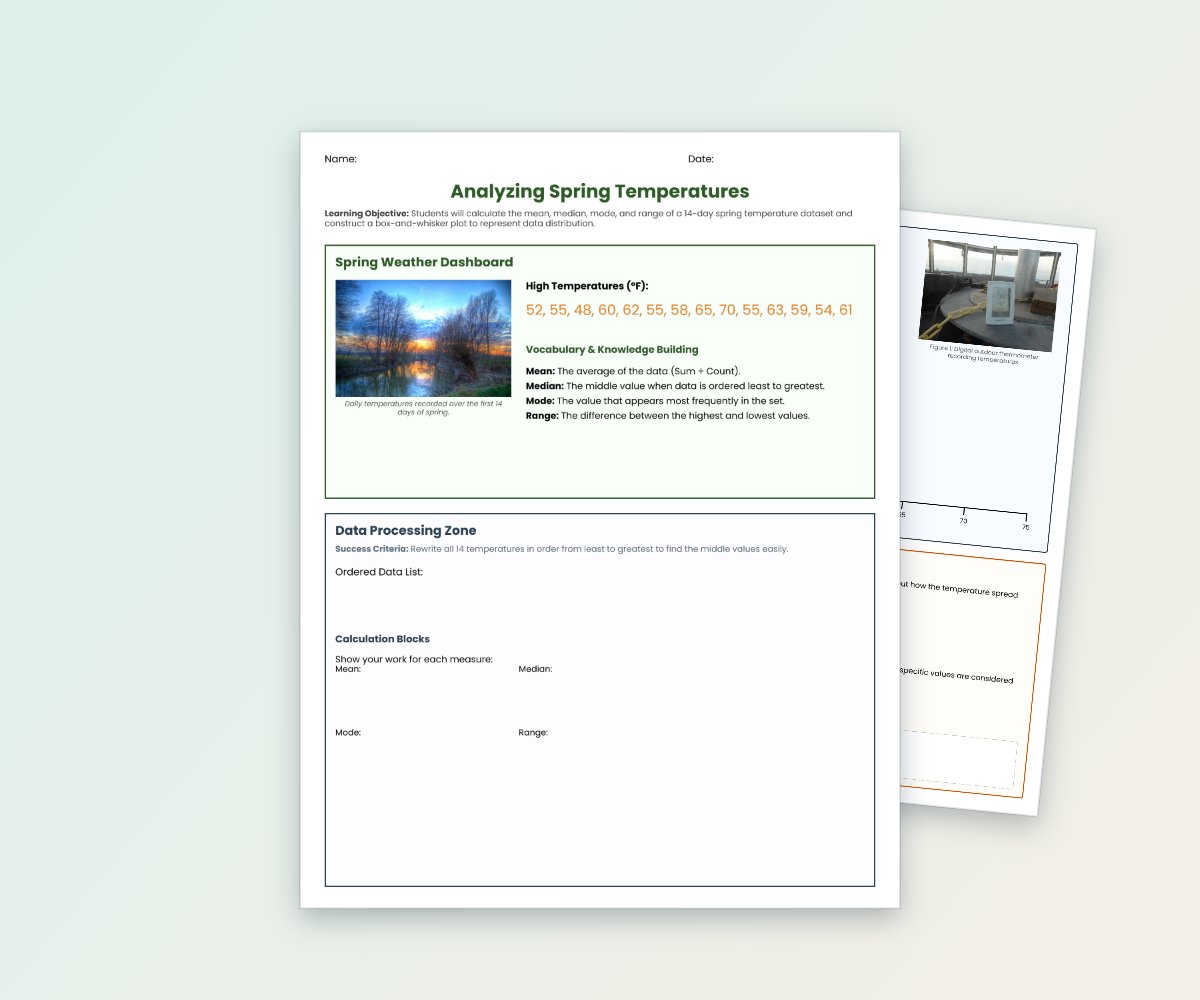
Students analyze a 14-day spring temperature dataset by calculating the mean, median, mode, and range.
Students calculate discount amounts, sale prices, sales tax, and final costs using realistic shopping scenarios.
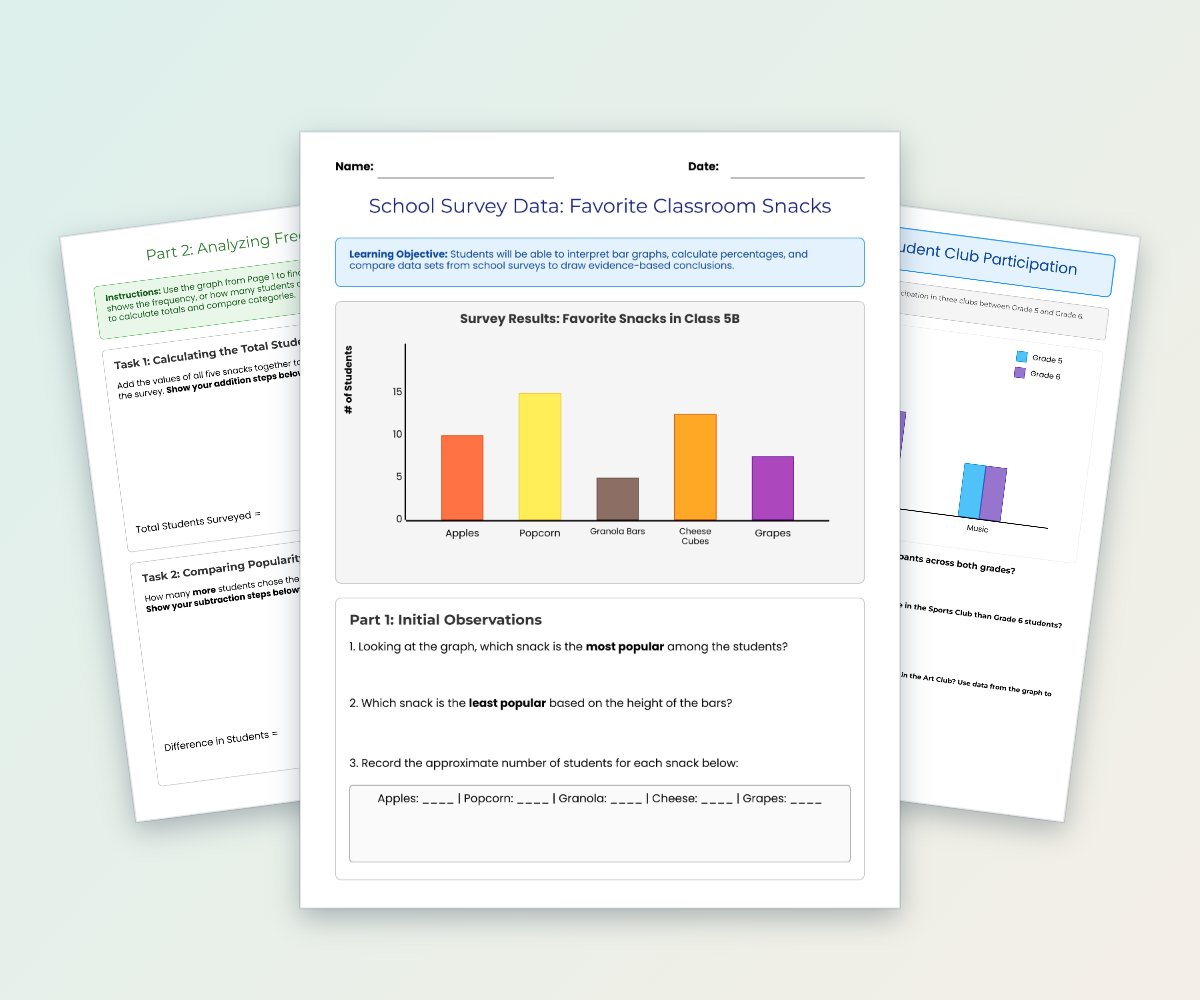
Students analyze bar graphs and grouped bar graphs using school survey and club participation data.
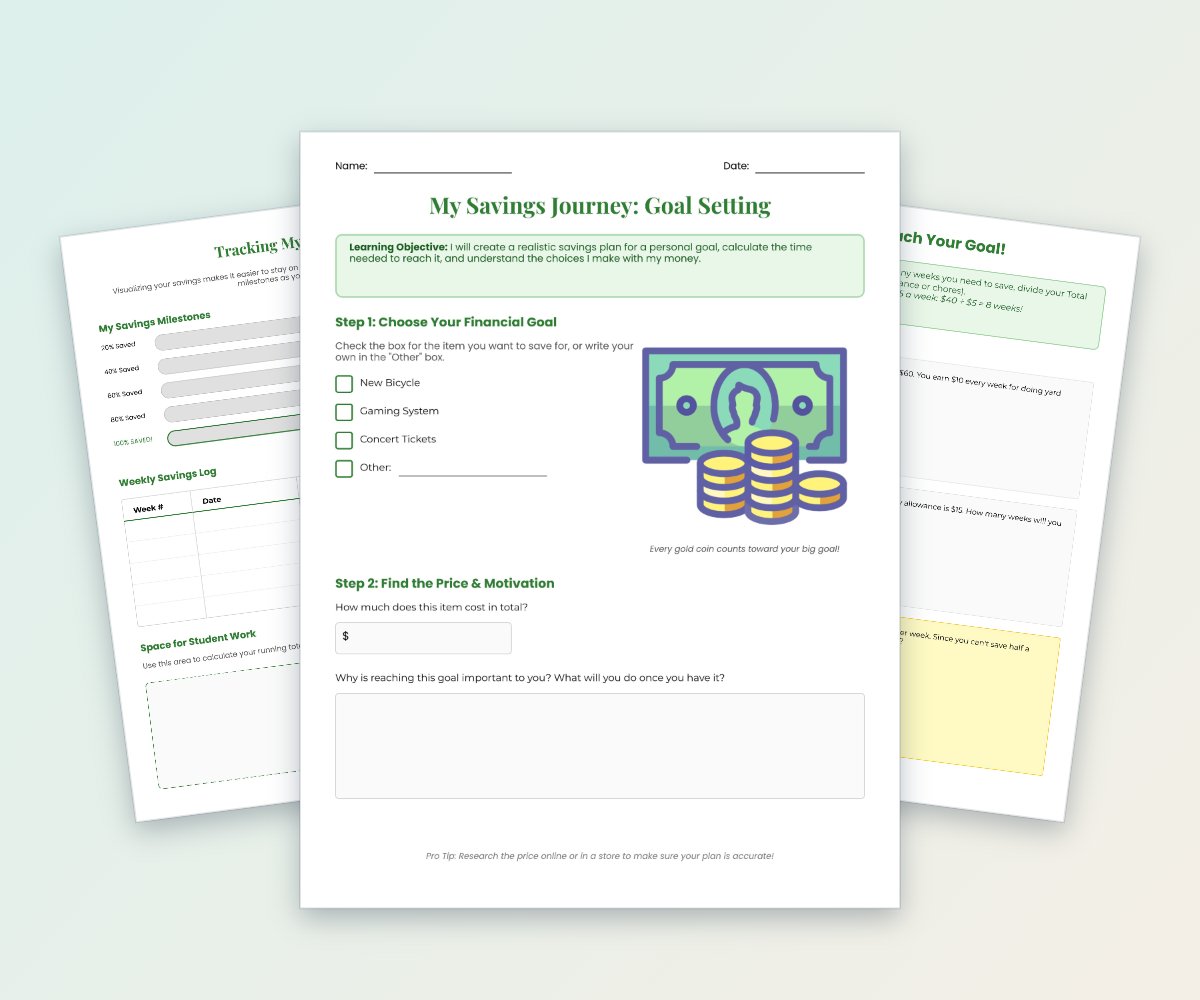
Students create a savings goal, calculate the time needed to reach it, track deposits, and reflect on spending tradeoffs.
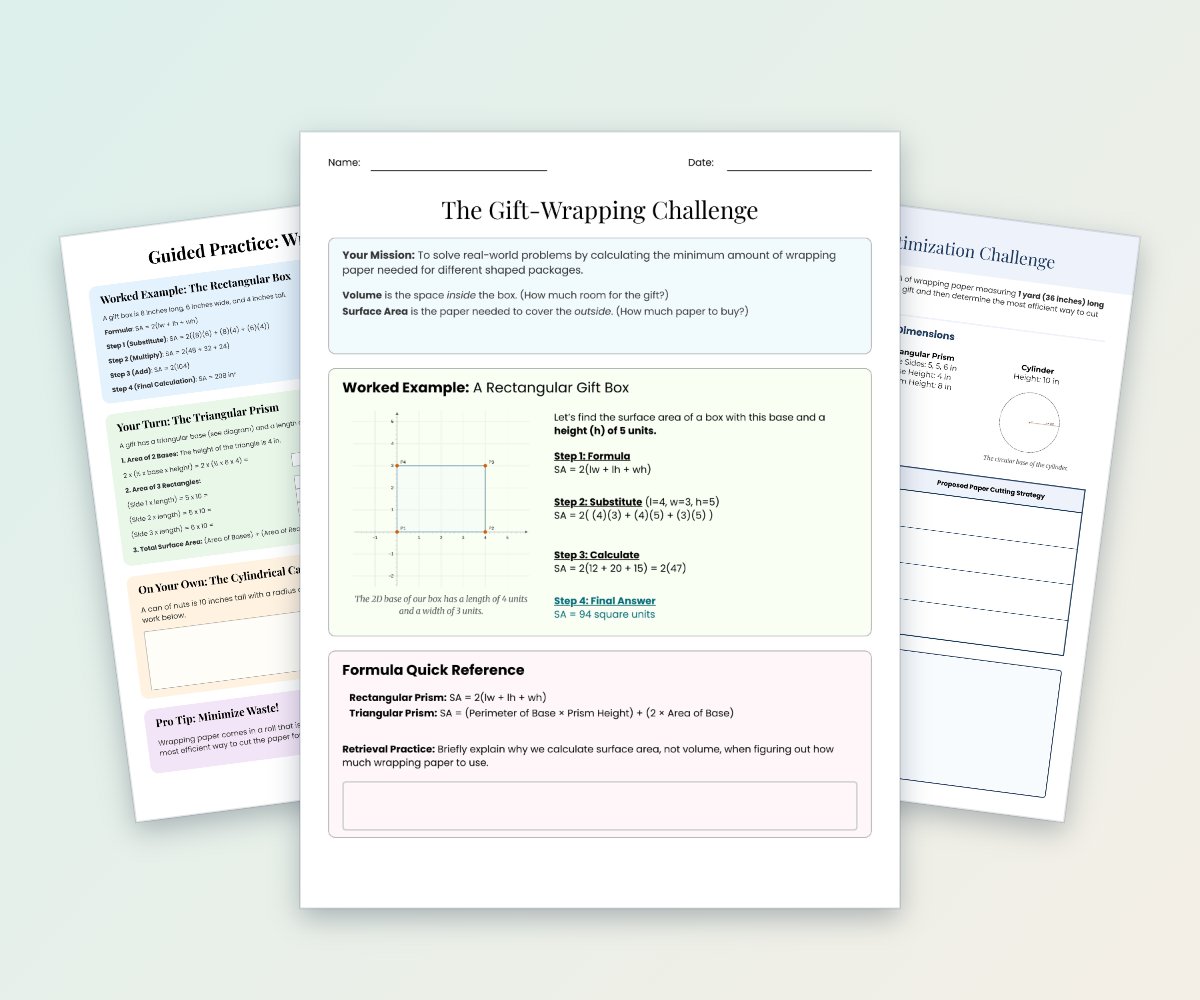
Students calculate the surface area of rectangular prisms, triangular prisms, cubes, and cylinders in a gift-wrapping context.