Pumpkin Measurement Activity
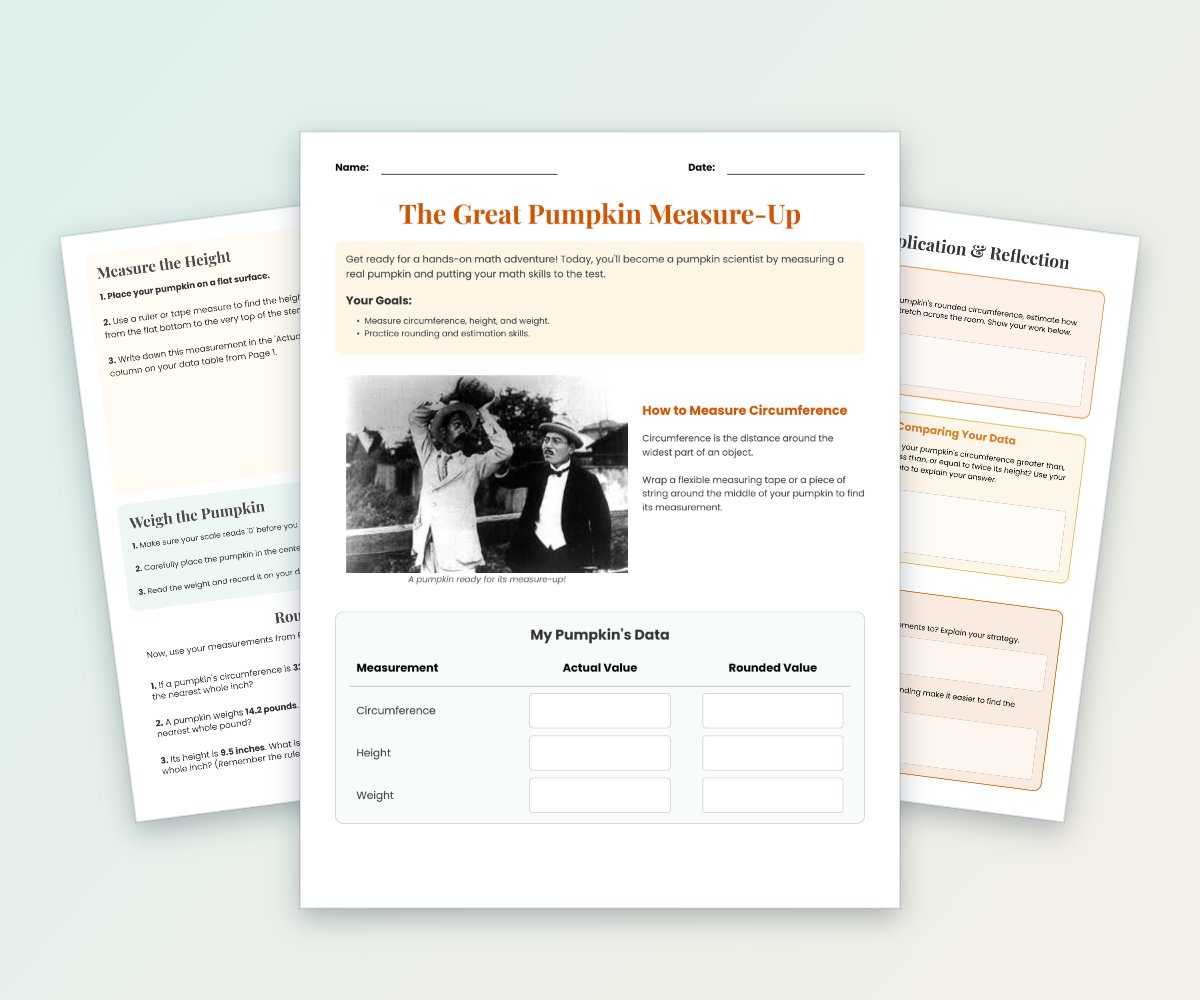
Students measure a real pumpkin’s circumference, height, and weight, record actual and rounded values, and practice estimation.
$3
Clear, practical resources for busy educators, organized so you can get from search to ready-to-teach quickly.
Students measure a real pumpkin’s circumference, height, and weight, record actual and rounded values, and practice estimation.
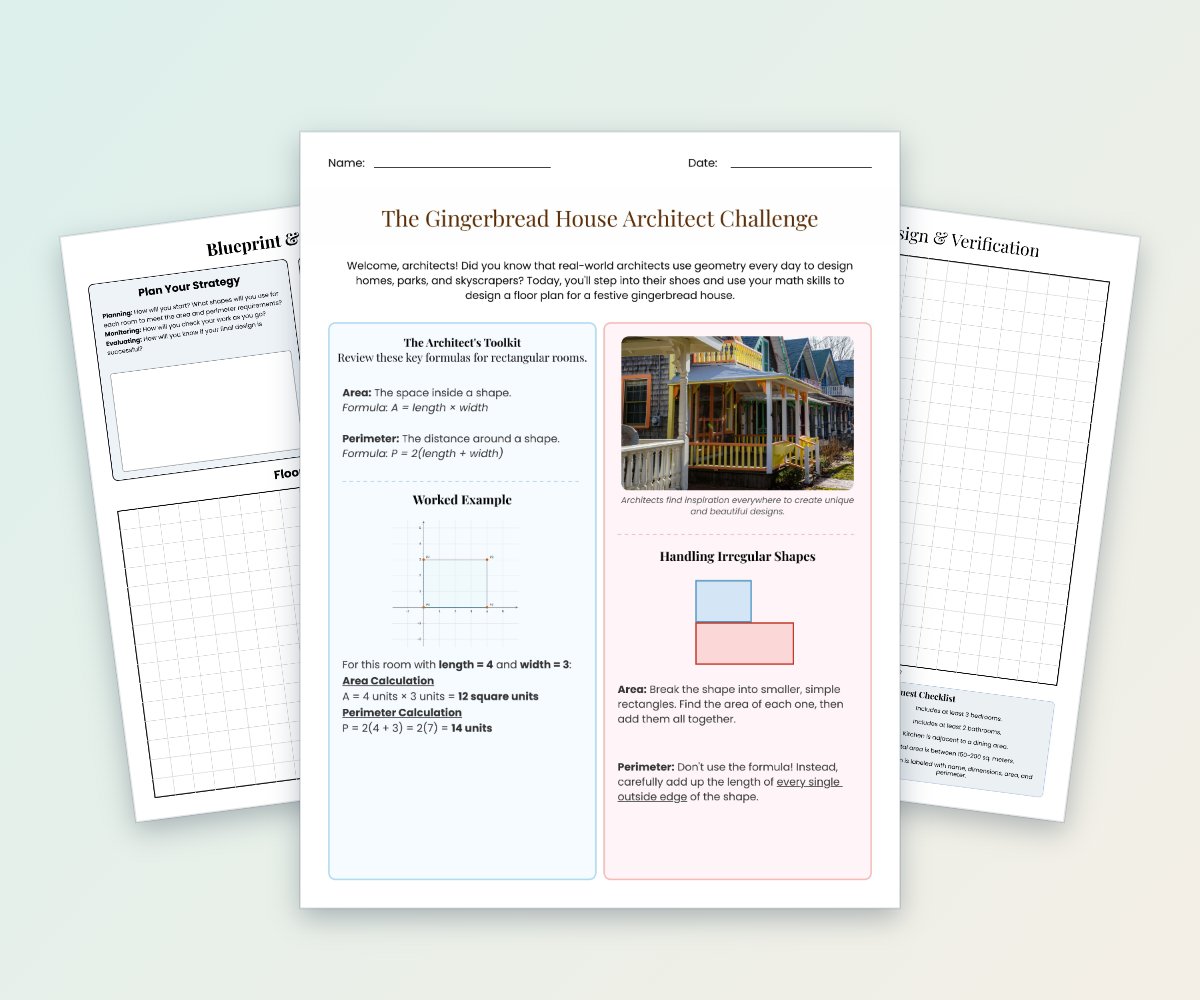
Students become architects as they design a gingerbread house floor plan using area, perimeter, irregular shapes, and scale.
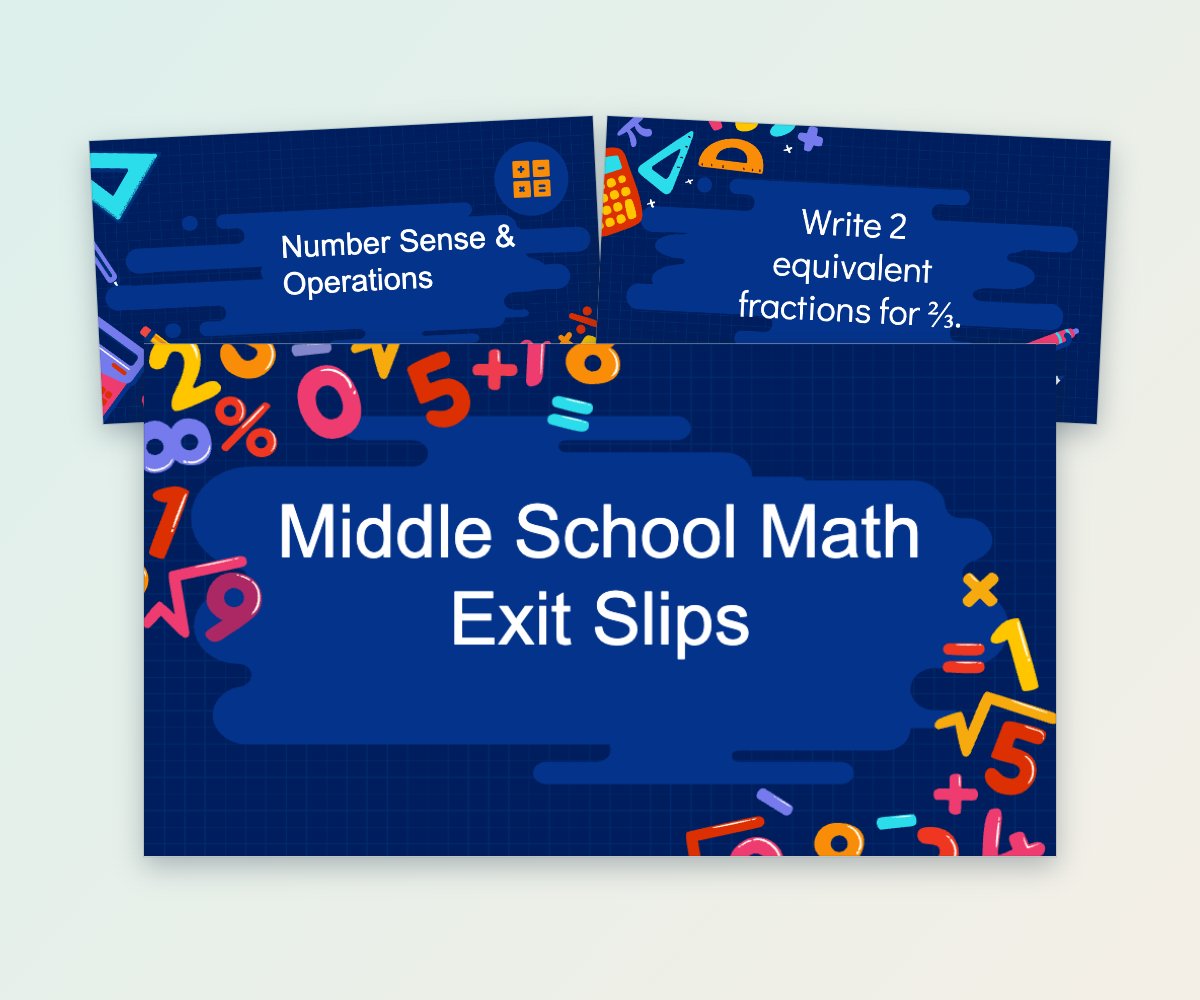
This 61-slide collection provides ready-to-use math exit tickets covering number sense, operations, fractions, decimals, percents, ratios, algebra, geometry, data, measurement, and problem solving.
This 61-page exit ticket collection provides quick formative assessments across number sense, operations, fractions, ratios, algebra, geometry, measurement, data, probability, and problem solving.
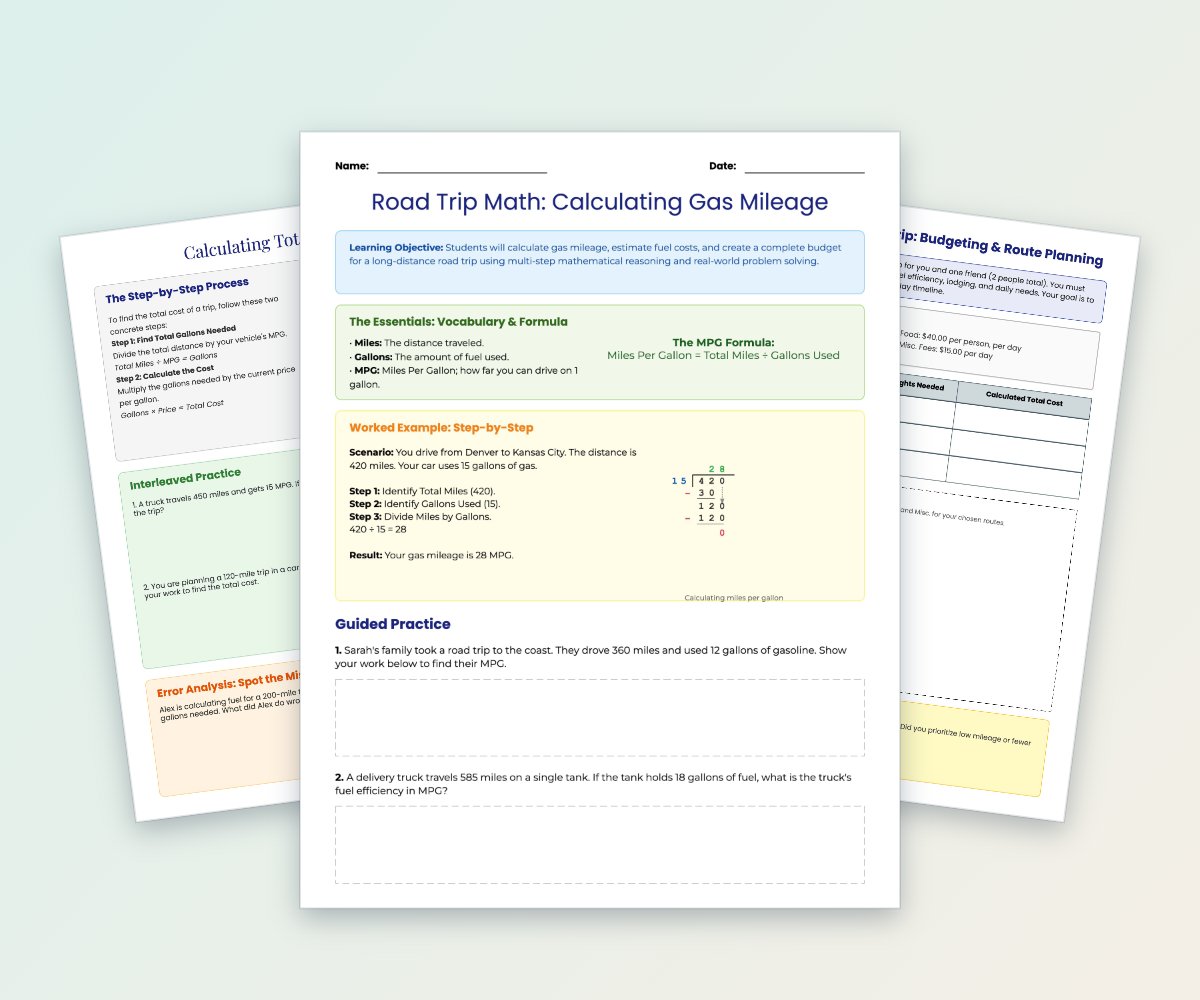
Students calculate miles per gallon, estimate fuel costs, analyze errors, and create a budget for a long-distance road trip.
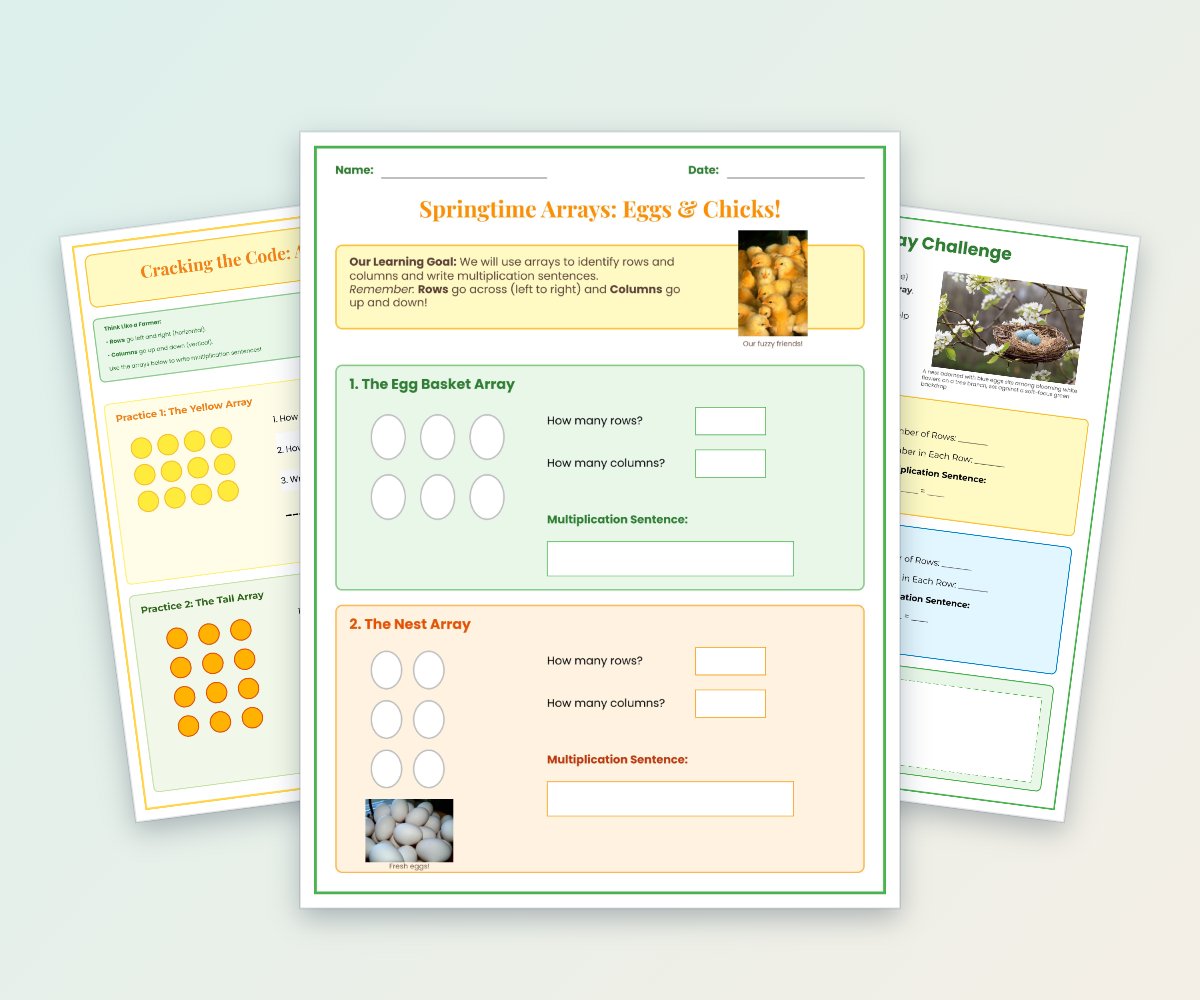
Students identify rows and columns, write multiplication sentences, and represent facts using spring-themed egg and chick arrays.
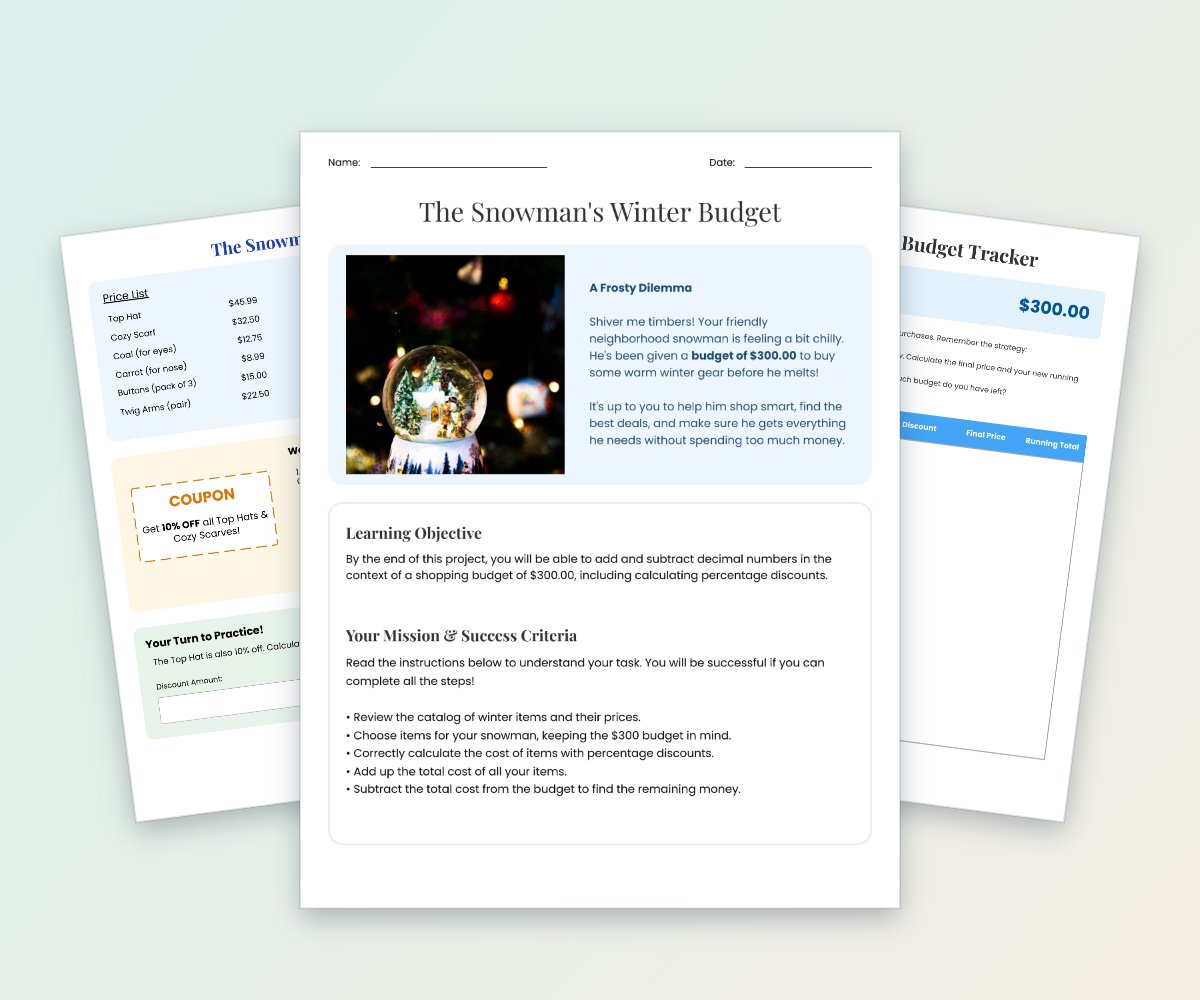
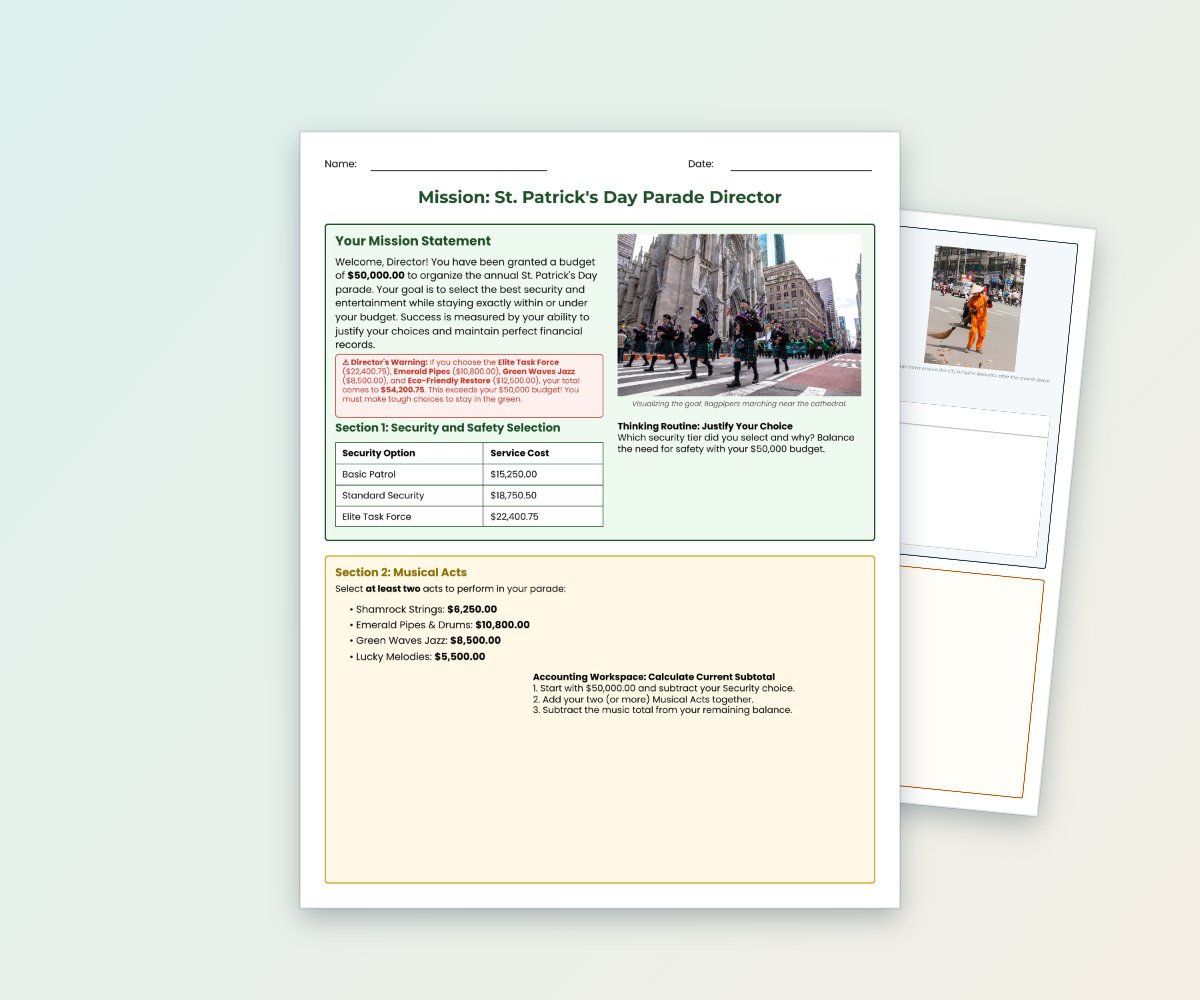
Students help a snowman shop for winter items within a $300 budget while calculating percentage discounts, final prices, totals, and remaining money.
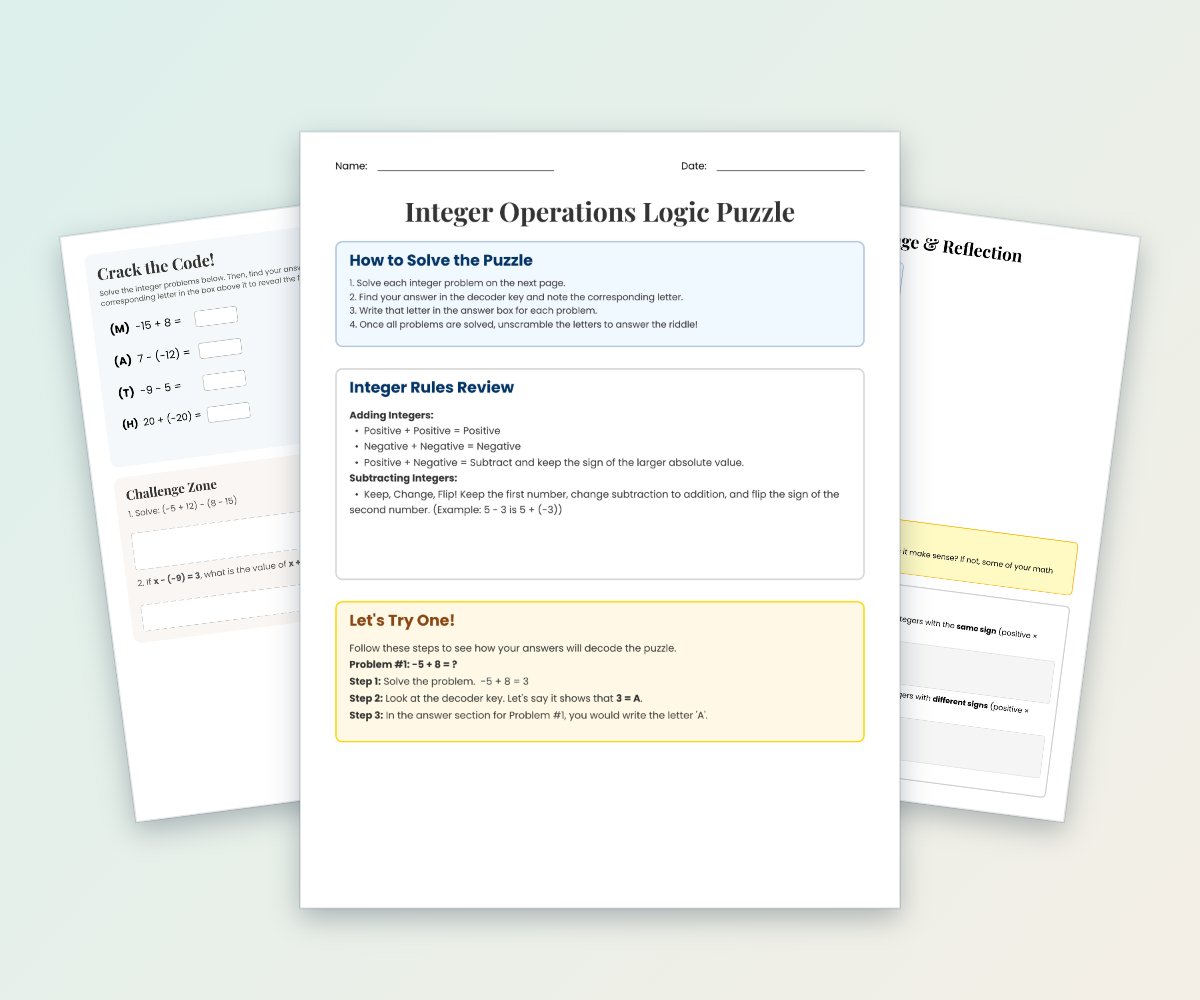
Students review integer addition and subtraction, solve coded problems, and unscramble a secret message.
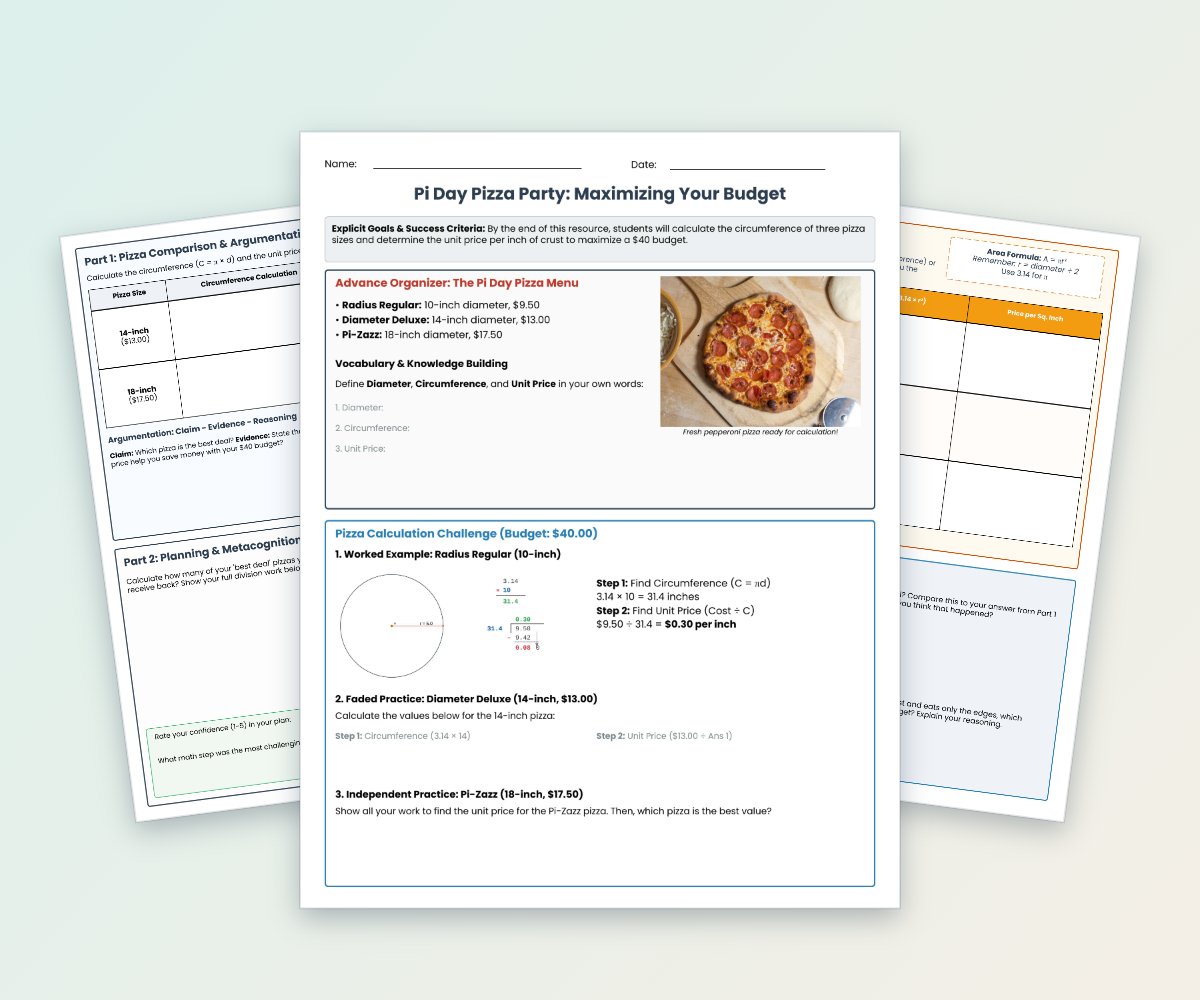
Students calculate pizza circumference, compare unit prices, maximize a $40 budget, and evaluate area-based value.
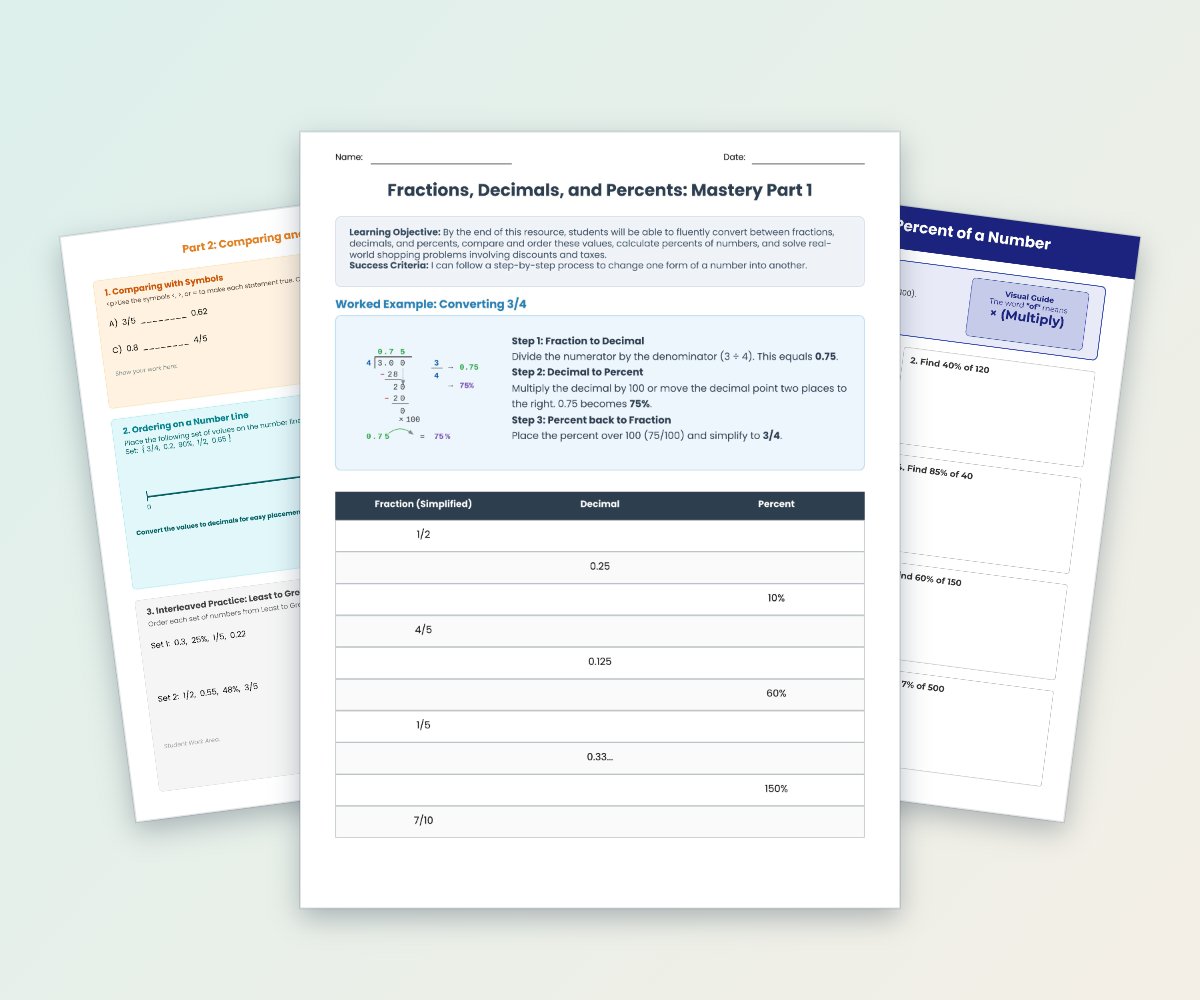
This six-page review pack teaches students to convert among fractions, decimals, and percents, compare and order values, calculate percentages, and solve shopping problems.
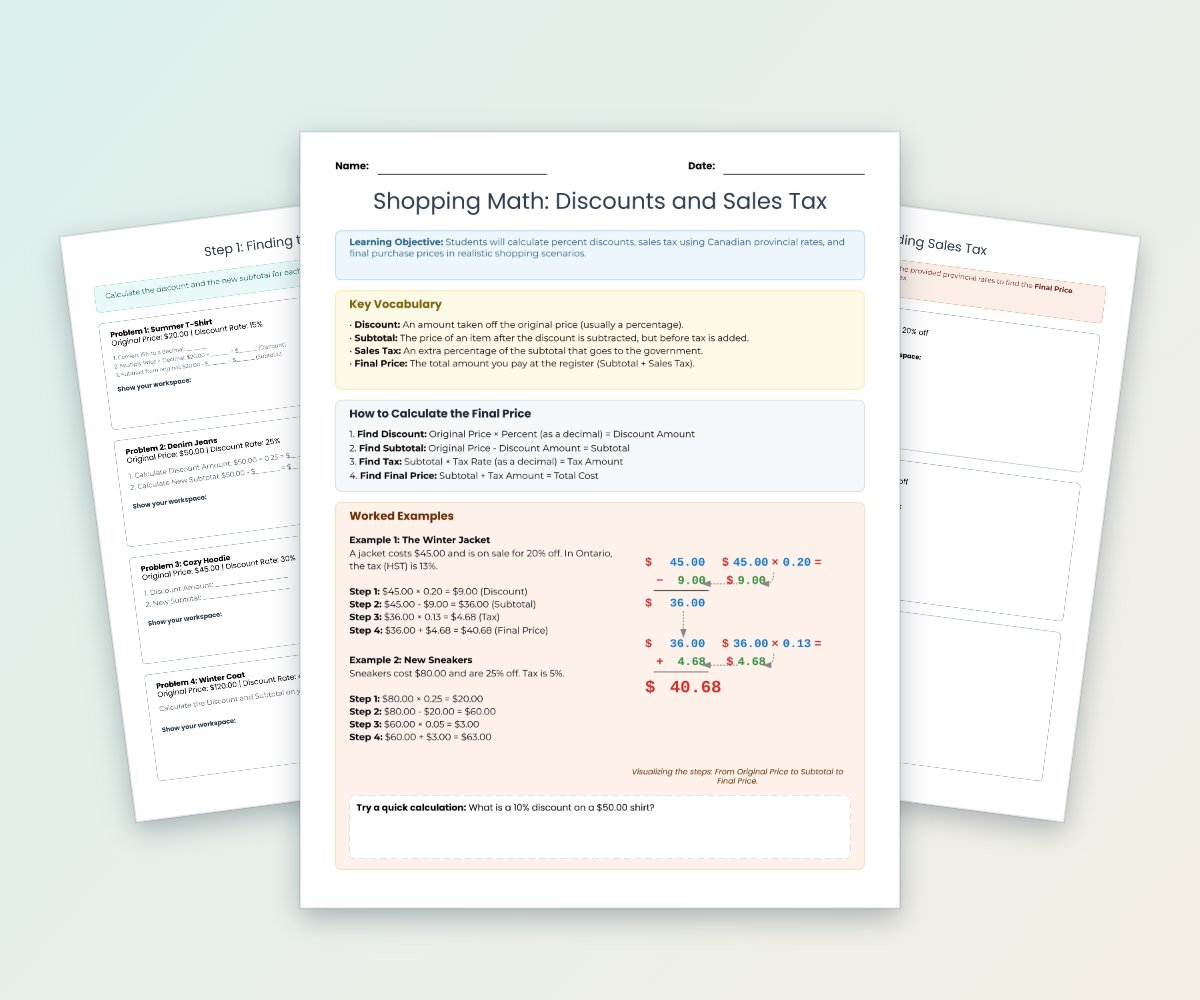
Students practice calculating percentage discounts, subtotals, sales tax, and final purchase prices using realistic shopping scenarios.
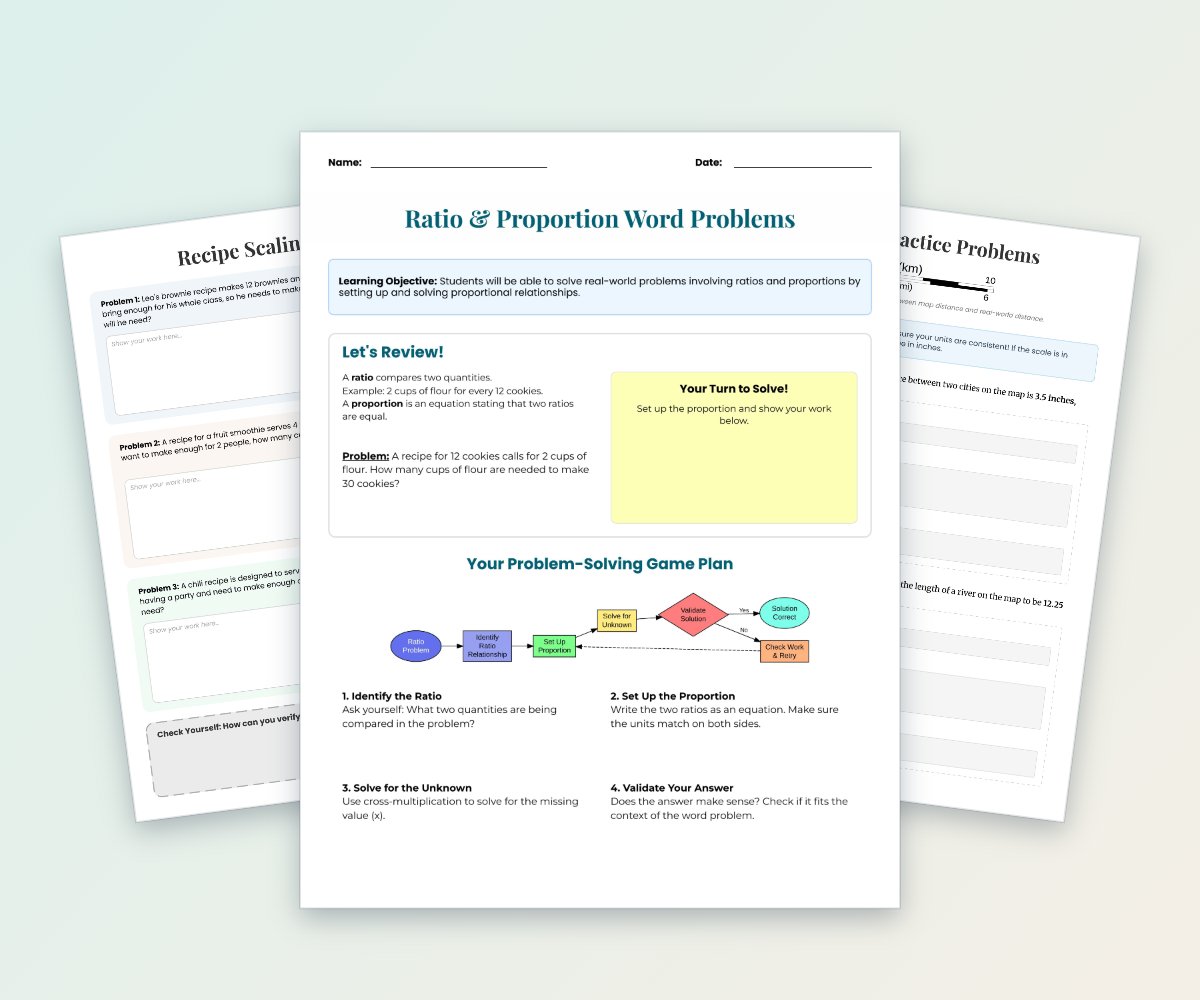
Students review ratios and proportions, then solve real-world problems involving recipe scaling and map scales.
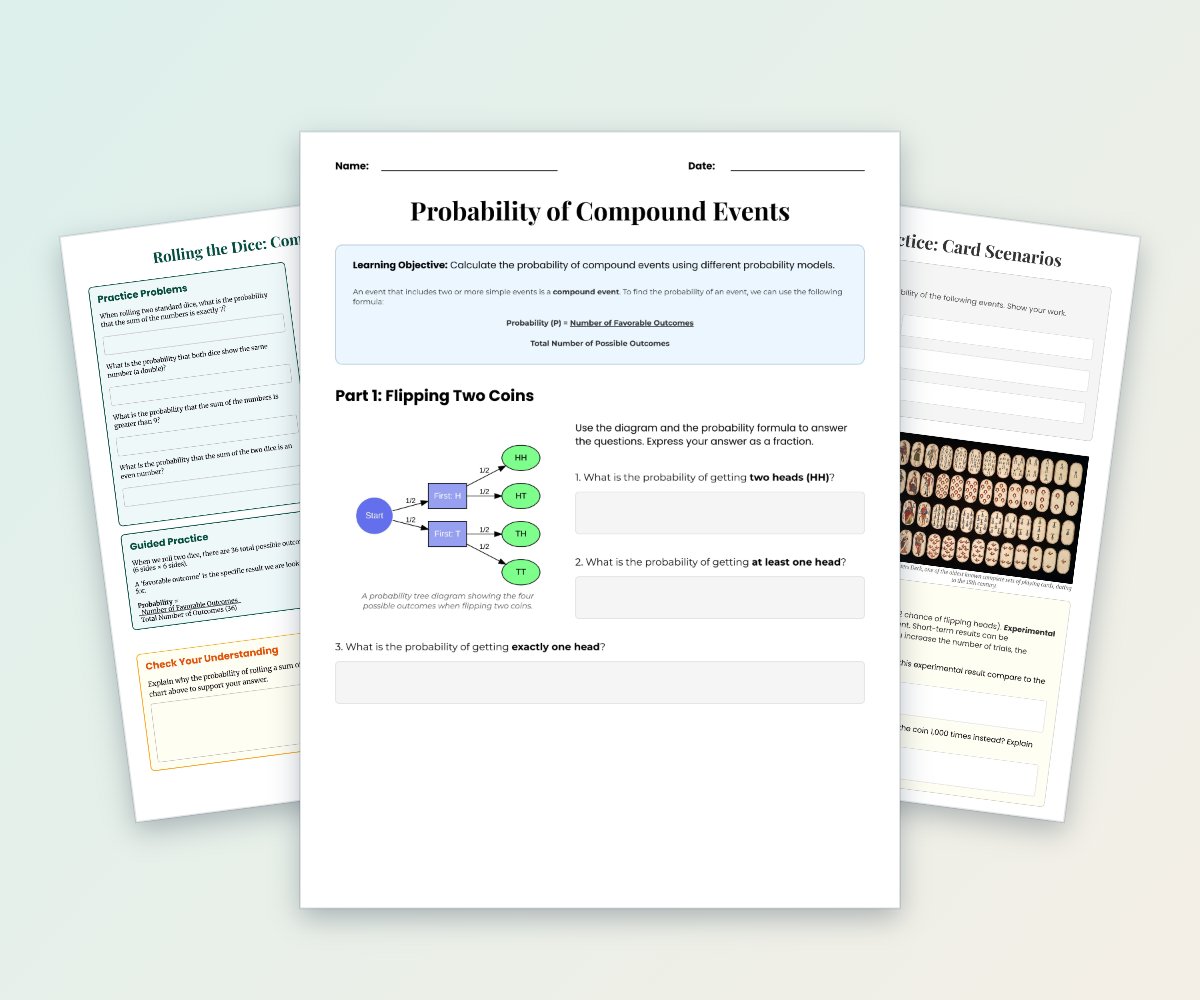
This four-page worksheet teaches students to calculate compound-event probabilities using coin flips, dice, card draws, tree diagrams, outcome charts, and probability models.
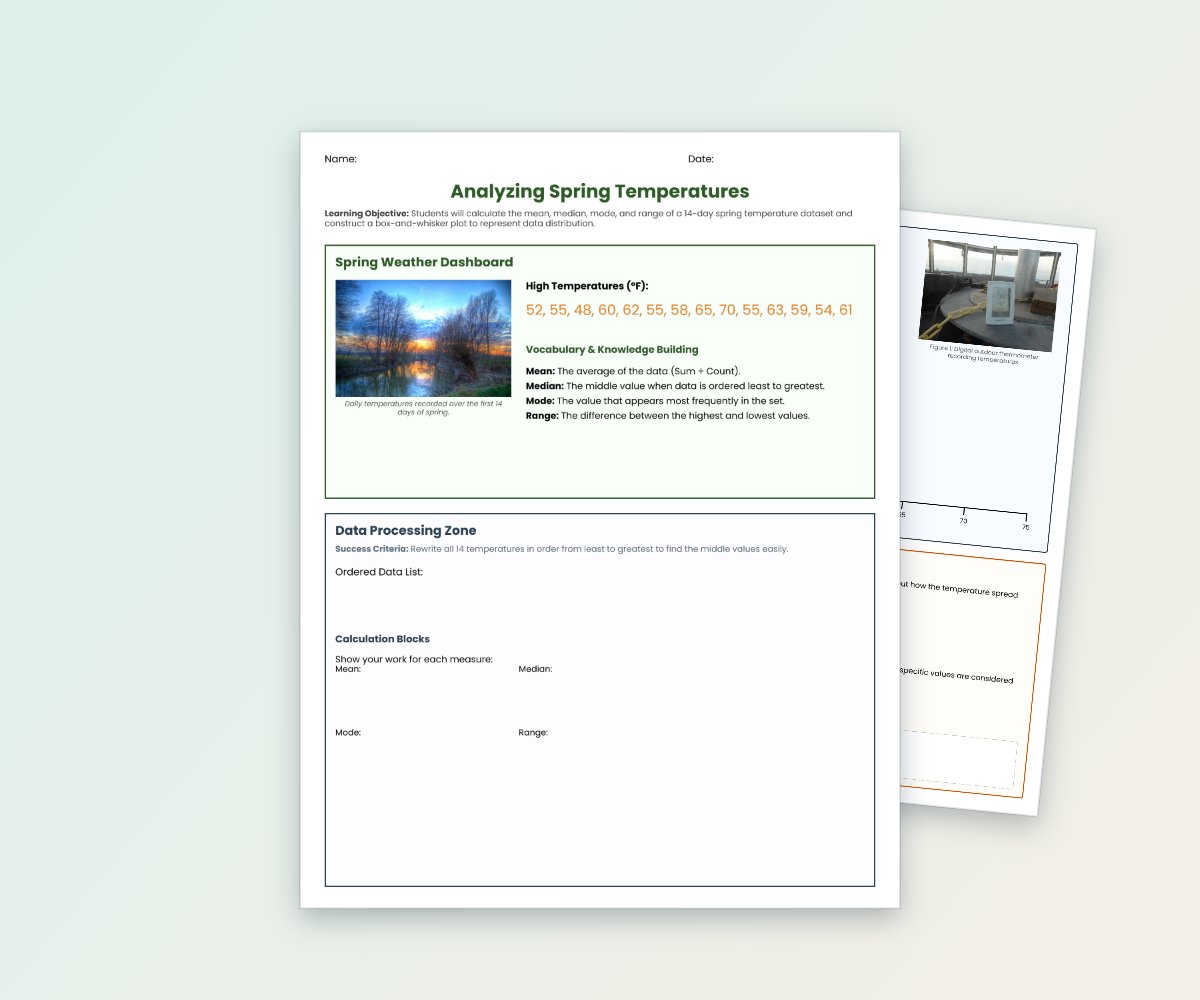
Students analyze a 14-day spring temperature dataset by calculating the mean, median, mode, and range.
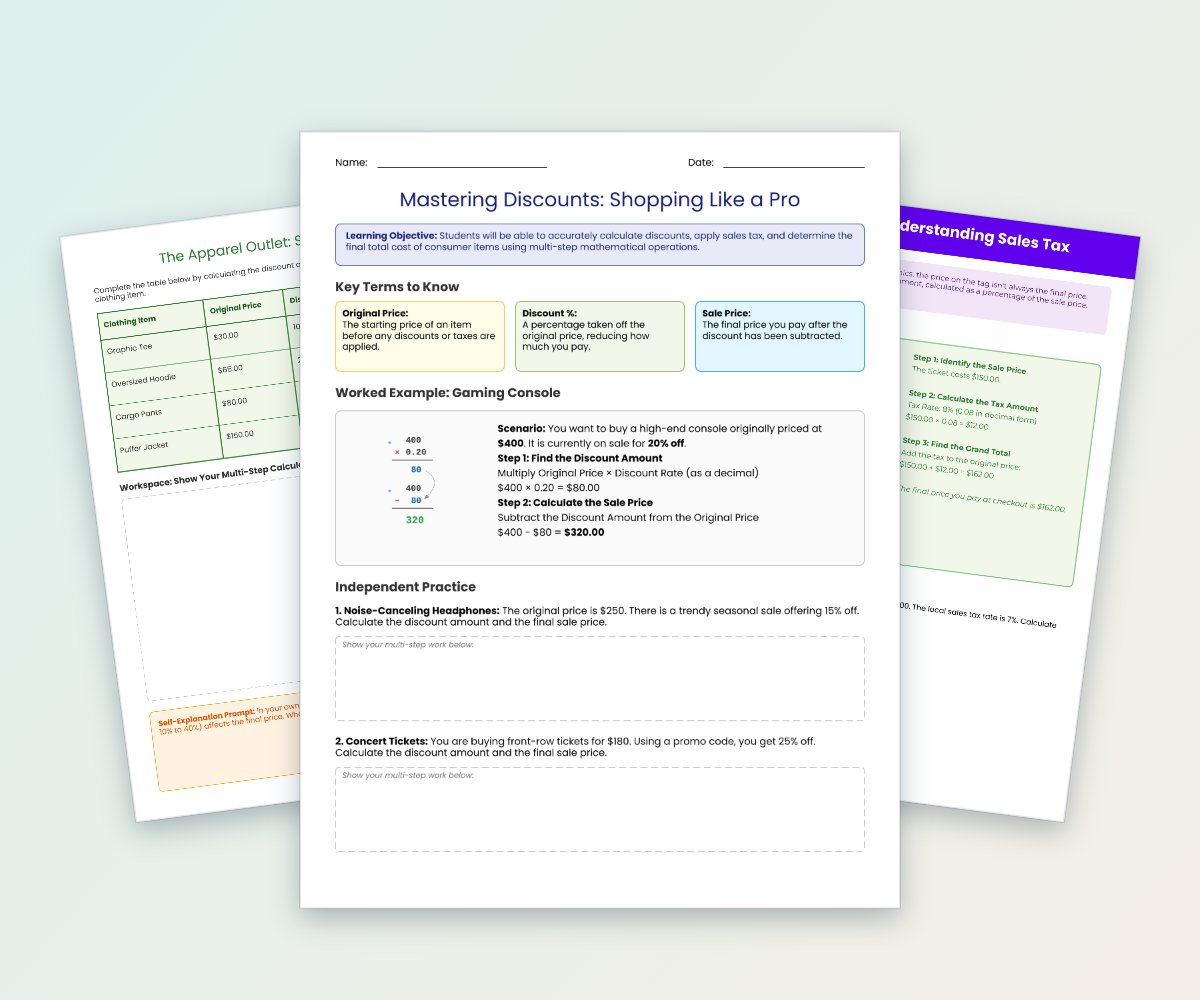
Students calculate discount amounts, sale prices, sales tax, and final costs using realistic shopping scenarios.
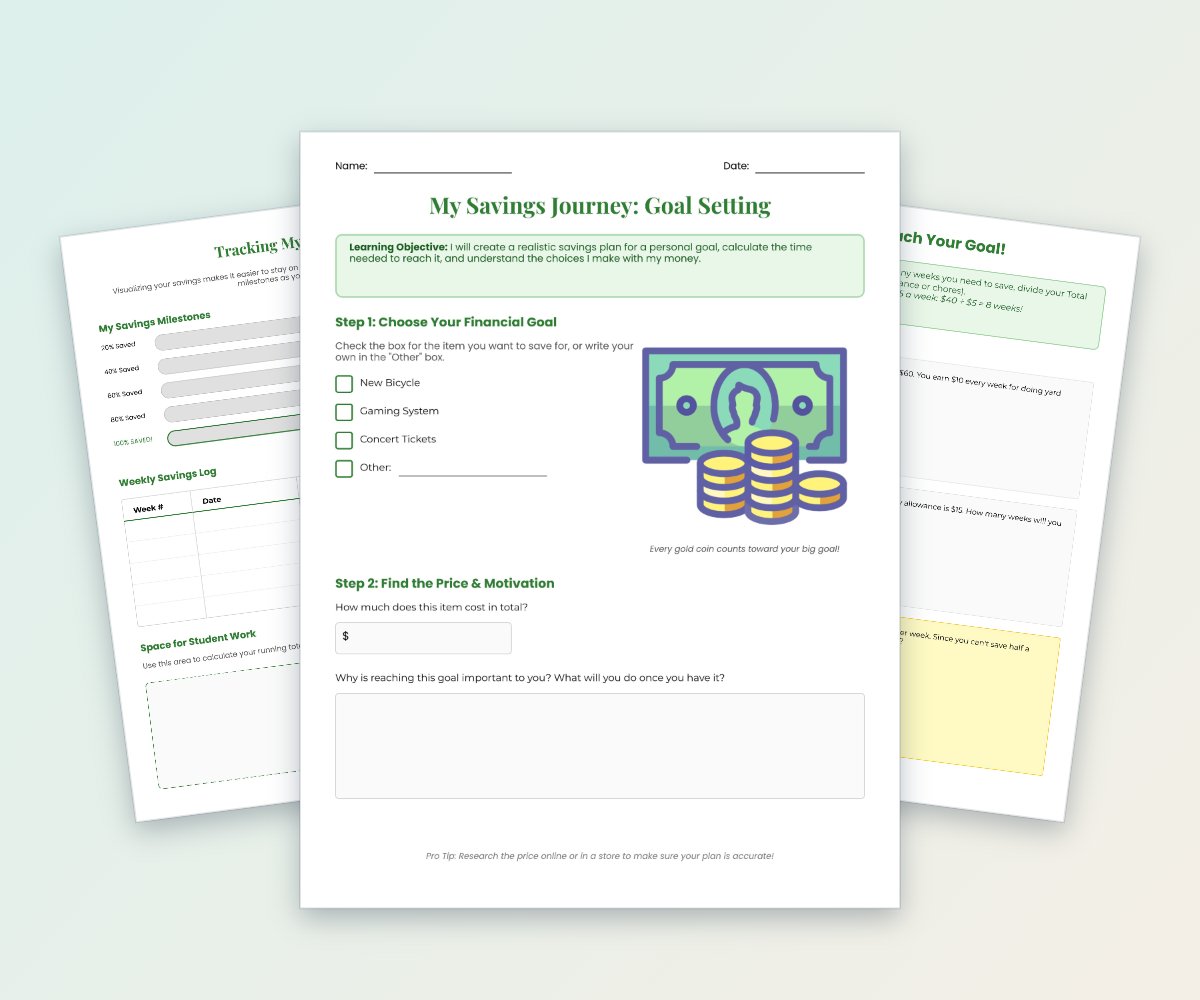
Students create a savings goal, calculate the time needed to reach it, track deposits, and reflect on spending tradeoffs.
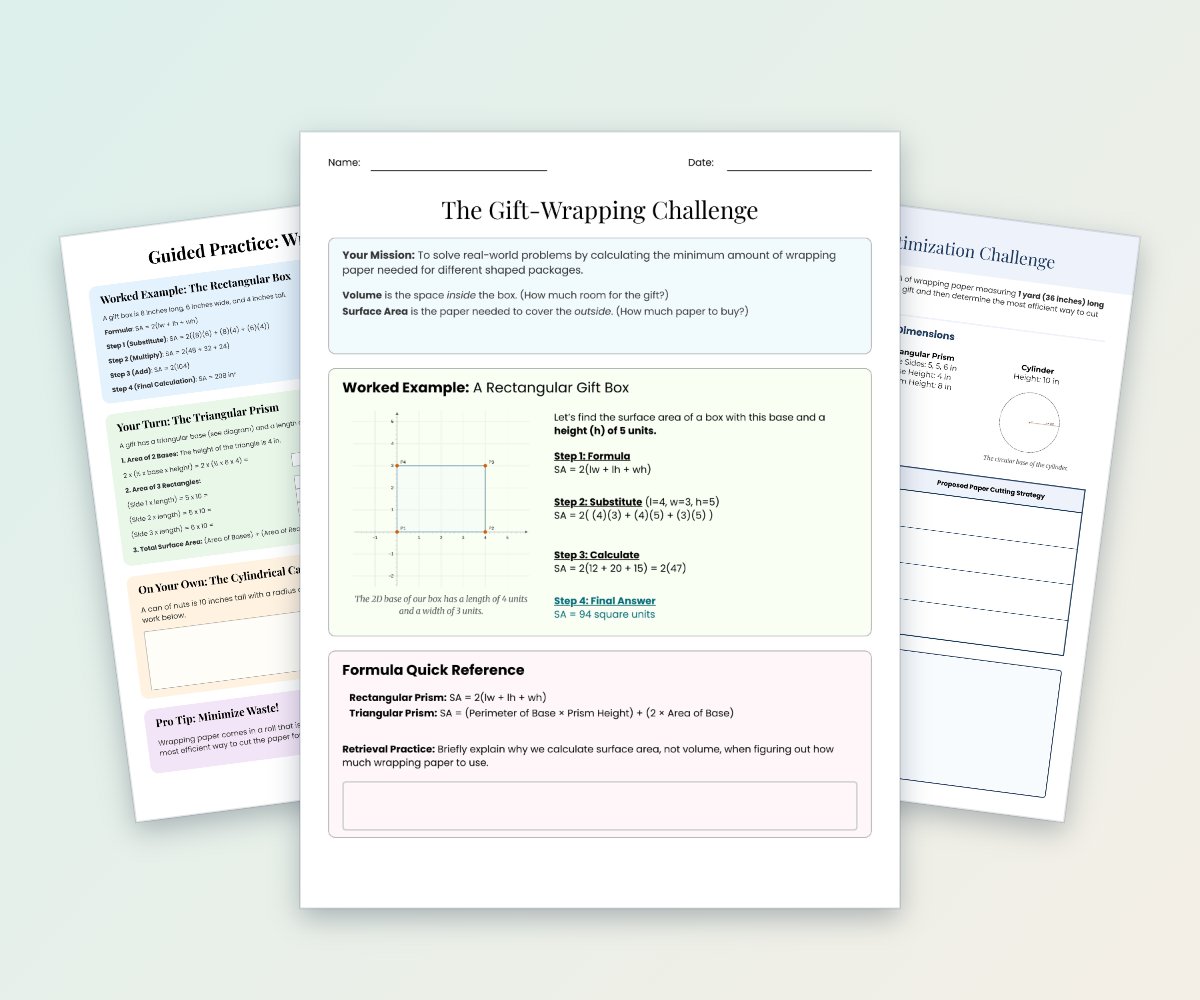
Students calculate the surface area of rectangular prisms, triangular prisms, cubes, and cylinders in a gift-wrapping context.
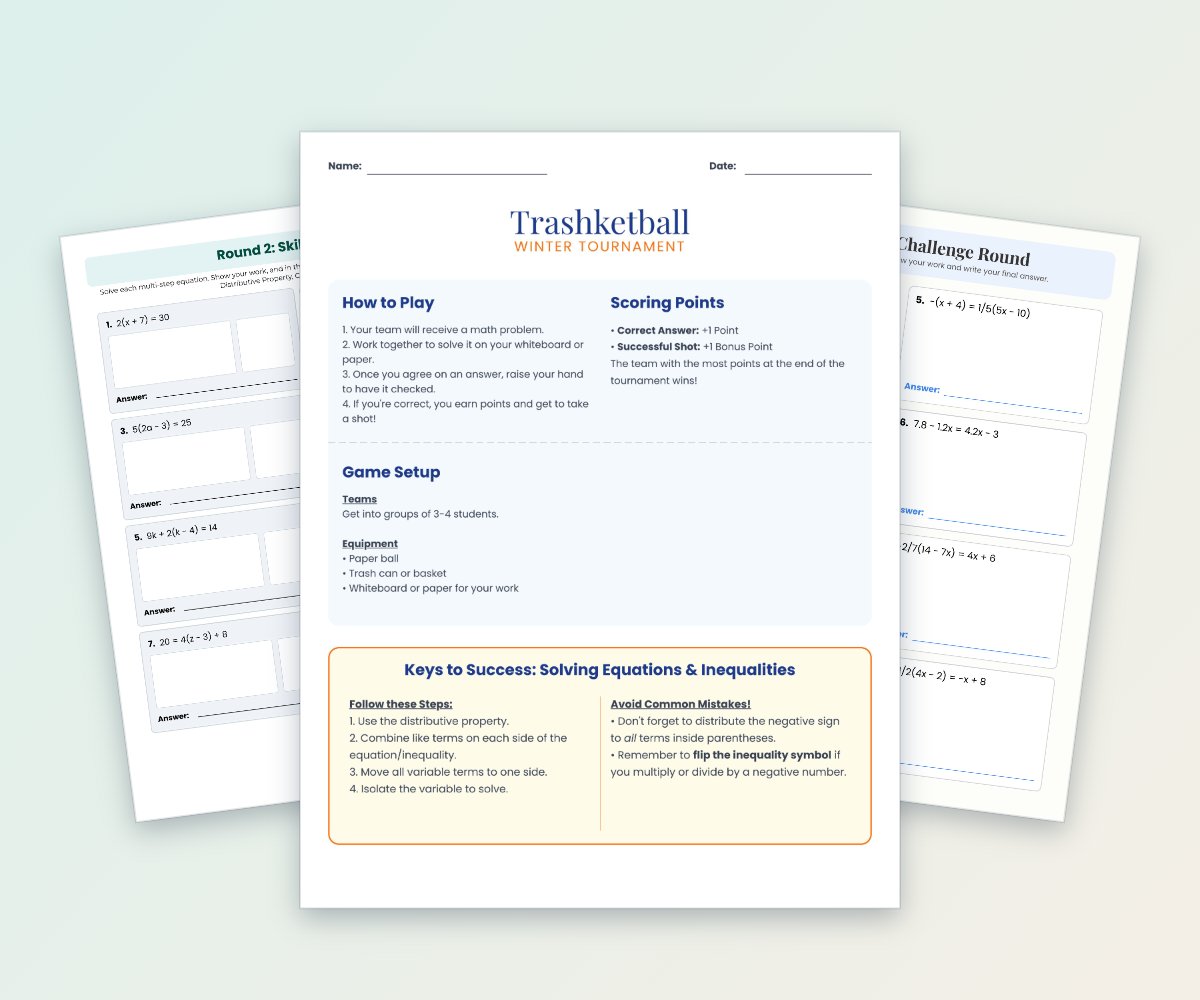
Engage students in a competitive Trashketball tournament featuring collaborative practice with multi-step equations and inequalities.
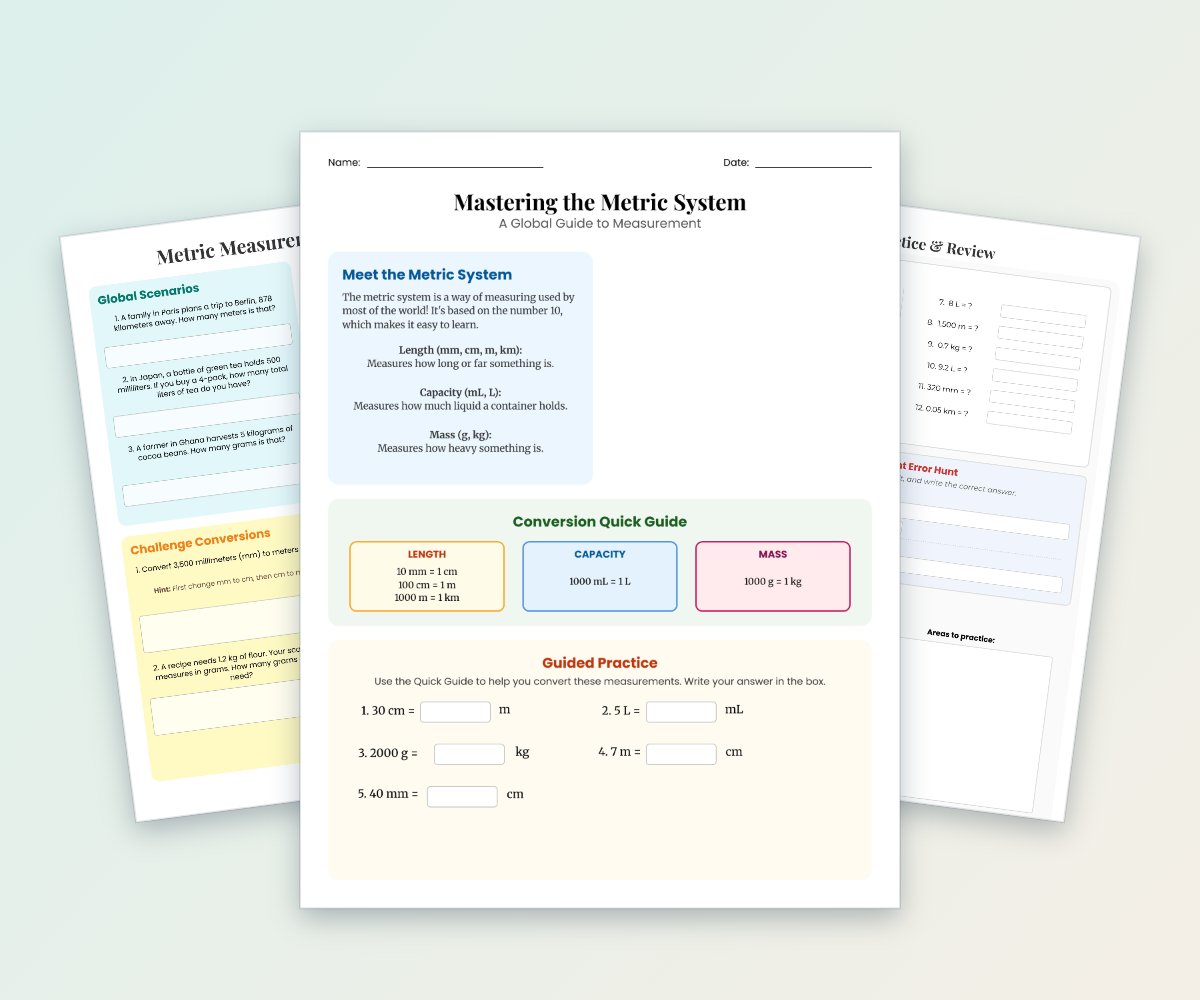
This three-page math resource introduces metric units for length, capacity, and mass, then provides guided practice, global word problems, mixed conversions, comparisons, and error analysis.
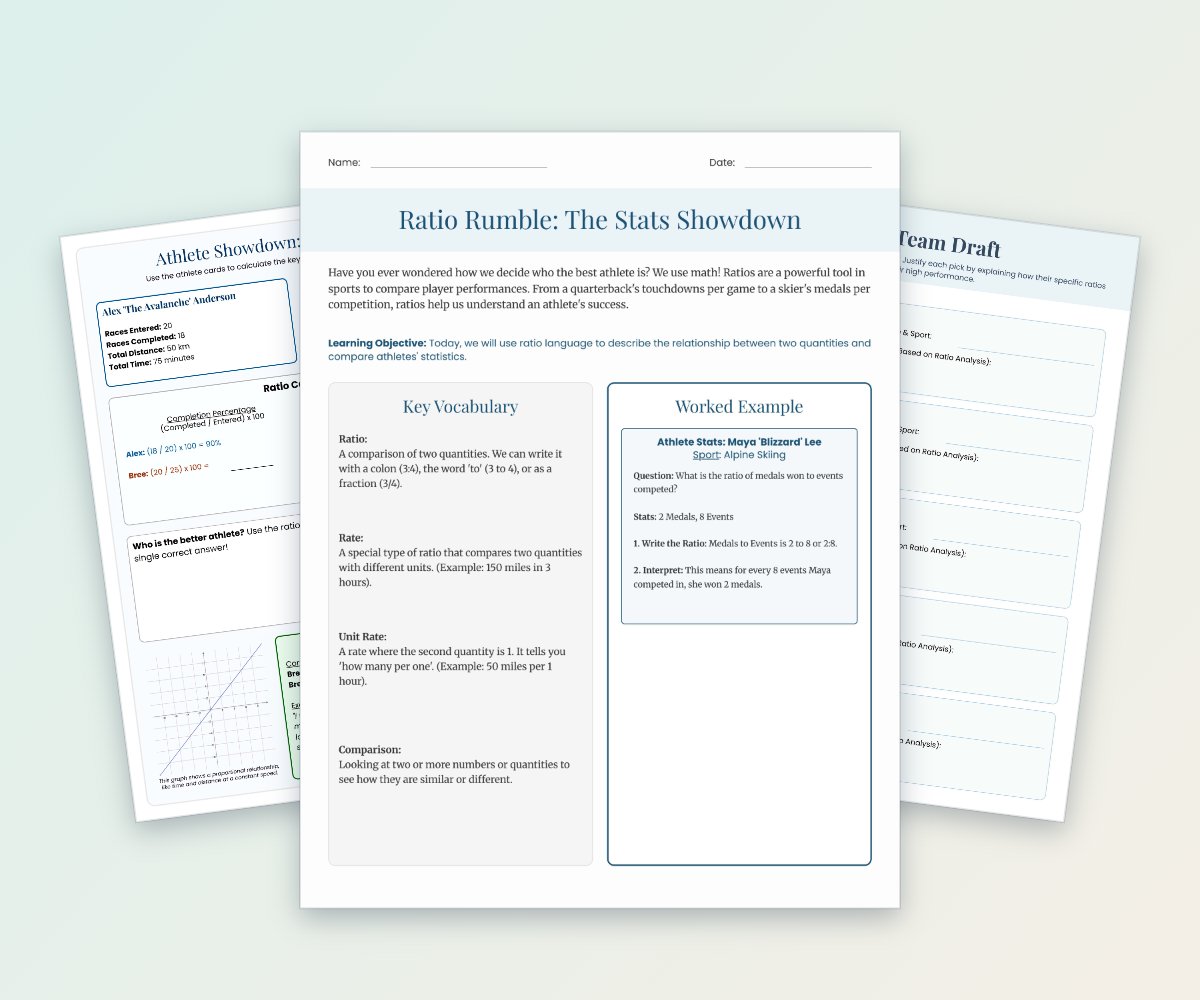
Students use sports statistics to calculate ratios, rates, unit rates, completion percentages, and speed.
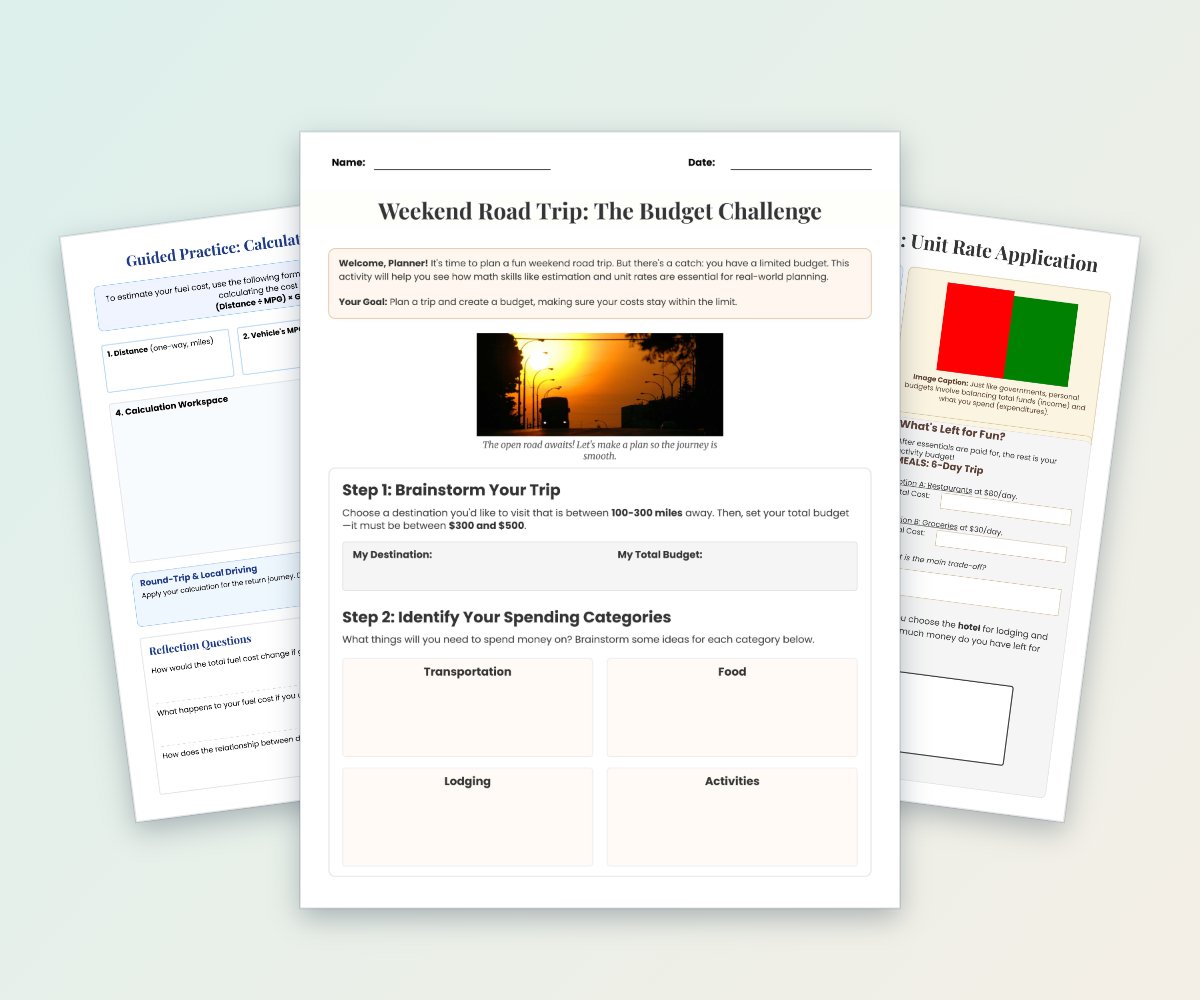
Students plan a weekend road trip within a fixed budget while estimating fuel, food, lodging, and activity costs.
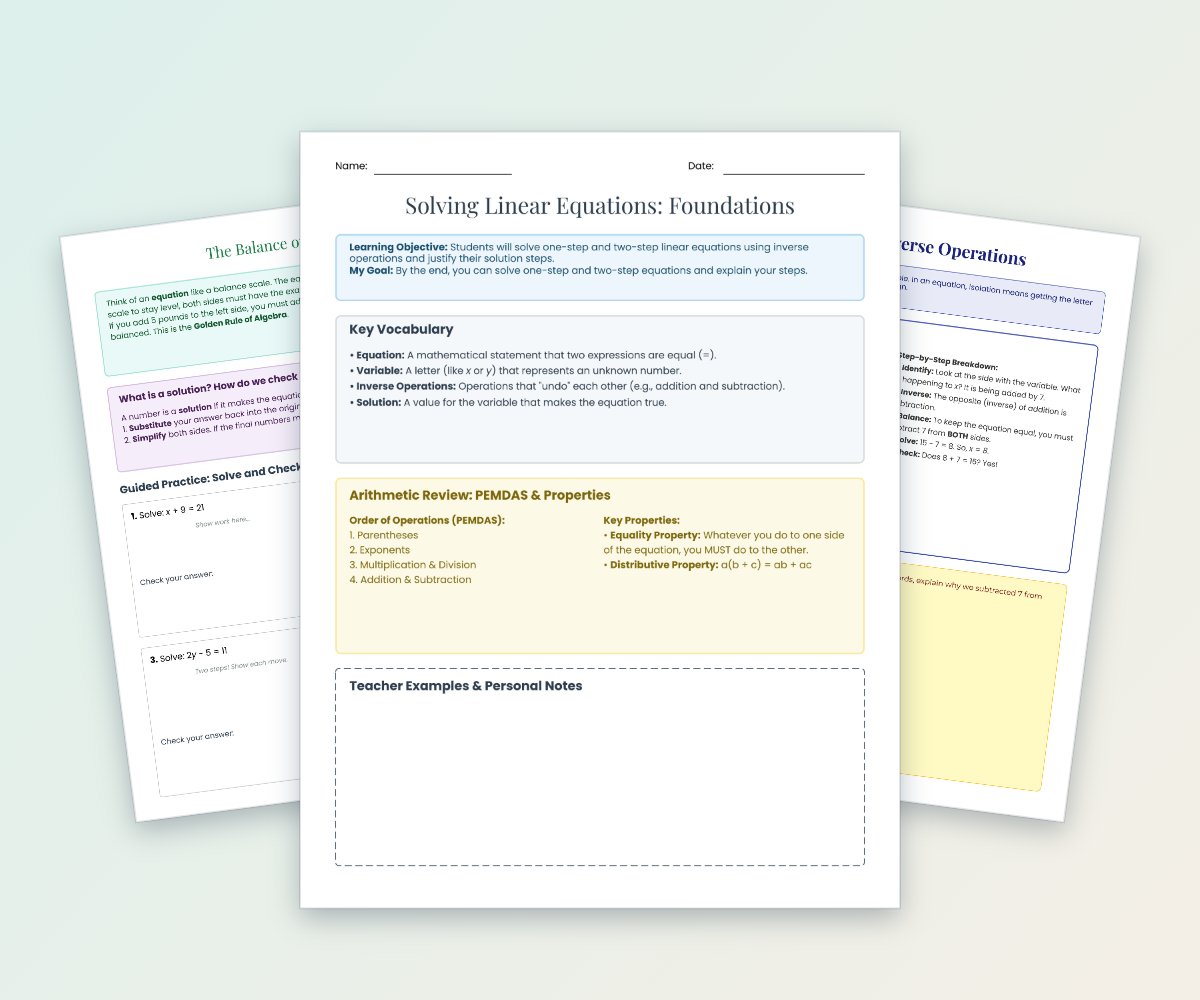
This 8-page student workbook teaches learners to solve one-step and two-step linear equations using inverse operations, equality properties, and equation-checking strategies.
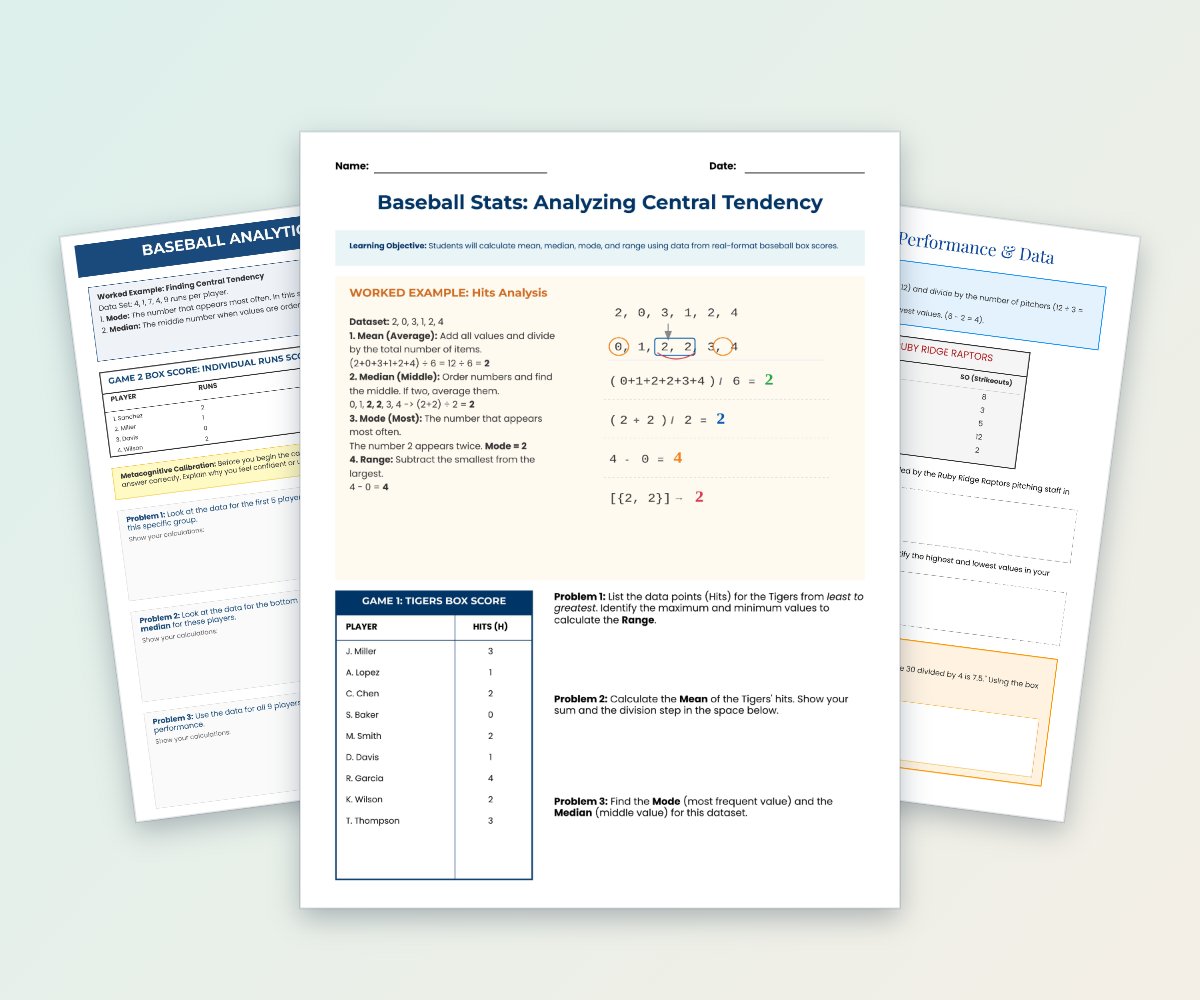
Students analyze baseball box scores and calculate mean, median, mode, and range using realistic player statistics.
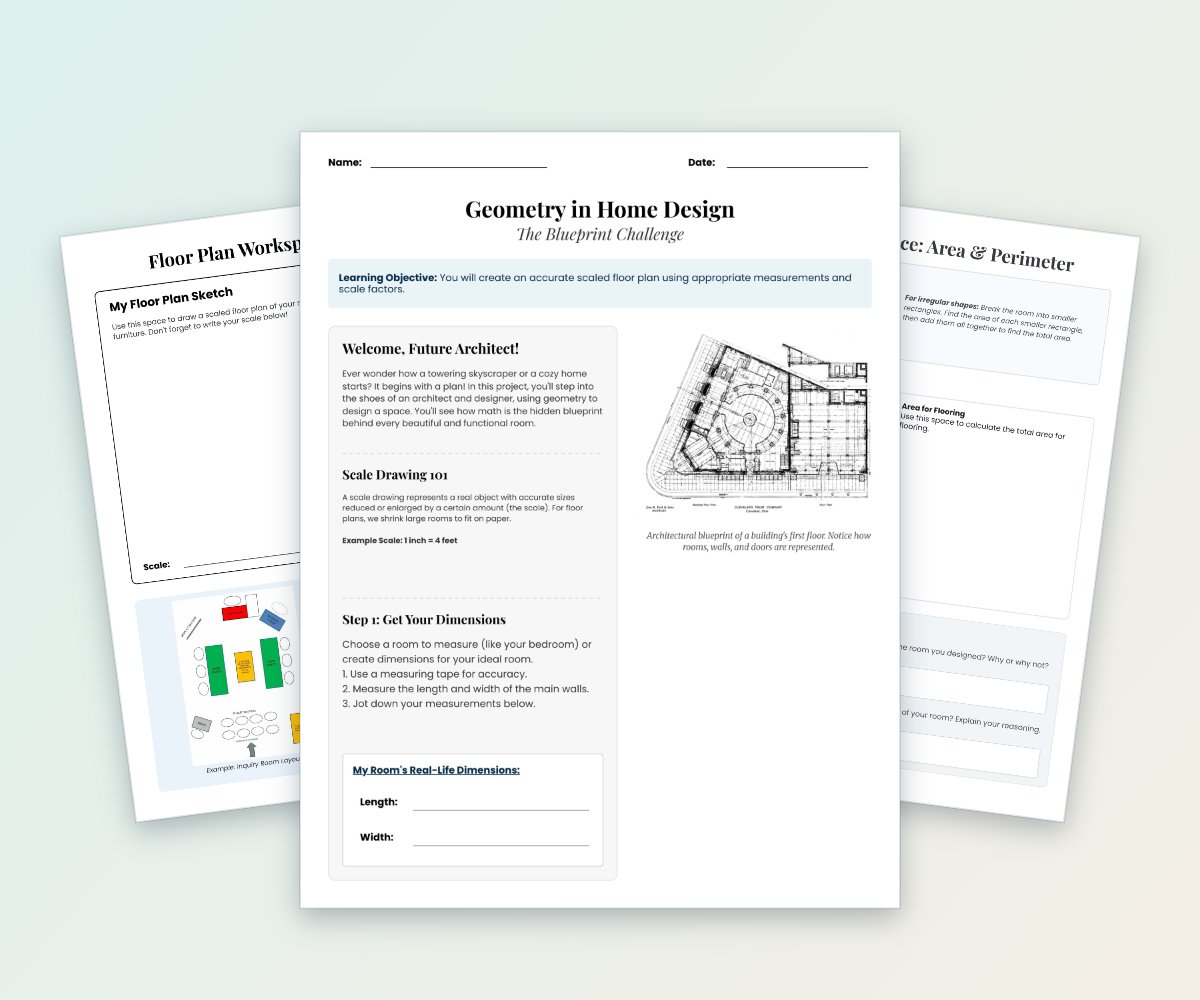
Students design a room or home floor plan using a consistent scale, architectural symbols, measurements, and labeled dimensions.
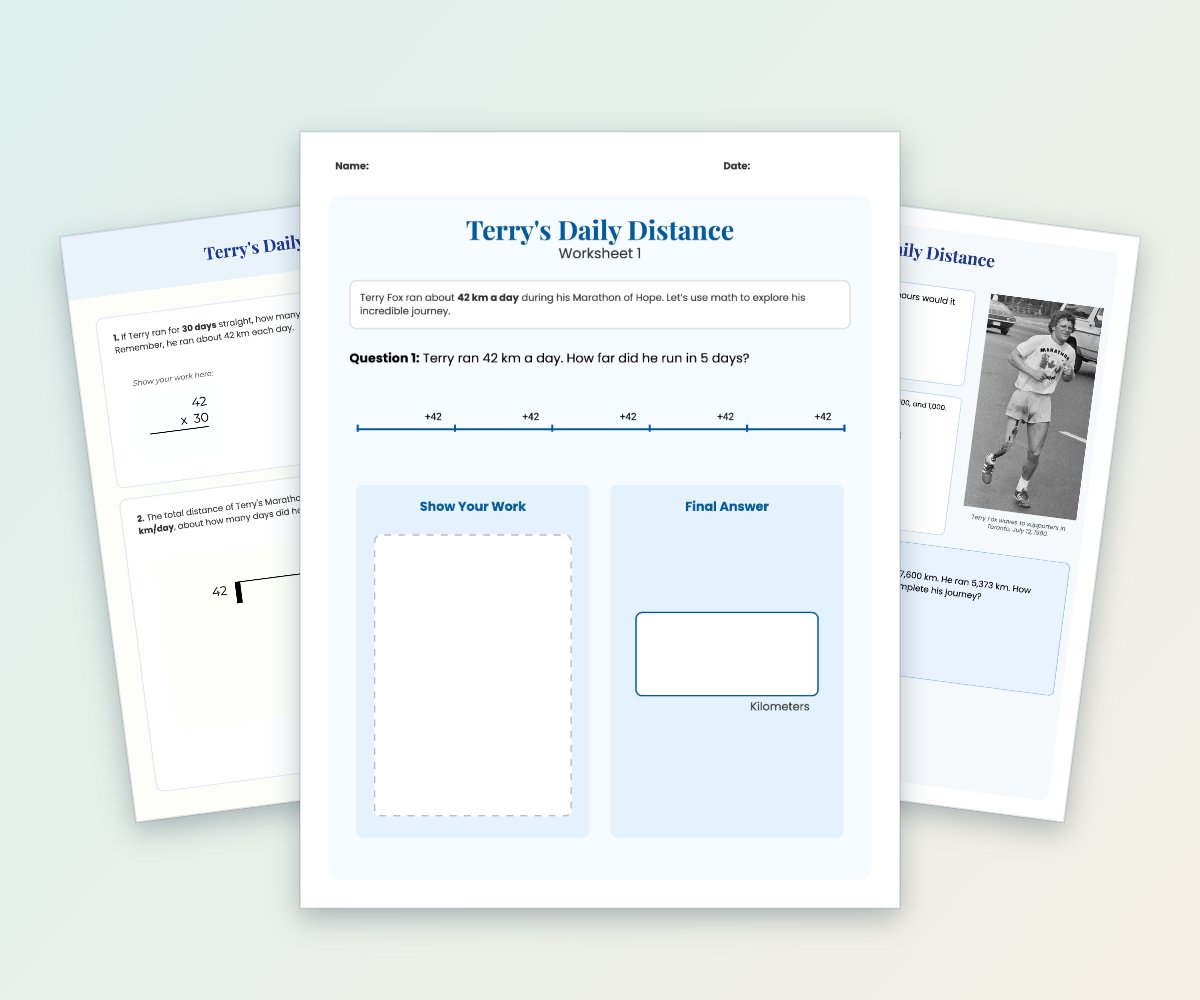
This nine-page worksheet set uses Terry Fox’s Marathon of Hope and fundraising efforts to provide meaningful math practice.
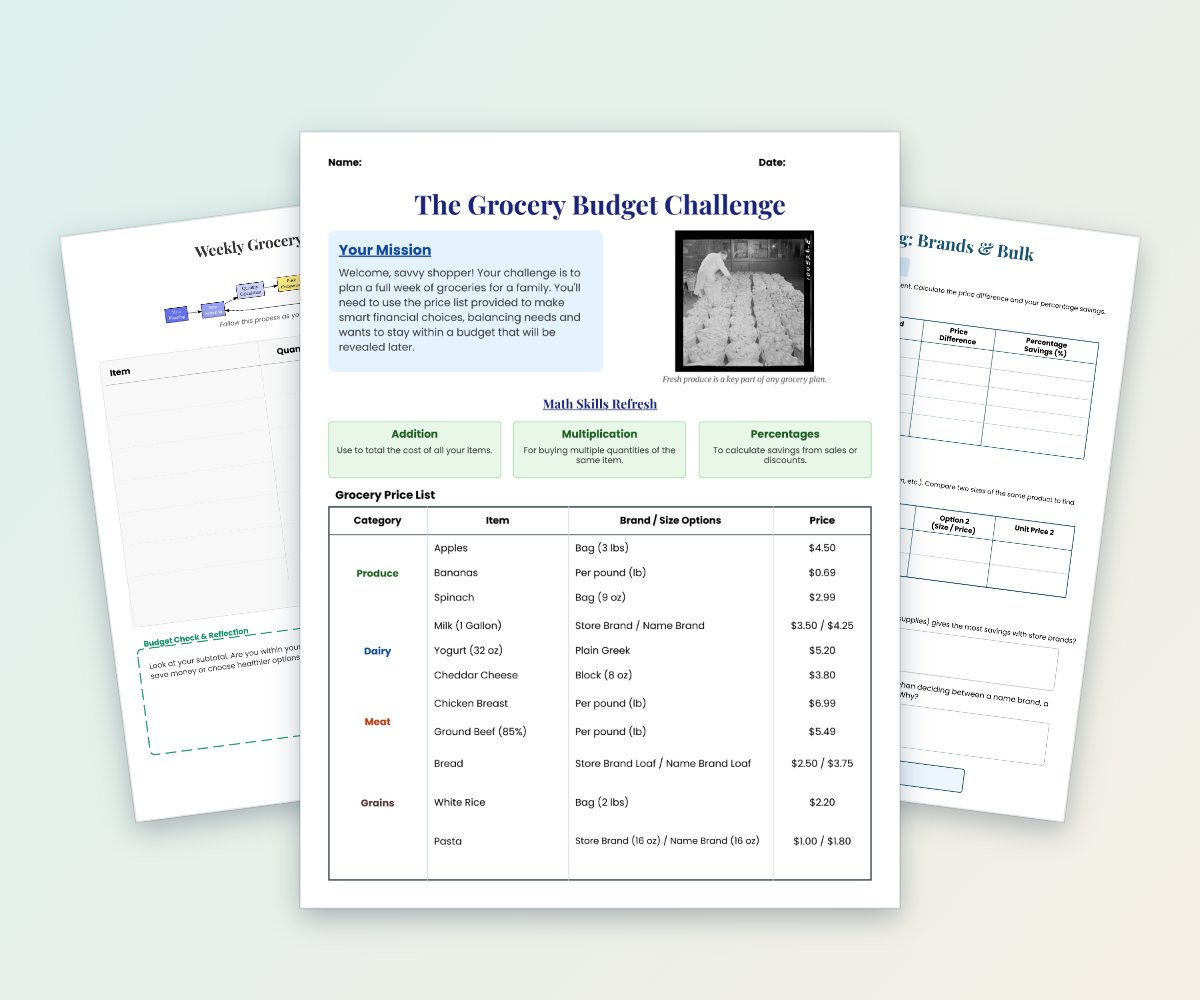
Students plan a week of groceries for a family while working within a budget.
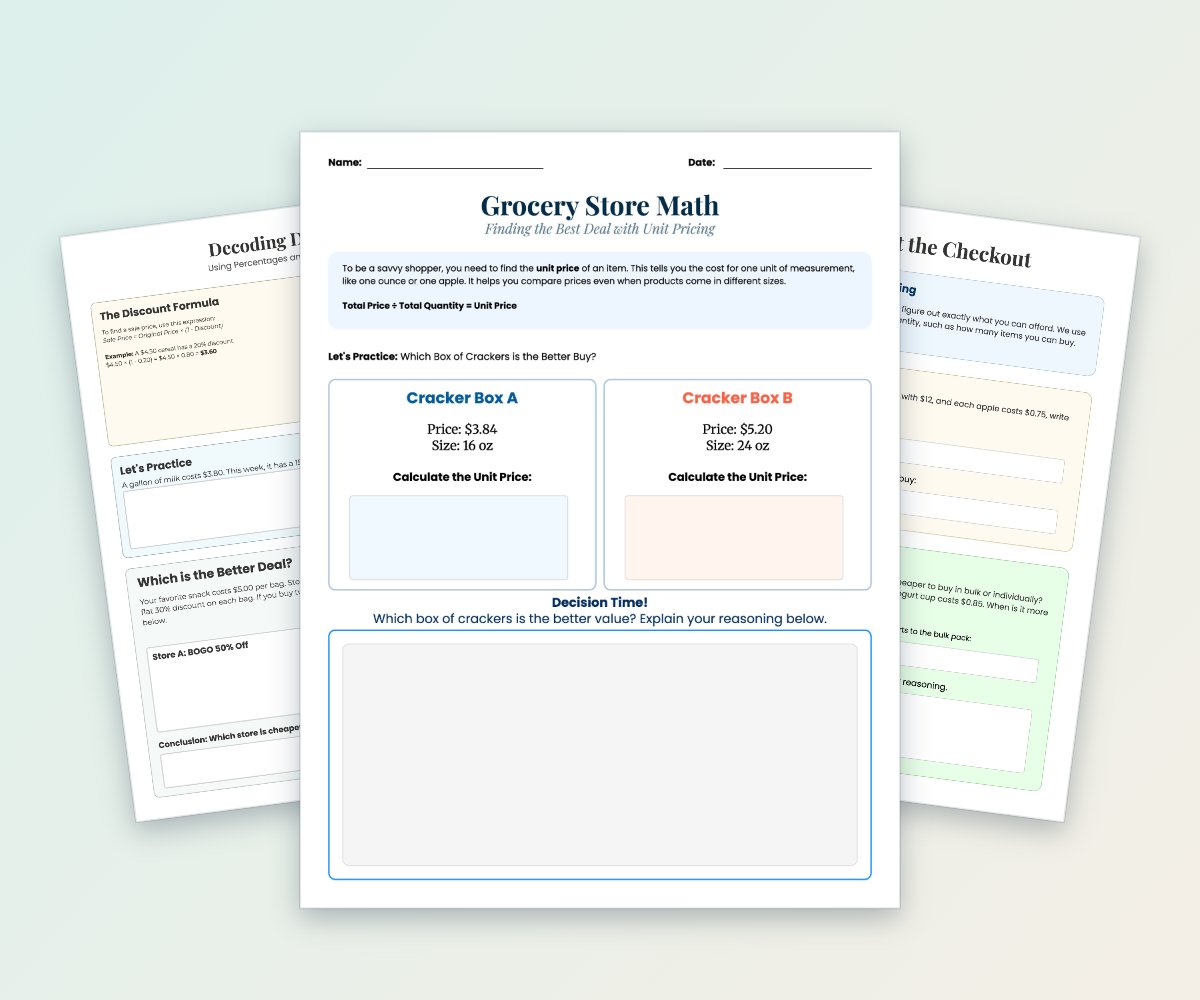
This four-page worksheet uses grocery shopping scenarios to teach unit rates, percentage discounts, equations, inequalities, and budgeting.
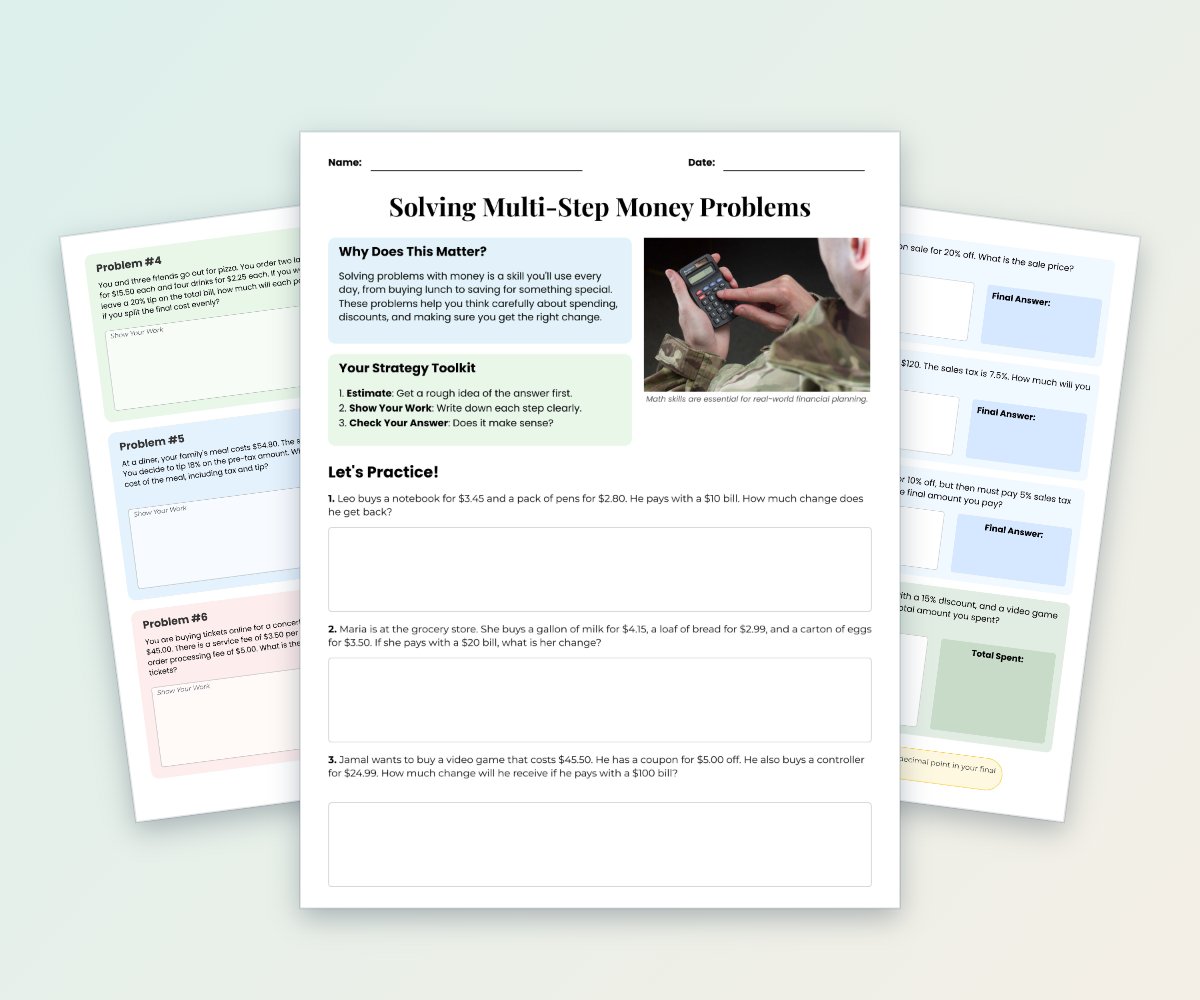
This four-page worksheet helps students solve real-world money problems involving decimals, discounts, sales tax, tips, coupons, and service fees.
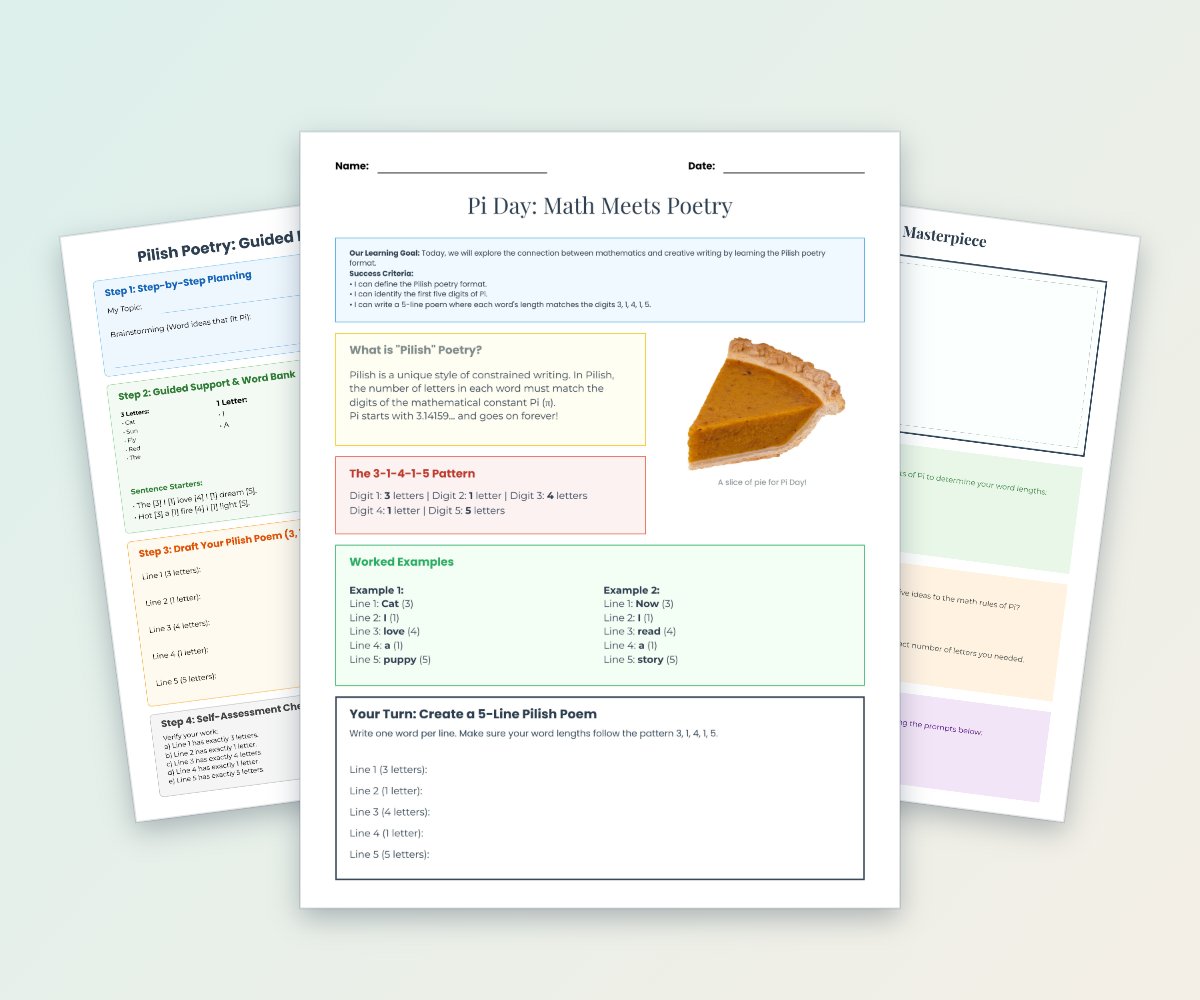
Students explore the digits of pi through Pilish, a constrained poetry format in which word lengths follow a numerical pattern.
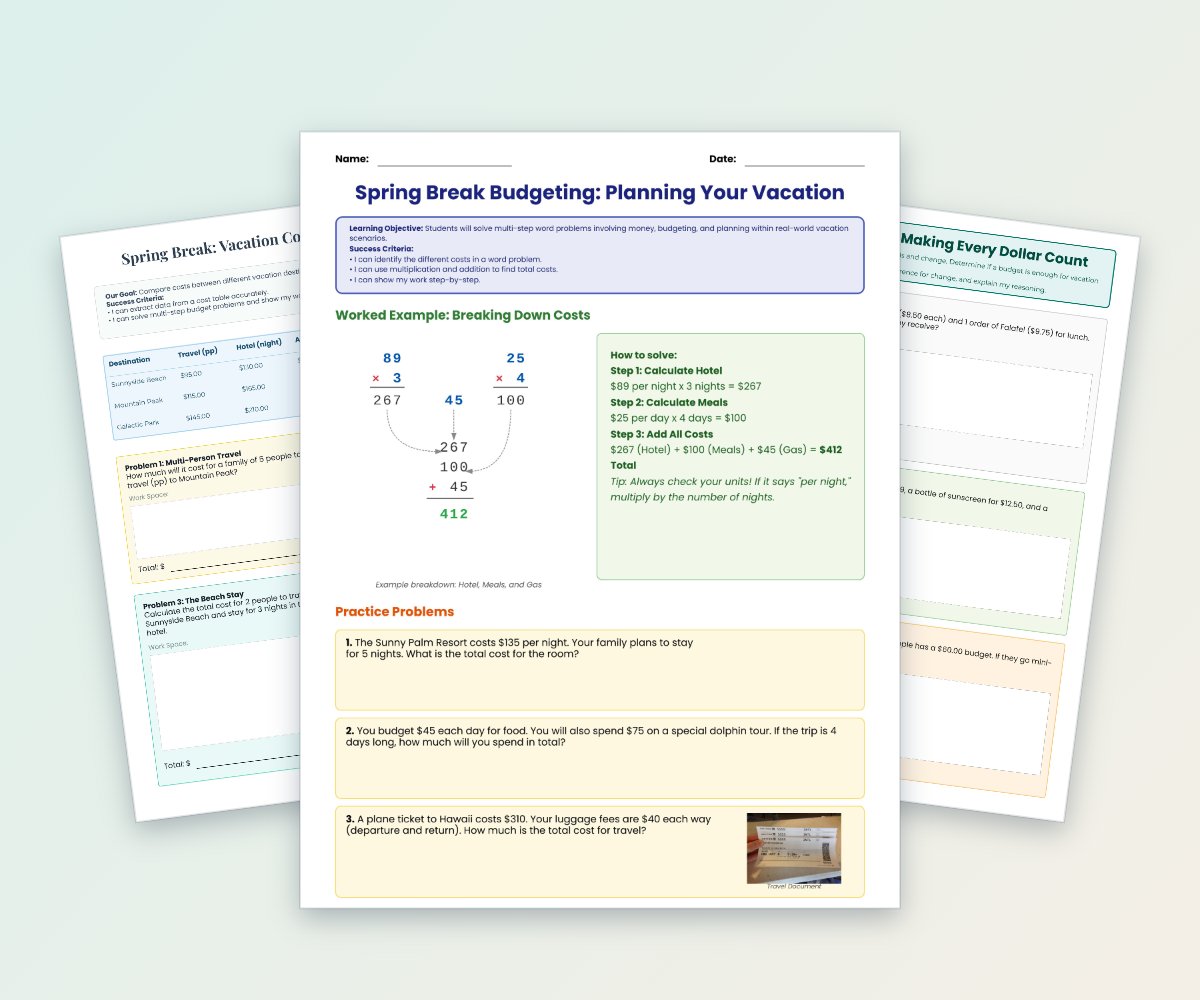
Students practice multiplication, addition, subtraction, cost comparison, and budgeting through realistic spring break vacation scenarios.
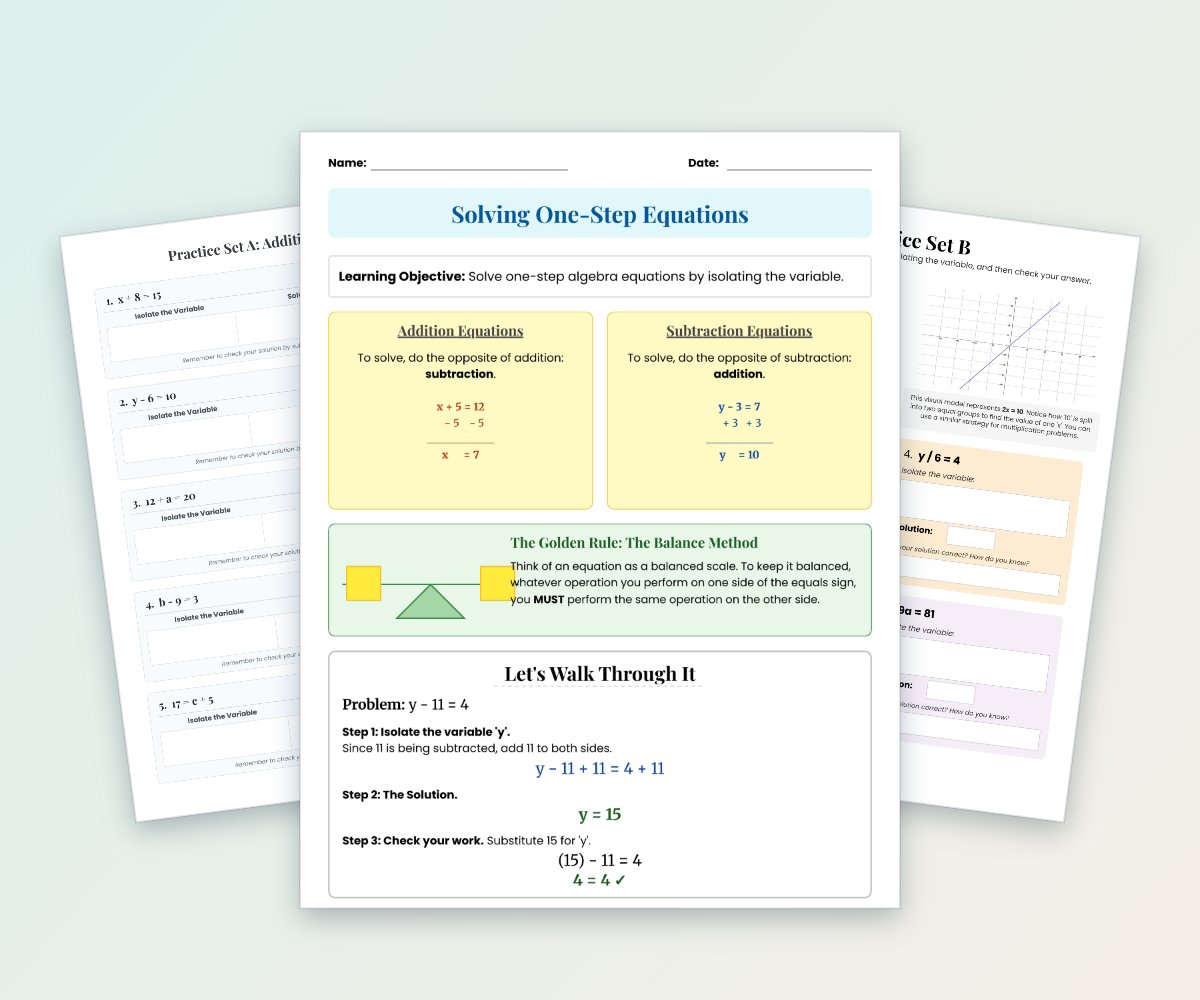
This four-page guide introduces solving one-step equations using inverse operations and the balance method.
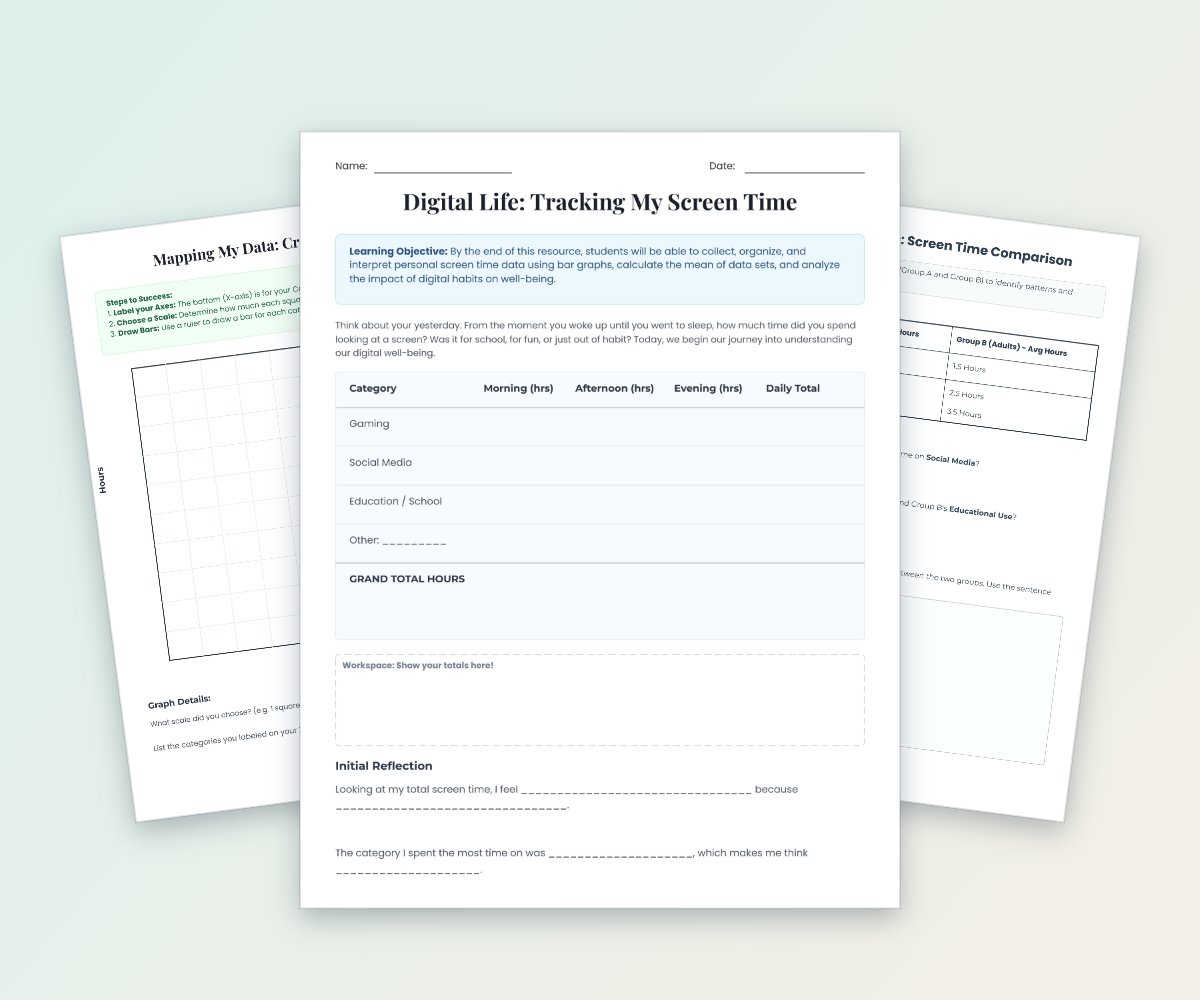
Students track their personal screen time, organize data by category and time of day, and create bar graphs.
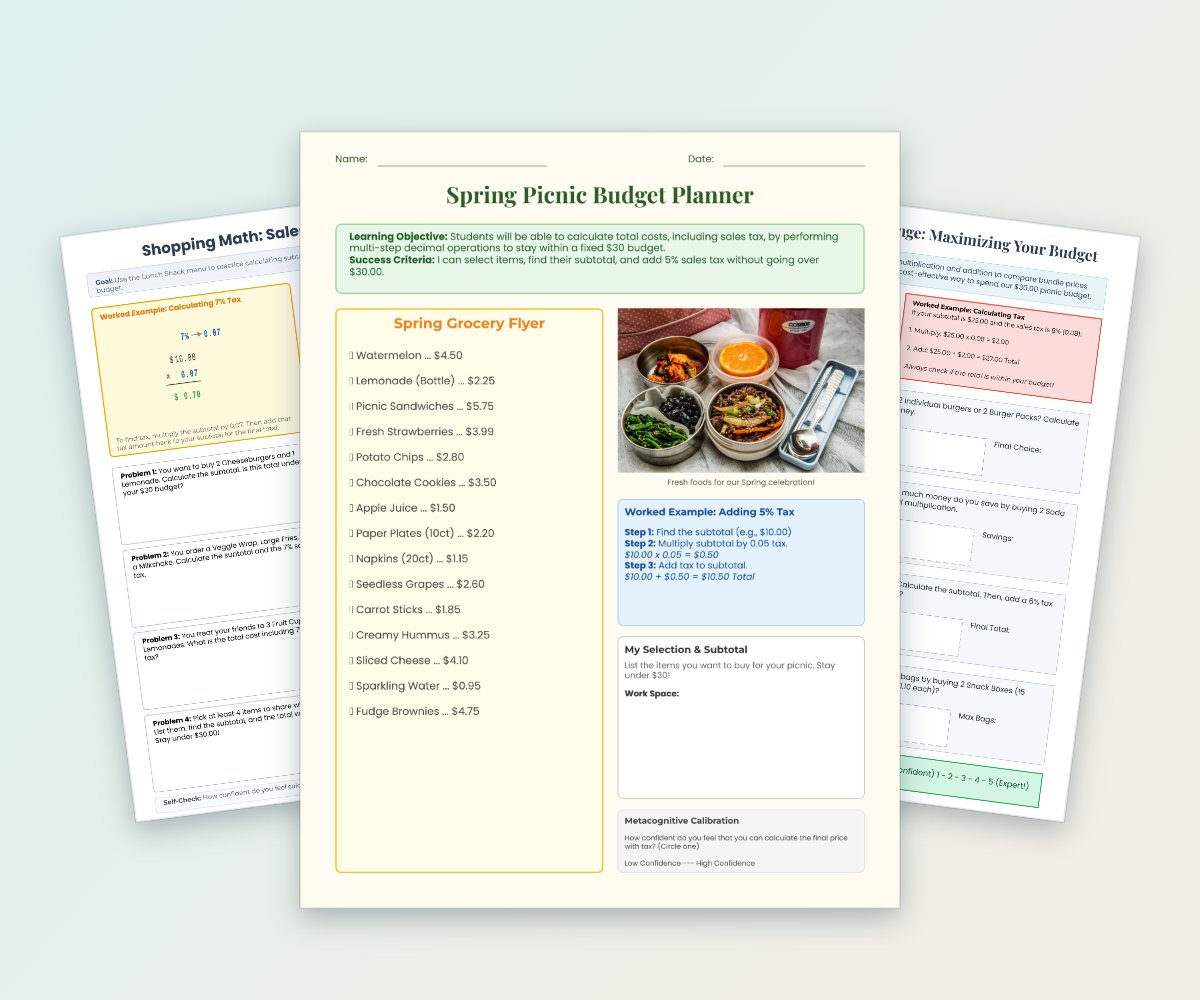
Students plan picnic purchases using grocery and restaurant flyers, calculate subtotals and sales tax, and stay within a fixed budget.
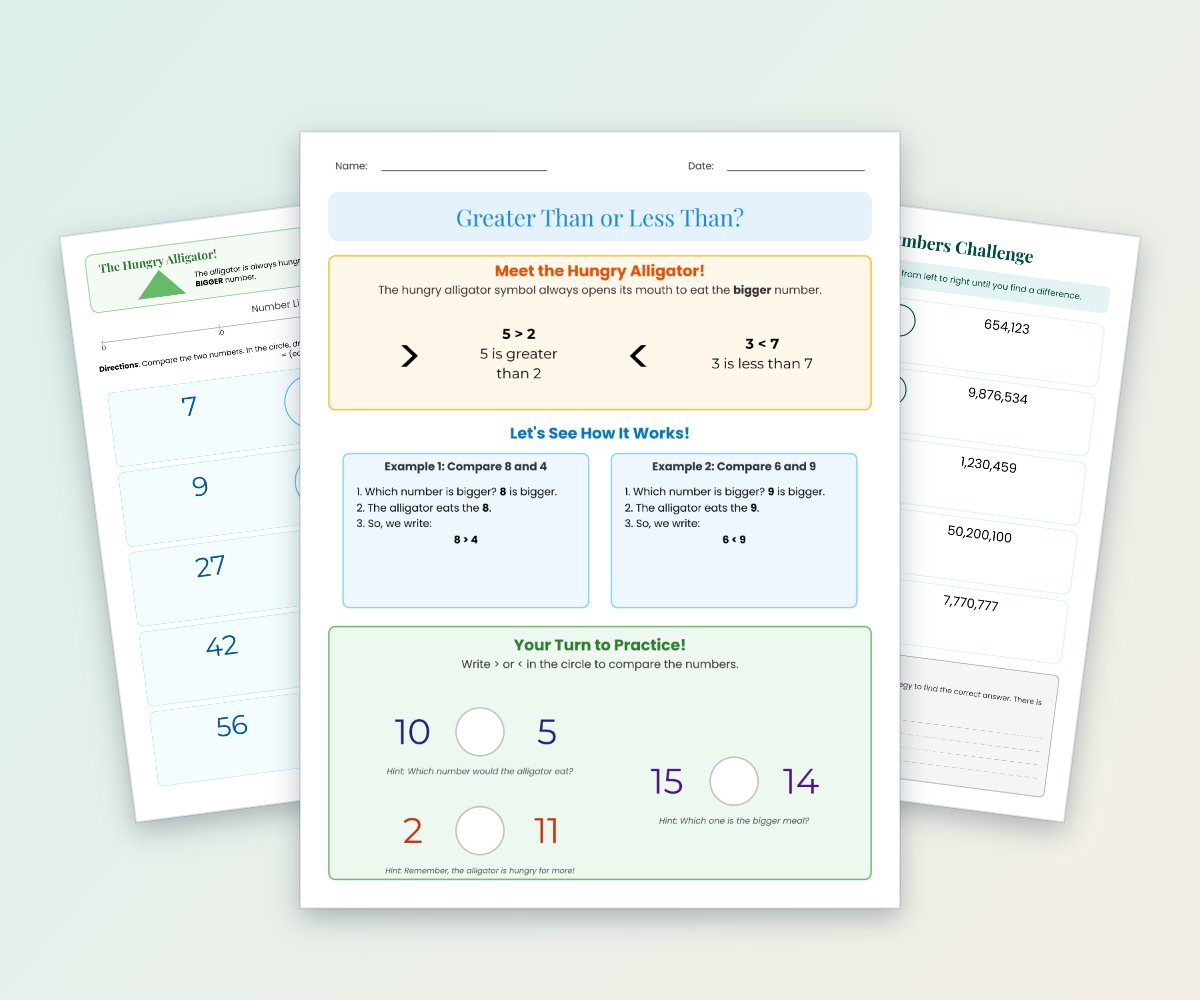
This three-page worksheet helps students compare numbers using greater-than, less-than, and equal-to symbols.
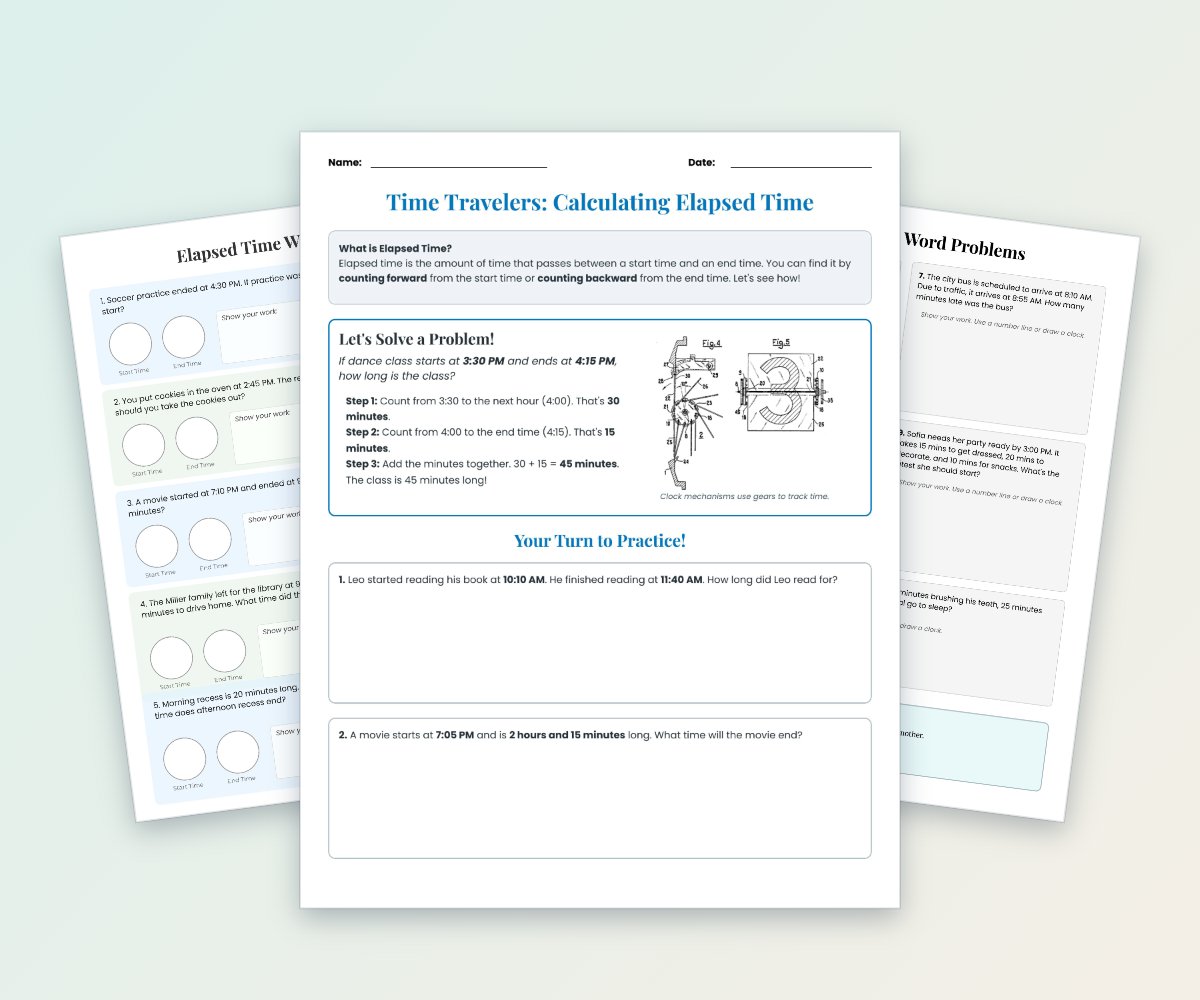
This four-page worksheet introduces elapsed time through a worked example and guided practice.
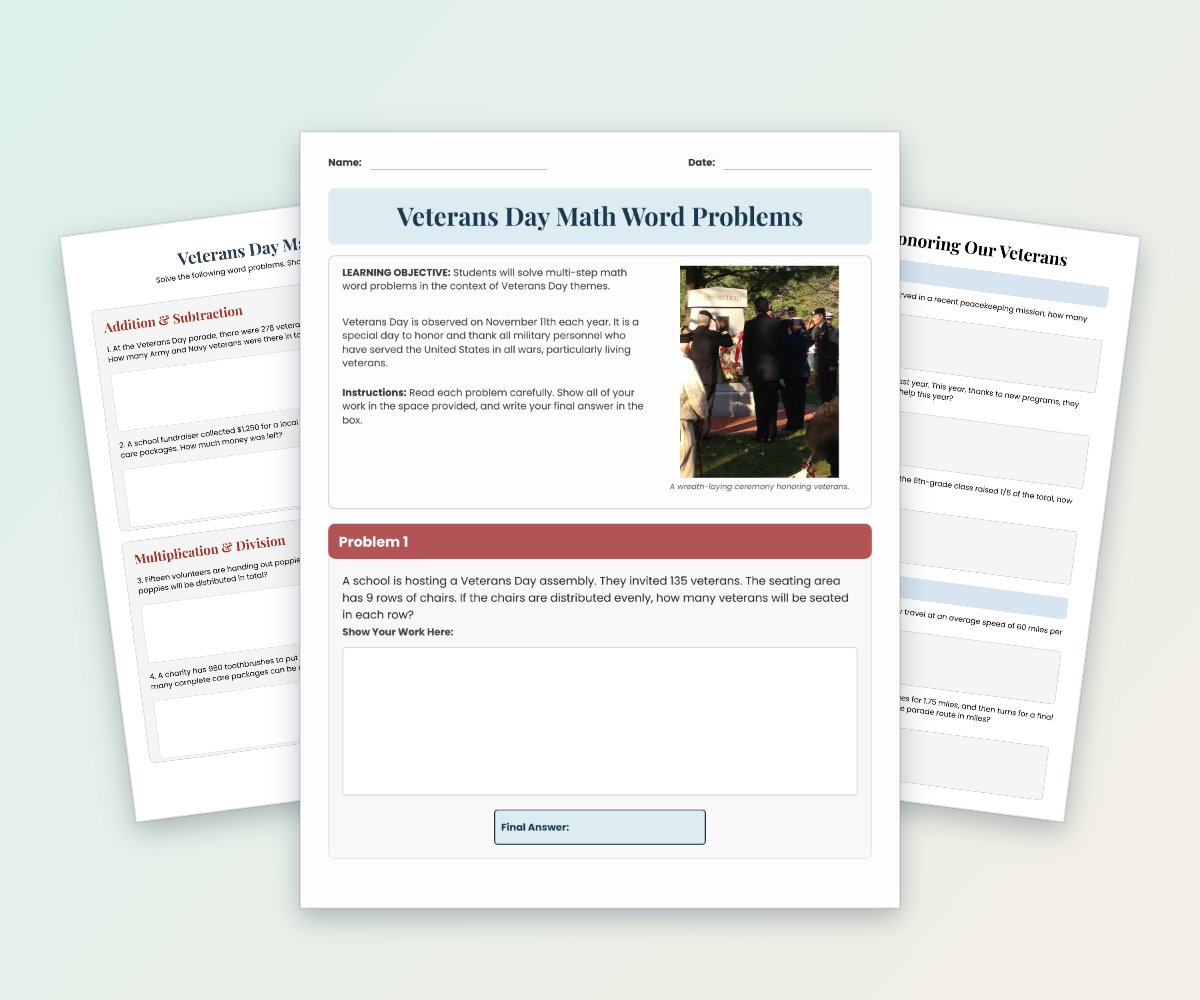
Students solve addition, subtraction, multiplication, division, fraction, percentage, time, distance, and multi-step word problems in a Veterans Day context.
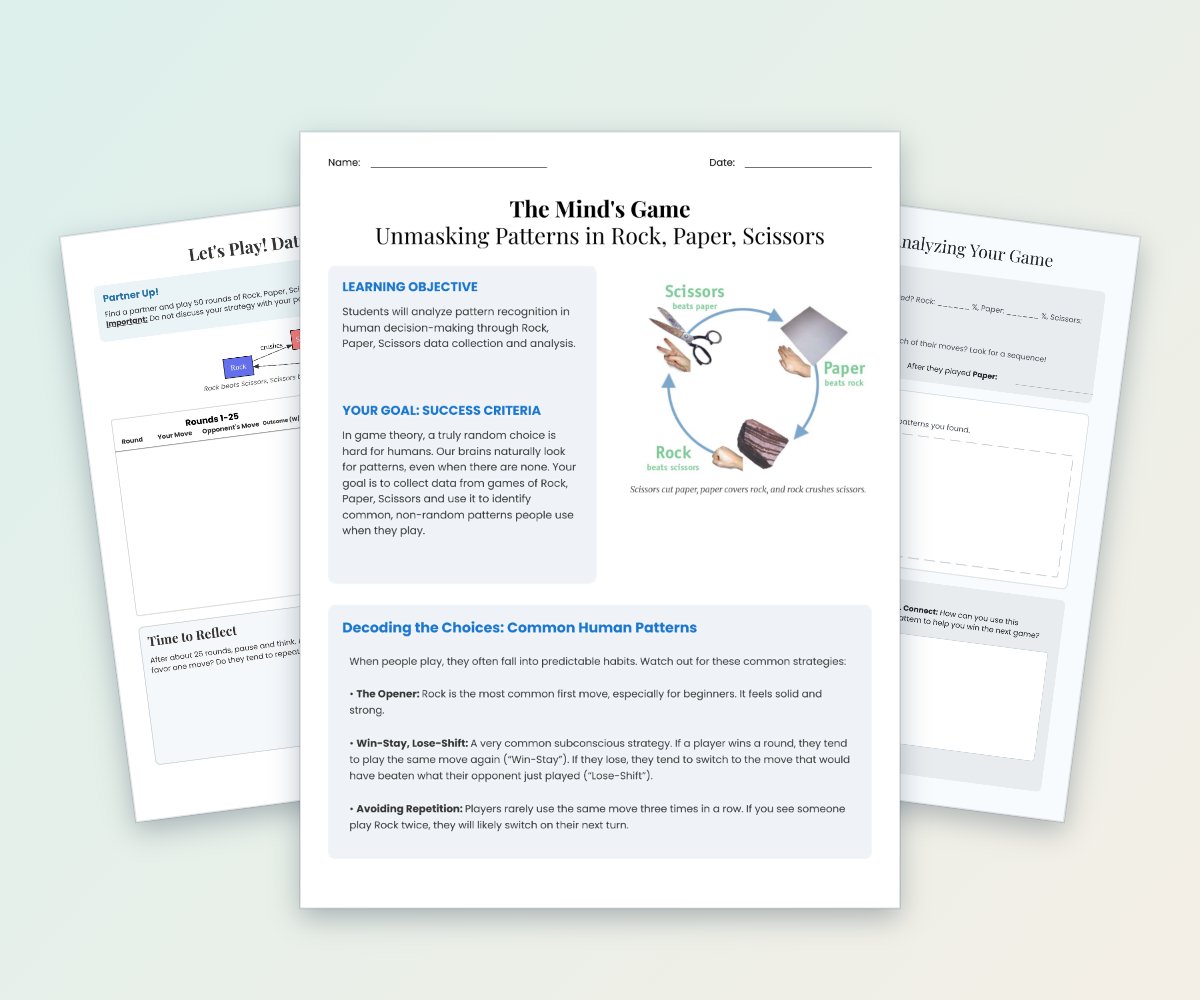
Students play 50 rounds of Rock, Paper, Scissors, record outcomes, and analyze opponents’ decision-making patterns.
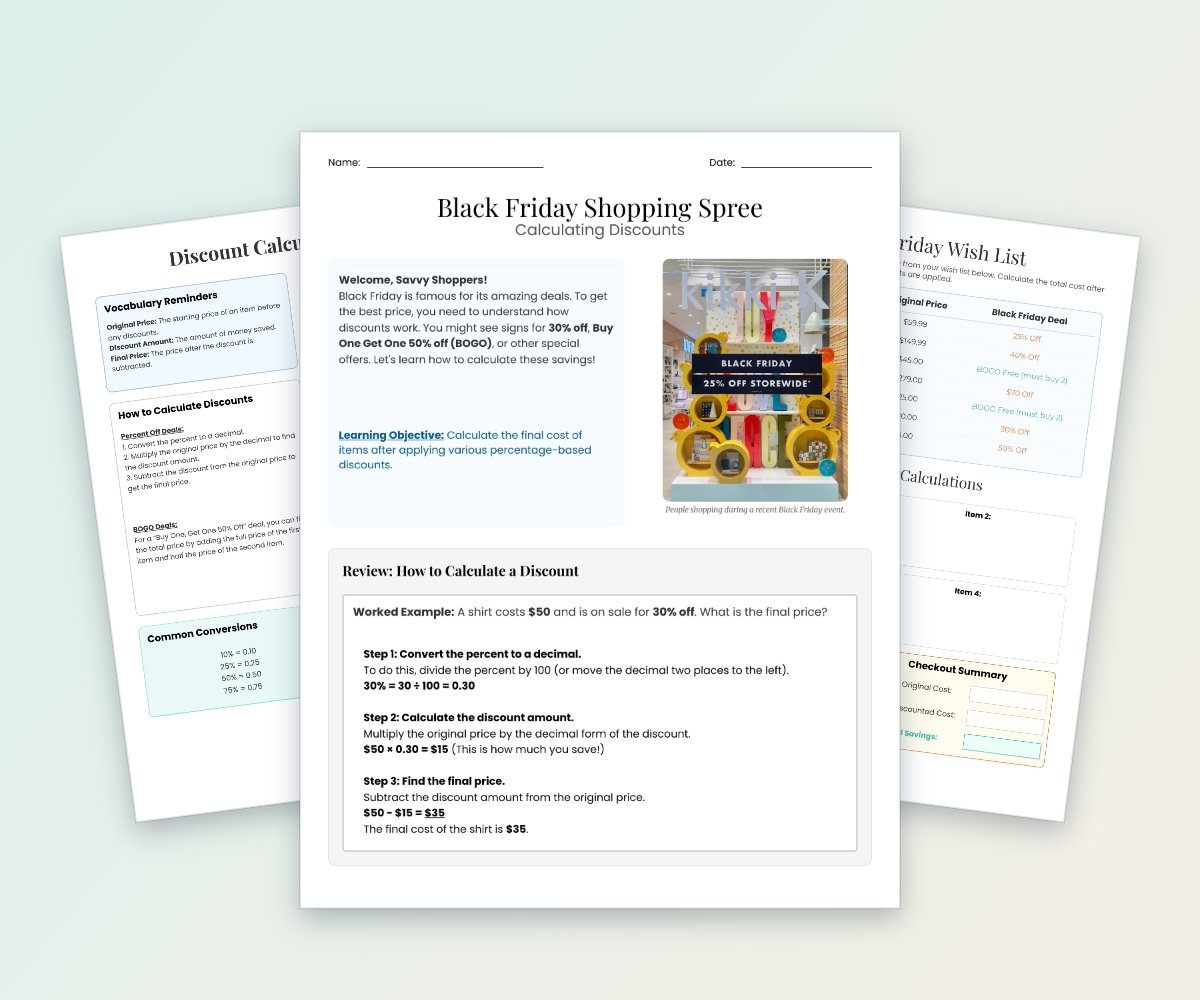
Students learn to calculate discount amounts and final prices using realistic Black Friday shopping scenarios.
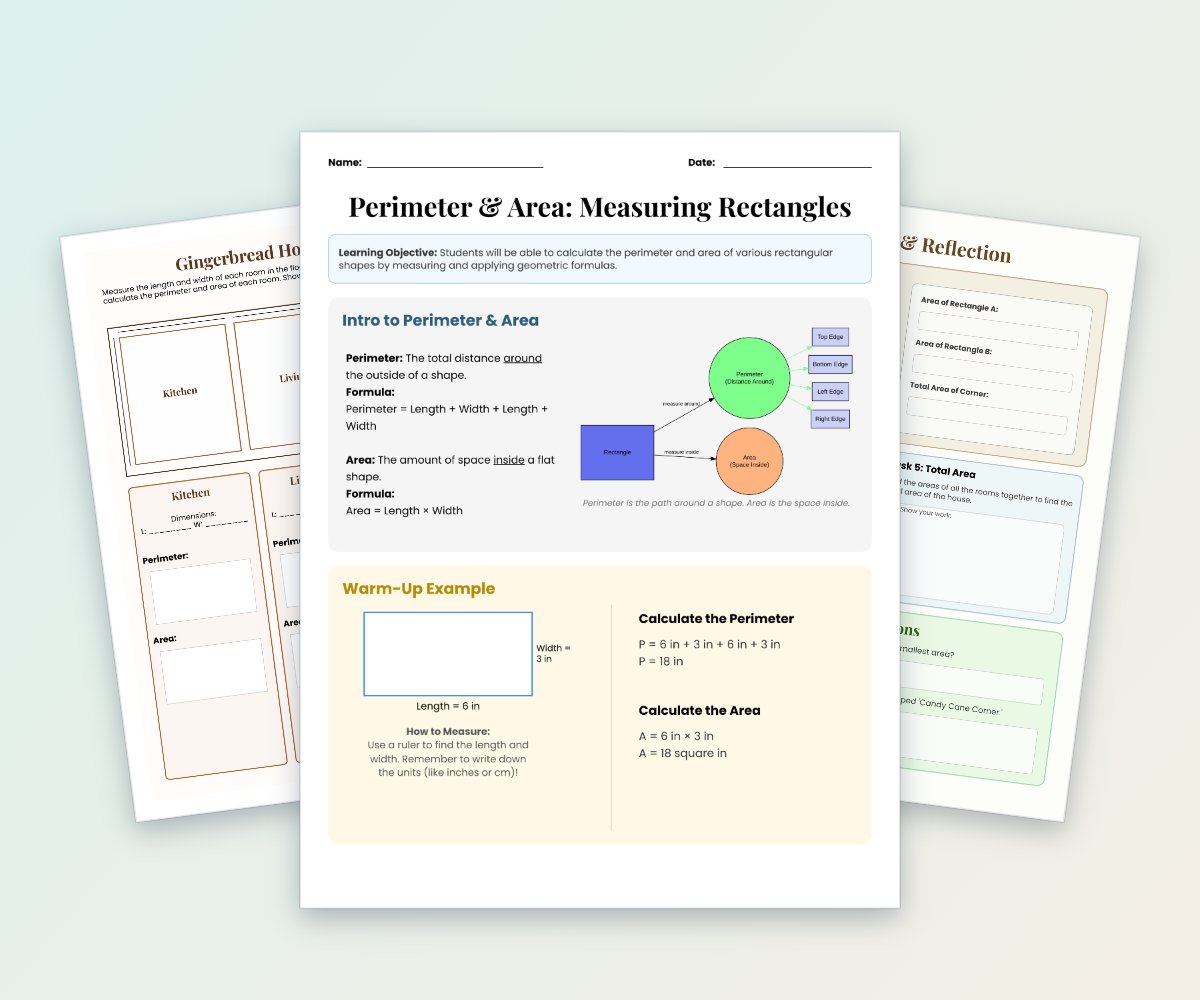
Students learn to calculate the perimeter and area of rectangles by measuring dimensions and applying formulas.
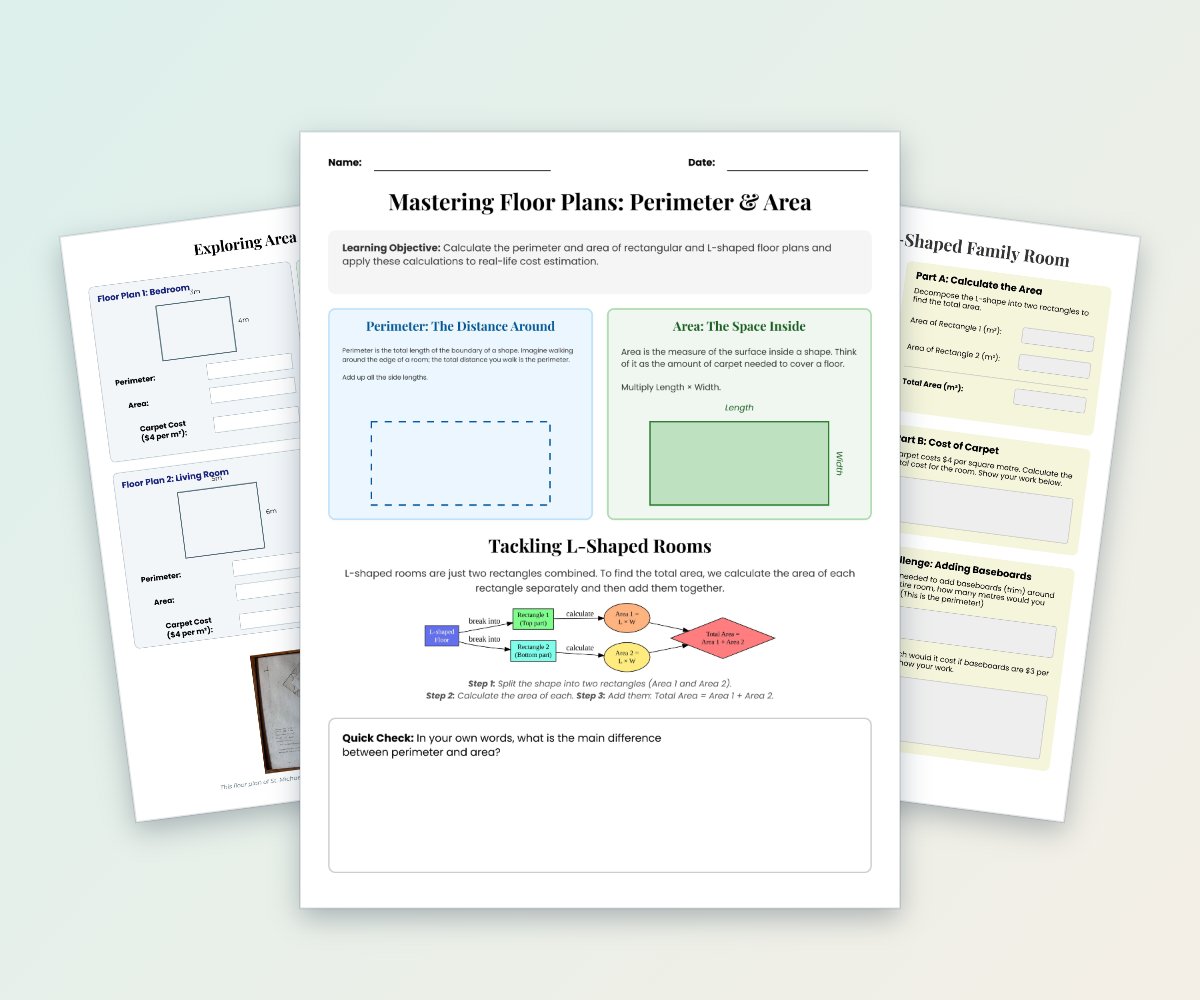
Students learn to calculate the area and perimeter of rectangular and L-shaped floor plans.
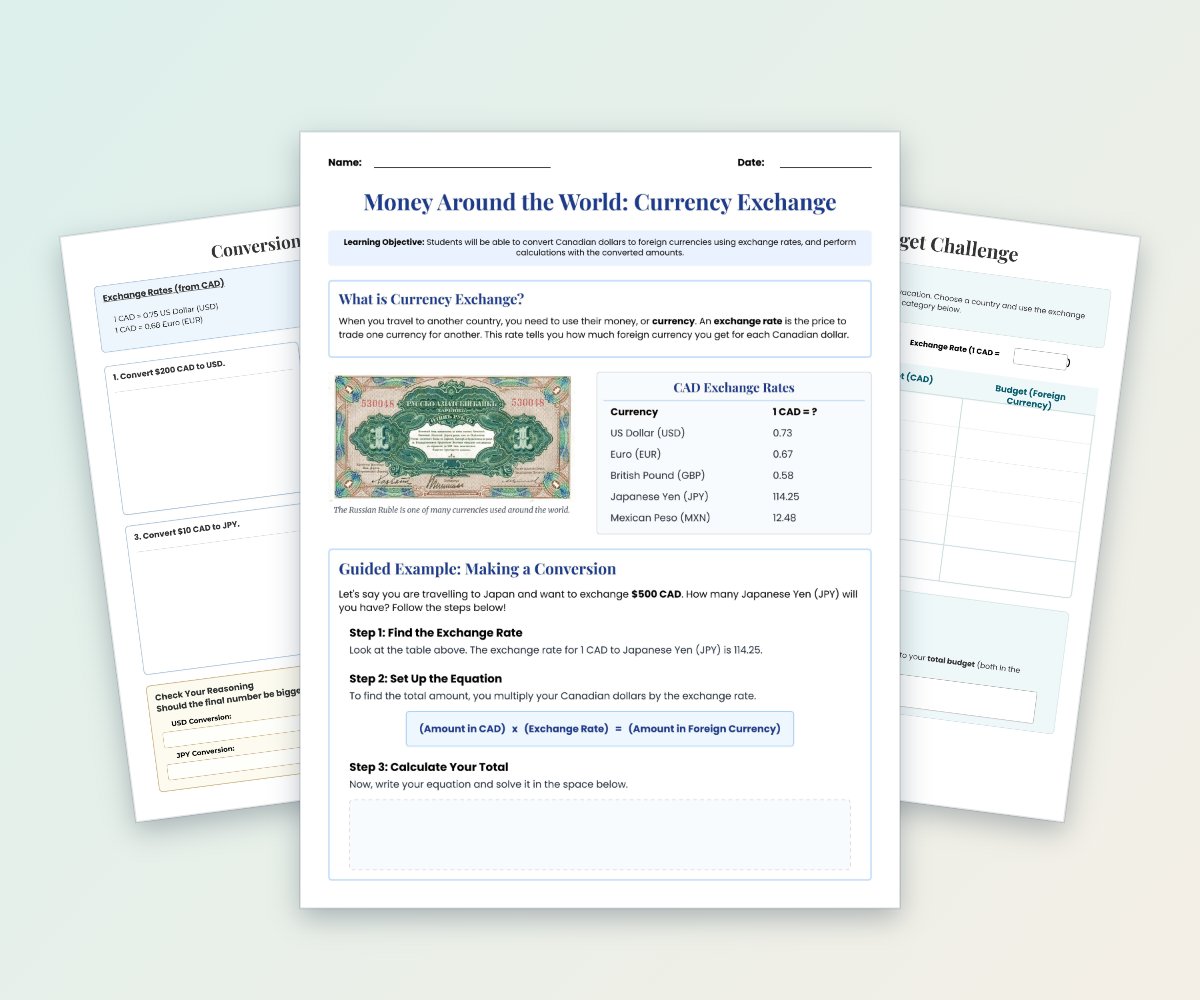
This four-page math activity introduces exchange rates through guided examples, conversion practice, and a vacation budgeting challenge.
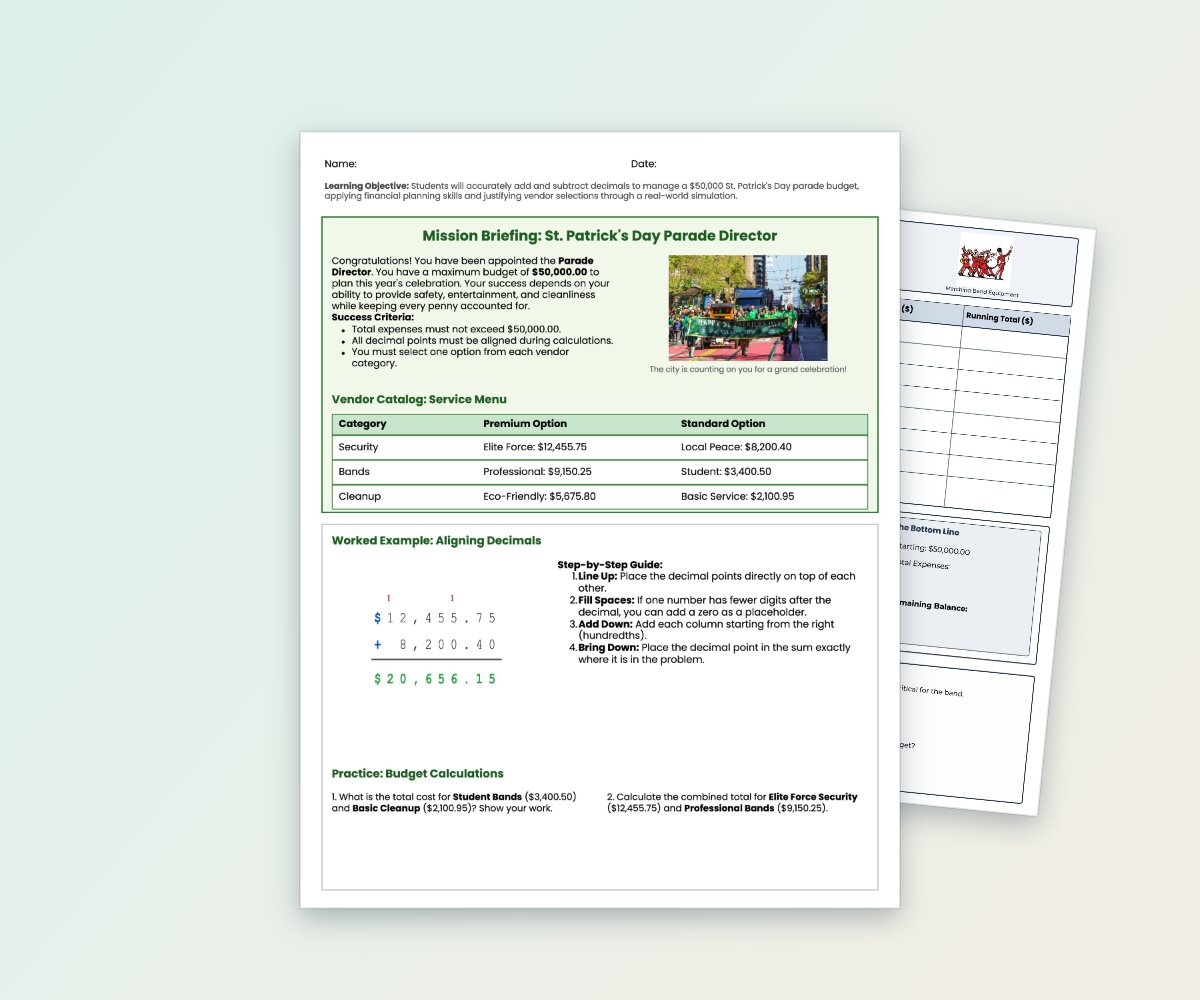
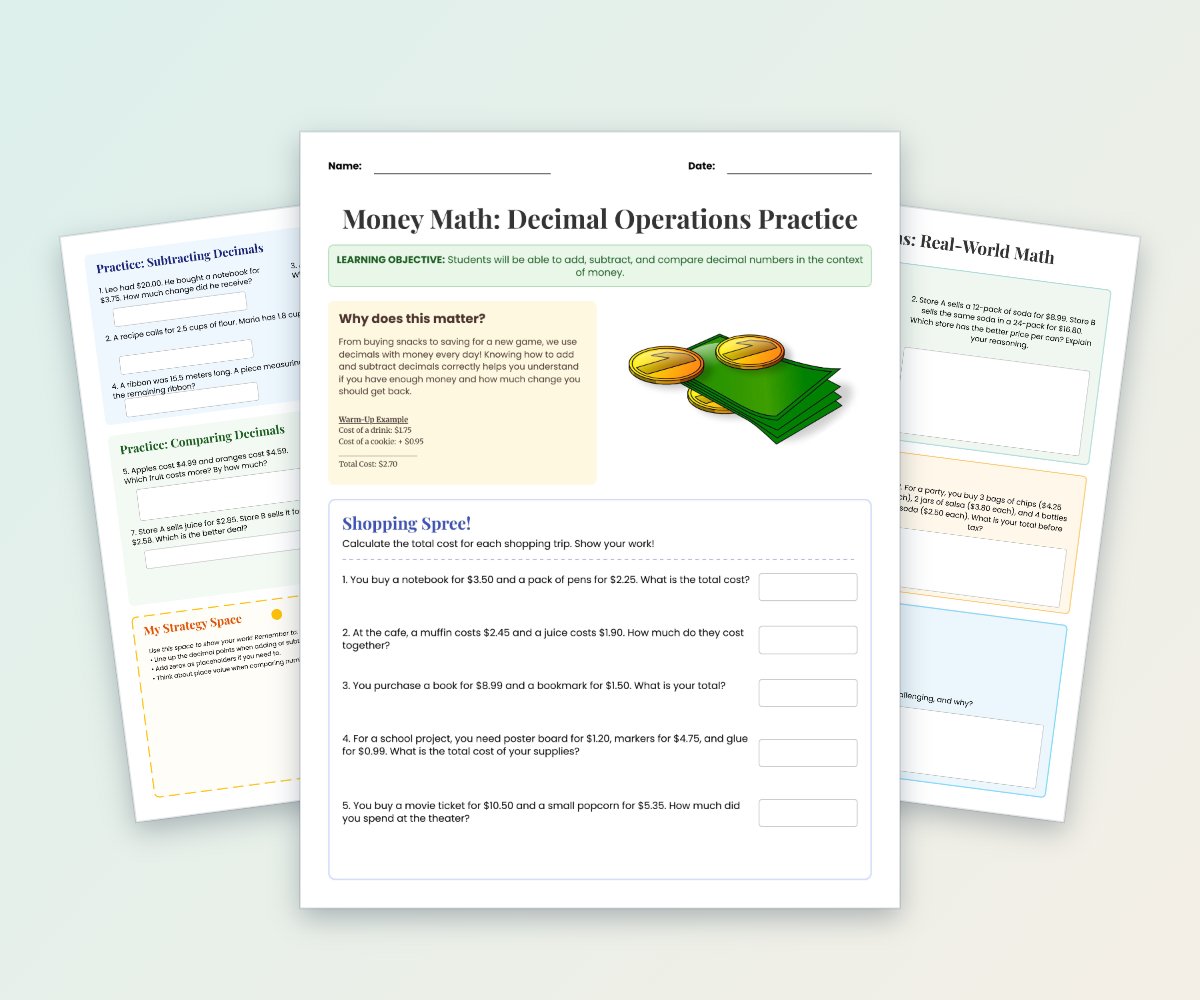
Students practice adding, subtracting, and comparing decimals using realistic shopping, budgeting, and measurement scenarios.
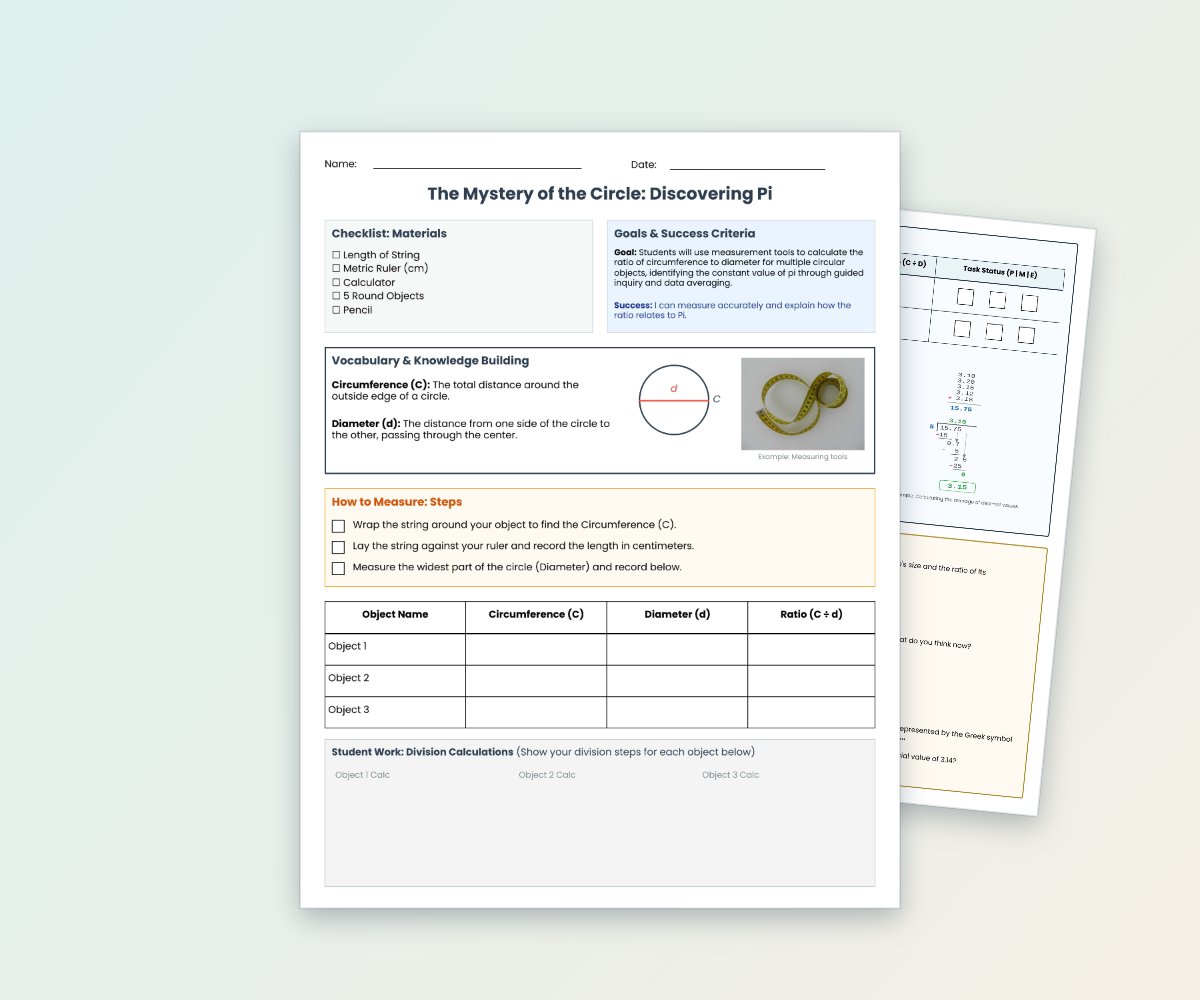
Students measure the circumference and diameter of five round objects using string and rulers, then calculate ratios and their mean.
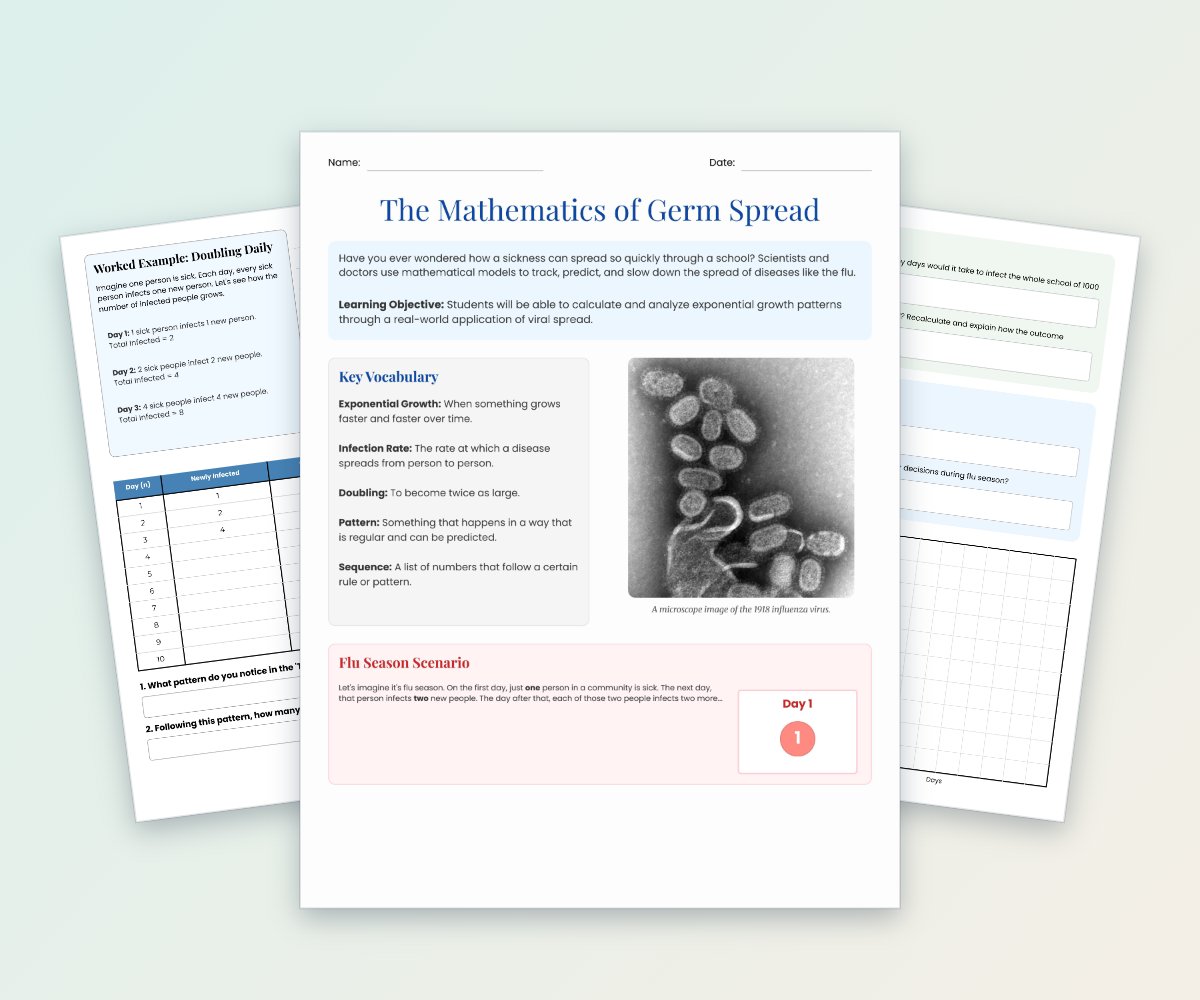
Students explore exponential growth by modeling how infections spread through a community.
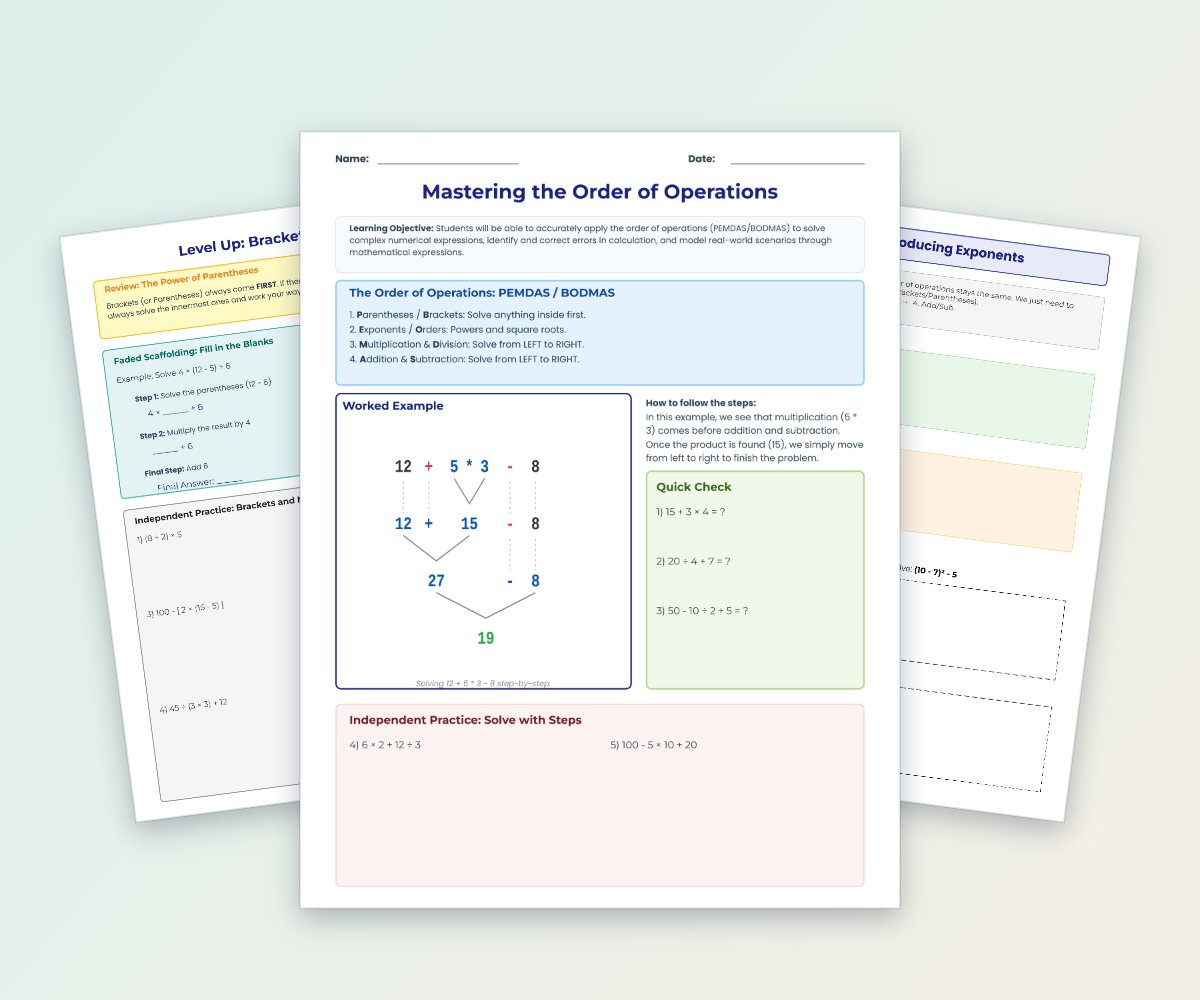
This six-page worksheet guides students through PEMDAS/BODMAS using worked examples, quick checks, faded scaffolding, independent practice, and challenge problems.