
Creating a Resume: Grade 9
This 39-page presentation teaches Grade 9 students how to create a clear, truthful, and professional beginner resume.
$12
Clear, practical resources for busy educators, organized so you can get from search to ready-to-teach quickly.
This 39-page presentation teaches Grade 9 students how to create a clear, truthful, and professional beginner resume.
This 32-slide classroom-ready presentation introduces pricing, fixed and variable costs, revenue, profit, and break-even concepts.
This 33-slide presentation introduces hardwoods, softwoods, common wood species, plywood, MDF, dimensional lumber, and nominal versus actual dimensions.
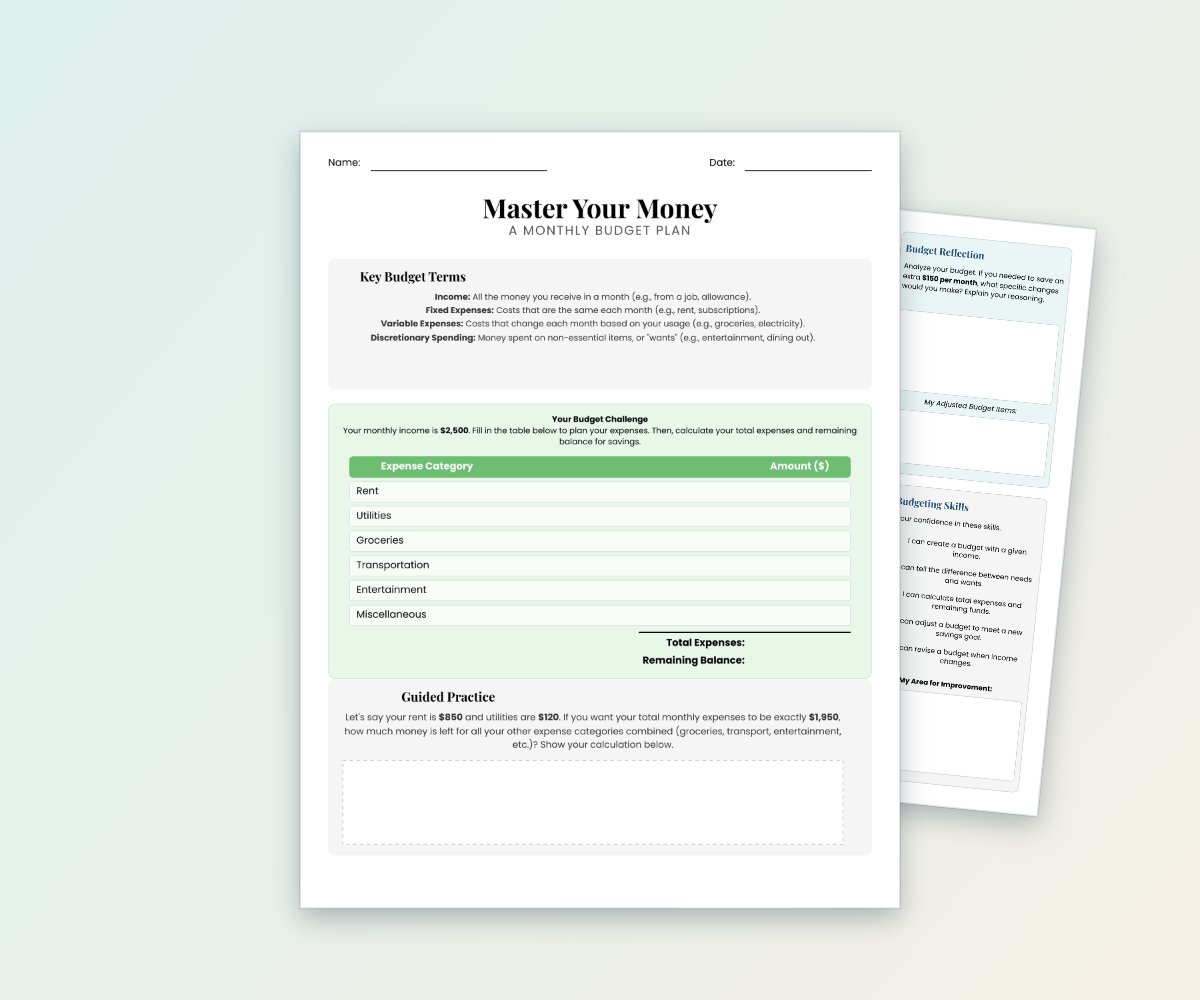
This two-page worksheet teaches students to define budget terminology, categorize expenses, calculate totals and remaining funds, and plan monthly spending.
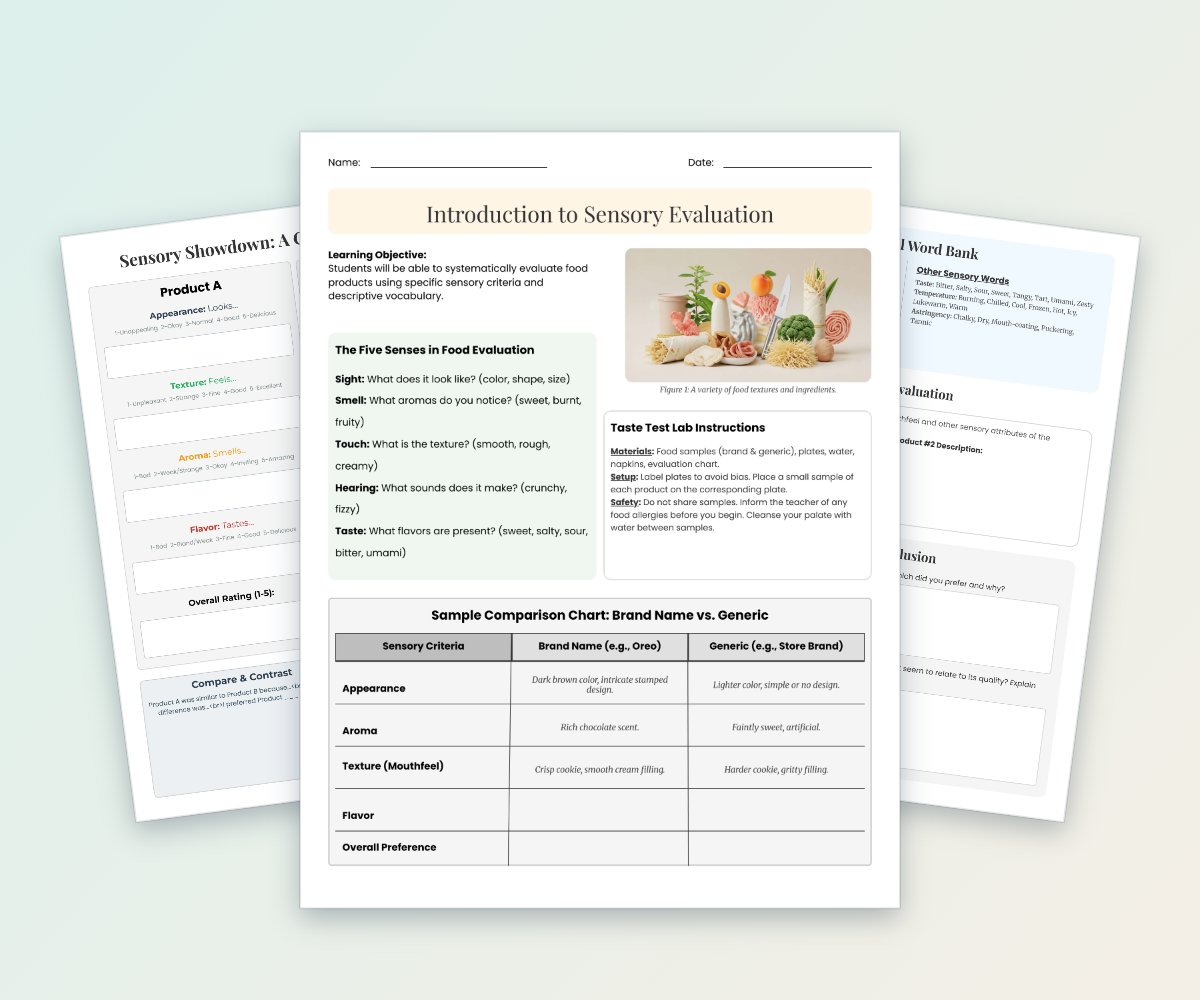
Students learn to evaluate food products using sight, smell, touch, hearing, and taste.
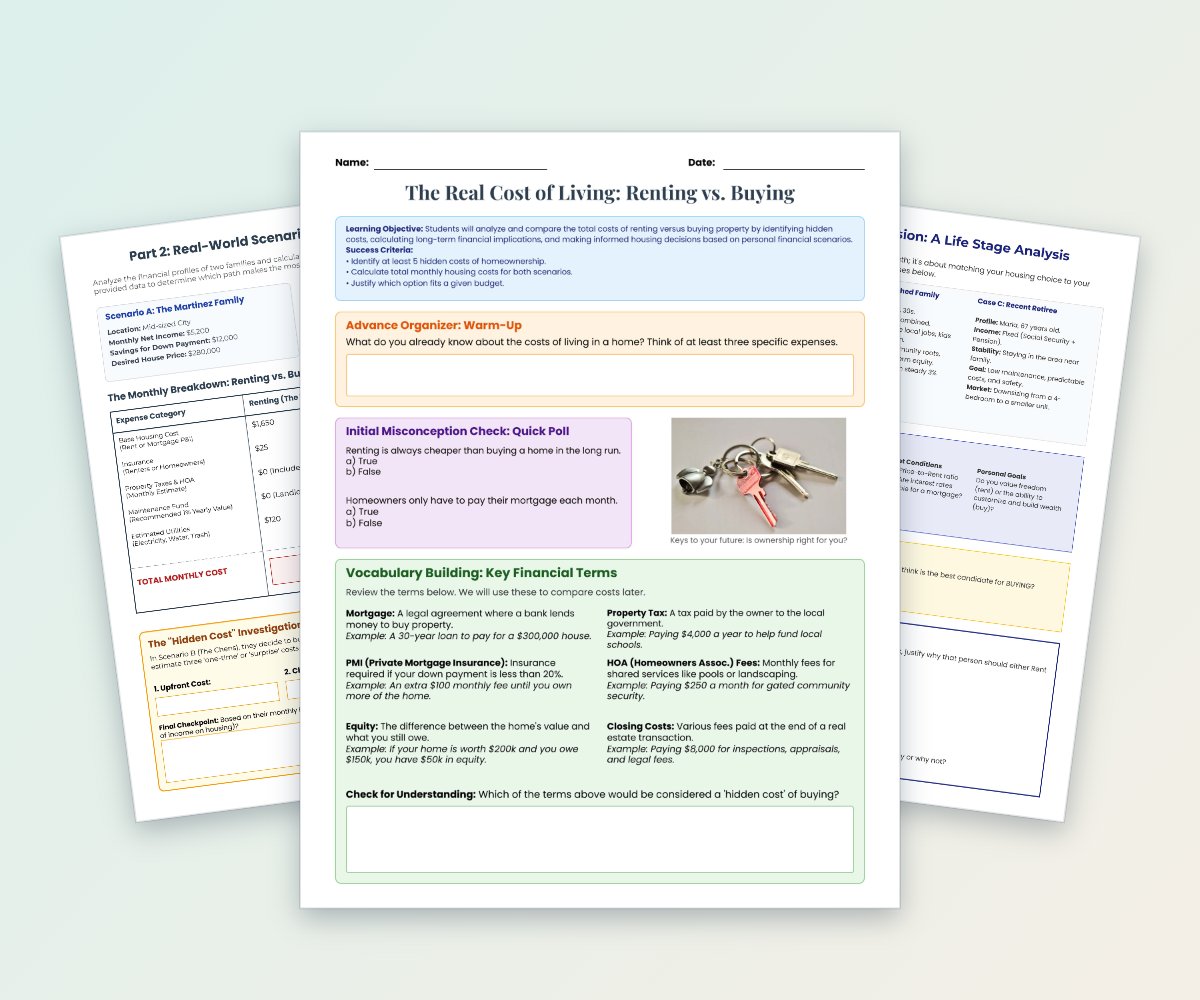
Students compare renting and buying by identifying hidden costs, reviewing key housing terms, and calculating monthly expenses.
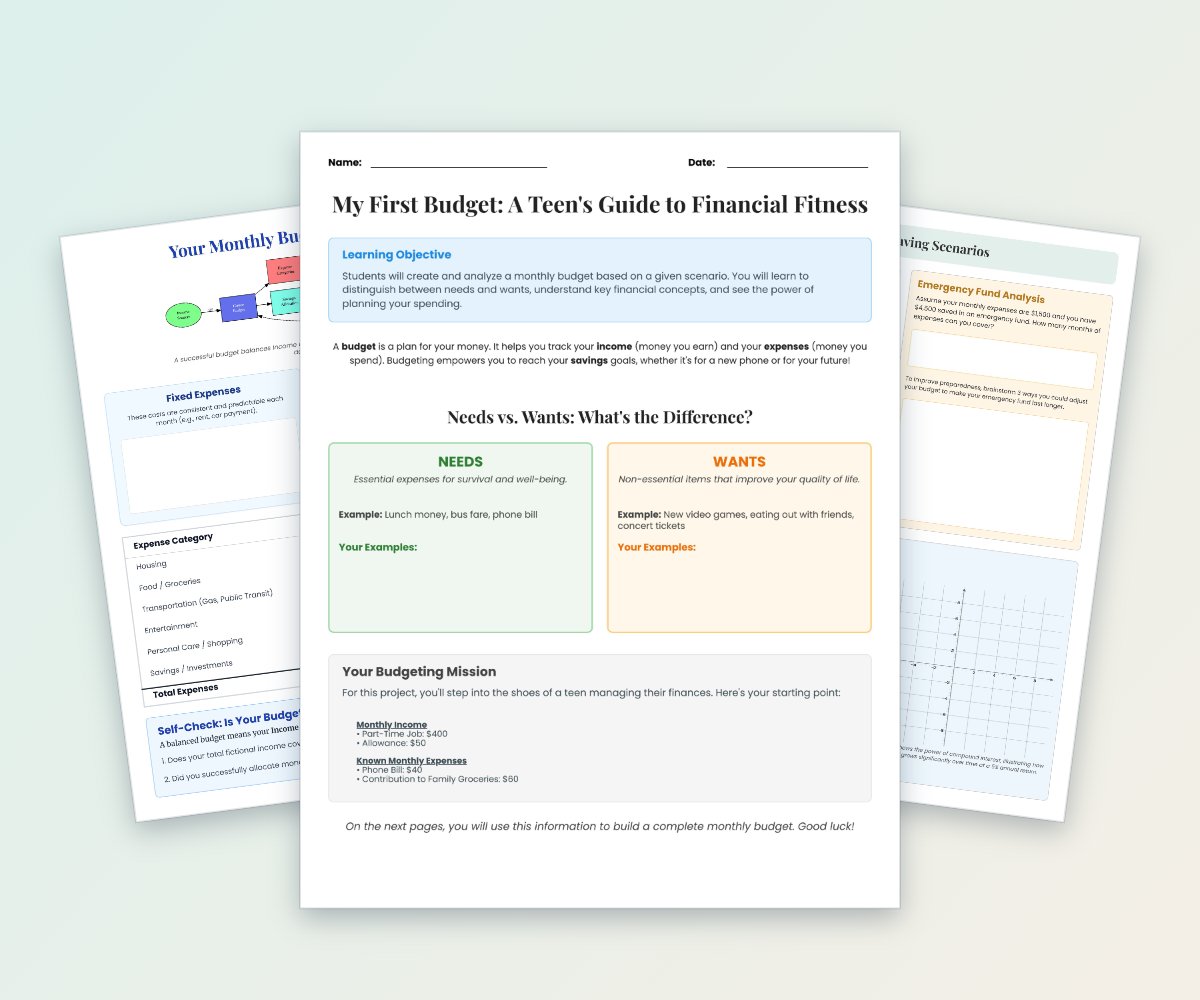
This six-page financial literacy guide helps teens distinguish needs from wants, create a monthly budget, and evaluate spending decisions.
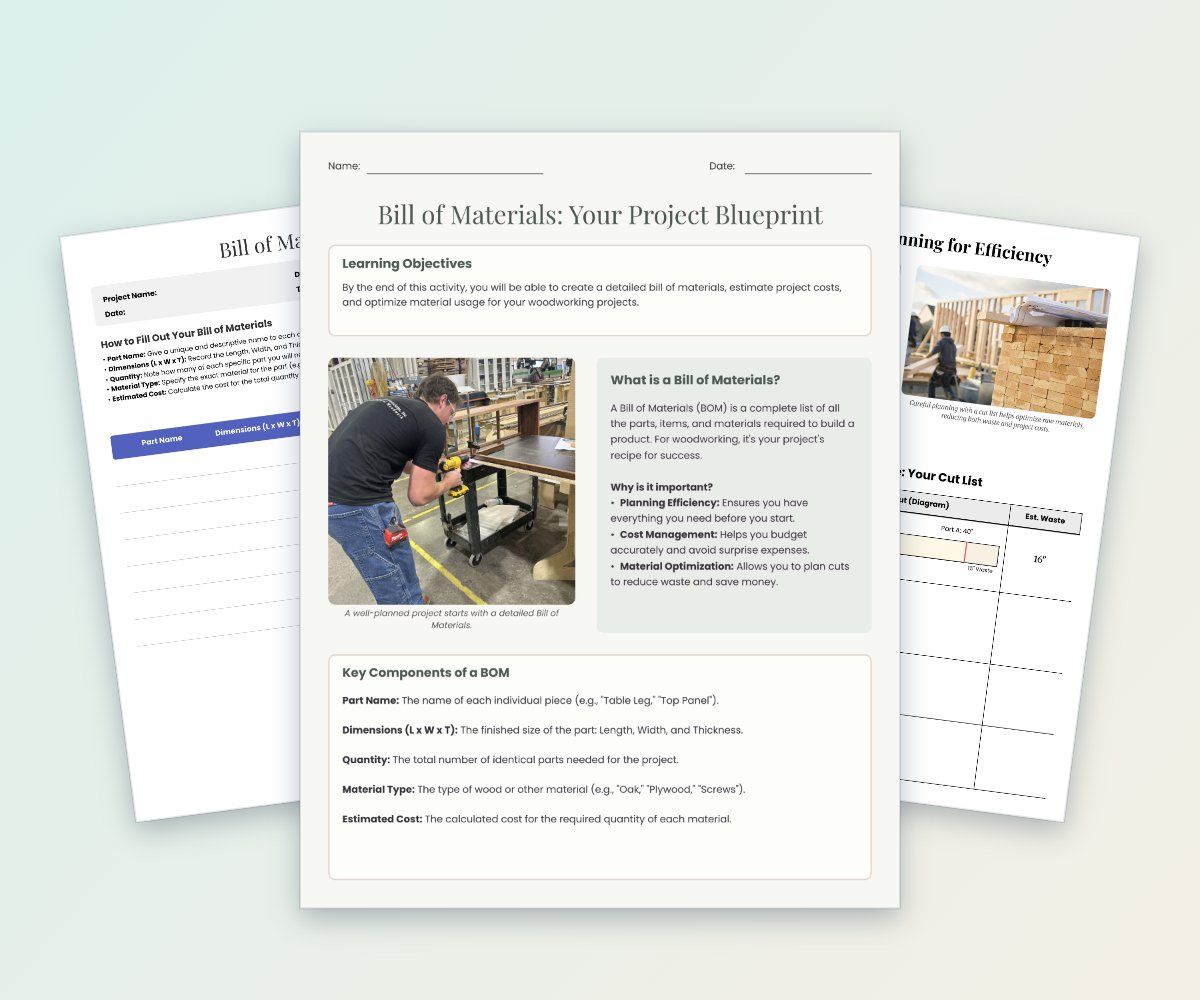
Students learn how to create a woodworking bill of materials by identifying parts, dimensions, quantities, materials, and estimated costs.
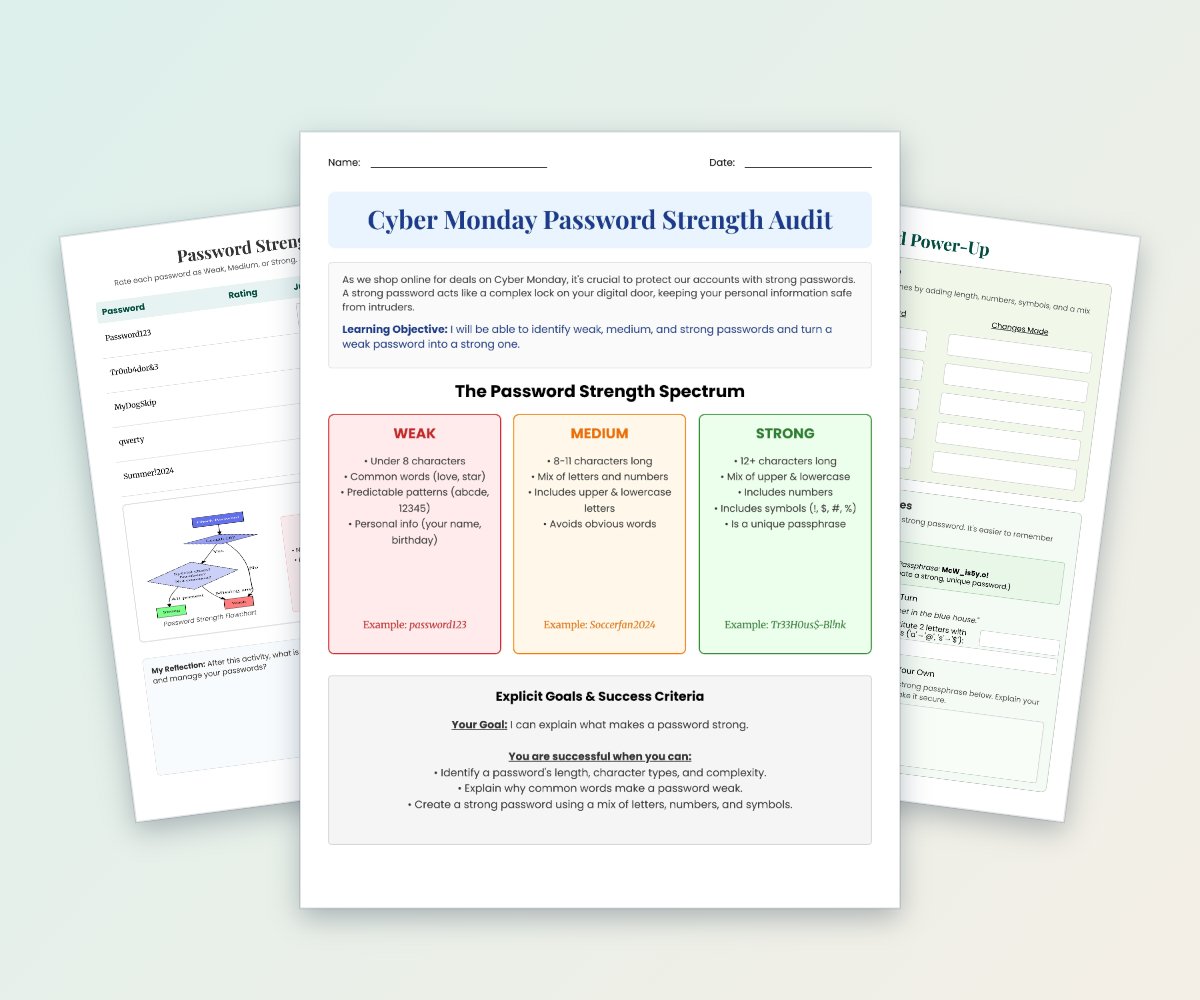
This four-page activity teaches students how to identify weak, medium, and strong passwords using length, character variety, predictability, and personal information criteria.
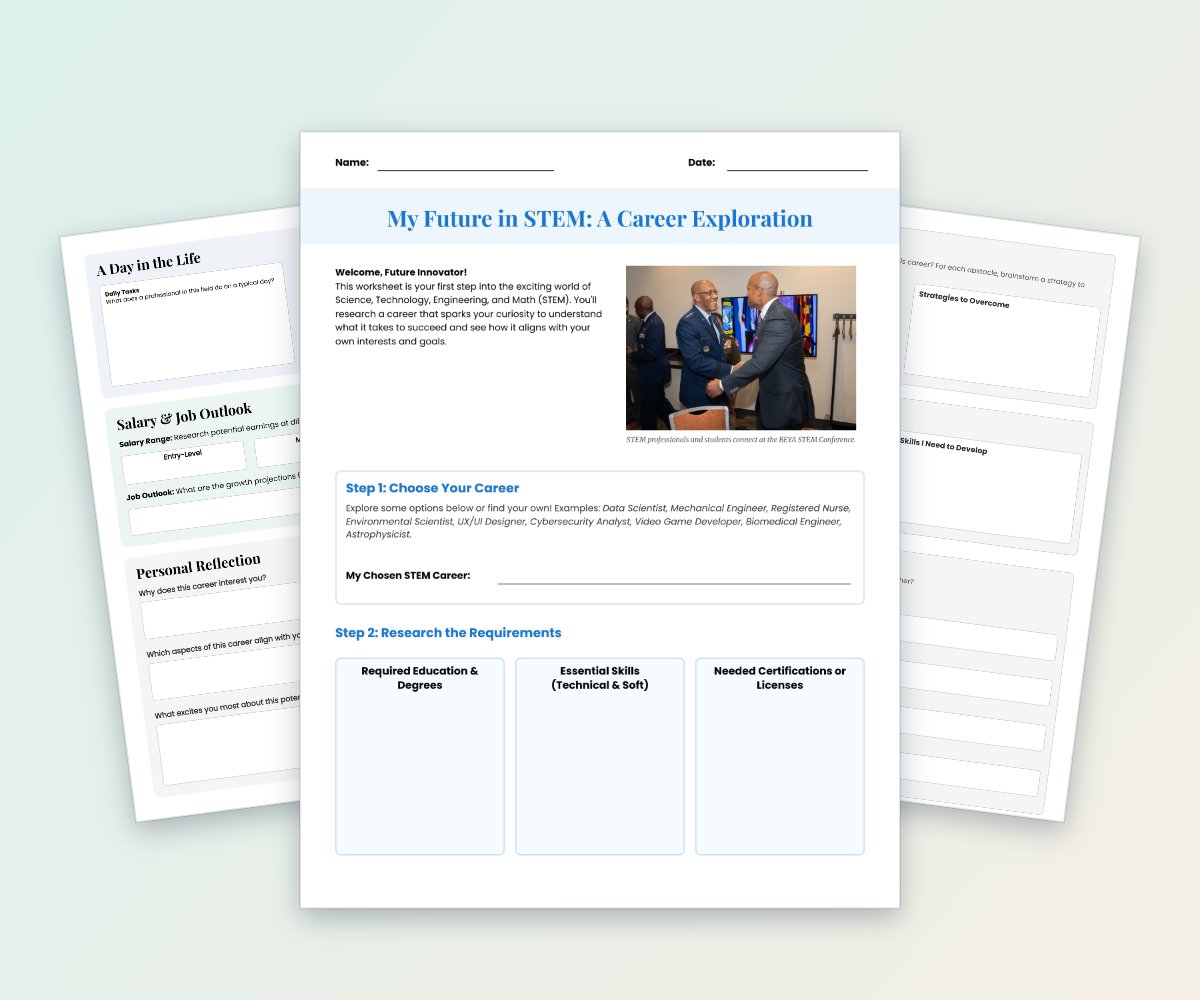
Students research a STEM career, examining education requirements, skills, certifications, daily responsibilities, work environments, salary, and job outlook.
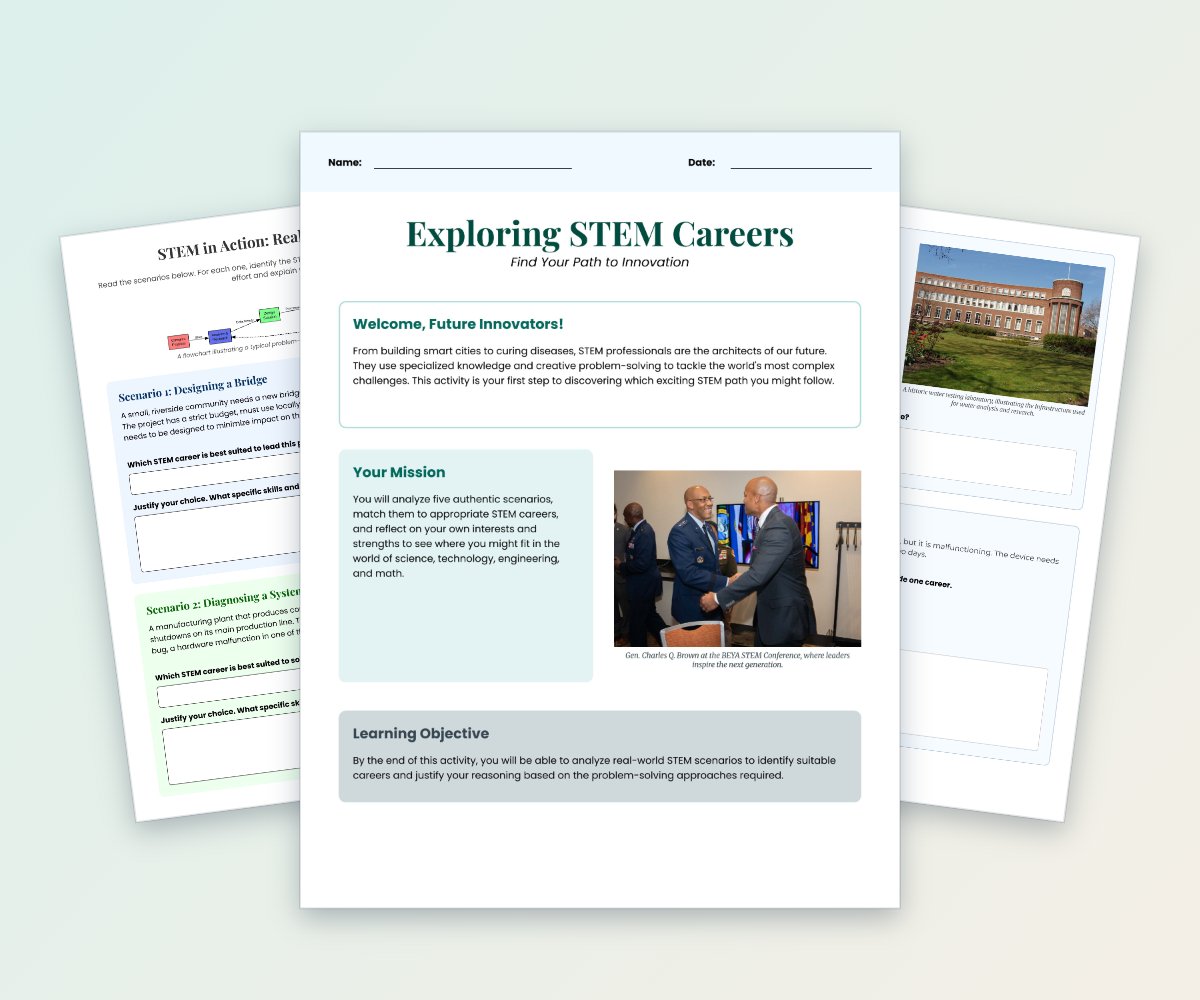
Students analyze five real-world STEM scenarios, match each challenge to an appropriate career, and justify their reasoning.
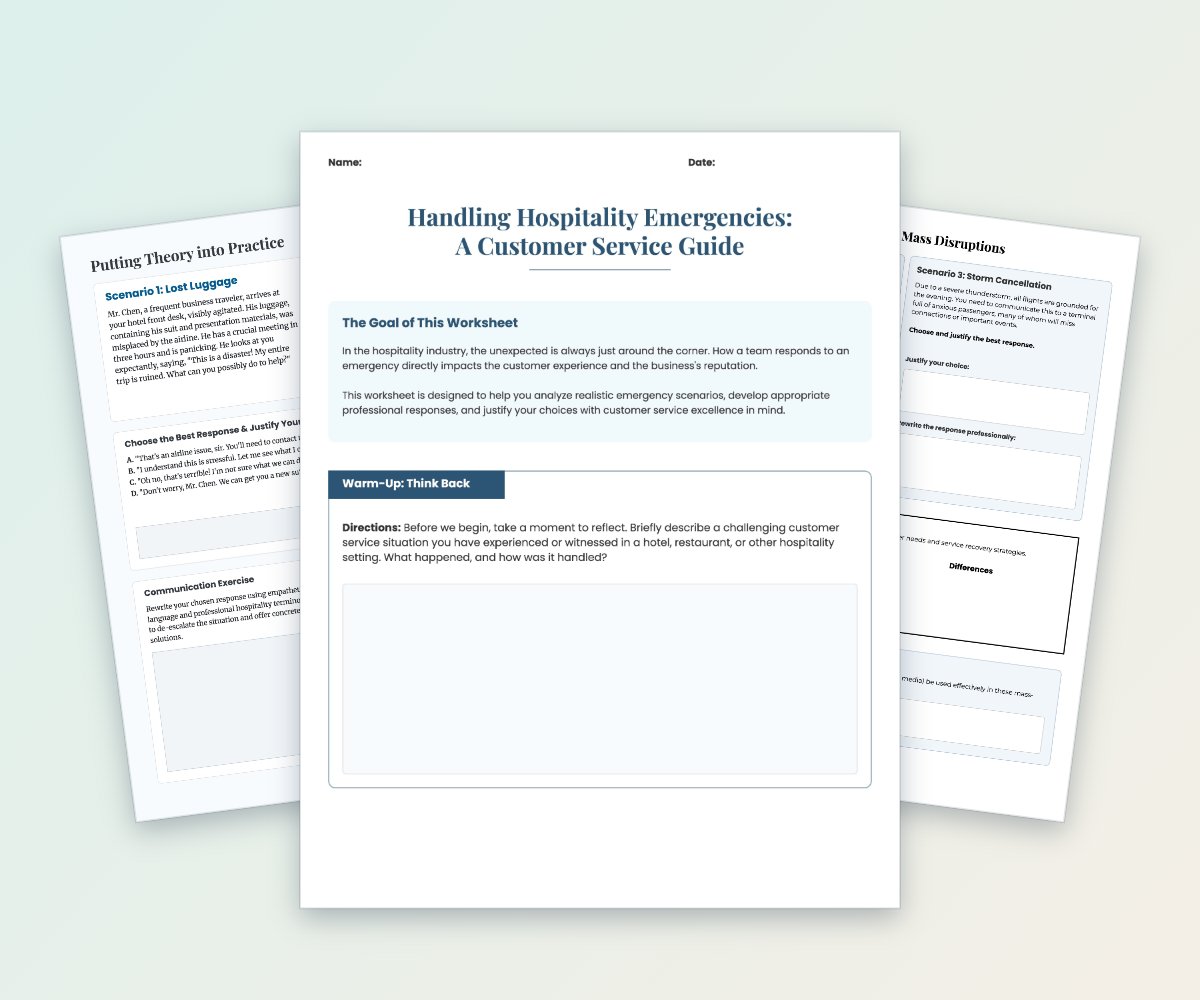
This five-page worksheet guides students through realistic hospitality emergencies, including lost luggage, overbooked flights, and storm cancellations.
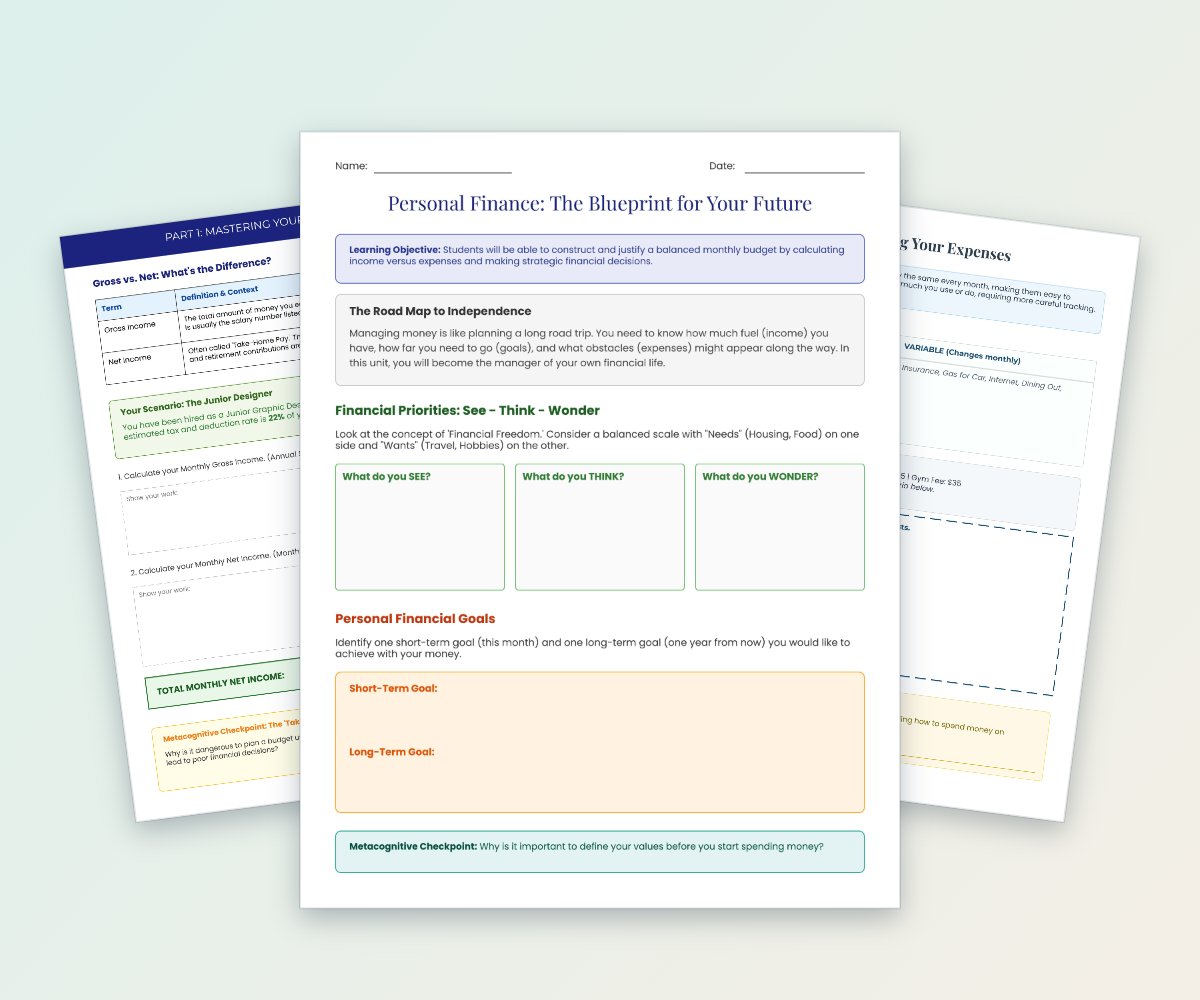
Students build and justify a balanced monthly budget using a realistic Junior Graphic Designer income scenario.
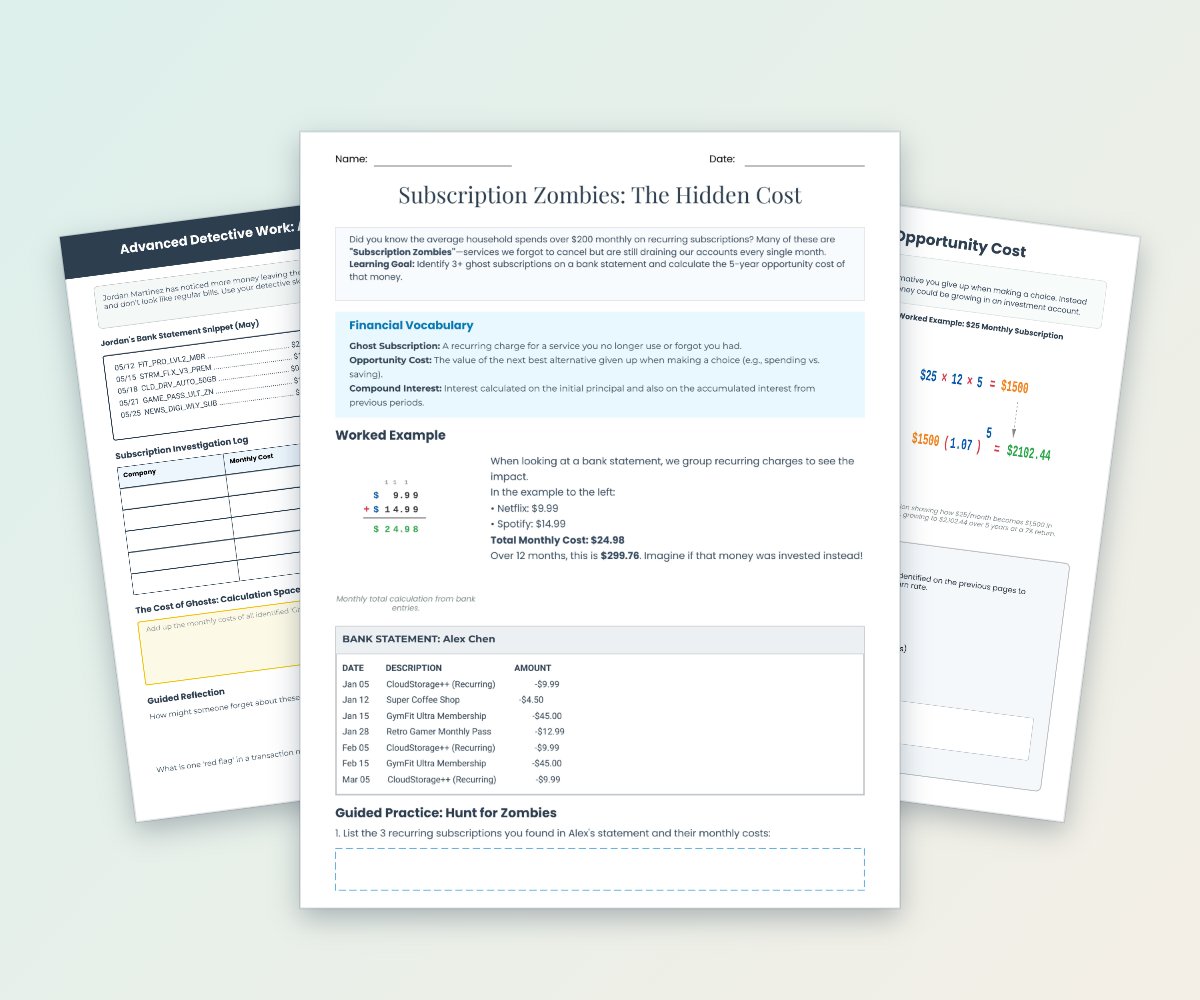
Students investigate recurring charges, identify forgotten subscriptions, calculate monthly and long-term costs, and consider opportunity cost.
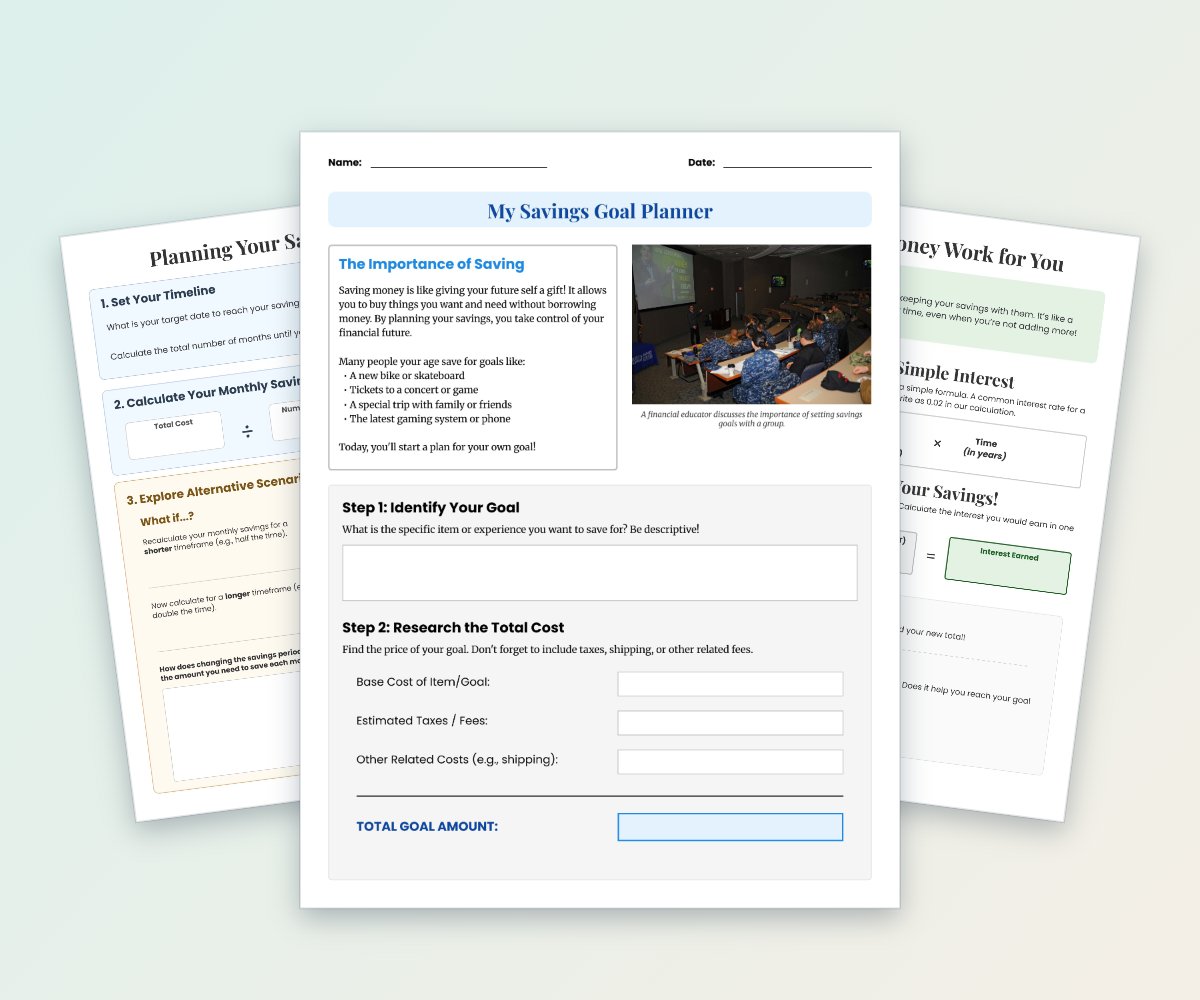
Students set a personal savings goal, research its total cost, create a savings timeline, and calculate required monthly savings.
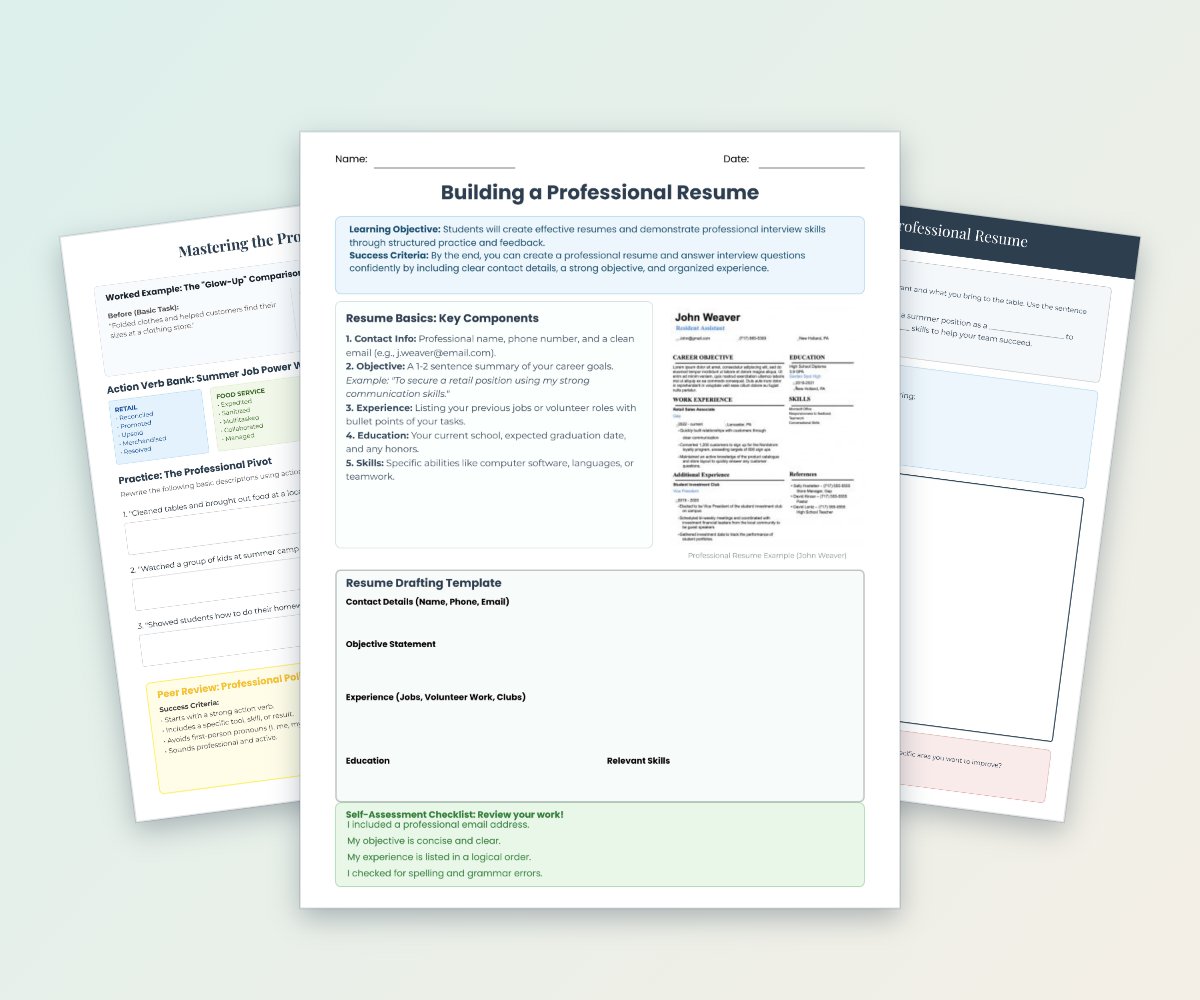
Students build a professional resume, revise basic job descriptions with strong action verbs, and practice workplace communication.
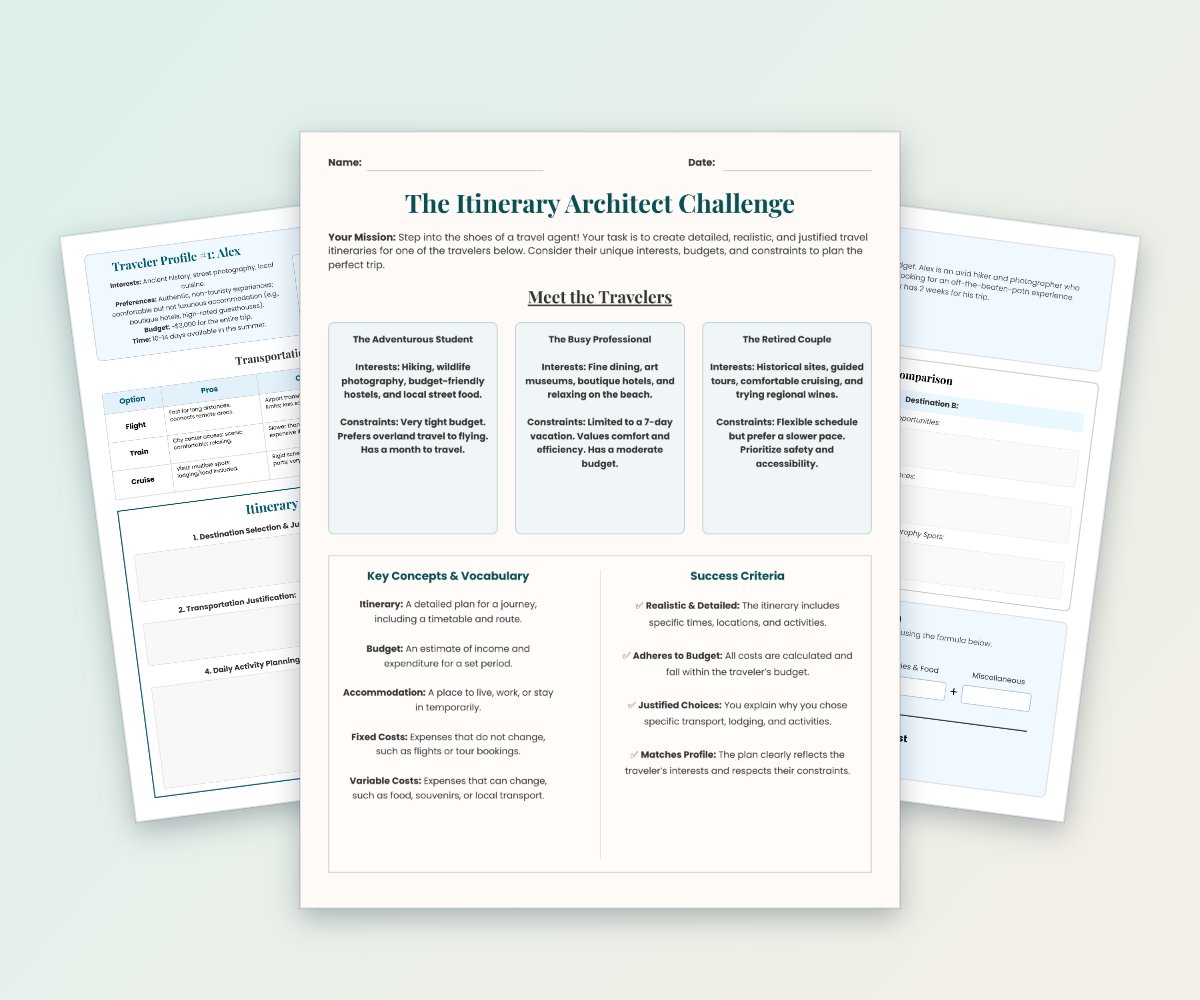
Students act as travel agents to design realistic itineraries based on traveler interests, budgets, schedules, and constraints.
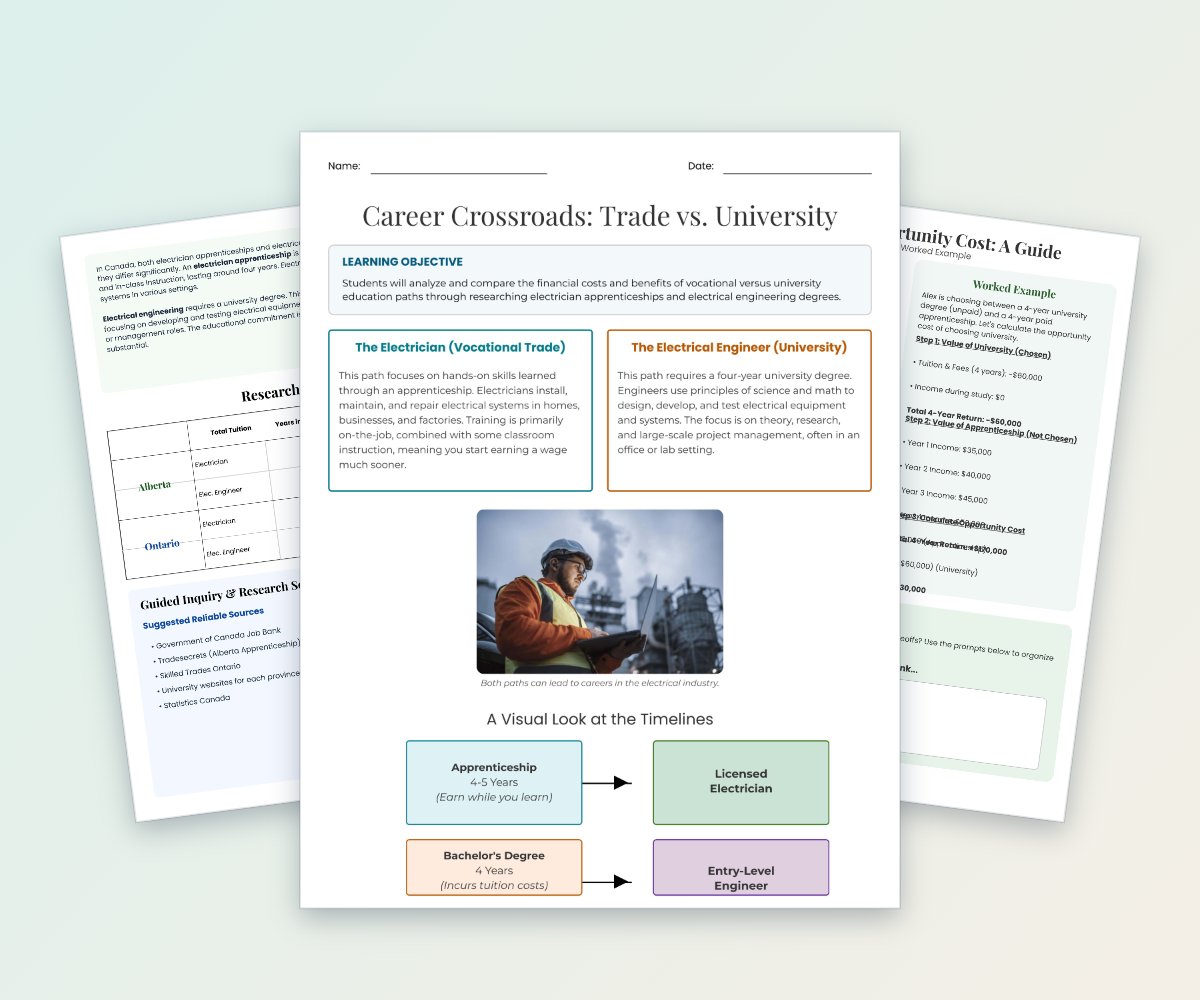
This four-page career exploration activity compares electrician apprenticeships with university electrical engineering programs.
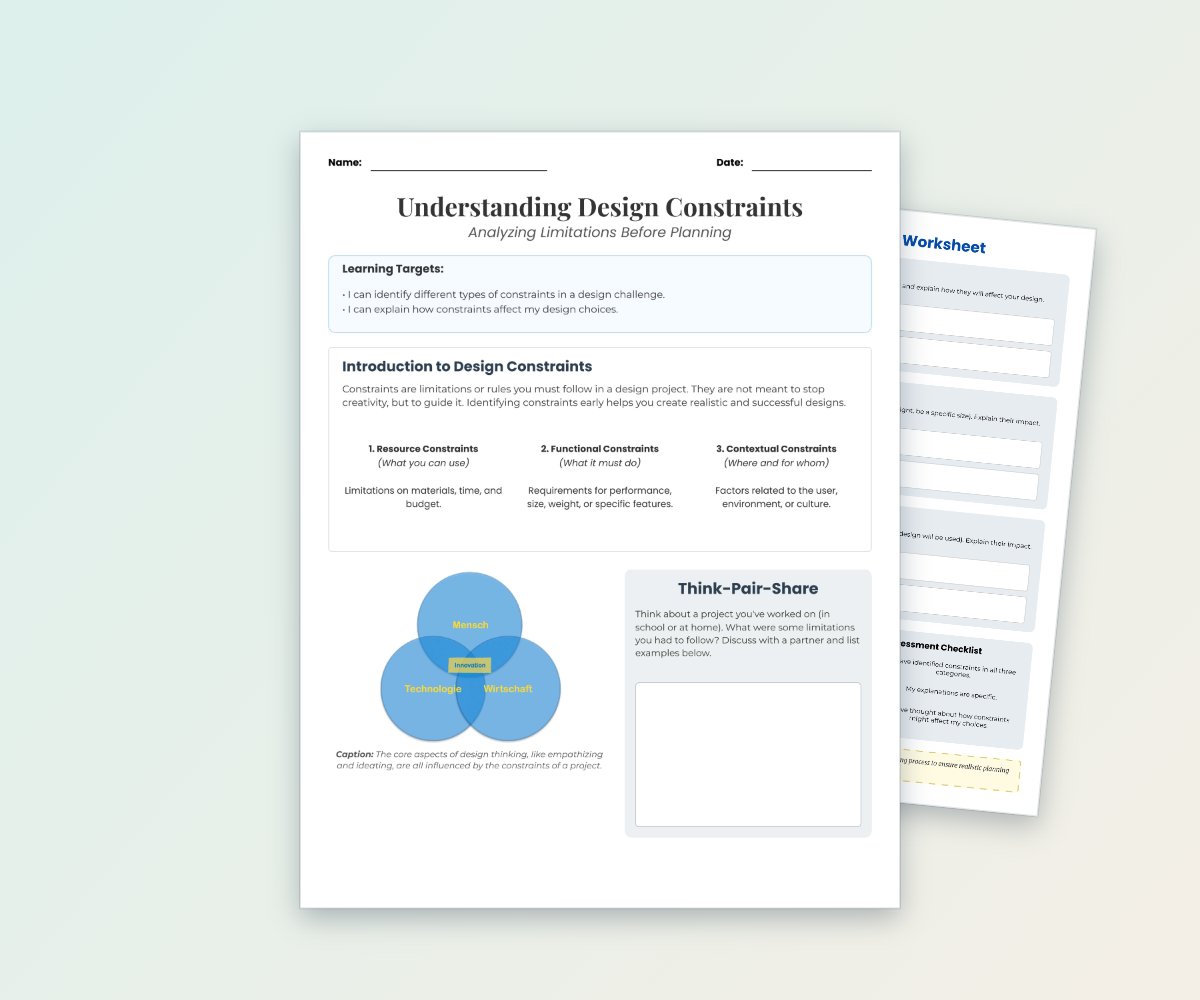
This two-page worksheet introduces resource, functional, and contextual design constraints before students begin planning a project.
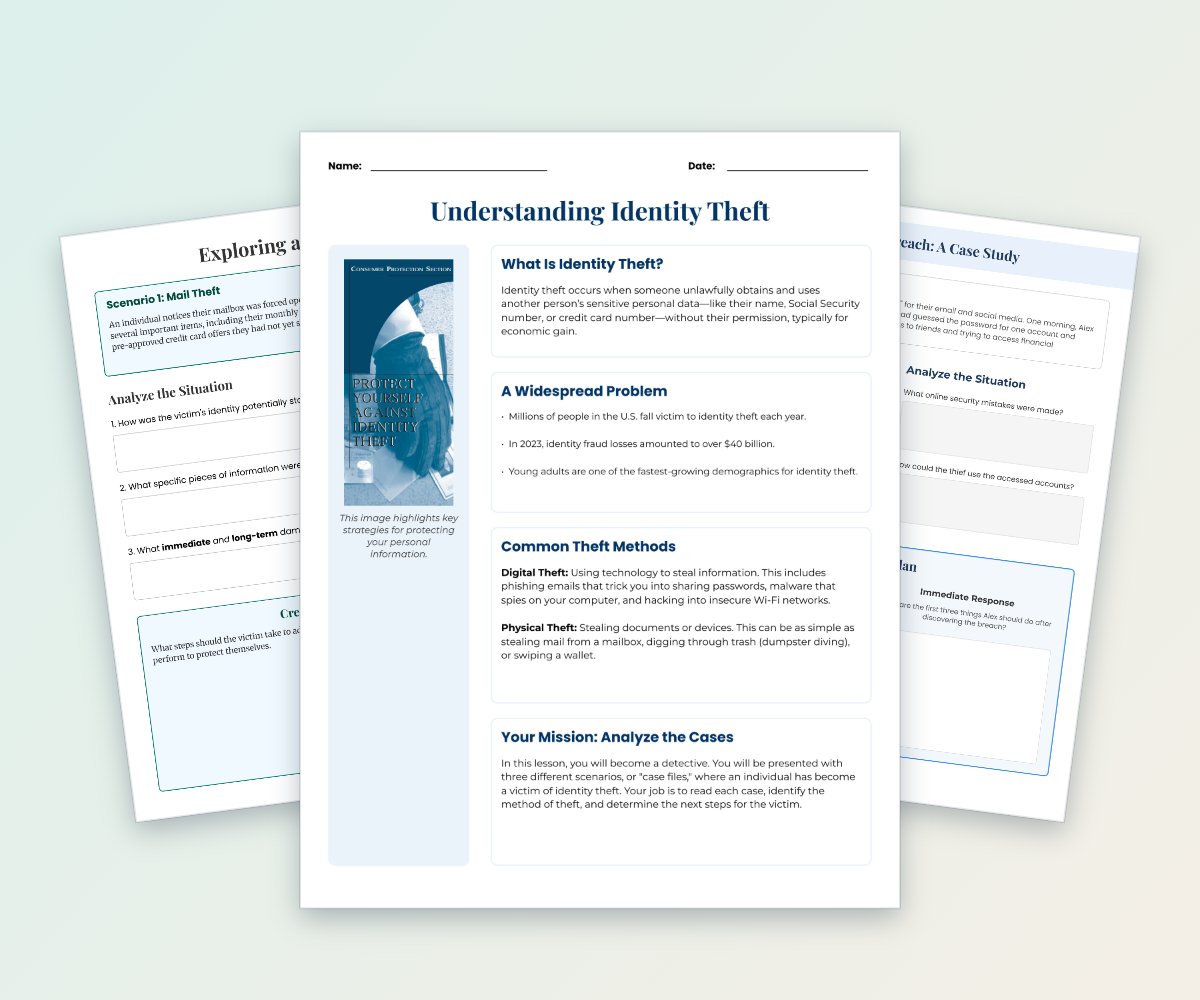
Students investigate identity theft through realistic mail theft and online security case studies.
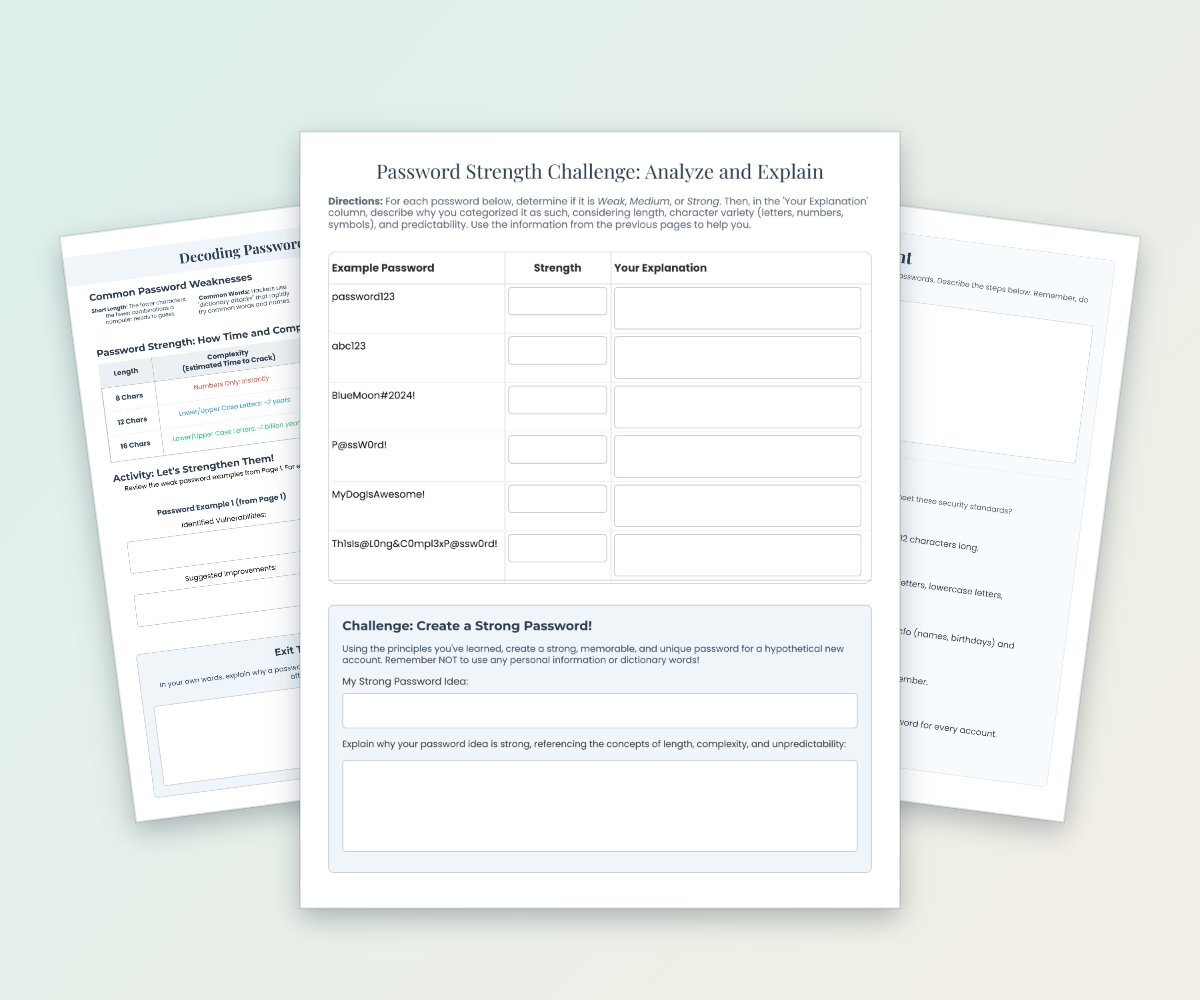
This four-page worksheet helps students analyze password strength, identify common vulnerabilities, and explain how length, complexity, and unpredictability improve security.
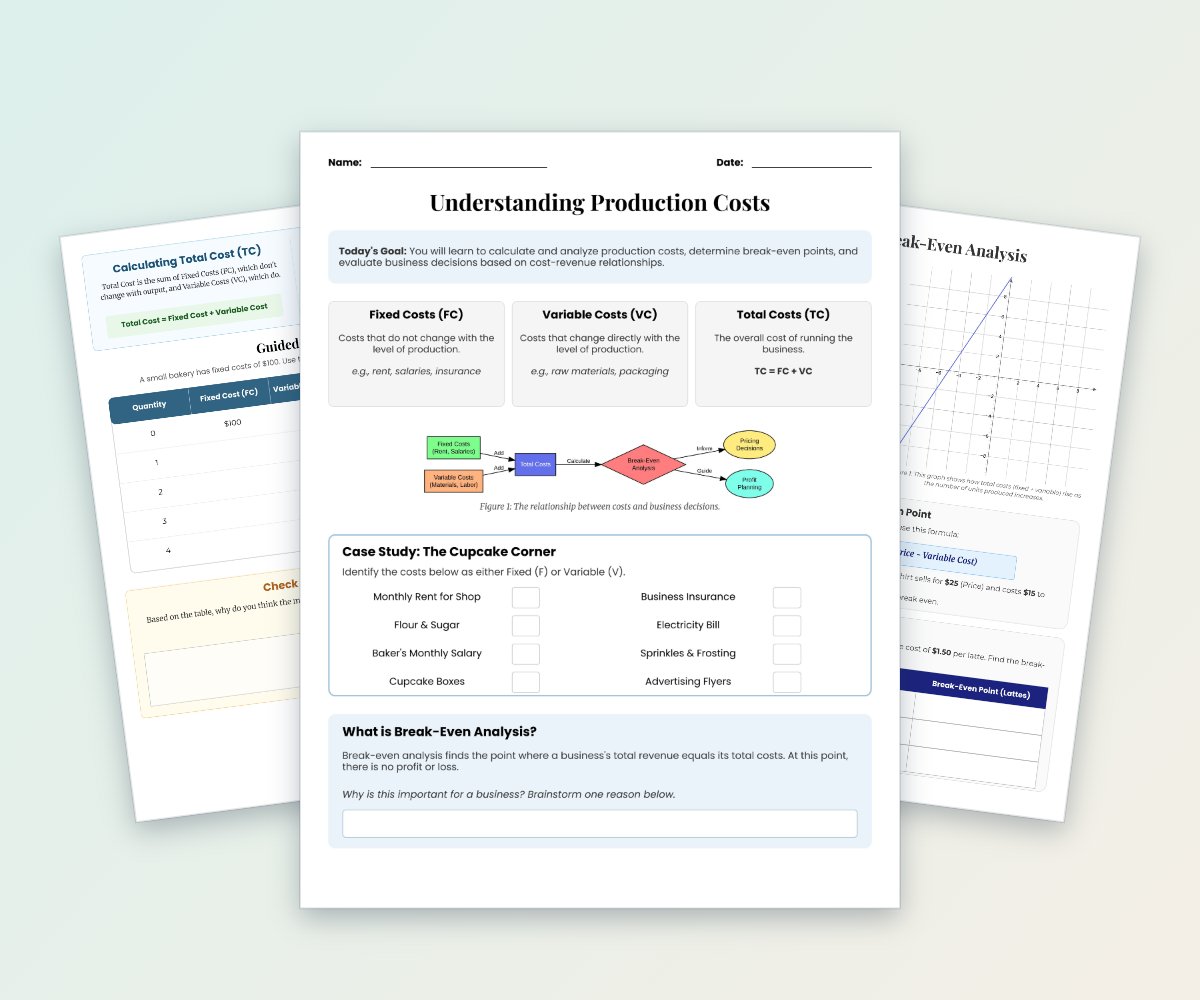
This five-page worksheet introduces fixed, variable, total, and marginal costs through definitions, a cupcake business case study, guided calculations, and break-even analysis.
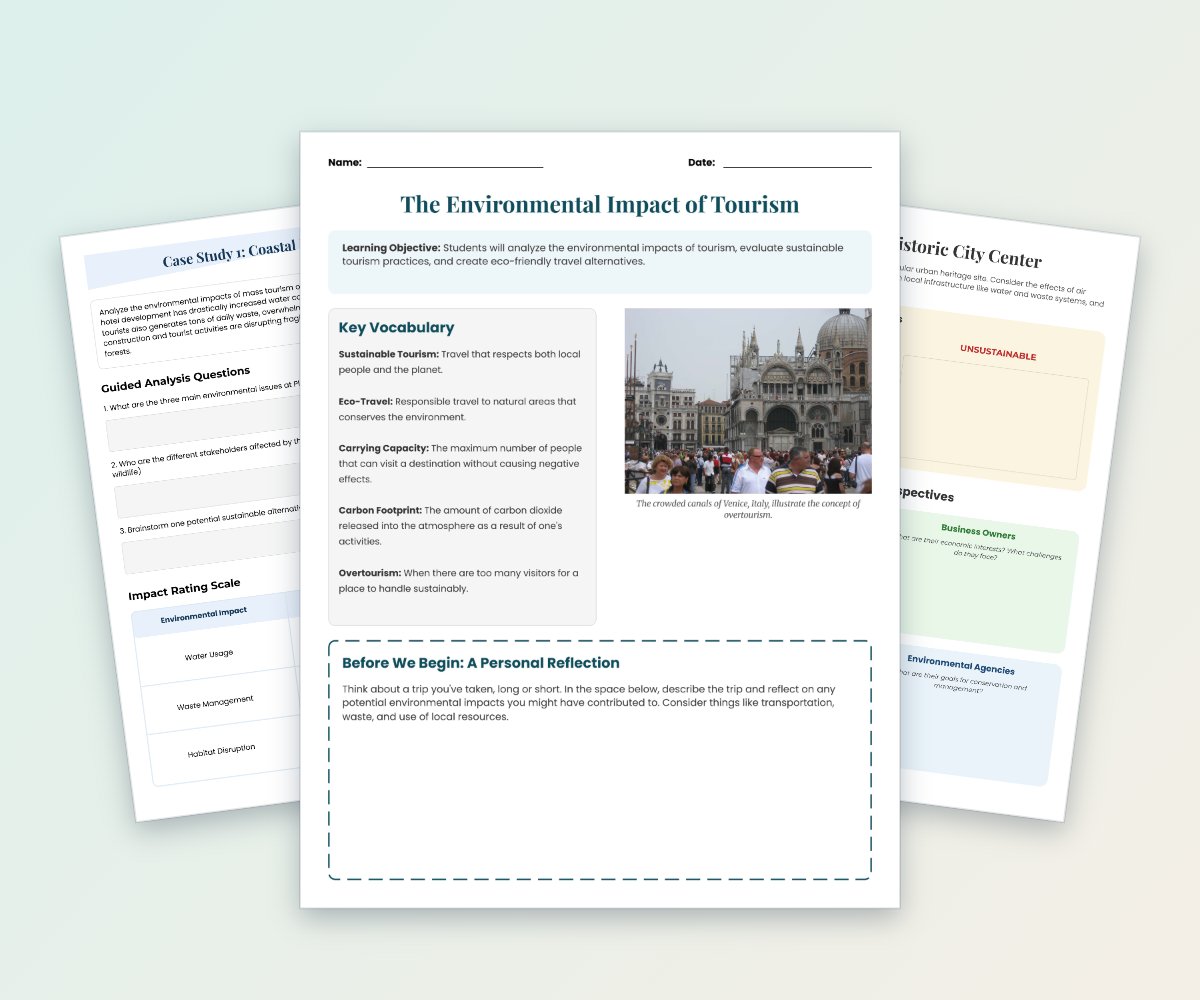
This five-page worksheet explores how tourism affects water supplies, waste systems, transportation, wildlife habitats, and local communities.
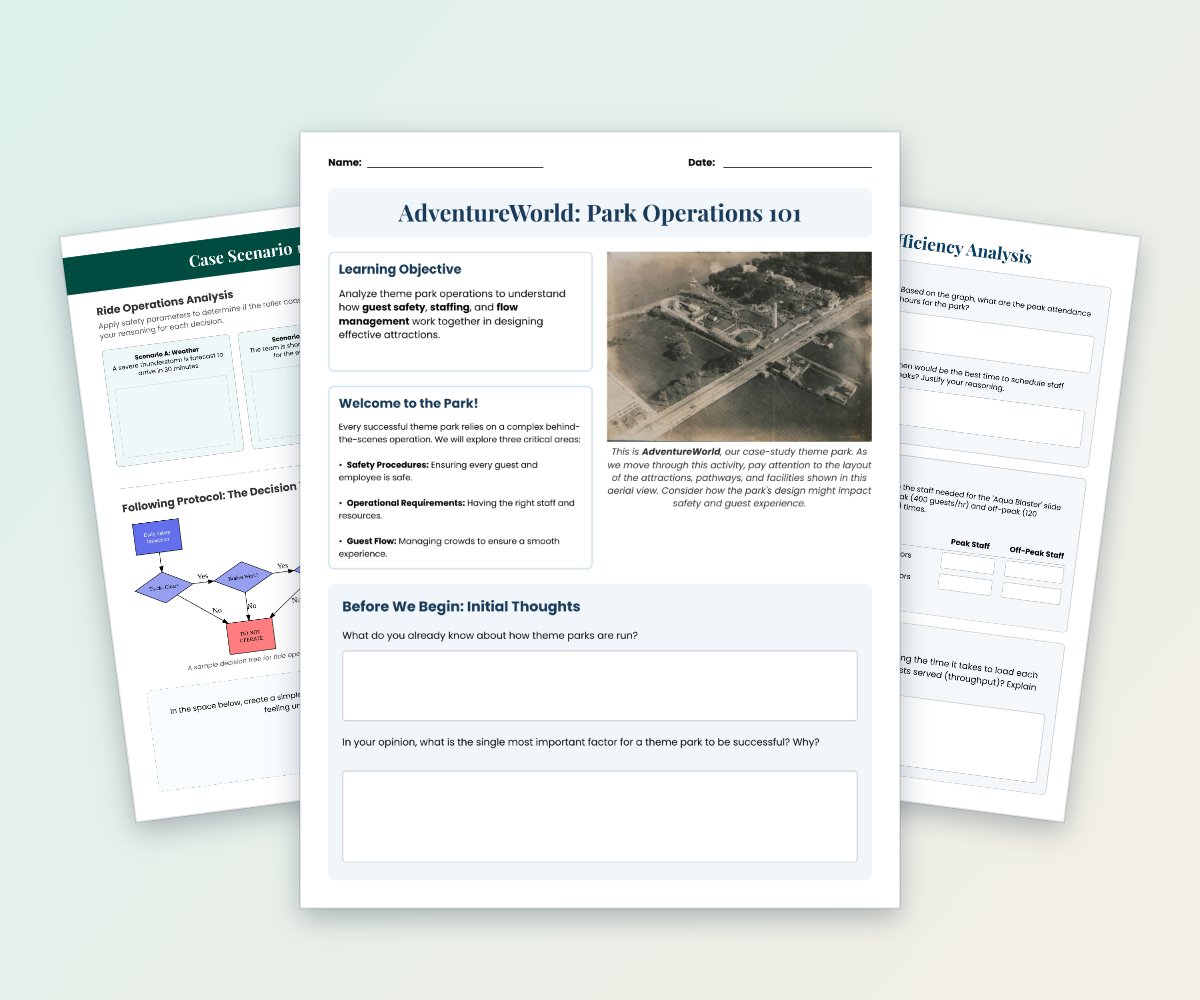
Students examine a fictional theme park to analyze ride safety, staffing requirements, guest flow, and operational efficiency.
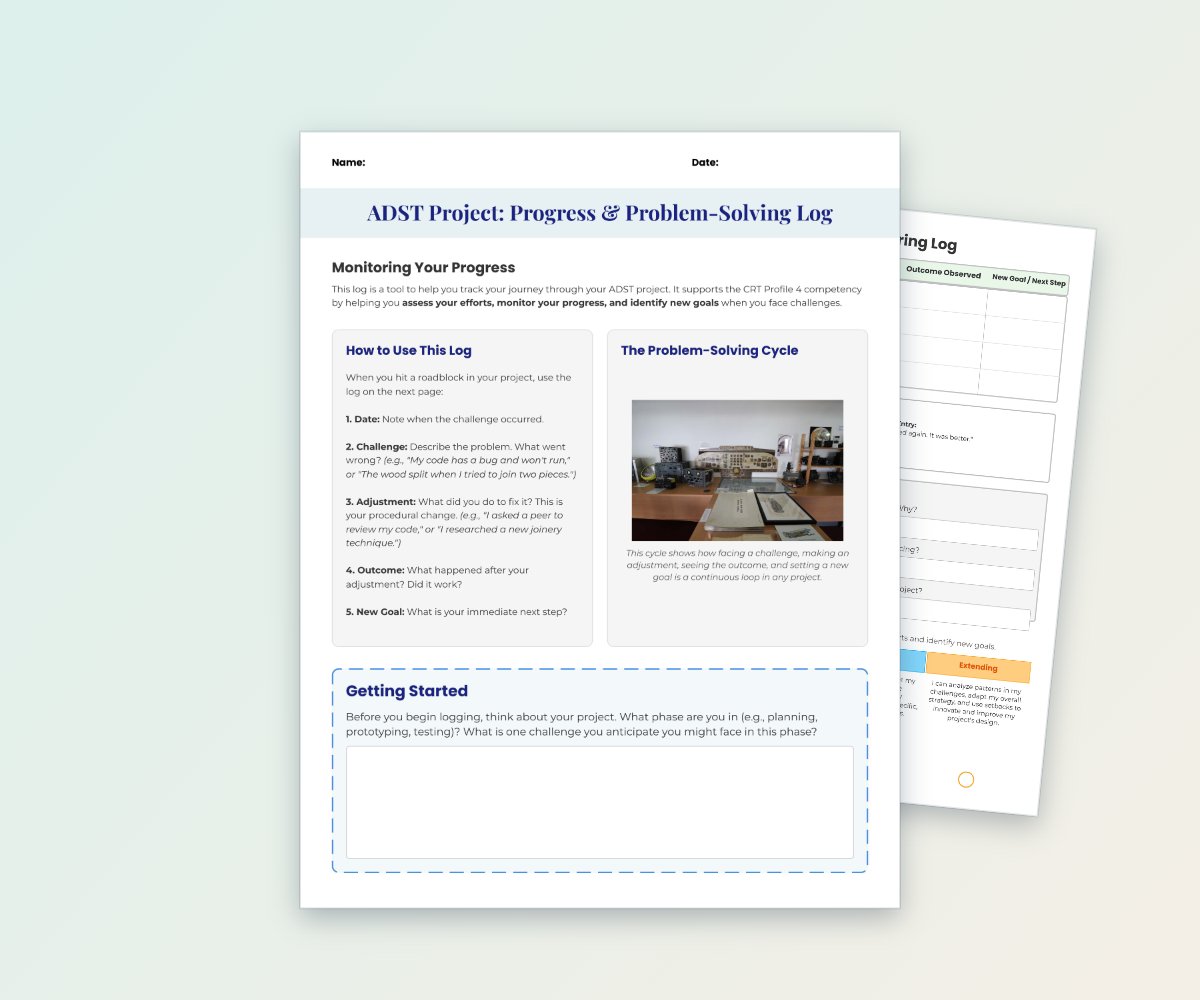
Help students document challenges, adjustments, outcomes, and next steps throughout an ADST project.
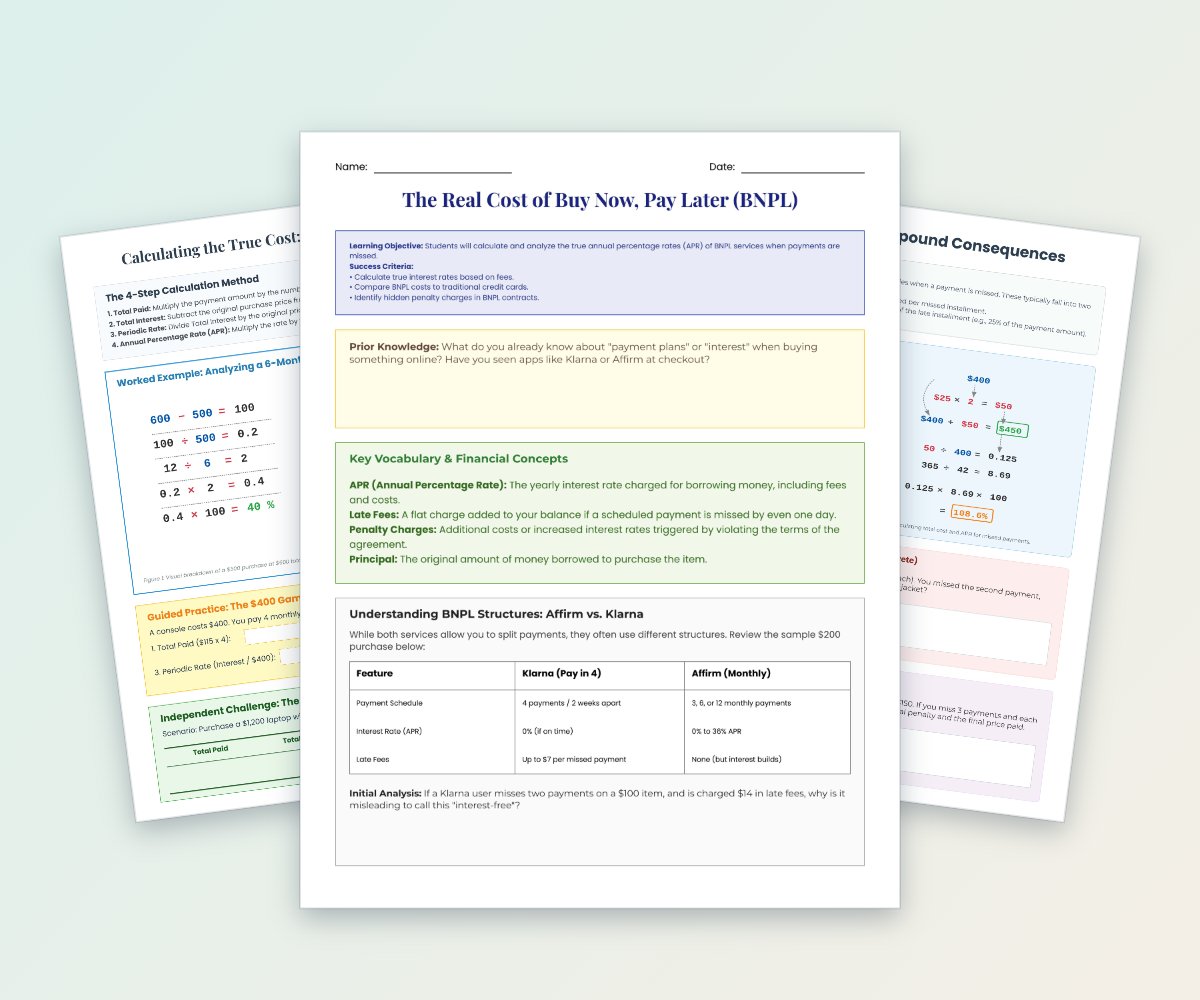
This financial literacy worksheet guides students through comparing BNPL services, calculating total costs and estimated APR, and identifying hidden fees.
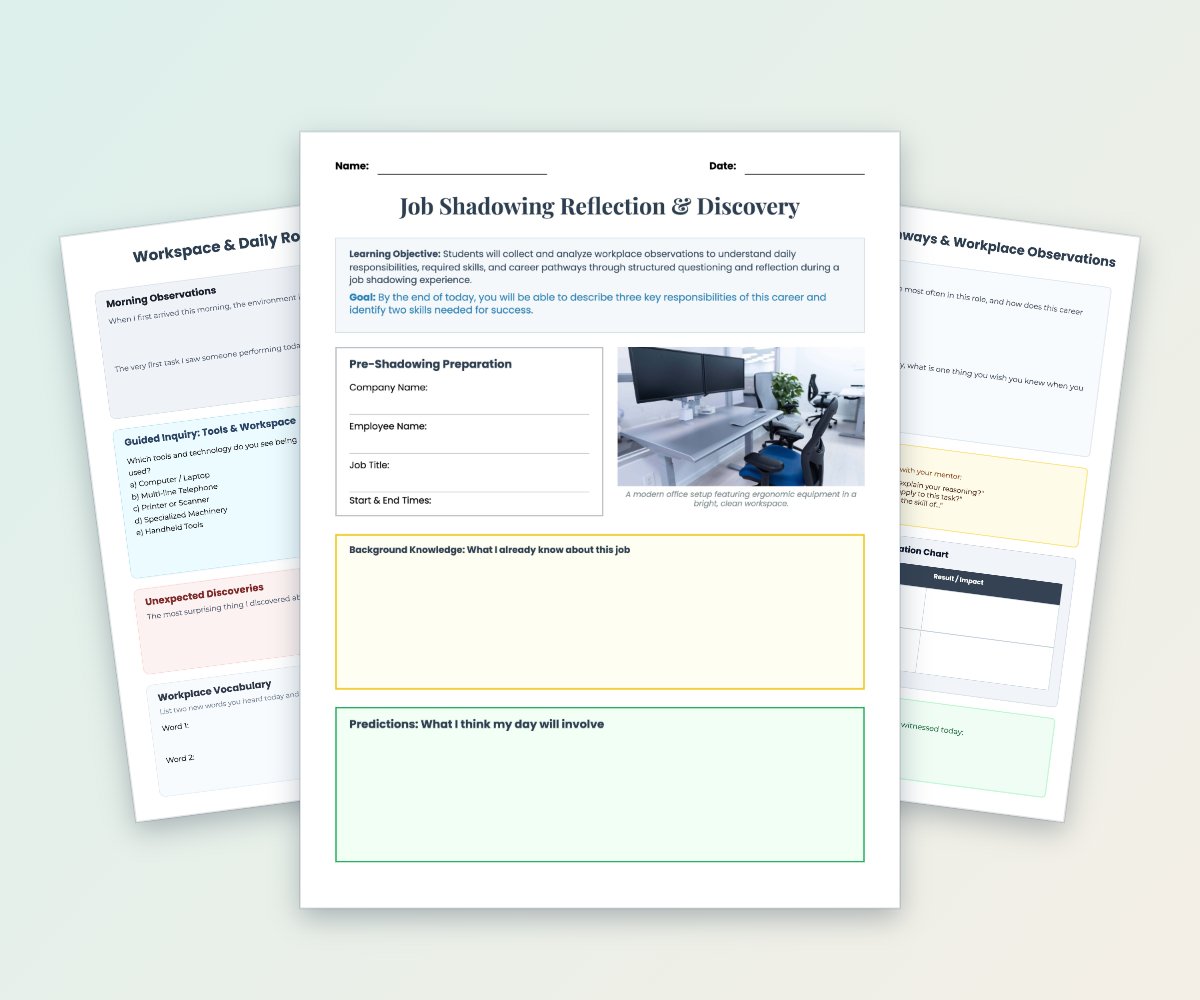
This four-page student log guides learners through pre-shadowing preparation, workplace observations, informational interviews, vocabulary development, and career reflection.
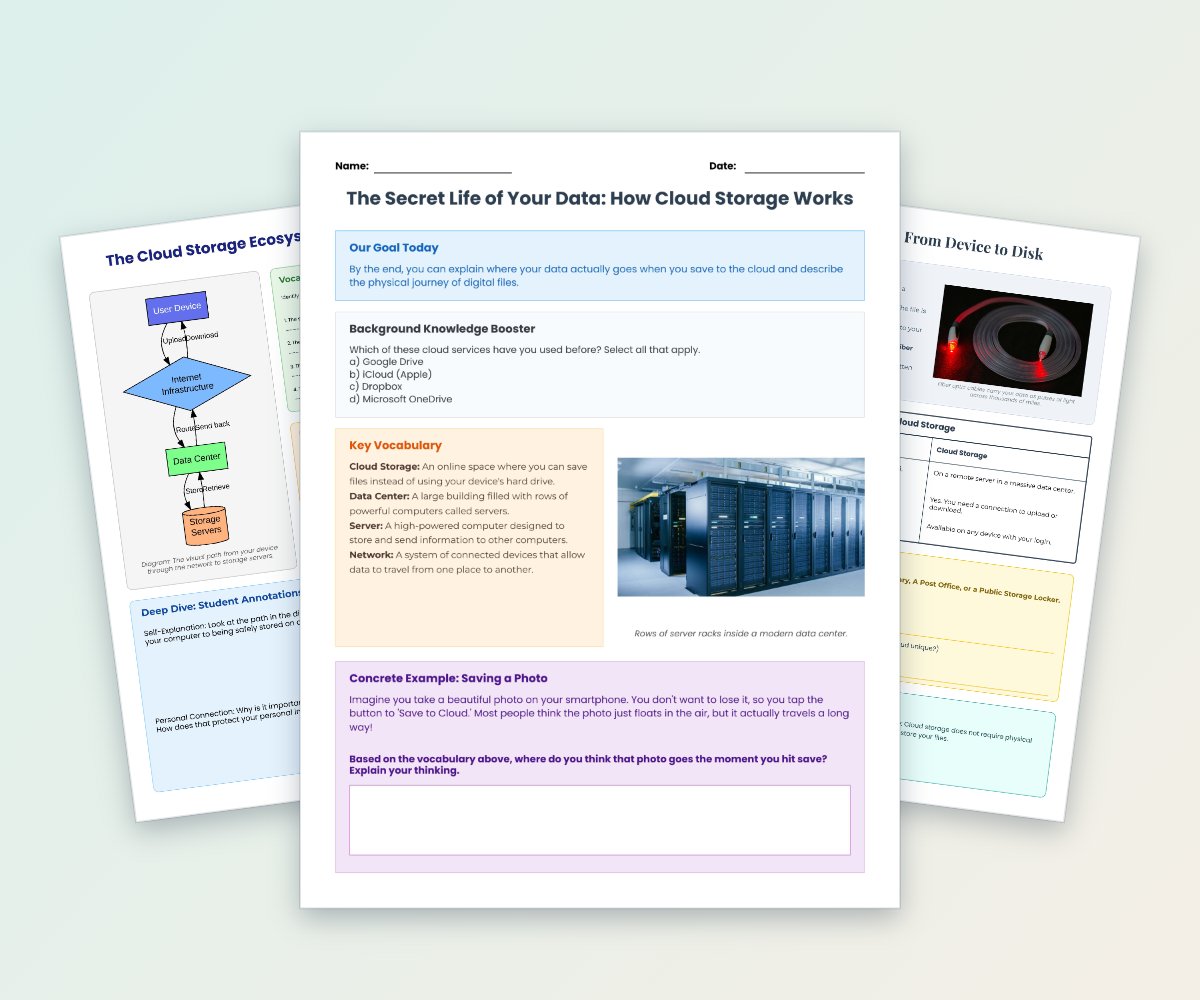
This four-page worksheet introduces students to cloud storage, data centers, servers, networks, and the physical journey of digital files.
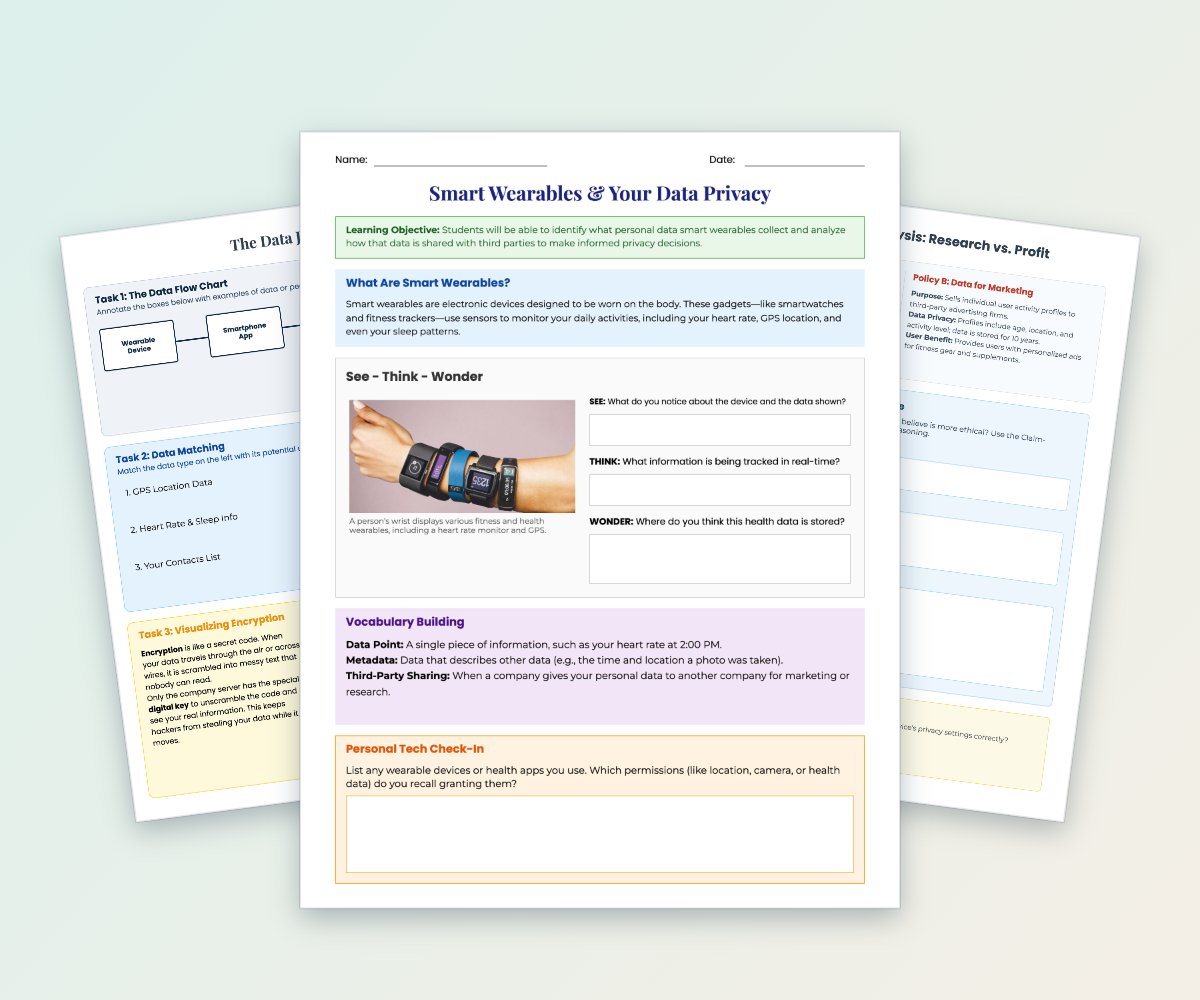
This four-page worksheet introduces students to the personal data collected by smartwatches, fitness trackers, and health apps.
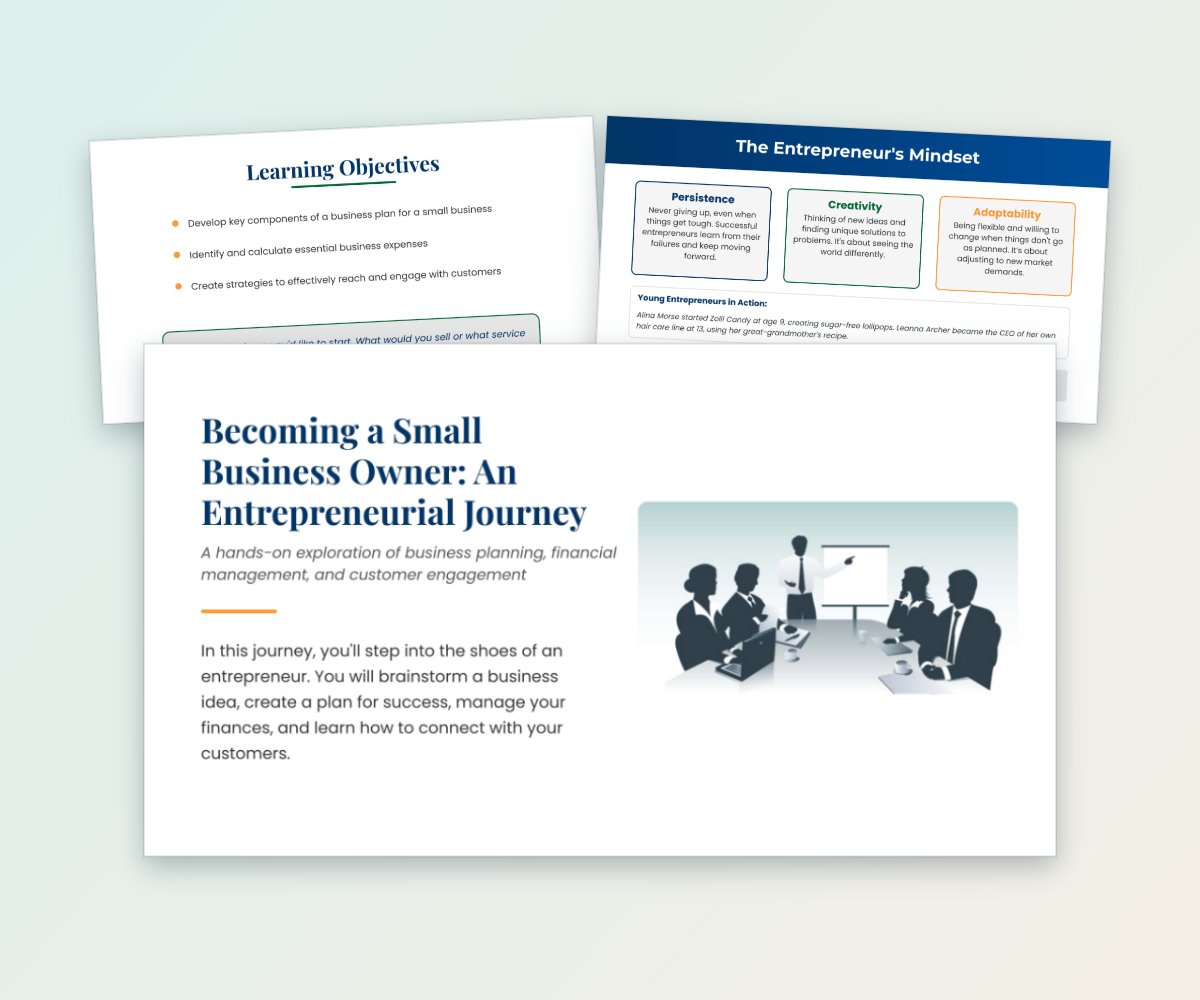
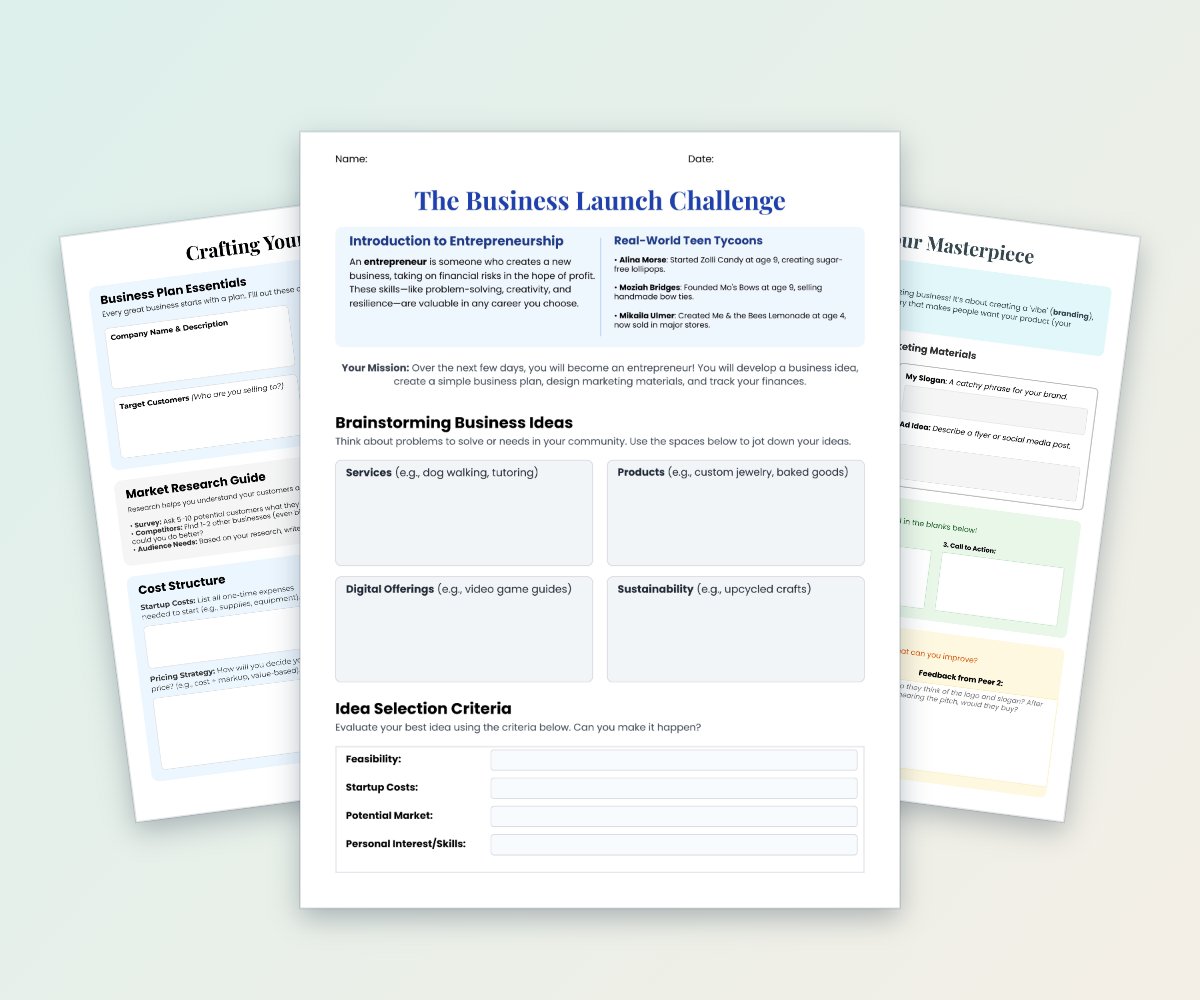
Students explore entrepreneurship by developing a business concept, writing a business plan, identifying startup costs, and considering marketing and customer engagement.
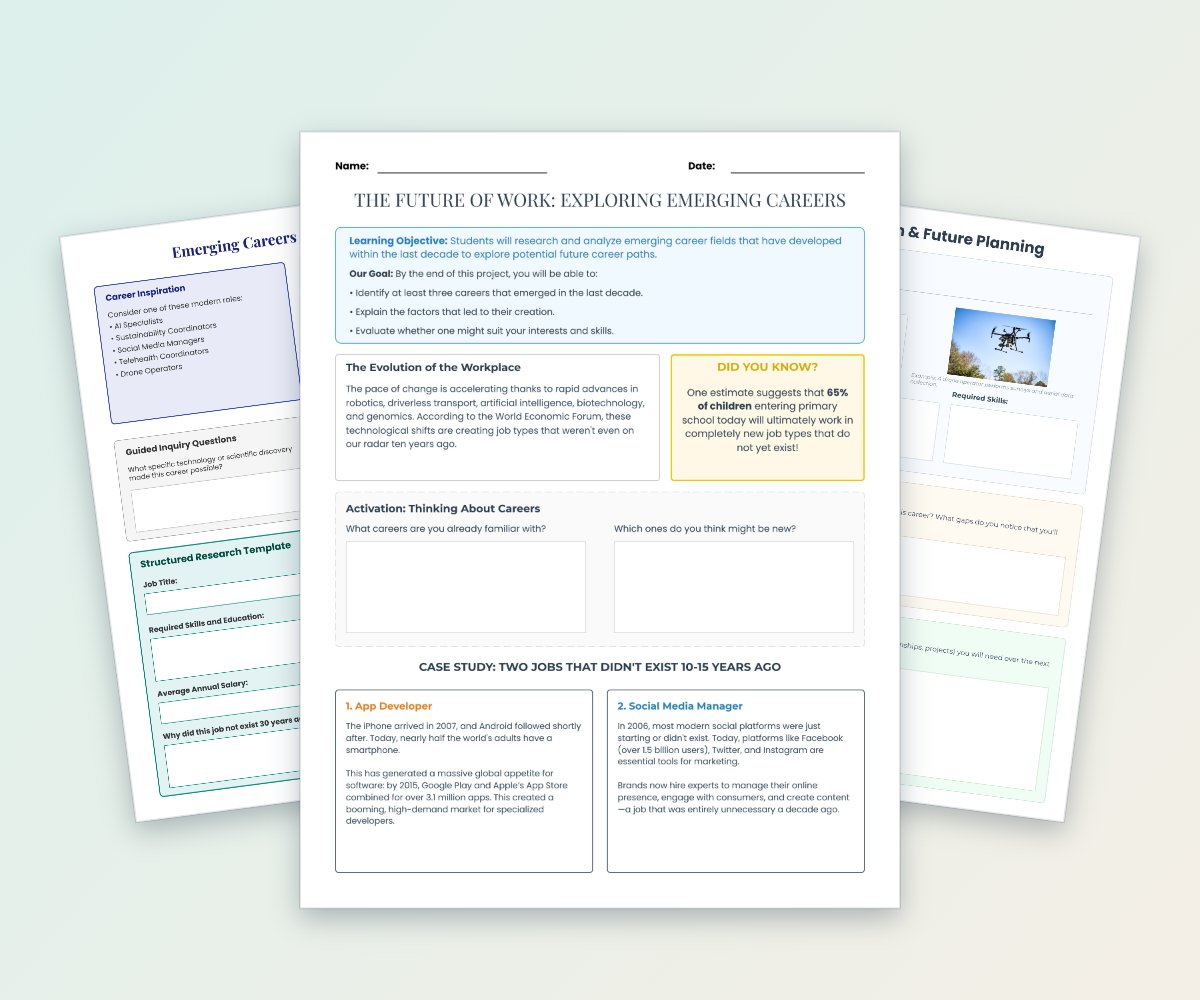
Students investigate careers created or transformed by recent advances in technology and science.
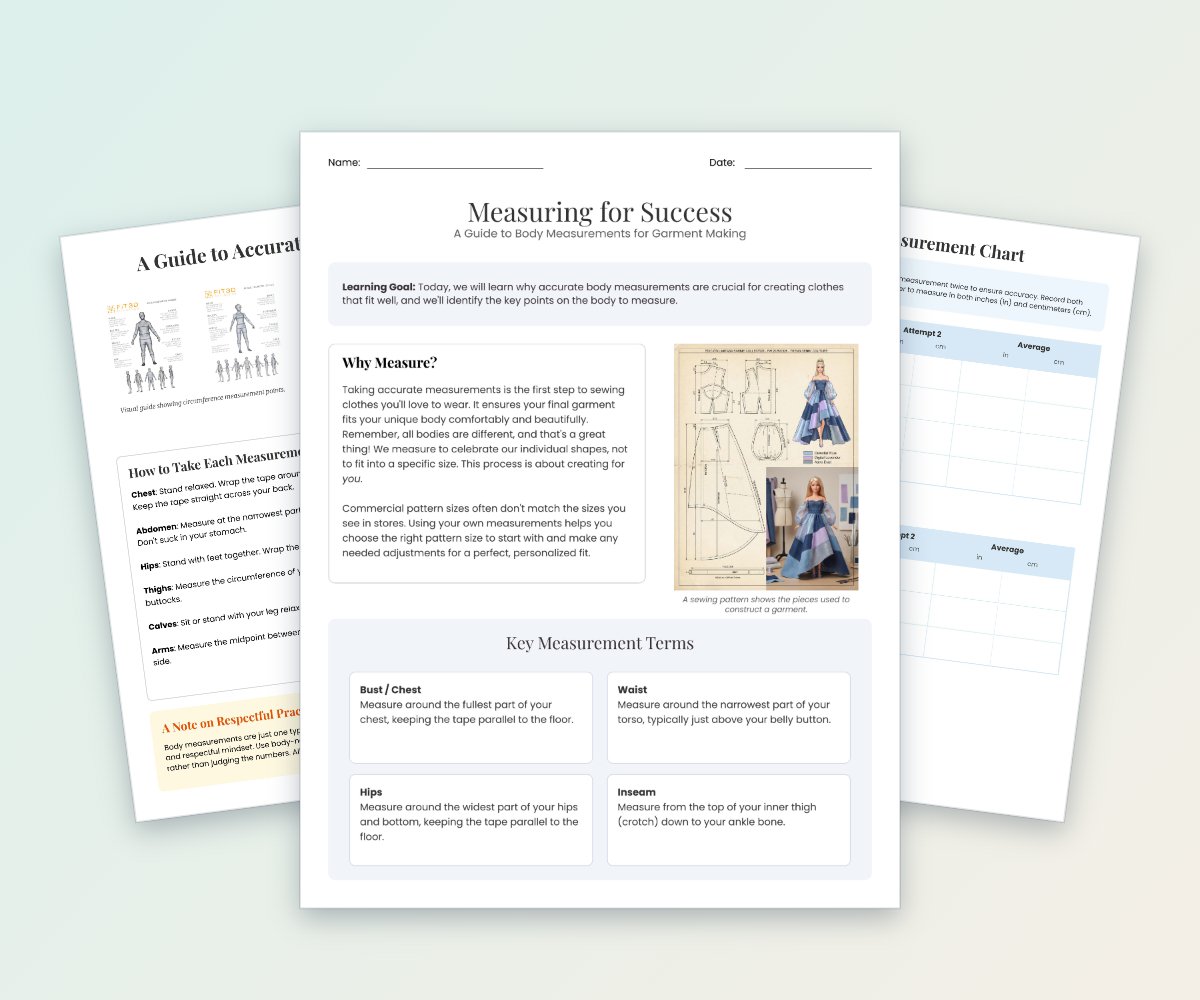
This four-page instructional guide explains why accurate measurements matter when making garments and defines essential measurement terms.
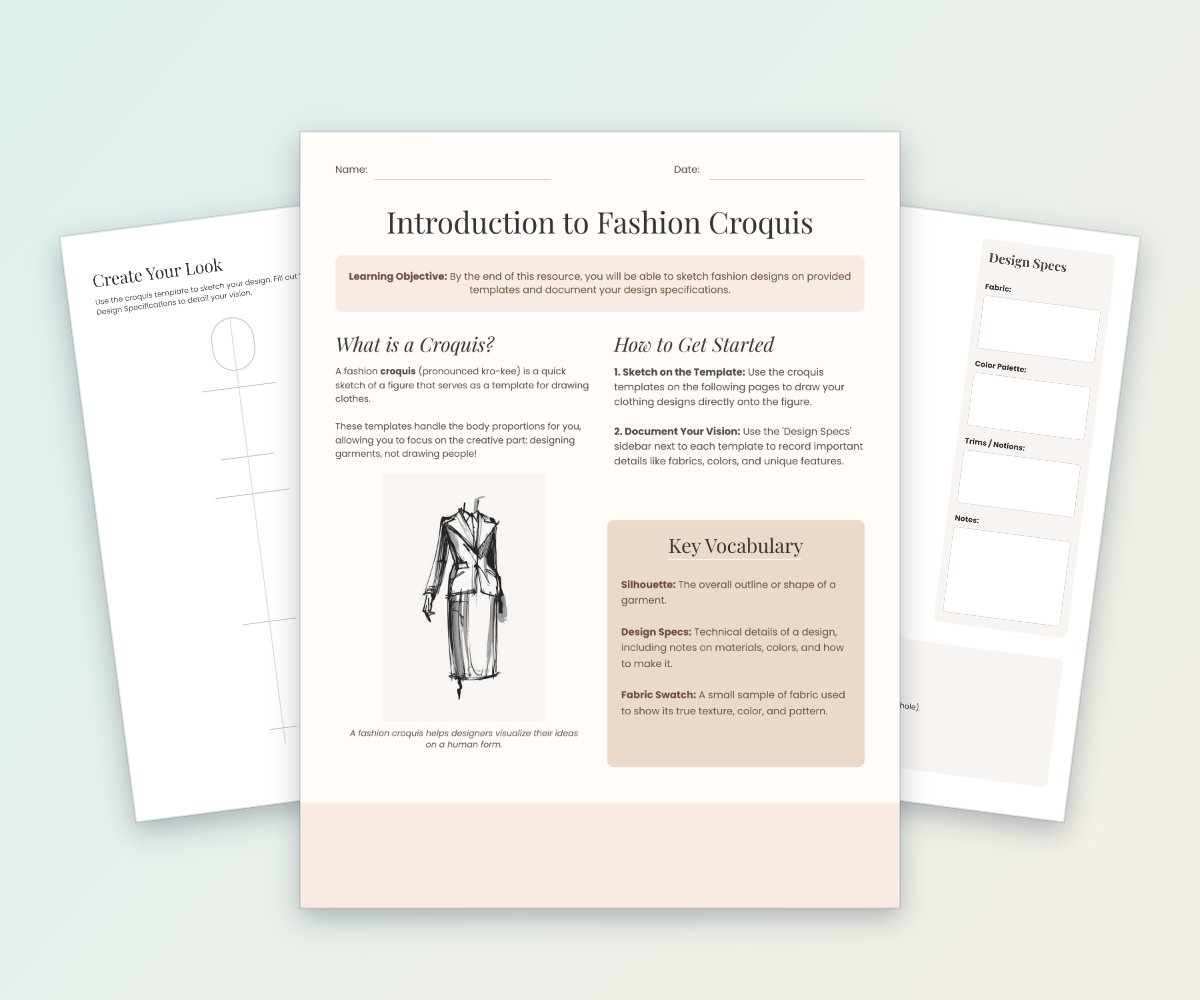
Students use fashion croquis templates to sketch garment designs from multiple views and document fabrics, colors, trims, and construction details.
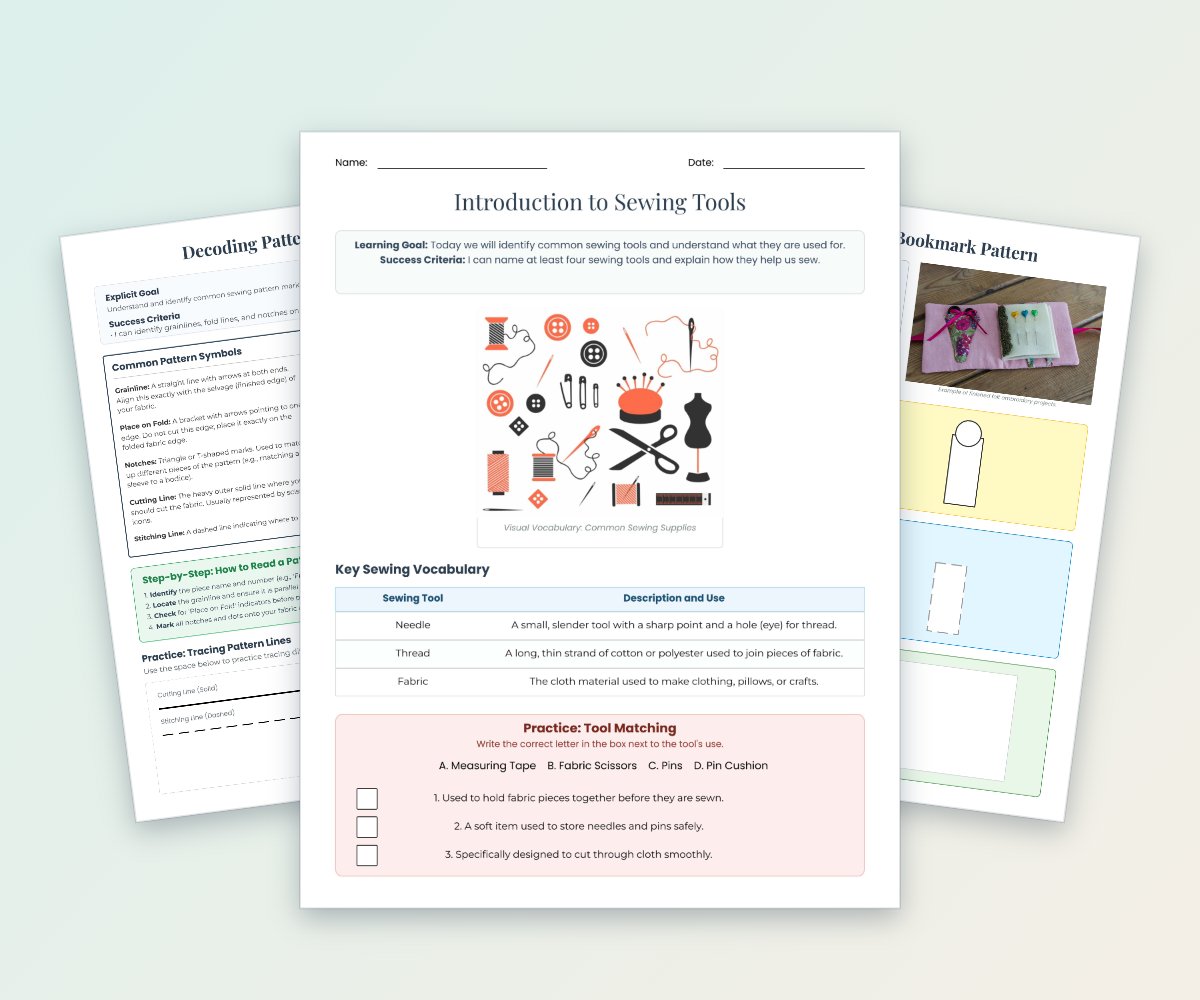
Introduce students to common sewing tools, supplies, and essential pattern markings through visual vocabulary, matching practice, and tracing activities.
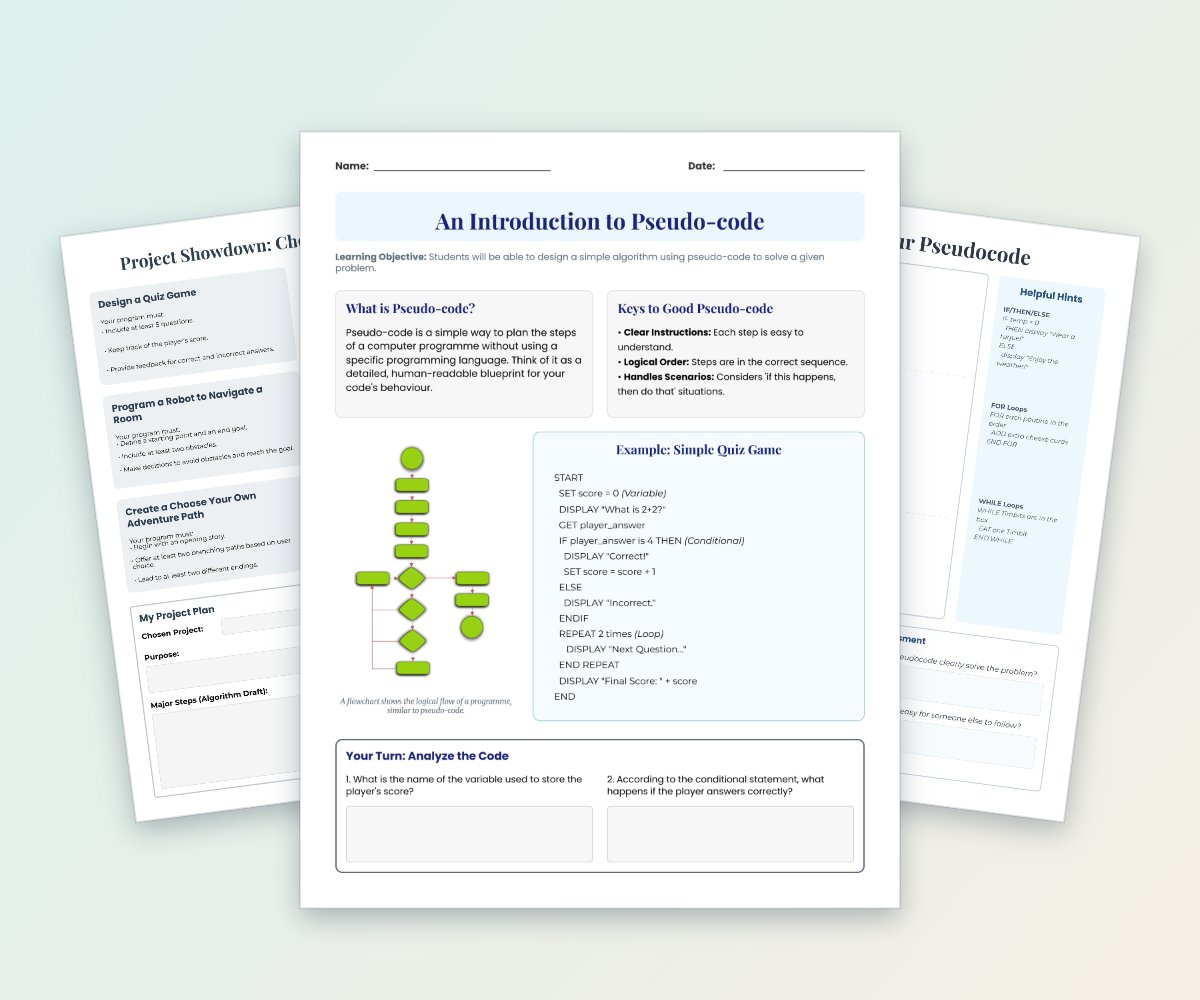
This four-page worksheet introduces pseudocode as a tool for planning computer programs.
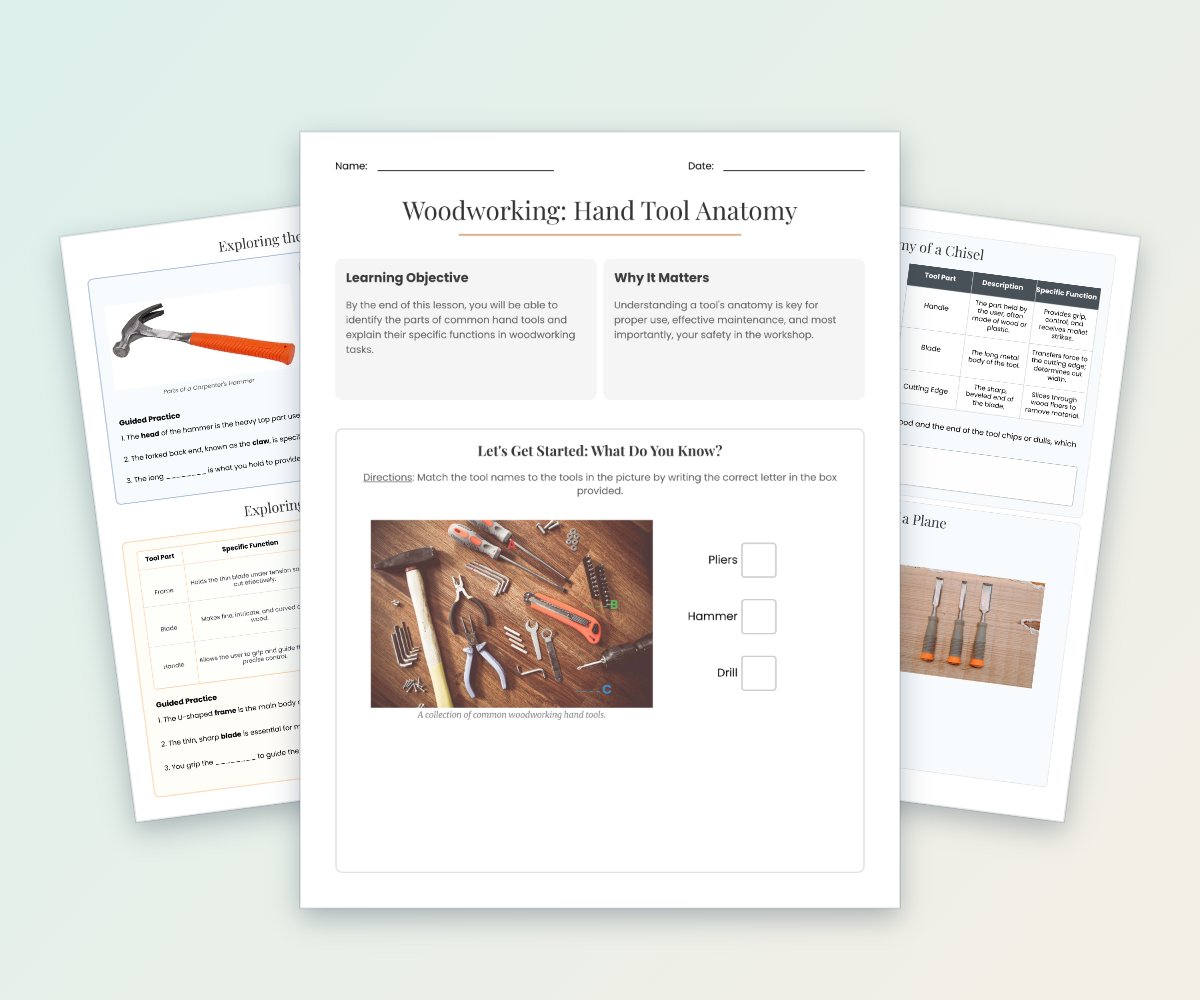
This four-page woodworking worksheet introduces students to the parts and functions of common hand tools, including hammers, coping saws, chisels, and planes.
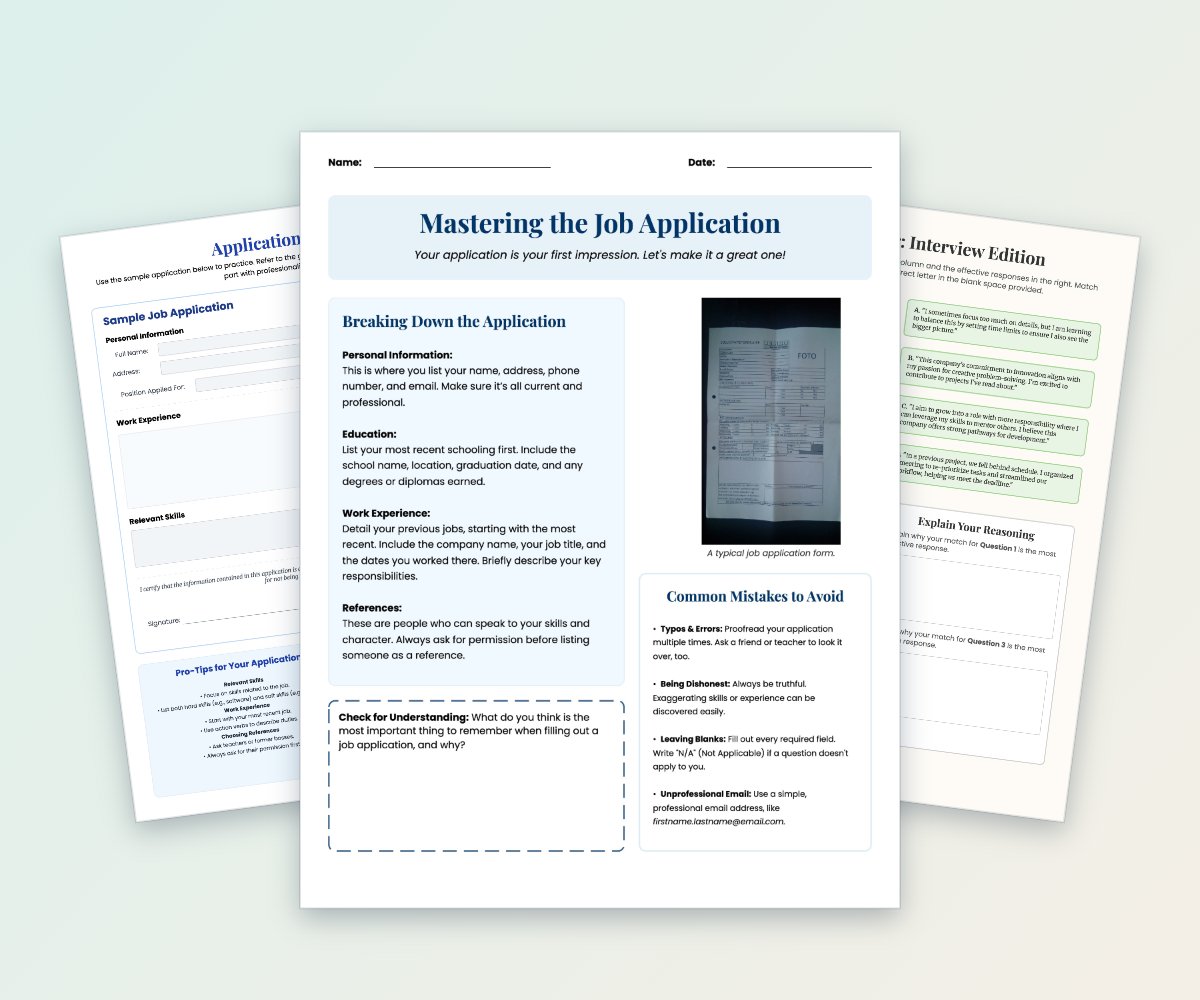
This four-page career-readiness resource explains each section of a job application, highlights common mistakes, and provides practical tips.
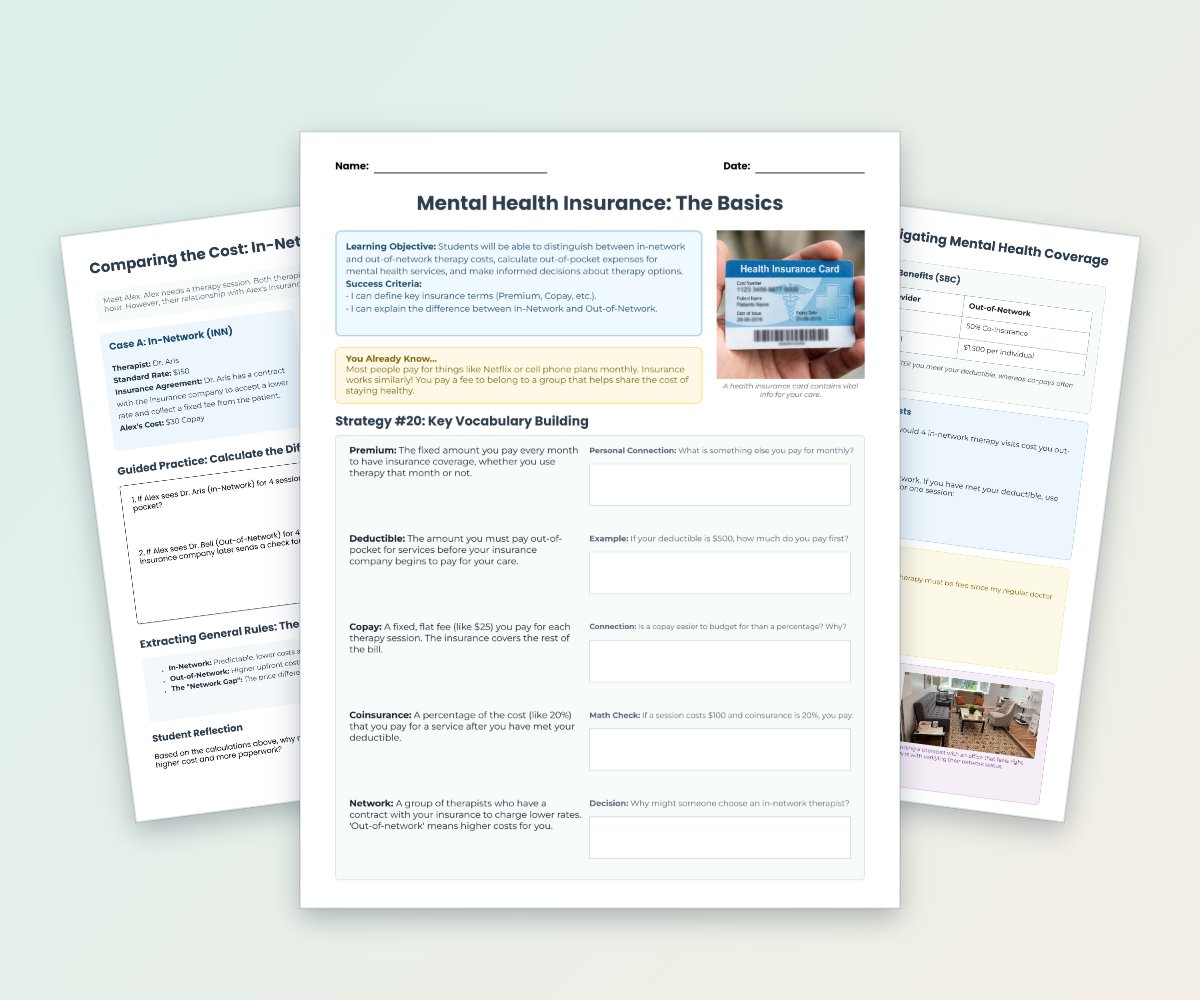
This four-page student resource introduces premiums, deductibles, copays, coinsurance, and insurance networks through definitions, personal connections, and cost calculations.
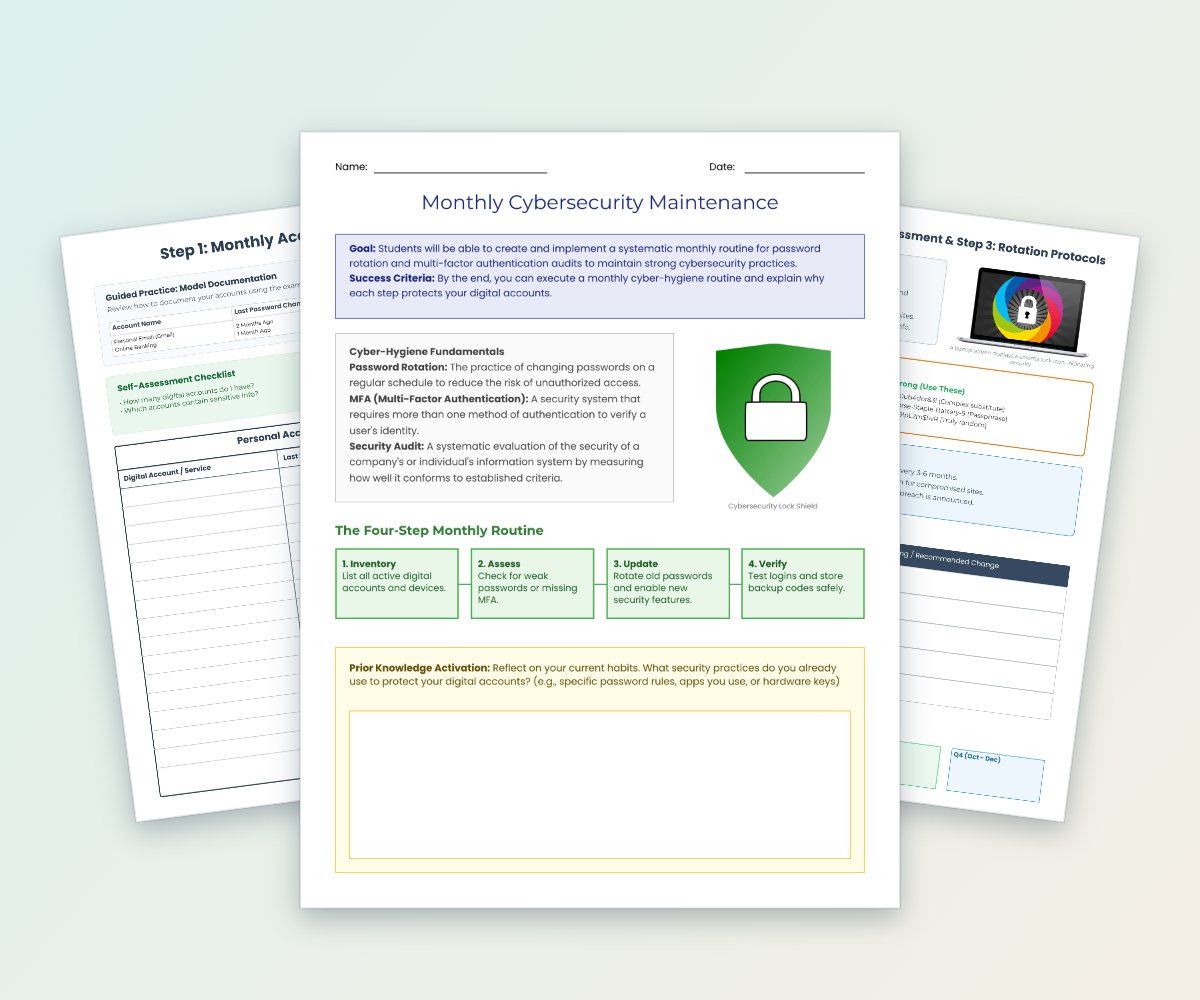
This five-page activity pack guides students through a monthly cyber-hygiene routine involving account inventories, password-strength assessments, password updates, MFA checks, and login verification.
Students develop a business idea and work through feasibility, target customers, market research, startup costs, pricing, revenue, and break-even planning.
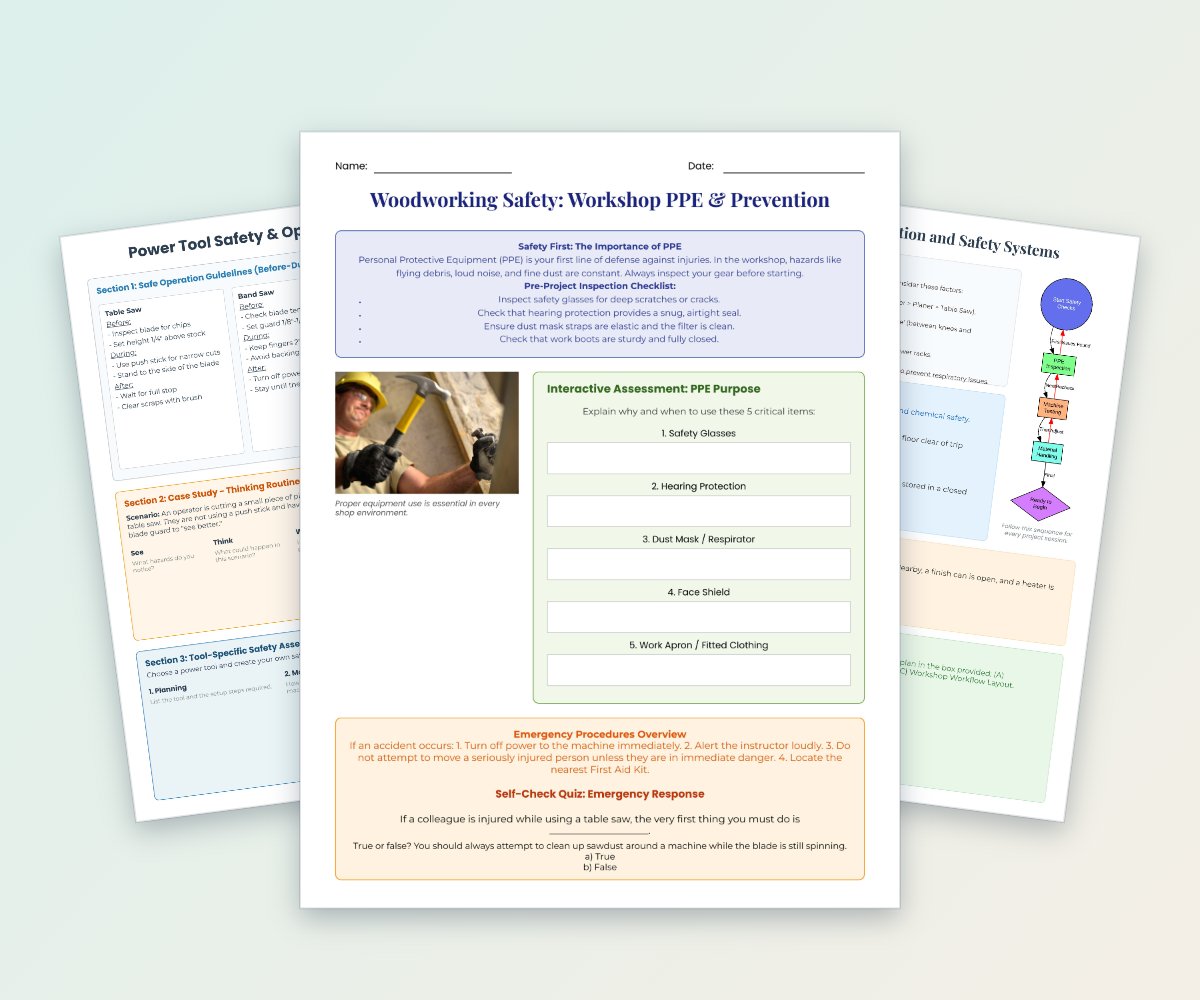
This ready-to-use resource teaches workshop PPE, emergency response, and safe operating procedures for table saws, band saws, and routers.
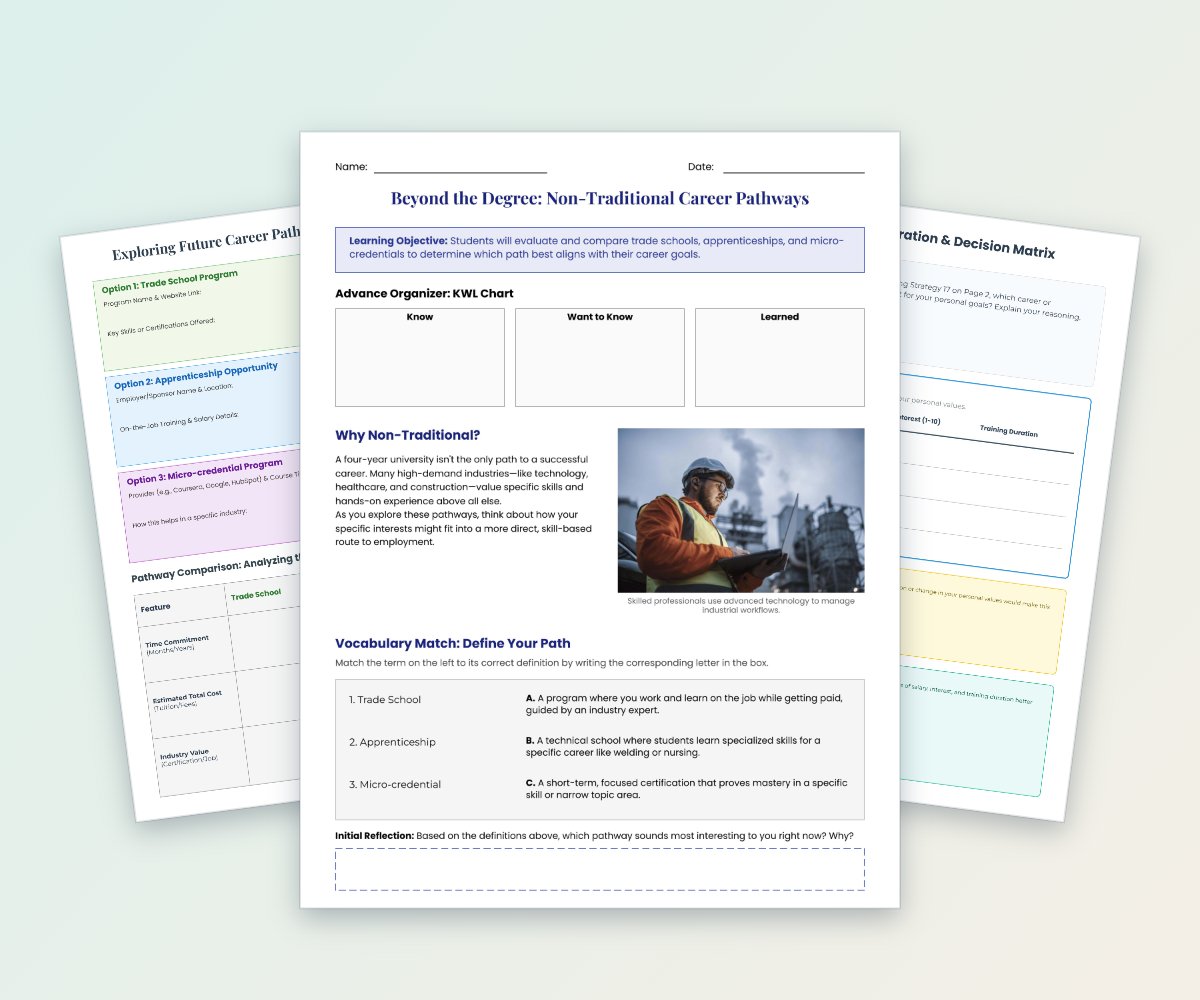
This four-page student workbook guides learners through trade schools, apprenticeships, and micro-credentials as alternatives to traditional university pathways.
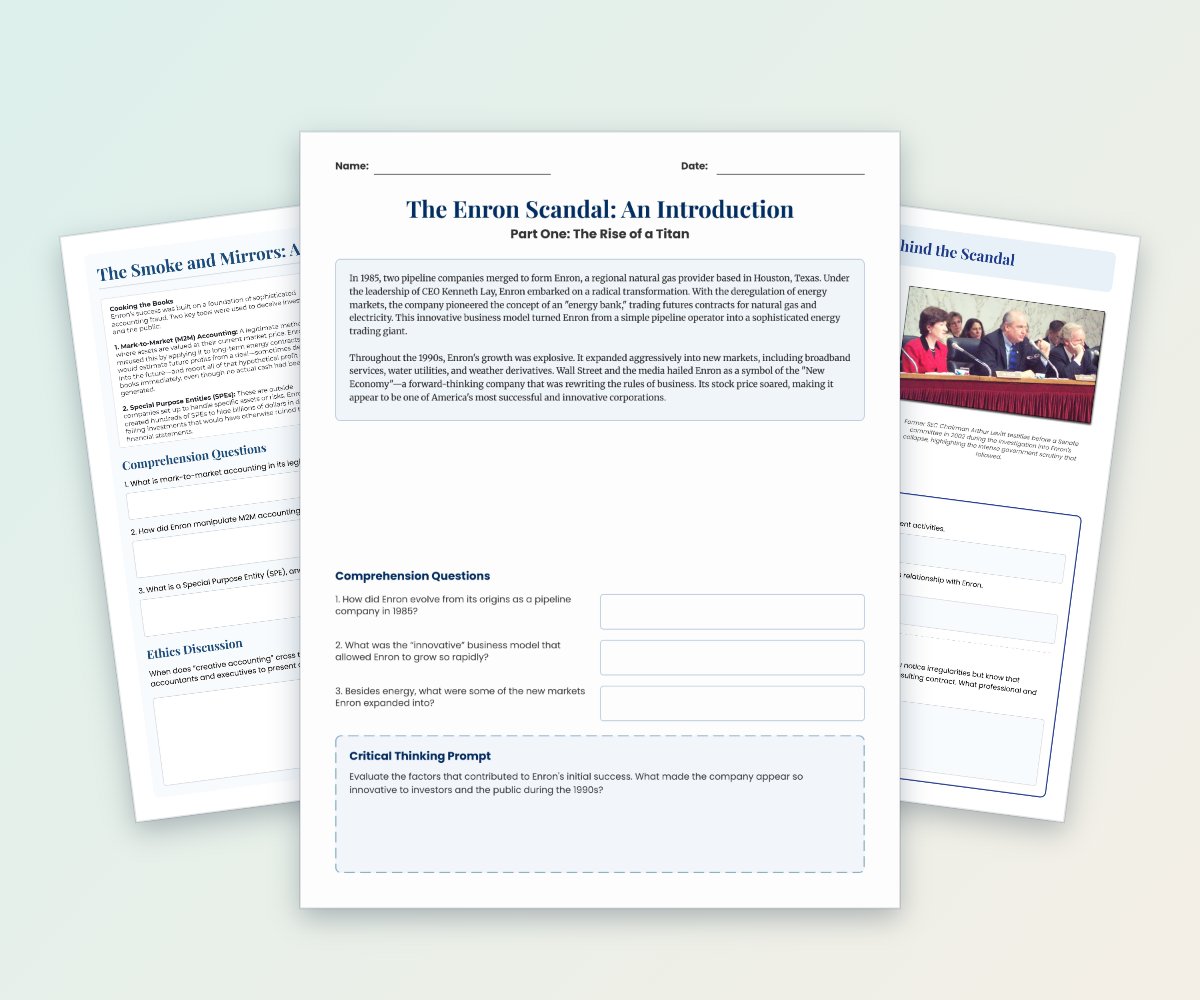
This five-page resource introduces Enron’s rise, energy trading model, mark-to-market accounting, and special purpose entities.
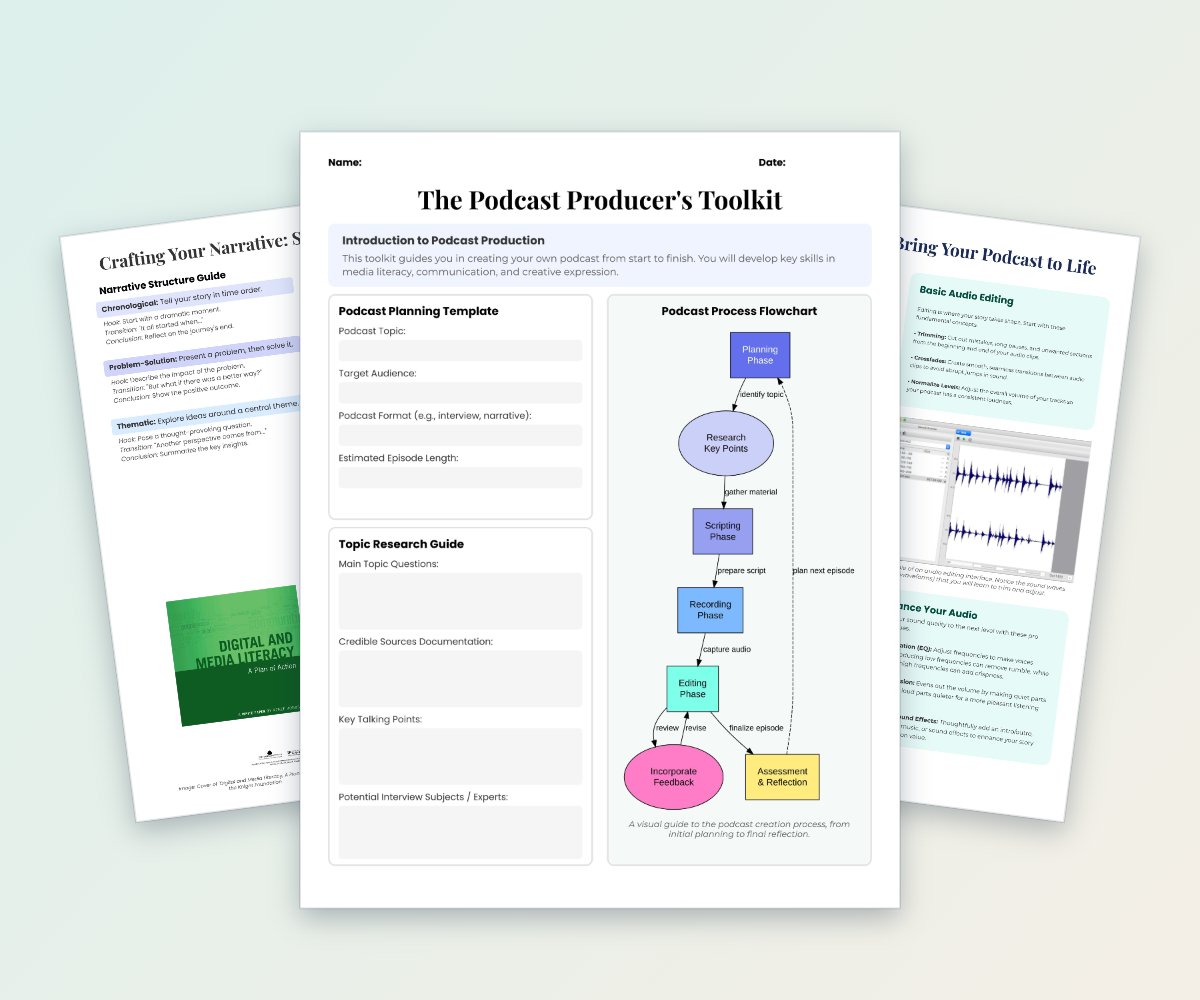
This four-page toolkit guides students through planning, researching, scripting, recording, editing, and reflecting on a podcast episode.
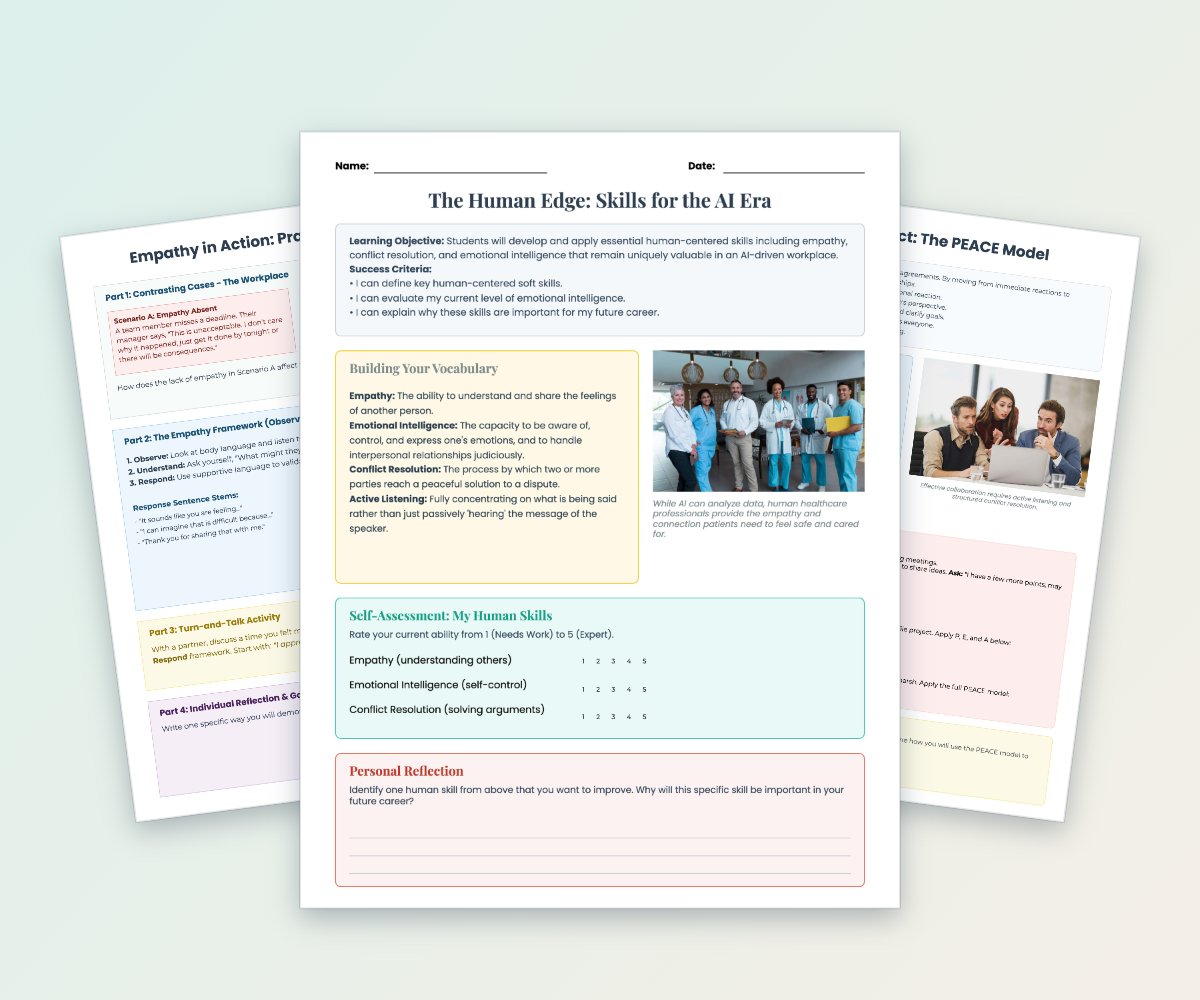
Students explore human-centered skills that remain valuable in an AI-driven workplace, including empathy, emotional intelligence, conflict resolution, and active listening.
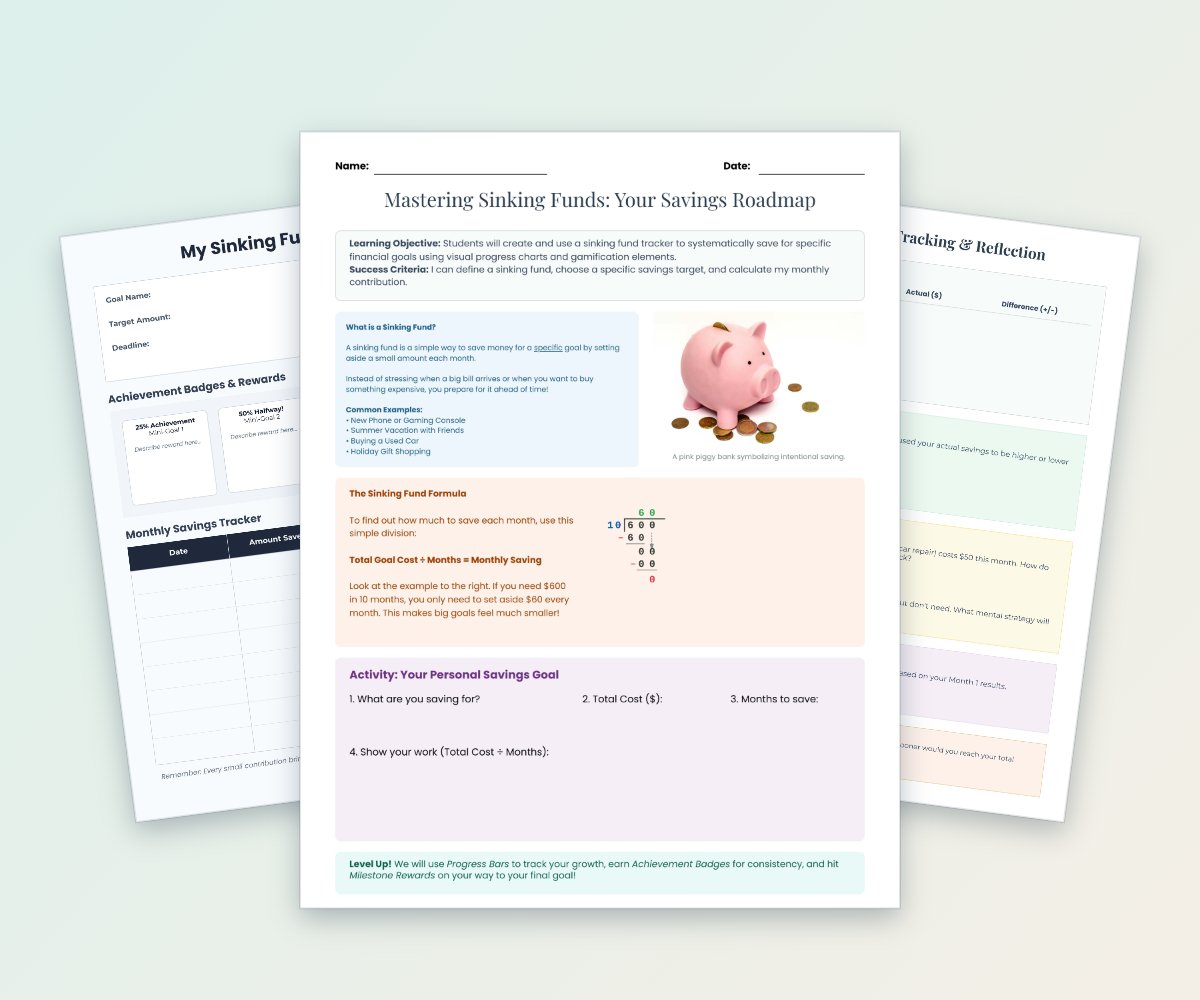
Students learn how sinking funds support specific savings goals through formulas, progress tracking, achievement milestones, and reflection.
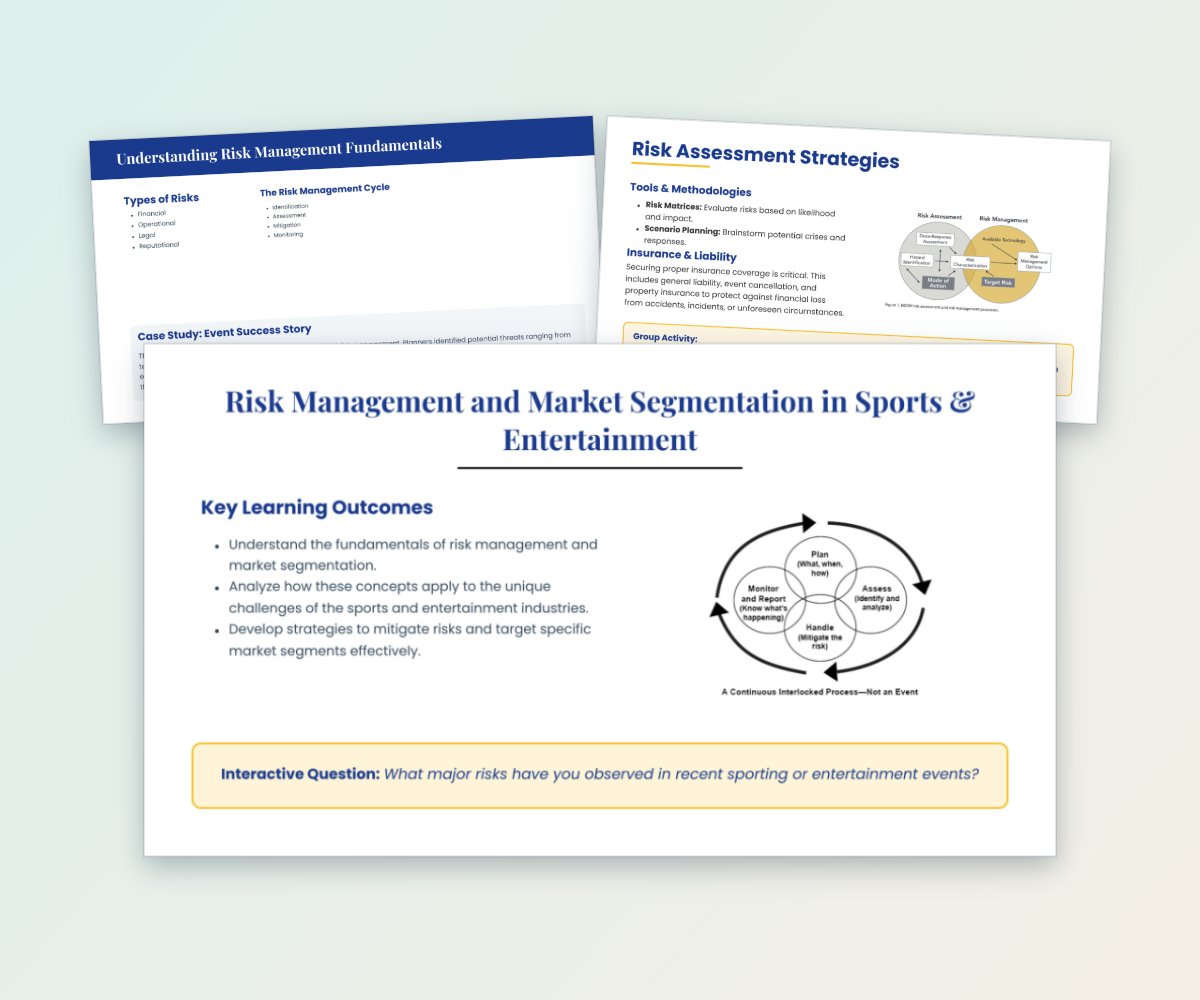
Teach foundational risk management and market segmentation concepts in sports and entertainment contexts.
This 10-slide presentation introduces risk management and market segmentation in the sports and entertainment industries.