
Saving, Investing, Risk, and Financial Well-Being: Grade 8 Alberta
This 34-page presentation teaches Grade 8 students about financial well-being, saving, investing, risk, reward, liquidity, time horizons, diversification, and emergency savings.
$11
Clear, practical resources for busy educators, organized so you can get from search to ready-to-teach quickly.
This 34-page presentation teaches Grade 8 students about financial well-being, saving, investing, risk, reward, liquidity, time horizons, diversification, and emergency savings.
This 39-slide presentation helps Grade 9 students understand borrowing, credit, debt, interest, fees, minimum payments, and repayment schedules.
This 32-slide presentation teaches students to identify and correct common woodworking hazards involving PPE, clothing, tools, machinery, dust, and work areas.
A ready-to-teach Grade 9 lesson helping students evaluate post-secondary and career pathways using criteria, evidence, trade-offs, and personal fit.
This 36-slide presentation teaches students how to evaluate appropriate, risky, and prohibited AI use in school and career settings.
A ready-to-teach 32-slide lesson exploring how interests, strengths, values, people, places, learning, goals, and opportunities influence career development.
This 35-slide lesson helps Grade 8 students examine post-secondary cost categories, financial assistance, and planning supports.
A 35-slide Grade 8 lesson helping students identify post-secondary cost categories, explore financial assistance, and plan for future pathways.
This 35-slide Grade 8 presentation introduces employment income, wages, salary, gross and net pay, deductions, taxes, benefits, and total compensation.
A ready-to-teach 45–60 minute slide lesson introducing borrowing, credit, debt, repayment, and interest.
This 36-slide lesson helps Grade 9 students understand government programs, benefits, eligibility, applications, reliable information sources, and community well-being.
This 34-slide presentation teaches students how to identify inaccurate, incomplete, outdated, biased, misleading, and unsupported AI-generated information.
This 39-page presentation teaches Grade 9 students how to create a clear, truthful, and professional beginner resume.
A 34-slide Grade 8 lesson that introduces financial well-being, saving, investing, risk, reward, liquidity, diversification, and time horizons.
This 30-slide lesson helps Grade 7 students explore their interests, strengths, values, hobbies, and aspirations.
A 55–70 minute Grade 7 lesson helping students connect interests, strengths, values, hobbies, and experiences to future learning and career possibilities.
This 32-slide lesson helps students recognize scams, phishing, fraud, and identity theft through fictional scenarios and practical safety strategies.
A 30-slide Grade 7 financial literacy lesson exploring needs, wants, values, goals, trade-offs, and opportunity costs.
This 35-slide Grade 8 presentation introduces employment income, wages, salary, gross pay, deductions, net pay, taxes, benefits, and total compensation.
This 33-slide lesson helps Grade 8 students connect personal experiences with interests, strengths, values, and possible career areas.
This 32-slide presentation teaches shop safety through hazard-identification investigations involving sanders, lathes, PPE, clothing, tools, and work areas.
This 34-slide presentation introduces game theory through relatable business scenarios, including snack counters and lemonade stands.
This 30-slide presentation teaches students how customer service builds trust through communication, strong first impressions, respectful responses, and problem-solving.
This 34-slide presentation introduces business ethics, ethical values, stakeholders, and ethical decision-making in business contexts.
This 62-slide lesson introduces community, community helpers, careers, workplaces, tools, responsibilities, and service.
This 31-slide presentation introduces artificial intelligence through student-friendly definitions, examples, patterns, data, predictions, and discussion prompts.
This 50-slide presentation introduces accounting vocabulary, the business entity concept, the accounting equation, account classification, debit-credit patterns, journal entries, trial balances, and b
This 32-slide classroom-ready presentation introduces pricing, fixed and variable costs, revenue, profit, and break-even concepts.
This 33-slide presentation introduces hardwoods, softwoods, common wood species, plywood, MDF, dimensional lumber, and nominal versus actual dimensions.
A strengths-based Grade 8 presentation exploring personal experiences, interests, values, transferable skills, and possible career directions.
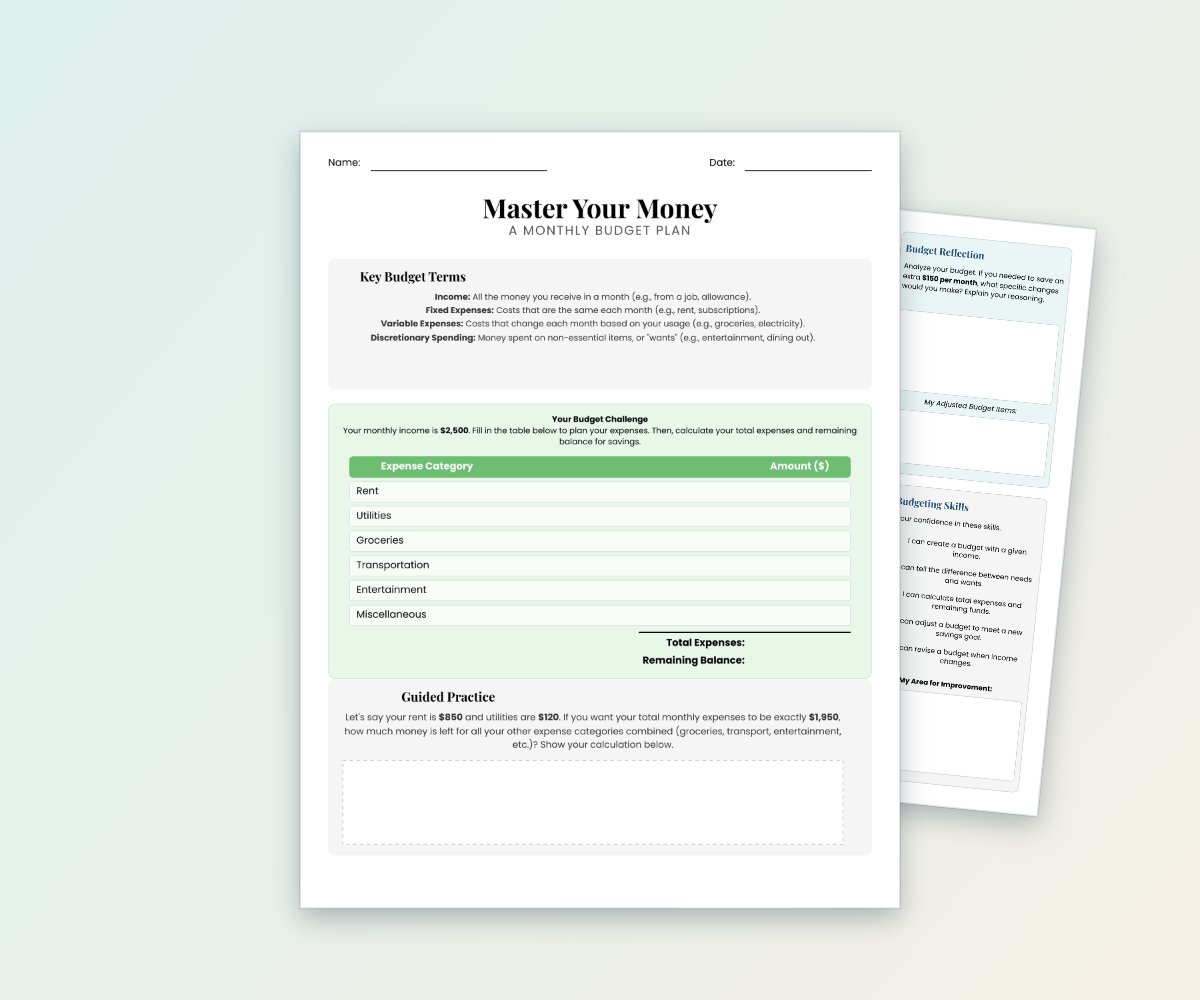
This two-page worksheet teaches students to define budget terminology, categorize expenses, calculate totals and remaining funds, and plan monthly spending.
This 30-slide presentation introduces goods, services, digital products, customer value, and business decision-making.
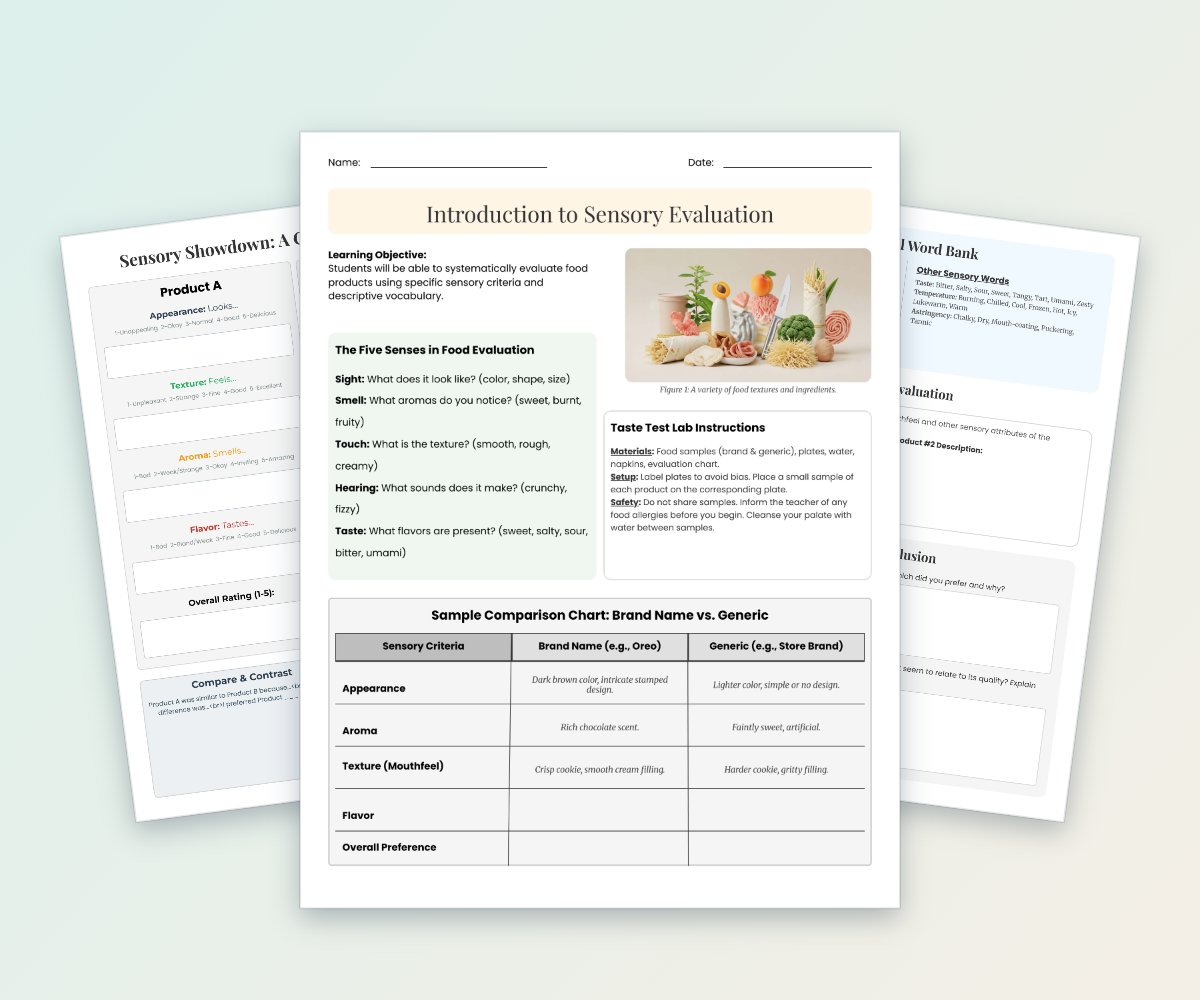
Students learn to evaluate food products using sight, smell, touch, hearing, and taste.
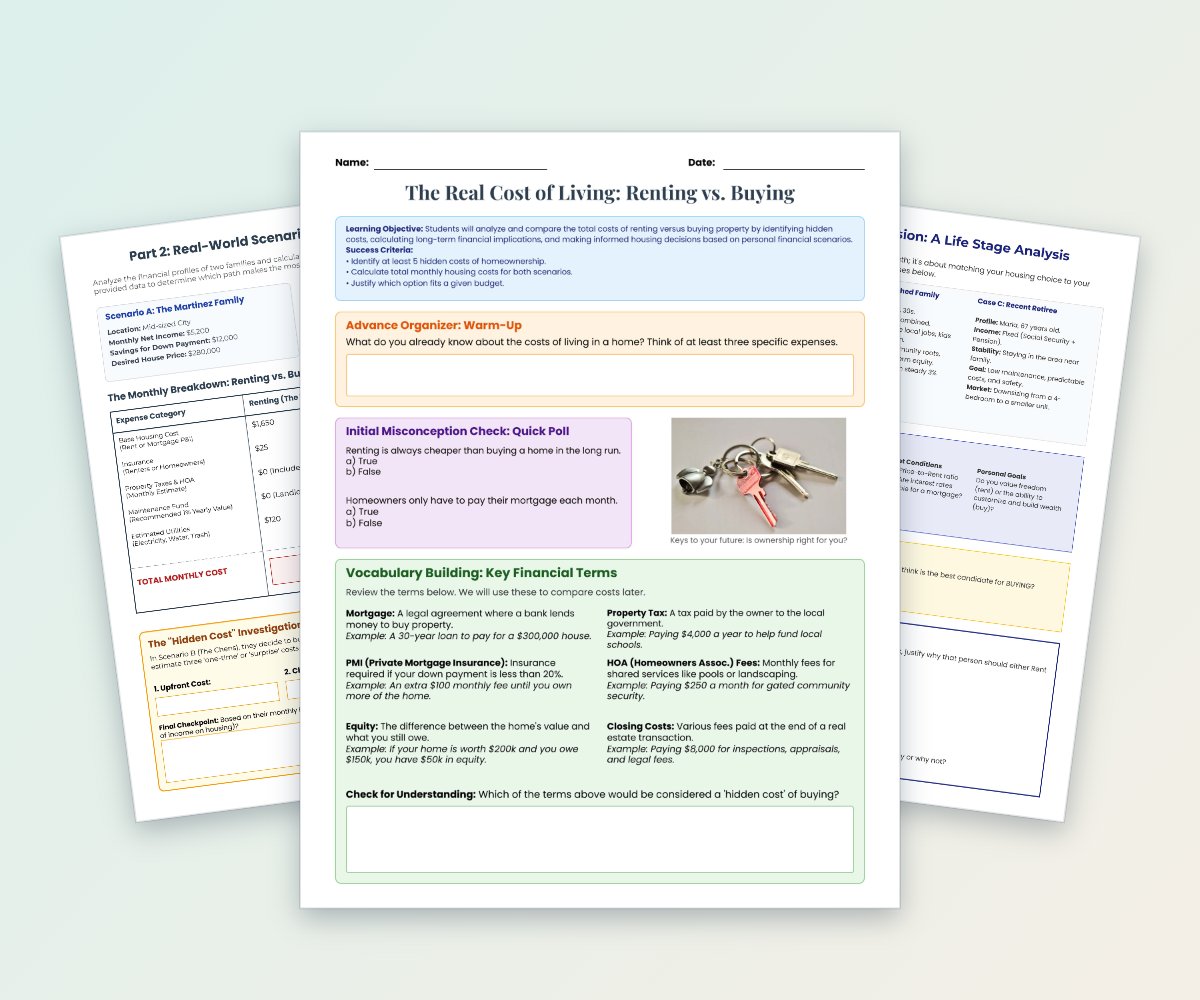
Students compare renting and buying by identifying hidden costs, reviewing key housing terms, and calculating monthly expenses.
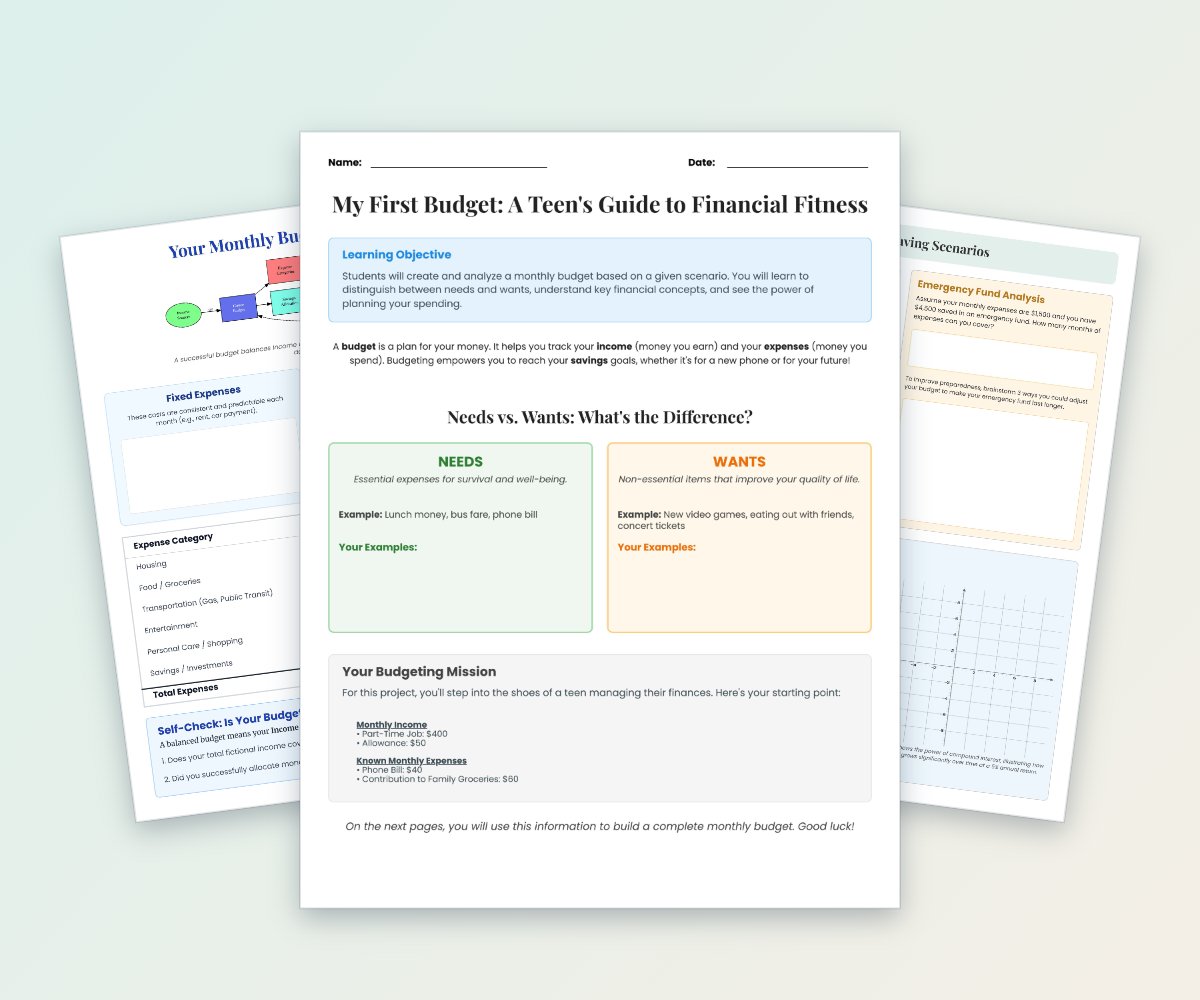
This six-page financial literacy guide helps teens distinguish needs from wants, create a monthly budget, and evaluate spending decisions.
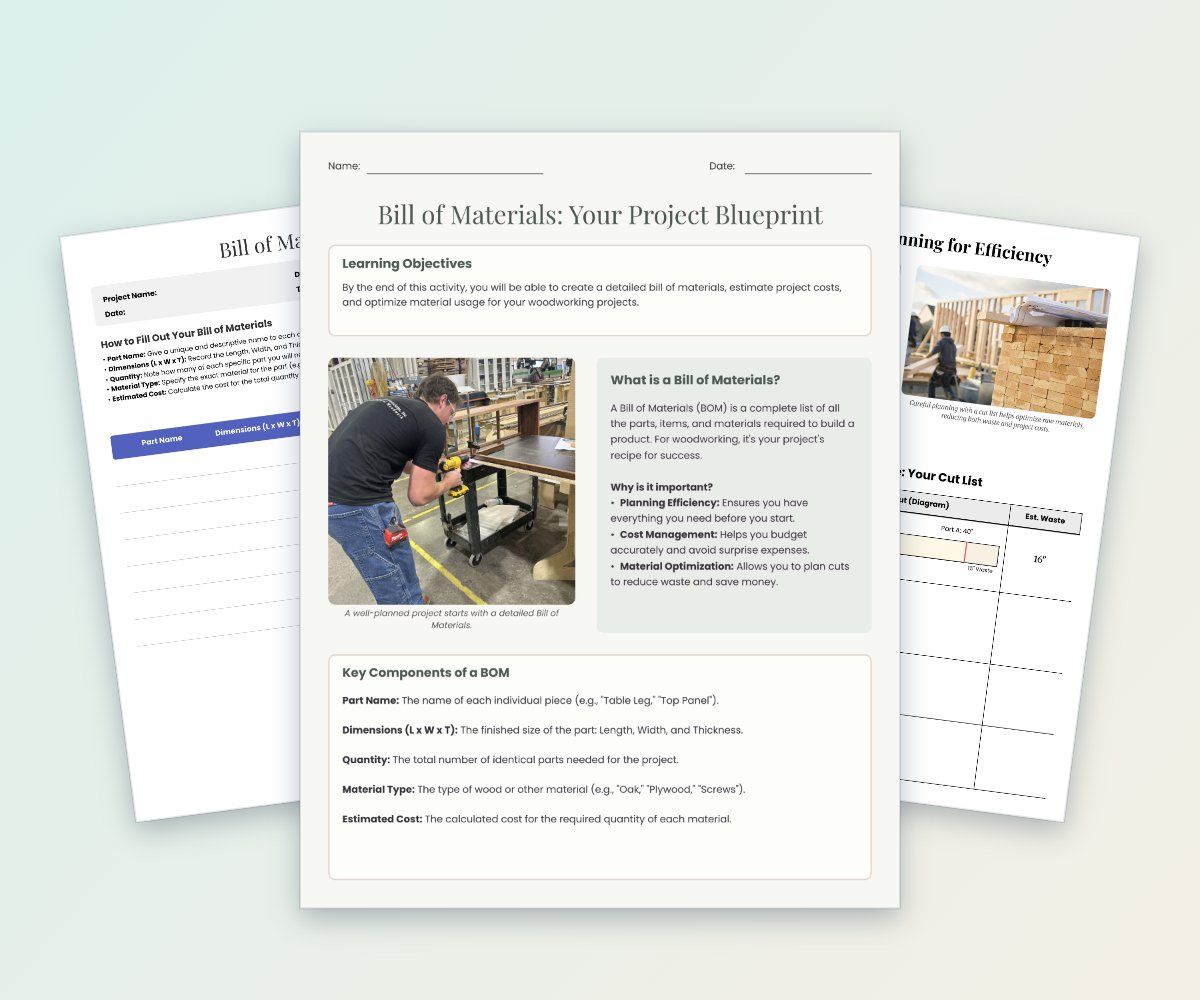
Students learn how to create a woodworking bill of materials by identifying parts, dimensions, quantities, materials, and estimated costs.
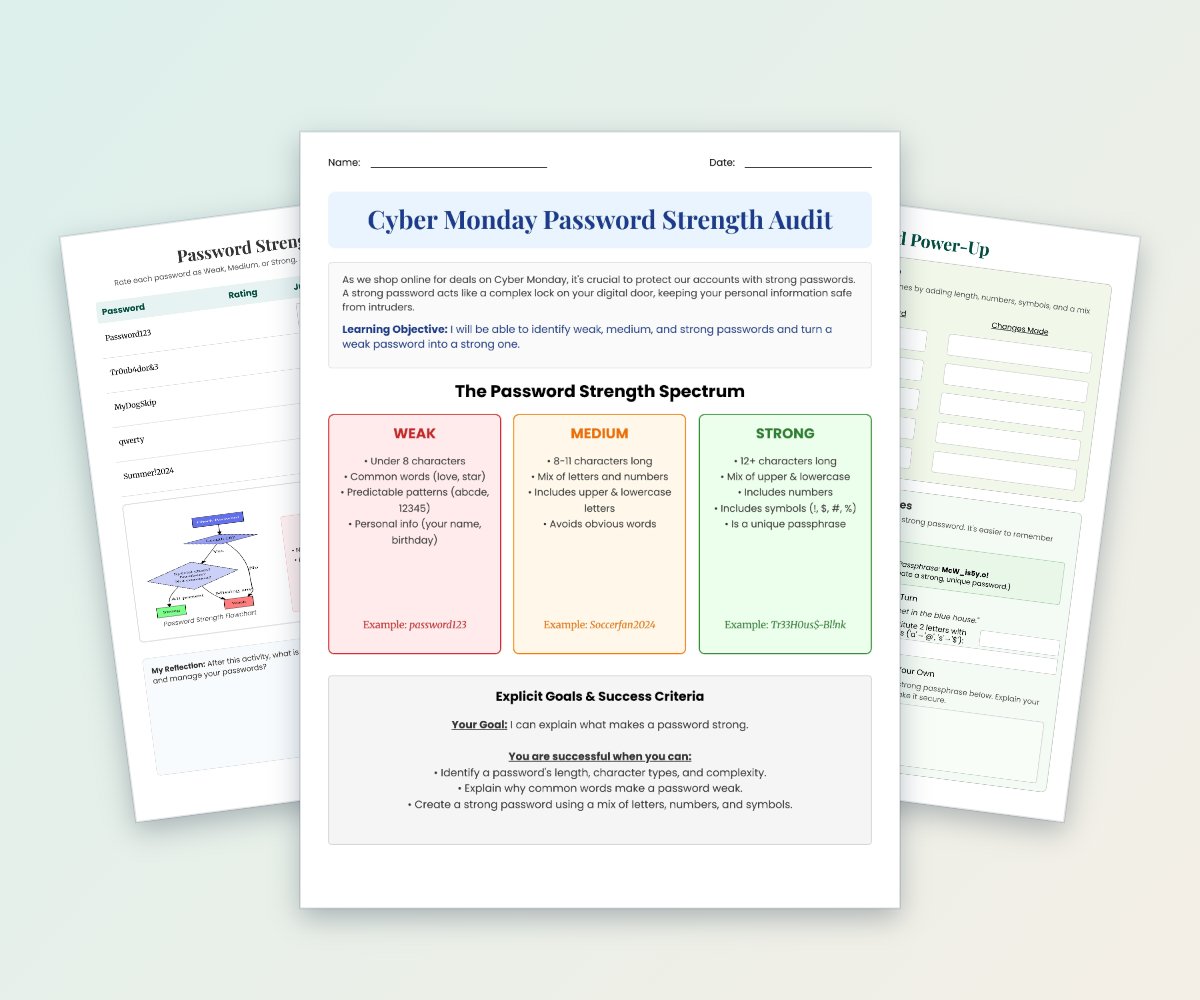
This four-page activity teaches students how to identify weak, medium, and strong passwords using length, character variety, predictability, and personal information criteria.
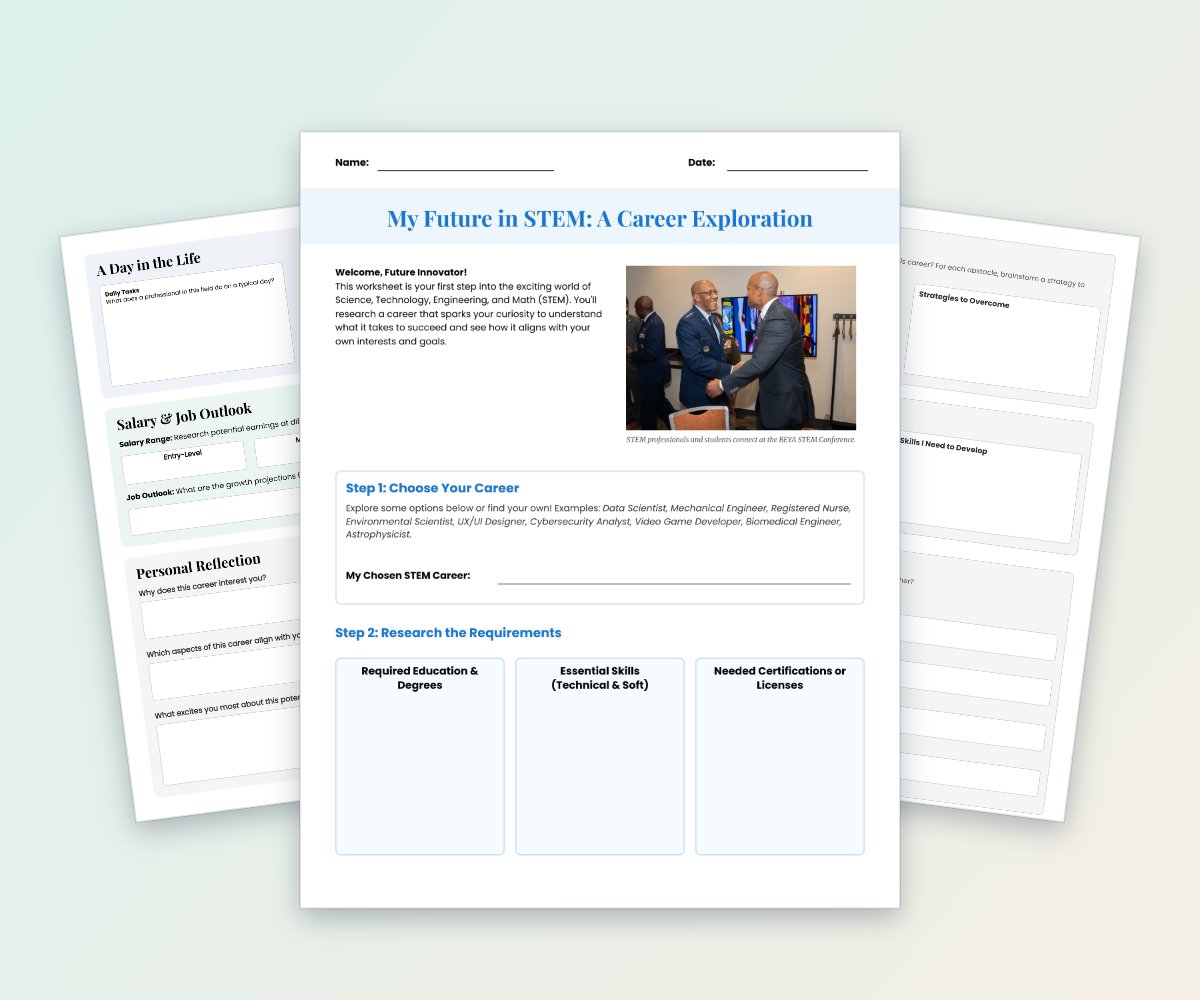
Students research a STEM career, examining education requirements, skills, certifications, daily responsibilities, work environments, salary, and job outlook.
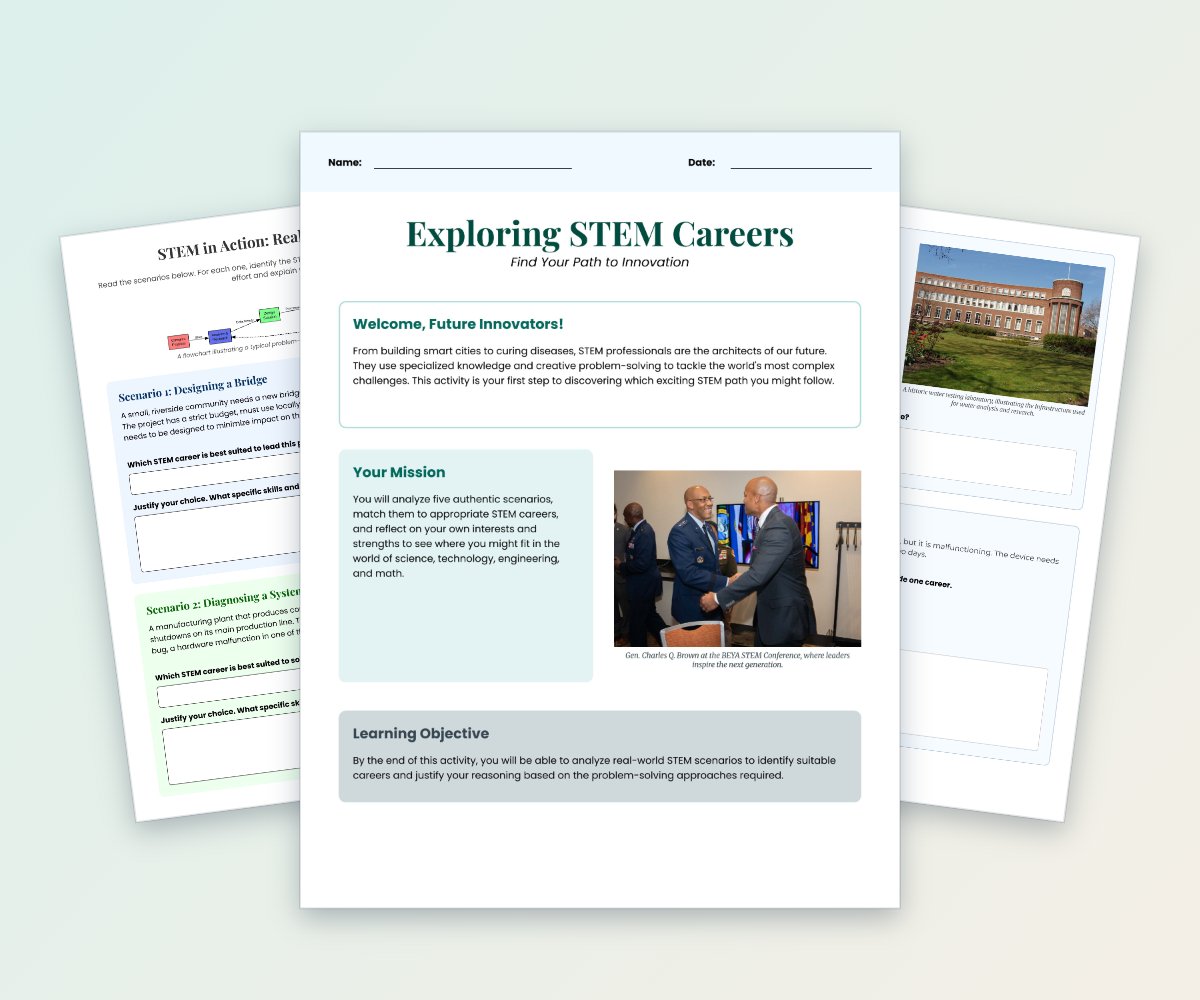
Students analyze five real-world STEM scenarios, match each challenge to an appropriate career, and justify their reasoning.
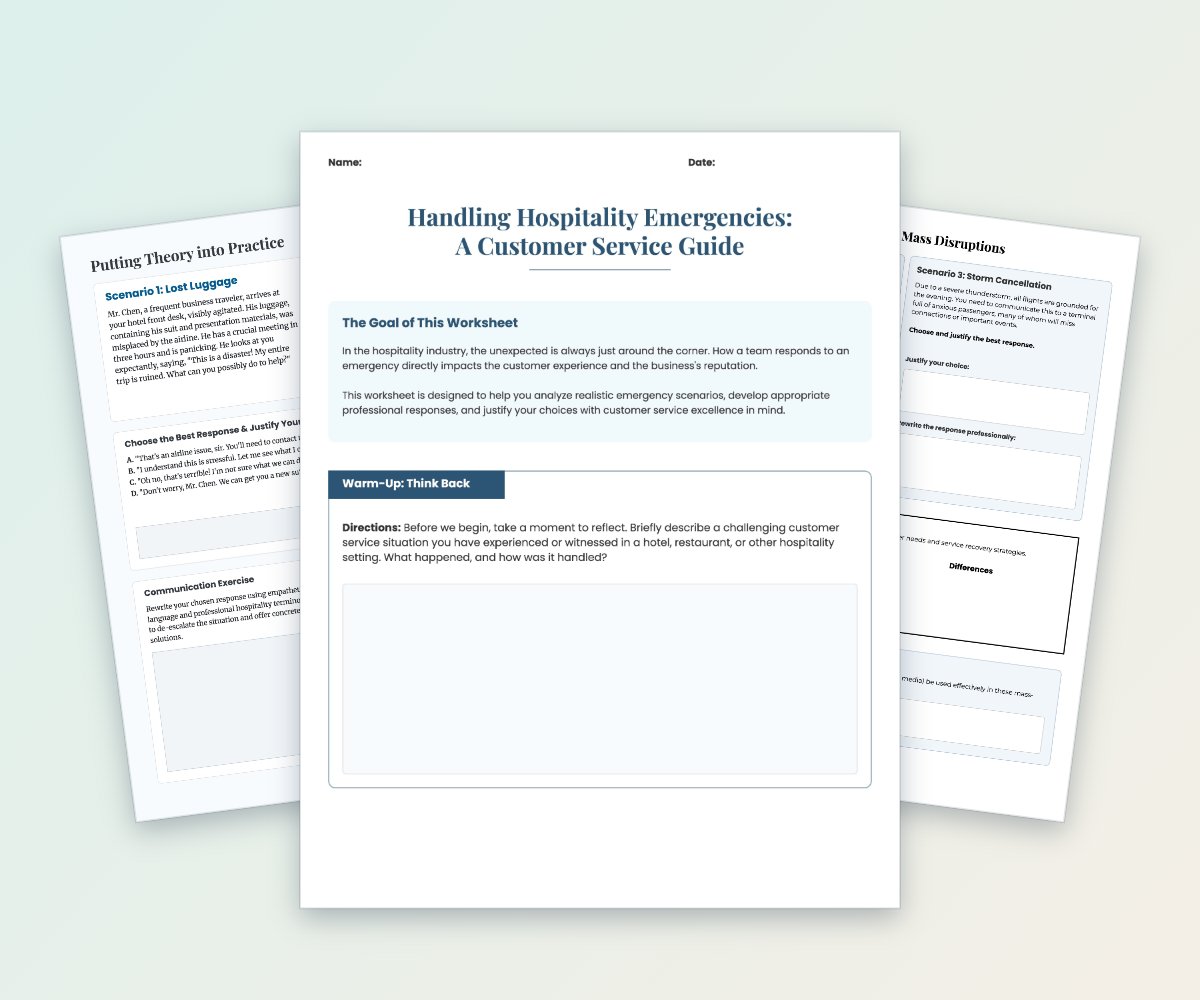
This five-page worksheet guides students through realistic hospitality emergencies, including lost luggage, overbooked flights, and storm cancellations.
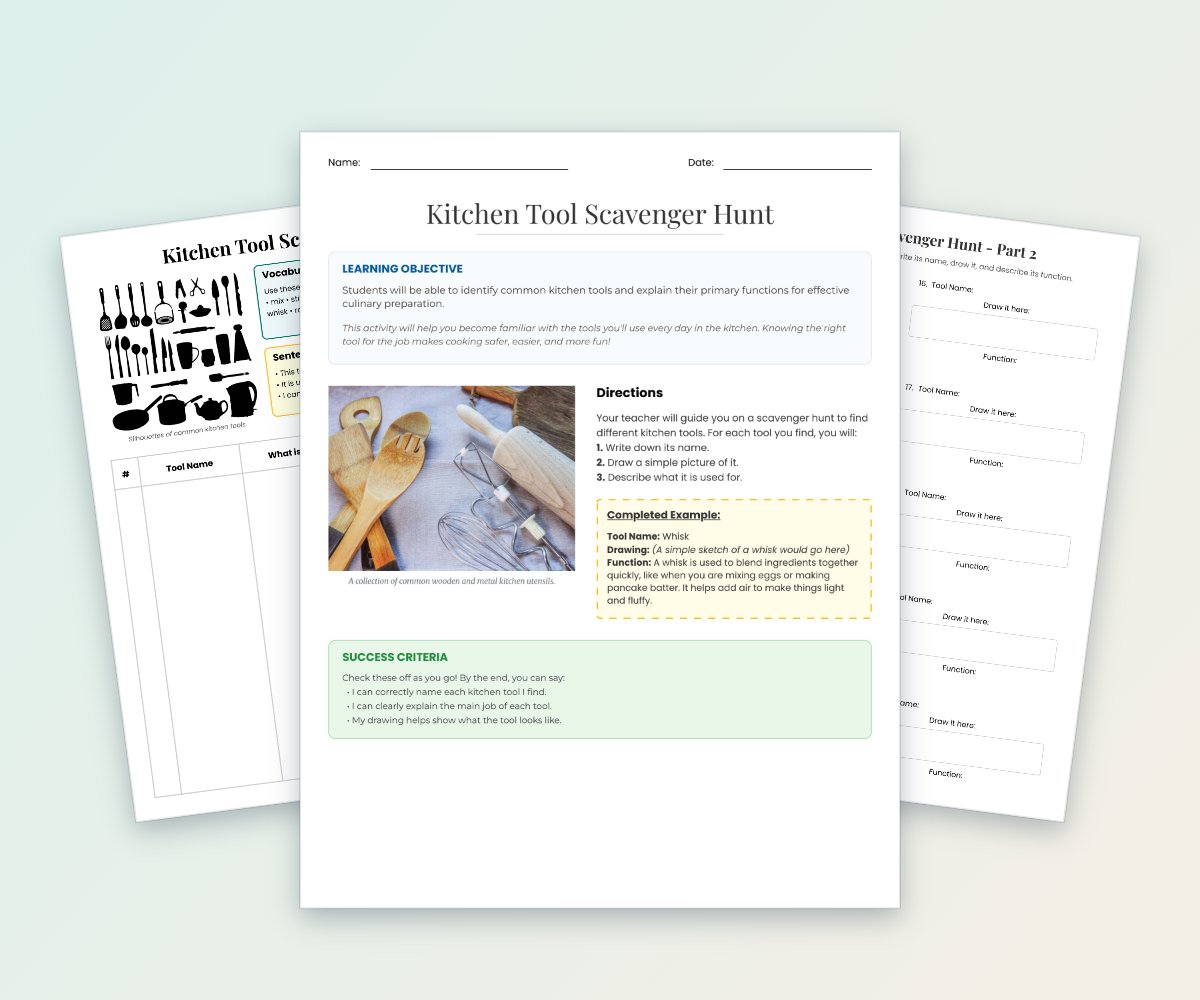
Students identify 20 common kitchen tools, illustrate them, and describe each tool’s primary function.
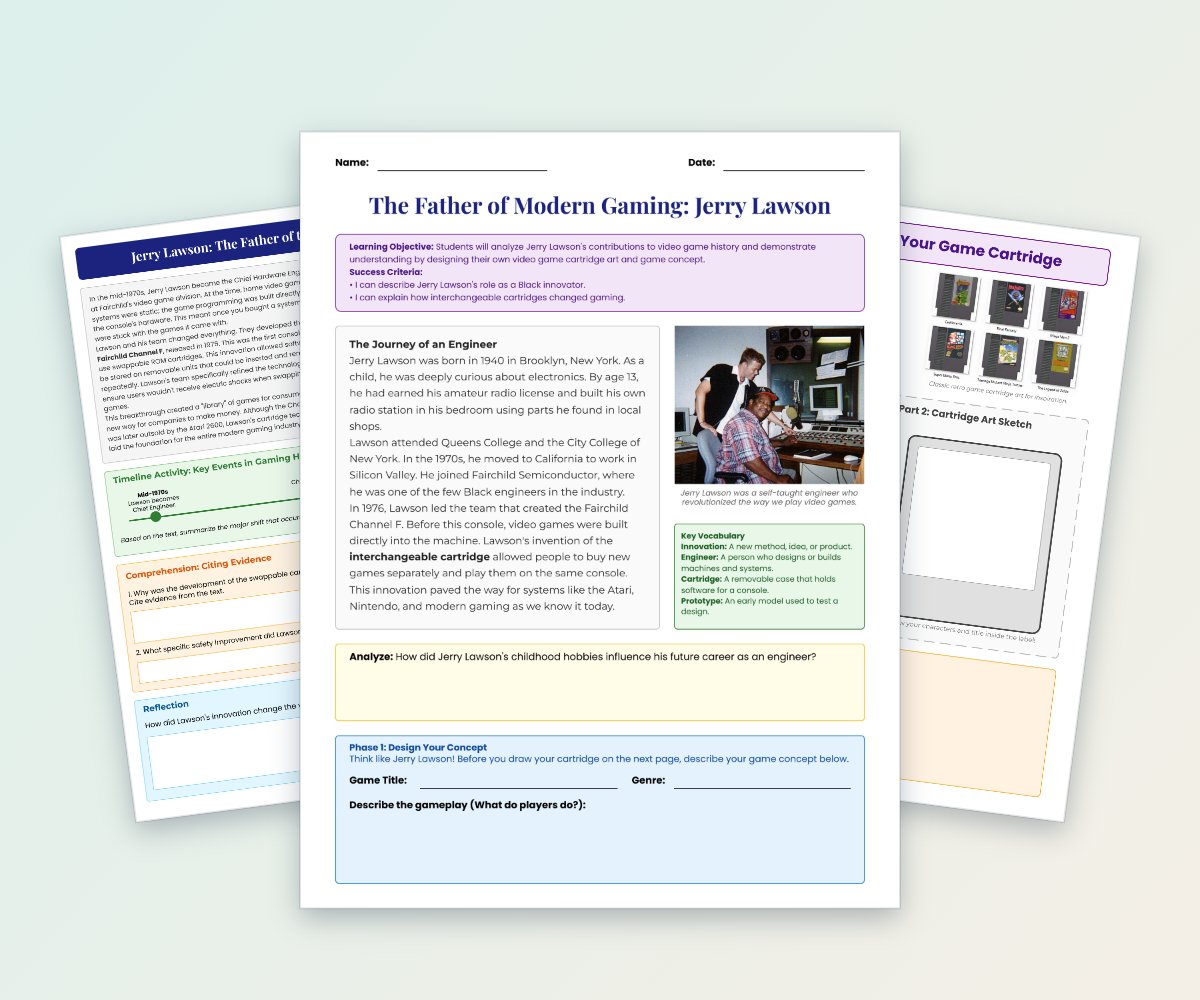
This activity pack introduces students to Jerry Lawson’s contributions as a Black engineer and video-game pioneer.
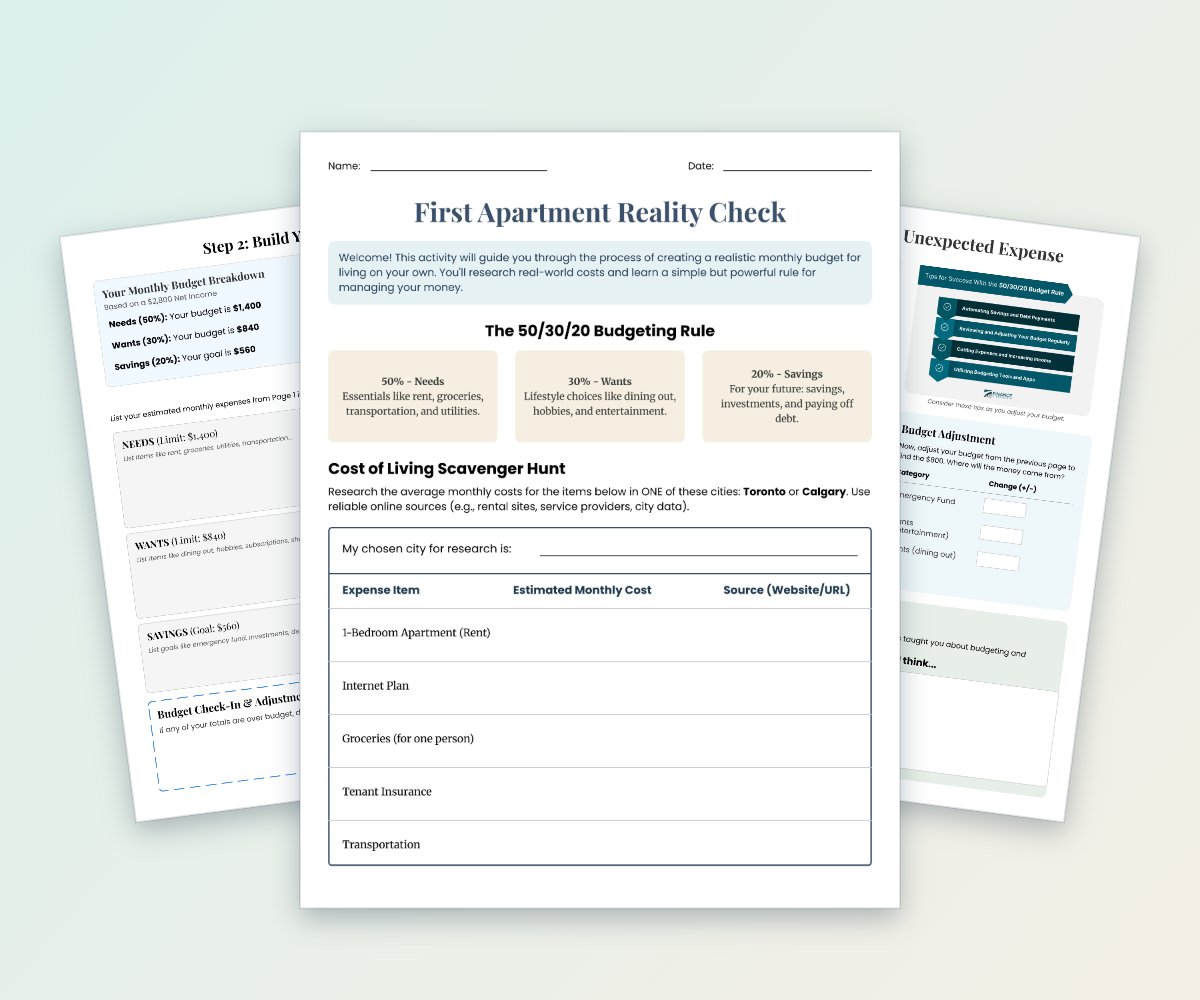
Students research realistic living costs in Toronto or Calgary, then create a monthly budget using the 50/30/20 rule.
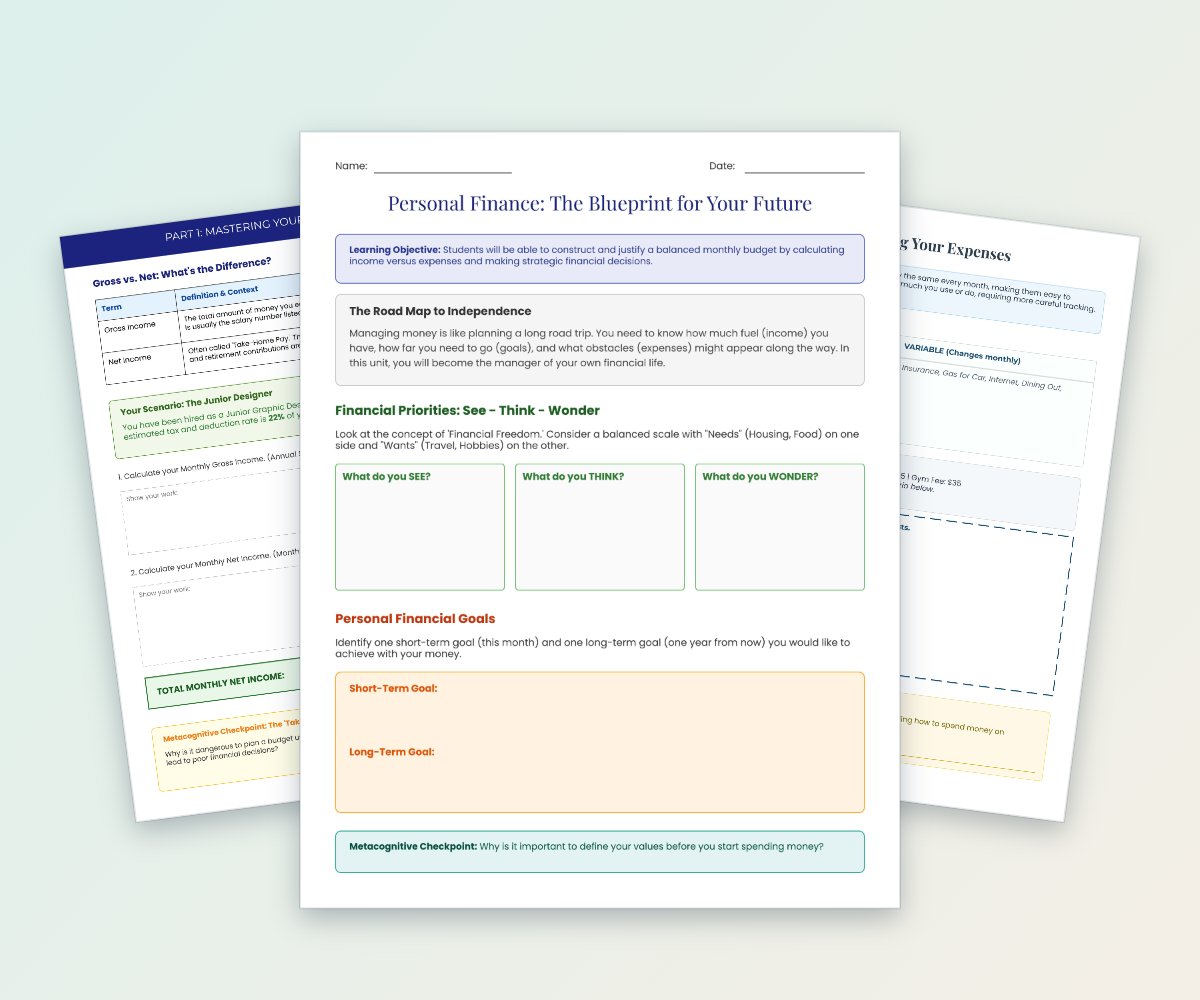
Students build and justify a balanced monthly budget using a realistic Junior Graphic Designer income scenario.
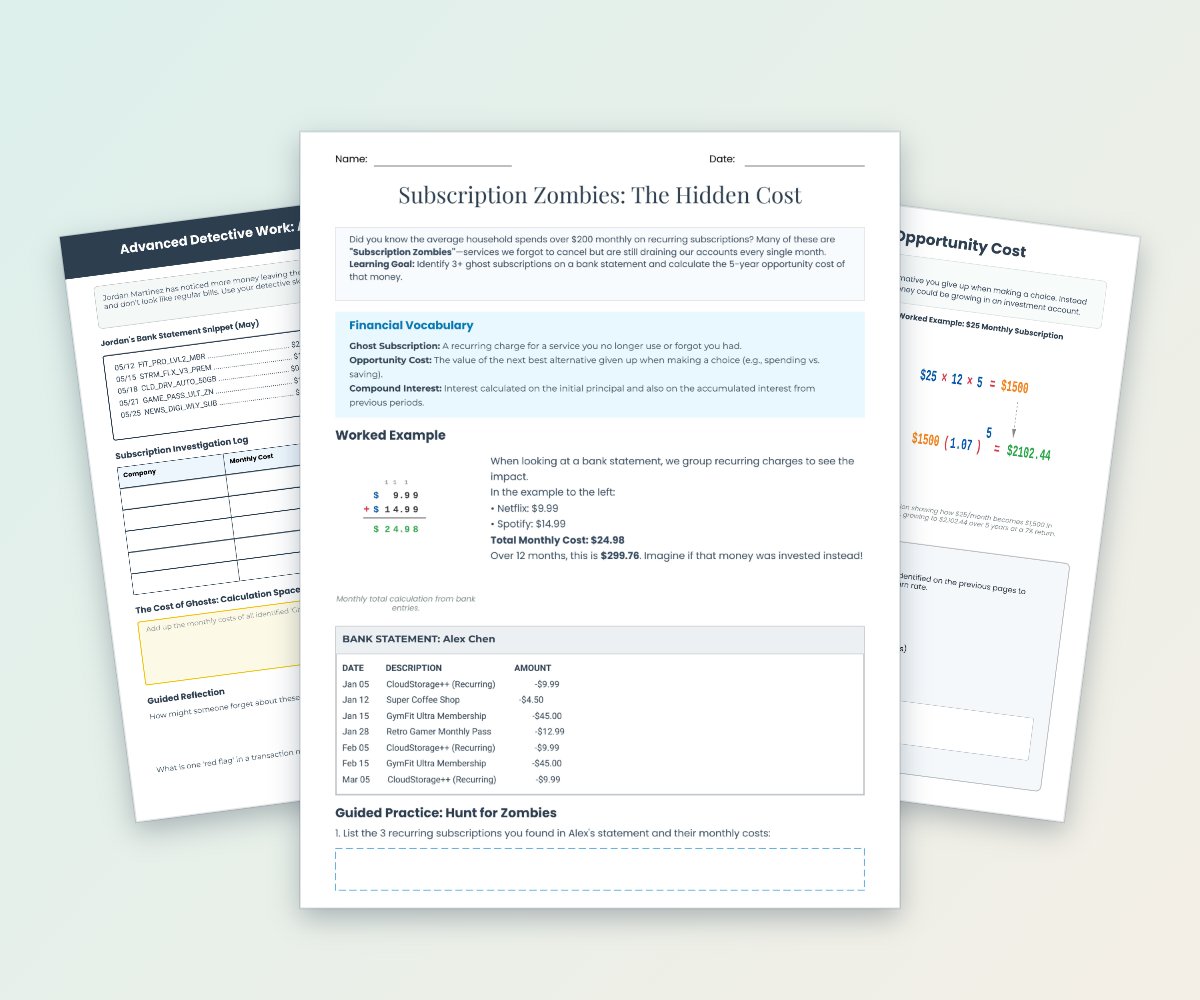
Students investigate recurring charges, identify forgotten subscriptions, calculate monthly and long-term costs, and consider opportunity cost.
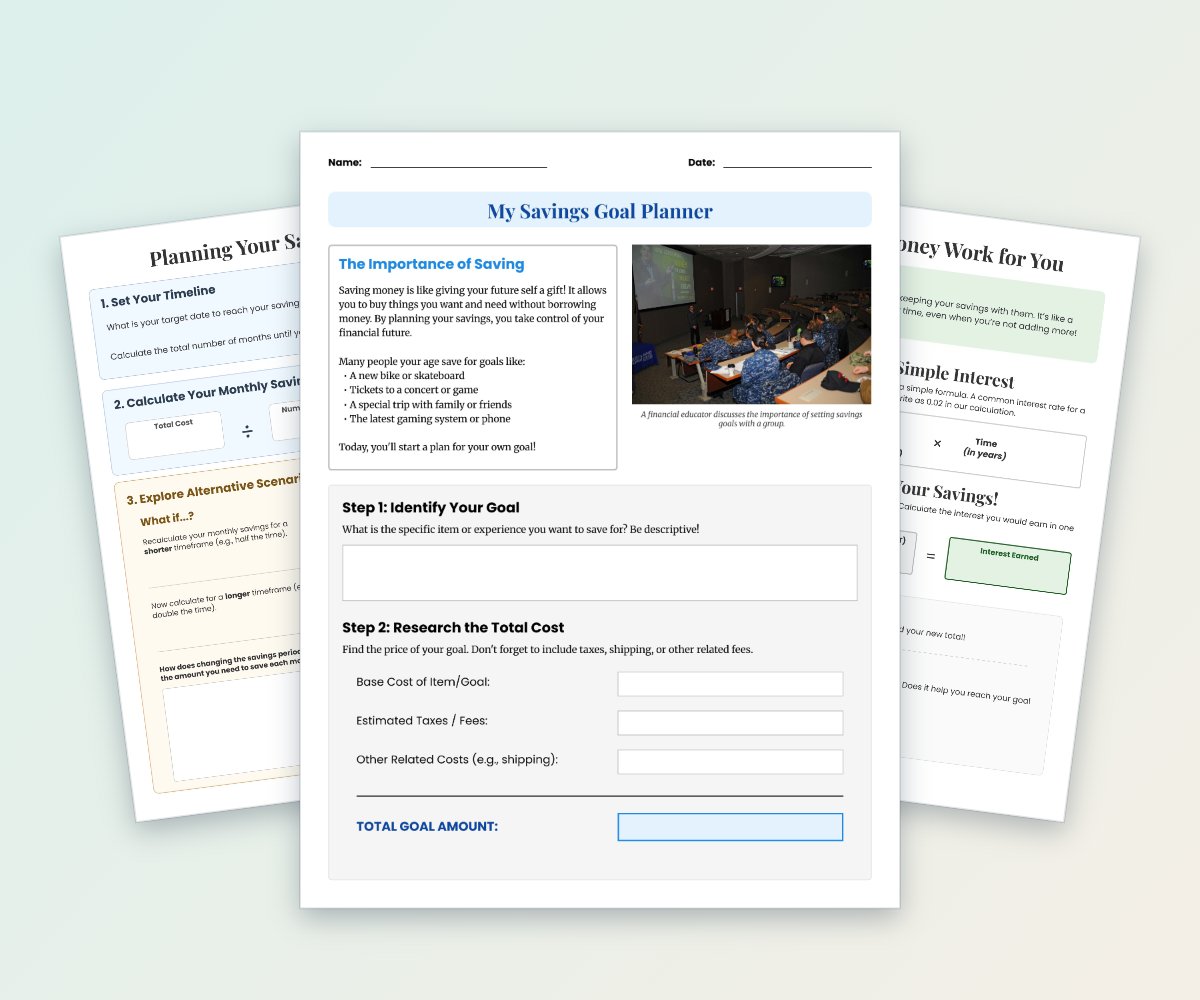
Students set a personal savings goal, research its total cost, create a savings timeline, and calculate required monthly savings.
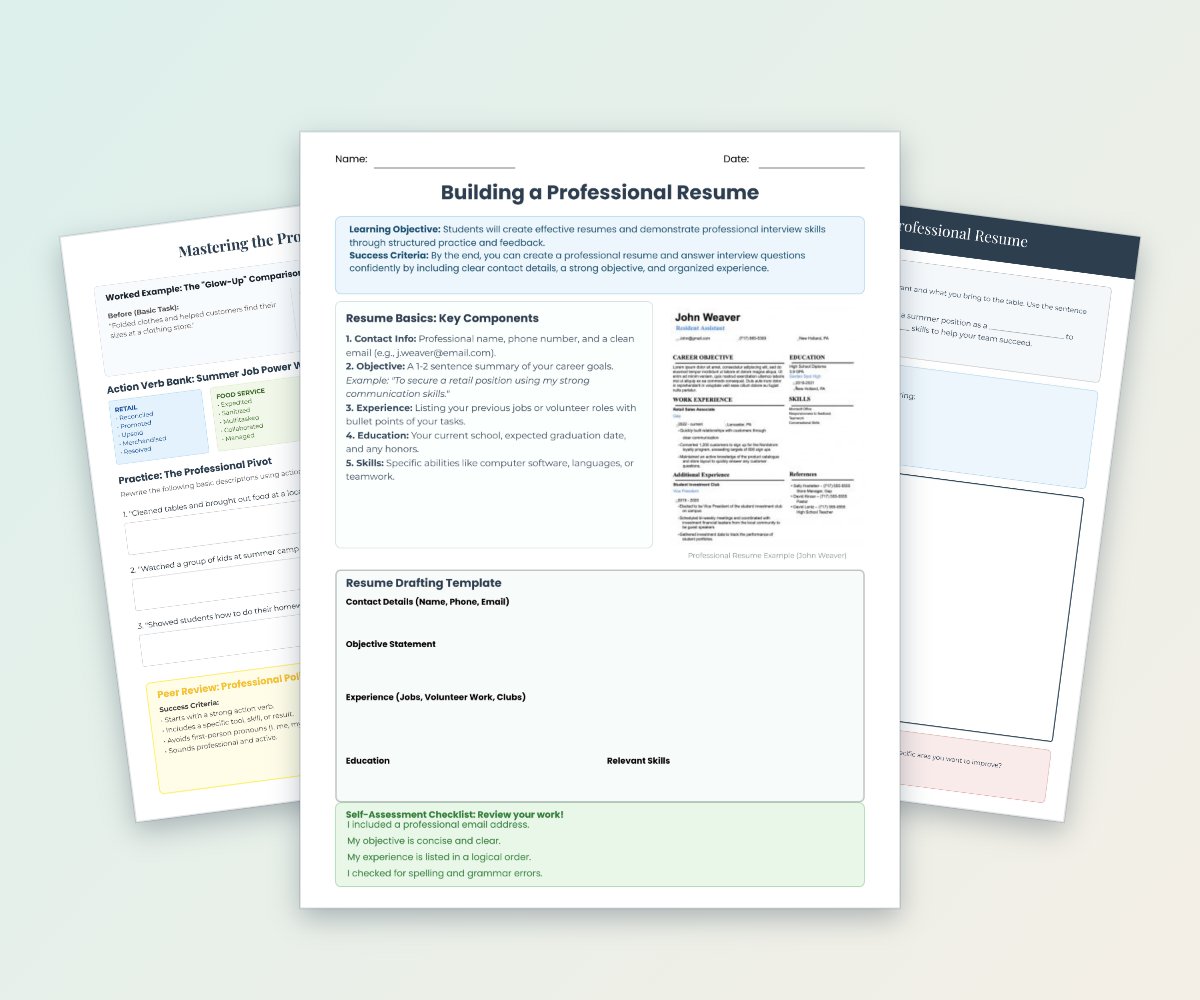
Students build a professional resume, revise basic job descriptions with strong action verbs, and practice workplace communication.
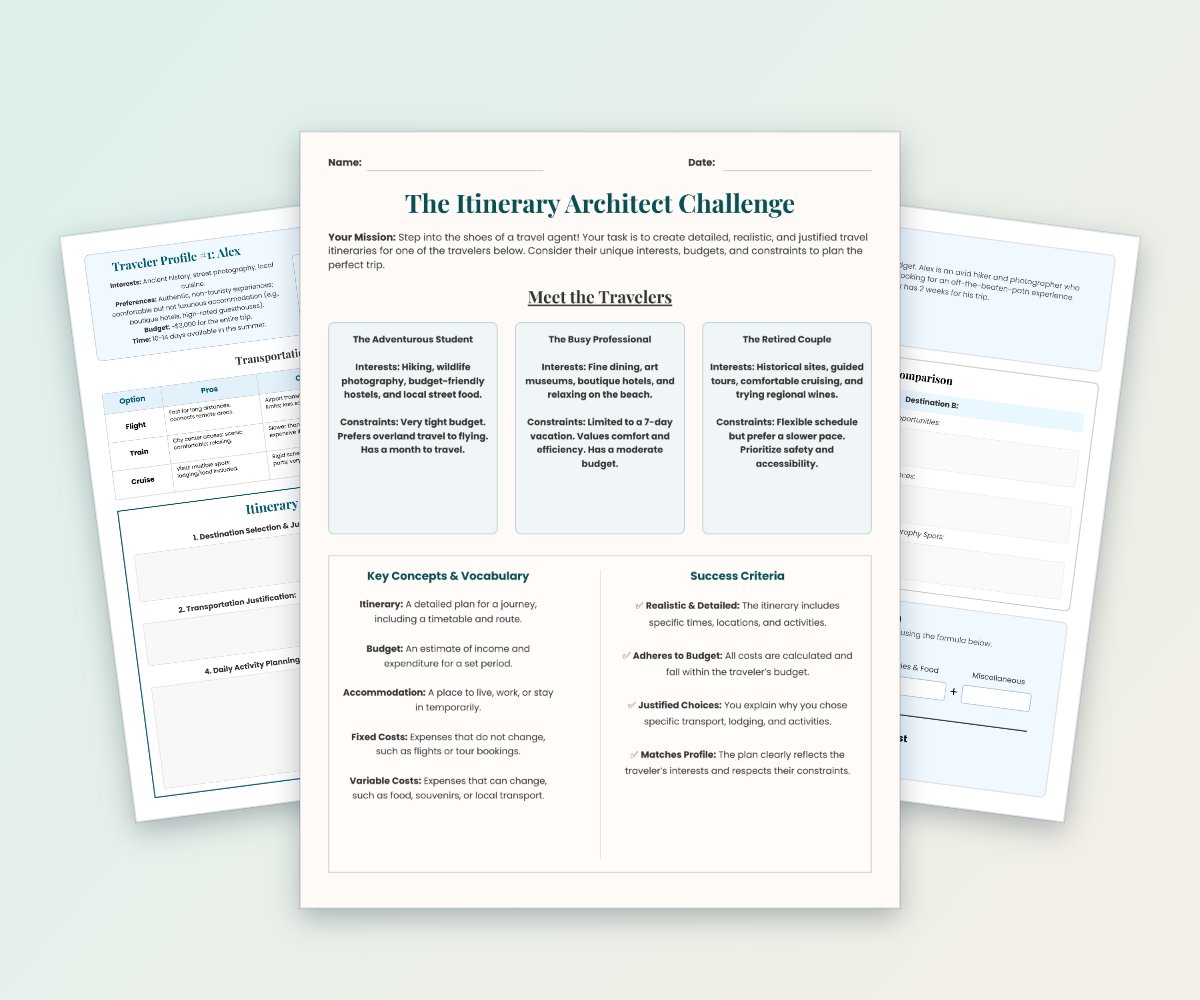
Students act as travel agents to design realistic itineraries based on traveler interests, budgets, schedules, and constraints.