Found Poetry Scavenger Hunt
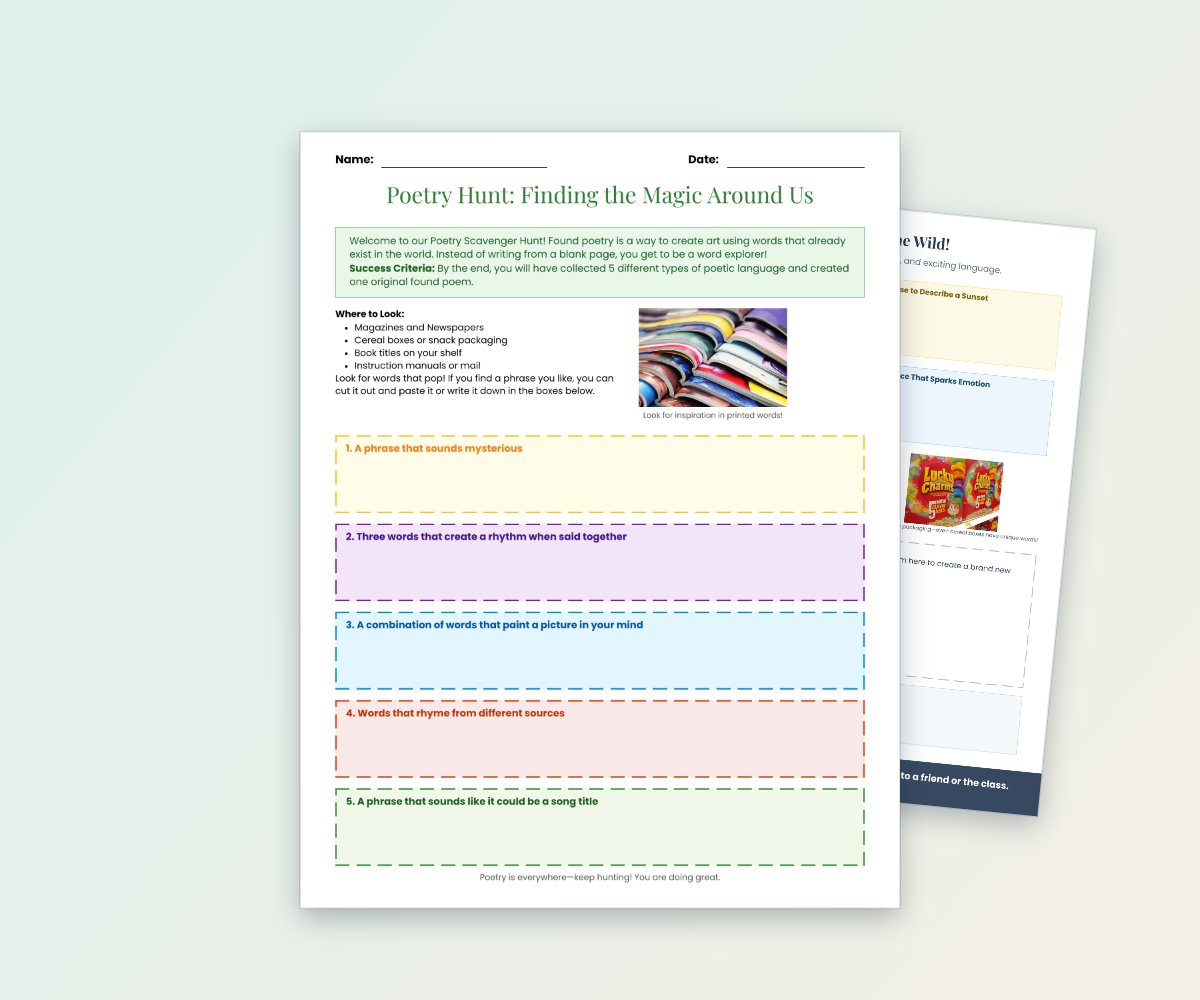
Students explore everyday printed materials to collect interesting words and phrases, then use their discoveries to create an original found poem.
$3
Classroom-ready resources written for grade 6: printable worksheets, slides, activities and planning tools you can download and use straight away. Browse by subject below.
Students explore everyday printed materials to collect interesting words and phrases, then use their discoveries to create an original found poem.
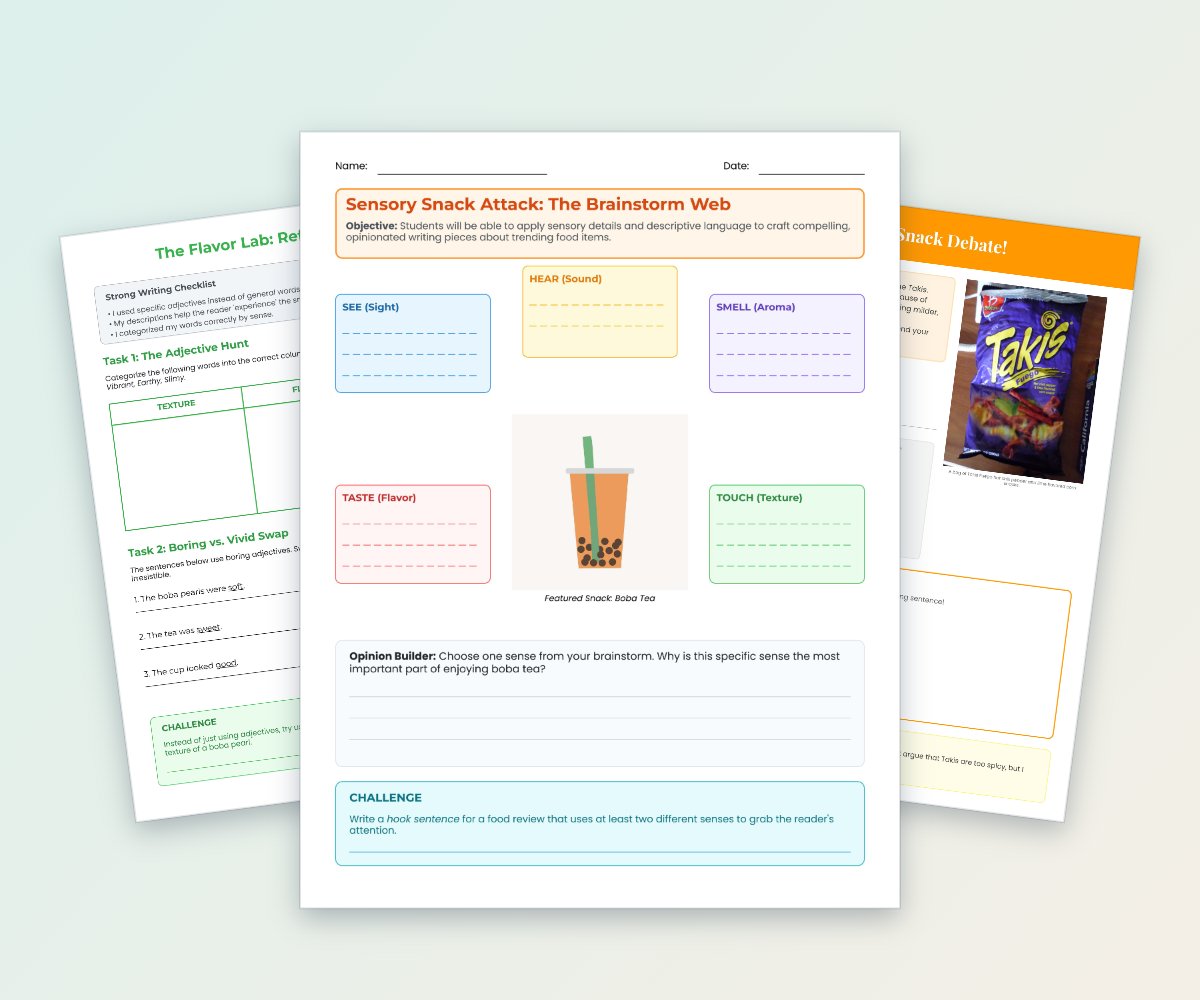
Students explore trending foods through sensory brainstorming, vivid adjective practice, opinion writing, and argumentation.
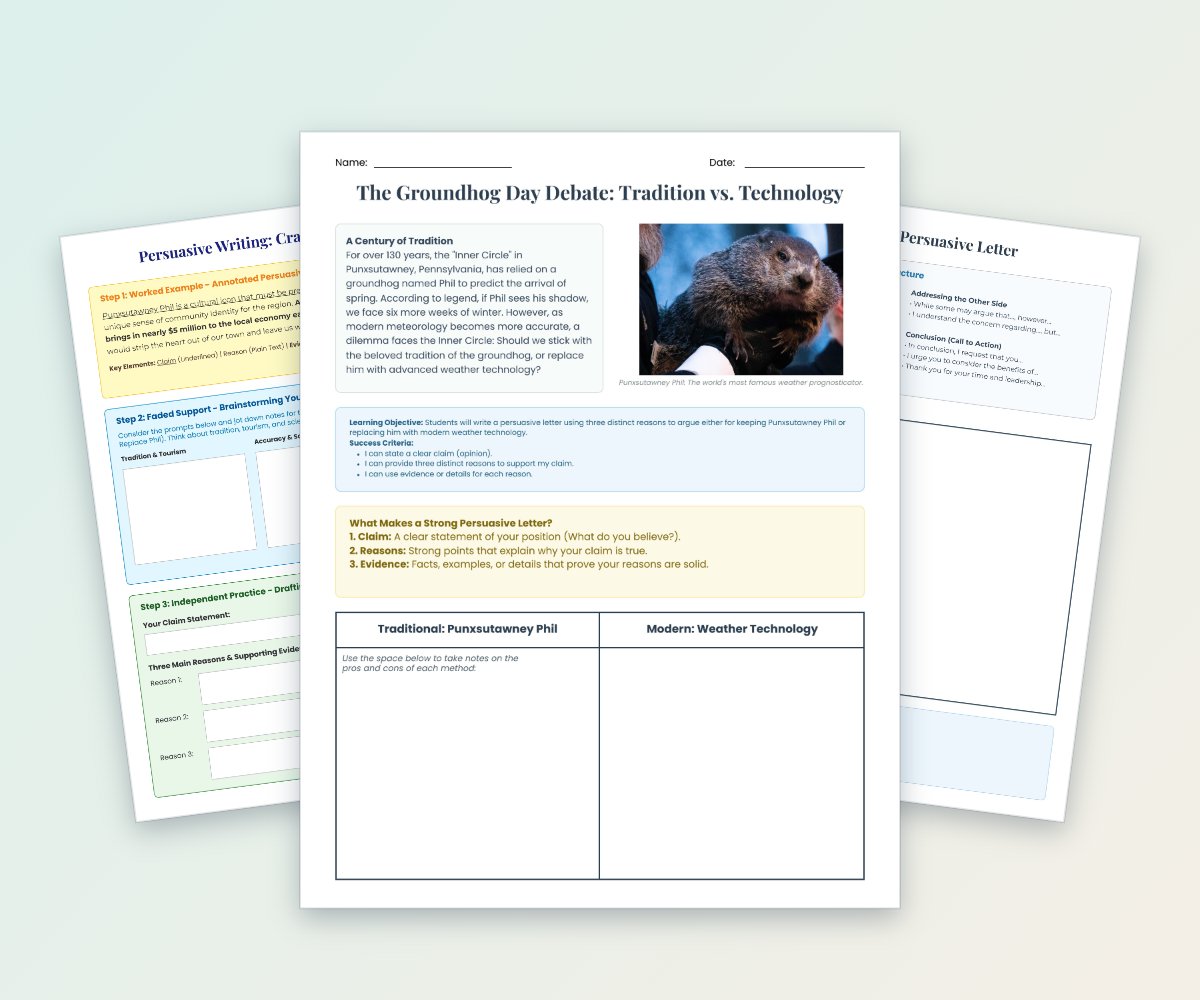
Students examine the debate between preserving Punxsutawney Phil’s tradition and using modern weather technology.
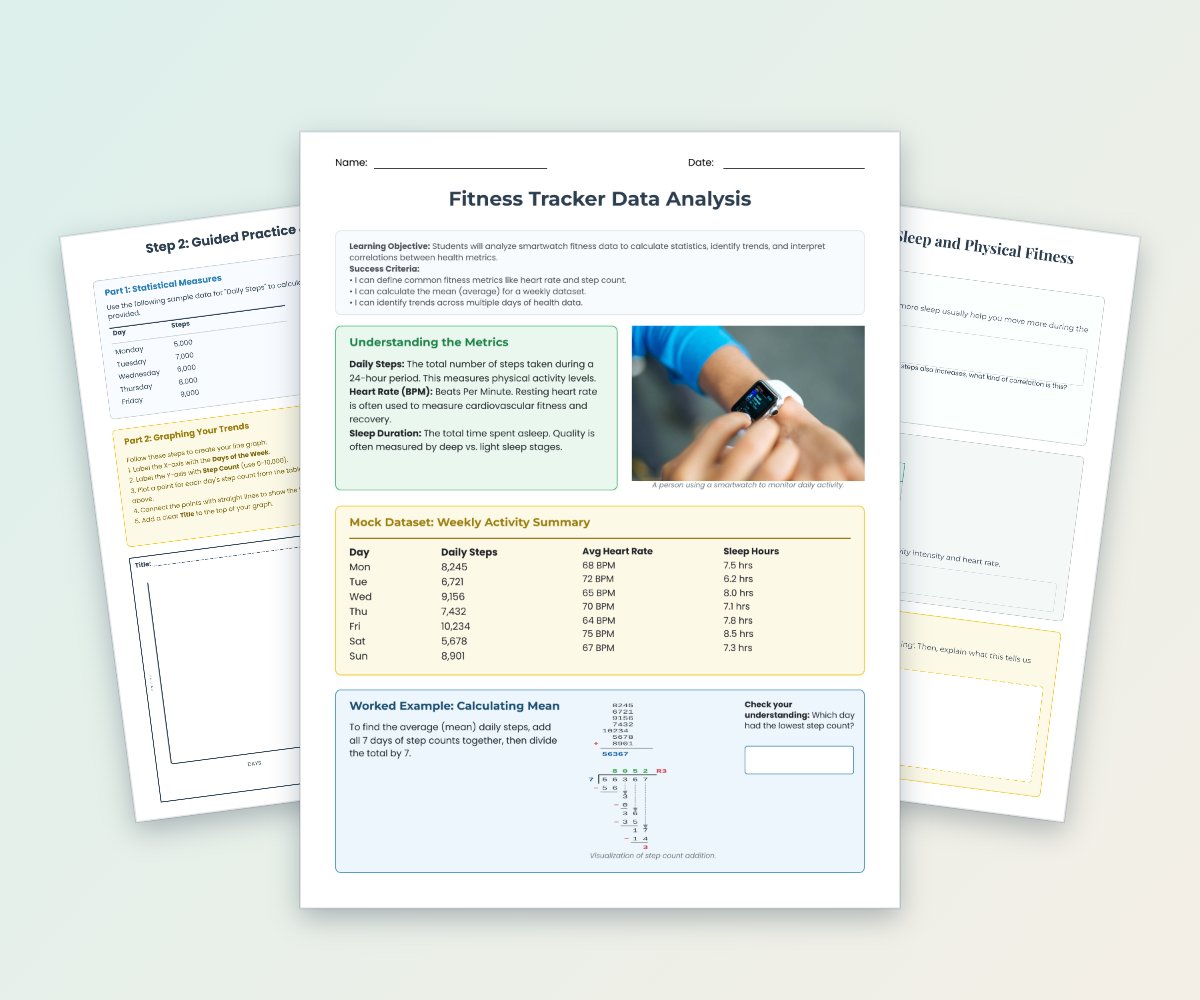
Students analyze mock smartwatch fitness data involving steps, heart rate, and sleep duration.
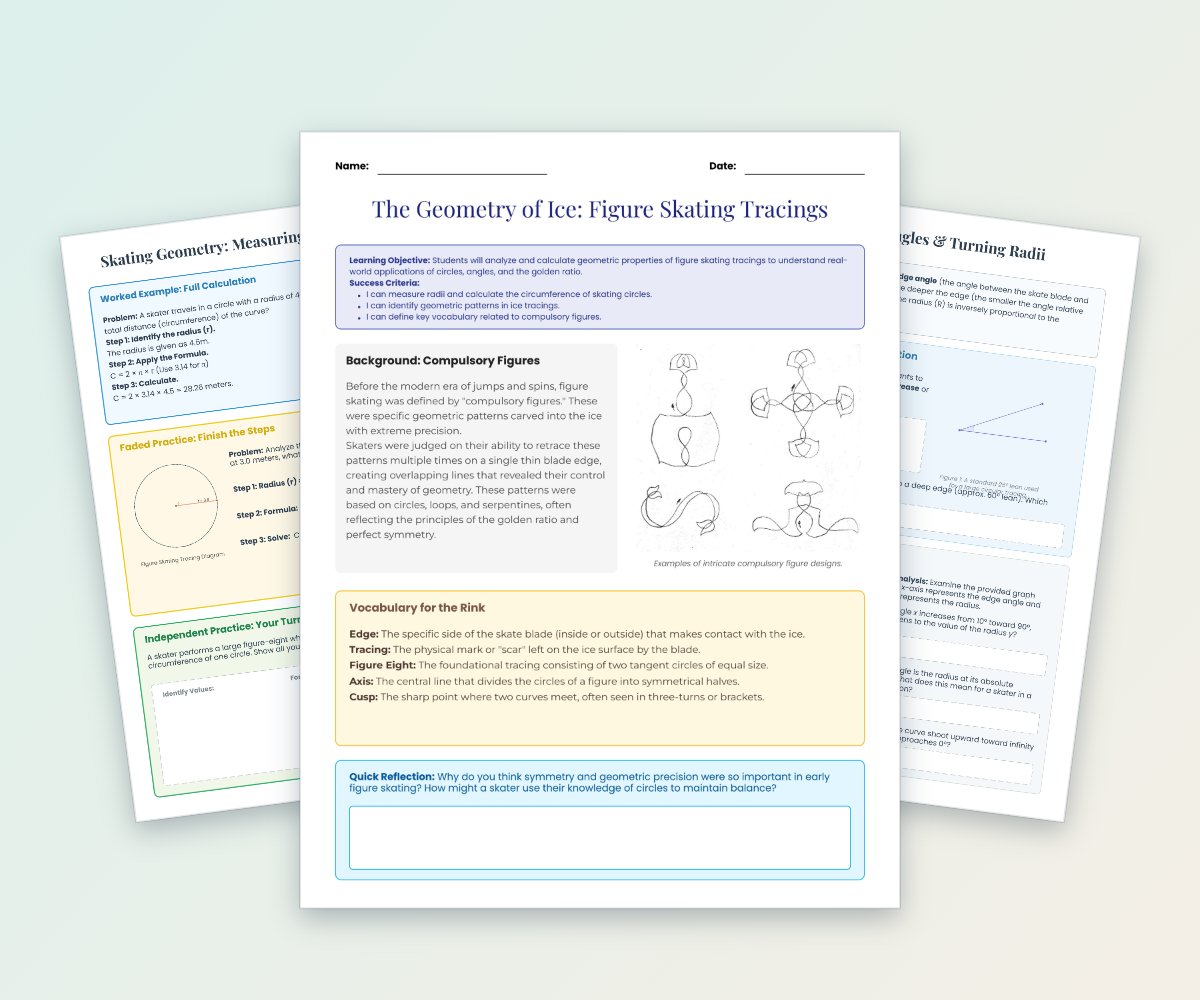
This four-page math worksheet connects figure skating tracings to geometric concepts including circles, circumference, angles, symmetry, and the golden ratio.
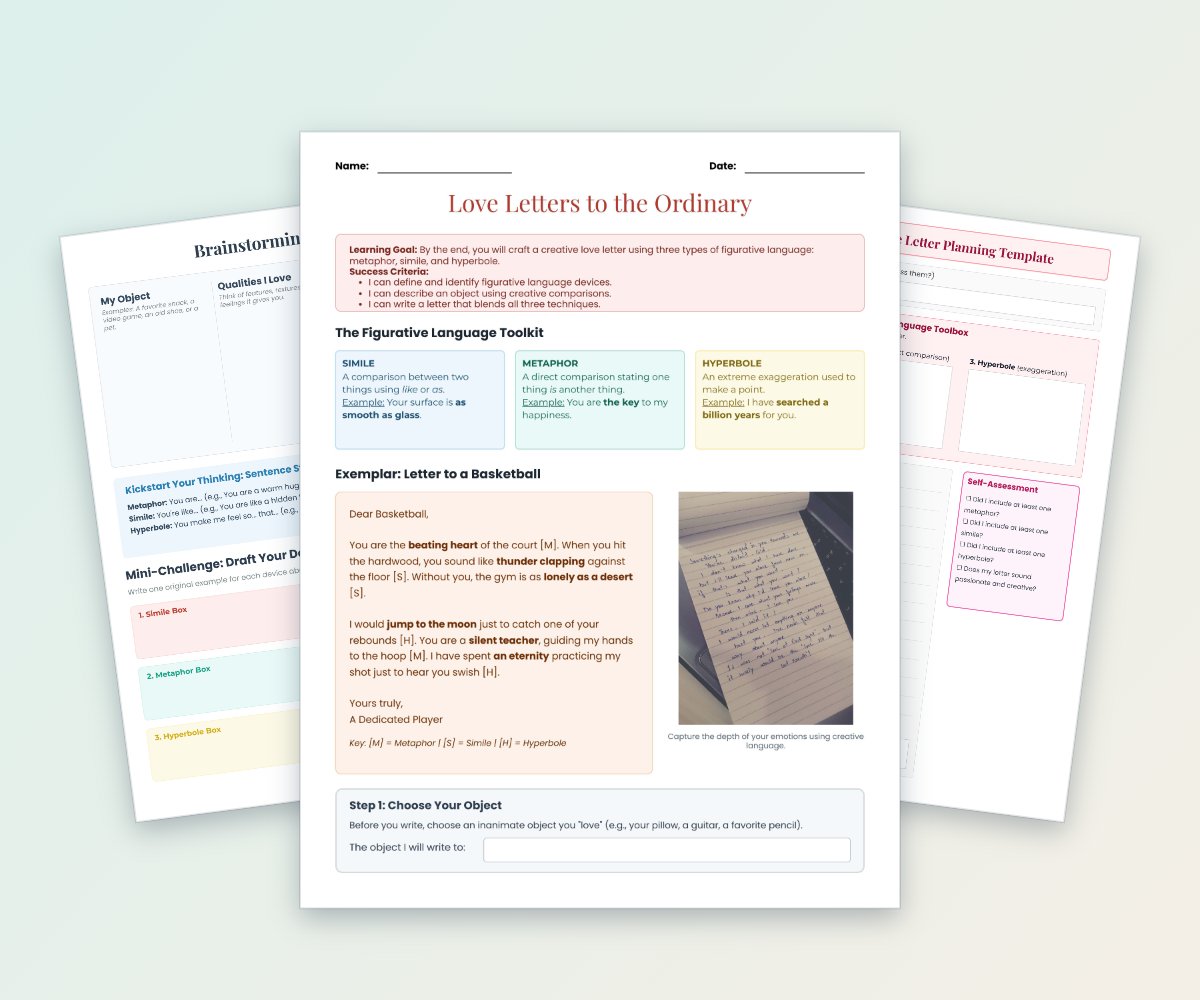
Students learn and apply similes, metaphors, and hyperbole by writing a creative love letter to an ordinary object.
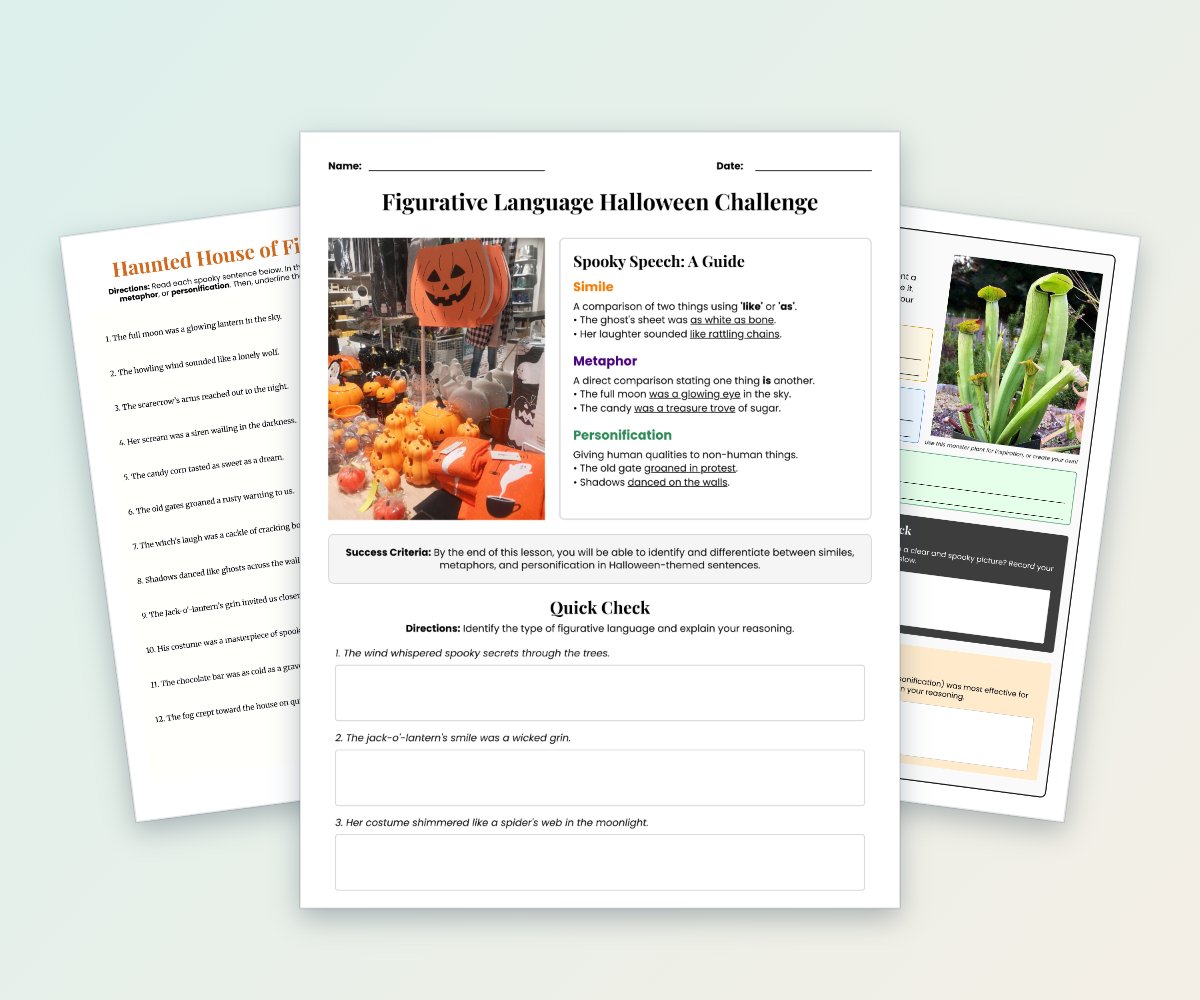
This Halloween-themed activity pack introduces similes, metaphors, and personification with examples, identification practice, partner discussion, and creative monster-writing prompts.
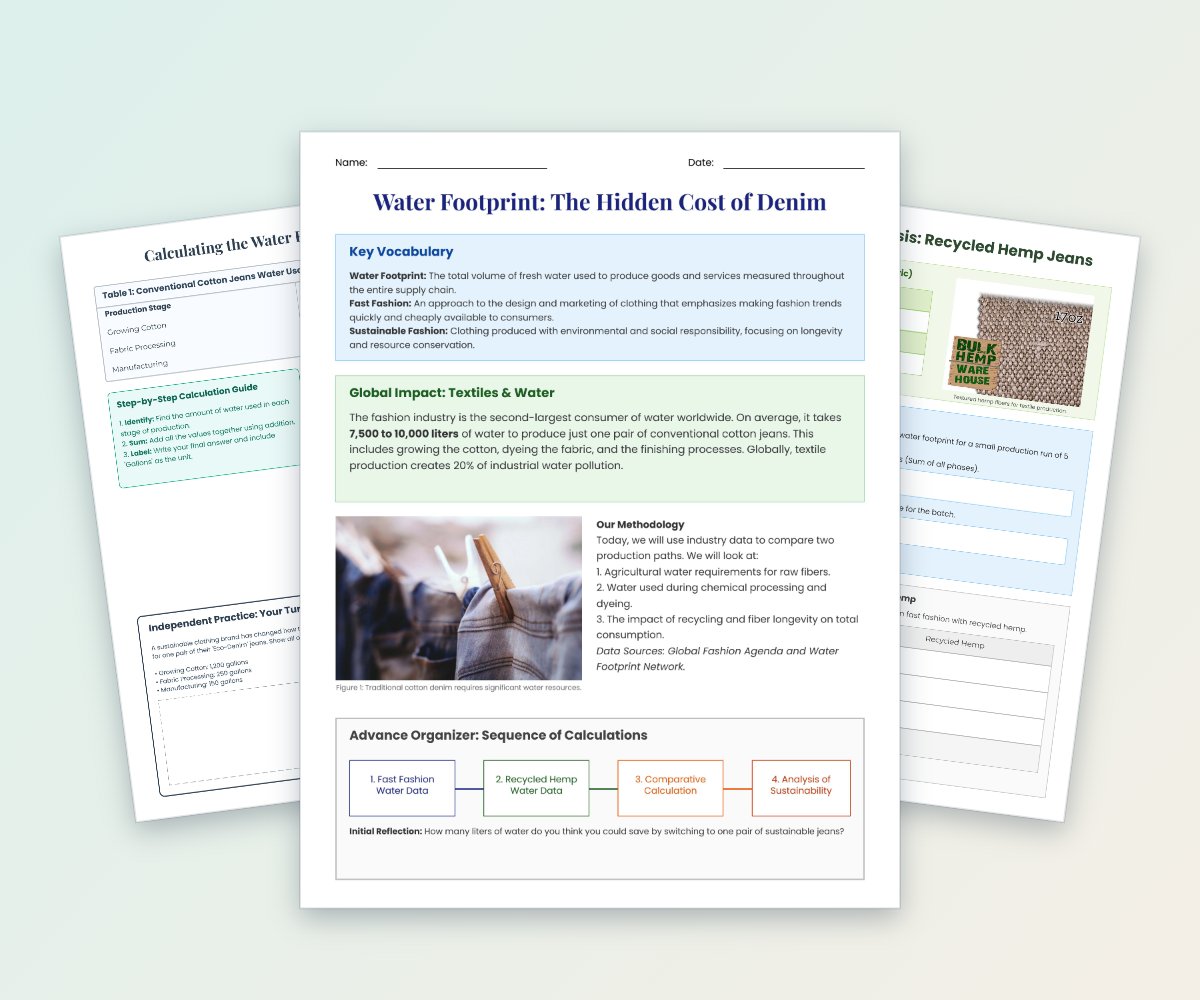
Students explore the environmental impact of denim production by learning key sustainability vocabulary and examining textile water-use data.
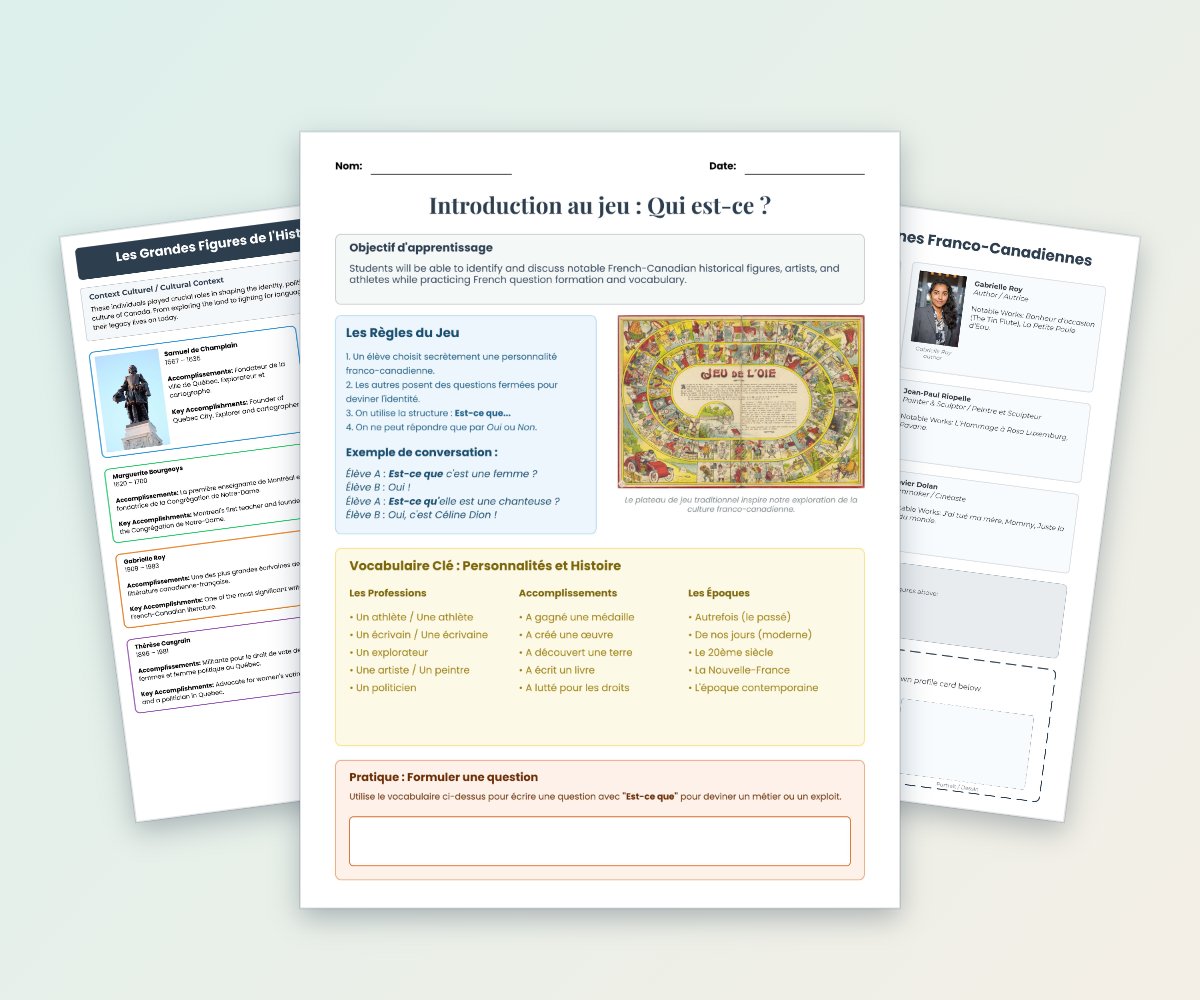
Students play a guessing game featuring notable French-Canadian historical figures, artists, athletes, and leaders.
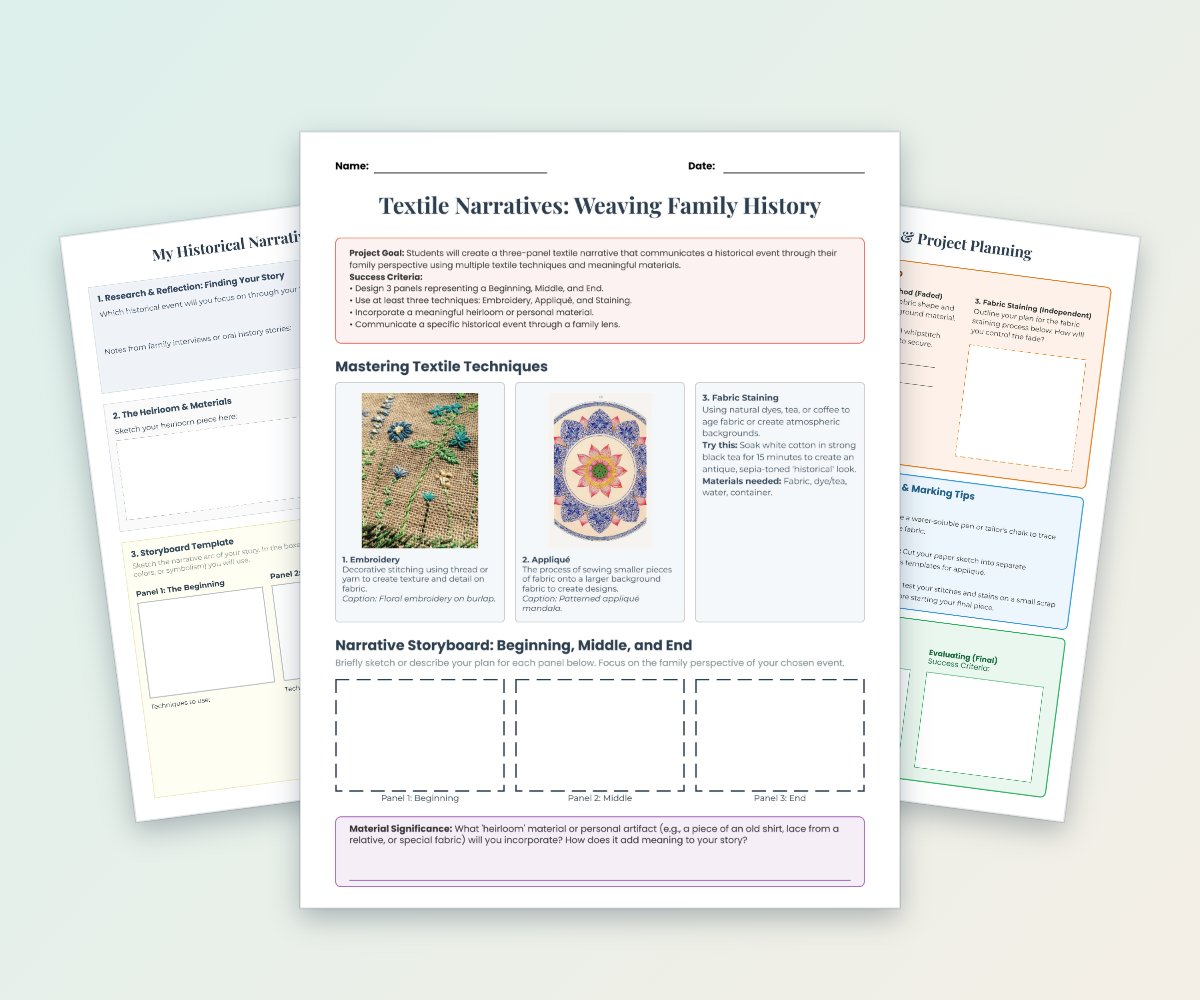
Students create a three-panel textile narrative depicting a historical event through their family’s perspective.
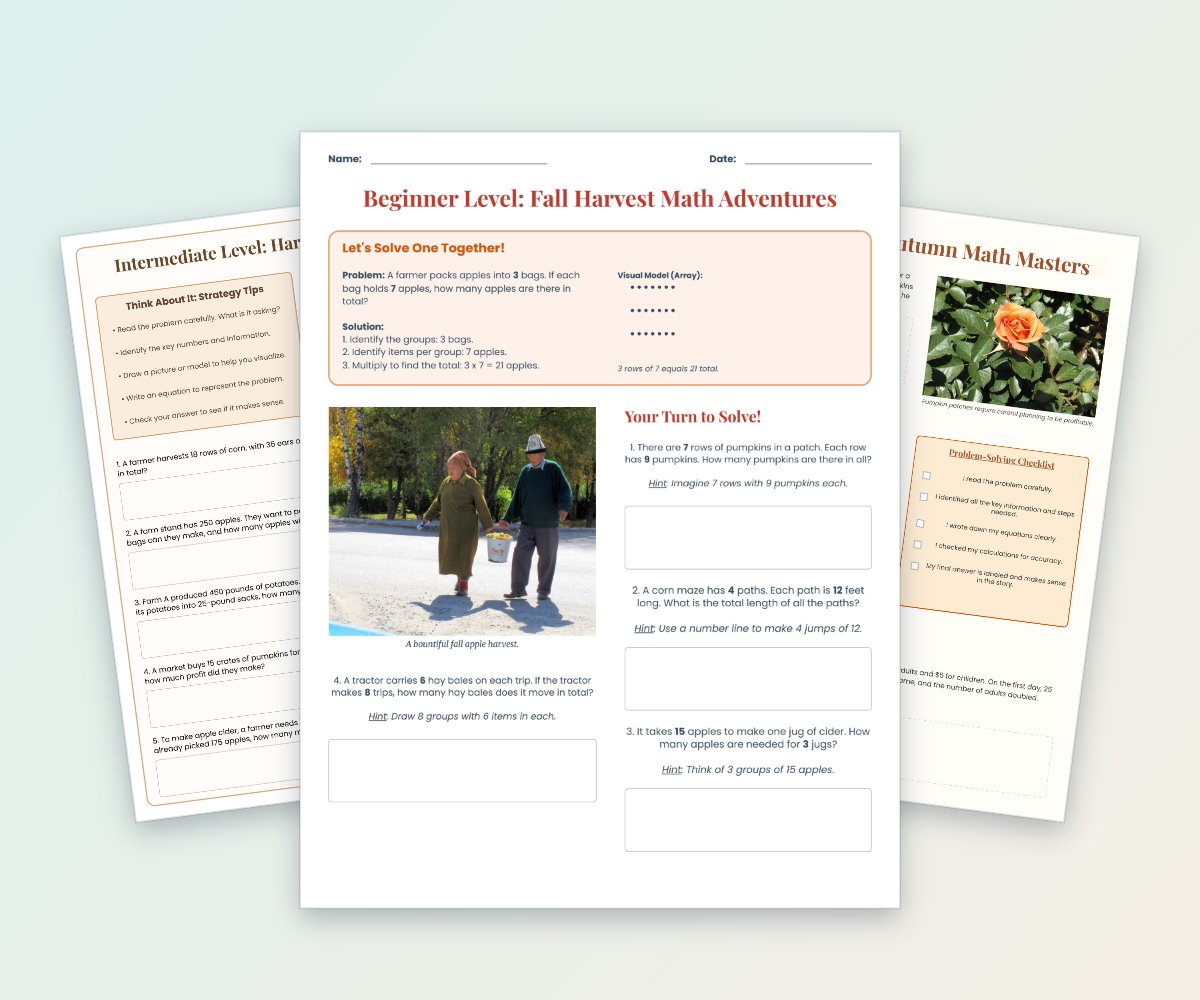
This fall-themed math worksheet provides beginner, intermediate, and advanced harvest scenarios for practicing multiplication, division, money, and multi-step problem solving.
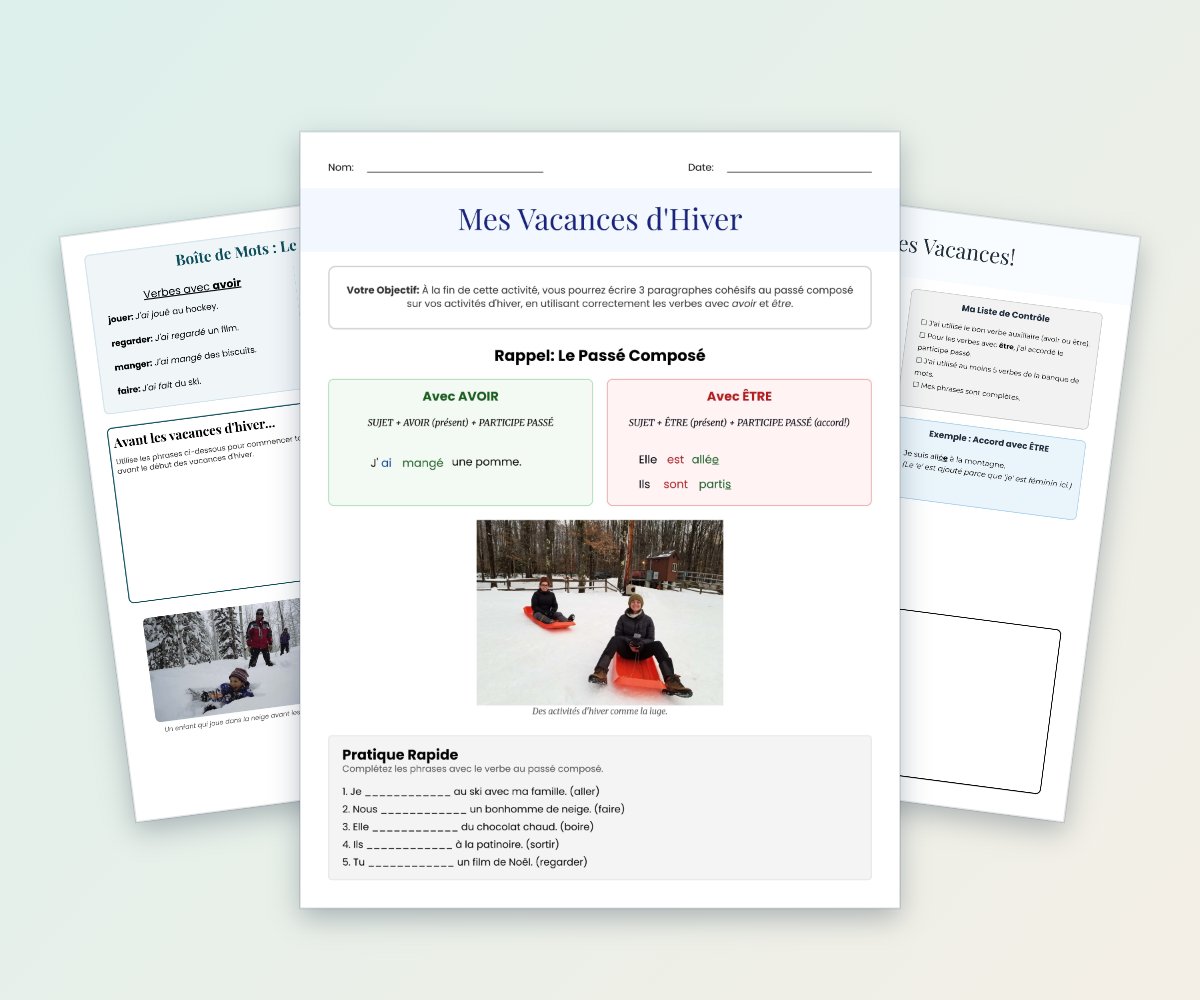
This French writing activity guides students in writing cohesive paragraphs about winter vacations using the passé composé.
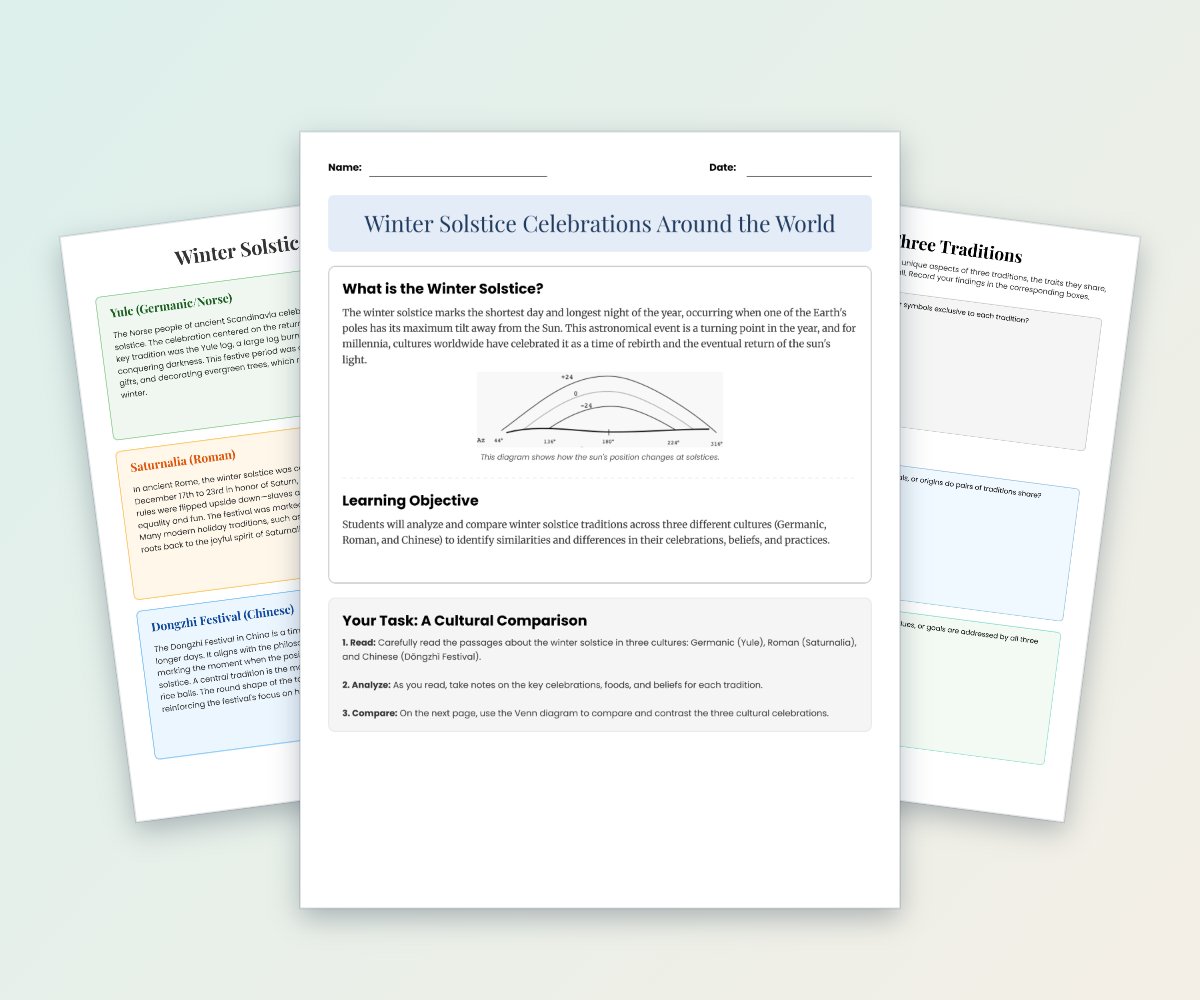
Students learn about winter solstice traditions in Germanic, Roman, and Chinese cultures through short informational passages.
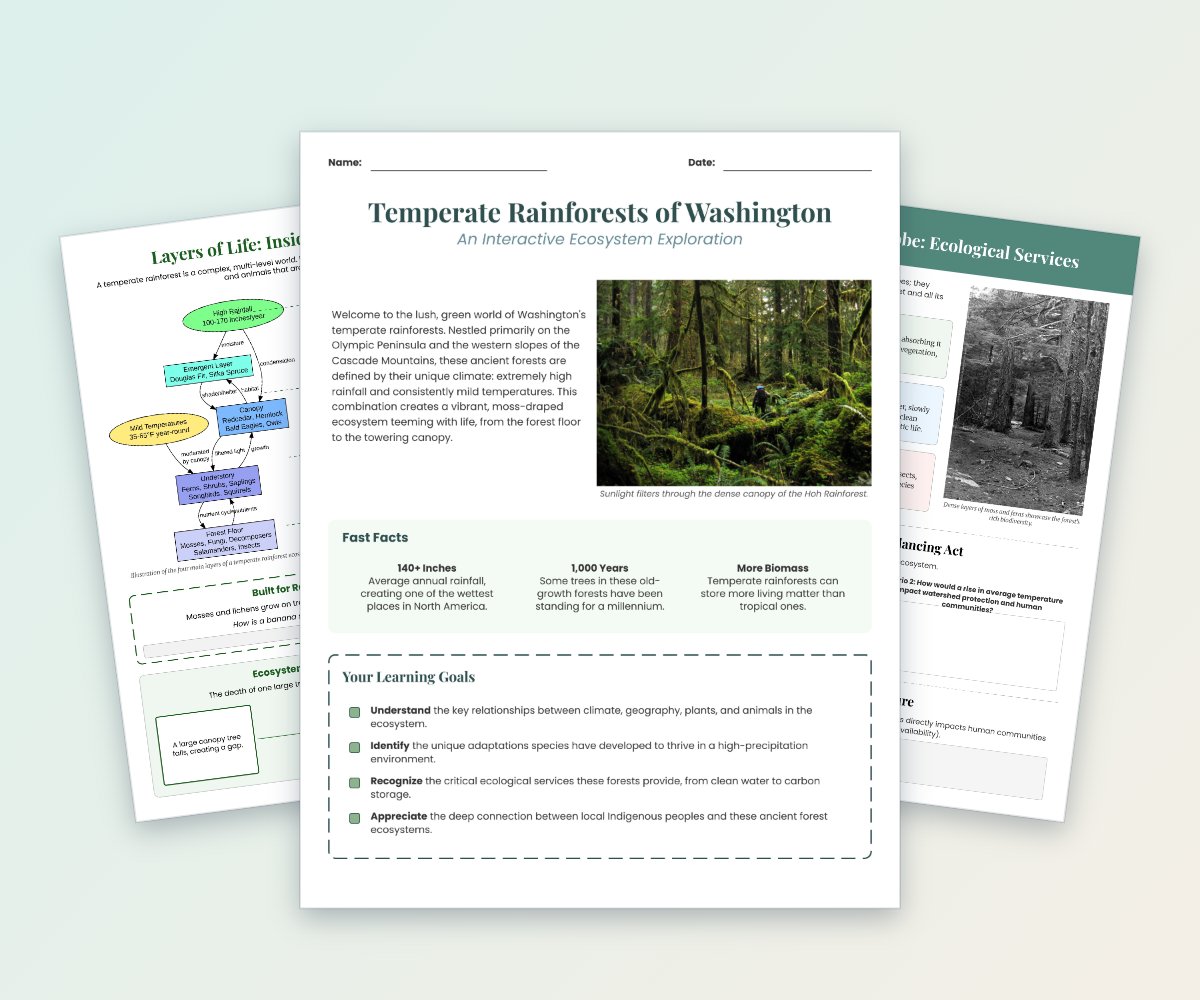
This interactive five-page science resource explores Washington’s temperate rainforests, including climate, ecosystem layers, species adaptations, and ecological services.
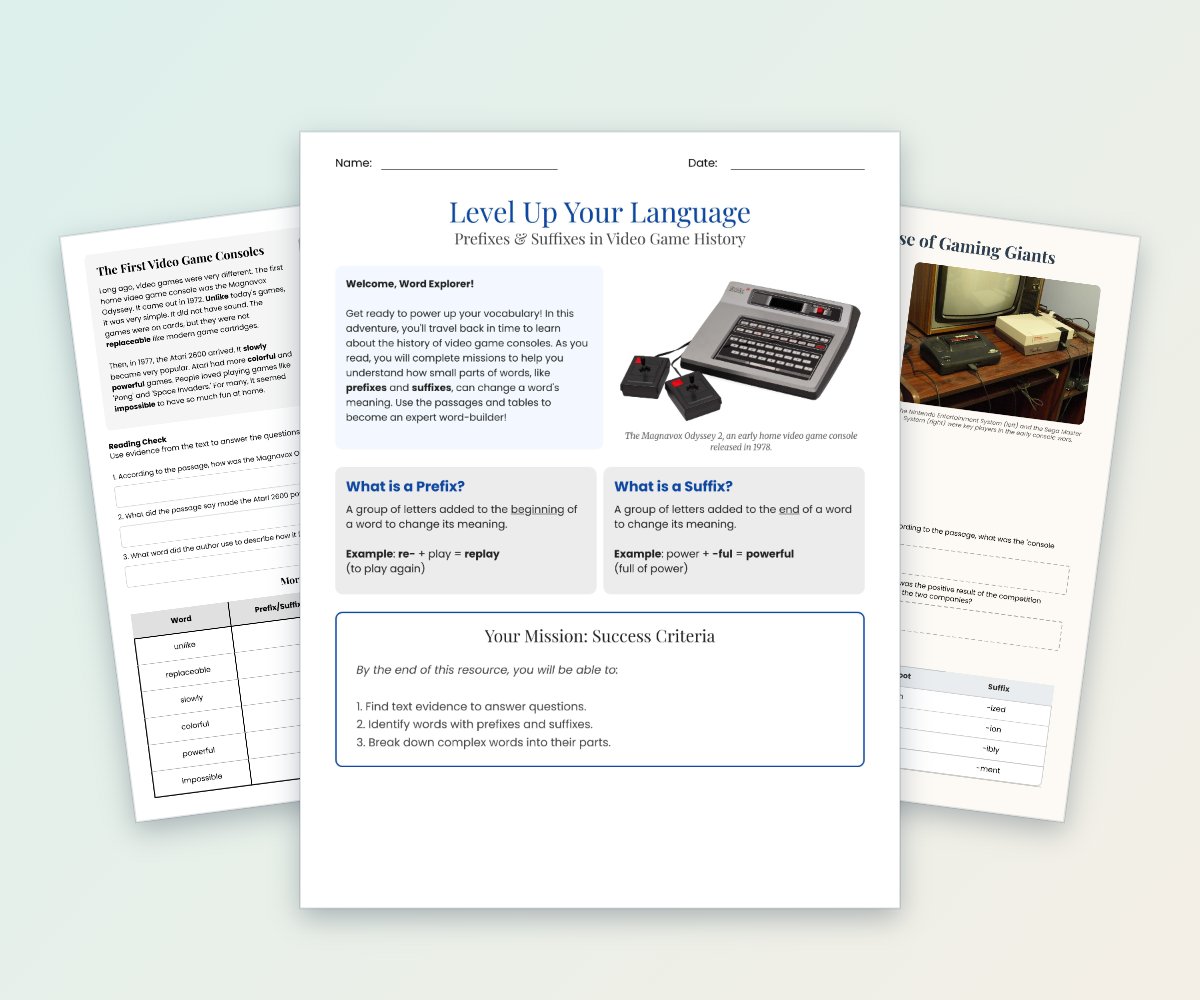
Students explore the history of video game consoles while practicing reading comprehension and analyzing prefixes, suffixes, and base words.
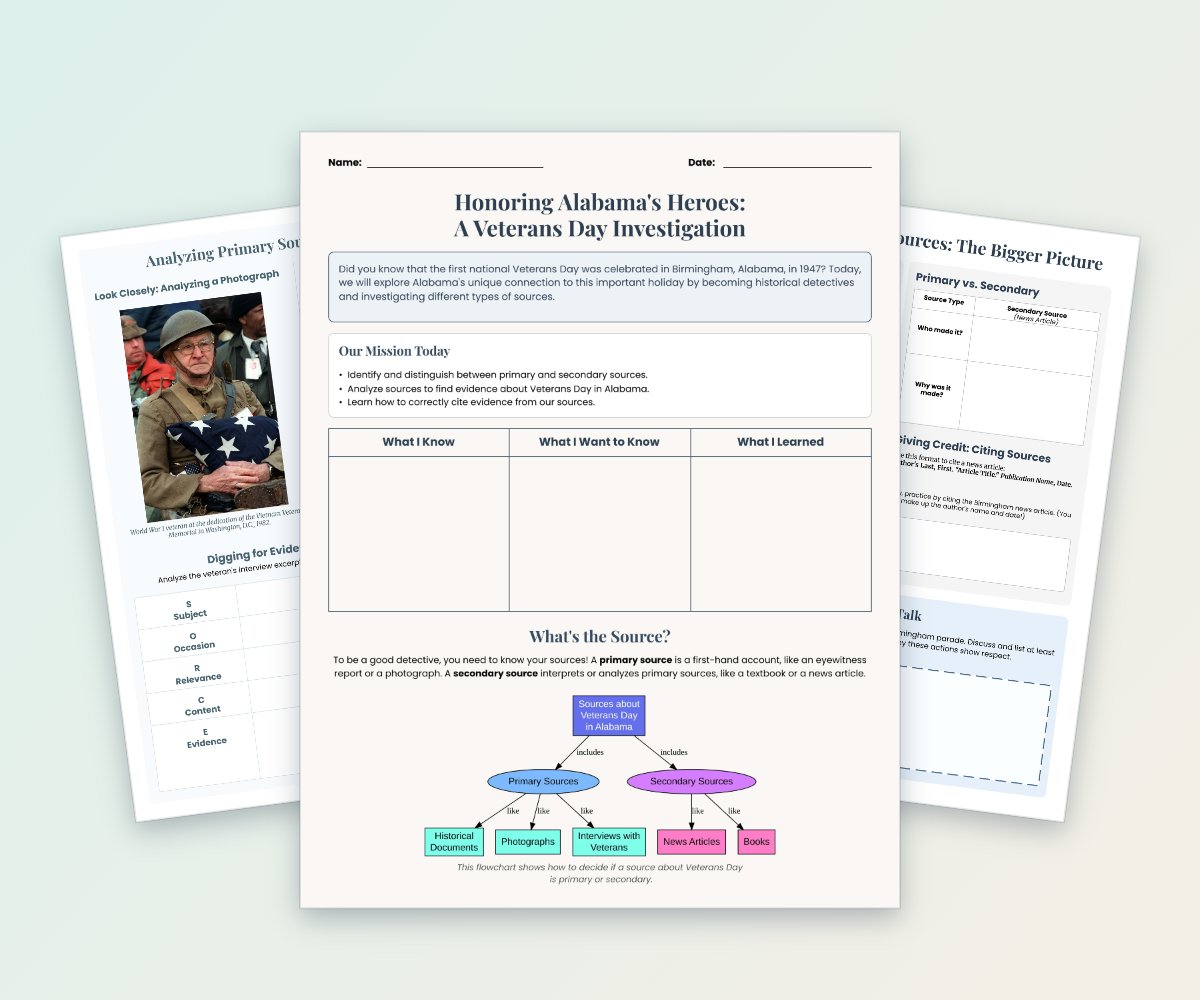
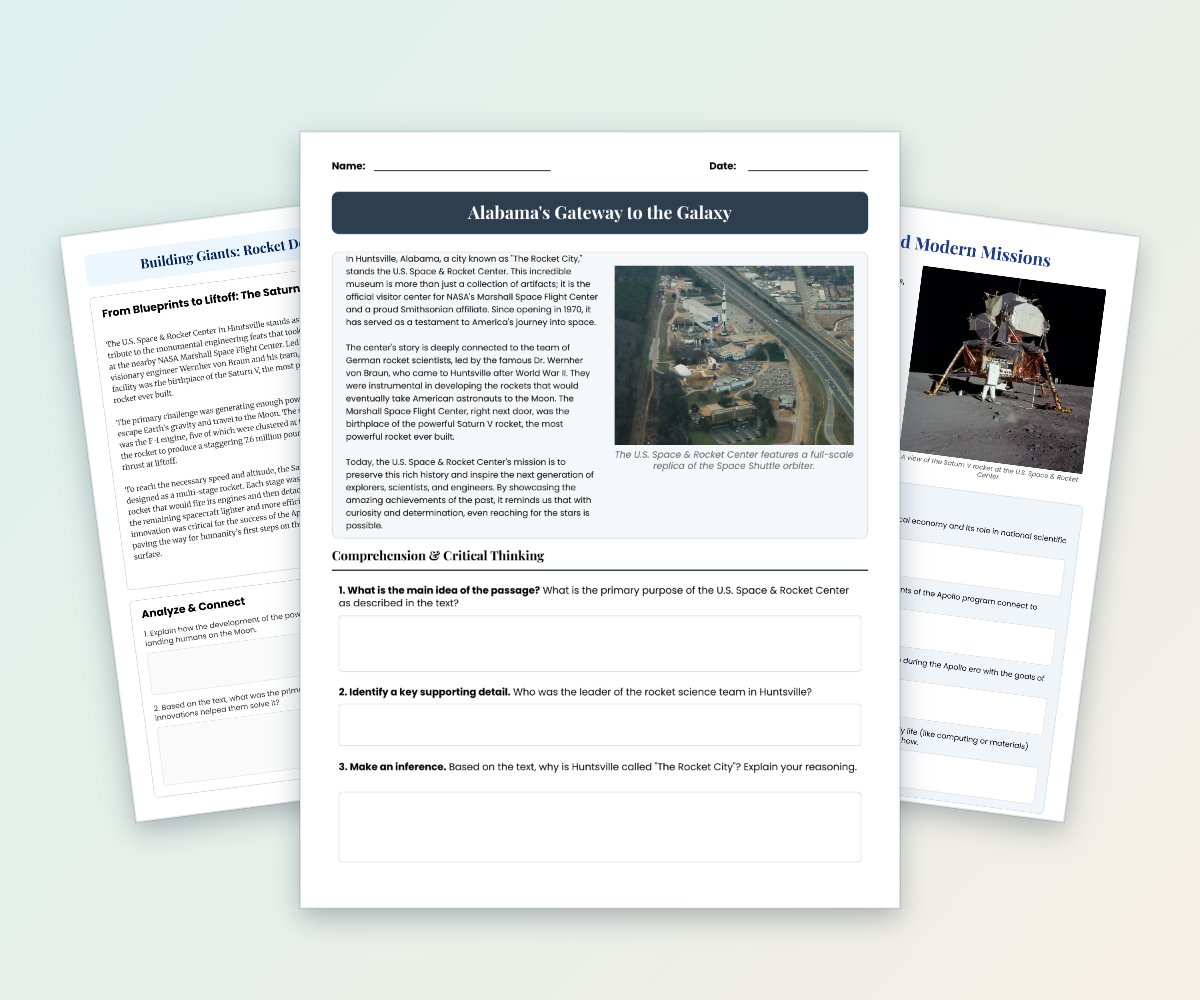
Students investigate Alabama’s connection to Veterans Day while distinguishing between primary and secondary sources.
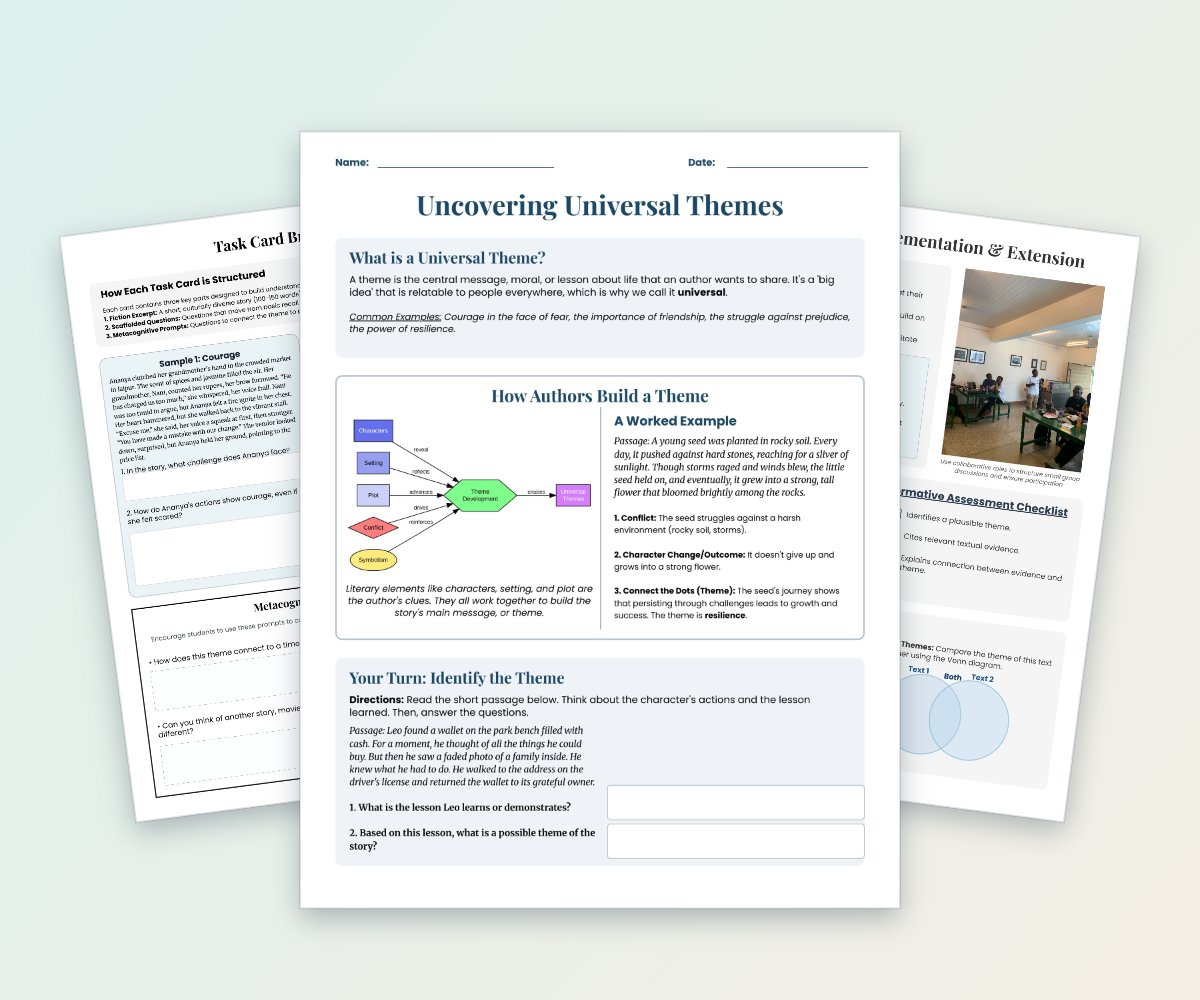
This resource introduces universal themes and shows how characters, settings, conflicts, and outcomes develop a story’s message.
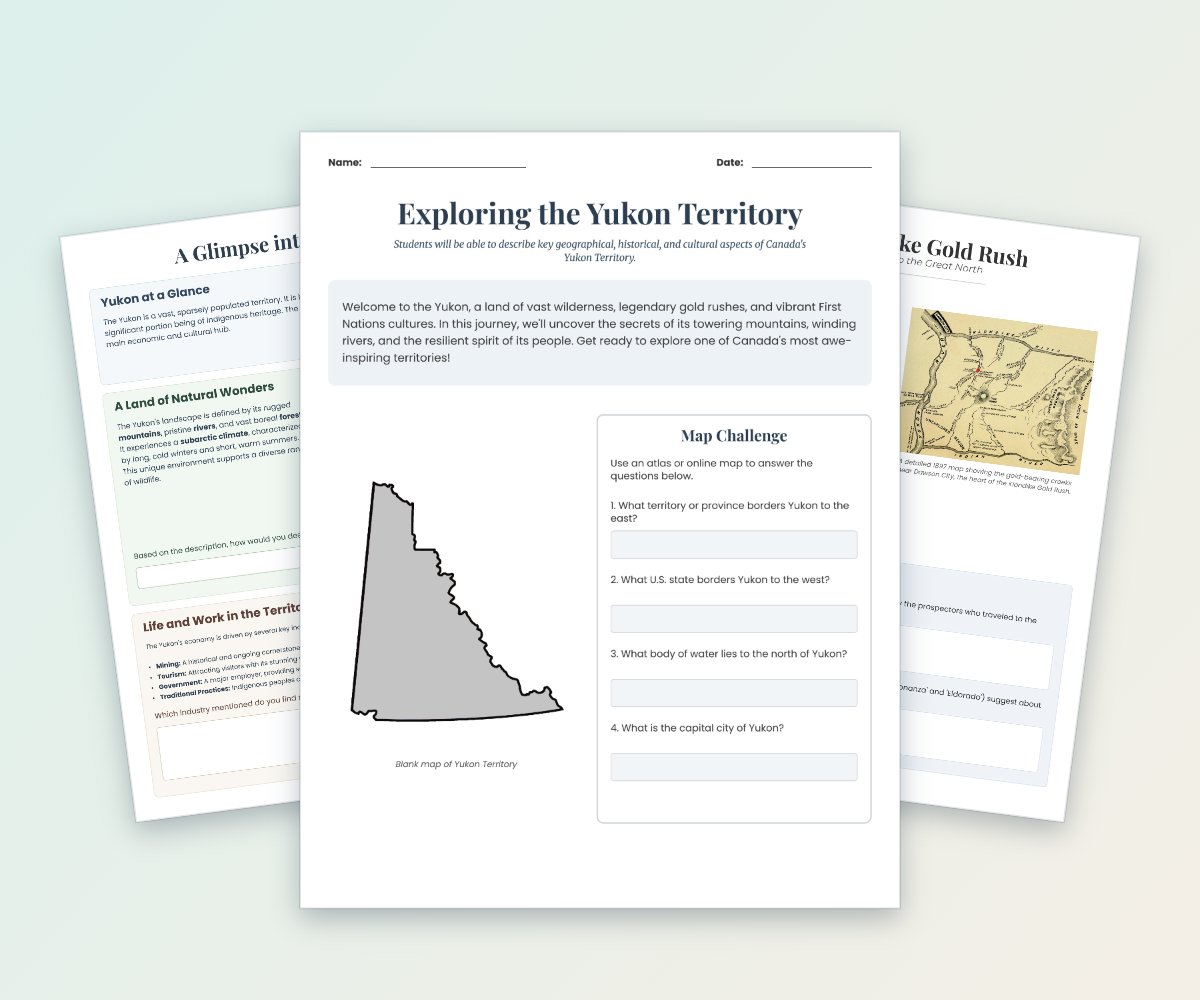
This seven-page activity pack introduces students to Yukon's geography, climate, natural environment, industries, Indigenous cultures, and Klondike Gold Rush.
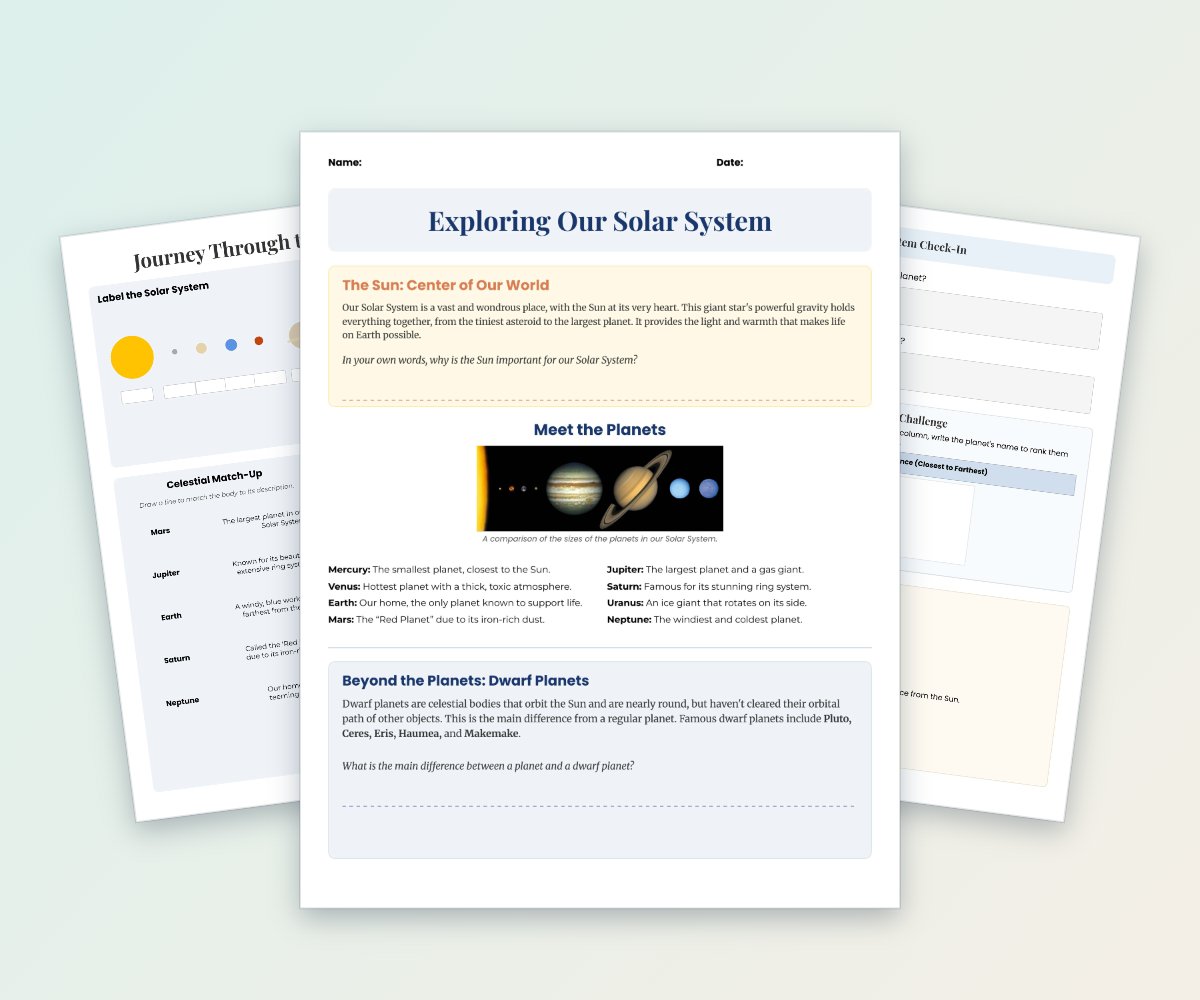
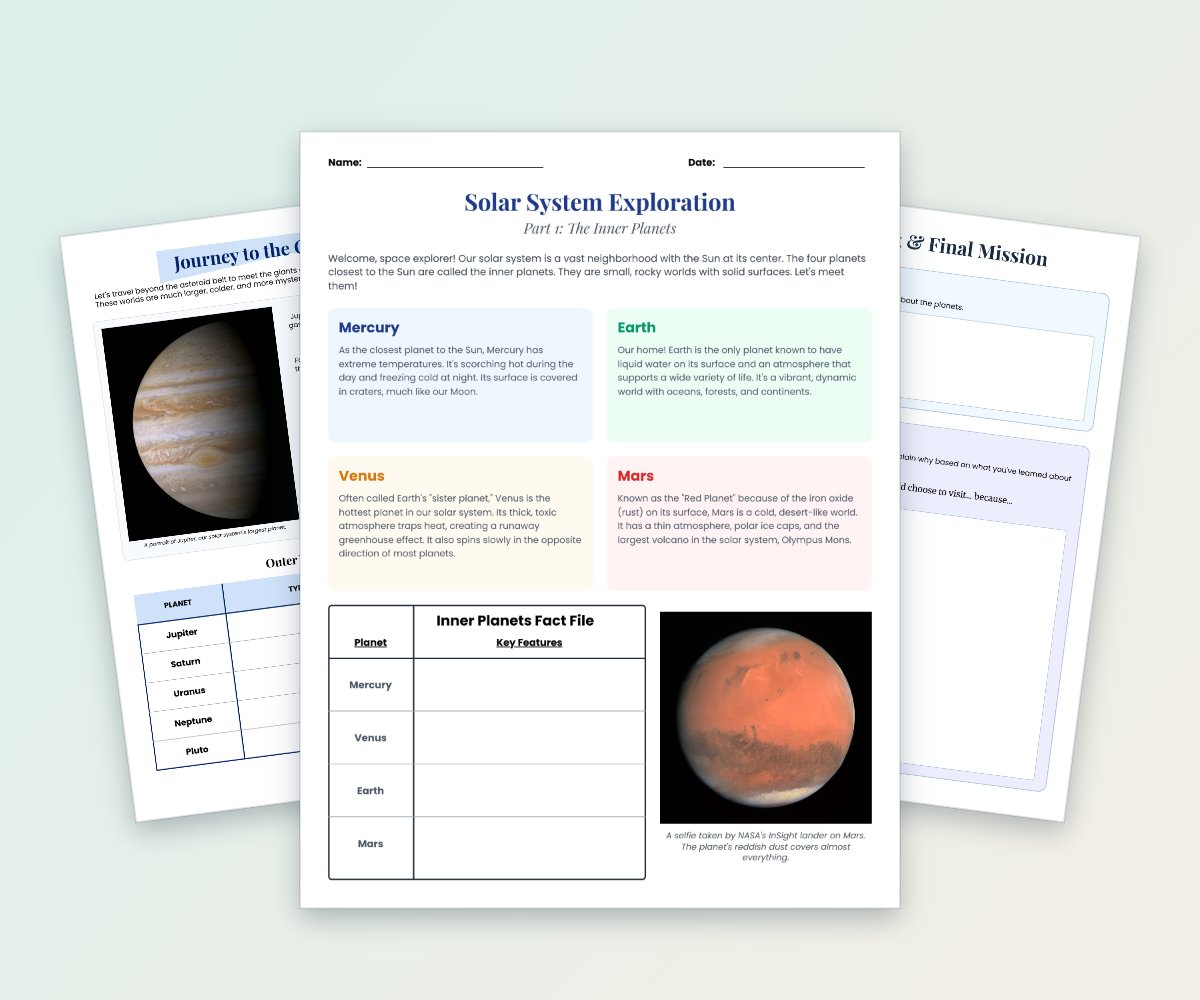
This three-page worksheet introduces the Sun, planets, dwarf planets, and key planetary characteristics.
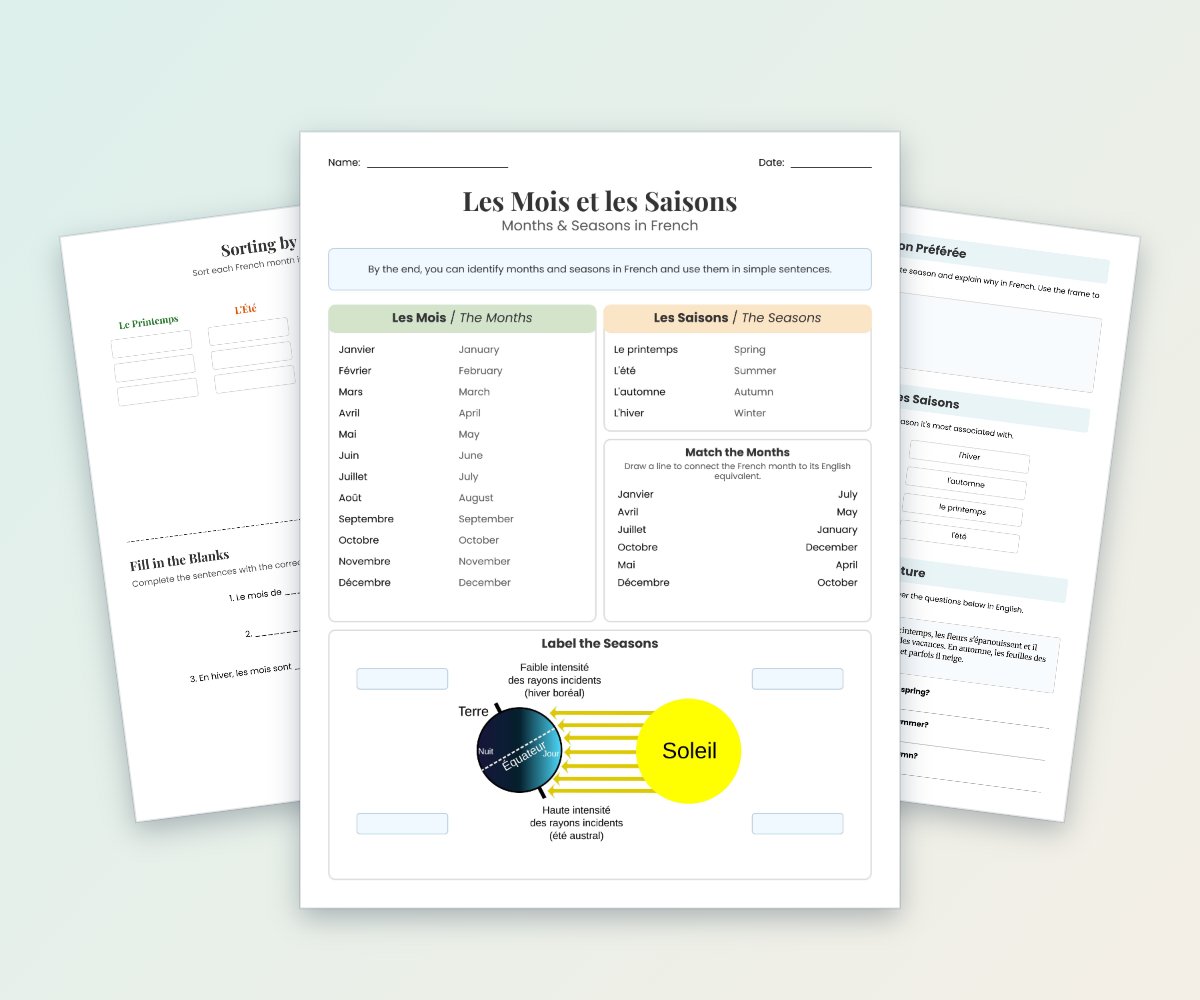
This four-page French activity pack introduces the months, seasons, and seasonal weather vocabulary through matching, sorting, fill-in-the-blank, reading comprehension, and writing tasks.
Students explore the inner and outer planets through concise informational text, including planet types, features, atmospheres, and notable facts.
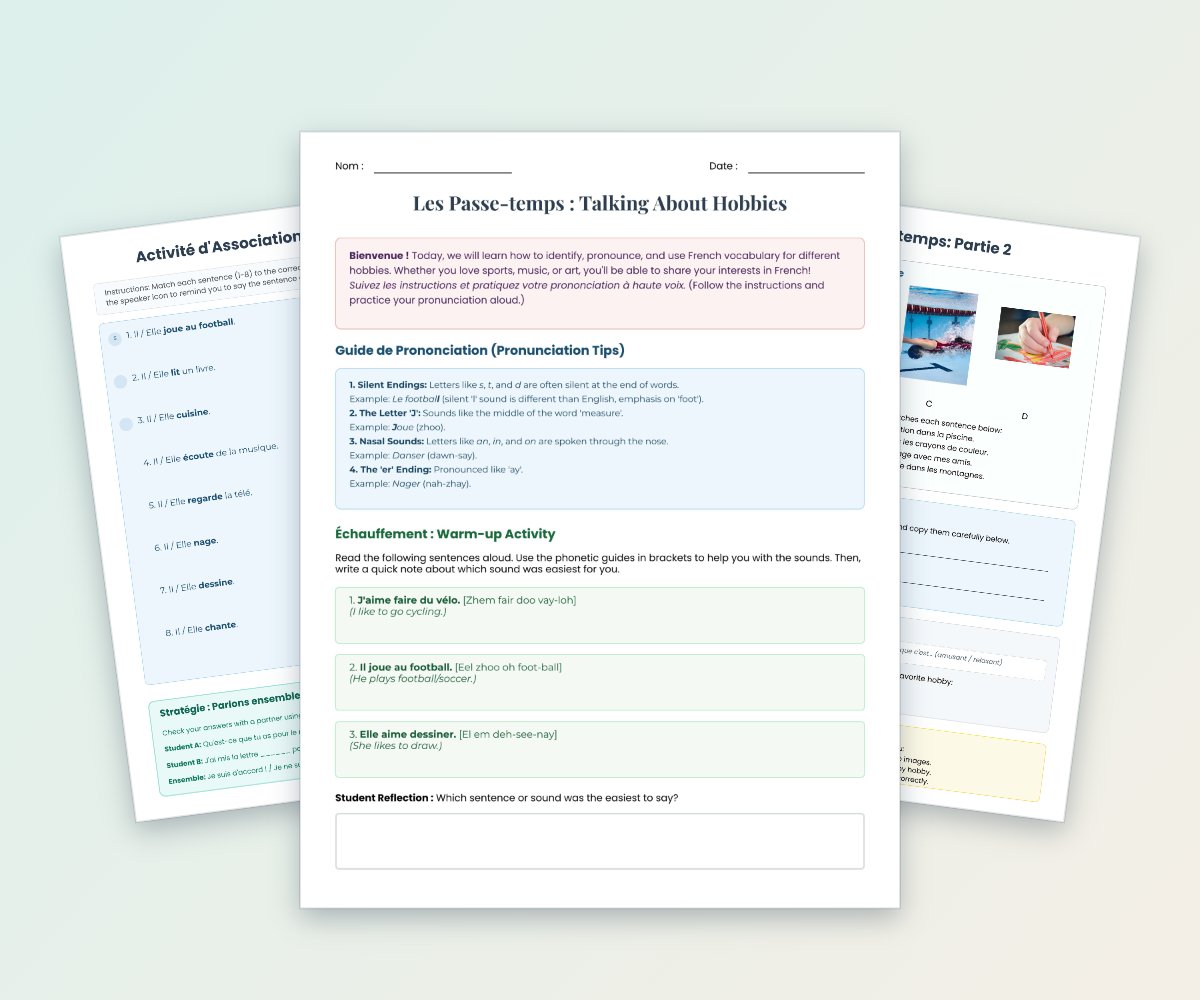
Introduce French hobby vocabulary with pronunciation guidance, sentence-reading warm-ups, picture-matching activities, and partner speaking prompts.
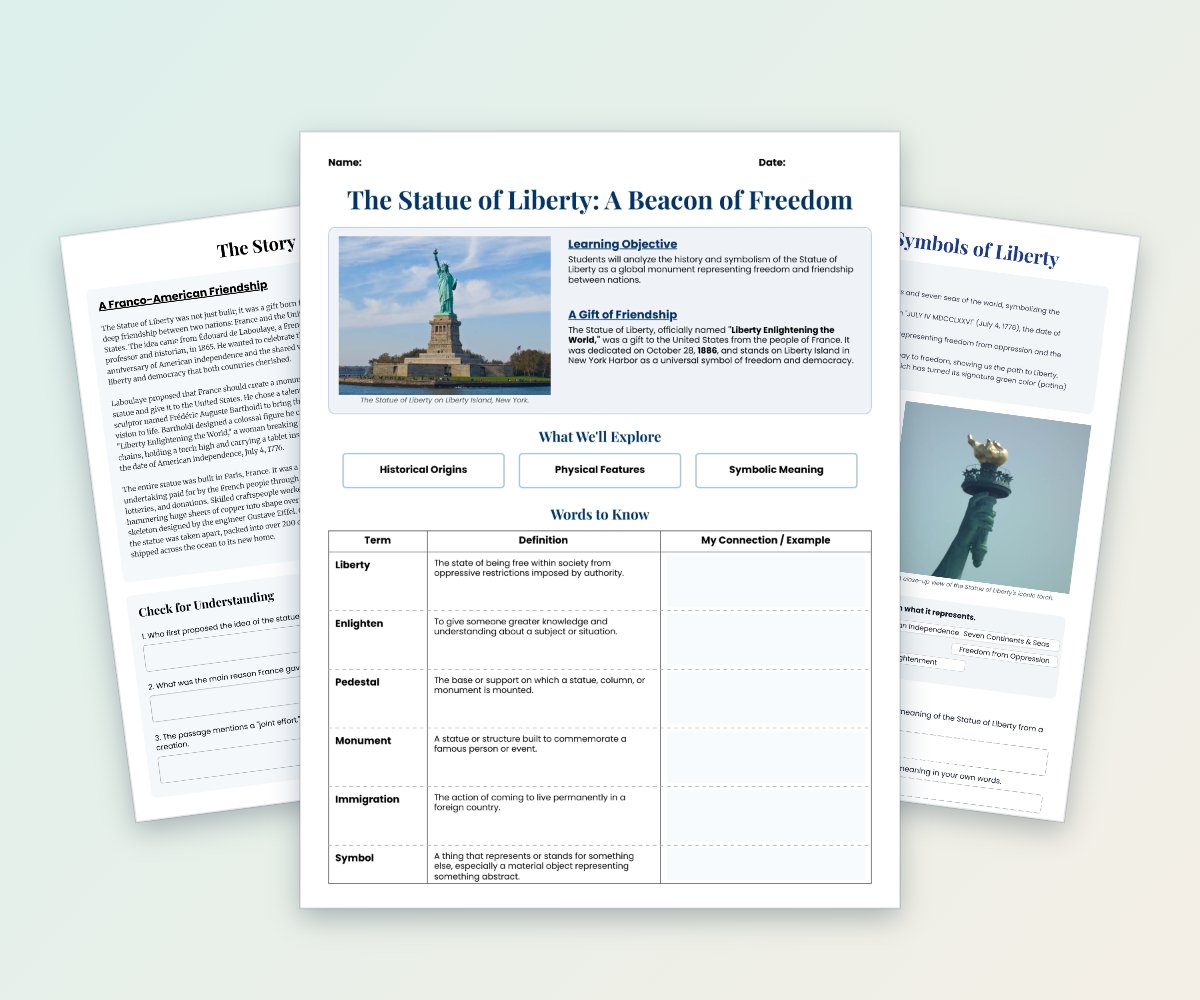
This four-page lesson explores the Statue of Liberty’s history, physical features, symbolism, and significance as a gift from France to the United States.
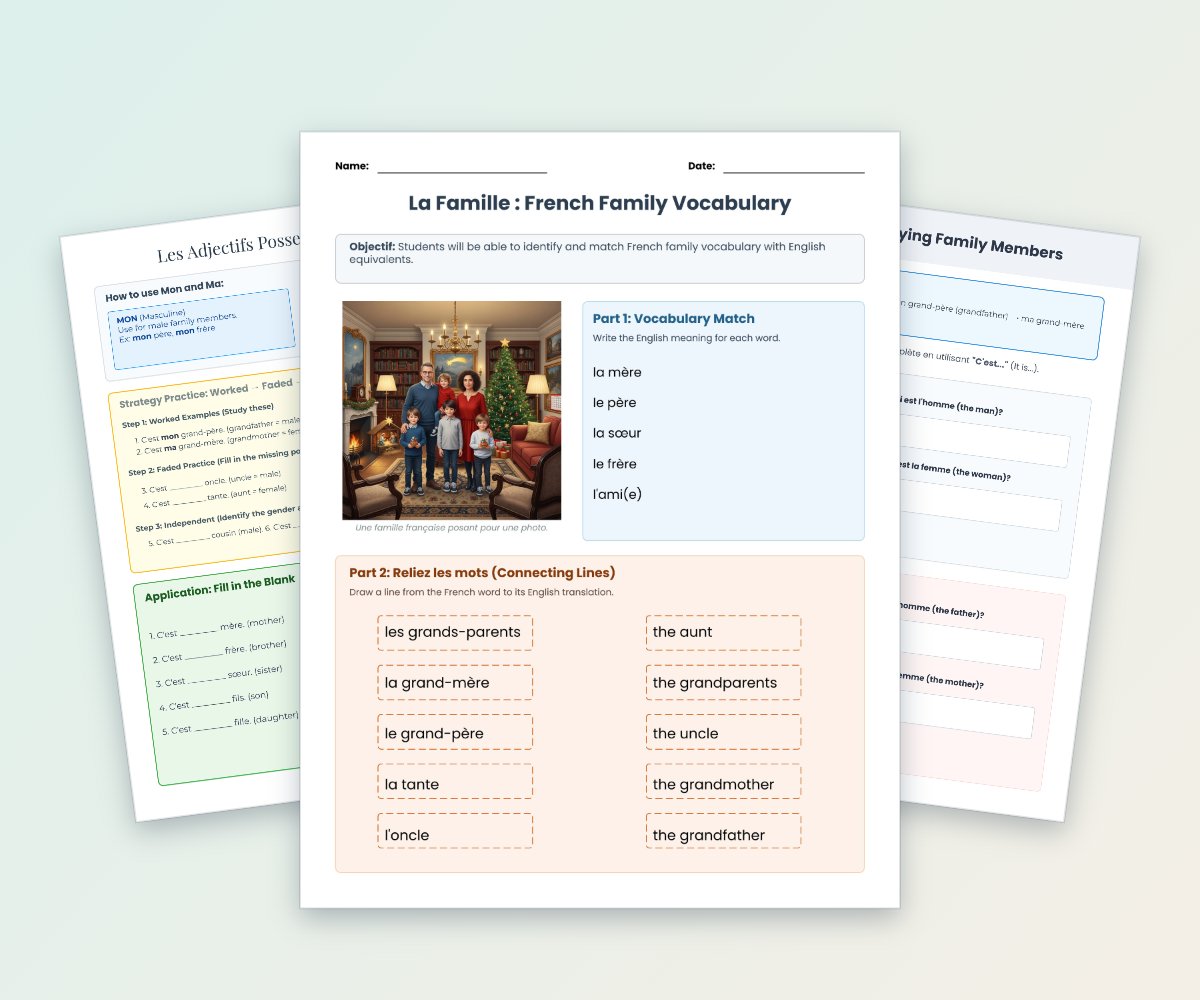
This four-page French activity pack teaches family-member vocabulary and the possessive adjectives mon and ma.
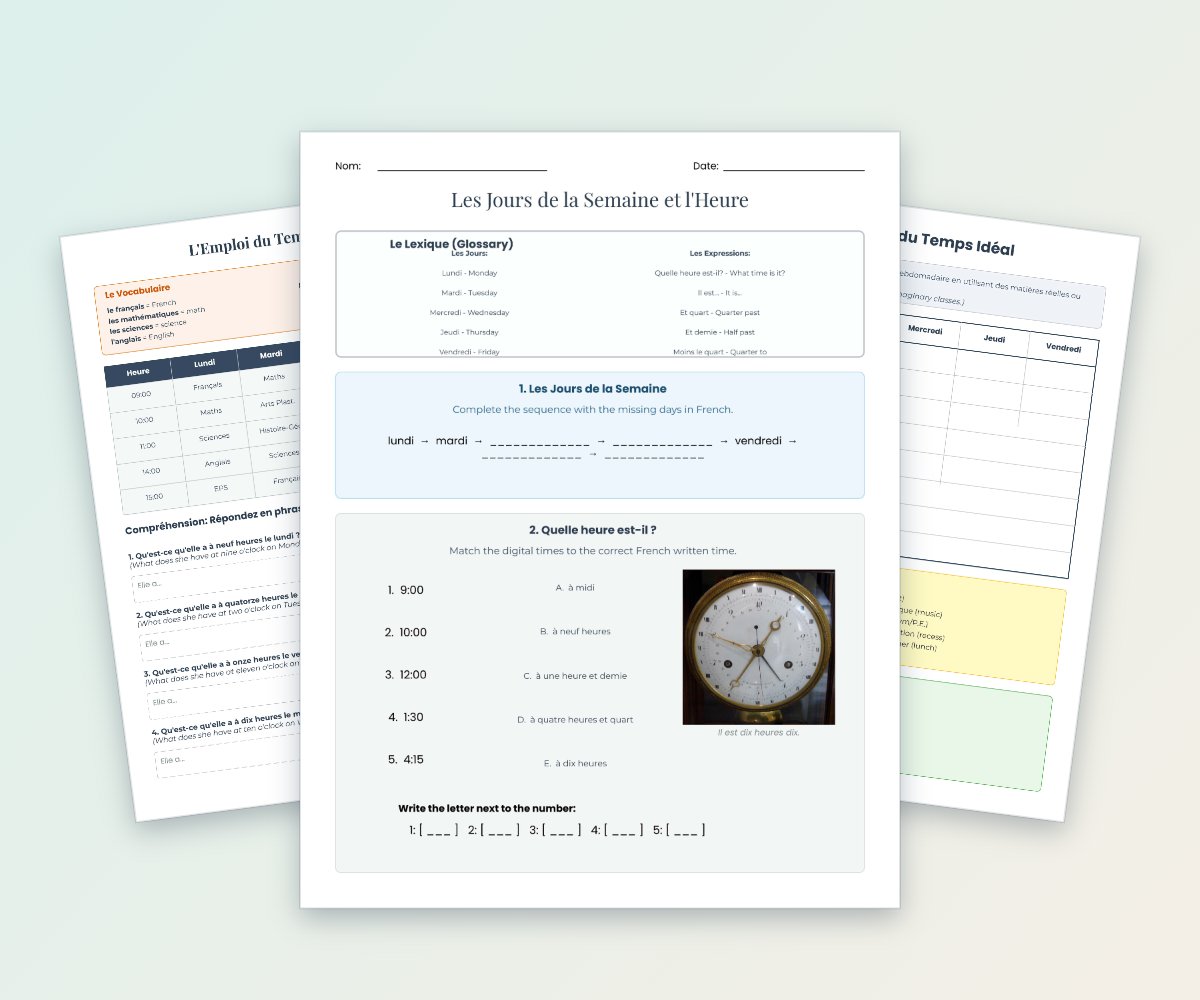
This four-page French worksheet pack introduces days of the week, telling time, school-subject vocabulary, and timetable comprehension.
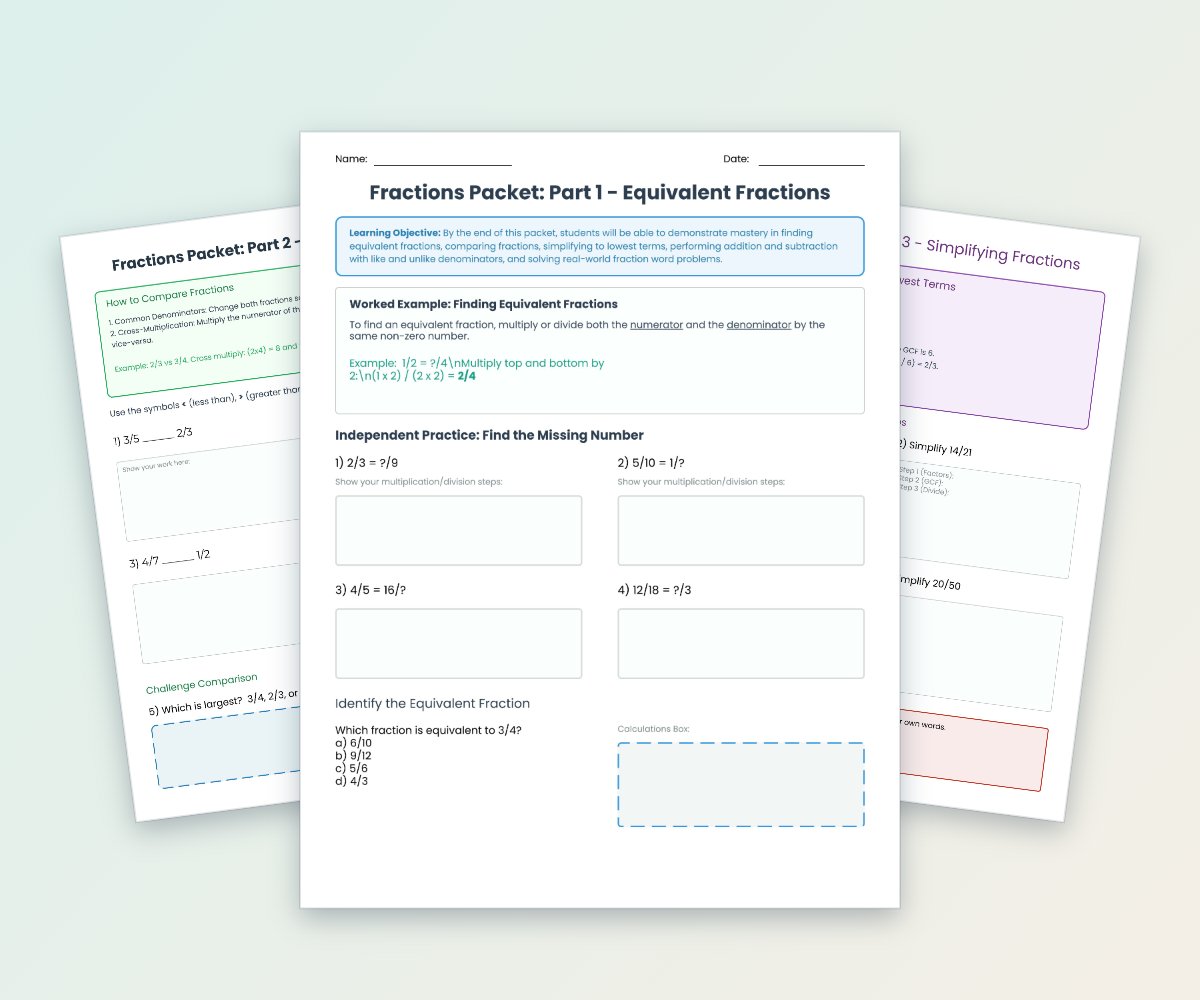
This six-page fractions packet includes worked examples and independent practice on equivalent fractions, comparing fractions, simplifying, and adding fractions.
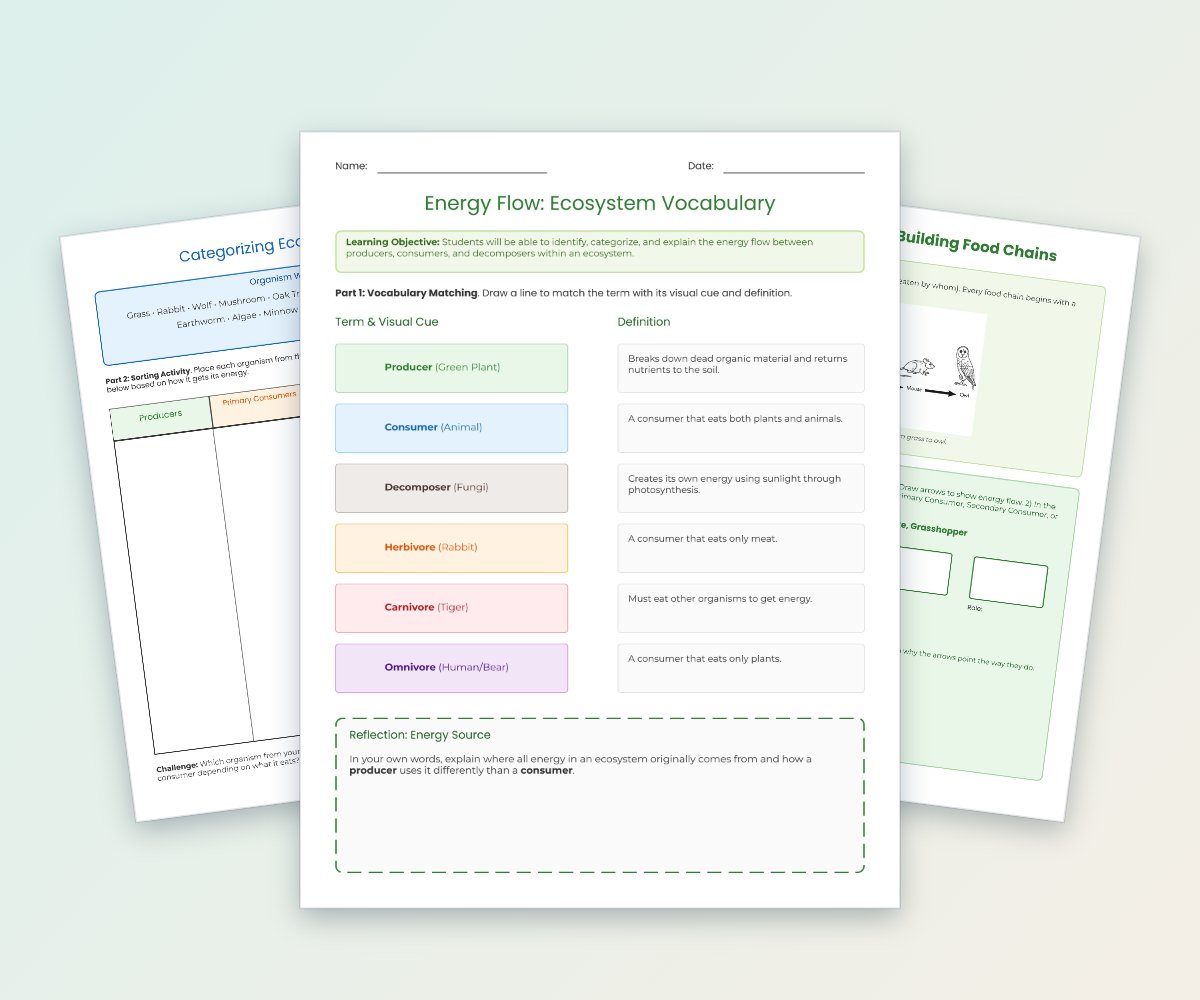
This six-page science workbook explores how energy moves through ecosystems.
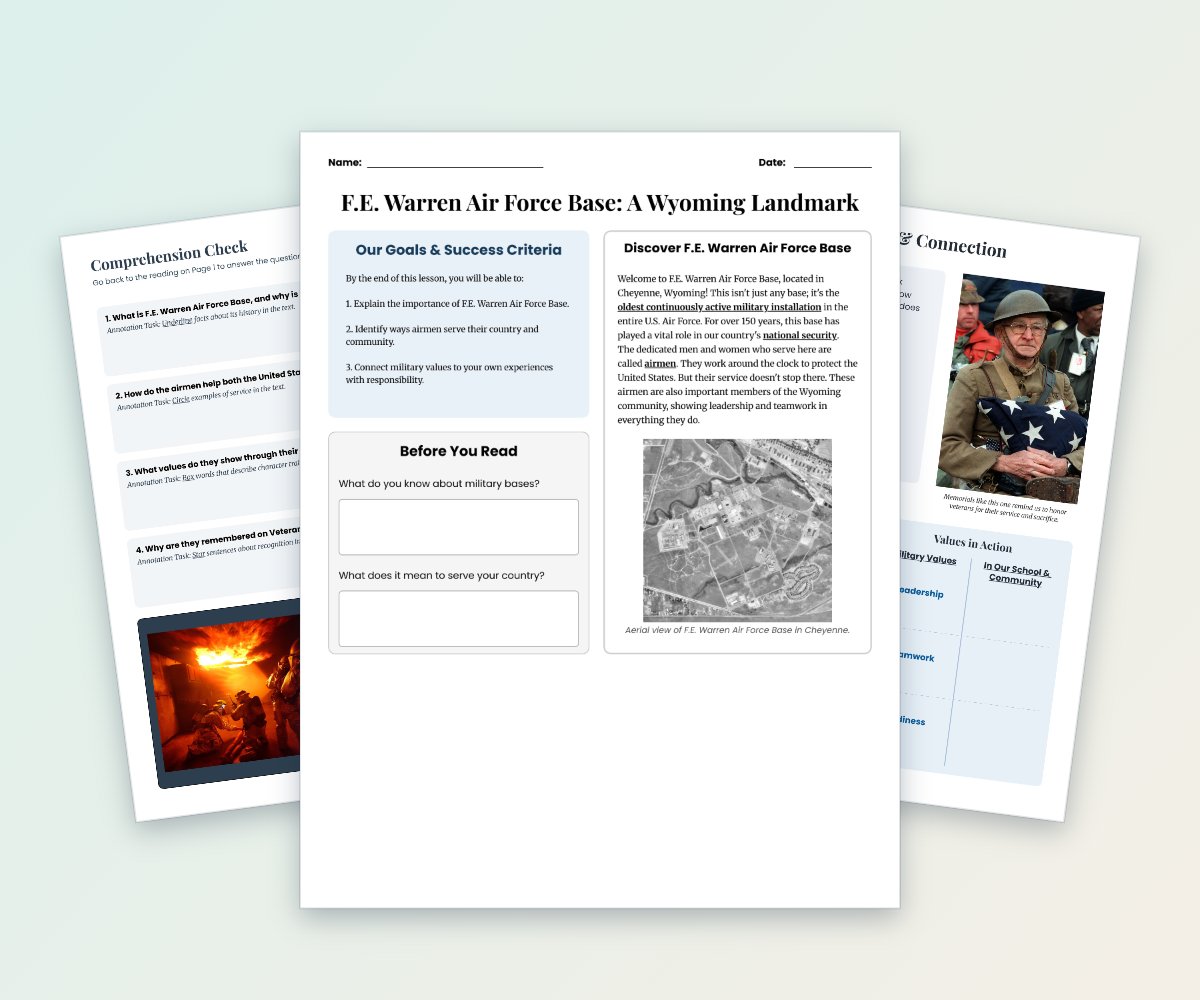
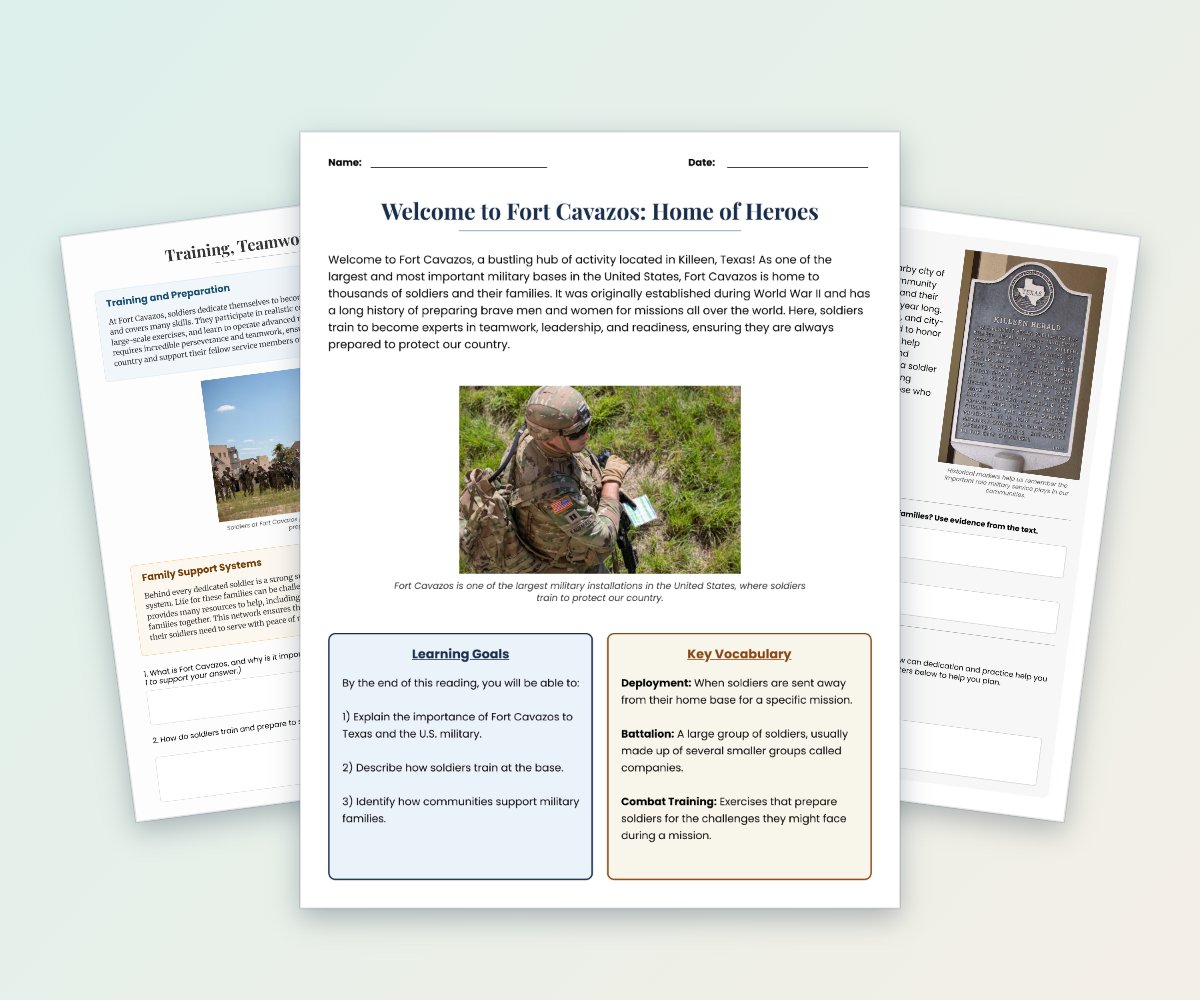
Students read an age-appropriate overview of Fort Cavazos, including its military significance, soldier training, and support for military families.
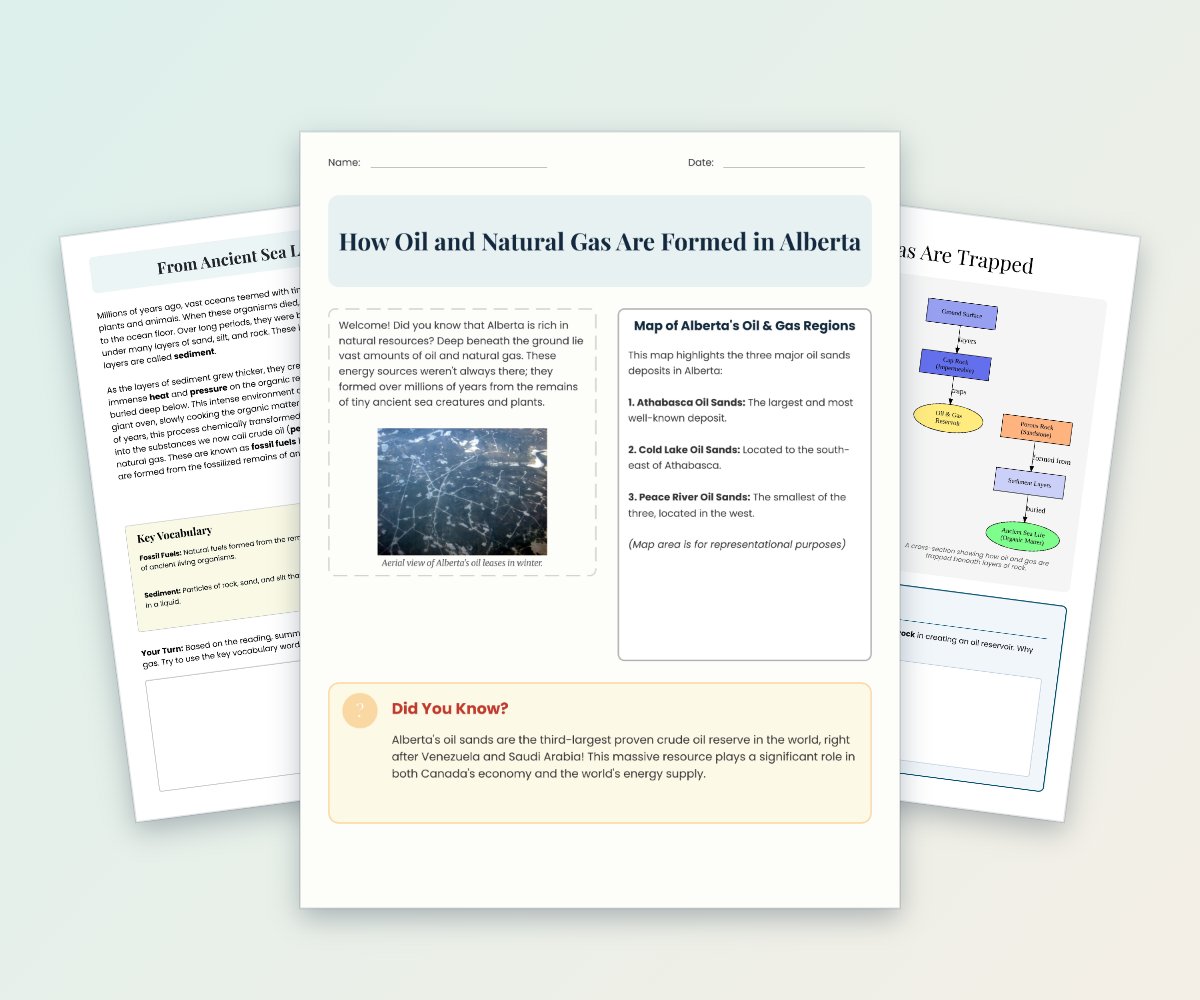
This four-page science resource explains how ancient marine organisms became crude oil and natural gas through sedimentation, heat, and pressure.
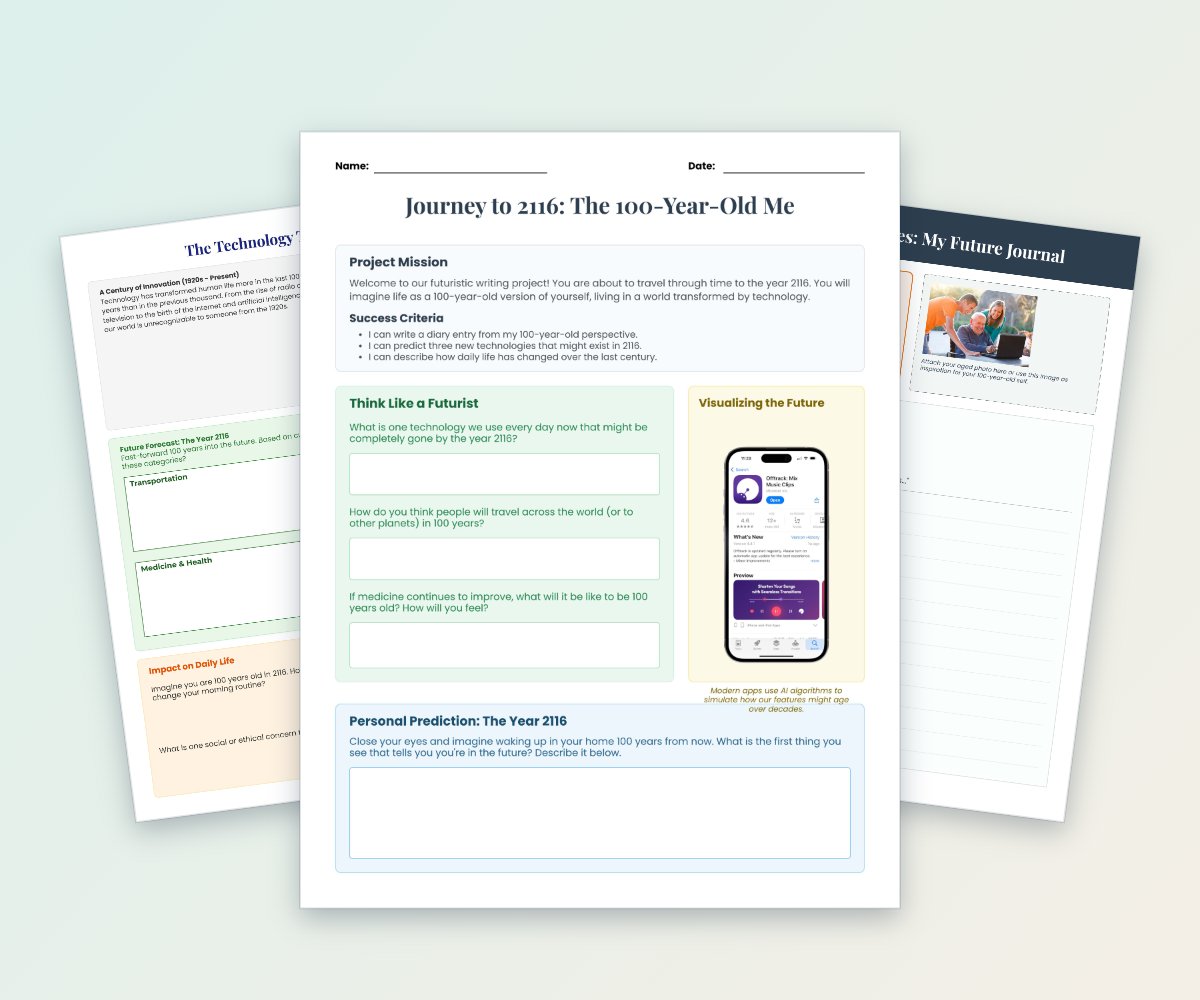
Students imagine themselves at age 100 in the year 2116 and write from a future perspective.
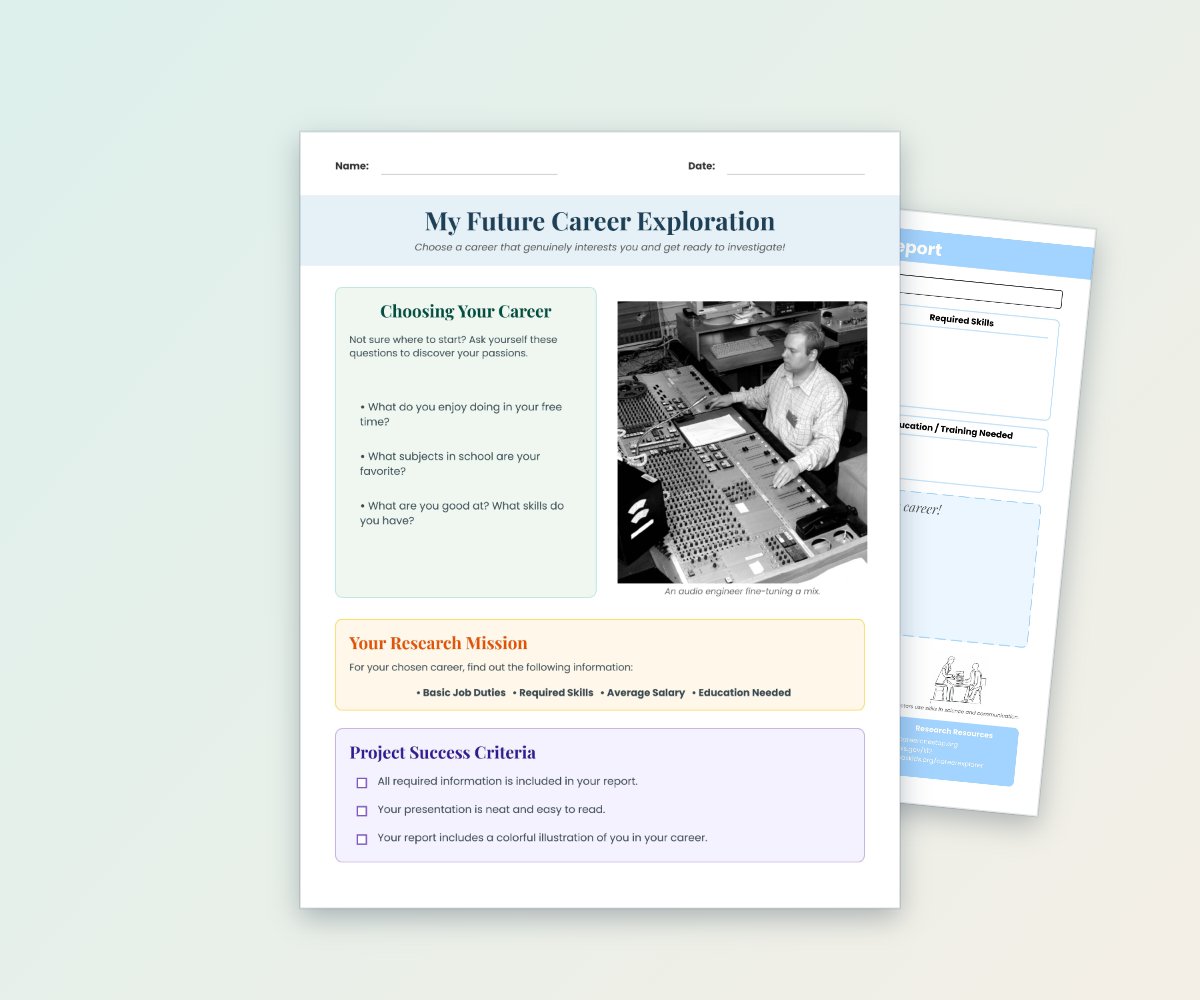
Students choose an interesting career and research its job duties, required skills, salary range, and education or training.
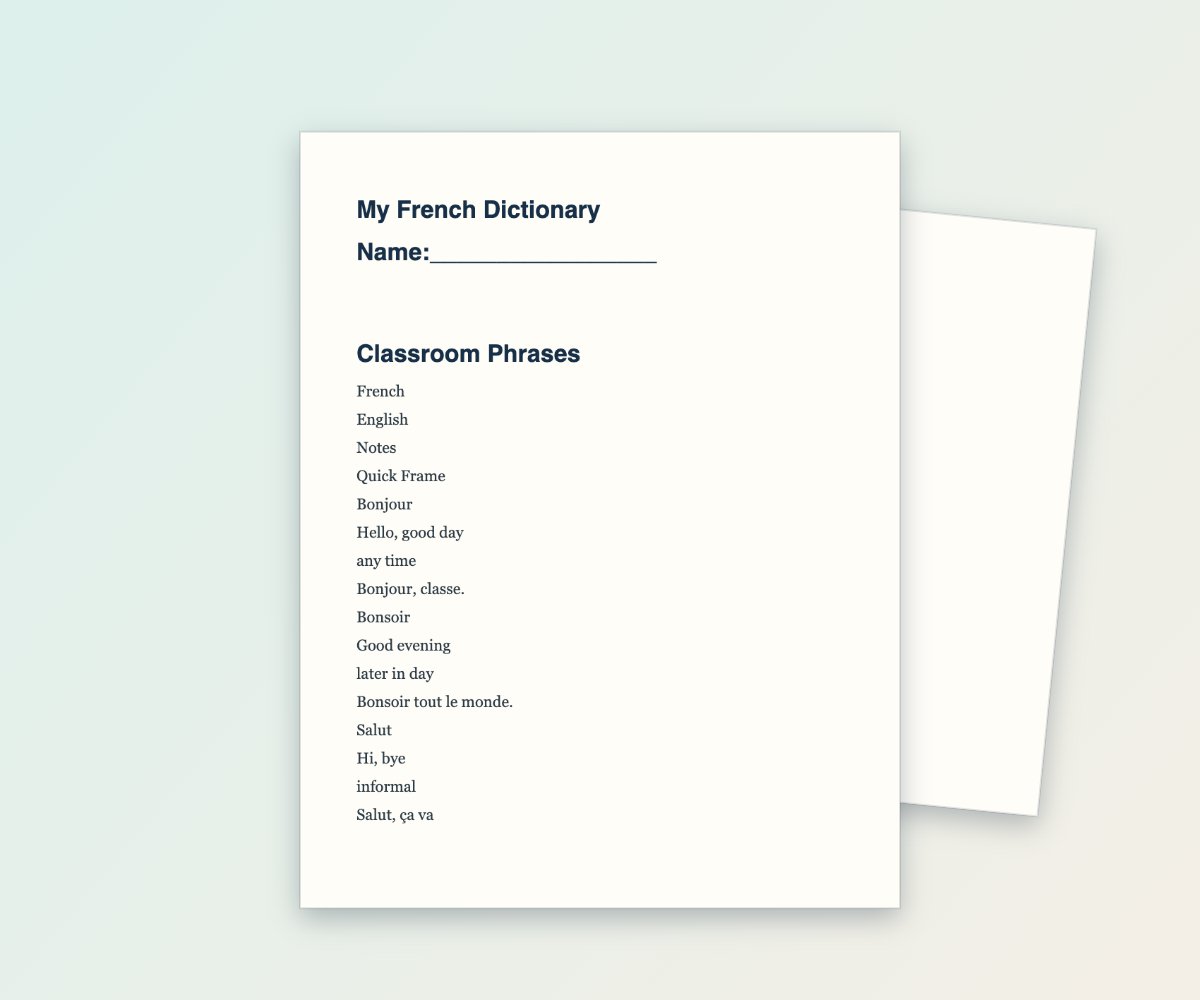
This four-page personal French dictionary introduces classroom phrases, question words, articles, gender, plurals, school roles, objects, and basic numbers.
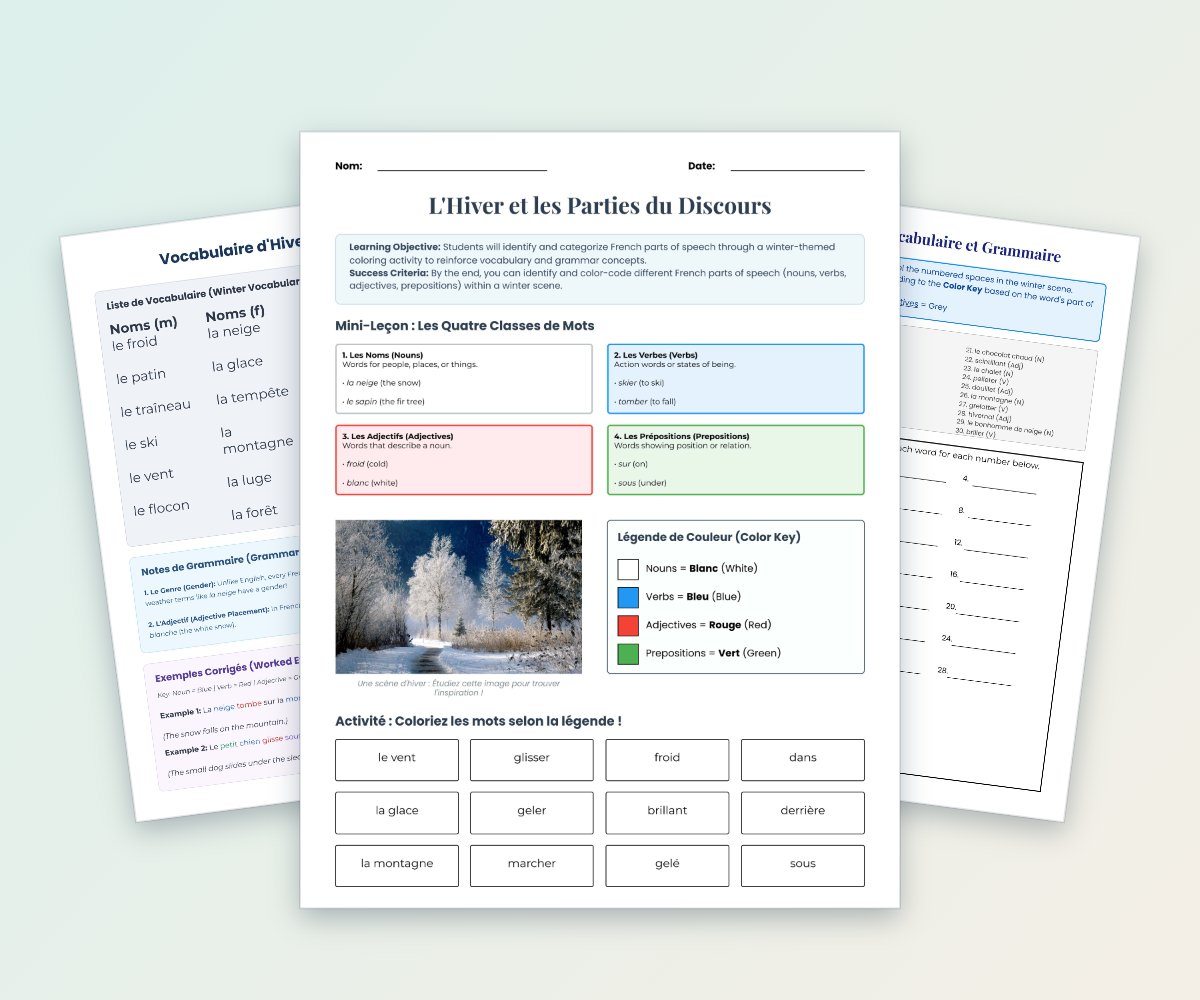
This three-page French worksheet teaches students to identify nouns, verbs, adjectives, and prepositions through winter-themed vocabulary and color-coding.
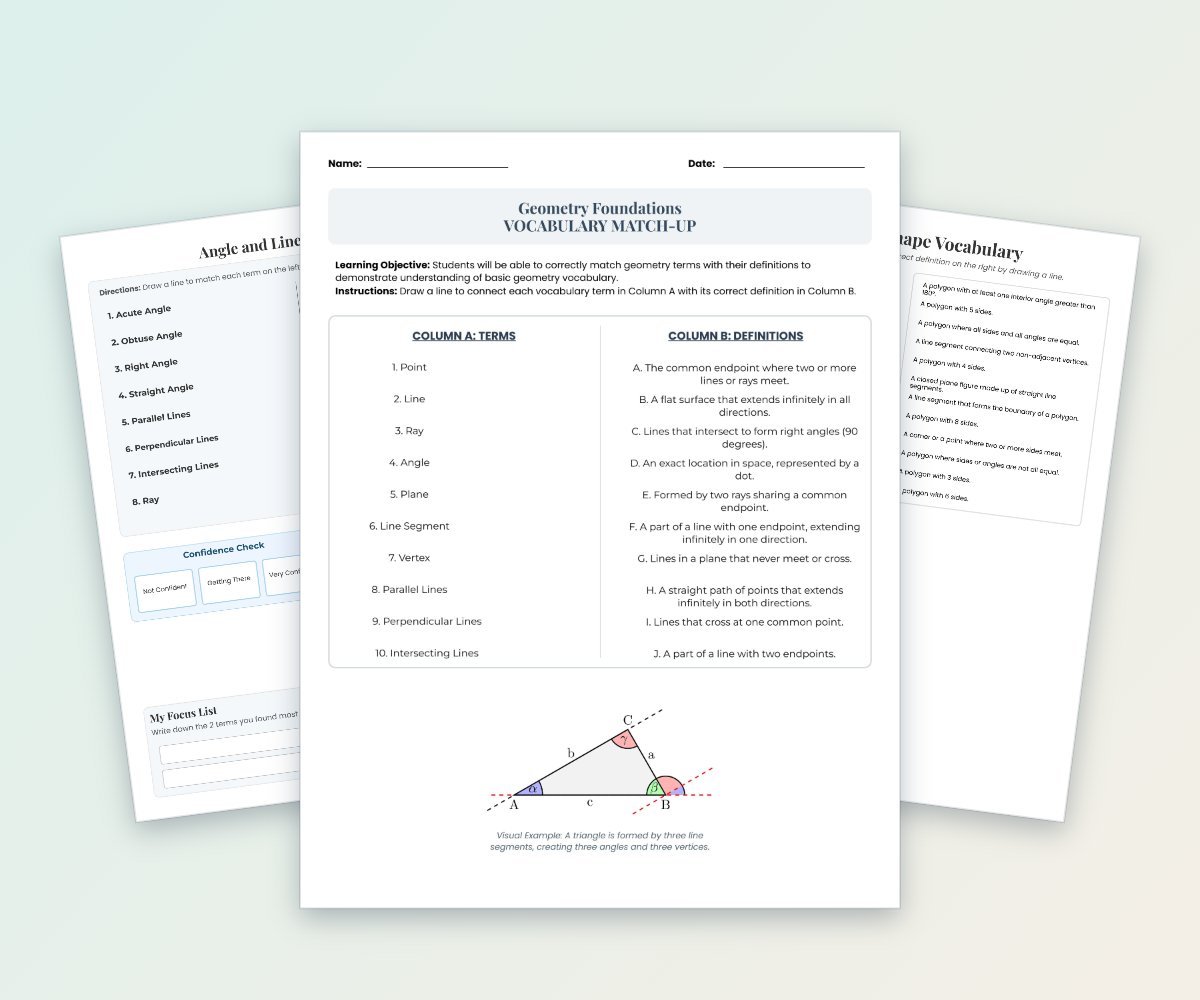
This three-page worksheet helps students practice foundational geometry vocabulary, including lines, angles, polygons, and geometric relationships.
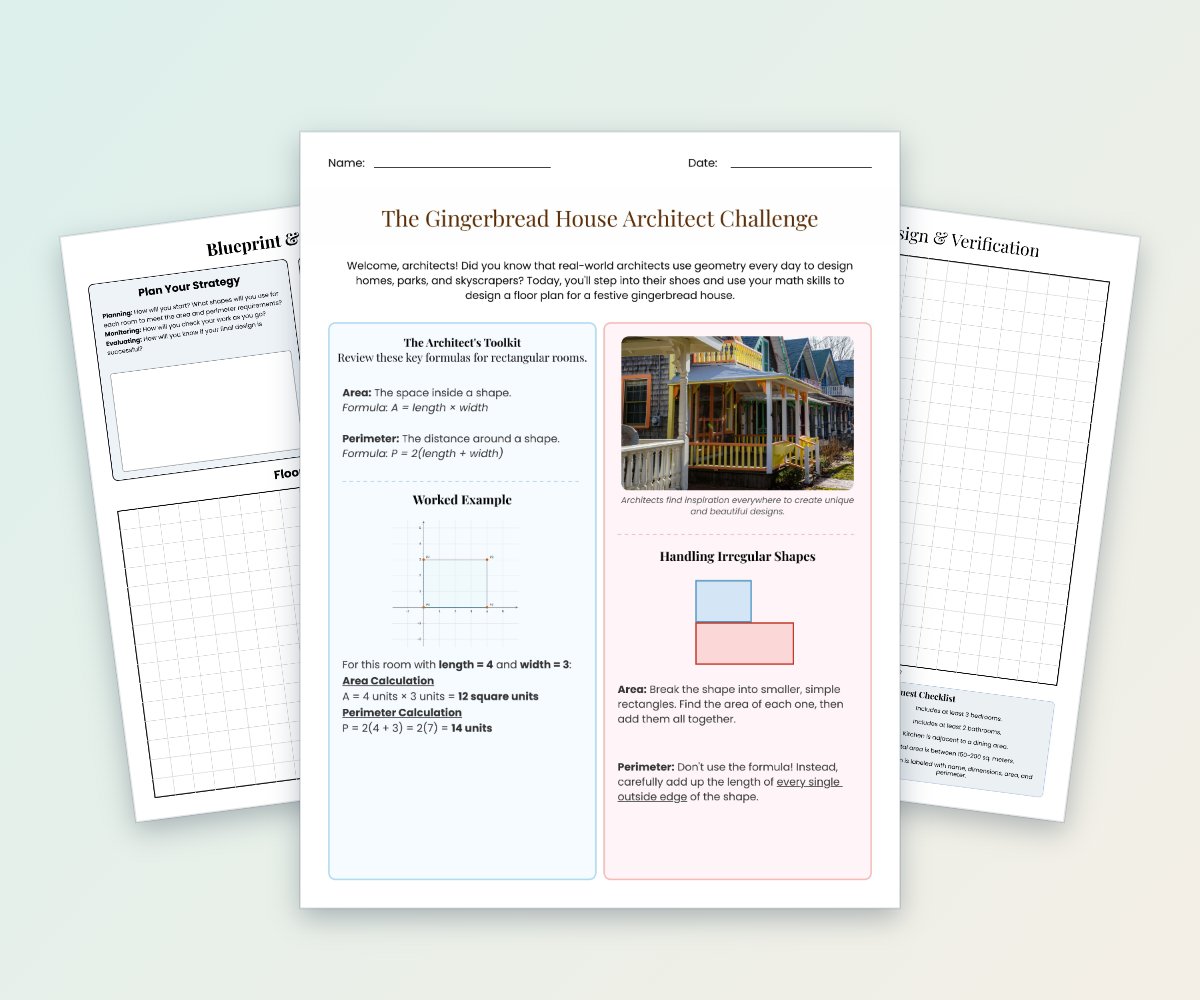
Students become architects as they design a gingerbread house floor plan using area, perimeter, irregular shapes, and scale.
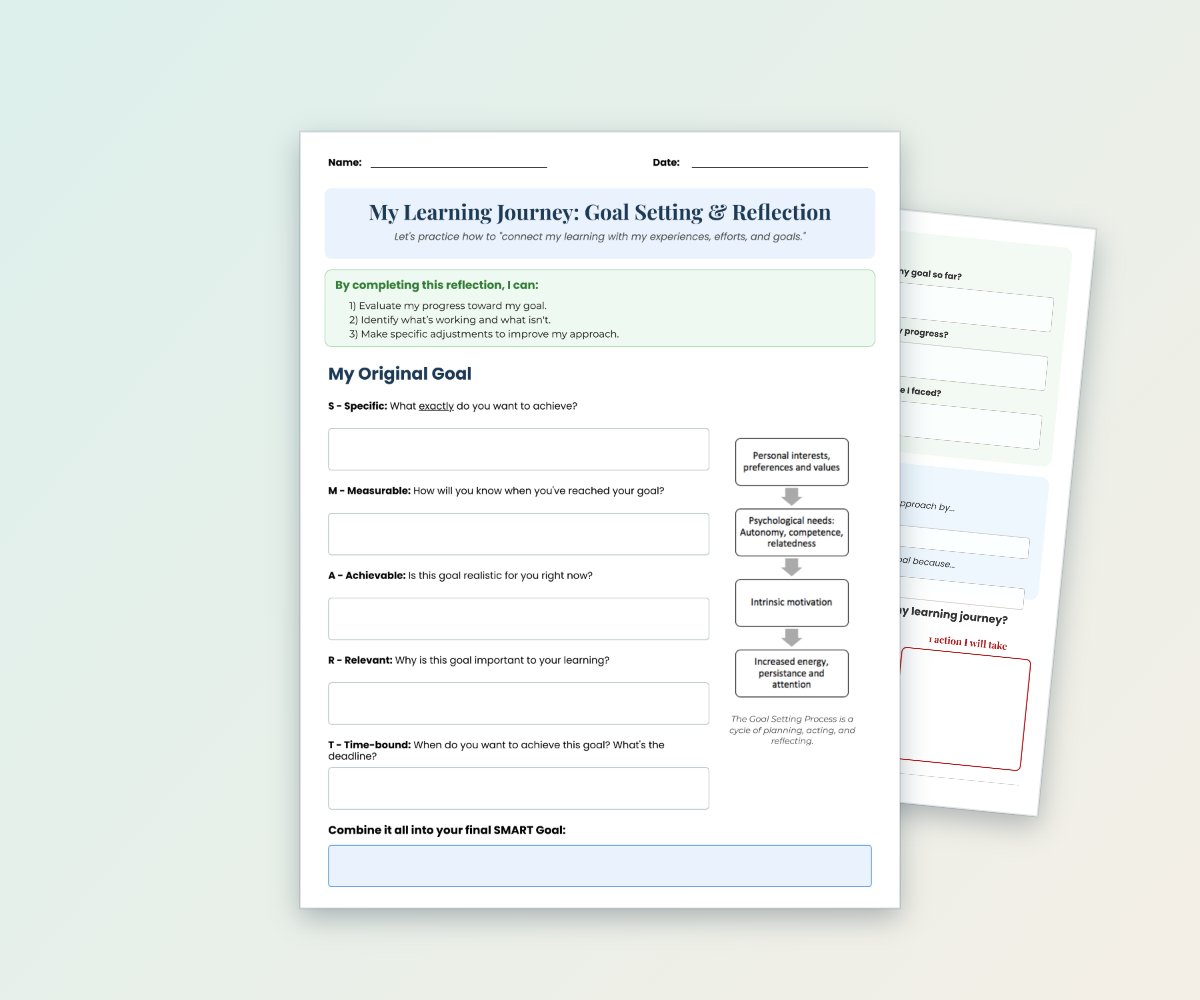
This two-page worksheet guides students through creating a SMART goal, evaluating current progress, identifying obstacles, and planning adjustments.
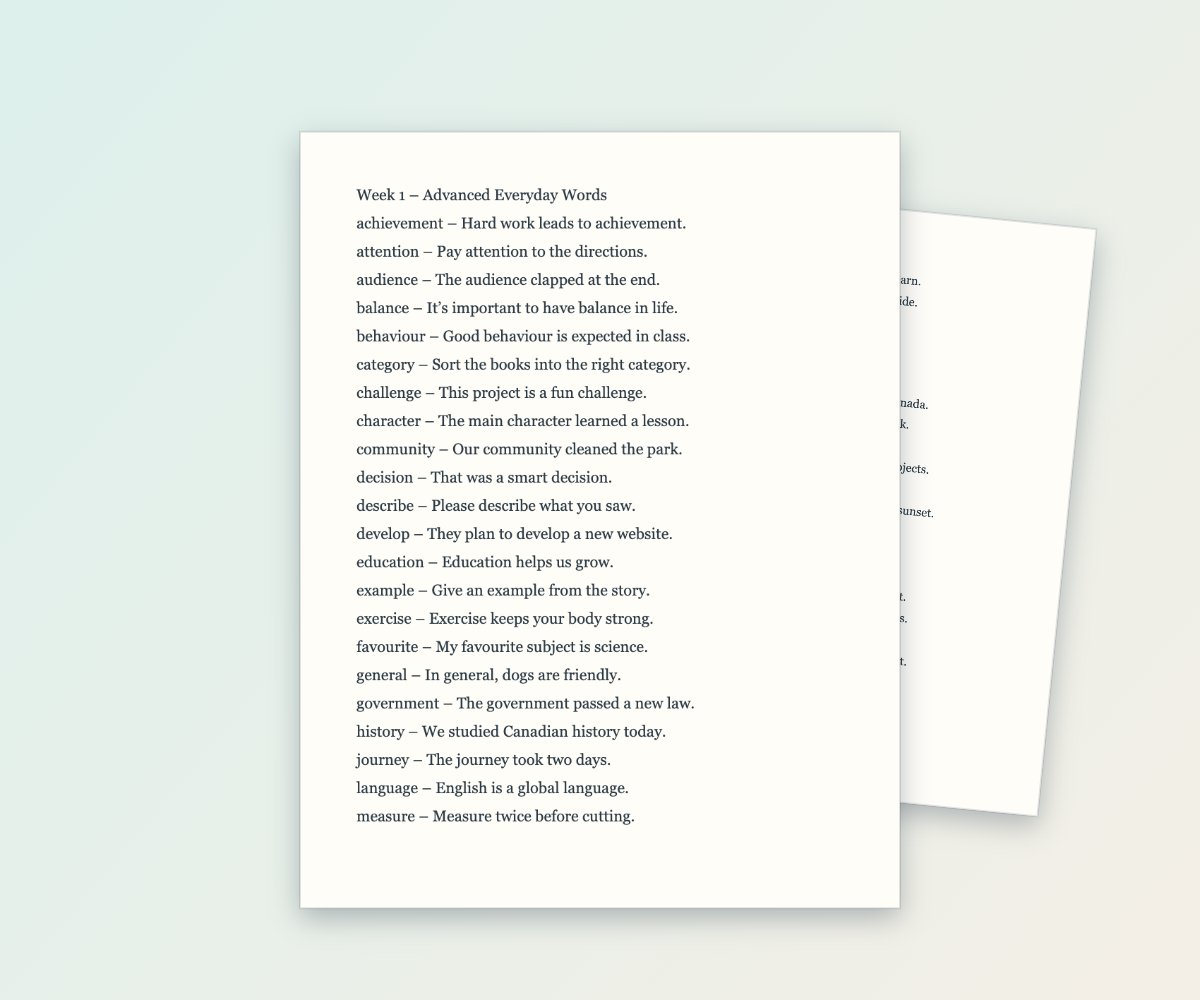
Build Grade 6 vocabulary through weekly word lists covering advanced everyday words, prefixes, roots, suffixes, and derivatives.
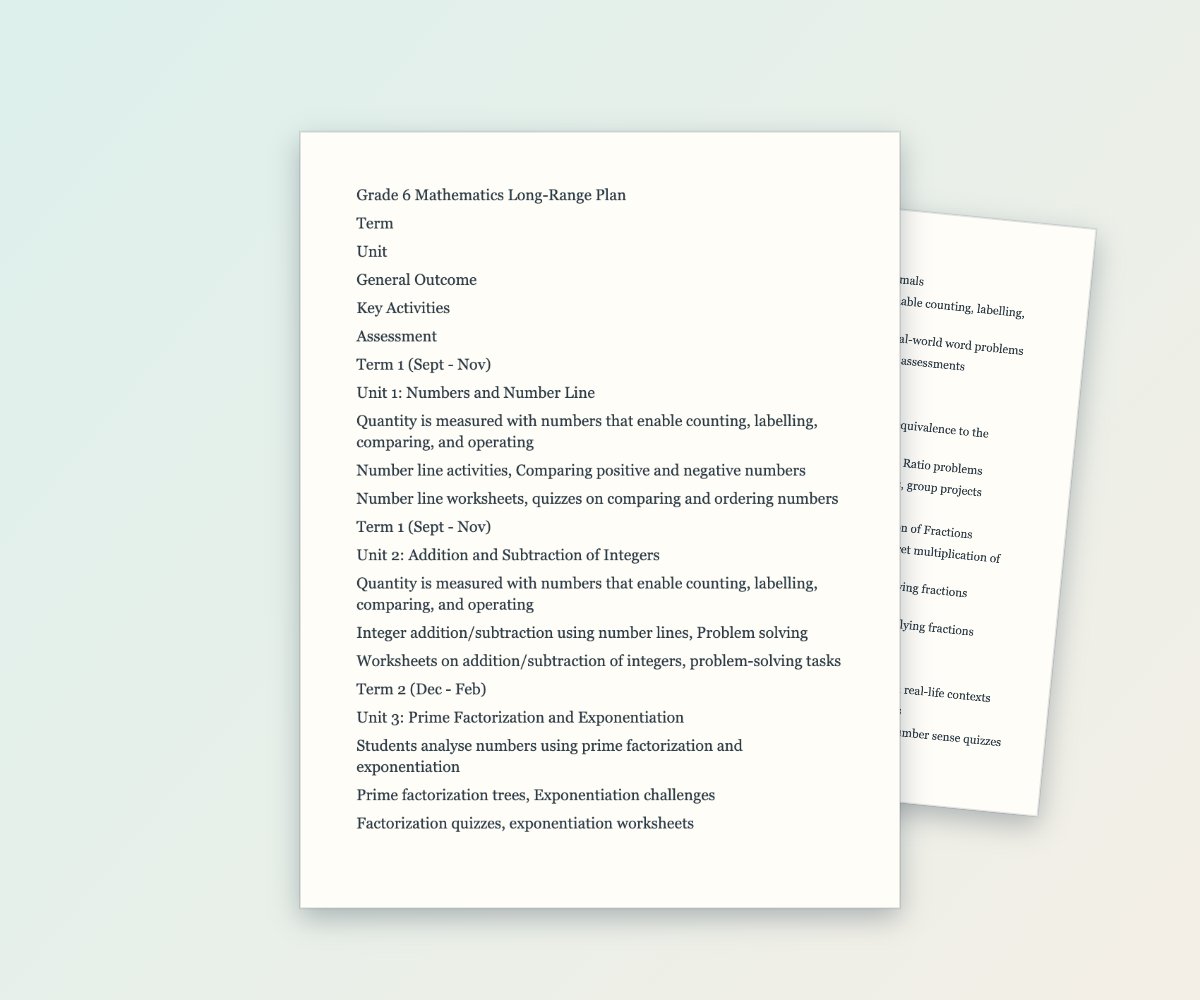
This one-page long-range plan maps six Grade 6 mathematics units across three terms, including integers, prime factorization, decimals, fractions, and ratios.
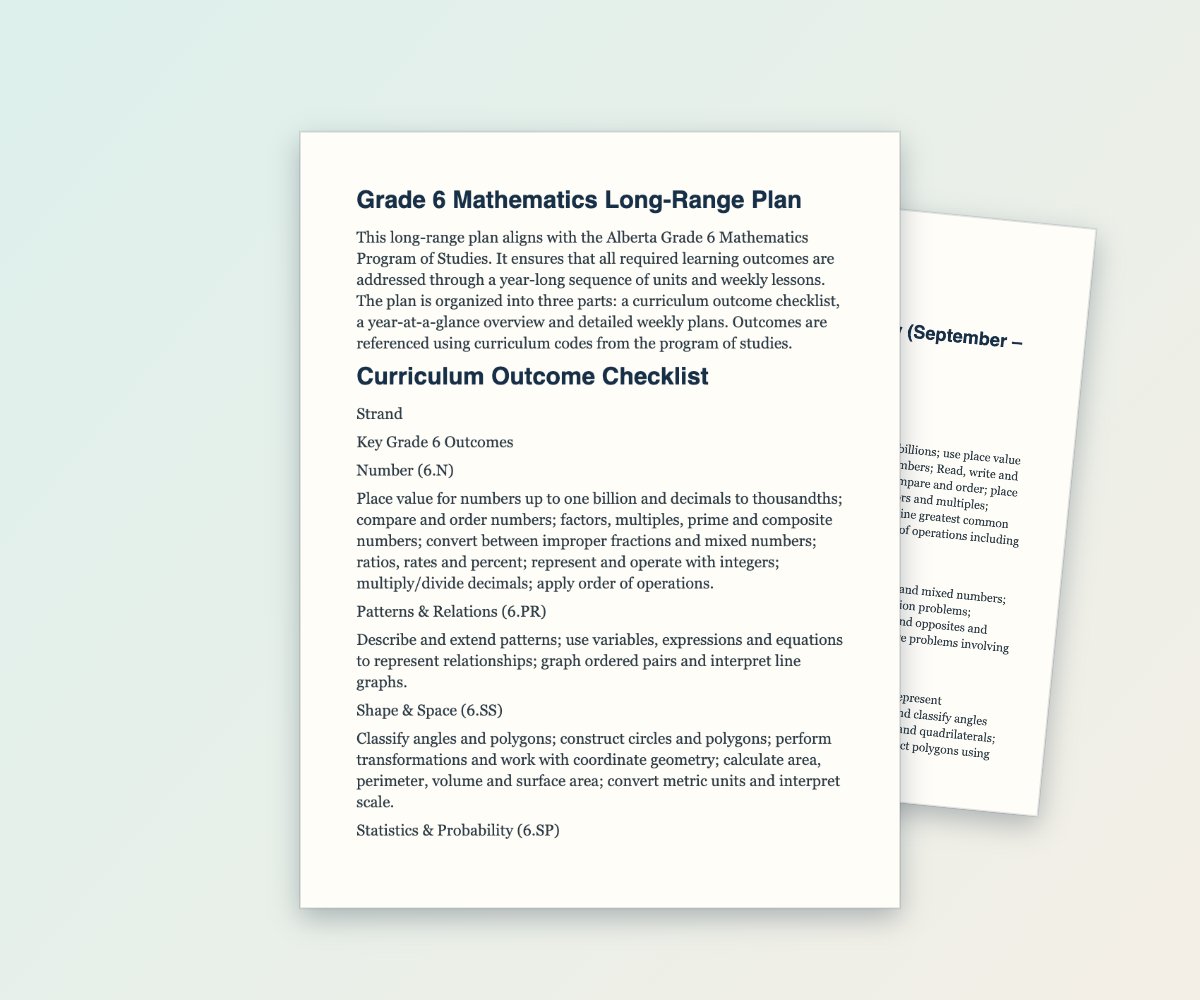
Plan a full Grade 6 mathematics year with an outcomes checklist, year-at-a-glance overview, and detailed weekly lesson sequencing.
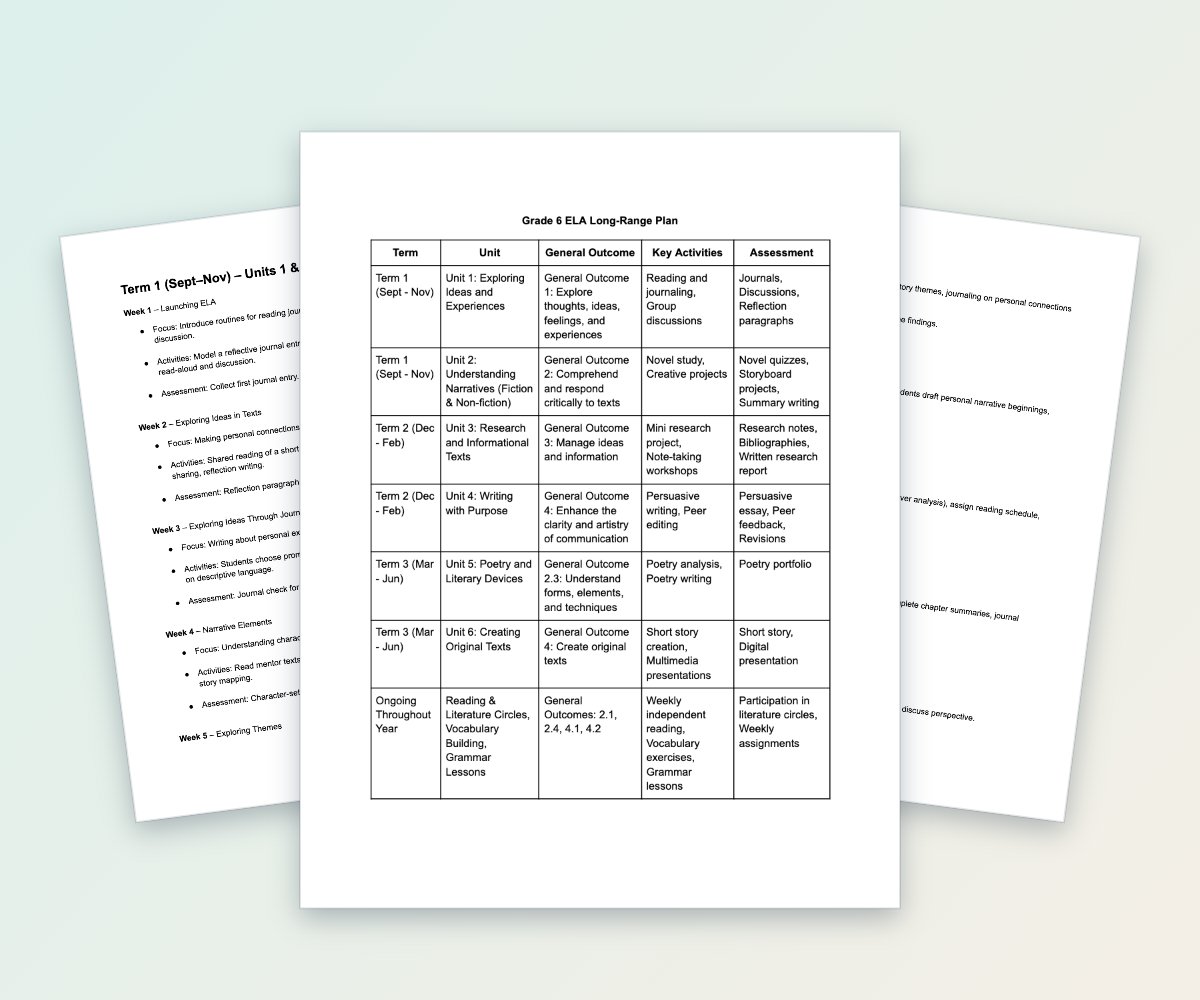
Plan a full Grade 6 ELA year across three terms with units covering reading, narrative texts, research, purposeful writing, poetry, and original composition.
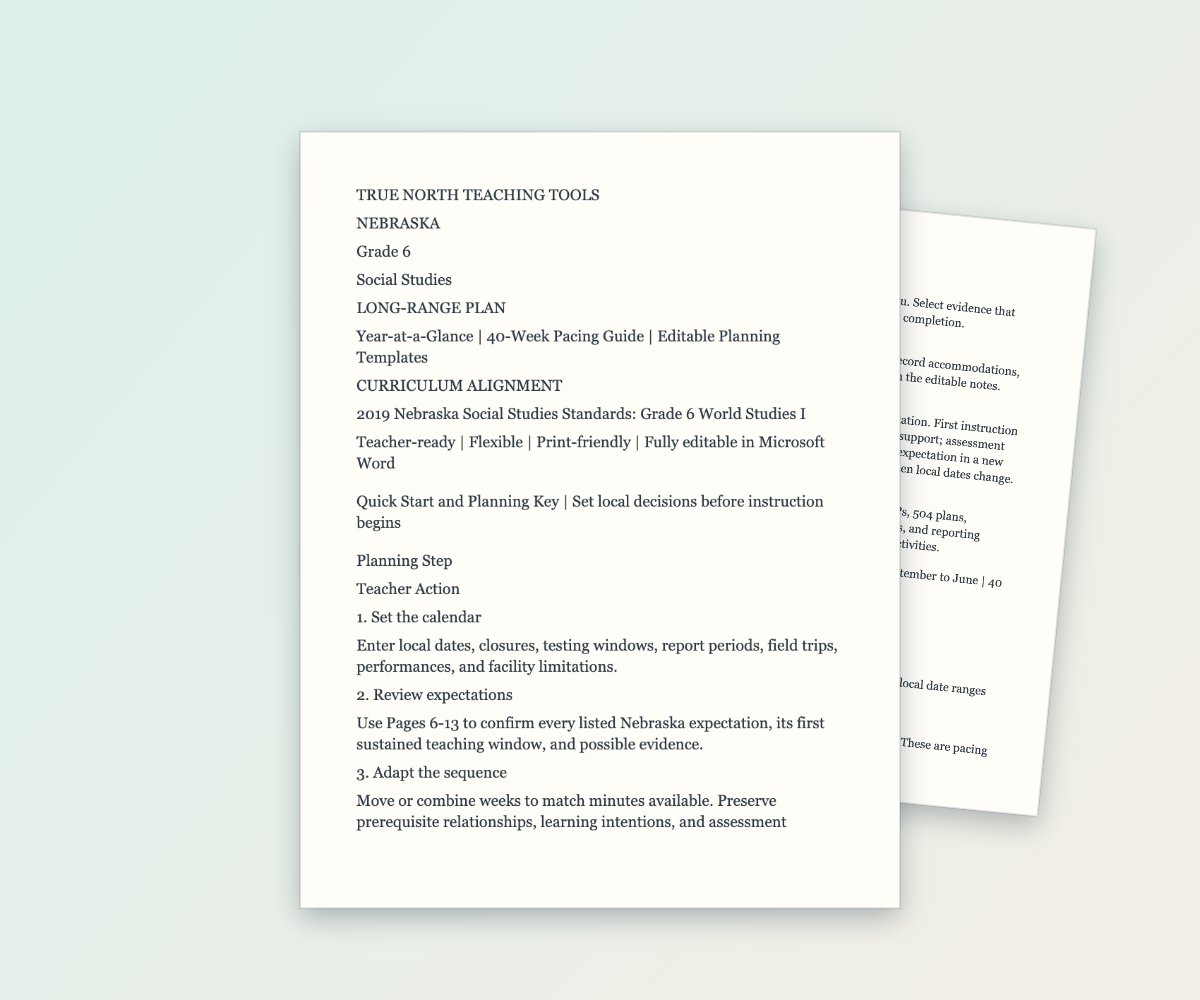
This editable 40-week long-range plan helps teachers organize Grade 6 World Studies I instruction from September through June.
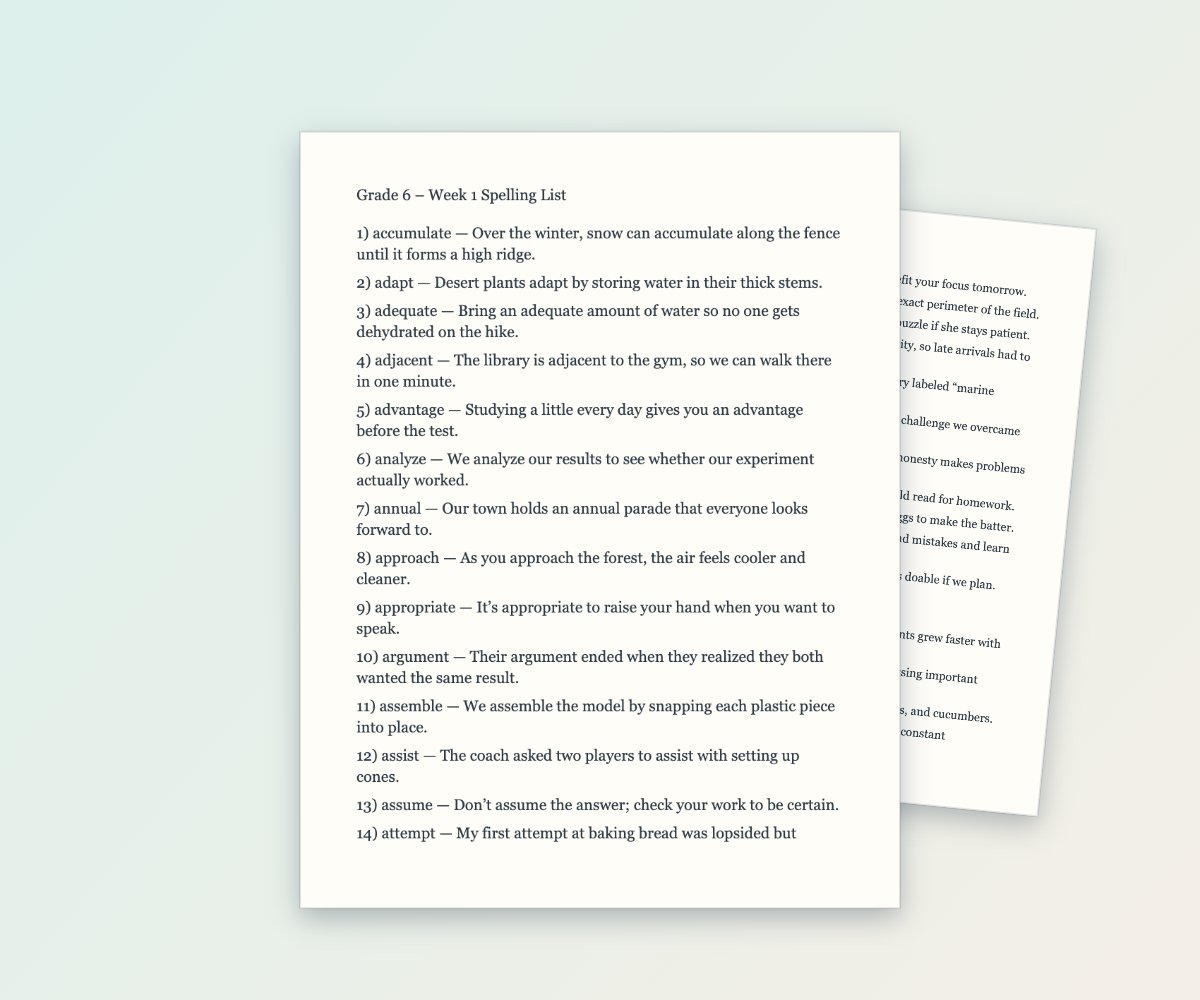
This 12-week spelling resource provides Grade 6 word lists with challenging academic vocabulary and contextual example sentences.
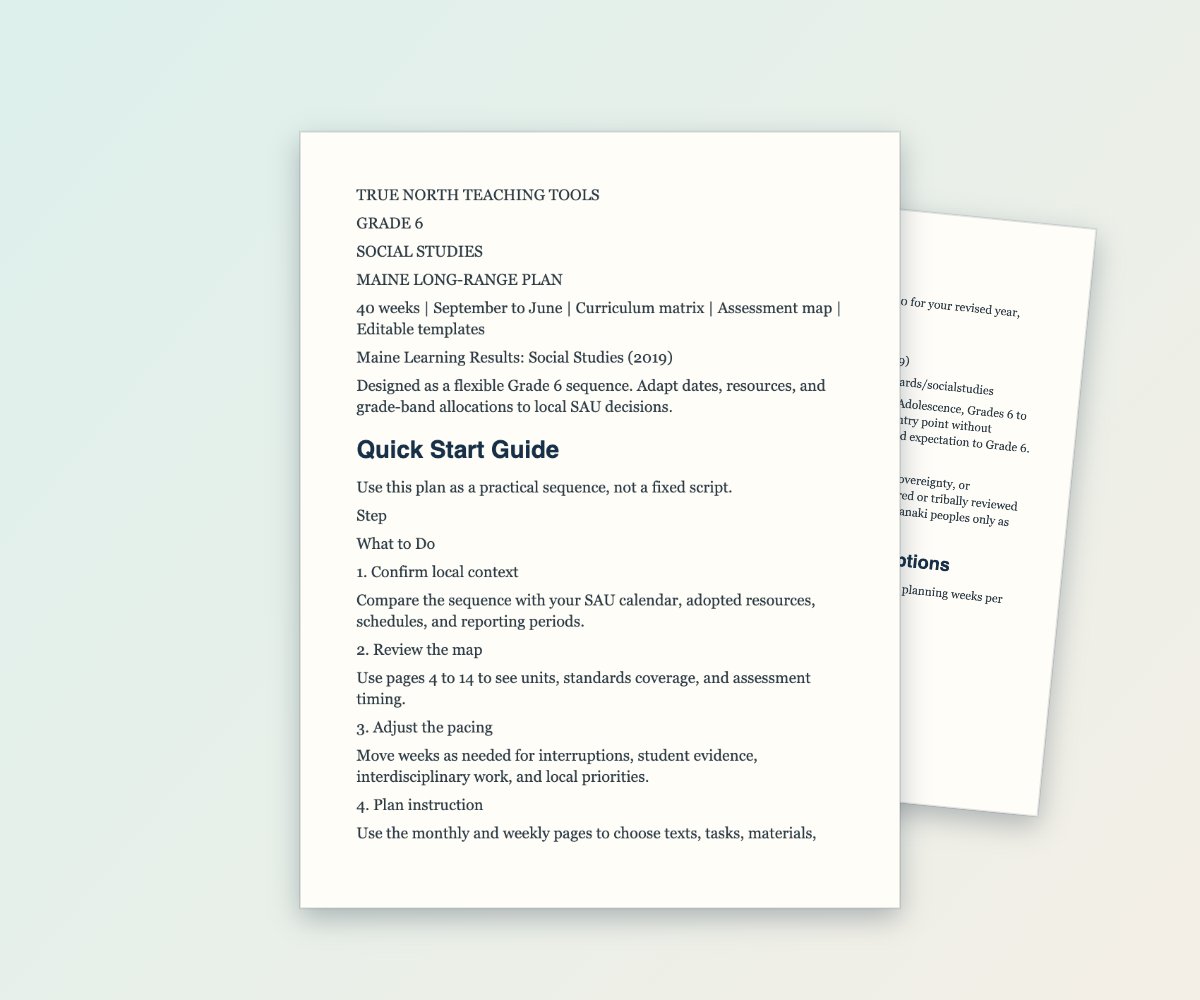
This editable 40-week long-range plan sequences Grade 6 social studies instruction from September through June using Maine Learning Results.
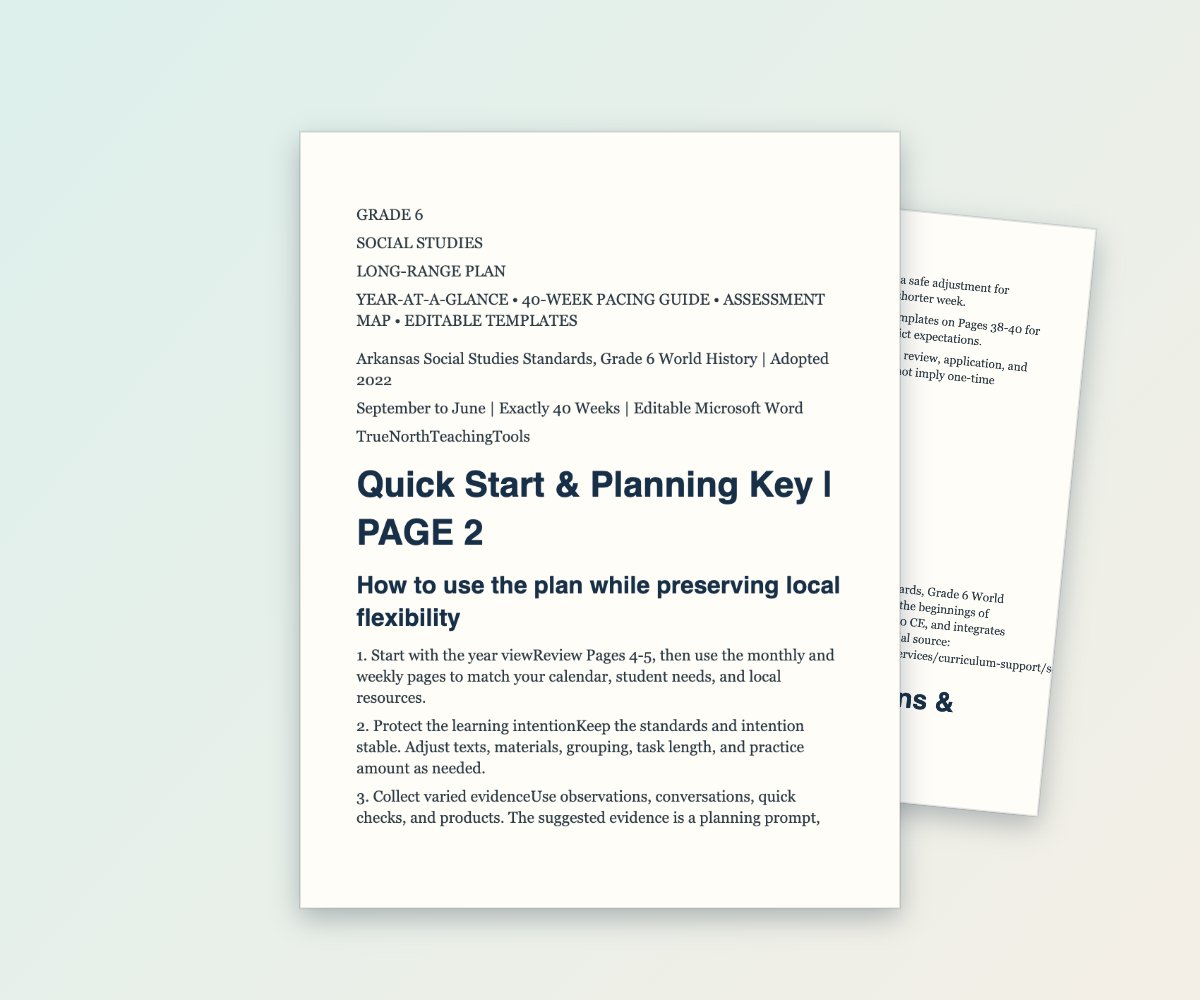
This editable 40-week year-at-a-glance plan guides Grade 6 Arkansas Social Studies from early human societies through approximately 1500 CE.
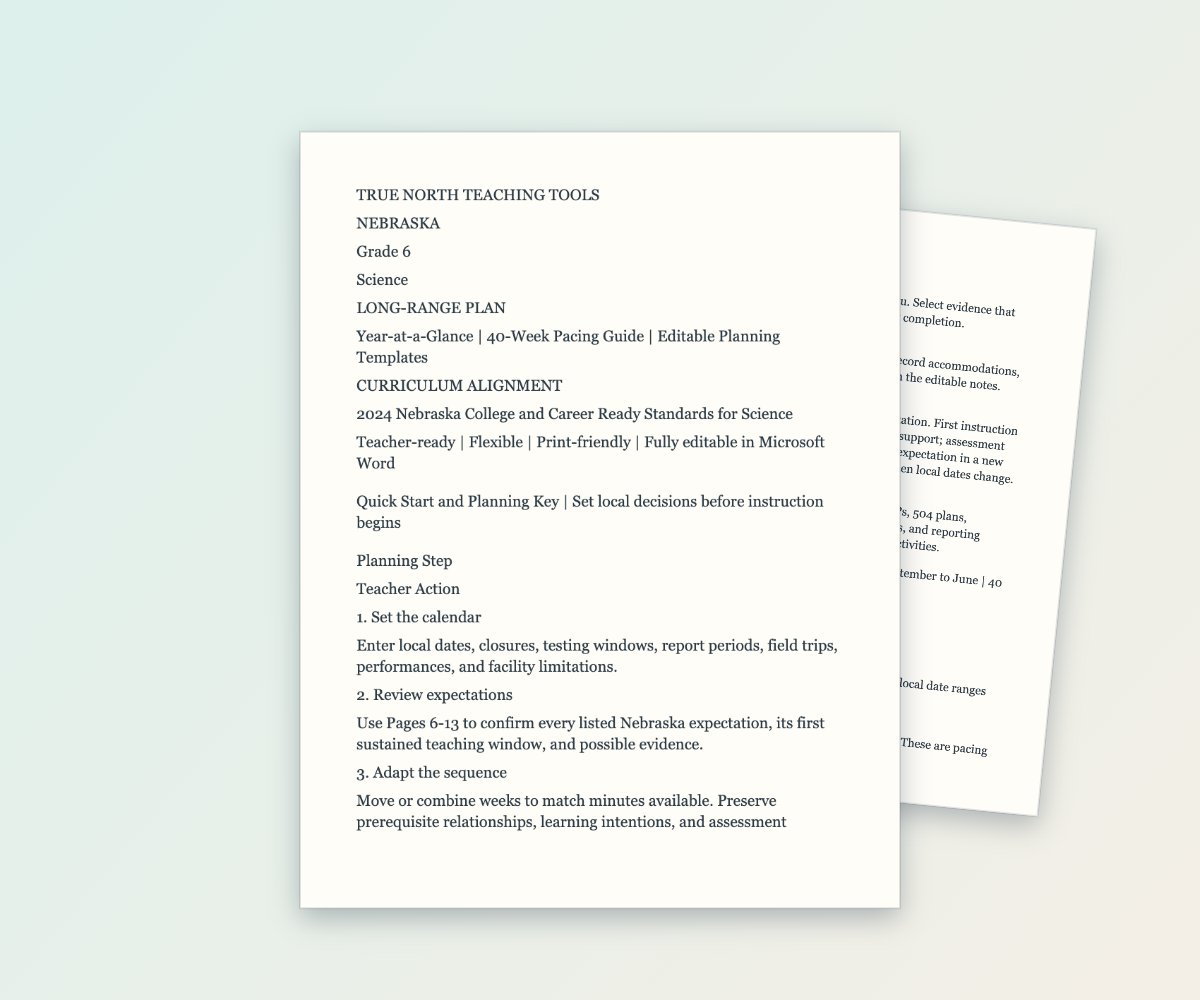
This editable 40-week Grade 6 science long-range plan provides a year-at-a-glance pacing guide aligned to the 2024 Nebraska College and Career Ready Standards for Science.
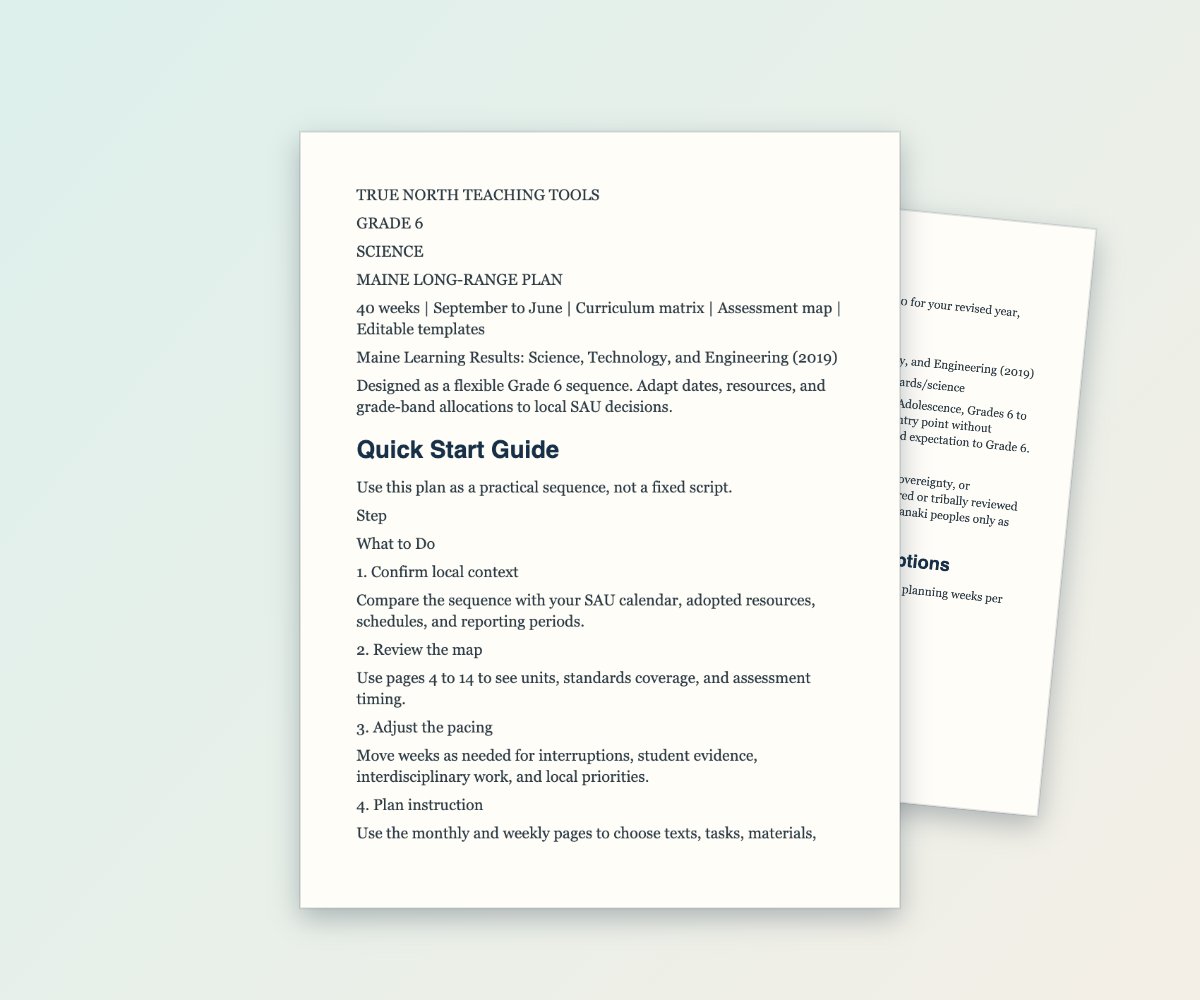
This editable 40-week Grade 6 science long-range plan provides a September-to-June curriculum sequence, standards coverage, assessment mapping, and pacing guidance.