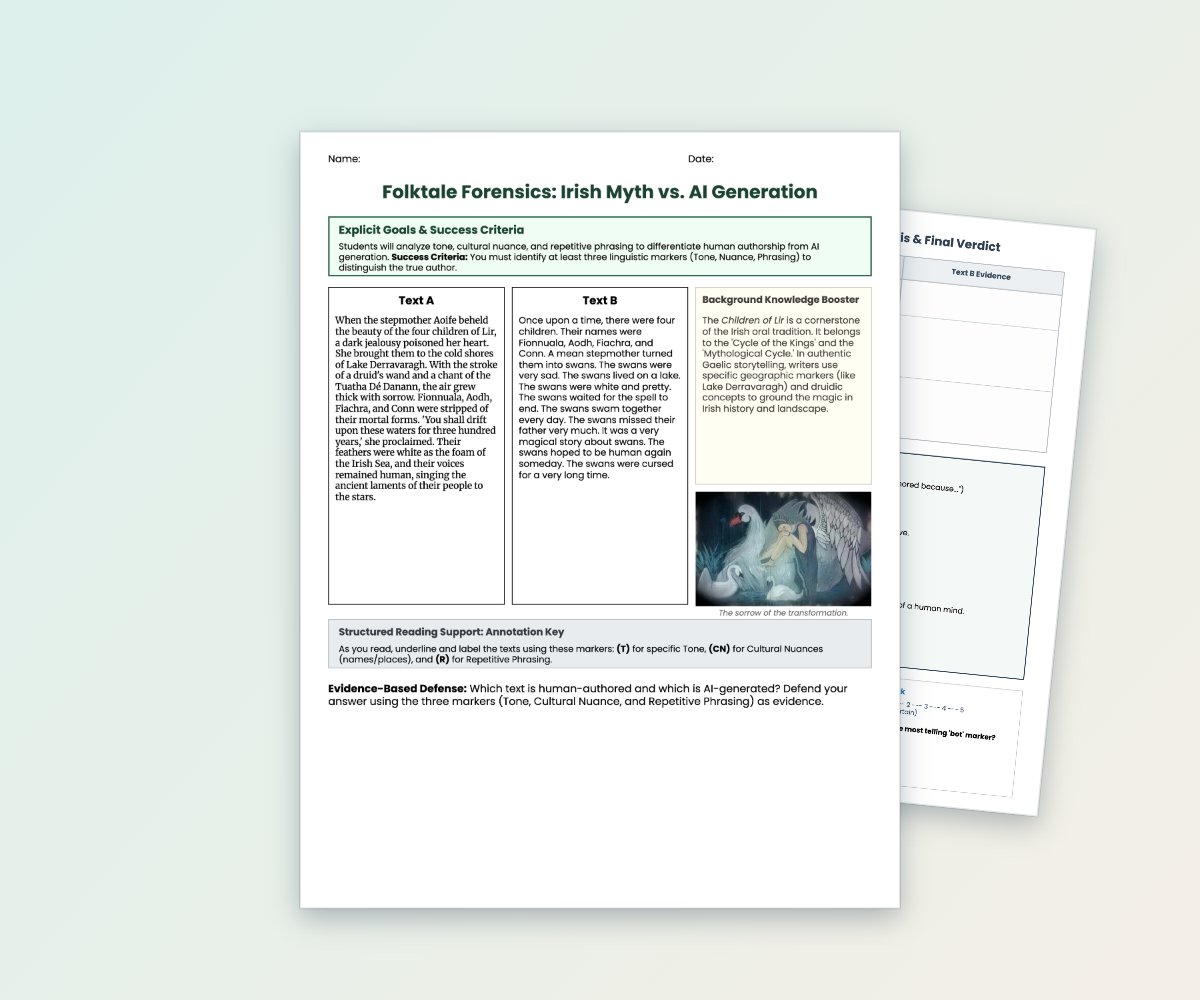
Folktale Forensics: Irish Myth vs. AI Close Reading Activity
Students compare two versions of the Children of Lir folktale to evaluate tone, cultural nuance, and repetitive phrasing.
$3
Classroom-ready resources written for grade 9: printable worksheets, slides, activities and planning tools you can download and use straight away. Browse by subject below.
Students compare two versions of the Children of Lir folktale to evaluate tone, cultural nuance, and repetitive phrasing.
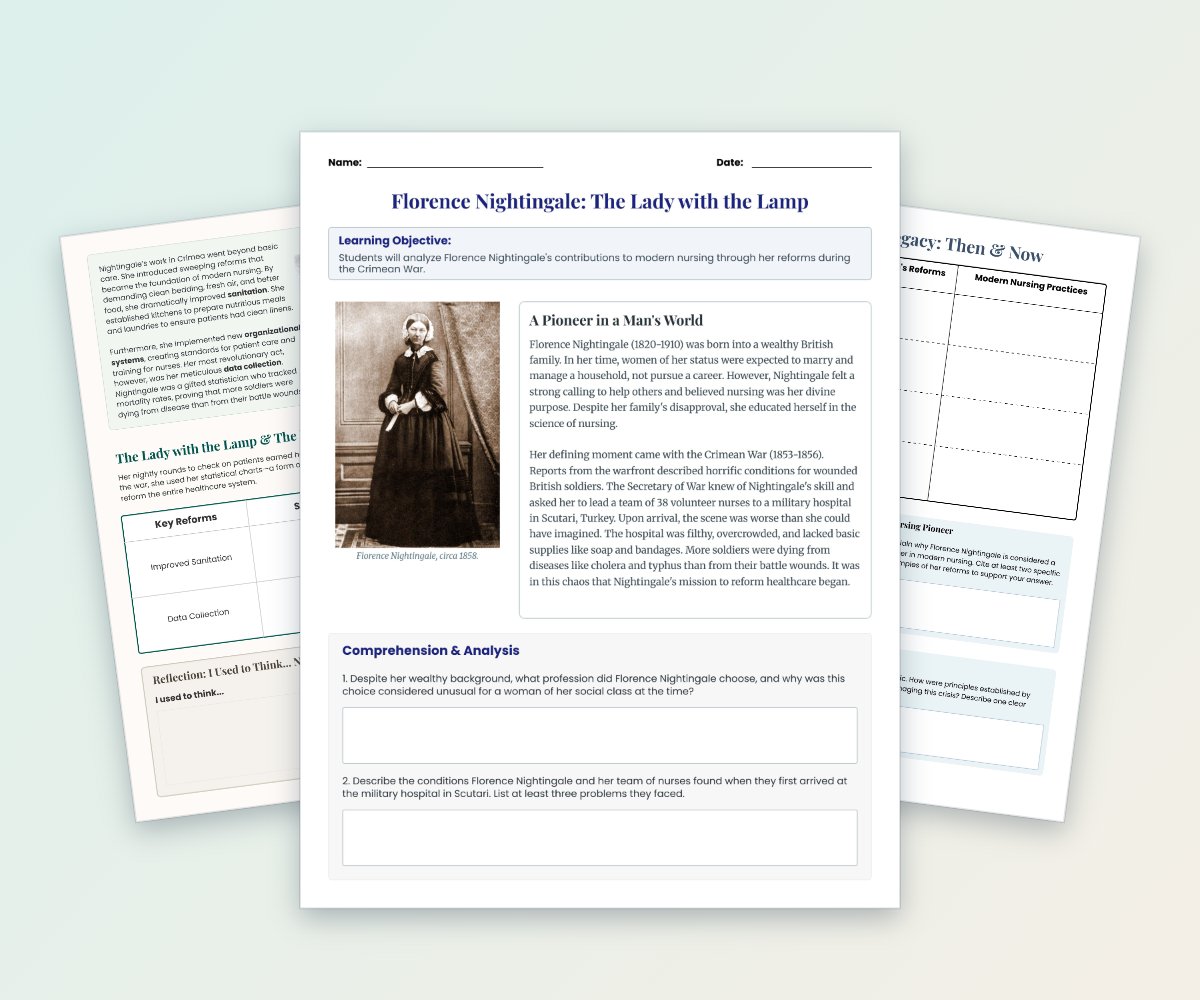
This three-page resource examines Florence Nightingale's role in reforming nursing during the Crimean War.
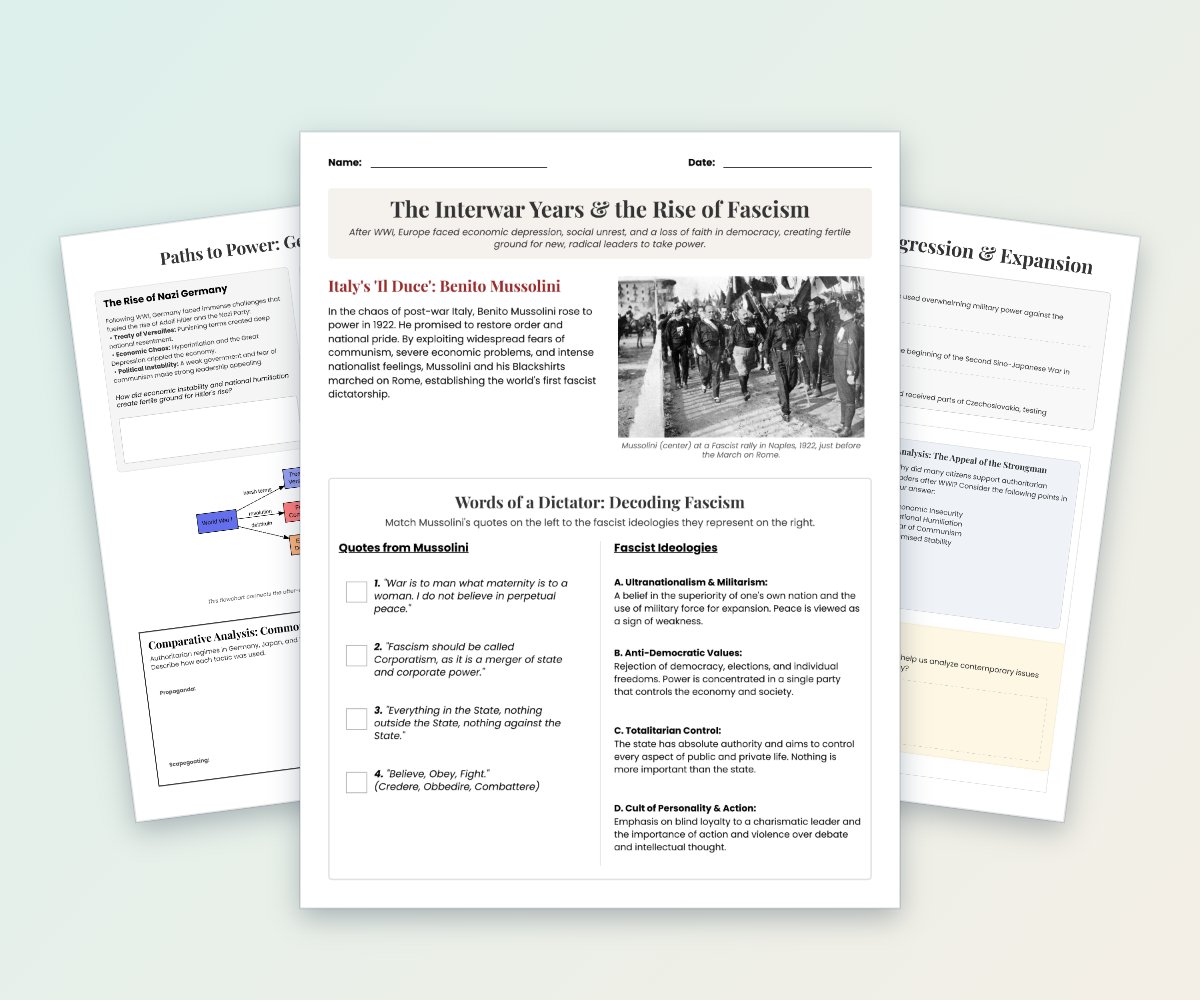
This three-page worksheet examines the rise of fascism in Italy, Nazi Germany, and militarist Japan after World War I.
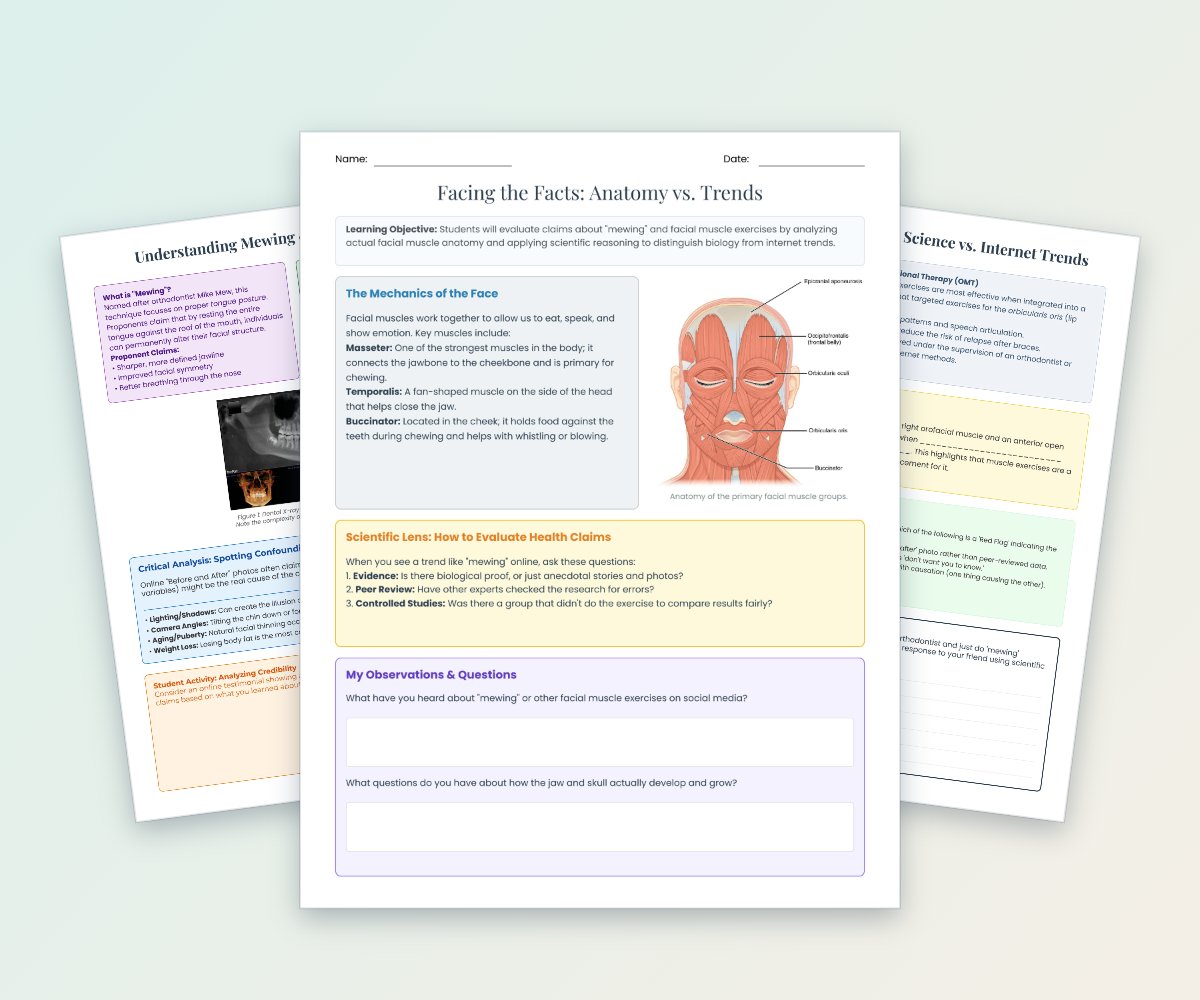
Students examine key facial muscles, bone development, and claims surrounding mewing and facial exercises.
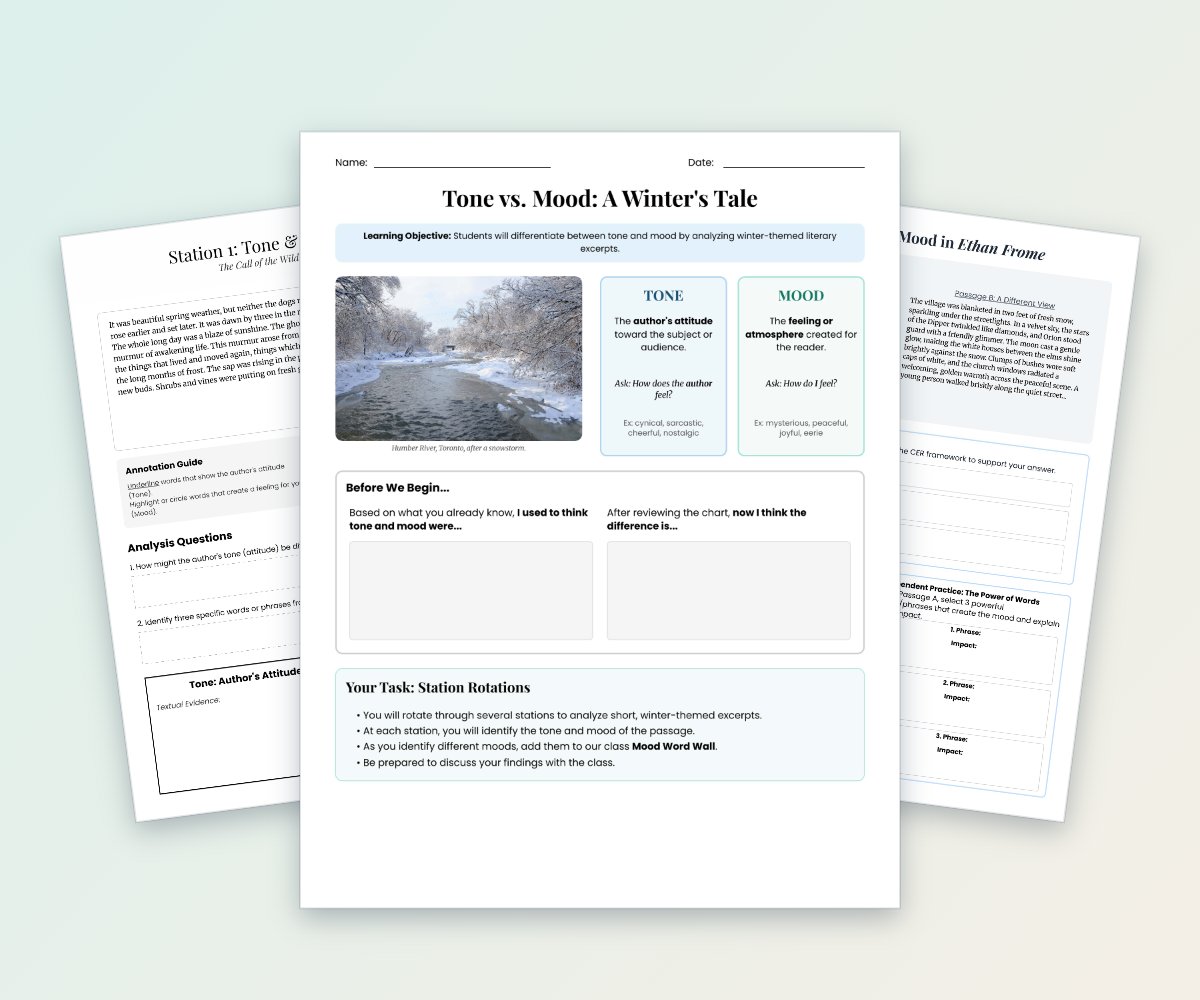
Students distinguish tone from mood through winter-themed literary excerpts and station-rotation analysis.
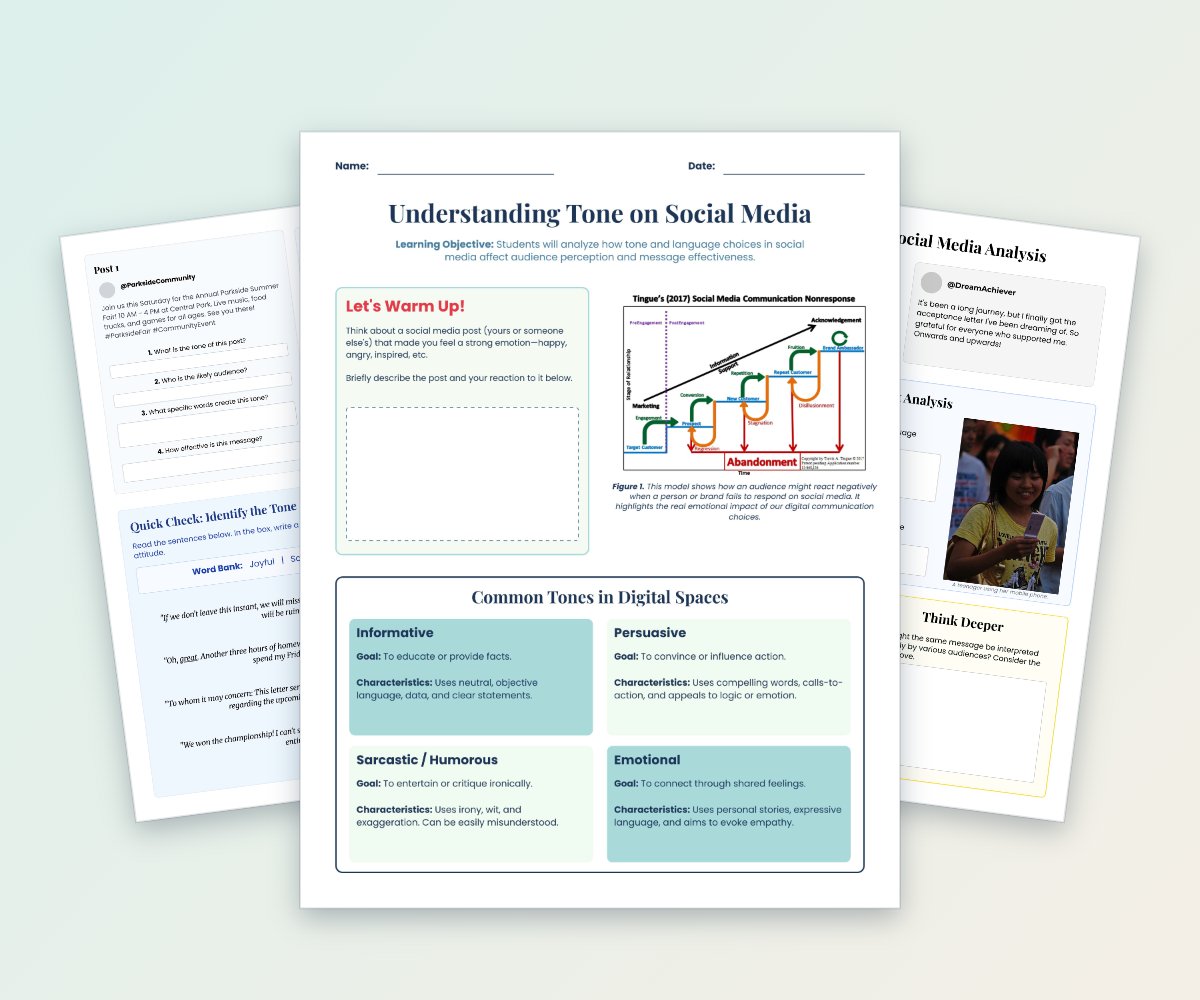
This four-page worksheet helps students identify and analyze tone in social media posts.
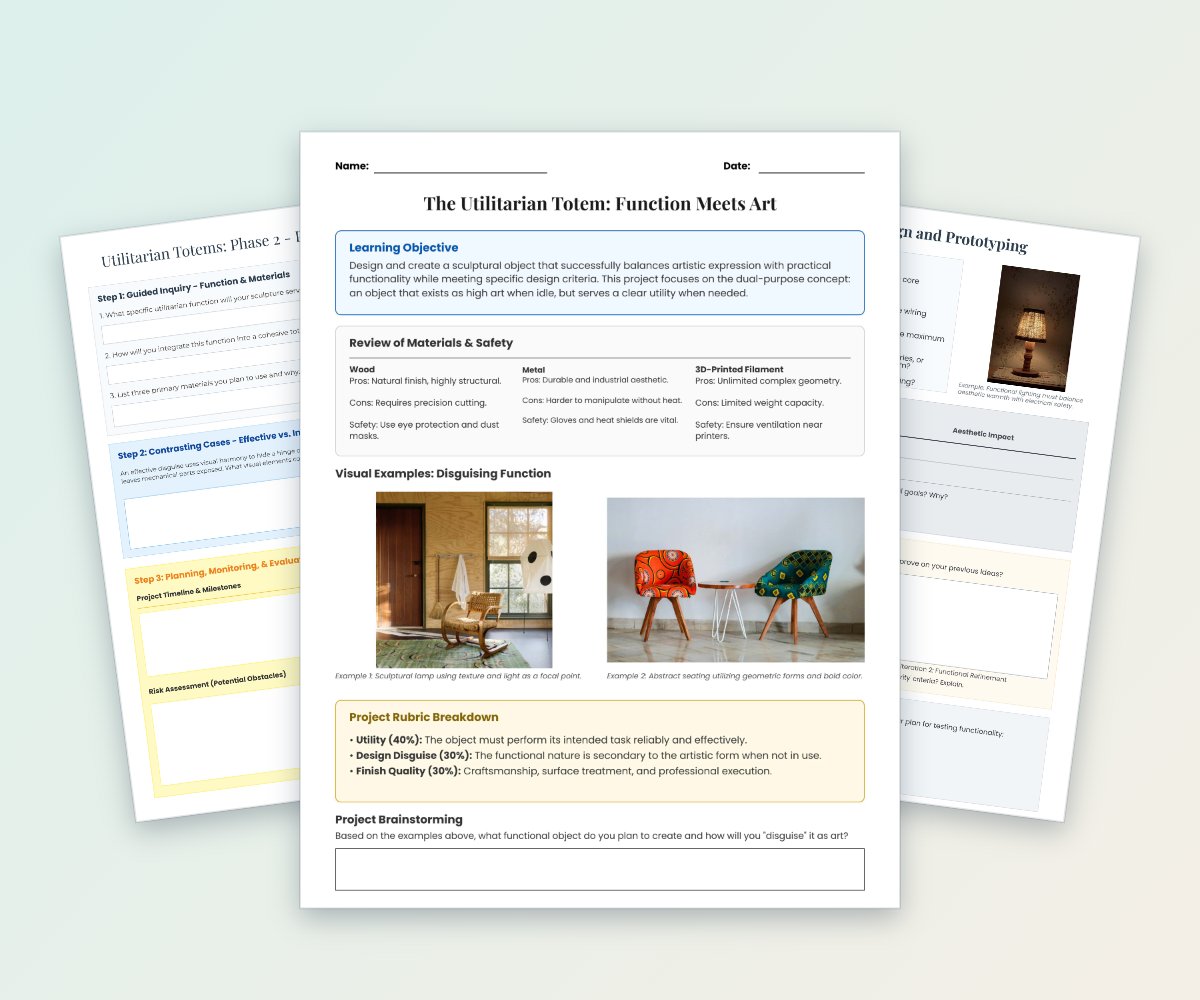
Students design and create a sculptural object that combines artistic expression with practical functionality.
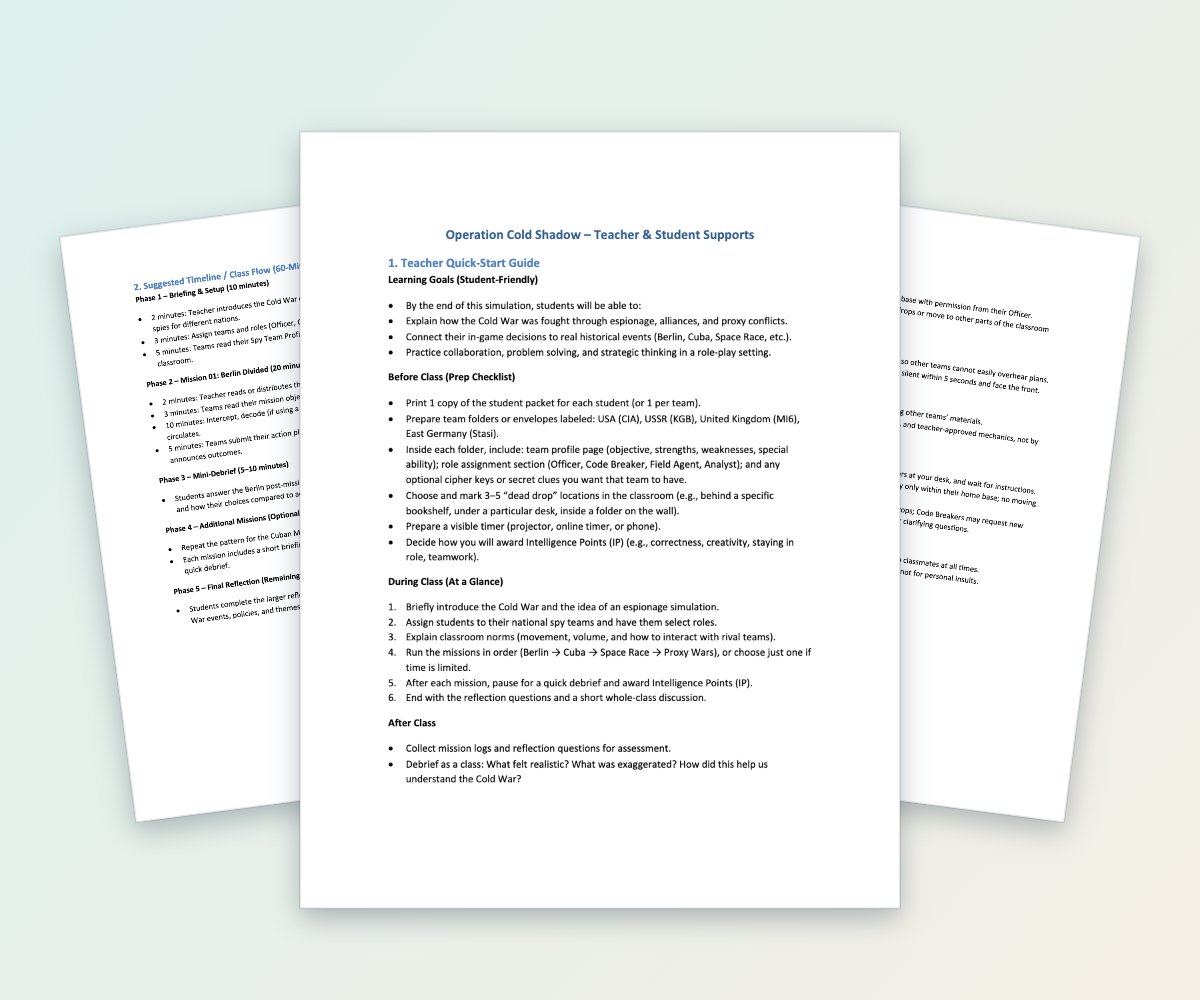
Students role-play spy teams representing Cold War nations as they complete missions involving Berlin, Cuba, the Space Race, and proxy conflicts.
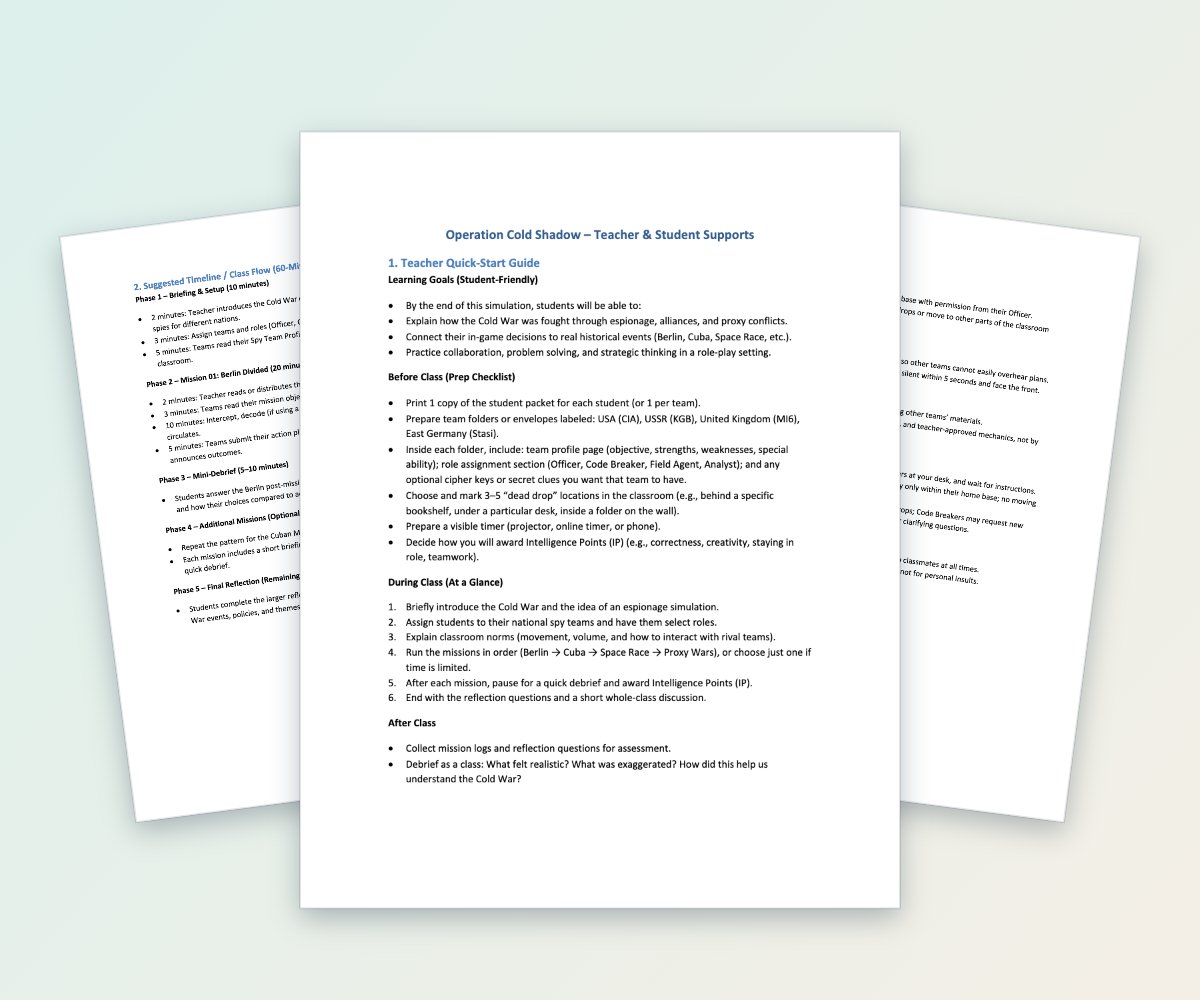
Students role-play intelligence teams from the United States, Soviet Union, United Kingdom, and East Germany while completing missions connected to Berlin, Cuba, the Space Race, and proxy wars.
This four-page activity pack guides students through ethical debates about AI-generated art, visual literacy, and intellectual property.
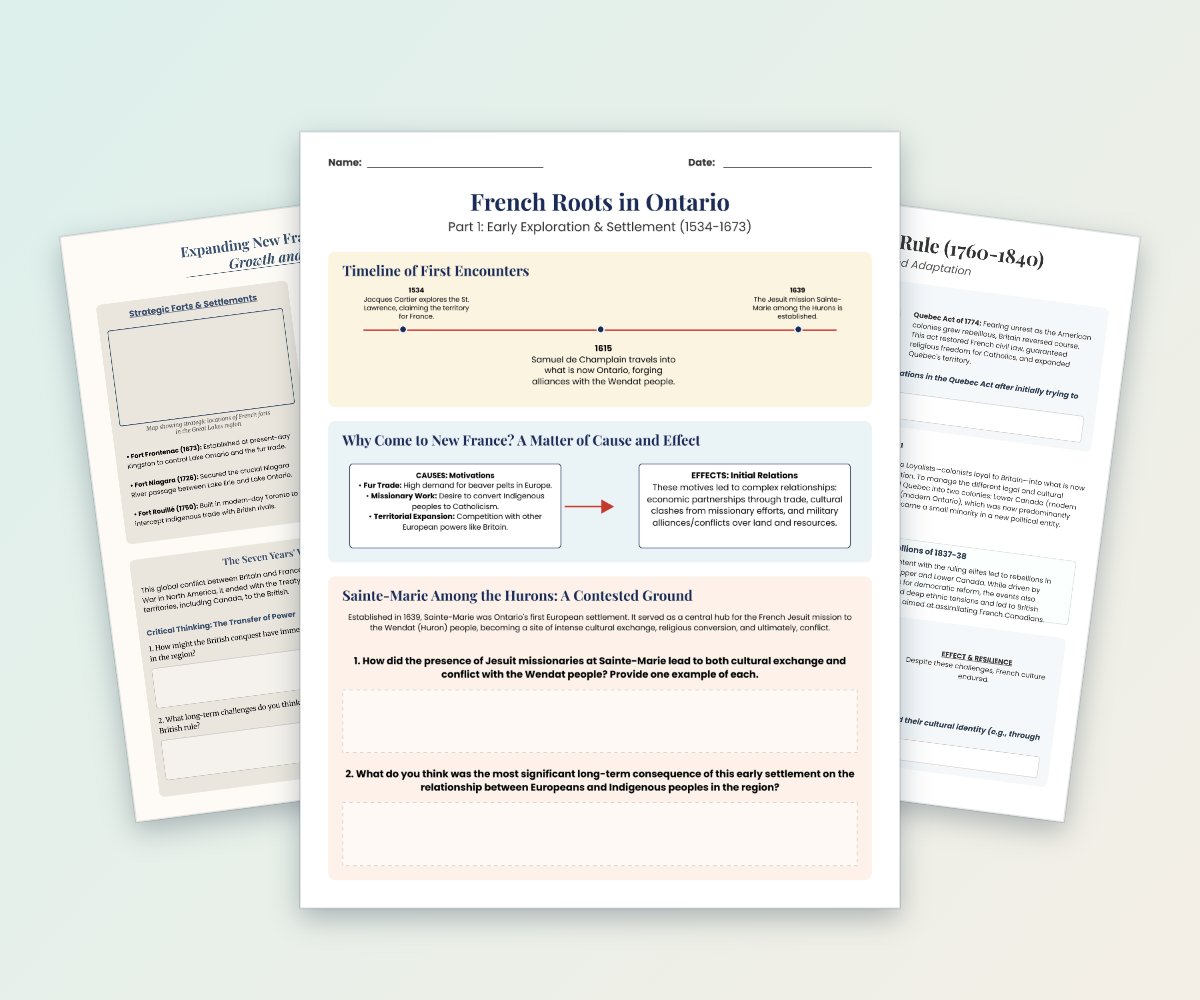
This four-page social studies worksheet explores French exploration, settlement, missionary work, fur trade motivations, Indigenous-European relations, and strategic forts in Ontario.
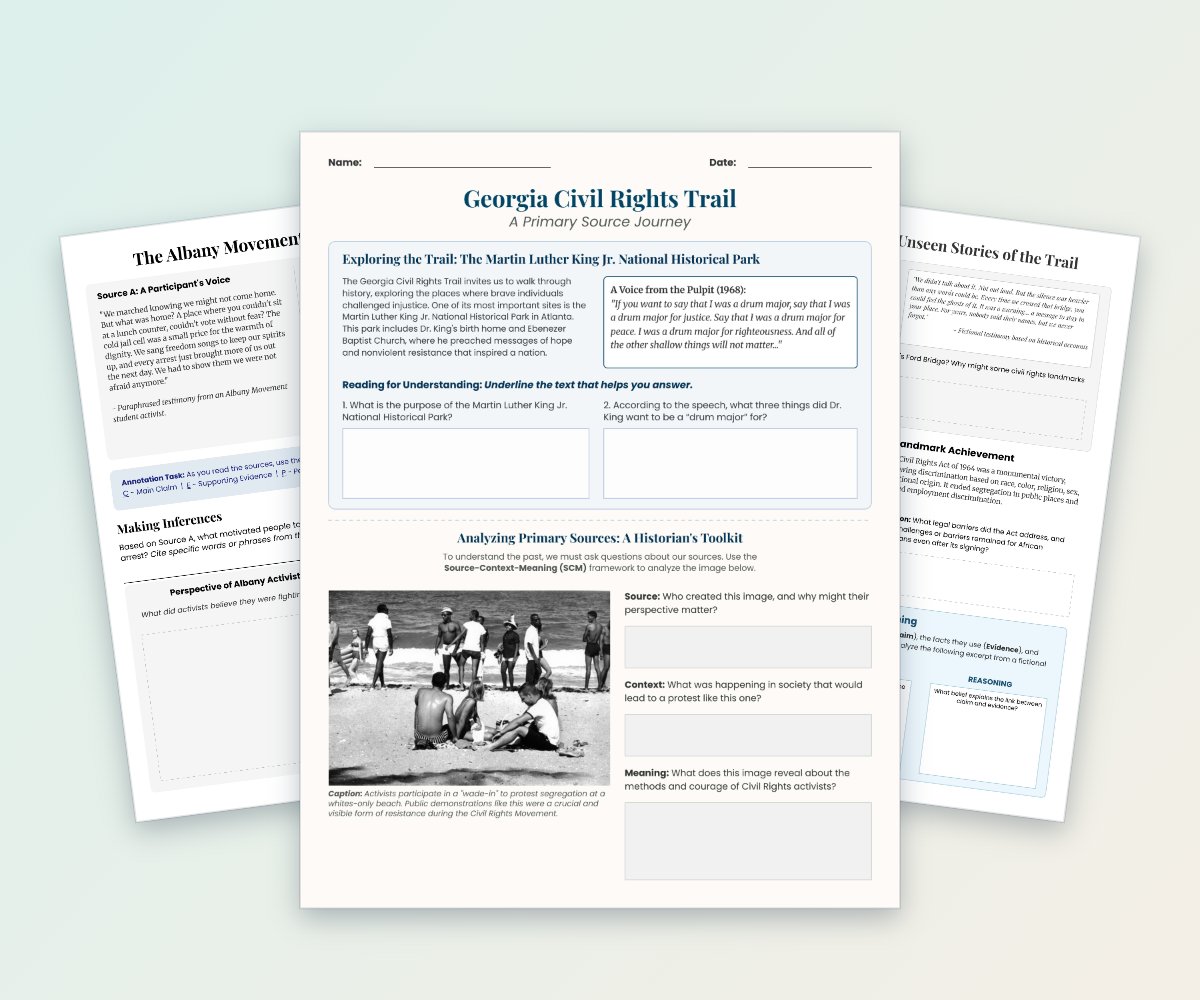
Students explore Georgia’s Civil Rights Trail, including the Martin Luther King Jr.
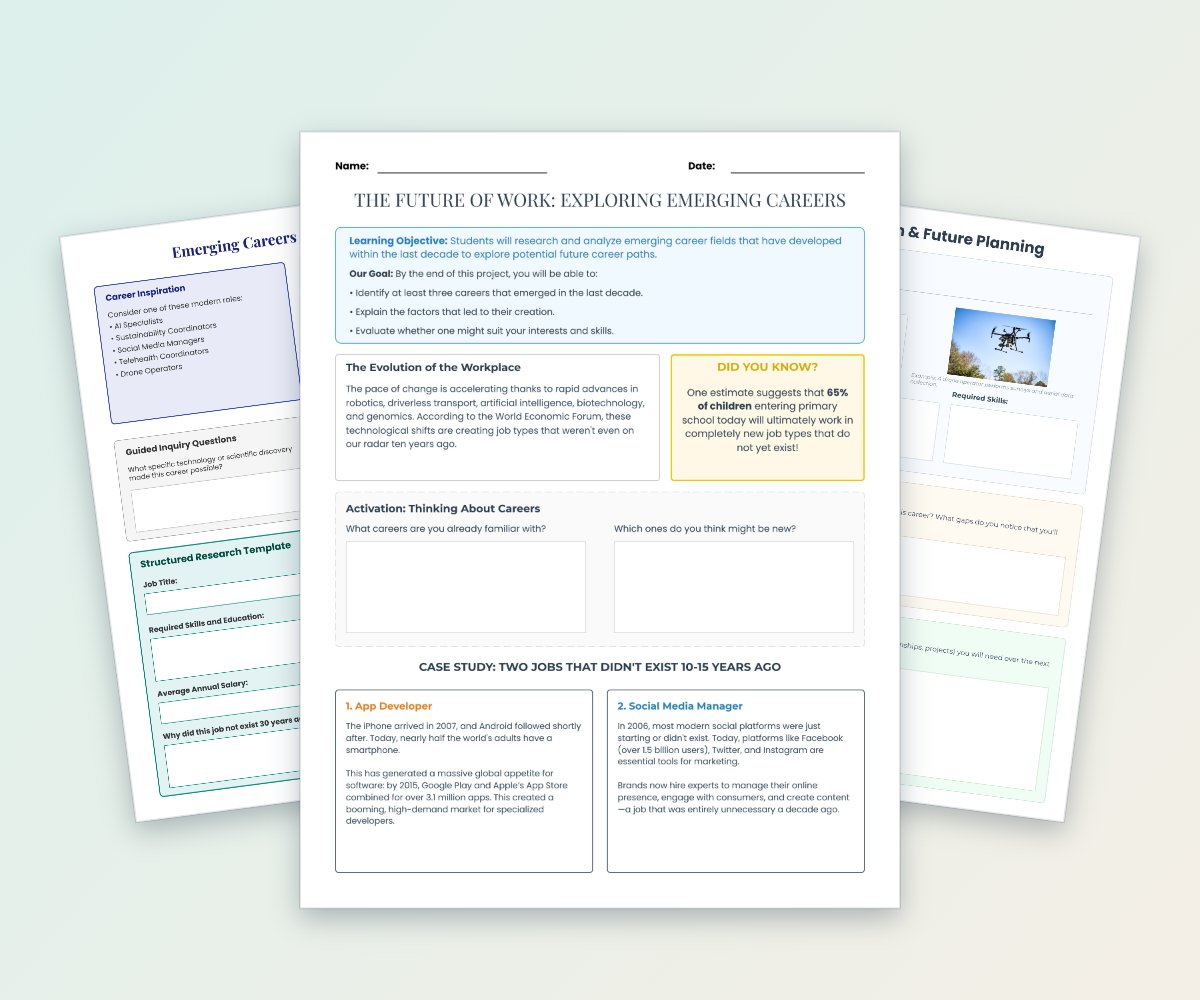
Students investigate careers created or transformed by recent advances in technology and science.
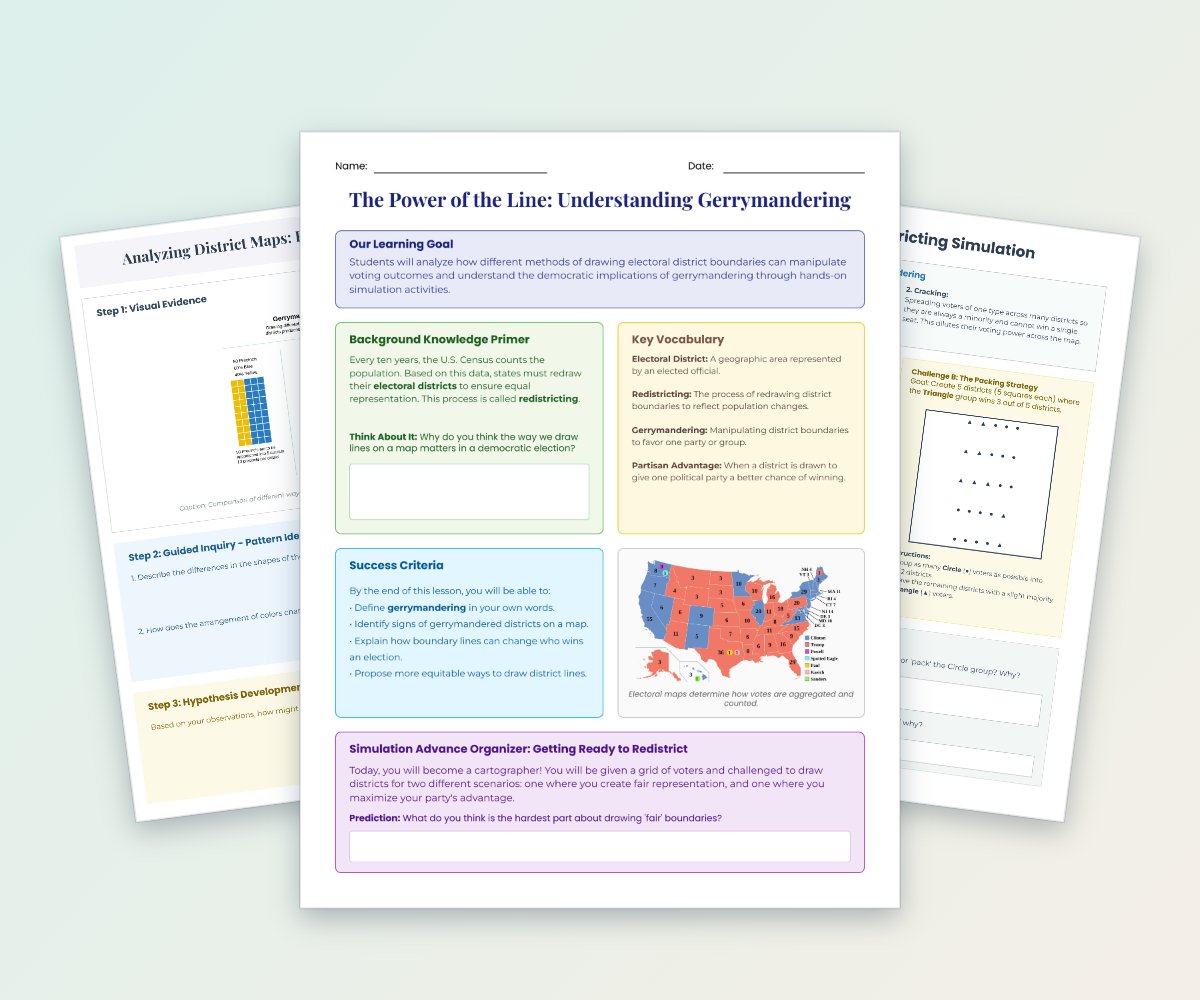
Students explore how electoral district boundaries affect representation through fair and partisan redistricting scenarios.
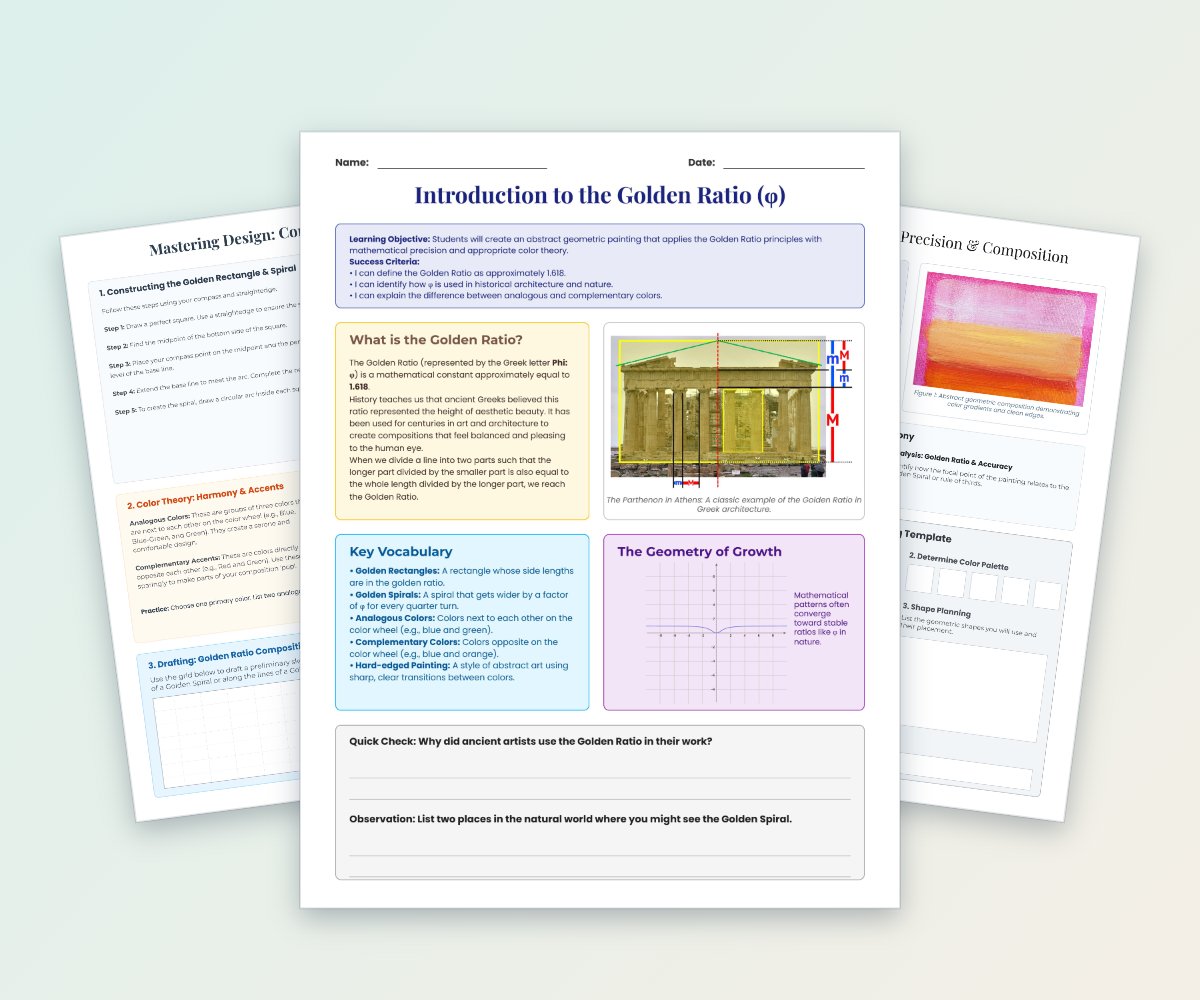
This four-page lesson introduces the Golden Ratio through art, architecture, nature, geometric construction, and abstract painting.
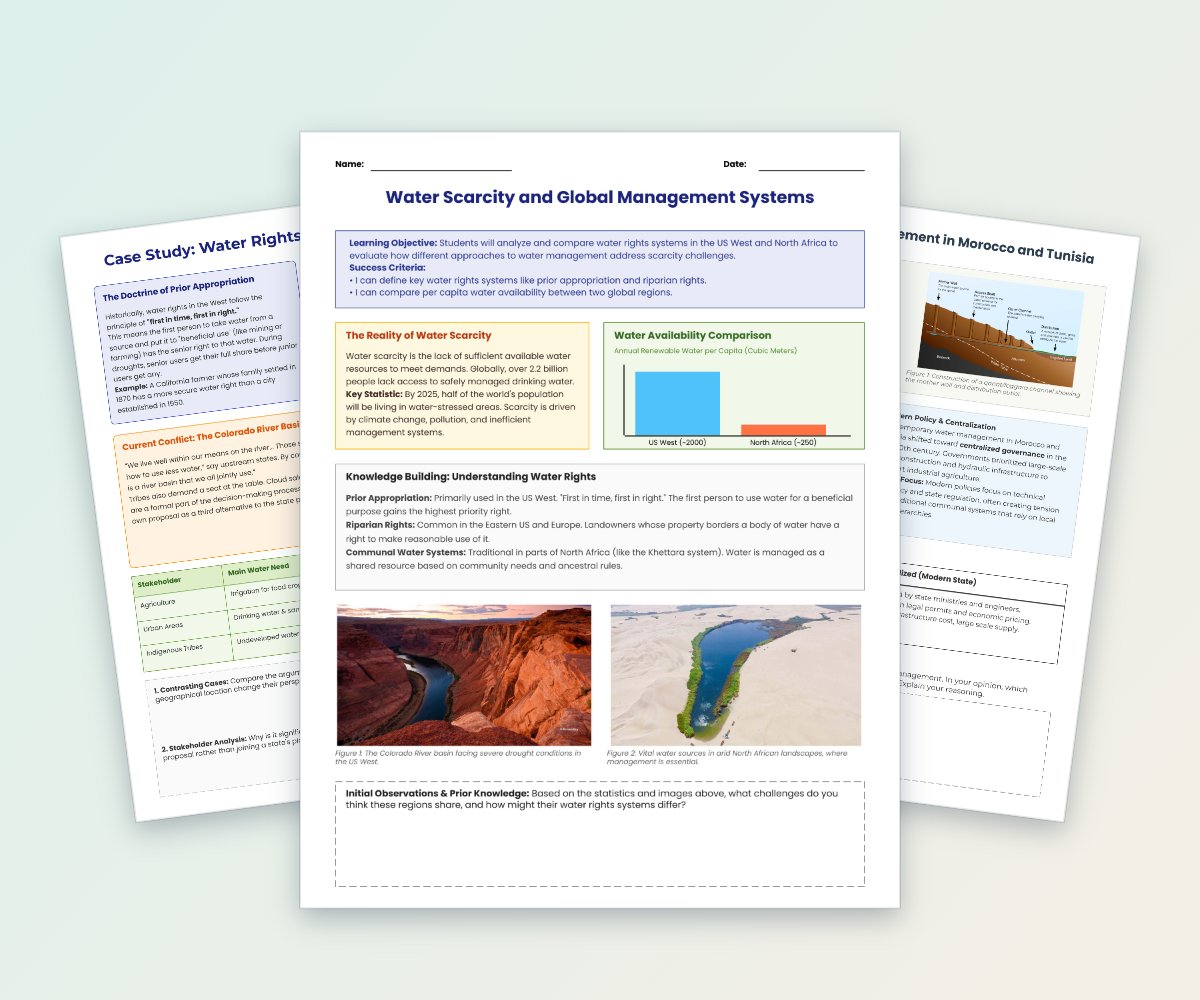
This four-page worksheet guides students in comparing water availability and management systems in the American West and North Africa.
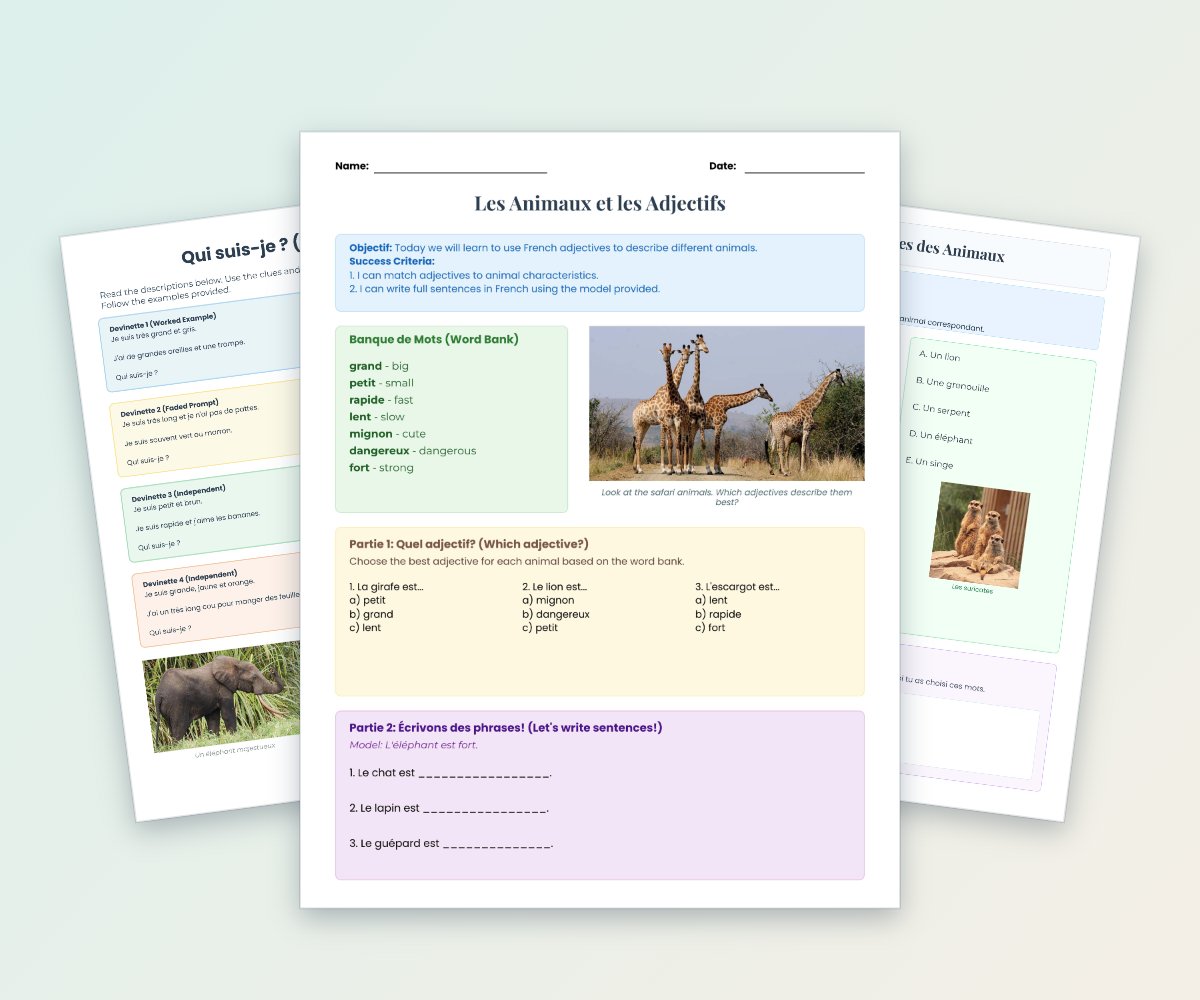
Students practice French animal vocabulary and descriptive adjectives through matching, sentence completion, animal riddles, translation, and creative writing.
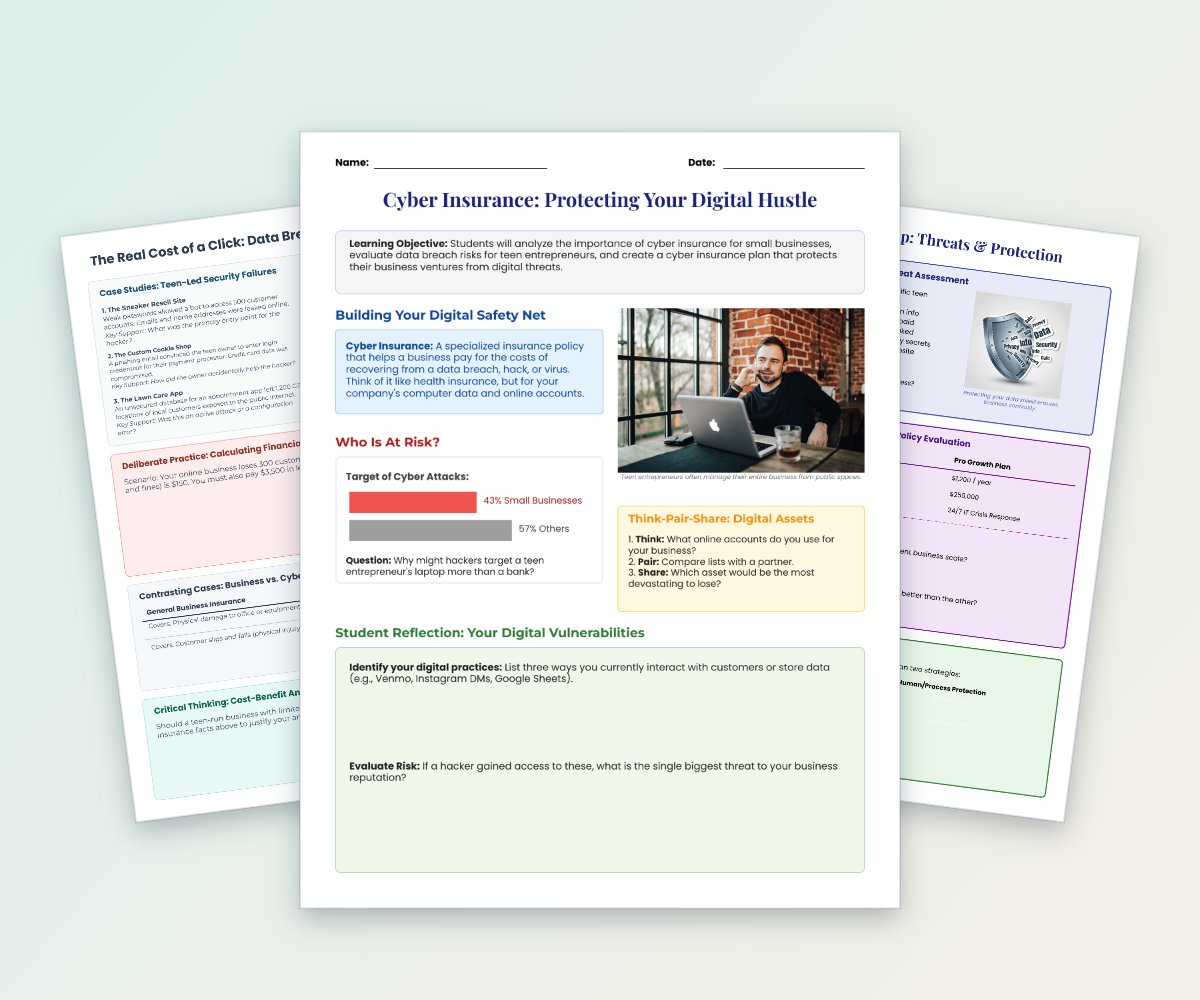
Students explore cyber insurance, digital vulnerabilities, data breaches, and cybersecurity risks affecting teen-led businesses.
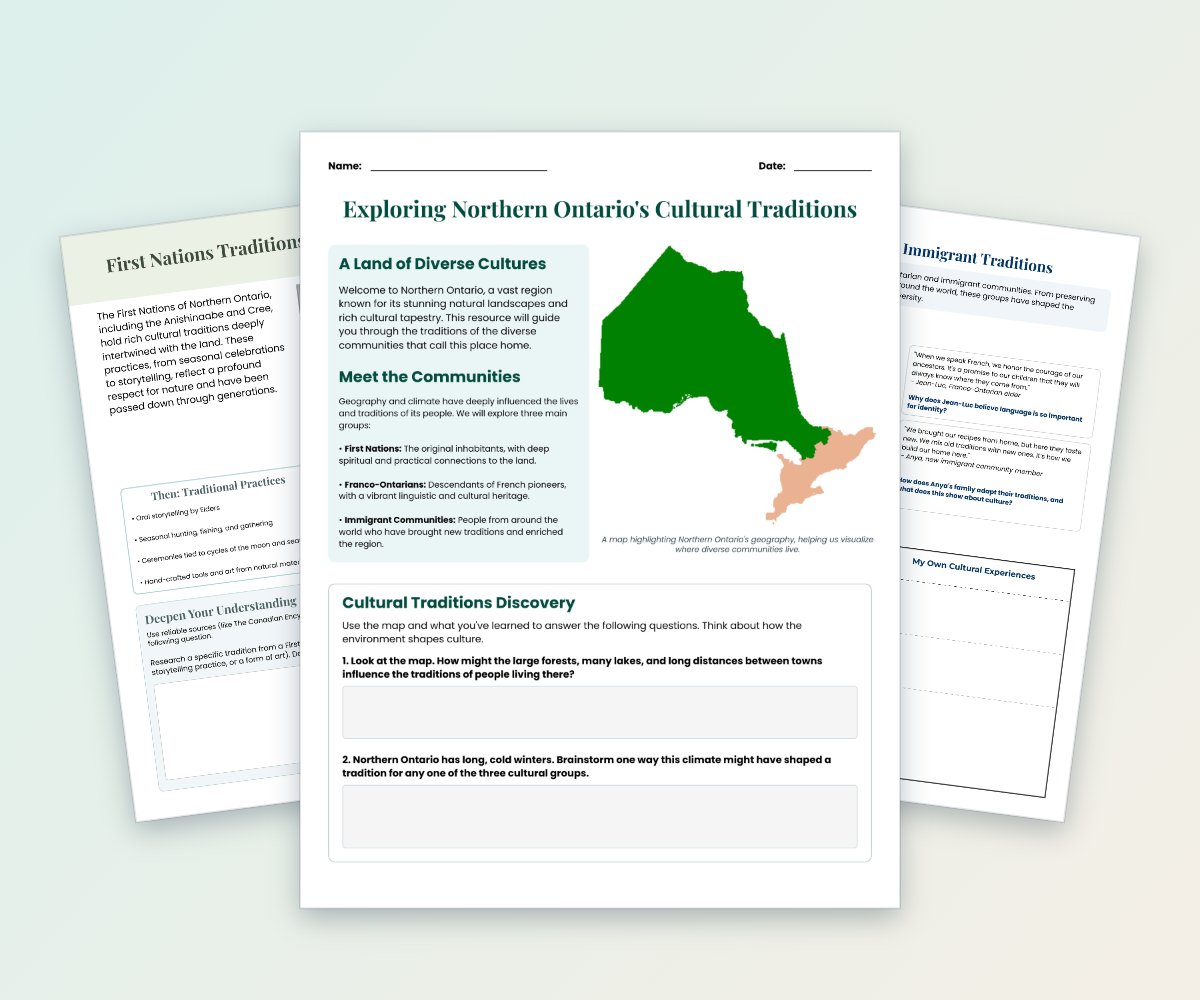
Students explore how geography and climate influence cultural traditions in Northern Ontario.
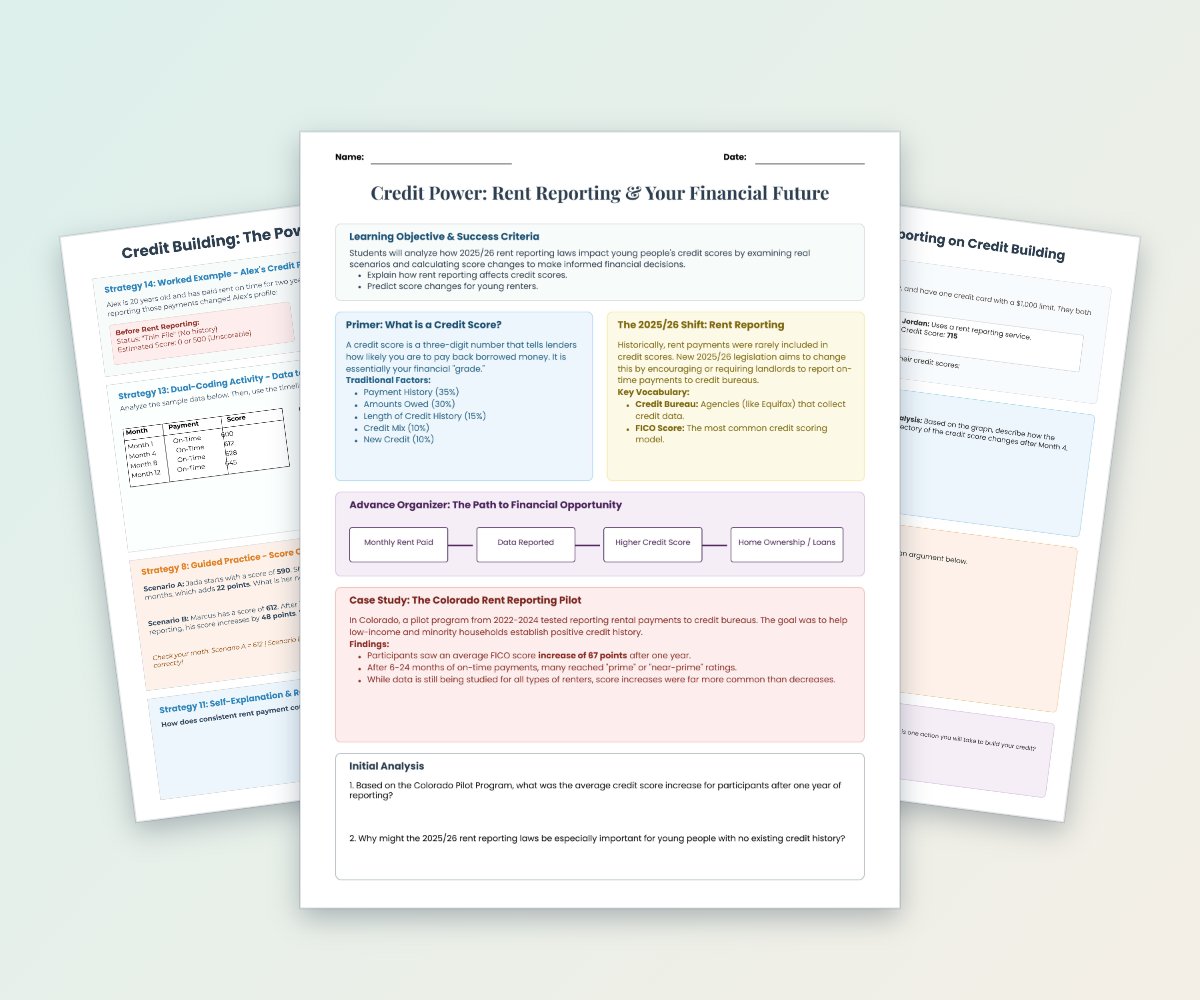
This four-page financial literacy activity introduces credit scores, rent reporting, credit-building strategies, and the potential effects on young renters.
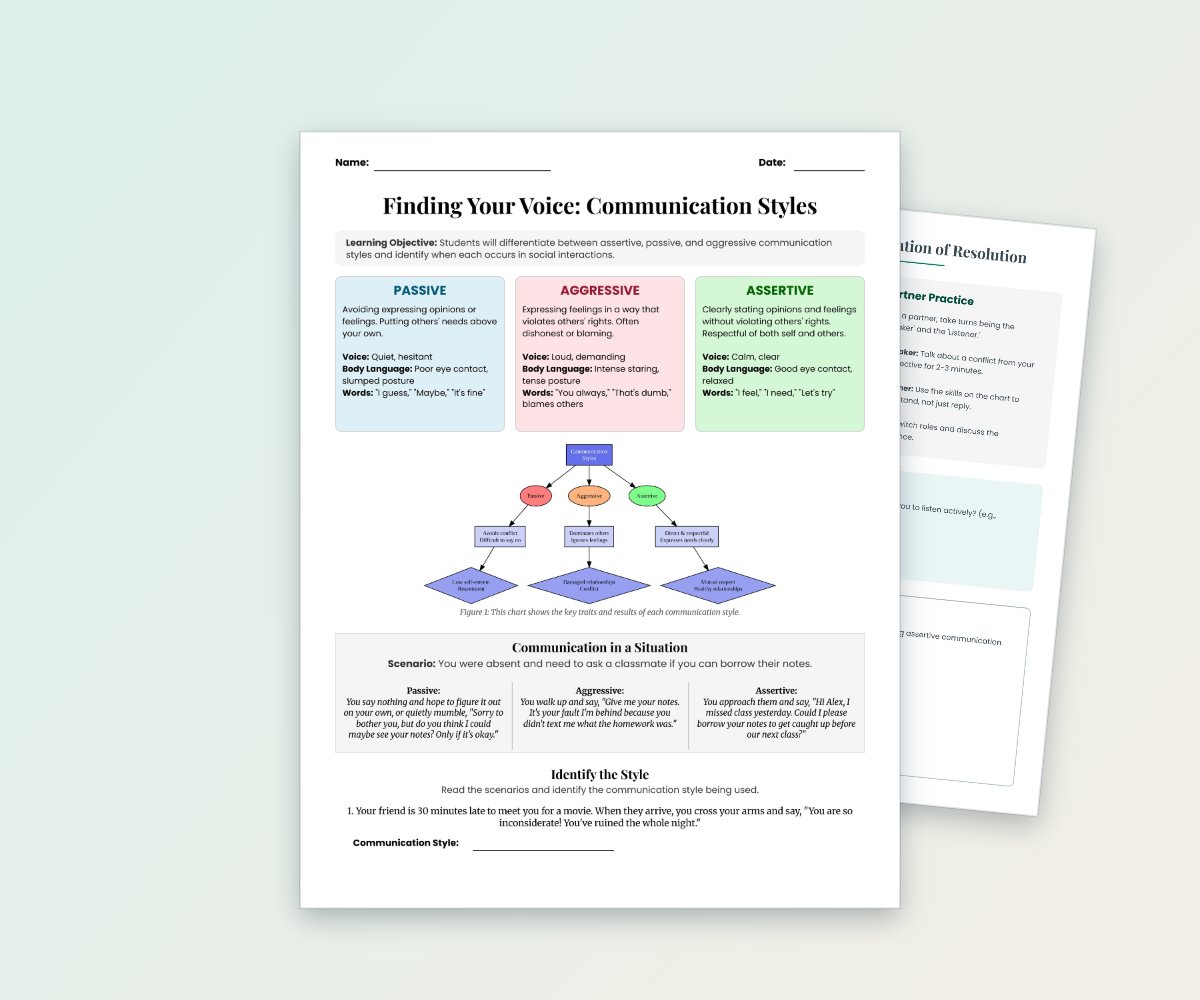
Students learn to distinguish passive, aggressive, and assertive communication through definitions, examples, and a school-based scenario.
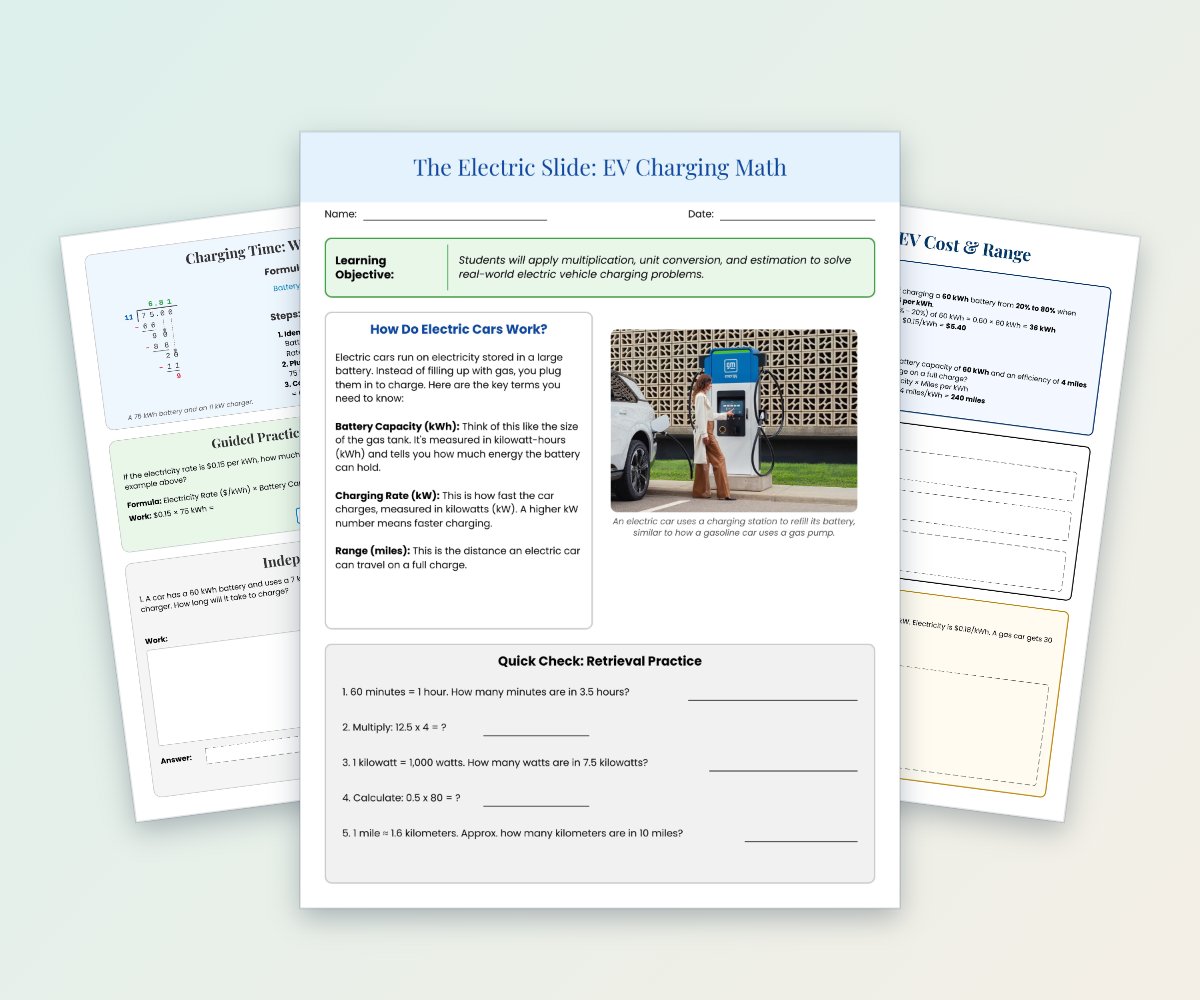
This four-page worksheet uses electric vehicle scenarios to practice multiplication, unit conversion, estimation, charging time, electricity costs, and driving range.
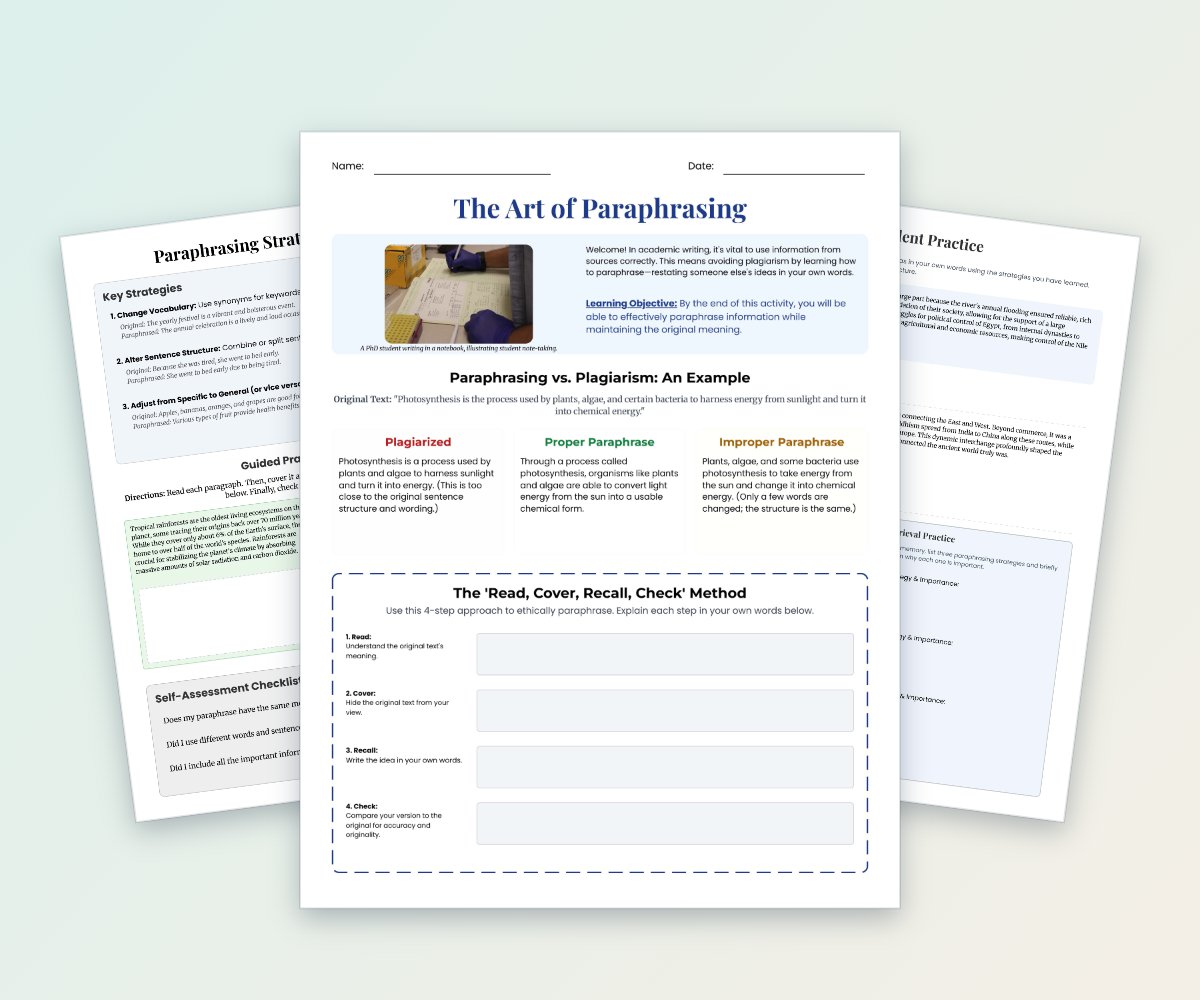
This four-page worksheet teaches students how to paraphrase source information while preserving meaning and avoiding plagiarism.
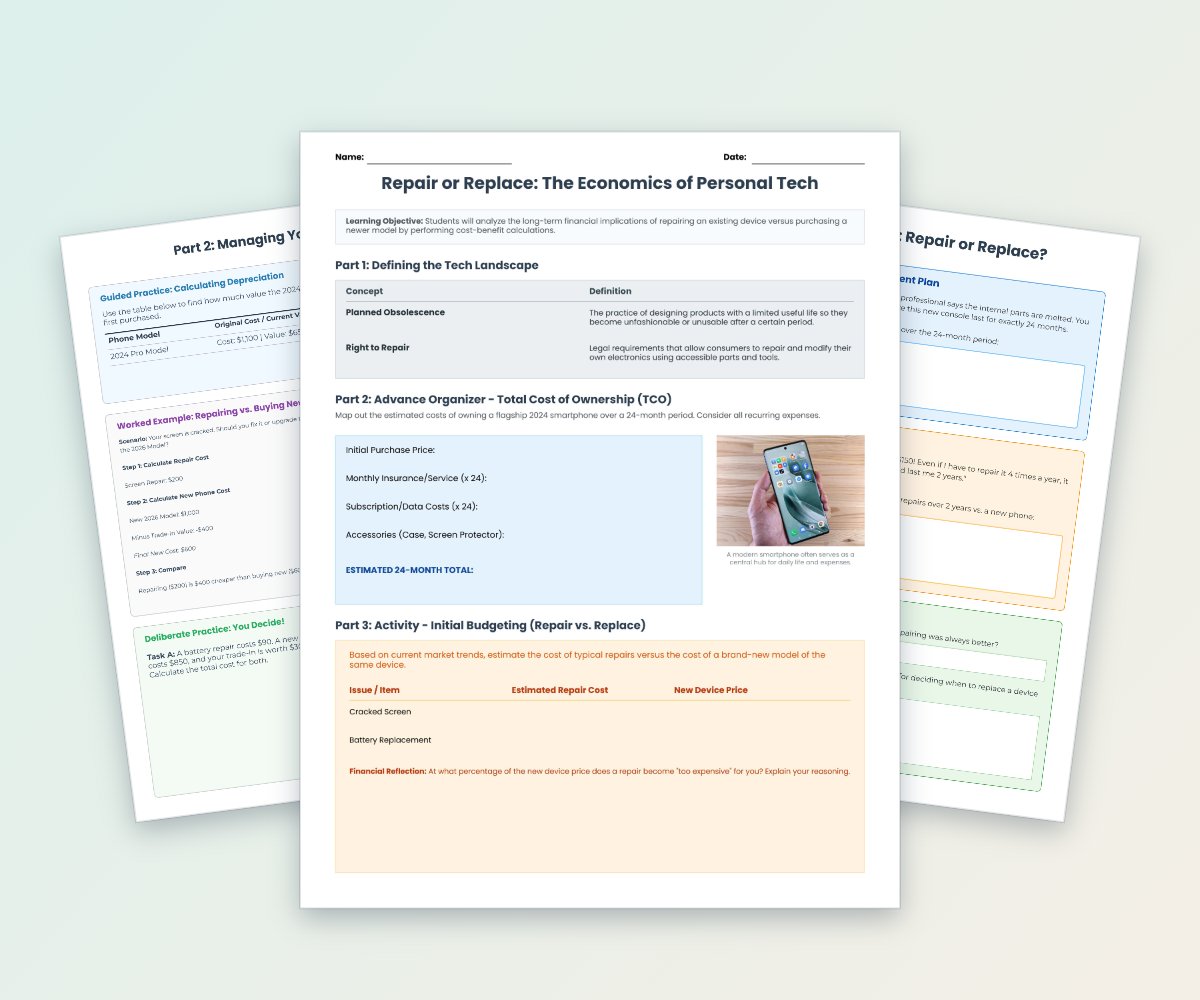
Students compare the costs of repairing personal technology with buying replacement devices.
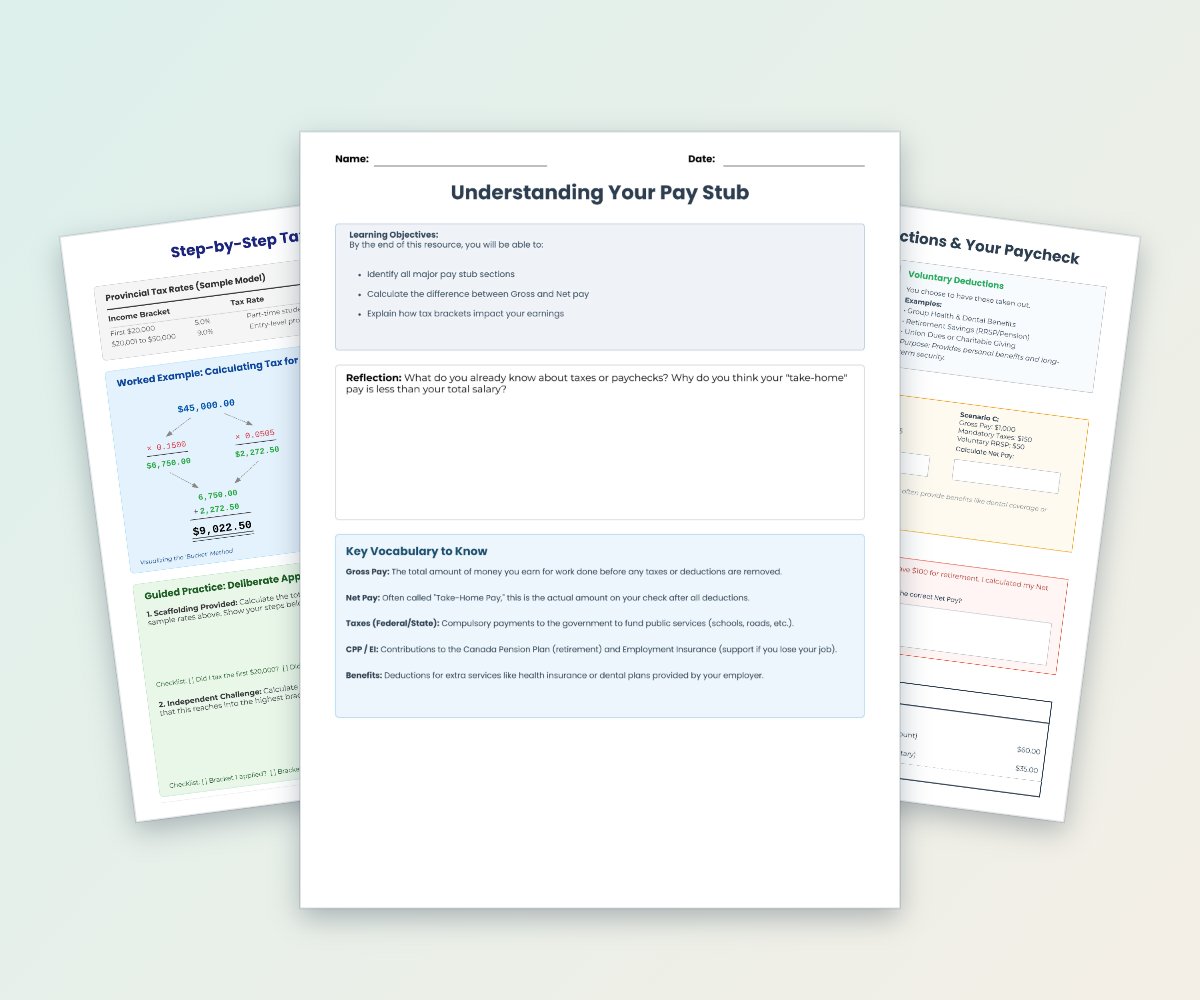
This worksheet introduces gross pay, net pay, tax brackets, CPP, Employment Insurance, and workplace benefits.
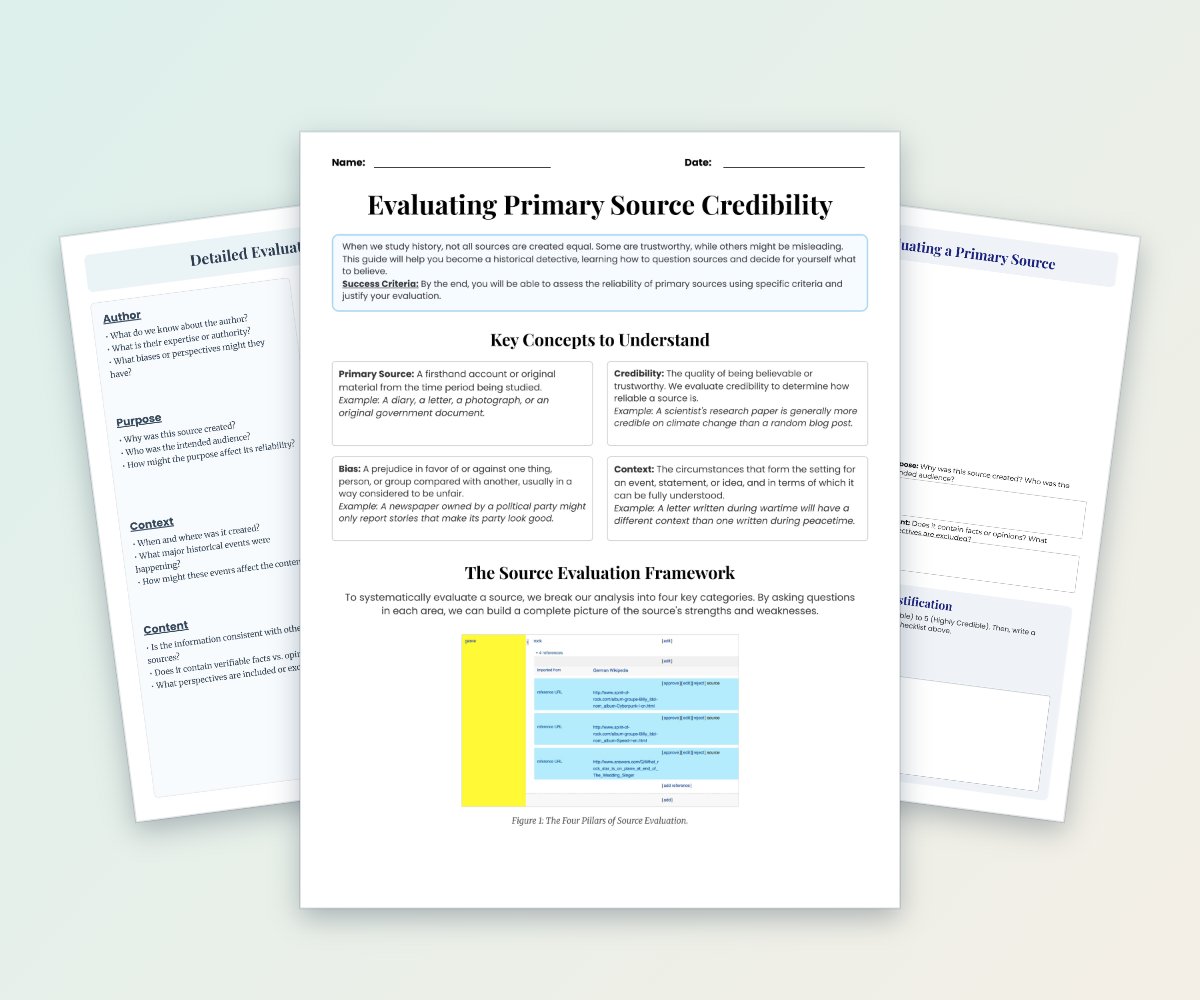
This three-page guide introduces primary sources, credibility, bias, purpose, and historical context.
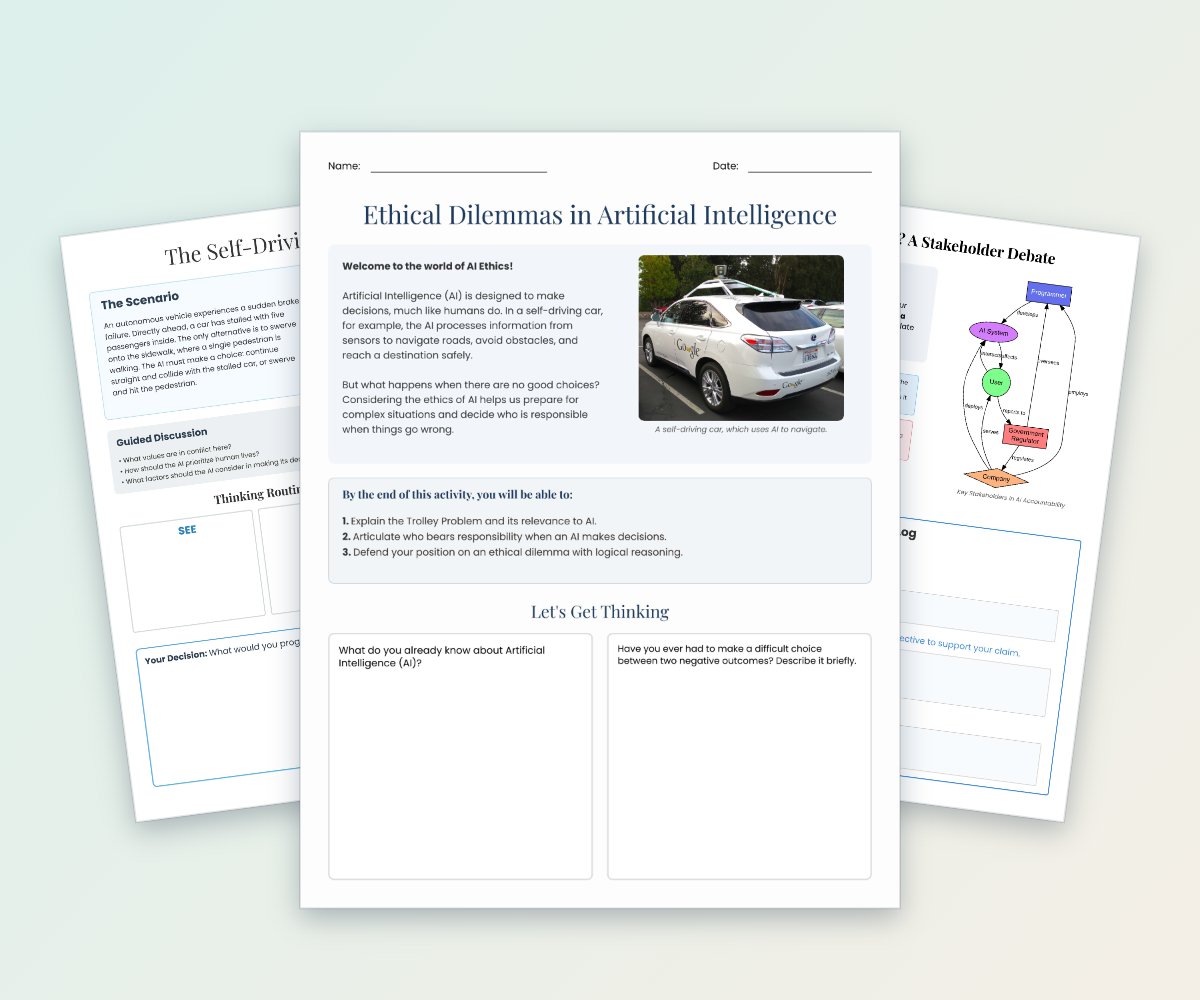
This four-page activity introduces students to AI ethics through the Trolley Problem and a self-driving car dilemma.
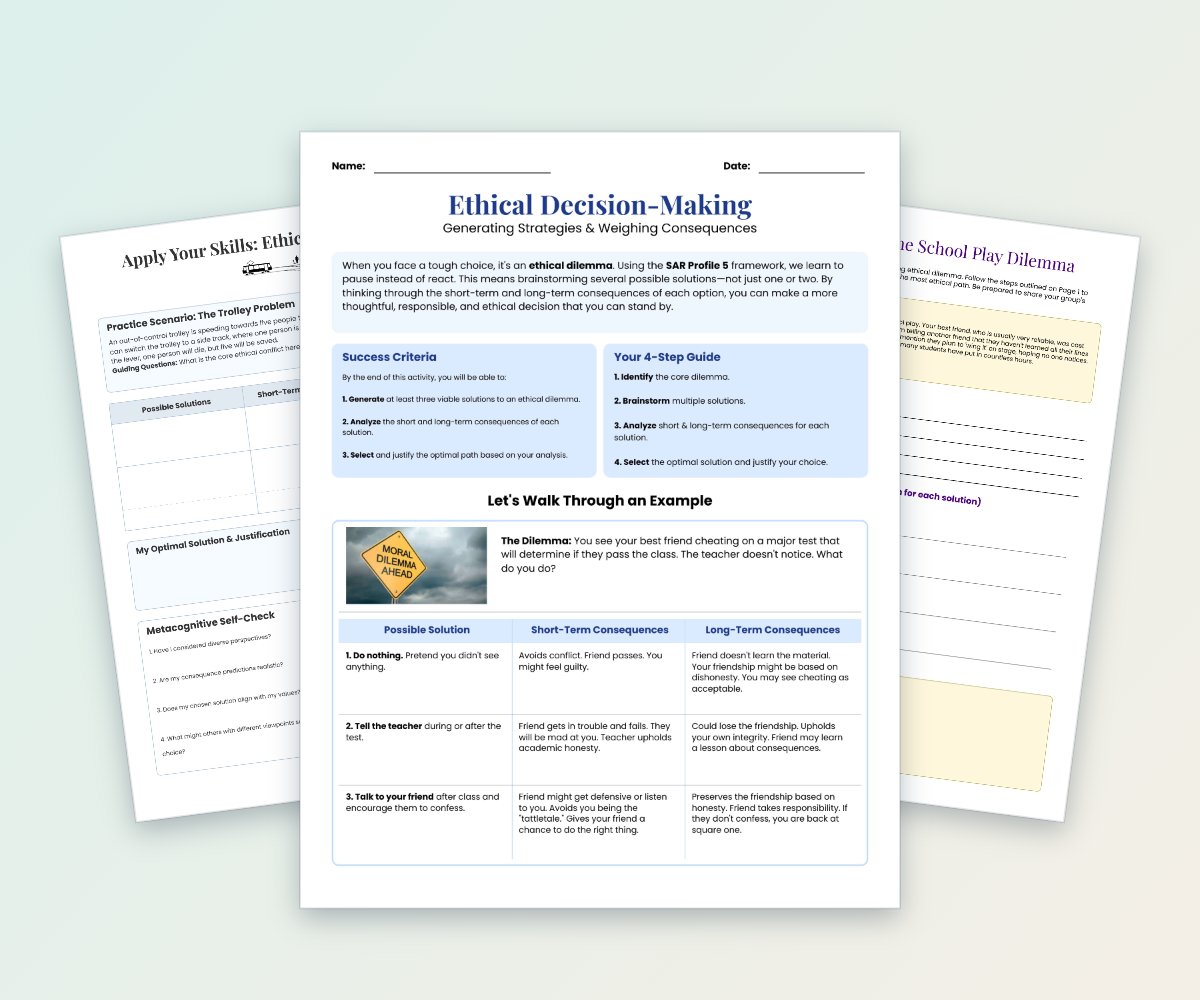
This three-page activity guides students through a four-step framework for analyzing ethical dilemmas.
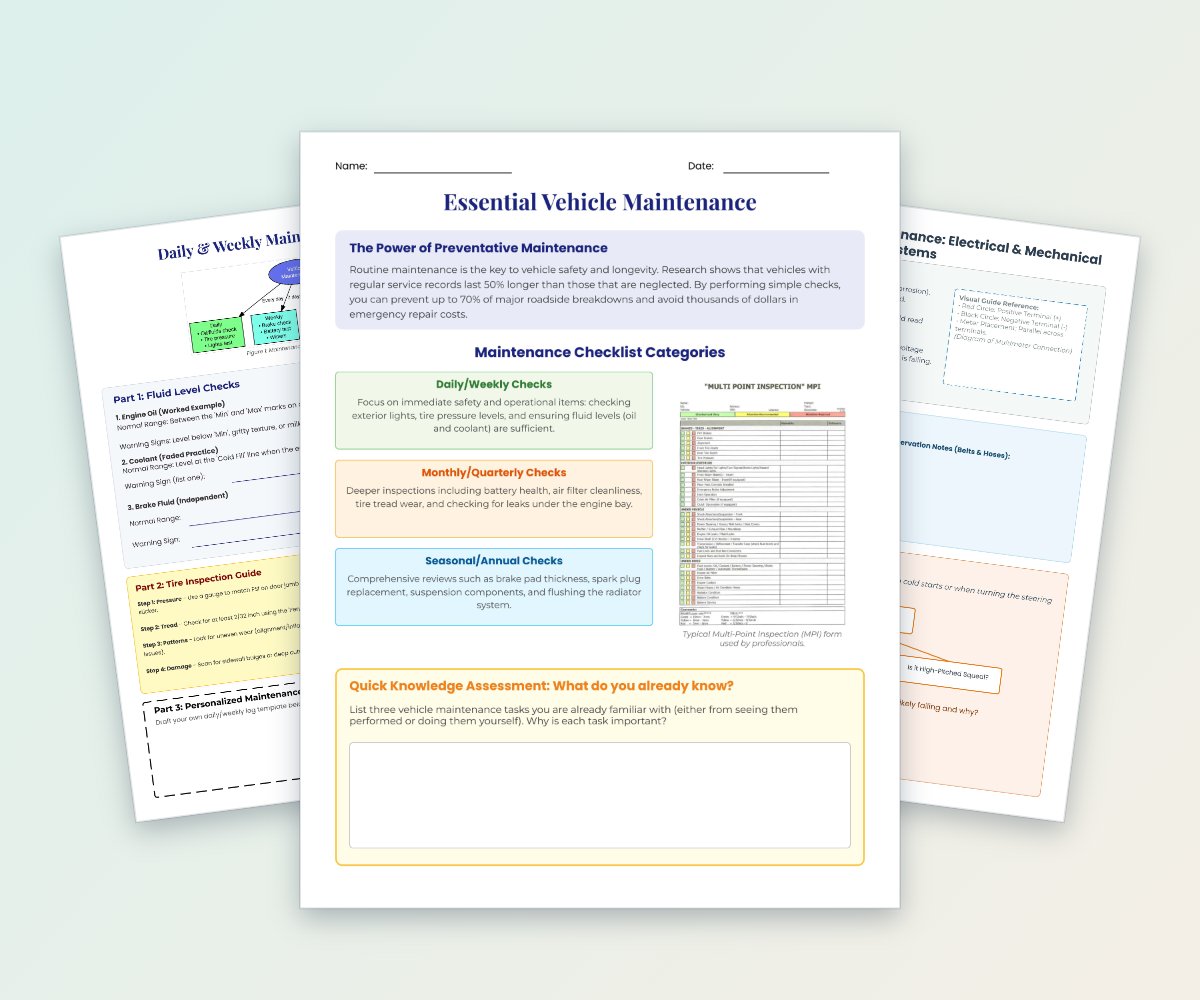
Introduce students to preventative vehicle maintenance with safety-focused checklists, maintenance schedules, inspection categories, and fluid-level guidance.
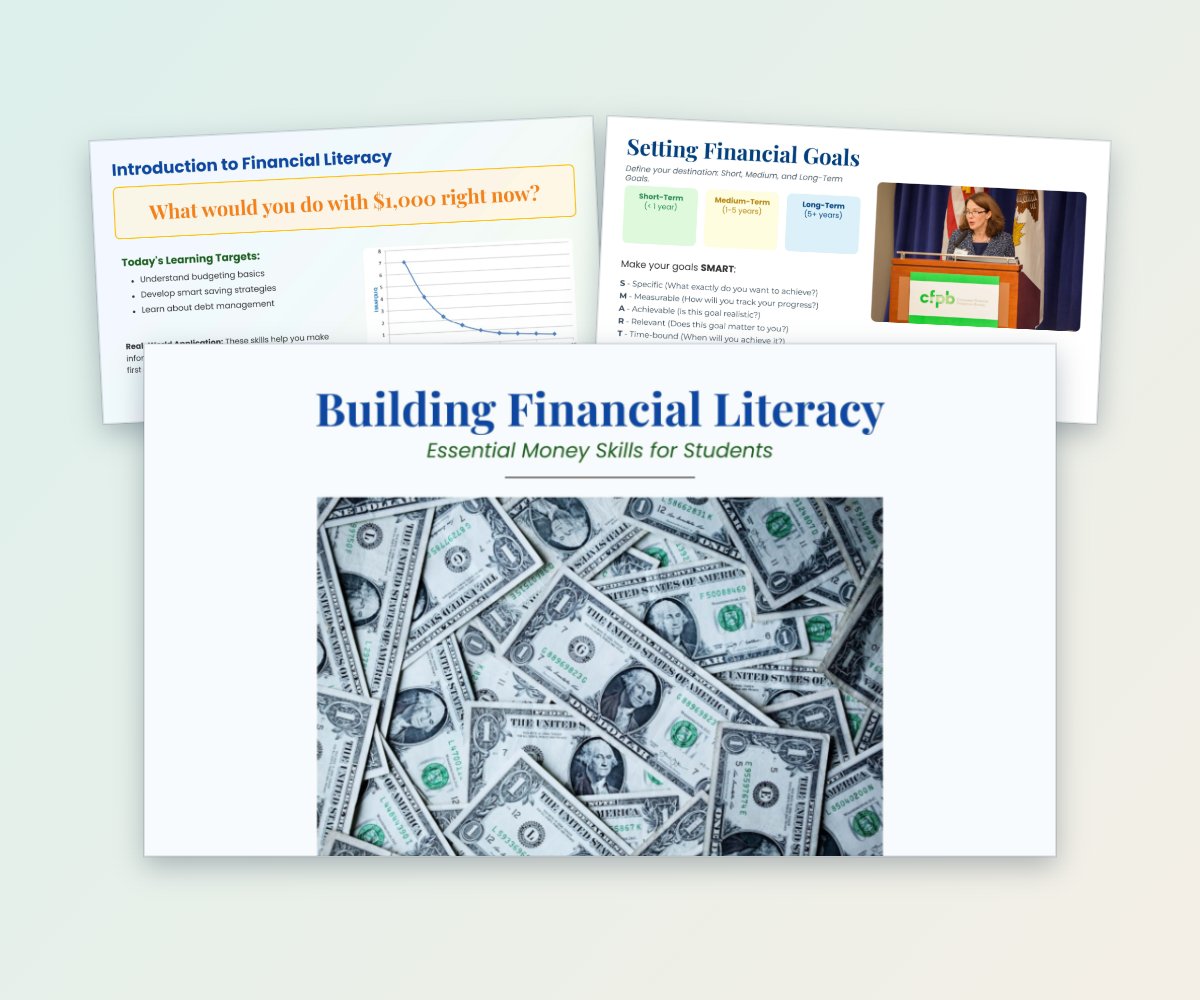
This 10-page student workbook introduces budgeting, financial goals, saving strategies, debt management, and needs versus wants.
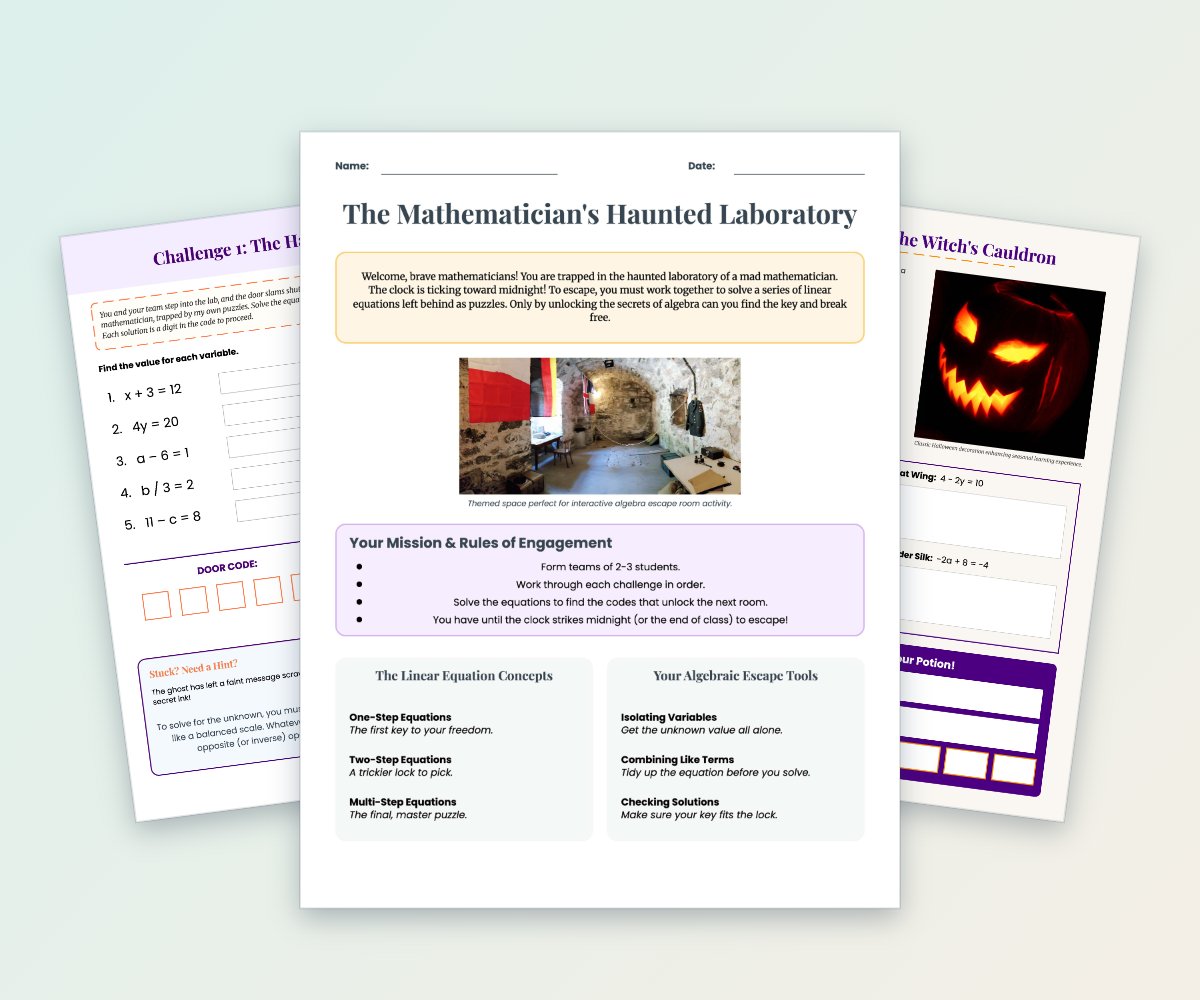
Students work in teams to escape a haunted laboratory by solving one-step, two-step, and multi-step linear equations.
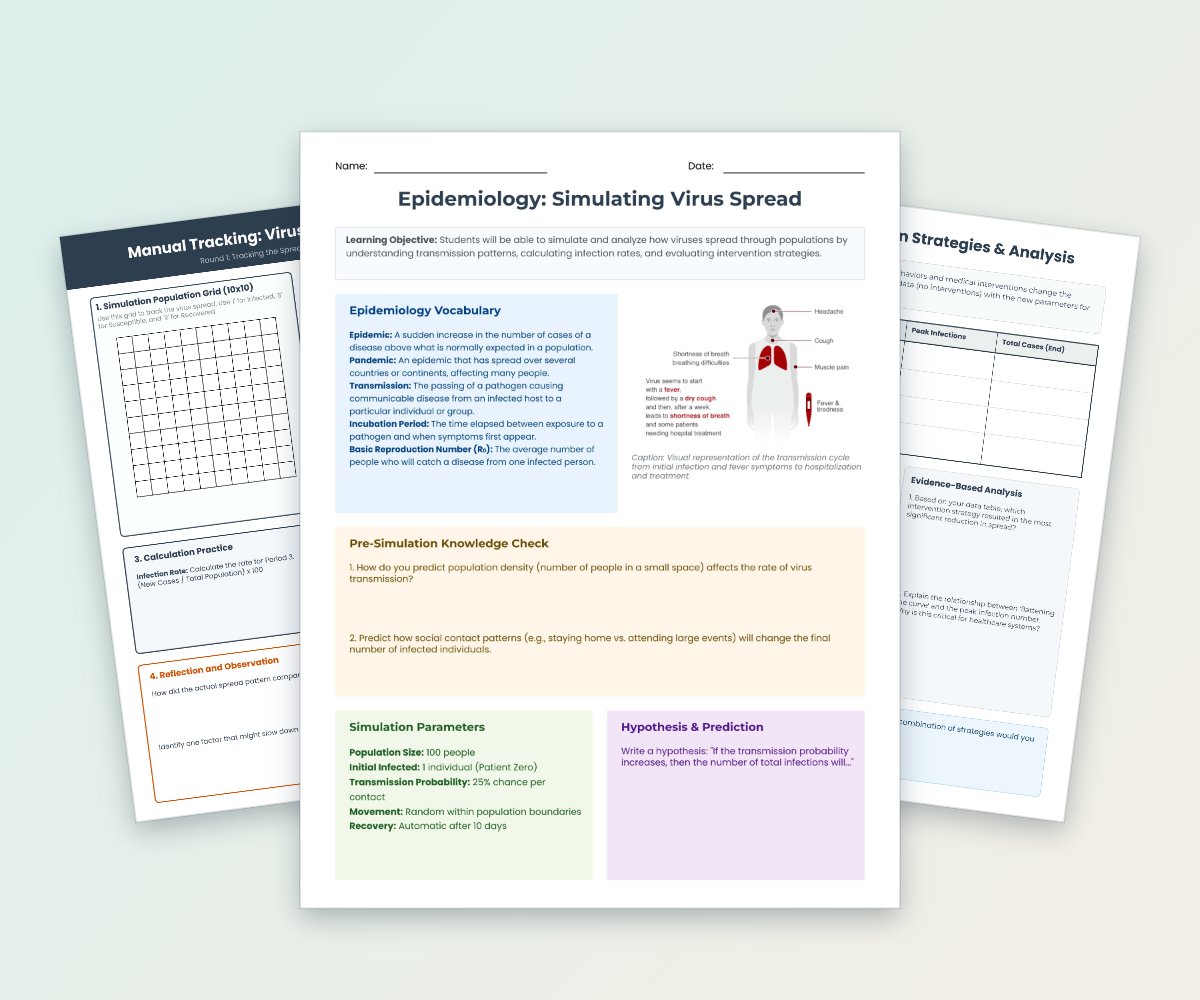
Students simulate how viruses spread through a population using a population grid, transmission parameters, infection-rate calculations, and data tables.
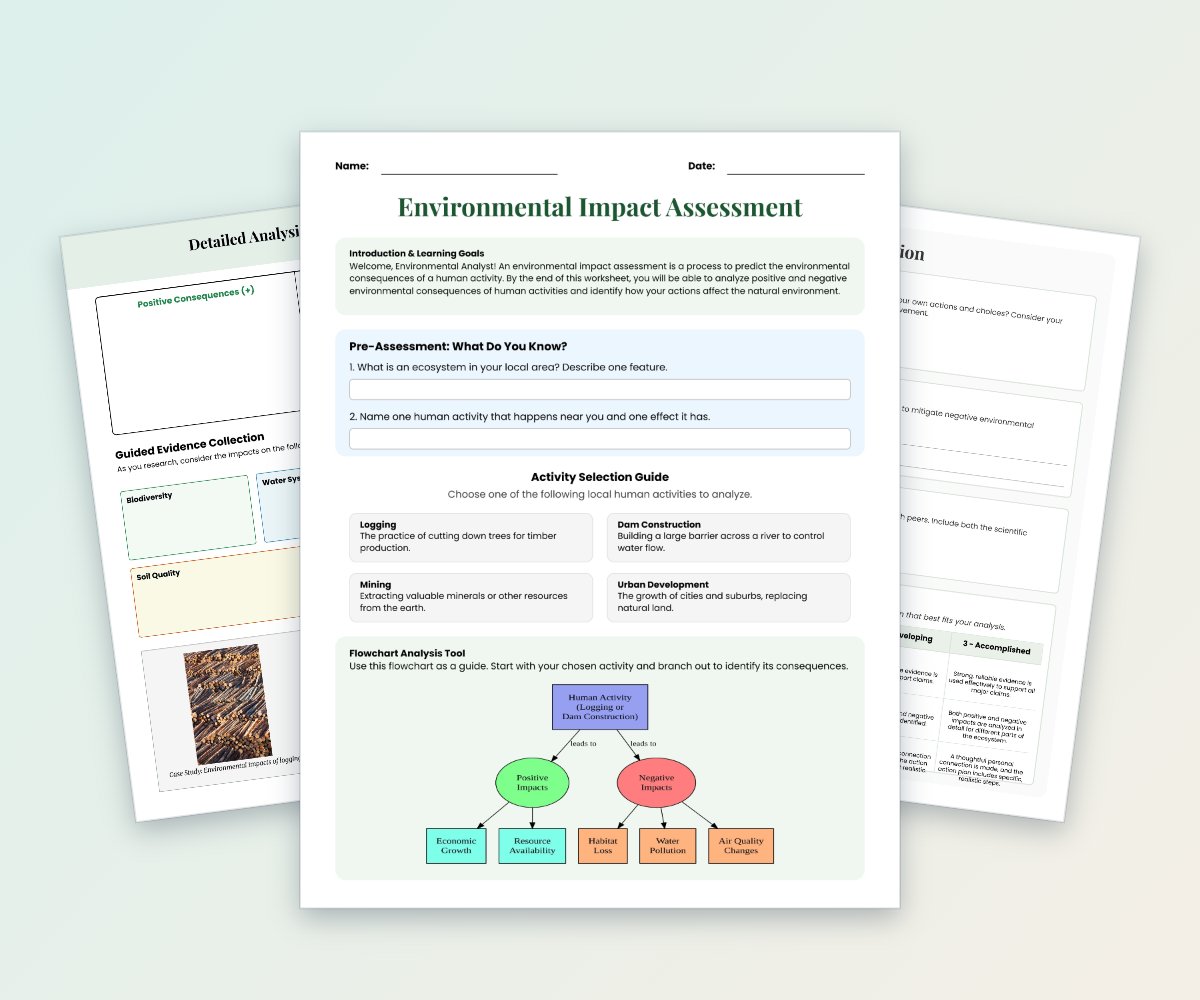
This three-page worksheet guides students in analyzing the environmental, economic, and community impacts of local human activities such as logging, mining, dam construction, and urban development.
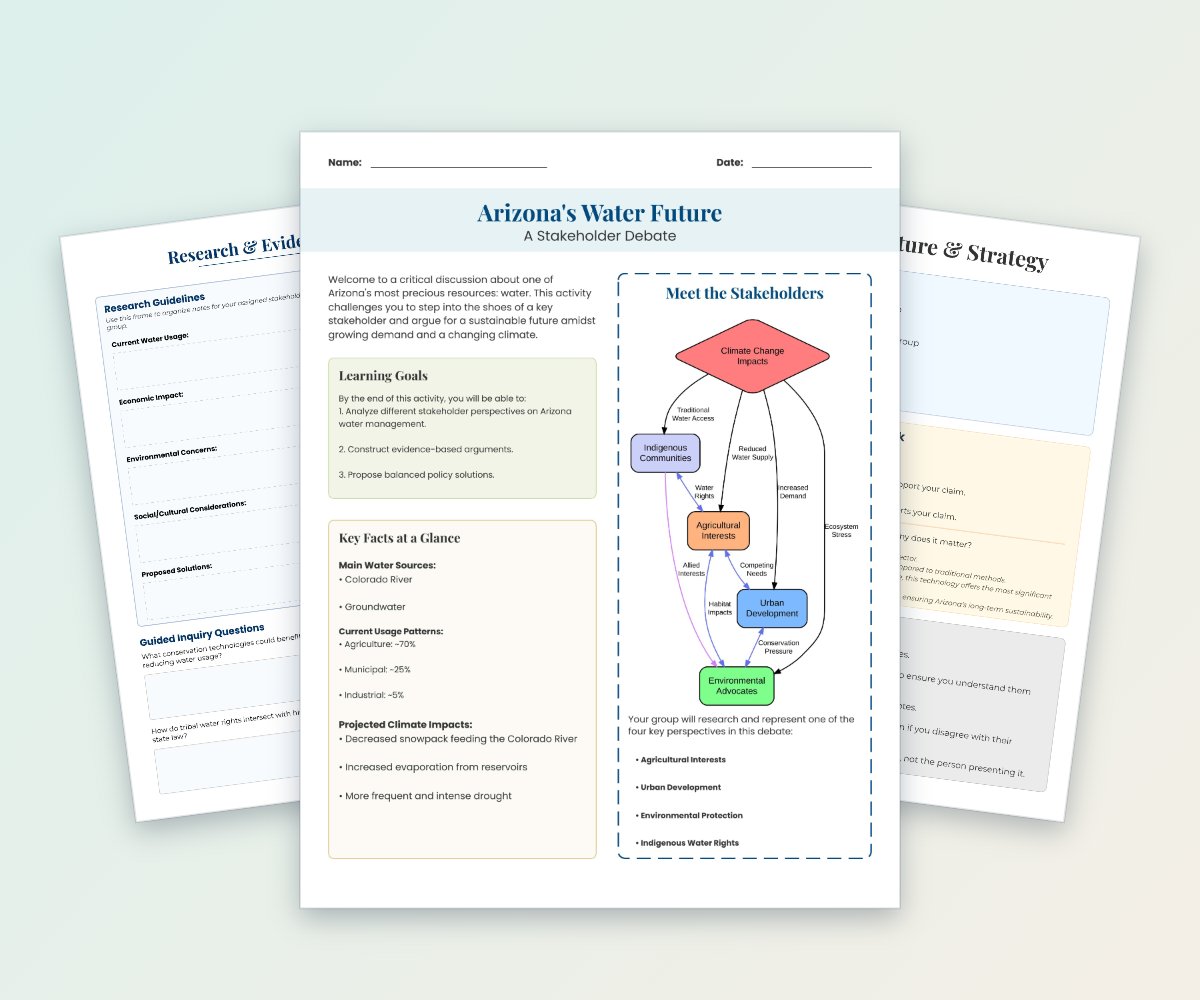
Students examine Arizona’s water challenges by researching and representing agricultural, urban, environmental, or Indigenous stakeholder perspectives.
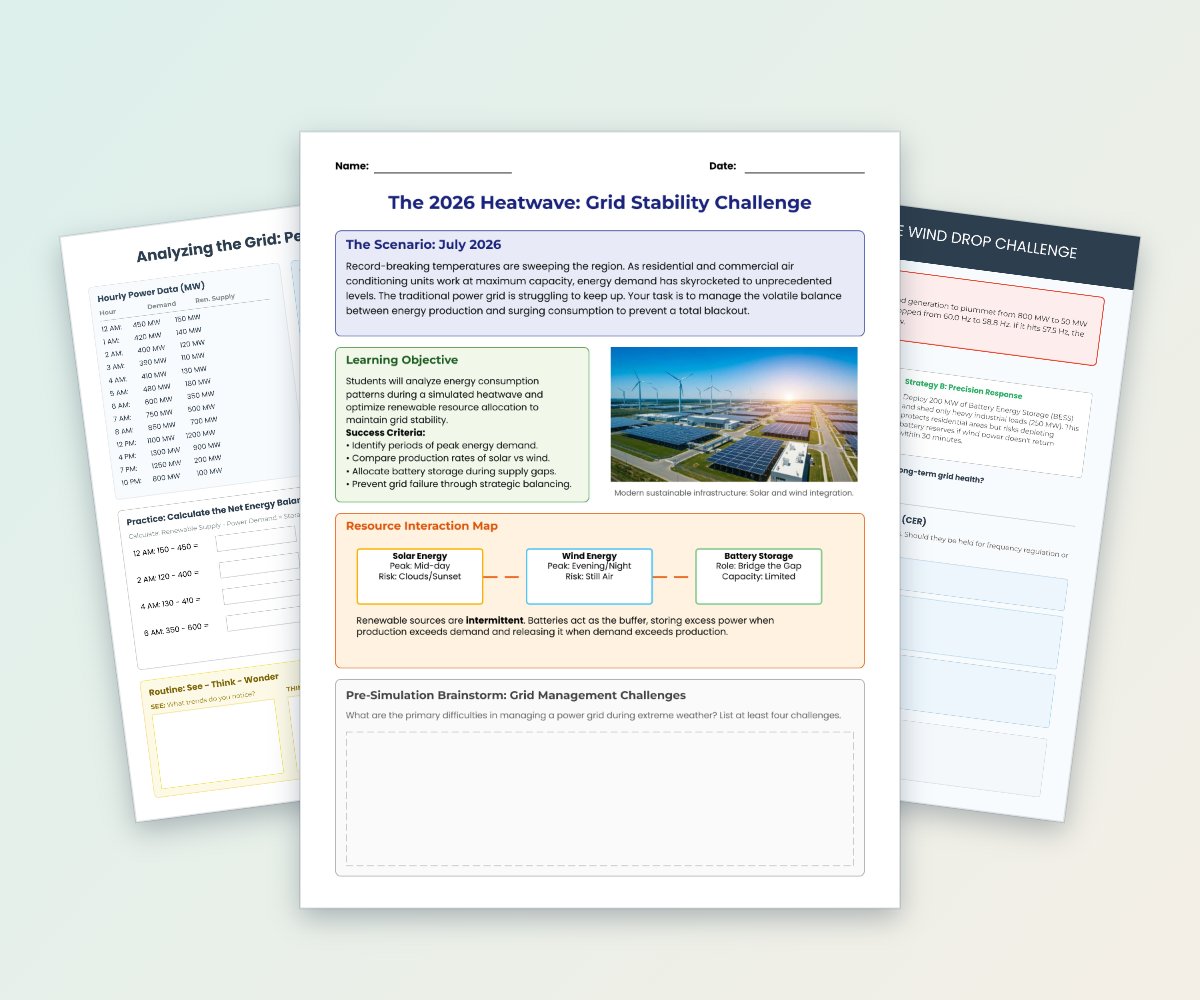
Students simulate managing a power grid during a record heatwave by analyzing demand, renewable production, and battery storage.
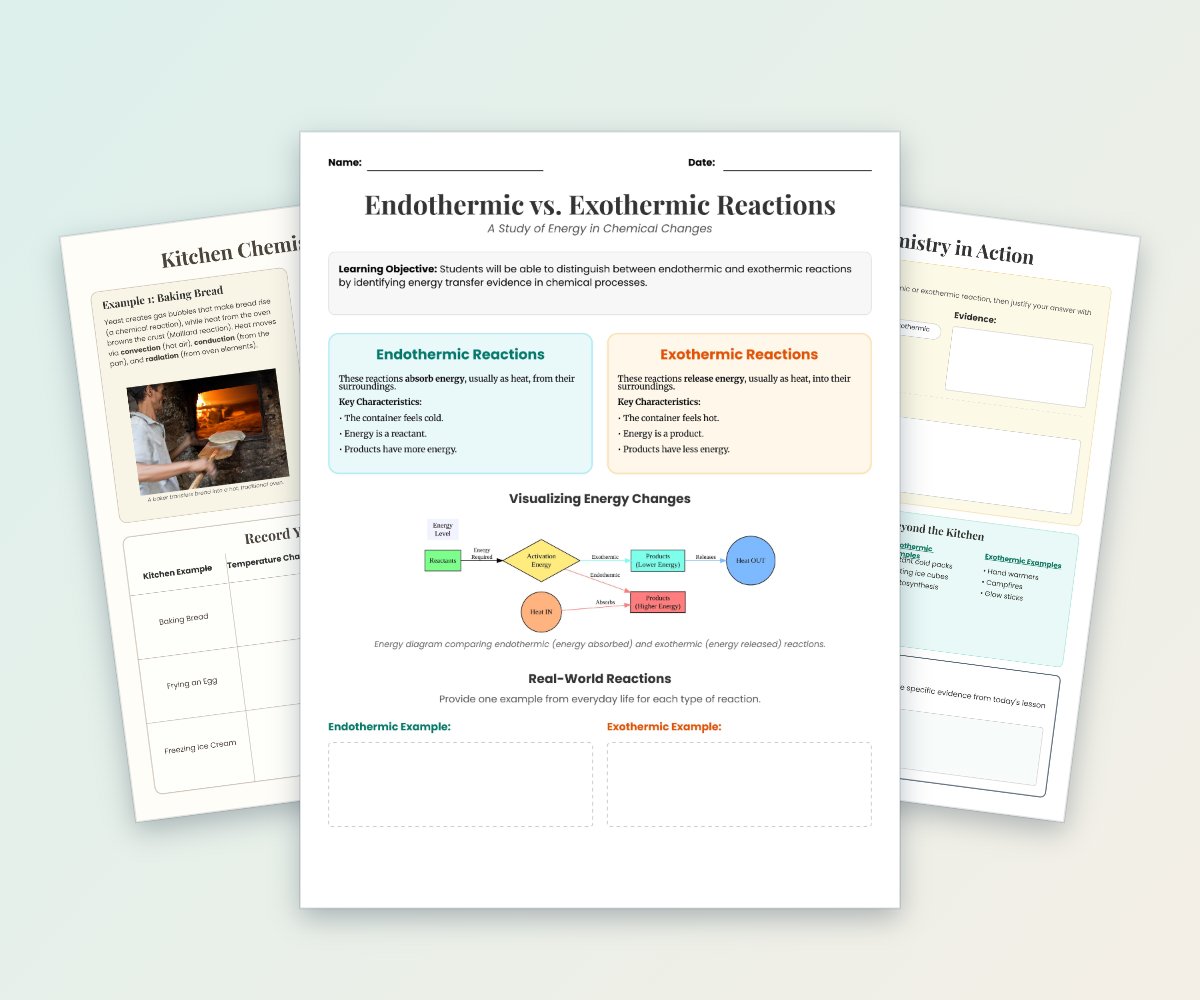
This three-page worksheet introduces energy absorption and release in chemical reactions through diagrams, real-world examples, and kitchen chemistry scenarios.
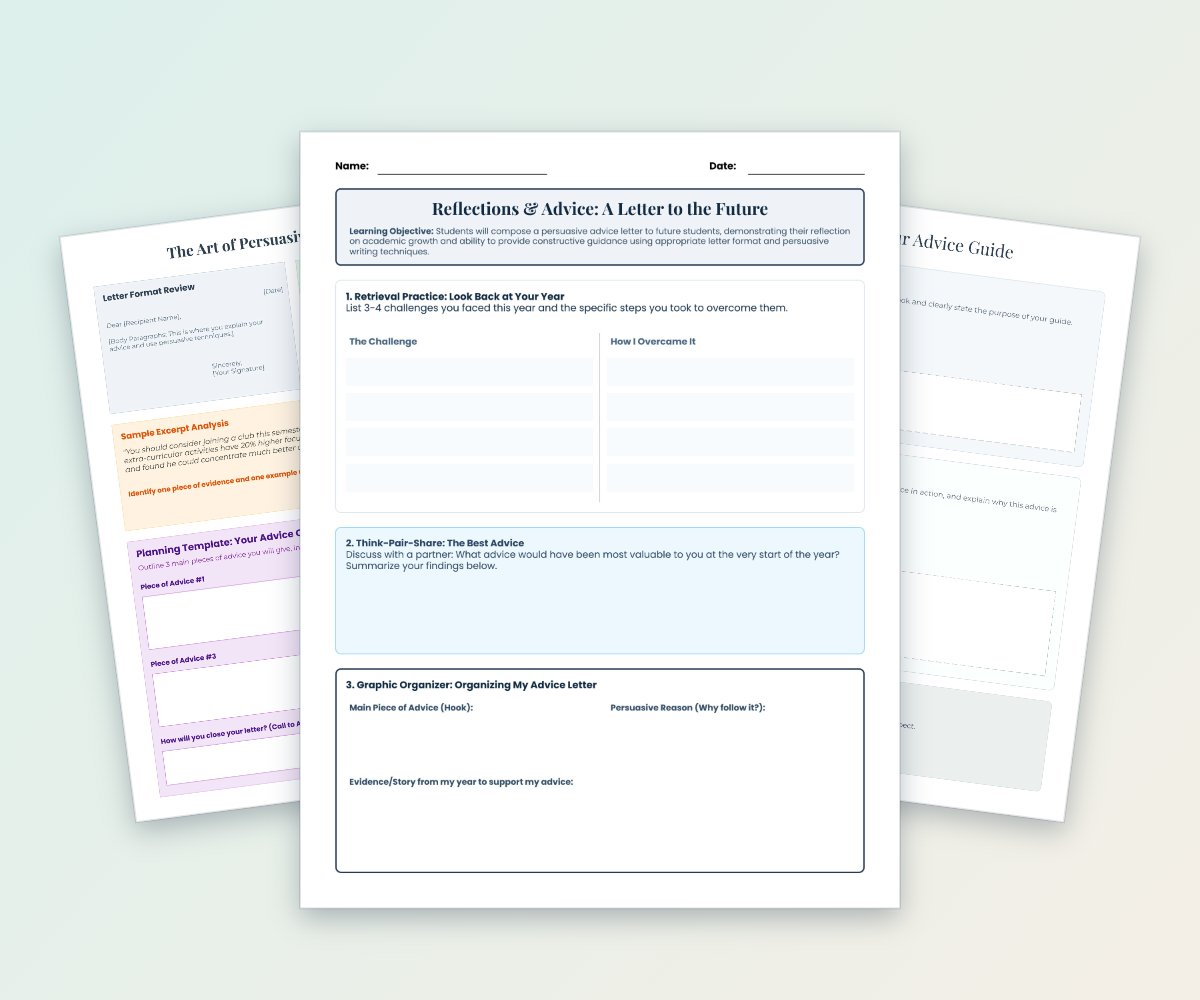
Guide students in reflecting on their academic year and composing persuasive advice letters for future students.
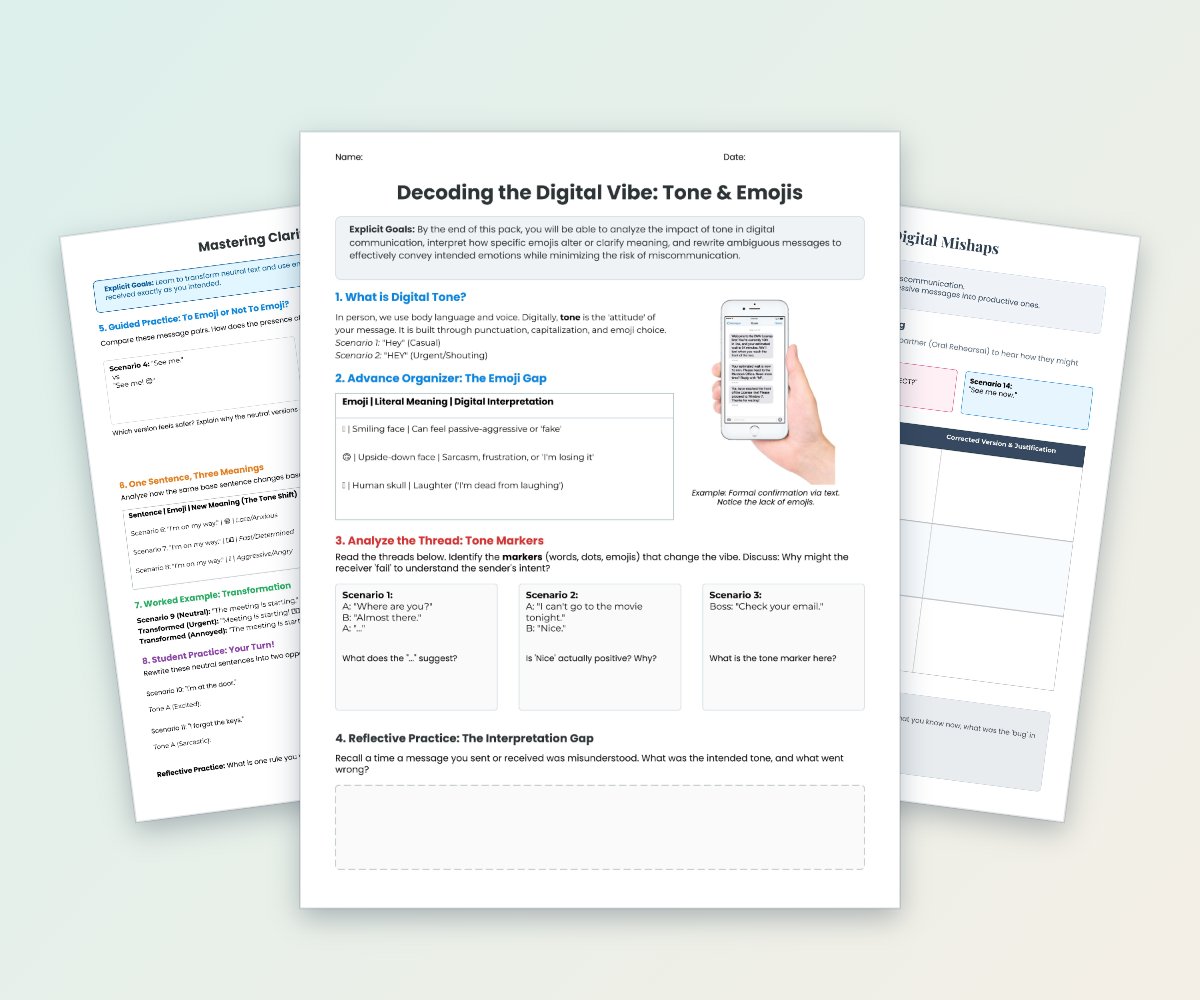
This activity pack helps students analyze how punctuation, capitalization, wording, and emojis affect tone in digital communication.
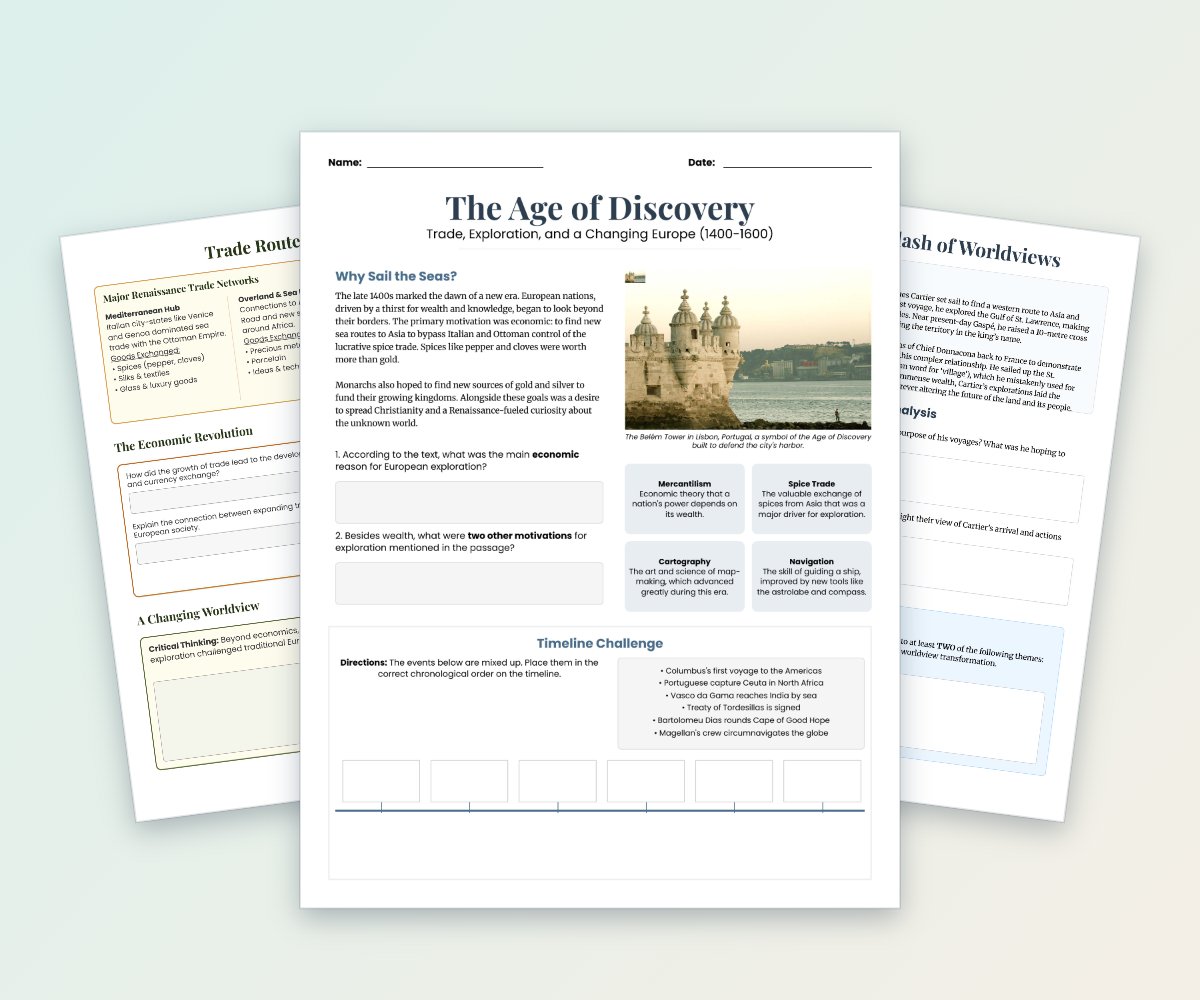
Students examine why European nations explored overseas, how trade networks developed, and how exploration changed European society between 1400 and 1600.
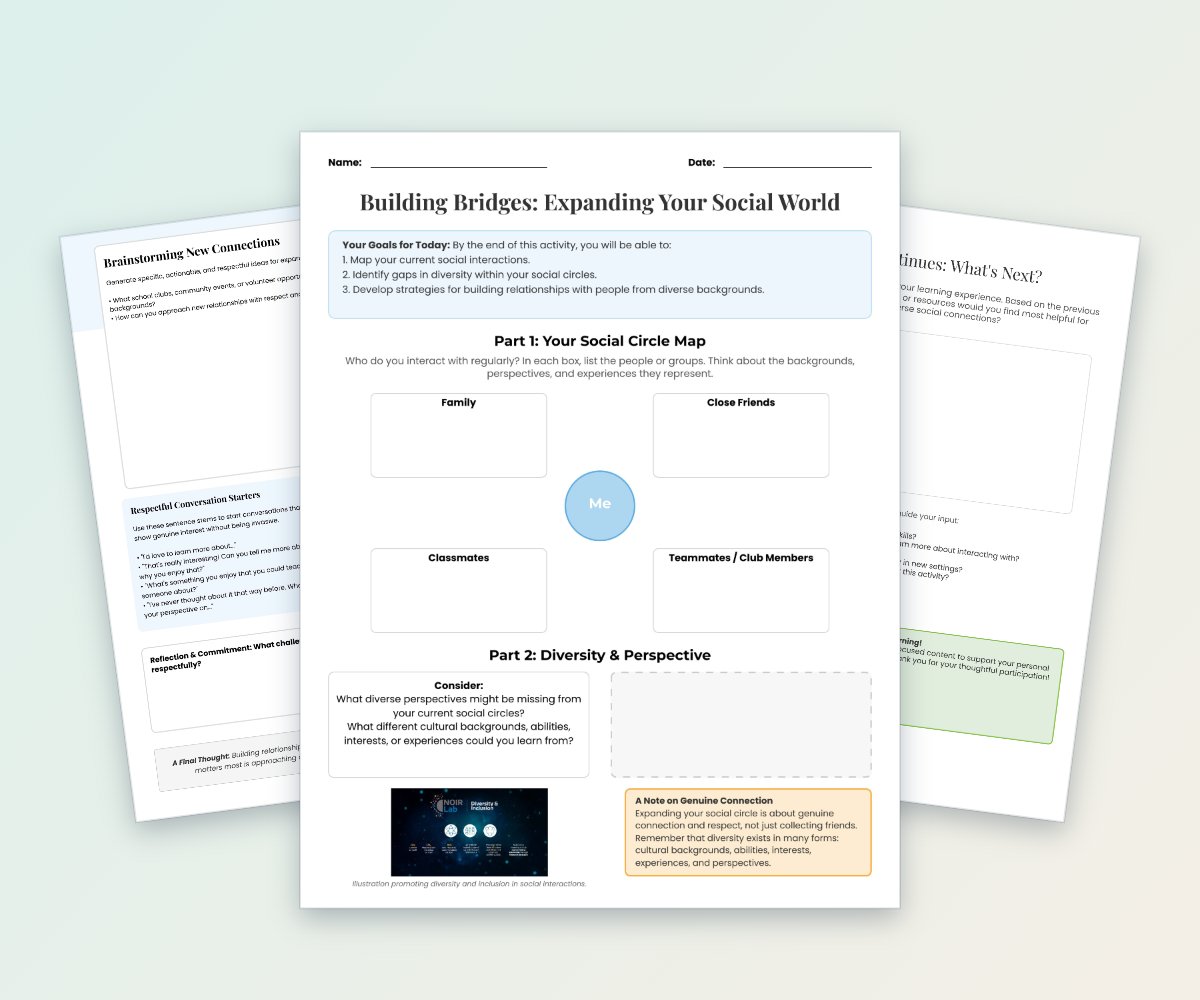
This three-page SEL activity helps students map their current social circles, recognize missing perspectives, and plan respectful ways to build diverse connections.
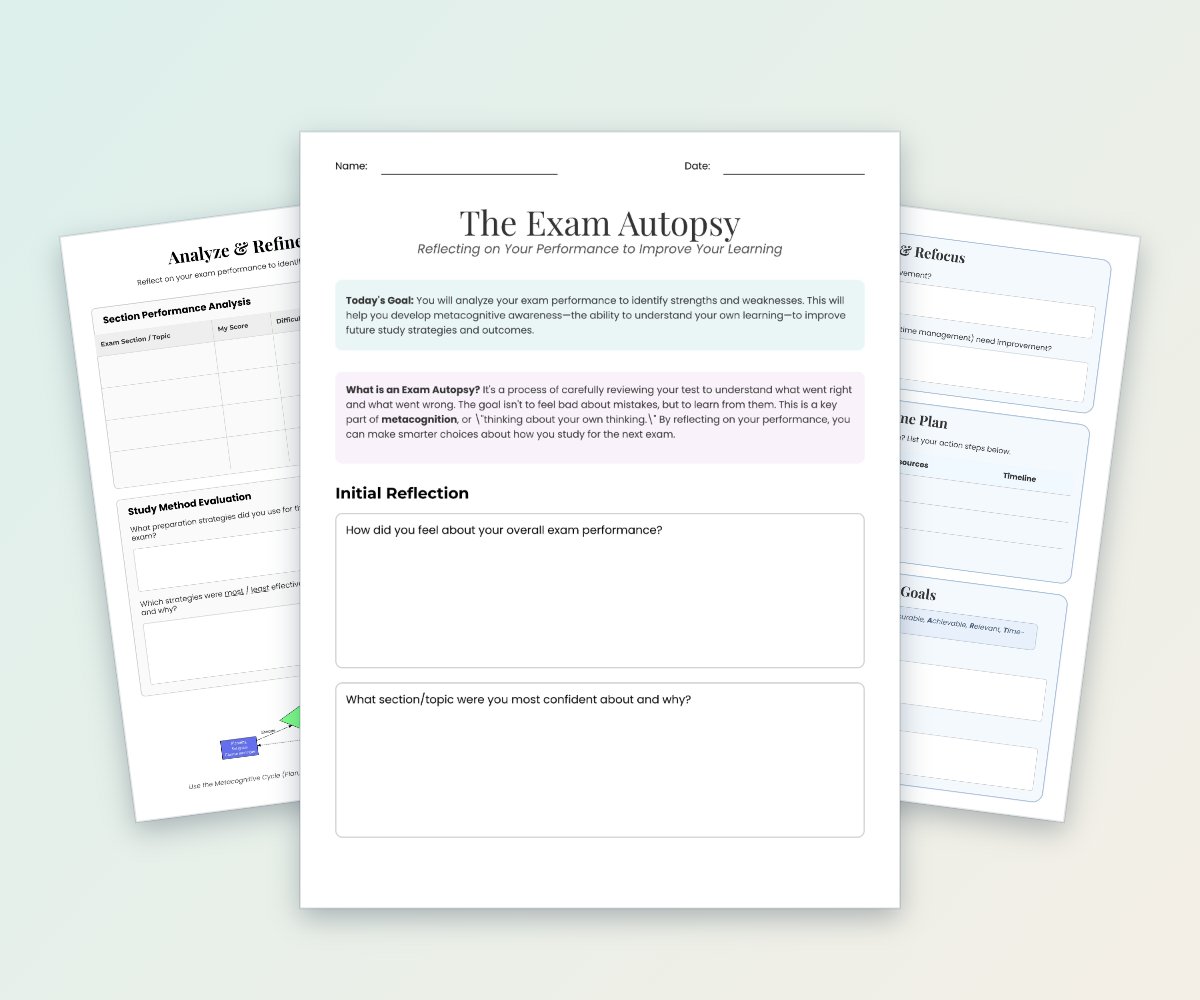
This four-page guide helps students conduct an exam autopsy, identify strengths and challenges, evaluate study strategies, and recognize learning patterns.
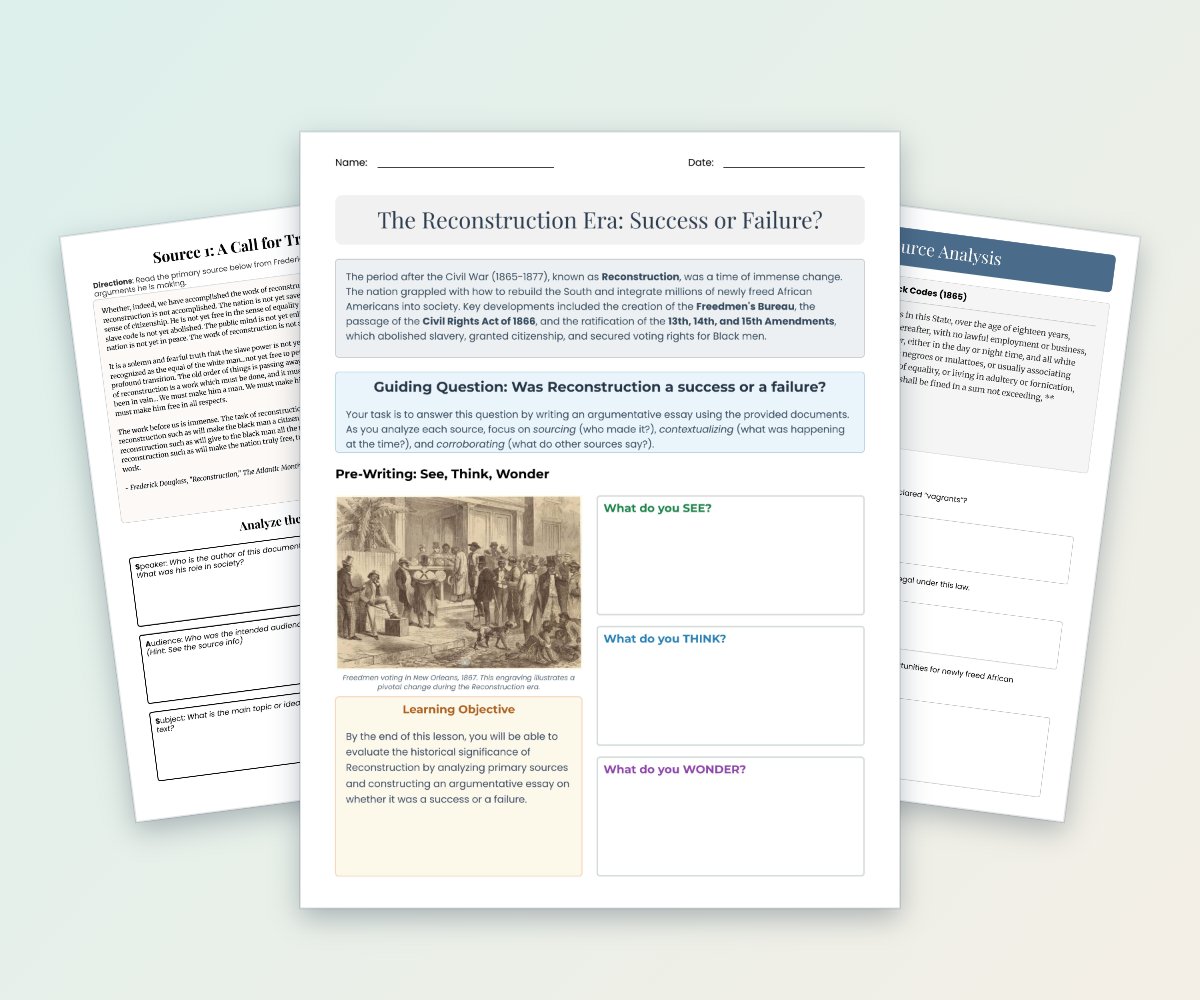
Students analyze primary sources about Reconstruction, including Frederick Douglass’s arguments, and evaluate whether the era was a success or failure.
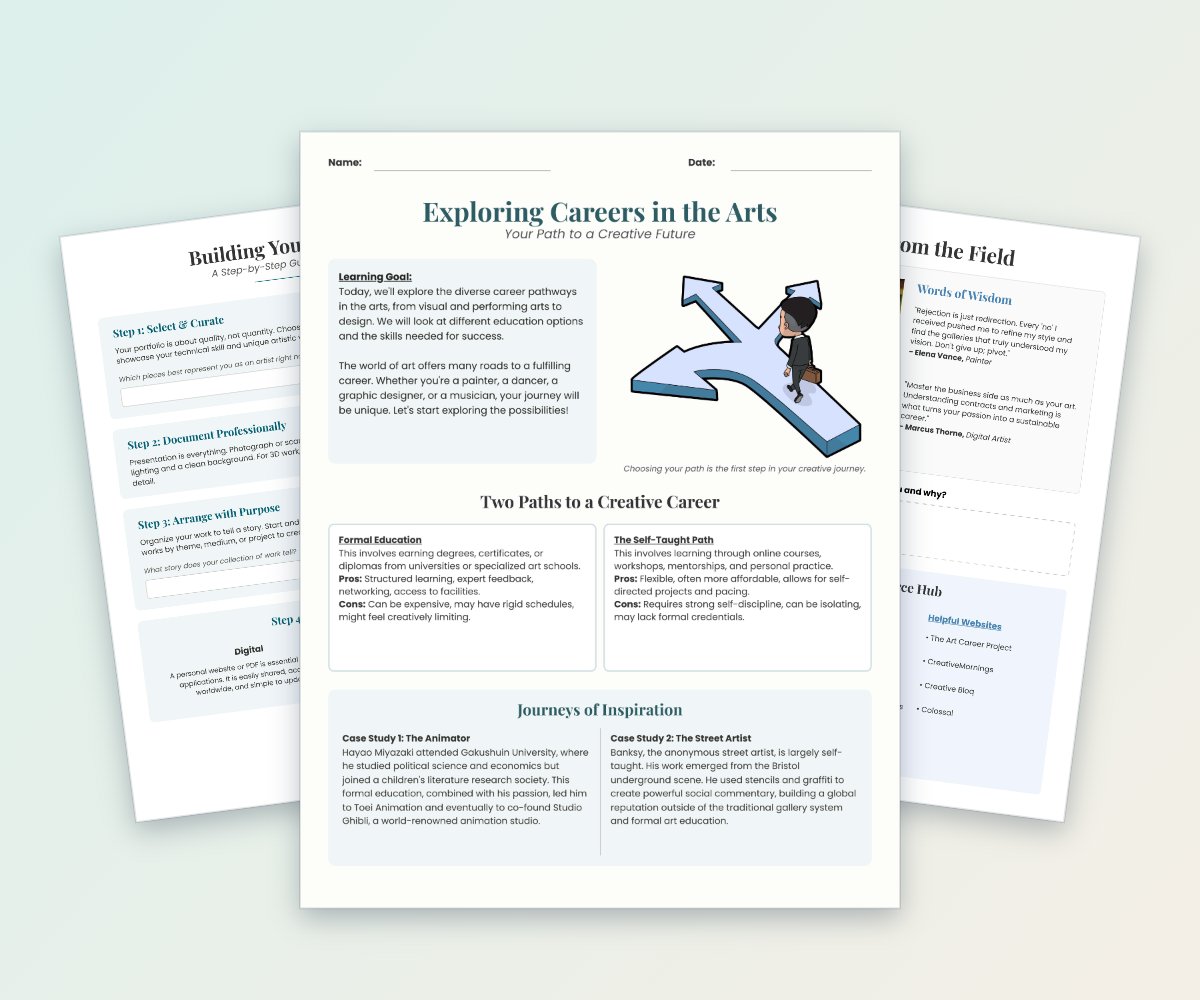
This resource guides students through arts career pathways, comparing formal education with self-taught routes and examining artist case studies.
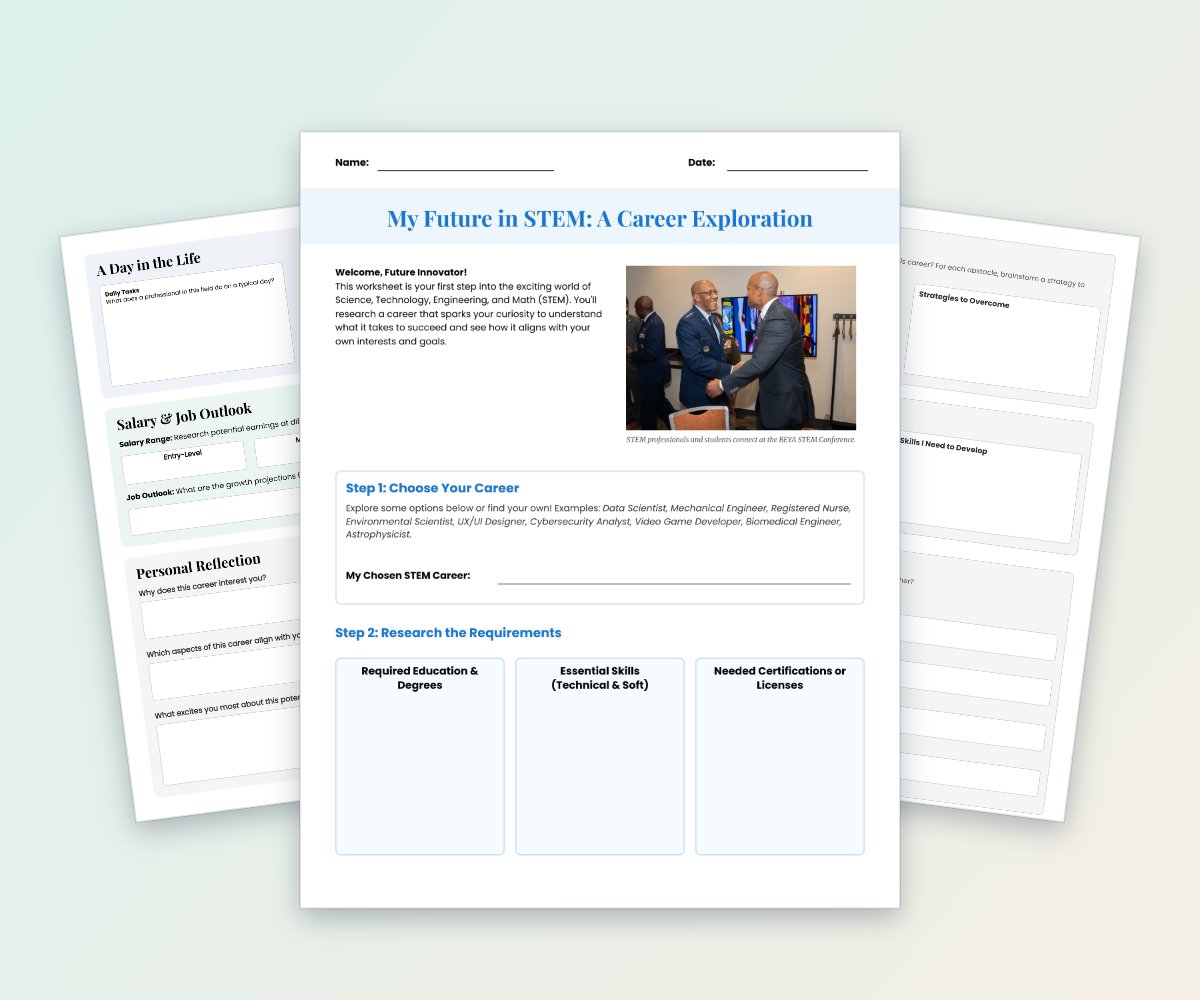
Students research a STEM career, examining education requirements, skills, certifications, daily responsibilities, work environments, salary, and job outlook.
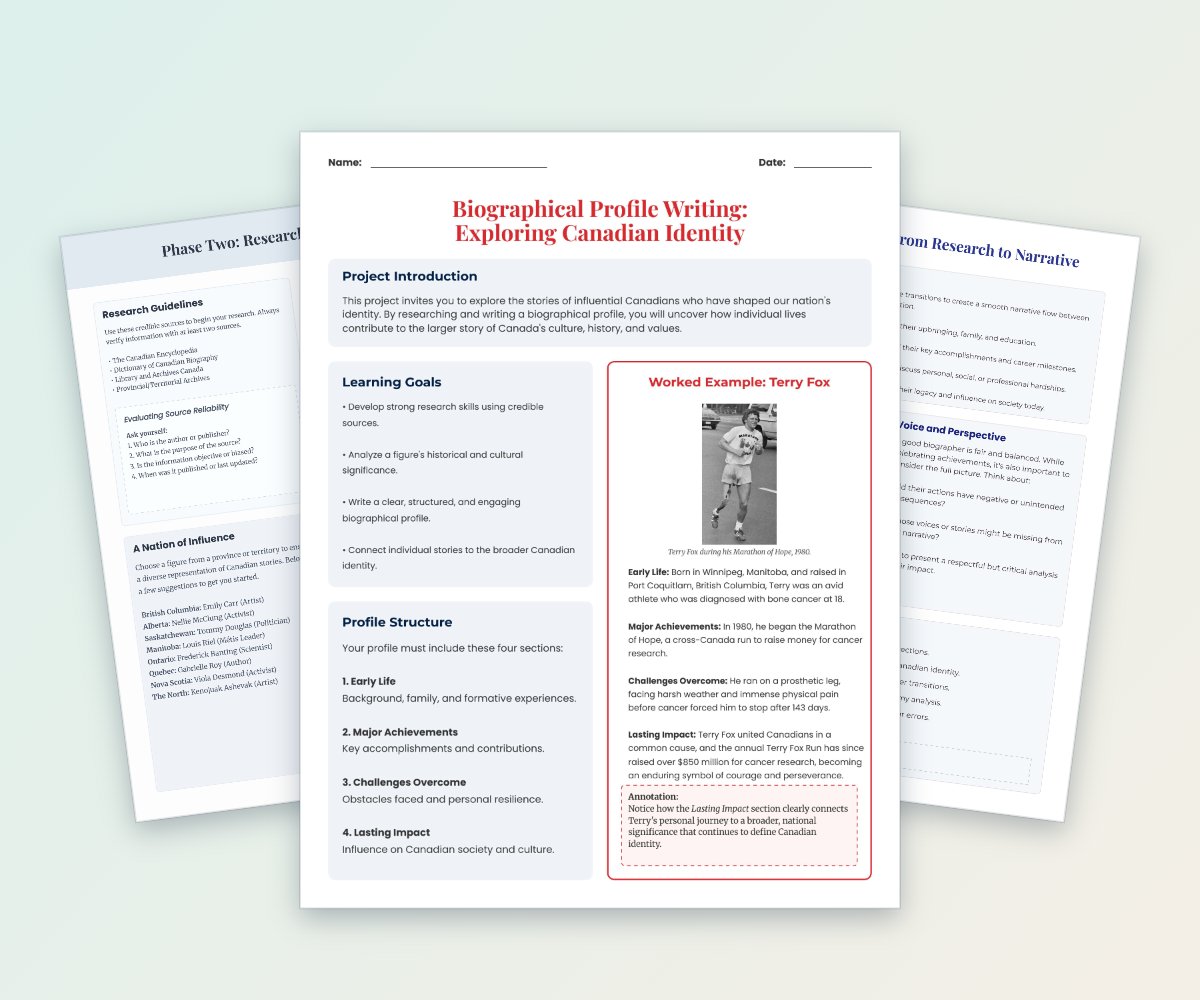
Students research an influential Canadian and write a structured biographical profile examining early life, achievements, challenges, and lasting impact.
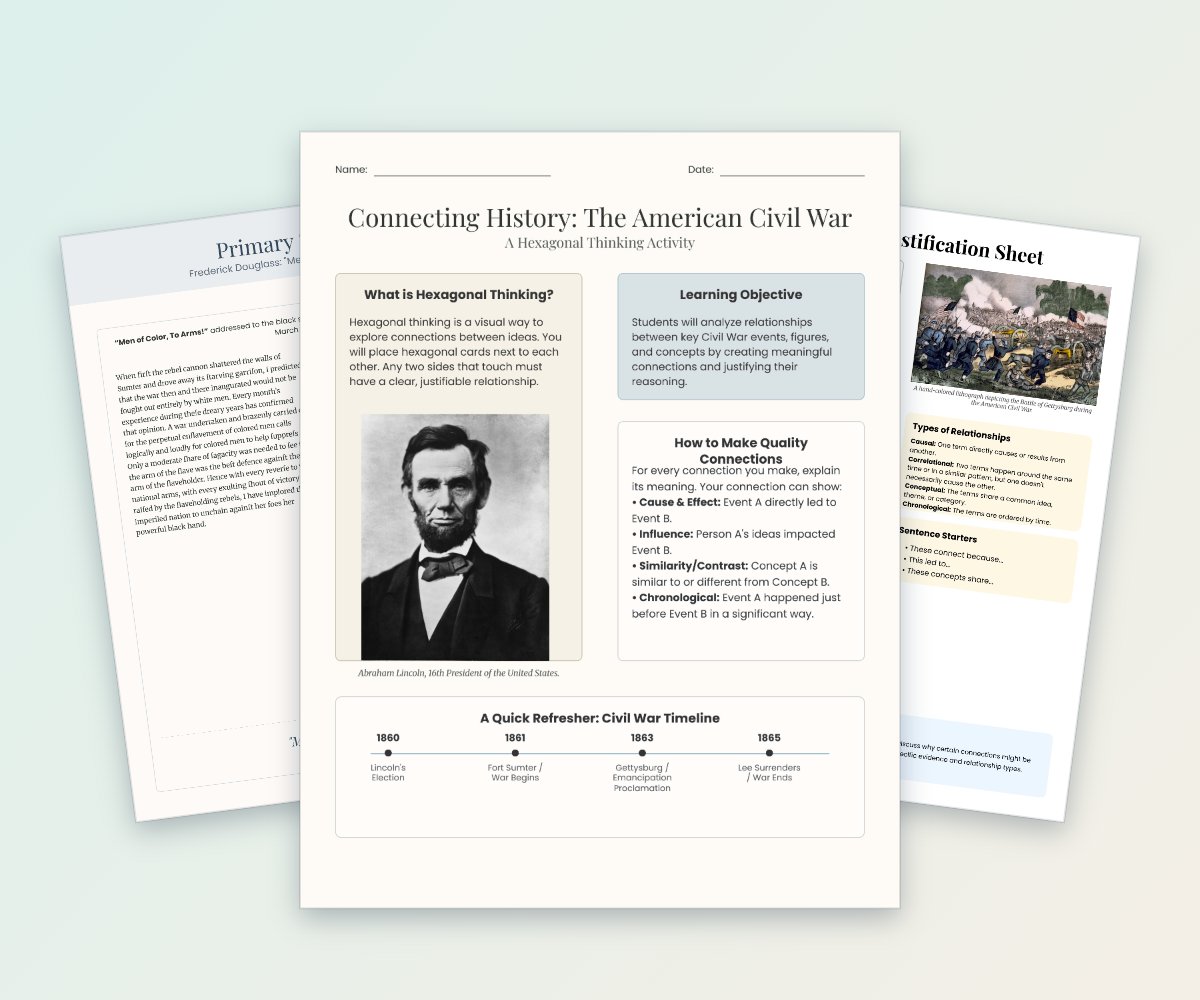
Students explore relationships among key Civil War events, figures, and concepts using a hexagonal thinking activity.
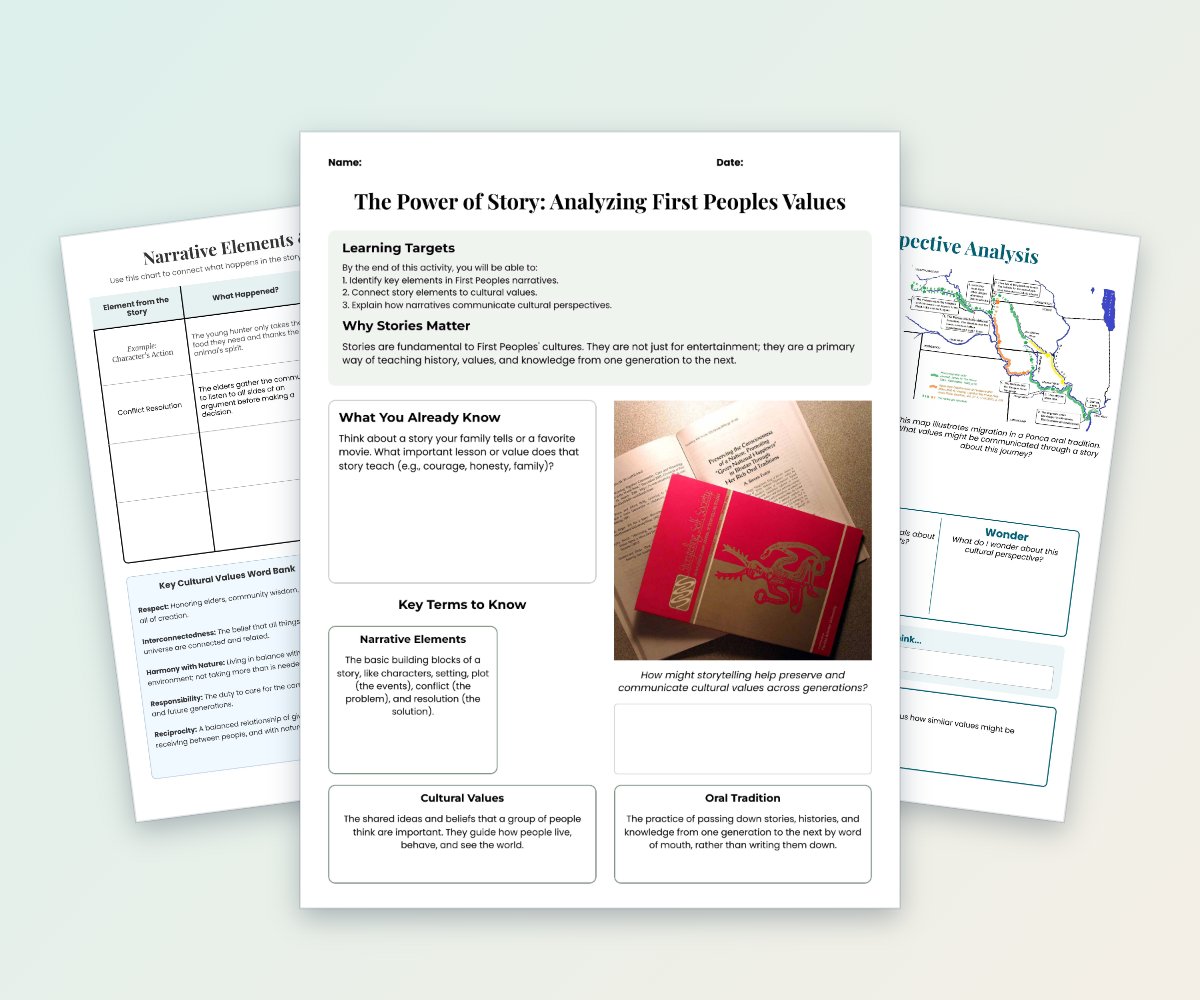
Students examine narrative elements, oral tradition, and cultural values in First Peoples stories.
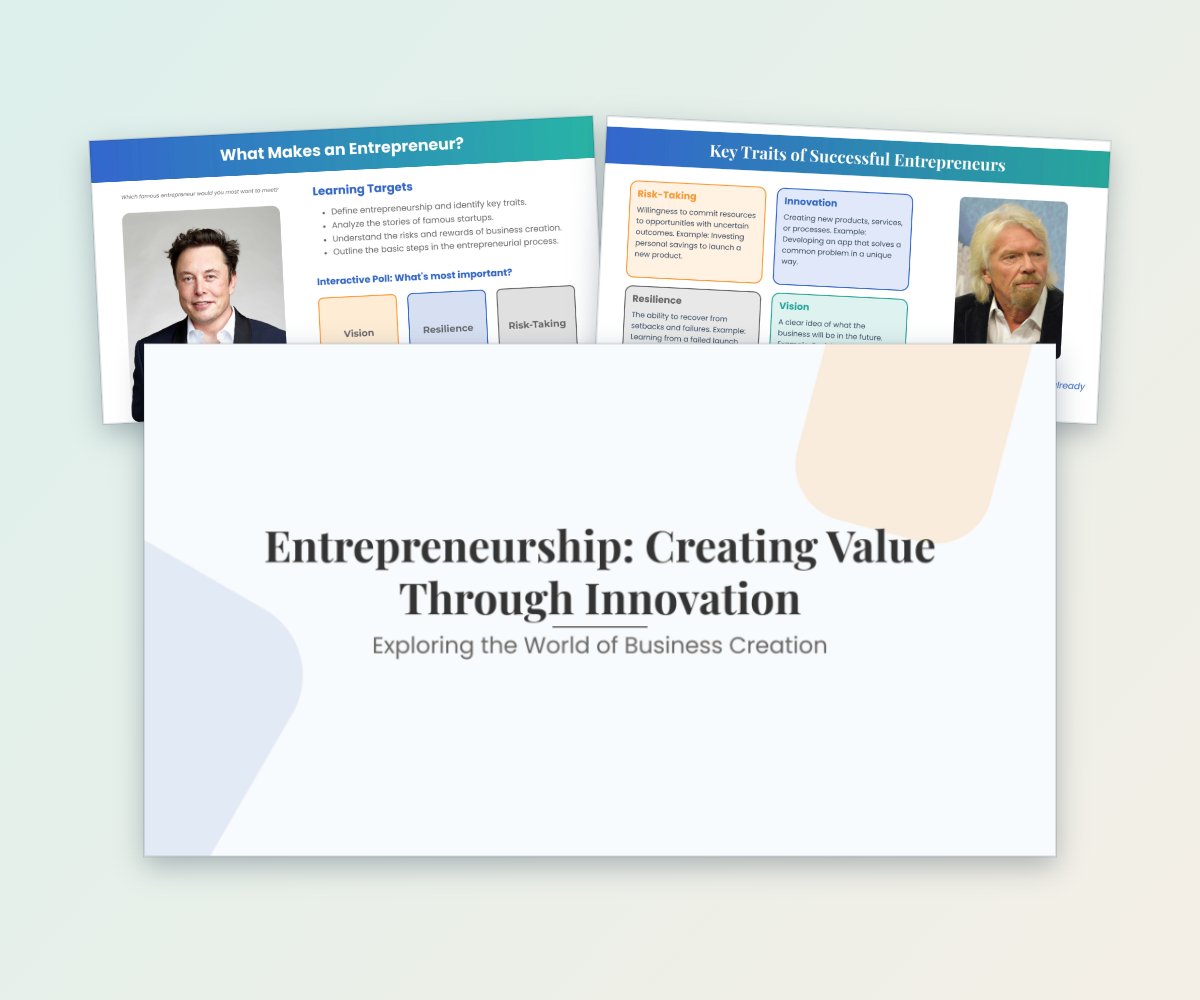
Introduce students to entrepreneurship through business examples, key entrepreneurial traits, risks and rewards, and the entrepreneurial decision-making process.