Saving, Investing, Risk, and Financial Well-Being: Grade 8 Alberta
This 34-page presentation teaches Grade 8 students about financial well-being, saving, investing, risk, reward, liquidity, time horizons, diversification, and emergency savings.
Clear, practical resources for busy educators, organized so you can get from search to ready-to-teach quickly.
This 34-page presentation teaches Grade 8 students about financial well-being, saving, investing, risk, reward, liquidity, time horizons, diversification, and emergency savings.
This 35-slide lesson helps Grade 8 students examine post-secondary cost categories, financial assistance, and planning supports.
A 35-slide Grade 8 lesson helping students identify post-secondary cost categories, explore financial assistance, and plan for future pathways.
This 35-slide Grade 8 presentation introduces employment income, wages, salary, gross and net pay, deductions, taxes, benefits, and total compensation.
A 34-slide Grade 8 lesson that introduces financial well-being, saving, investing, risk, reward, liquidity, diversification, and time horizons.
This 35-slide Grade 8 presentation introduces employment income, wages, salary, gross pay, deductions, net pay, taxes, benefits, and total compensation.
This 33-slide lesson helps Grade 8 students connect personal experiences with interests, strengths, values, and possible career areas.
This 32-slide classroom-ready presentation introduces pricing, fixed and variable costs, revenue, profit, and break-even concepts.
A strengths-based Grade 8 presentation exploring personal experiences, interests, values, transferable skills, and possible career directions.
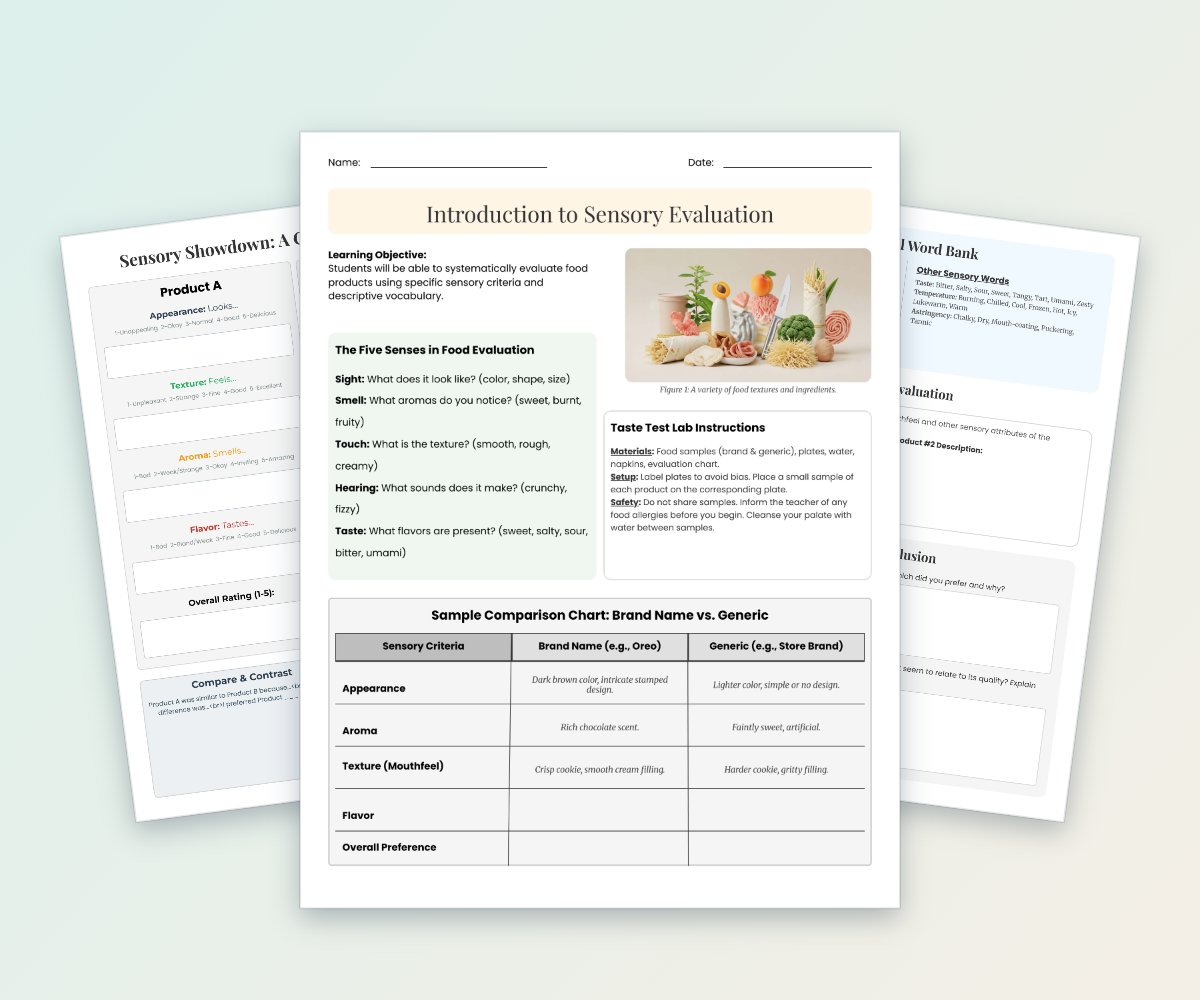
Students learn to evaluate food products using sight, smell, touch, hearing, and taste.
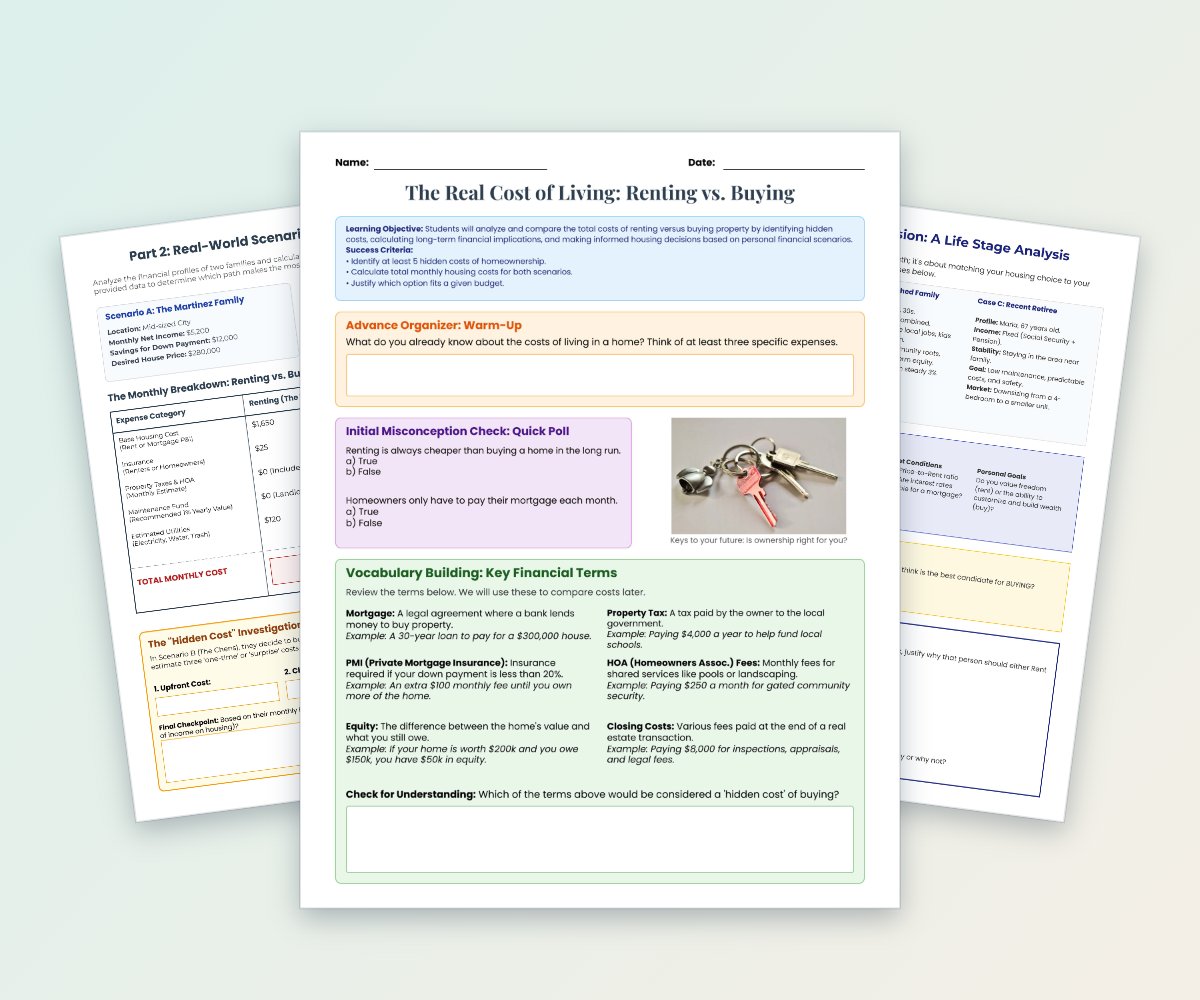
Students compare renting and buying by identifying hidden costs, reviewing key housing terms, and calculating monthly expenses.
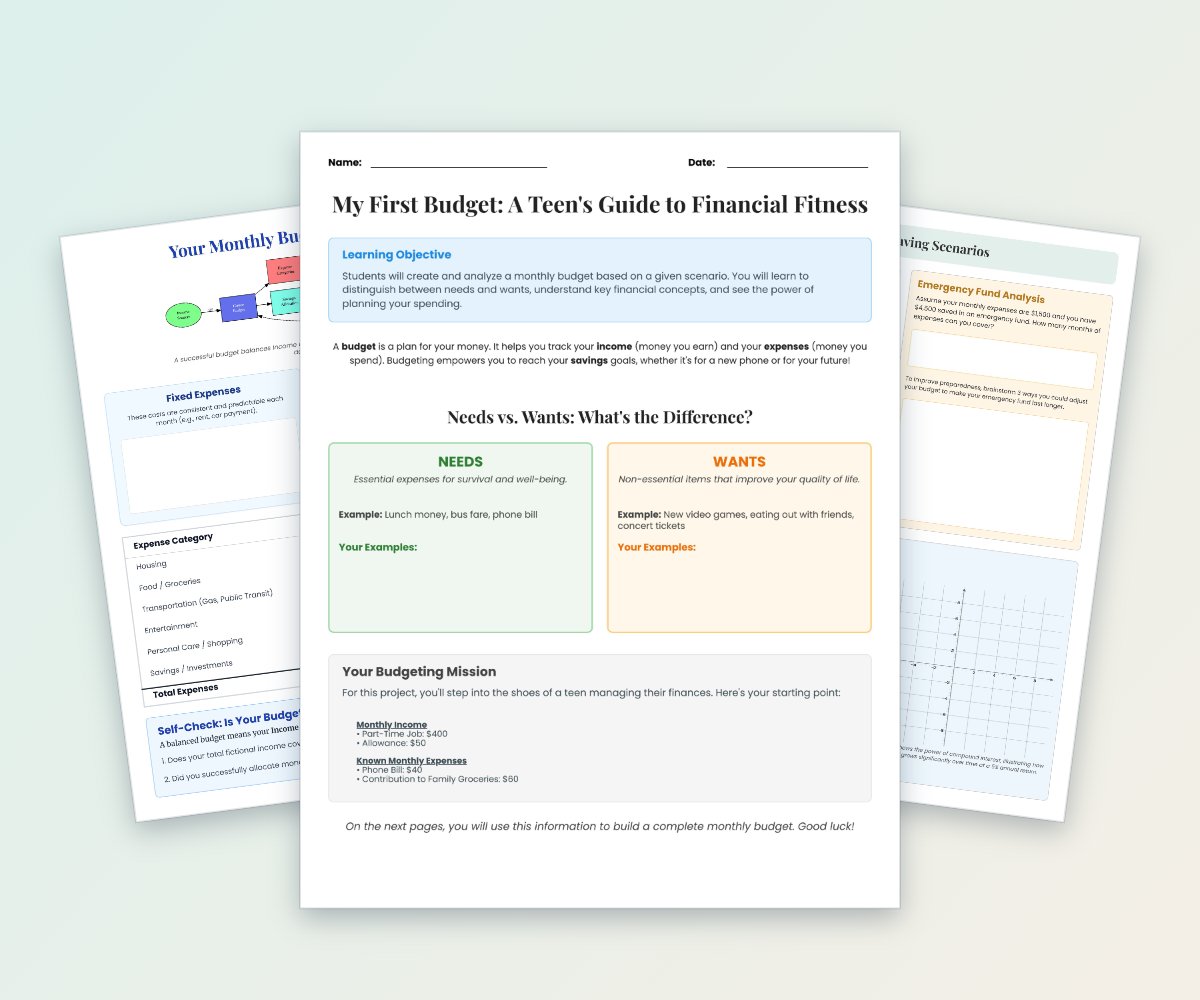
This six-page financial literacy guide helps teens distinguish needs from wants, create a monthly budget, and evaluate spending decisions.
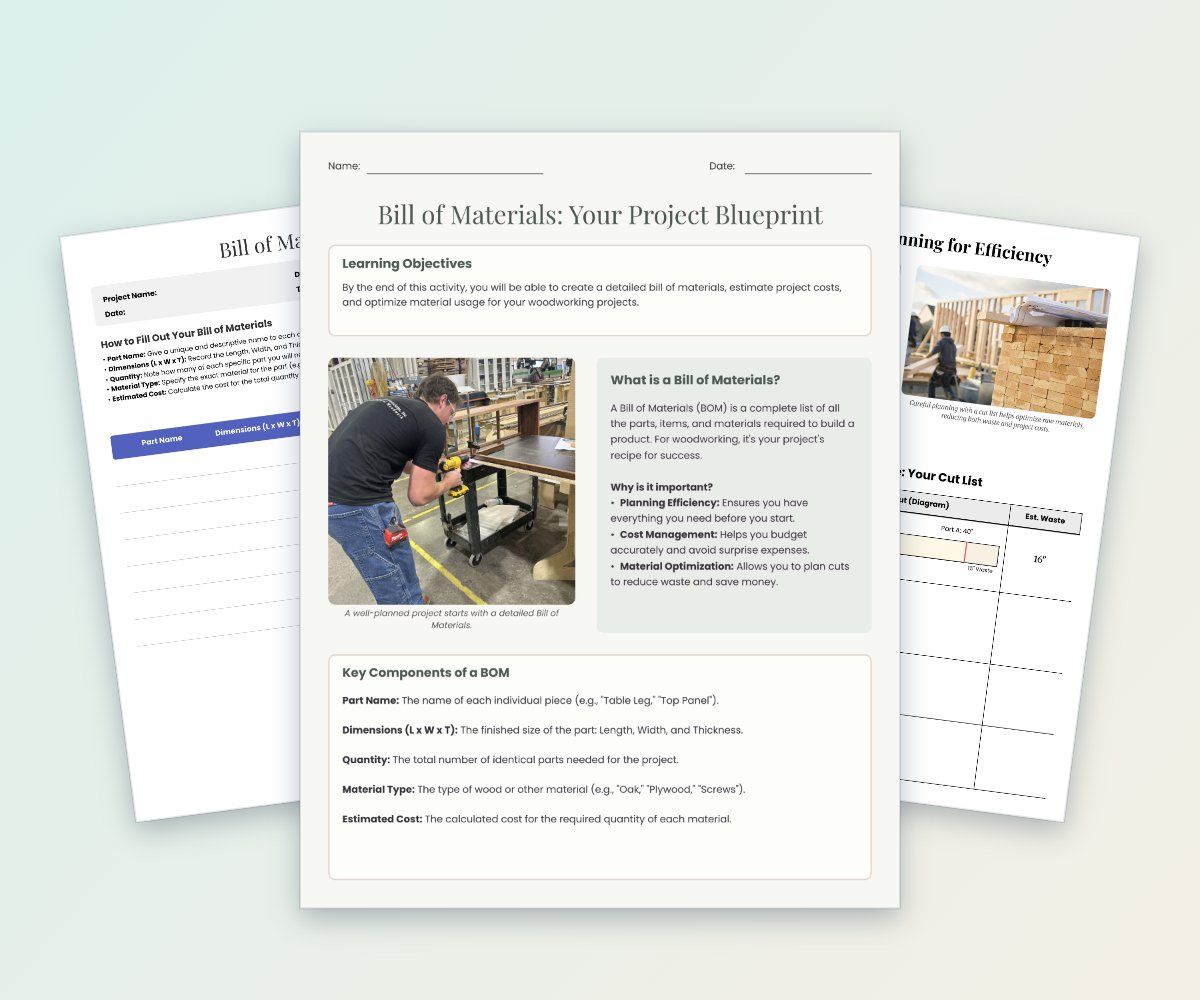
Students learn how to create a woodworking bill of materials by identifying parts, dimensions, quantities, materials, and estimated costs.
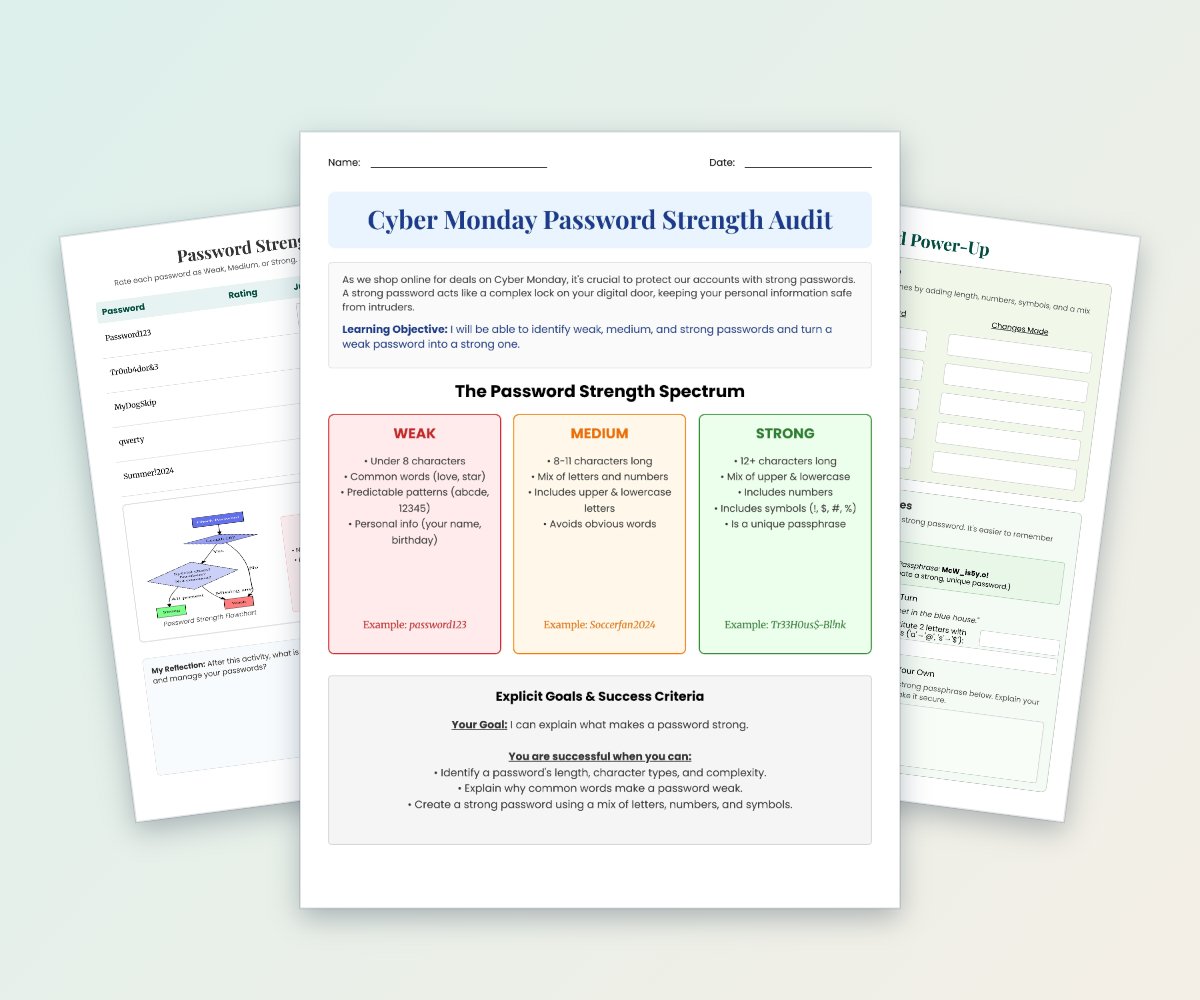
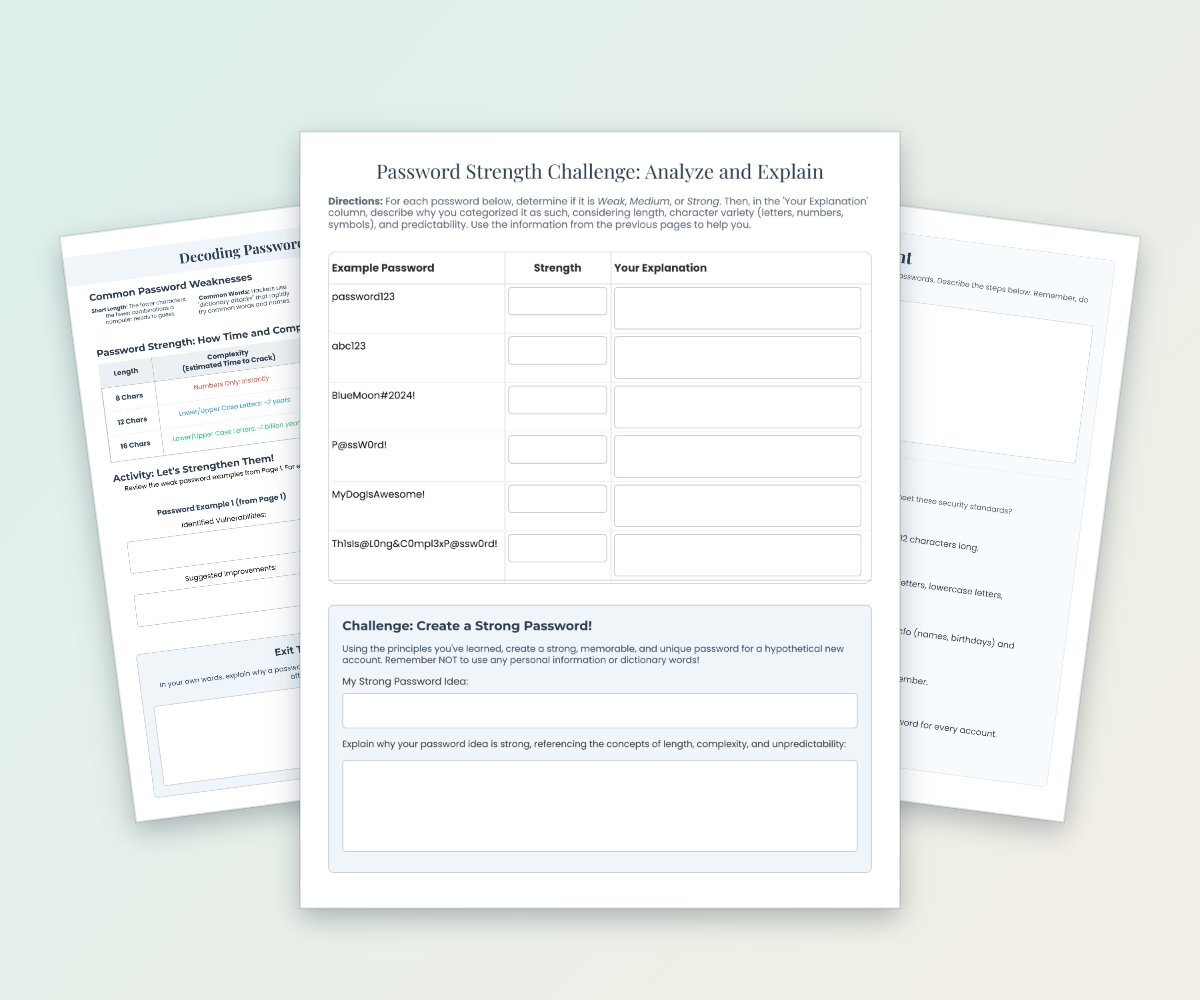
This four-page activity teaches students how to identify weak, medium, and strong passwords using length, character variety, predictability, and personal information criteria.
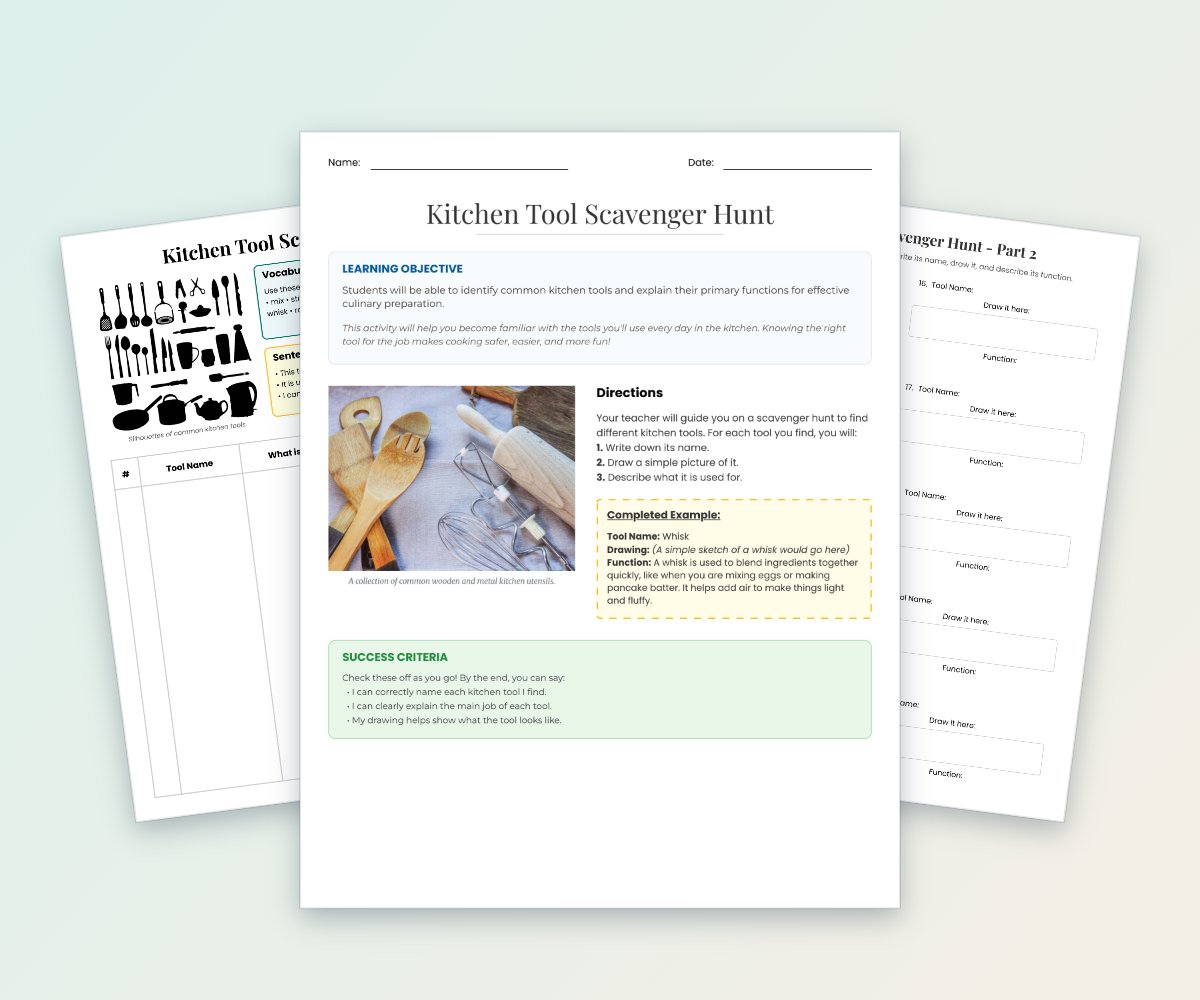
Students identify 20 common kitchen tools, illustrate them, and describe each tool’s primary function.
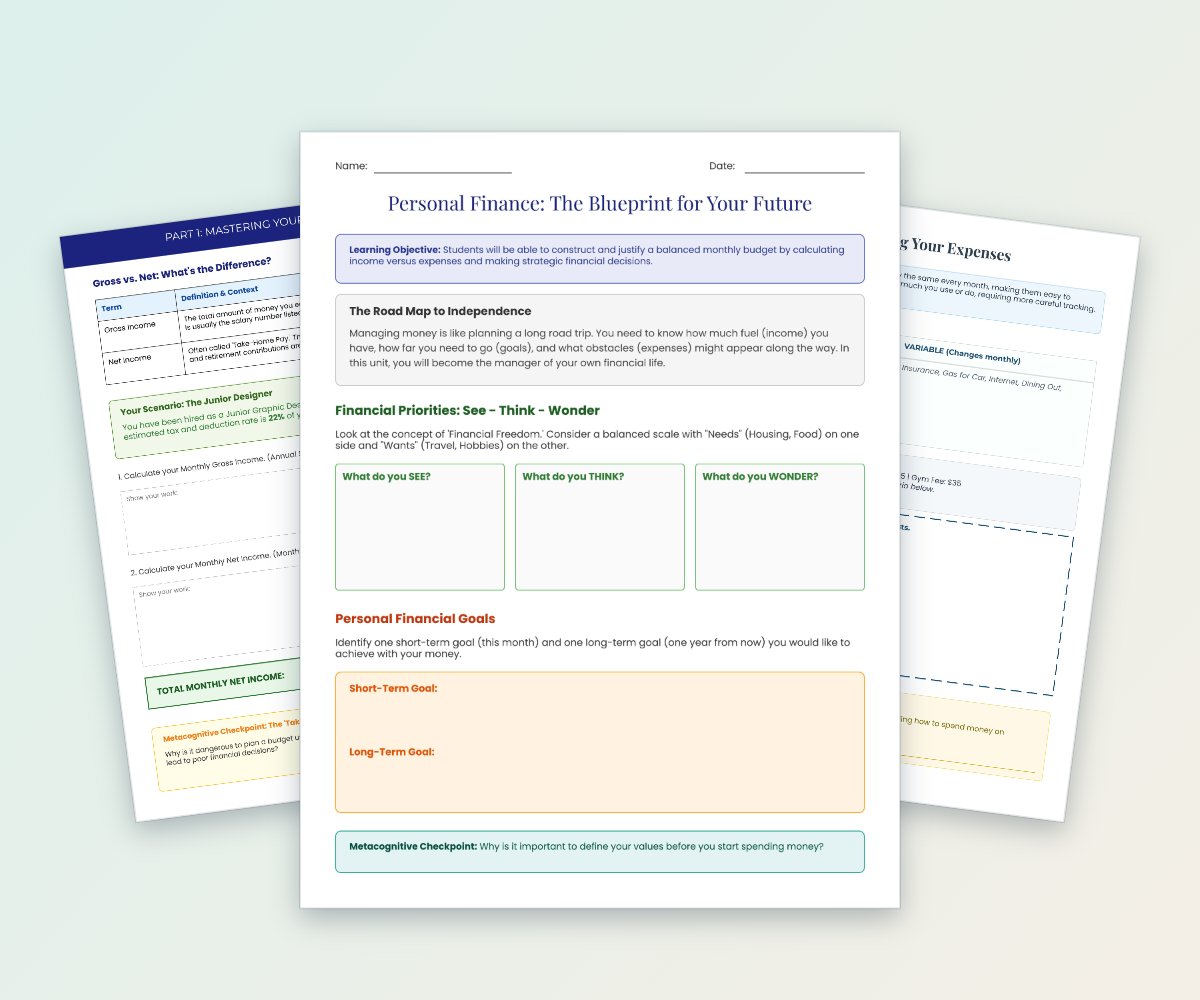
Students build and justify a balanced monthly budget using a realistic Junior Graphic Designer income scenario.
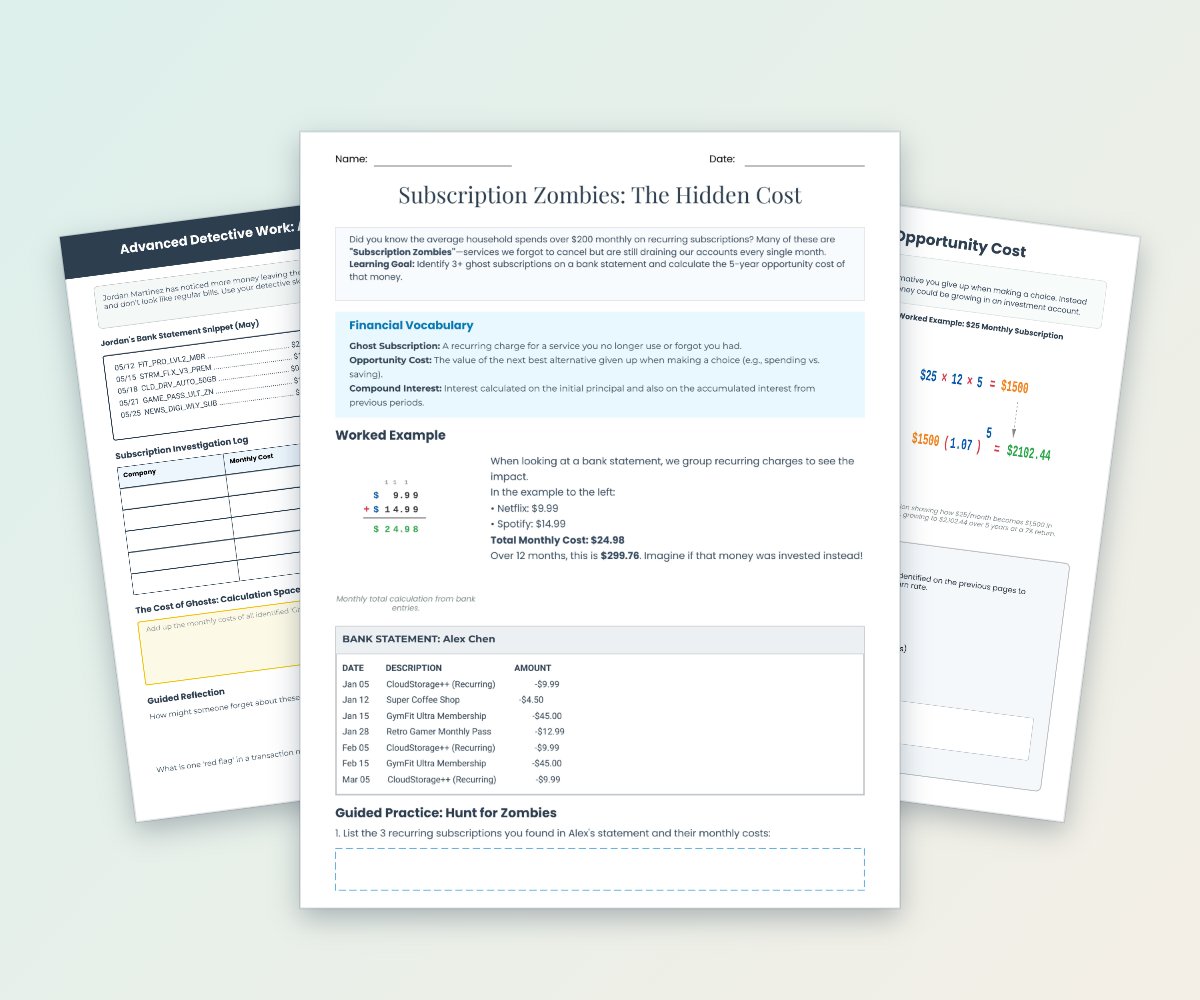
Students investigate recurring charges, identify forgotten subscriptions, calculate monthly and long-term costs, and consider opportunity cost.
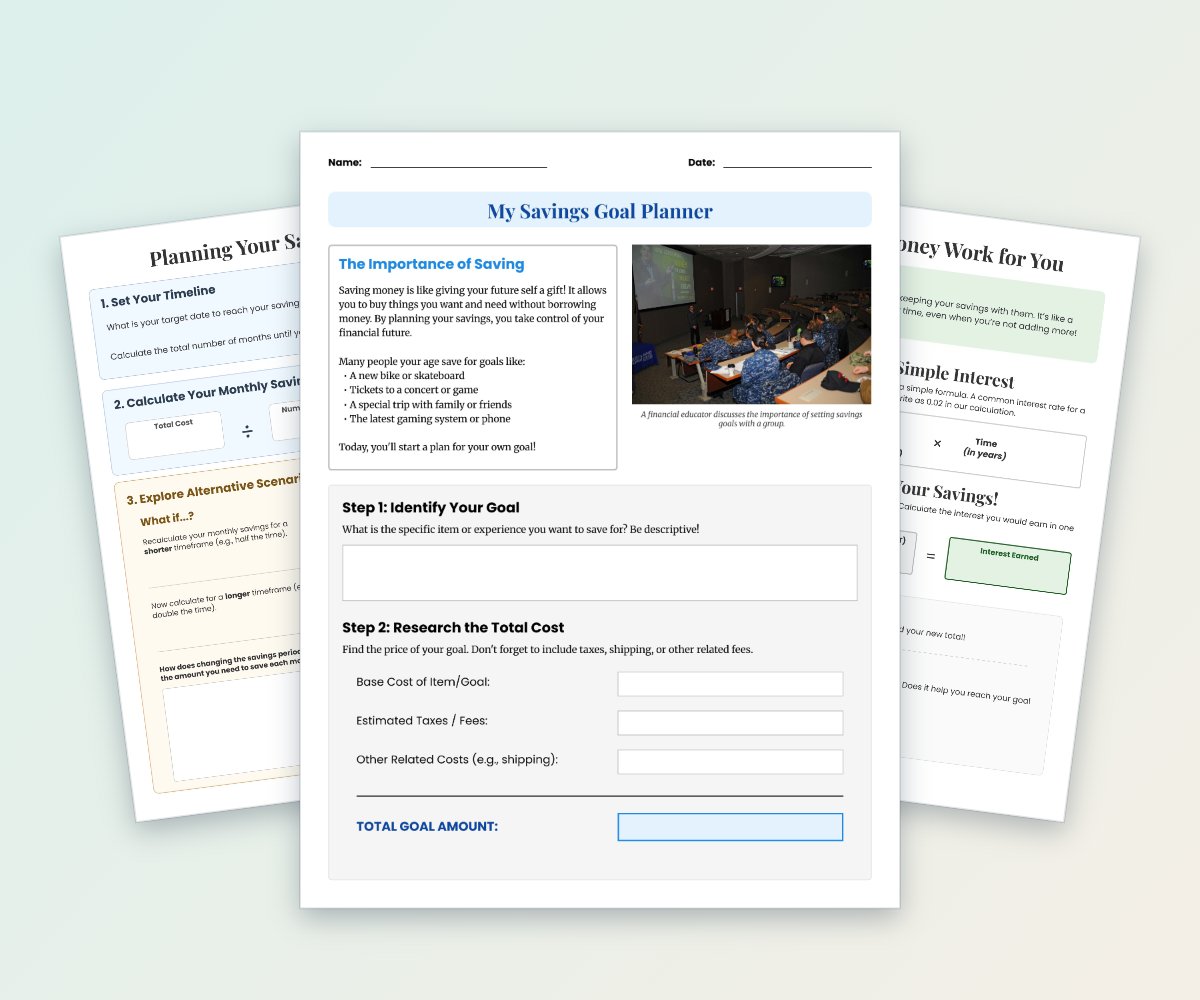
Students set a personal savings goal, research its total cost, create a savings timeline, and calculate required monthly savings.
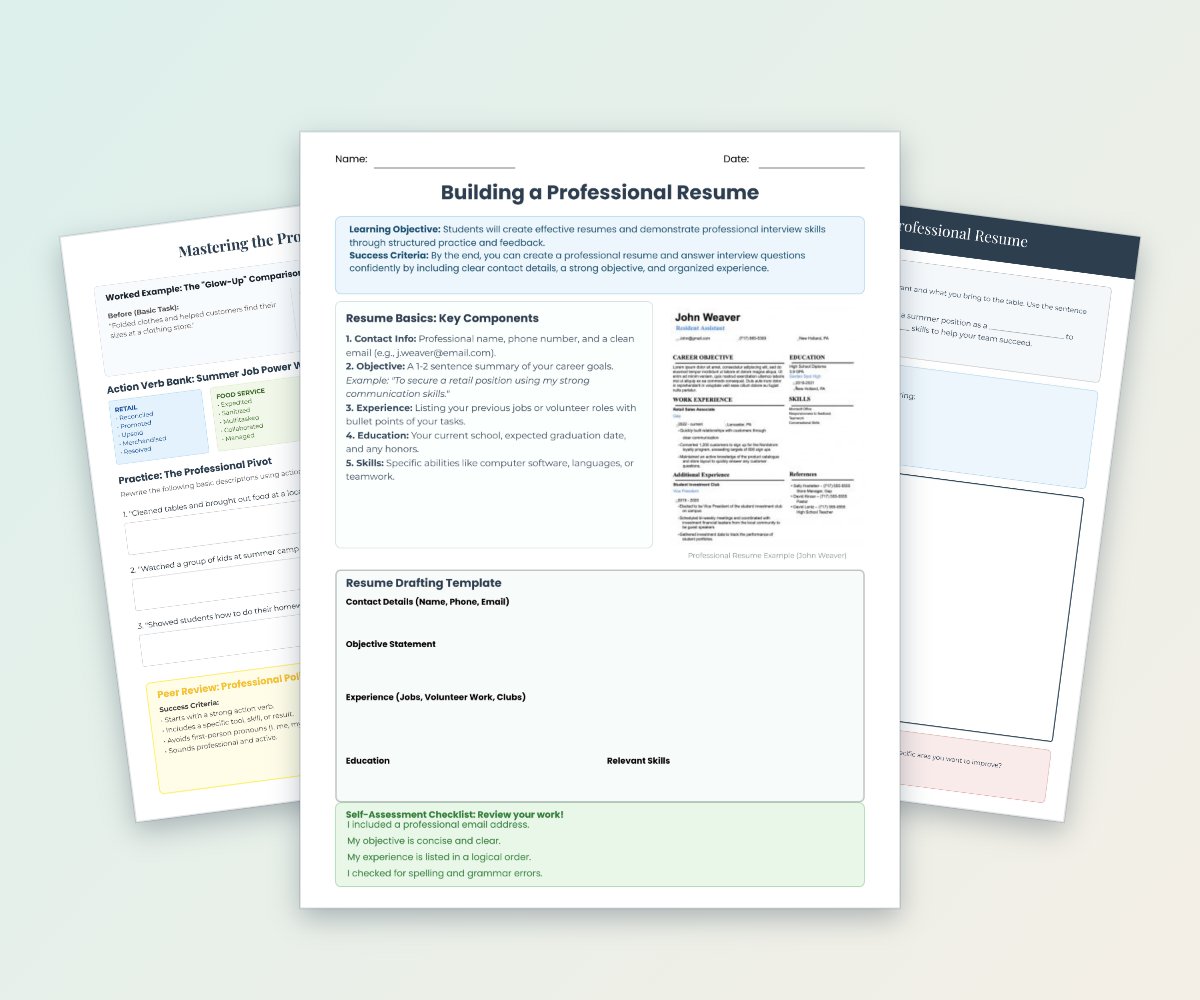
Students build a professional resume, revise basic job descriptions with strong action verbs, and practice workplace communication.
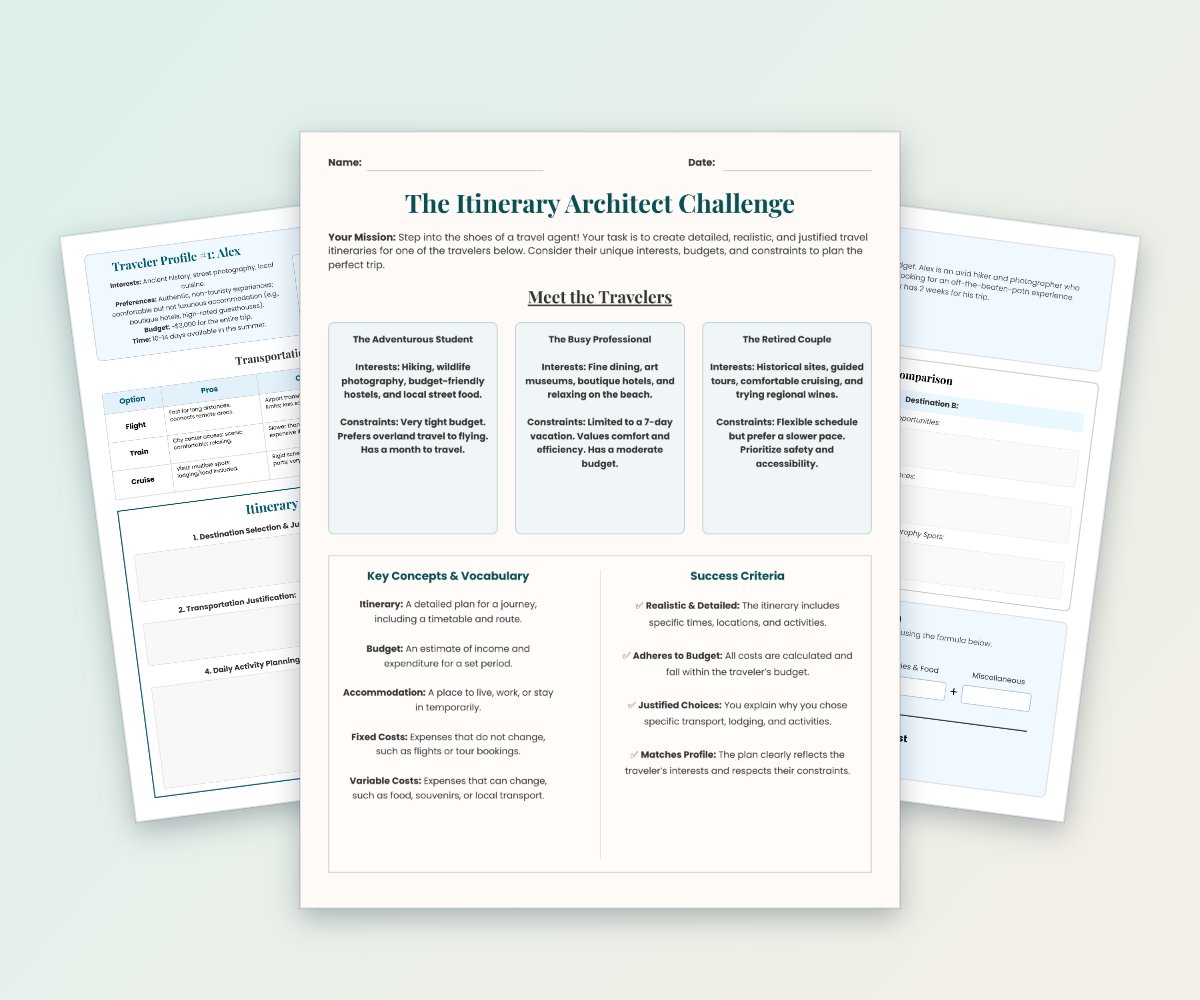
Students act as travel agents to design realistic itineraries based on traveler interests, budgets, schedules, and constraints.
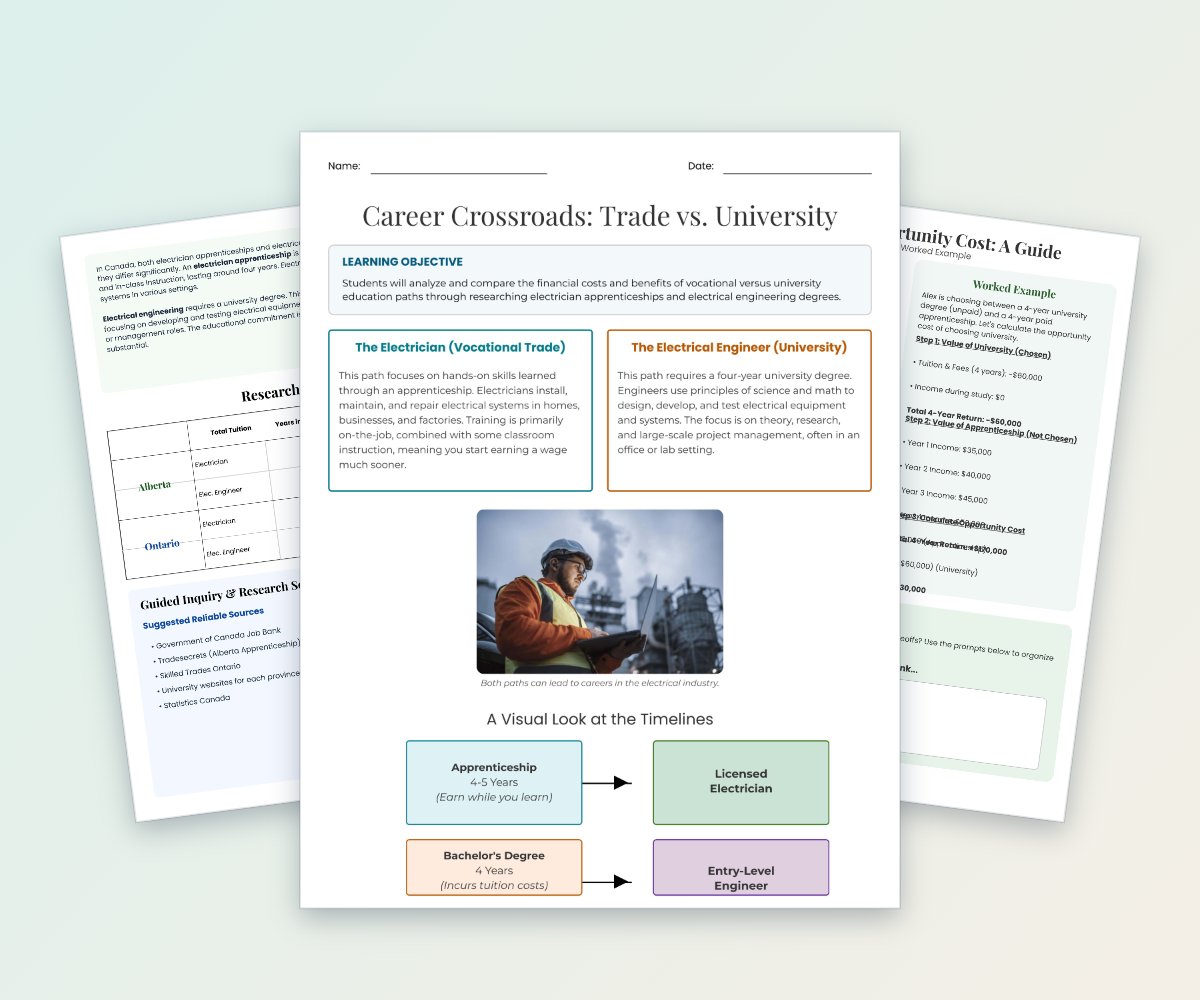
This four-page career exploration activity compares electrician apprenticeships with university electrical engineering programs.
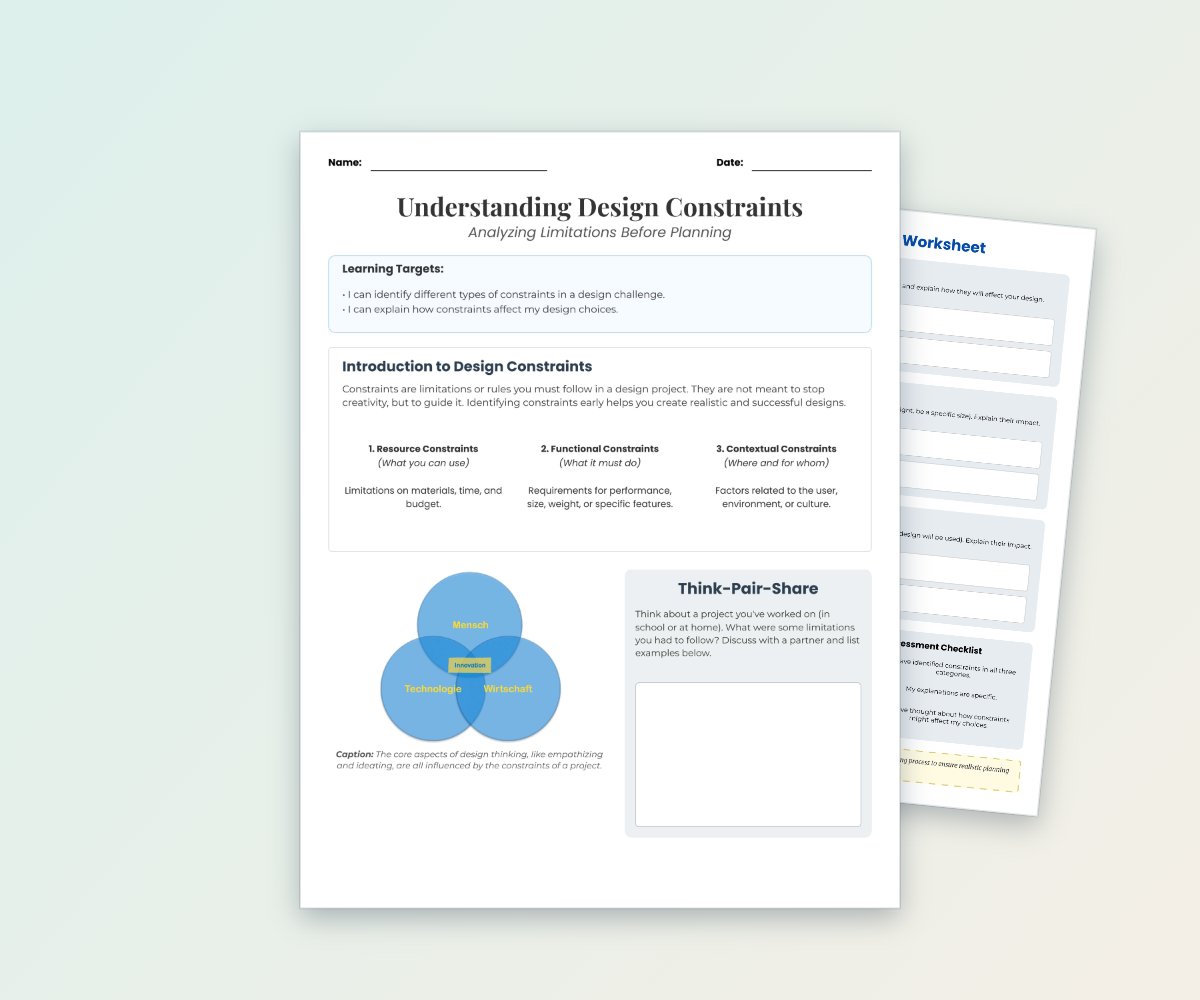
This two-page worksheet introduces resource, functional, and contextual design constraints before students begin planning a project.
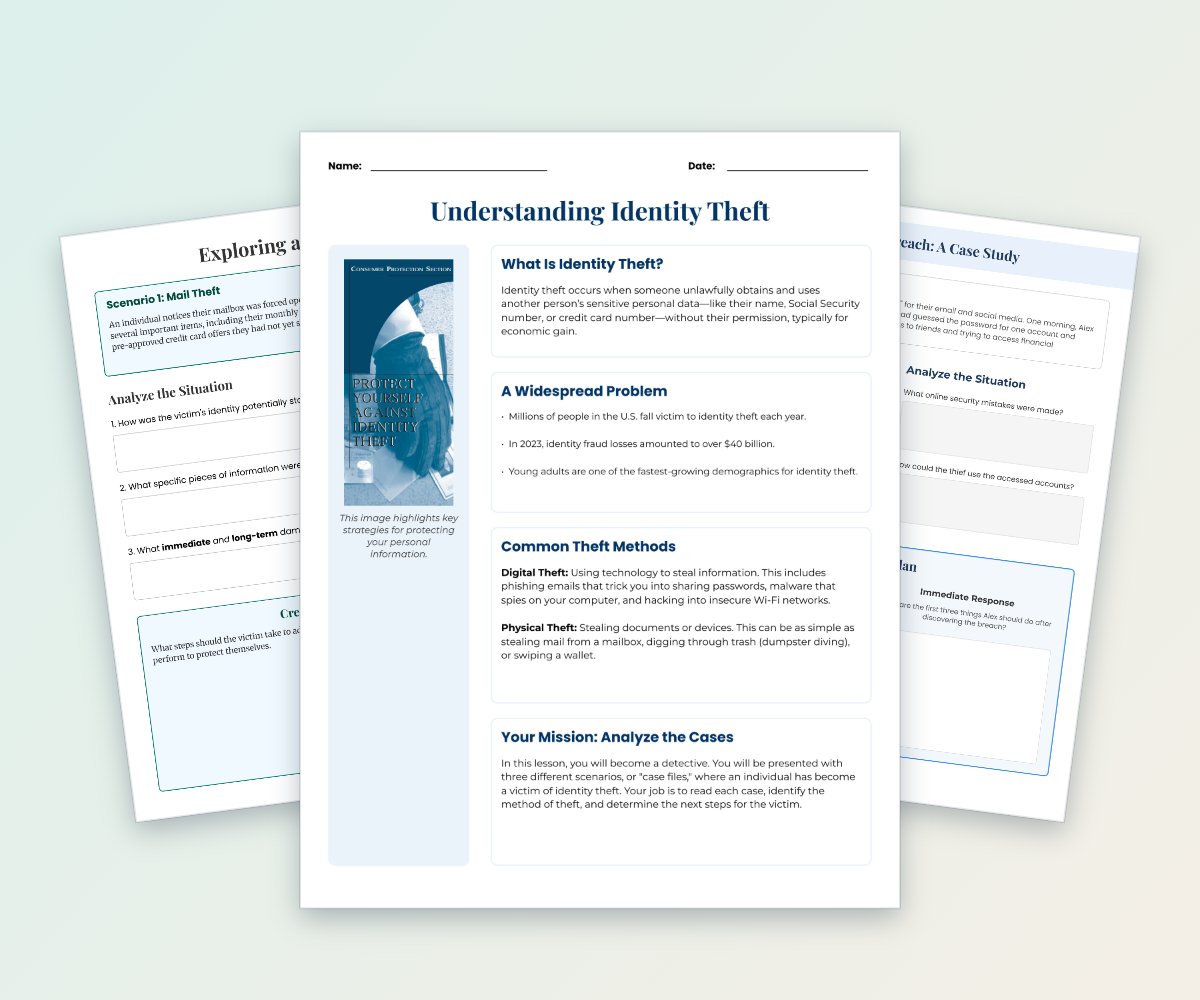
Students investigate identity theft through realistic mail theft and online security case studies.
This four-page worksheet helps students analyze password strength, identify common vulnerabilities, and explain how length, complexity, and unpredictability improve security.
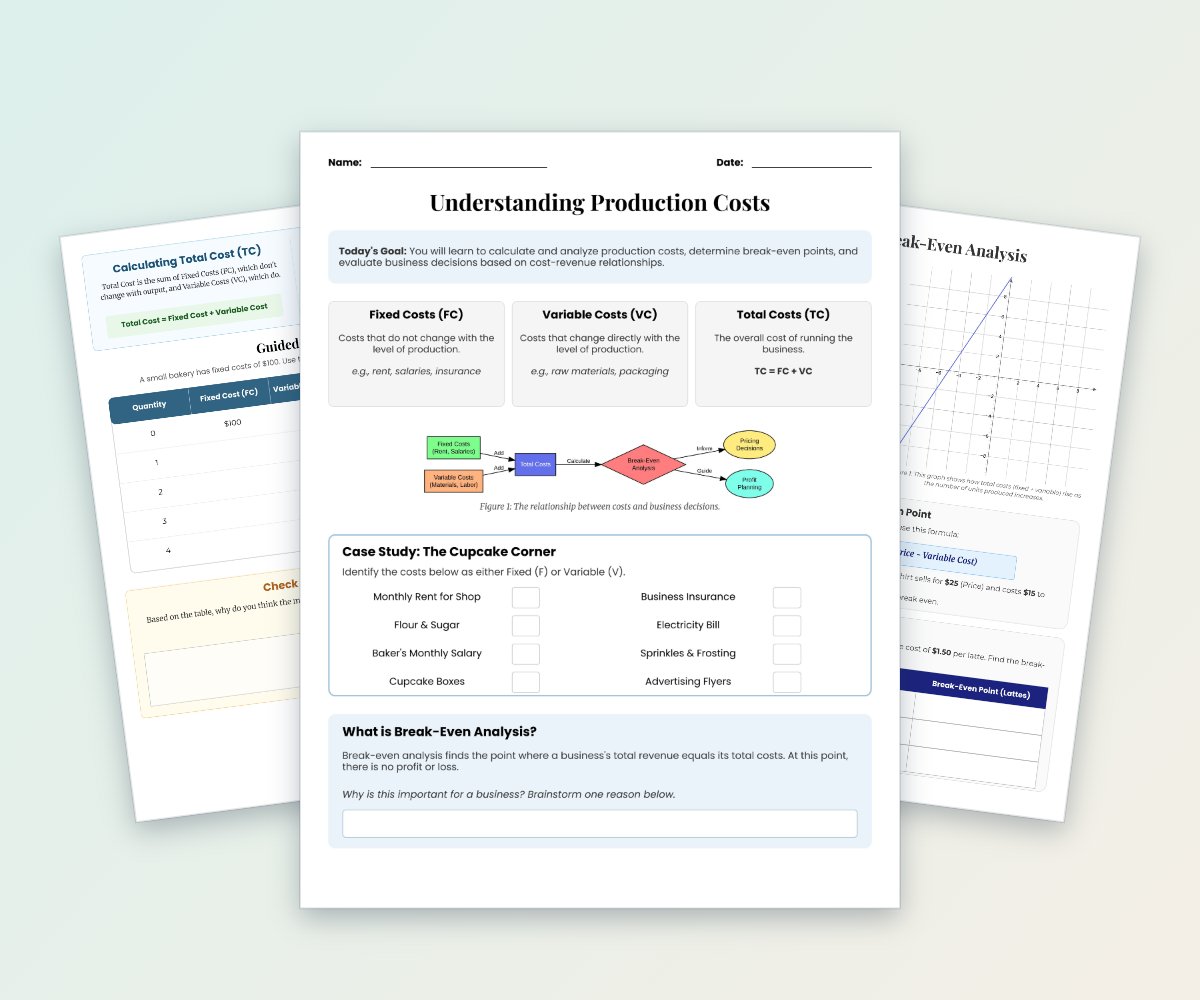
This five-page worksheet introduces fixed, variable, total, and marginal costs through definitions, a cupcake business case study, guided calculations, and break-even analysis.
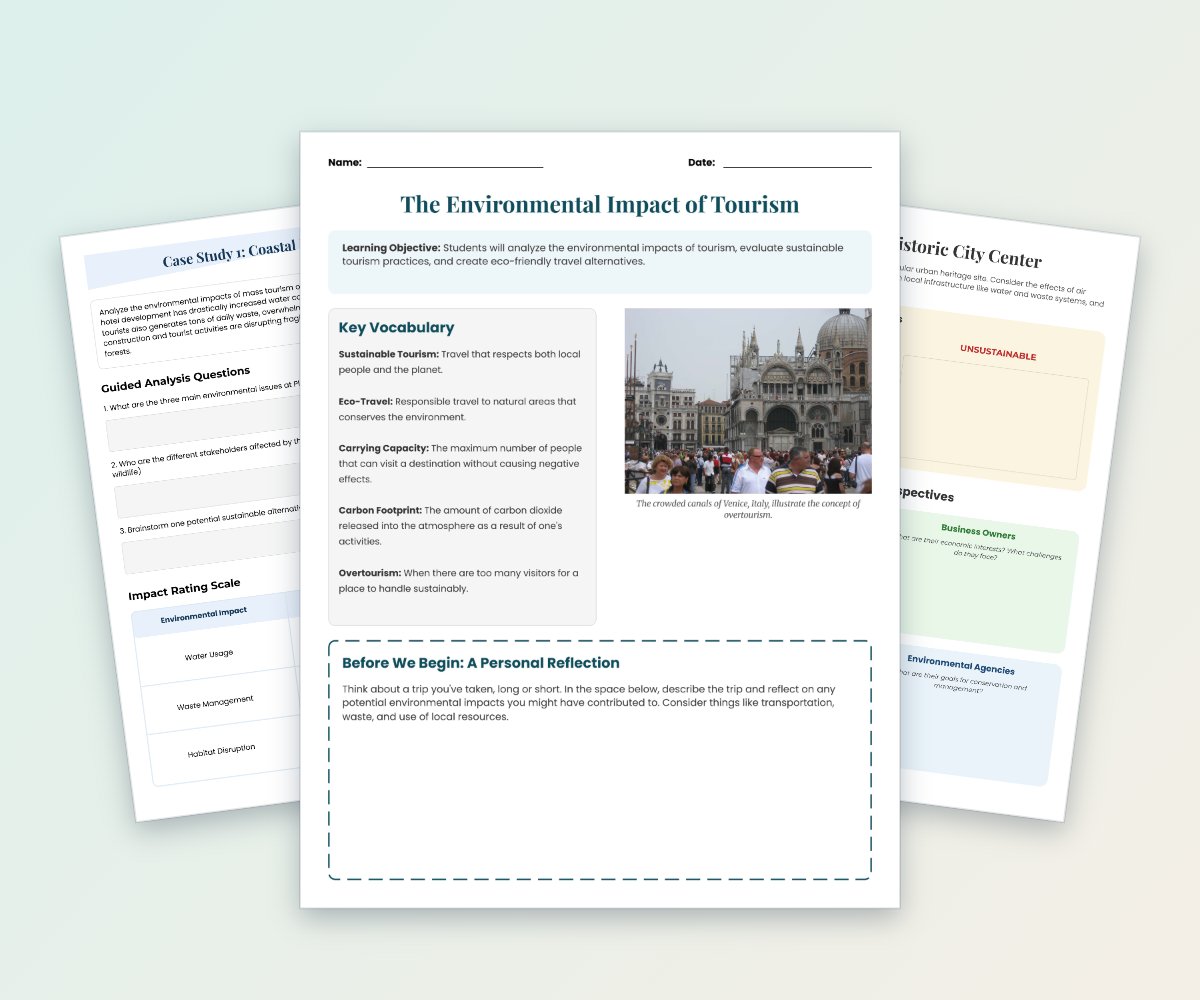
This five-page worksheet explores how tourism affects water supplies, waste systems, transportation, wildlife habitats, and local communities.
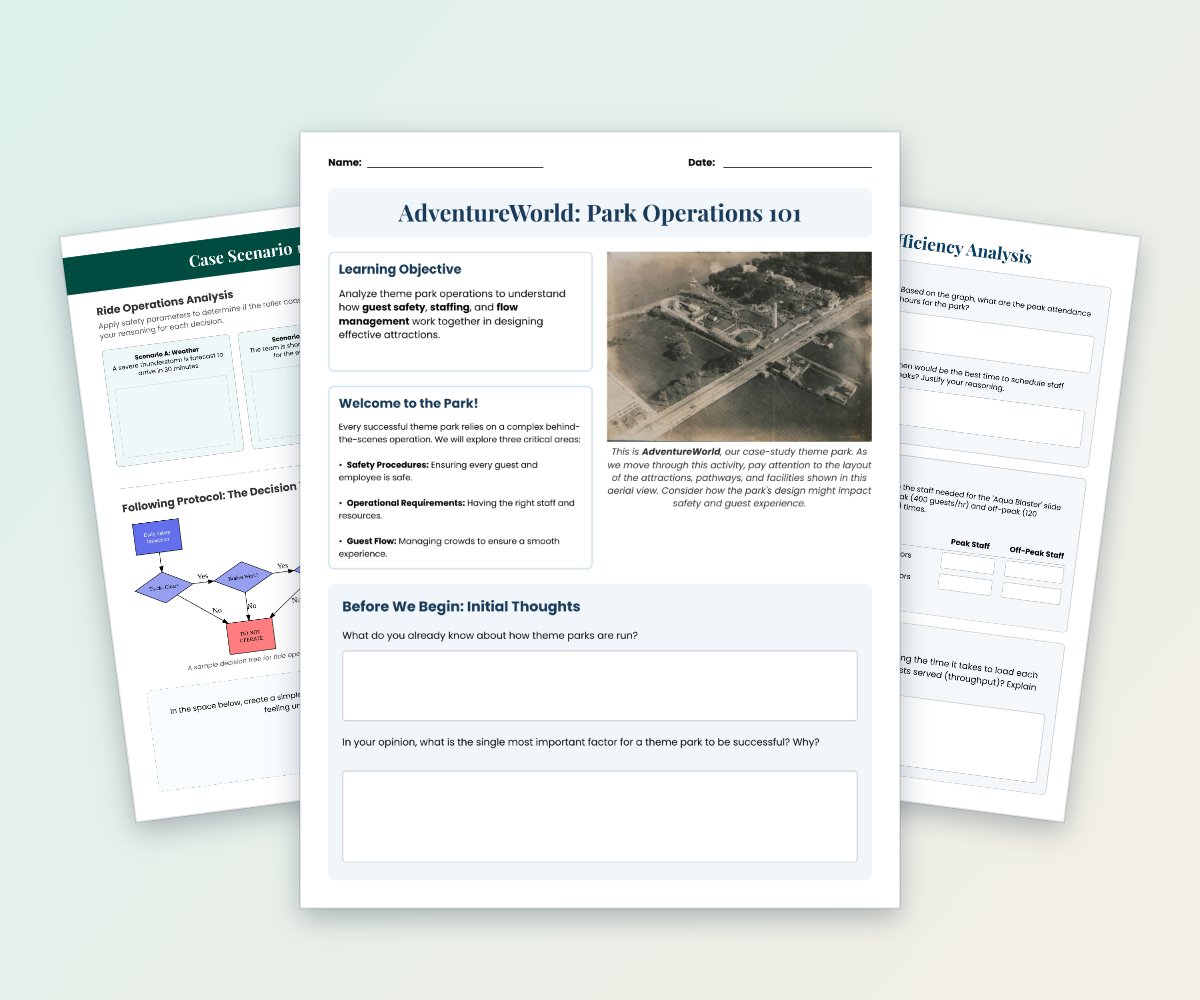
Students examine a fictional theme park to analyze ride safety, staffing requirements, guest flow, and operational efficiency.
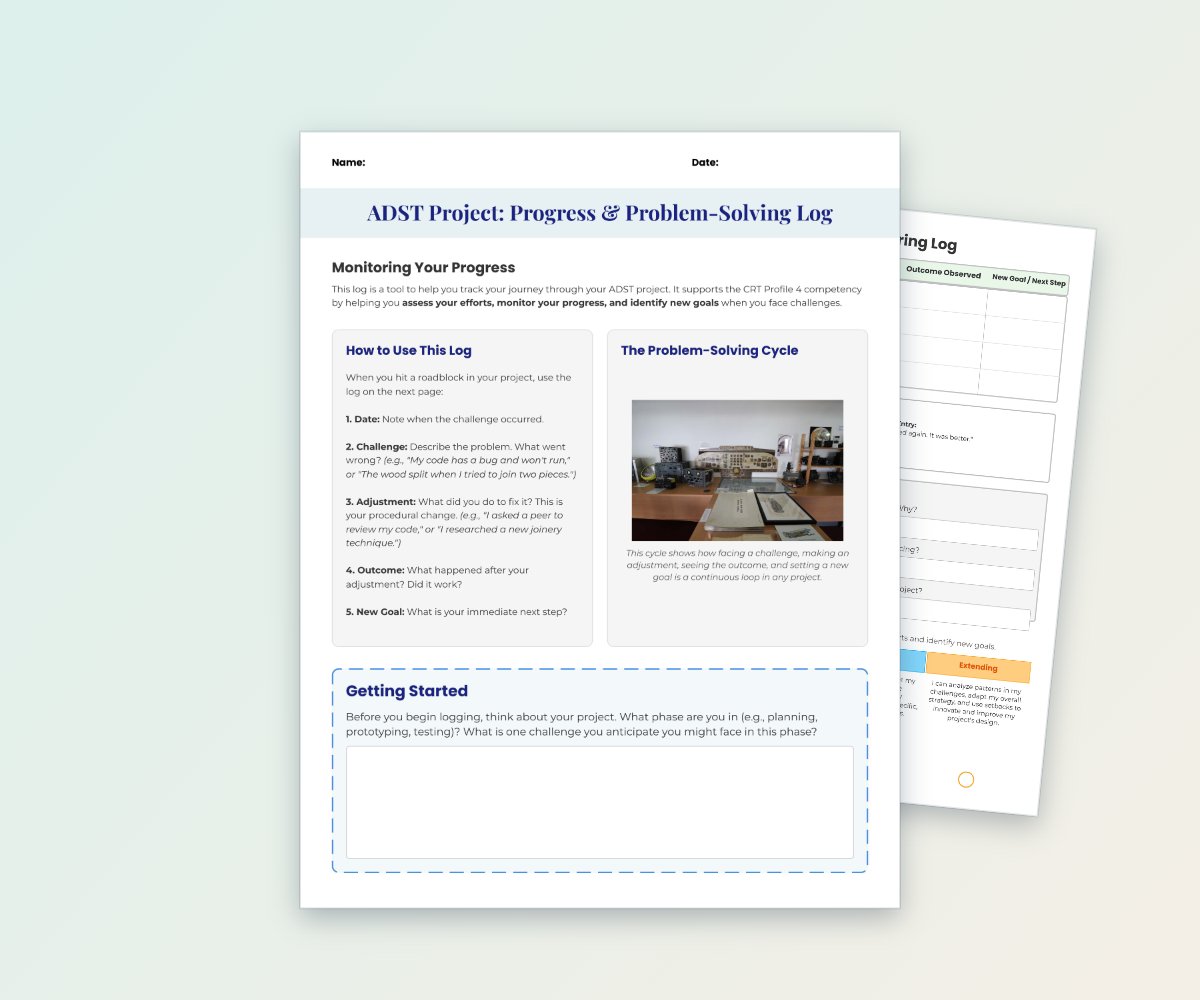
Help students document challenges, adjustments, outcomes, and next steps throughout an ADST project.
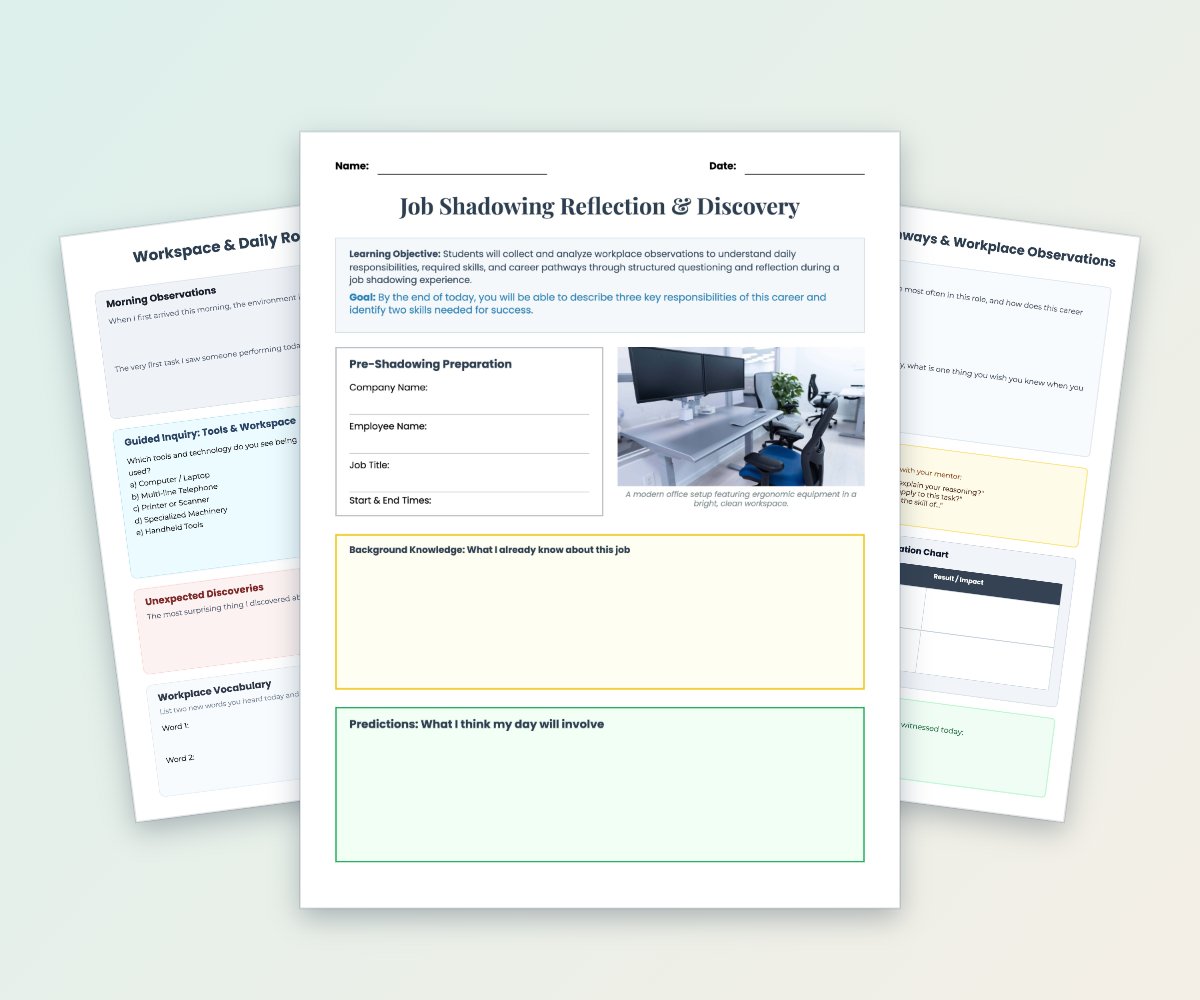
This four-page student log guides learners through pre-shadowing preparation, workplace observations, informational interviews, vocabulary development, and career reflection.
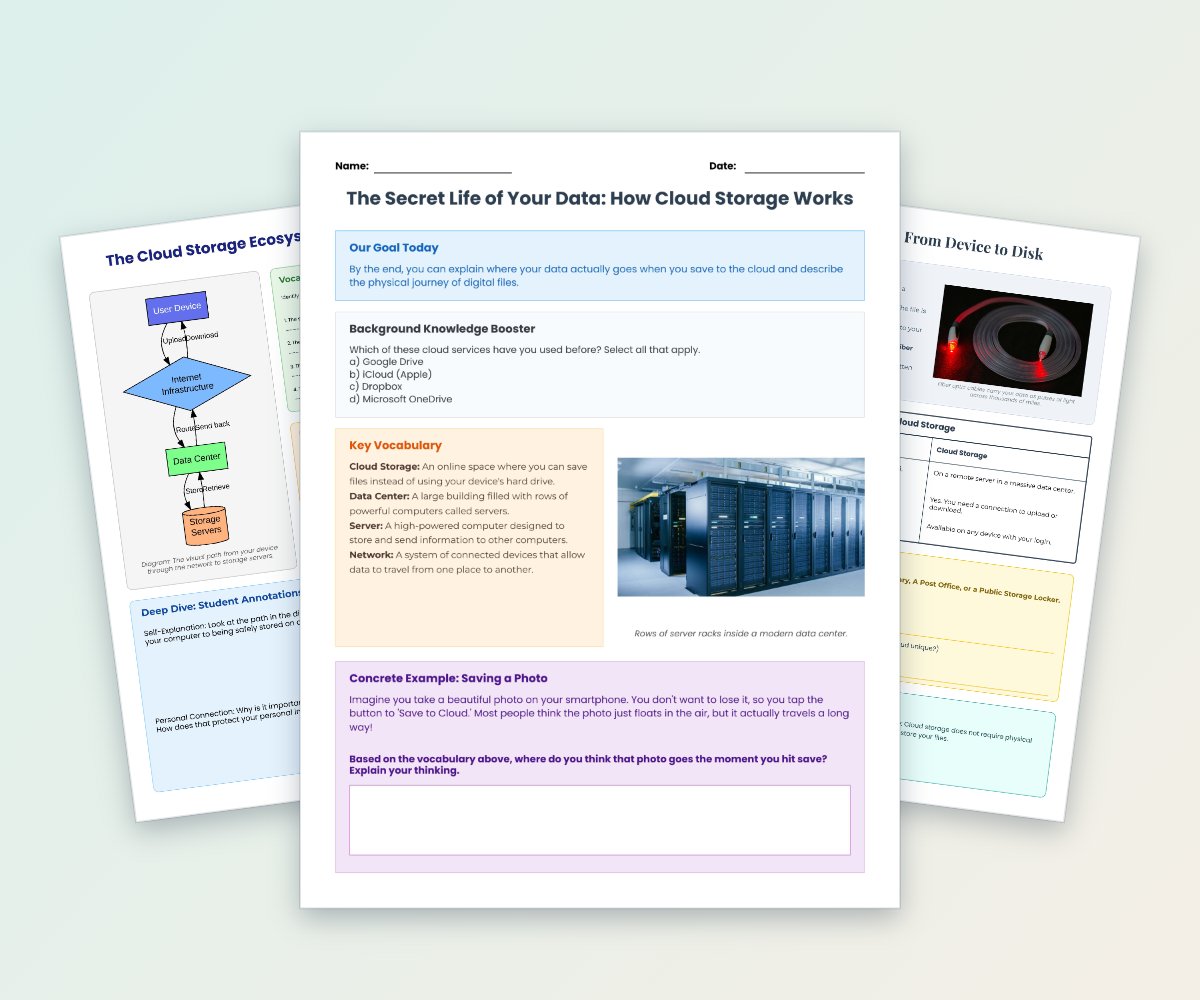
This four-page worksheet introduces students to cloud storage, data centers, servers, networks, and the physical journey of digital files.
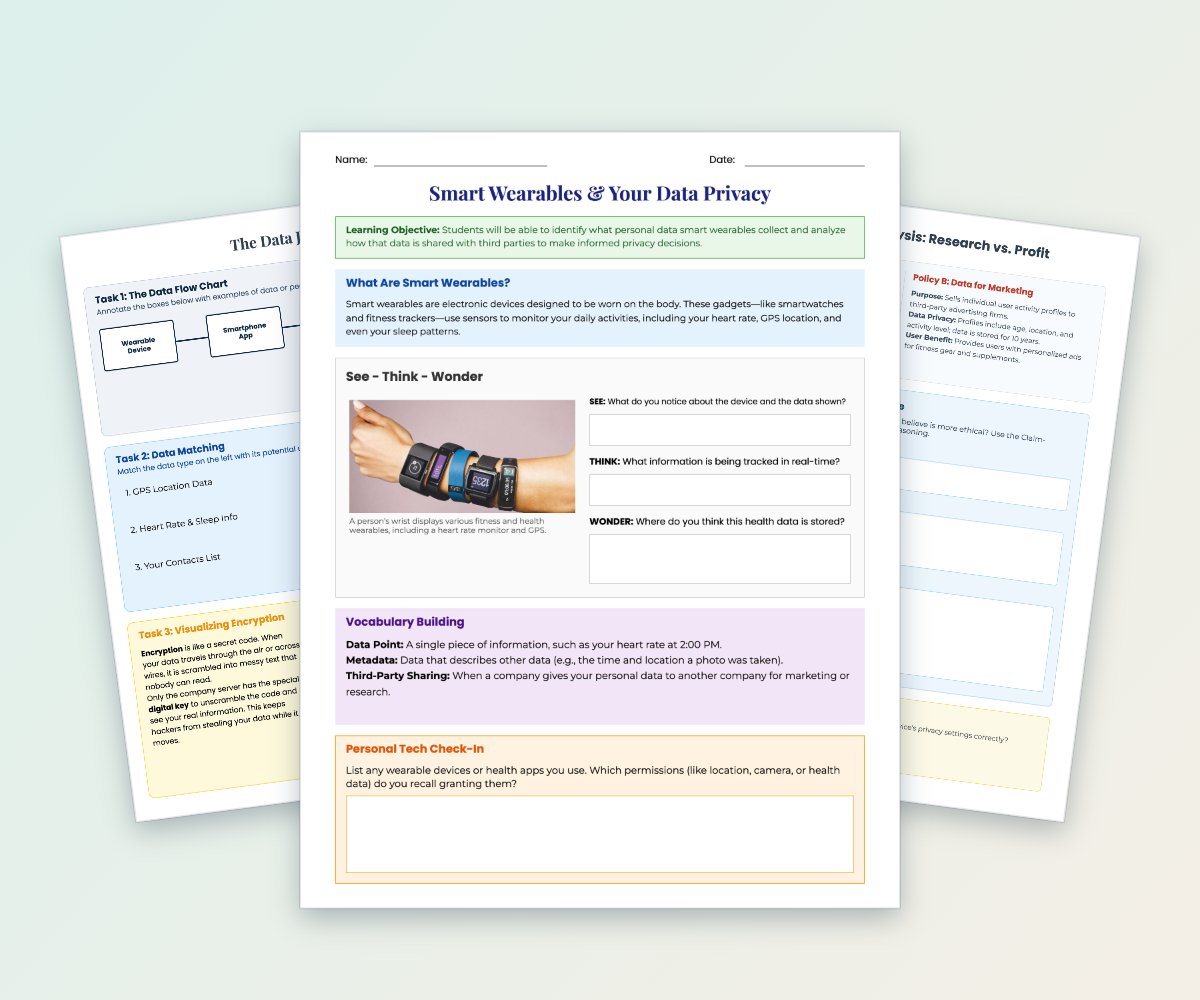
This four-page worksheet introduces students to the personal data collected by smartwatches, fitness trackers, and health apps.
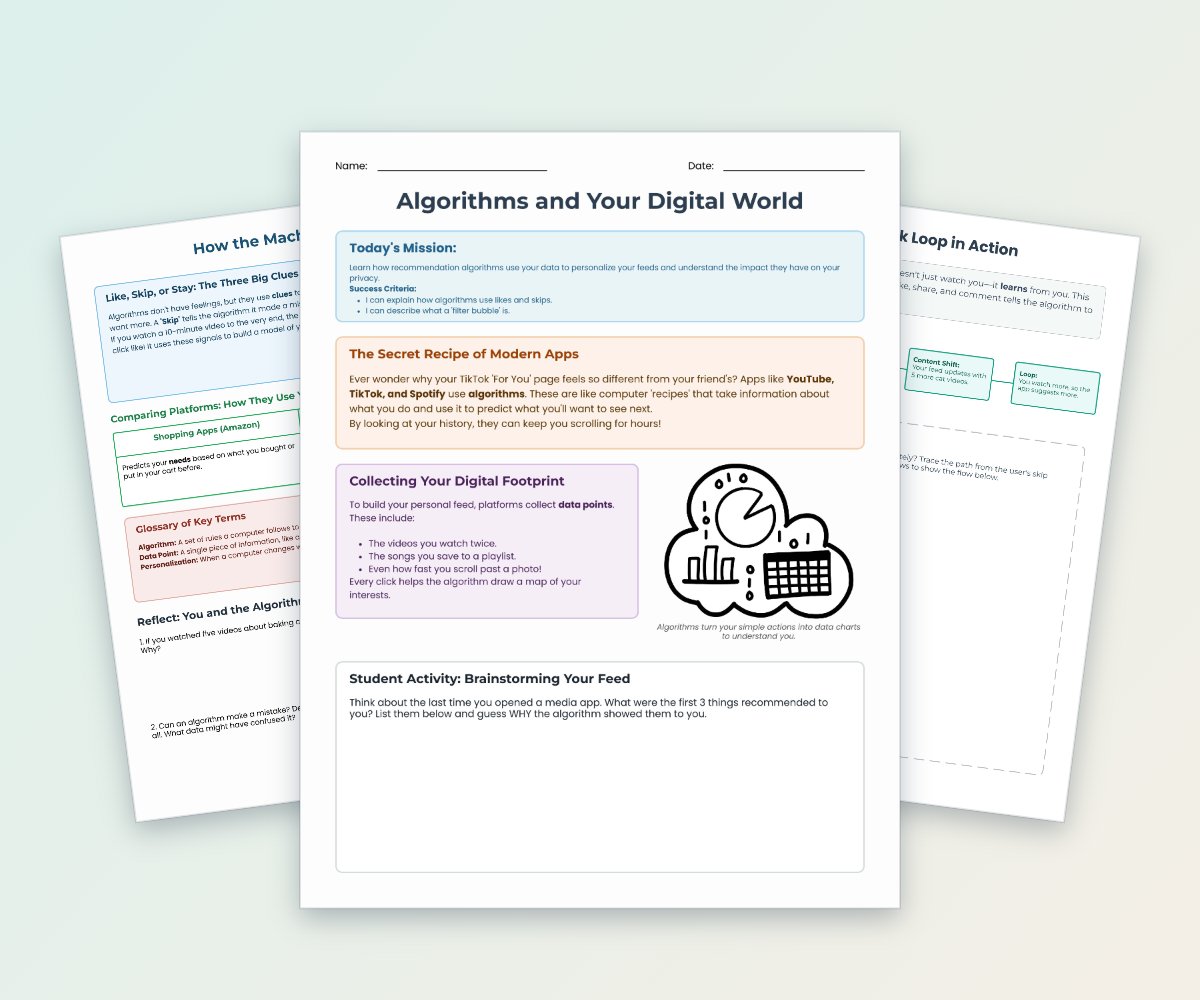
This six-page student resource introduces how recommendation algorithms use likes, skips, watch time, and browsing history to personalize digital feeds.
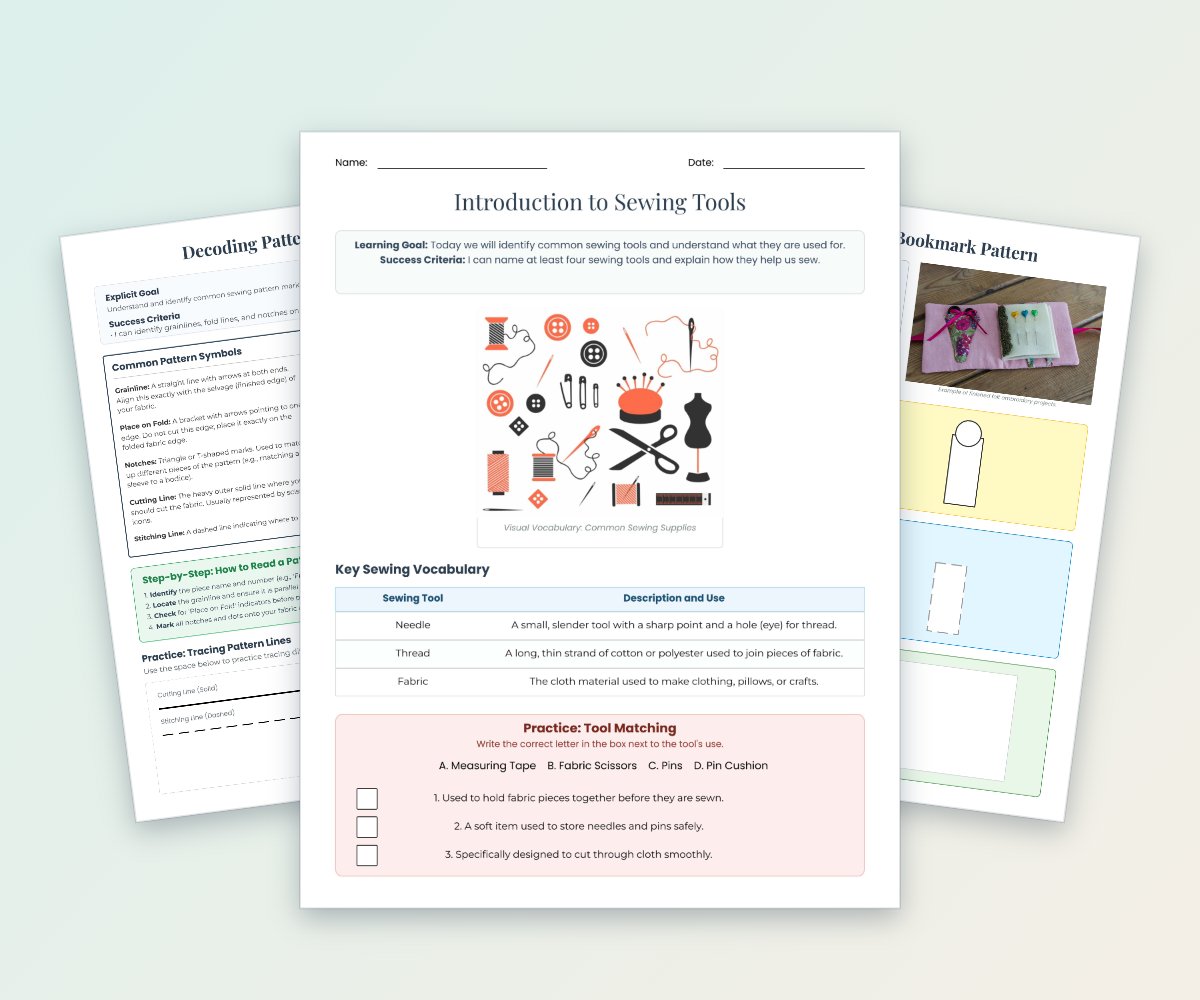
Introduce students to common sewing tools, supplies, and essential pattern markings through visual vocabulary, matching practice, and tracing activities.
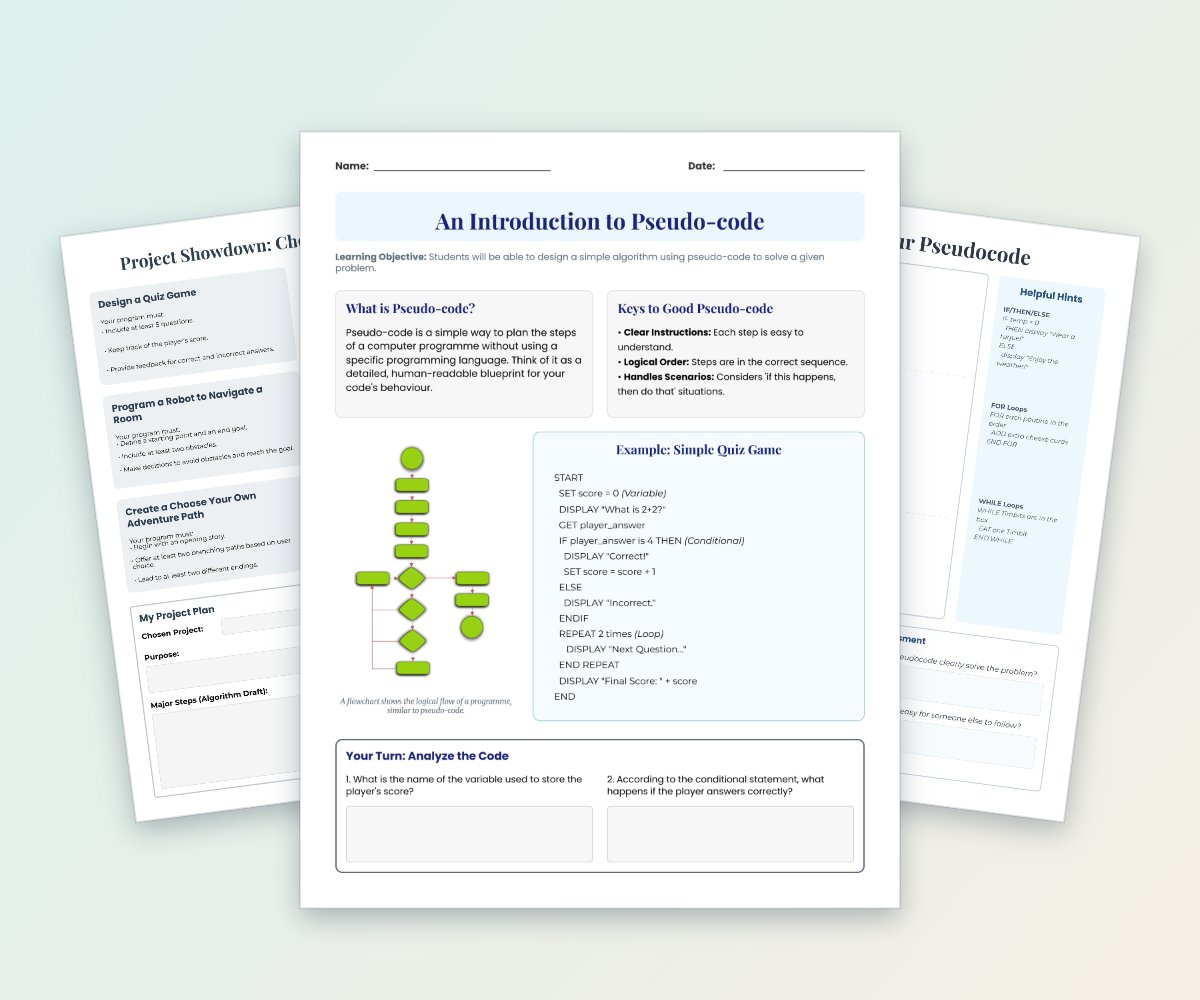
This four-page worksheet introduces pseudocode as a tool for planning computer programs.
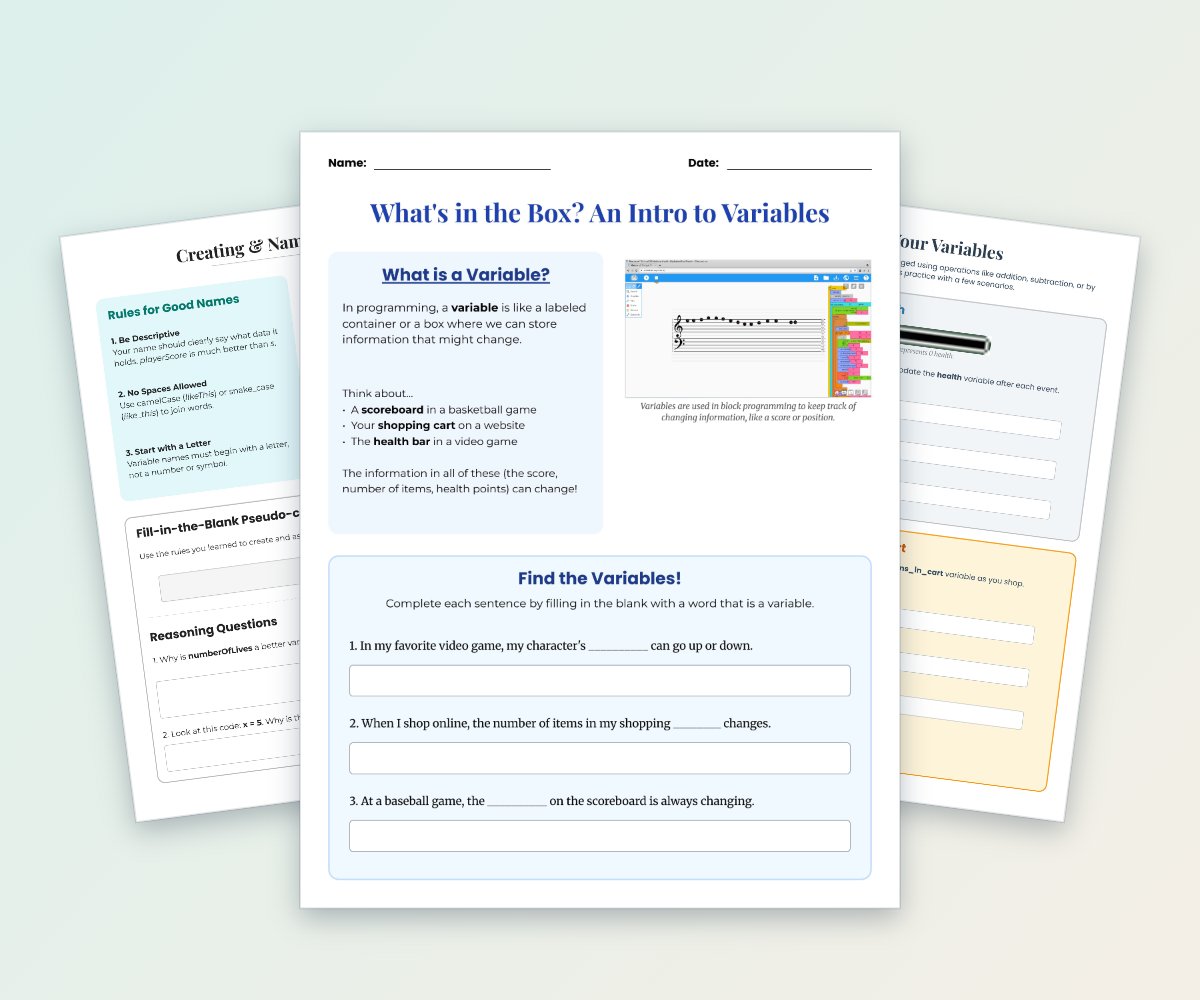
Introduce students to programming variables through relatable examples involving games, shopping carts, and scoreboards.
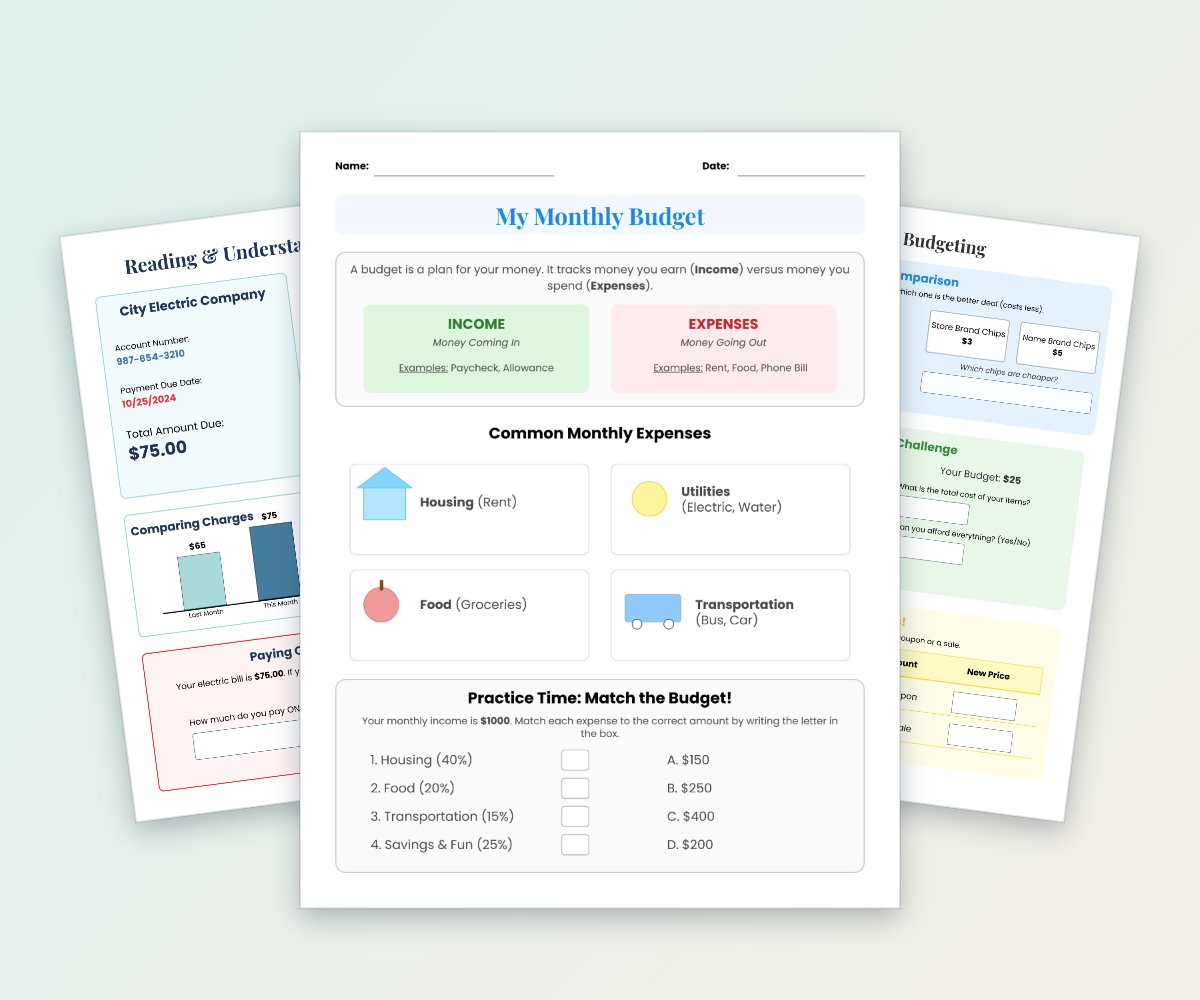
This four-page financial-literacy activity pack introduces monthly budgets, income and expenses, utility bills, shopping comparisons, discounts, and bill prioritization.
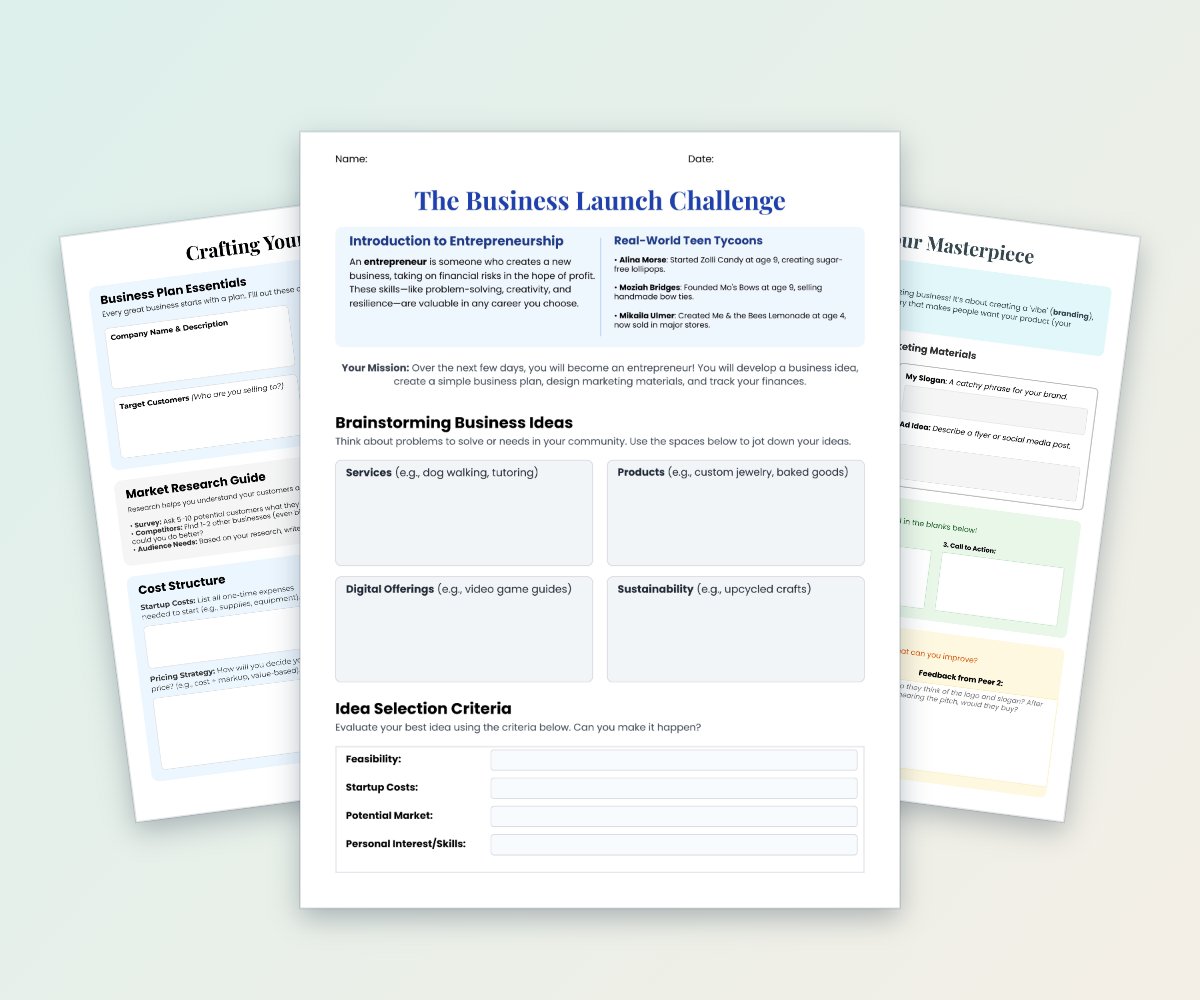
Students develop a business idea and work through feasibility, target customers, market research, startup costs, pricing, revenue, and break-even planning.
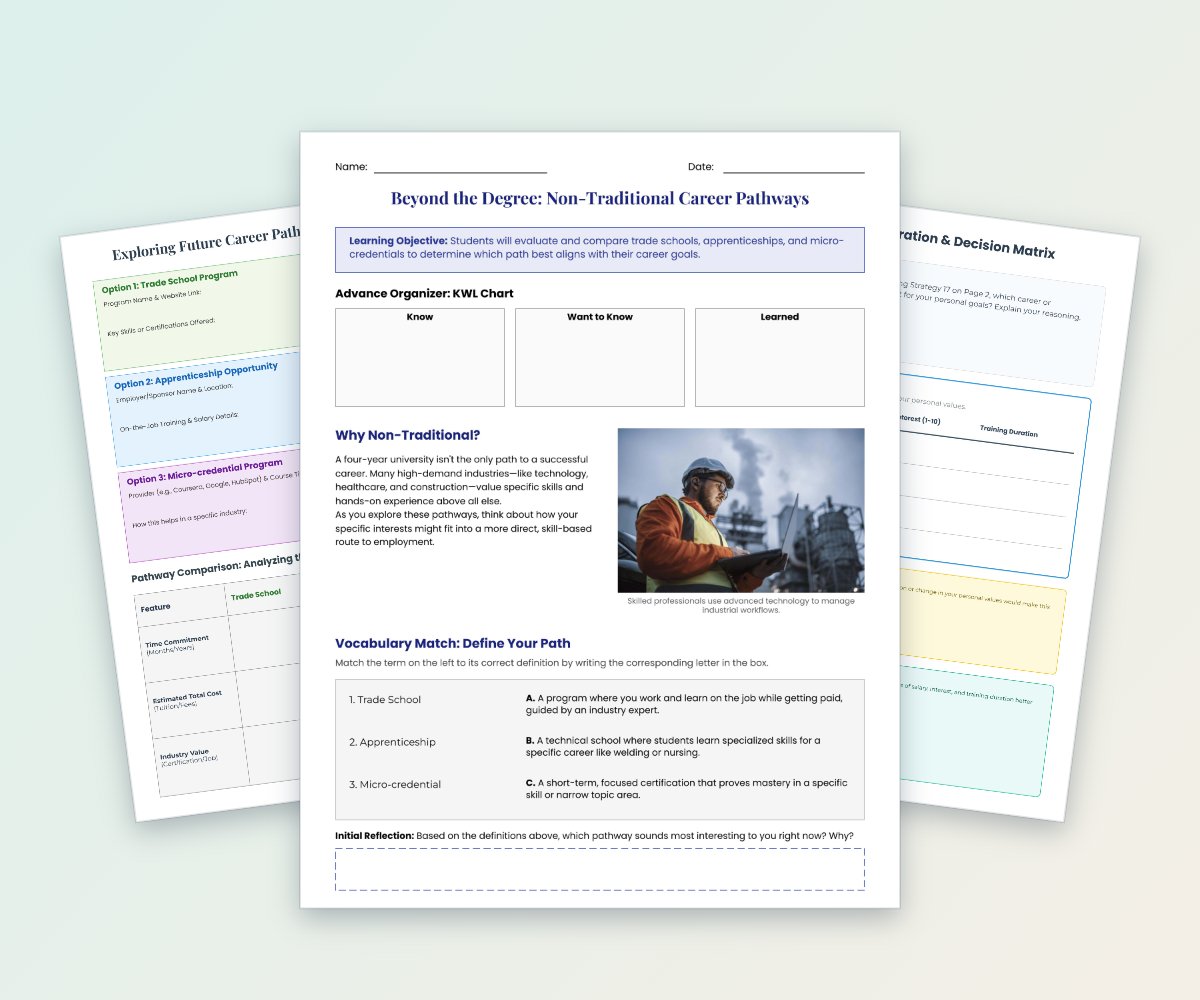
This four-page student workbook guides learners through trade schools, apprenticeships, and micro-credentials as alternatives to traditional university pathways.
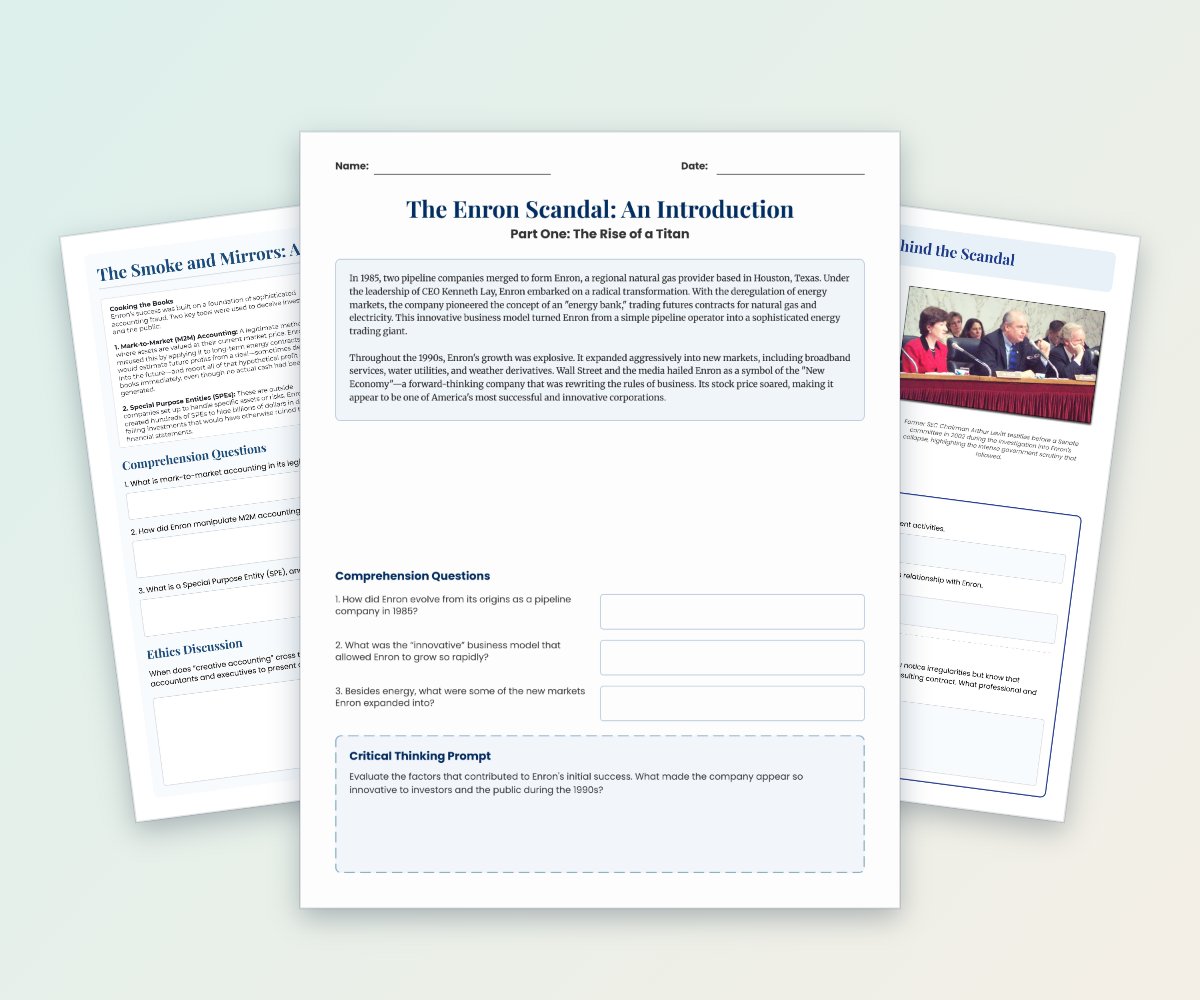
This five-page resource introduces Enron’s rise, energy trading model, mark-to-market accounting, and special purpose entities.
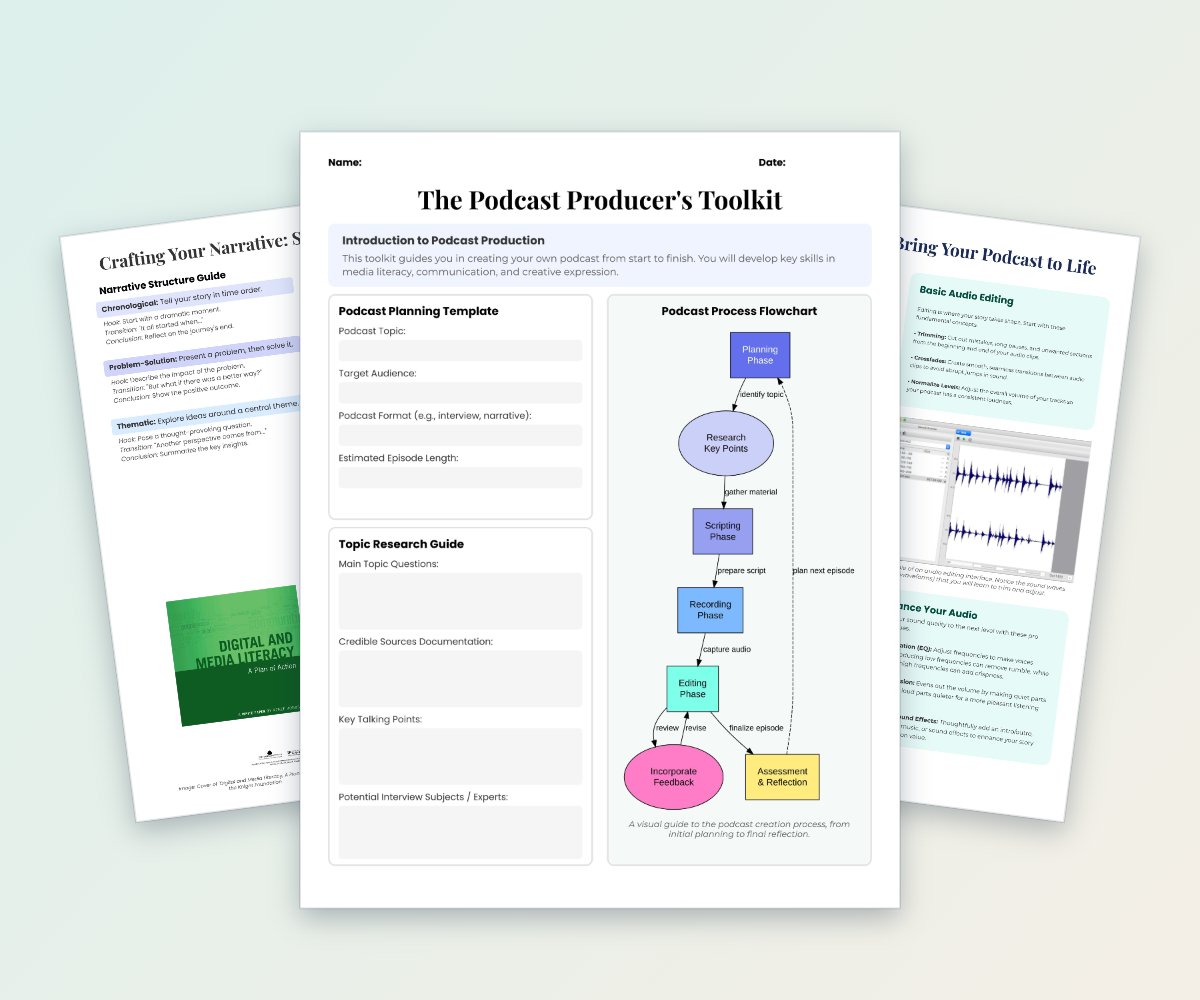
This four-page toolkit guides students through planning, researching, scripting, recording, editing, and reflecting on a podcast episode.
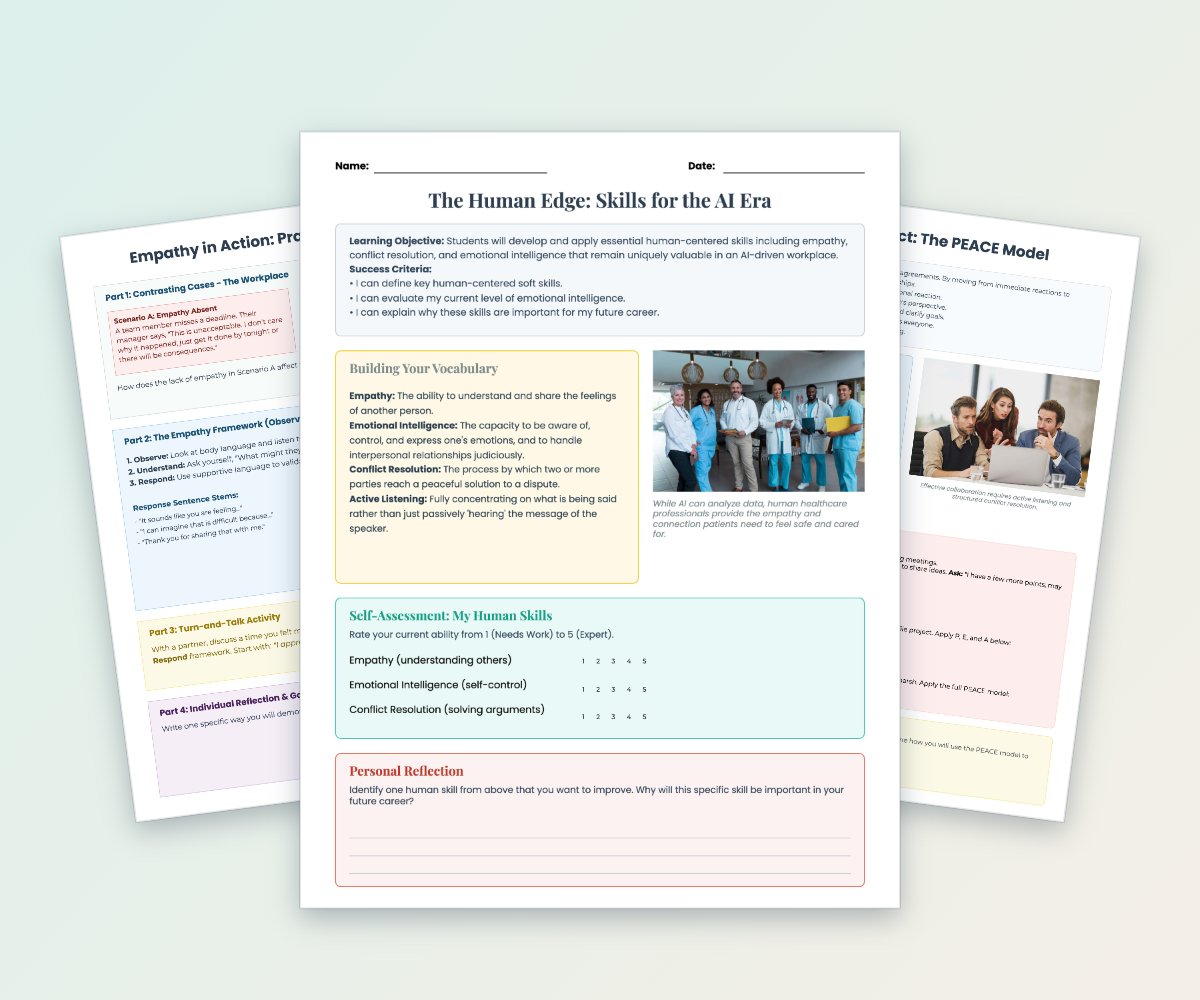
Students explore human-centered skills that remain valuable in an AI-driven workplace, including empathy, emotional intelligence, conflict resolution, and active listening.
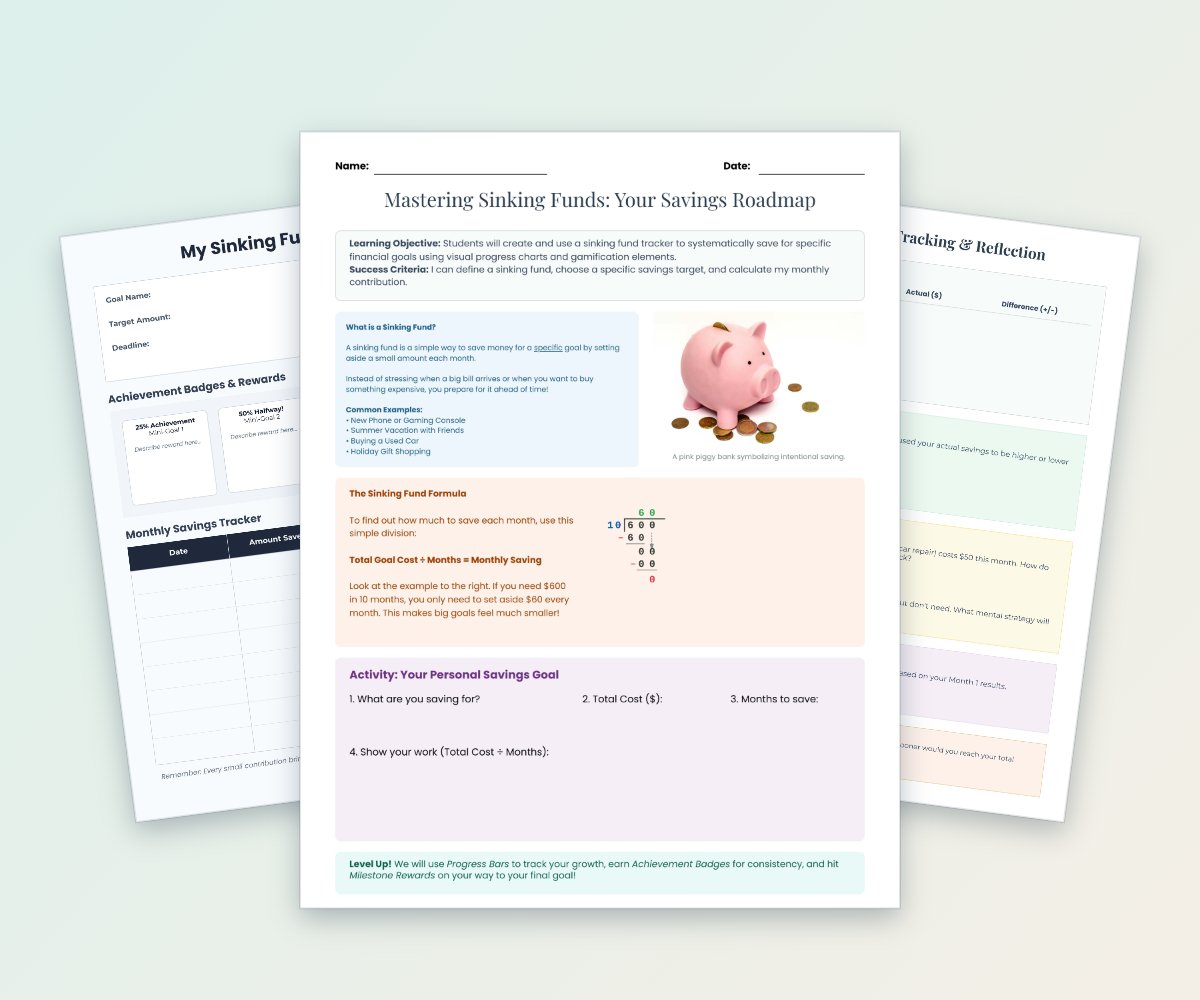
Students learn how sinking funds support specific savings goals through formulas, progress tracking, achievement milestones, and reflection.
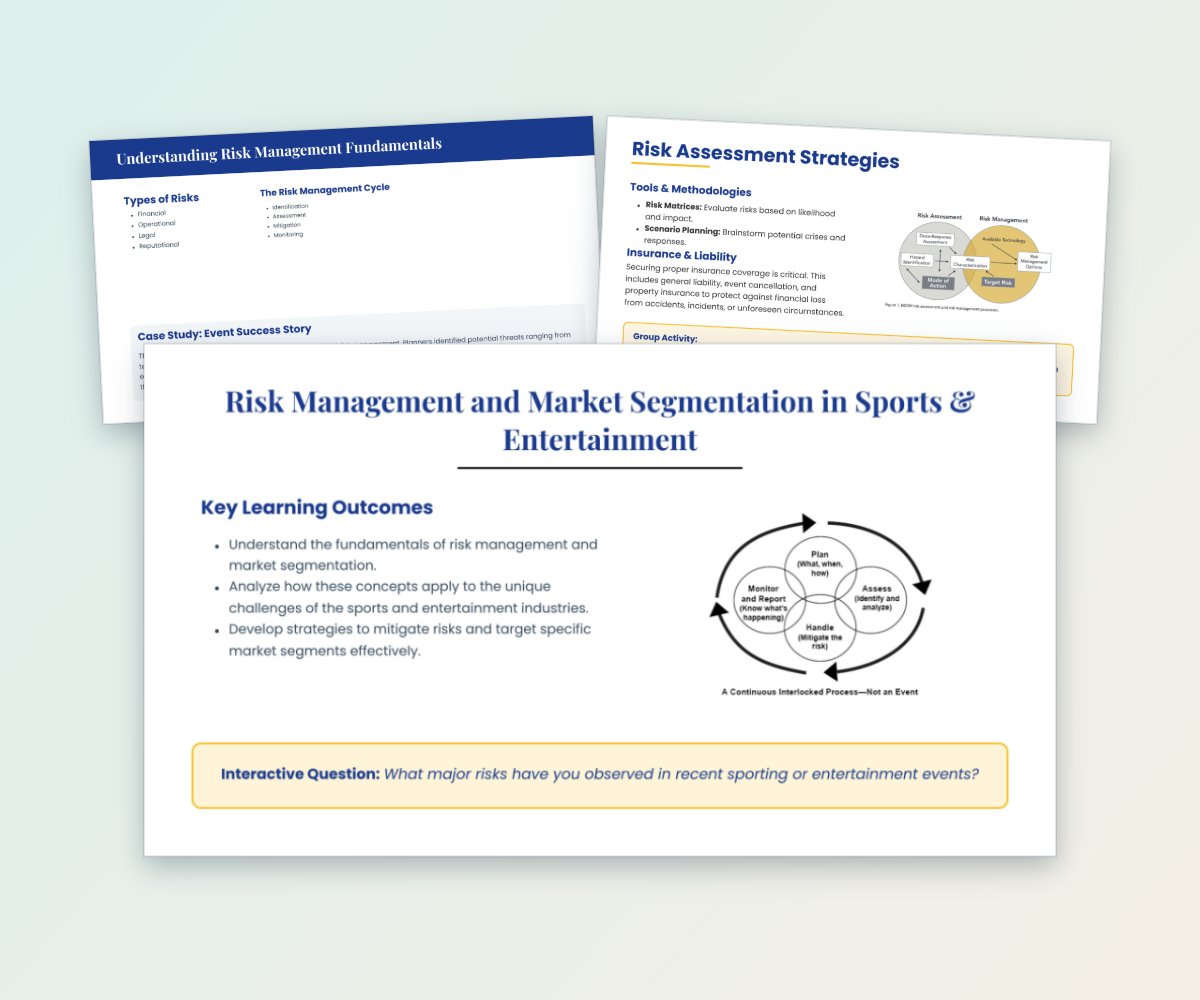
Teach foundational risk management and market segmentation concepts in sports and entertainment contexts.
This 10-slide presentation introduces risk management and market segmentation in the sports and entertainment industries.
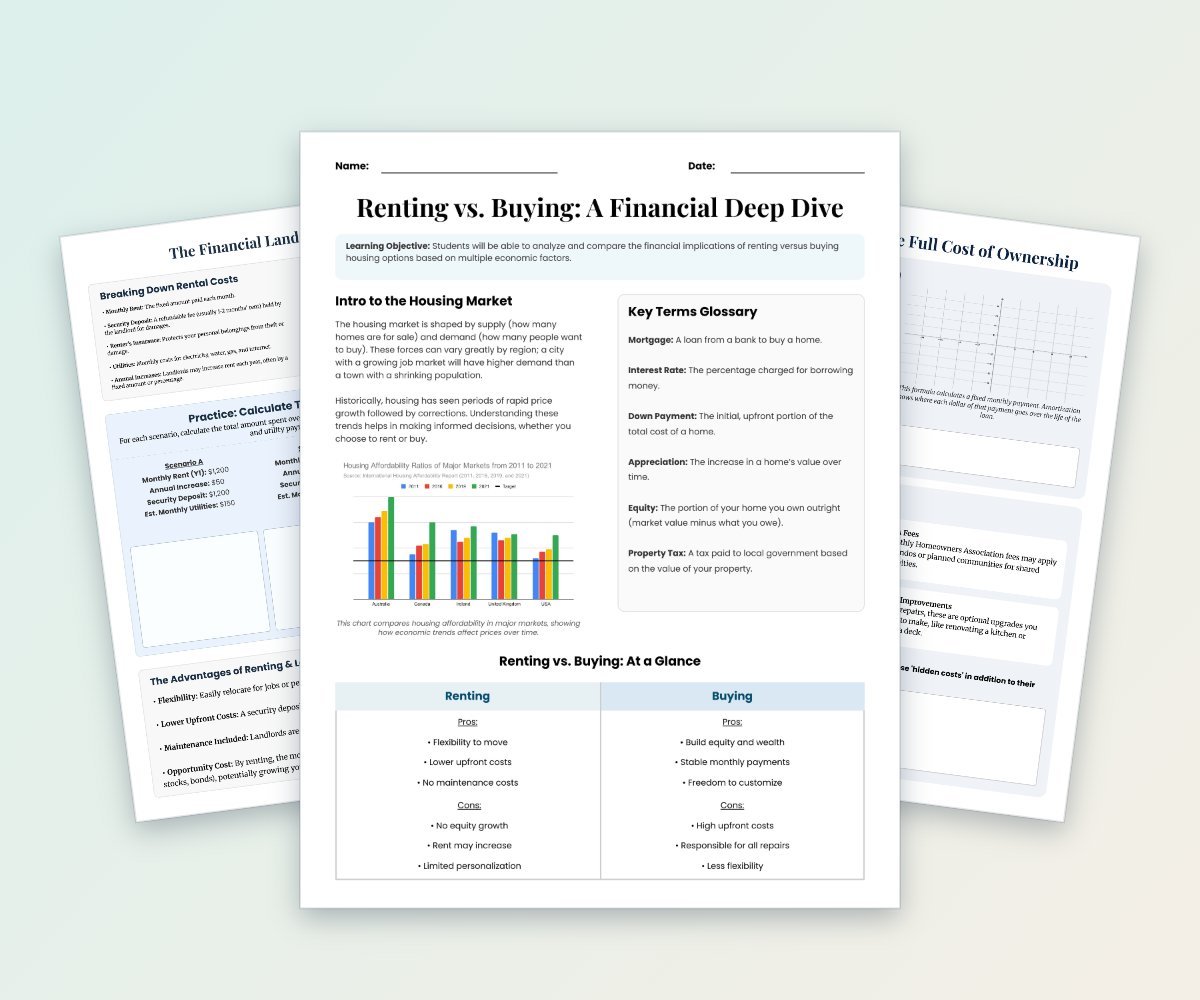
Students explore housing markets, compare the advantages and disadvantages of renting and buying, and learn essential housing-finance vocabulary.
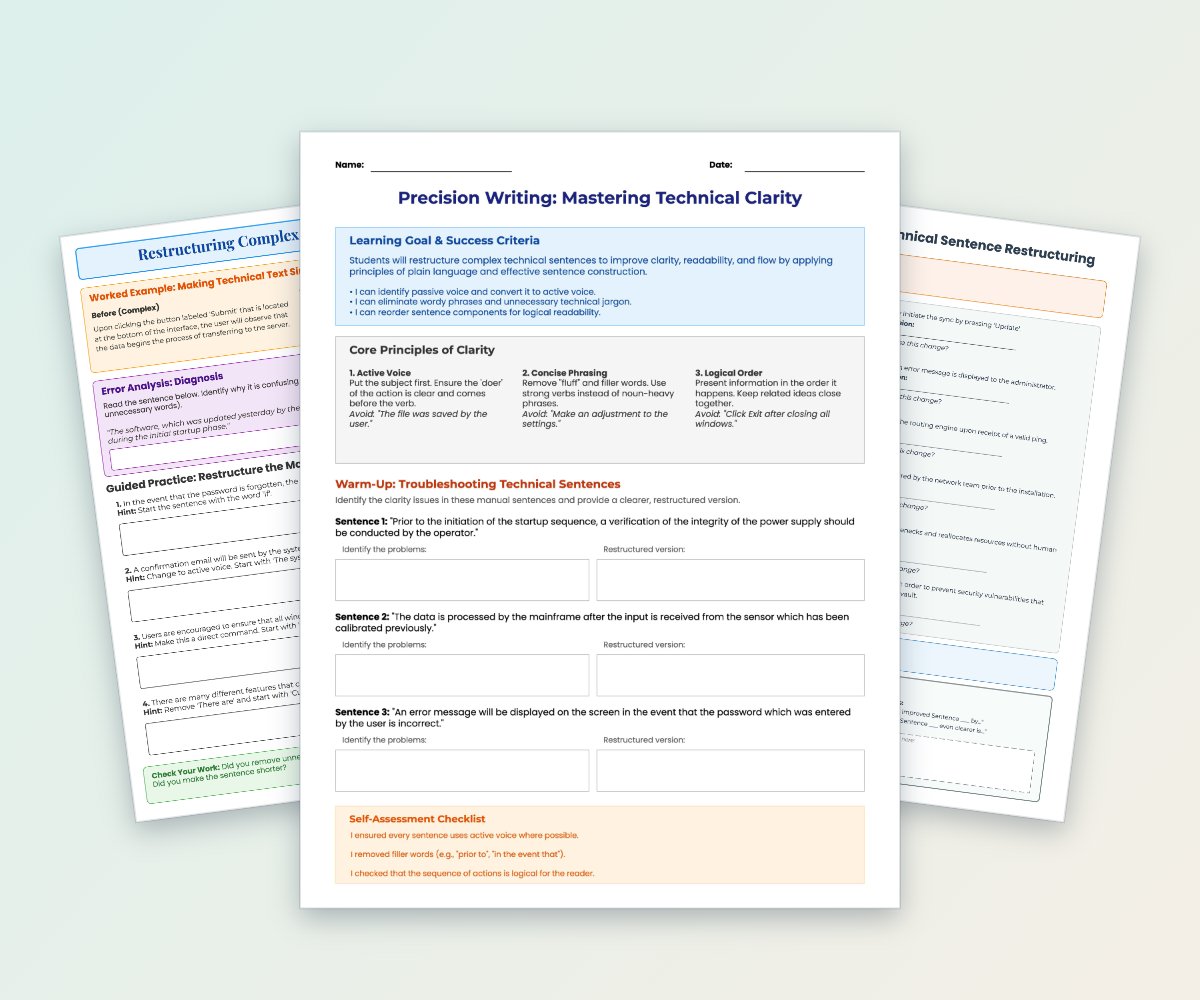
Students practice revising complex technical sentences by using active voice, concise phrasing, and logical ordering.
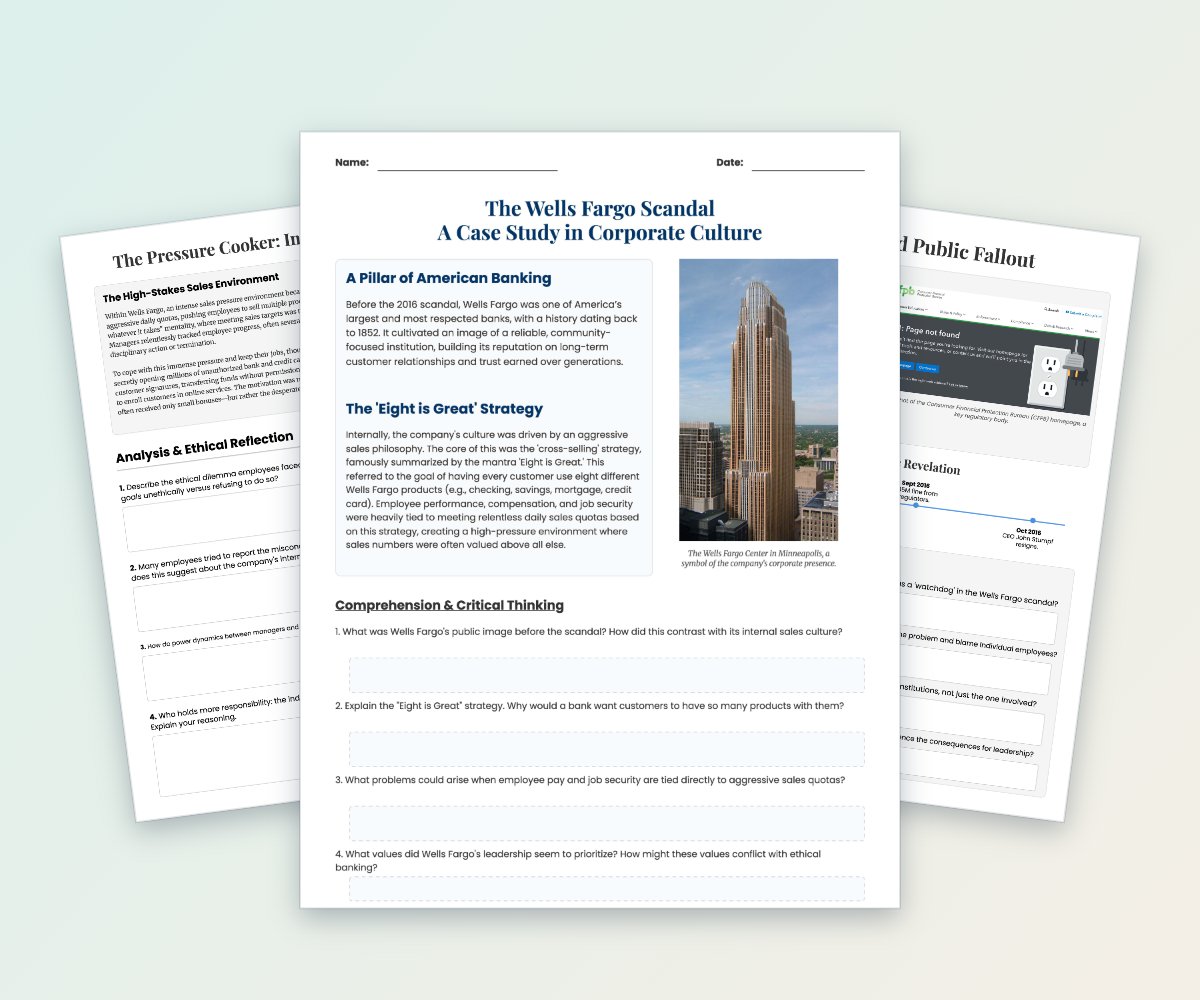
Students examine Wells Fargo’s aggressive sales culture, the “Eight is Great” strategy, and the unauthorized account scandal.
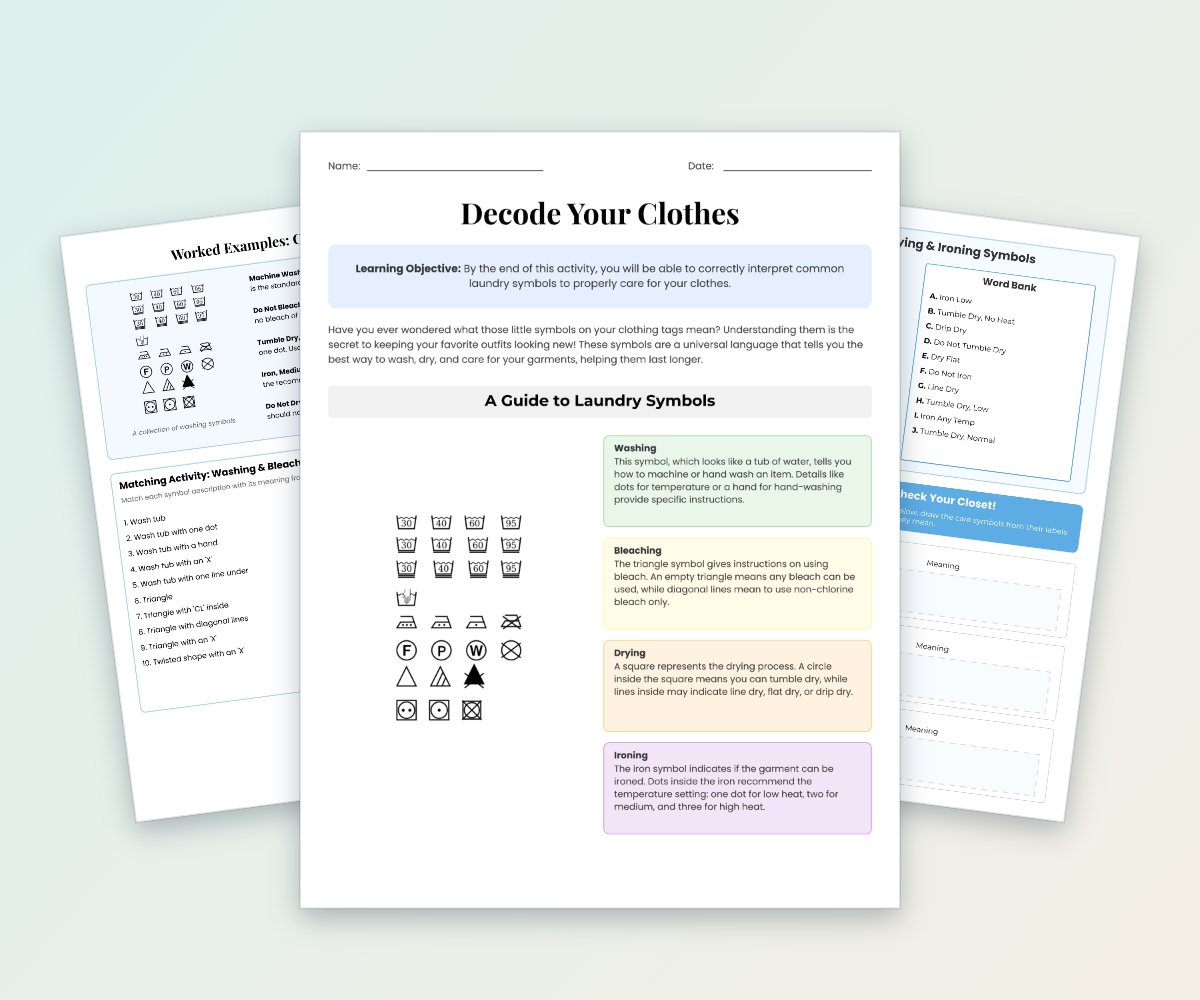
This four-page resource introduces common washing, bleaching, drying, ironing, and dry-cleaning symbols.