Price Elasticity of Demand Worksheet with Answer Key
A high school economics worksheet covering elastic, inelastic, and unit elastic demand, including real-world examples and percentage calculations.
$6.50
Clear, practical resources for busy educators, organized so you can get from search to ready-to-teach quickly.
A high school economics worksheet covering elastic, inelastic, and unit elastic demand, including real-world examples and percentage calculations.
This Grade 11–12 economics worksheet teaches students how to calculate and interpret price elasticity of demand.
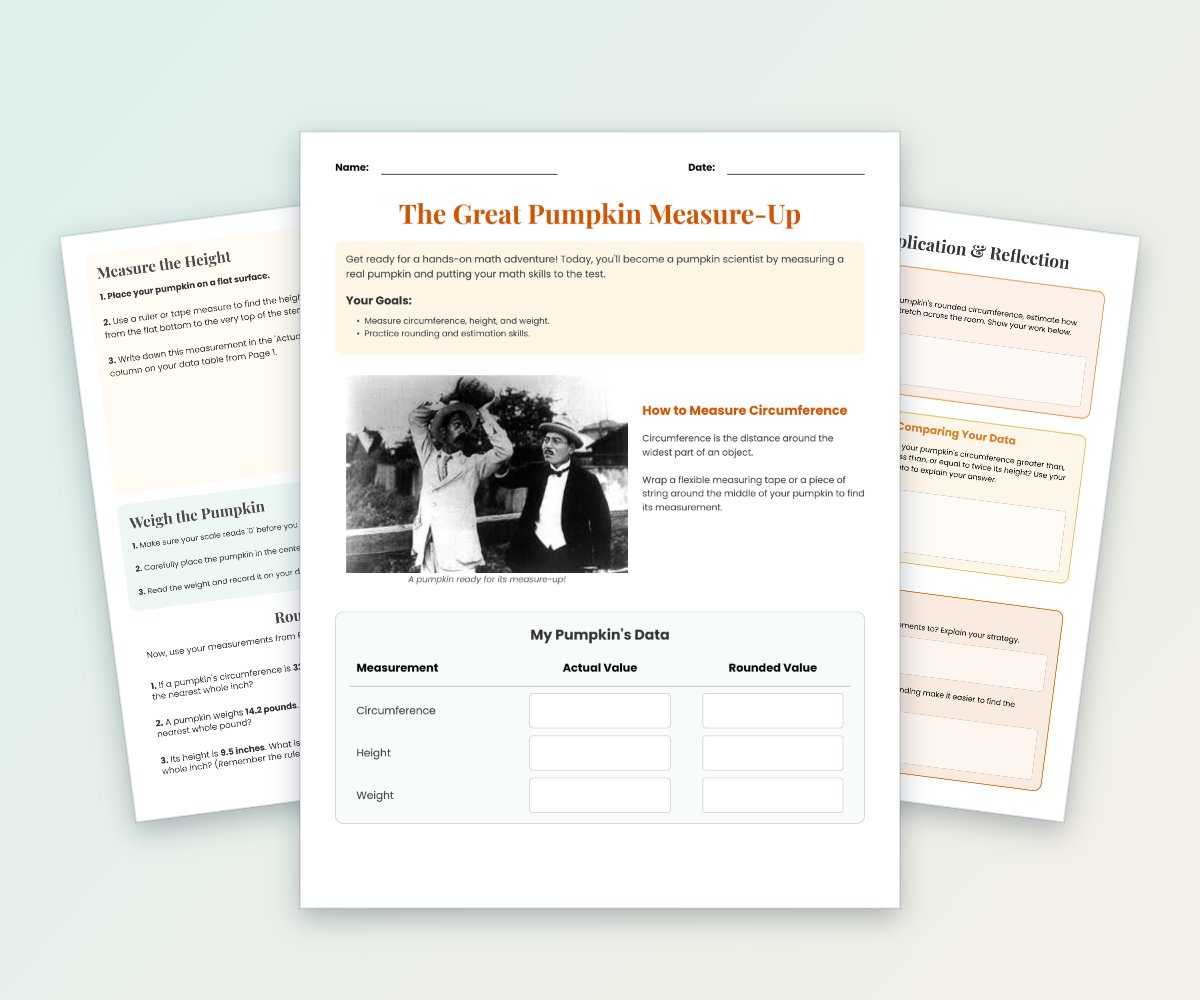
Students measure a real pumpkin’s circumference, height, and weight, record actual and rounded values, and practice estimation.
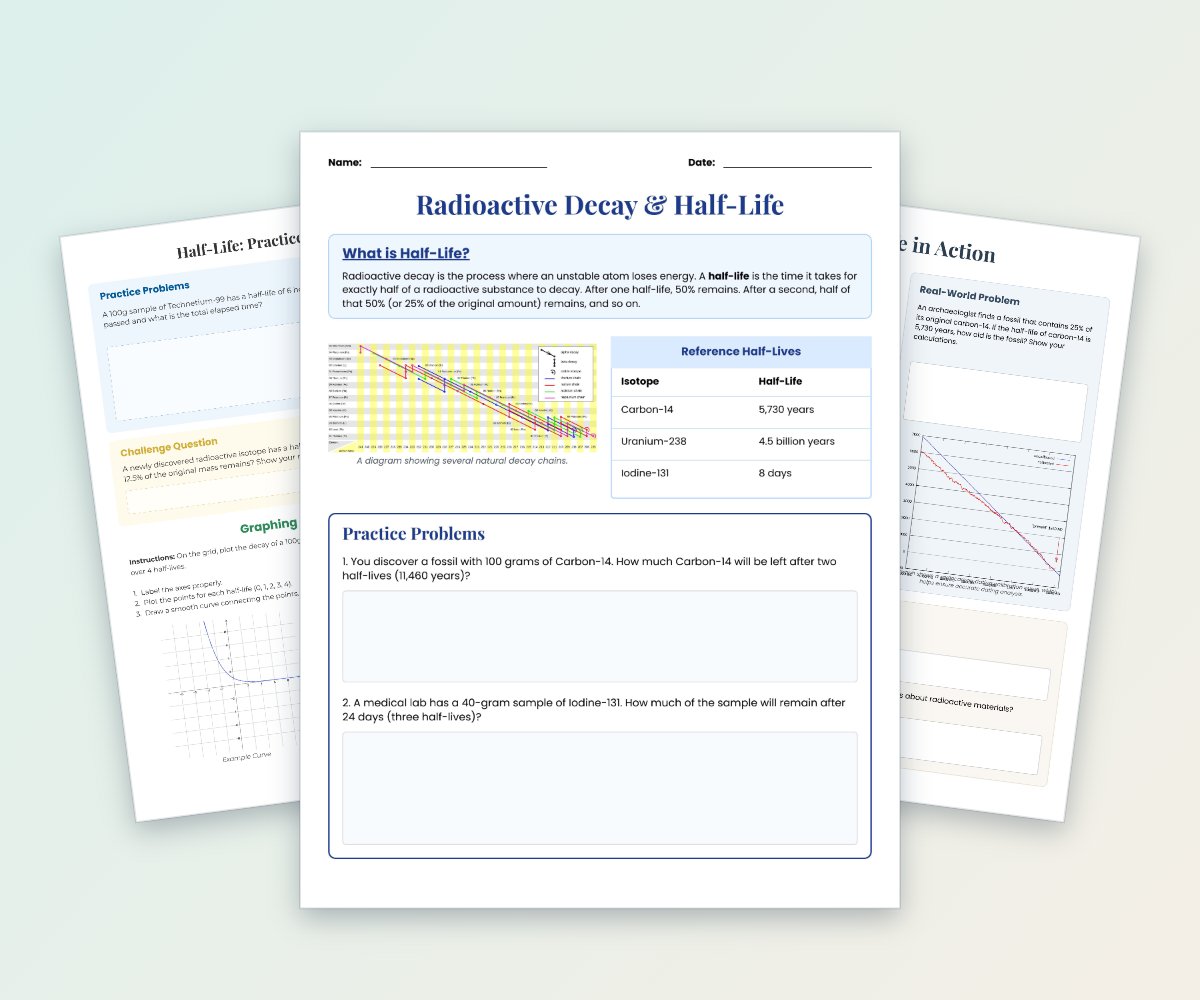
This three-page worksheet introduces radioactive decay and half-life with reference data, calculation practice, graphing, challenge questions, and real-world applications.
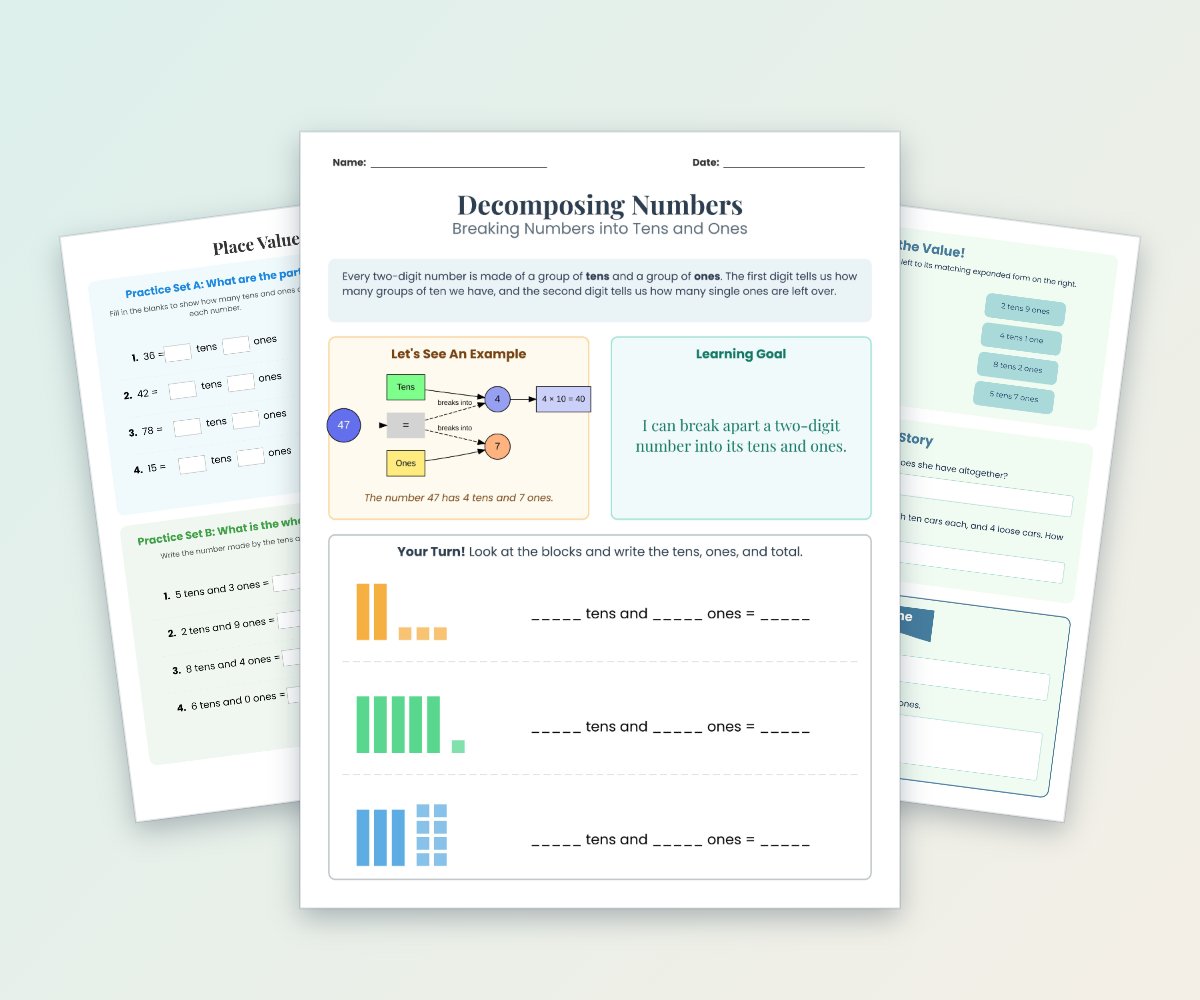
This four-page worksheet resource helps students decompose two-digit numbers into tens and ones using base-ten blocks, expanded forms, matching, and word problems.
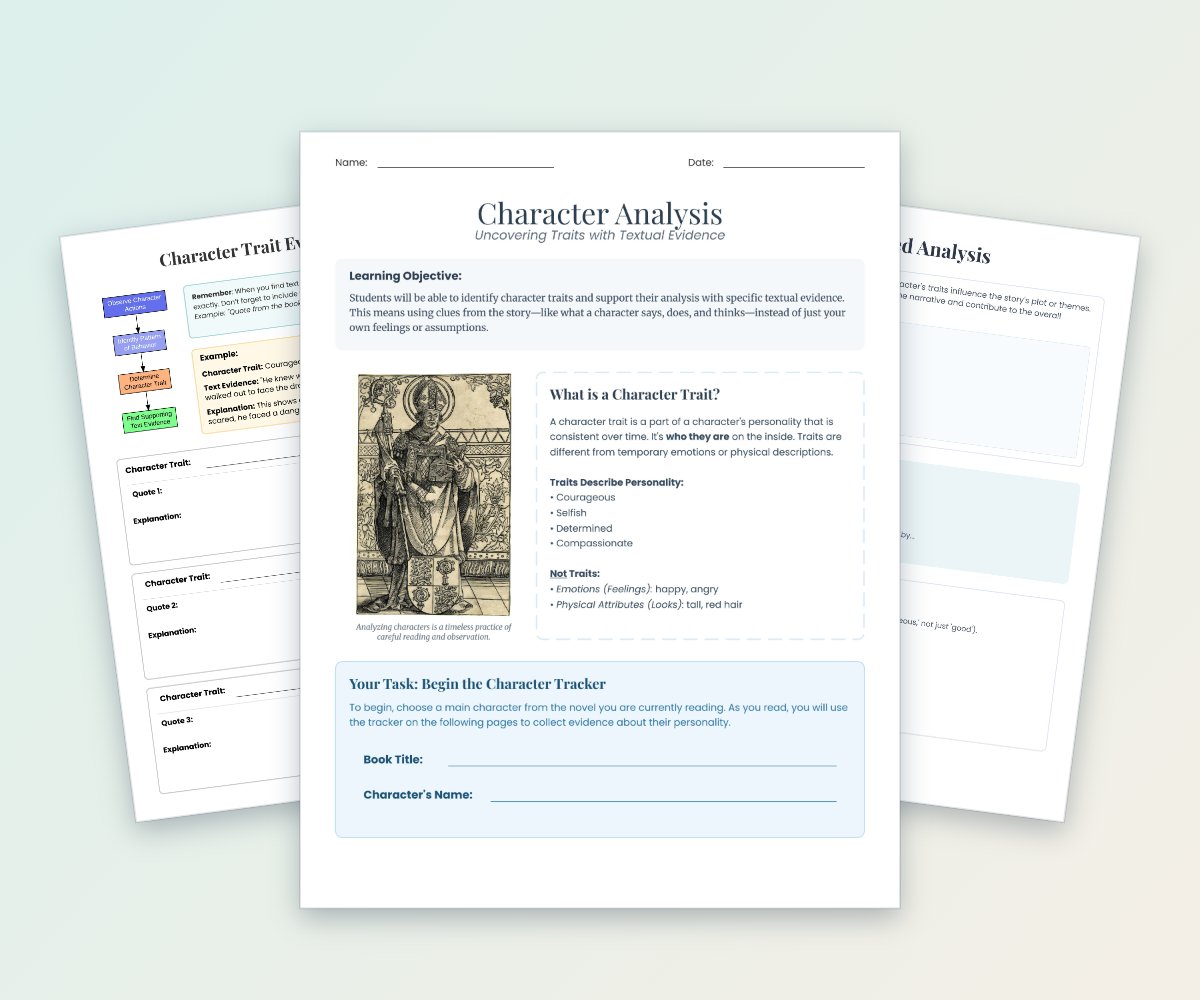
Students analyze a character’s personality traits using actions, thoughts, dialogue, and direct textual evidence.
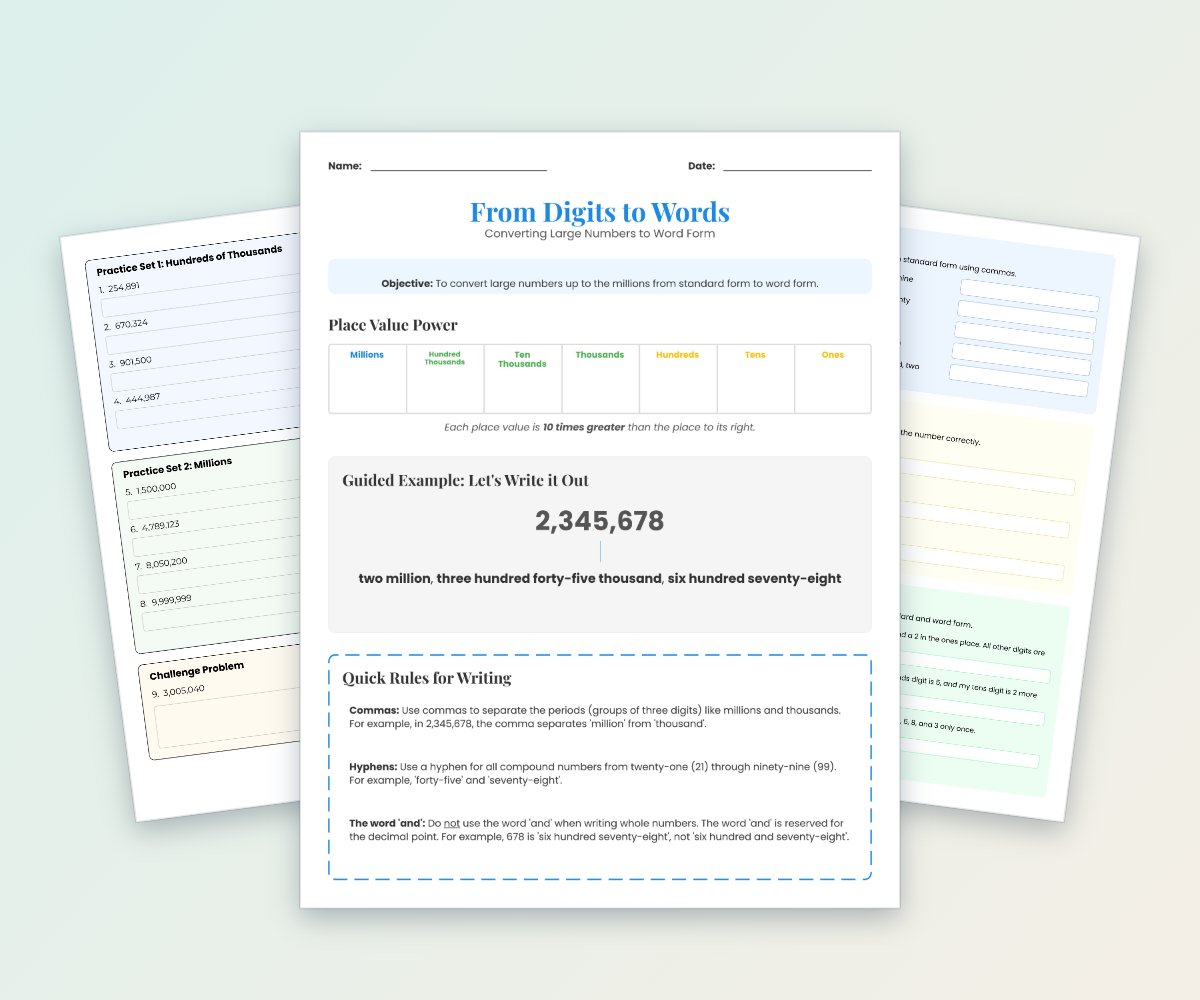
This four-page math worksheet helps students convert large numbers up to the millions between standard and word form.
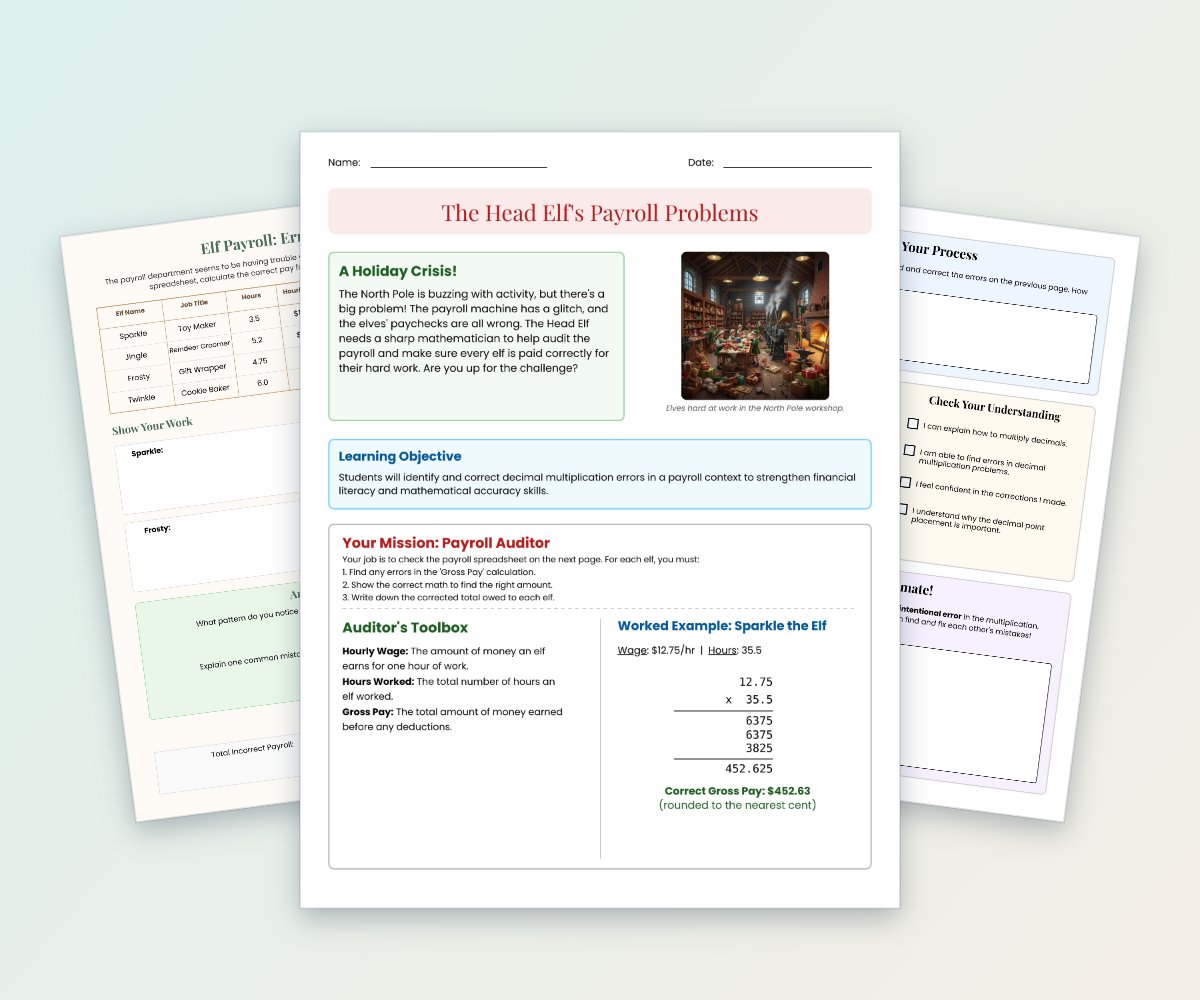
Students audit a fictional elf payroll spreadsheet by identifying multiplication errors, calculating corrected gross pay, and explaining their methods.
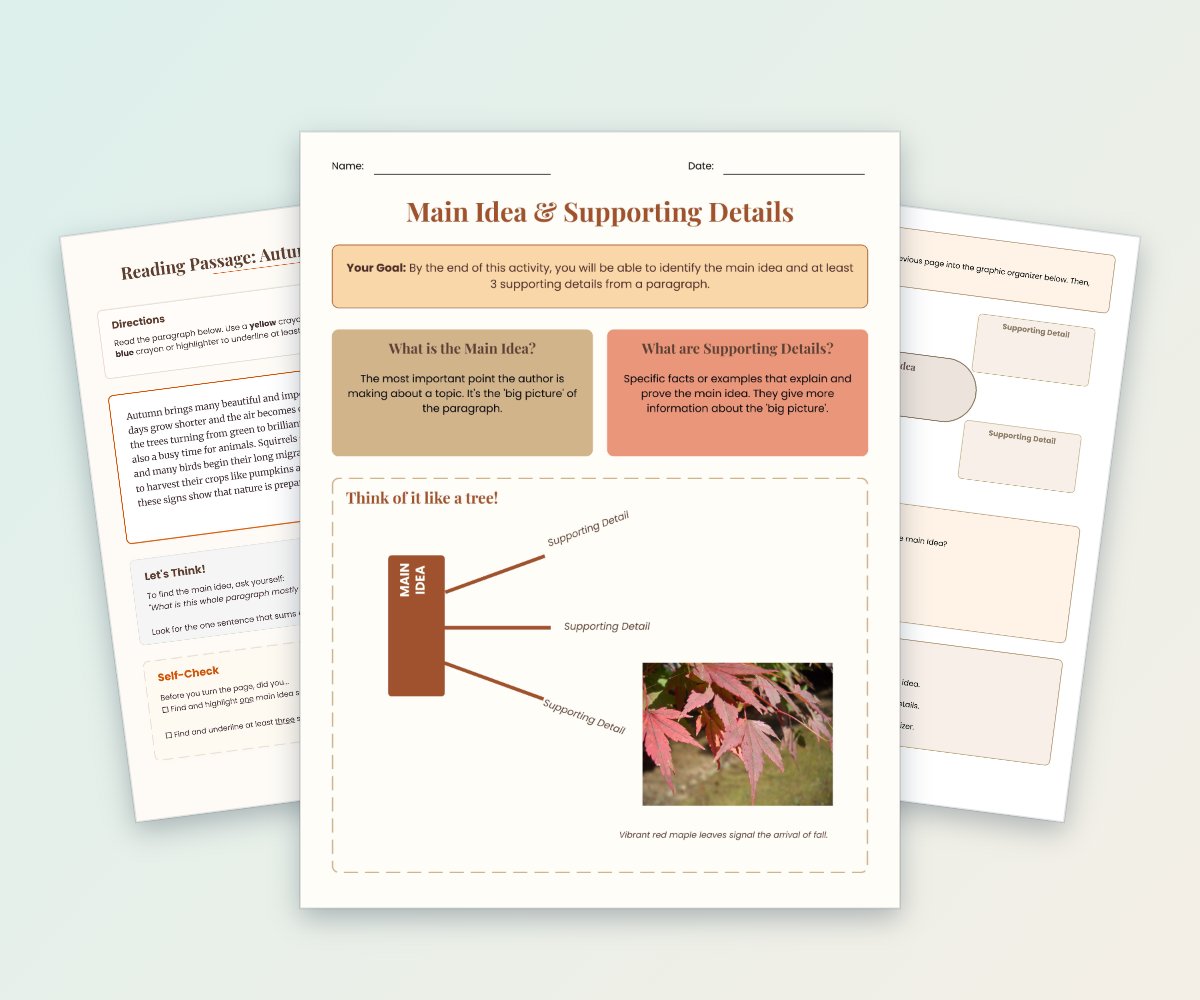
This three-page reading activity teaches students to identify a paragraph’s main idea and supporting details.
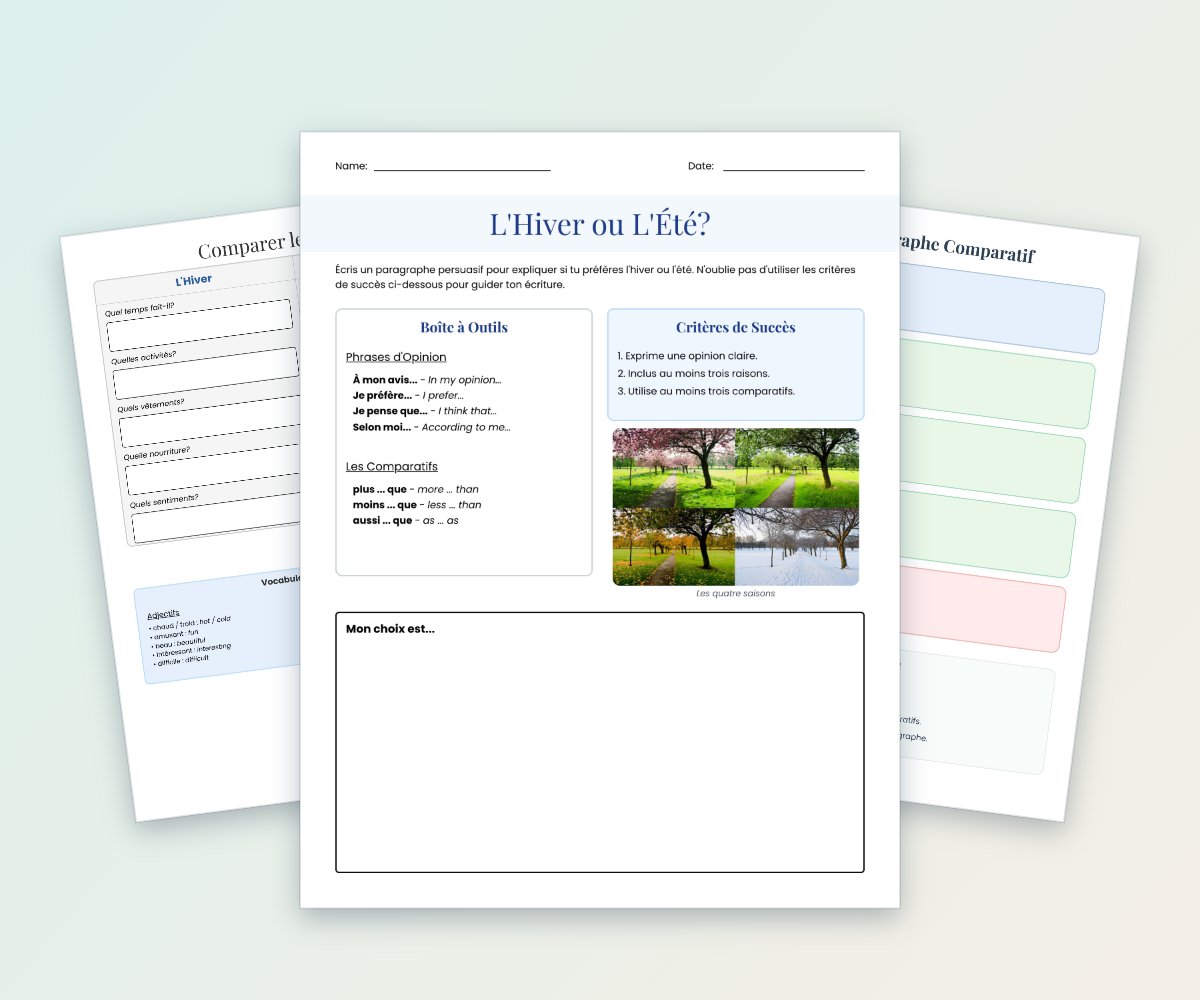
Students write a persuasive paragraph explaining whether they prefer winter or summer.
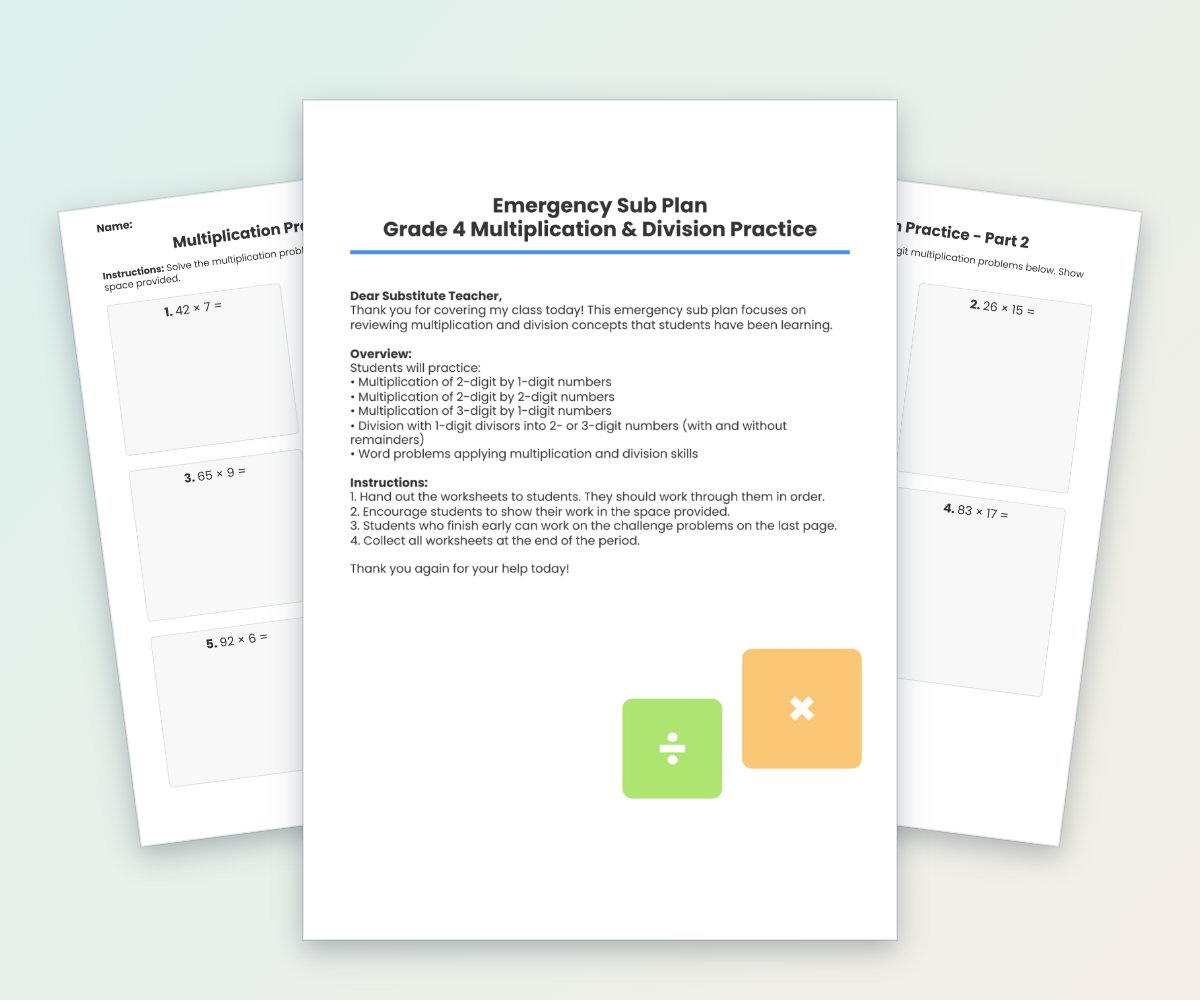
This nine-page emergency substitute plan provides structured Grade 4 practice with multi-digit multiplication, division with and without remainders, and applied word problems.
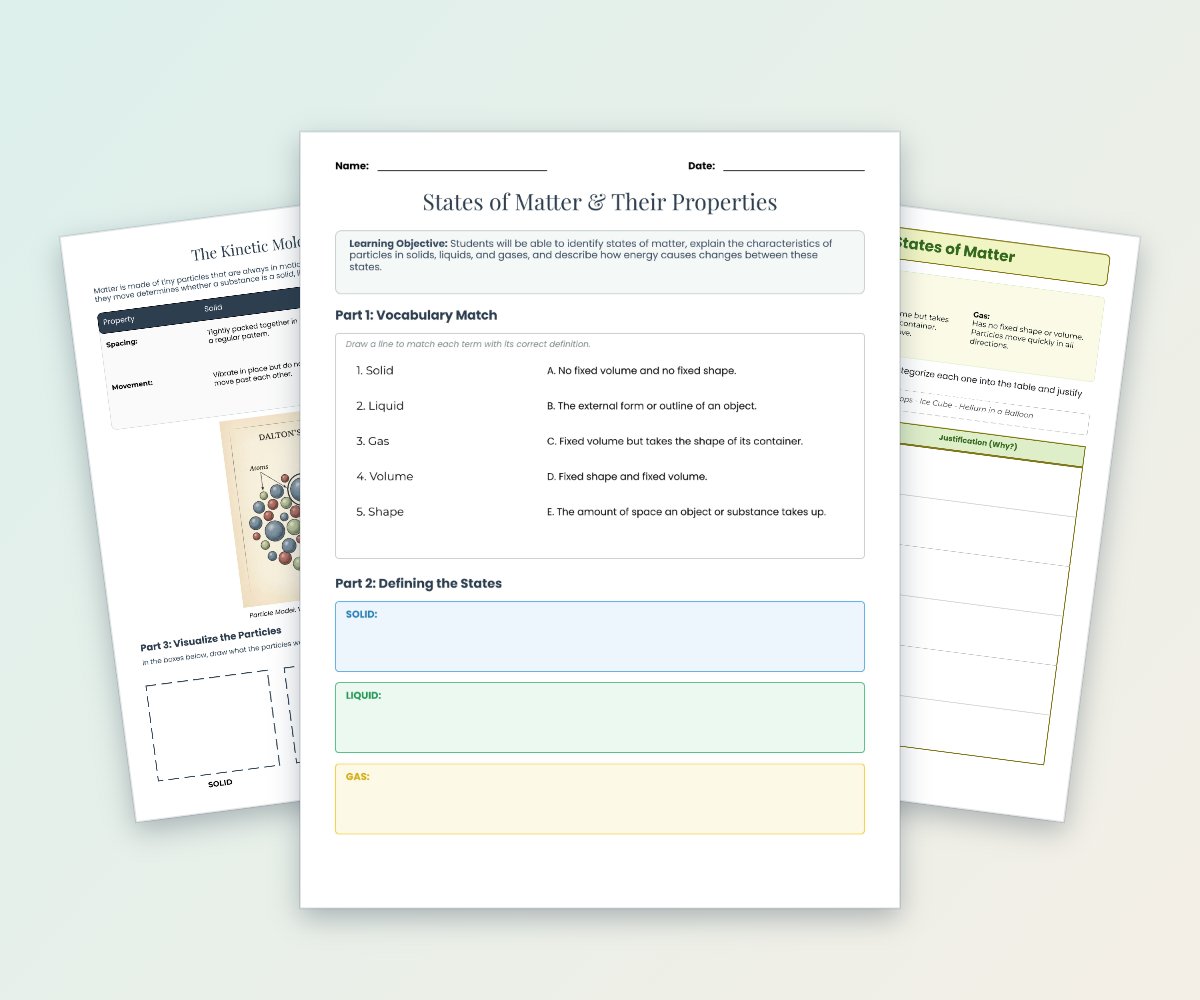
This six-page worksheet pack reviews solids, liquids, gases, particle motion, properties, and phase changes.
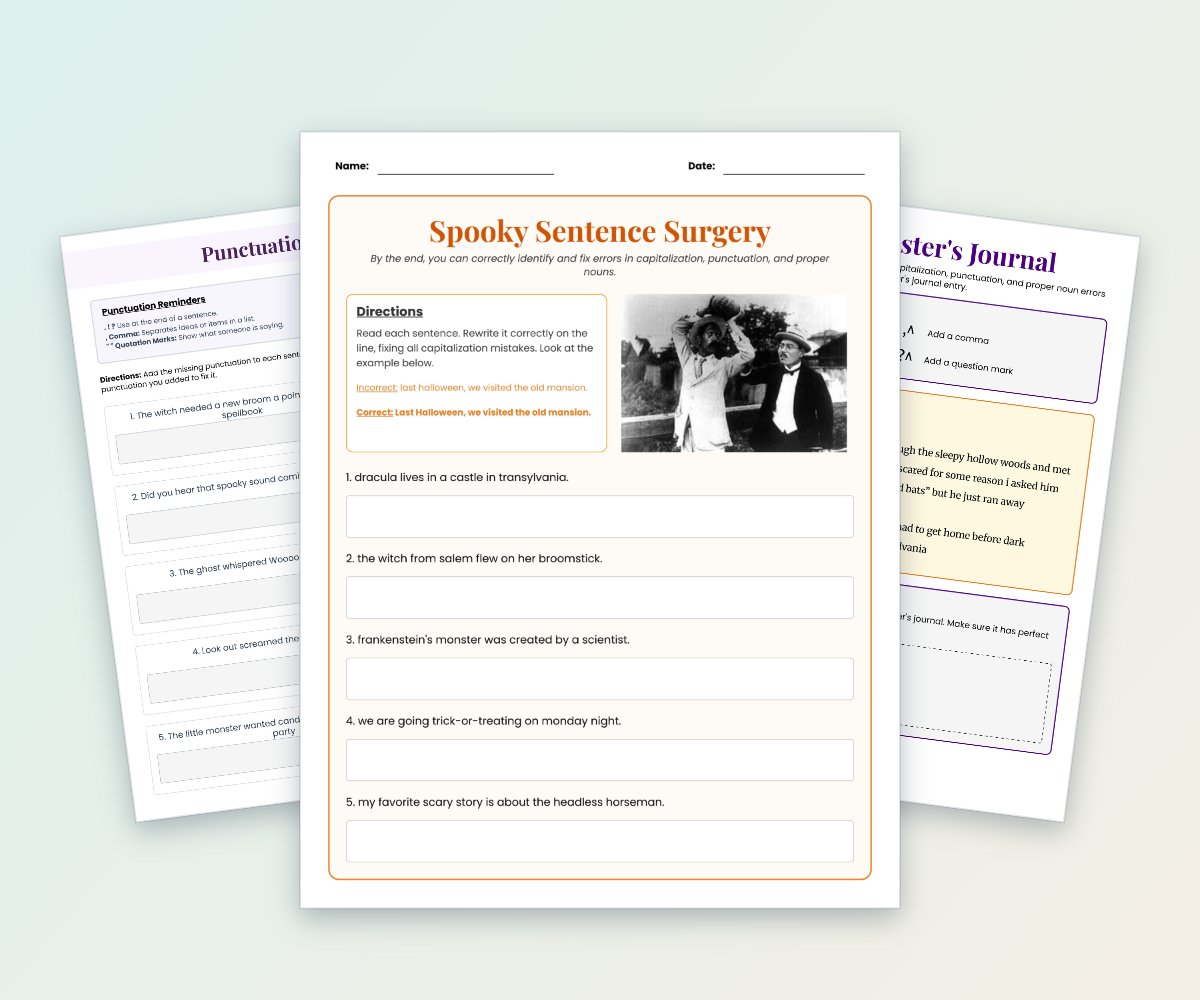
Students edit spooky-themed sentences by correcting capitalization, punctuation, proper nouns, and dialogue.
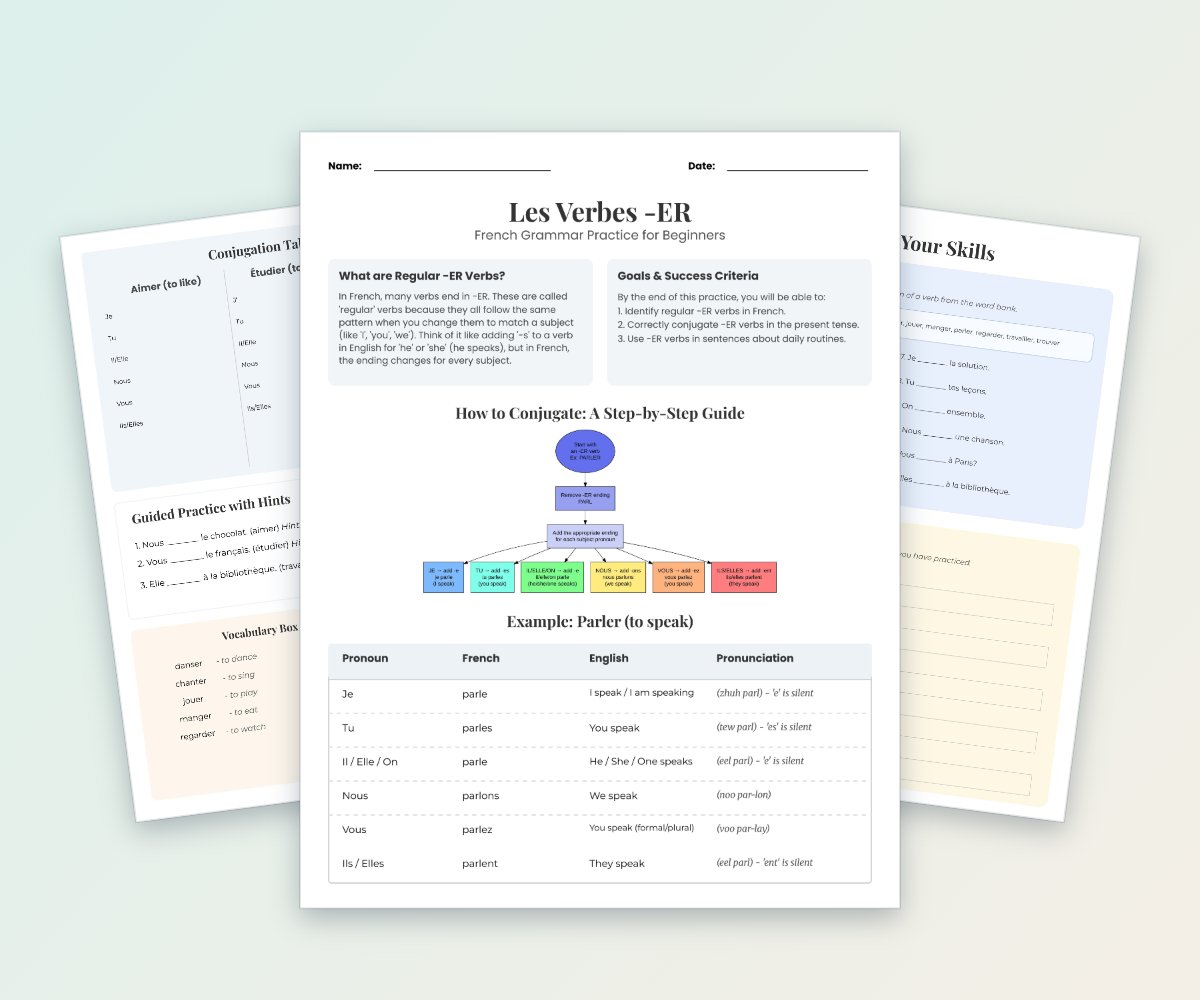
This five-page French grammar practice resource introduces regular -ER verbs in the present tense.
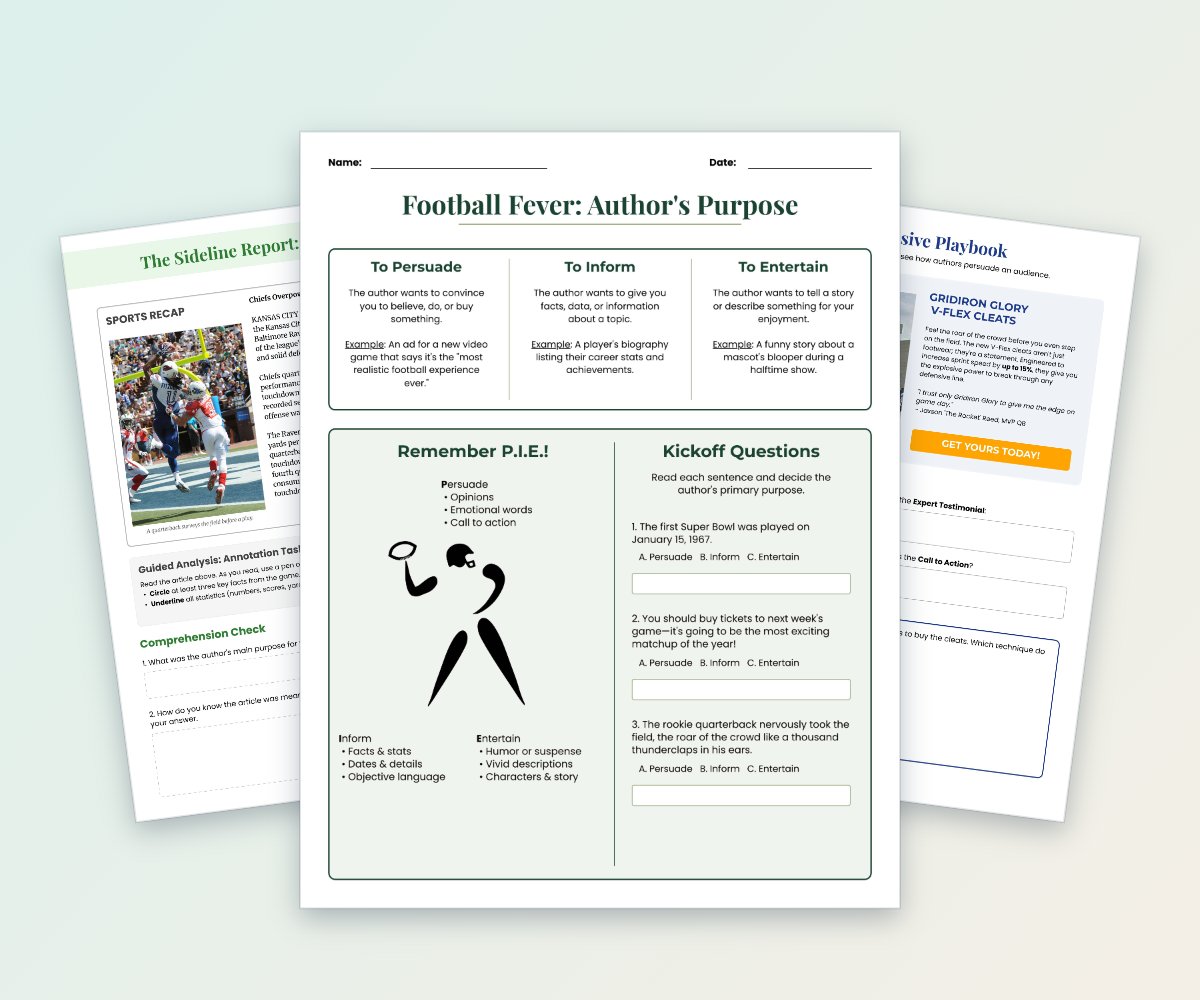
This football-themed worksheet teaches students to identify whether an author’s purpose is to persuade, inform, or entertain.
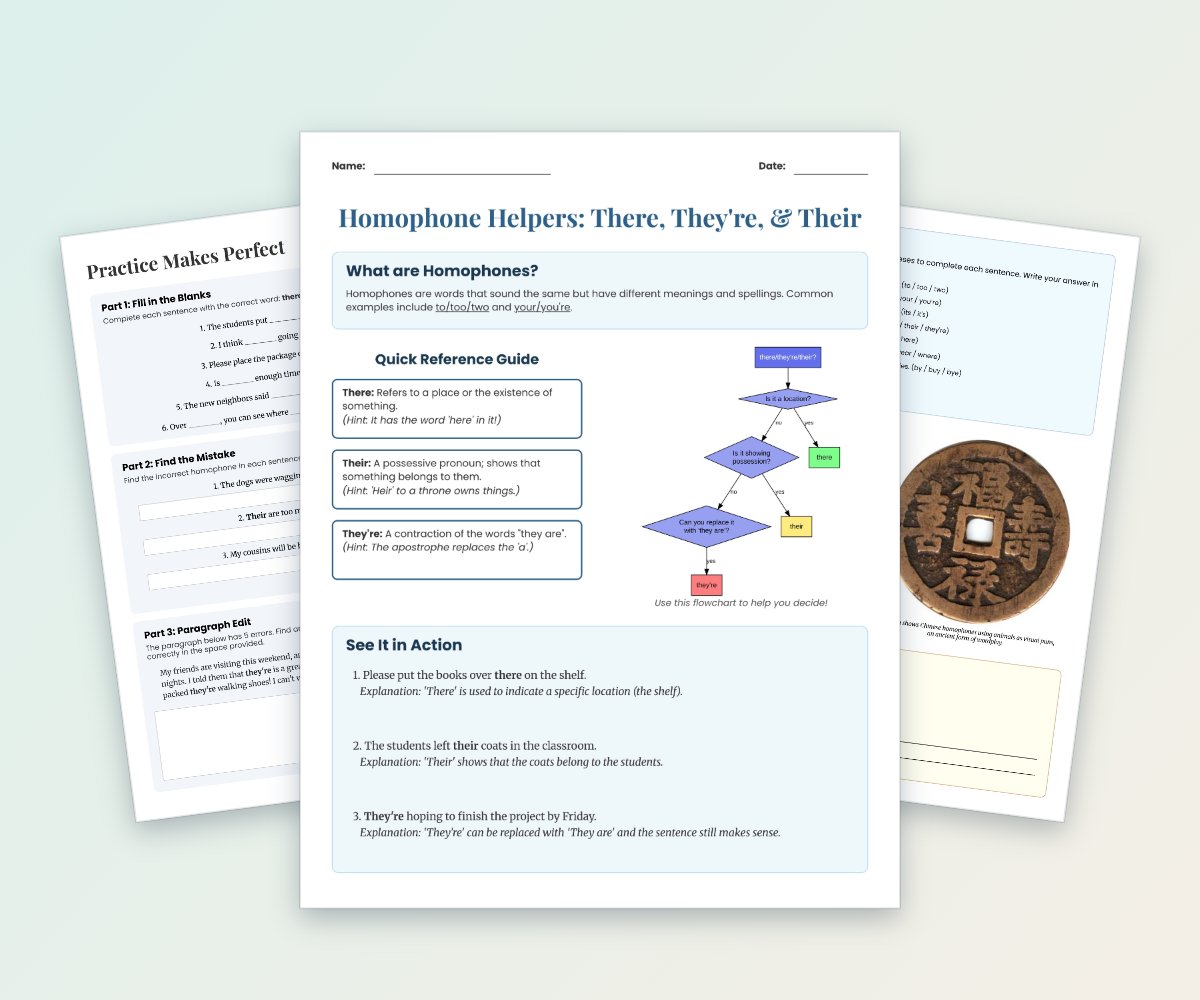
This four-page worksheet teaches students to distinguish between there, their, and they're using definitions, memory hints, examples, and a flowchart.
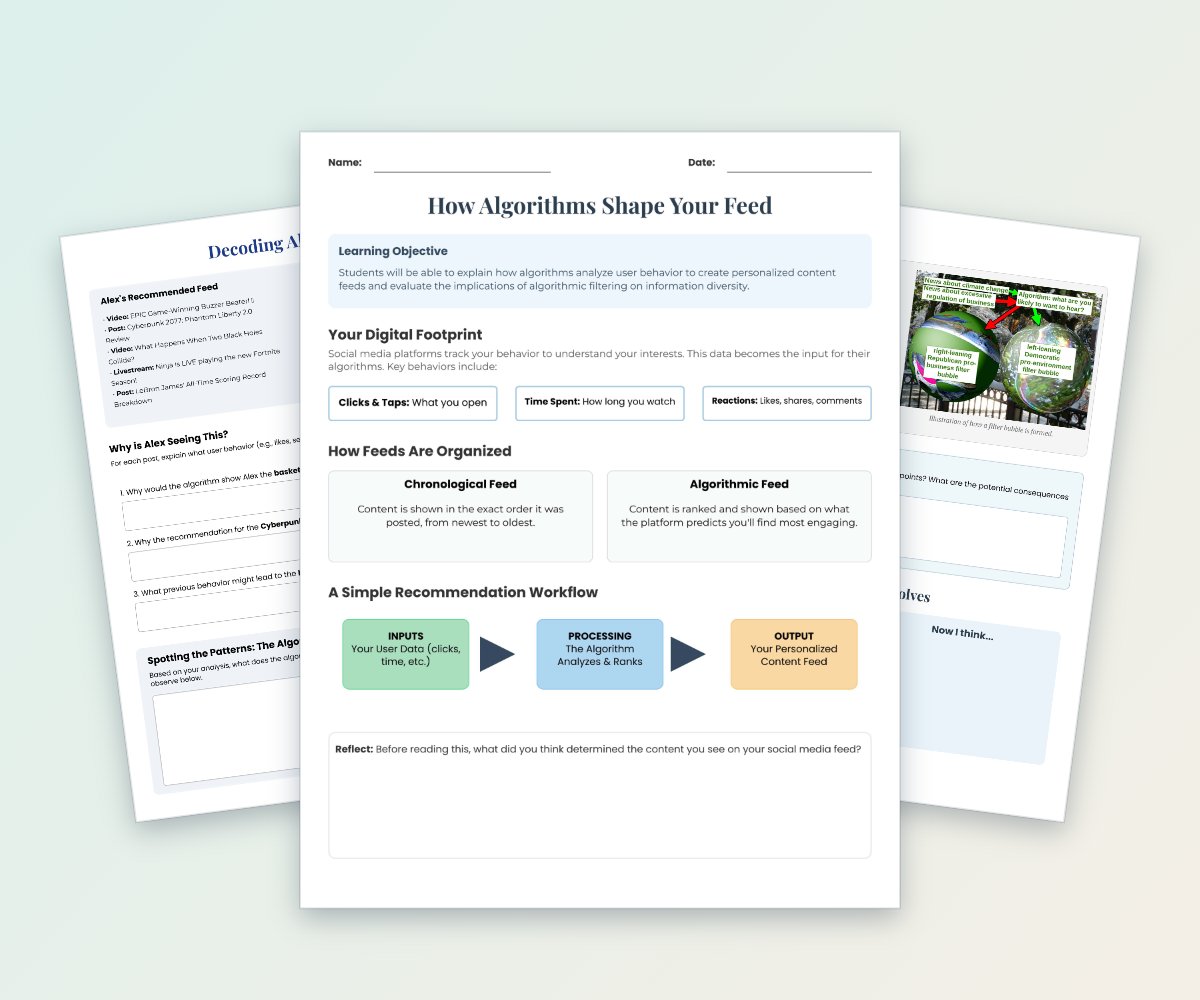
Students explore how social media algorithms use user behavior to personalize content feeds.
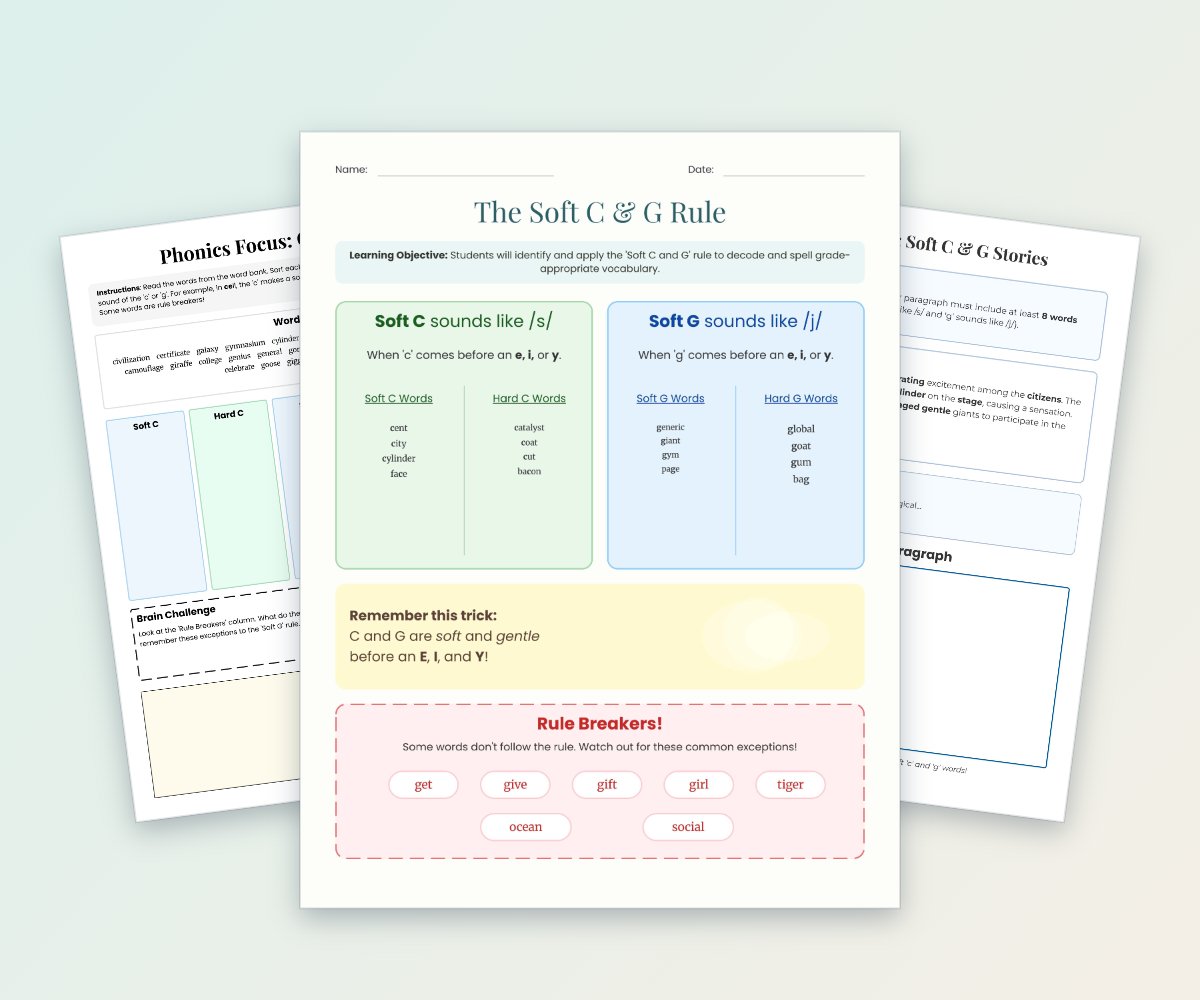
Teach students how C and G become soft before E, I, and Y with clear examples, exceptions, and sorting practice.
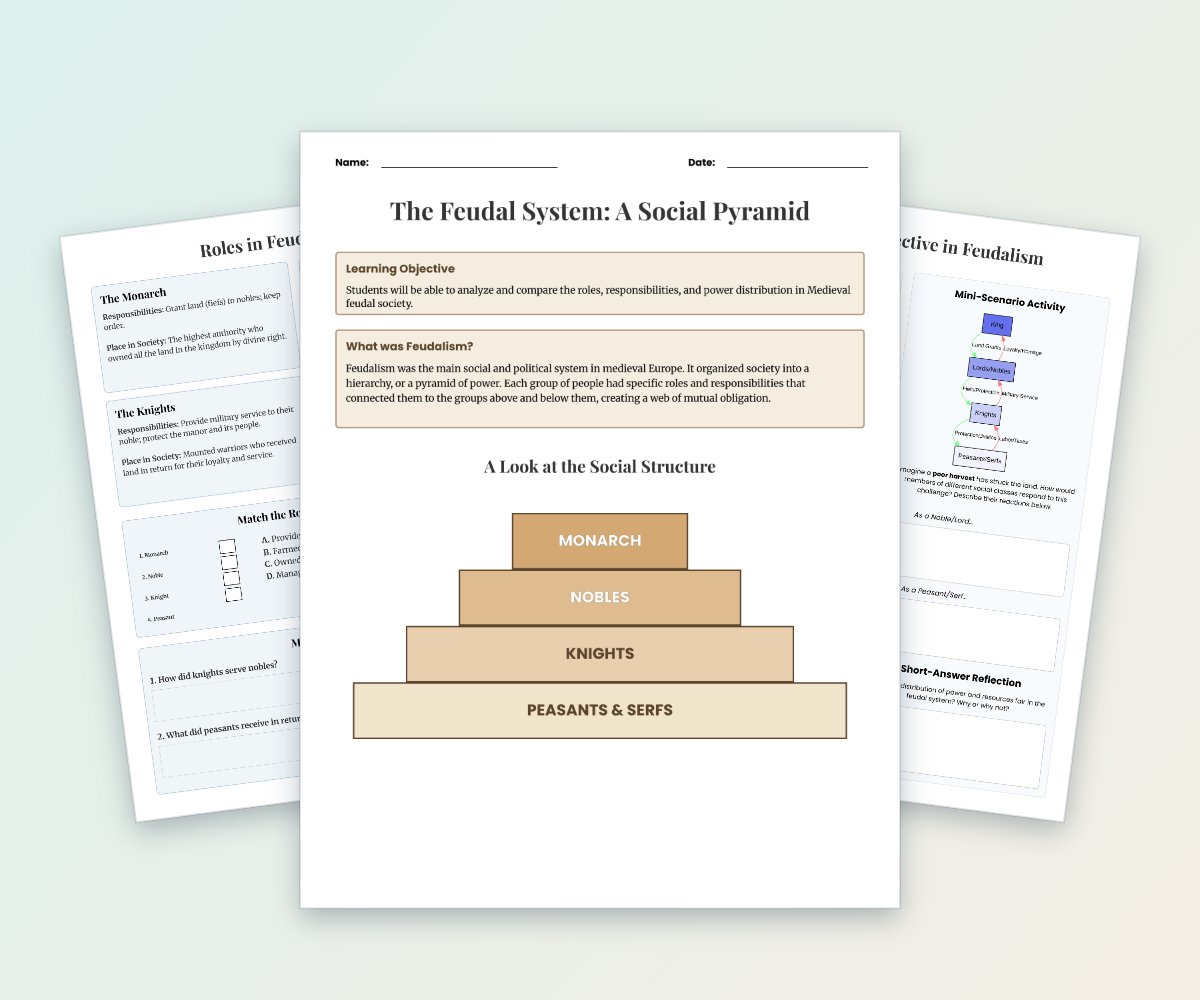
This four-page worksheet introduces the feudal system and examines the roles, responsibilities, power, and relationships among monarchs, nobles, knights, and peasants.
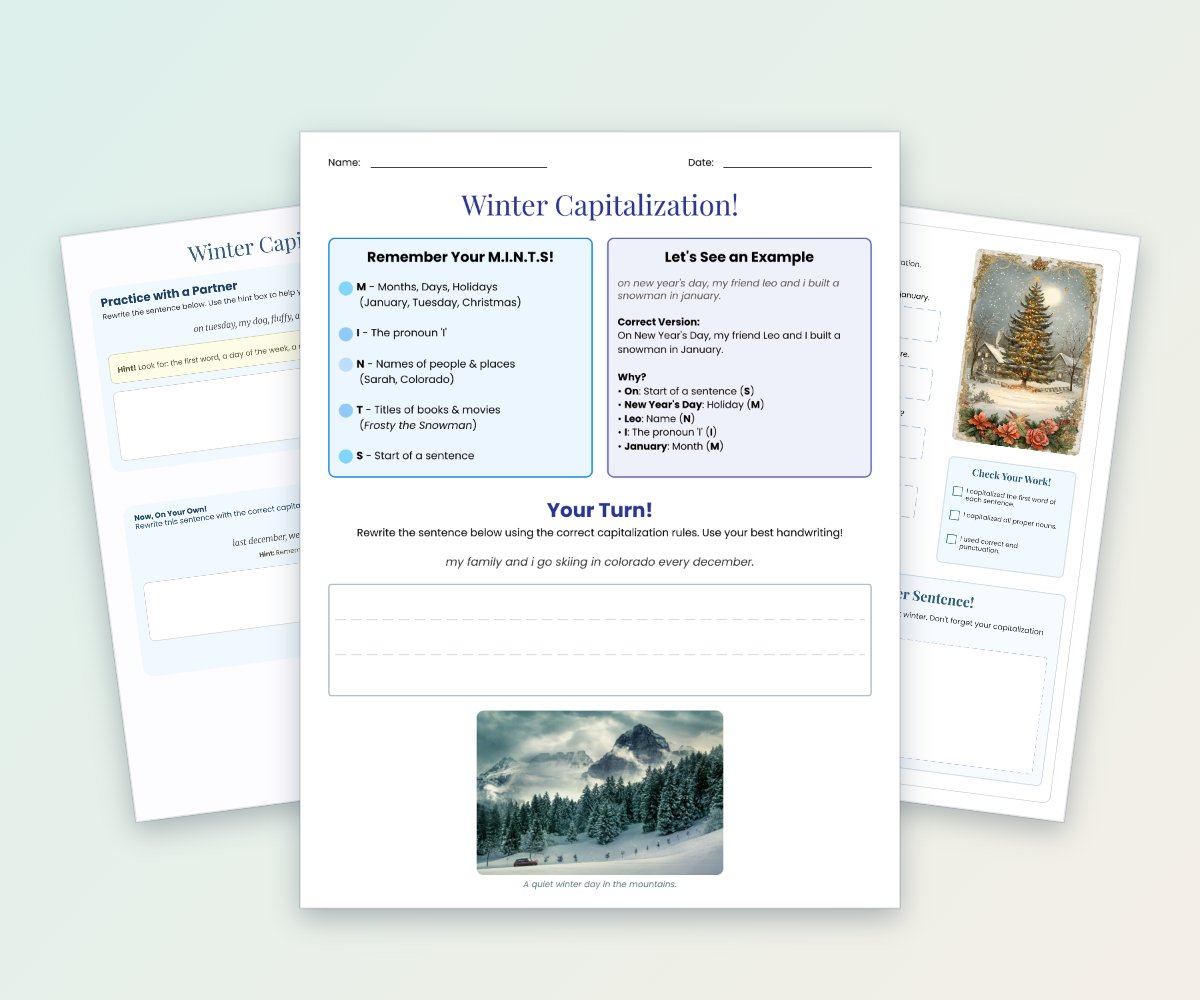
This three-page winter-themed worksheet teaches capitalization rules using the M.I.N.T.S.
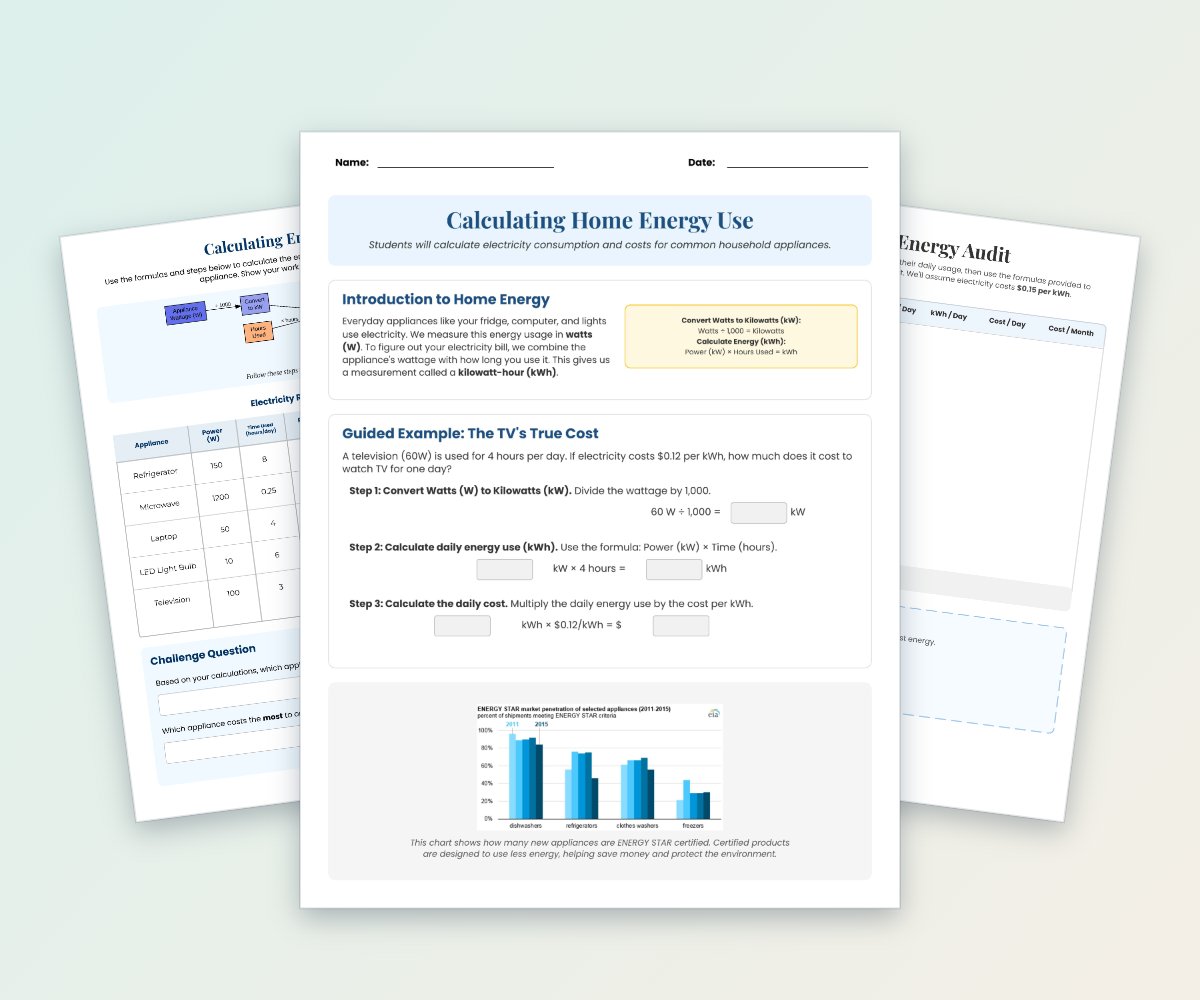
Students calculate kilowatt-hours and electricity costs for common household appliances using guided examples, formulas, and practice tables.
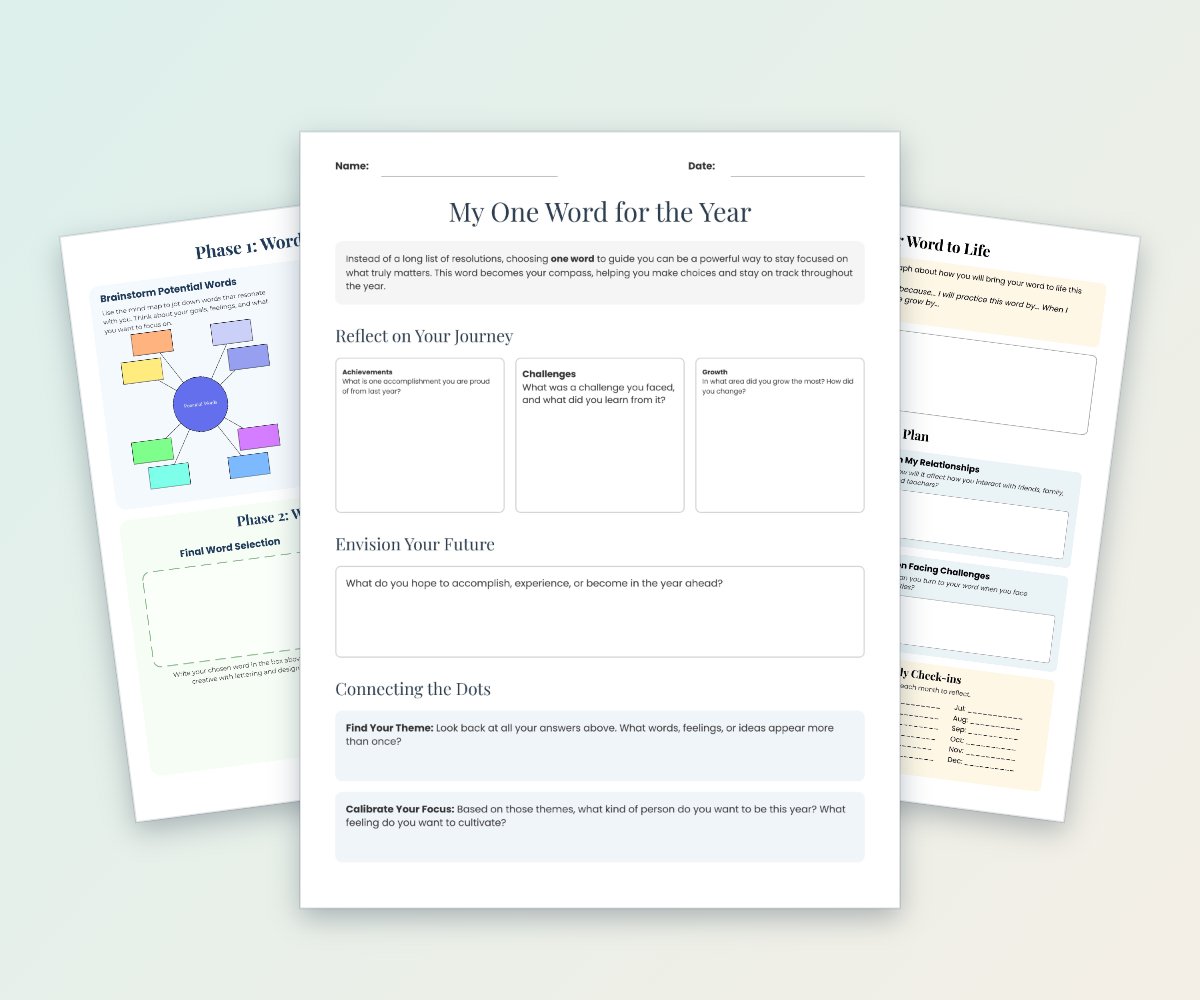
Students reflect on past achievements, challenges, and growth before selecting one guiding word for the year.
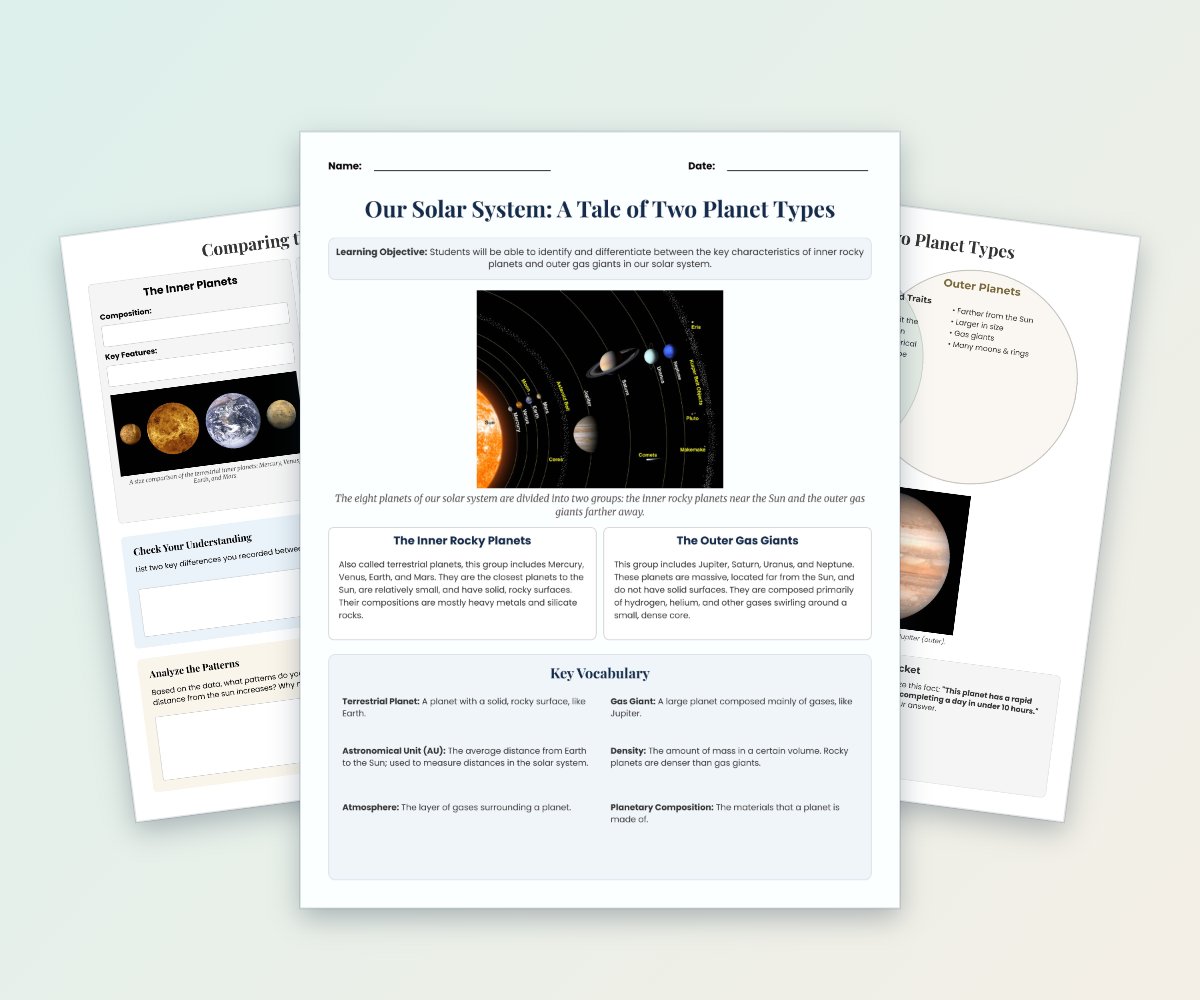
This three-page worksheet explains the differences between inner rocky planets and outer gas giants.
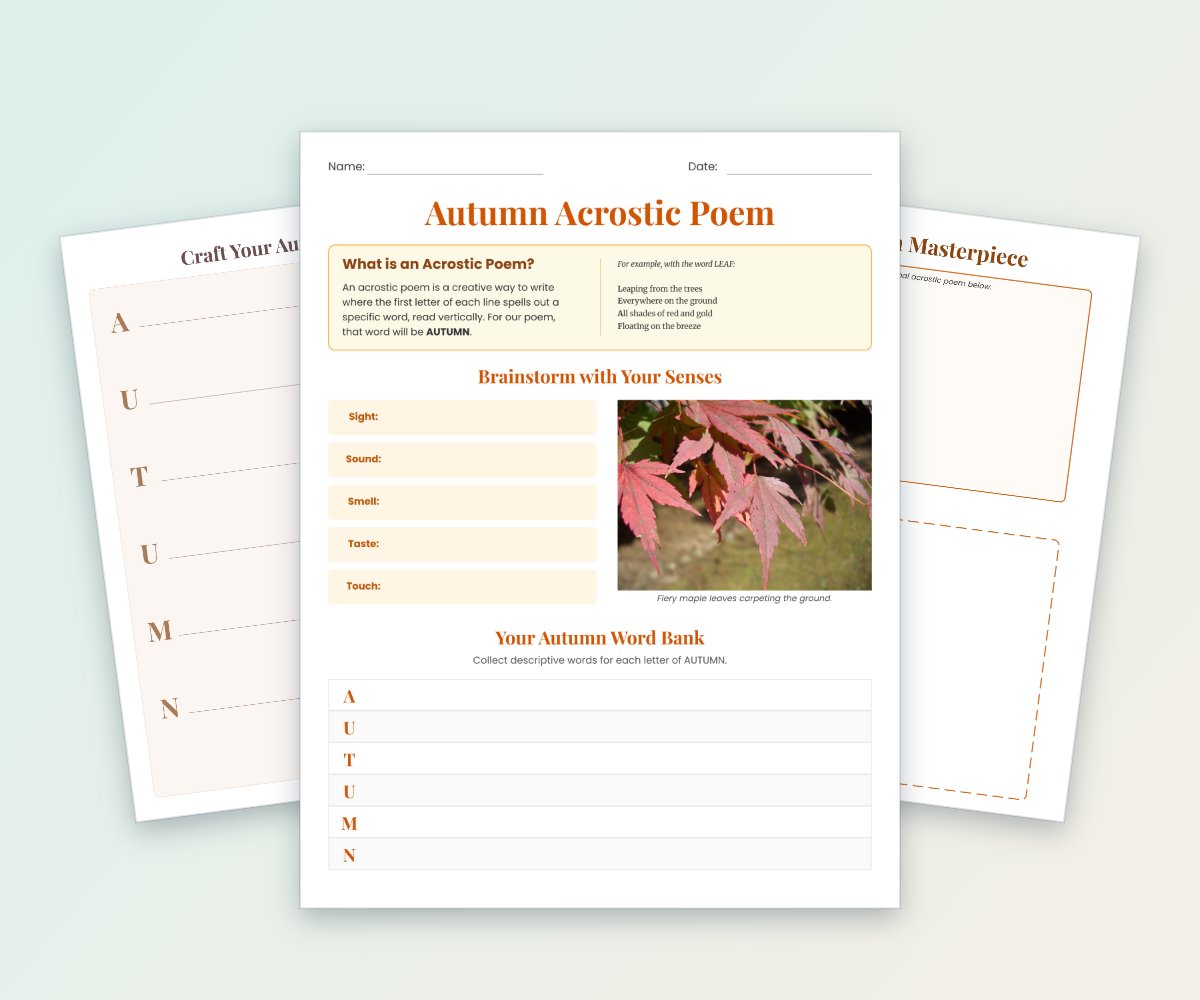
Students brainstorm autumn vocabulary using their senses, explore poetic devices, and collect descriptive words.
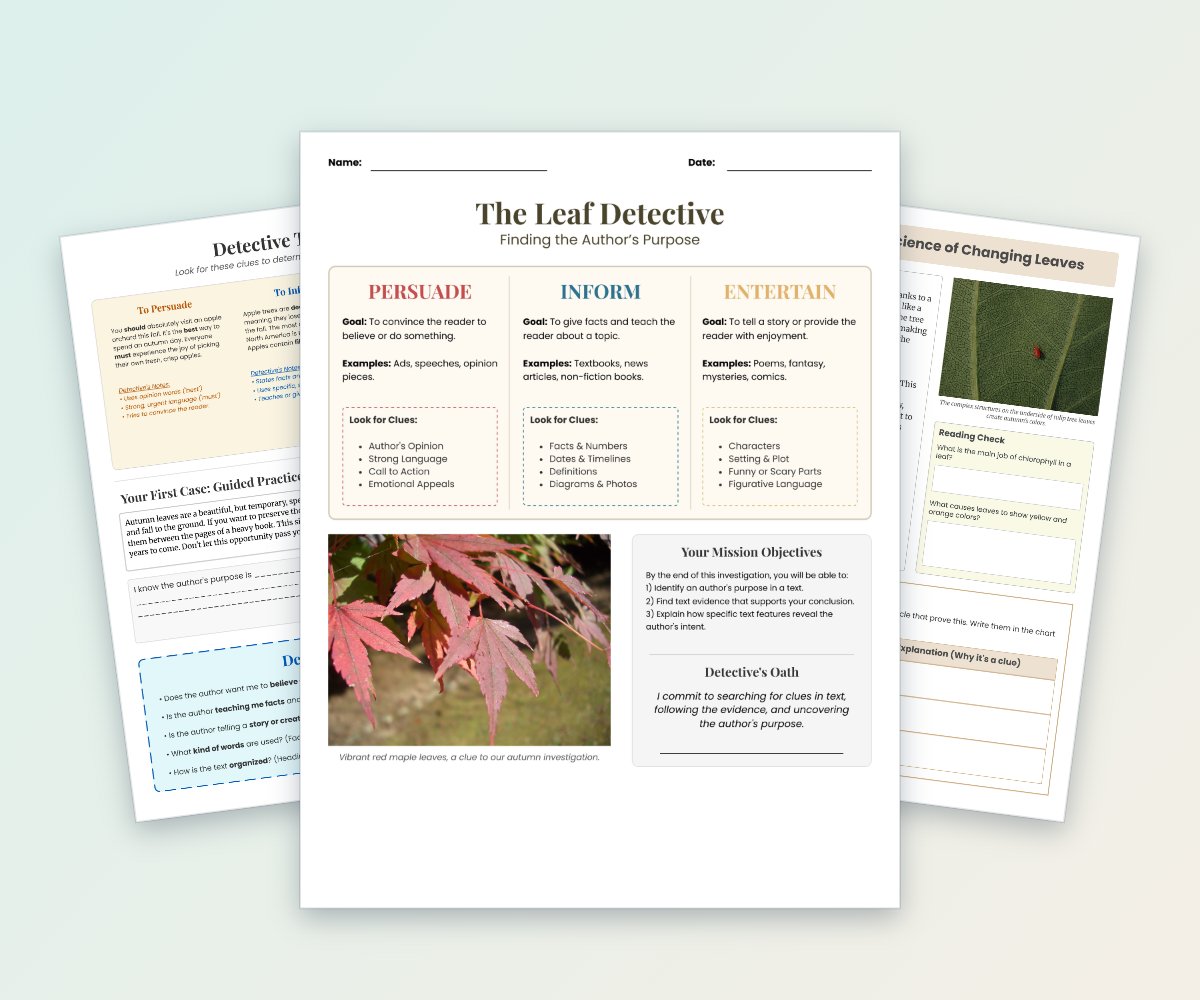
Students investigate whether texts are written to persuade, inform, or entertain using detective-themed examples and text clues.
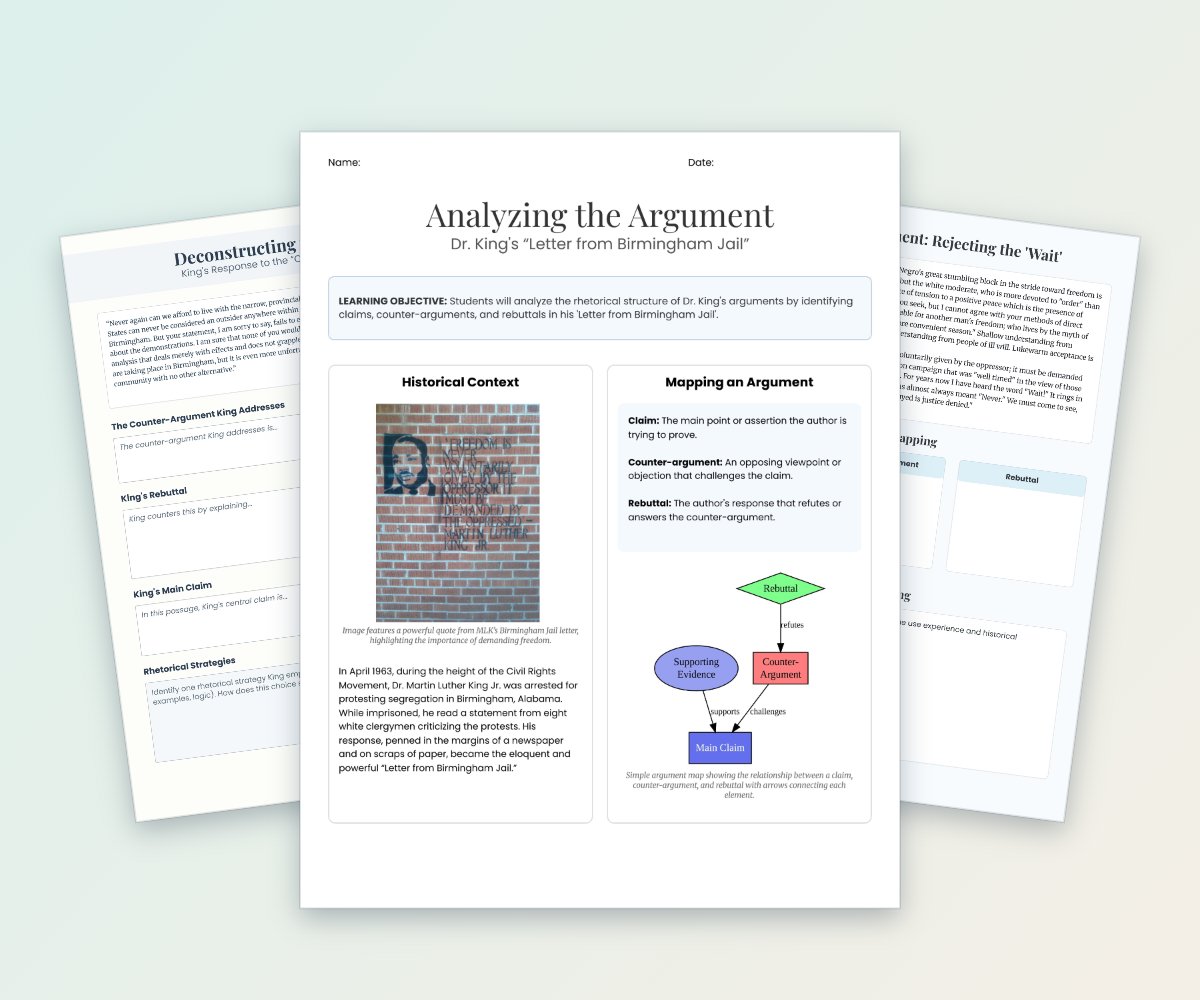
This four-page worksheet guides students through analyzing excerpts from Dr.
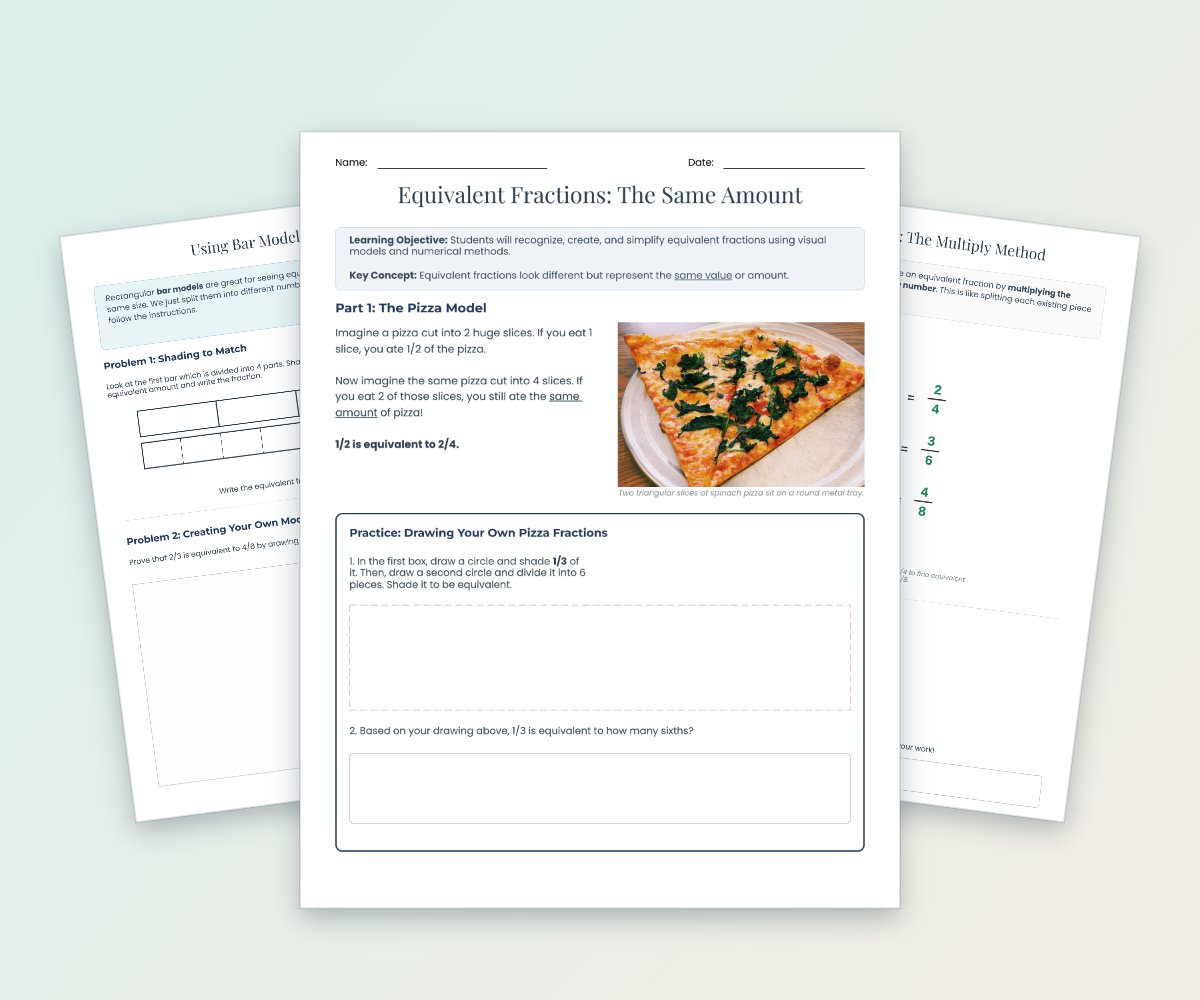
This eight-page worksheet pack teaches students to recognize, create, compare, and simplify equivalent fractions.
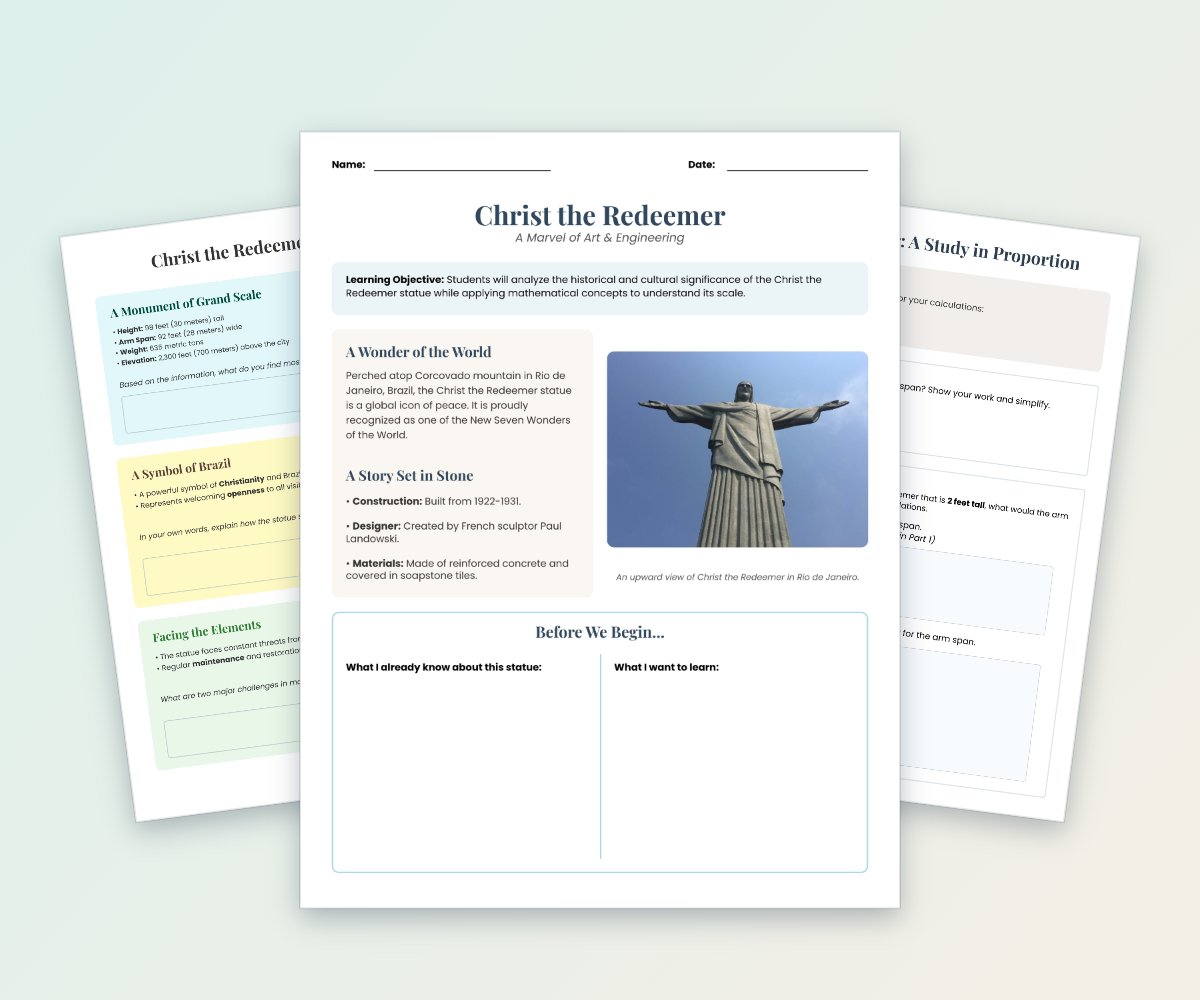
Students explore the history, materials, symbolism, and preservation challenges of Christ the Redeemer in Brazil.
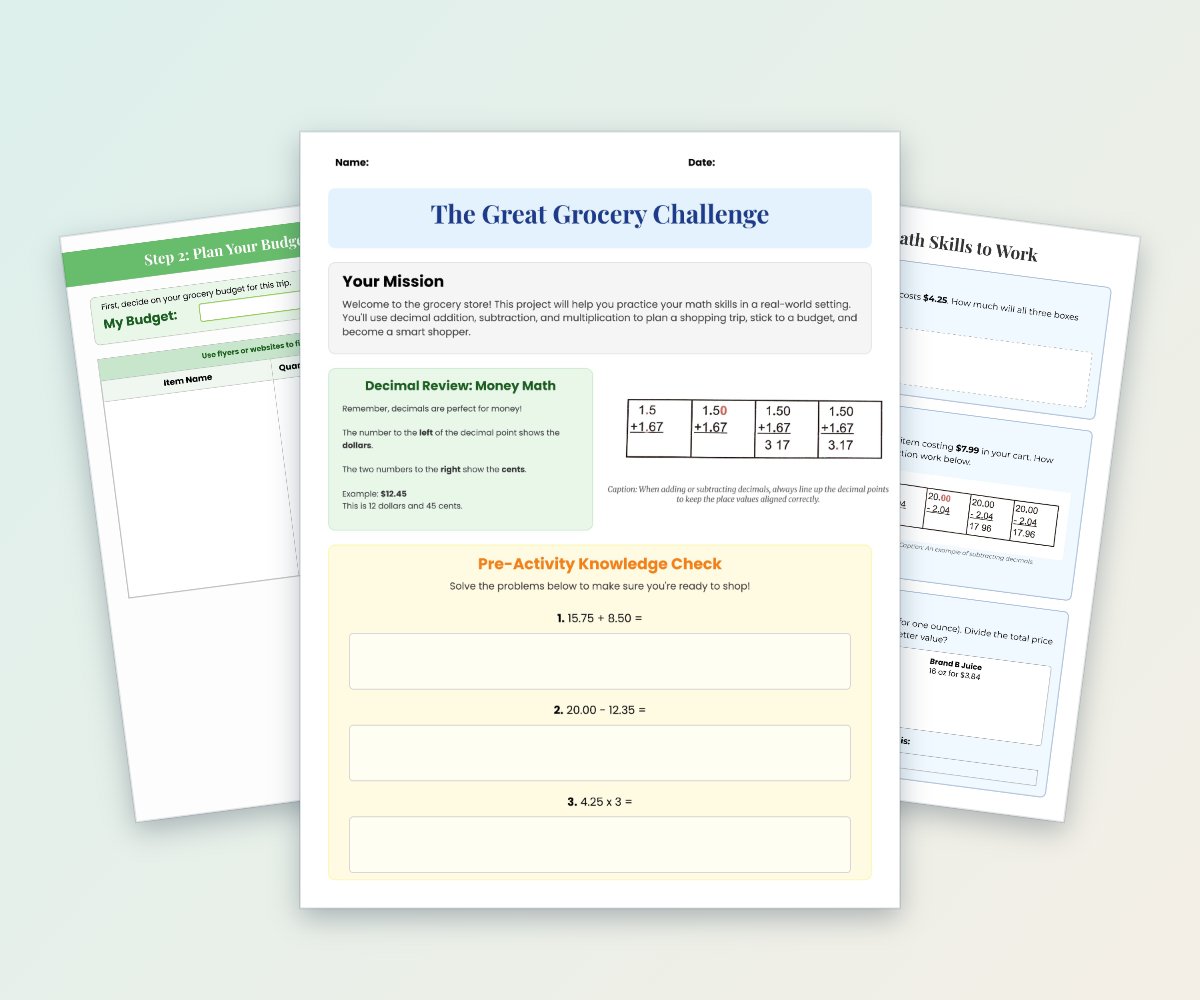
Students plan a grocery trip, create a shopping list, and use decimal addition, subtraction, multiplication, division, budgeting, and sales tax calculations.
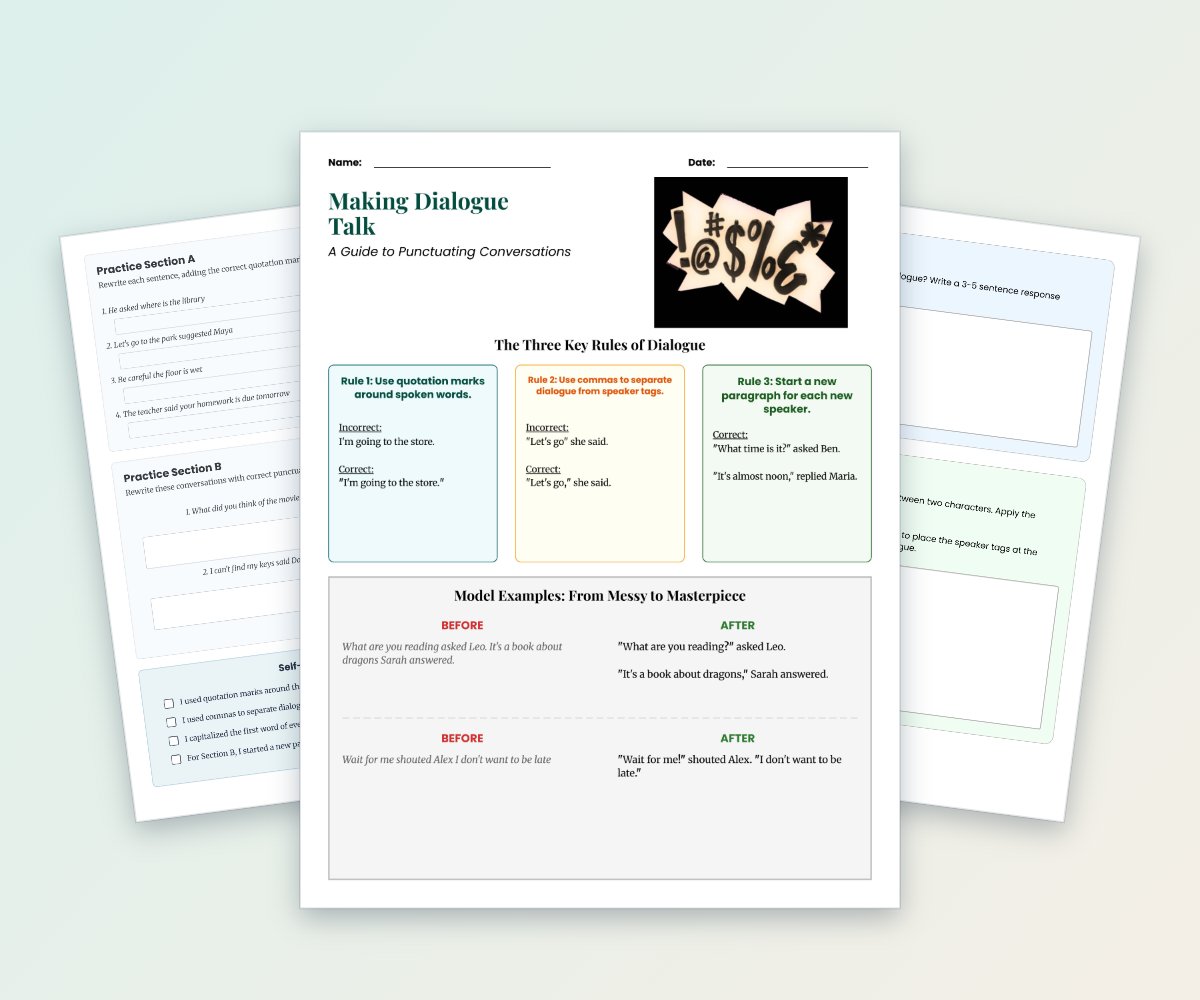
Teach students three key dialogue punctuation rules: quotation marks, commas with speaker tags, and paragraphing for new speakers.
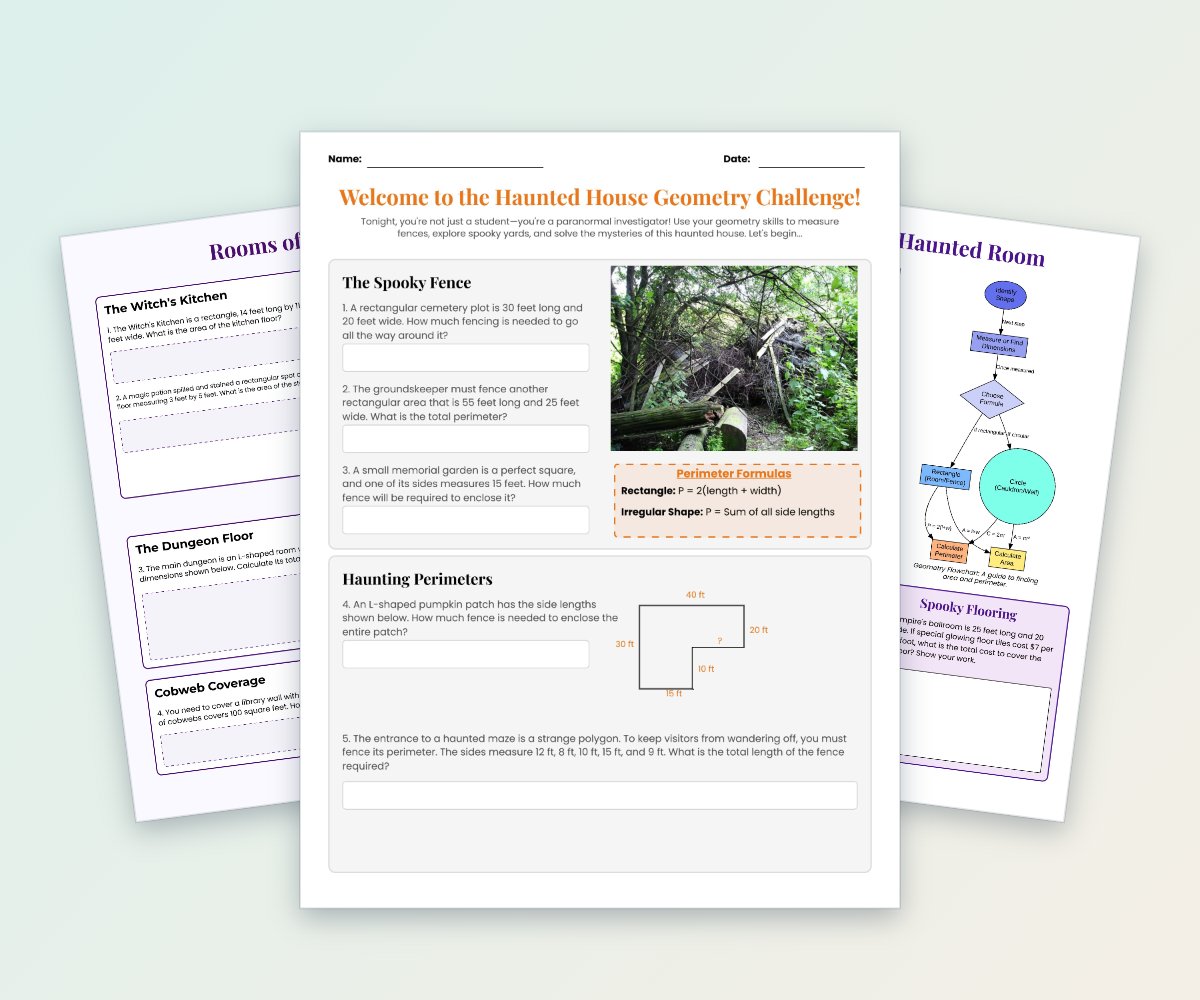
Students solve themed geometry problems involving the perimeter and area of rectangles, squares, polygons, and L-shaped figures.
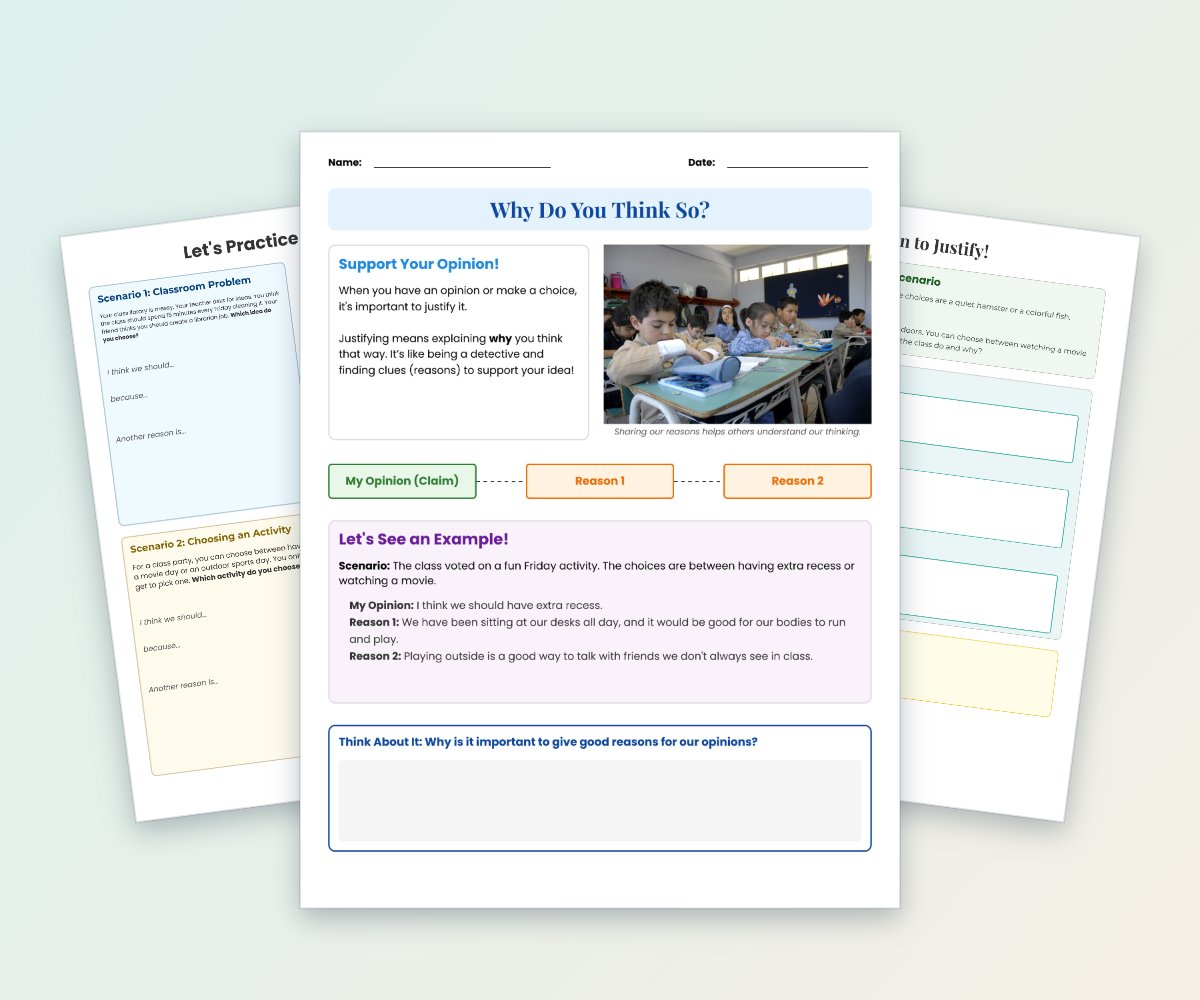
This three-page worksheet helps students state an opinion, provide two supporting reasons, and explain their thinking.
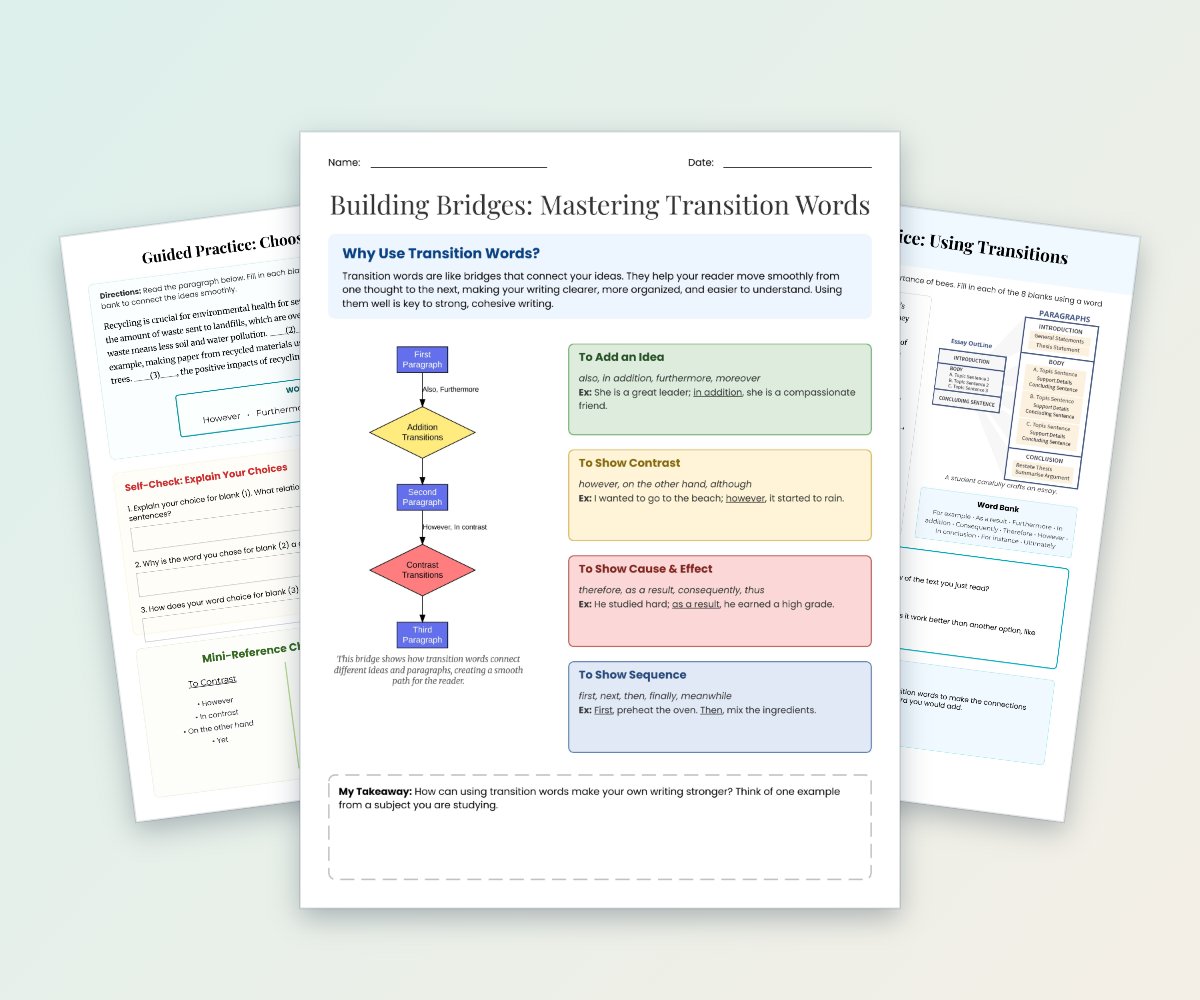
This four-page worksheet helps students understand how transition words connect ideas and improve writing organization.
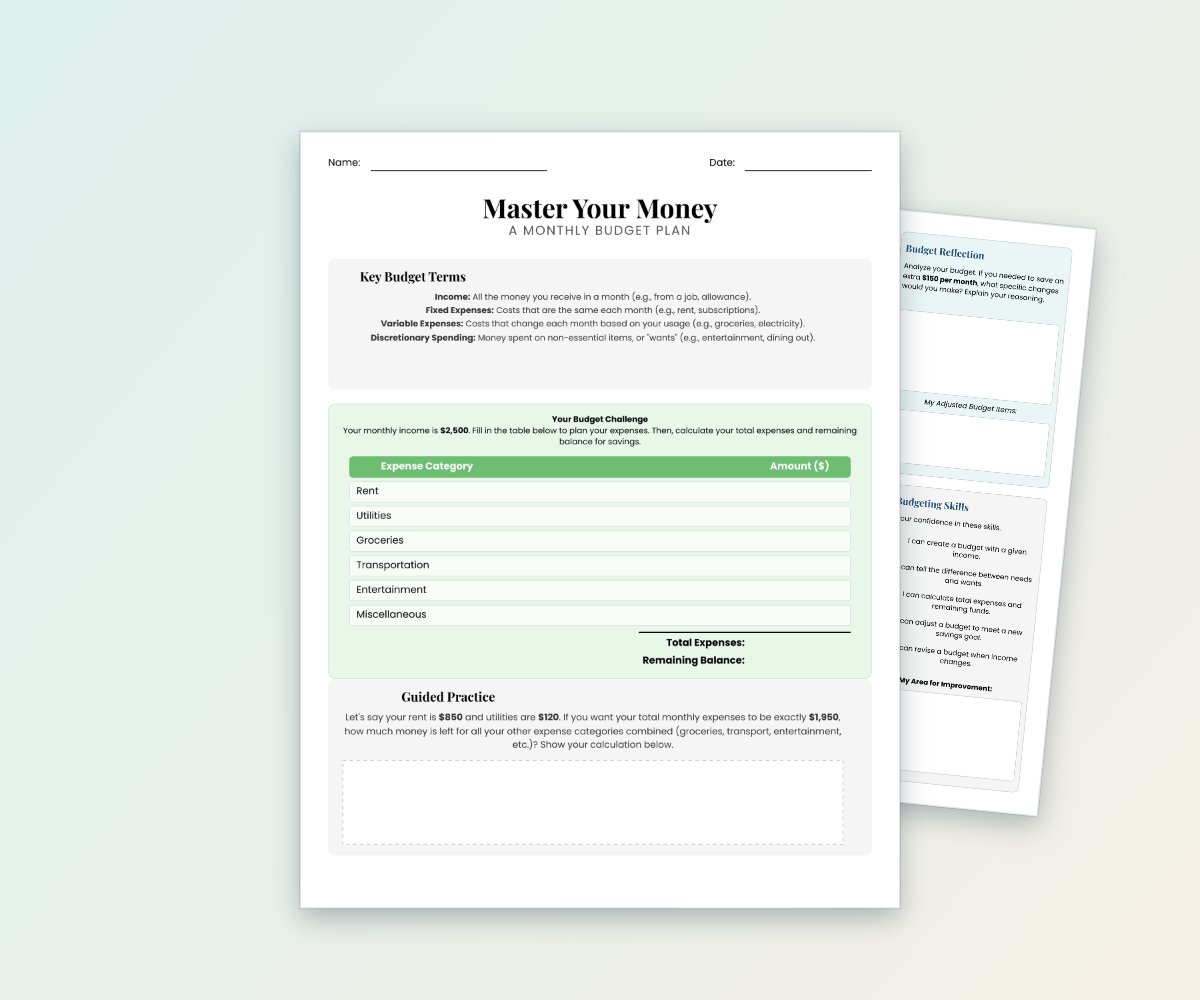
This two-page worksheet teaches students to define budget terminology, categorize expenses, calculate totals and remaining funds, and plan monthly spending.
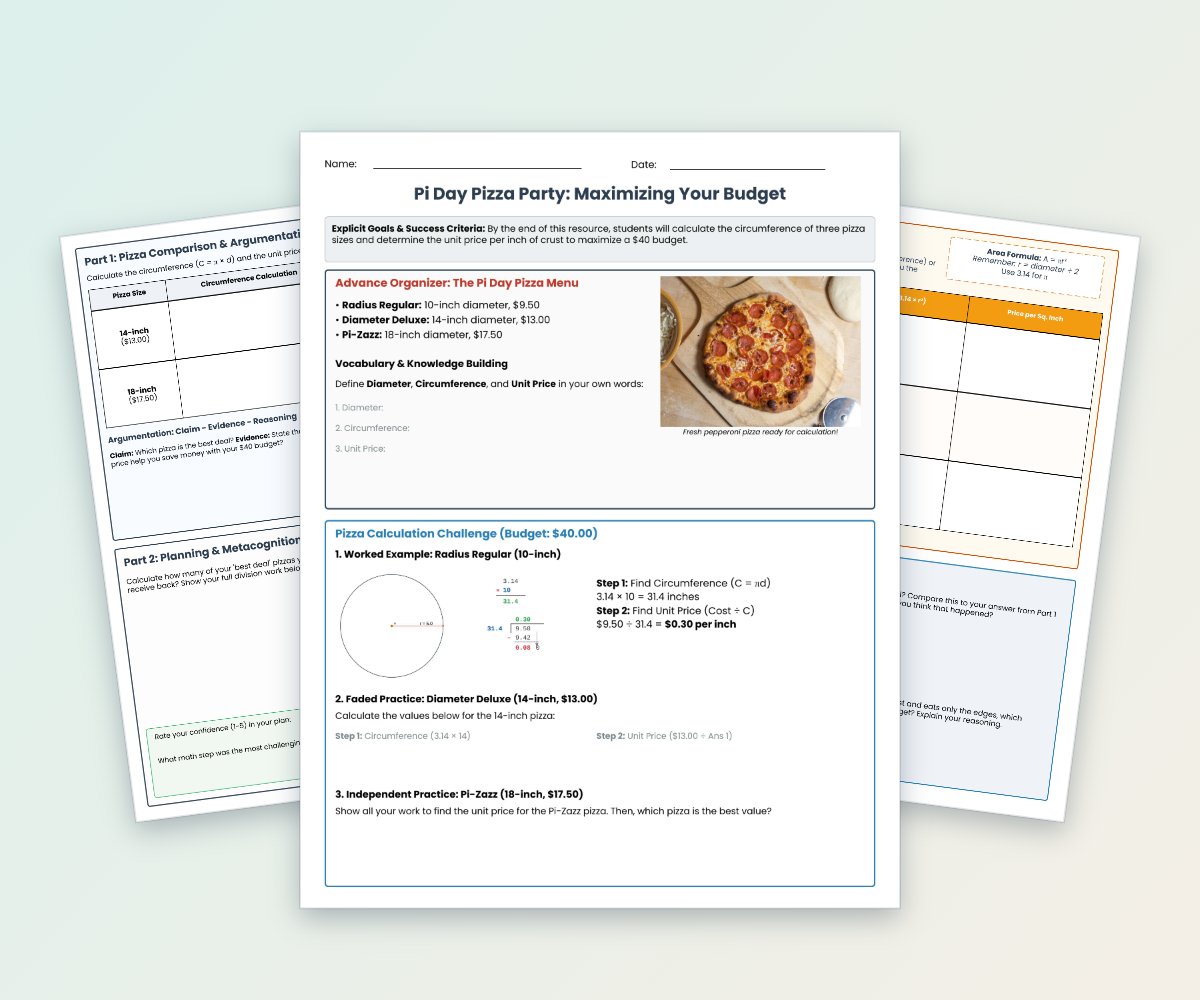
Students calculate pizza circumference, compare unit prices, maximize a $40 budget, and evaluate area-based value.
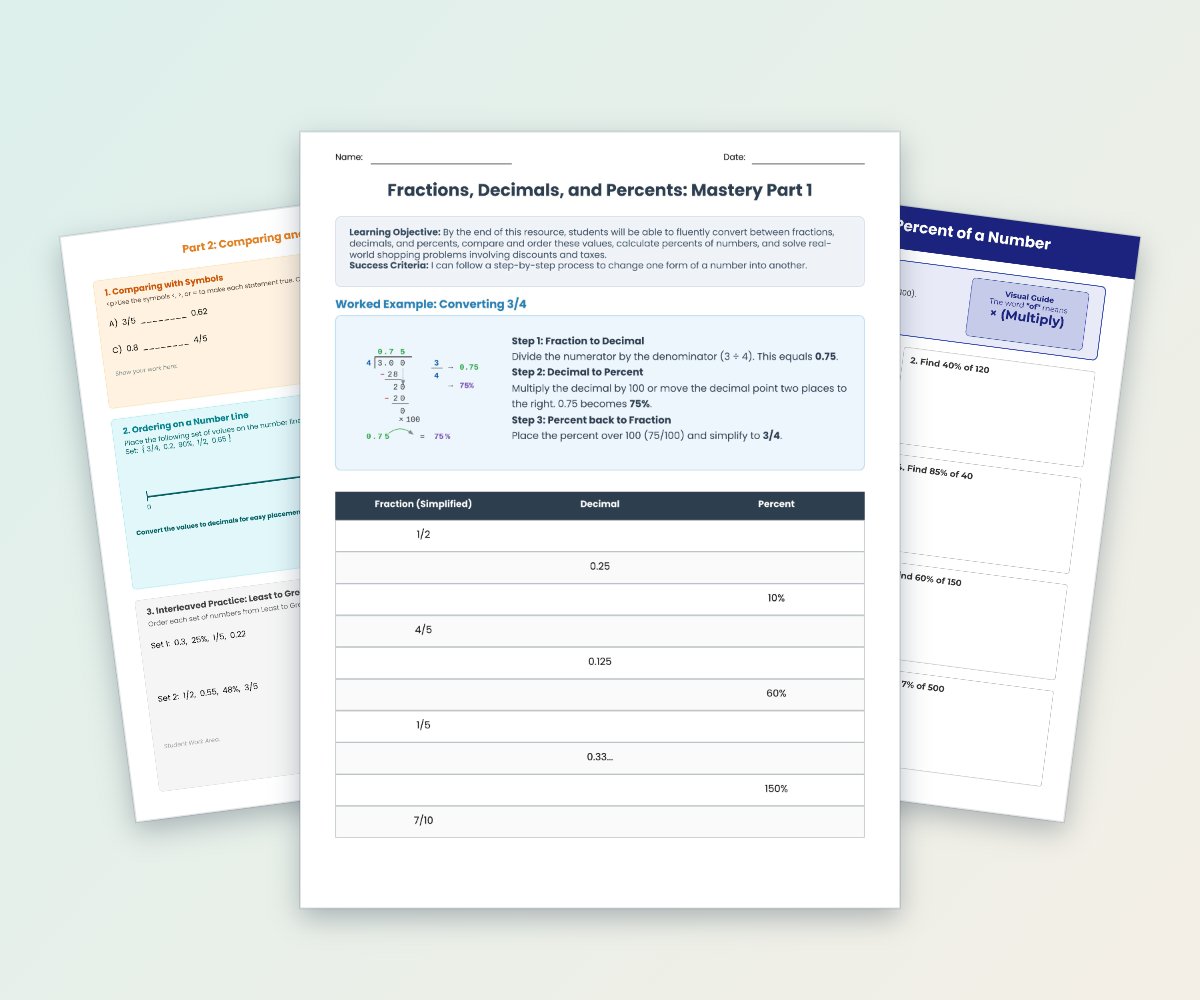
This six-page review pack teaches students to convert among fractions, decimals, and percents, compare and order values, calculate percentages, and solve shopping problems.
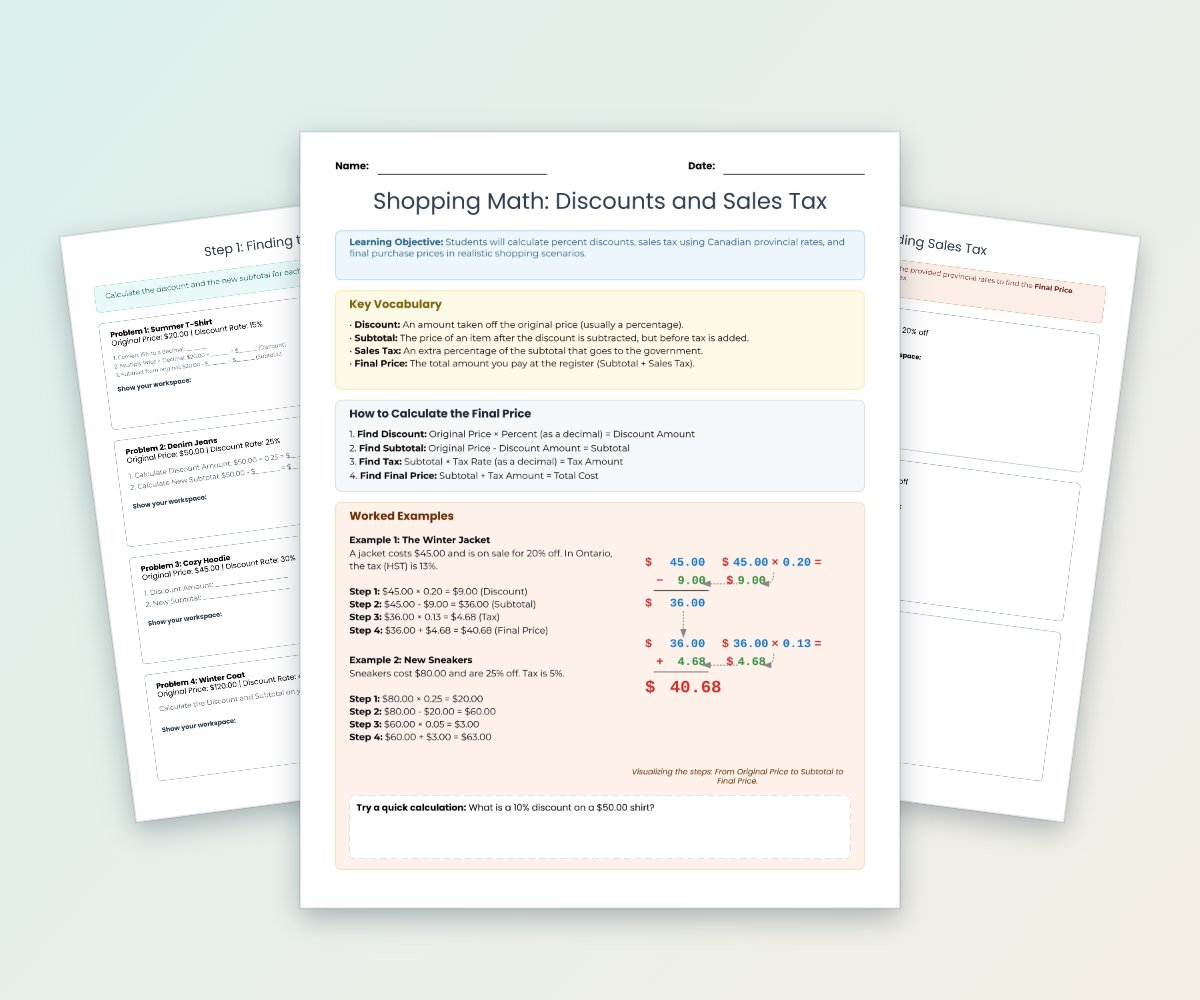
Students practice calculating percentage discounts, subtotals, sales tax, and final purchase prices using realistic shopping scenarios.
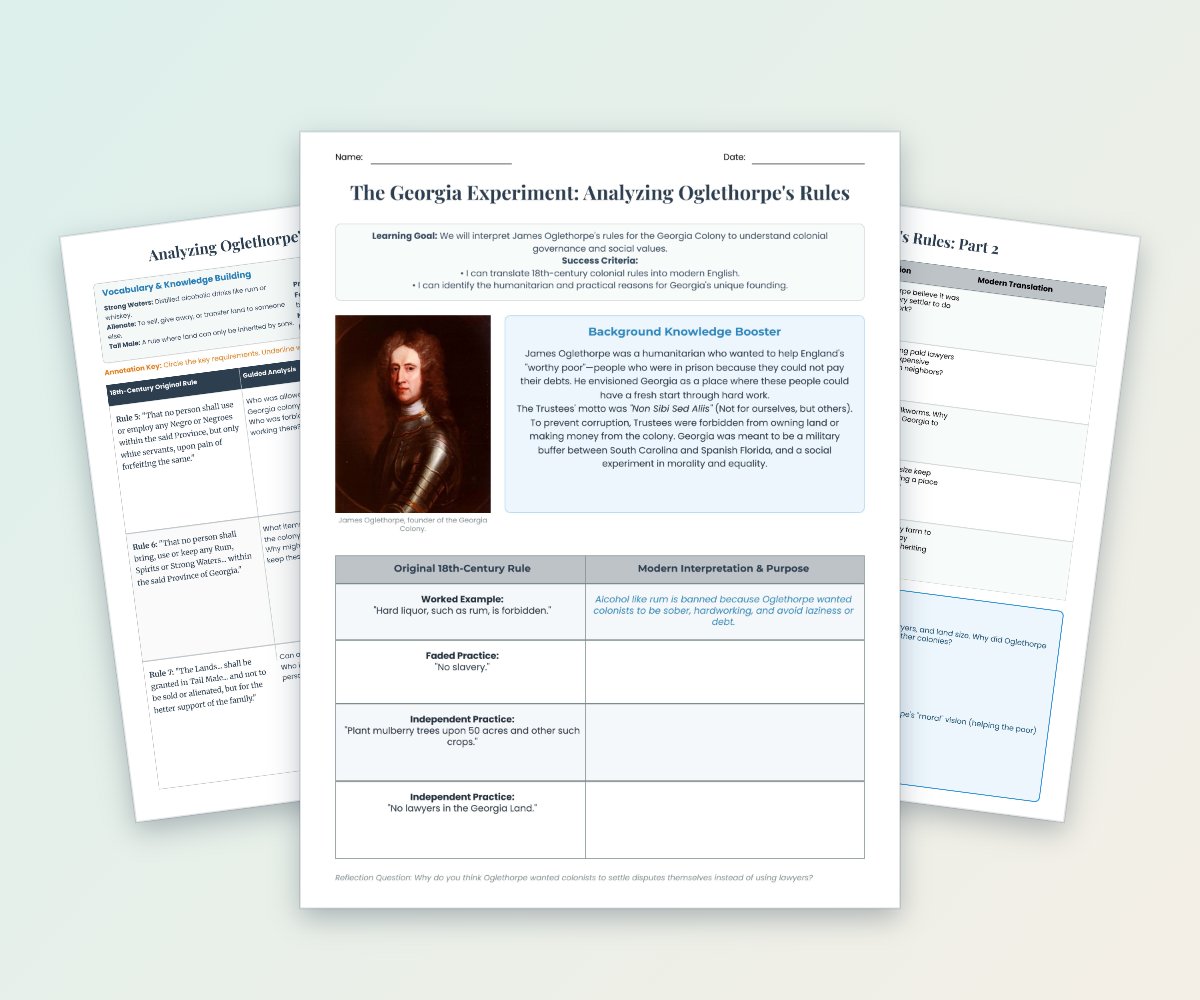
Students examine James Oglethorpe's rules for the Georgia Colony, translate historical language, and analyze the humanitarian, practical, and social purposes behind the rules.
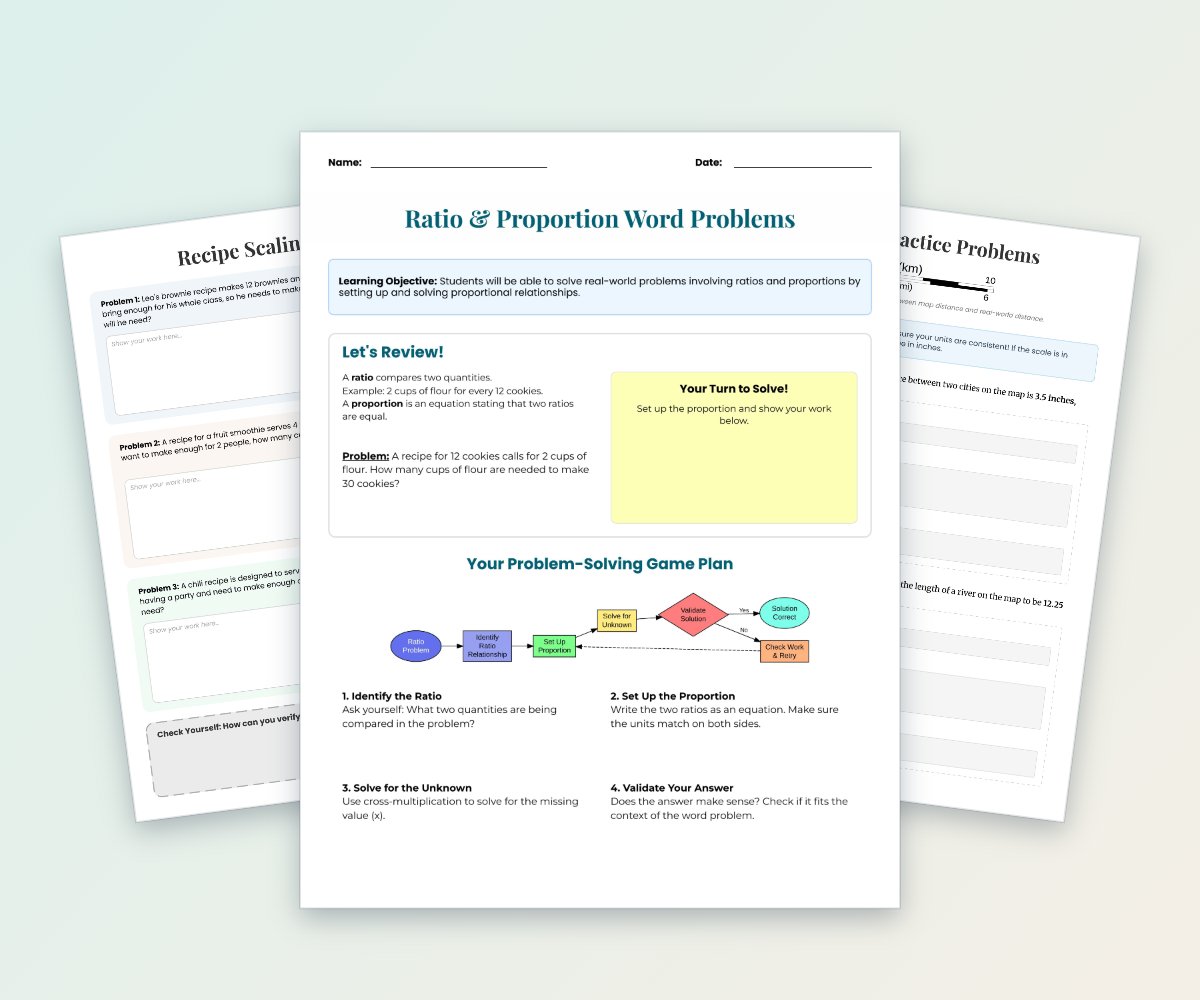
Students review ratios and proportions, then solve real-world problems involving recipe scaling and map scales.
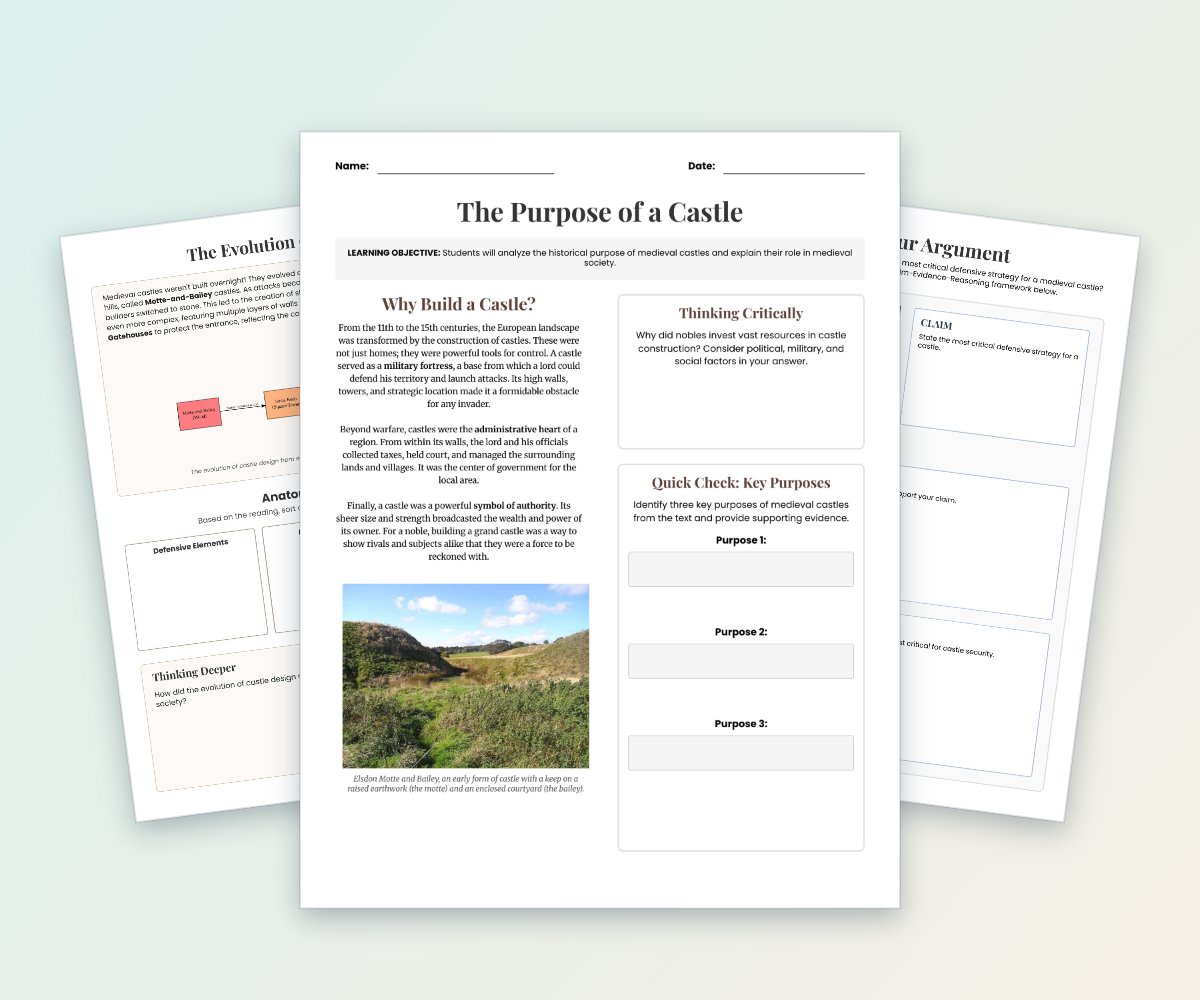
Students examine why medieval castles were built and how their designs evolved from motte-and-bailey forts to stone and concentric castles.
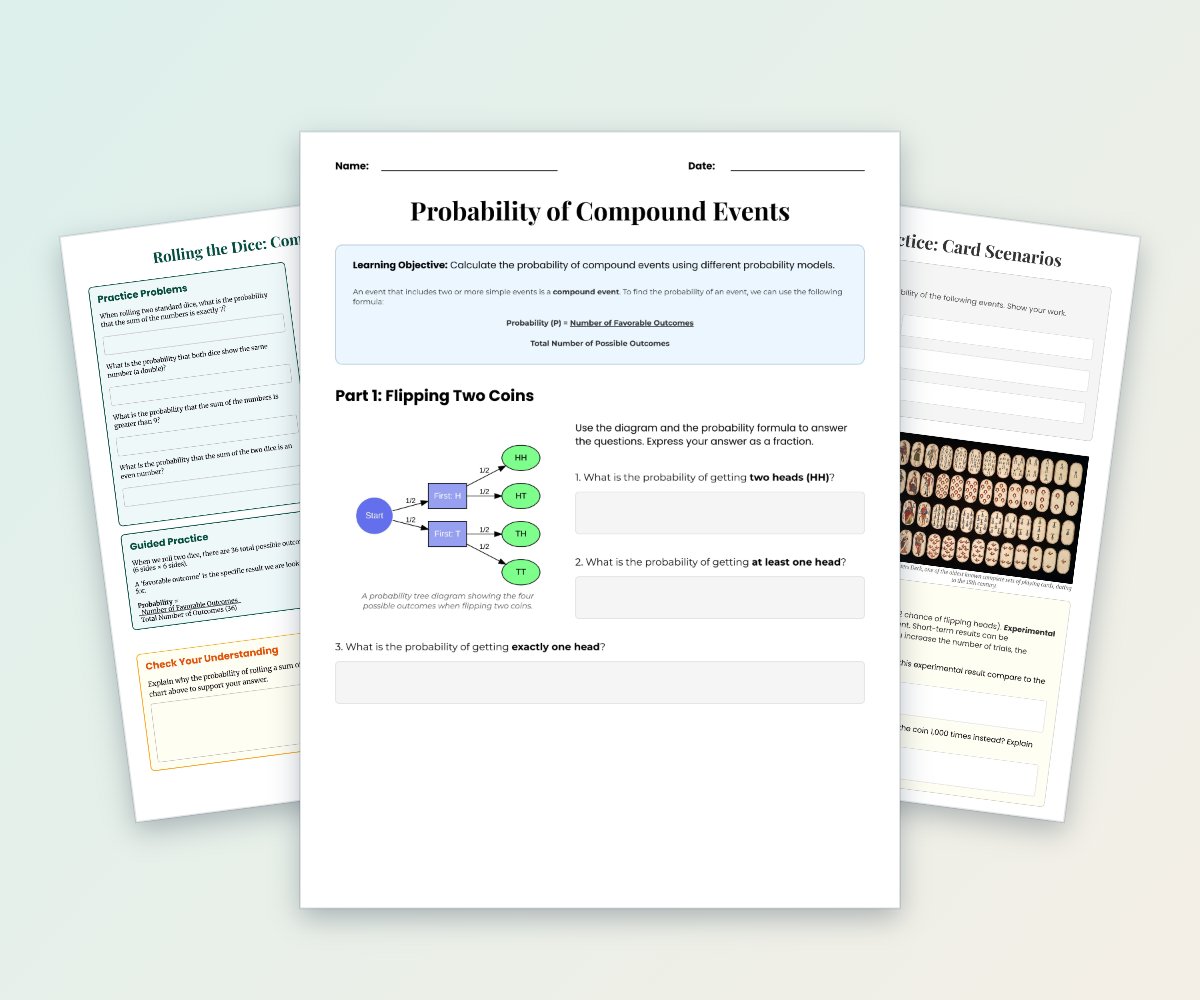
This four-page worksheet teaches students to calculate compound-event probabilities using coin flips, dice, card draws, tree diagrams, outcome charts, and probability models.
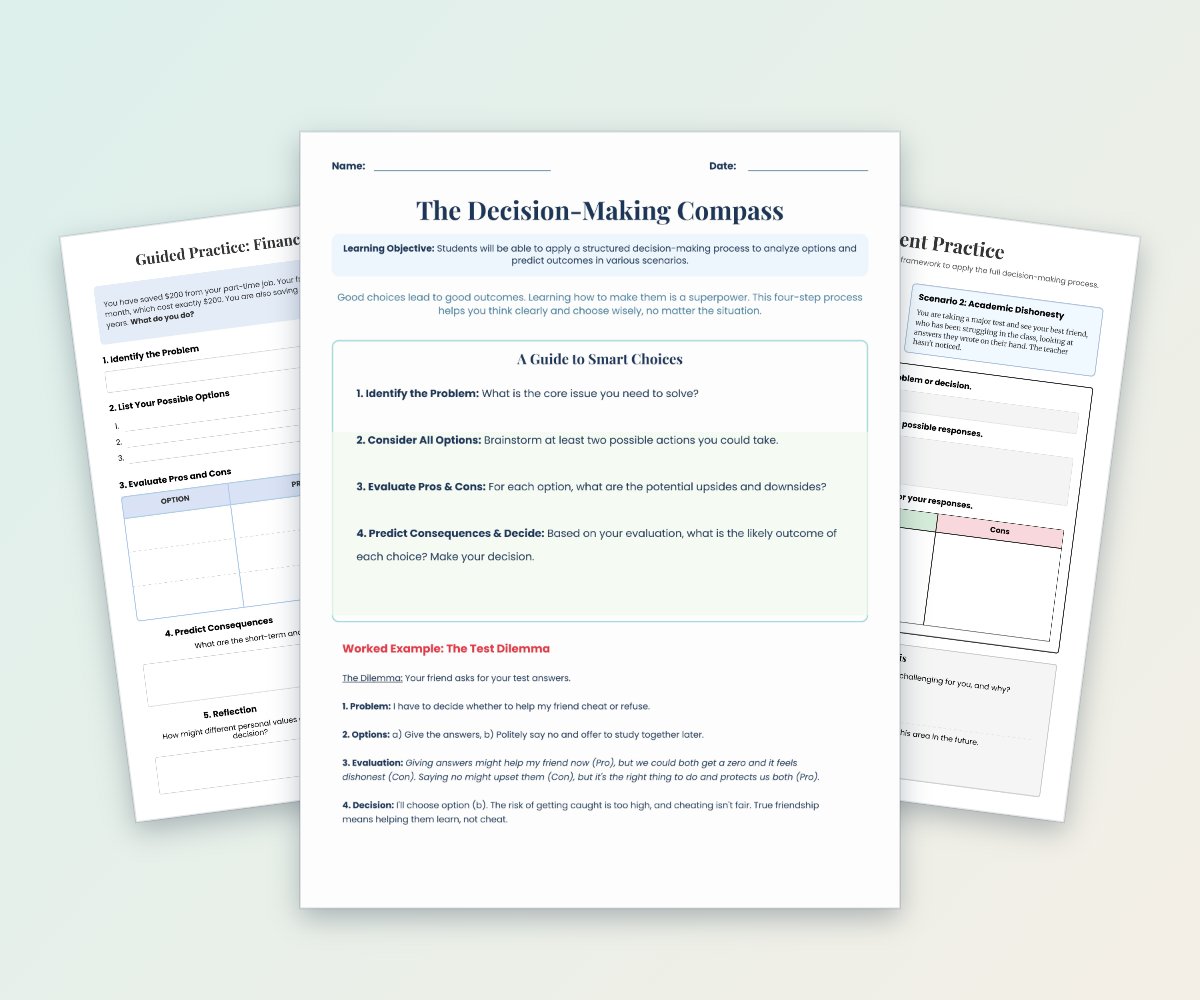
Students learn a four-step decision-making process: identify the problem, consider options, evaluate pros and cons, and predict consequences.
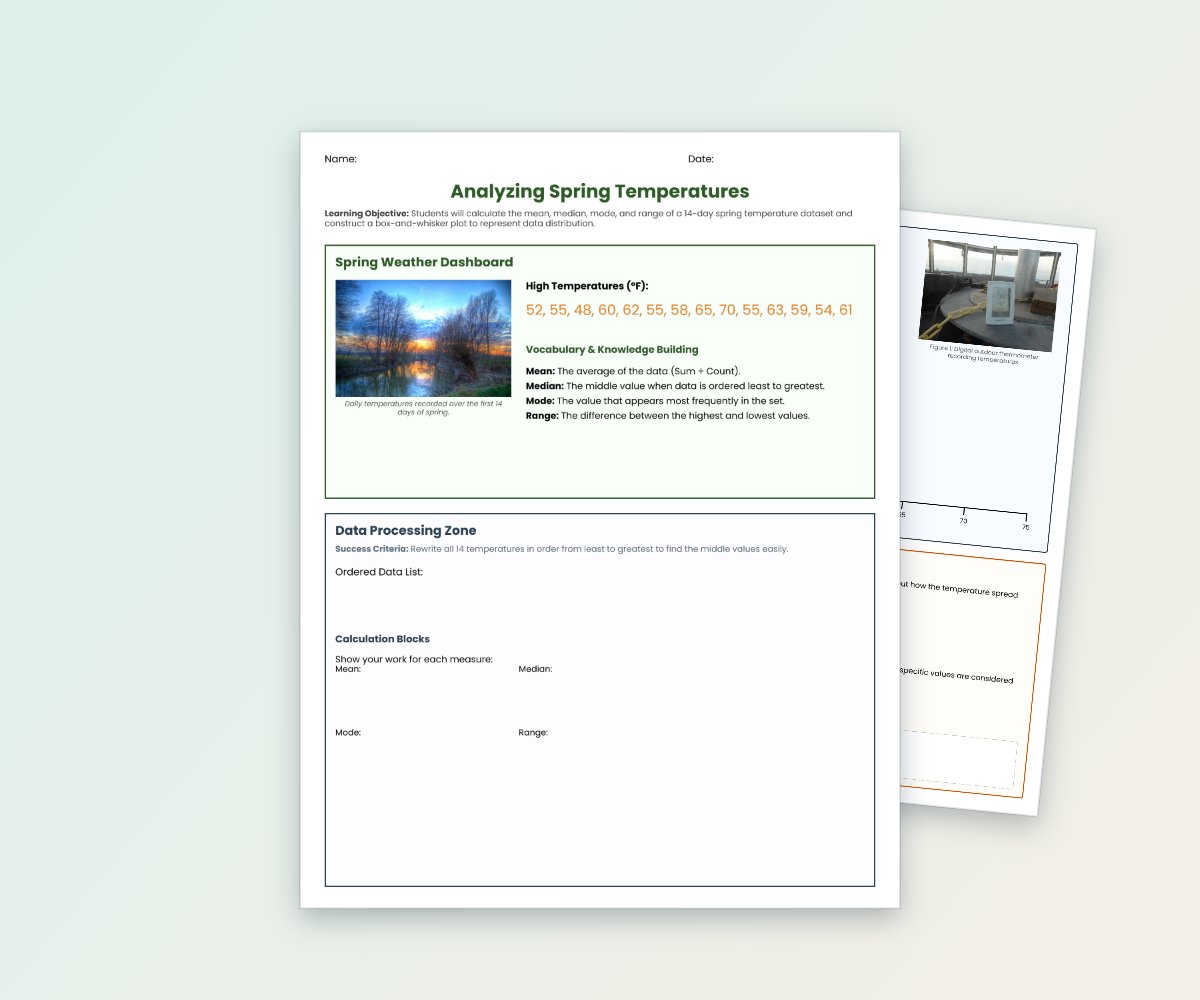
Students analyze a 14-day spring temperature dataset by calculating the mean, median, mode, and range.
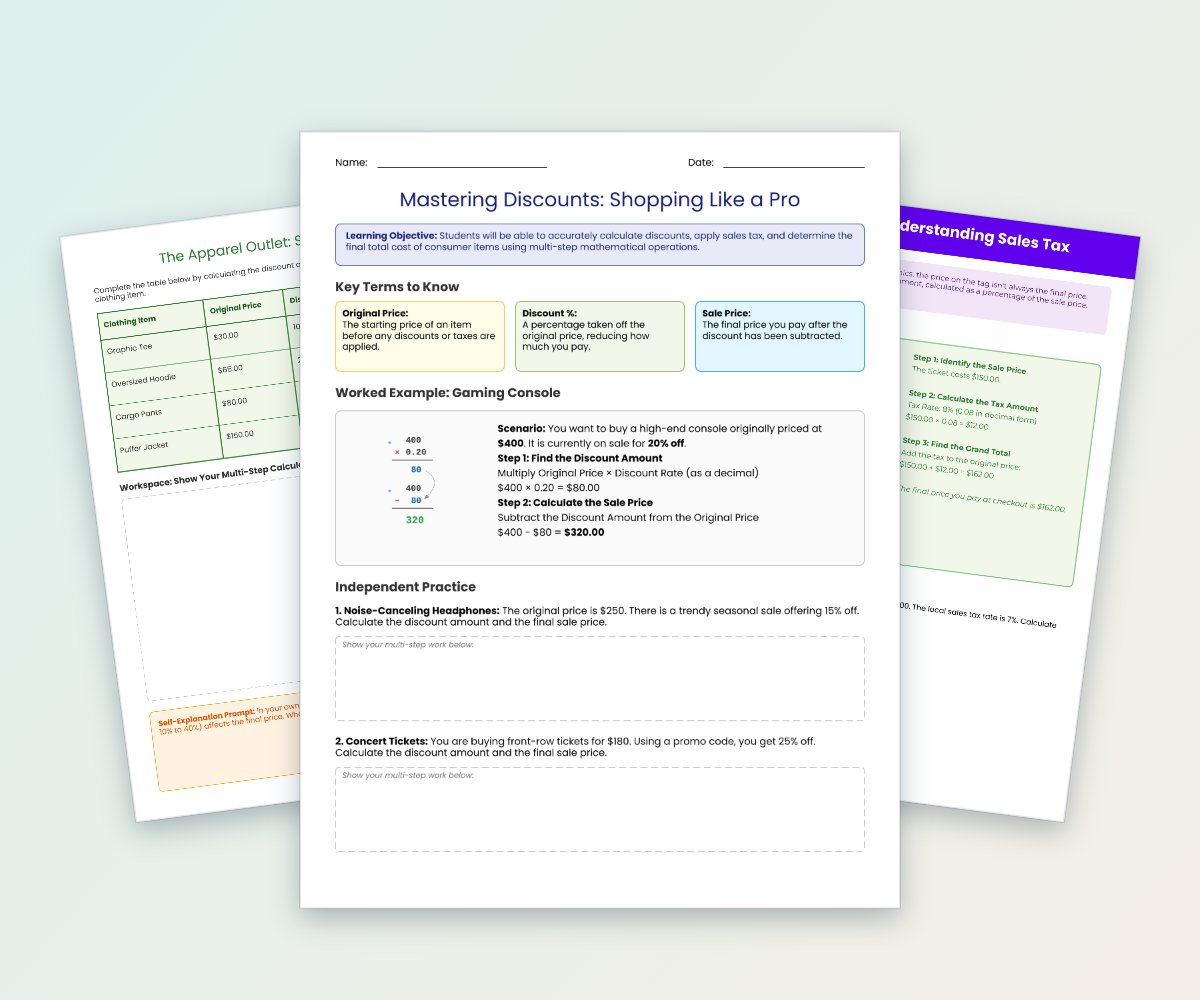
Students calculate discount amounts, sale prices, sales tax, and final costs using realistic shopping scenarios.
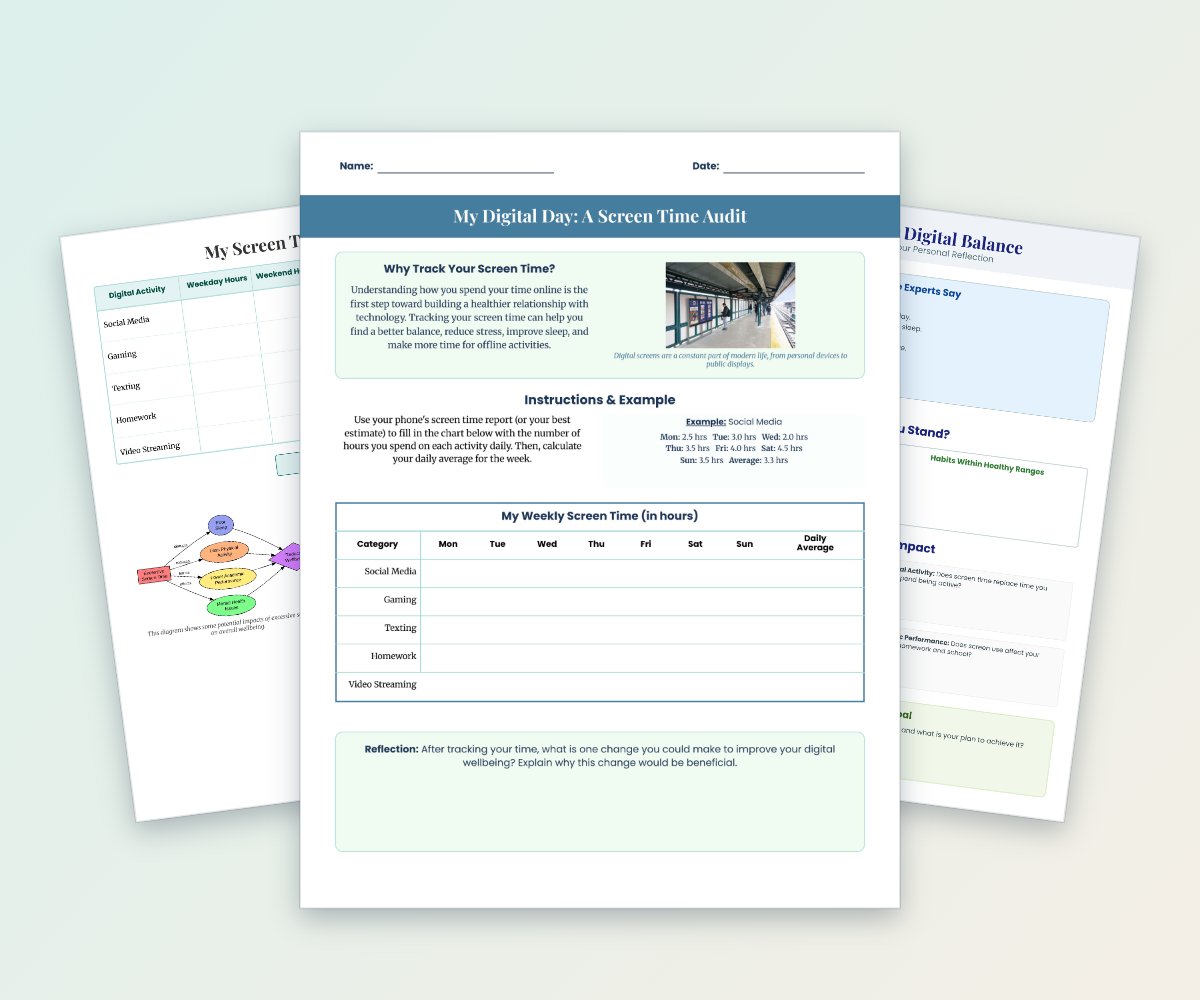
This four-page worksheet helps students track daily screen use across activities, calculate weekly totals, and compare habits with recommended recreational screen-time guidelines.
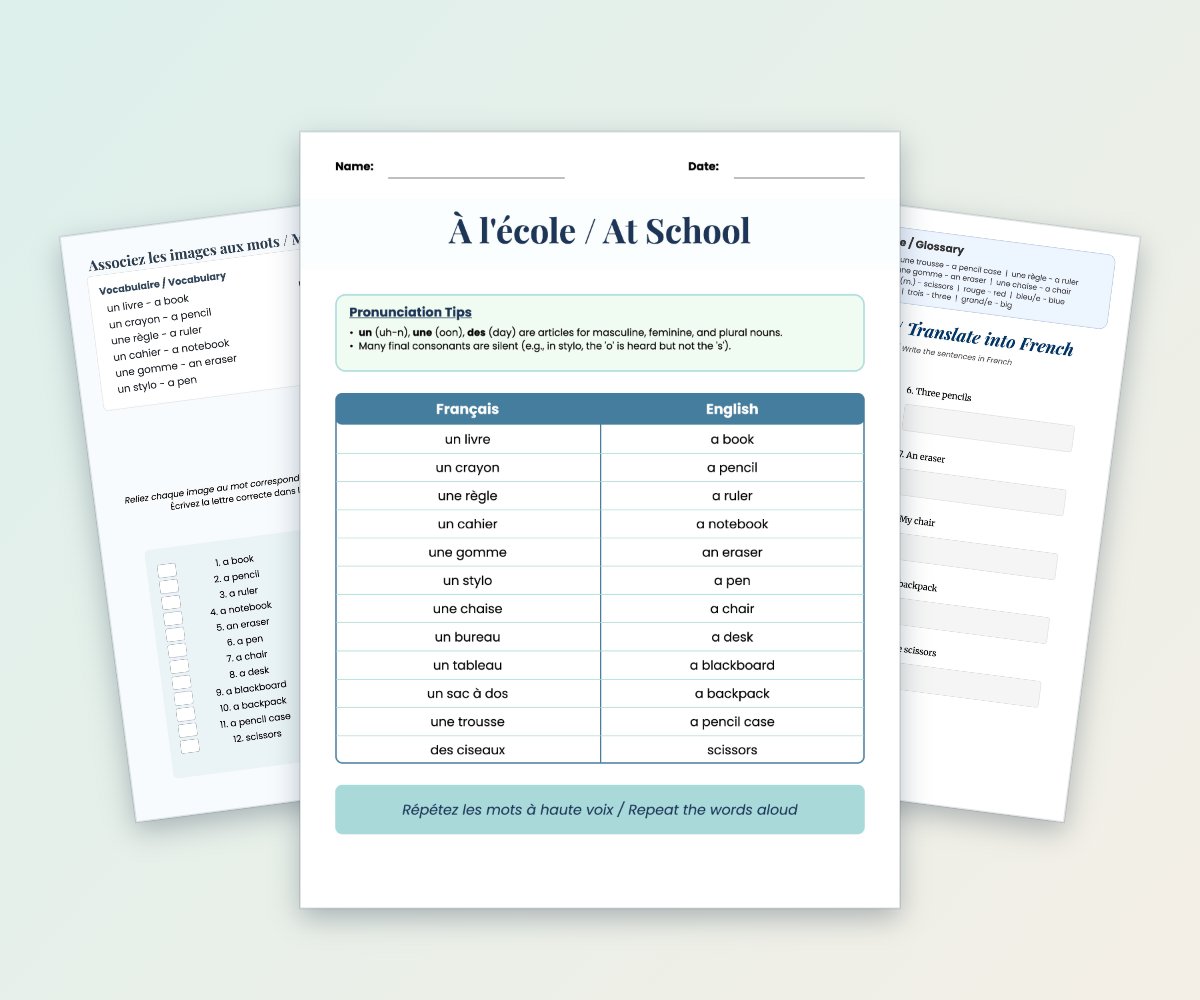
This bilingual French worksheet teaches common school-related vocabulary, including classroom objects, articles, colors, numbers, and possessive words.
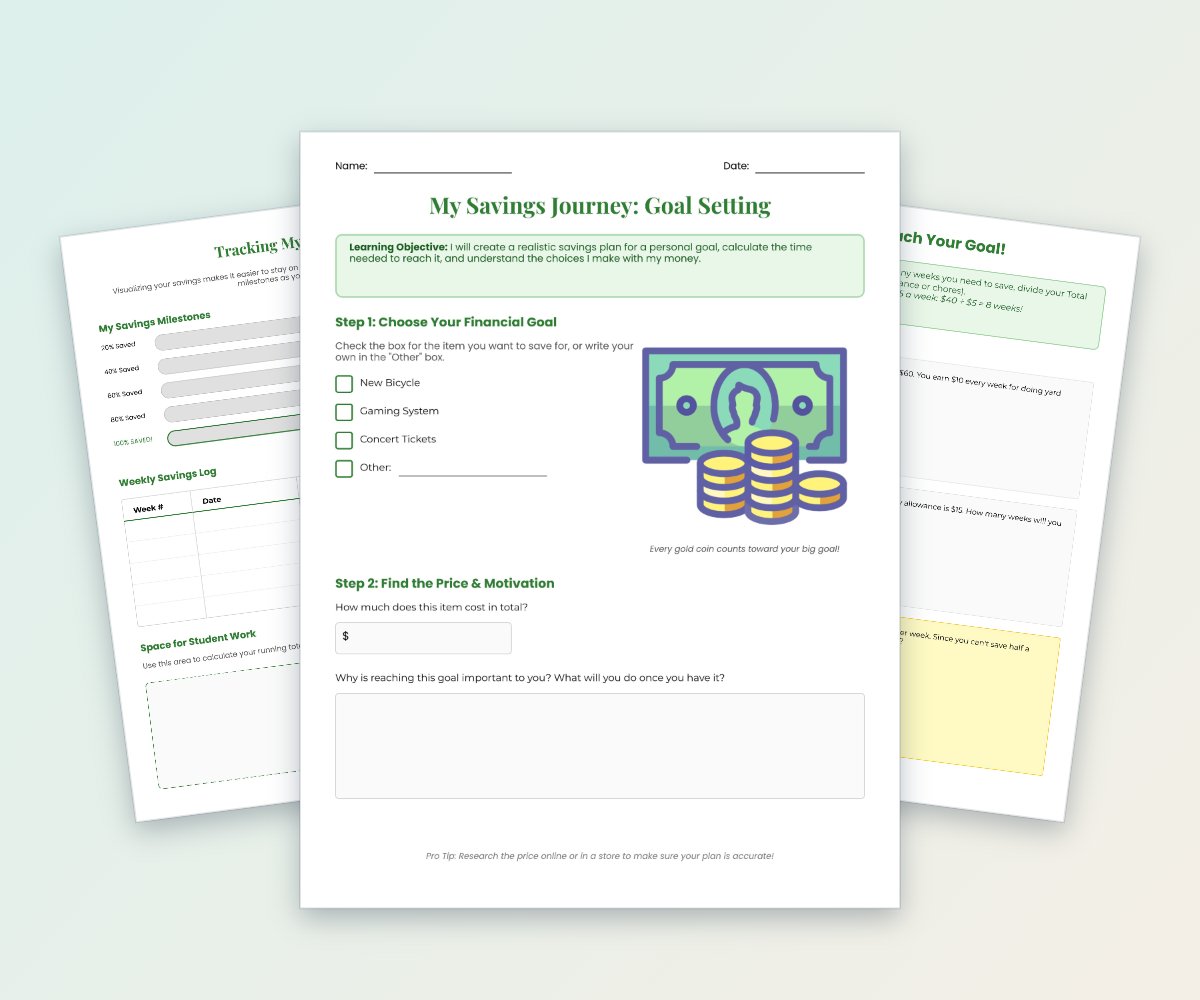
Students create a savings goal, calculate the time needed to reach it, track deposits, and reflect on spending tradeoffs.