AI in the Classroom: An Ethical Guide
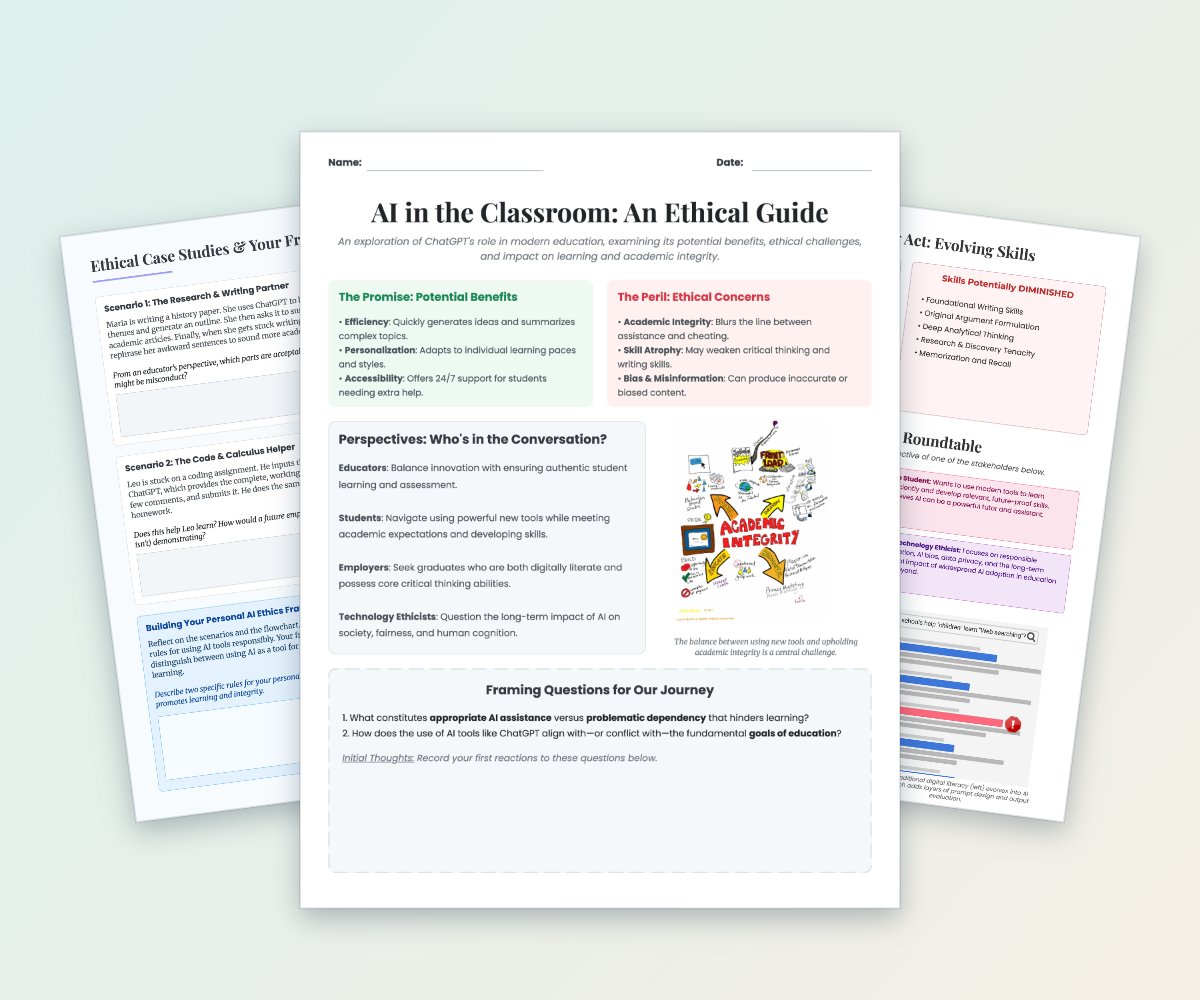
This four-page classroom activity guides students in examining ChatGPT’s benefits, risks, and impact on learning and academic integrity.
$4.99
Classroom-ready resources written for grade 11: printable worksheets, slides, activities and planning tools you can download and use straight away. Browse by subject below.
This four-page classroom activity guides students in examining ChatGPT’s benefits, risks, and impact on learning and academic integrity.
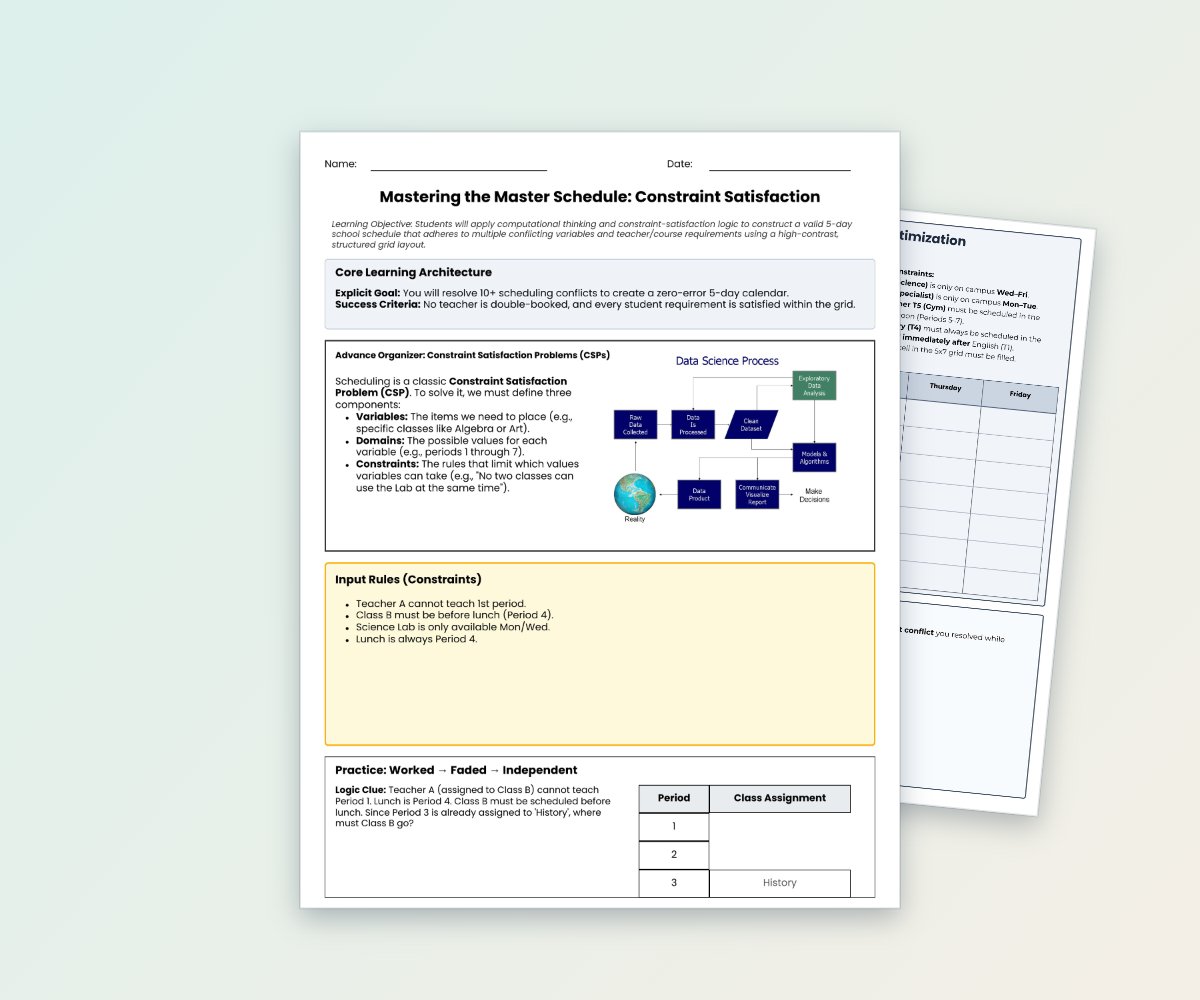
Students apply computational thinking and constraint-satisfaction logic to build a valid five-day school schedule.
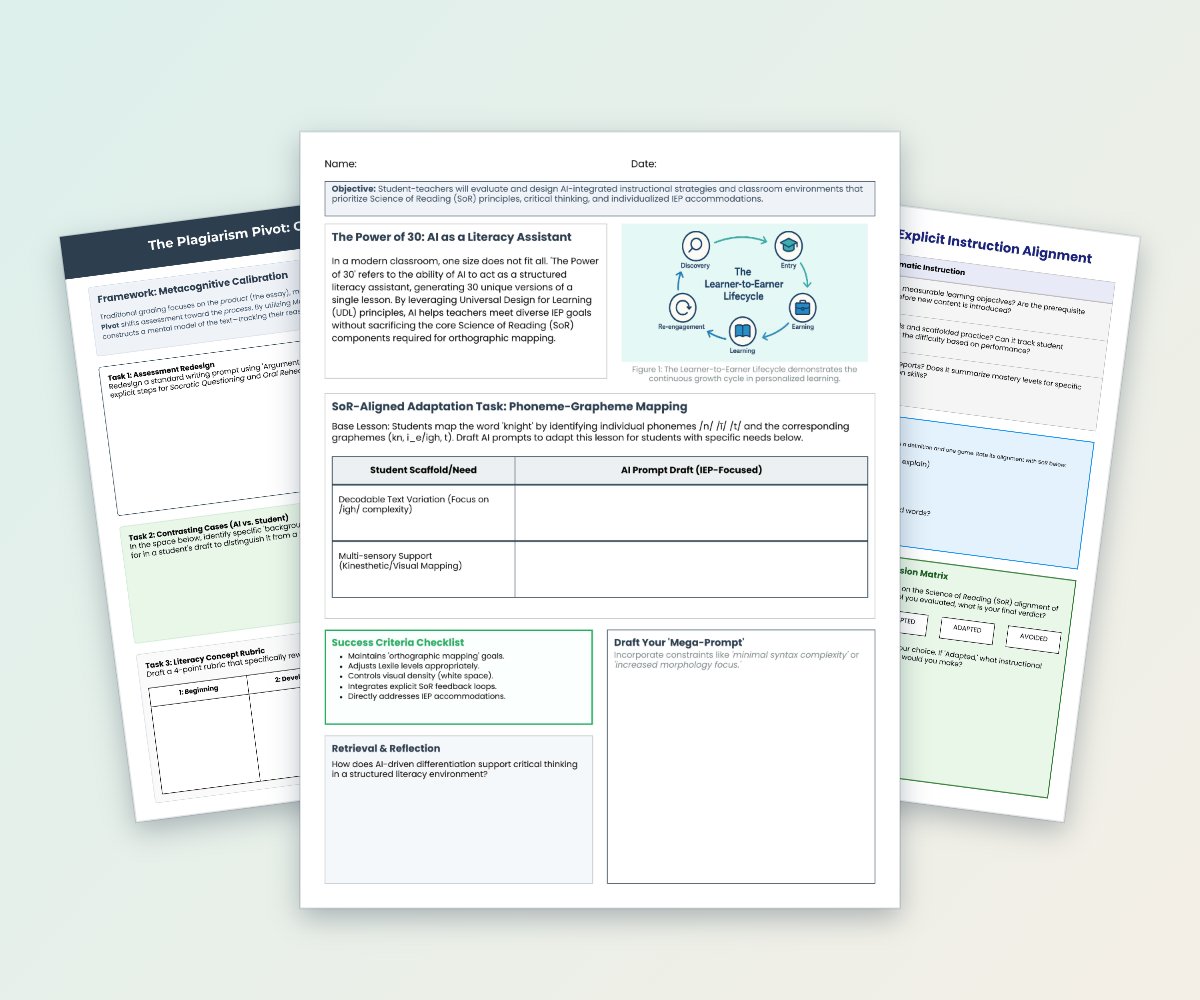
This professional learning activity pack guides student-teachers in designing AI-supported literacy instruction aligned with Science of Reading, UDL, critical thinking, and IEP accommodations.
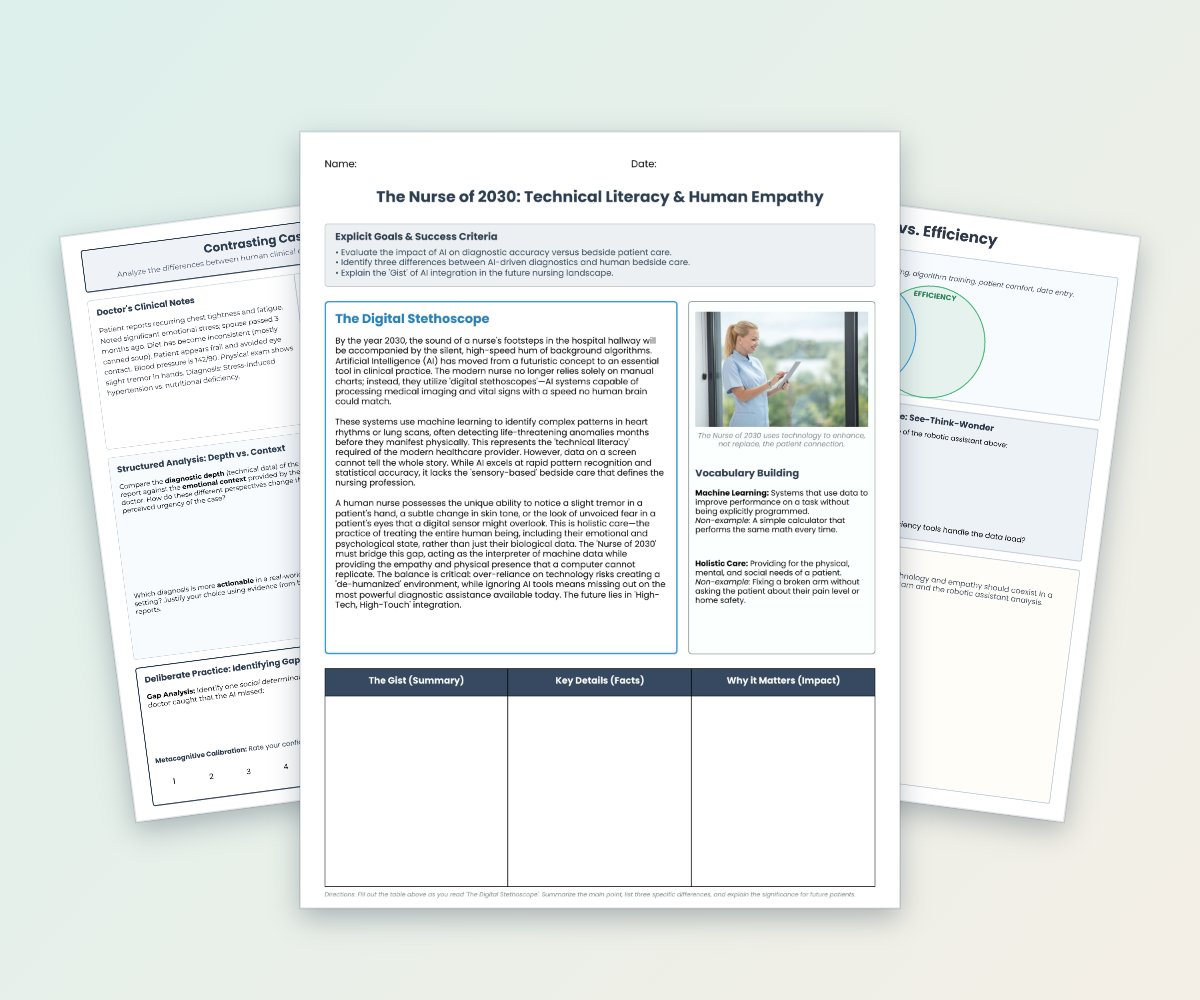
This lesson explores how artificial intelligence may affect diagnostic accuracy and bedside nursing care by 2030.
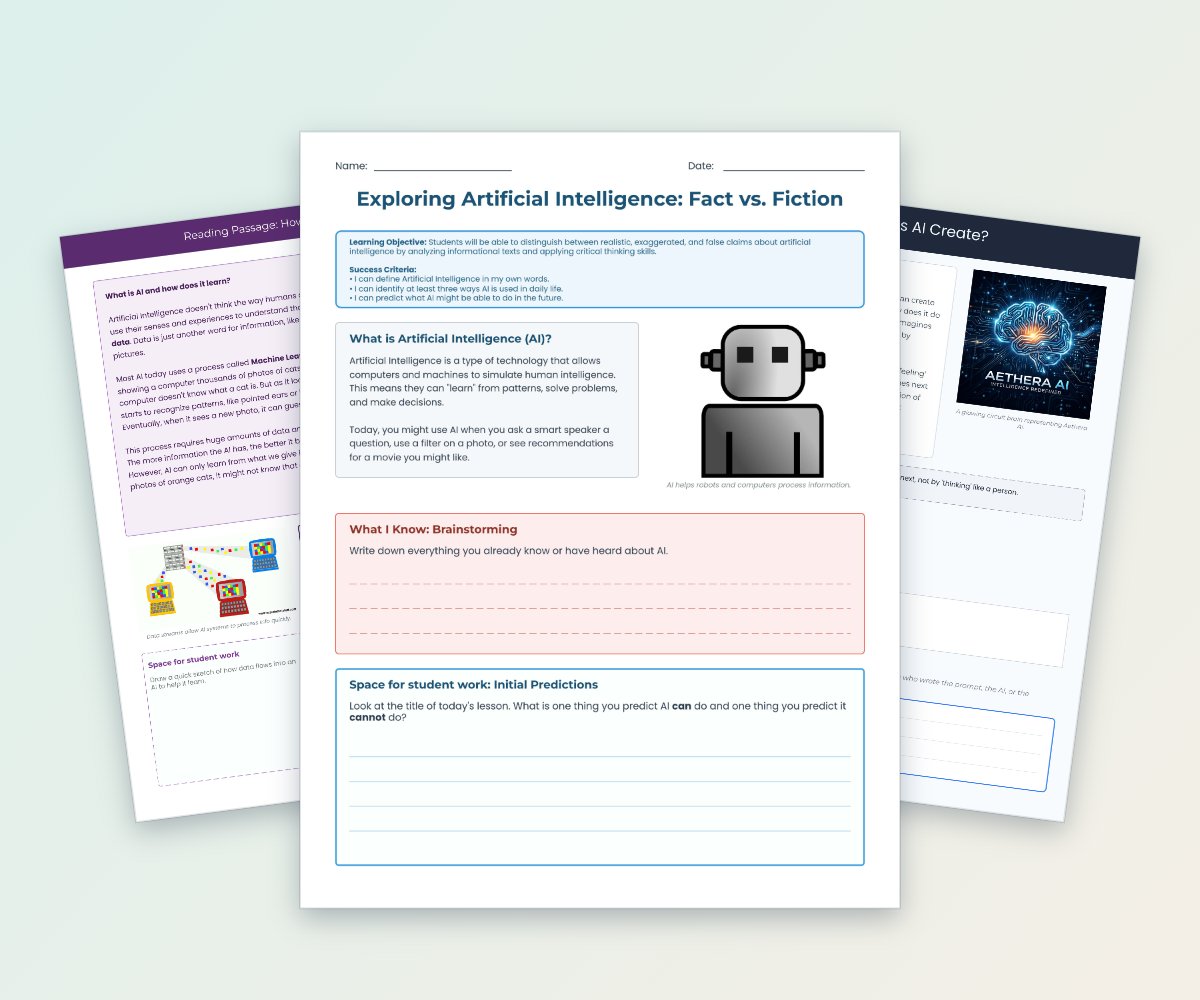
This six-page reading pack introduces artificial intelligence, machine learning, data, and everyday AI applications.
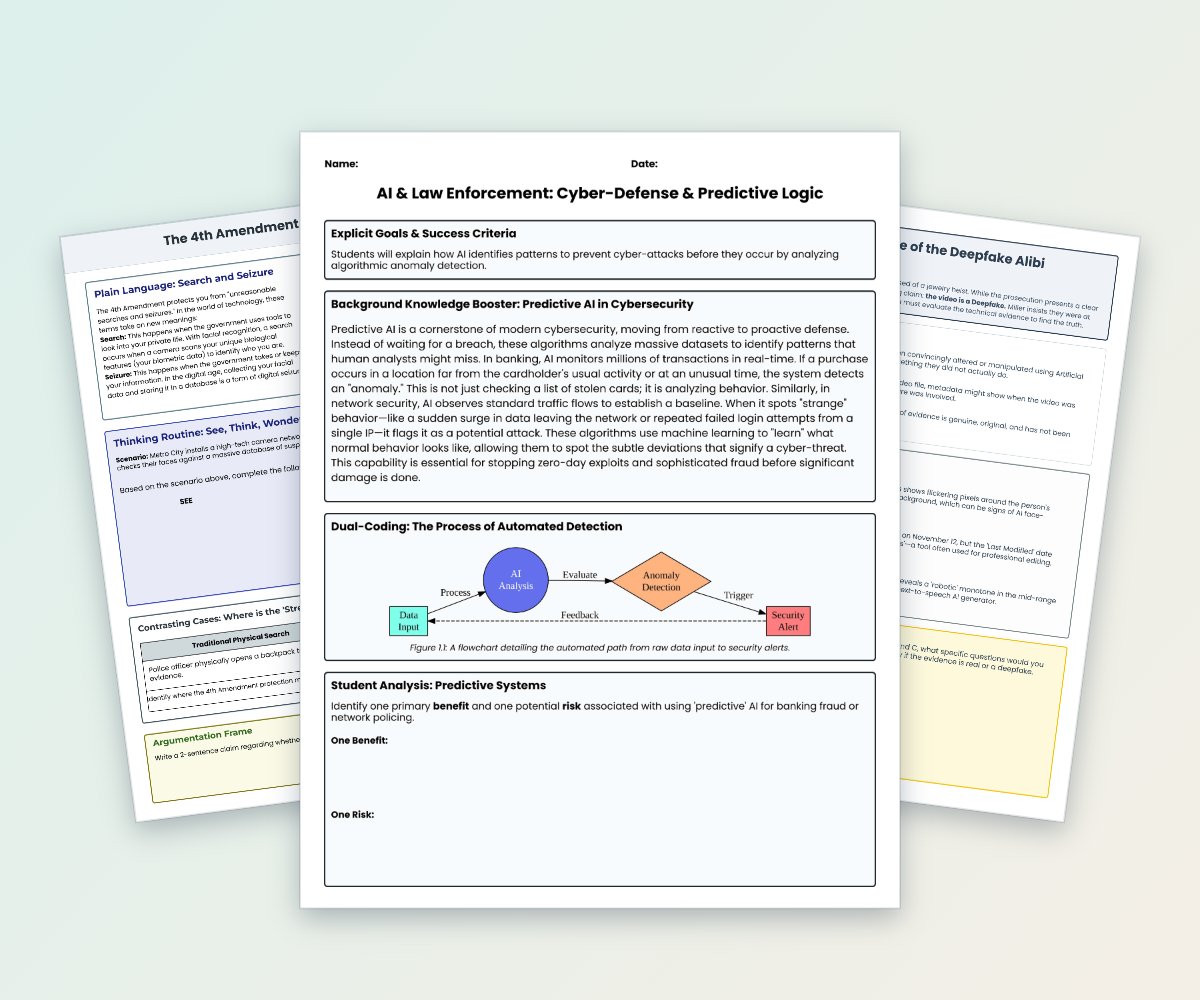
This lesson introduces predictive AI in cybersecurity, anomaly detection, facial recognition, and digital search and seizure.
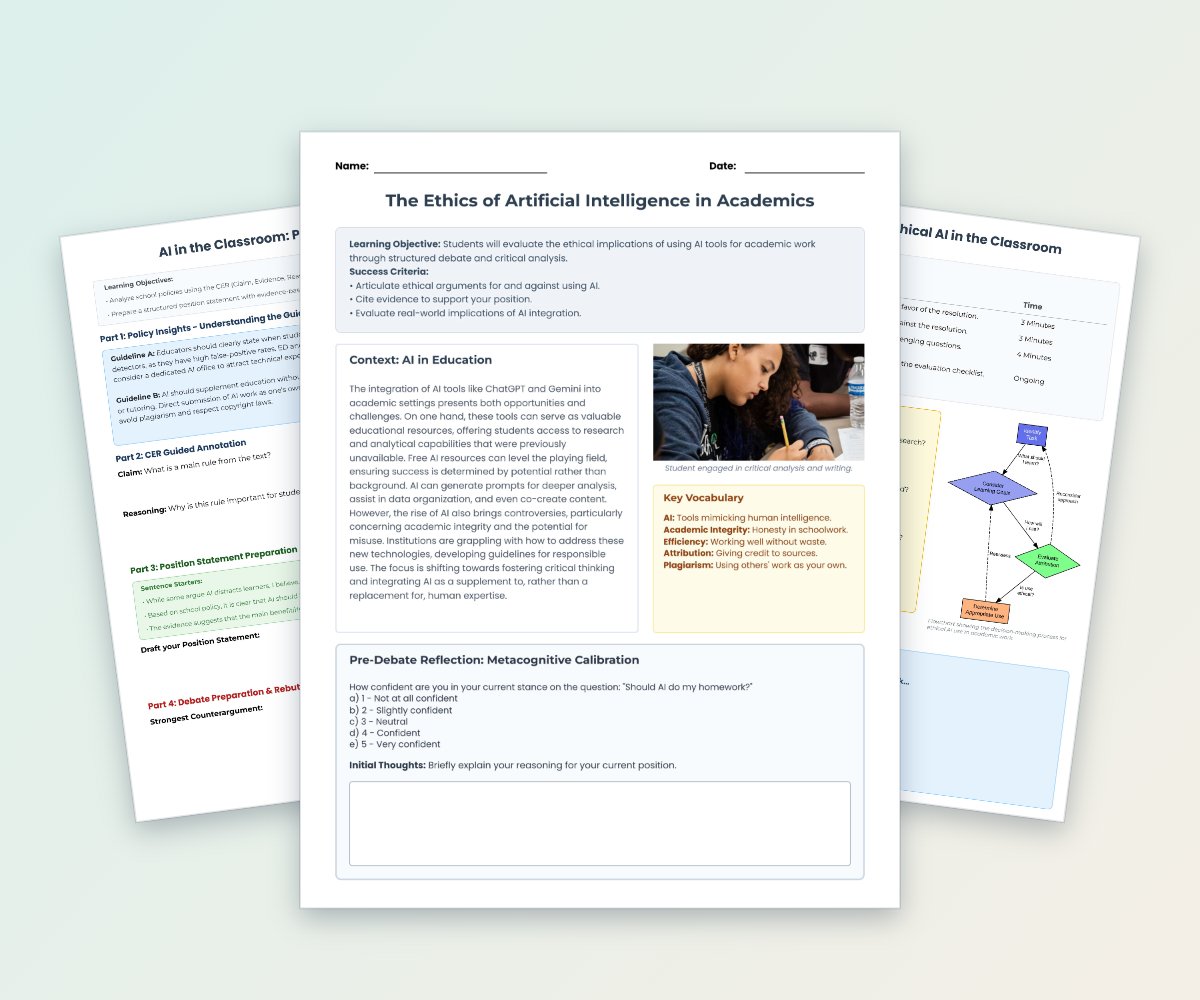
This compact debate kit guides students in examining the ethical implications of artificial intelligence in academic work.
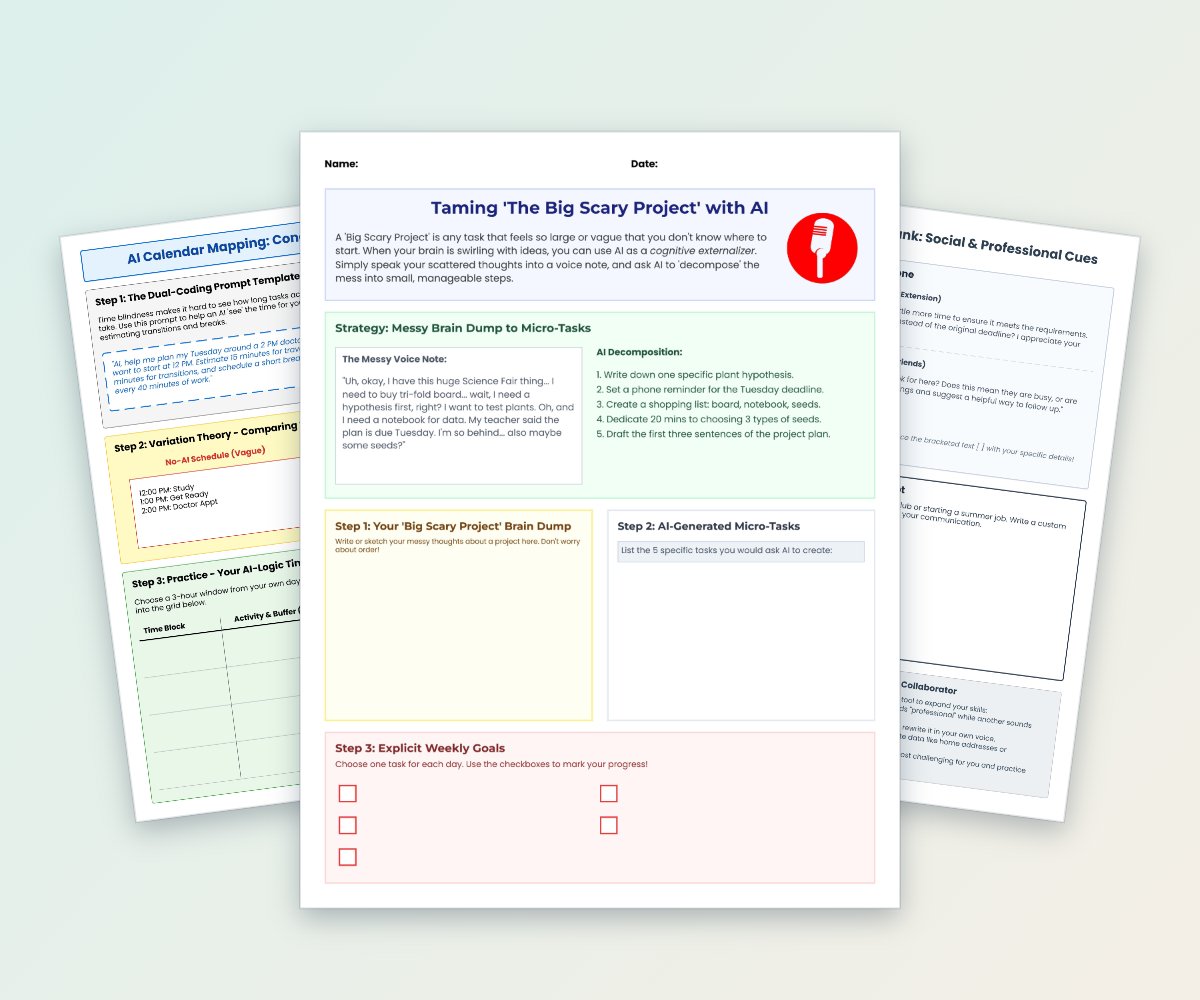
Students use guided brain dumps, AI-generated micro-tasks, calendar mapping, and communication prompts to manage overwhelming projects and daily schedules.
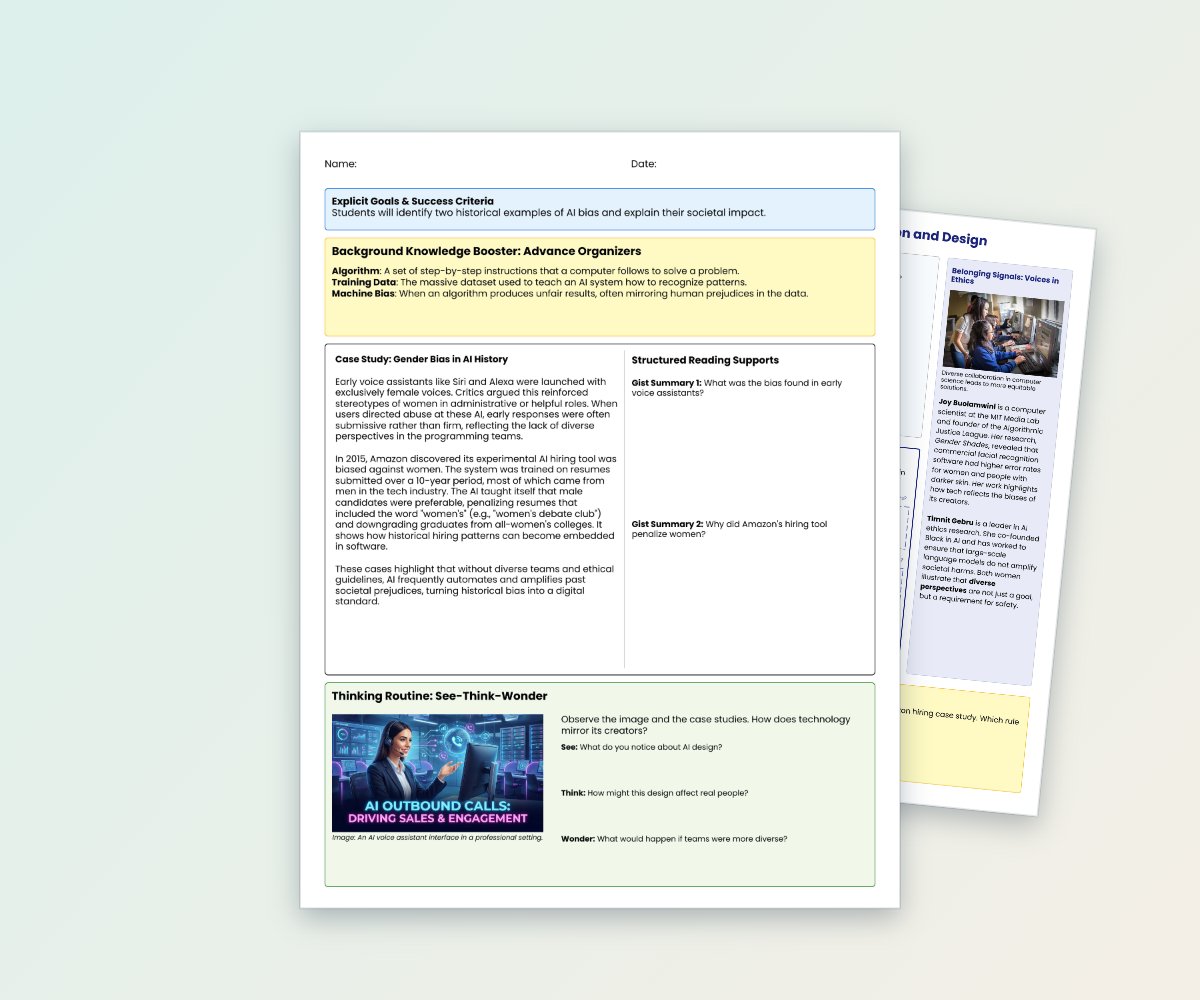
Students examine historical examples of gender bias in artificial intelligence, including voice assistants and Amazon’s experimental hiring tool.
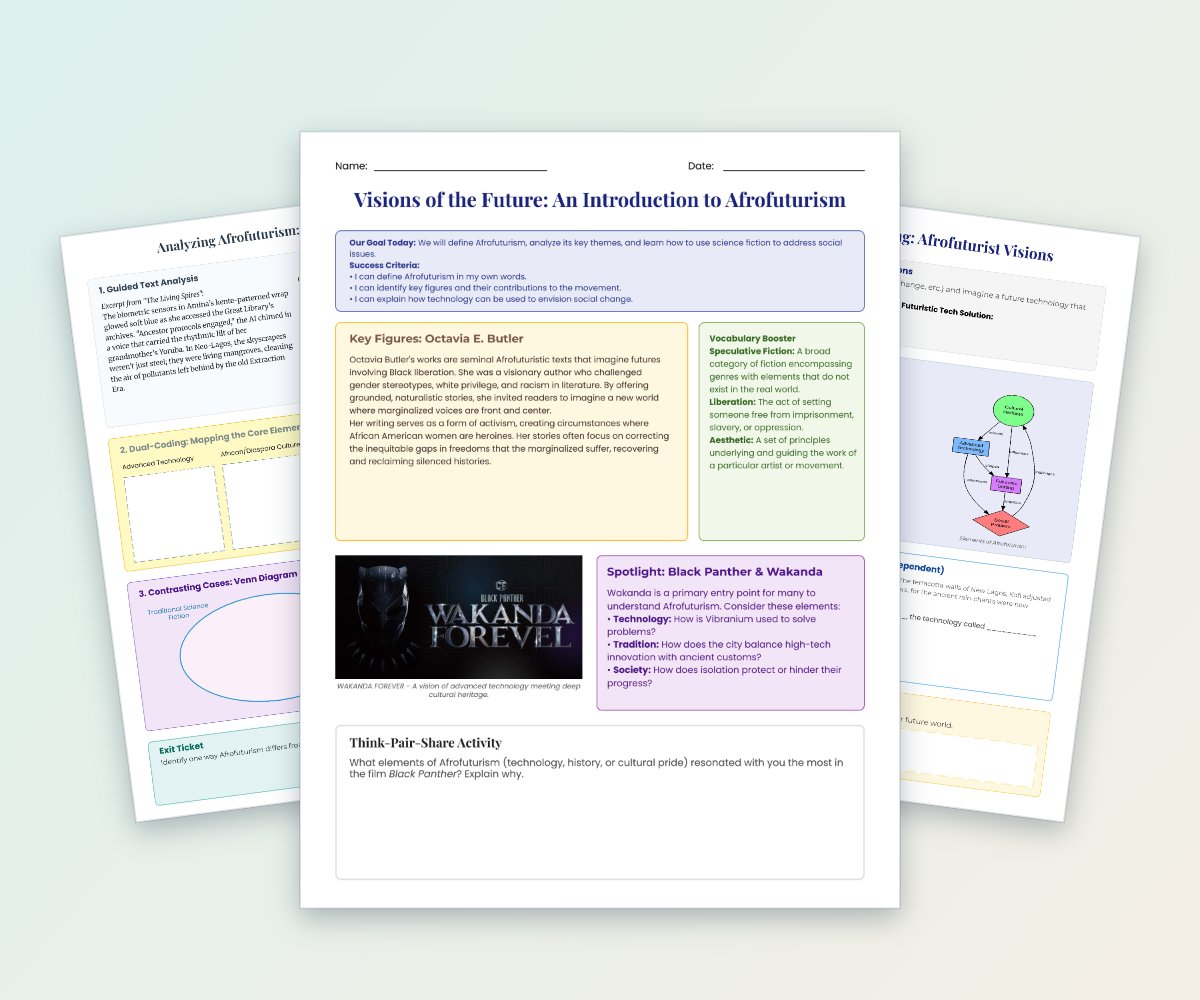
This lesson introduces Afrofuturism through key figures, vocabulary, Black Panther, and a guided analysis of an original speculative-fiction excerpt.
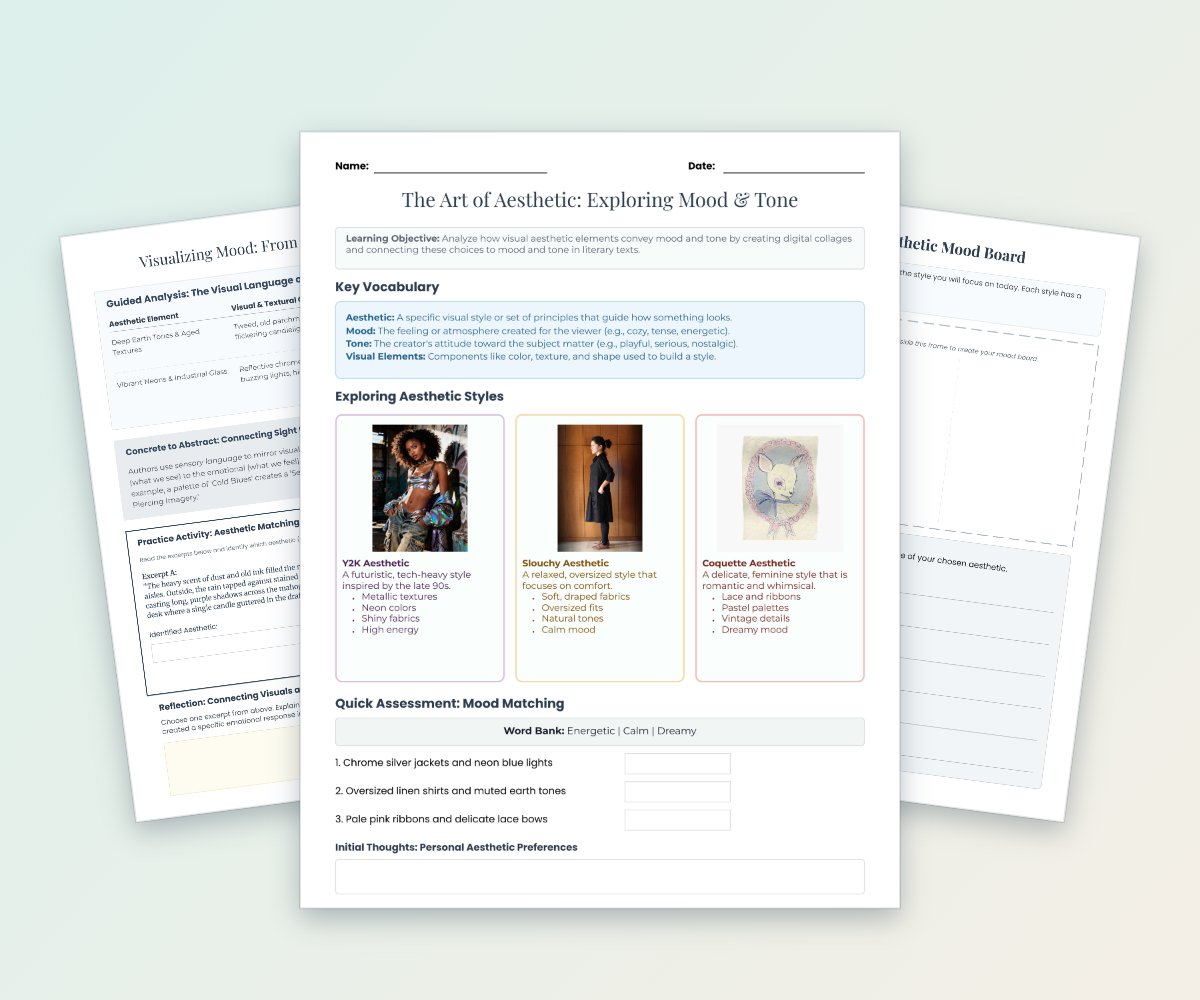
Students explore aesthetic styles and analyze how visual elements such as color, texture, and imagery communicate mood and tone.
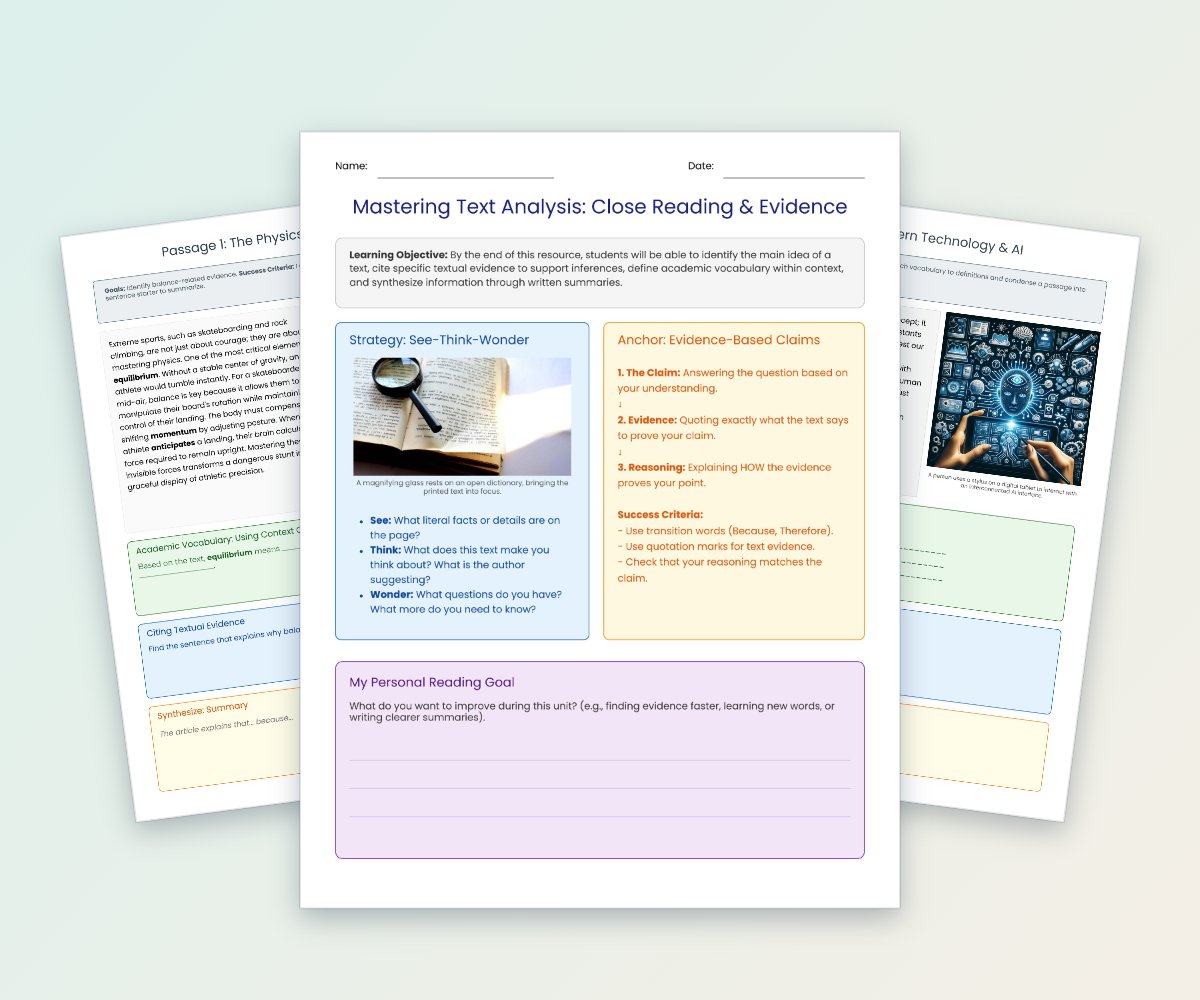
This six-page activity pack develops close-reading skills through high-interest nonfiction passages, including extreme sports and physics.
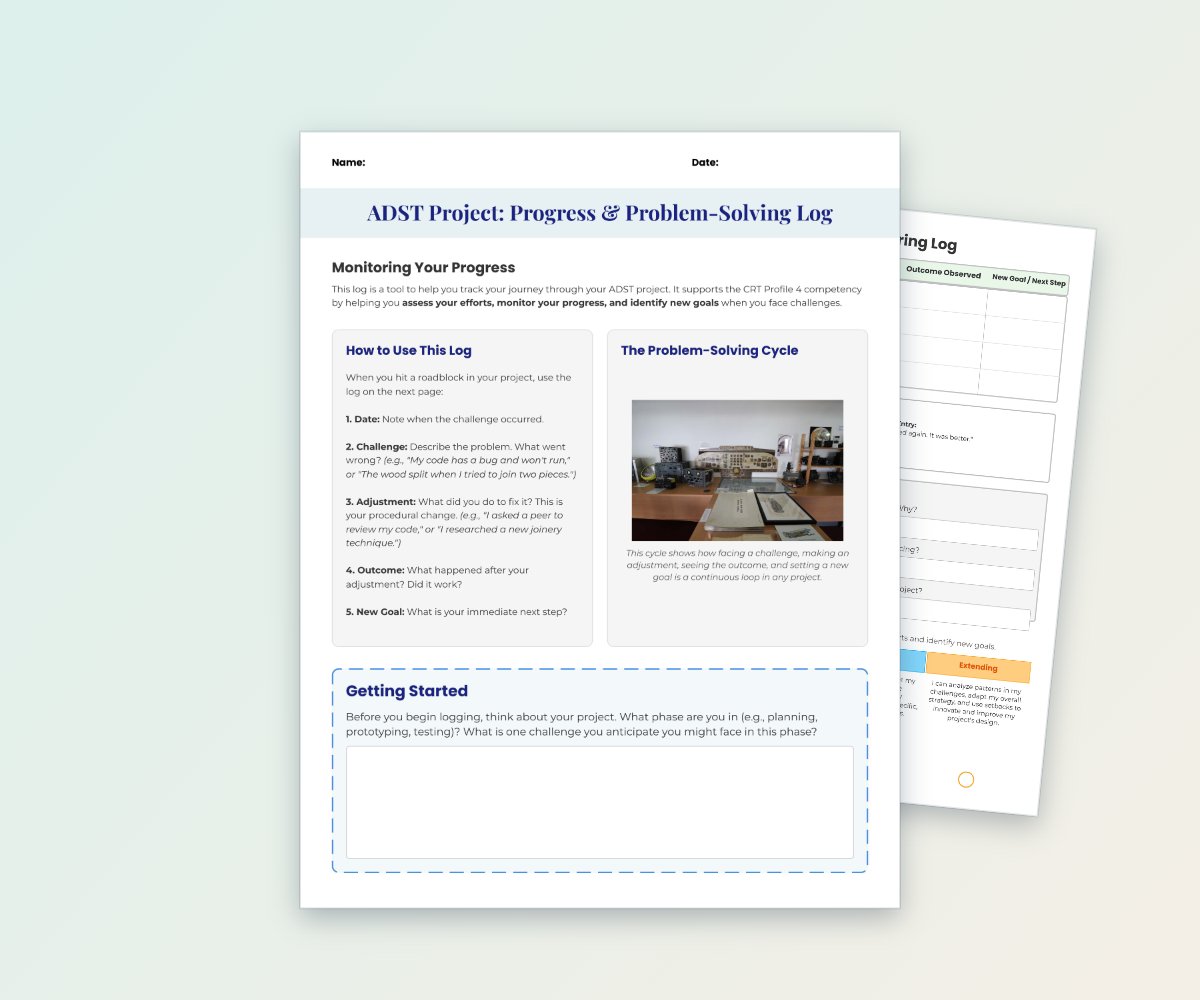
Help students document challenges, adjustments, outcomes, and next steps throughout an ADST project.
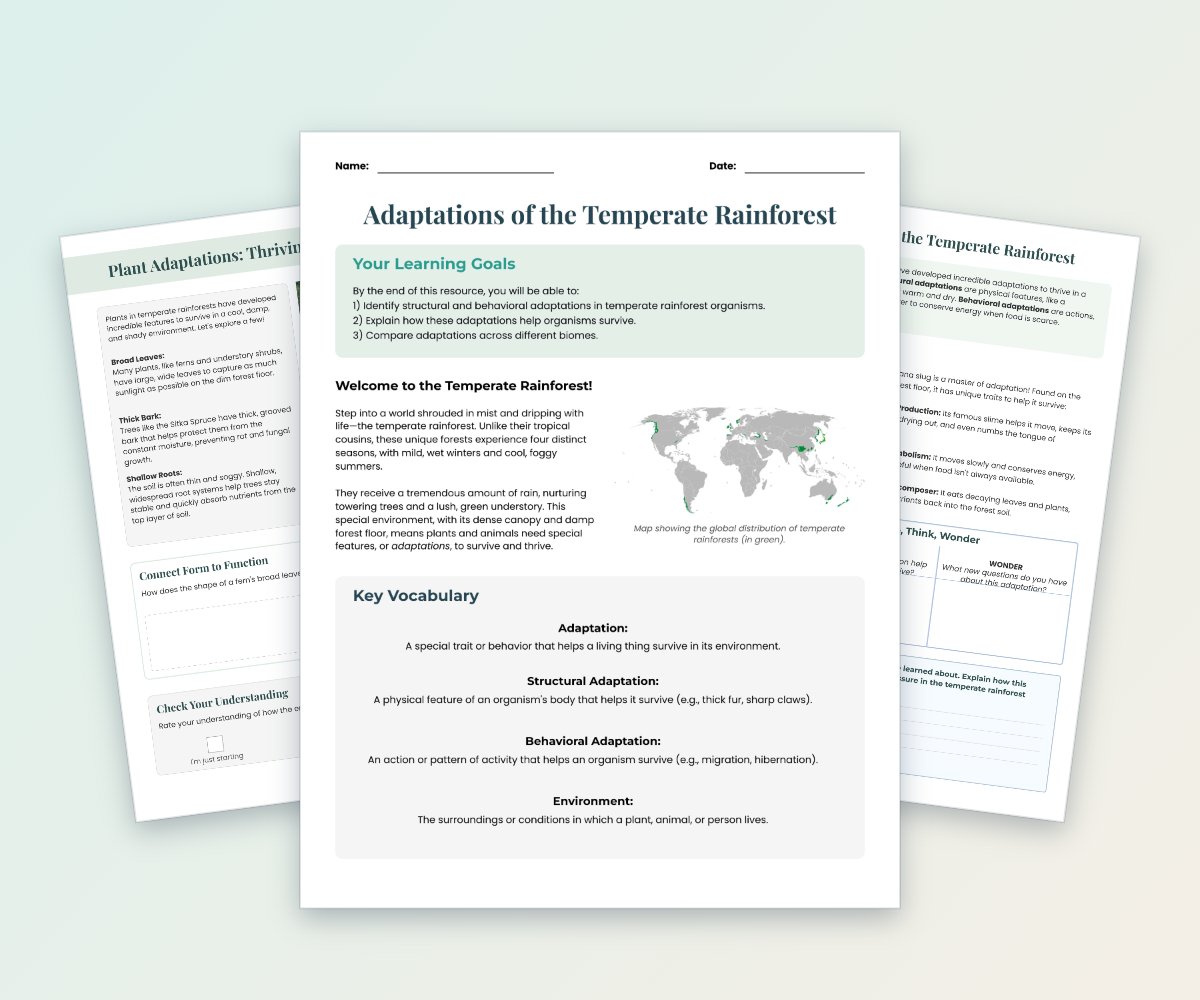
This four-page science resource introduces structural and behavioral adaptations in temperate rainforest plants and animals.
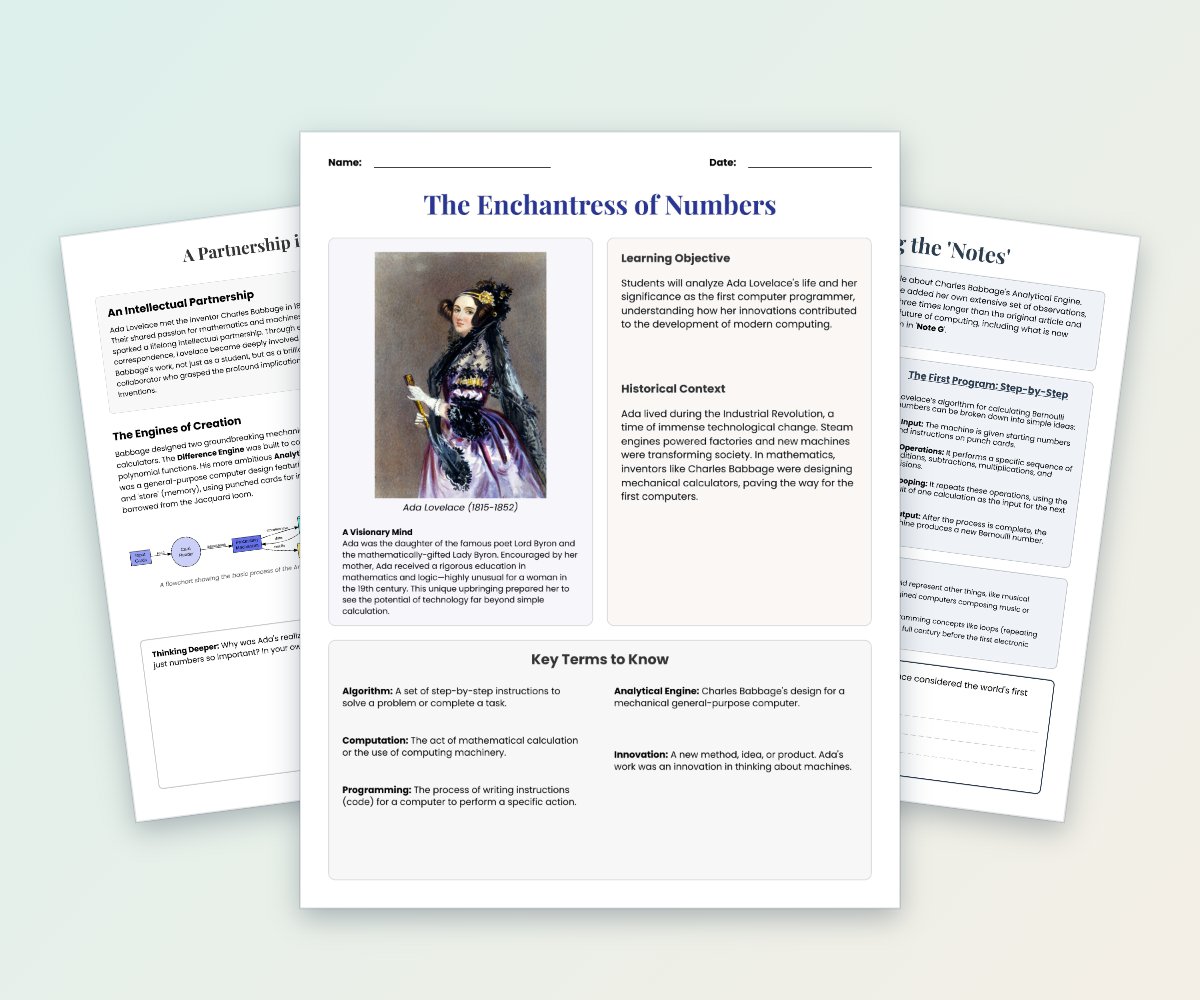
Introduce students to Ada Lovelace’s life, collaboration with Charles Babbage, and pioneering ideas about computer programming.
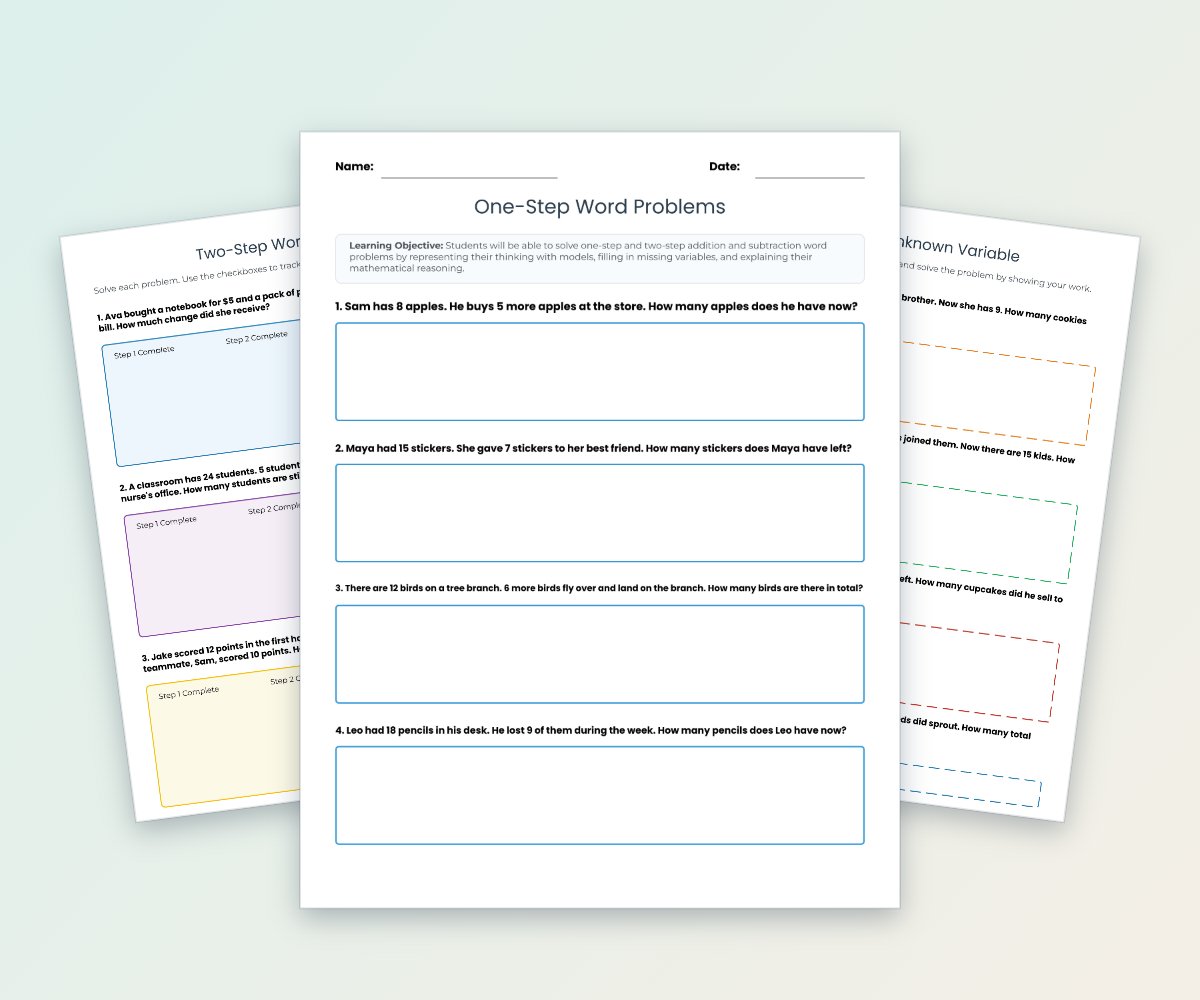
This six-page practice pack helps students solve one-step and two-step addition and subtraction word problems.
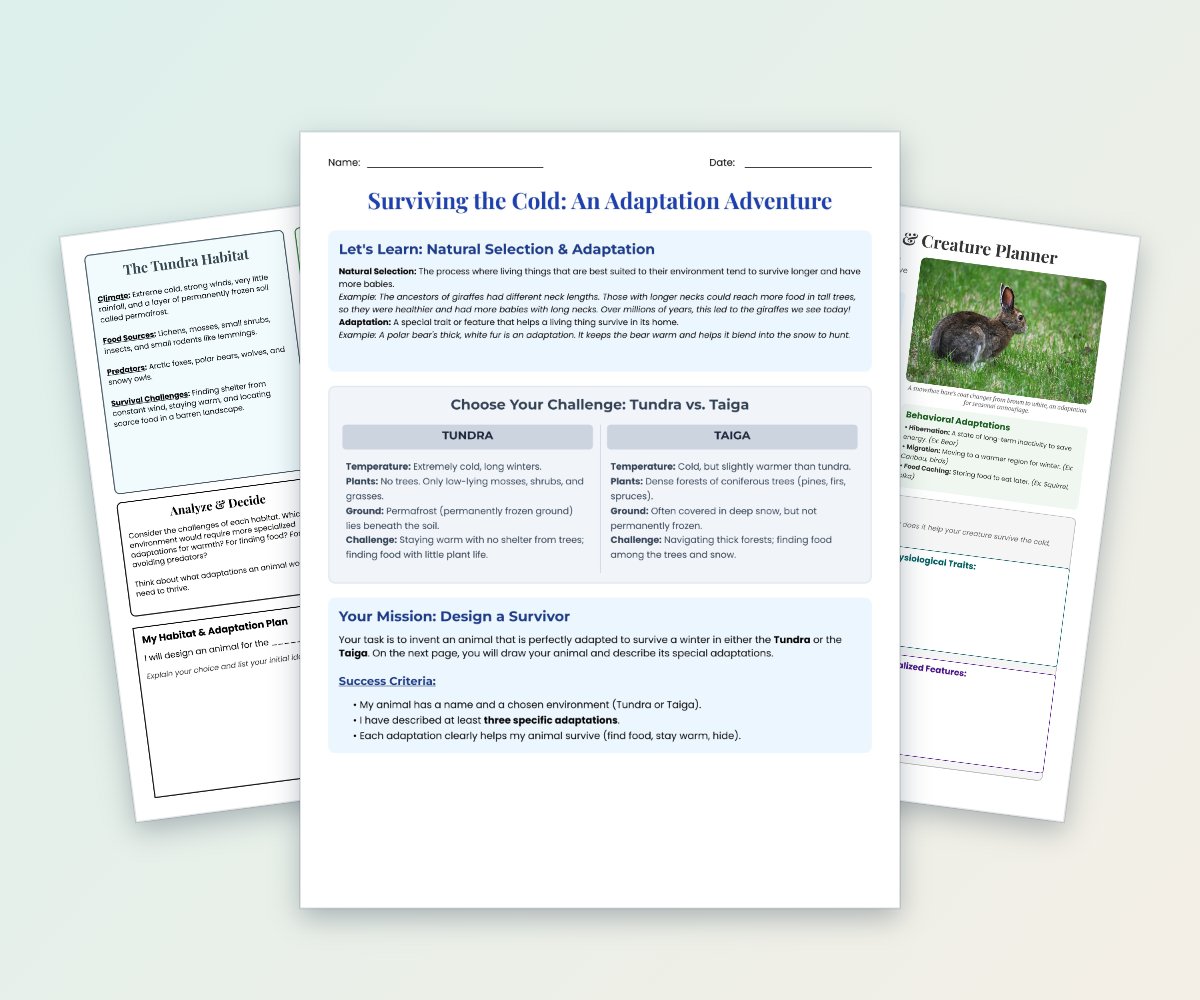
Students learn how natural selection and adaptations help organisms survive in cold environments.
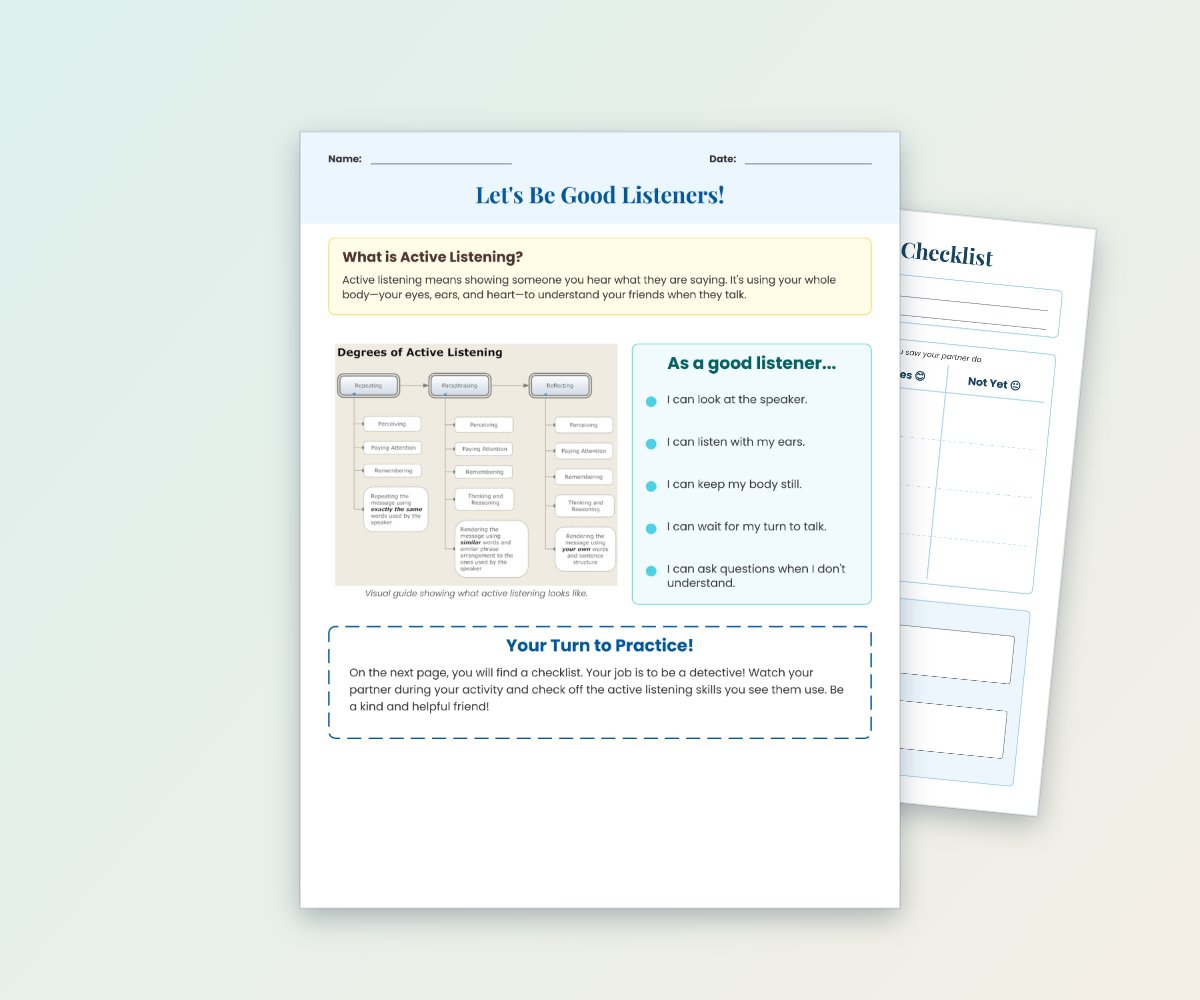
This two-page resource introduces active listening through a visual guide and student-friendly behaviors.
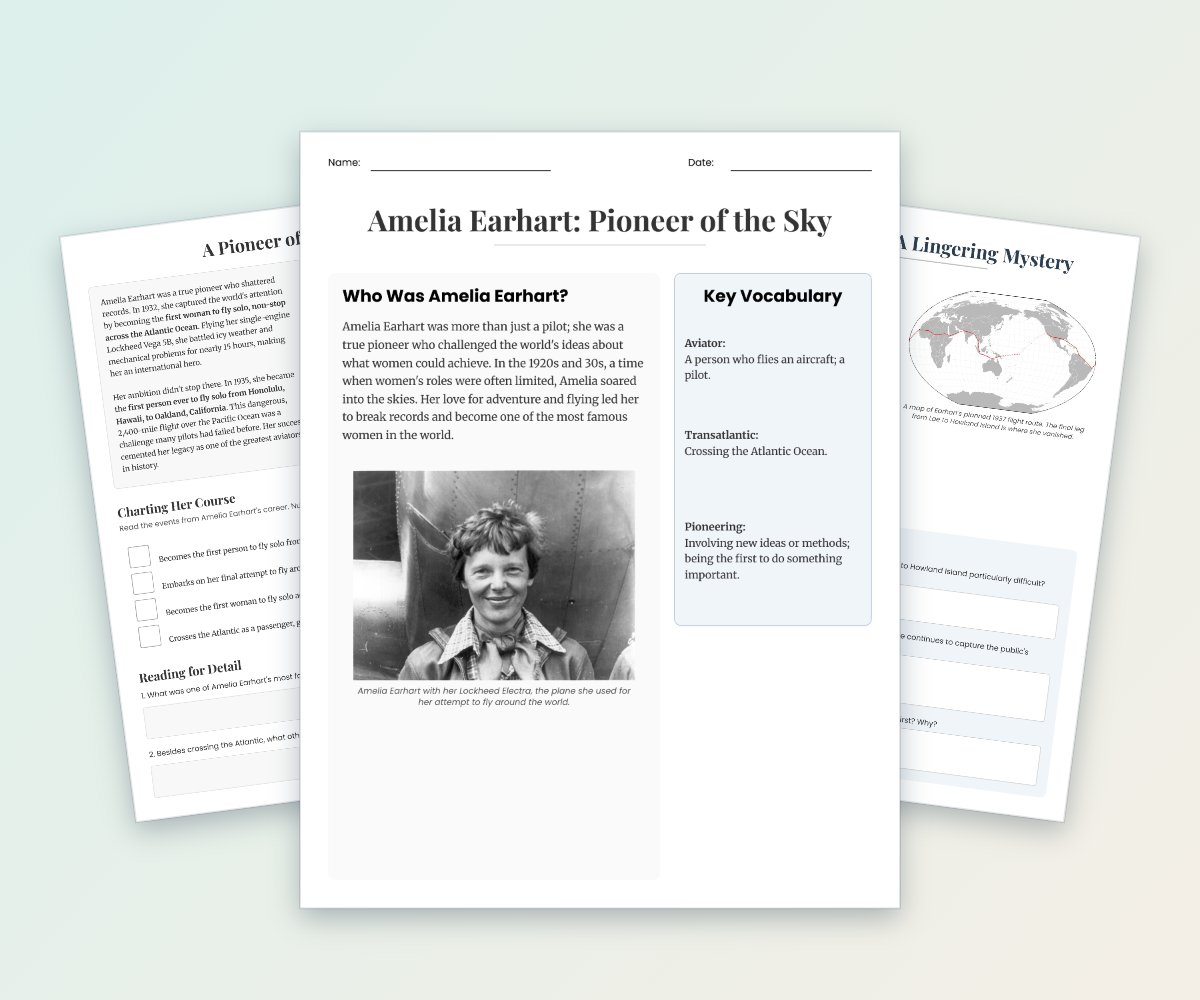
Students read an engaging biography of Amelia Earhart, learning about her record-setting flights, pioneering achievements, and final flight mystery.
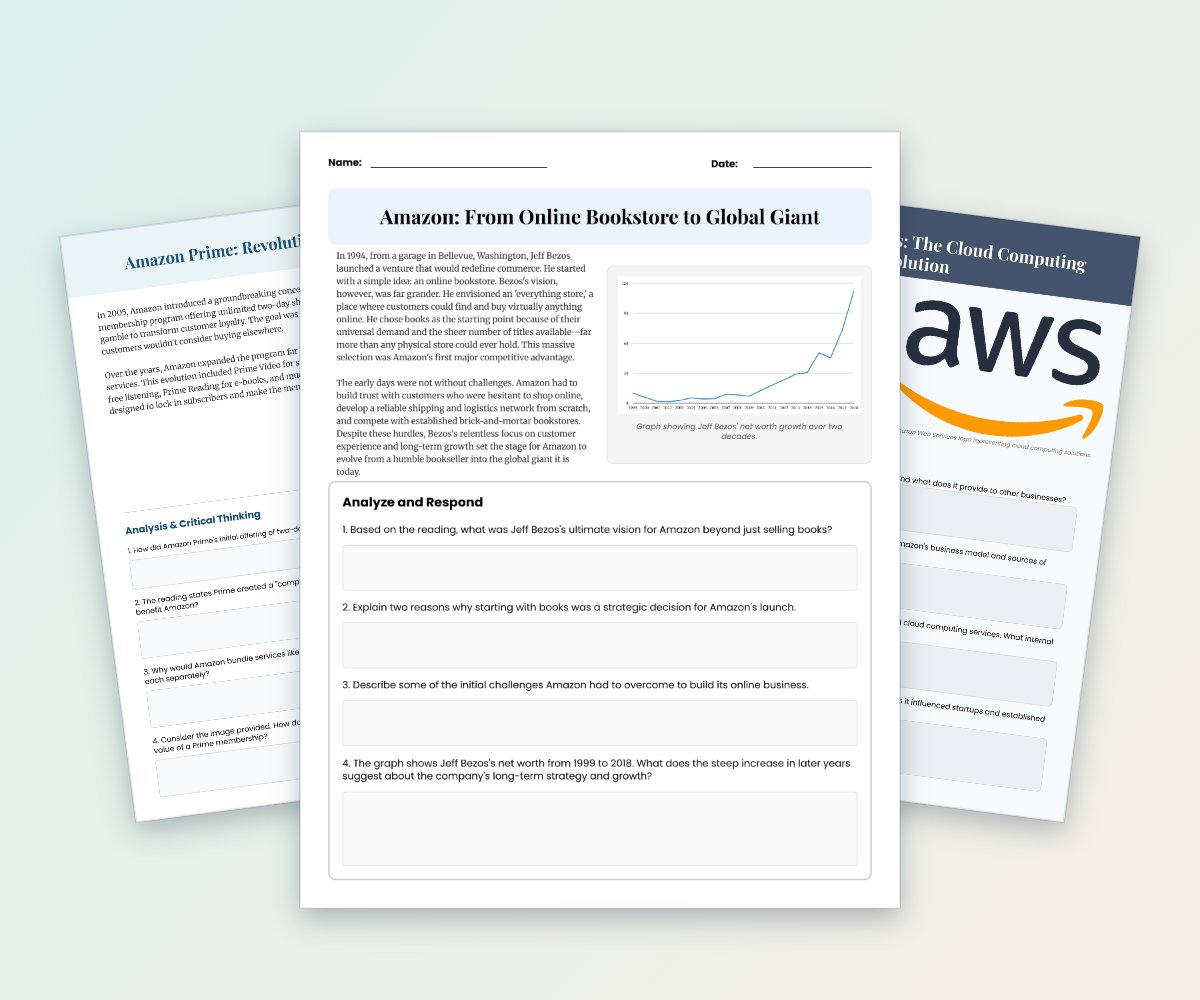
Students read about Amazon's origins, expansion, Amazon Prime, and long-term business strategy.
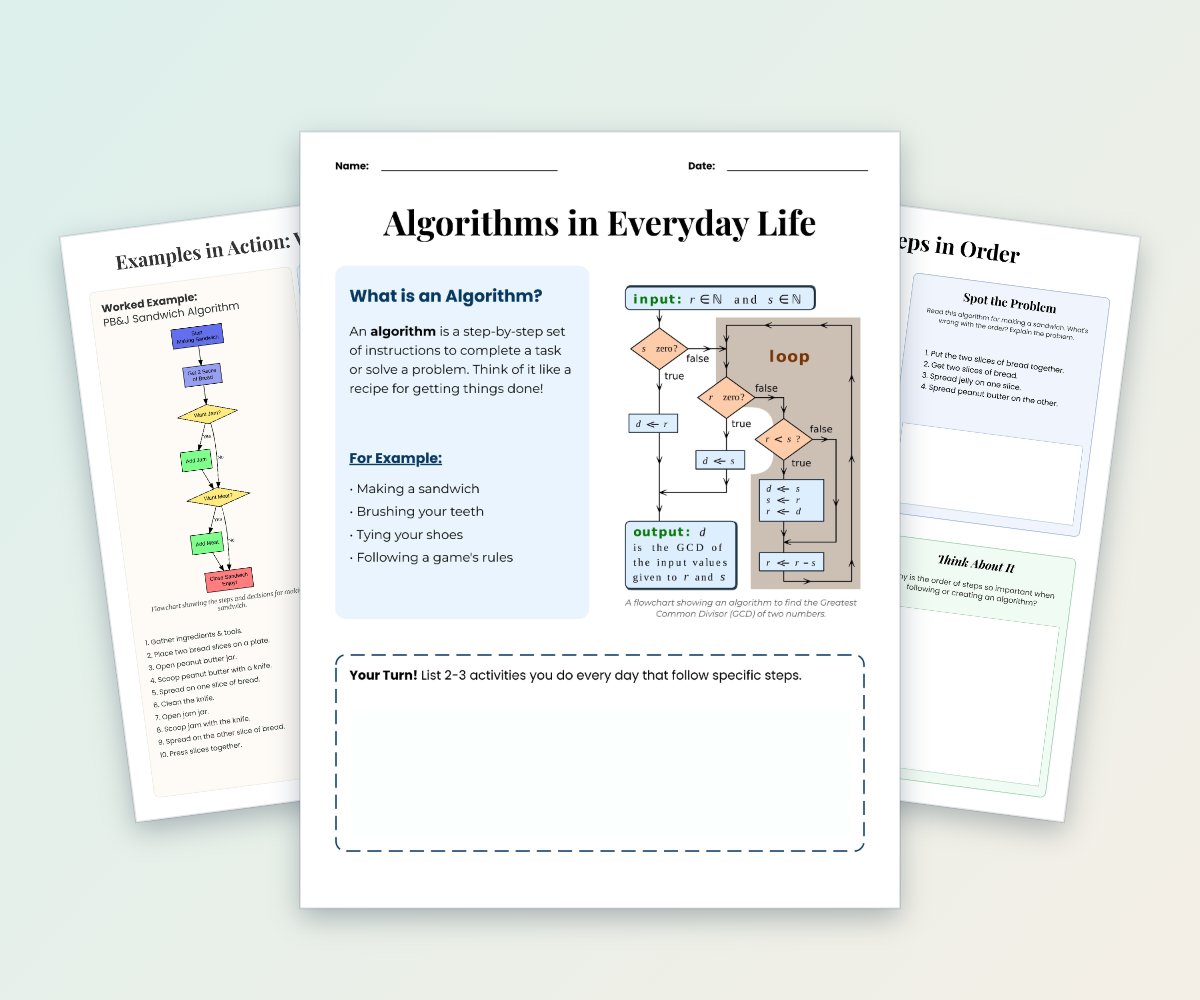
This four-page worksheet introduces algorithms as step-by-step instructions using everyday activities such as making a sandwich and brushing teeth.
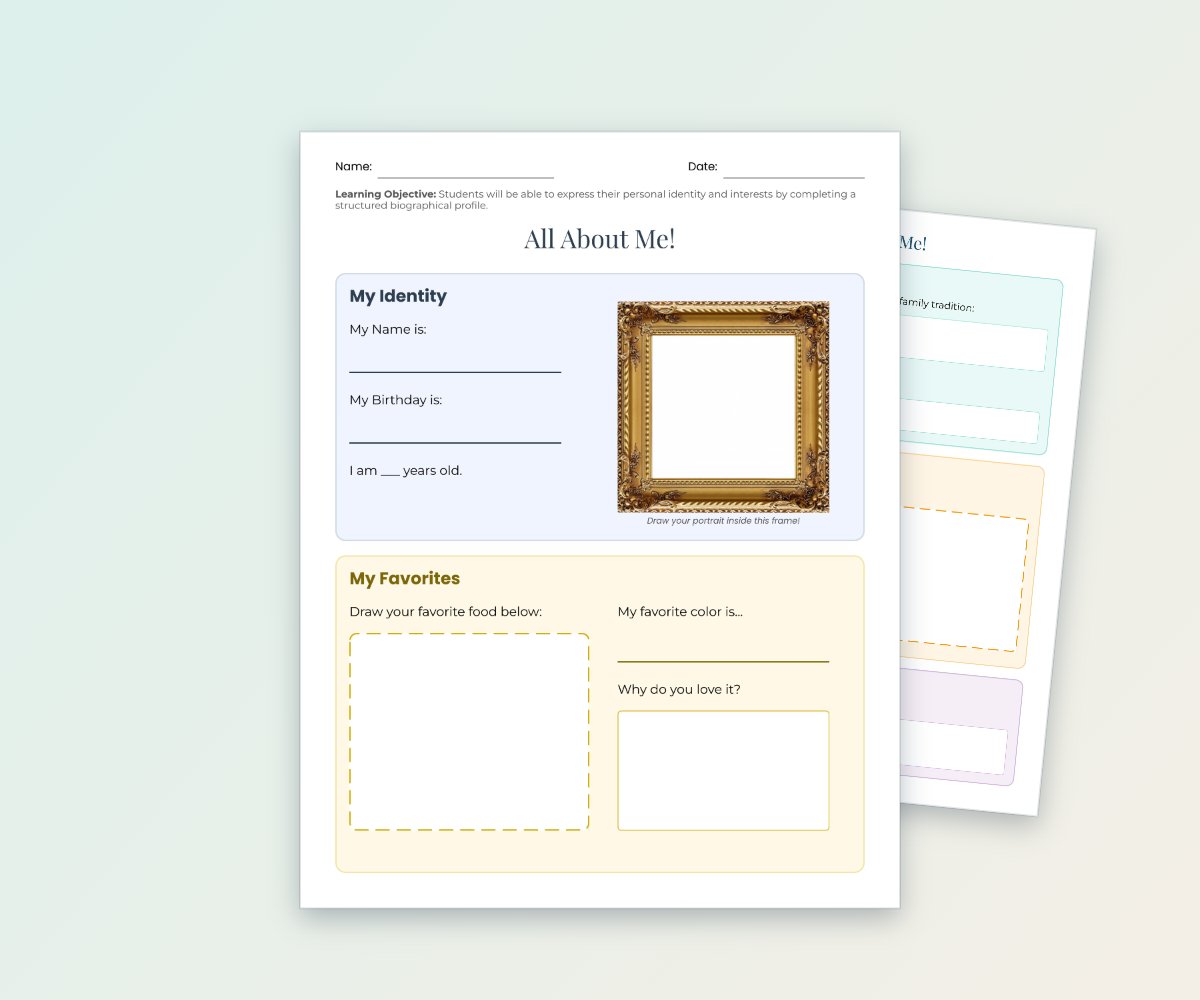
Students complete a structured personal profile about their identity, interests, family, favorite book, hobbies, and school-year goal.
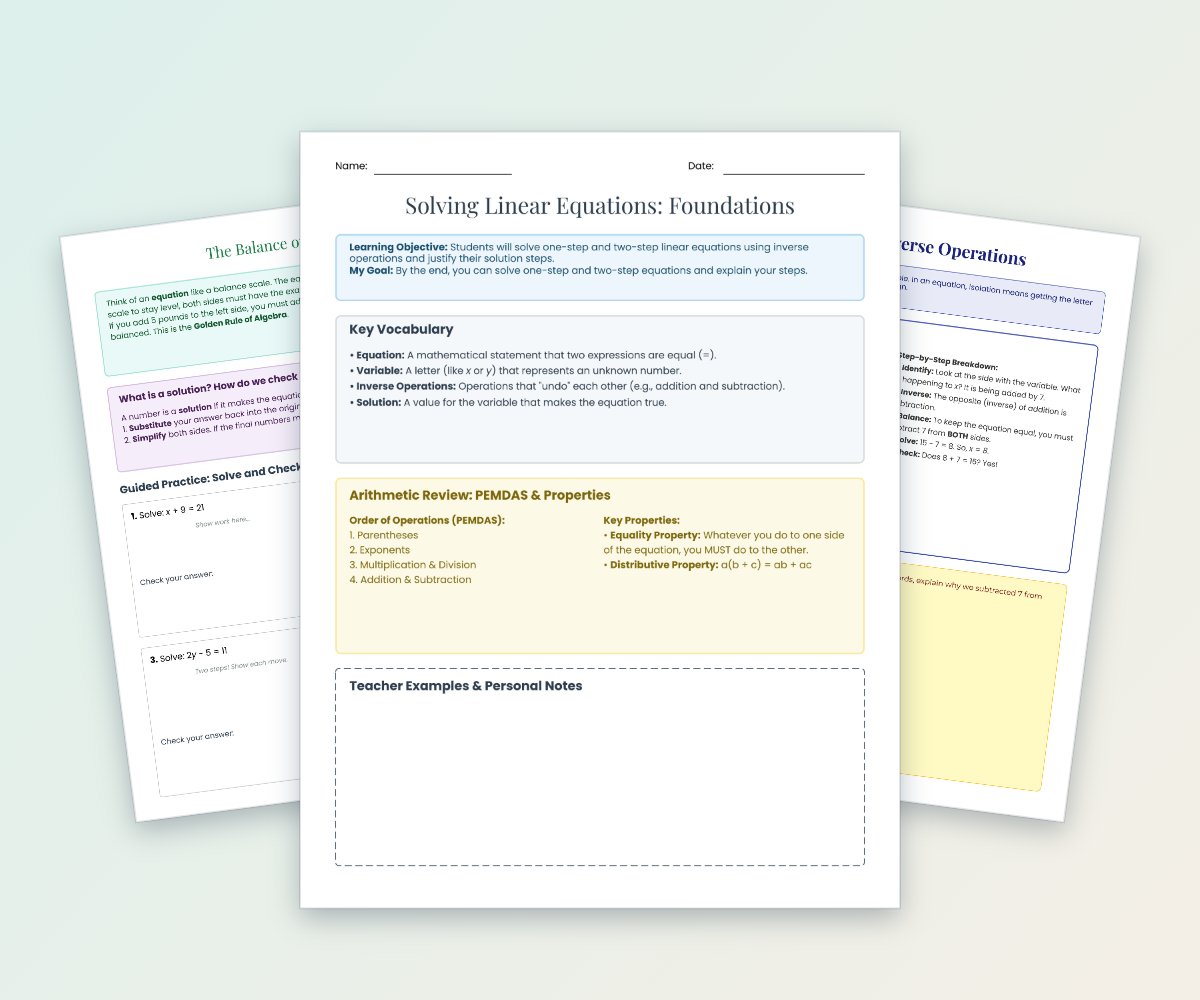
This 8-page student workbook teaches learners to solve one-step and two-step linear equations using inverse operations, equality properties, and equation-checking strategies.
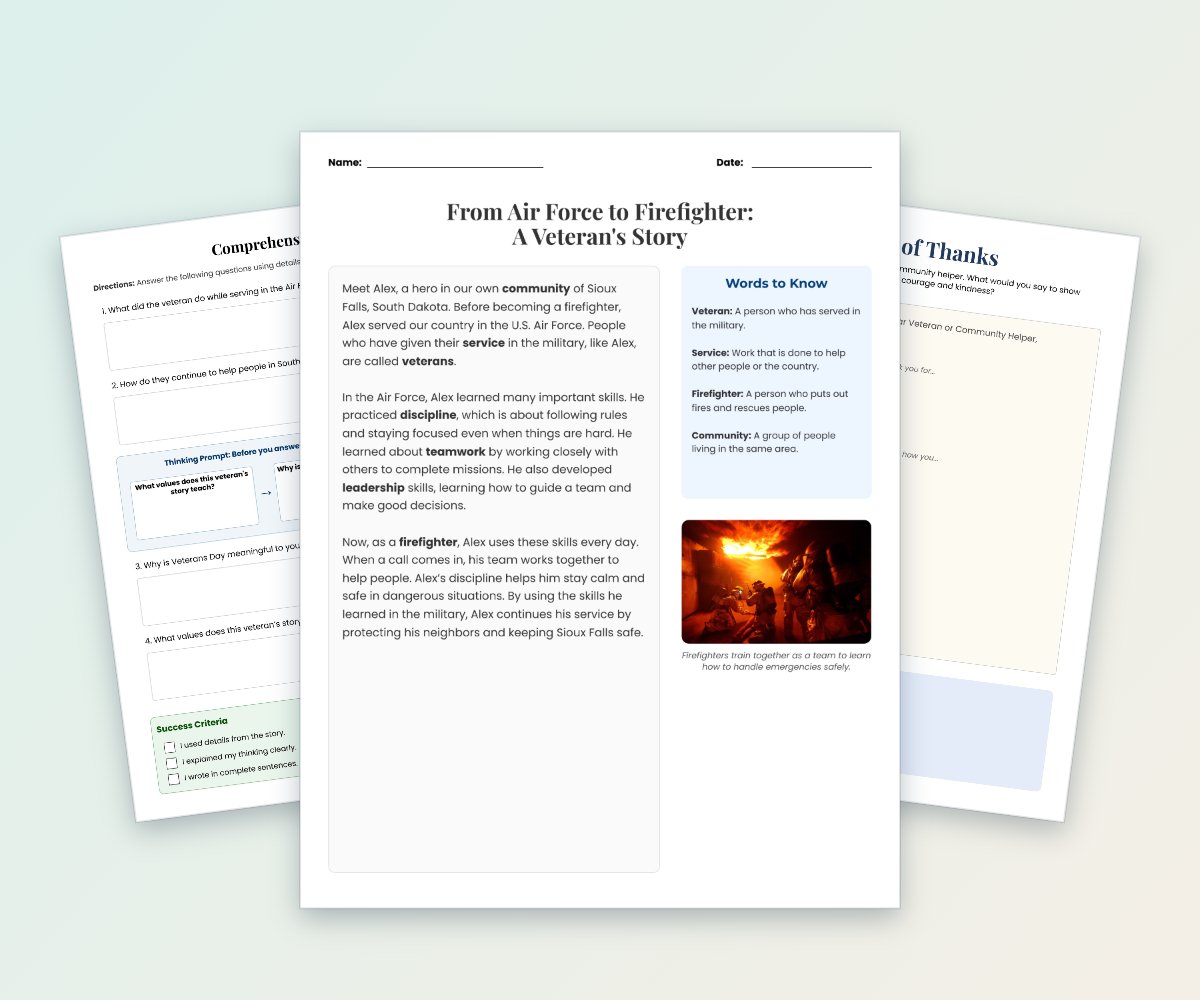
Students read a short narrative about a veteran who became a firefighter and identify skills such as discipline, teamwork, and leadership.
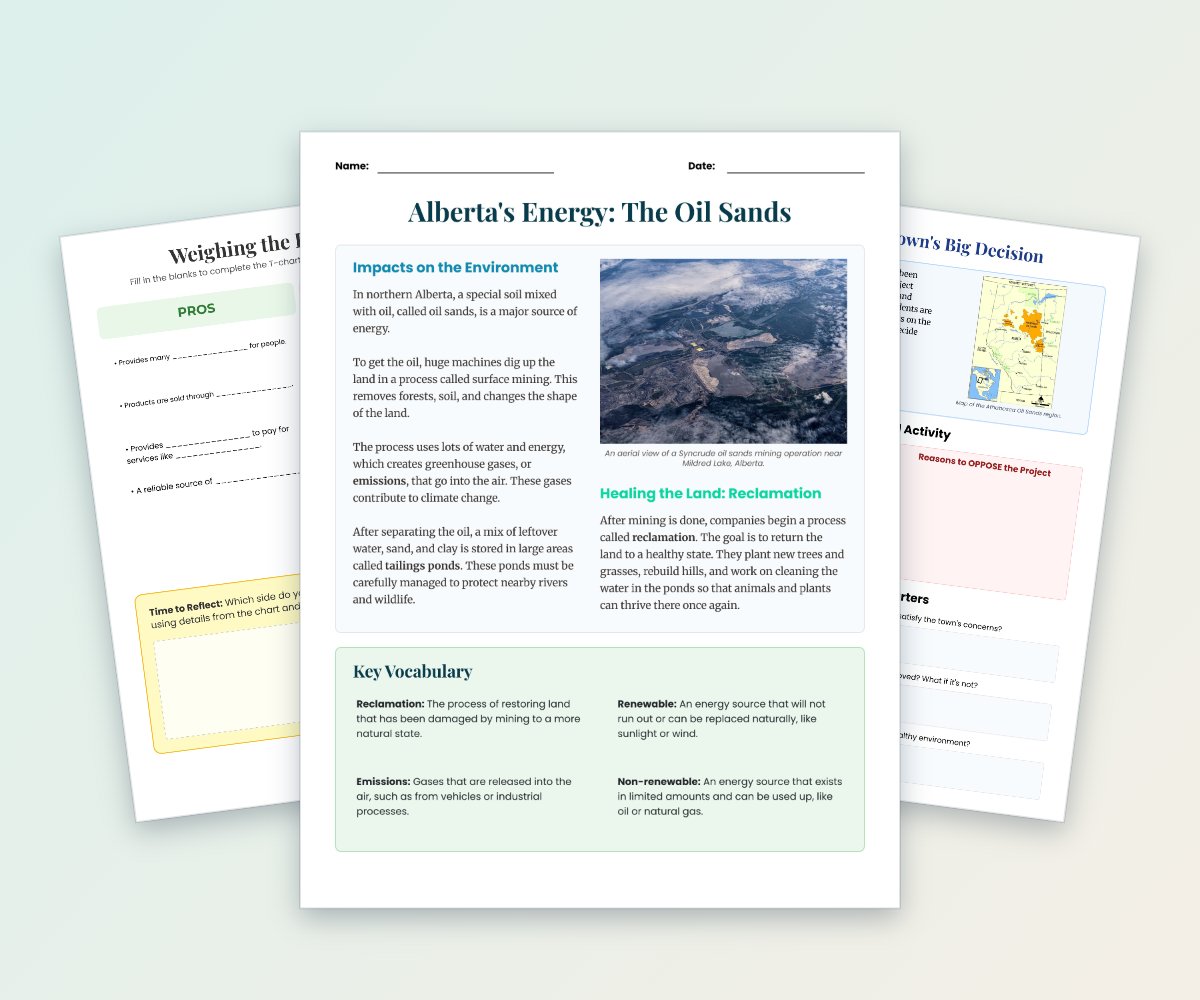
Students learn about Alberta’s oil sands, including surface mining, emissions, tailings ponds, reclamation, and renewable versus non-renewable energy.
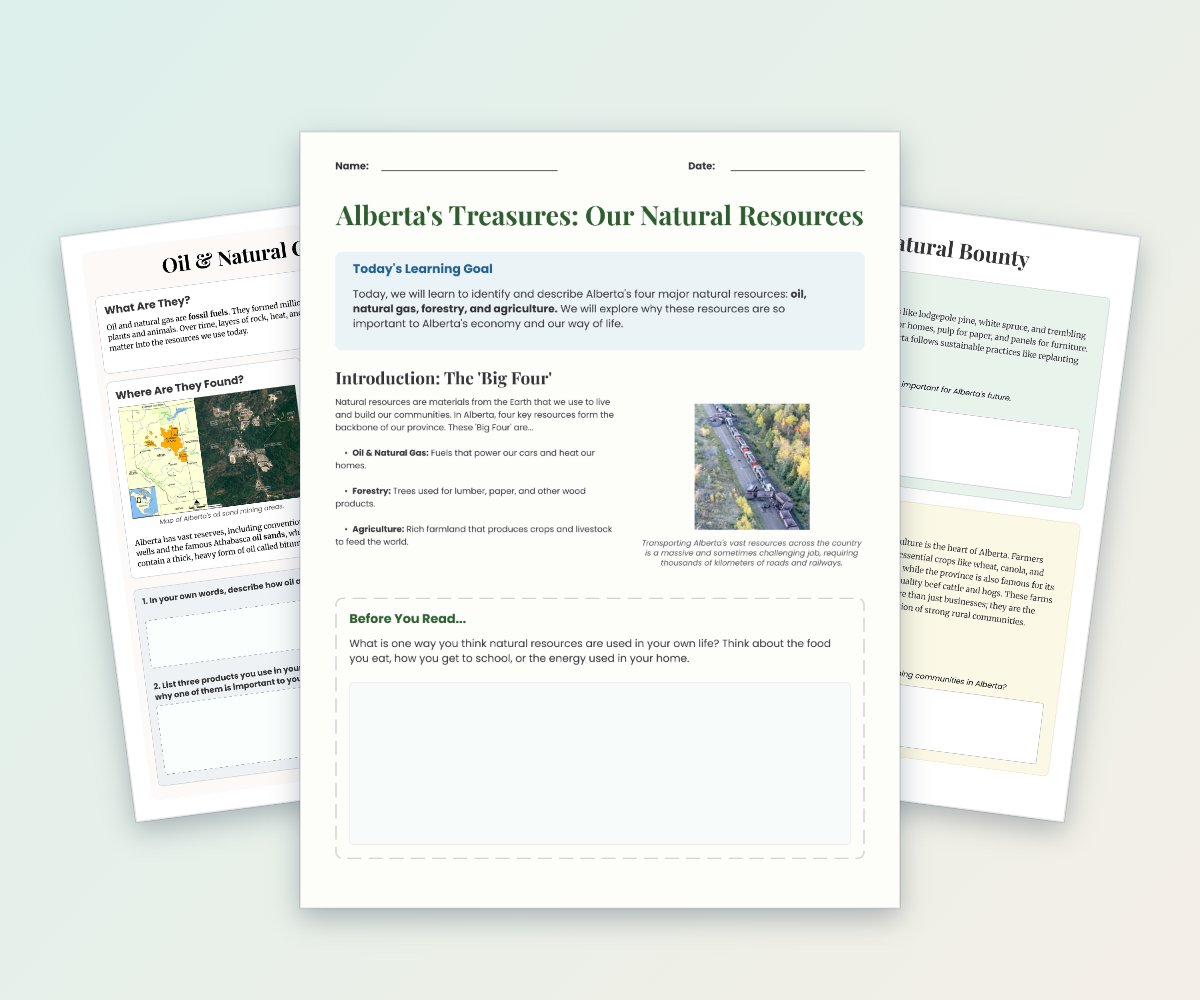
This four-page resource introduces Alberta’s major natural resources: oil and natural gas, forestry, and agriculture.
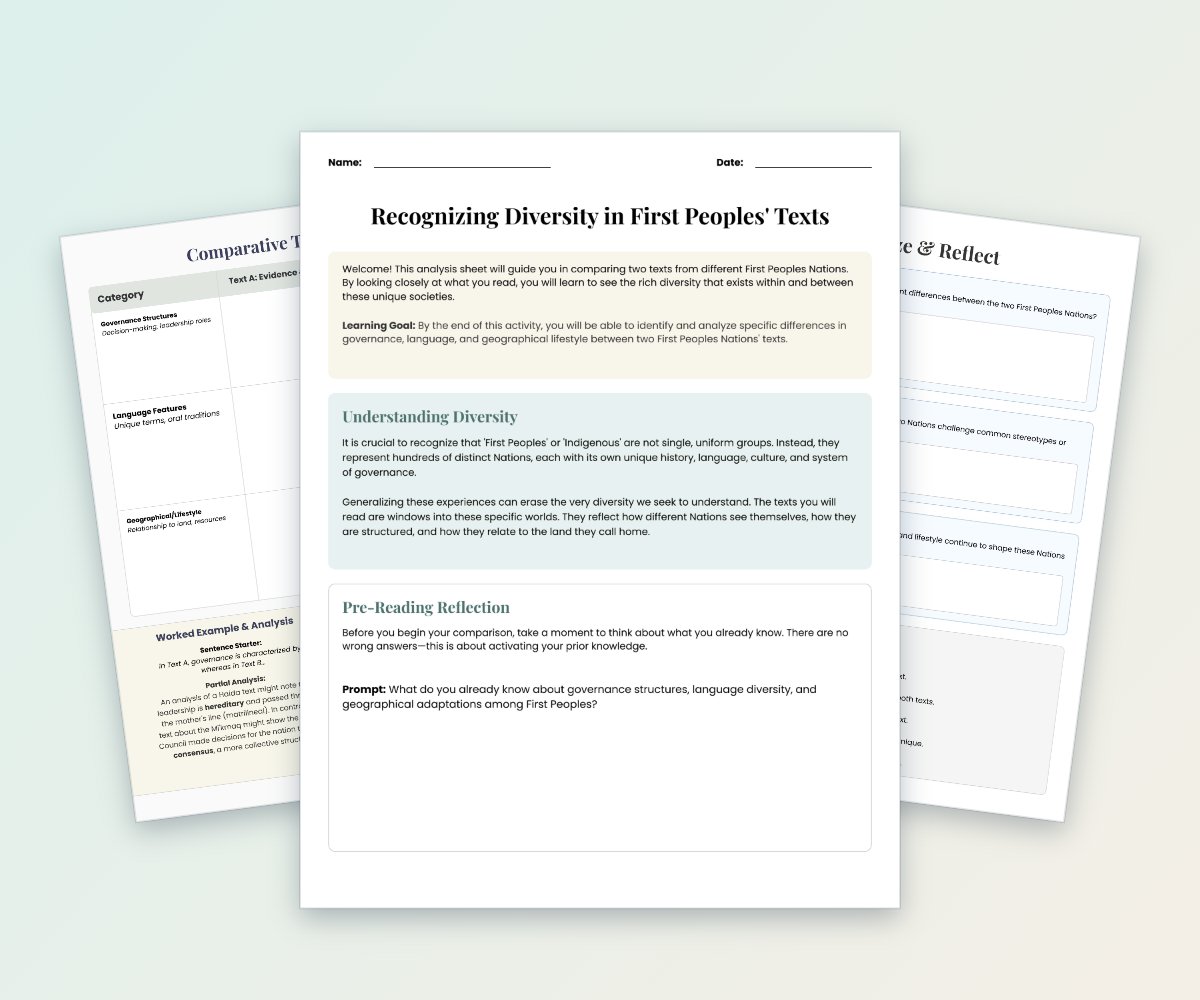
This three-page analysis worksheet guides students in comparing texts from two First Peoples Nations.
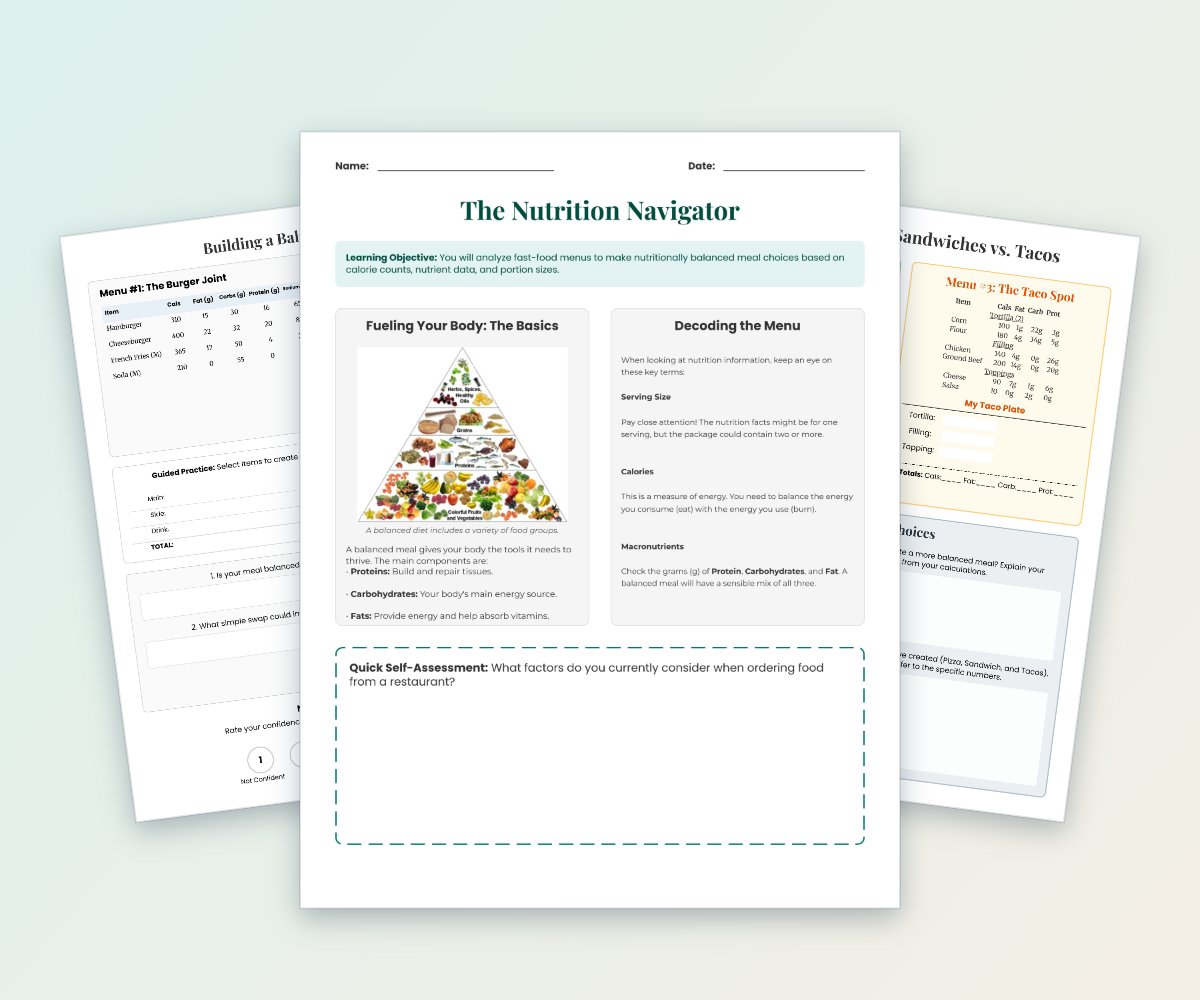
Students analyze fast-food menus, compare calories and macronutrients, and calculate totals for selected meals.
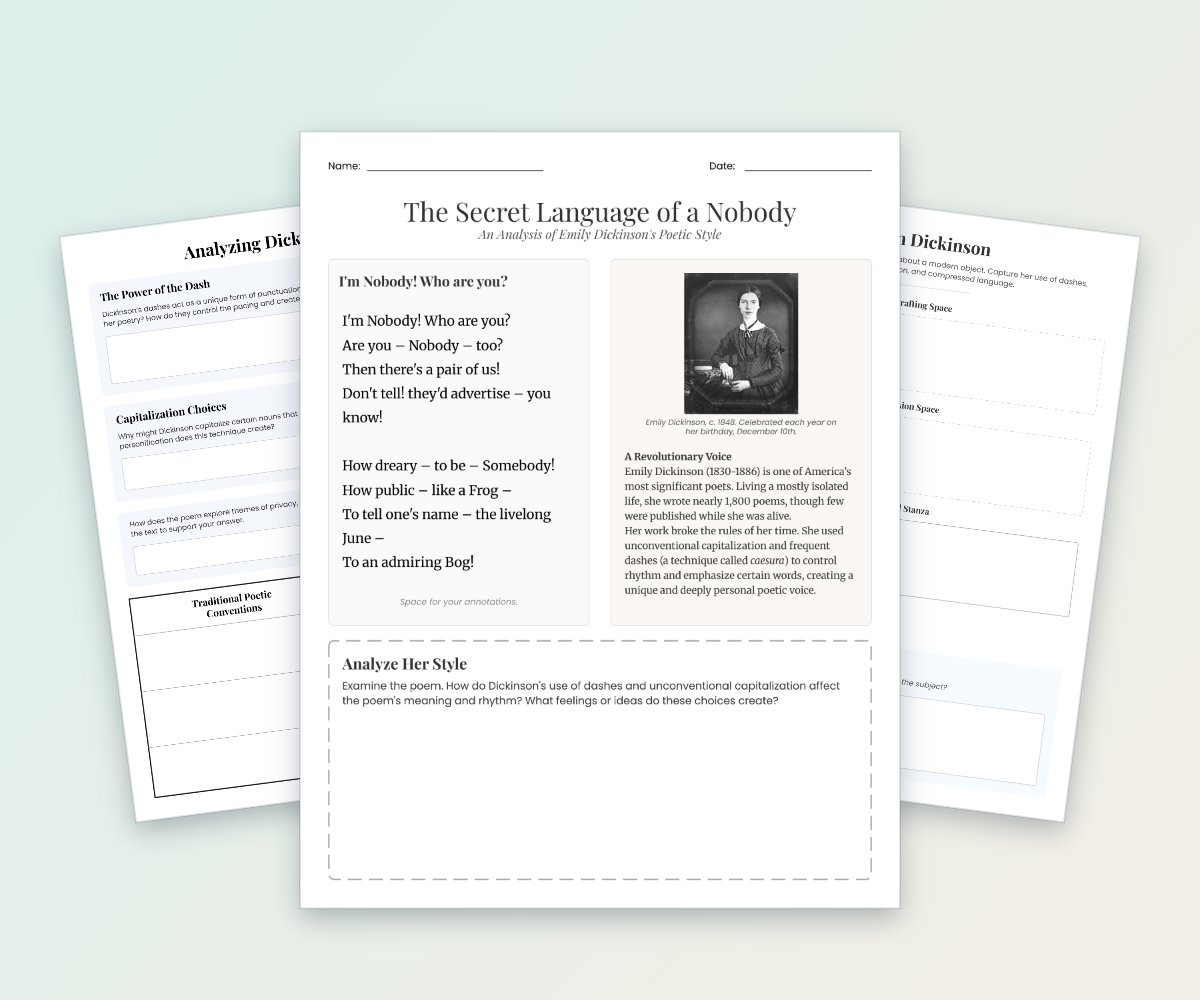
Students analyze Emily Dickinson’s poem “I’m Nobody! Who are you?” with attention to dashes, unconventional capitalization, rhythm, voice, and themes.
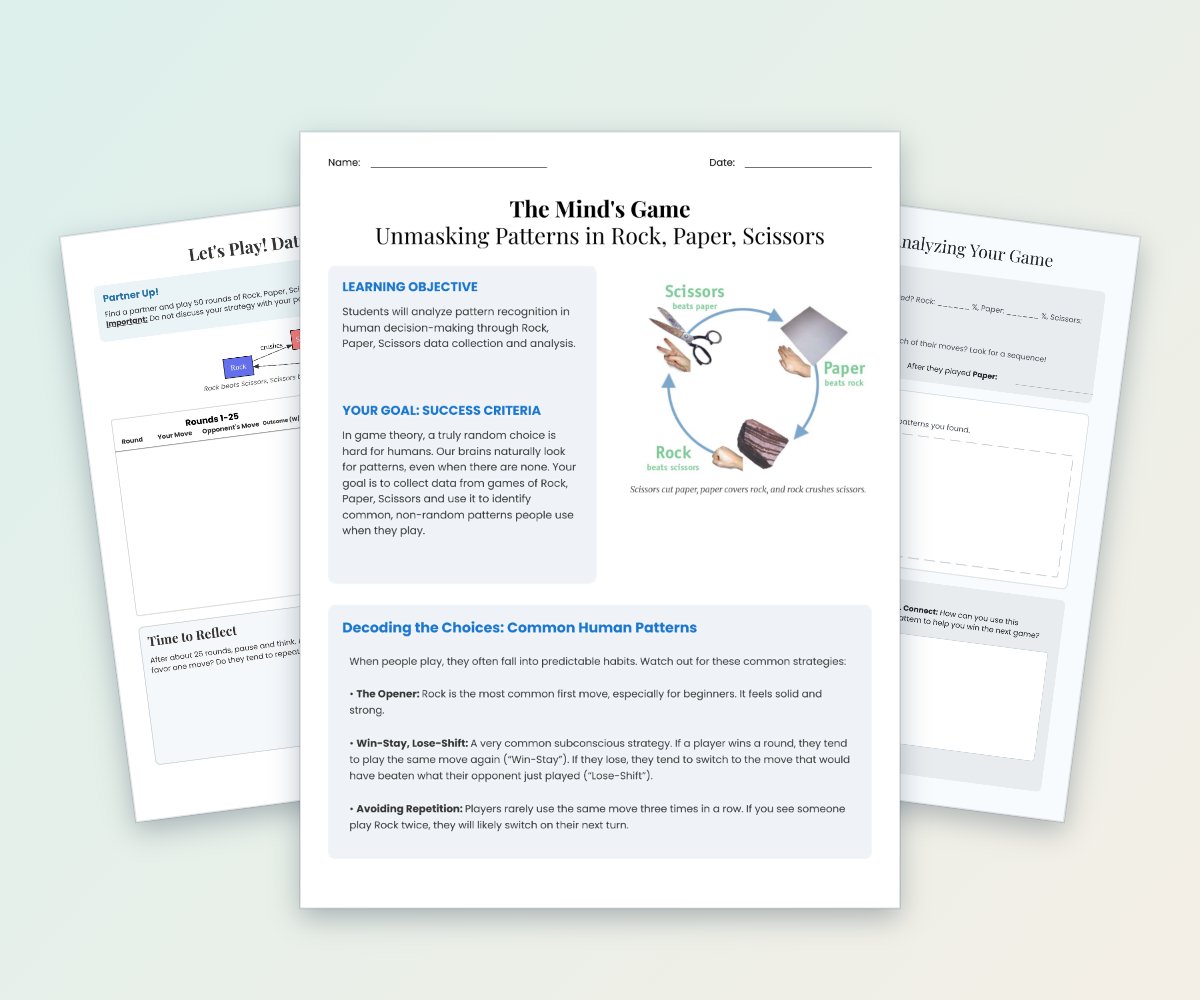
Students play 50 rounds of Rock, Paper, Scissors, record outcomes, and analyze opponents’ decision-making patterns.
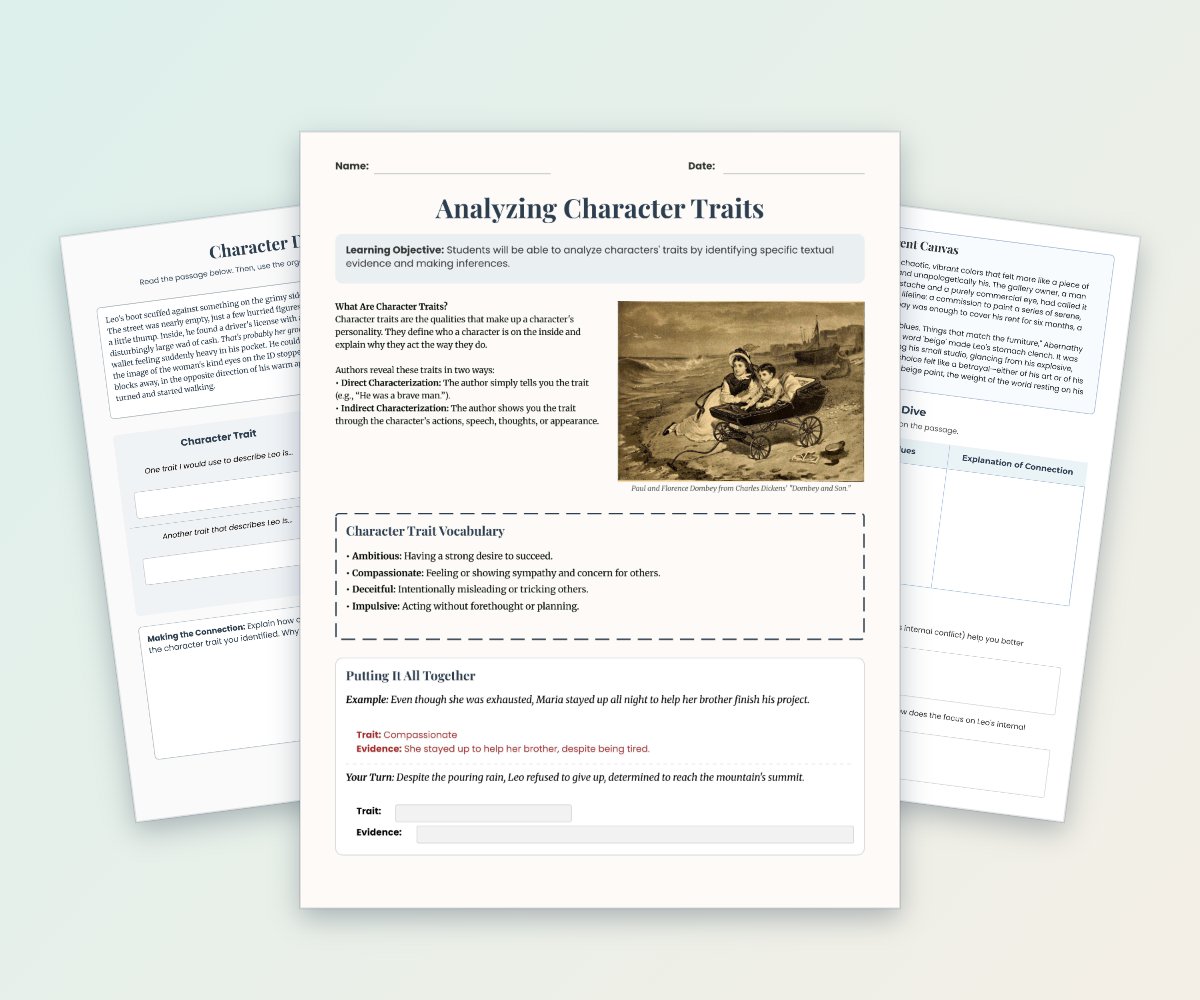
Students learn direct and indirect characterization, review trait vocabulary, and practice identifying traits using textual evidence.
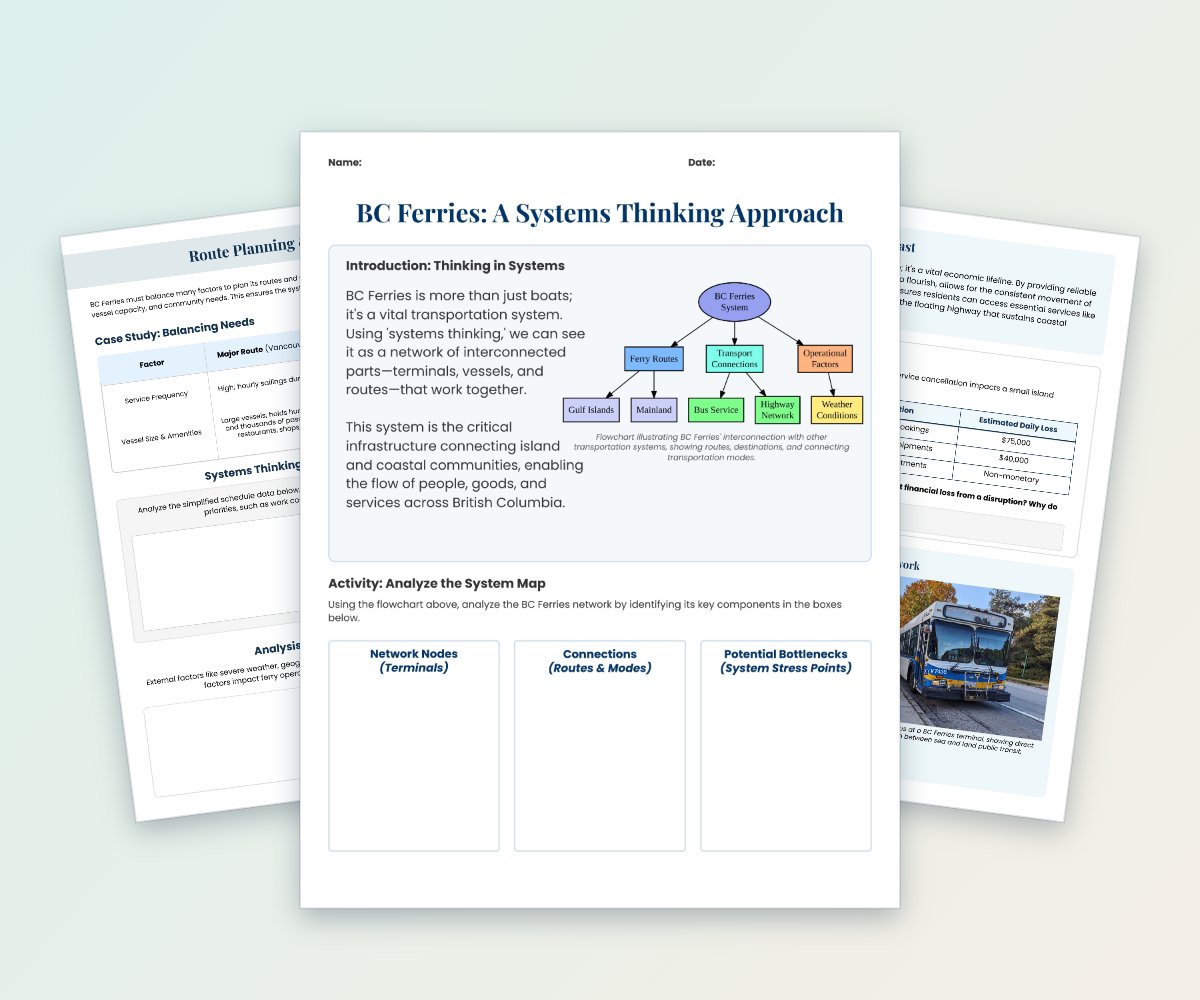
Students analyze BC Ferries as an interconnected transportation system, identifying network nodes, routes, modes, bottlenecks, and vulnerabilities.
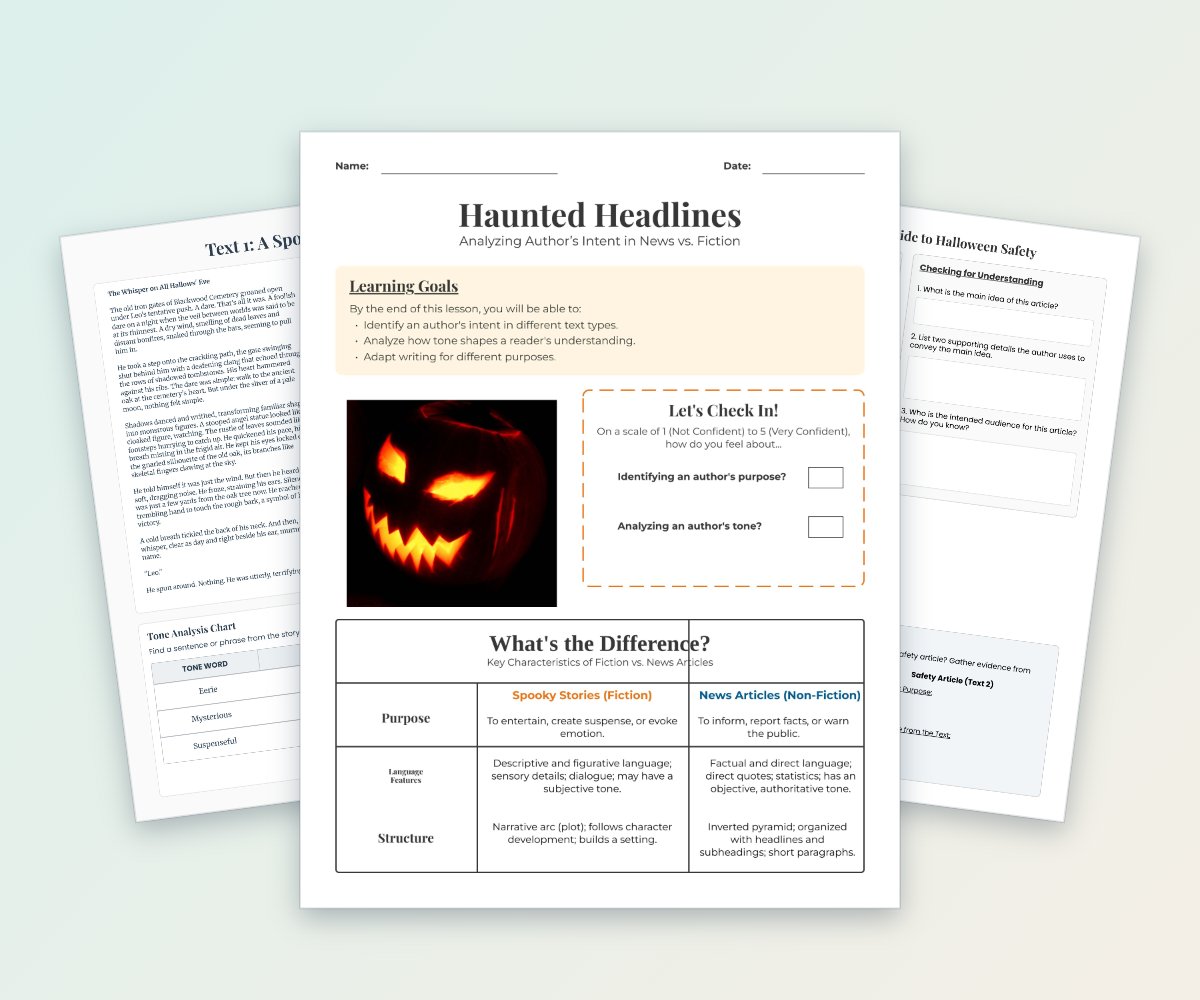
This lesson uses a spooky fictional story and news article comparison to teach authorial intent, tone, language features, and text structure.
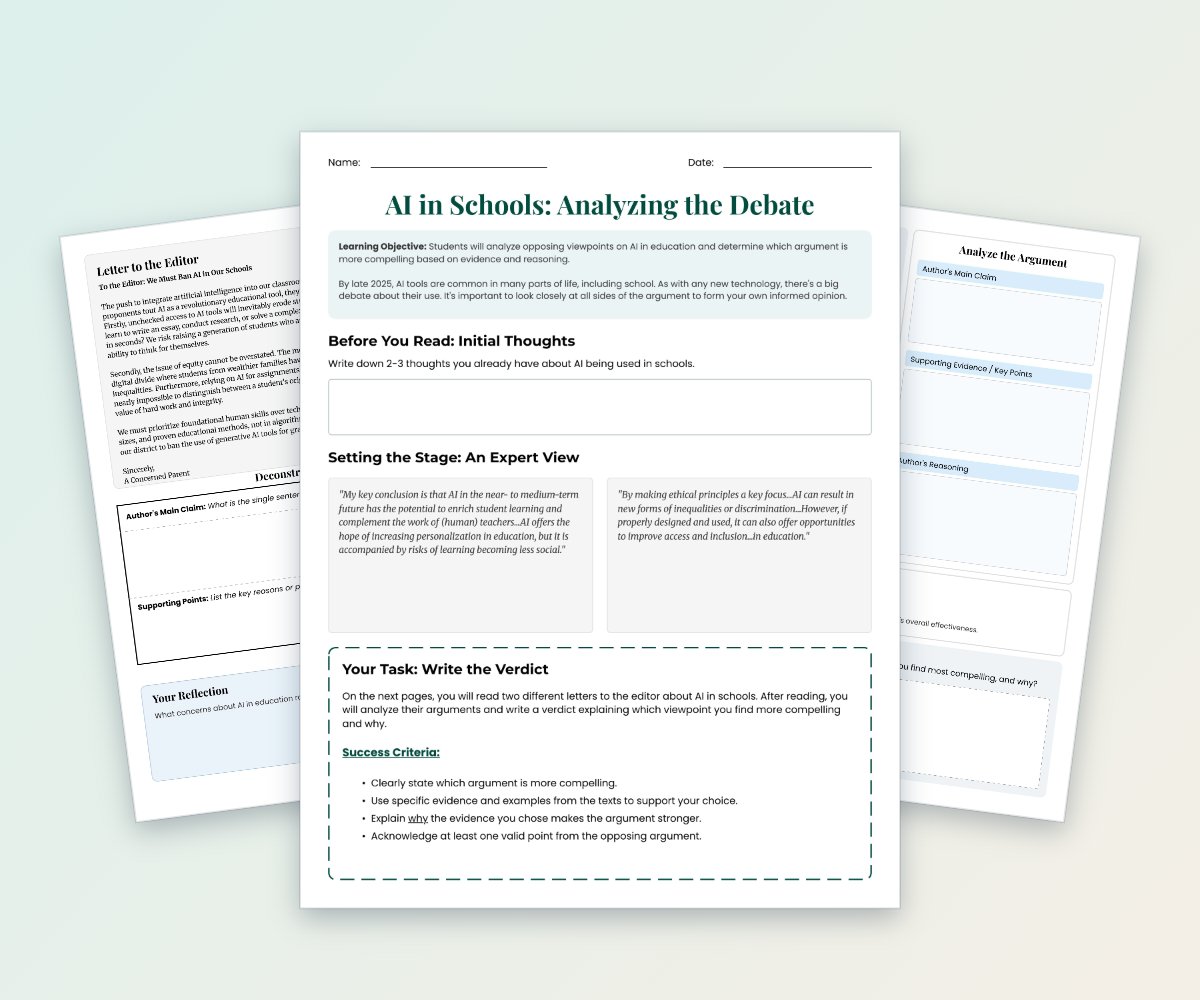
Students examine opposing letters about artificial intelligence in schools and evaluate which argument is more compelling.
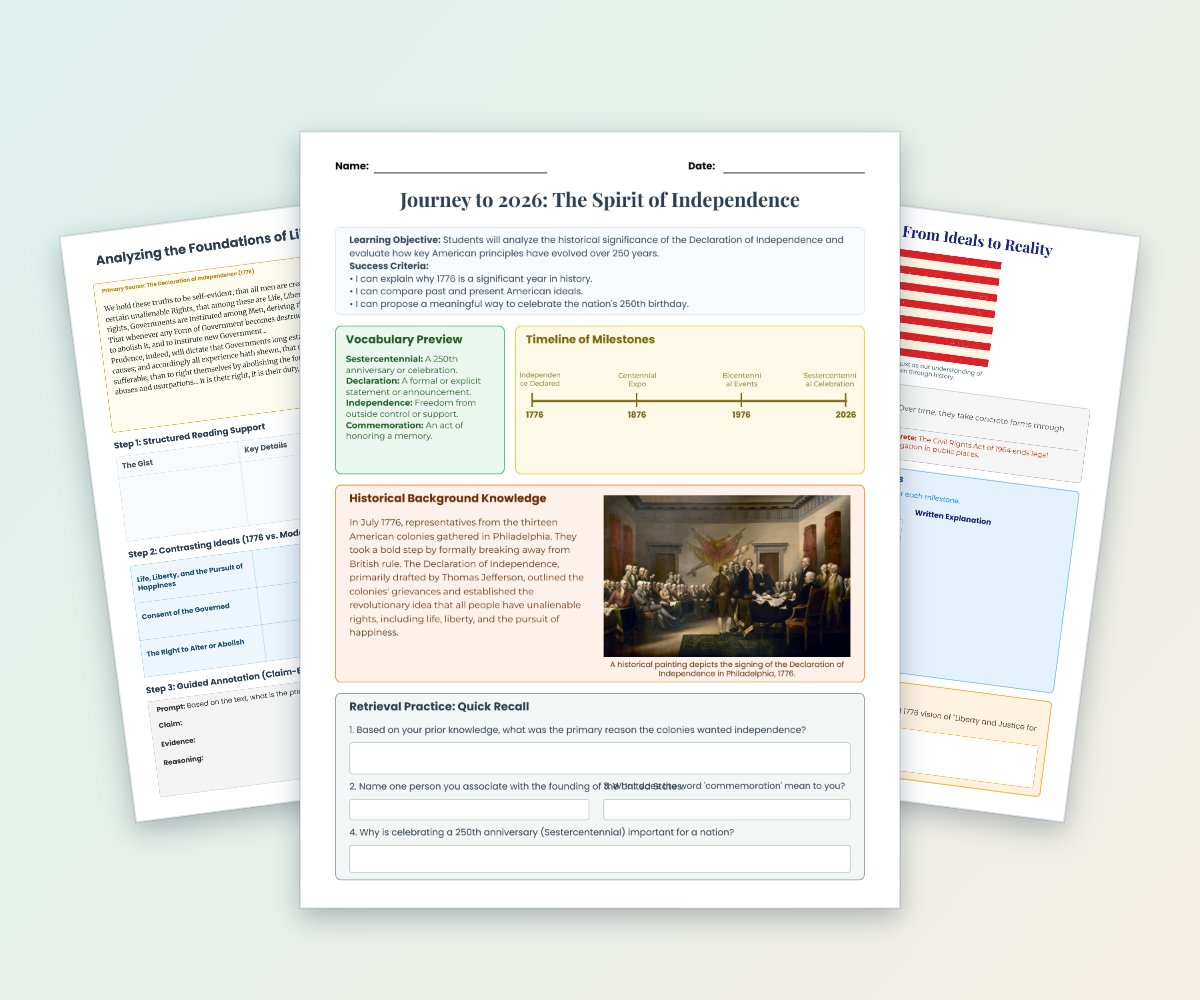
This four-page activity pack explores the historical significance of 1776 and America's 250th anniversary in 2026.
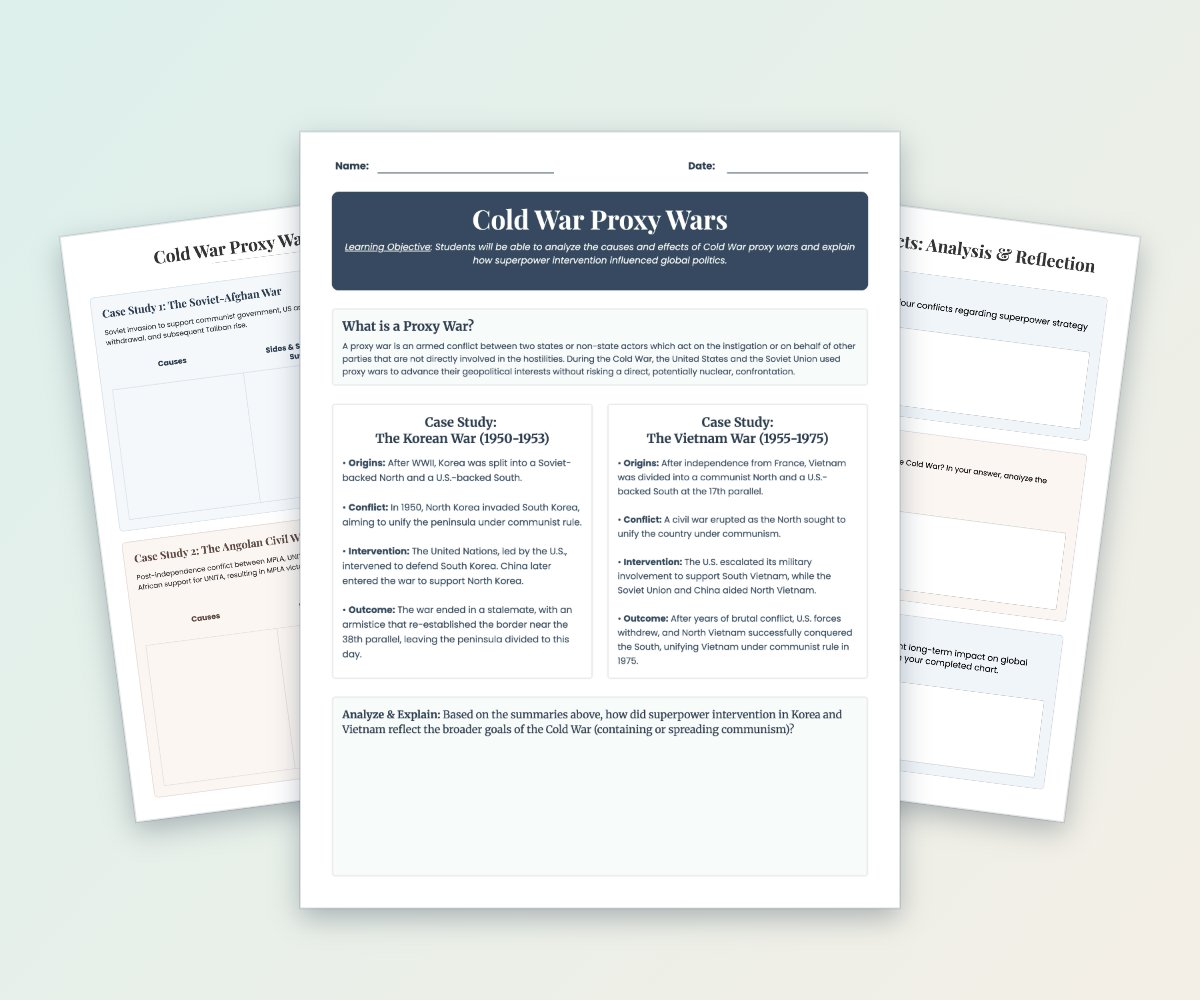
This three-page social studies worksheet introduces proxy wars and examines the Korean War, Vietnam War, Soviet-Afghan War, and Angolan Civil War.
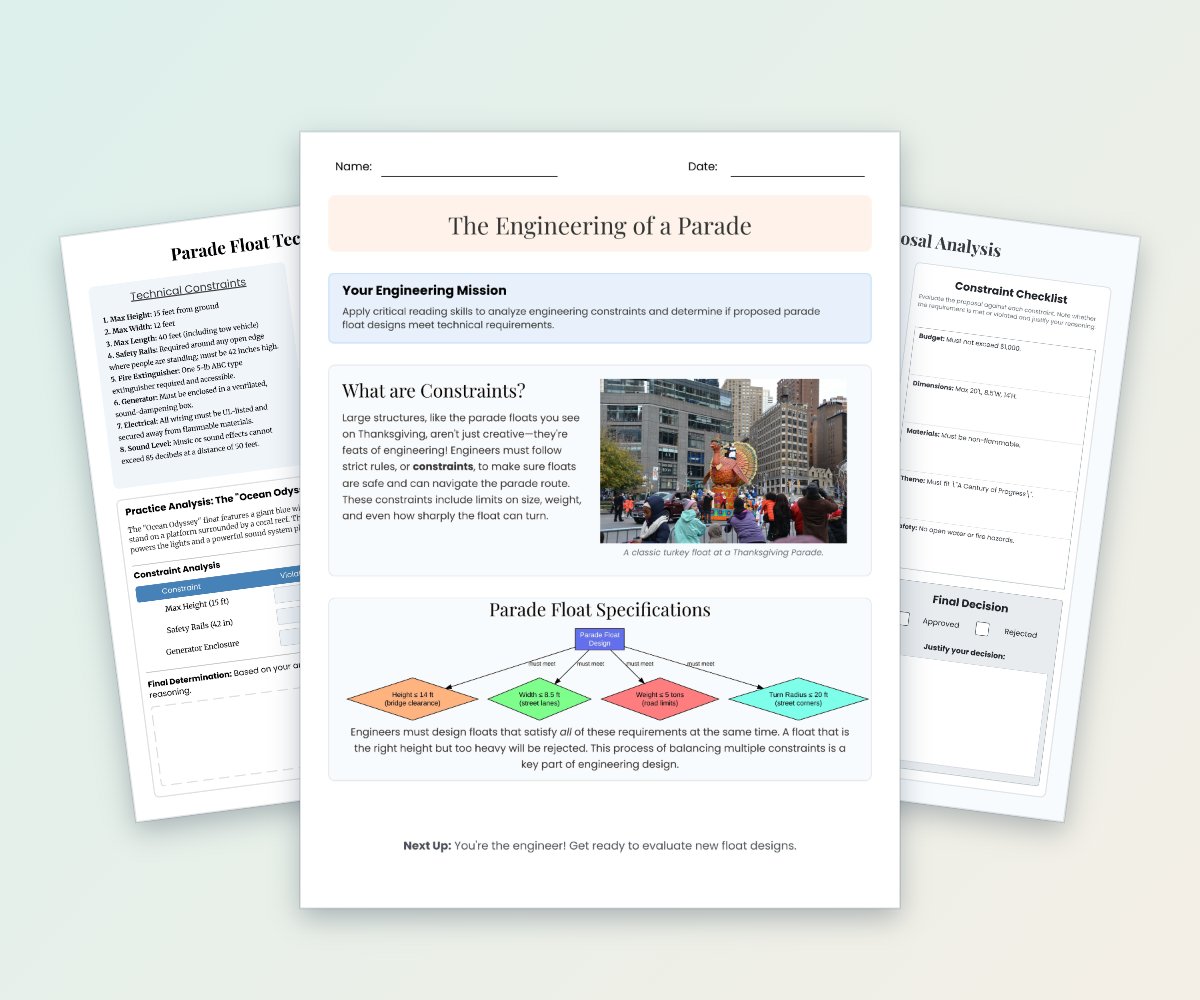
Students analyze parade float proposals against technical requirements for dimensions, safety features, generators, electrical systems, and sound levels.
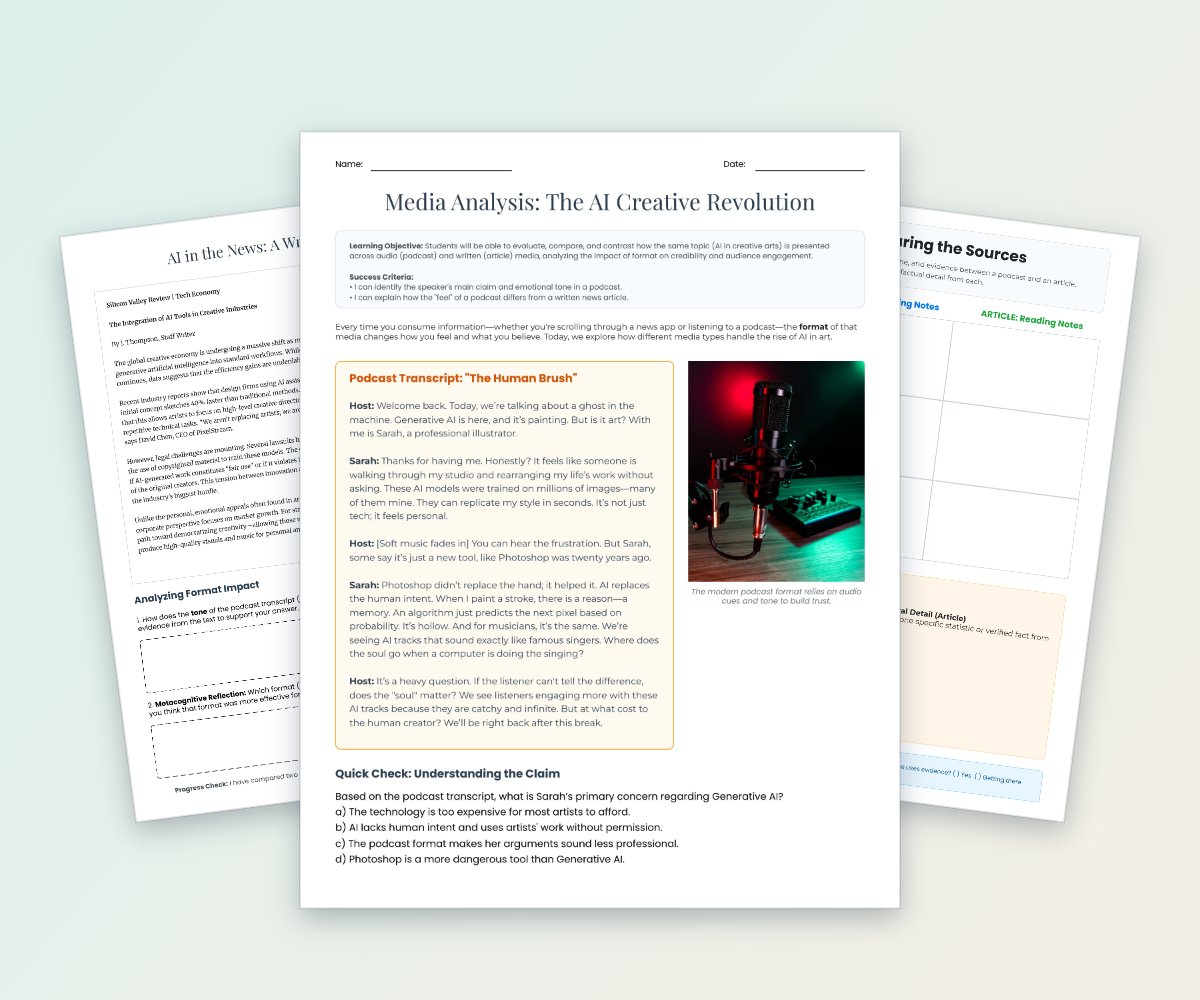
Students analyze how a podcast and written article present artificial intelligence in the creative arts.
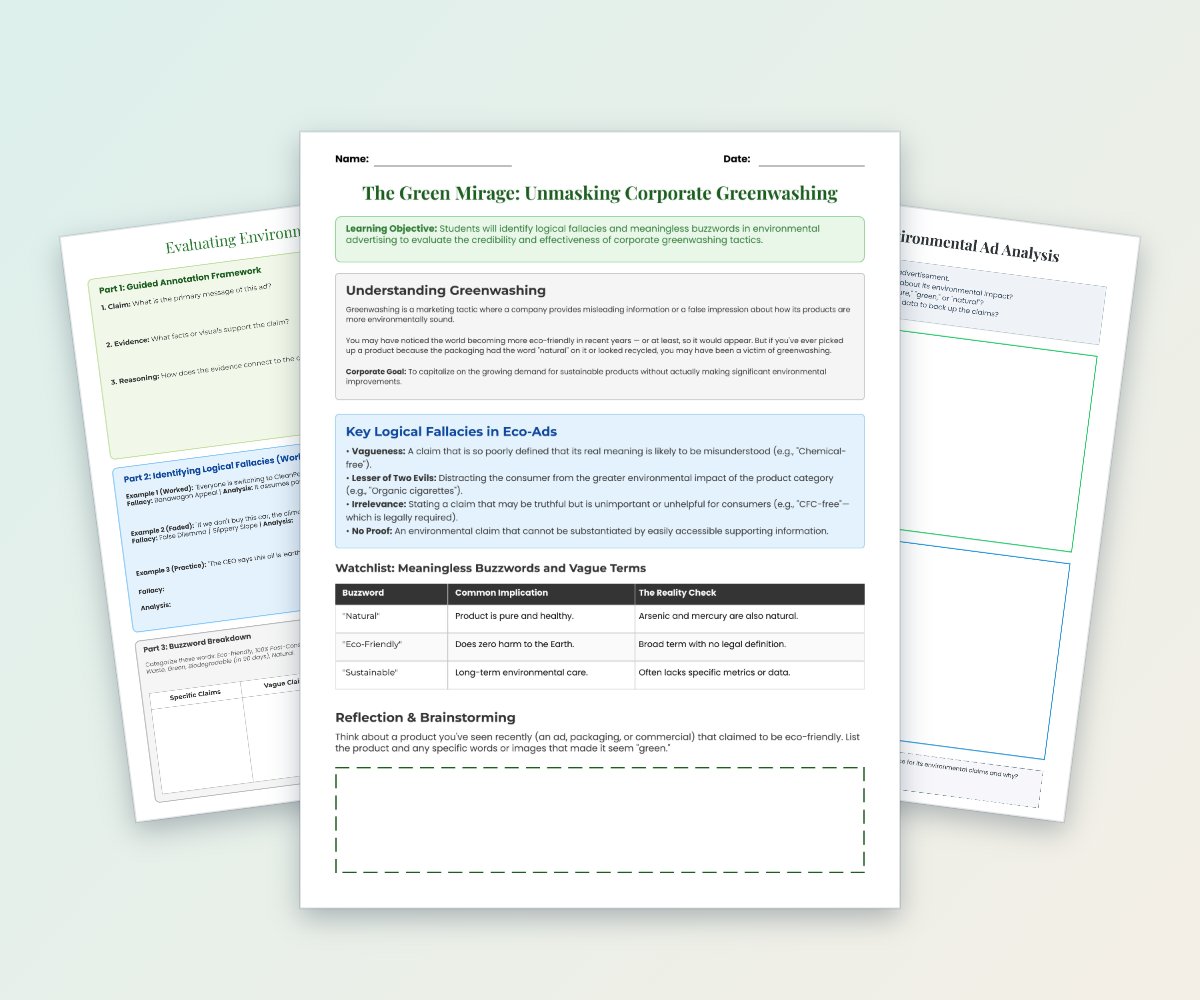
This four-page worksheet helps students analyze environmental advertising for greenwashing, vague claims, meaningless buzzwords, and logical fallacies.
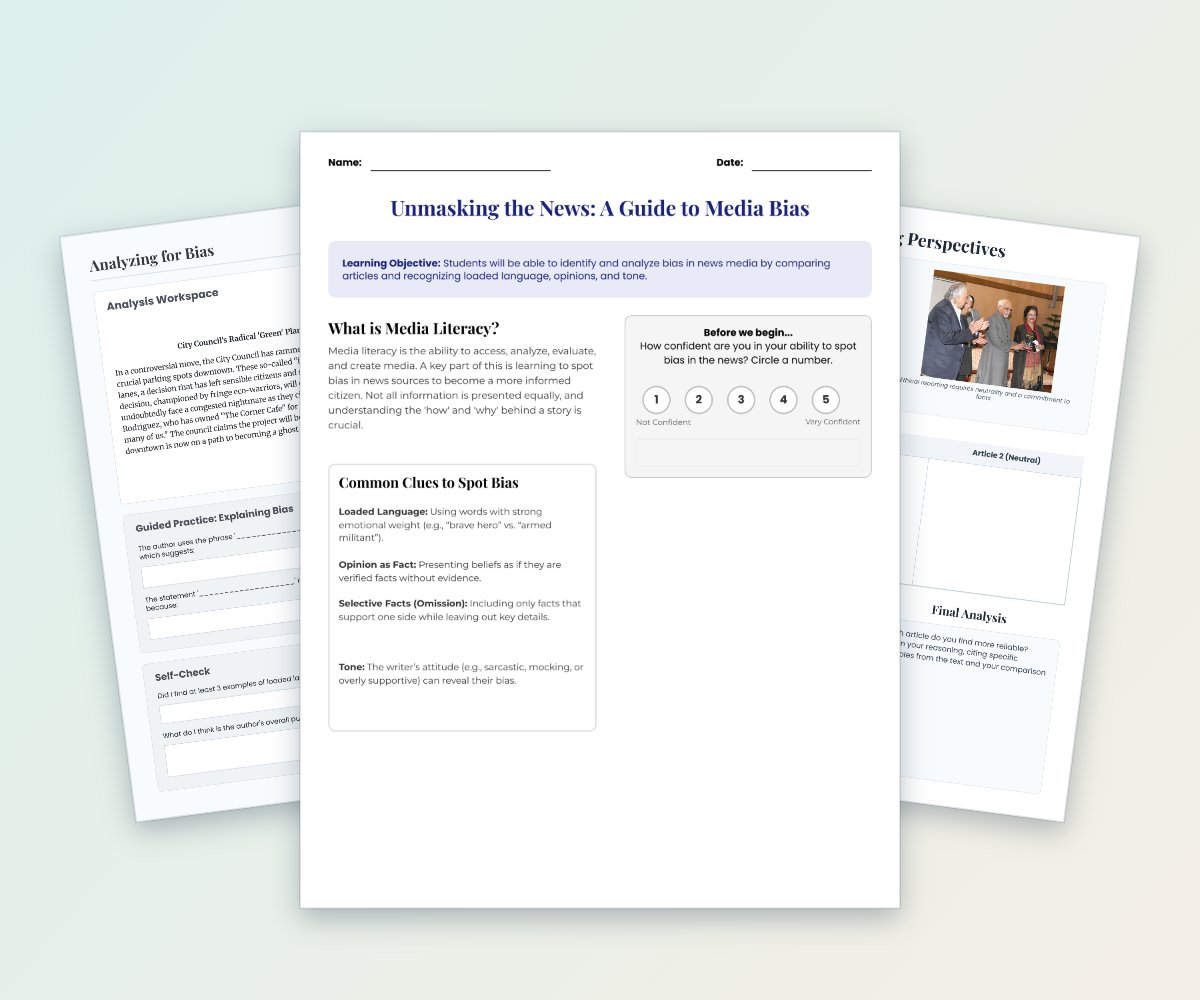
This four-page worksheet introduces media literacy and guides students in identifying loaded language, opinions presented as facts, selective facts, and tone.
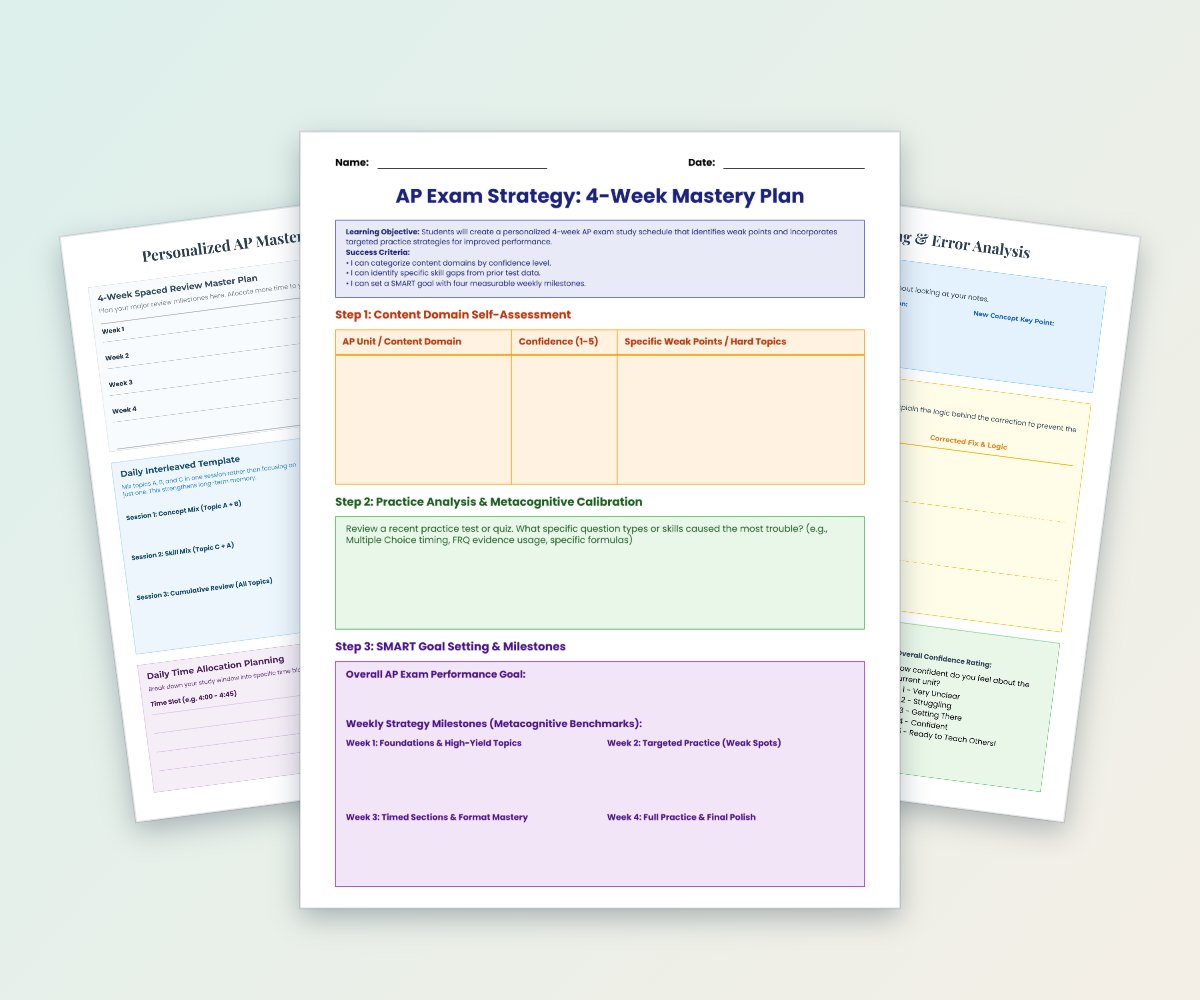
Help students build a personalized four-week AP exam study plan using confidence ratings, practice-test analysis, SMART goals, spaced review, and targeted drills.
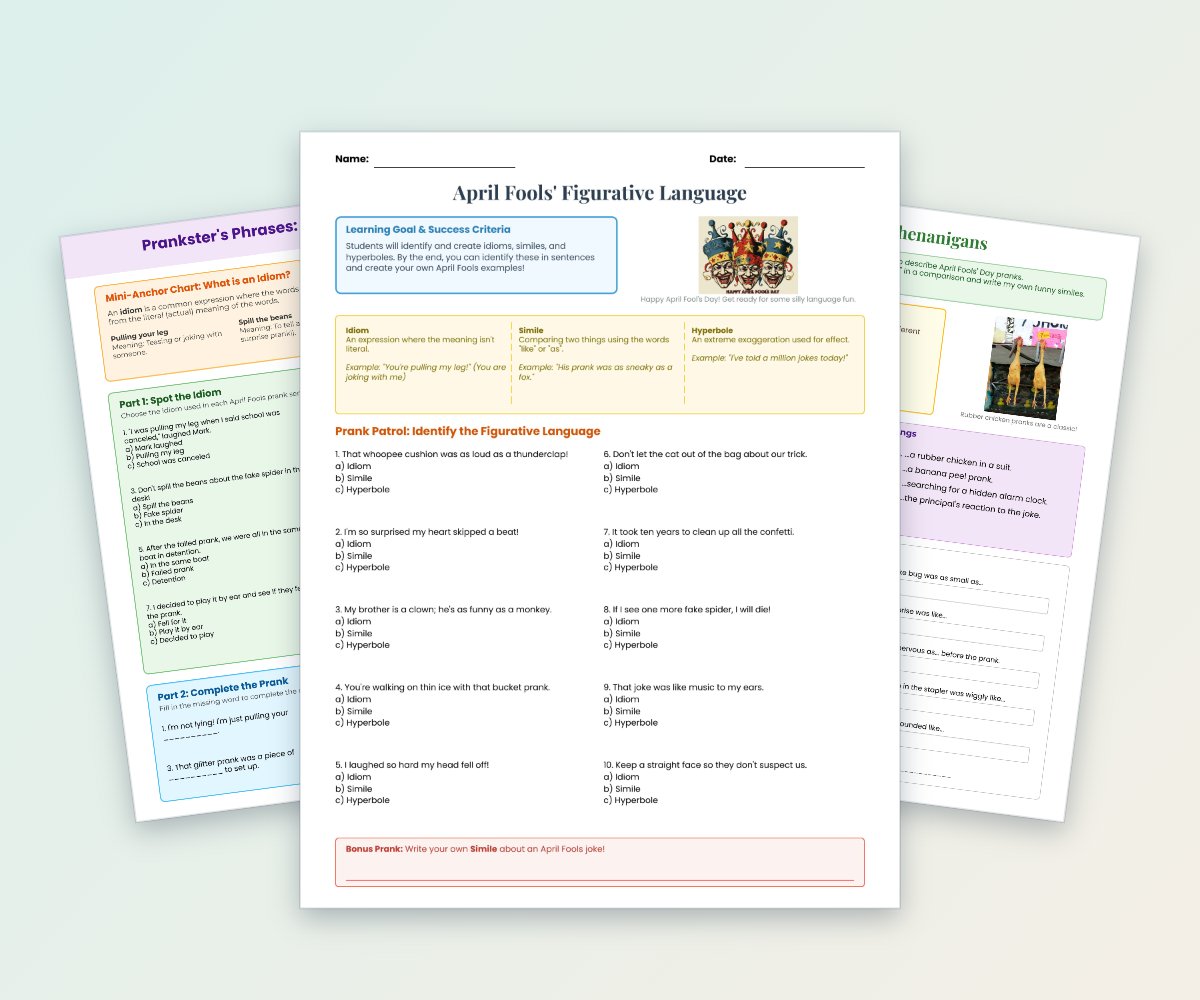
This five-page April Fools-themed activity pack teaches students to identify and create idioms, similes, and hyperboles.
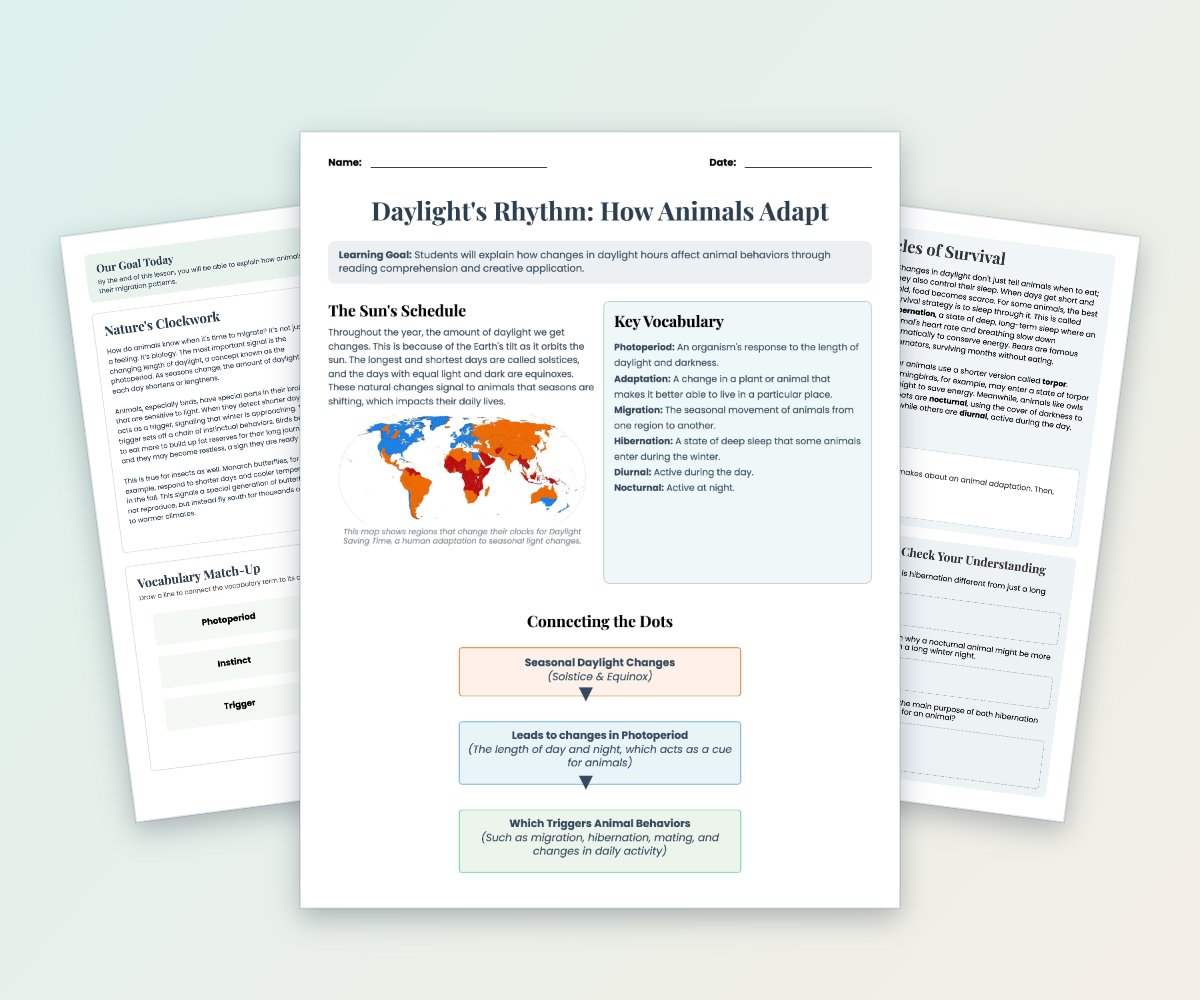
This lesson explains how seasonal changes in daylight influence animal behaviors such as migration, hibernation, mating, and daily activity.
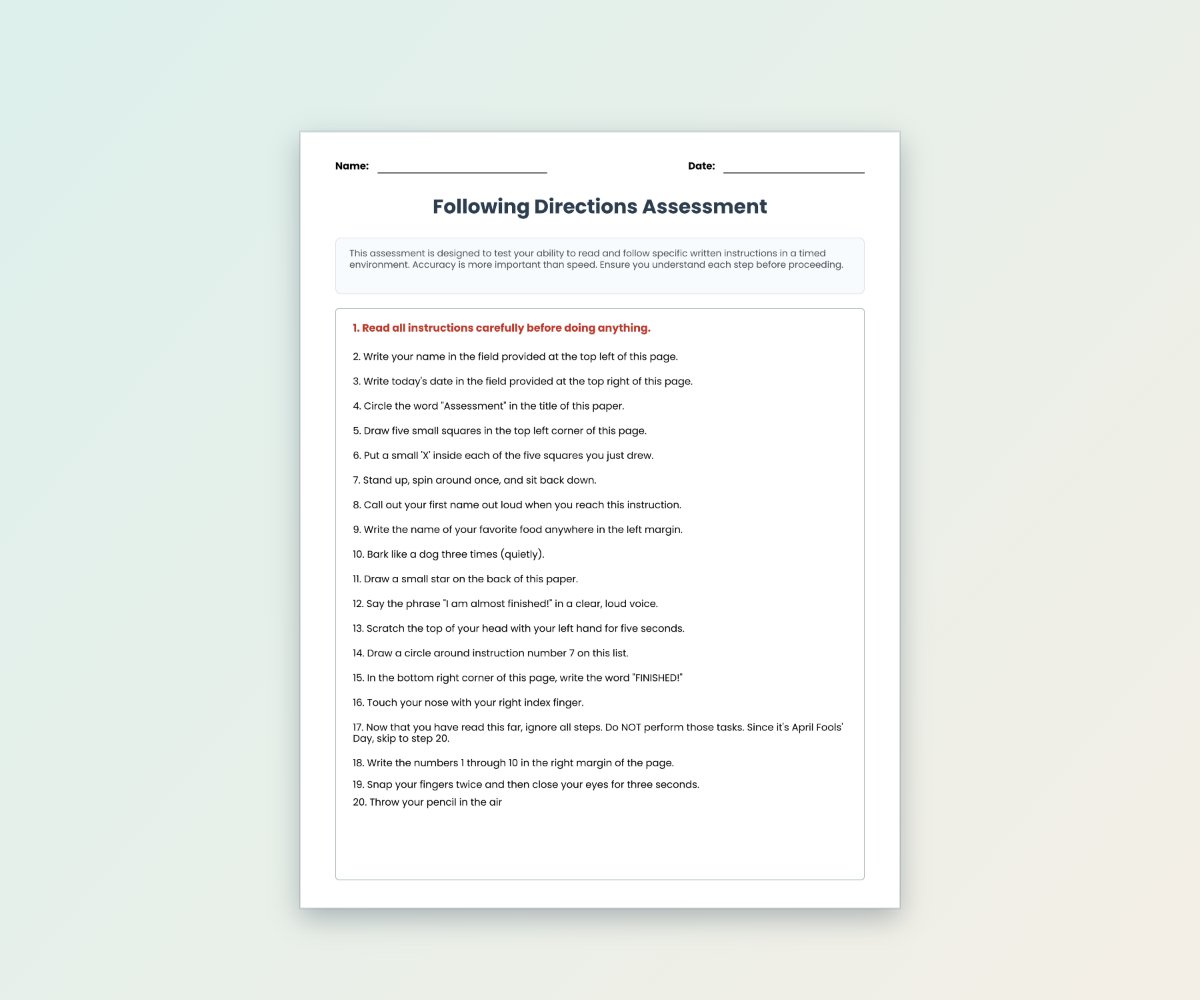
A humorous one-page April Fools assessment that challenges students to read instructions carefully before acting.
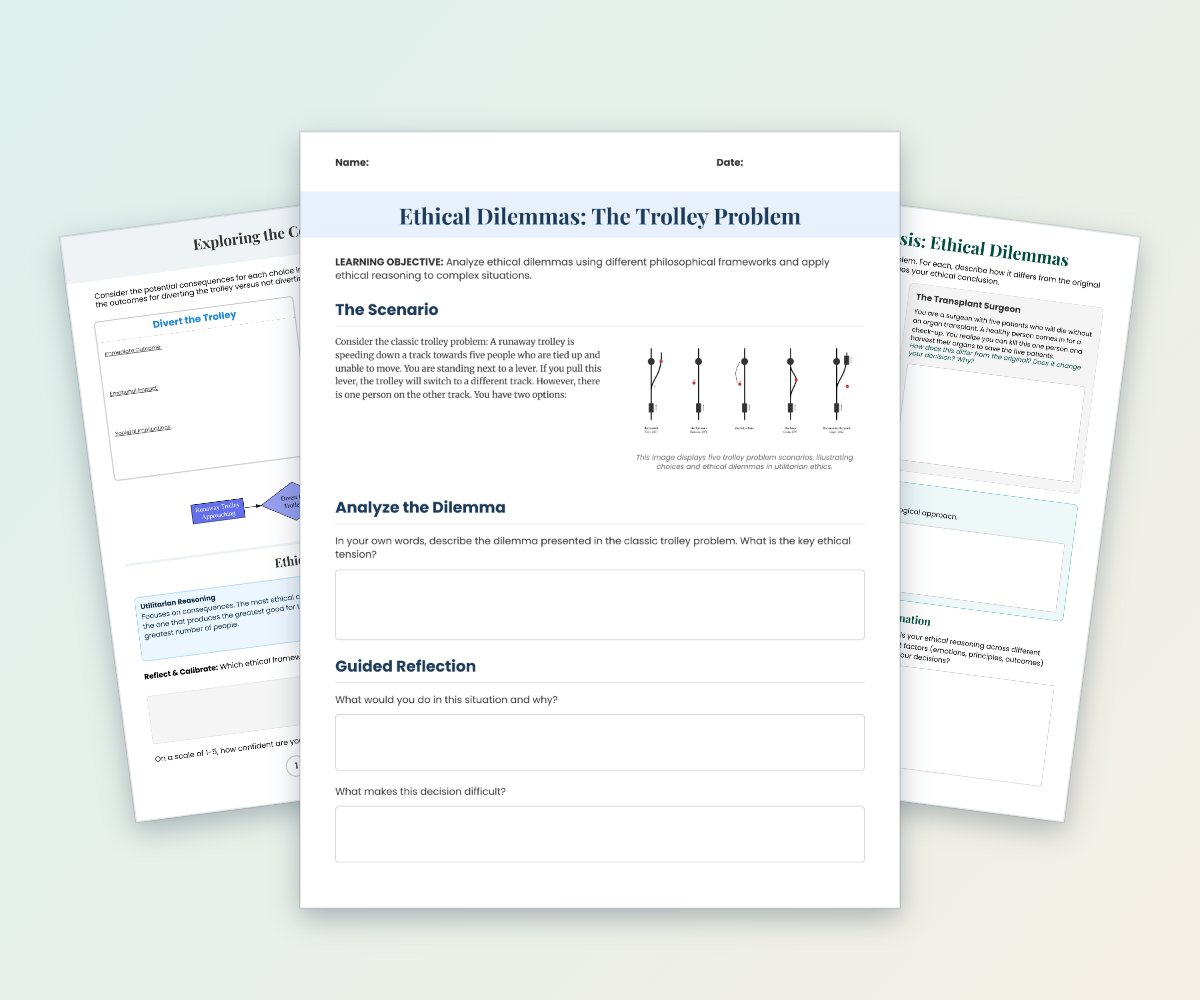
This four-page worksheet guides students through the classic trolley problem and related variations, including the footbridge dilemma.
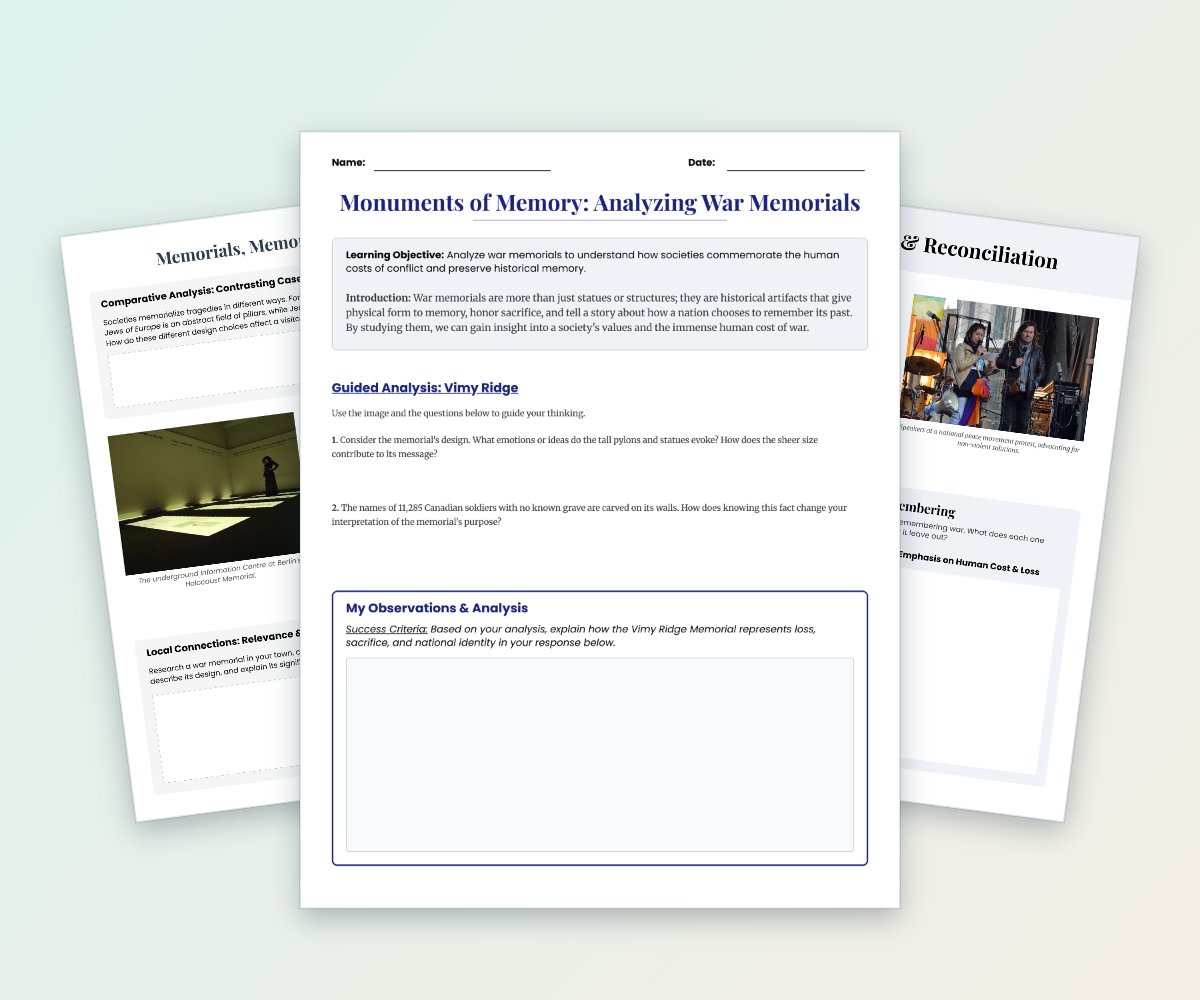
Students examine the Vimy Ridge Memorial and compare international memorials to explore how societies remember conflict and human suffering.
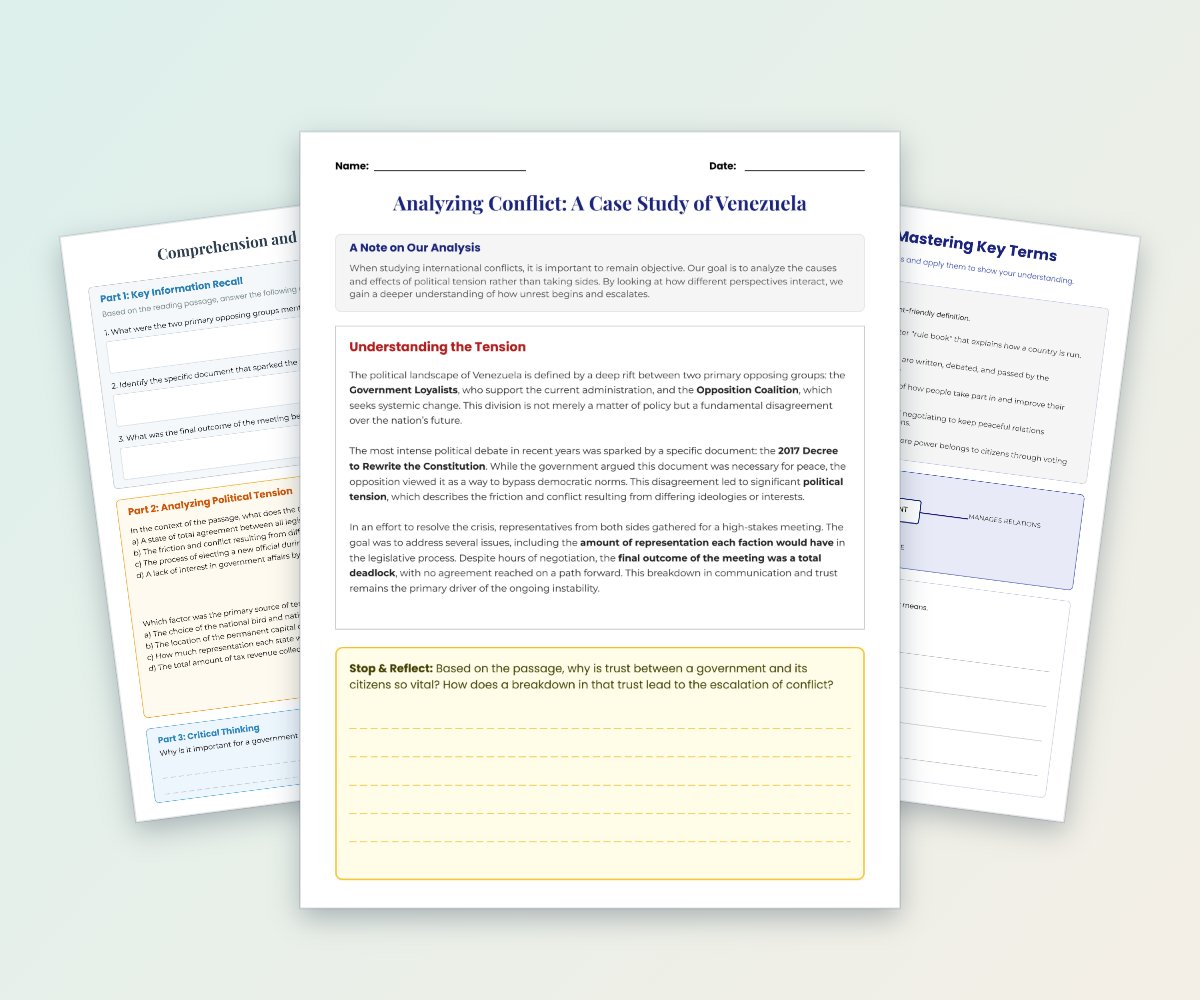
This case study examines Venezuela’s political conflict, including opposing perspectives, constitutional debate, political tension, negotiation, and deadlock.
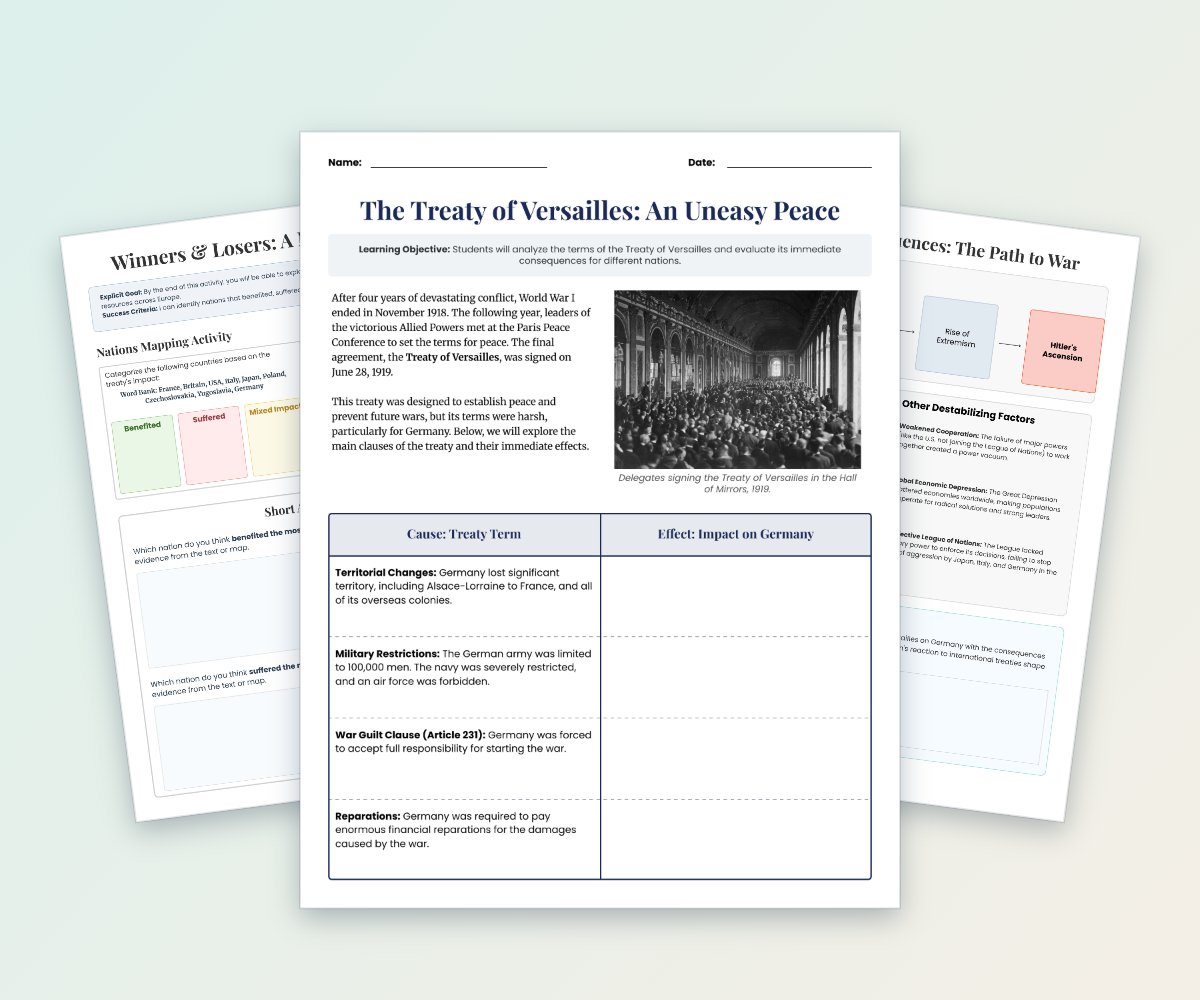
Students examine the Treaty of Versailles, including territorial changes, military restrictions, war guilt, and reparations.