Exploring Canada: Provinces and Territories Geography Pack
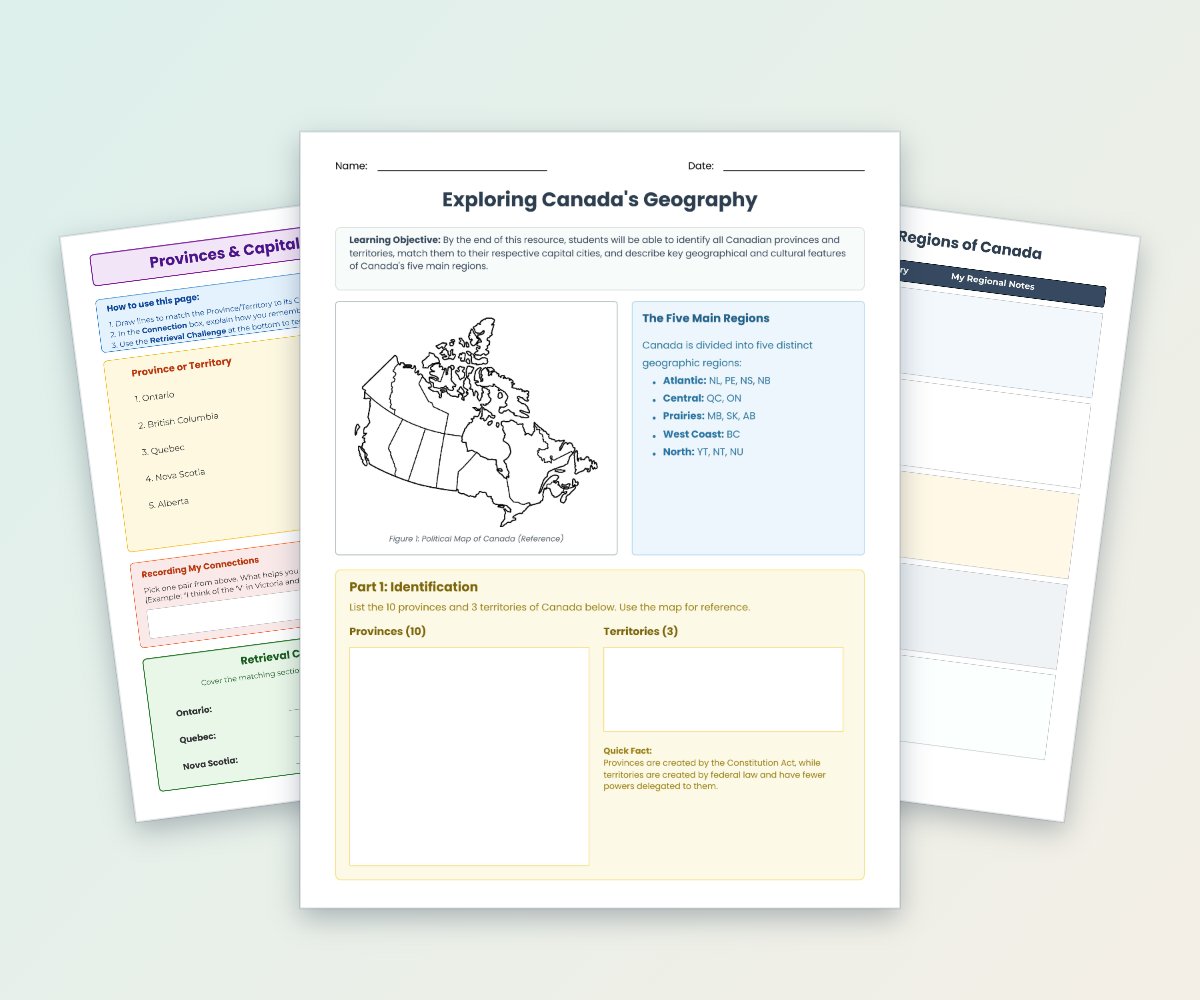
This six-page activity pack introduces Canada's five geographic regions, 10 provinces, three territories, and capital cities.
$5
Classroom-ready resources written for grade 5: printable worksheets, slides, activities and planning tools you can download and use straight away. Browse by subject below.
This six-page activity pack introduces Canada's five geographic regions, 10 provinces, three territories, and capital cities.
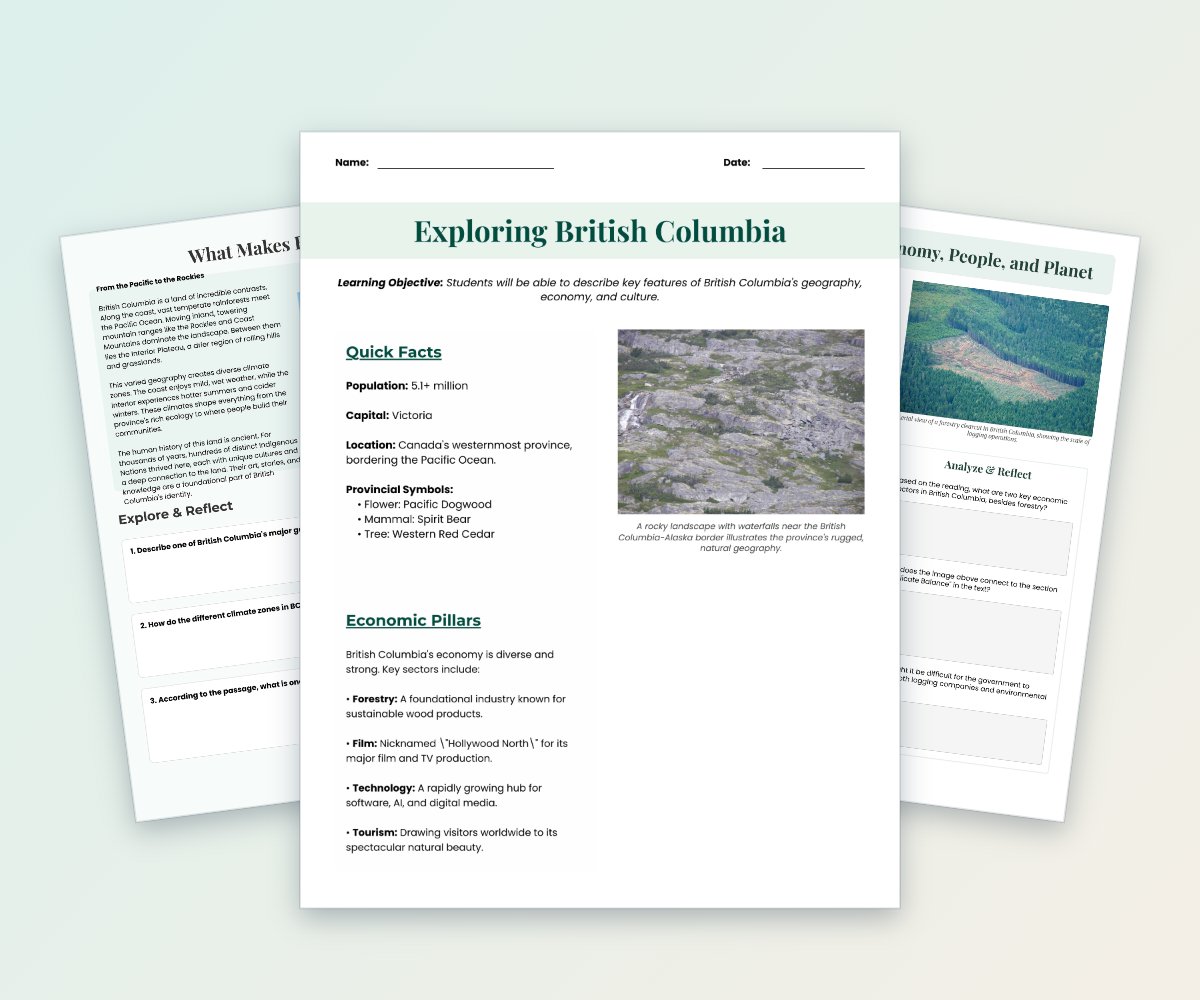
This seven-page student workbook explores British Columbia’s geography, climate, economy, provincial symbols, Indigenous Nations, and cultural identity.
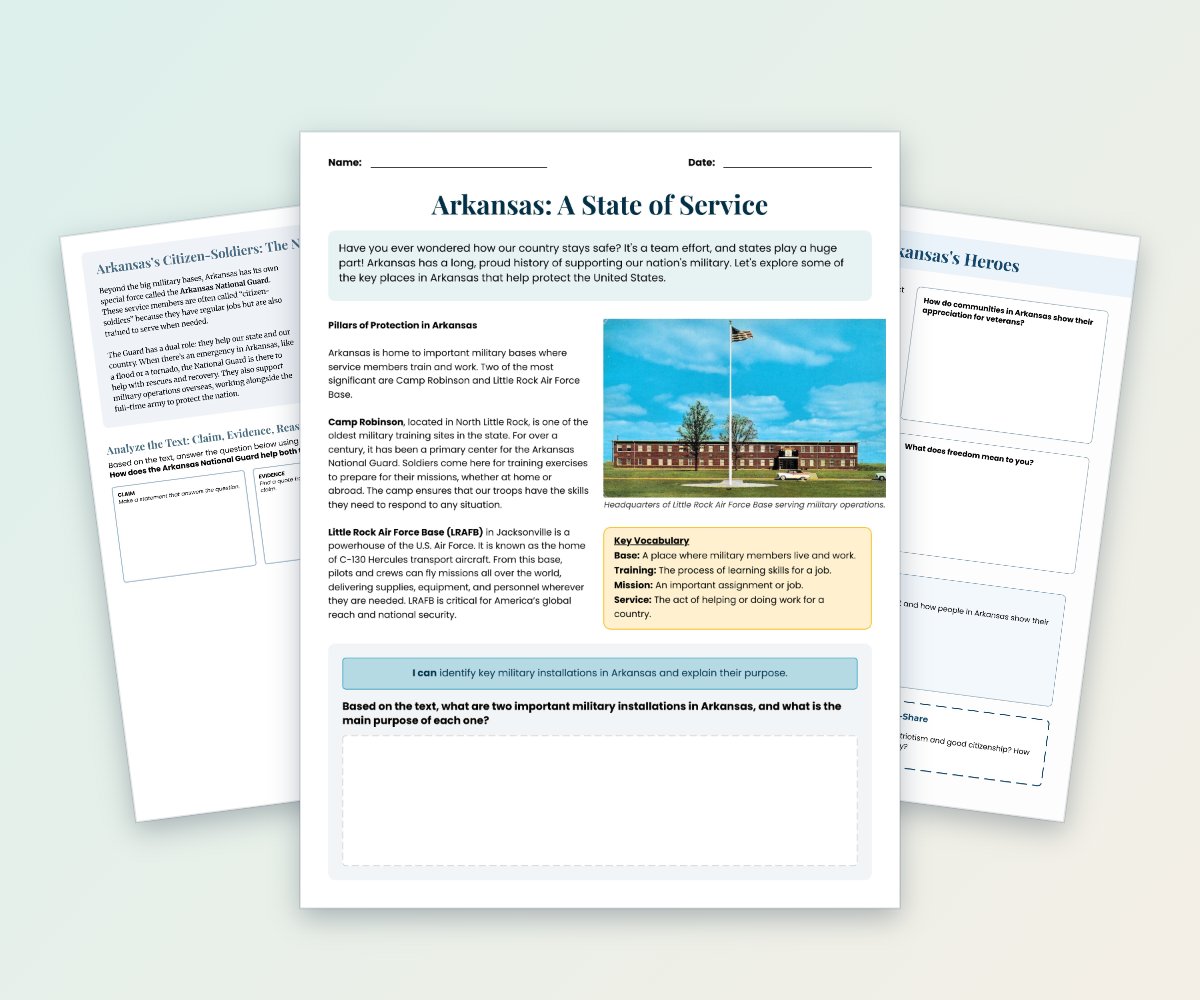
Students read about Camp Robinson, Little Rock Air Force Base, and the Arkansas National Guard.
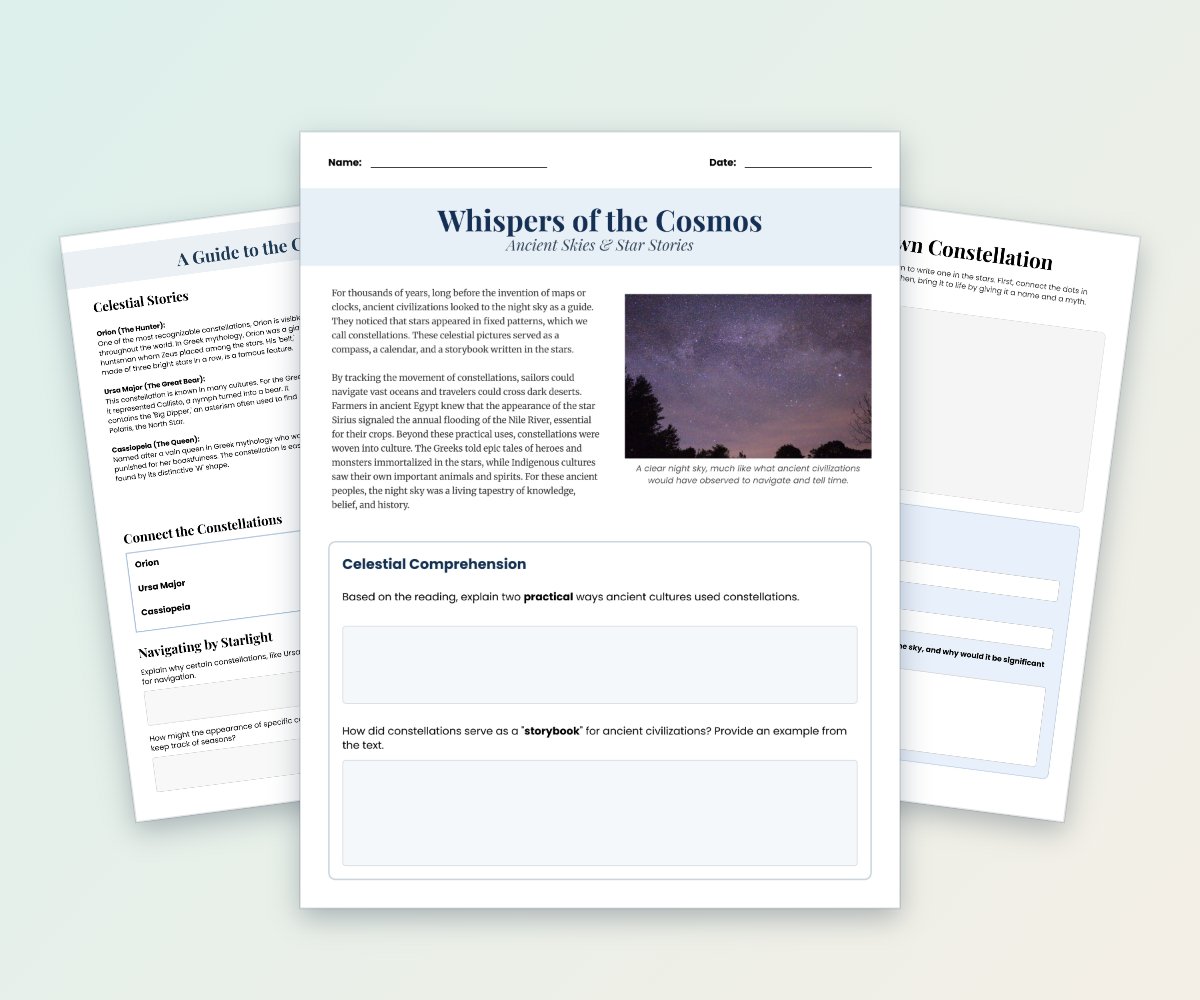
Students explore how ancient civilizations used constellations for navigation, calendars, agriculture, and storytelling.
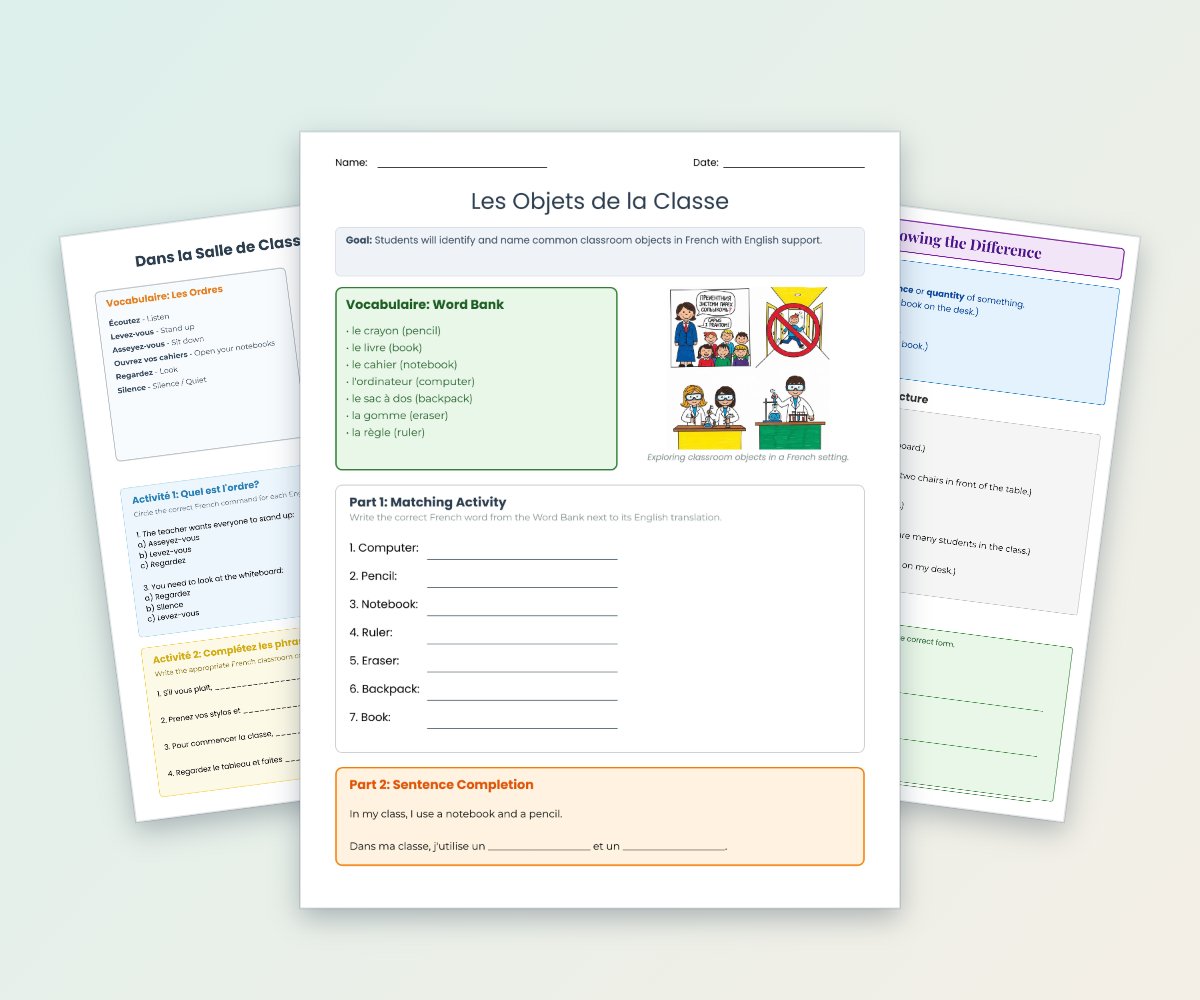
This four-page worksheet introduces French classroom objects, classroom commands, and the distinction between “il y a” and “c’est.” English support, matching, multiple-choice, and sentence-completion
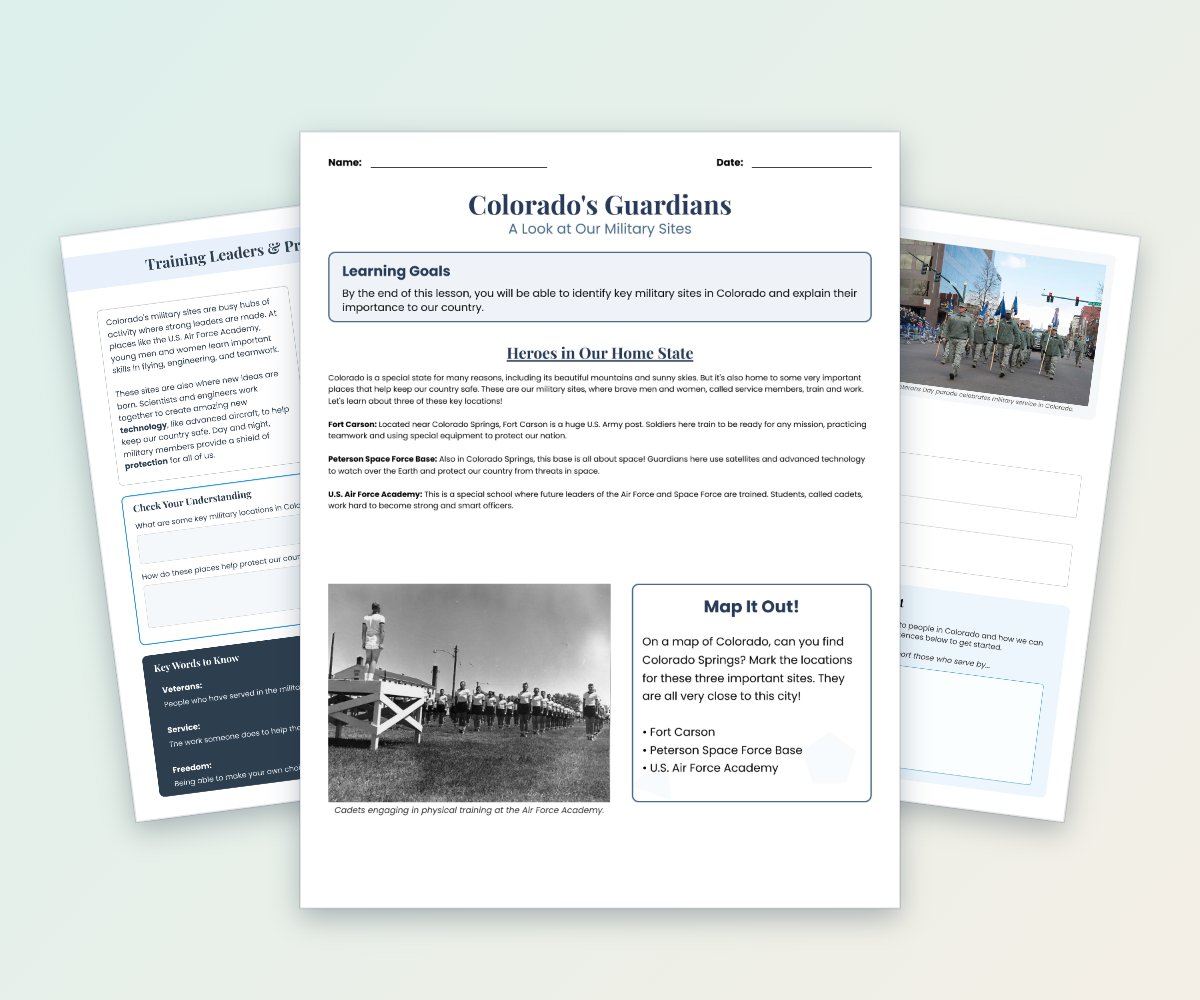
This three-page lesson introduces students to Fort Carson, Peterson Space Force Base, and the U.S.
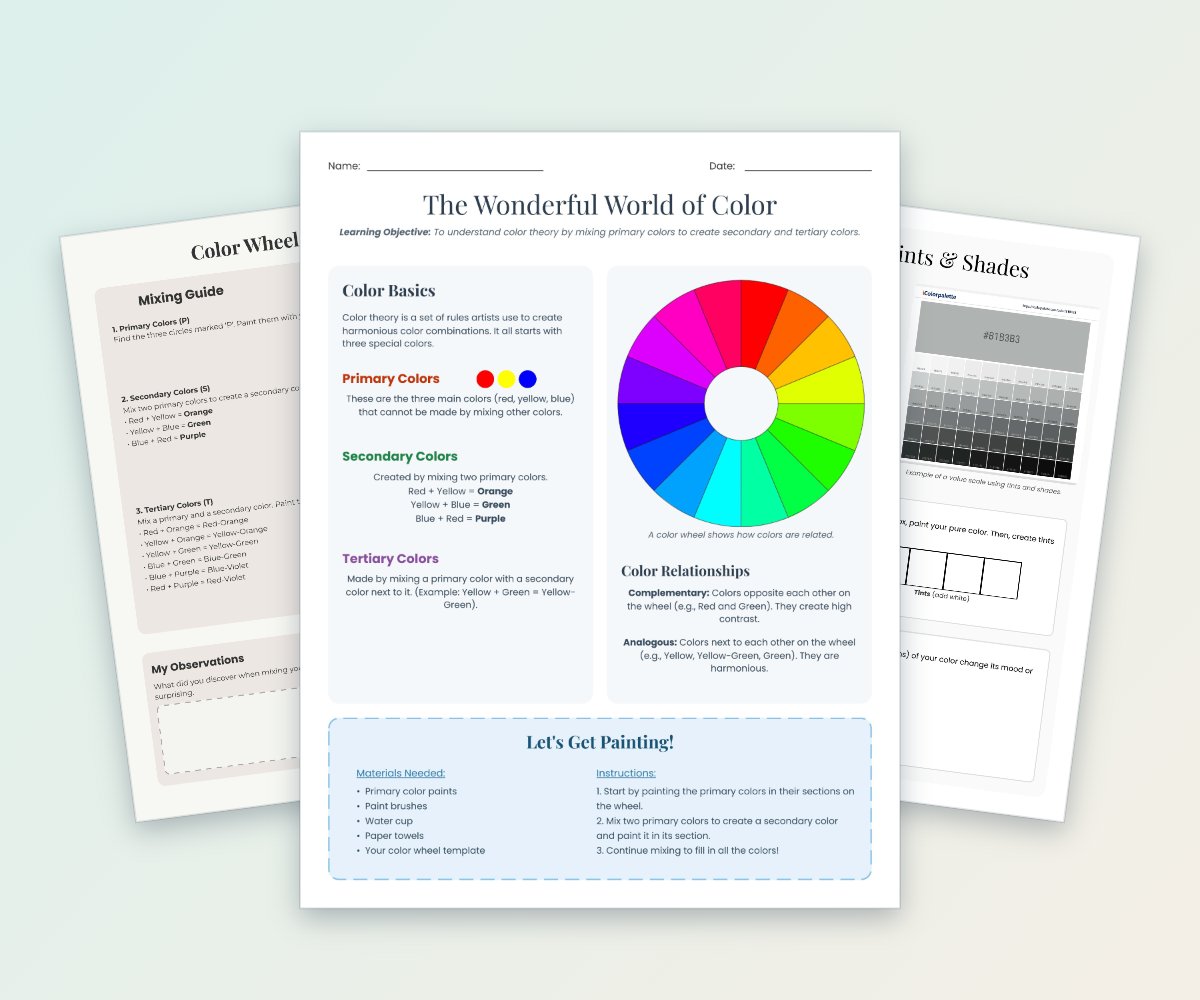
This three-page art activity introduces primary, secondary, and tertiary colors, complementary and analogous color relationships, and tints and shades.
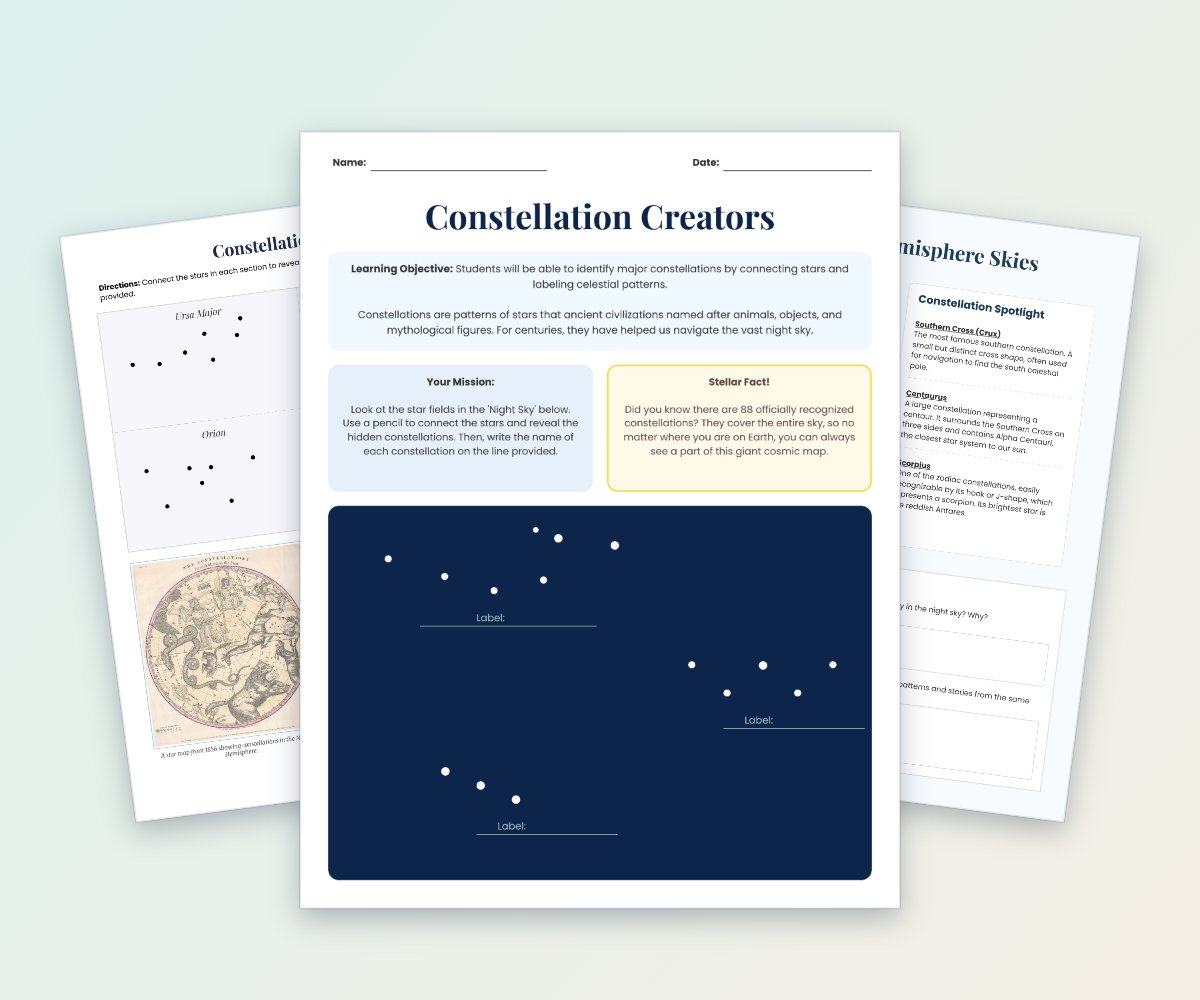
Students connect stars to identify major constellations, label celestial patterns, and learn about star brightness and hemispheres.
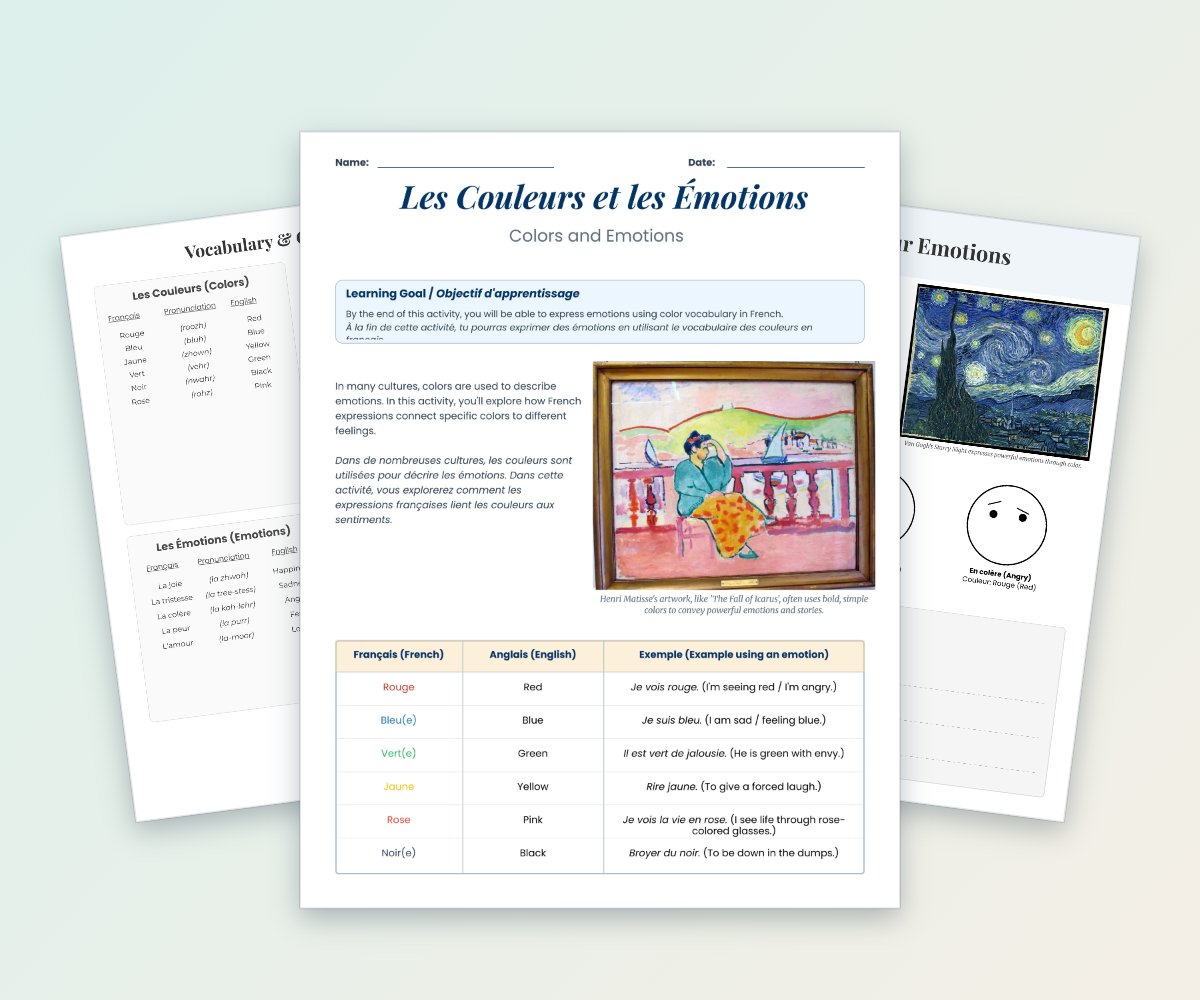
This bilingual French activity introduces color and emotion vocabulary, pronunciation, cultural expressions, and connections between colors and feelings.
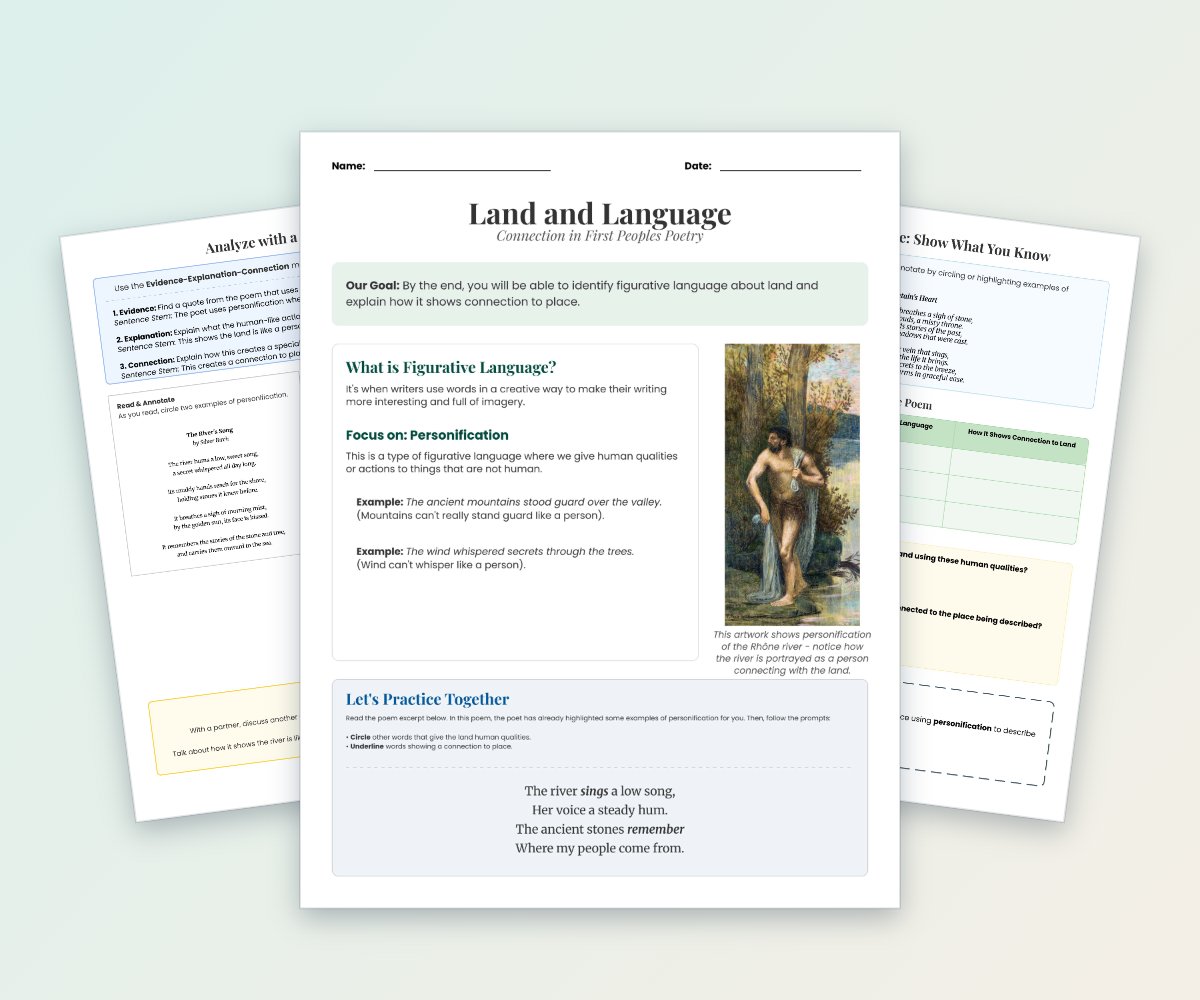
This guided worksheet helps students identify personification in poetry and explain how figurative language communicates a connection to land and place.
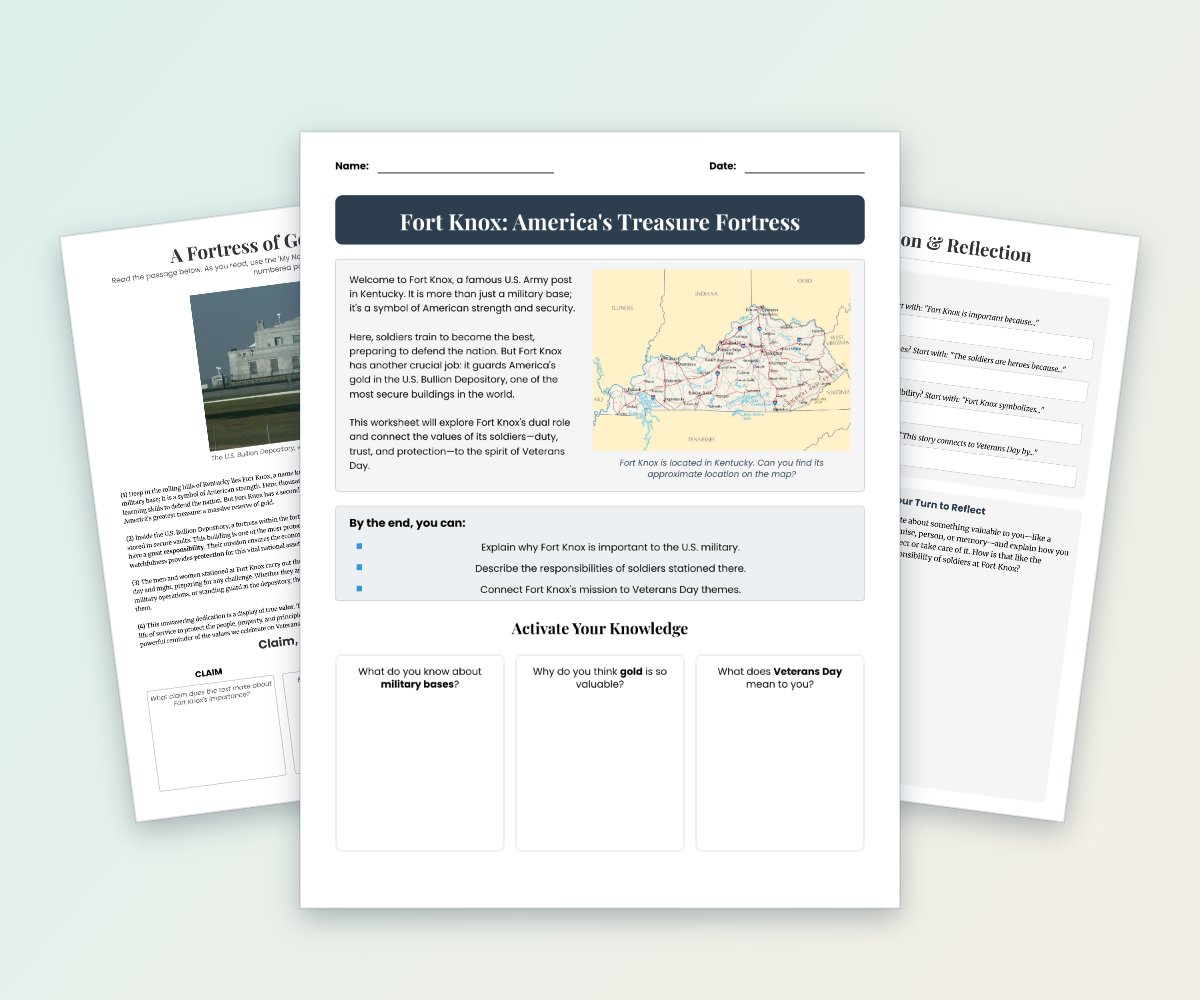
This three-page worksheet explores Fort Knox’s military role, the U.S.
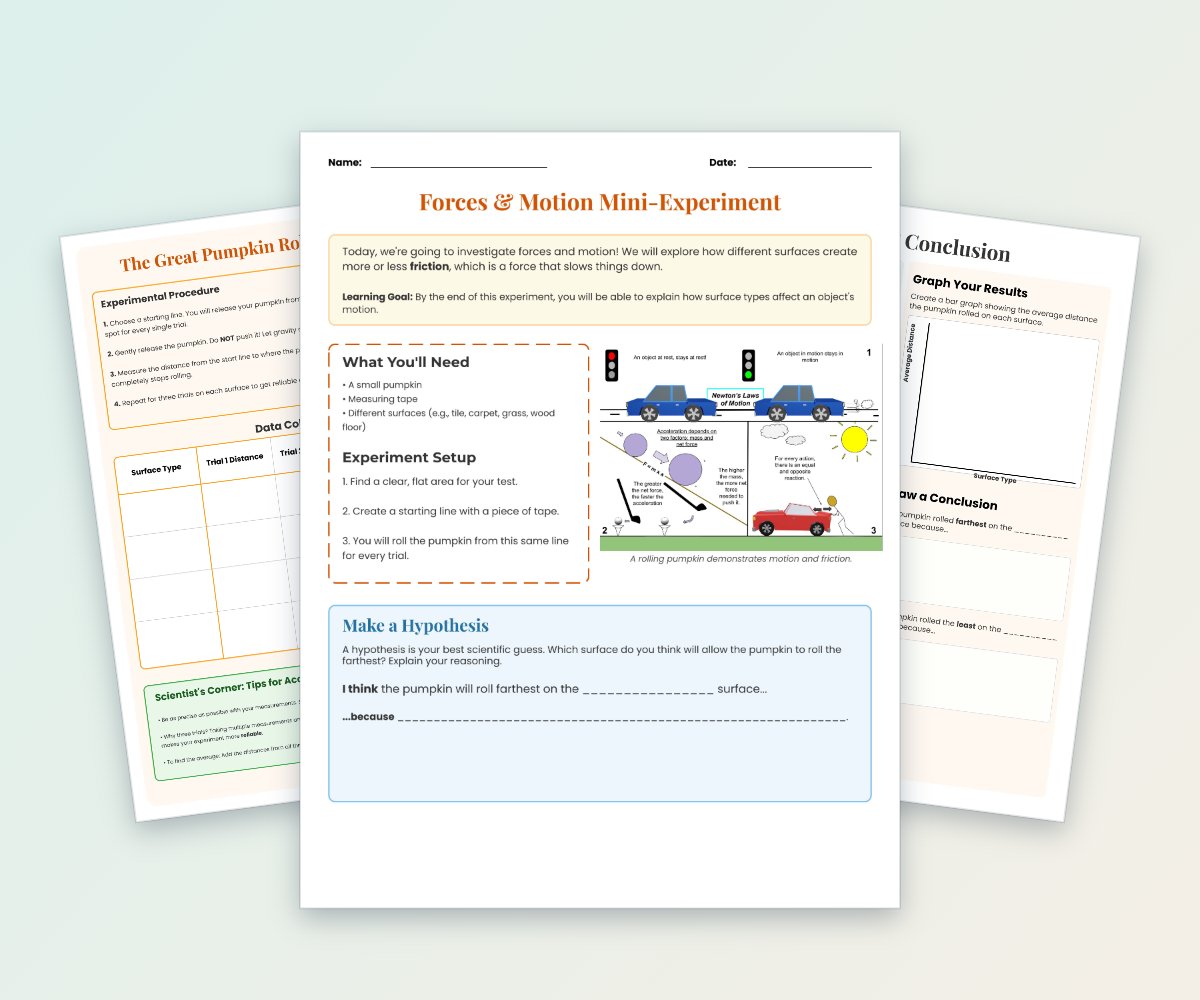
Students investigate how different surfaces affect a rolling pumpkin’s motion and distance.
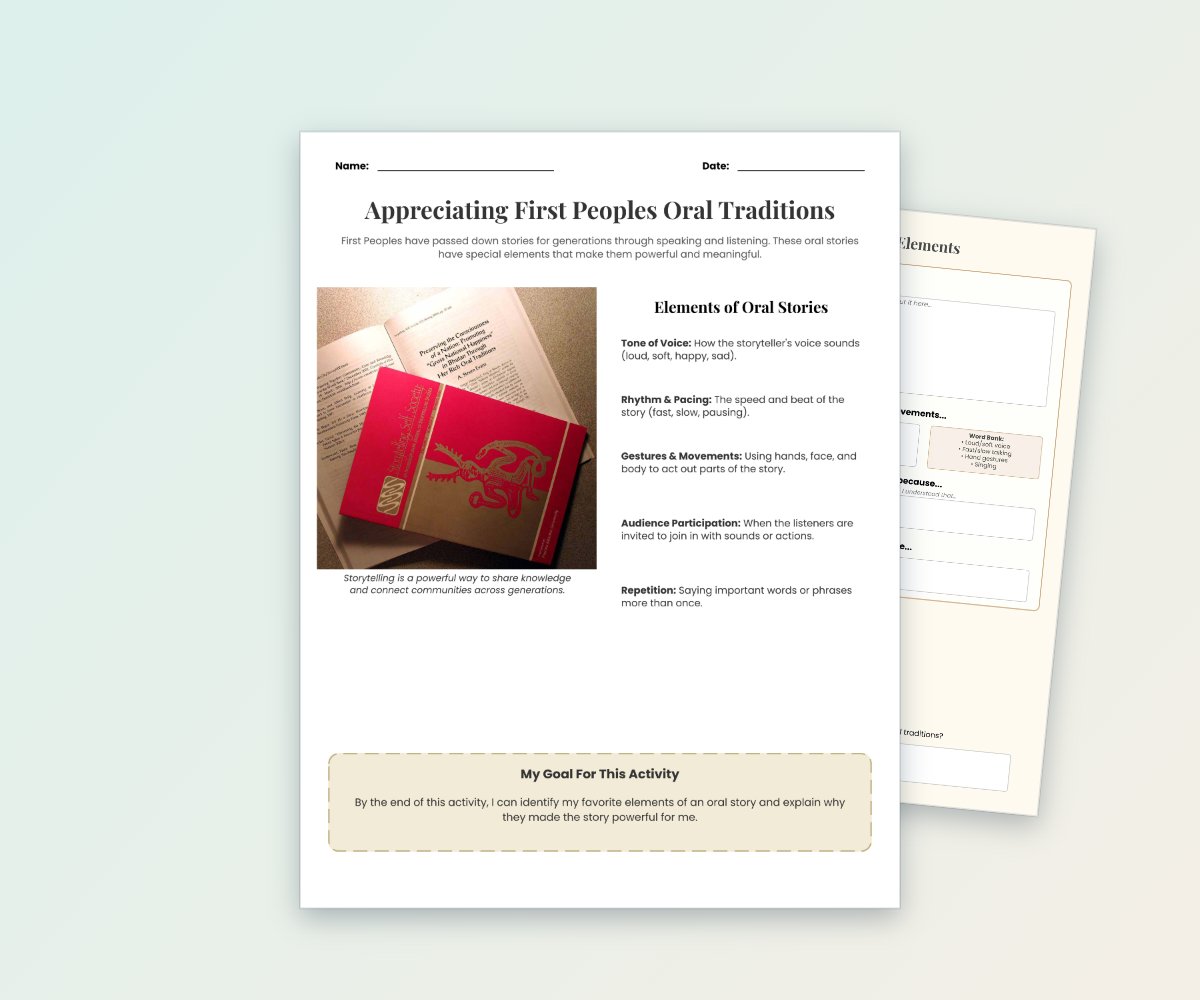
This printable worksheet introduces students to elements of First Peoples oral traditions, including tone, pacing, gestures, audience participation, and repetition.
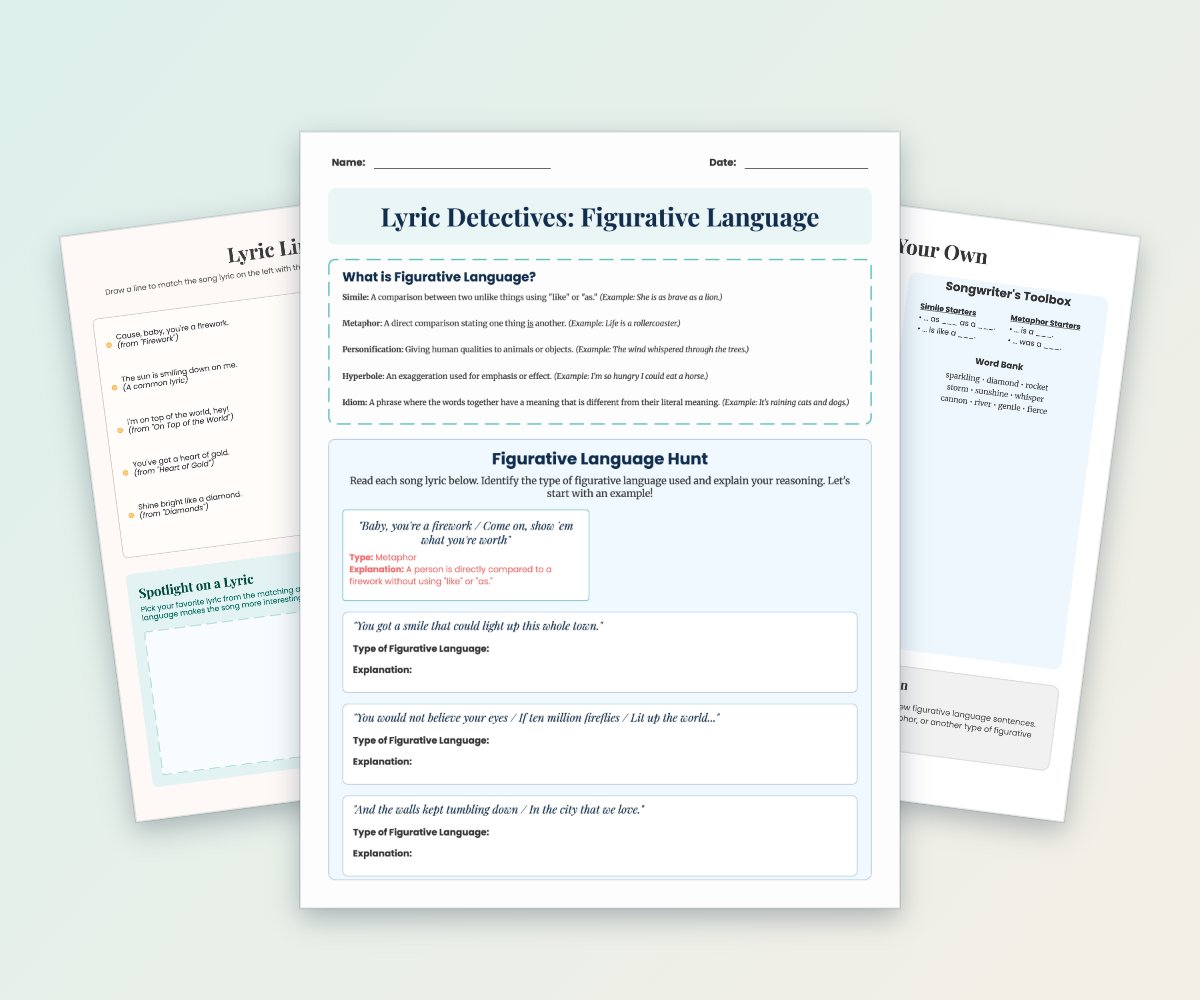
Students identify similes, metaphors, personification, hyperbole, and idioms in familiar song lyrics.
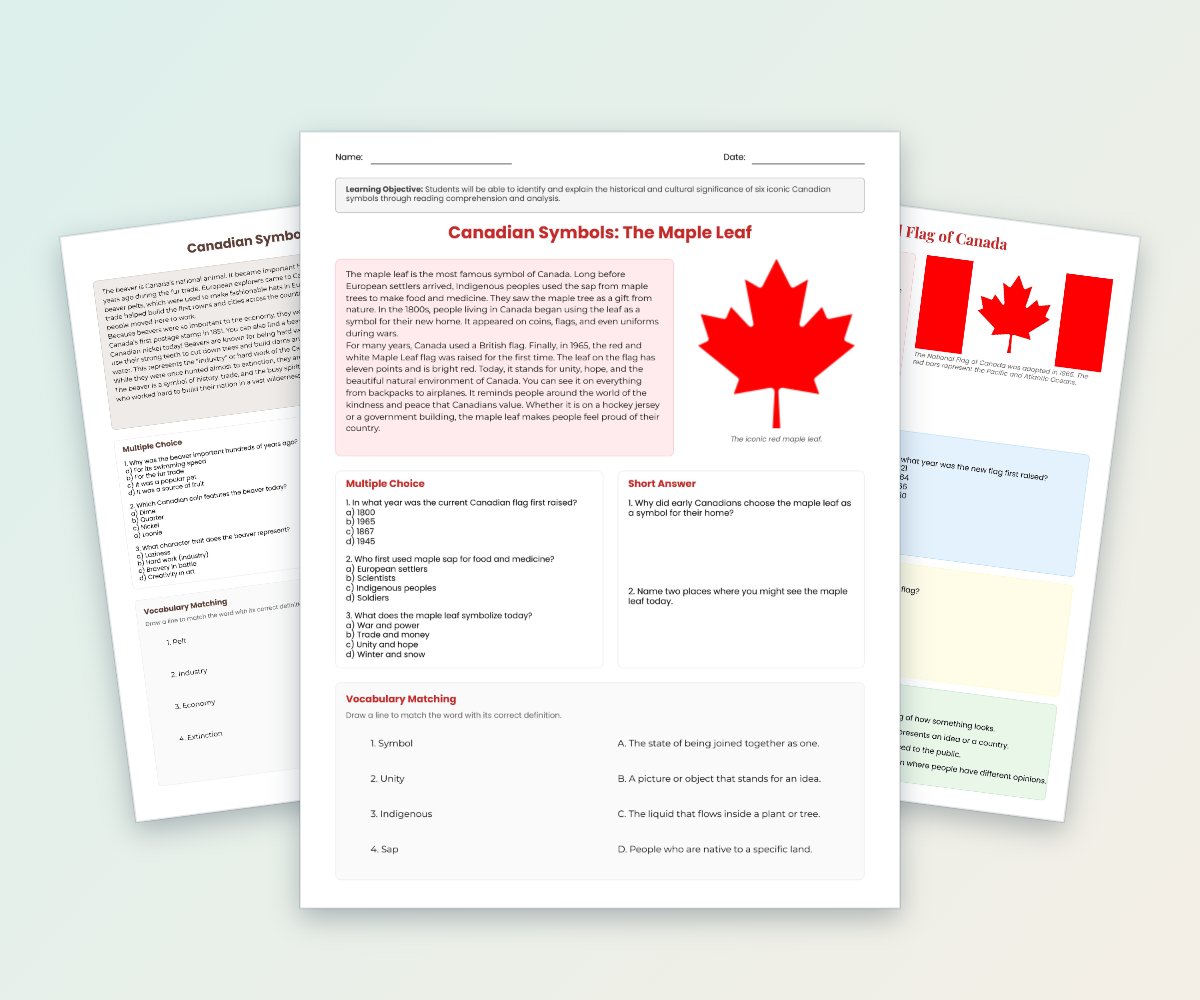
Students explore the historical and cultural significance of six iconic Canadian symbols, including the maple leaf and beaver.
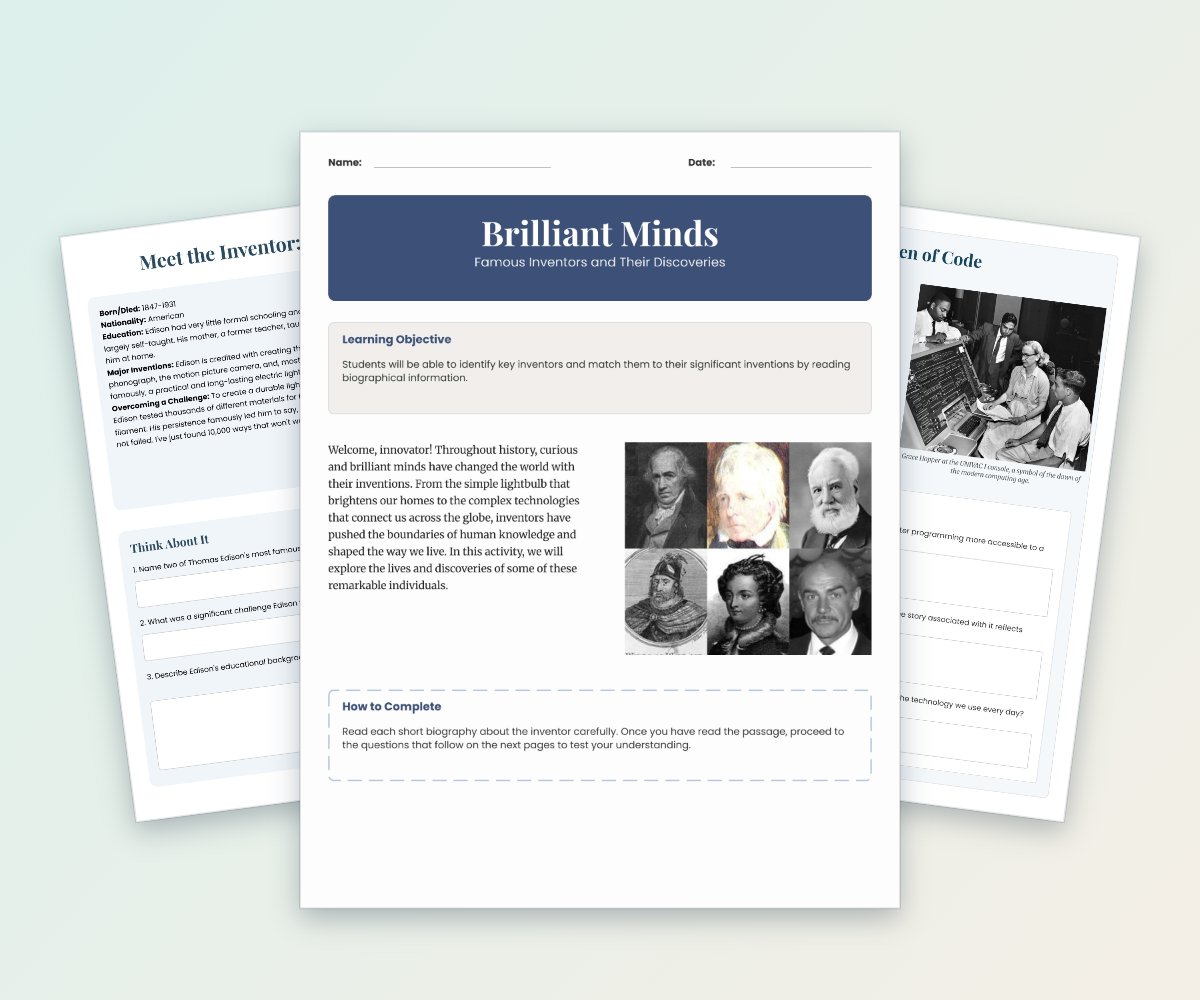
Students read brief biographies of notable inventors, including Thomas Edison and Grace Hopper, and answer comprehension and reflection questions.
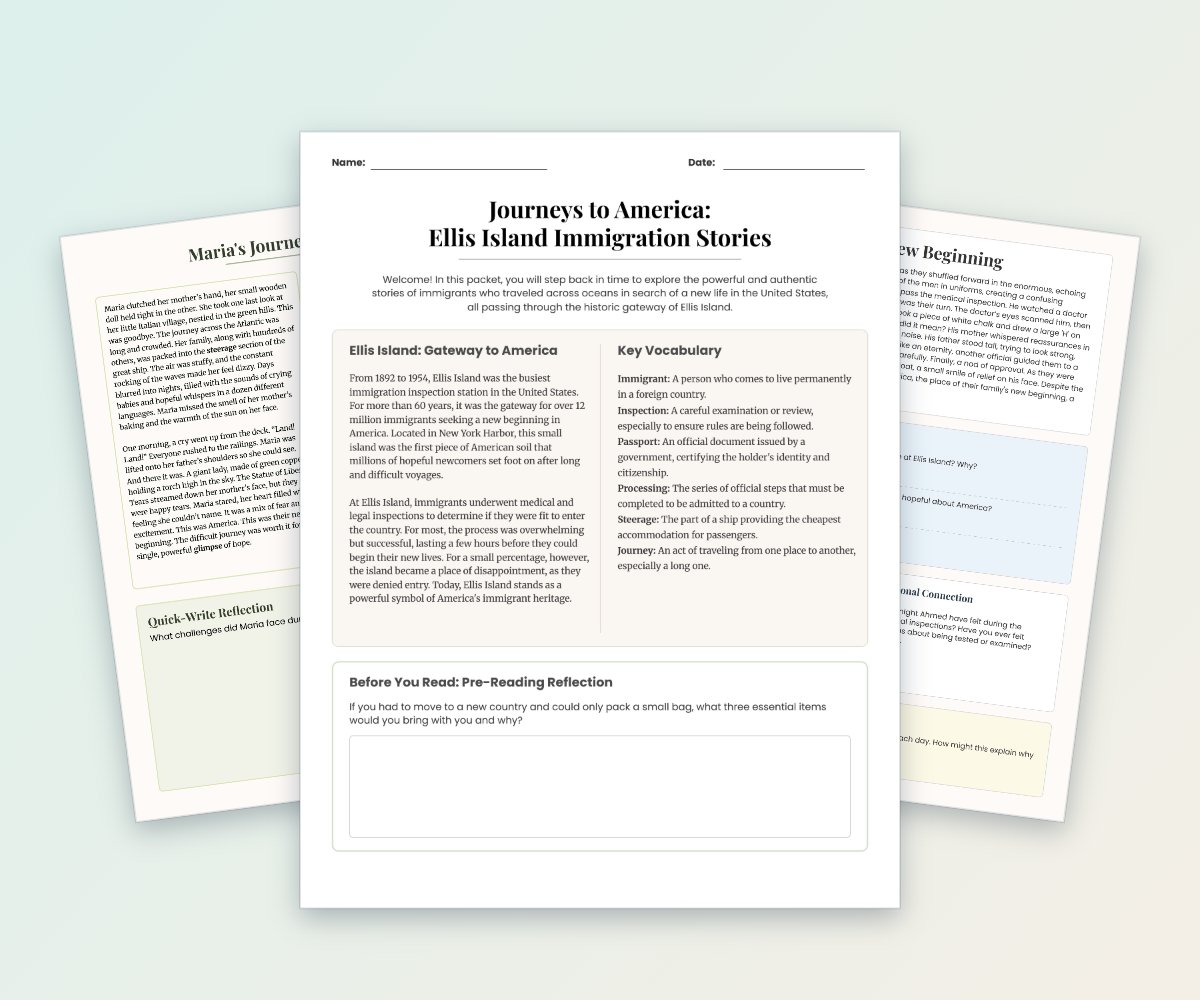
This five-page social studies packet introduces Ellis Island and the immigrant experience through historical background, key vocabulary, a pre-reading reflection, and narrative stories.
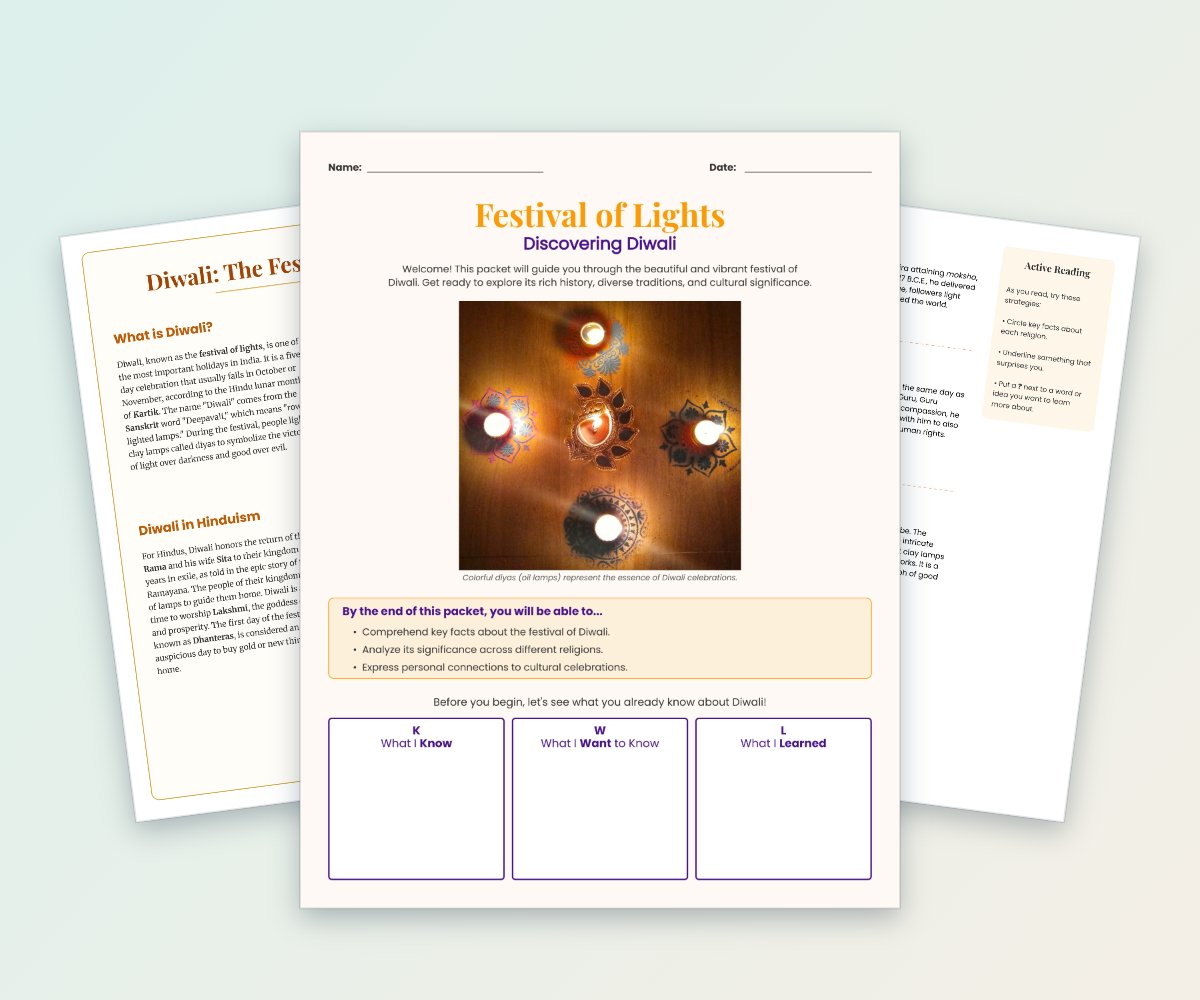
This student-friendly packet explores Diwali’s history, traditions, symbols, and significance in Hinduism, Jainism, and Sikhism.
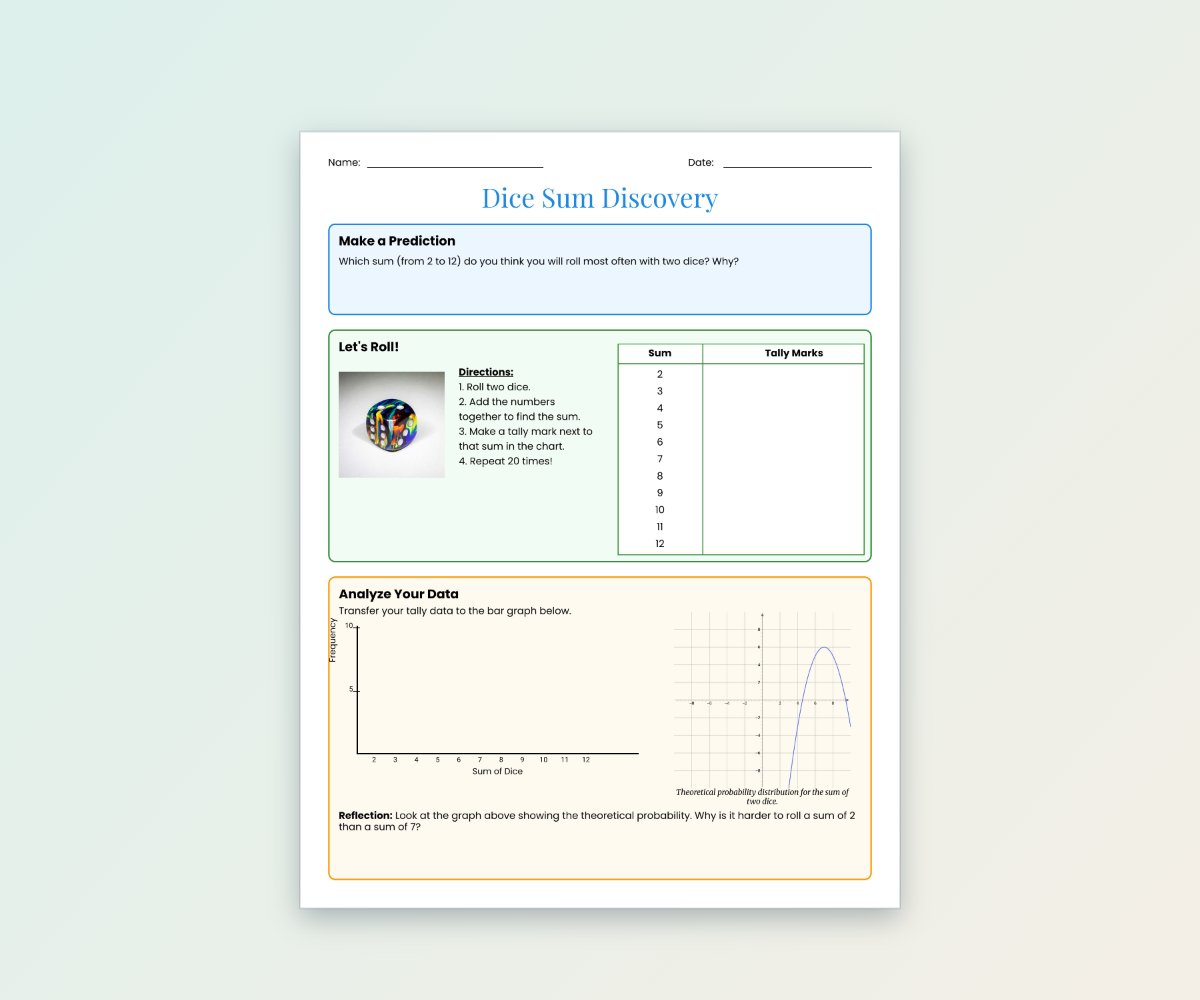
Students roll two dice 20 times, record and graph the sums, and compare their experimental results with theoretical probability.
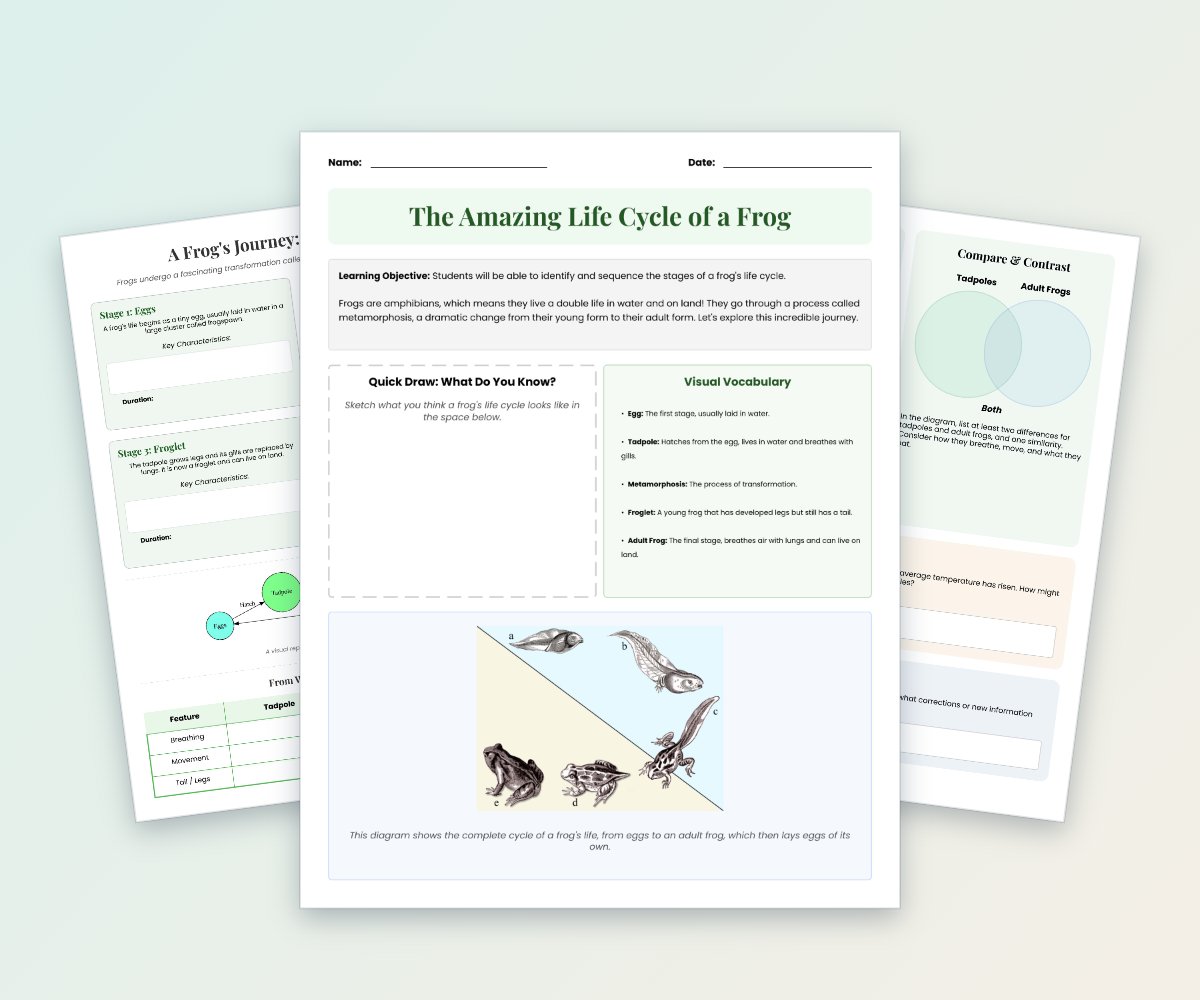
This three-page science worksheet guides students through the stages of a frog’s life cycle, from egg to adult.
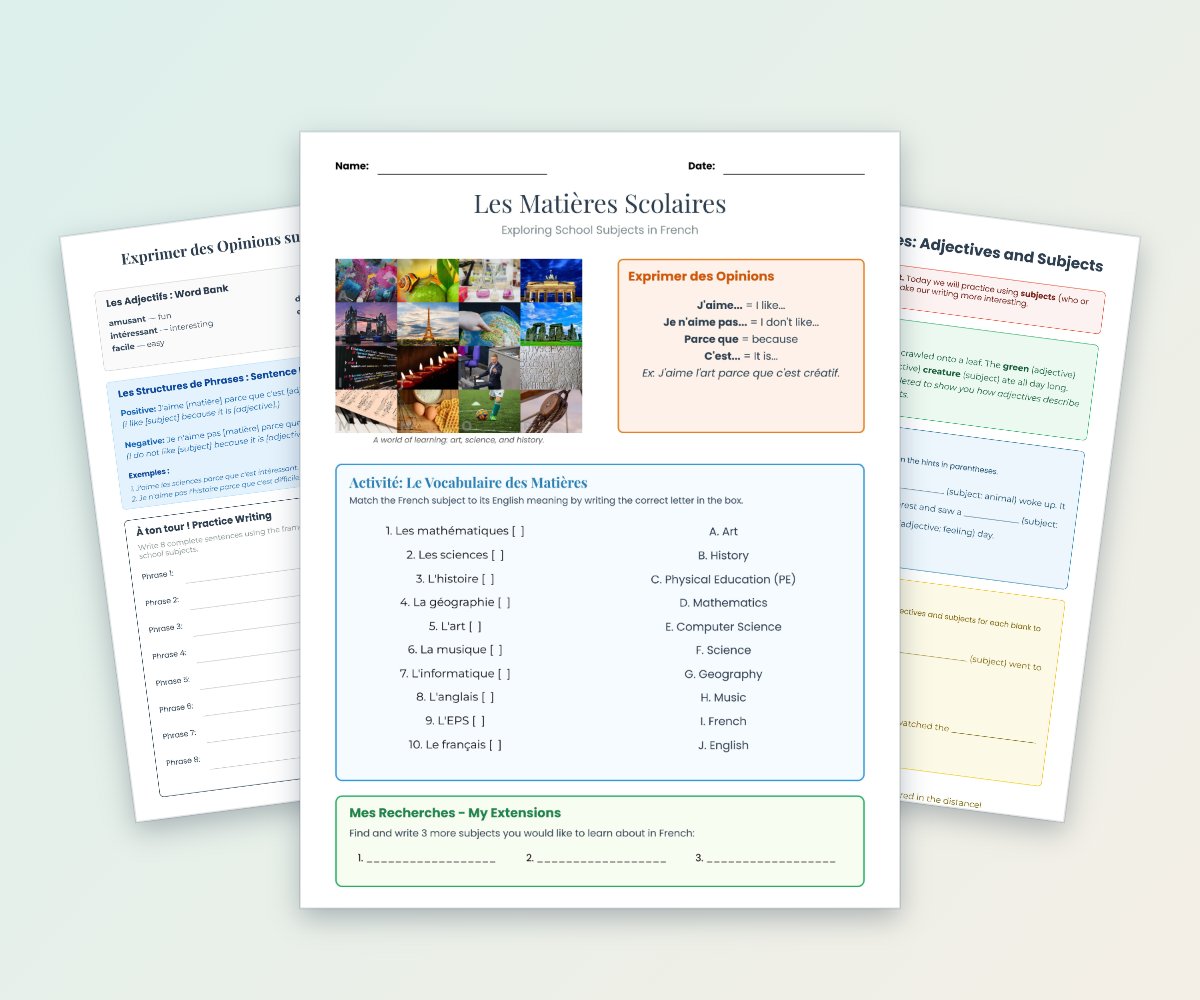
Students learn French vocabulary for common school subjects, match terms to English meanings, and express likes and dislikes using sentence frames.
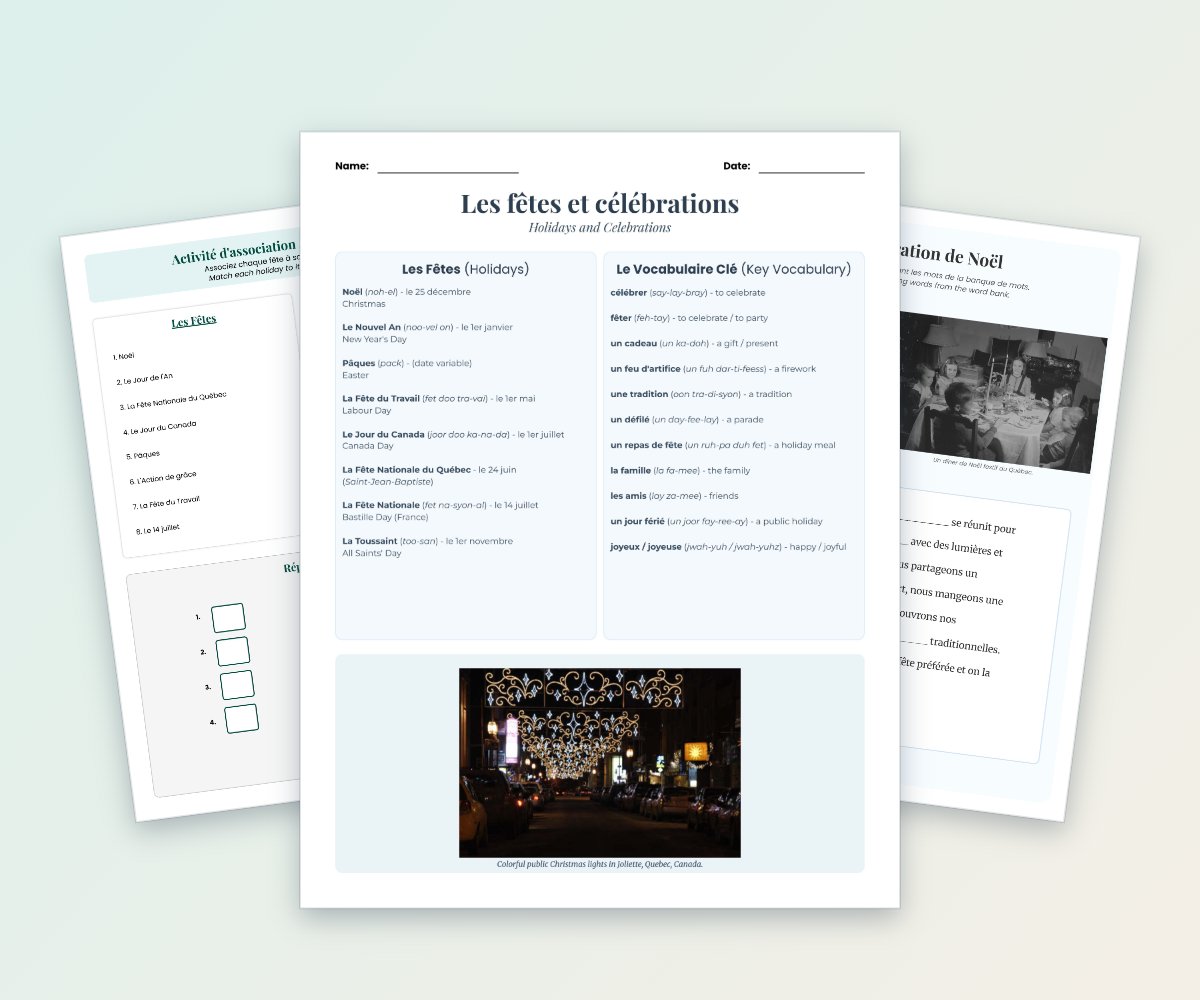
Introduce French-speaking holiday traditions through bilingual vocabulary, a matching activity, and a Christmas-themed fill-in-the-blank passage.
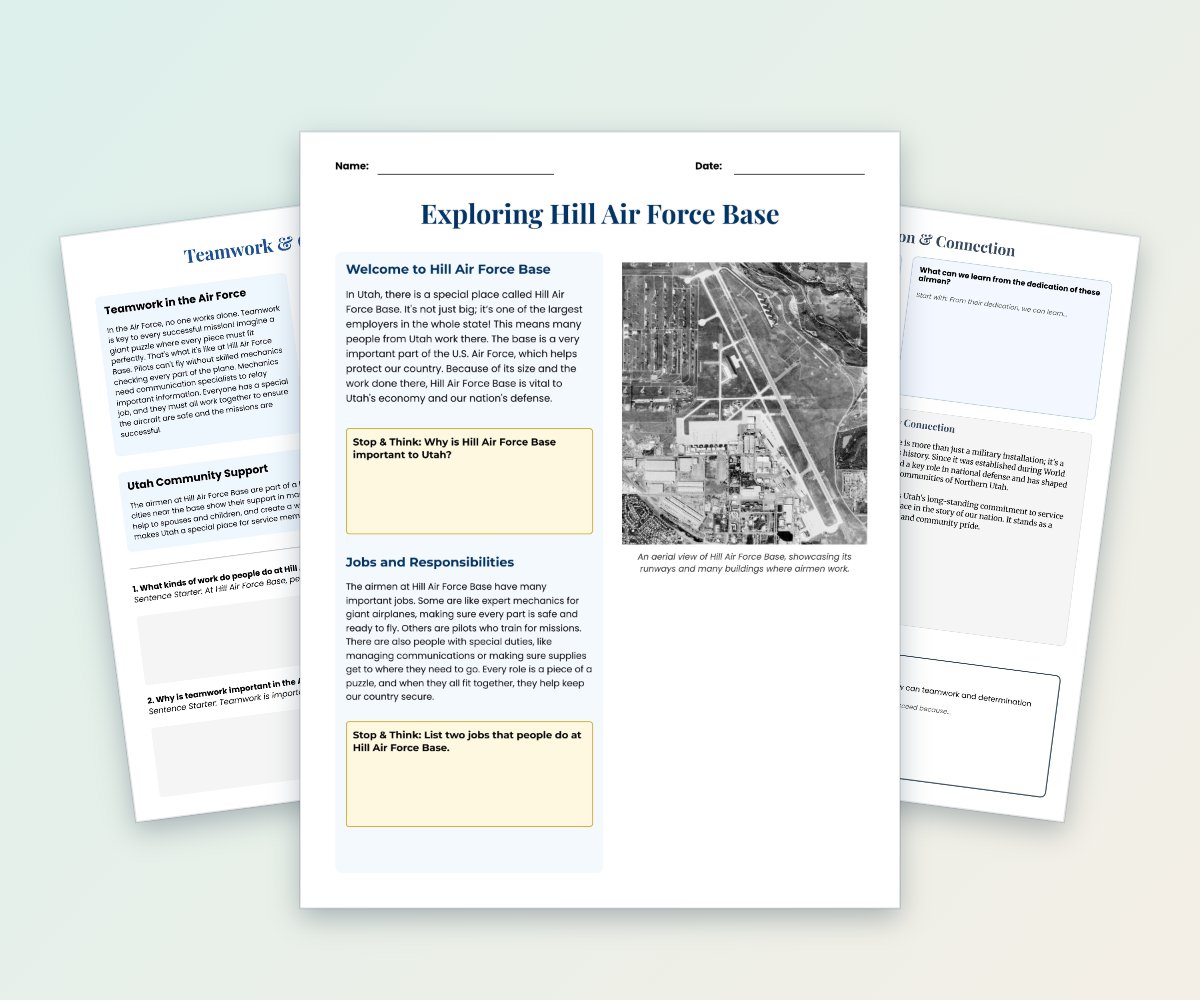
Students learn about Hill Air Force Base, its jobs, importance to Utah, and connections to the local community.
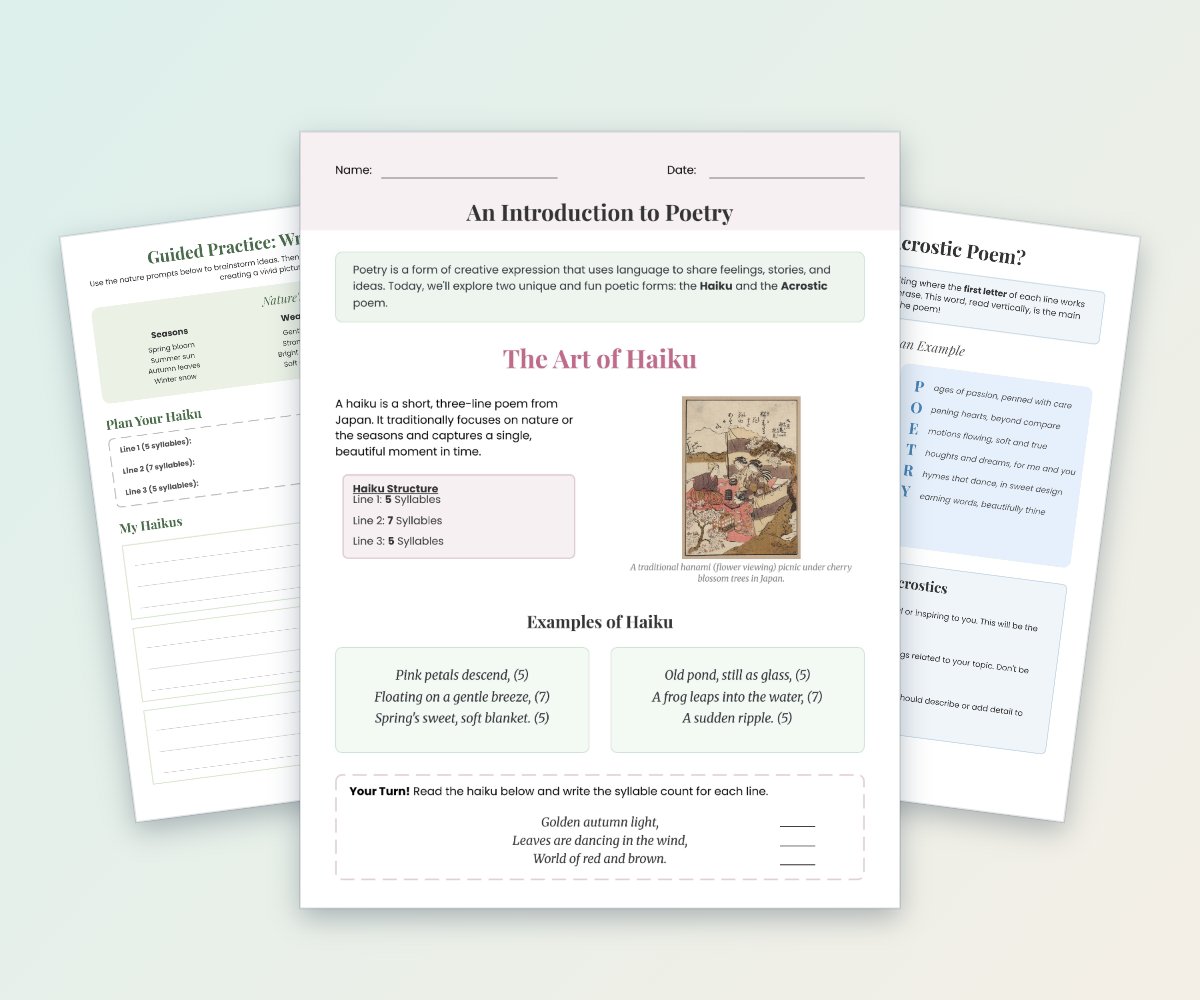
Introduce students to the structure and features of haiku and acrostic poems through examples, syllable-counting practice, nature-themed brainstorming, and guided writing prompts.
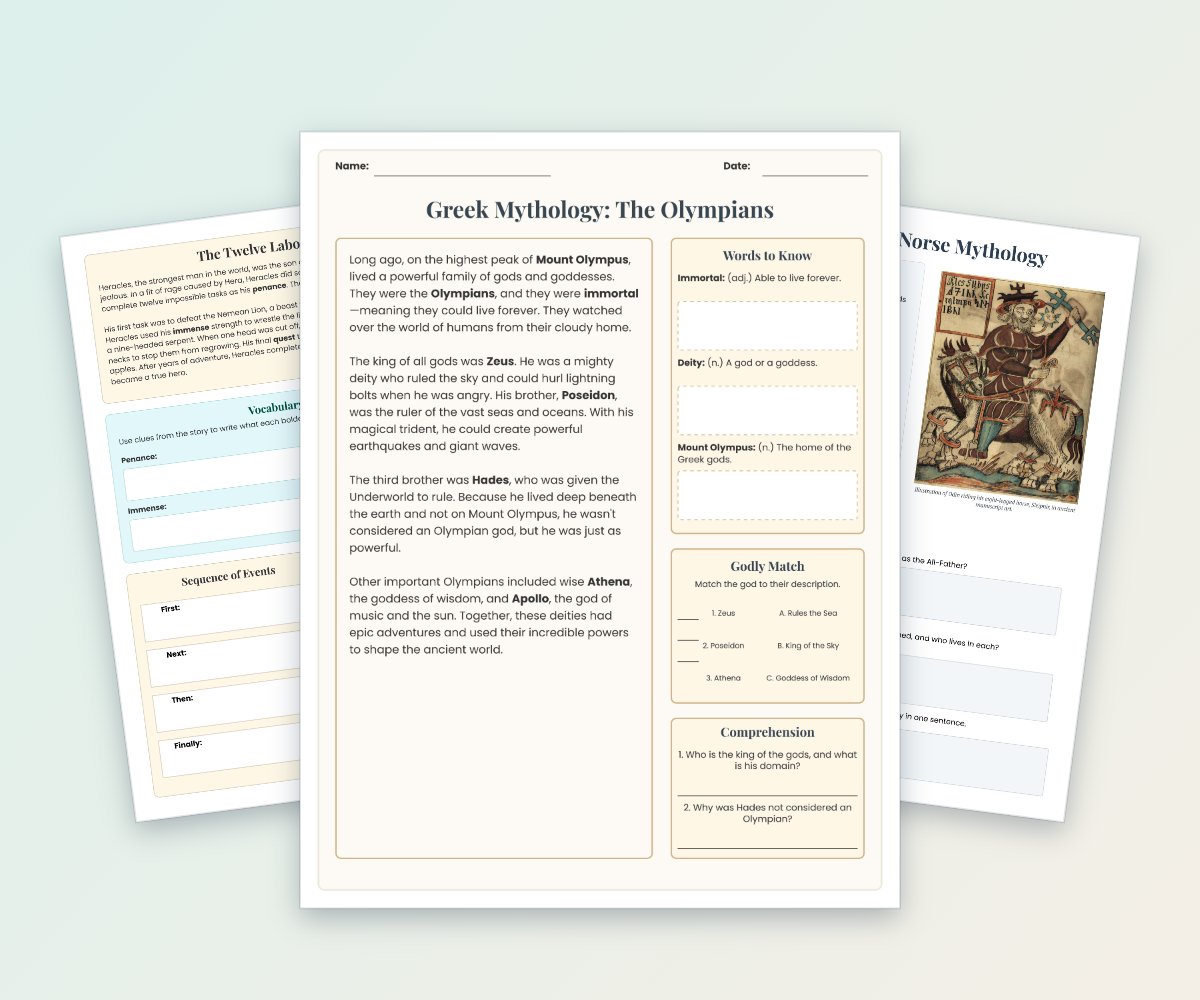
This four-page activity pack introduces students to Greek and Norse mythology through accessible informational passages and comprehension tasks.
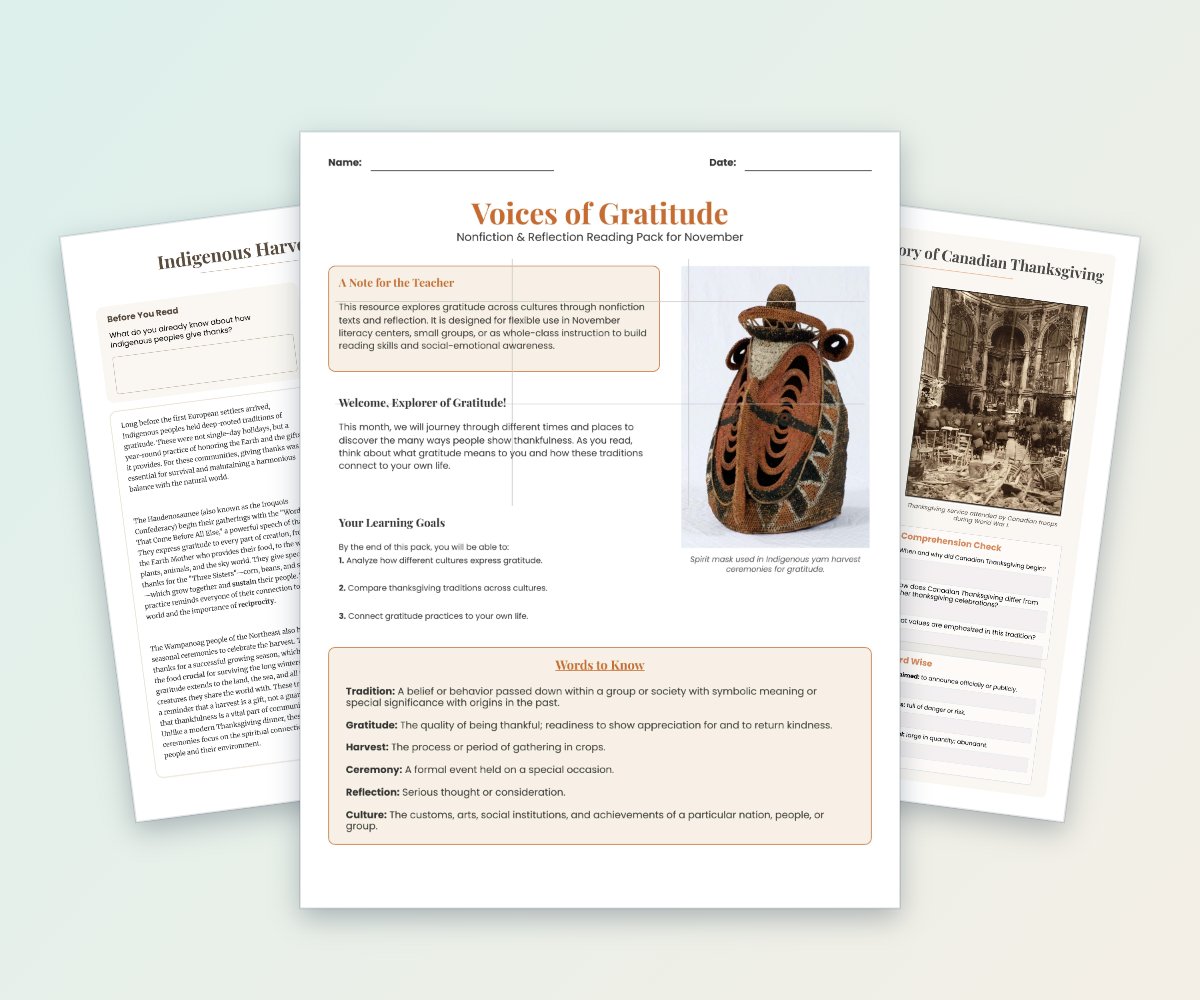
This six-page reading pack explores how different cultures express gratitude through traditions, ceremonies, and harvest celebrations.
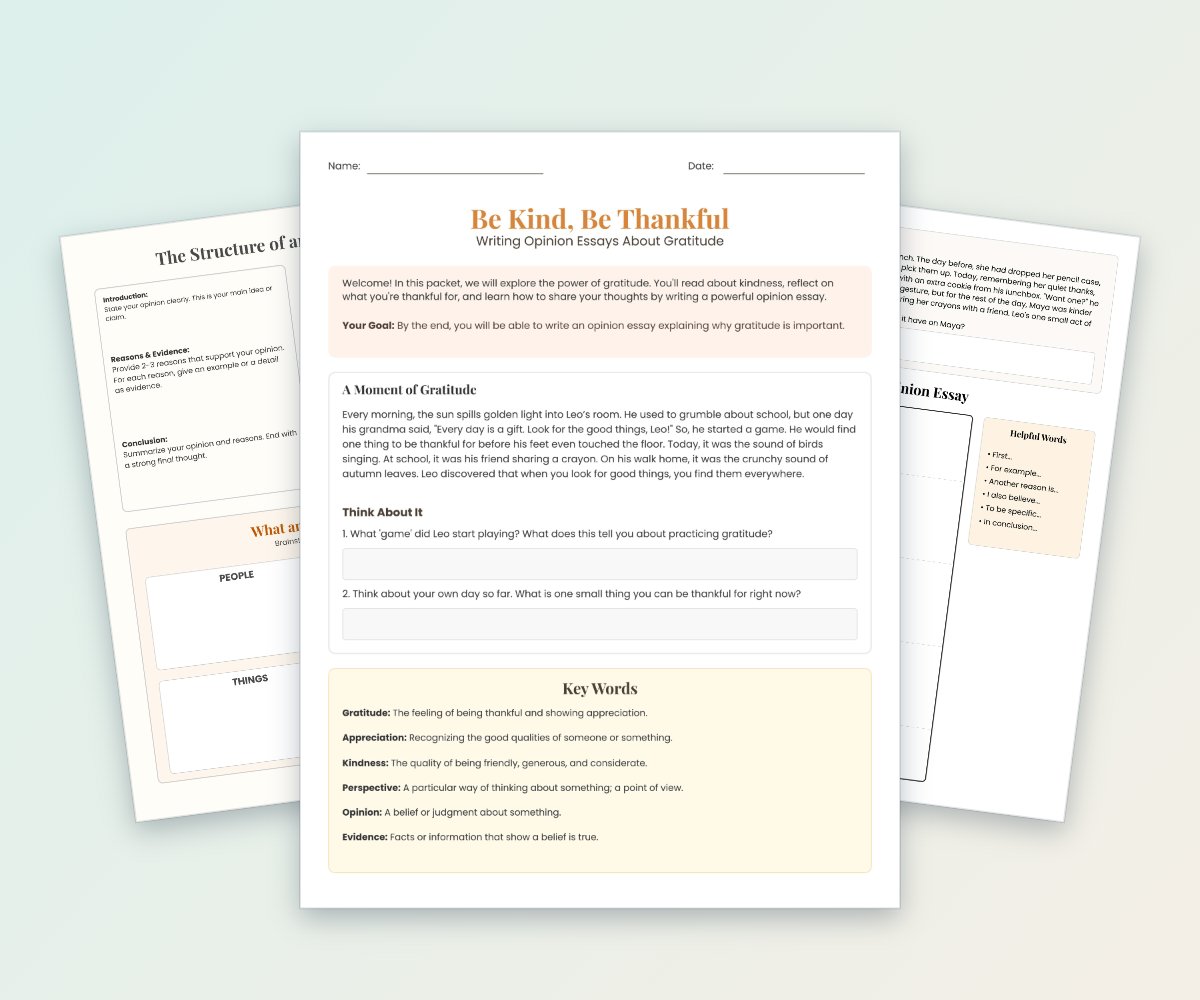
This six-page writing packet helps students explore gratitude and kindness while learning to write an opinion essay.
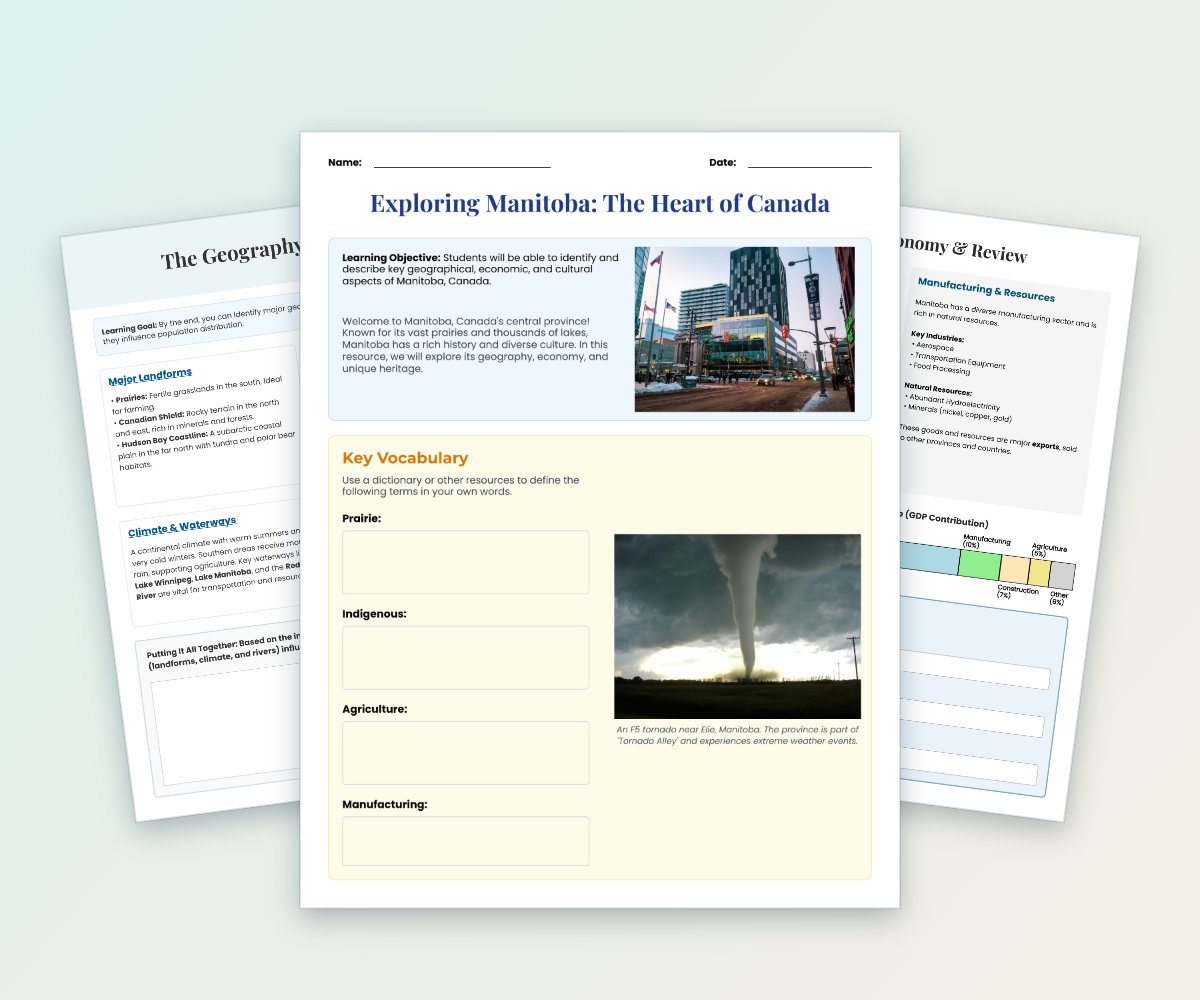
This student workbook explores Manitoba’s landforms, climate, waterways, population distribution, economy, natural resources, and cultural heritage.
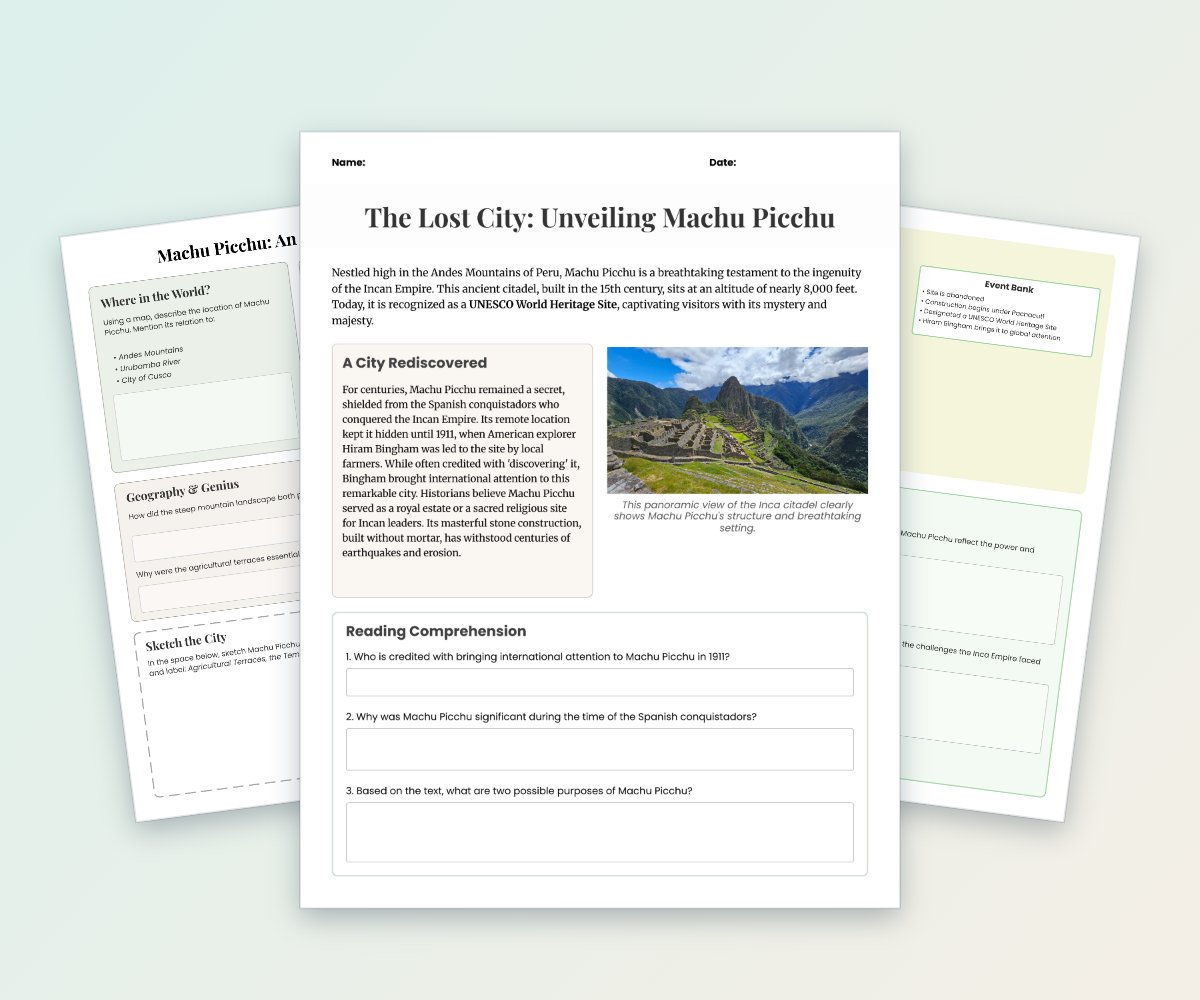
Students read an informative passage about Machu Picchu’s history, geography, architecture, and significance before completing comprehension and map-based questions.
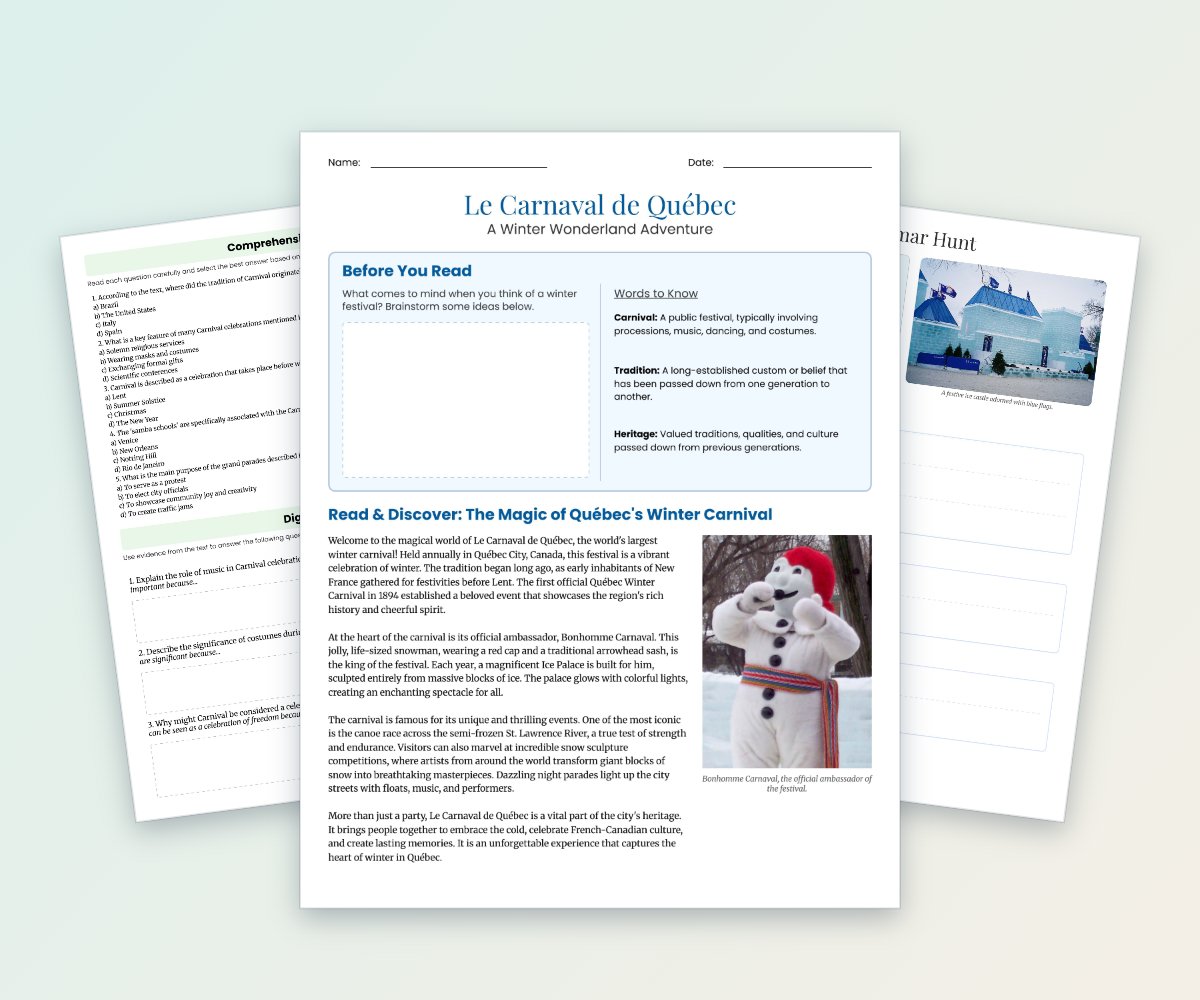
Students read an engaging informational passage about Le Carnaval de Québec, Bonhomme Carnaval, and French-Canadian winter traditions.
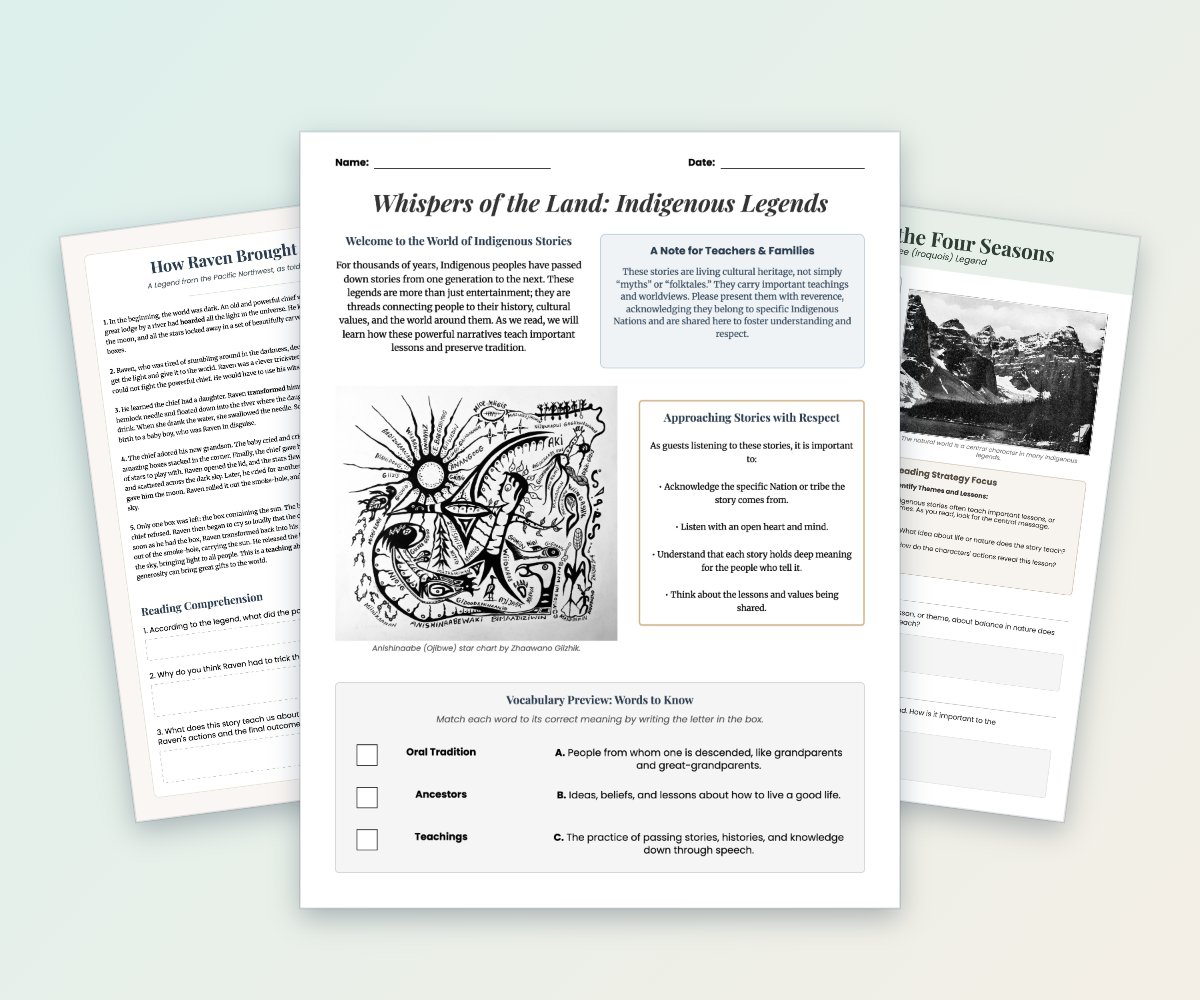
Introduce students to Indigenous storytelling traditions through respectful background information, vocabulary practice, and the legend of how Raven brought light to the world.
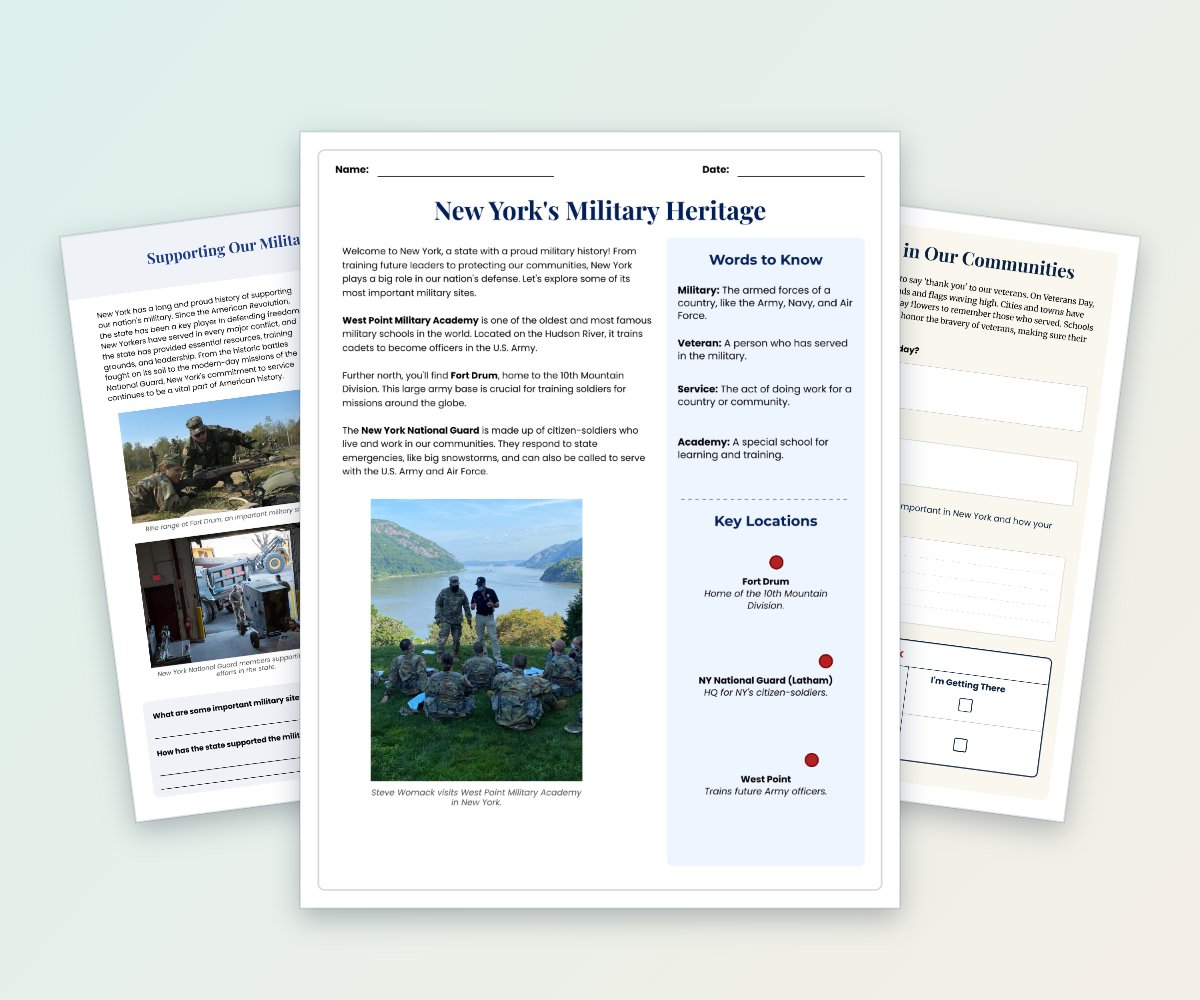
Students explore West Point, Fort Drum, the New York National Guard, and the state’s military contributions from the American Revolution to today.
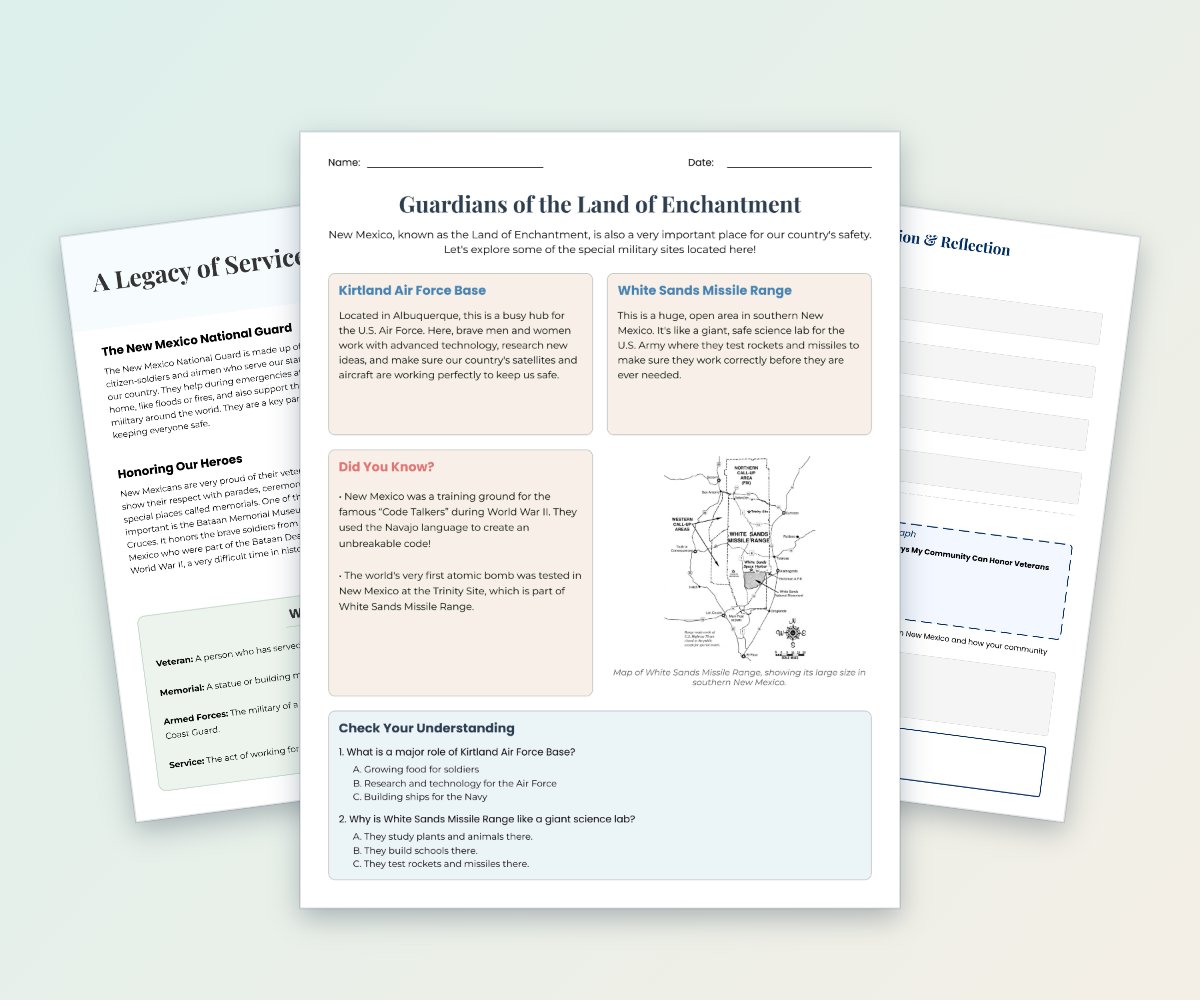
Students learn about Kirtland Air Force Base, White Sands Missile Range, the New Mexico National Guard, and the Bataan Memorial.
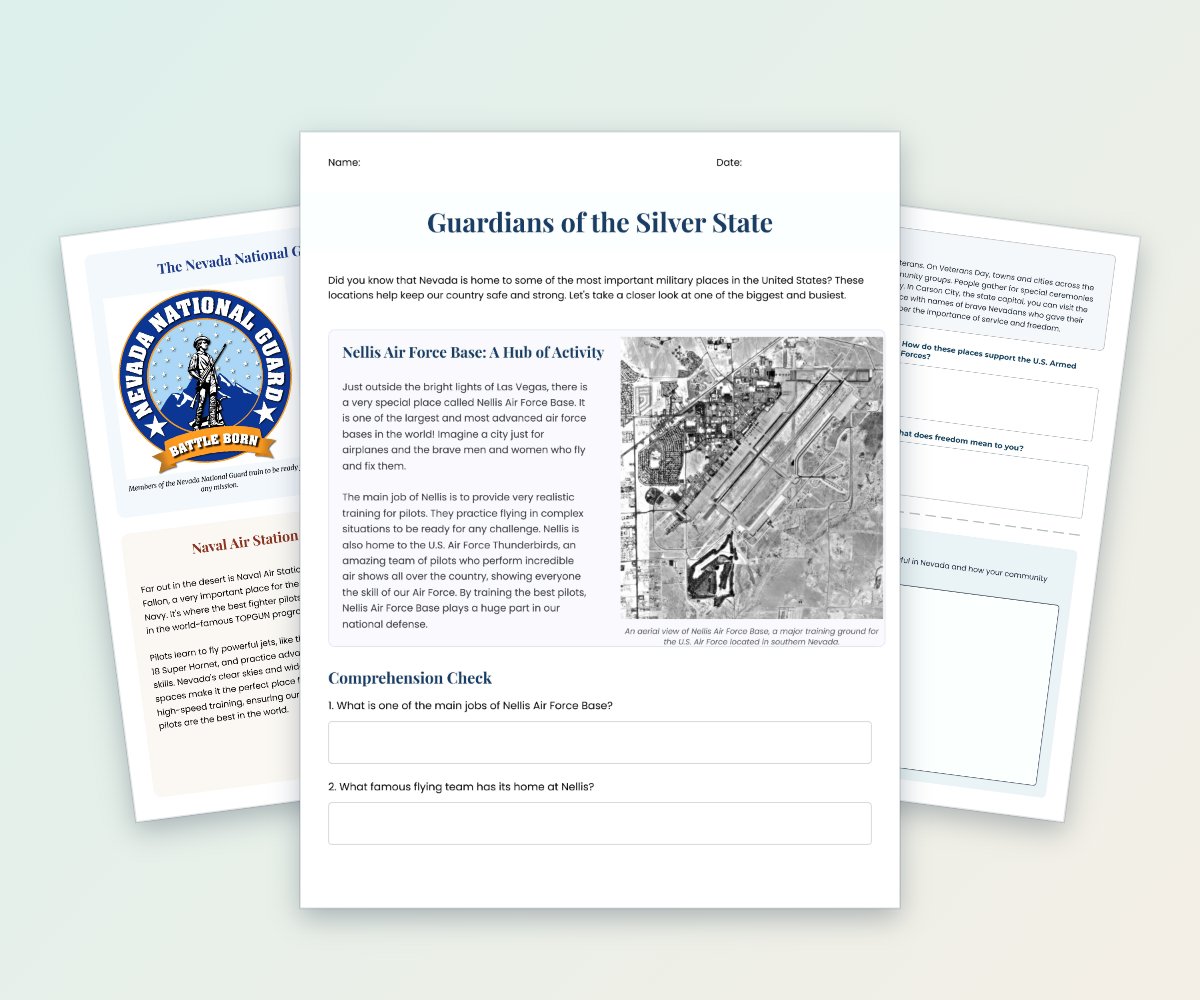
Students read about Nellis Air Force Base, the Nevada National Guard, Naval Air Station Fallon, and Nevada veterans.
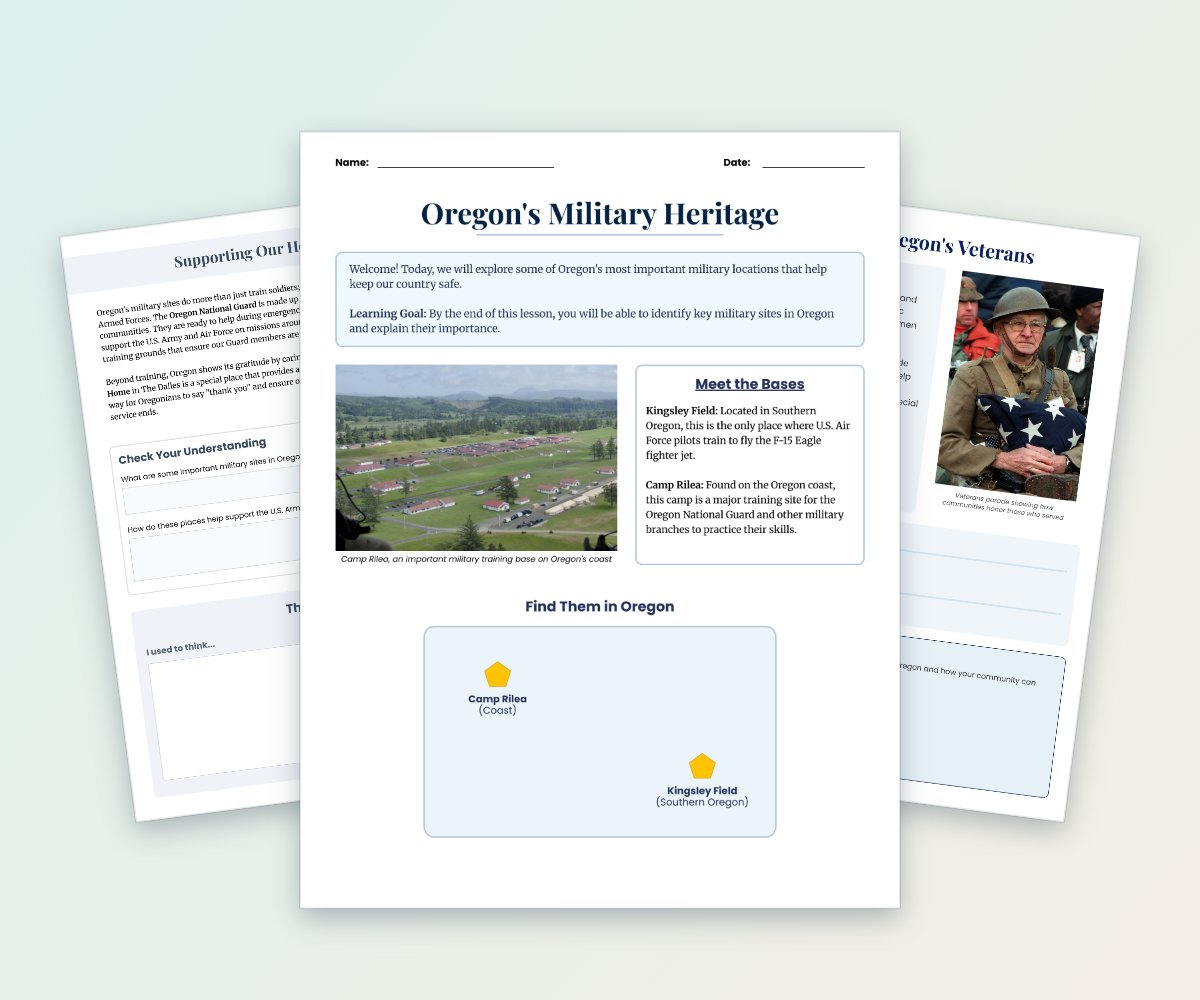
This three-page lesson introduces students to Oregon military sites, including Camp Rilea and Kingsley Field, and explores how communities support service members and veterans.
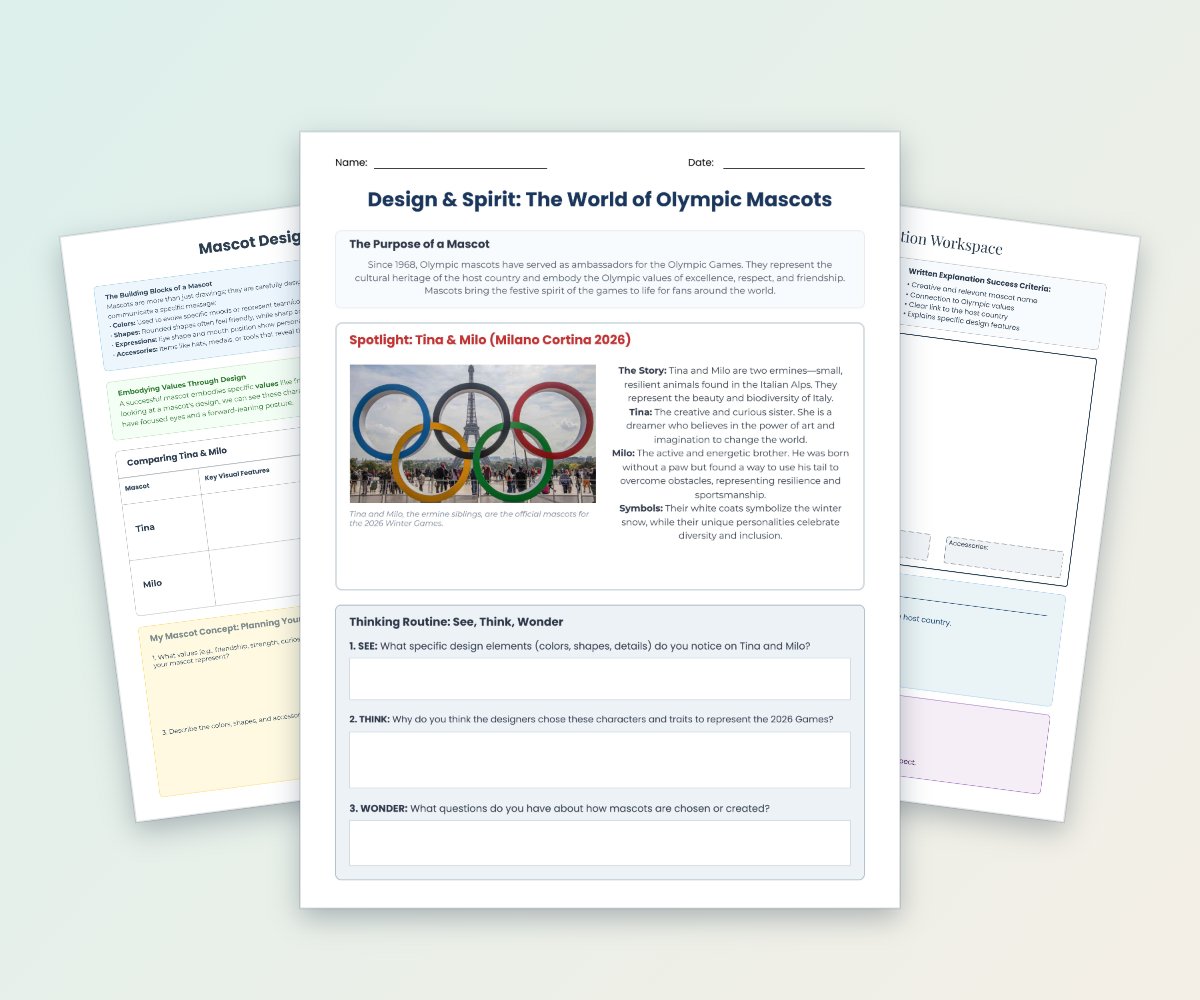
Students examine the design and symbolism of Olympic mascots, including Tina and Milo from the Milano Cortina 2026 Winter Games.
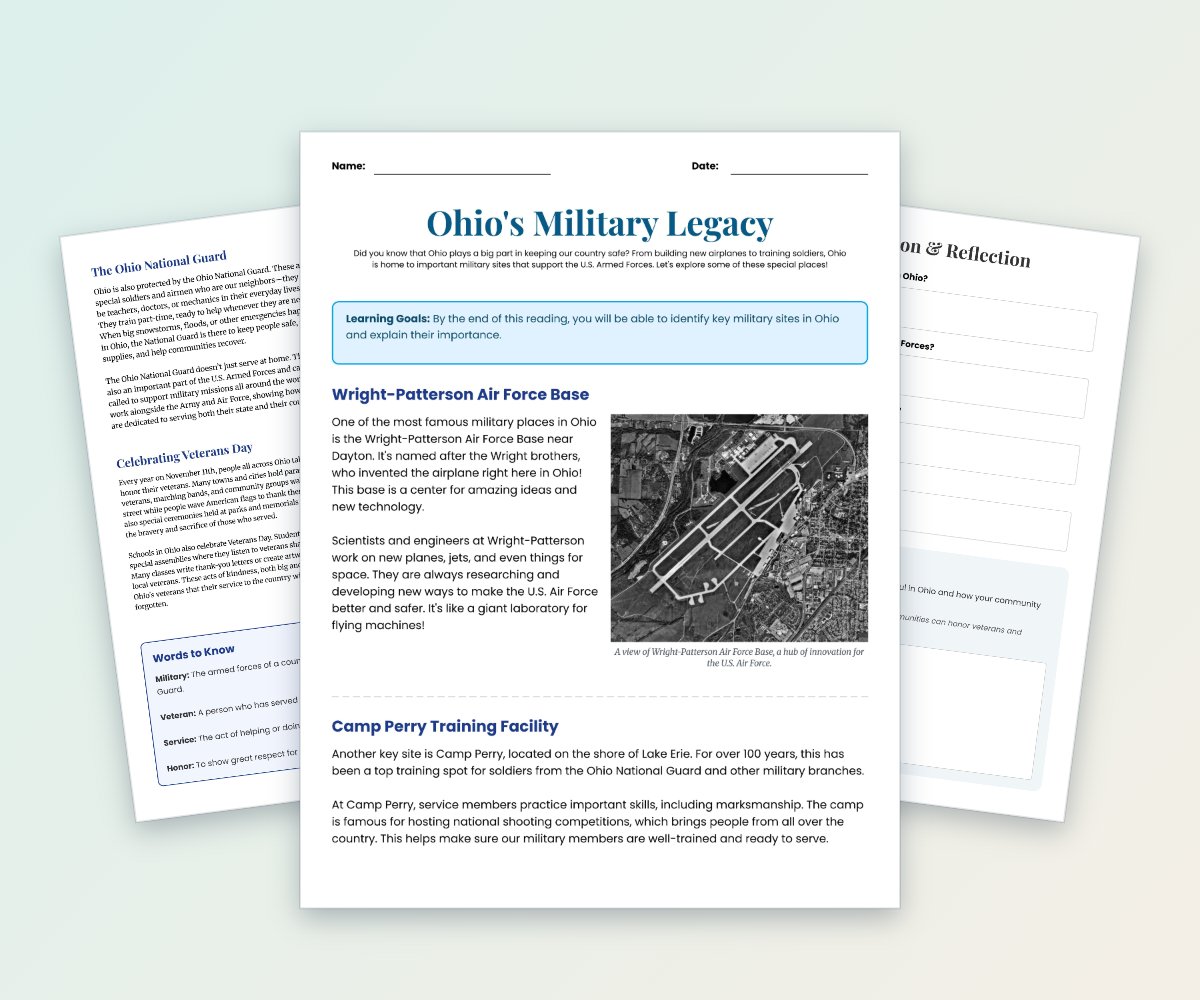
This three-page informational reading introduces students to Wright-Patterson Air Force Base, Camp Perry, the Ohio National Guard, and Veterans Day.
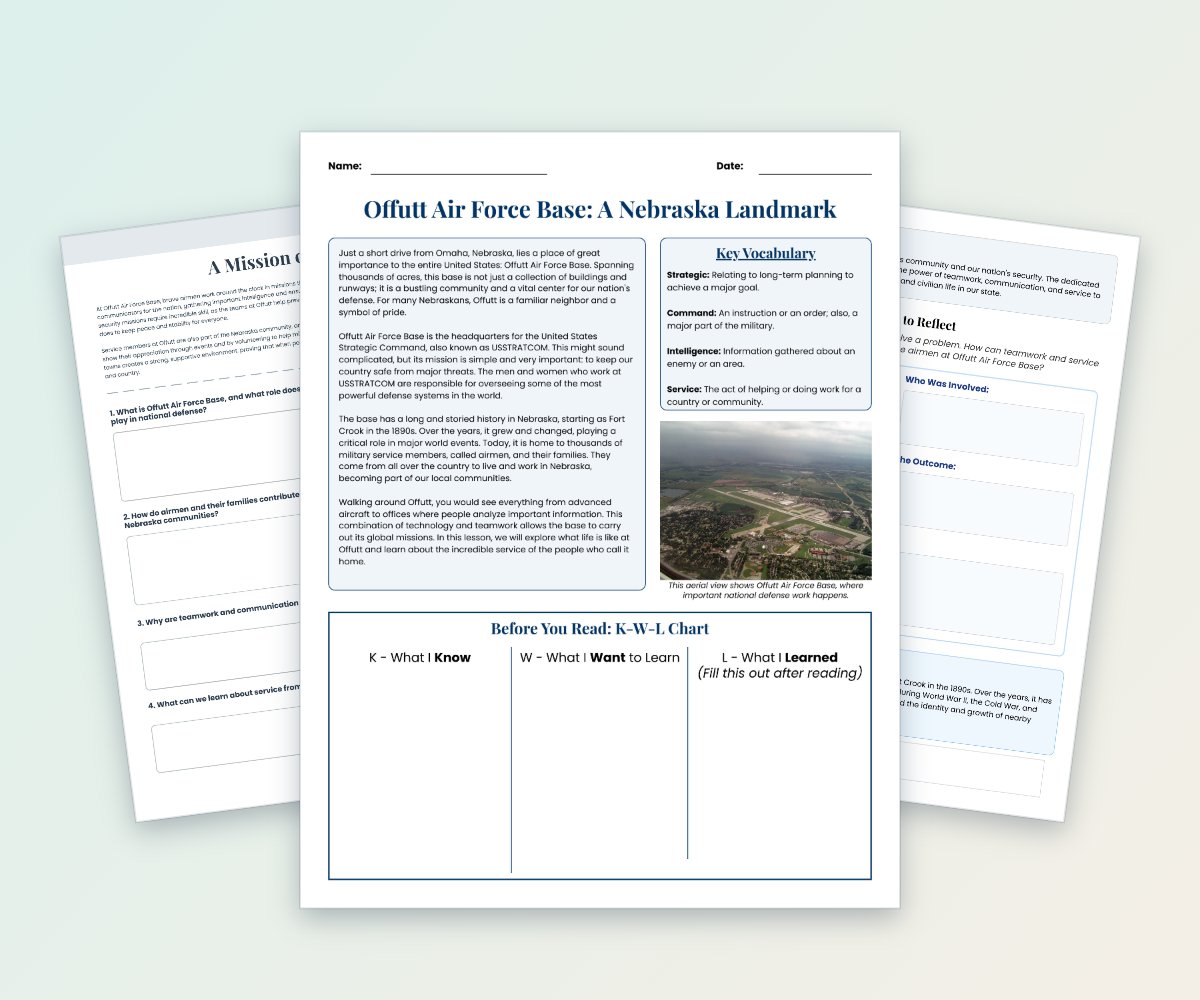
Students read an informational passage about Offutt Air Force Base, its history, mission, and role in Nebraska and national defense.
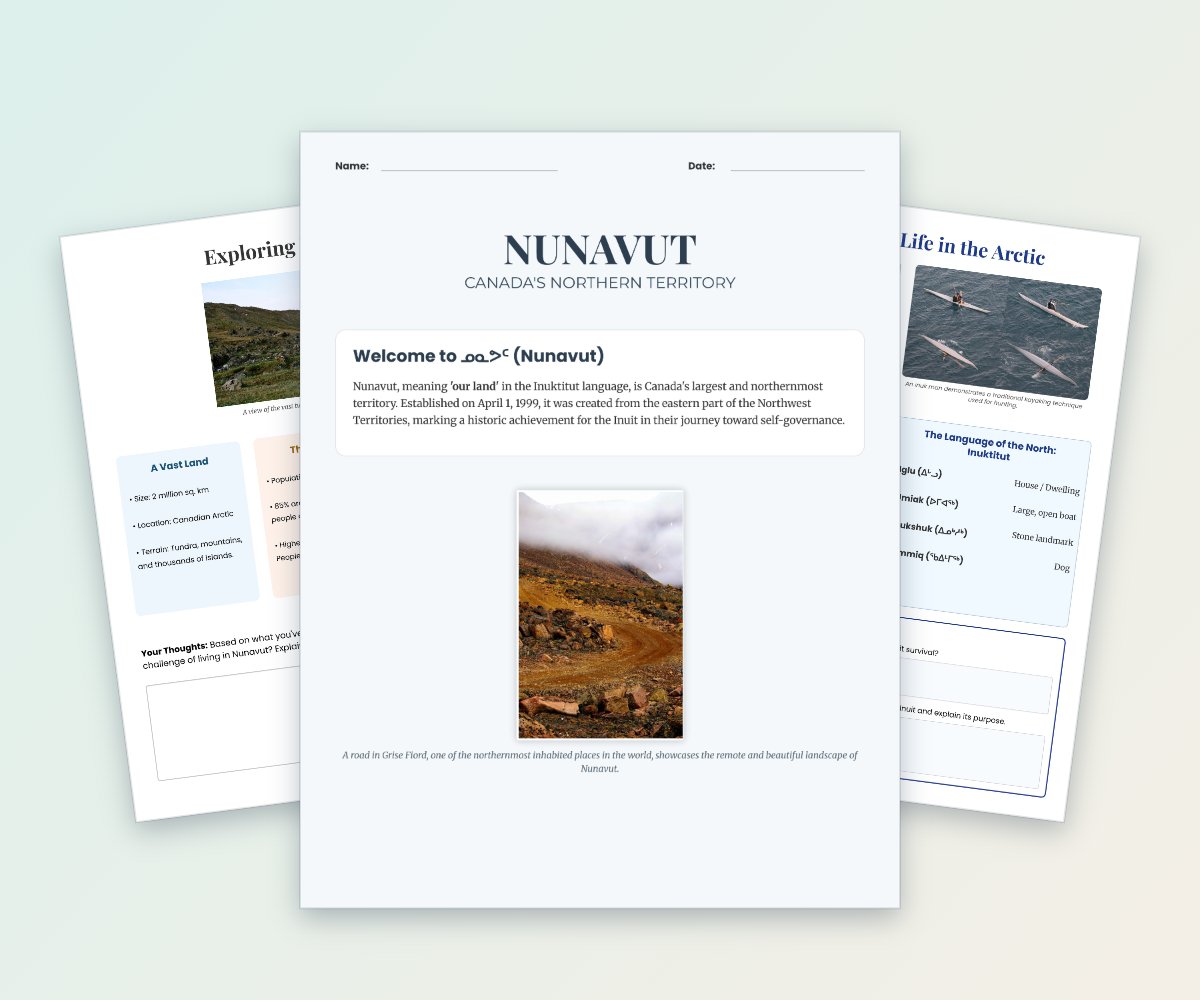
This eight-page student workbook introduces Nunavut’s geography, climate, history, Inuit culture, traditional tools, clothing, and community life.
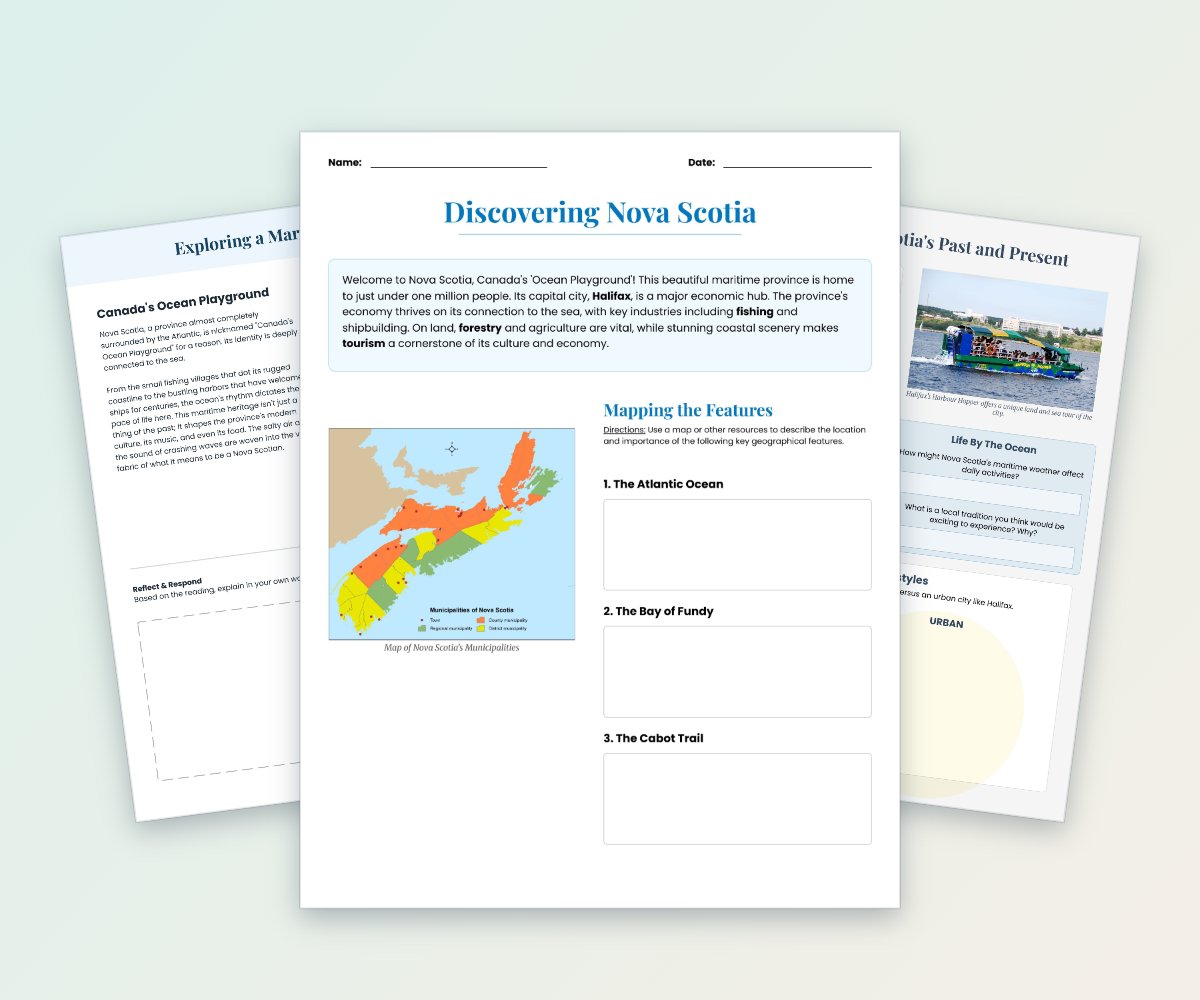
This six-page activity pack introduces students to Nova Scotia’s geography, municipalities, history, Mi’kmaq heritage, economy, and maritime identity.
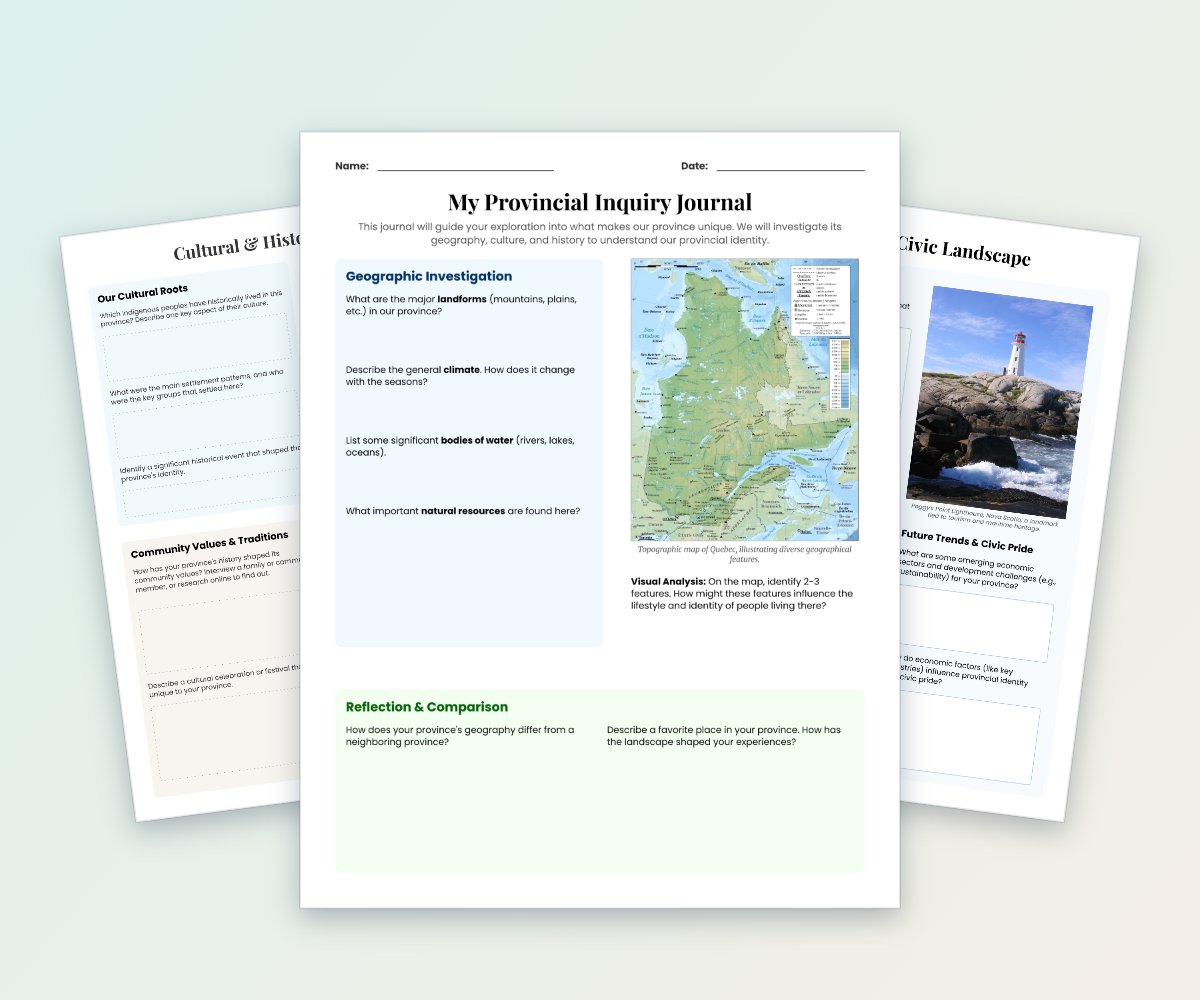
This inquiry journal guides students in exploring a province’s geography, Indigenous and settlement history, cultural traditions, community values, economy, and civic landscape.
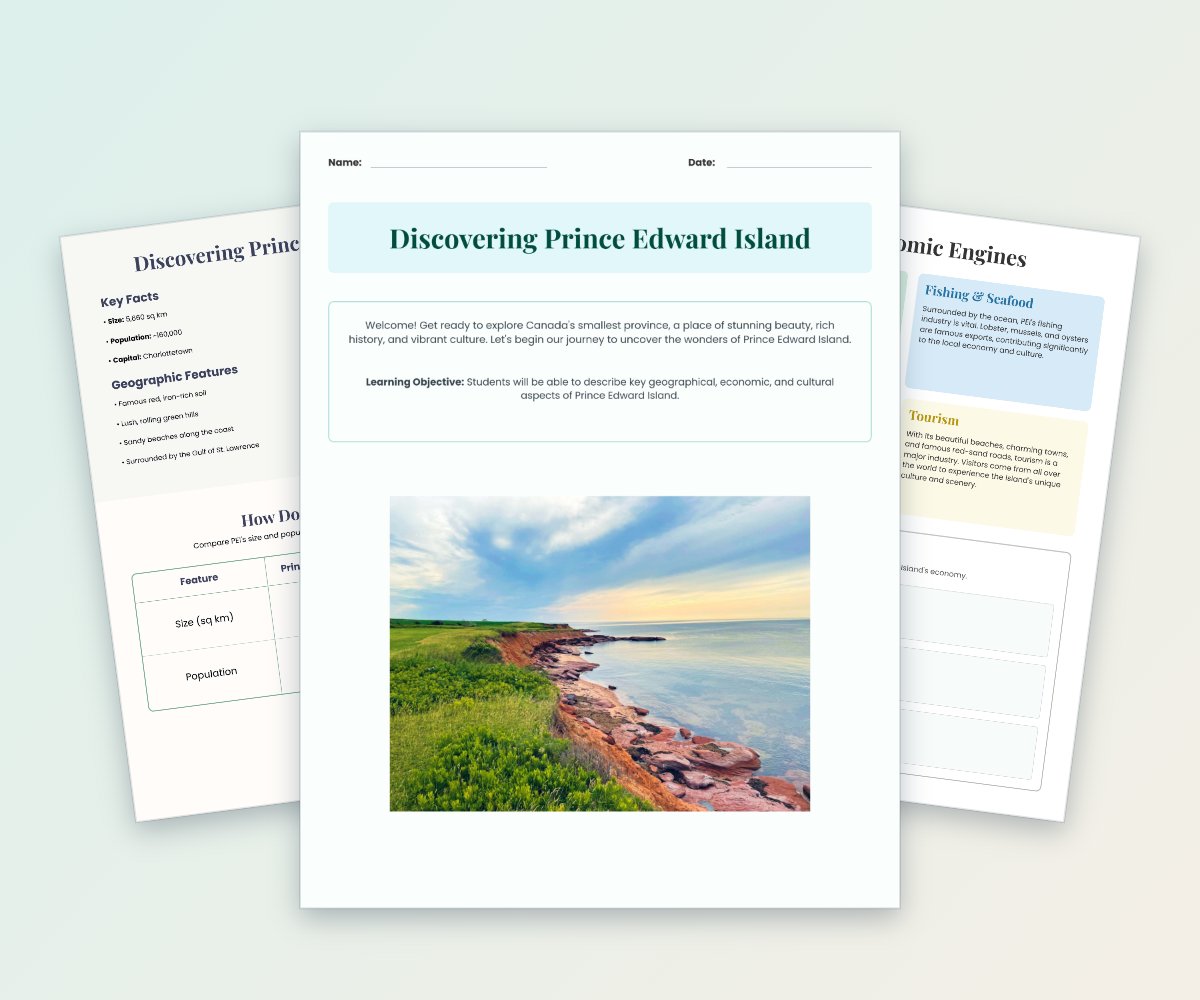
This student workbook introduces Prince Edward Island through its geography, economy, history, culture, and seasonal way of life.
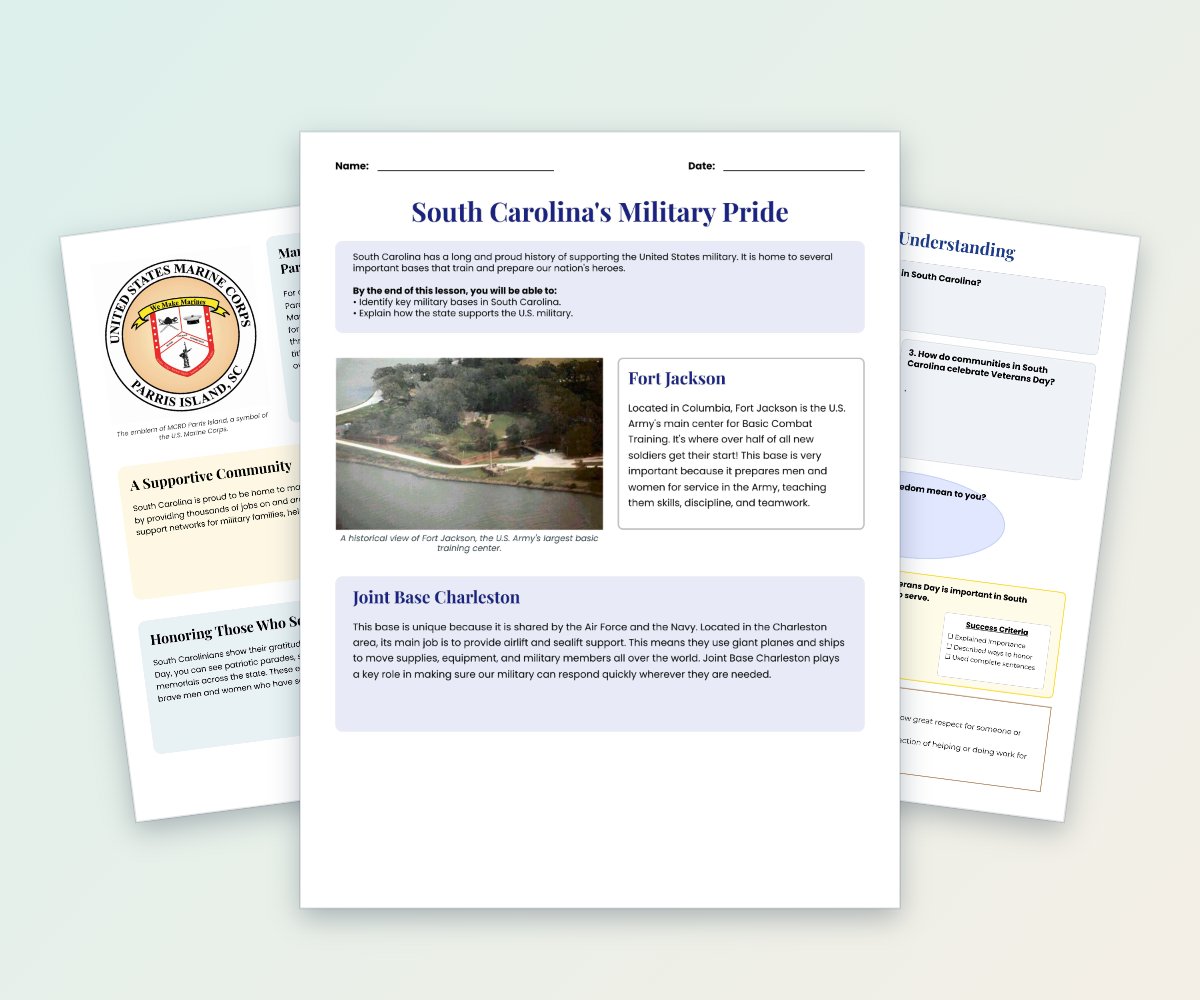
This three-page lesson introduces students to Fort Jackson, Joint Base Charleston, and Marine Corps Recruit Depot Parris Island.
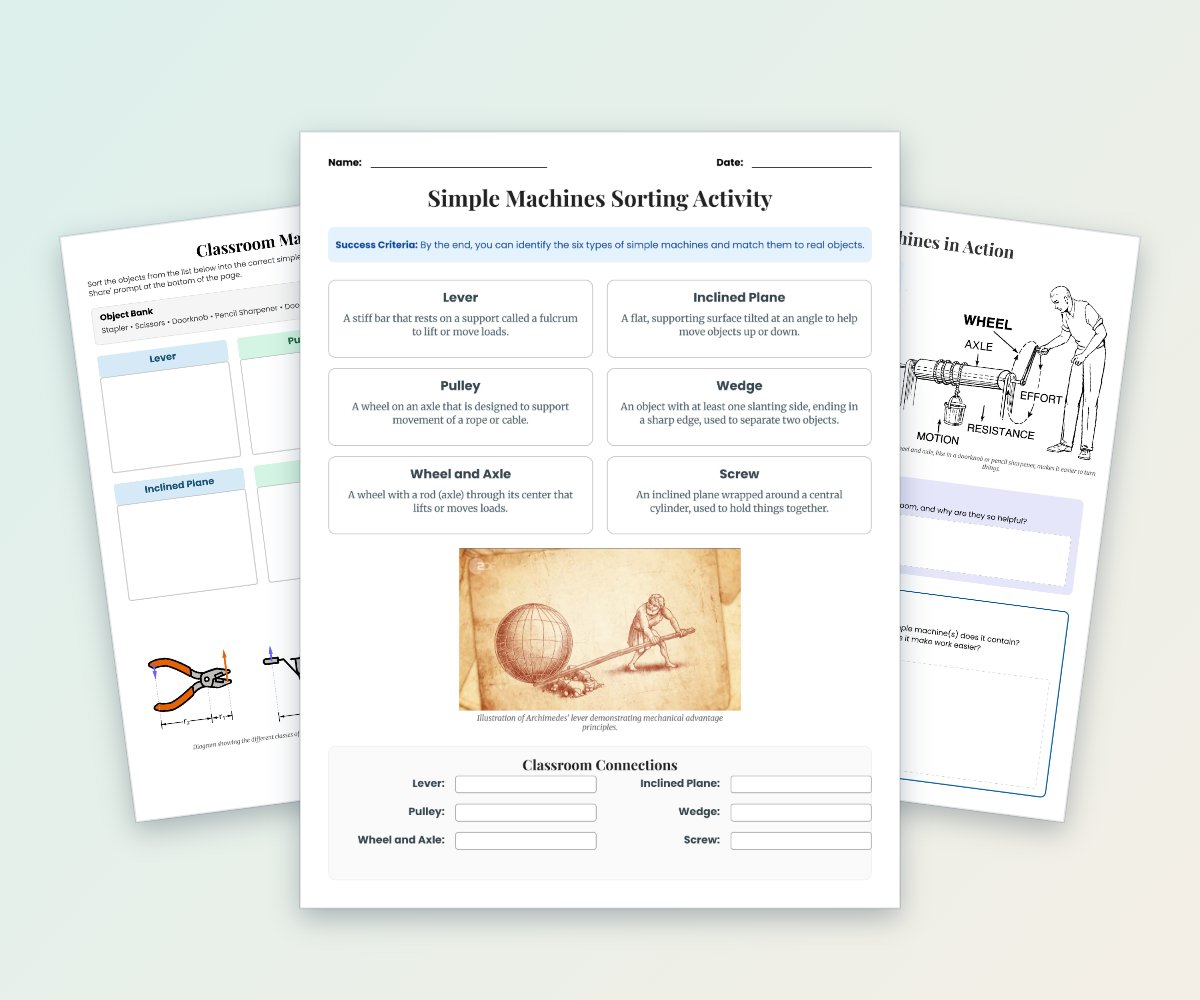
Students learn the six types of simple machines, match them to familiar objects, and explain how they make work easier.
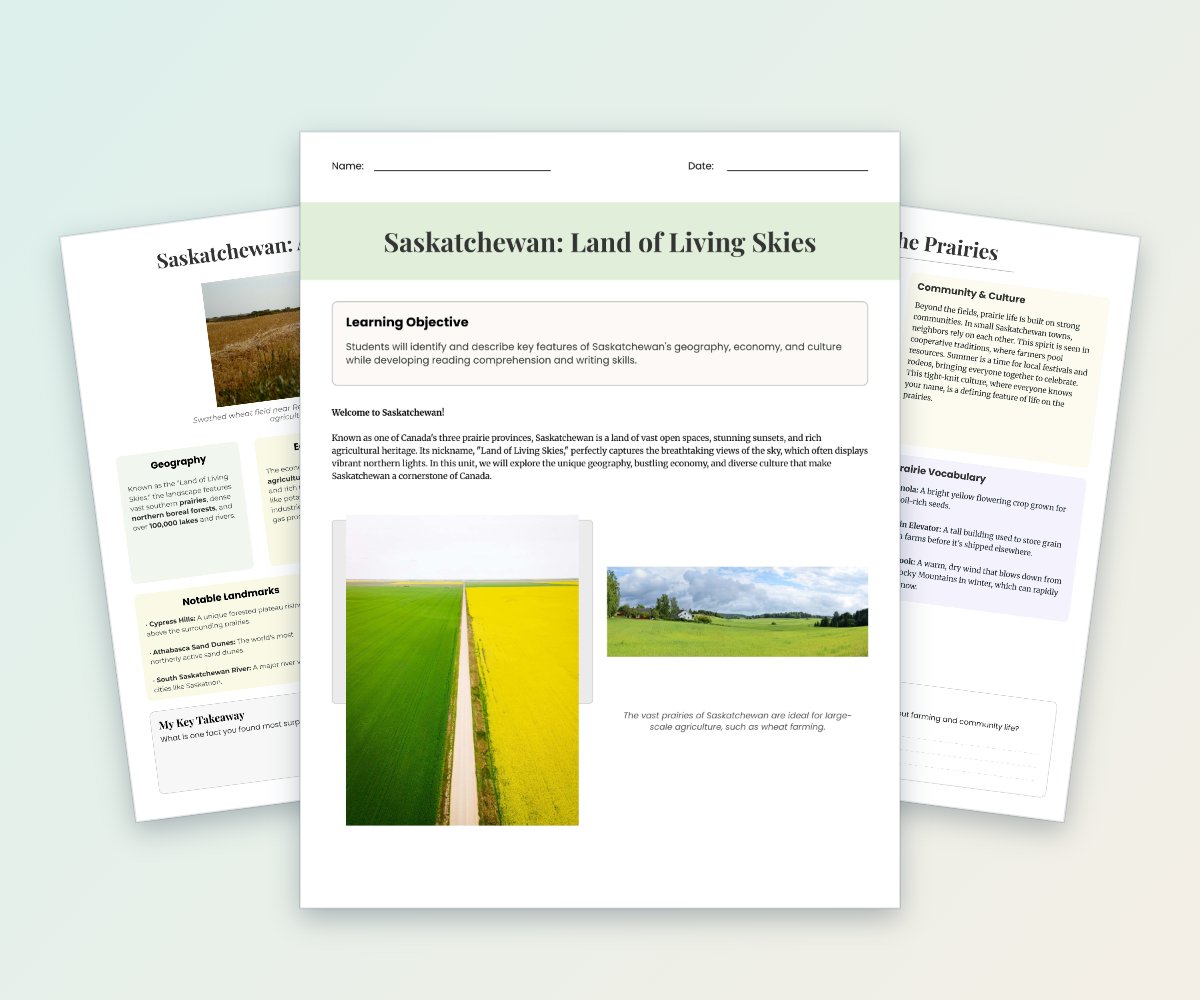
This six-page social studies unit introduces Saskatchewan’s landscapes, landmarks, industries, seasons, Indigenous communities, and cultural diversity.
This nine-page worksheet set uses Terry Fox’s Marathon of Hope and fundraising efforts to provide meaningful math practice.
Students read about the Albuquerque International Balloon Fiesta, its traditions, and the science behind hot-air balloon flight.
Students learn why the National World War II Museum is located in New Orleans and explore veterans’ stories, courage, teamwork, and sacrifice.