Navajo Code Talkers in World War II
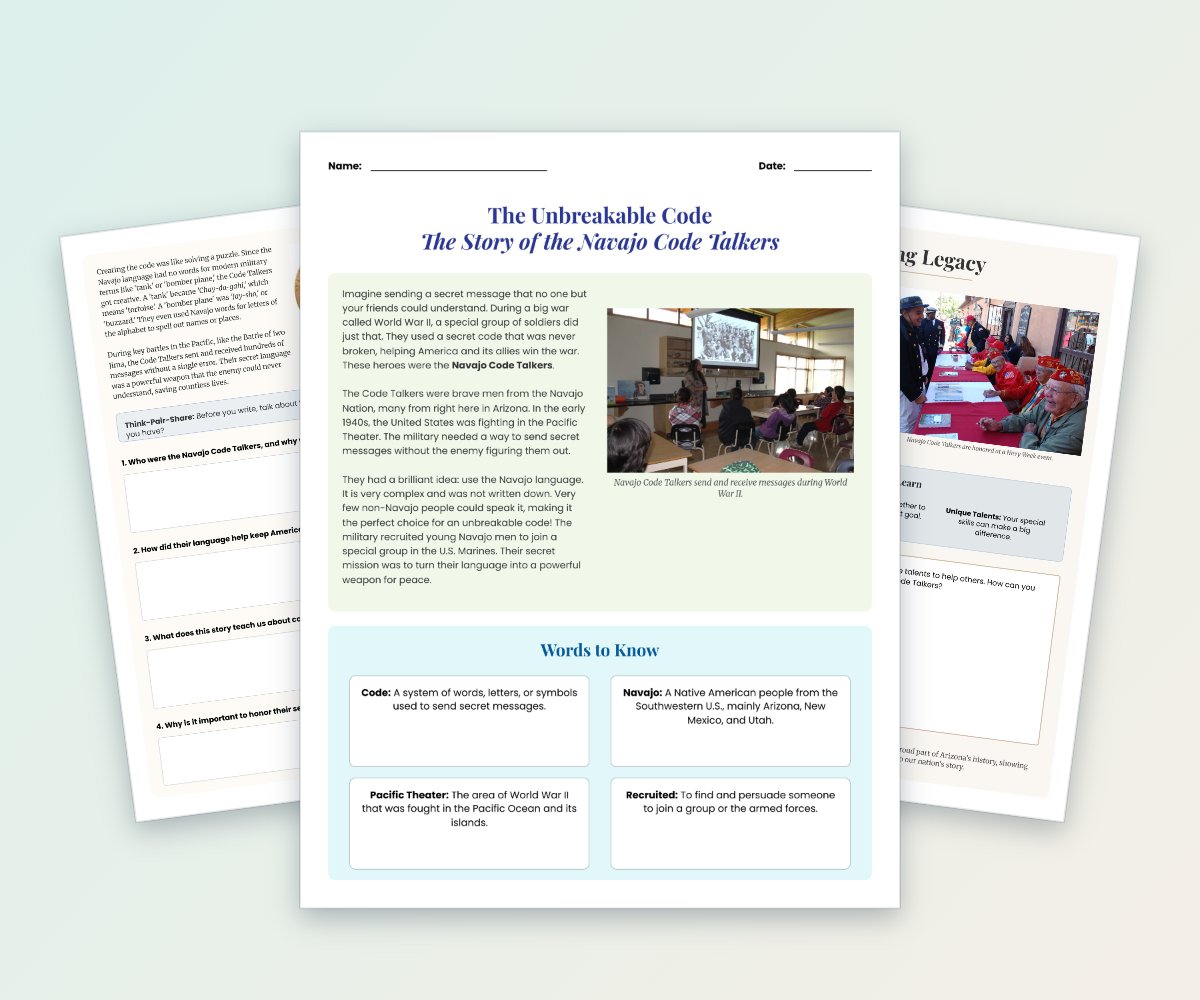
This three-page informational reading introduces the Navajo Code Talkers, their contributions during World War II, and their lasting legacy.
$3
Classroom-ready resources written for grade 8: printable worksheets, slides, activities and planning tools you can download and use straight away. Browse by subject below.
This three-page informational reading introduces the Navajo Code Talkers, their contributions during World War II, and their lasting legacy.
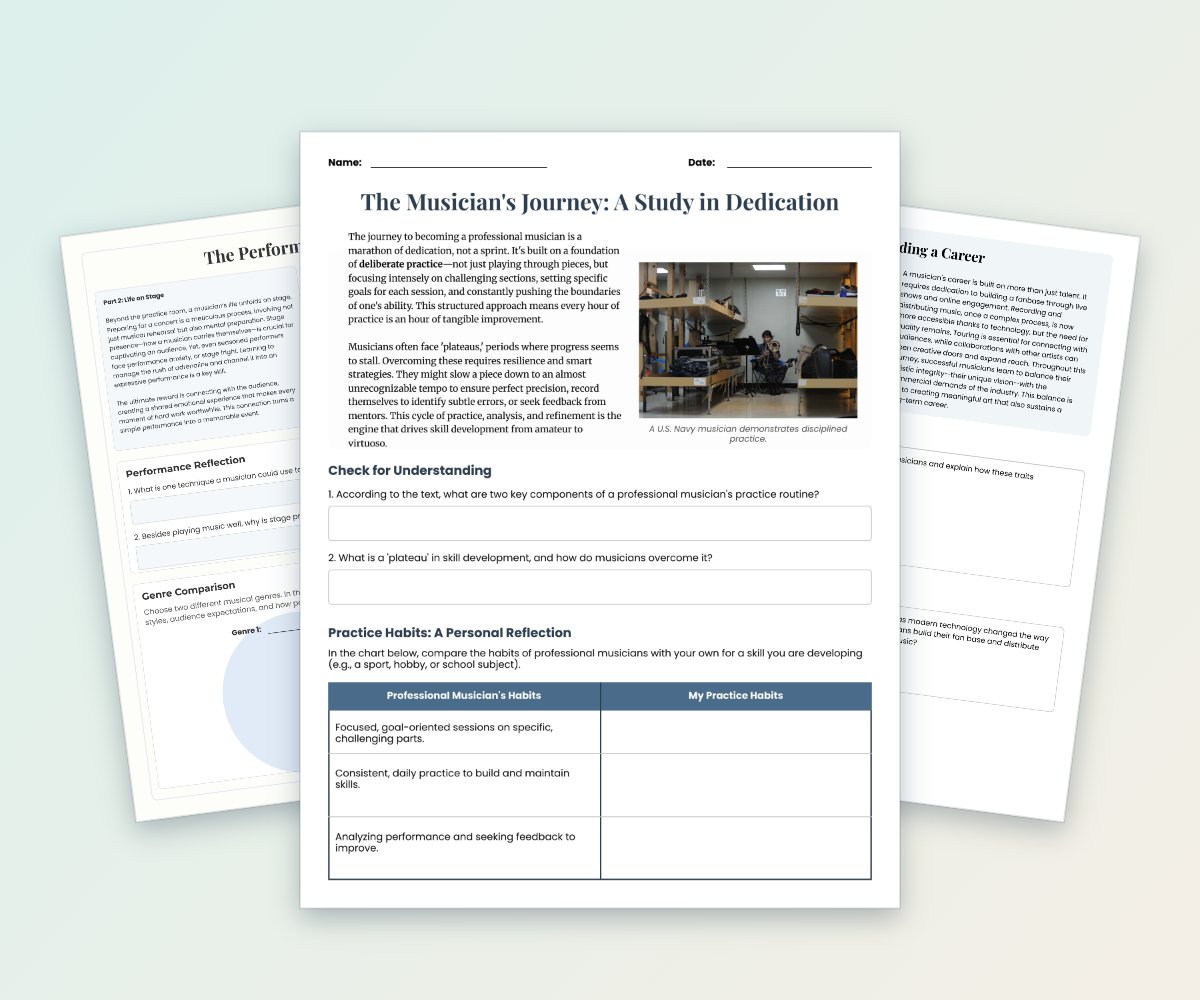
Students read about deliberate practice, overcoming plateaus, stage presence, and managing performance anxiety.
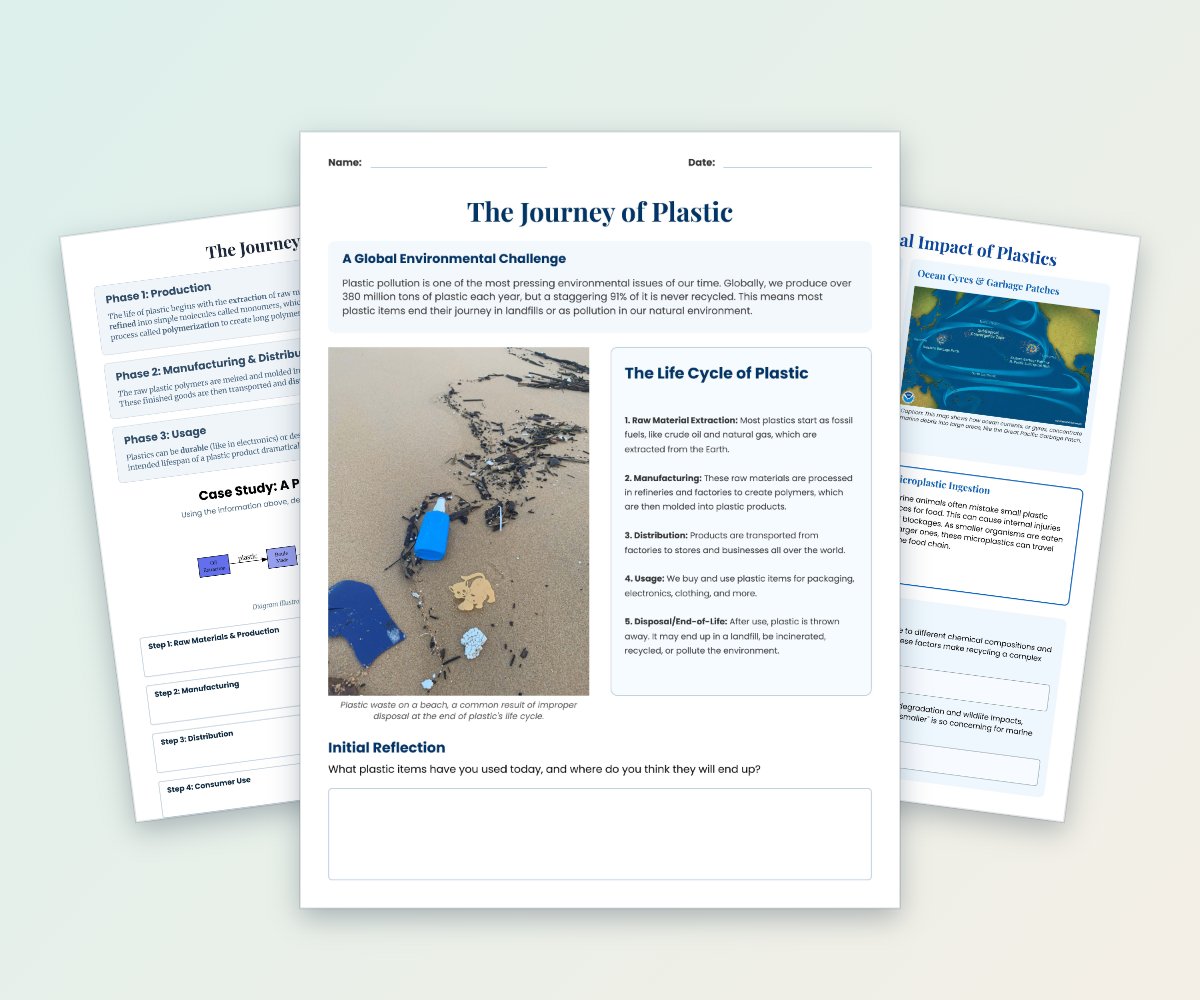
Students explore how plastic is extracted, manufactured, distributed, used, and discarded.
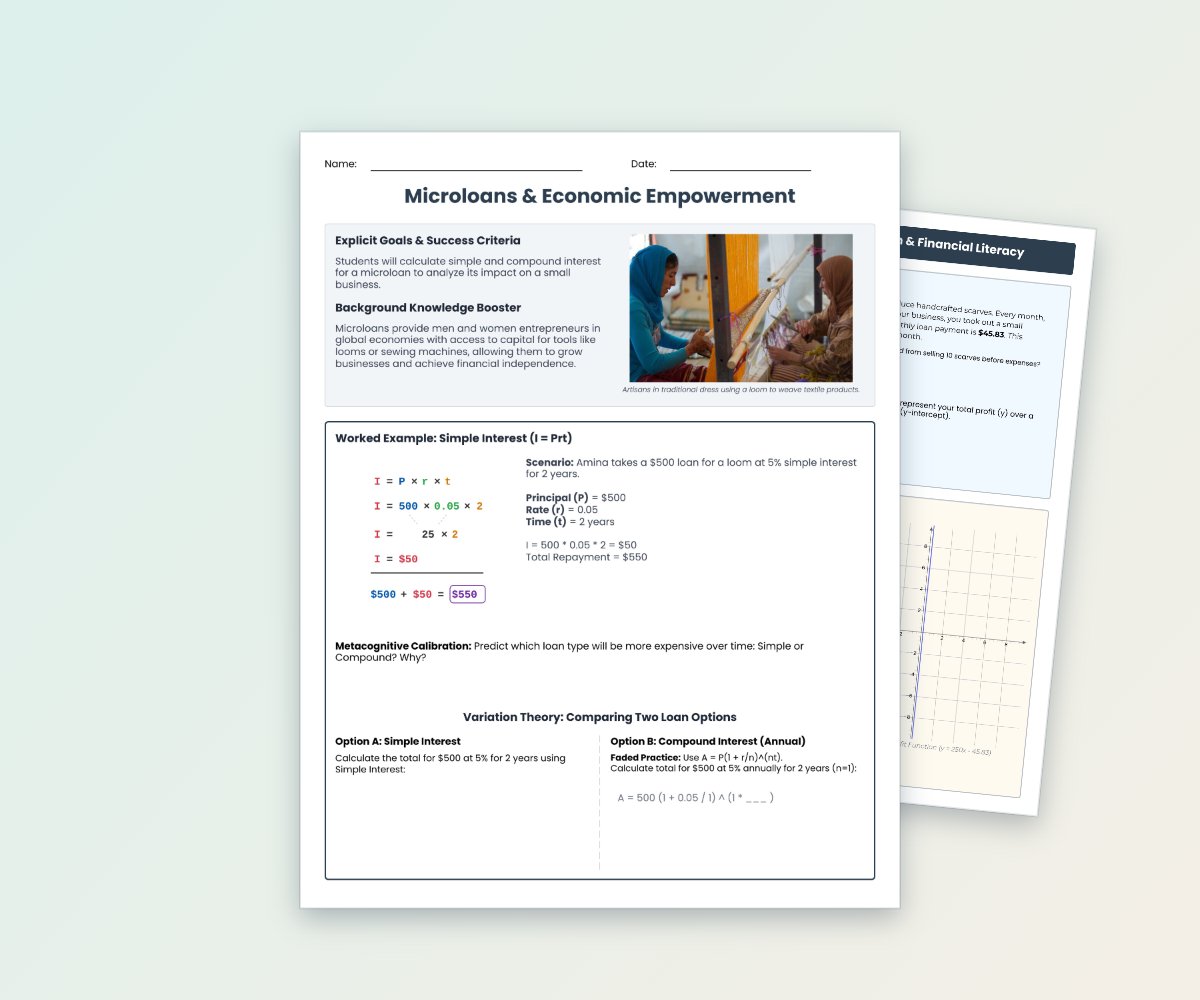
Students calculate simple and compound interest on microloans and compare repayment costs.
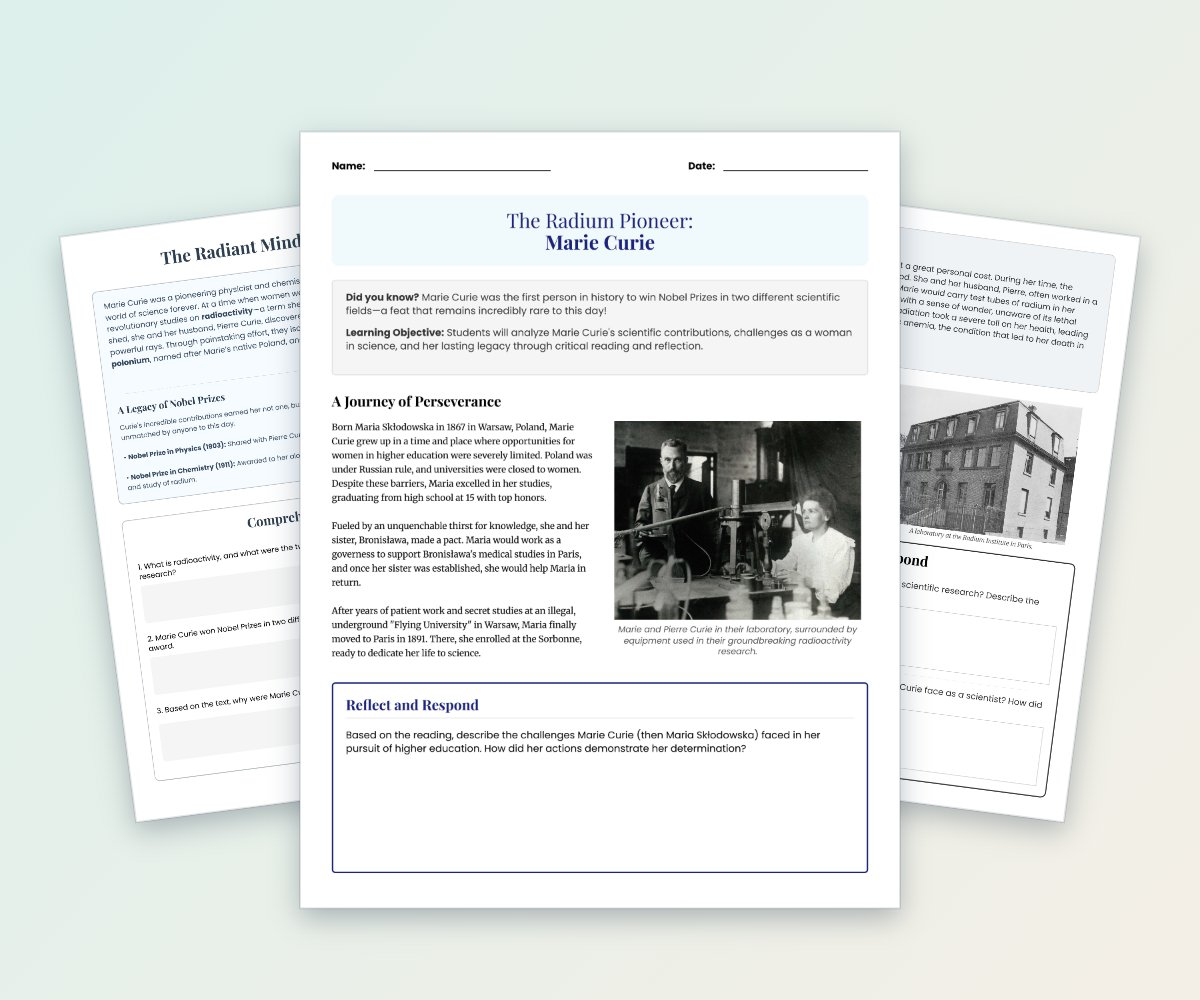
Students read about Marie Curie’s education, perseverance, research on radioactivity, and Nobel Prize achievements.
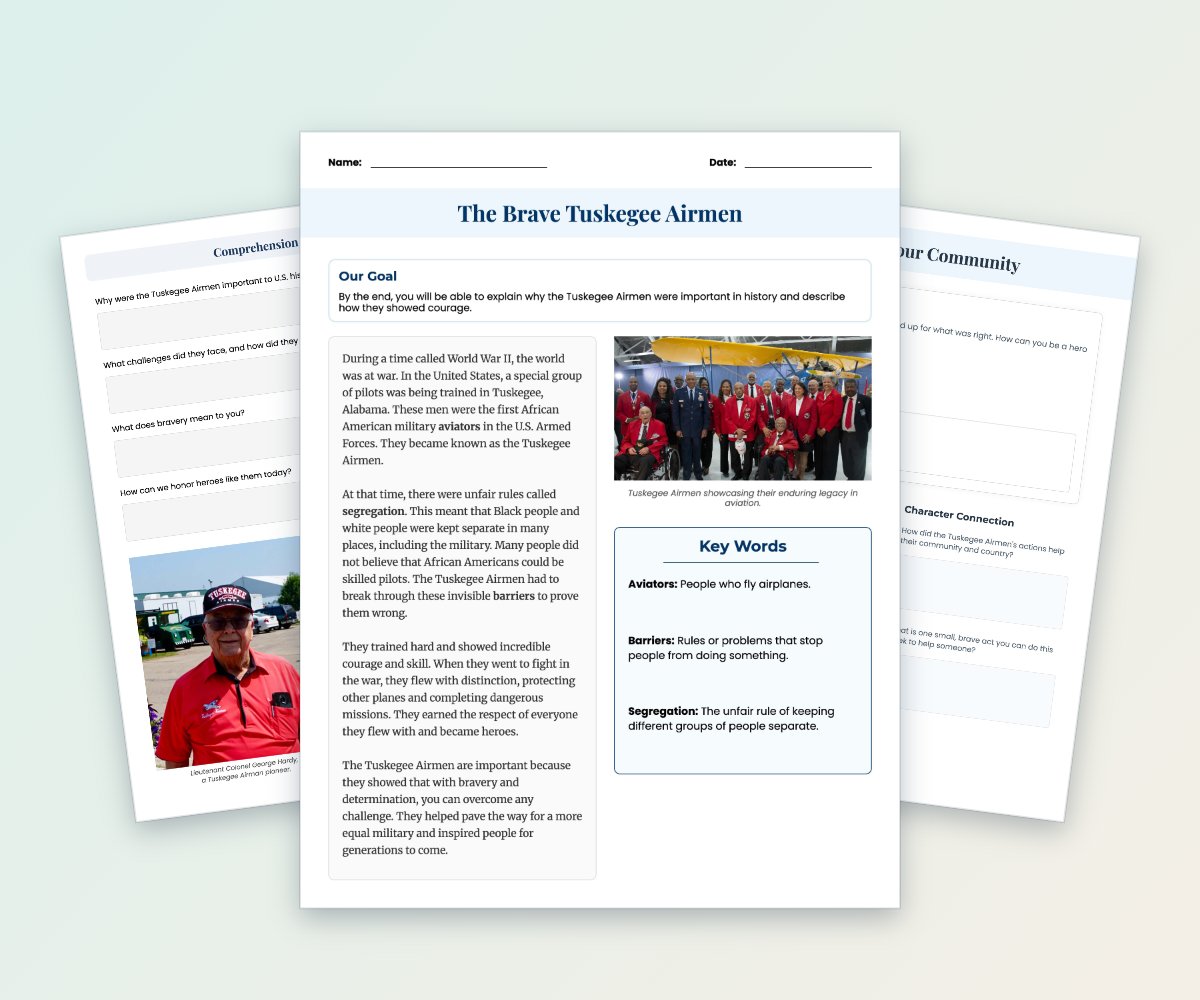
Students learn about the Tuskegee Airmen, World War II, segregation, and their contributions to American history.
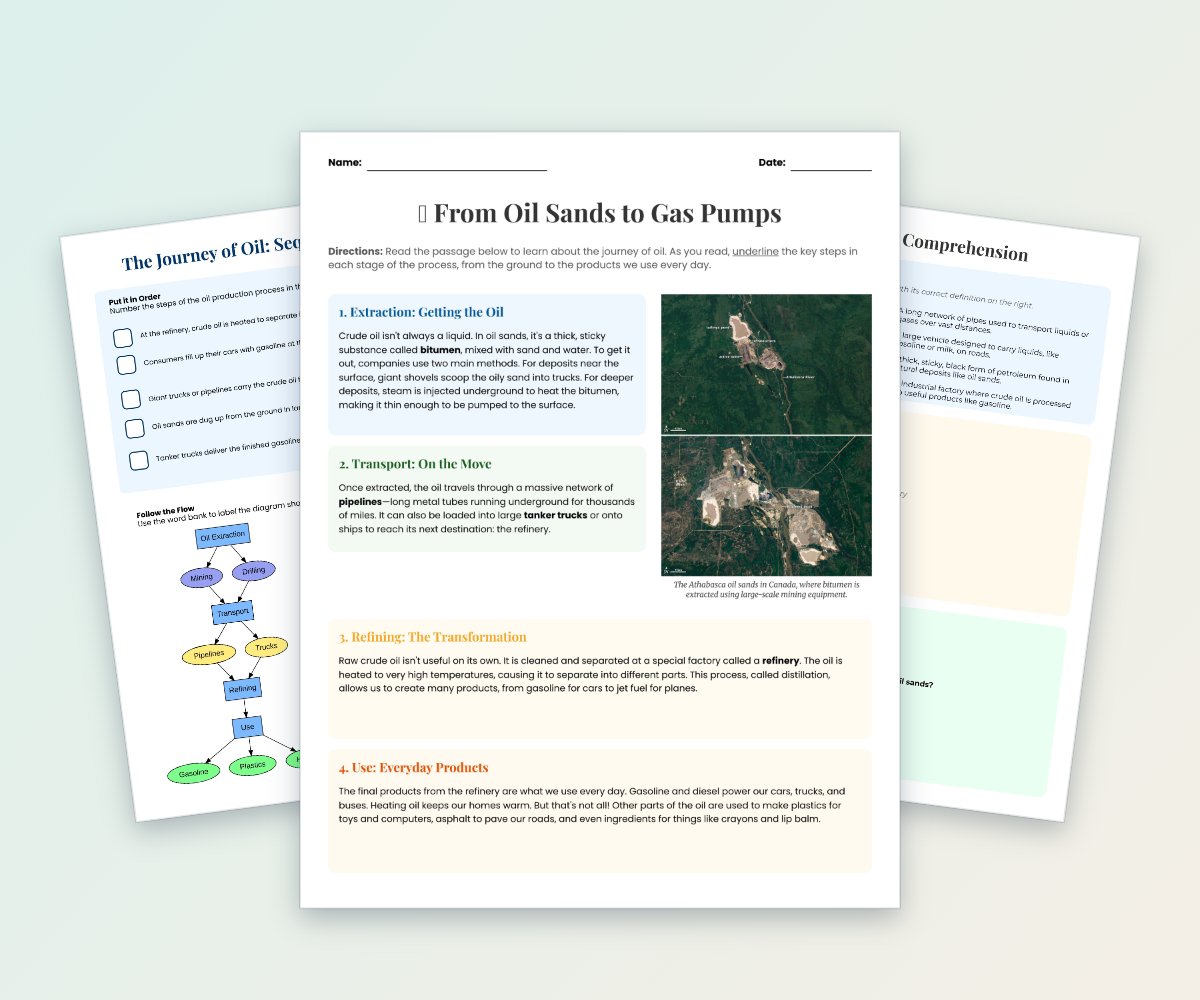
Students read an informational passage about oil sands, extraction, transportation, refining, and everyday petroleum products.
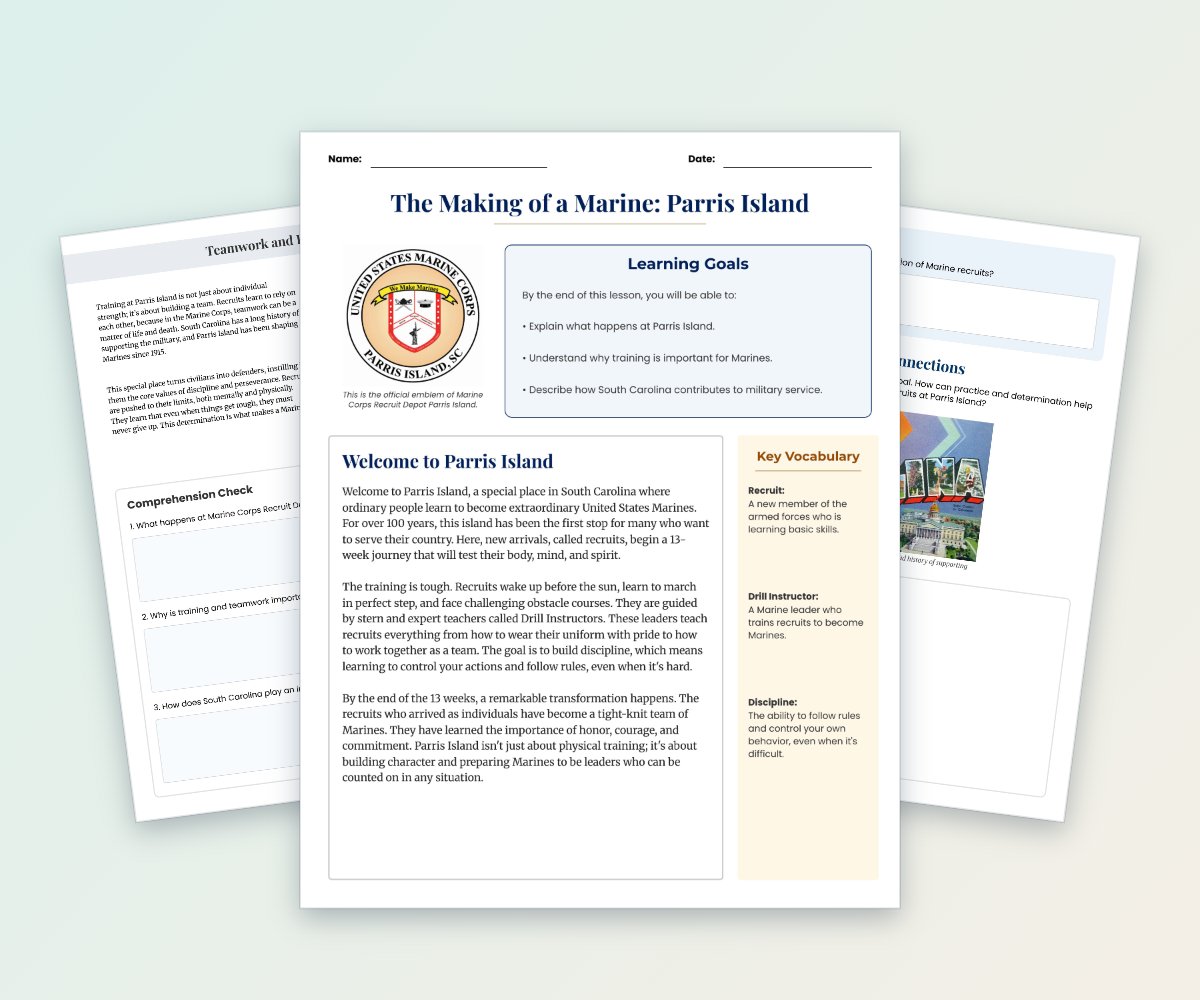
Students learn about recruit training at Marine Corps Recruit Depot Parris Island, including discipline, teamwork, perseverance, and South Carolina’s military history.
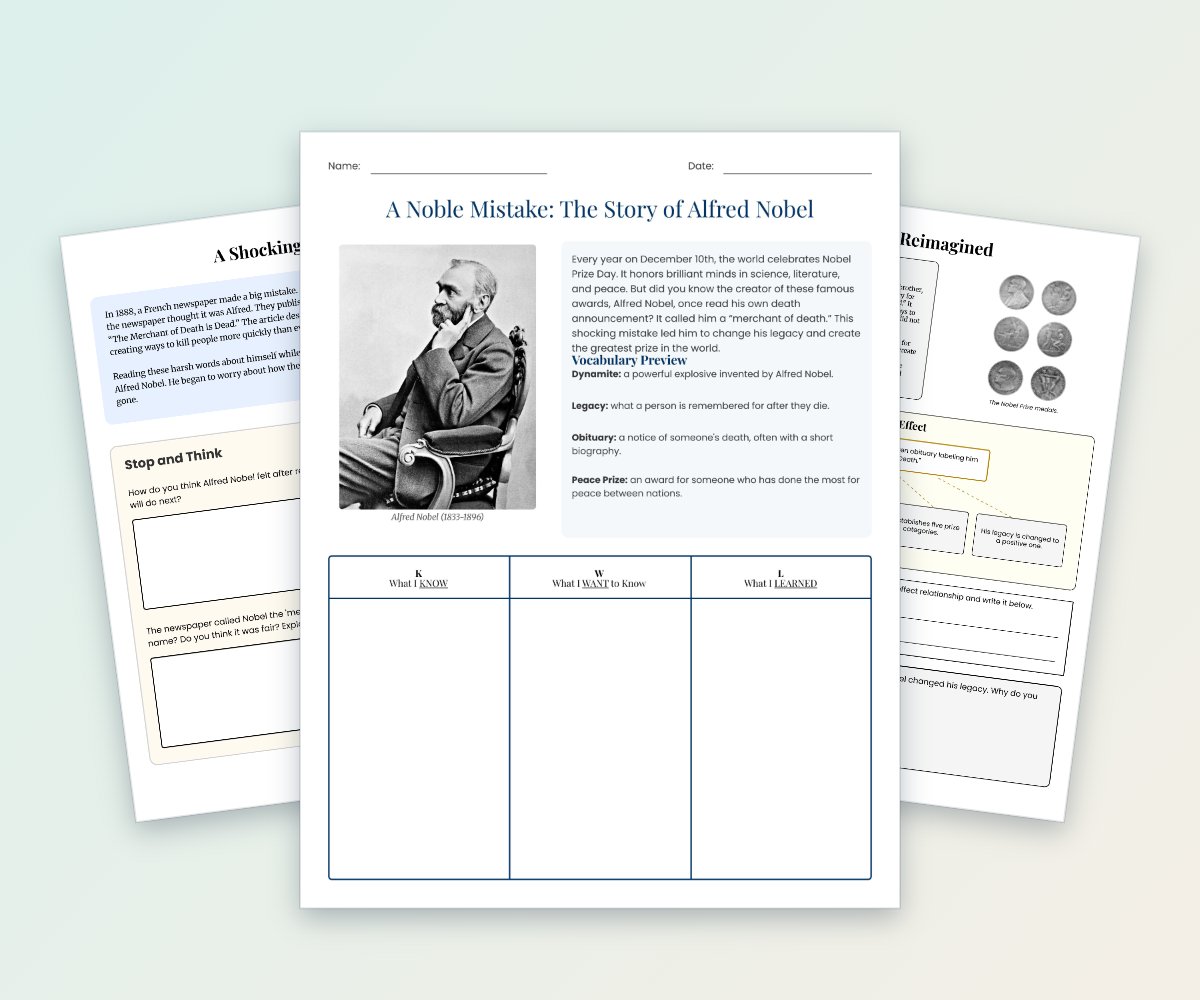
Students read an engaging informational biography about Alfred Nobel, the mistaken obituary that changed his perspective, and the creation of the Nobel Prizes.
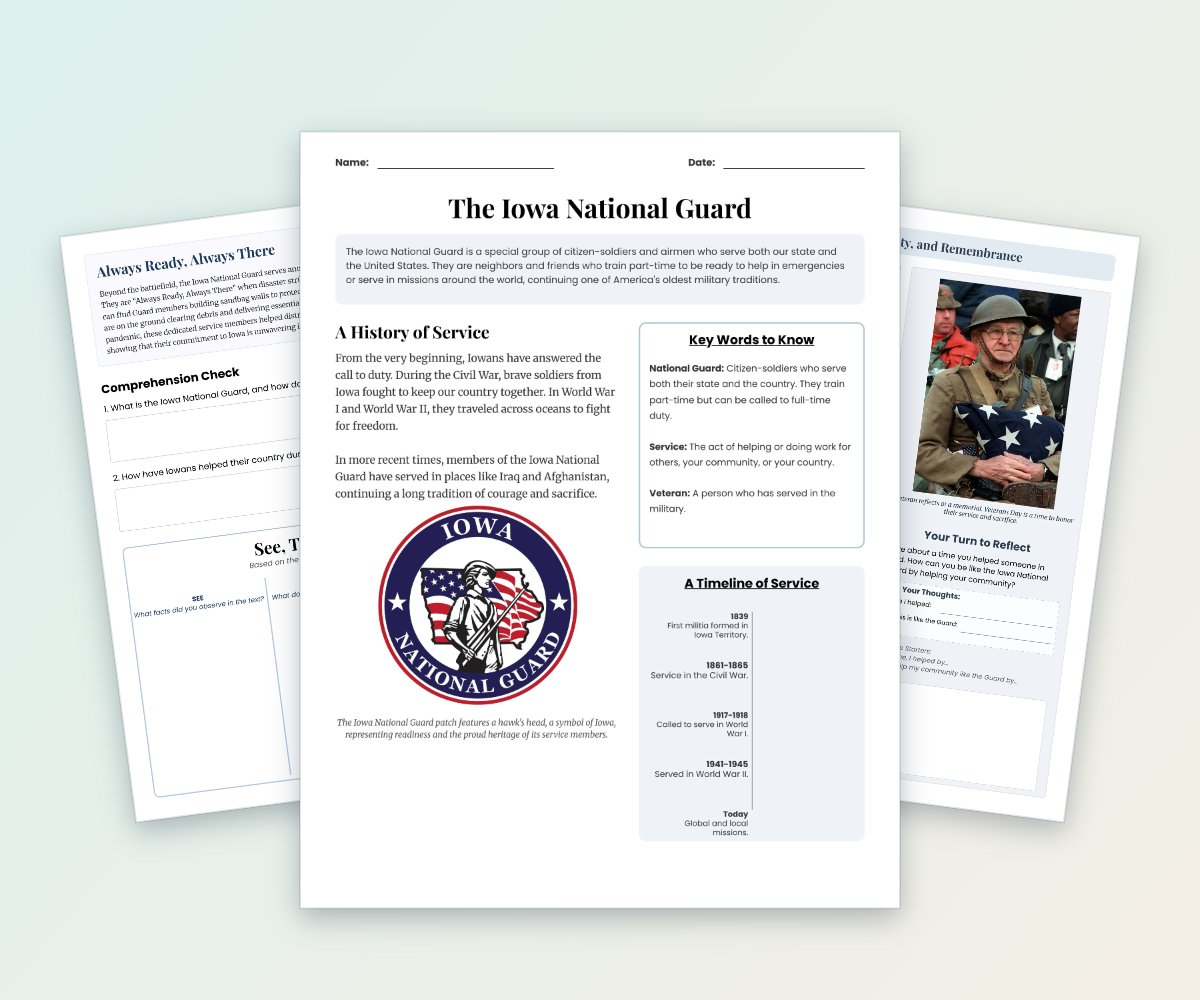
Students learn about the history and community service of the Iowa National Guard through an informational reading, key vocabulary, and a timeline.
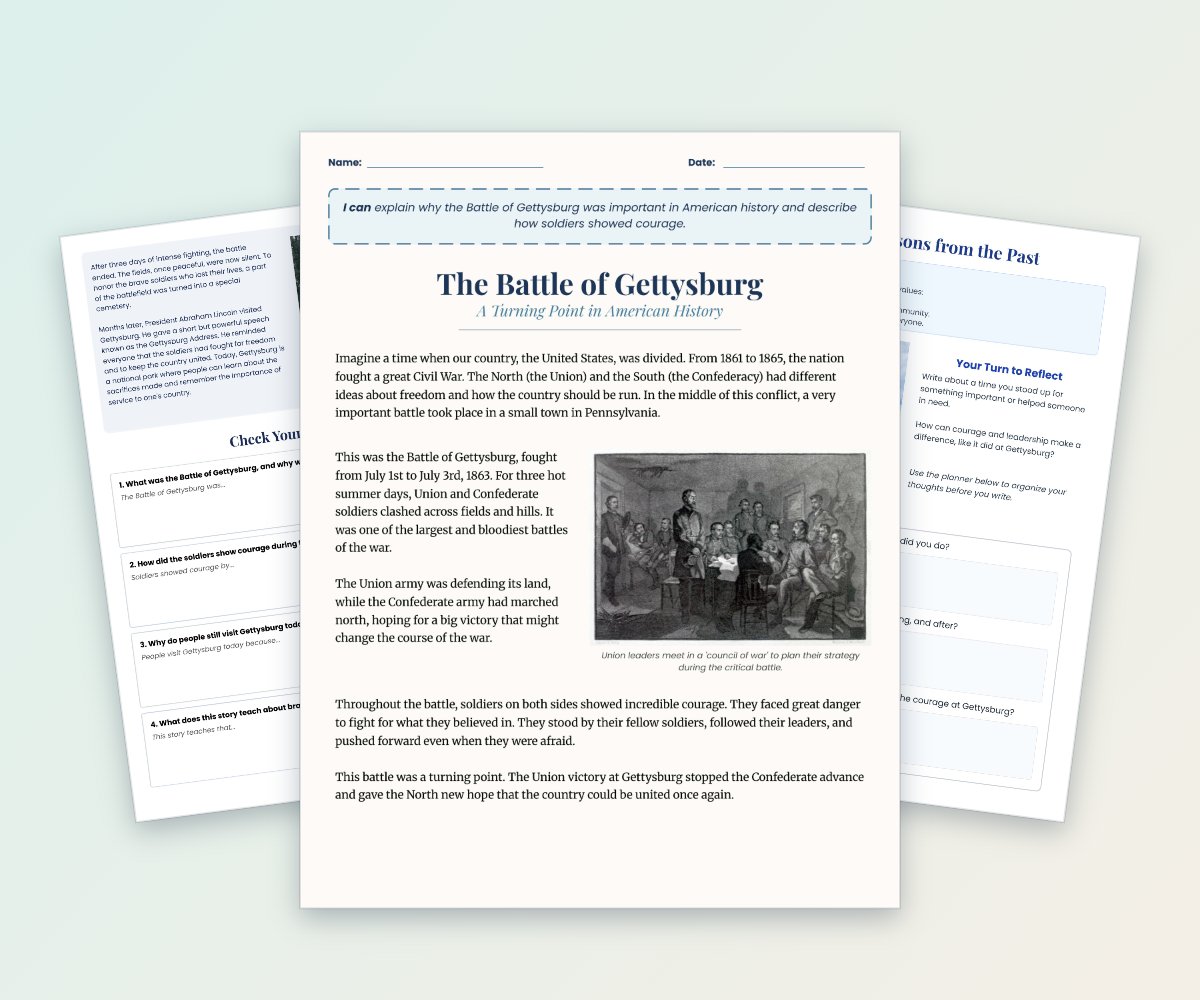
Students read an accessible overview of the Battle of Gettysburg and its importance during the American Civil War.
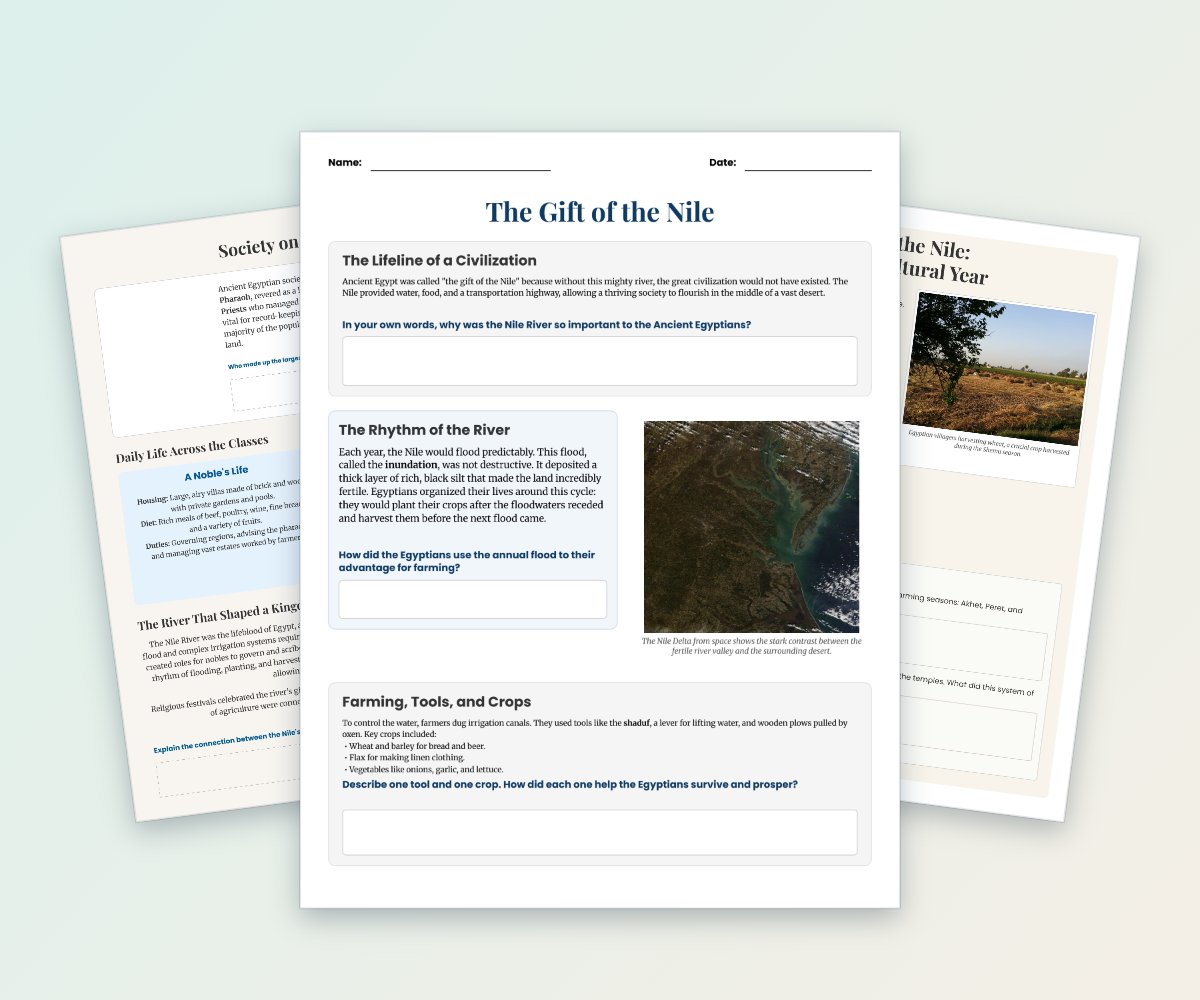
This five-page worksheet explores how the Nile supported farming, transportation, society, and daily life in Ancient Egypt.
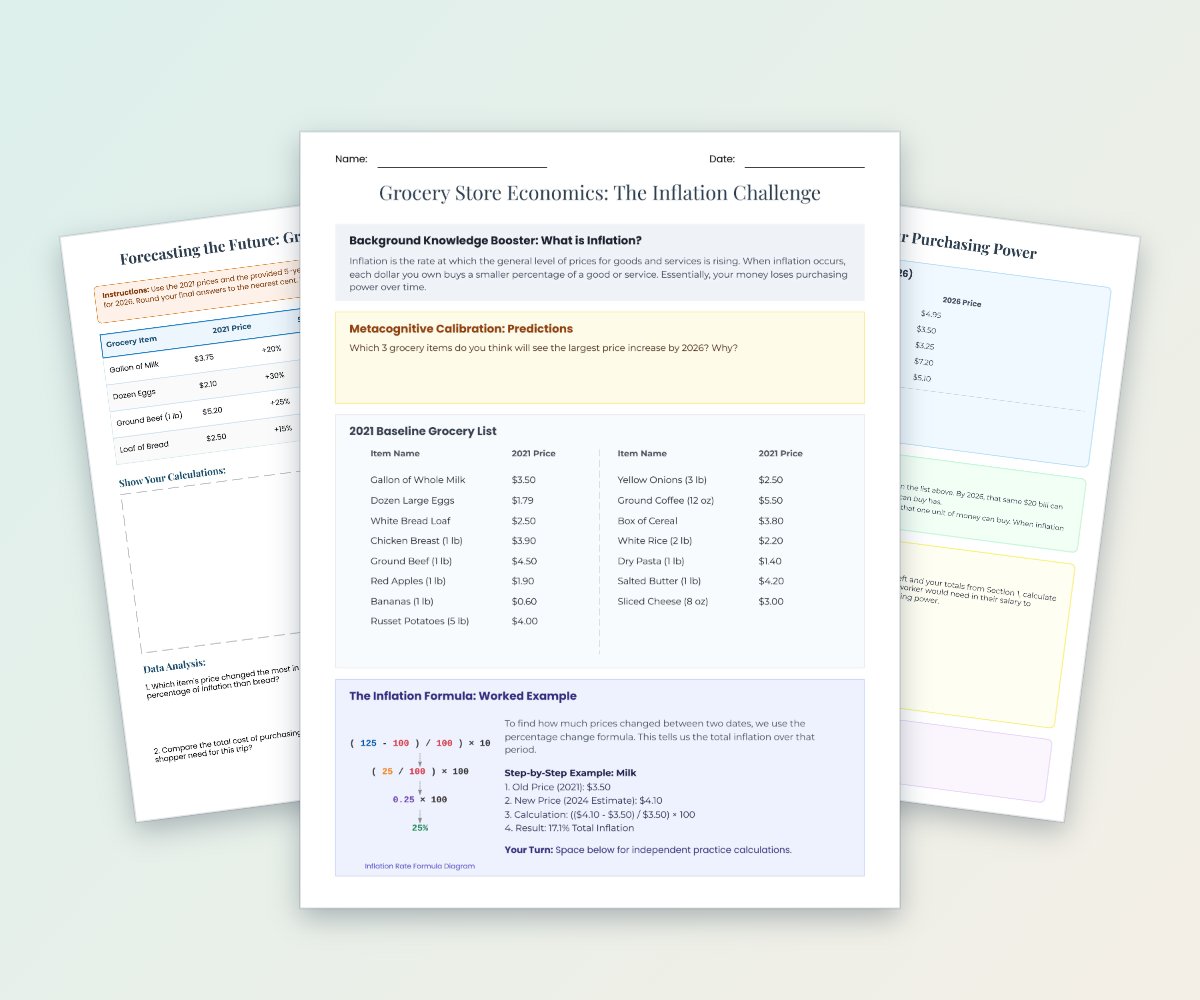
Students explore inflation by comparing historical and projected grocery prices, calculating percentage increases, and analyzing purchasing power.
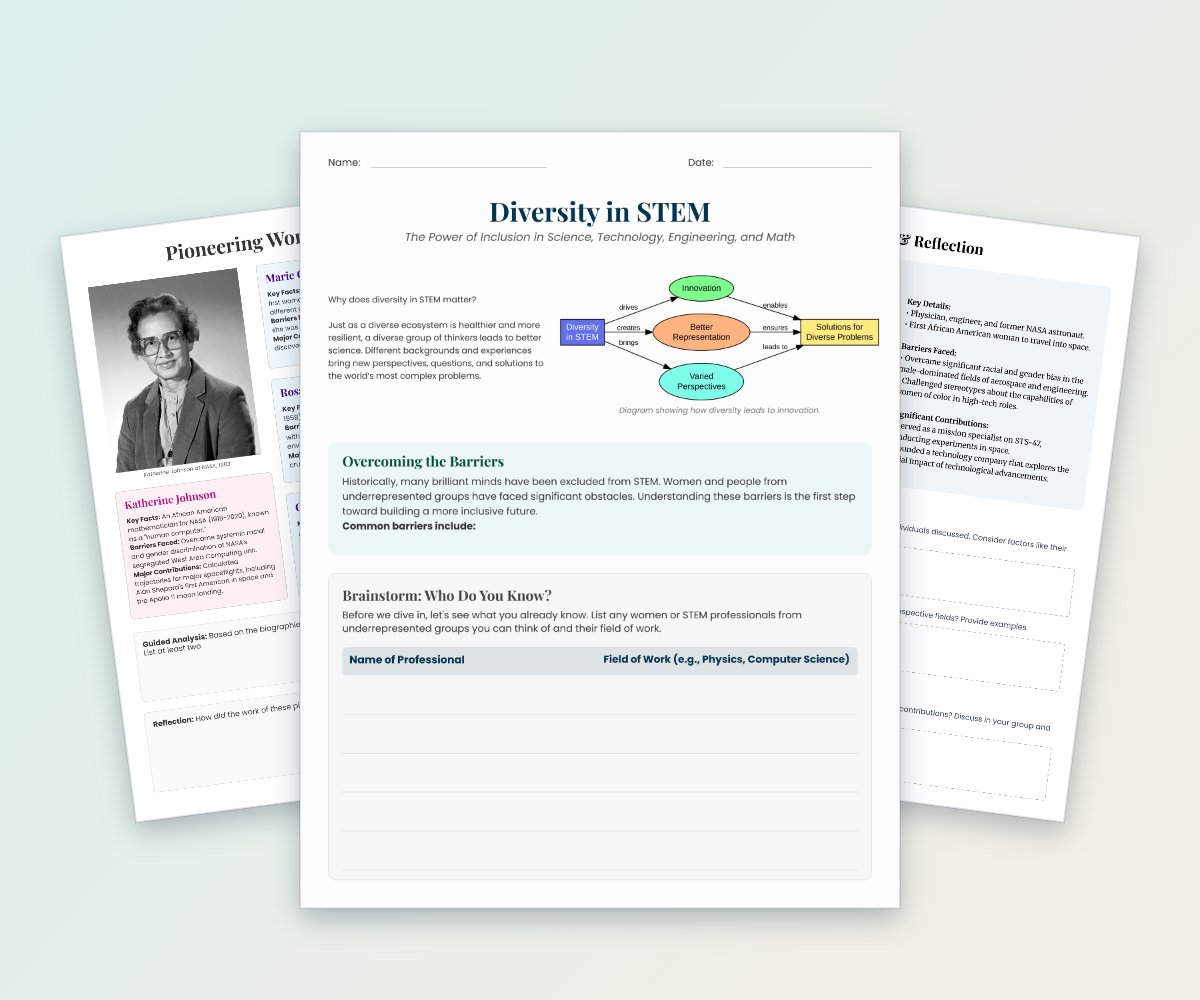
This four-page worksheet explores why diversity strengthens science, technology, engineering, and mathematics.
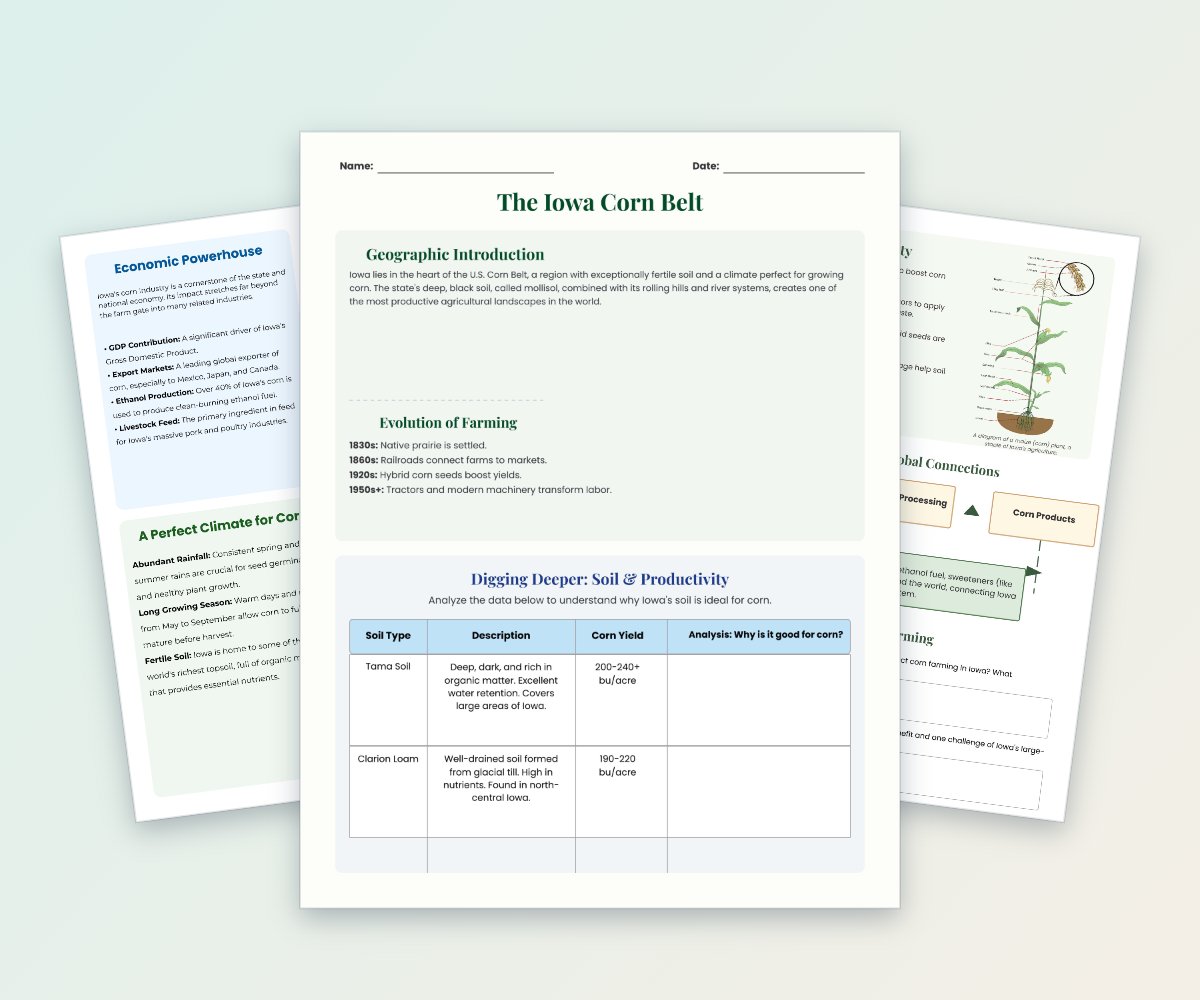
Students explore Iowa’s geography, fertile soils, climate, farming history, corn yields, economic importance, and agricultural technology.
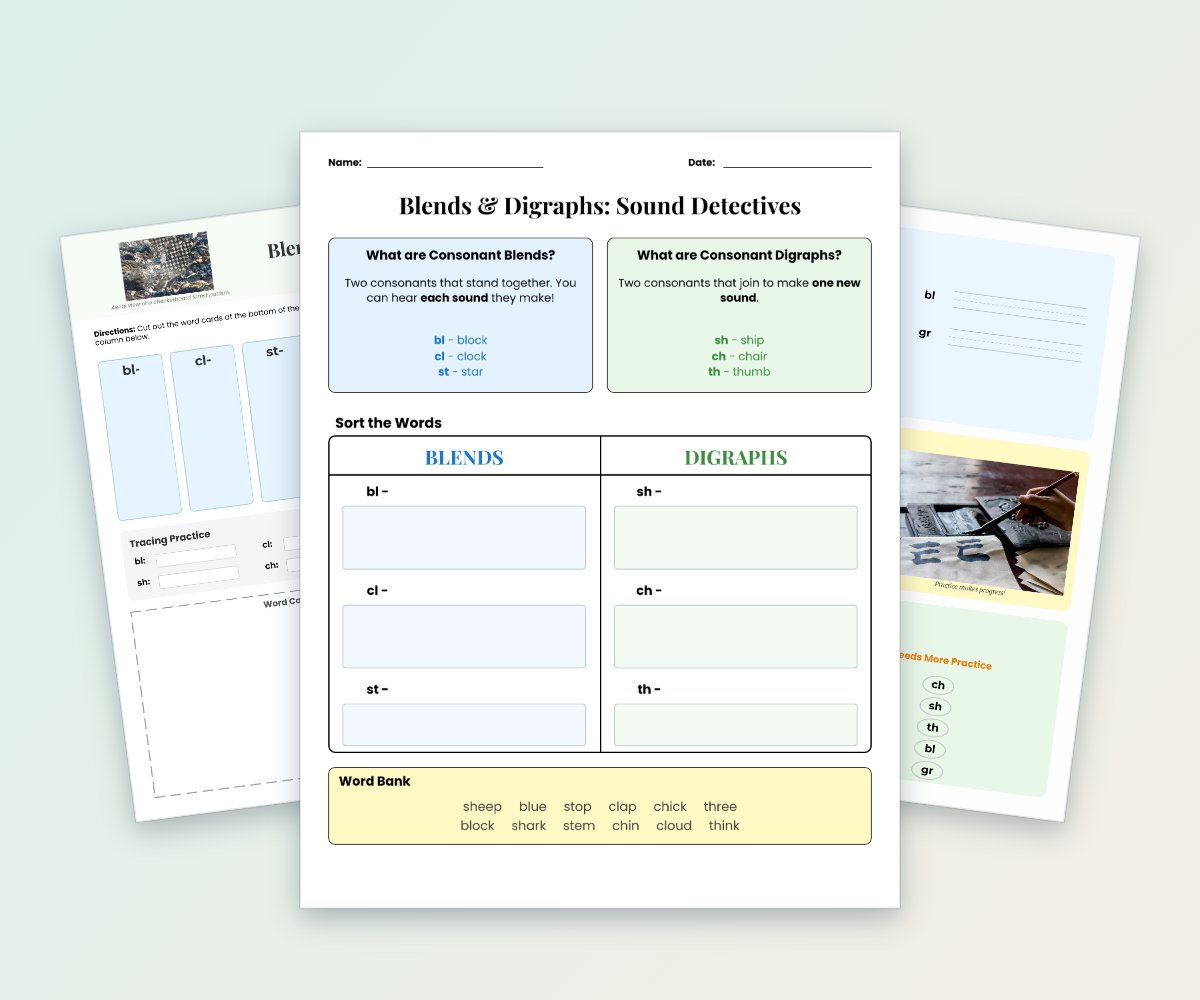
This three-page phonics resource introduces consonant blends and digraphs with examples, word sorting, tracing, writing, and illustration activities.
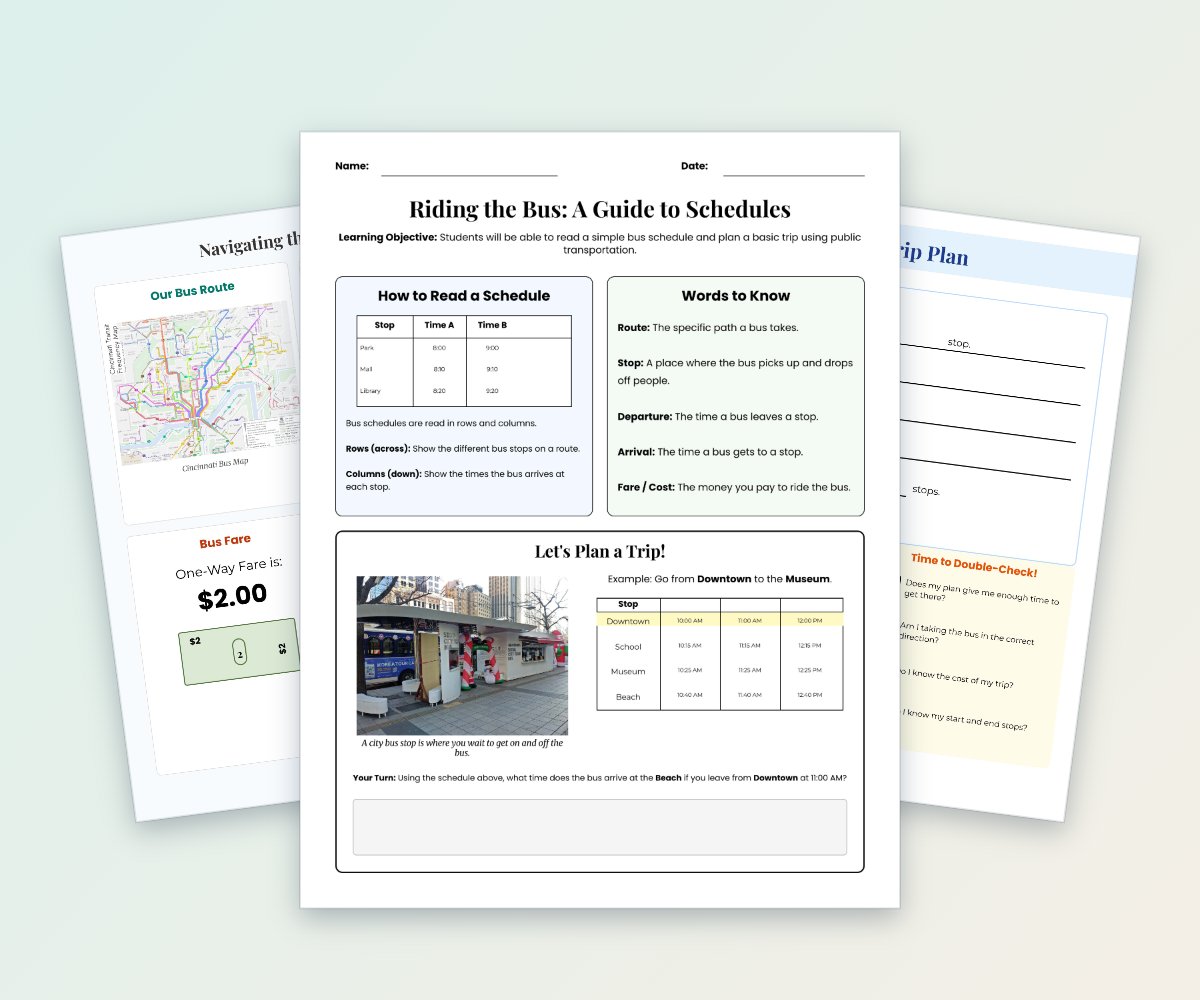
This four-page guide introduces bus routes, stops, arrival and departure times, fares, and schedule reading.
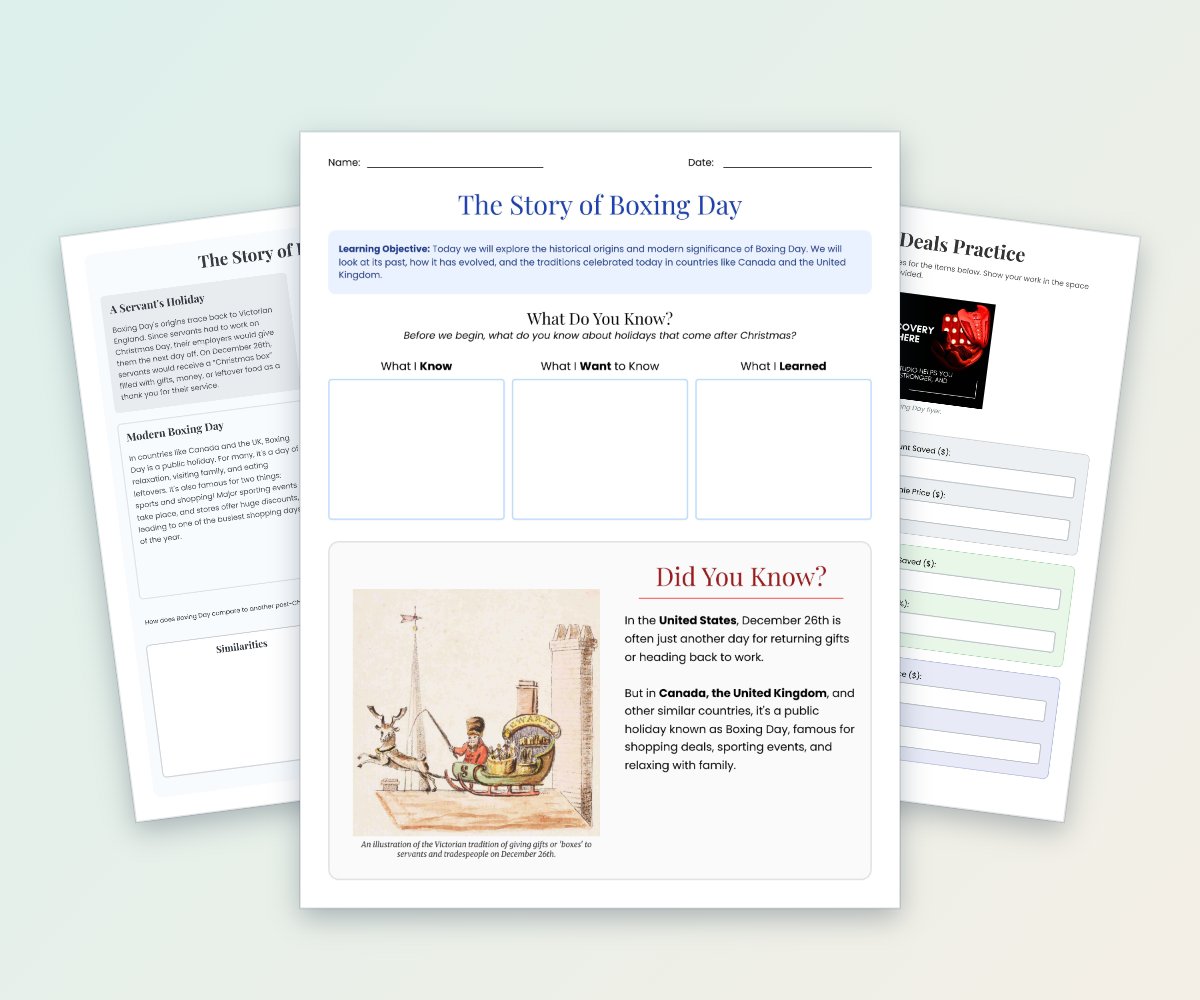
Students explore the Victorian origins, modern traditions, and cultural significance of Boxing Day in Canada and the United Kingdom.
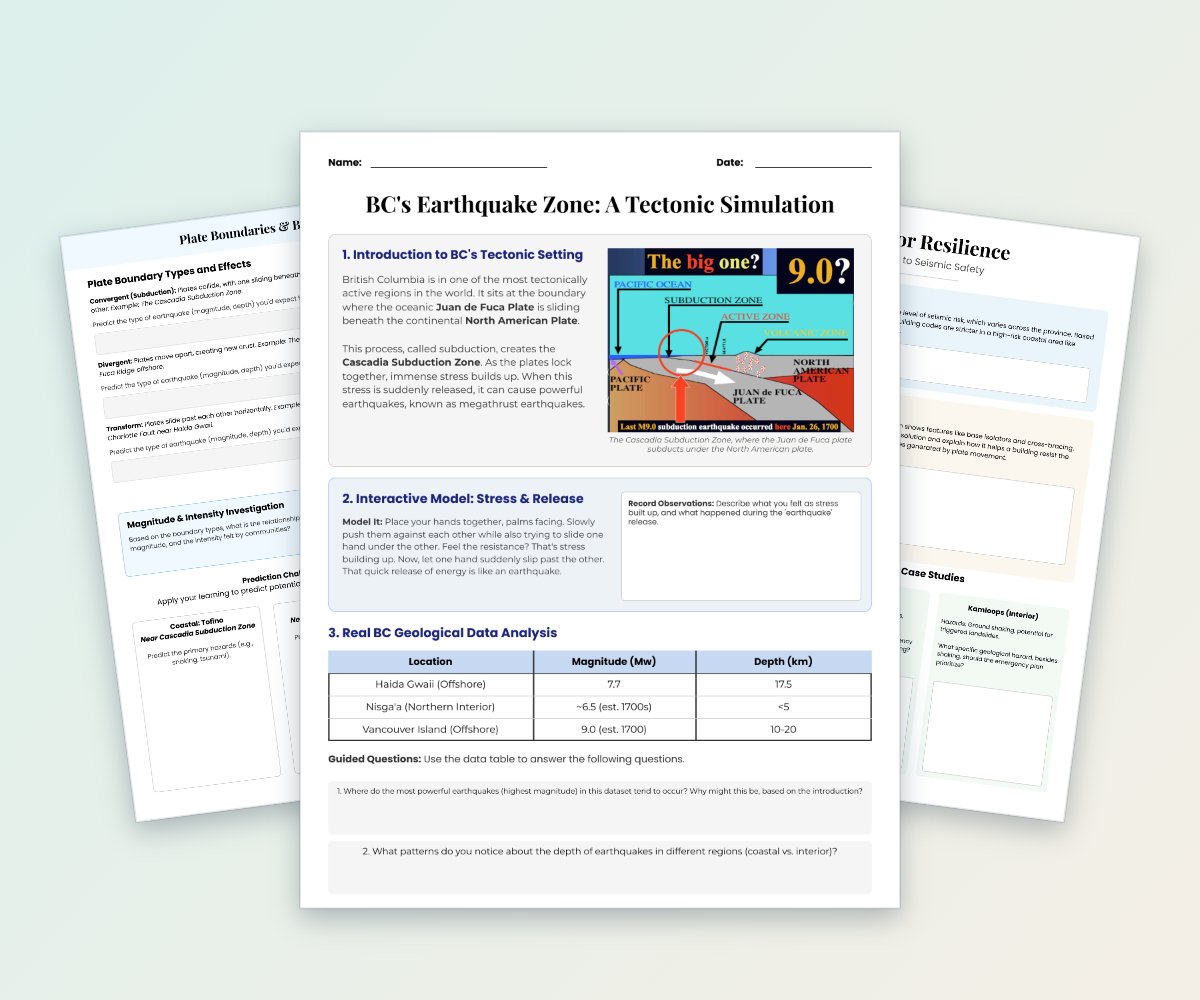
Students explore British Columbia’s tectonic setting through a hands-on stress-and-release simulation, real earthquake data, and guided questions.
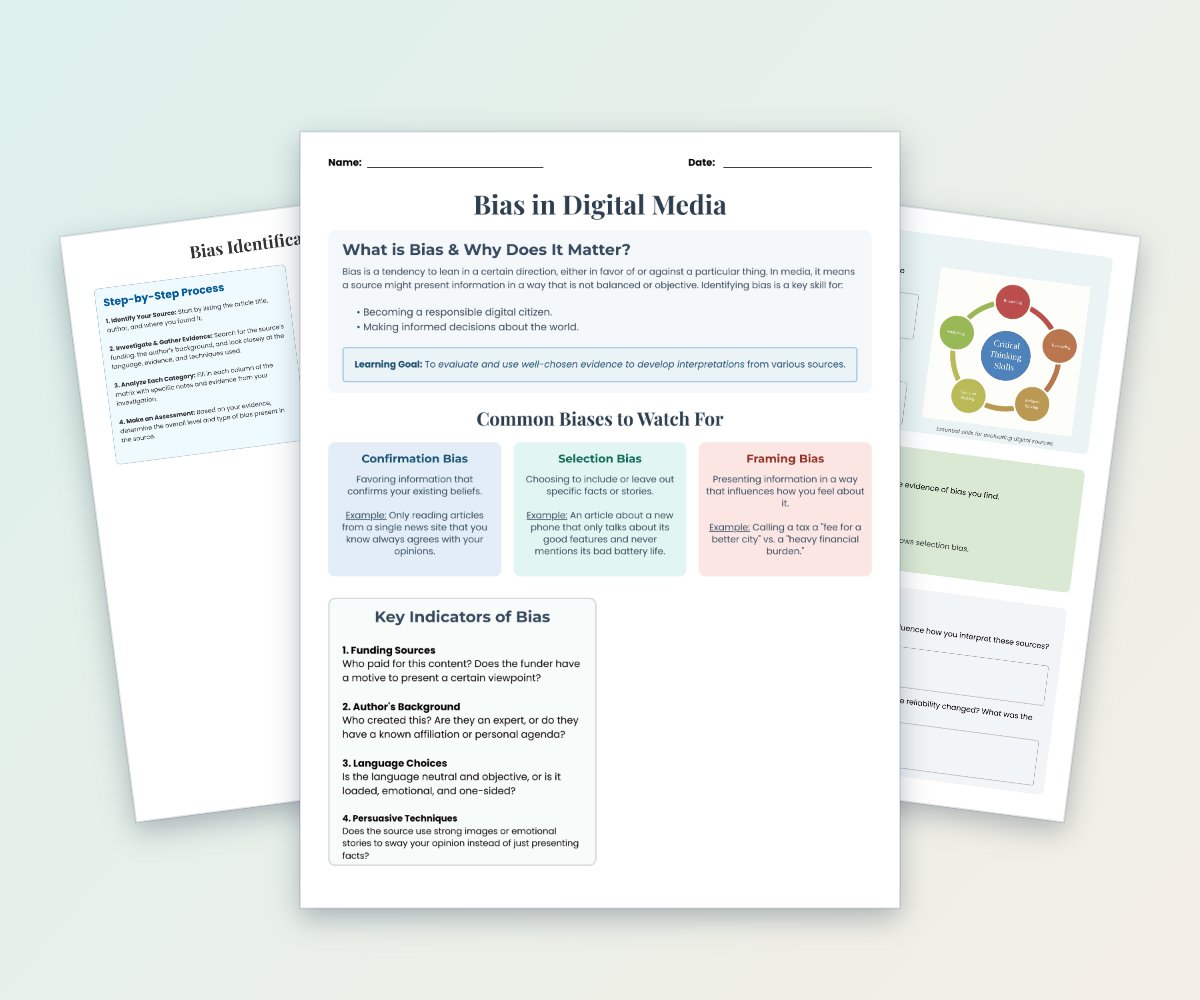
This three-page worksheet introduces confirmation, selection, and framing bias in digital media.
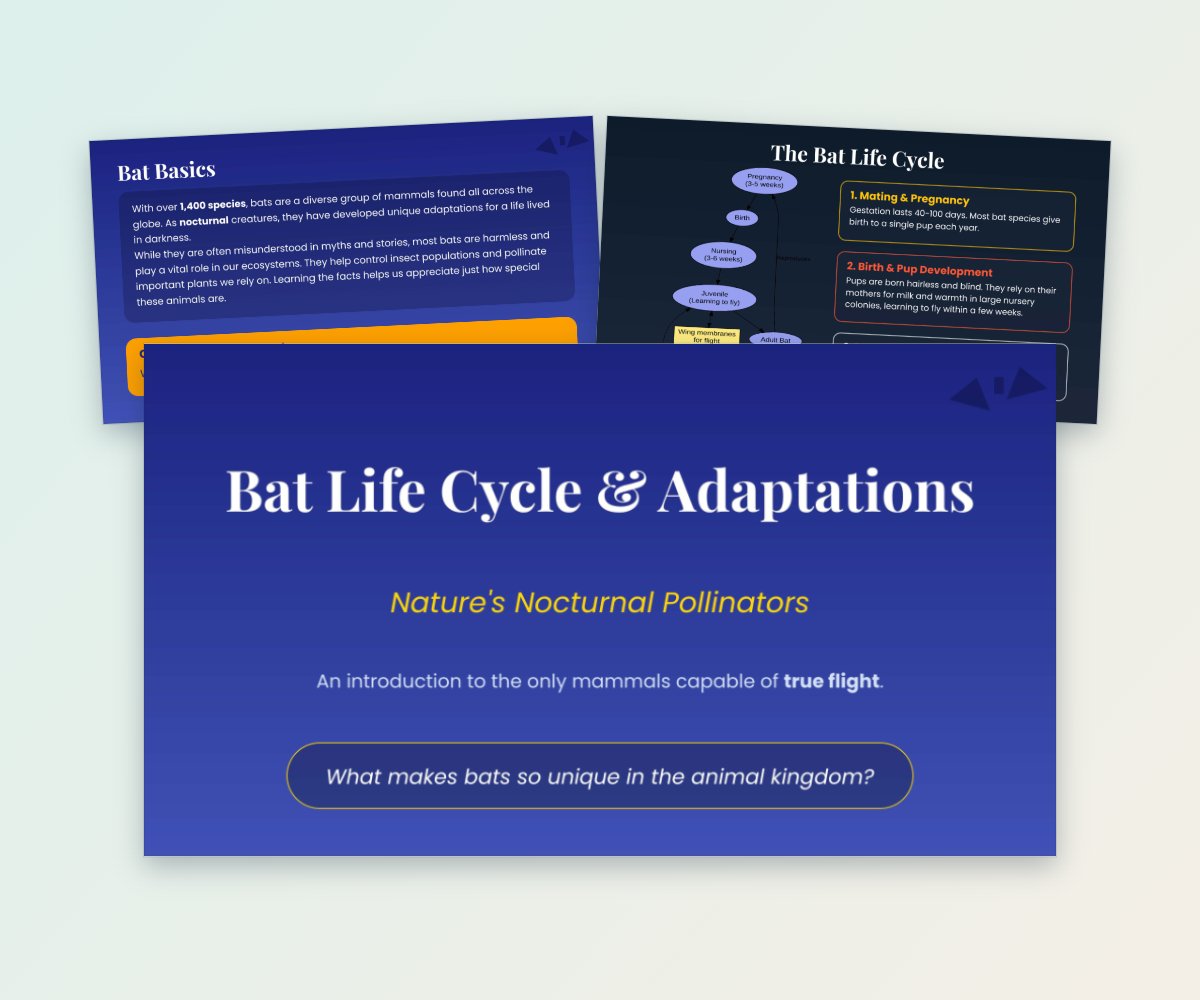
This classroom resource introduces bat basics, nocturnal adaptations, life cycles, ecological roles, and common myths.
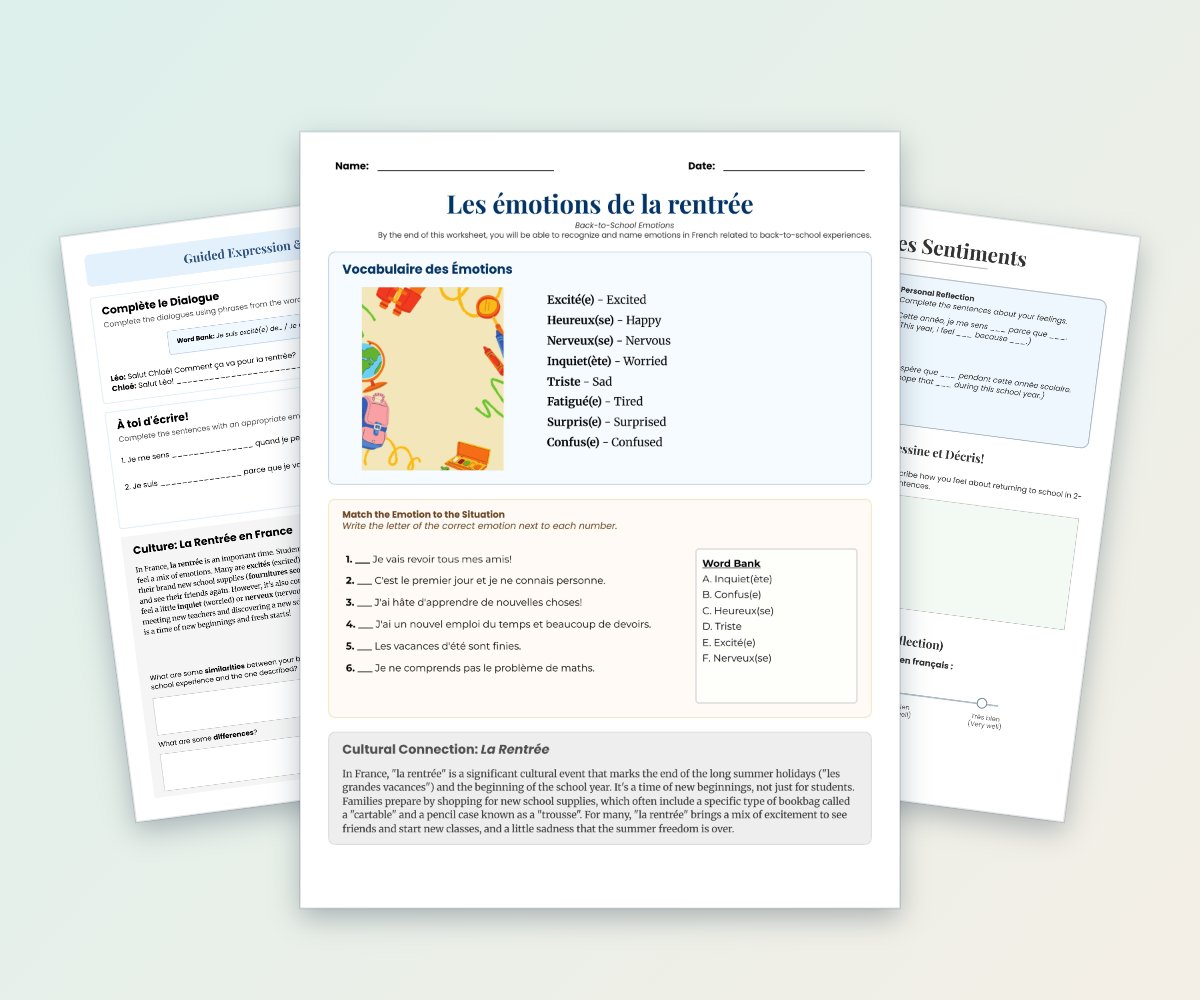
This three-page French worksheet introduces emotions connected to returning to school, including excited, happy, nervous, worried, sad, tired, surprised, and confused.
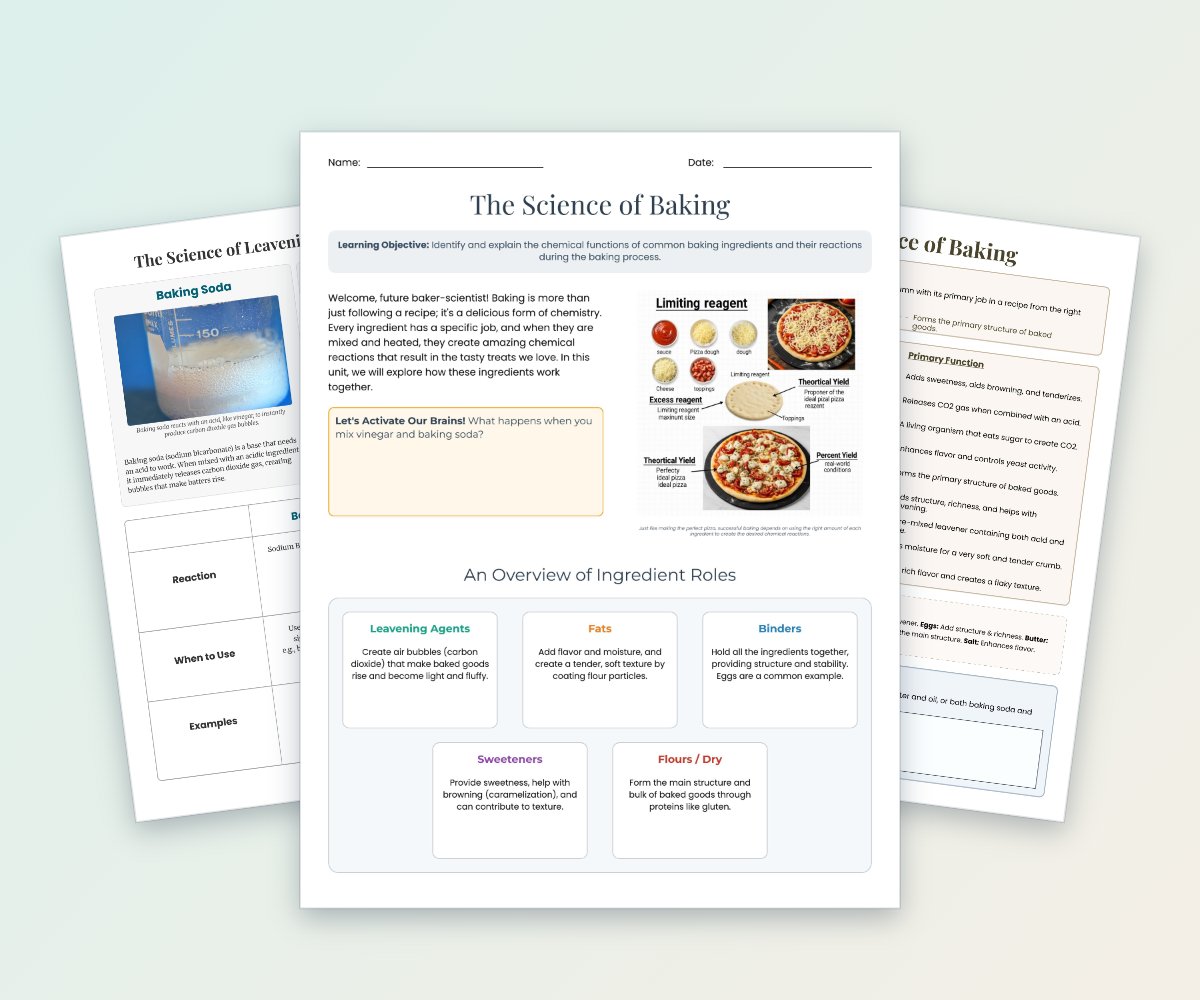
This student worksheet introduces the chemistry of baking, including ingredient functions, limiting reagents, and chemical reactions.
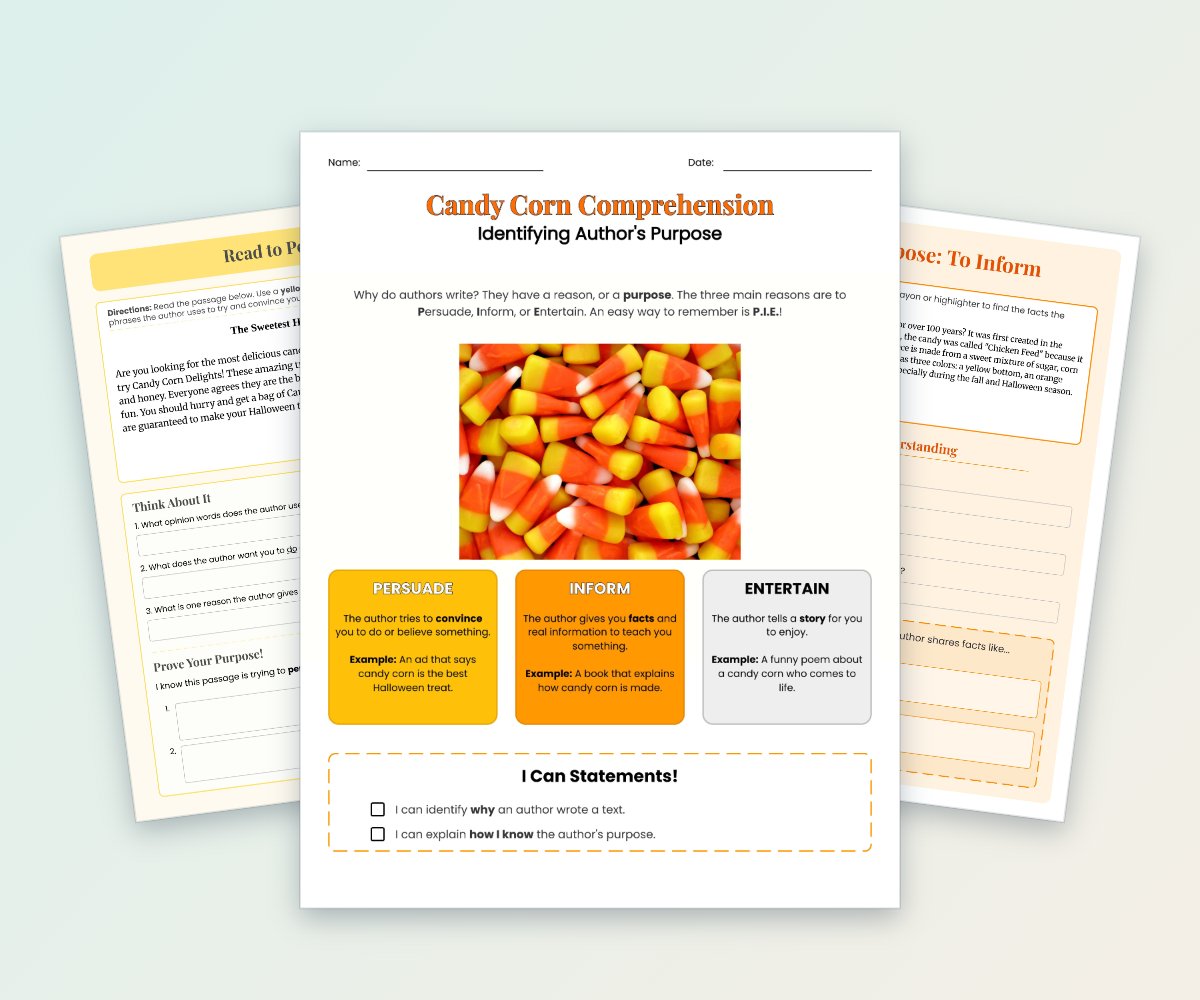
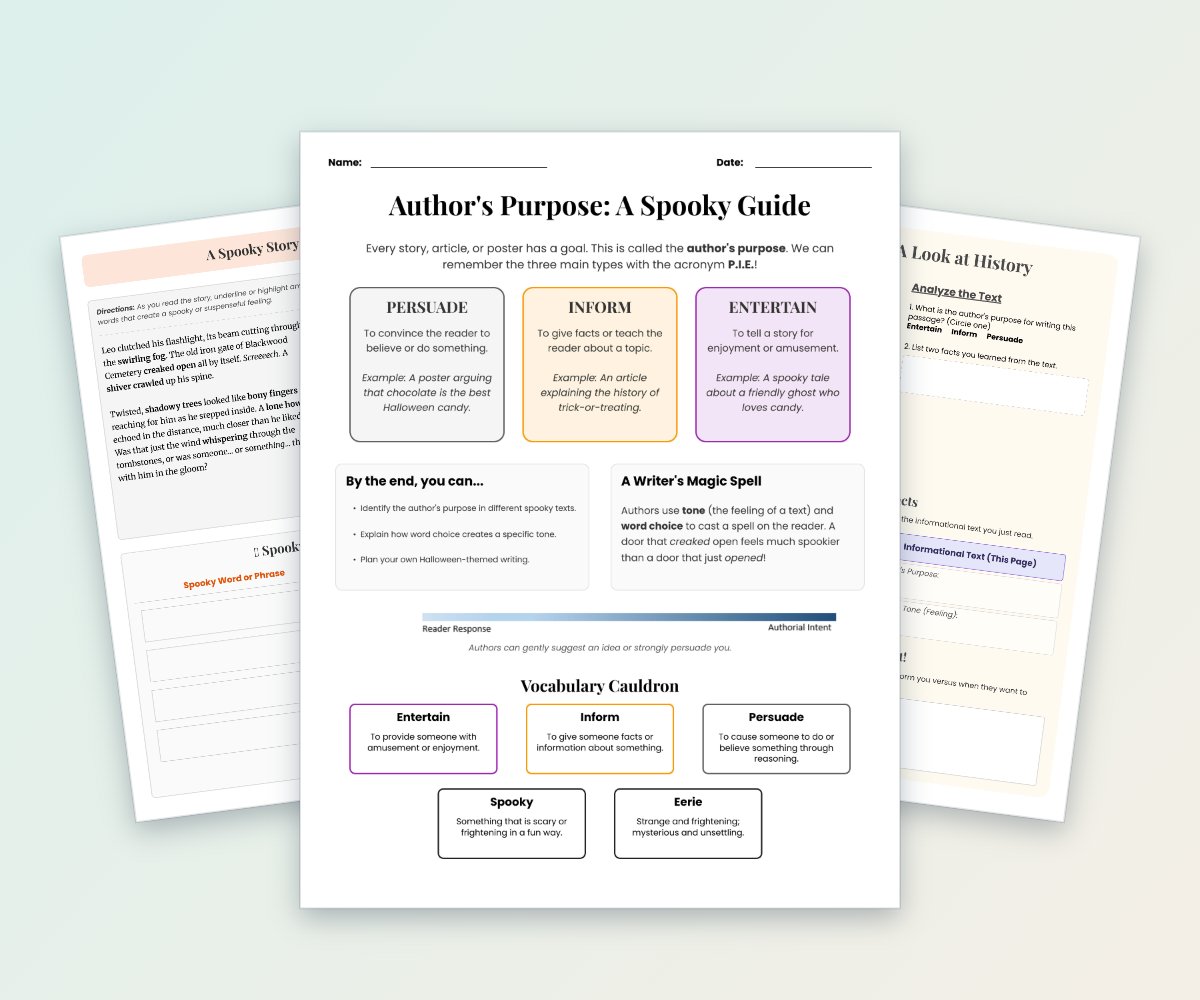
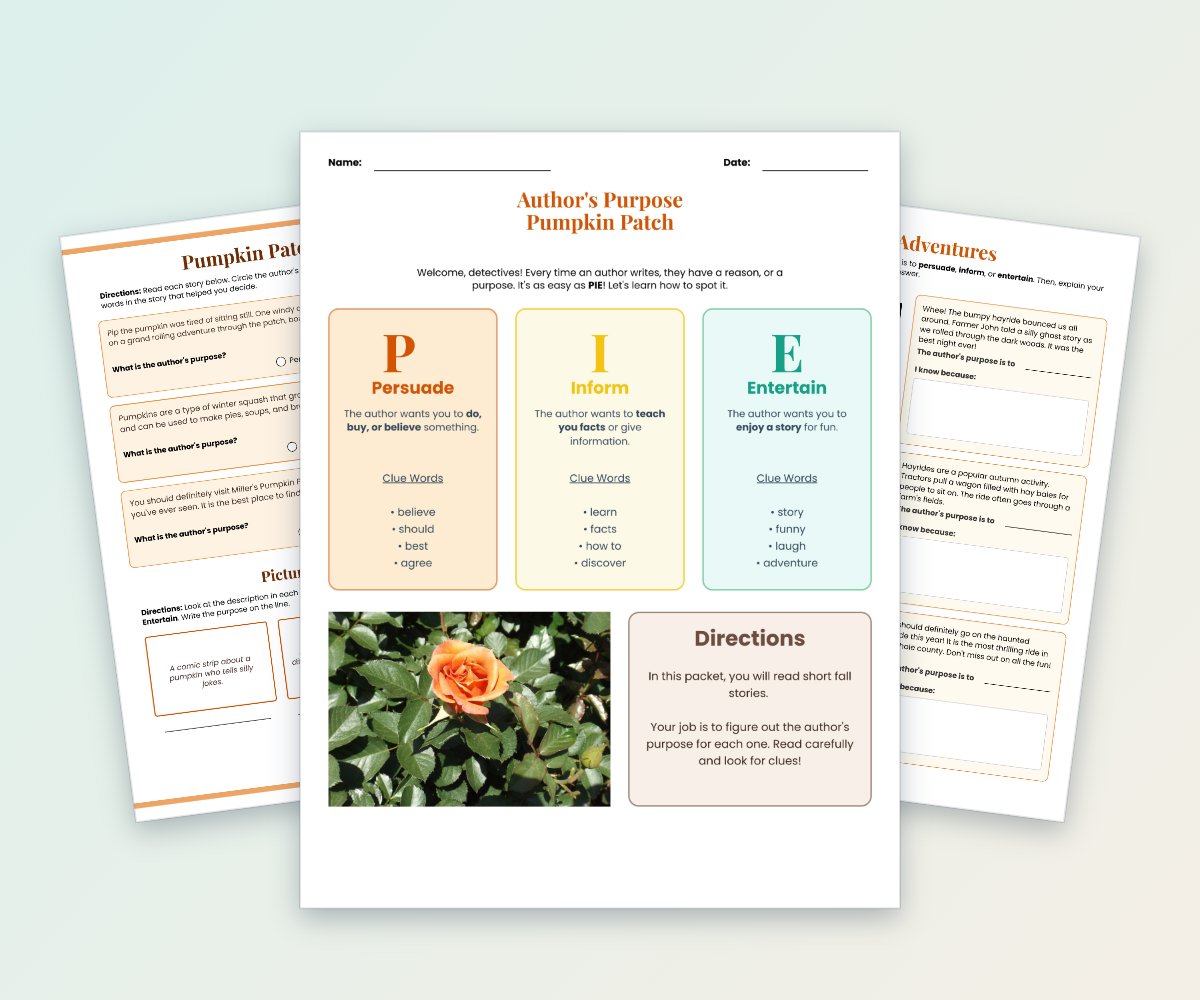
This six-page printable activity pack introduces the P.I.E.
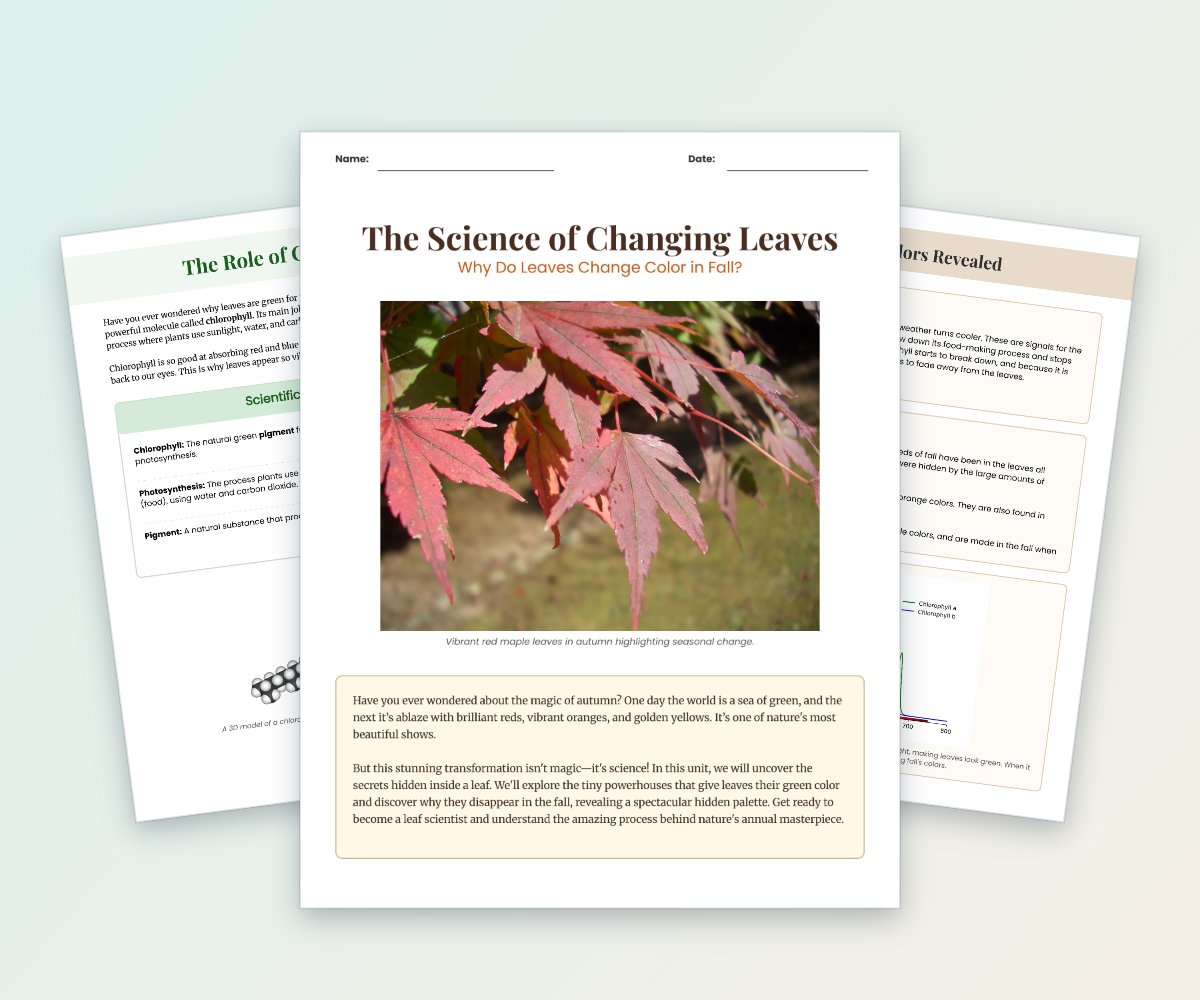
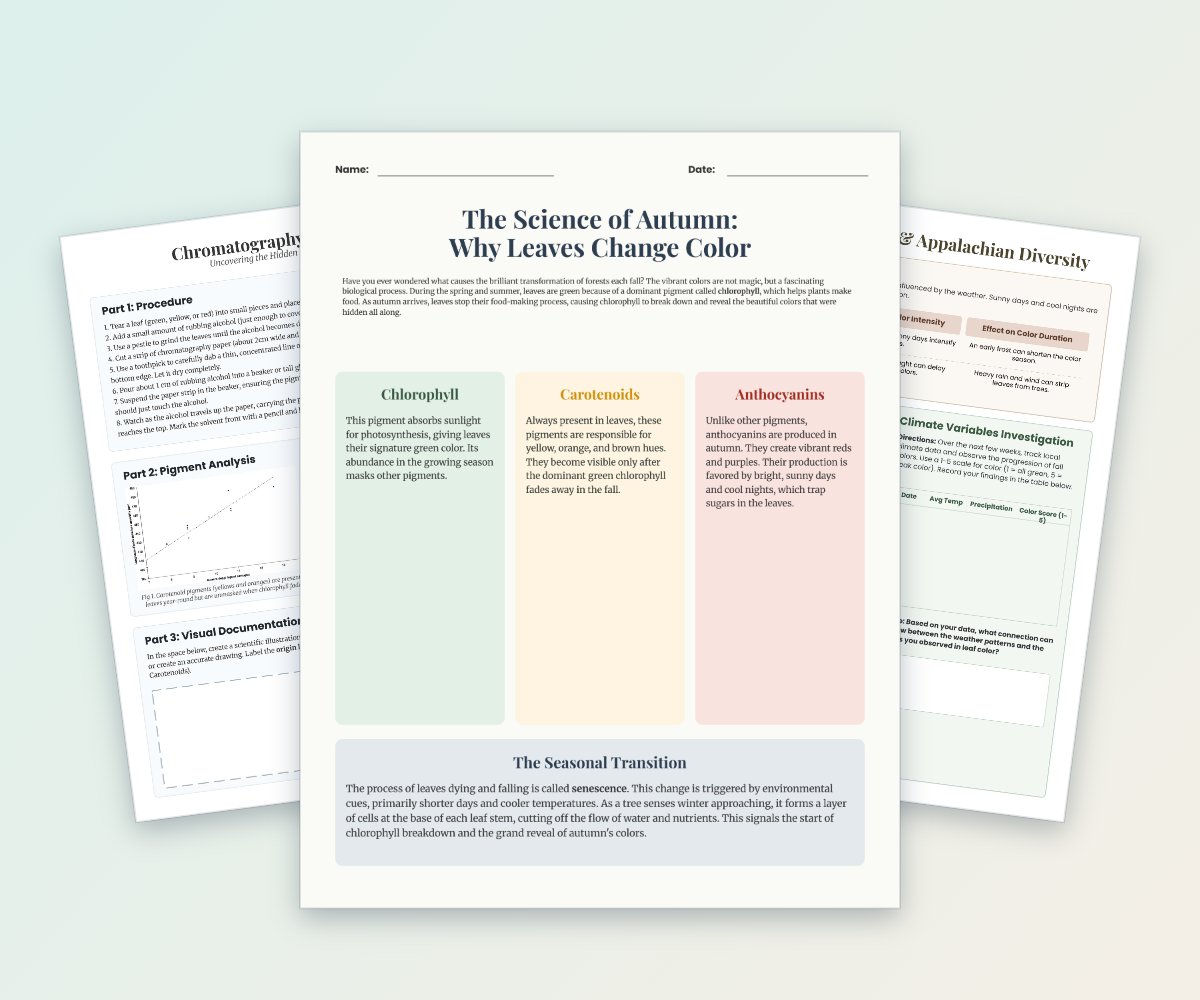
This six-page science resource explains why leaves change color in fall, including the roles of chlorophyll, photosynthesis, carotenoids, and anthocyanins.
Students explore why leaves change color by learning about chlorophyll, carotenoids, anthocyanins, and seasonal senescence.
Students learn to identify whether spooky texts are written to persuade, inform, or entertain.
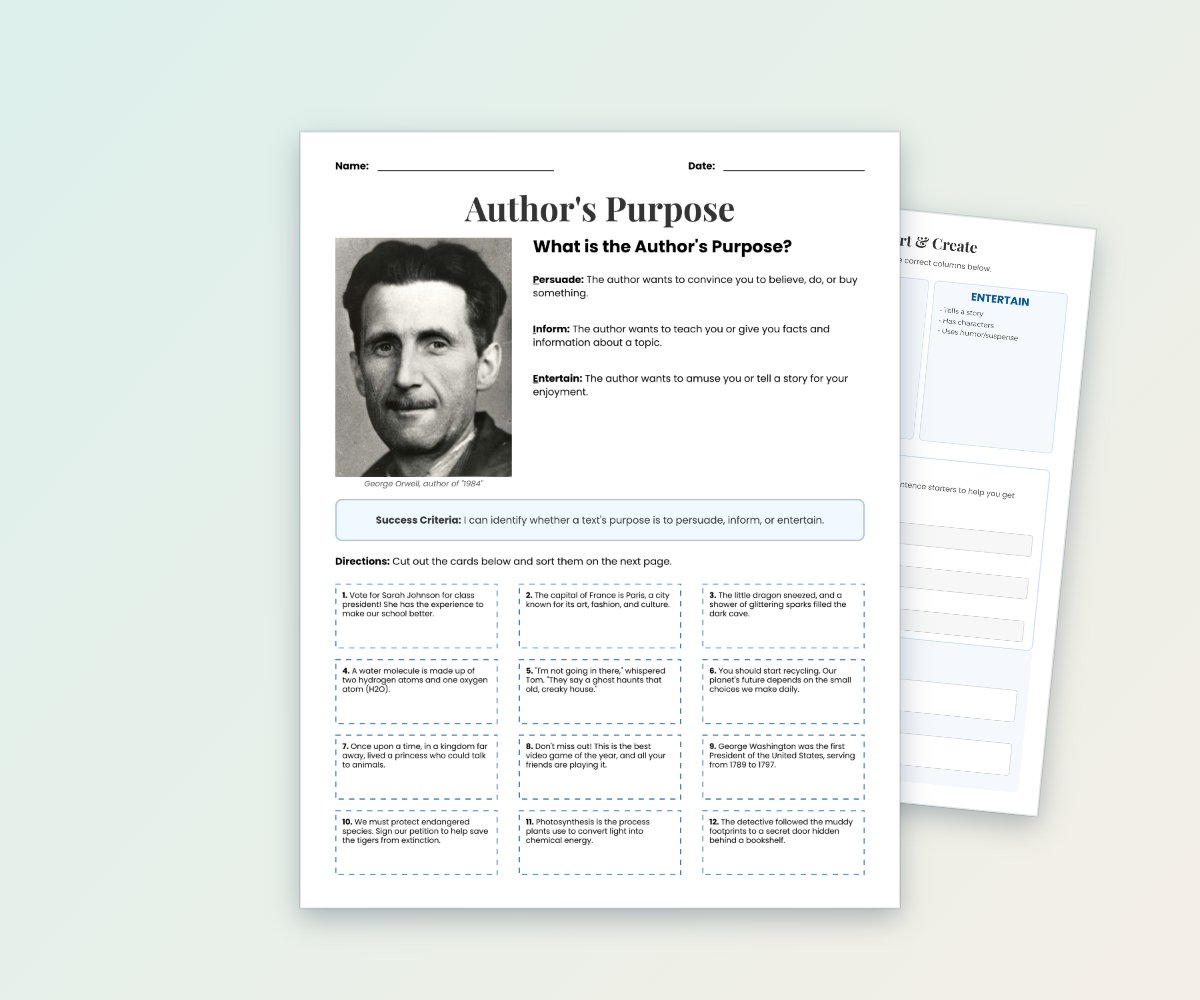
Students sort example statements into persuade, inform, and entertain categories, then create their own examples.
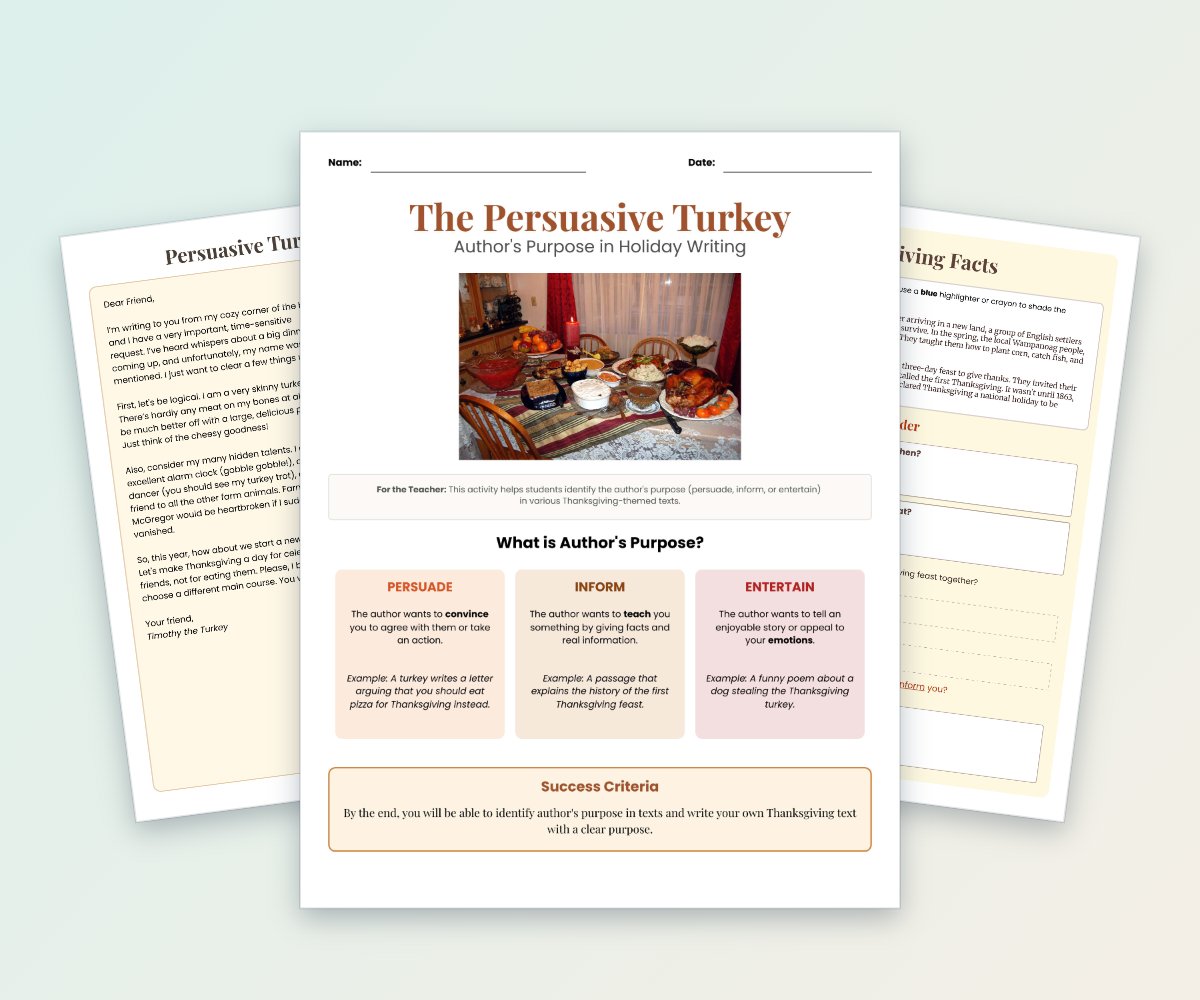
This Thanksgiving-themed activity pack helps students distinguish between persuade, inform, and entertain in holiday writing.
This five-page printable packet helps students identify whether an author's purpose is to persuade, inform, or entertain.
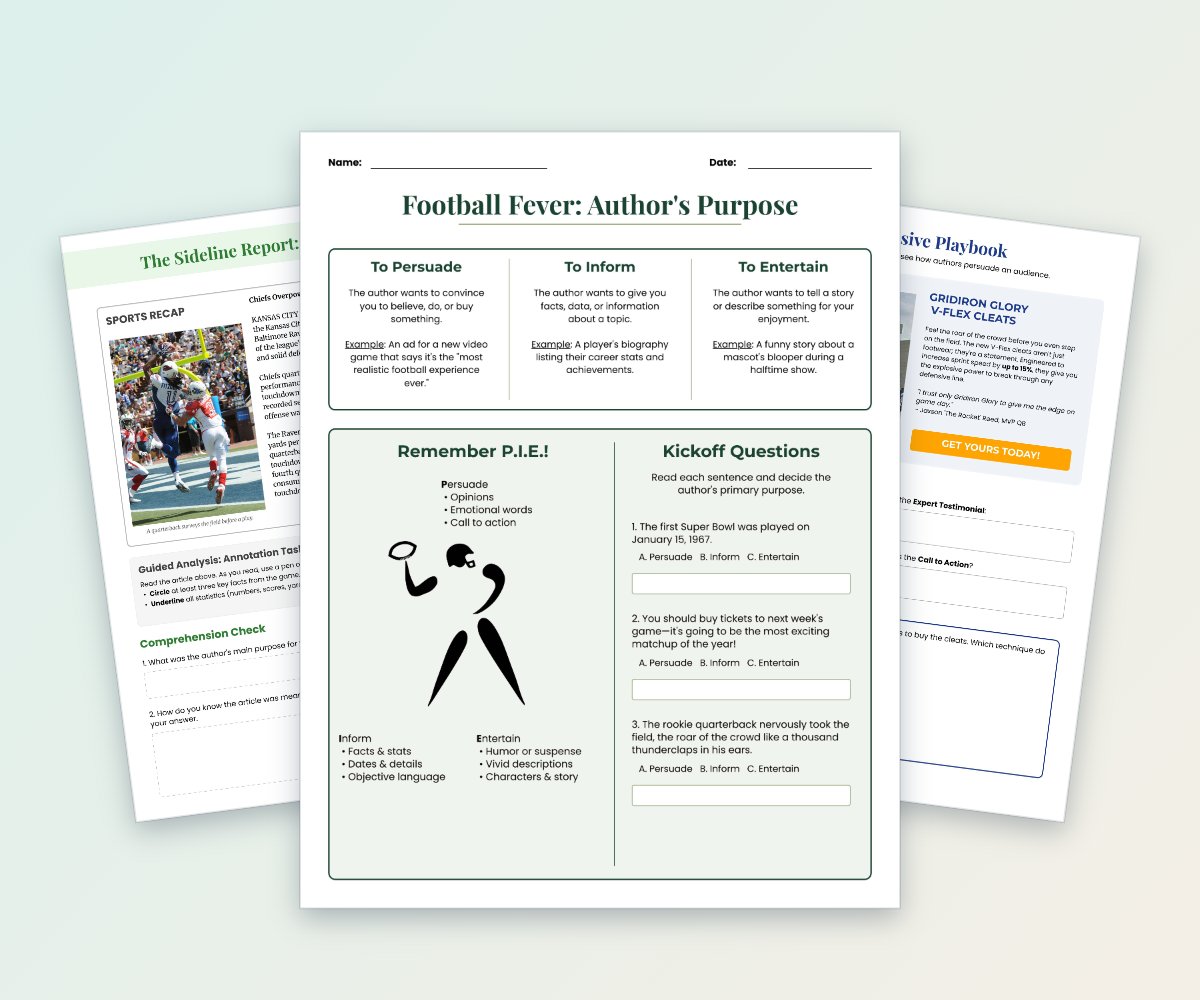
This football-themed worksheet teaches students to identify whether an author’s purpose is to persuade, inform, or entertain.
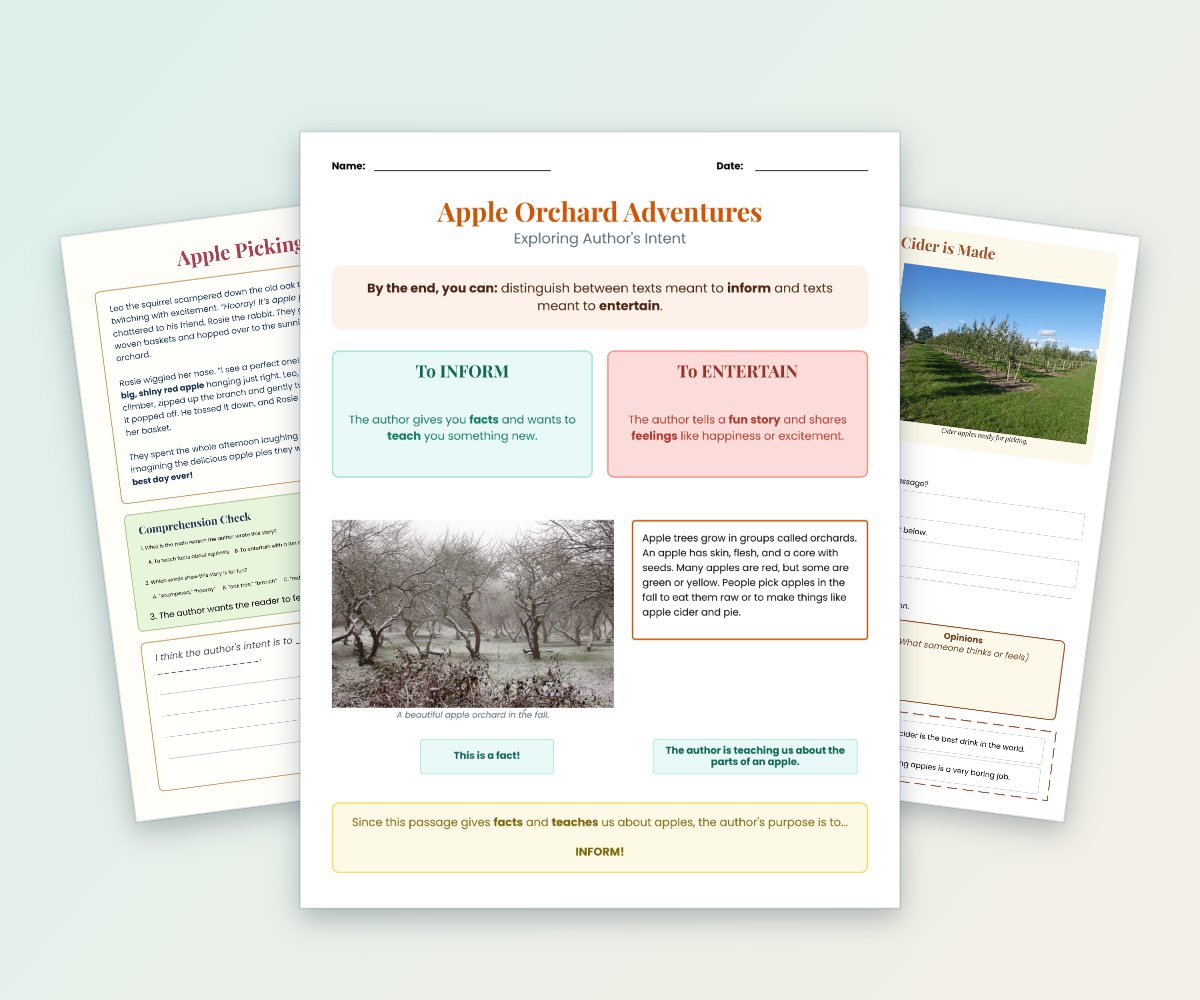
Students explore informational and entertaining texts about apples, apple picking, and apple cider.
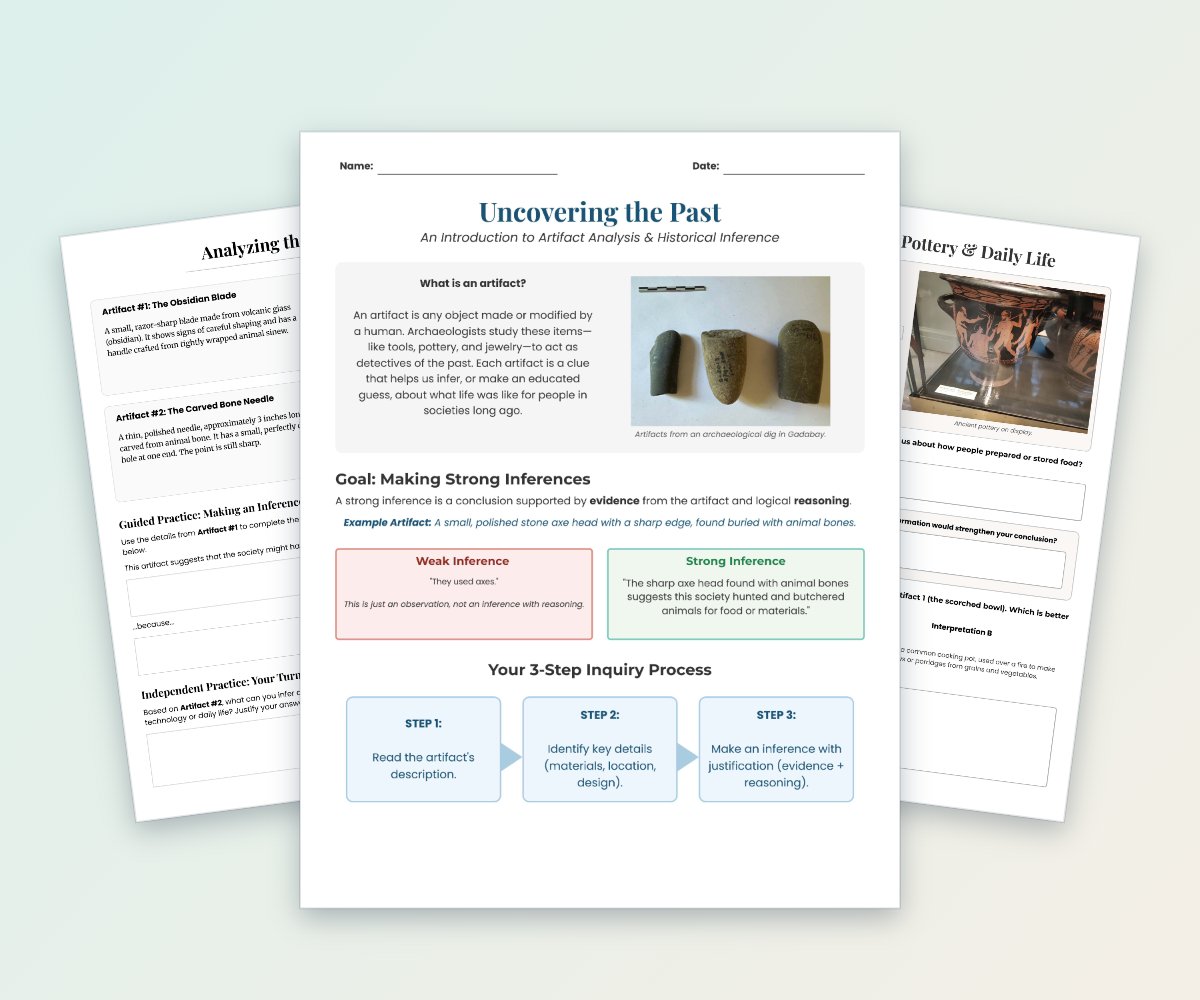
Students examine descriptions of archaeological artifacts, identify key details, and make evidence-based inferences about past societies.
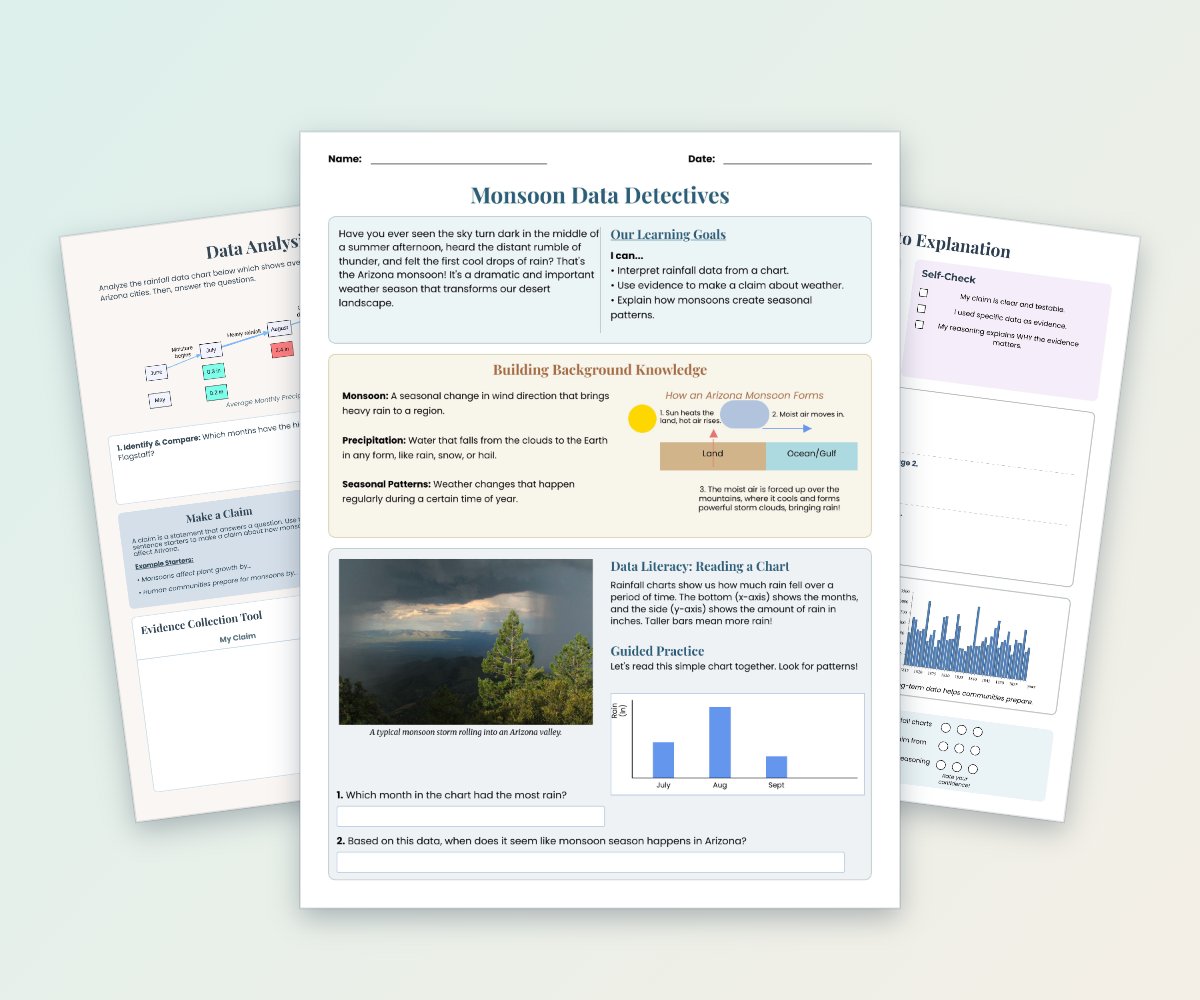
Students learn how Arizona monsoons form, interpret precipitation charts, identify seasonal patterns, and compare rainfall across Arizona cities.
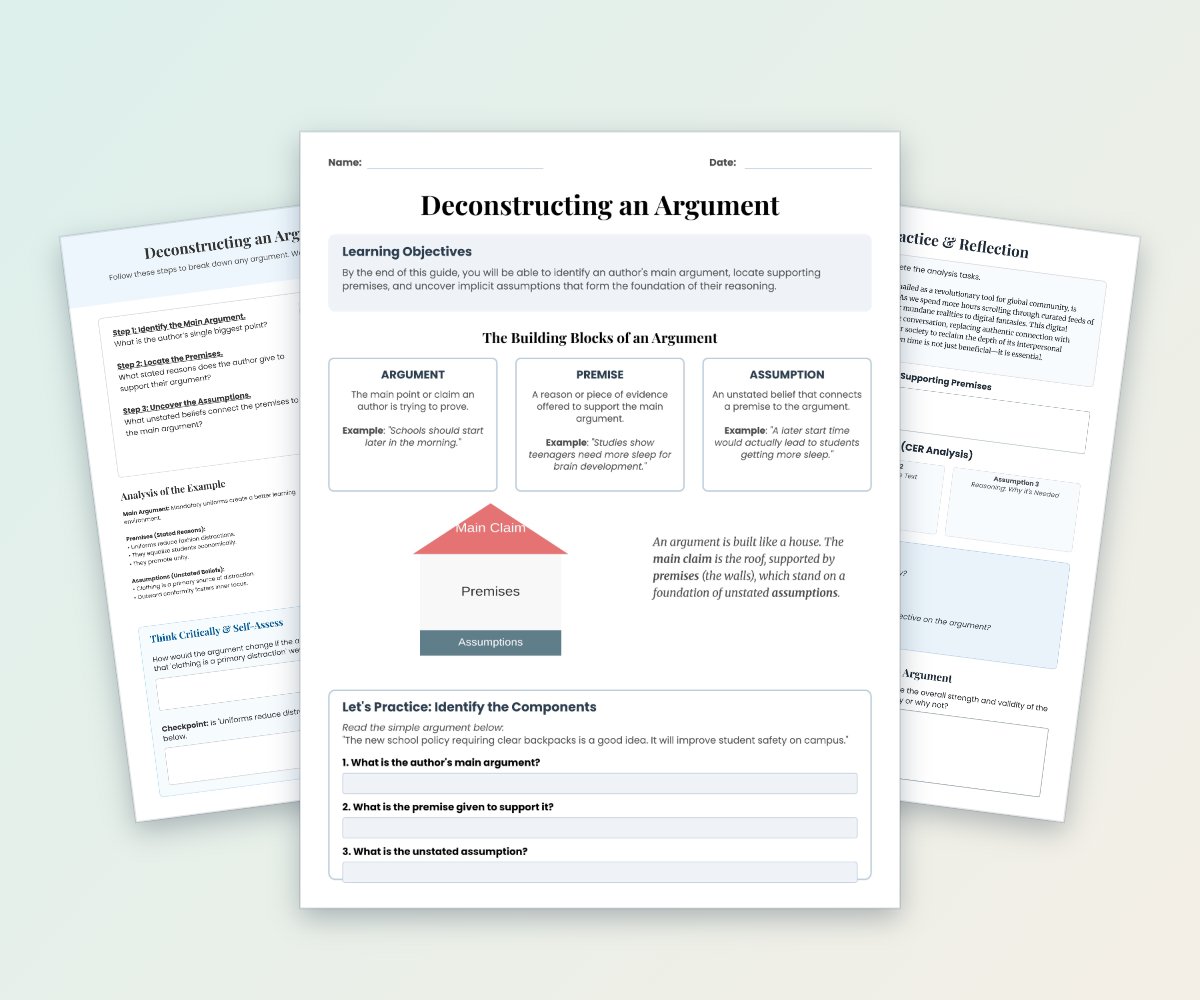
This three-page guide introduces the building blocks of an argument: claims, premises, and unstated assumptions.
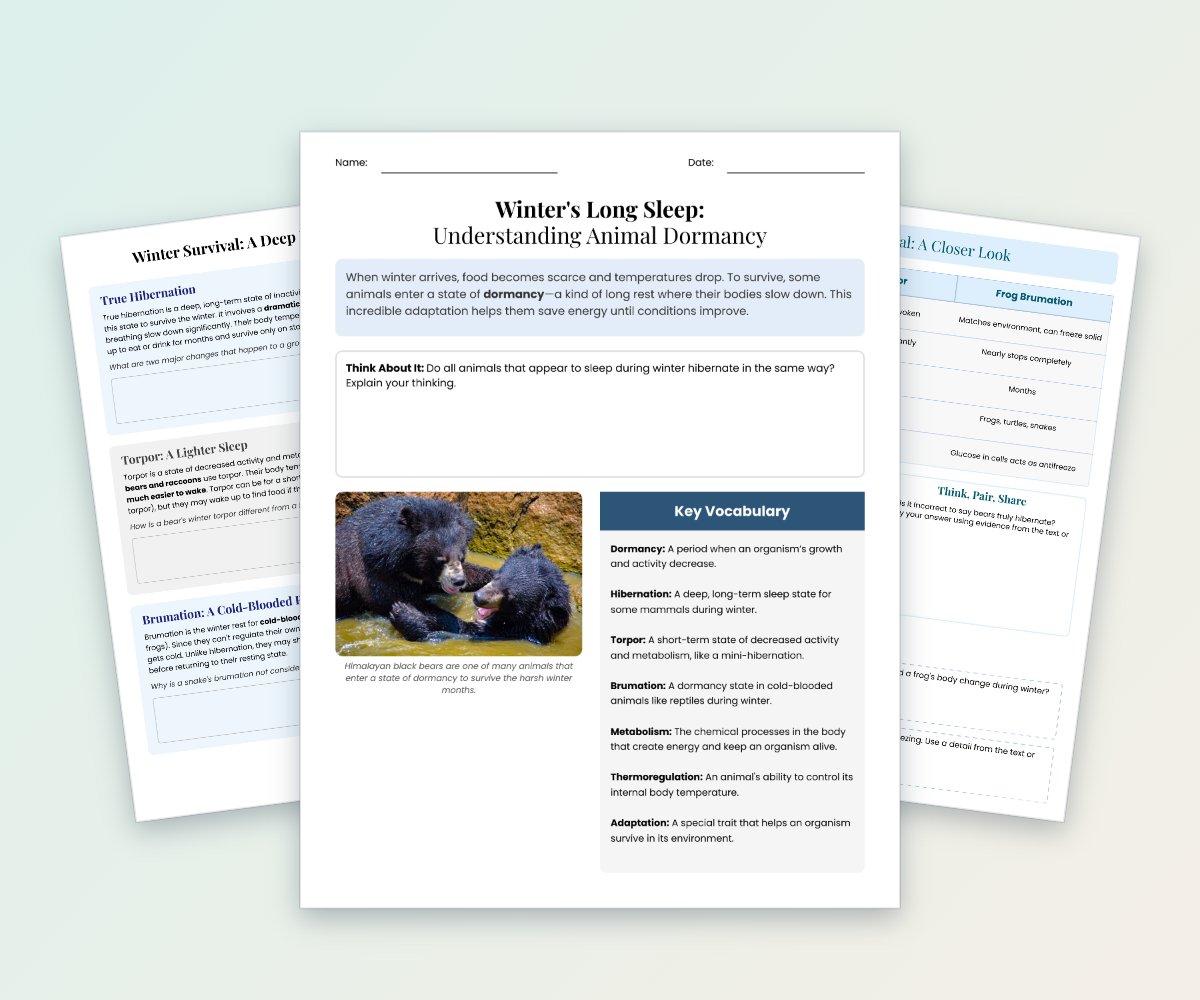
This four-page science resource introduces dormancy, hibernation, torpor, and brumation using clear explanations, vocabulary, and examples.
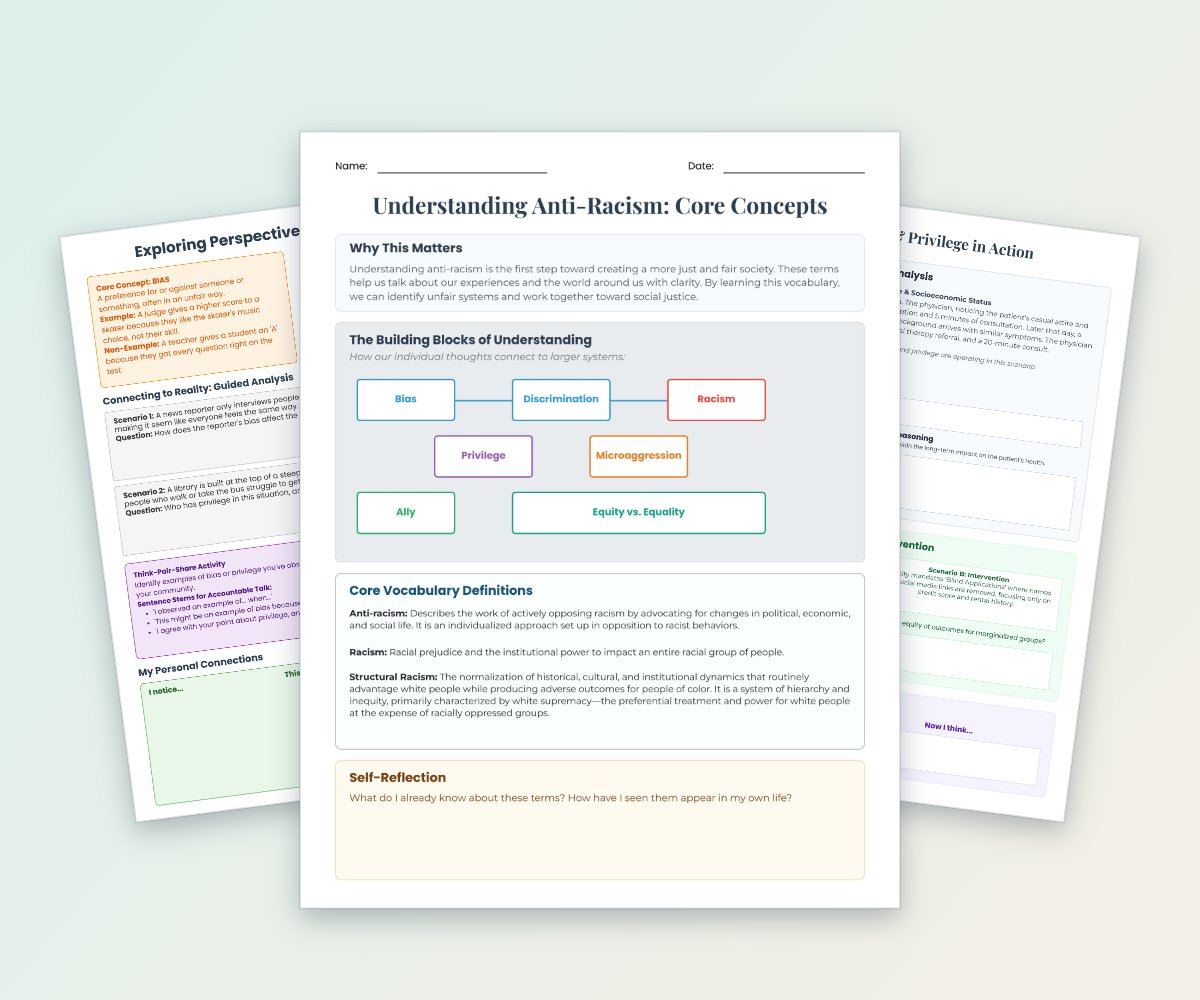
This four-page worksheet introduces core anti-racism concepts, including racism, structural racism, bias, privilege, discrimination, and equity.
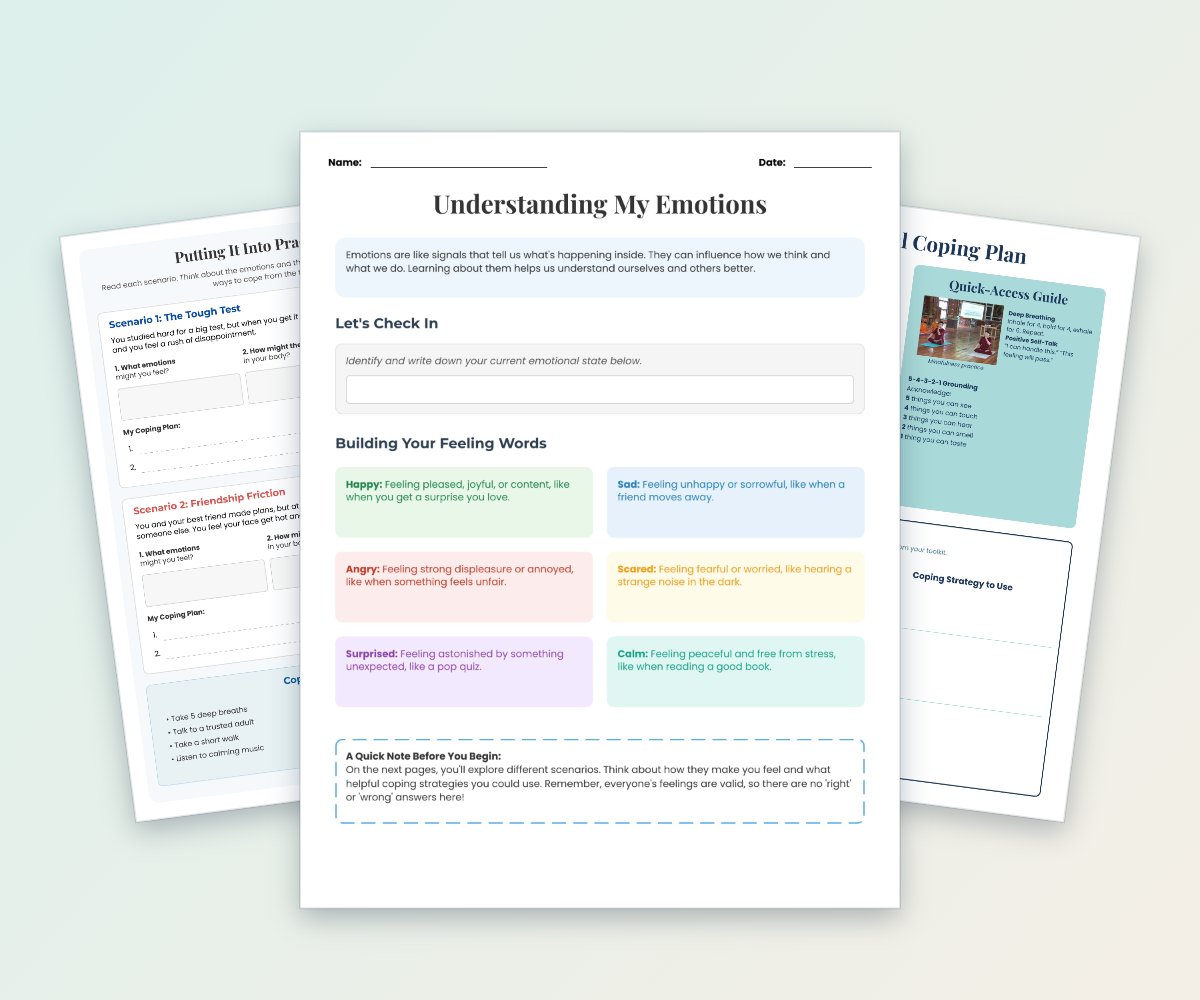
Students identify emotions, explore how feelings appear in their bodies and thoughts, and respond to realistic scenarios.
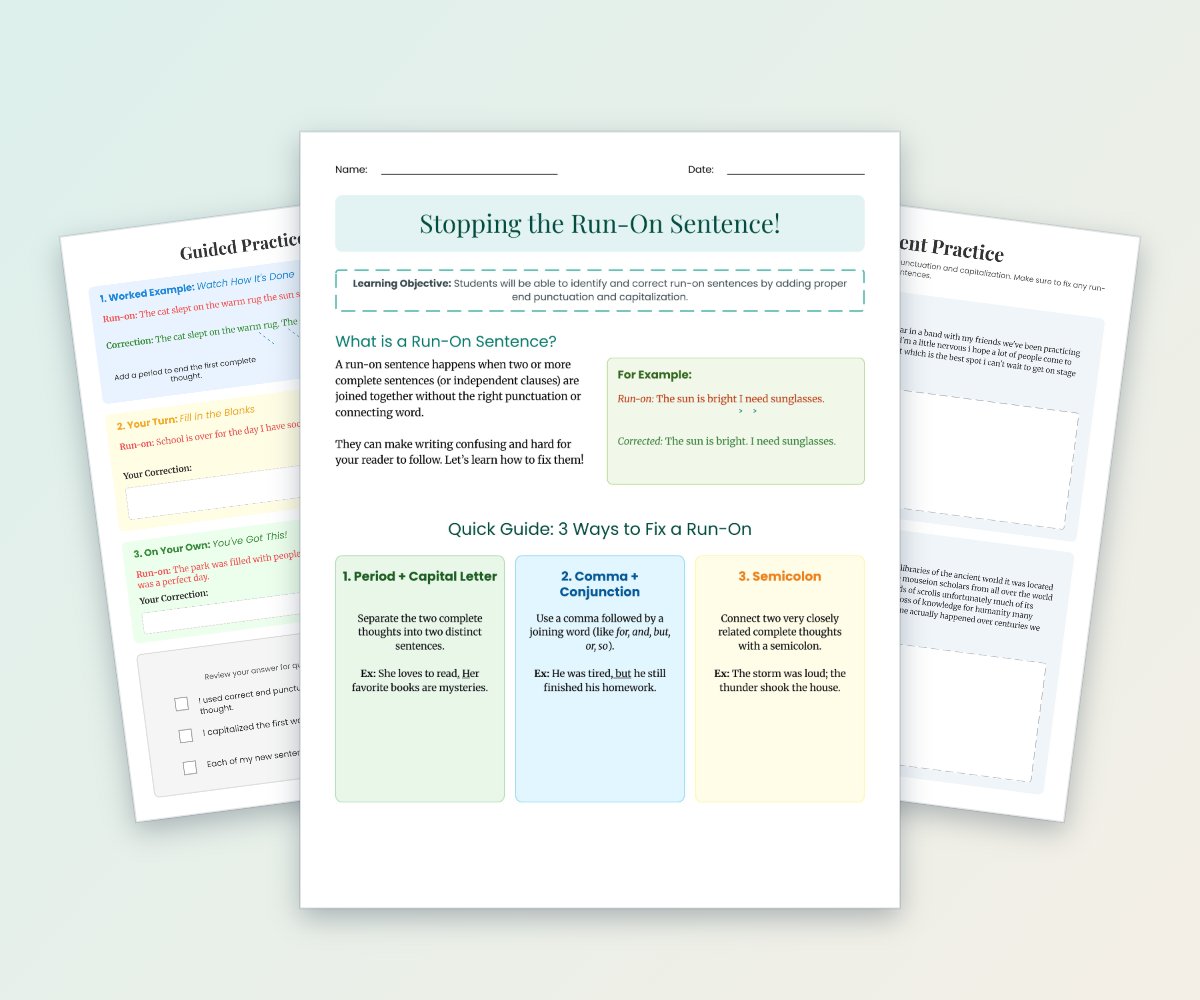
This four-page worksheet teaches students to identify and correct run-on sentences using periods, capitalization, commas with conjunctions, and semicolons.
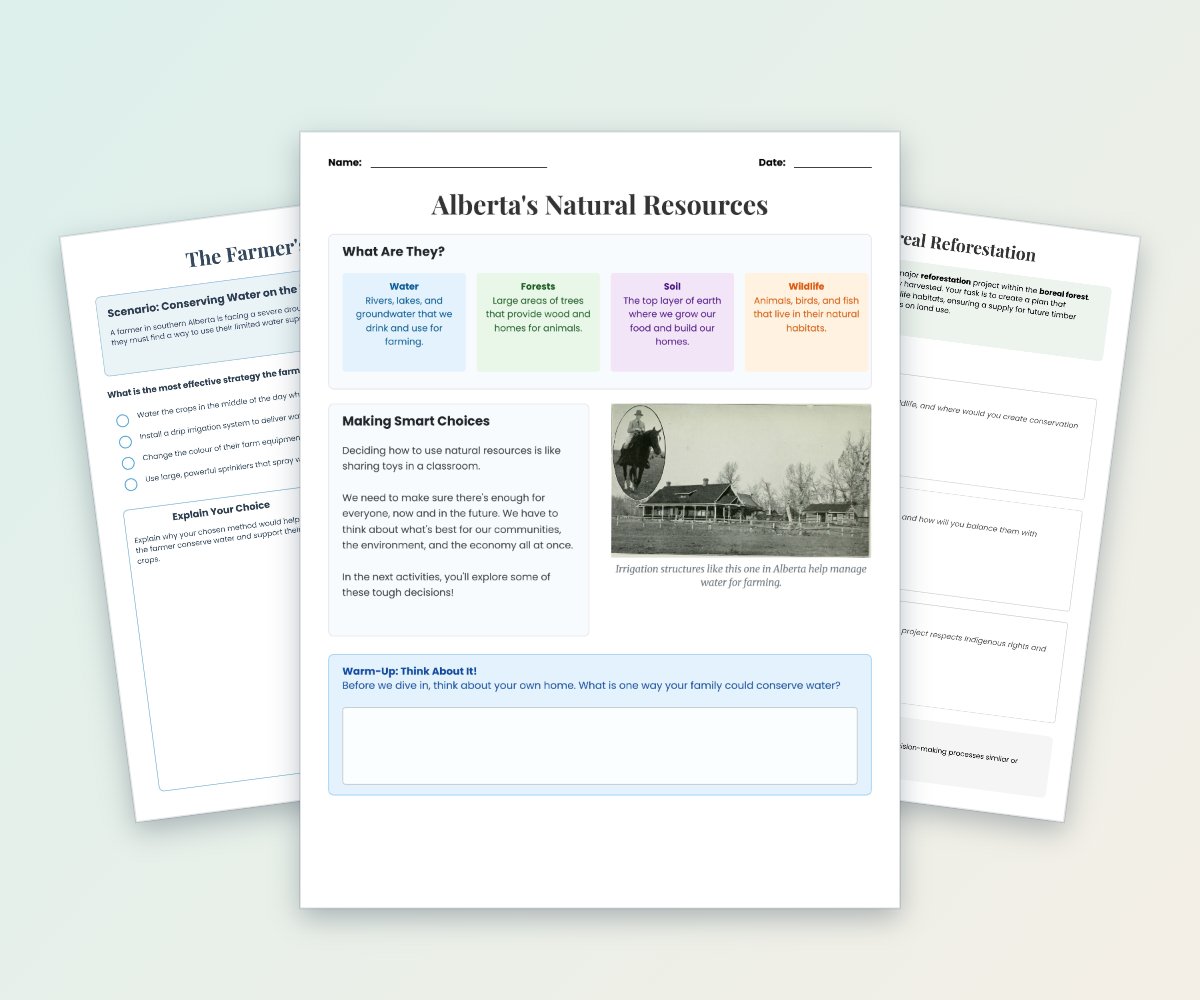
Students explore Alberta’s water, forests, soil, and wildlife through practical conservation scenarios.
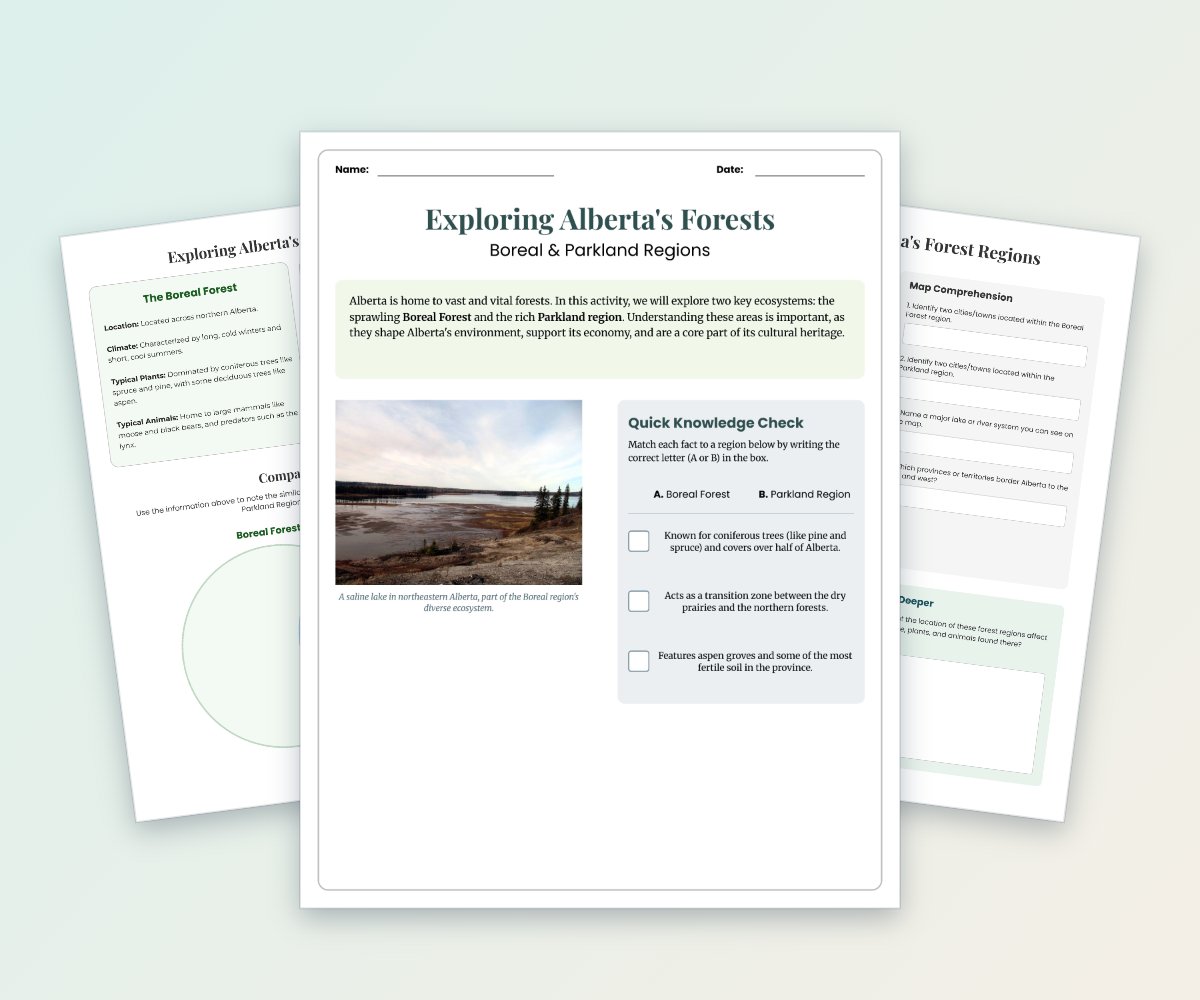
Students explore Alberta's Boreal Forest and Parkland regions through knowledge checks, comparisons, map activities, and questions about forest importance.
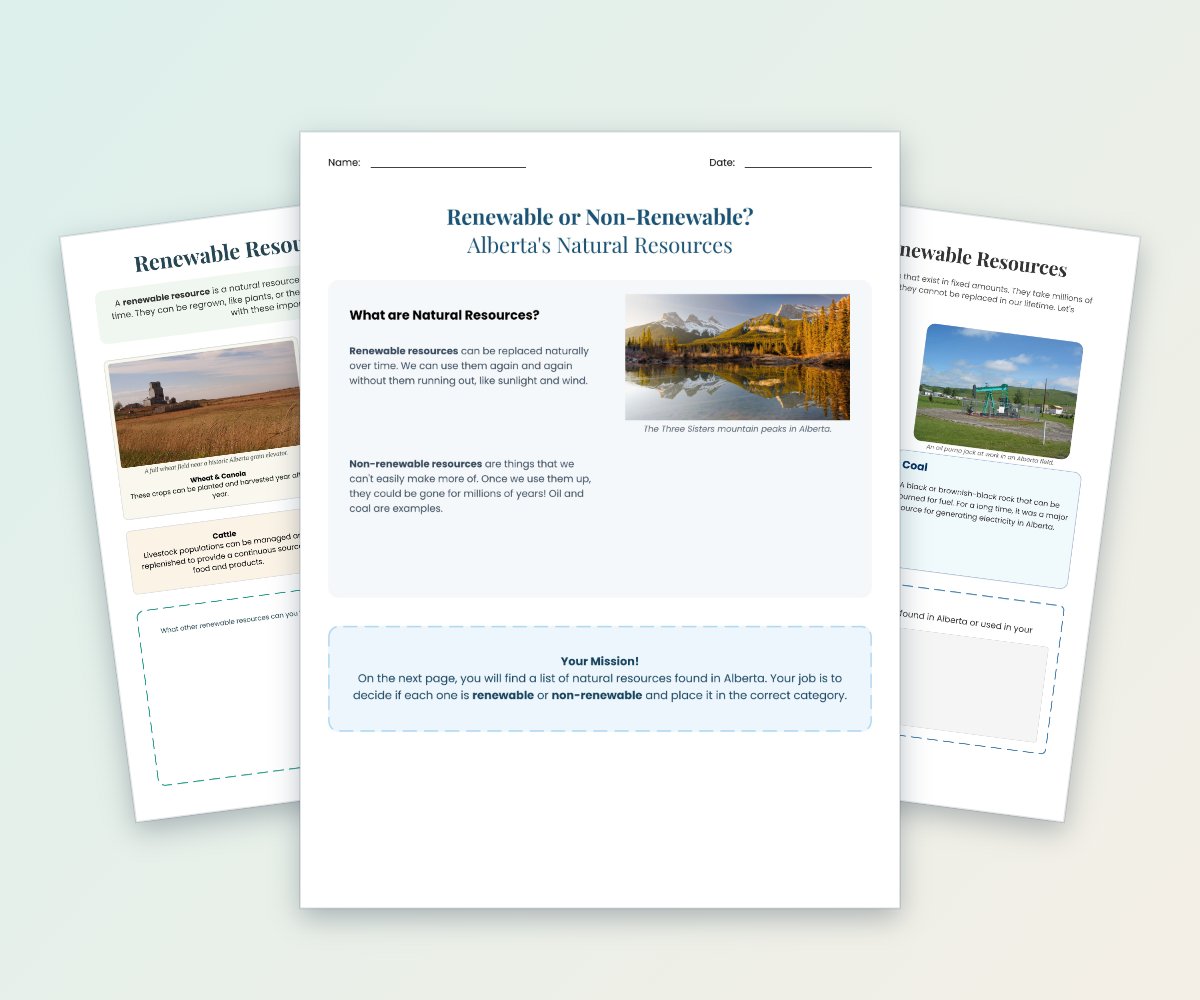
This four-page resource introduces renewable and non-renewable natural resources found in Alberta, including wheat, cattle, wind, timber, natural gas, oil, and coal.
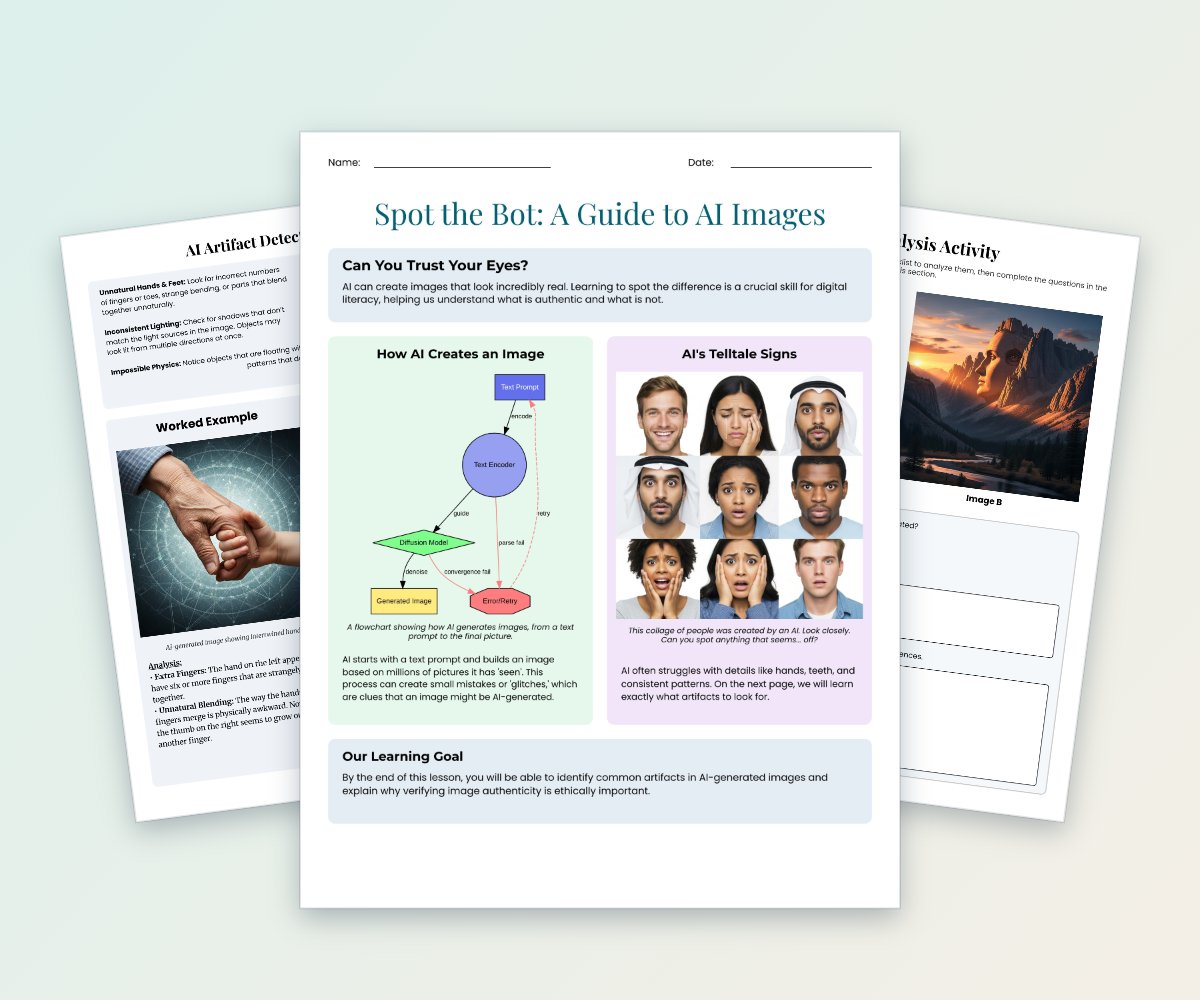
This four-page lesson introduces how AI-generated images are created and teaches students to identify common visual artifacts.
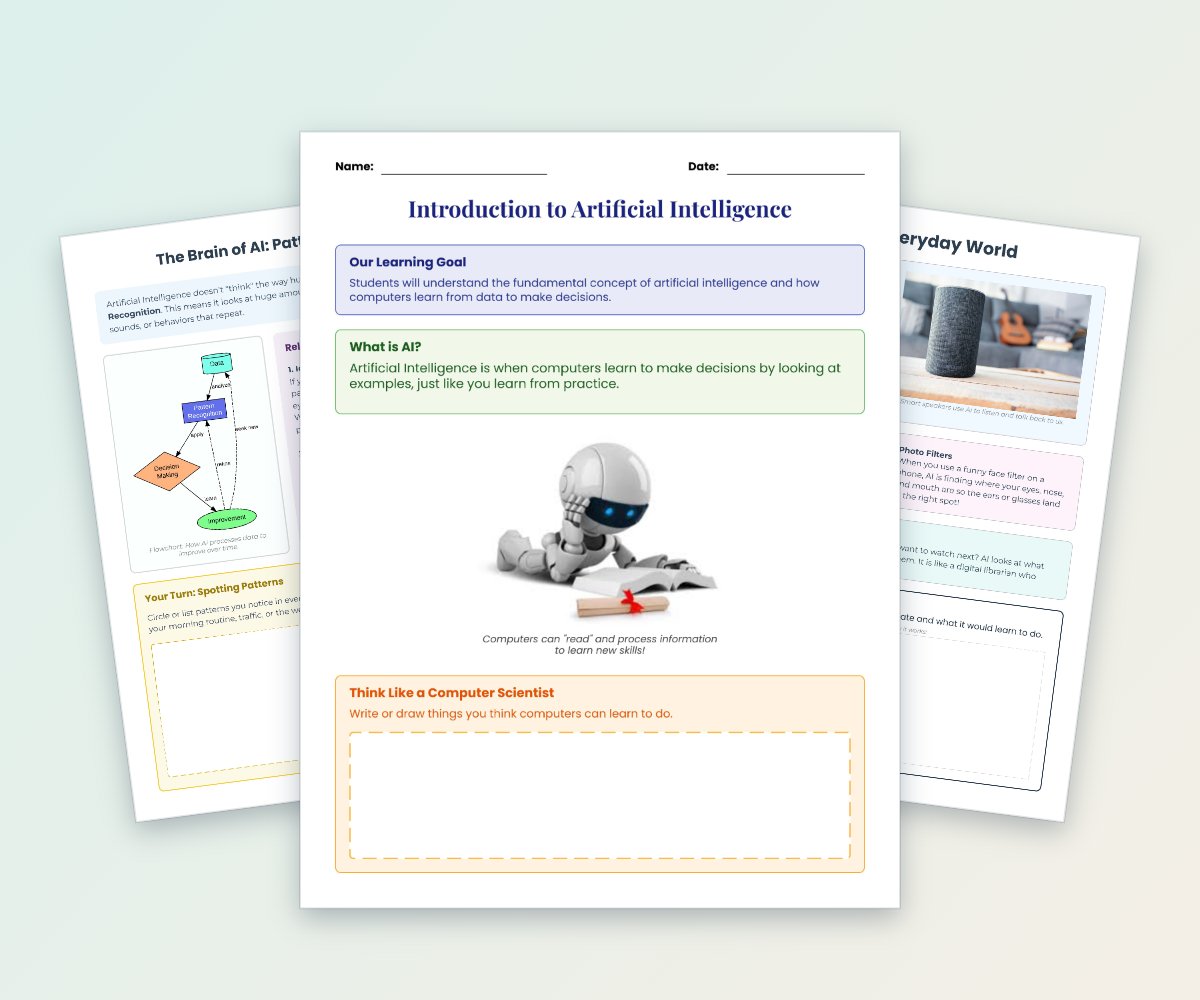
Introduce students to artificial intelligence, machine learning from data, and pattern recognition through accessible explanations and everyday examples.
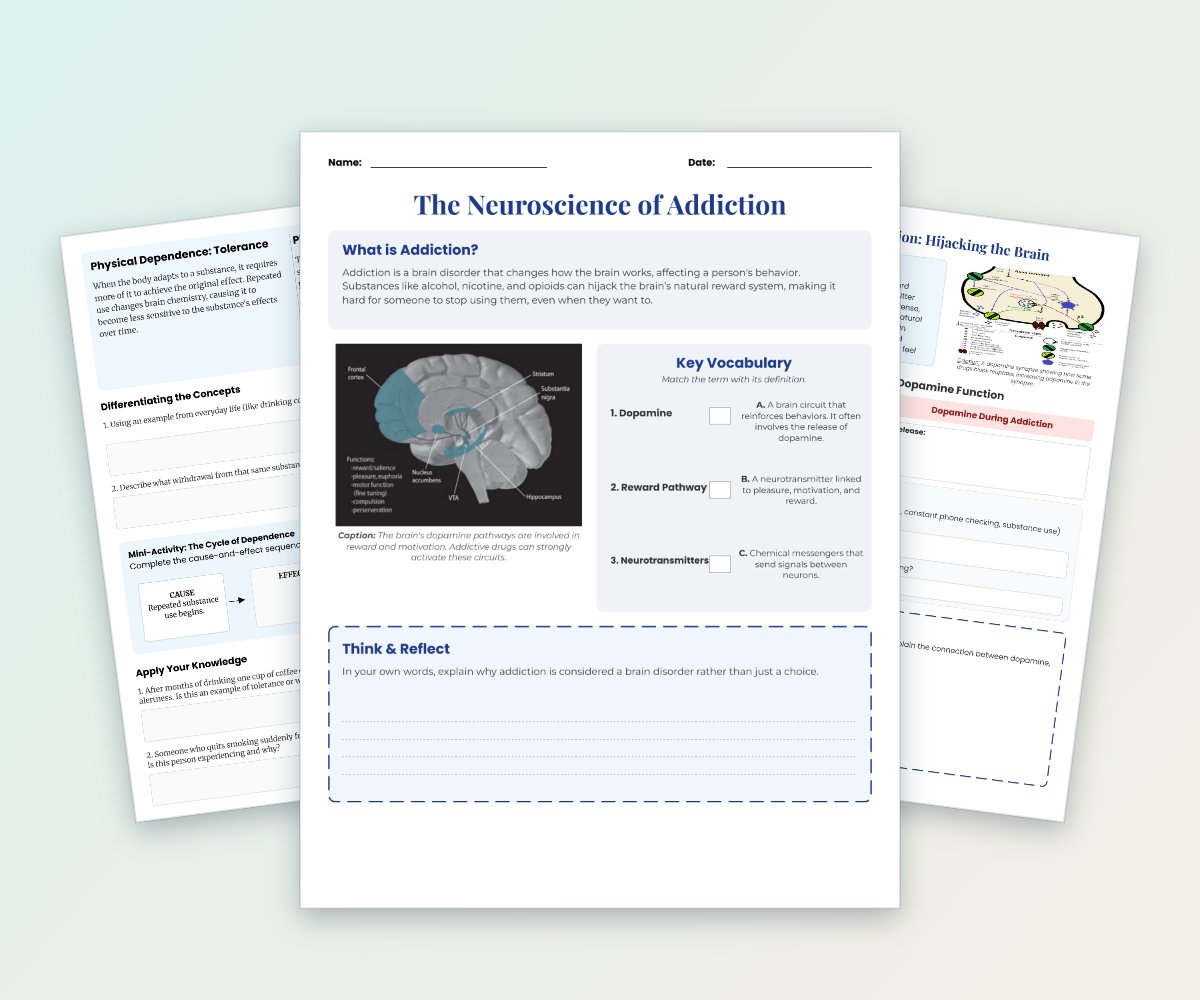
This four-page student worksheet introduces addiction as a brain disorder and explains dopamine, reward pathways, tolerance, and withdrawal.
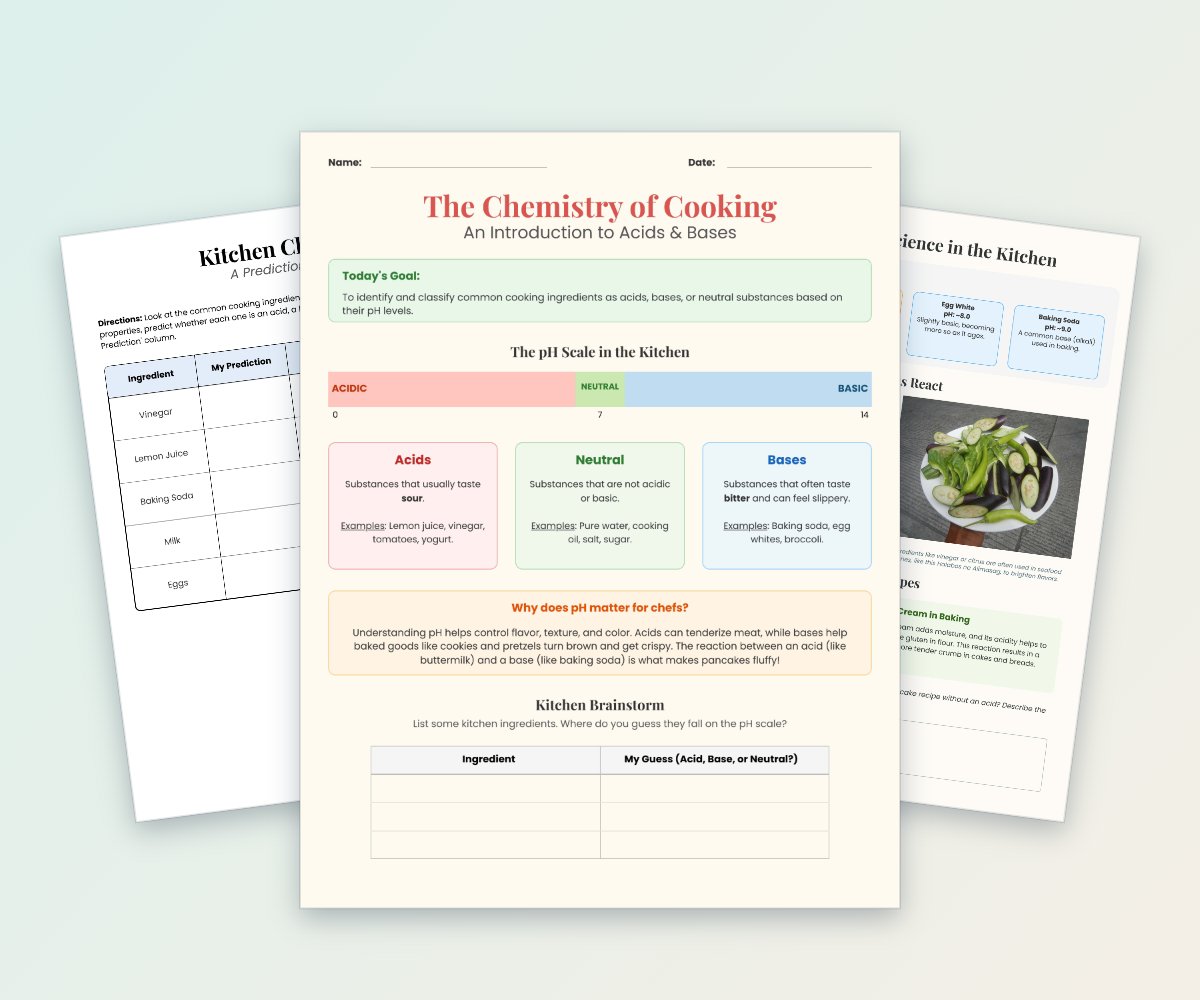
Introduce students to acids, bases, neutral substances, and the pH scale using familiar cooking ingredients.
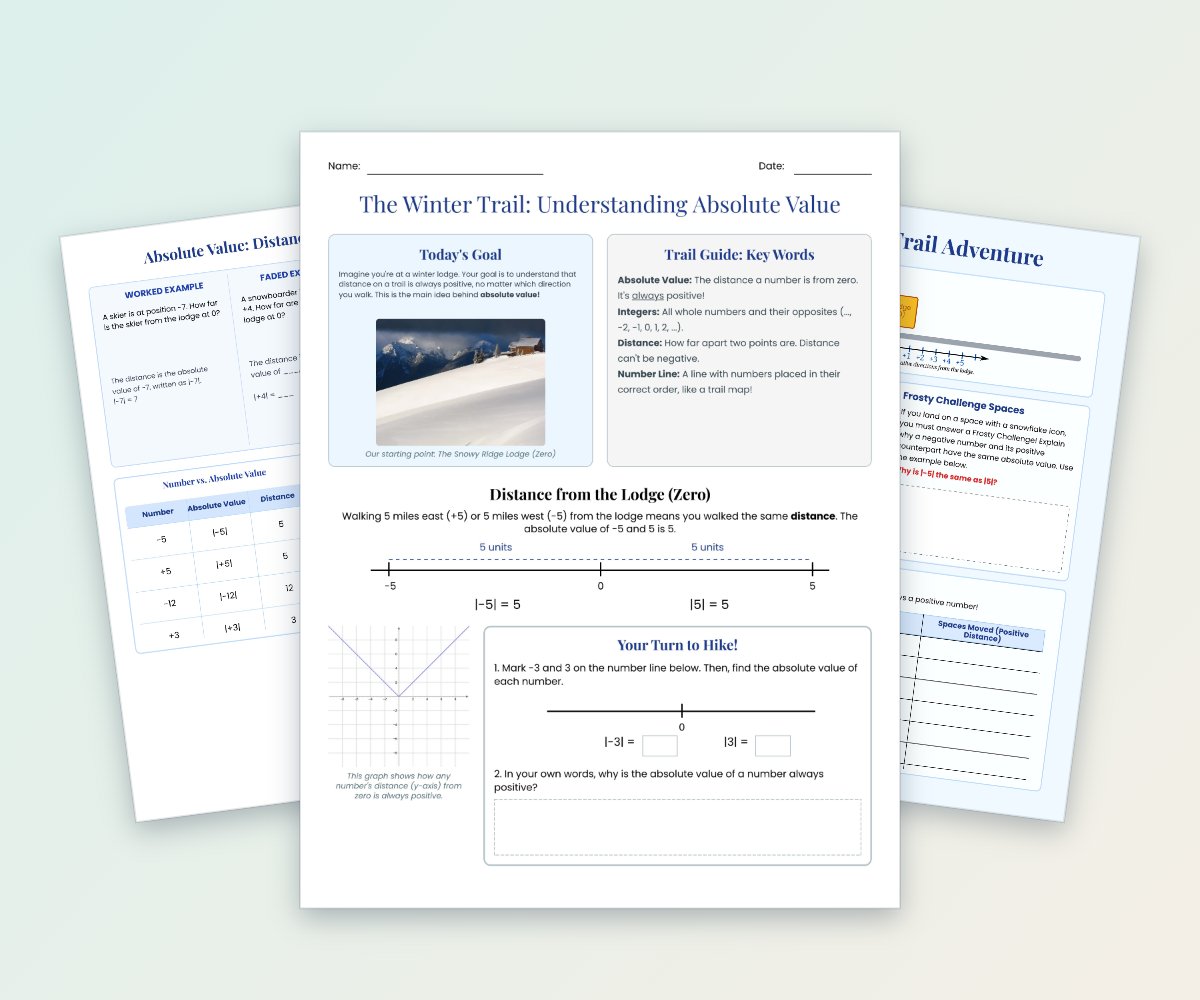
Students explore absolute value as distance from zero through winter-themed explanations, number lines, worked examples, and independent practice.
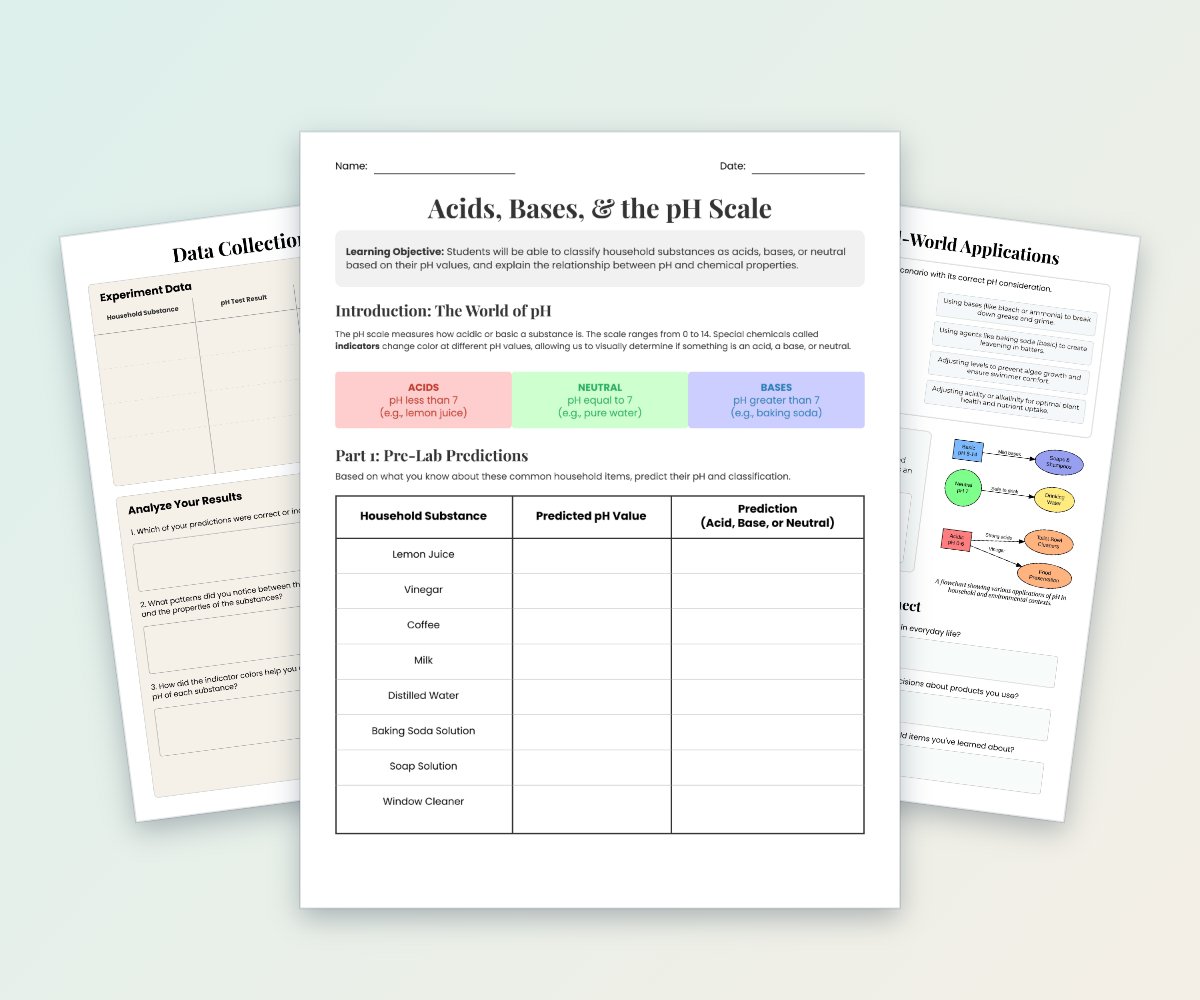
This three-page science worksheet introduces the pH scale and helps students classify household substances as acidic, basic, or neutral.