Bobsled Physics: Friction and Gravity Energy Challenge
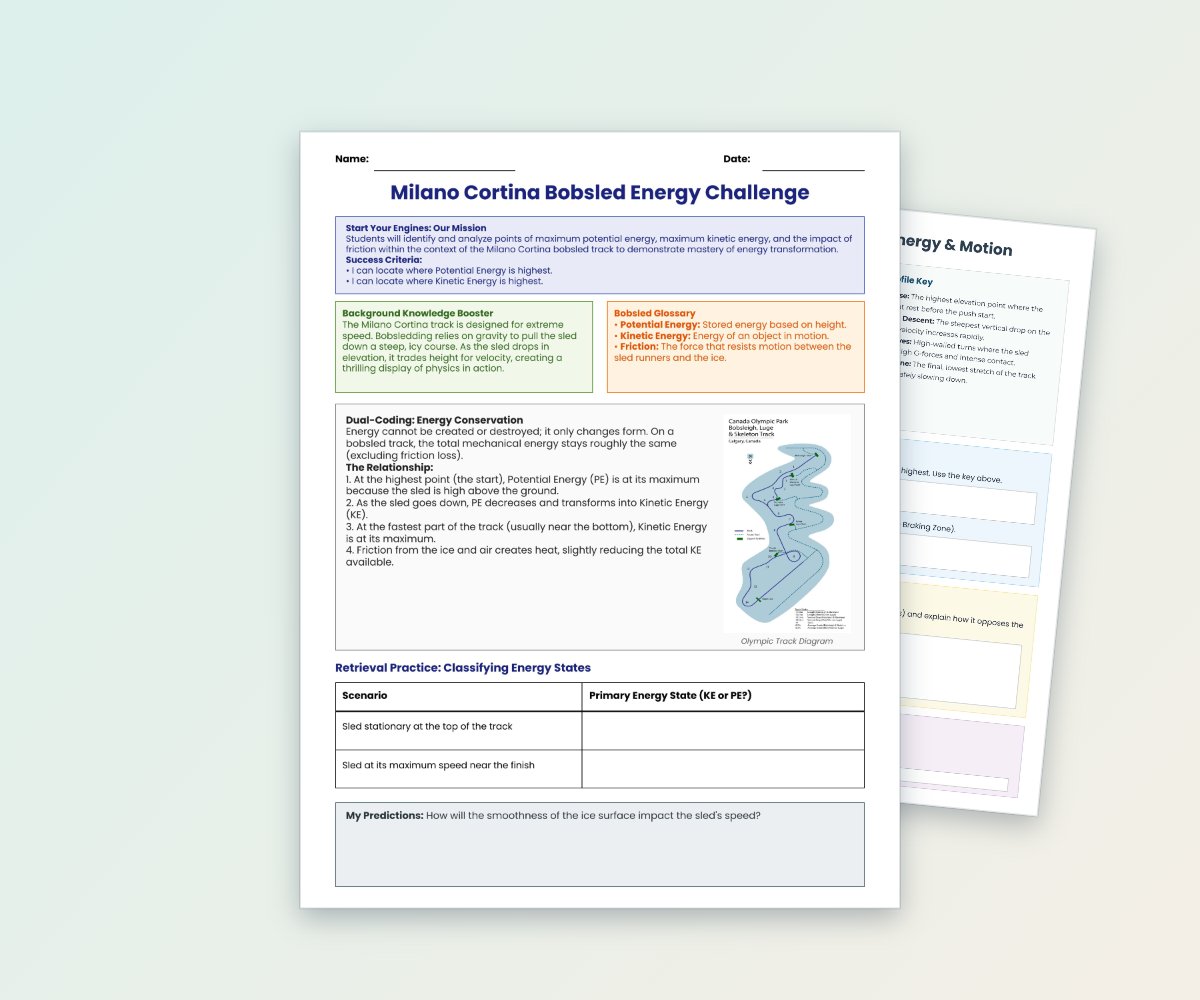
Students analyze a bobsled track to identify locations of maximum potential and kinetic energy.
$2.50
Classroom-ready resources written for preschool: printable worksheets, slides, activities and planning tools you can download and use straight away. Browse by subject below.
Students analyze a bobsled track to identify locations of maximum potential and kinetic energy.
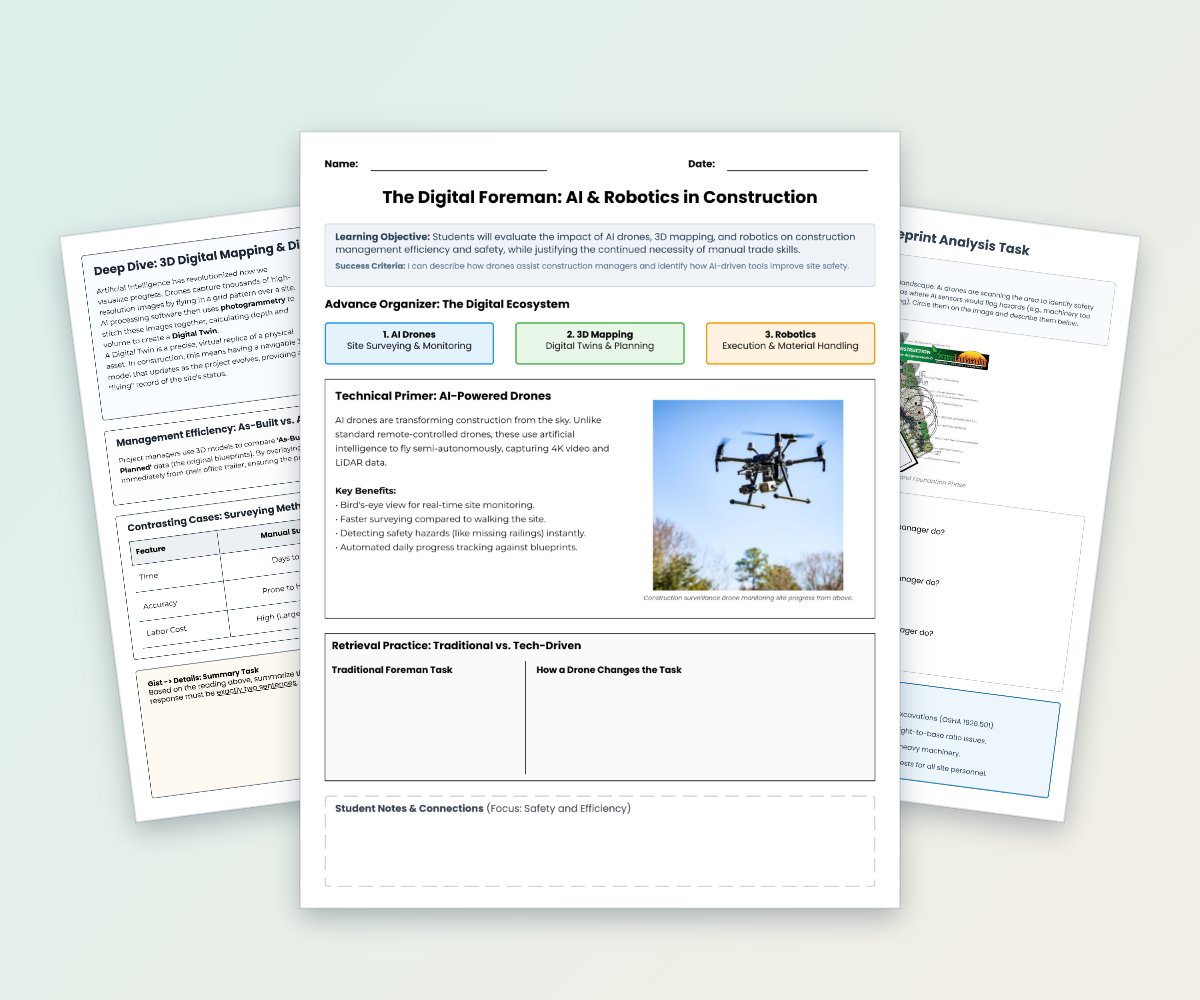
This five-page lesson introduces students to AI-powered drones, 3D mapping, digital twins, and robotics in construction management.
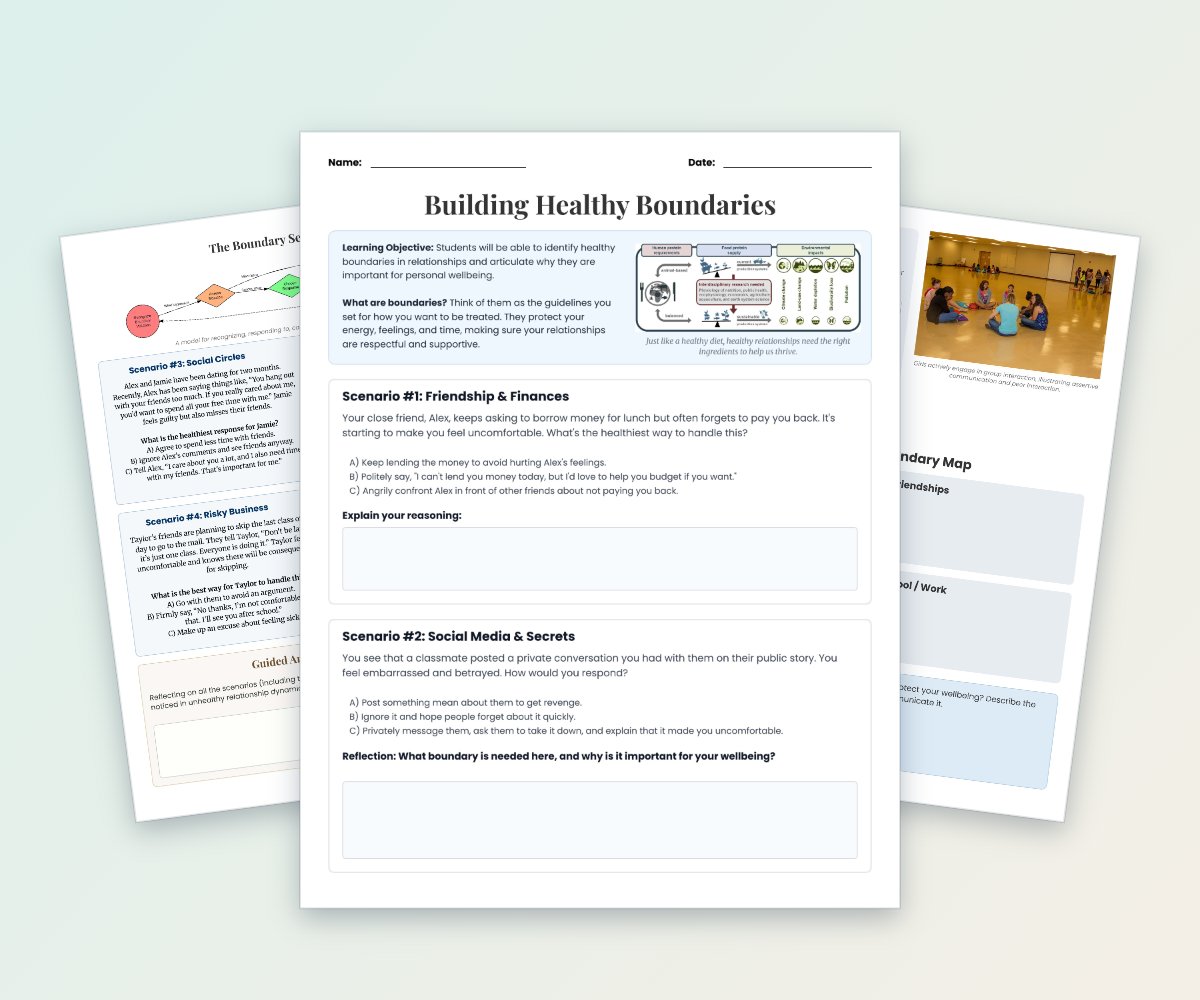
This three-page activity helps students understand healthy boundaries and why they support personal wellbeing.
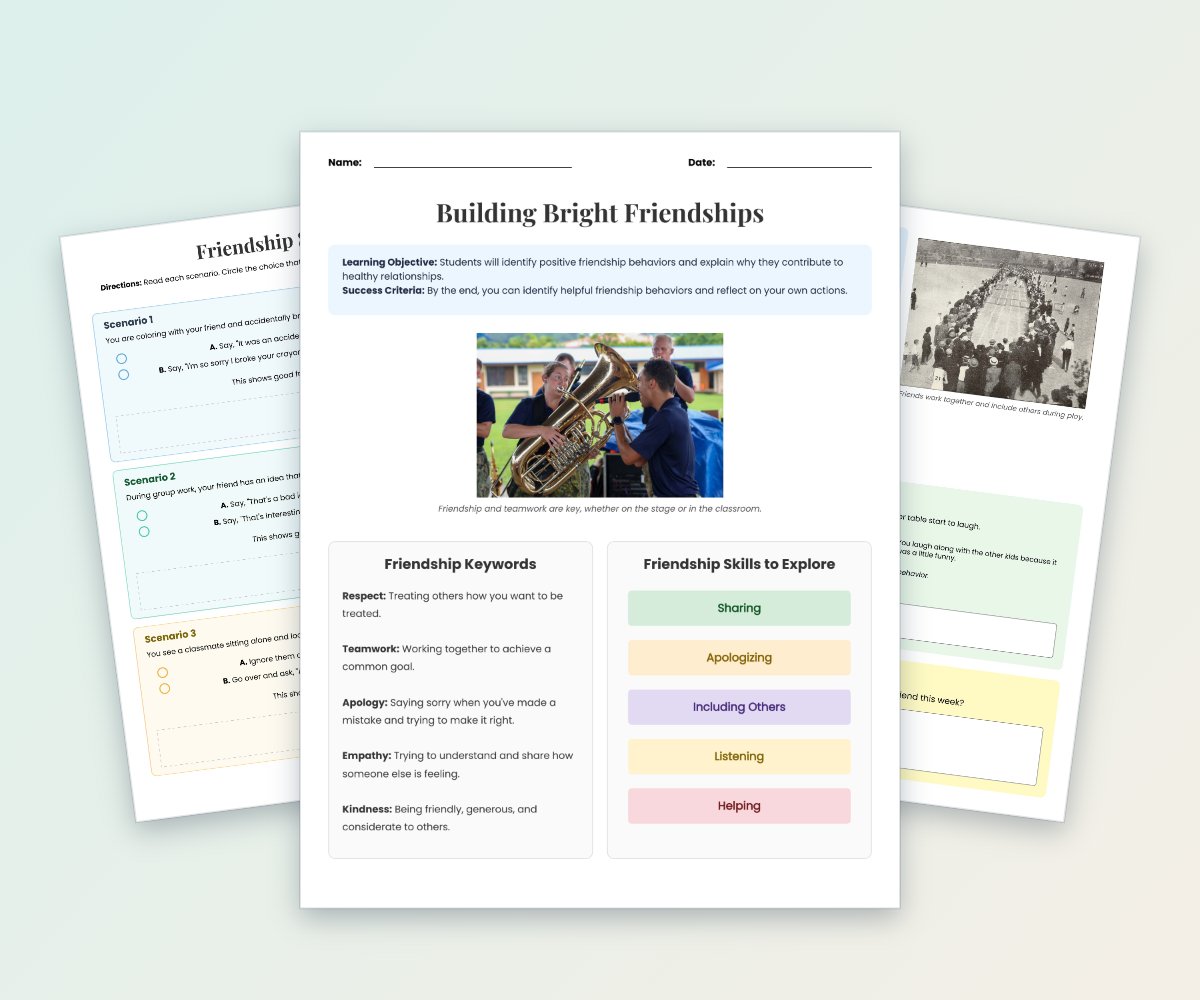
Students learn key friendship skills including respect, teamwork, empathy, kindness, sharing, apologizing, inclusion, listening, and helping.
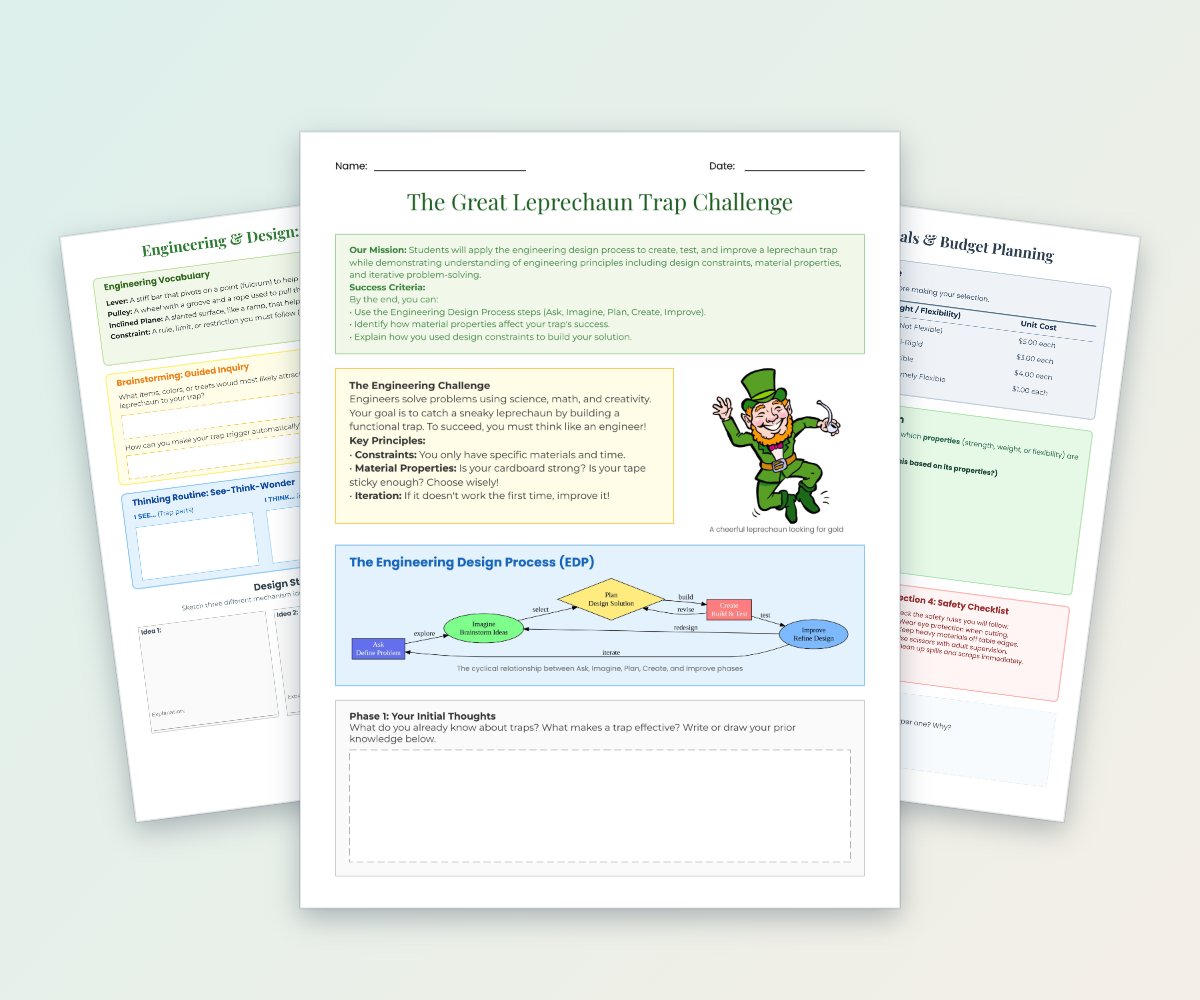
Students apply the engineering design process to design, build, test, and improve a leprechaun trap using constraints and material properties.
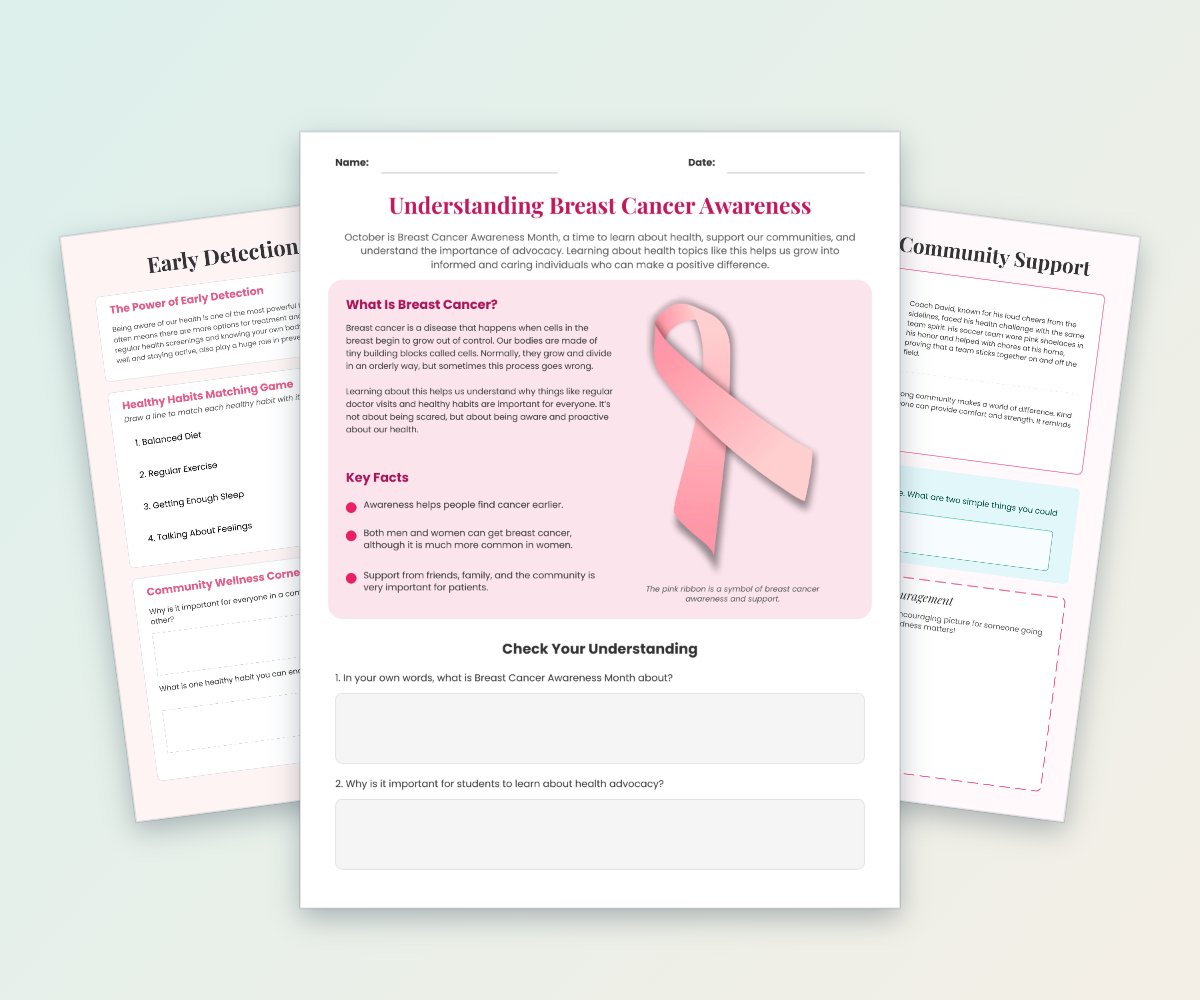
This five-page worksheet introduces breast cancer awareness, early detection, advocacy, community support, and healthy habits.
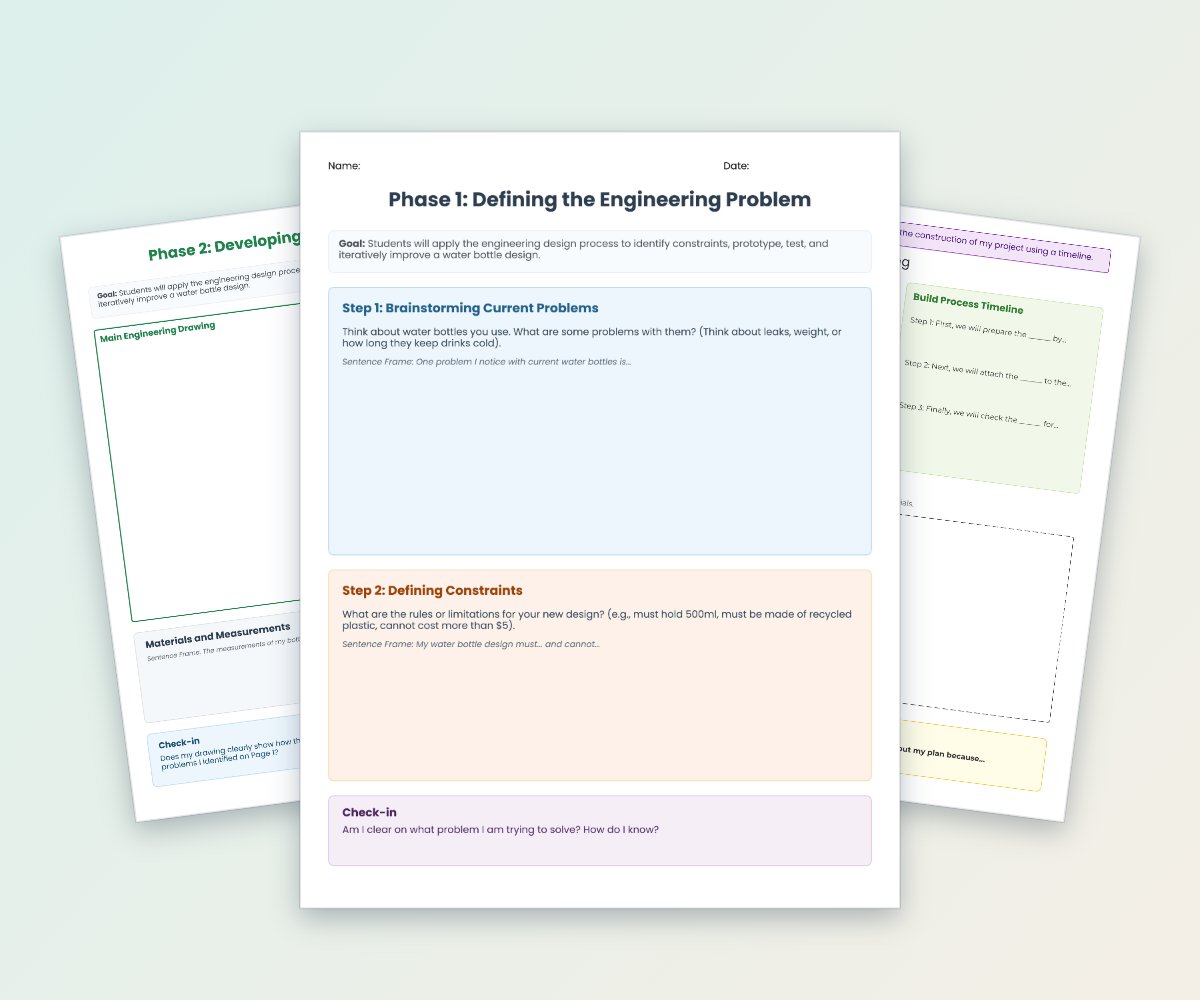
Students identify water bottle problems, define design constraints, sketch a prototype, plan construction, and collect testing data.
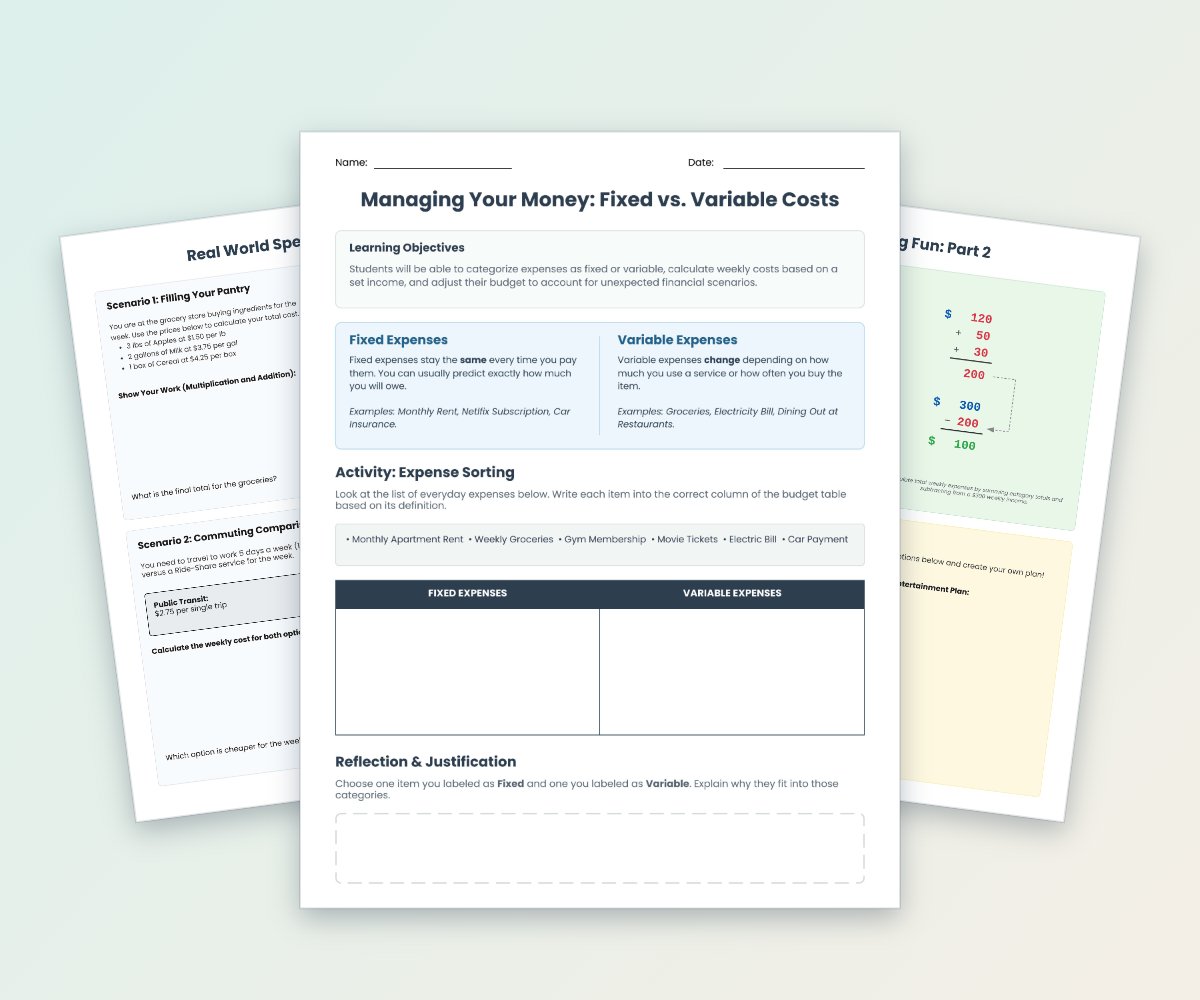
Students learn to distinguish fixed and variable expenses, calculate grocery and transportation costs, and track a weekly budget.
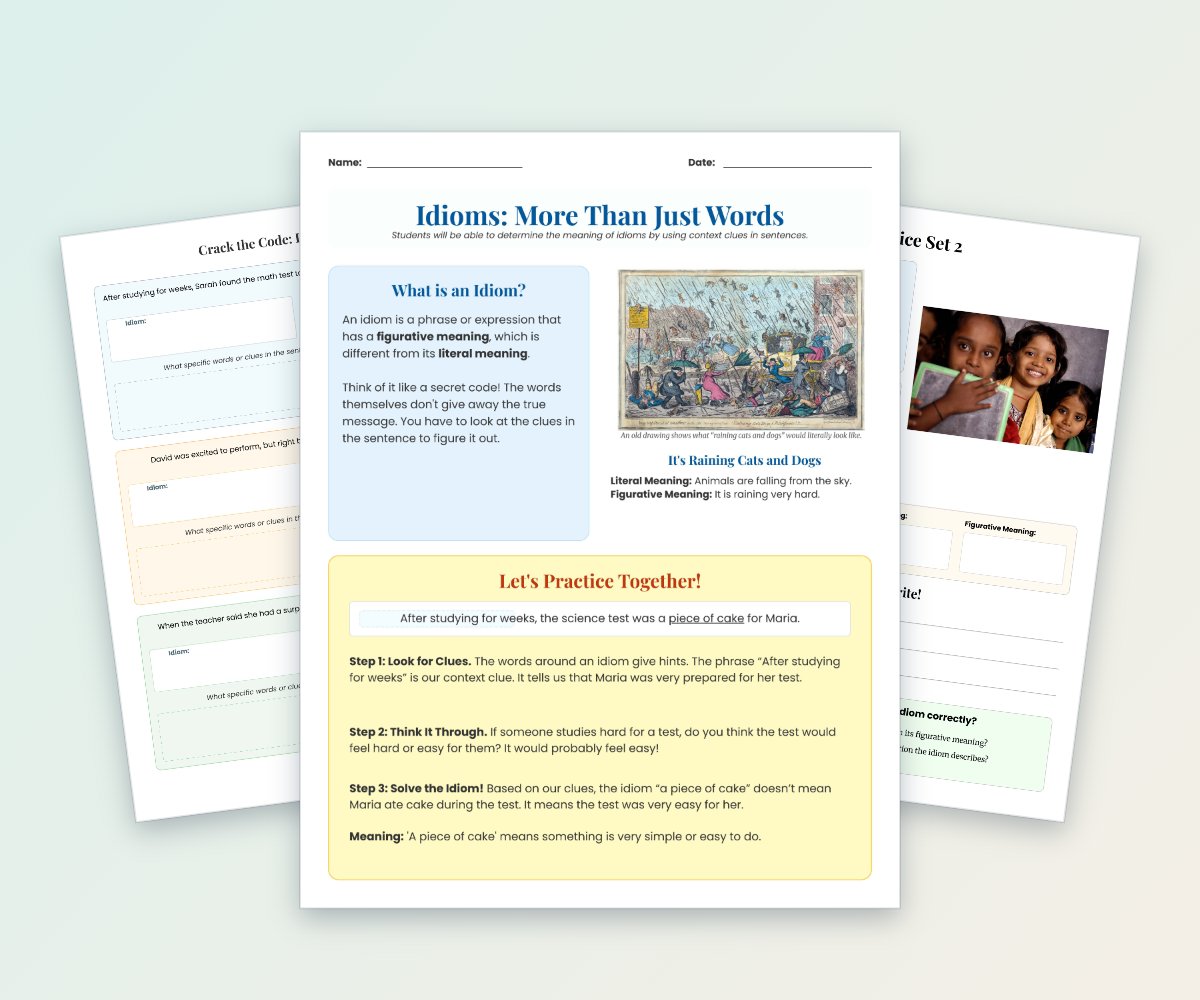
This four-page worksheet introduces figurative language and guides students through determining idiom meanings using context clues.
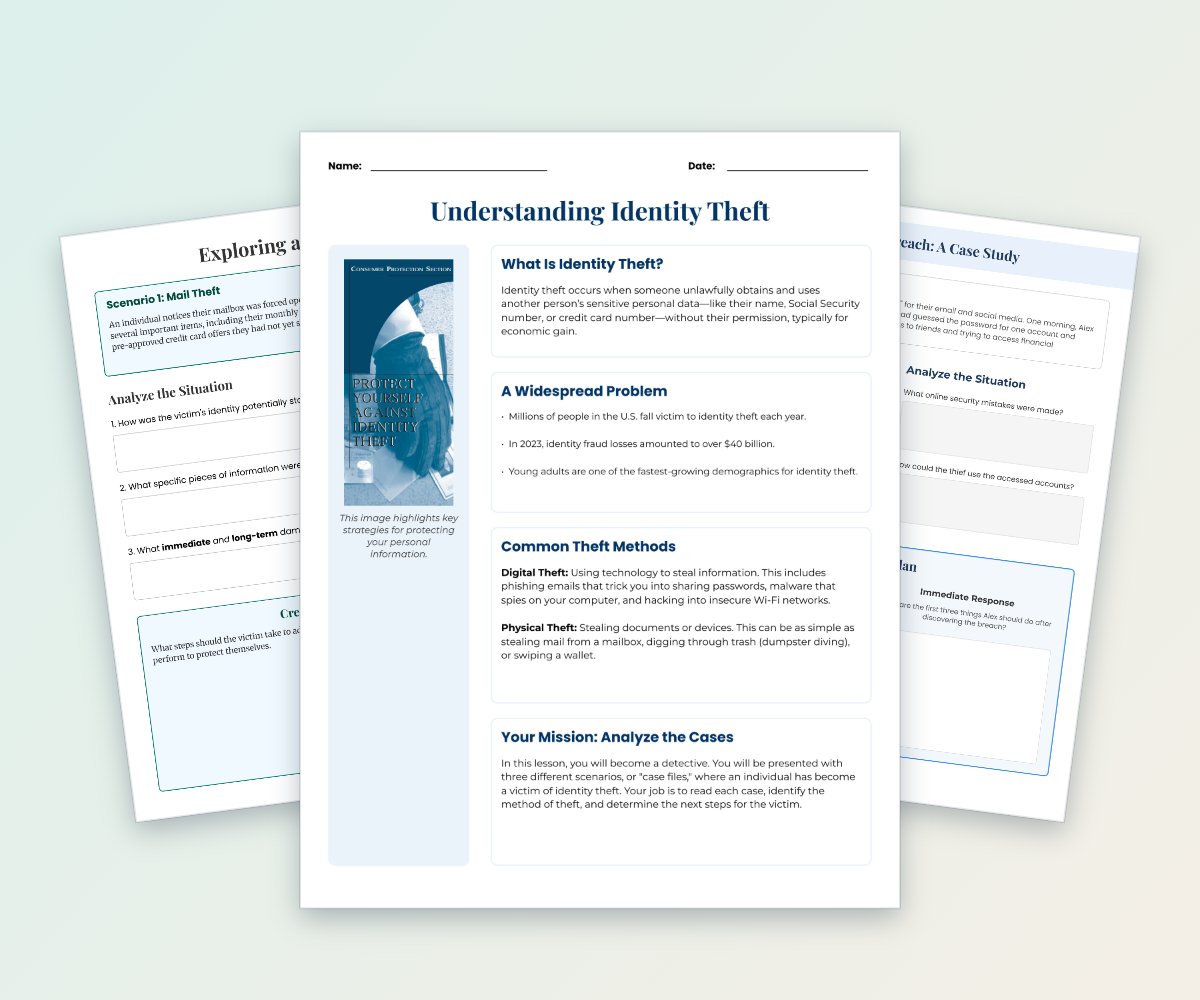
Students investigate identity theft through realistic mail theft and online security case studies.
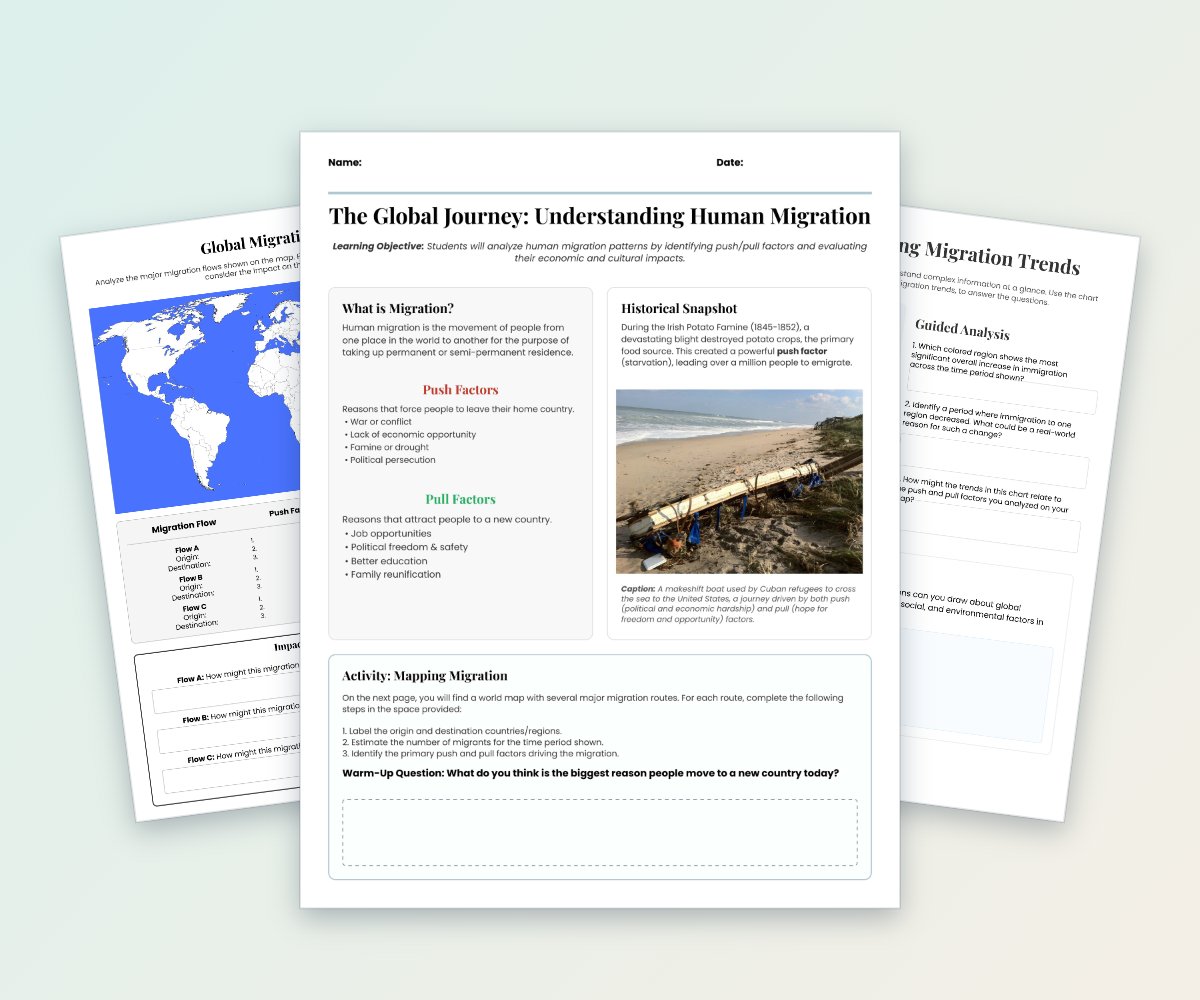
Students examine why people migrate by distinguishing push and pull factors and exploring historical migration examples.
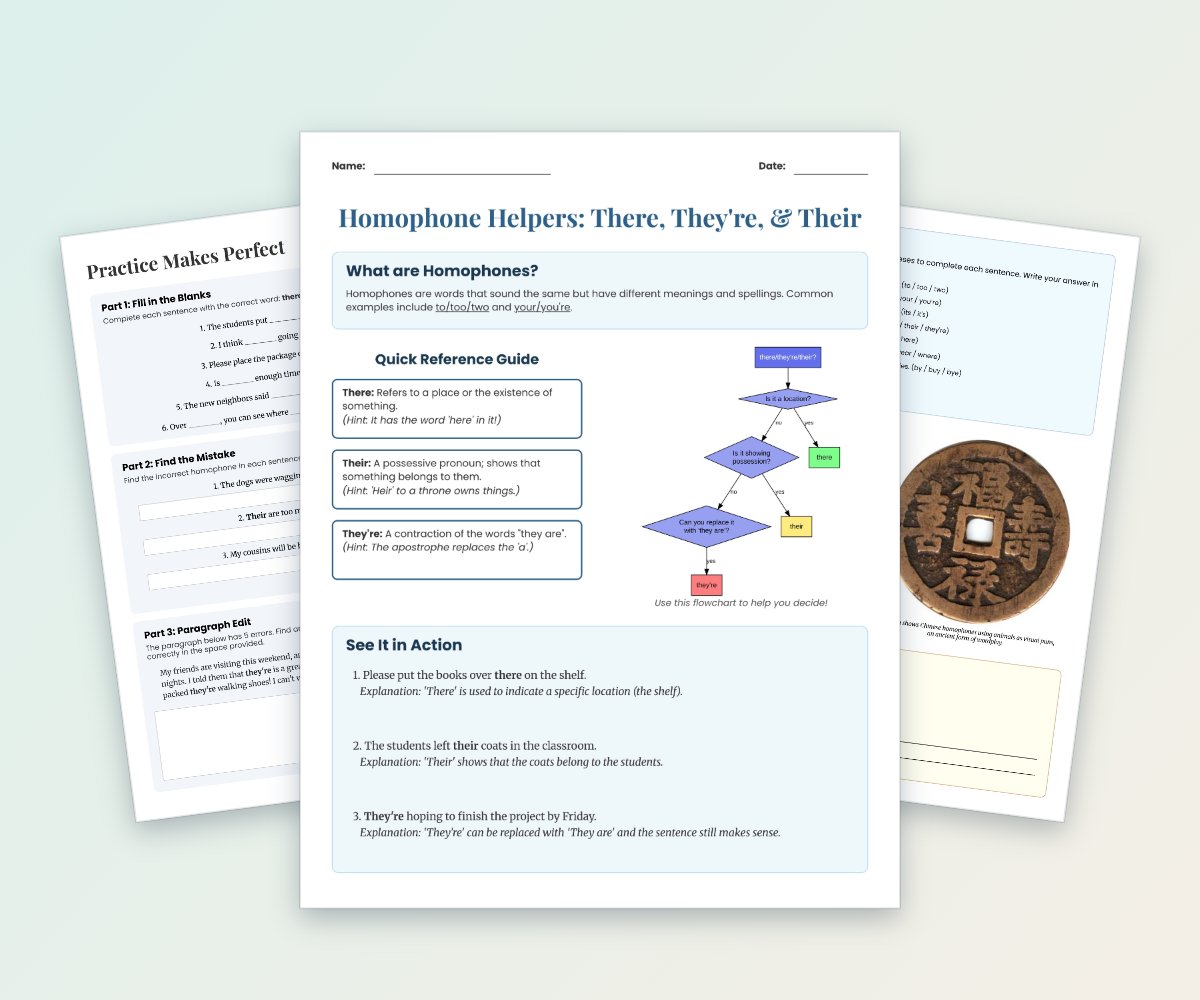
This four-page worksheet teaches students to distinguish between there, their, and they're using definitions, memory hints, examples, and a flowchart.
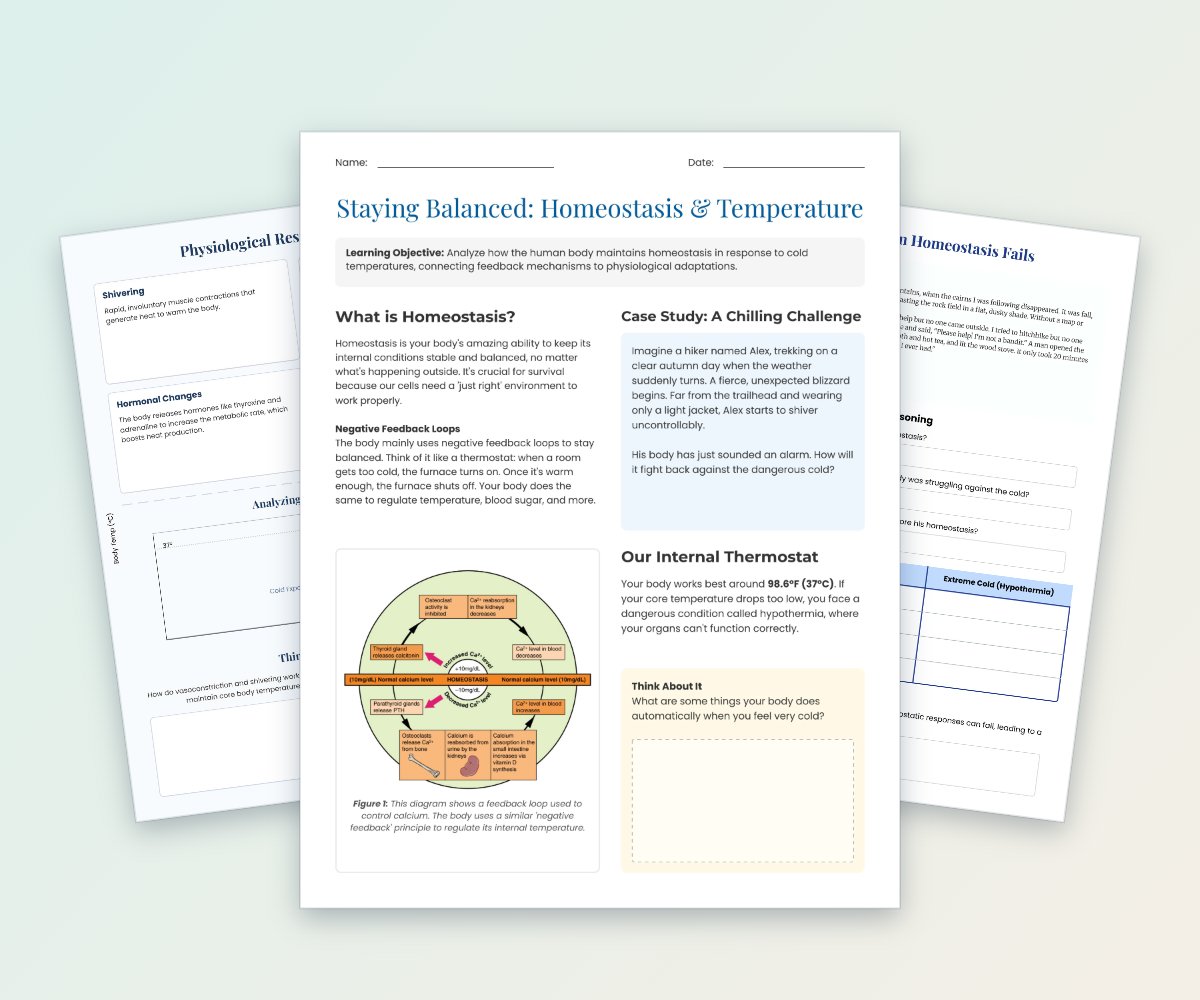
This four-page worksheet explores how the human body maintains homeostasis during exposure to cold temperatures.
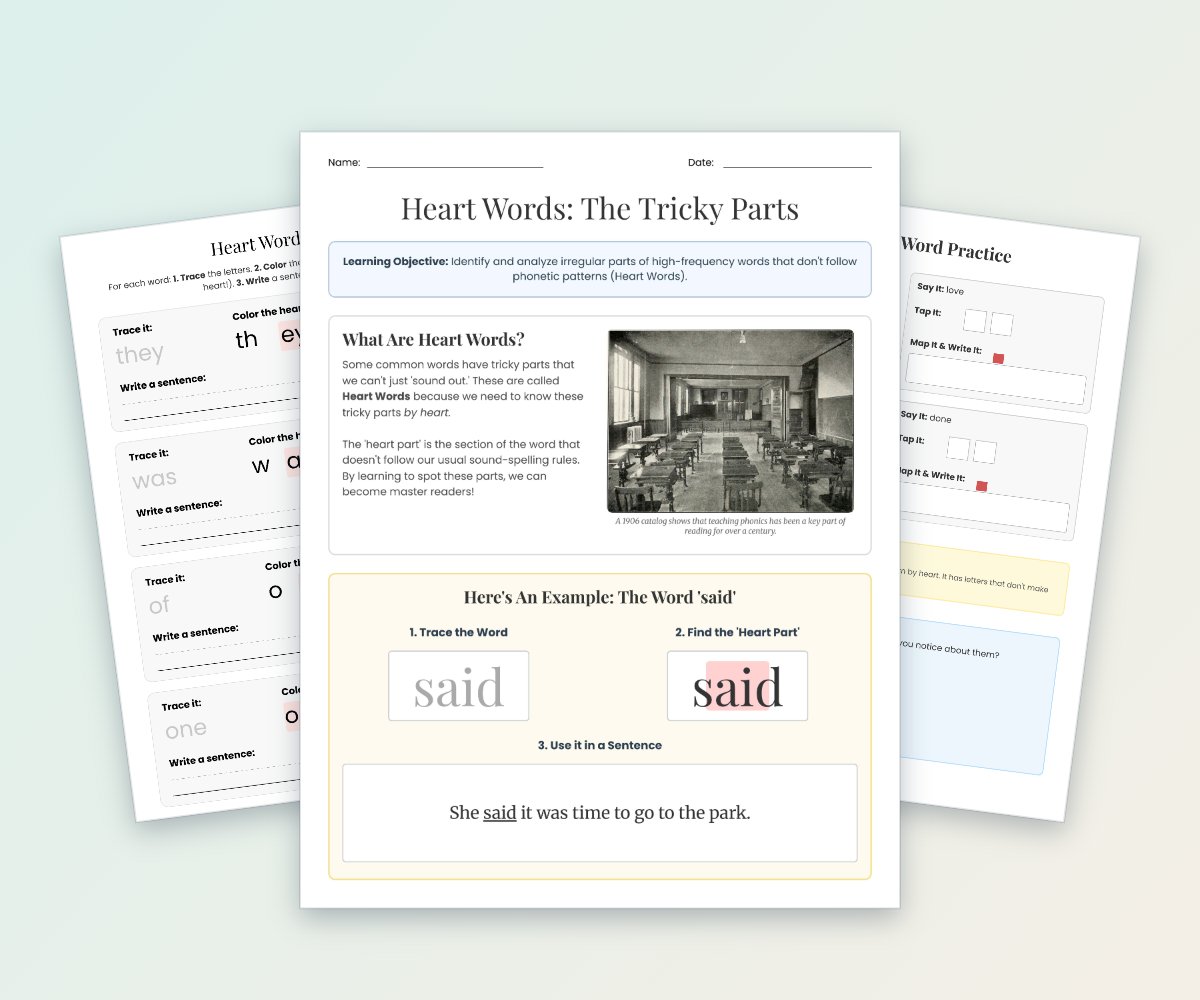
This four-page printable introduces Heart Words, focusing on the parts of high-frequency words that do not follow regular phonics patterns.
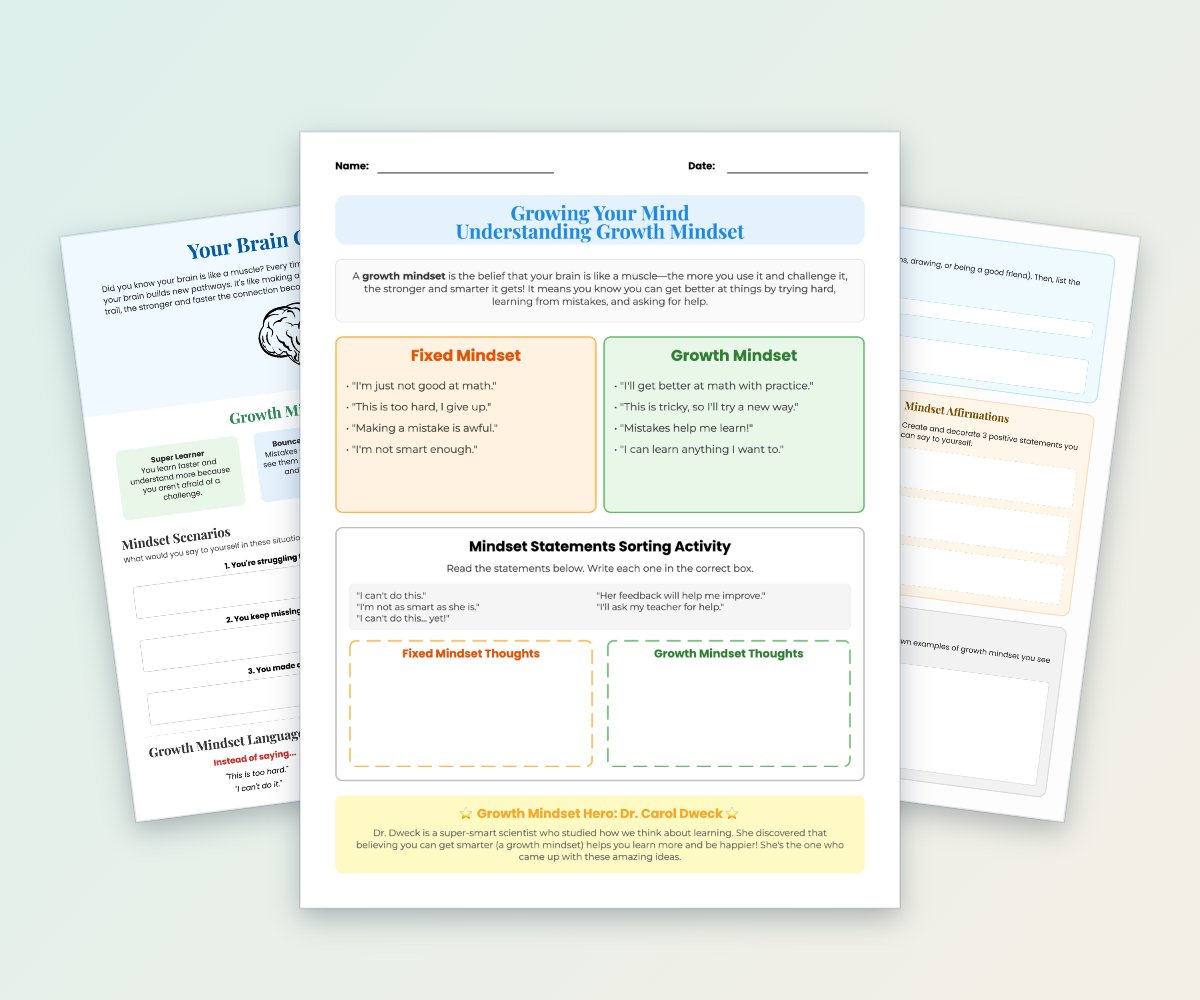
This three-page printable introduces growth mindset through explanations, fixed-versus-growth mindset sorting, scenarios, reflection, and a personal growth plan.
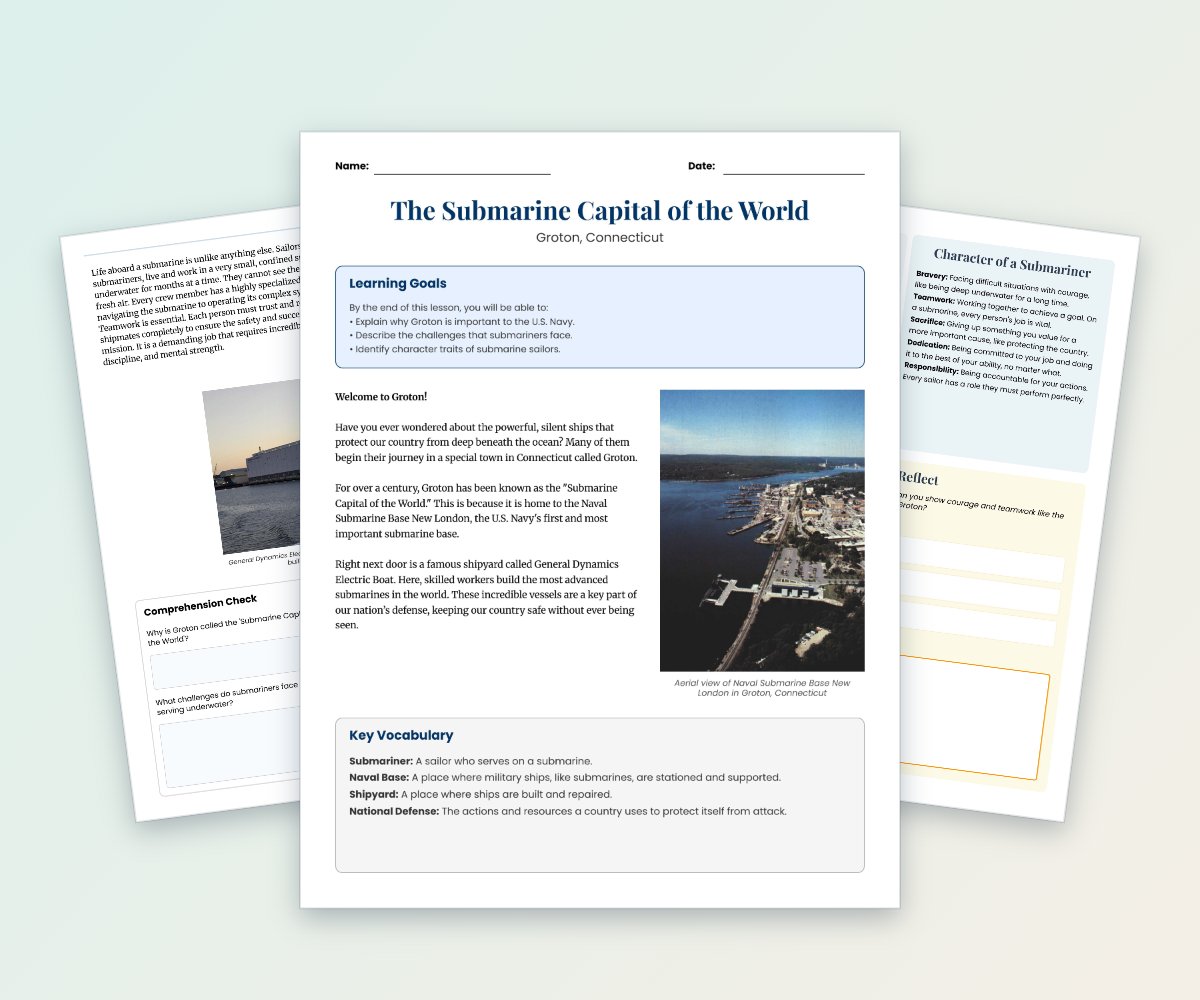
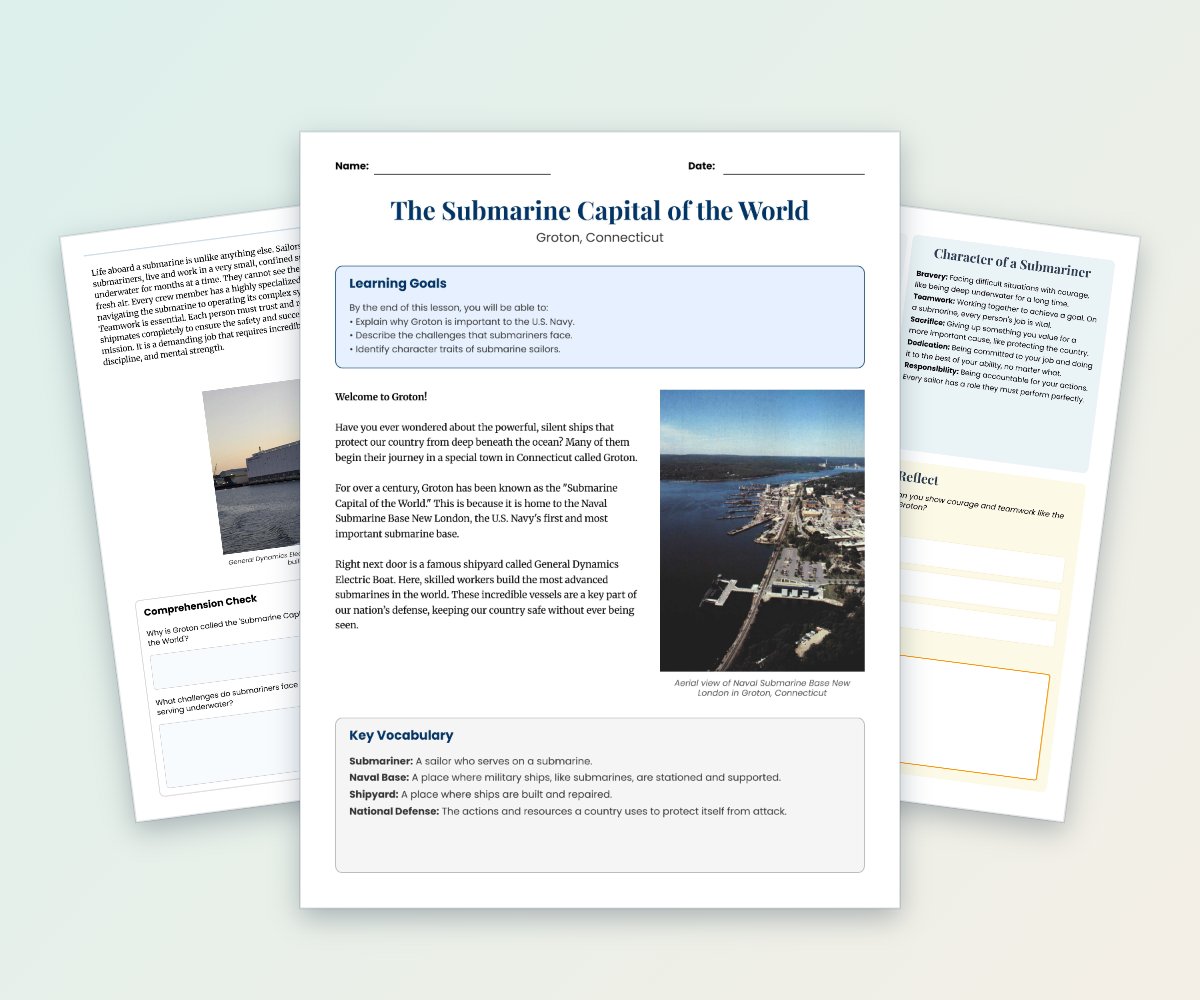
Students learn why Groton is known as the Submarine Capital of the World and explore submariners’ responsibilities and challenges.
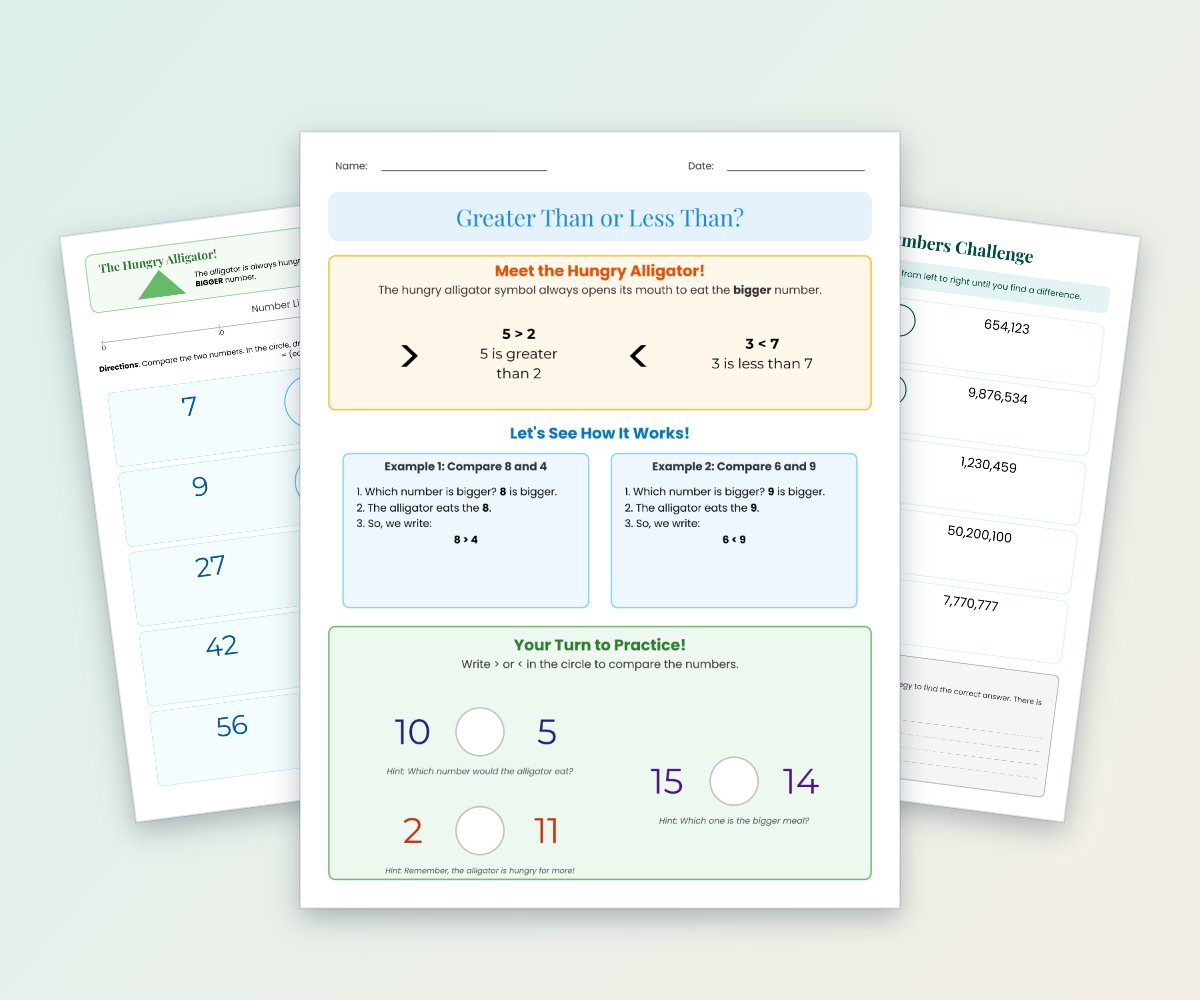
This three-page worksheet helps students compare numbers using greater-than, less-than, and equal-to symbols.
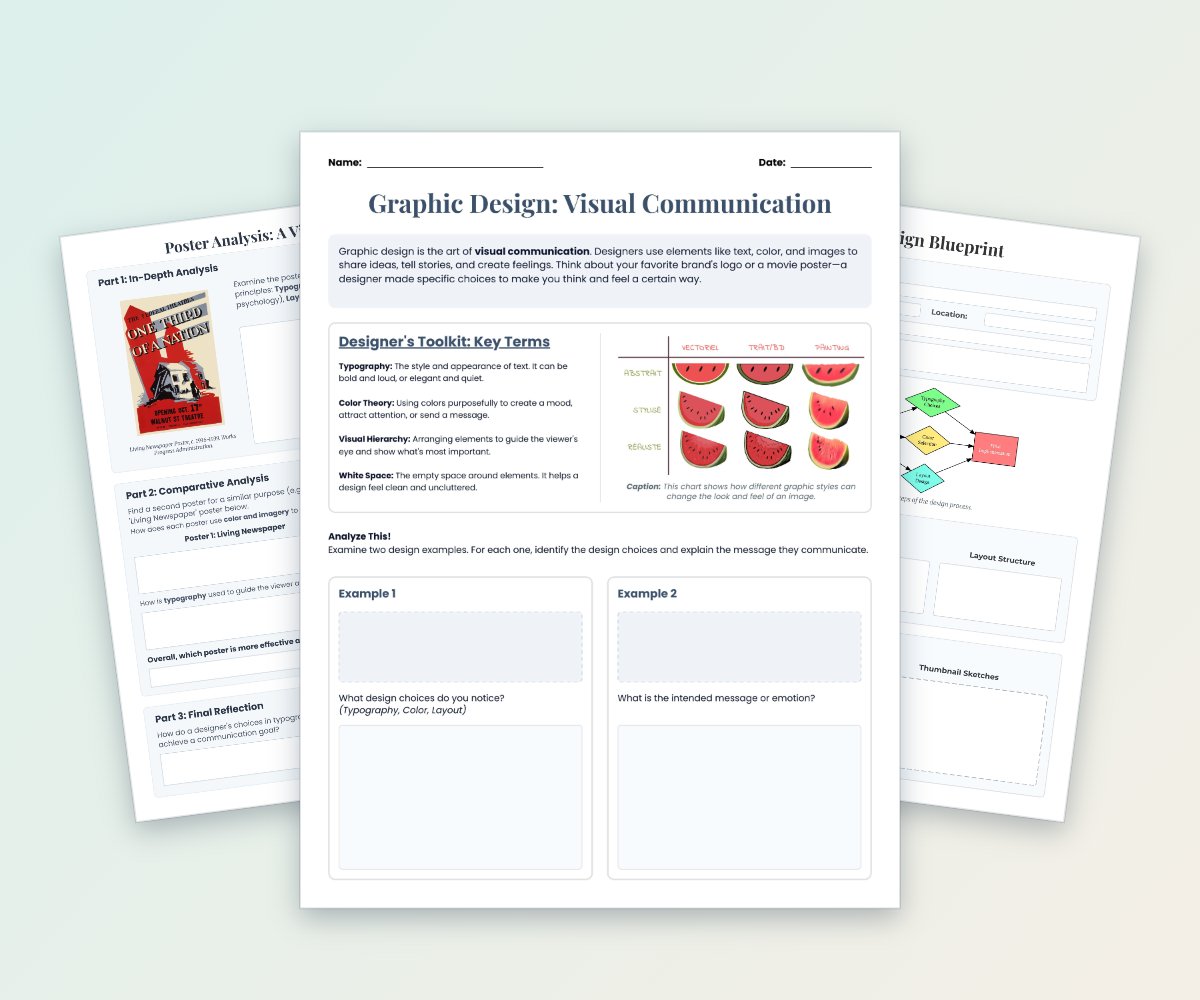
Students explore typography, color theory, visual hierarchy, white space, and visual communication through guided poster analysis.
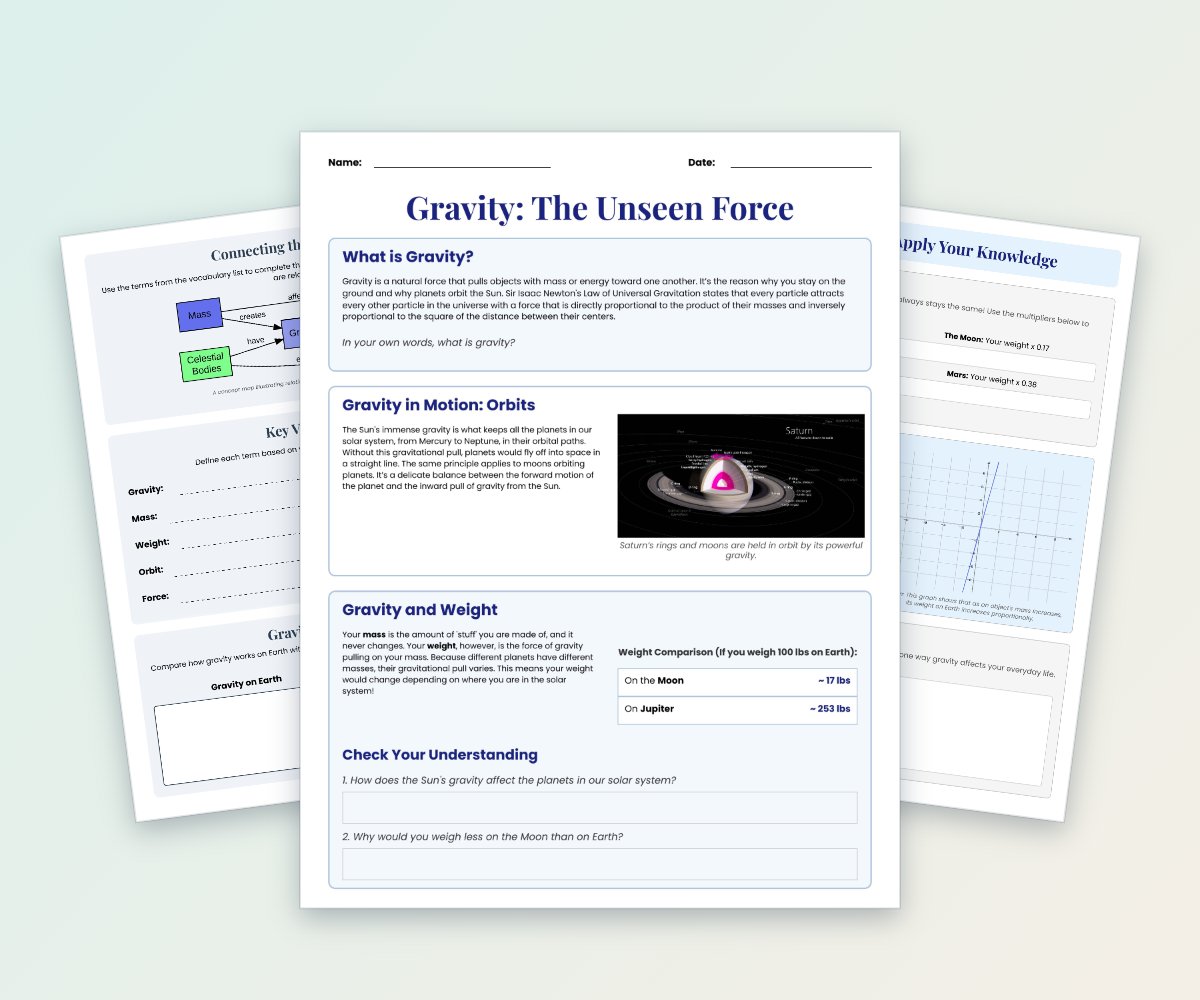
This three-page worksheet introduces gravity, orbits, mass, and weight through explanatory reading, comprehension questions, a concept map, vocabulary practice, and comparison activities.
Students learn why Groton is known as the Submarine Capital of the World and explore Connecticut's role in supporting the U.S.
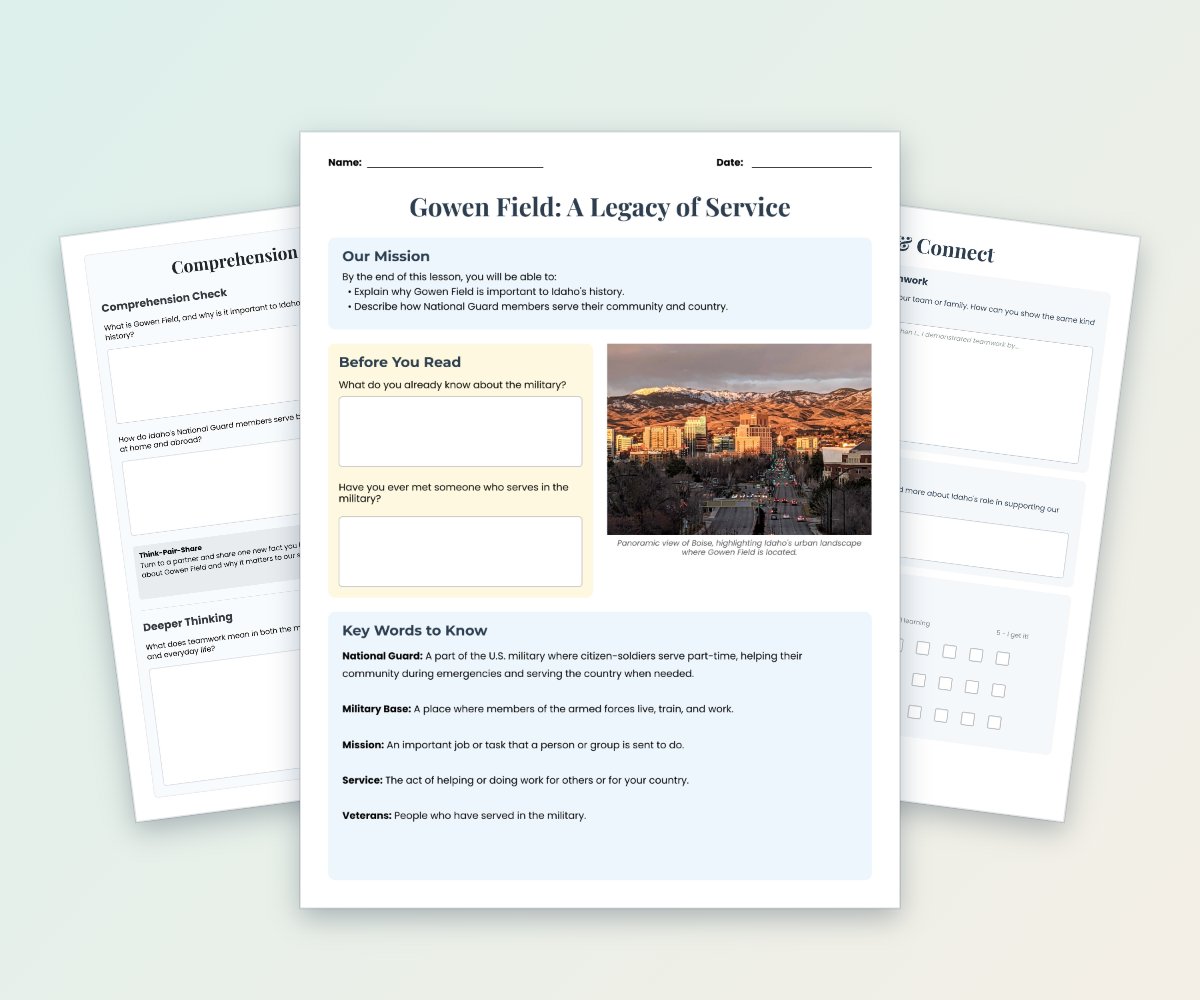
Students learn about Gowen Field’s importance to Idaho history and explore how National Guard members serve their communities and country.
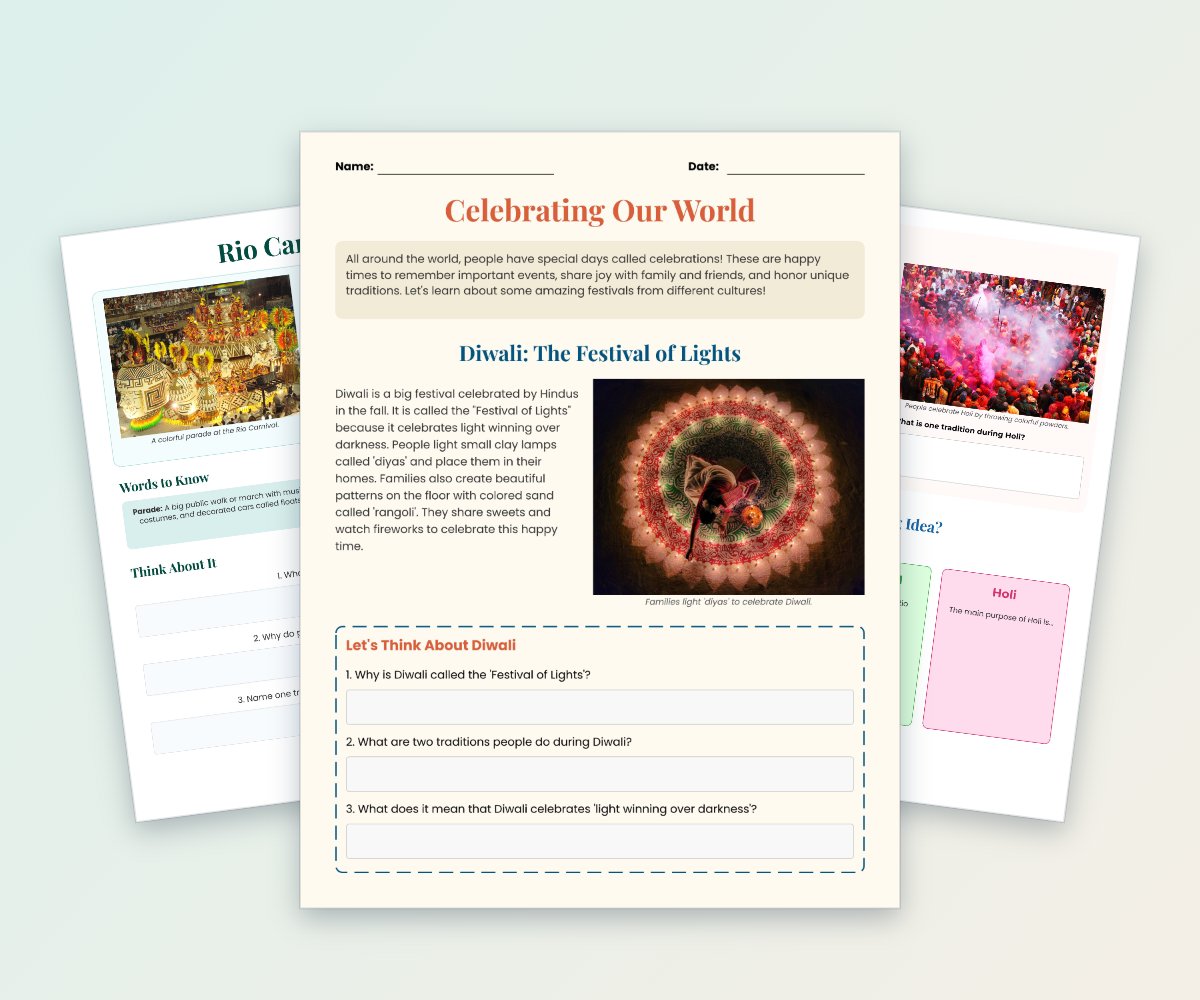
Students learn about Diwali, Rio Carnival, and Holi through short informational passages, vocabulary, illustrations, and comprehension questions.
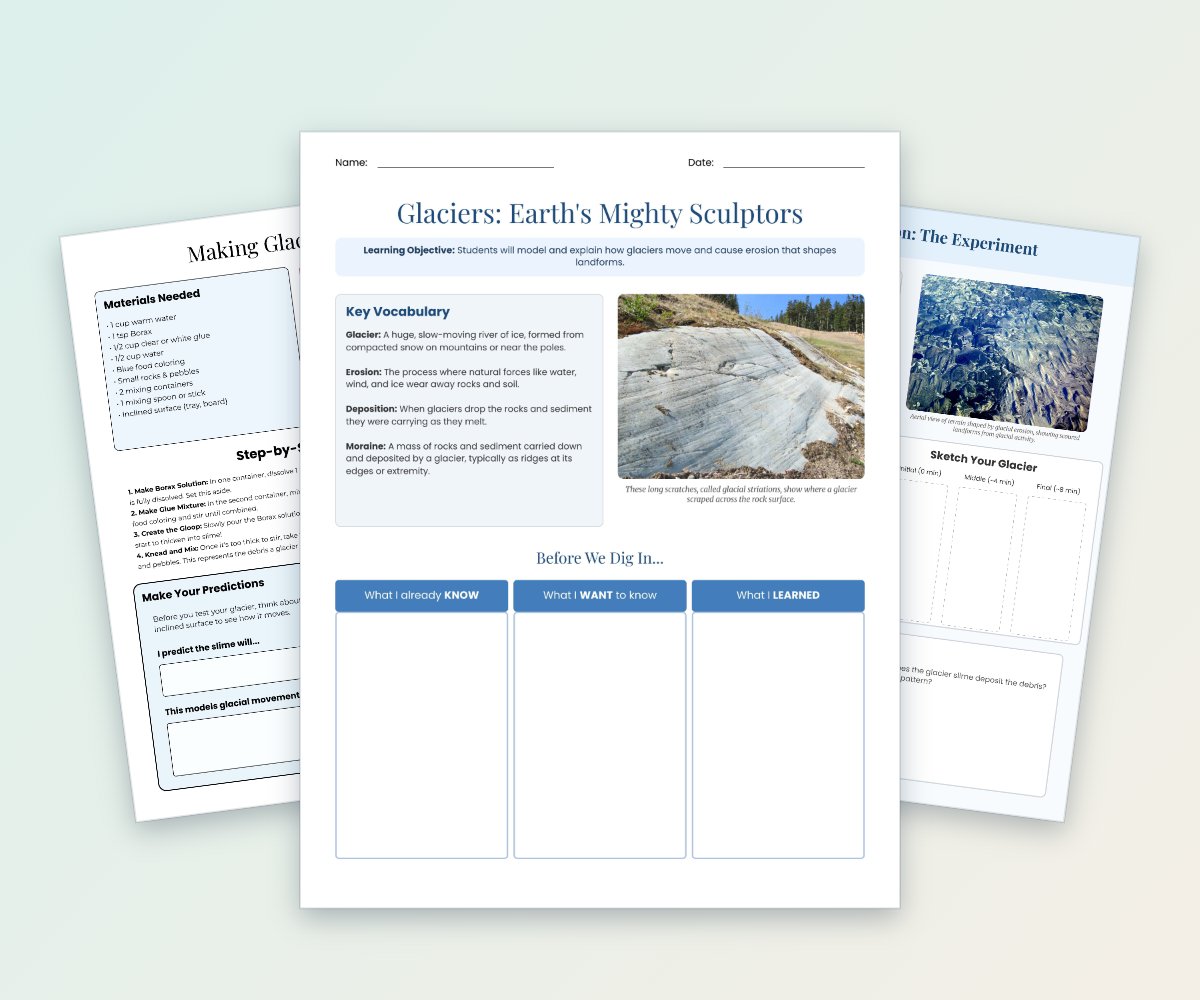
Students explore how glaciers move, erode land, and deposit sediment through vocabulary work, a KWL organizer, and a hands-on glacier slime experiment.
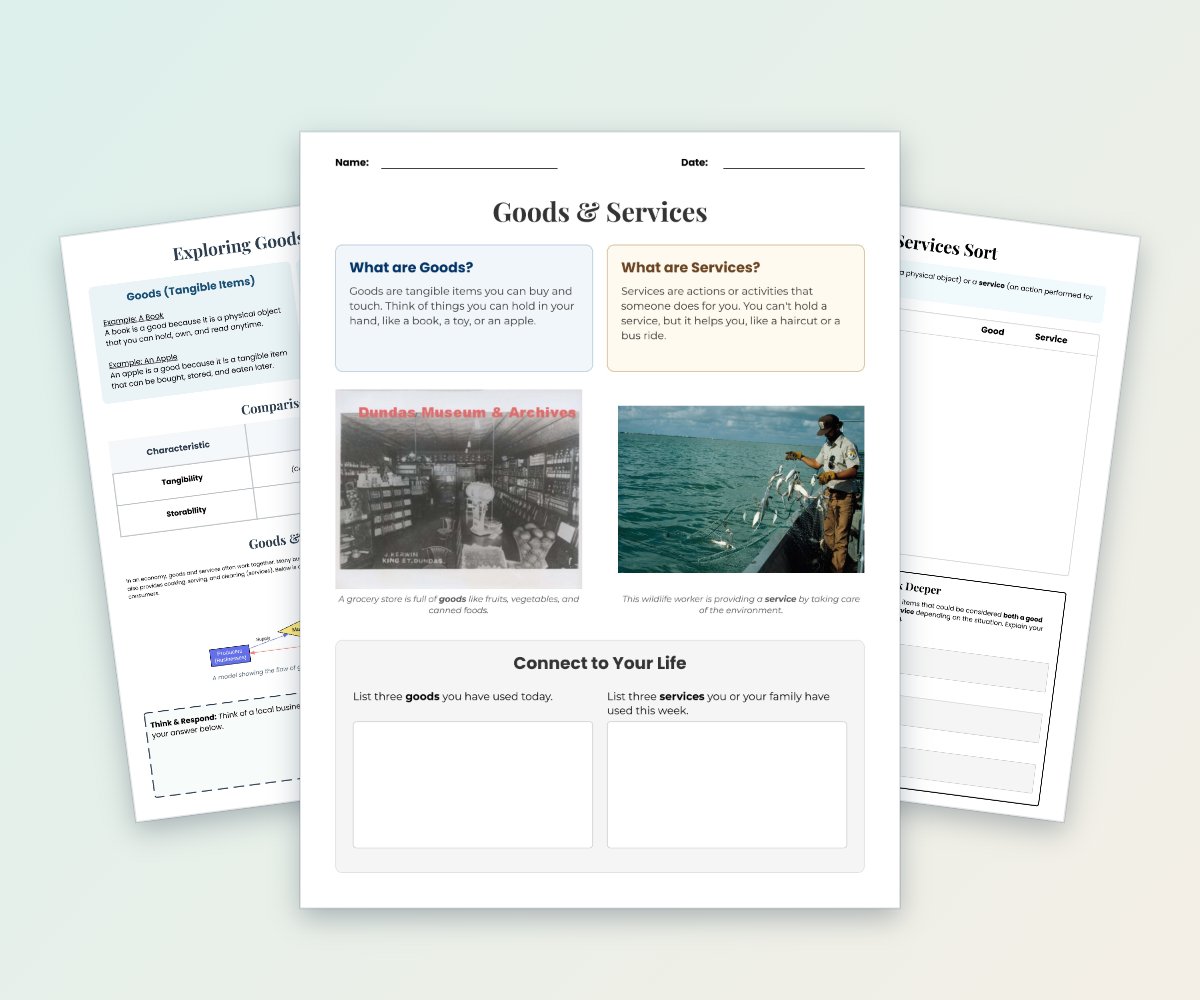
This four-page social studies worksheet introduces goods and services, explains their differences, and shows how they work together in an economy.
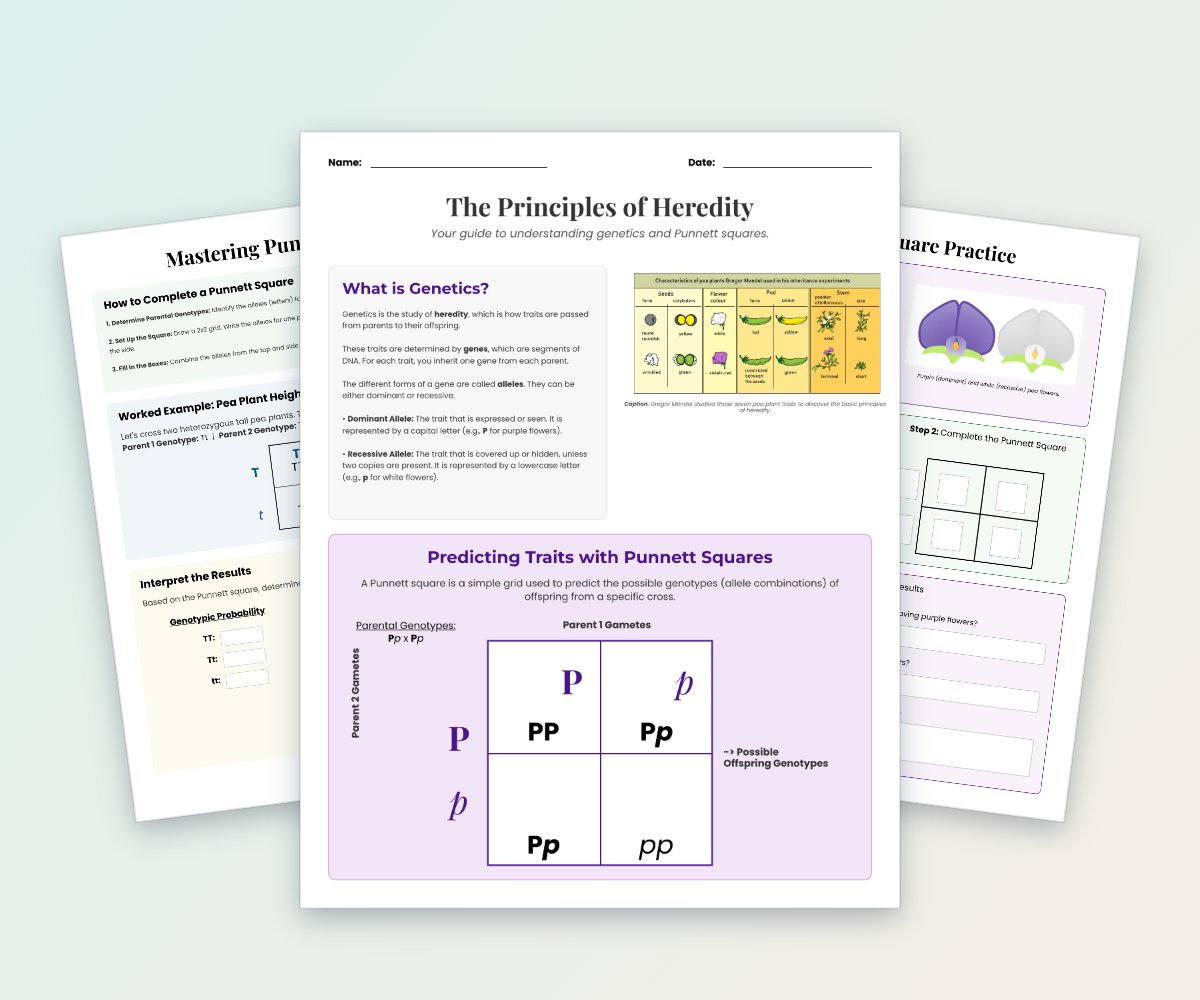
This four-page resource introduces genetics, heredity, genes, alleles, dominant and recessive traits, and Gregor Mendel’s pea plant experiments.
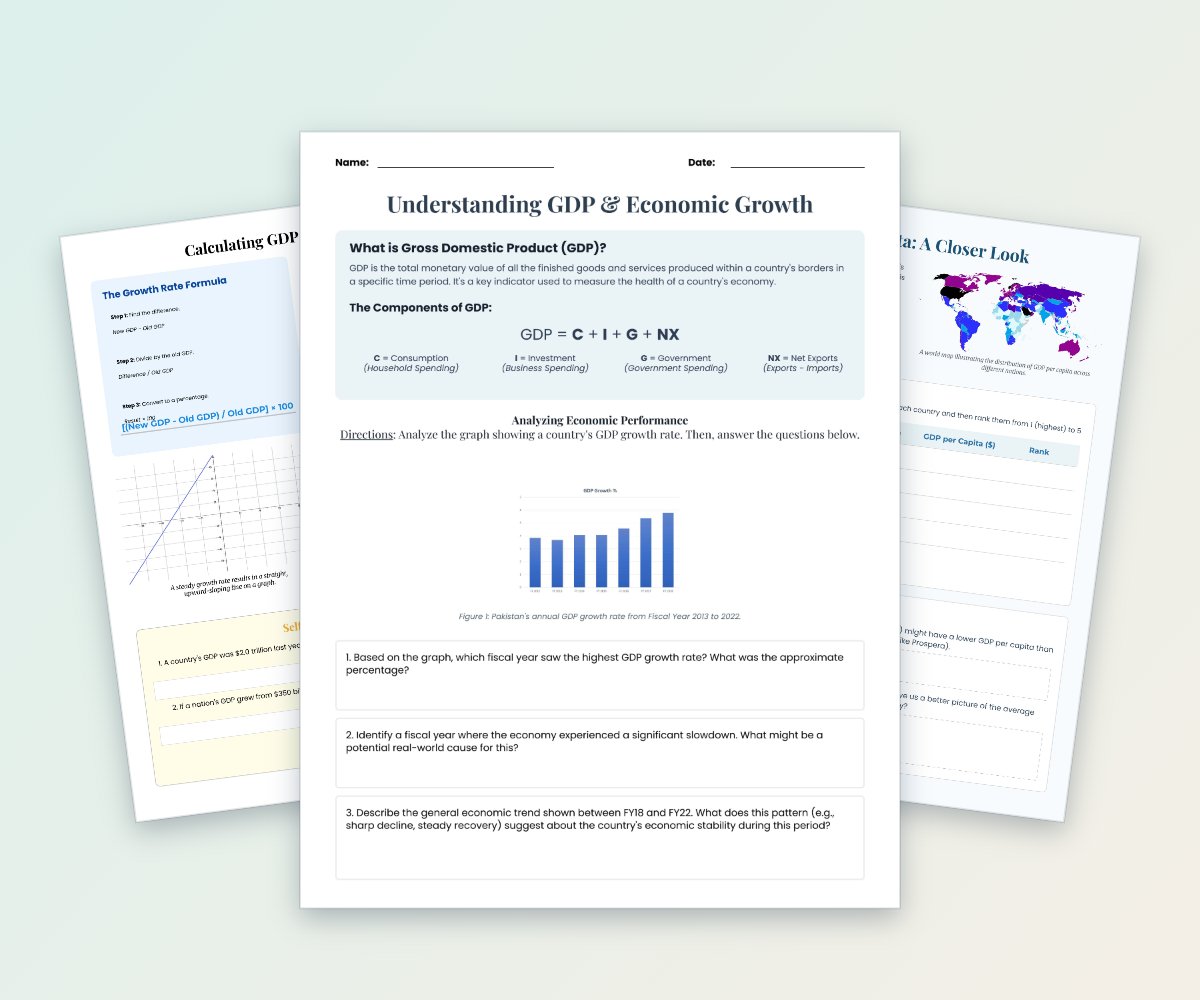
Students learn the components of GDP, analyze economic growth trends, calculate annual growth rates, and explore GDP per capita.
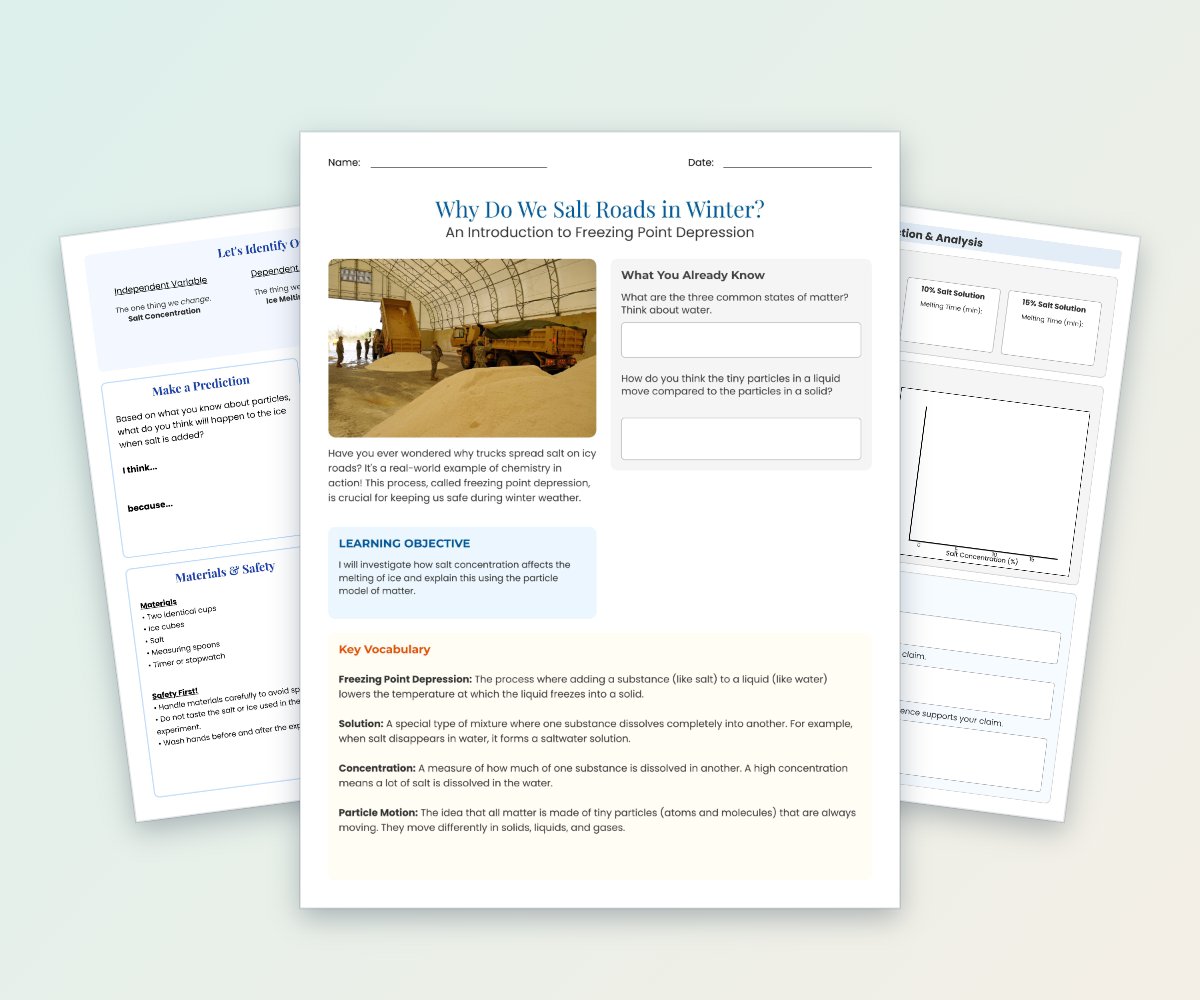
Students investigate how salt concentration affects ice melting and explain the results using the particle model of matter.
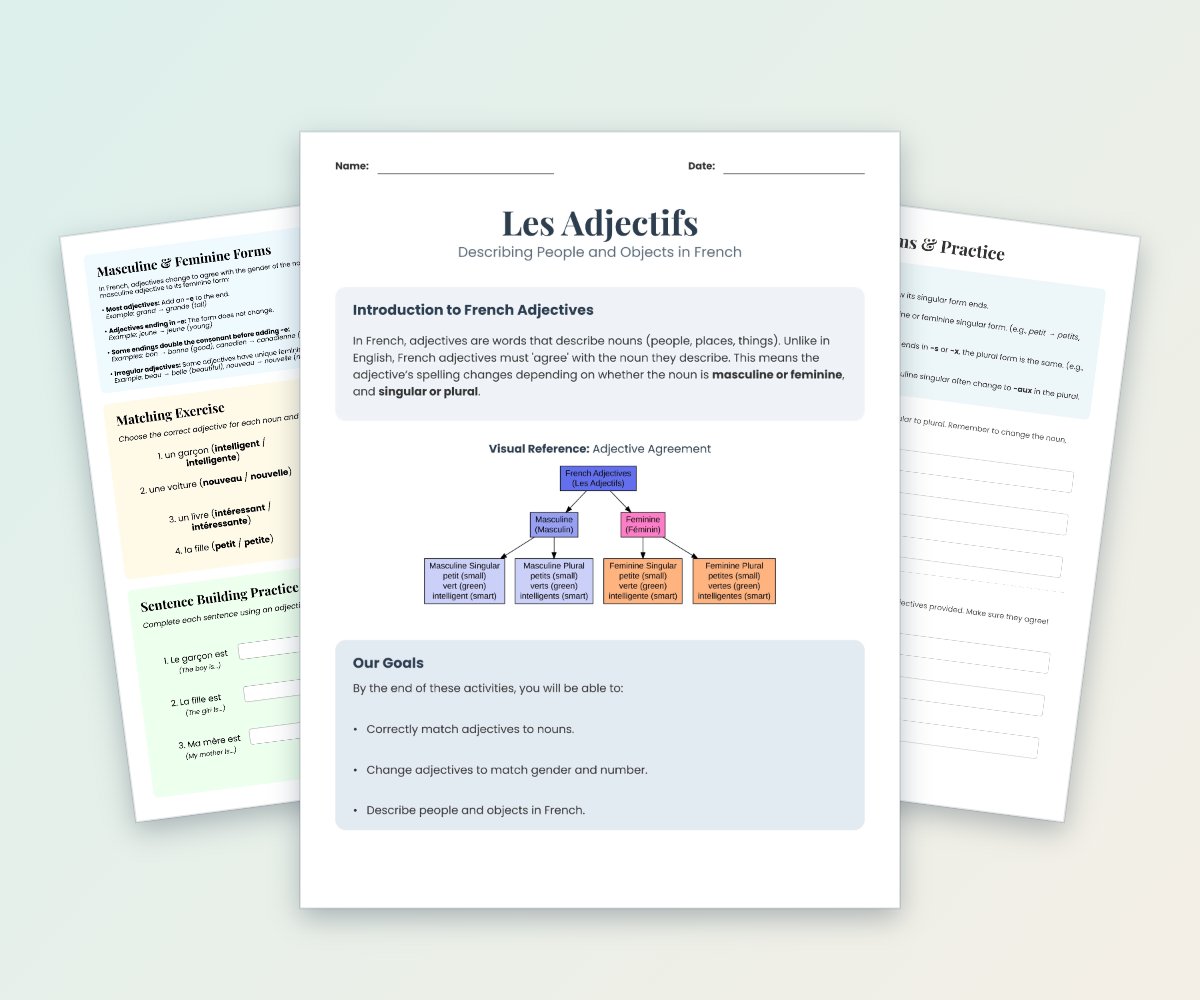
This five-page French language resource introduces adjective agreement for gender and number, including masculine, feminine, singular, and plural forms.
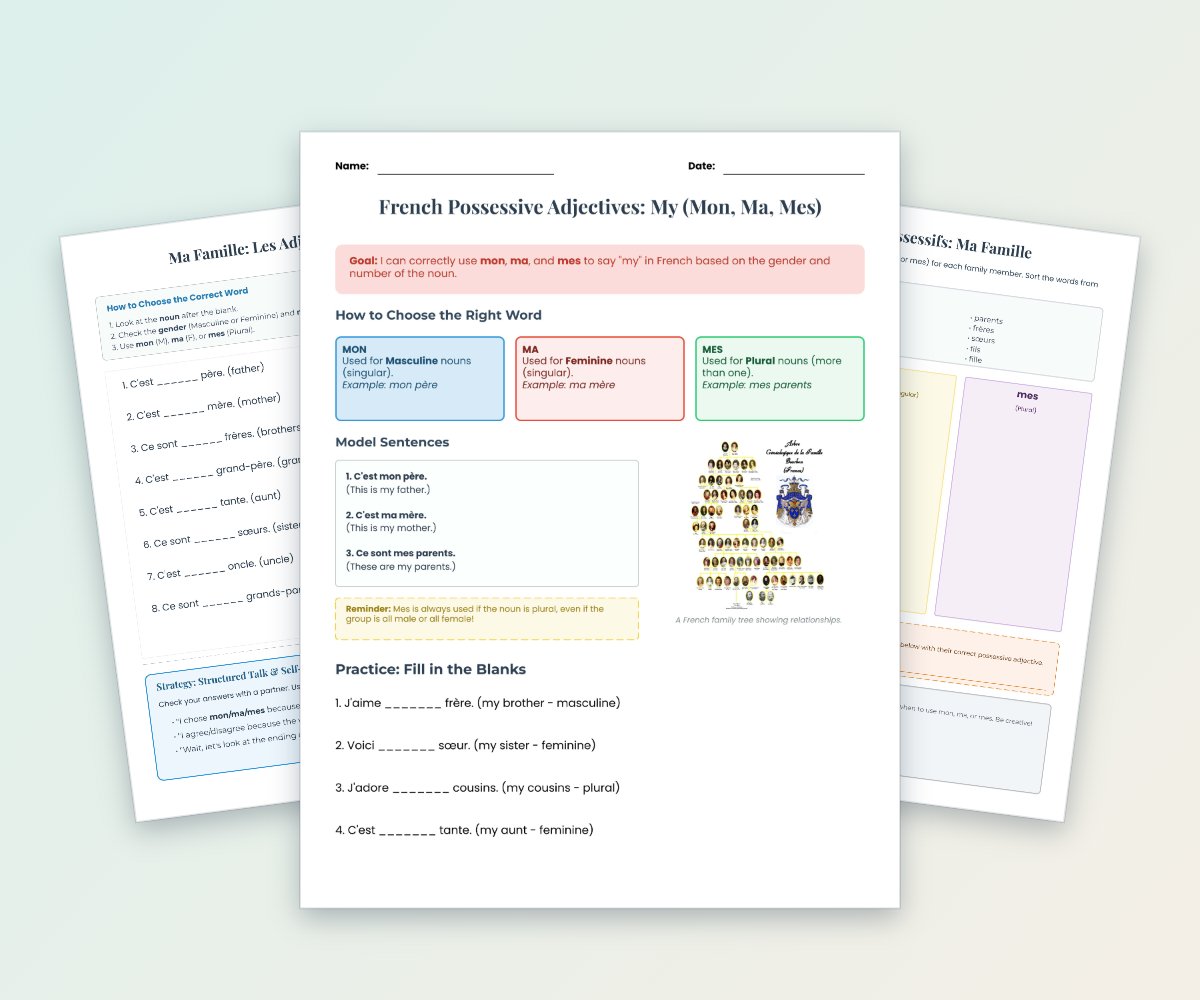
Teach students to choose mon, ma, or mes based on the gender and number of French nouns.
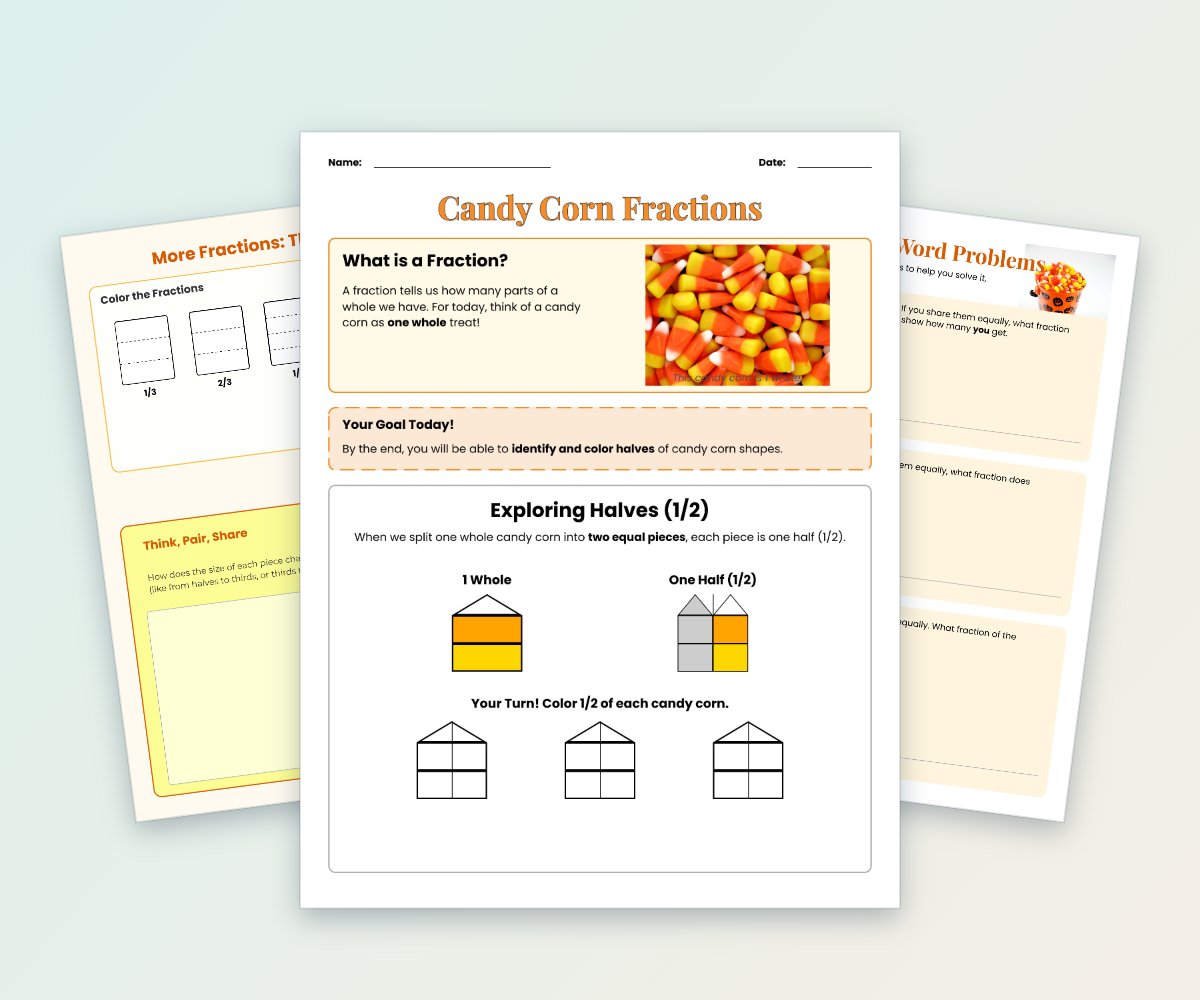
This engaging worksheet introduces fractions as equal parts of a whole through candy-corn visuals.
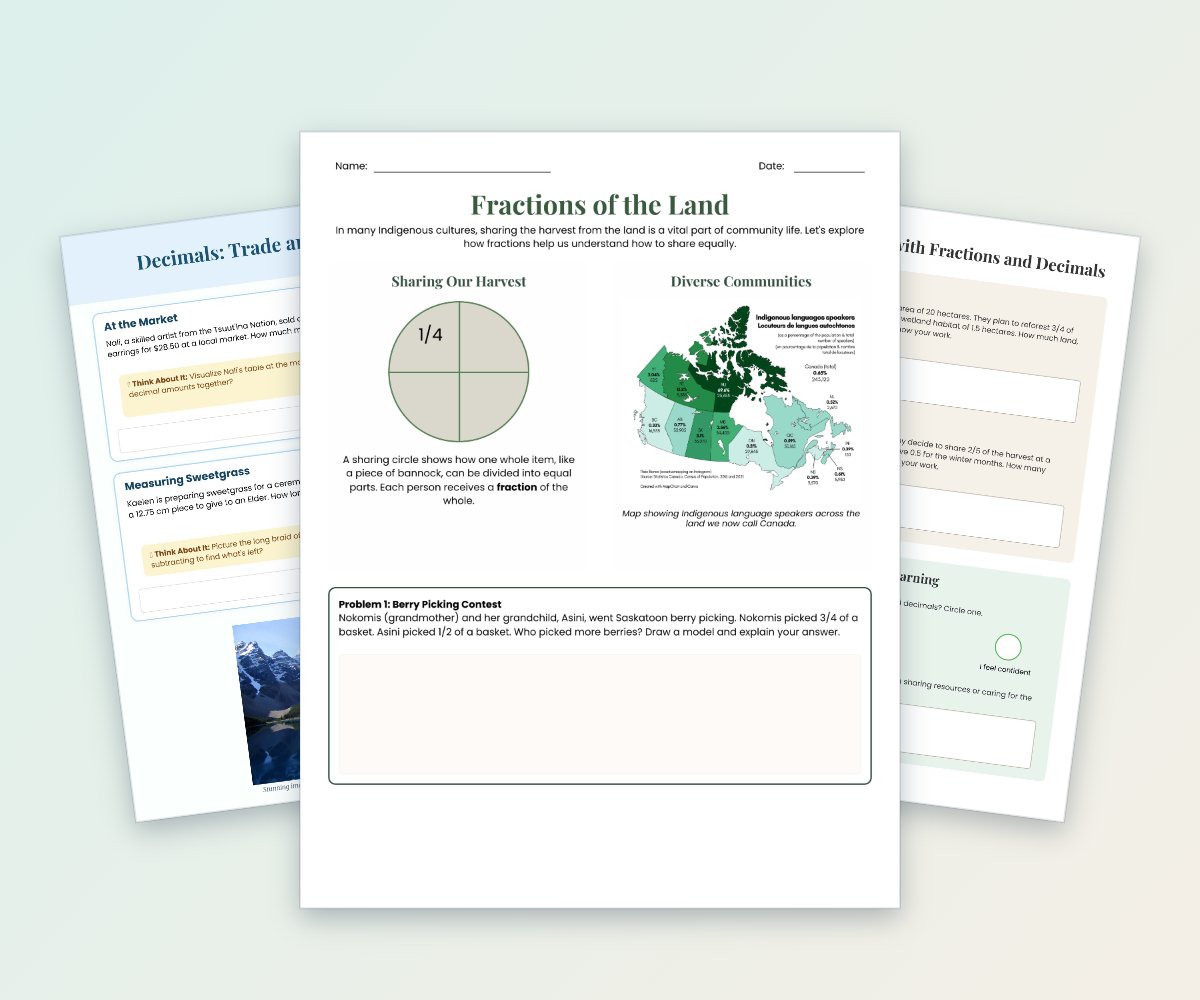
Students compare fractions, add and subtract decimals, and solve multi-step problems involving sharing, measurement, harvests, and land use.
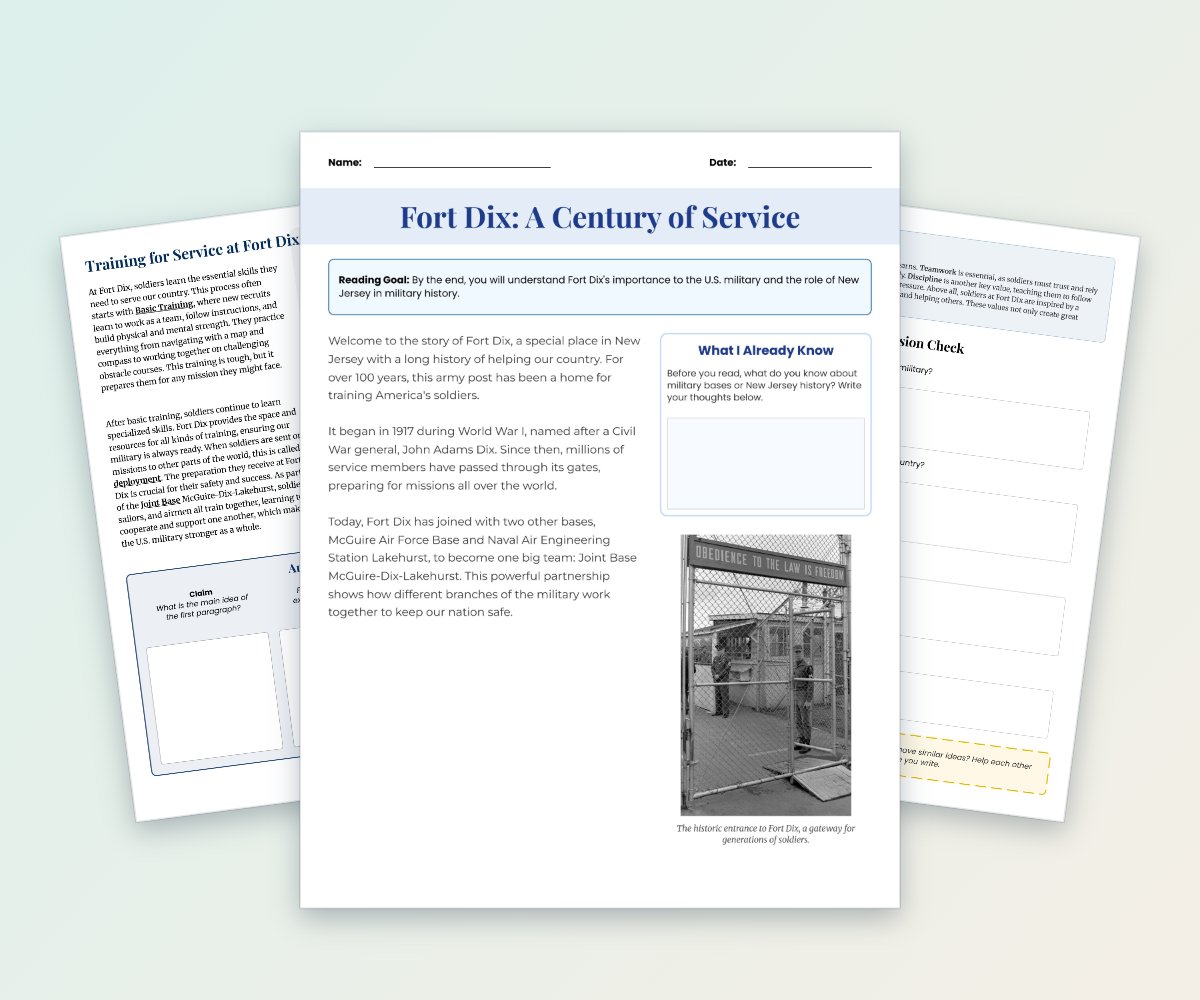
Students read about Fort Dix, its history since World War I, military training, and role within Joint Base McGuire-Dix-Lakehurst.
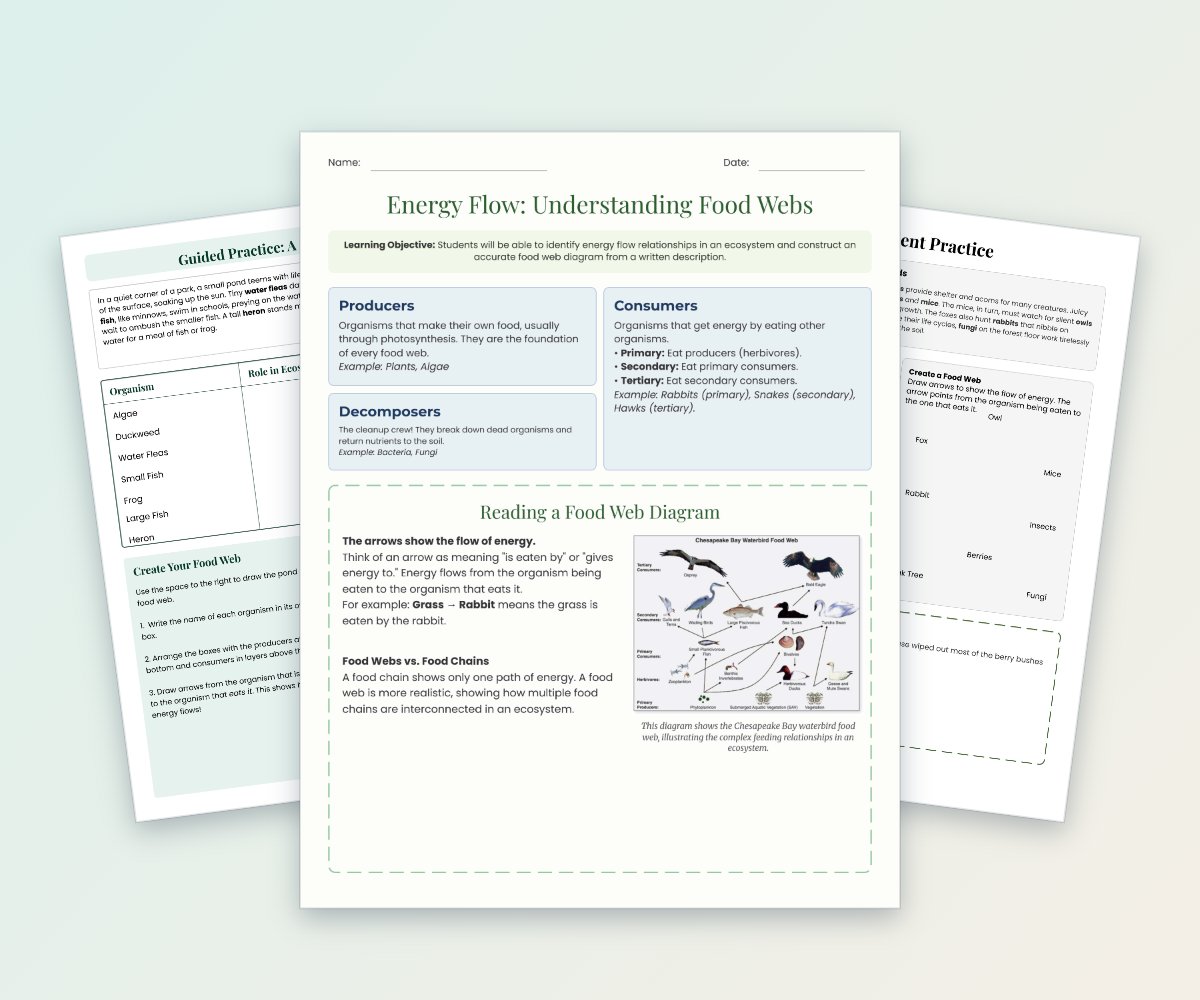
This four-page science resource introduces producers, consumers, decomposers, food chains, and energy flow in ecosystems.
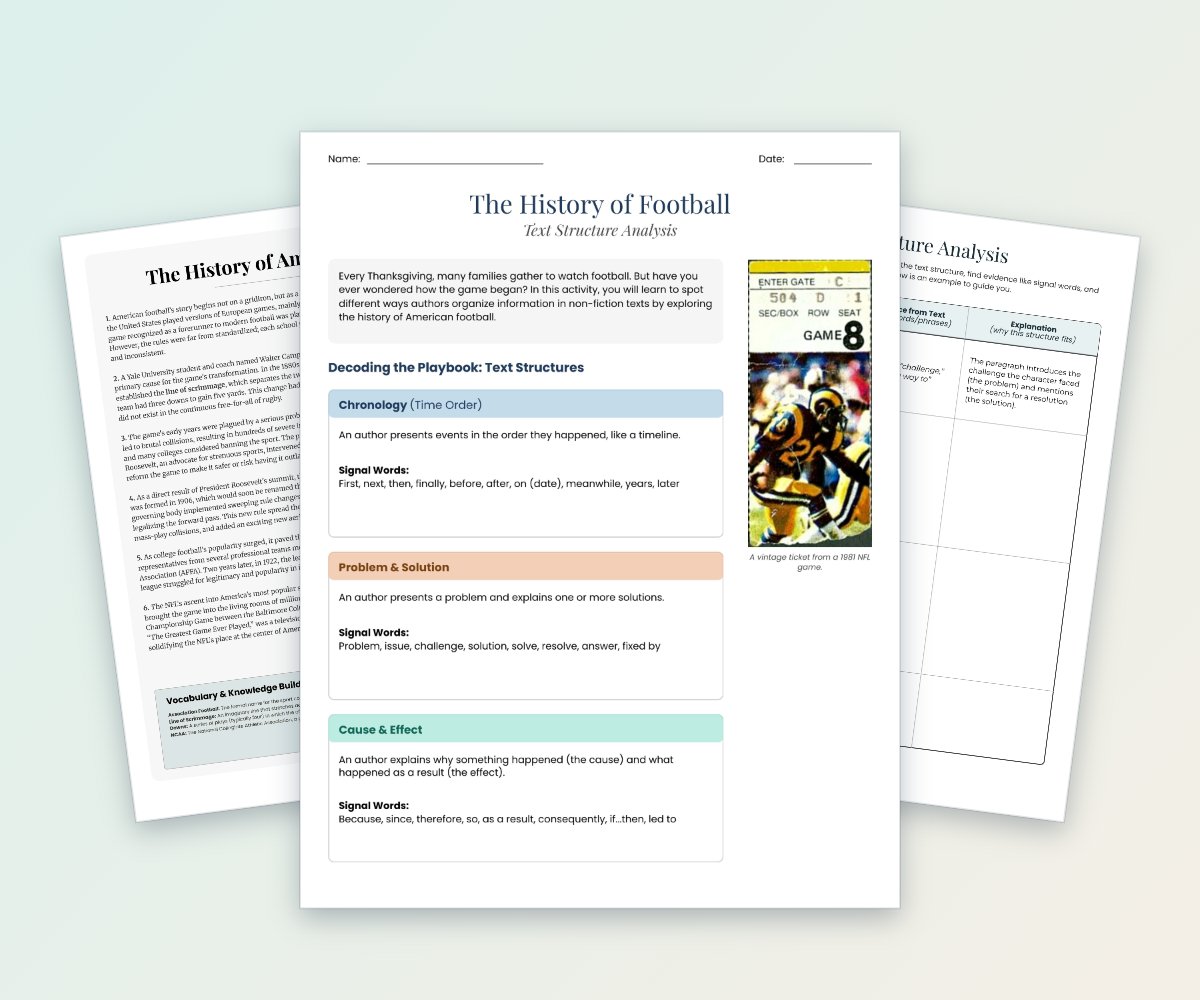
Students read an informational passage about the history of American football and identify chronology, problem and solution, and cause and effect structures.
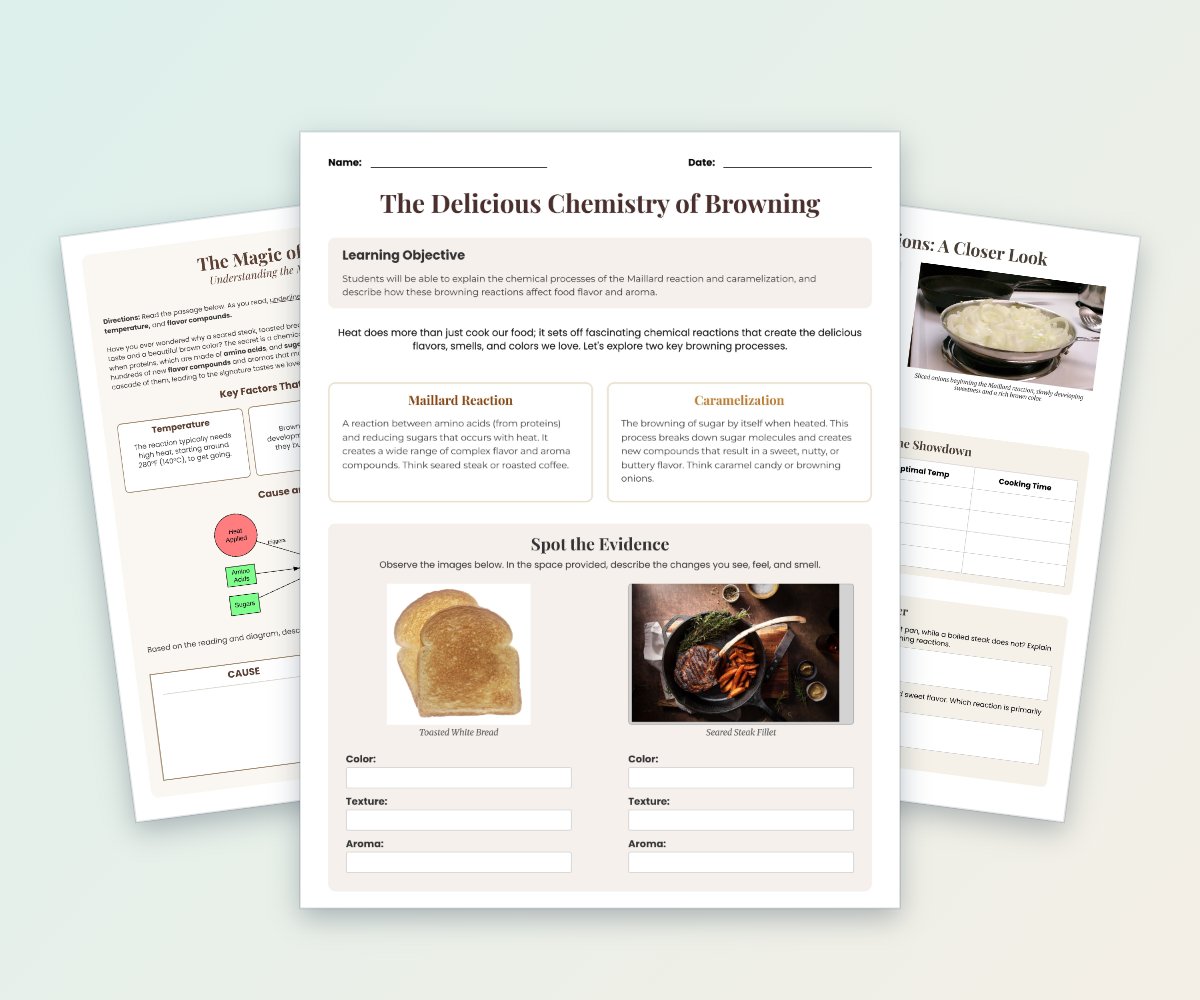
This four-page worksheet introduces the Maillard reaction and caramelization, explaining how heat, sugars, amino acids, temperature, and pH affect food browning.
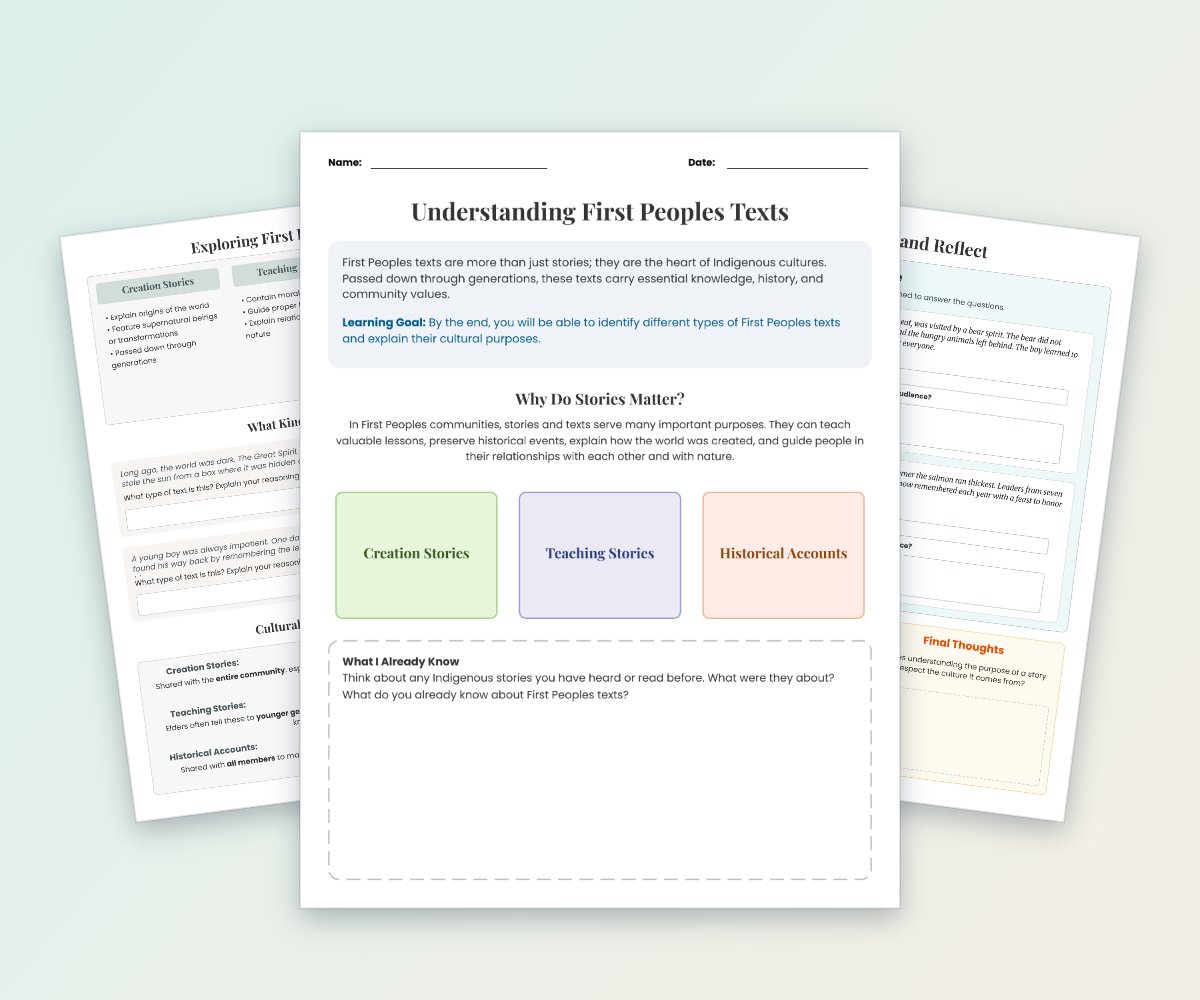
This three-page worksheet introduces creation stories, teaching stories, and historical accounts in First Peoples texts.
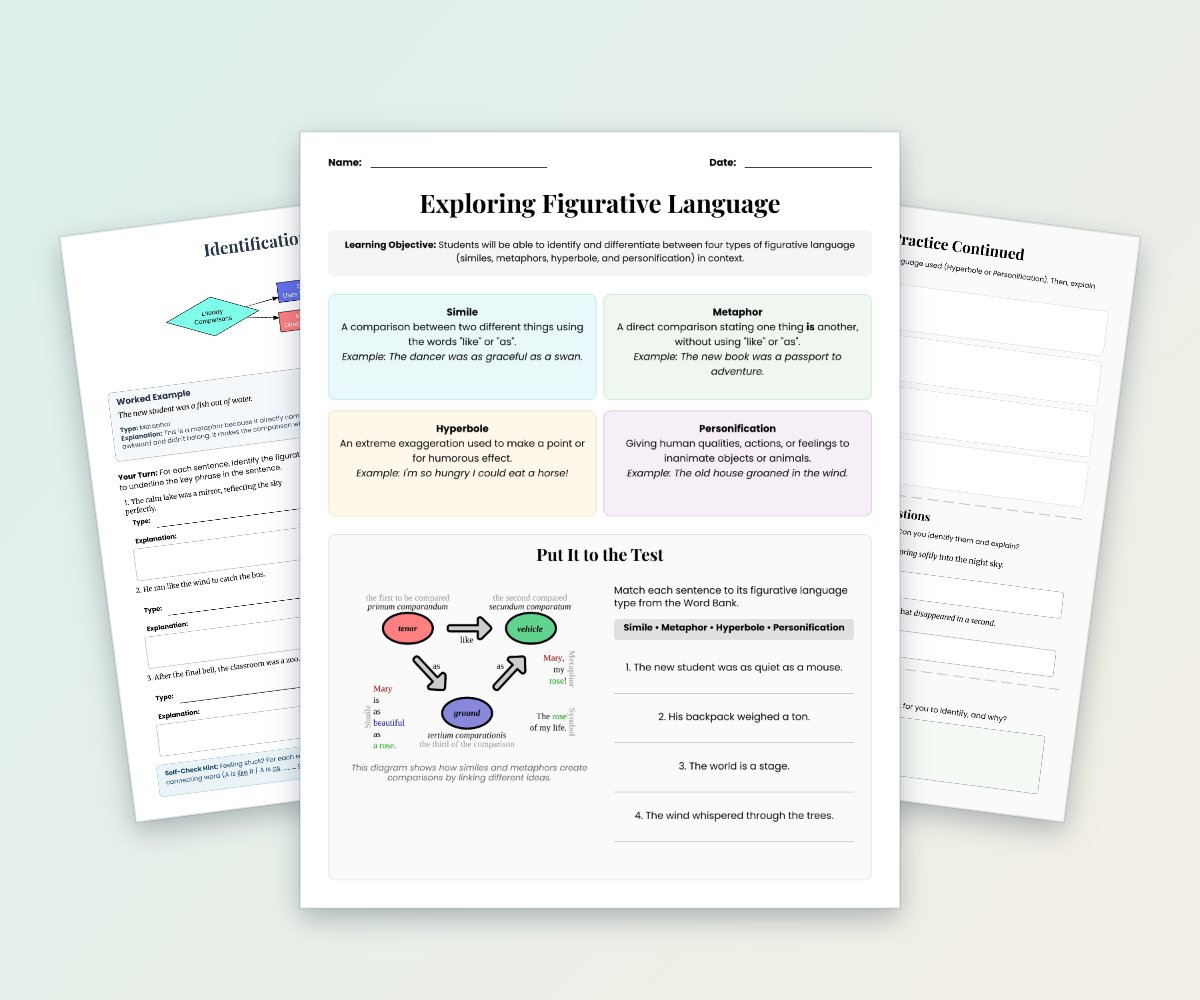
This four-page worksheet introduces similes, metaphors, hyperbole, and personification with clear definitions and examples.
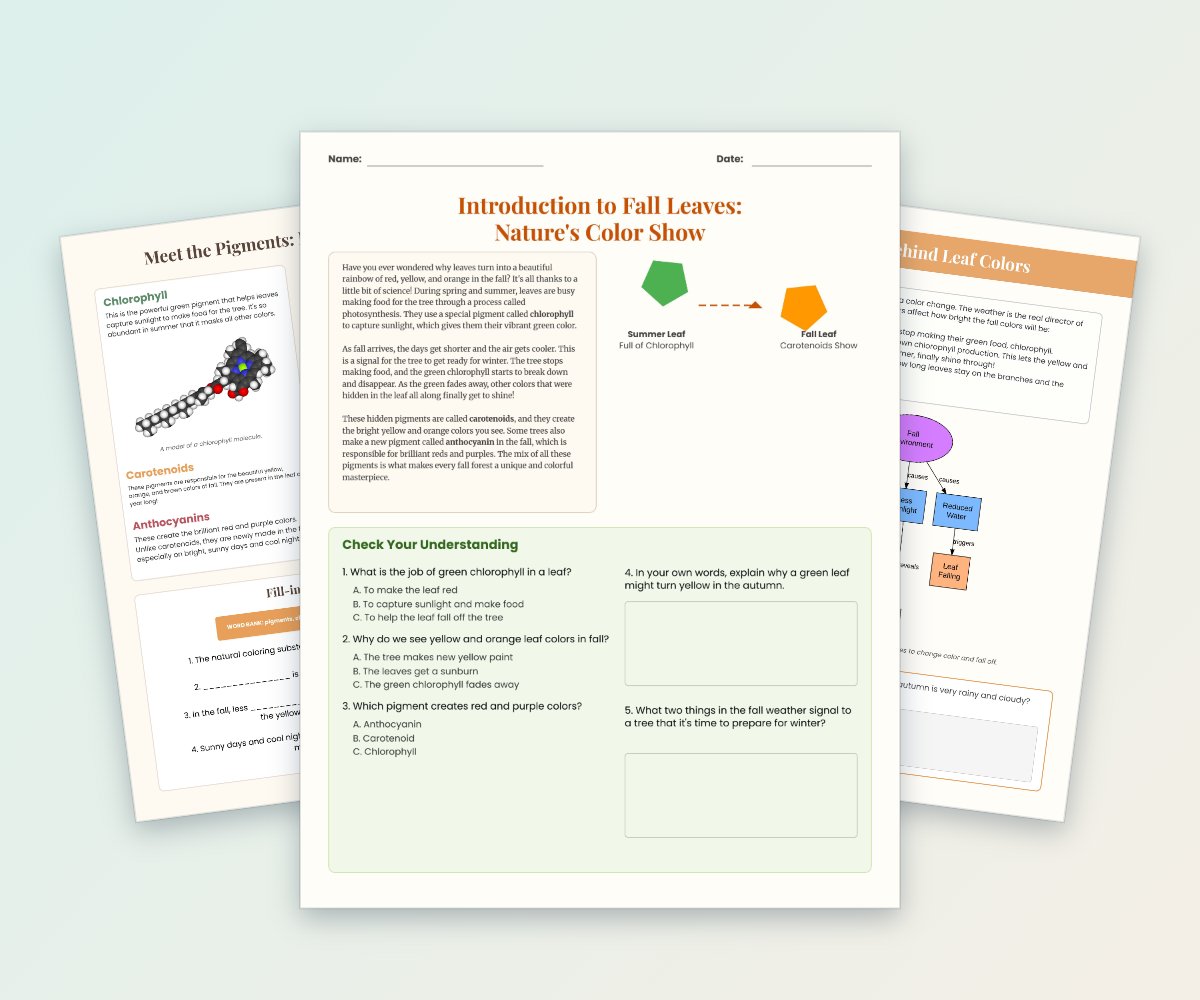
This five-page science activity pack explains why leaves change color in autumn, introducing chlorophyll, carotenoids, and anthocyanins.
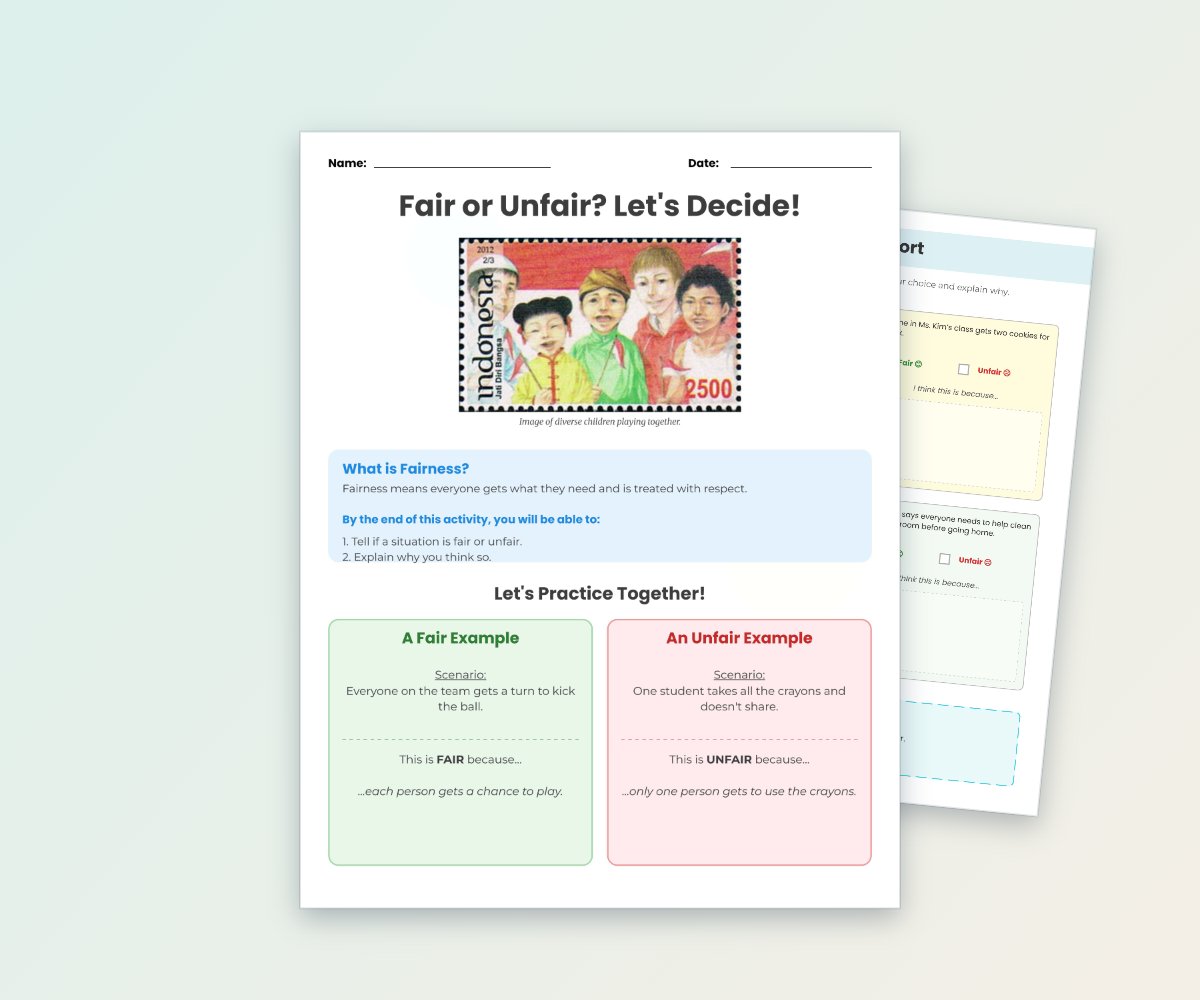
Students learn that fairness means receiving needed support and being treated with respect.
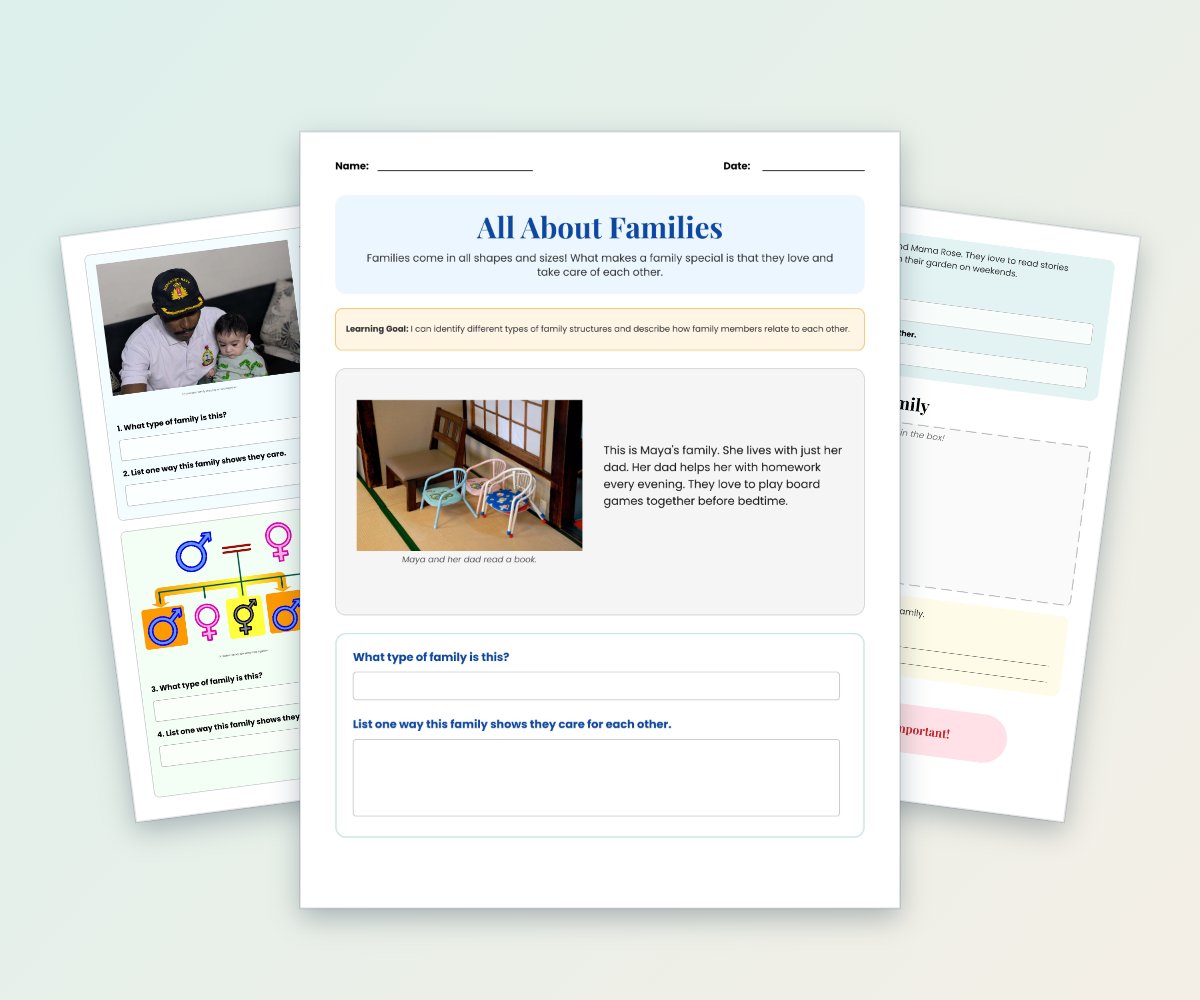
This three-page worksheet introduces students to different family structures, including single-parent, extended, nuclear, and same-sex parent families.
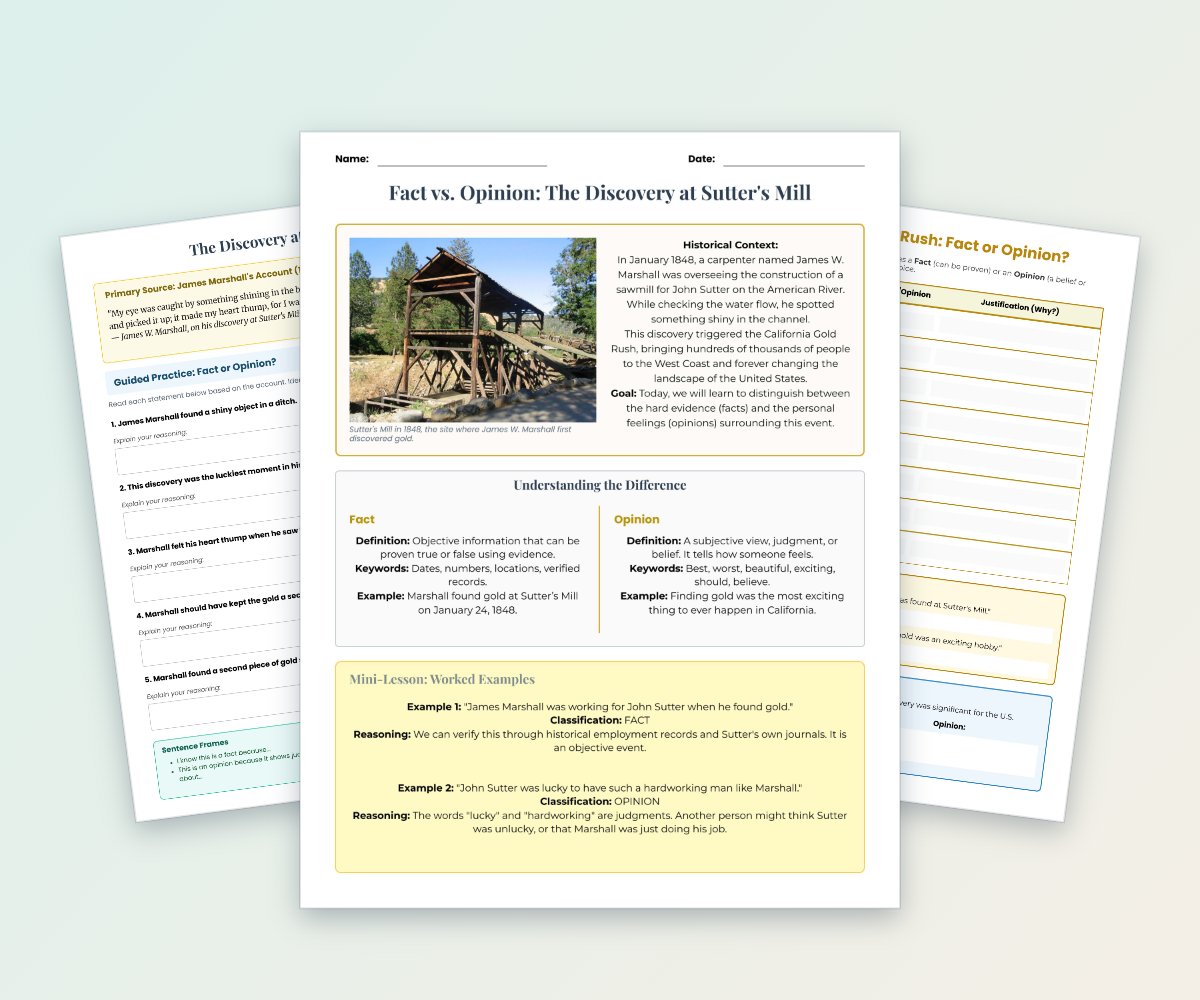
Students examine historical information and a primary-source account of James Marshall's 1848 gold discovery at Sutter's Mill.
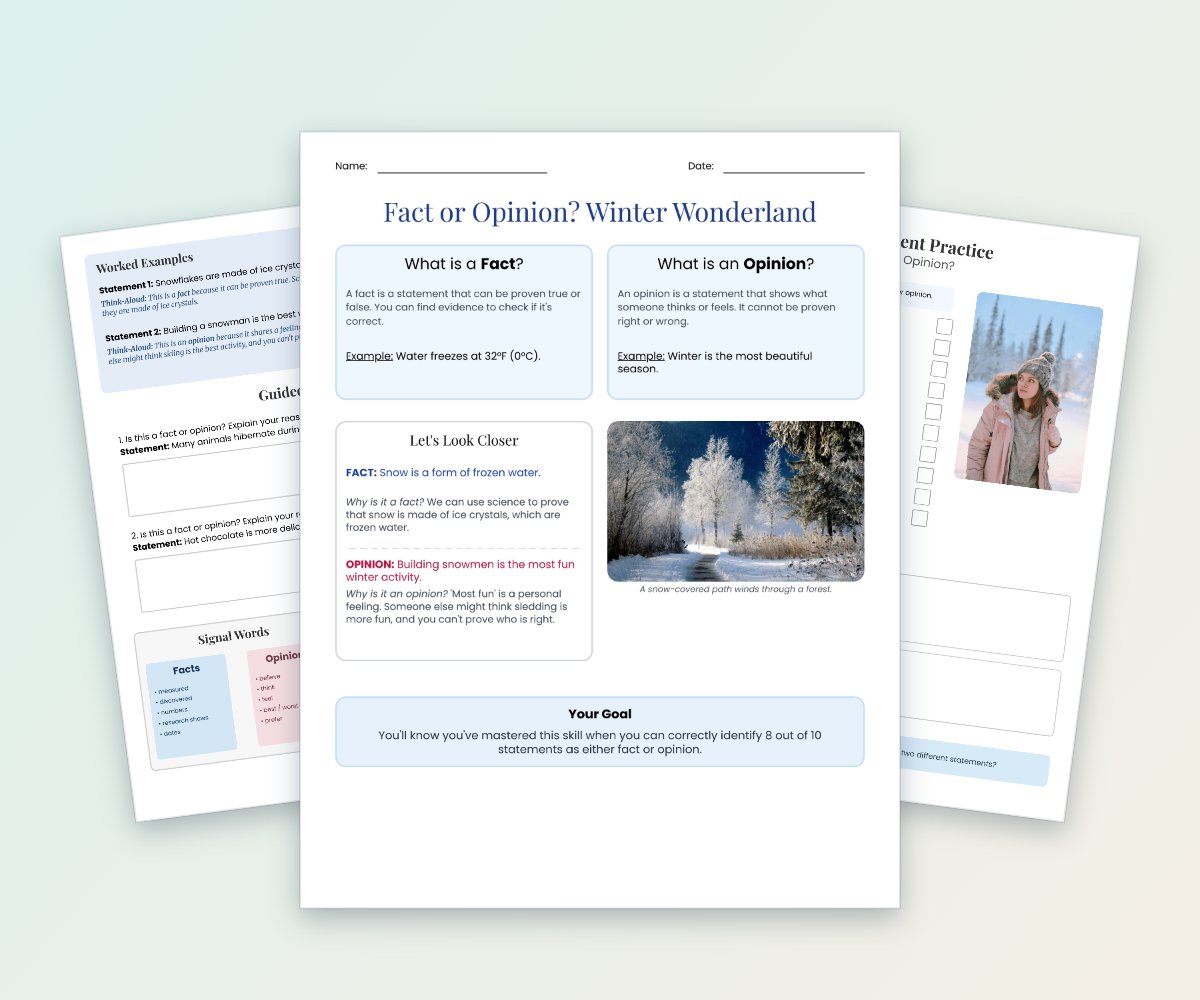
This winter-themed worksheet explains the difference between facts and opinions using clear definitions, worked examples, signal words, and guided practice.
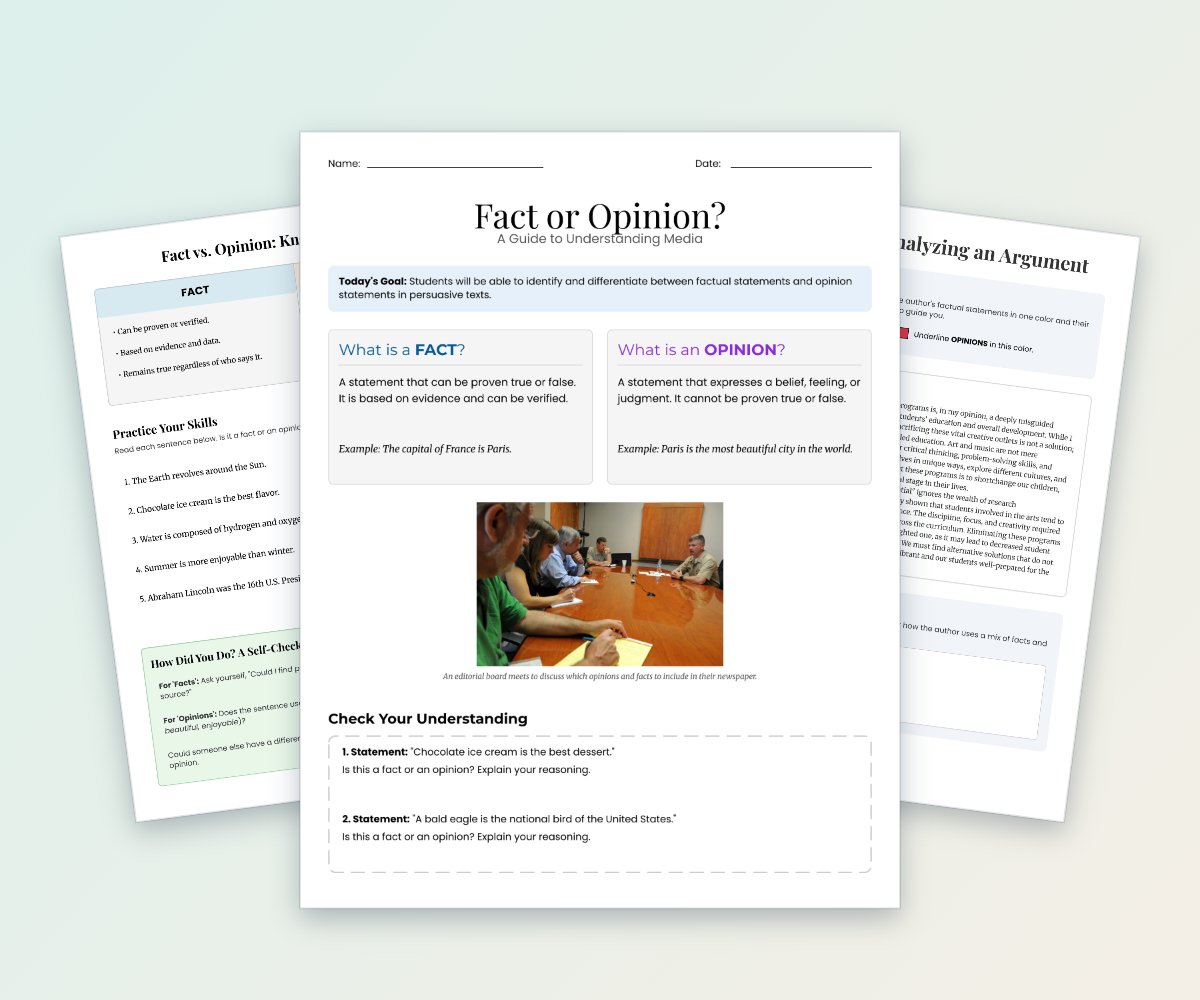
This four-page worksheet teaches students to distinguish factual statements from opinions in persuasive texts and media.
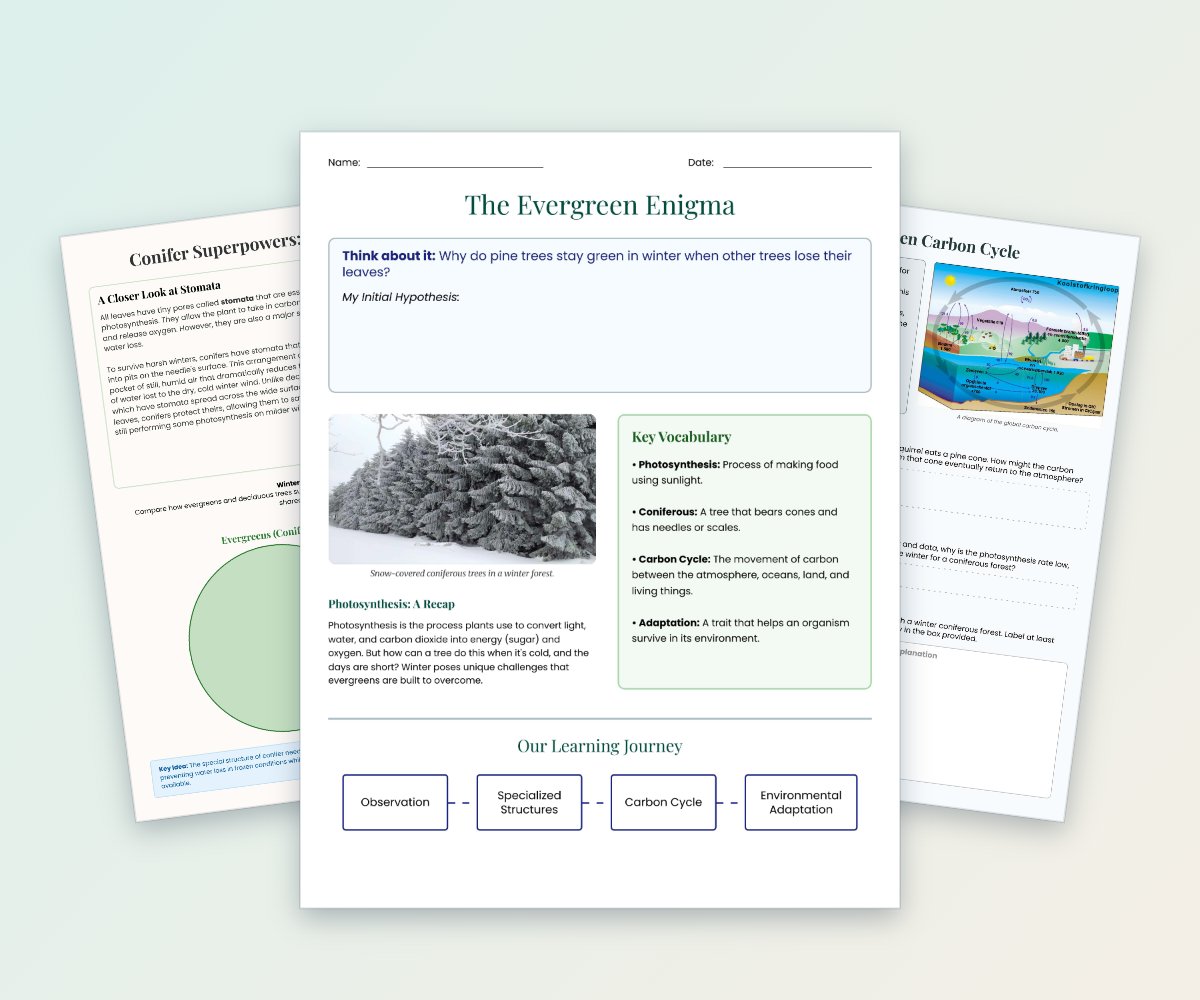
Students investigate how coniferous trees survive winter while continuing photosynthesis.
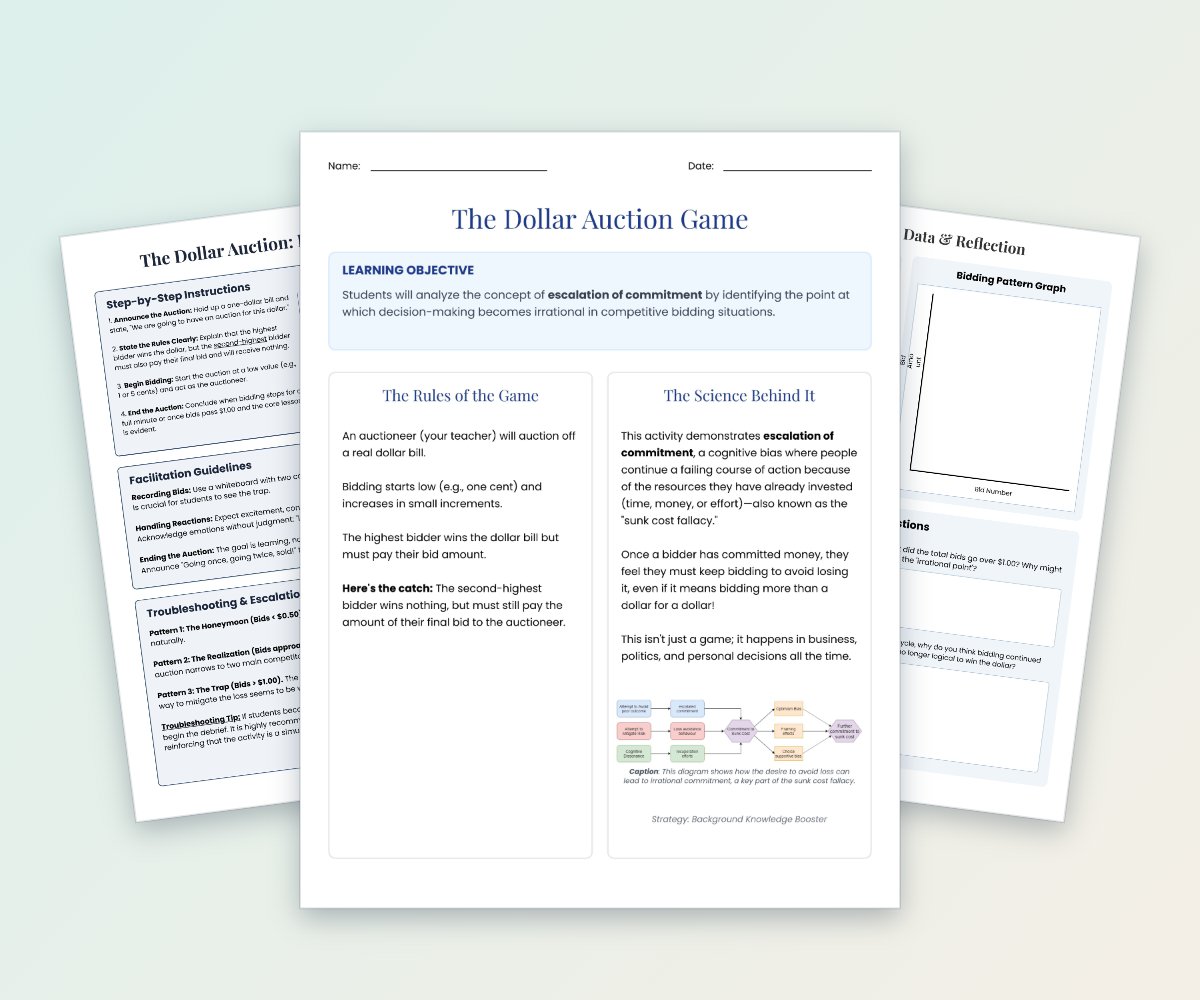
Students participate in a competitive dollar auction designed to reveal escalation of commitment and irrational bidding.
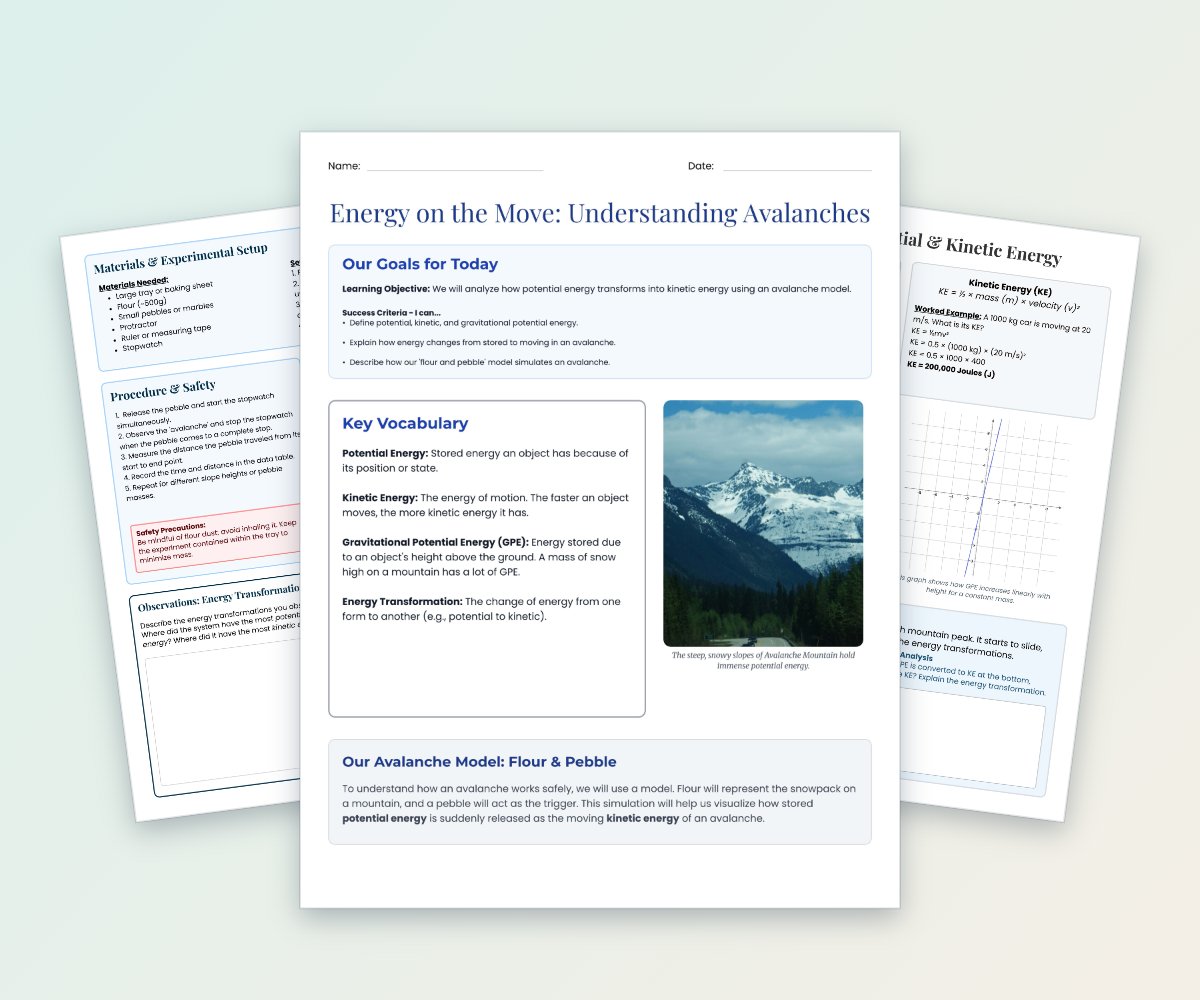
Students model an avalanche using flour and pebbles to investigate how gravitational potential energy transforms into kinetic energy.
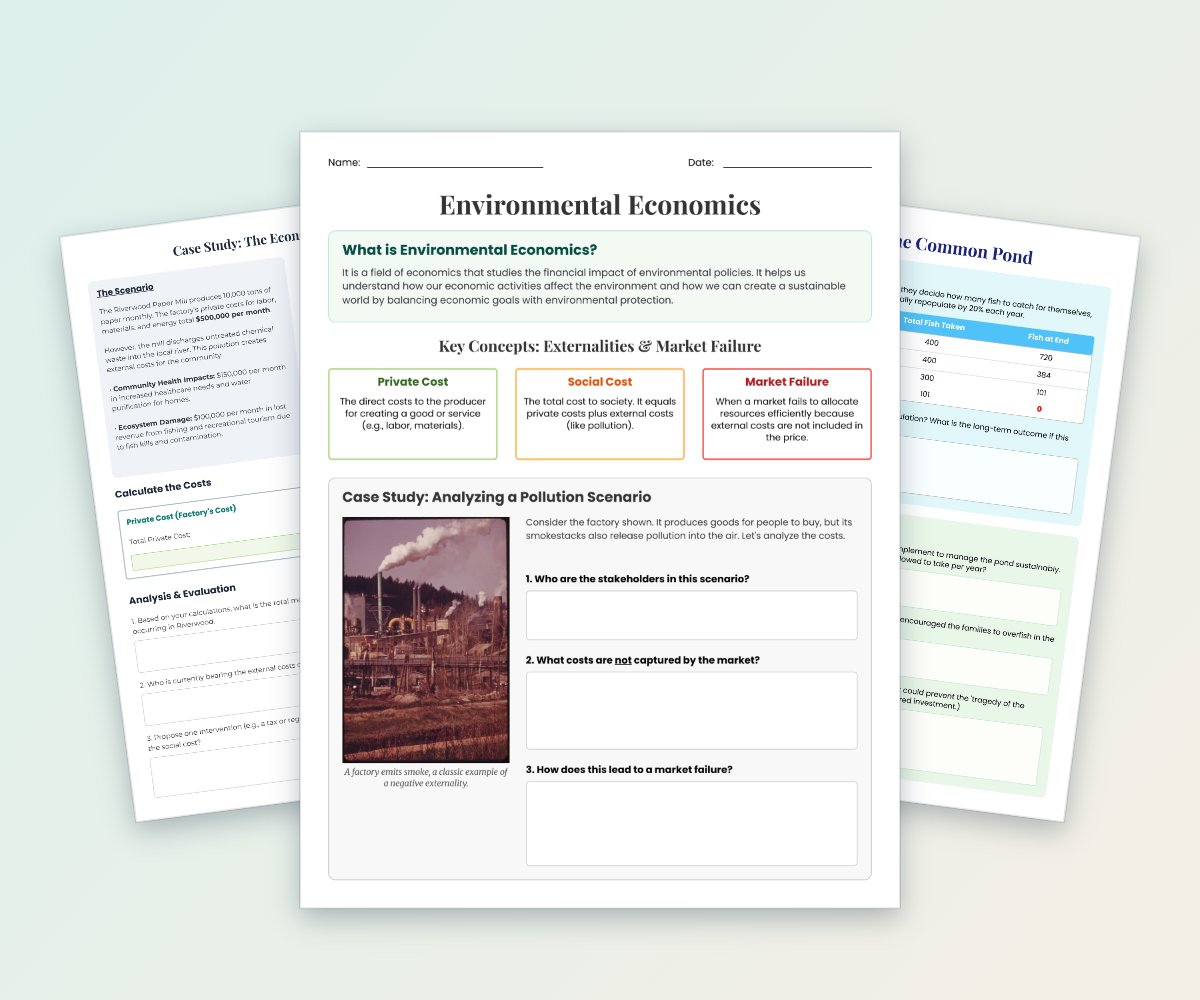
This six-page resource introduces environmental economics through externalities, private and social costs, market failure, and pollution.
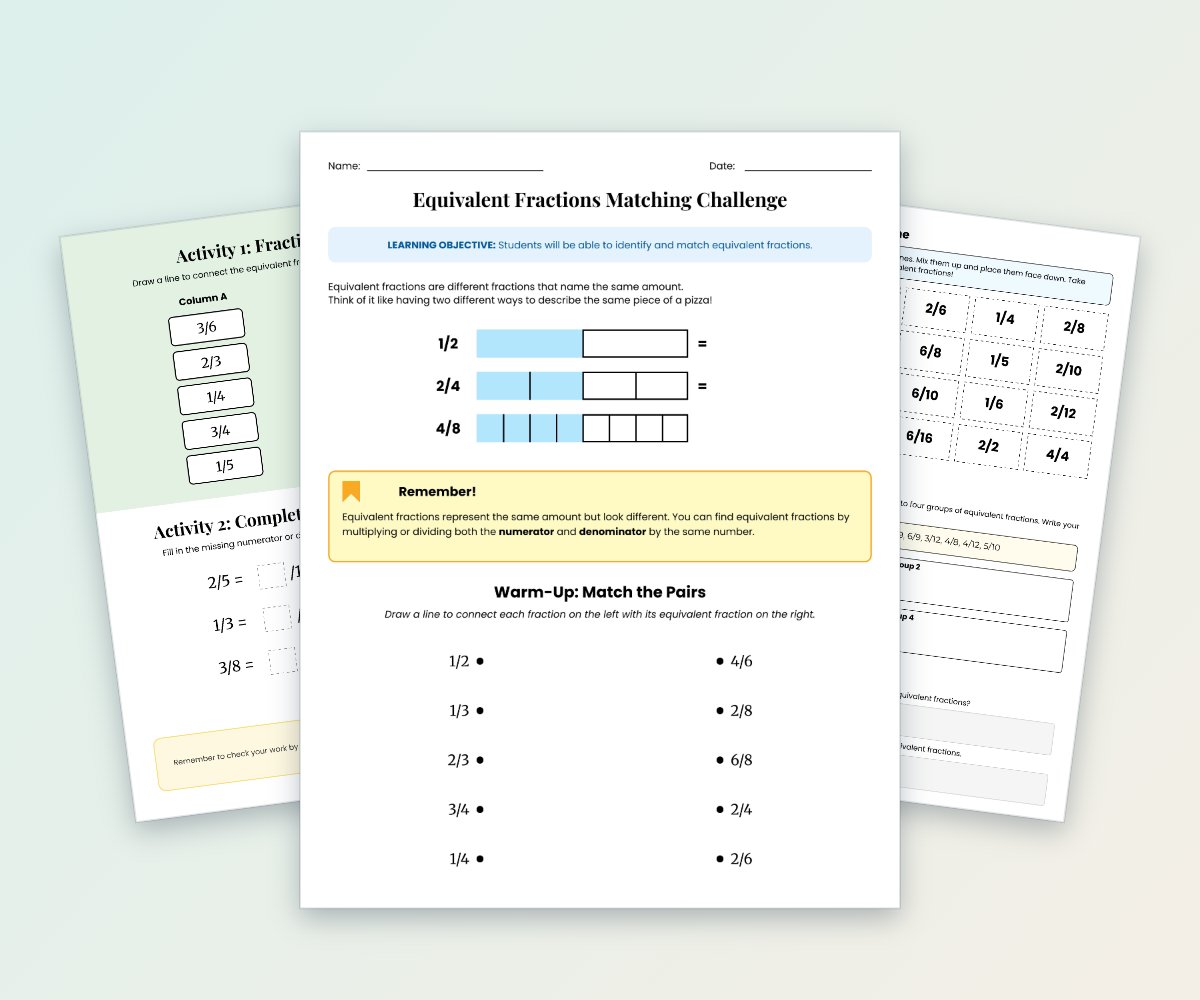
This four-page printable activity pack helps students identify, match, and complete equivalent fractions.