The Water Cycle: A Comprehensive Study Guide
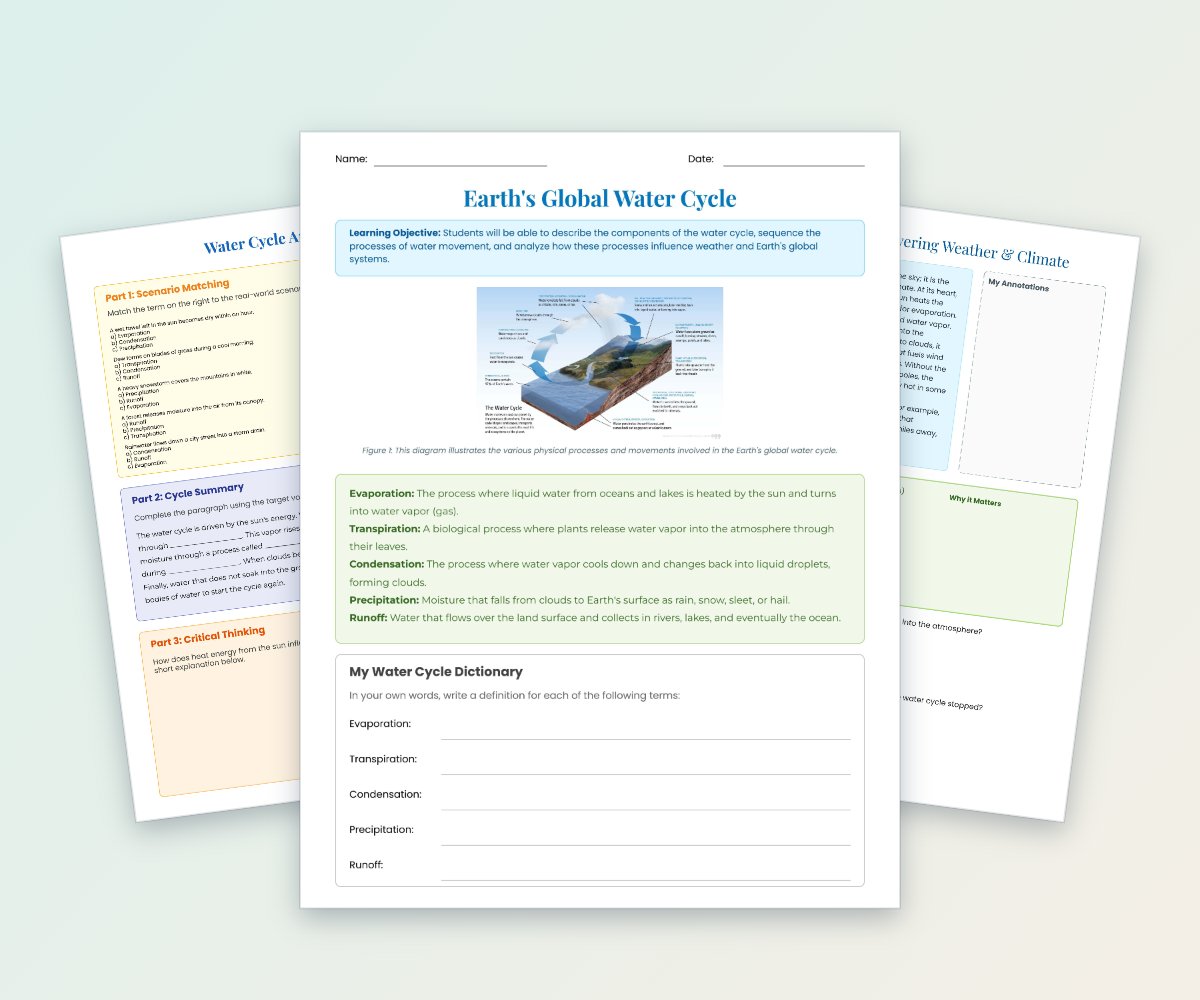
This six-page study guide introduces evaporation, transpiration, condensation, precipitation, runoff, and groundwater movement.
$4.99
Investigations, diagrams, vocabulary builders and review activities that help students think like scientists. Digital downloads, ready to print or project.
This six-page study guide introduces evaporation, transpiration, condensation, precipitation, runoff, and groundwater movement.
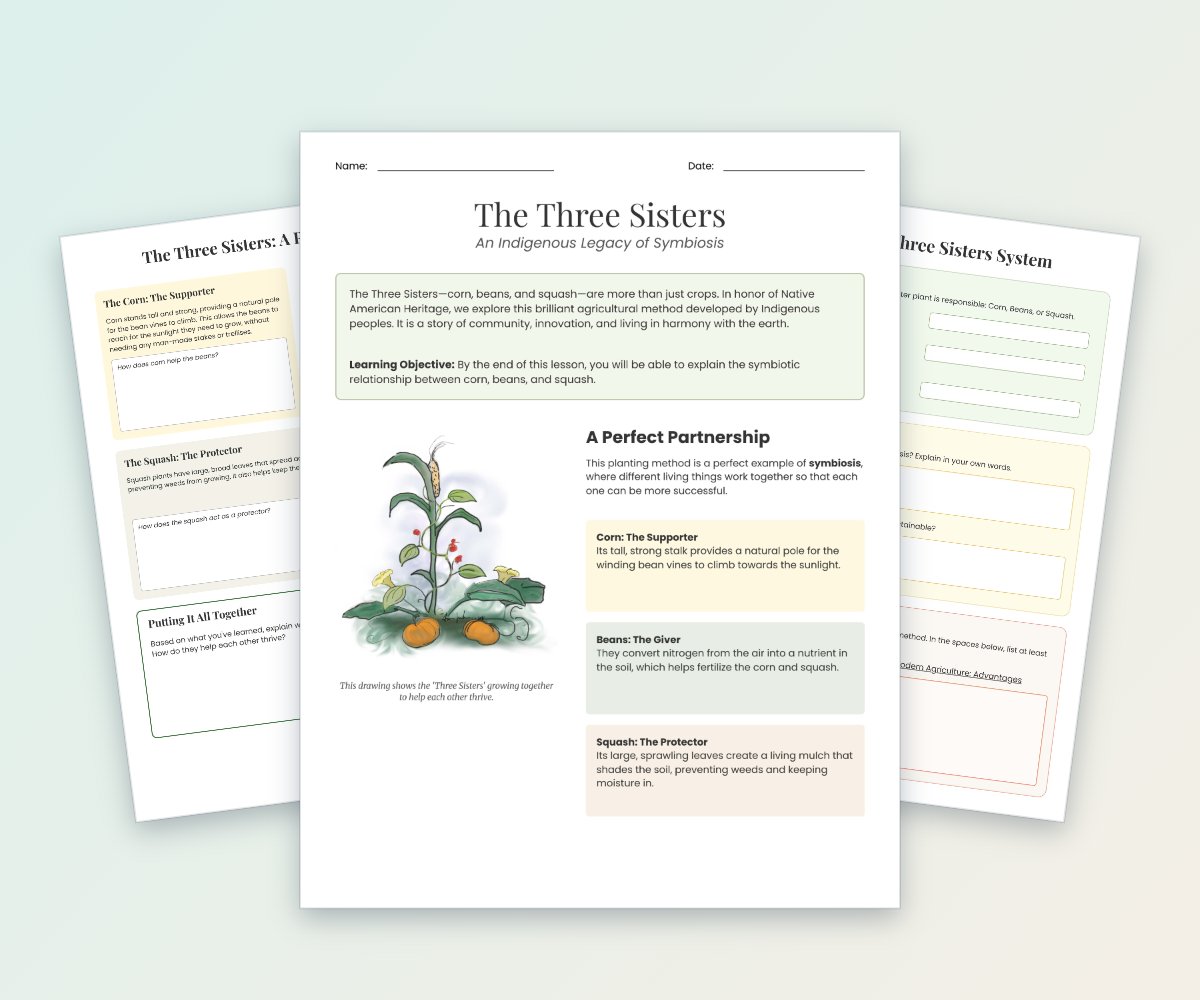
This four-page lesson explores how corn, beans, and squash support one another in the Three Sisters planting system.
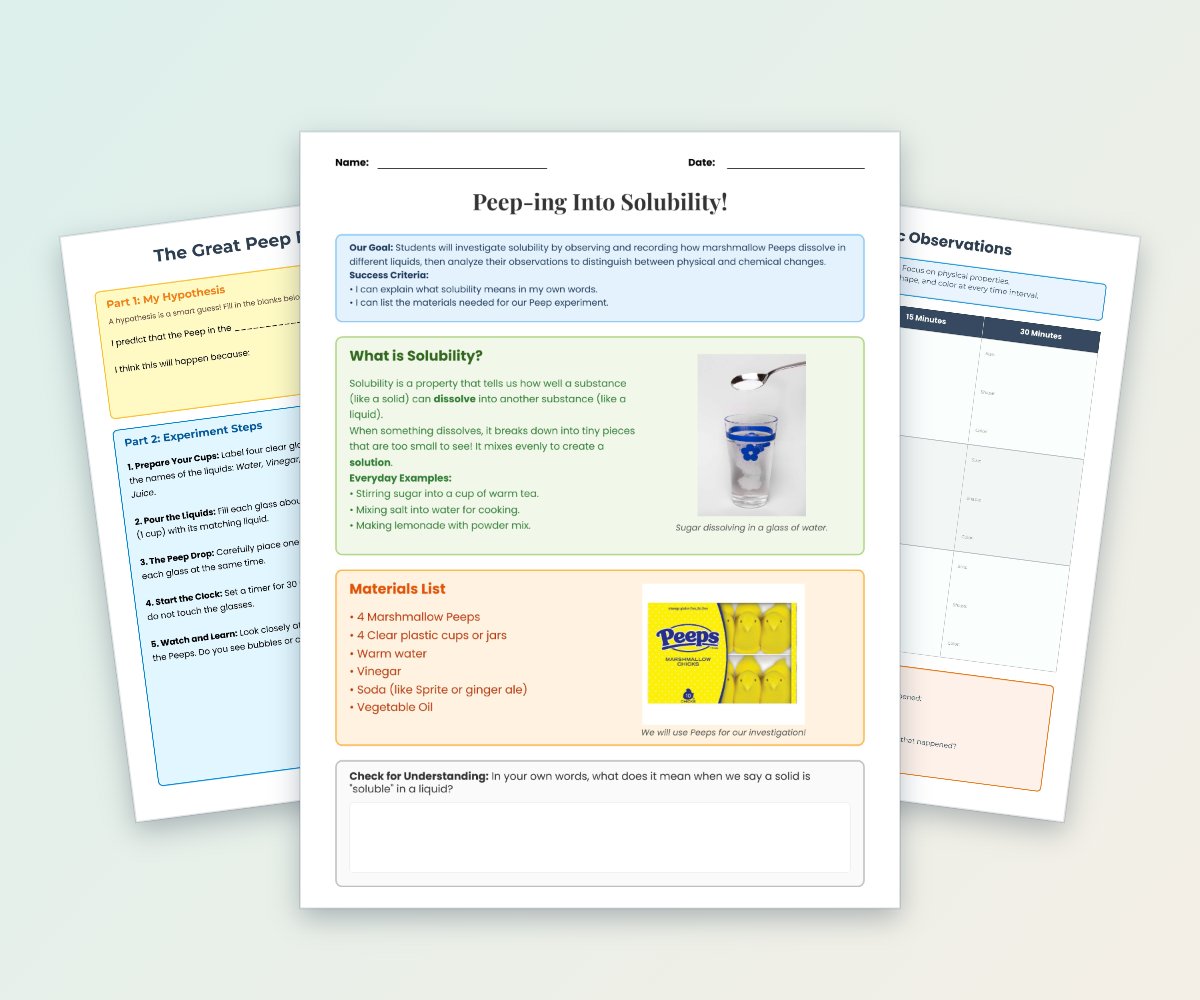
Students investigate how marshmallow Peeps dissolve in different liquids, making predictions and recording changes in size, shape, color, and other observations.
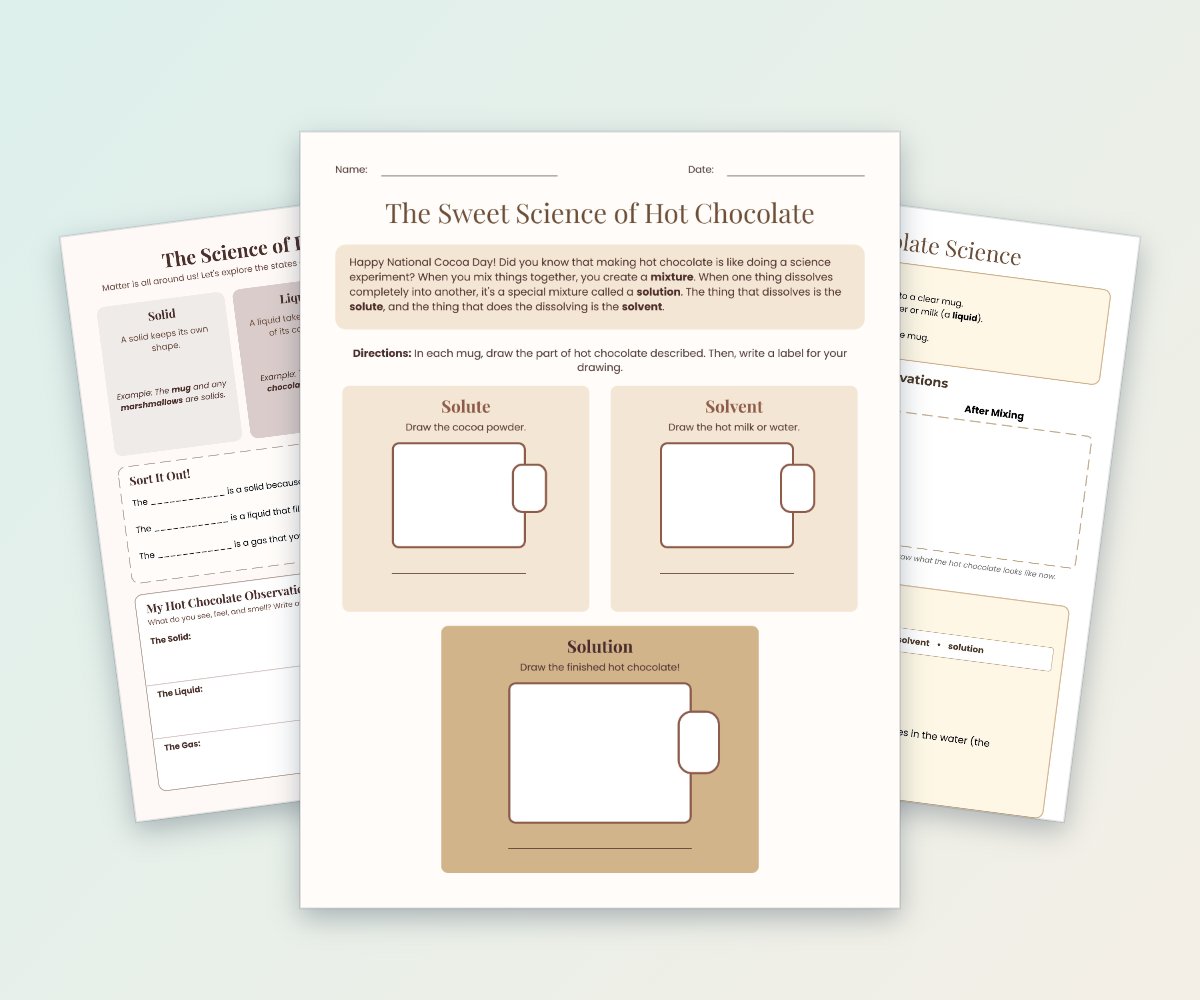
This engaging hot chocolate-themed science activity introduces students to solids, liquids, gases, mixtures, solutions, solutes, and solvents.
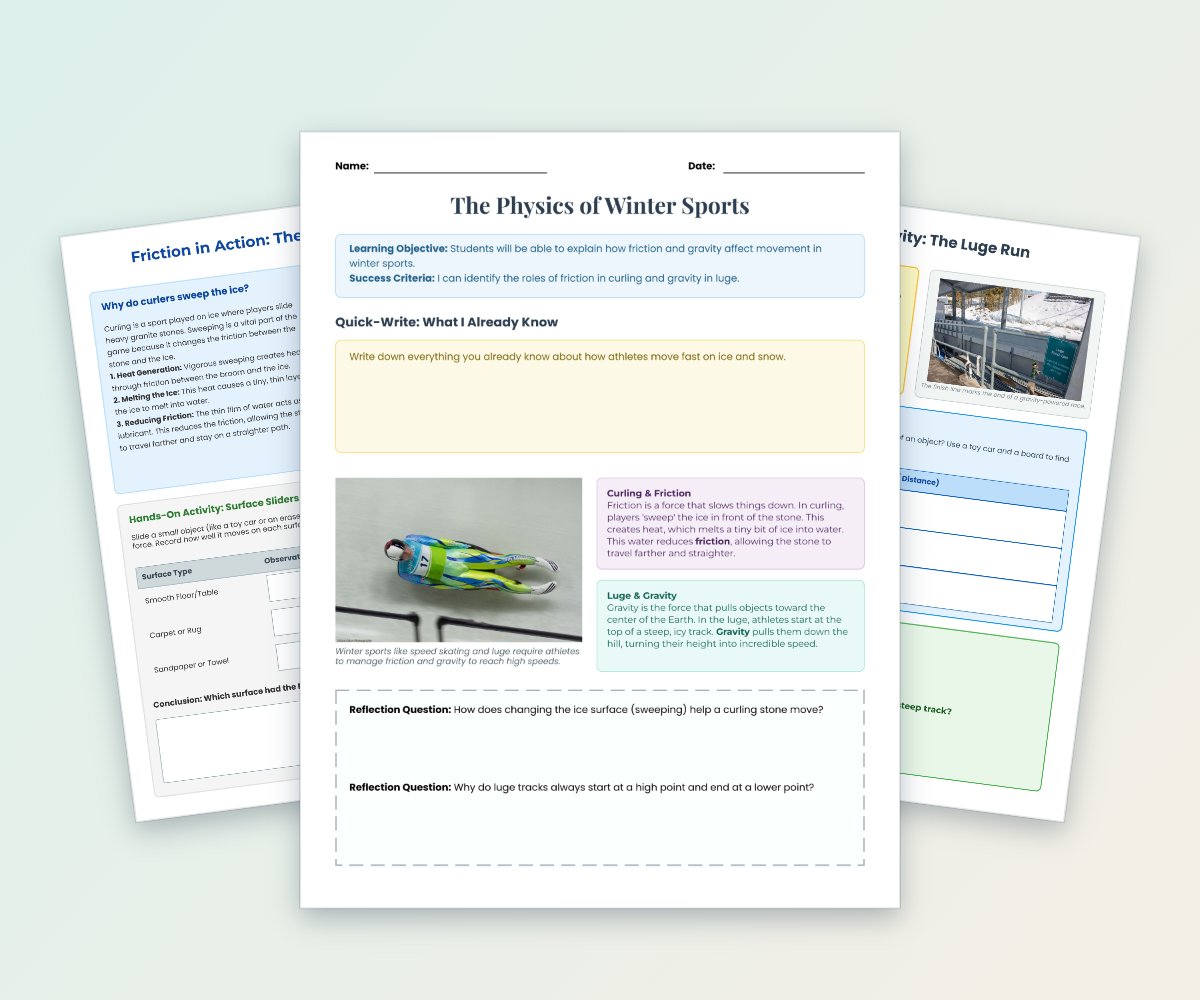
Students explore how friction affects curling stones and how gravity powers luge sleds.
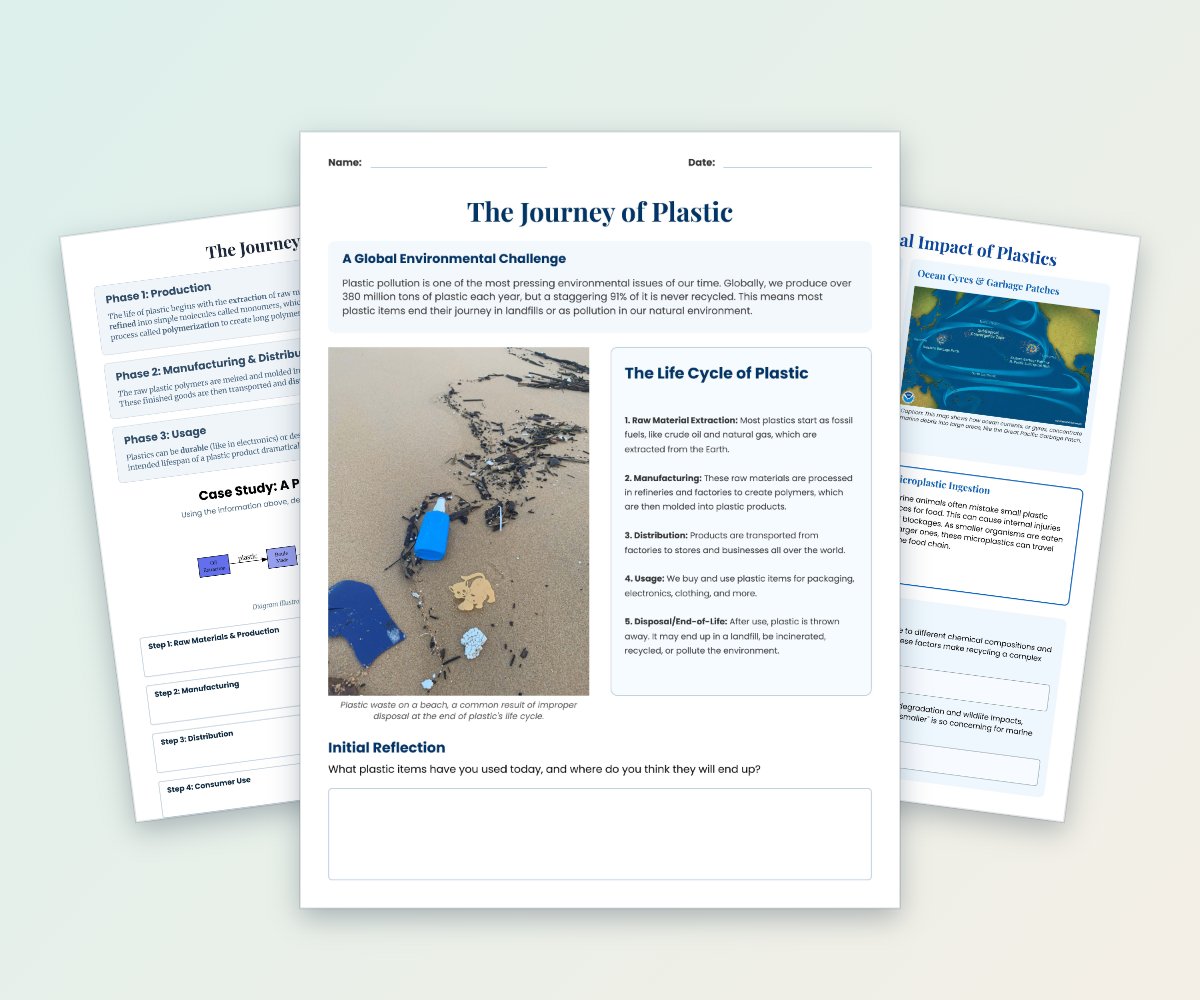
Students explore how plastic is extracted, manufactured, distributed, used, and discarded.
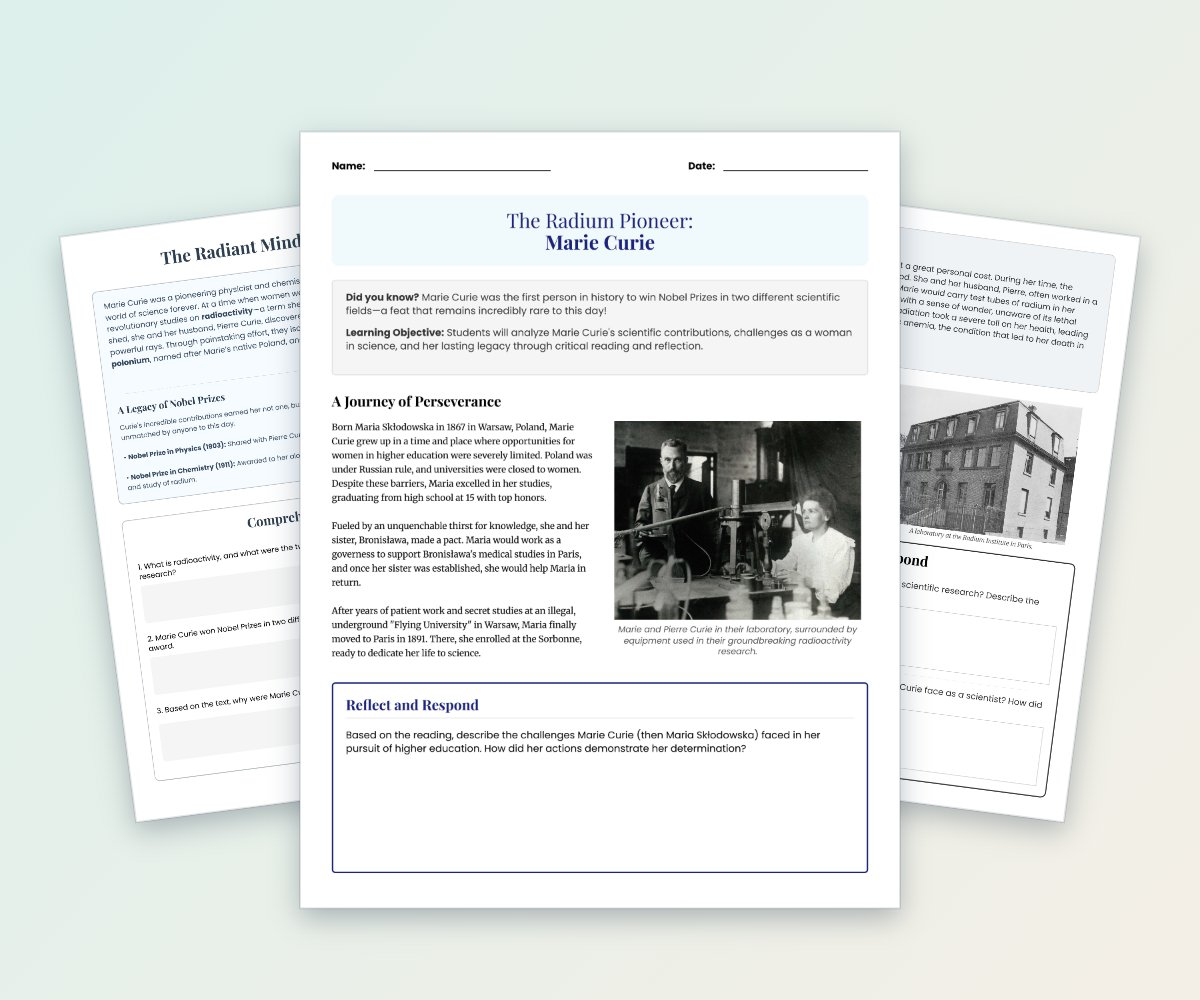
Students read about Marie Curie’s education, perseverance, research on radioactivity, and Nobel Prize achievements.
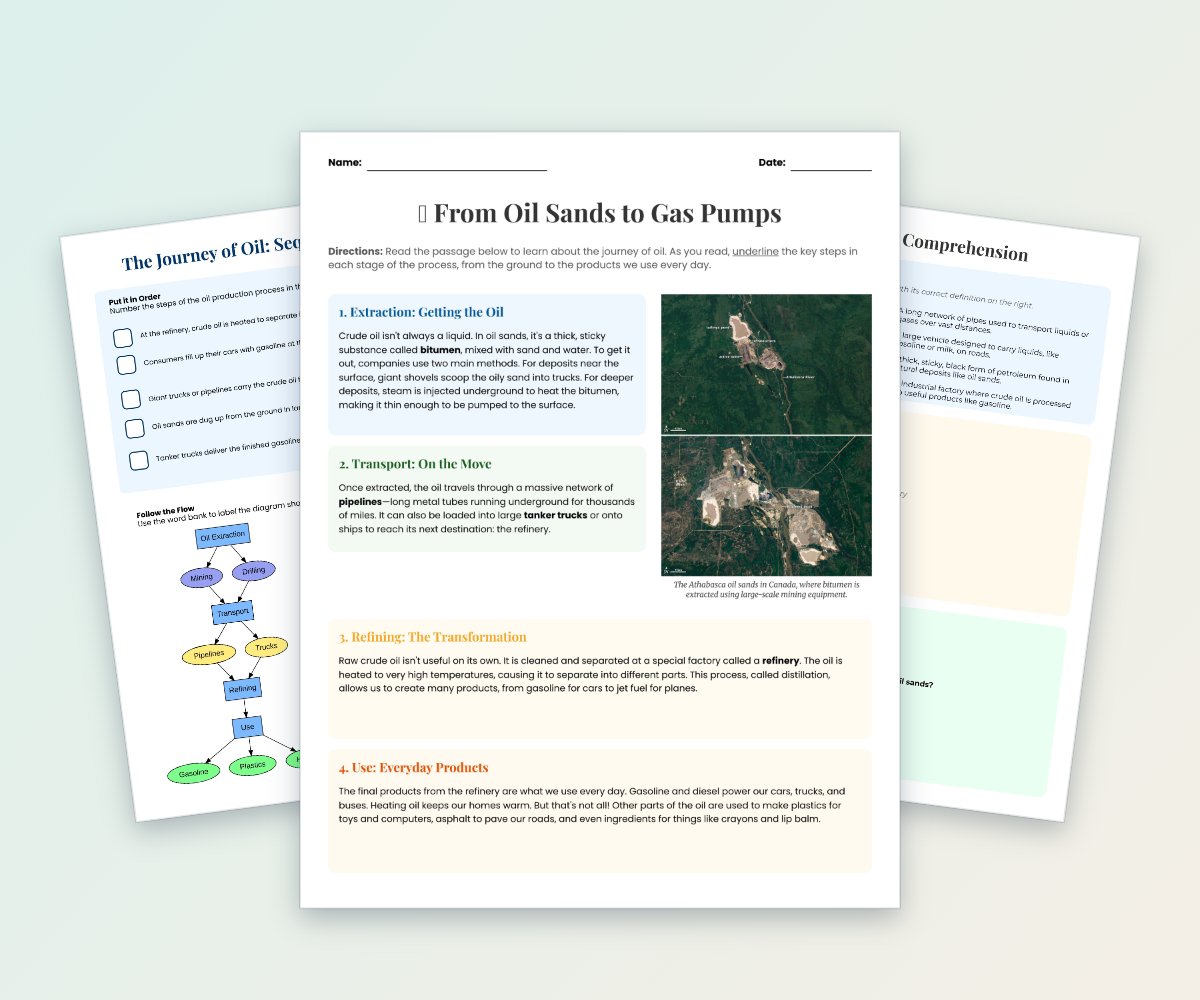
Students read an informational passage about oil sands, extraction, transportation, refining, and everyday petroleum products.
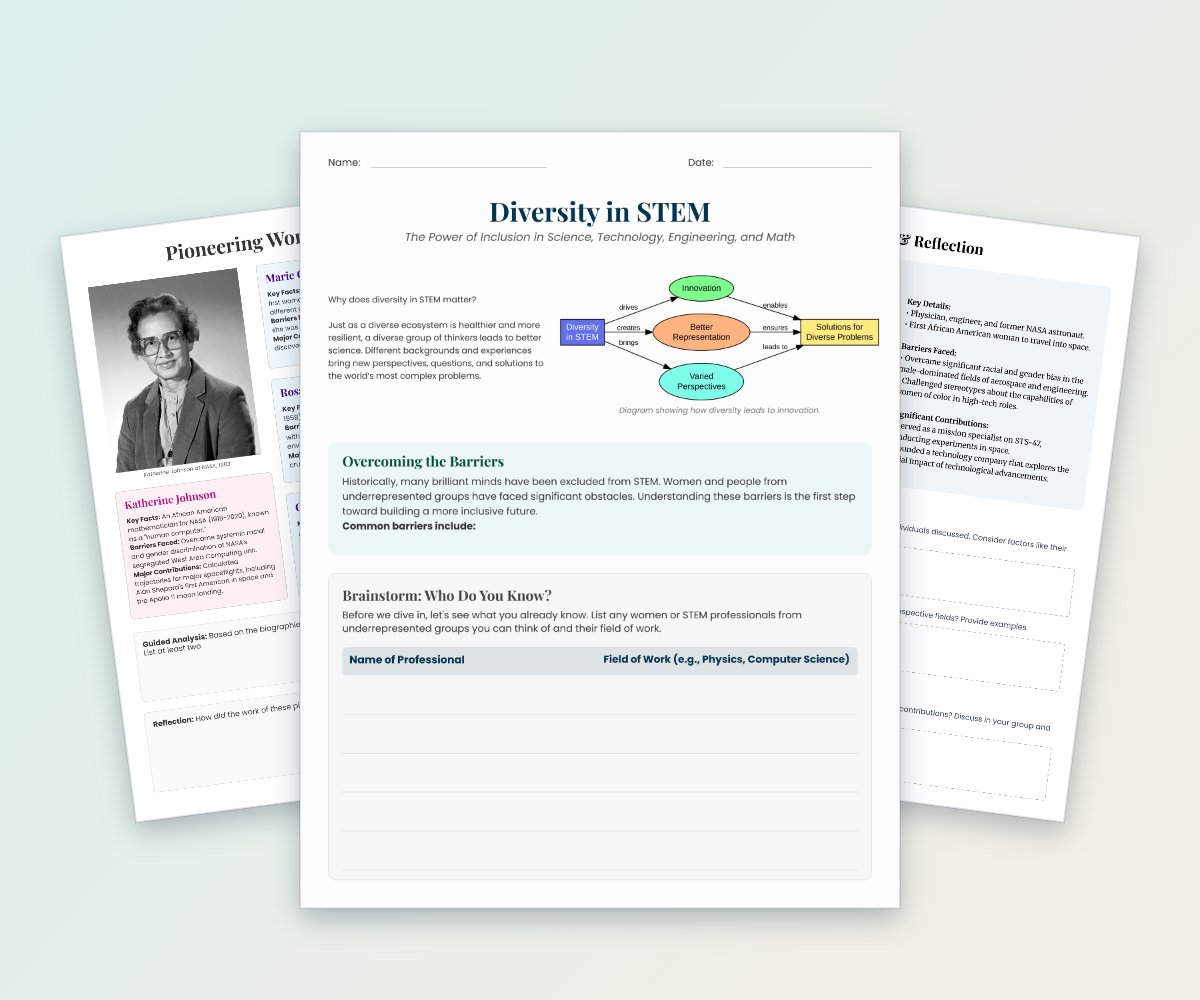
This four-page worksheet explores why diversity strengthens science, technology, engineering, and mathematics.
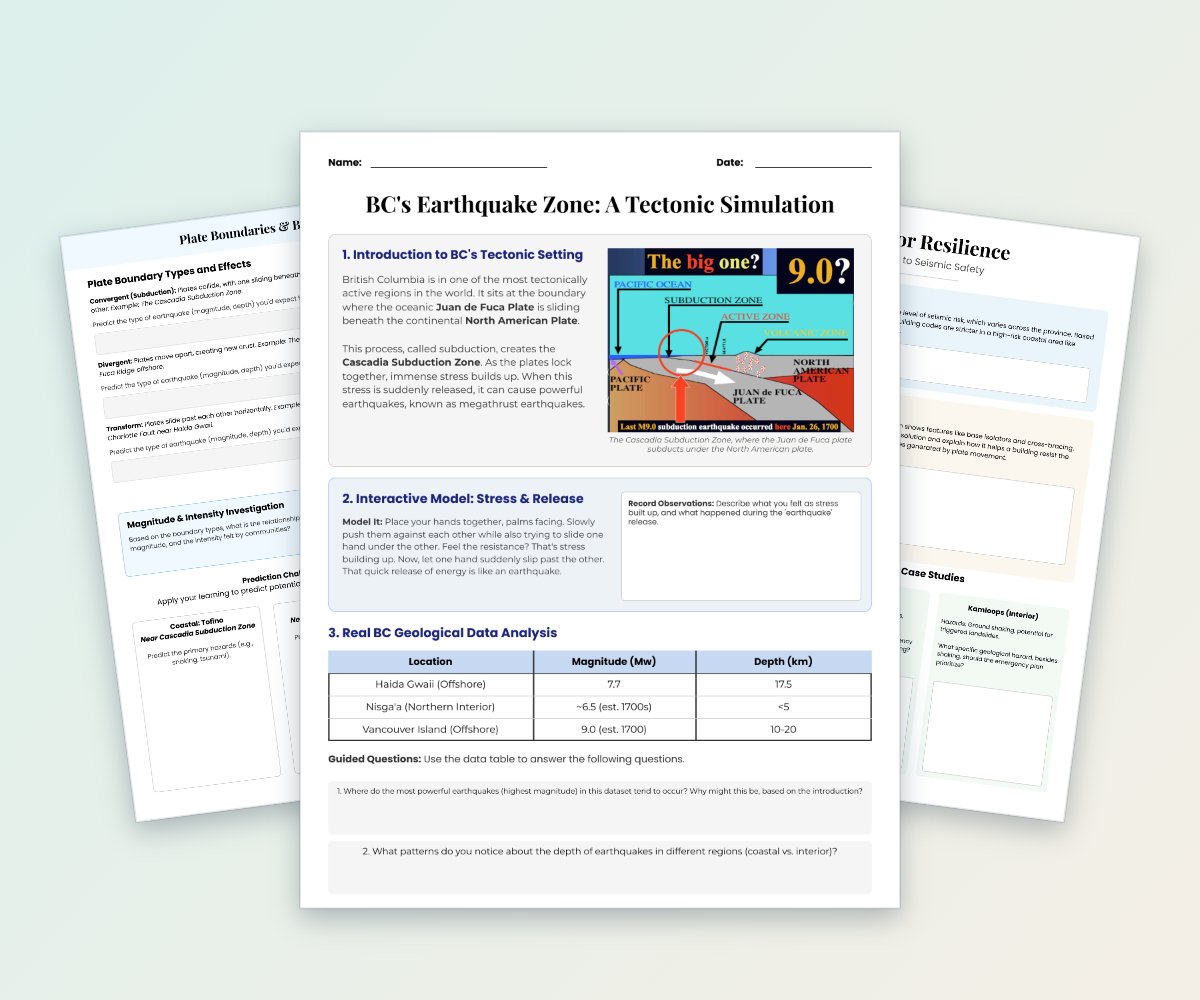
Students explore British Columbia’s tectonic setting through a hands-on stress-and-release simulation, real earthquake data, and guided questions.
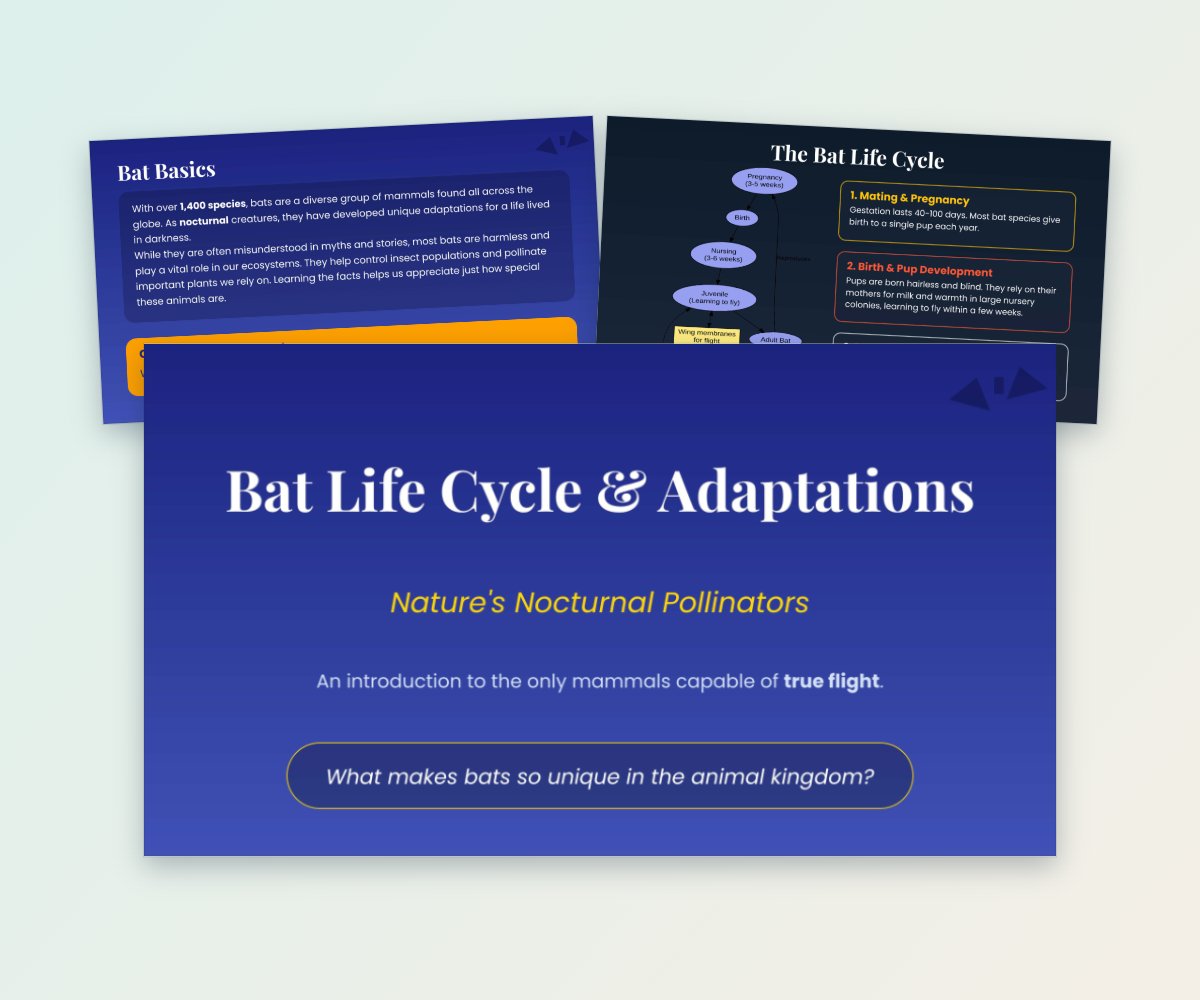
This classroom resource introduces bat basics, nocturnal adaptations, life cycles, ecological roles, and common myths.
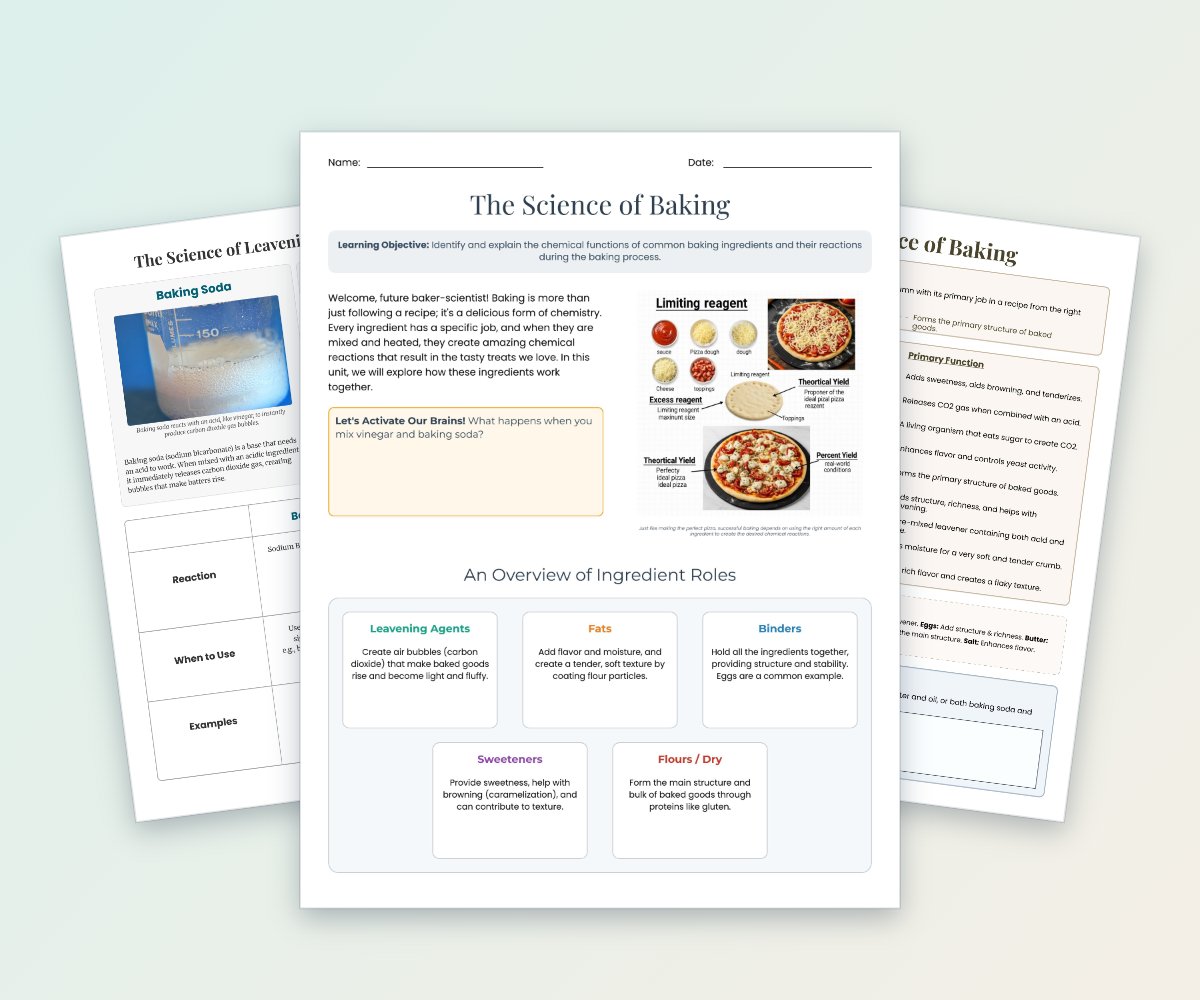
This student worksheet introduces the chemistry of baking, including ingredient functions, limiting reagents, and chemical reactions.
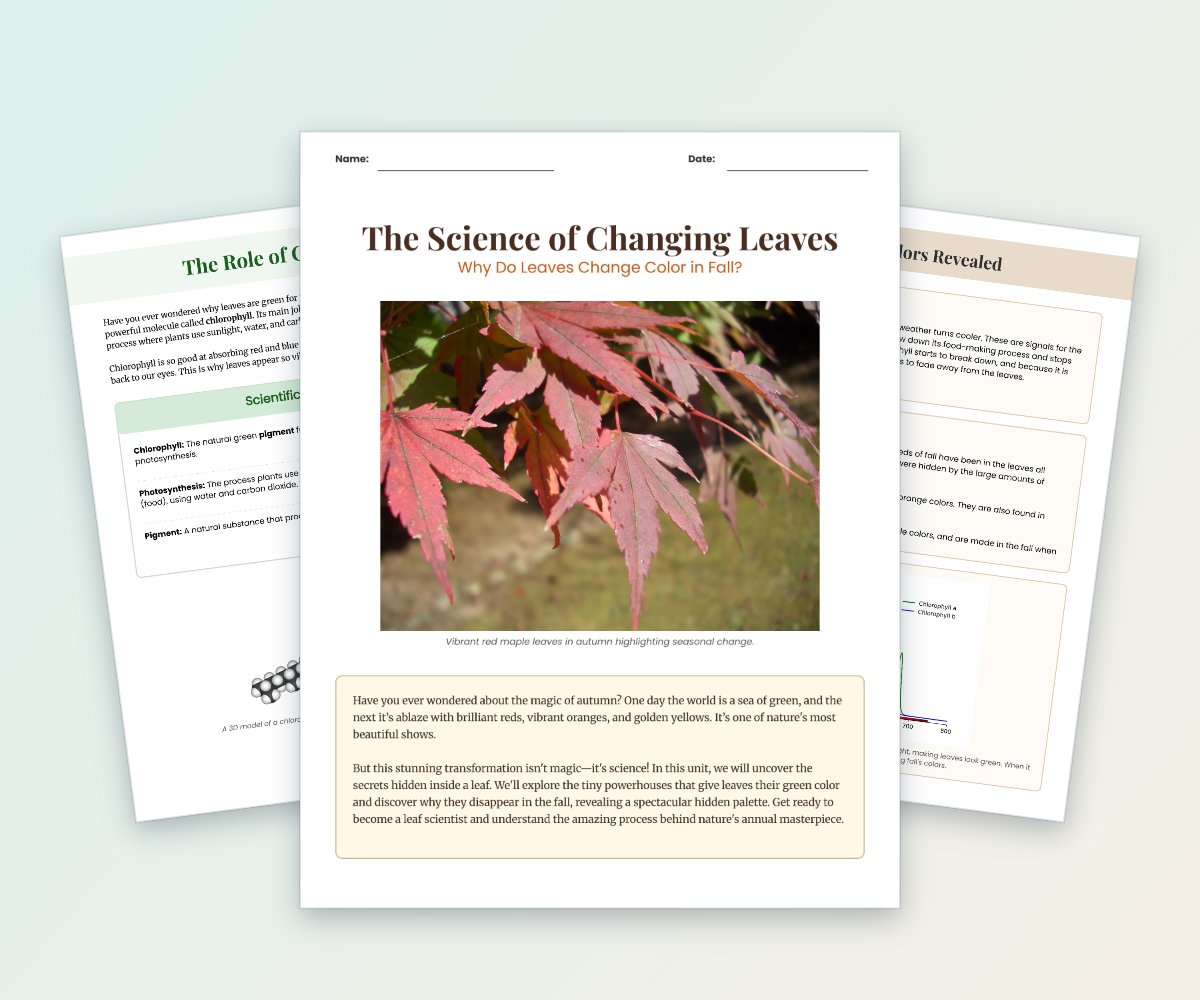
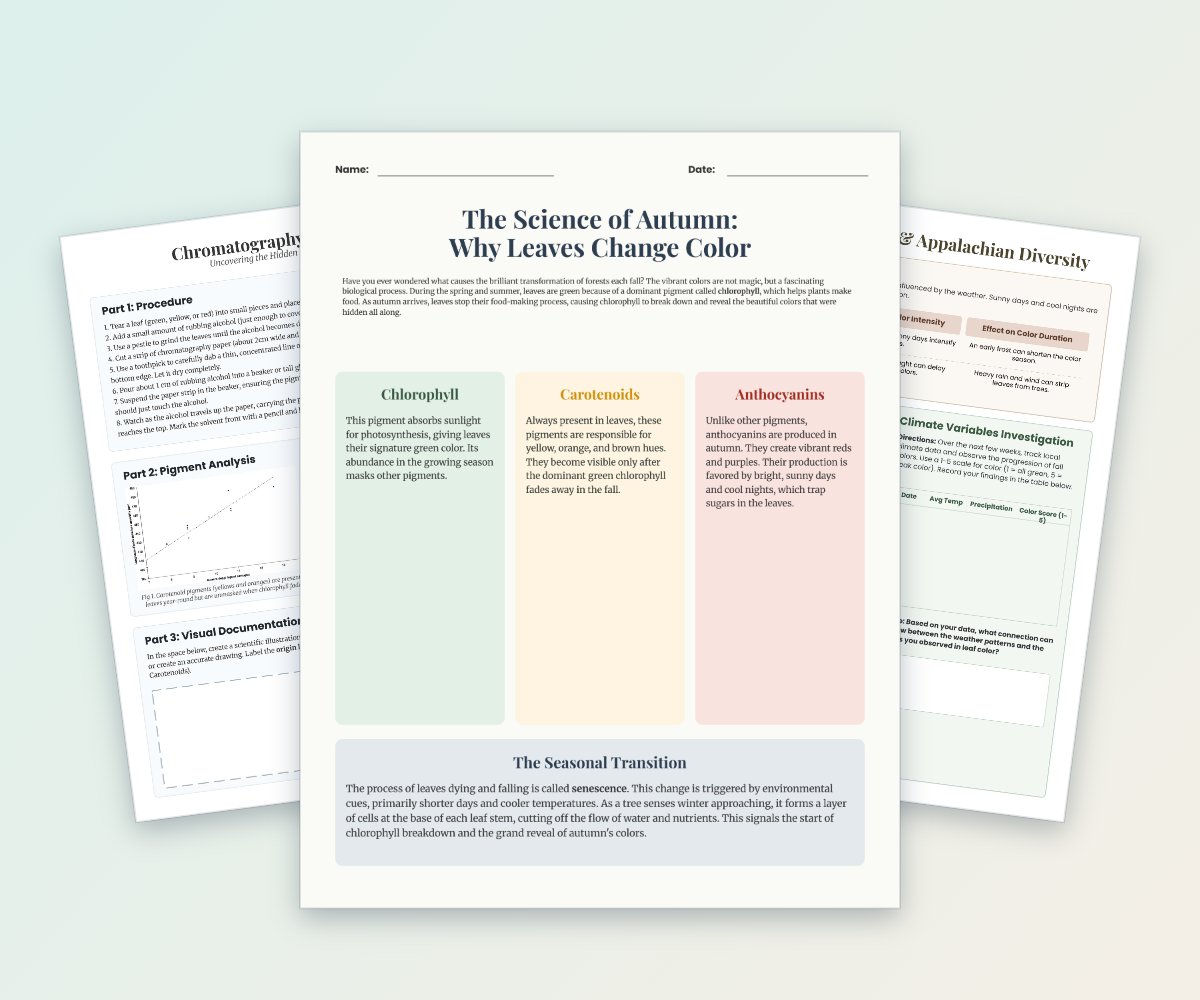
This six-page science resource explains why leaves change color in fall, including the roles of chlorophyll, photosynthesis, carotenoids, and anthocyanins.
Students explore why leaves change color by learning about chlorophyll, carotenoids, anthocyanins, and seasonal senescence.
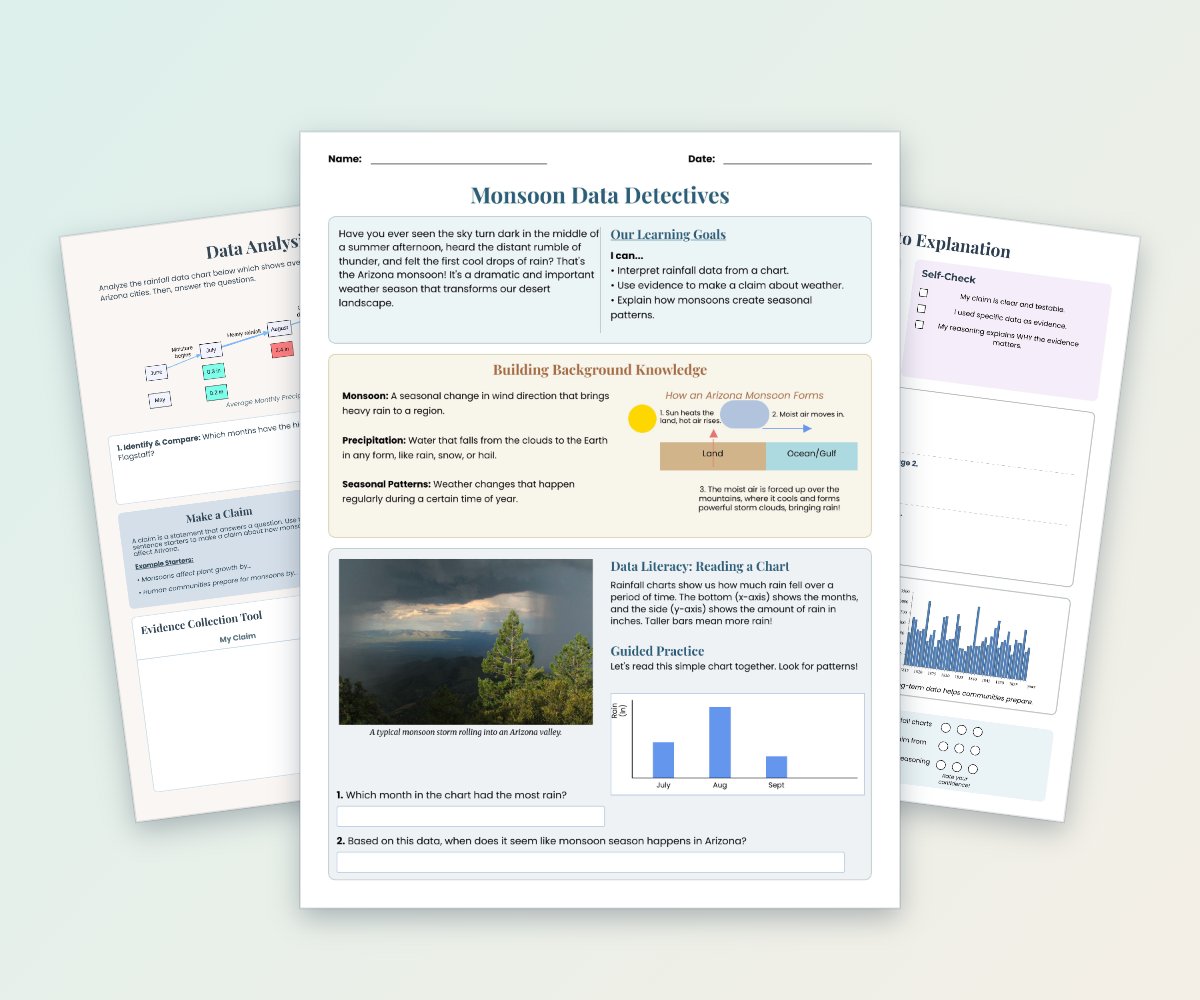
Students learn how Arizona monsoons form, interpret precipitation charts, identify seasonal patterns, and compare rainfall across Arizona cities.
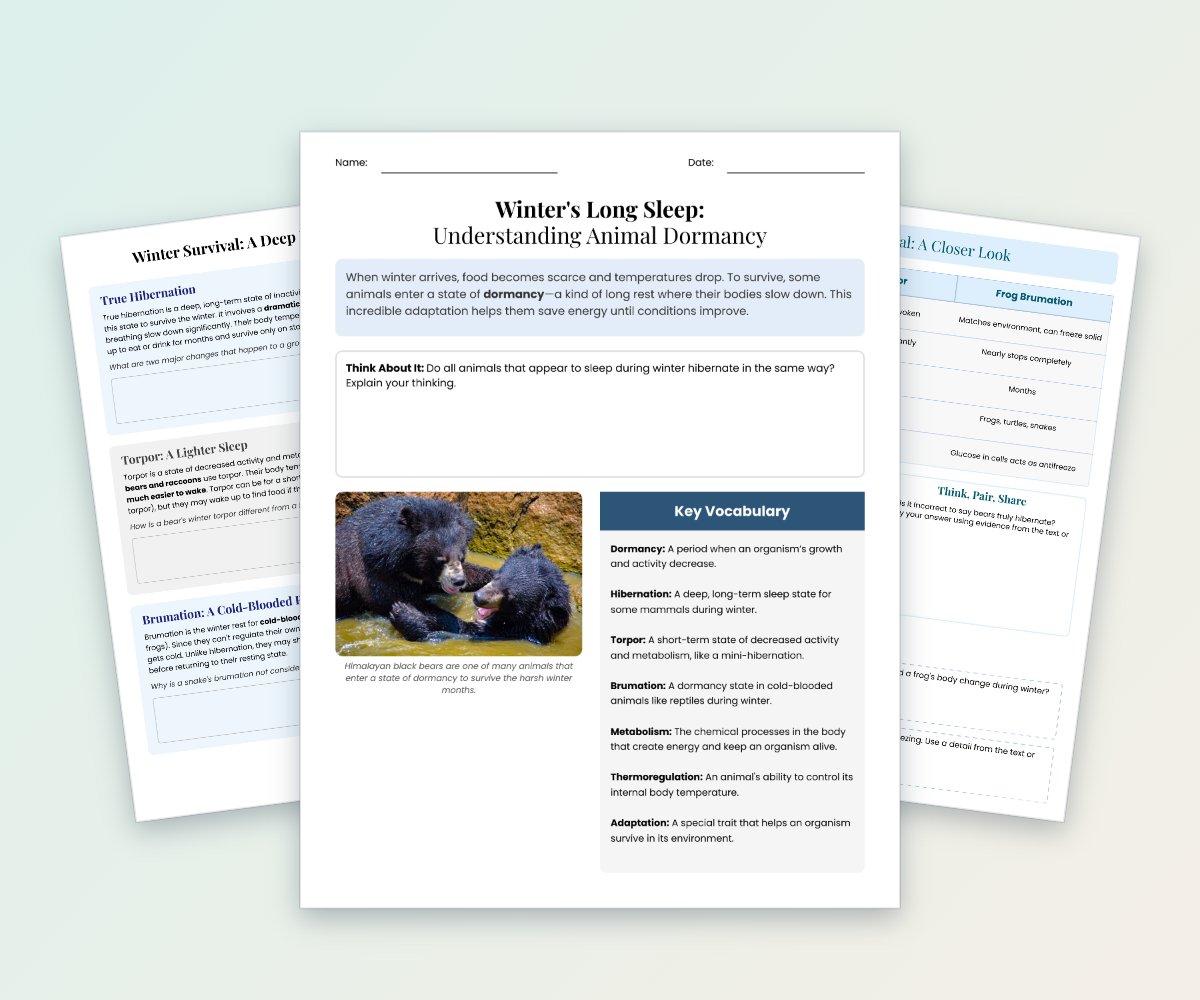
This four-page science resource introduces dormancy, hibernation, torpor, and brumation using clear explanations, vocabulary, and examples.
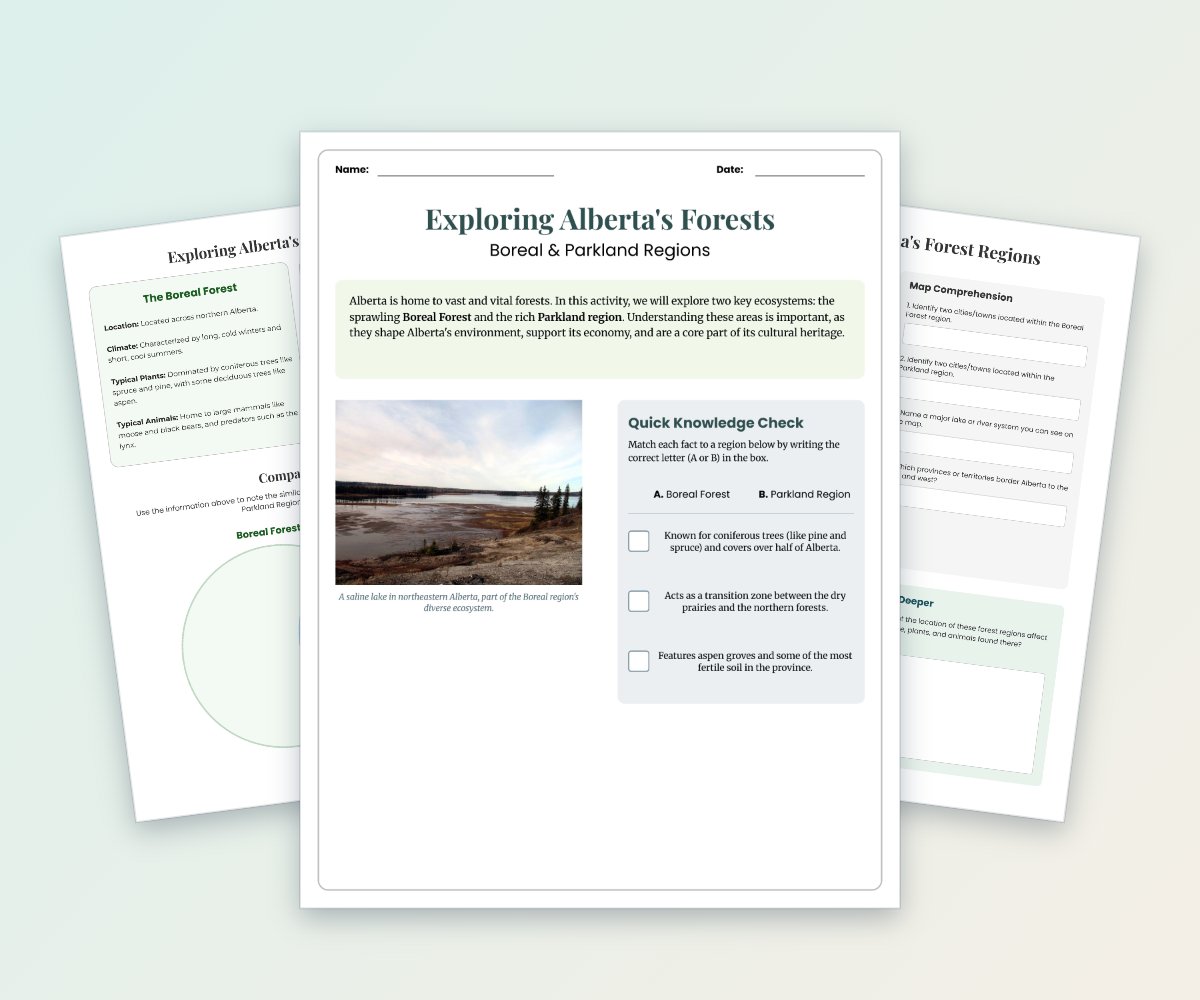
Students explore Alberta's Boreal Forest and Parkland regions through knowledge checks, comparisons, map activities, and questions about forest importance.
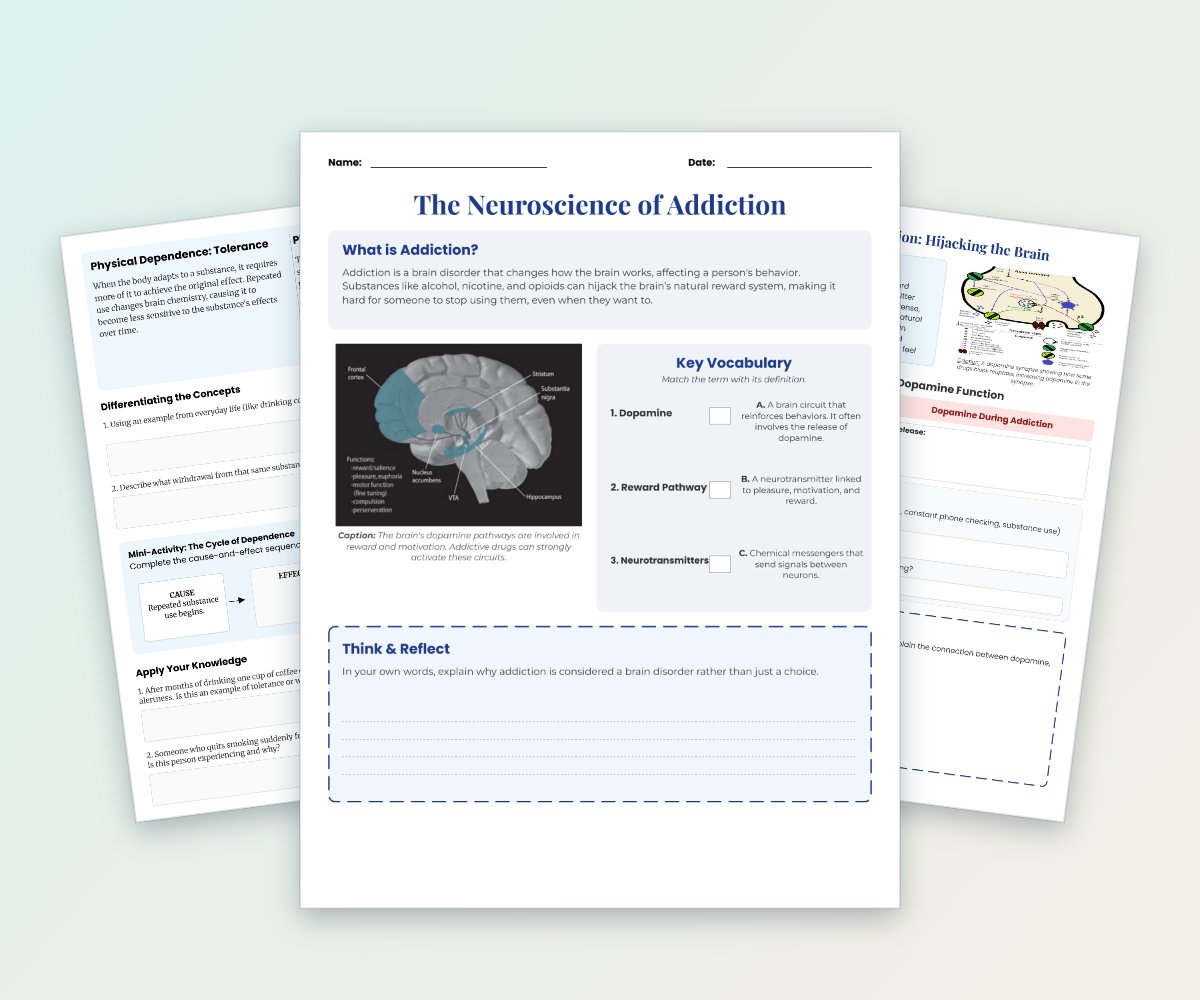
This four-page student worksheet introduces addiction as a brain disorder and explains dopamine, reward pathways, tolerance, and withdrawal.
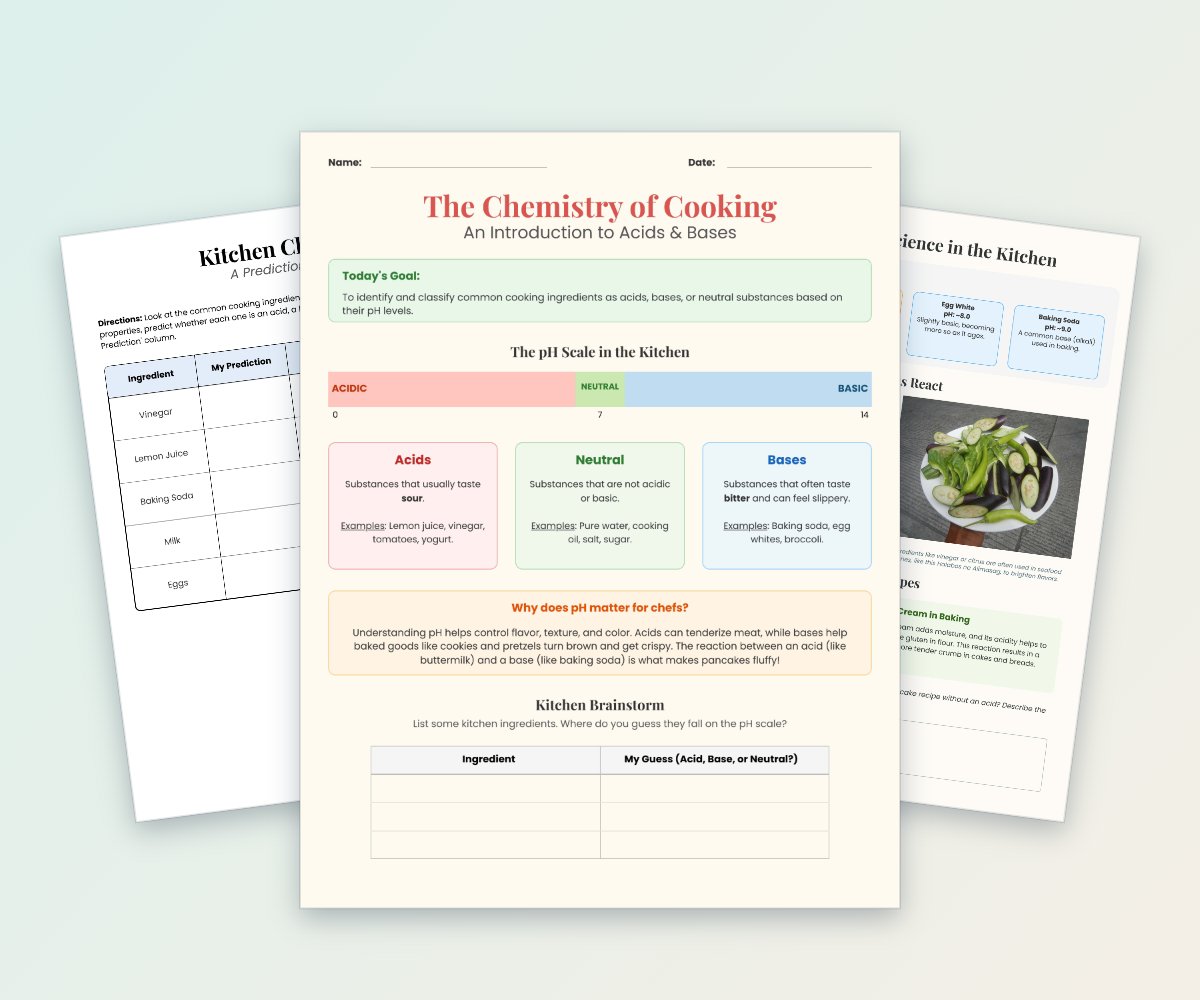
Introduce students to acids, bases, neutral substances, and the pH scale using familiar cooking ingredients.
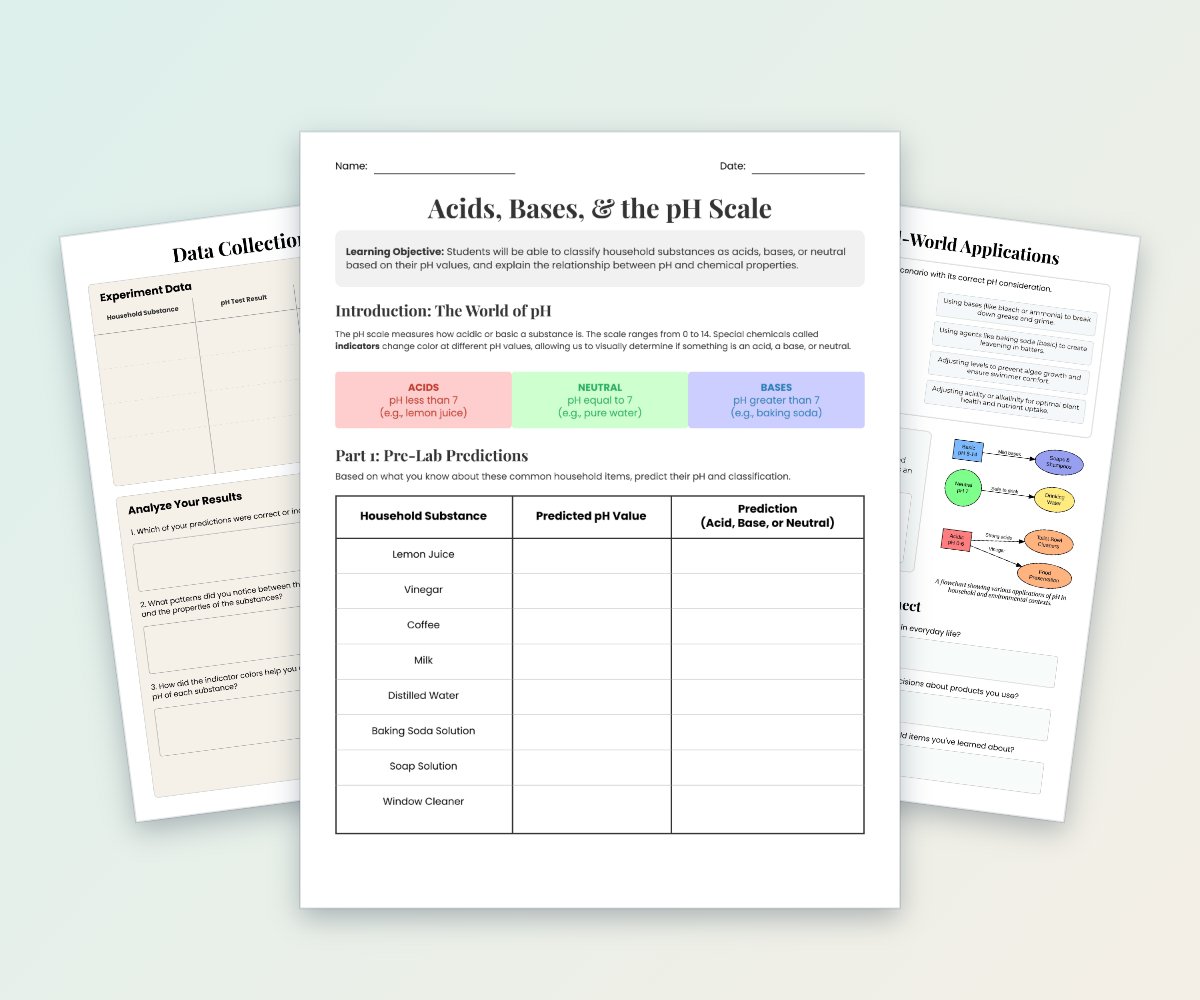
This three-page science worksheet introduces the pH scale and helps students classify household substances as acidic, basic, or neutral.
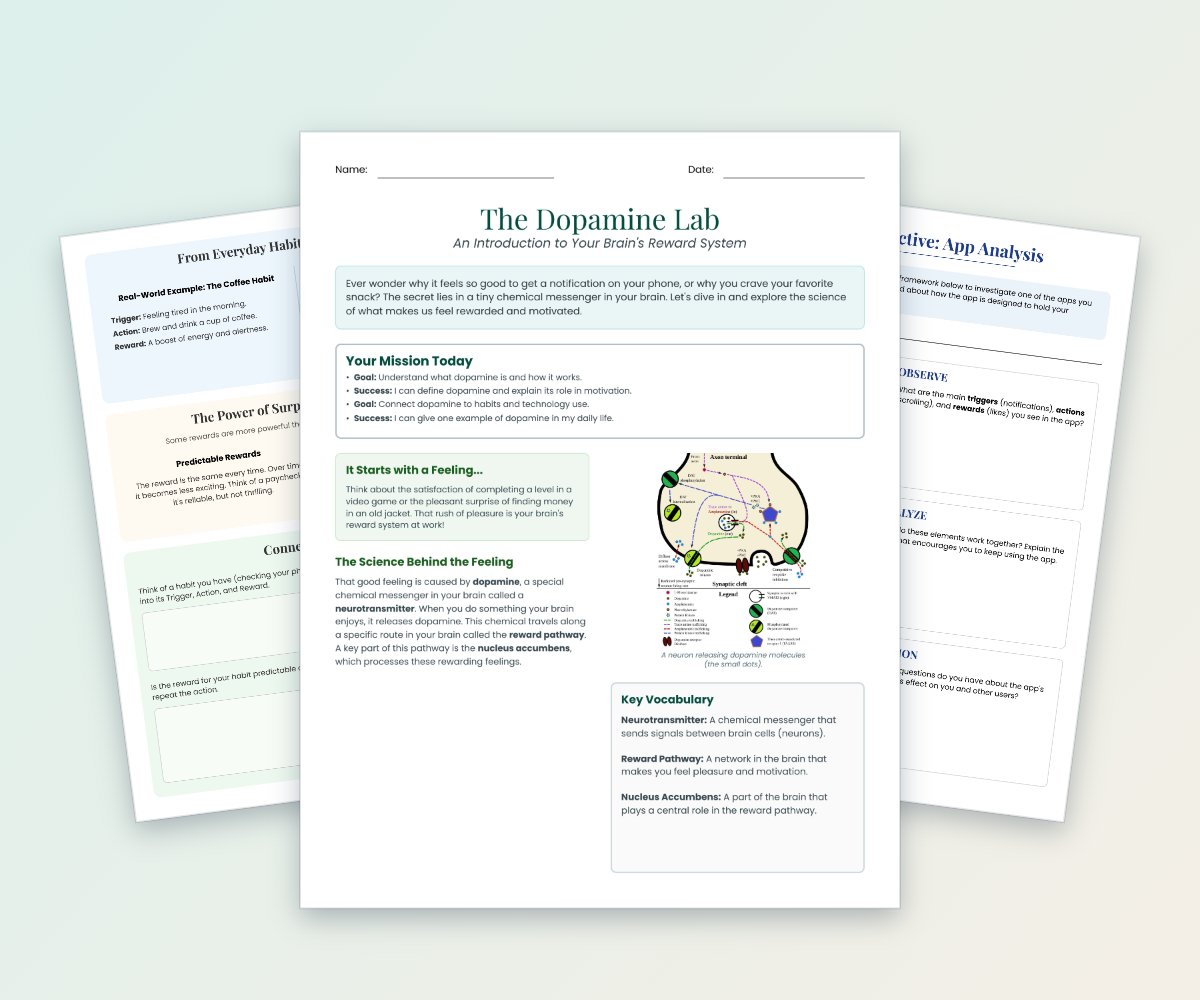
This four-page student resource introduces dopamine, neurotransmitters, the brain’s reward pathway, and the connection between rewards and everyday or digital habits.
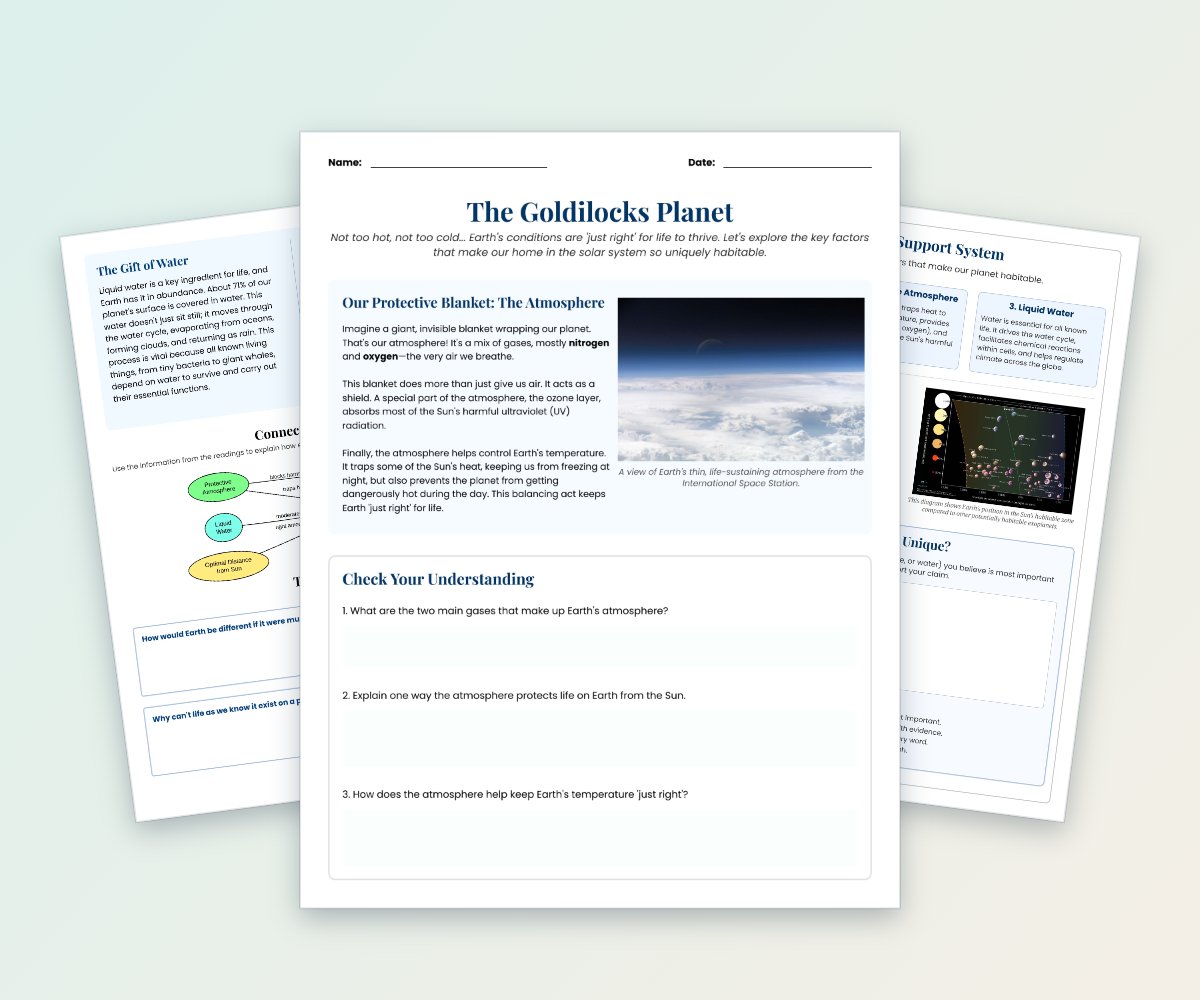
Students explore why Earth can support life, focusing on the atmosphere, liquid water, and its distance from the Sun.
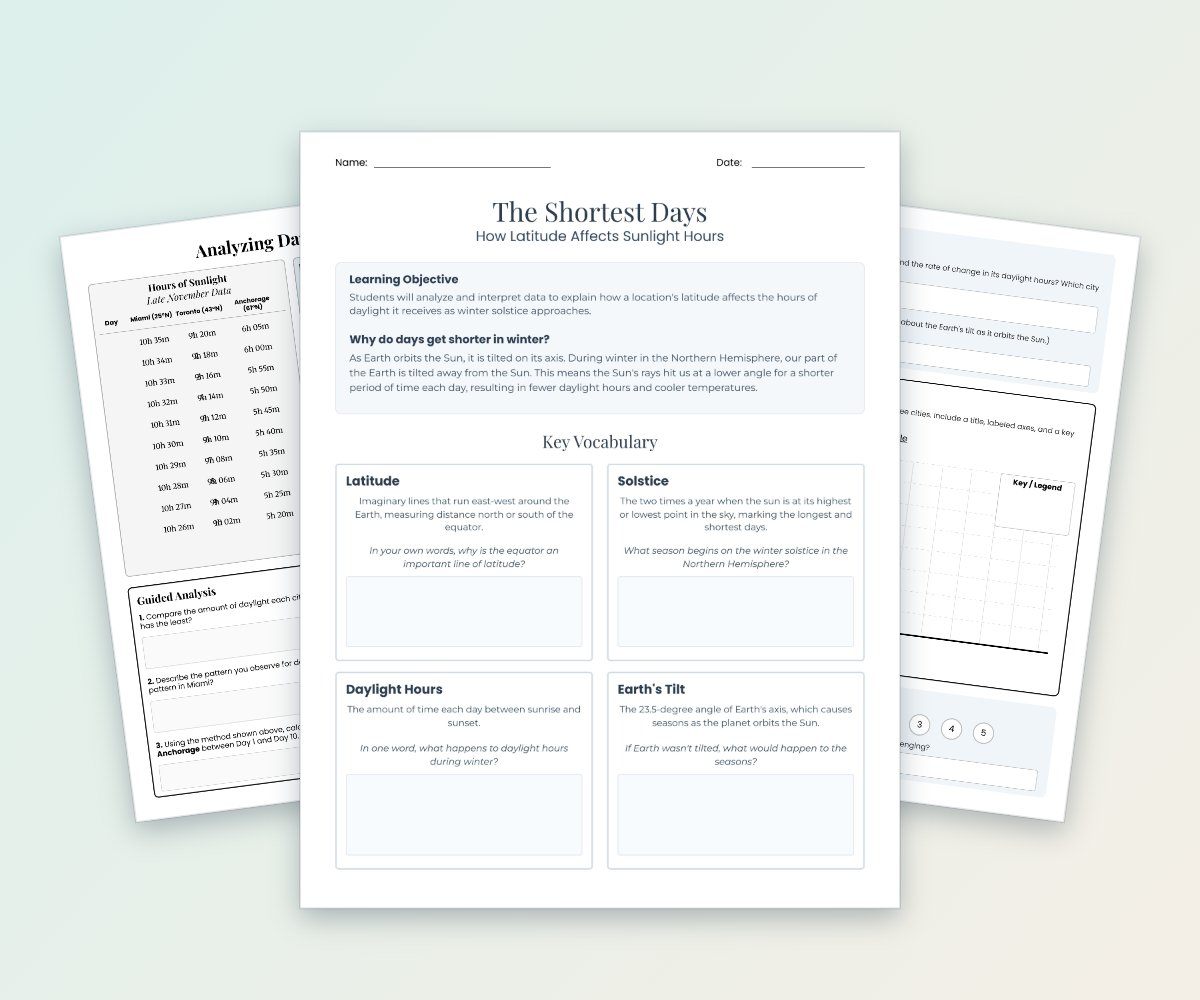
Students explore how latitude affects daylight hours as the winter solstice approaches.
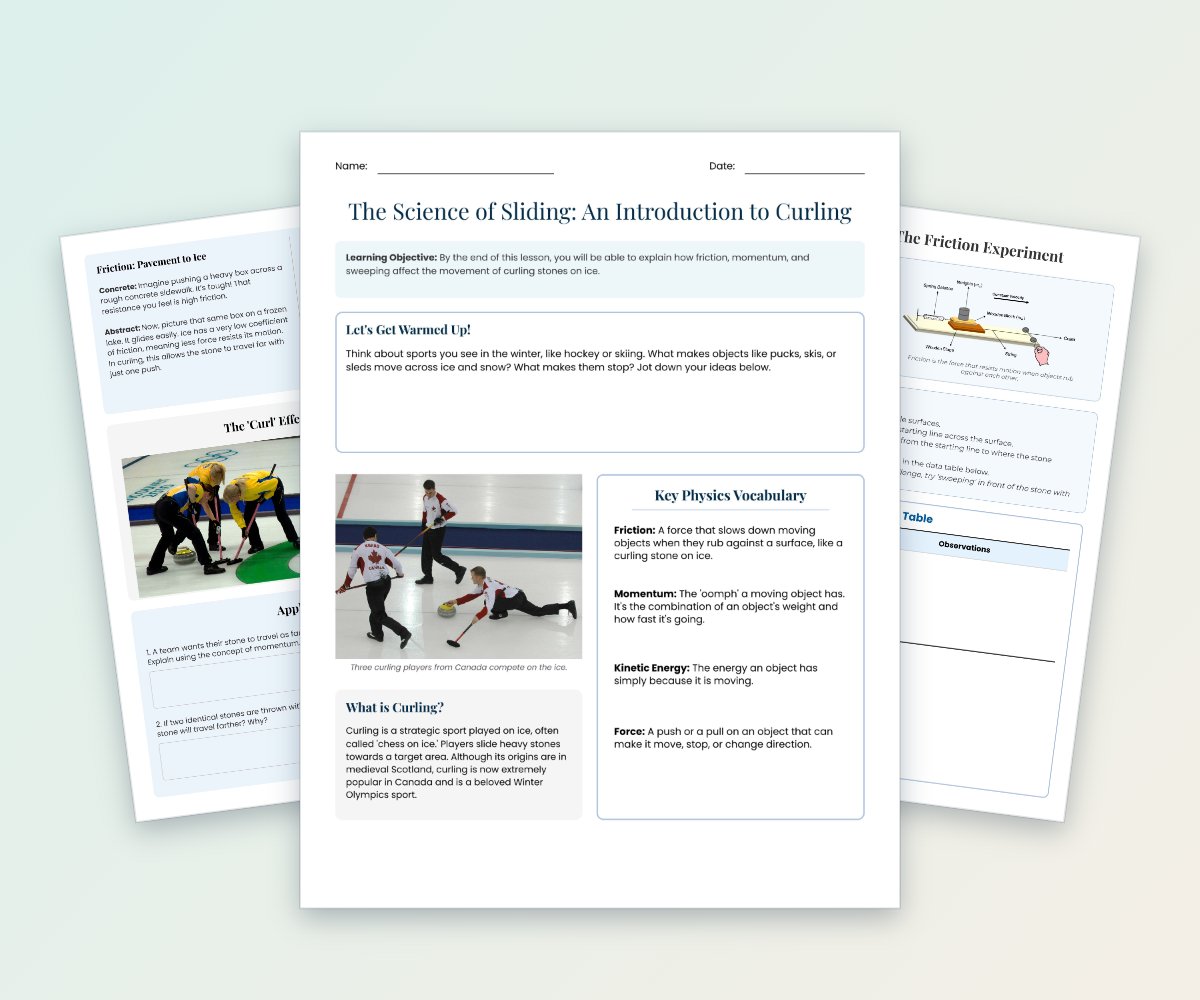
This lesson uses curling to introduce friction, momentum, kinetic energy, and force.
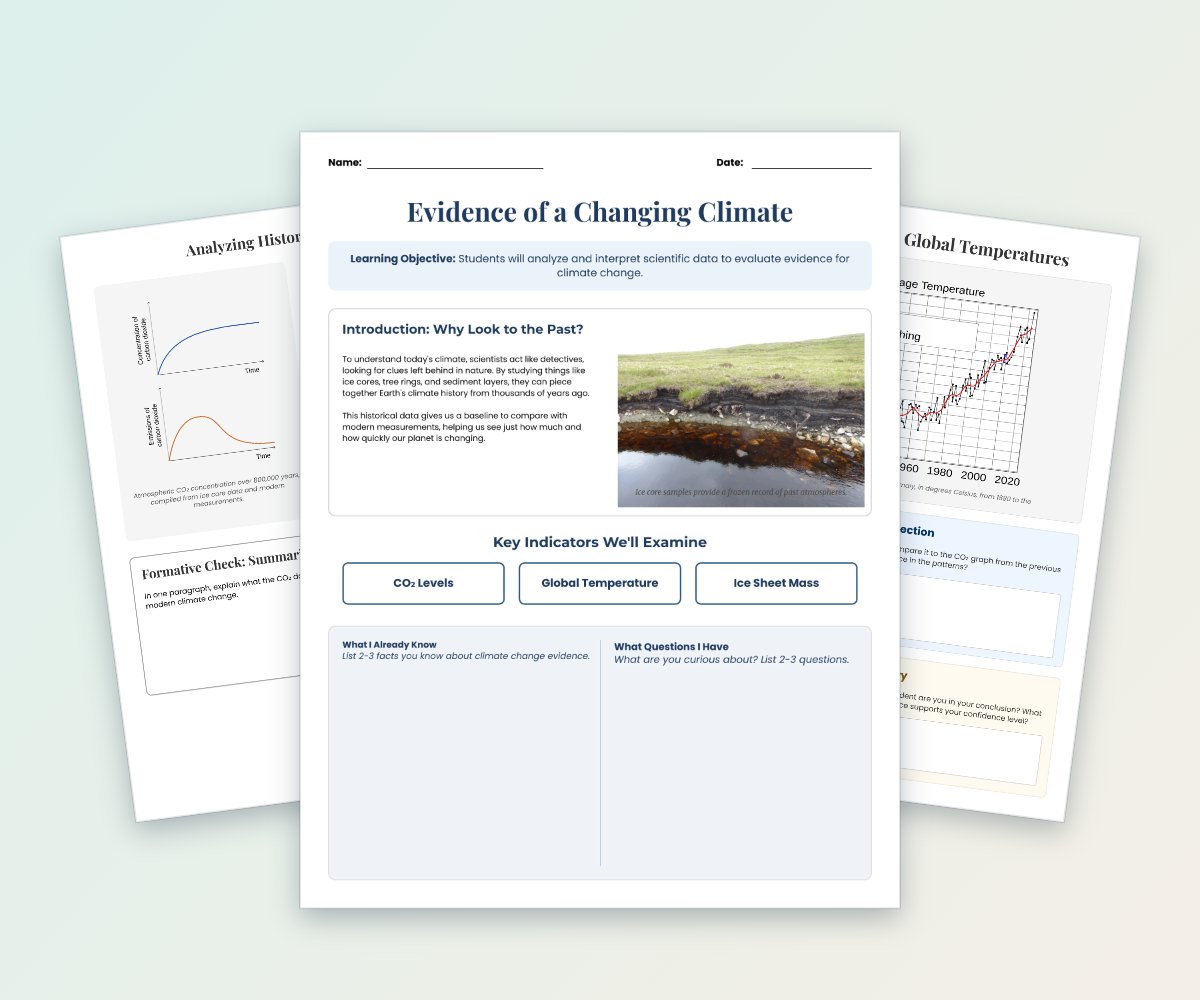
Students analyze historical and modern climate data, including atmospheric CO2 levels and global temperature trends.
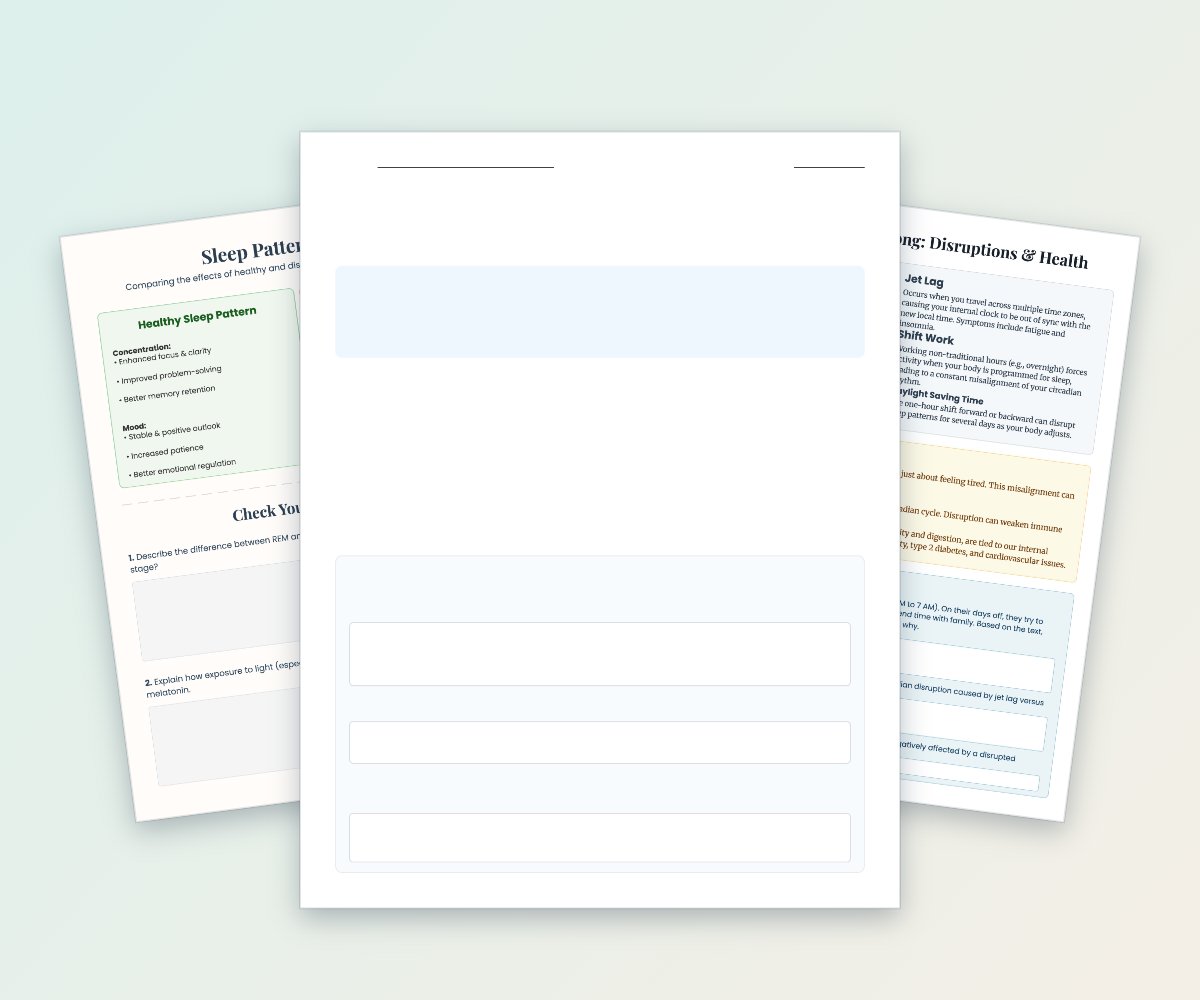
This four-page resource explains healthy and disrupted sleep patterns, REM and non-REM sleep, melatonin, jet lag, shift work, and health impacts.
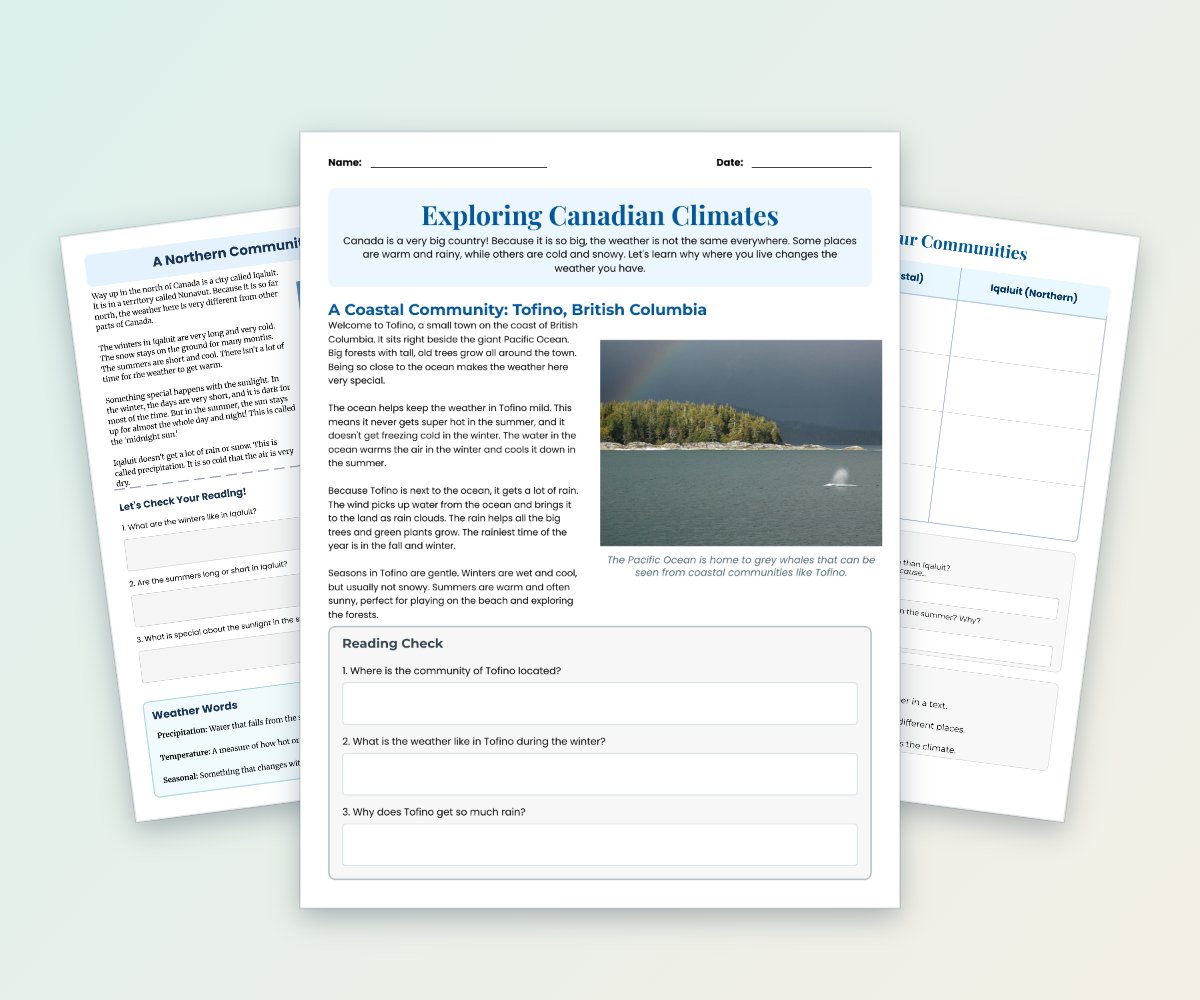
Students read accessible informational passages about coastal and northern climates in Tofino and Iqaluit.
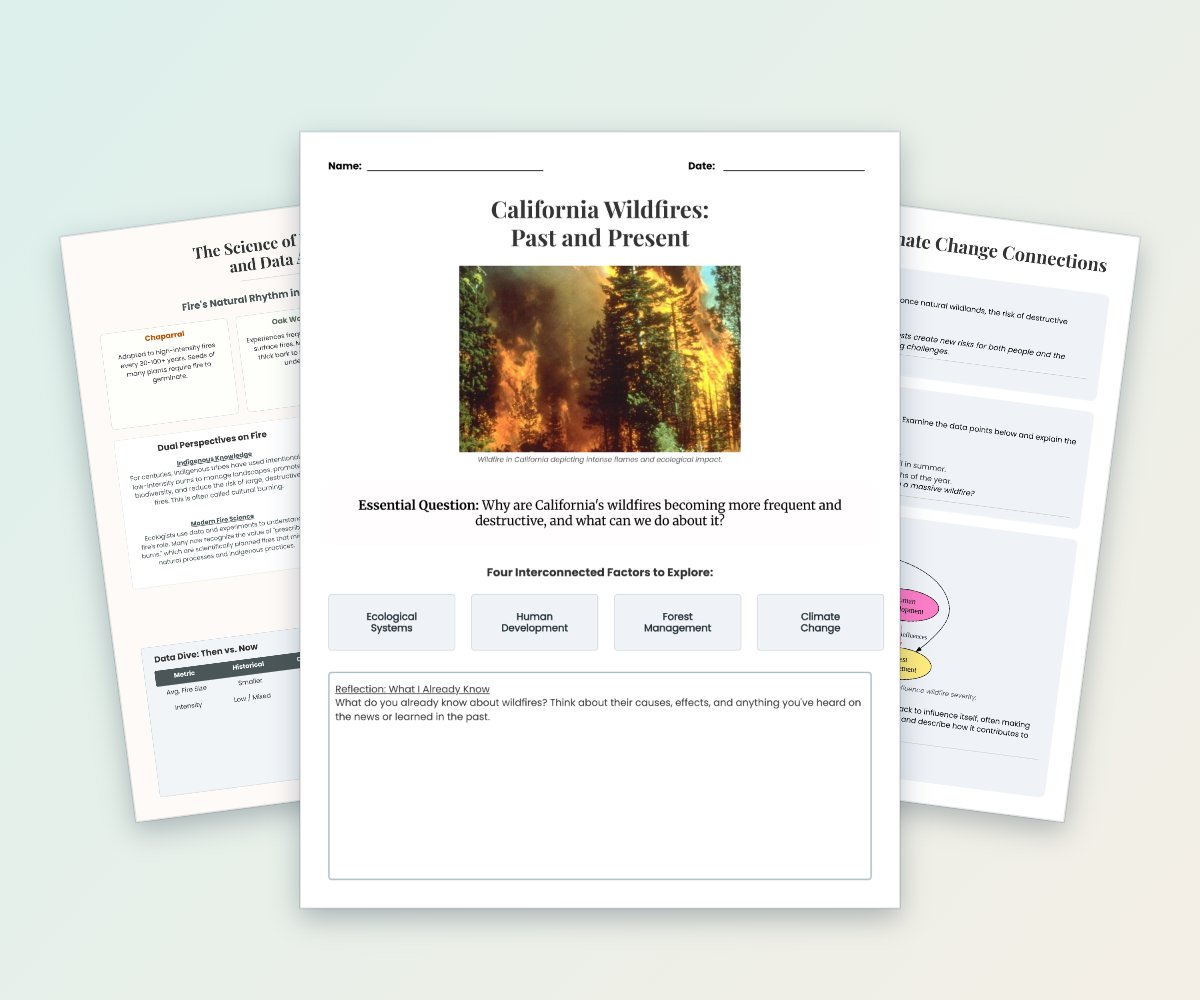
Students investigate why California wildfires are becoming more frequent and destructive through fire ecology, data analysis, case studies, and climate connections.
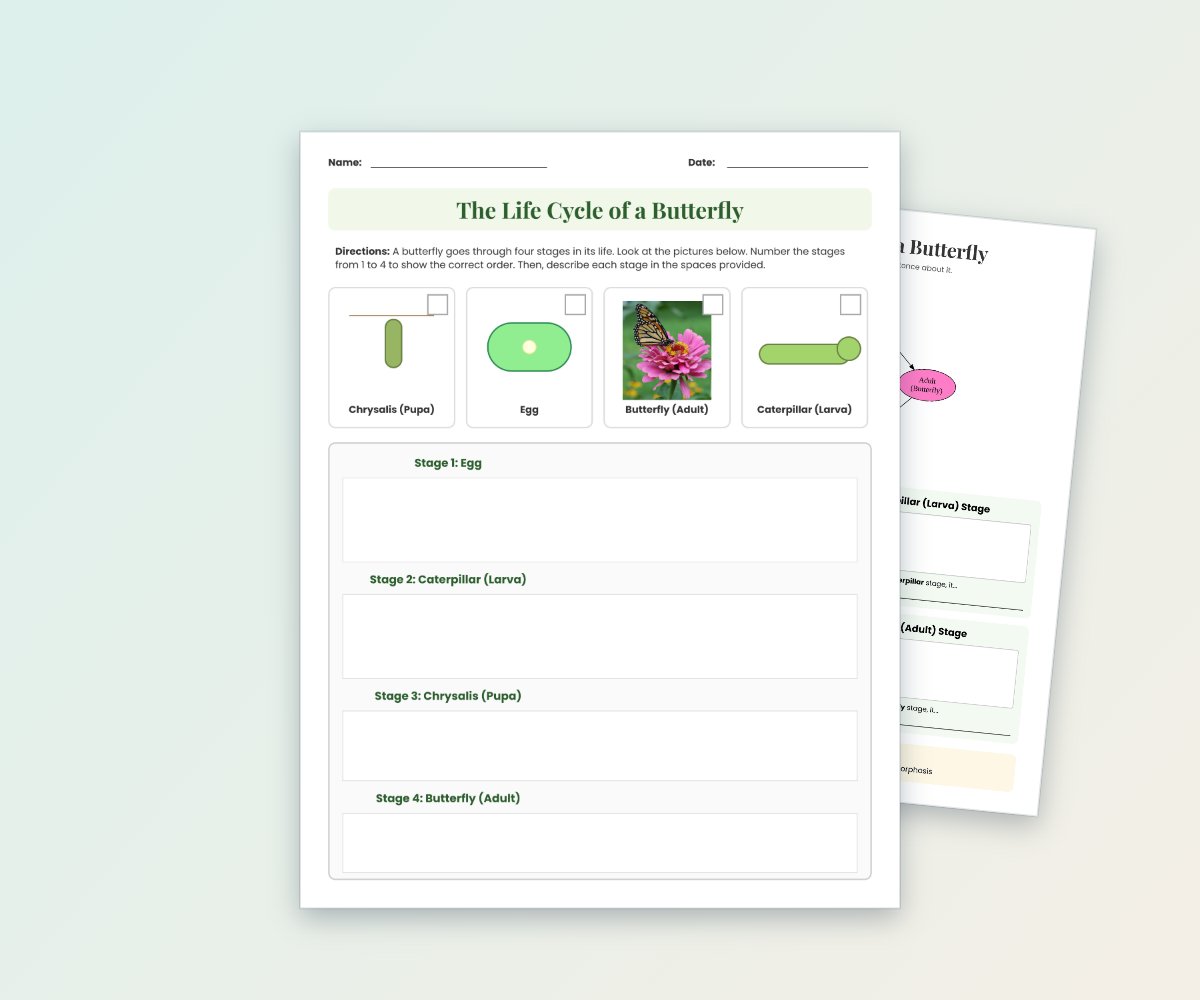
Students sequence the four stages of a butterfly's life cycle and describe each stage.
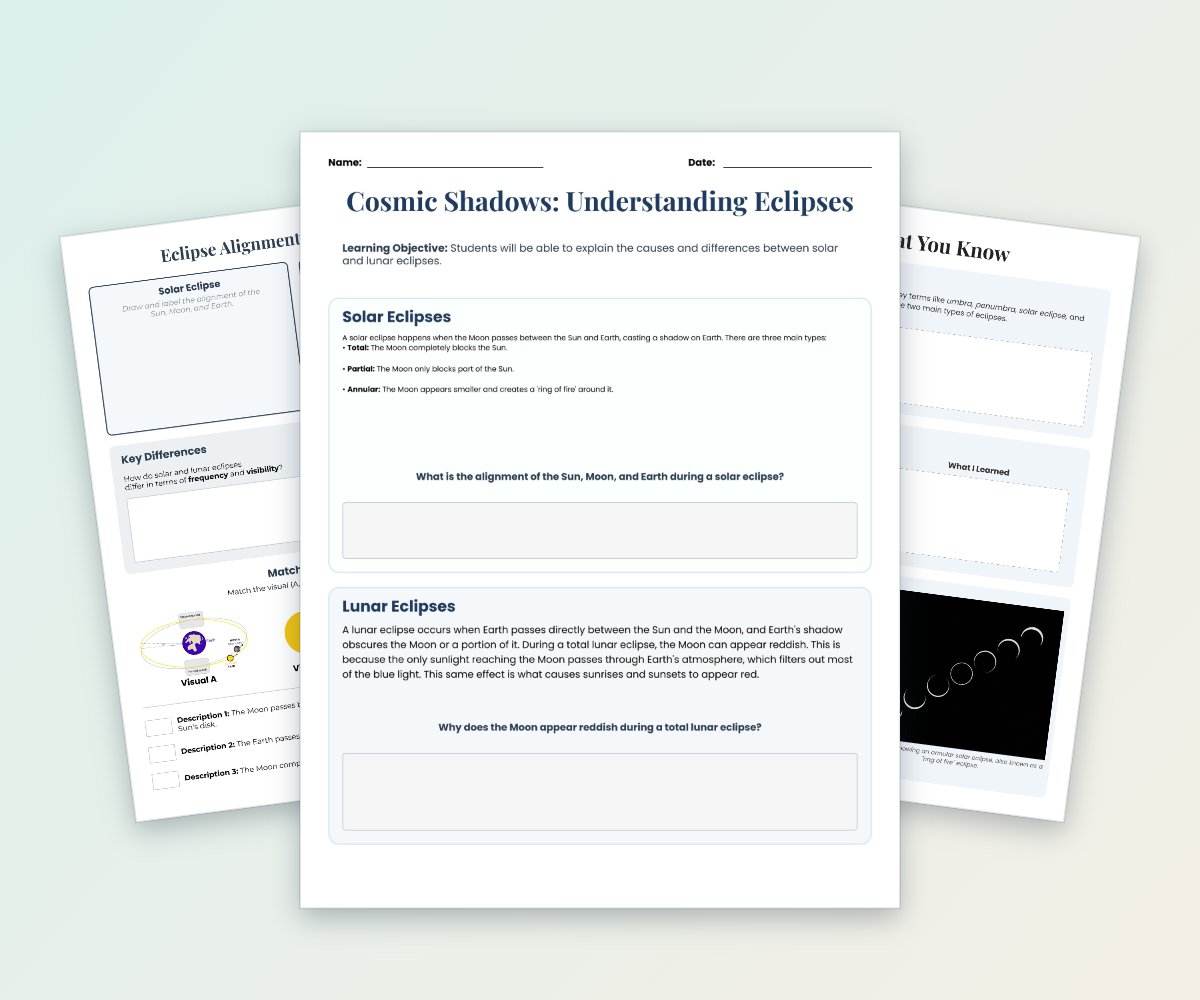
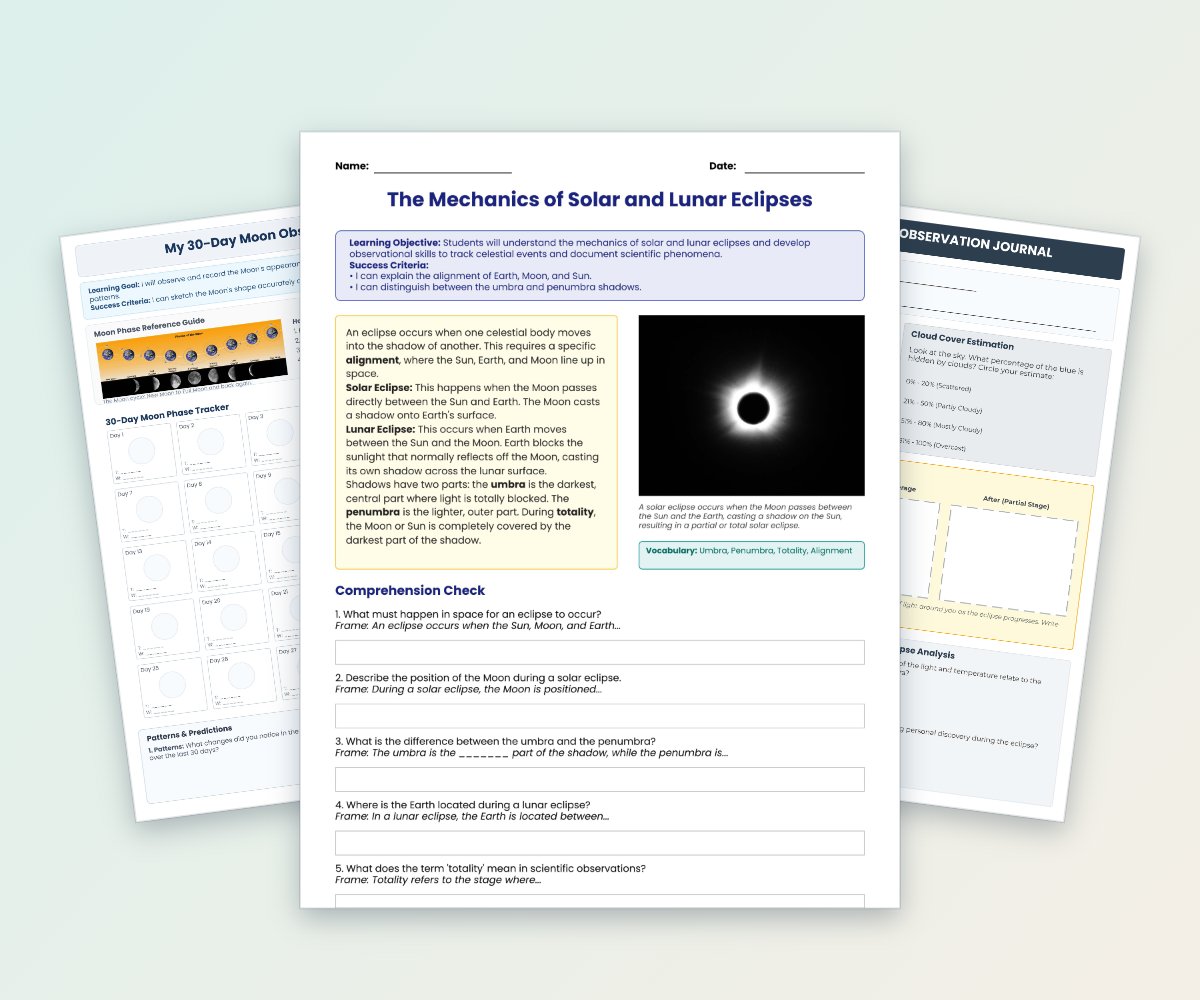
This three-page worksheet explores how solar and lunar eclipses occur, including Sun-Moon-Earth alignments, eclipse types, shadows, visibility, and safety.
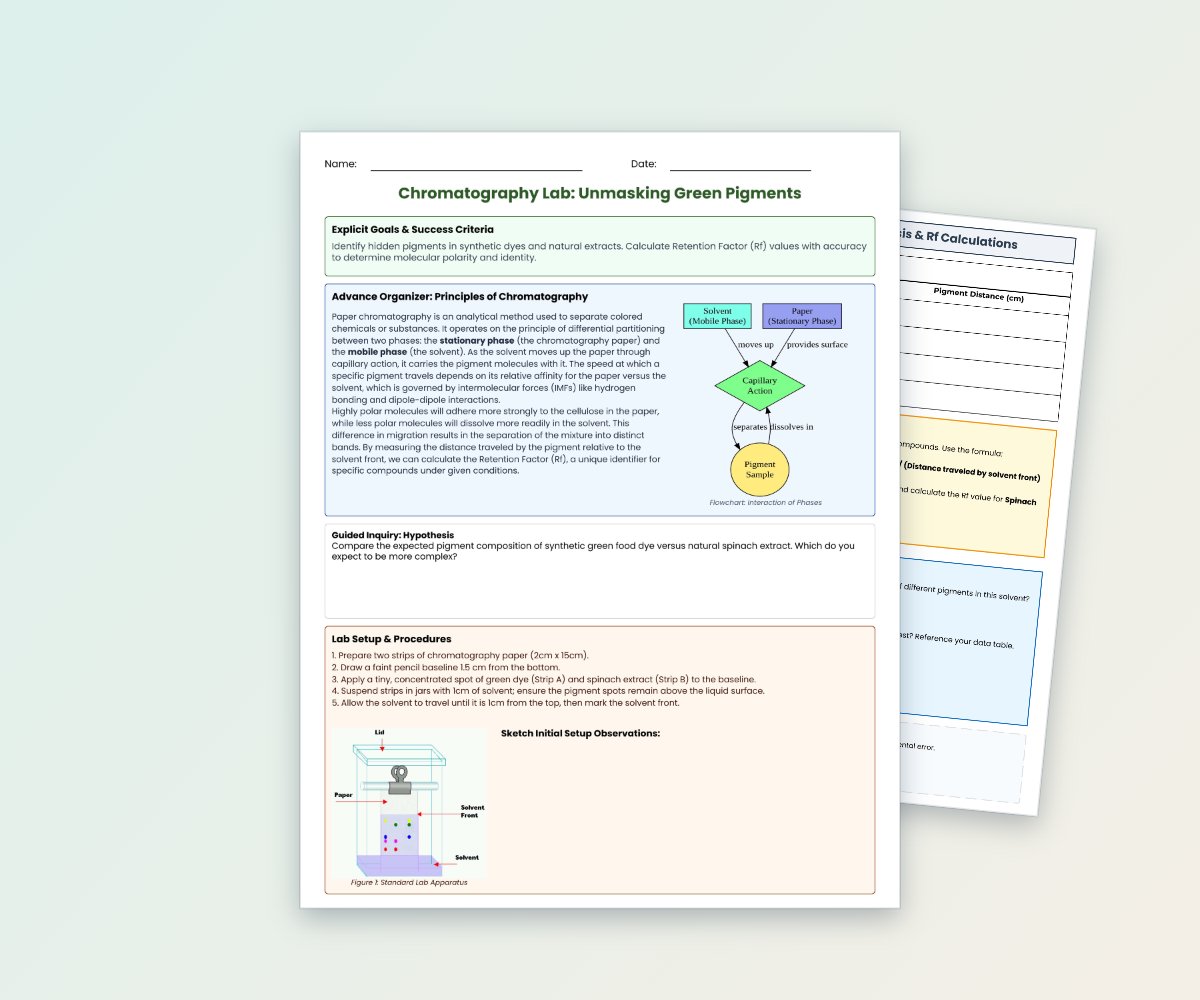
Students investigate synthetic green food dye and spinach extract using paper chromatography.
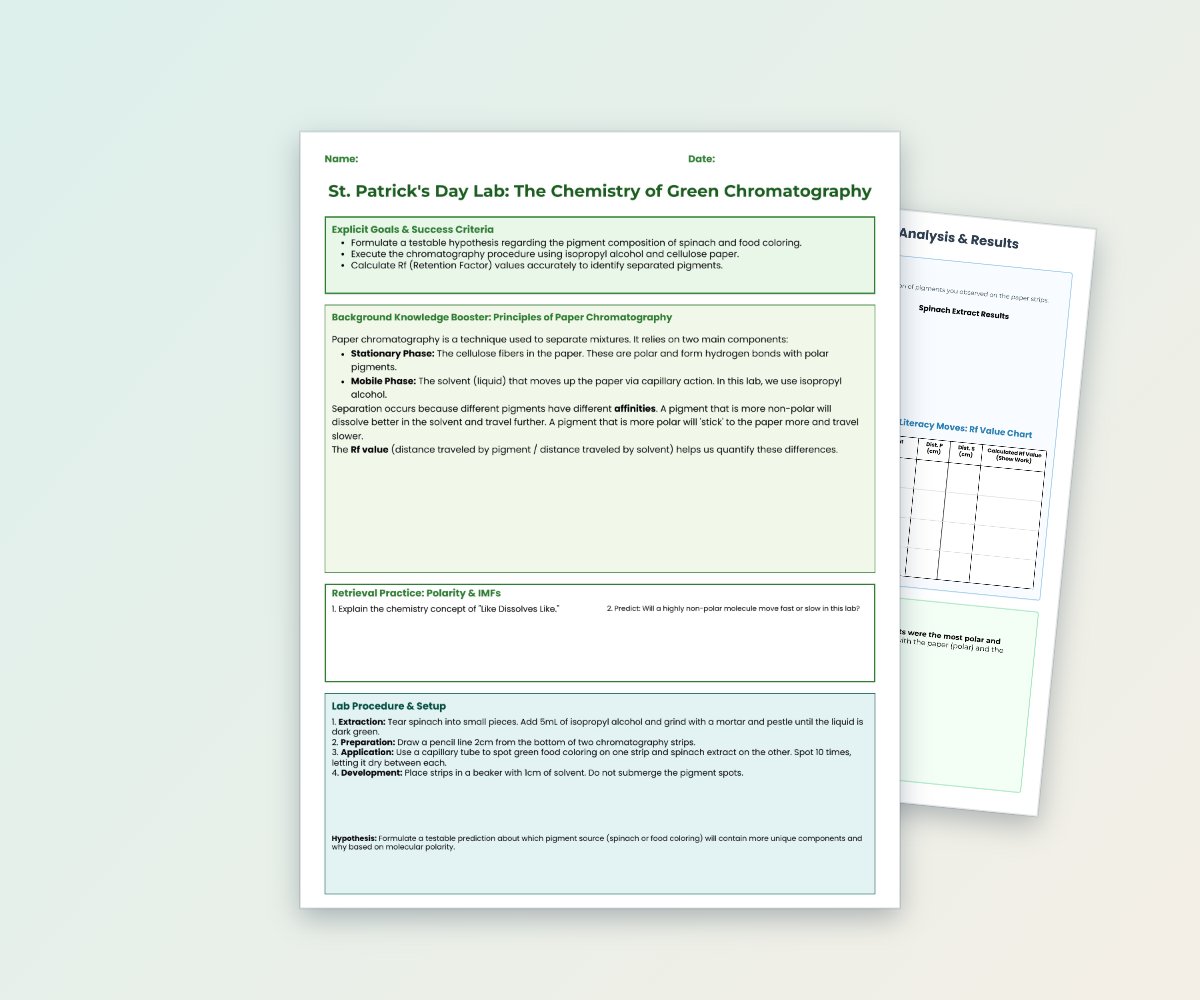
Students investigate spinach and food coloring through paper chromatography using isopropyl alcohol and cellulose paper.
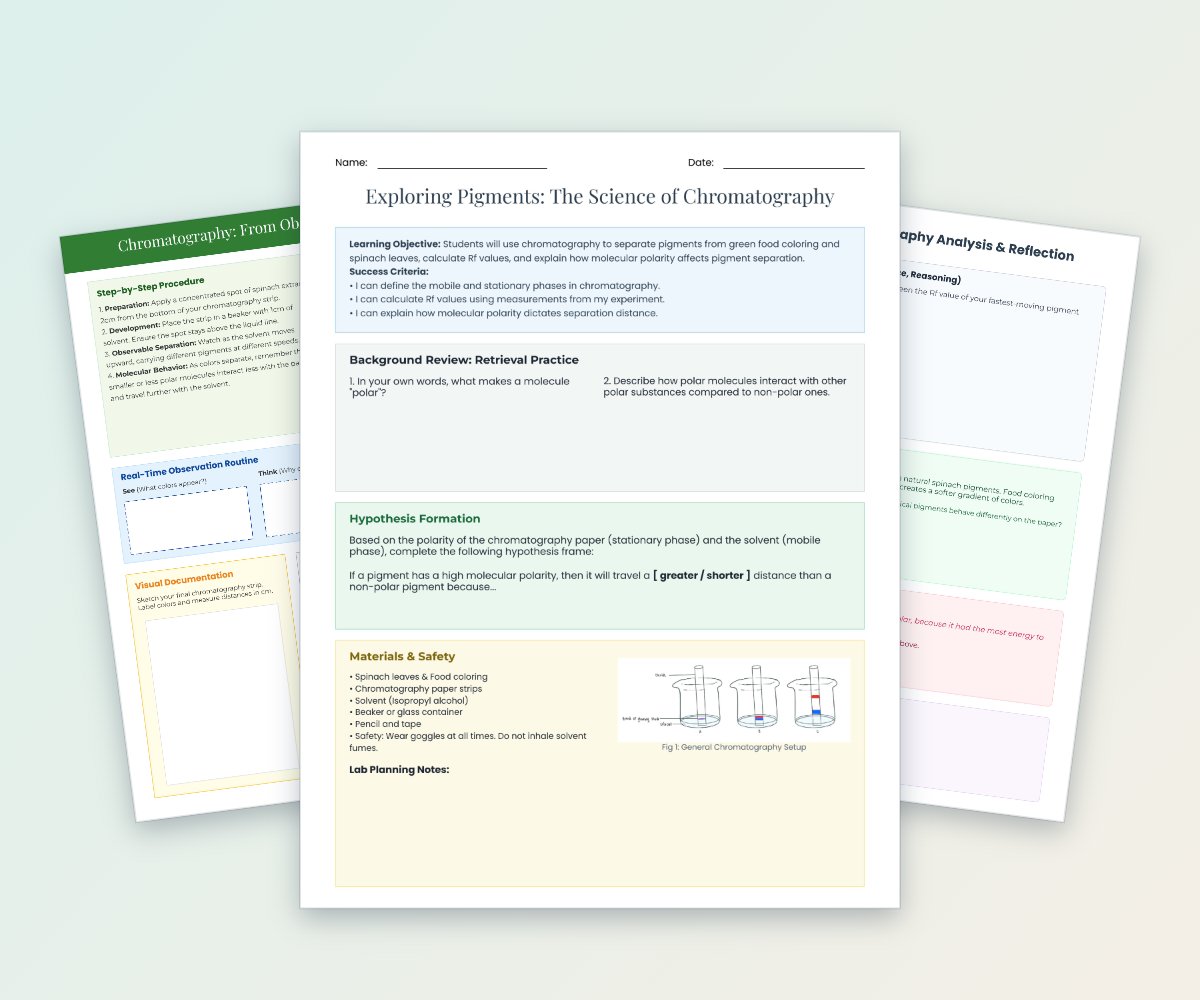
Students investigate the separation of pigments from green food coloring and spinach using paper chromatography.
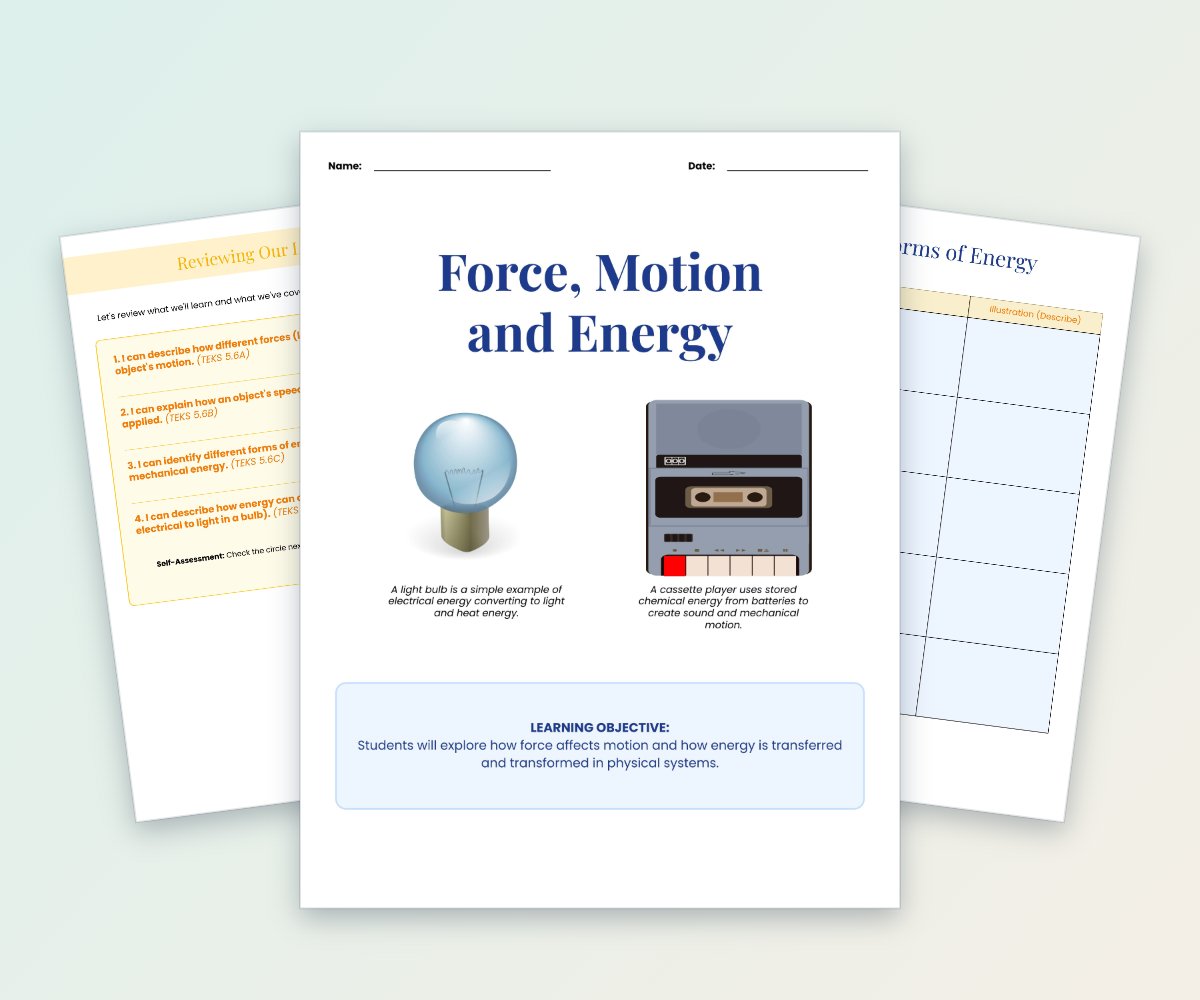
This 14-page student workbook explores how forces affect motion and how energy transfers and transforms.
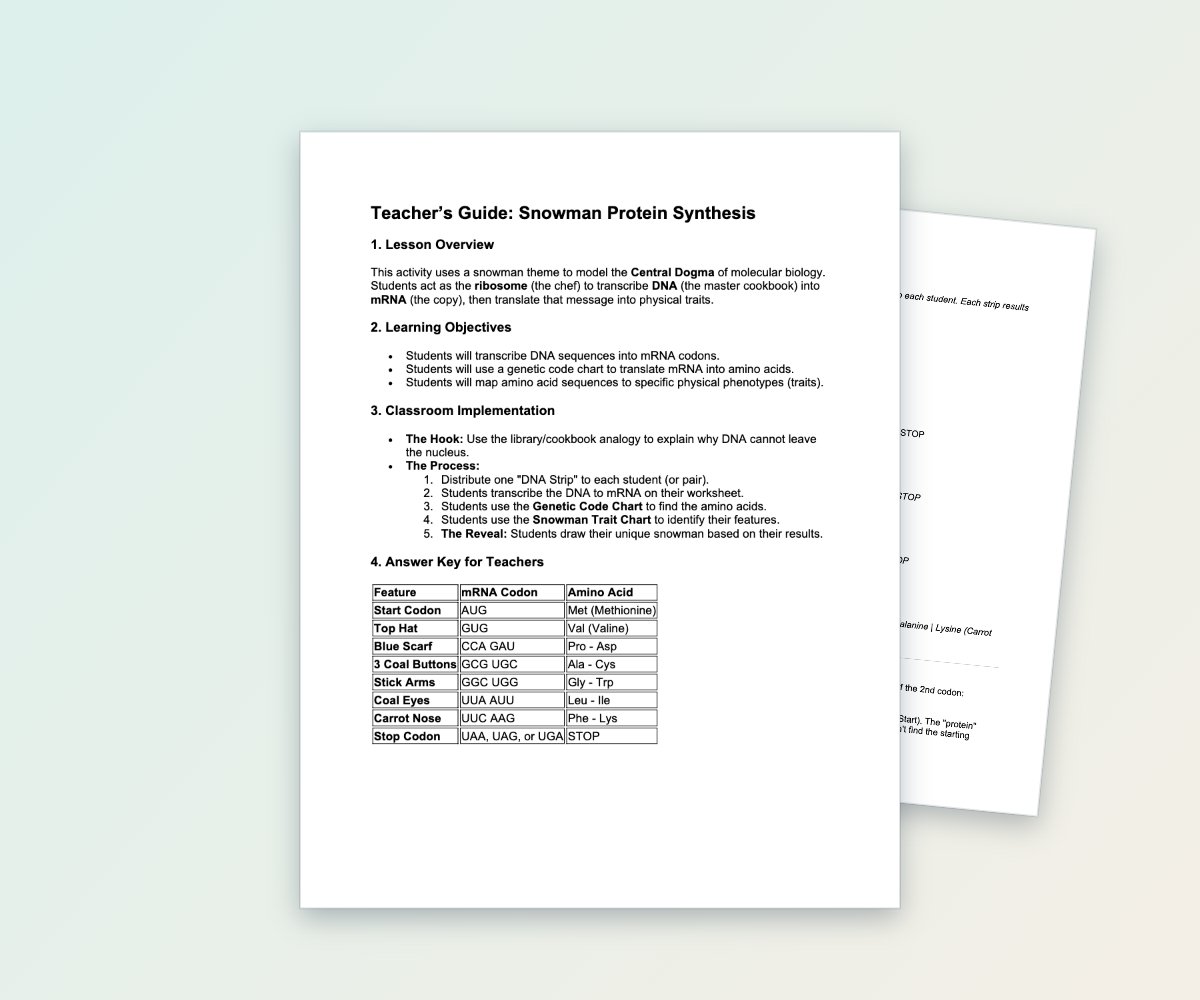
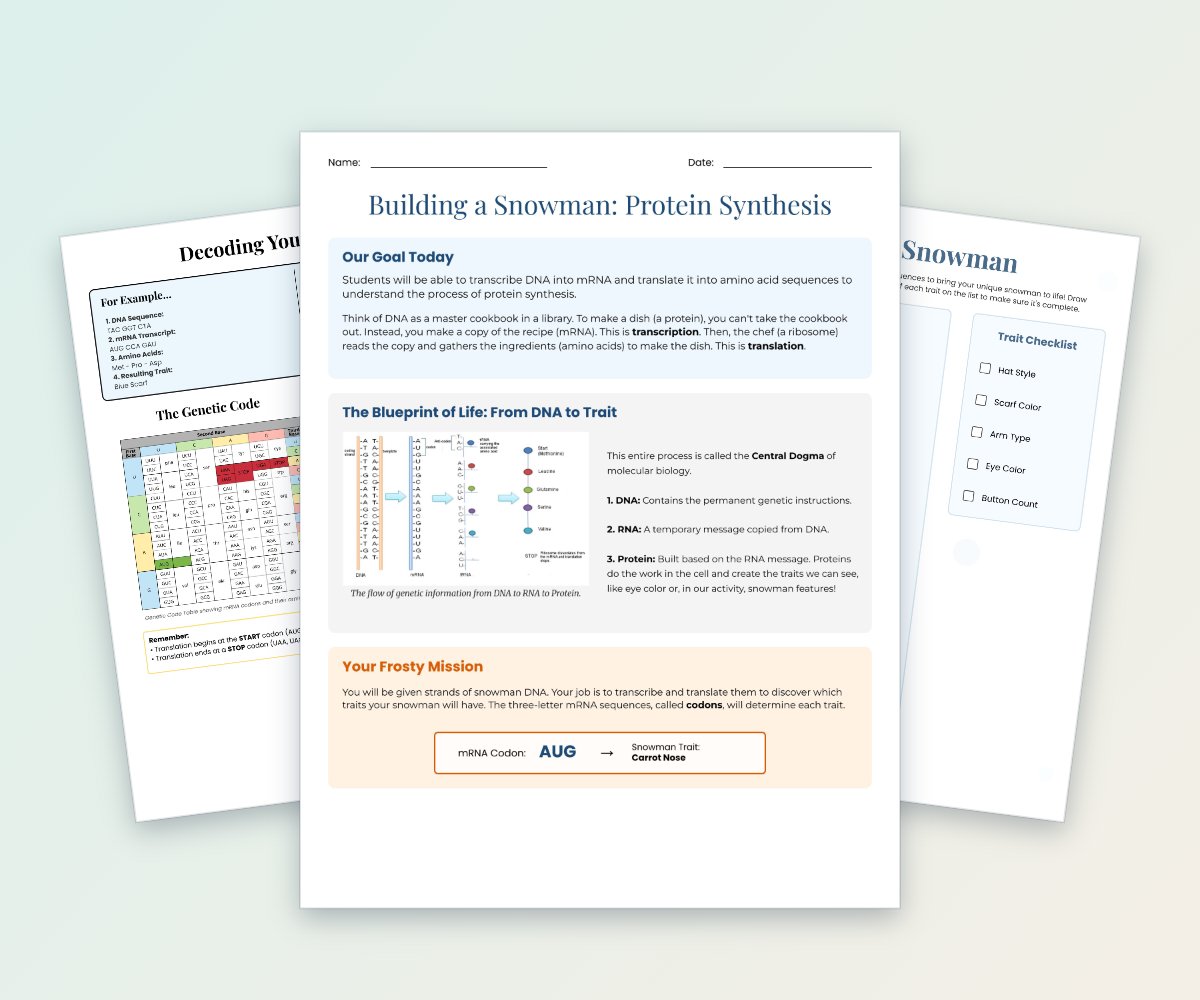
Students model transcription and translation by using DNA strips, mRNA codons, amino acids, and snowman traits to construct unique snowmen.
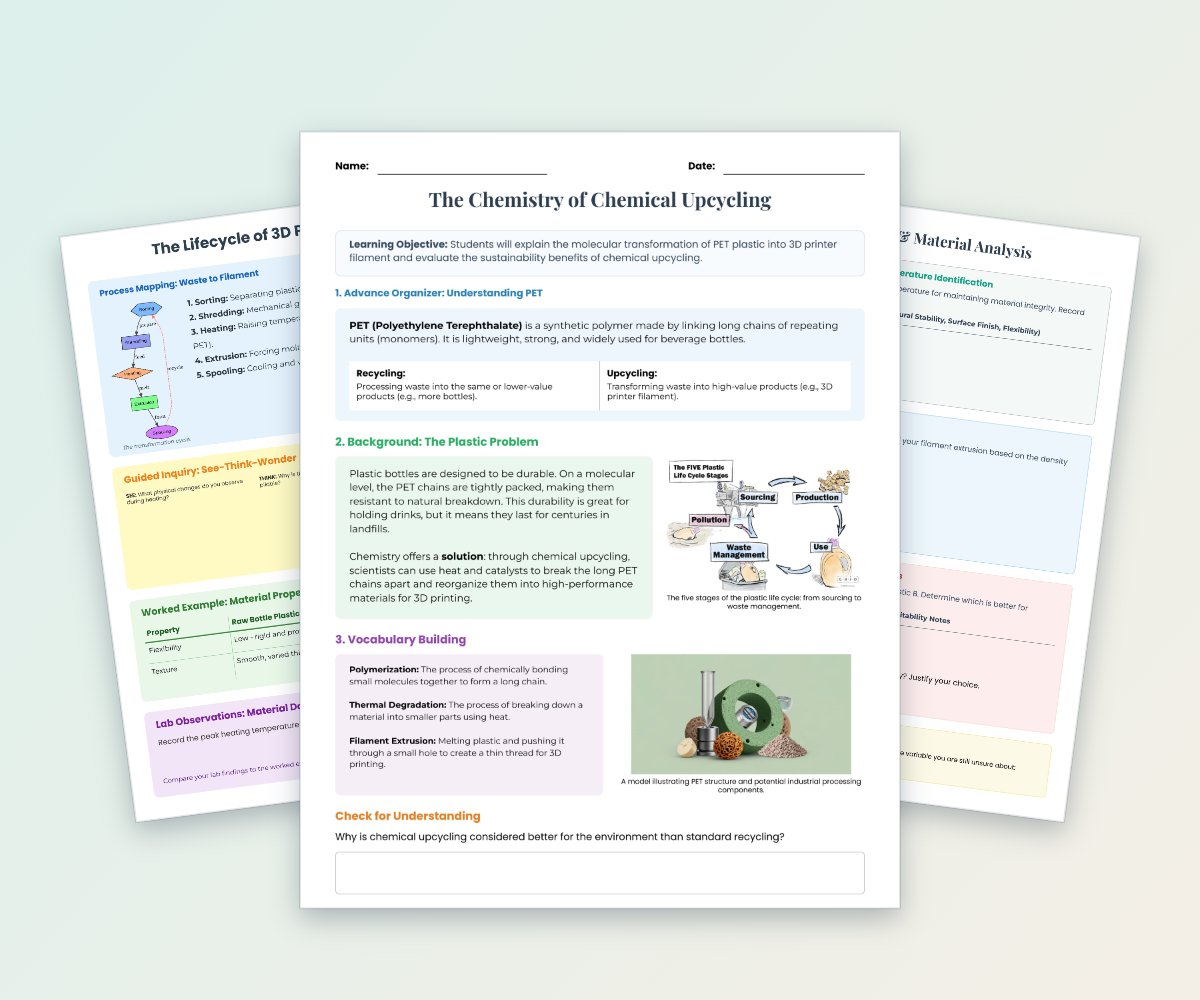
Students explore how PET plastic can be chemically upcycled into 3D printer filament.
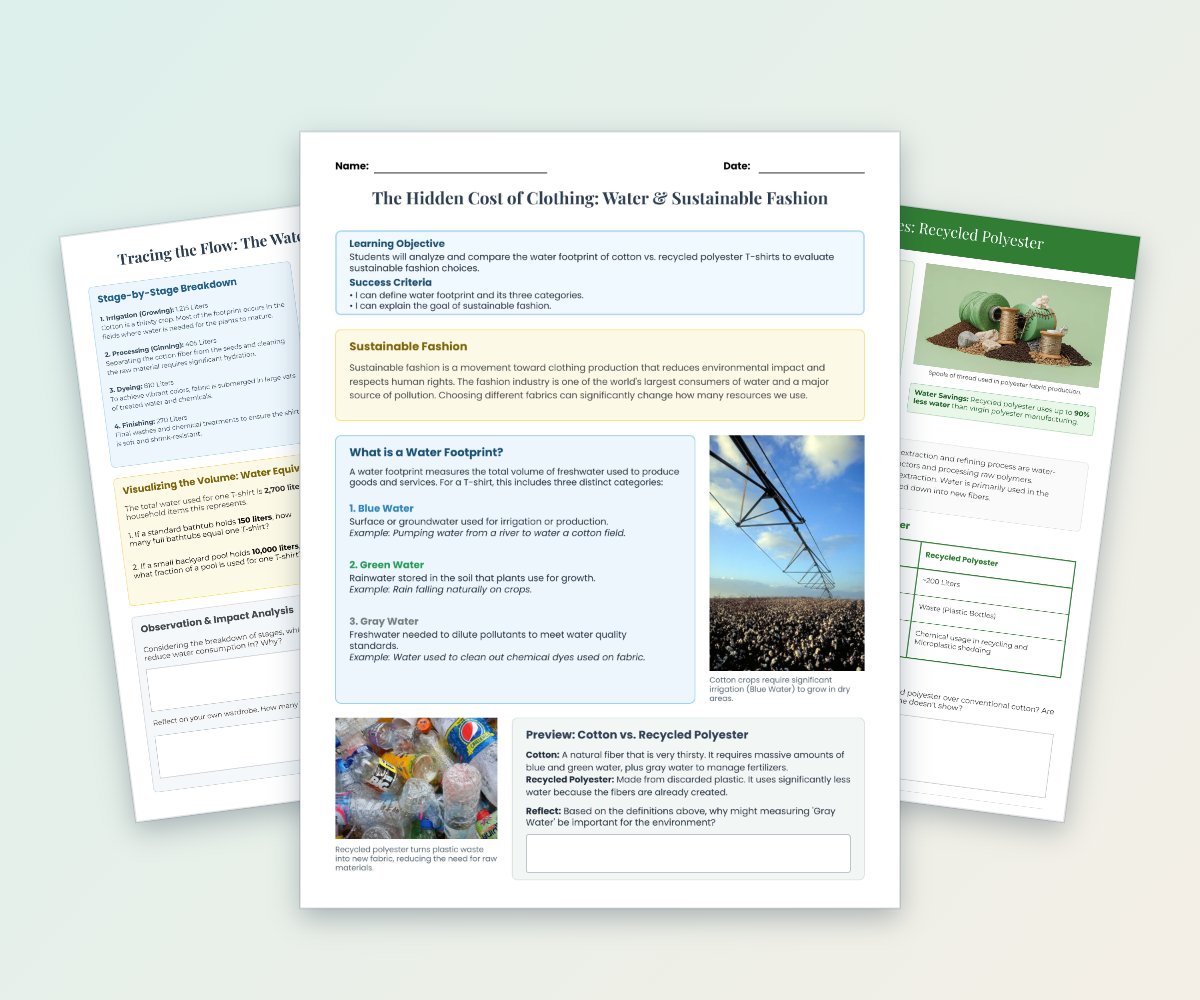
Students learn the three categories of water footprints and examine how cotton and recycled polyester affect water use.
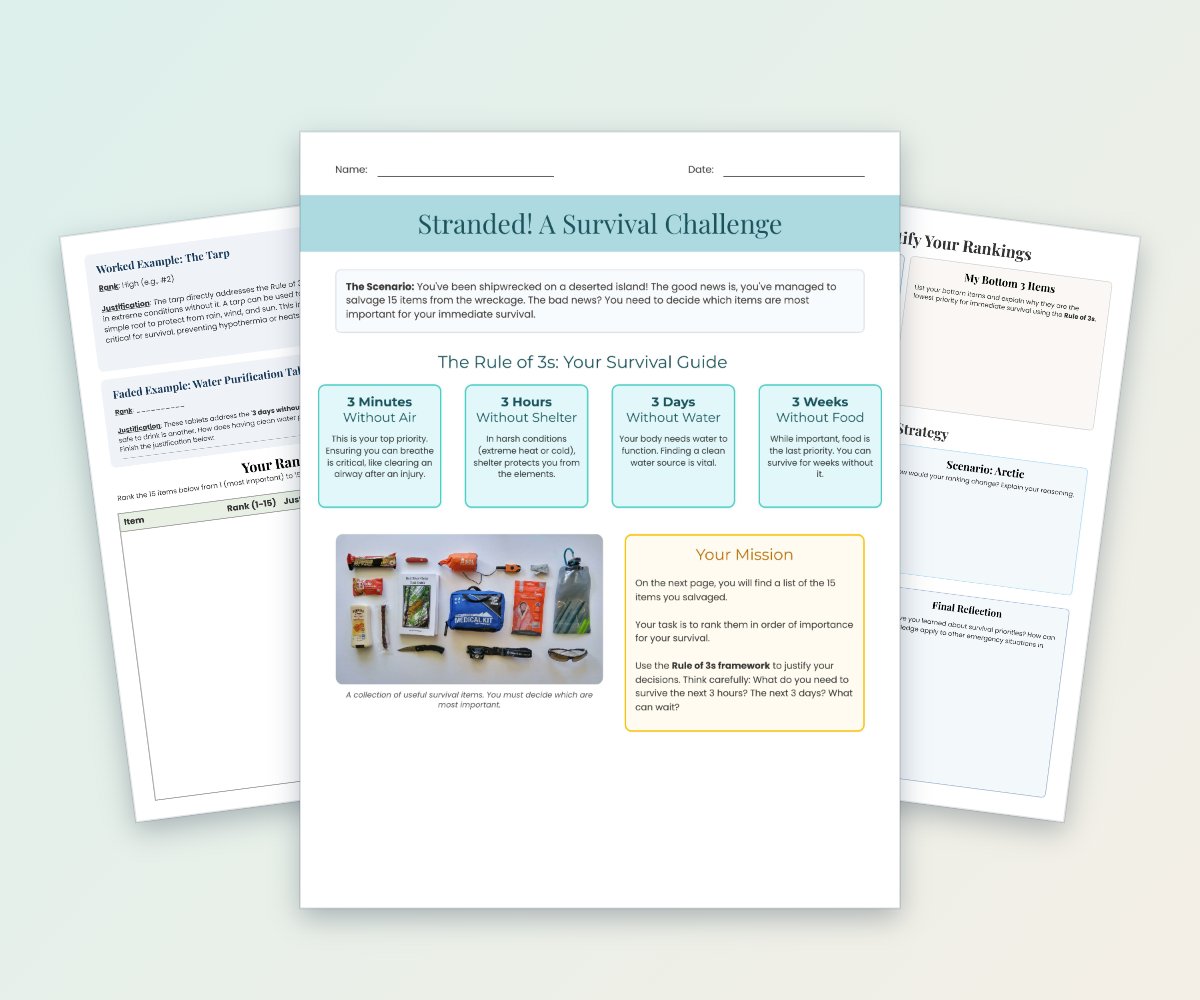
Students rank 15 salvaged items by survival importance using the Rule of 3s for air, shelter, water, and food.
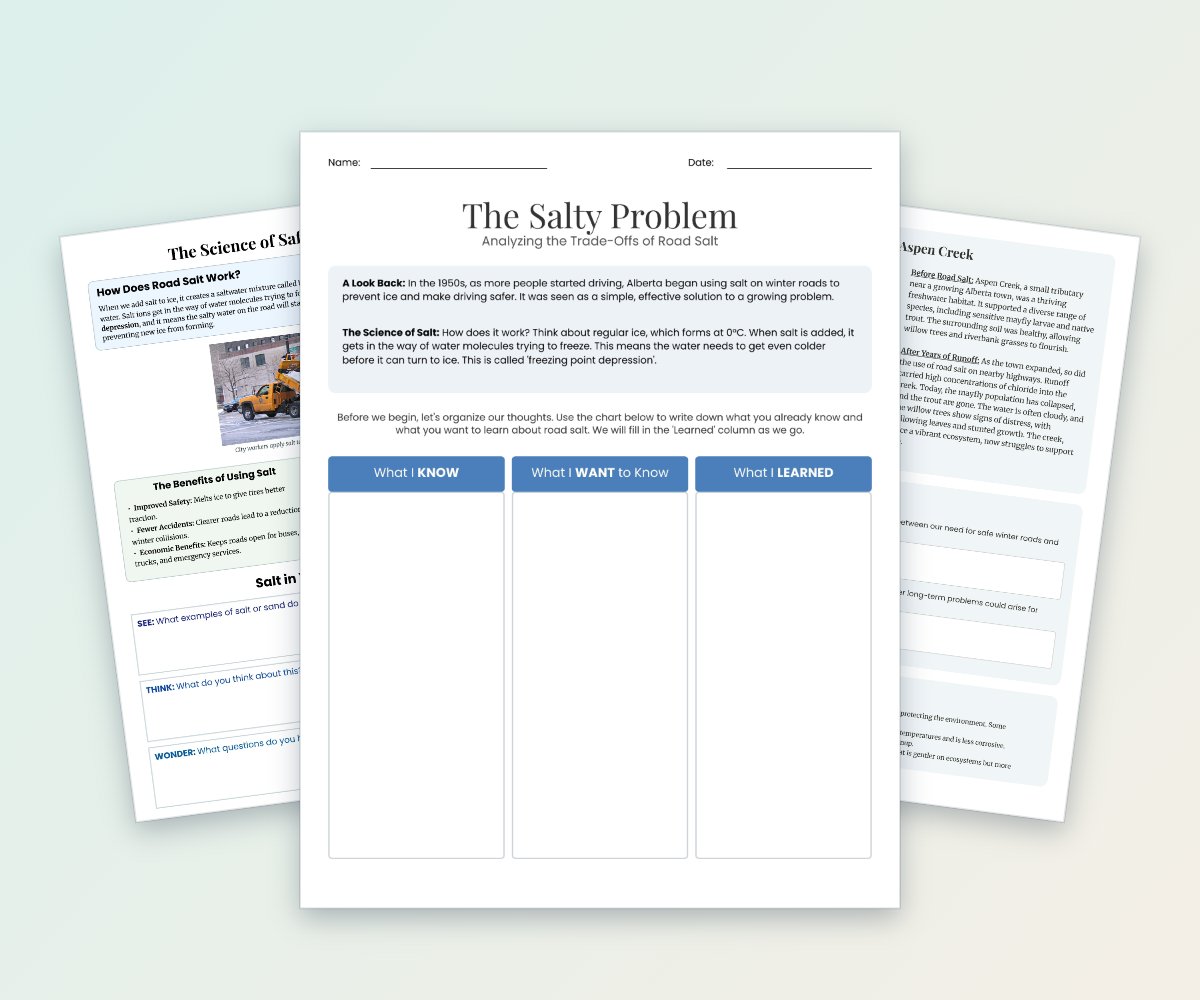
Students investigate how road salt lowers water’s freezing point and improves winter road safety.
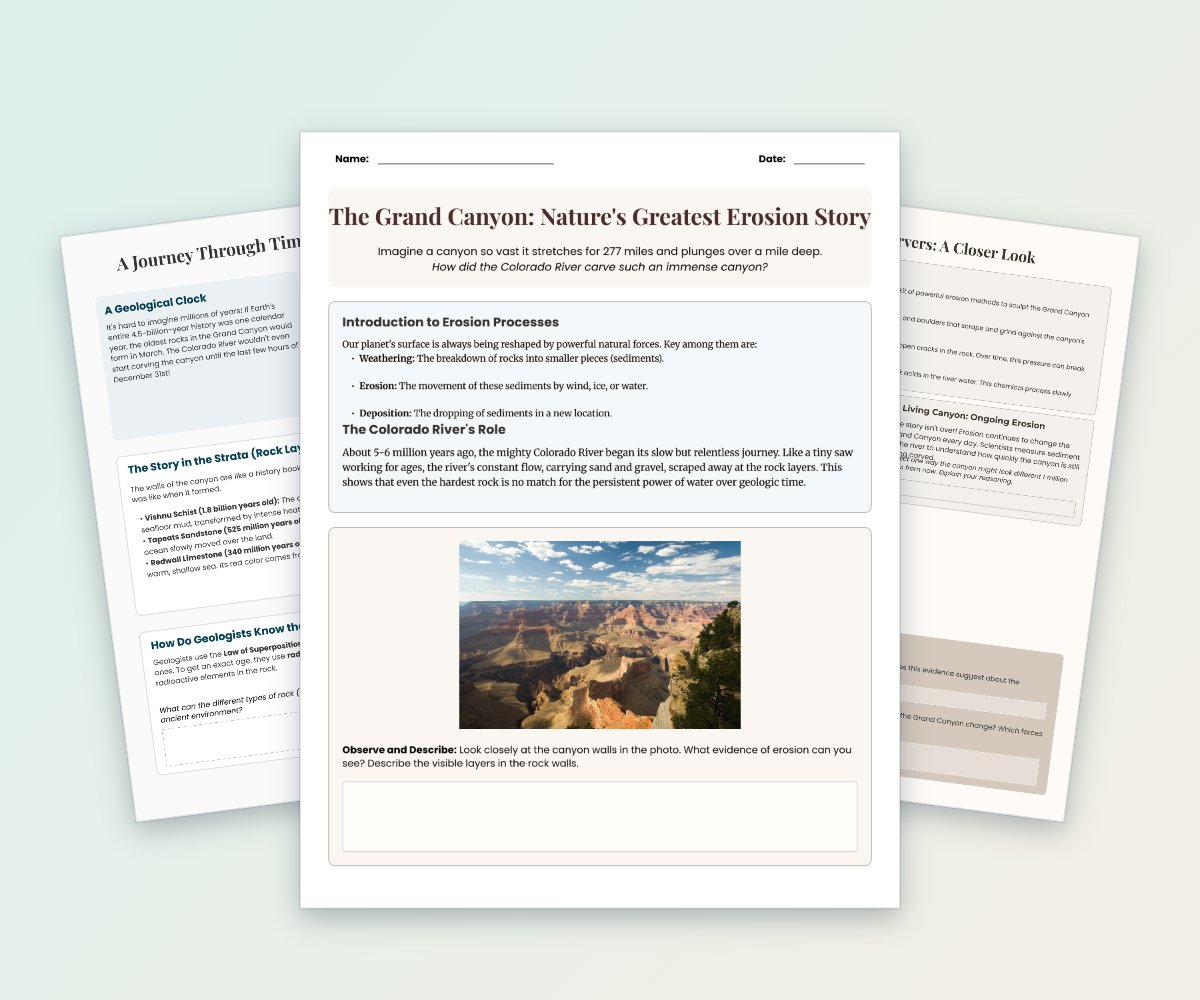
This concise science resource explores how the Colorado River shaped the Grand Canyon through weathering, erosion, and deposition.
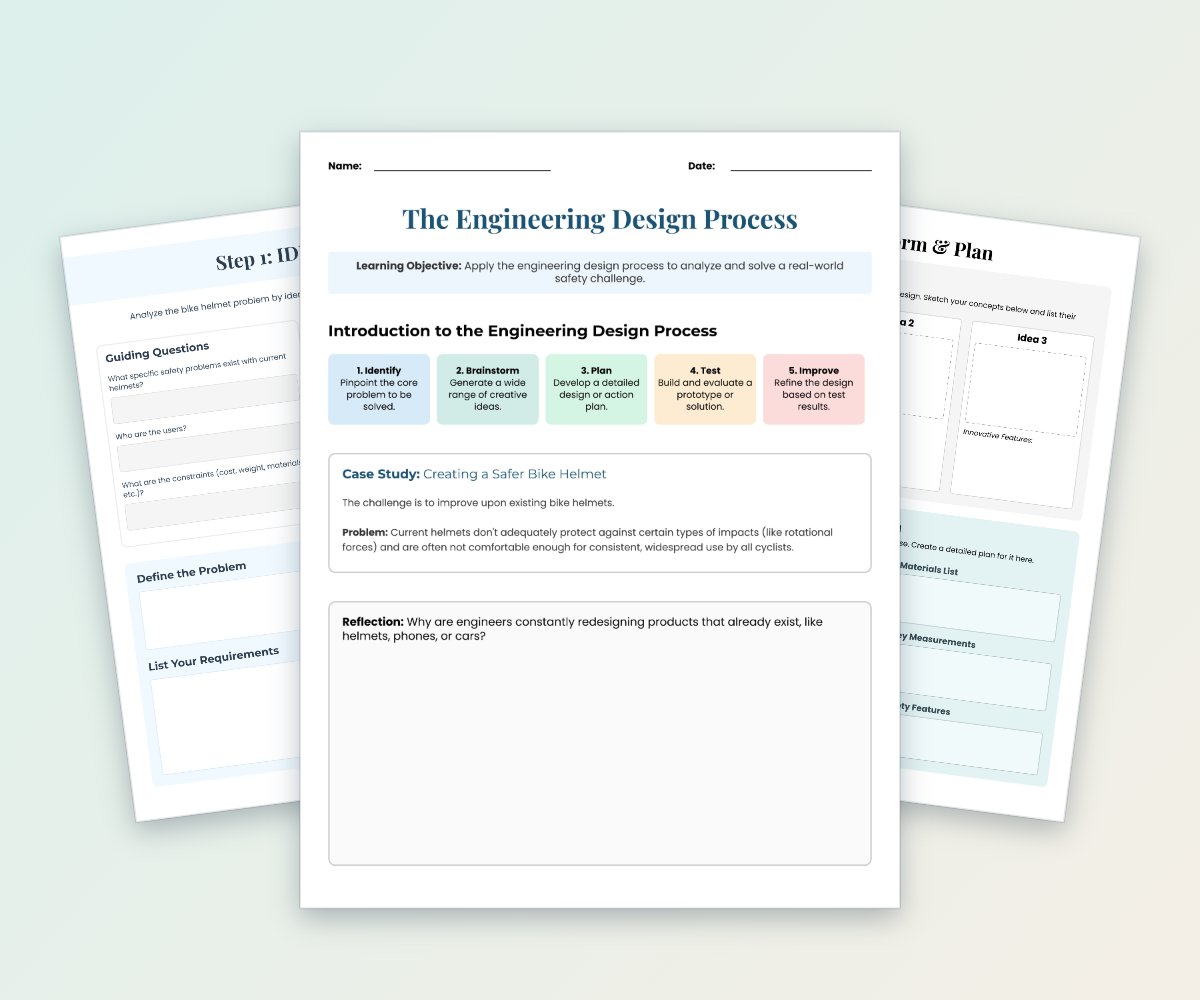
Students apply the engineering design process to analyze a bike helmet safety challenge.
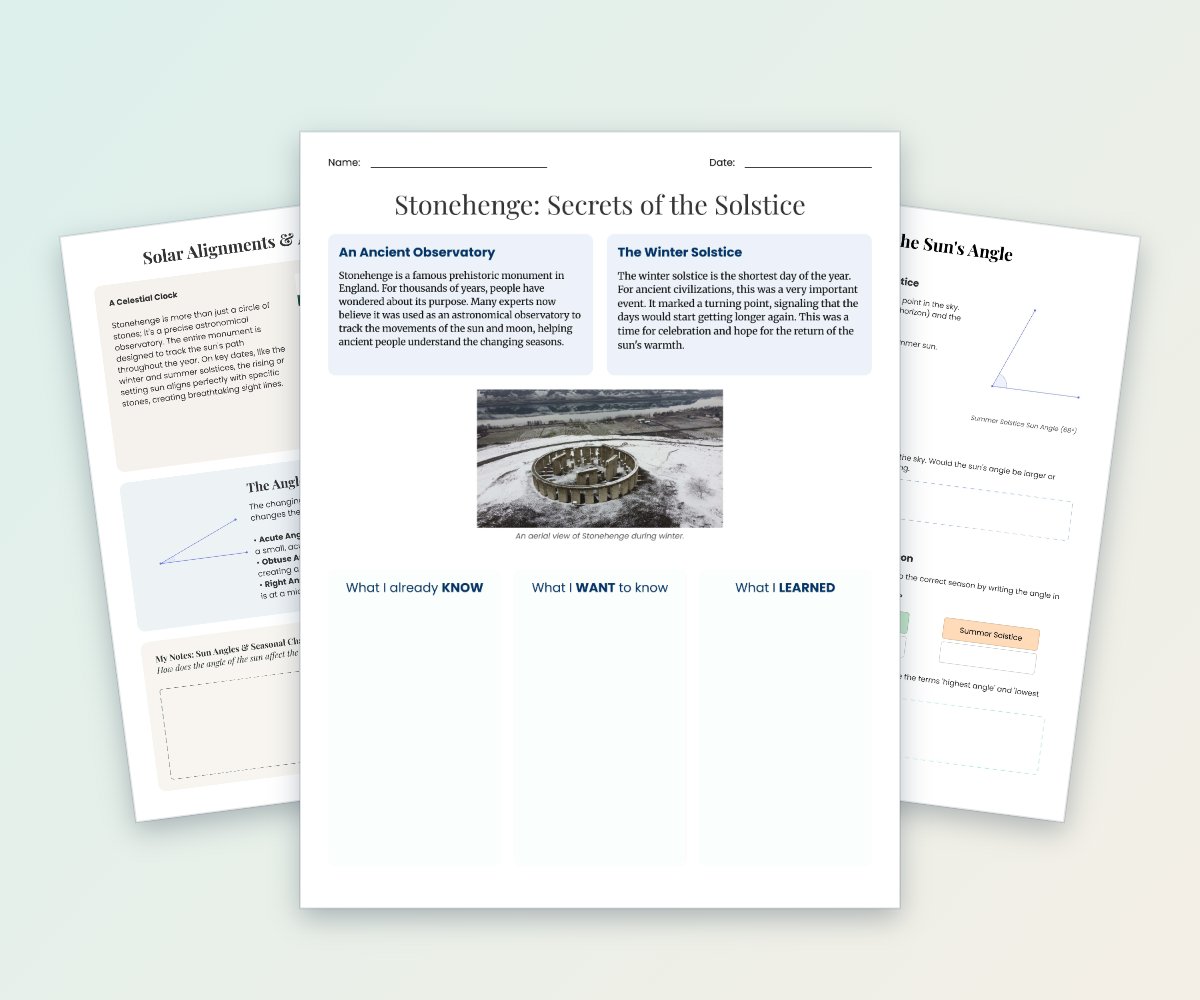
Students explore Stonehenge’s possible astronomical purpose, the winter and summer solstices, Earth’s tilt, and seasonal changes.
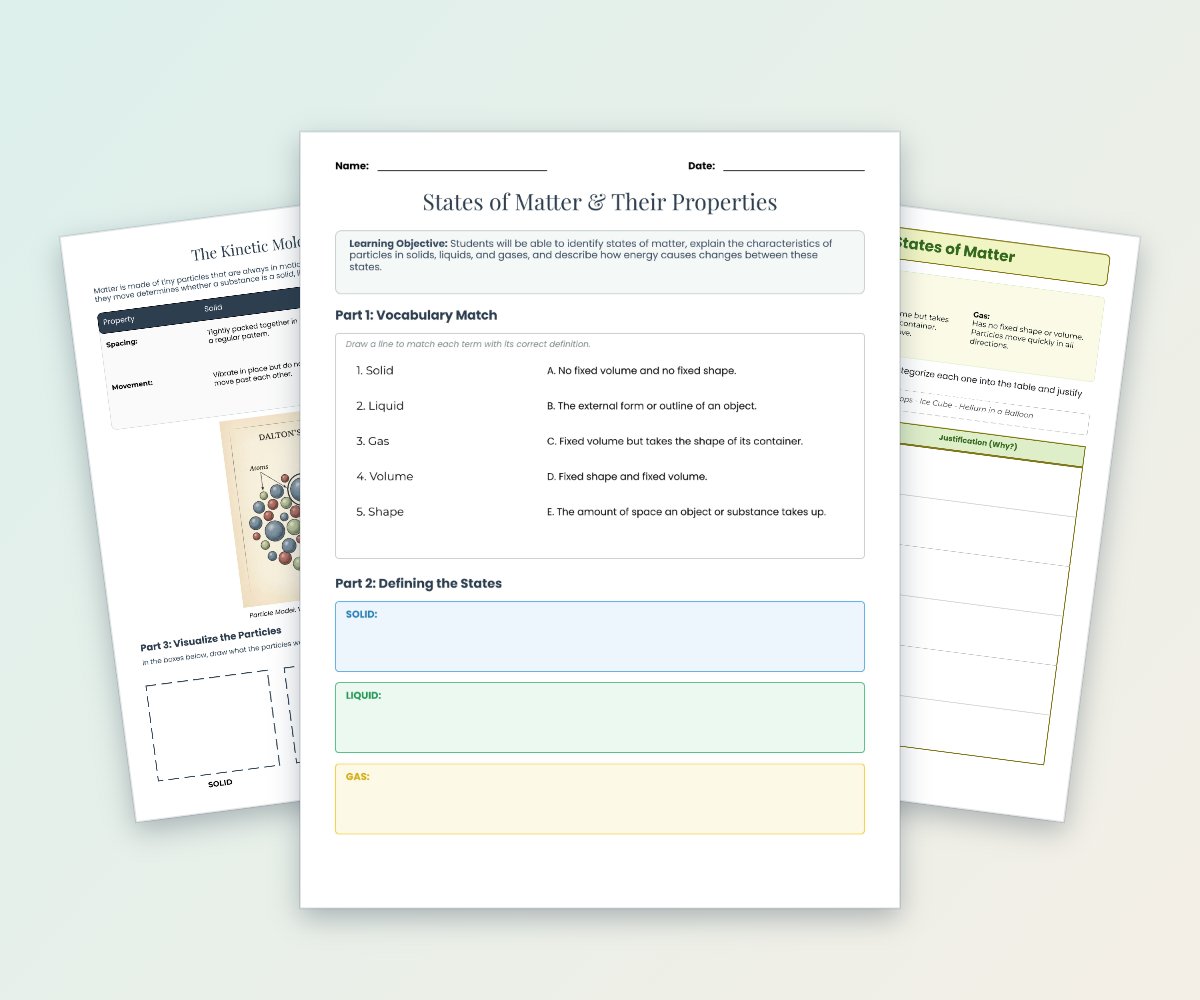
This six-page worksheet pack reviews solids, liquids, gases, particle motion, properties, and phase changes.
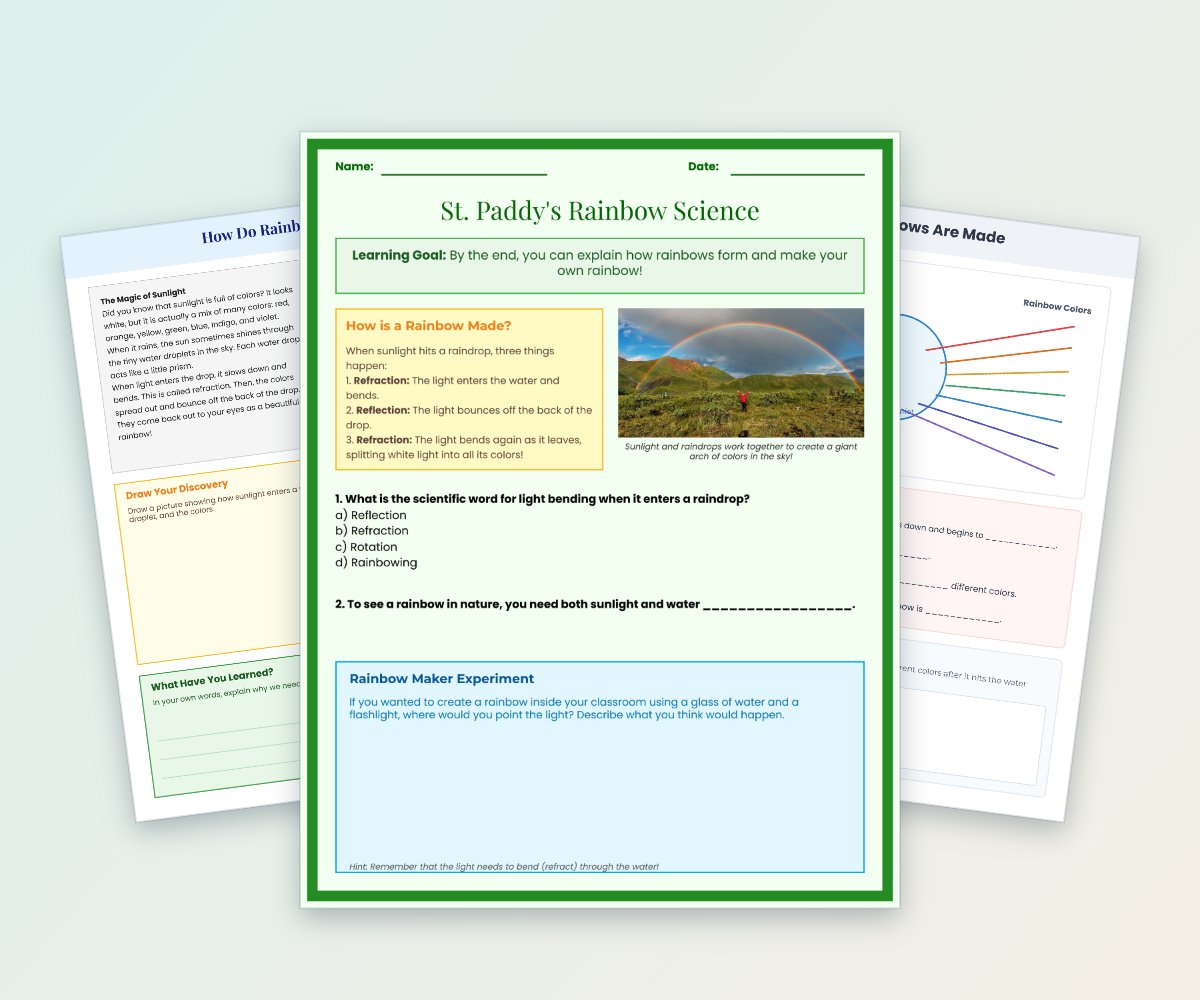
This five-page science activity pack teaches students how refraction and reflection create rainbows.
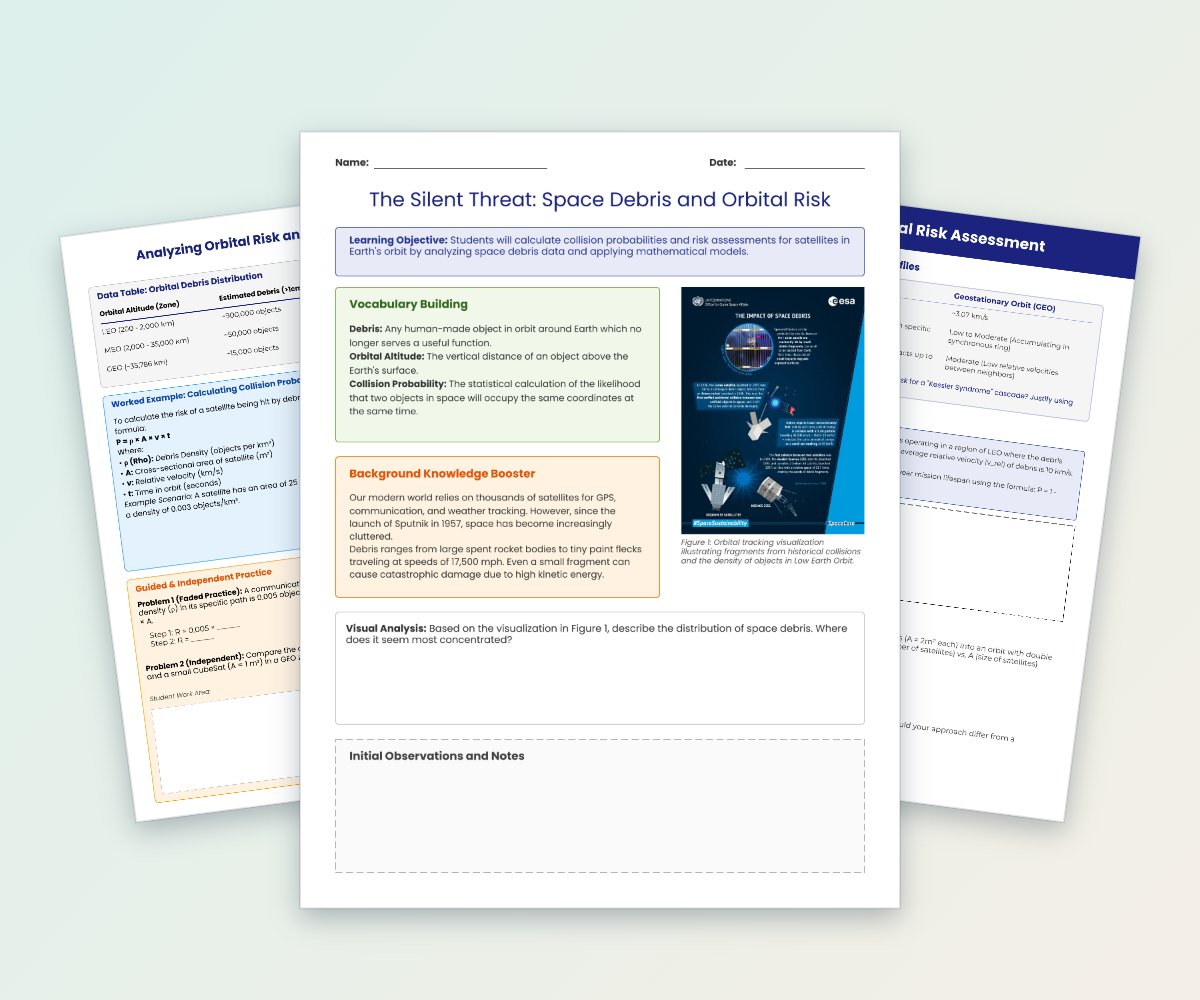
Students investigate space debris, orbital altitude, debris density, and satellite collision risk.
This three-page science journal introduces solar and lunar eclipses, including alignment, umbra, penumbra, and totality.
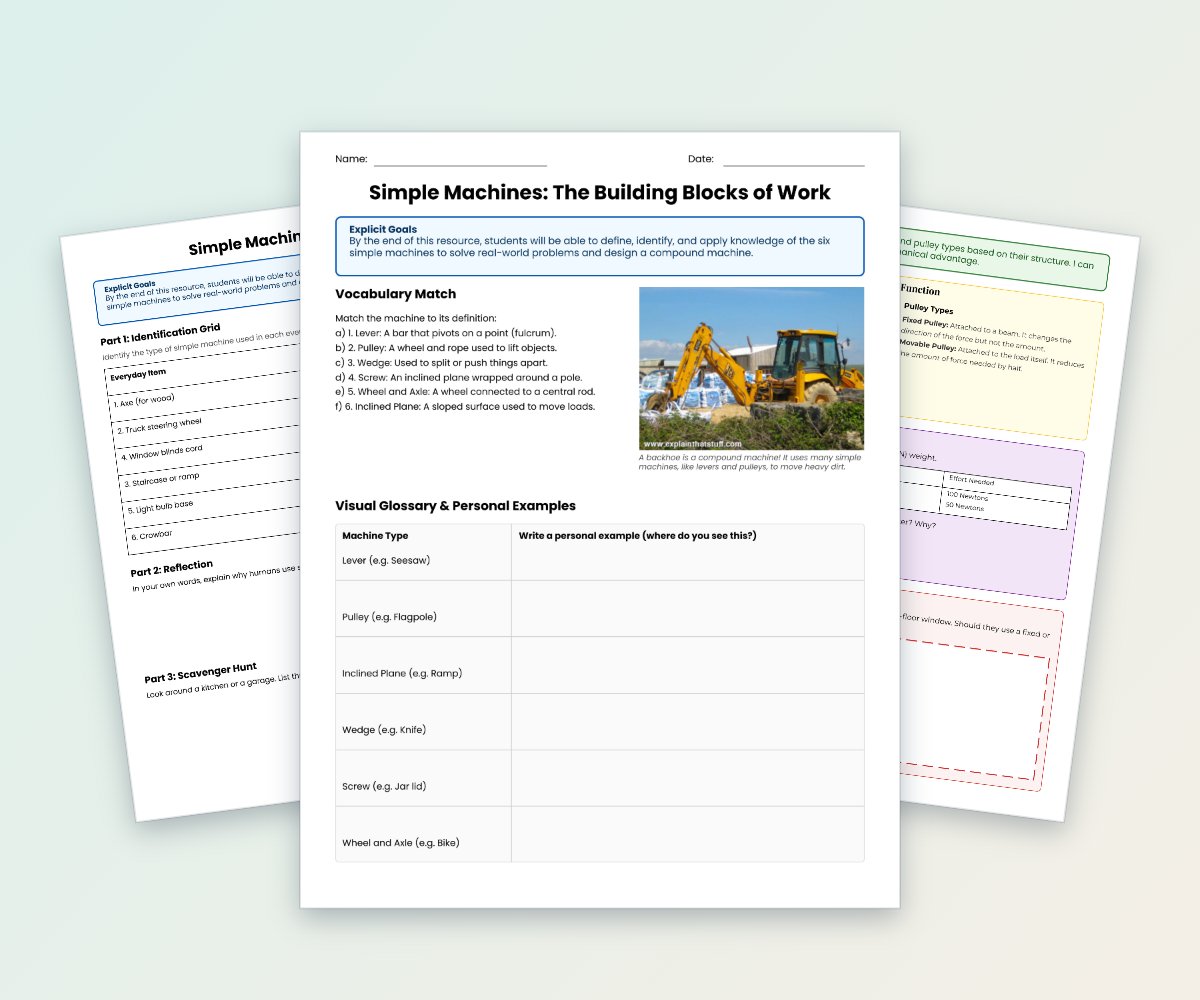
This interactive workbook introduces the six simple machines through vocabulary matching, visual examples, everyday-item identification, reflection, and a scavenger hunt.
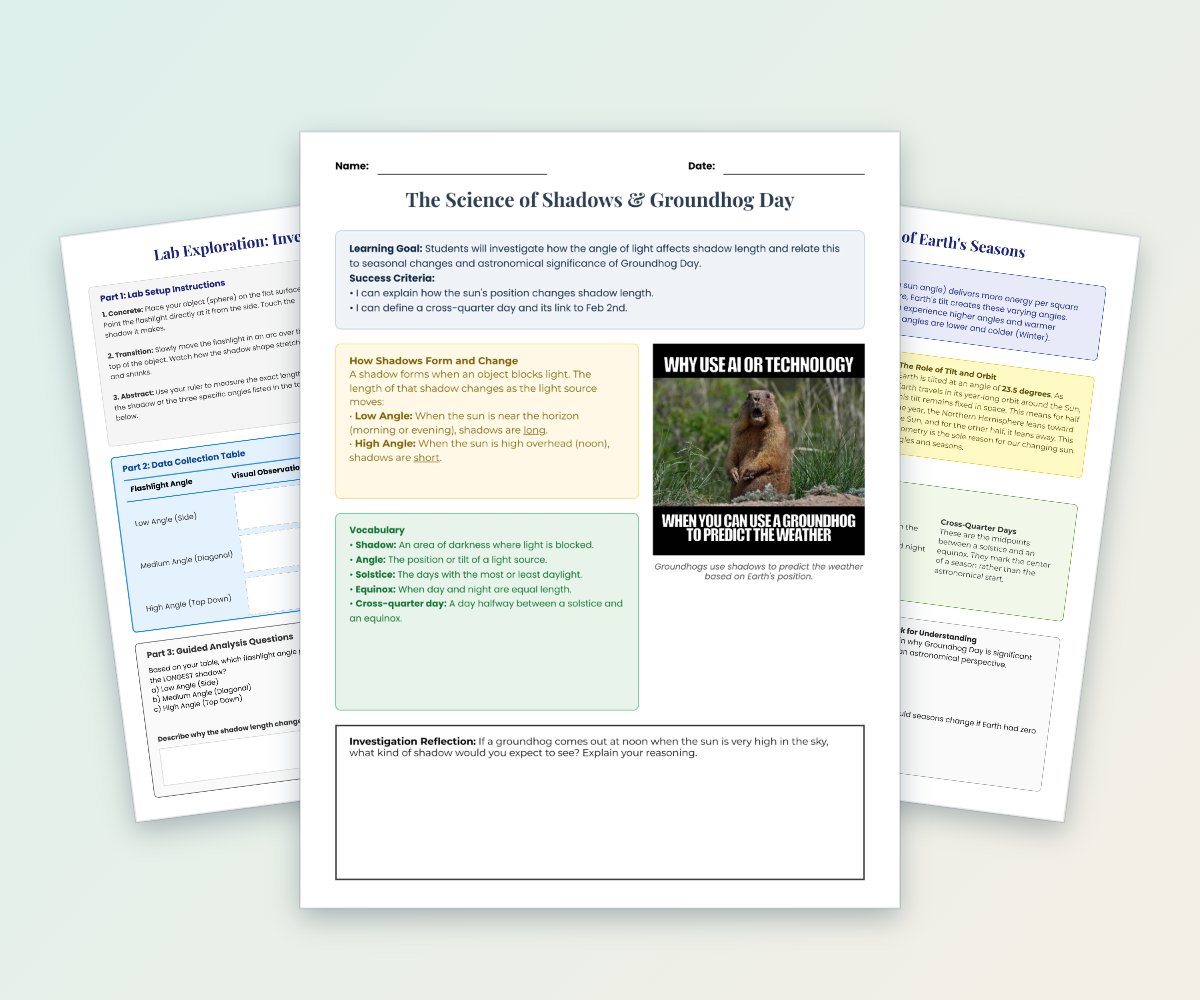
Students investigate how light angle affects shadow length using a flashlight, object, ruler, and data table.
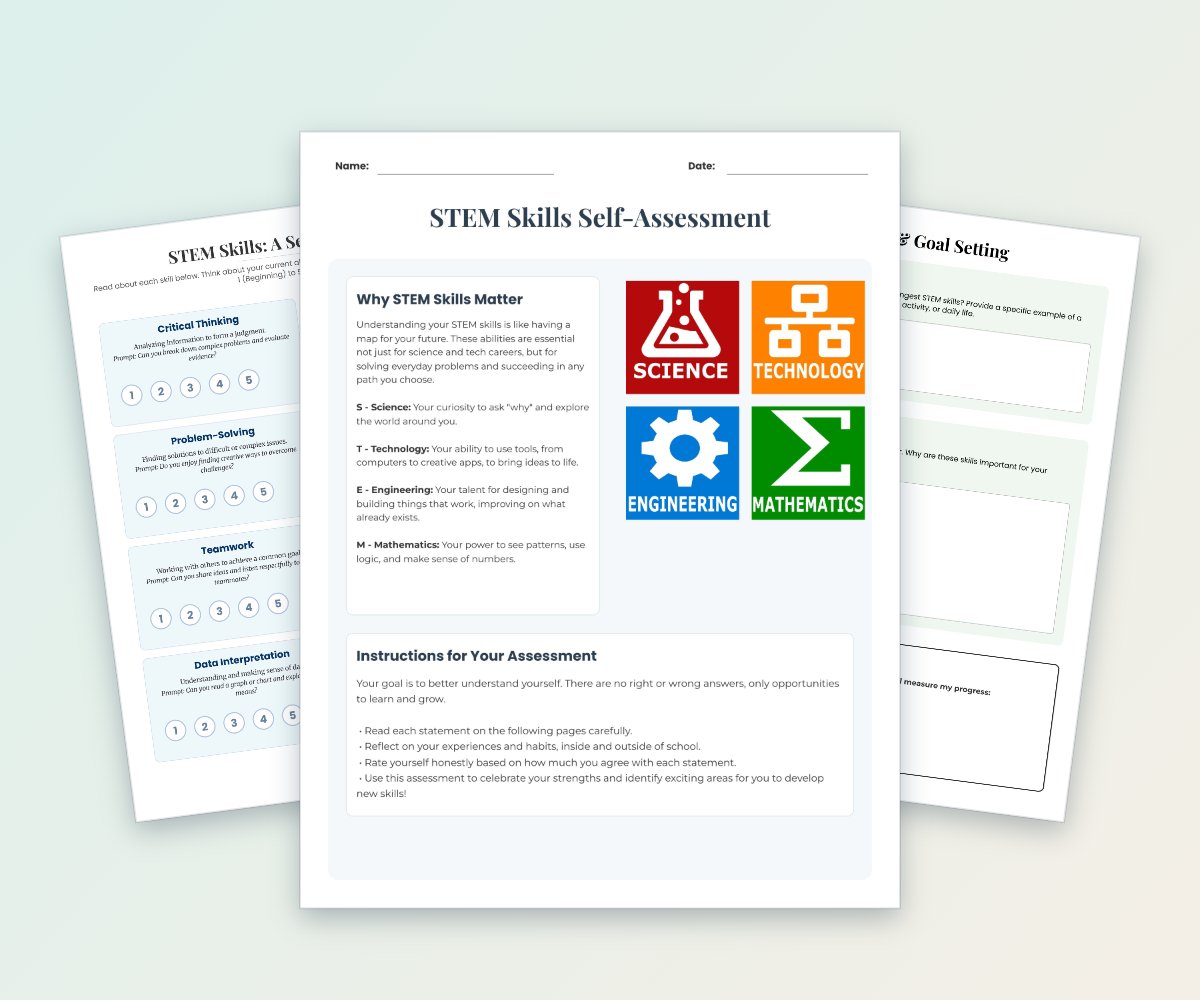
This three-page self-assessment helps students evaluate their skills in critical thinking, problem-solving, teamwork, data interpretation, creativity, communication, and technical skills.
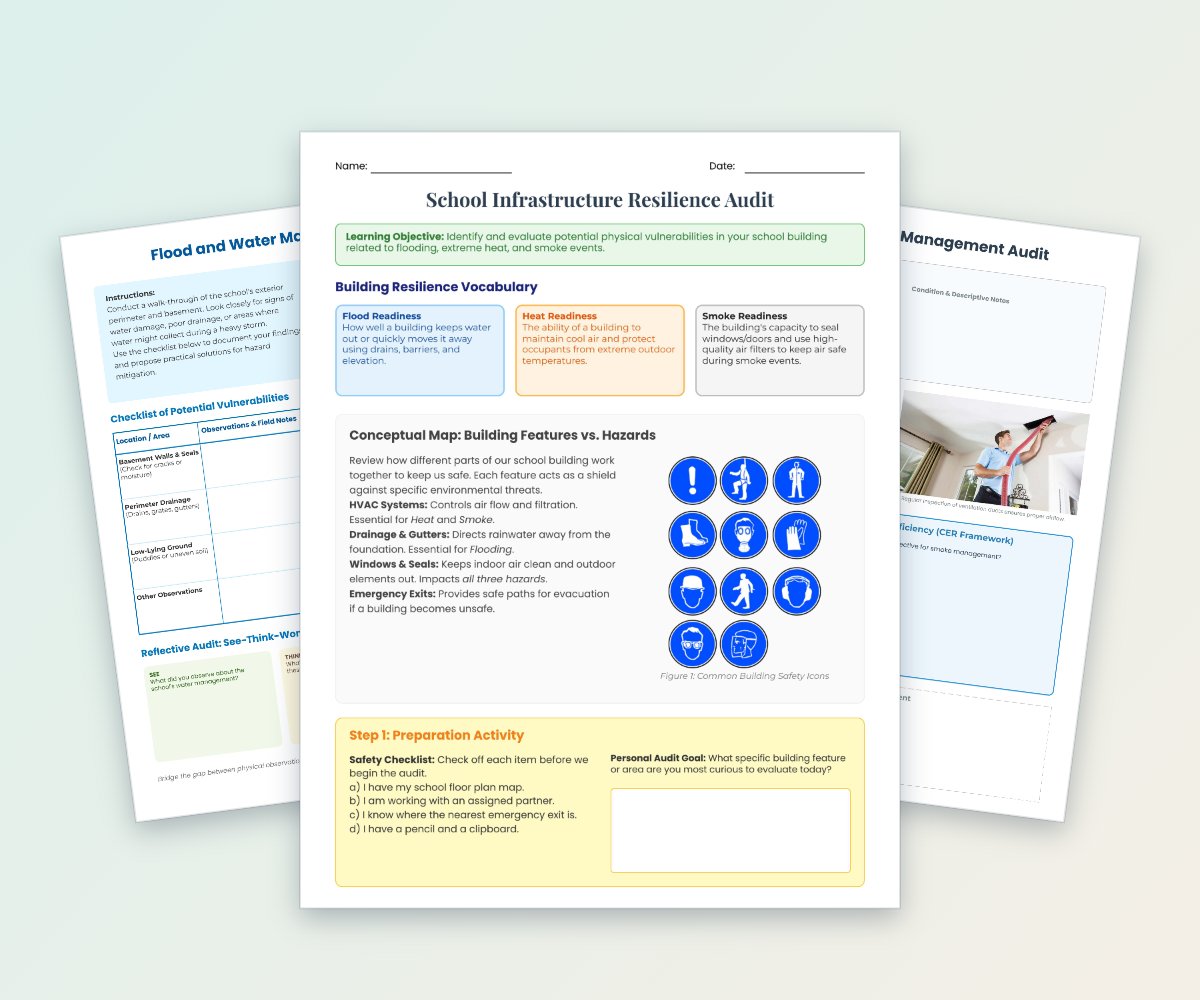
Students investigate how school building features respond to flooding, extreme heat, and smoke events.
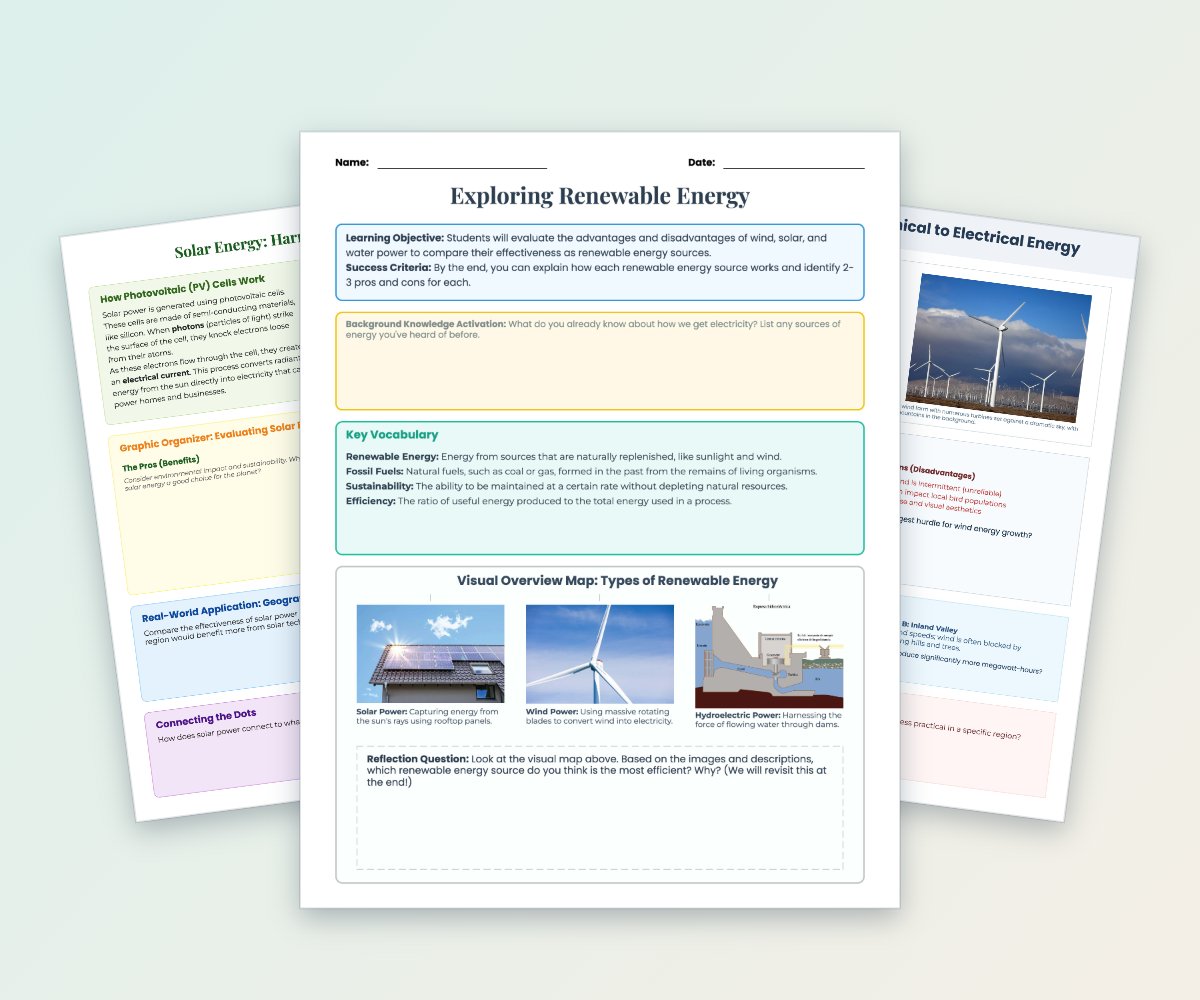
Introduce students to solar, wind, and hydroelectric power through background information, key vocabulary, visual mapping, and guided reflection.
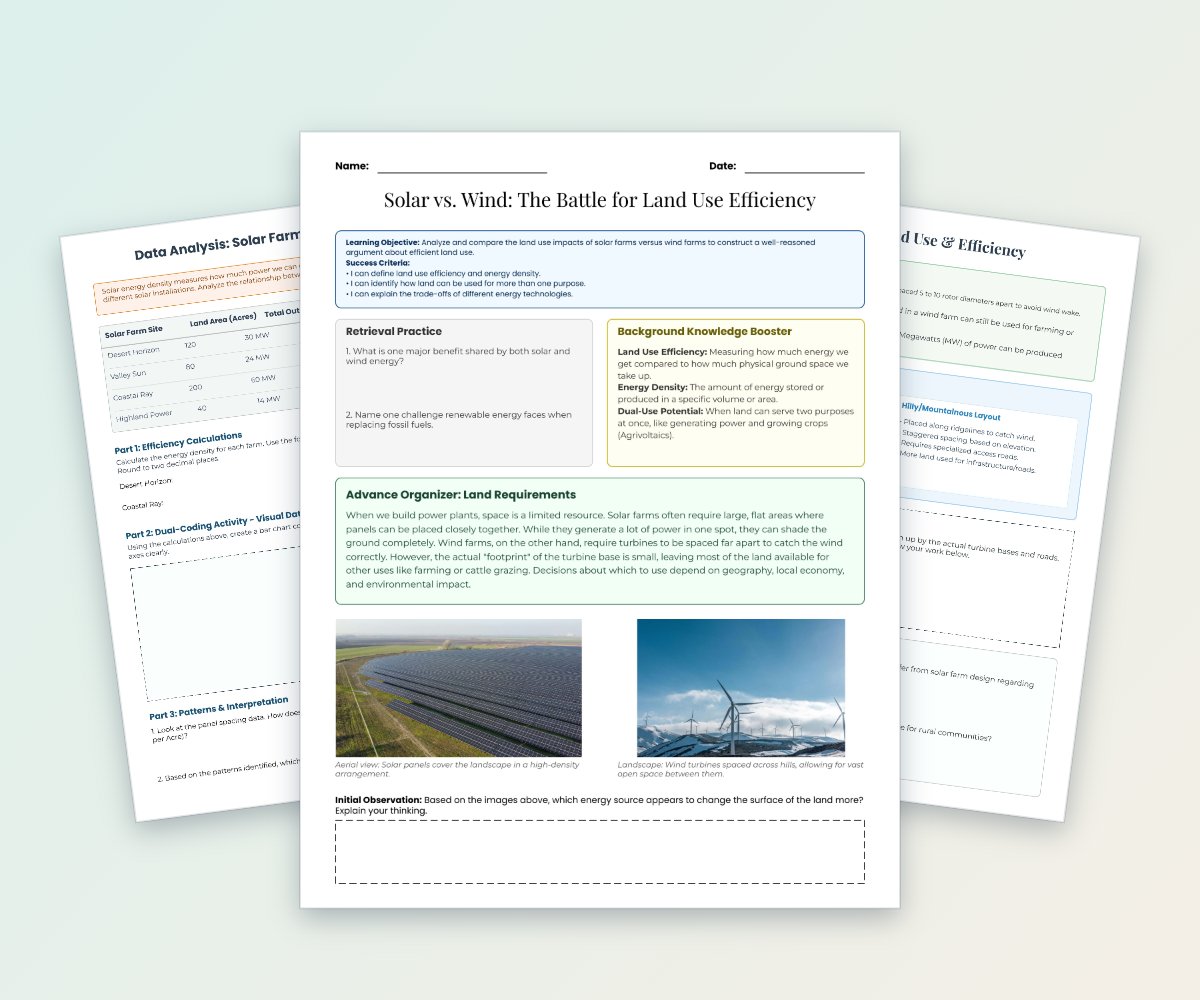
Students compare solar and wind energy through background reading, land-use analysis, energy-density calculations, and evidence-based argument writing.
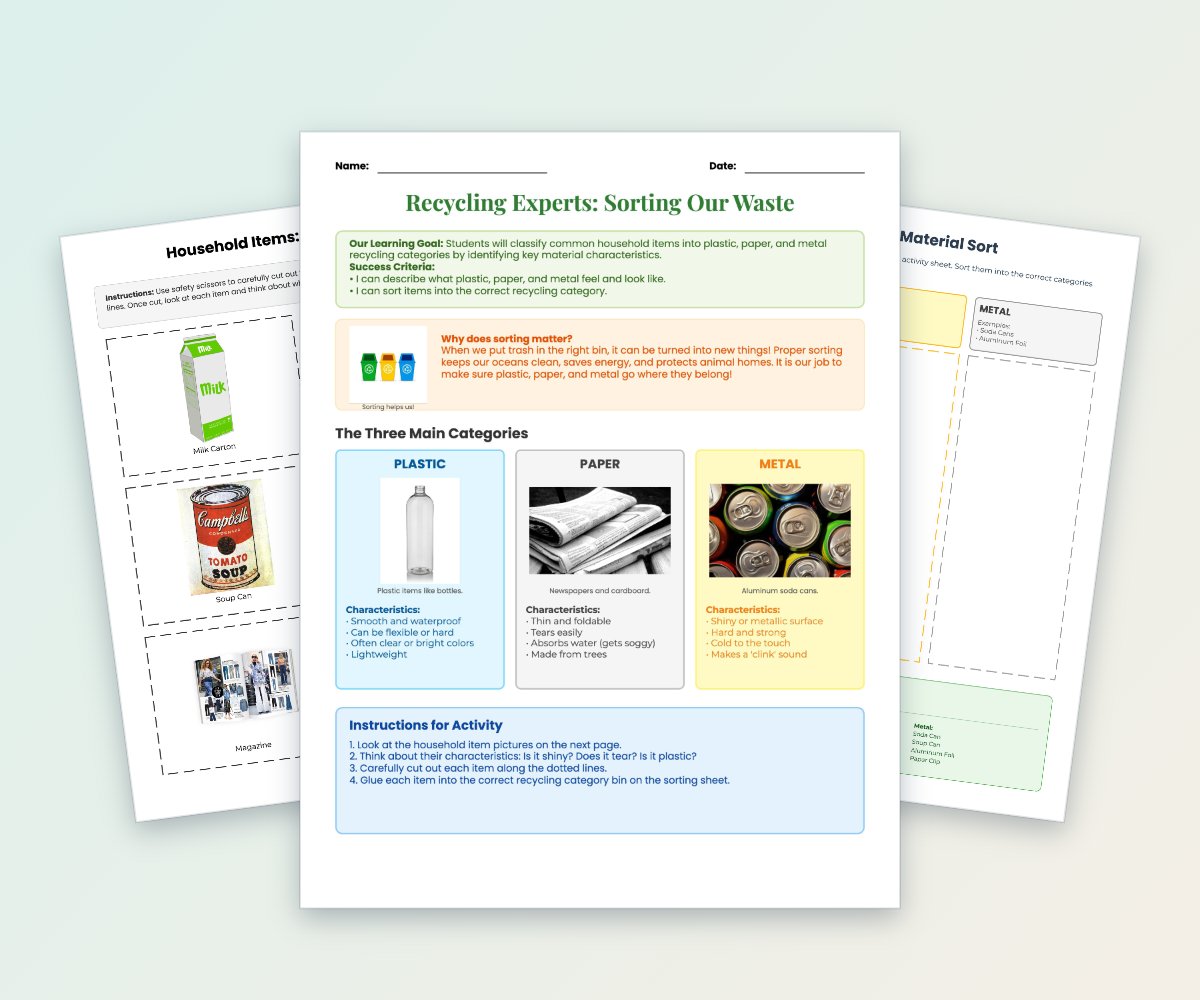
Students learn to identify plastic, paper, and metal by their observable characteristics, then sort household items into recycling categories.
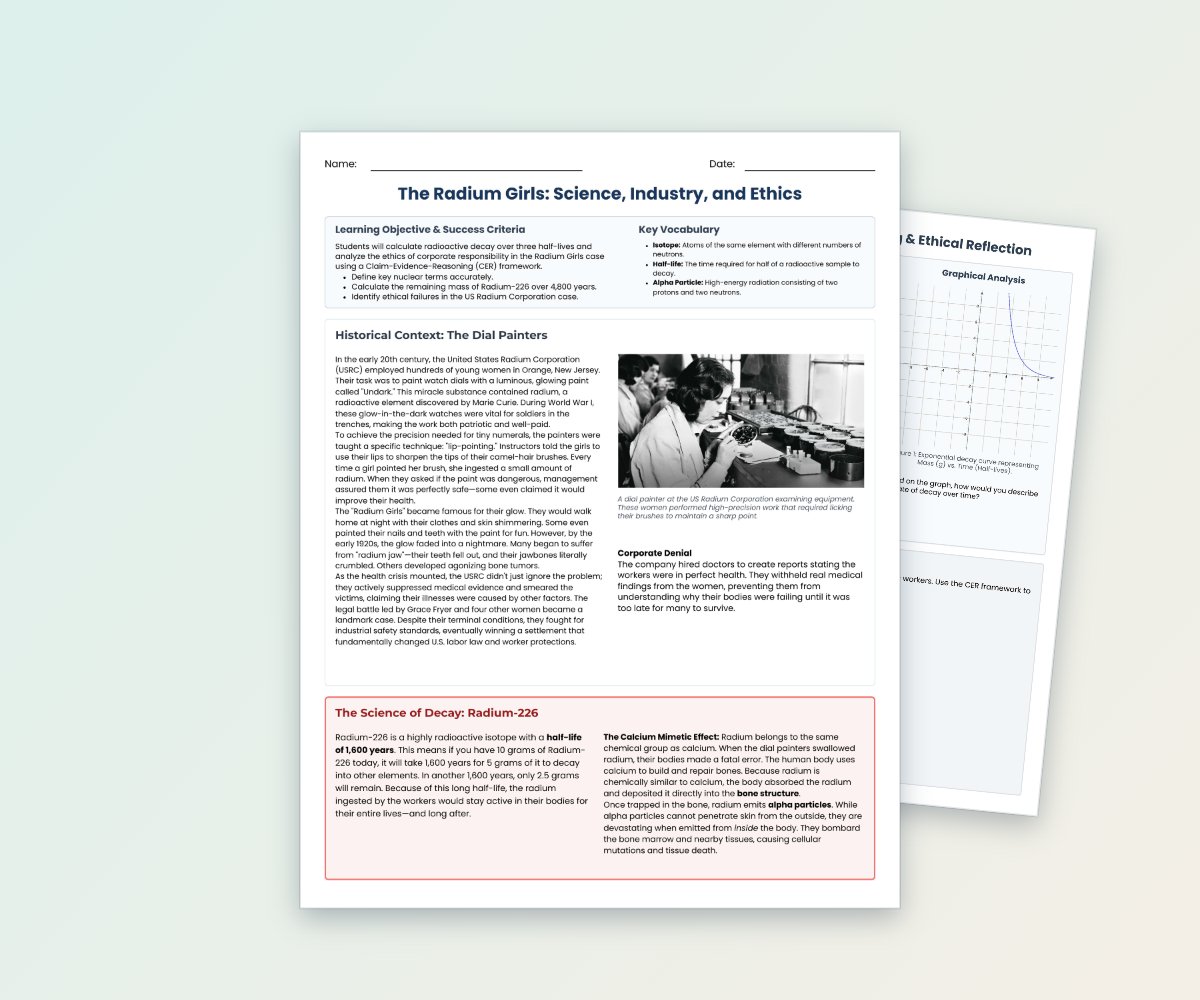
This two-page worksheet introduces isotopes, half-life, alpha particles, and radioactive decay through the history of the Radium Girls.
Students transcribe DNA into mRNA and translate codons into amino acid sequences using a snowman-themed activity.
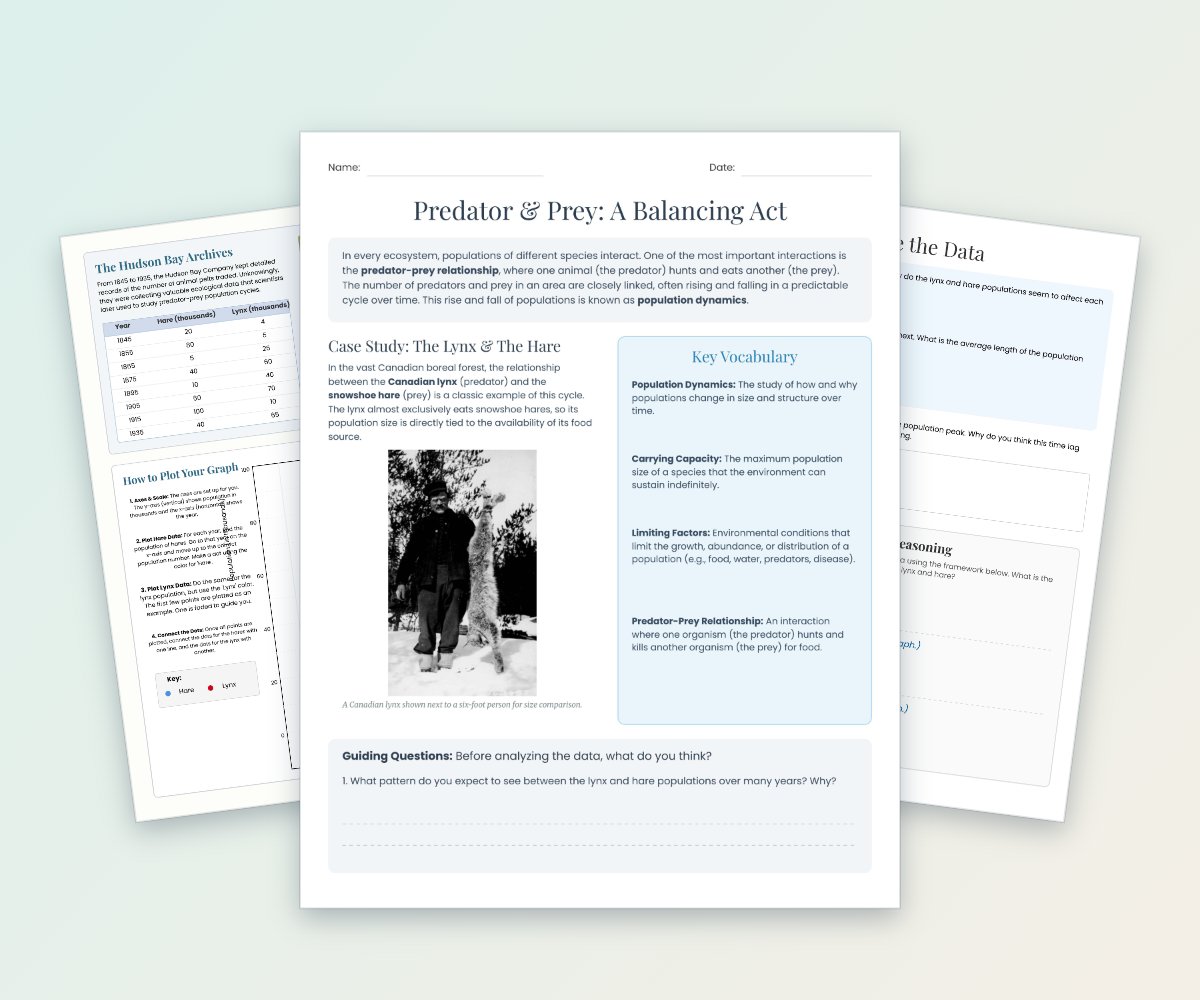
Students learn how predator and prey populations interact through vocabulary, guiding questions, and a Canadian lynx and snowshoe hare case study.
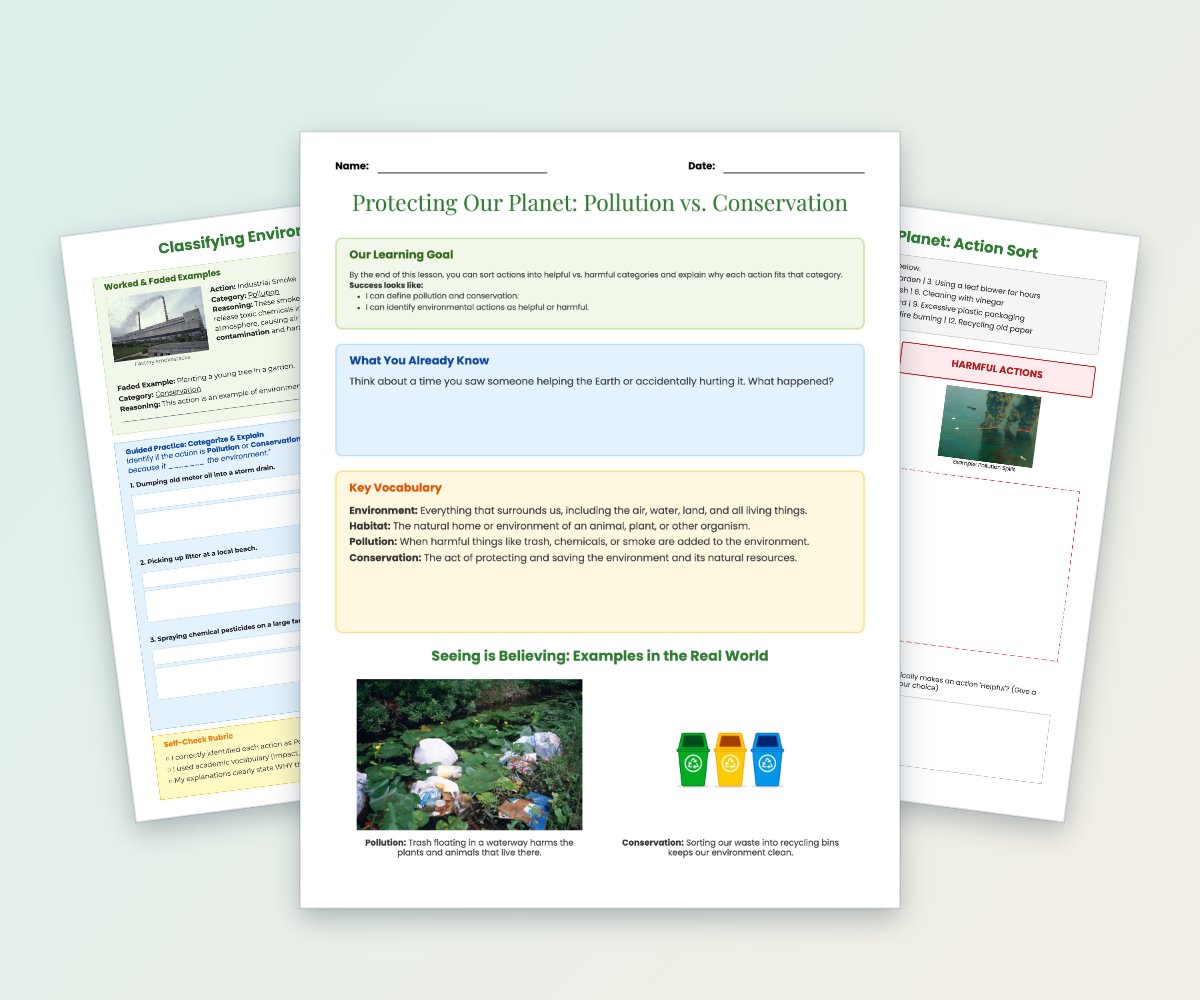
This four-page environmental science resource teaches students to distinguish pollution from conservation actions.
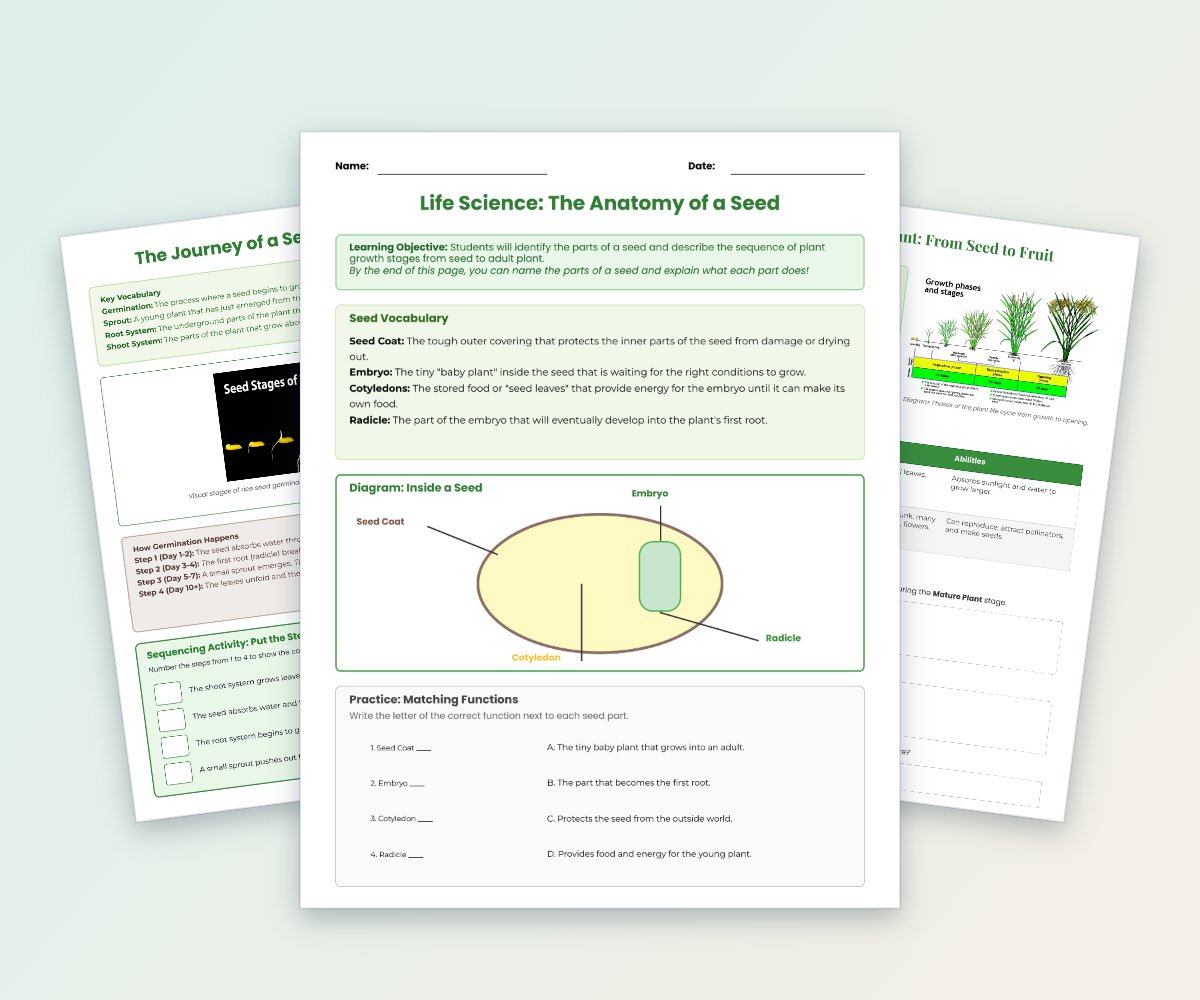
This printable packet introduces seed parts, their functions, germination stages, and the journey from seed to mature plant.
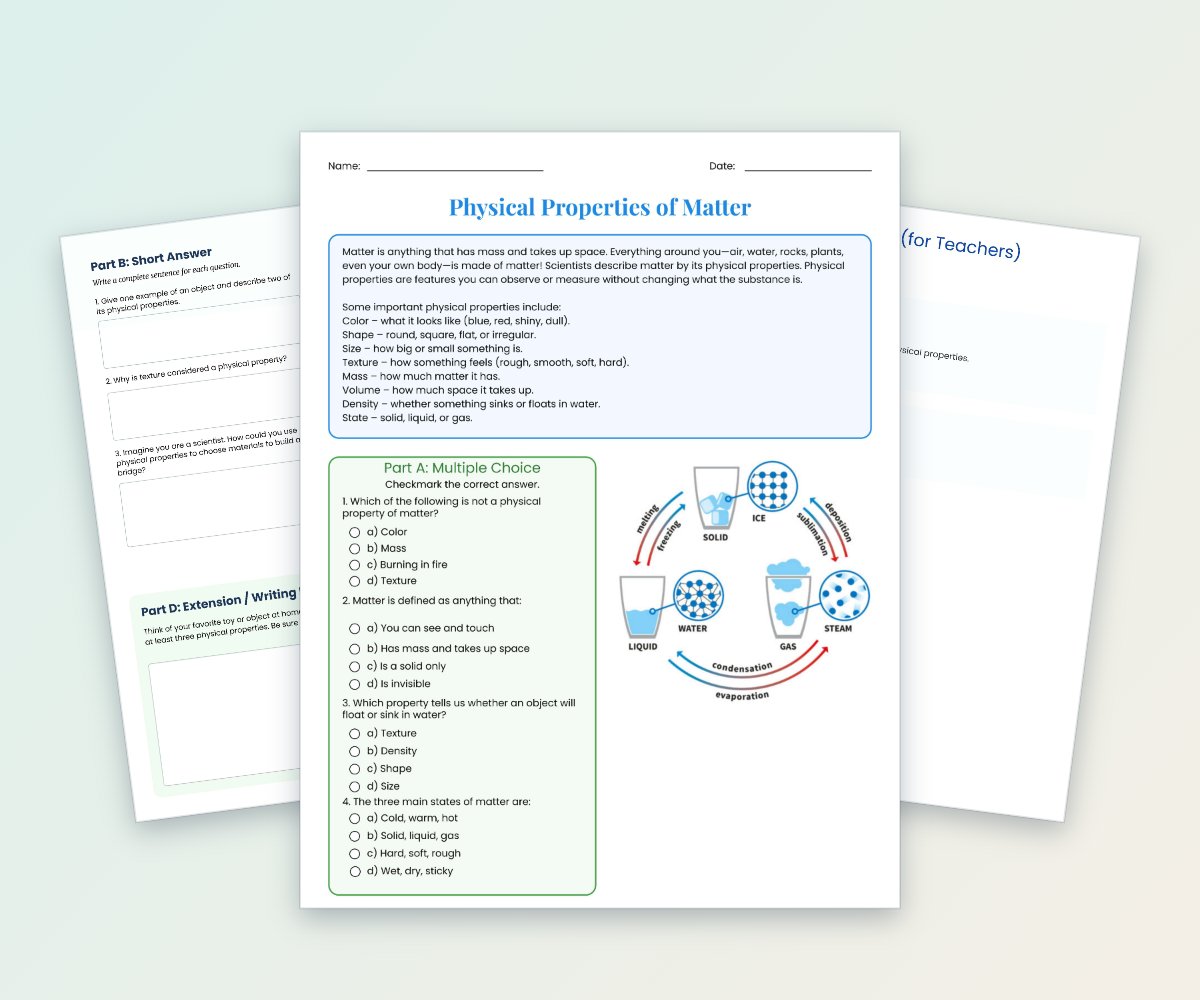
This three-page worksheet introduces physical properties of matter, including color, shape, texture, mass, volume, density, and states of matter.
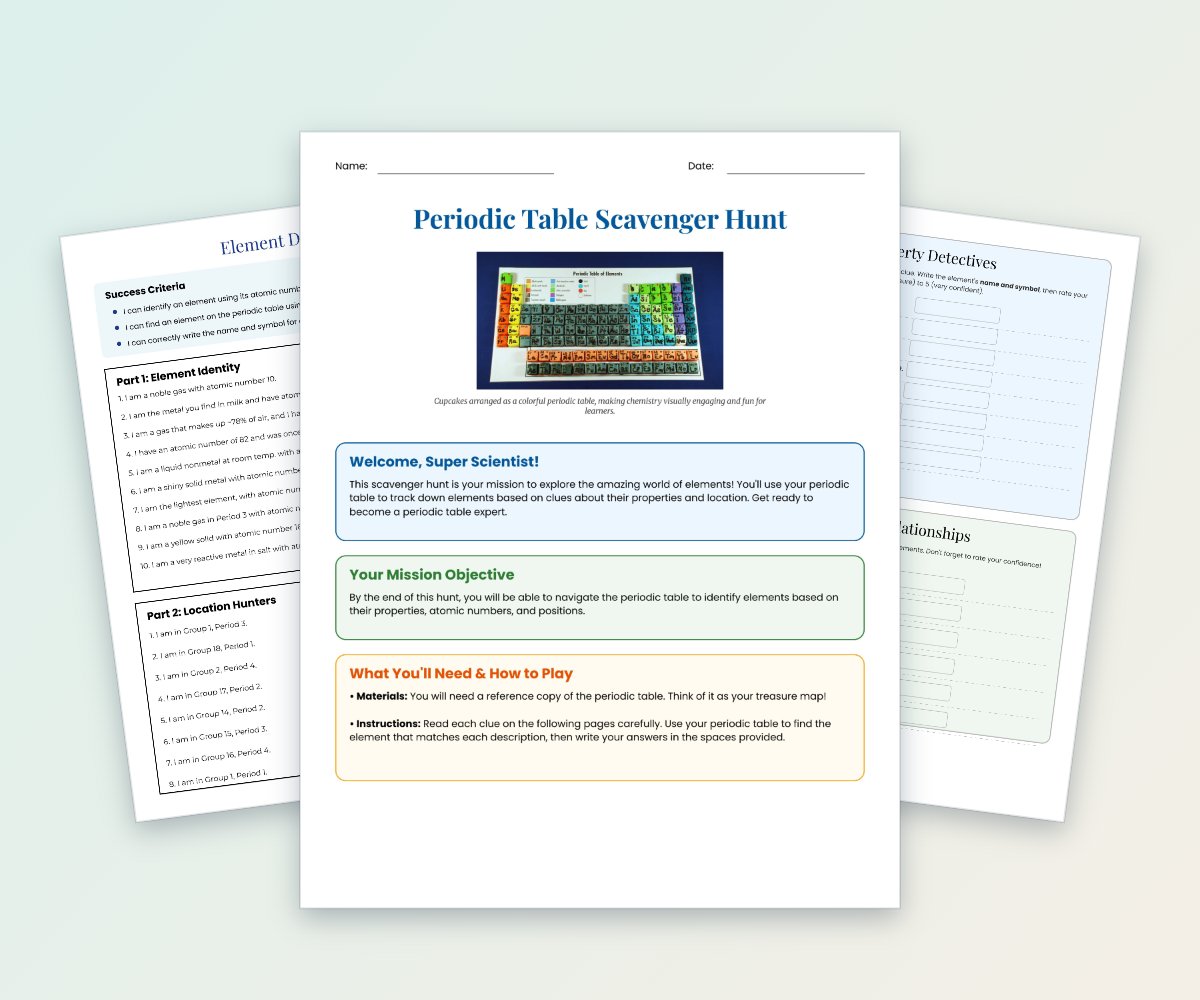
Students solve element clues using atomic numbers, properties, groups, and periods on the periodic table.
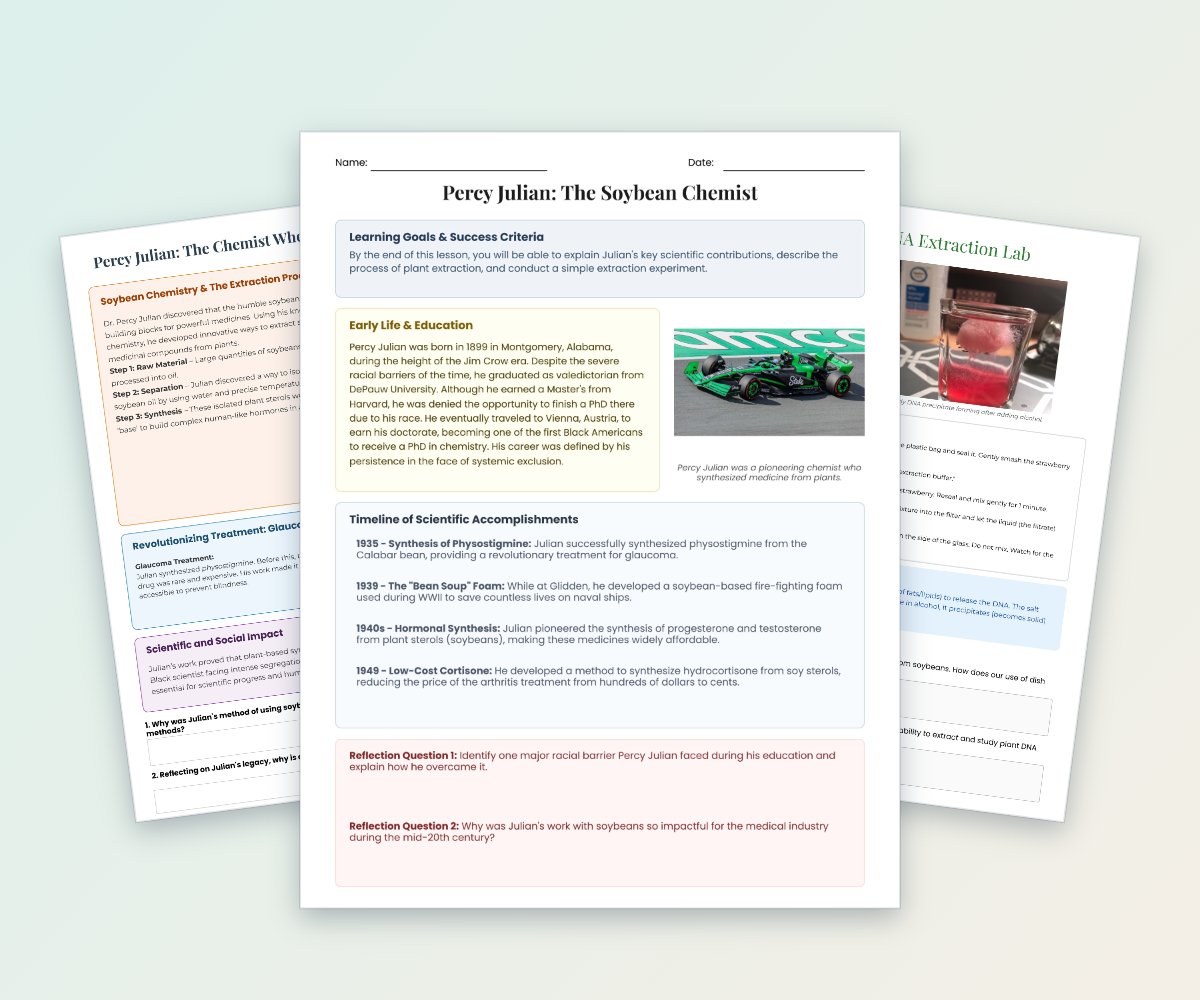
This lesson explores Percy Julian’s scientific achievements, including plant-based synthesis of medicines and soybean chemistry.
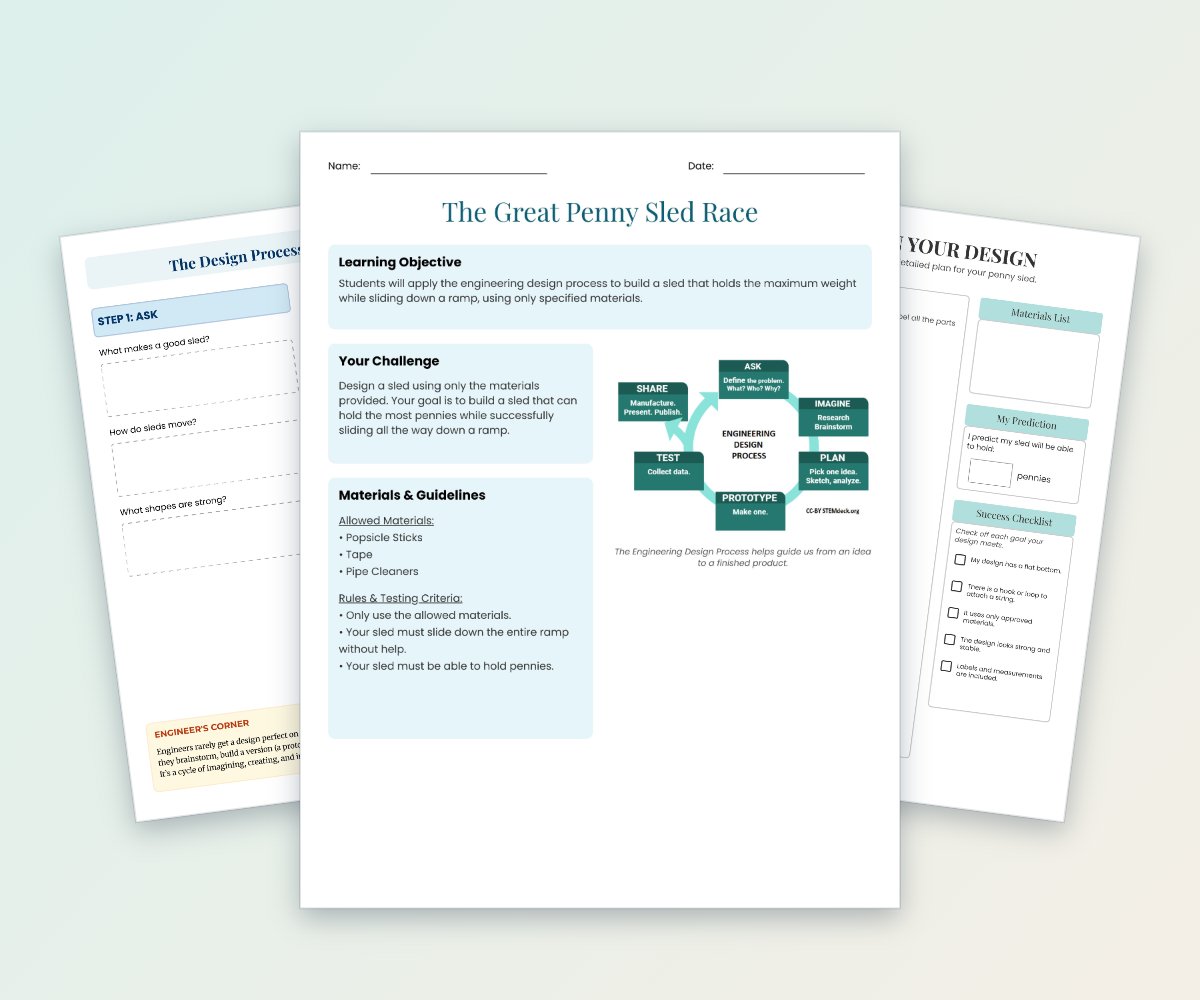
Students design, build, and test a sled made from limited materials to determine how many pennies it can carry down a ramp.
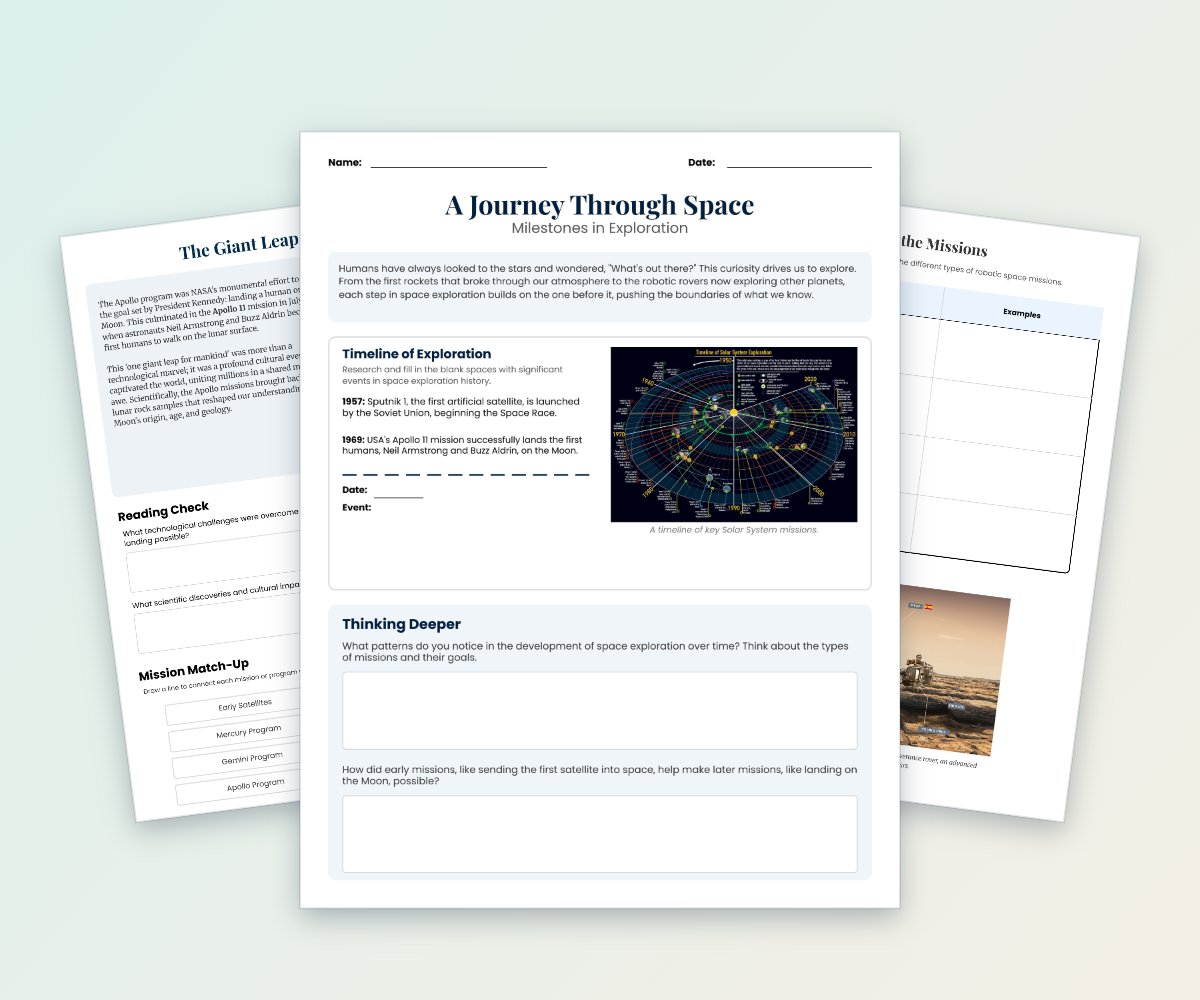
Students explore major milestones in space exploration, including Sputnik, Apollo 11, and robotic missions.
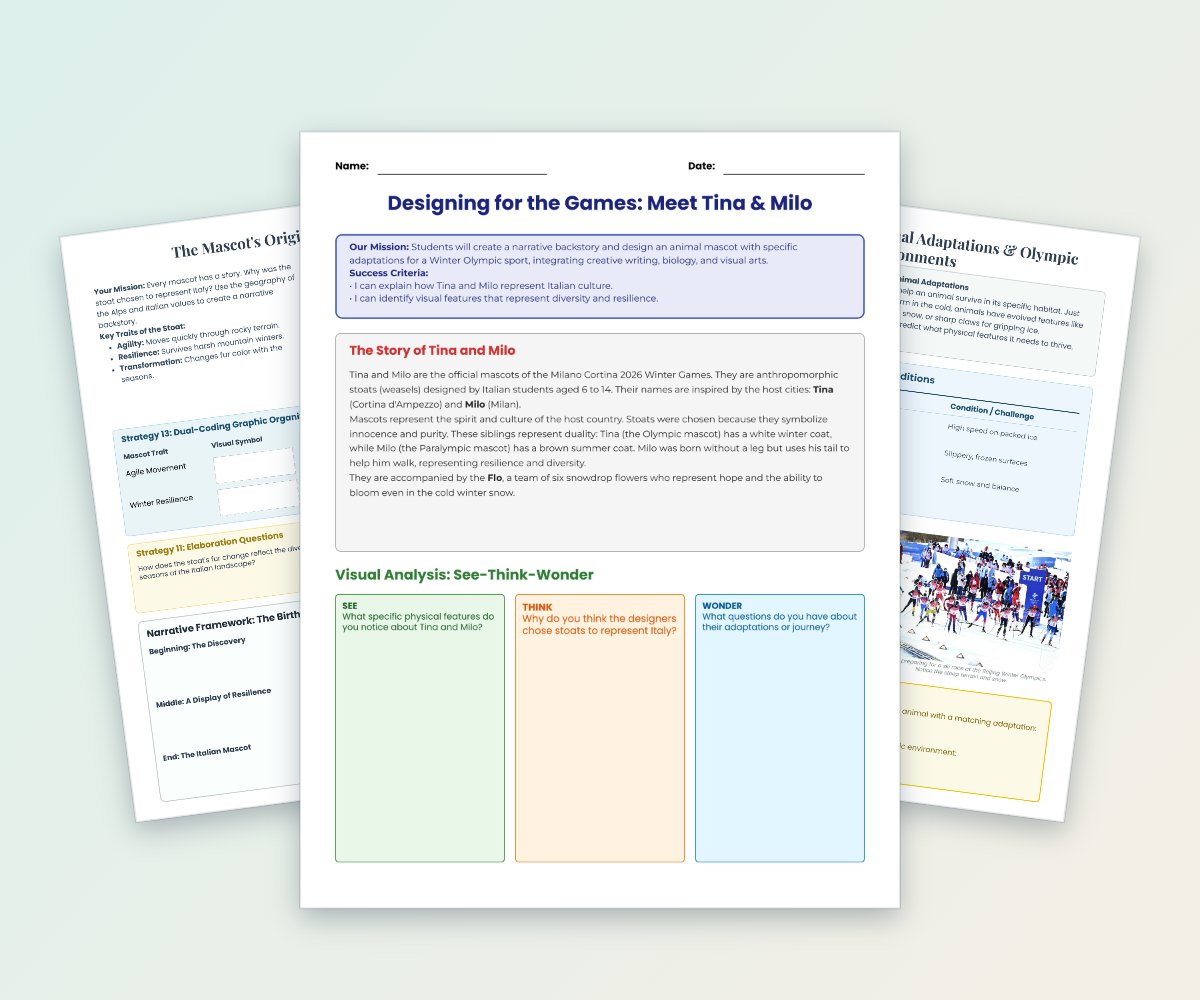
Students analyze the Milano Cortina 2026 mascots, explore stoat adaptations and Italian geography, and design an original Olympic winter-sport mascot.