The Fall of Rome: Introduction and Timeline Activity
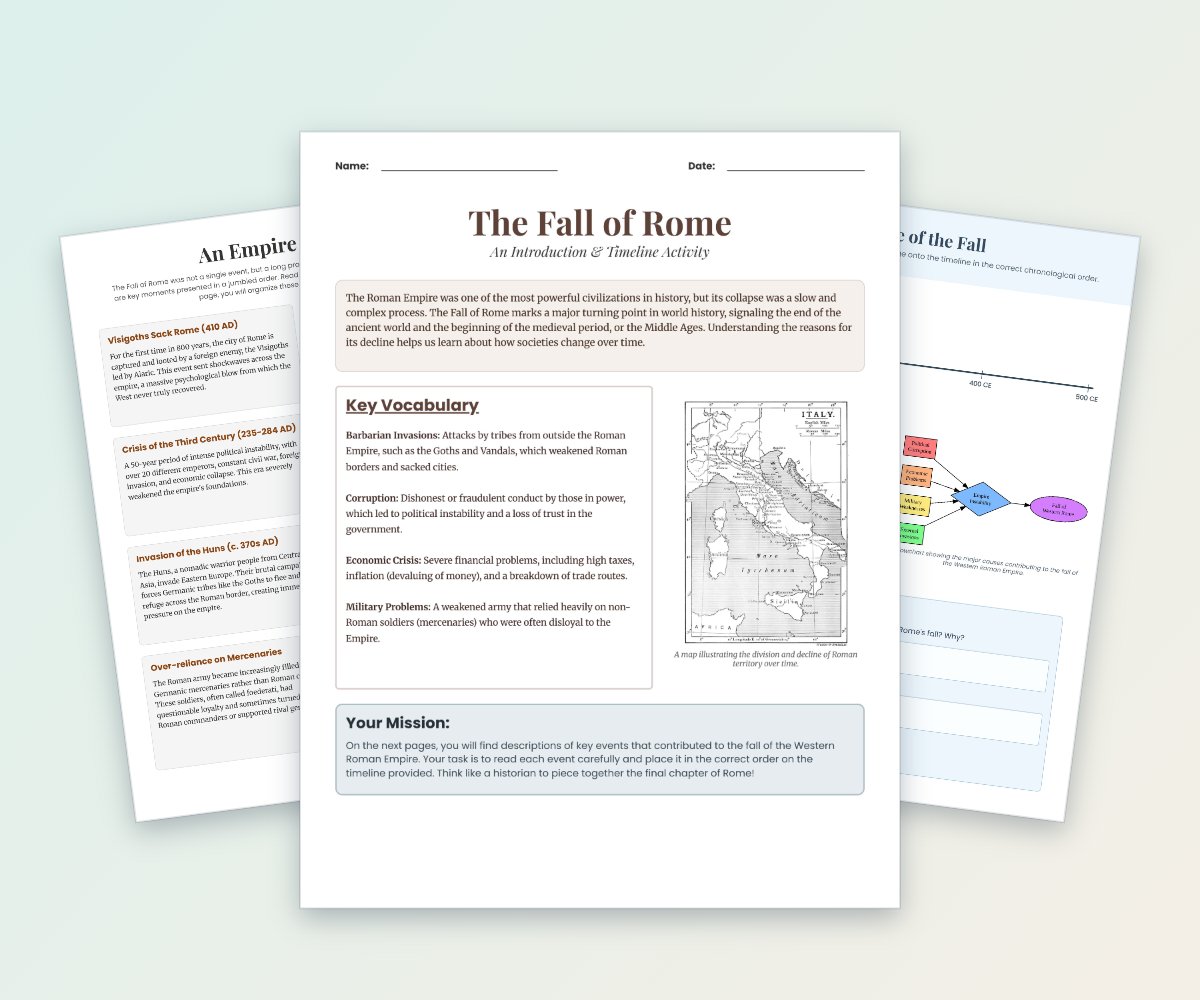
Students learn about major causes and events connected to the decline of the Western Roman Empire.
$3
History, geography and civics resources that bring communities, maps and primary sources to life, with questions that get students thinking.
Students learn about major causes and events connected to the decline of the Western Roman Empire.
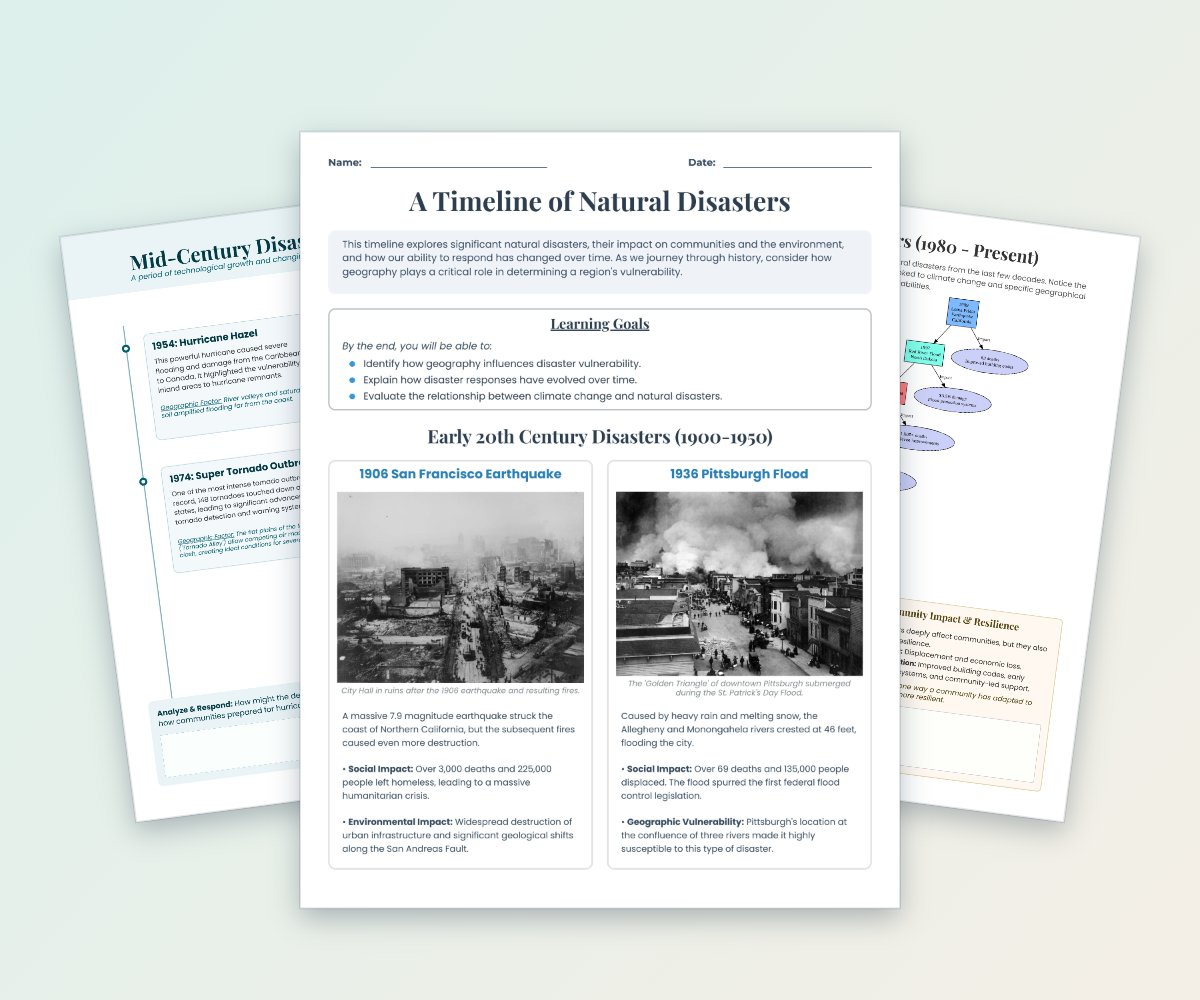
Students examine major natural disasters from 1900 to 1980, including earthquakes, floods, hurricanes, and tornadoes.
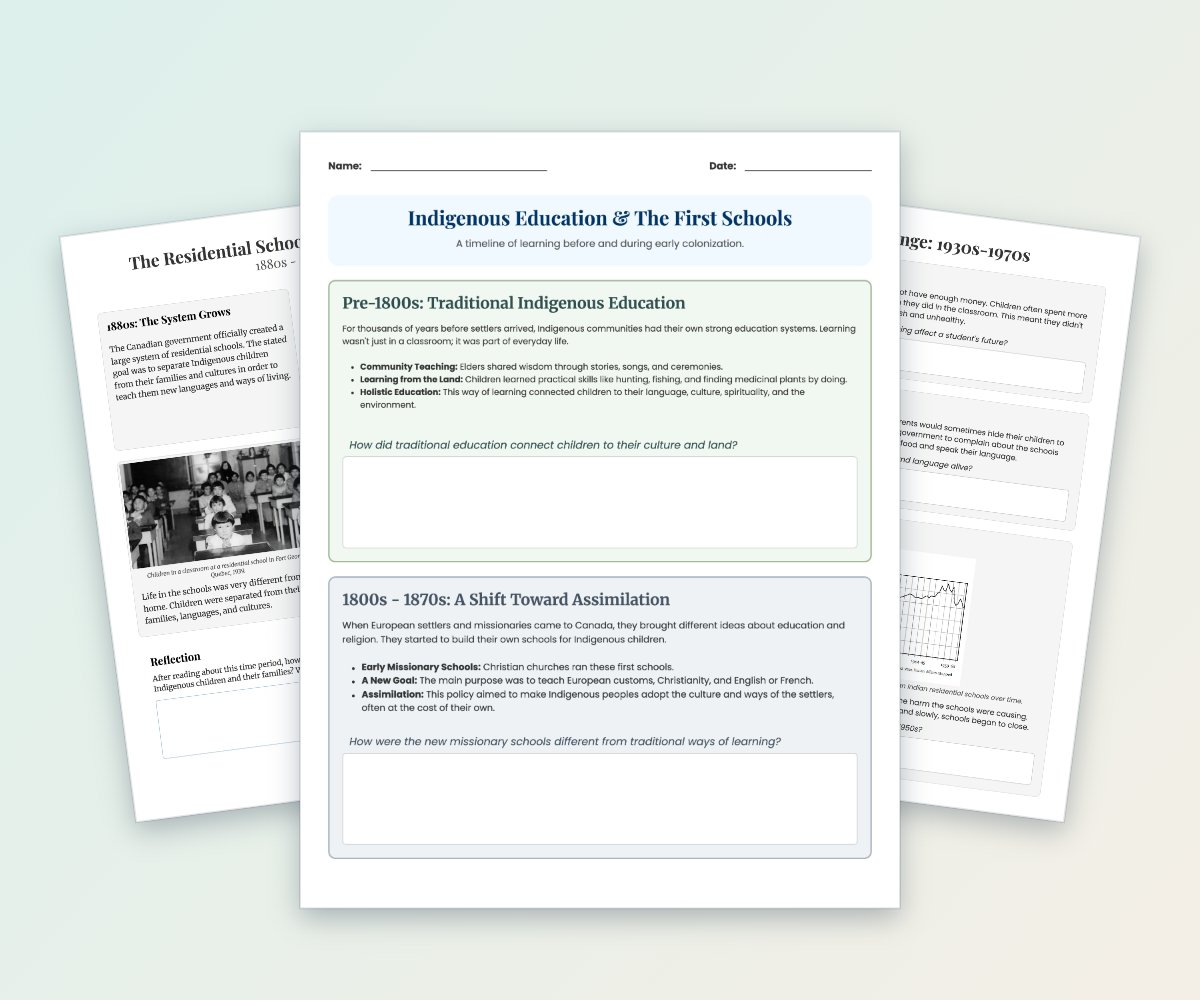
This four-page printable timeline introduces traditional Indigenous education, missionary schools, assimilation, and the development of Canada’s residential school system.
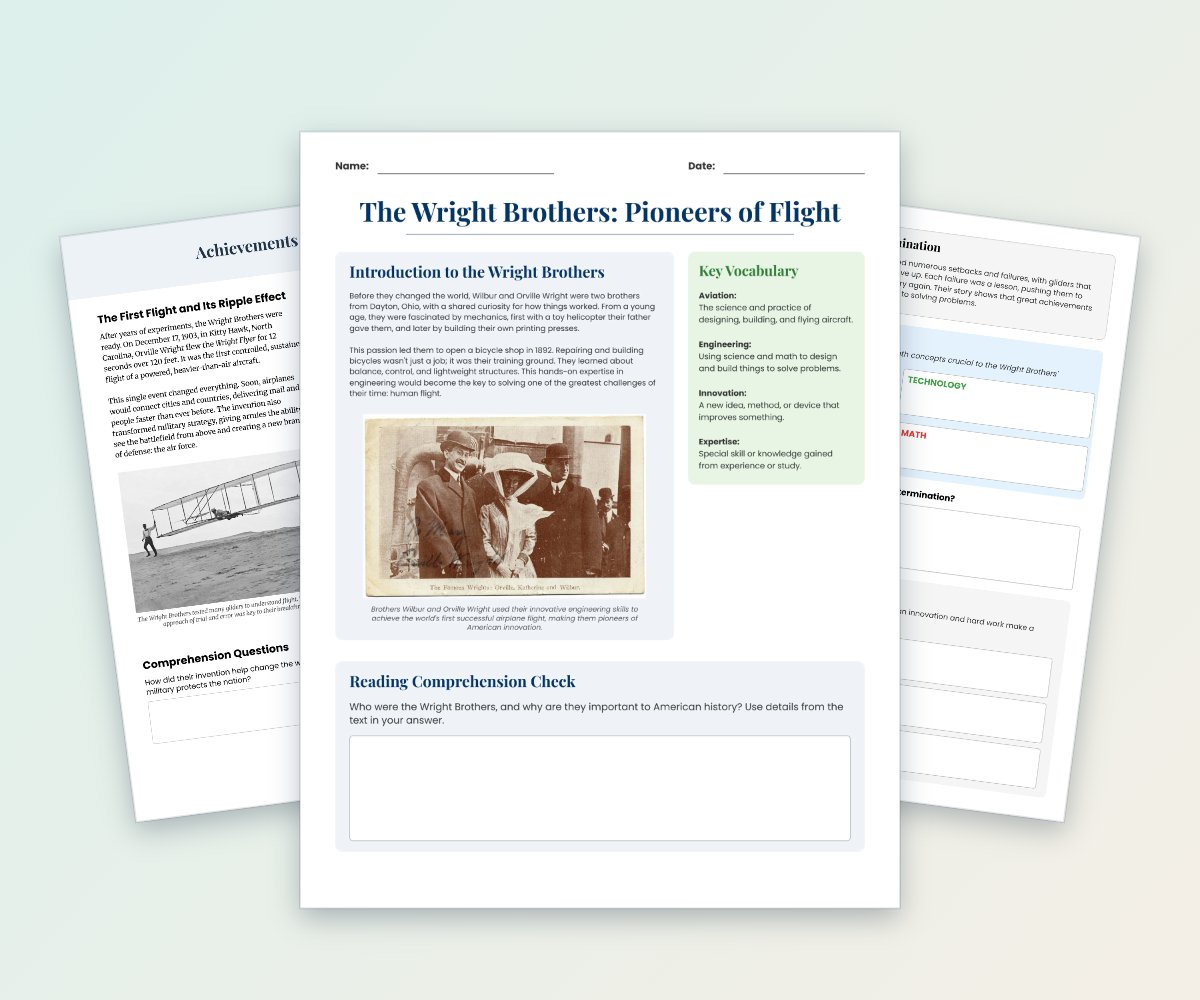
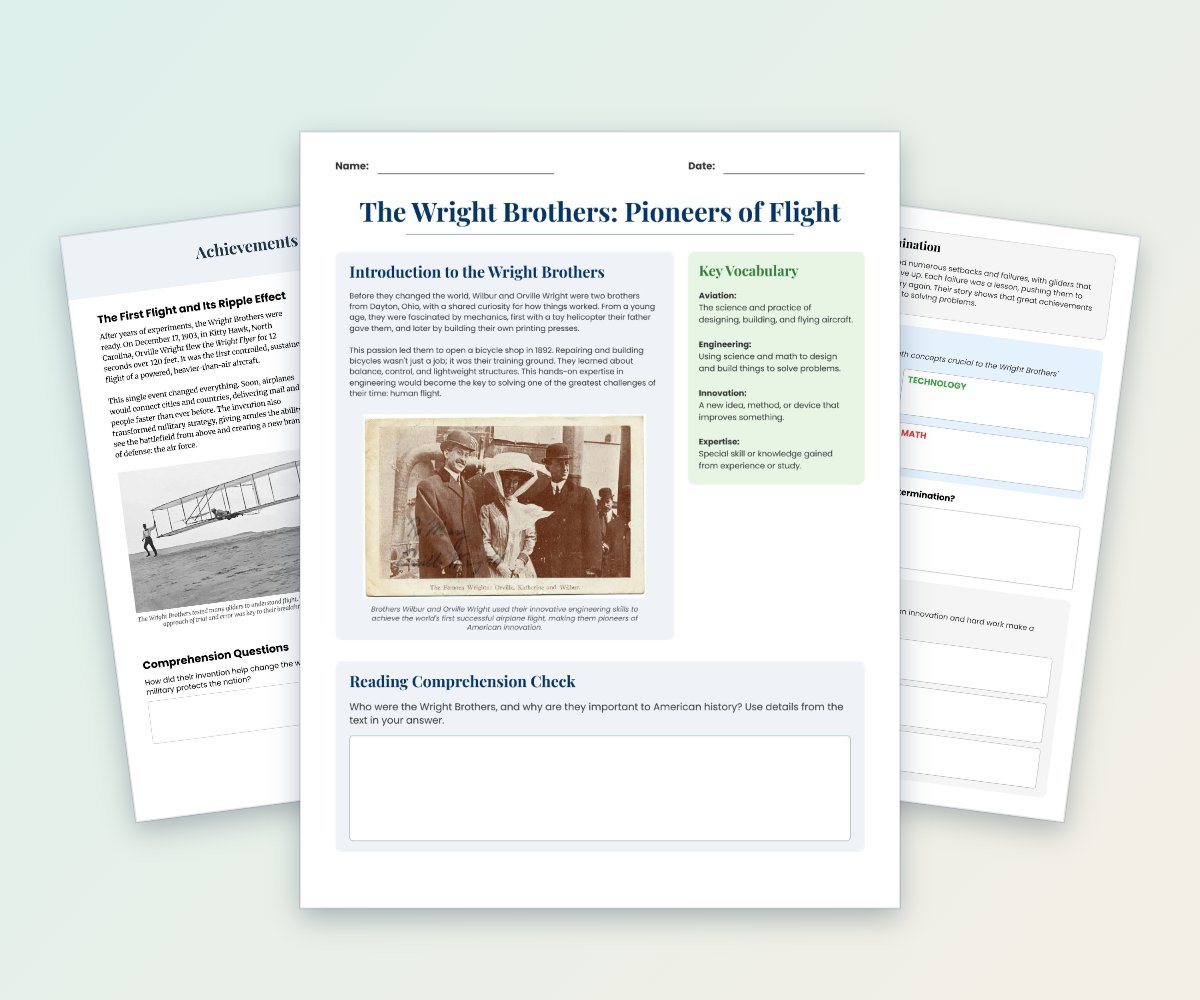
Students read an informational passage about Wilbur and Orville Wright, their engineering background, and the first powered flight.
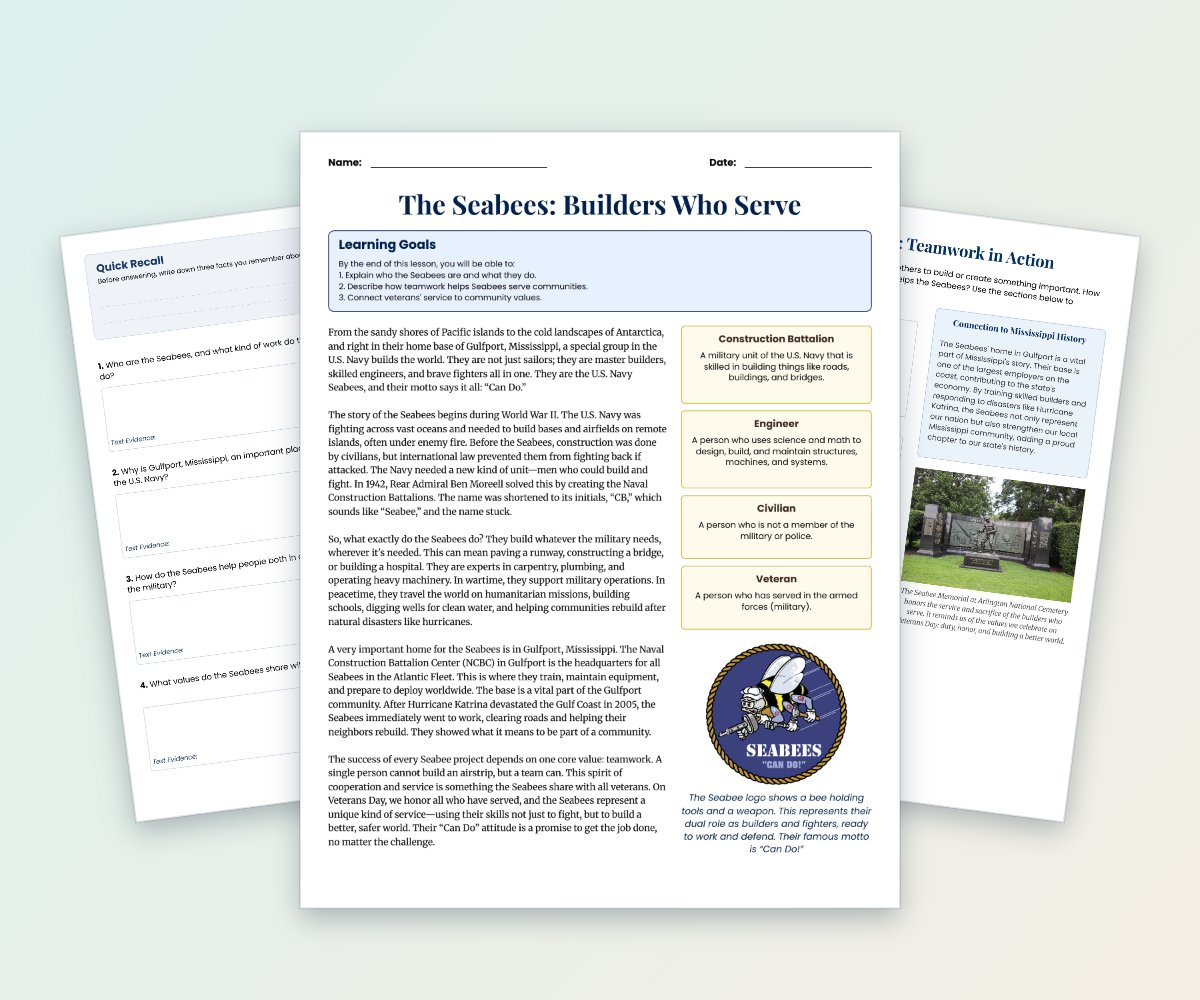
This concise lesson introduces students to the history and responsibilities of the U.S.
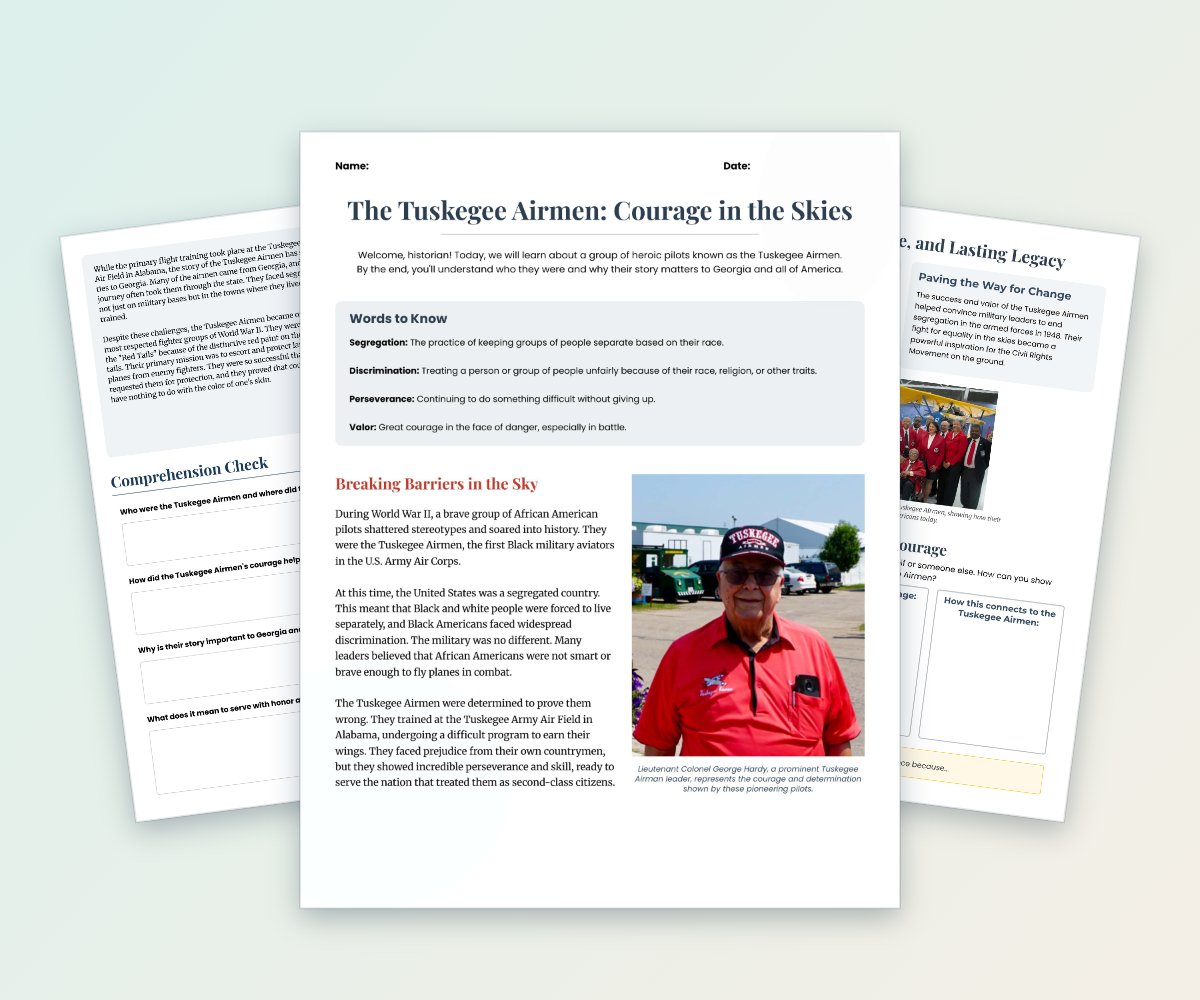
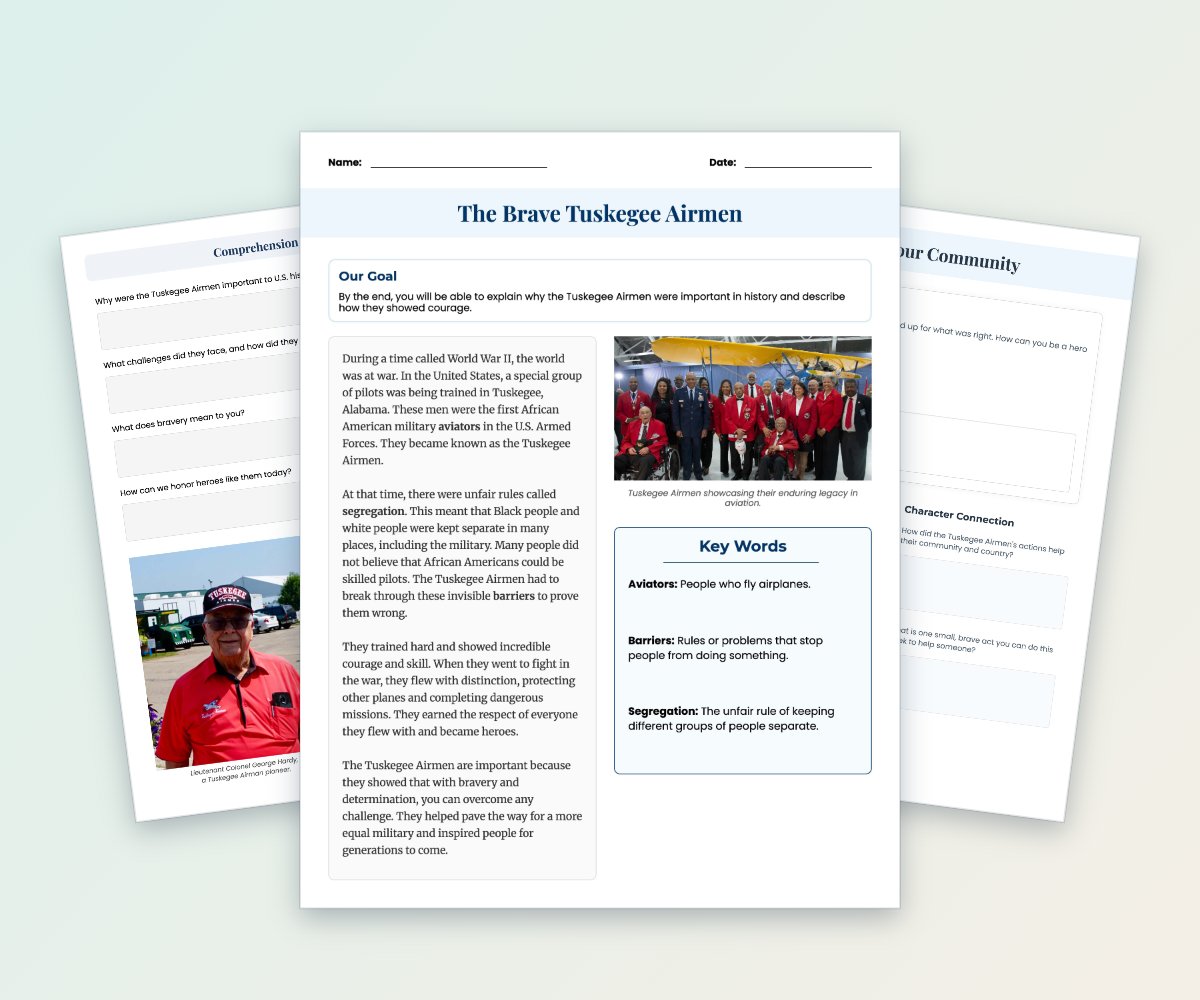
Students read about the Tuskegee Airmen, segregation, discrimination, perseverance, and their role as World War II military aviators.
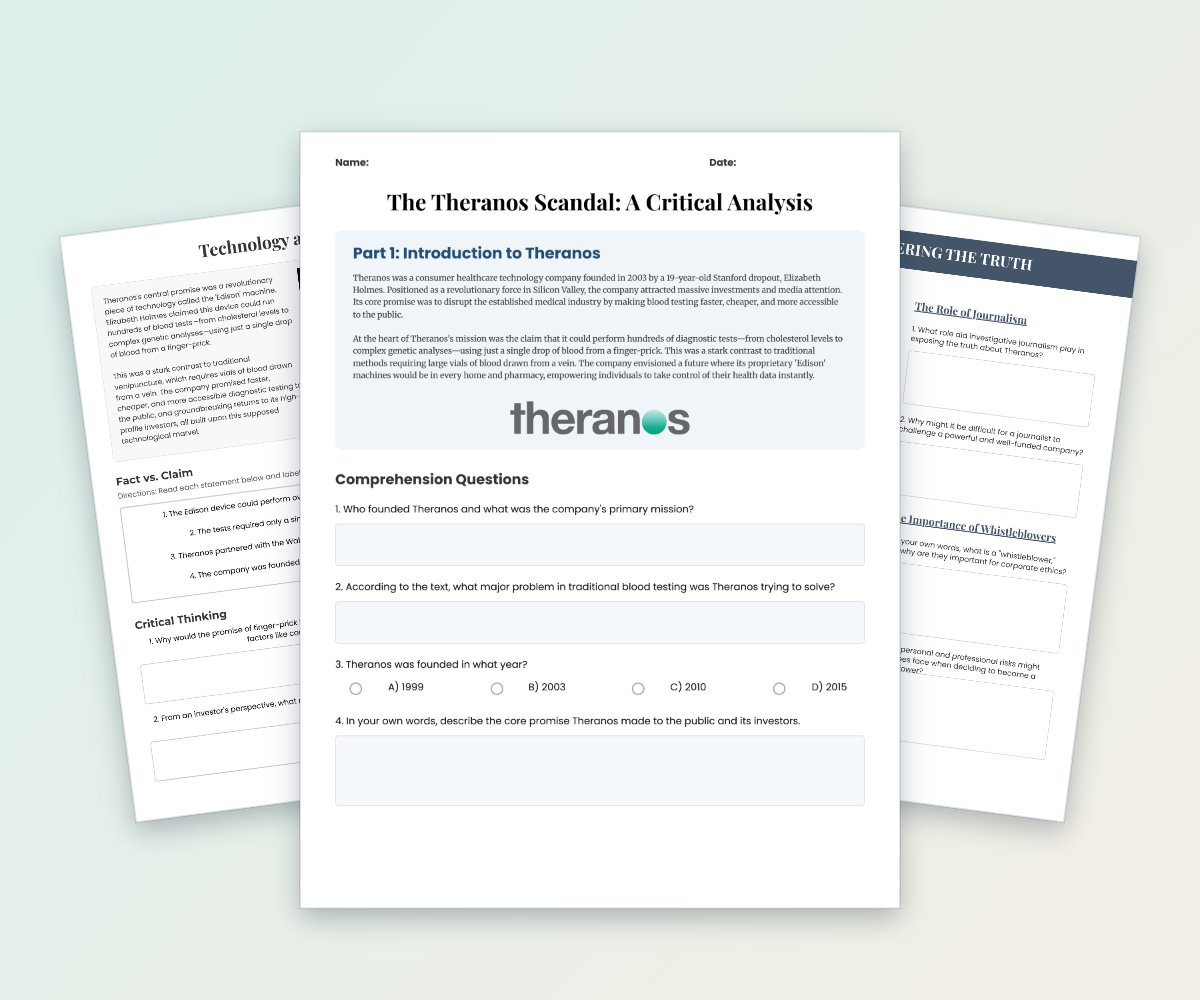
Students examine Theranos, its blood-testing claims, investors, and public impact through informational text and guided questions.
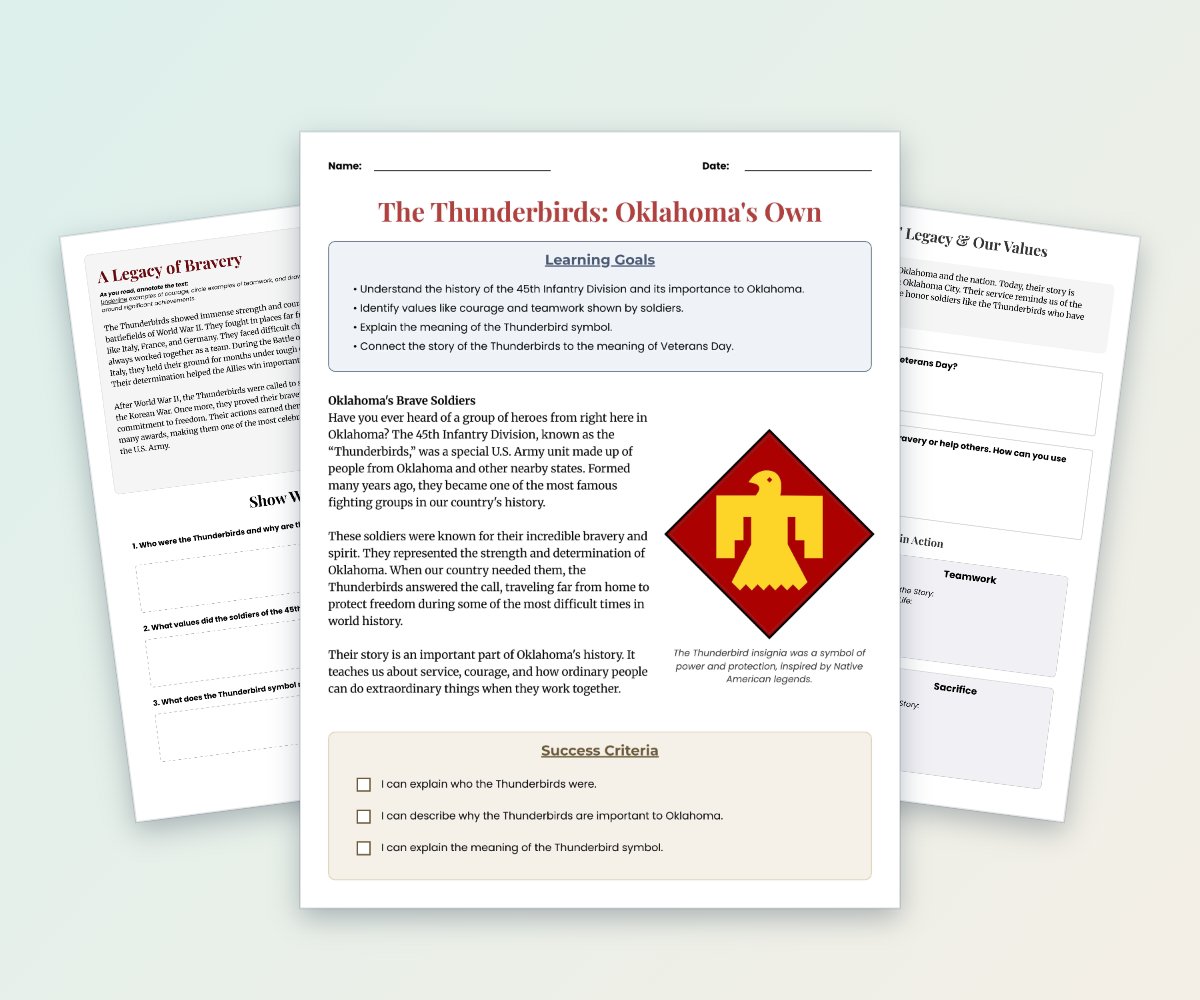
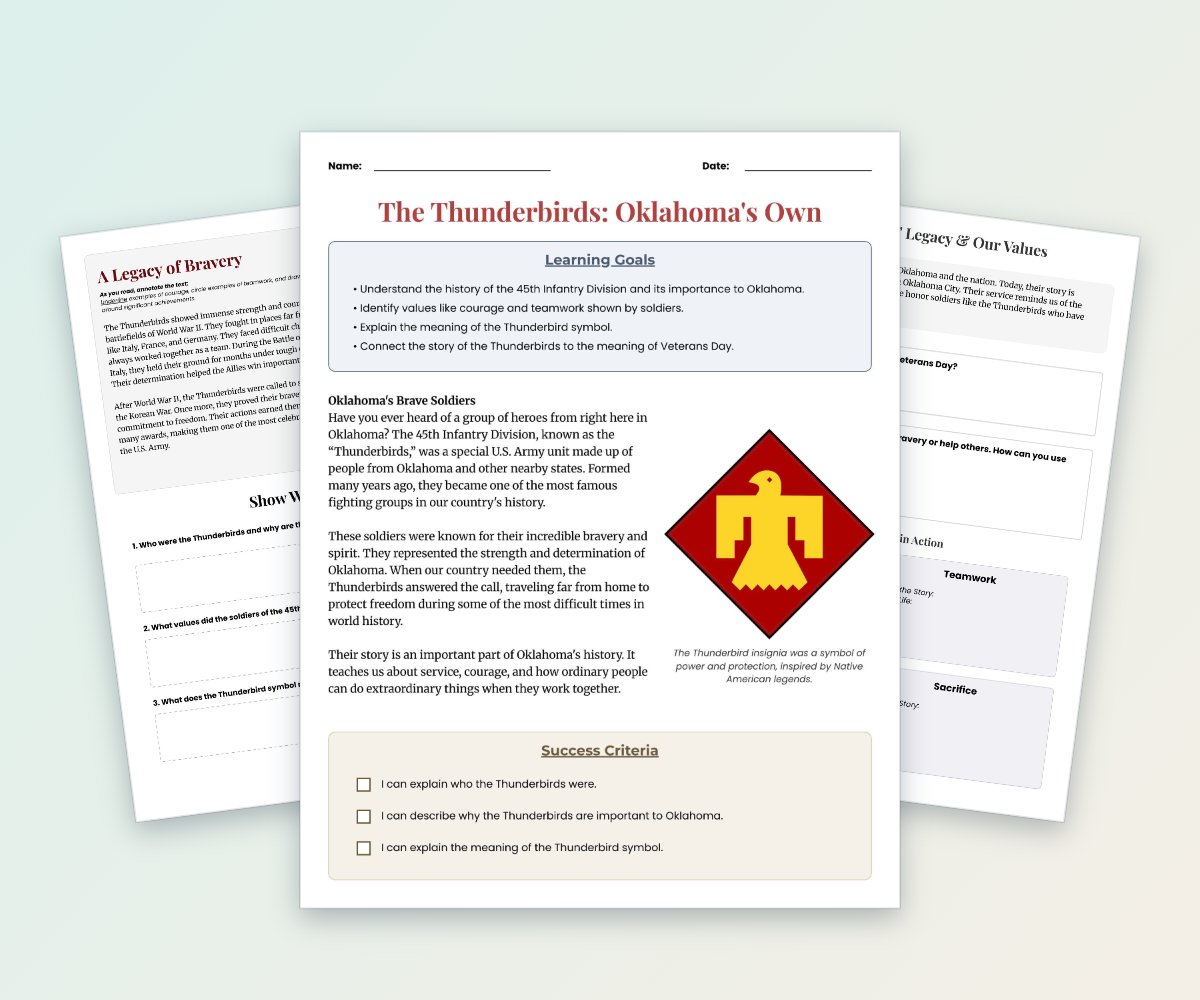
Students learn about Oklahoma's 45th Infantry Division, known as the Thunderbirds, and its service in World War II and the Korean War.
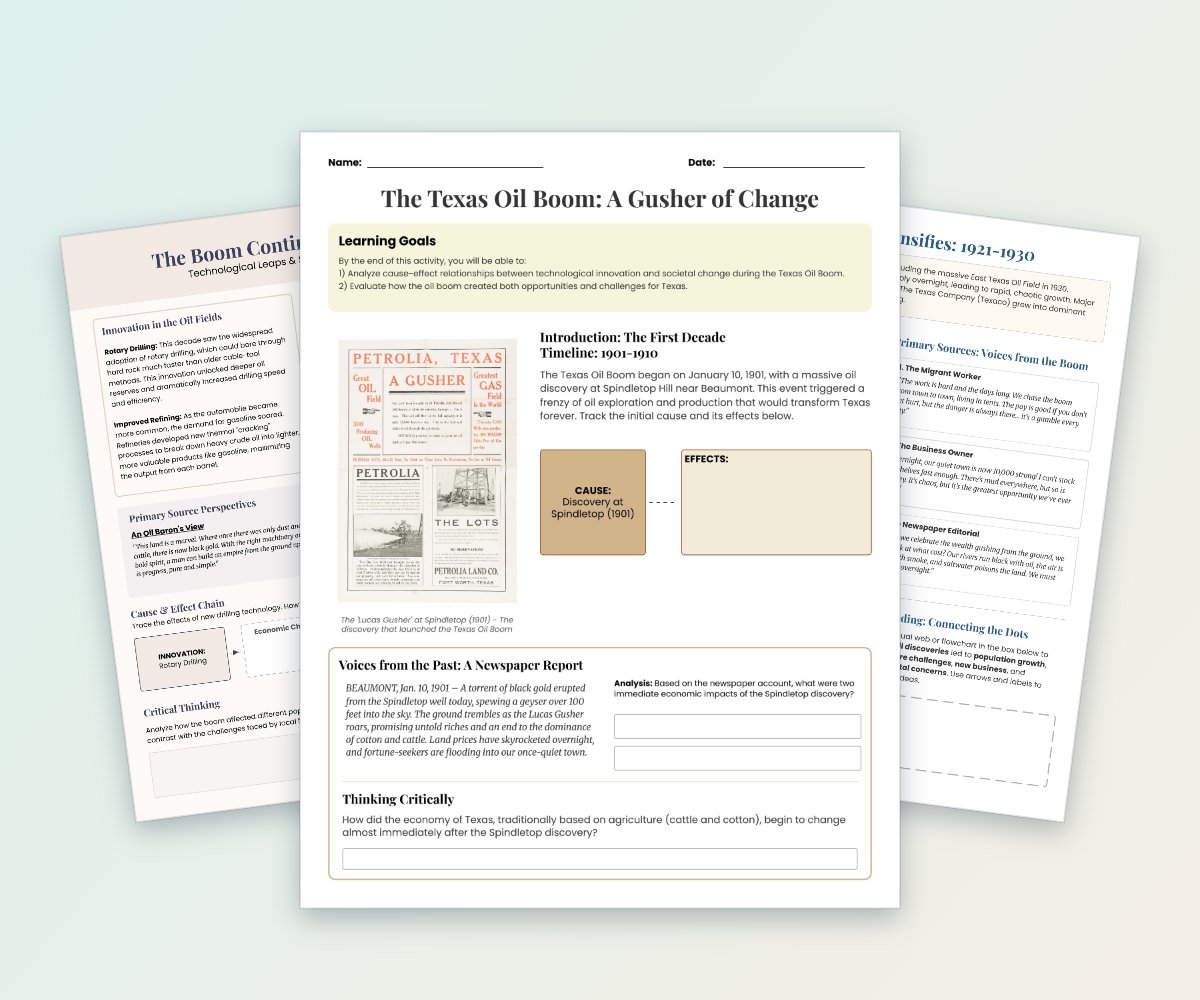
Students examine the 1901 Spindletop discovery and trace how technological innovation fueled economic and social change in Texas.
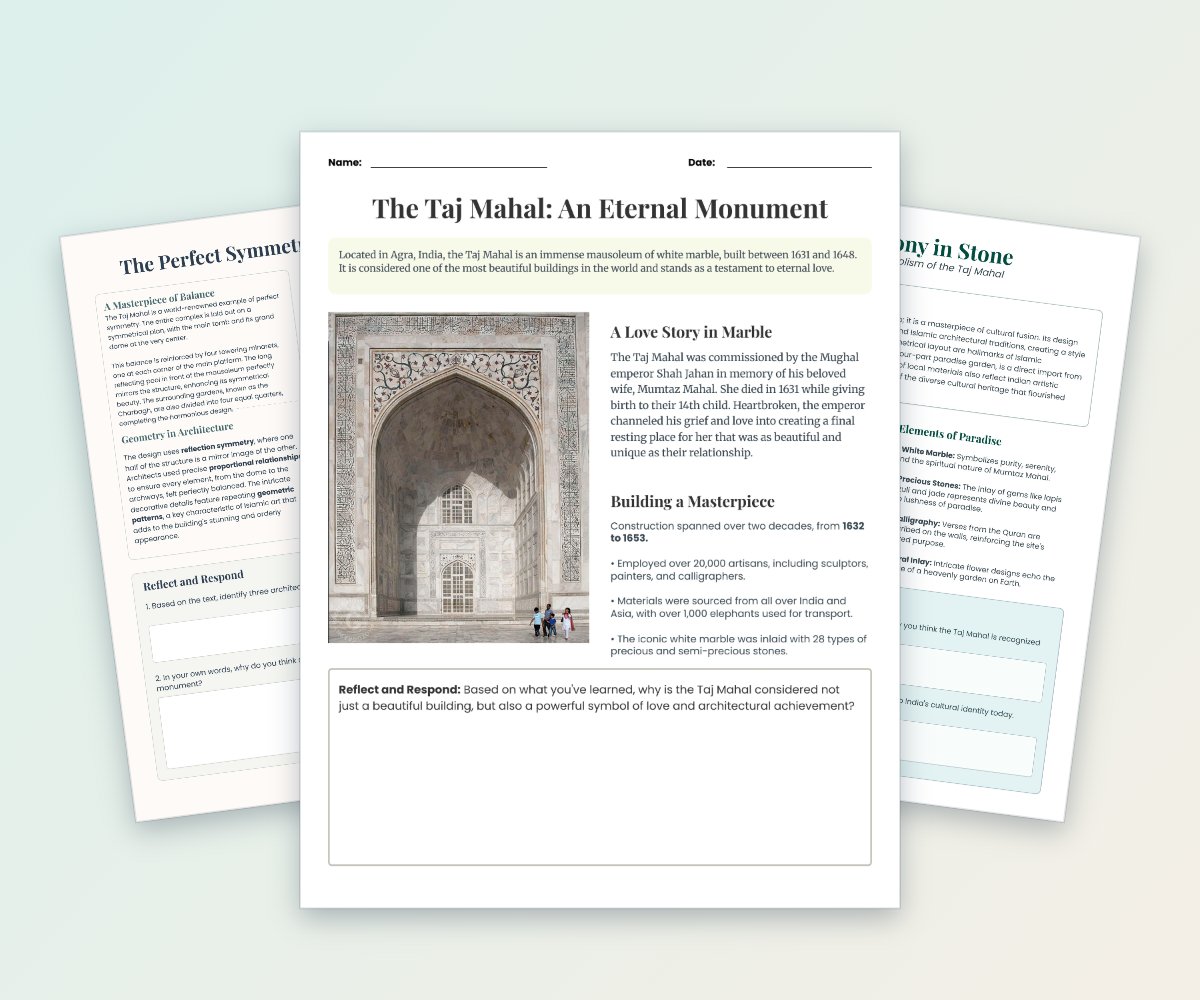
This four-page reading resource explores the Taj Mahal’s history, cultural significance, construction, and symmetrical architectural design.
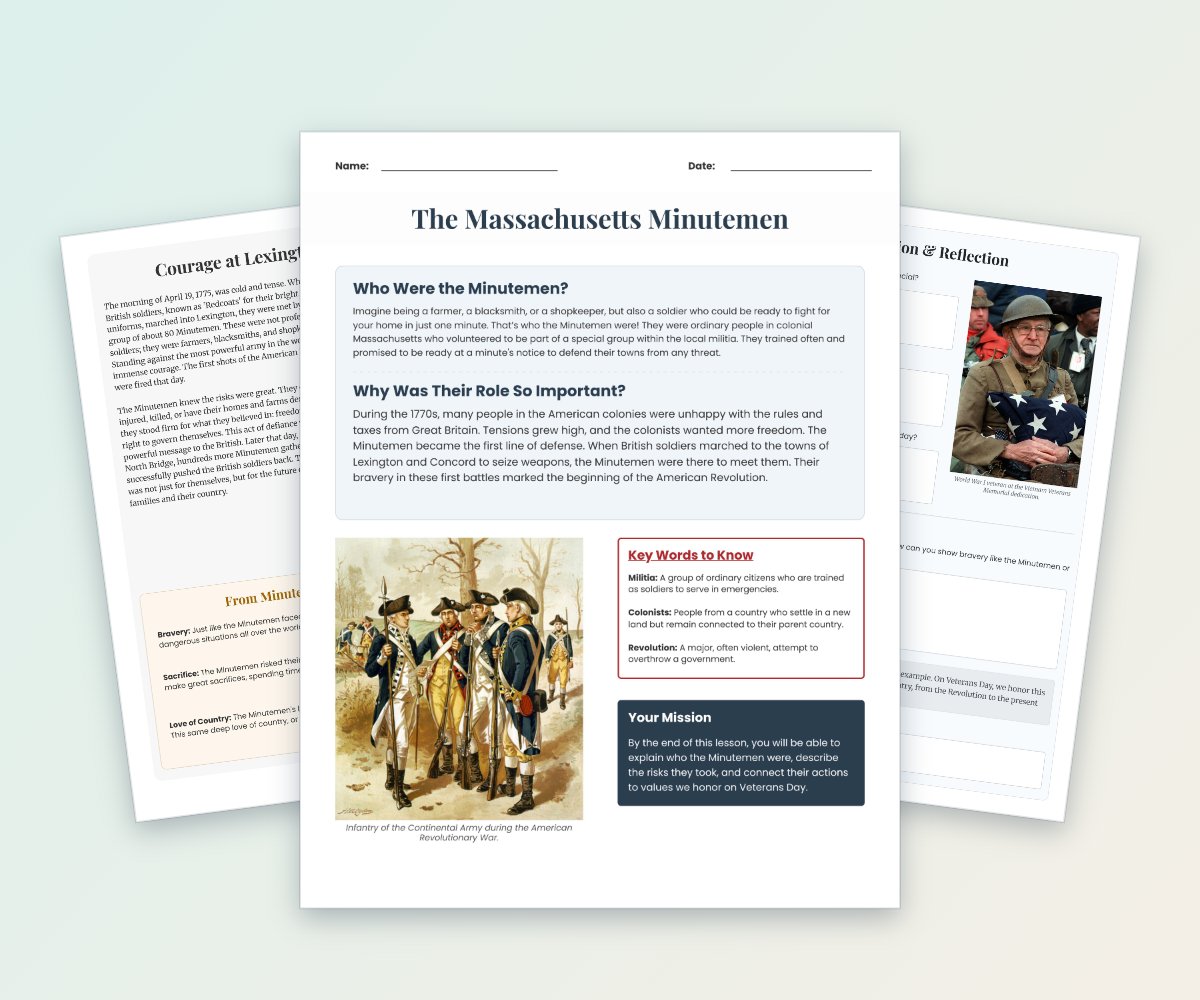
This three-page lesson introduces students to the Massachusetts Minutemen and their role at Lexington and Concord.
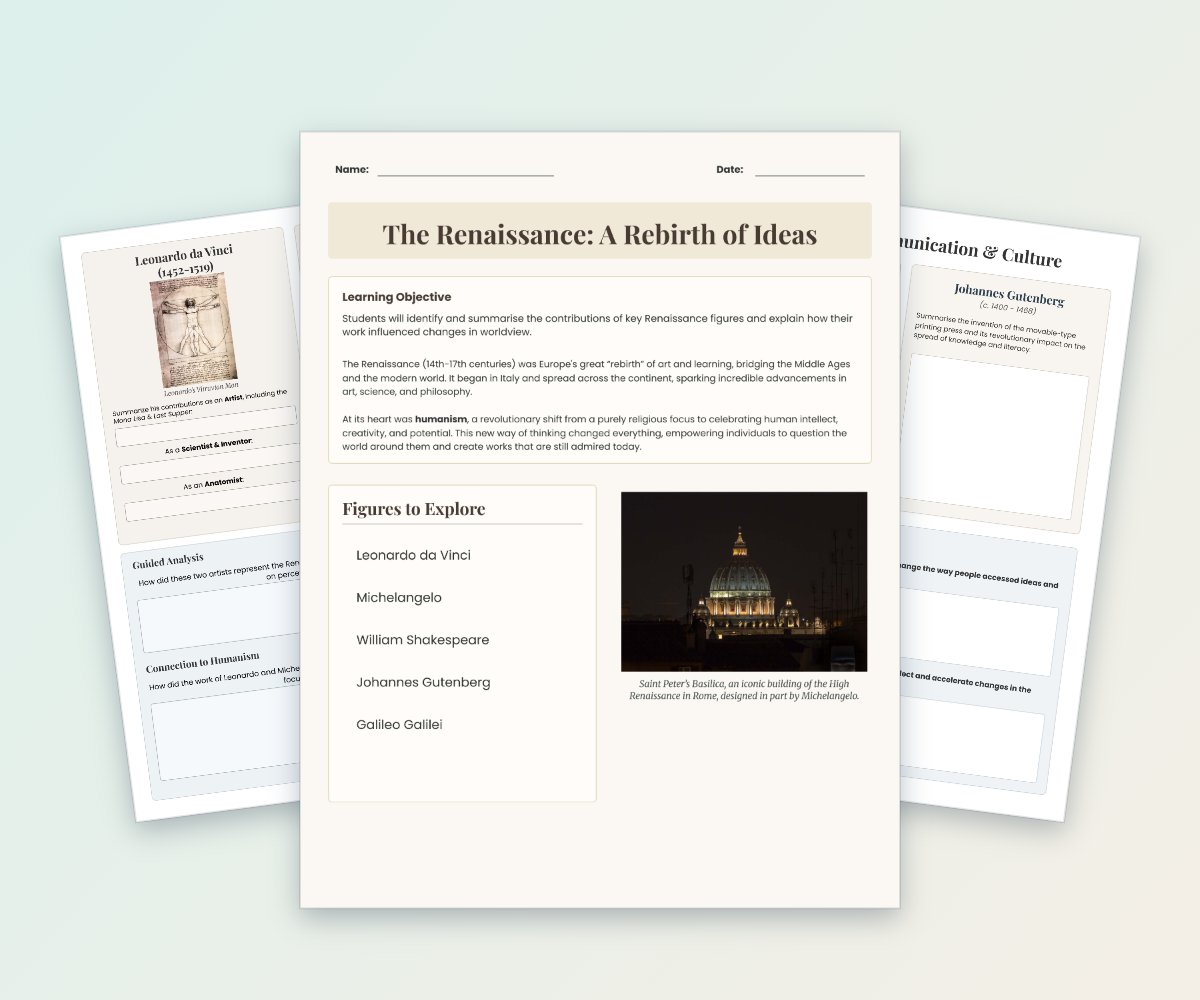
This four-page worksheet explores Leonardo da Vinci, Michelangelo, Shakespeare, Gutenberg, and Galileo and their contributions to Renaissance art, science, literature, and communication.
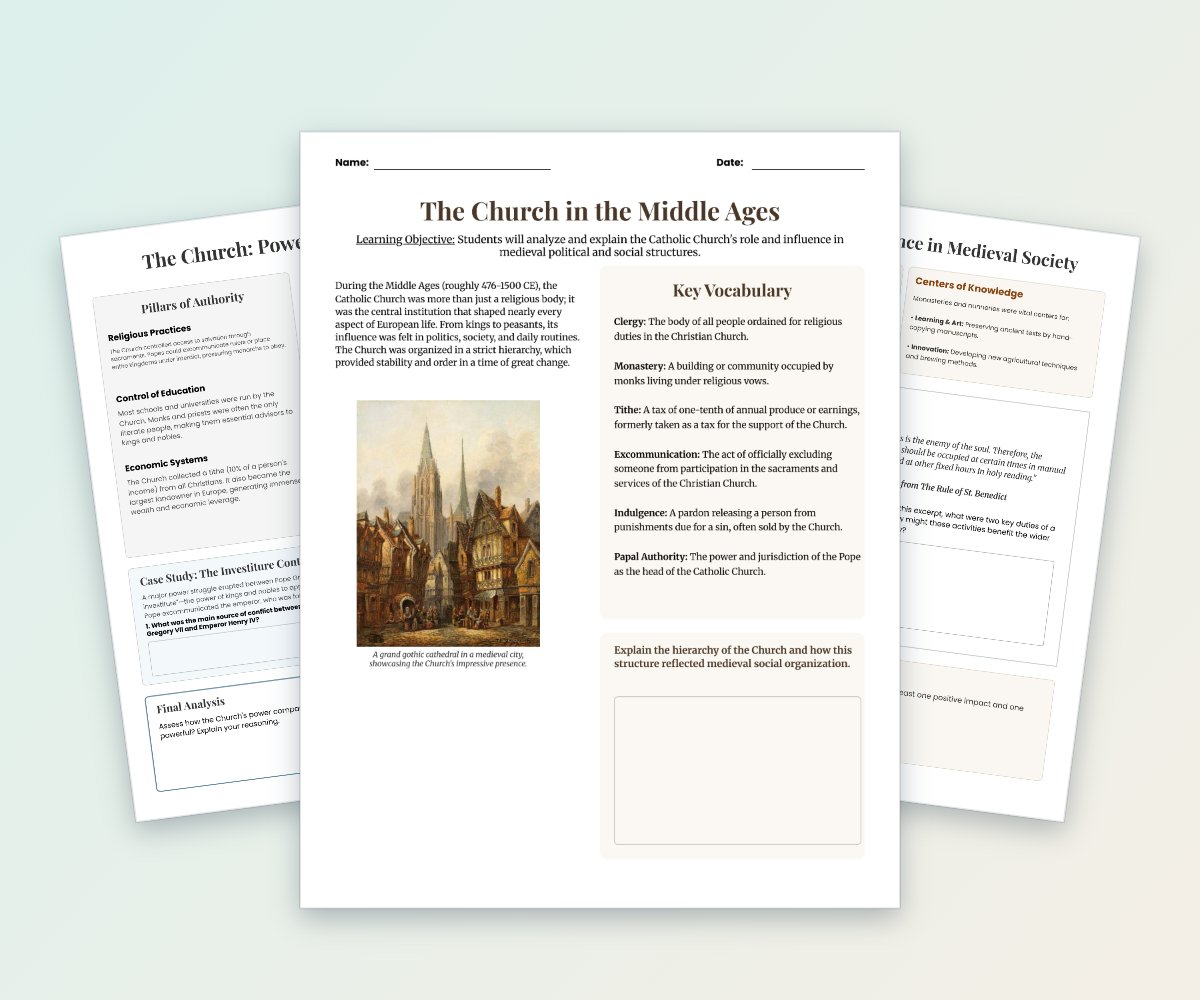
This four-page worksheet examines the Catholic Church’s role in medieval European political, social, educational, and economic life.
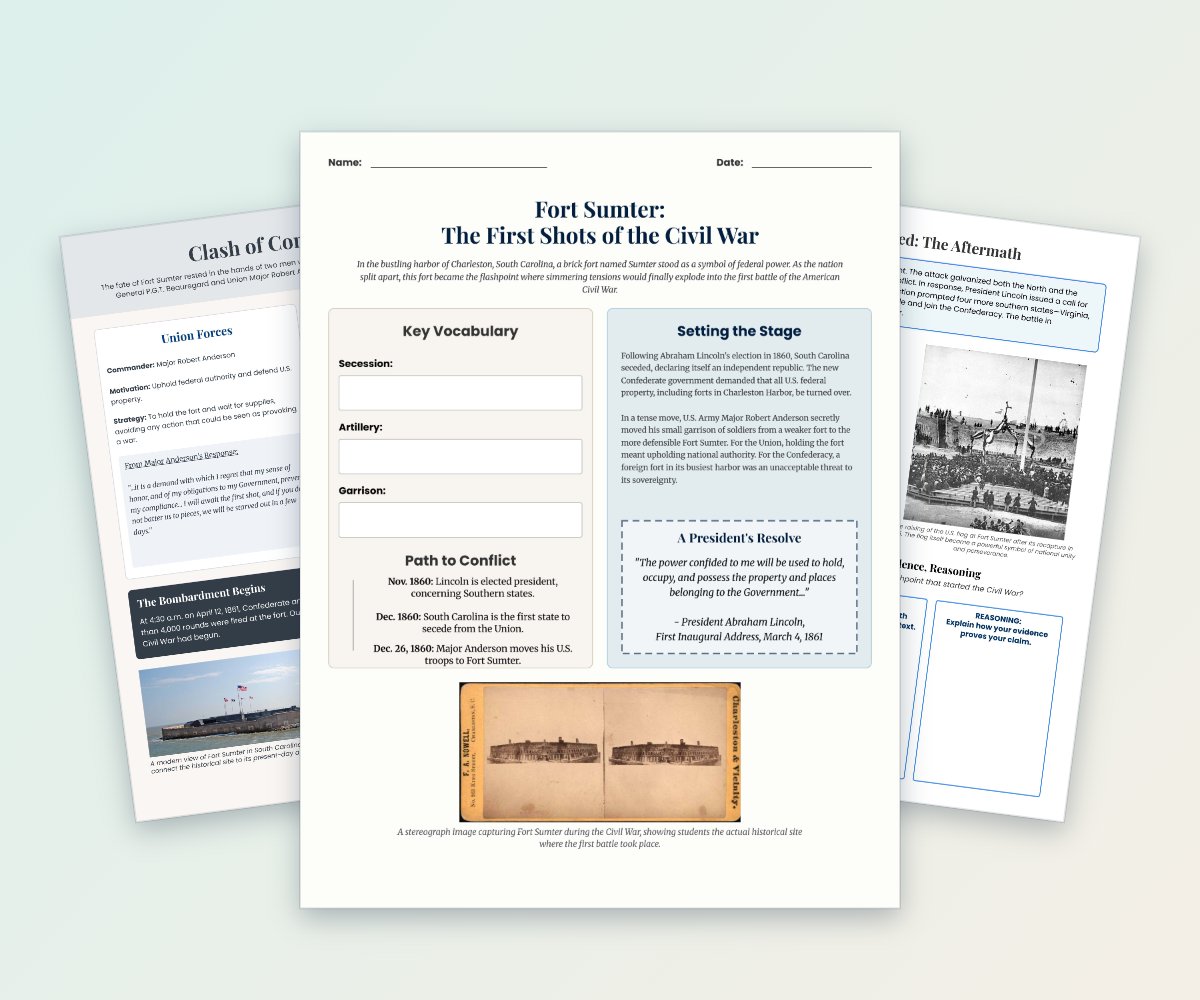
This three-page social studies reading resource explains the events leading to the attack on Fort Sumter and the outbreak of the American Civil War.
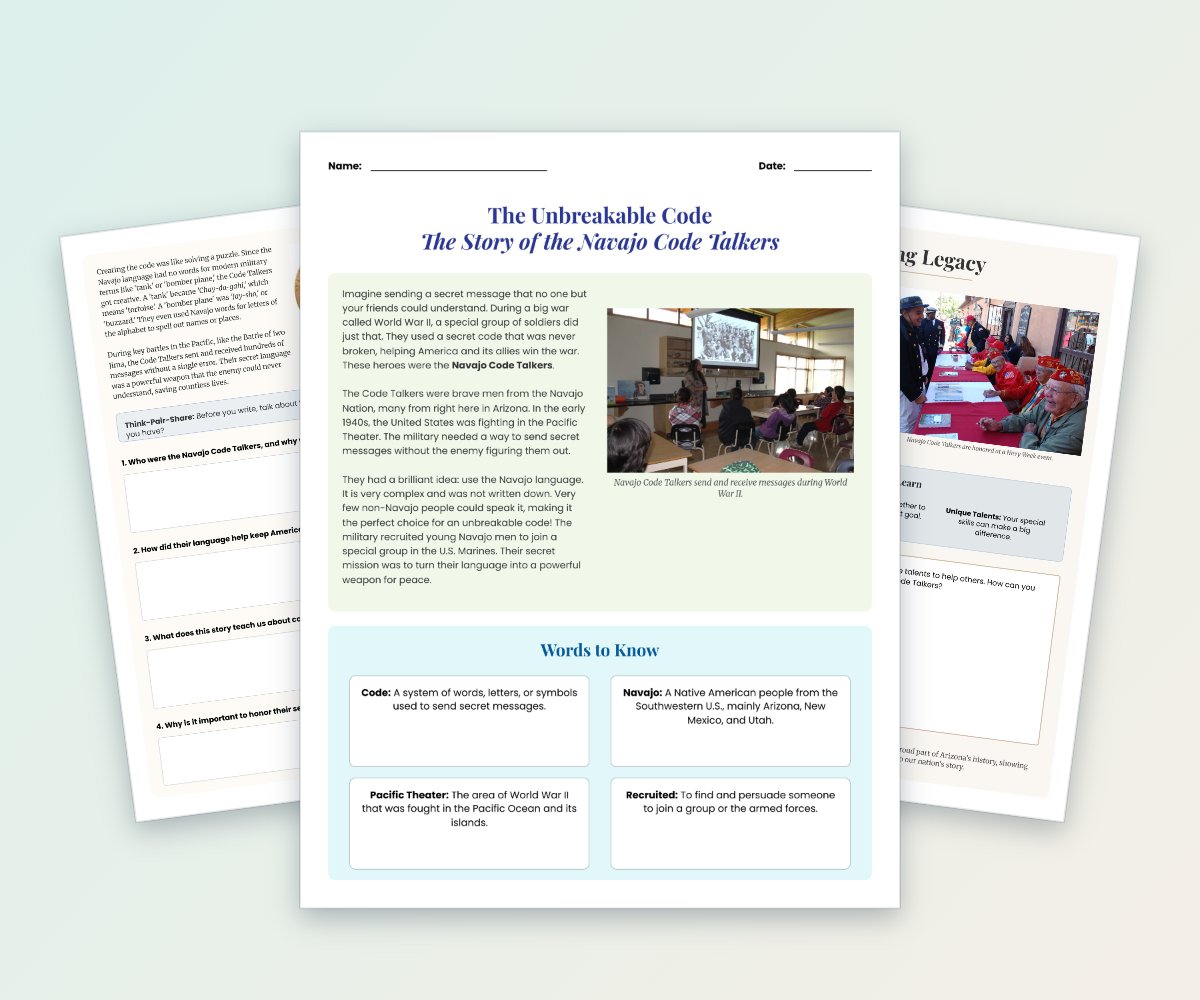
This three-page informational reading introduces the Navajo Code Talkers, their contributions during World War II, and their lasting legacy.
Students learn about the Tuskegee Airmen, World War II, segregation, and their contributions to American history.
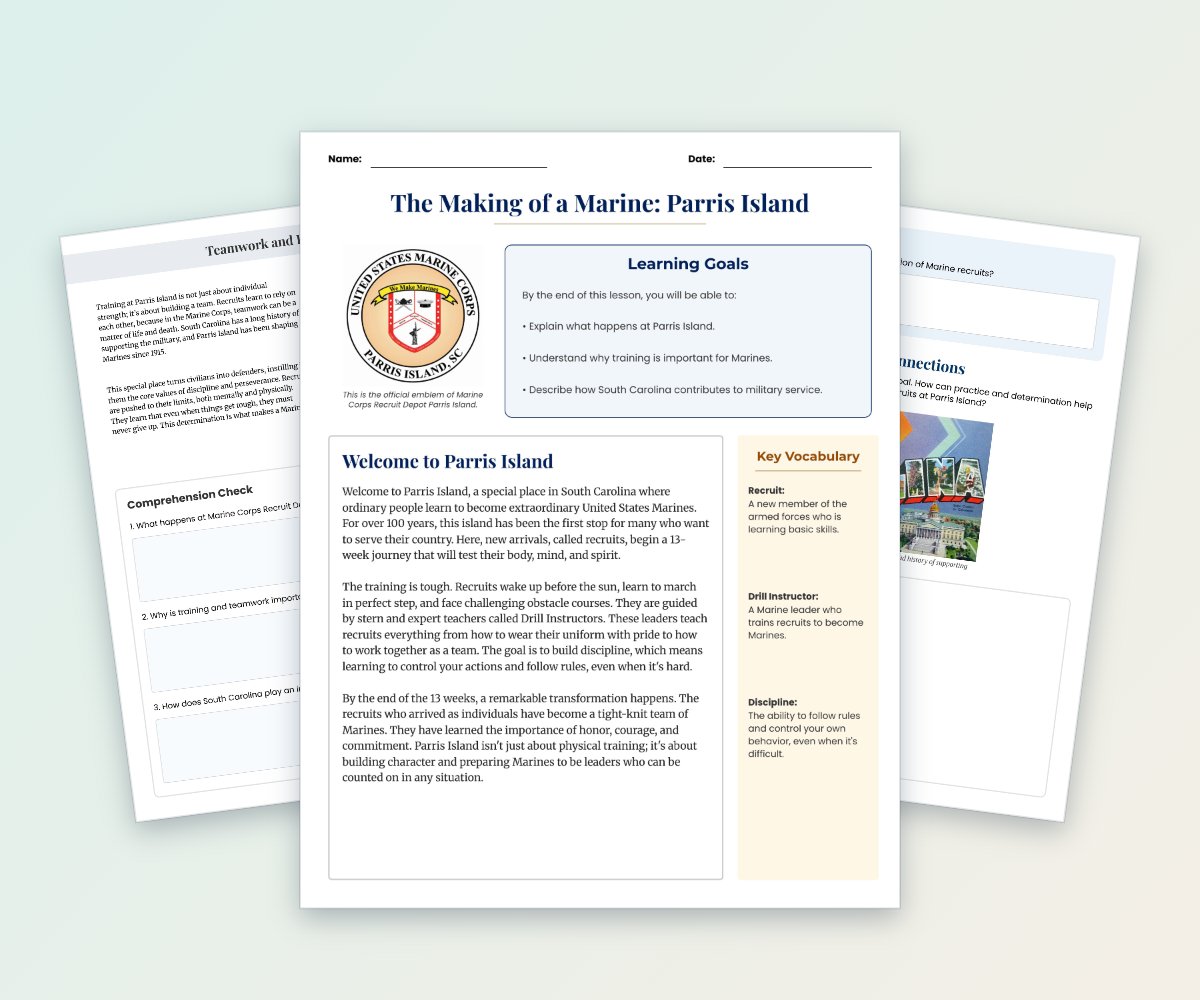
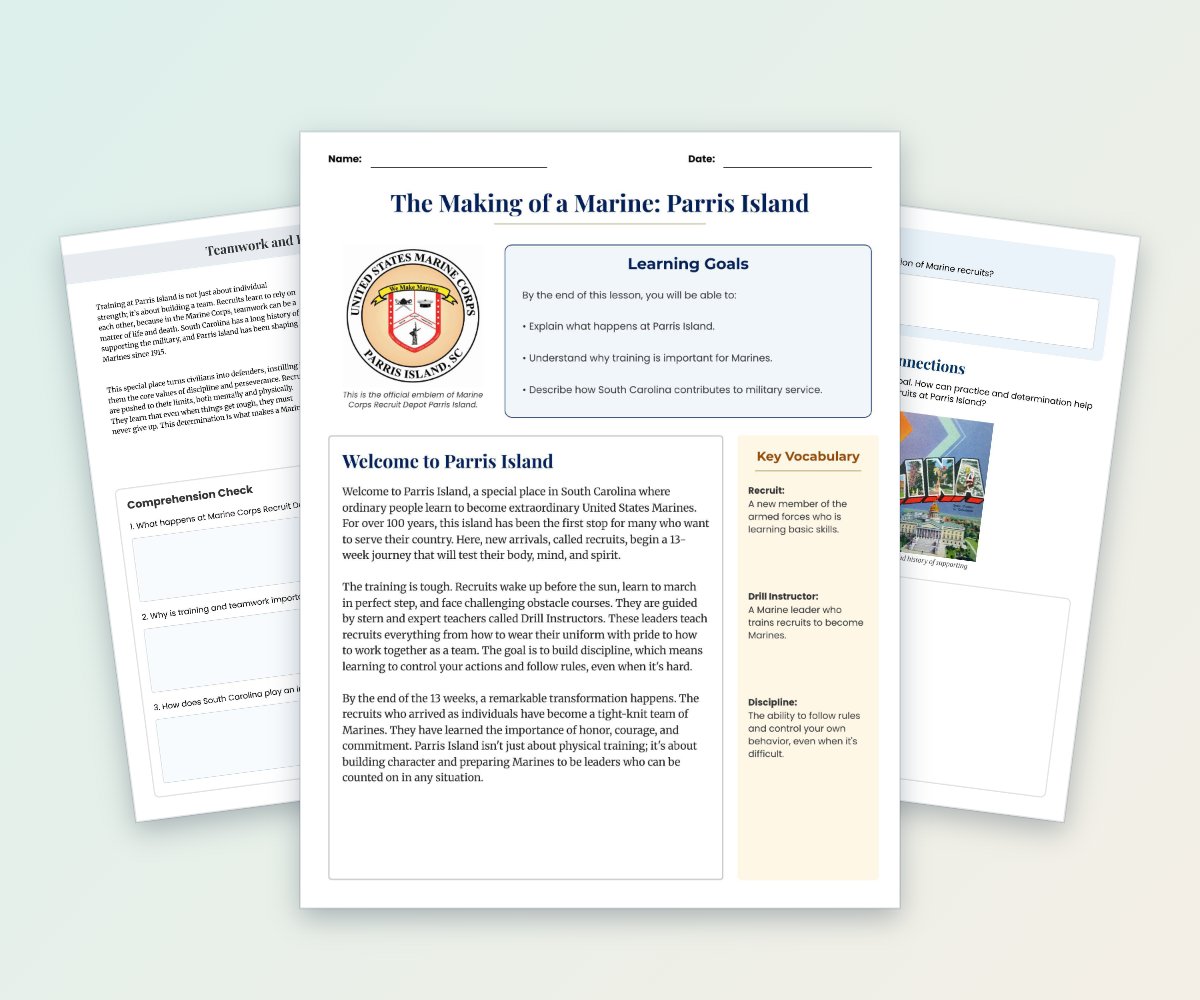
Students learn about recruit training at Marine Corps Recruit Depot Parris Island, including discipline, teamwork, perseverance, and South Carolina’s military history.
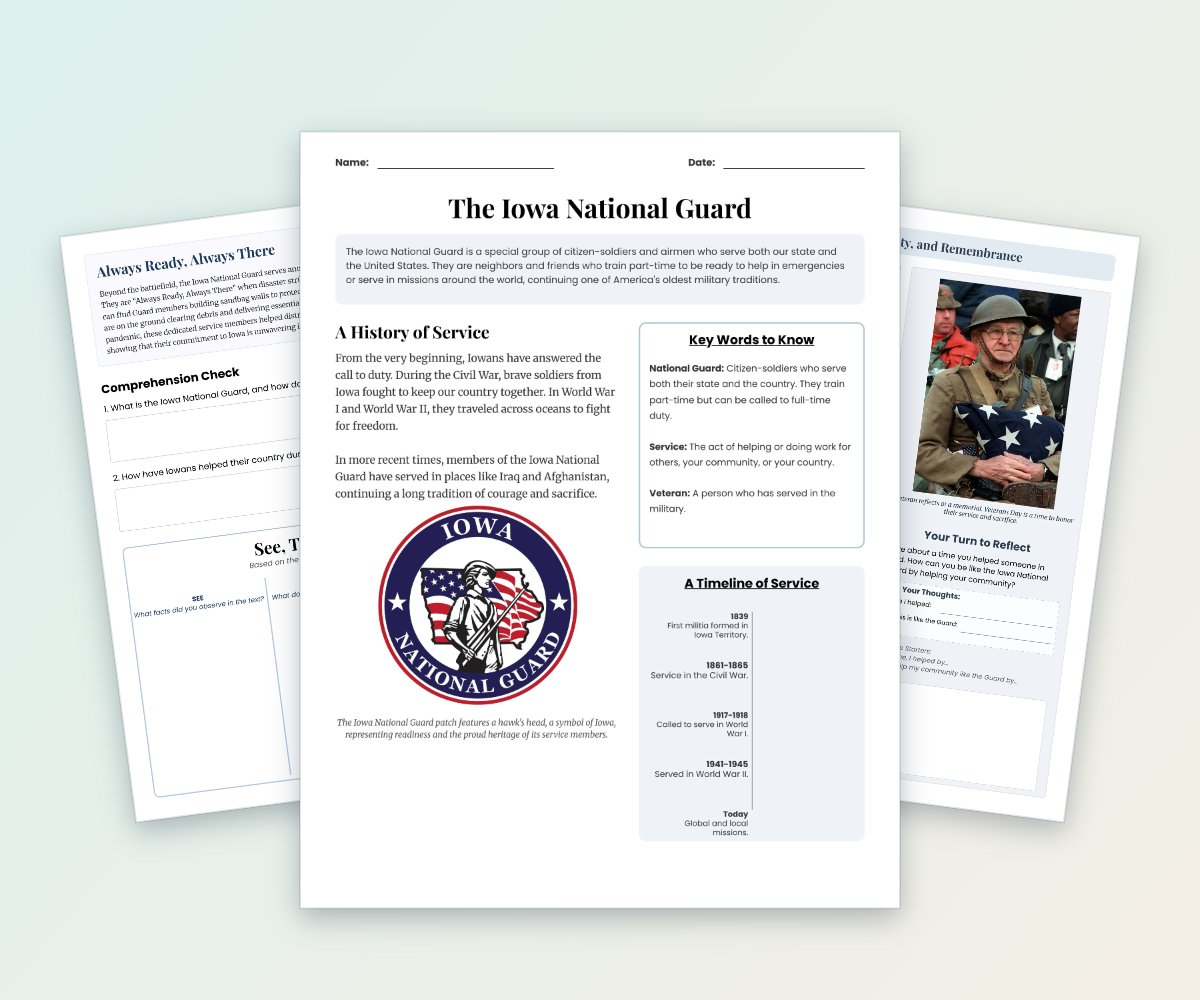
Students learn about the history and community service of the Iowa National Guard through an informational reading, key vocabulary, and a timeline.
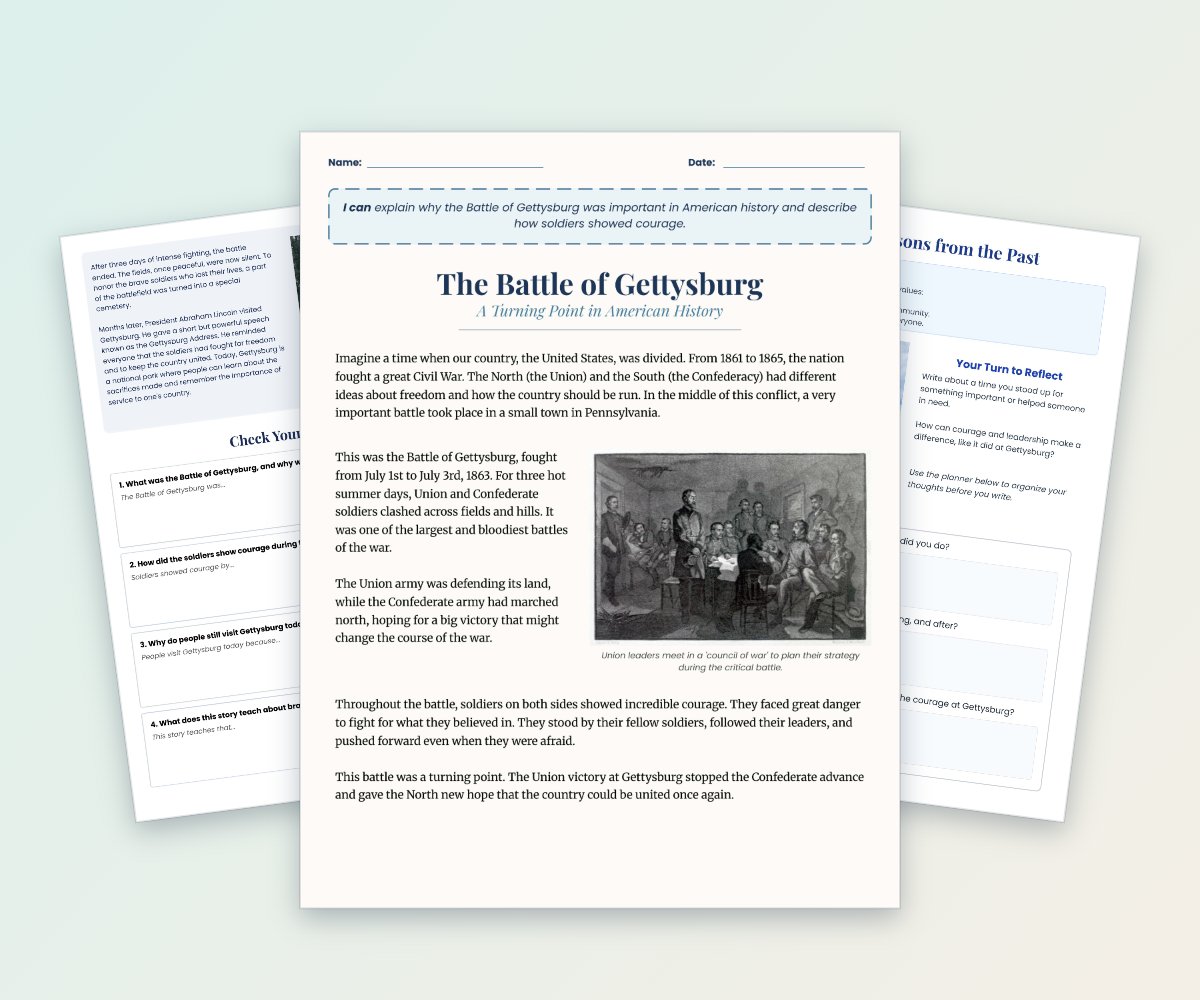
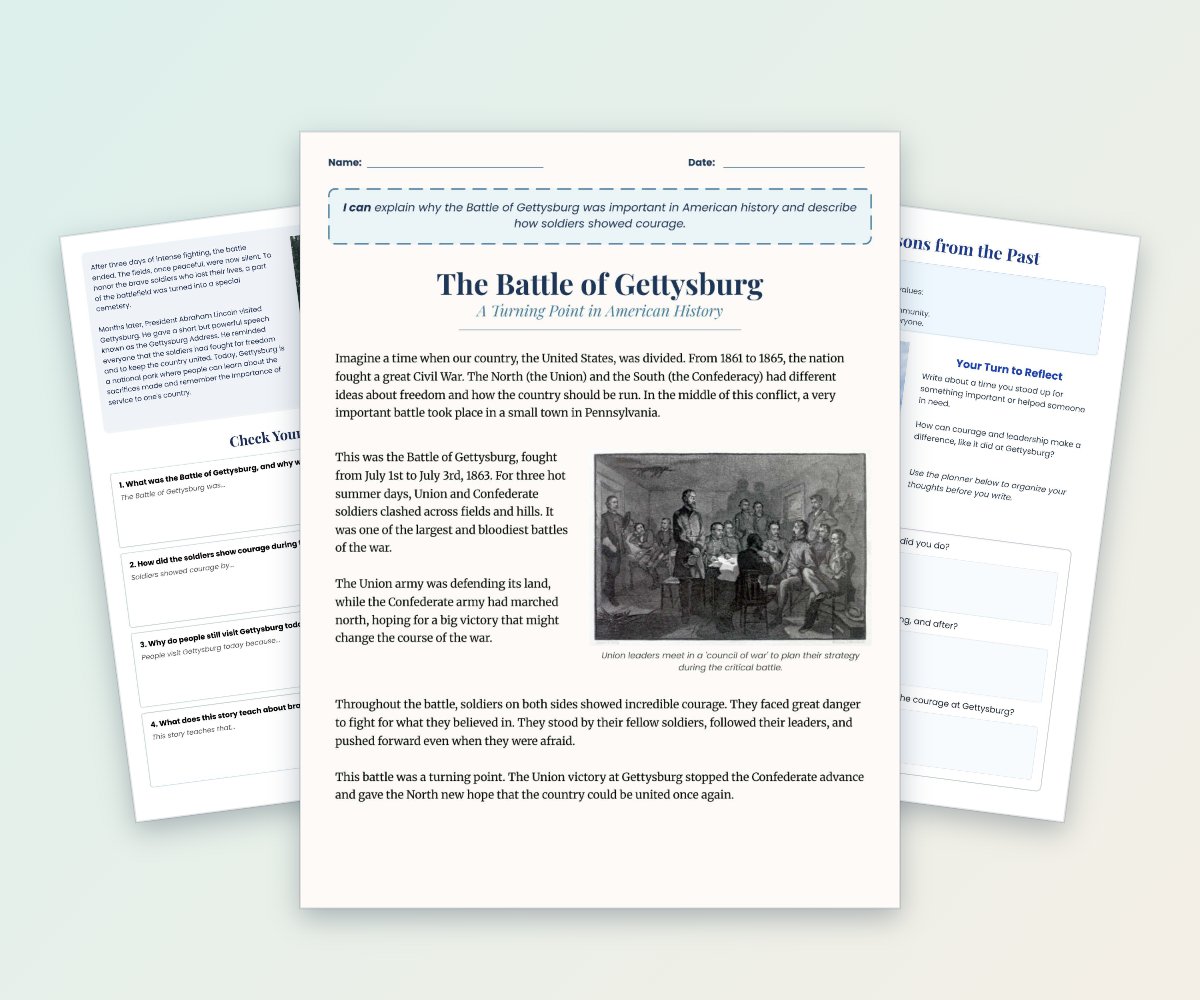
Students read an accessible overview of the Battle of Gettysburg and its importance during the American Civil War.
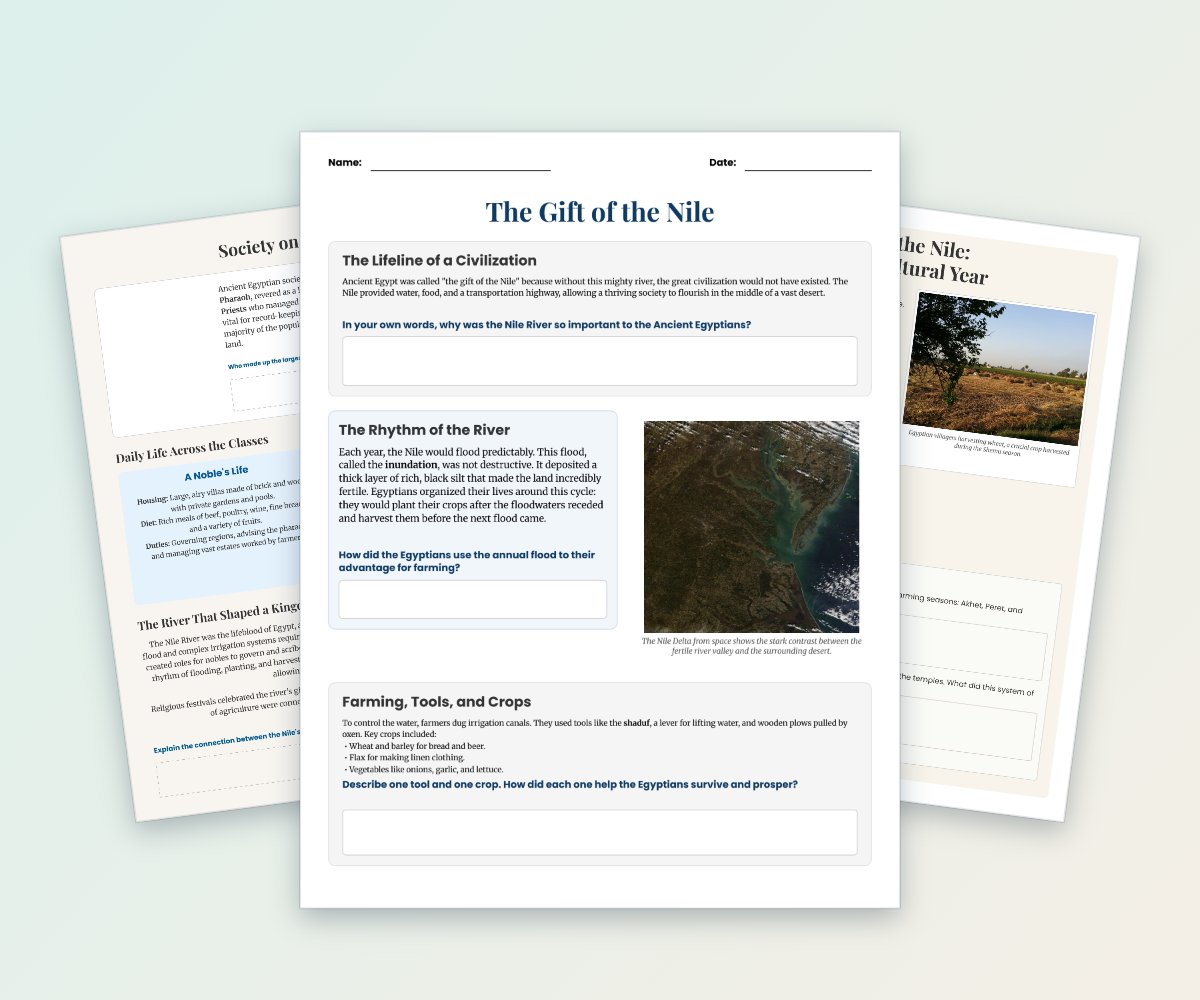
This five-page worksheet explores how the Nile supported farming, transportation, society, and daily life in Ancient Egypt.
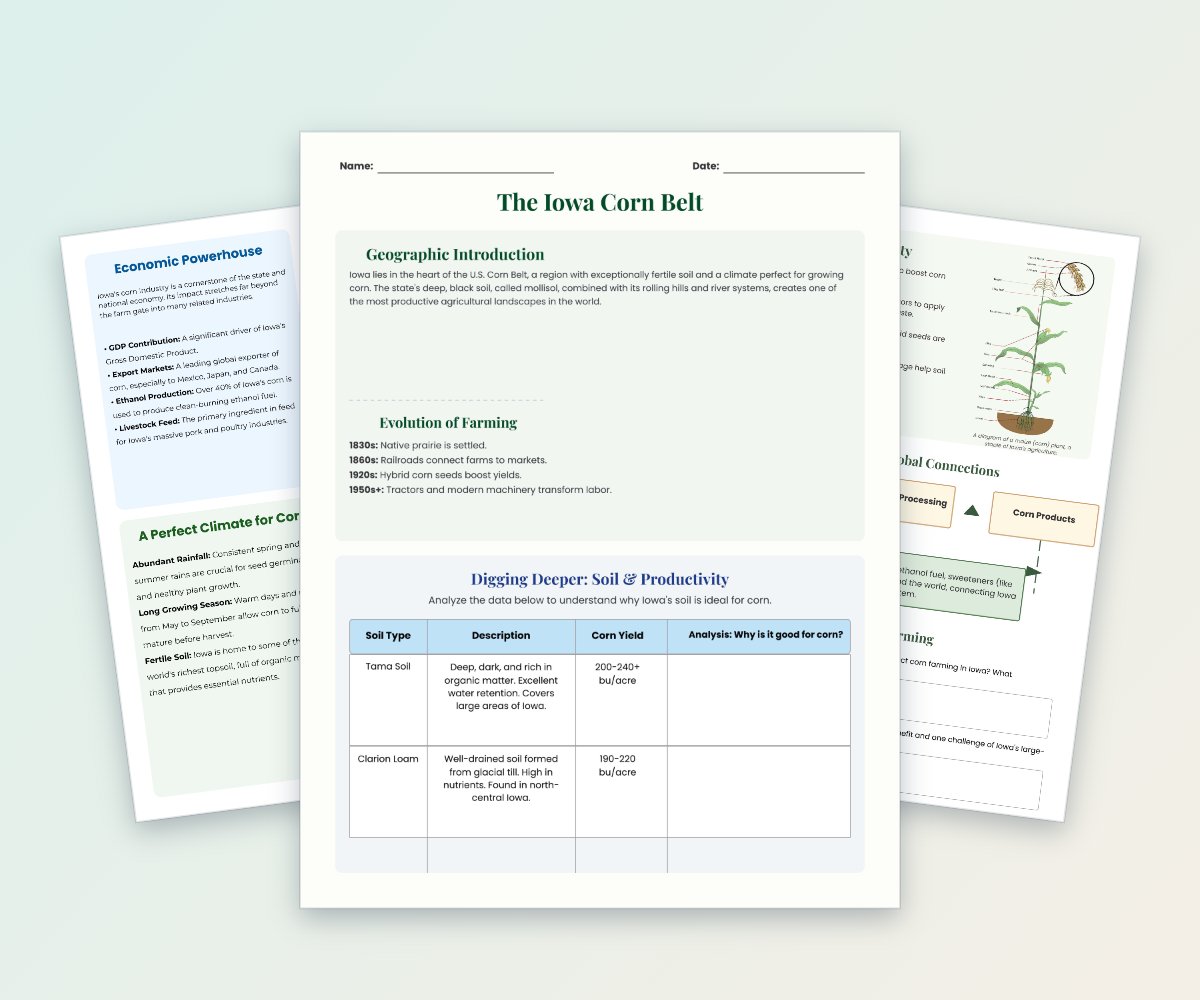
Students explore Iowa’s geography, fertile soils, climate, farming history, corn yields, economic importance, and agricultural technology.
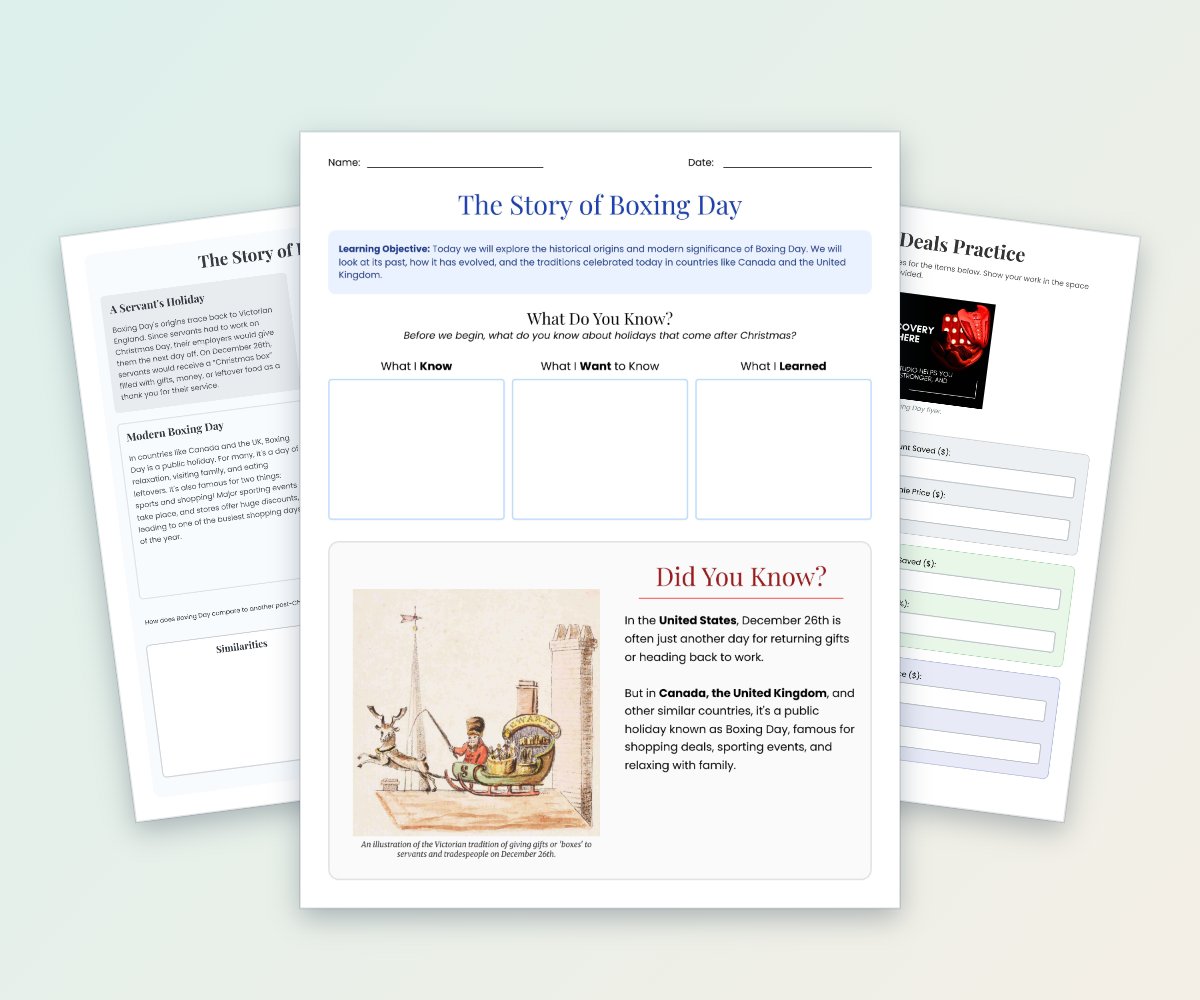
Students explore the Victorian origins, modern traditions, and cultural significance of Boxing Day in Canada and the United Kingdom.
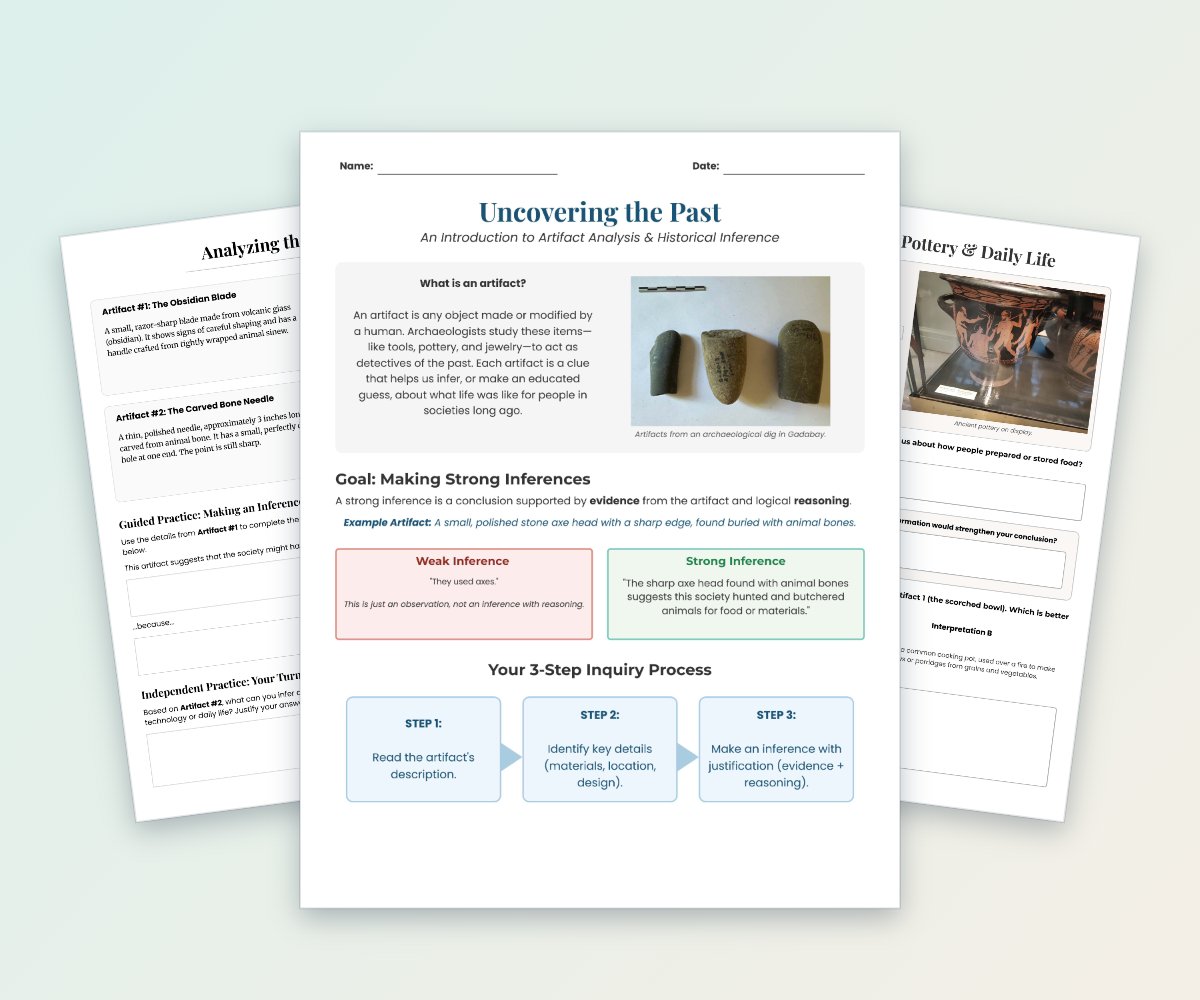
Students examine descriptions of archaeological artifacts, identify key details, and make evidence-based inferences about past societies.
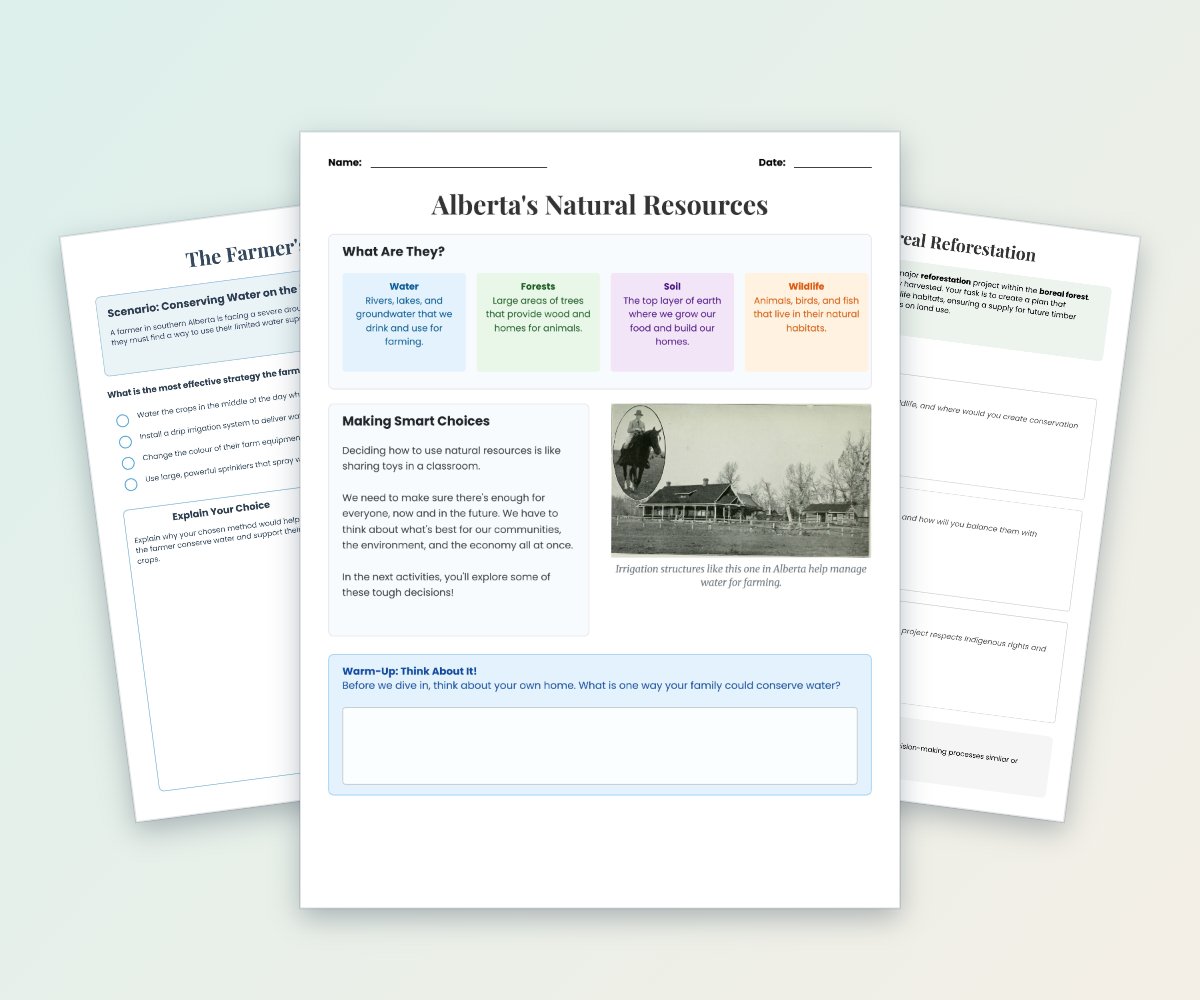
Students explore Alberta’s water, forests, soil, and wildlife through practical conservation scenarios.
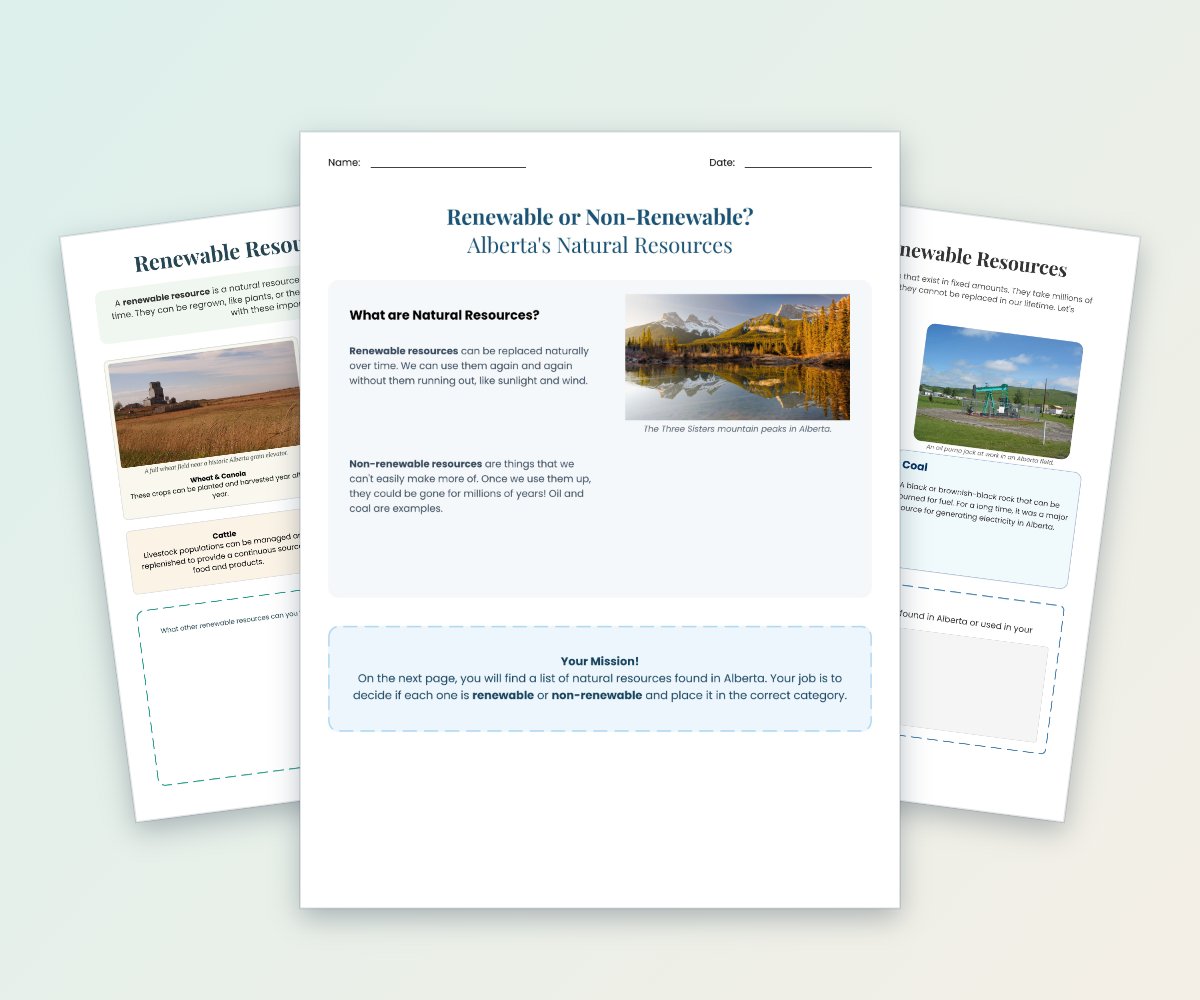
This four-page resource introduces renewable and non-renewable natural resources found in Alberta, including wheat, cattle, wind, timber, natural gas, oil, and coal.
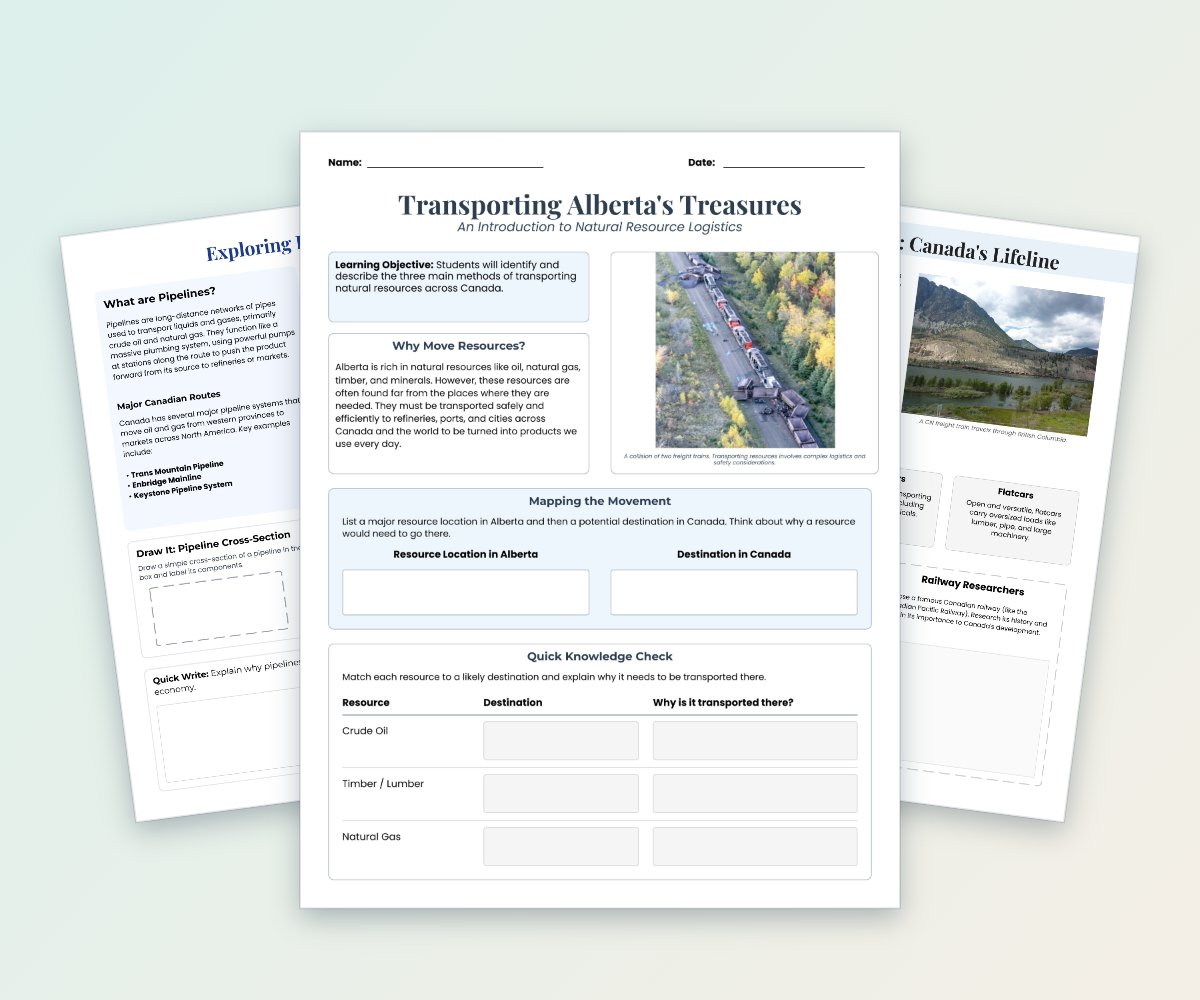
Students explore why Alberta’s natural resources must be transported and compare pipelines with other transportation methods.
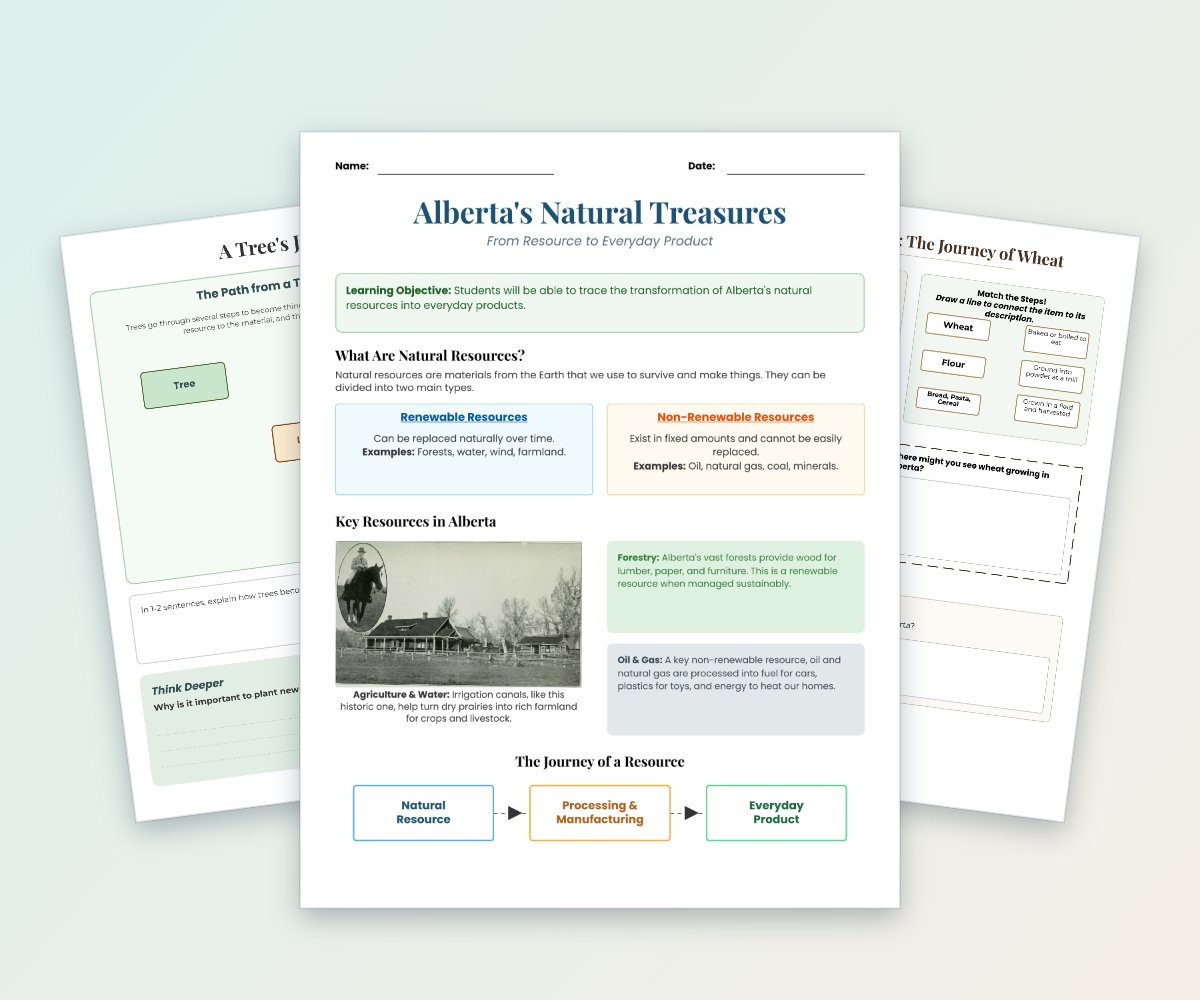
This four-page activity pack teaches students how Alberta’s natural resources become everyday products.
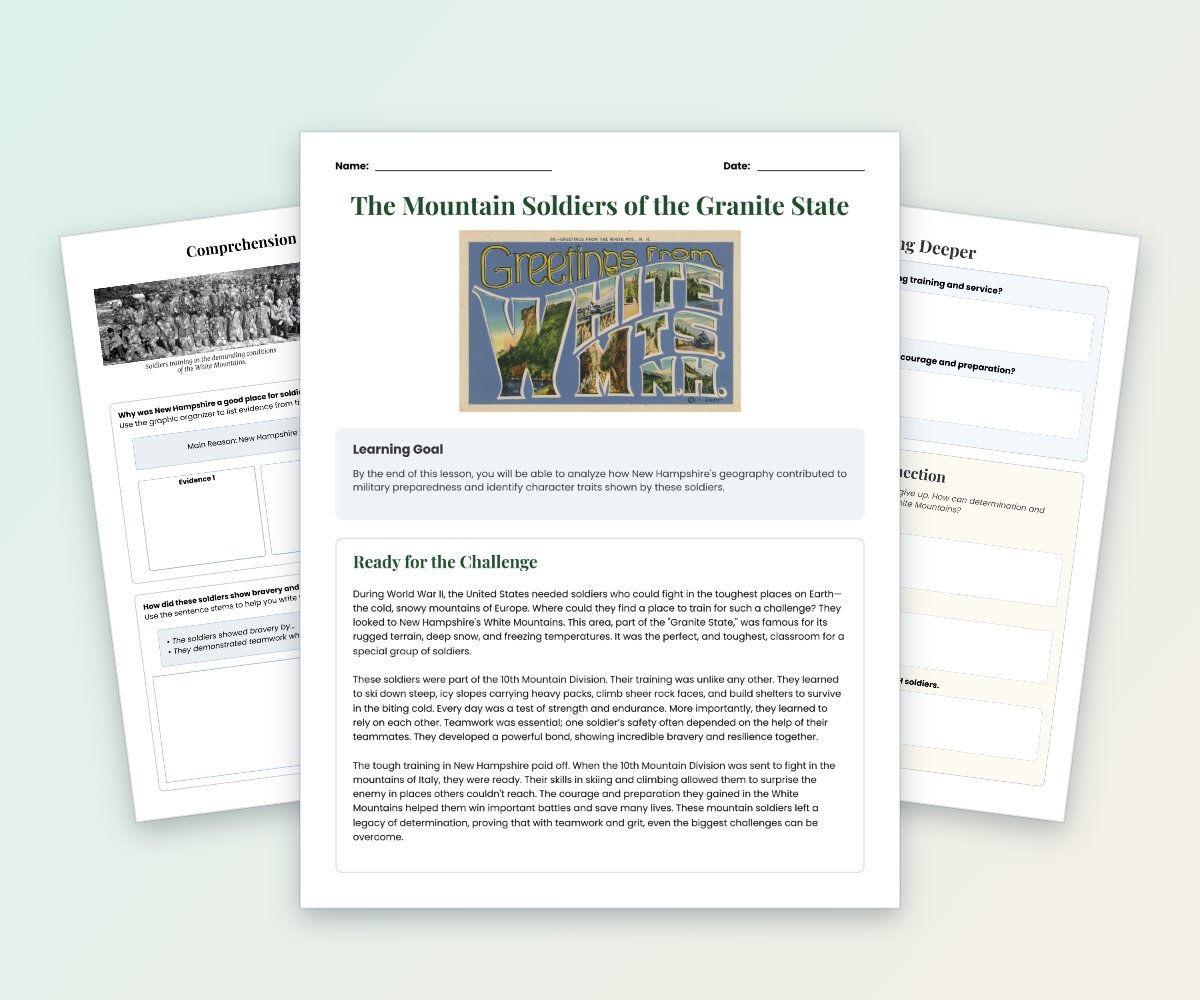
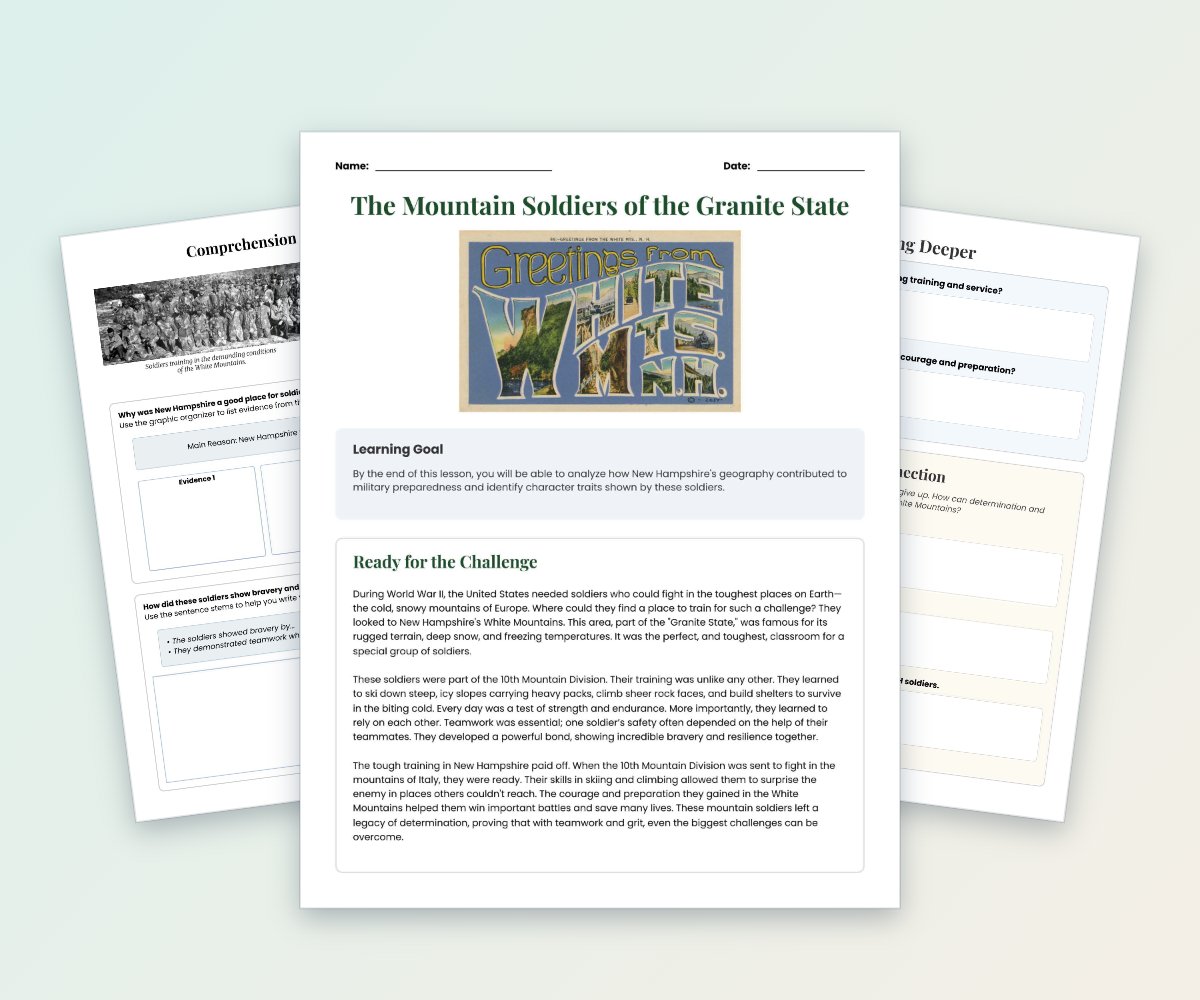
Students read about the 10th Mountain Division’s training in New Hampshire’s White Mountains during World War II.
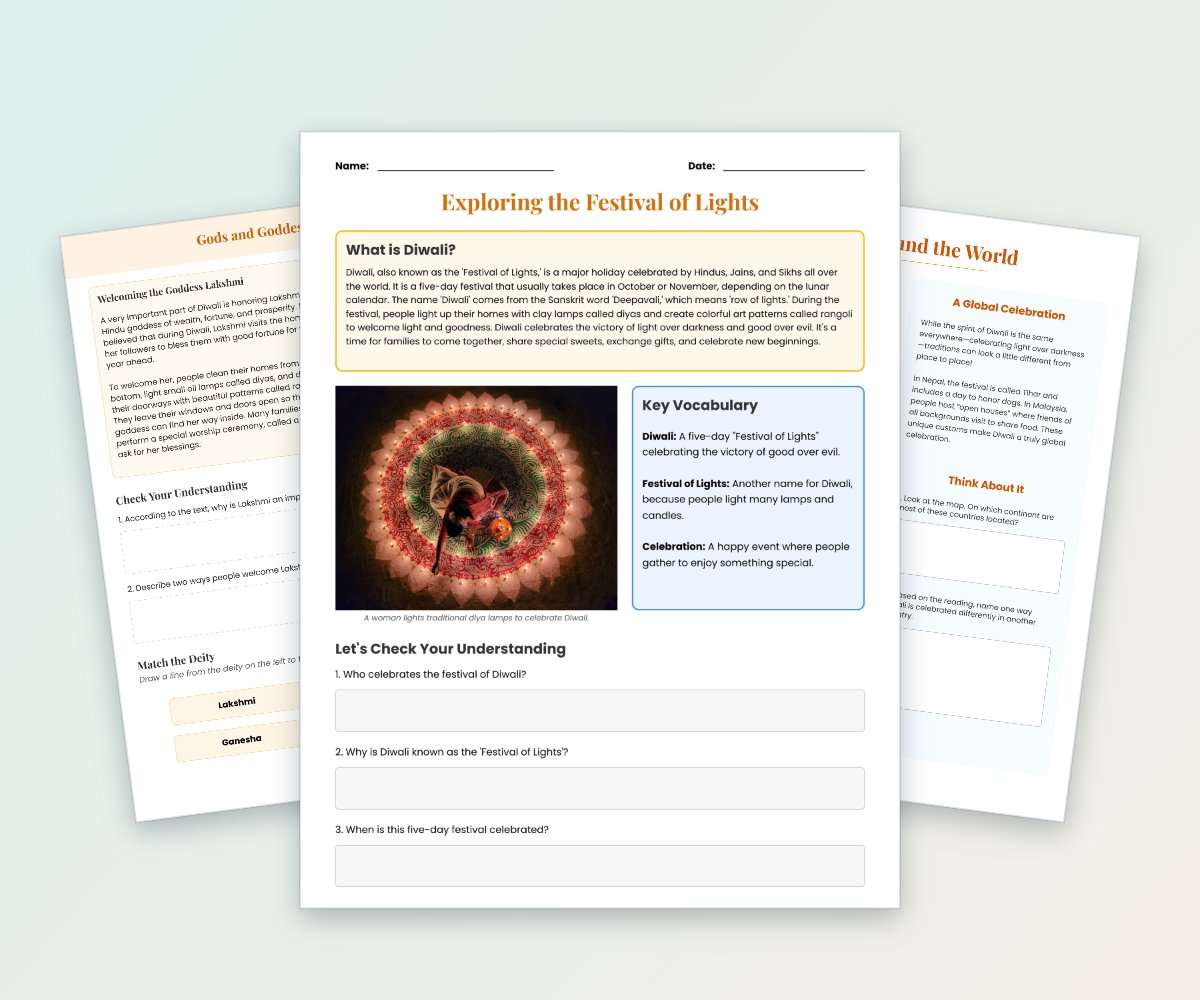
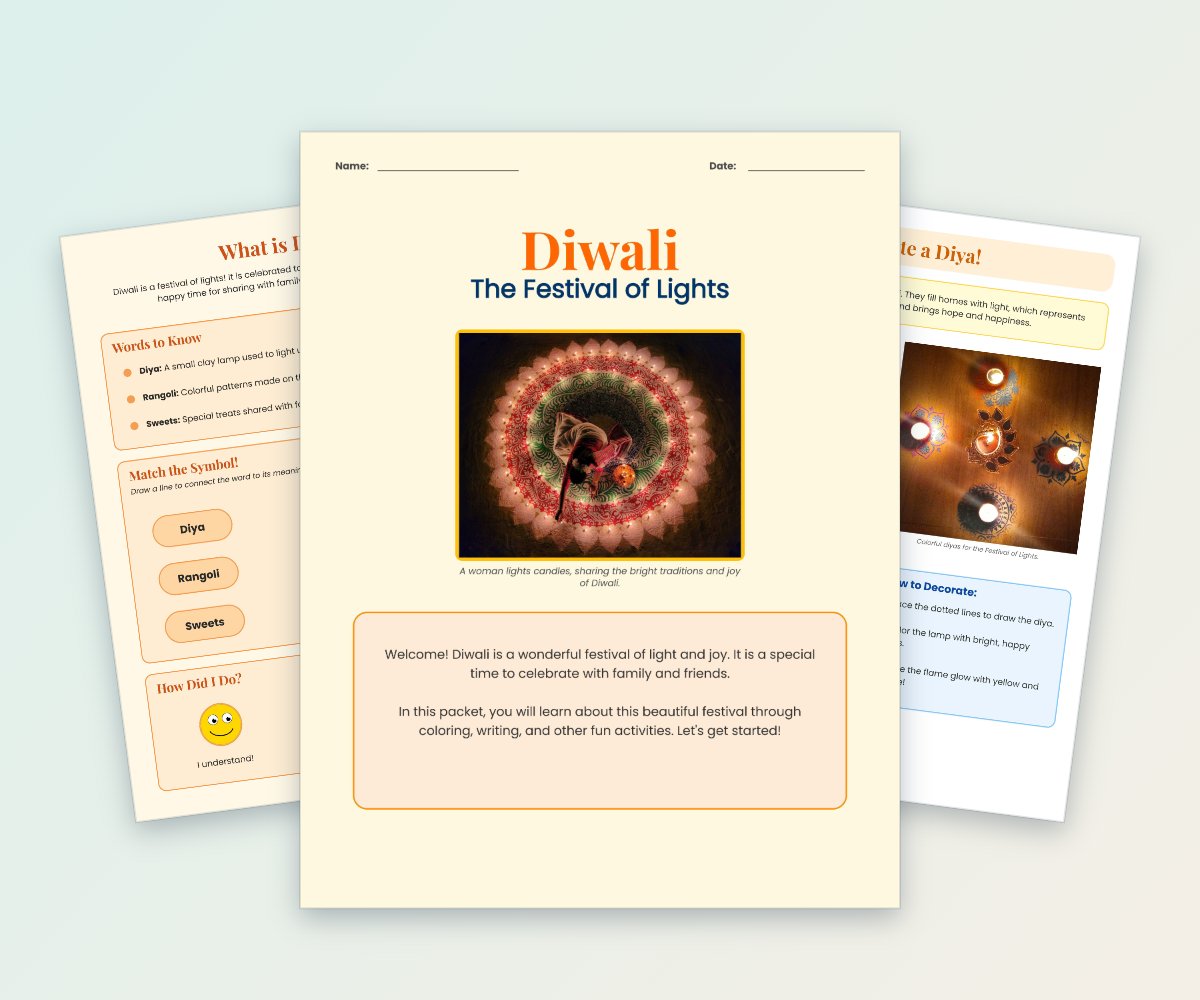
This six-page activity pack introduces students to Diwali, including its history, traditions, symbols, deities, and celebration practices.
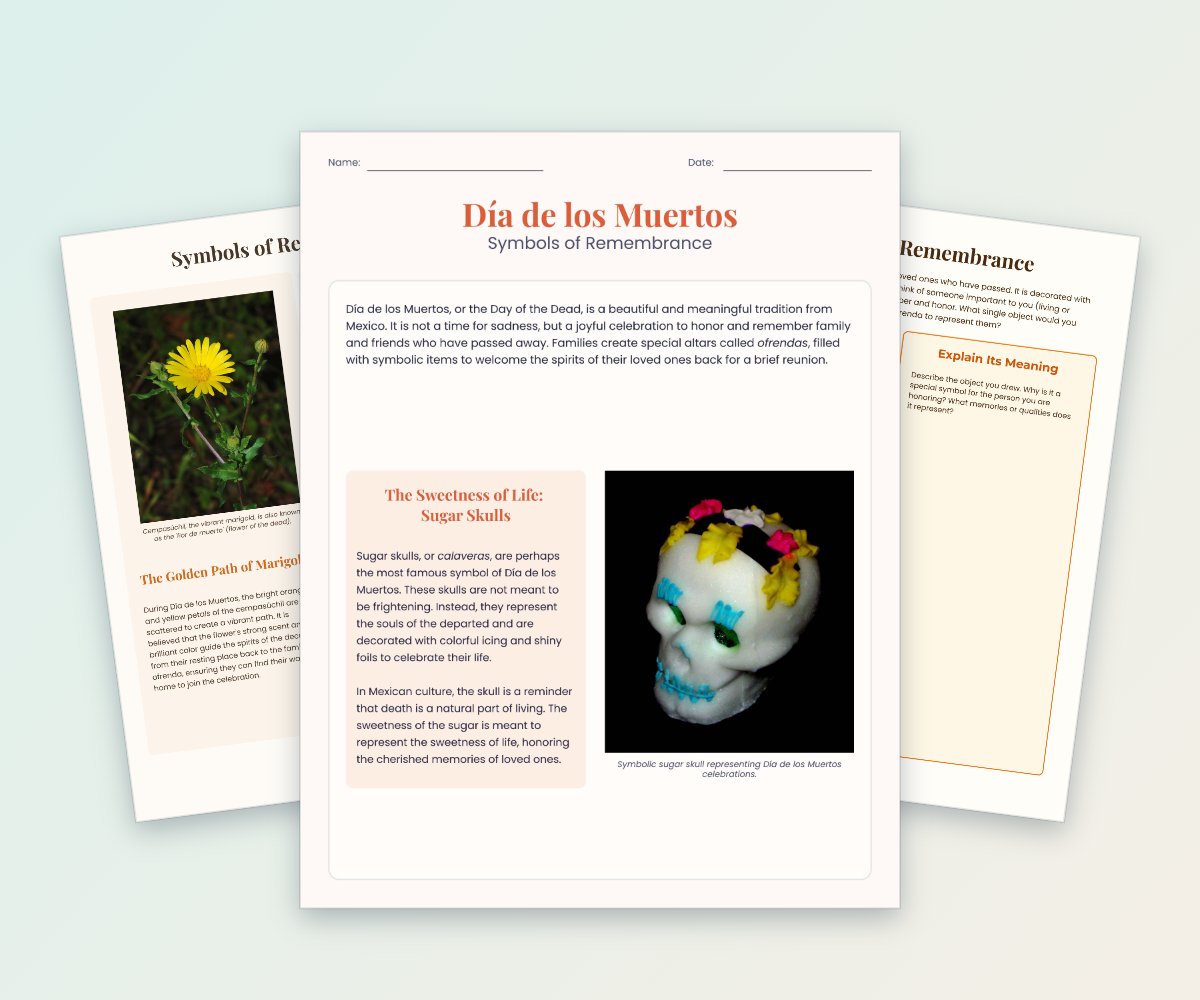
This three-page resource introduces students to Día de los Muertos, explaining sugar skulls, marigolds, ofrendas, candles, photographs, and favorite foods.
This six-page activity pack introduces students to Diwali, including diyas, rangoli, sweets, and the meaning of light.
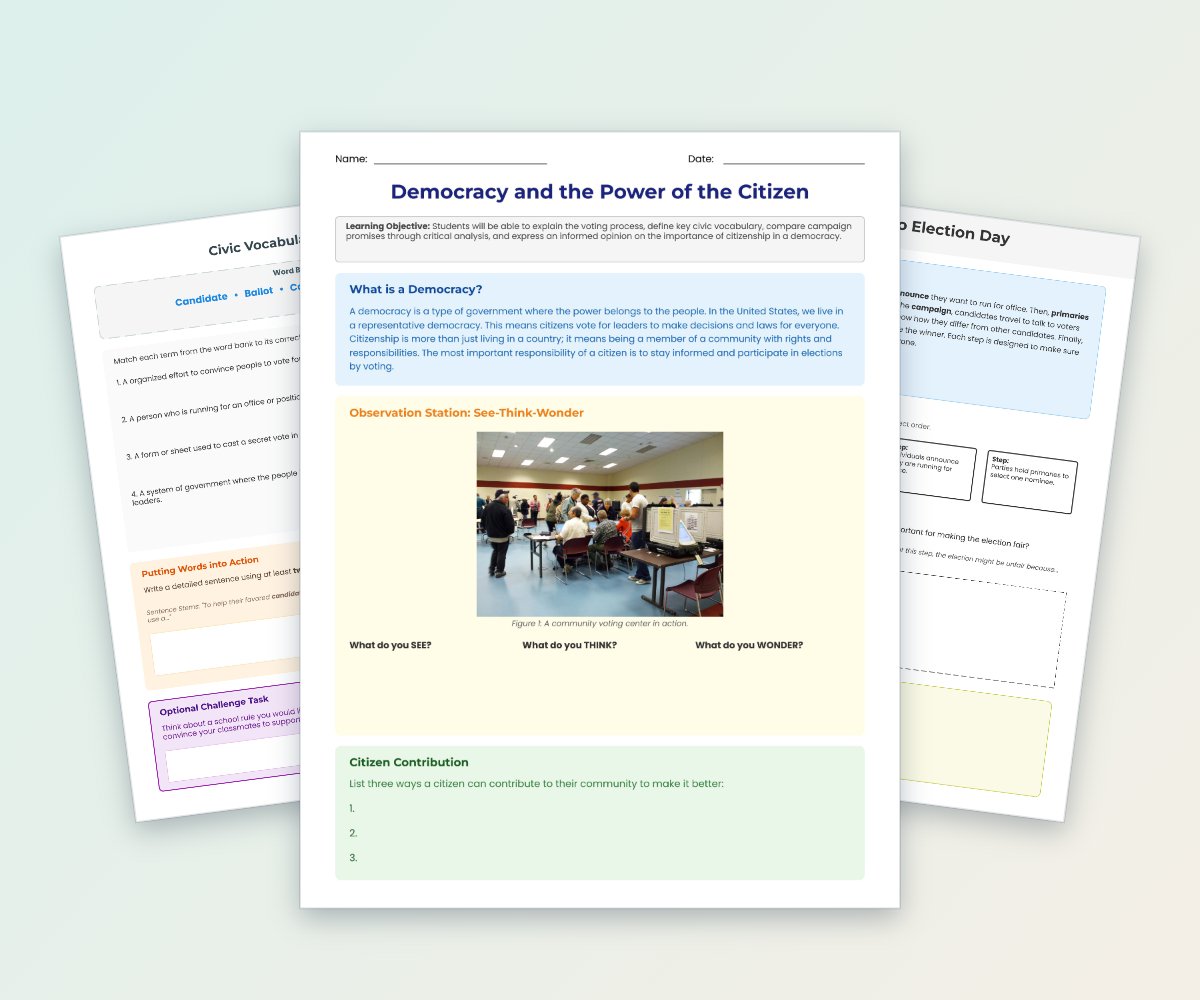
This six-page civics activity pack introduces democracy, citizenship, voting, elections, campaigns, candidates, and ballots.
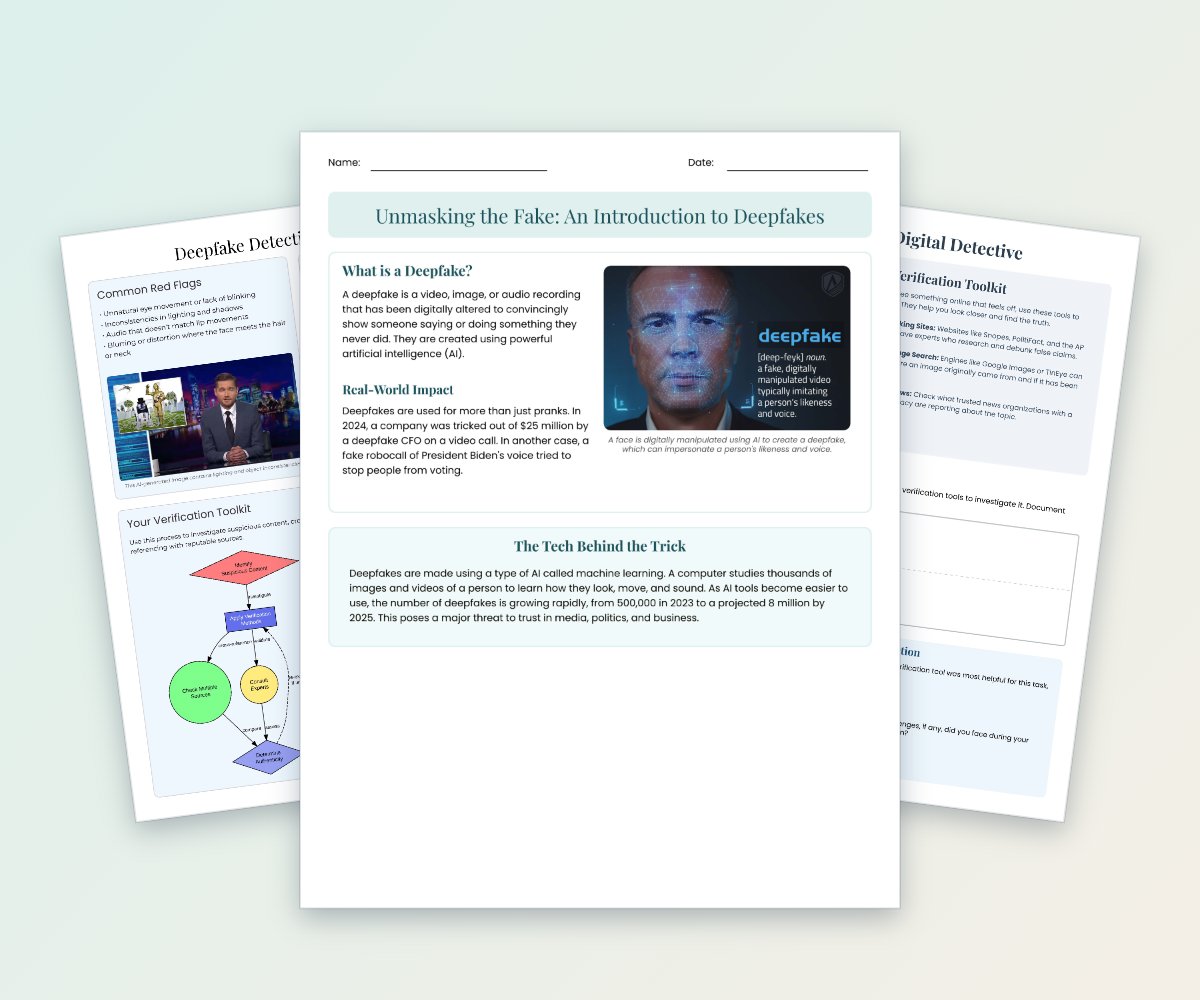
This four-page activity introduces deepfakes, explains how they are created, and identifies common signs of manipulated media.
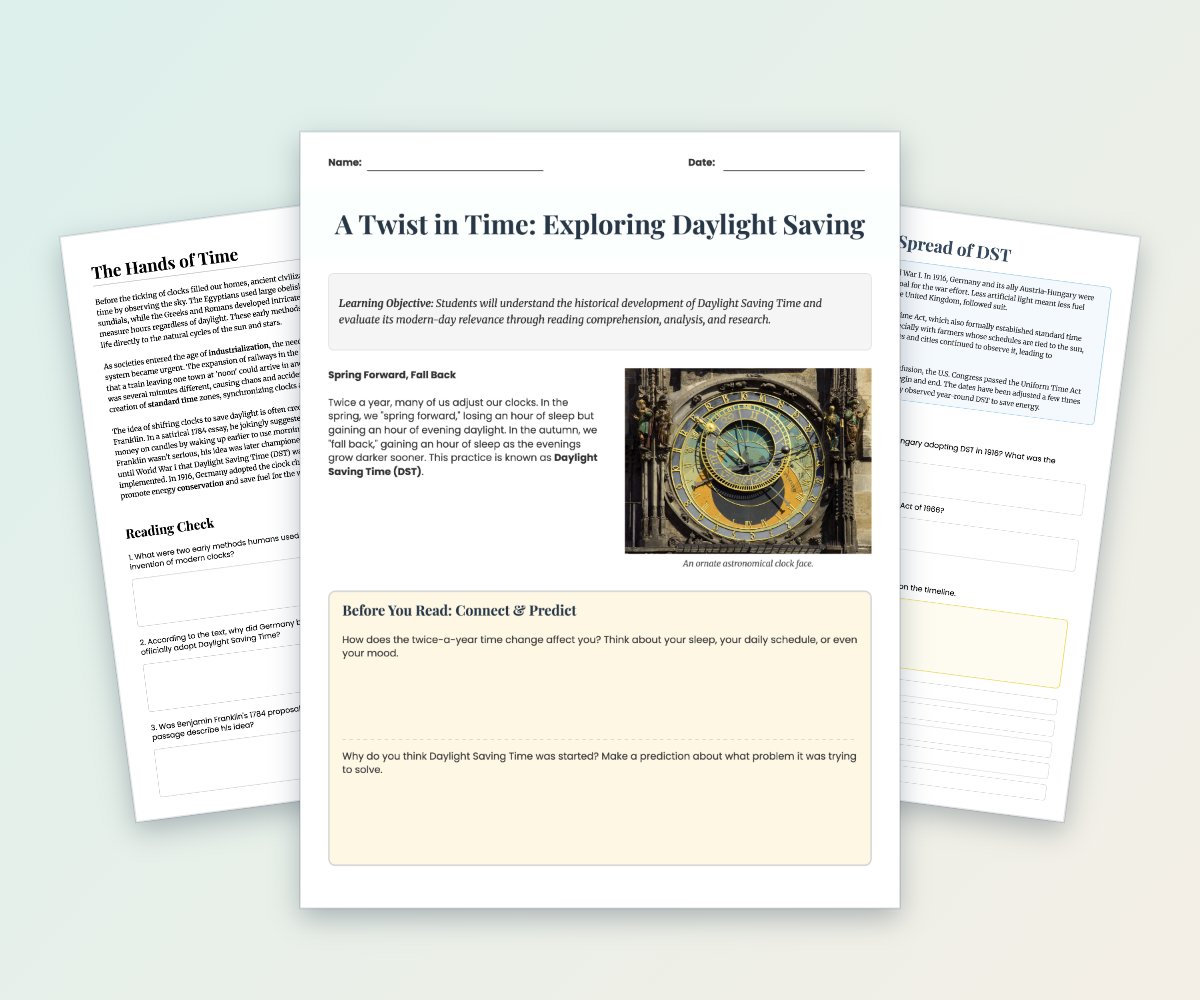
Students explore how humans measured time, the development of standard time zones, and the origins of Daylight Saving Time.
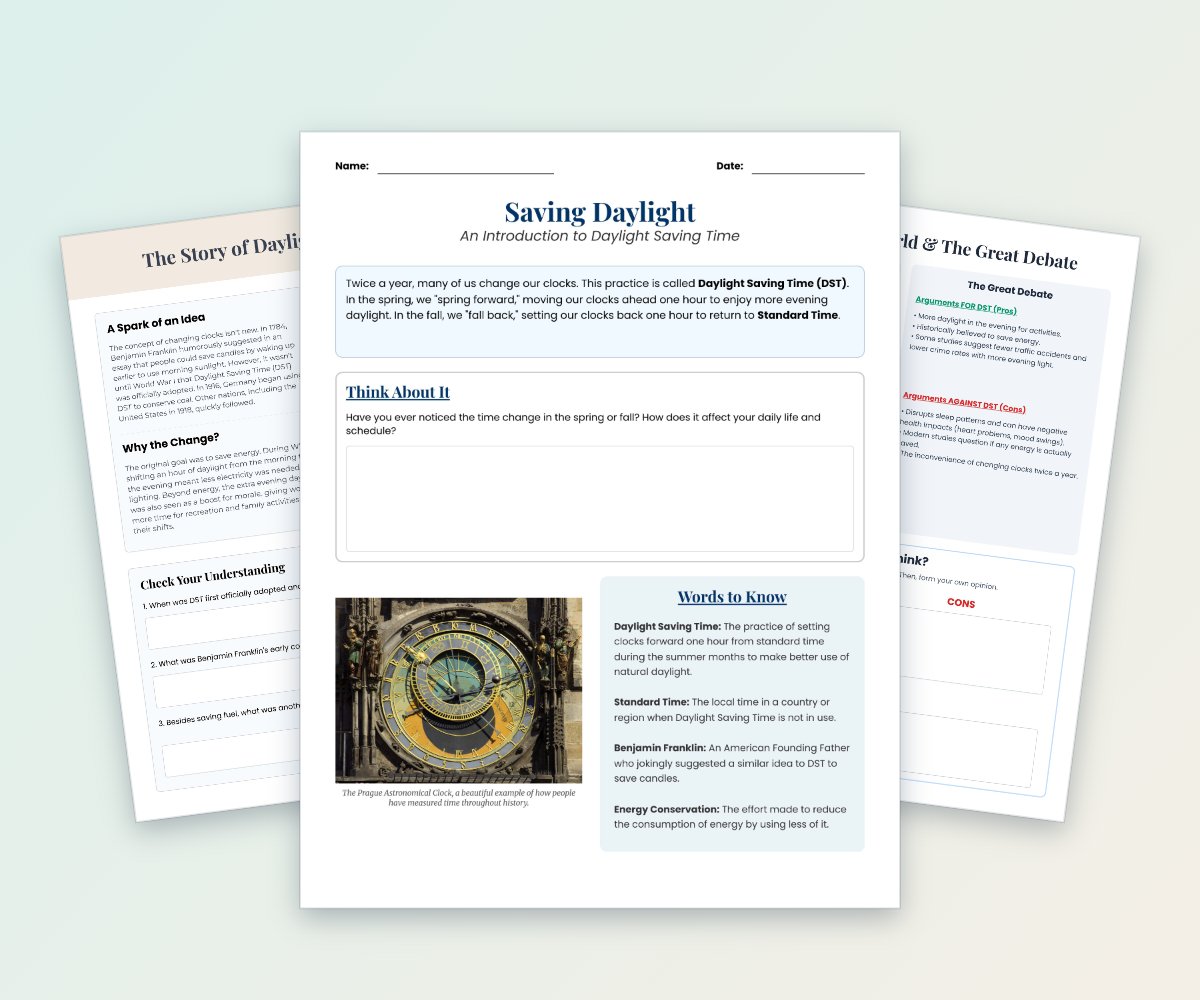
This four-page worksheet introduces Daylight Saving Time, Standard Time, Benjamin Franklin, energy conservation, and the history of clock changes.
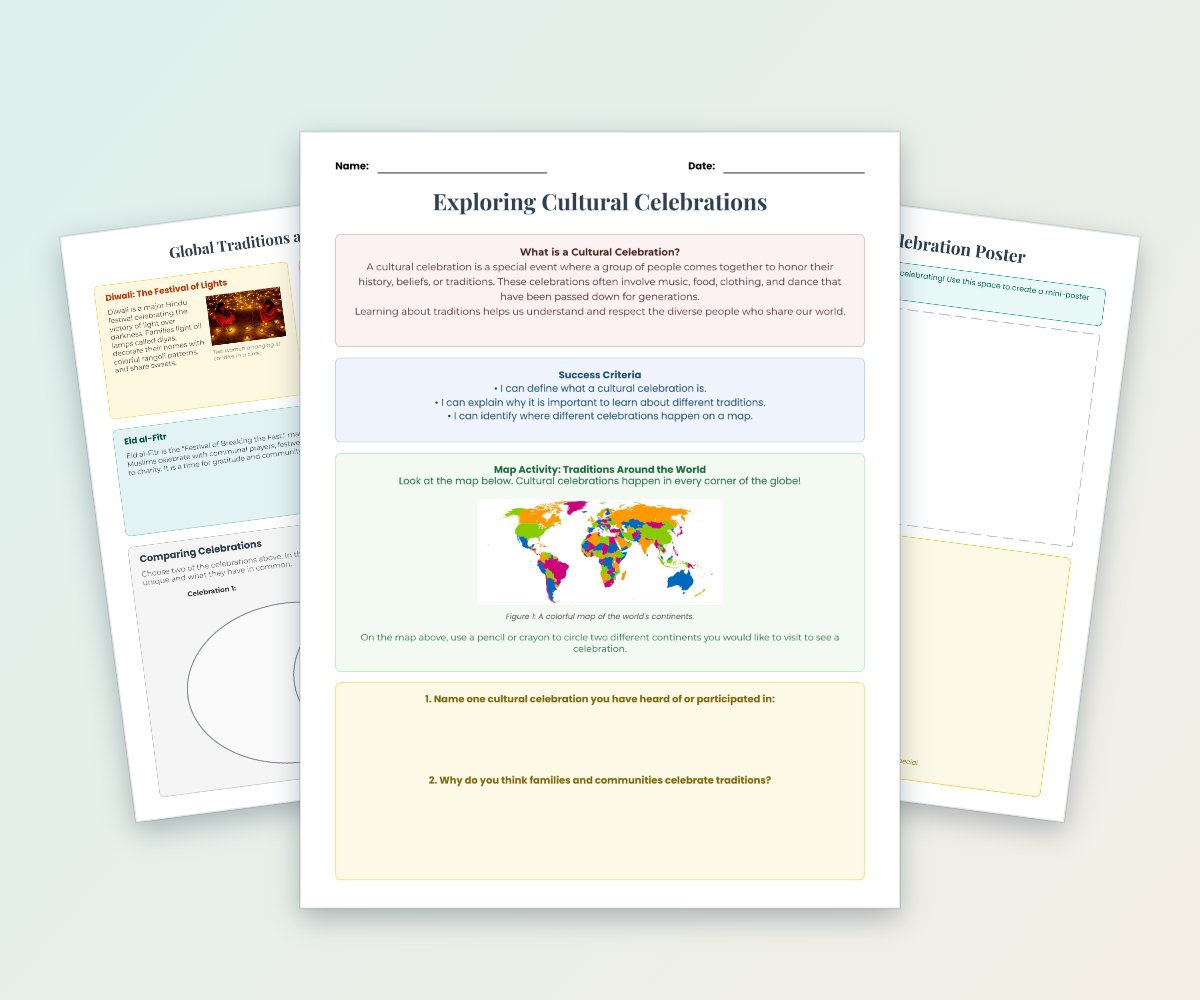
Students learn what cultural celebrations are and explore Diwali, Eid al-Fitr, and Lunar New Year.
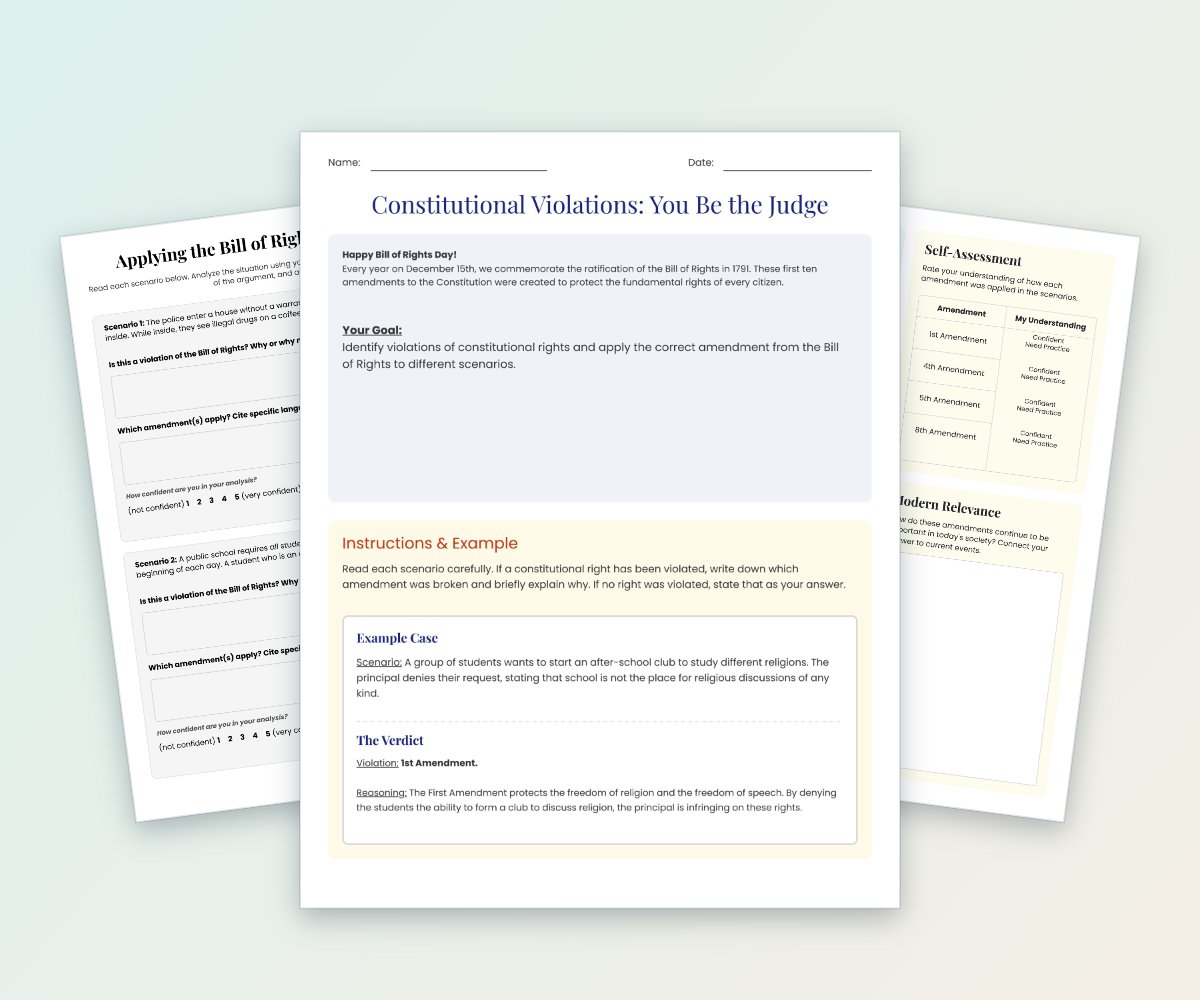
Students examine realistic scenarios involving the First, Fourth, and Fifth Amendments and determine whether constitutional rights were violated.
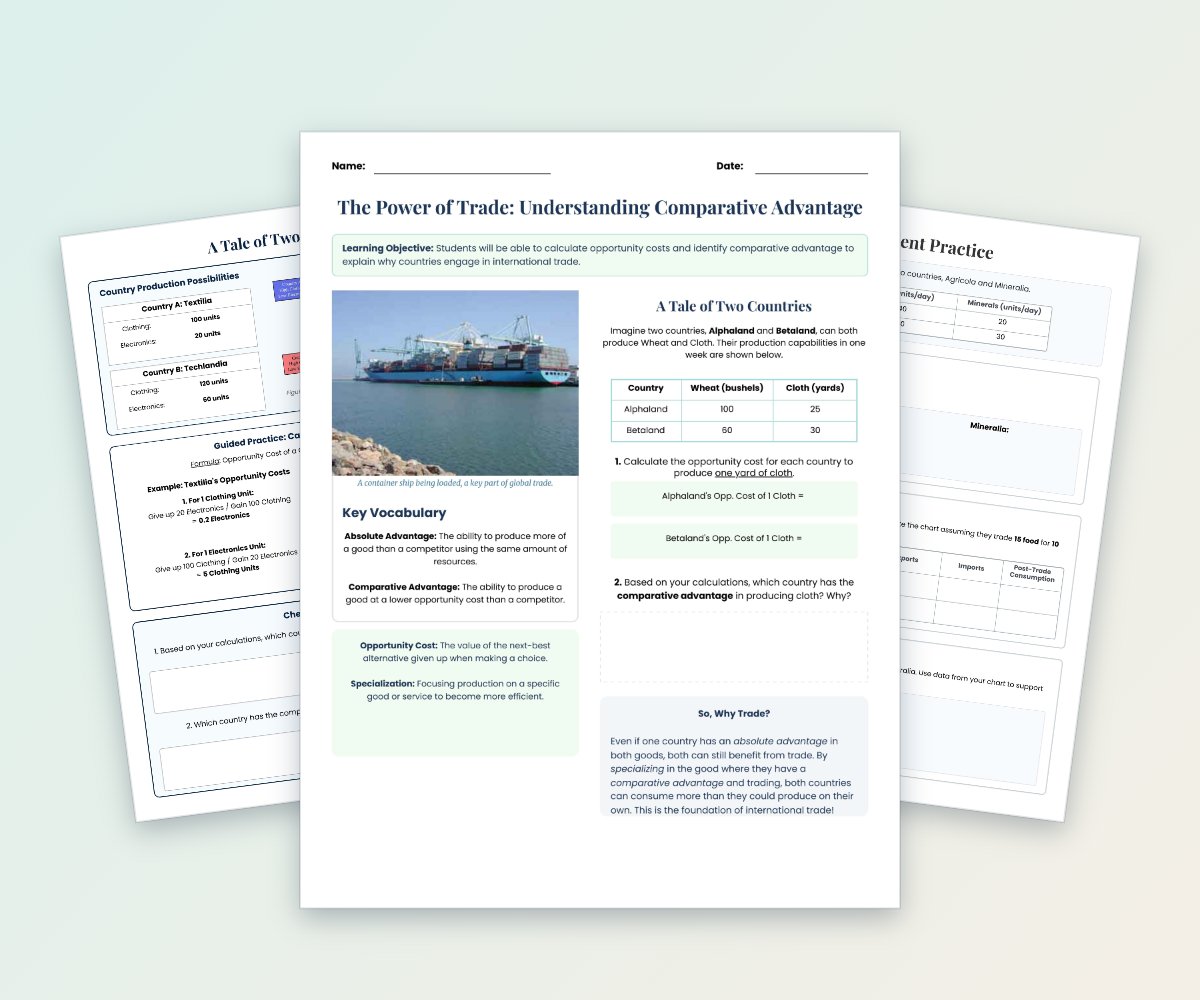
Students calculate opportunity costs and identify comparative advantage using country production scenarios.
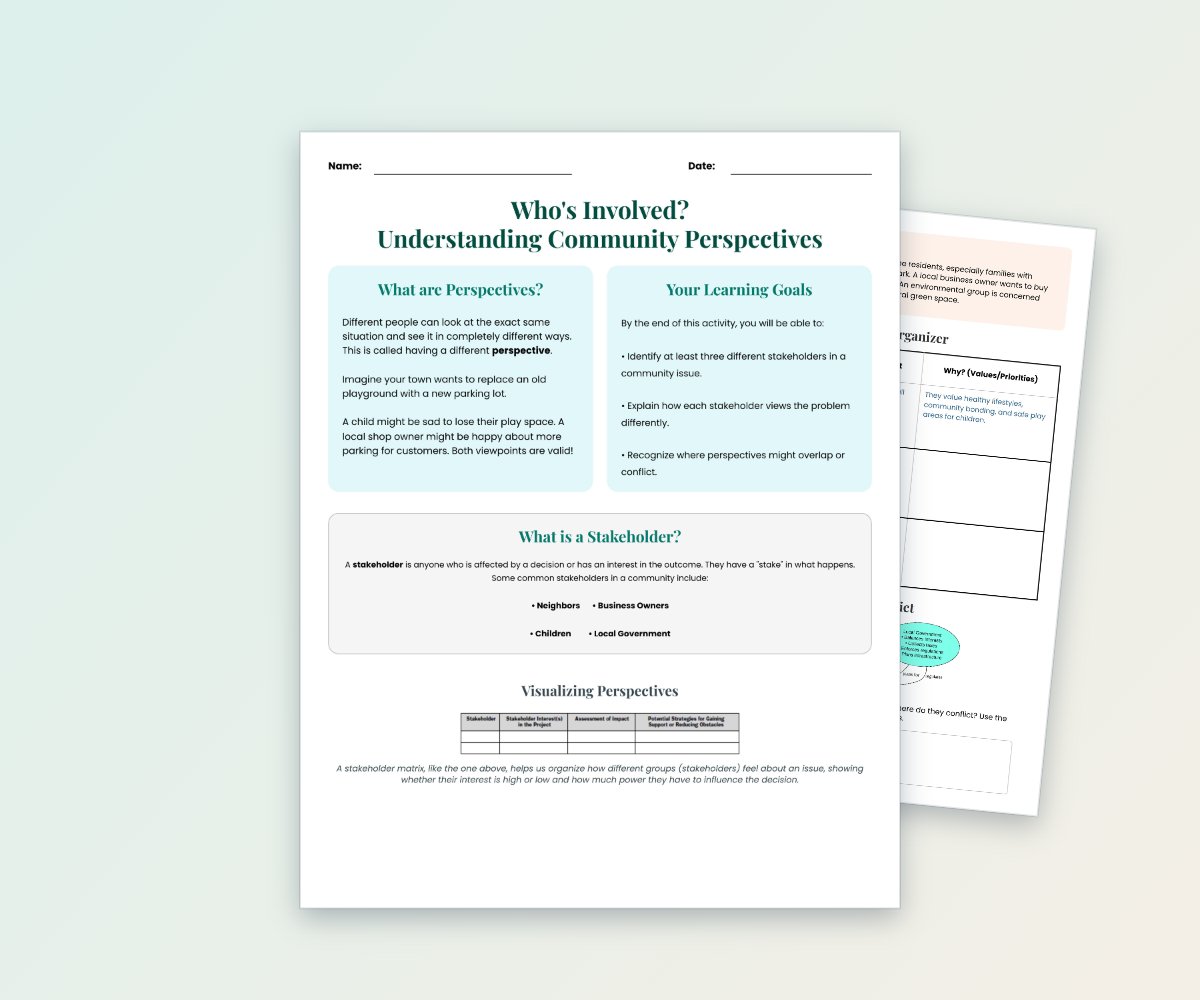
Students examine a community land-use issue from the perspectives of families, businesses, environmental groups, neighbors, developers, and local government.
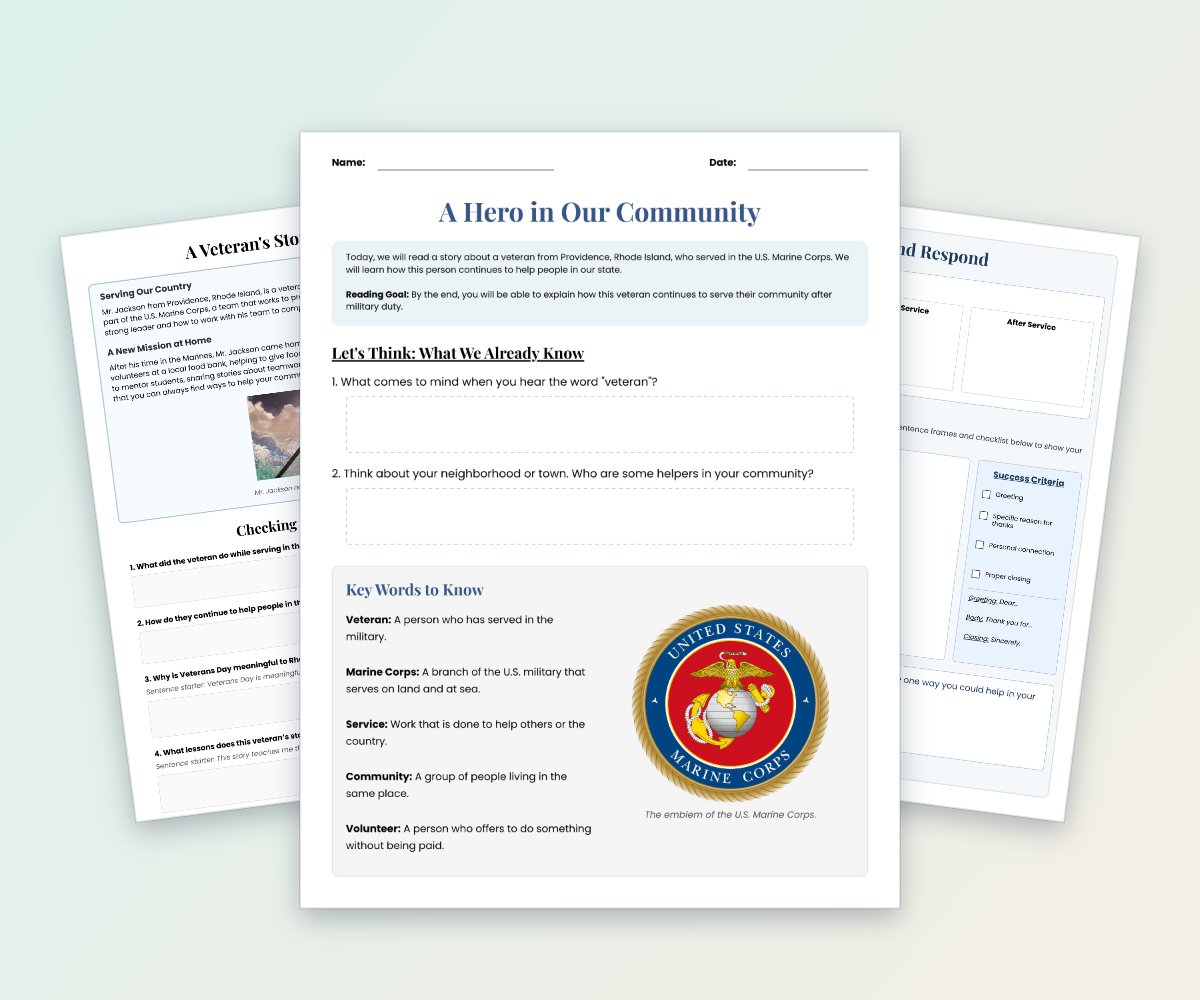
Students read about a Providence, Rhode Island, veteran who continues serving the community through volunteering and mentoring.
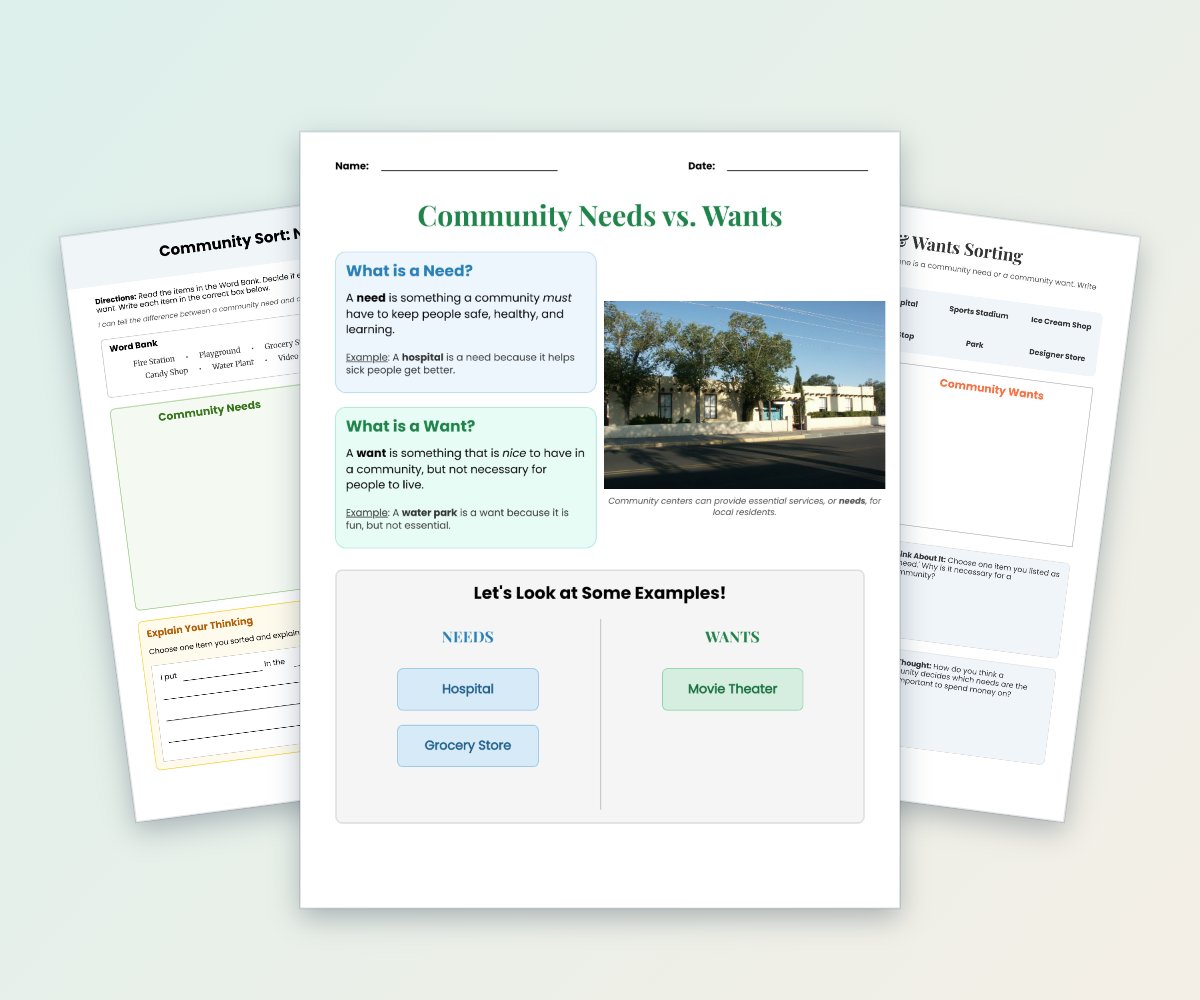
Students learn the difference between essential community needs and nonessential wants using examples such as hospitals, schools, parks, and stores.
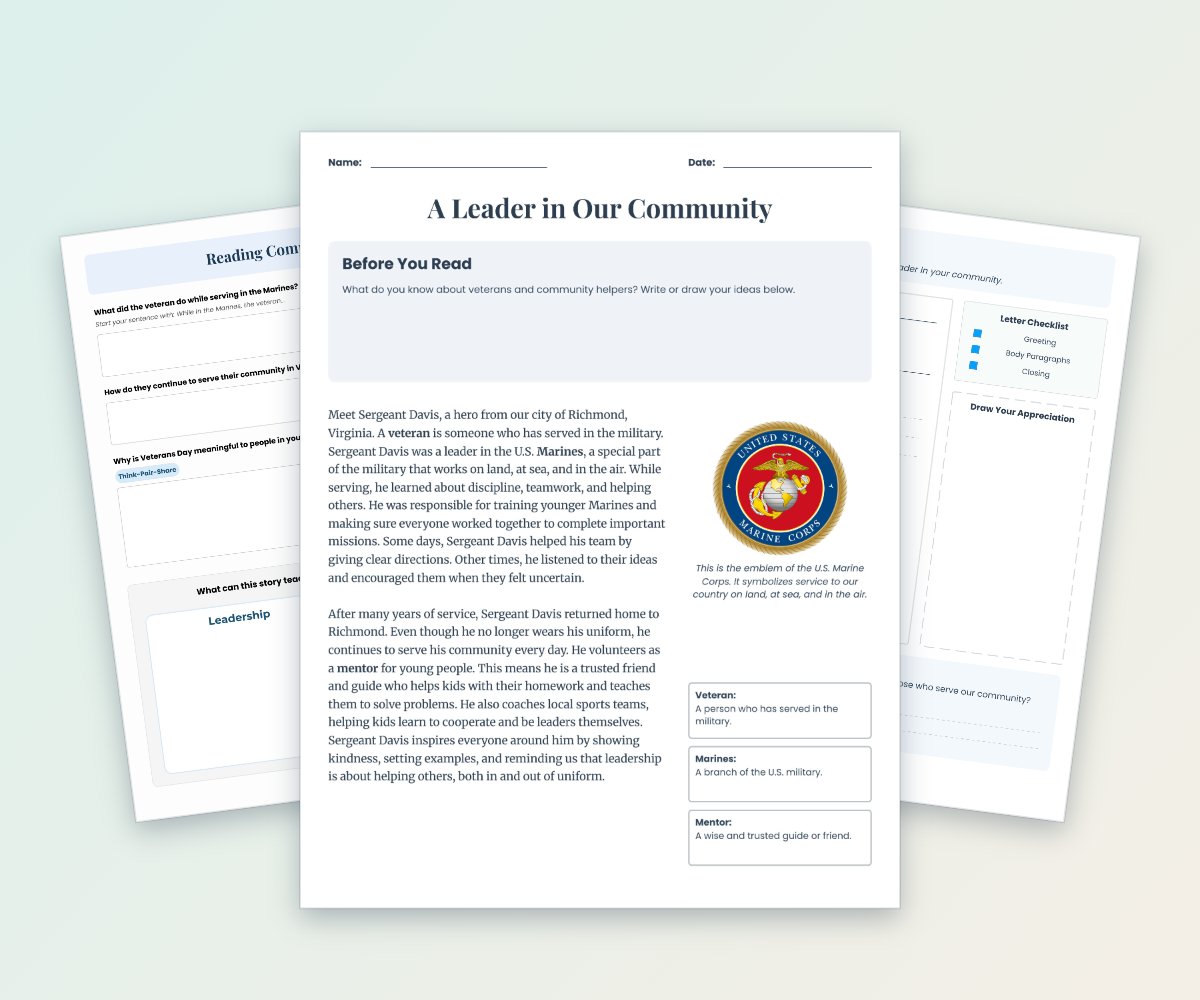
Students read about a veteran’s military service and continued community leadership in Richmond, Virginia.
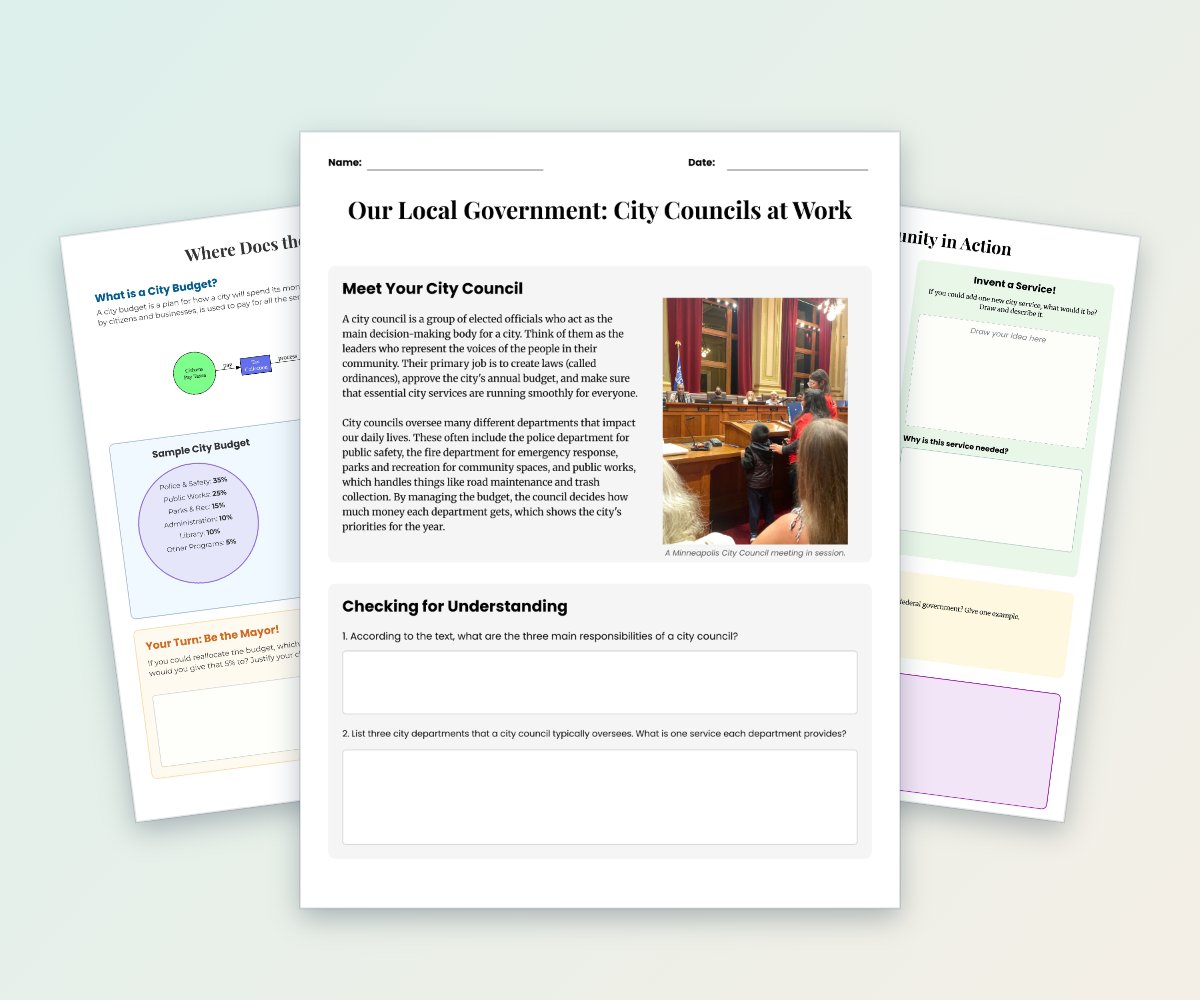
Students learn how city councils make decisions, oversee departments, and allocate annual budgets.
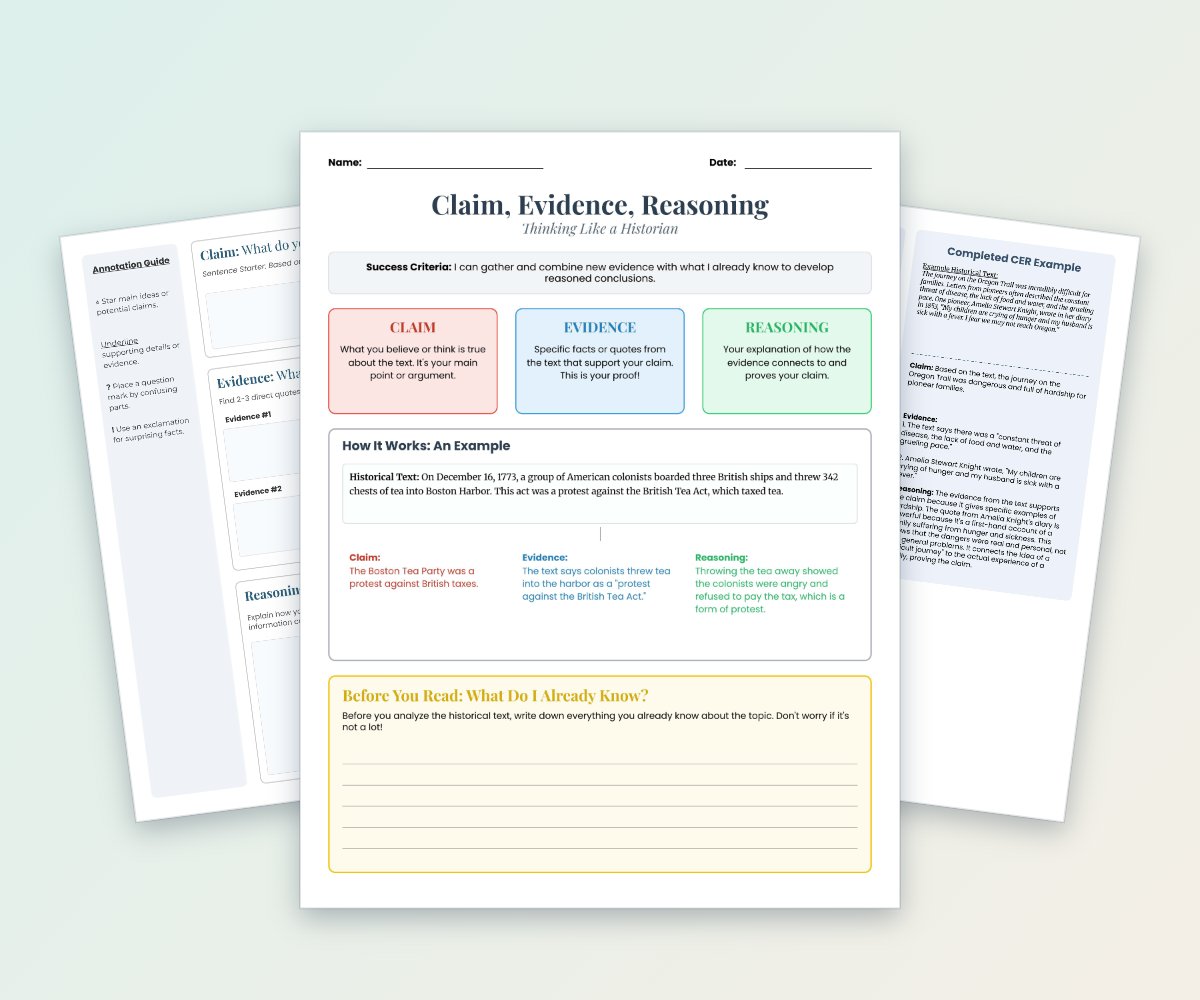
This three-page resource teaches students to develop historical claims, select textual evidence, and explain their reasoning.
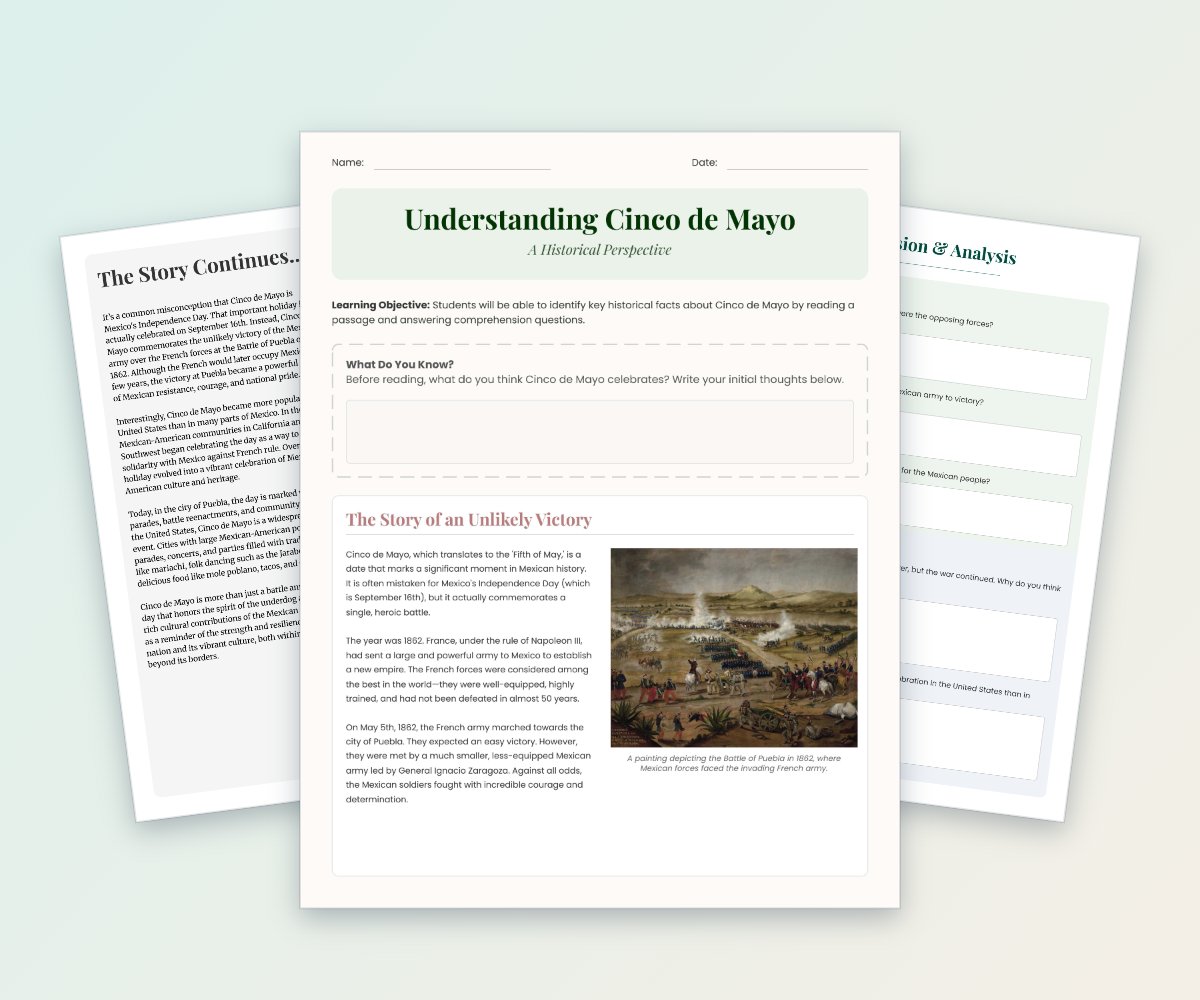
Students read an accessible historical passage about the Battle of Puebla, Mexican resistance, and the development of Cinco de Mayo celebrations.
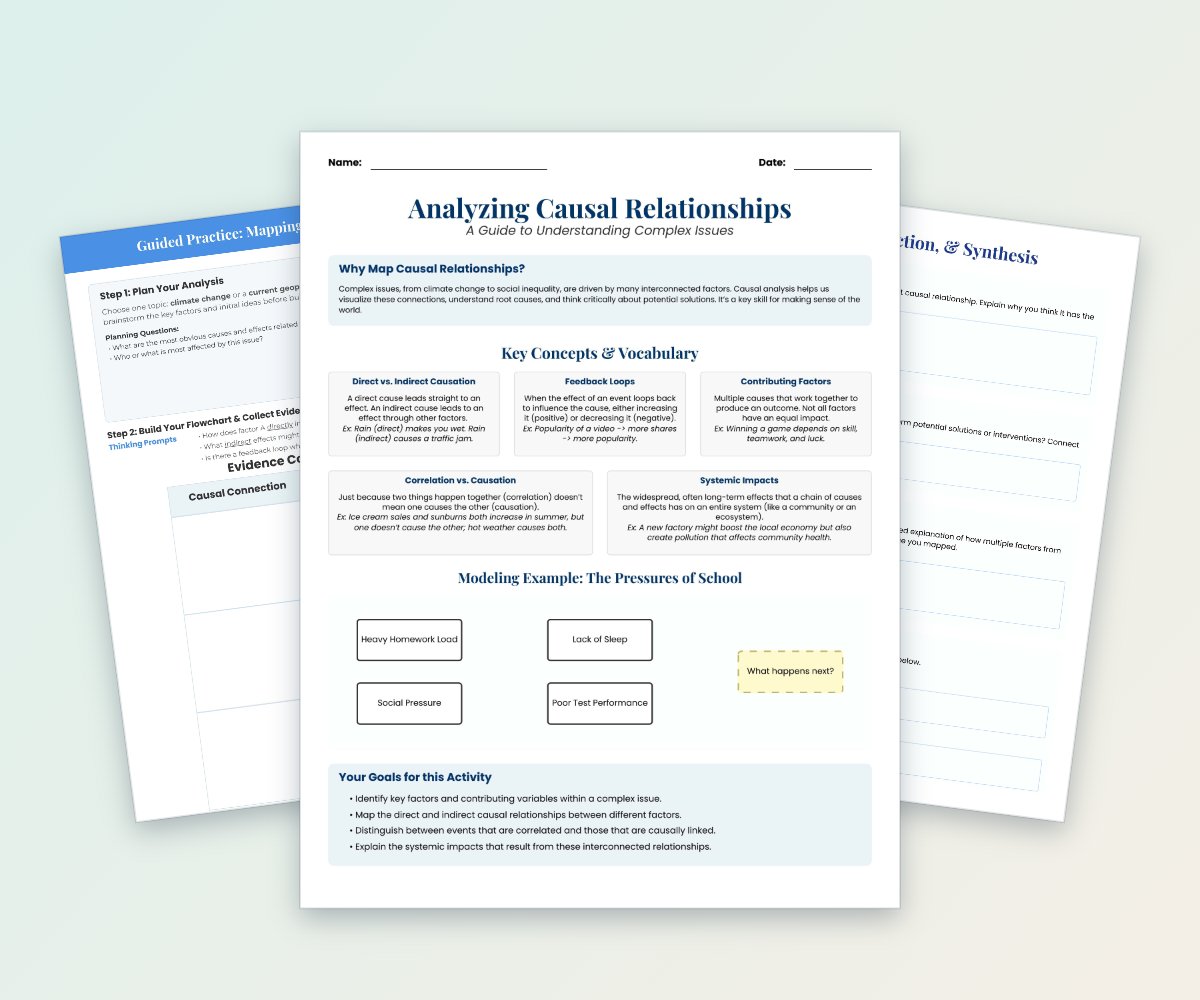
This three-page guide introduces direct and indirect causation, correlation versus causation, feedback loops, contributing factors, and systemic impacts.
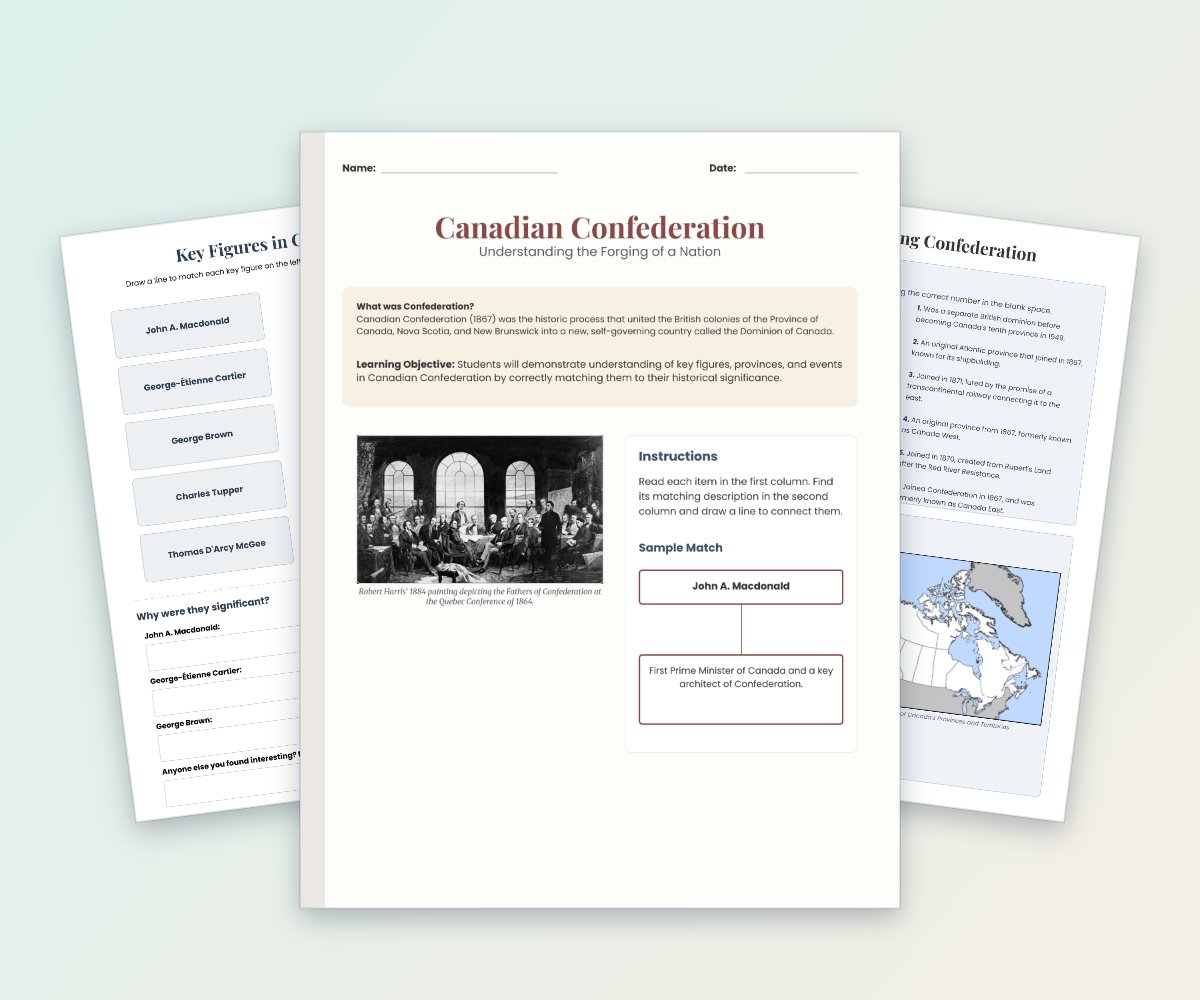
Students explore key figures, provinces, and events connected to Canadian Confederation through matching activities and a mapping task.
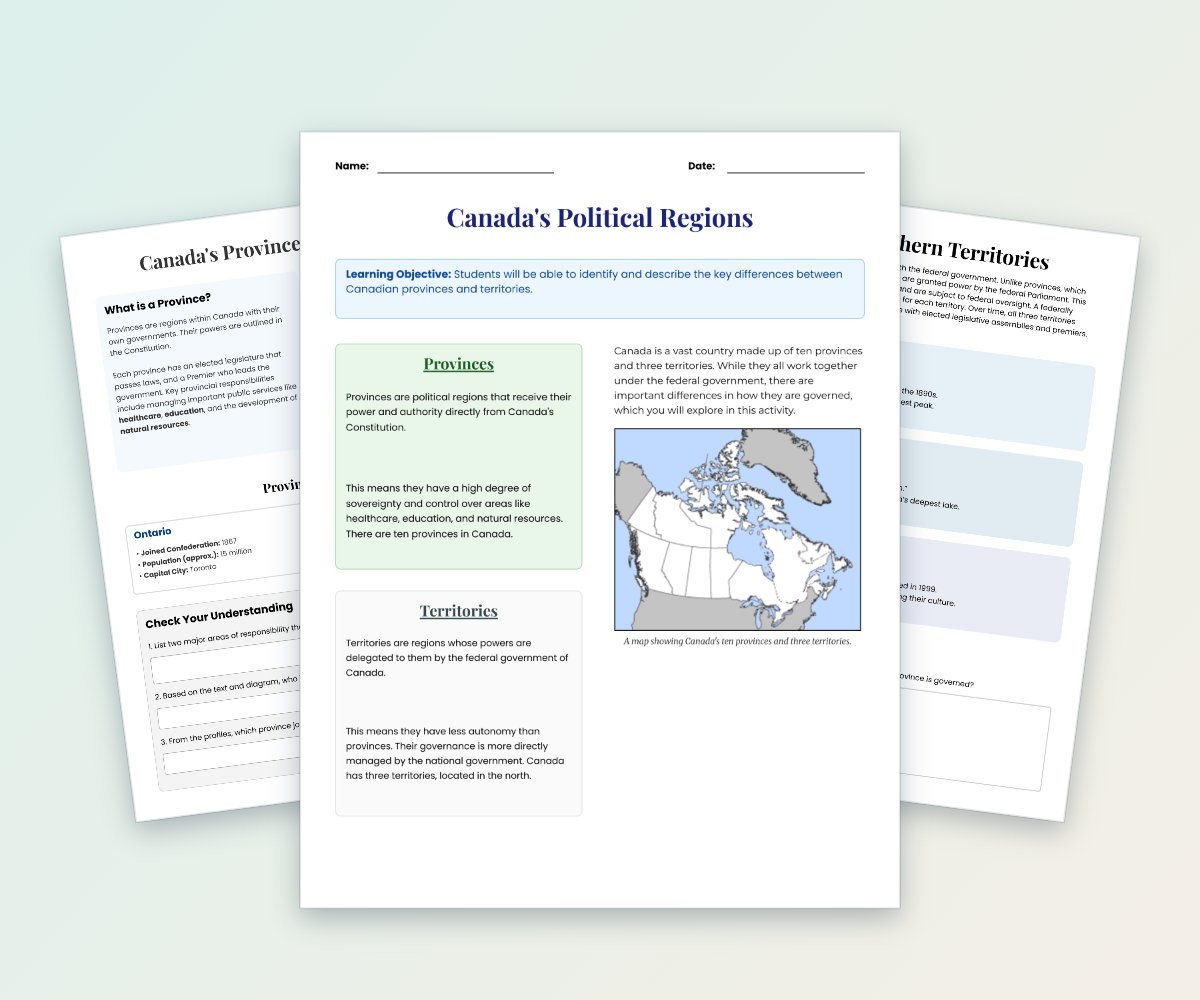
This four-page resource introduces the differences between Canada's provinces and territories, including governance, responsibilities, capitals, and Confederation dates.
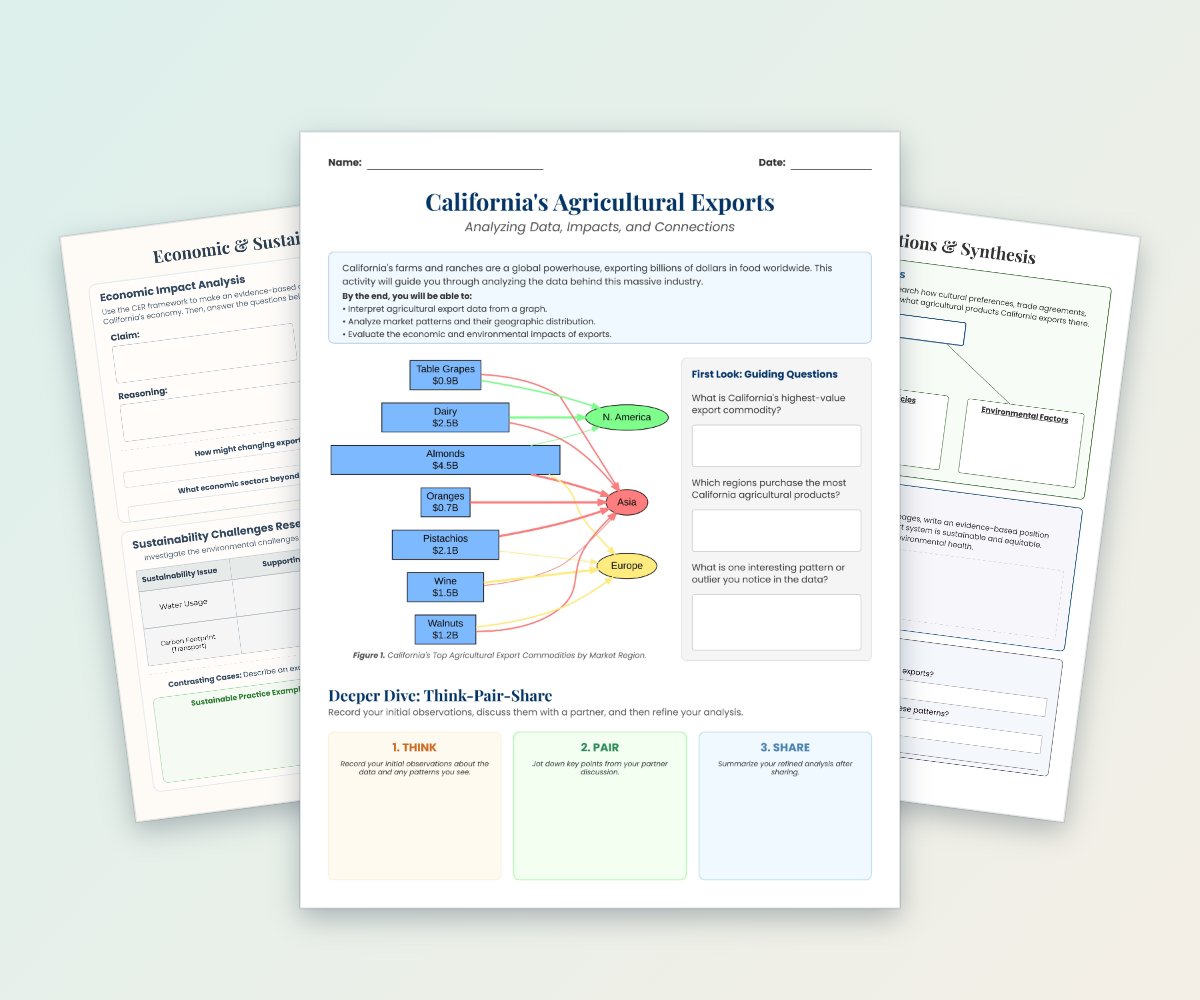
This three-page activity guides students in interpreting agricultural export data and examining economic, environmental, and global connections.
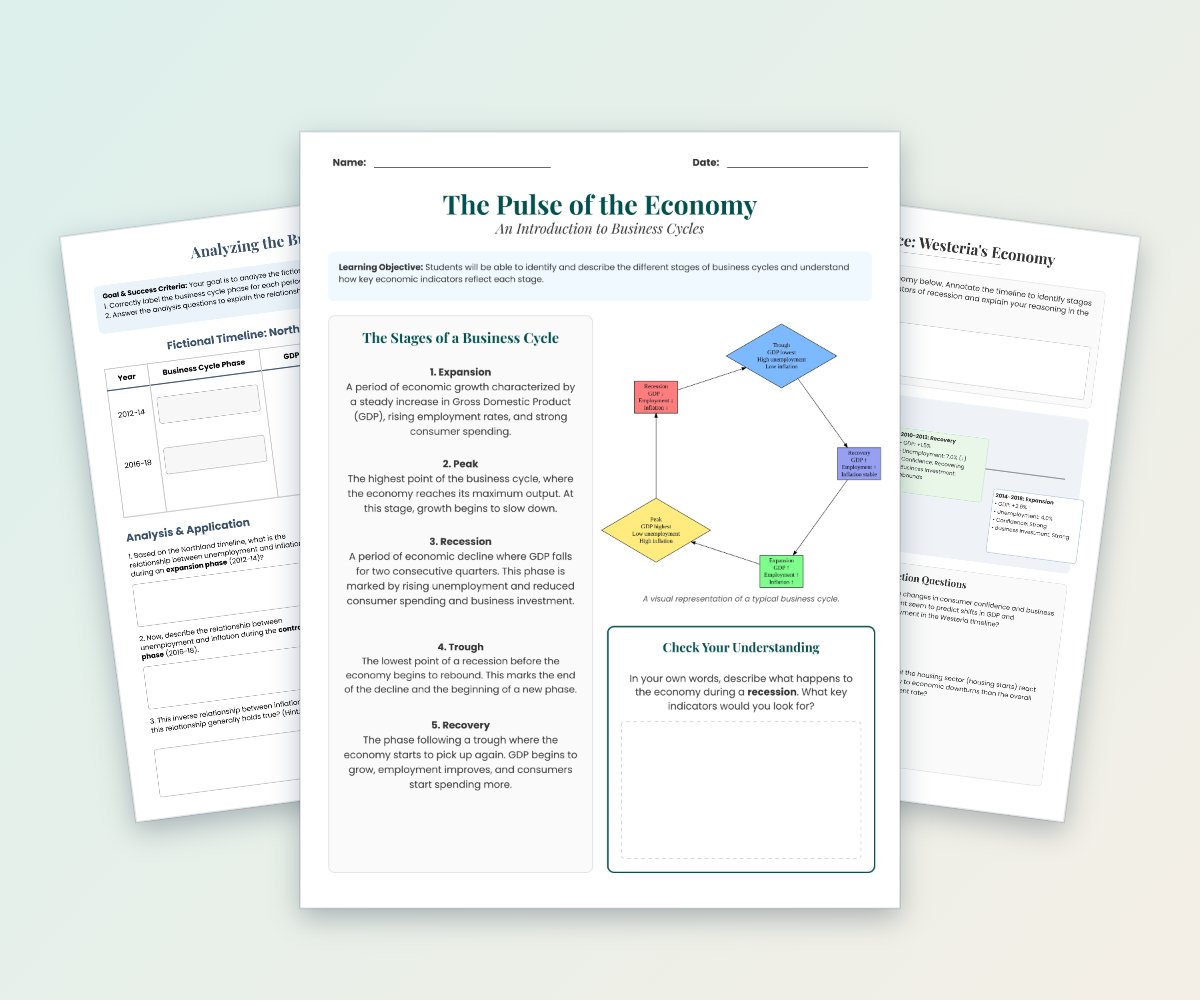
This five-page economics resource introduces expansion, peak, recession, trough, and recovery.
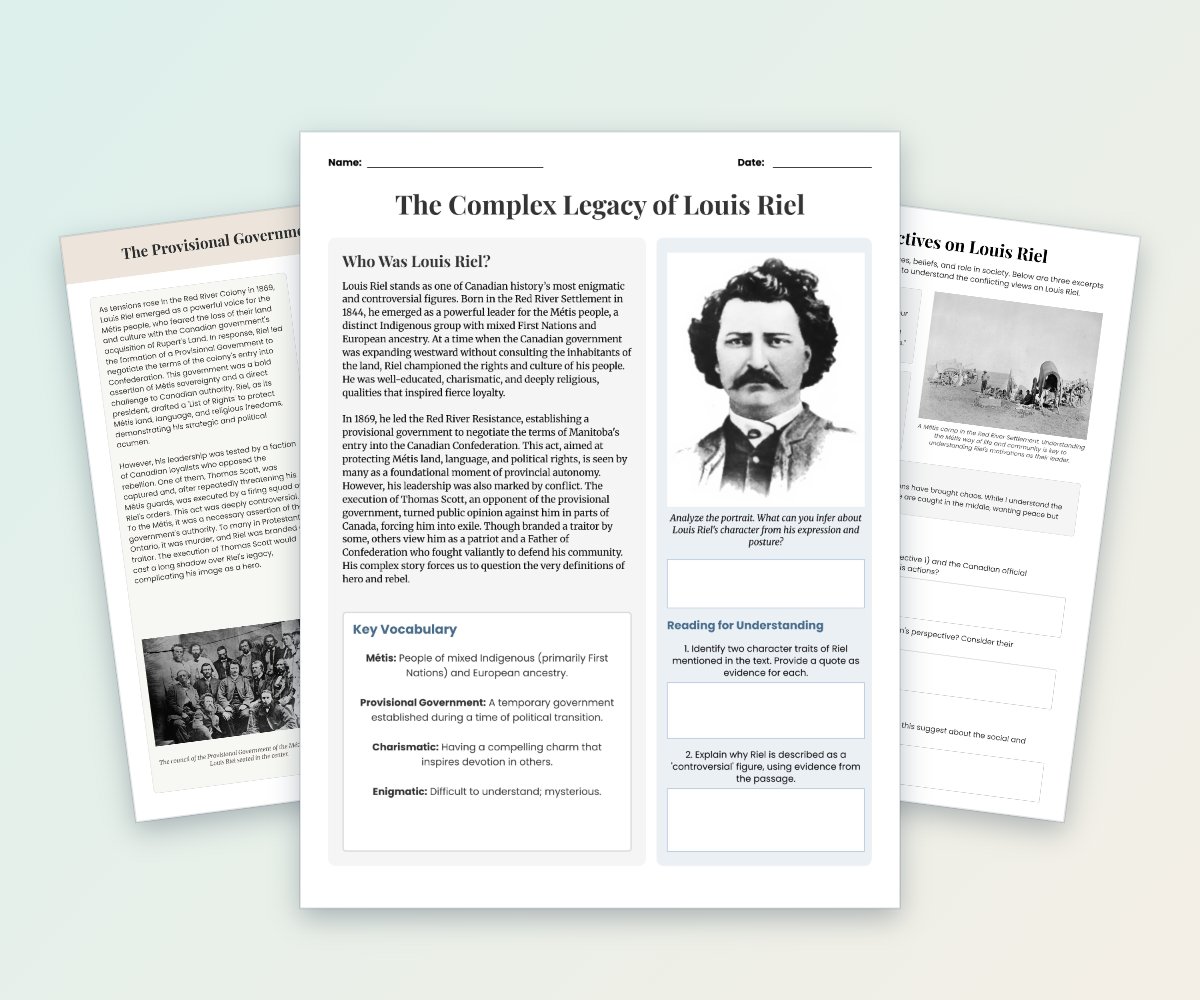
This four-page worksheet explores Louis Riel’s leadership, the Red River Resistance, the Provisional Government, and his contested historical legacy.
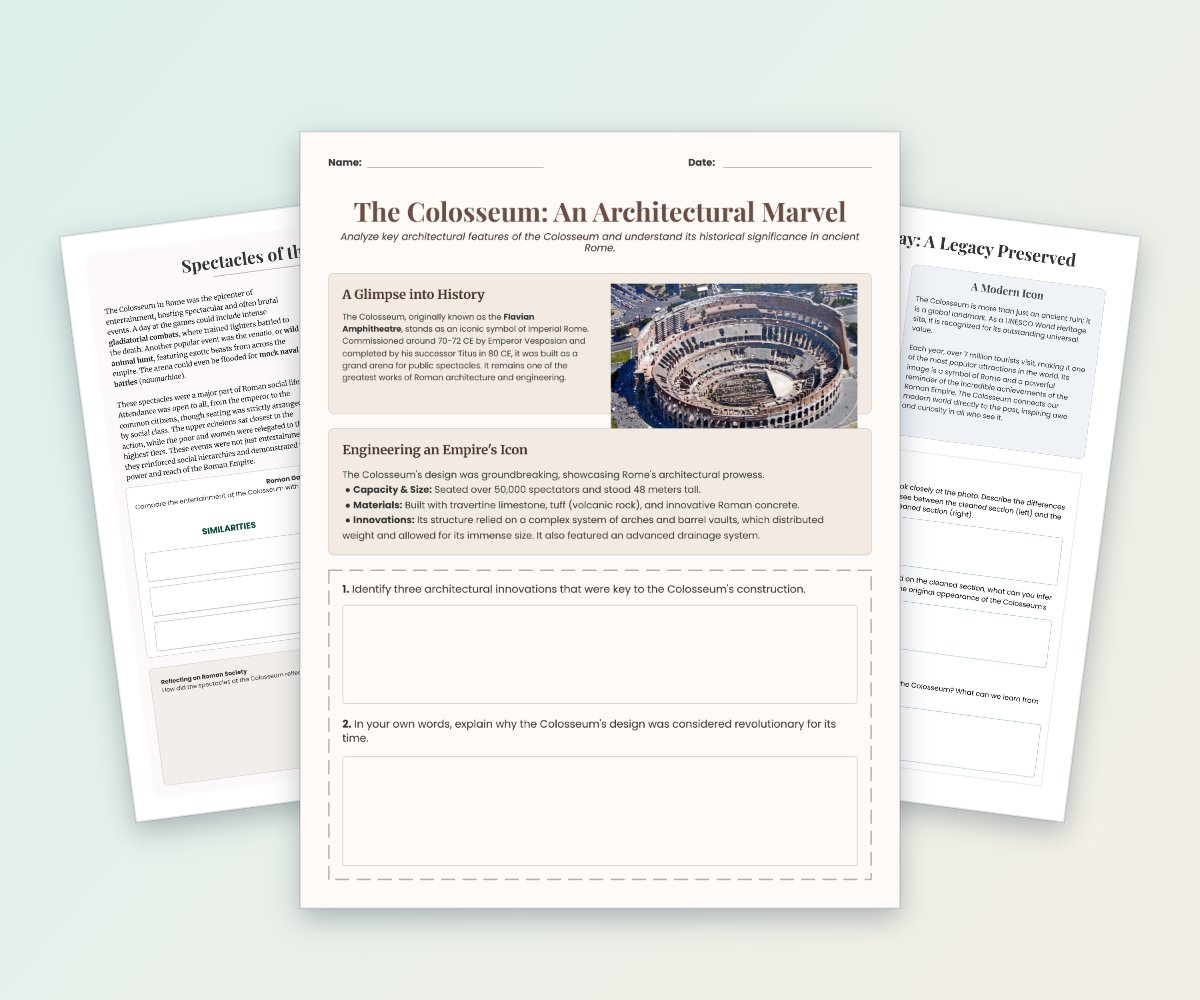
Students explore the Colosseum’s architecture, engineering innovations, historical significance, and role in Roman society.
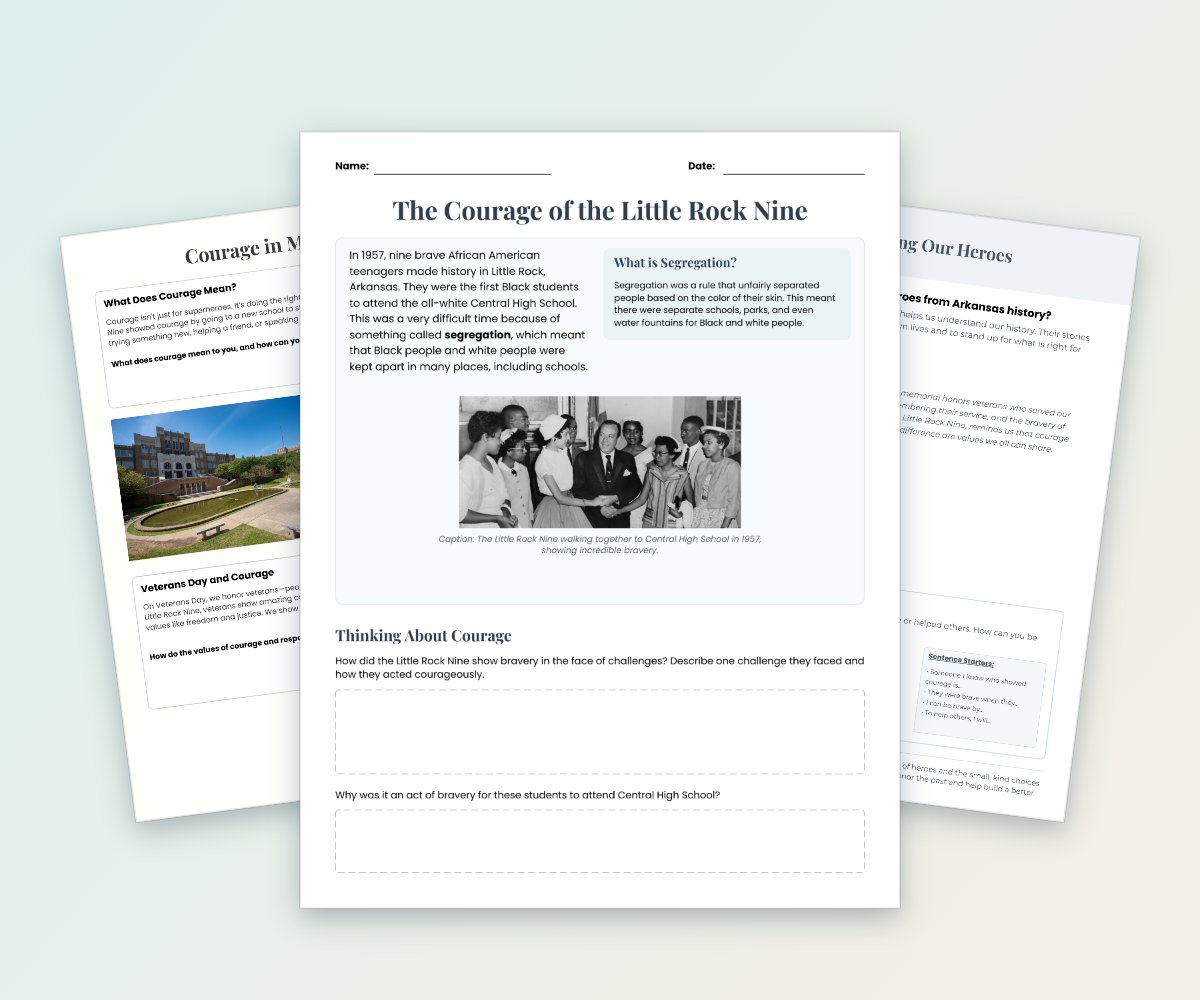
This three-page worksheet introduces students to the Little Rock Nine, segregation, desegregation, and the courage shown during the 1957 Central High School integration.
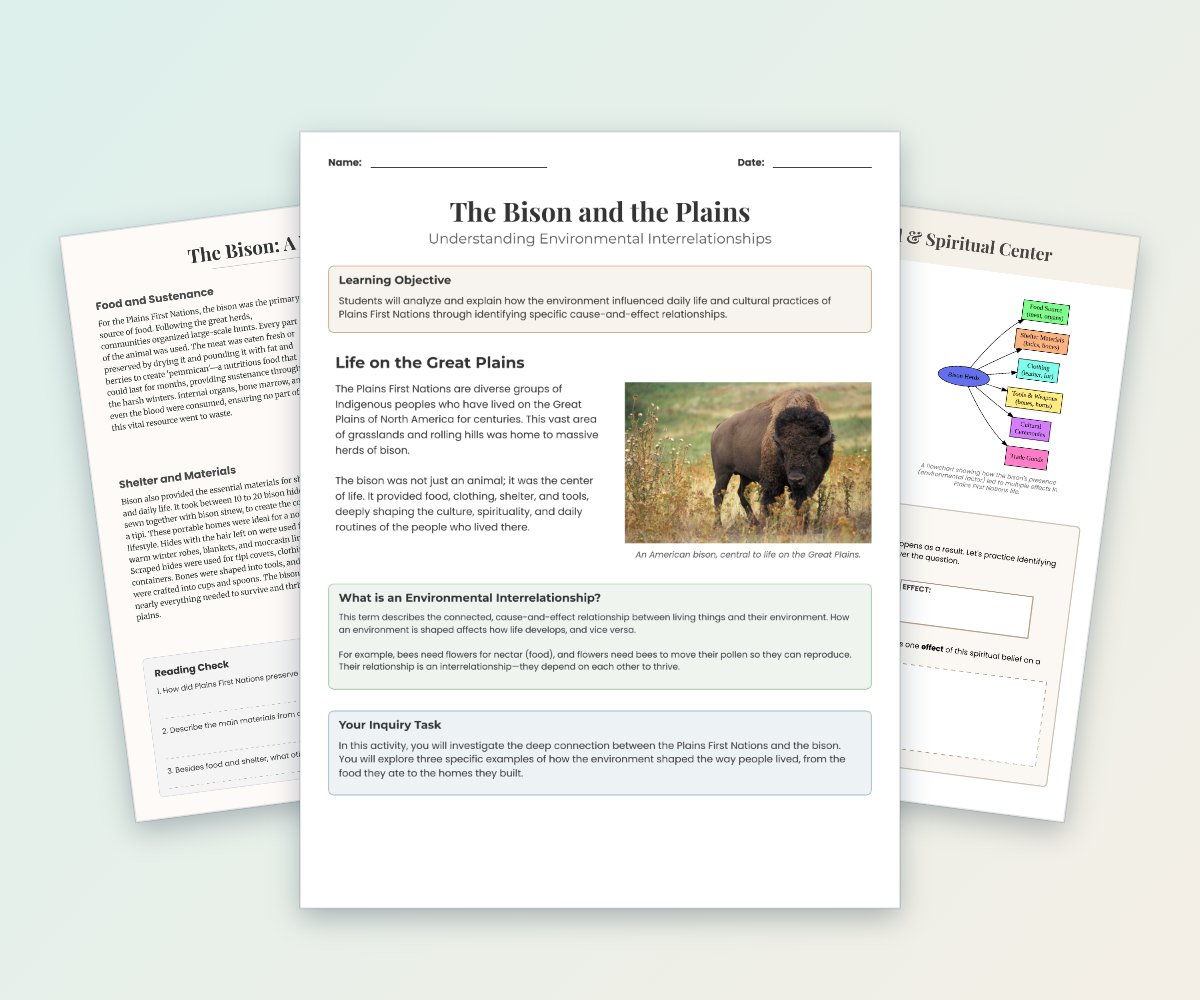
Students investigate how bison shaped food, shelter, clothing, tools, and cultural practices among Plains First Nations.
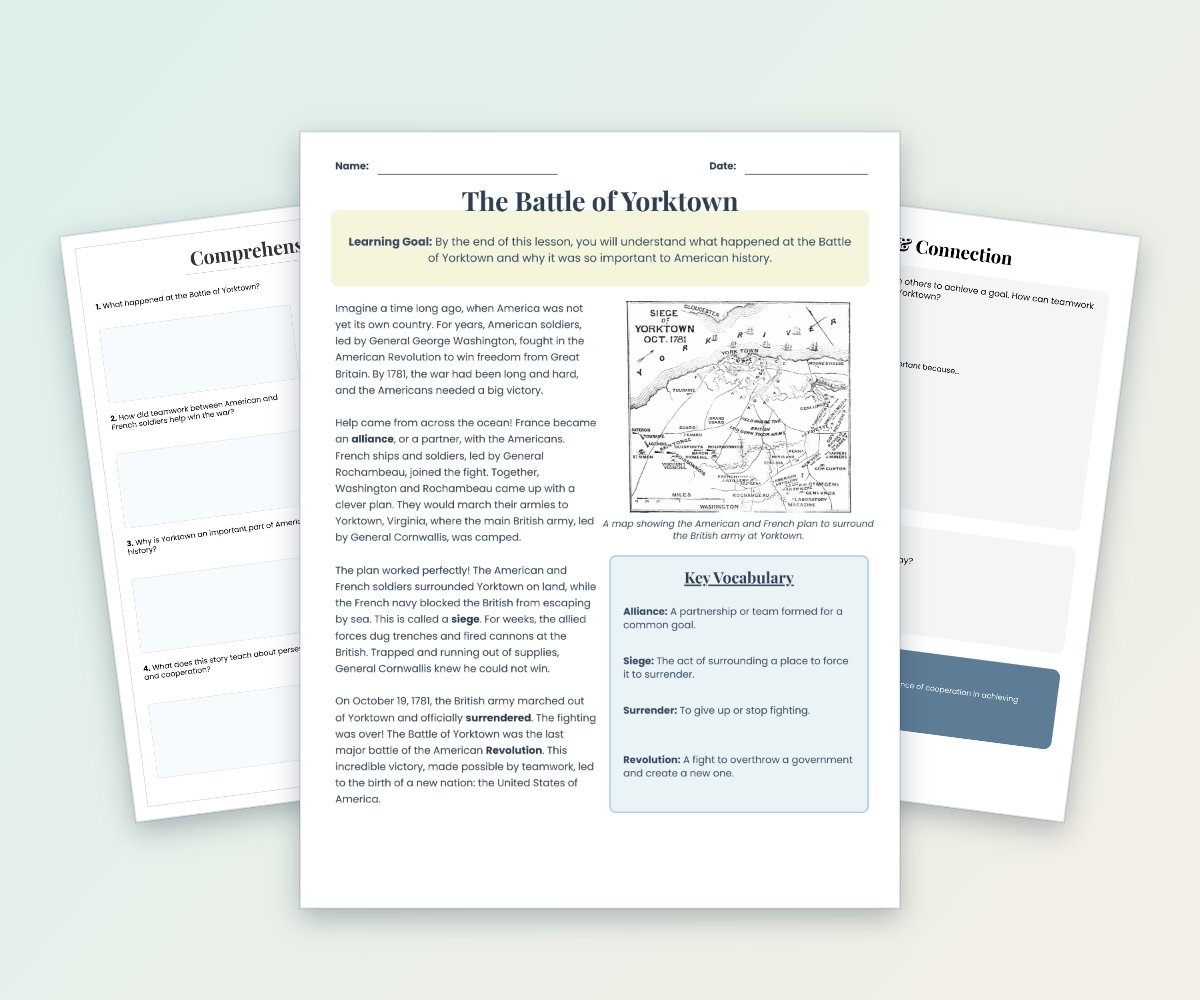
This three-page lesson explains the Battle of Yorktown, including the American-French alliance, siege strategy, and British surrender.
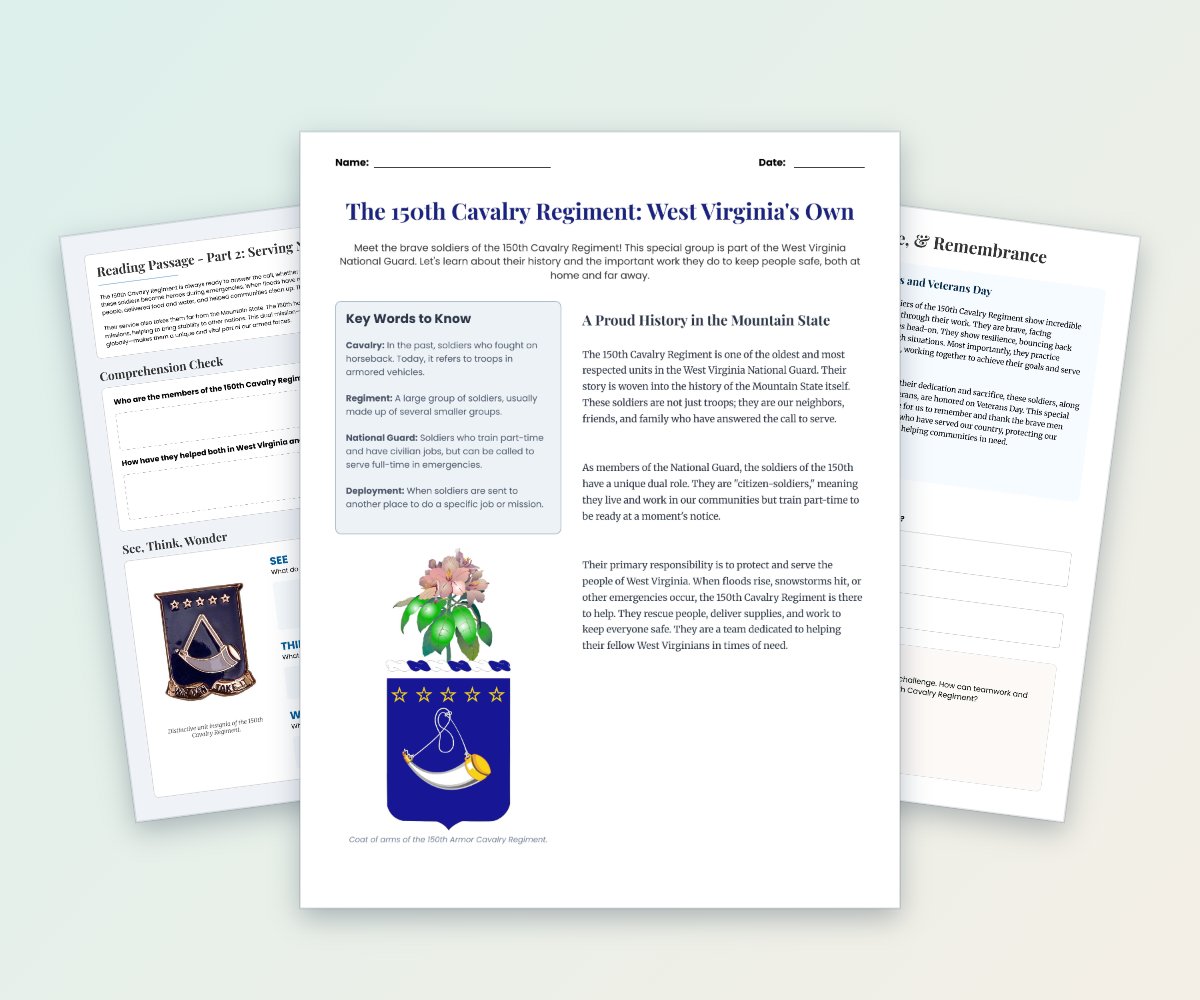
Introduce students to the history, mission, and community service of West Virginia’s 150th Cavalry Regiment.
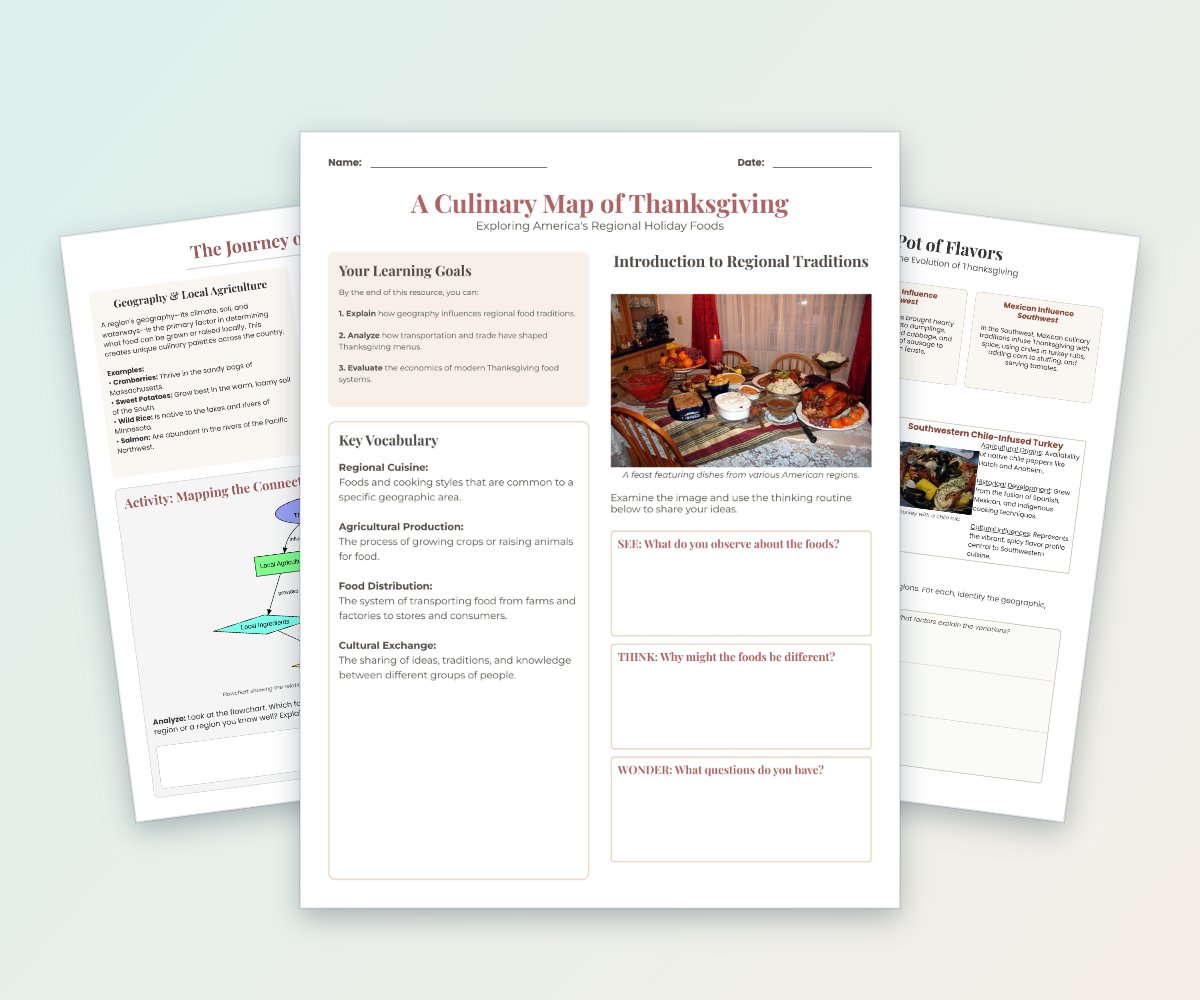
Students explore how geography, agriculture, transportation, trade, and cultural exchange have shaped regional Thanksgiving foods.
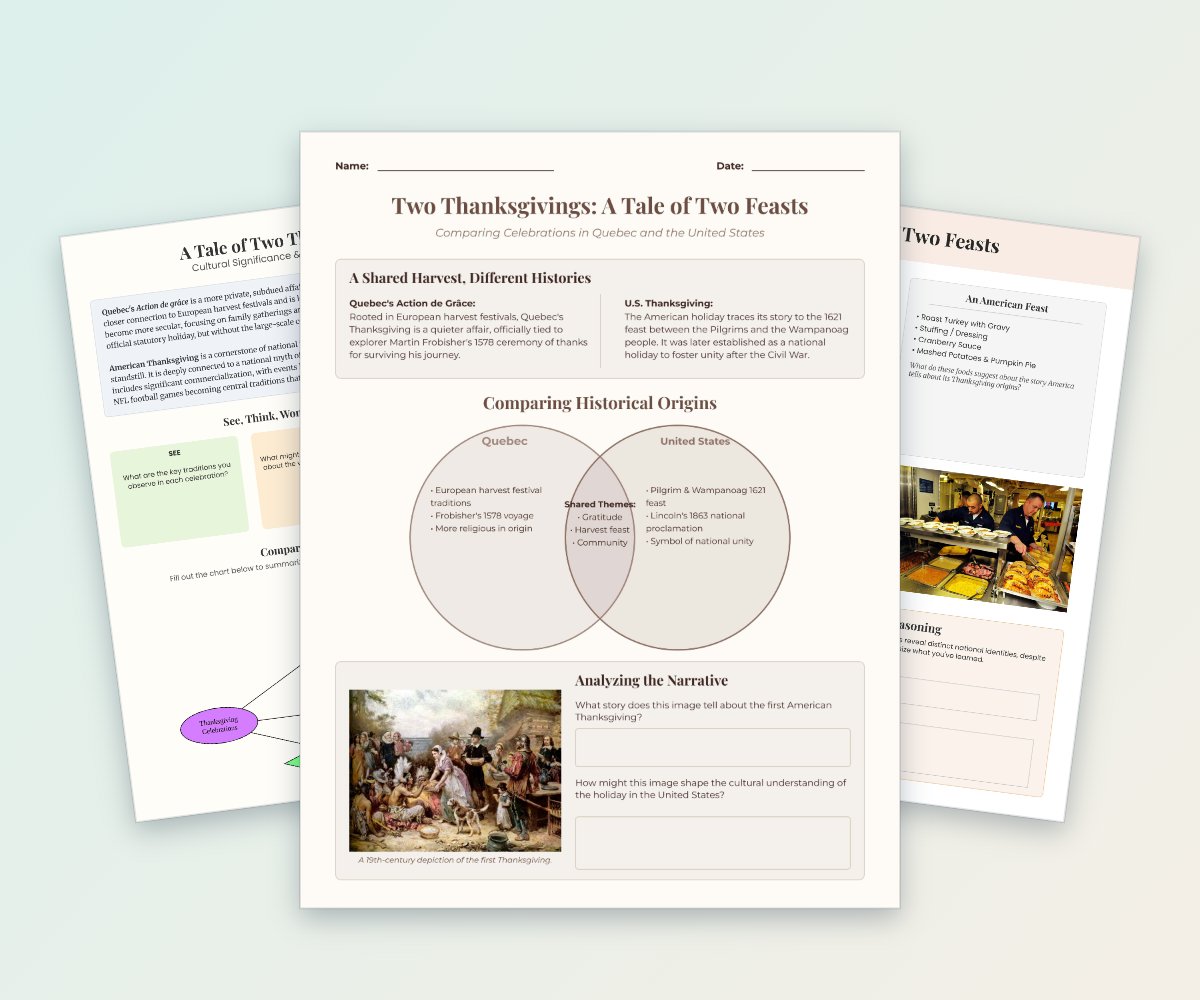
Students compare the historical origins, traditions, and cultural significance of Thanksgiving in Quebec and the United States.
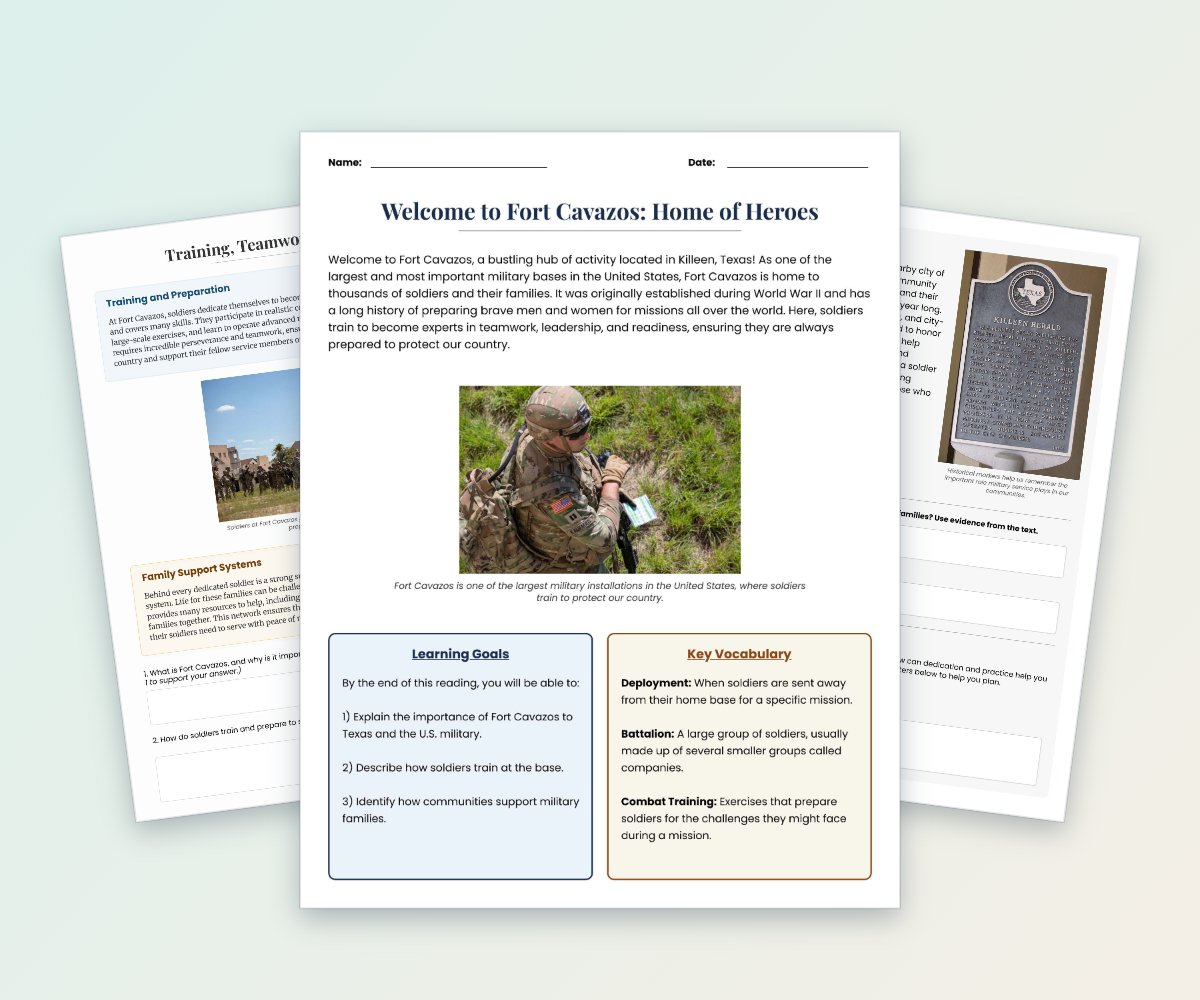
Students read about Fort Cavazos, soldier training, military families, and community support in this Texas-focused social studies passage.
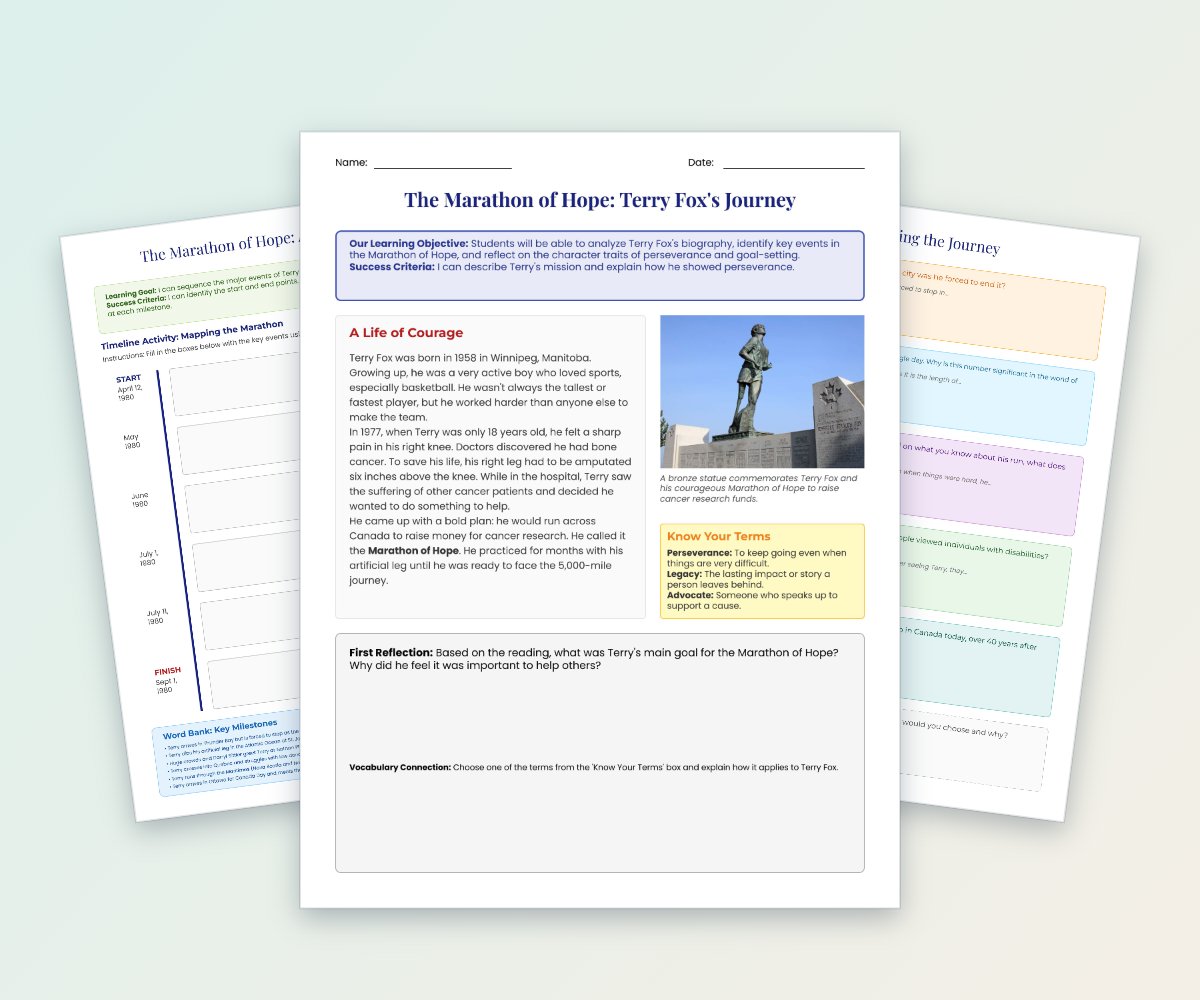
Students learn about Terry Fox’s life, cancer research mission, and Marathon of Hope through an informational reading and vocabulary activity.
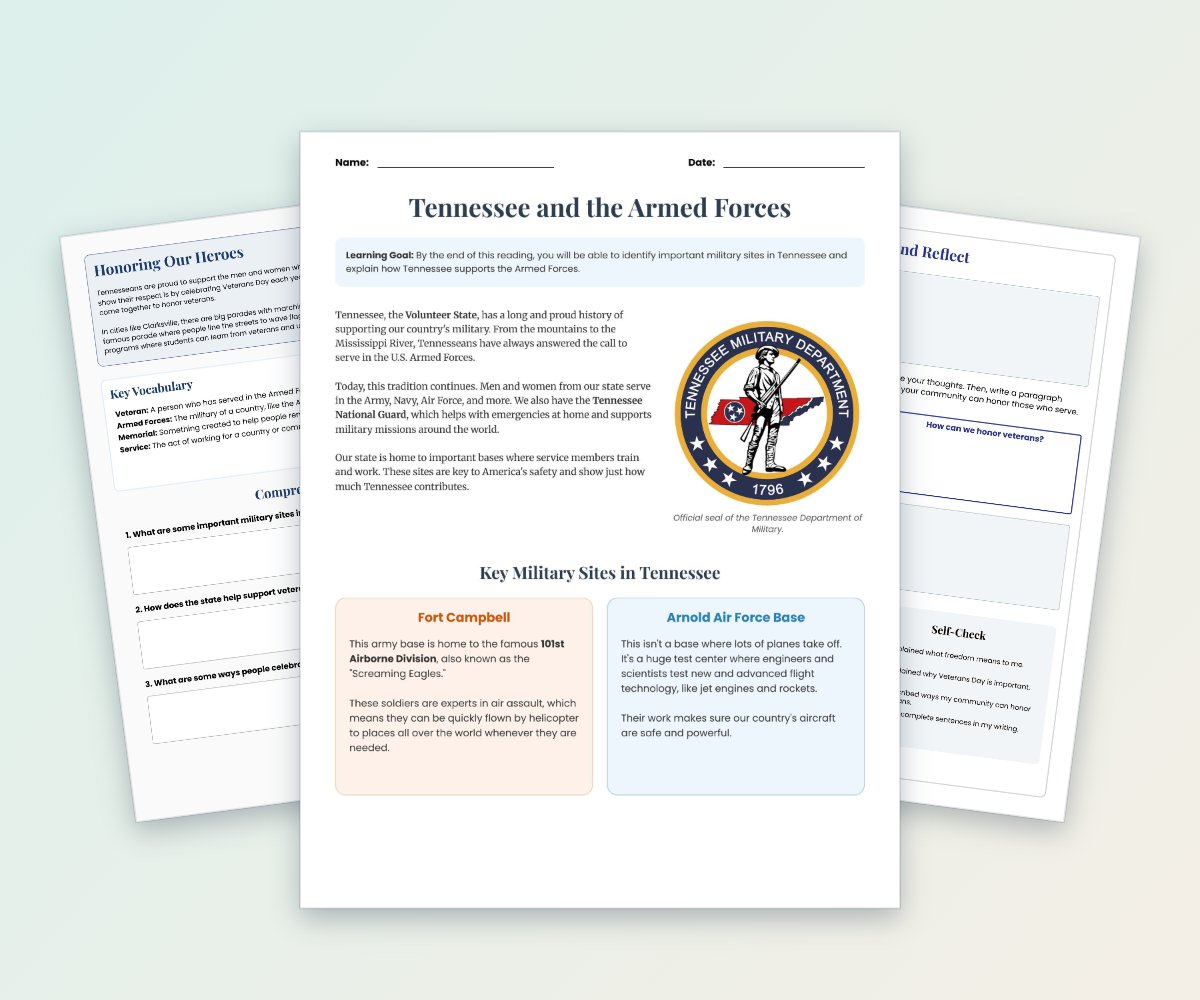
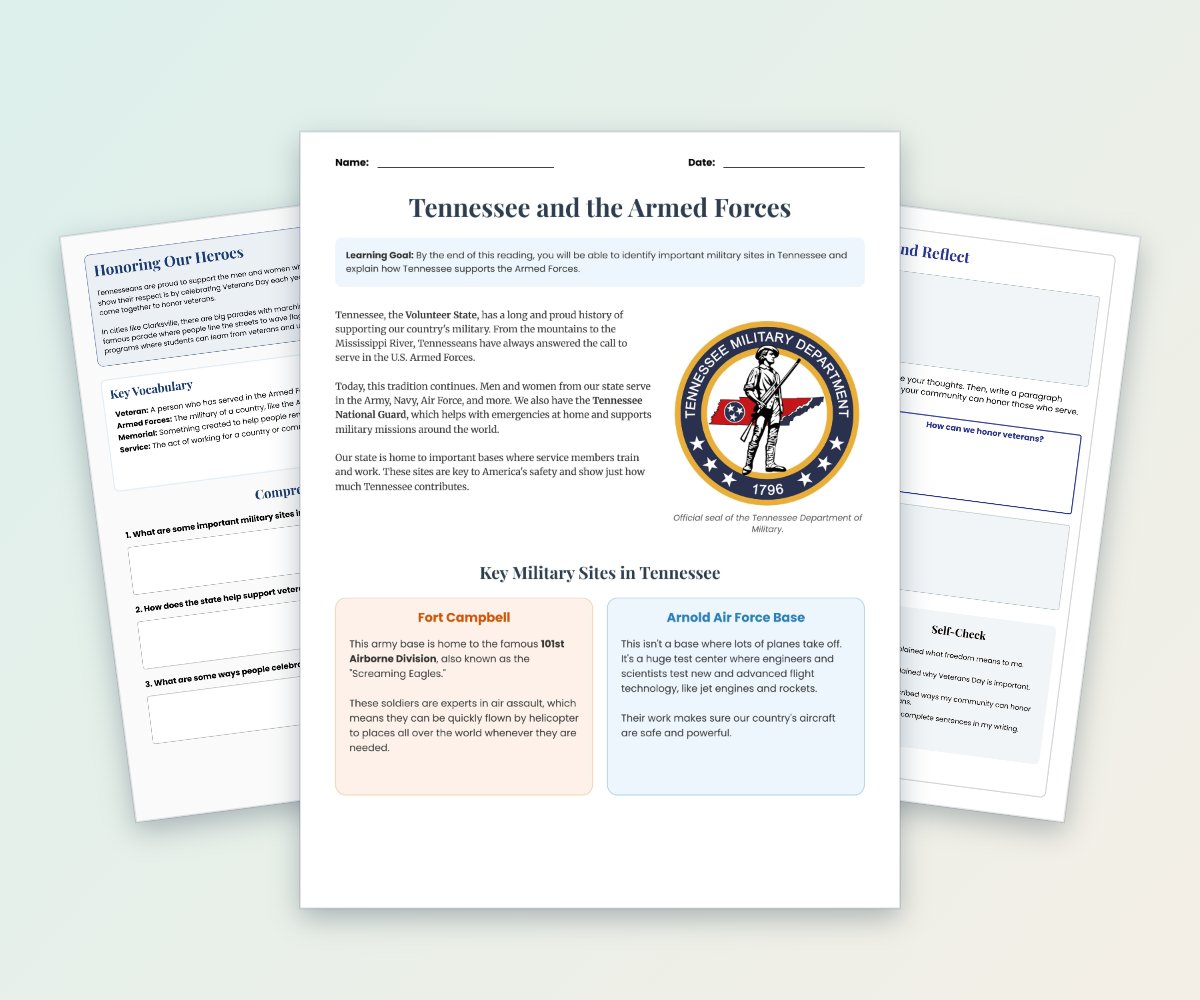
Students learn about Tennessee’s military sites, the National Guard, Veterans Day, and ways communities honor service members.
This reading worksheet introduces Tennessee’s military sites, including Fort Campbell and Arnold Air Force Base, and explains the state’s support for service members and veterans.
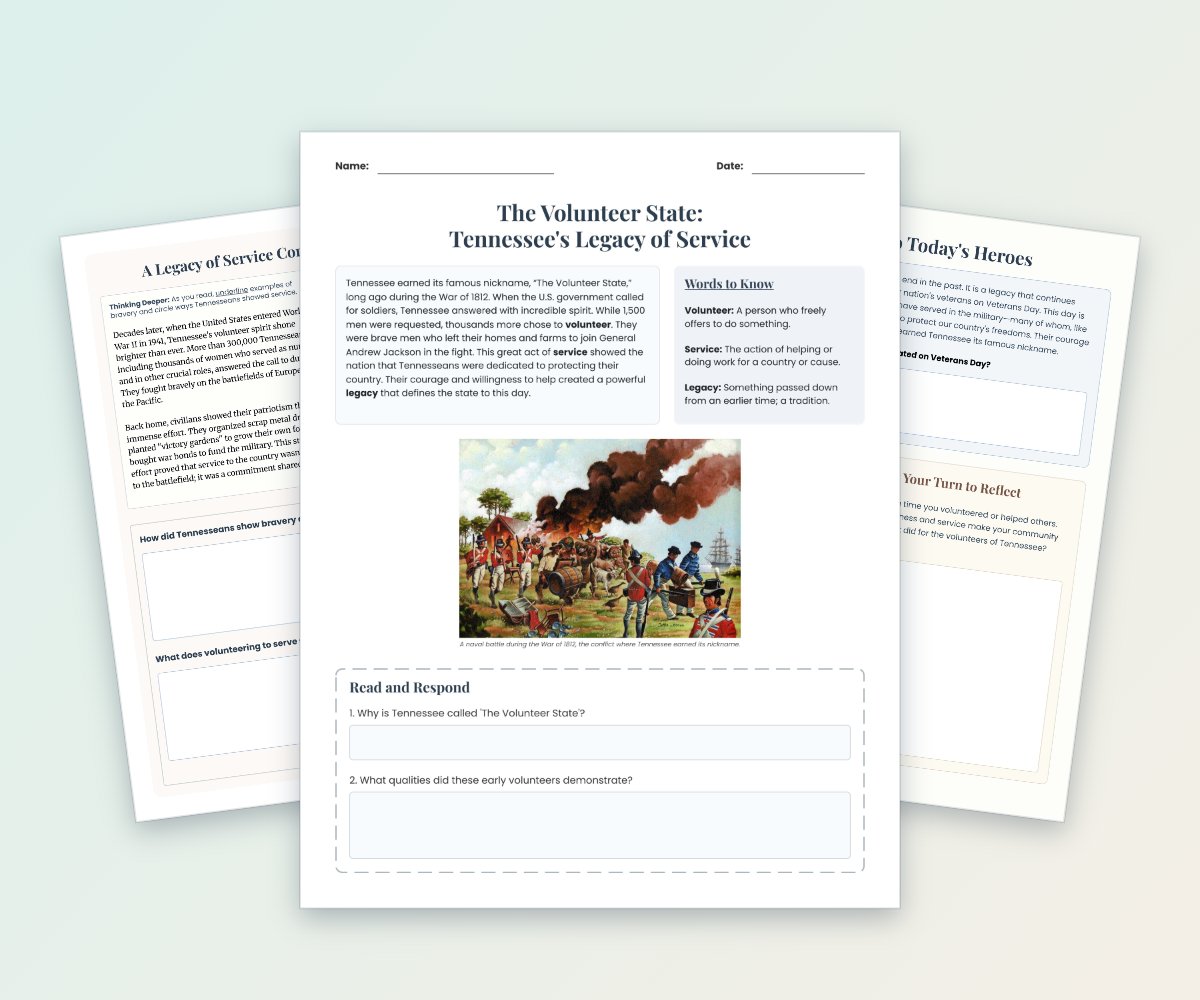
Students read about Tennessee's Volunteer State nickname, service during the War of 1812 and World War II, and continuing civic contributions.
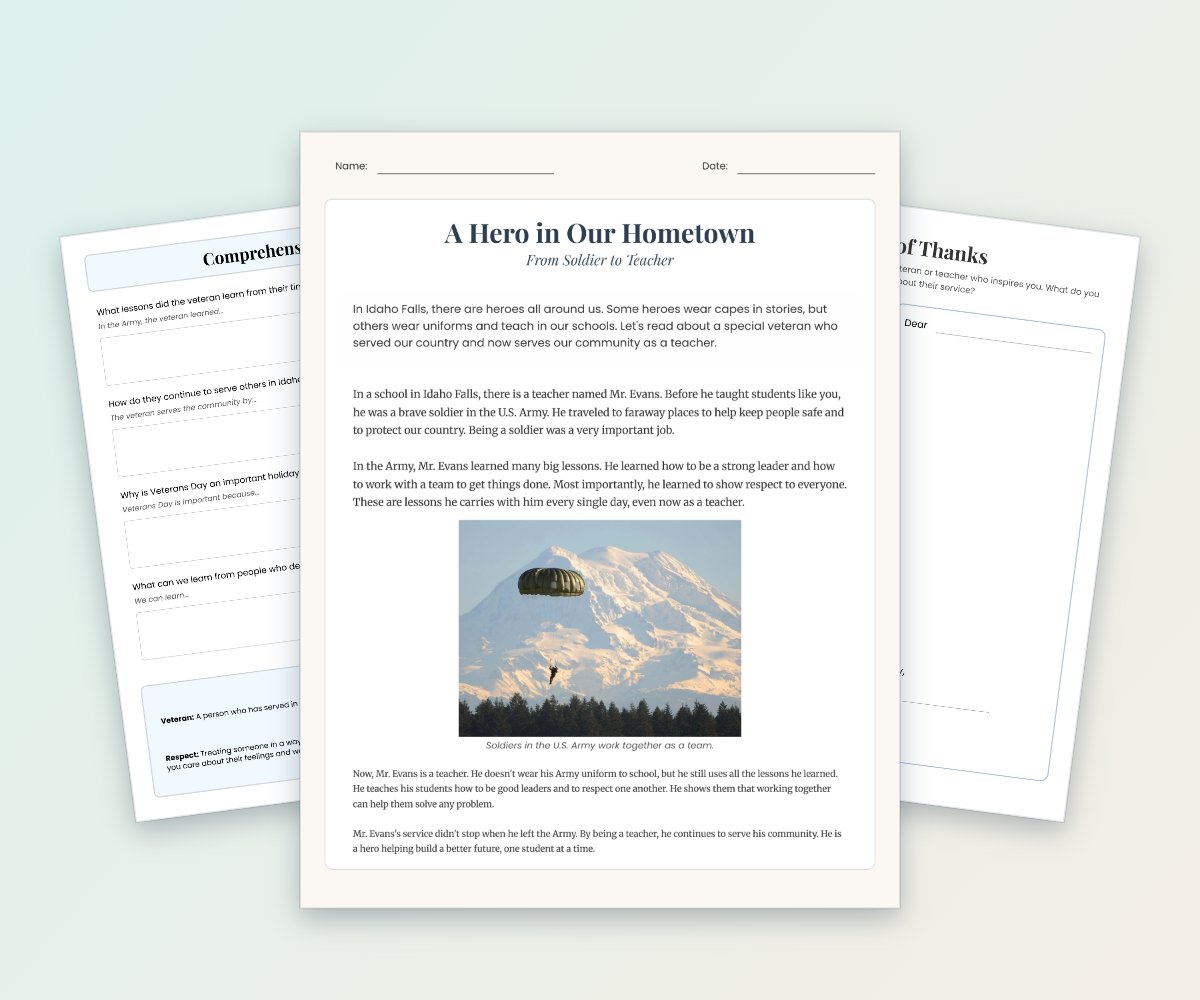
Students read a short informational passage about a veteran who became a teacher and answer comprehension questions.
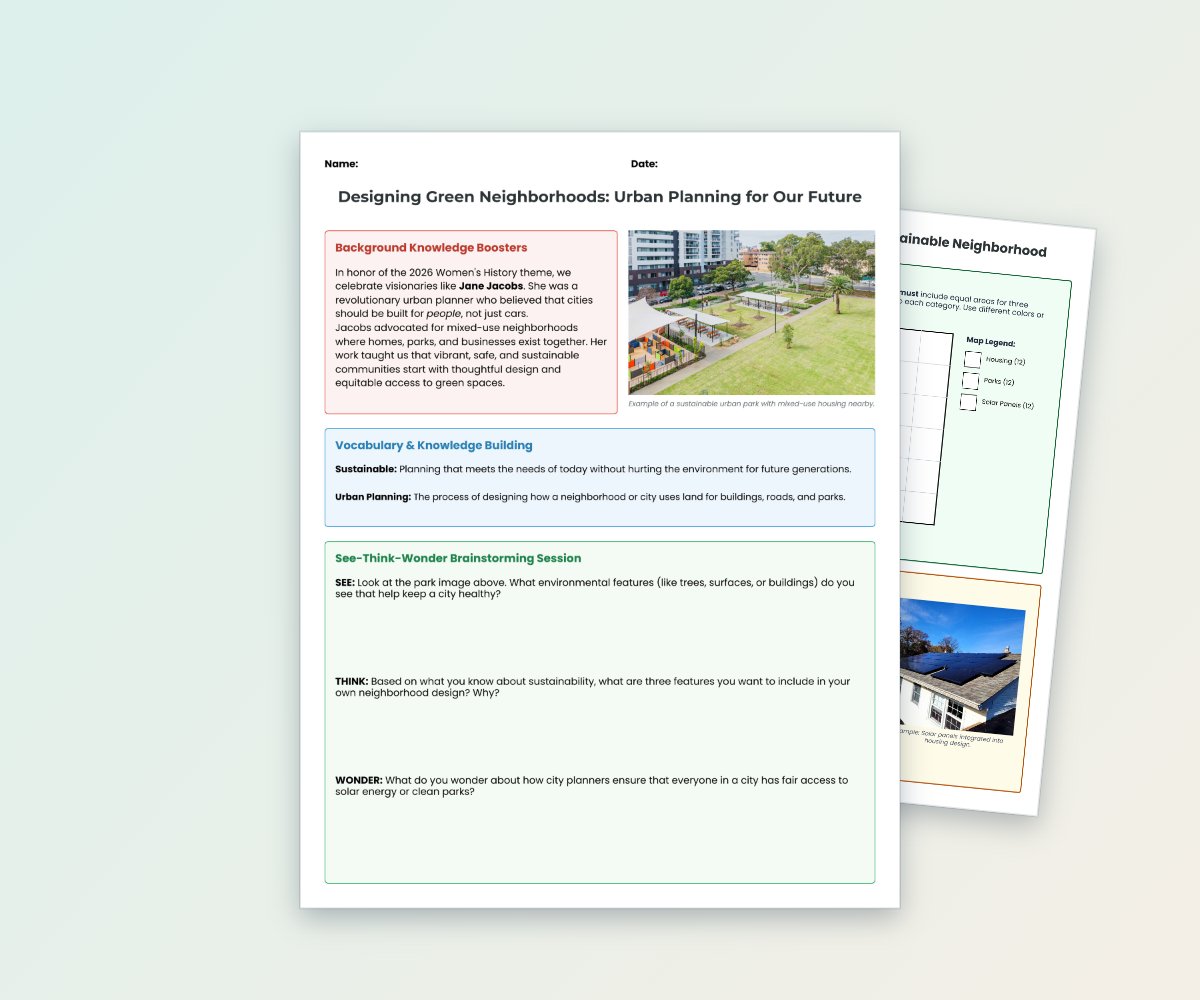
Students explore sustainable urban planning through vocabulary, a See-Think-Wonder brainstorm, and a guided neighborhood mapping task.
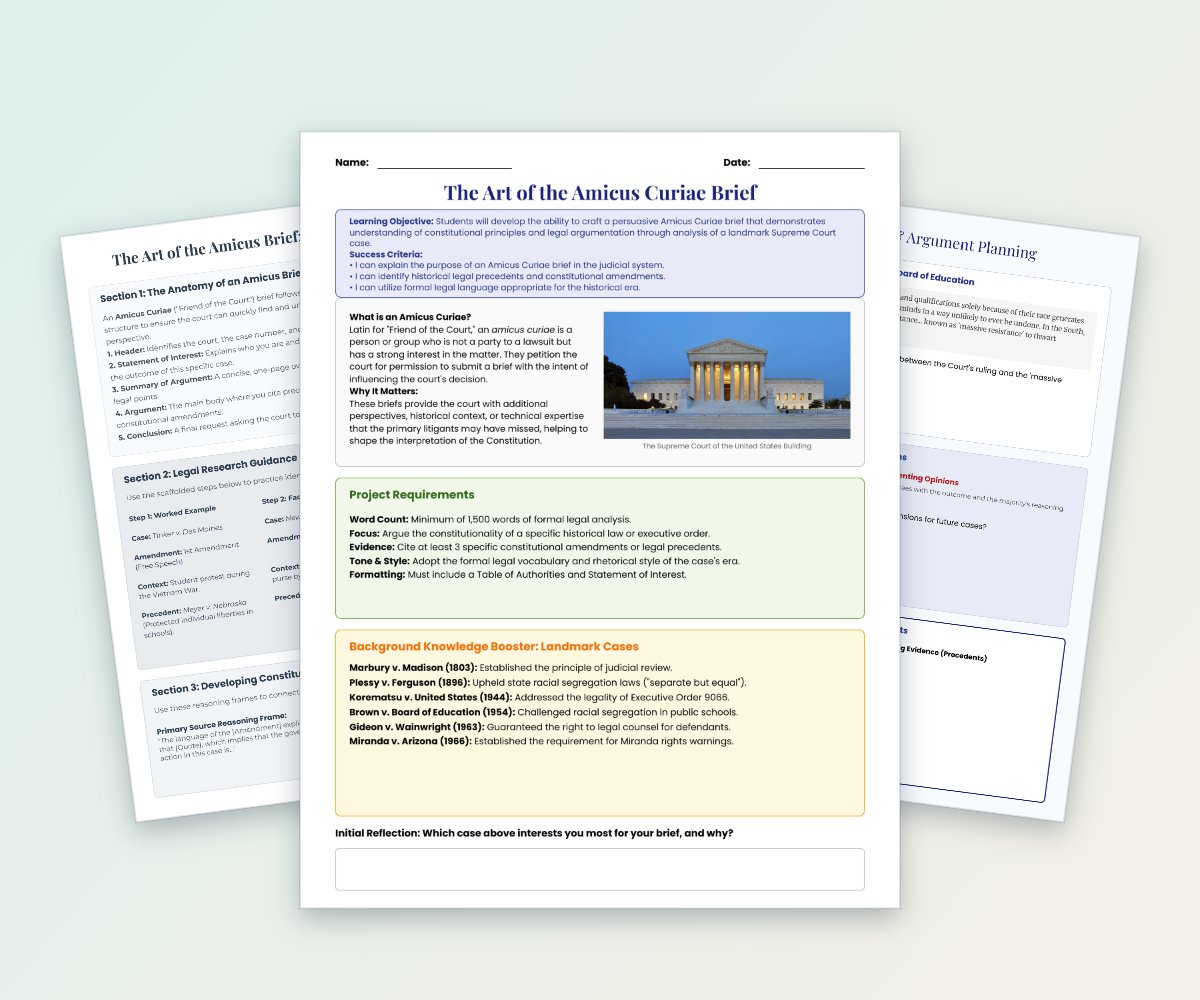
Students research a landmark Supreme Court case or historical law and write a 1,500-word amicus curiae brief.
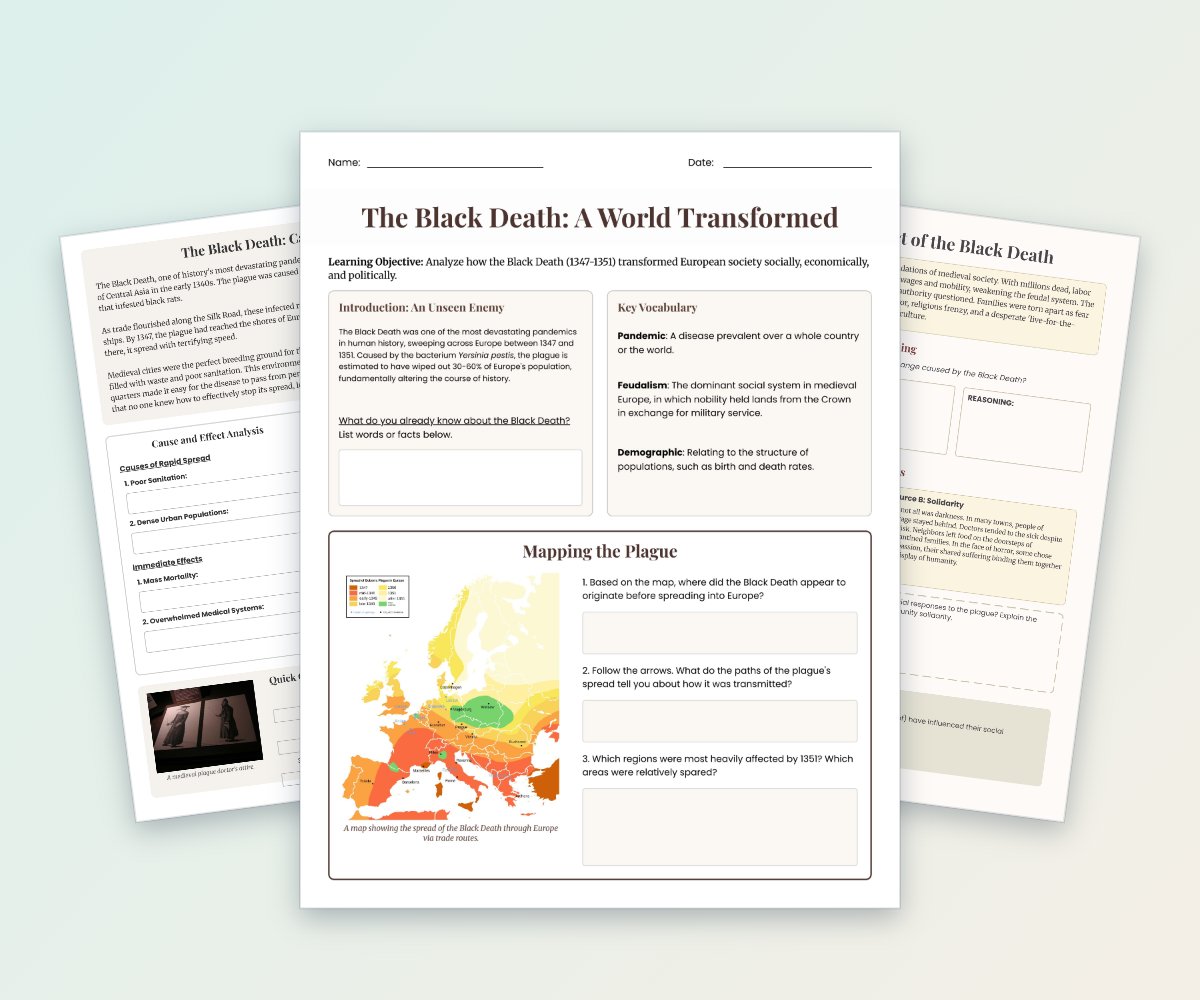
This four-page worksheet explores how the Black Death spread through Europe and transformed medieval society.
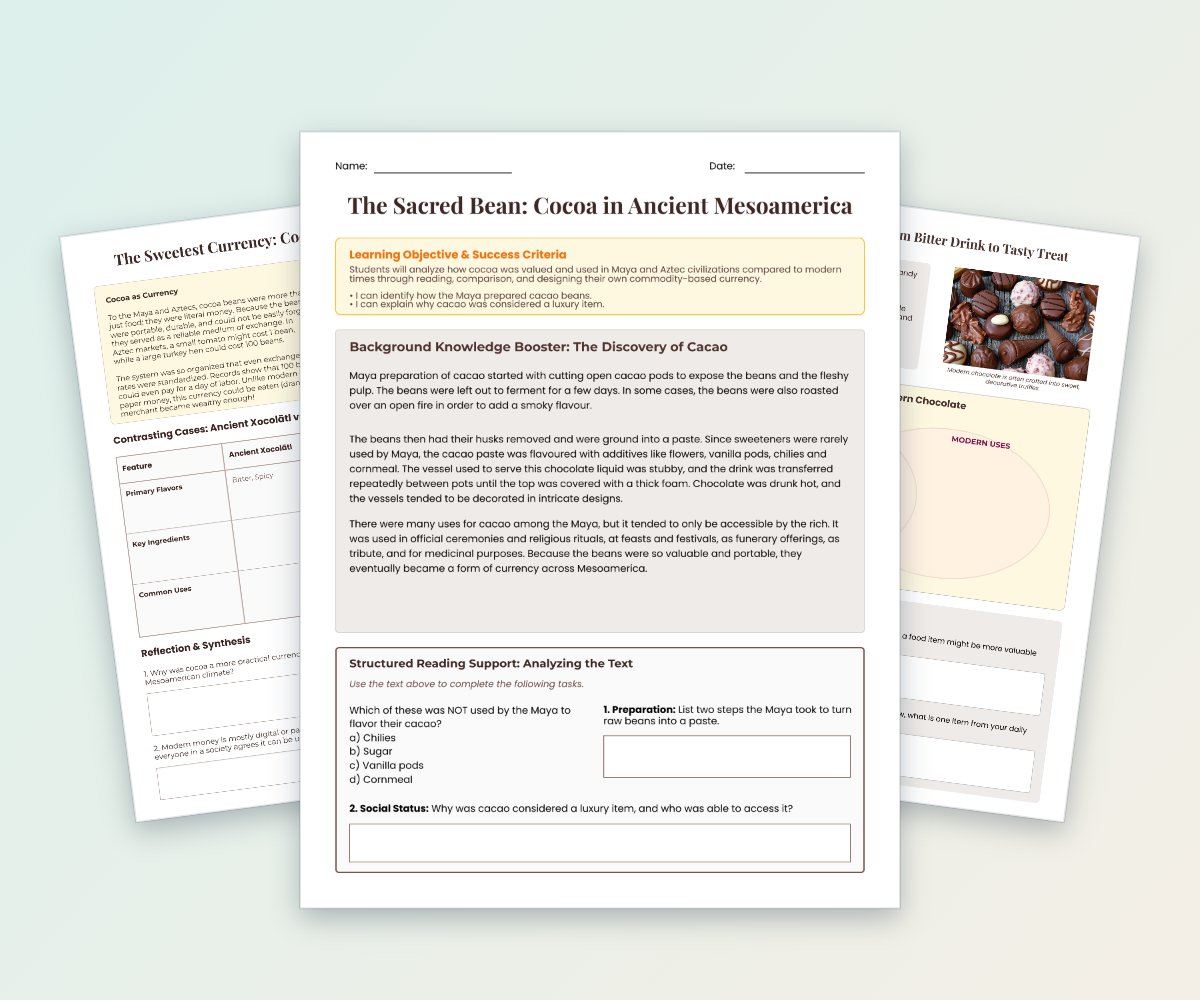
Students explore how the Maya and Aztecs prepared, valued, and used cacao, including its role as a luxury item and currency.
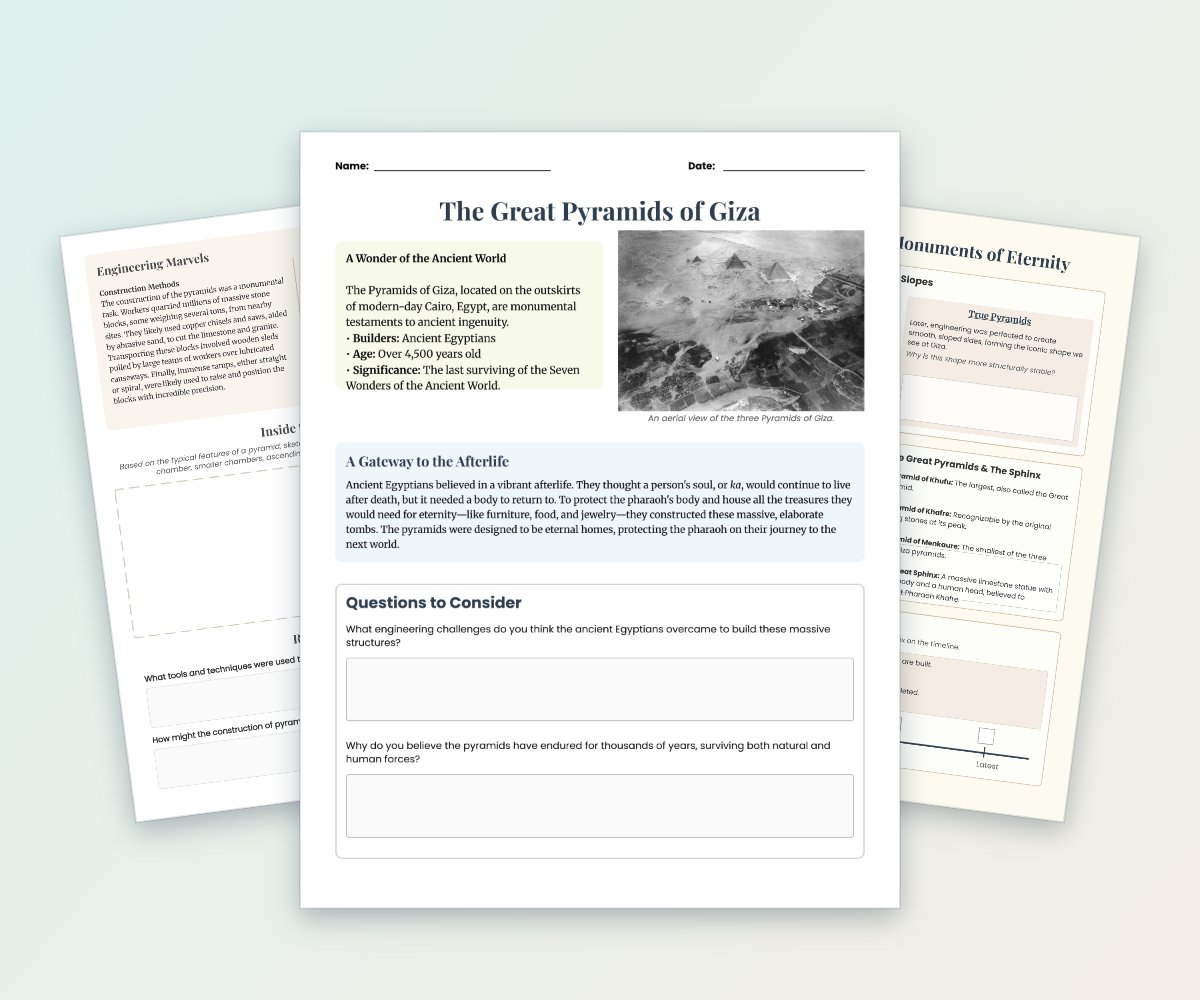
Students learn about the purpose, construction methods, engineering, and cultural significance of the Great Pyramids of Giza.
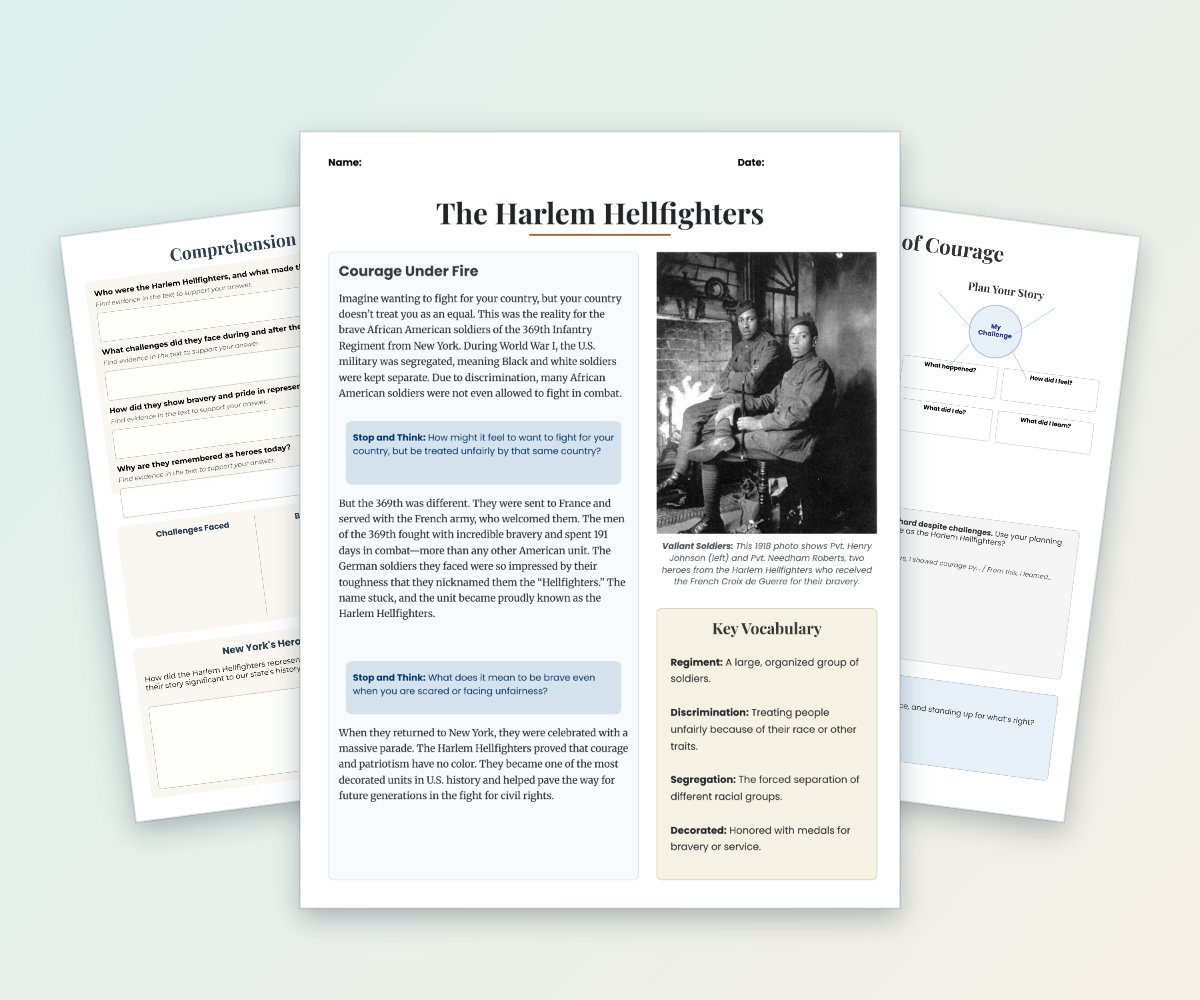
Students read about the 369th Infantry Regiment, known as the Harlem Hellfighters, and examine their bravery, discrimination, military service, and impact on civil rights.
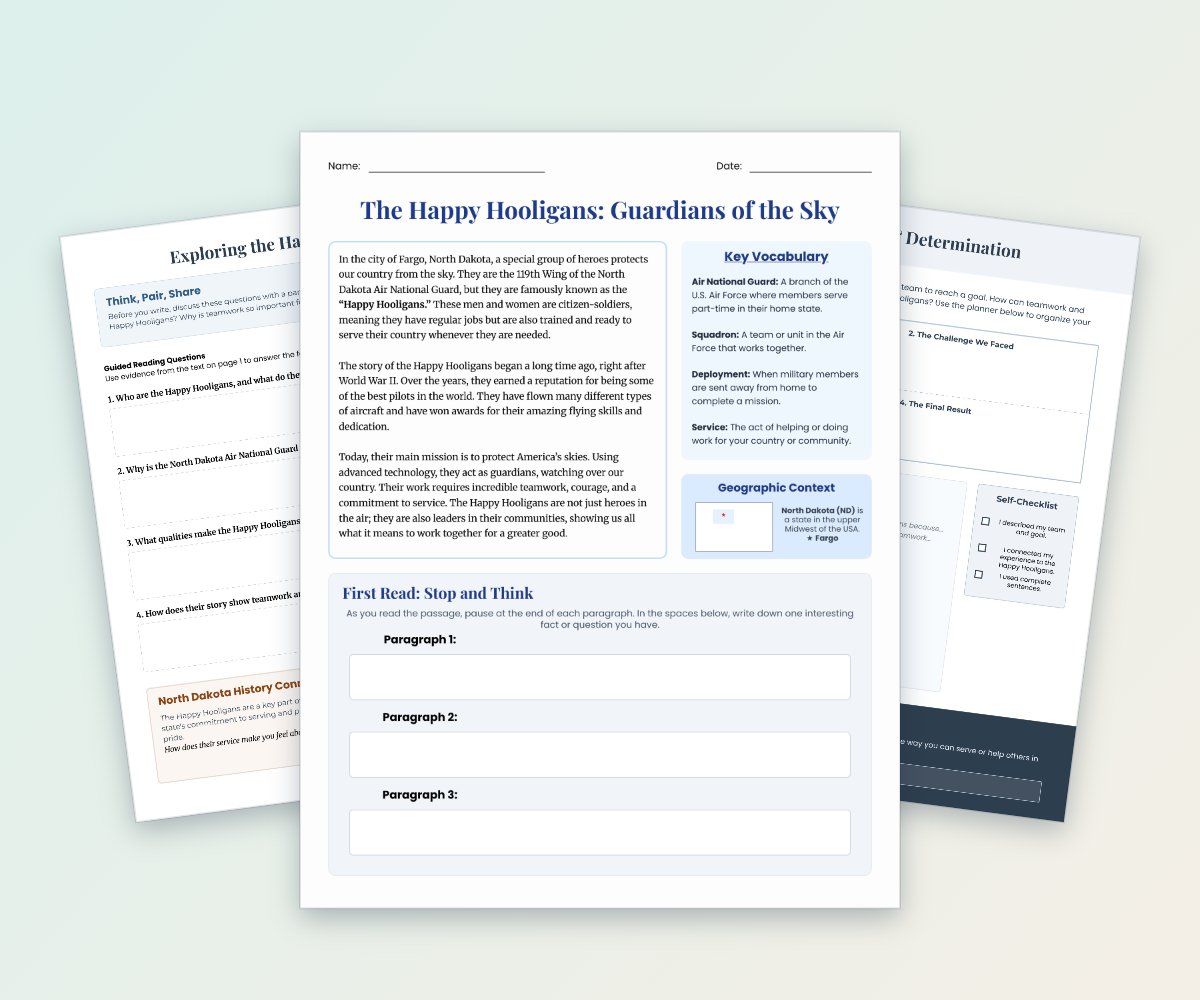
Students read an informational passage about the 119th Wing of the North Dakota Air National Guard, known as the Happy Hooligans.
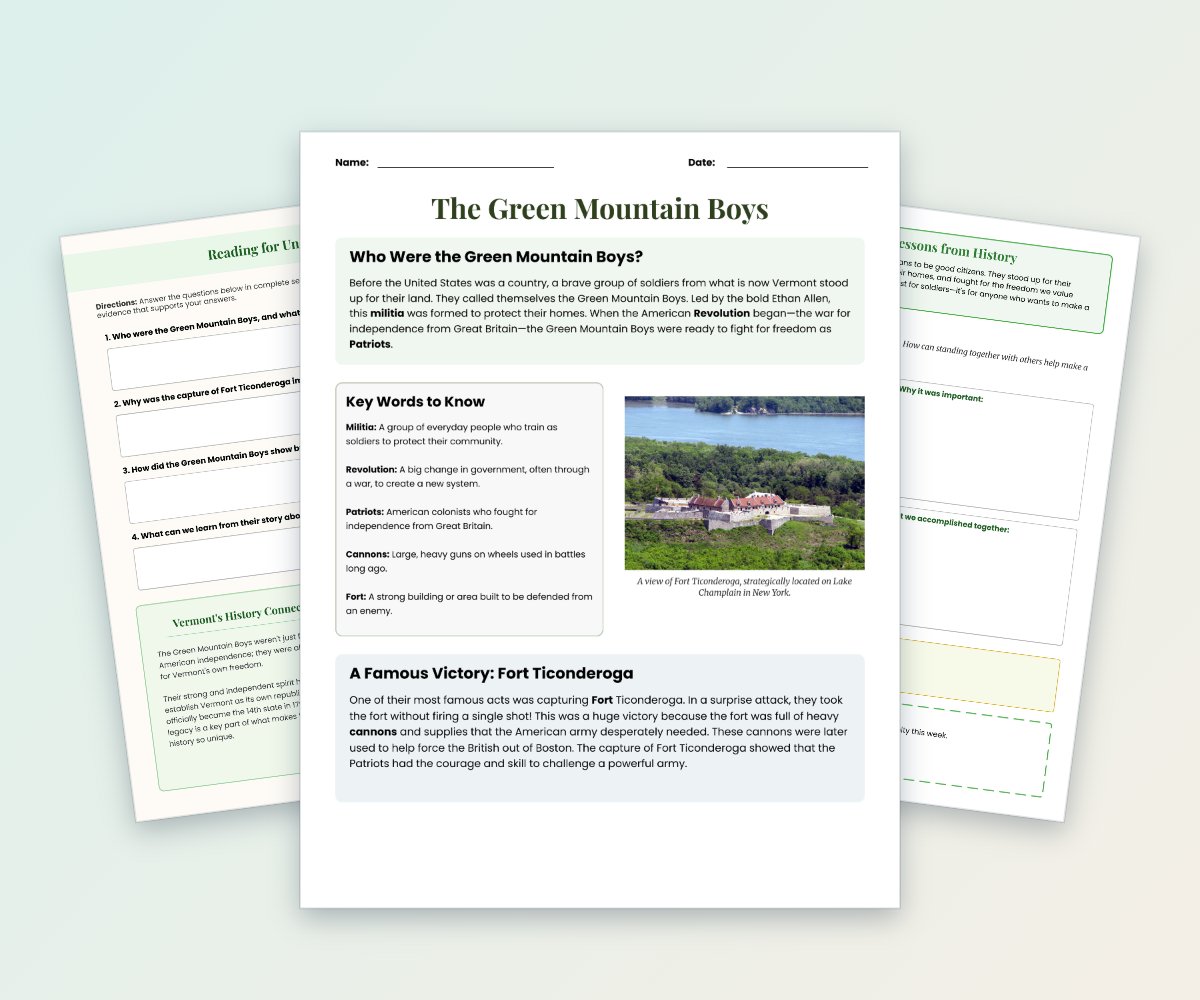
This three-page resource introduces the Green Mountain Boys, Ethan Allen, and the capture of Fort Ticonderoga.
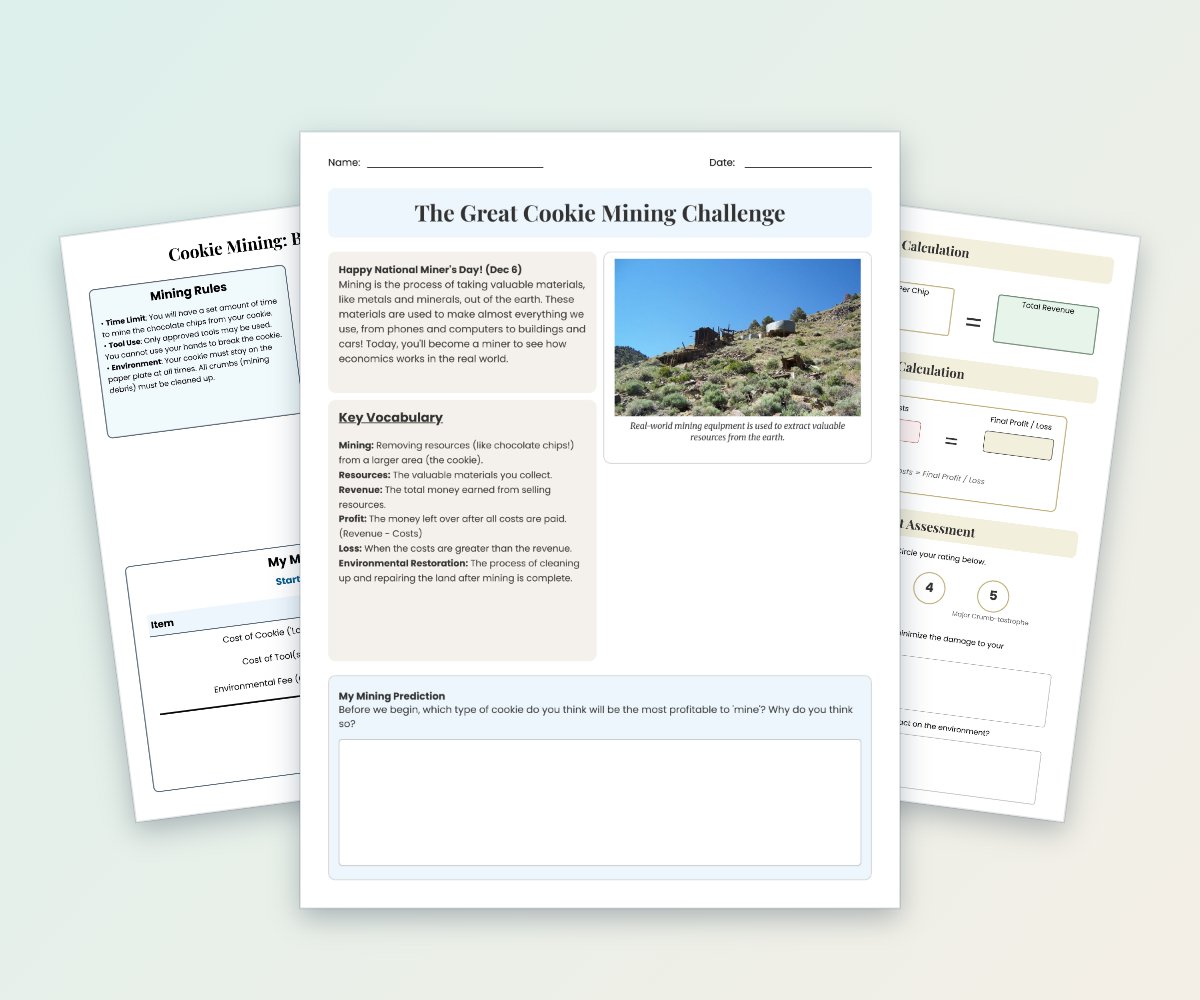
Students simulate mining by extracting chocolate chips from cookies while managing land, tool, cleanup, and environmental costs.
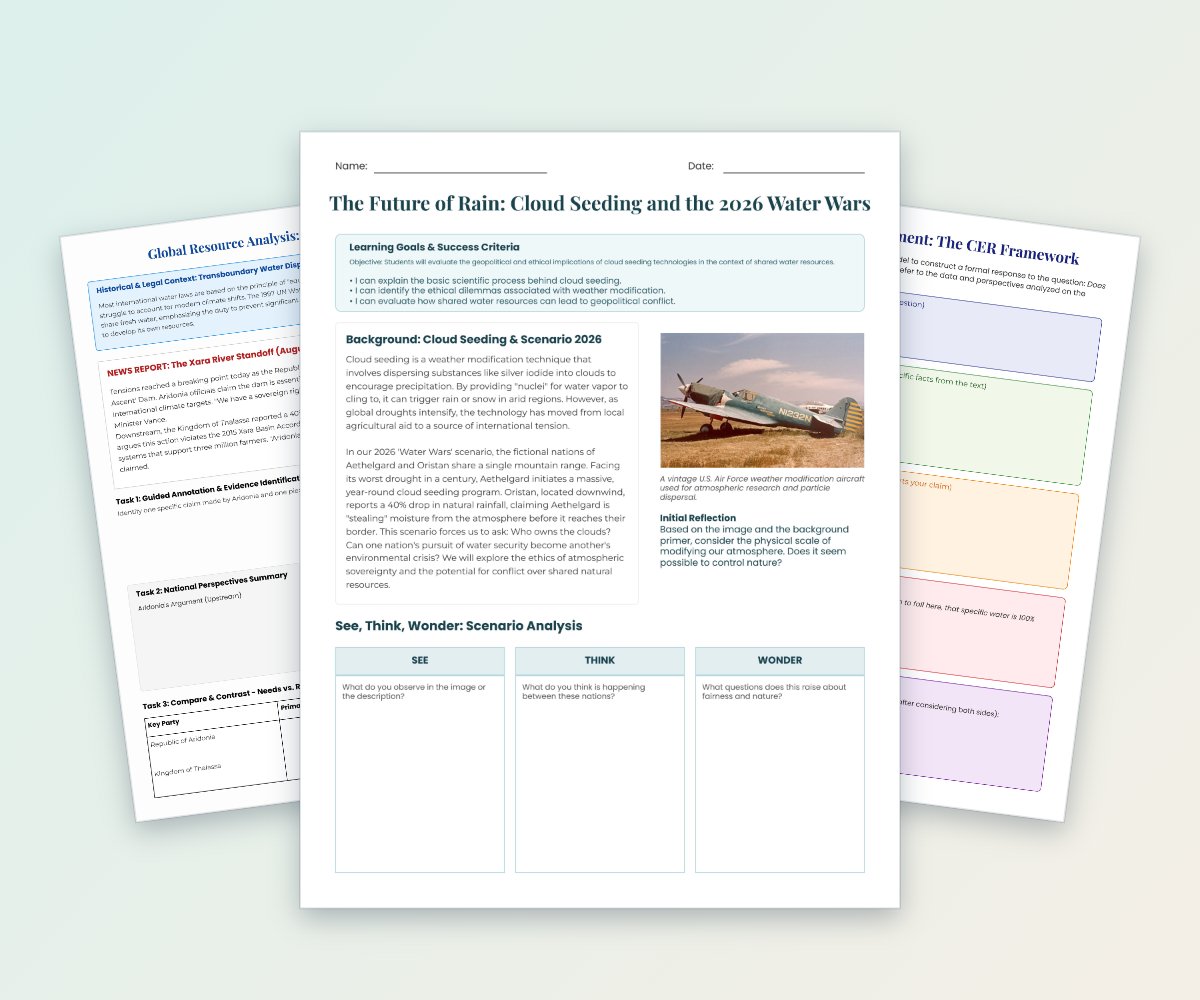
Students investigate the science and ethical implications of cloud seeding through a fictional 2026 conflict between nations sharing water resources.
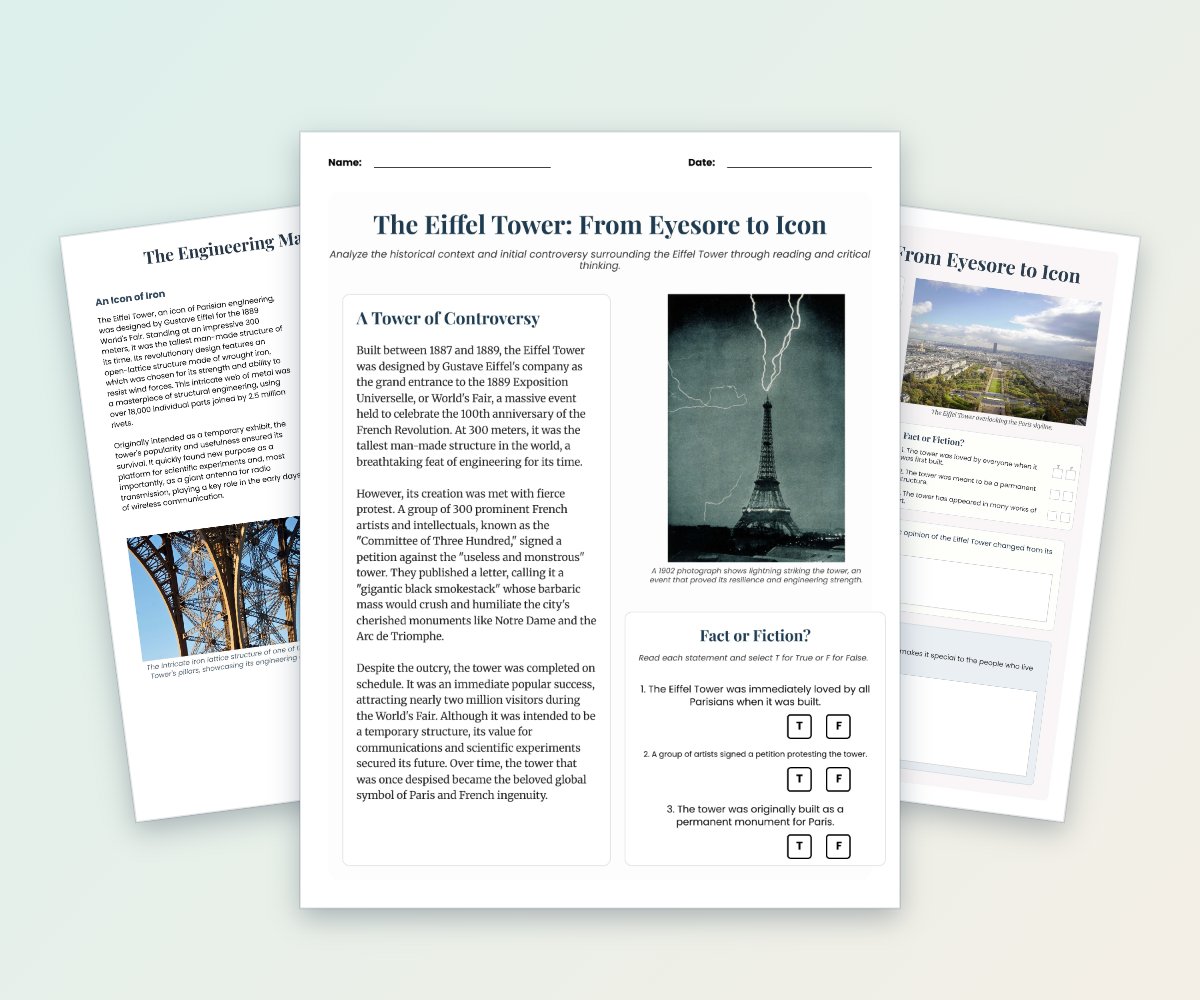
Students read about the Eiffel Tower's construction, initial controversy, engineering design, and transformation into a Parisian icon.
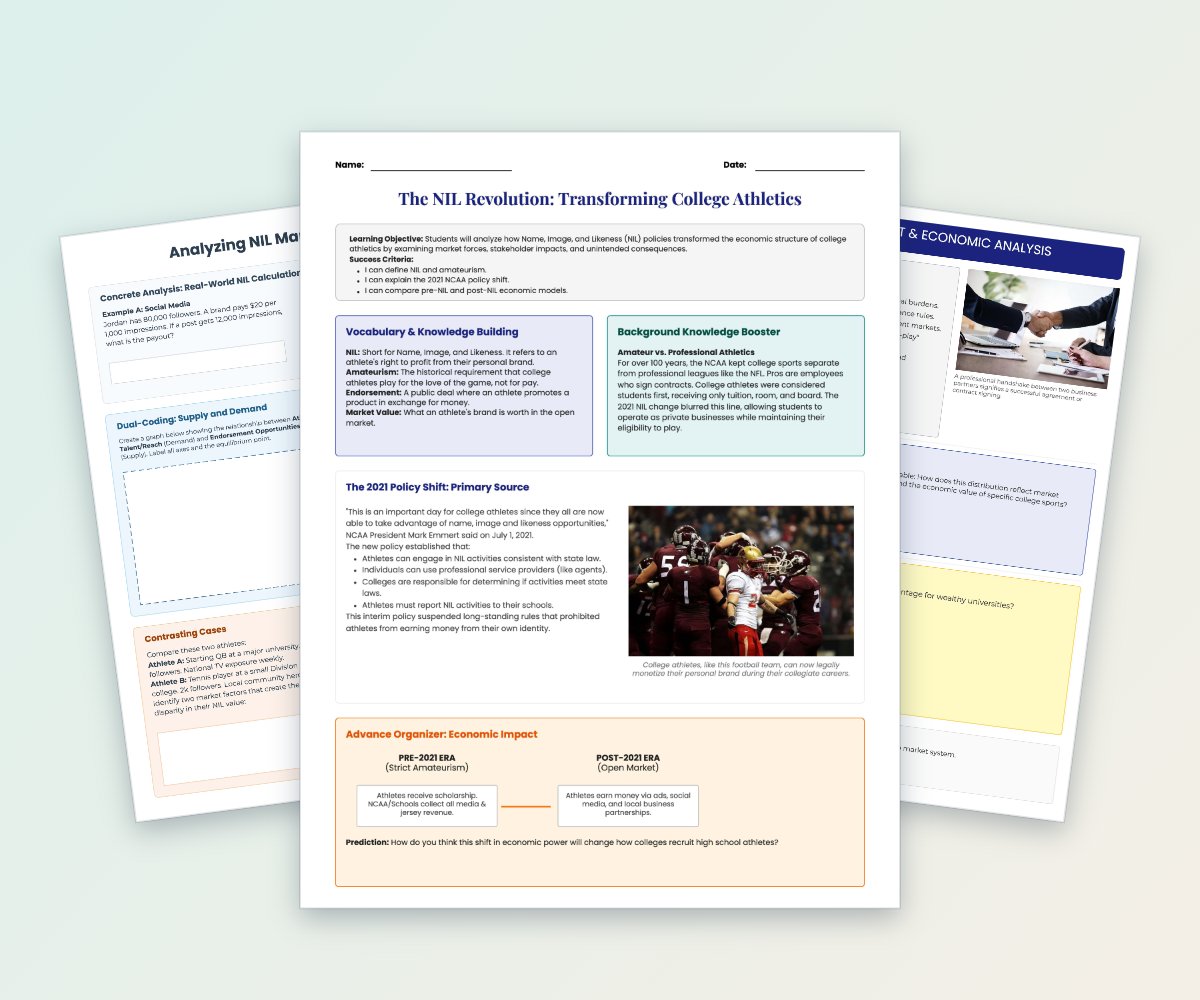
Students examine how Name, Image, and Likeness policies changed the economic structure of college athletics.
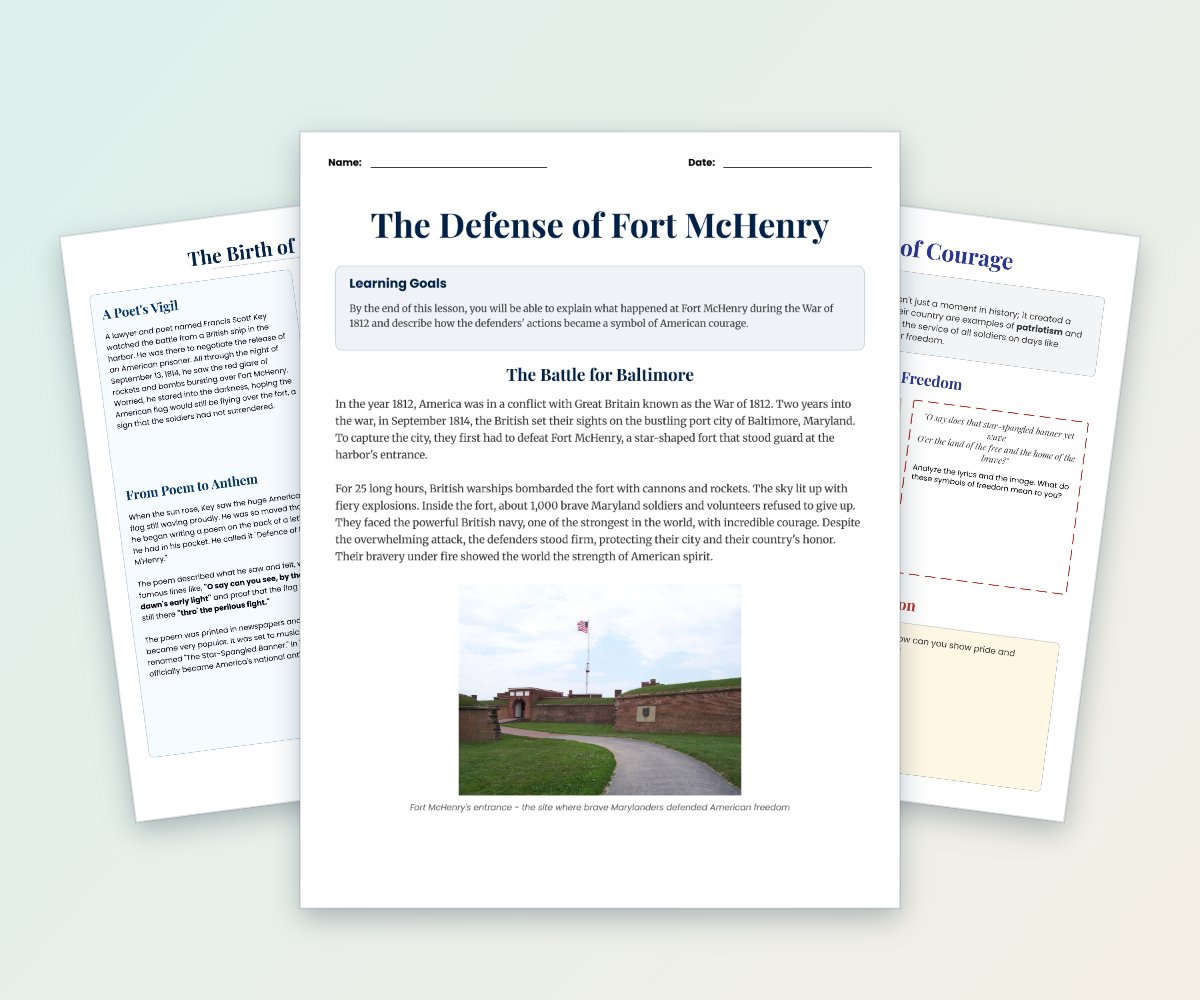
Students learn about the 1814 defense of Fort McHenry, the Battle of Baltimore, and Francis Scott Key’s inspiration for writing the national anthem.
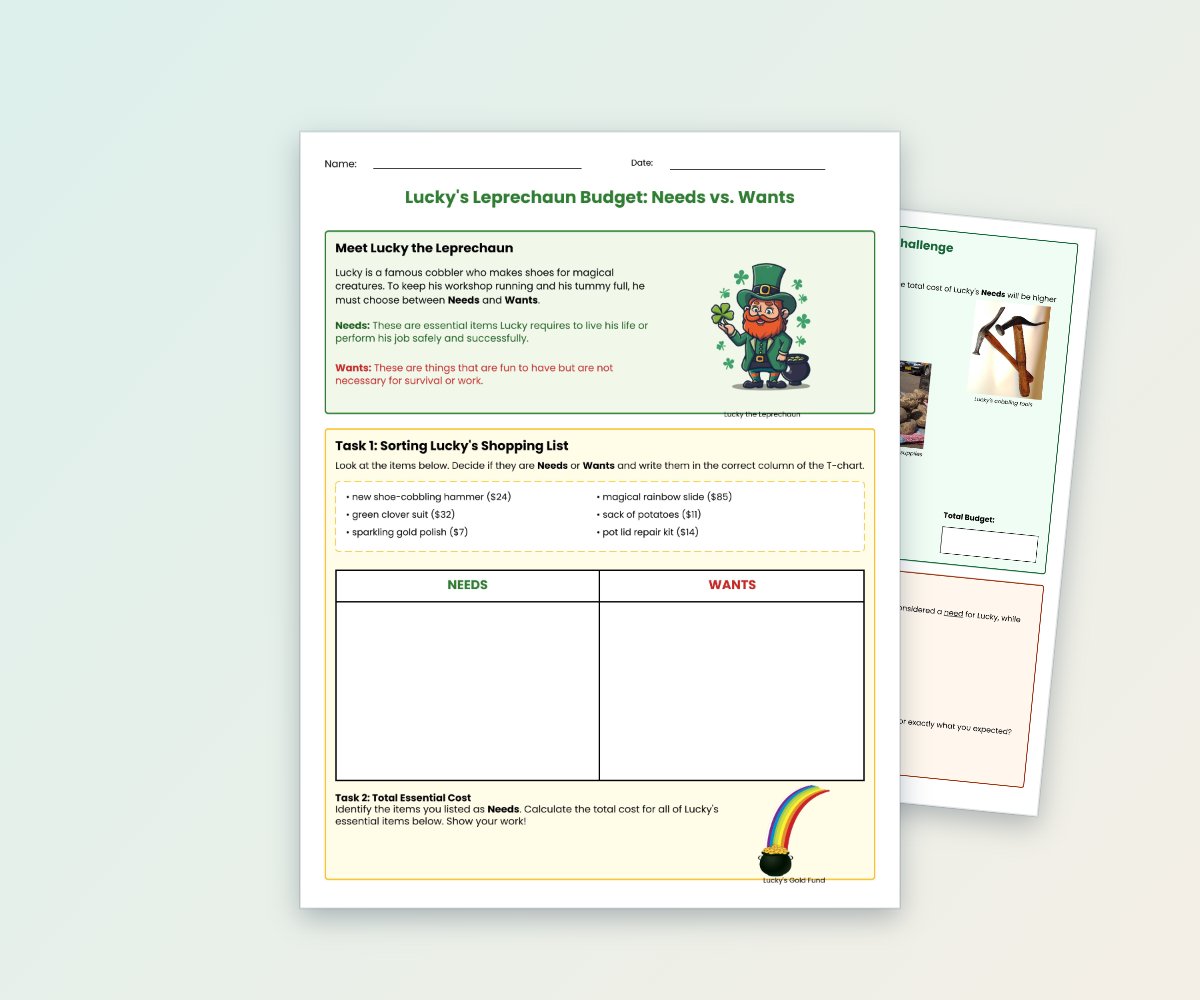
Students help Lucky the Leprechaun sort purchases into needs and wants, calculate essential costs, and compare totals with predictions.
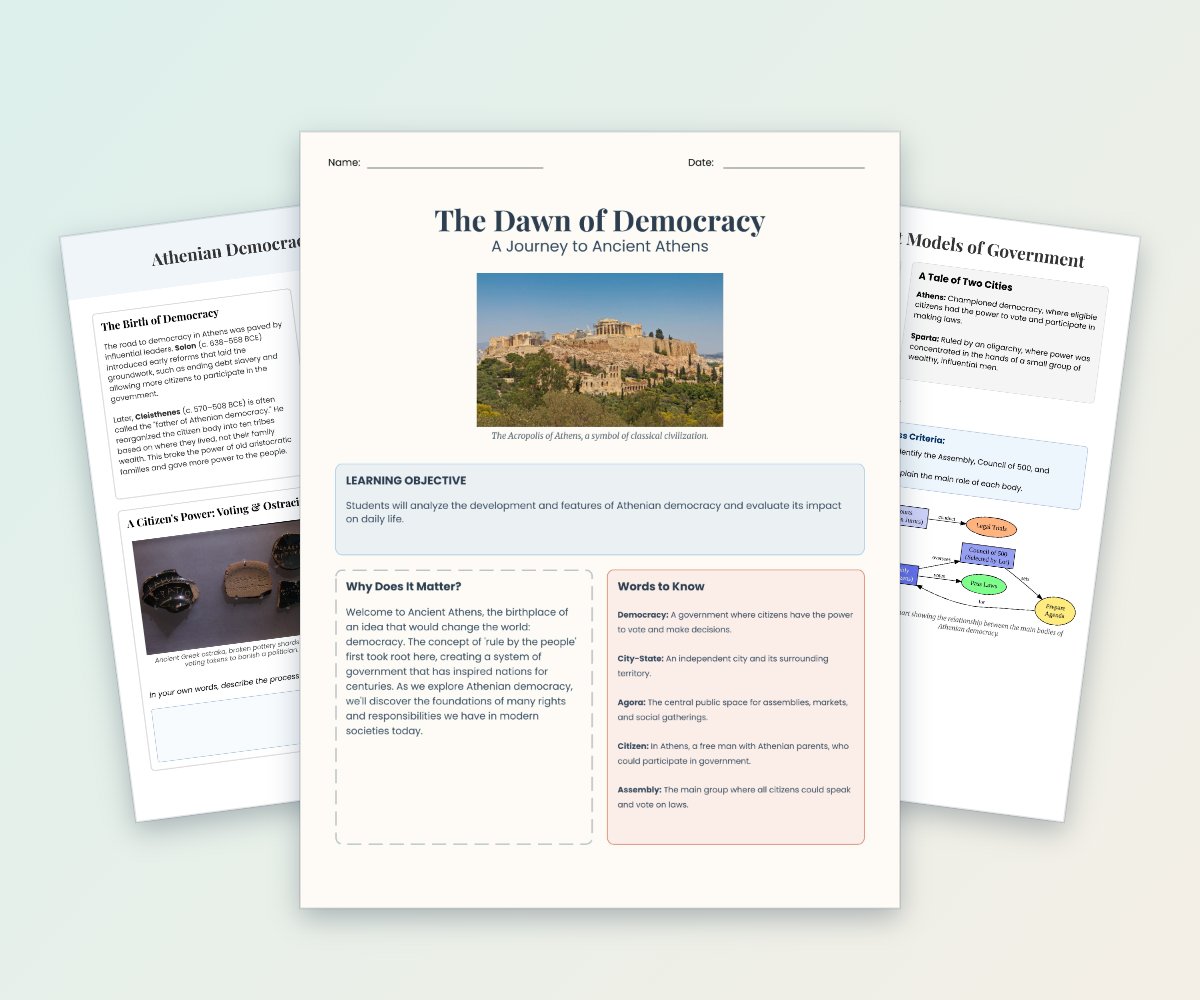
This six-page resource introduces students to the origins and features of Athenian democracy.
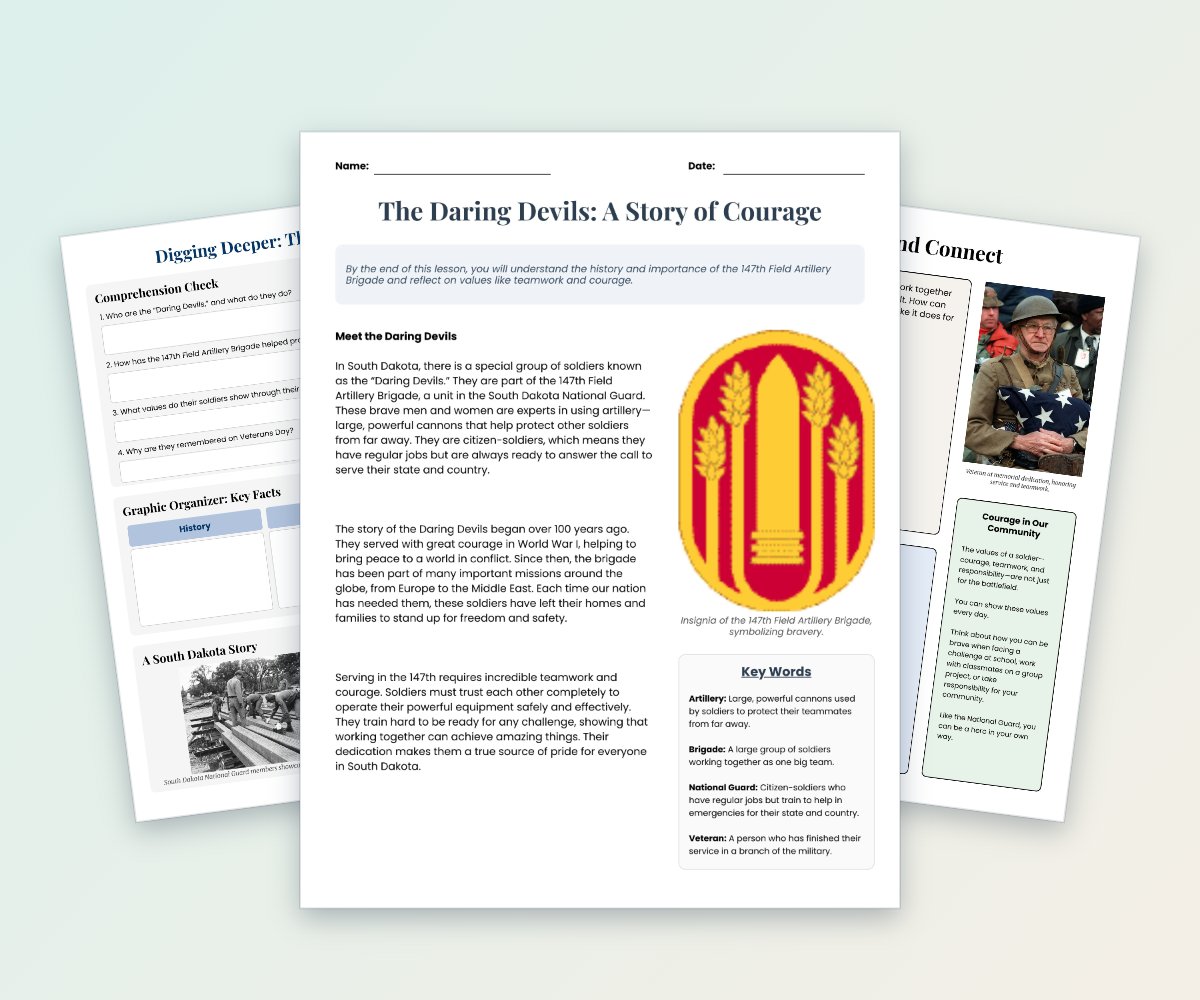
Students learn about the 147th Field Artillery Brigade, its history, missions, and service as part of the South Dakota National Guard.
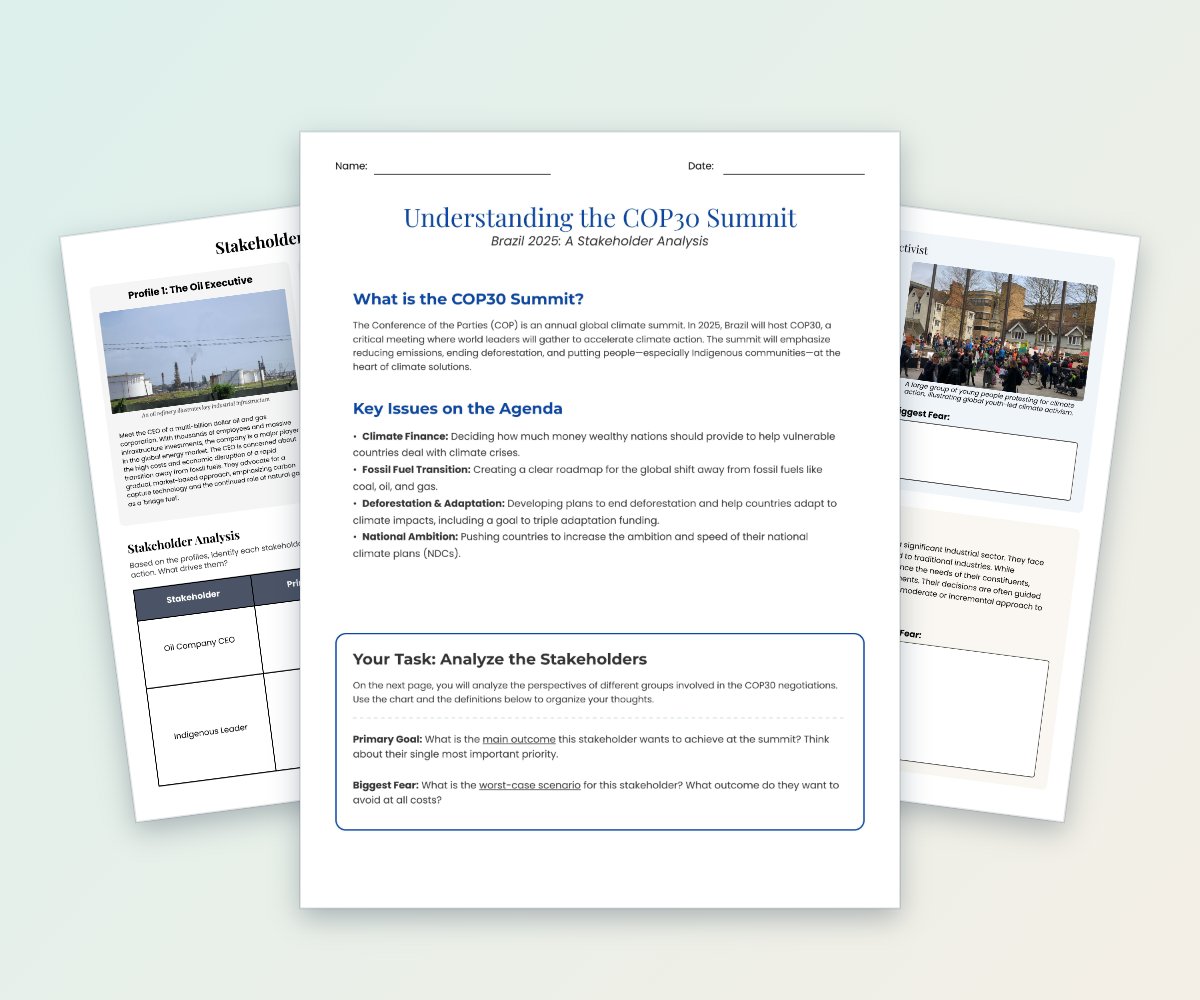
Students learn about COP30 and examine the priorities, concerns, and perspectives of stakeholders involved in global climate negotiations.
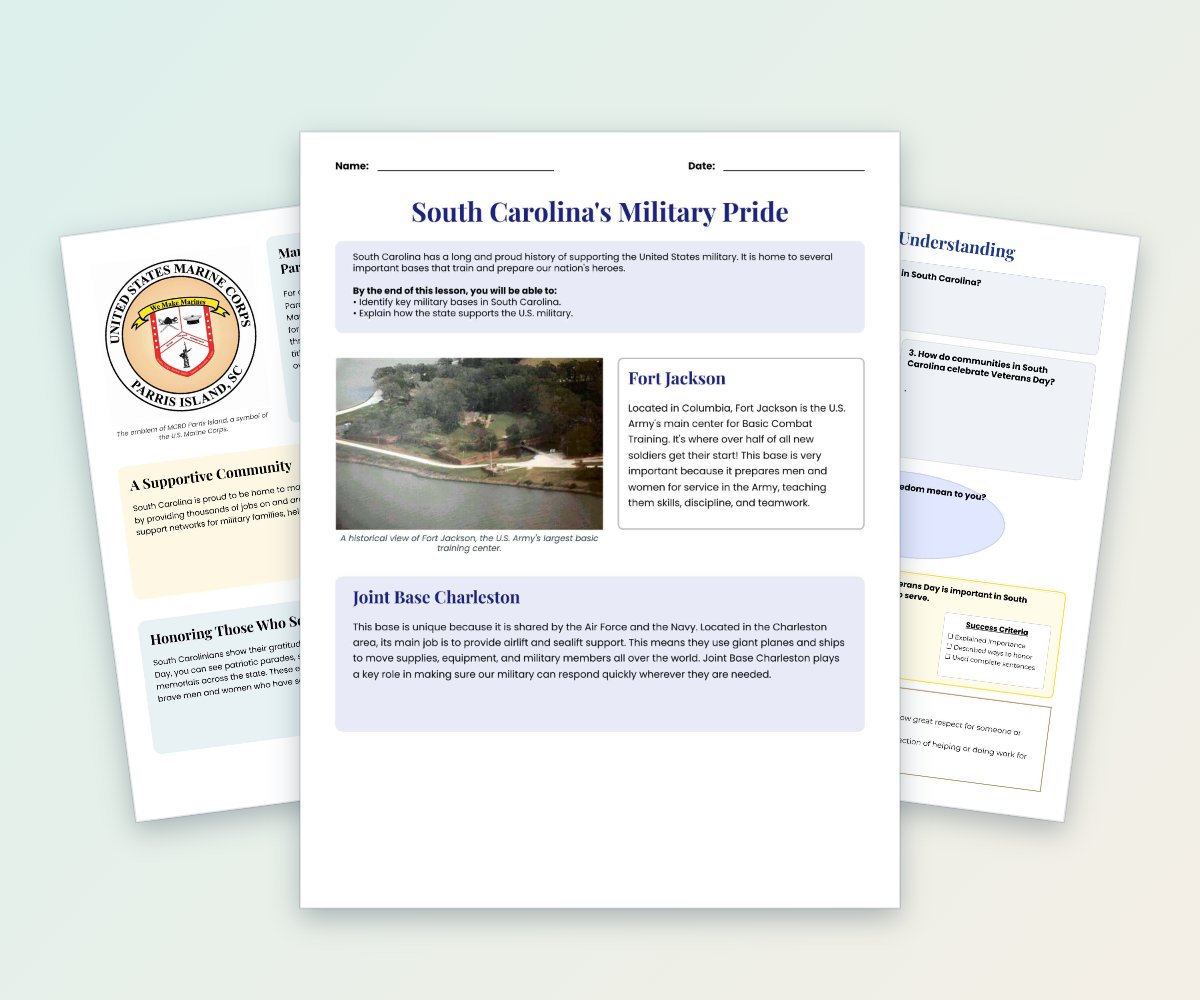
This mini-unit explores South Carolina military bases, community support for military families, and ways residents honor veterans.
Students read about Marine recruit training at Parris Island and South Carolina’s contribution to military service.
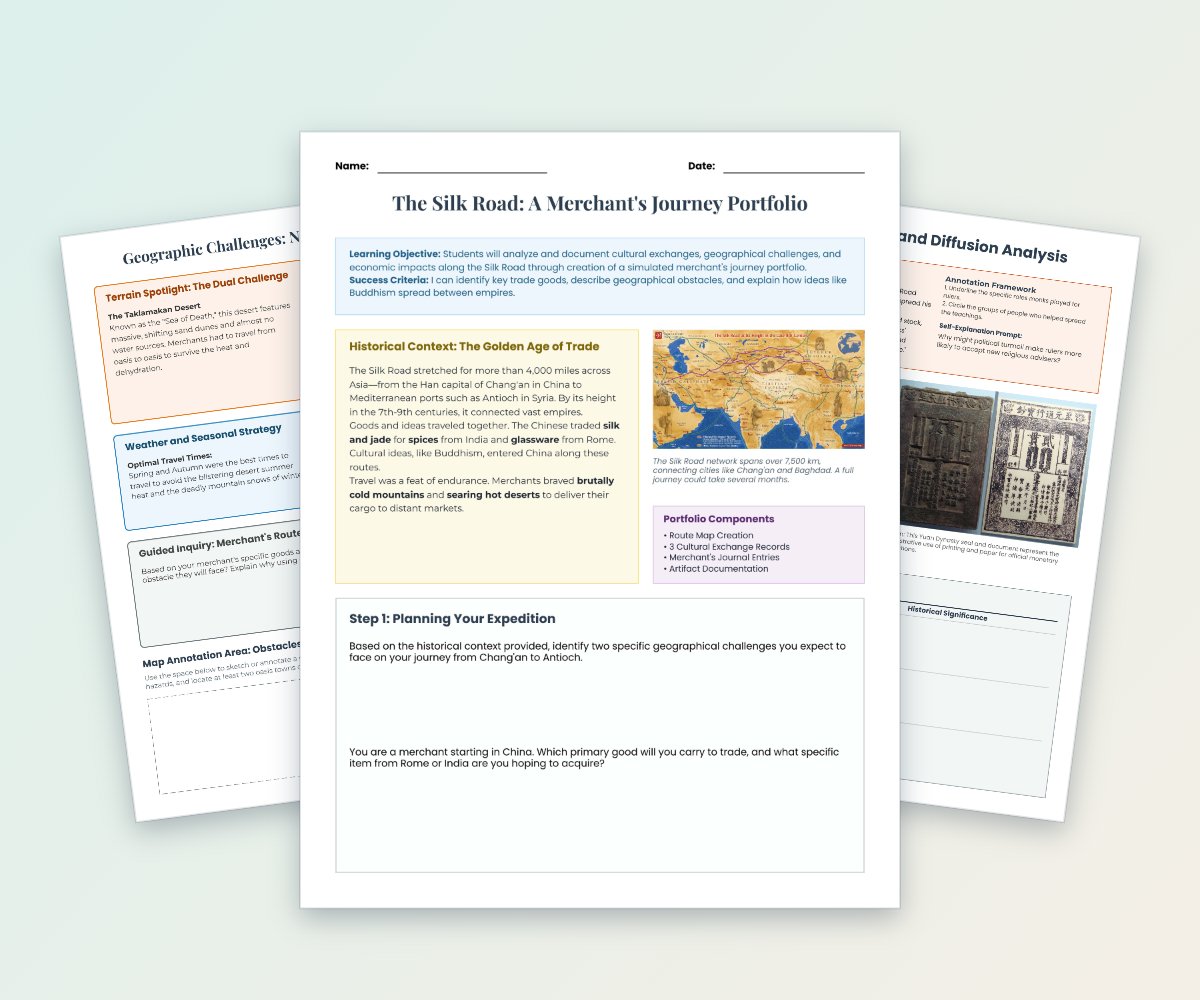
Students simulate a merchant journey from Chang'an to Antioch while exploring trade goods, geographic challenges, and cultural exchange.
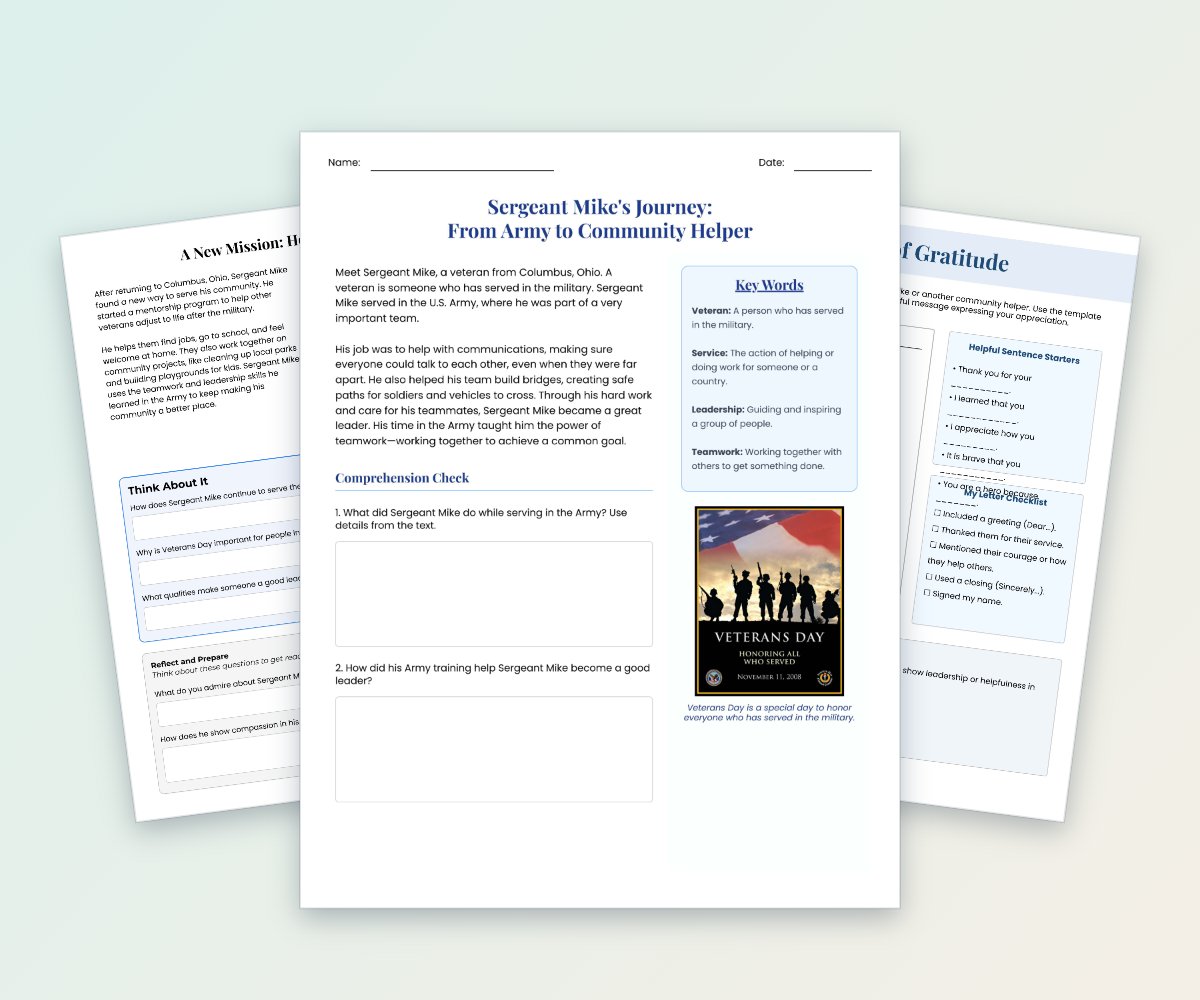
Students read about Sergeant Mike’s military service and community mentorship, then answer comprehension and reflection questions.
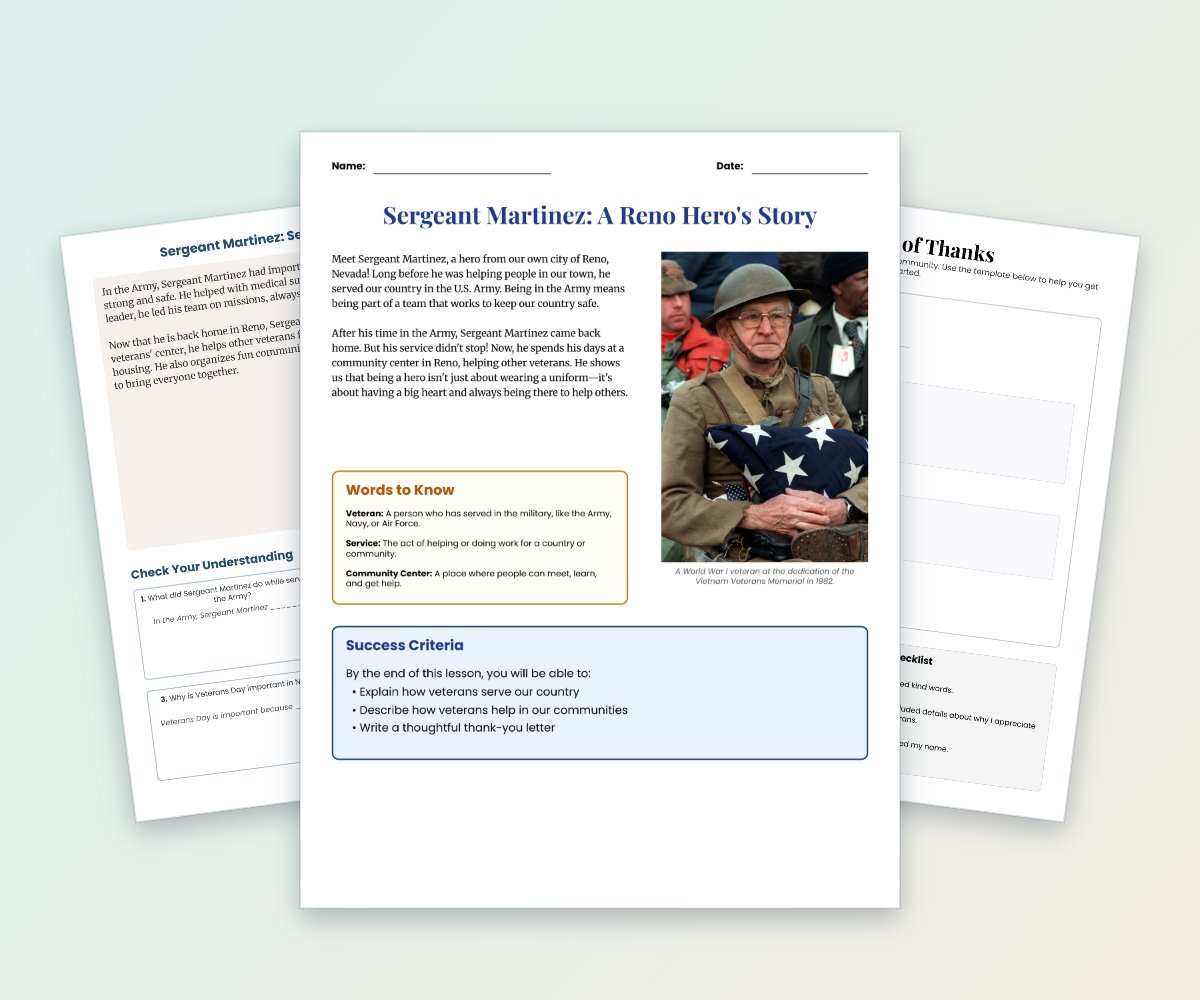
Students read about Sergeant Martinez, a Reno veteran who serves his community, then demonstrate understanding through comprehension questions.
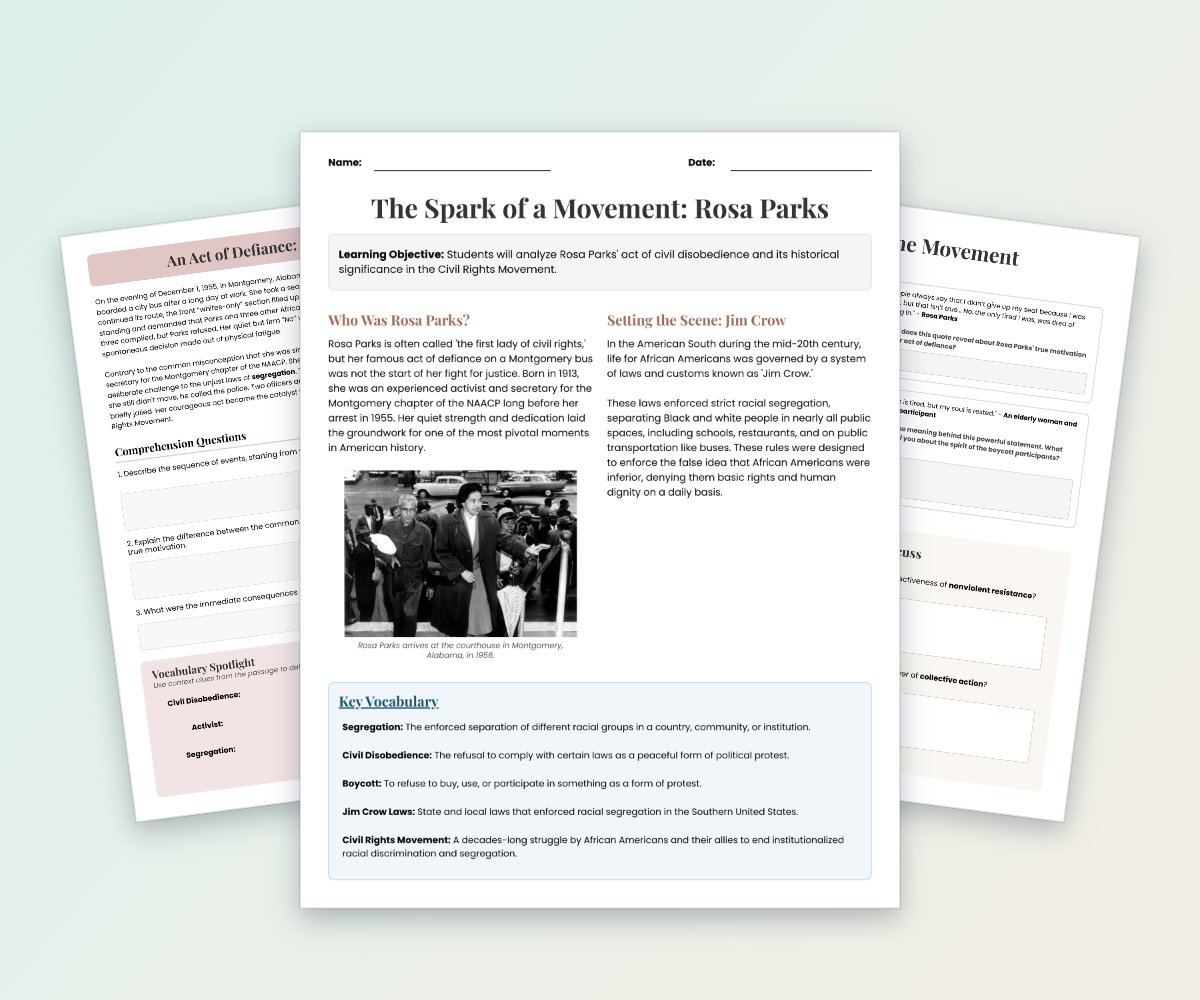
This four-page resource introduces Rosa Parks, Jim Crow laws, civil disobedience, and the Montgomery Bus Boycott.
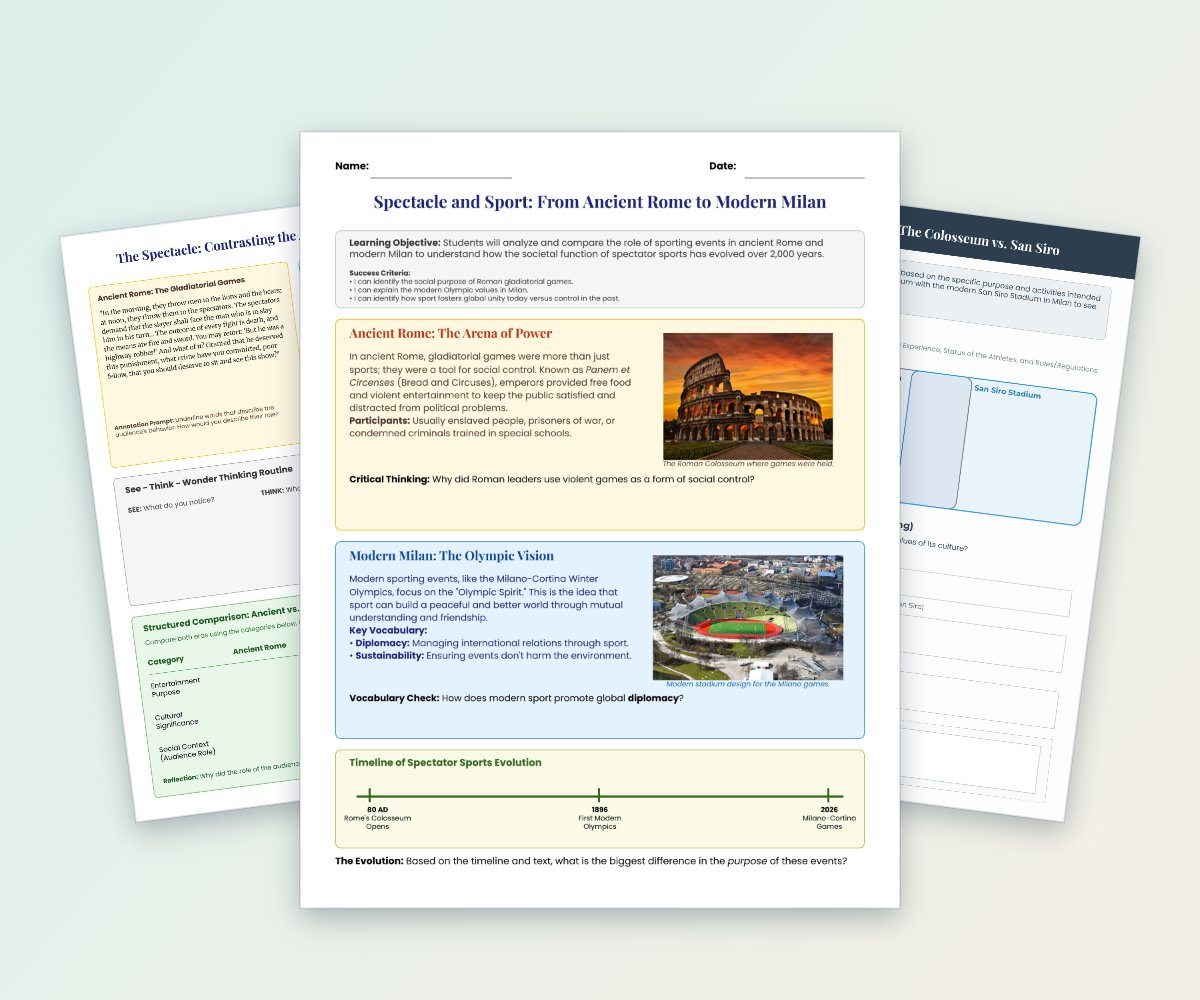
Students compare Roman gladiatorial games with the Milano-Cortina 2026 Winter Olympics through informational text, vocabulary, a timeline, and critical-thinking prompts.
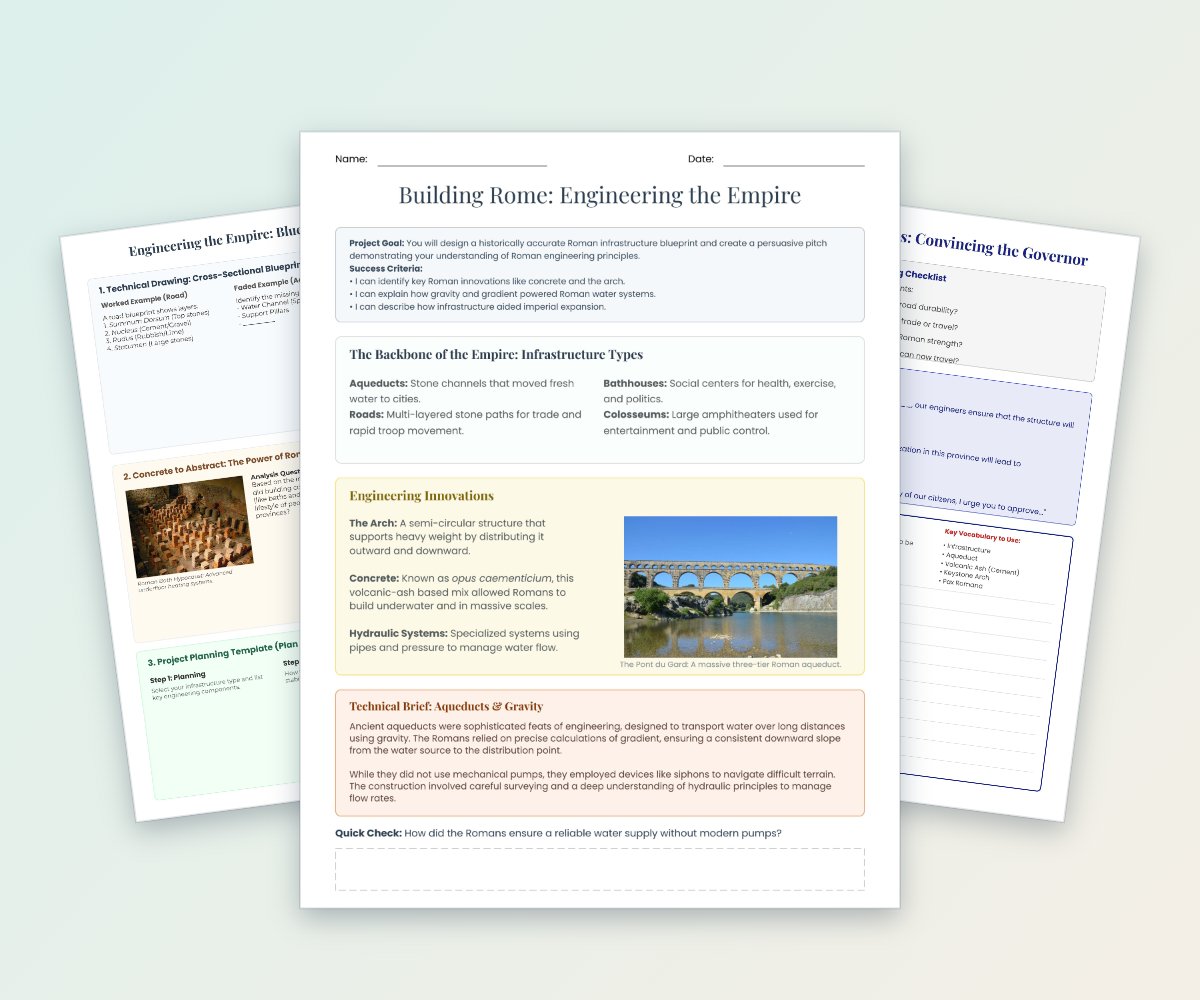
Students investigate Roman engineering innovations, including arches, concrete, aqueducts, roads, and hydraulic systems.
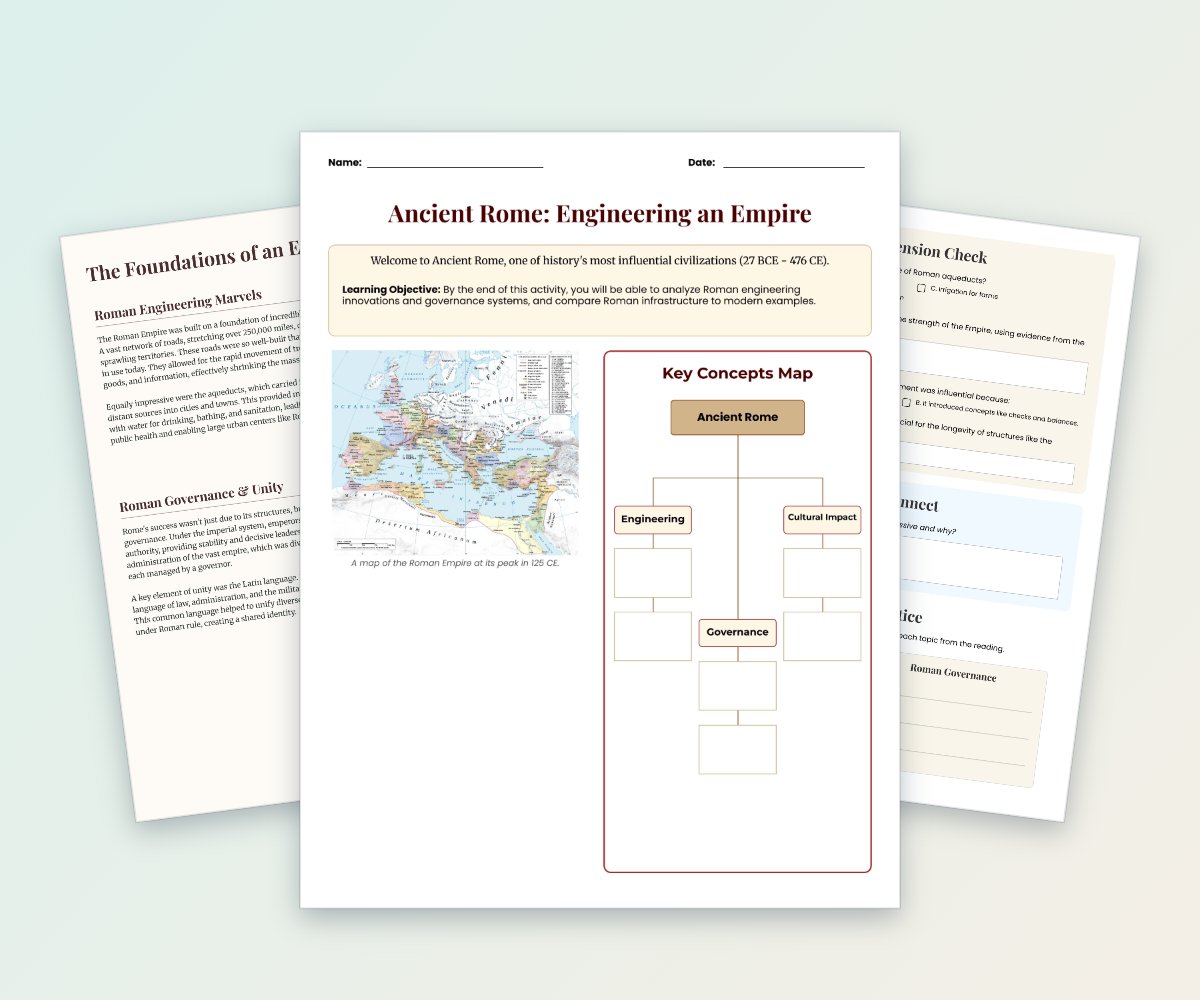
This six-page activity explores Roman roads, aqueducts, infrastructure, imperial governance, provinces, and the unifying role of Latin.
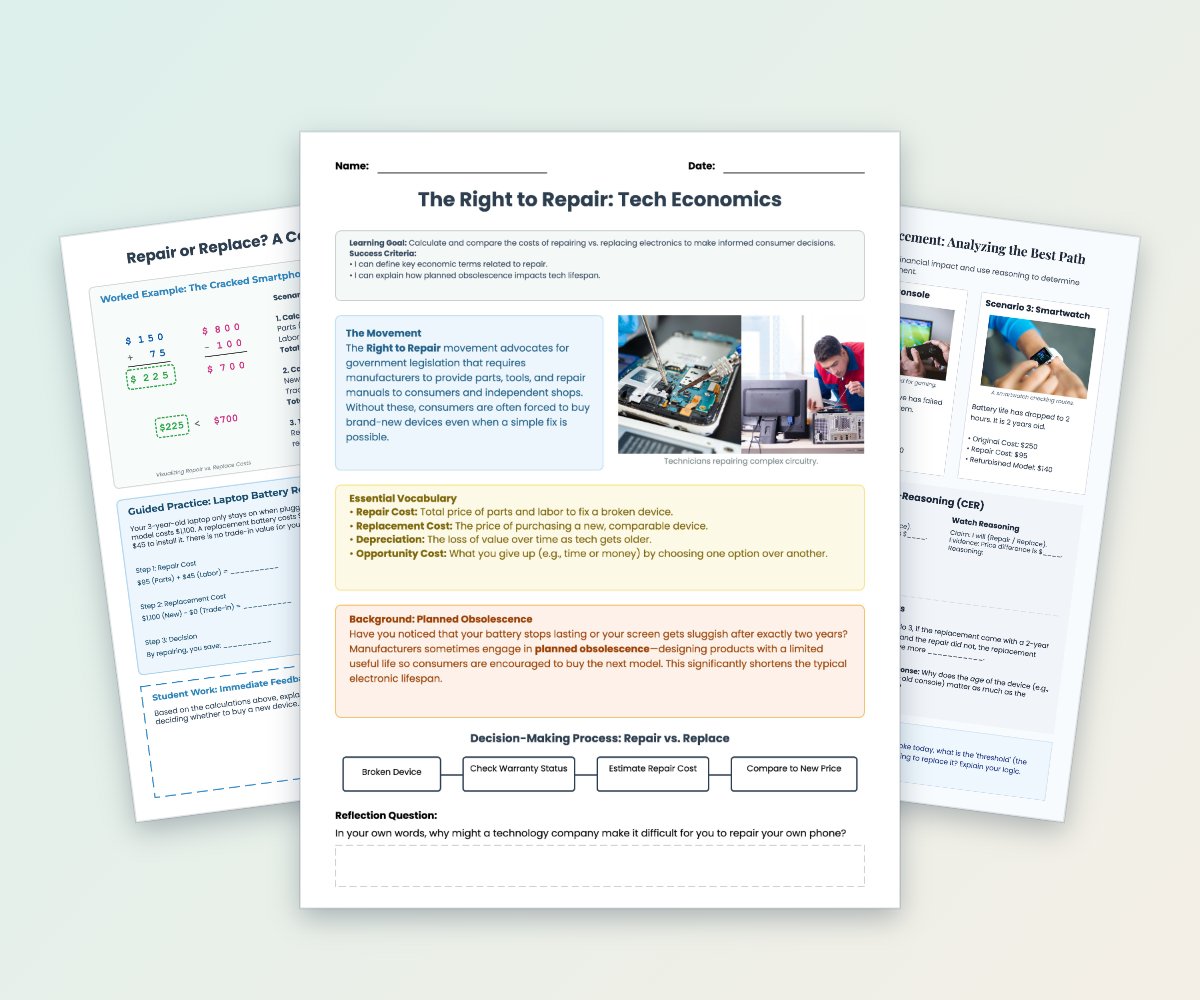
Students explore right-to-repair policies, planned obsolescence, depreciation, opportunity cost, and technology lifespan.
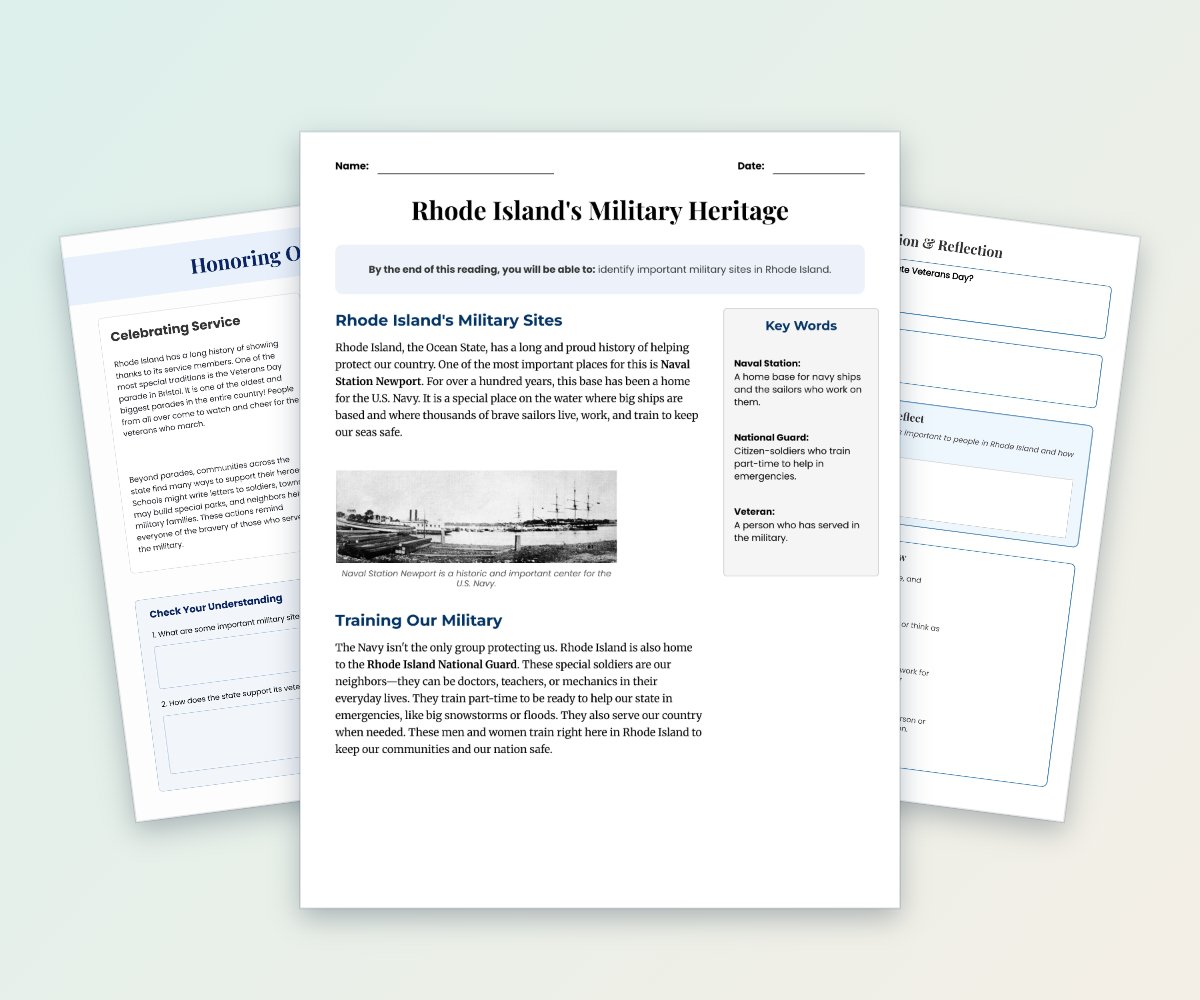
This three-page reading resource introduces students to Naval Station Newport, the Rhode Island National Guard, veterans, and local Veterans Day traditions.
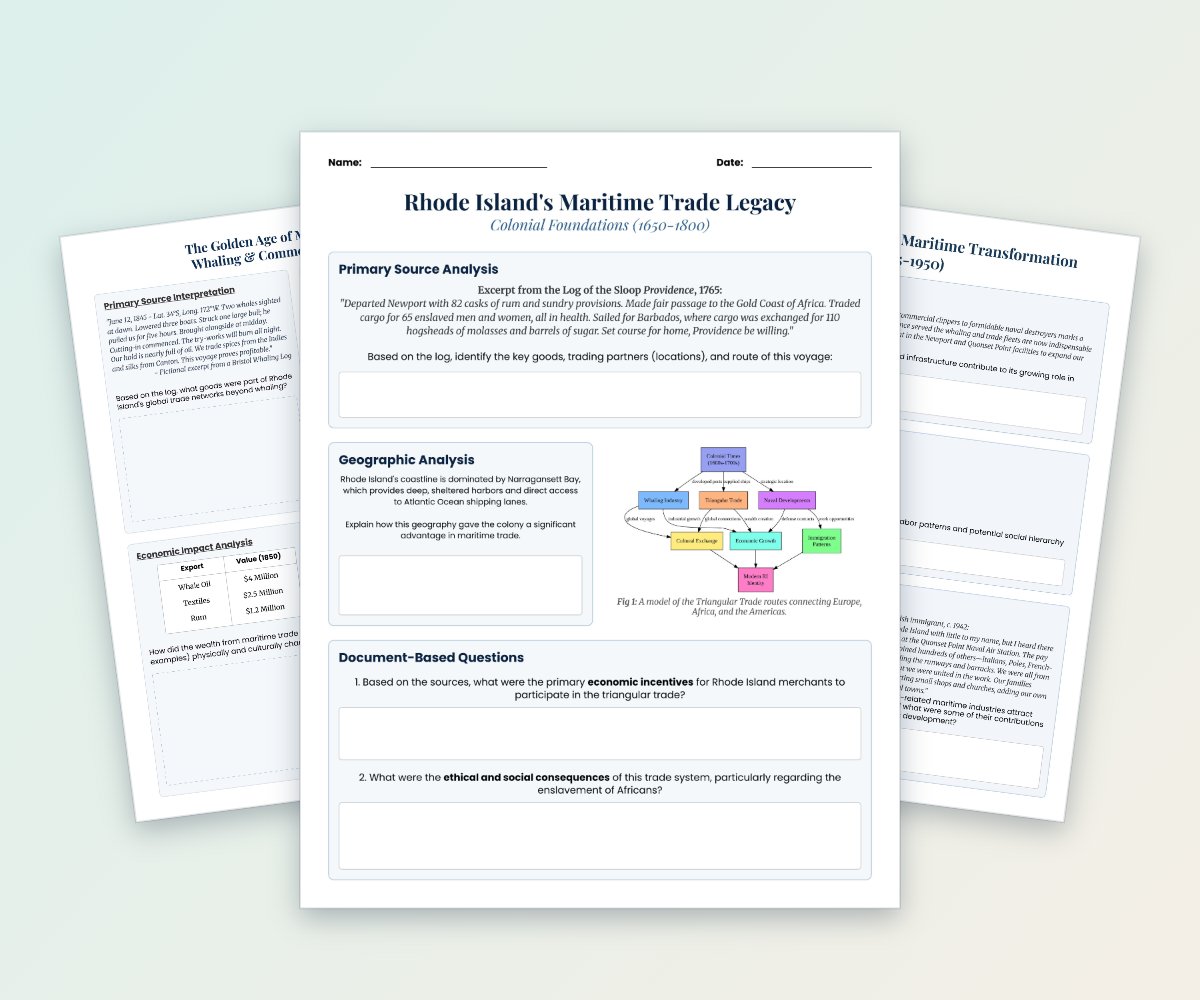
Students examine fictional and historical-style primary sources about colonial trade, triangular trade, whaling, geography, and Rhode Island’s global commerce.
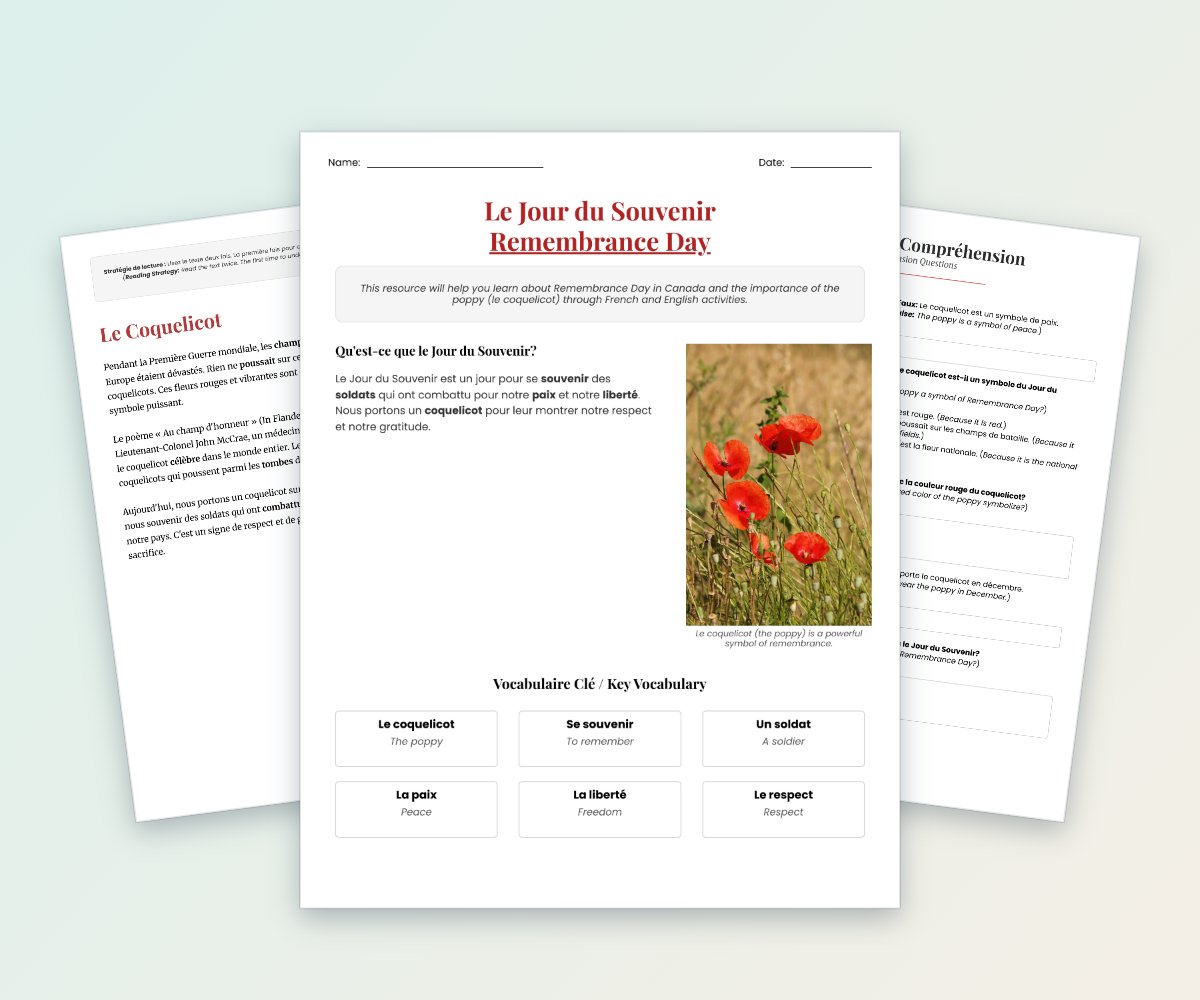
Teach students about Remembrance Day in Canada, the significance of the poppy, and the sacrifice of soldiers through French-English activities.
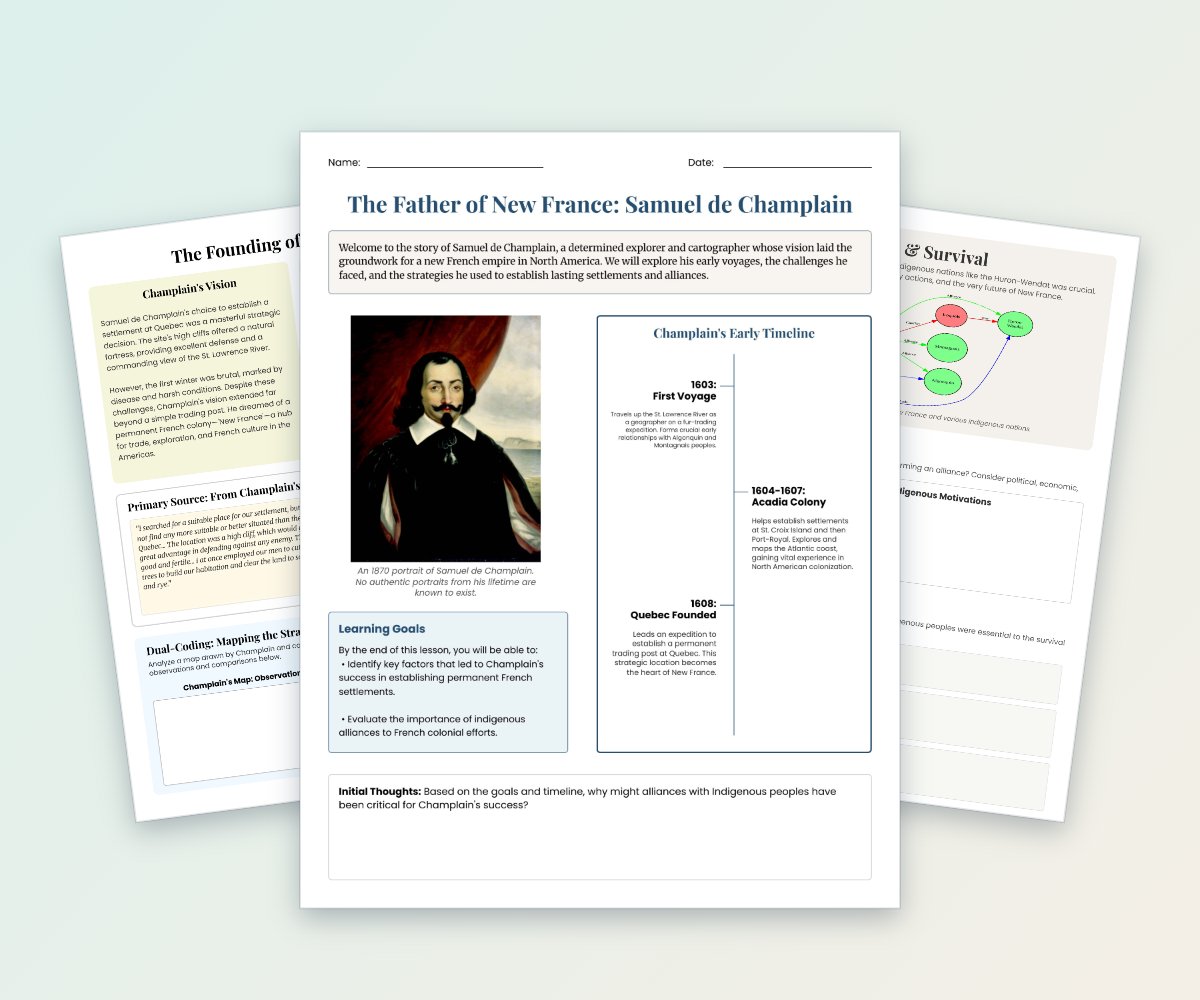
A no-prep printable activity pack introducing students to Samuel de Champlain and his role in Quebec history.
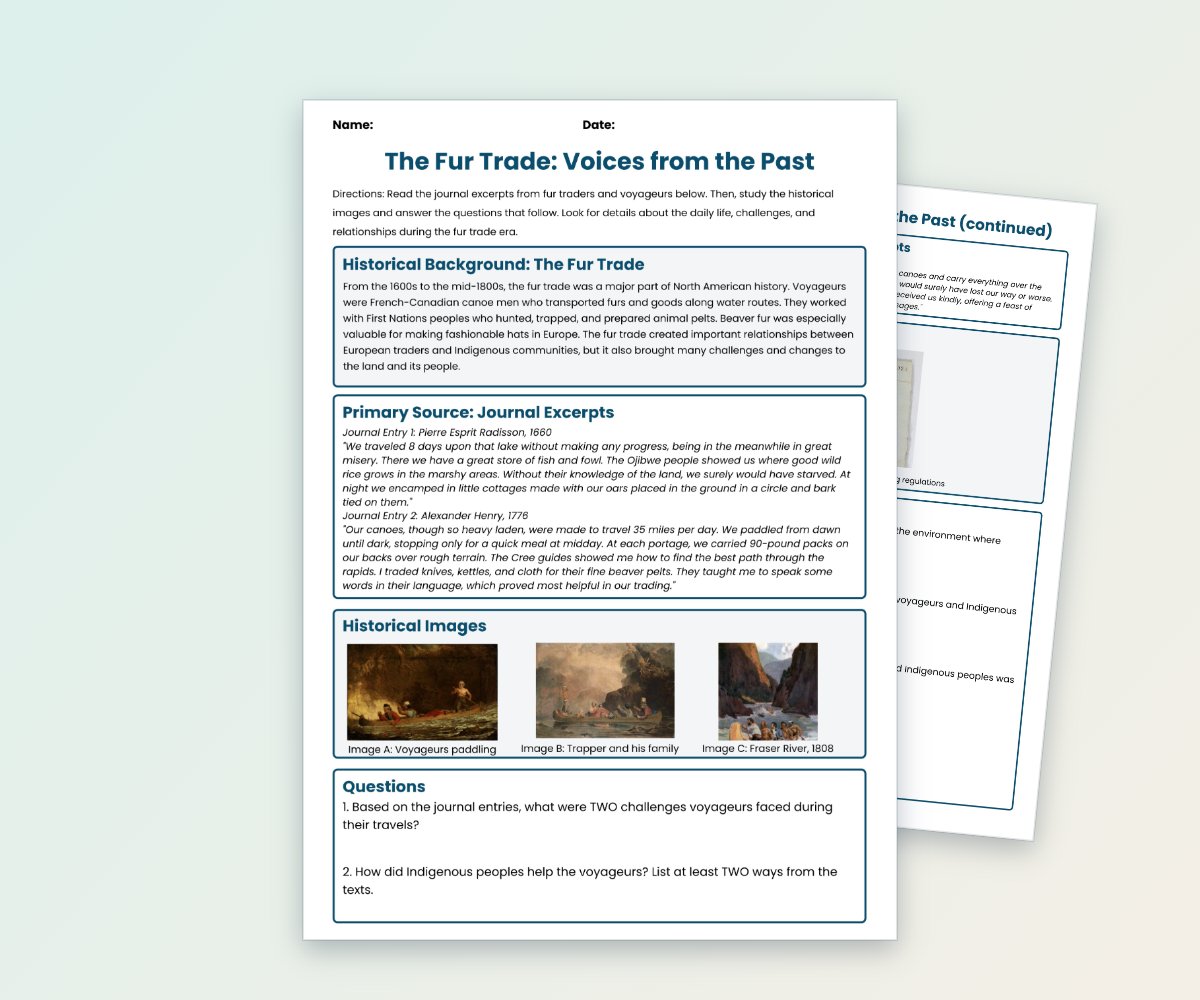
A graphic organizer for examining and interpreting excerpts from fur trade journals as historical primary sources.
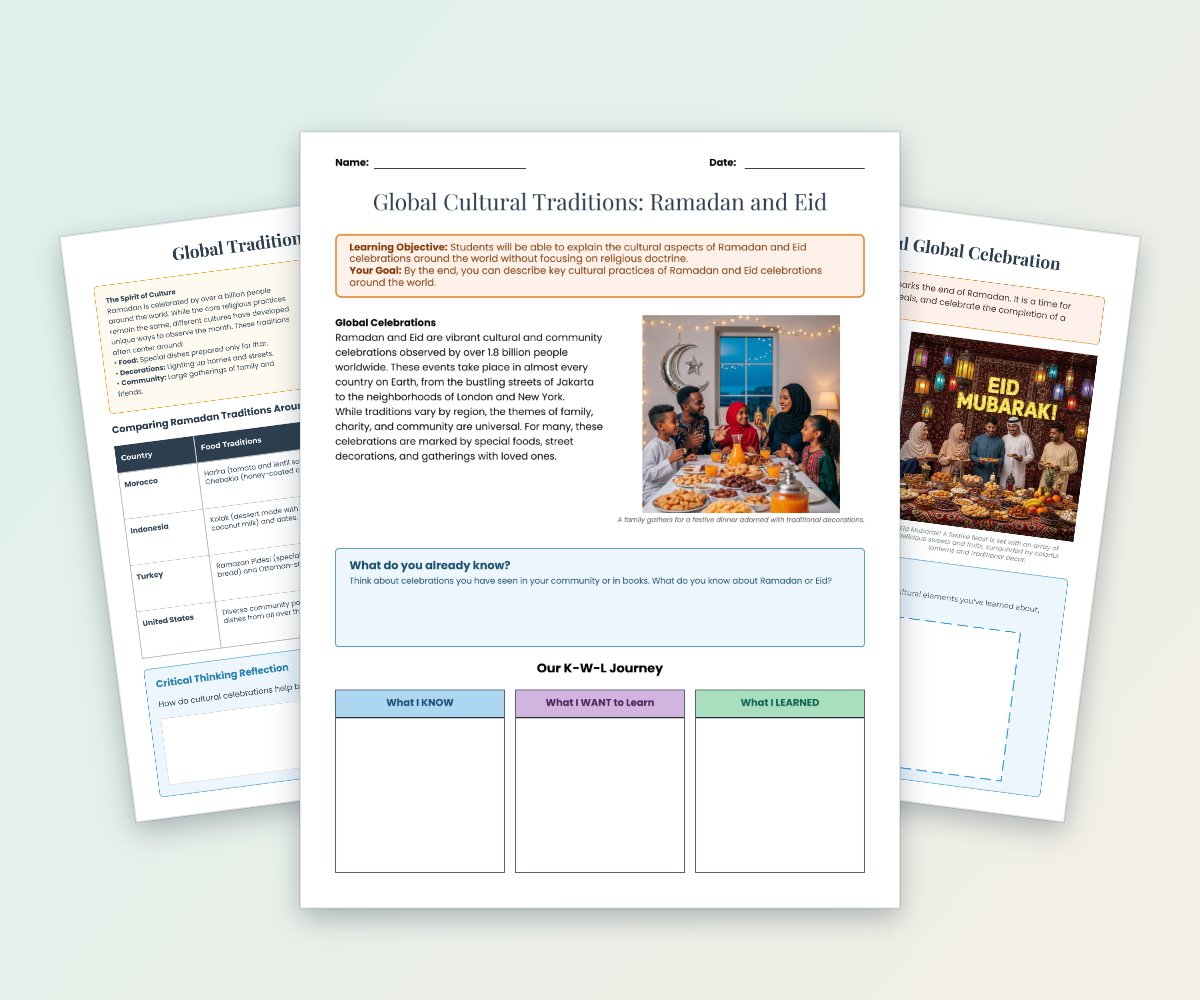
This four-page fact file introduces students to cultural traditions connected with Ramadan and Eid around the world.
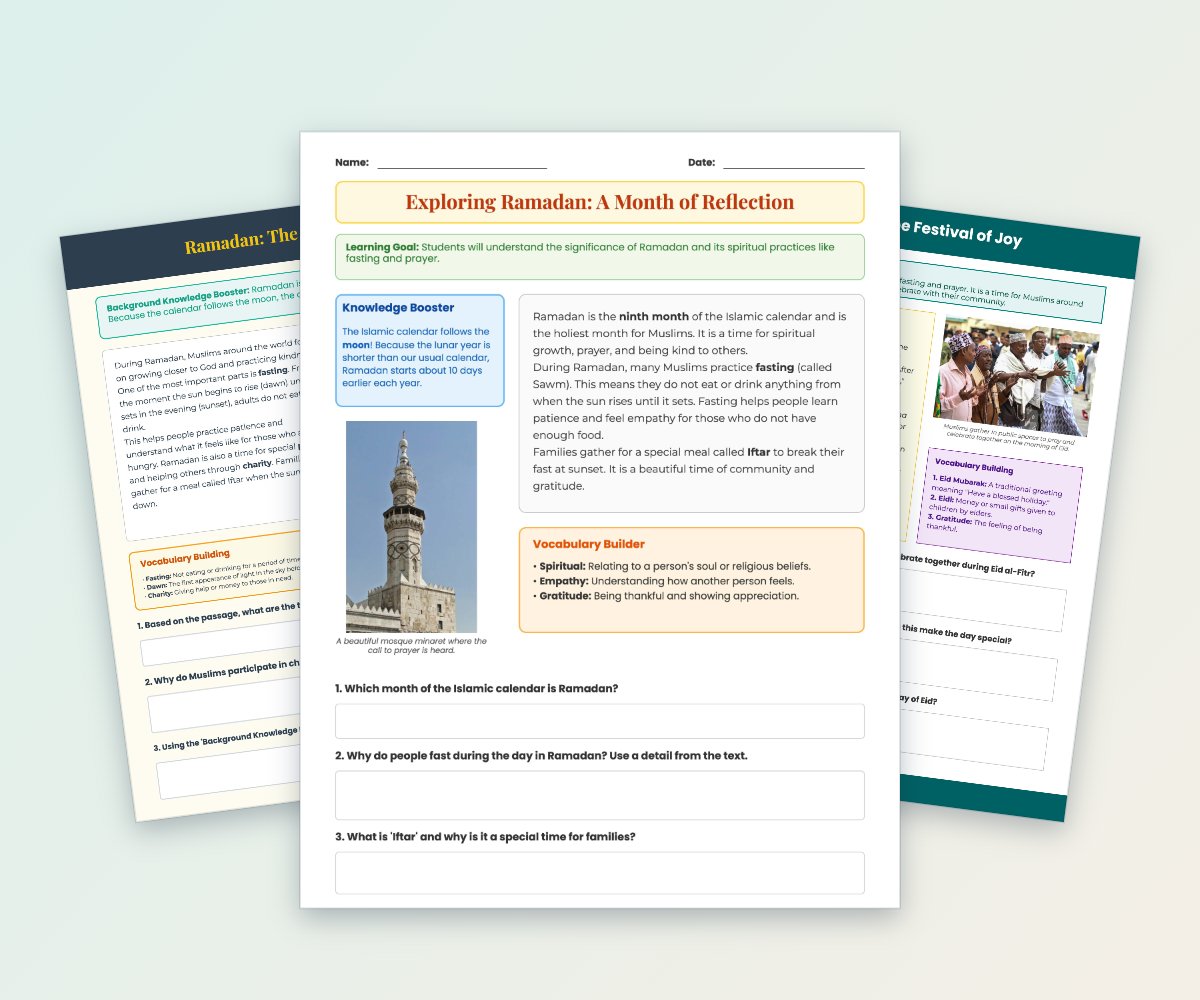
This five-page activity pack introduces students to Ramadan, fasting, prayer, charity, Iftar, and Eid al-Fitr.
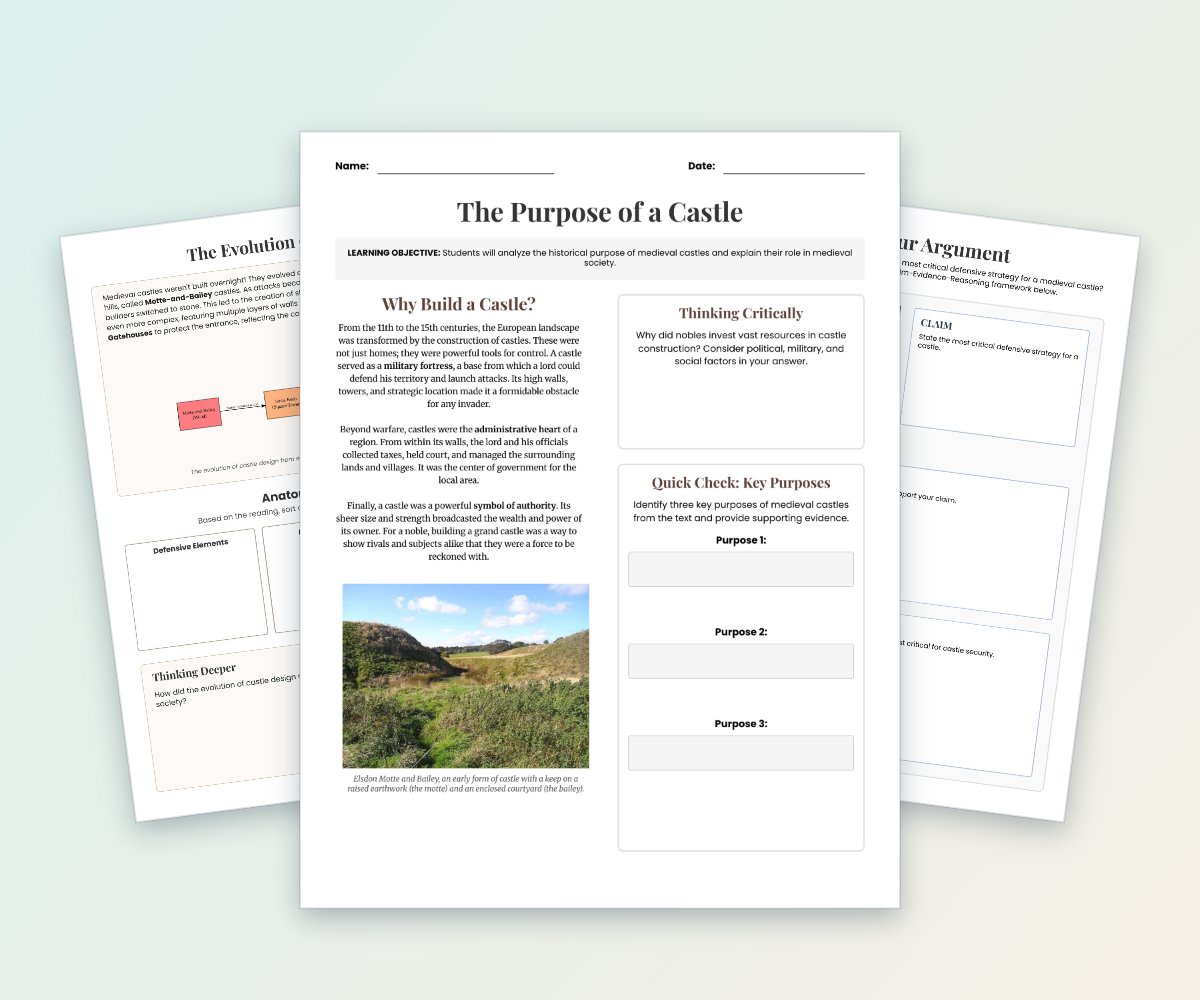
Students examine why medieval castles were built and how their designs evolved from motte-and-bailey forts to stone and concentric castles.
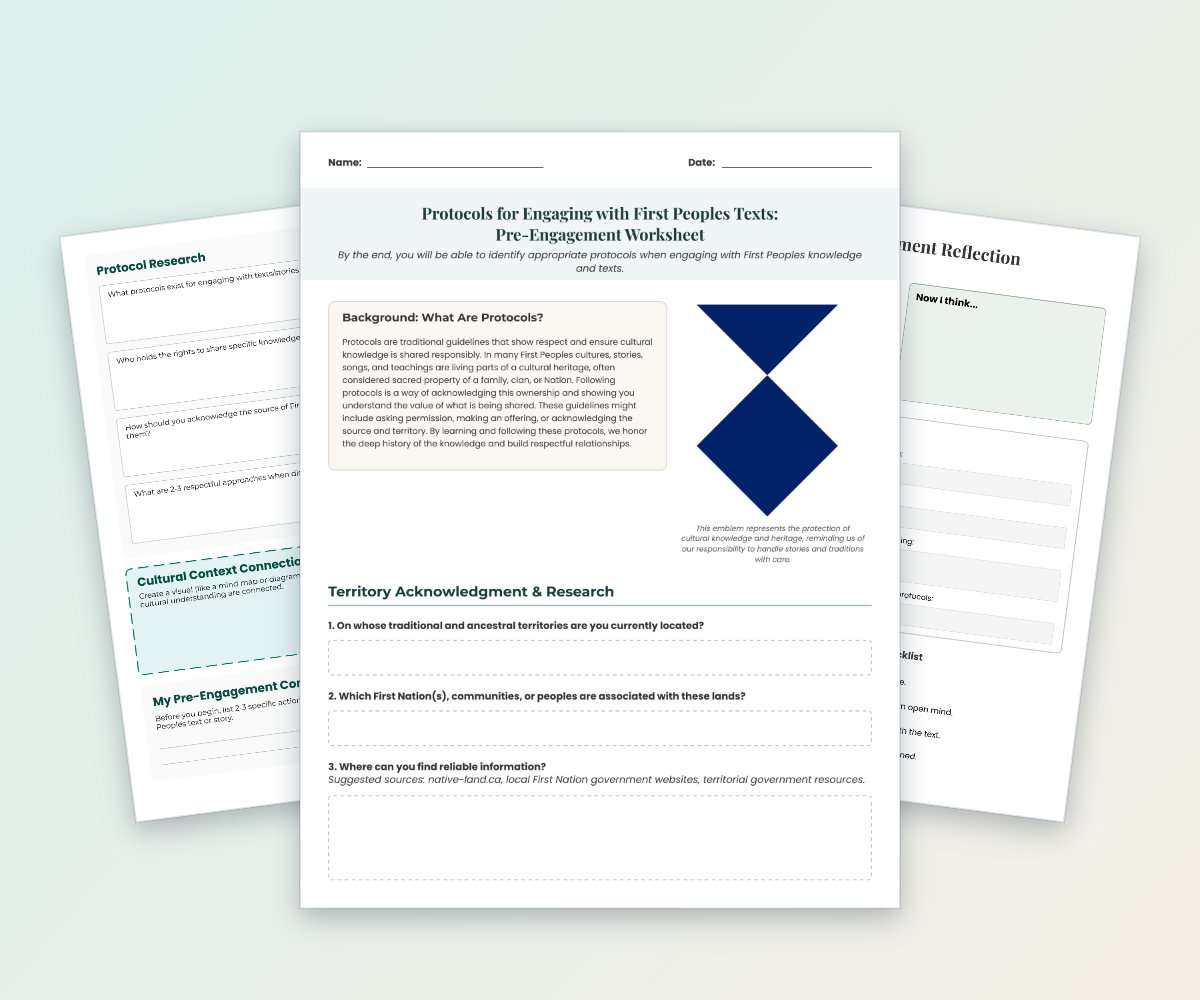
This pre- and post-engagement worksheet helps students research territory, identify cultural protocols, and consider respectful approaches to First Peoples texts and knowledge.
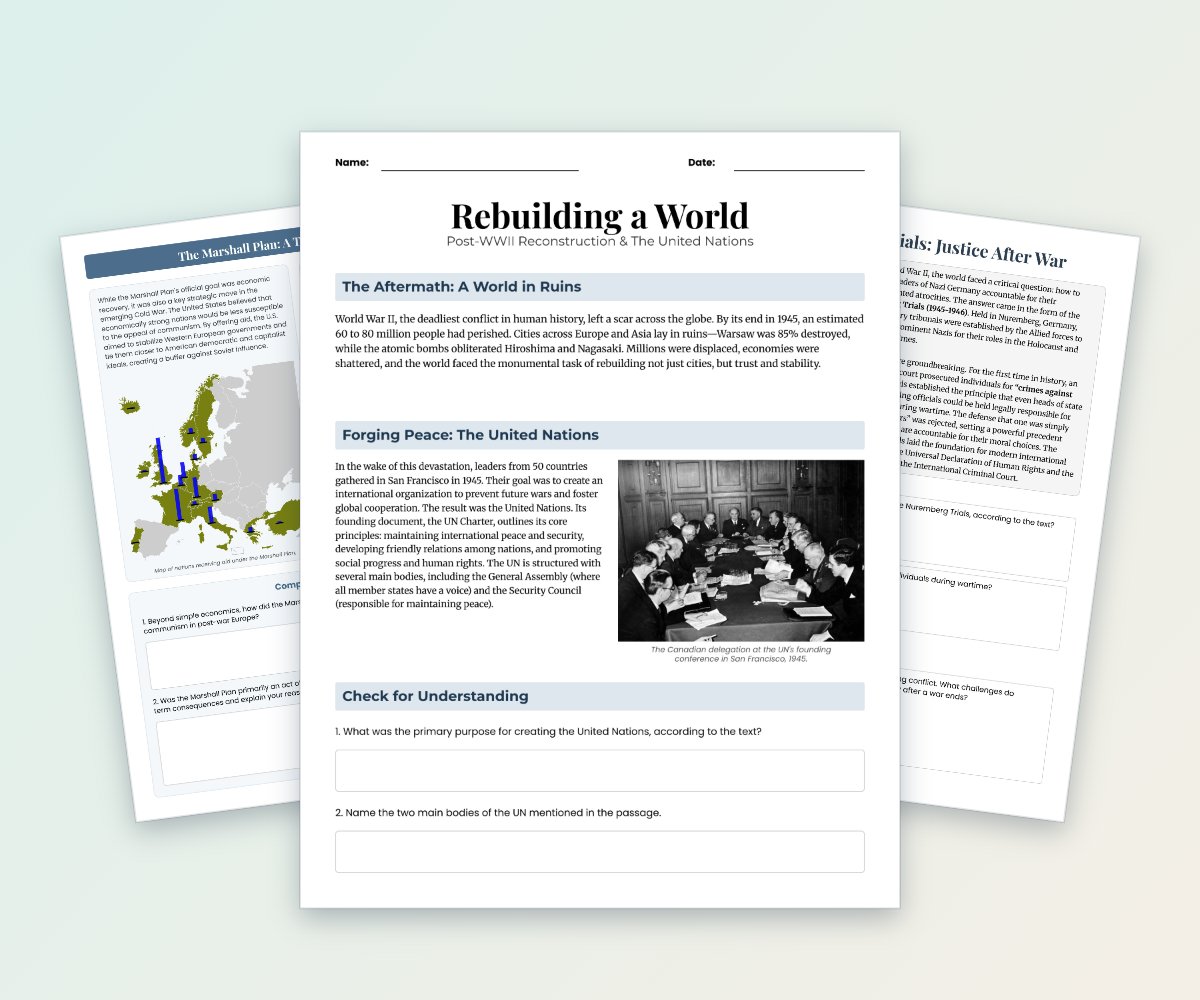
Students examine the United Nations, Marshall Plan, and Nuremberg Trials through informational passages, guided notes, and comprehension questions.
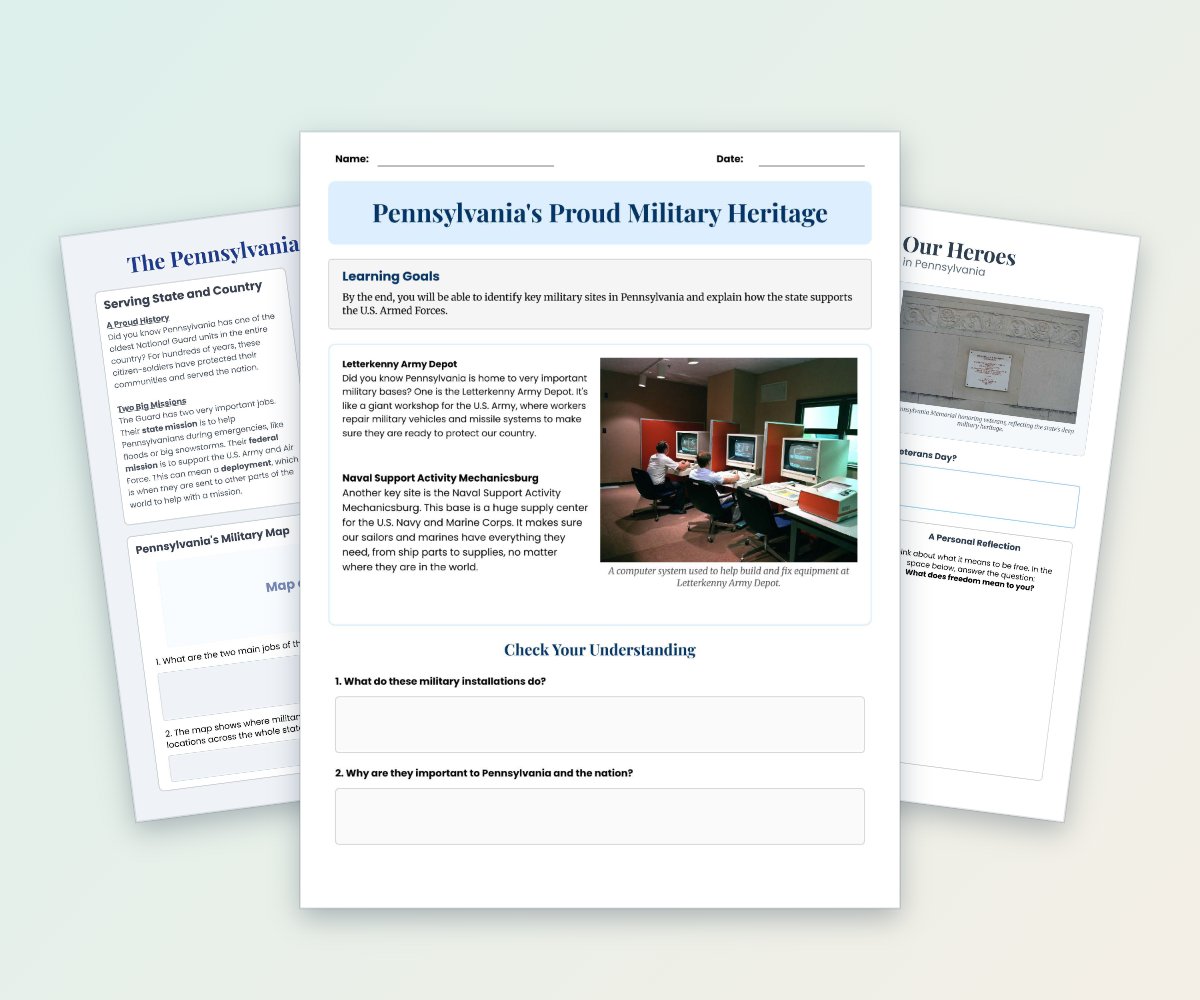
Students learn about Pennsylvania military installations, the Pennsylvania National Guard, and Veterans Day traditions.
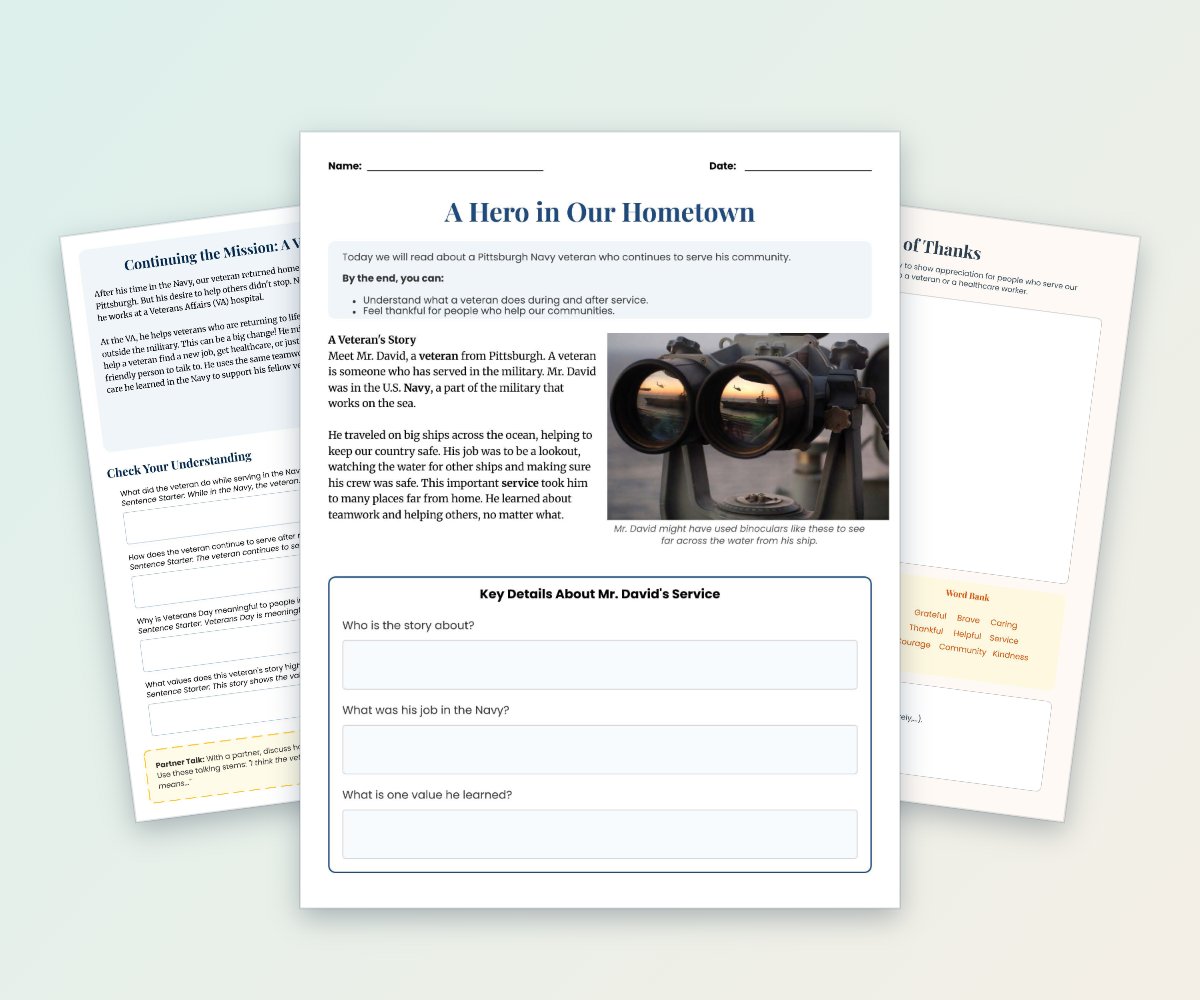
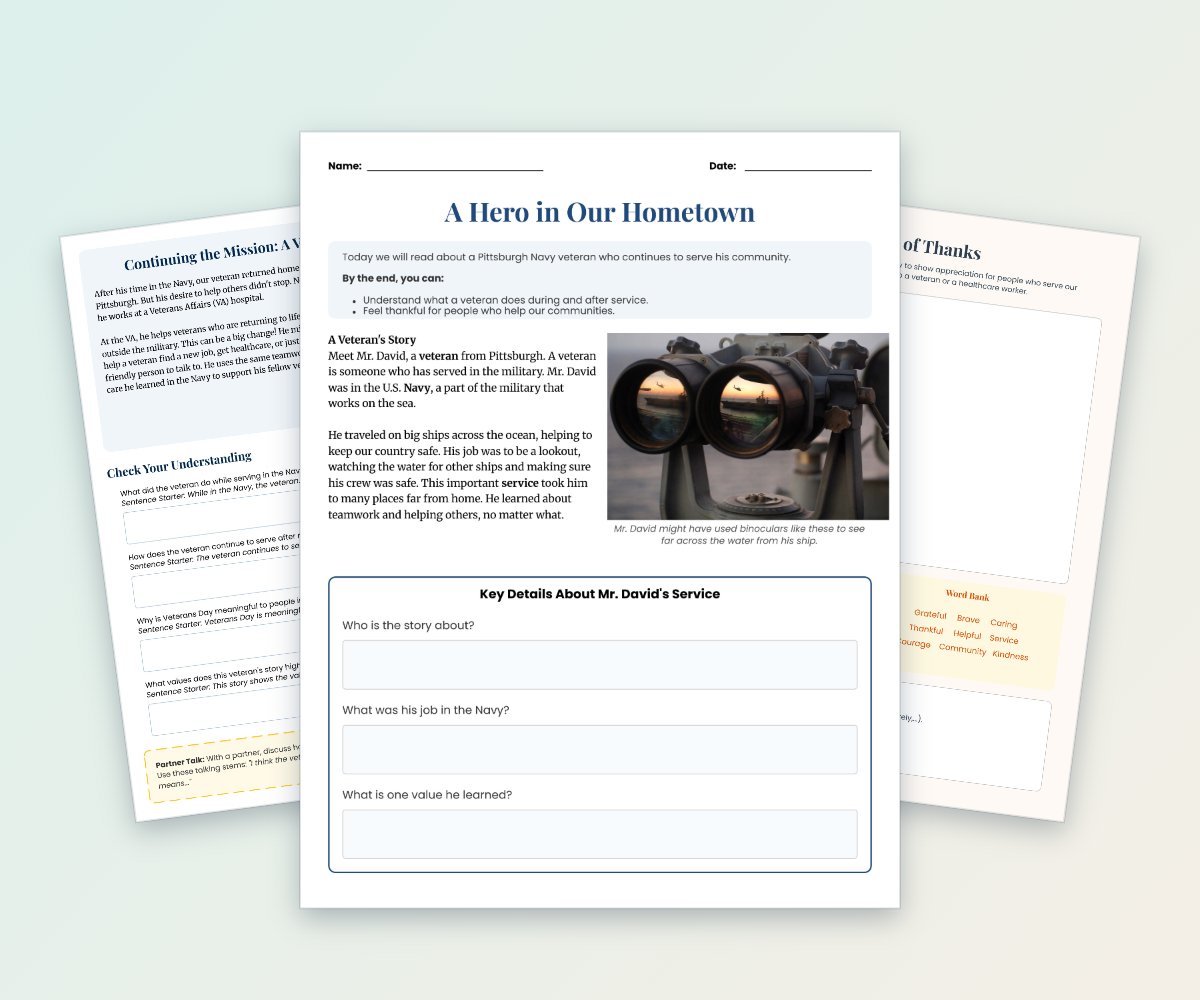
Students read an informational passage about a Pittsburgh Navy veteran, answer comprehension questions, discuss community service, and begin a thank-you letter.
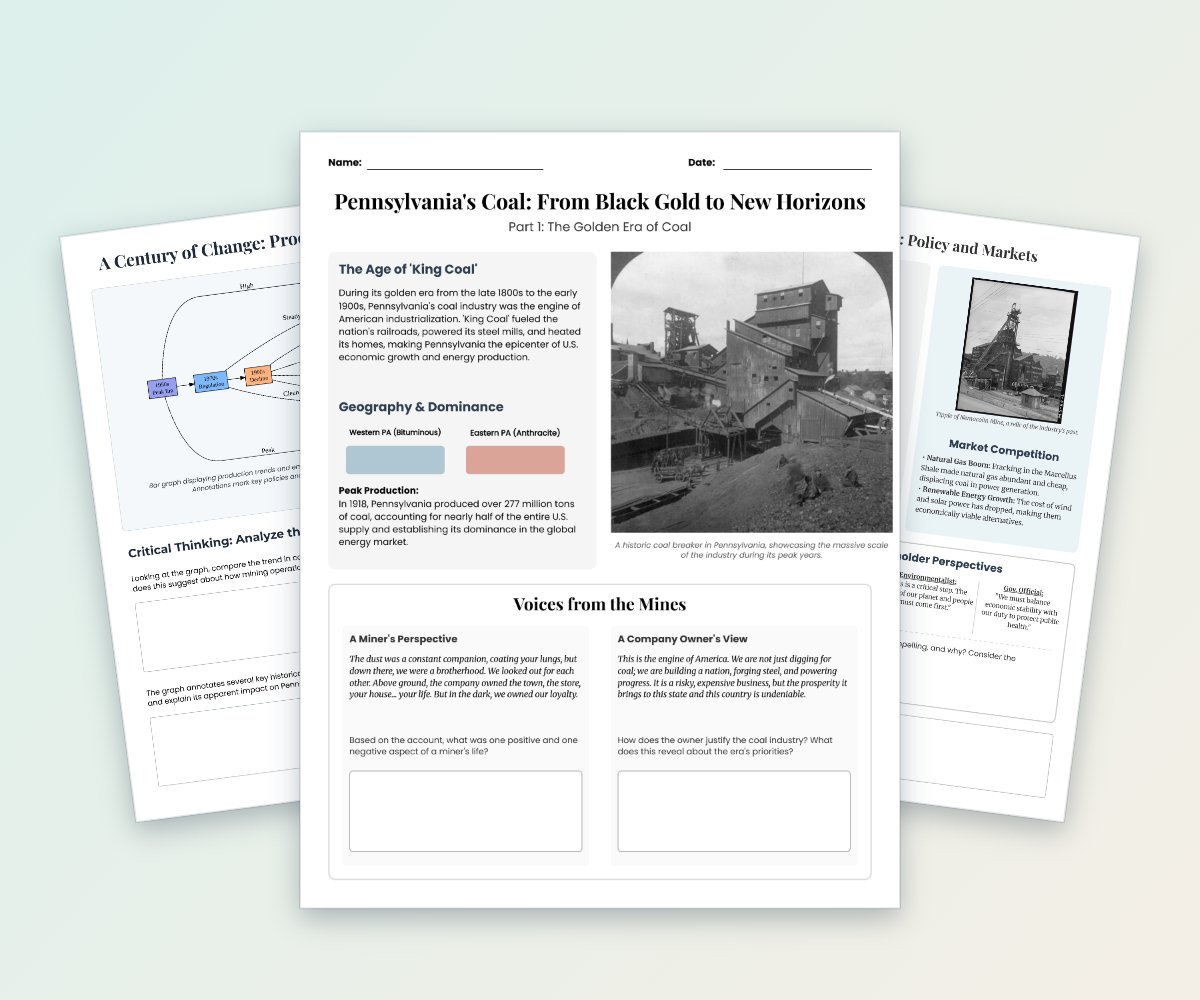
Students examine Pennsylvania’s coal industry from its industrial-era peak through modern transformation using historical context, worker and owner perspectives, production trends, and policy analysis
This three-page Grade 3 social studies resource explains the Battle of Gettysburg, its importance during the Civil War, and soldiers' courage.
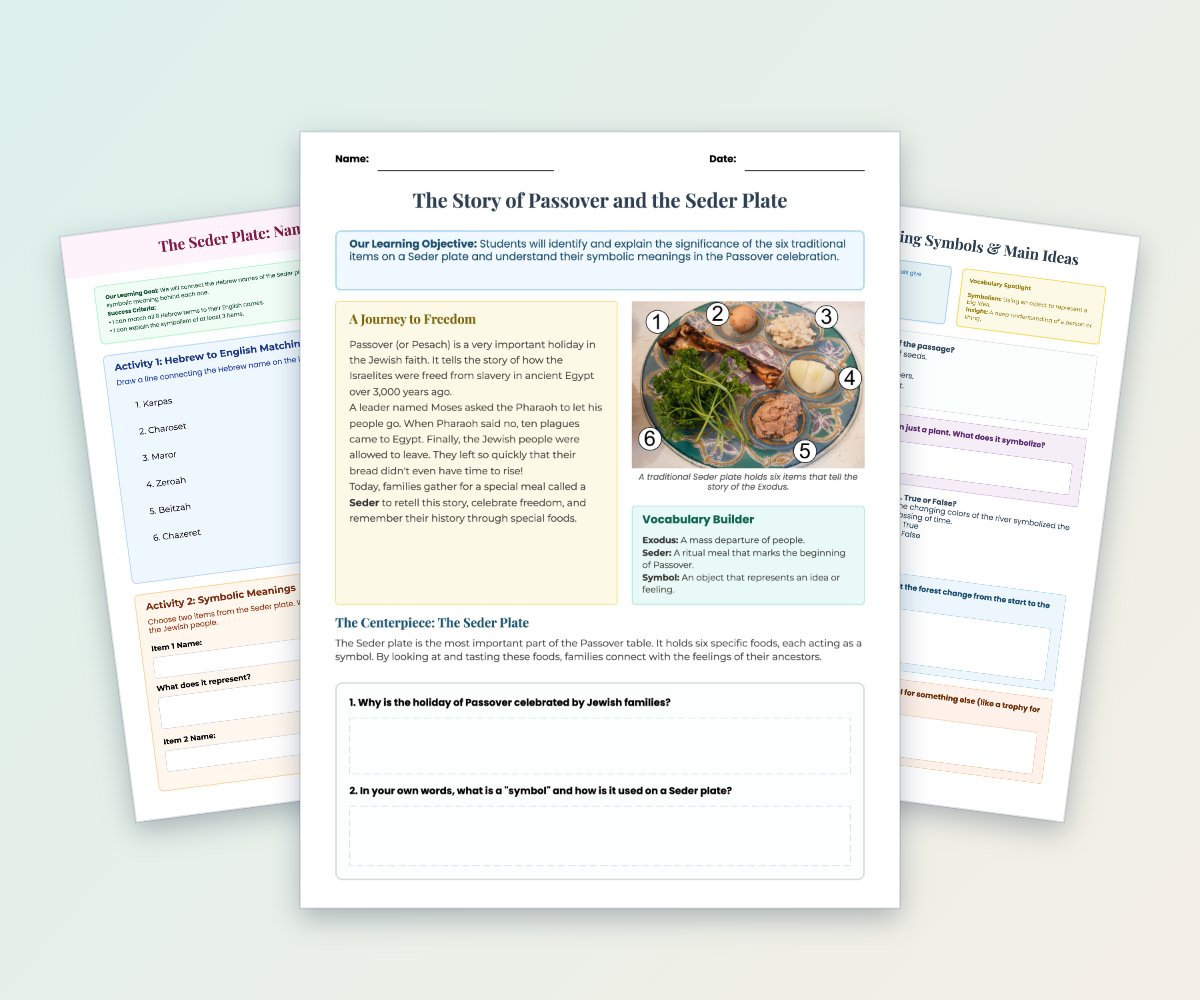
This four-page worksheet introduces the story of Passover and the significance of six traditional Seder plate items.
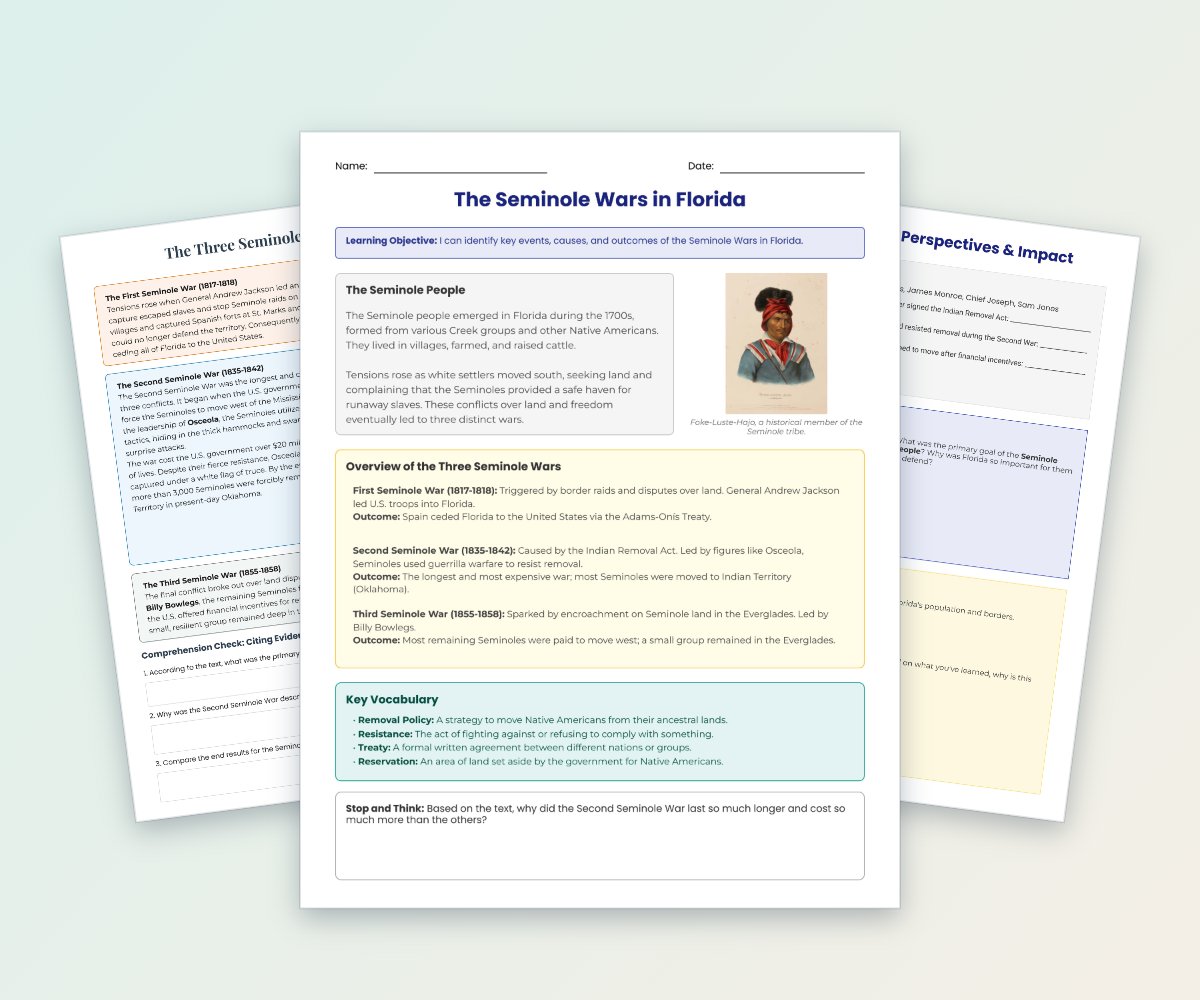
This three-page resource introduces the Seminole people and summarizes the causes, events, and outcomes of the three Seminole Wars.
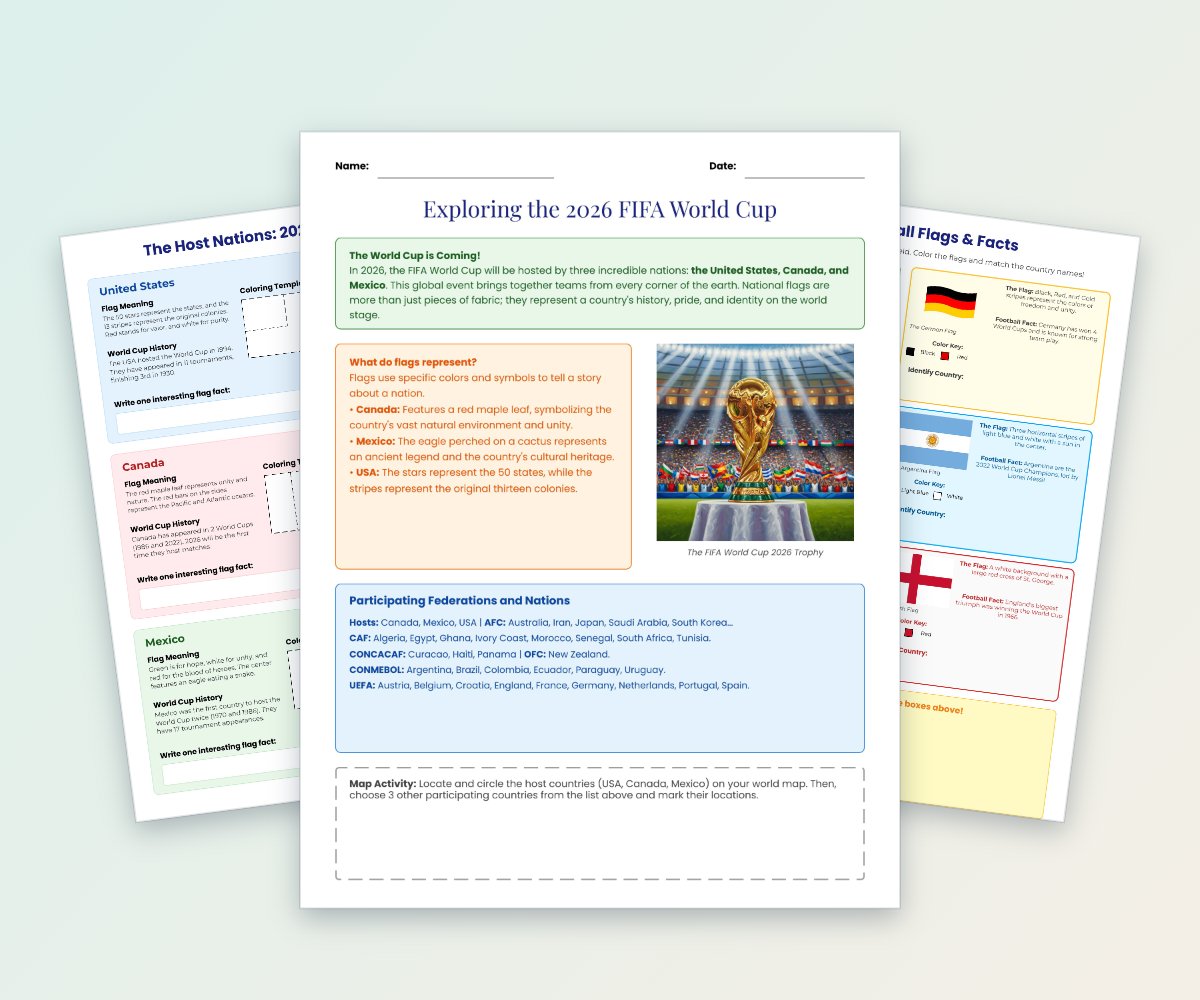
Introduce students to the 2026 FIFA World Cup host nations—Canada, Mexico, and the United States—through flag facts, tournament history, and geography.
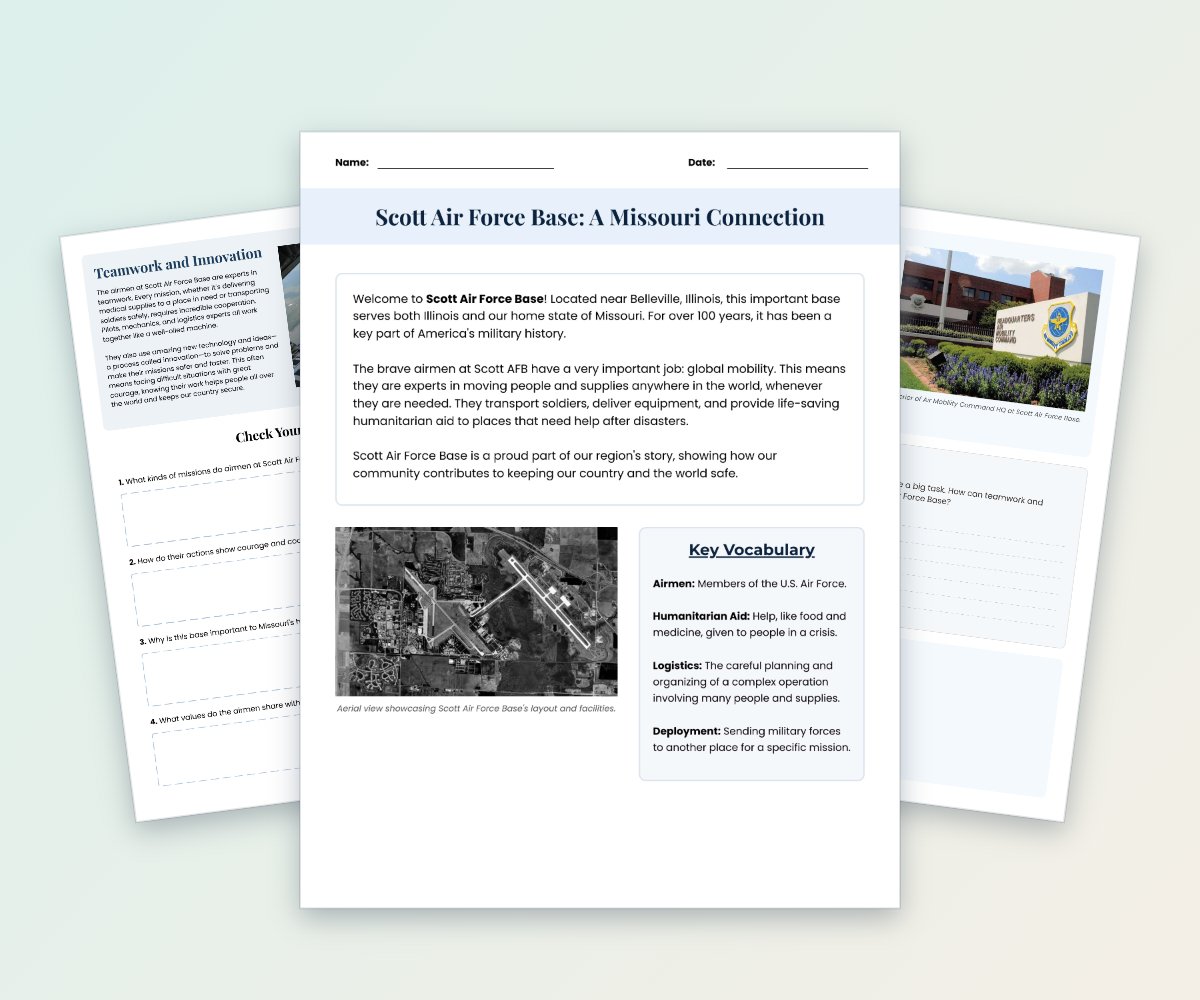
Students read an informational passage about Scott Air Force Base, global mobility, humanitarian aid, teamwork, and Missouri’s regional connection.
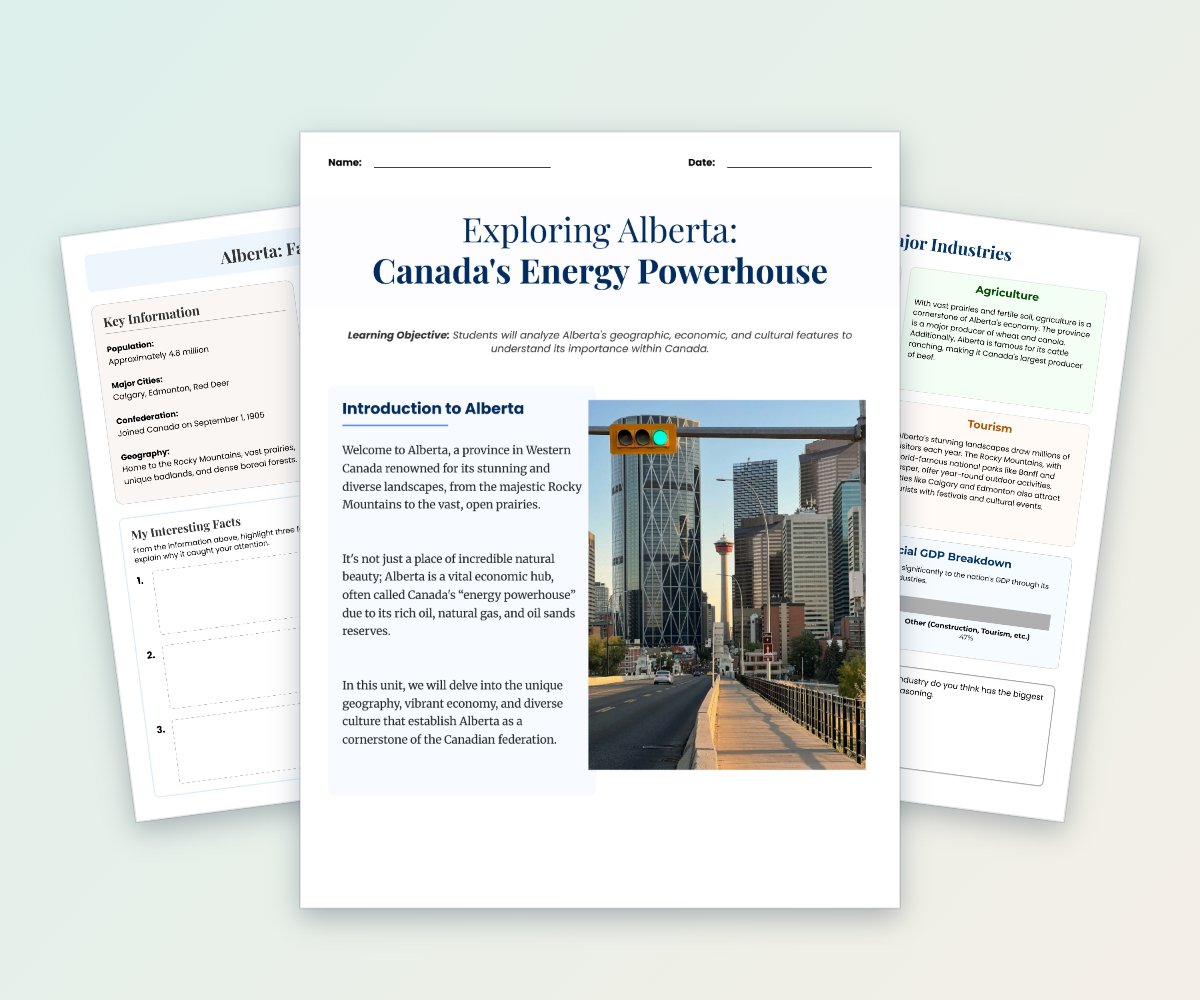
This eight-page social studies resource introduces Alberta’s geography, major industries, economy, population, cities, and cultural significance within Canada.
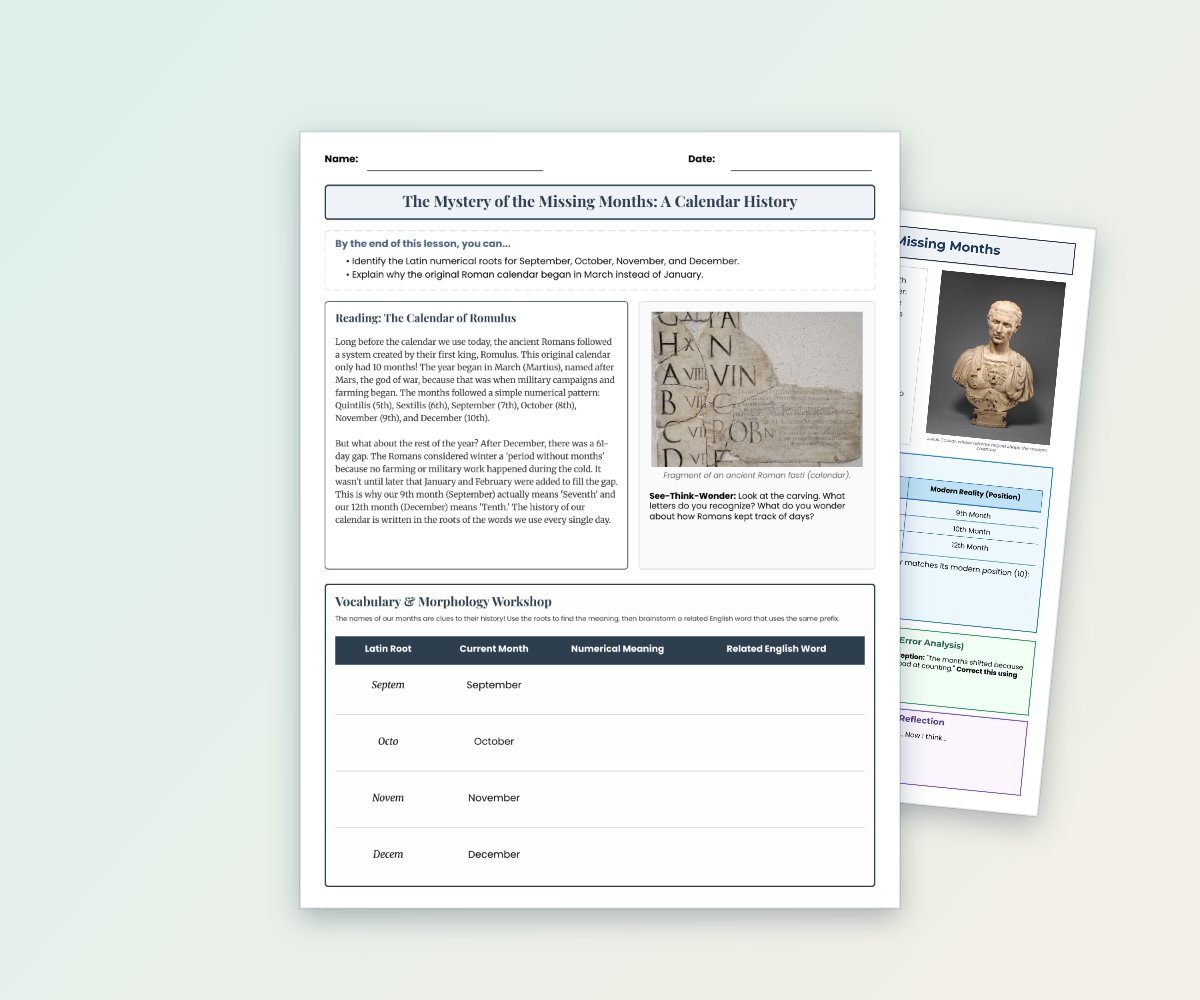
Students explore how the ancient Roman calendar developed from a ten-month system into the Julian and Gregorian calendars.
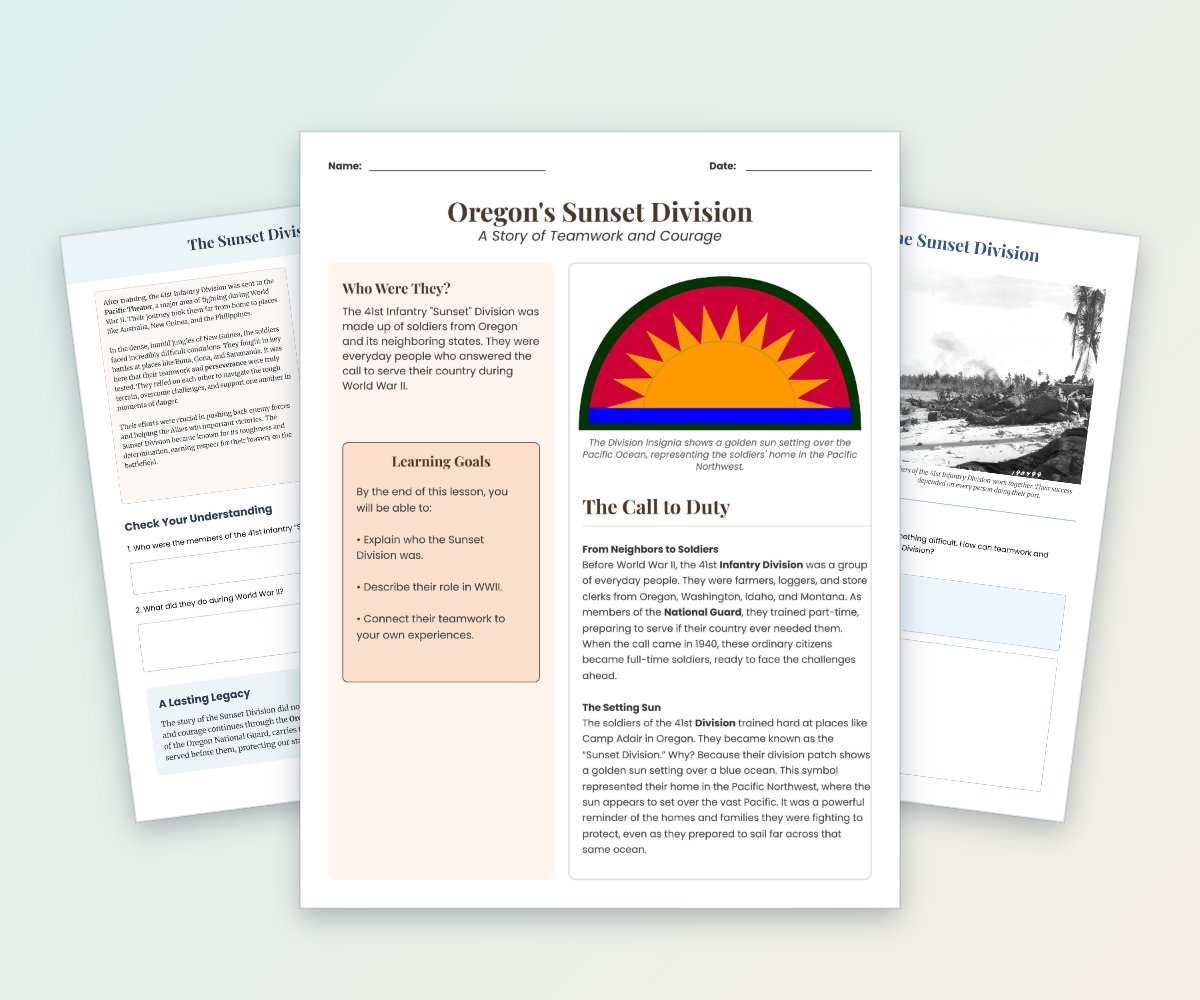
This three-page packet introduces students to Oregon's 41st Infantry “Sunset” Division, its service in the Pacific Theater, and the teamwork shown by its soldiers.
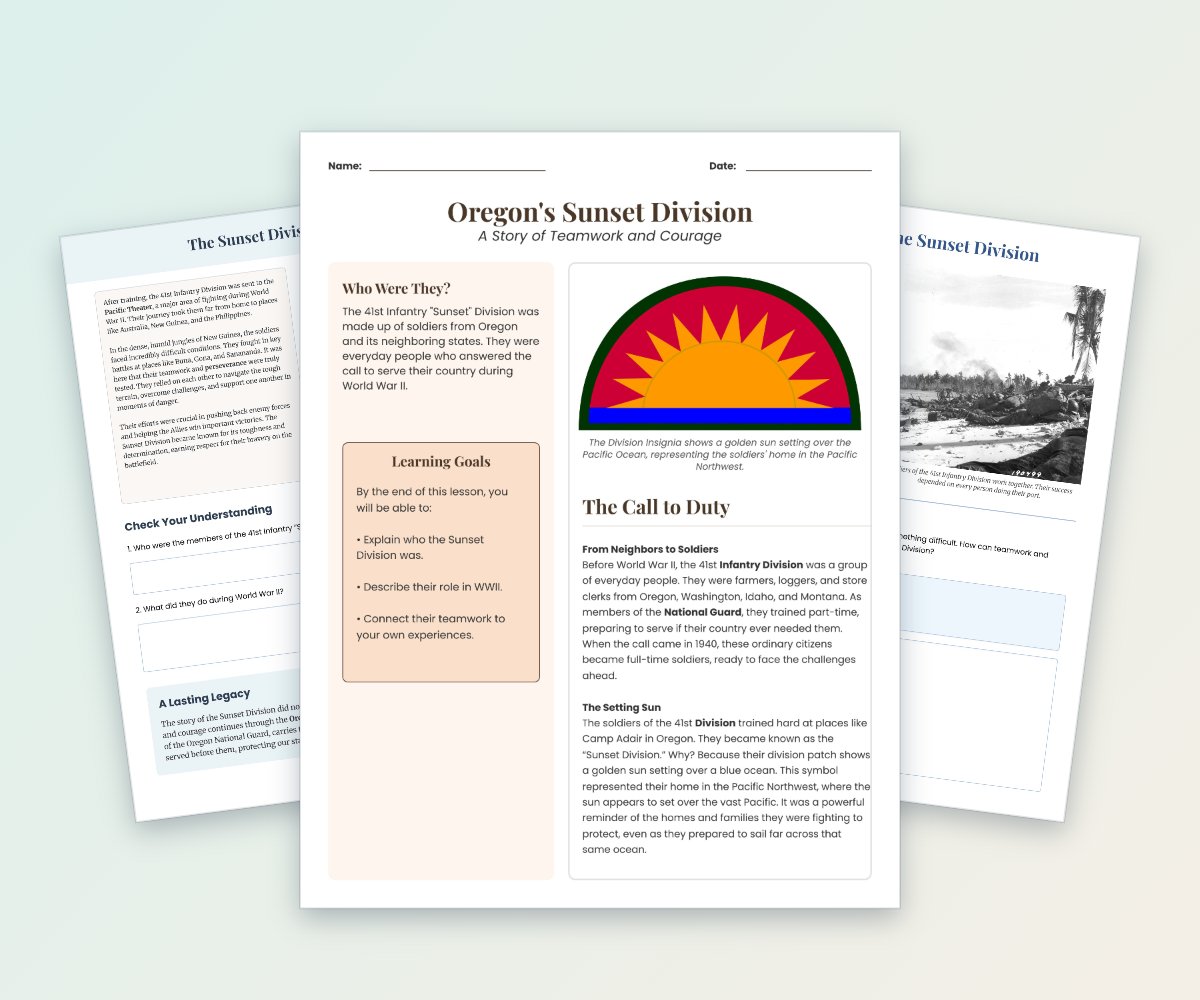
Students learn about the 41st Infantry “Sunset” Division, including its Oregon roots, insignia, training, and Pacific Theater service.
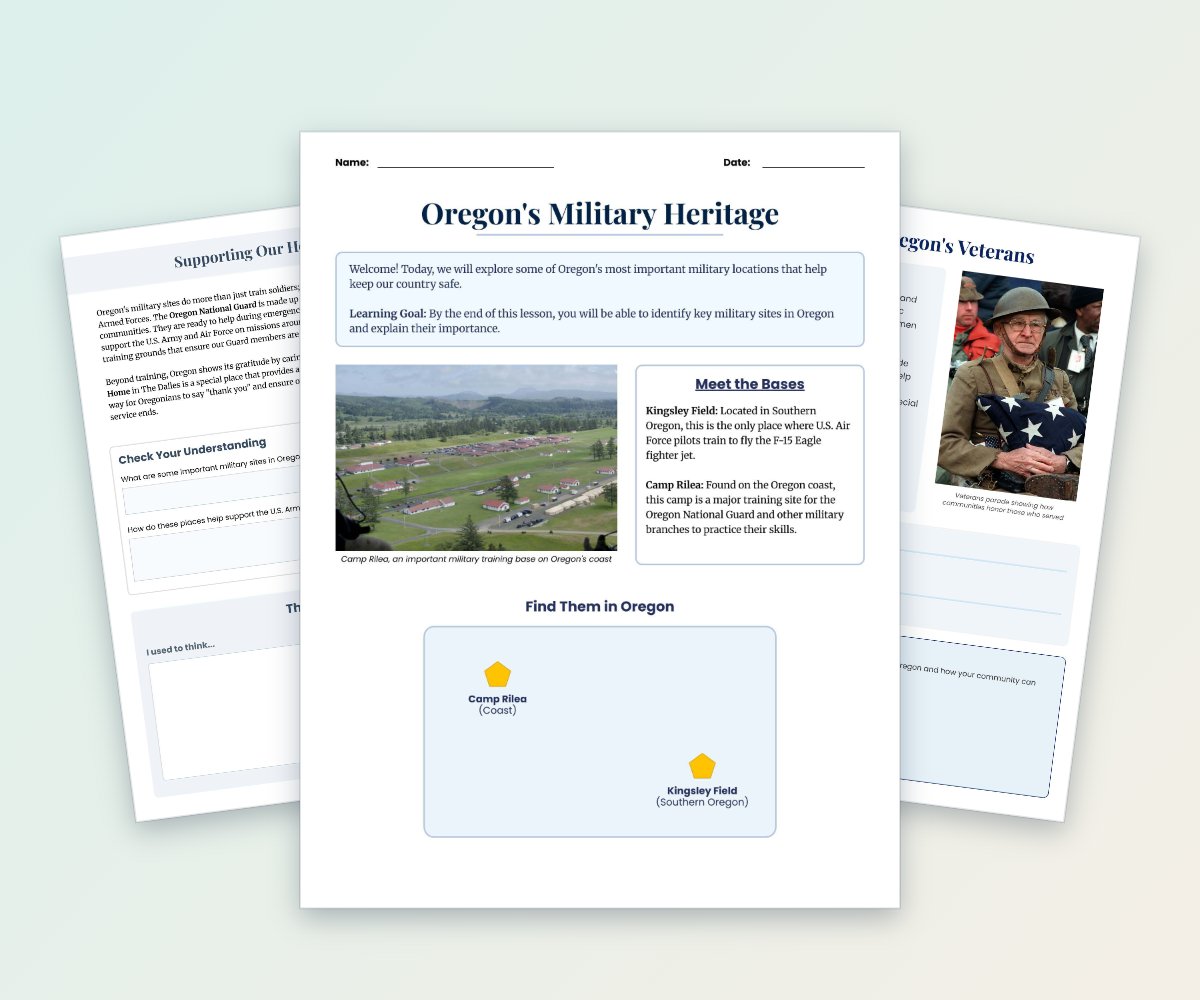
This three-page reading packet introduces students to Oregon military sites, the Oregon National Guard, veterans’ services, and Veterans Day traditions.
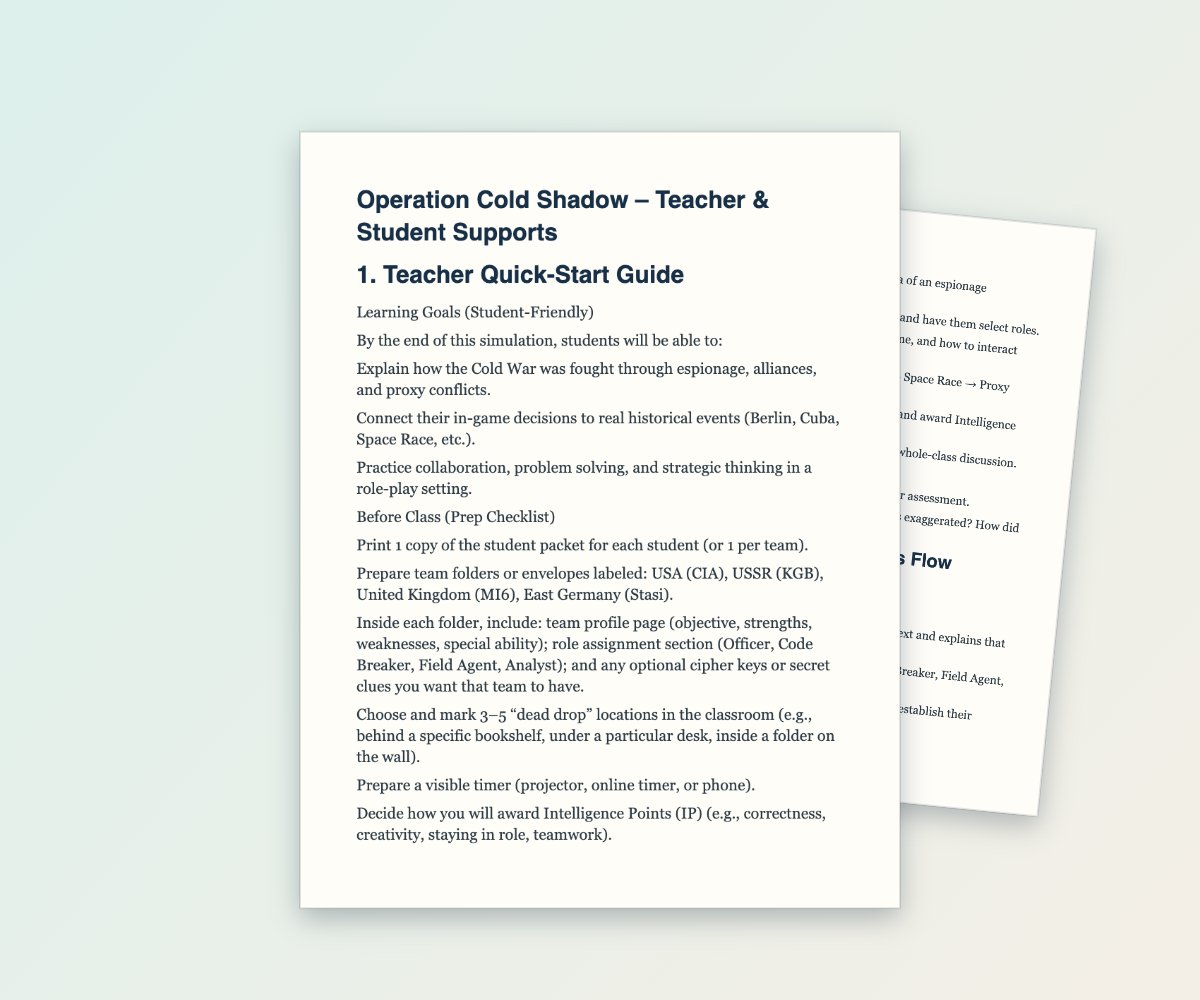
This teacher support guide helps instructors run an interactive Cold War espionage simulation featuring teams representing the USA, USSR, United Kingdom, and East Germany.
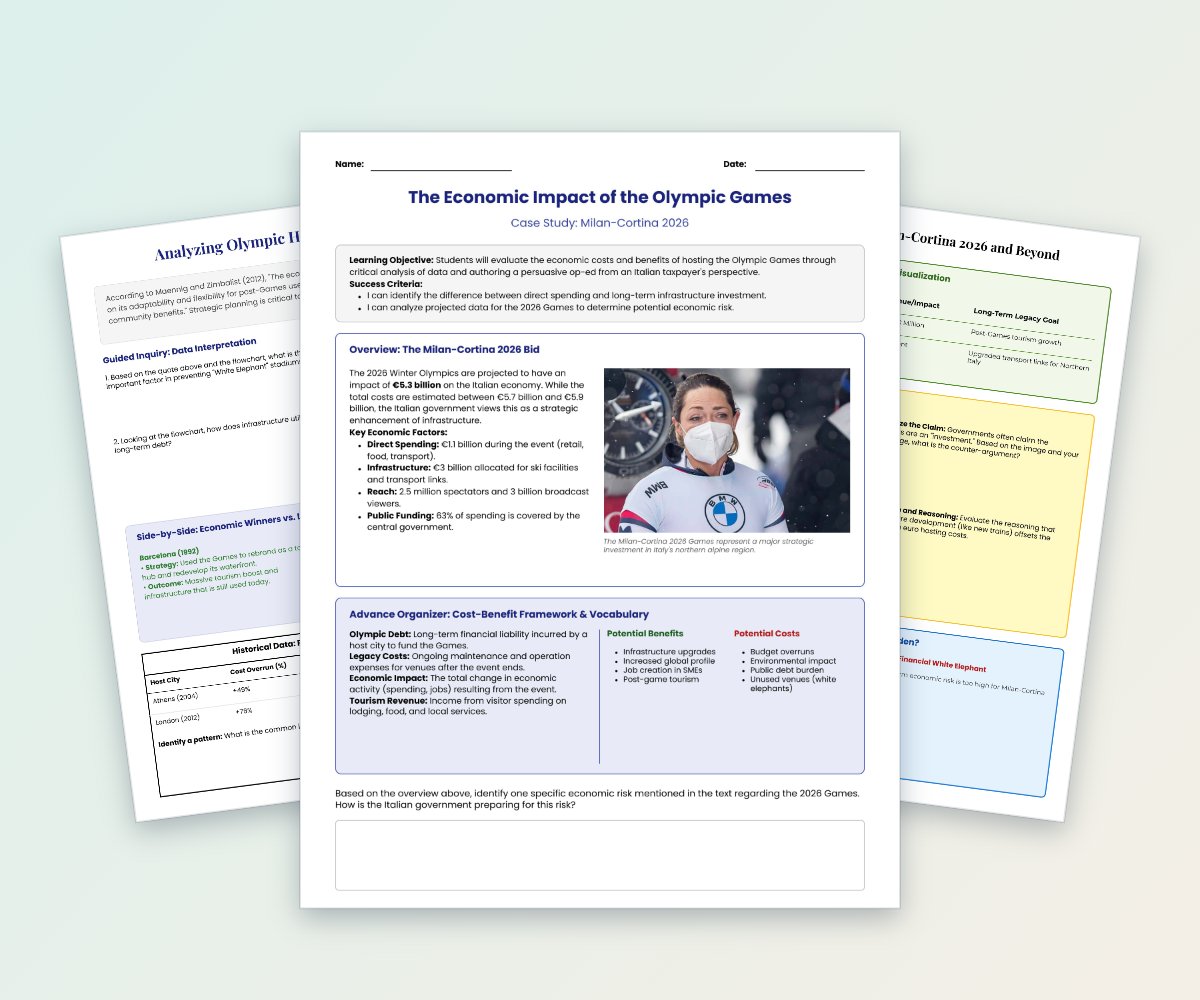
Students examine the projected costs, benefits, risks, and long-term infrastructure effects of hosting the Milan-Cortina 2026 Winter Olympics.
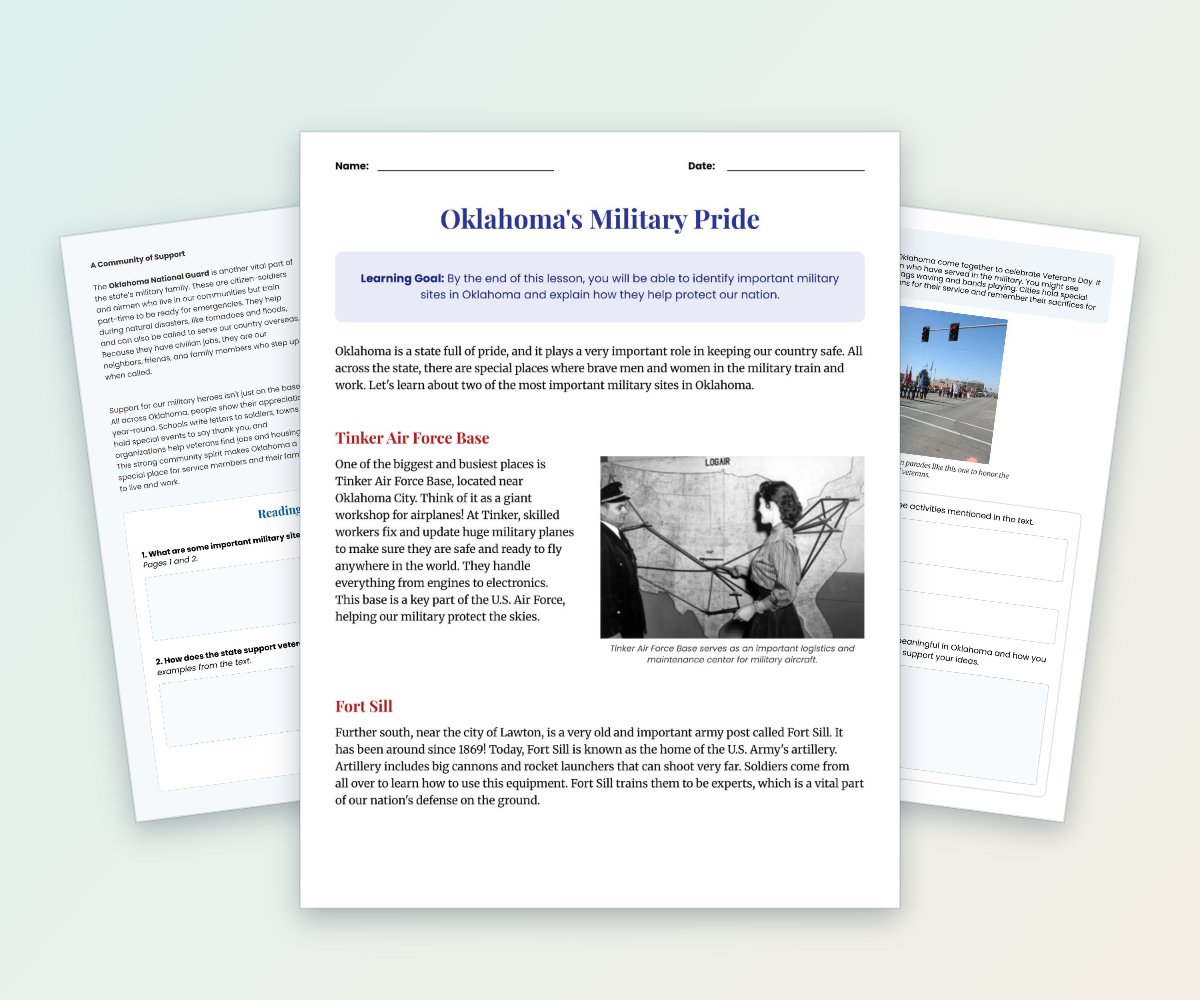
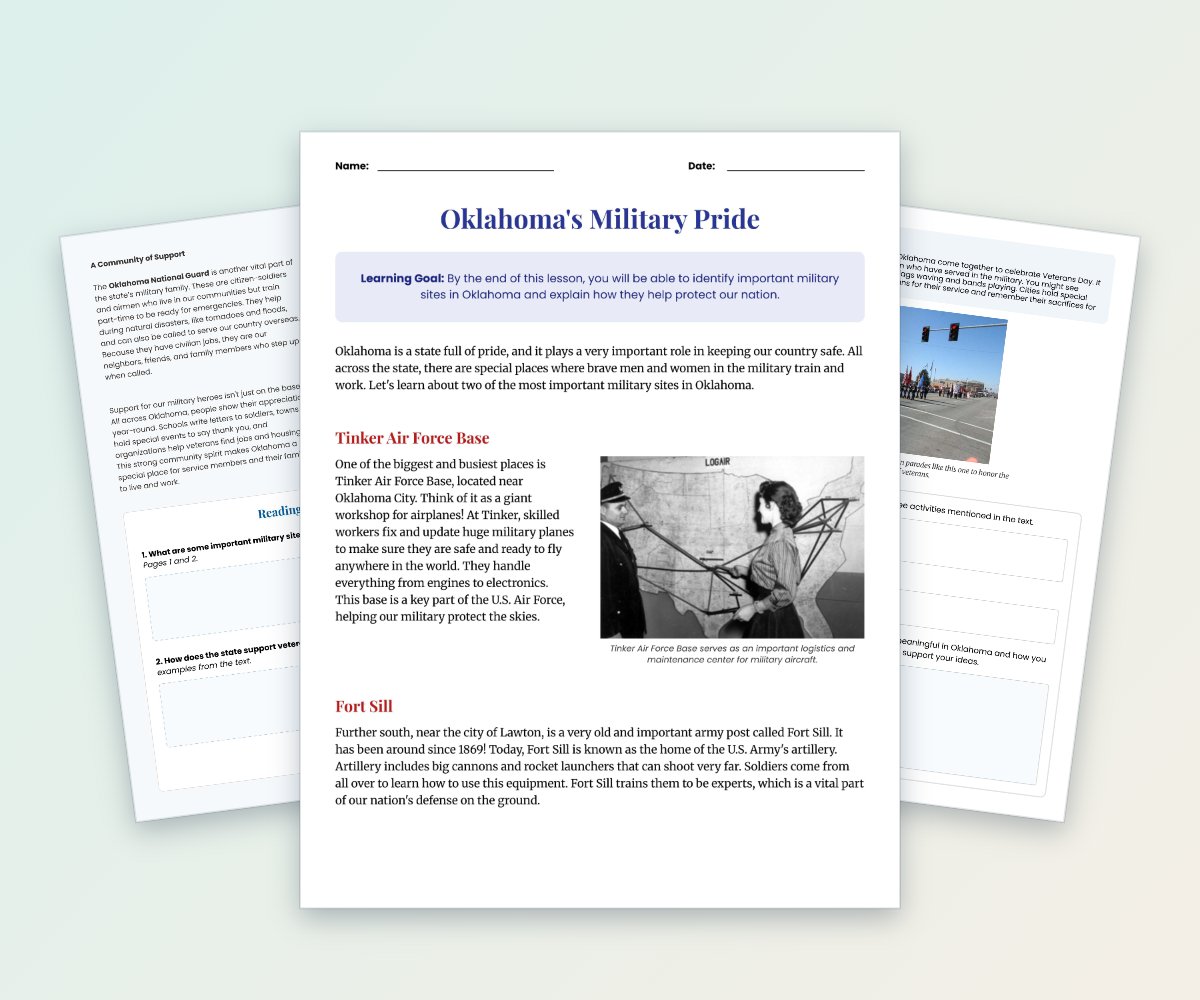
Students read about Tinker Air Force Base, Fort Sill, the Oklahoma National Guard, and community support for military families.
Students read an informational passage about Oklahoma’s 45th Infantry Division, known as the Thunderbirds, and its service during World War II and the Korean War.
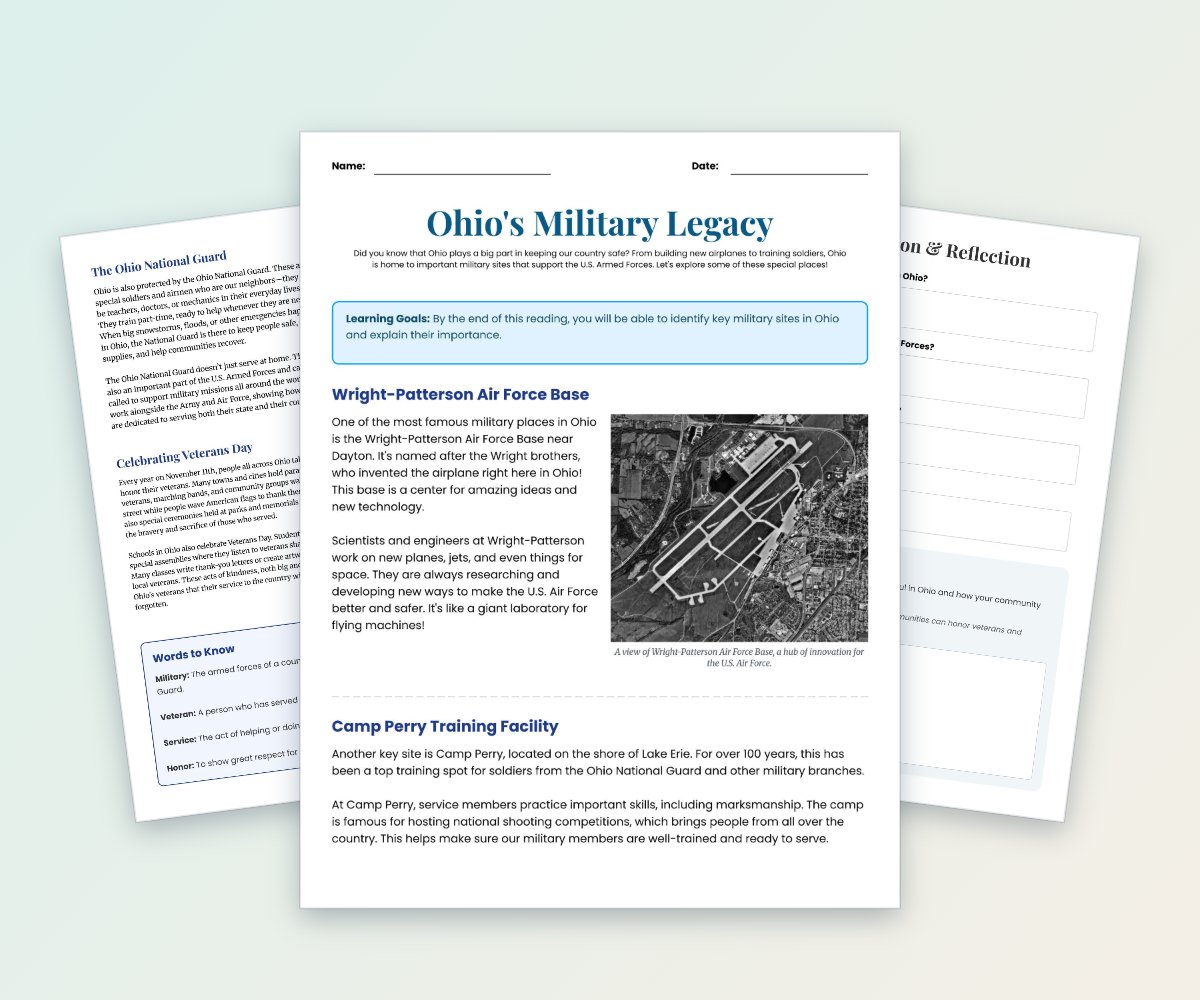
Students read about Wright-Patterson Air Force Base, Camp Perry, the Ohio National Guard, and Veterans Day celebrations.
Students learn about Tinker Air Force Base, Fort Sill, the Oklahoma National Guard, and community support for military families.
This three-page reading passage introduces students to Wilbur and Orville Wright, their Ohio roots, the first powered flight, and aviation’s impact.
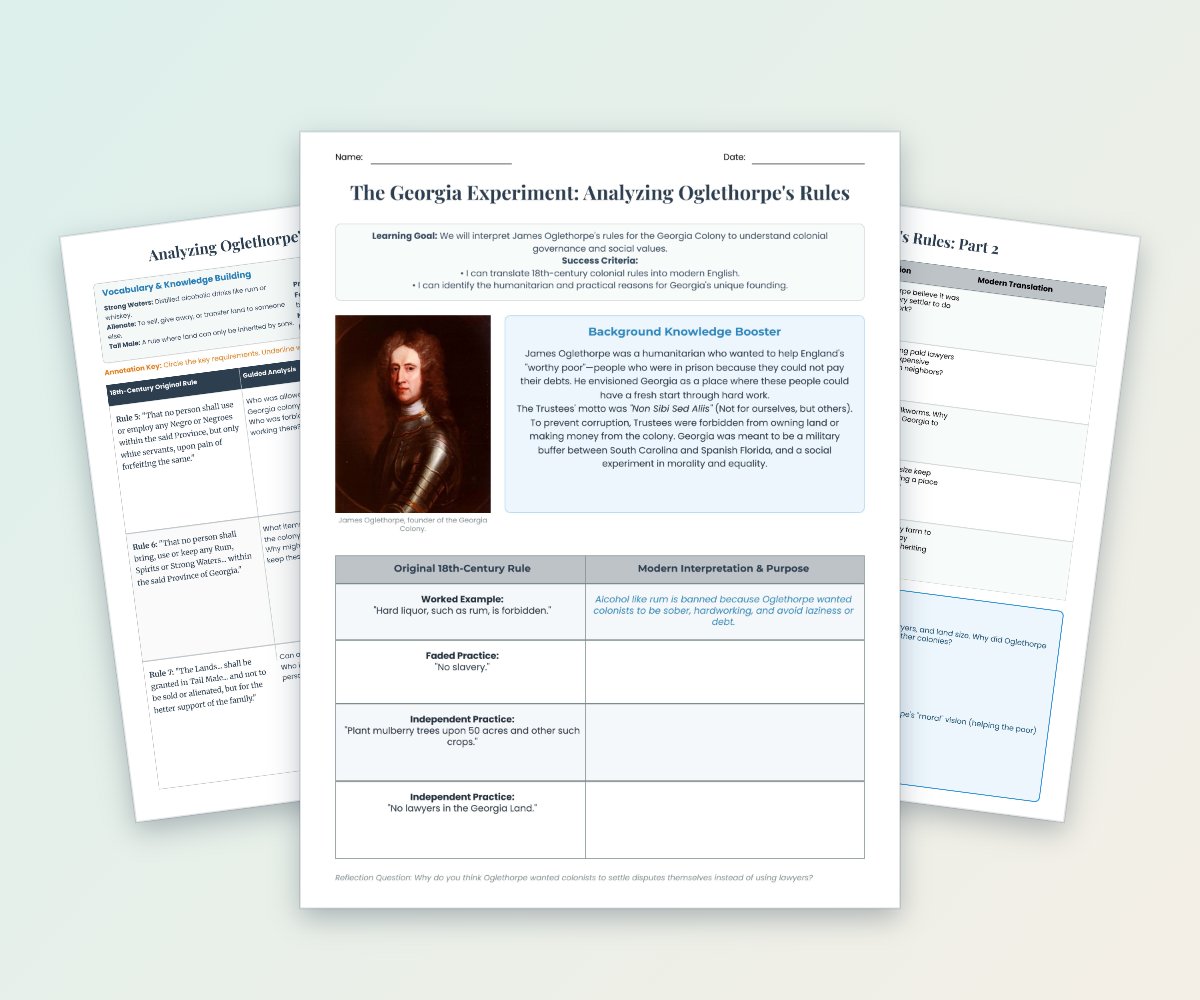
Students examine James Oglethorpe's rules for the Georgia Colony, translate historical language, and analyze the humanitarian, practical, and social purposes behind the rules.
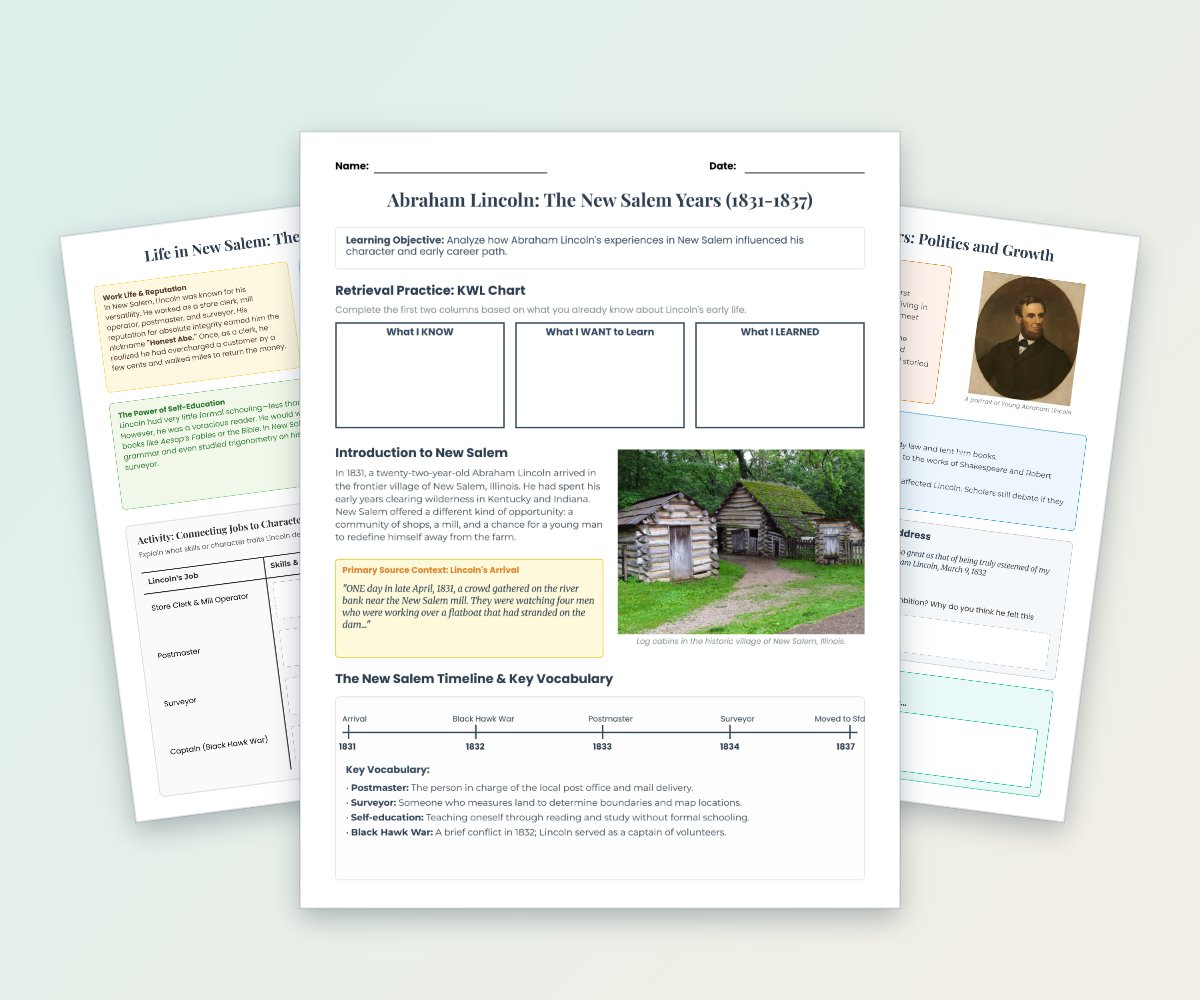
Explore Abraham Lincoln’s experiences in New Salem from 1831–1837 through historical context, a timeline, vocabulary, and primary-source analysis.
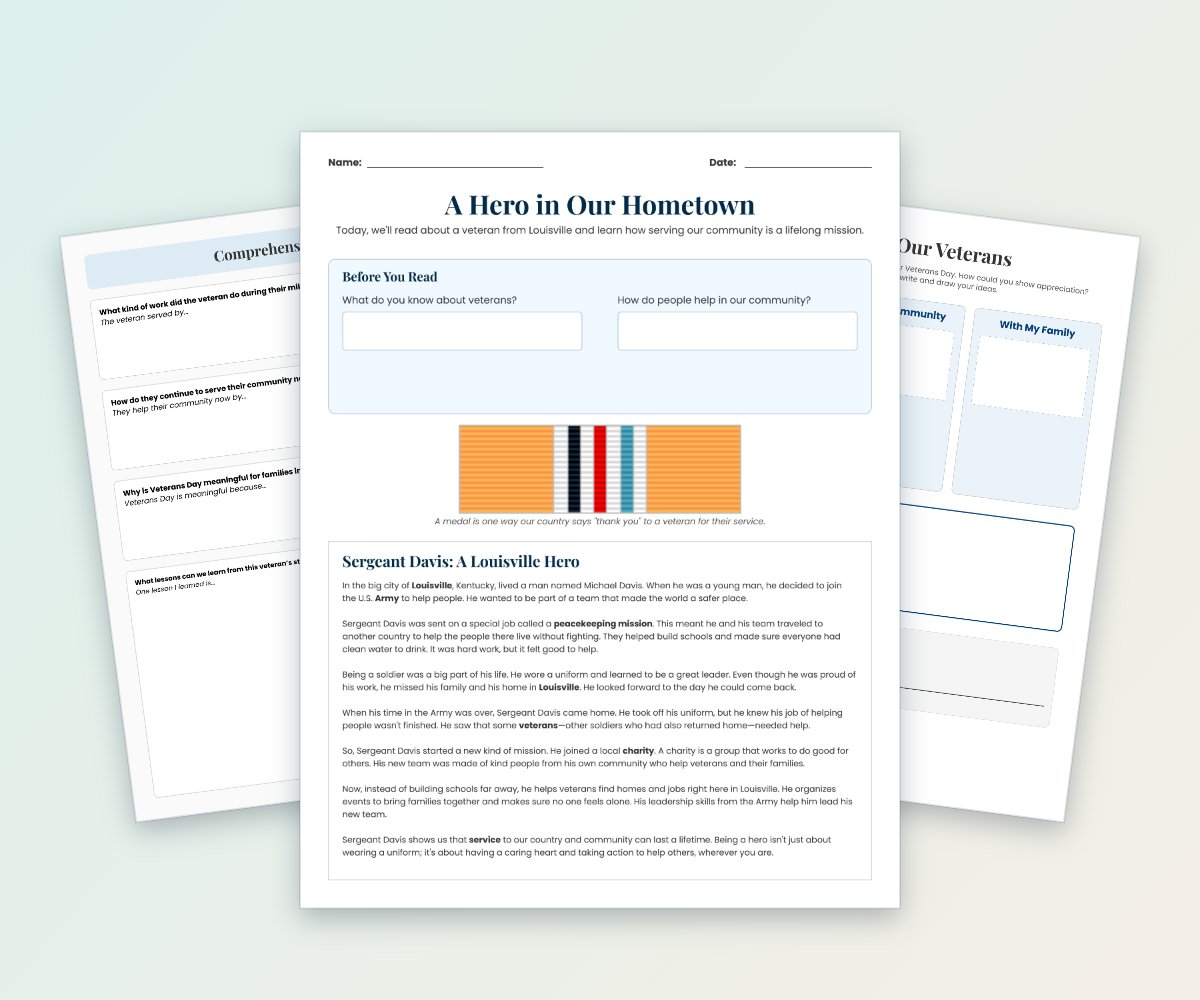
Students read about Sergeant Davis, a Louisville veteran who continues helping veterans and families after military service.
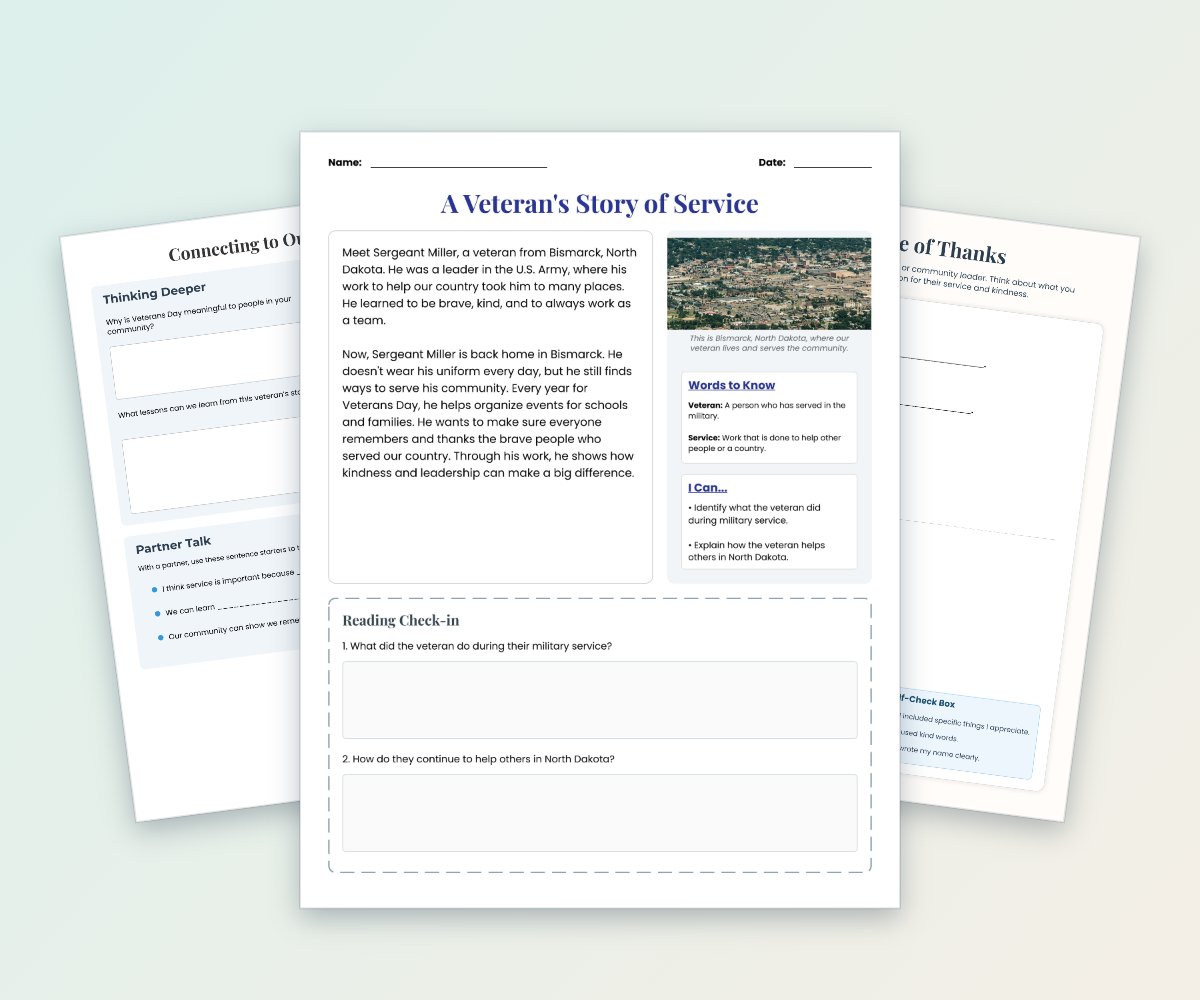
Students read about Sergeant Miller, a North Dakota veteran, and complete reading questions, vocabulary work, partner discussion, and text-marking activities.
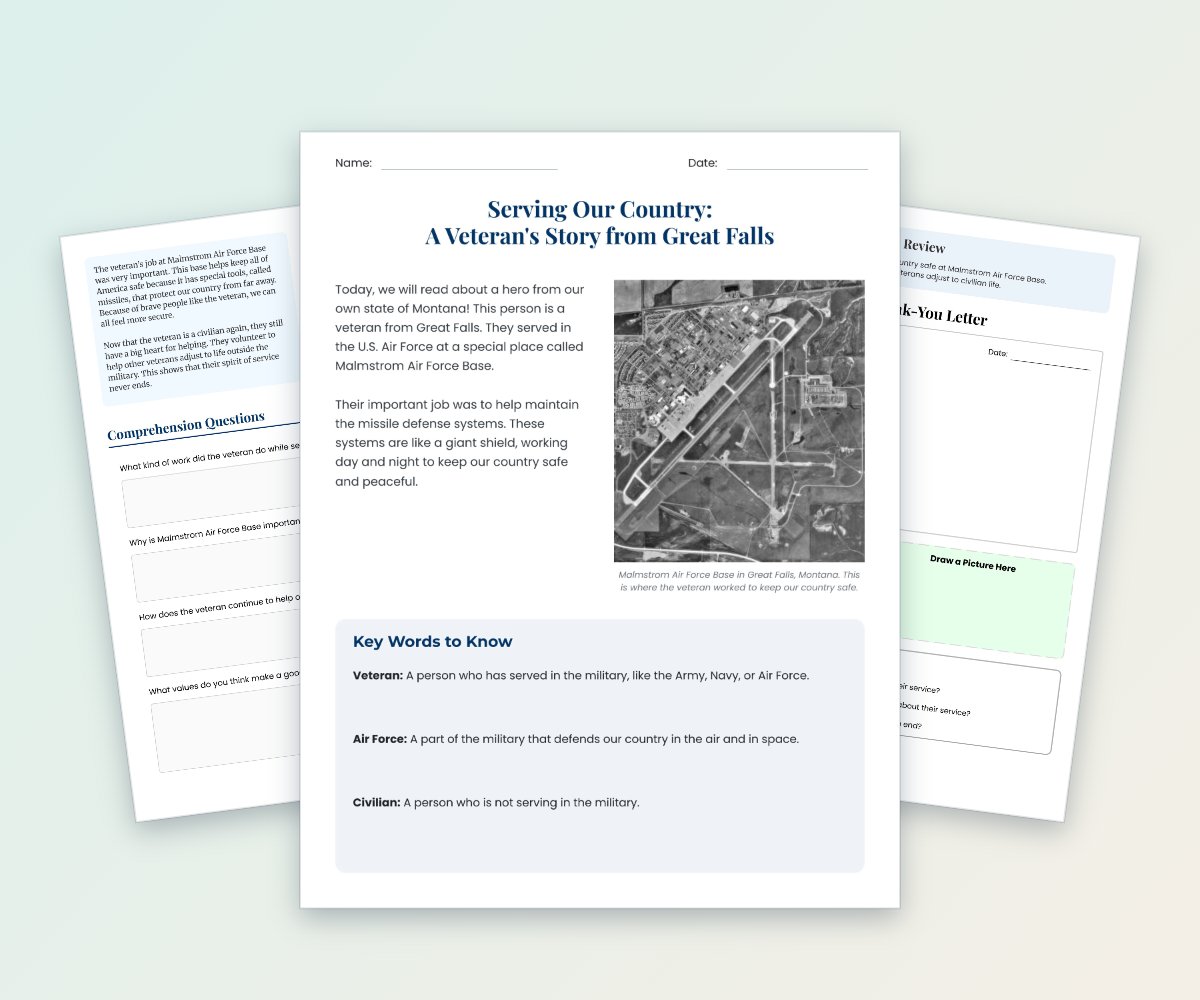
Students read about a Great Falls, Montana, veteran who served at Malmstrom Air Force Base and later volunteered to support veterans.
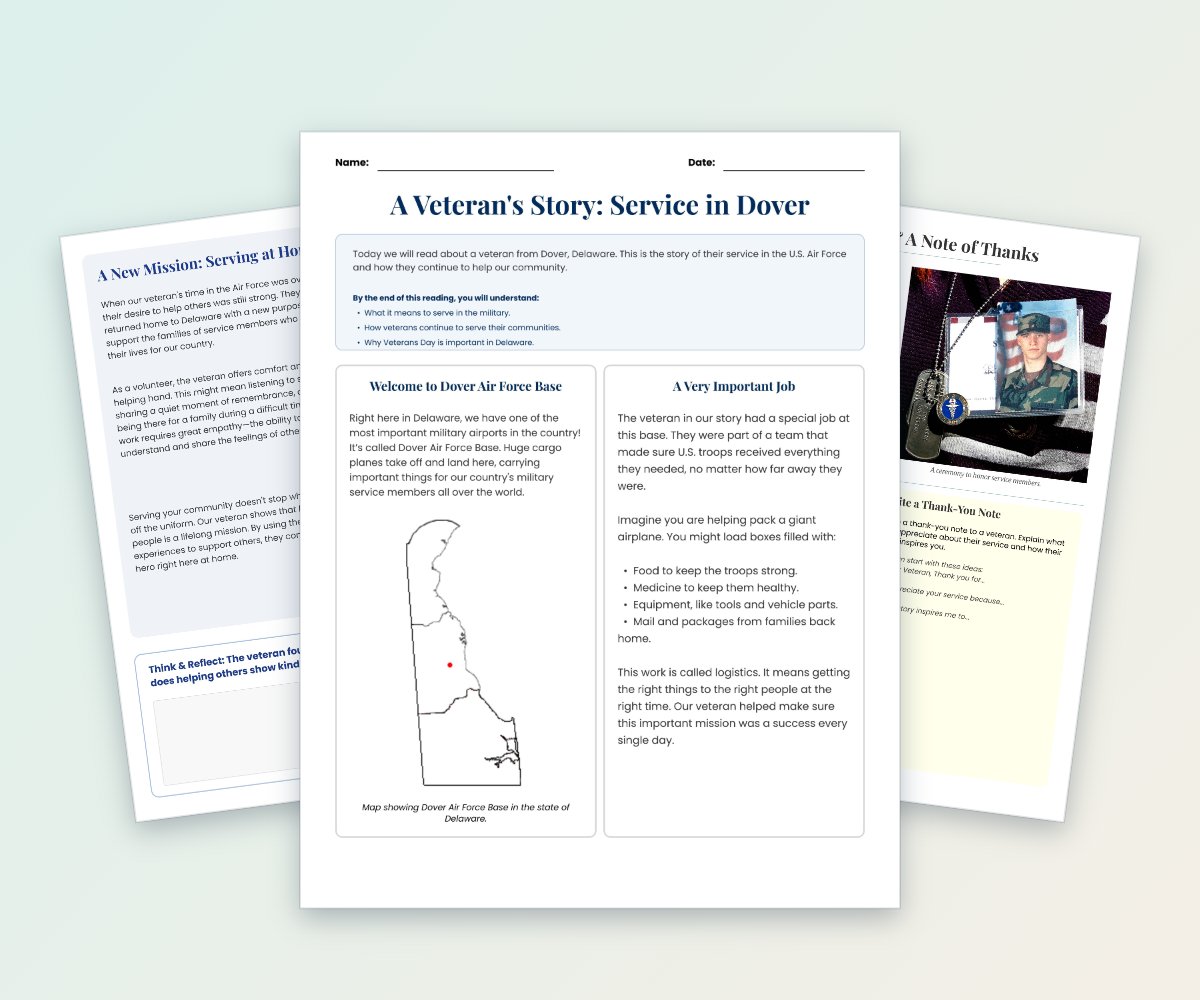
Students read about a Delaware veteran's service at Dover Air Force Base and continued community support after military service.
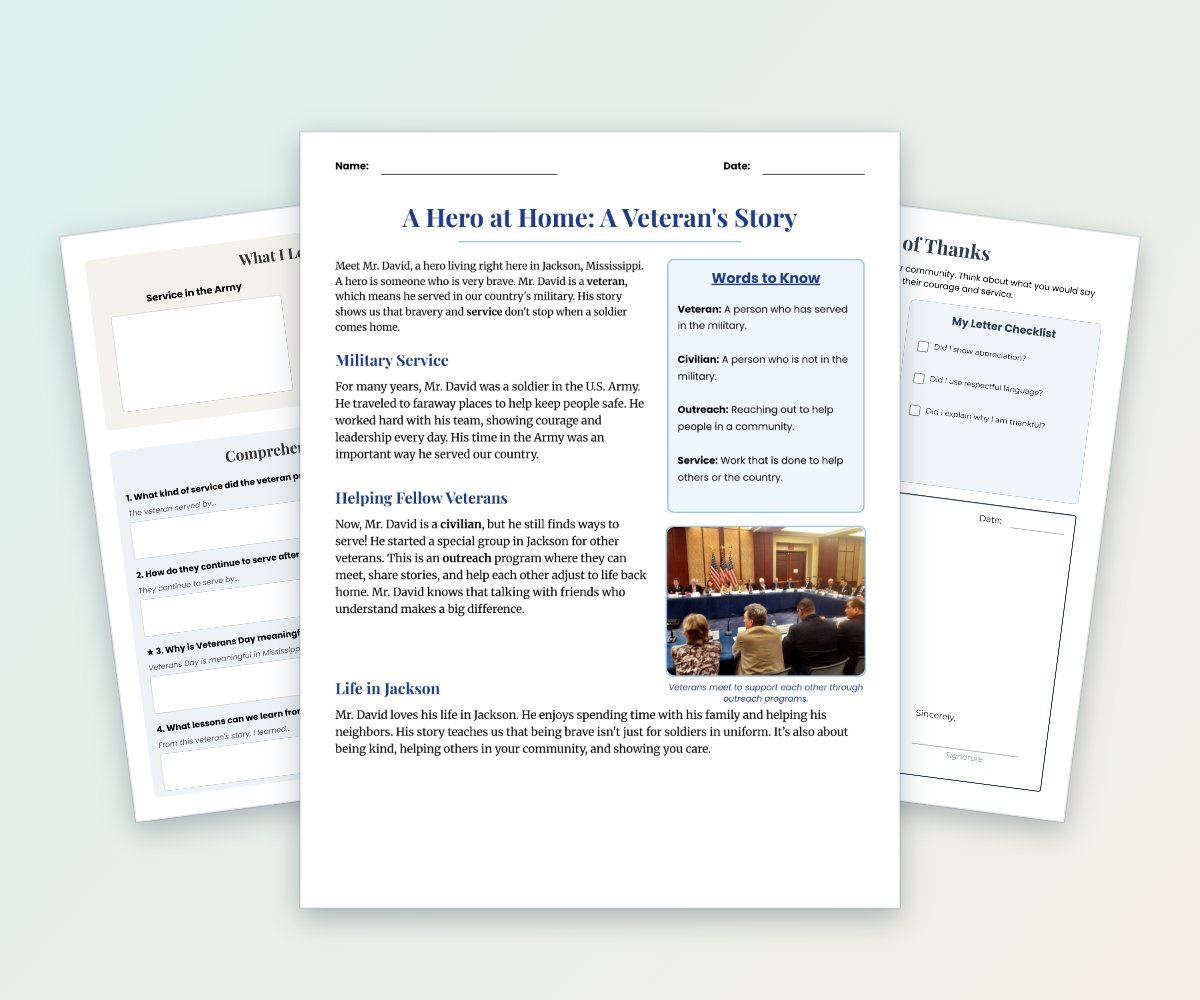
Students read about a Mississippi veteran’s military service, outreach work, and continued community involvement.
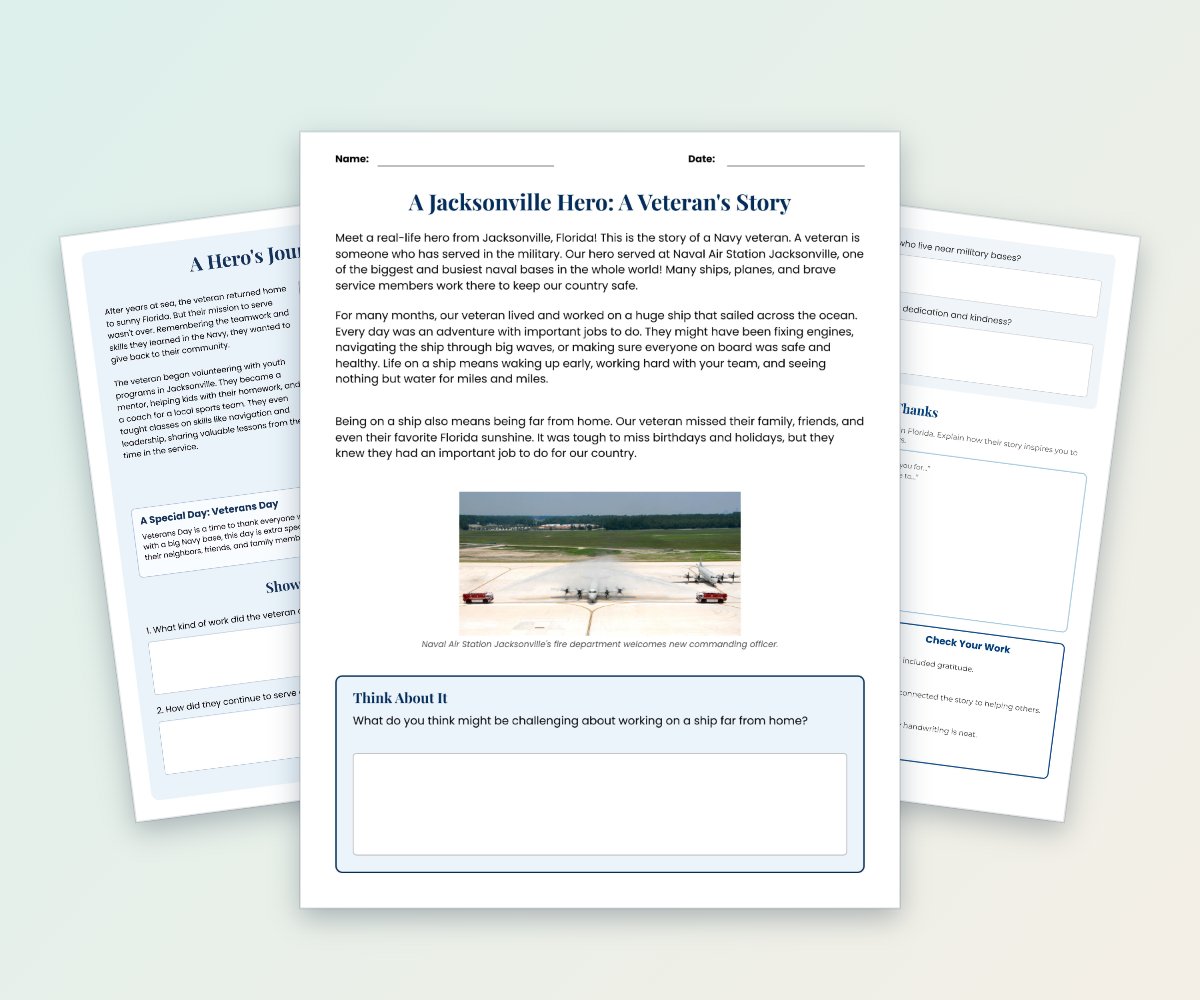
Students read an age-appropriate narrative about a Jacksonville Navy veteran’s service, return home, and community involvement.
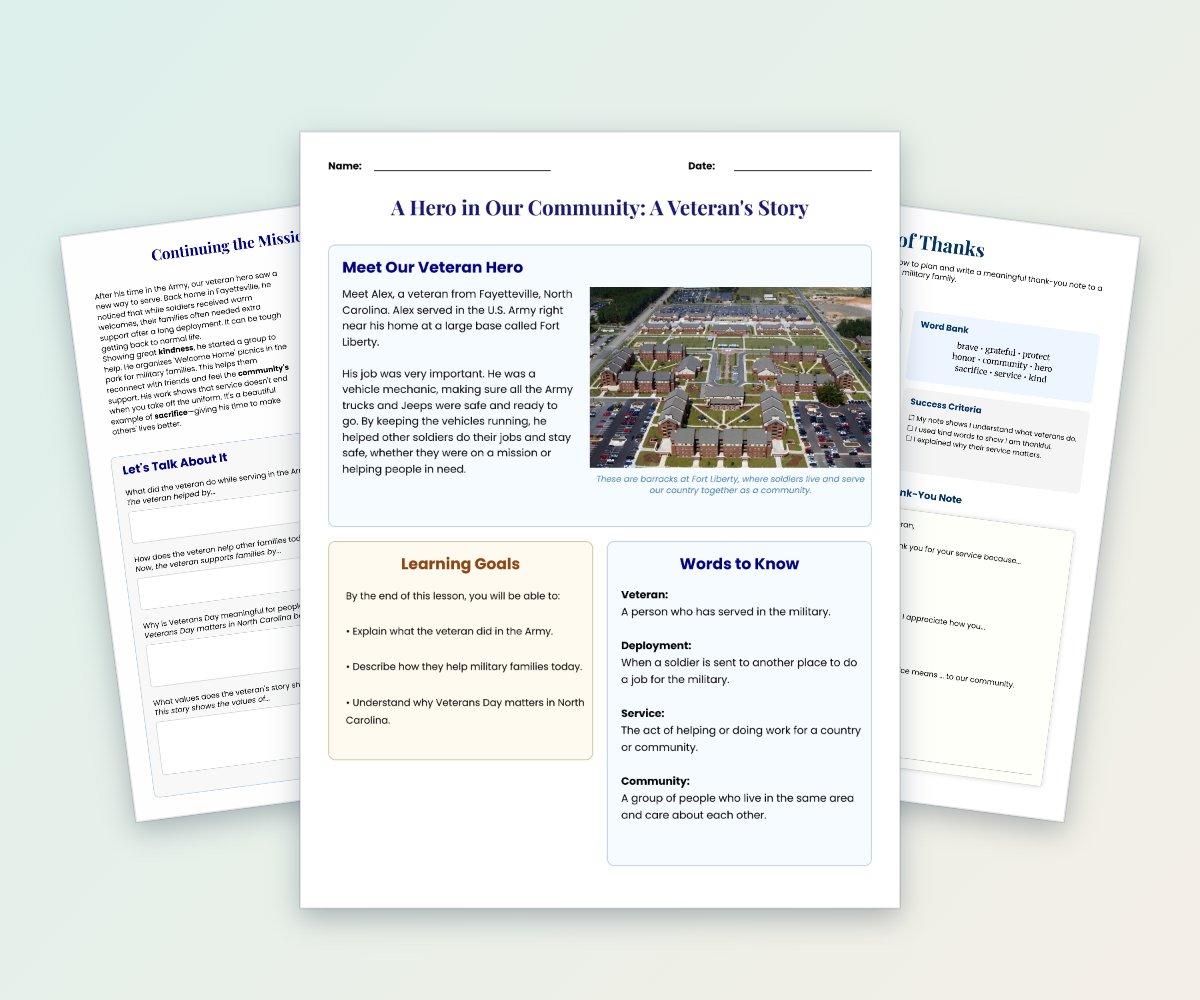
Students learn about a North Carolina veteran's military service, community contributions, and support for military families.
Students read about a Pittsburgh Navy veteran, answer comprehension questions, discuss community service, and write a letter of thanks.
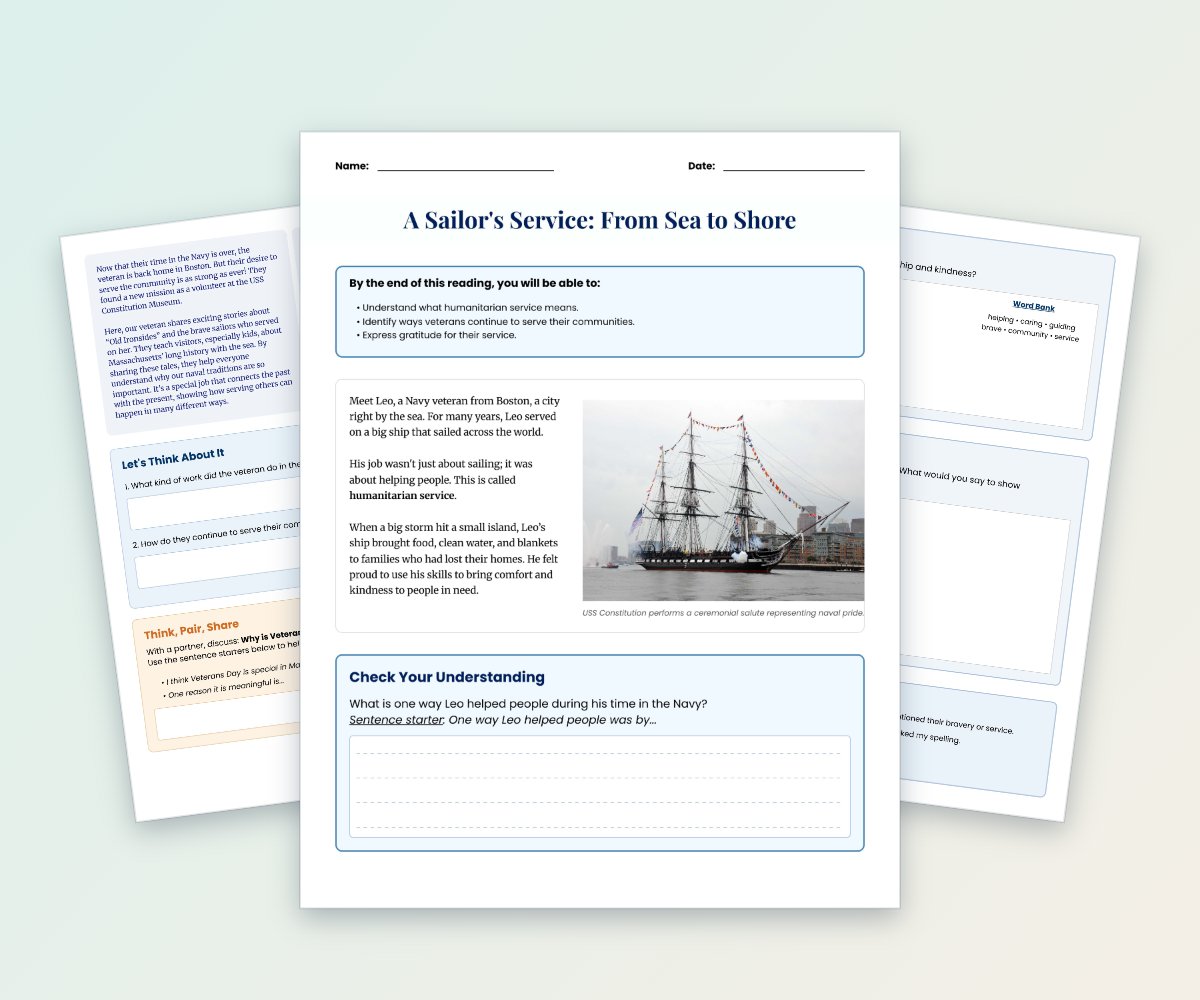
Students read about a Navy veteran's humanitarian service at sea and continued community service at the USS Constitution Museum.
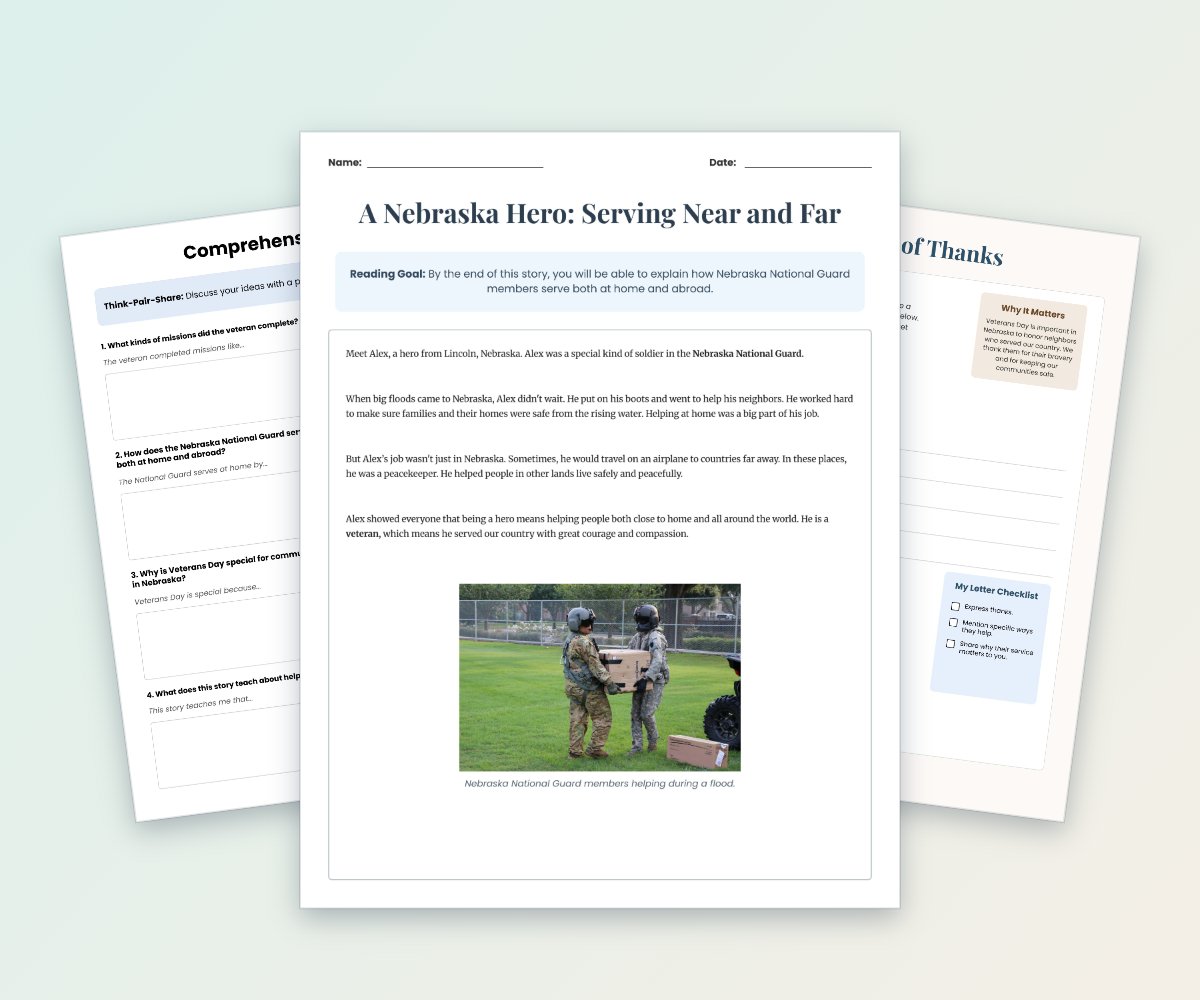
Students read about a Nebraska National Guard member serving during floods and abroad, then answer comprehension questions.
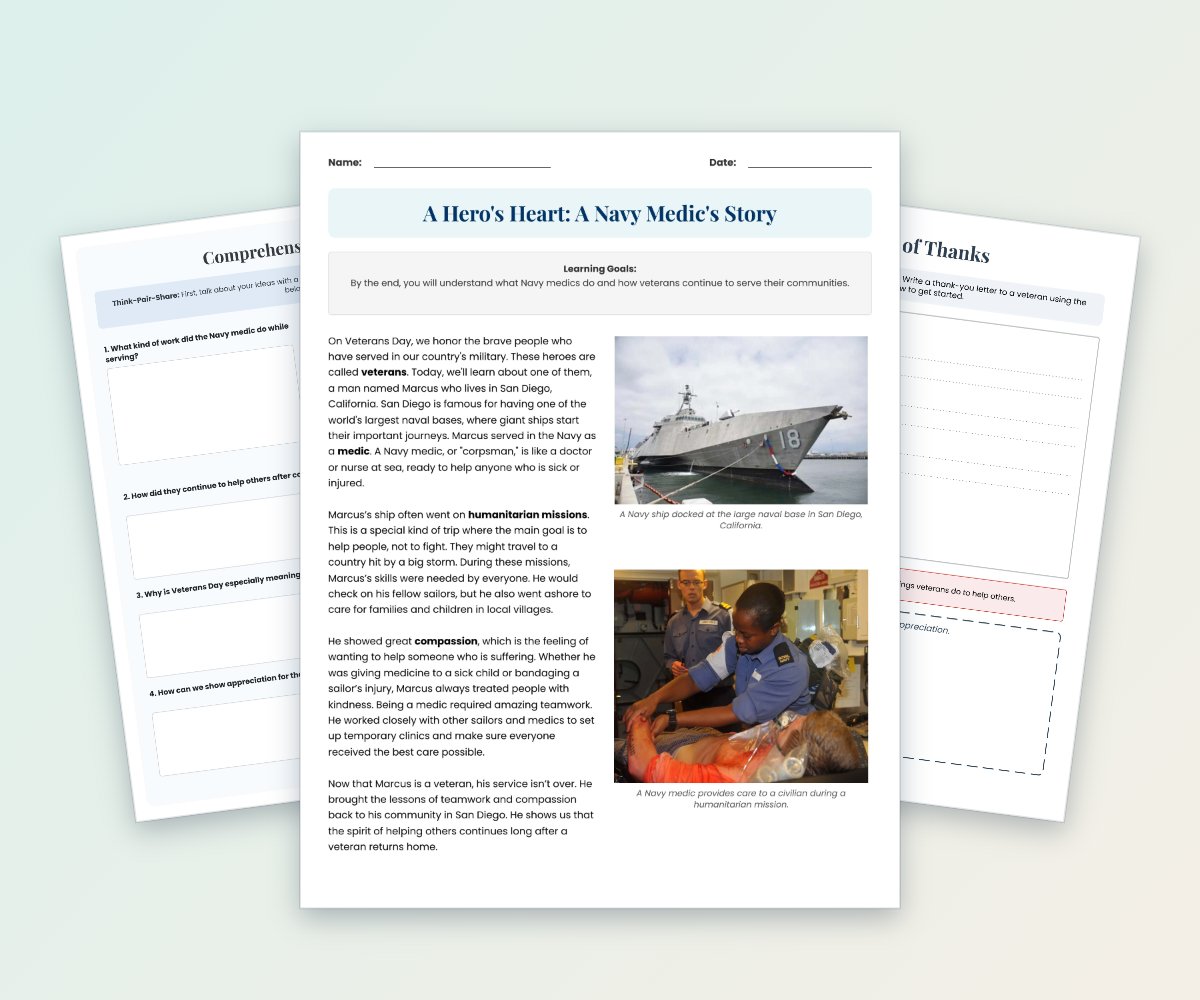
Students read about a Navy medic’s humanitarian service, teamwork, compassion, and continued community service as a veteran.
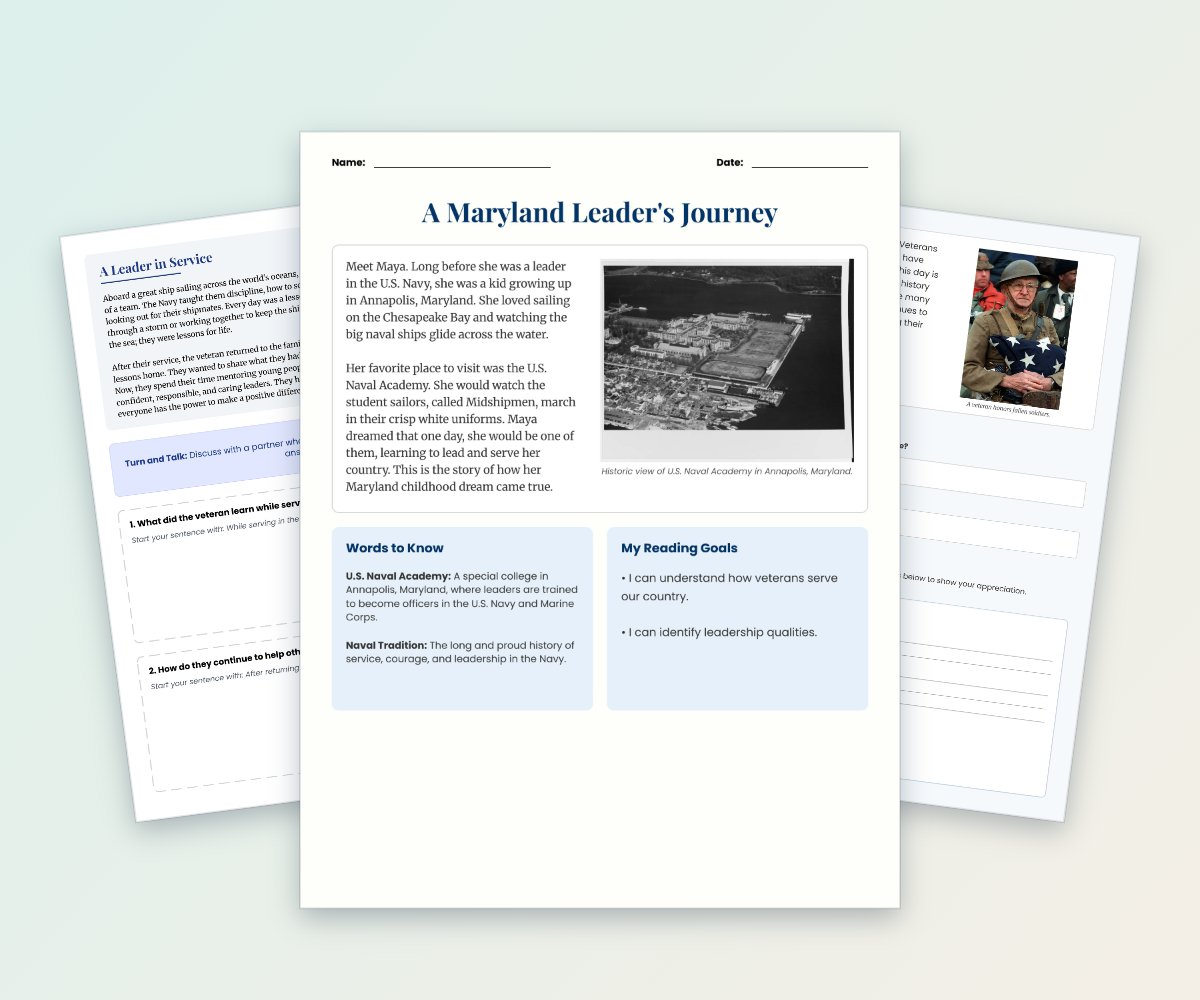
Students read about a Maryland veteran's Navy service, leadership qualities, and community mentoring.
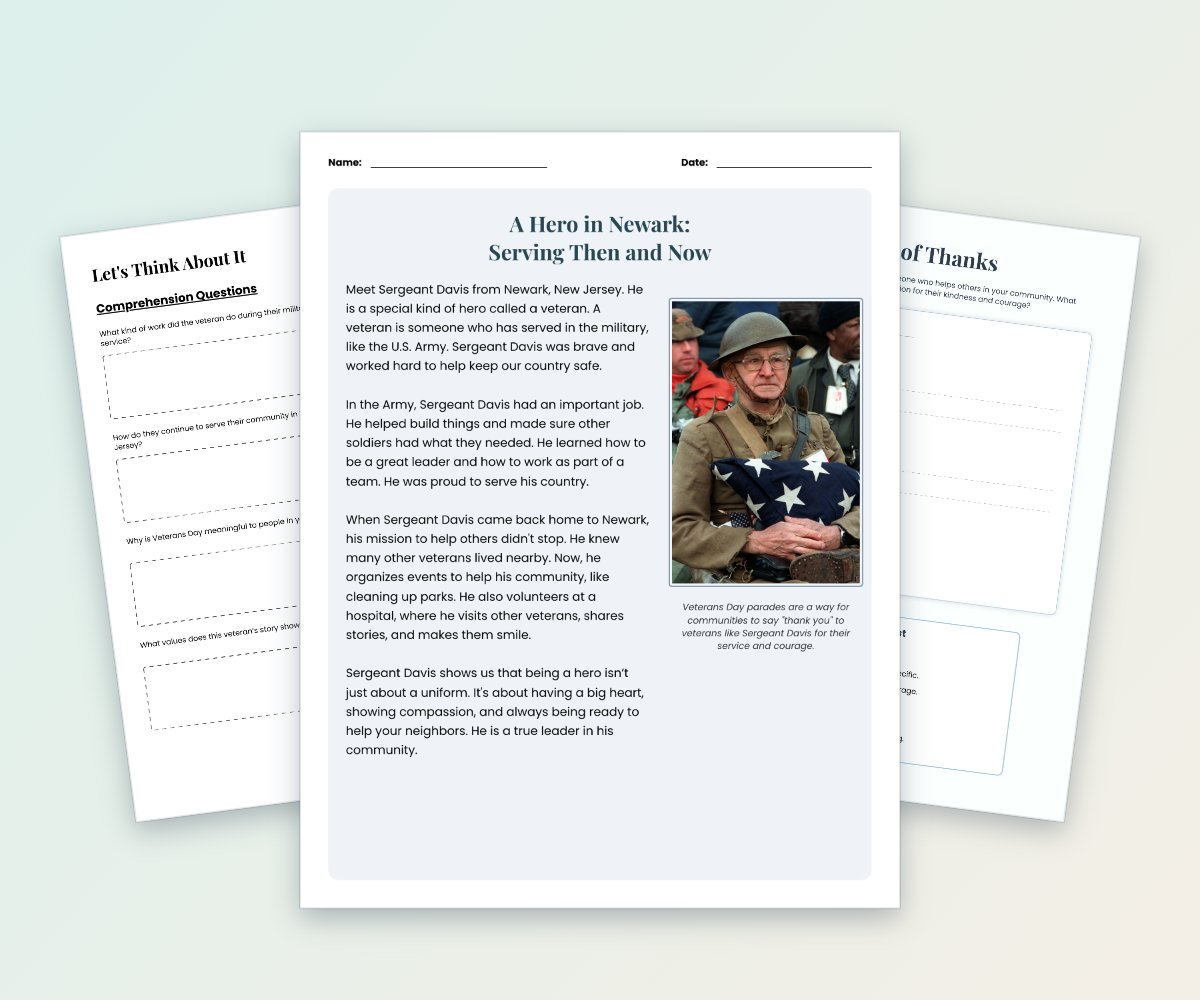
Students read about a Newark veteran’s military service and ongoing community involvement, then answer comprehension questions and explore related vocabulary.
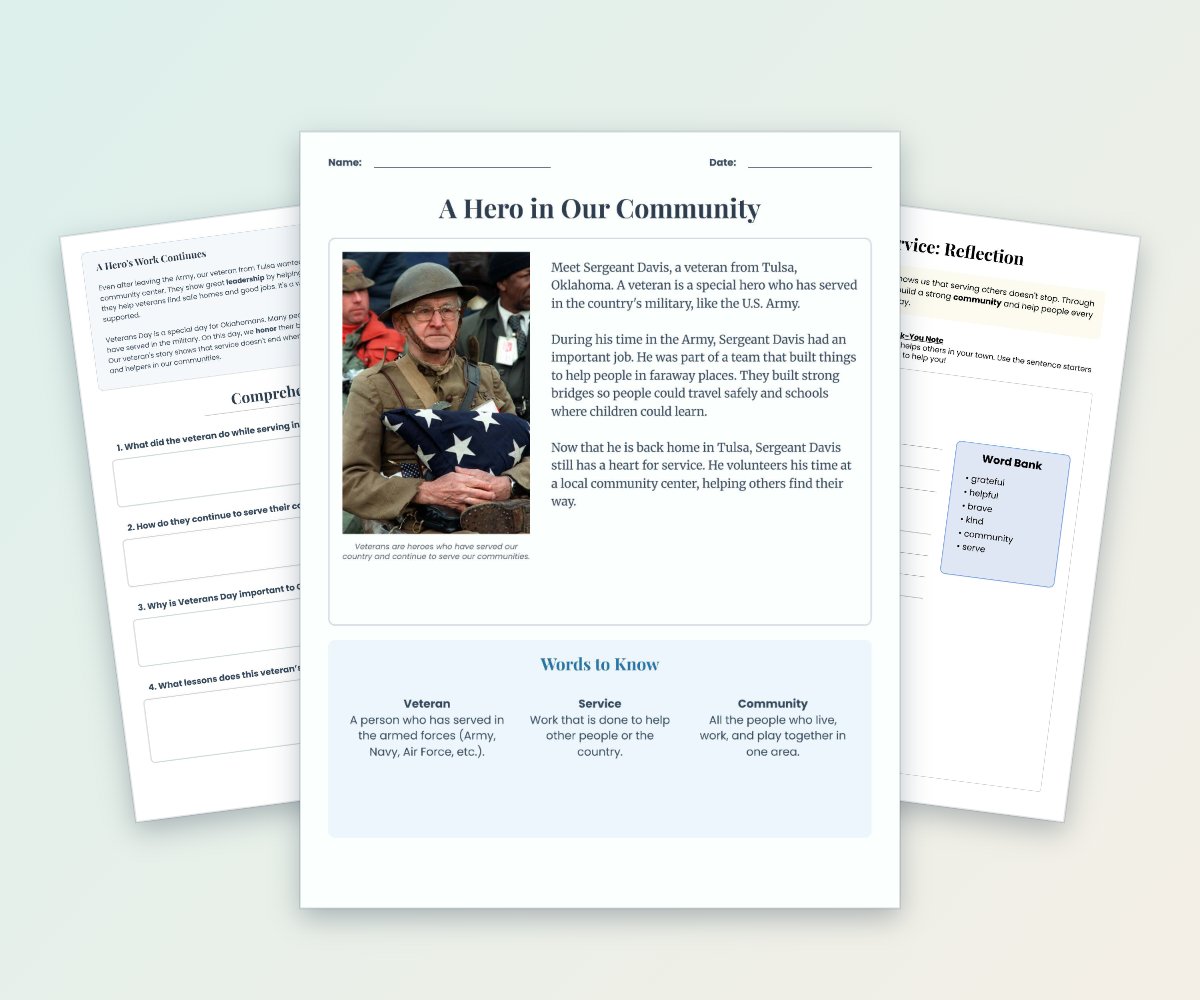
Students read about an Oklahoma veteran, answer comprehension questions, and reflect on service and community leadership.
Students read about New Hampshire’s White Mountains, the 10th Mountain Division, and the soldiers’ World War II training.
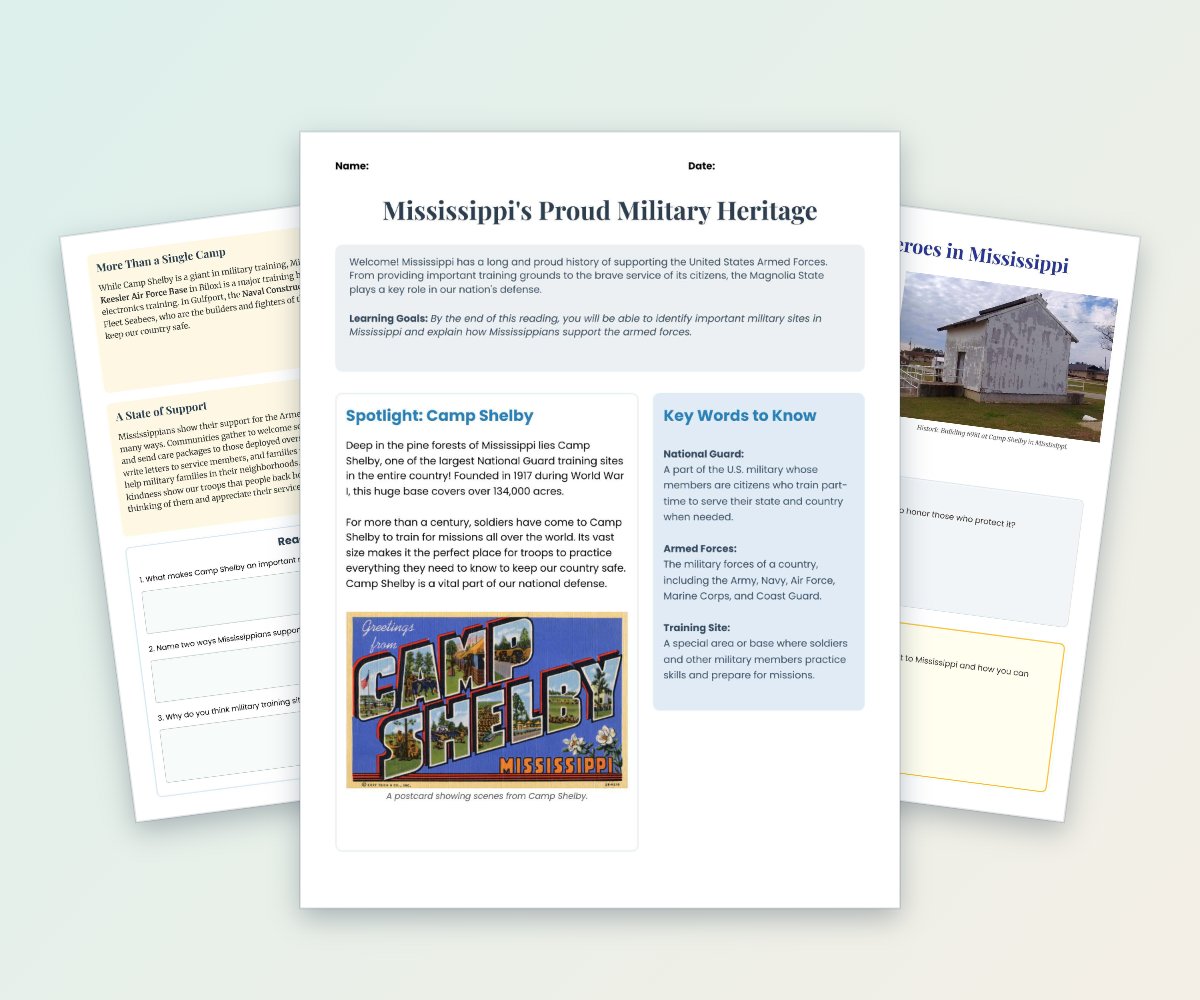
This three-page reading packet explores Mississippi’s military heritage, including Camp Shelby, Keesler Air Force Base, and the Naval Construction Battalion Center.
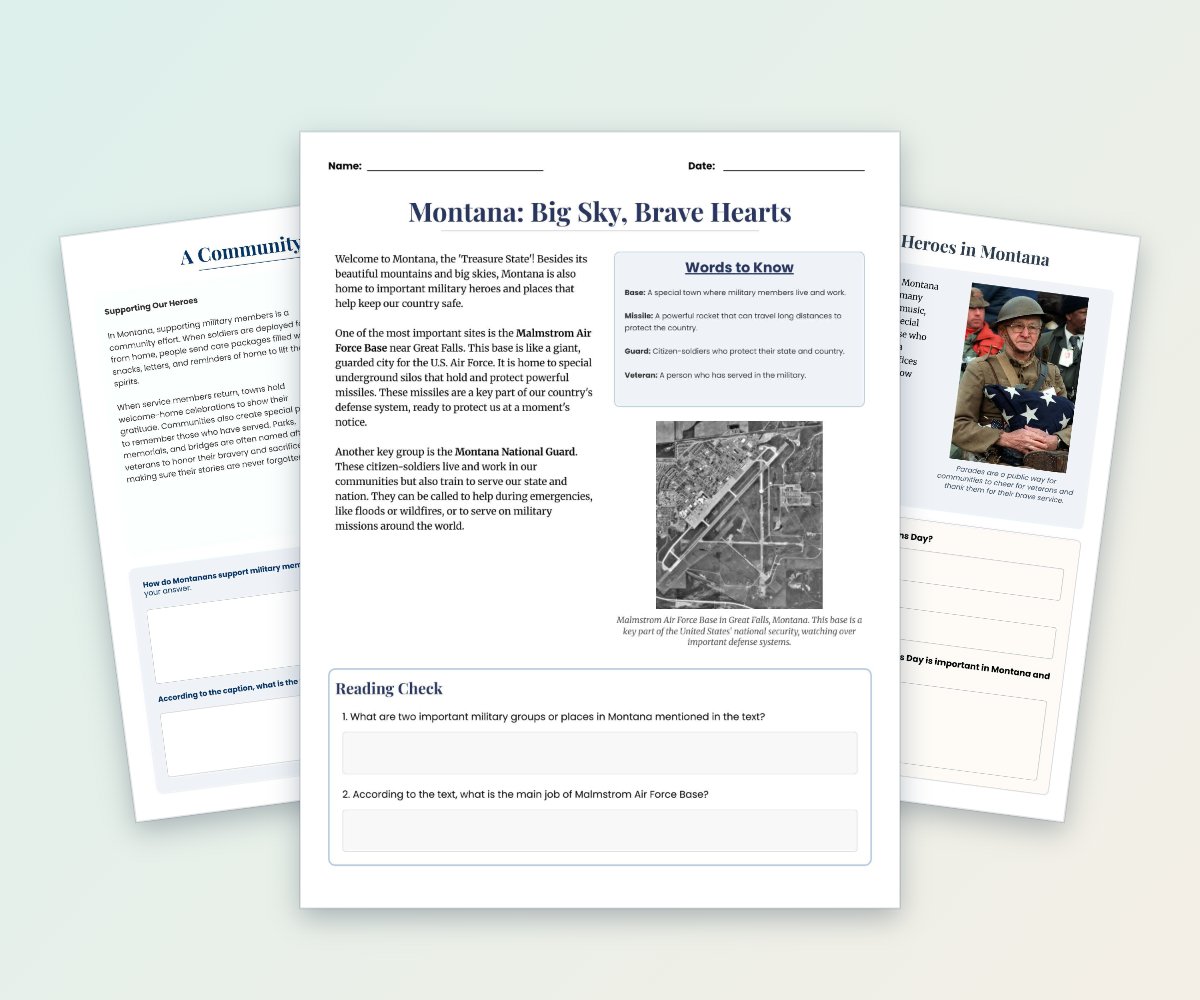
This printable reading and response worksheet explores Montana’s military heroes, Malmstrom Air Force Base, the Montana National Guard, and community support for veterans.
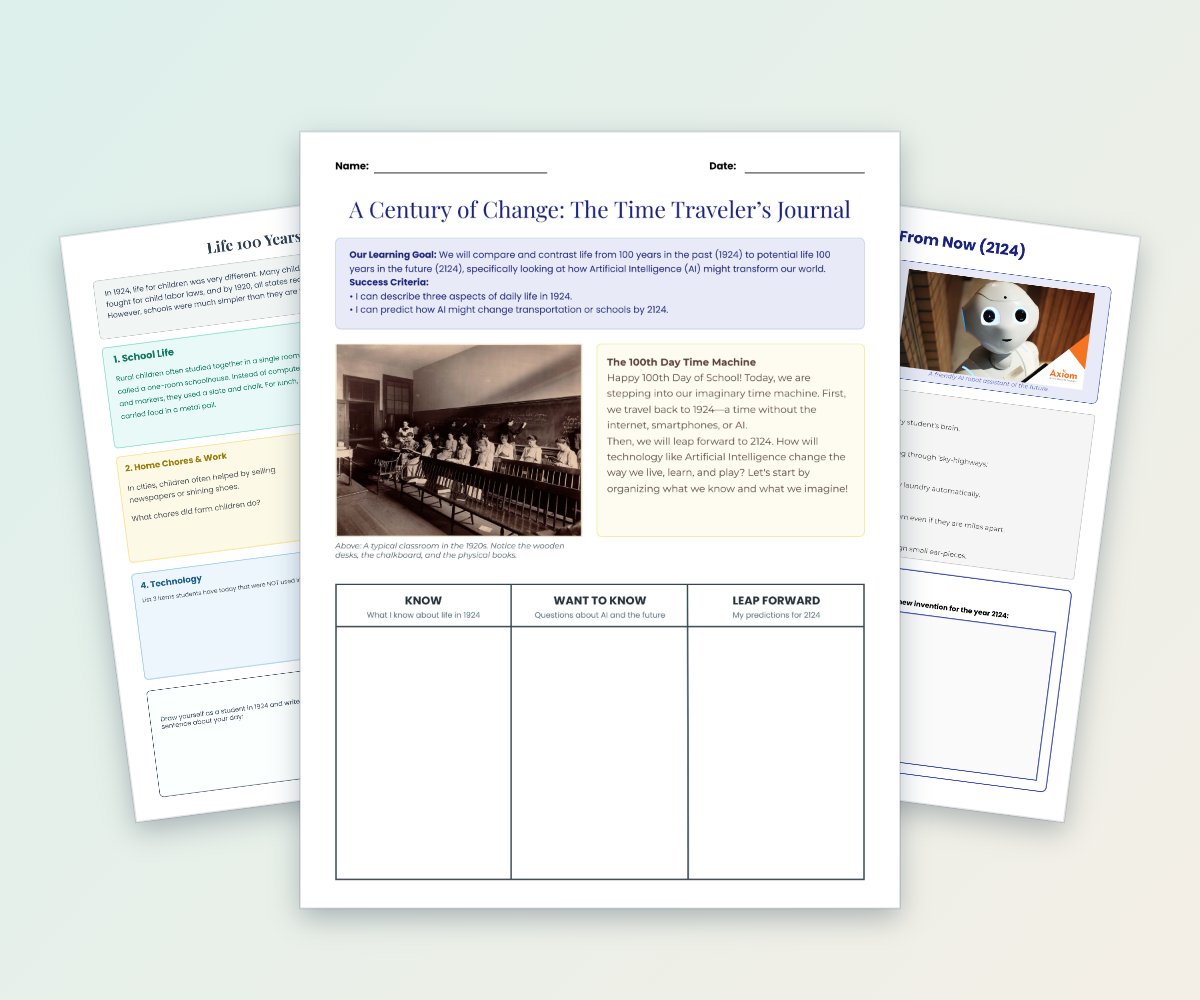
Students travel imaginatively from 1924 to 2124 while comparing school, home life, transportation, technology, and communication.