TP-CASTT Poetry Analysis Worksheet
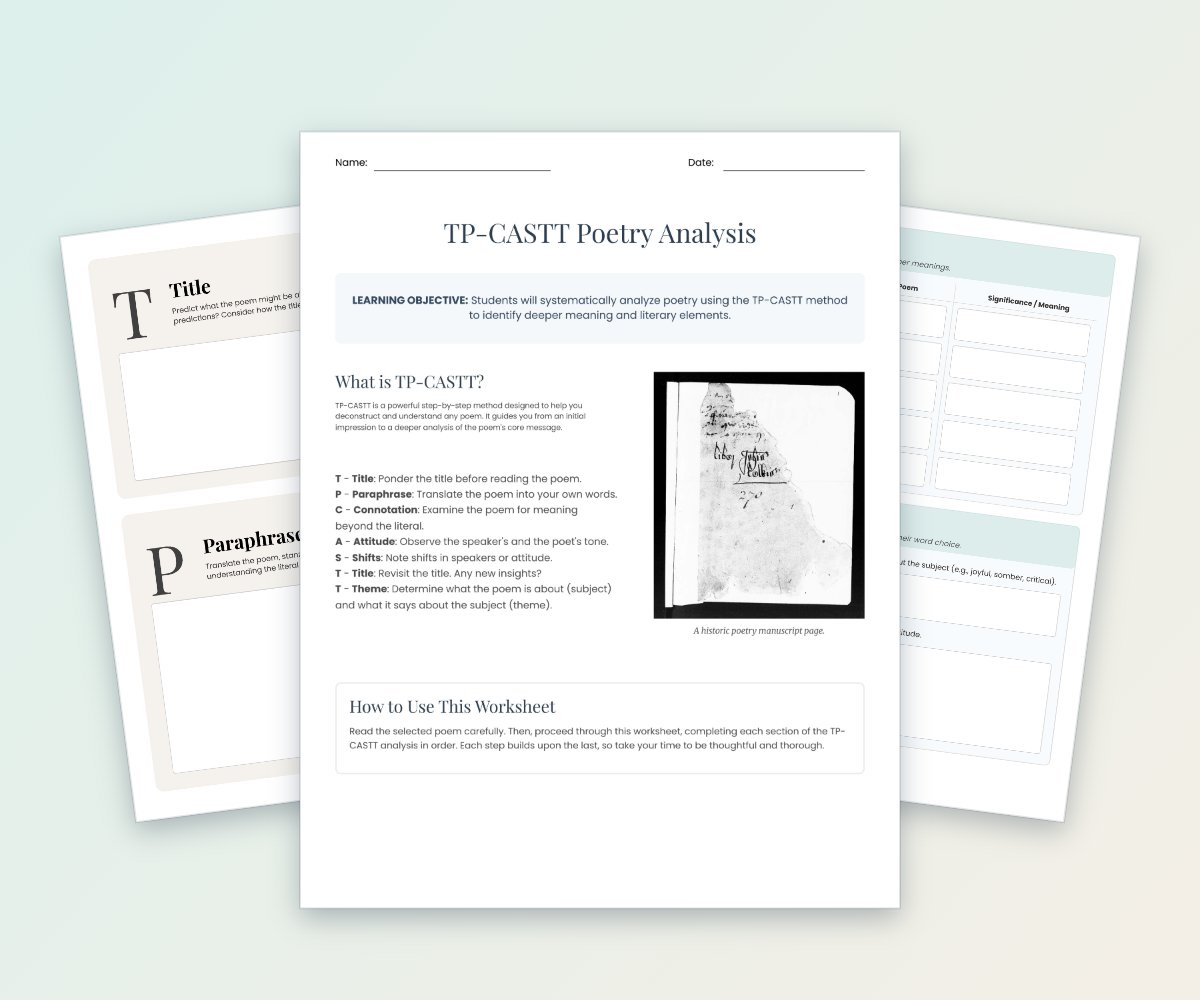
This four-page resource introduces the TP-CASTT method and guides students through analyzing title, paraphrase, connotation, attitude, shifts, title revisited, and theme.
$4.99
Reading, writing and language resources you can use straight away, from mentor-text lessons and writing frameworks to grammar practice and response activities.
This four-page resource introduces the TP-CASTT method and guides students through analyzing title, paraphrase, connotation, attitude, shifts, title revisited, and theme.
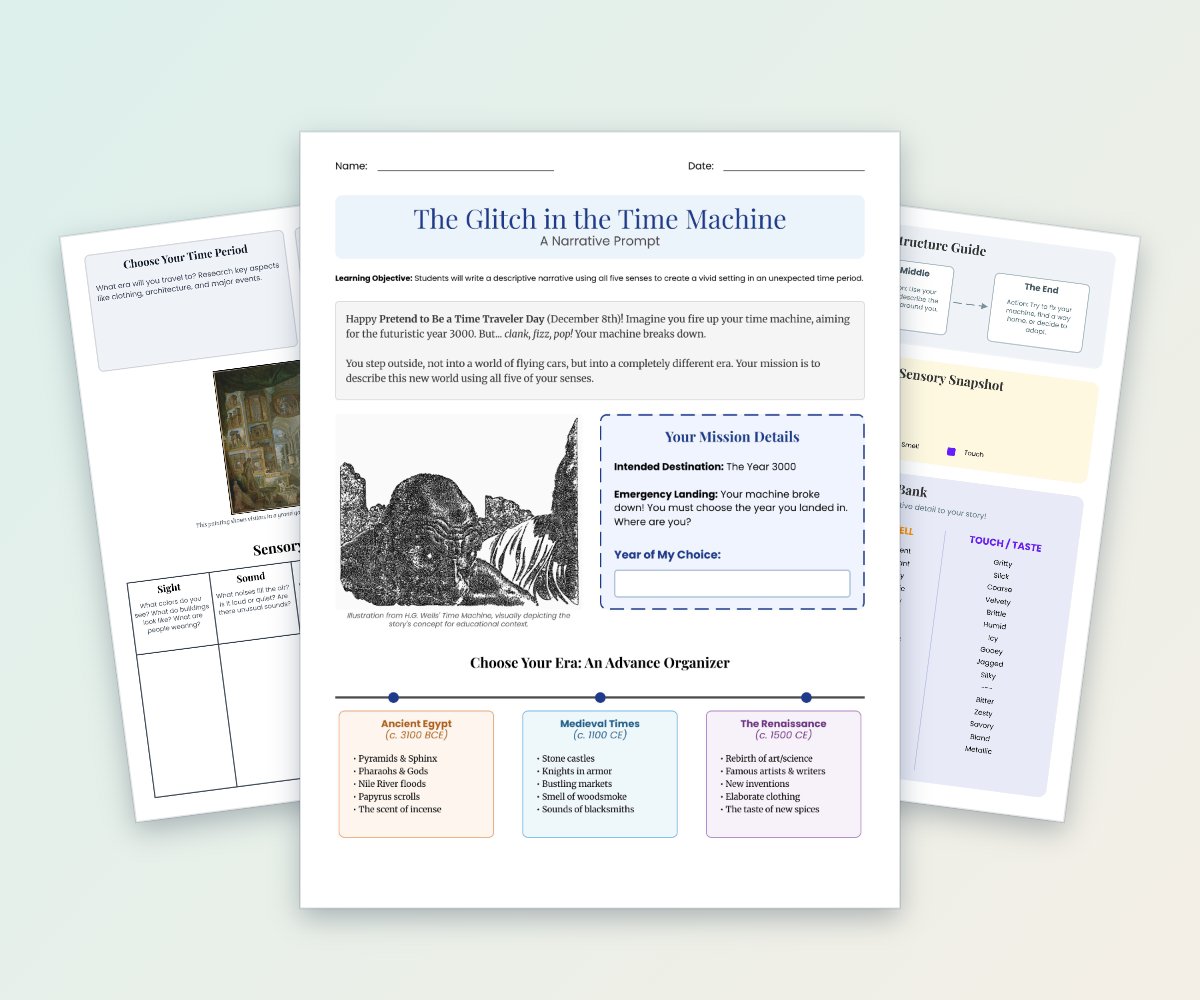
Students imagine a malfunctioning time machine, choose a historical era, and plan a vivid narrative using all five senses.
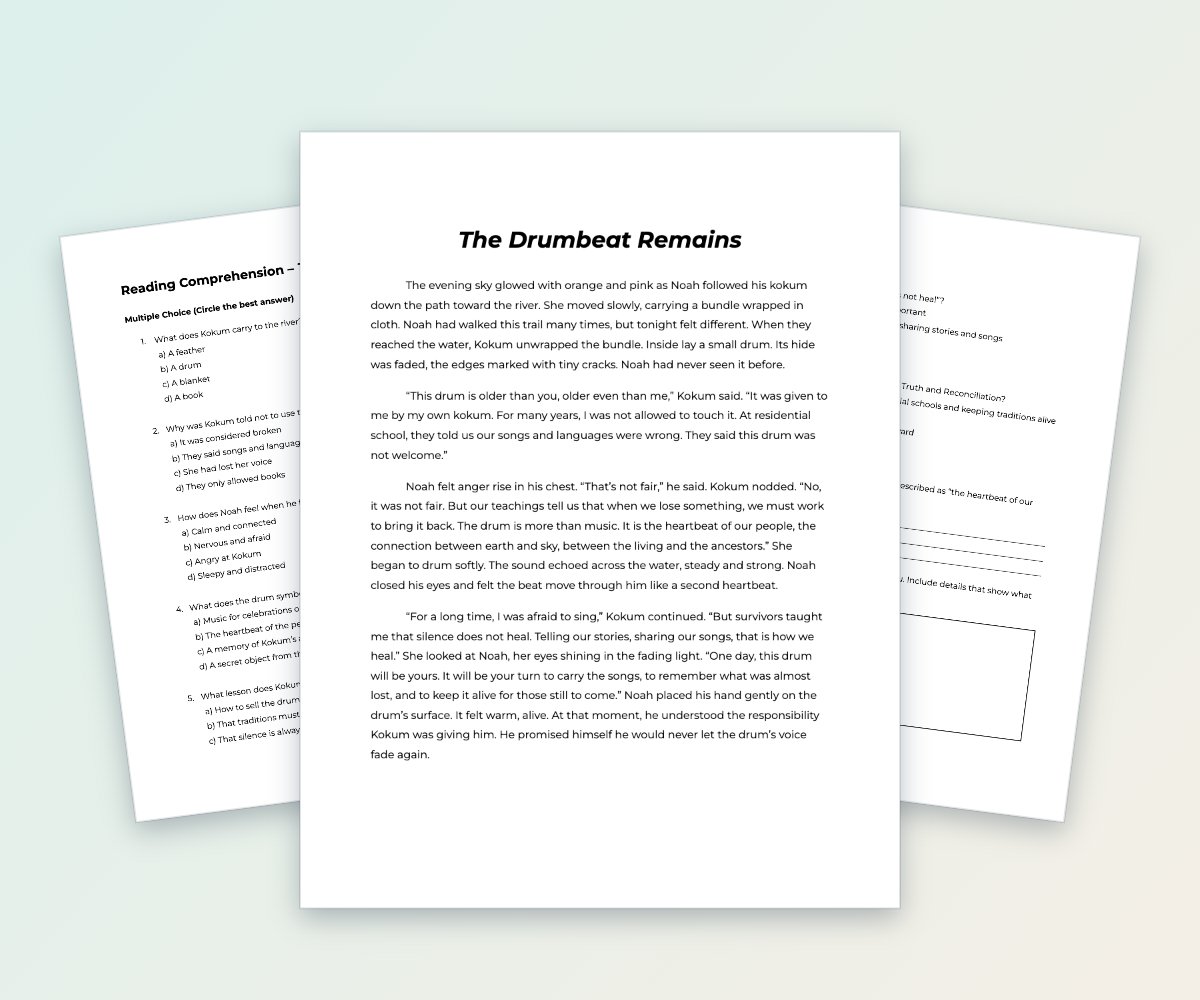
Students read a narrative about Noah, his kokum, and a drum connected to Indigenous culture, residential schools, and healing.
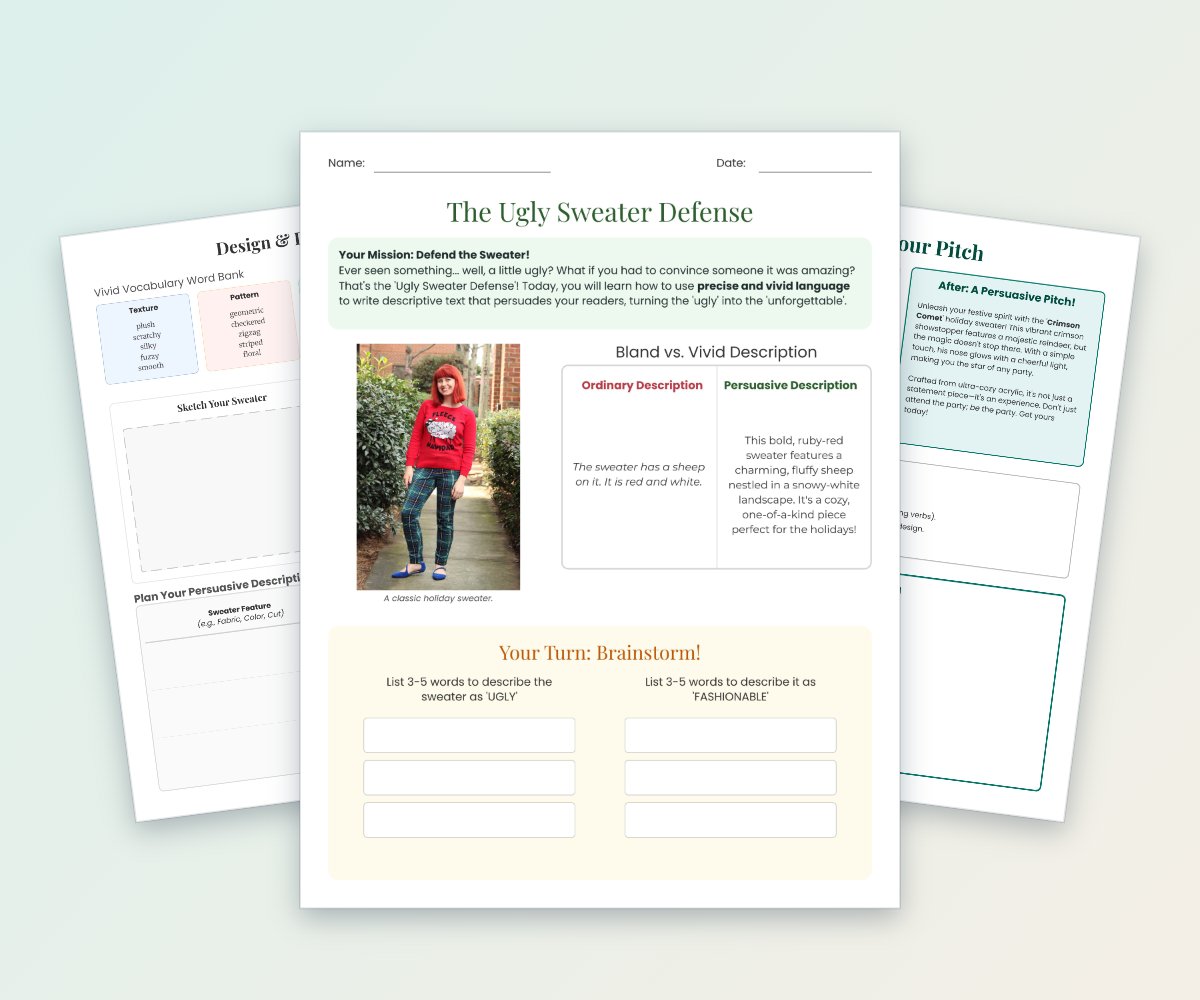
Students transform an ordinary ugly sweater description into an engaging persuasive catalog pitch using vivid vocabulary, sensory details, and strong calls to action.
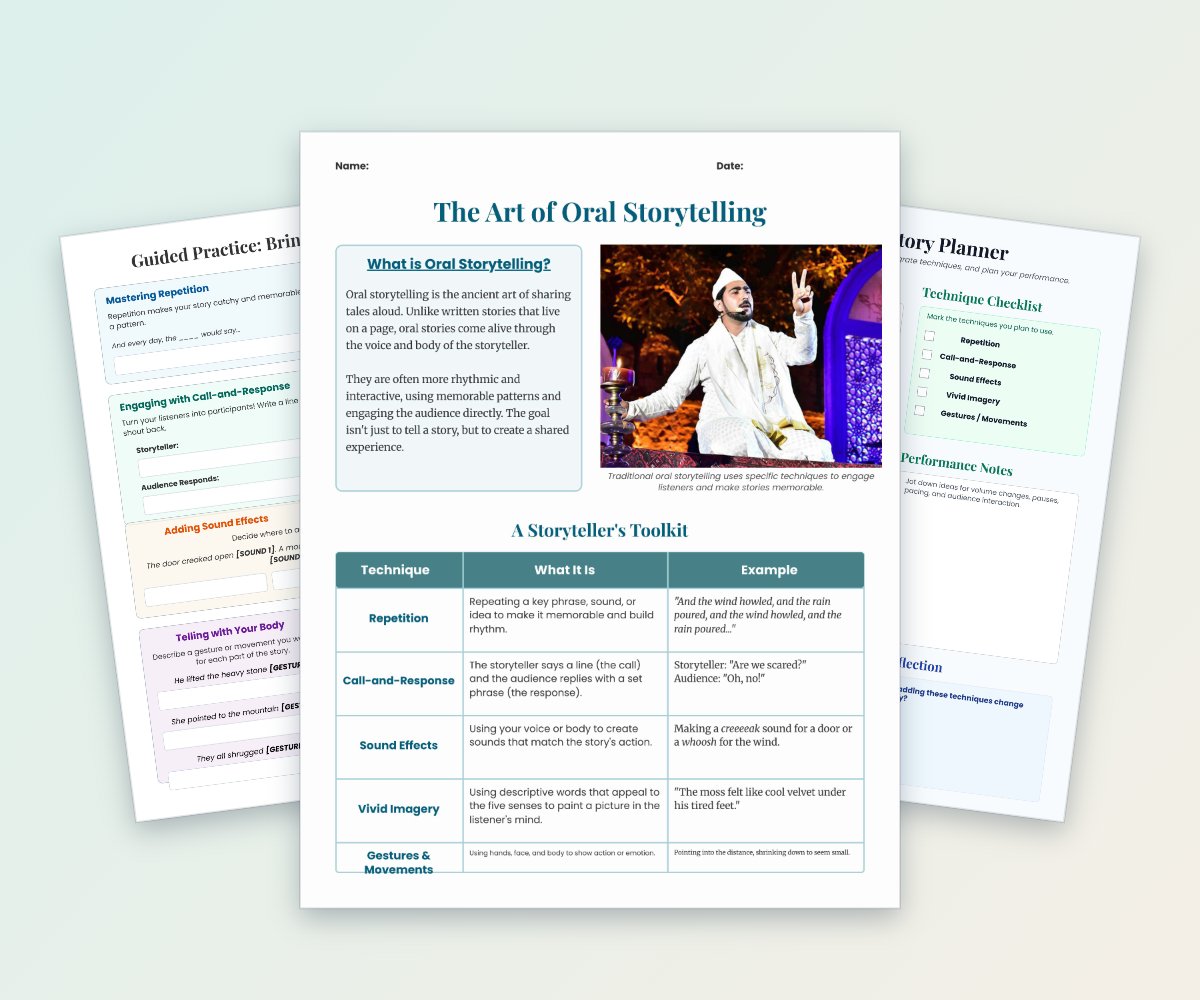
Teach students how to use repetition, call-and-response, sound effects, vivid imagery, and gestures to make oral stories engaging.
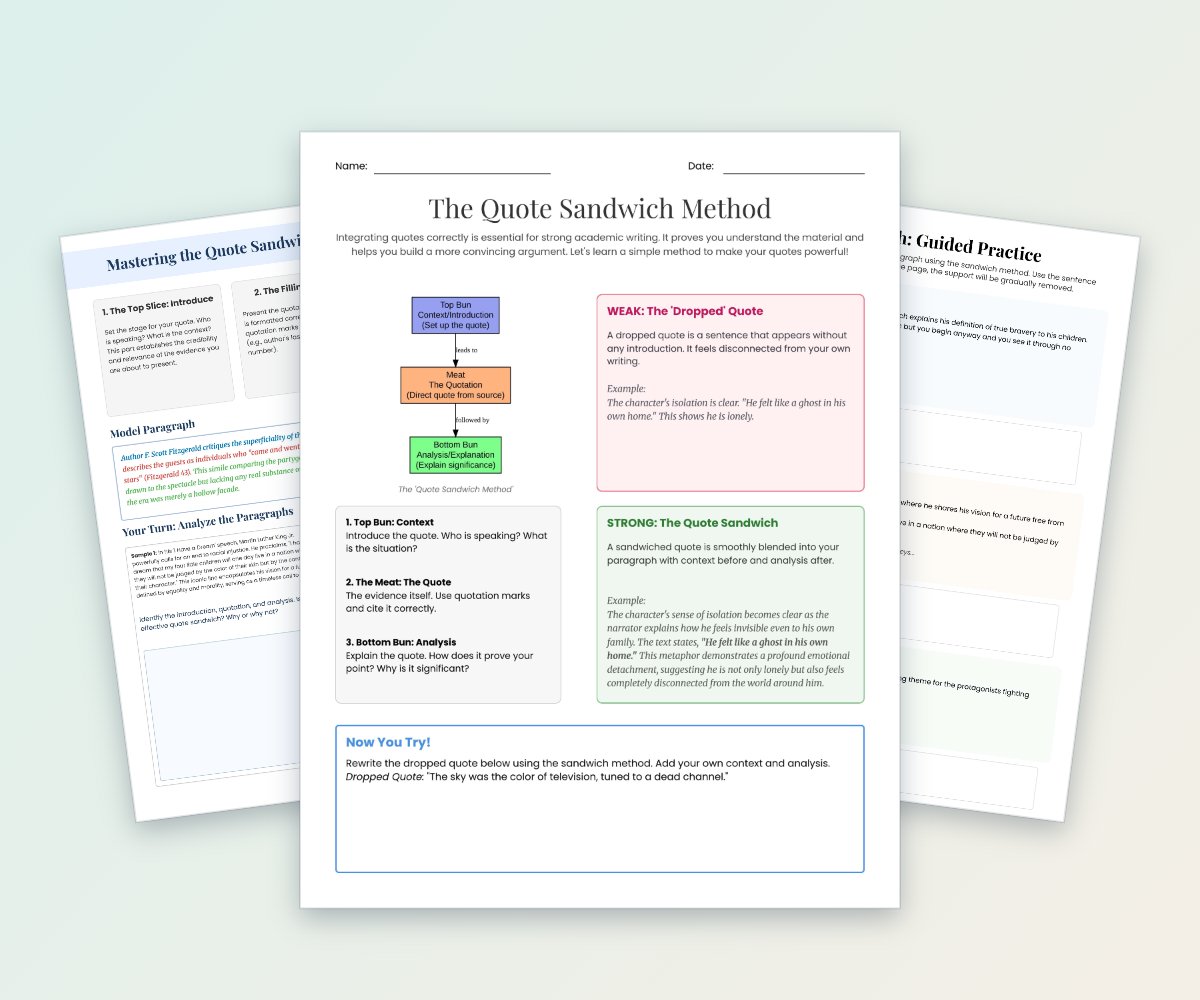
This four-page resource teaches students how to introduce, cite, and analyze quotations using the Quote Sandwich Method.
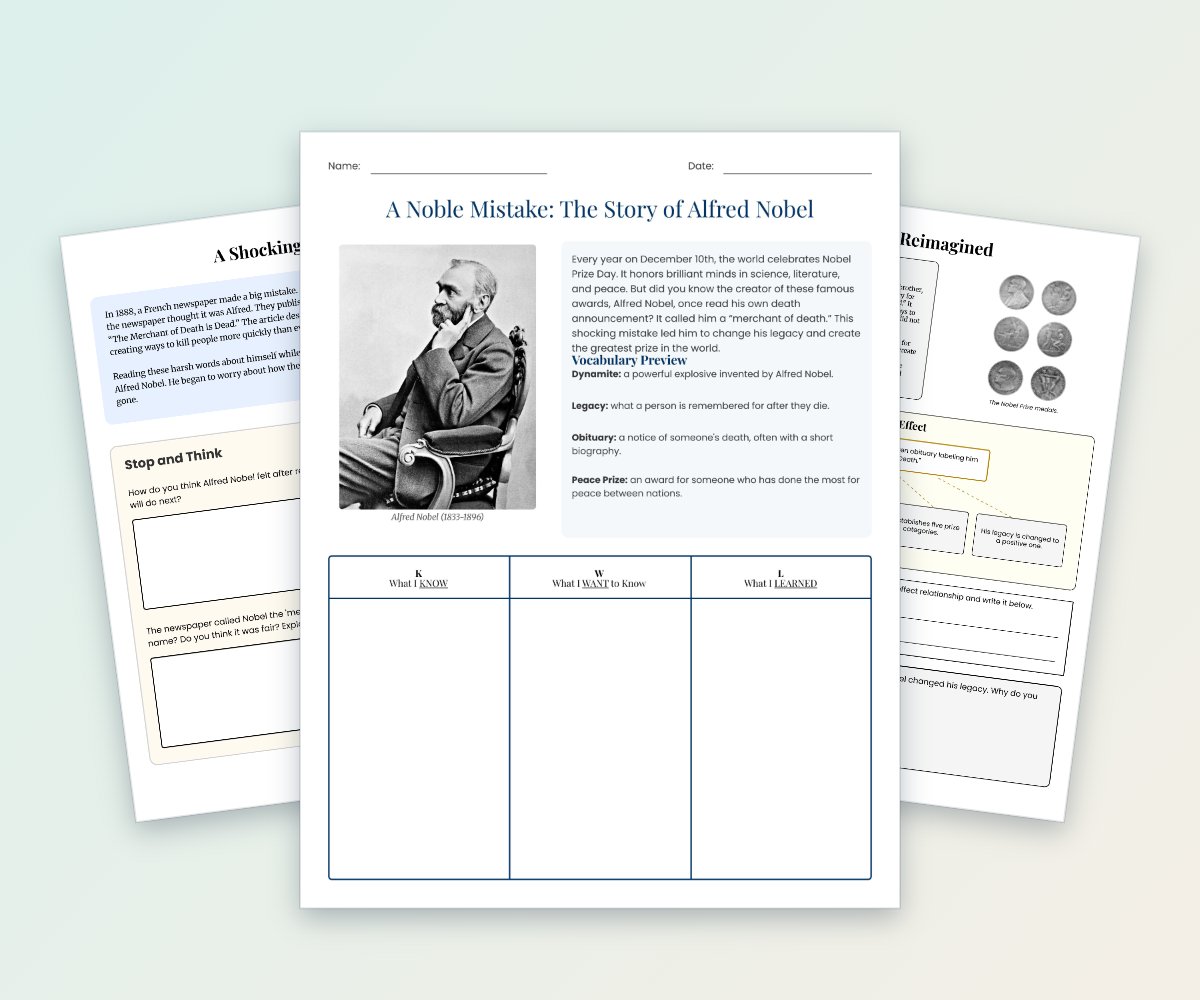
Students read an engaging informational biography about Alfred Nobel, the mistaken obituary that changed his perspective, and the creation of the Nobel Prizes.
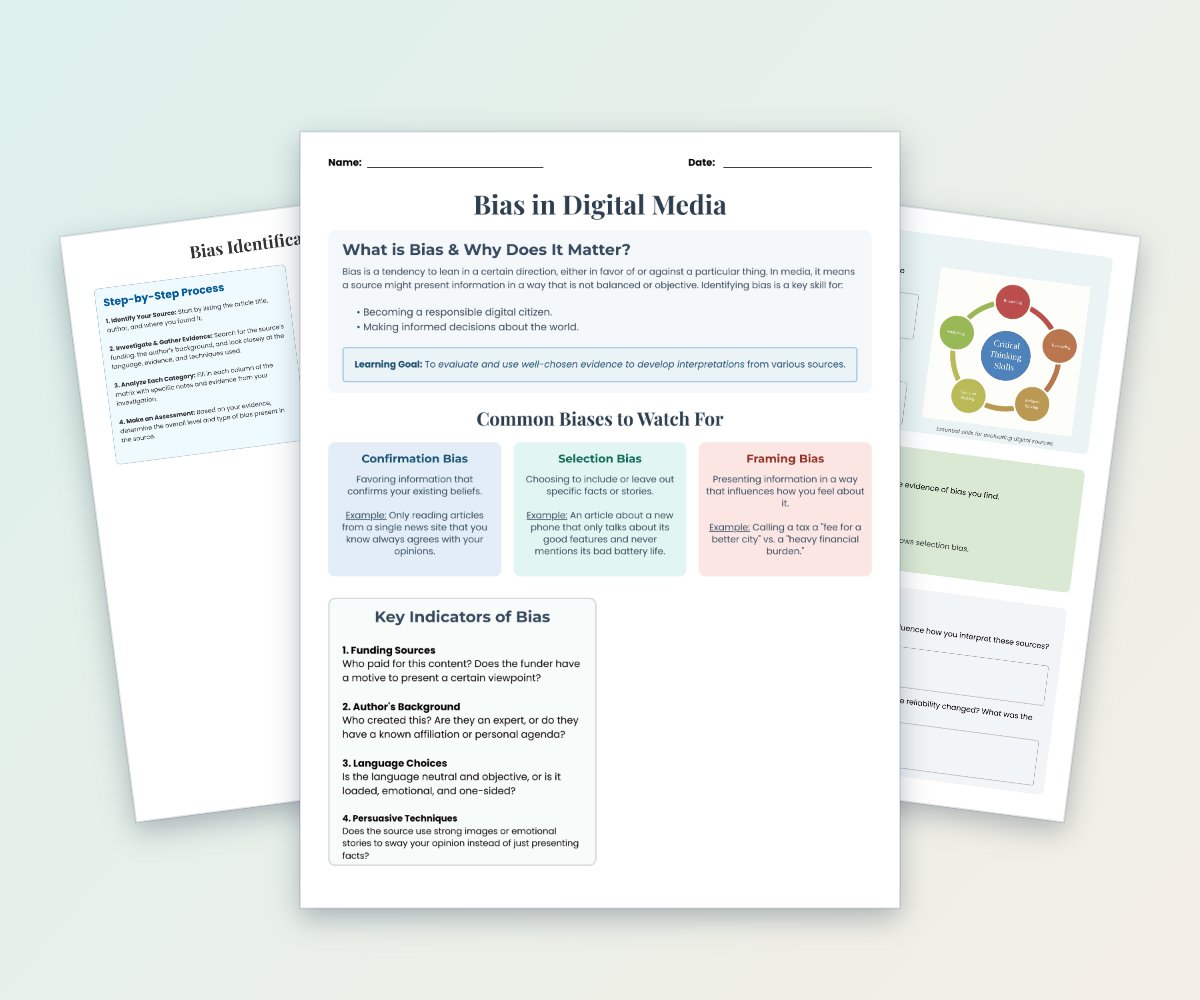
This three-page worksheet introduces confirmation, selection, and framing bias in digital media.
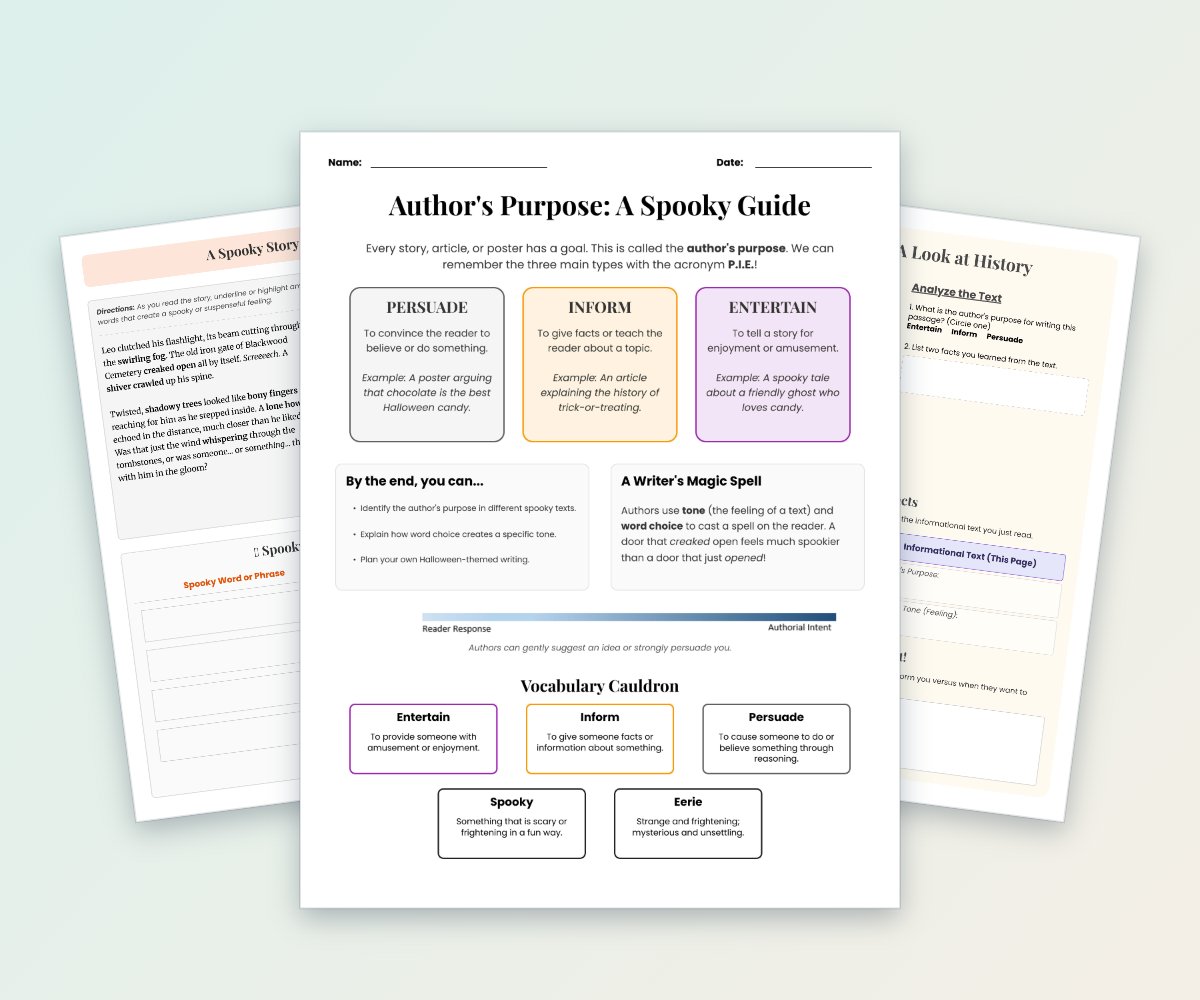
This six-page printable activity pack introduces the P.I.E.
Students learn to identify whether spooky texts are written to persuade, inform, or entertain.
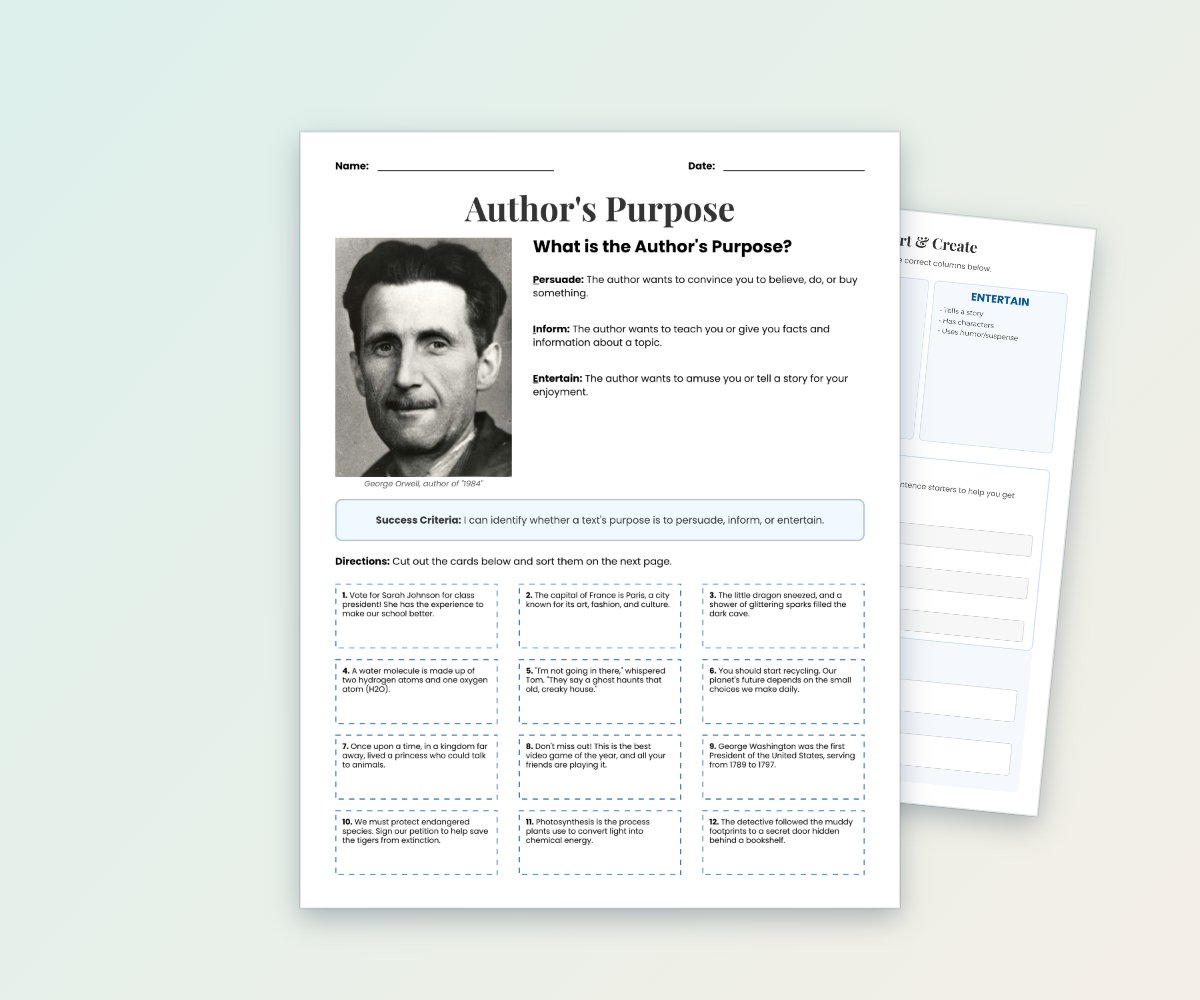
Students sort example statements into persuade, inform, and entertain categories, then create their own examples.
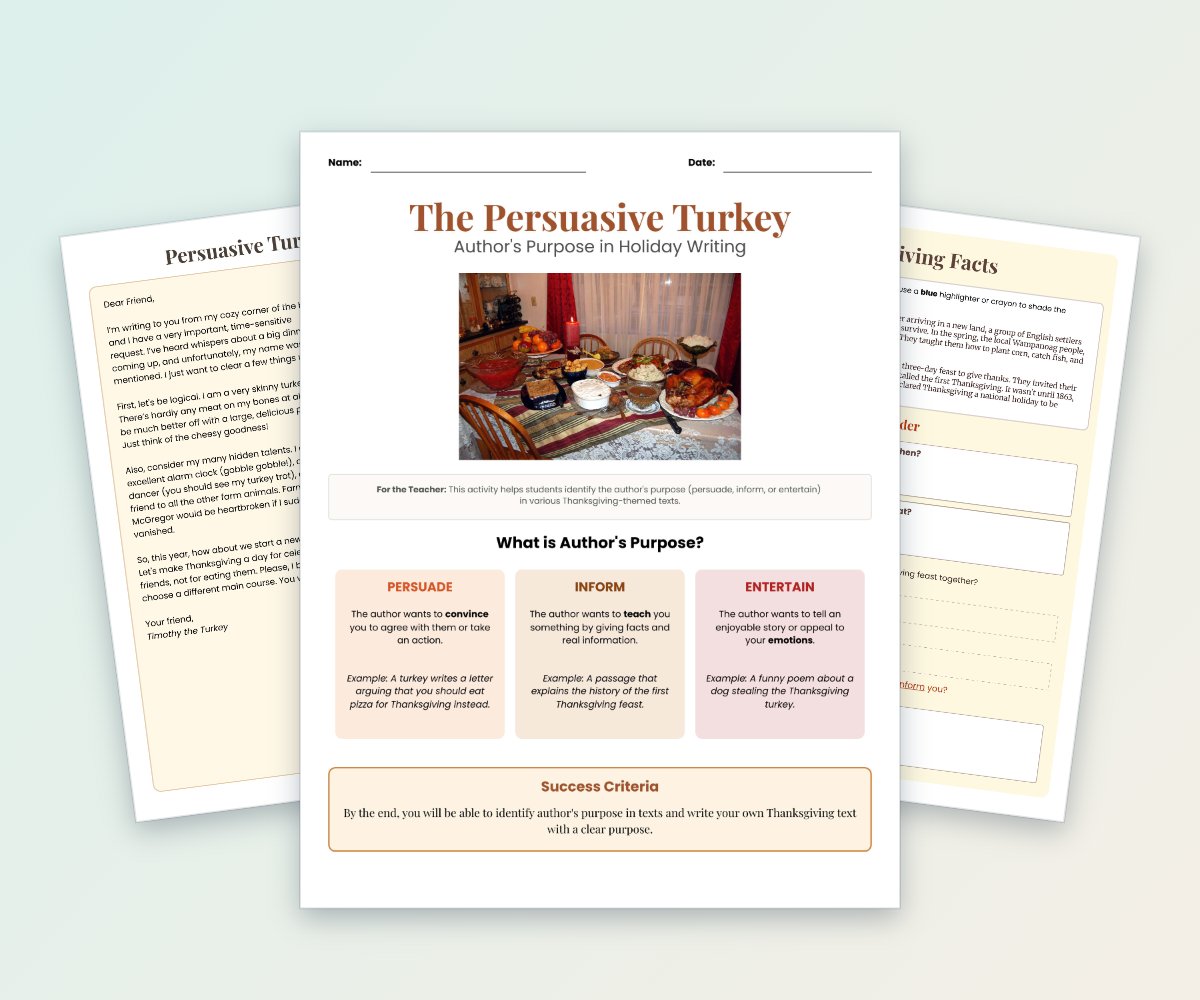
This Thanksgiving-themed activity pack helps students distinguish between persuade, inform, and entertain in holiday writing.
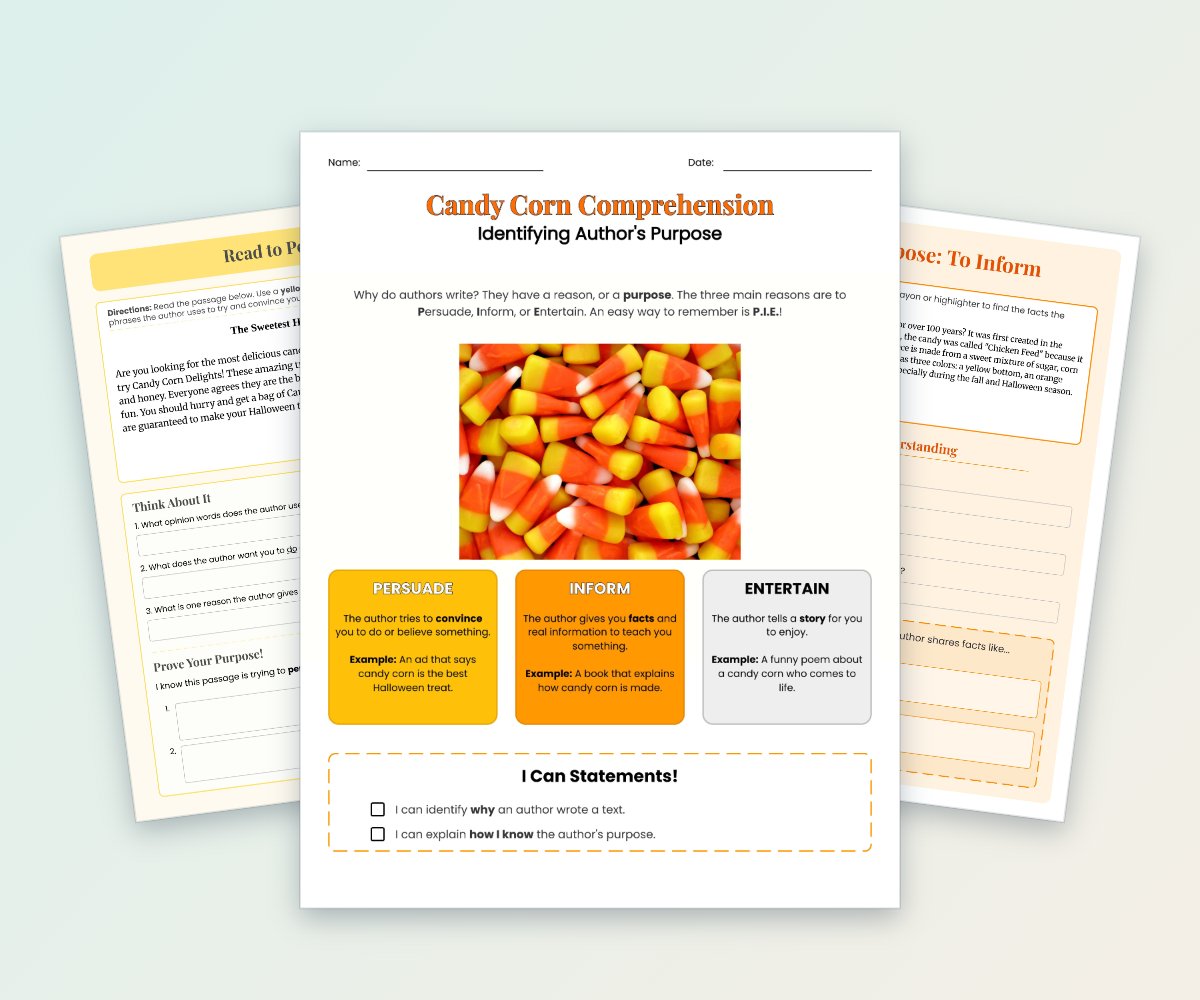
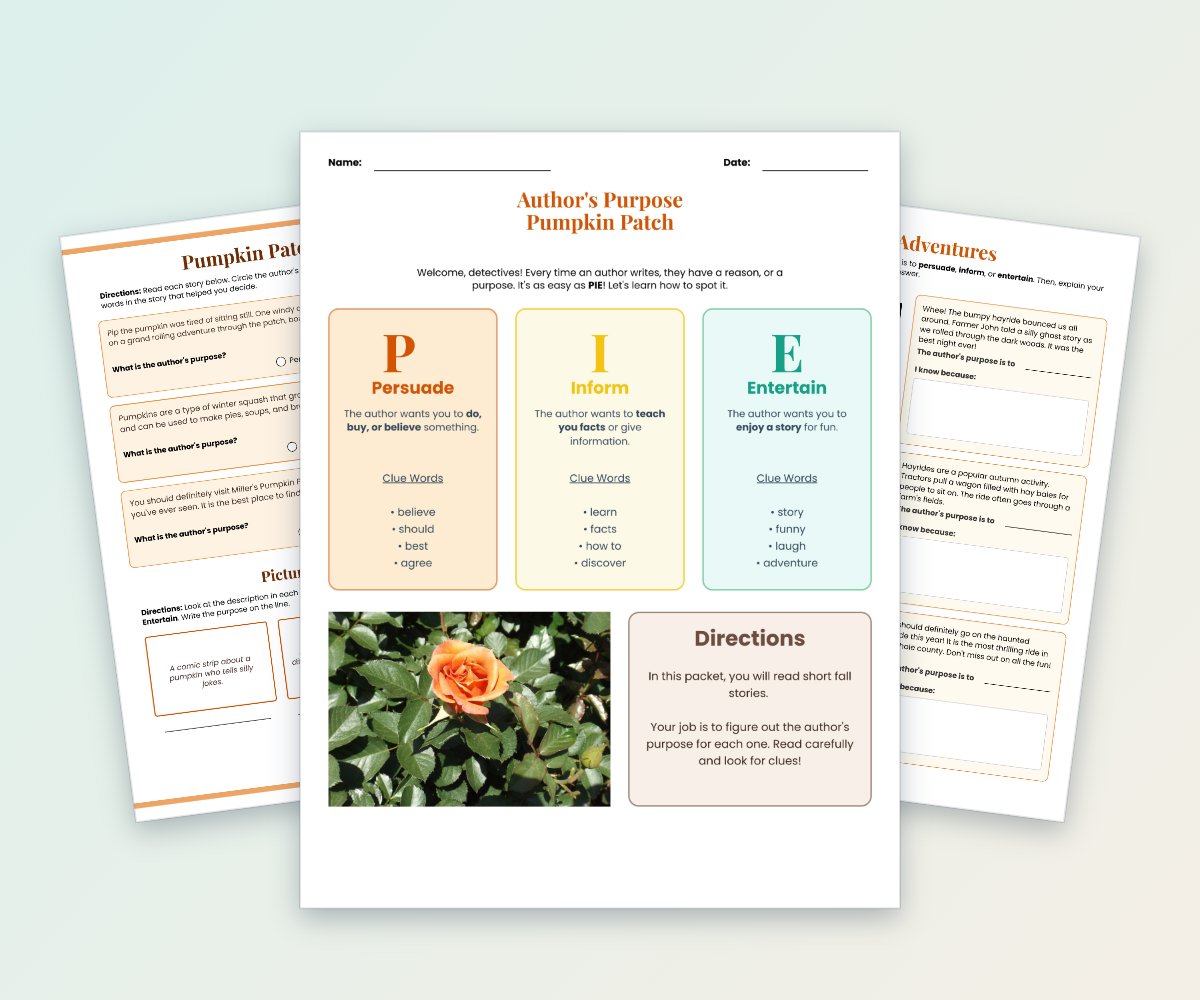
This five-page printable packet helps students identify whether an author's purpose is to persuade, inform, or entertain.
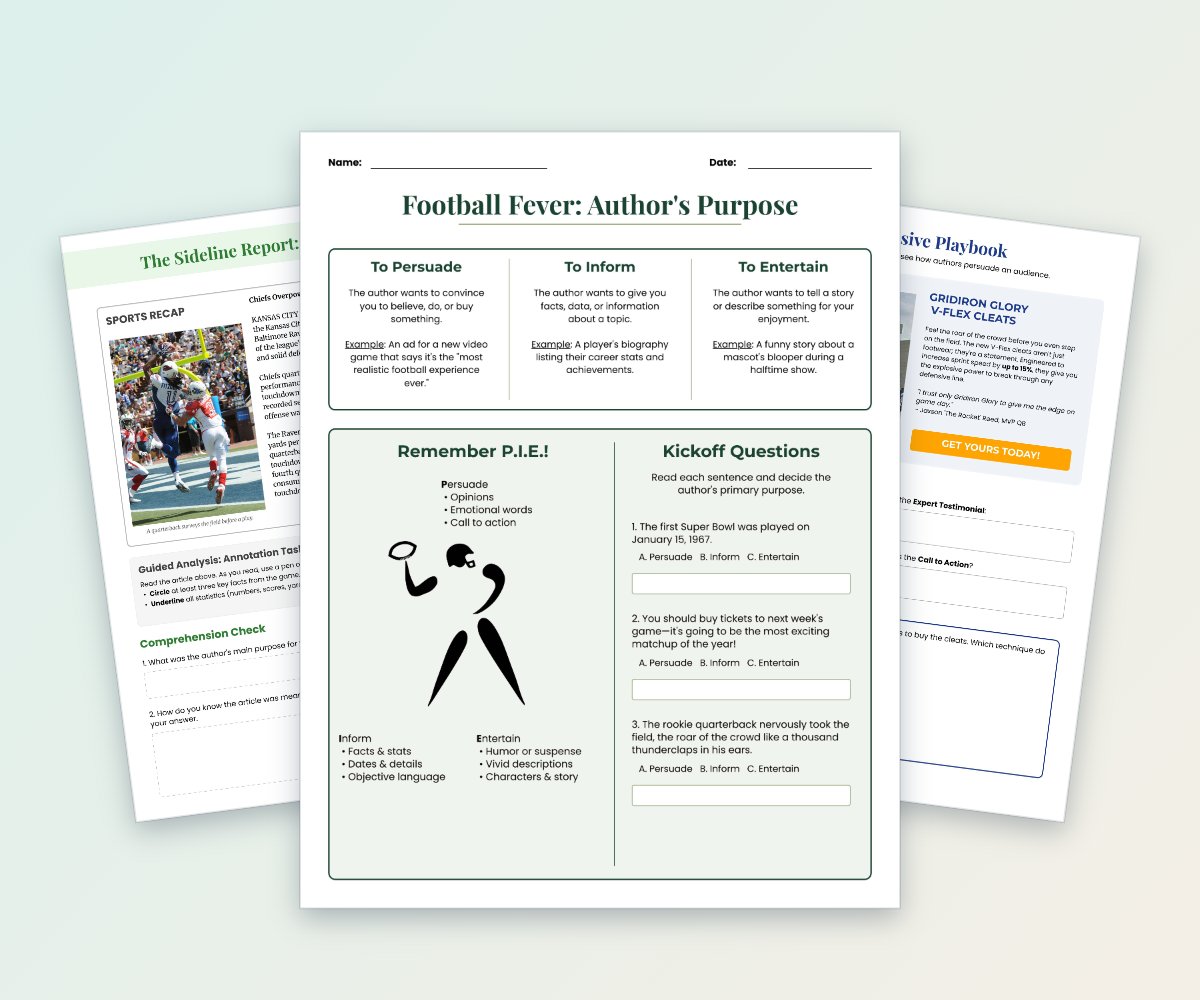
This football-themed worksheet teaches students to identify whether an author’s purpose is to persuade, inform, or entertain.
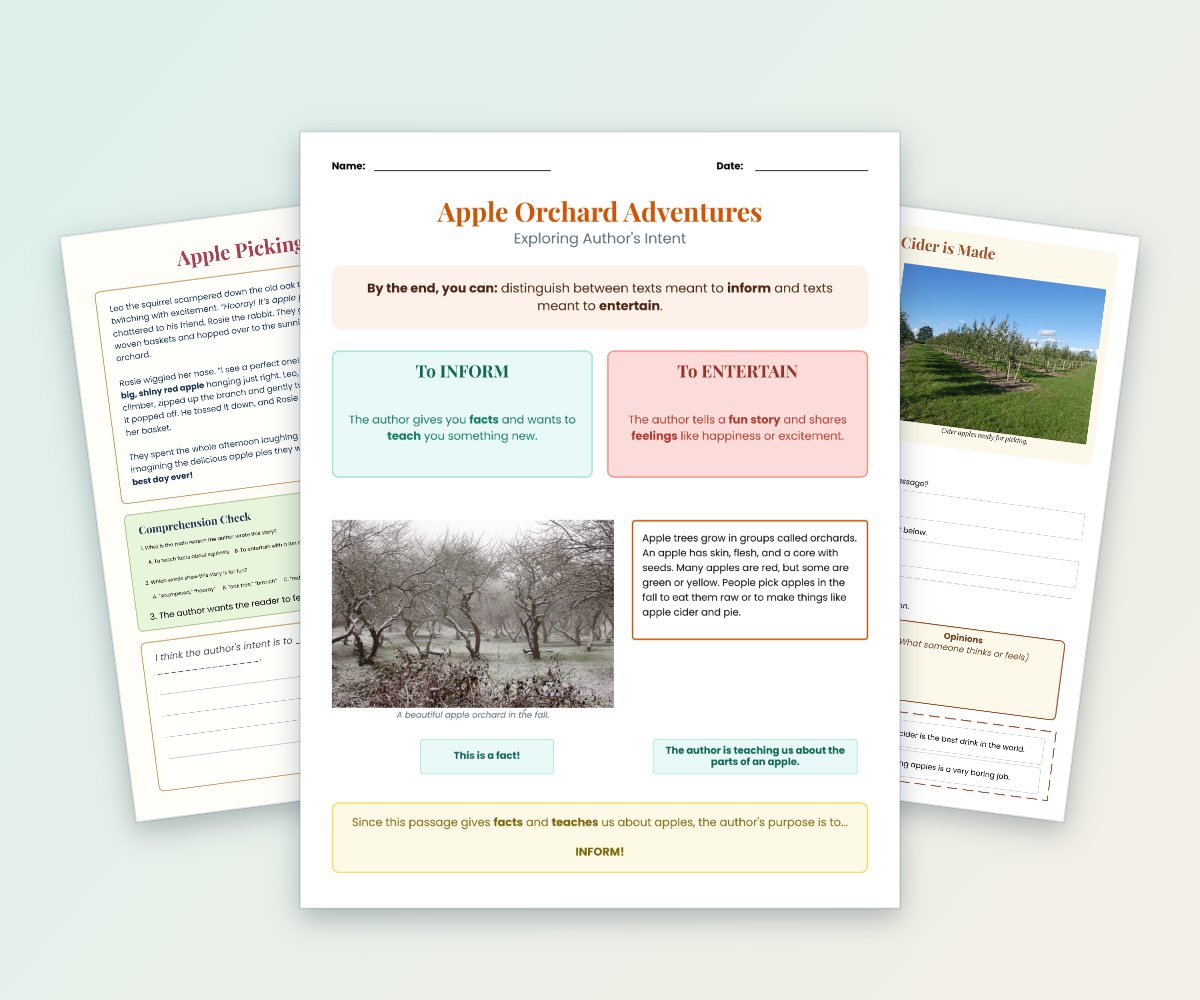
Students explore informational and entertaining texts about apples, apple picking, and apple cider.
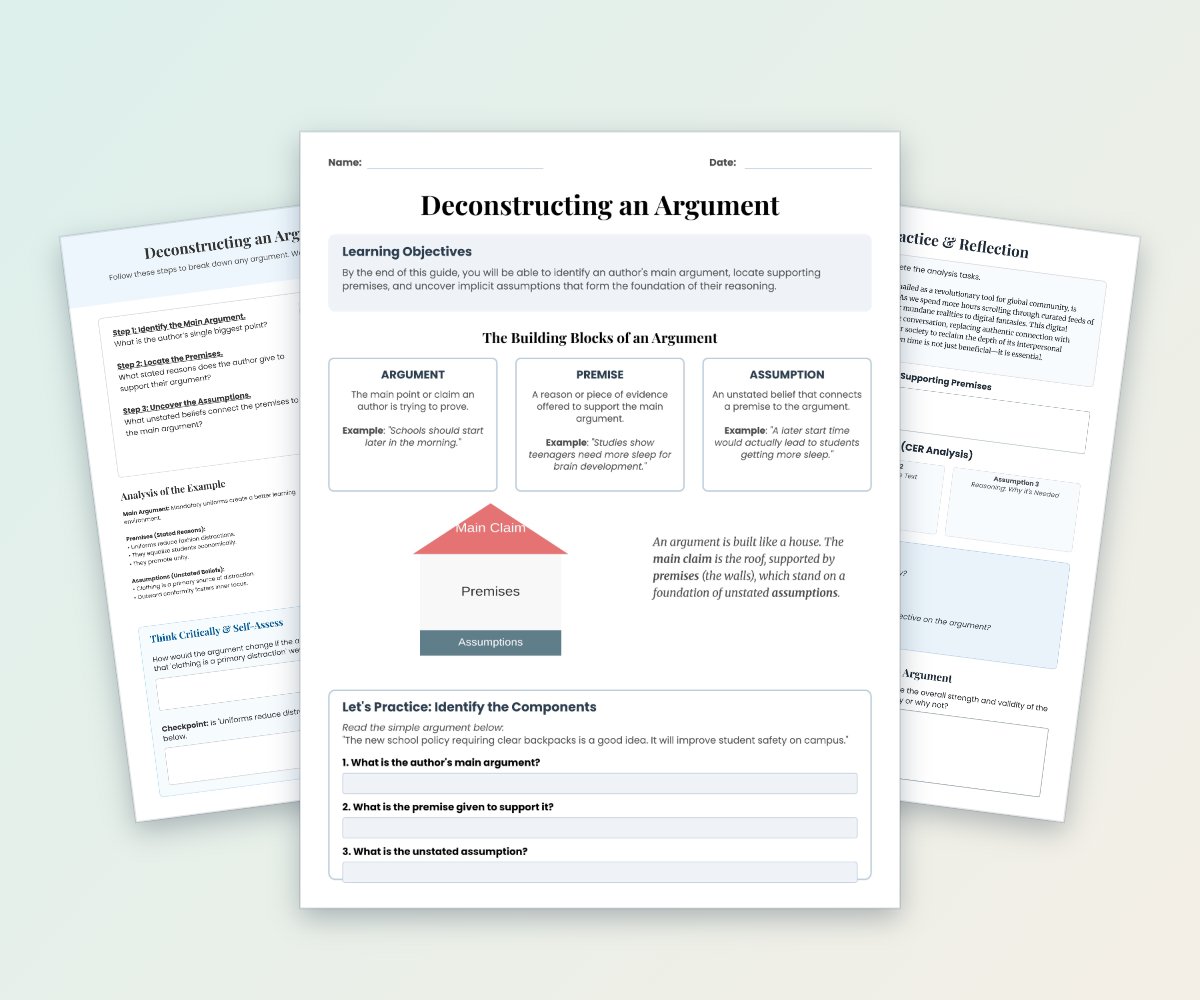
This three-page guide introduces the building blocks of an argument: claims, premises, and unstated assumptions.
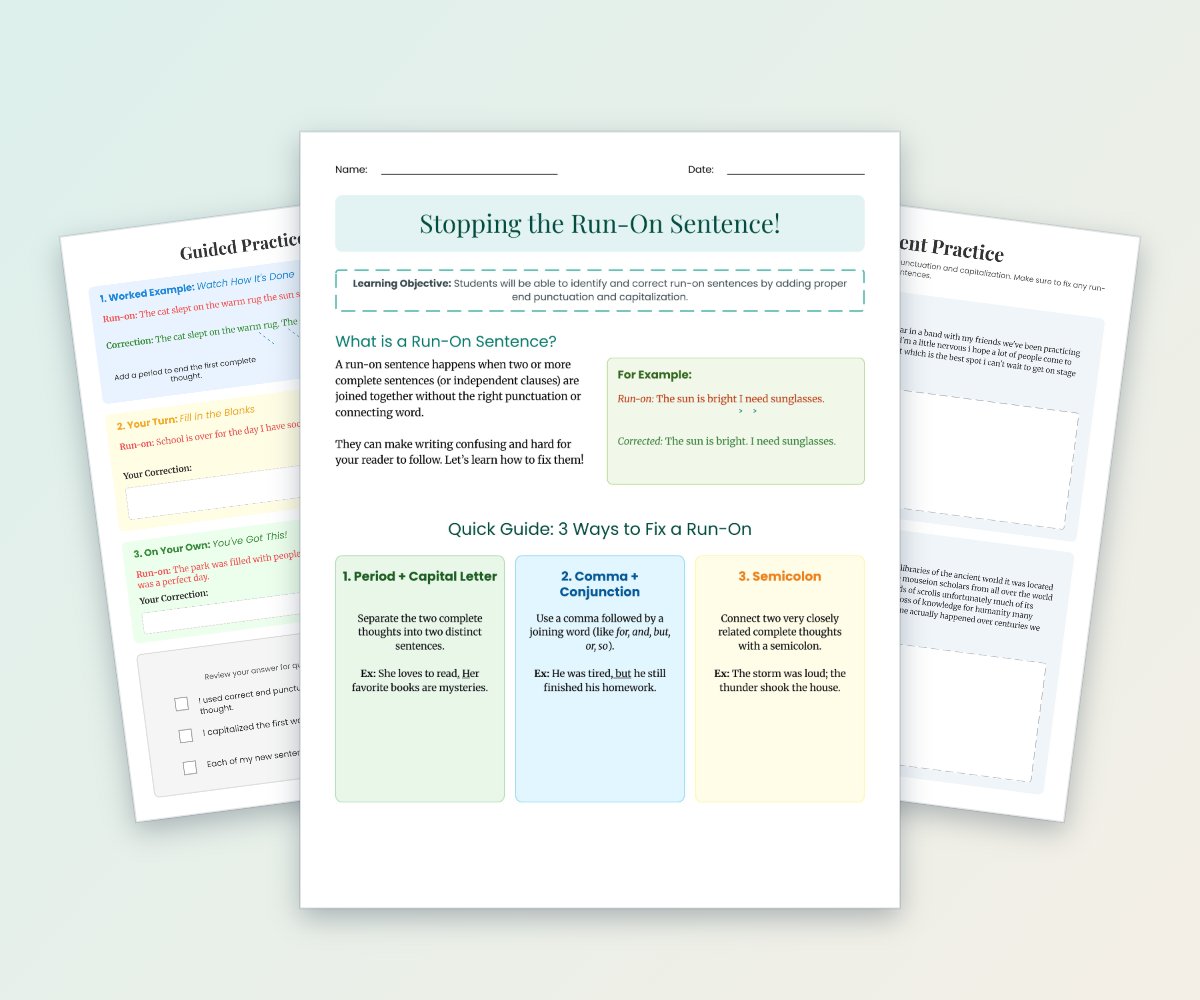
This four-page worksheet teaches students to identify and correct run-on sentences using periods, capitalization, commas with conjunctions, and semicolons.
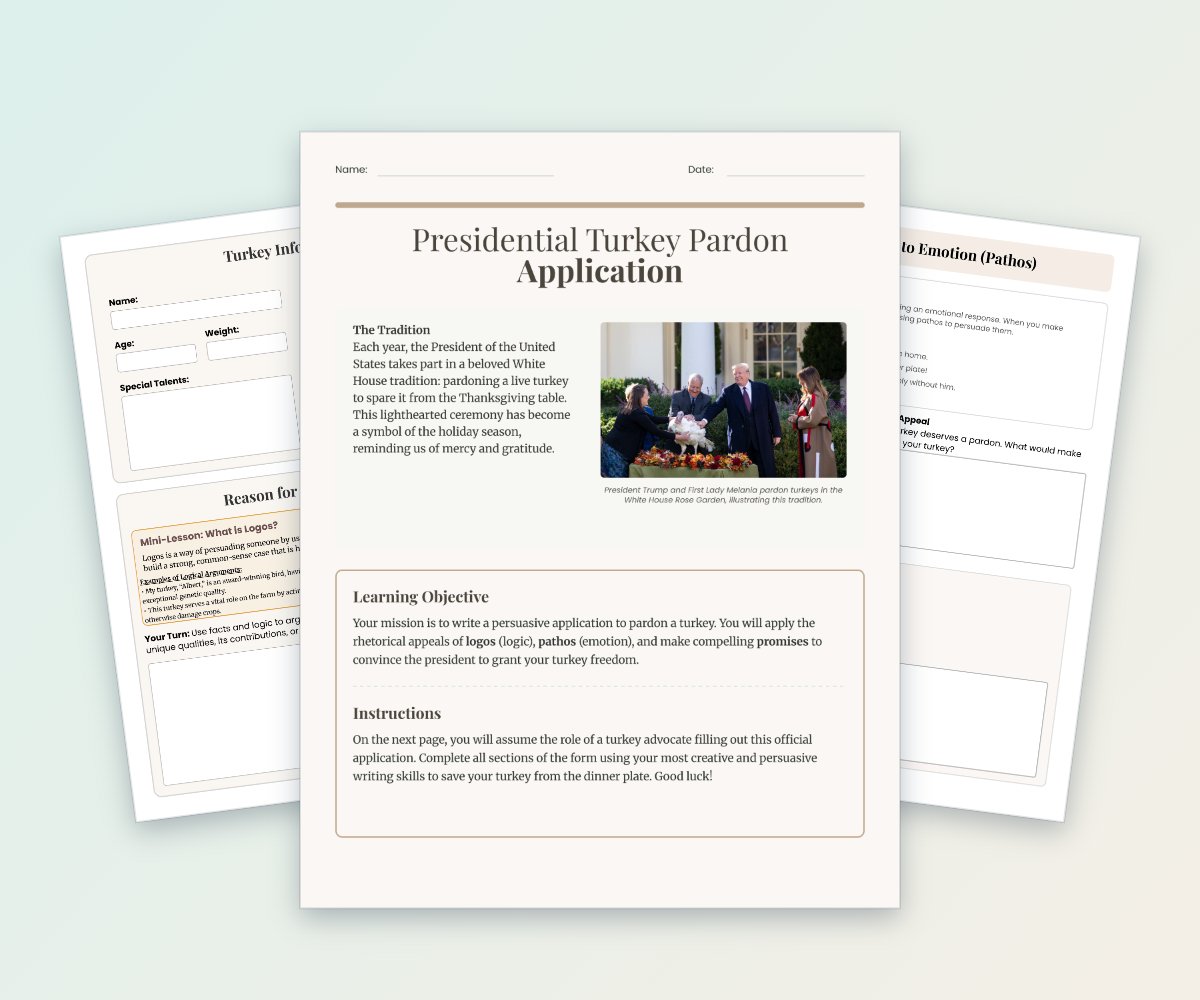
Students role-play as turkey advocates and complete an application using logical and emotional appeals to persuade the president.
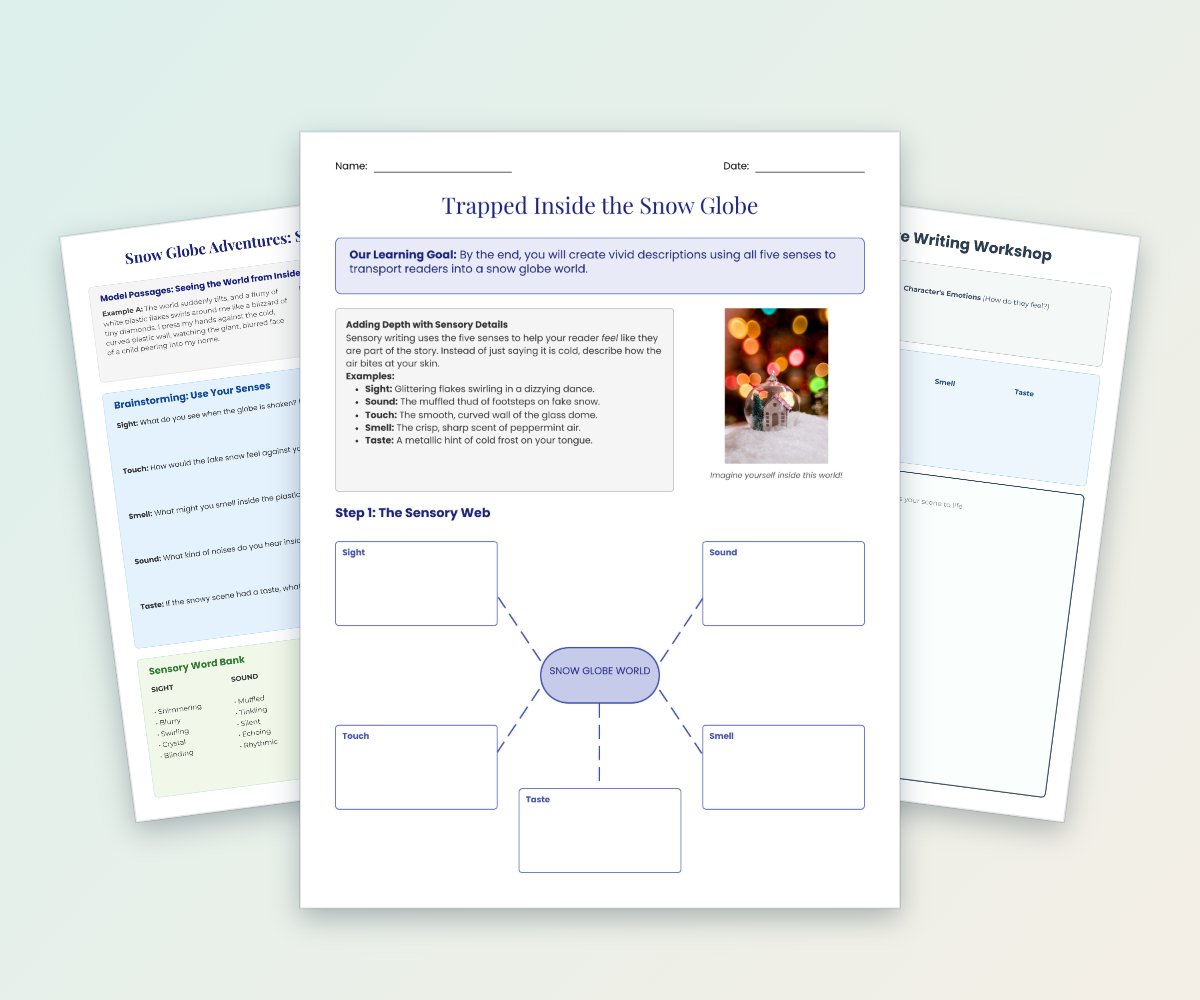
Students imagine being trapped inside a snow globe and use all five senses to develop vivid descriptive language.
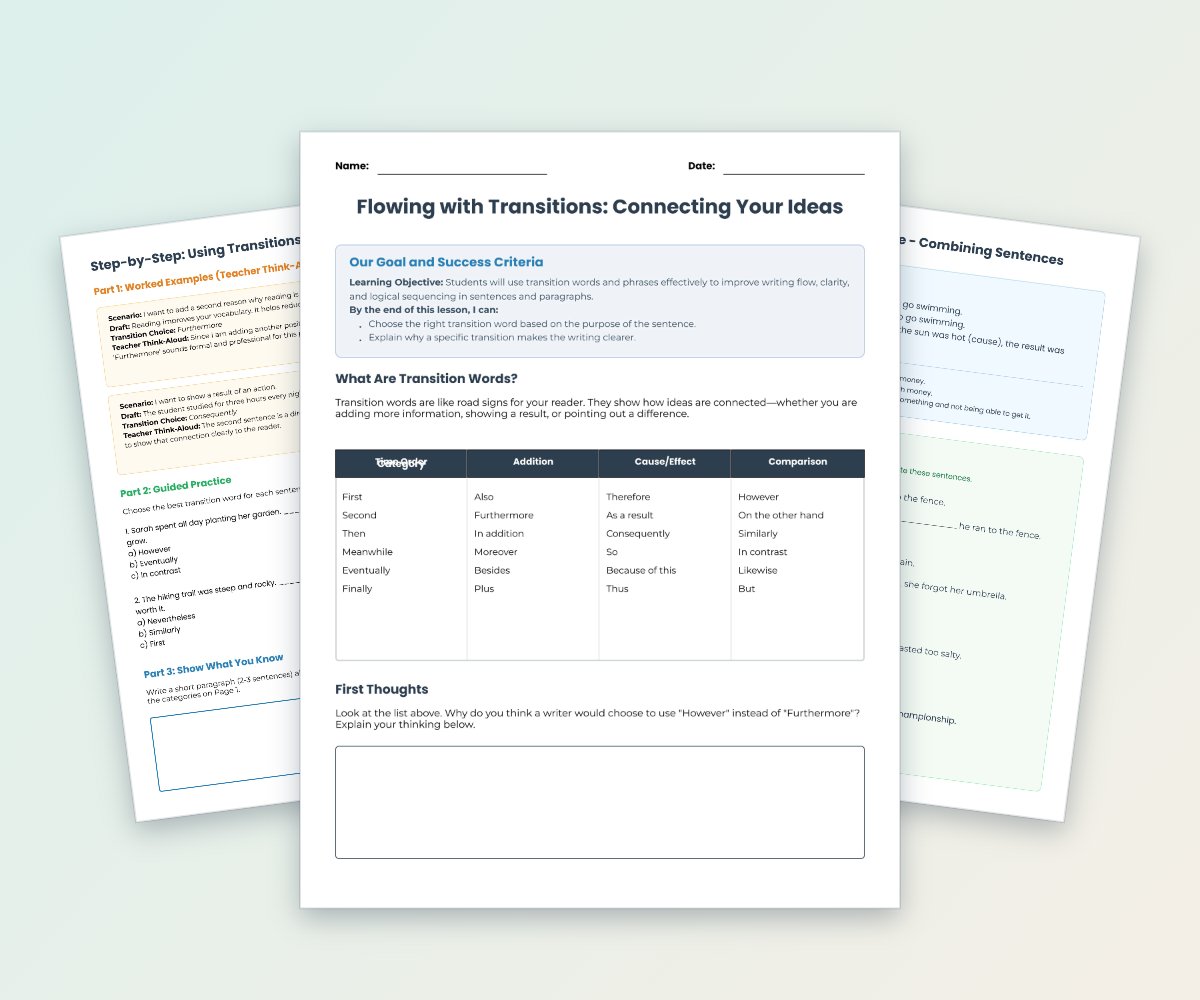
Teach students how transition words connect ideas and improve writing flow, clarity, and logical sequencing.
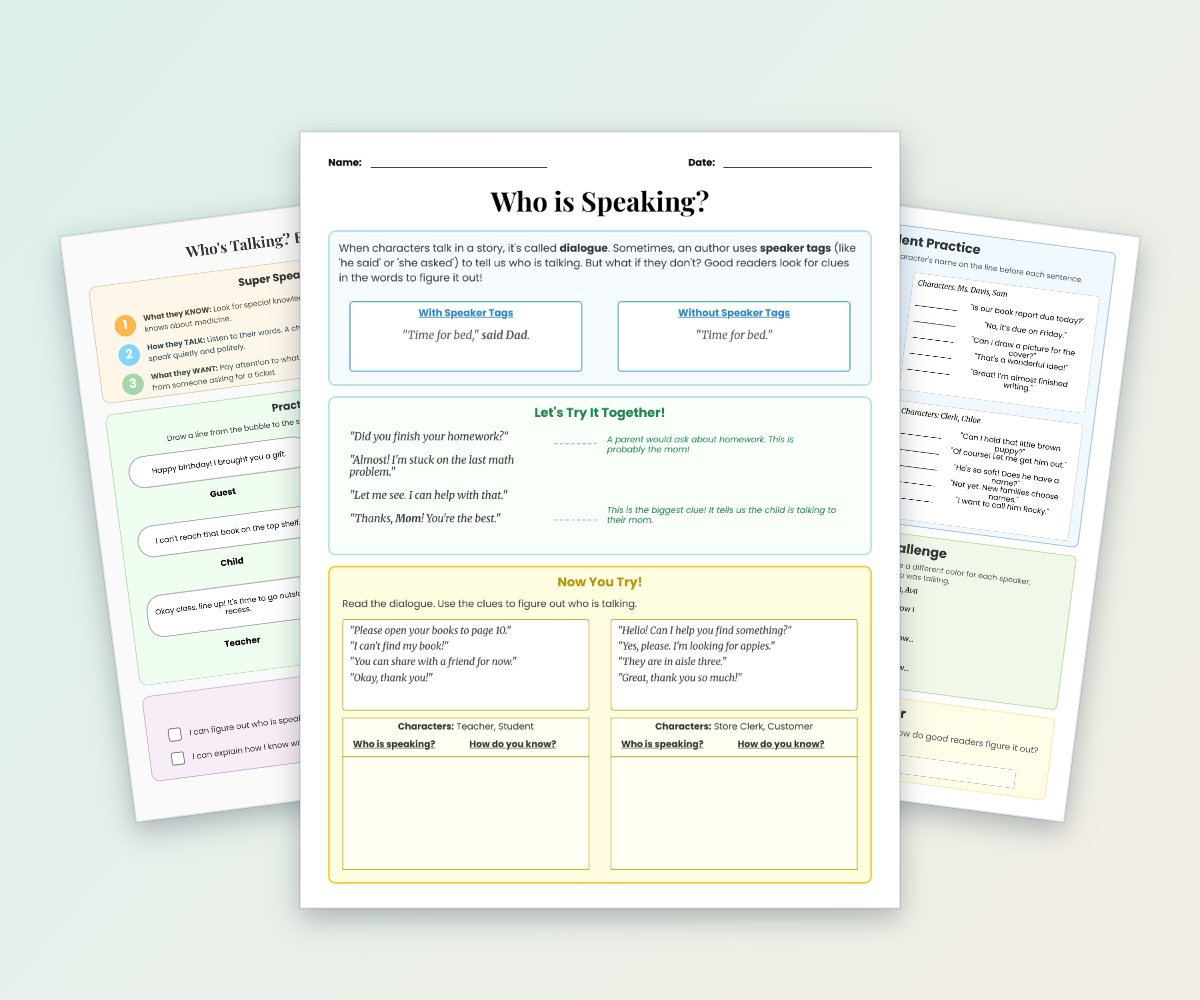
This three-page worksheet helps students identify who is speaking in dialogue by using speaker tags, character knowledge, word choice, and context clues.
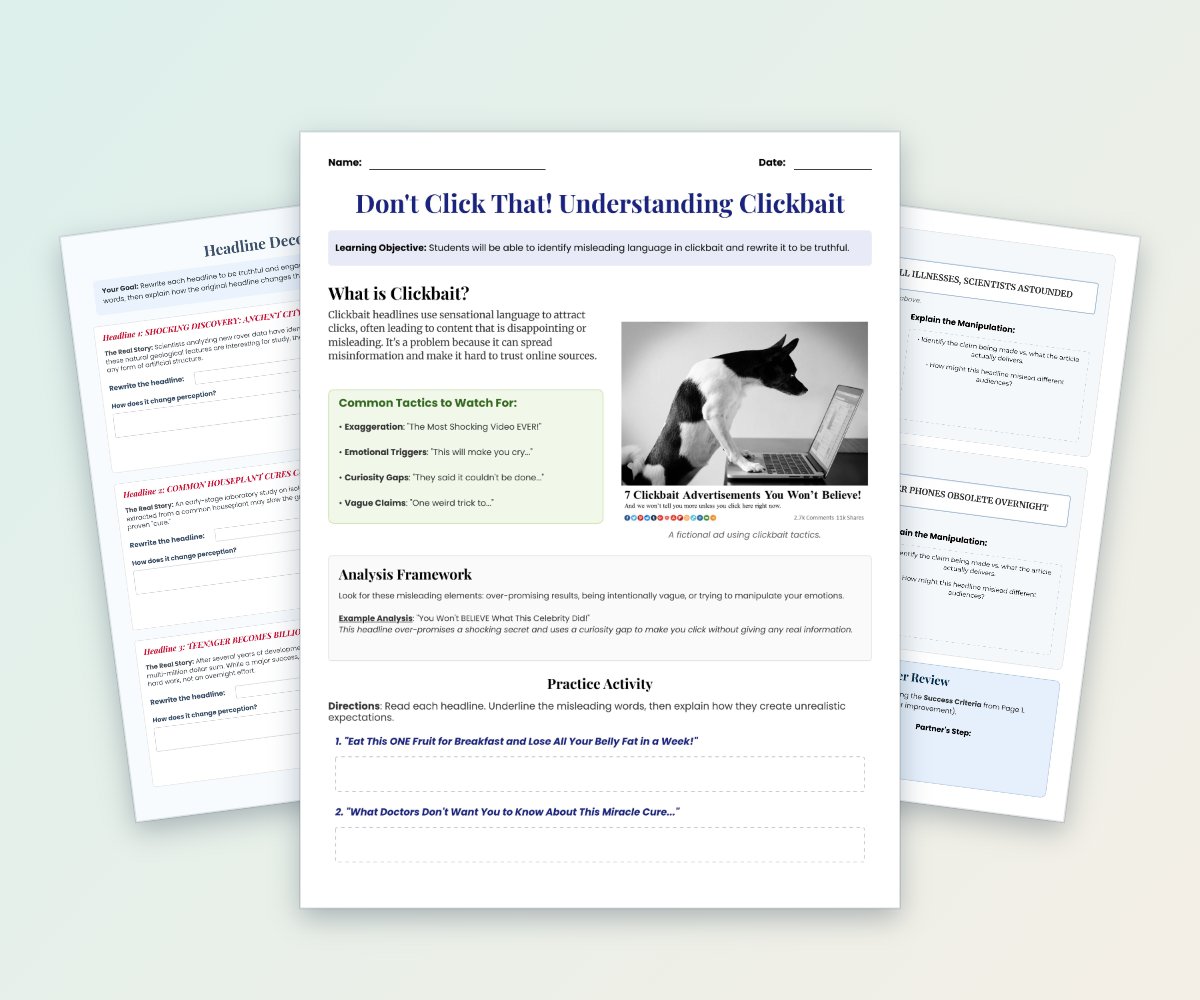
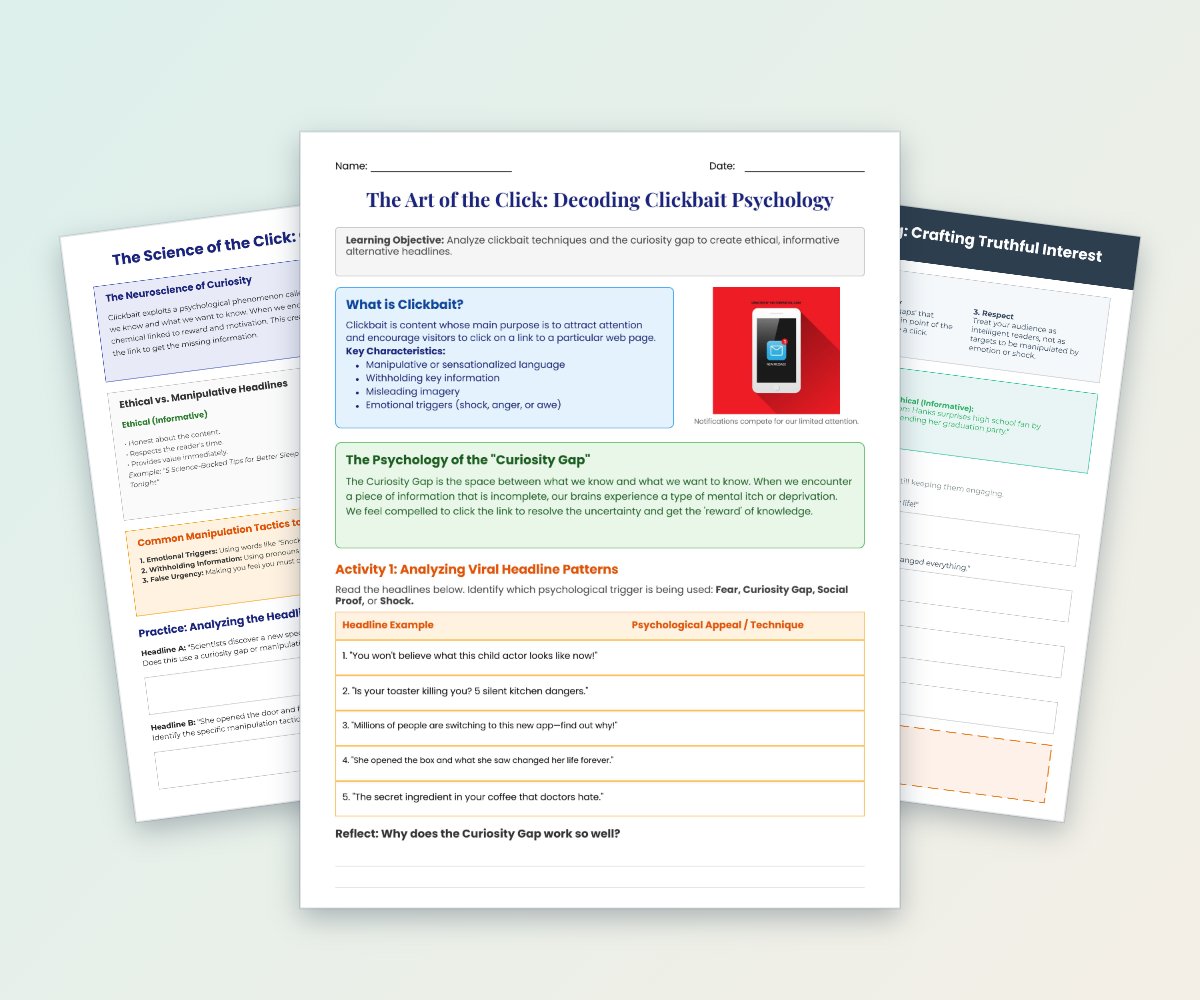
This four-page worksheet teaches students how clickbait uses exaggeration, emotional triggers, curiosity gaps, and vague claims.
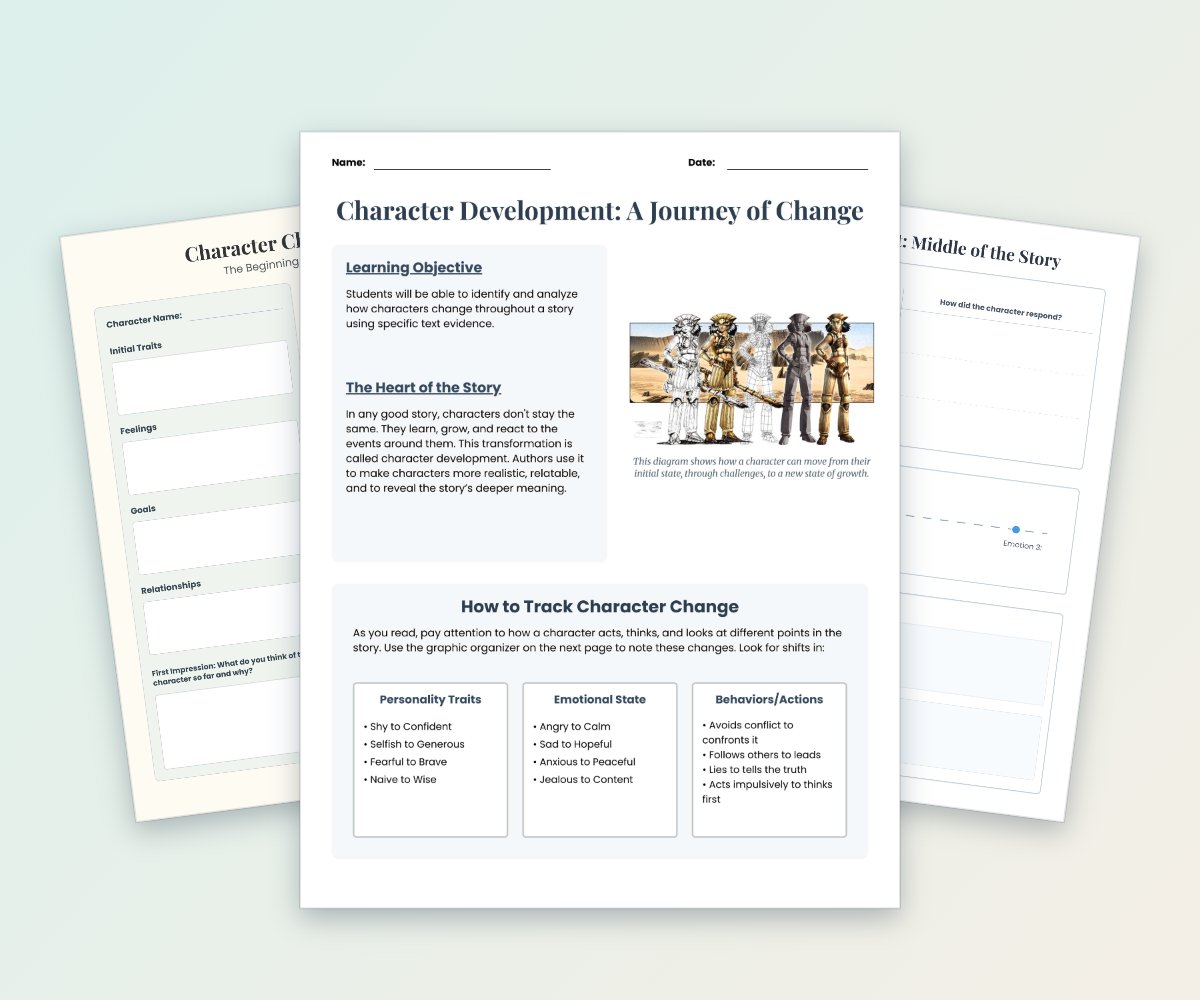
This four-page resource teaches students how to track character traits, emotions, actions, and relationships throughout a story.
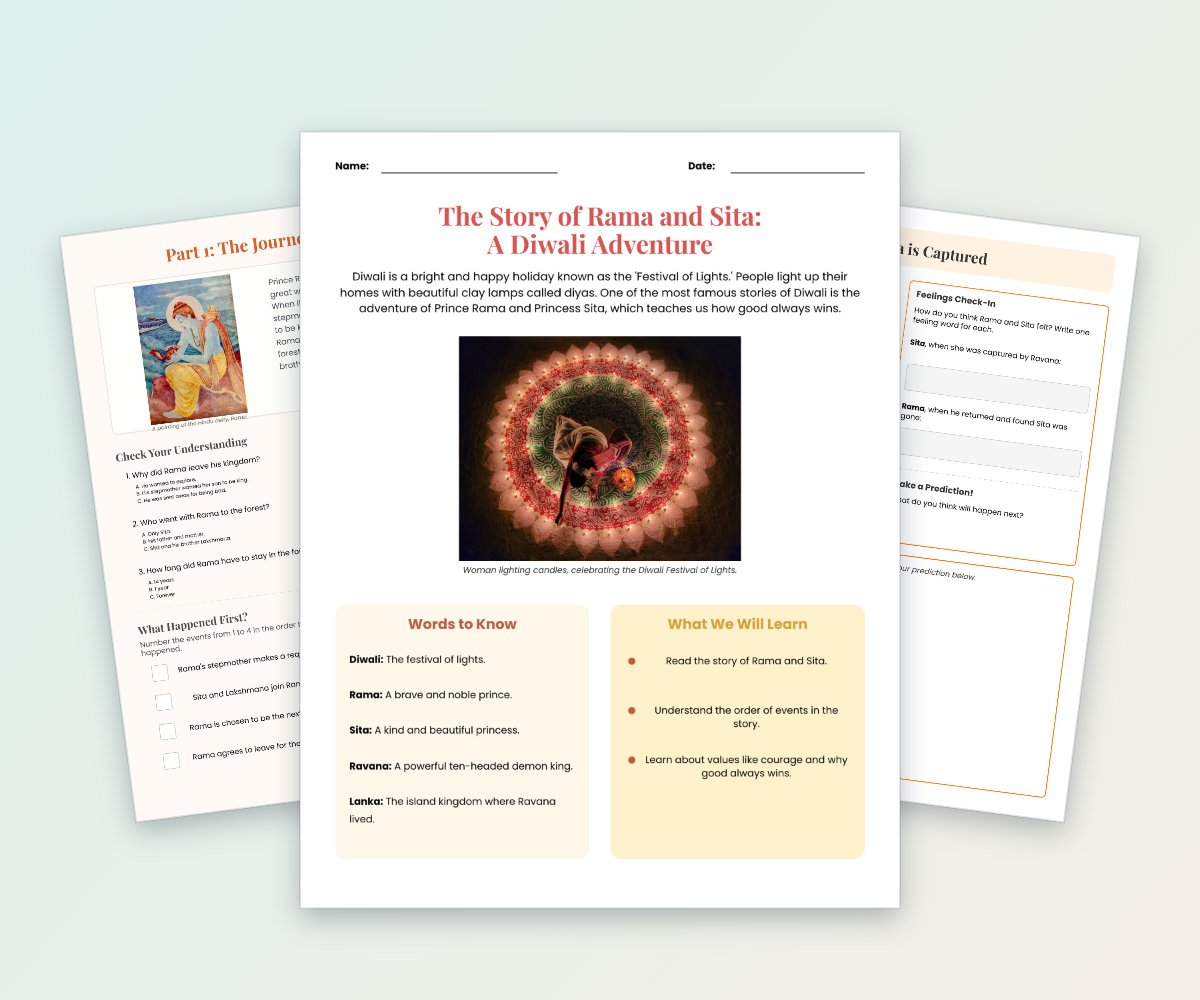
Students read an accessible retelling of the Rama and Sita story associated with Diwali.
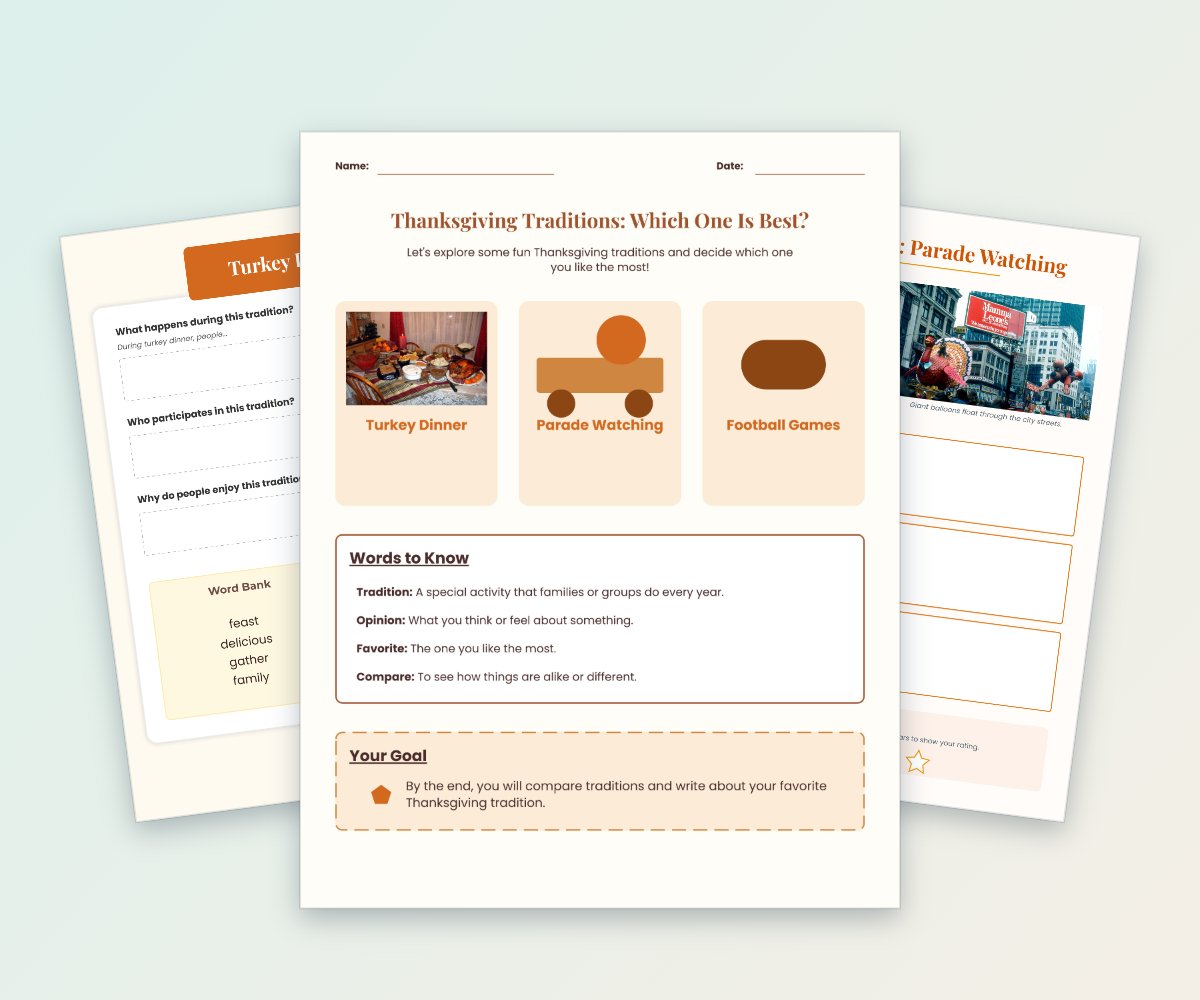
Students explore turkey dinner, parade watching, and football games as Thanksgiving traditions.
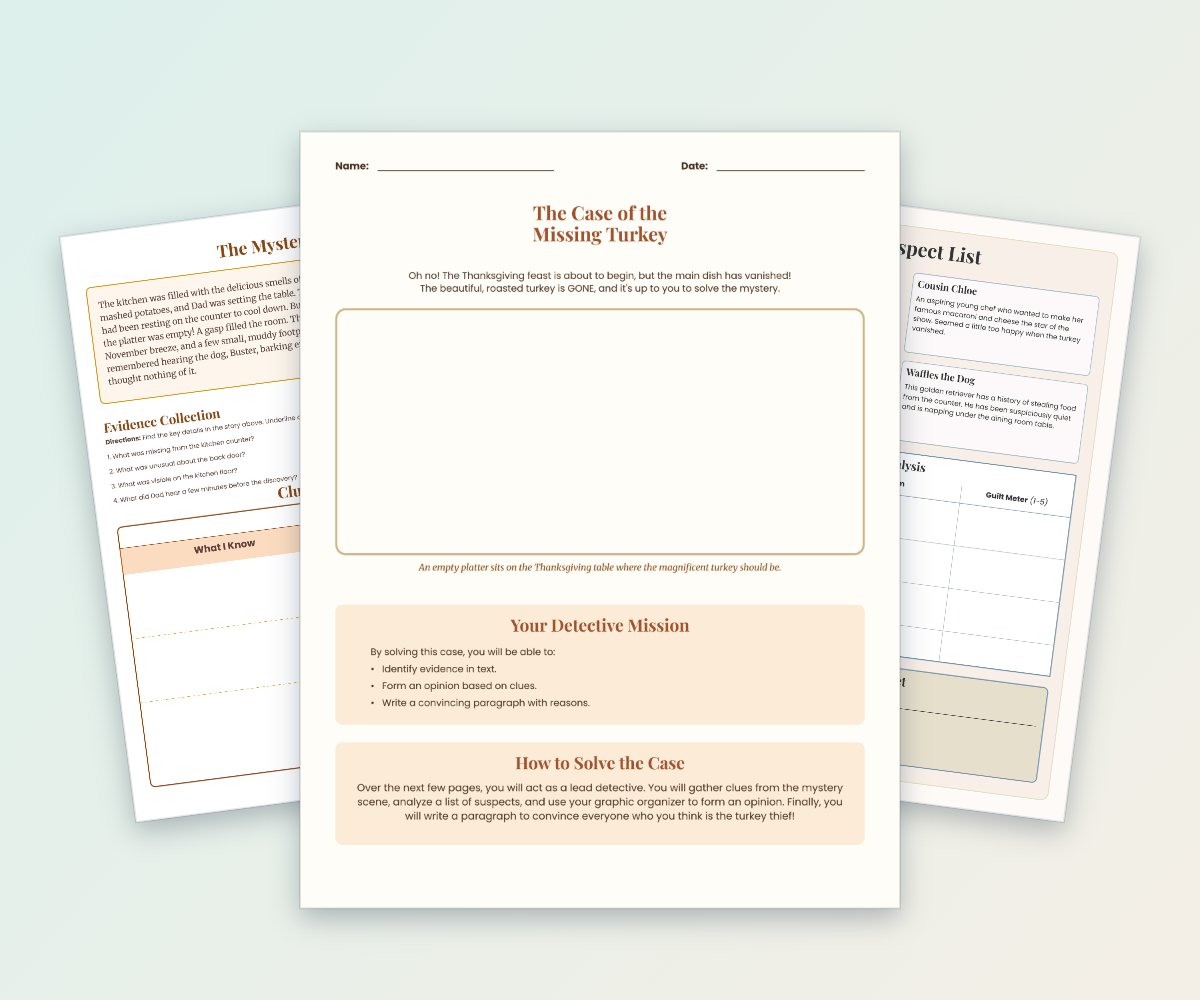
Students solve a humorous Thanksgiving turkey mystery by identifying evidence, interpreting clues, analyzing suspects, and forming an opinion.
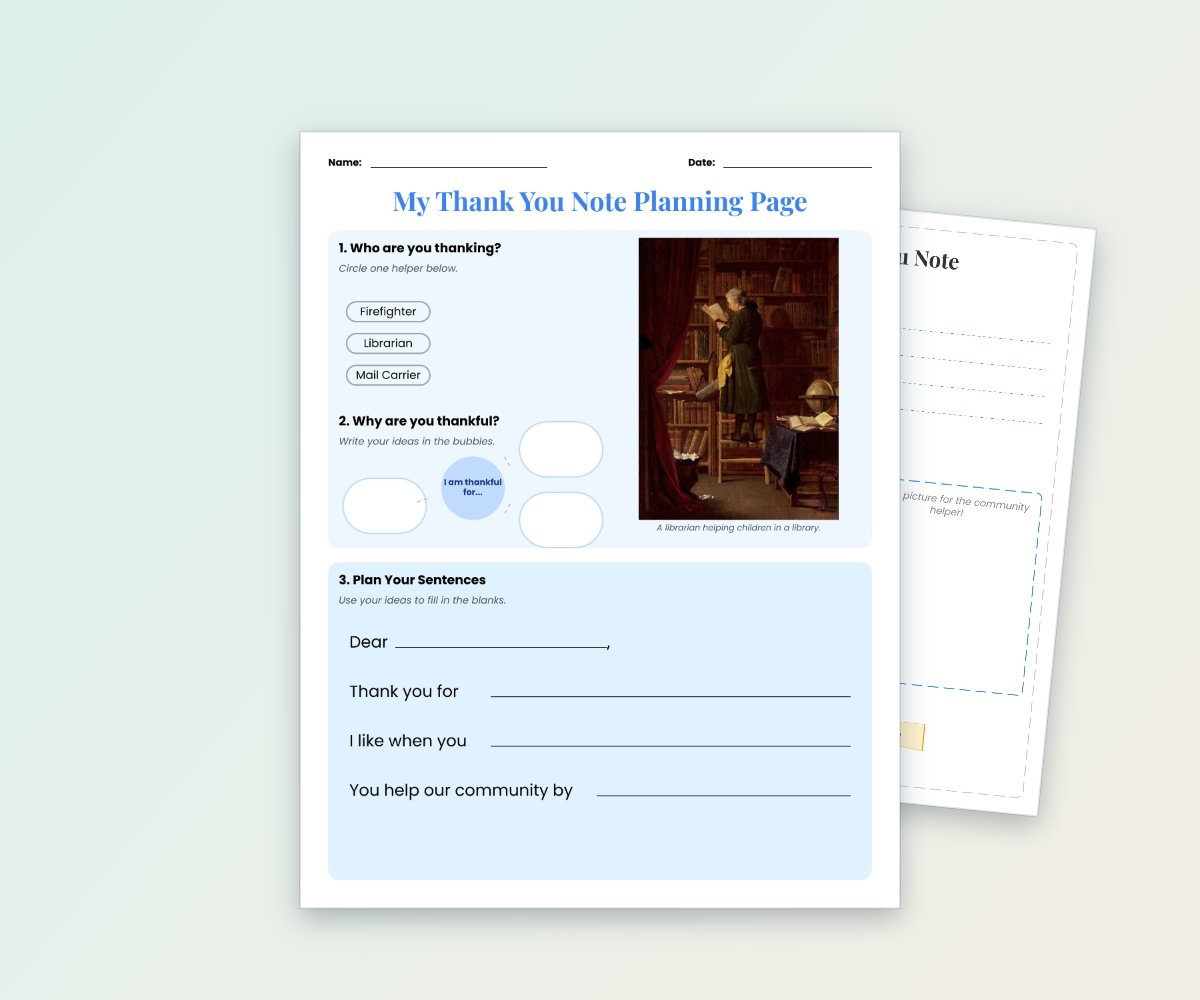
Students plan and write a thank-you note to a community helper such as a firefighter, librarian, or mail carrier.
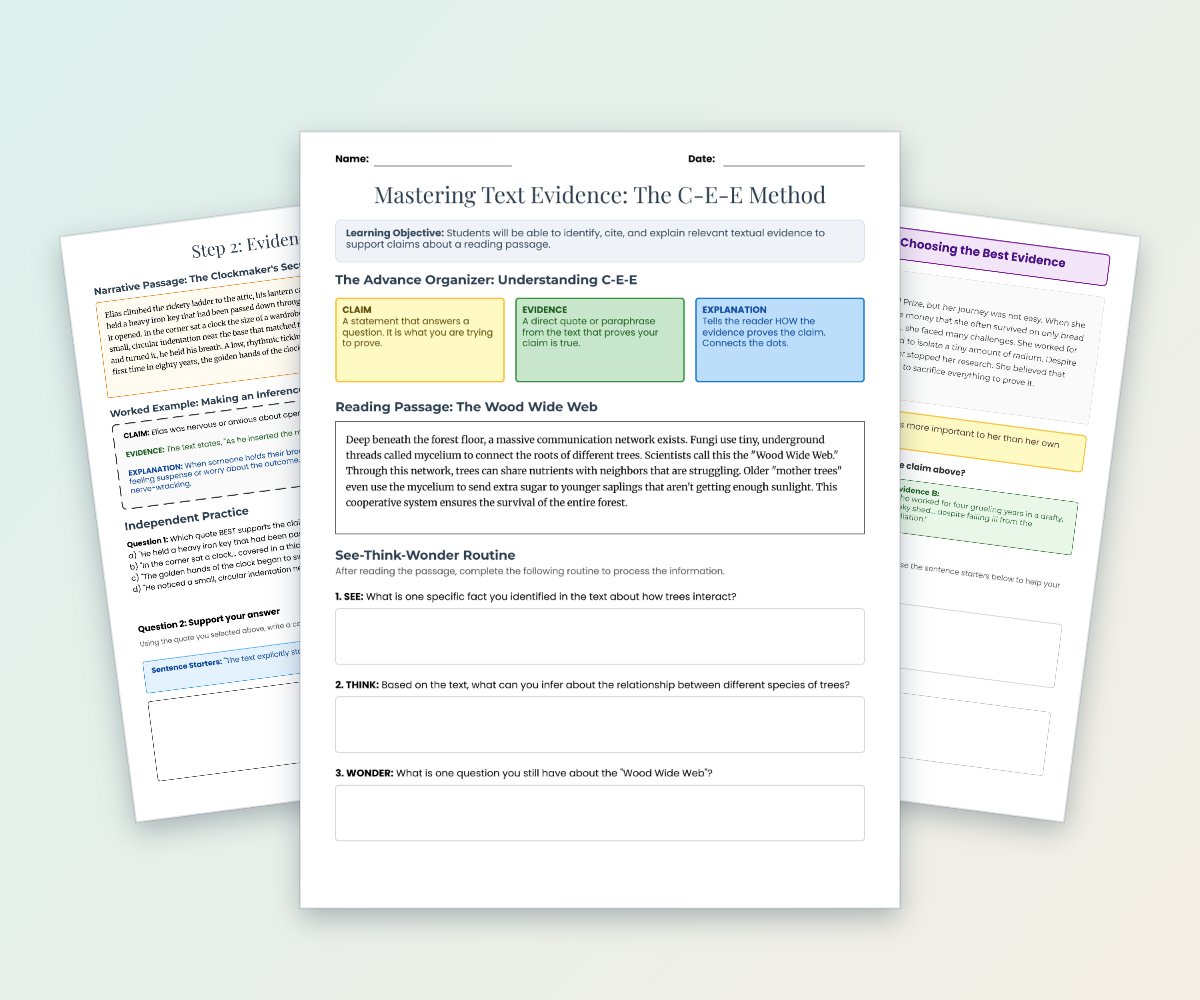
This six-page practice guide teaches the Claim-Evidence-Explanation method for responding to reading passages.
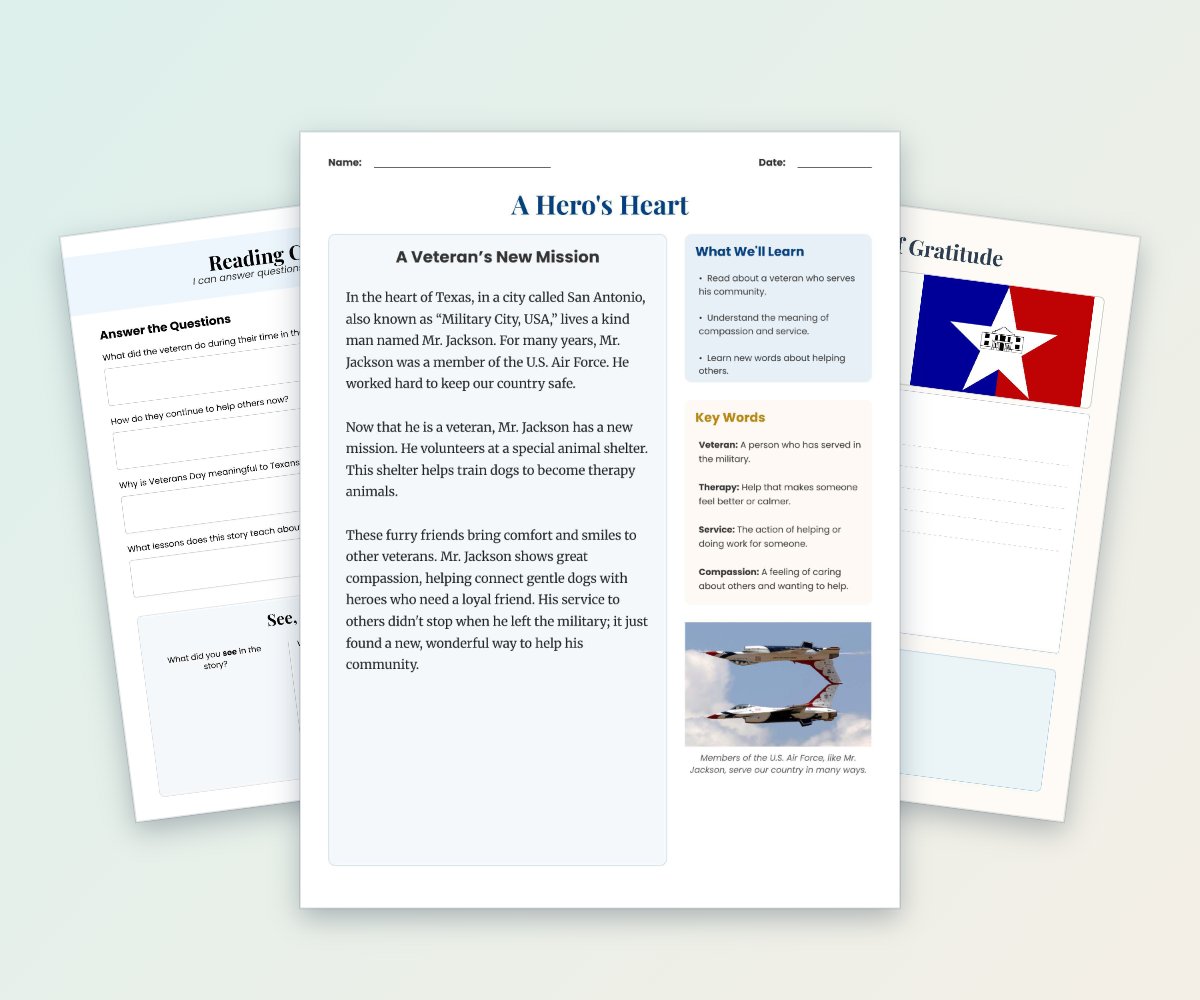
This three-page Texas Veterans Day ELA packet features a reading passage about a veteran serving his community through therapy-animal work.
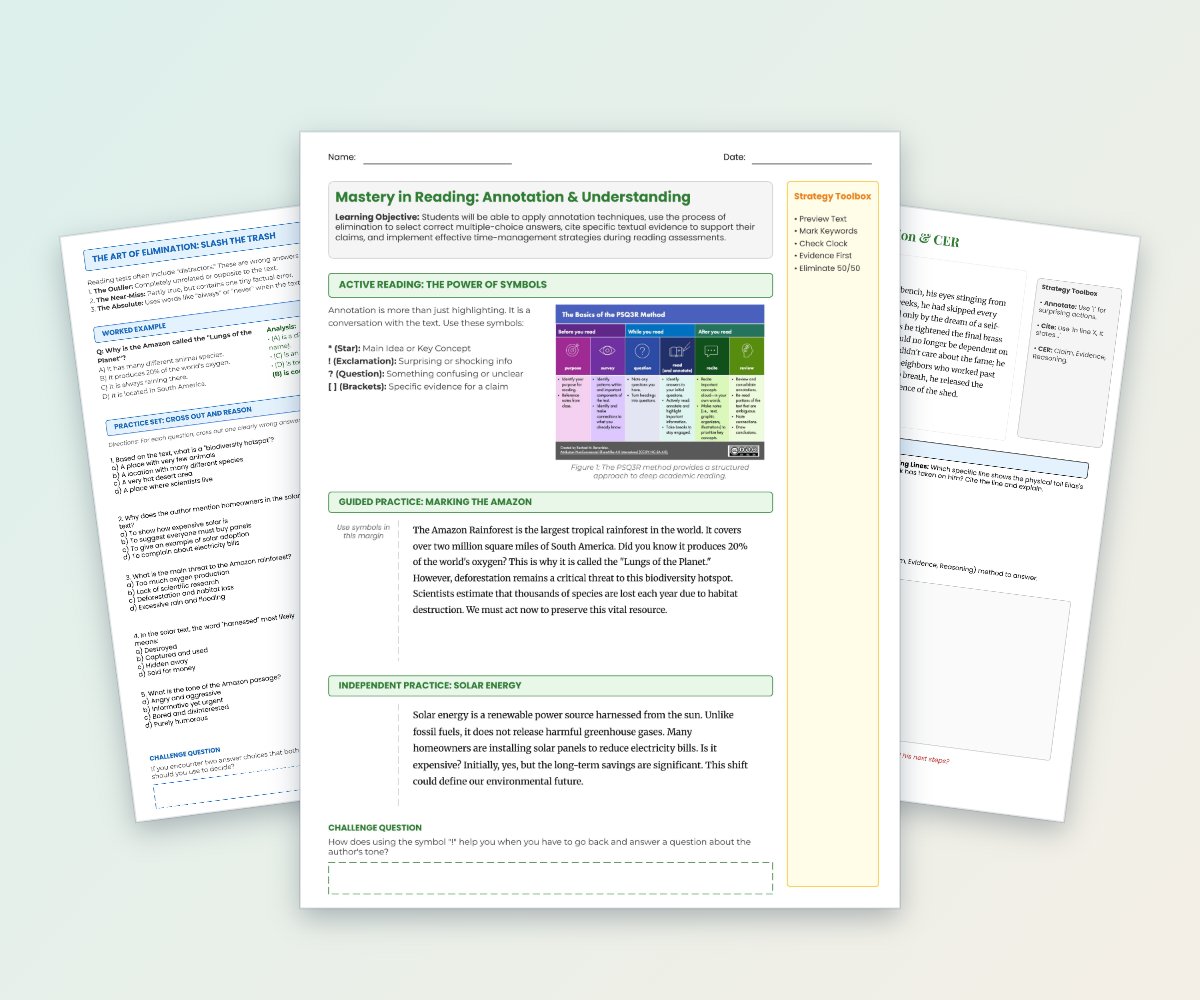
This six-page resource teaches annotation, the PSQ3R reading method, process of elimination, textual evidence, and time-management strategies.
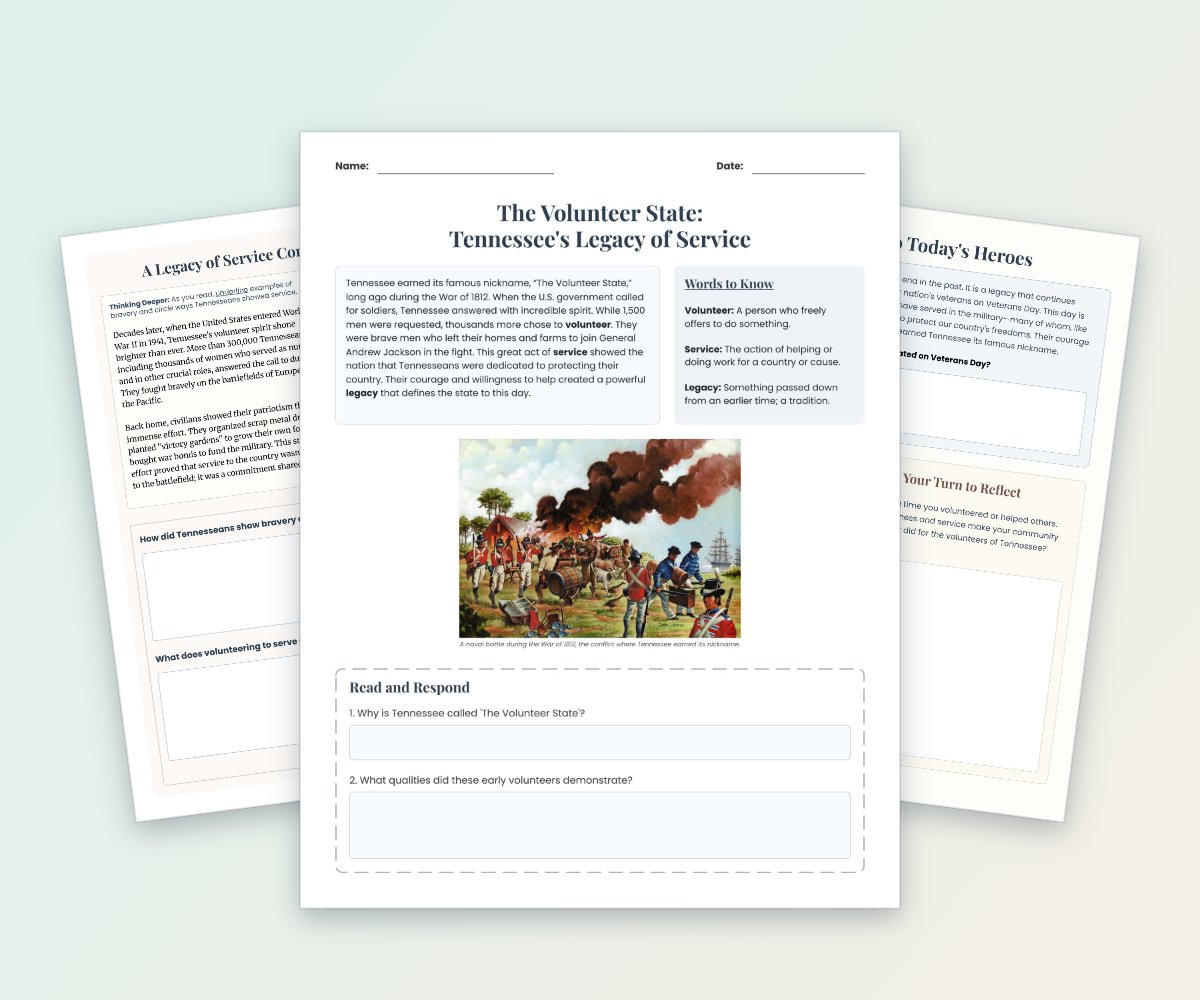
Students read informational passages about Tennessee’s Volunteer State legacy, the War of 1812, and World War II service.
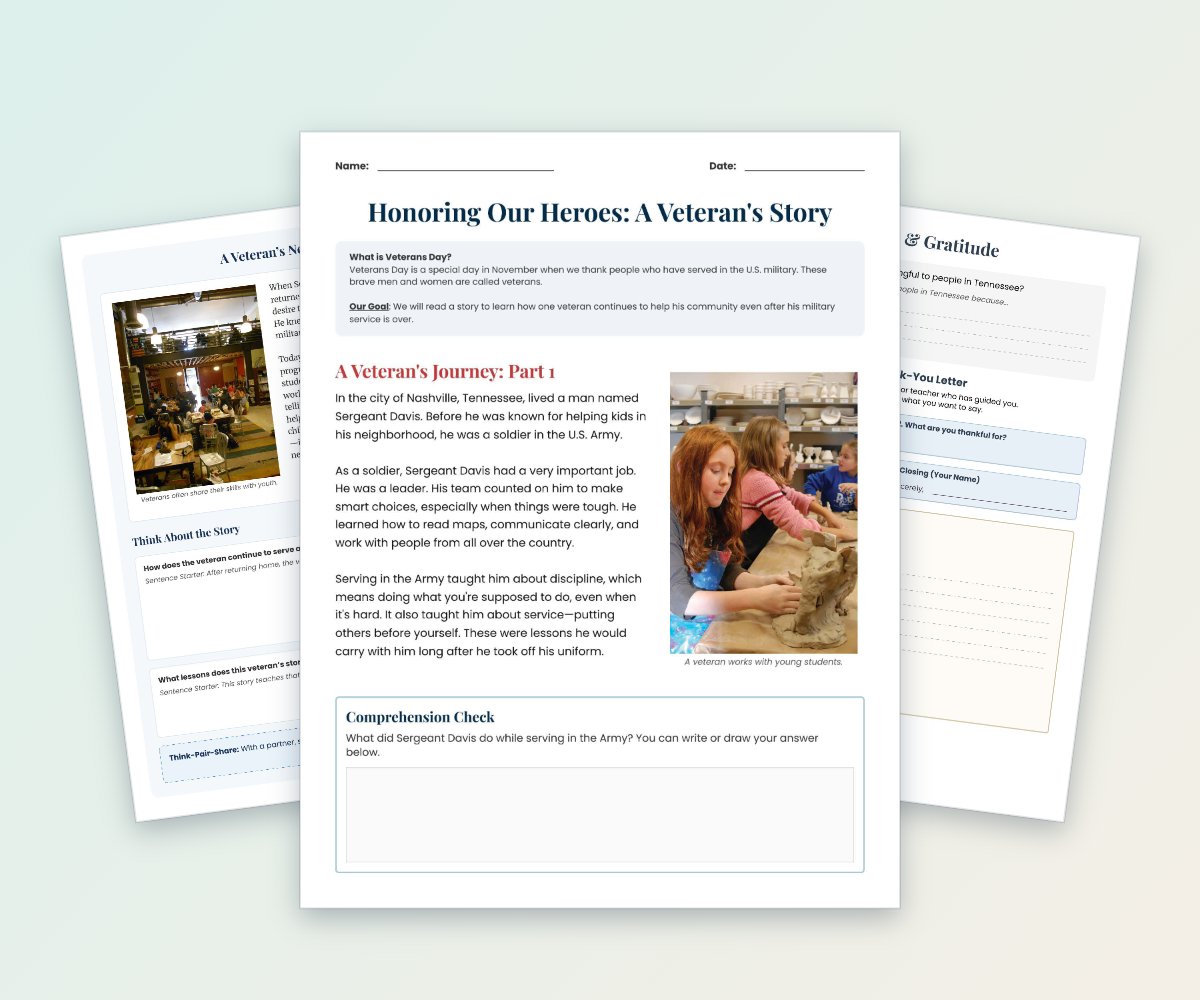
Students read a fictional story about a Tennessee veteran’s military service and continued community service.
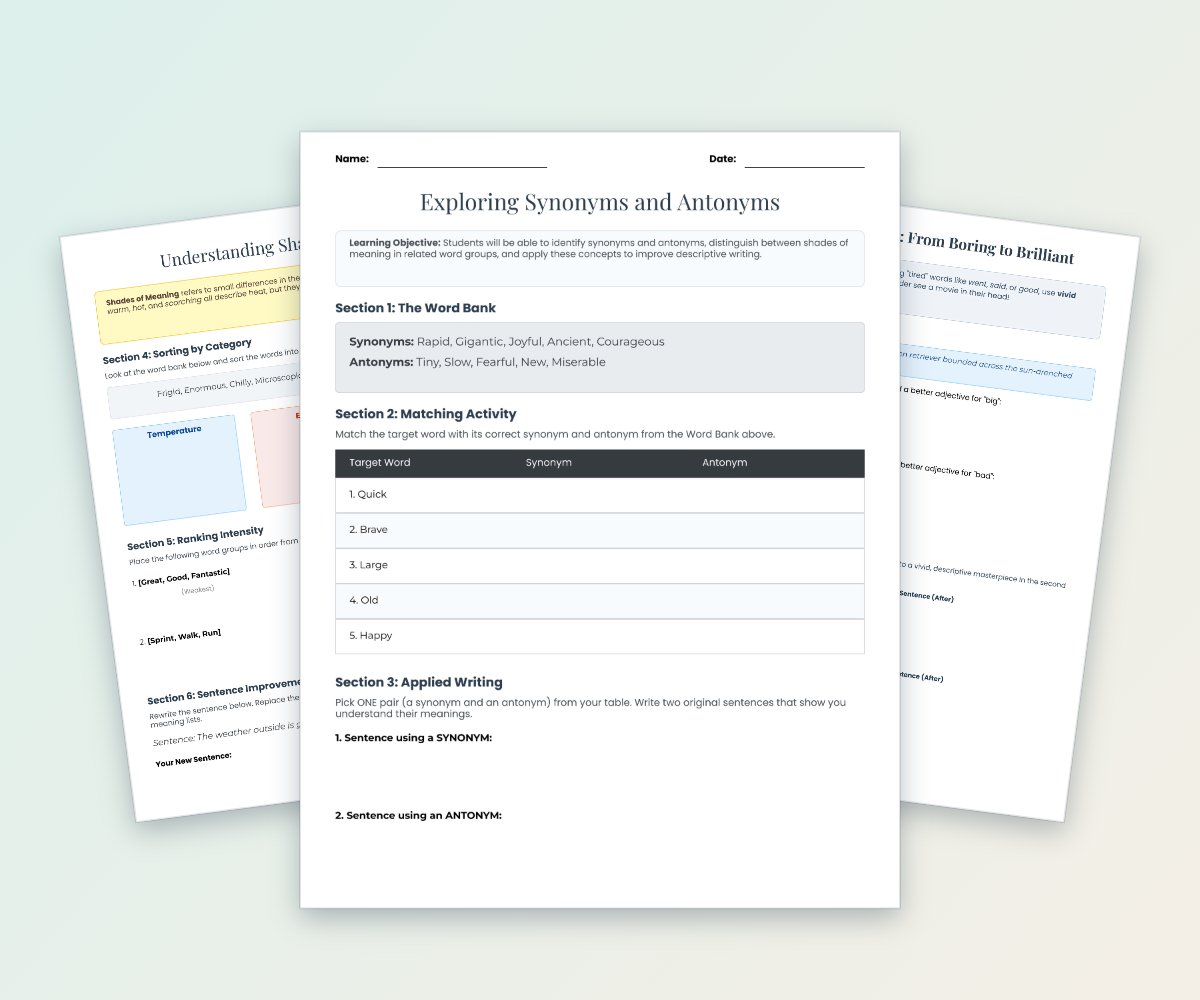
This six-page activity pack helps students identify synonyms and antonyms, compare shades of meaning, and rank related words by intensity.
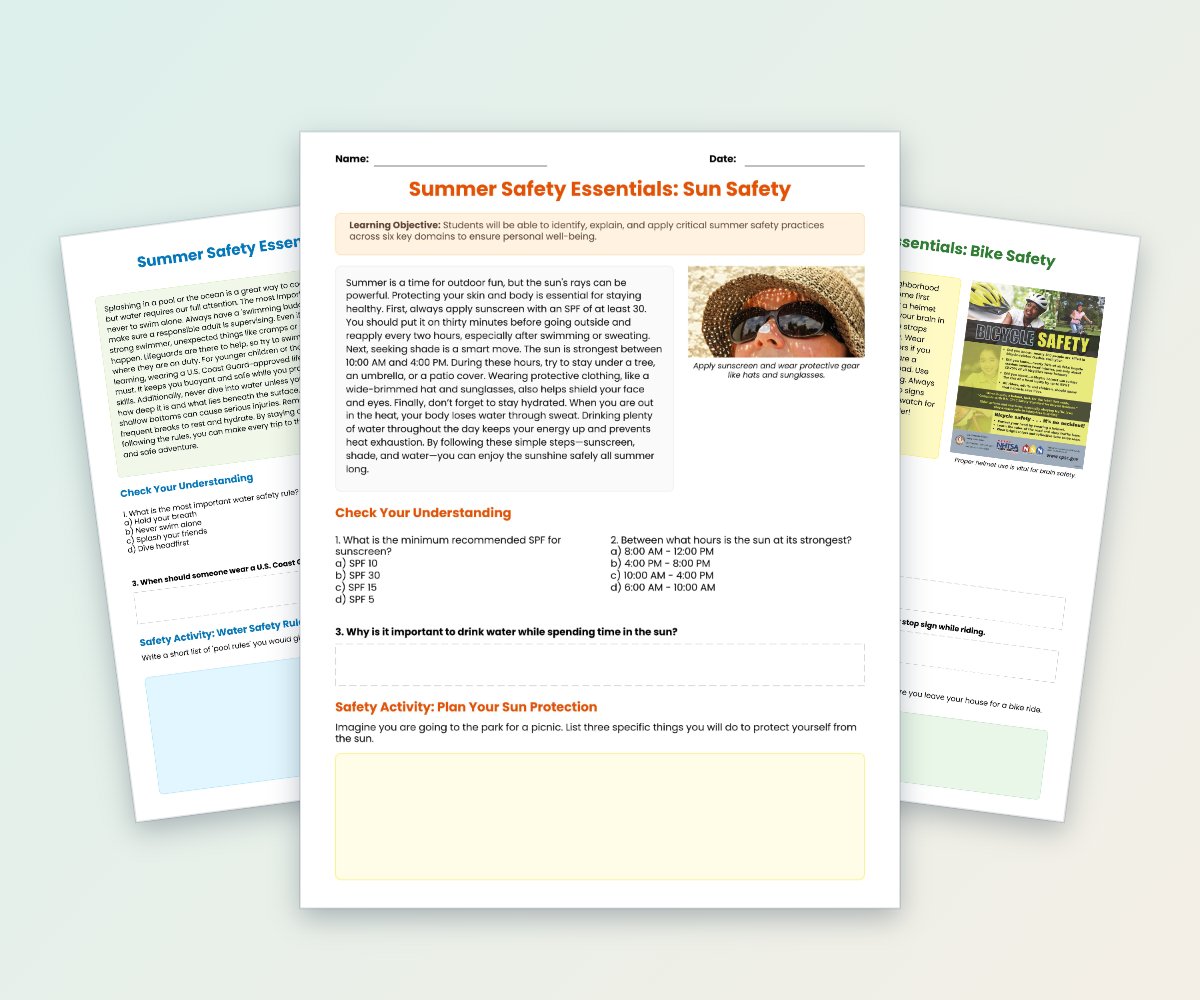
This six-page pack combines informational reading passages, comprehension questions, and writing activities about sun, water, and summer safety.
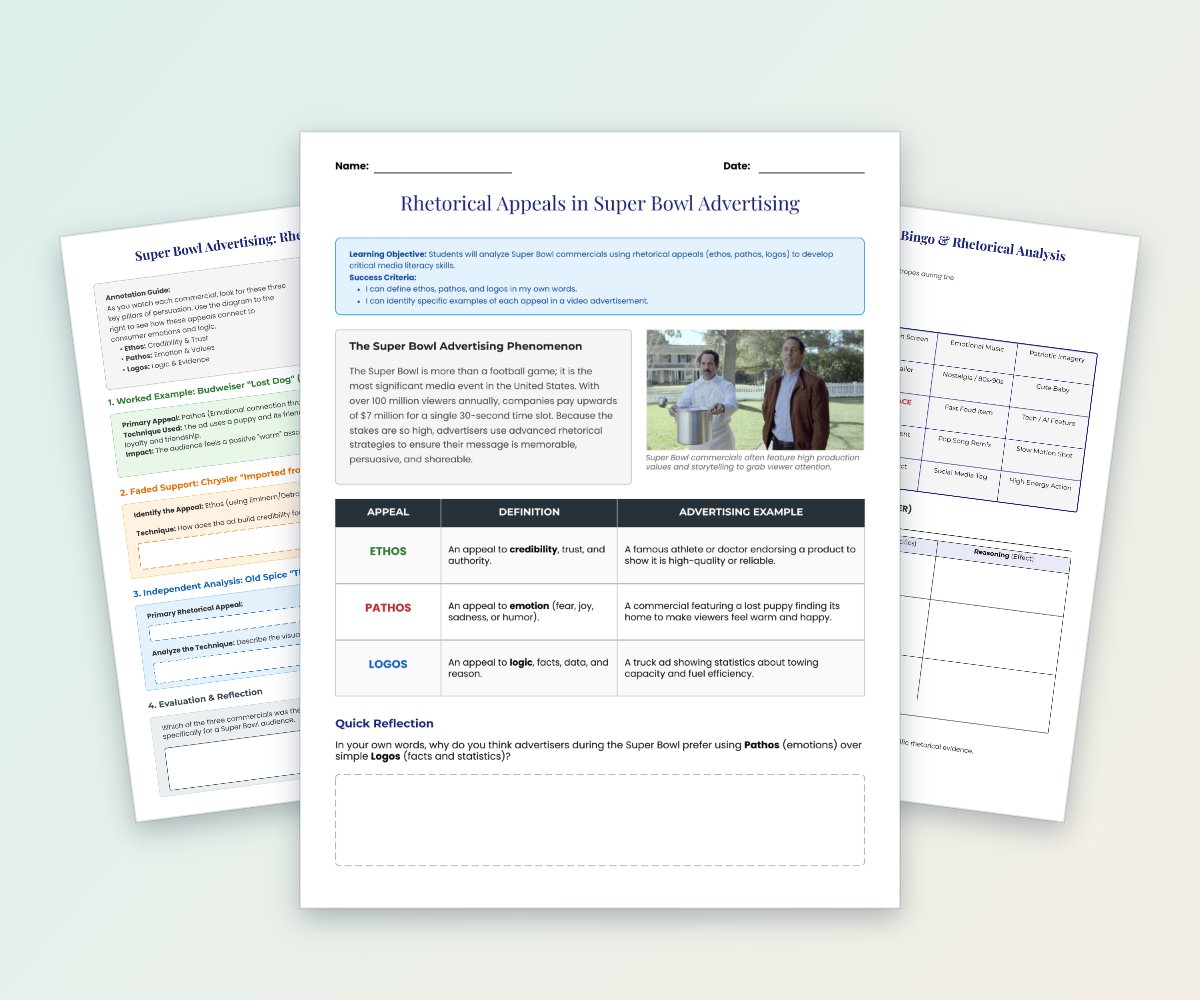
Students analyze Super Bowl advertisements through ethos, pathos, and logos.
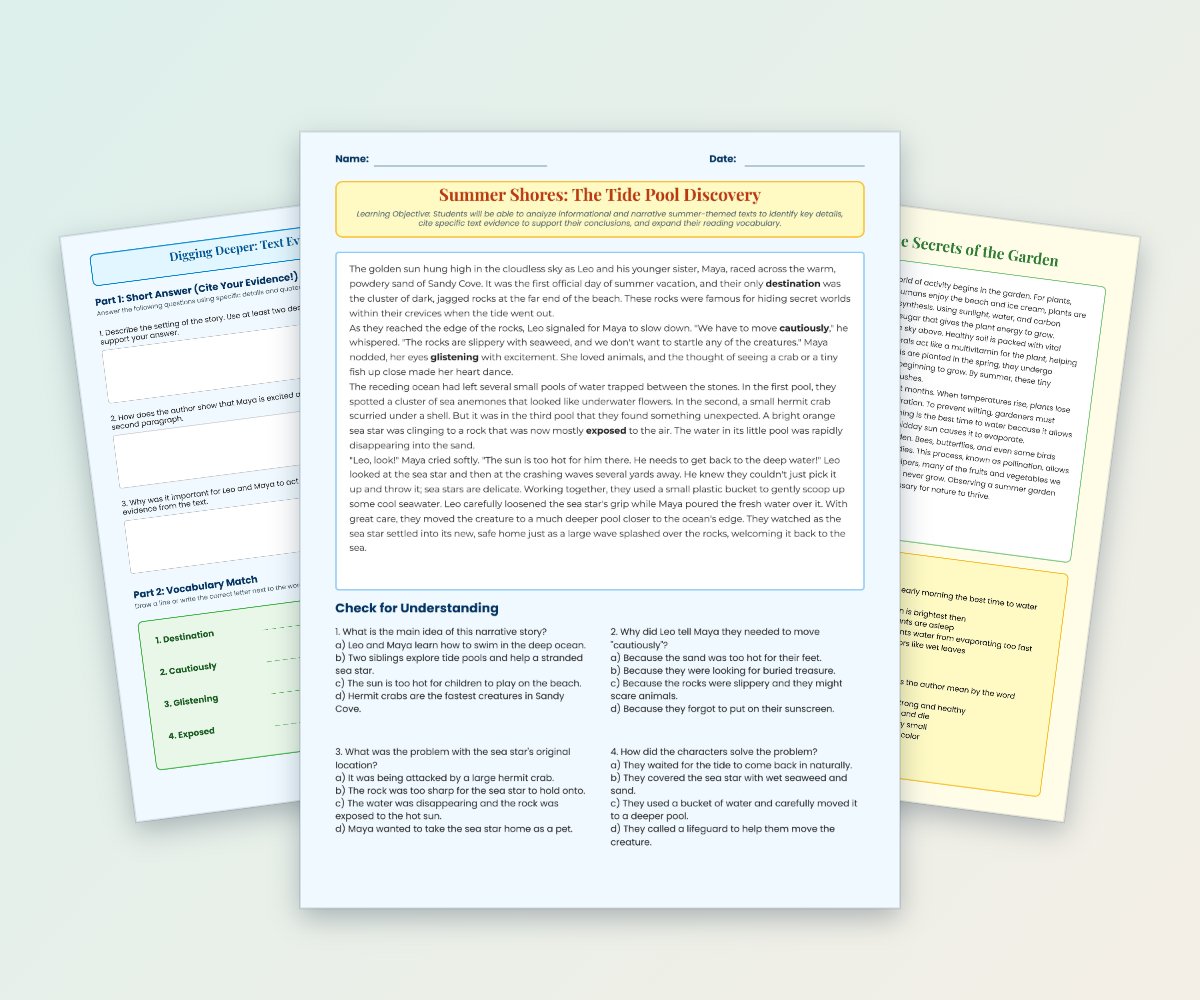
This summer-themed reading comprehension packet features a narrative about siblings exploring tide pools and helping a sea star.
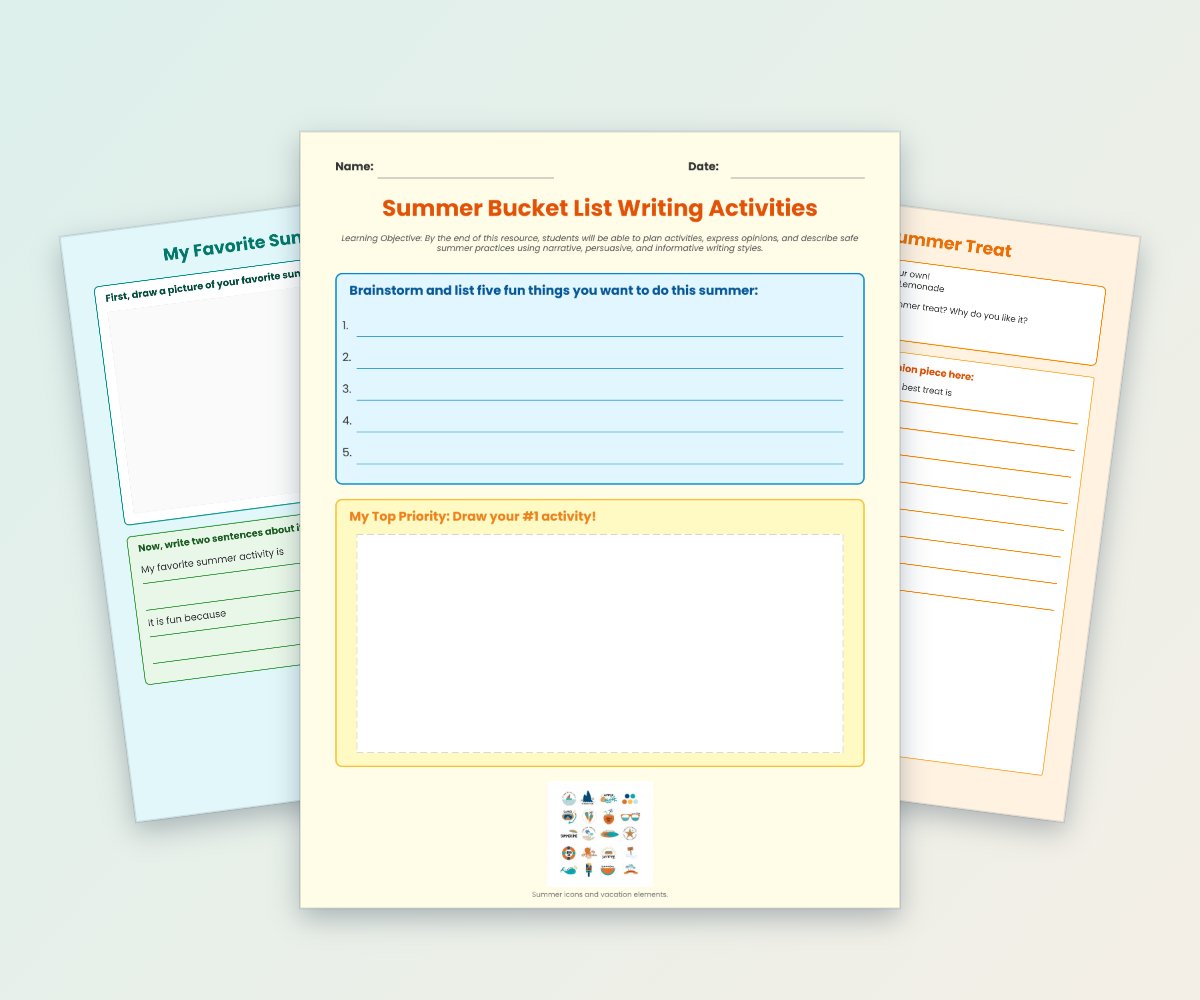
A six-page summer writing activity pack featuring brainstorming, opinion writing, sequencing, personal goals, and sun-safety prompts.
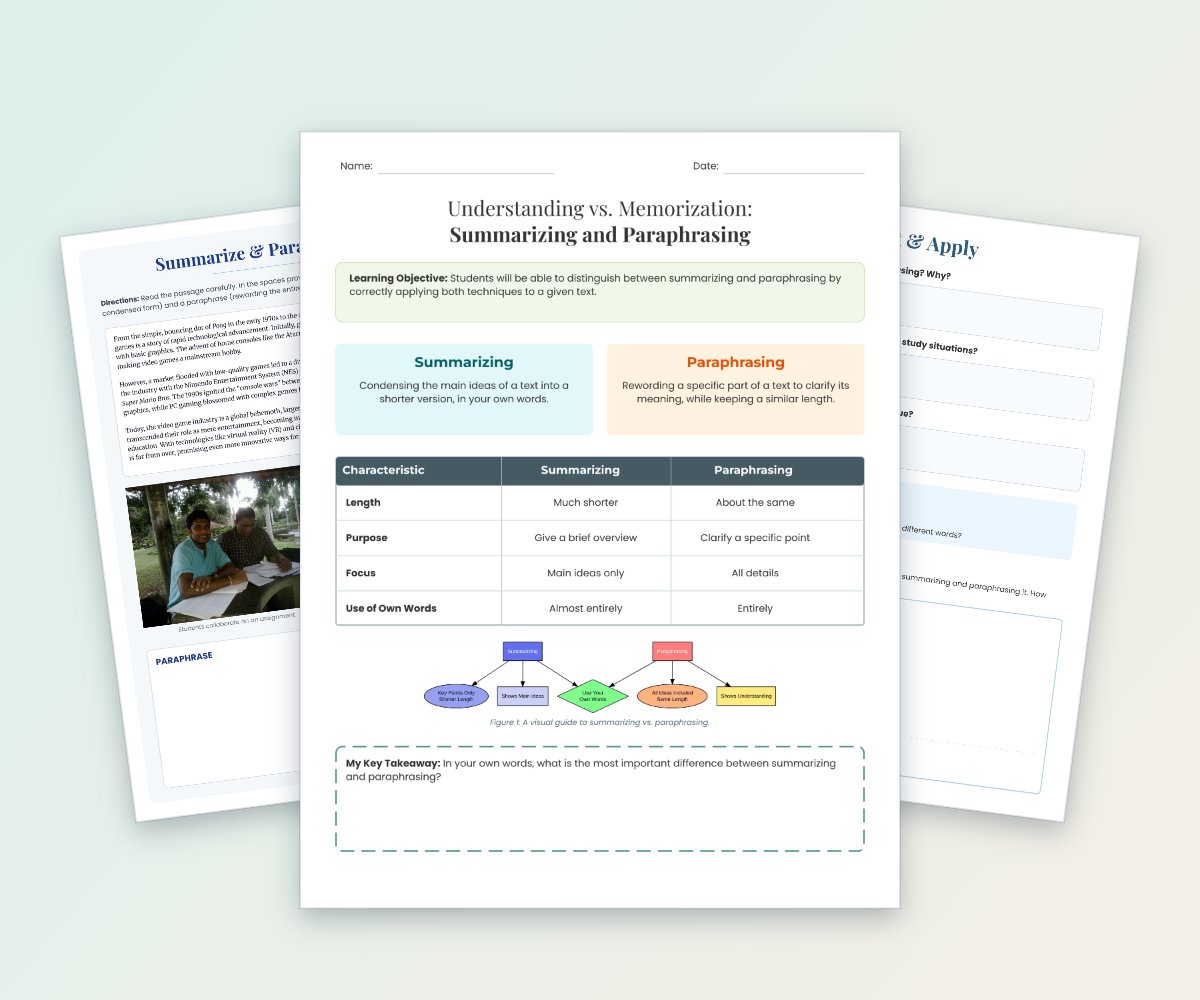
This three-page worksheet teaches students to distinguish between summarizing and paraphrasing through definitions, comparisons, reflection, and guided practice.
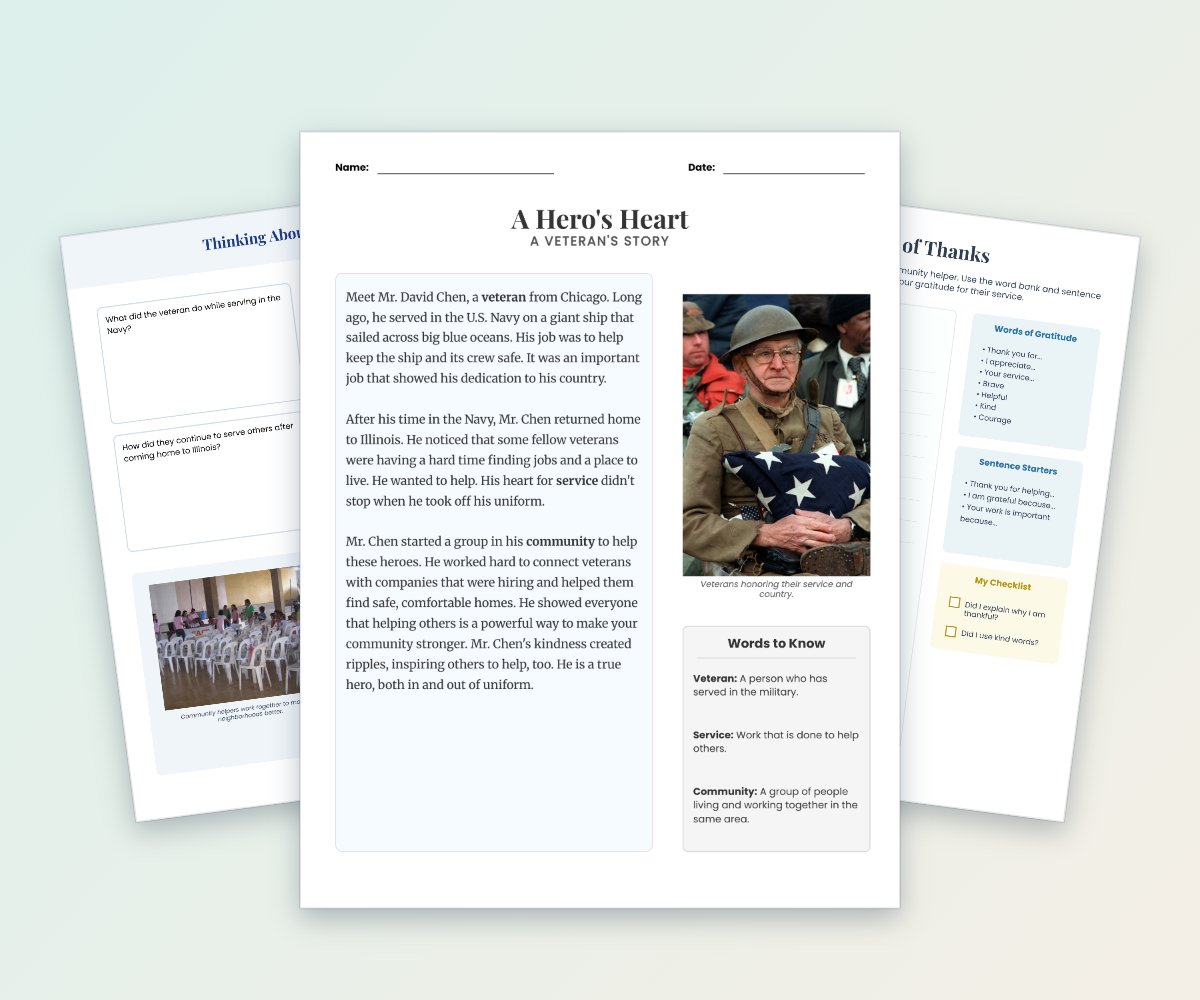
Students read about a veteran’s military and community service, learn key vocabulary, and answer comprehension questions.
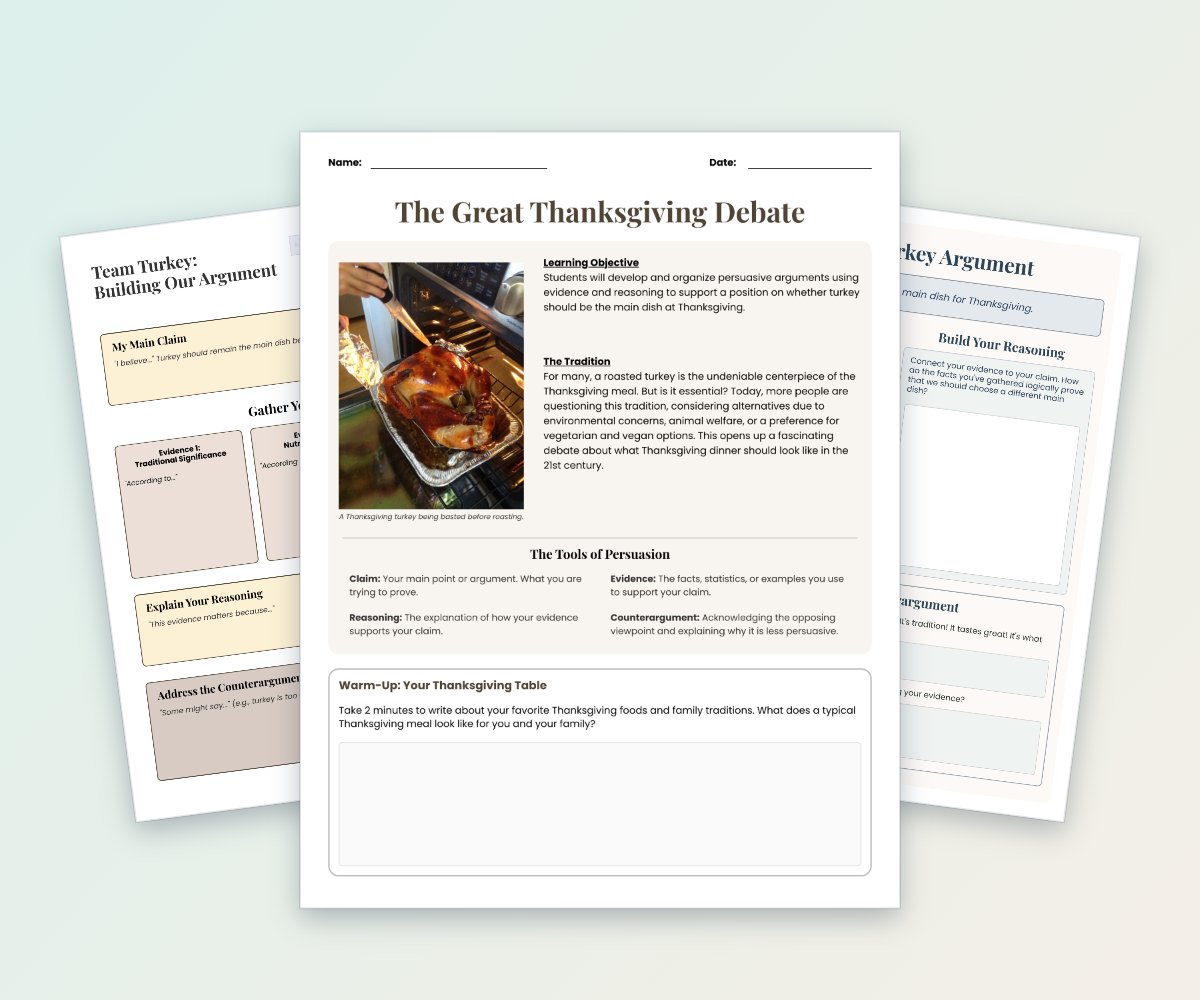
Students debate whether turkey should remain the main Thanksgiving dish while developing claims, gathering evidence, explaining reasoning, and addressing counterarguments.
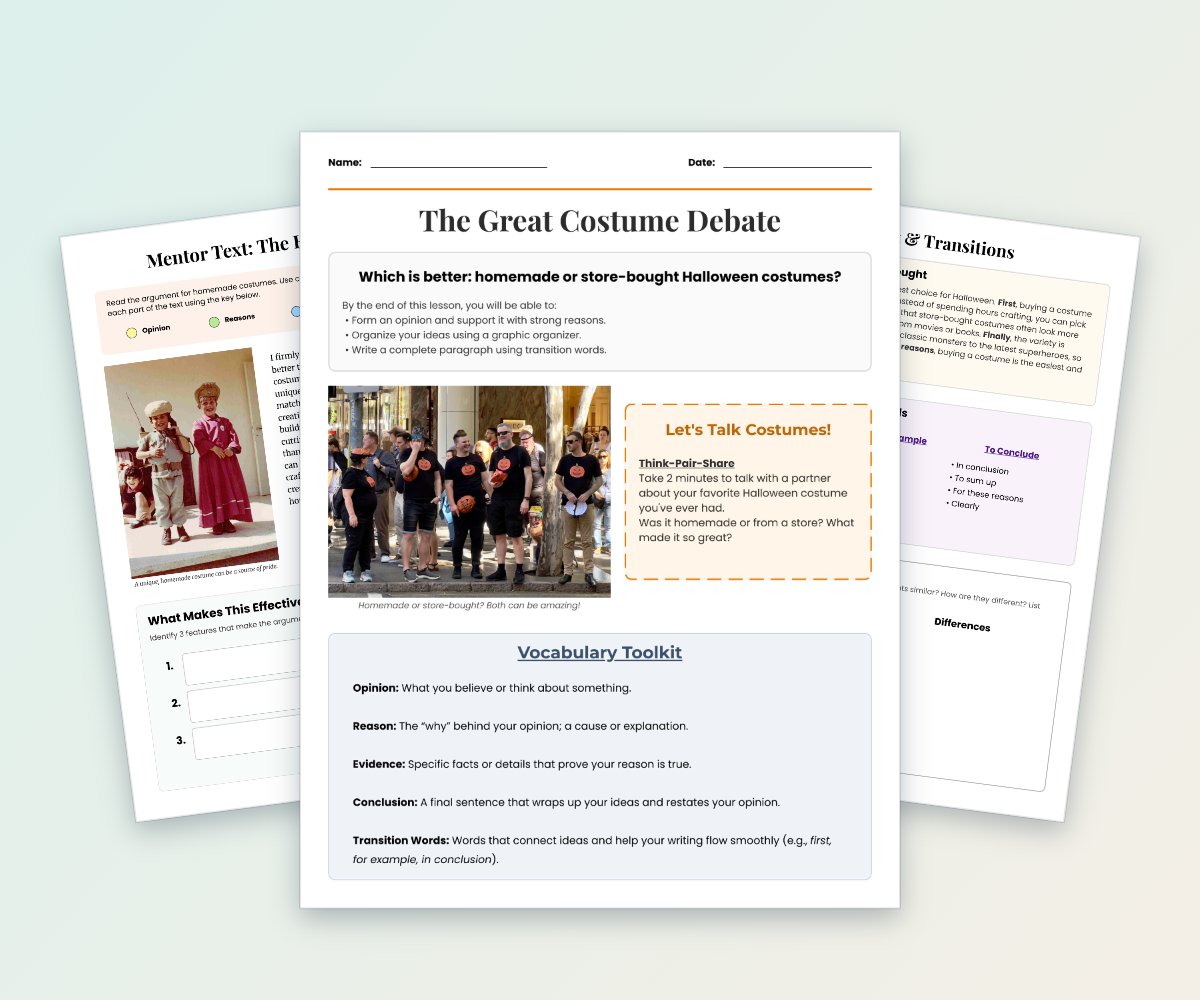
Students examine arguments about homemade and store-bought Halloween costumes, identify persuasive features, and organize their own opinions.
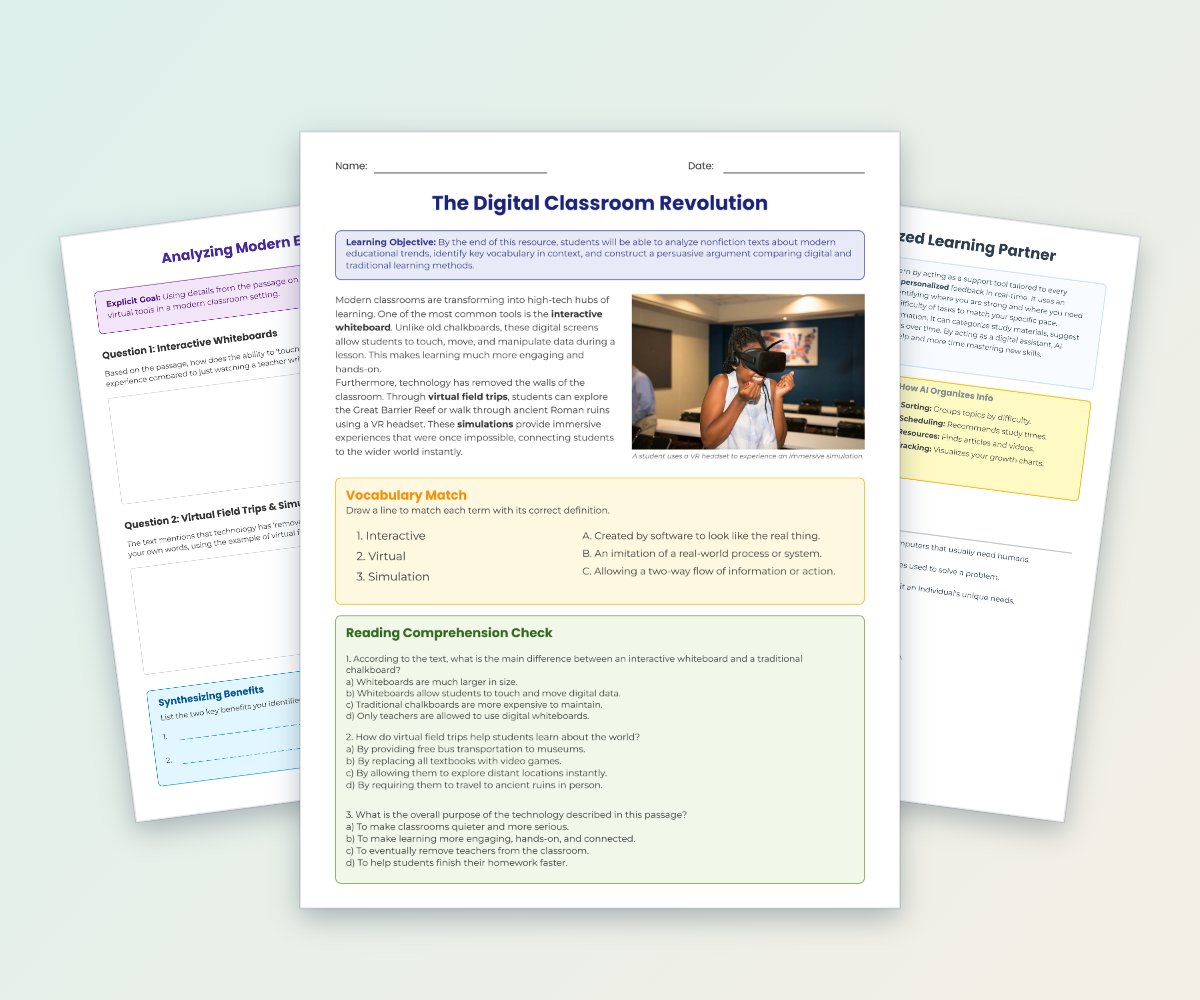
This six-page worksheet explores modern classroom technology through an informational passage about interactive whiteboards, virtual field trips, and digital learning tools.
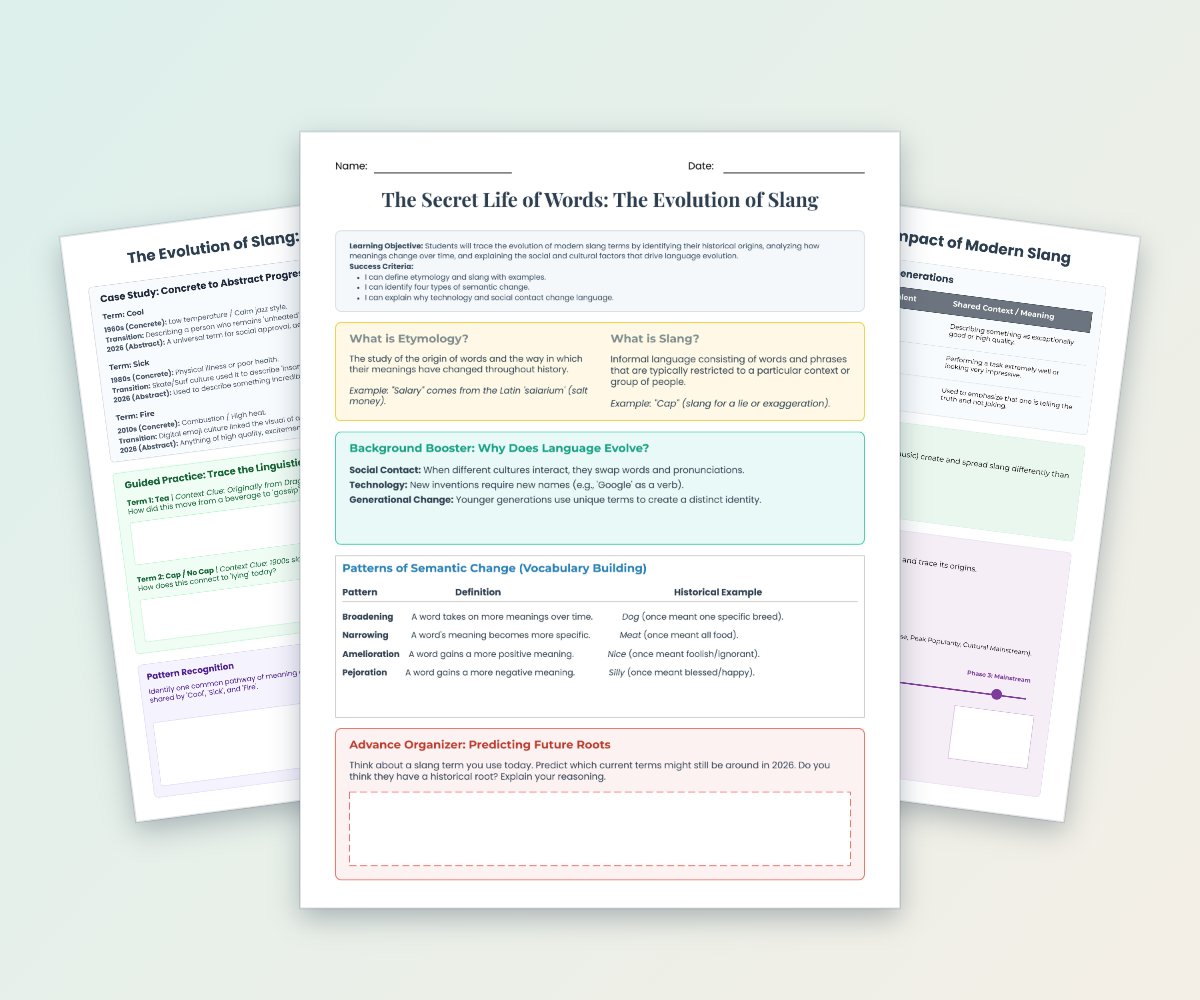
Students explore the origins and changing meanings of slang through definitions, semantic-change patterns, historical examples, and timeline case studies.
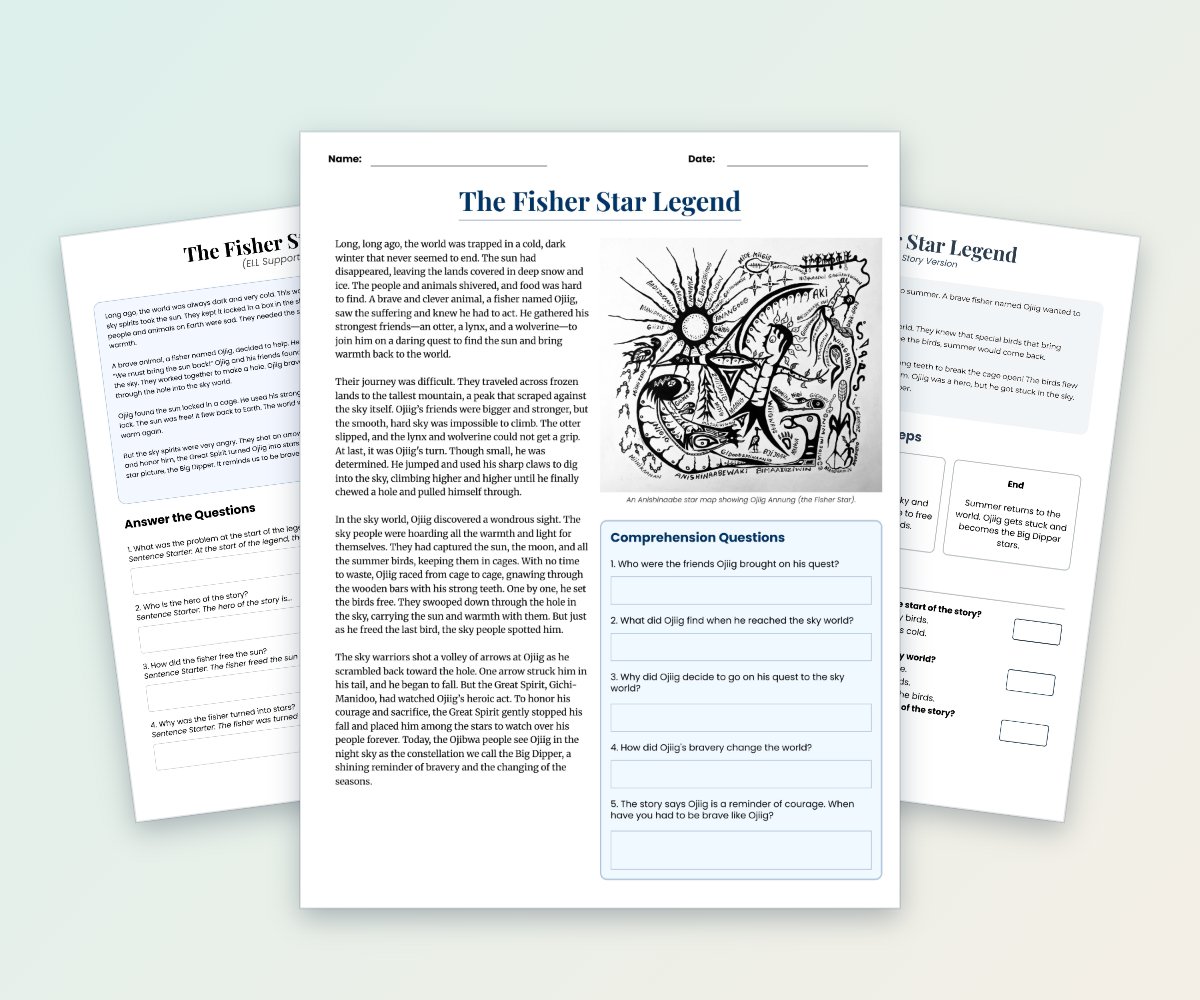
Students read an accessible version of the Anishinaabe Fisher Star Legend, featuring Ojiig’s journey to restore sunlight and warmth.
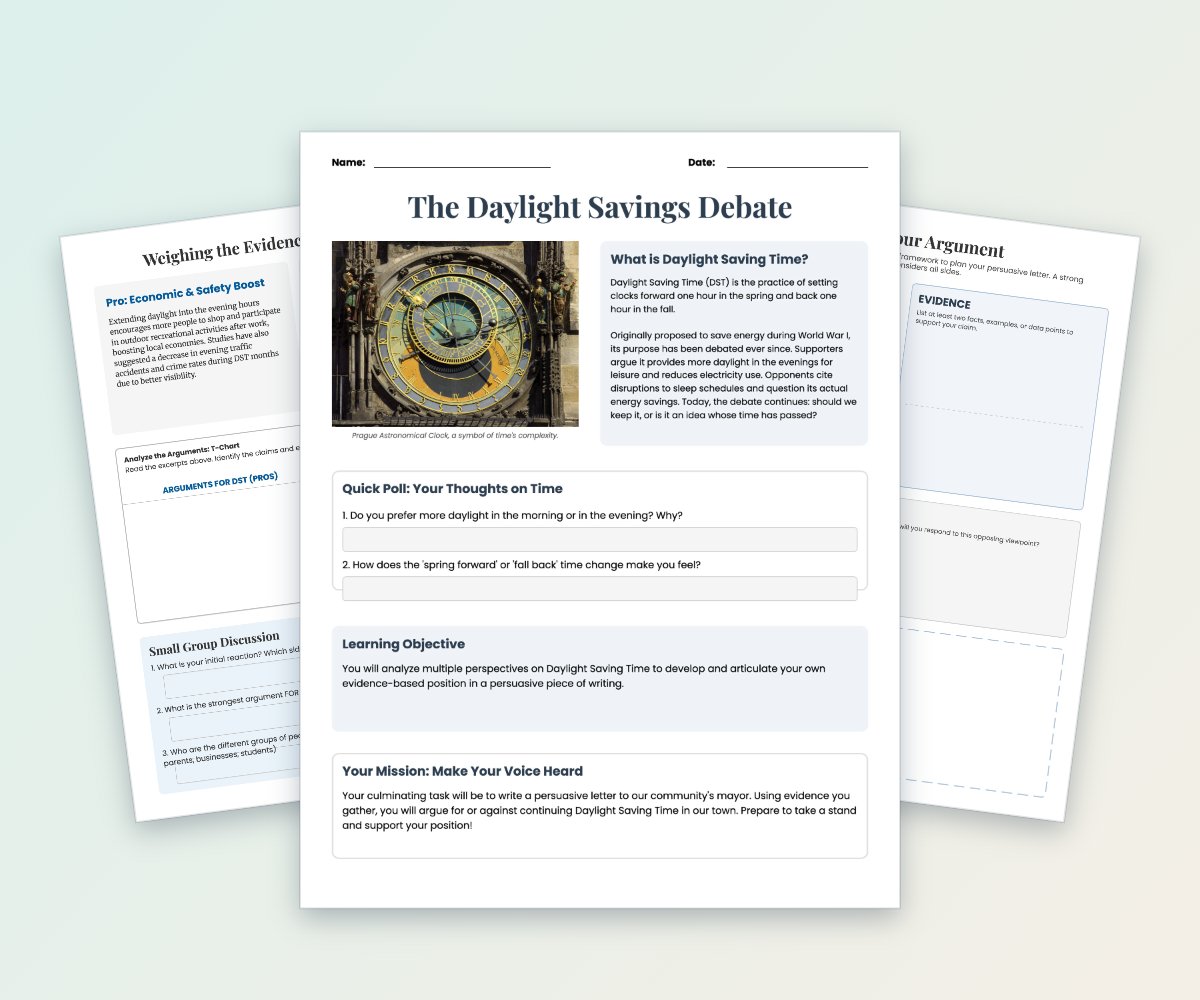
Students examine arguments for and against Daylight Saving Time, identify claims and evidence, and discuss affected stakeholders.
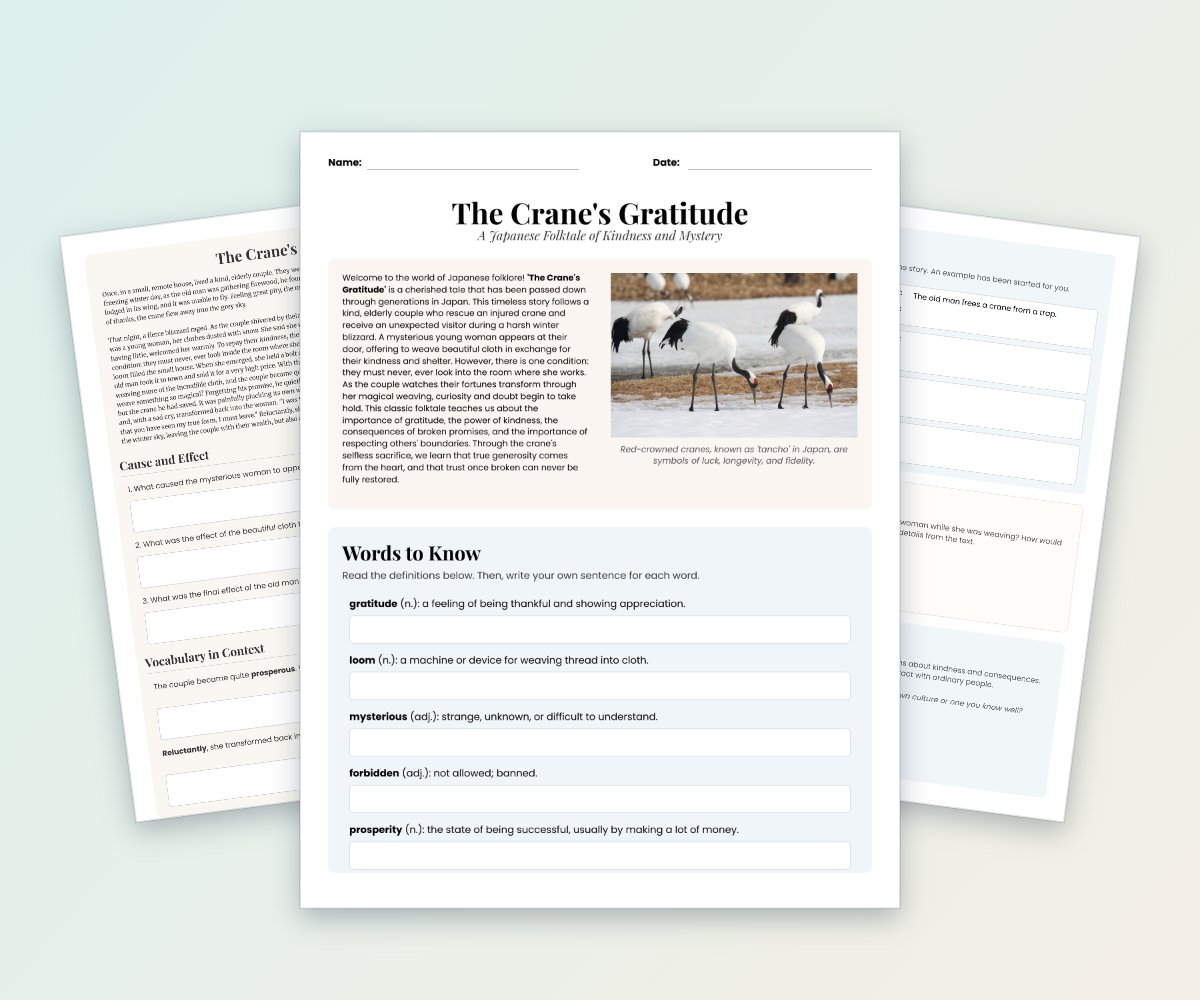
Students read an adapted Japanese folktale about kindness, gratitude, trust, and respecting boundaries.
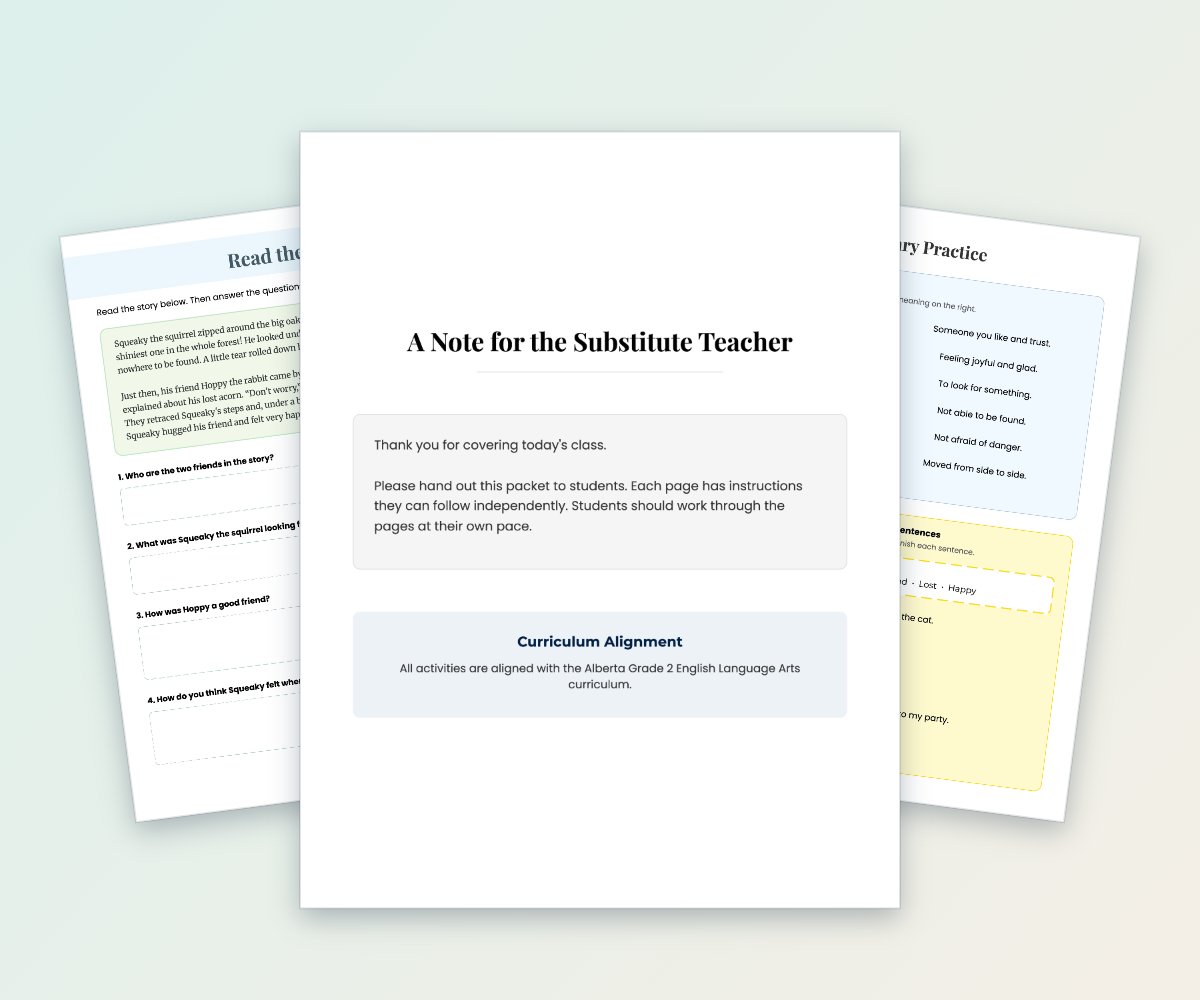
This eight-page substitute teacher packet provides independent Grade 2 English activities, including a short story, comprehension questions, vocabulary matching, sentence completion, and story retelli
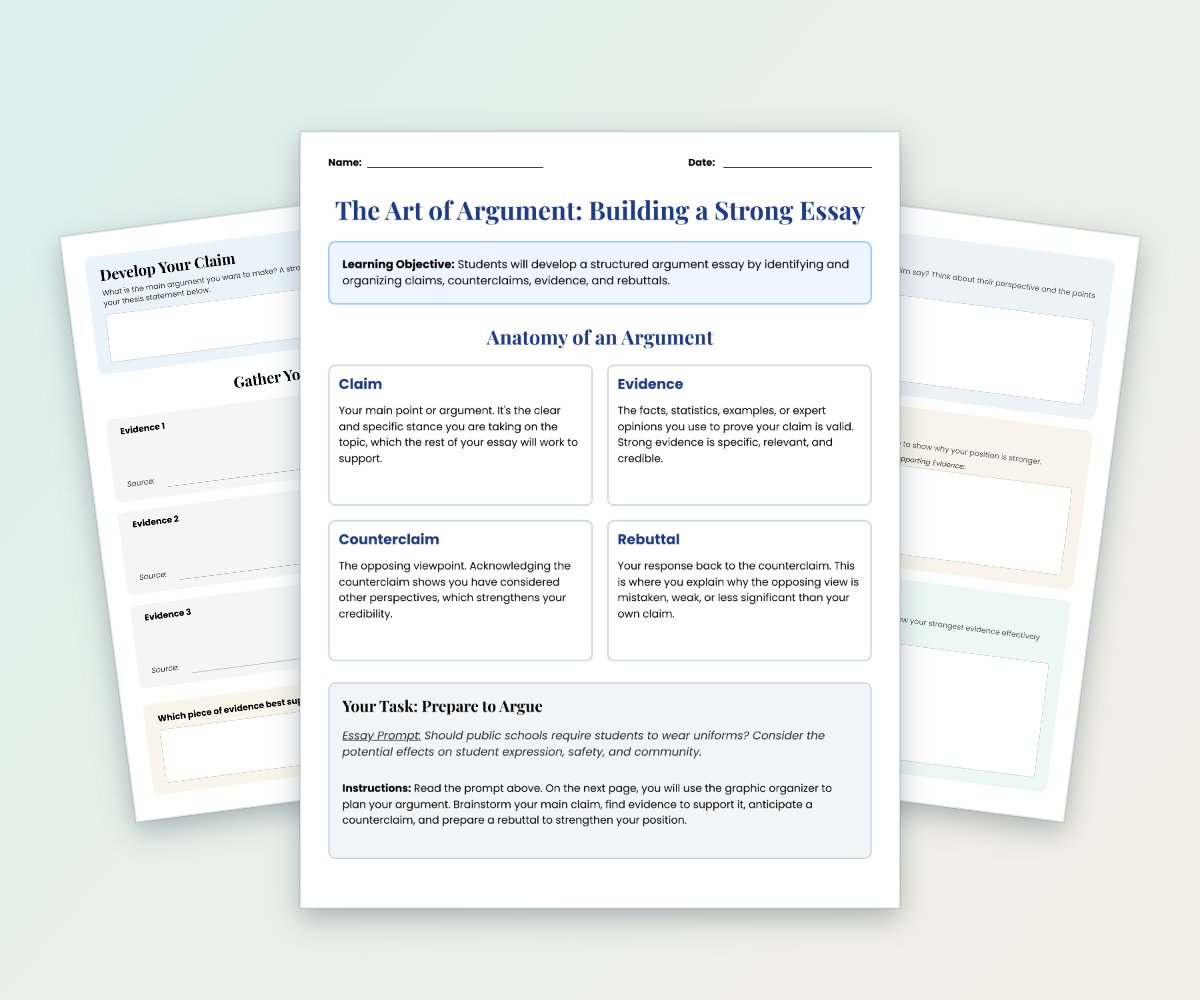
Students plan an argumentative essay by developing a claim, gathering evidence, addressing a counterclaim, and writing a rebuttal.
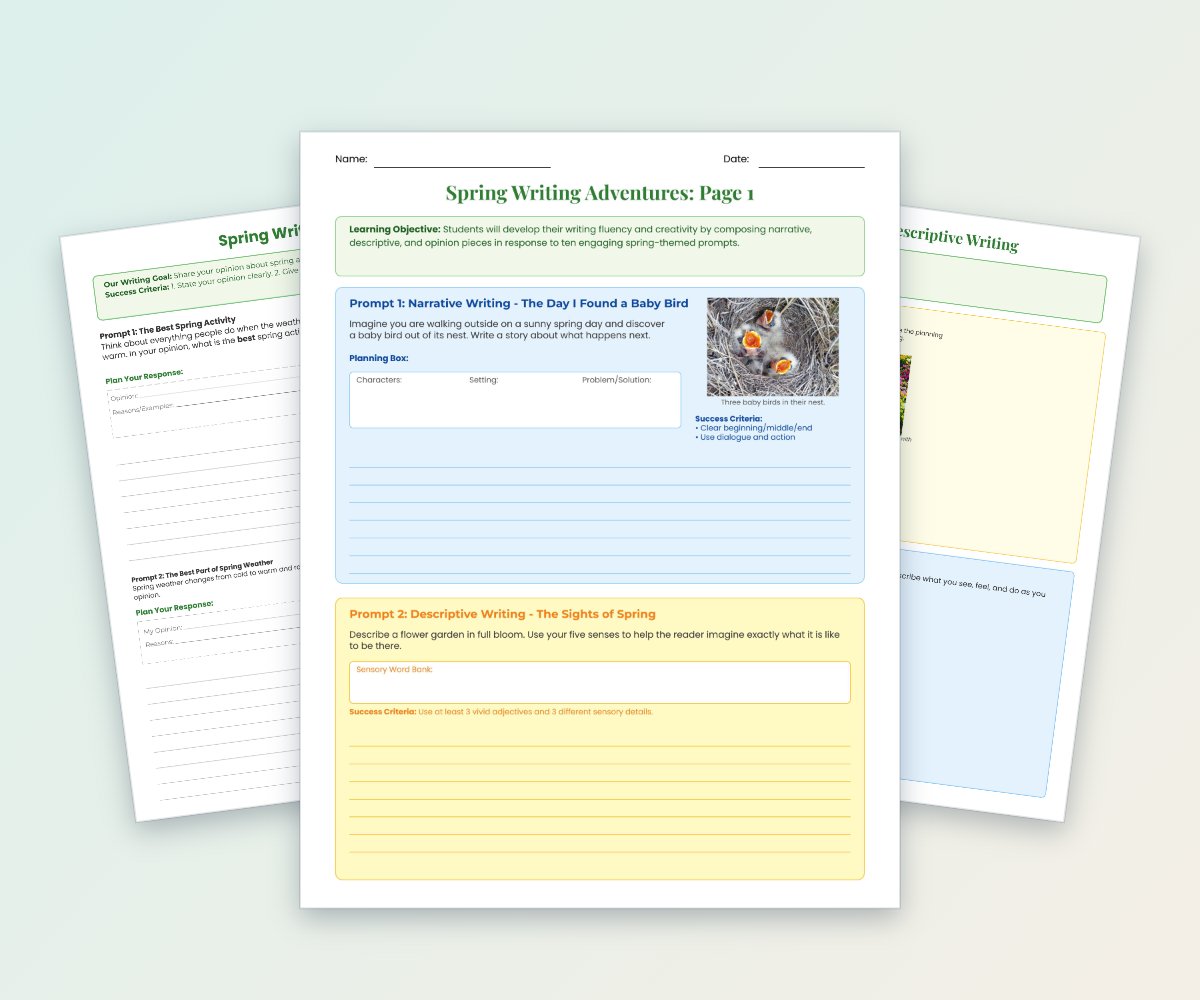
This five-page writing journal provides spring-themed prompts for narrative, descriptive, and opinion writing.
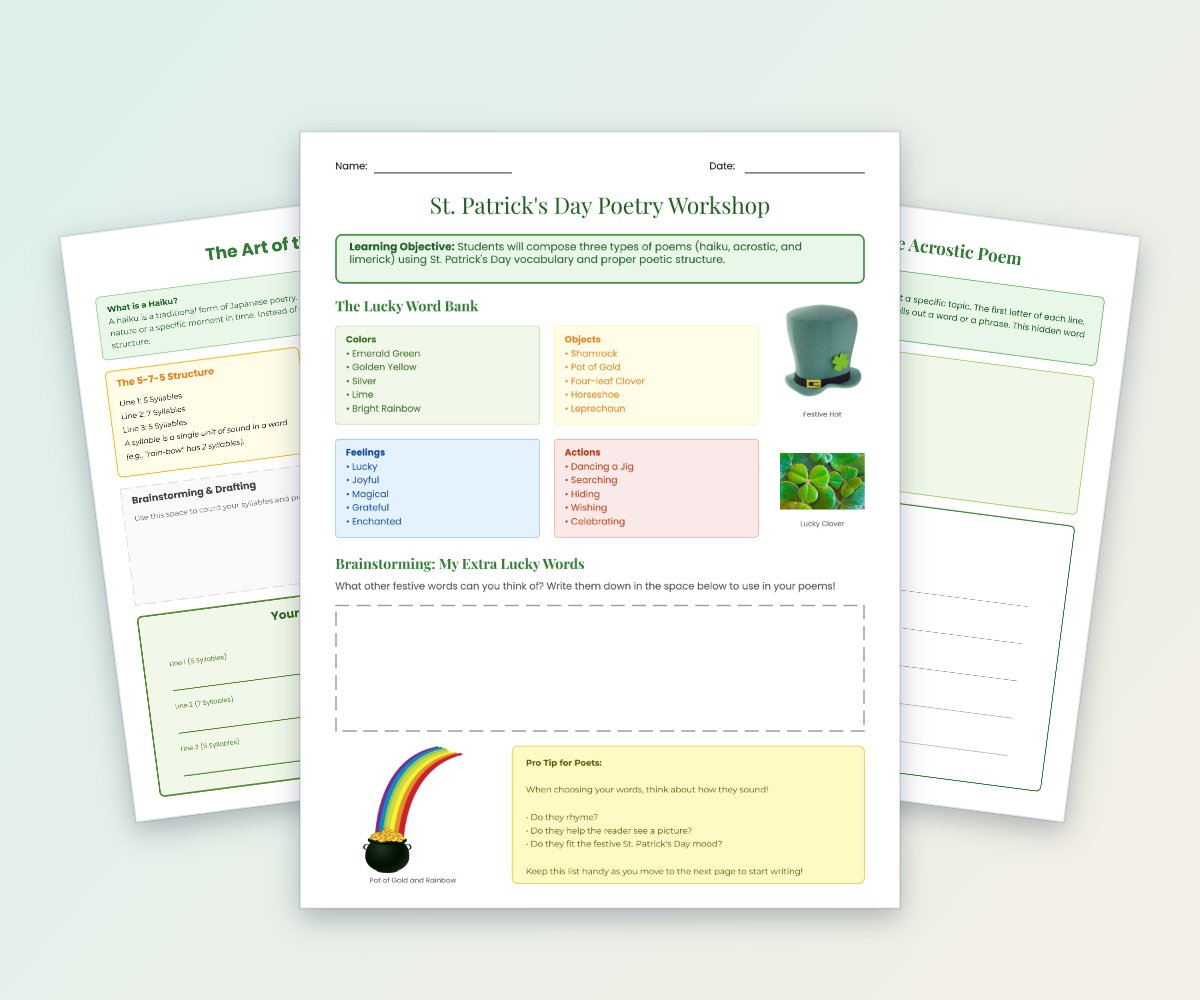
Students learn and practice writing haiku, acrostic poems, and limericks using St.
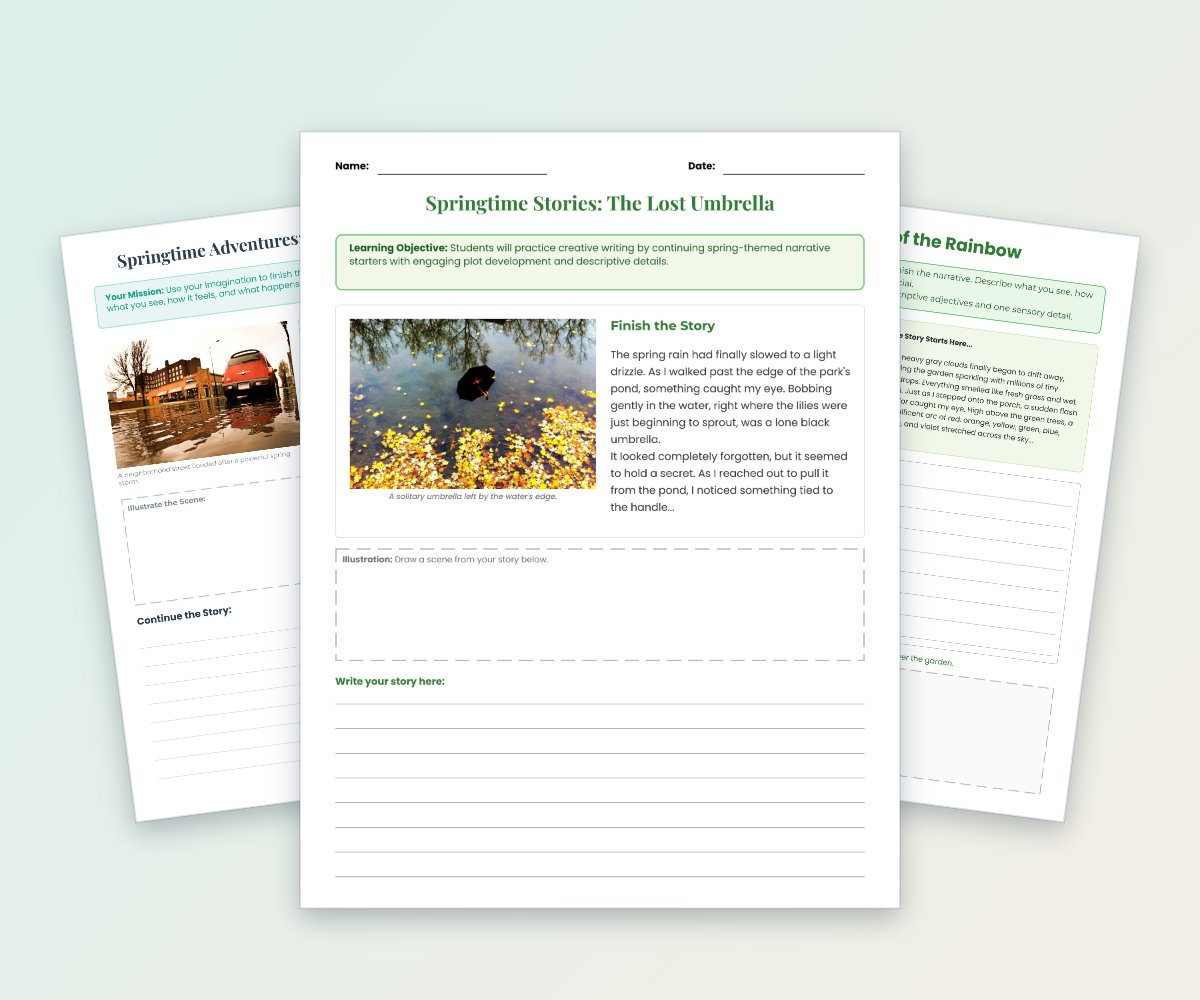
Students continue spring-themed story starters about a lost umbrella, mysterious puddle, magical rainbow, and rainy frog adventure.
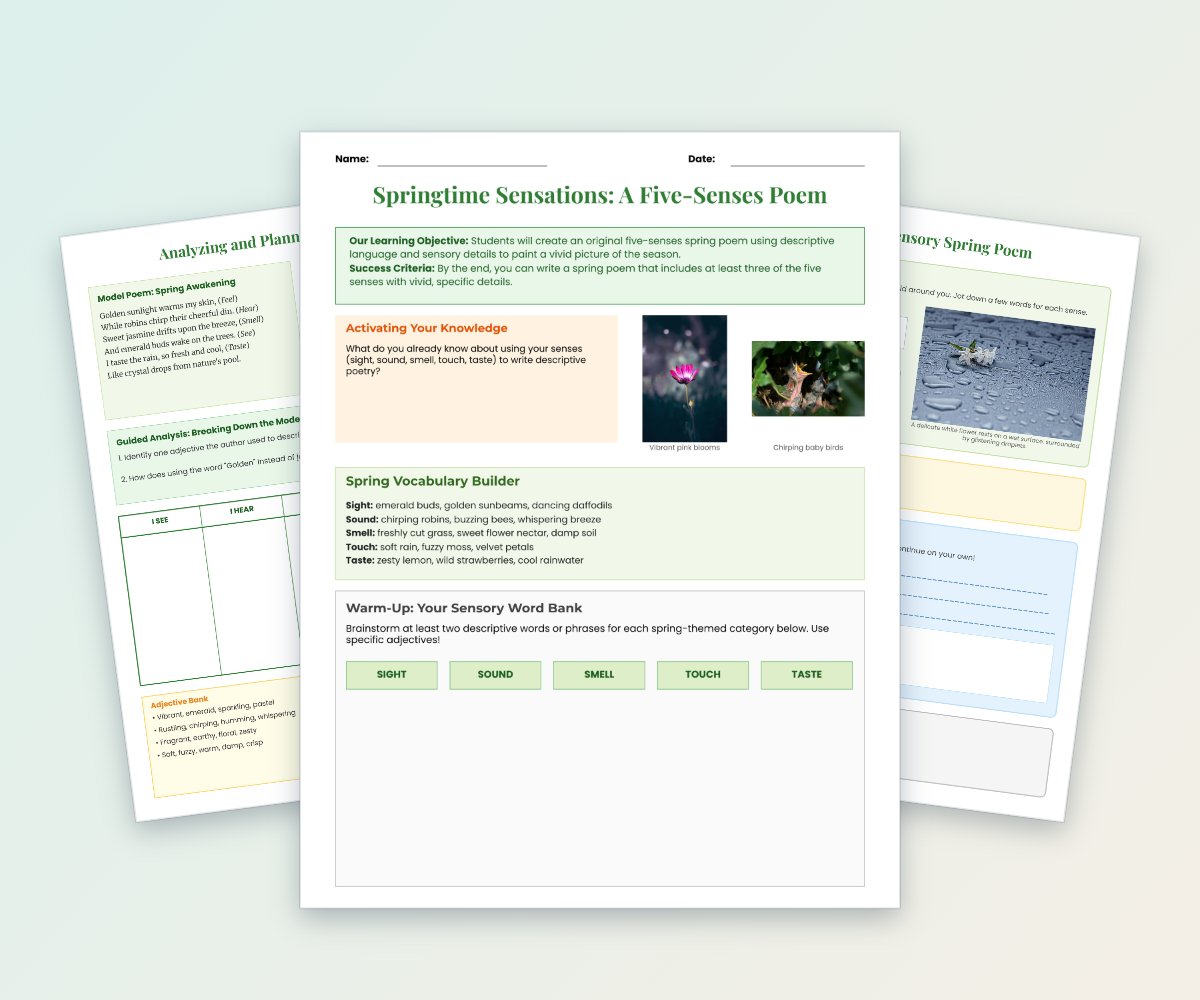
Students use the five senses and descriptive language to plan and draft an original spring poem.
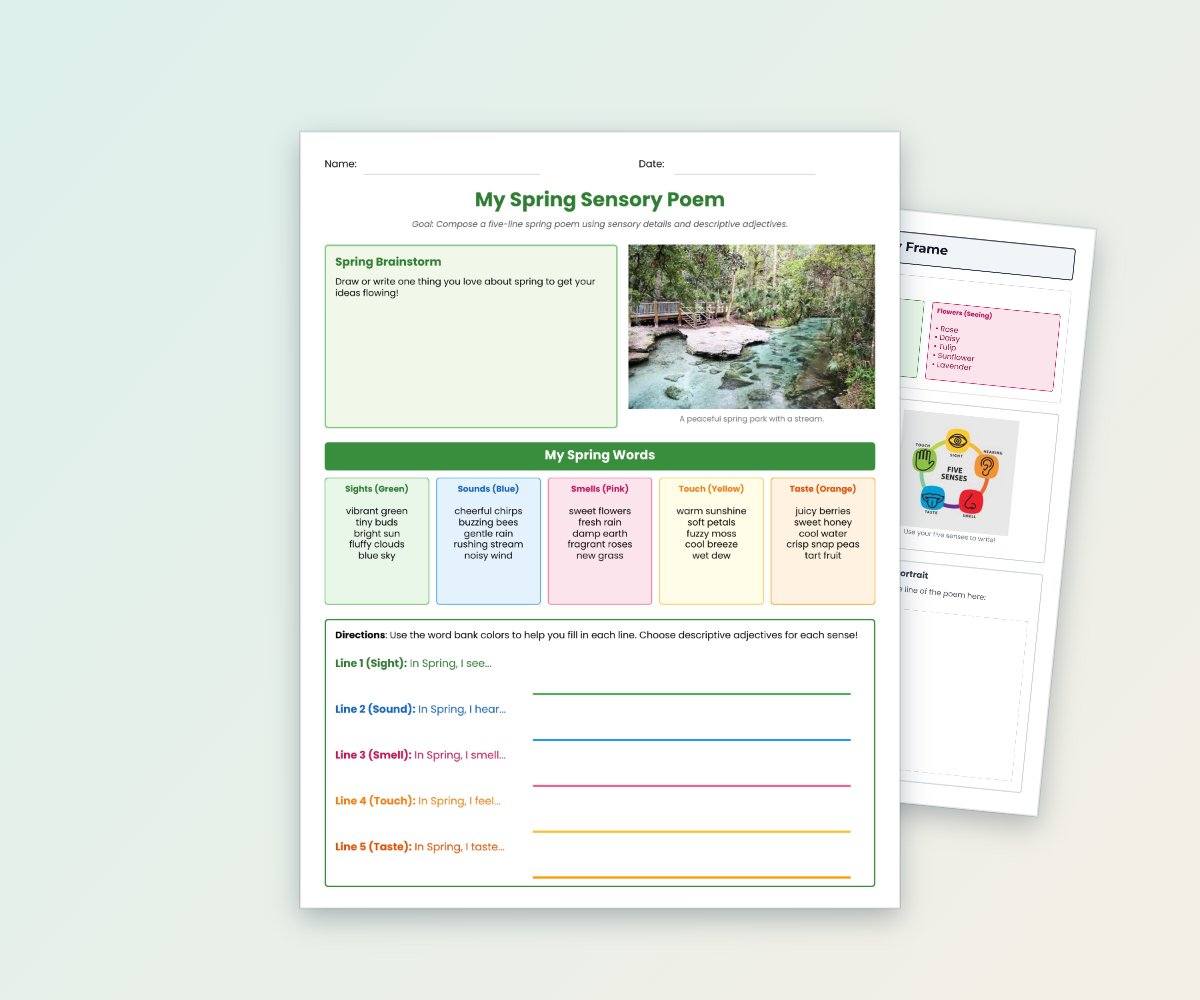
Students brainstorm spring vocabulary using the five senses, then compose a five-line sensory poem with descriptive adjectives.
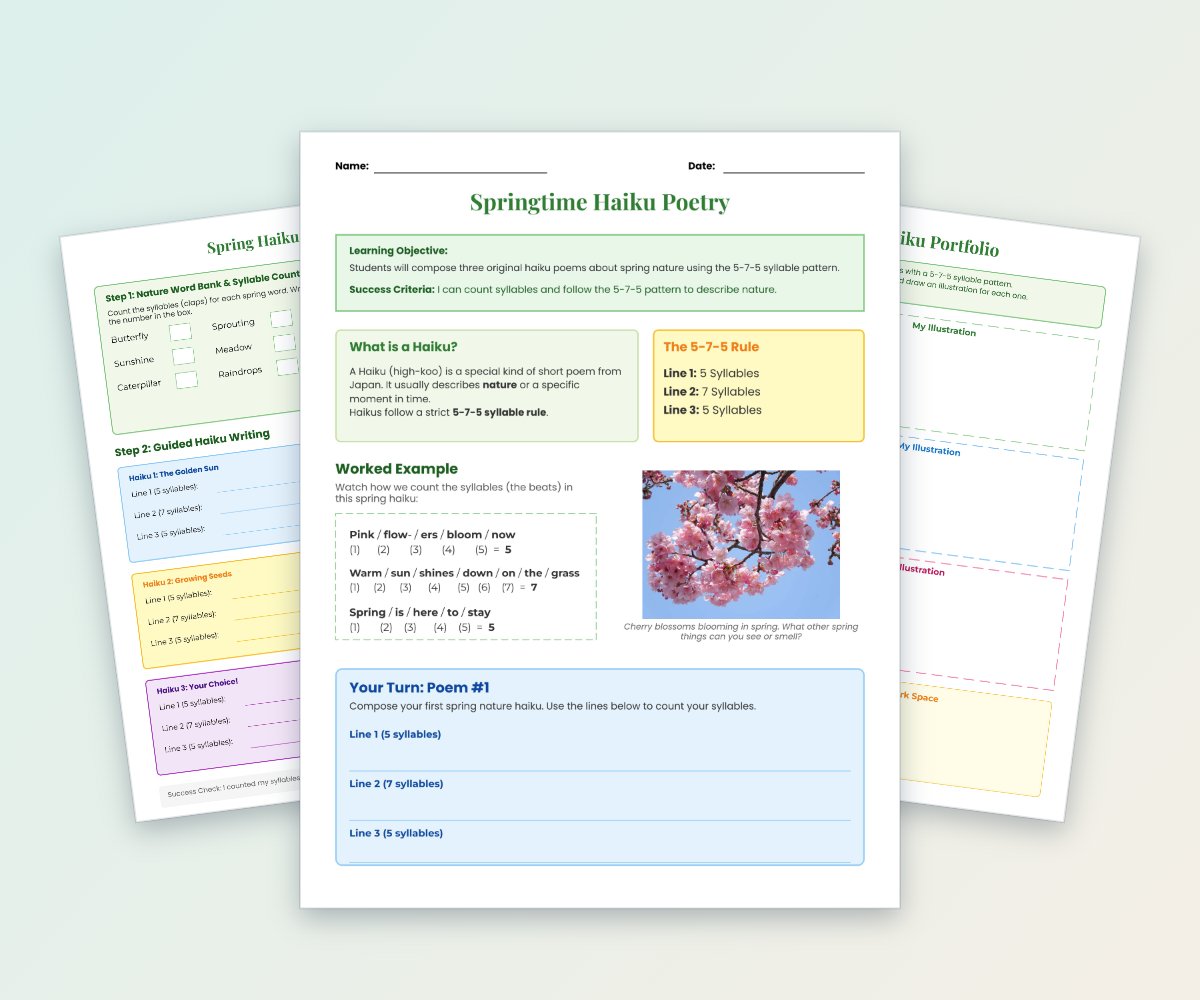
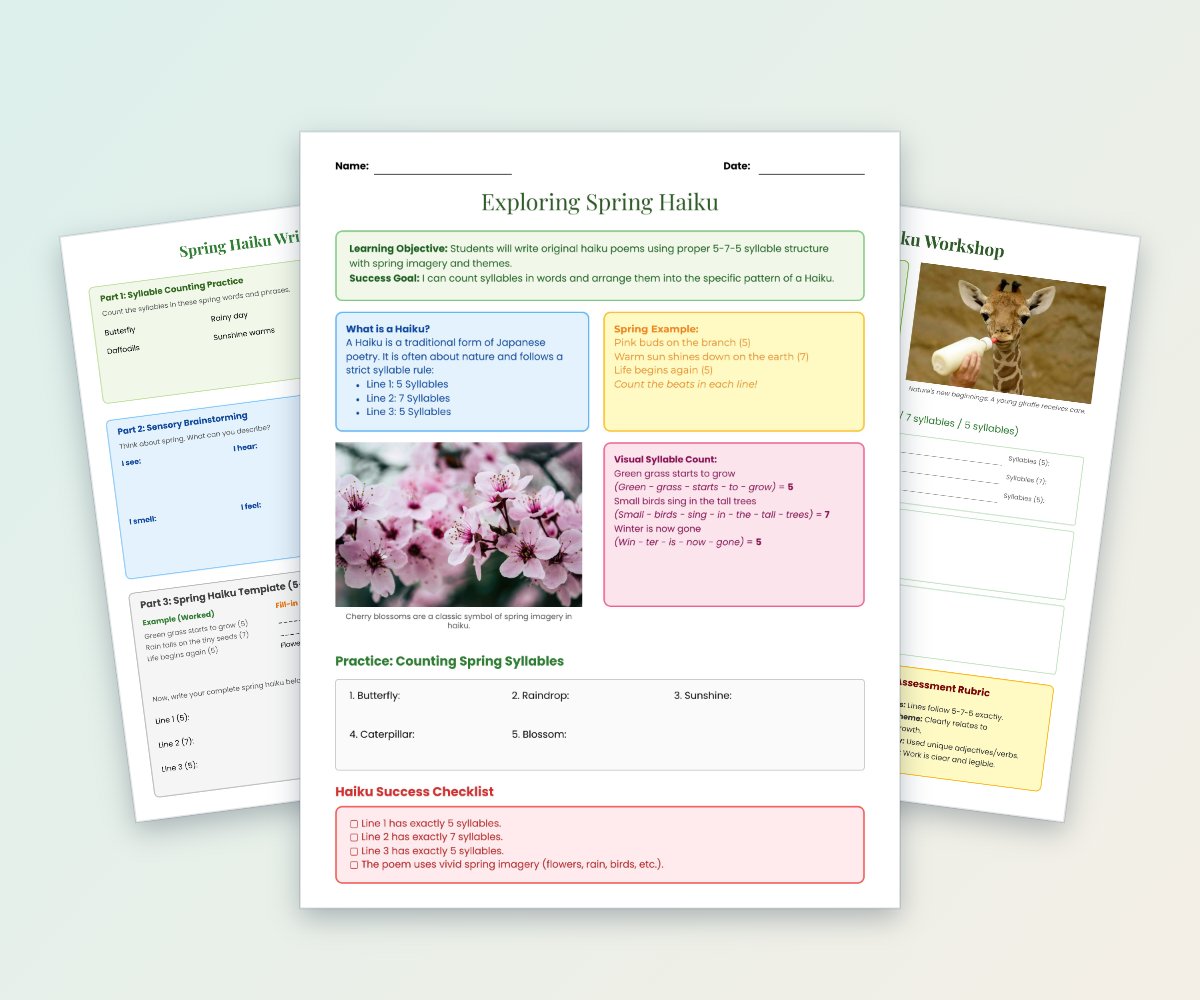
This spring-themed haiku workshop teaches students the 5-7-5 syllable pattern through examples, nature vocabulary, syllable counting, and guided writing.
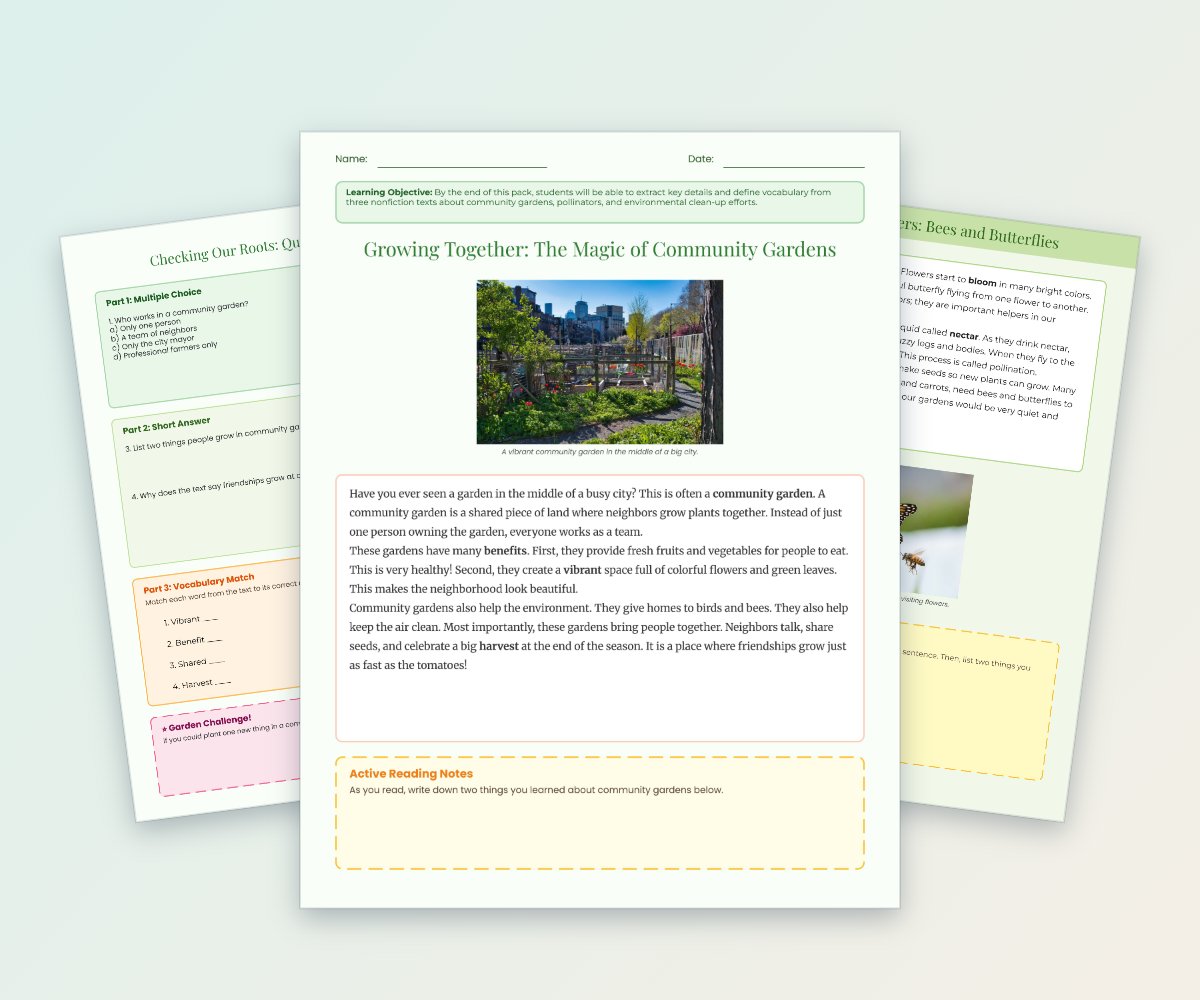
This six-page reading pack features three nonfiction texts about community gardens, pollinators, and environmental clean-up efforts.
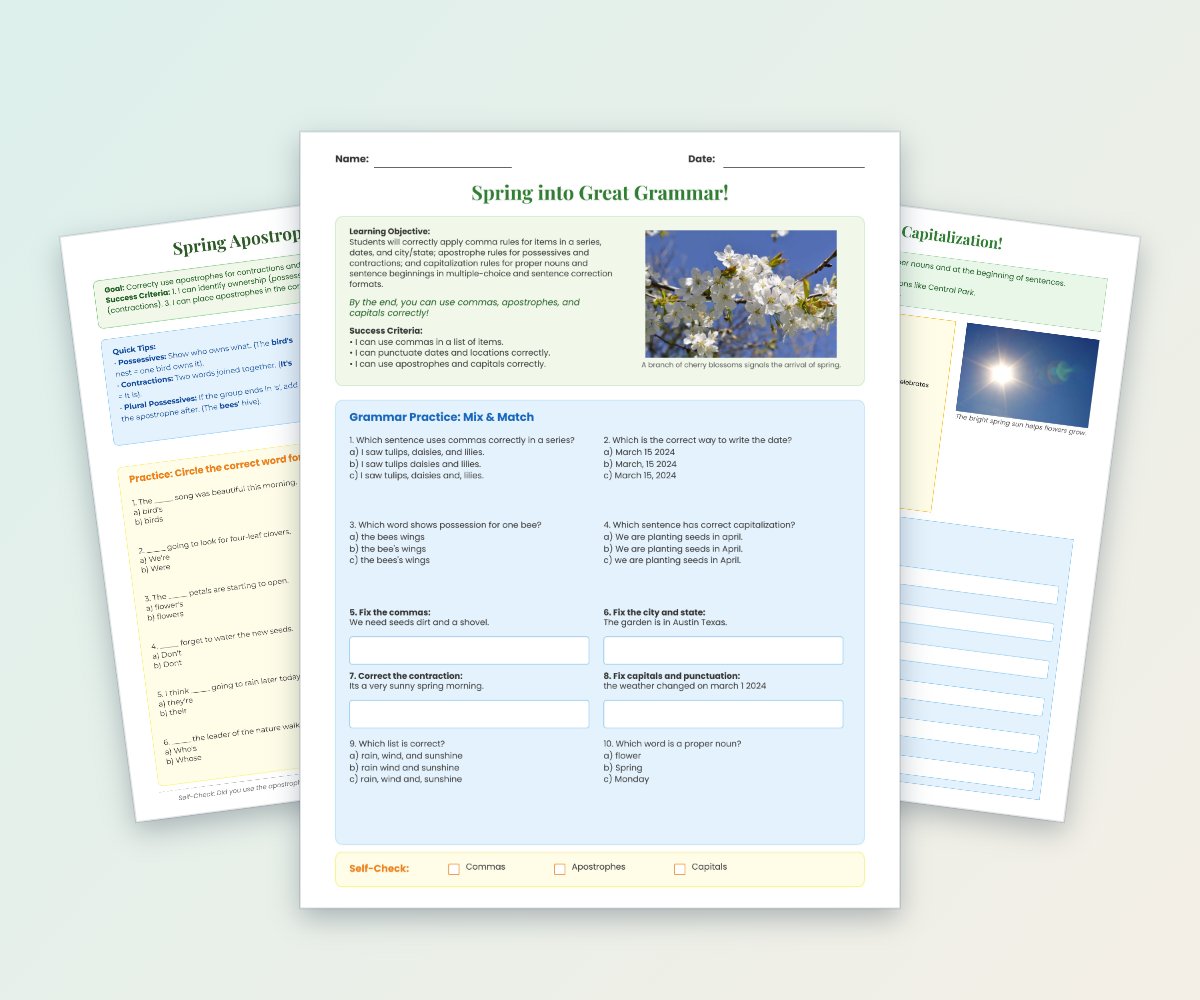
This four-page spring-themed grammar packet provides multiple-choice and sentence-correction practice with commas, apostrophes, possessives, contractions, capitalization, dates, and locations.
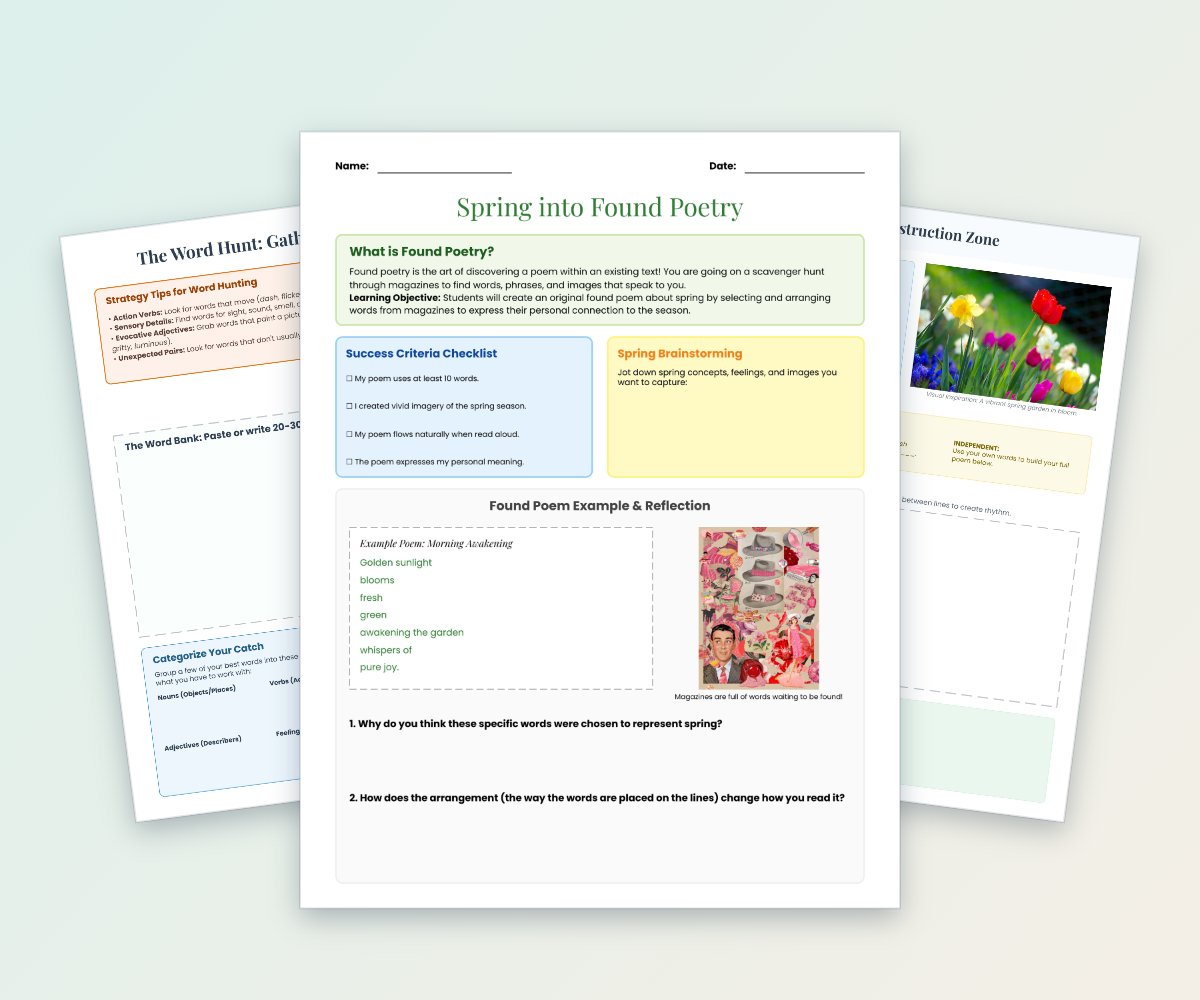
Guide students through creating an original spring-themed found poem using words gathered from magazines.
Teach students to write spring-themed haiku using the traditional 5-7-5 syllable structure.
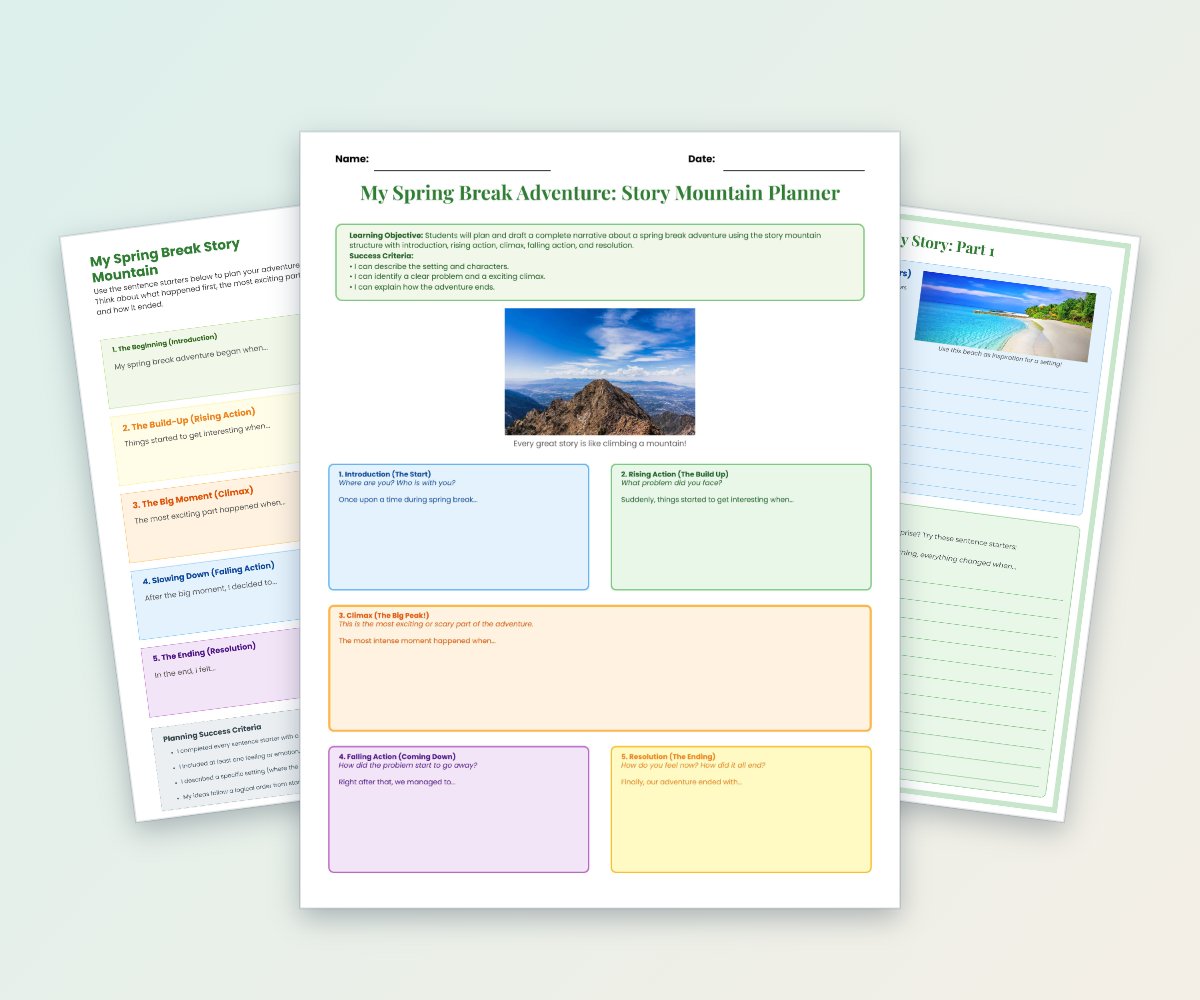
Students plan and draft a spring break adventure using the five-part story mountain structure: introduction, rising action, climax, falling action, and resolution.
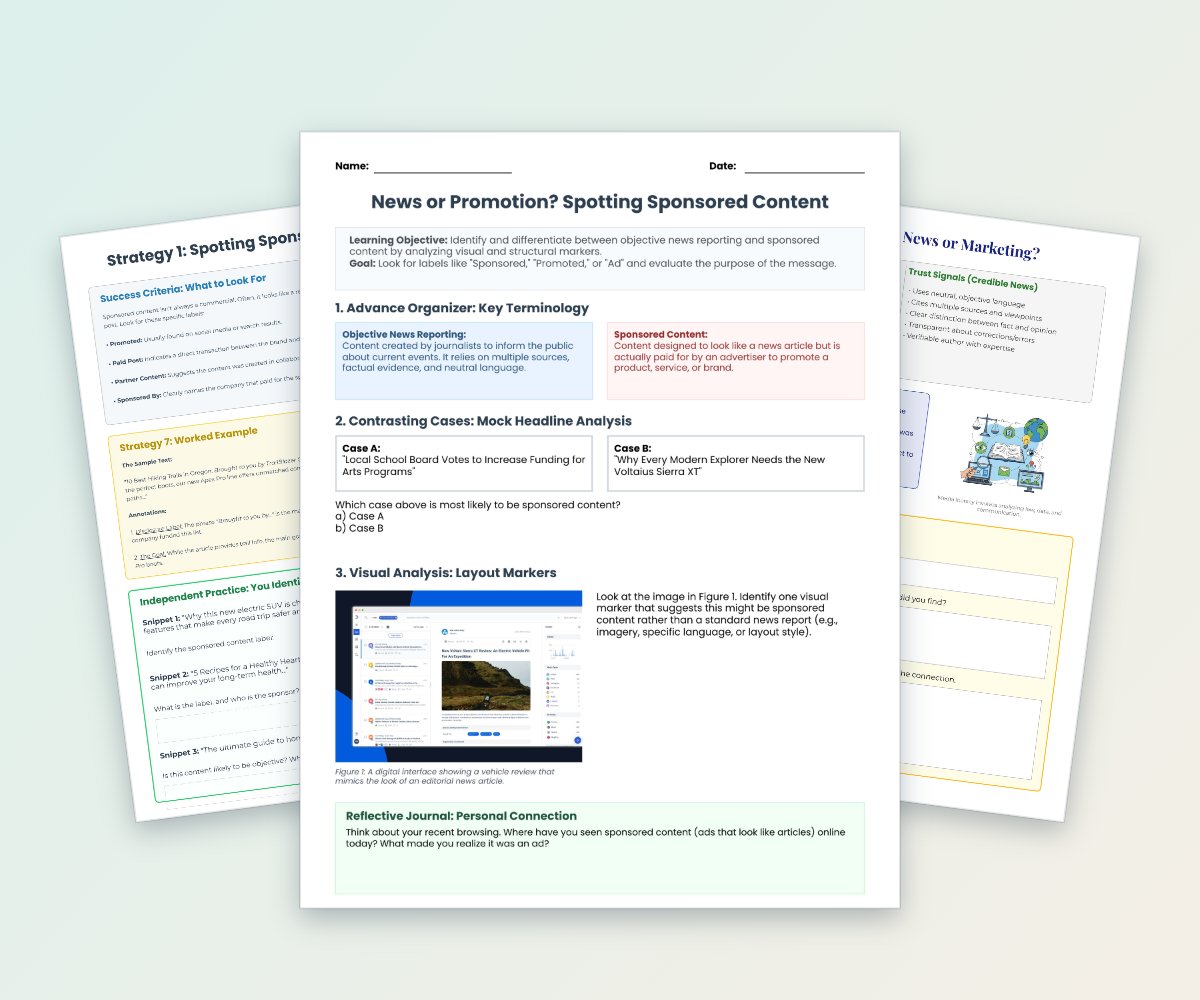
This four-page worksheet teaches students to distinguish objective news reporting from sponsored content.
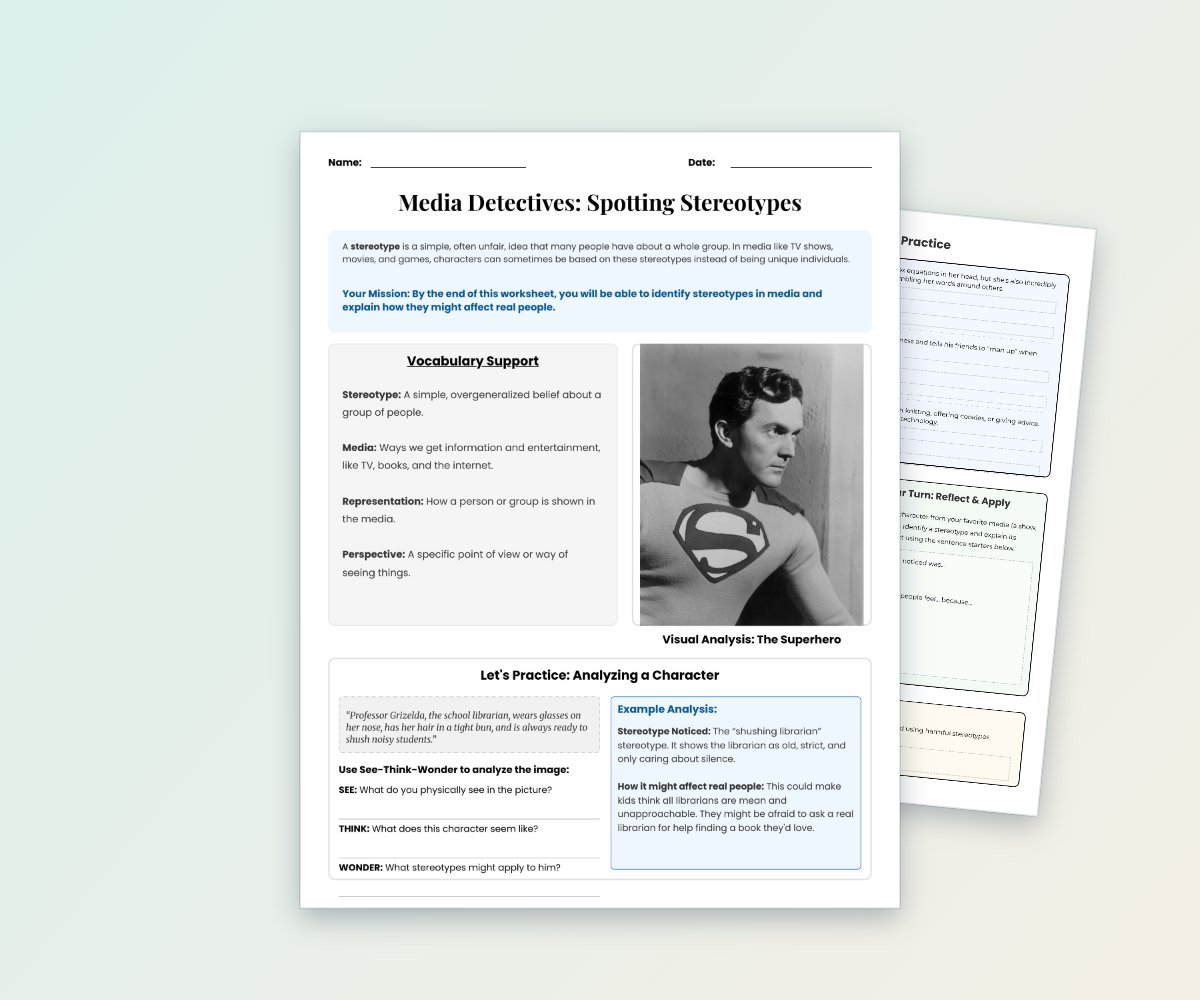
Students learn vocabulary related to stereotypes, media, representation, and perspective.
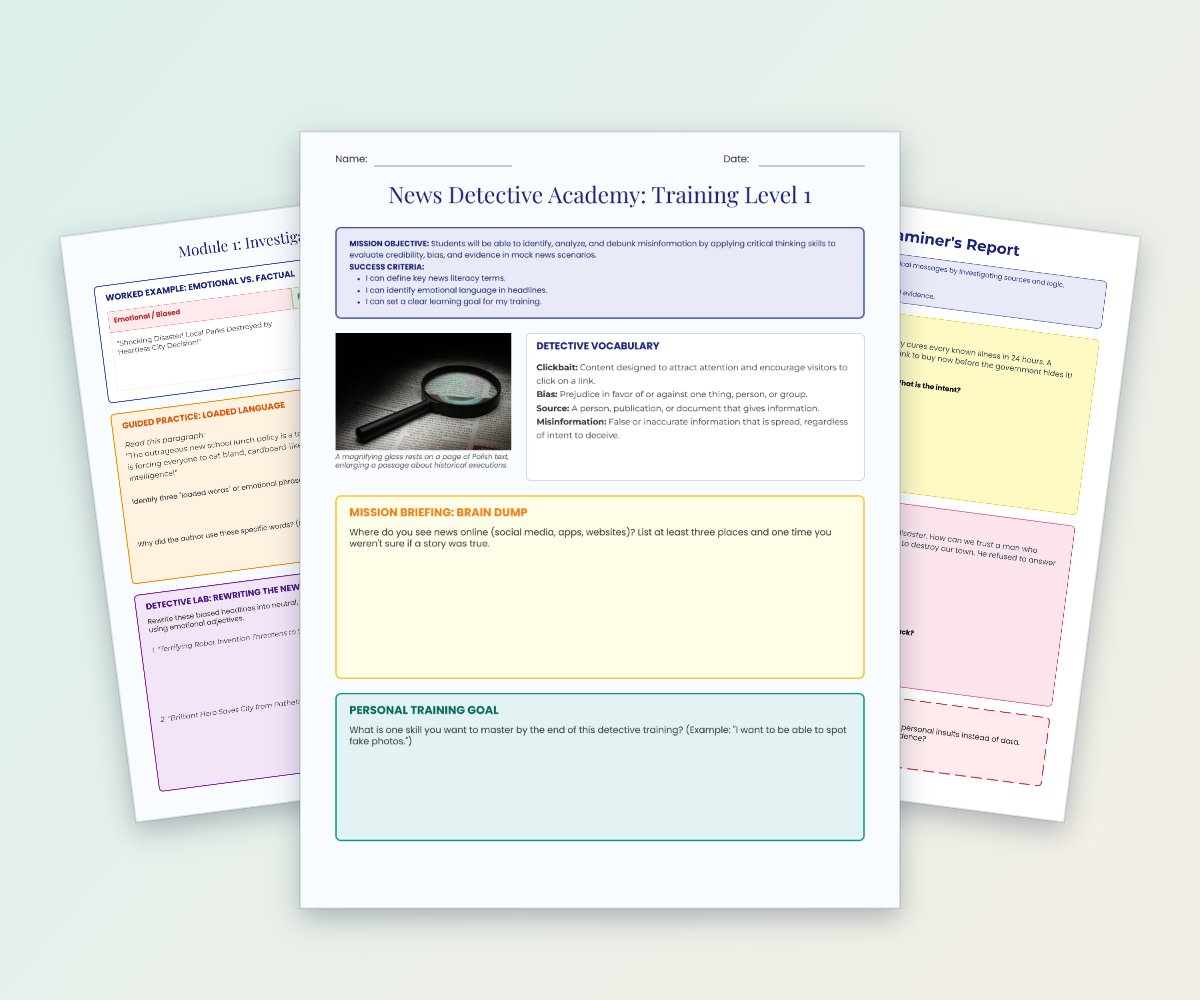
This six-page news literacy activity pack guides students through identifying clickbait, bias, emotional language, questionable sources, and misinformation.
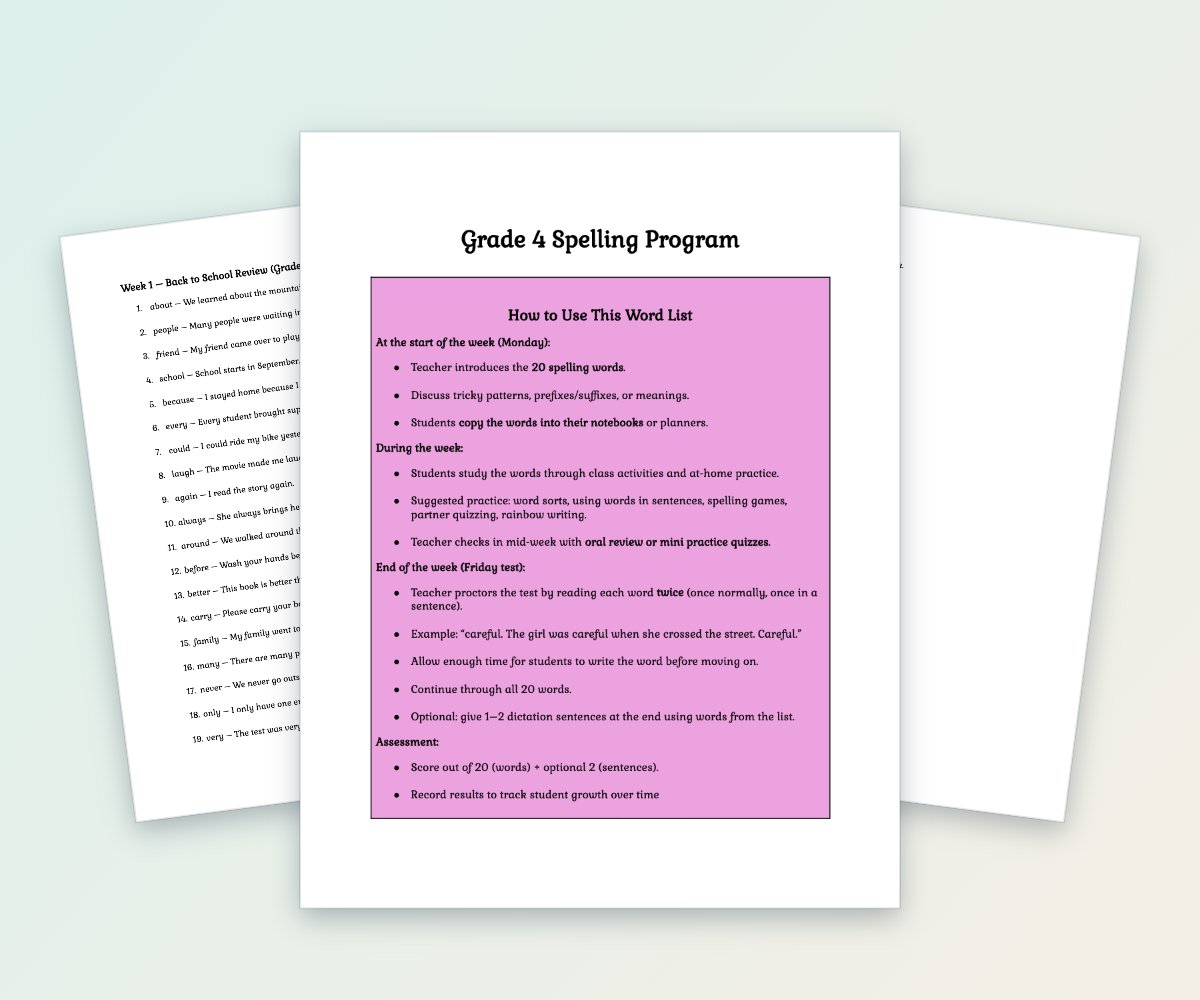
A ready-to-use Grade 4 spelling program organized into weekly word lists, including review words, spelling patterns, prefixes, suffixes, meanings, and example sentences.
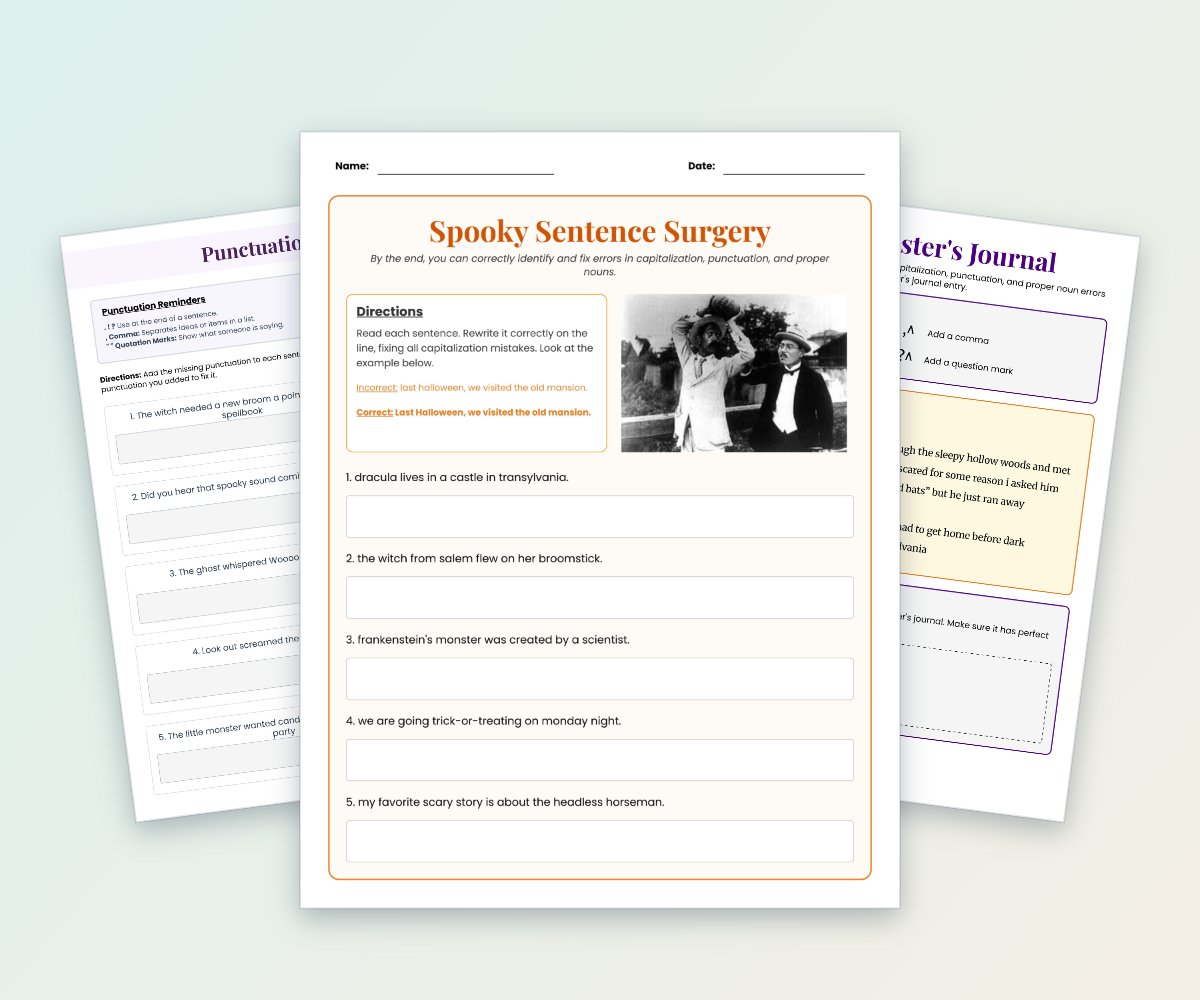
Students edit spooky-themed sentences by correcting capitalization, punctuation, proper nouns, and dialogue.
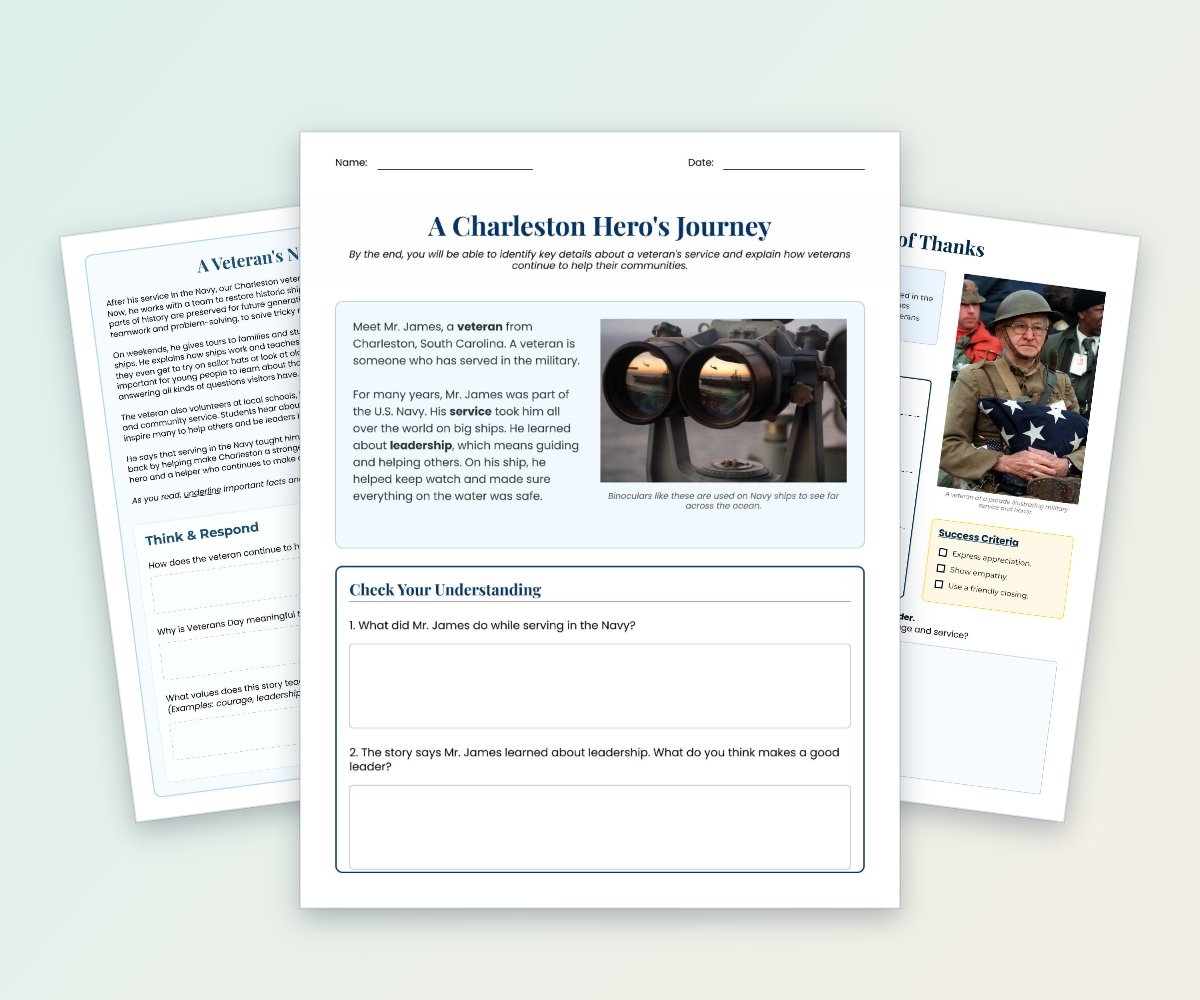
Students read an informational passage about a Charleston veteran’s military service, community work, and leadership.
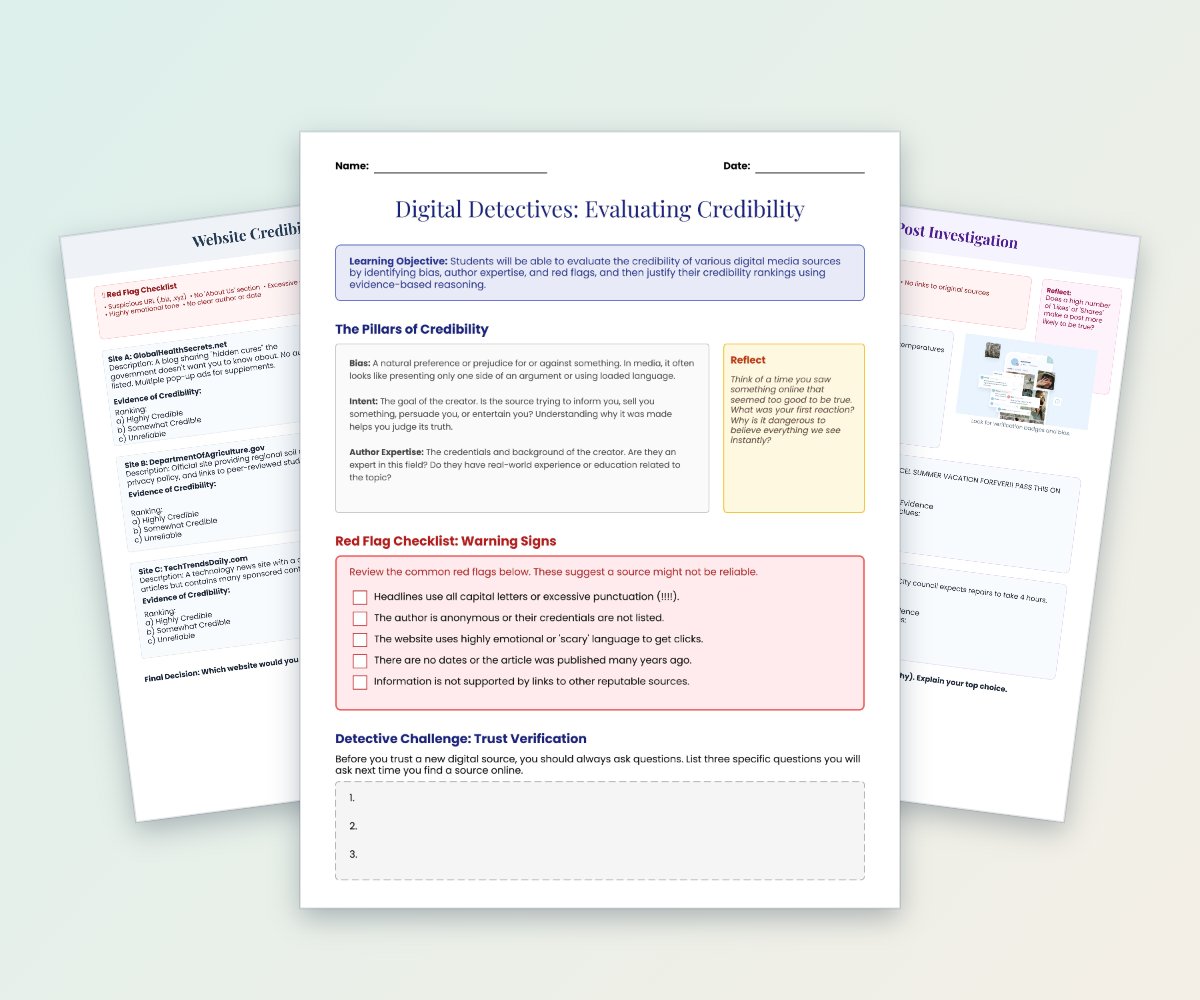
Students examine bias, intent, author expertise, website clues, and red flags to rank digital sources by credibility.
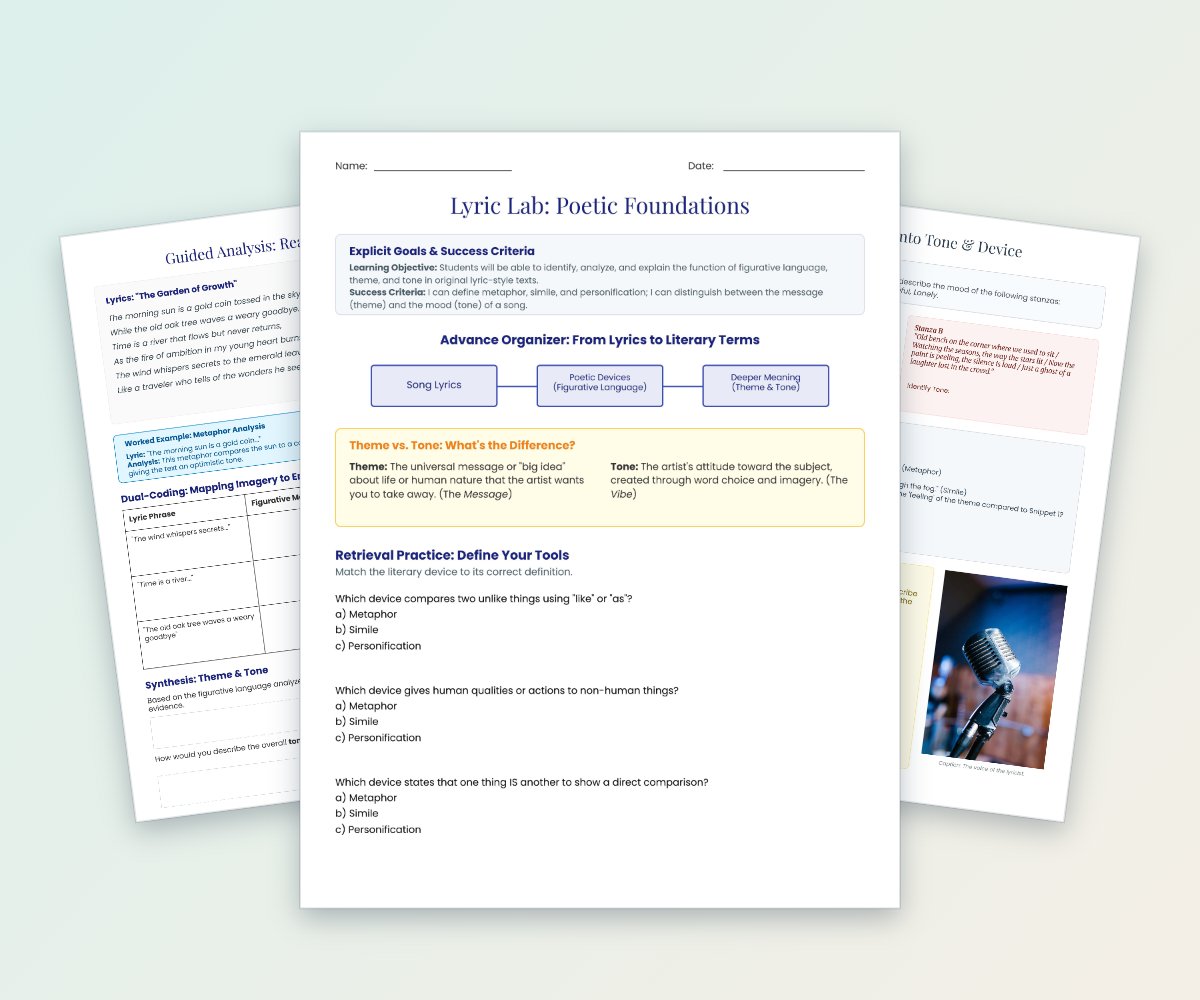
This six-page activity pack guides students through identifying and analyzing metaphor, simile, personification, theme, and tone in lyric-style texts.
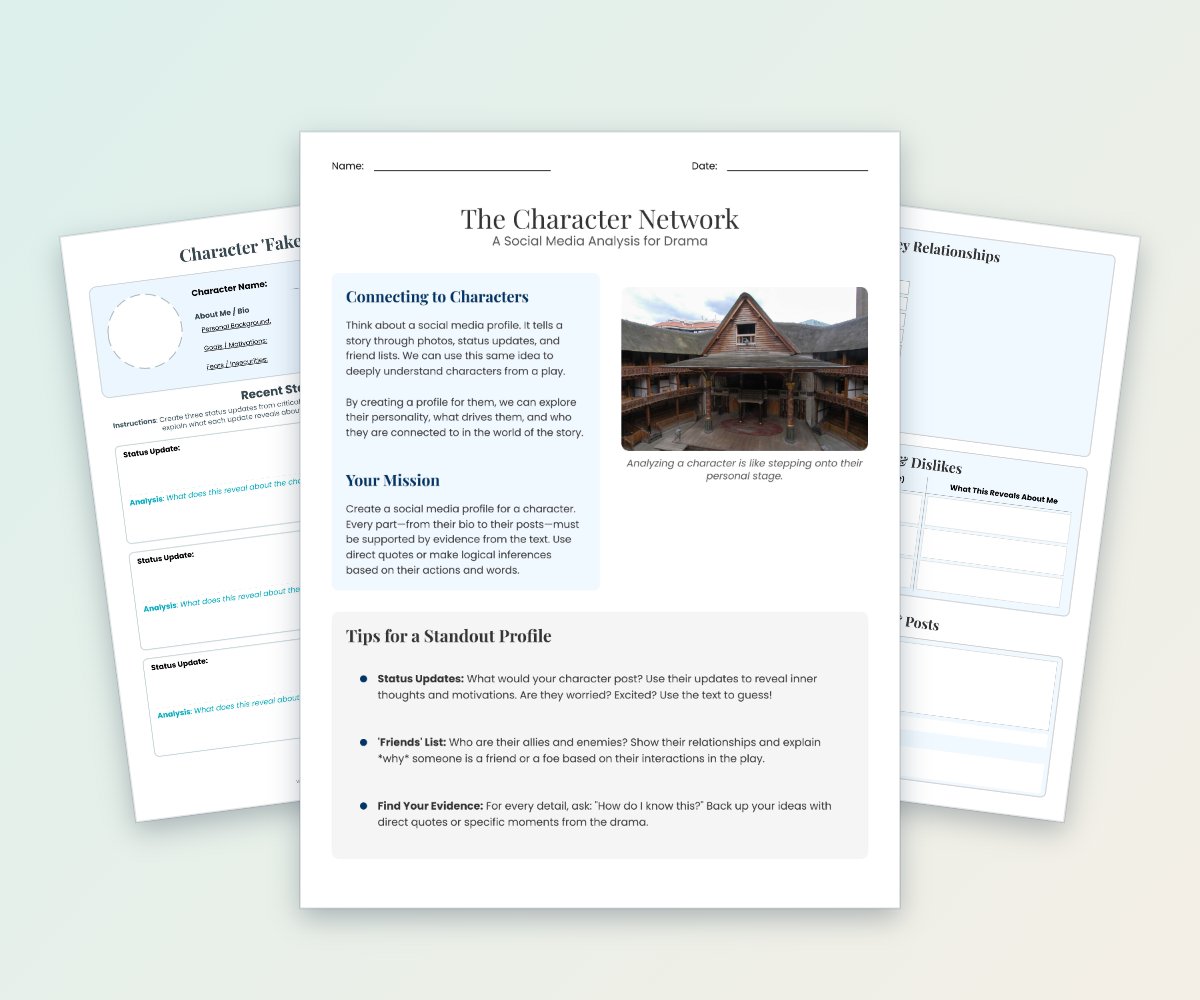
Students create a social media-style profile for a character from a play, including a biography, status updates, relationships, likes, dislikes, and posts.
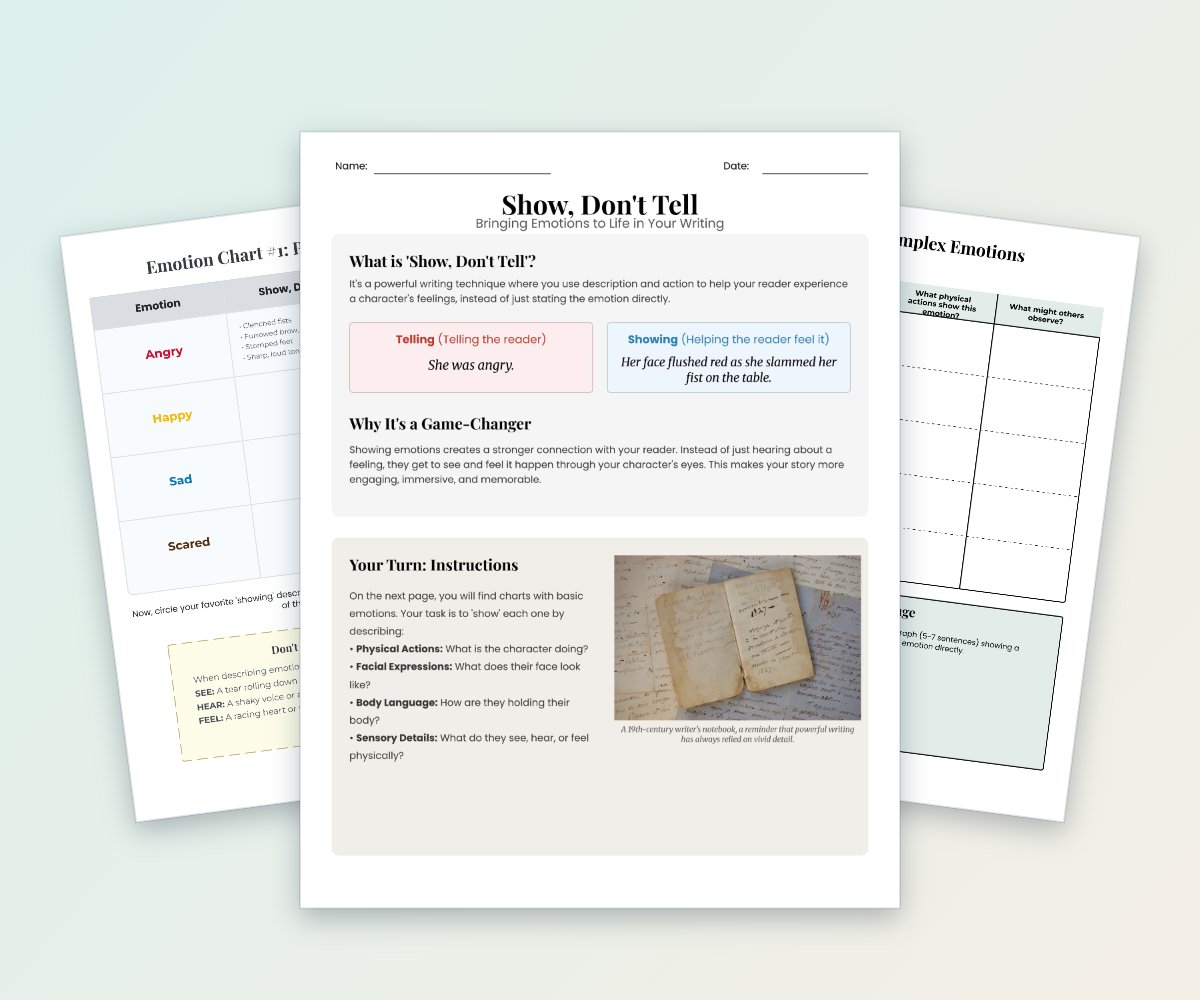
This four-page writing resource teaches students how to replace emotional statements with vivid actions, facial expressions, body language, and sensory details.
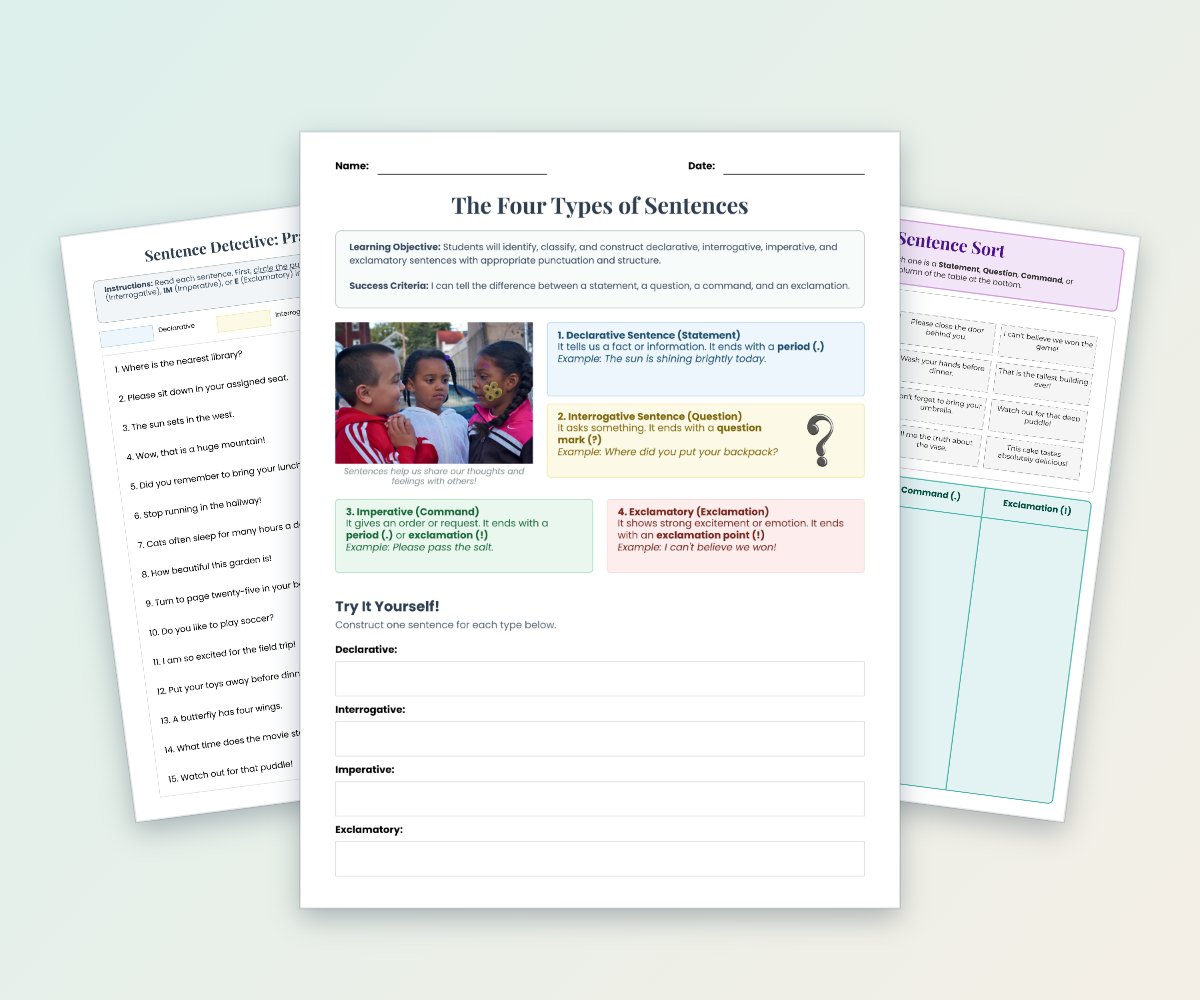
This six-page grammar activity pack teaches declarative, interrogative, imperative, and exclamatory sentences.
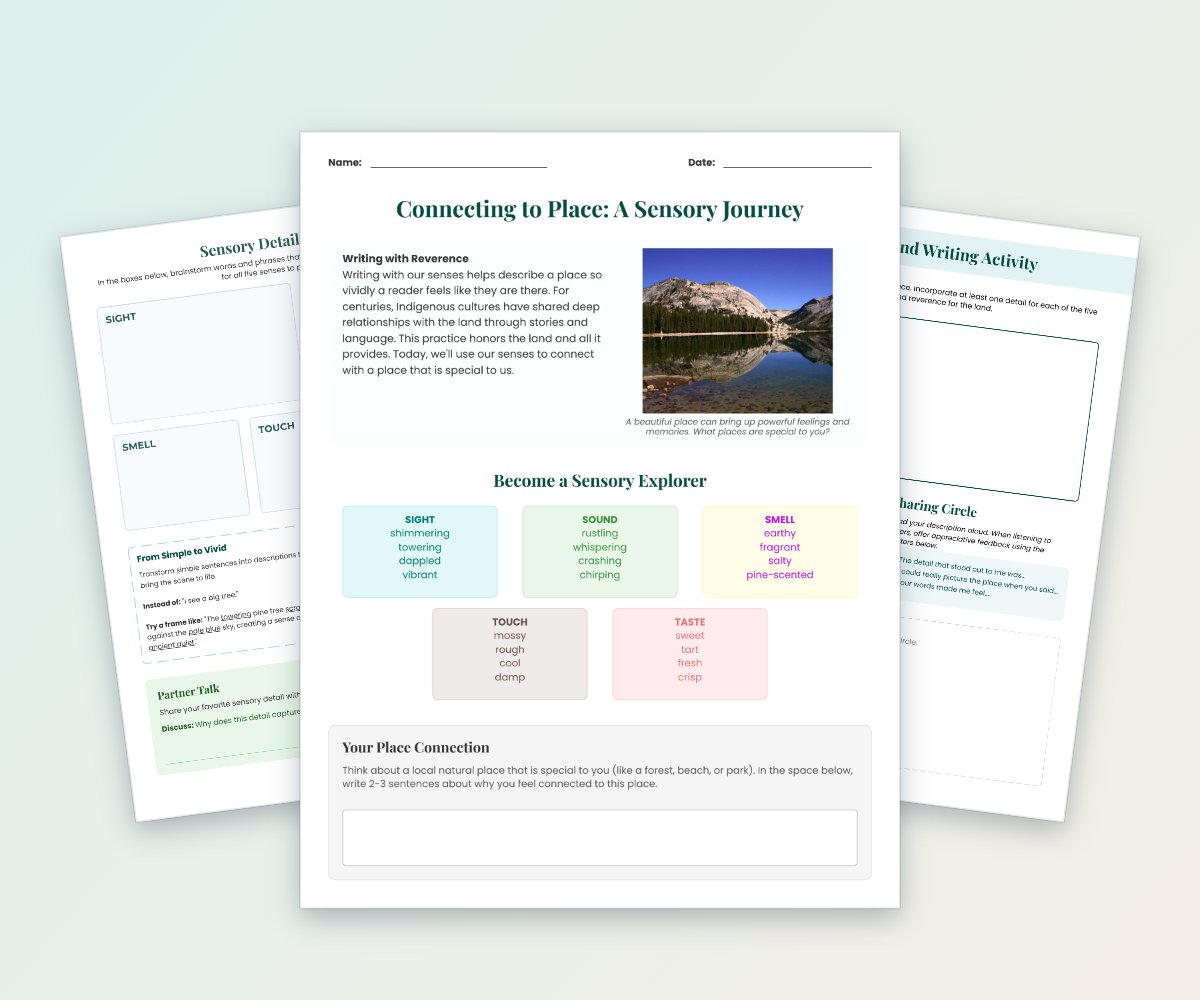
Students explore a meaningful natural place through all five senses, brainstorm vivid vocabulary, and craft a descriptive paragraph.
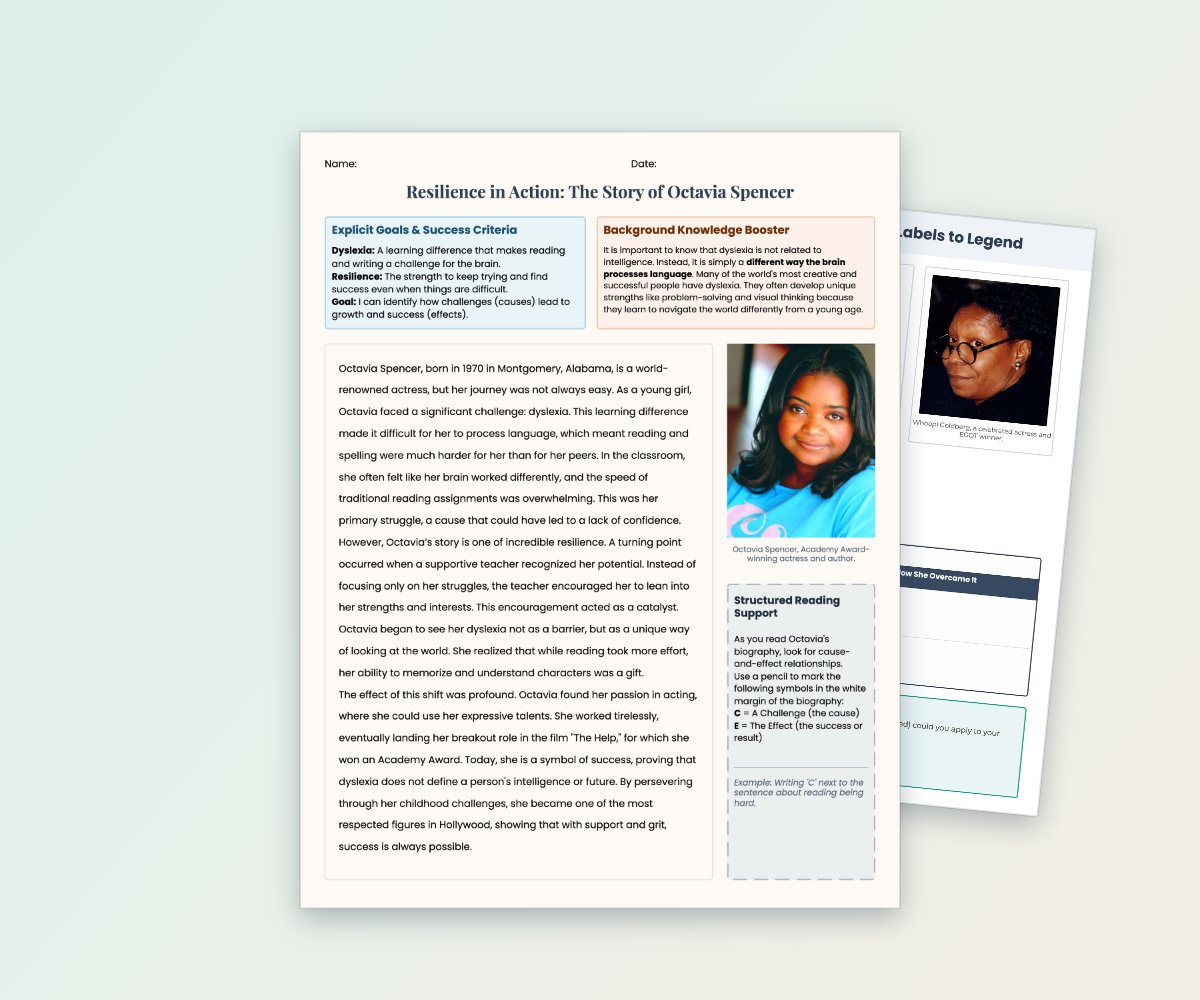
Students read a short biography of actress Octavia Spencer and examine how challenges, support, and perseverance contributed to her success.
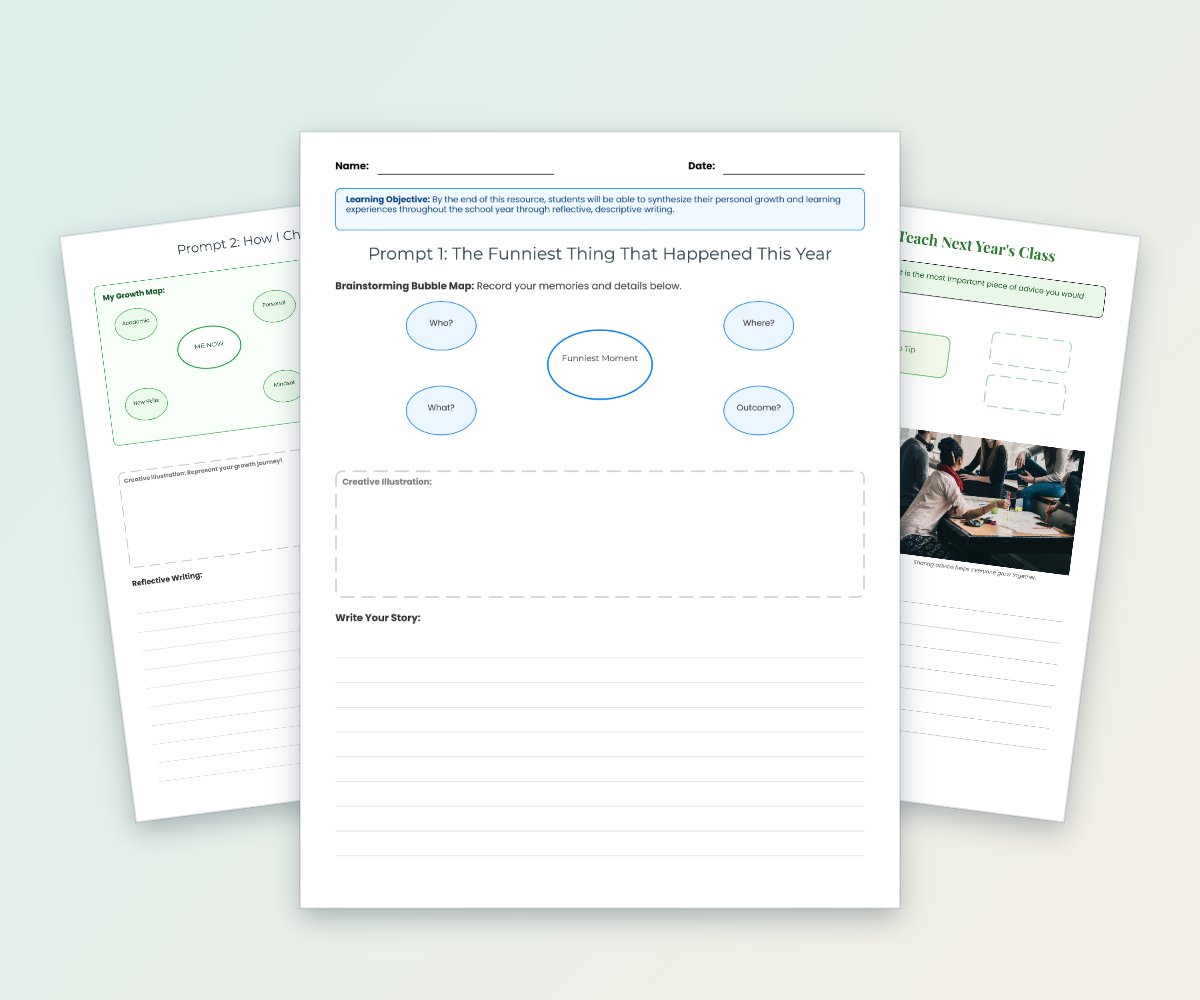
Guide students through reflective end-of-year writing with prompts about growth, challenges, memories, advice, and summer goals.
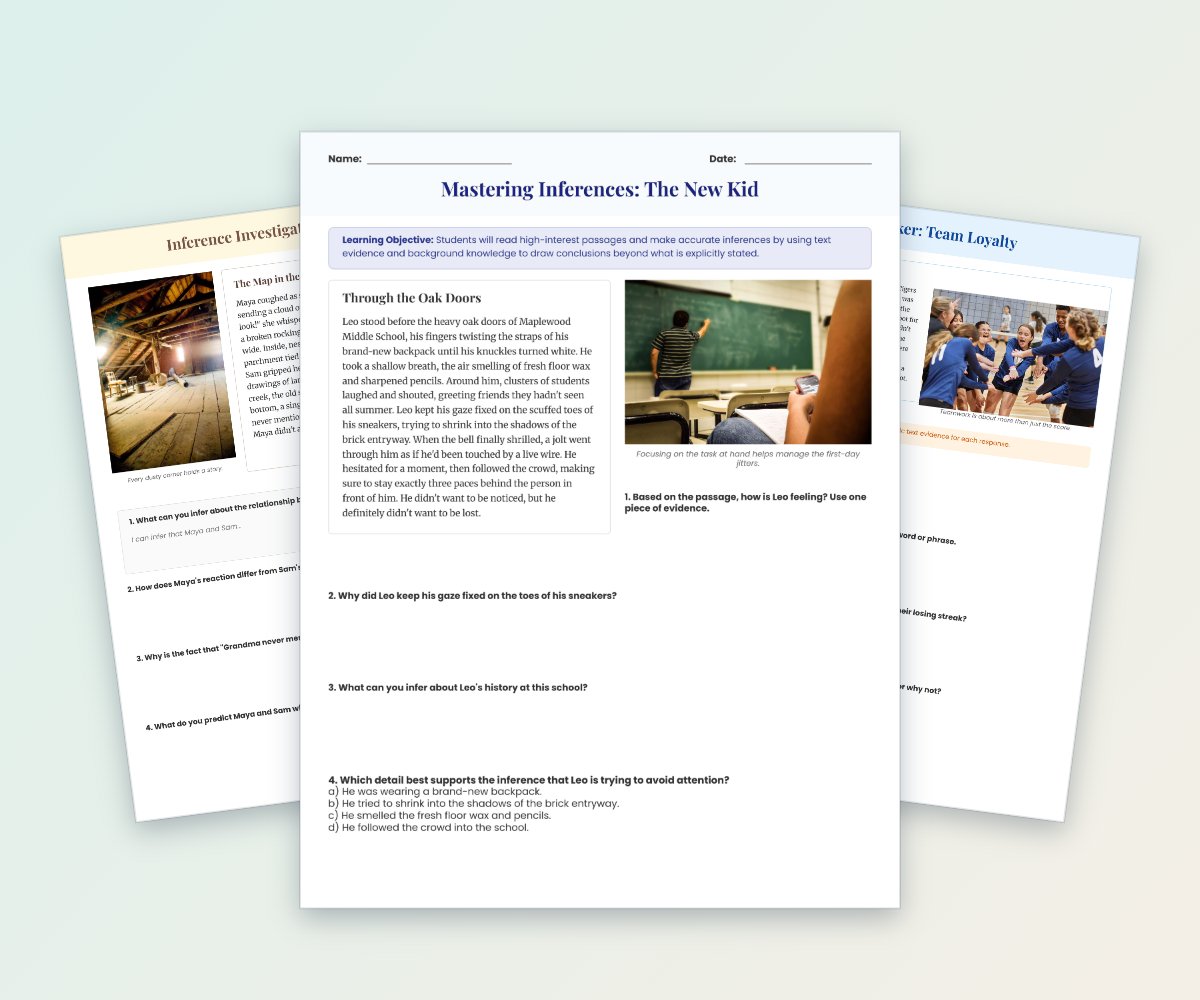
Students read engaging narrative passages and answer questions that require them to infer characters’ feelings, motivations, and backgrounds.
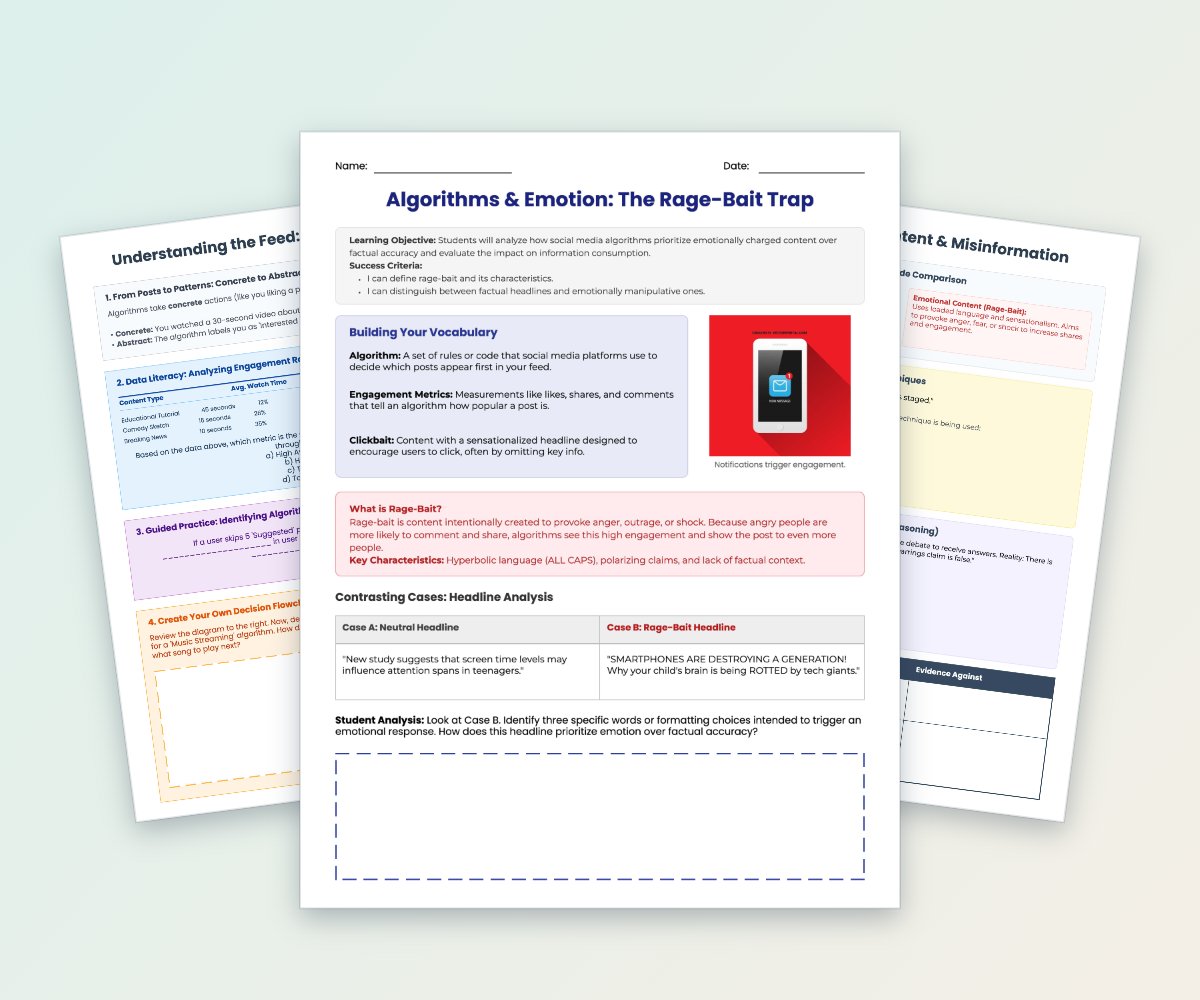
This worksheet introduces rage-bait, clickbait, engagement metrics, and the ways social media algorithms amplify emotionally charged content.
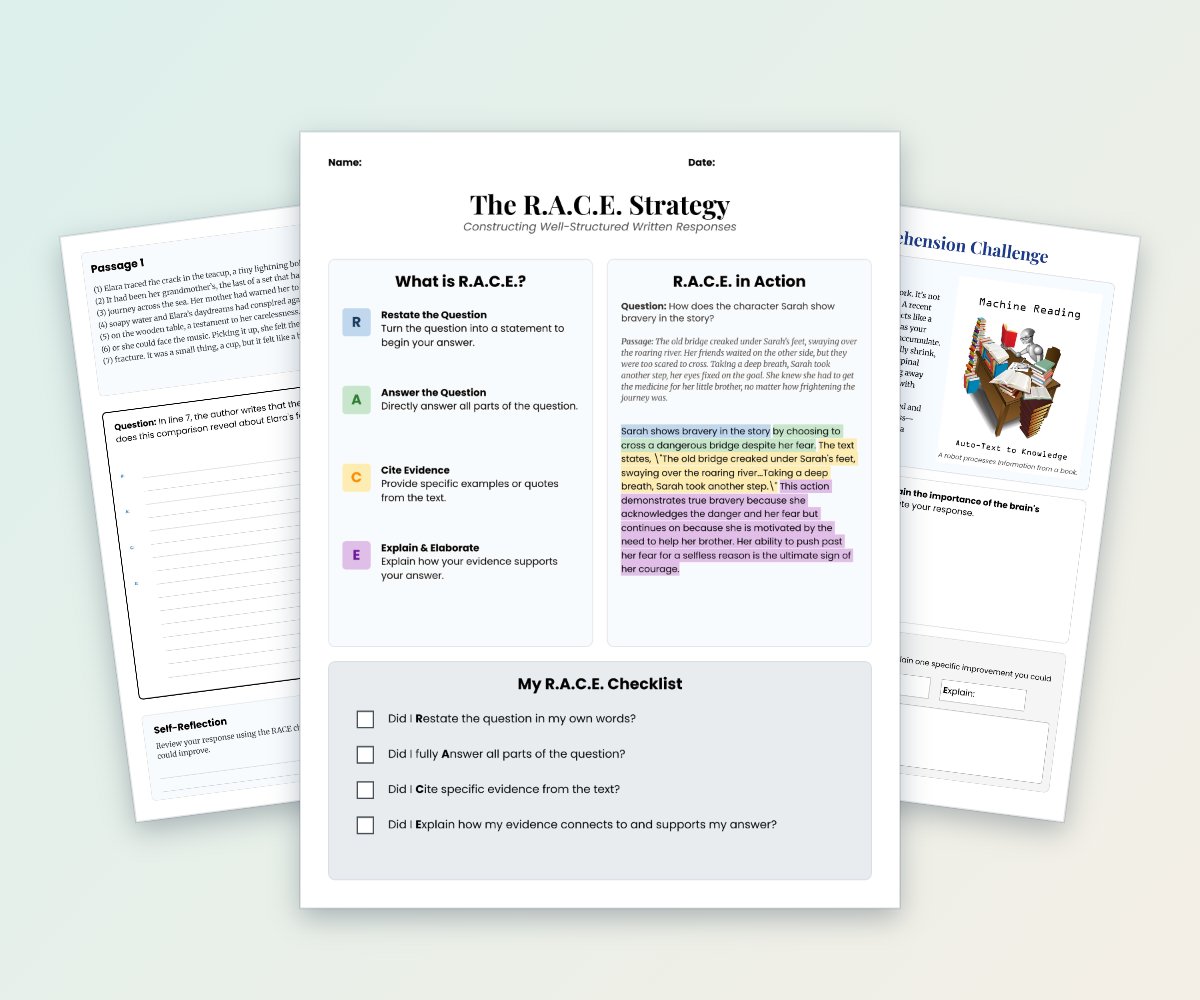
Teach students how to construct well-supported written responses using the R.A.C.E.
Students explore how clickbait uses curiosity gaps, emotional triggers, sensational language, and withheld information to attract attention.
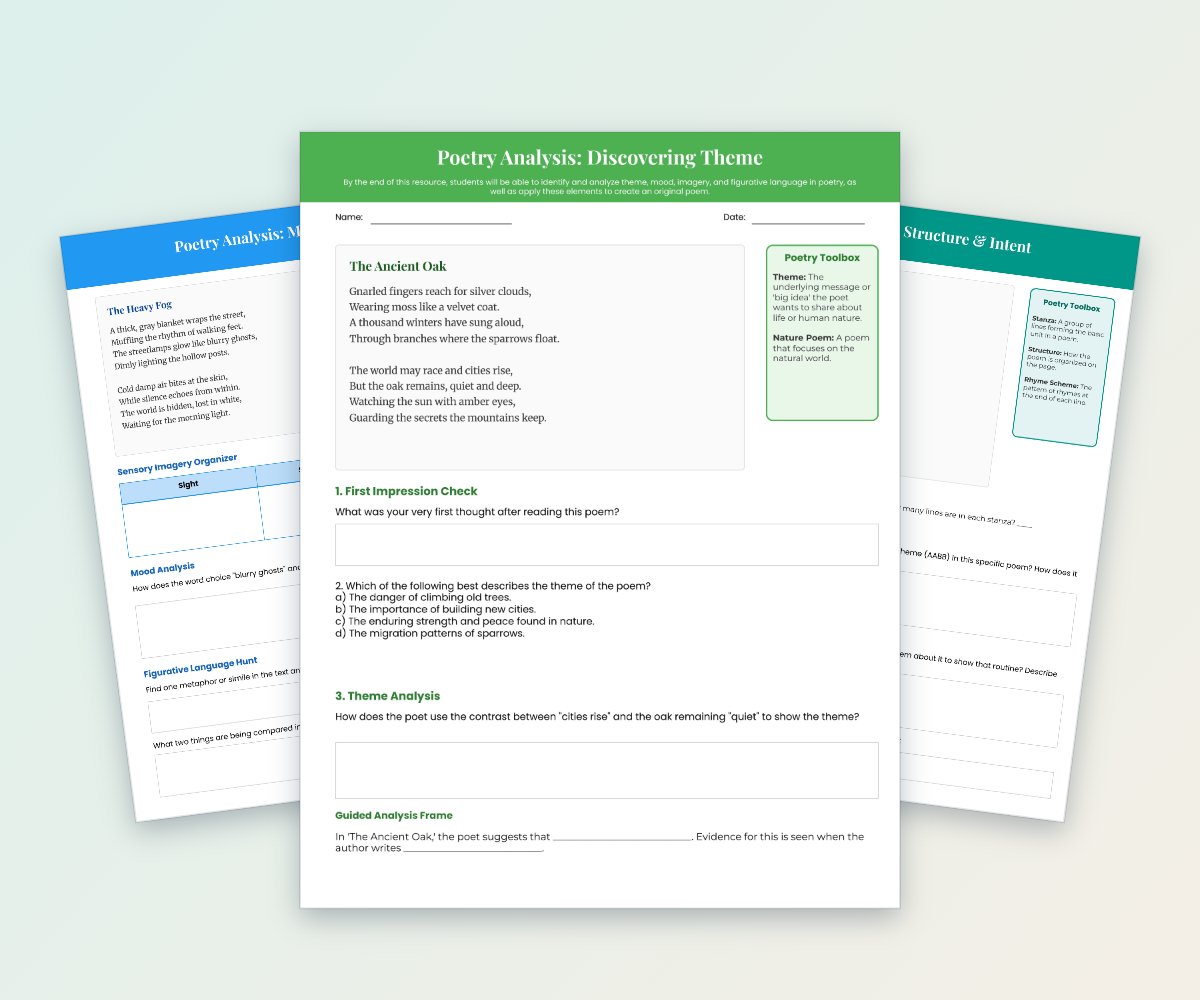
This six-page activity pack introduces middle school students to theme, mood, imagery, and figurative language through accessible original poems.
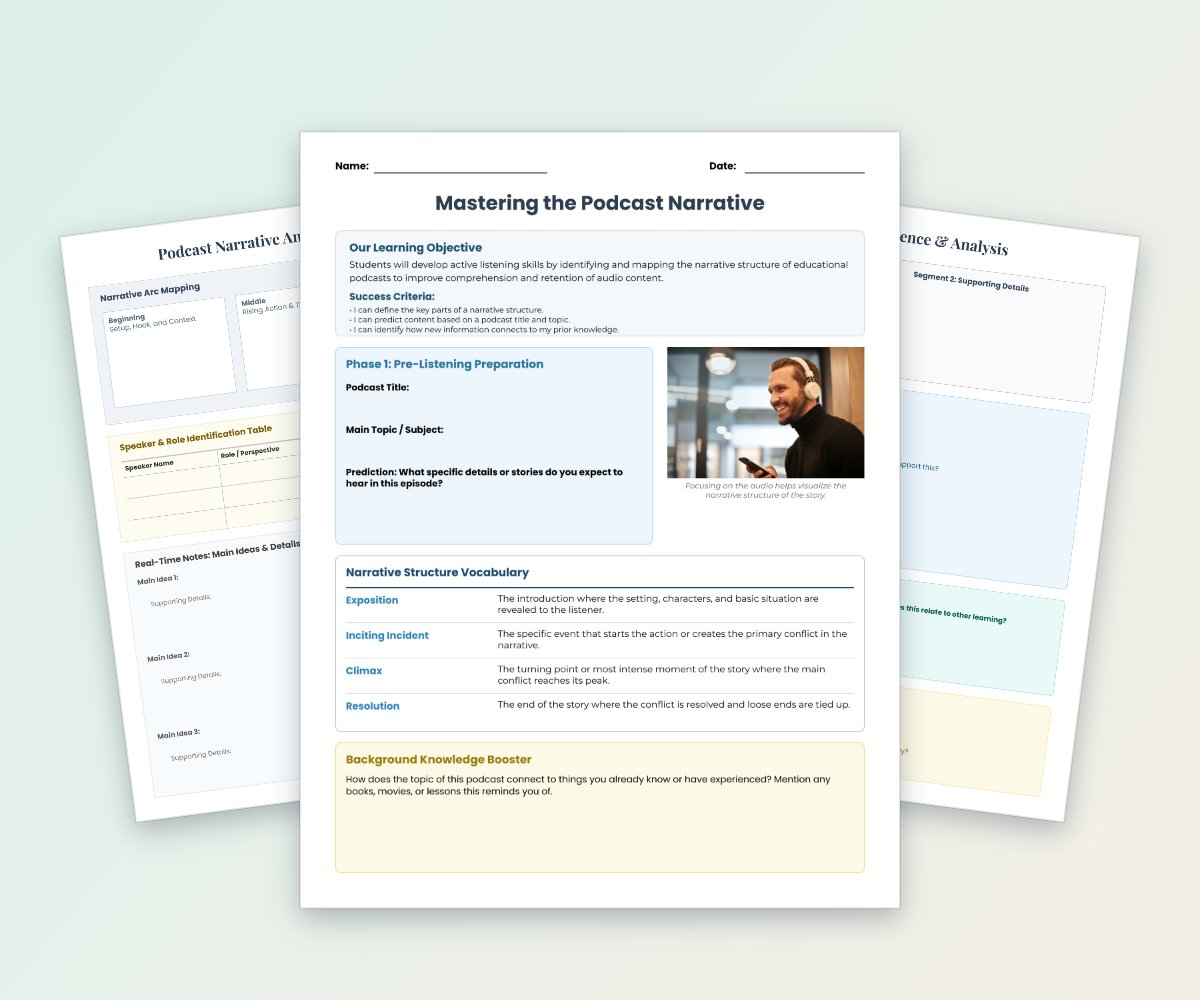
Guide students through pre-listening predictions, narrative arc mapping, speaker identification, note-taking, evidence analysis, and post-listening reflection.
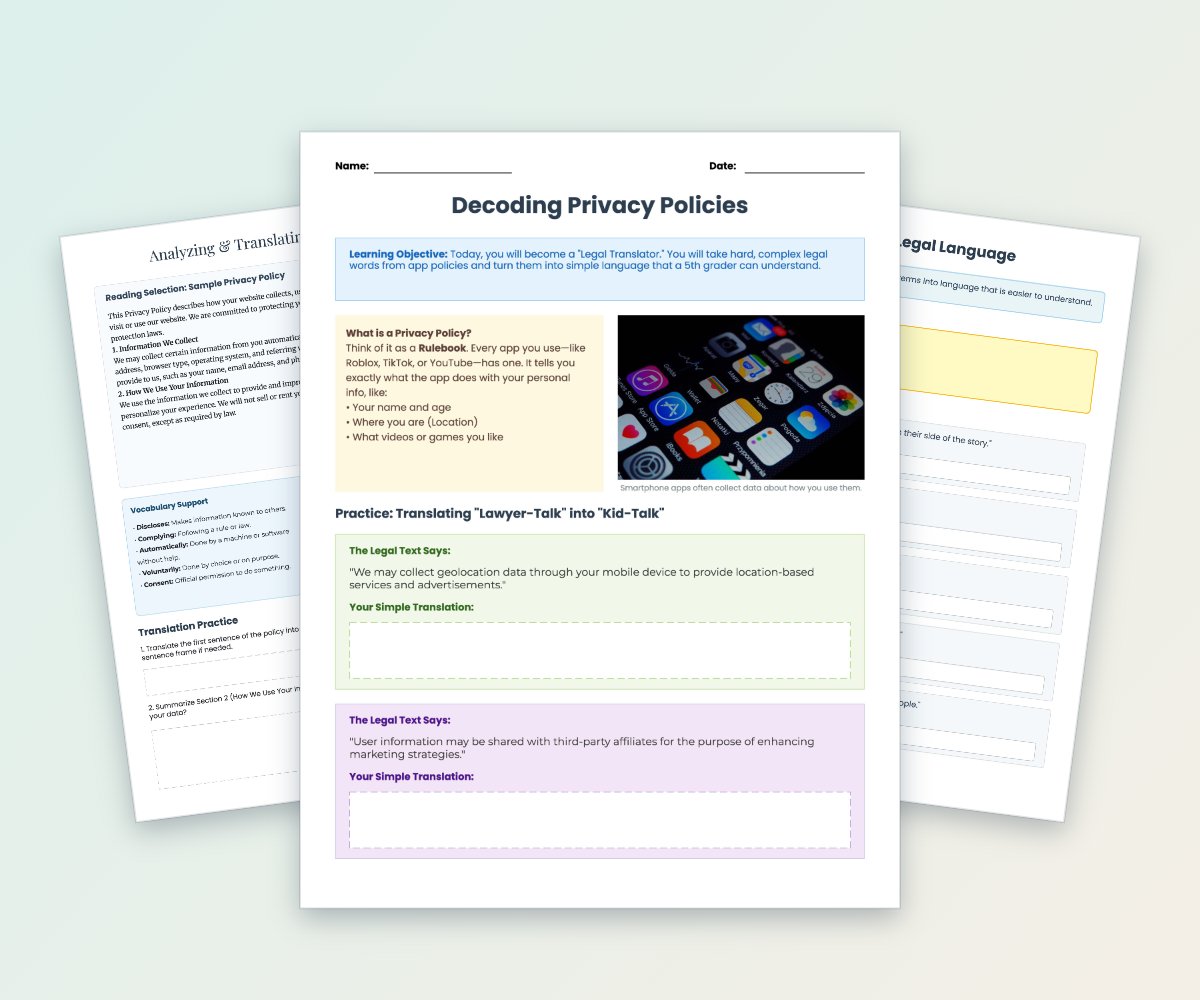
Students examine privacy-policy excerpts and translate complex legal language into clear, age-appropriate wording.
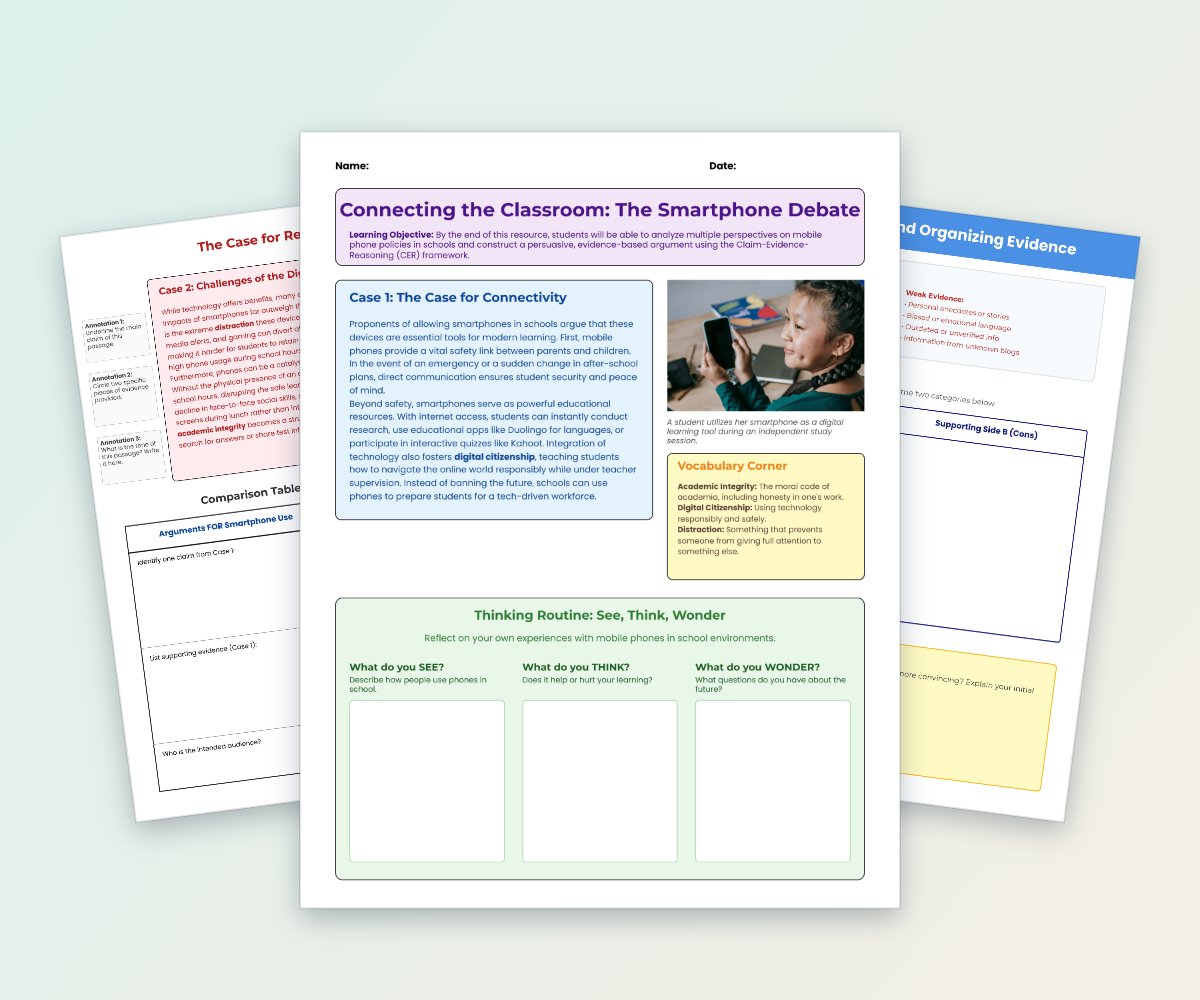
Students examine arguments for and against smartphones in school, explore relevant vocabulary, and use a See-Think-Wonder routine.
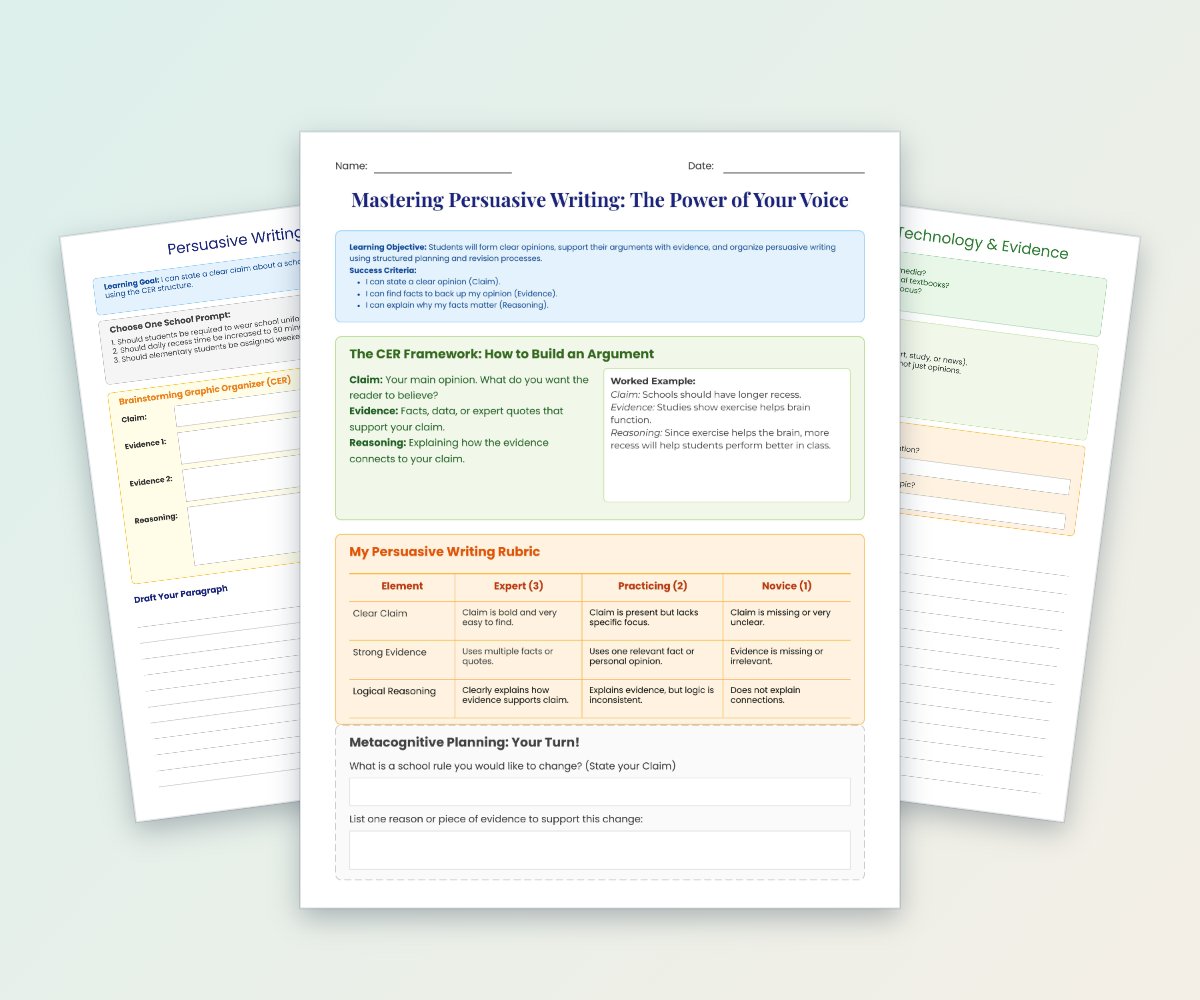
This eight-page writing pack teaches students to develop claims, support opinions with evidence, explain reasoning, and organize persuasive paragraphs using the CER framework.
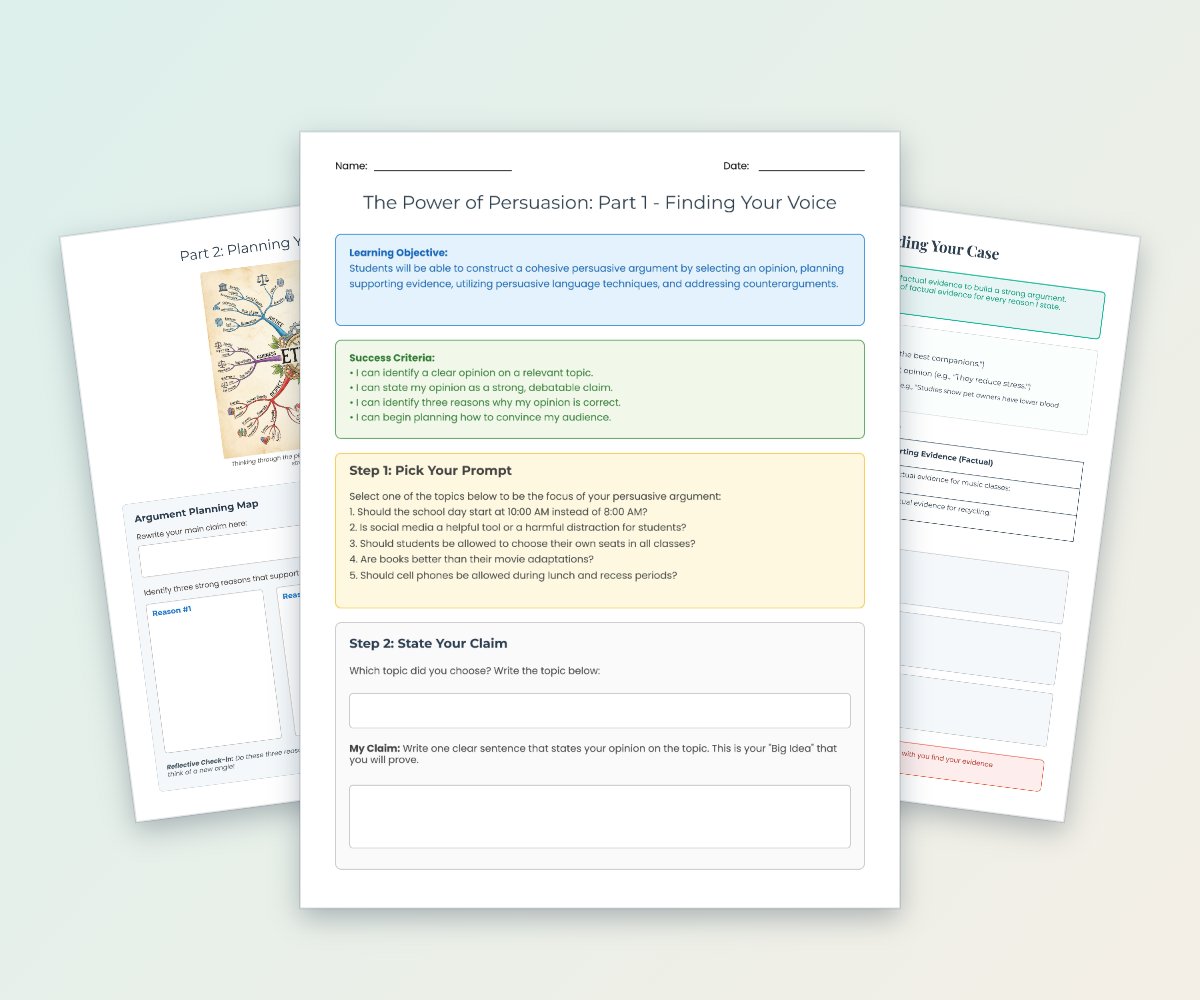
This six-page writing resource guides students through choosing a topic, forming a debatable claim, developing supporting reasons, and selecting factual evidence.
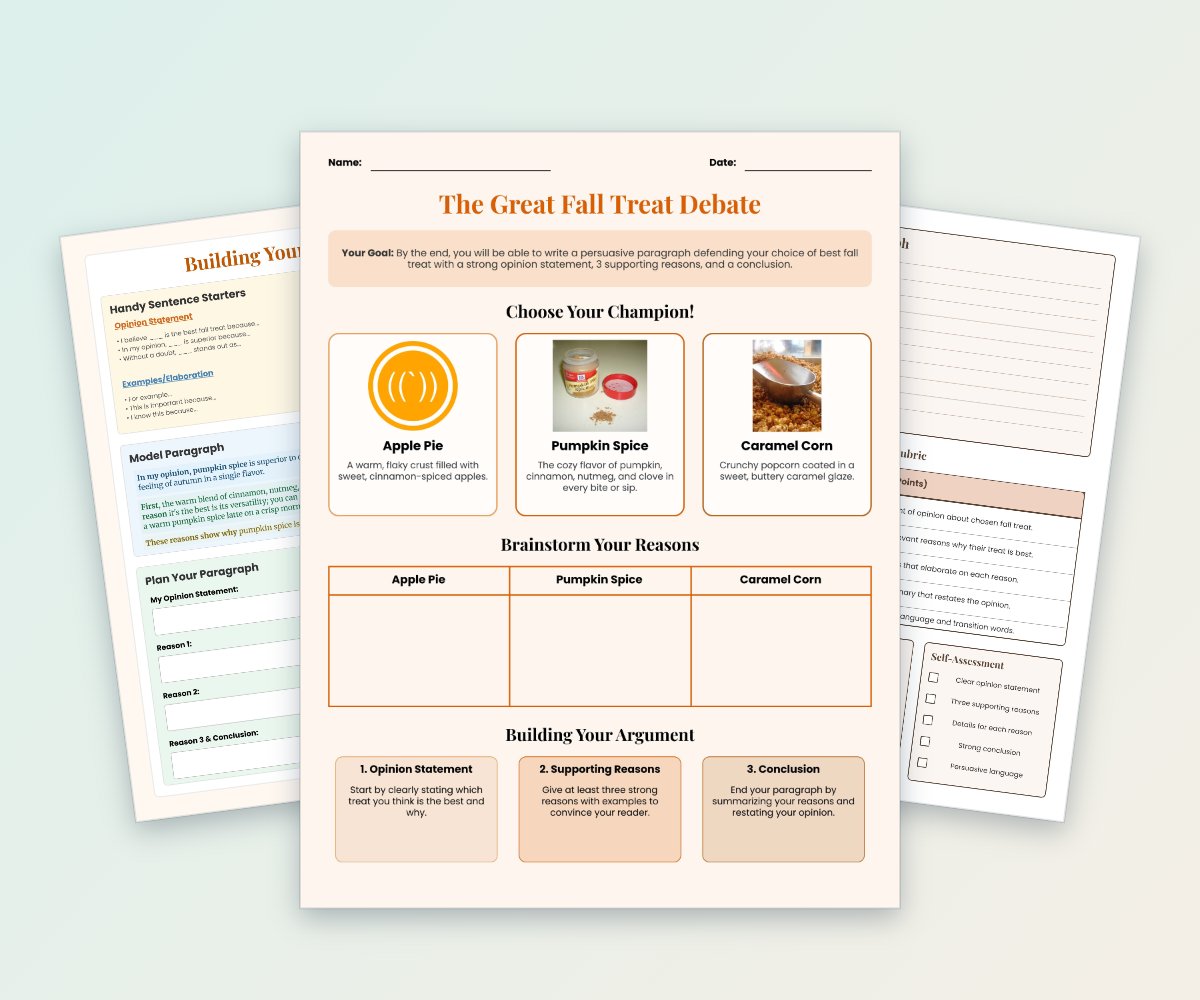
Students choose a favorite fall treat and develop a persuasive paragraph with an opinion statement, three supporting reasons, examples, and a conclusion.
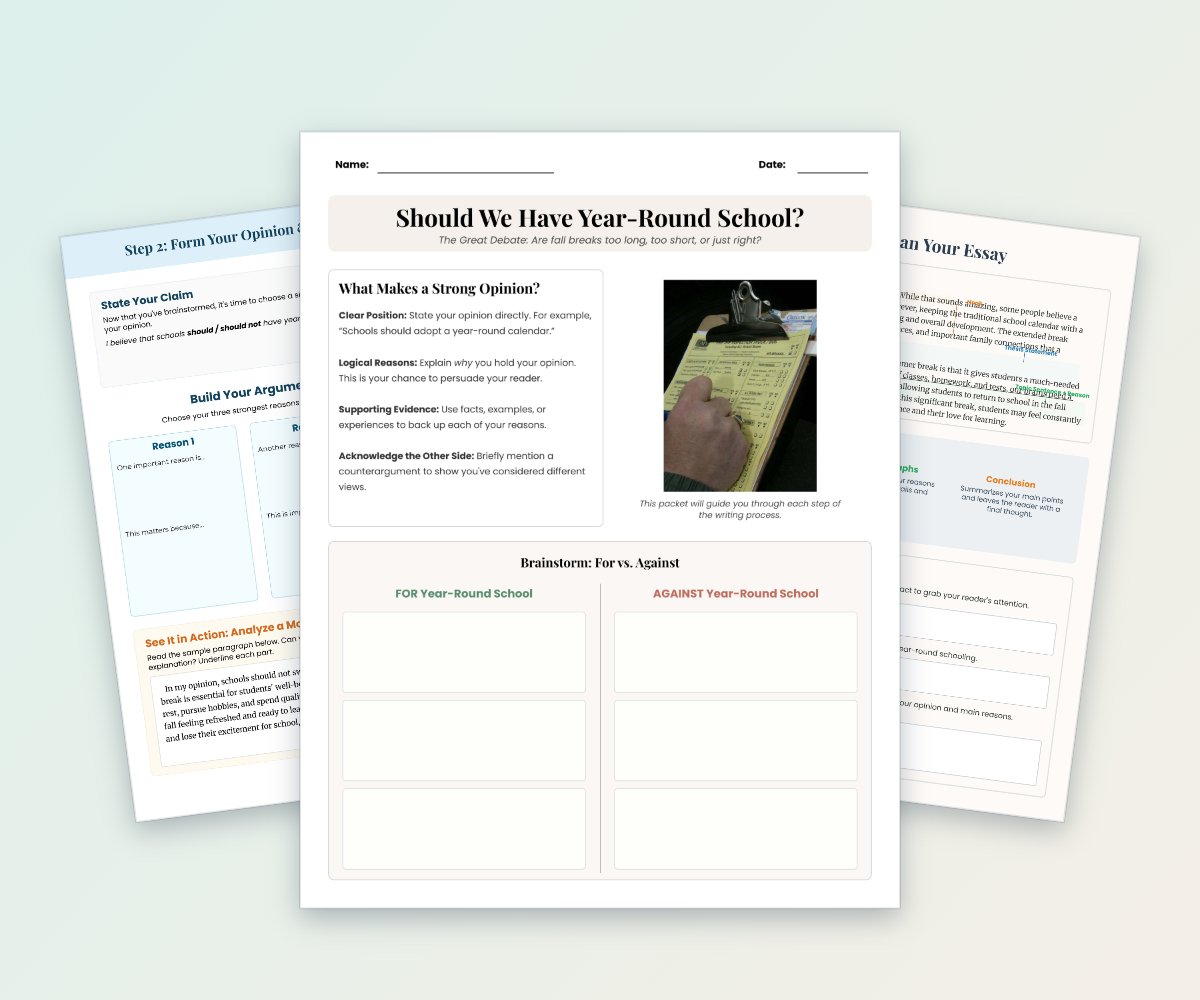
This six-page writing guide leads students through brainstorming, forming a claim, developing reasons, using evidence, acknowledging counterarguments, and analyzing a model paragraph.
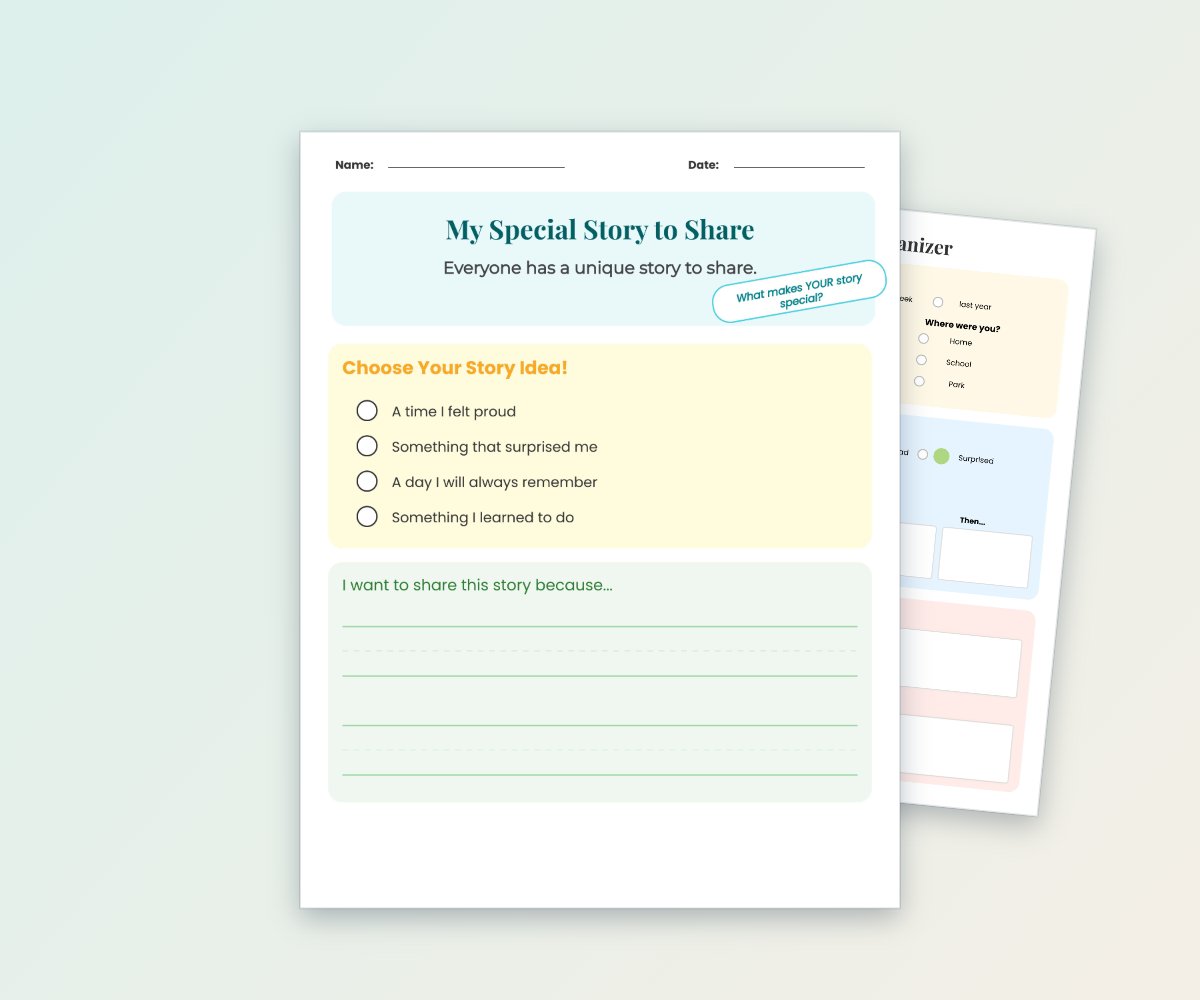
Students use this two-page organizer to plan a personal story by identifying the event, setting, characters, feelings, sequence, and significance.
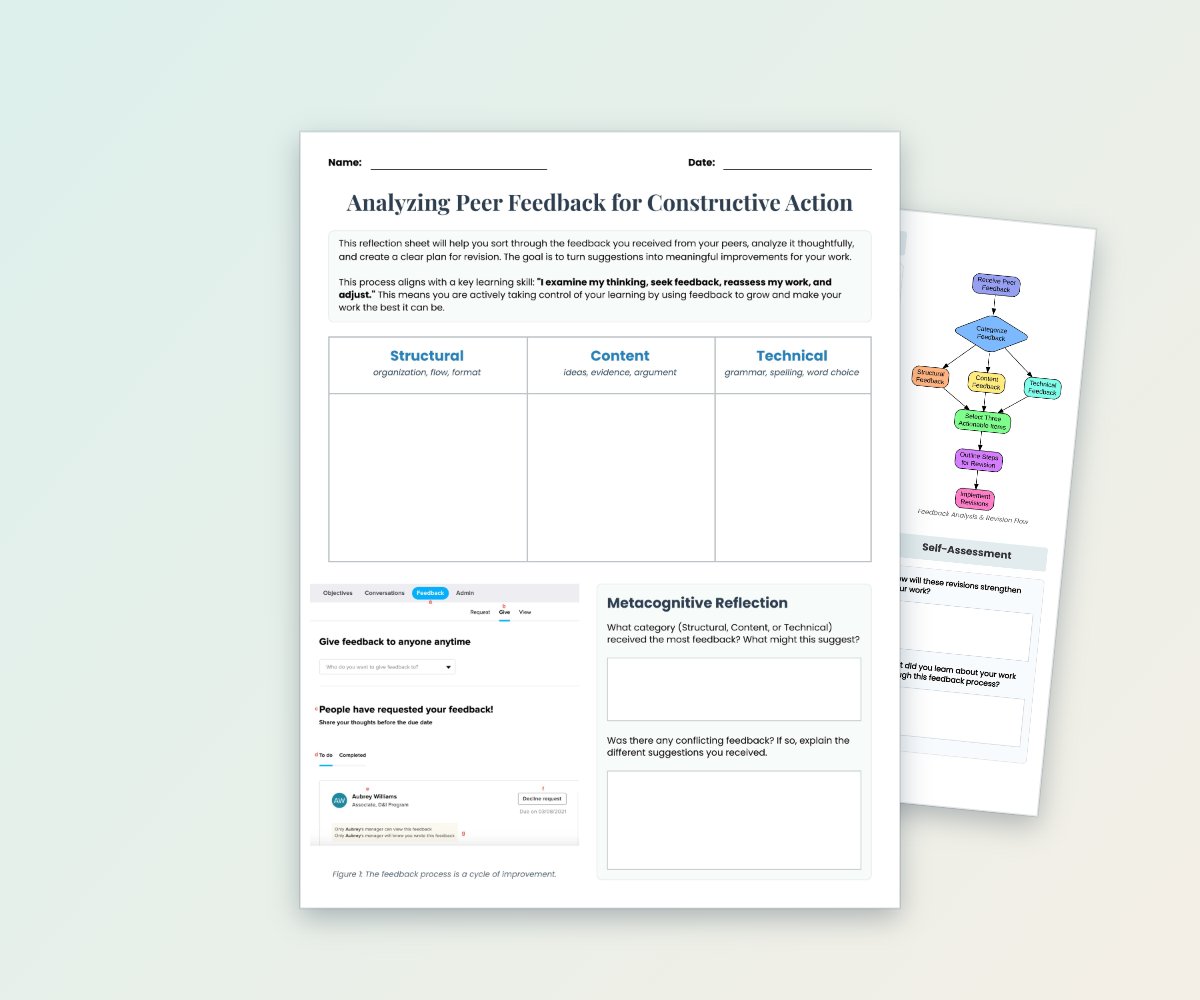
This two-page reflection guide helps students analyze peer feedback, identify actionable suggestions, and plan revisions.
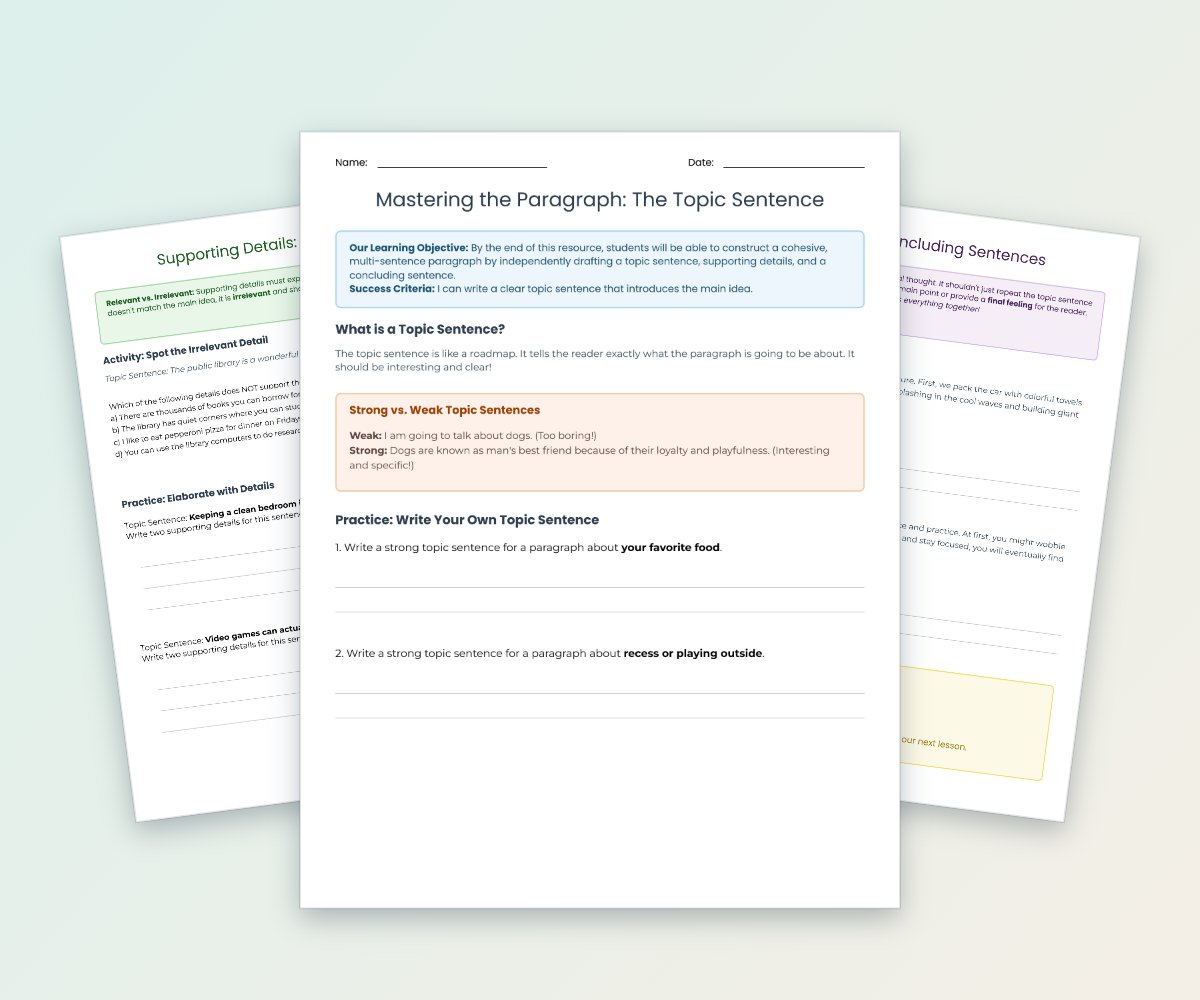
This six-page resource teaches students how to write cohesive paragraphs using clear topic sentences, relevant supporting details, and concluding sentences.
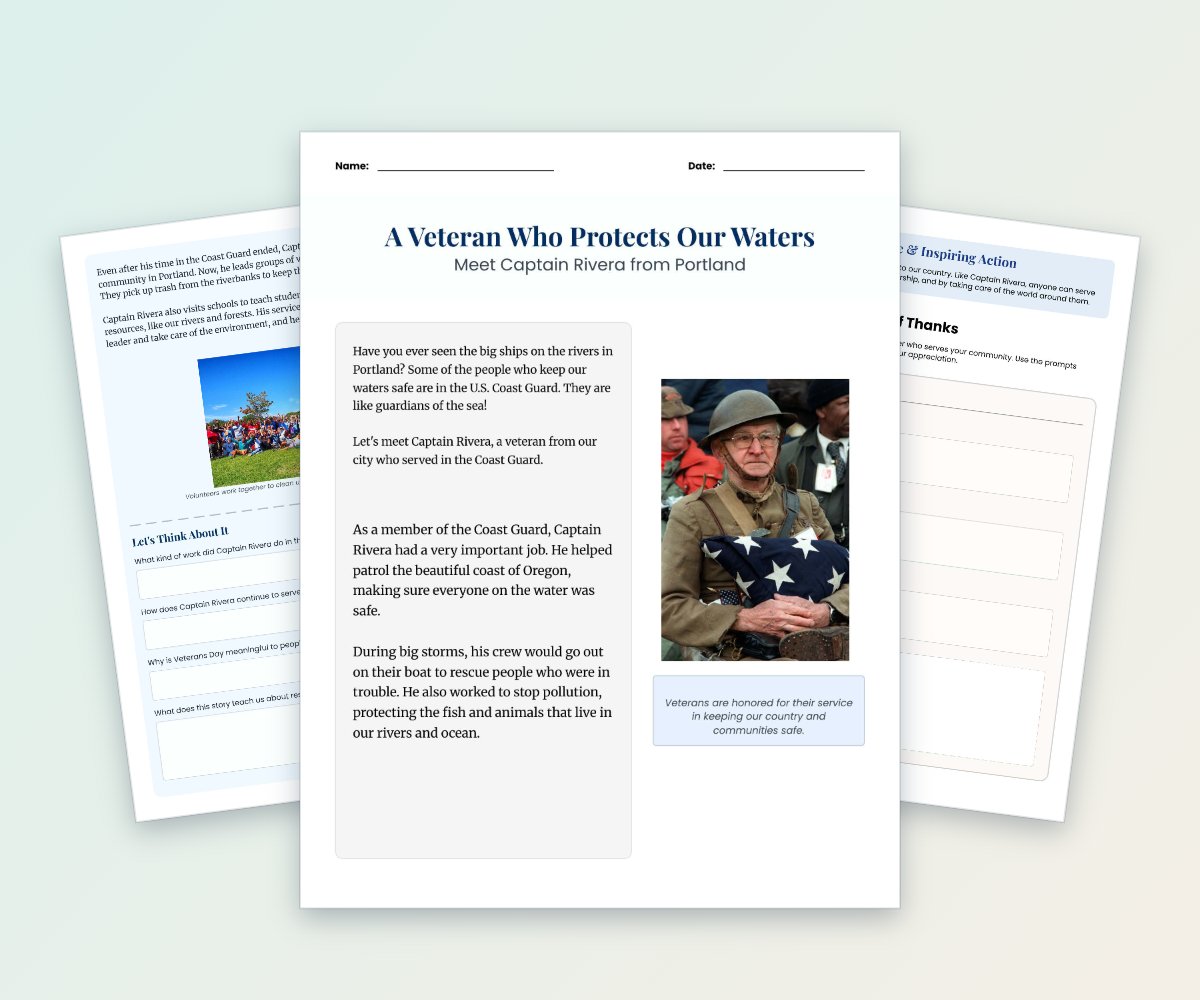
This mini-unit features an informational reading passage about an Oregon Coast Guard veteran, followed by comprehension and discussion questions.
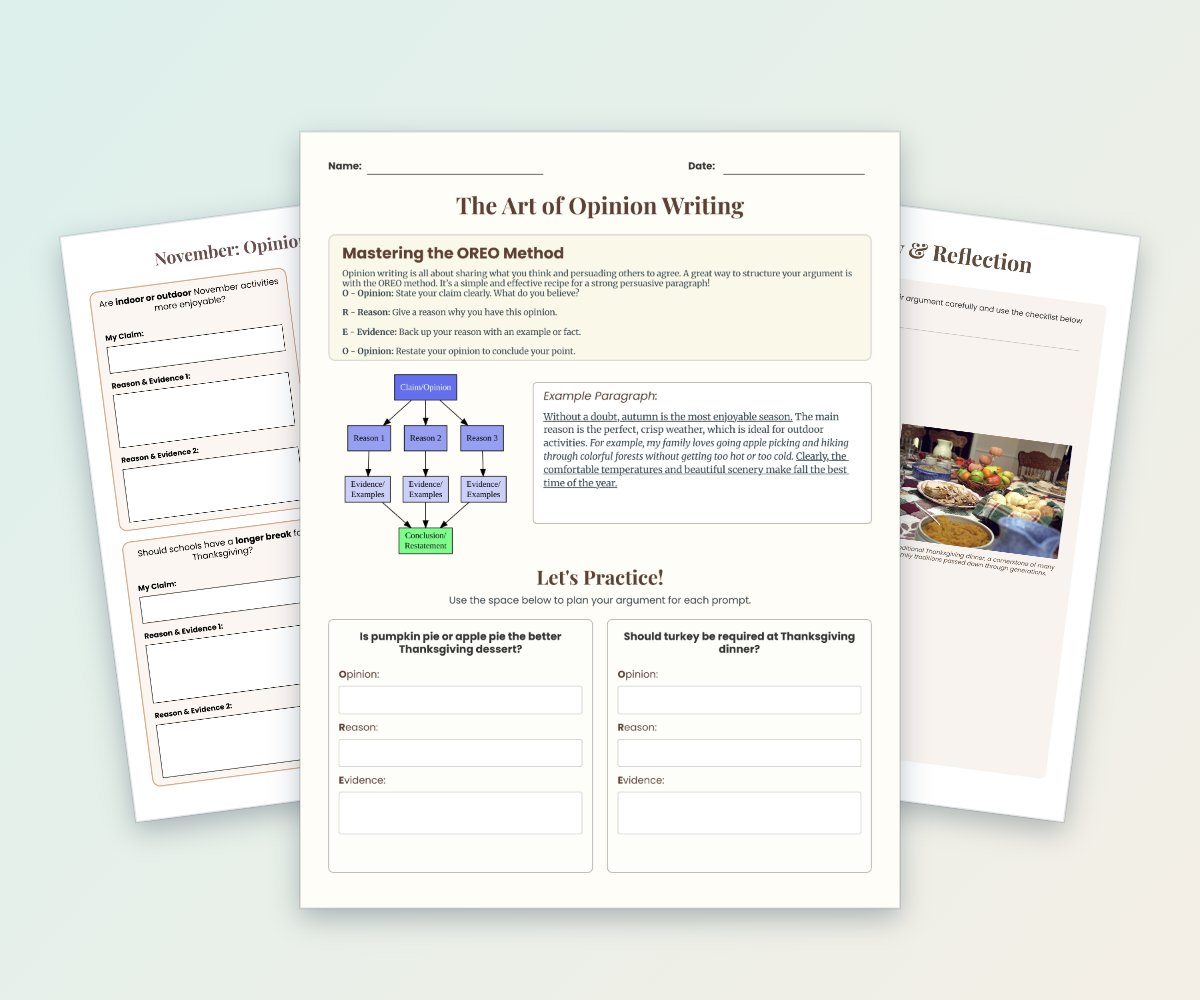
This four-page resource teaches students to structure opinion paragraphs using the OREO method: Opinion, Reason, Evidence, and Opinion restatement.
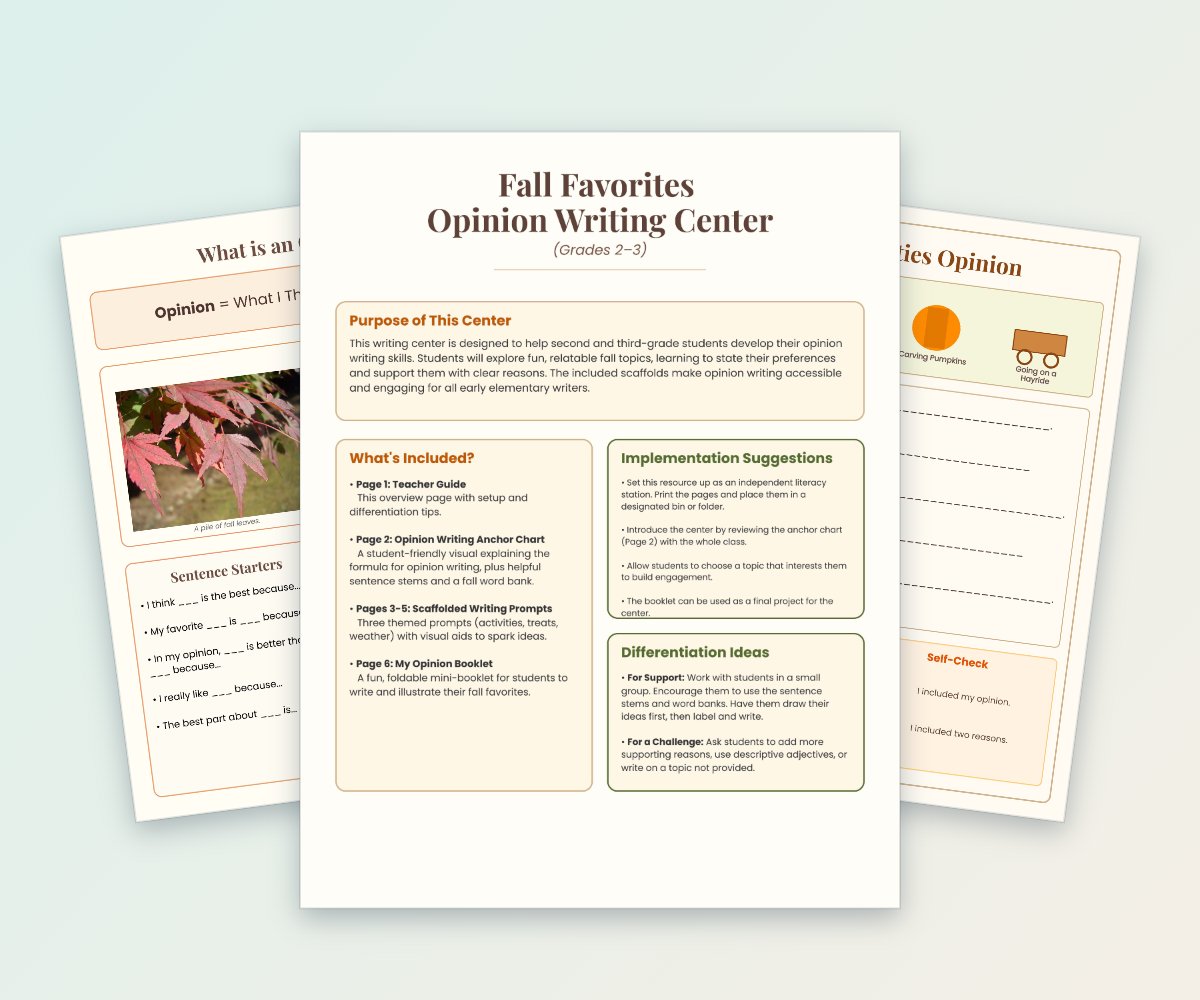
This fall-themed writing center helps Grades 2–3 students state opinions and support them with clear reasons.
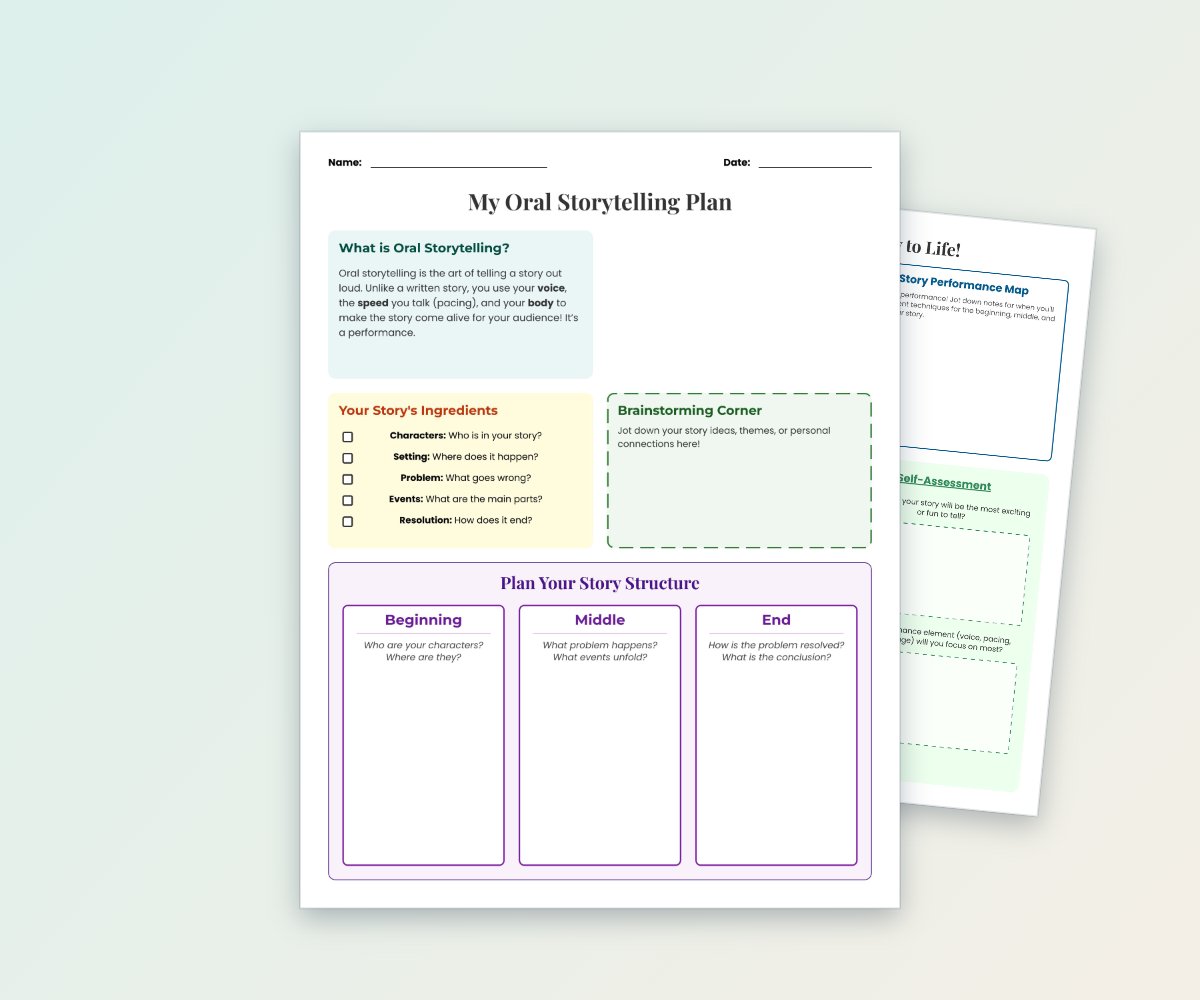
This student-friendly guide introduces oral storytelling and helps learners plan characters, setting, problem, events, and resolution.
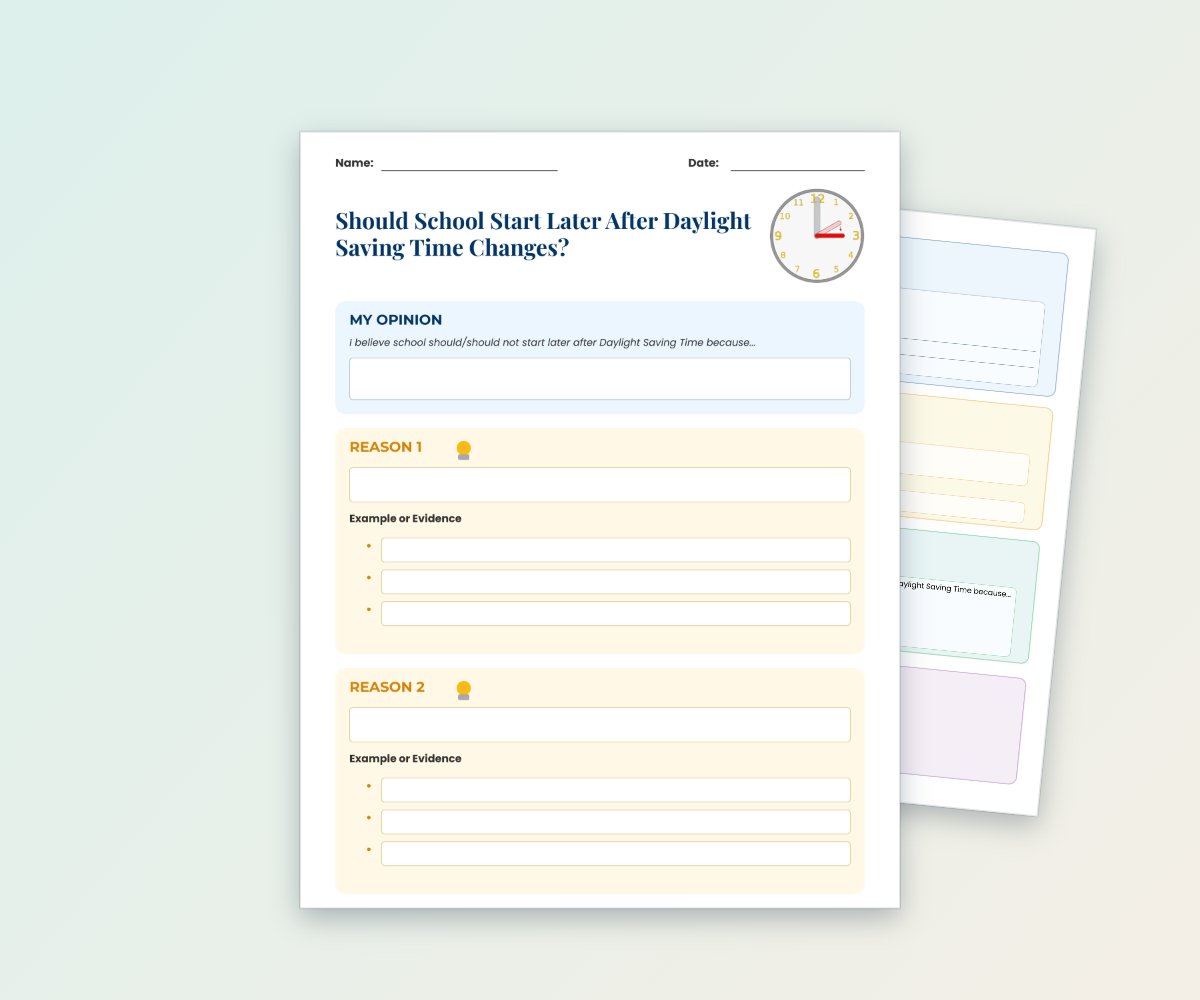
Students develop an opinion about whether school should start later after Daylight Saving Time changes.
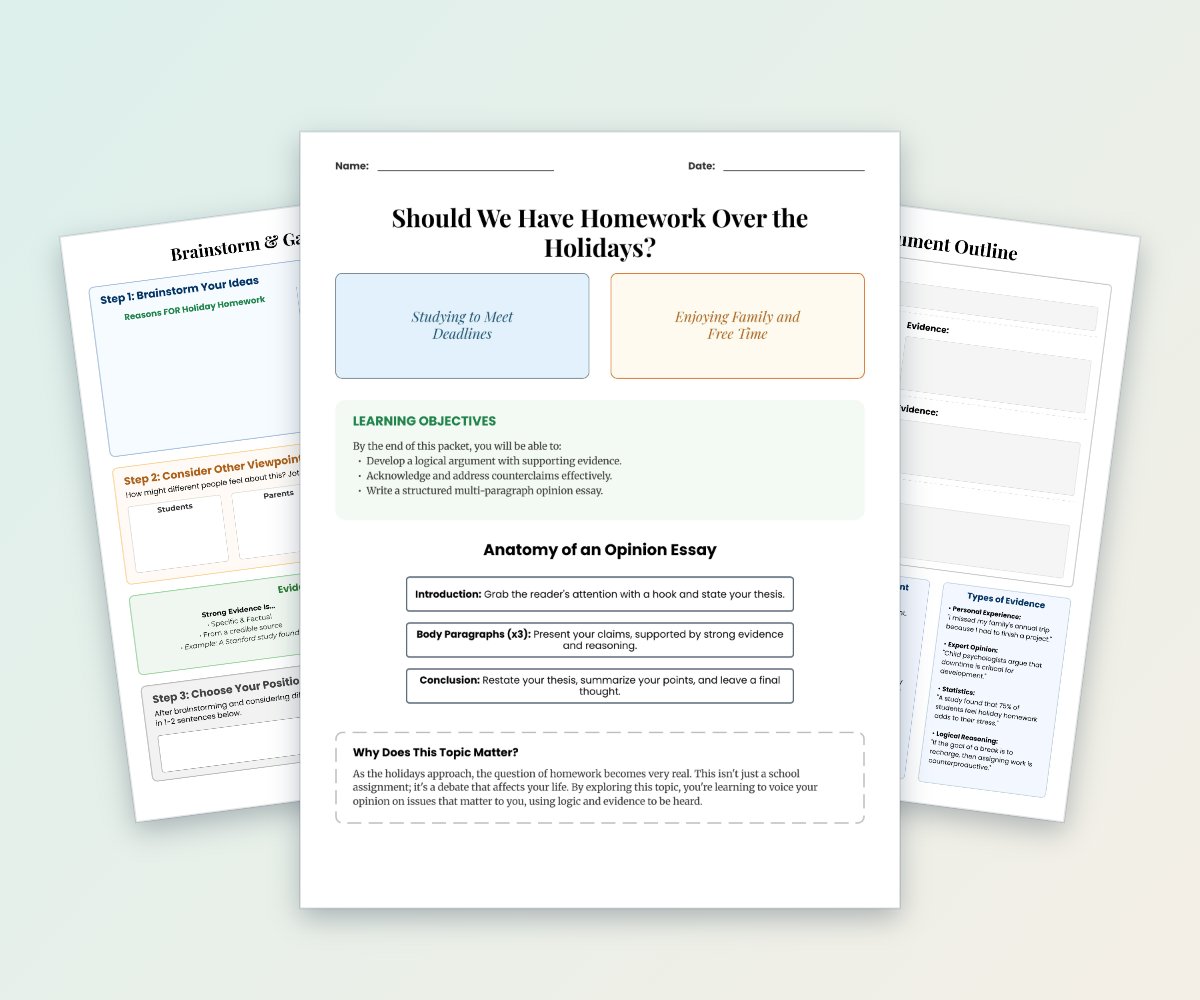
This seven-page guide helps students develop and organize an opinion essay about homework over the holidays.
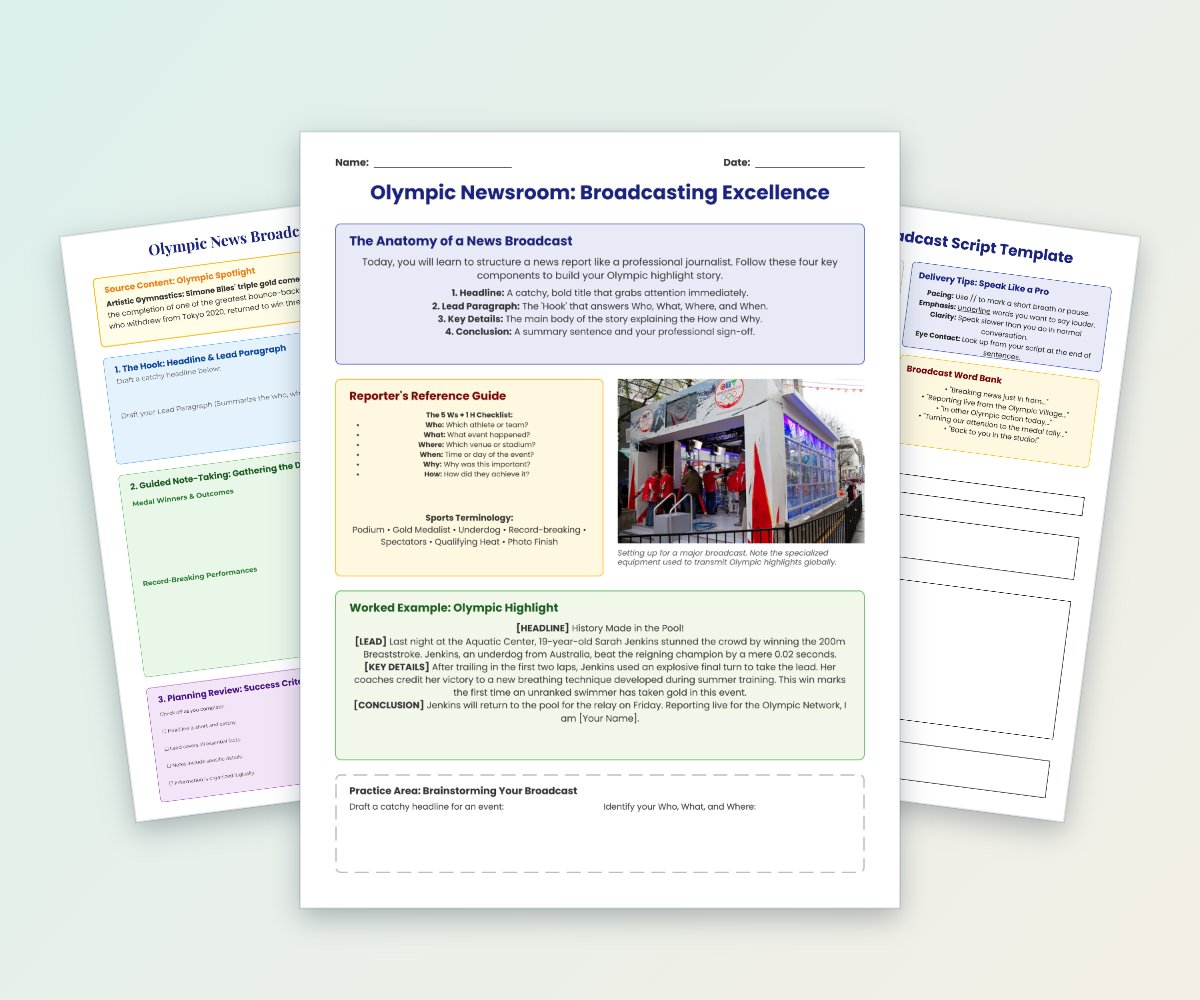
This four-page guide teaches students to structure an Olympic news broadcast using headlines, leads, key details, conclusions, and the 5 Ws plus 1 H.
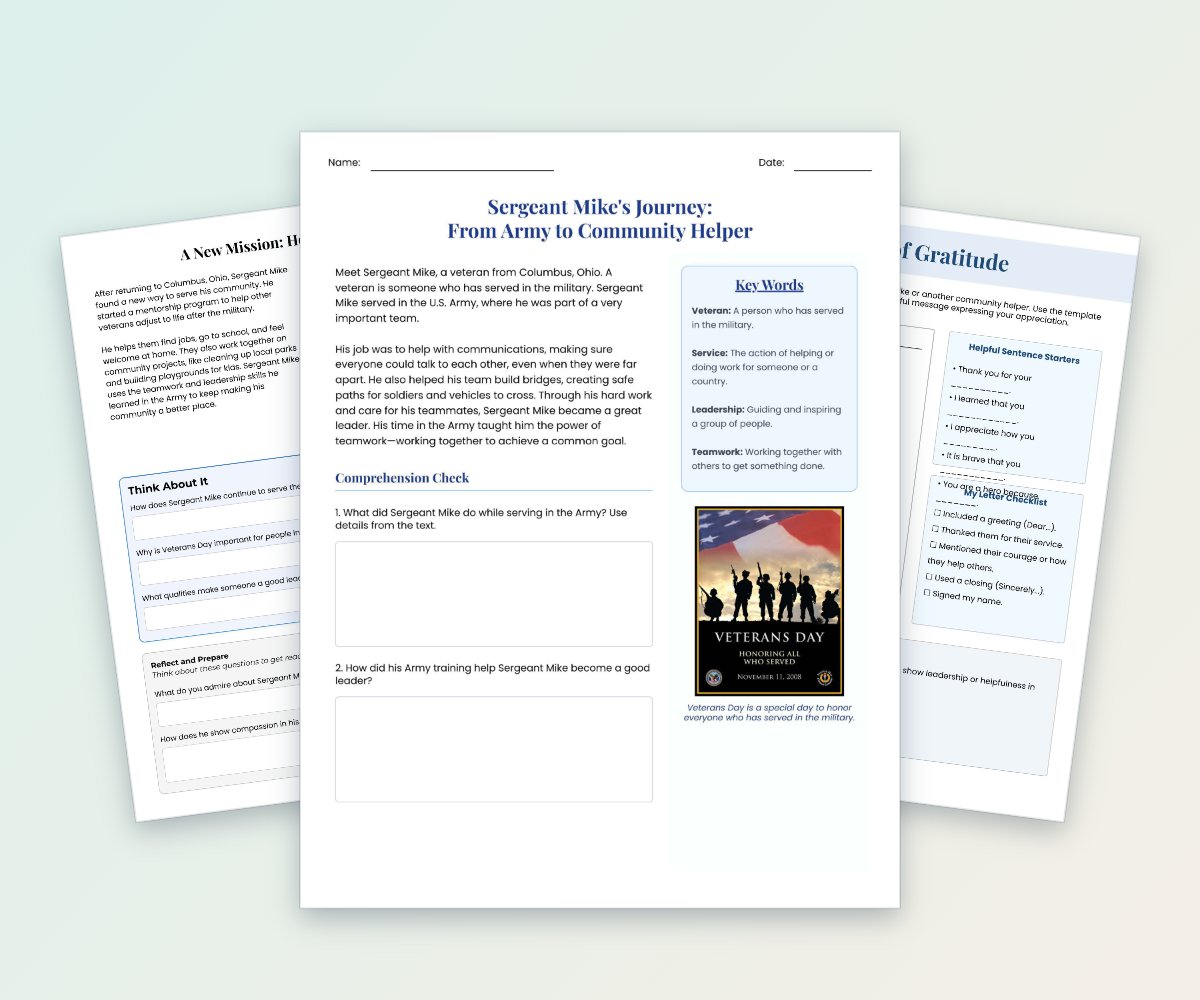
Students read about an Ohio veteran’s military service and community leadership, answer comprehension questions, and reflect on Veterans Day.
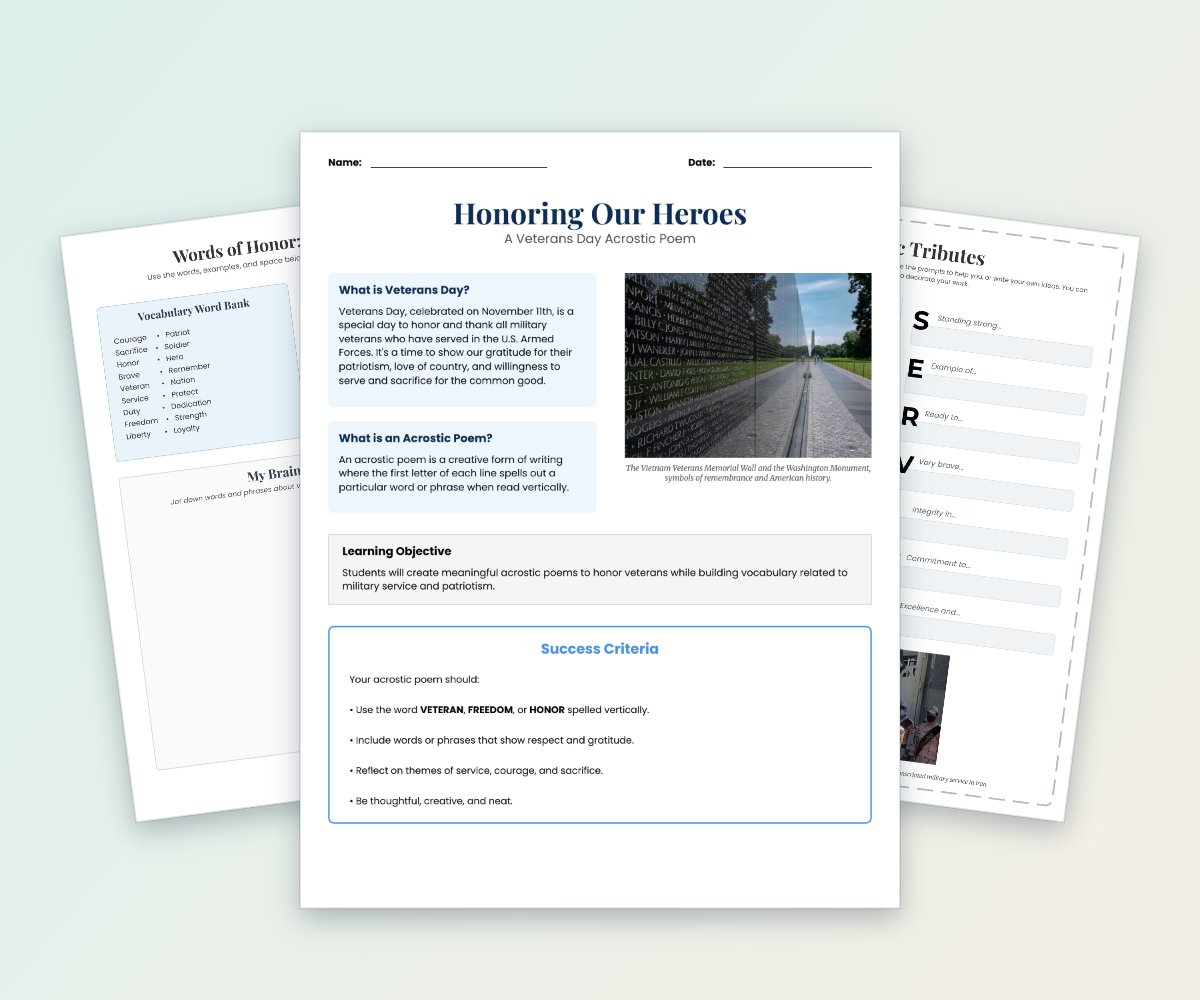
Students learn about Veterans Day and the structure of acrostic poems through vocabulary, examples, brainstorming, and guided writing prompts.
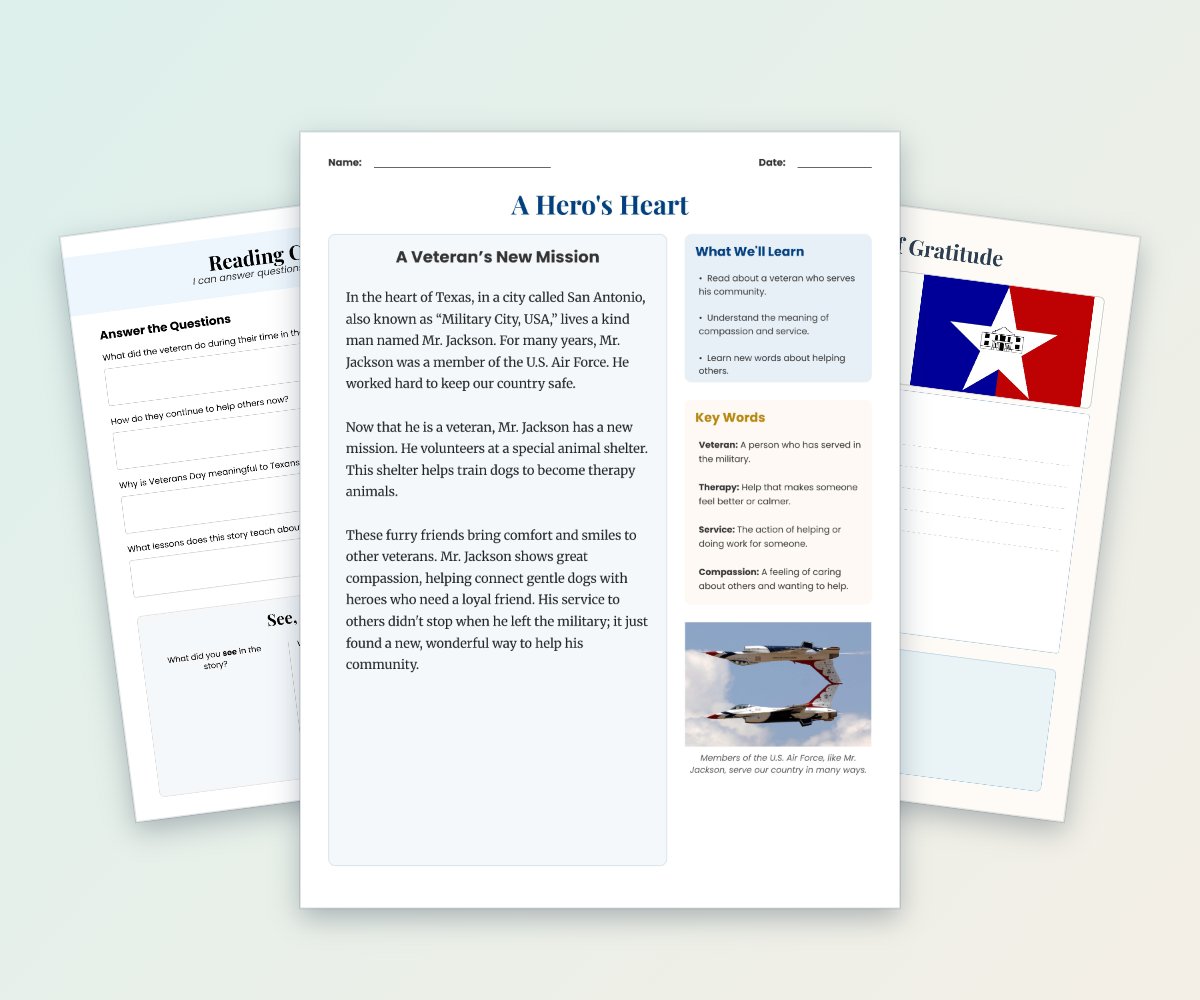
Students read about a veteran who volunteers with therapy dogs and answer comprehension questions about service, kindness, and resilience.
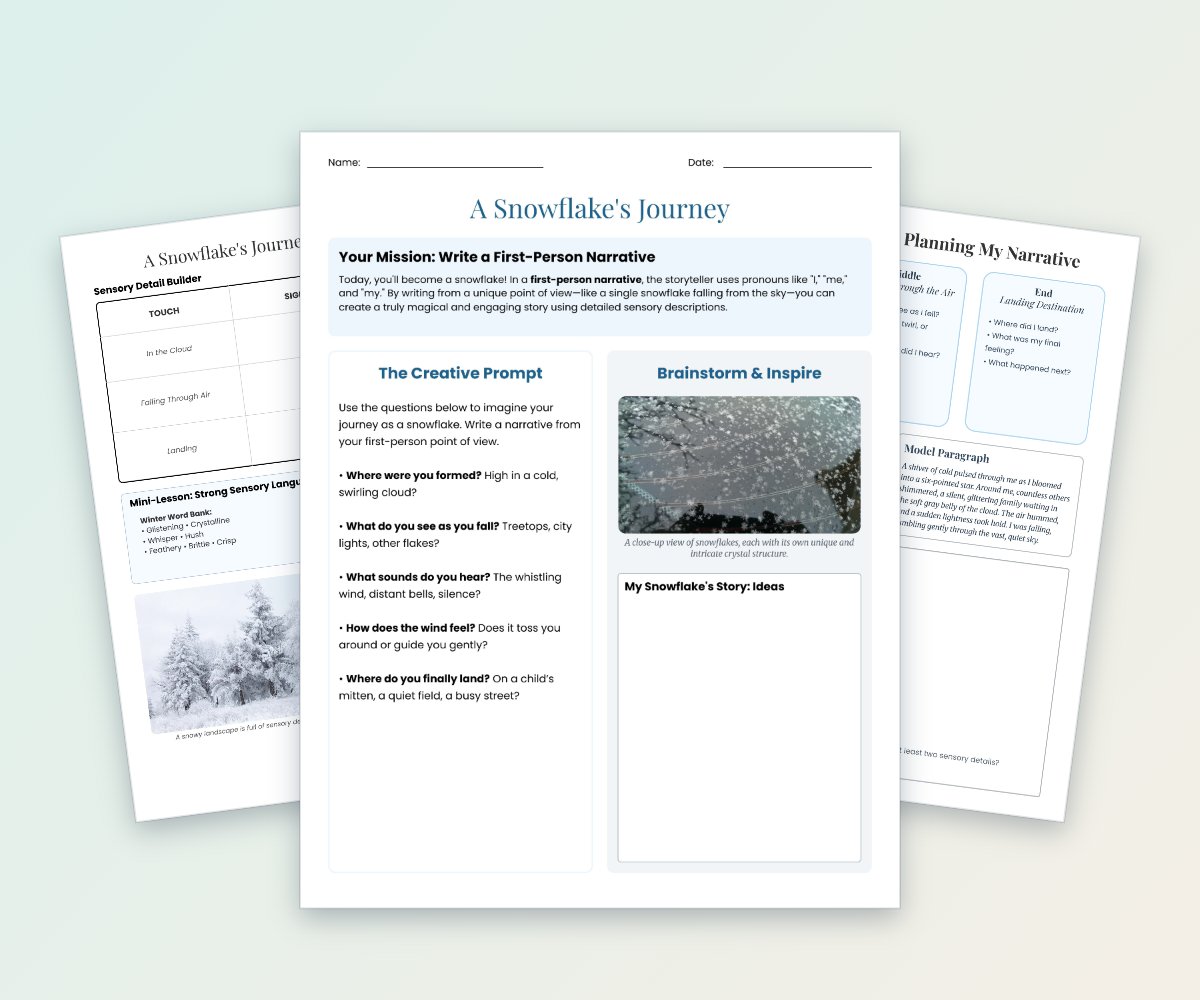
Students write a first-person narrative from the perspective of a snowflake.