The Price of a Picnic: Sales Tax and Budgeting Math Activities
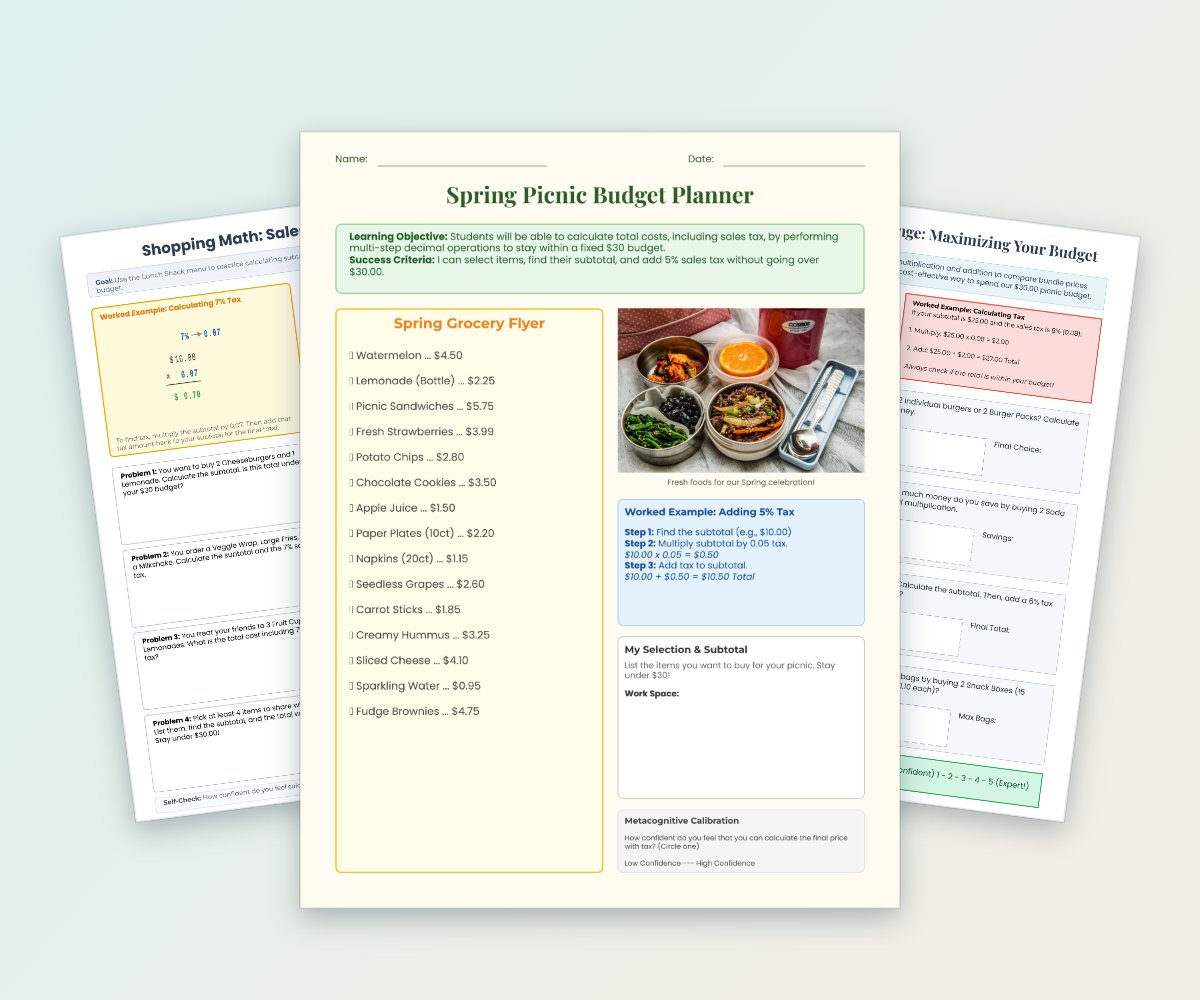
Students plan picnic purchases using grocery and restaurant flyers, calculate subtotals and sales tax, and stay within a fixed budget.
$4.50
Clear, ready-to-teach math resources: worksheets, task cards, slides and practice sets that build understanding as well as fluency. Printable and digital downloads for teachers, parents and homeschoolers.
Students plan picnic purchases using grocery and restaurant flyers, calculate subtotals and sales tax, and stay within a fixed budget.
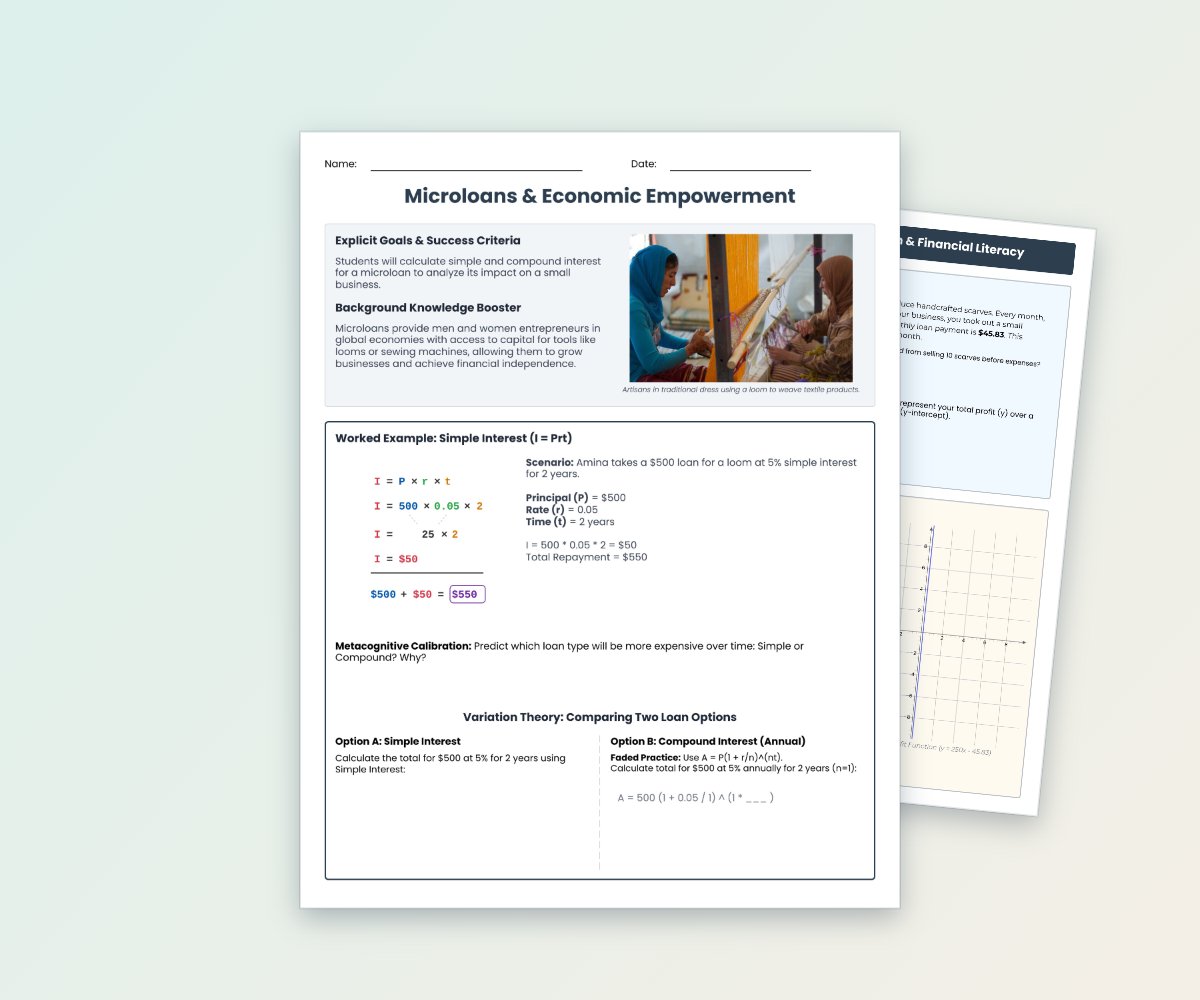
Students calculate simple and compound interest on microloans and compare repayment costs.
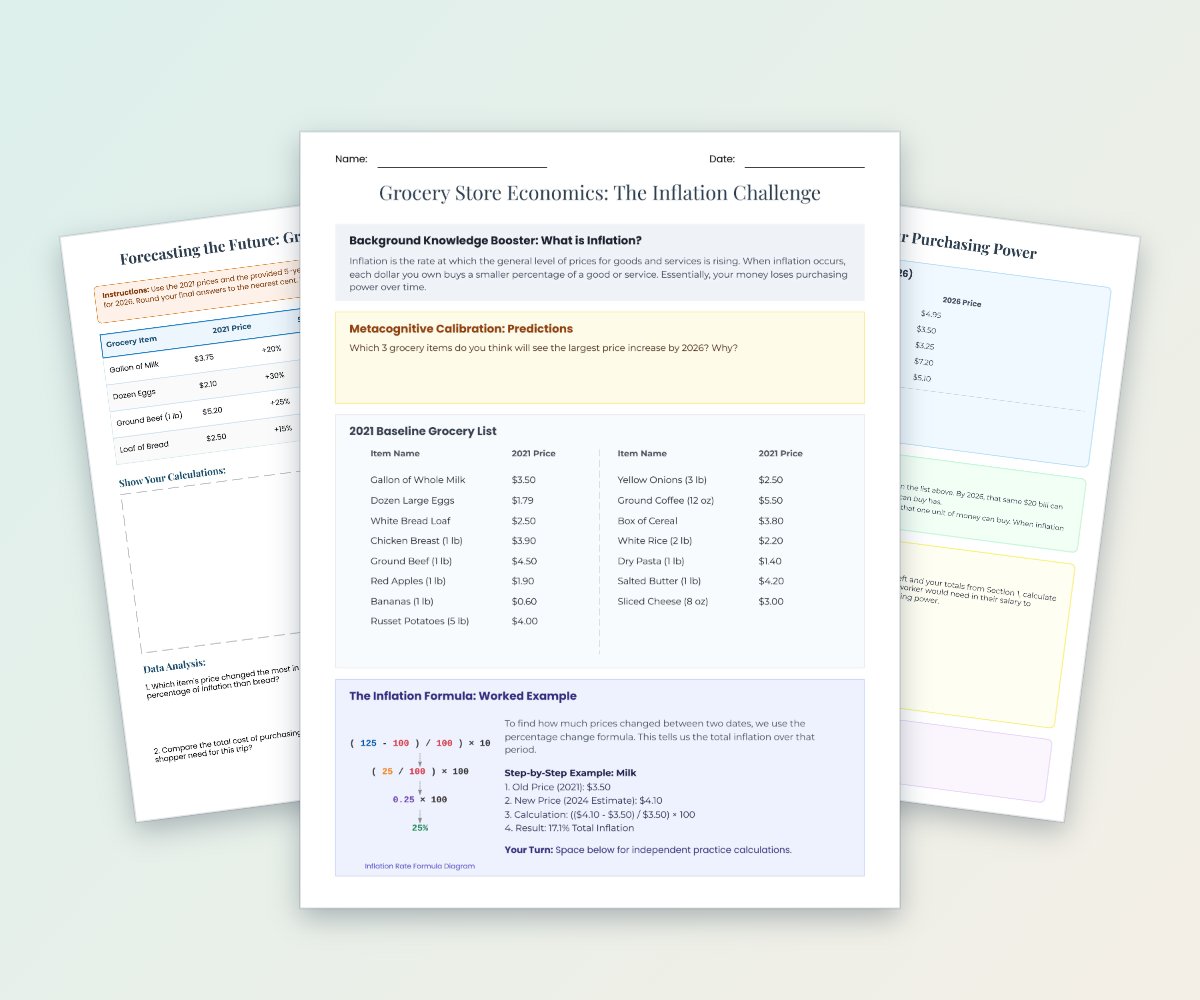
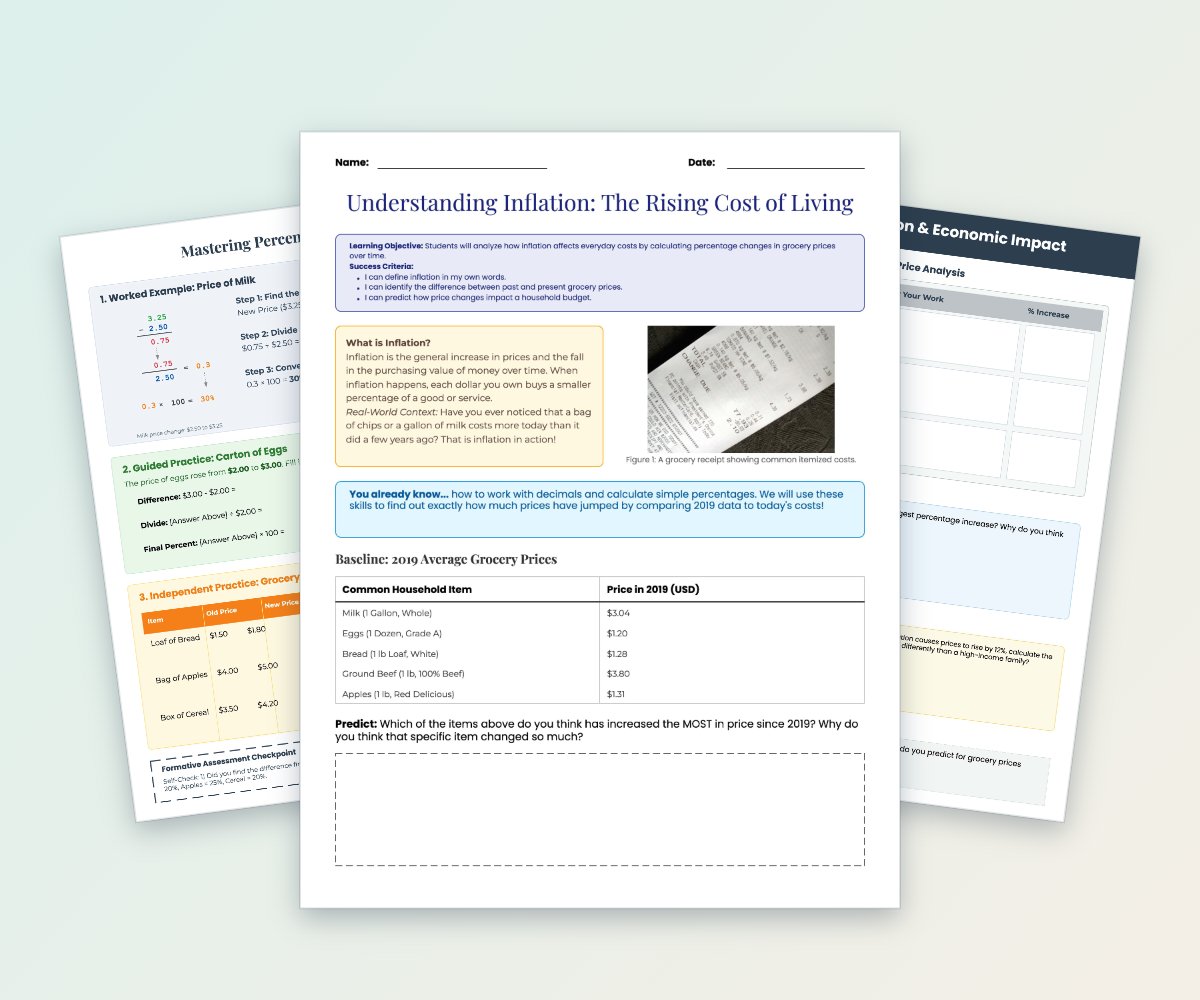
Students explore inflation by comparing historical and projected grocery prices, calculating percentage increases, and analyzing purchasing power.
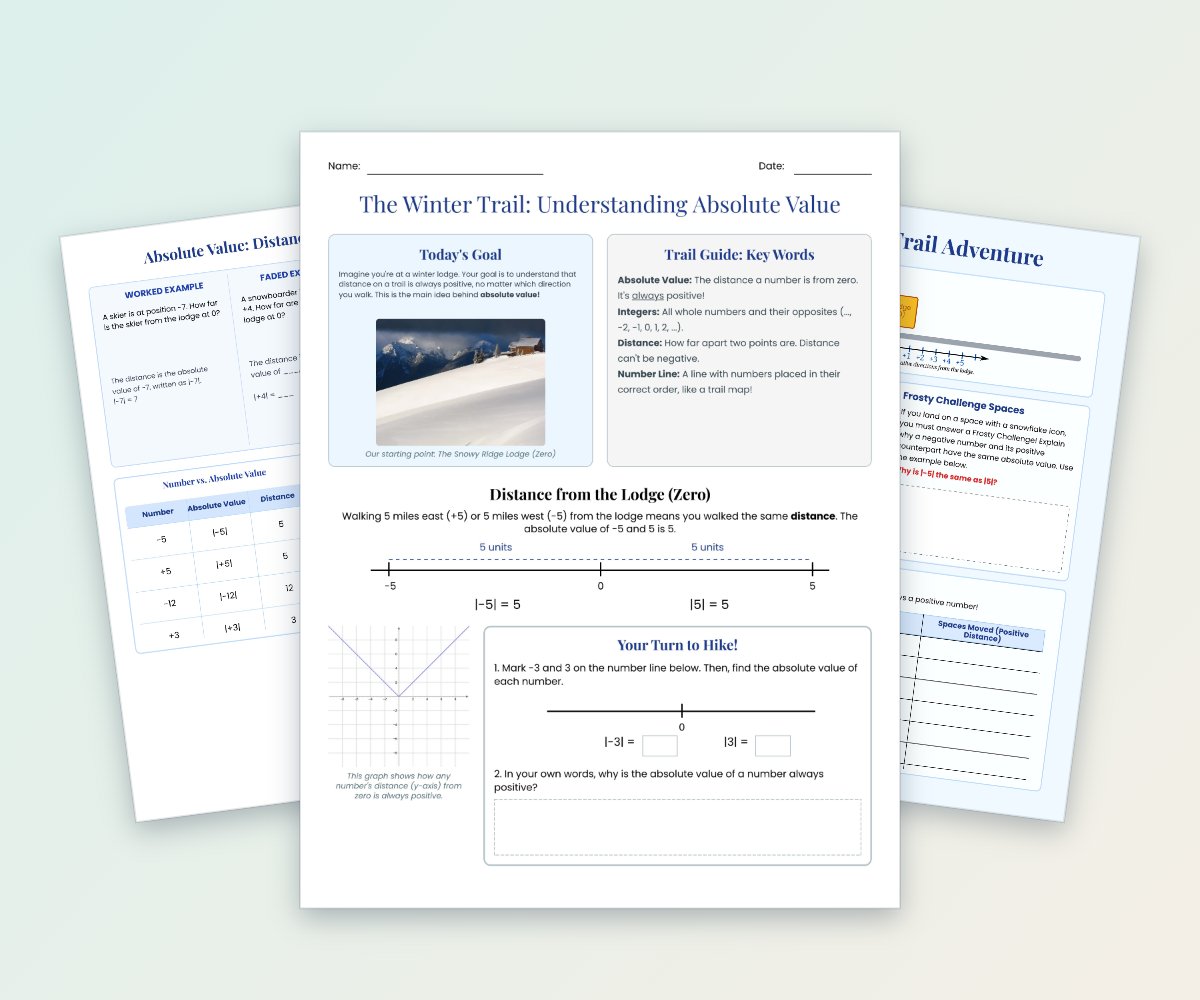
Students explore absolute value as distance from zero through winter-themed explanations, number lines, worked examples, and independent practice.
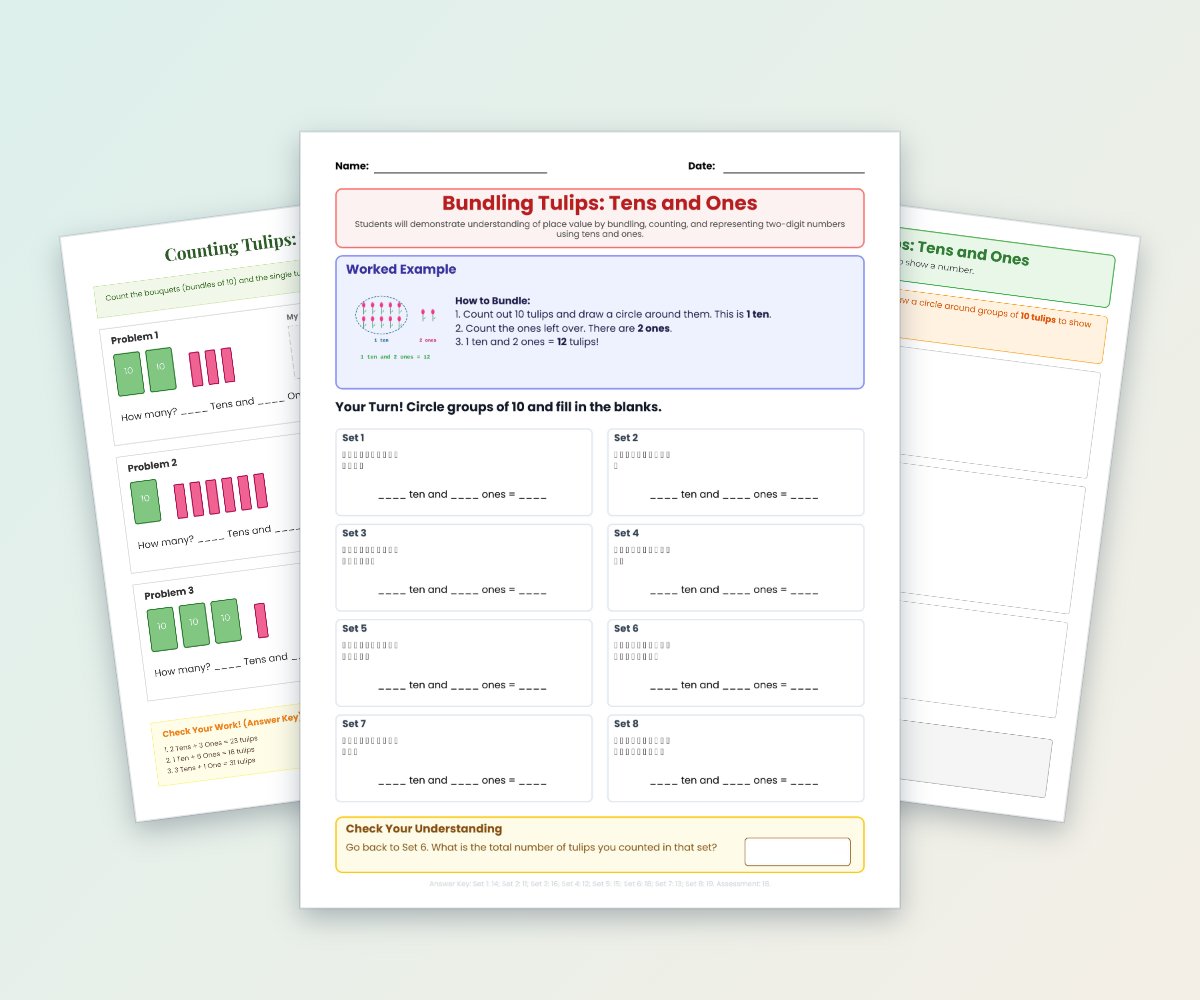
Students bundle, count, and represent two-digit numbers using groups of tens and individual ones.
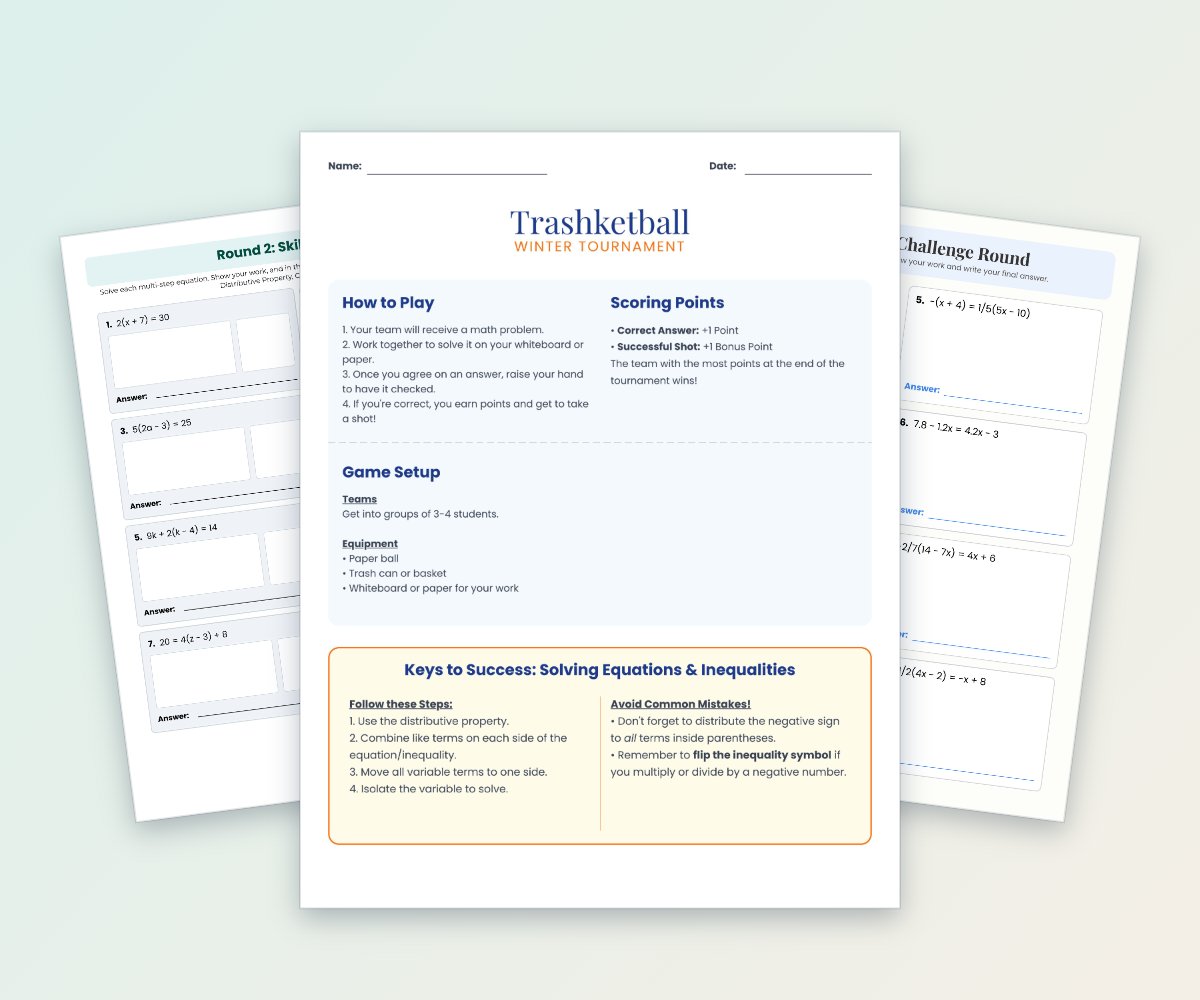
Engage students in a competitive Trashketball tournament featuring collaborative practice with multi-step equations and inequalities.
Students learn to define inflation and calculate percentage increases using historical and current grocery prices.
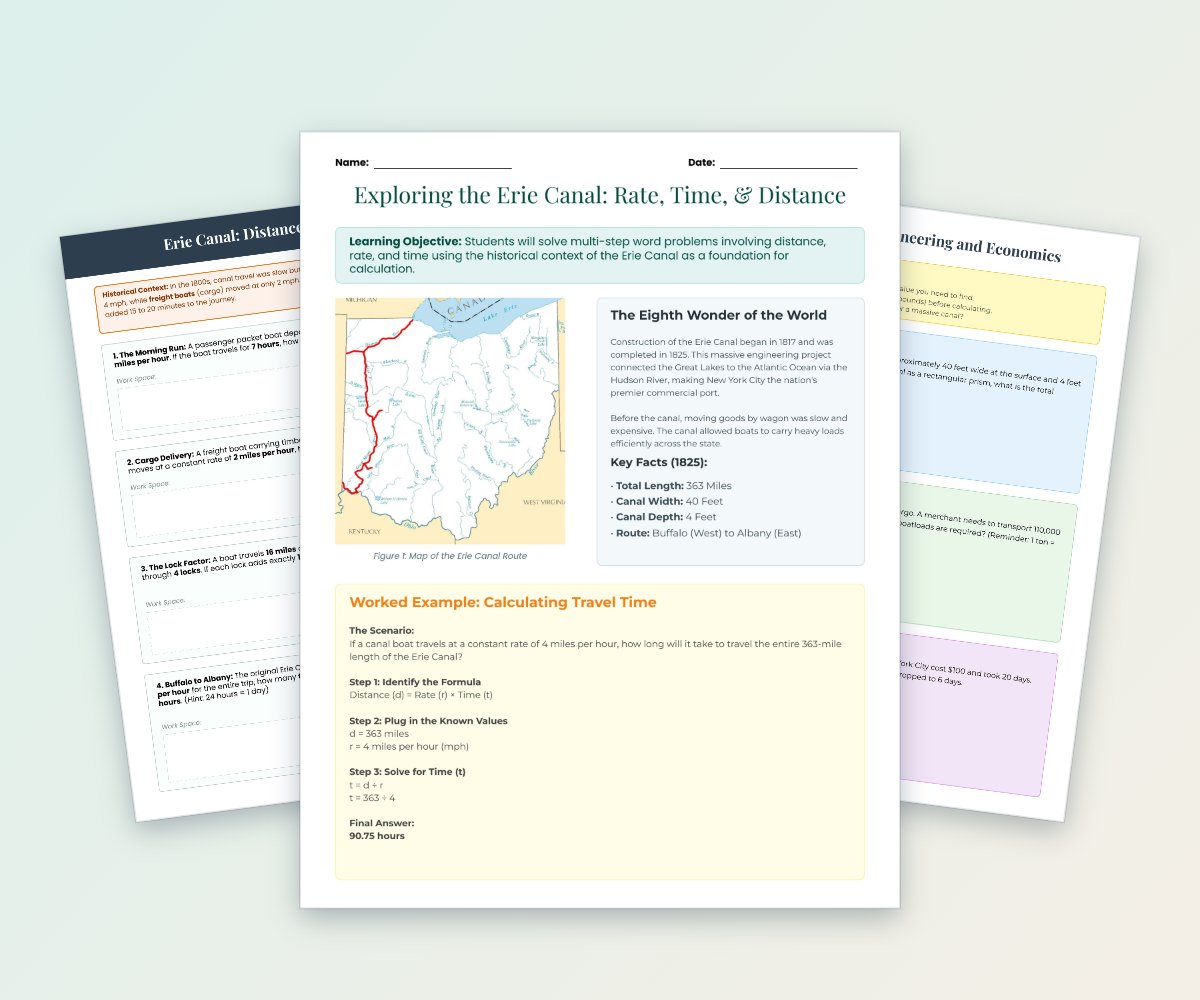
Students use Erie Canal history to explore the relationship between distance, rate, and time.
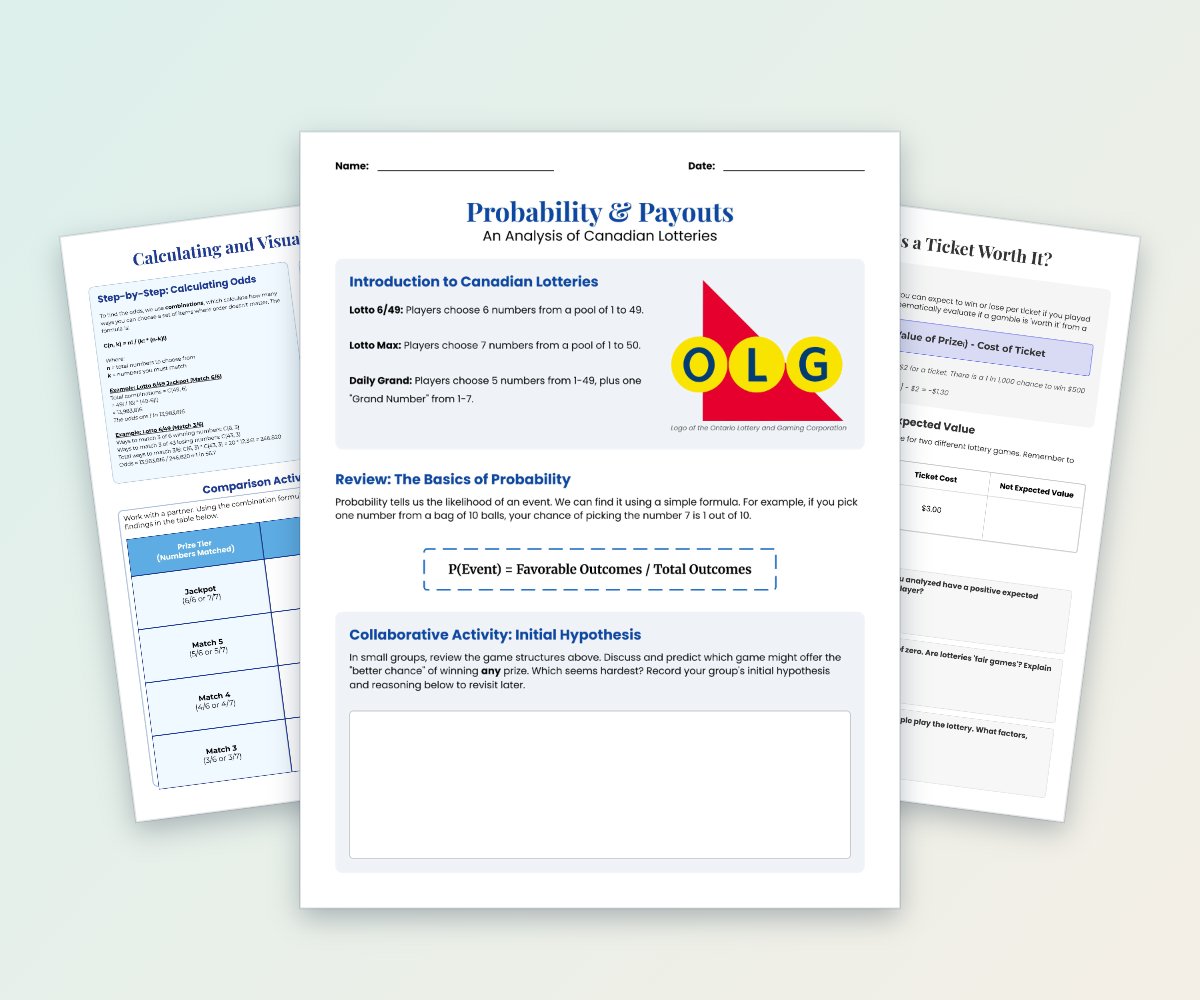
Students analyze Lotto 6/49, Lotto Max, and Daily Grand using probability formulas, combinations, odds, and expected value.
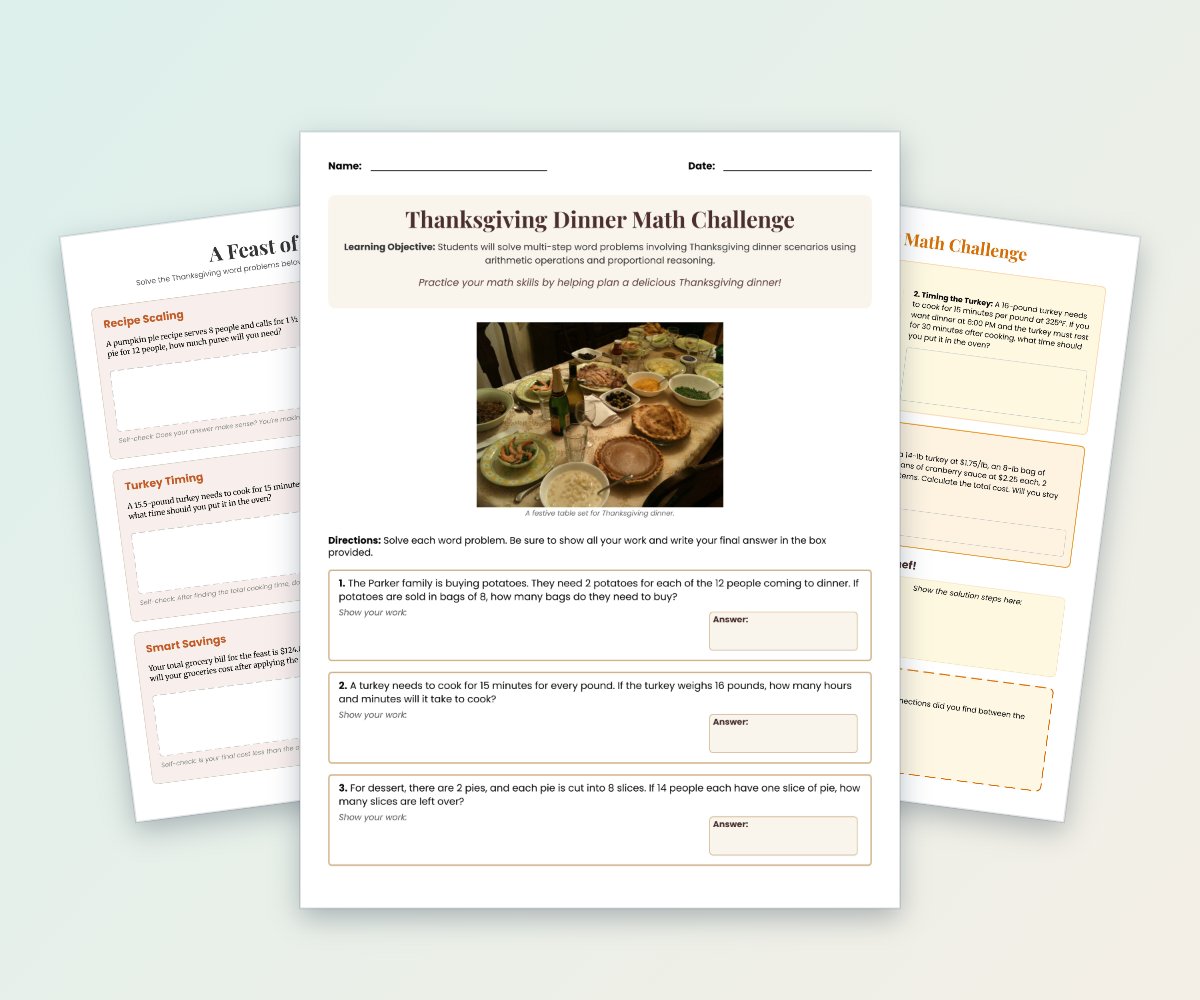
Students solve engaging Thanksgiving dinner problems involving multiplication, division, fractions, elapsed time, recipe scaling, and percent discounts.
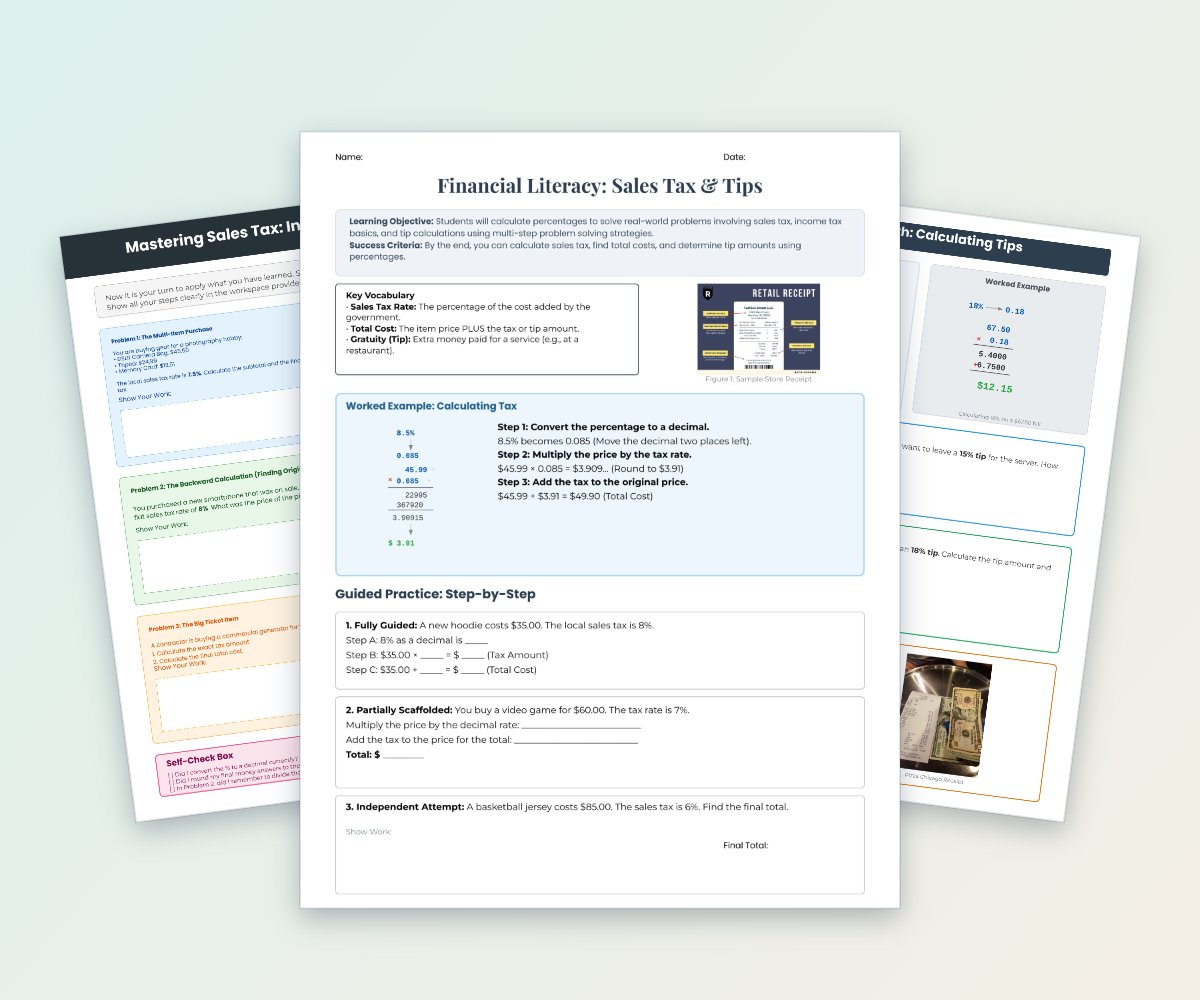
This six-page worksheet guides students through calculating sales tax, tips, total costs, and original prices using percentages.
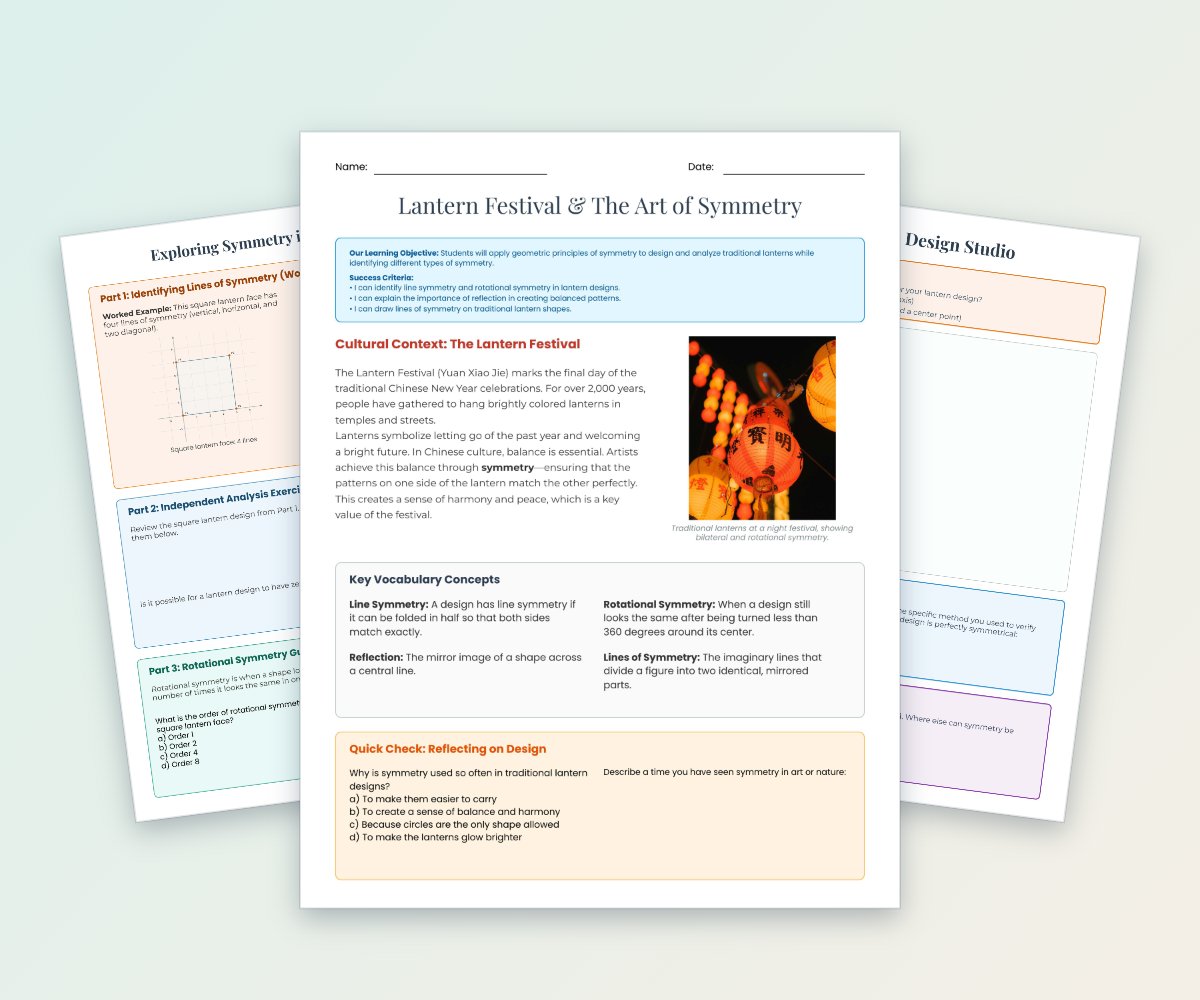
Students explore line symmetry, rotational symmetry, reflection, and balanced design through traditional Chinese lantern patterns.
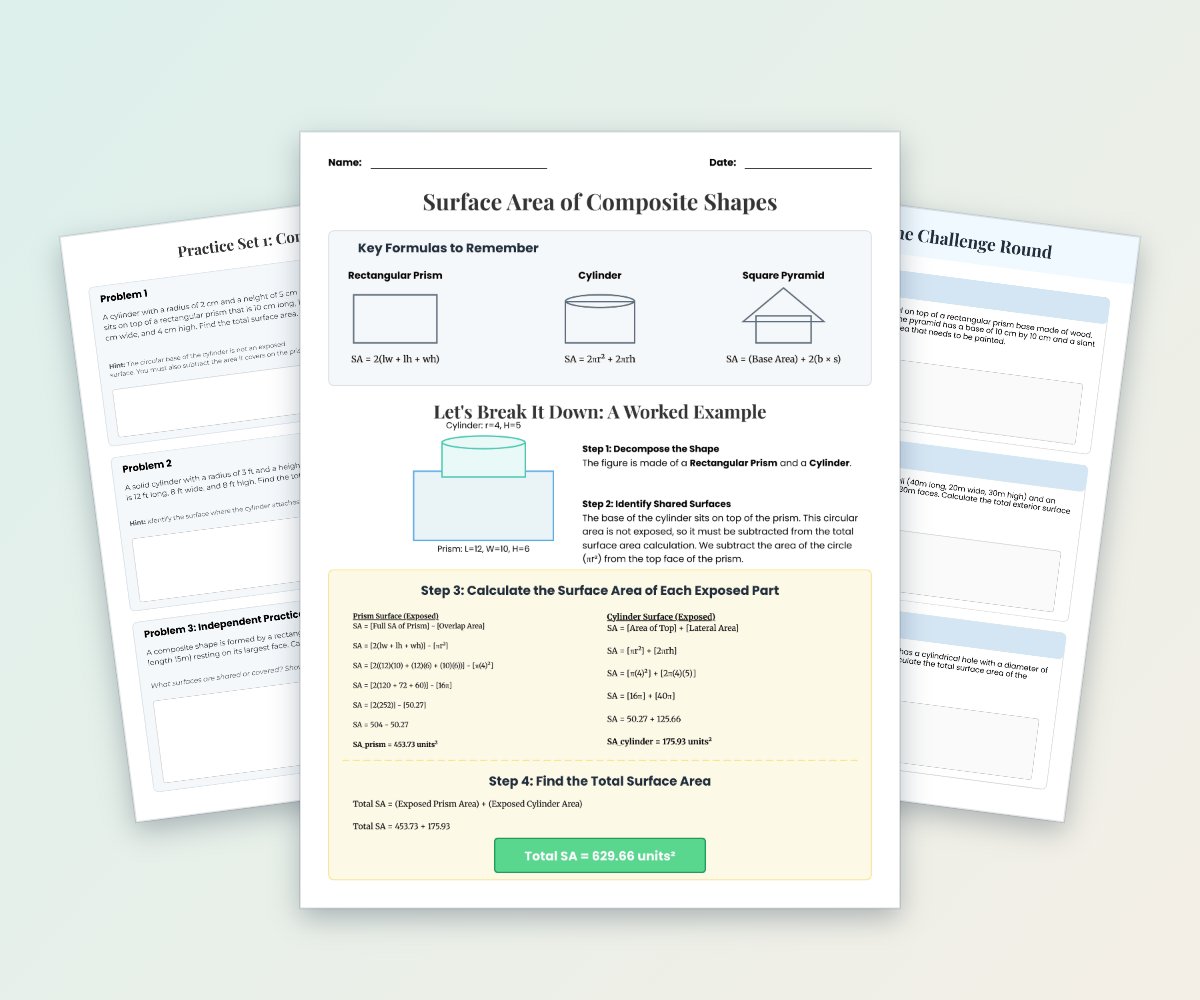
Students learn to decompose composite three-dimensional figures and calculate exposed surface area using rectangular prisms, cylinders, half-cylinders, and pyramids.
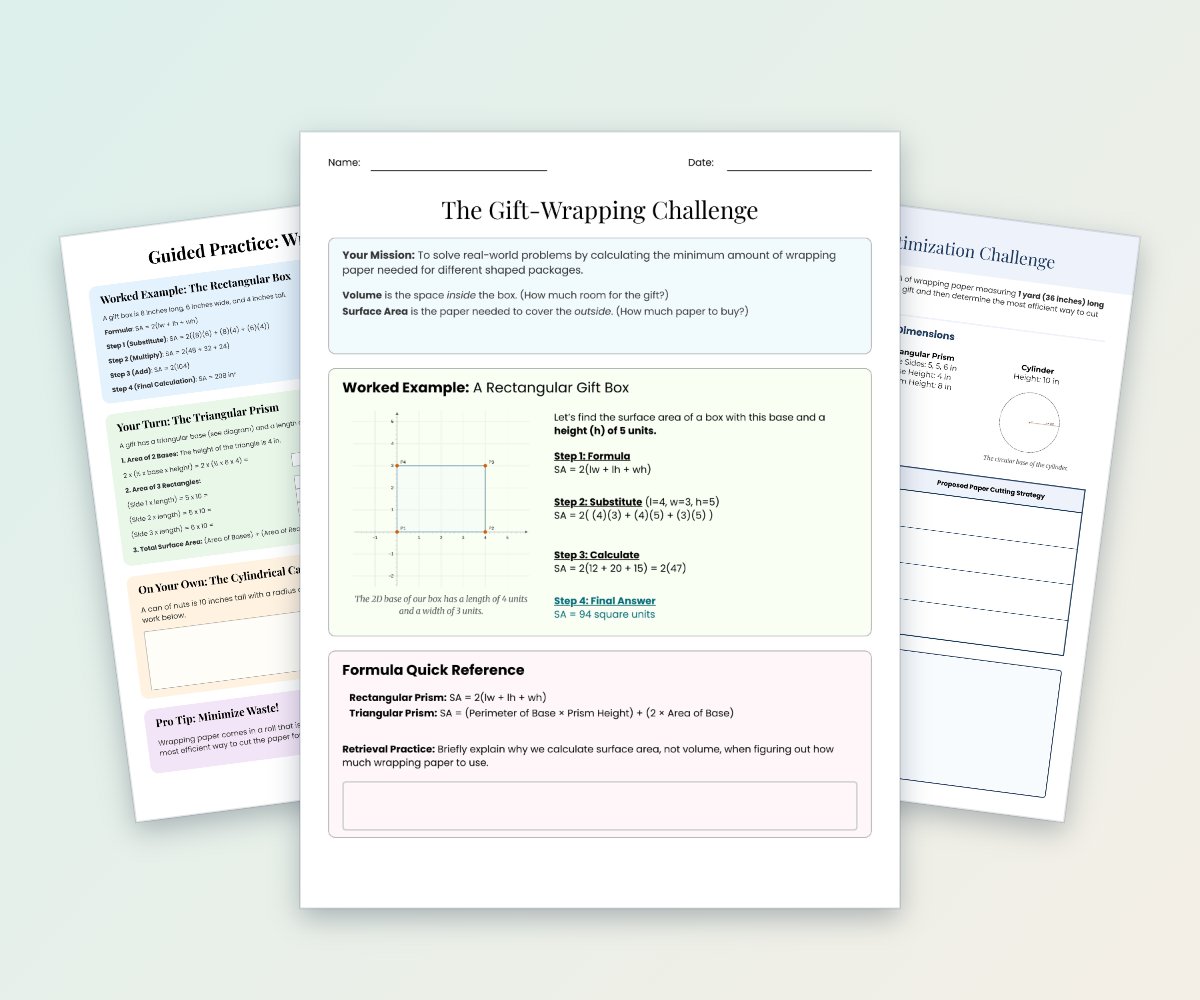
Students calculate the surface area of rectangular prisms, triangular prisms, cubes, and cylinders in a gift-wrapping context.
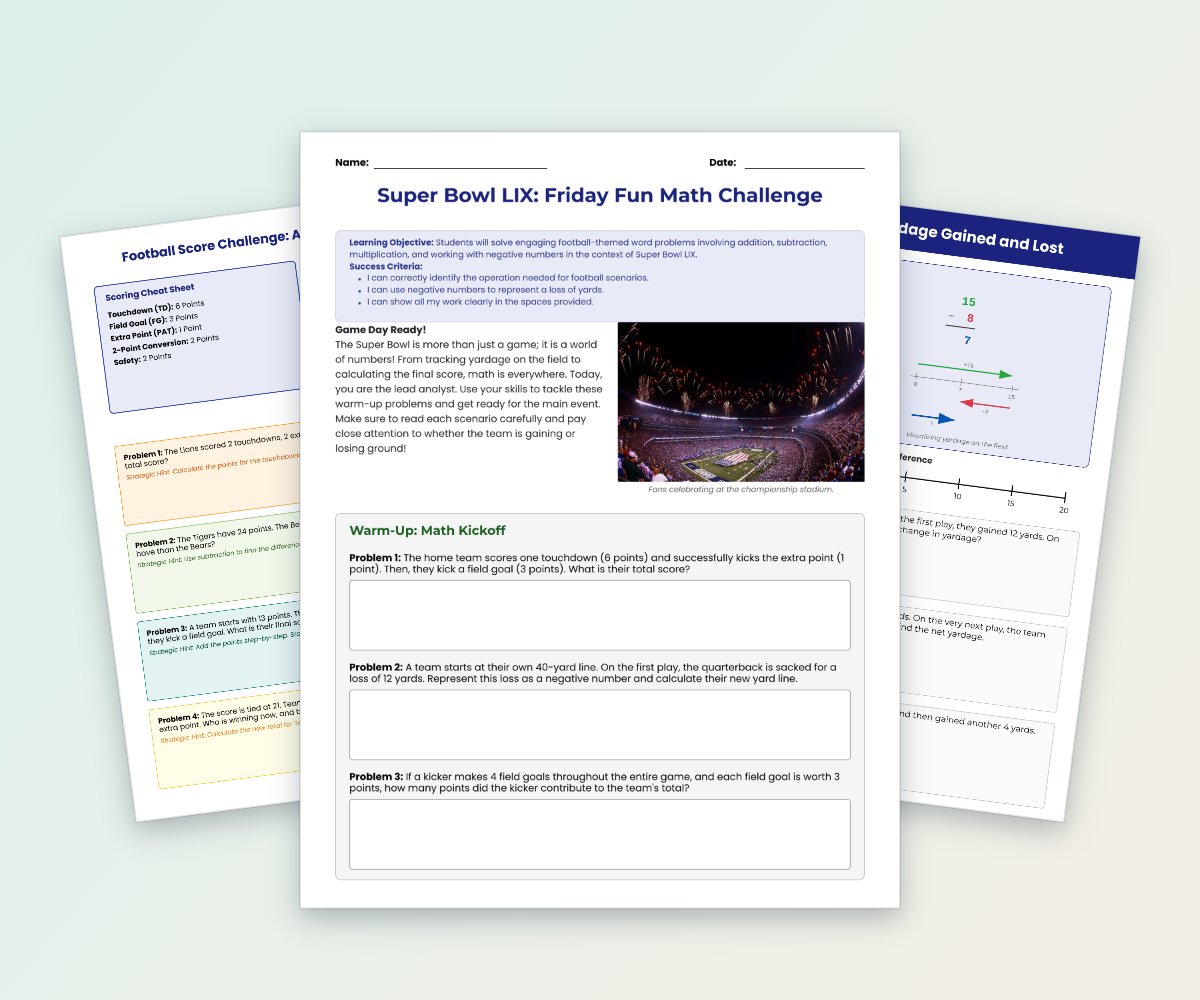
Students solve football-themed word problems involving addition, subtraction, multiplication, scoring, yardage, and negative numbers.
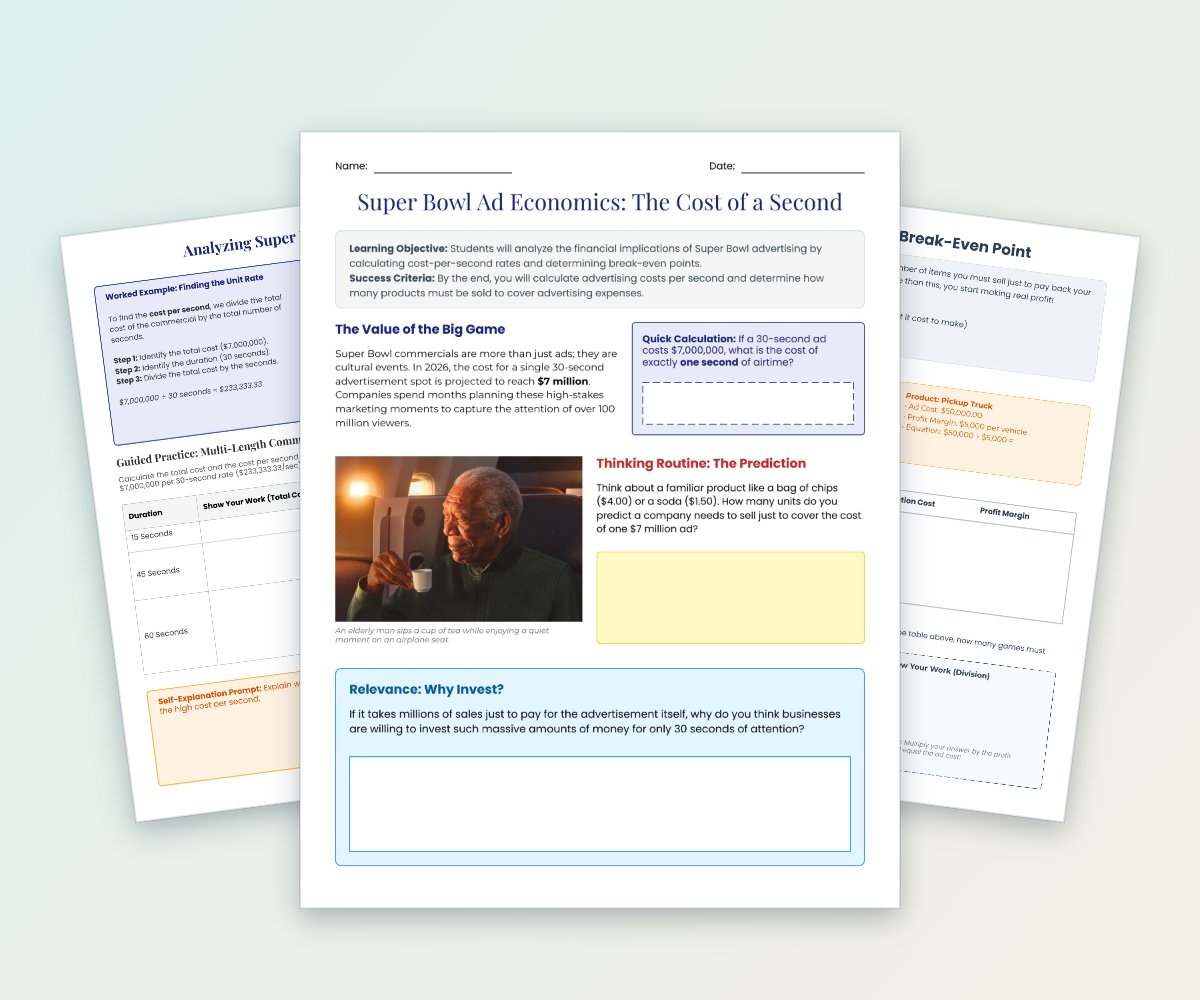
Students analyze the cost of Super Bowl advertising by calculating cost per second, comparing commercial lengths, and determining break-even sales.
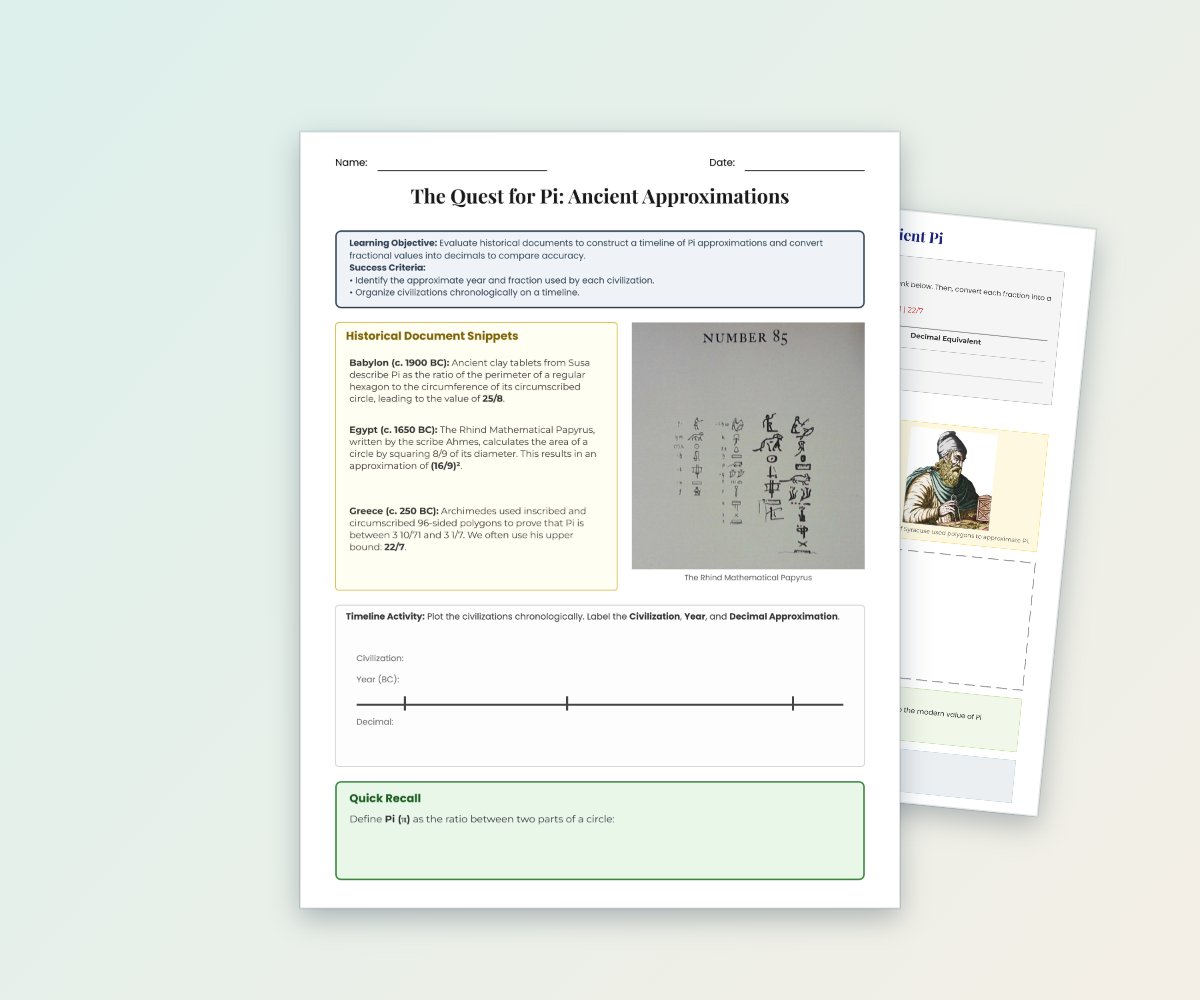
Students examine historical approximations of pi from Babylon, Egypt, and Greece, then organize them chronologically on a timeline.
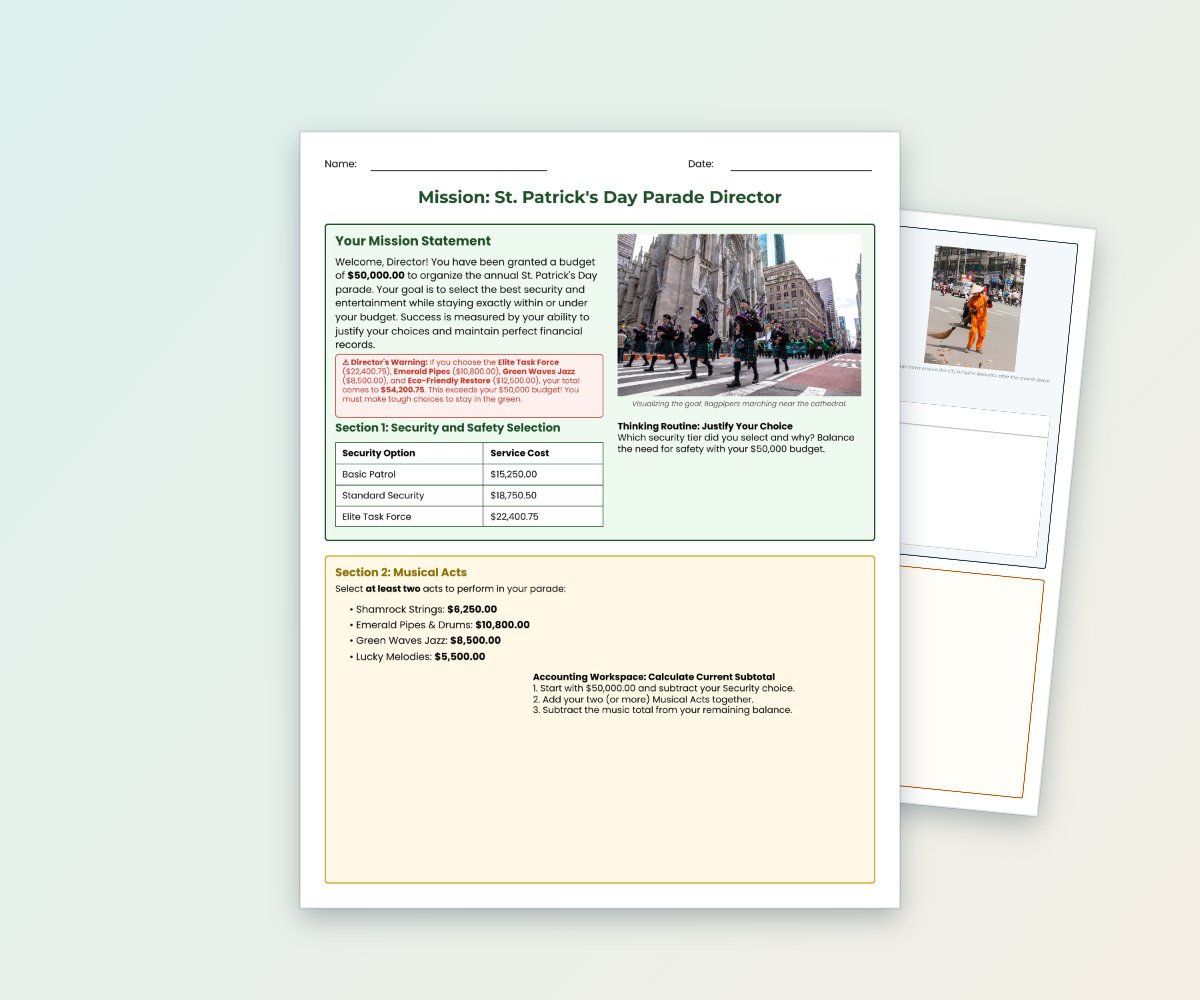
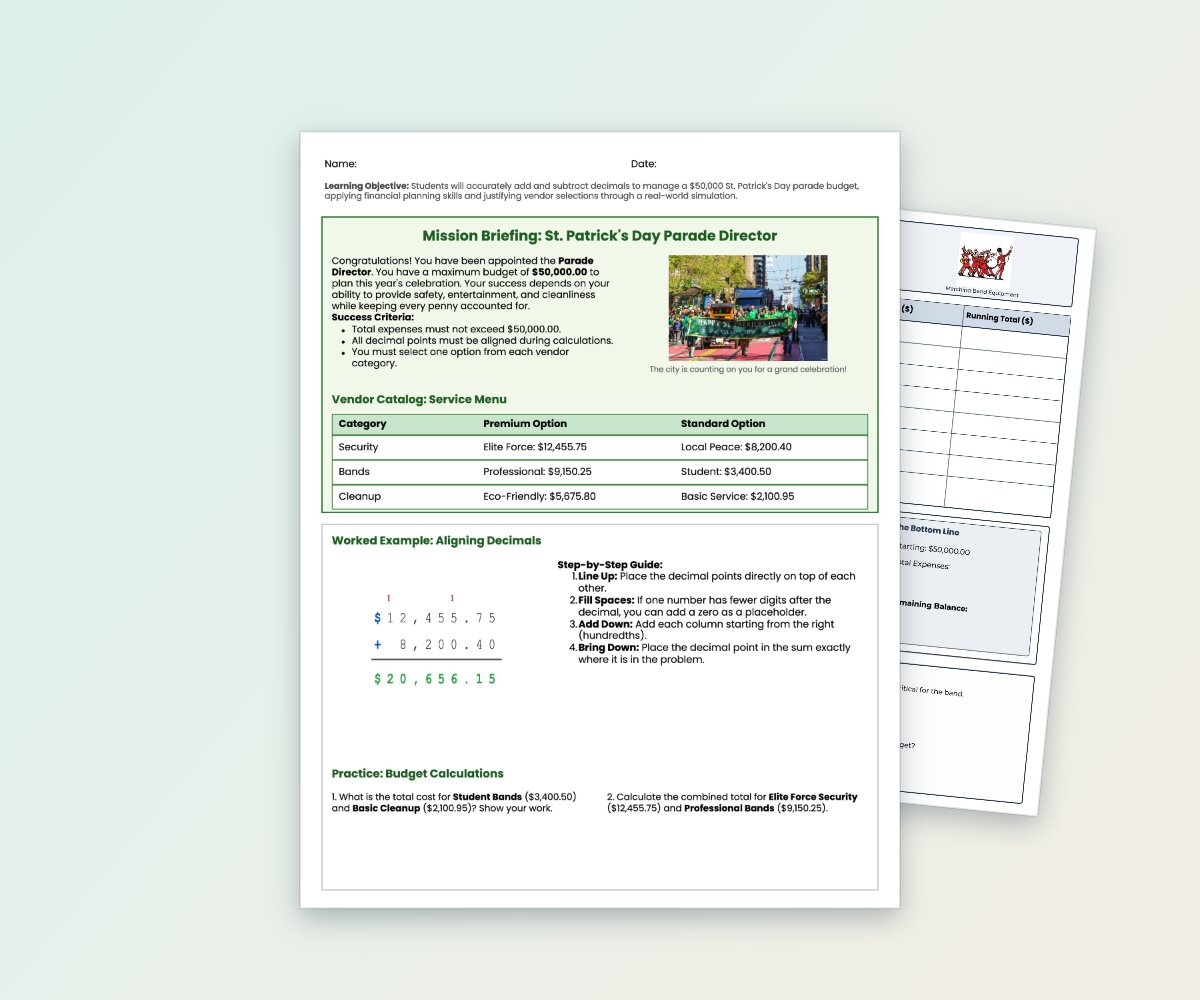
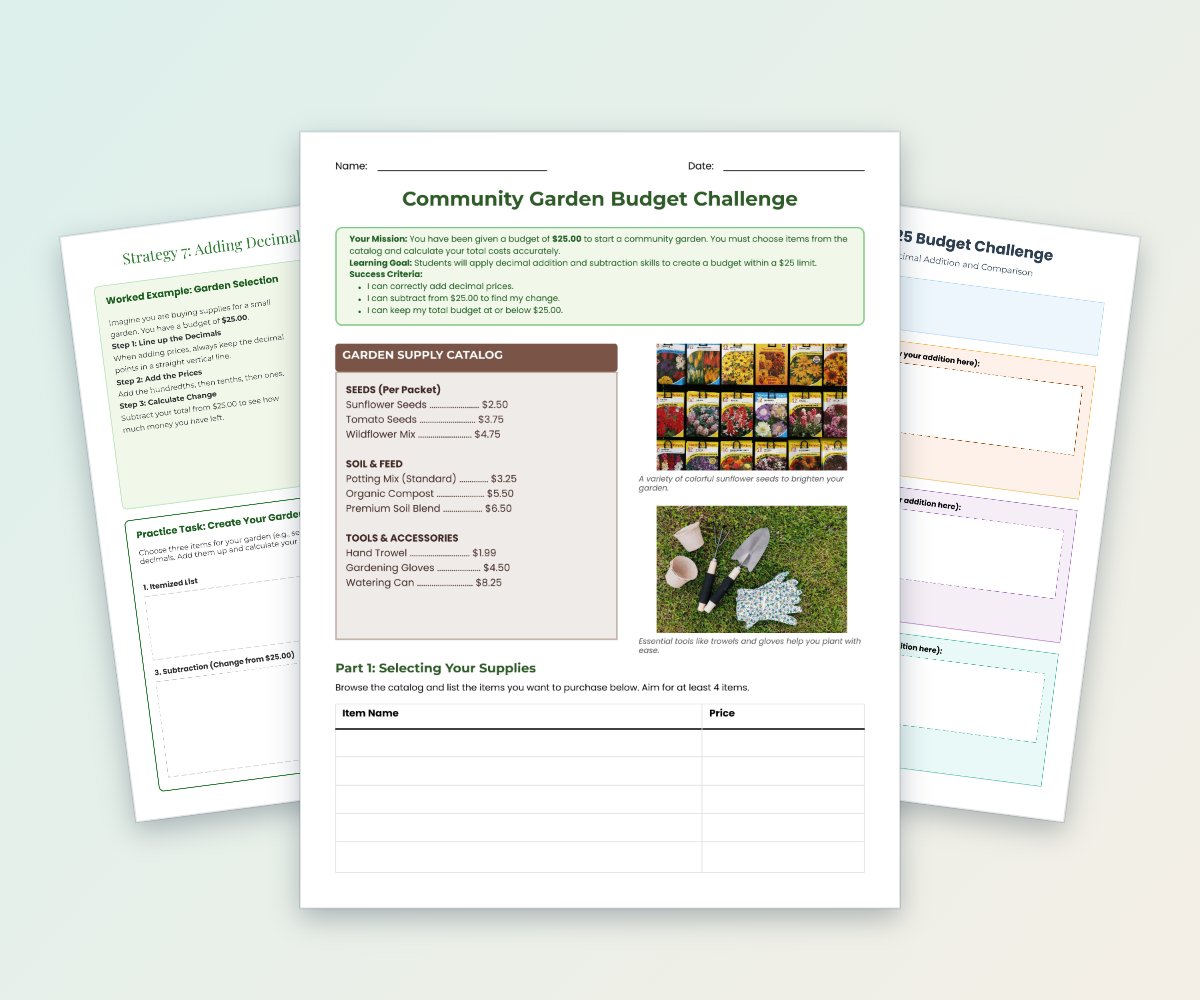
Students use a community garden supply catalog to select items, add decimal prices, stay within a $25 budget, and calculate change.
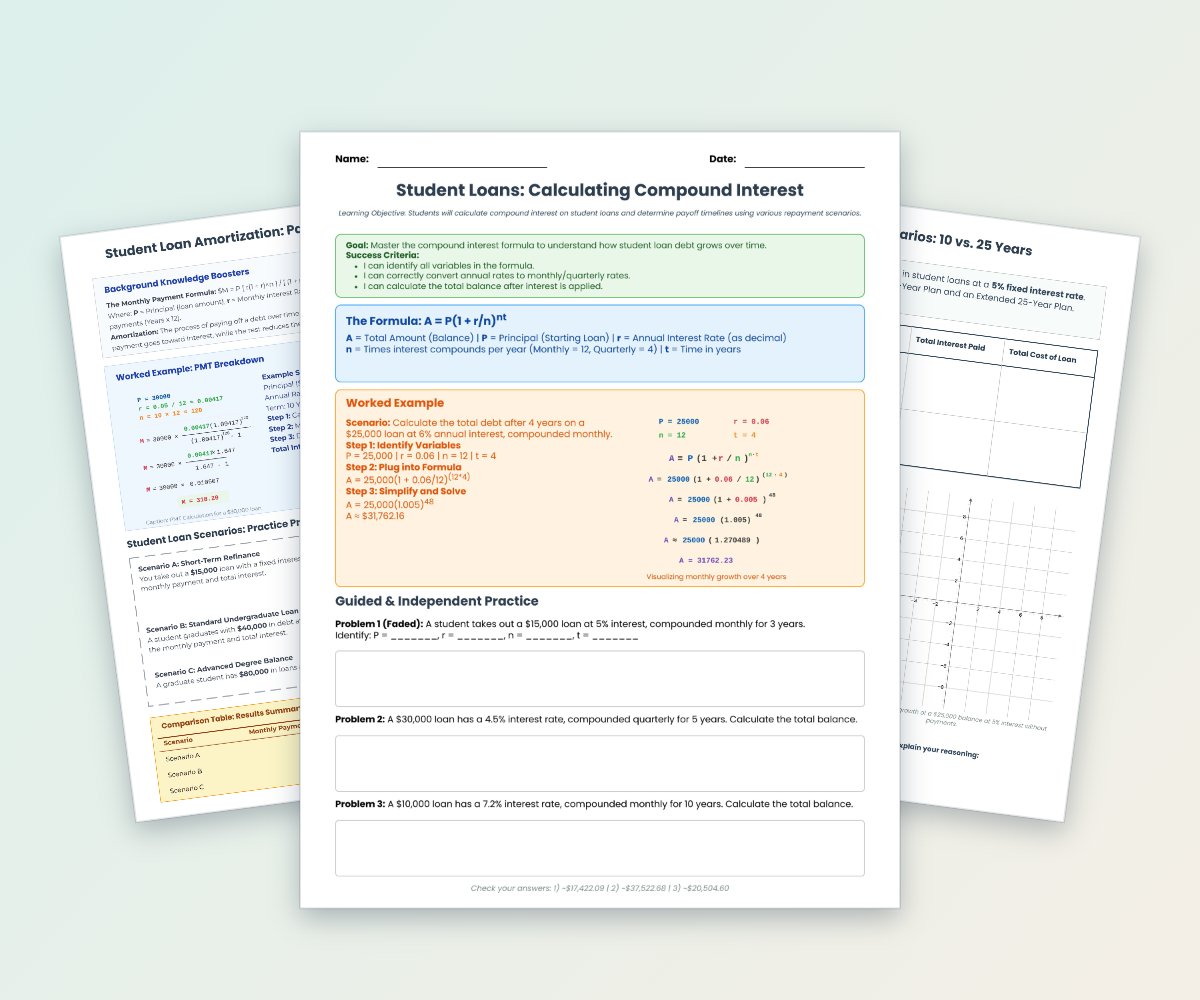
Students calculate compound interest on student loans, identify formula variables, and determine balances under monthly and quarterly compounding.
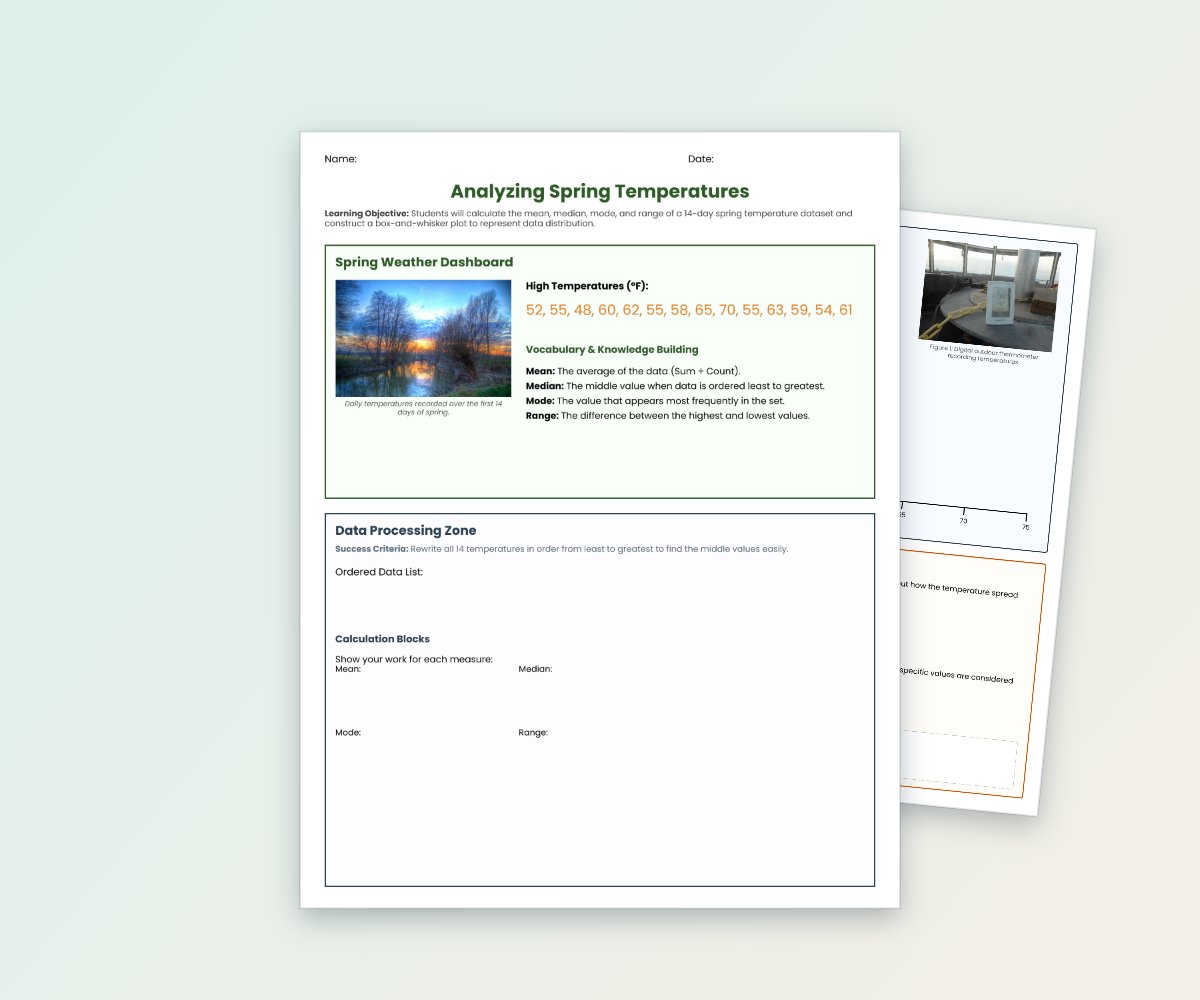
Students analyze a 14-day spring temperature dataset by calculating the mean, median, mode, and range.
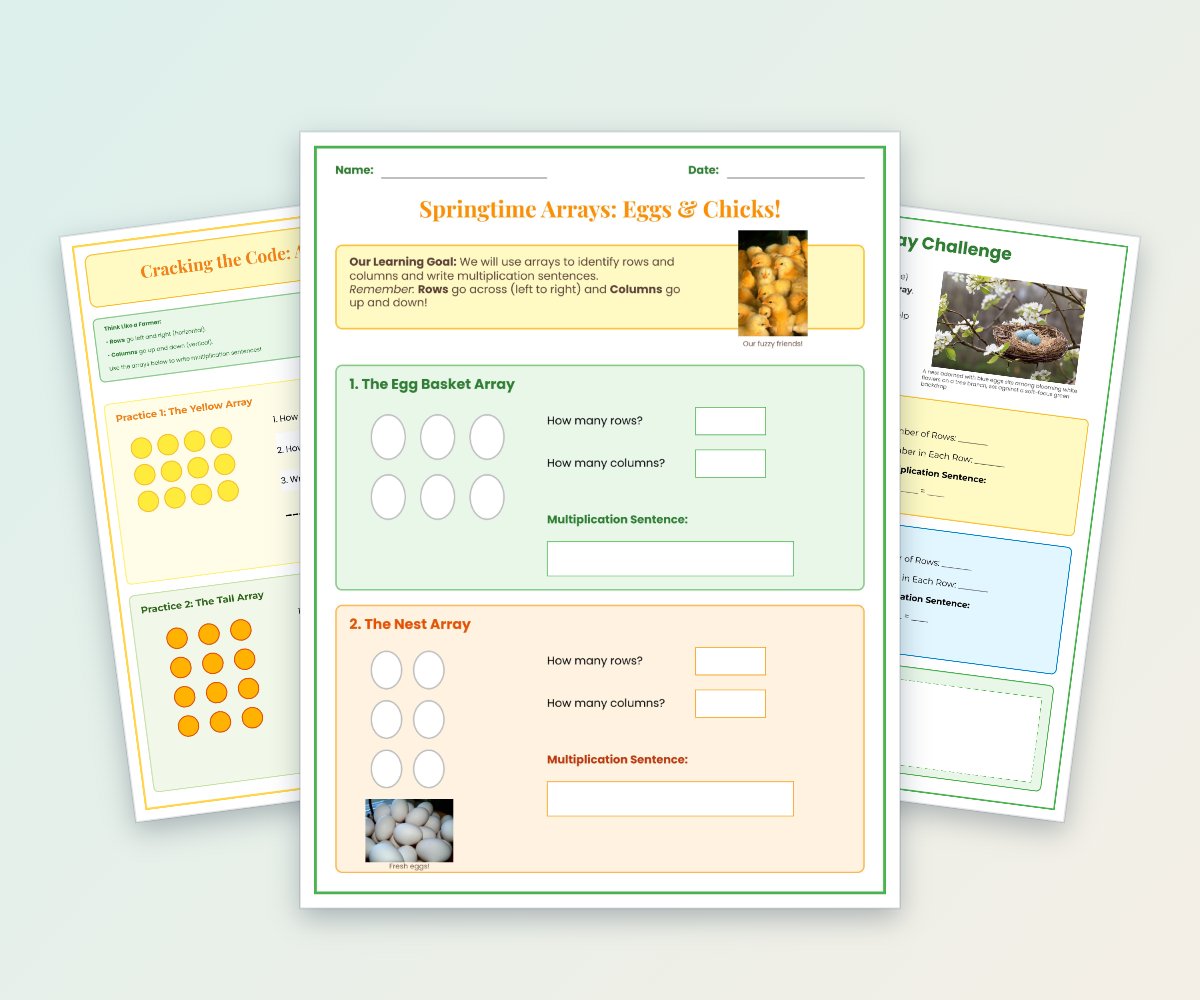
Students identify rows and columns, write multiplication sentences, and represent facts using spring-themed egg and chick arrays.
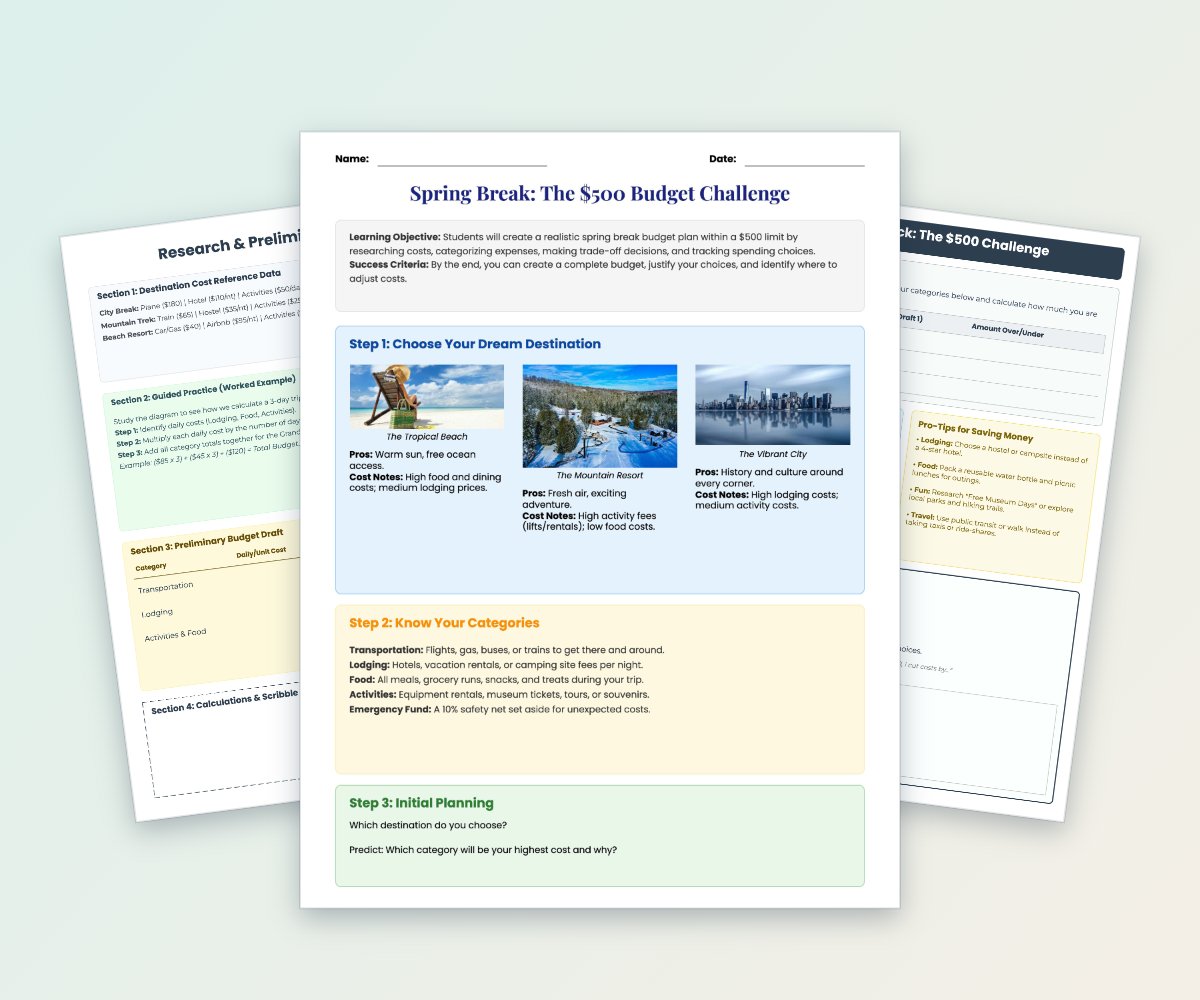
Students plan a spring break trip within a $500 limit using destination cost data, expense categories, and guided calculations.
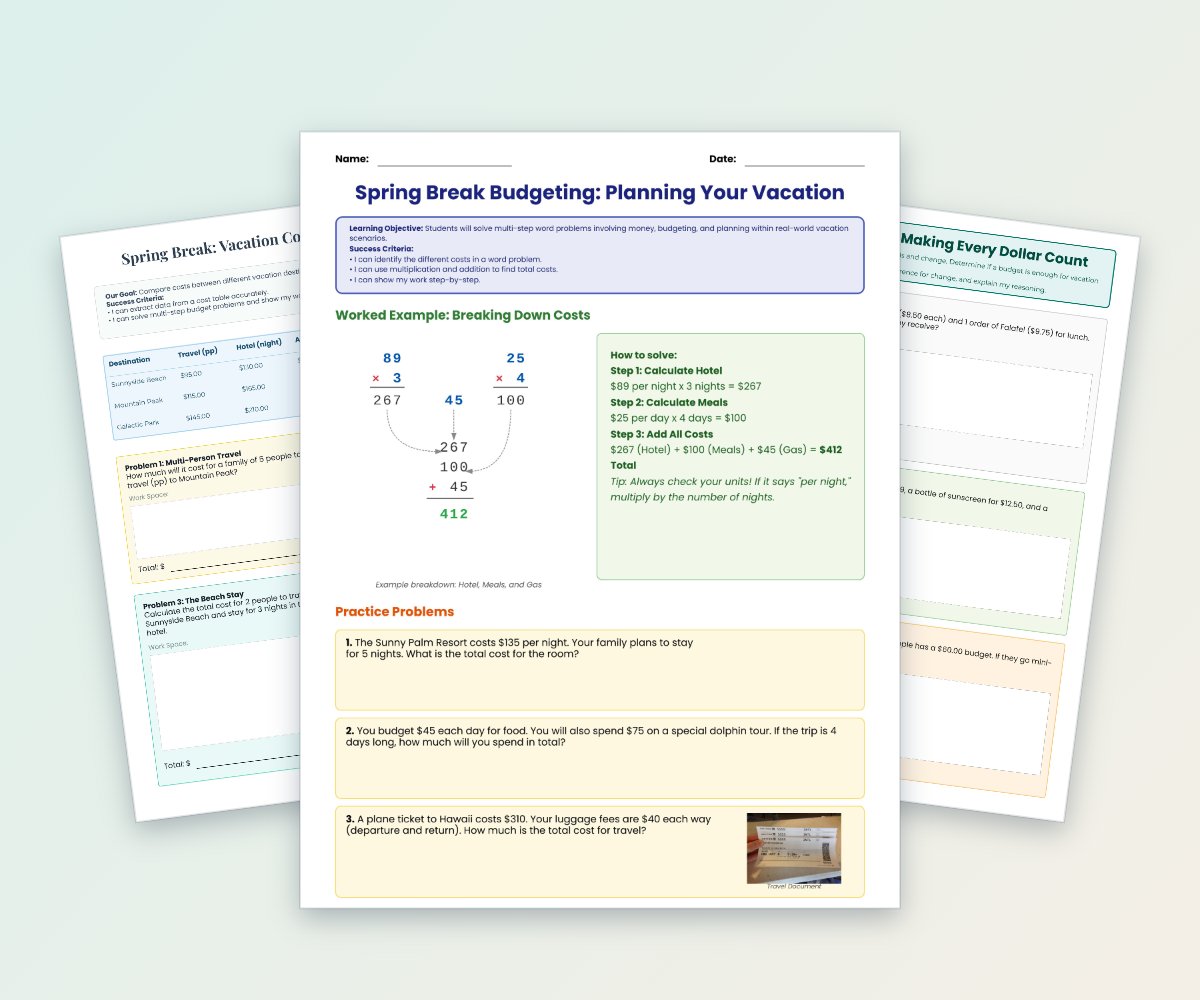
Students practice multiplication, addition, subtraction, cost comparison, and budgeting through realistic spring break vacation scenarios.
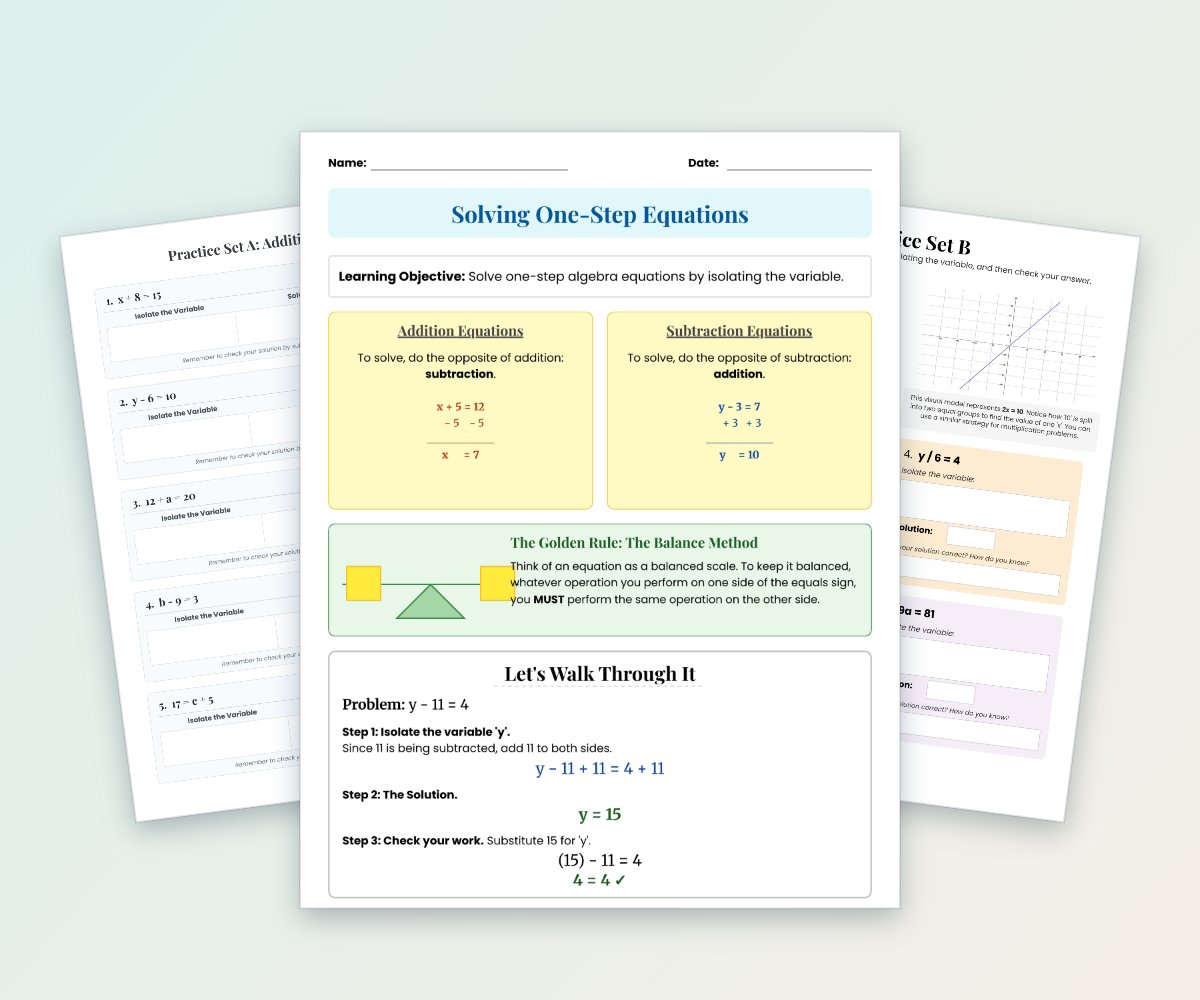
This four-page guide introduces solving one-step equations using inverse operations and the balance method.
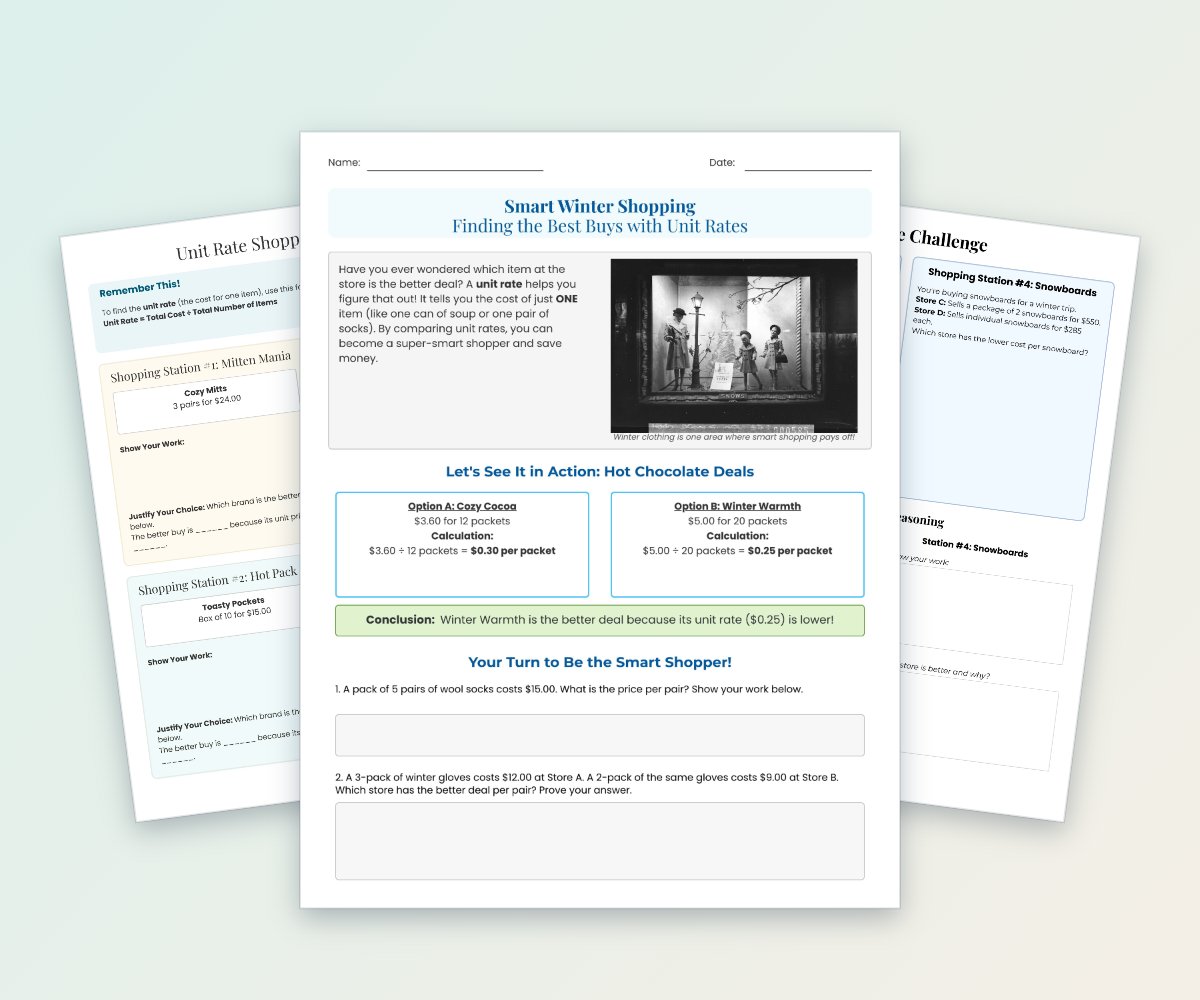
Students solve winter-themed shopping problems by calculating unit rates and comparing prices per item.
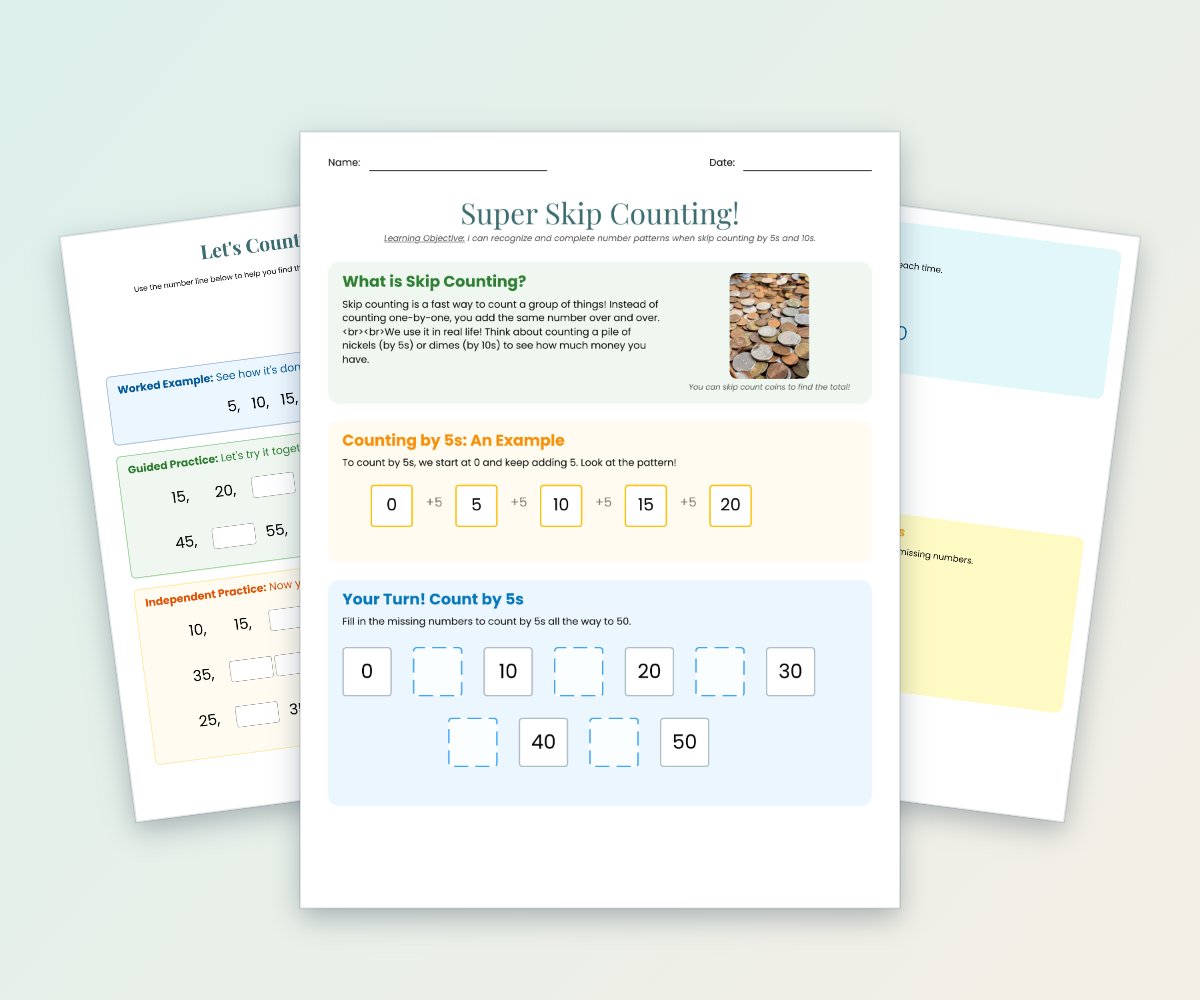
This four-page practice resource teaches students to recognize and complete number patterns when skip counting by 5s and 10s.
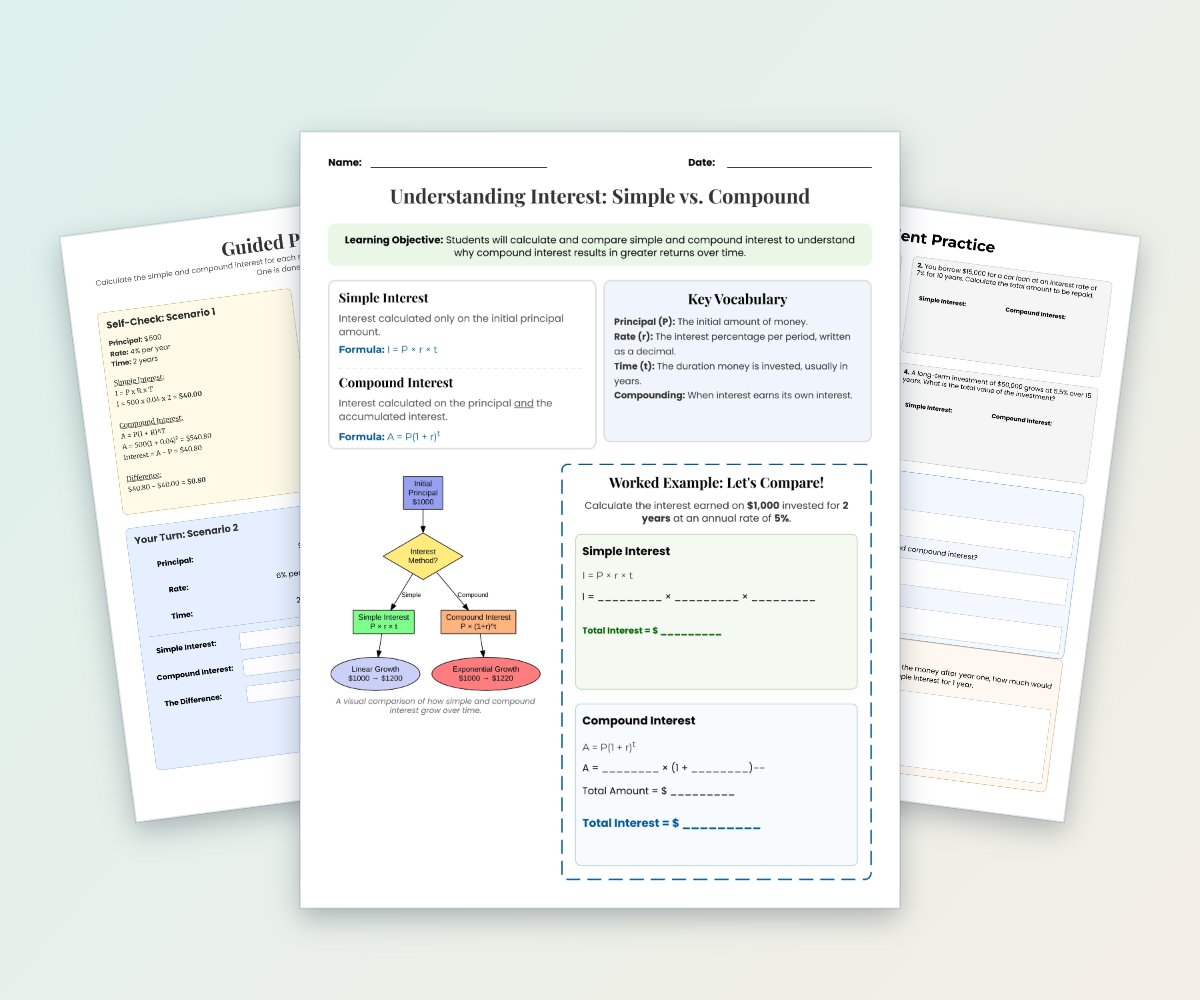
This four-page worksheet introduces principal, rate, time, simple interest, and compound interest through formulas, worked examples, guided practice, and independent problems.
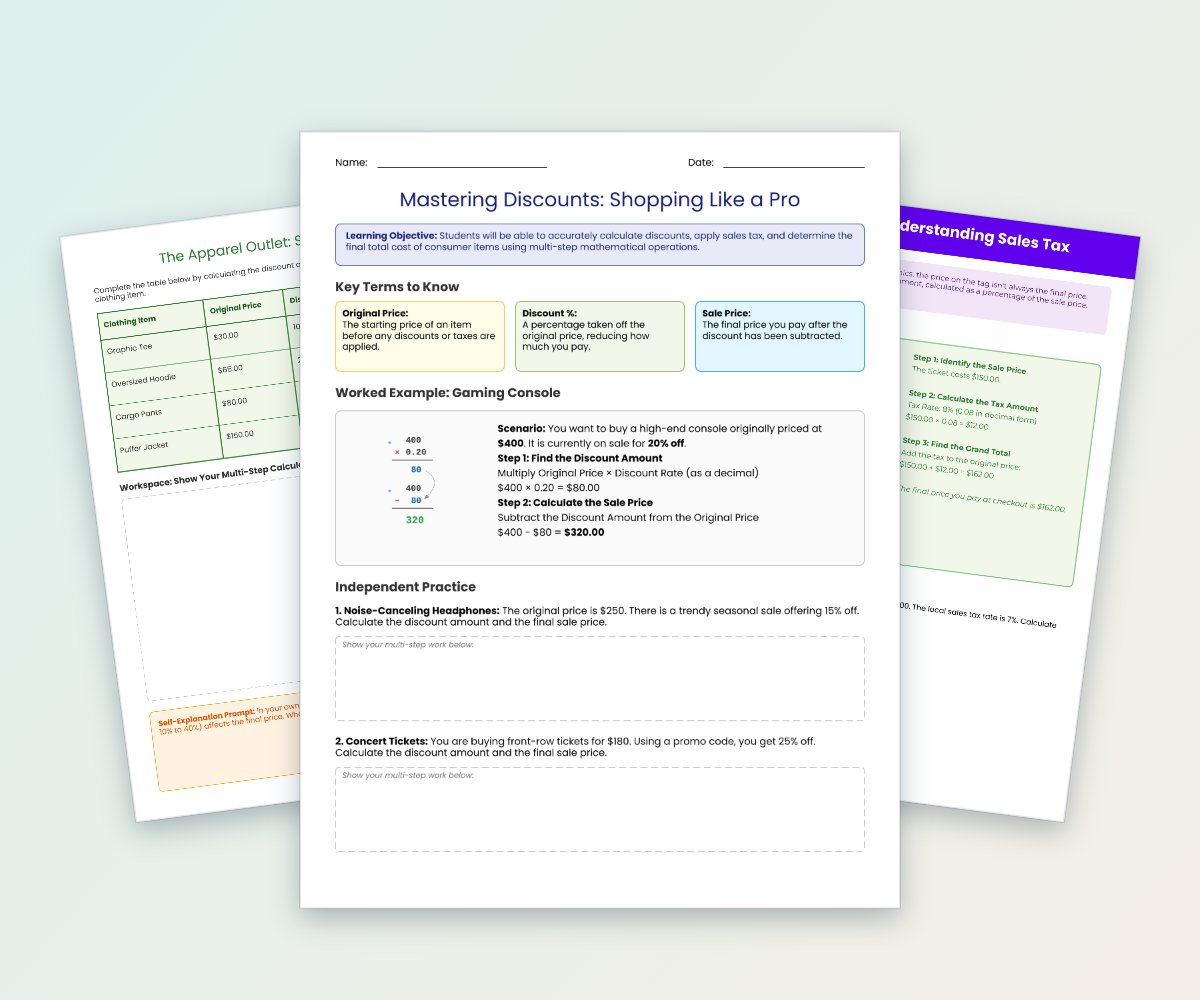
Students calculate discount amounts, sale prices, sales tax, and final costs using realistic shopping scenarios.
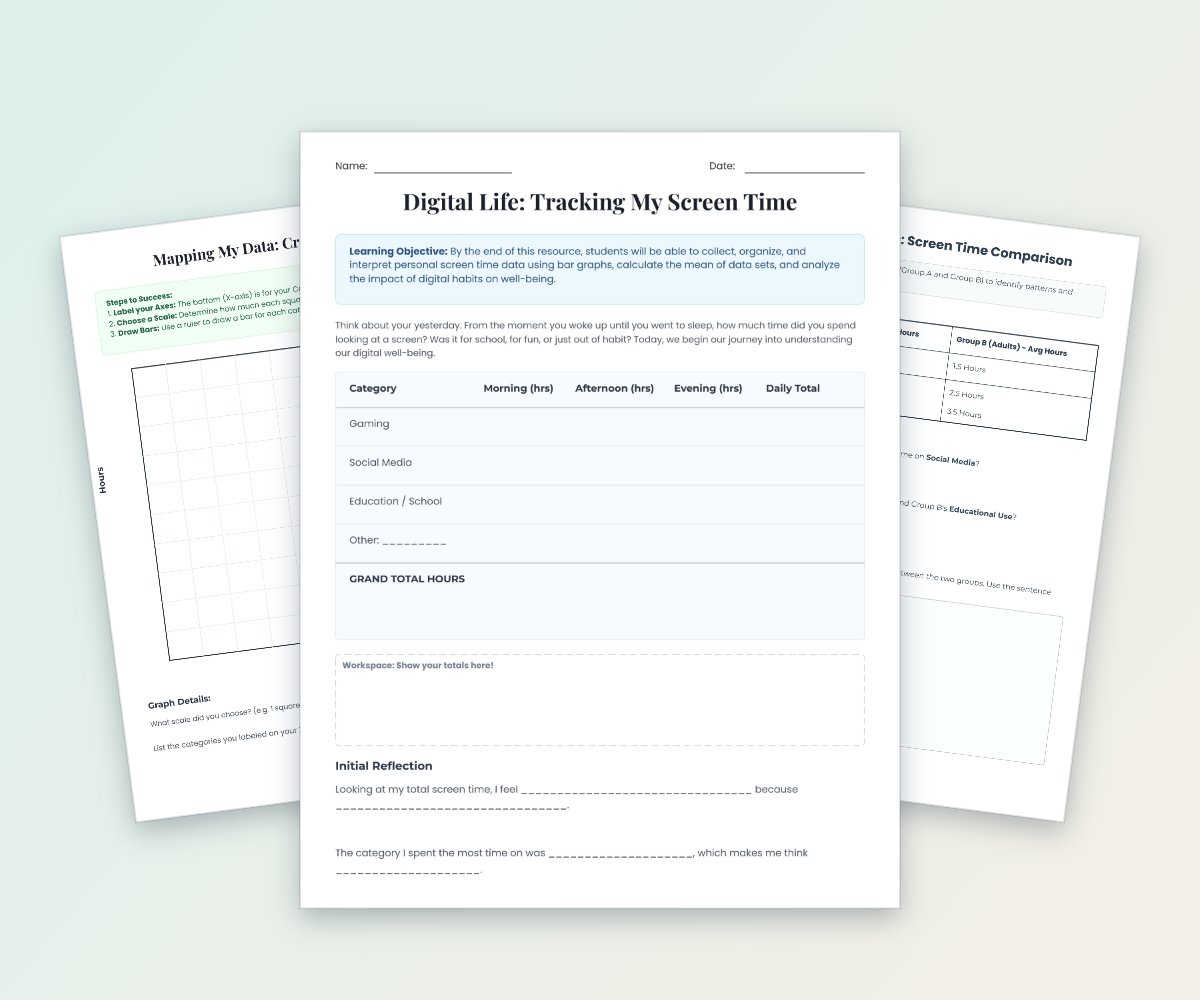
Students track their personal screen time, organize data by category and time of day, and create bar graphs.
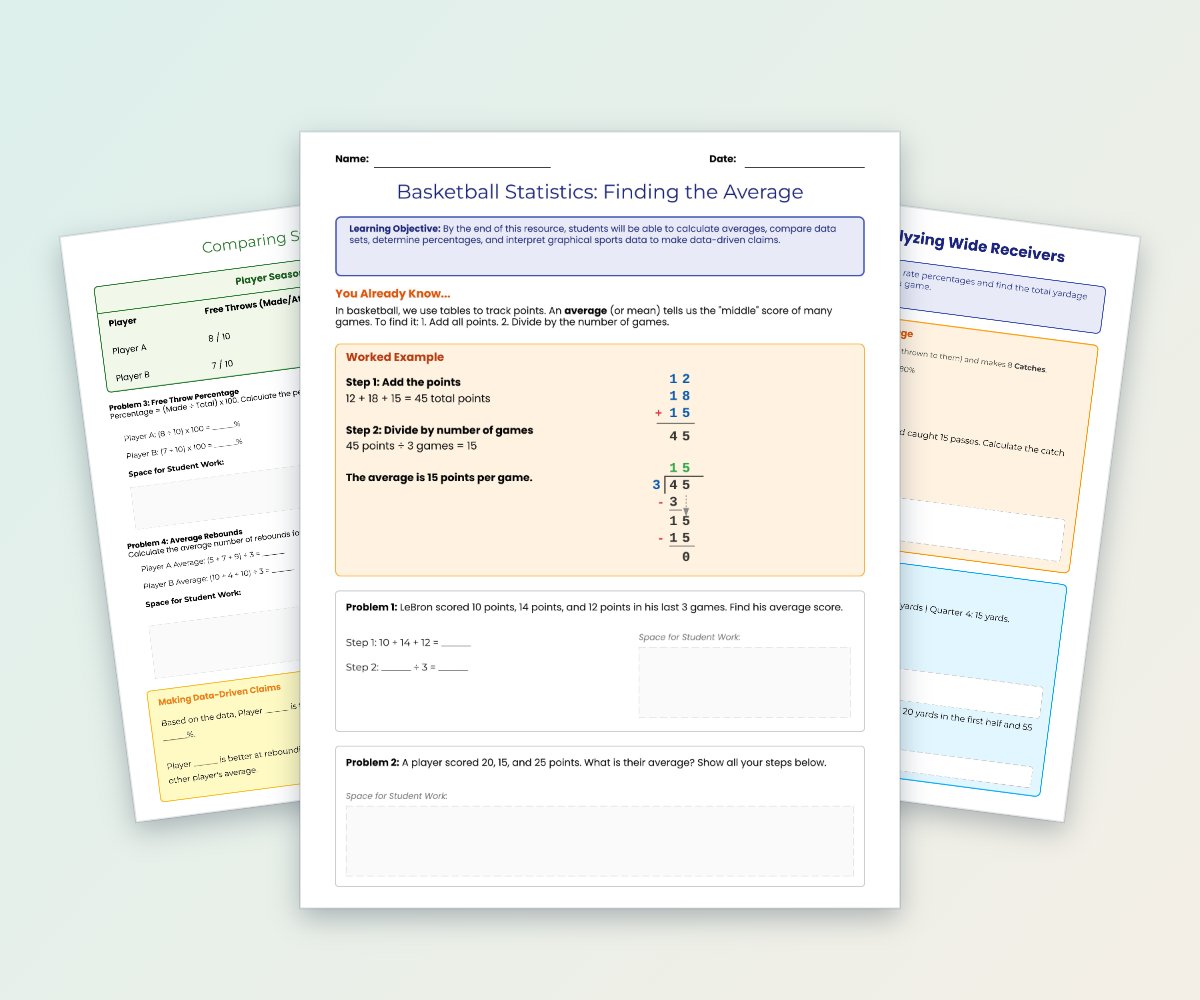
Students practice calculating averages, percentages, catch rates, and total yardage using basketball and football statistics.
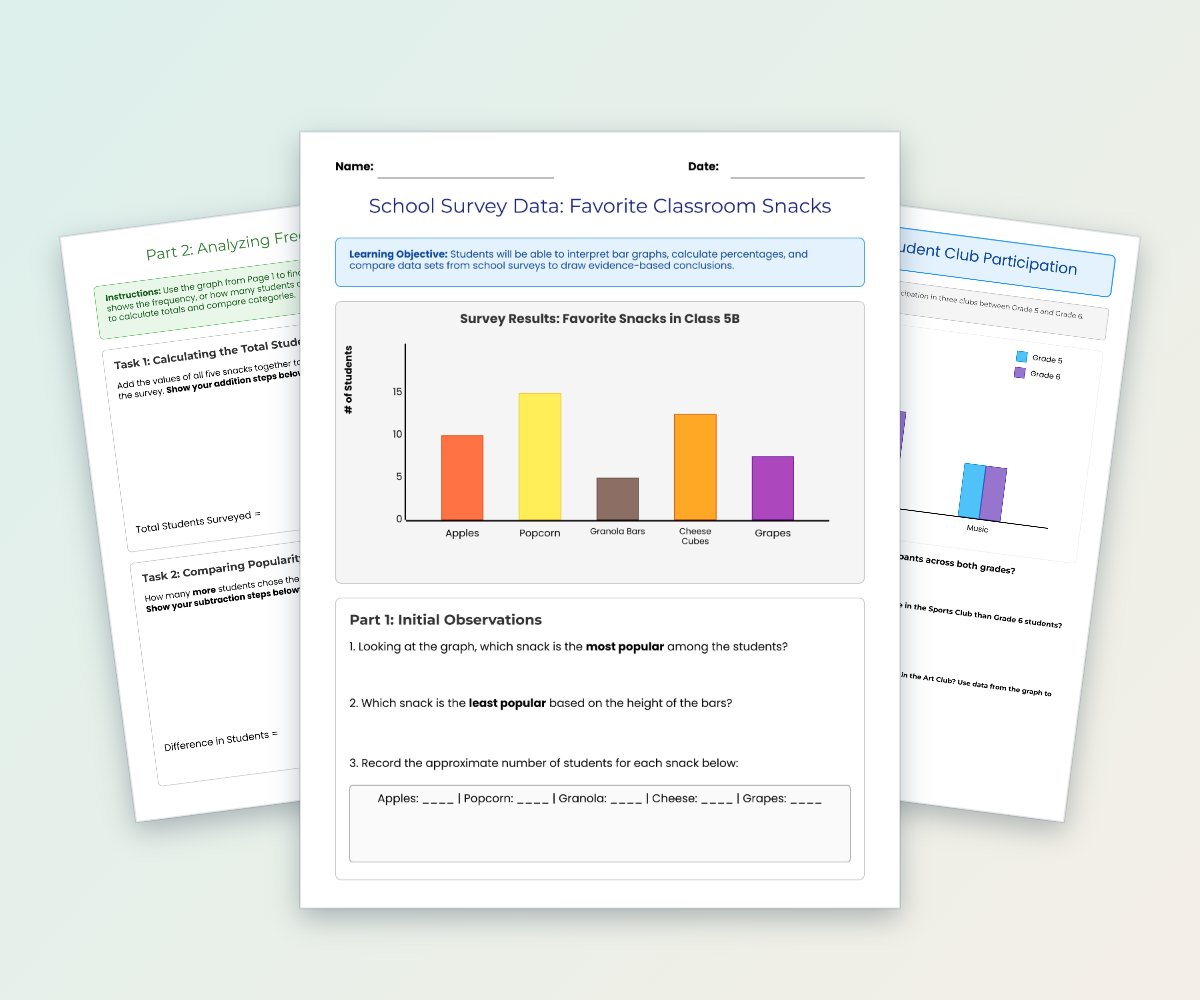
Students analyze bar graphs and grouped bar graphs using school survey and club participation data.
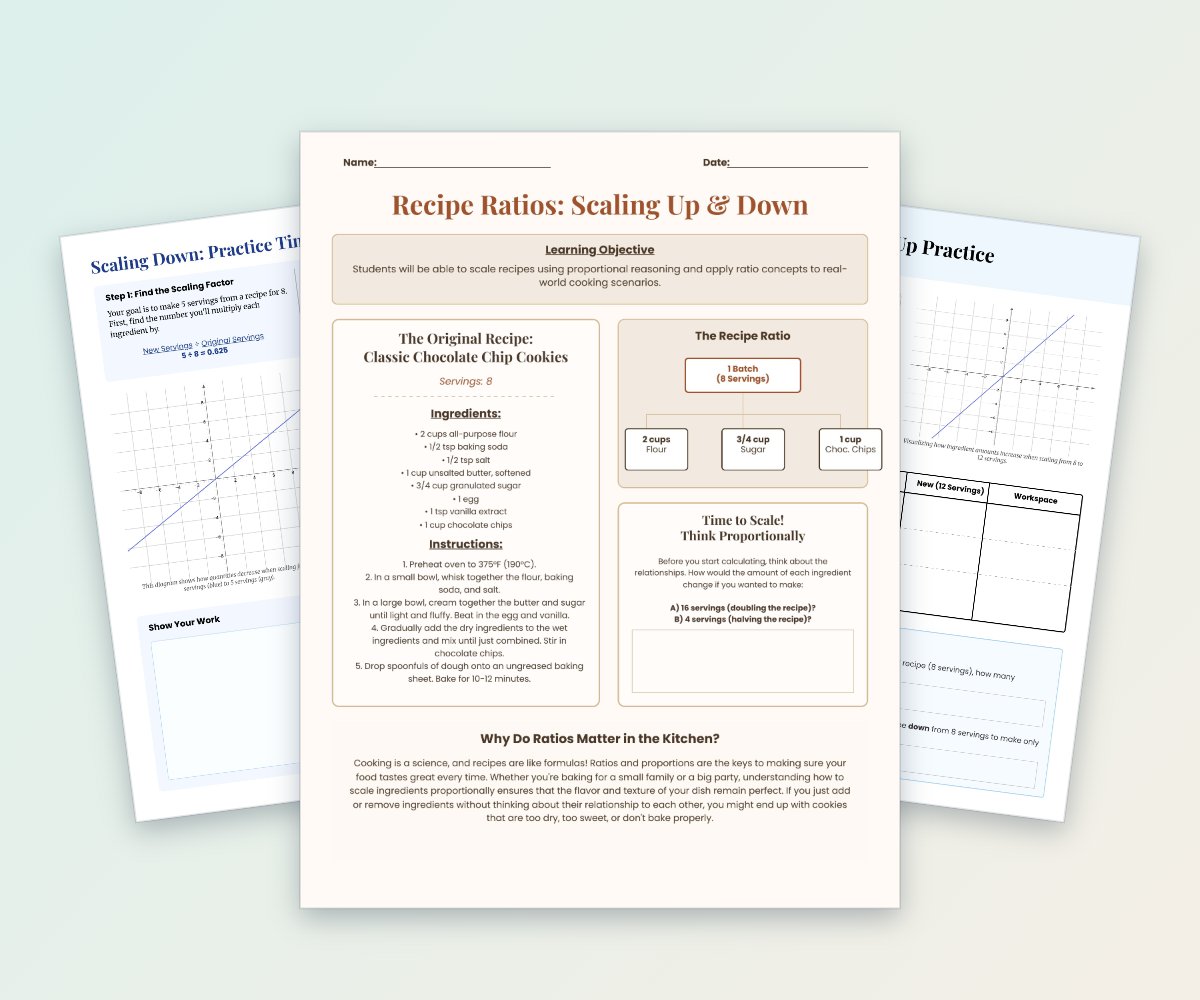
Students use a chocolate chip cookie recipe to practice doubling, halving, and scaling ingredient quantities for different serving sizes.
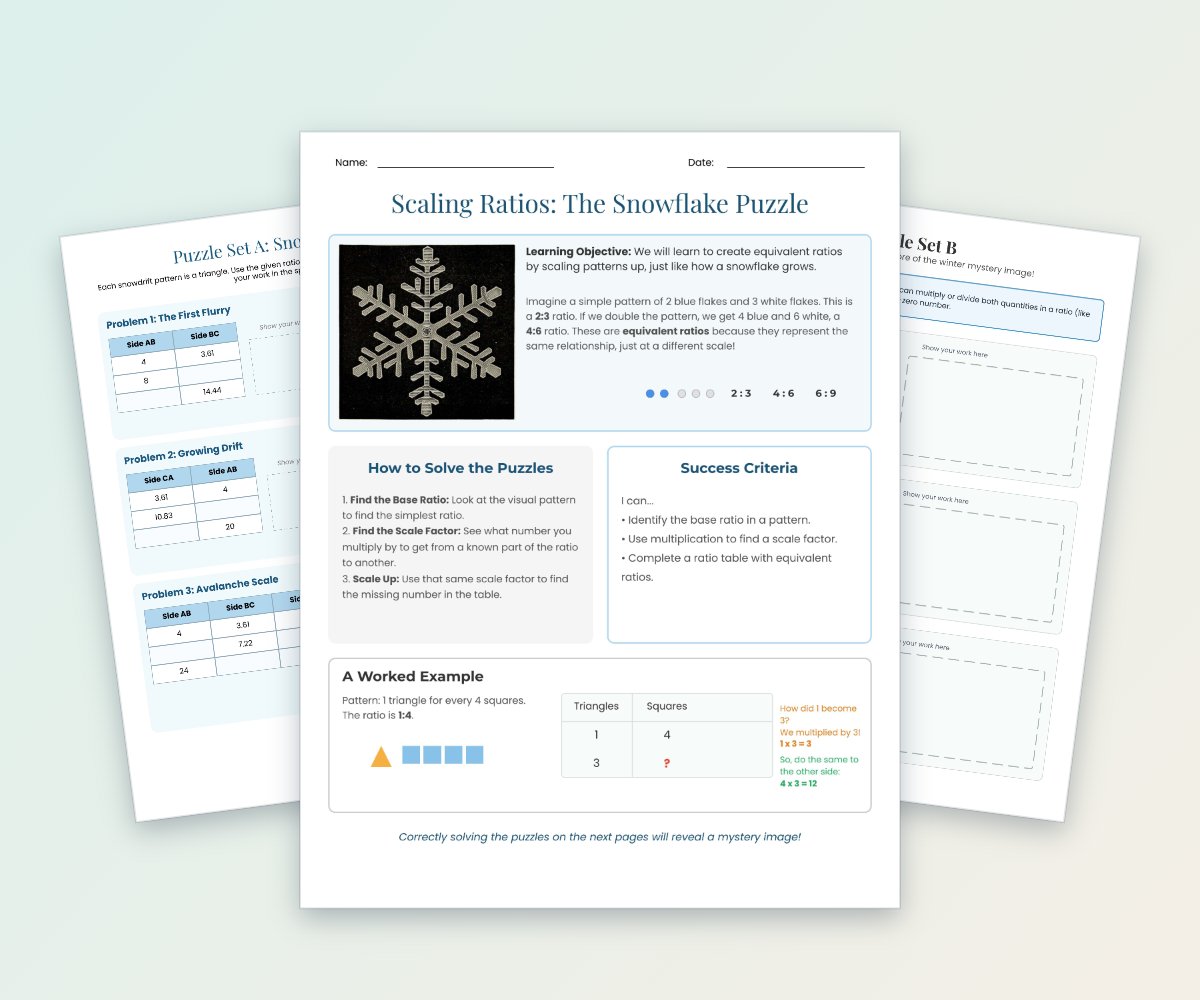
Students use snowflake and winter-themed patterns to identify base ratios, determine scale factors, and complete equivalent-ratio tables.
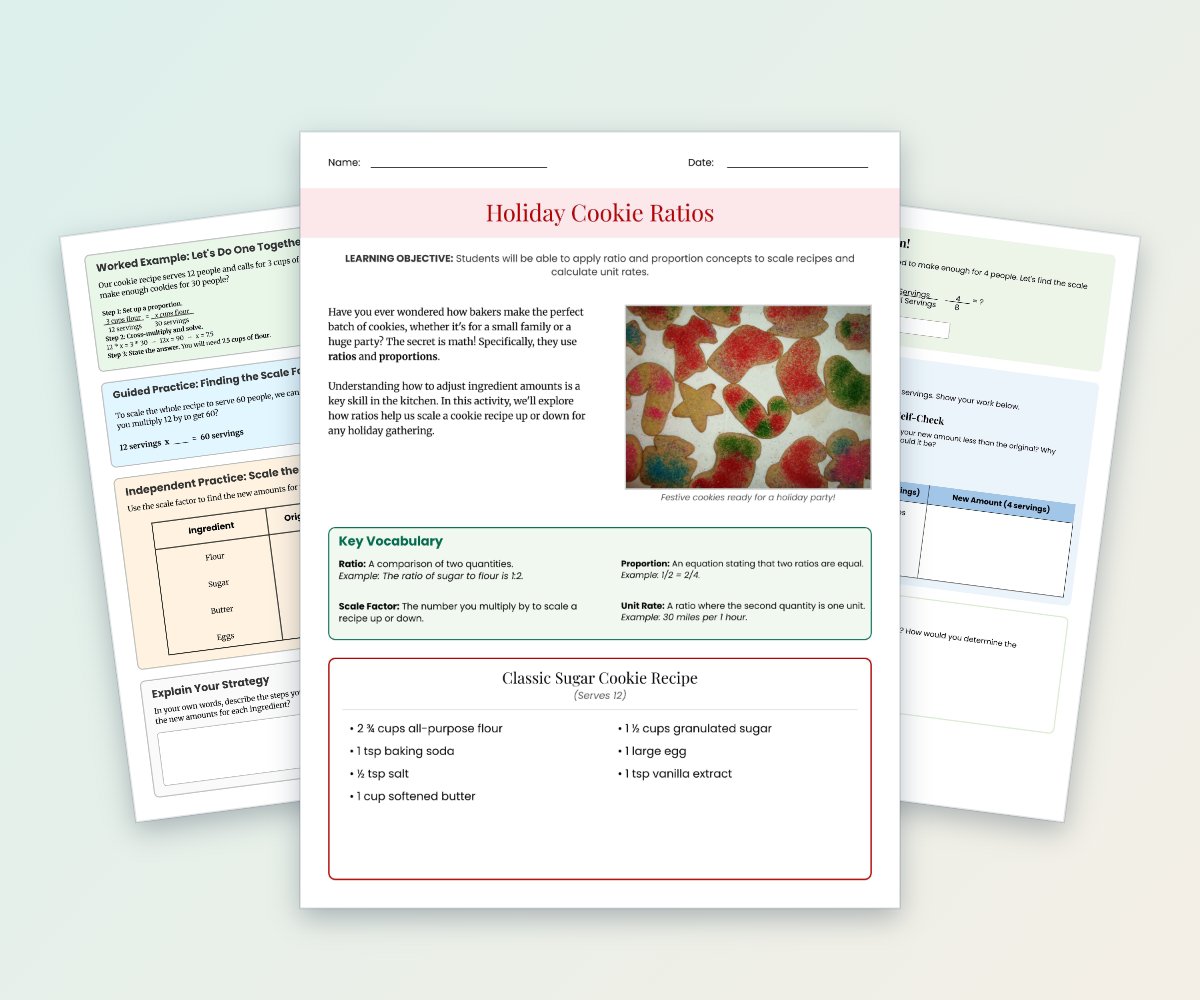
Students apply ratios, proportions, scale factors, and unit rates to adjust holiday cookie recipes for different serving sizes.
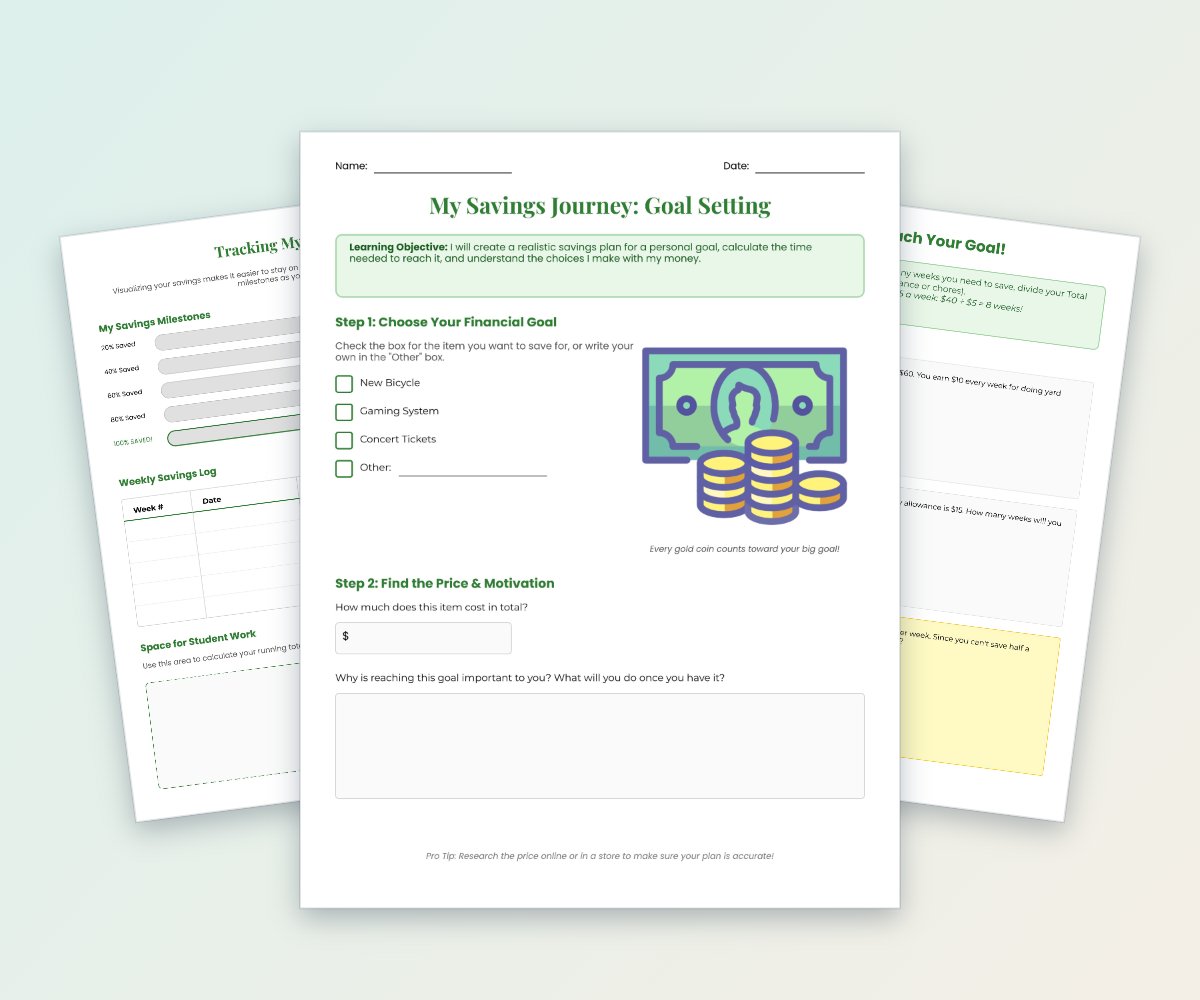
Students create a savings goal, calculate the time needed to reach it, track deposits, and reflect on spending tradeoffs.
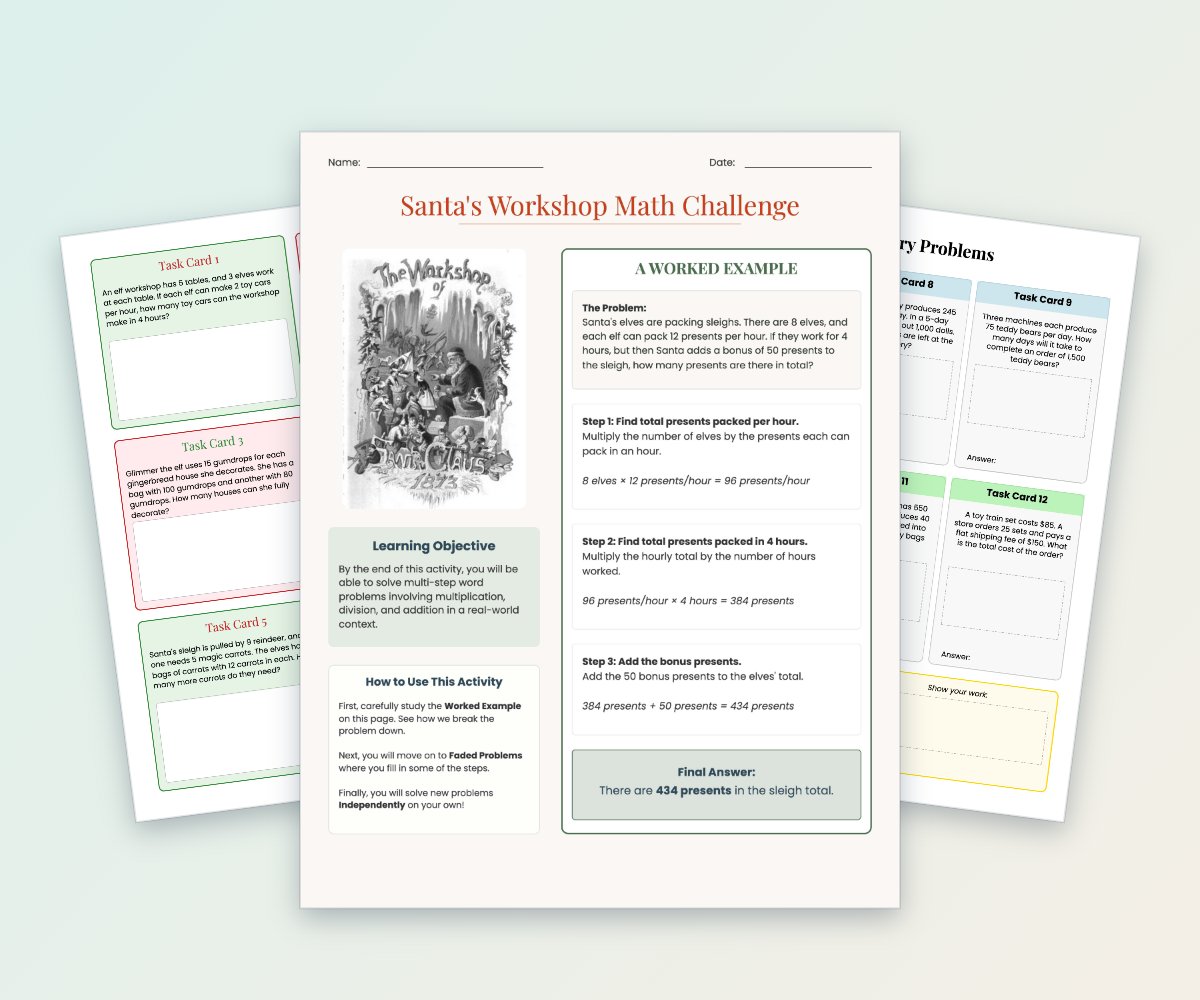
Students solve festive, real-world word problems involving multiplication, division, addition, and multi-step reasoning.
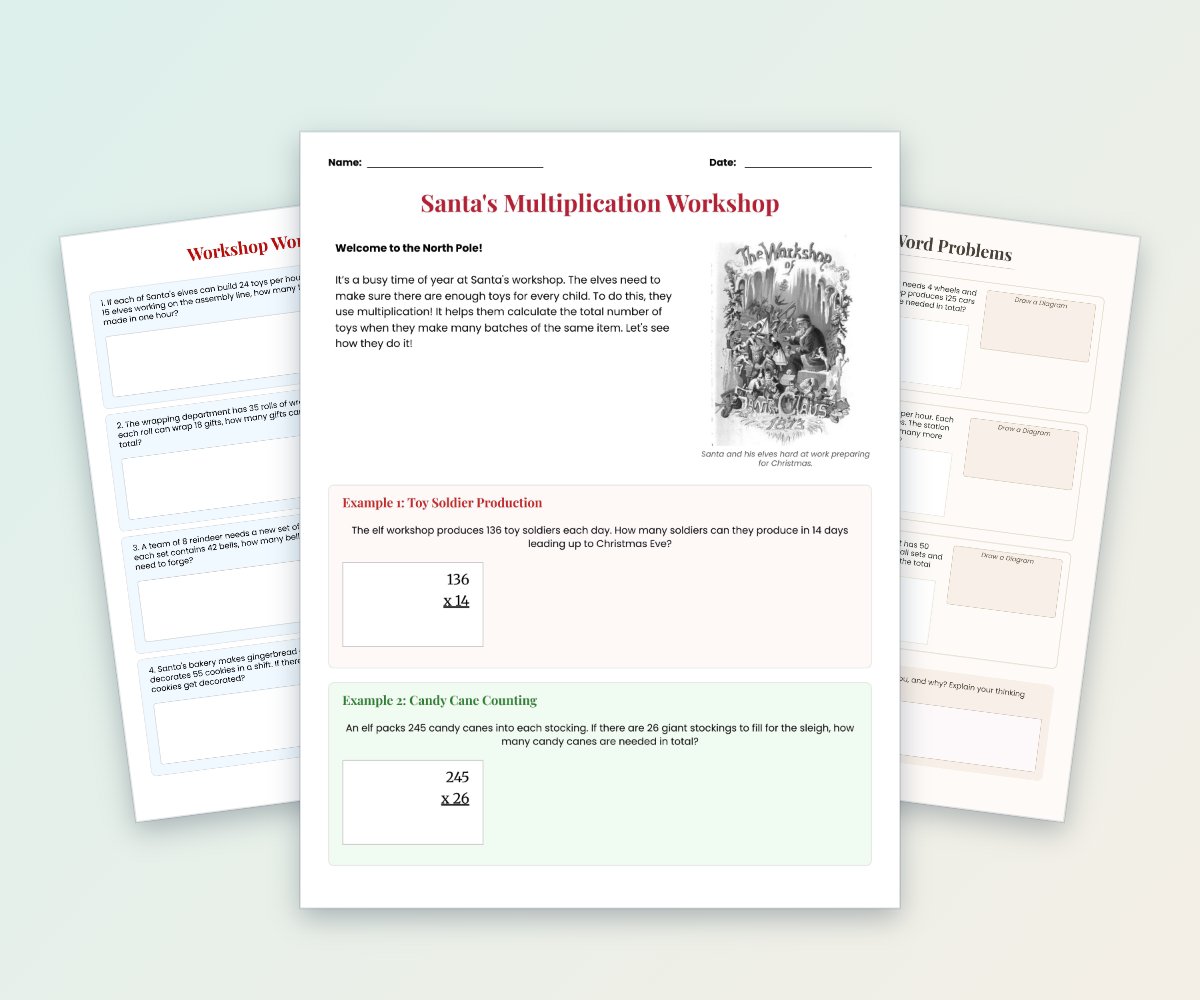
Students practice multi-digit multiplication through festive North Pole scenarios involving toys, candy canes, gifts, and workshop production.
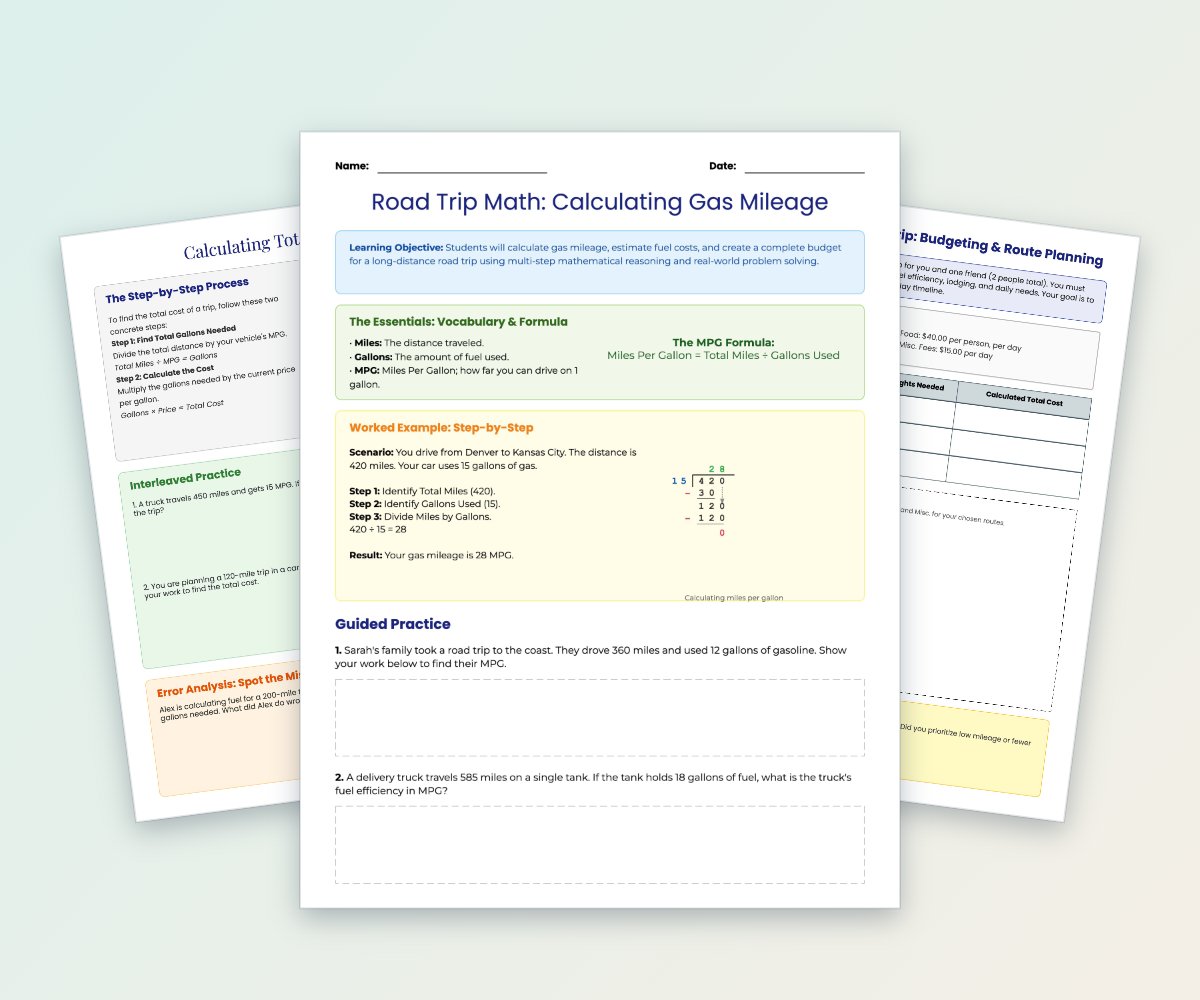
Students calculate miles per gallon, estimate fuel costs, analyze errors, and create a budget for a long-distance road trip.
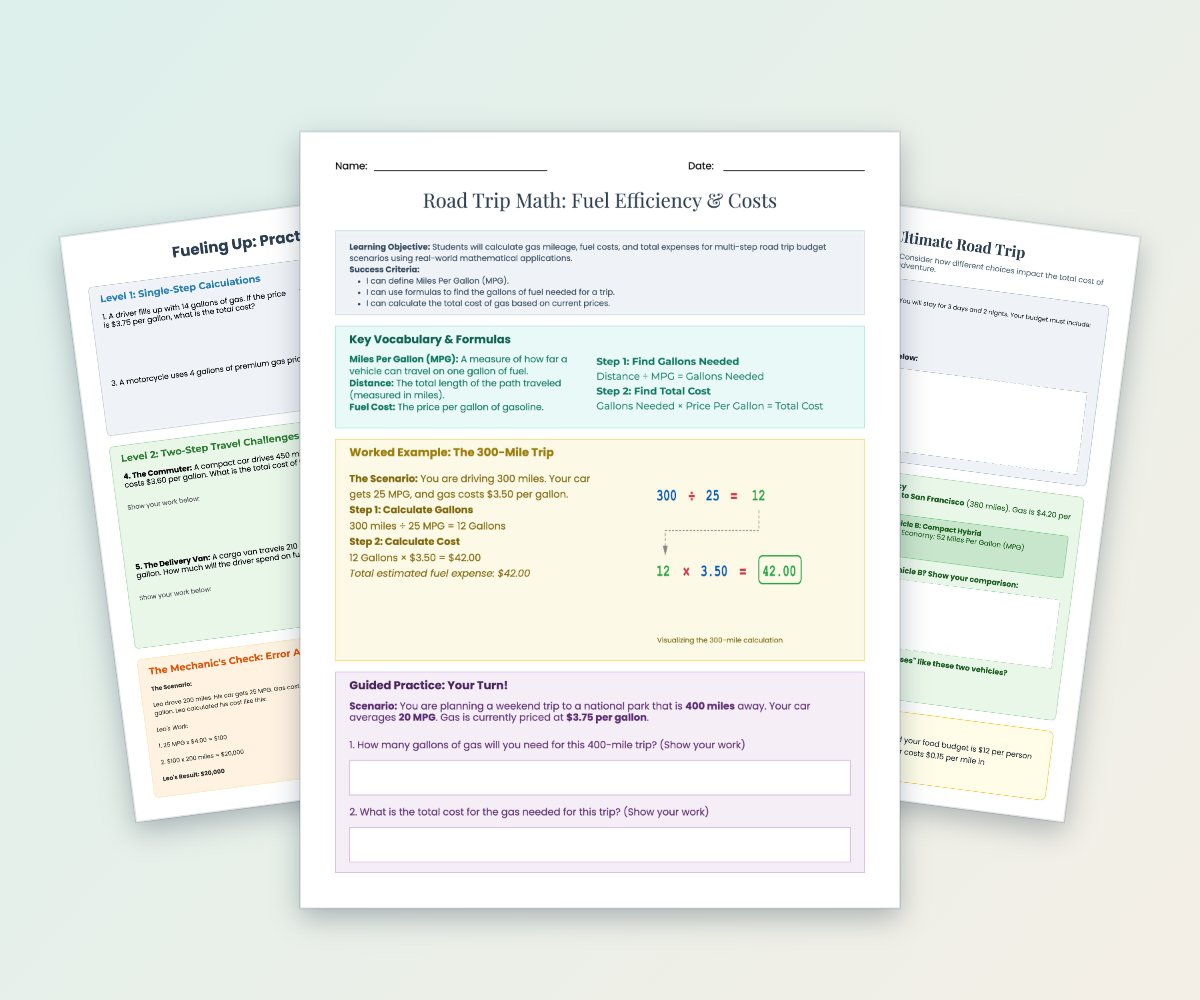
Students calculate miles per gallon, fuel needed, and trip costs using realistic road-trip scenarios.
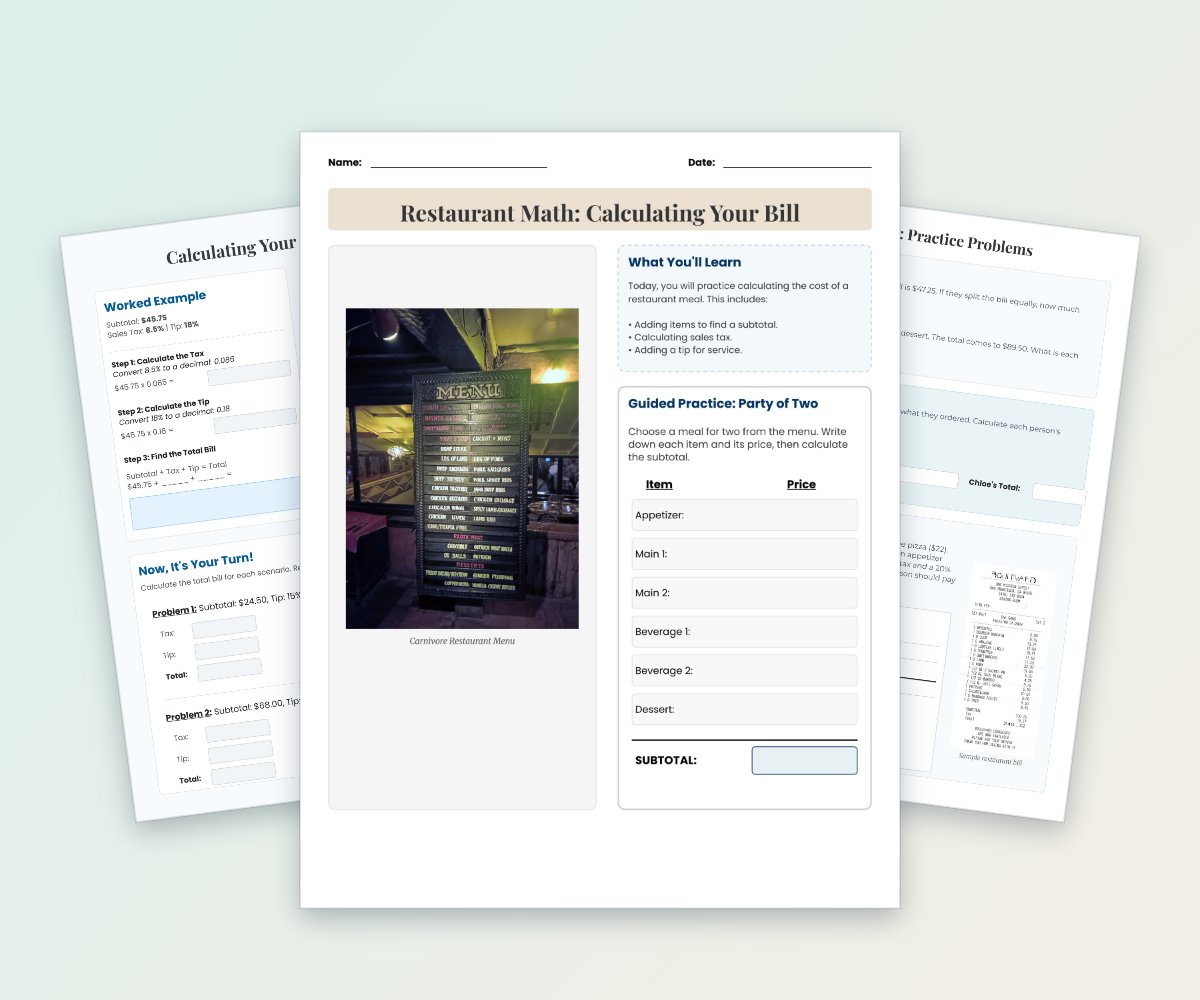
This four-page worksheet helps students calculate restaurant meal subtotals, sales tax, tips, total bills, and shared costs.
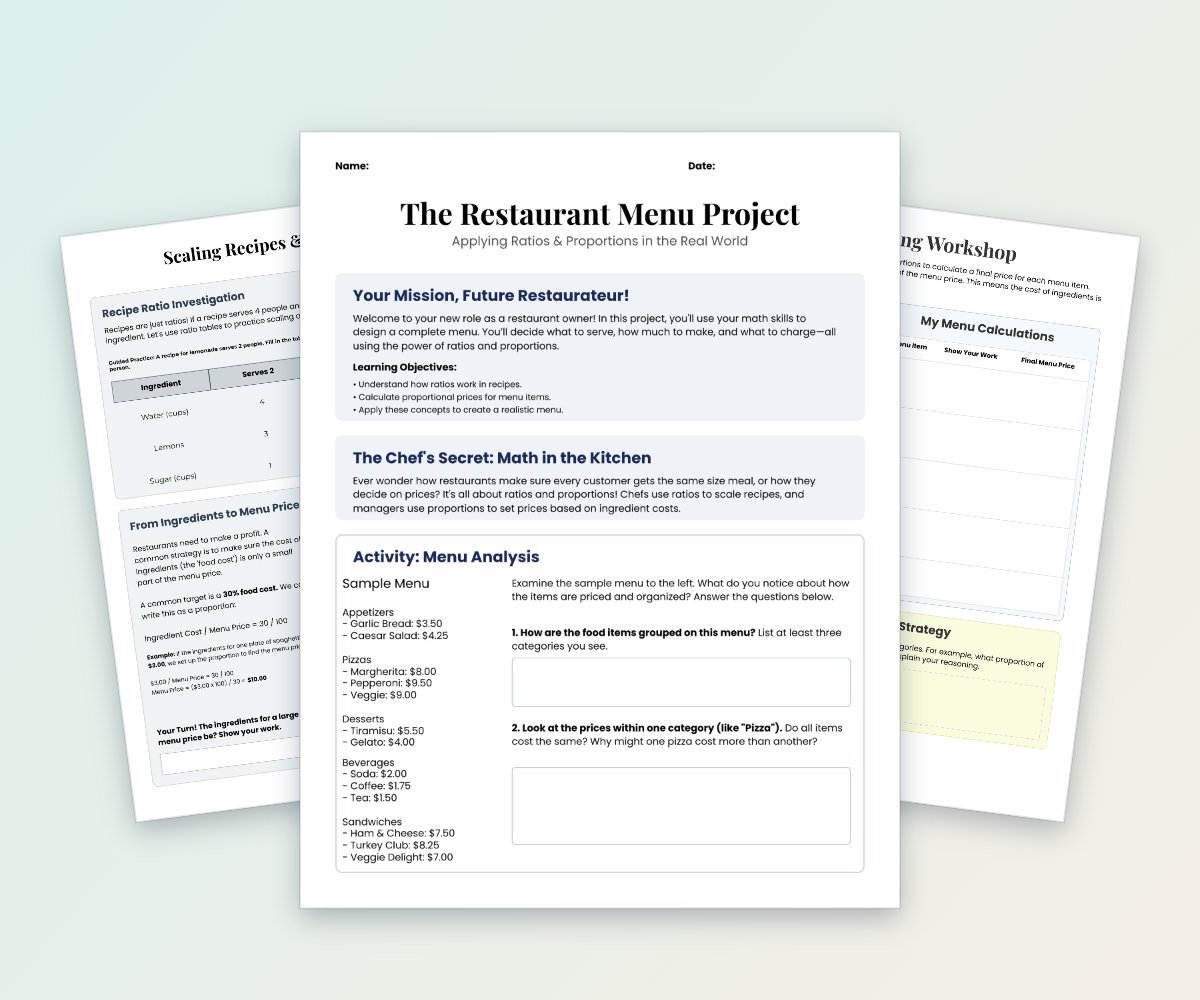
Students take on the role of restaurant owners and design a menu using ratios, proportions, recipe scaling, and realistic pricing.
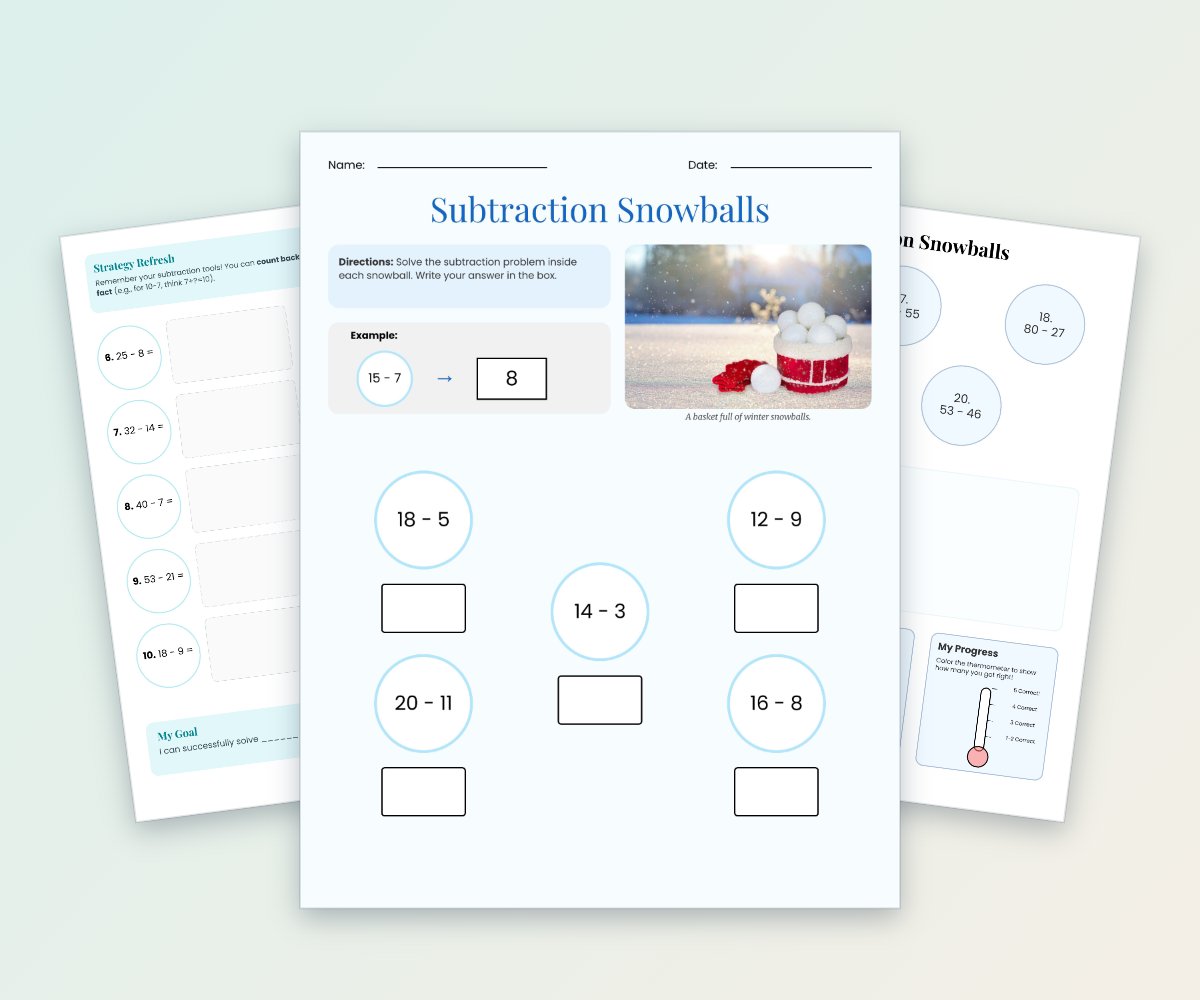
Students solve 20 subtraction problems, including two-digit subtraction with regrouping.
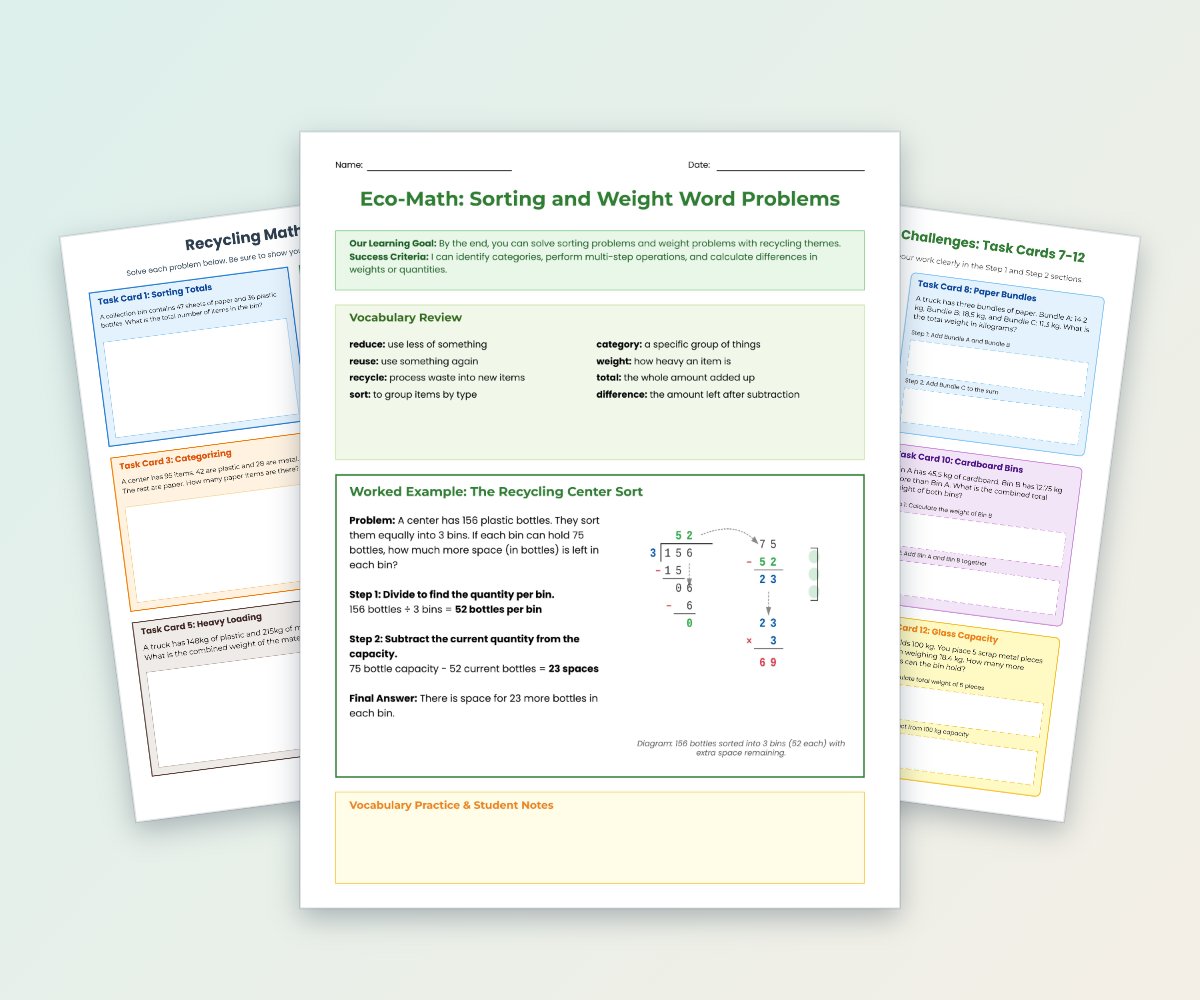
Students solve recycling-themed addition, subtraction, division, categorization, and weight word problems.
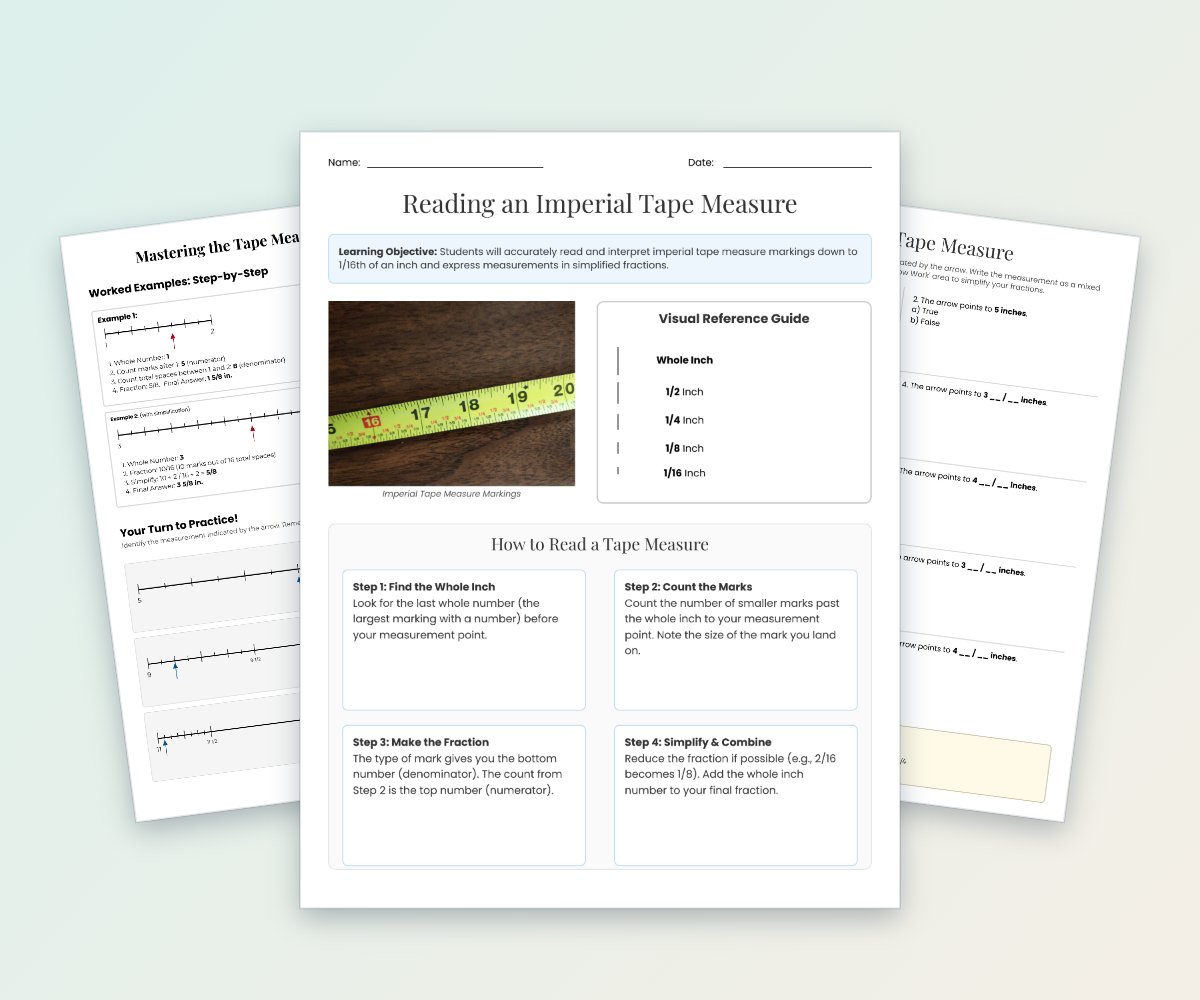
Teach students to read imperial tape measure markings to the nearest 1/16 inch and express measurements as simplified mixed numbers.
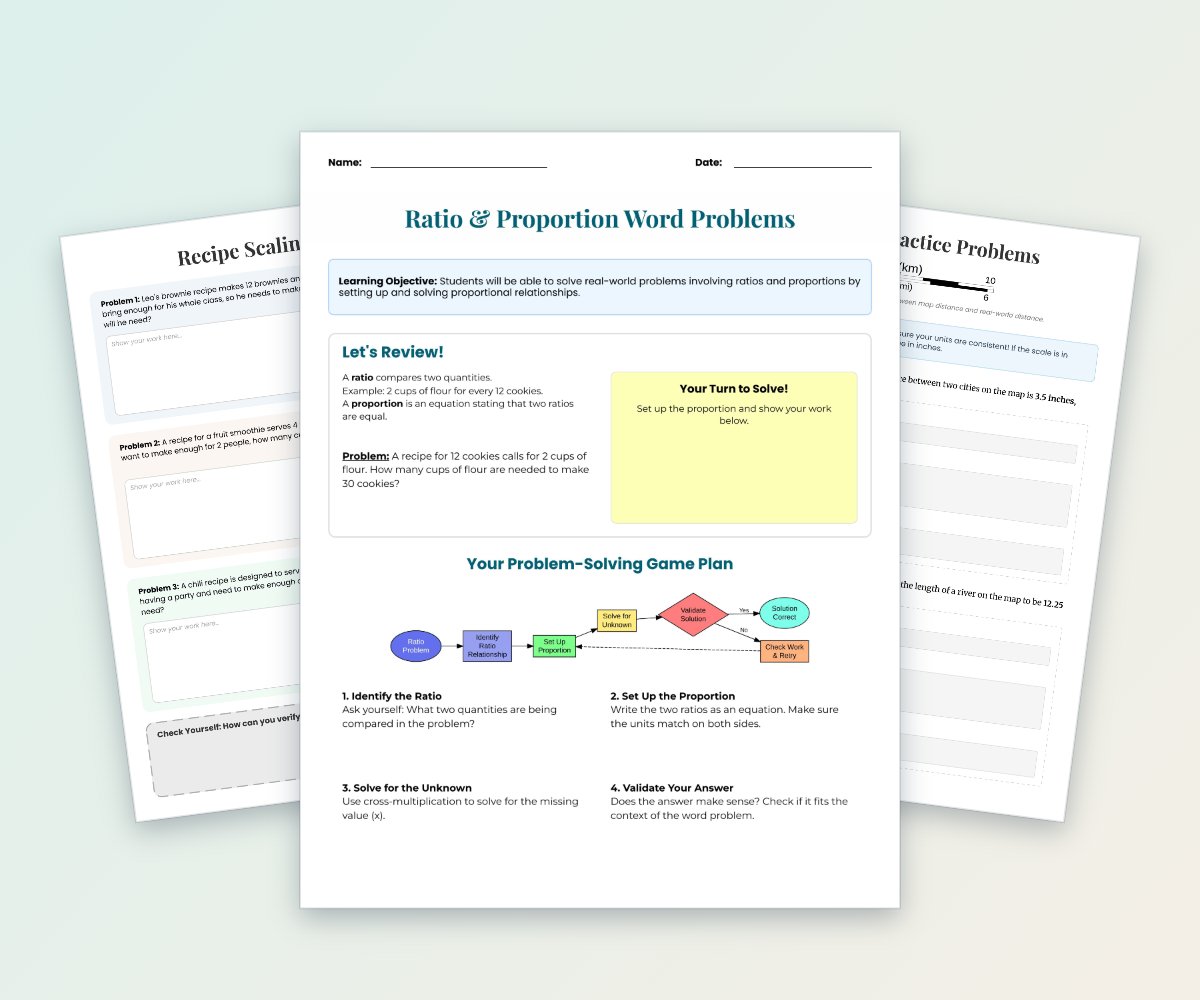
Students review ratios and proportions, then solve real-world problems involving recipe scaling and map scales.
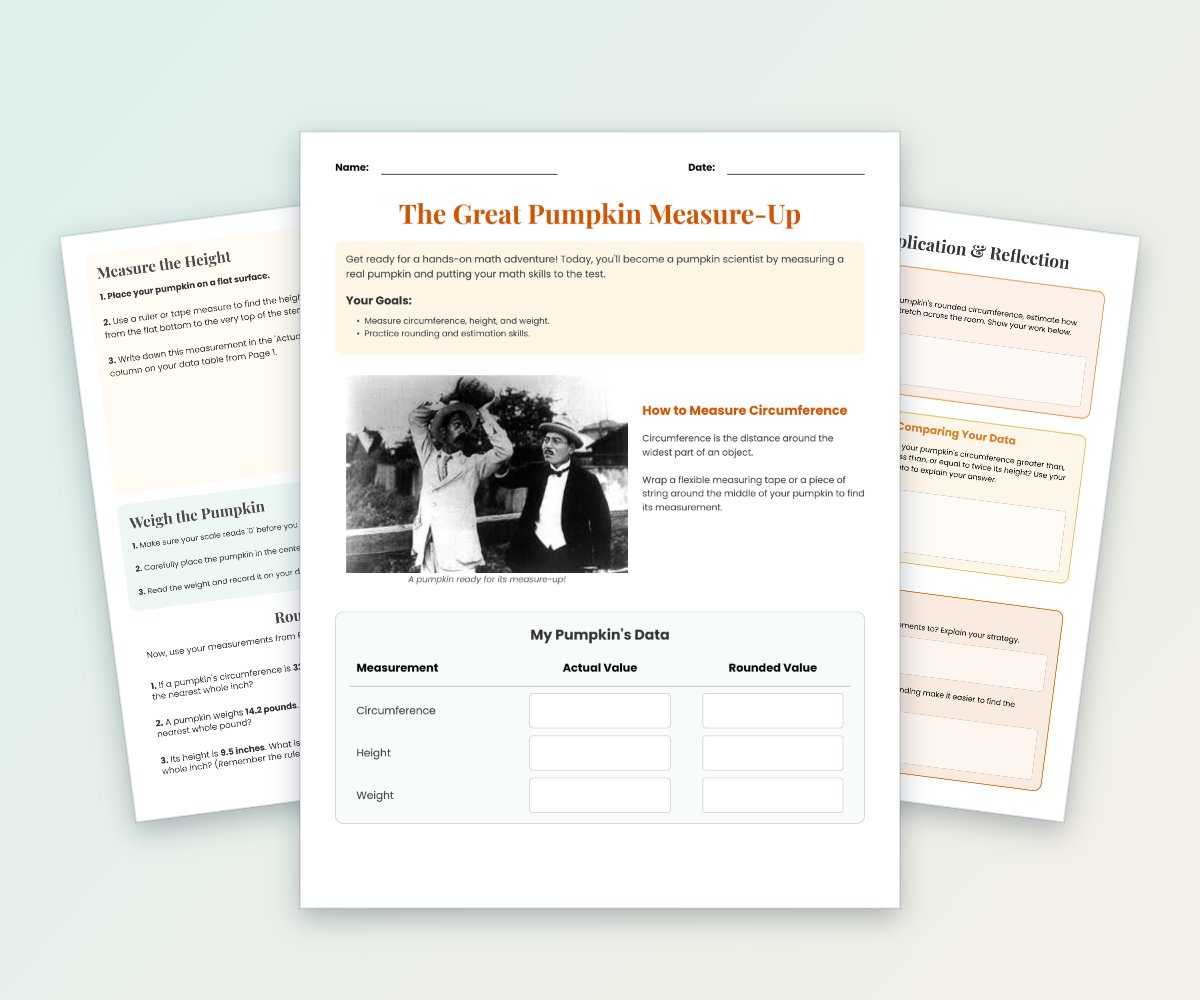
Students measure a real pumpkin’s circumference, height, and weight, record actual and rounded values, and practice estimation.
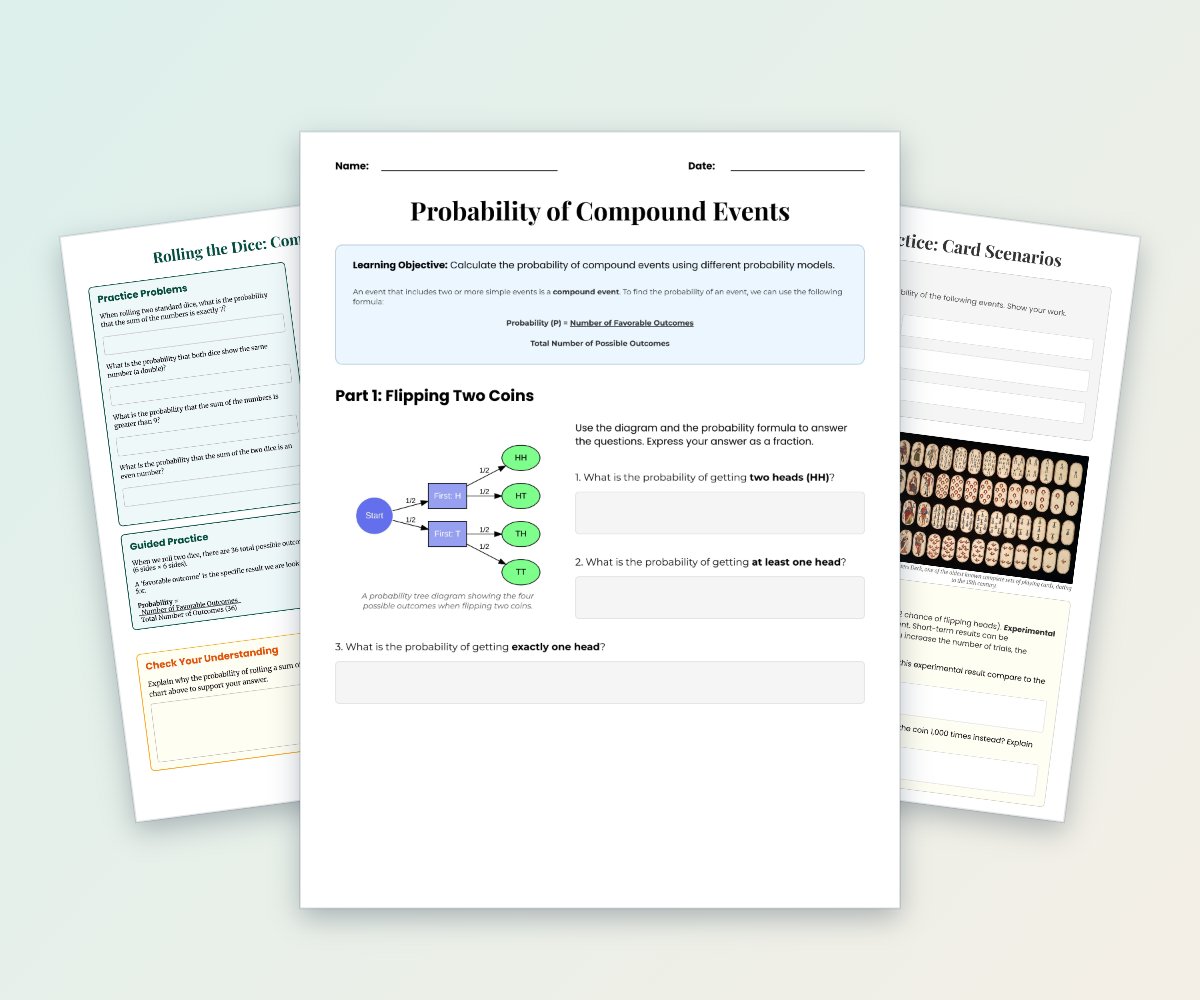
This four-page worksheet teaches students to calculate compound-event probabilities using coin flips, dice, card draws, tree diagrams, outcome charts, and probability models.
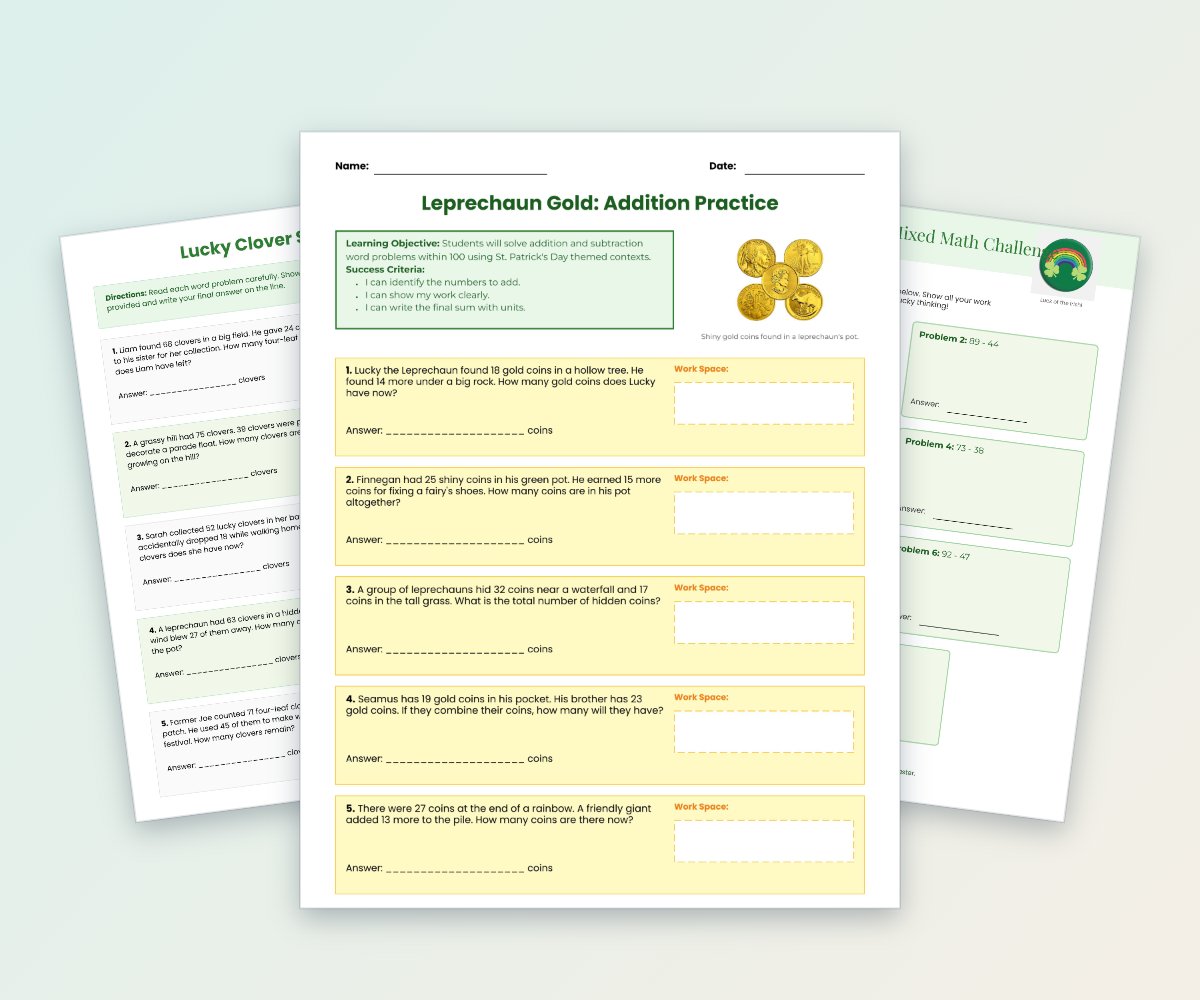
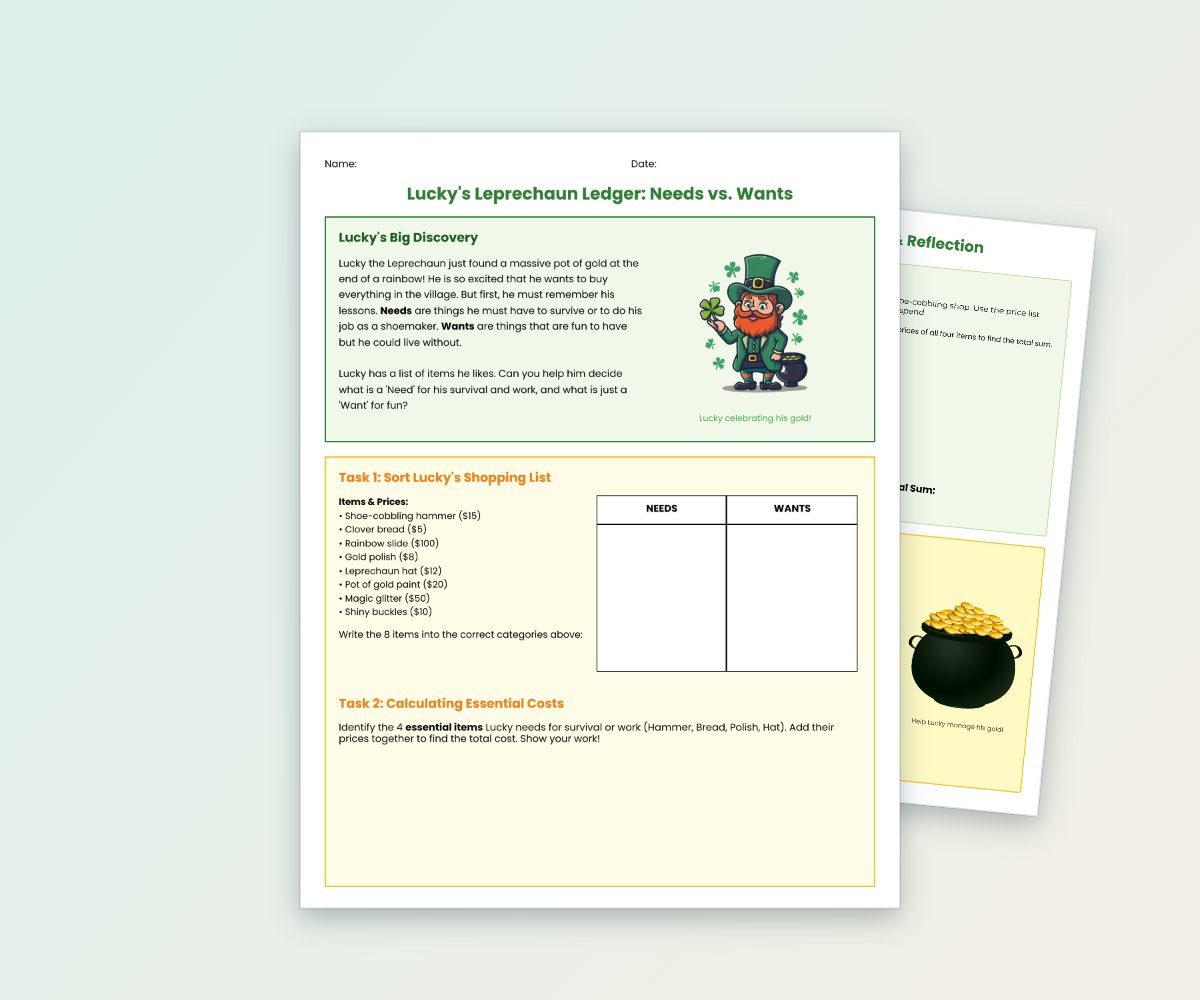
Students help a leprechaun sort shopping items into needs and wants, calculate essential costs, and reflect on spending choices.
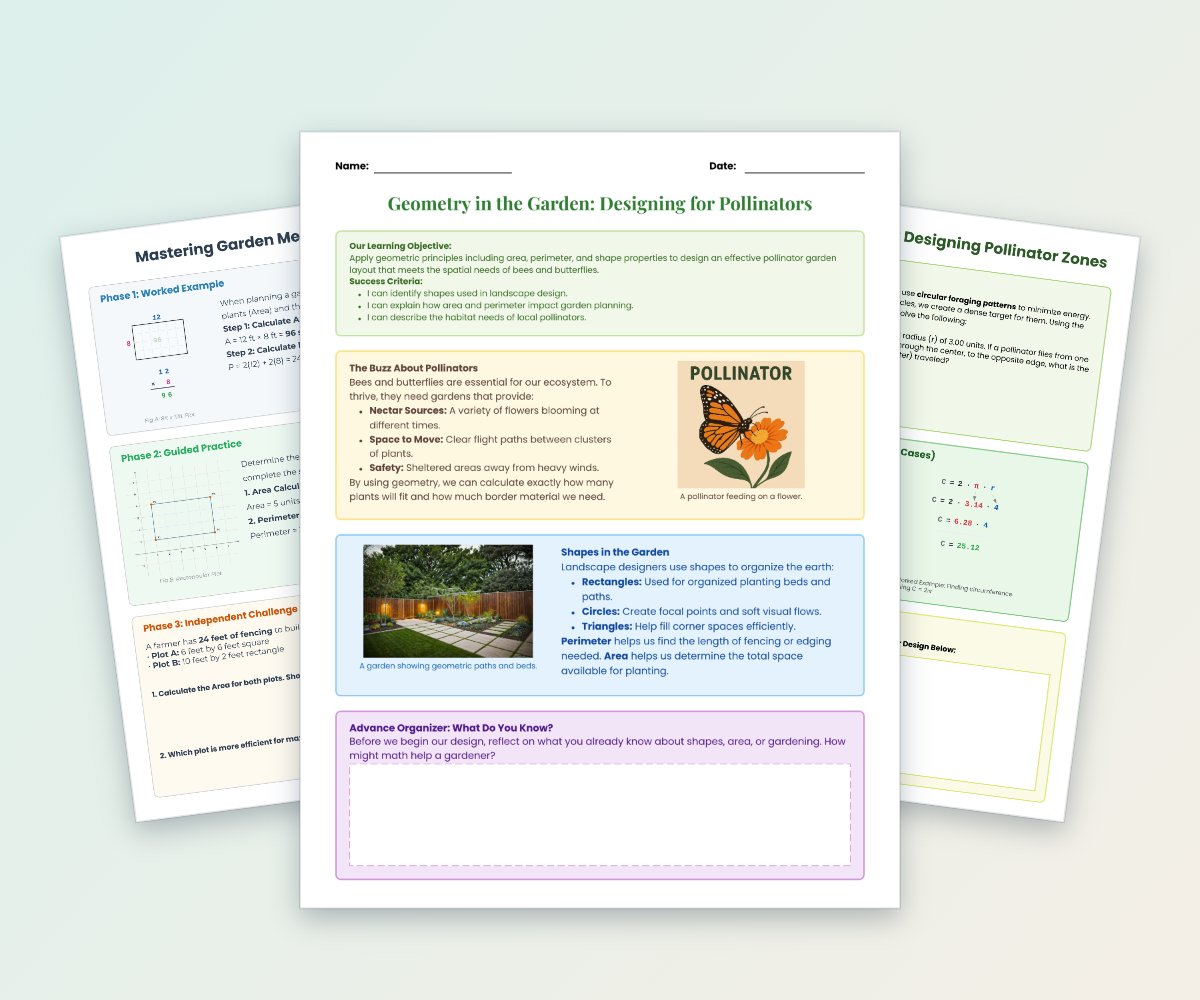
Students apply area, perimeter, and shape properties to design an effective pollinator garden layout.
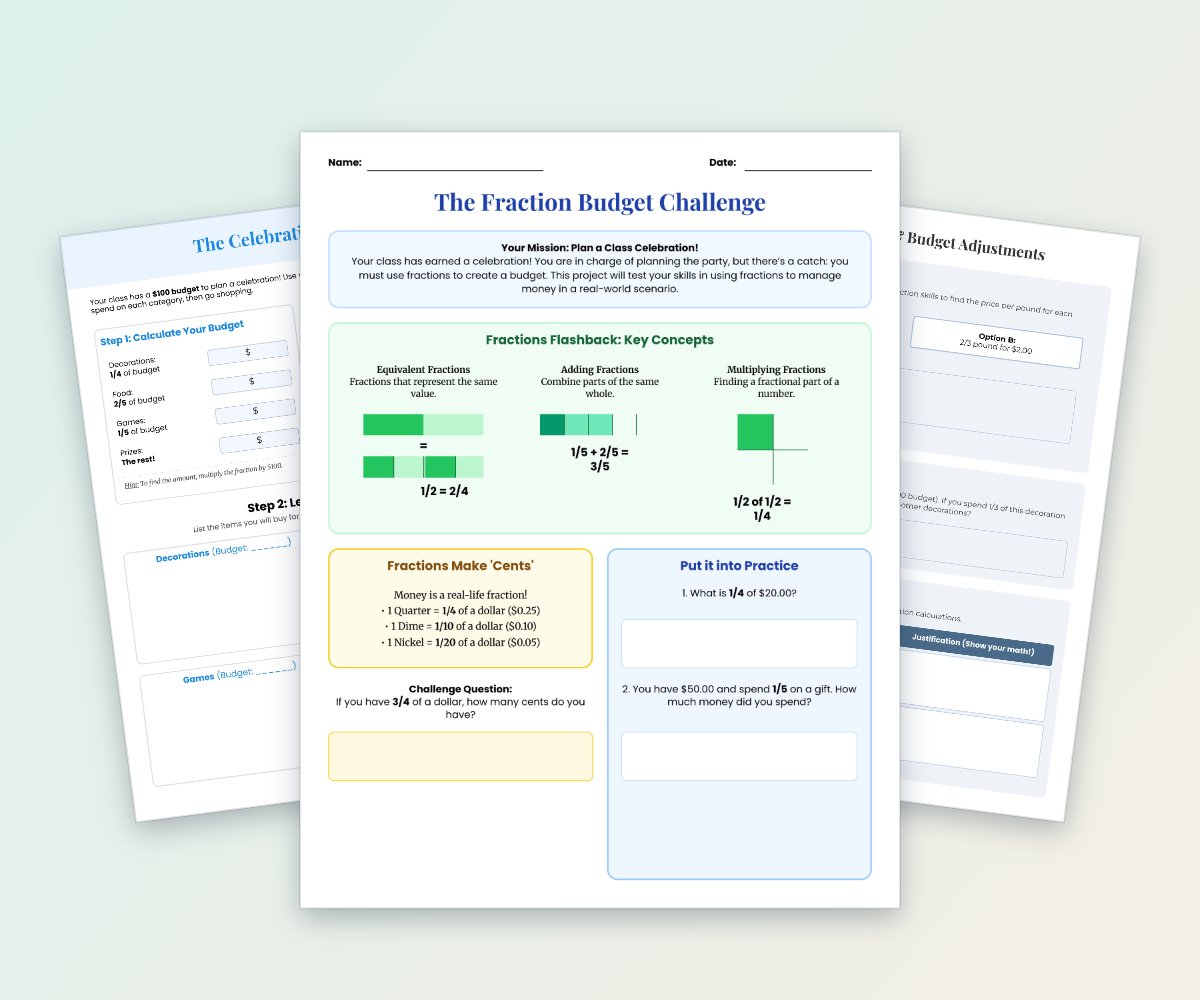
Students plan a class celebration using a $100 budget divided among decorations, food, games, and prizes.
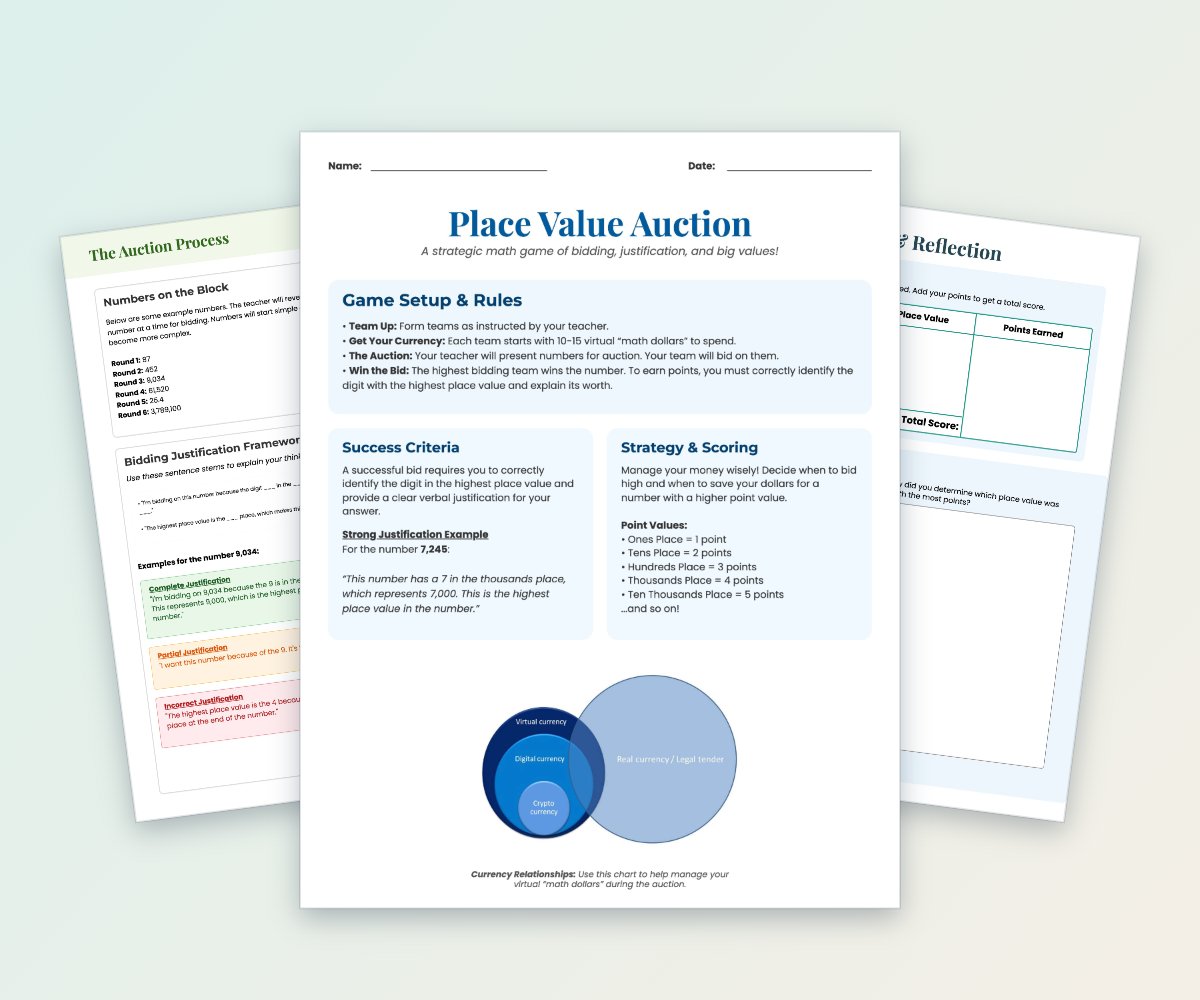
Students bid on increasingly complex numbers using virtual math dollars, then identify the highest place value and explain its value.
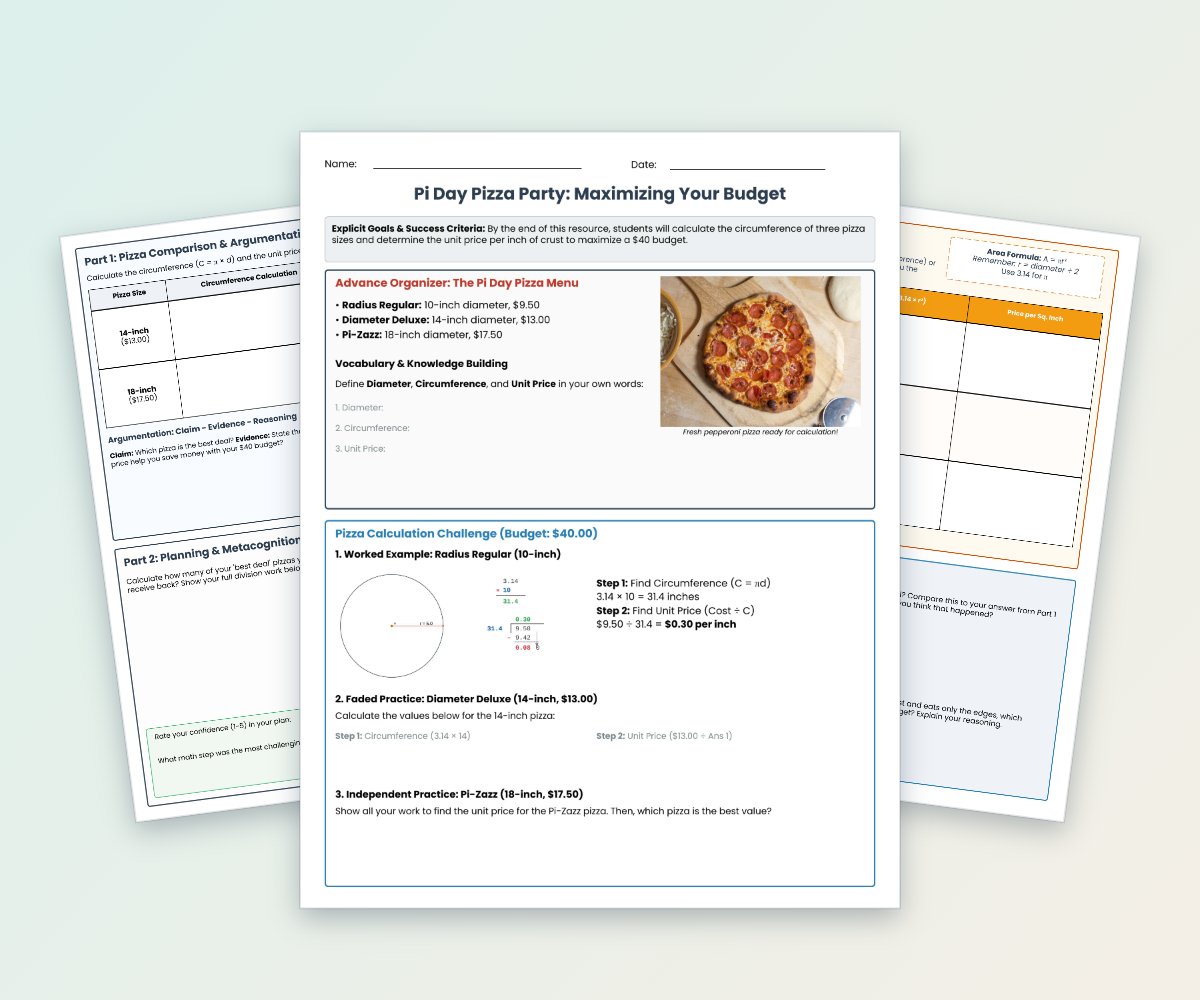
Students calculate pizza circumference, compare unit prices, maximize a $40 budget, and evaluate area-based value.
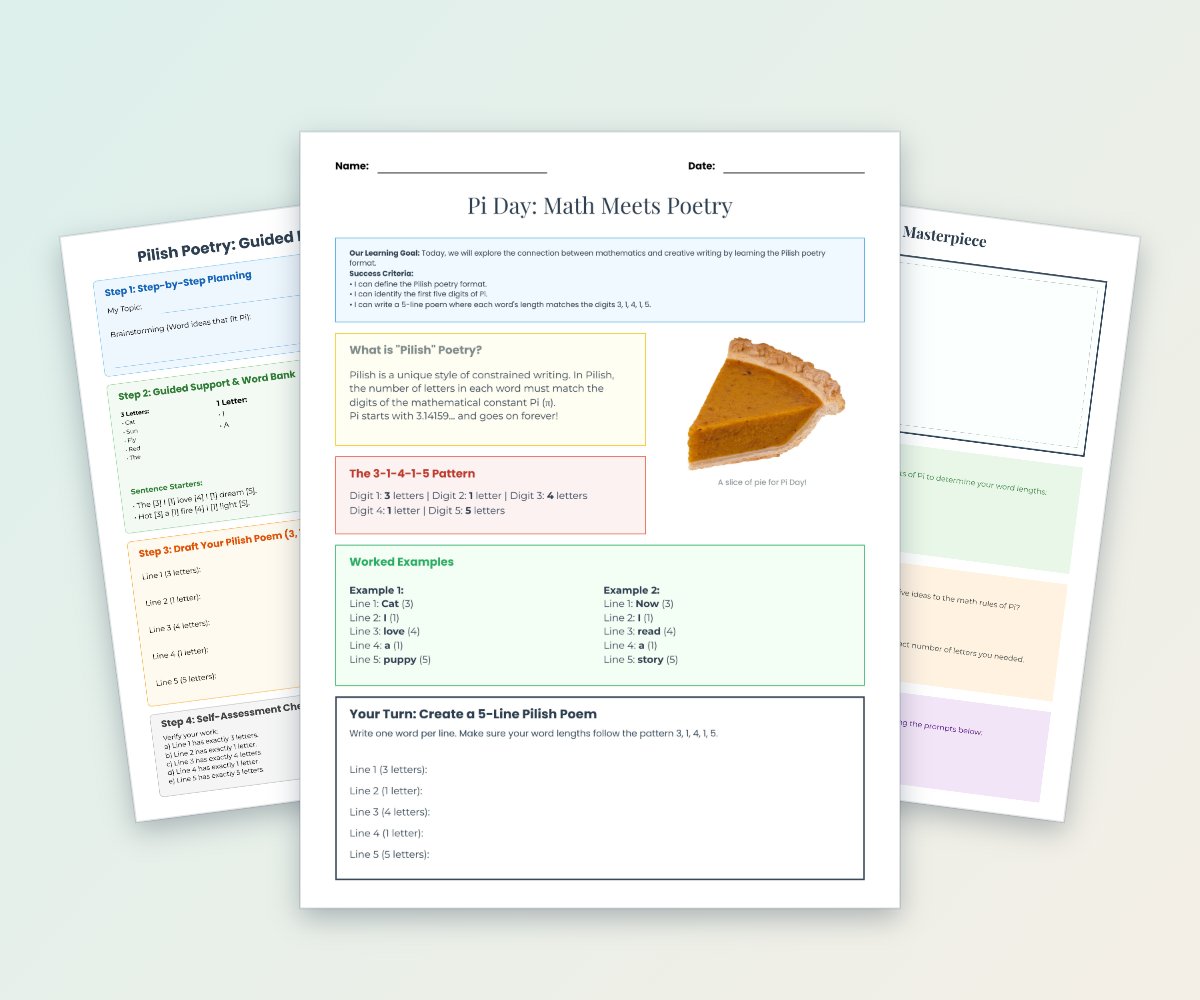
Students explore the digits of pi through Pilish, a constrained poetry format in which word lengths follow a numerical pattern.
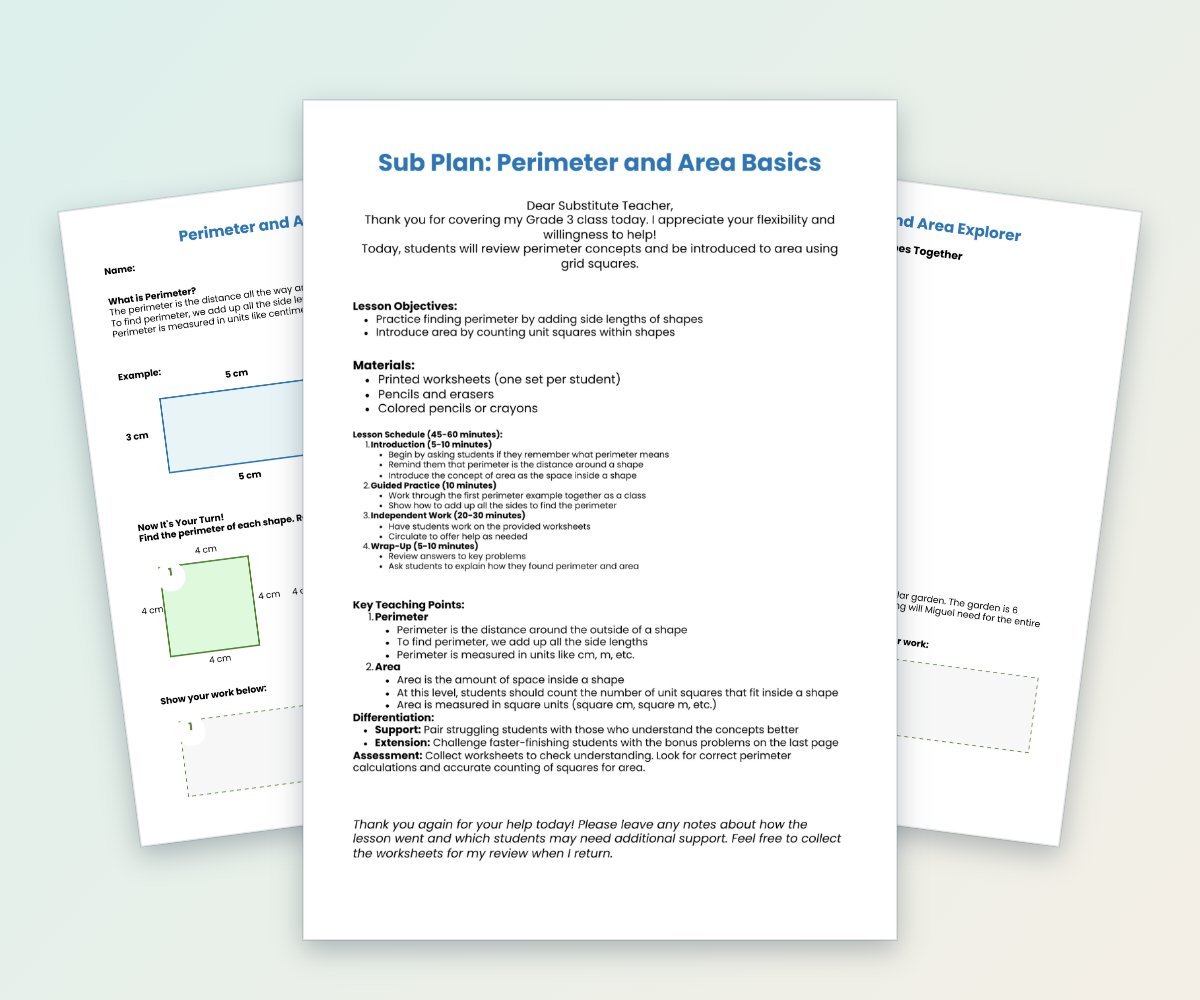
This seven-page Grade 3 substitute lesson introduces perimeter and area through teacher guidance, worked examples, and student practice worksheets.
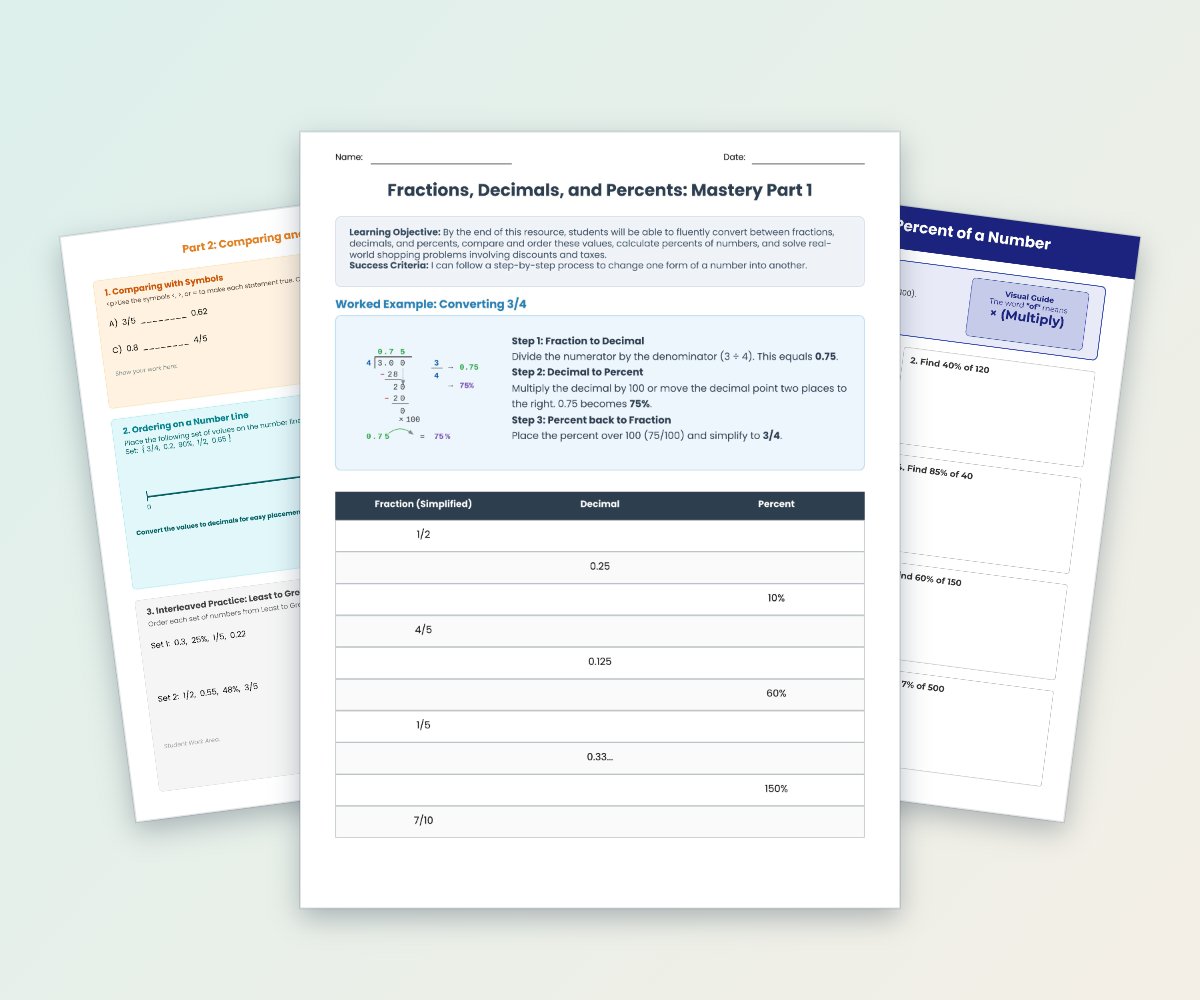
This six-page review pack teaches students to convert among fractions, decimals, and percents, compare and order values, calculate percentages, and solve shopping problems.
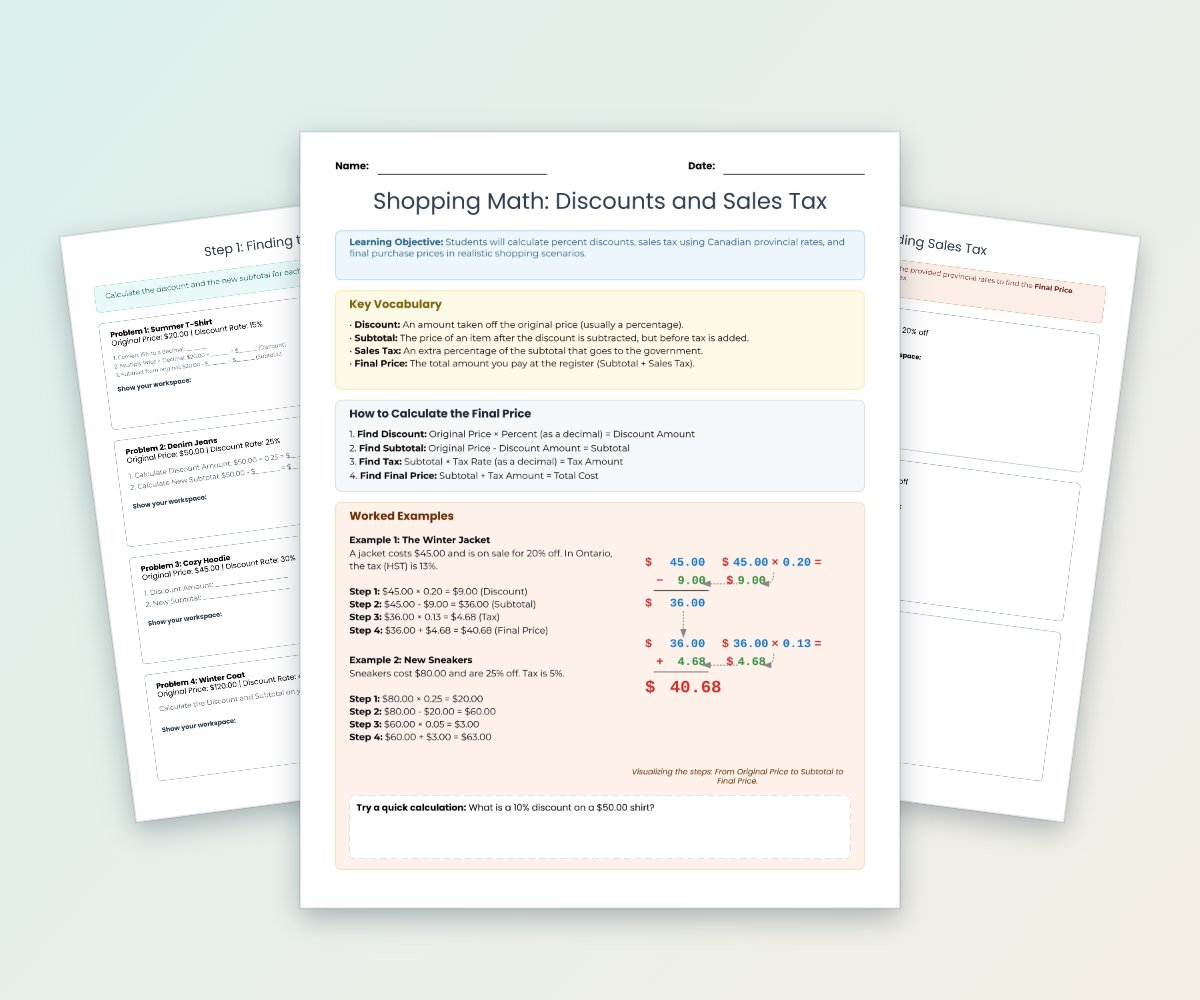
Students practice calculating percentage discounts, subtotals, sales tax, and final purchase prices using realistic shopping scenarios.
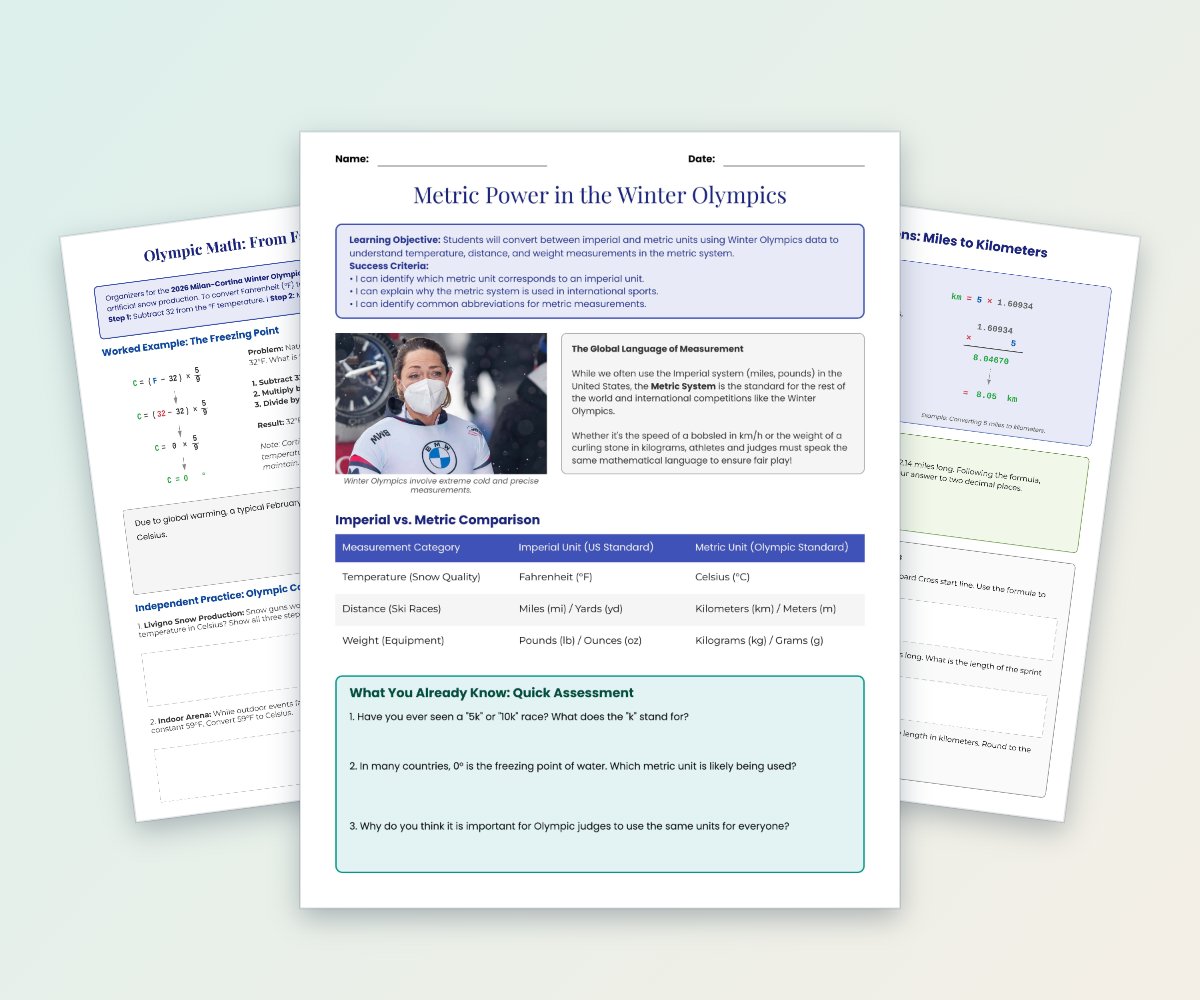
This four-page worksheet introduces metric and imperial measurement units using Winter Olympics contexts.
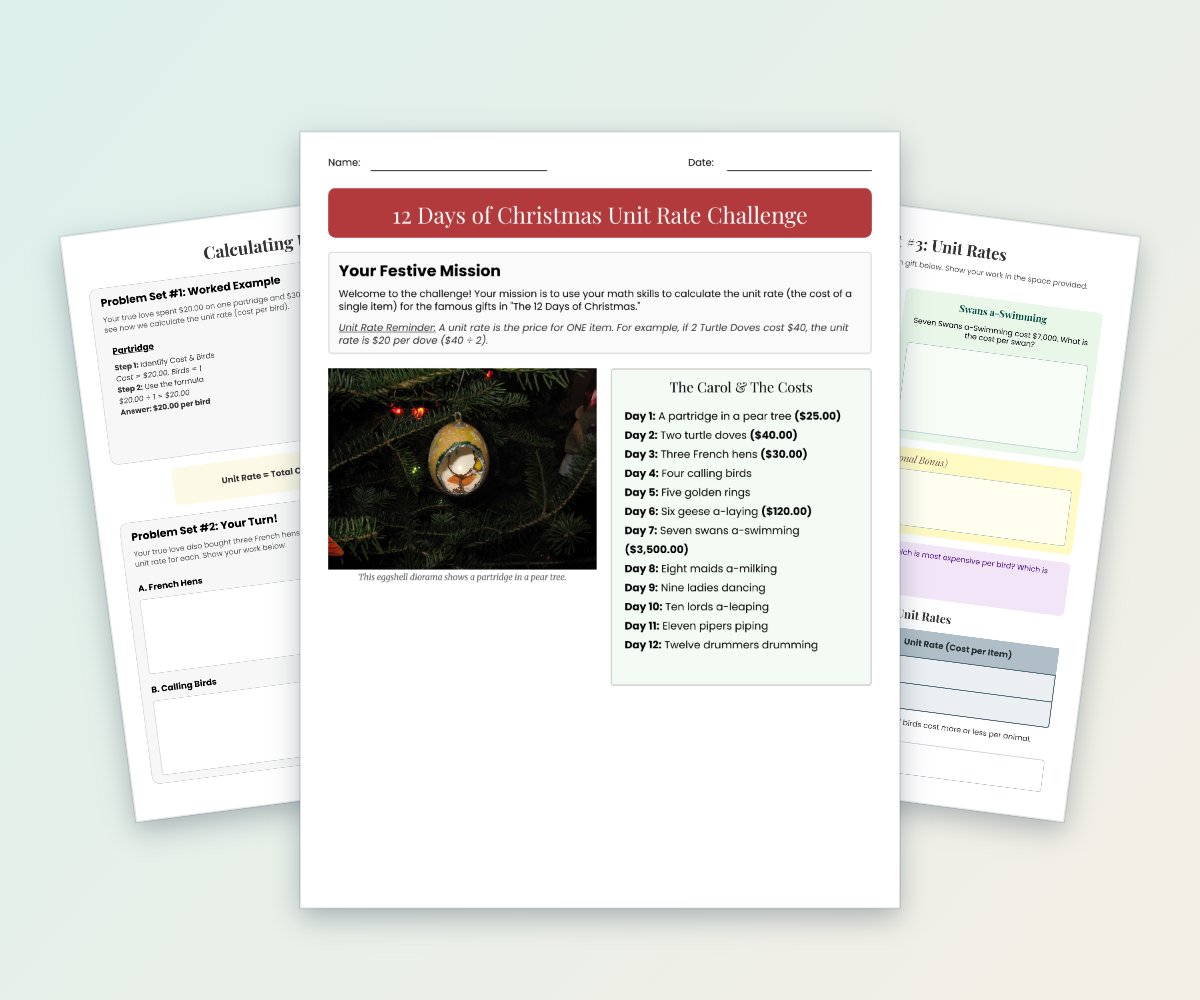
Students calculate cost per item for gifts from The 12 Days of Christmas, then compare unit rates and solve a budget challenge.