Recycling Sort Activity Packet
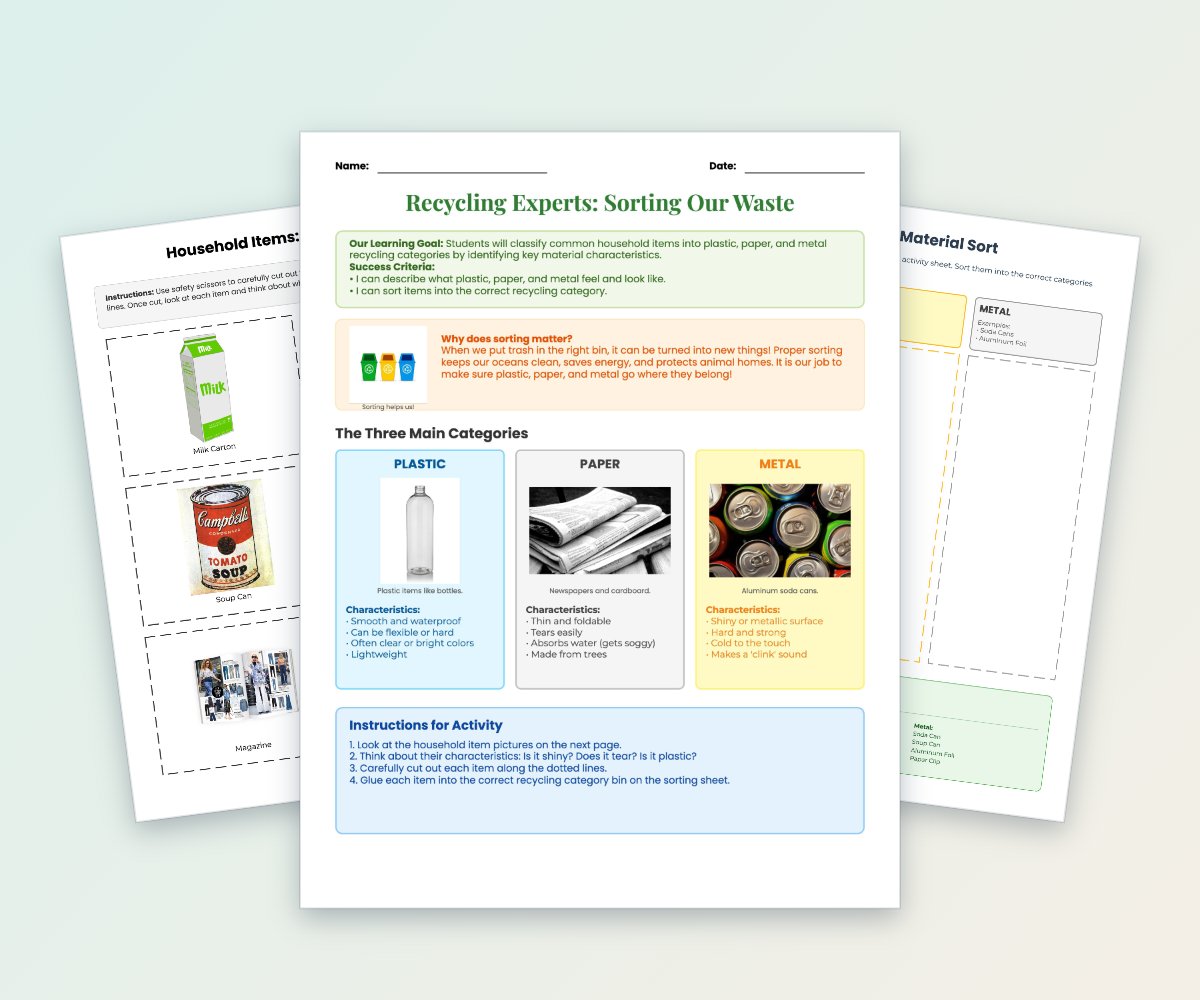
Students learn to identify plastic, paper, and metal by their observable characteristics, then sort household items into recycling categories.
$3
Classroom-ready resources written for grade 12: printable worksheets, slides, activities and planning tools you can download and use straight away. Browse by subject below.
Students learn to identify plastic, paper, and metal by their observable characteristics, then sort household items into recycling categories.
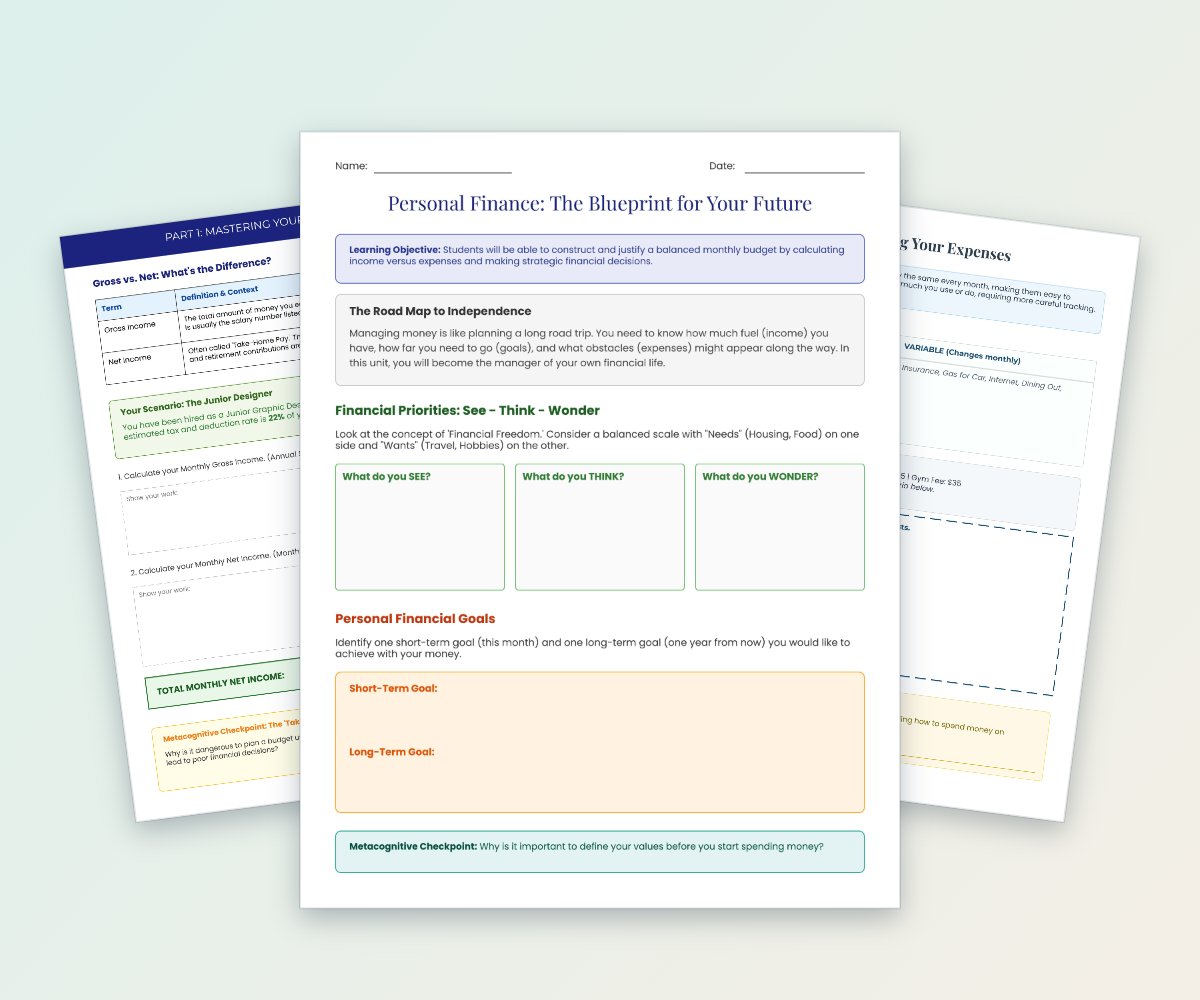
Students build and justify a balanced monthly budget using a realistic Junior Graphic Designer income scenario.
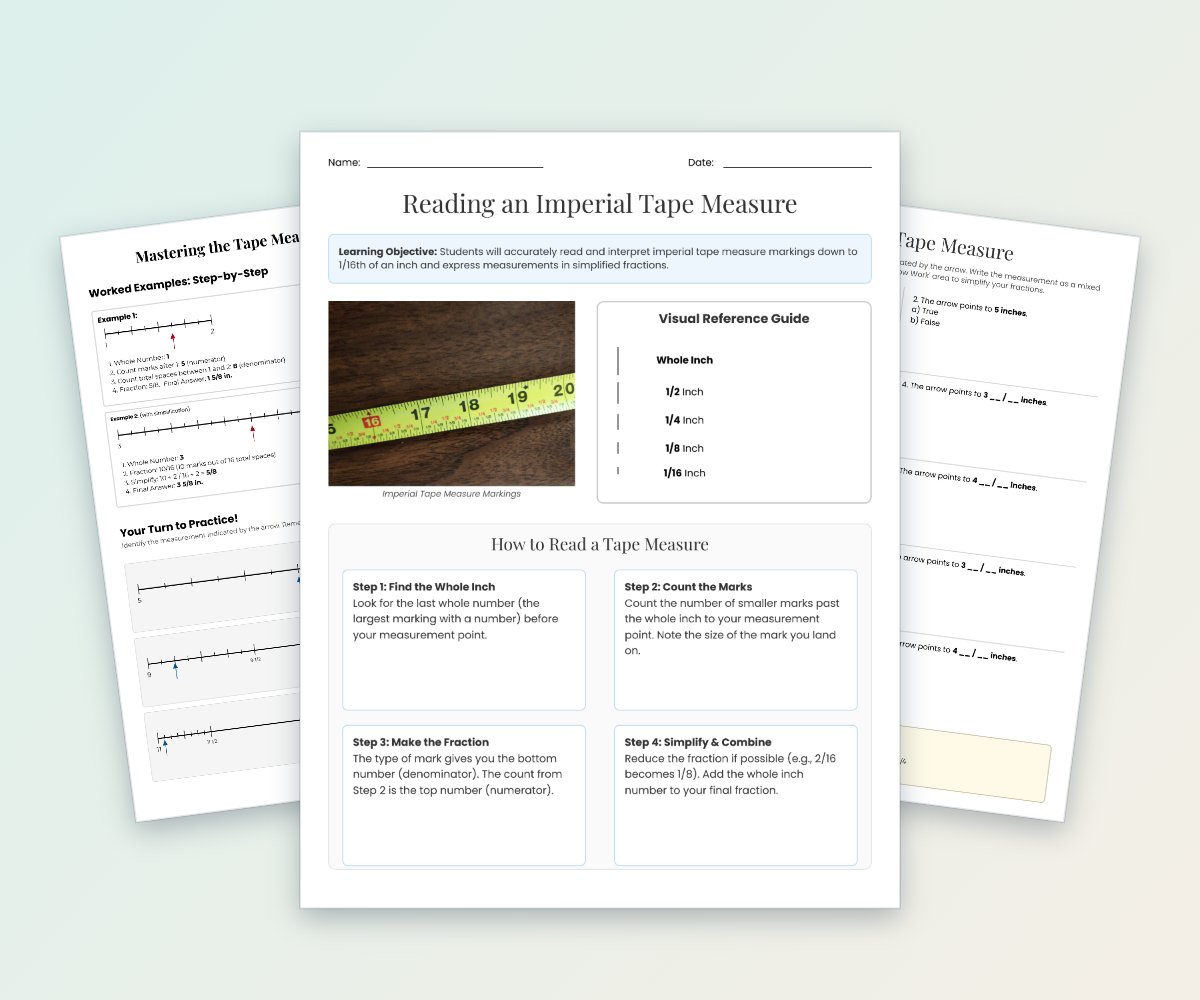
Teach students to read imperial tape measure markings to the nearest 1/16 inch and express measurements as simplified mixed numbers.
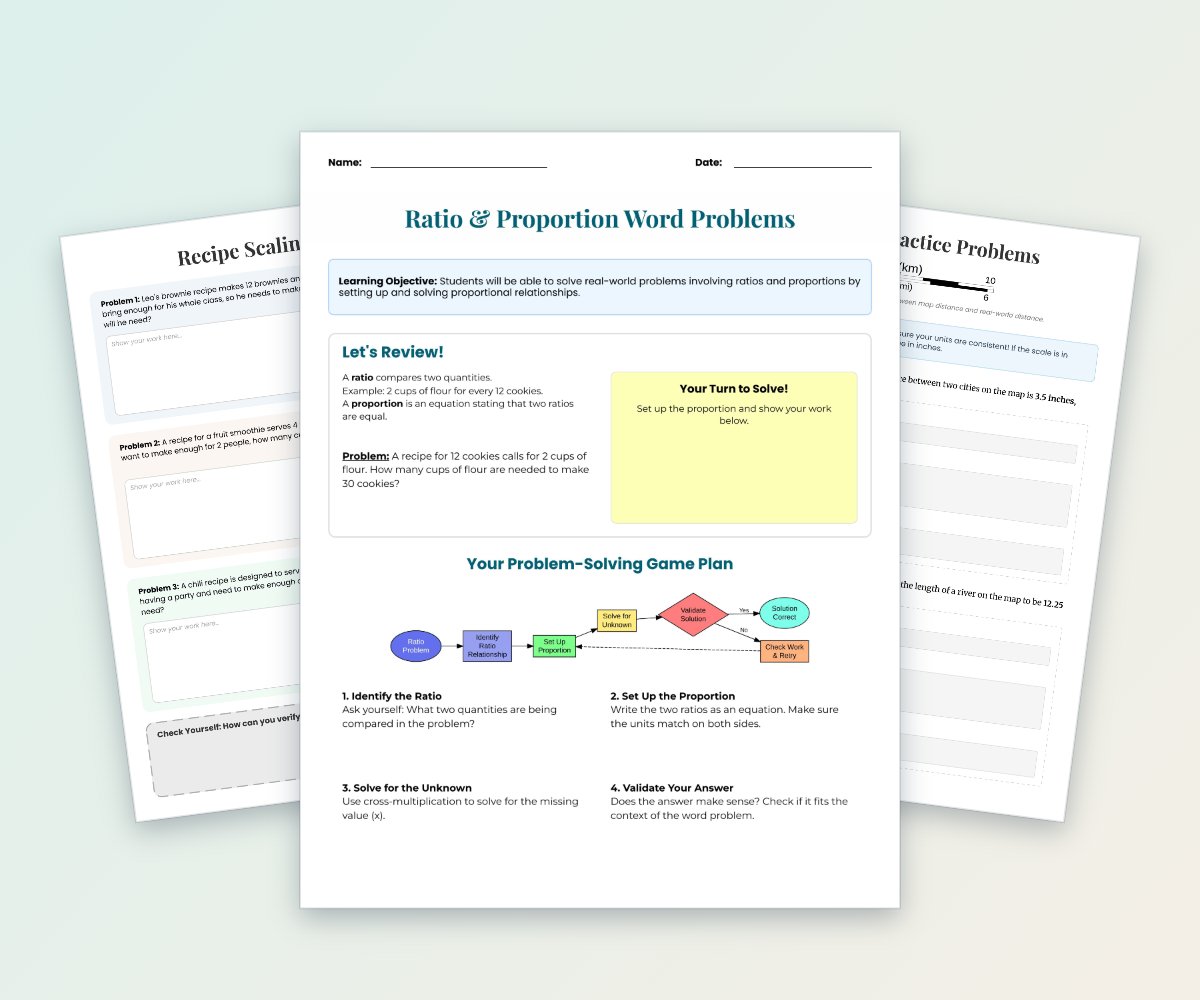
Students review ratios and proportions, then solve real-world problems involving recipe scaling and map scales.
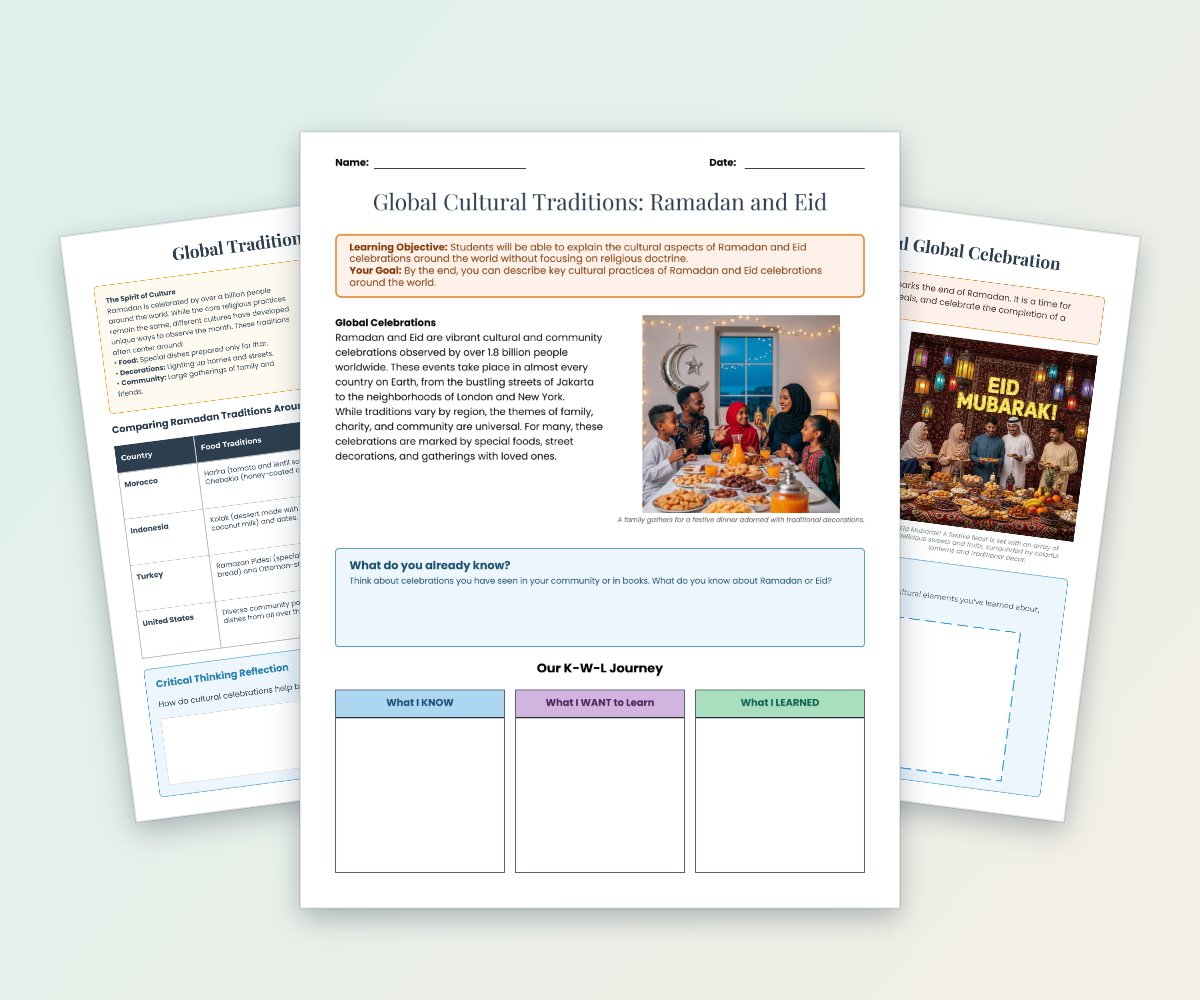
This four-page fact file introduces students to cultural traditions connected with Ramadan and Eid around the world.
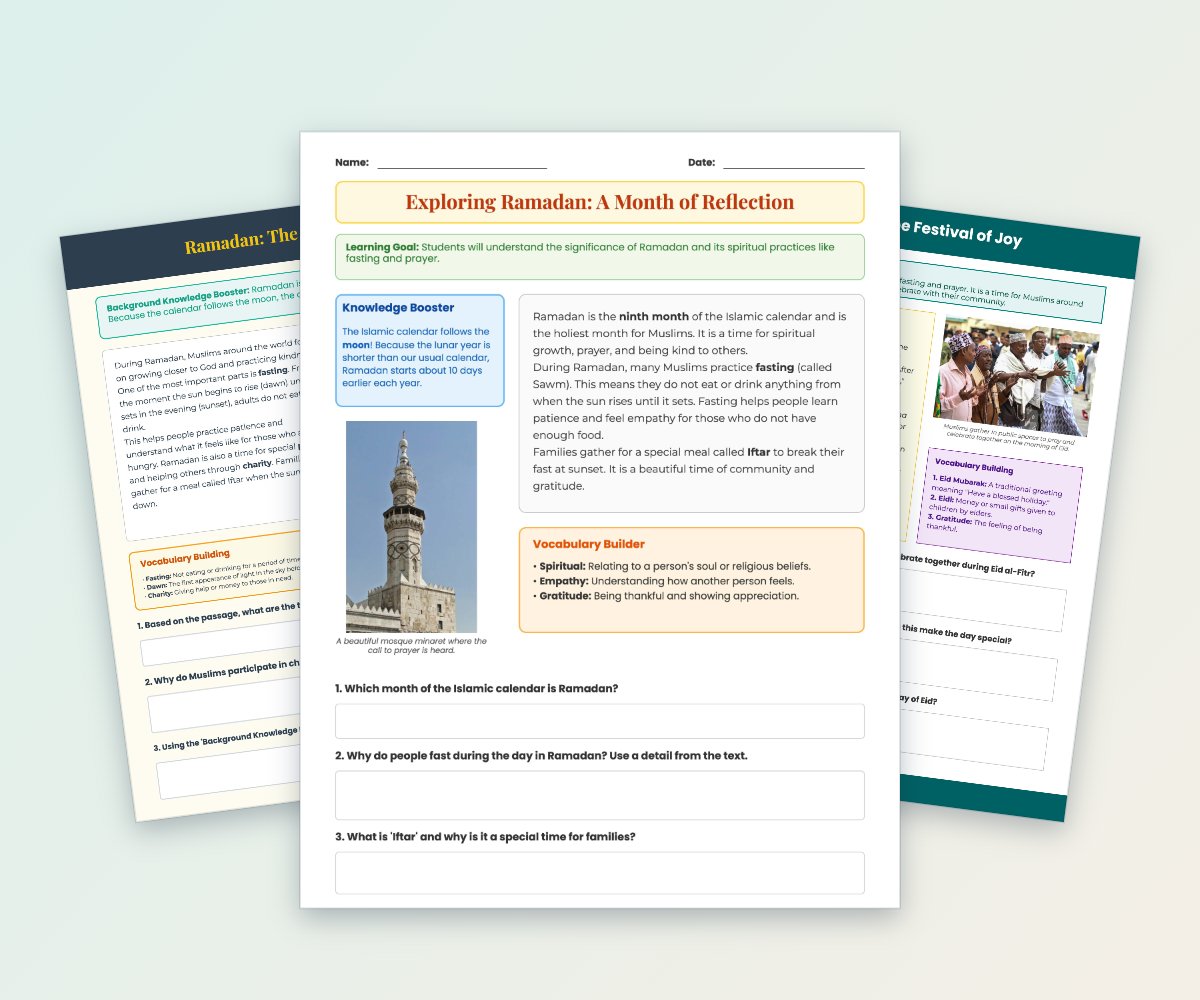
This five-page activity pack introduces students to Ramadan, fasting, prayer, charity, Iftar, and Eid al-Fitr.
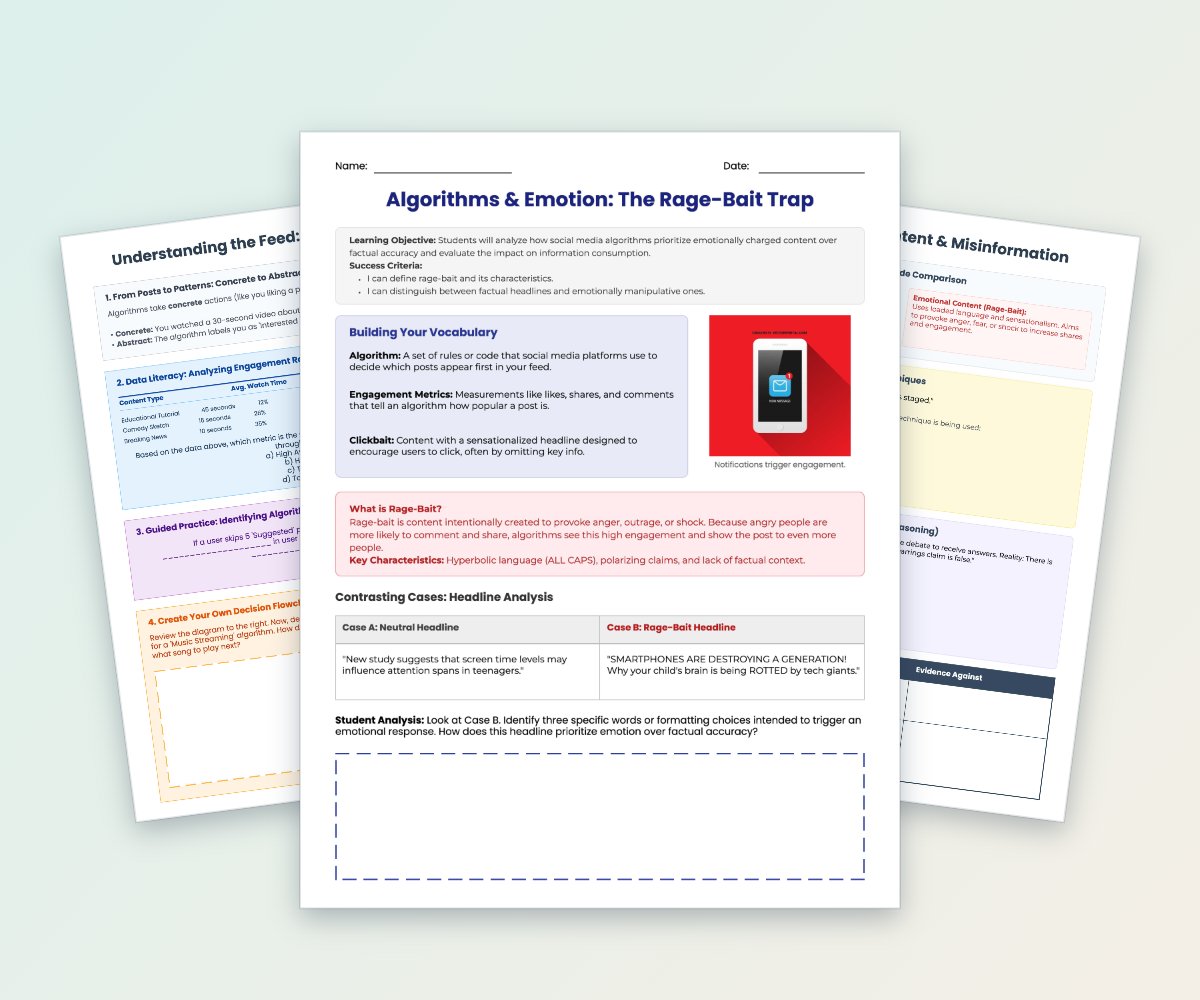
This worksheet introduces rage-bait, clickbait, engagement metrics, and the ways social media algorithms amplify emotionally charged content.
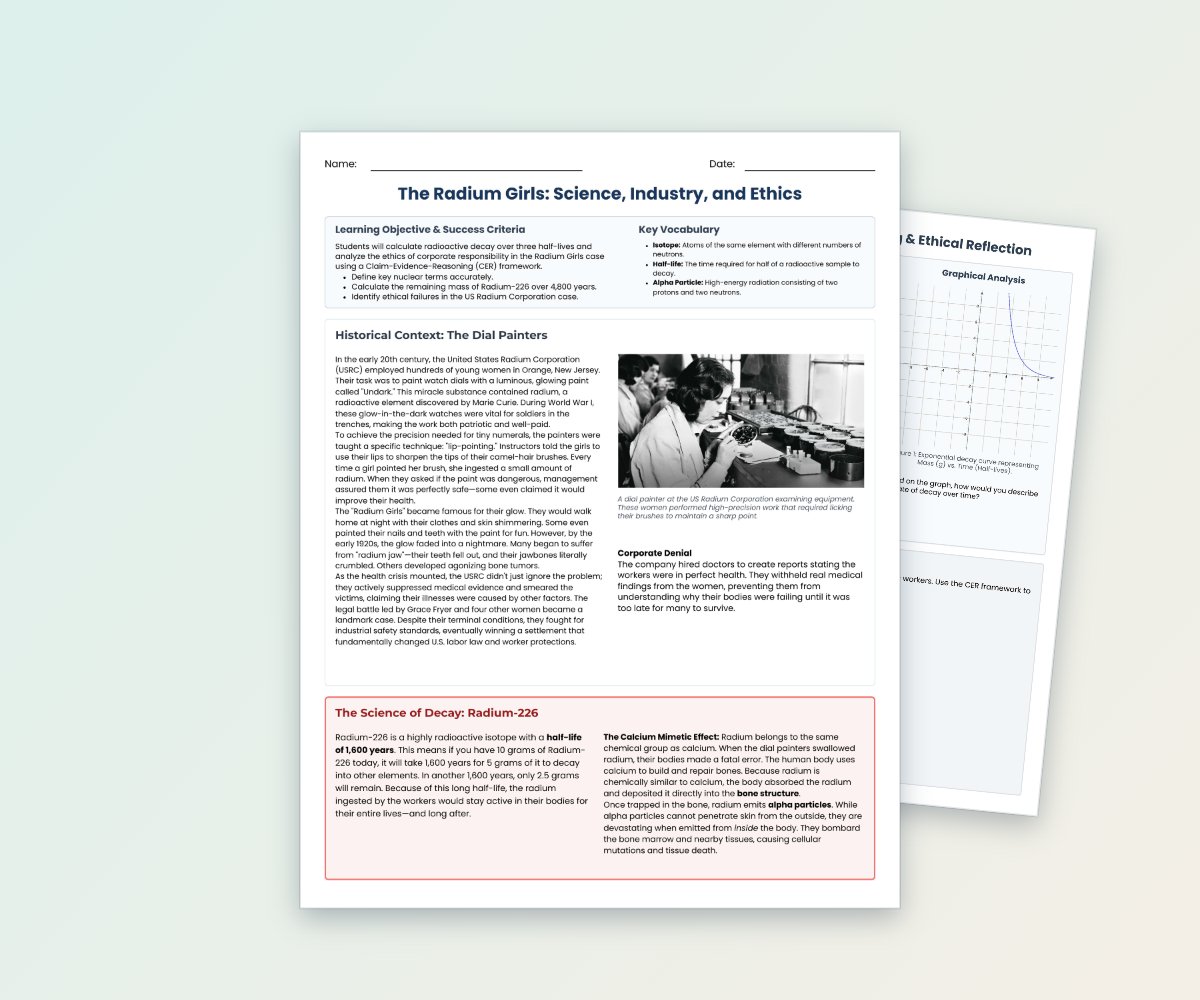
This two-page worksheet introduces isotopes, half-life, alpha particles, and radioactive decay through the history of the Radium Girls.
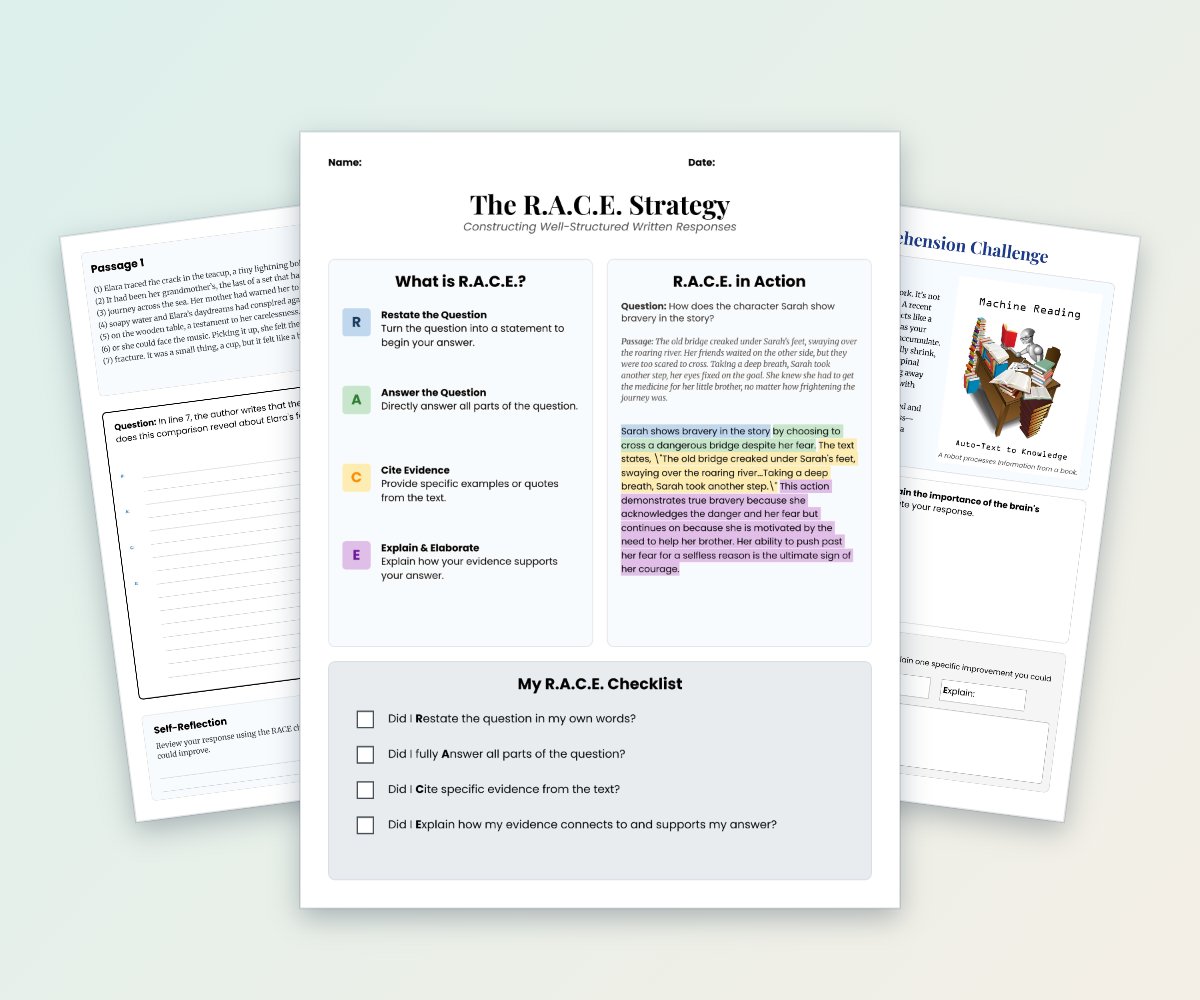
Teach students how to construct well-supported written responses using the R.A.C.E.
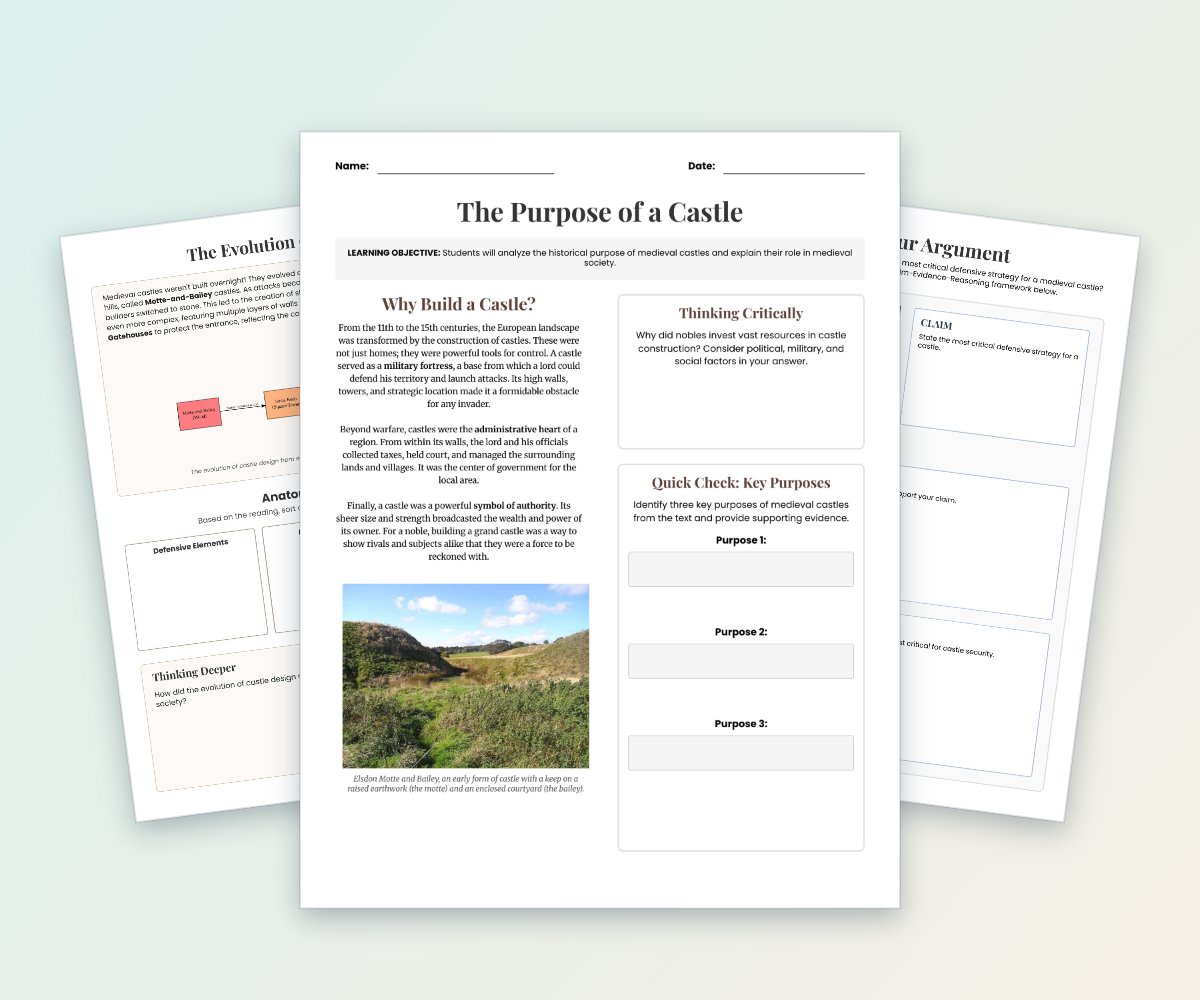
Students examine why medieval castles were built and how their designs evolved from motte-and-bailey forts to stone and concentric castles.
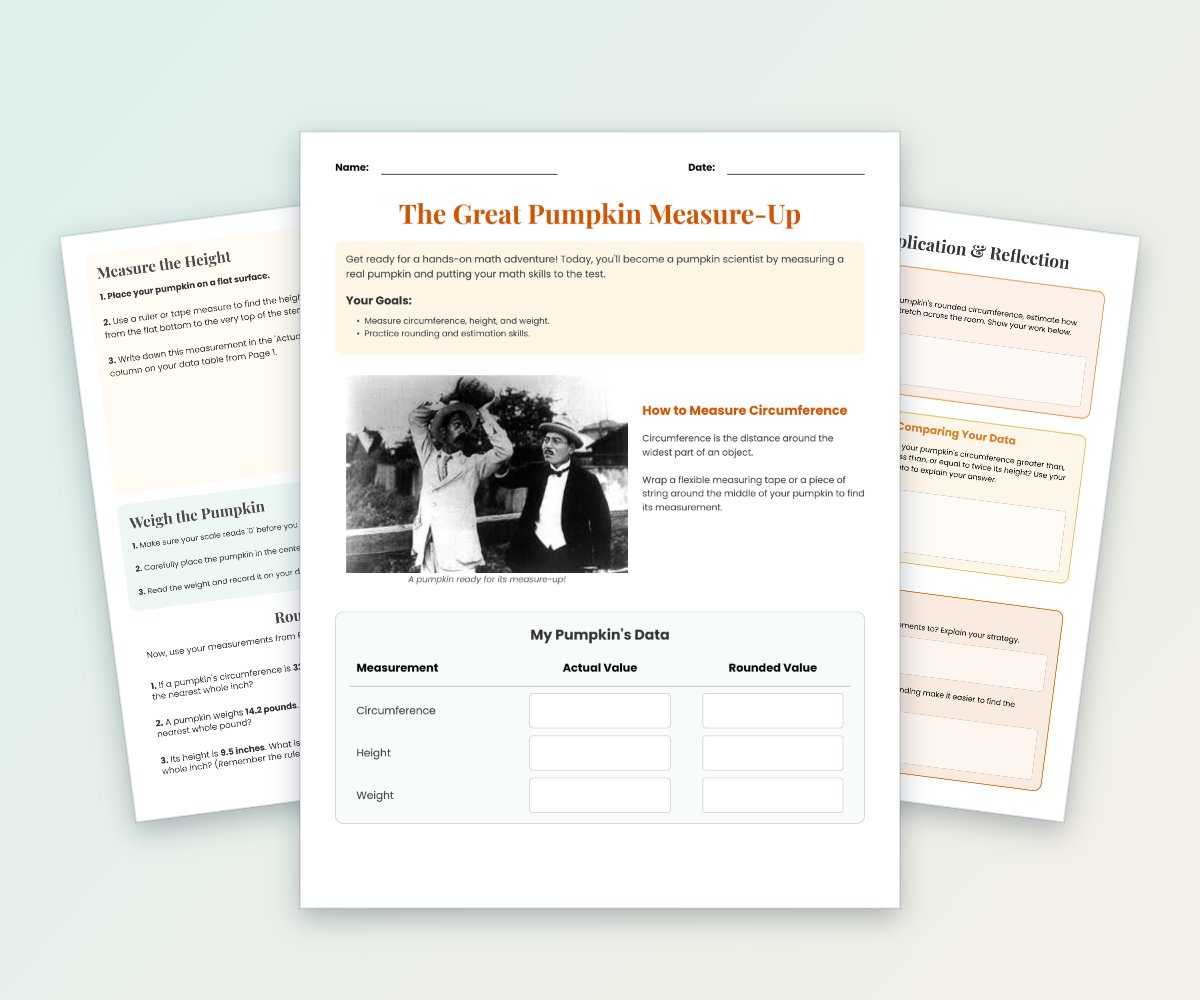
Students measure a real pumpkin’s circumference, height, and weight, record actual and rounded values, and practice estimation.
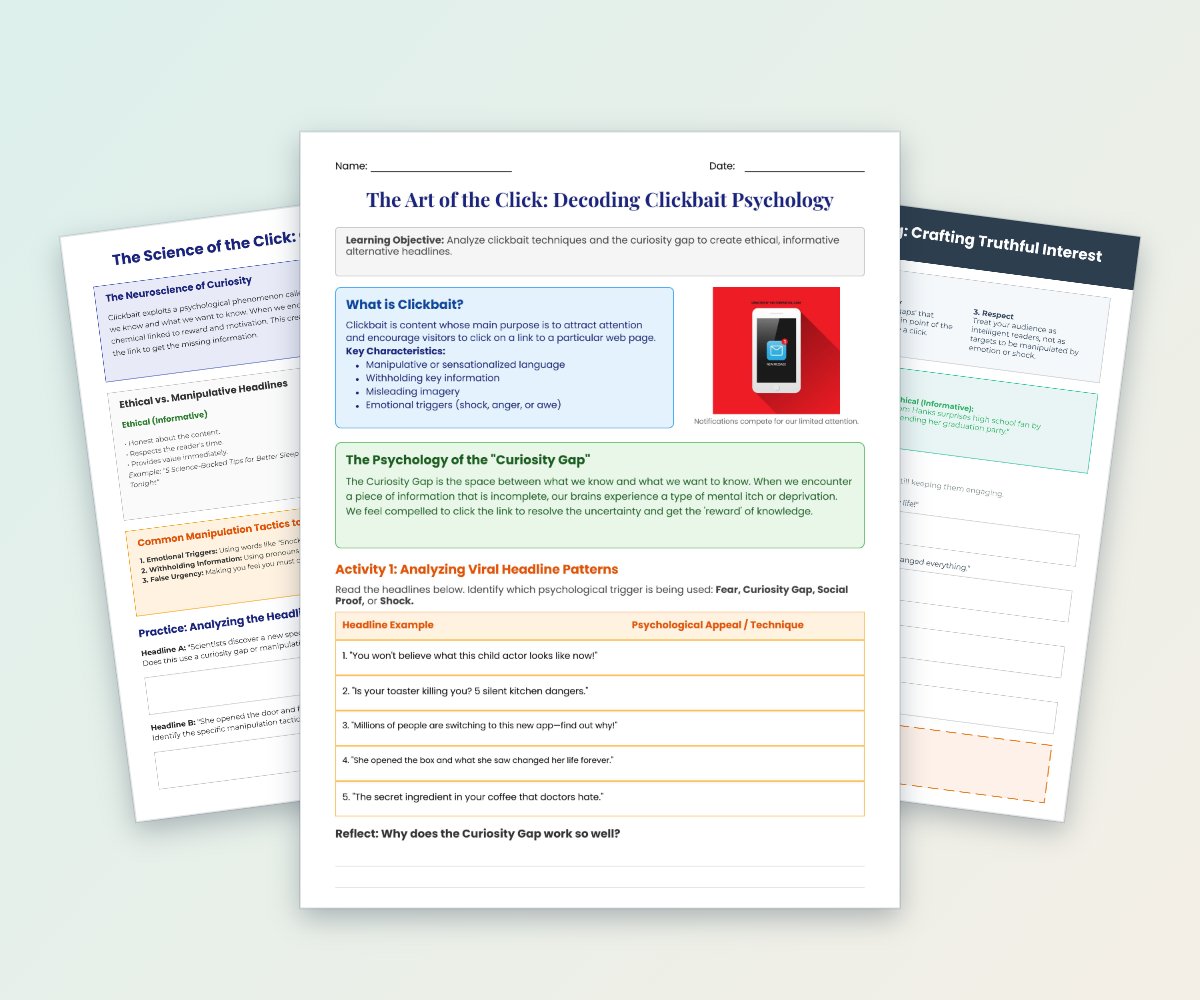
Students explore how clickbait uses curiosity gaps, emotional triggers, sensational language, and withheld information to attract attention.
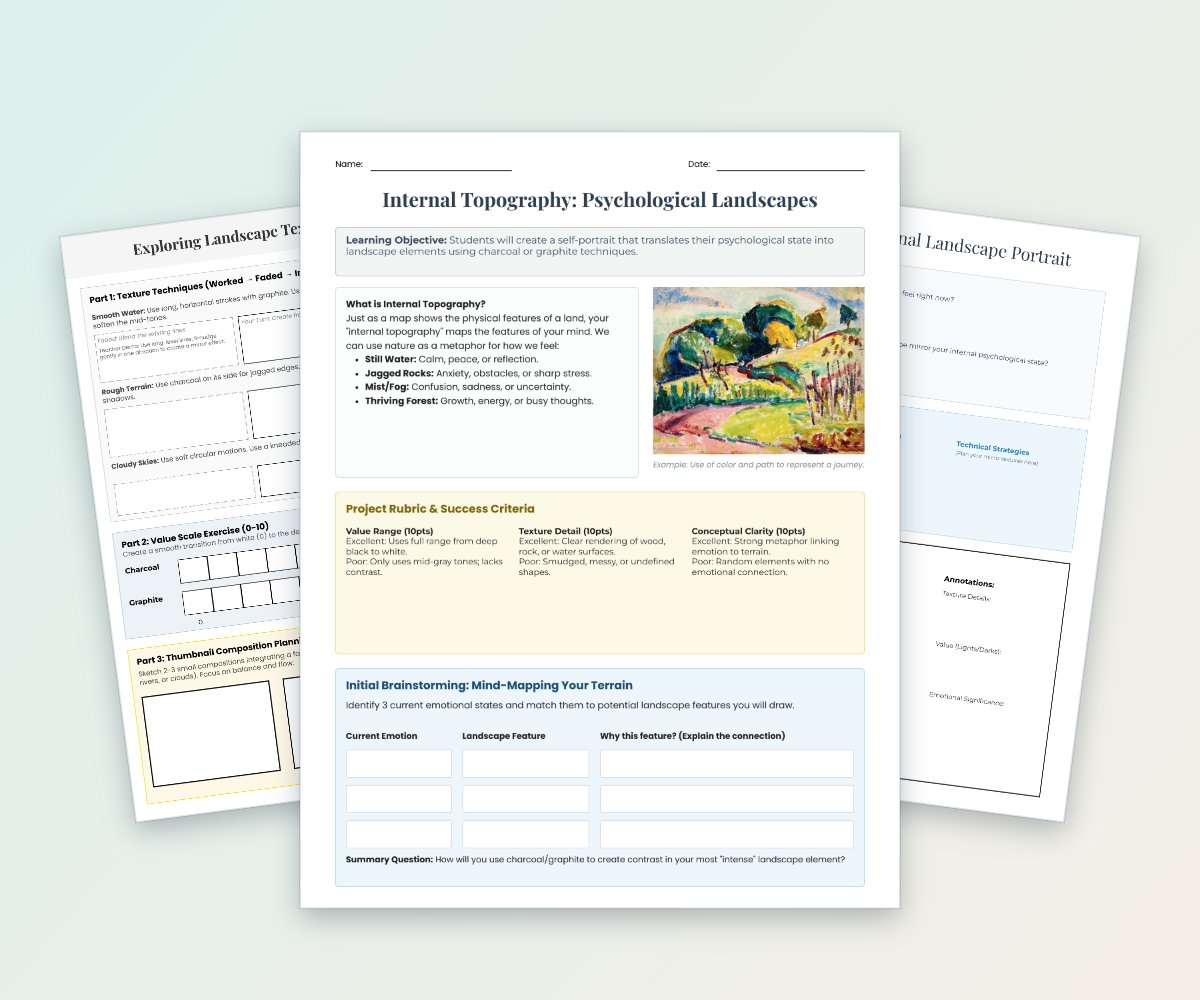
Students translate emotional states into landscape elements within a self-portrait using charcoal or graphite.
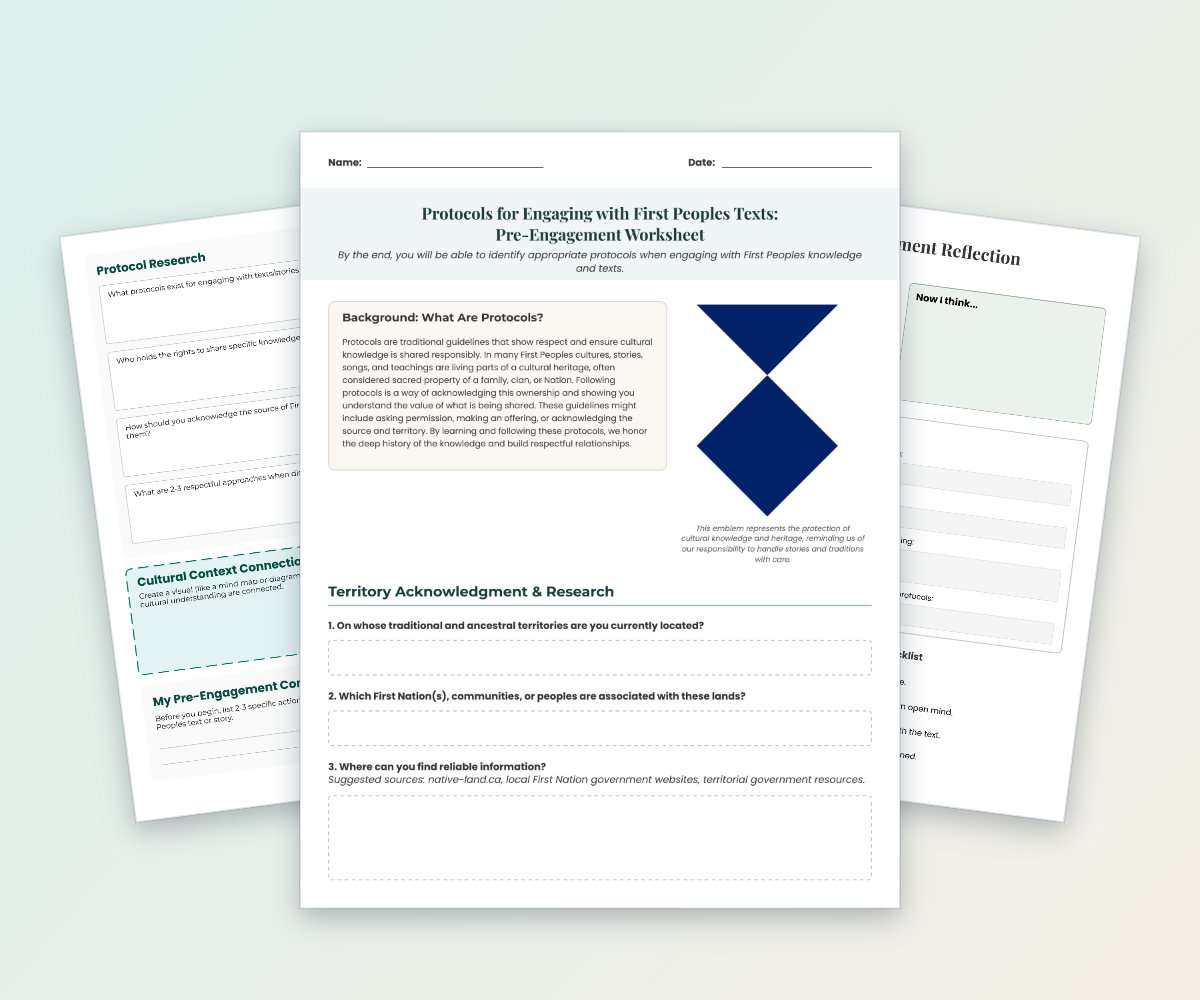
This pre- and post-engagement worksheet helps students research territory, identify cultural protocols, and consider respectful approaches to First Peoples texts and knowledge.
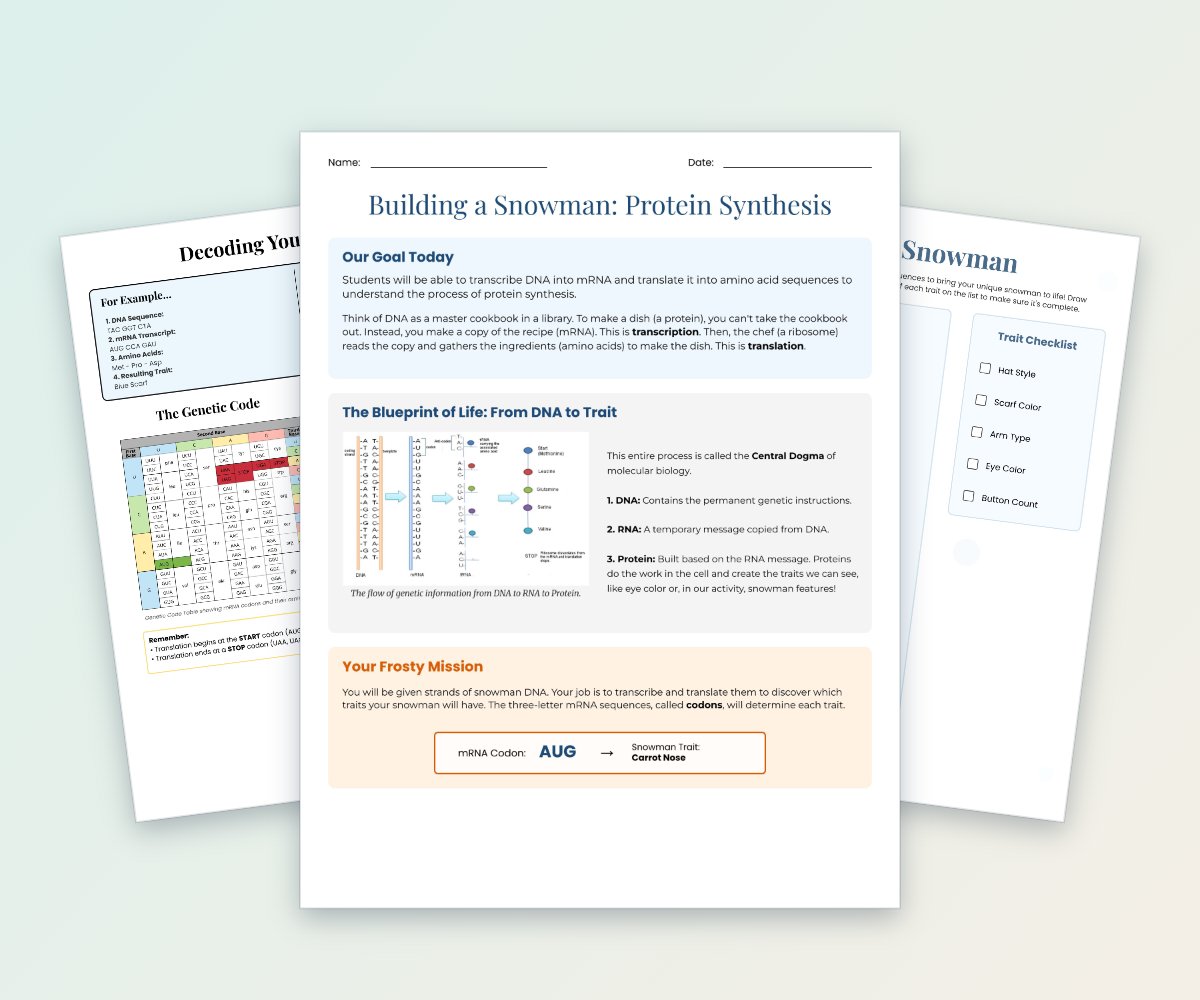
Students transcribe DNA into mRNA and translate codons into amino acid sequences using a snowman-themed activity.
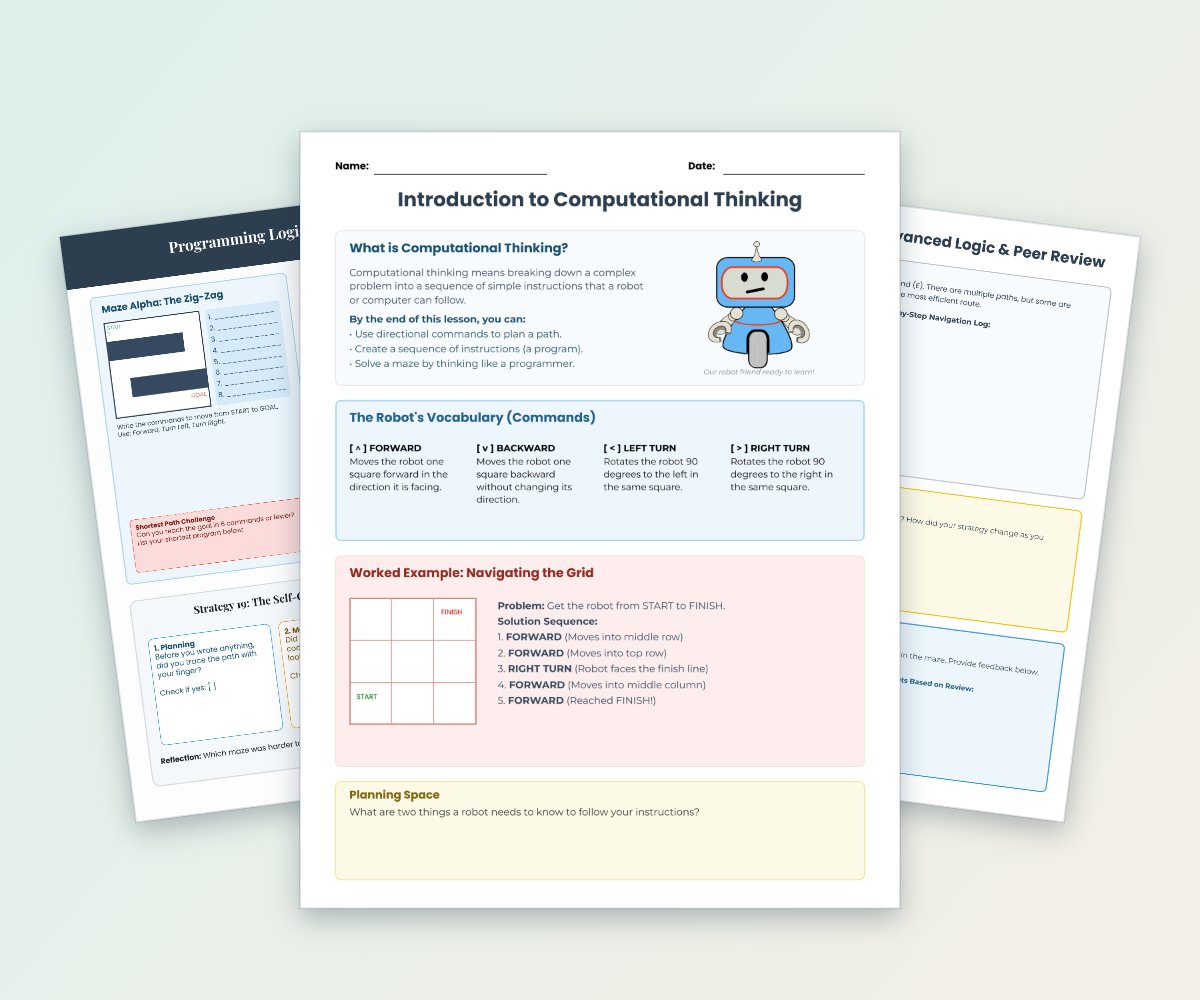
Introduce students to computational thinking through directional commands, robot vocabulary, and maze-navigation programming challenges.
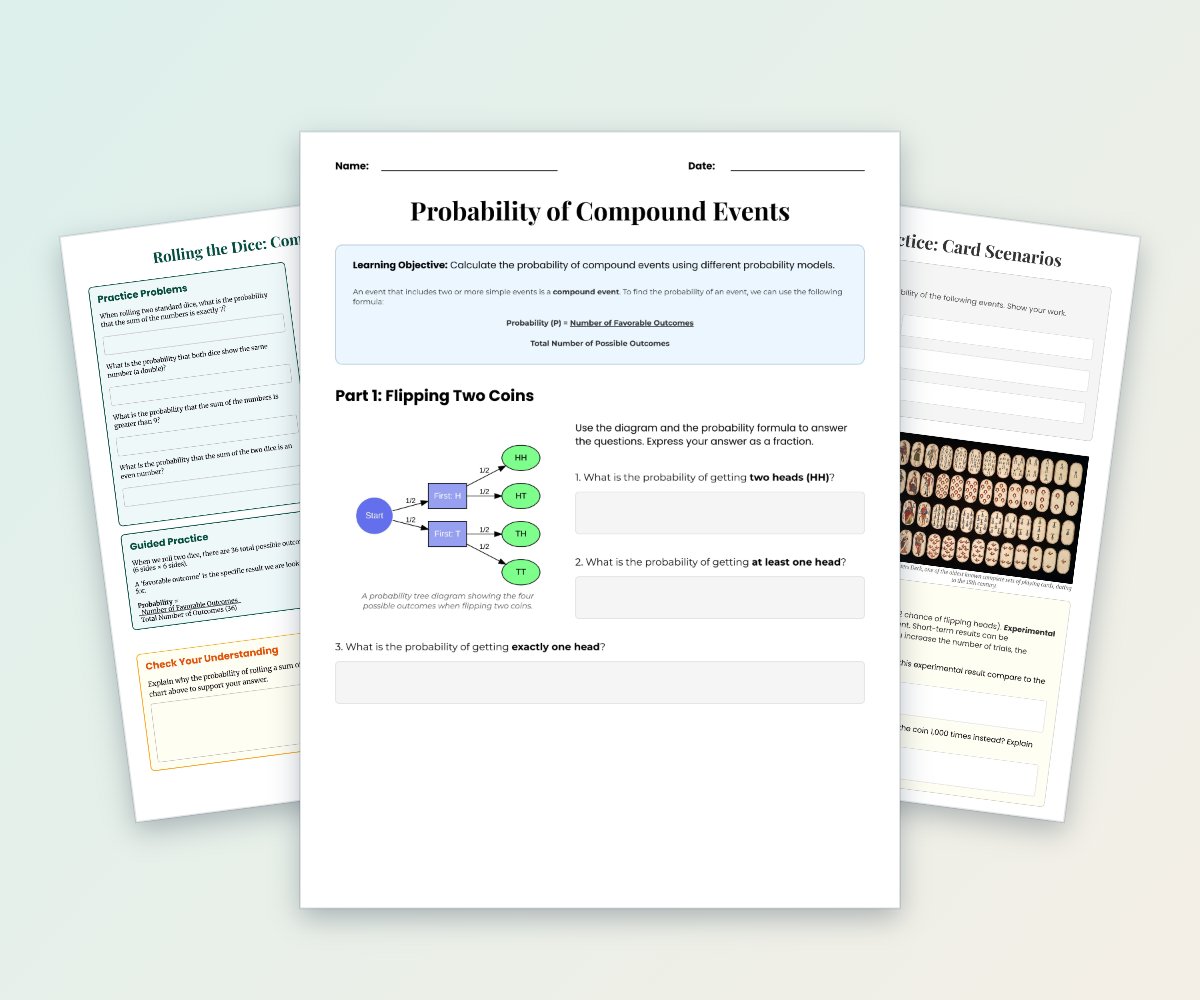
This four-page worksheet teaches students to calculate compound-event probabilities using coin flips, dice, card draws, tree diagrams, outcome charts, and probability models.
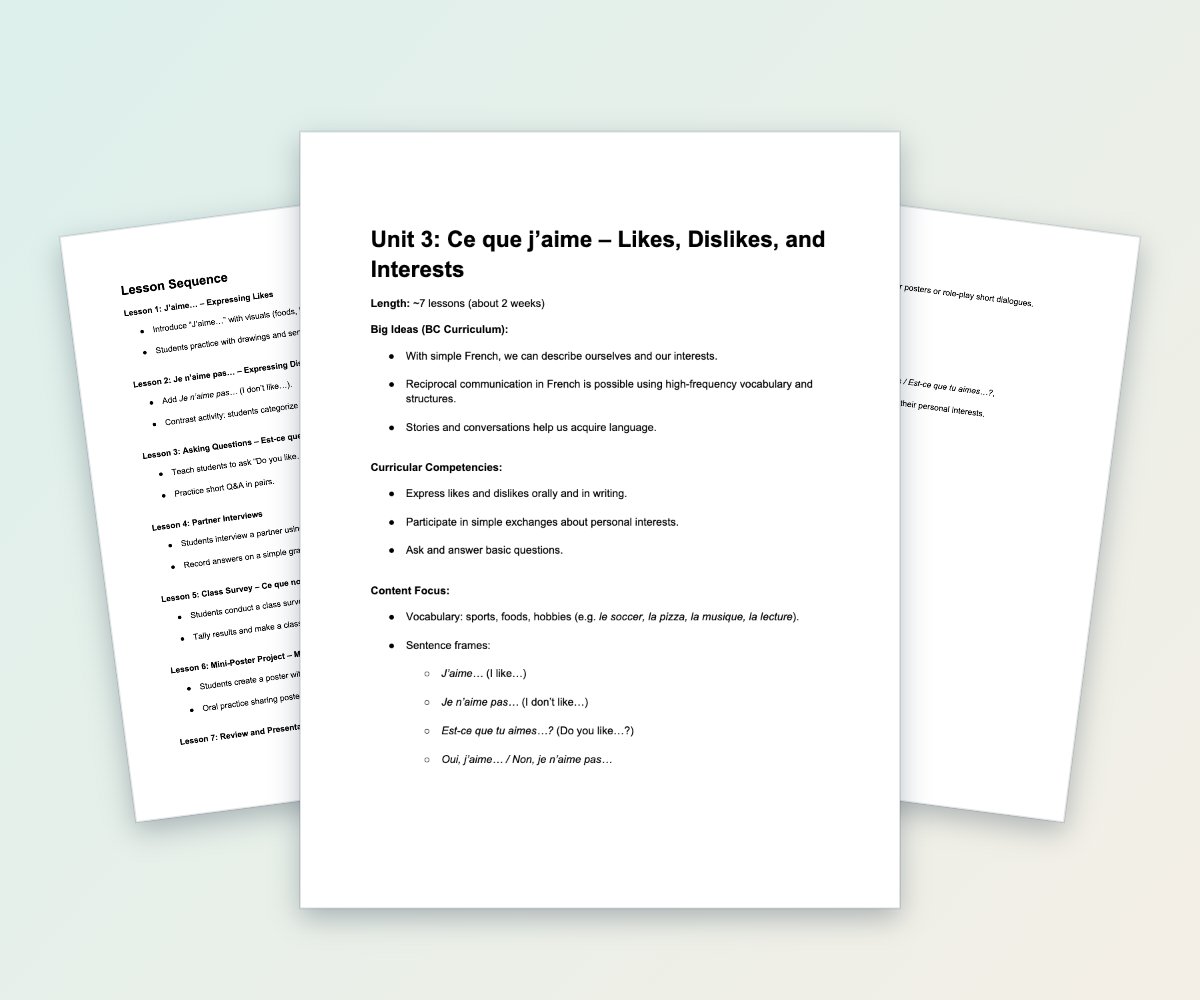
This 33-page French unit helps students express preferences, ask and answer questions, conduct surveys, and present personal interests.
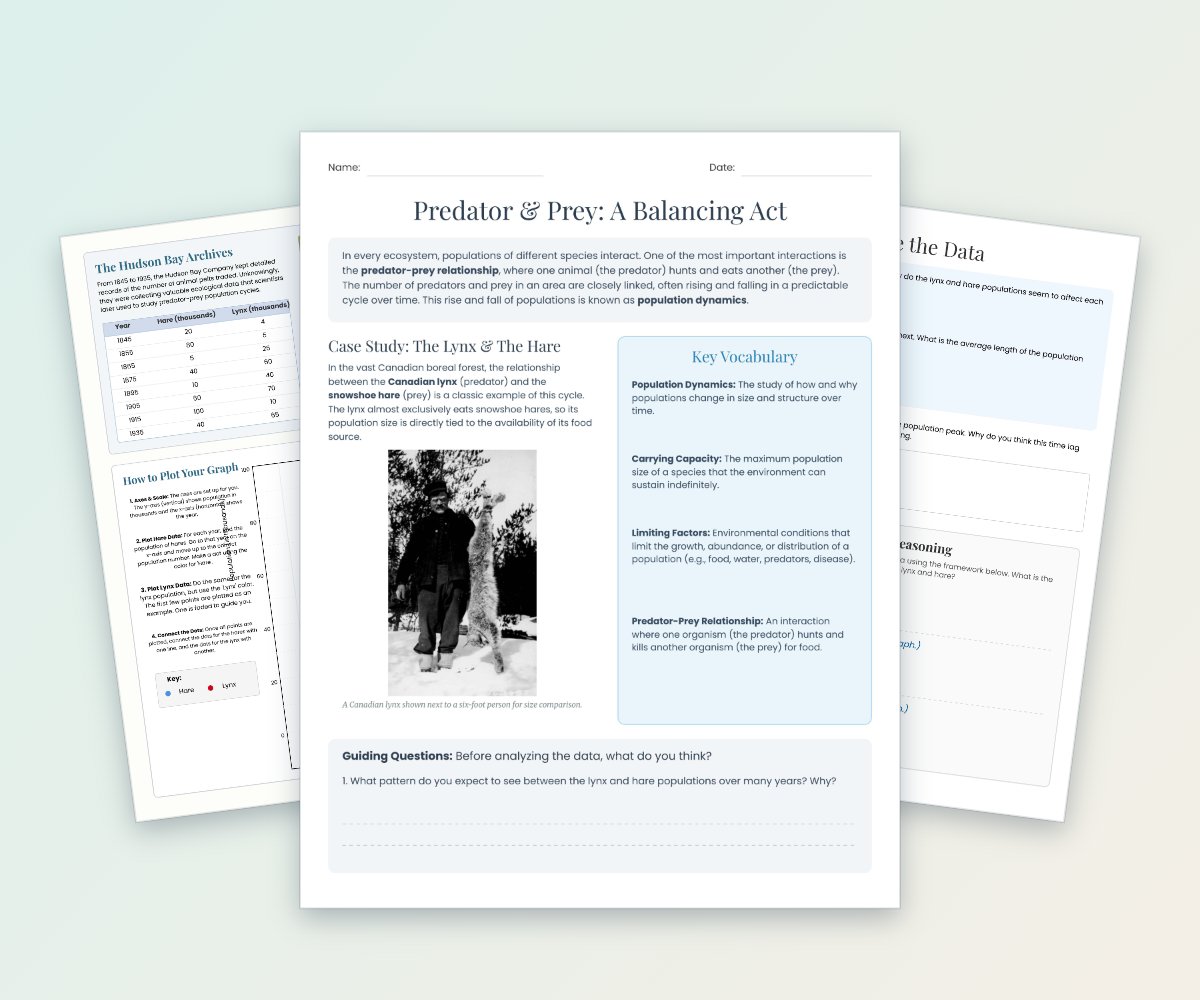
Students learn how predator and prey populations interact through vocabulary, guiding questions, and a Canadian lynx and snowshoe hare case study.
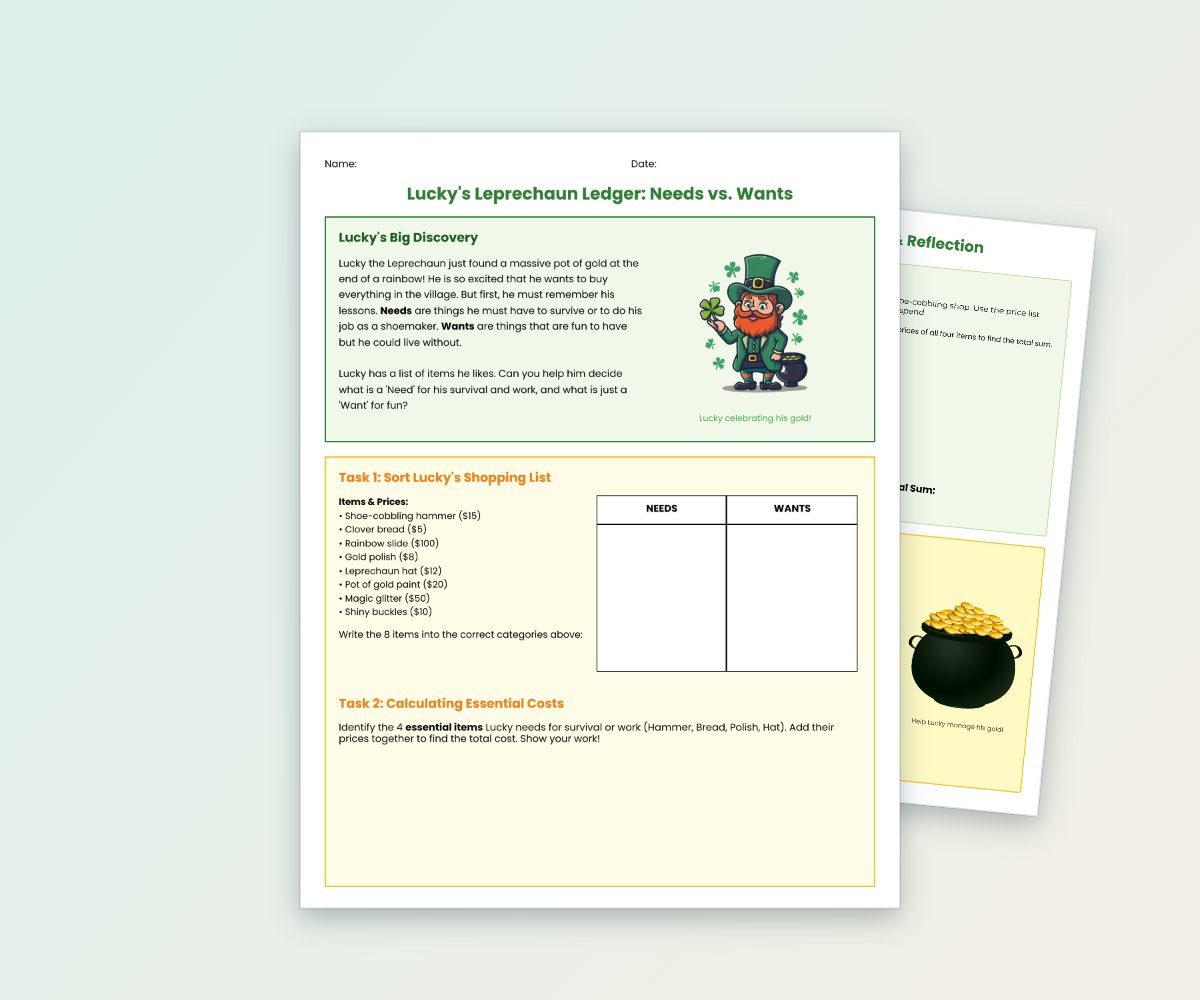
Students help a leprechaun sort shopping items into needs and wants, calculate essential costs, and reflect on spending choices.
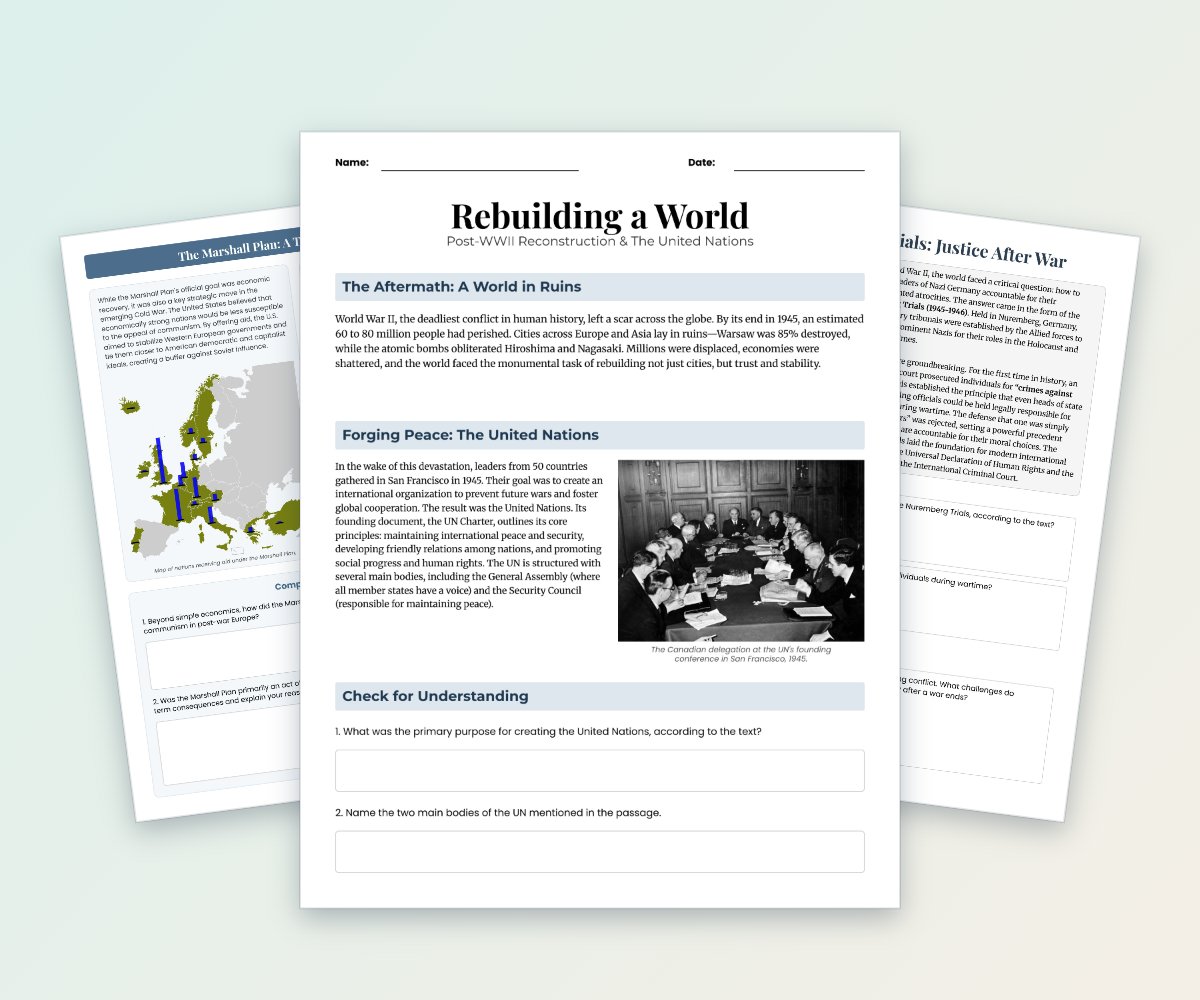
Students examine the United Nations, Marshall Plan, and Nuremberg Trials through informational passages, guided notes, and comprehension questions.
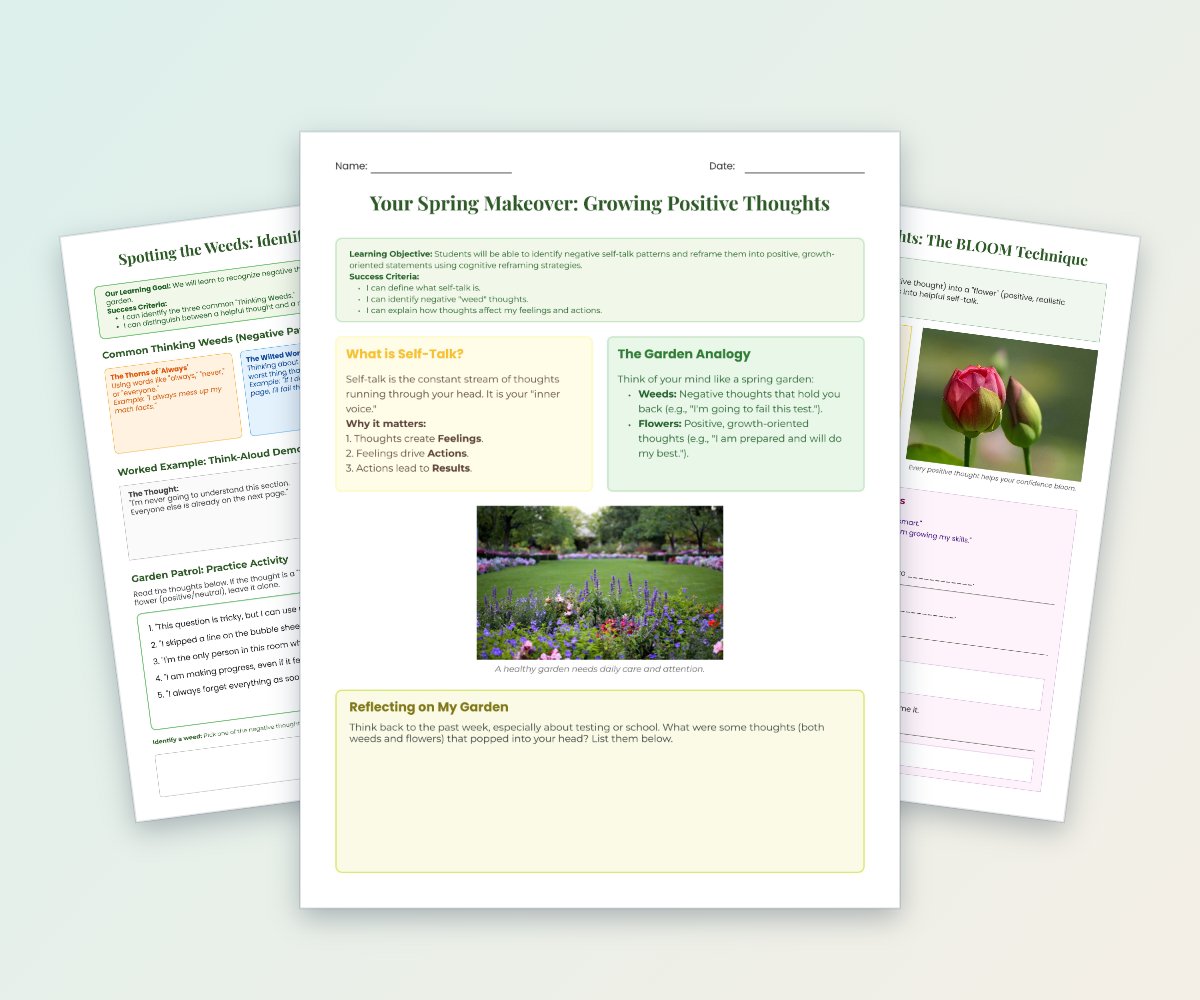
Students explore self-talk using a spring garden analogy, identifying negative “thinking weeds” and positive, growth-oriented thoughts.
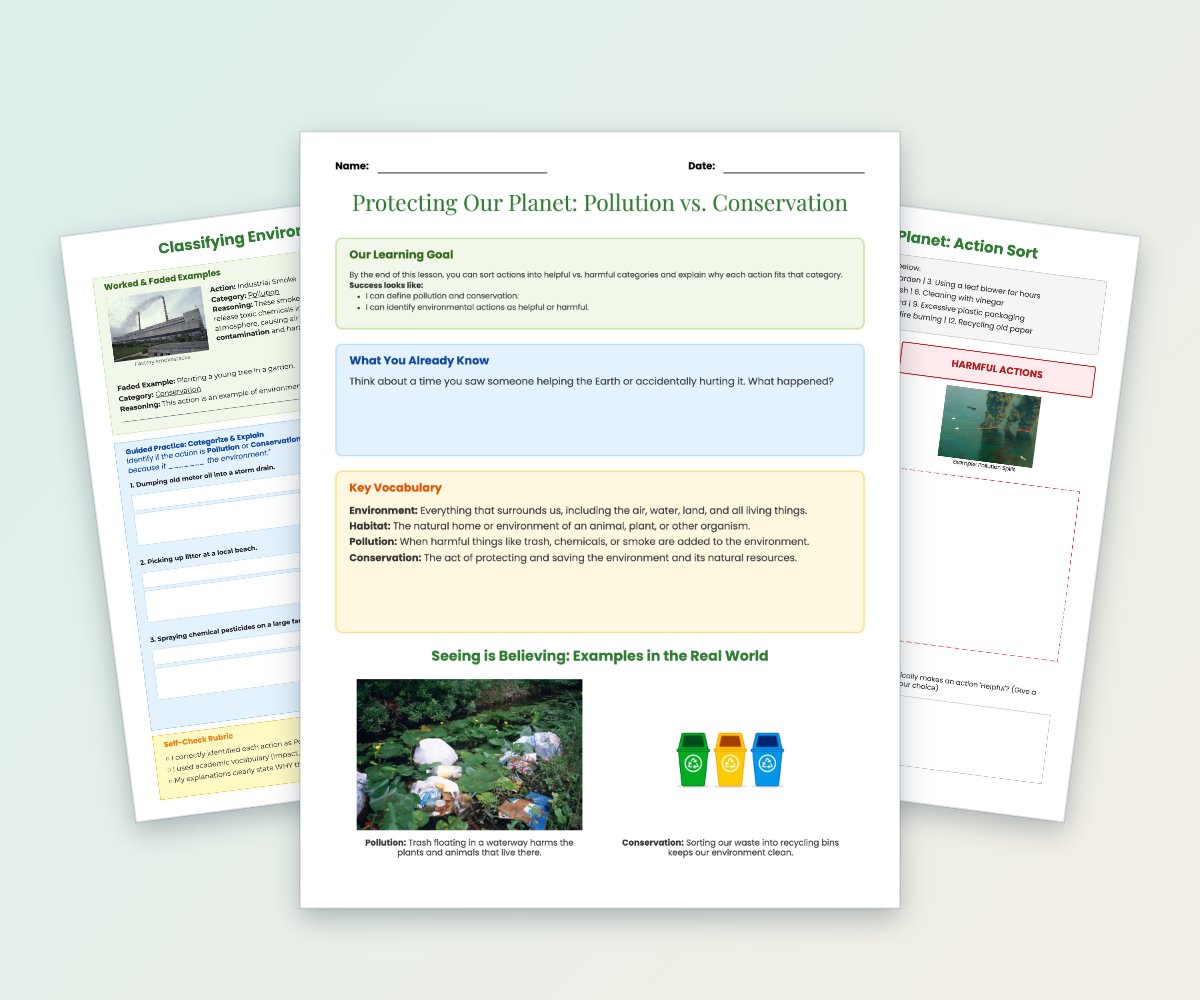
This four-page environmental science resource teaches students to distinguish pollution from conservation actions.
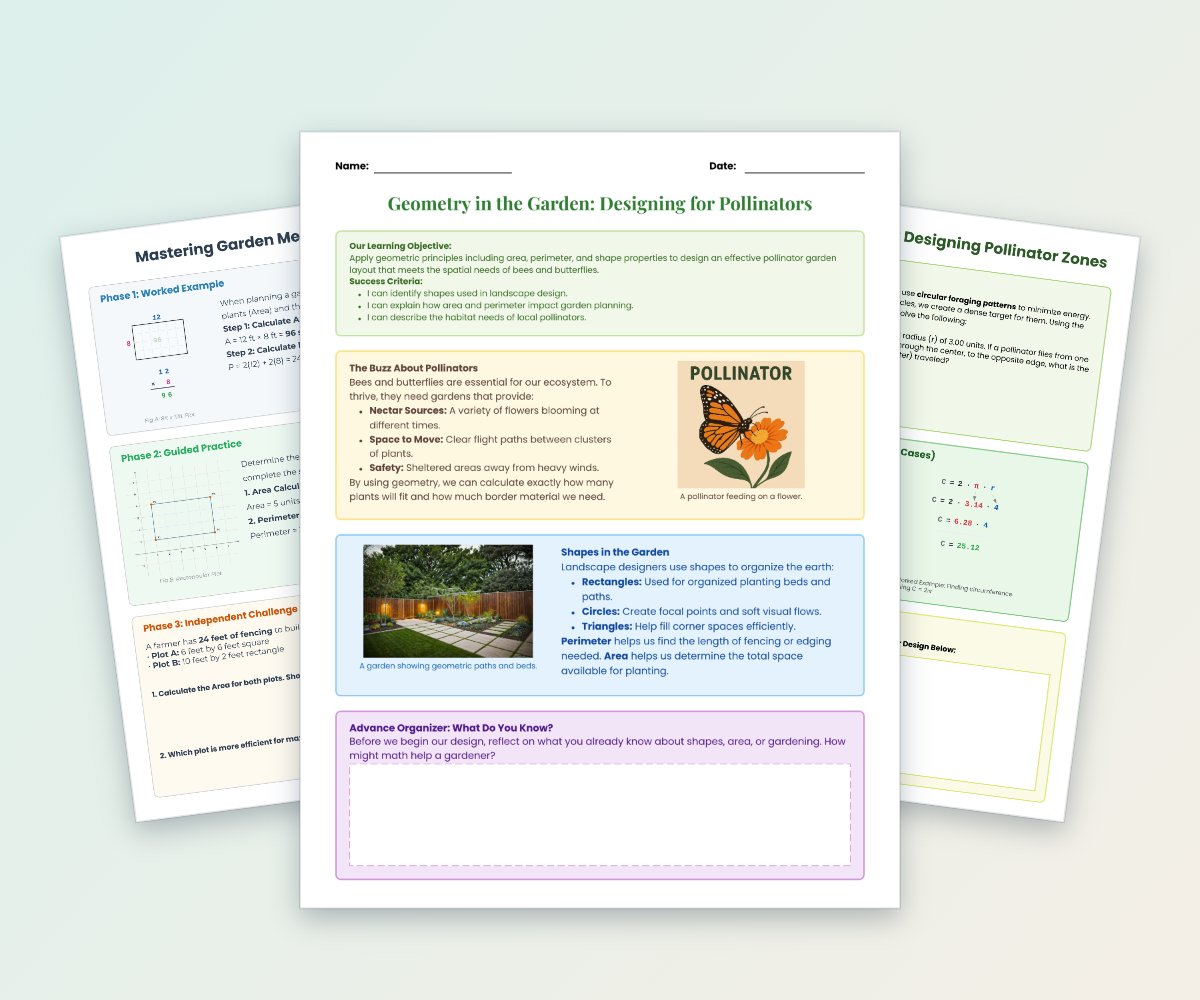
Students apply area, perimeter, and shape properties to design an effective pollinator garden layout.
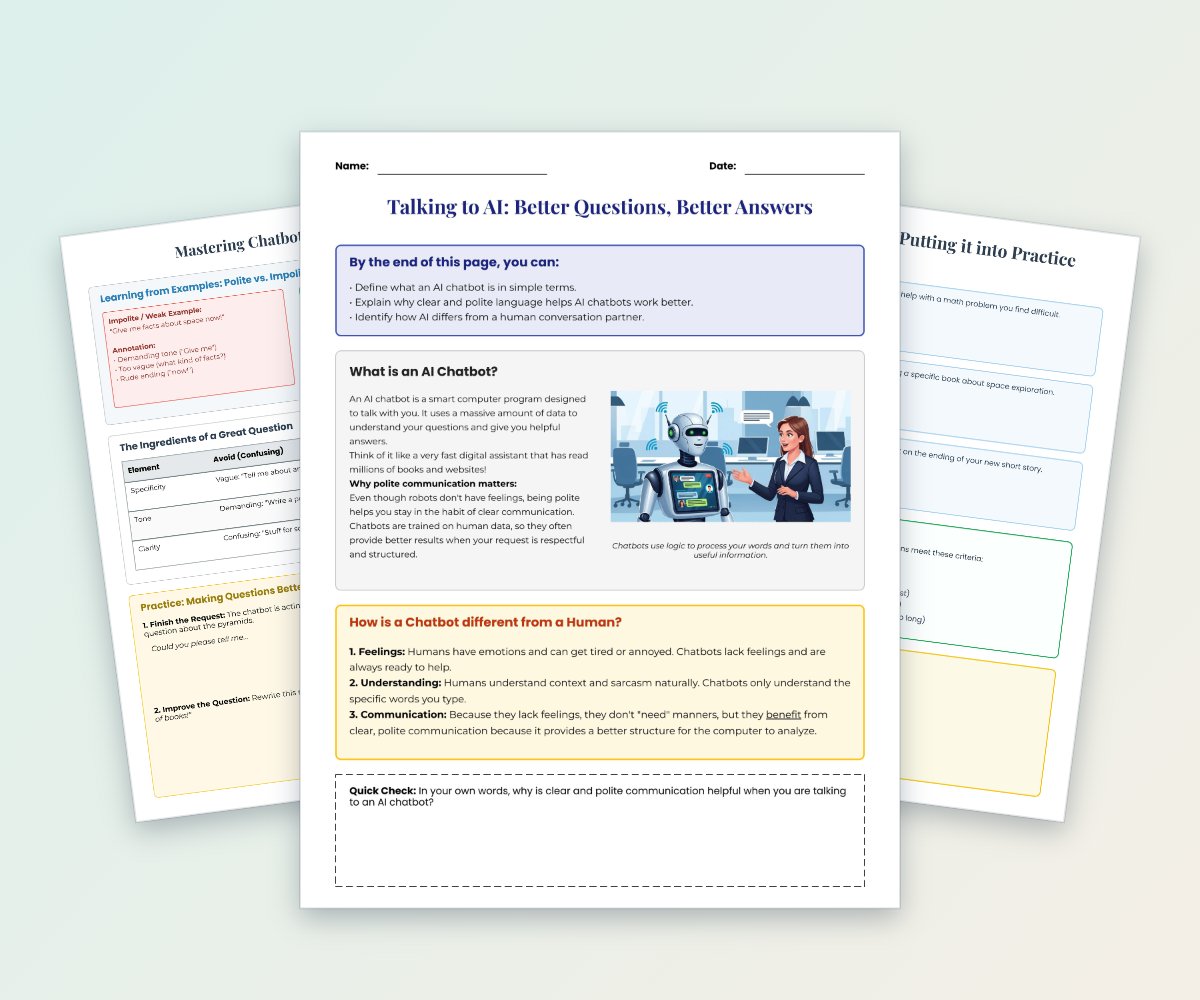
This four-page worksheet introduces AI chatbots and explains how clear, specific, and polite prompts improve responses.
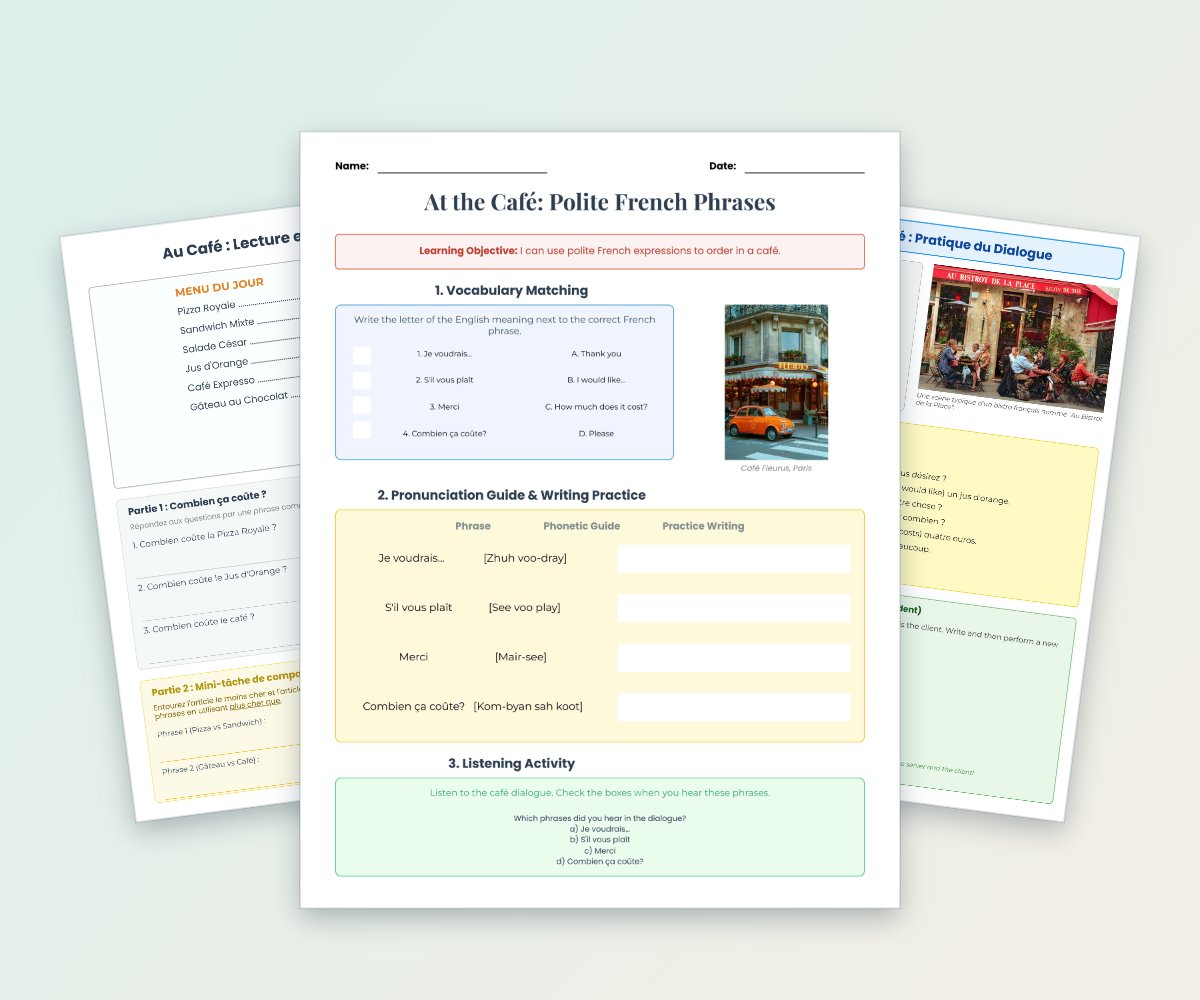
Students learn polite French expressions for ordering food and drinks in a café through vocabulary matching, pronunciation practice, listening, reading, and price-comparison activities.
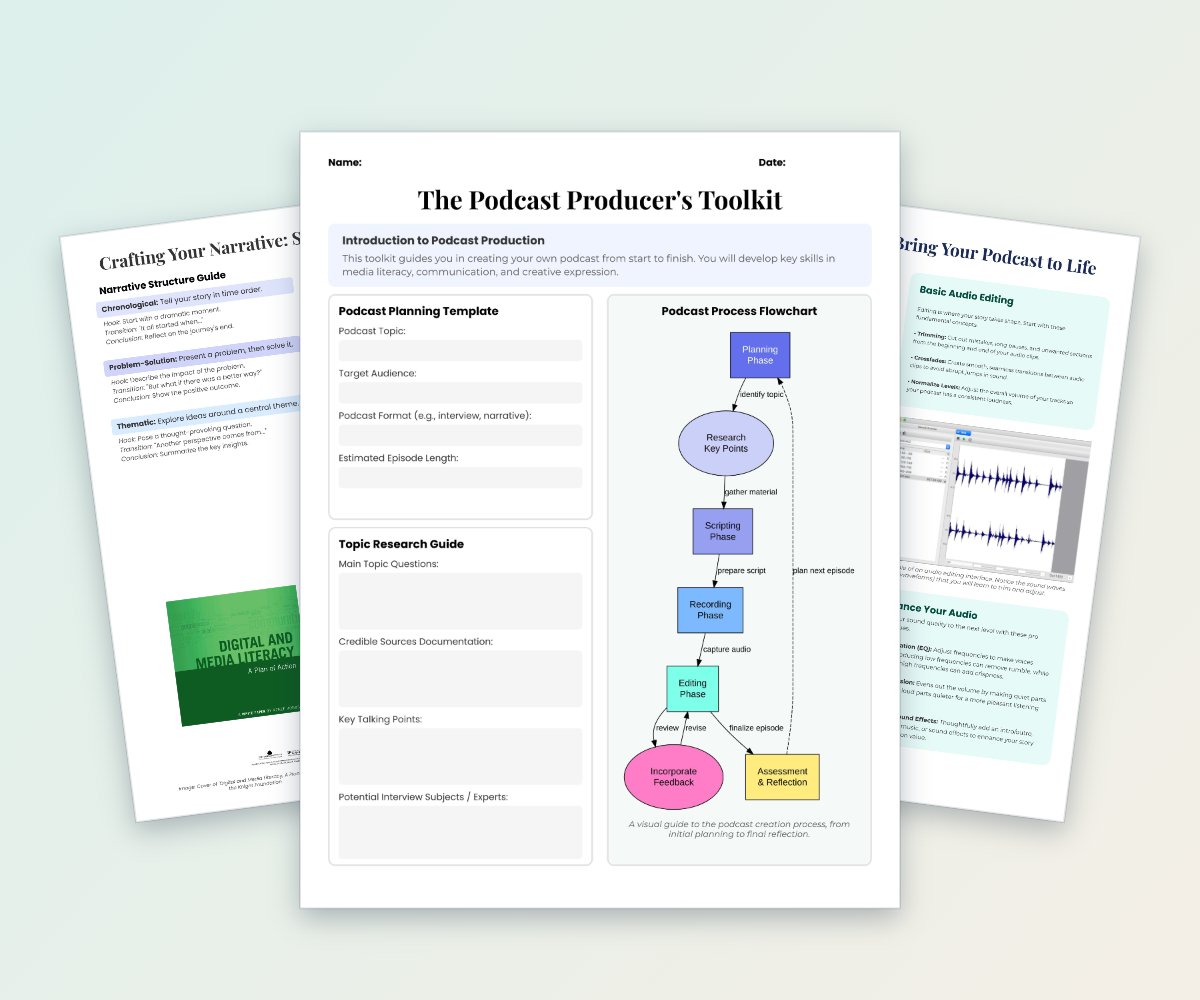
This four-page toolkit guides students through planning, researching, scripting, recording, editing, and reflecting on a podcast episode.
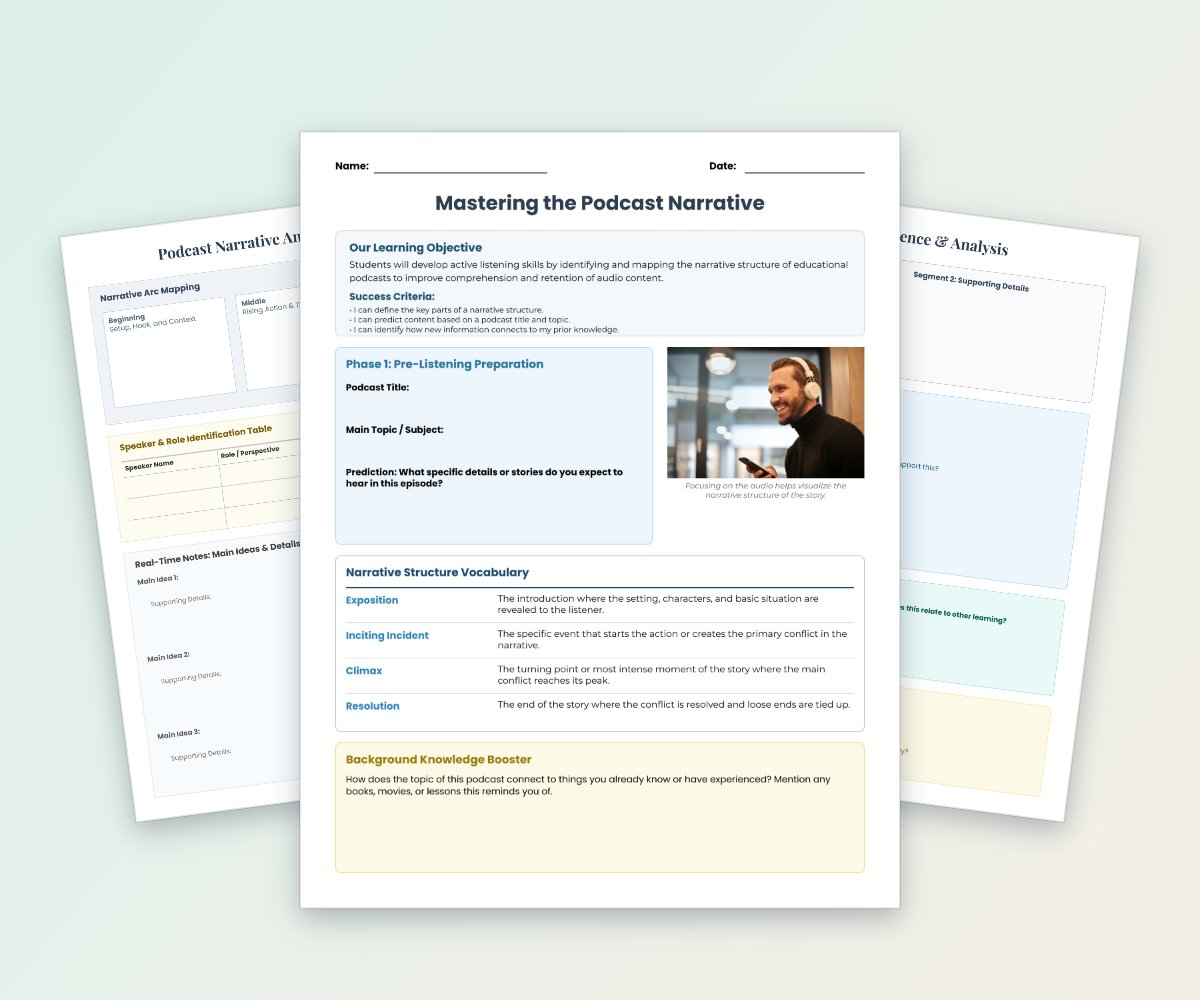
Guide students through pre-listening predictions, narrative arc mapping, speaker identification, note-taking, evidence analysis, and post-listening reflection.
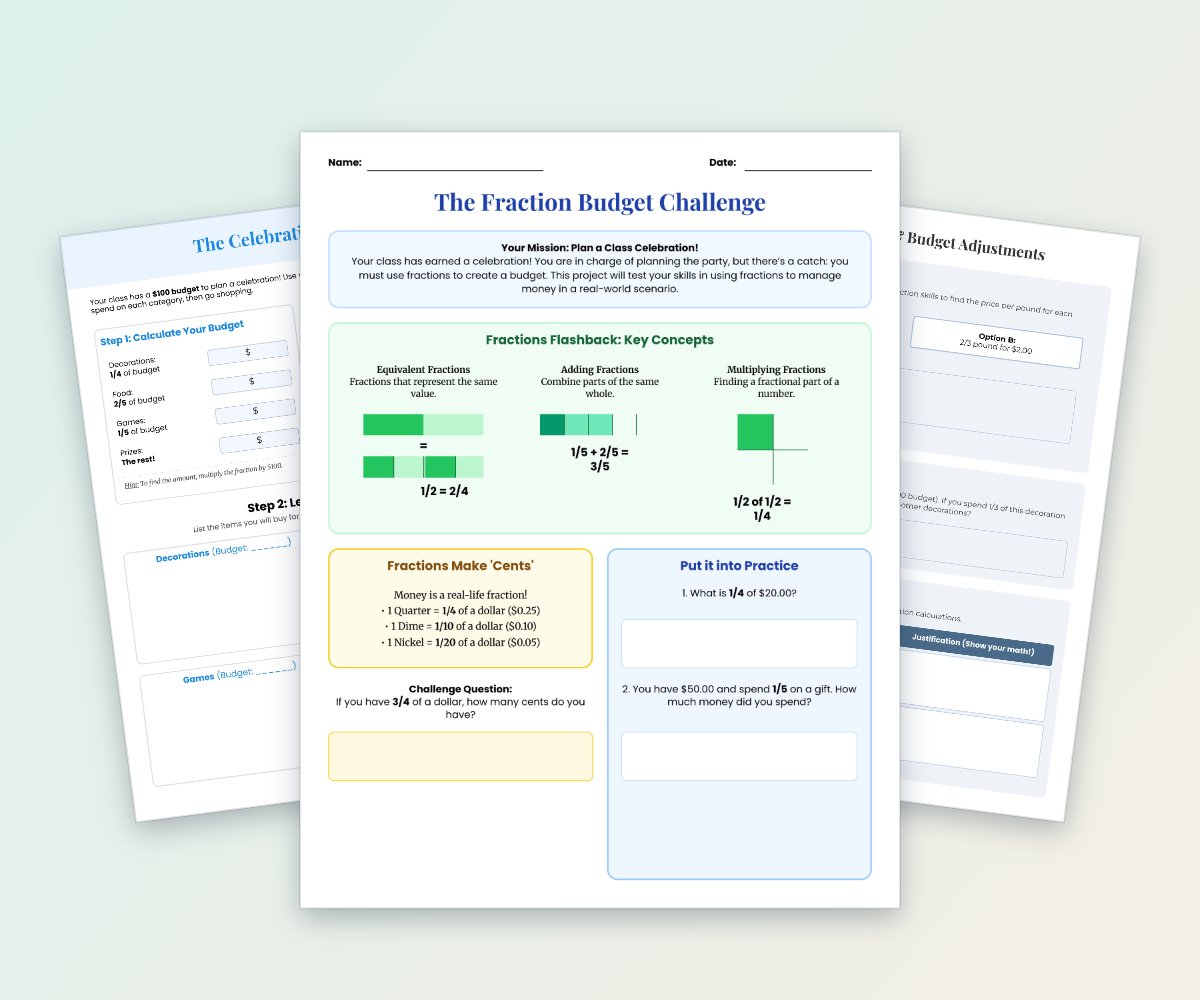
Students plan a class celebration using a $100 budget divided among decorations, food, games, and prizes.
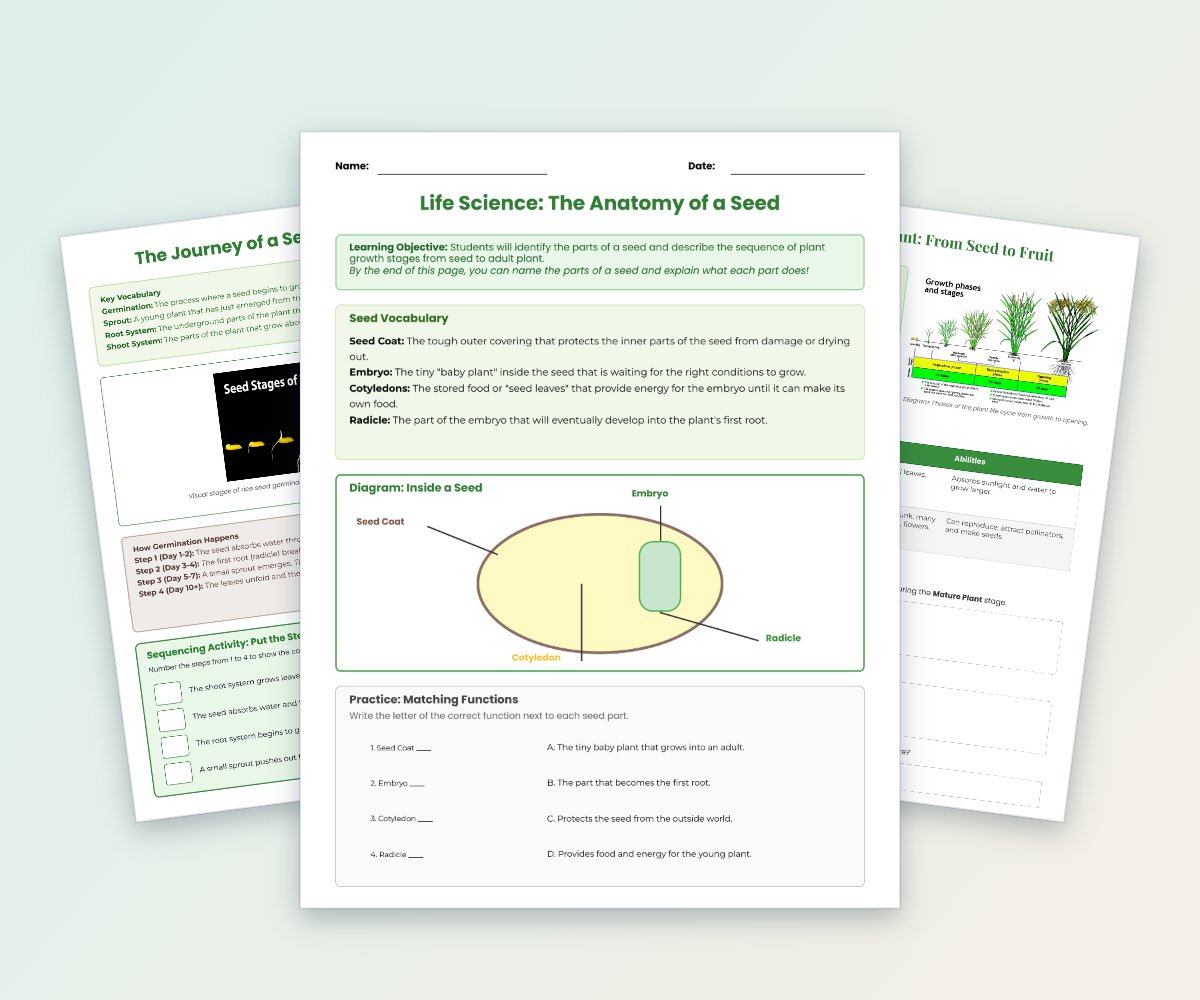
This printable packet introduces seed parts, their functions, germination stages, and the journey from seed to mature plant.
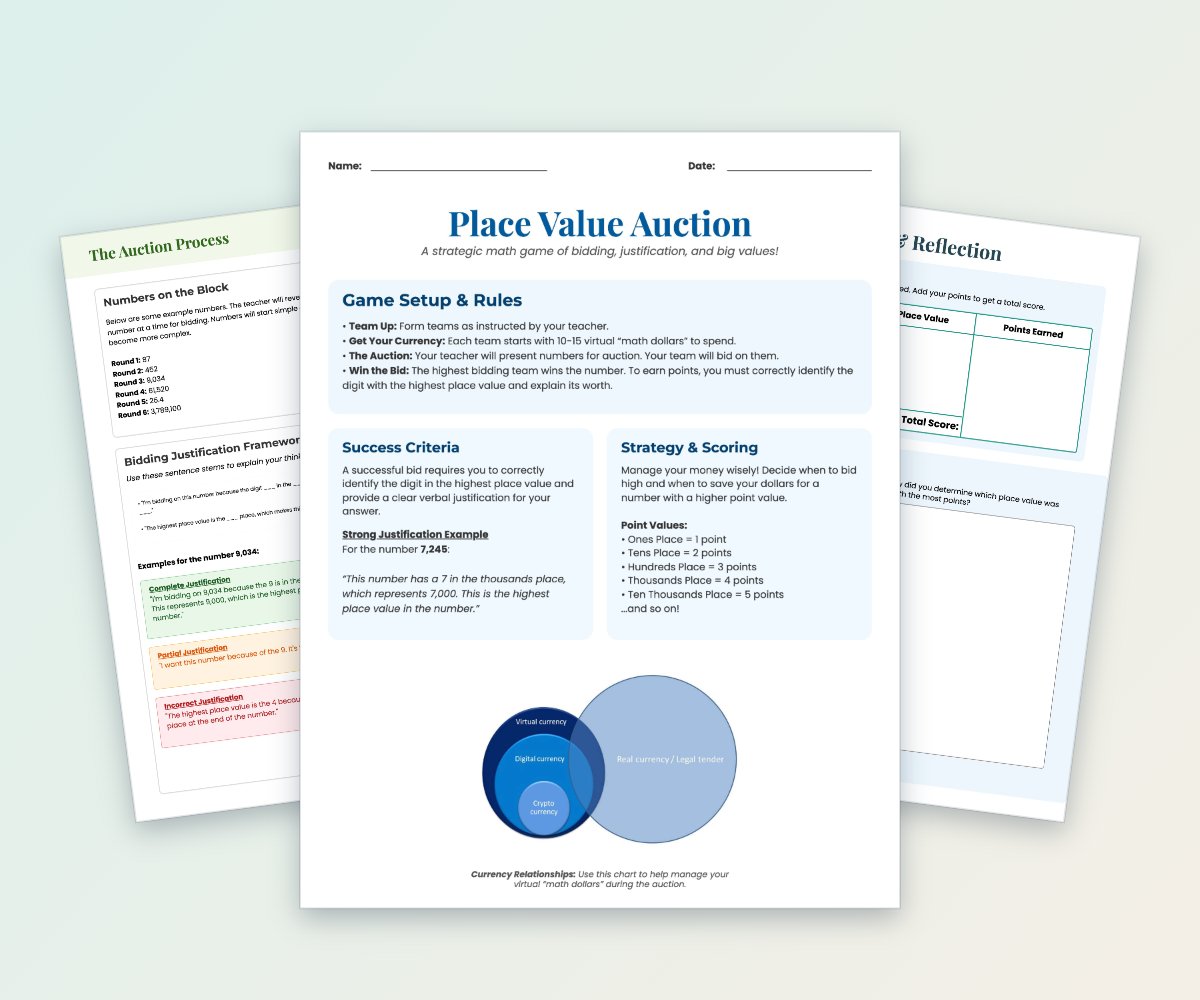
Students bid on increasingly complex numbers using virtual math dollars, then identify the highest place value and explain its value.
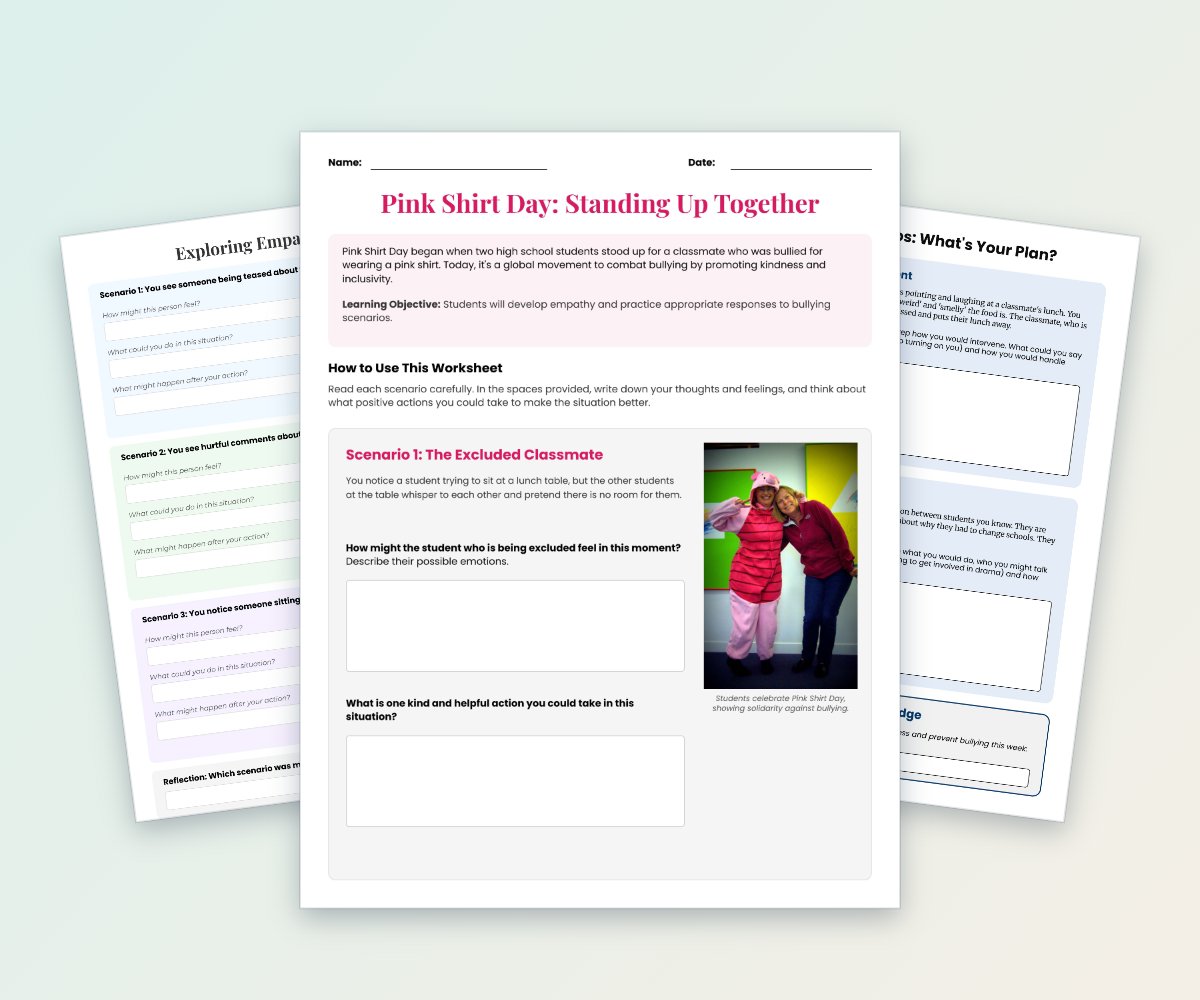
This four-page Pink Shirt Day worksheet helps students explore empathy, inclusion, and appropriate responses to bullying.
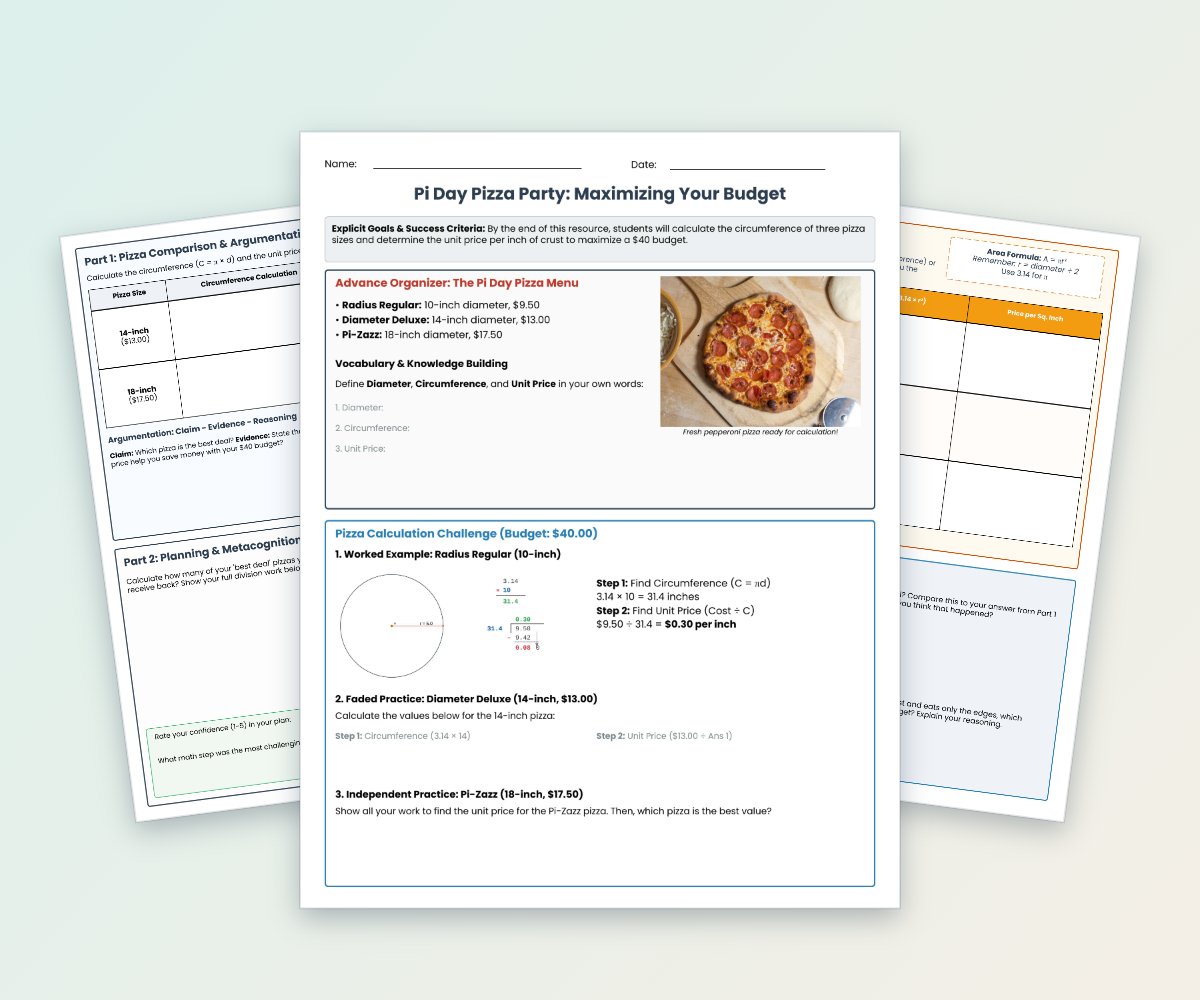
Students calculate pizza circumference, compare unit prices, maximize a $40 budget, and evaluate area-based value.
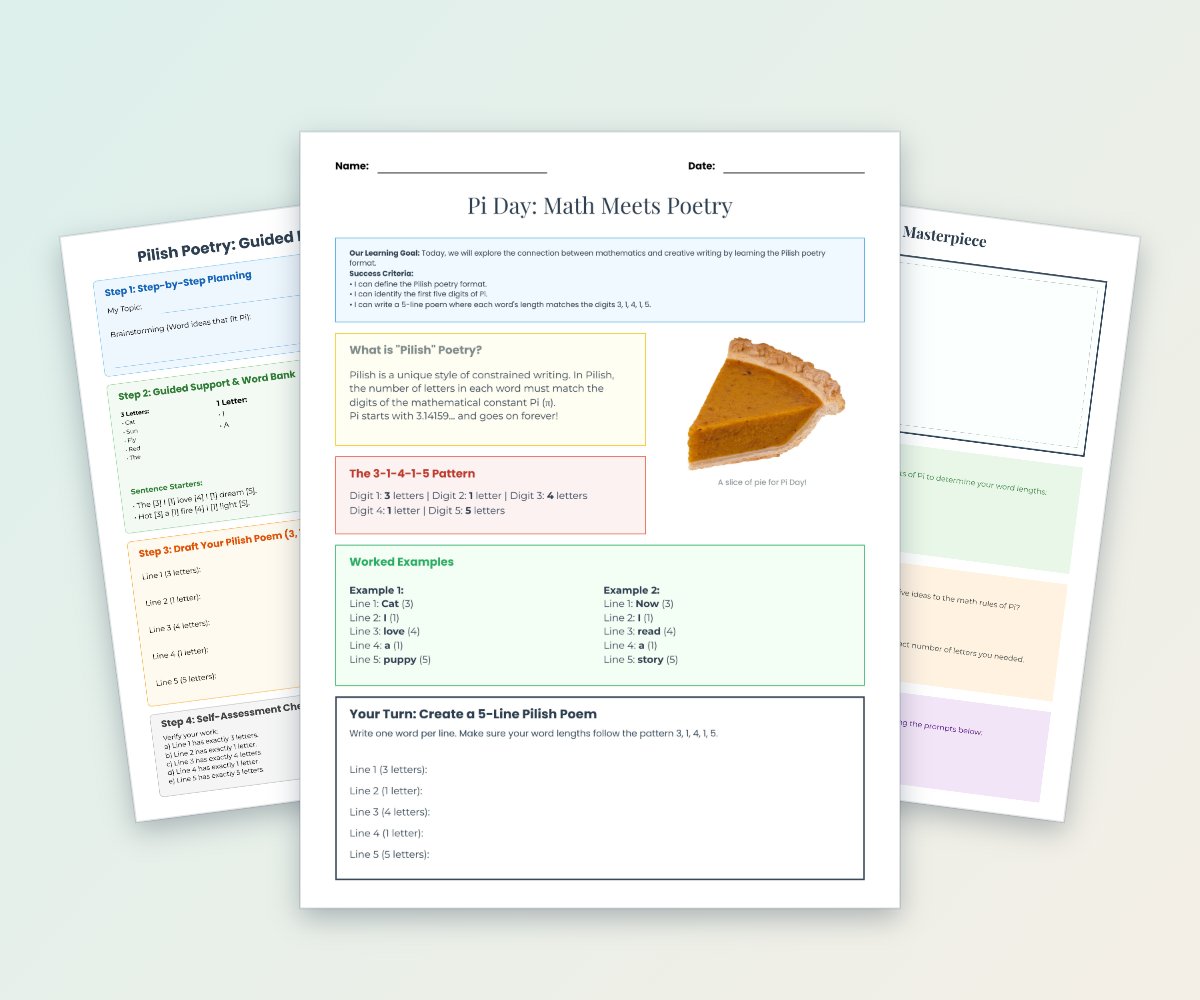
Students explore the digits of pi through Pilish, a constrained poetry format in which word lengths follow a numerical pattern.
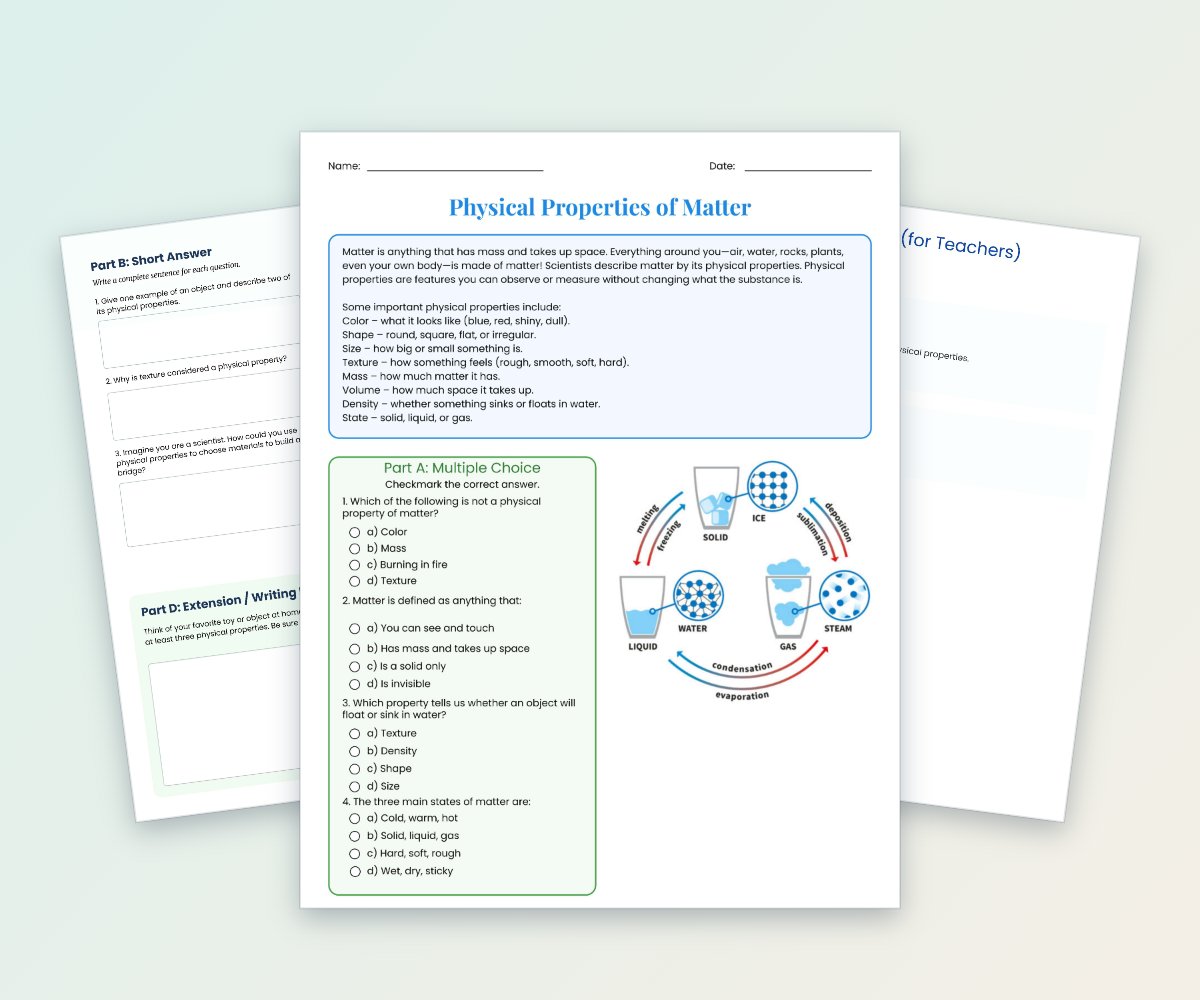
This three-page worksheet introduces physical properties of matter, including color, shape, texture, mass, volume, density, and states of matter.
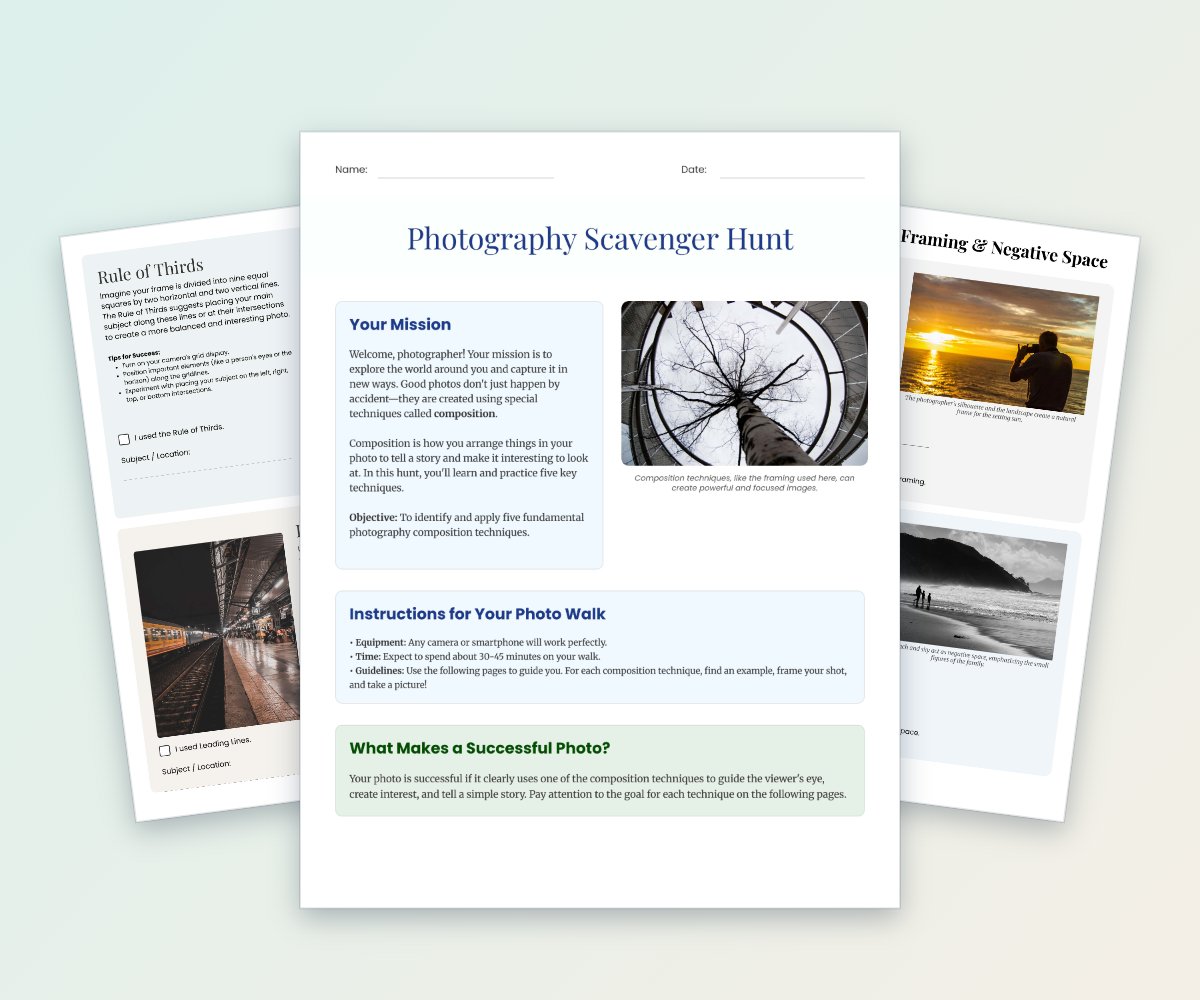
Students explore their surroundings and capture photographs demonstrating five fundamental composition techniques, including rule of thirds, leading lines, framing, and negative space.
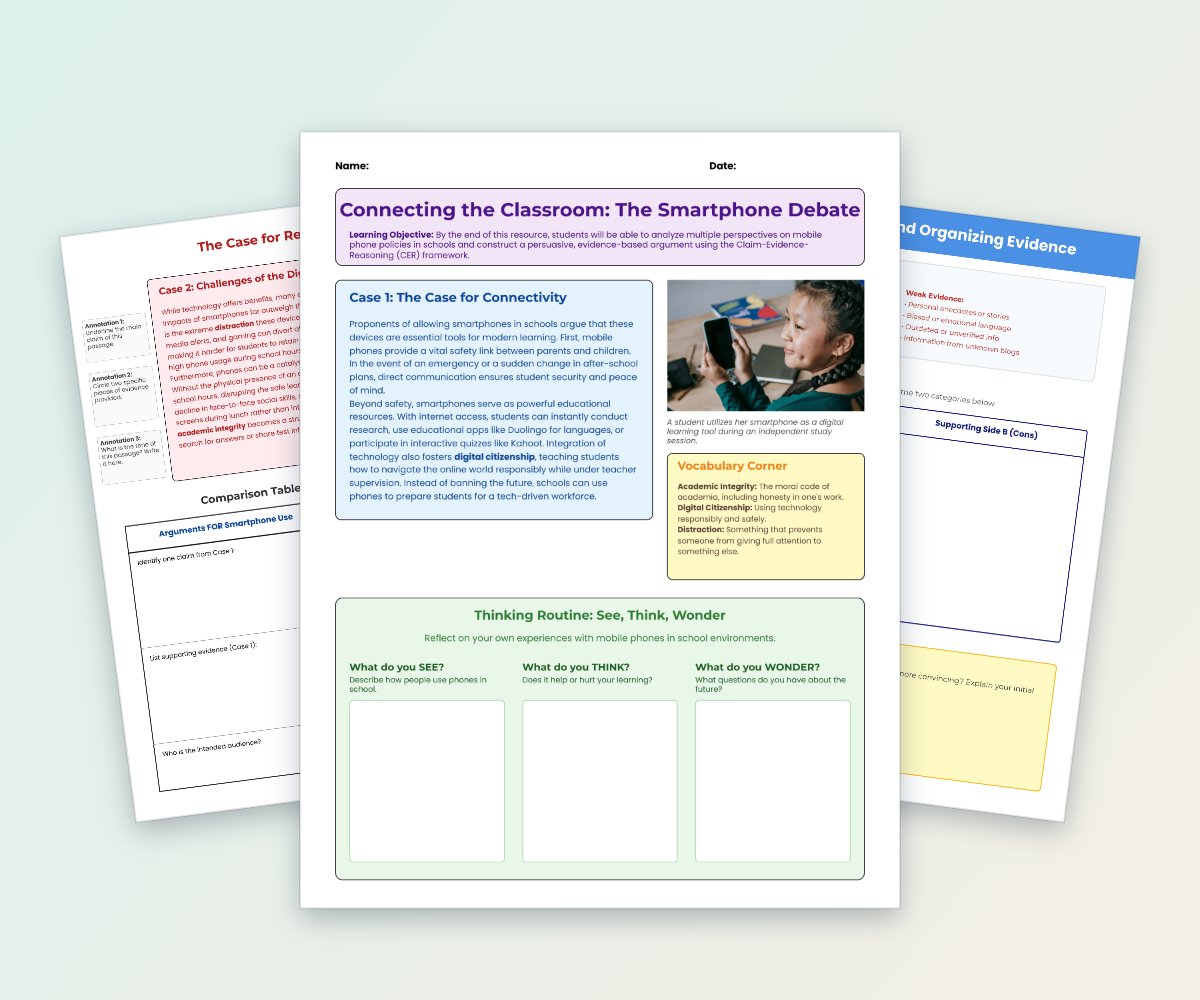
Students examine arguments for and against smartphones in school, explore relevant vocabulary, and use a See-Think-Wonder routine.
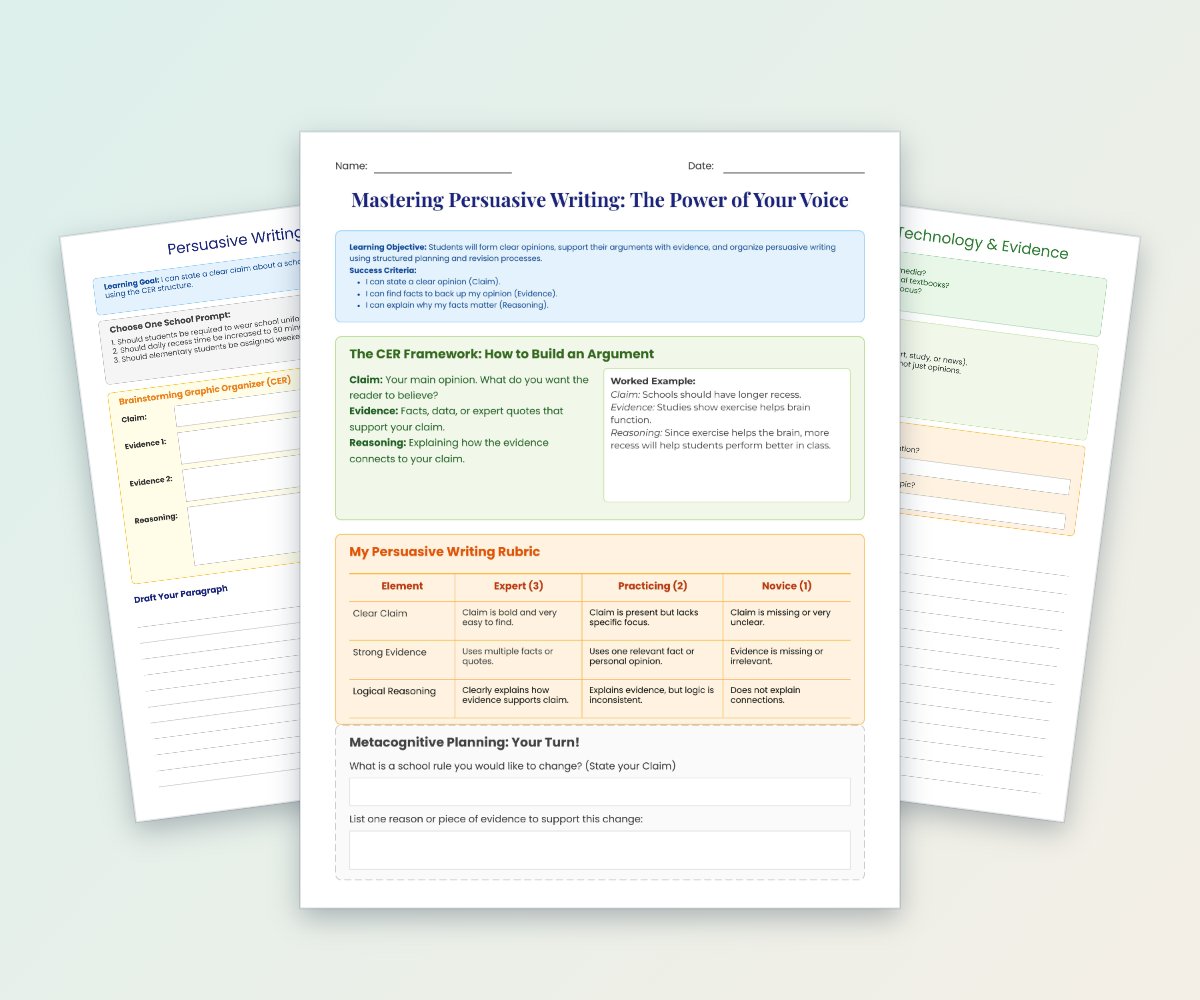
This eight-page writing pack teaches students to develop claims, support opinions with evidence, explain reasoning, and organize persuasive paragraphs using the CER framework.
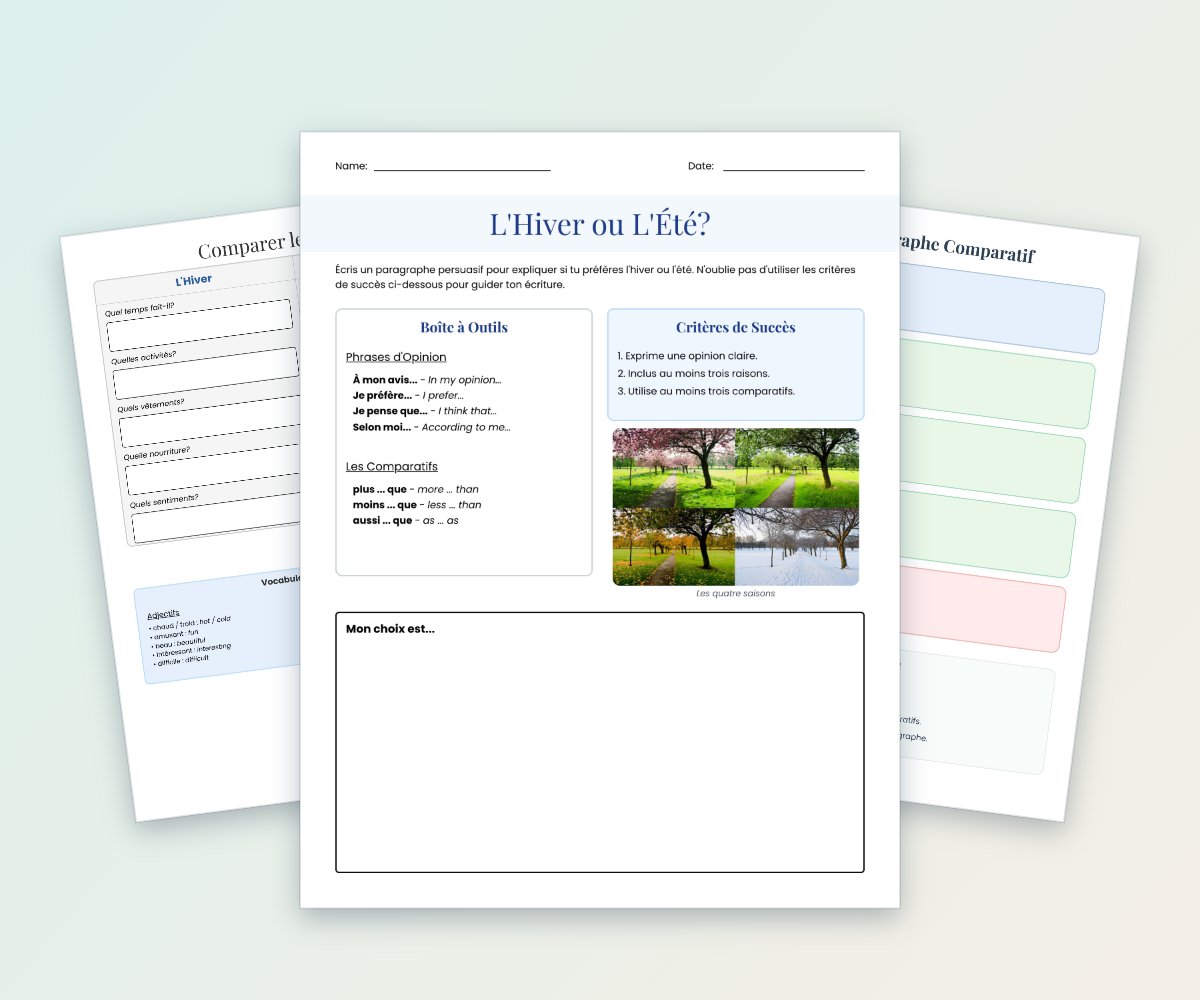
Students write a persuasive paragraph explaining whether they prefer winter or summer.
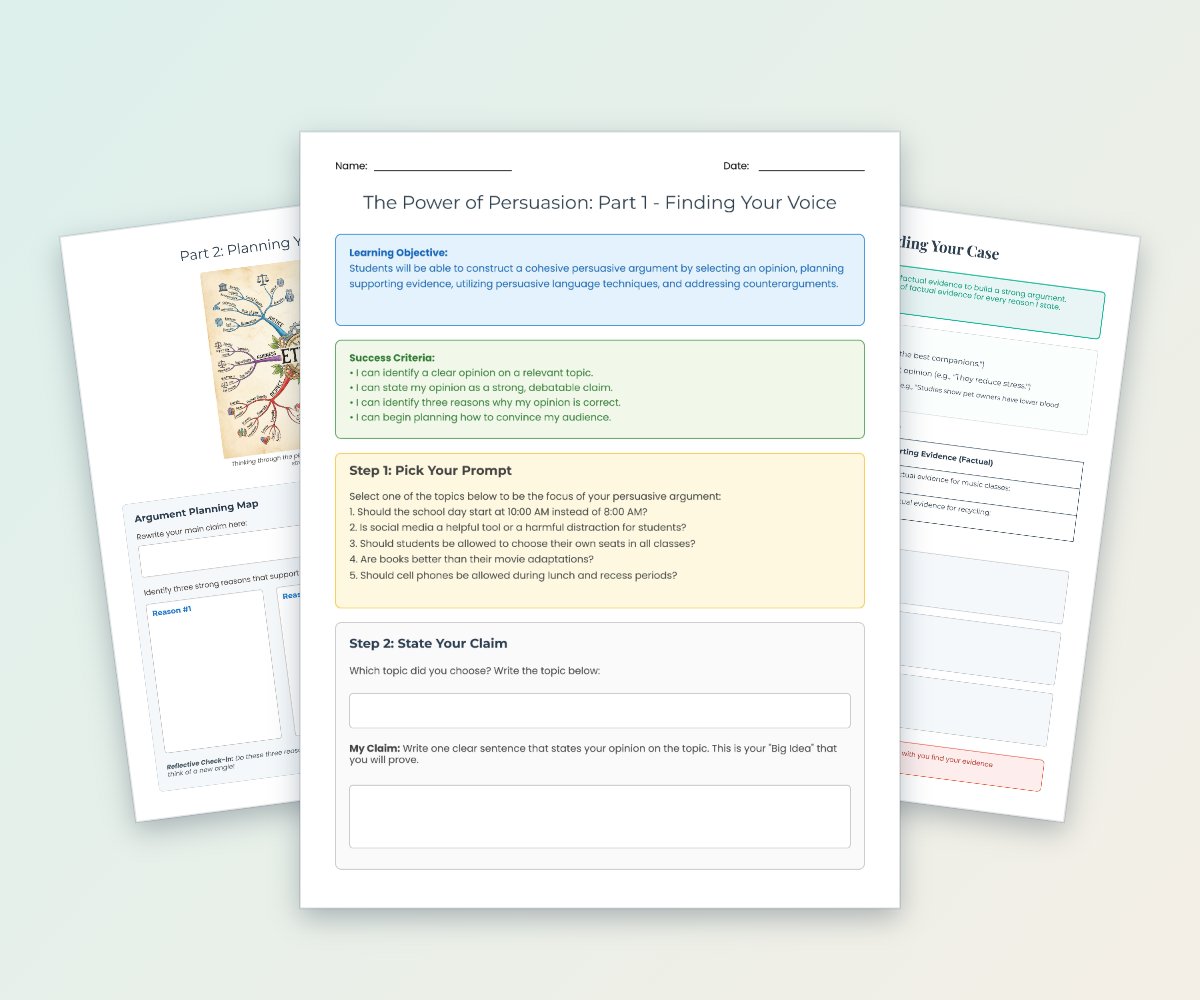
This six-page writing resource guides students through choosing a topic, forming a debatable claim, developing supporting reasons, and selecting factual evidence.
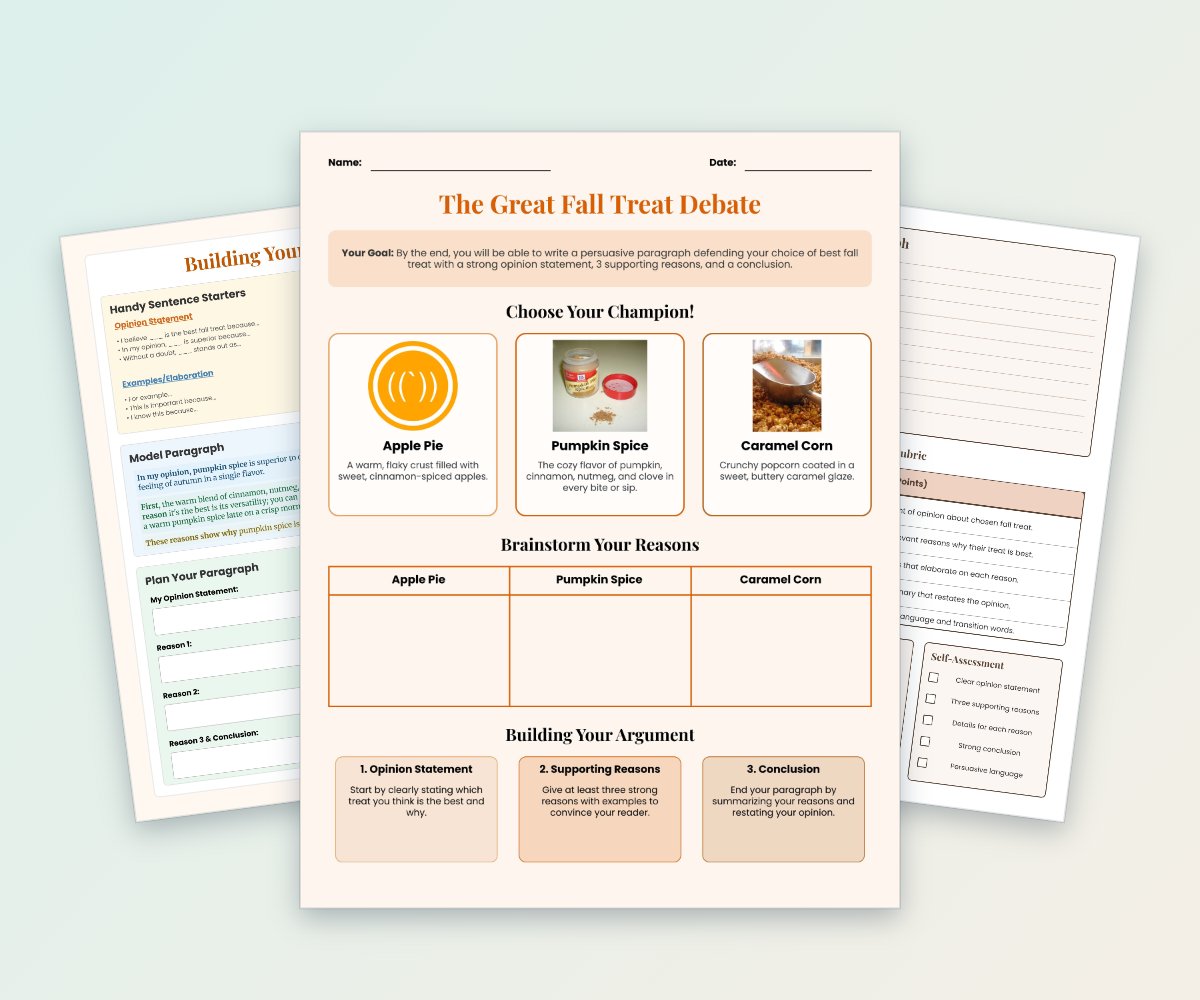
Students choose a favorite fall treat and develop a persuasive paragraph with an opinion statement, three supporting reasons, examples, and a conclusion.
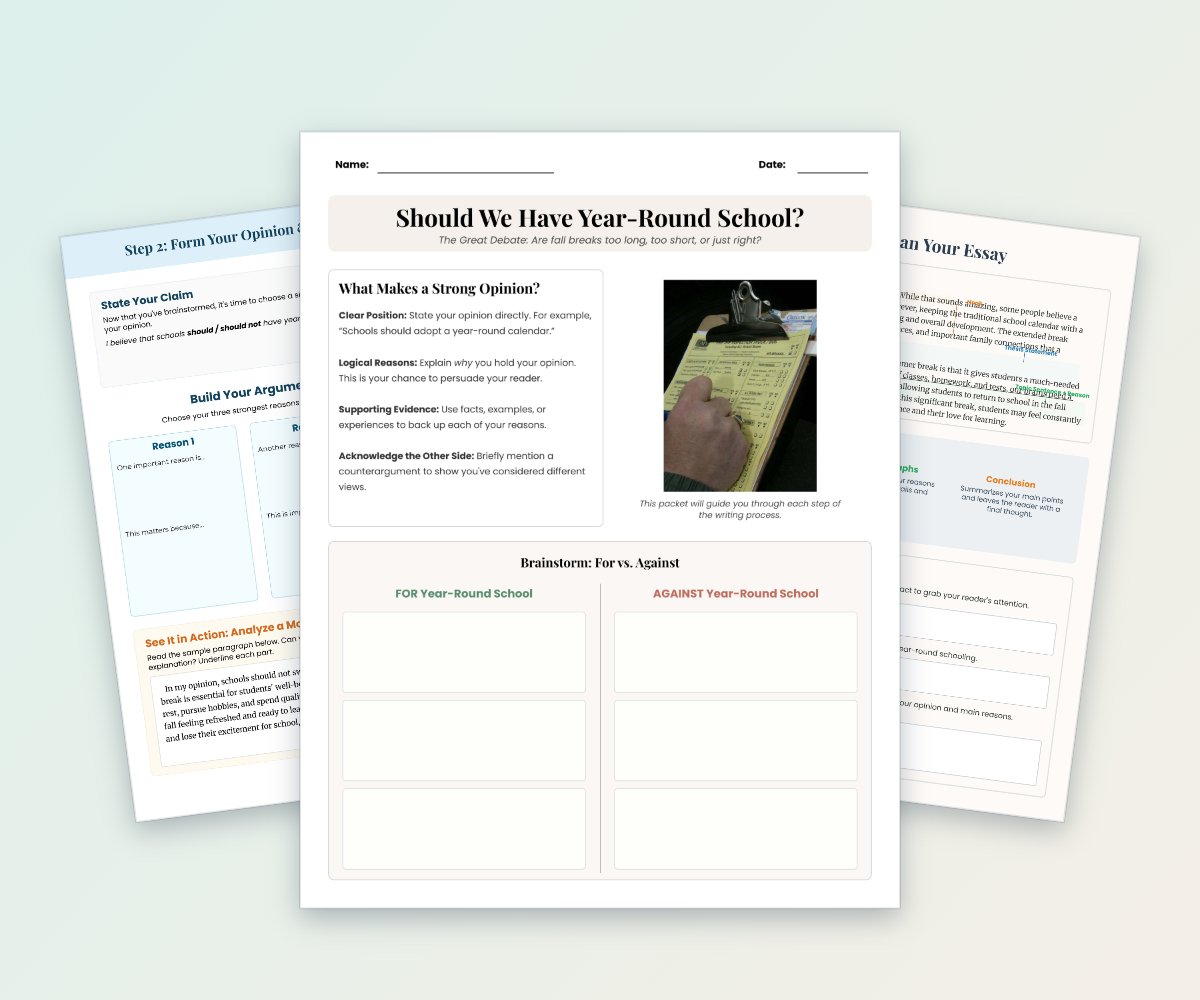
This six-page writing guide leads students through brainstorming, forming a claim, developing reasons, using evidence, acknowledging counterarguments, and analyzing a model paragraph.
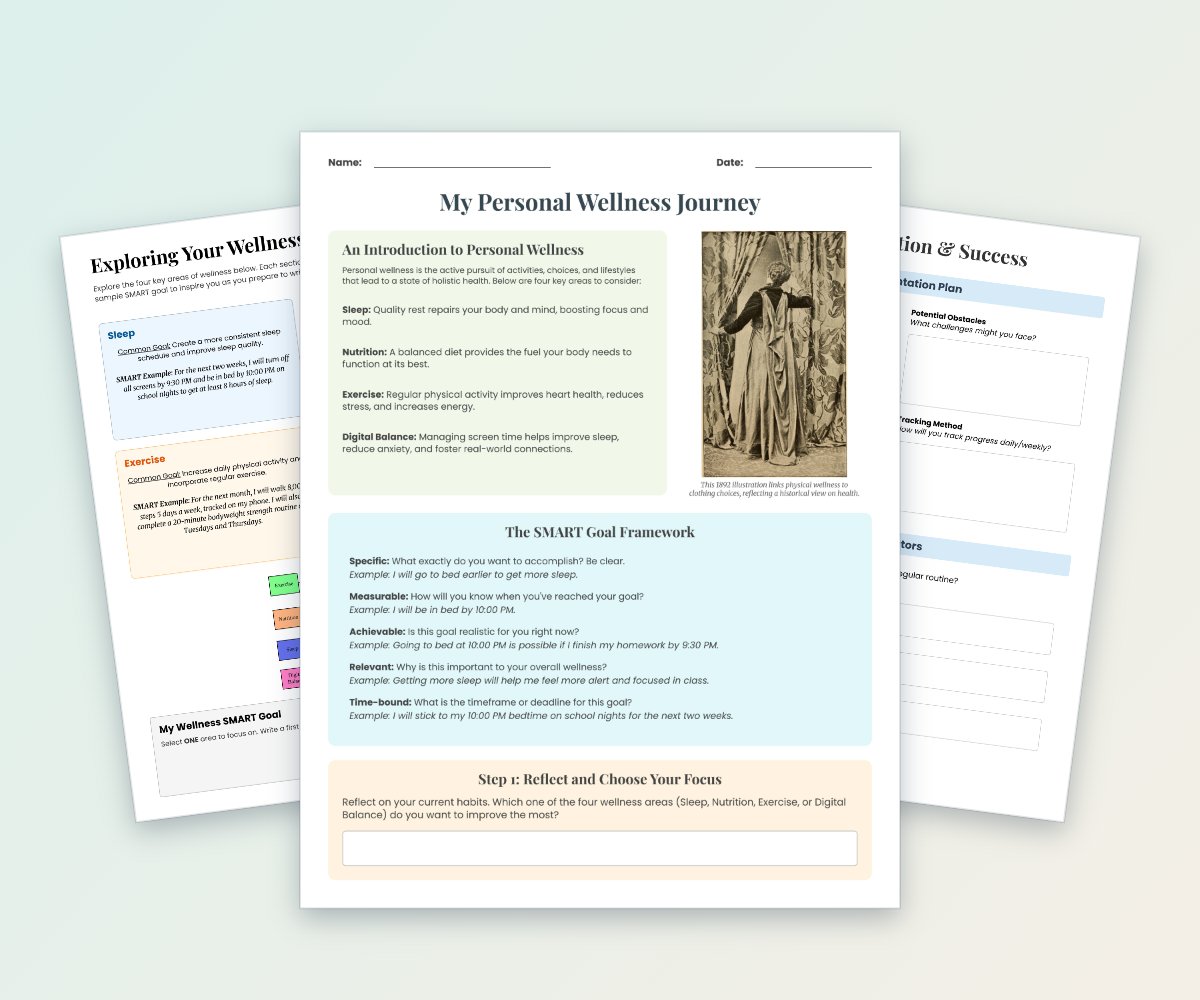
Students explore sleep, nutrition, exercise, and digital balance as key areas of personal wellness.
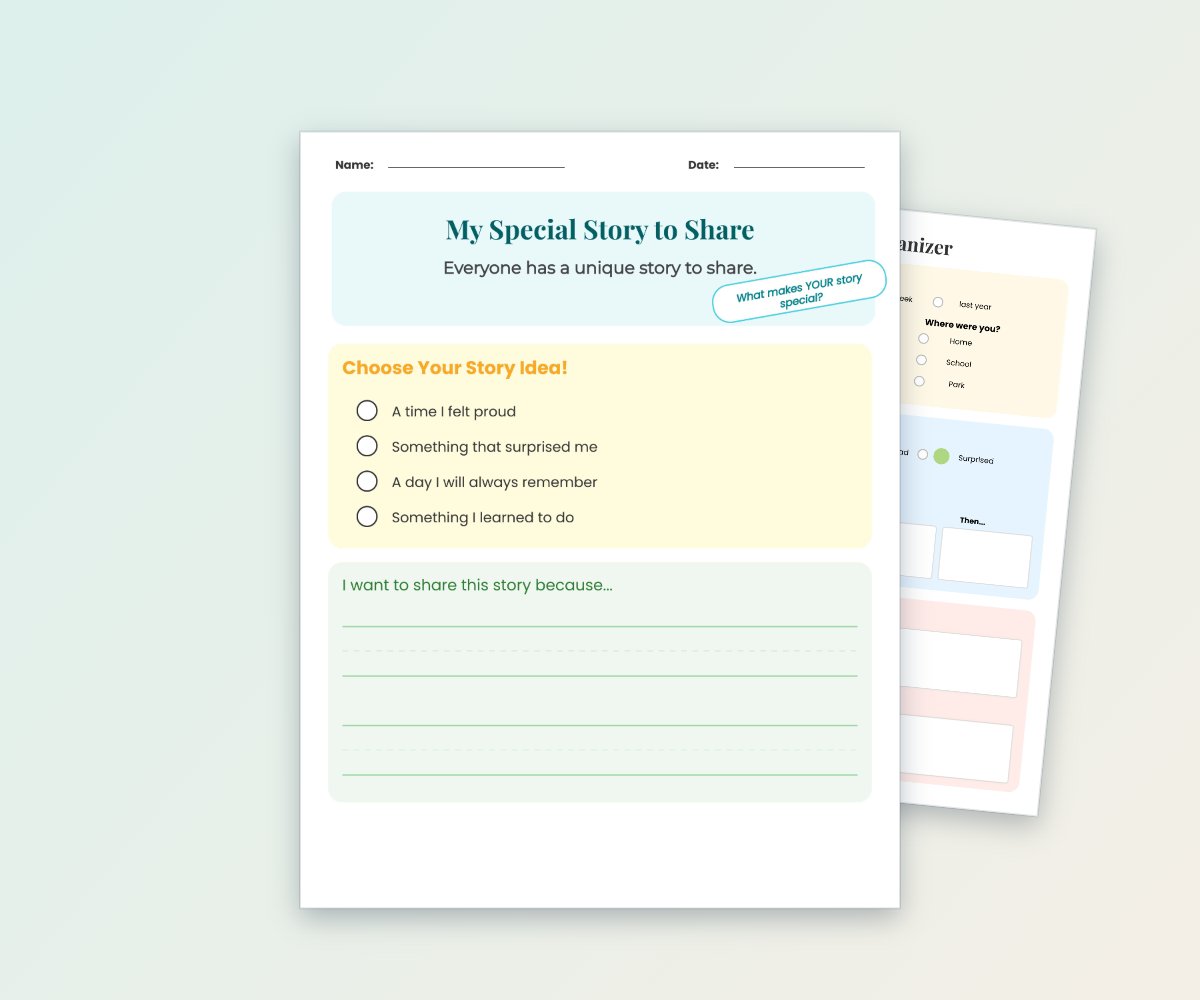
Students use this two-page organizer to plan a personal story by identifying the event, setting, characters, feelings, sequence, and significance.
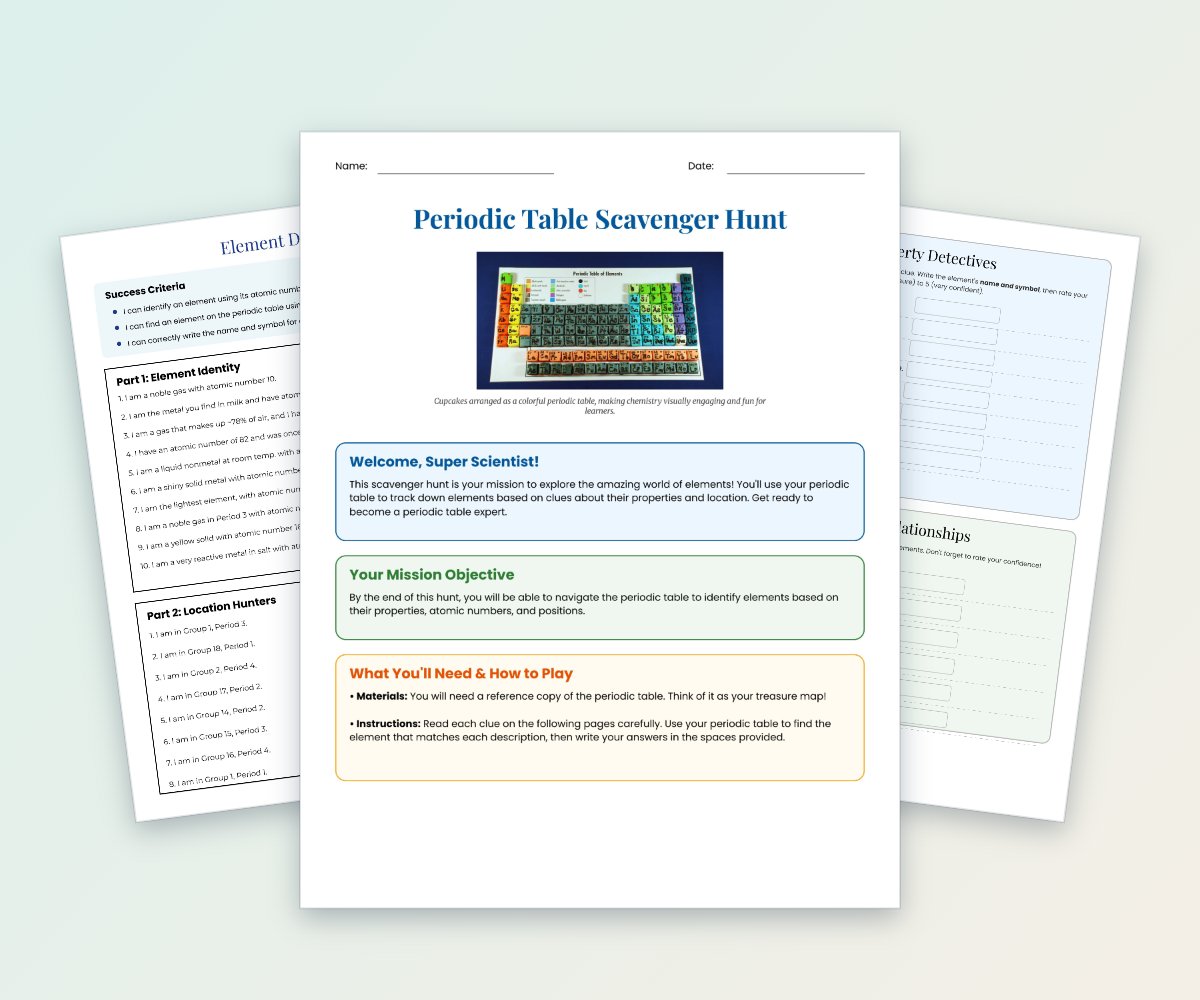
Students solve element clues using atomic numbers, properties, groups, and periods on the periodic table.
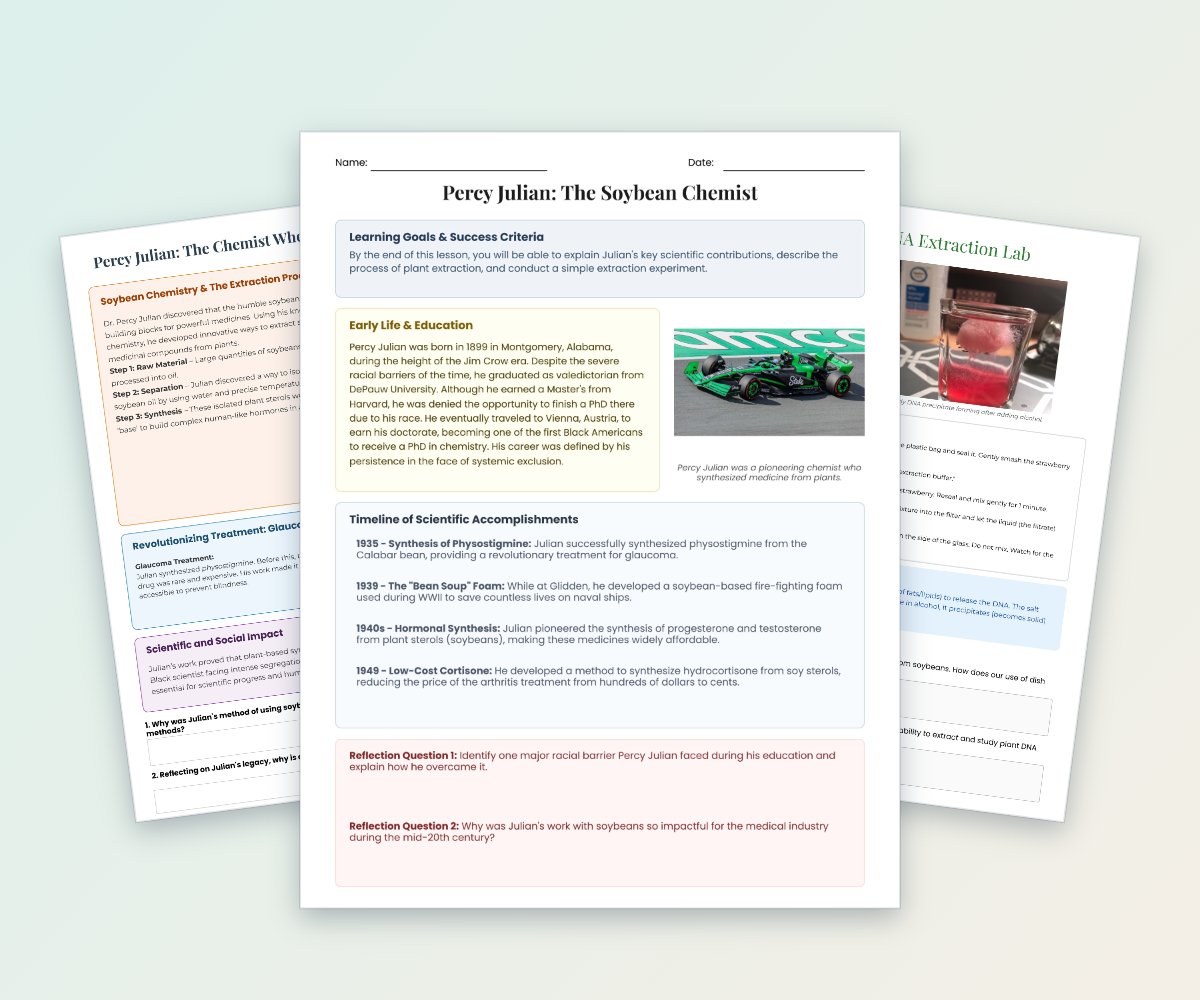
This lesson explores Percy Julian’s scientific achievements, including plant-based synthesis of medicines and soybean chemistry.
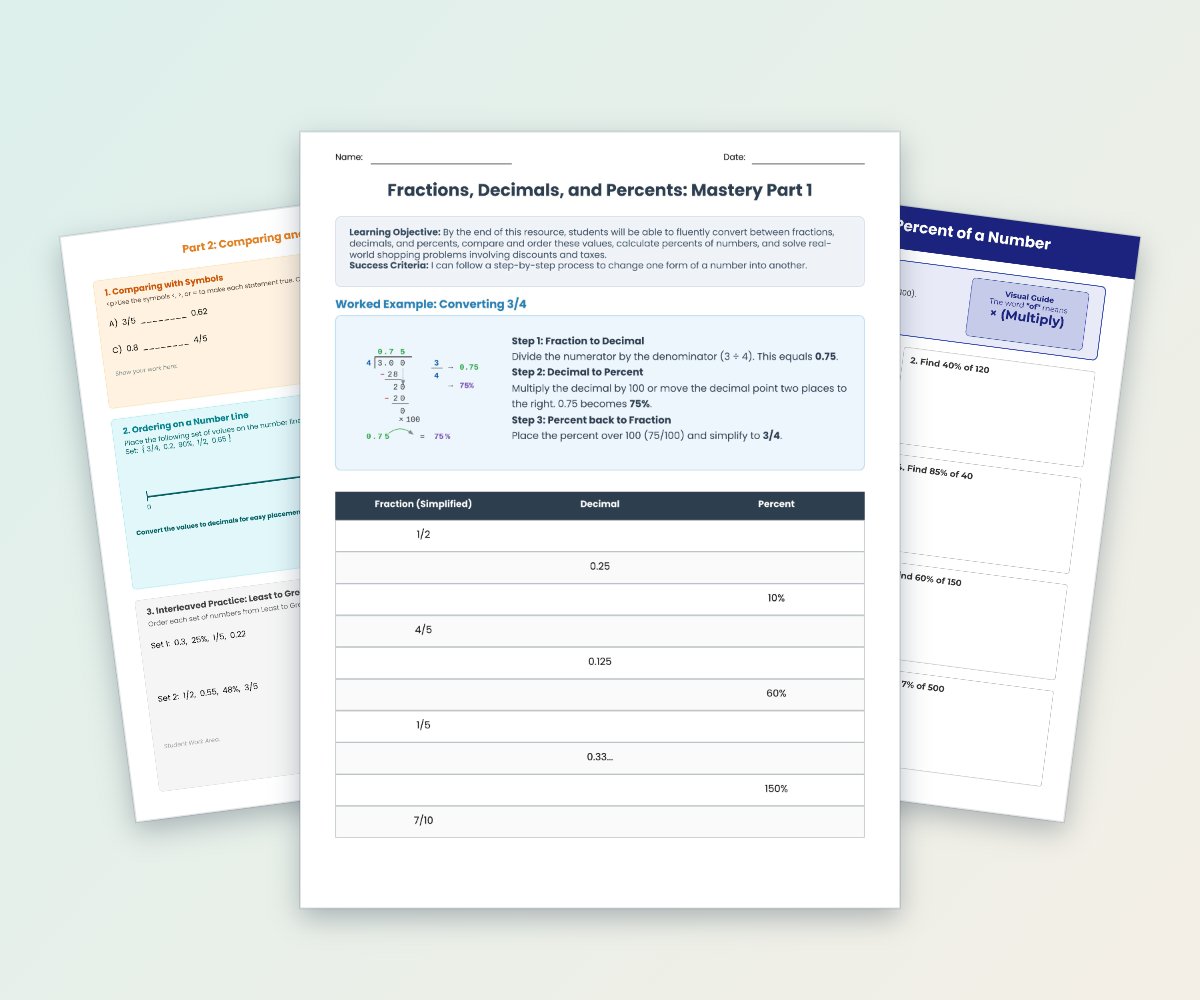
This six-page review pack teaches students to convert among fractions, decimals, and percents, compare and order values, calculate percentages, and solve shopping problems.
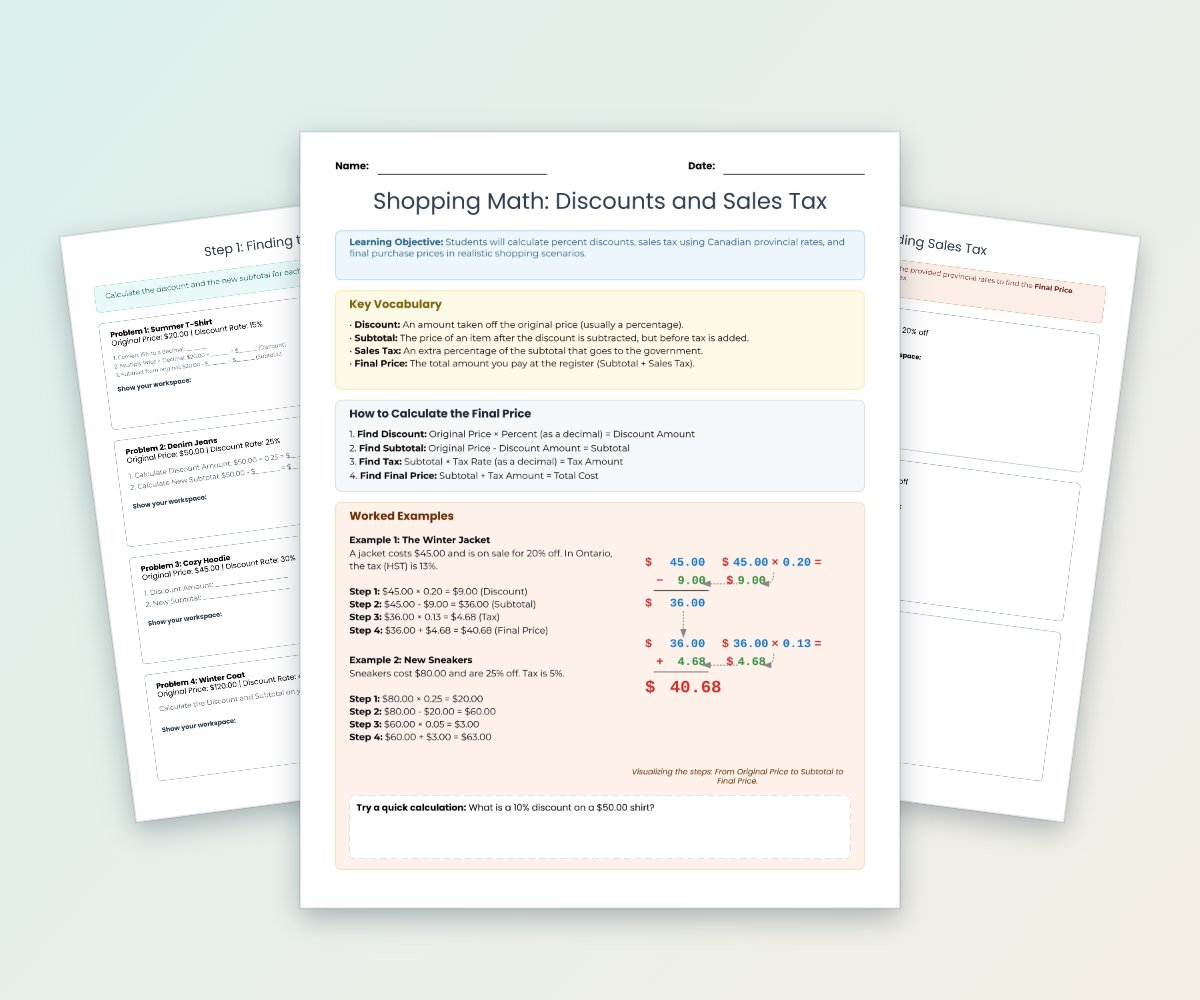
Students practice calculating percentage discounts, subtotals, sales tax, and final purchase prices using realistic shopping scenarios.