Welcome to Our Grade: A Letter Writing Pack
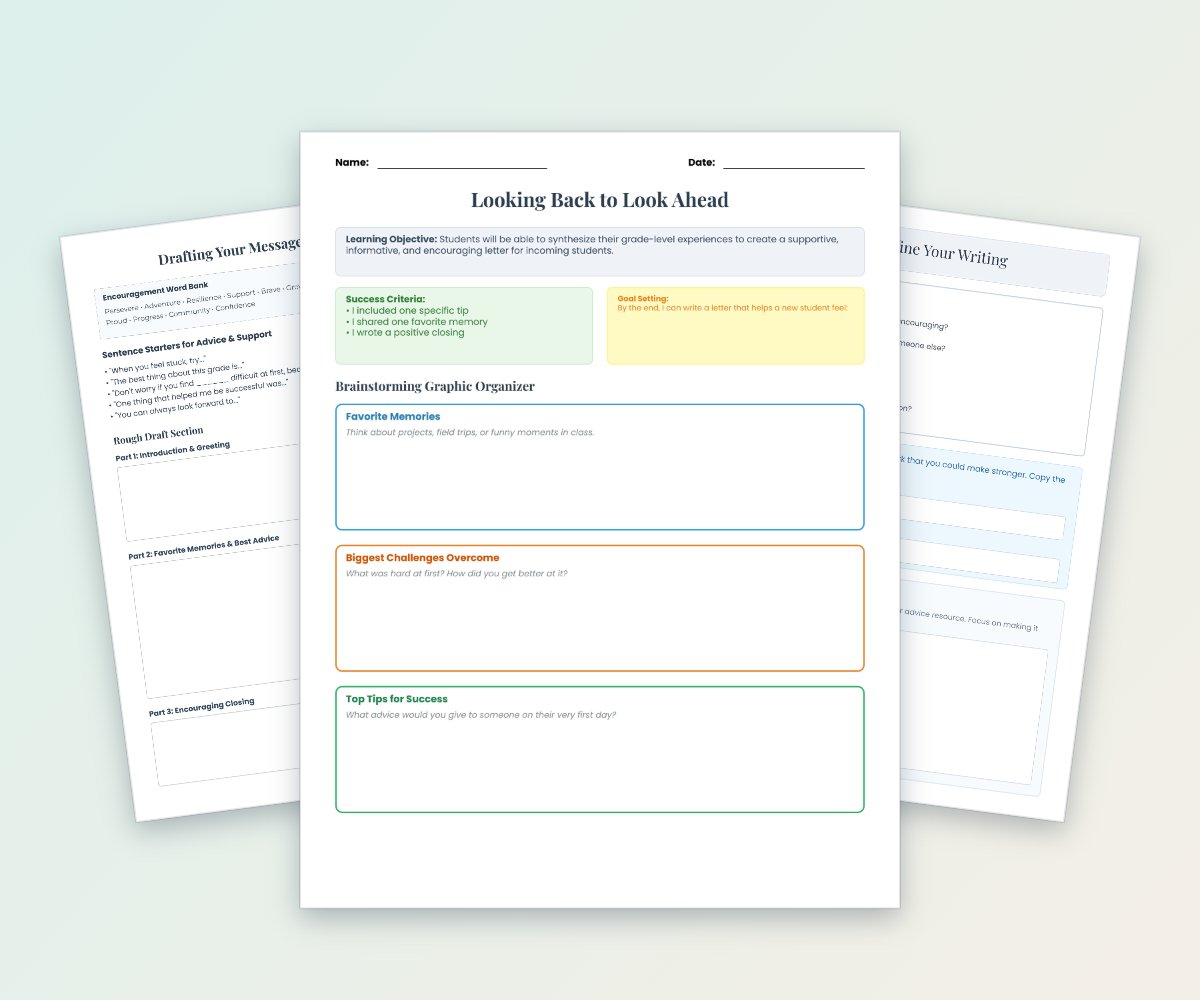
Students reflect on their grade-level experiences and write an encouraging letter to incoming students.
$5.99
Classroom-ready resources written for grade 12: printable worksheets, slides, activities and planning tools you can download and use straight away. Browse by subject below.
Students reflect on their grade-level experiences and write an encouraging letter to incoming students.
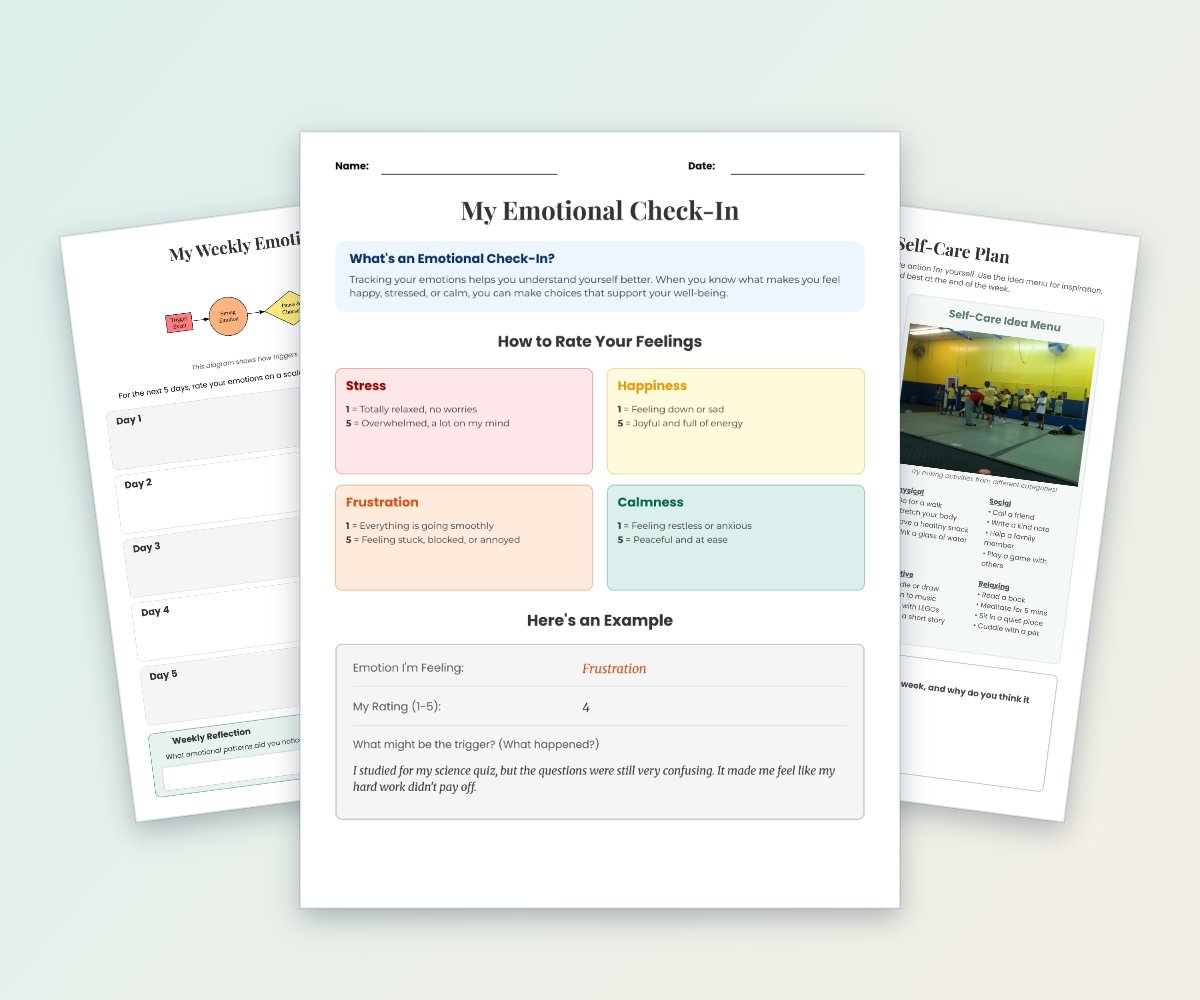
This four-page guide helps students track emotions, identify triggers, reflect on behavior, and develop personal coping strategies.
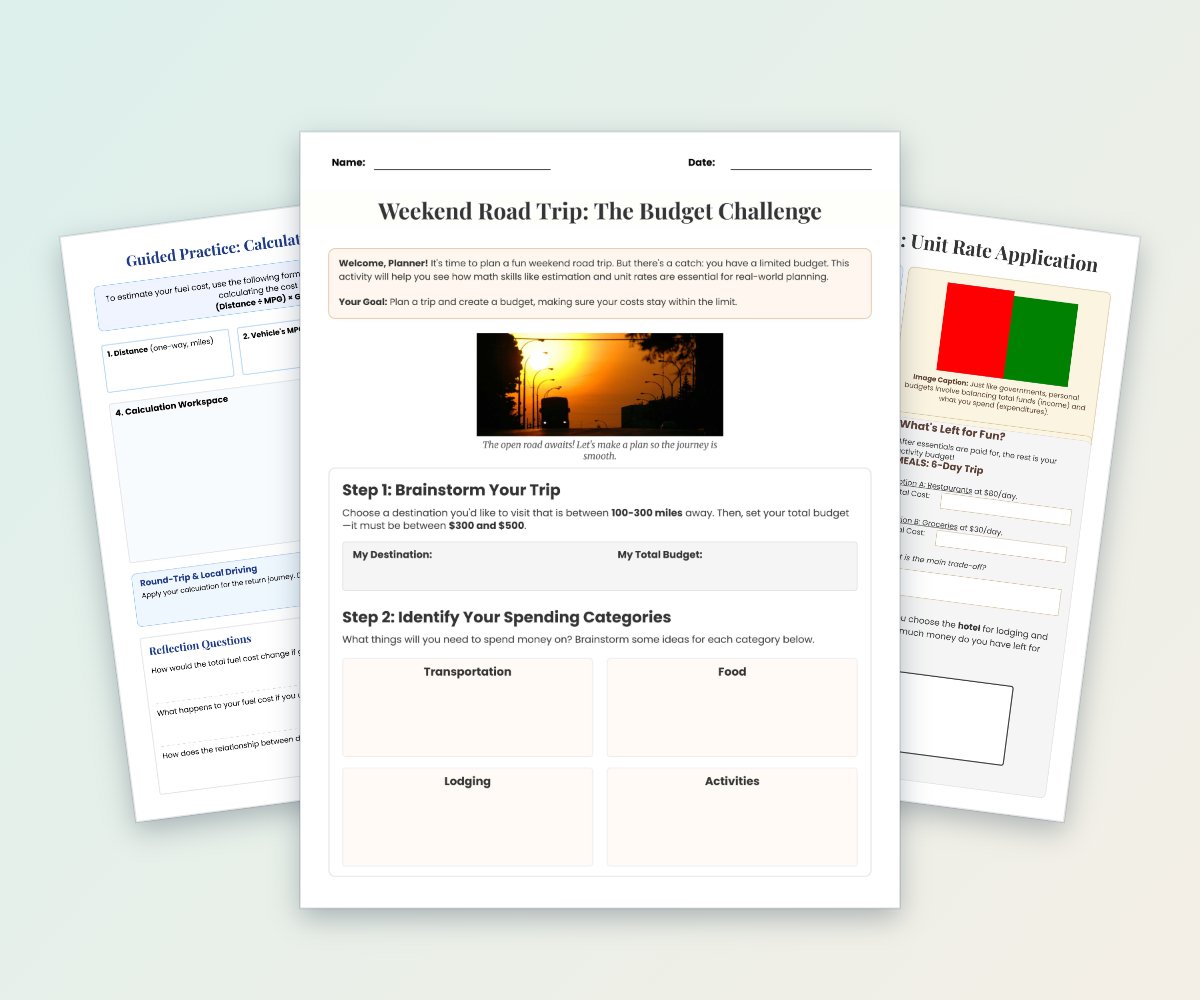
Students plan a weekend road trip within a fixed budget while estimating fuel, food, lodging, and activity costs.
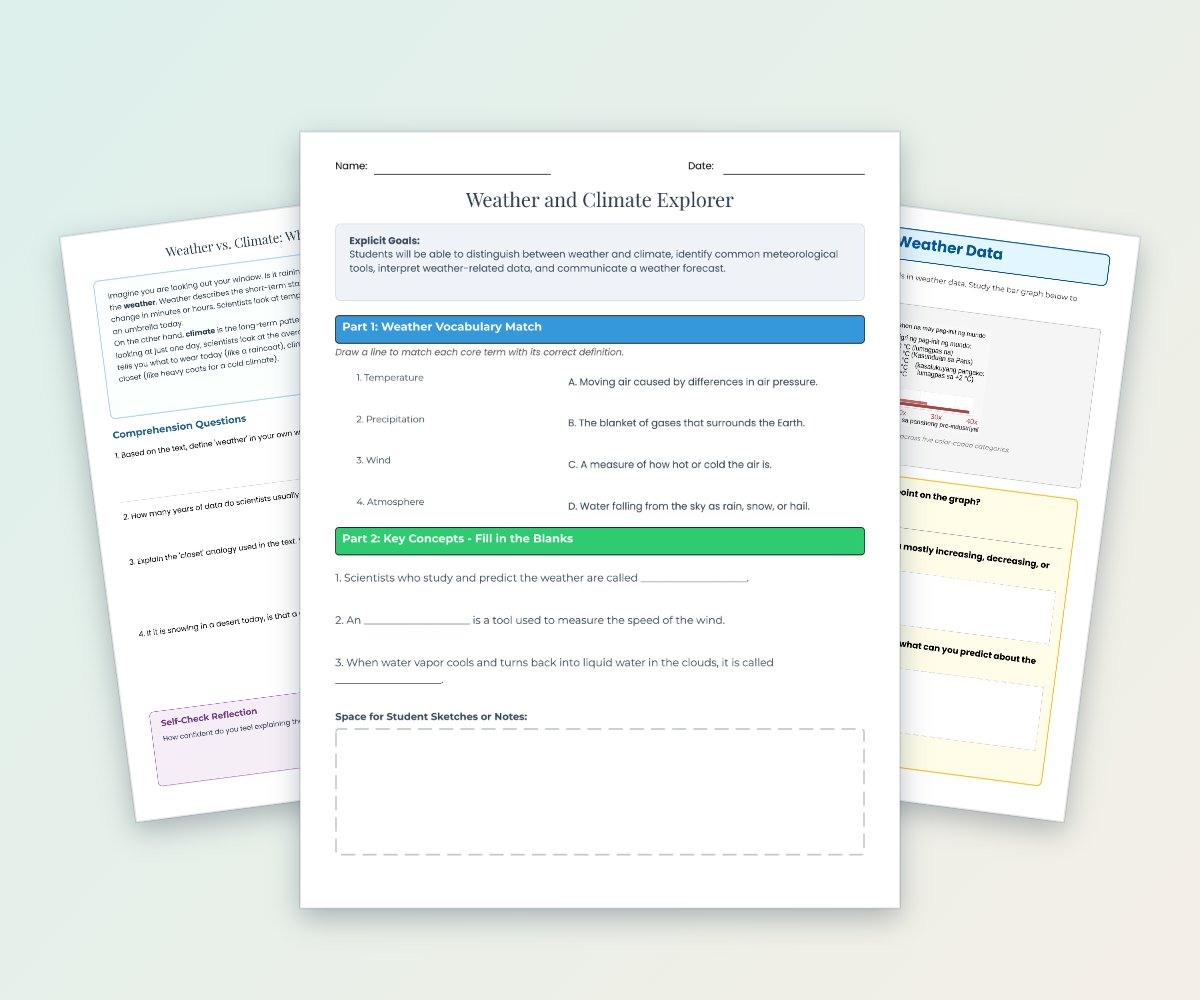
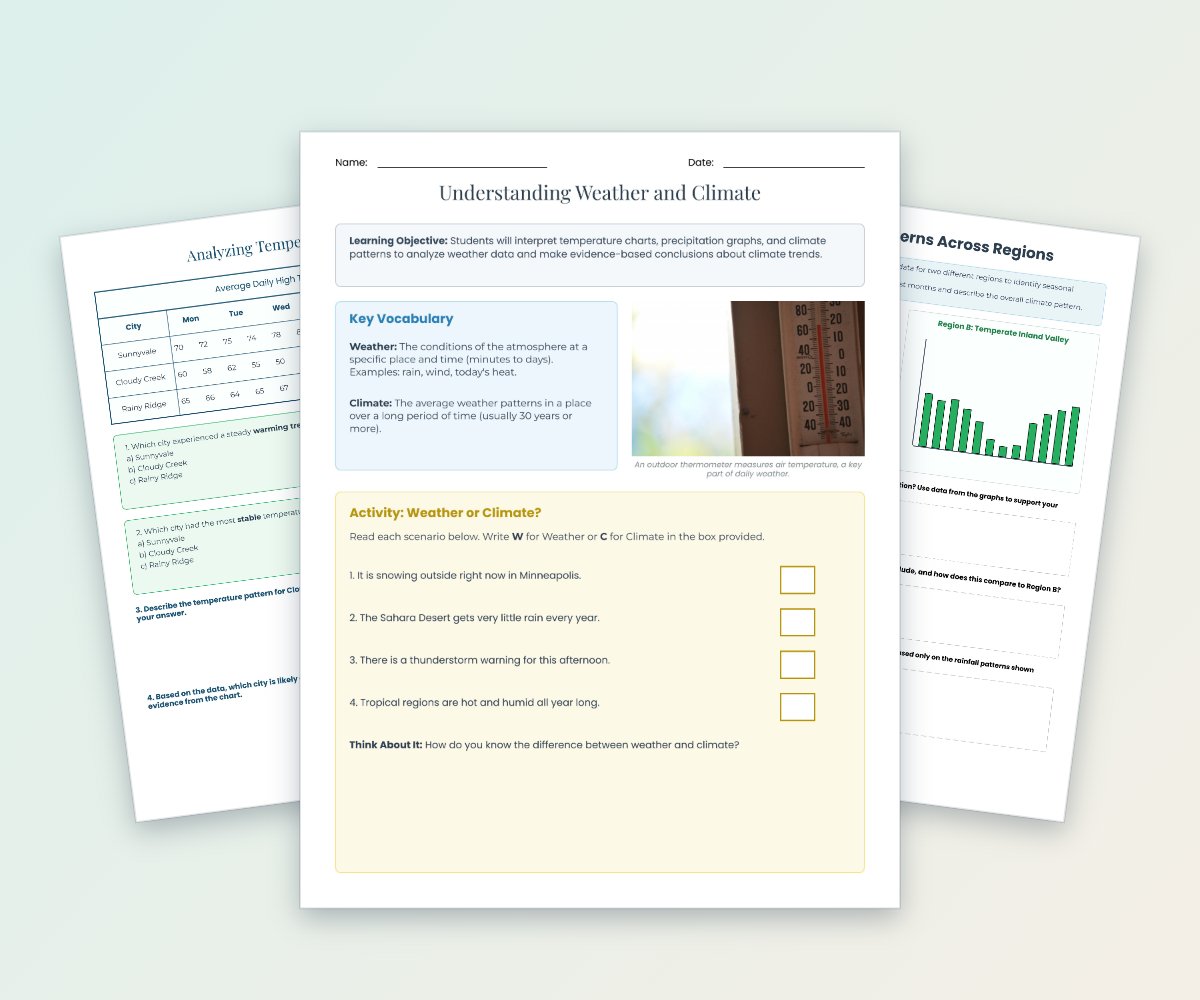
This six-page worksheet pack introduces the difference between weather and climate through vocabulary matching, reading comprehension, data analysis, and reflection activities.
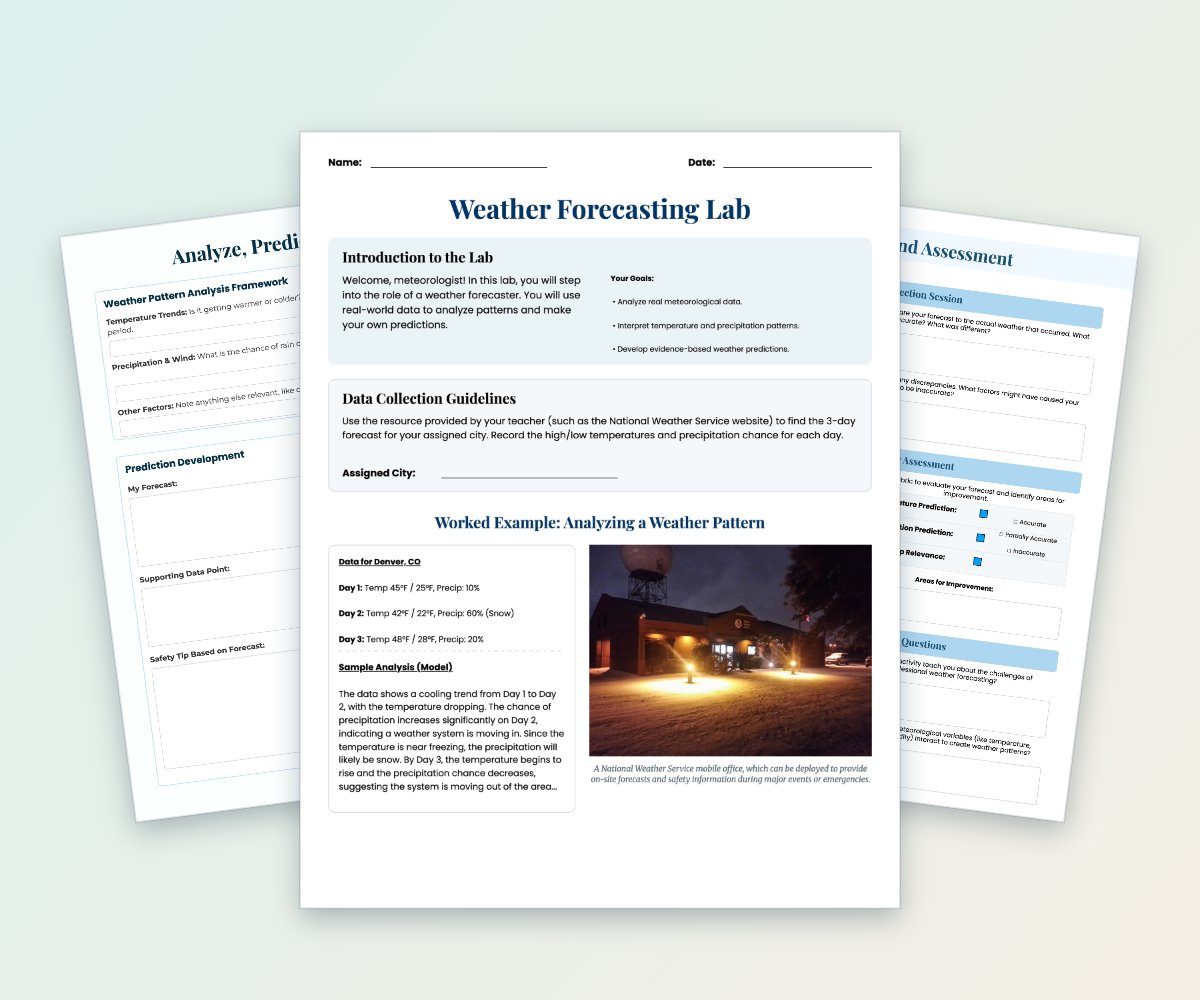
Students analyze three-day meteorological data, identify temperature and precipitation patterns, and develop evidence-based weather predictions.
Students distinguish weather from climate while analyzing temperature charts and precipitation patterns.
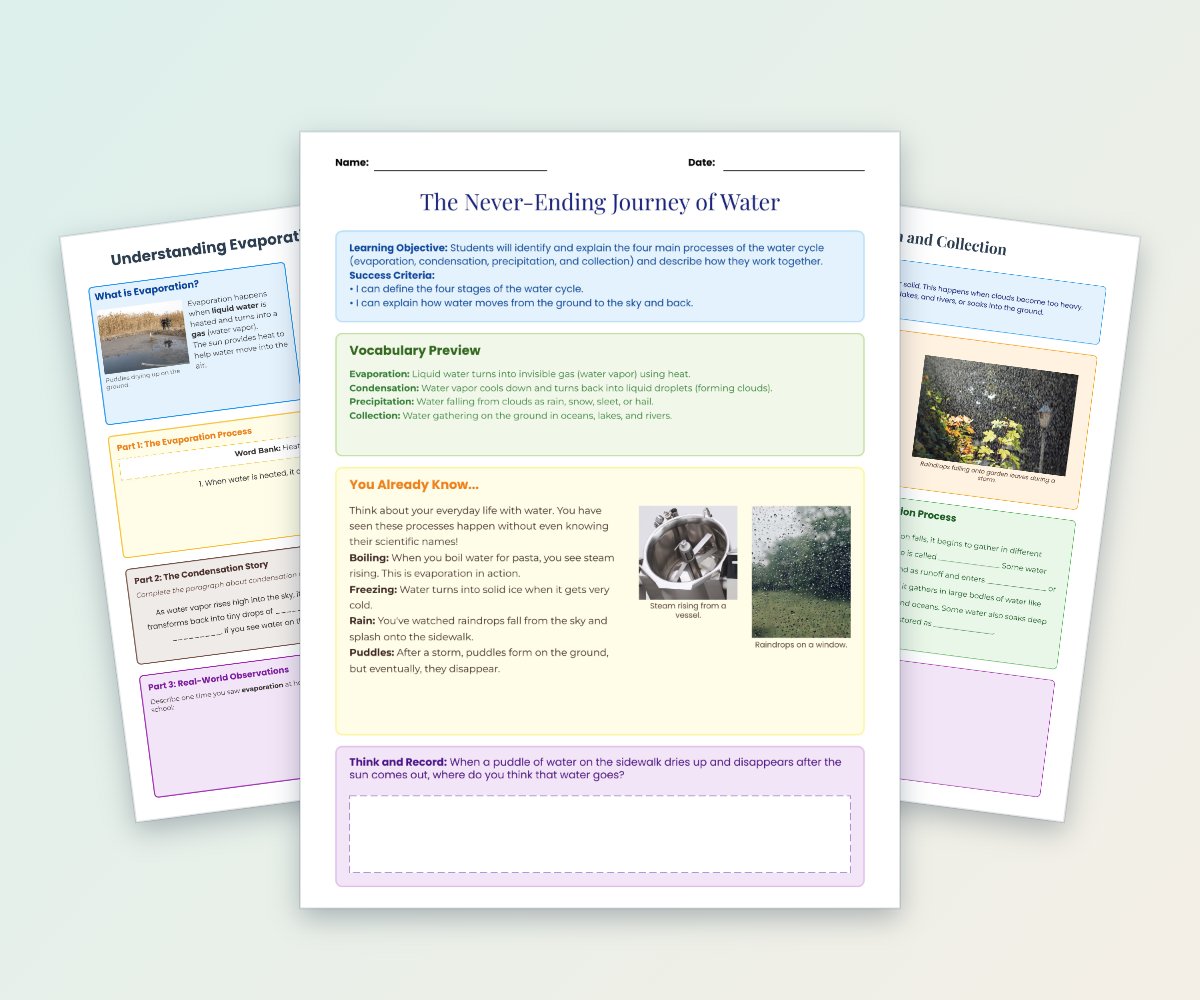
This four-page learning packet introduces evaporation, condensation, precipitation, and collection through clear definitions, examples, vocabulary practice, and written response activities.
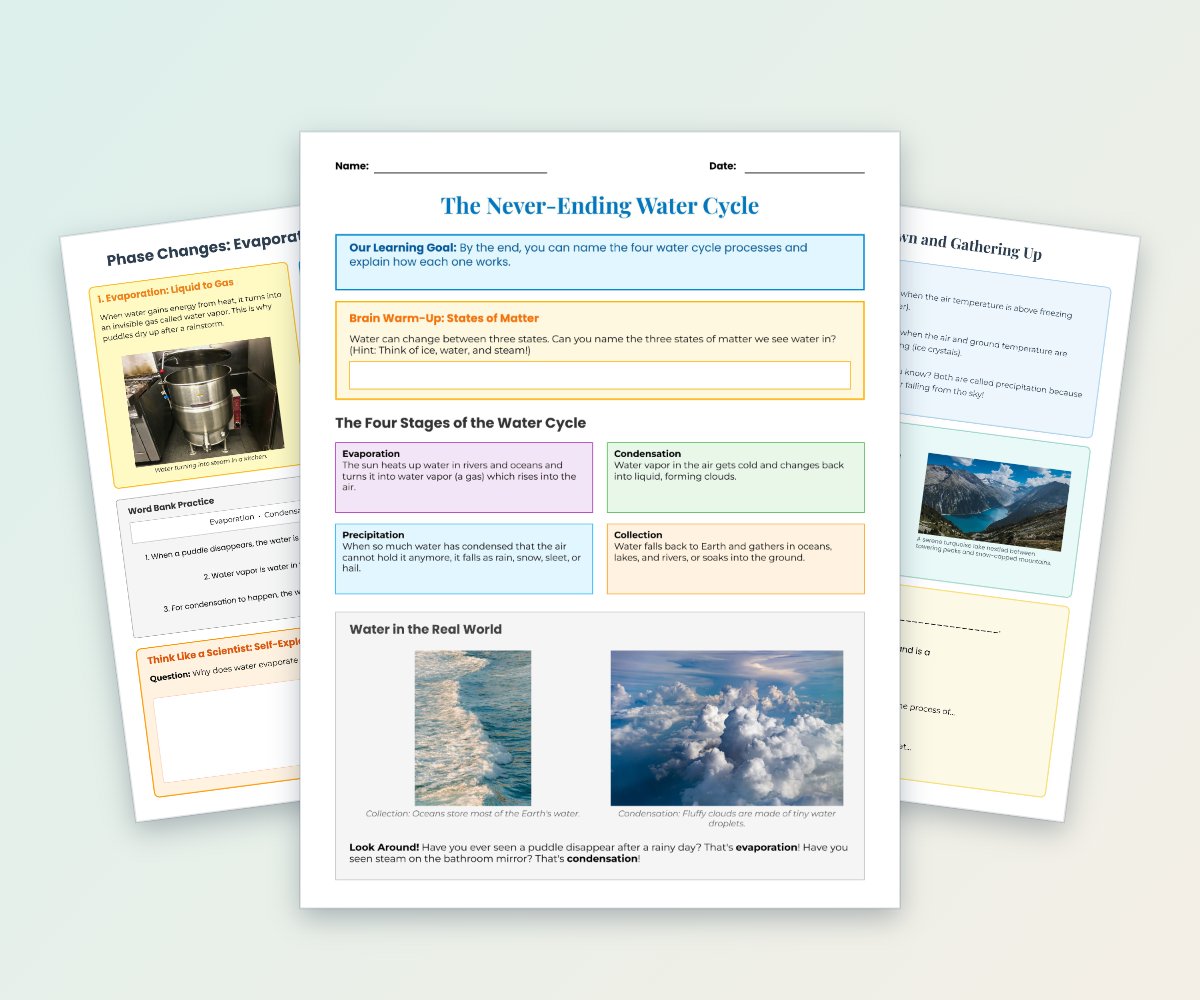
This four-page printable introduces evaporation, condensation, precipitation, and collection through clear explanations, real-world examples, vocabulary practice, and self-explanation questions.
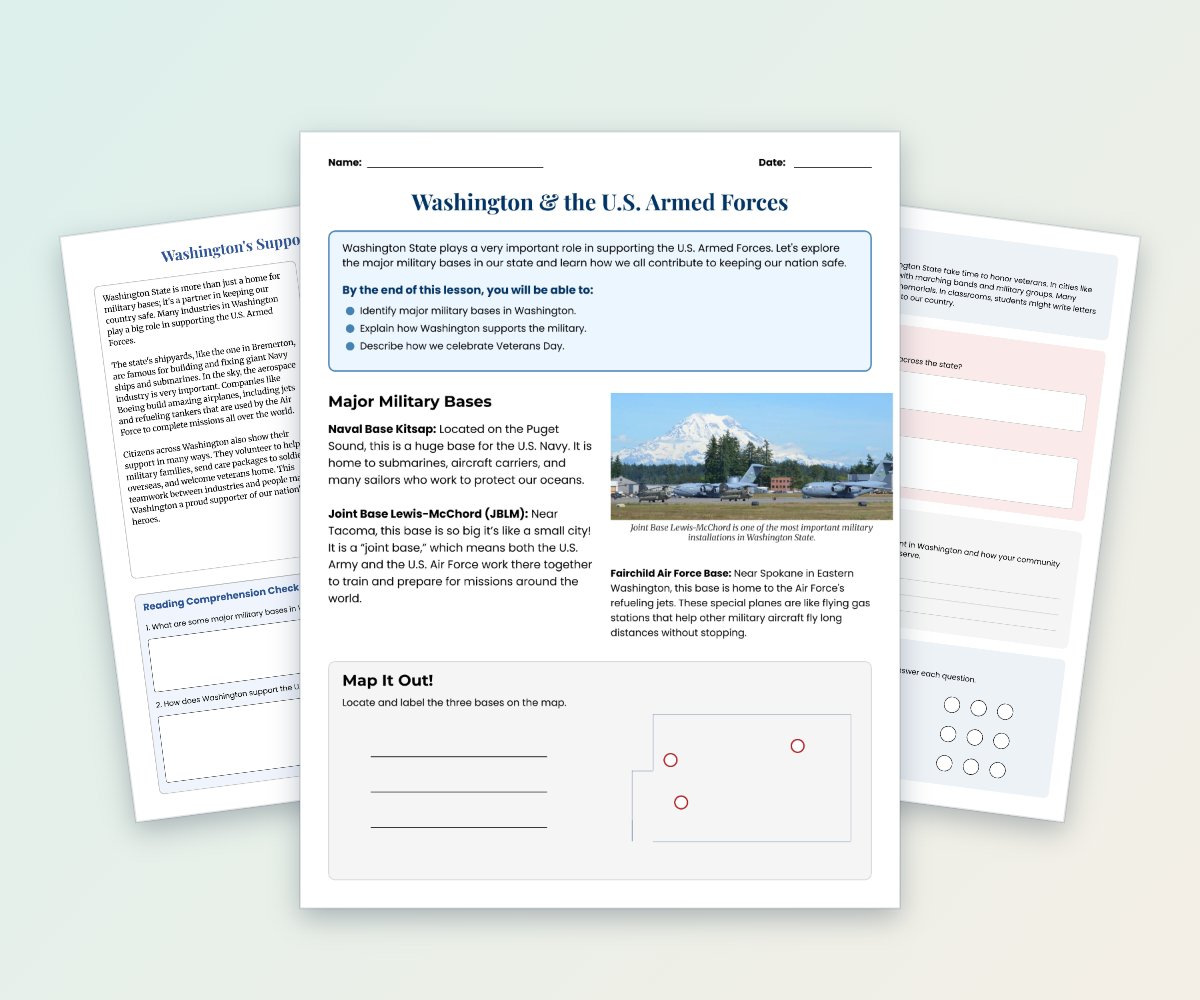
This three-page lesson introduces major Washington military bases, the state's industries supporting the armed forces, and community support for veterans.
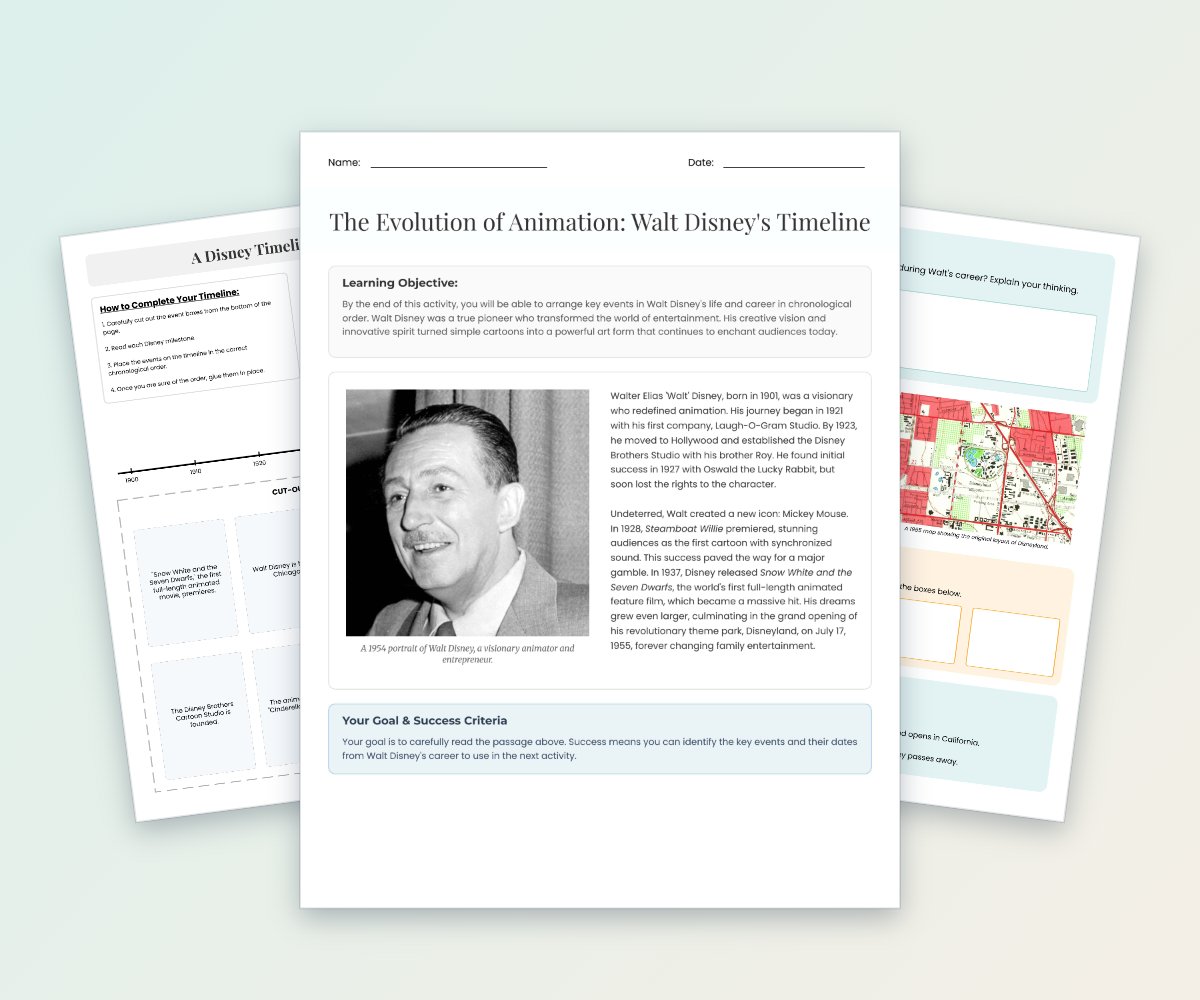
Students read a concise overview of Walt Disney's career and arrange major milestones in chronological order.
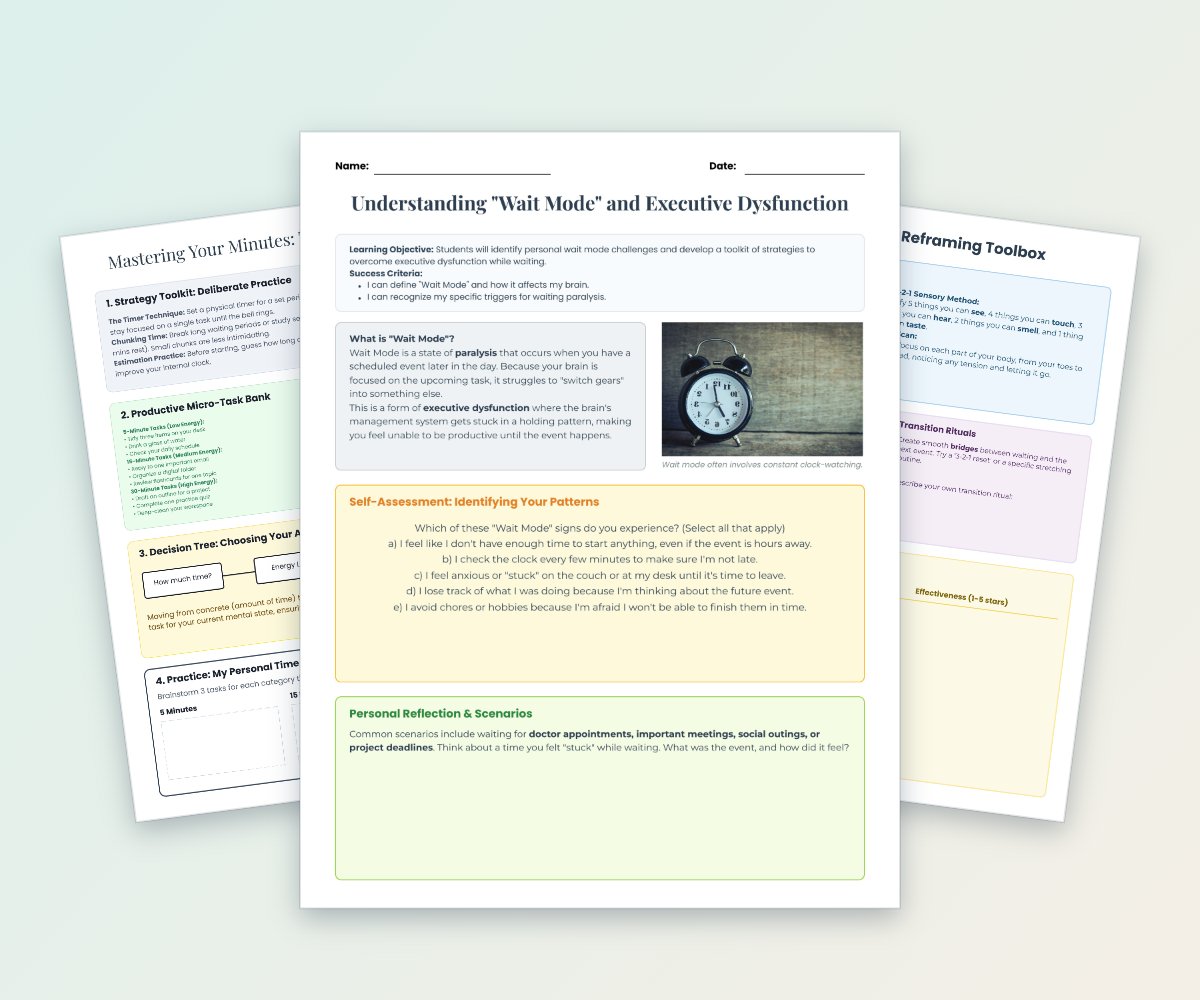
This five-page toolkit helps students understand wait mode and identify how scheduled events can affect focus and productivity.
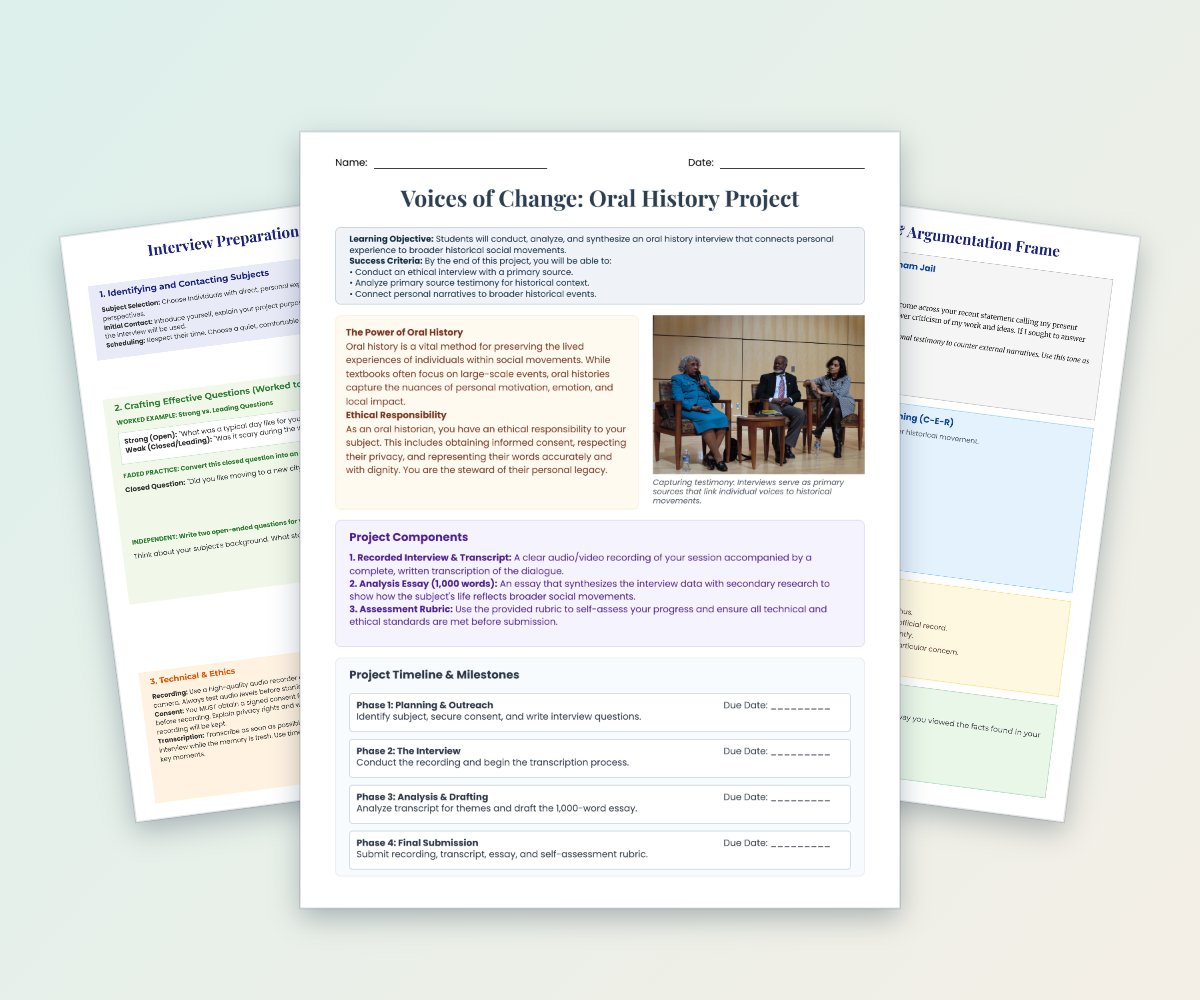
Guide students through planning, conducting, transcribing, and analyzing an oral history interview connected to broader social movements.
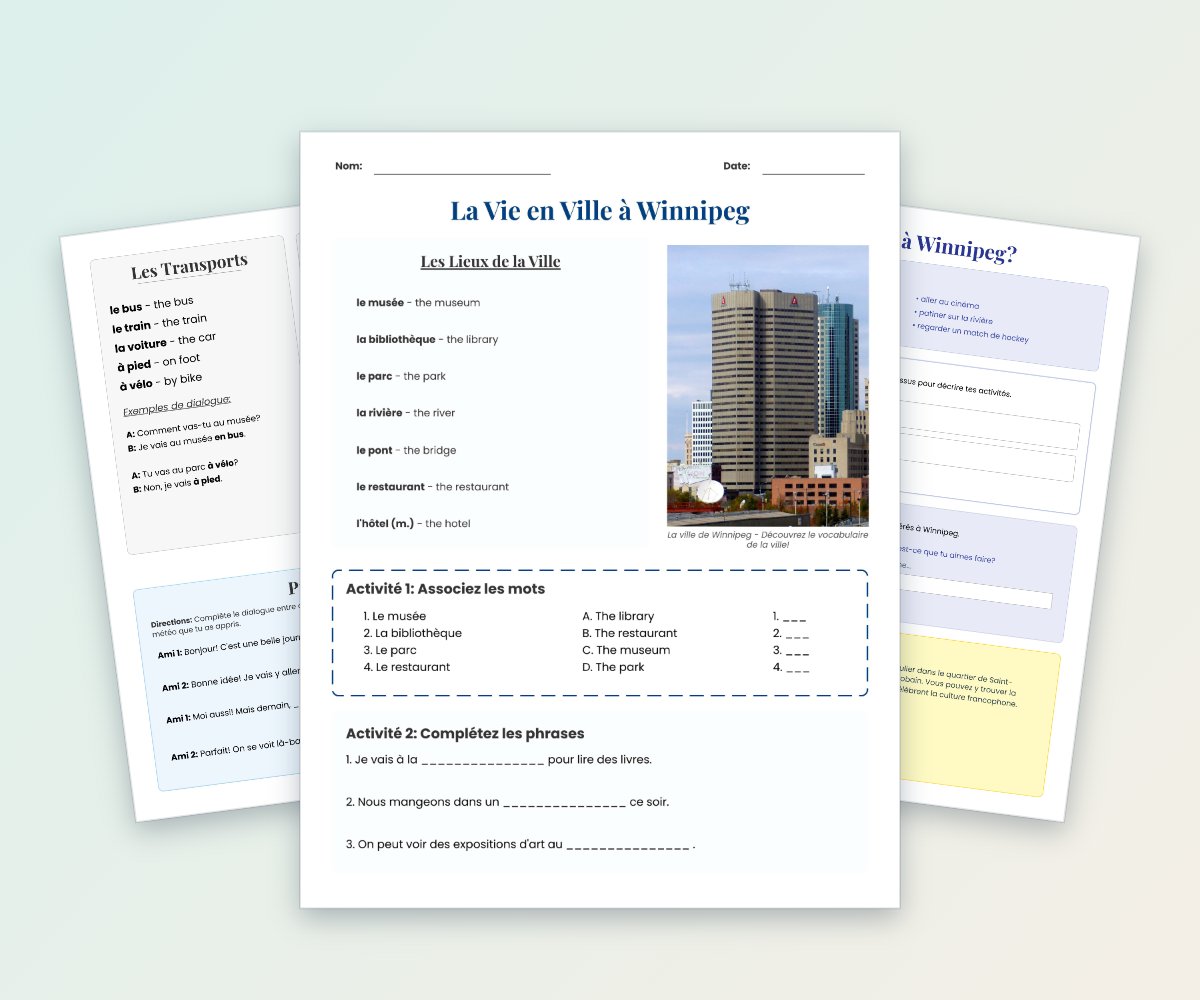
This four-page French activity pack teaches vocabulary for places in Winnipeg, transportation, weather, and weekend activities.
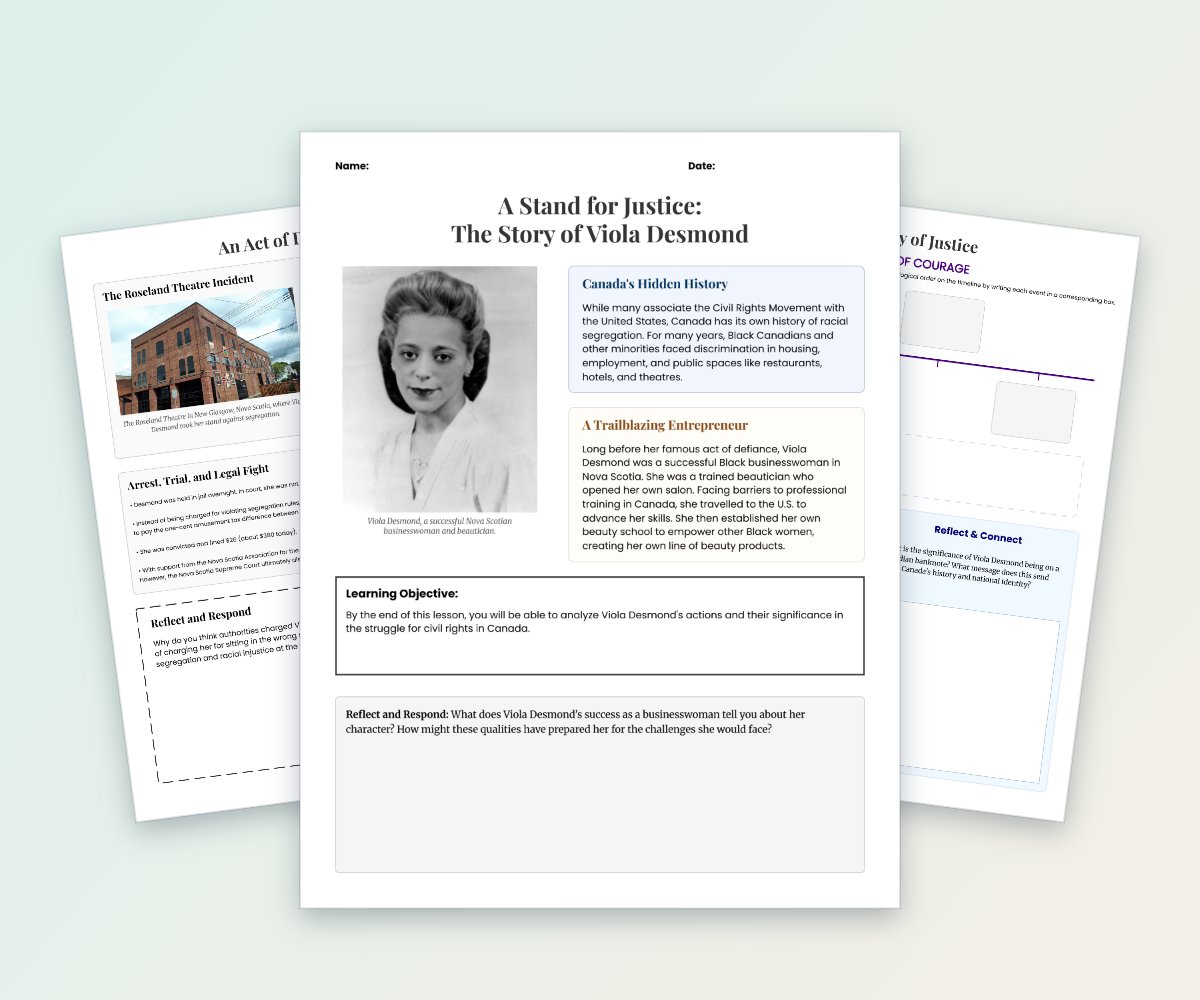
This four-page lesson explores Viola Desmond's entrepreneurship, resistance to segregation, arrest, and legal challenge in Nova Scotia.
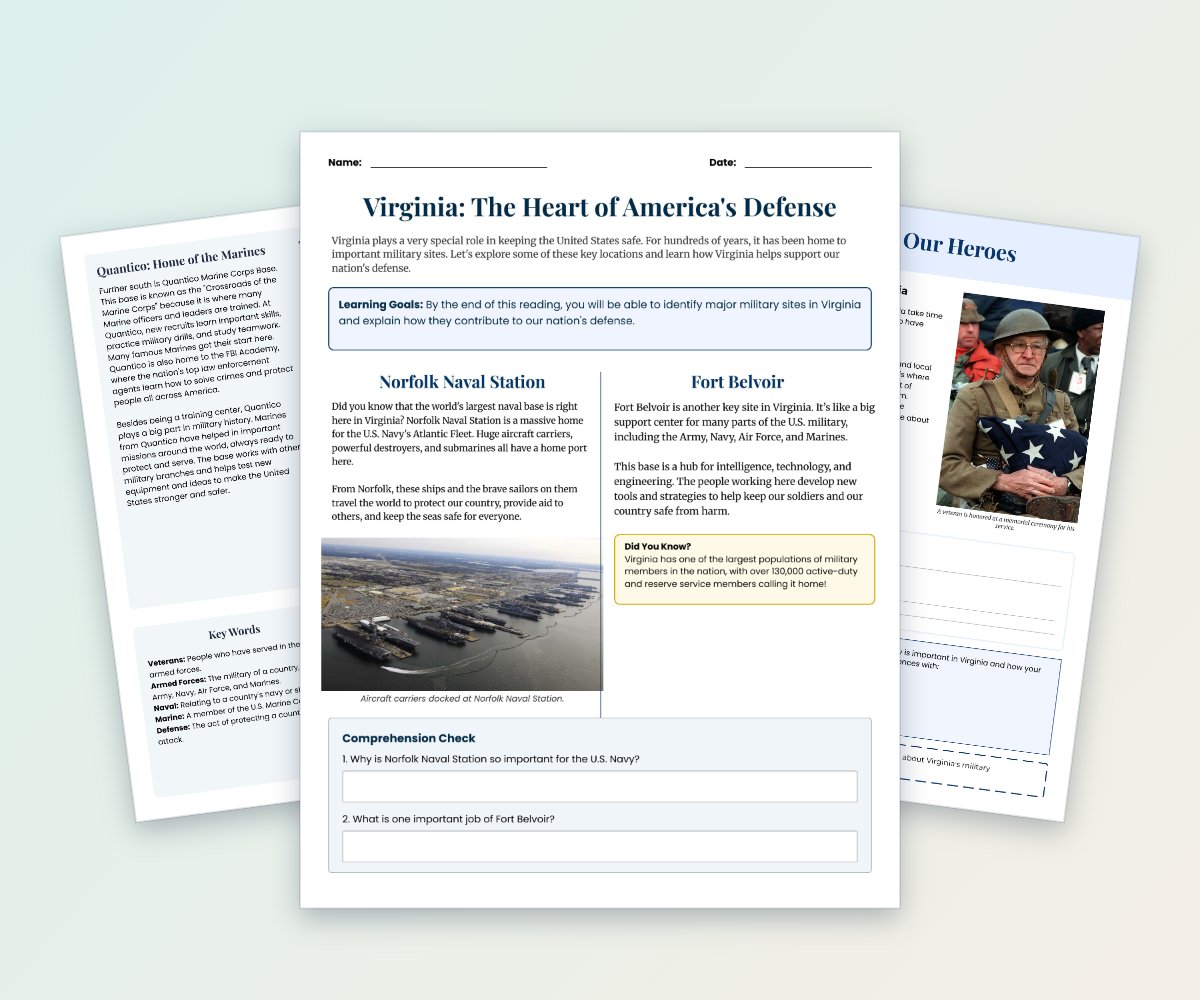
Students read about Norfolk Naval Station, Fort Belvoir, and Quantico Marine Corps Base and learn how these sites support national defense.
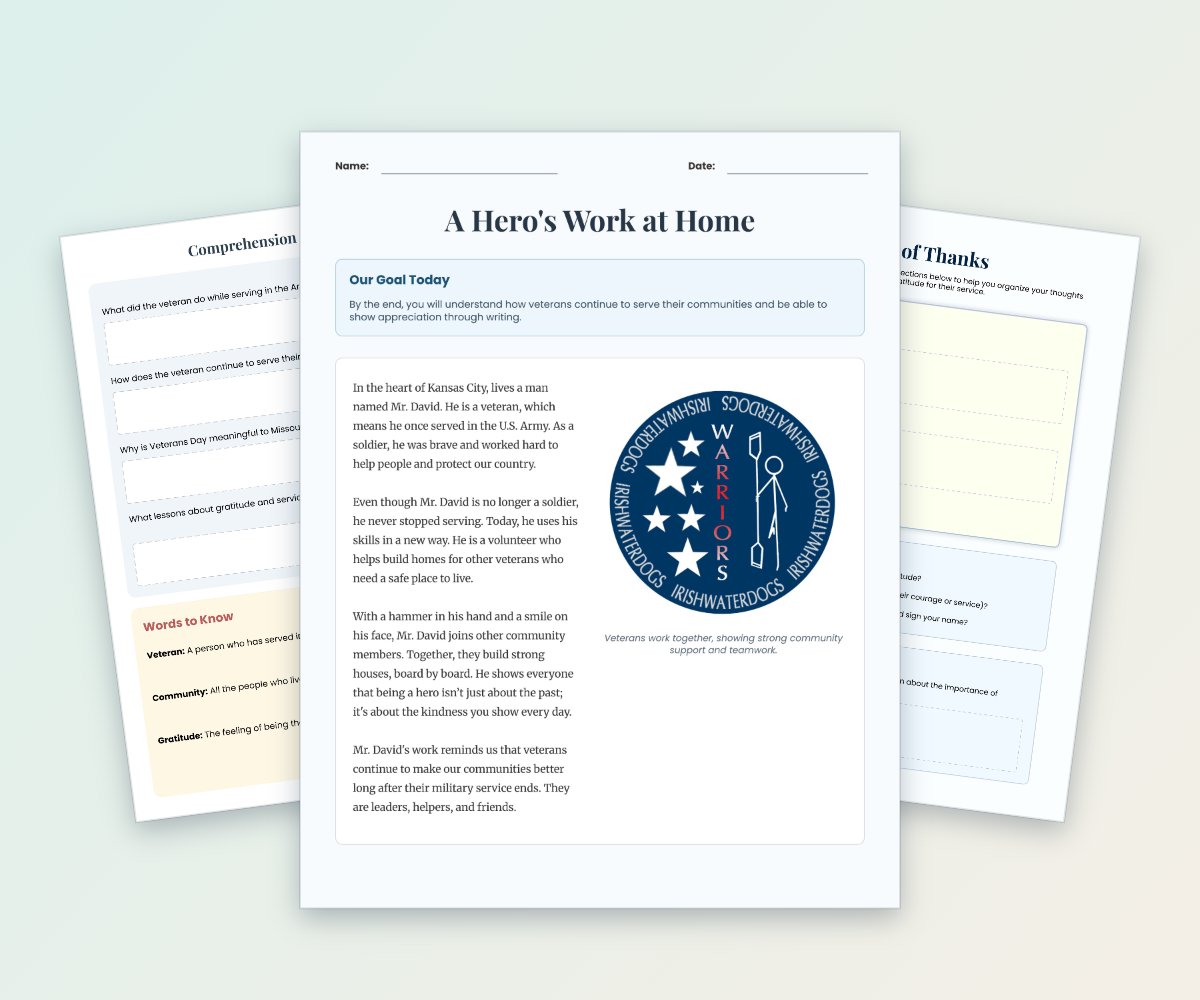
Students read about a veteran who continues serving the community by helping build homes for other veterans.
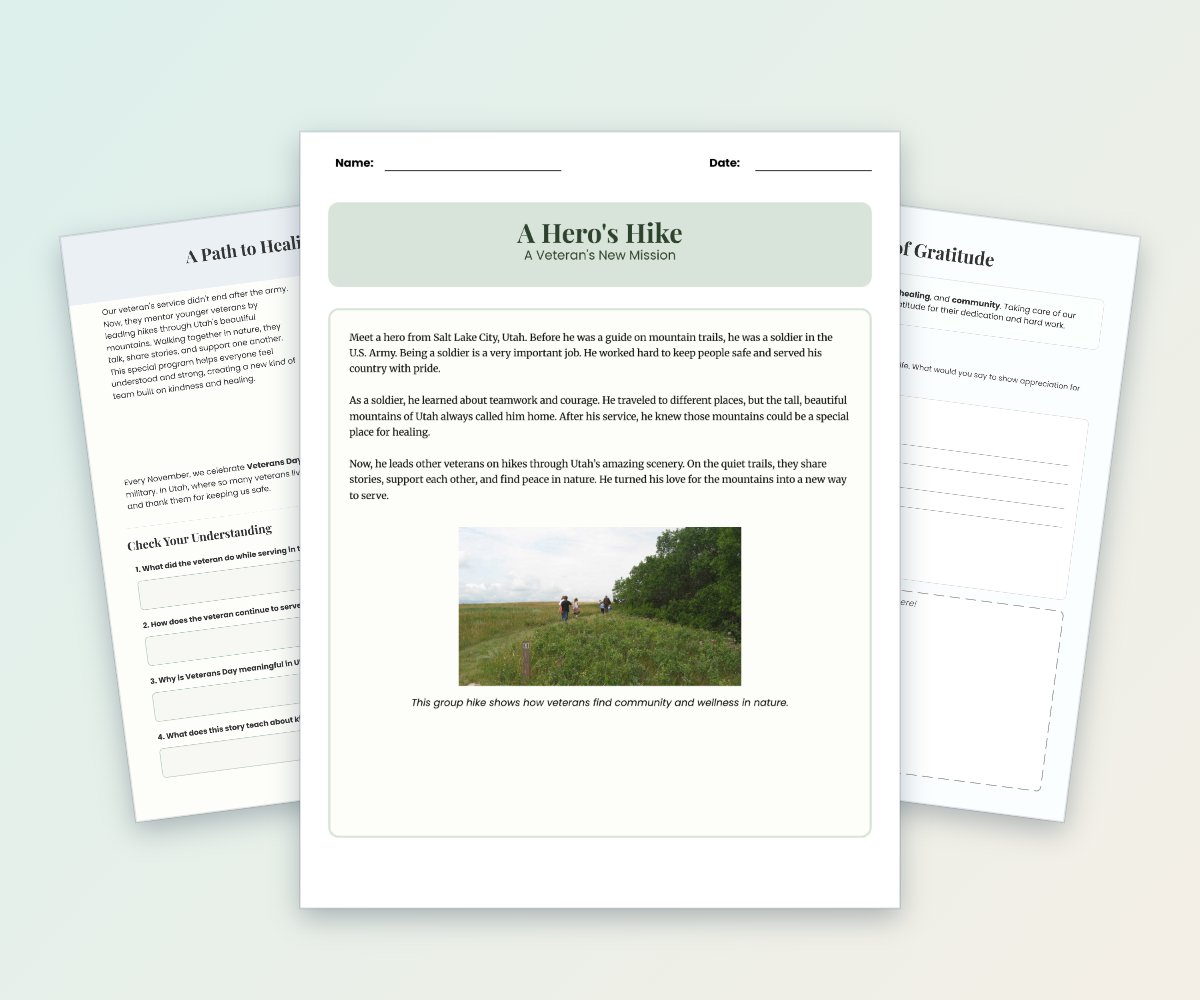
Students read a passage about a Utah veteran who leads healing hikes and mentors other veterans.
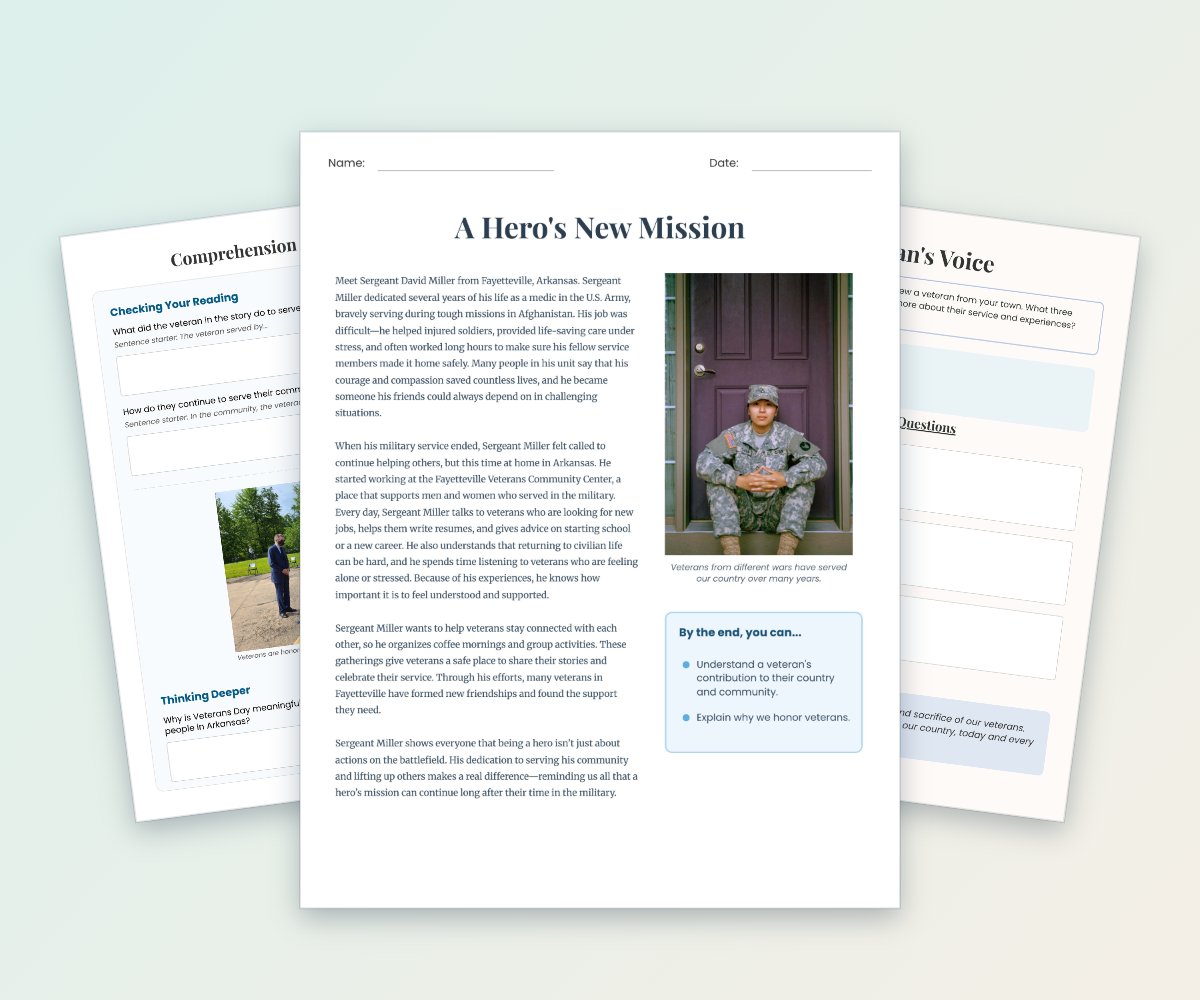
Students read a short nonfiction passage about an Arkansas veteran’s military service and continued work supporting veterans.
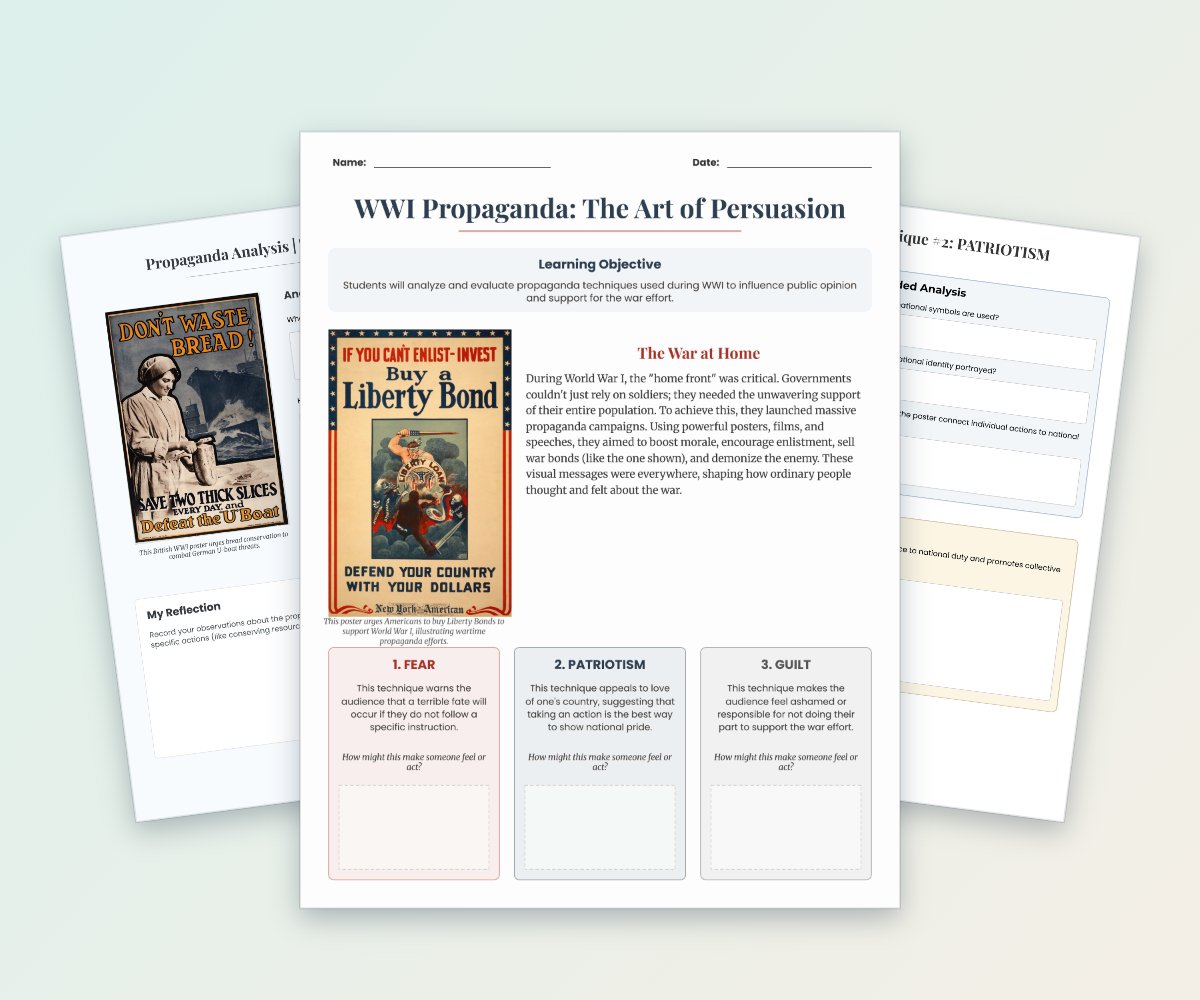
Students examine World War I posters and analyze how fear, patriotism, and guilt influenced public opinion and encouraged wartime actions.
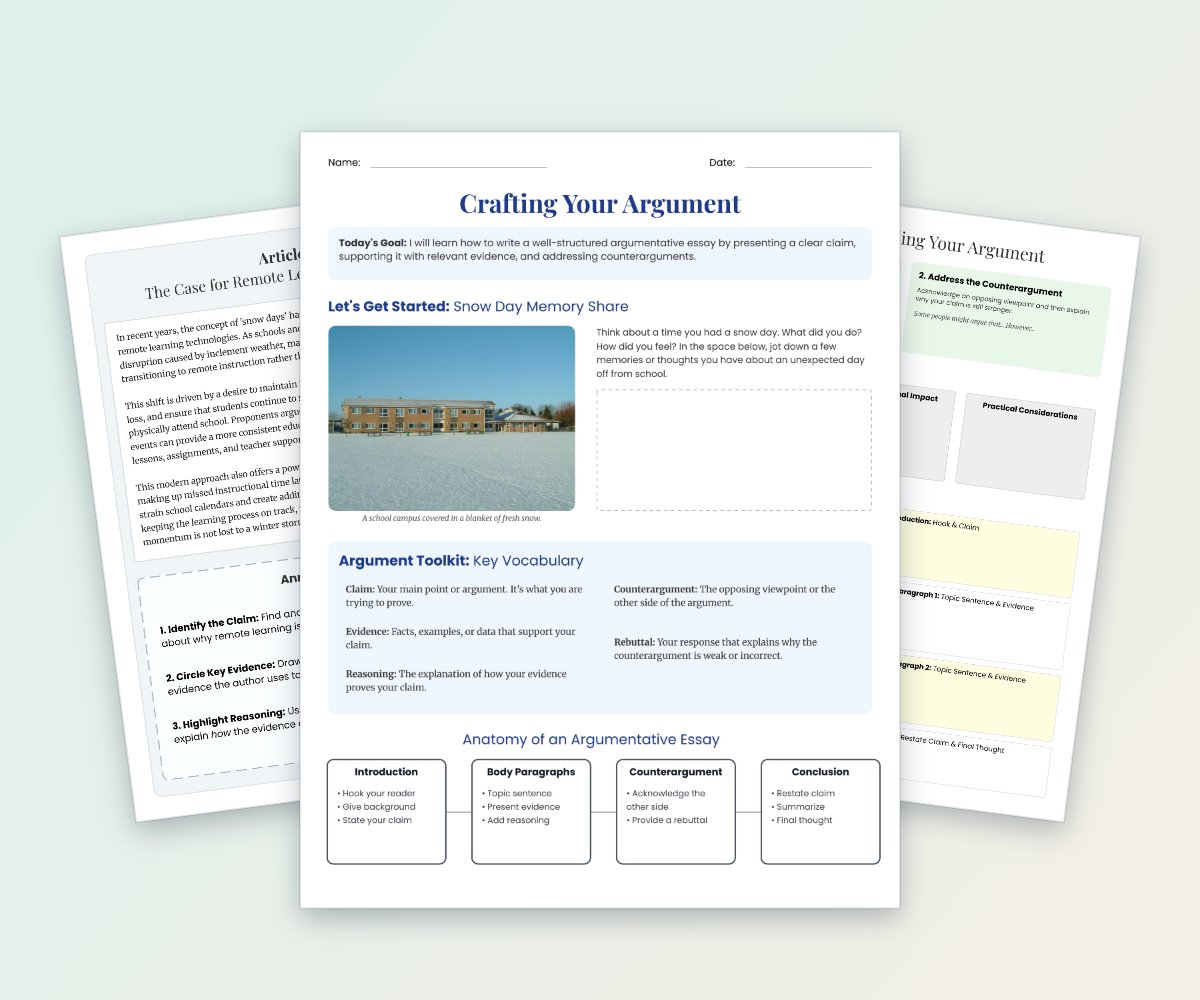
This four-page resource introduces students to argumentative essay writing through claim, evidence, reasoning, counterargument, and rebuttal.
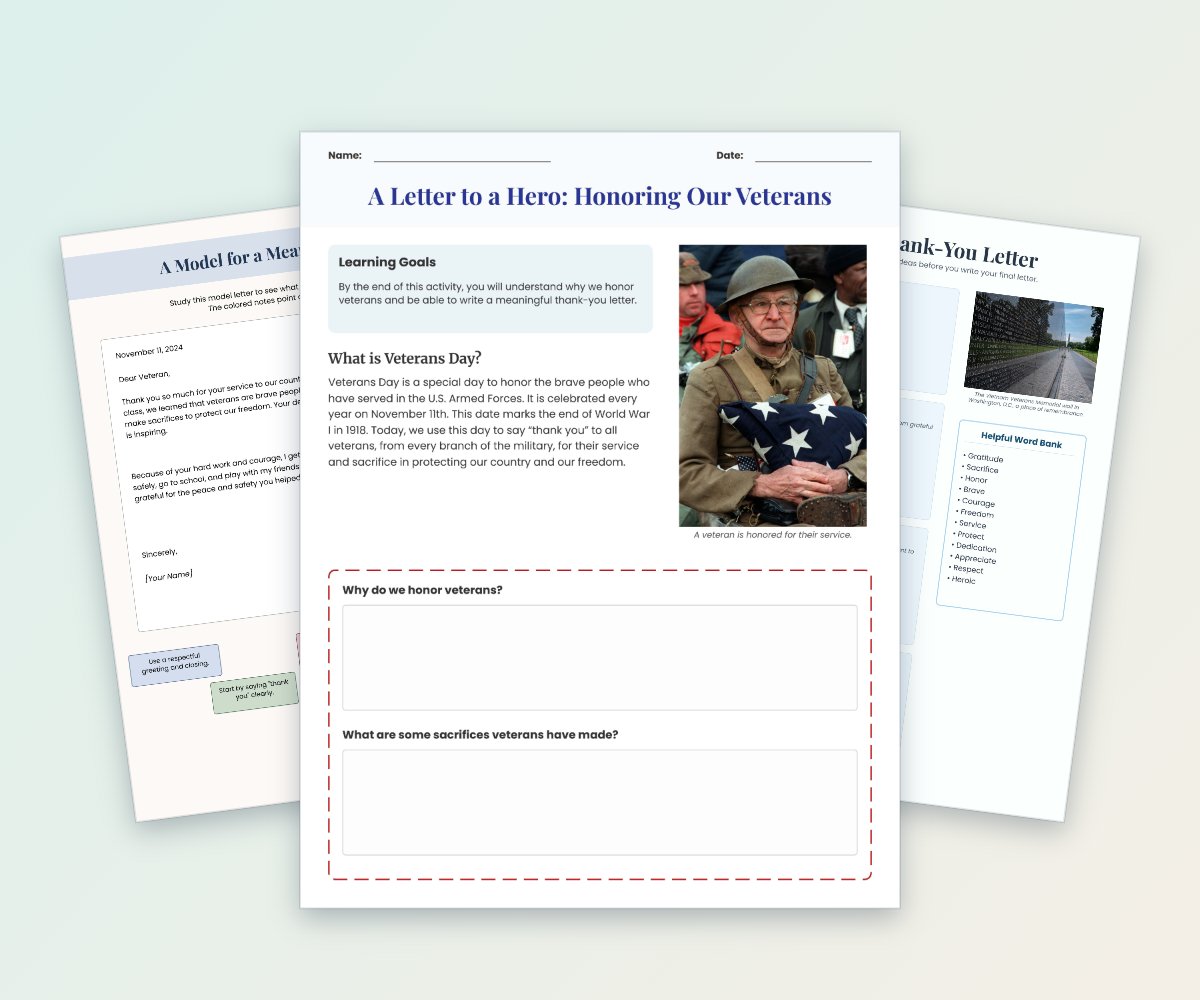
Students learn why Veterans Day honors military veterans and examine a model thank-you letter.
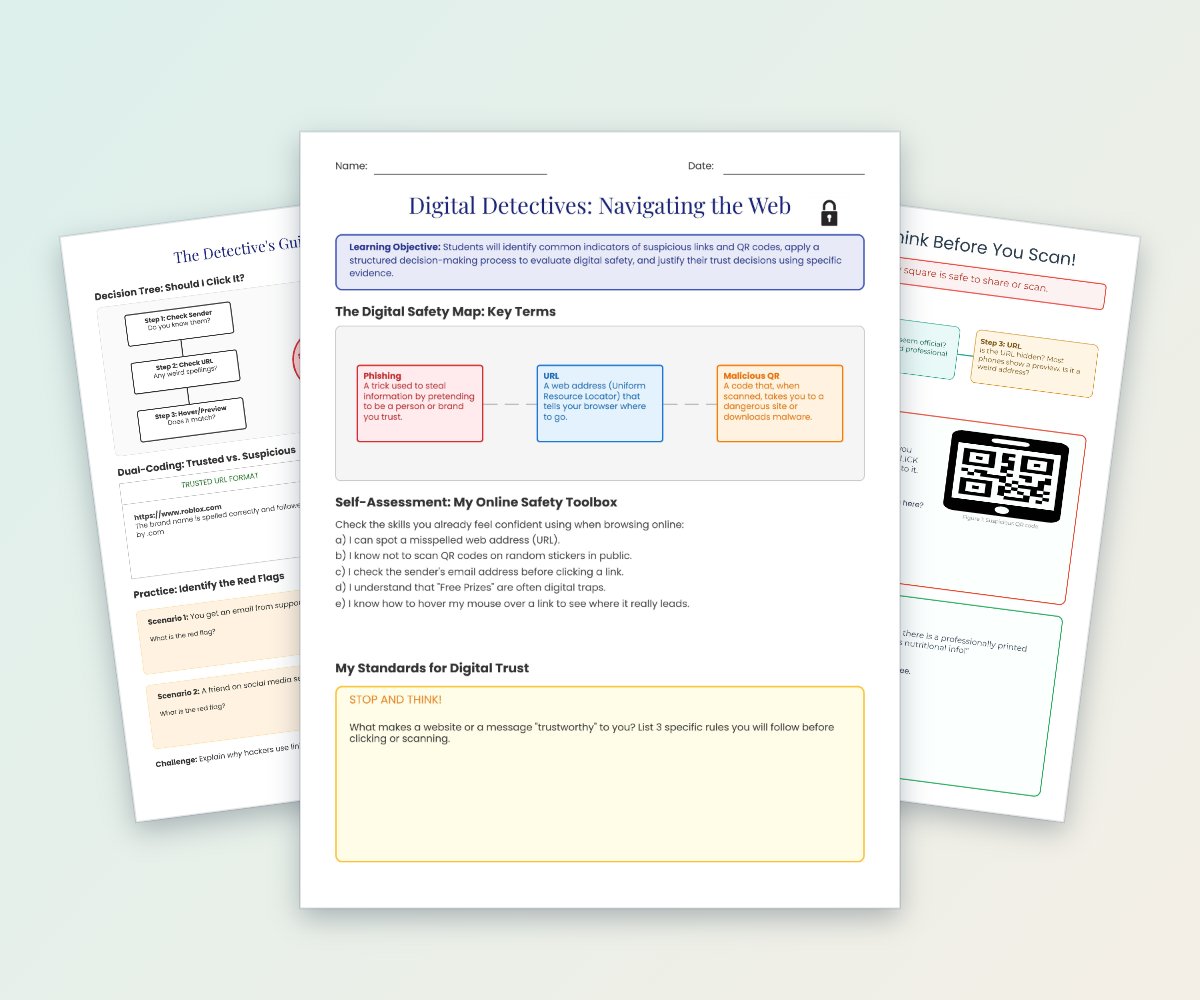
This six-page activity helps students identify phishing indicators, suspicious URLs, malicious QR codes, and misleading online offers.
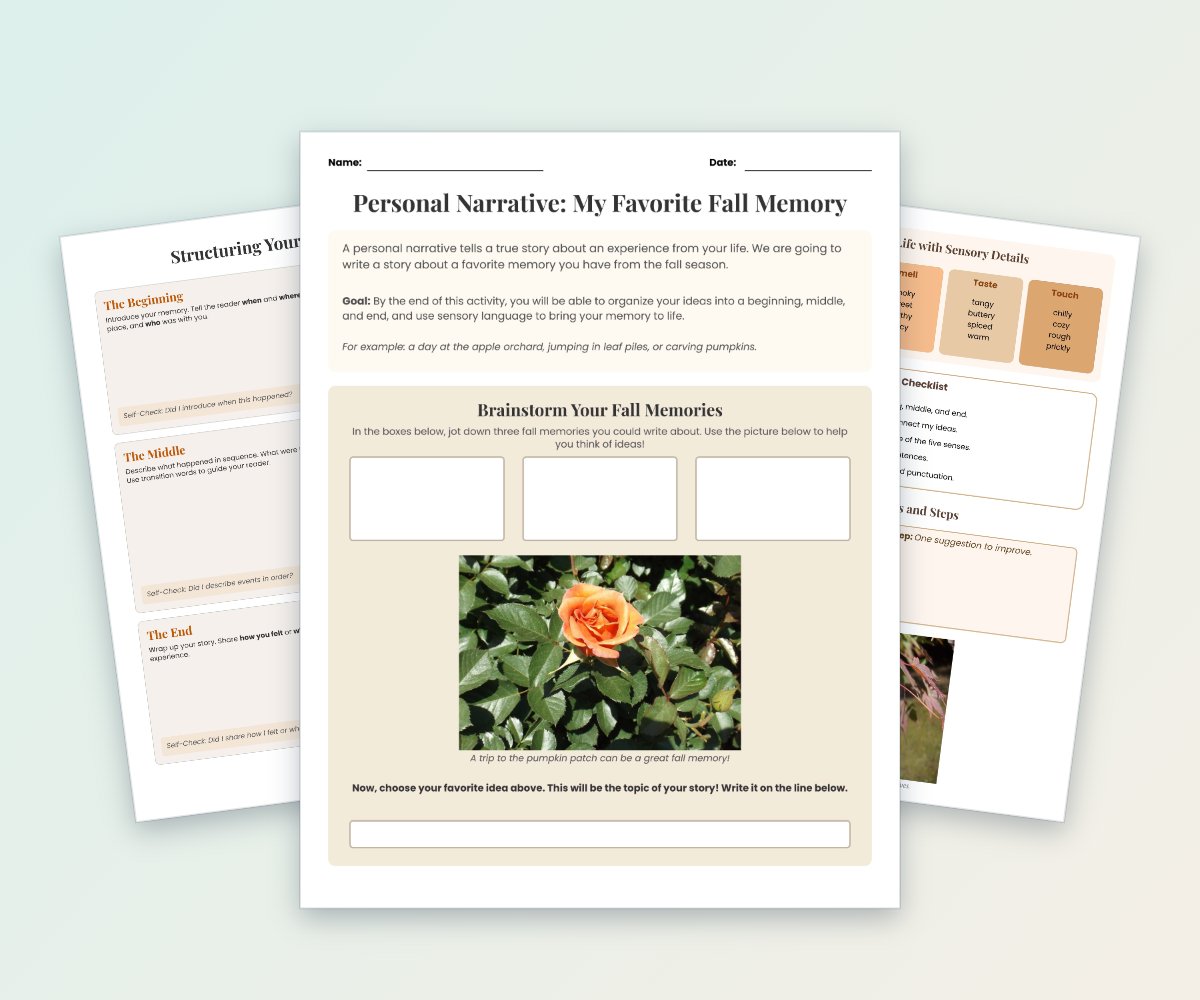
This printable writing activity guides students through brainstorming, organizing, and drafting a personal narrative about a favorite fall memory.
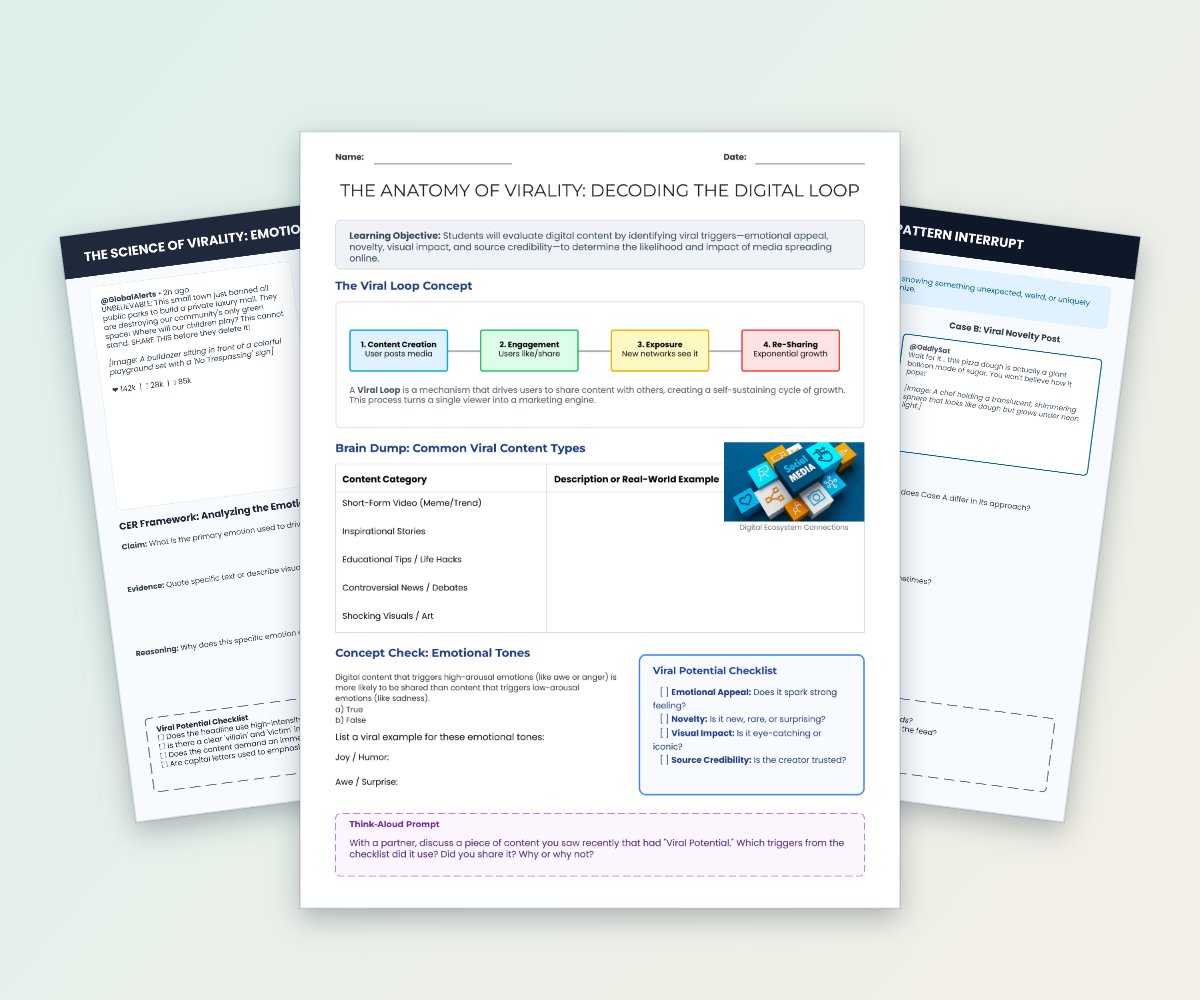
Students examine how emotional appeal, novelty, visual impact, and source credibility influence whether digital content spreads.
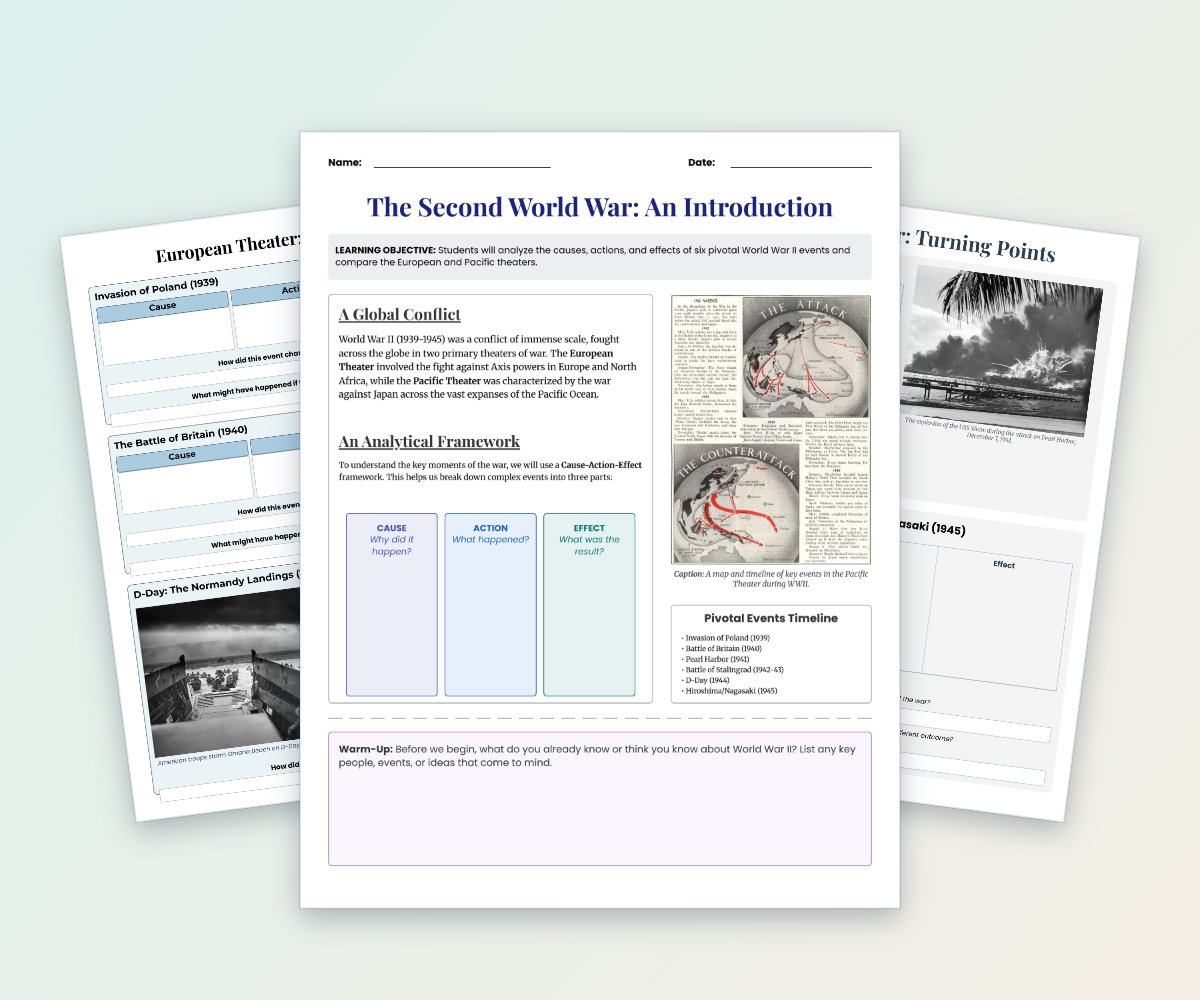
Students examine the causes, actions, and effects of six pivotal World War II events across the European and Pacific theaters.
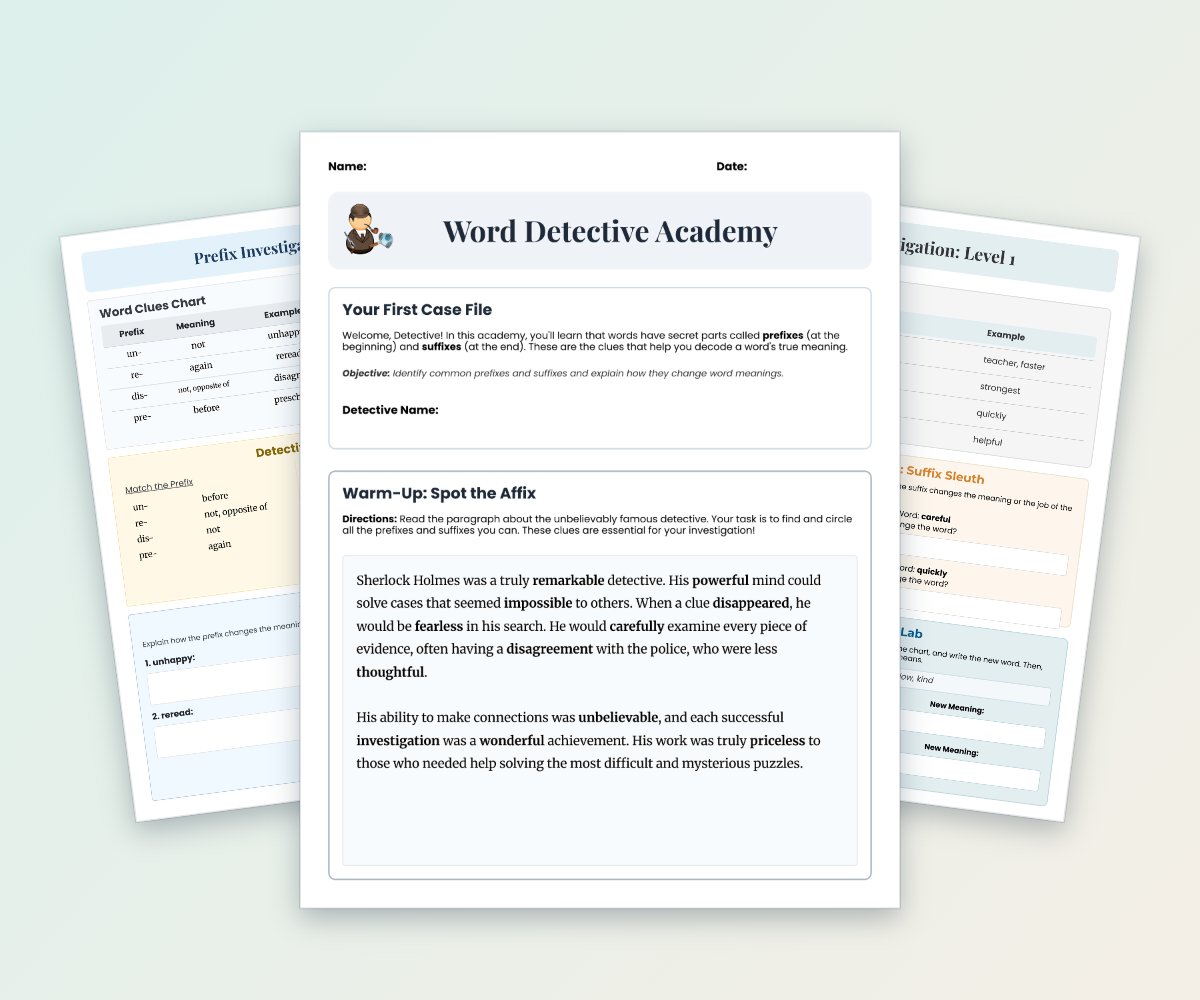
Students investigate common prefixes and suffixes through reading, word analysis, matching, completion tasks, and written explanations.
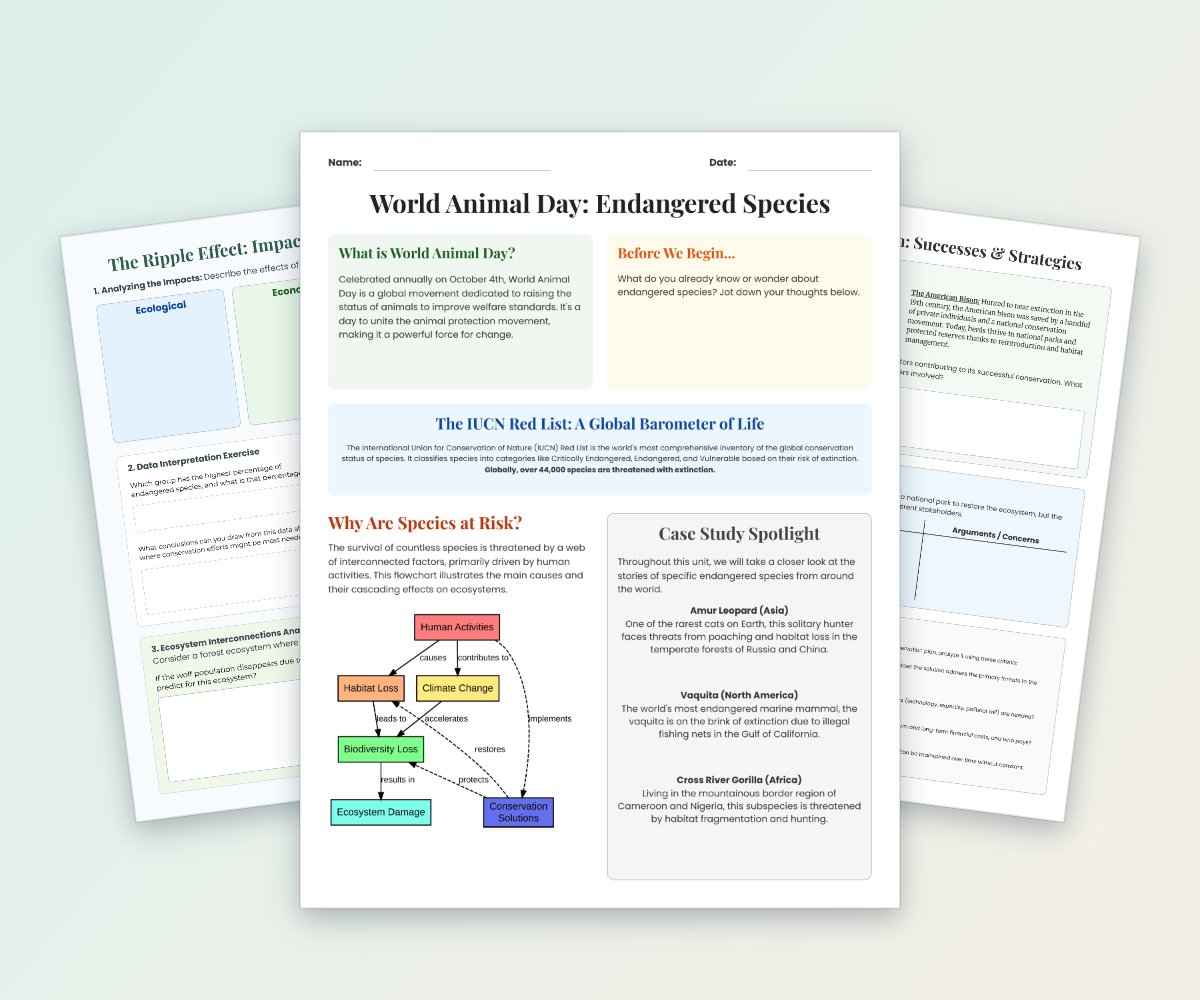
This five-page activity explores World Animal Day, endangered species classifications, threats to biodiversity, and conservation efforts.
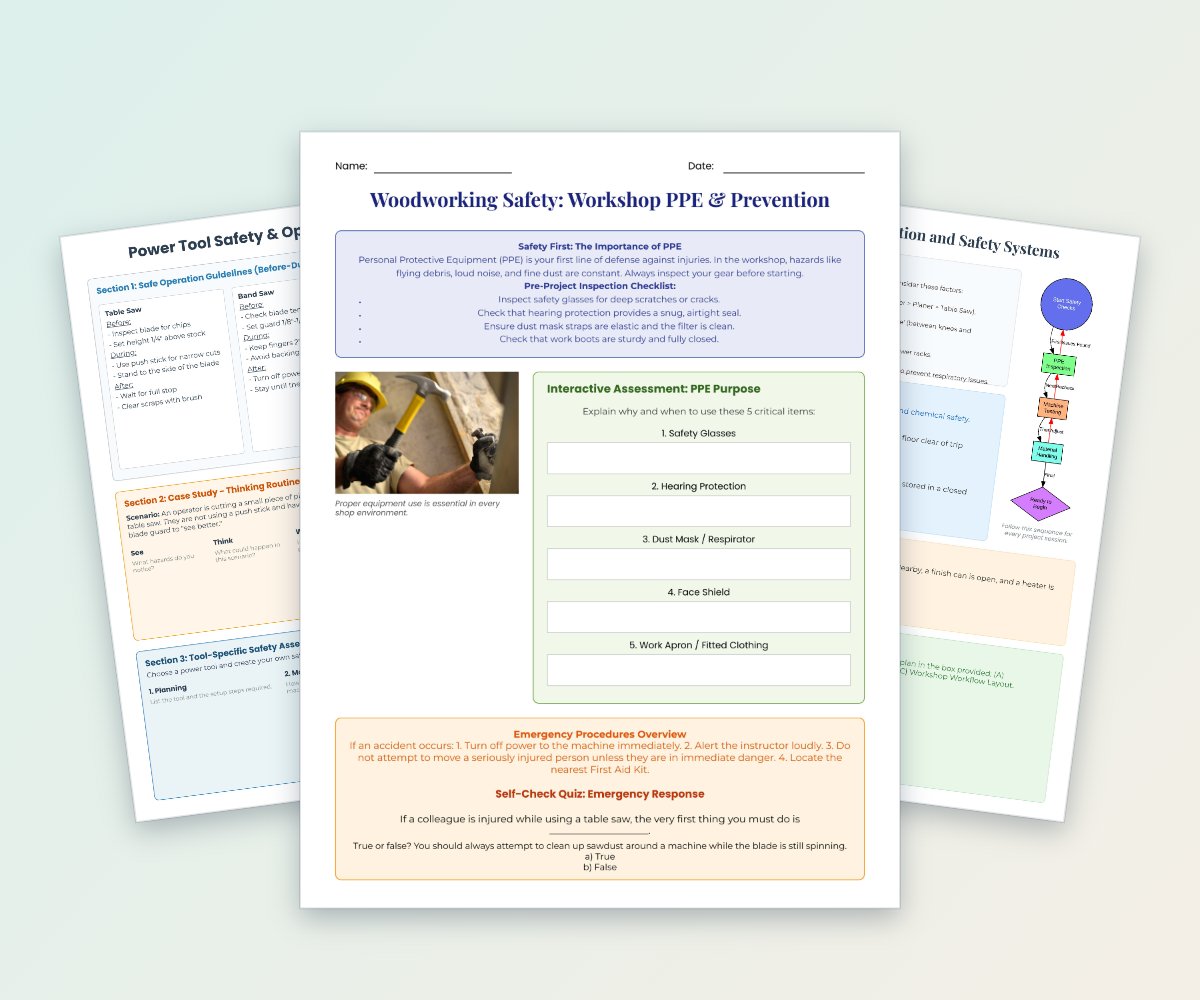
This ready-to-use resource teaches workshop PPE, emergency response, and safe operating procedures for table saws, band saws, and routers.
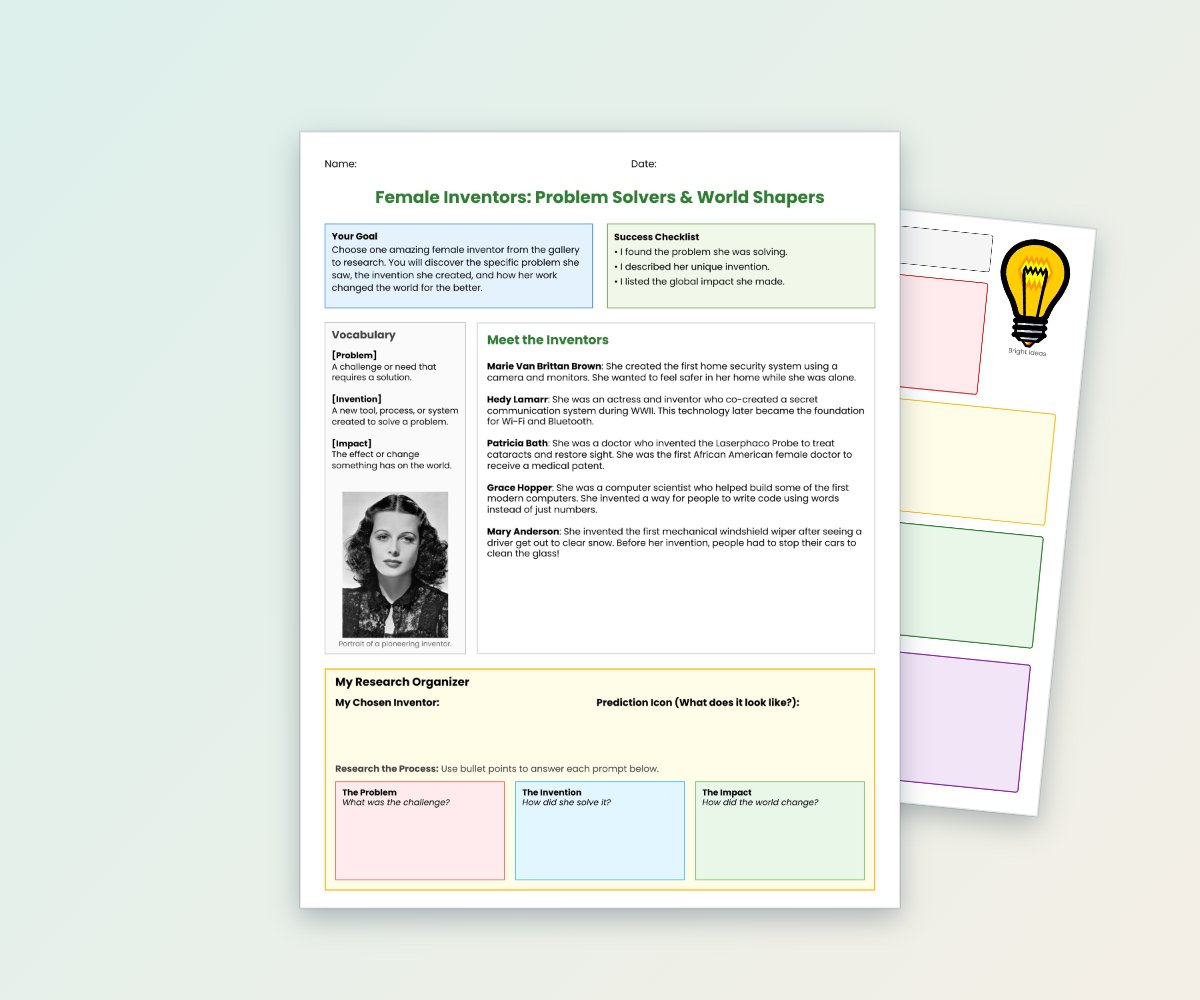
Students choose a female inventor and organize research about the problem she addressed, her invention, and its impact.
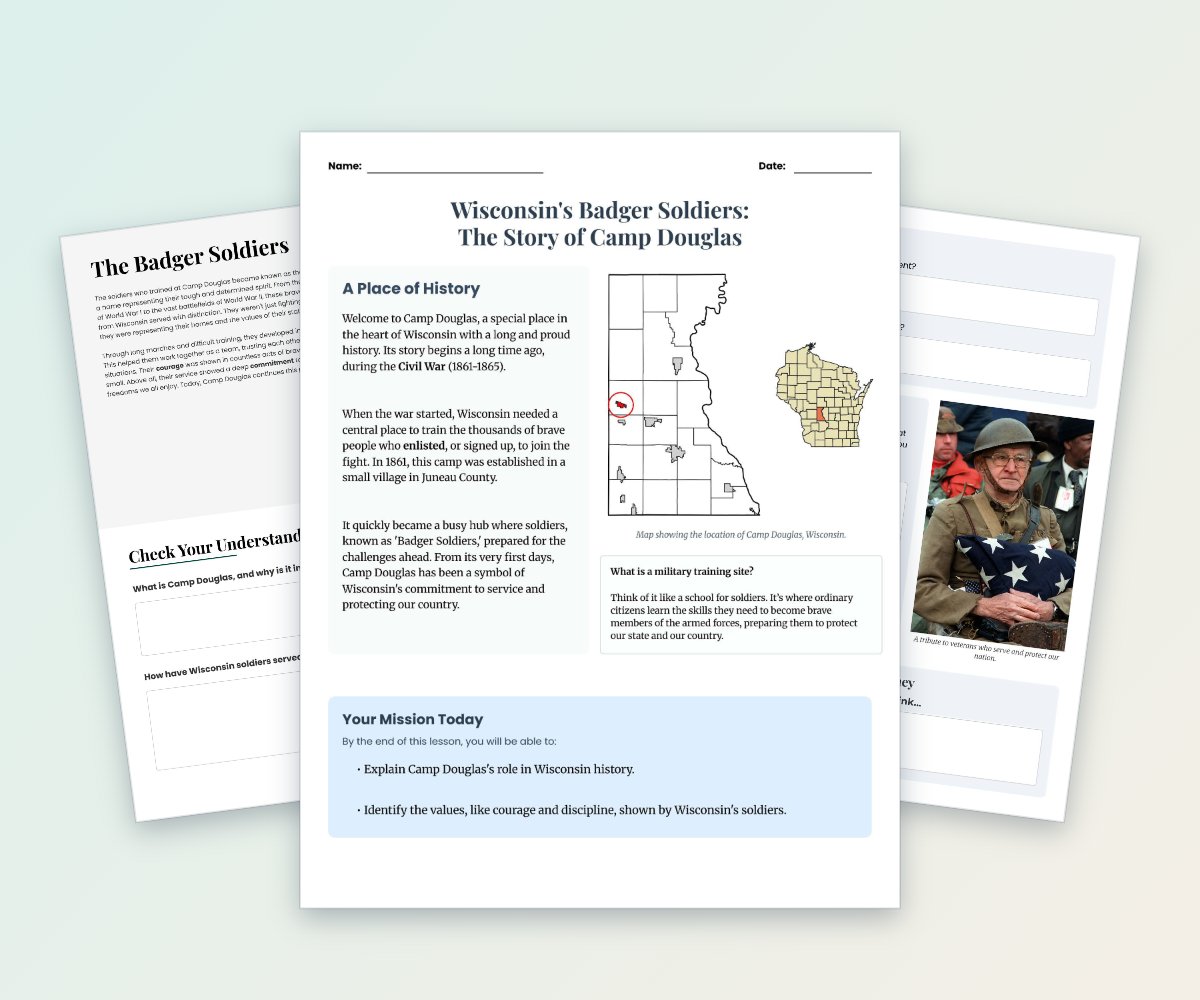
Students learn about Camp Douglas, Wisconsin’s Badger Soldiers, and the values of courage, discipline, and commitment.
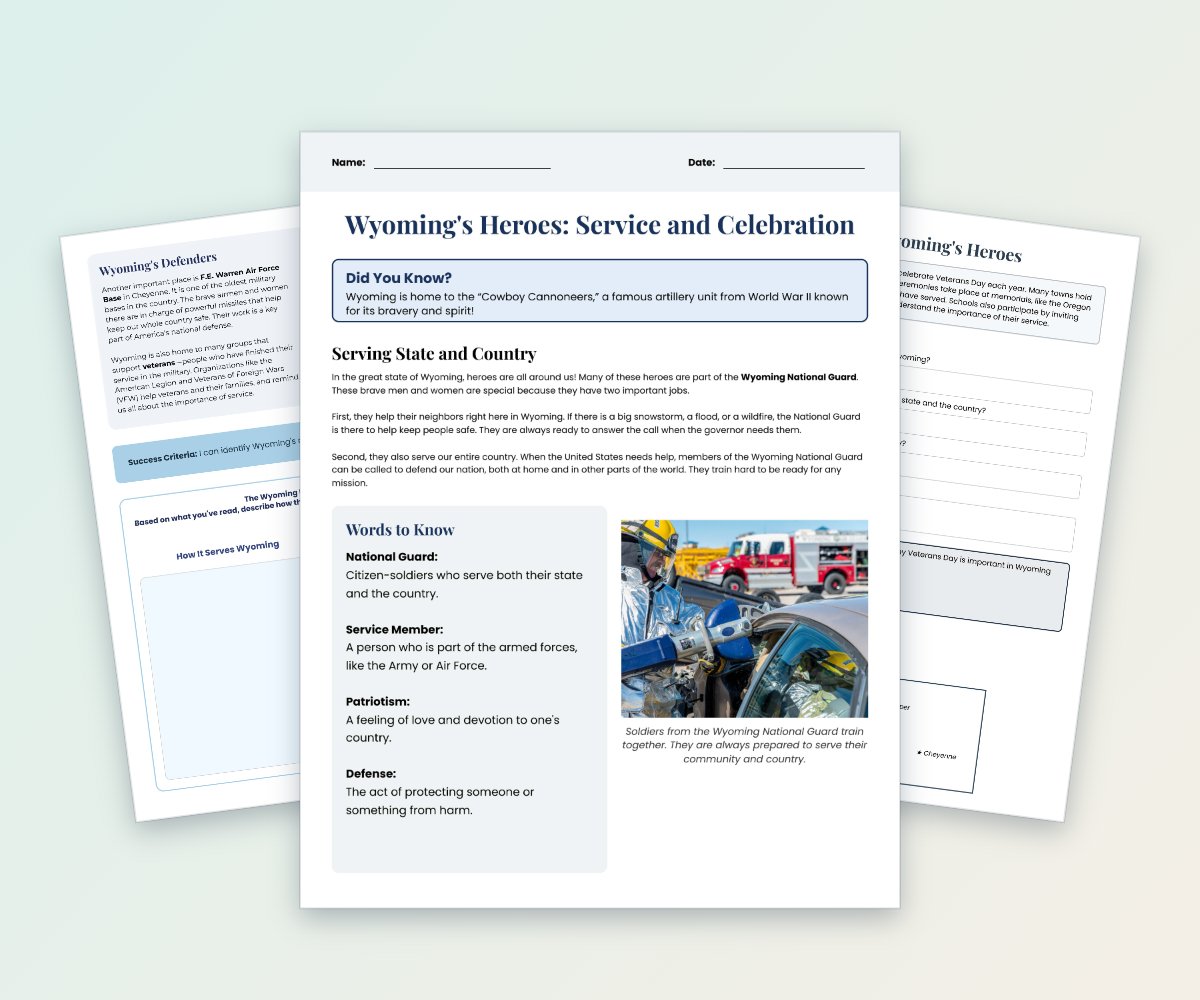
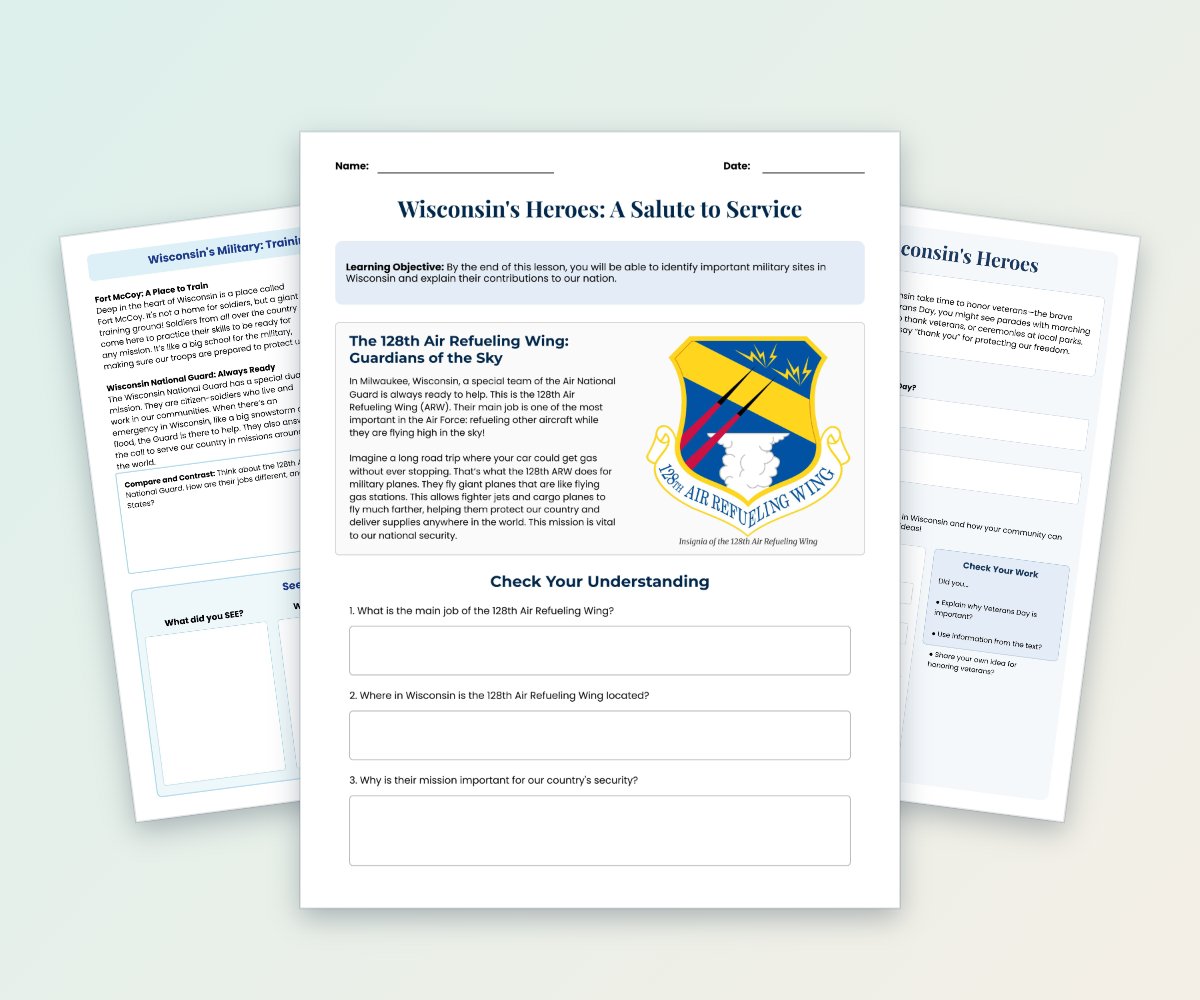
Students learn about the 128th Air Refueling Wing, Fort McCoy, the Wisconsin National Guard, and Veterans Day.
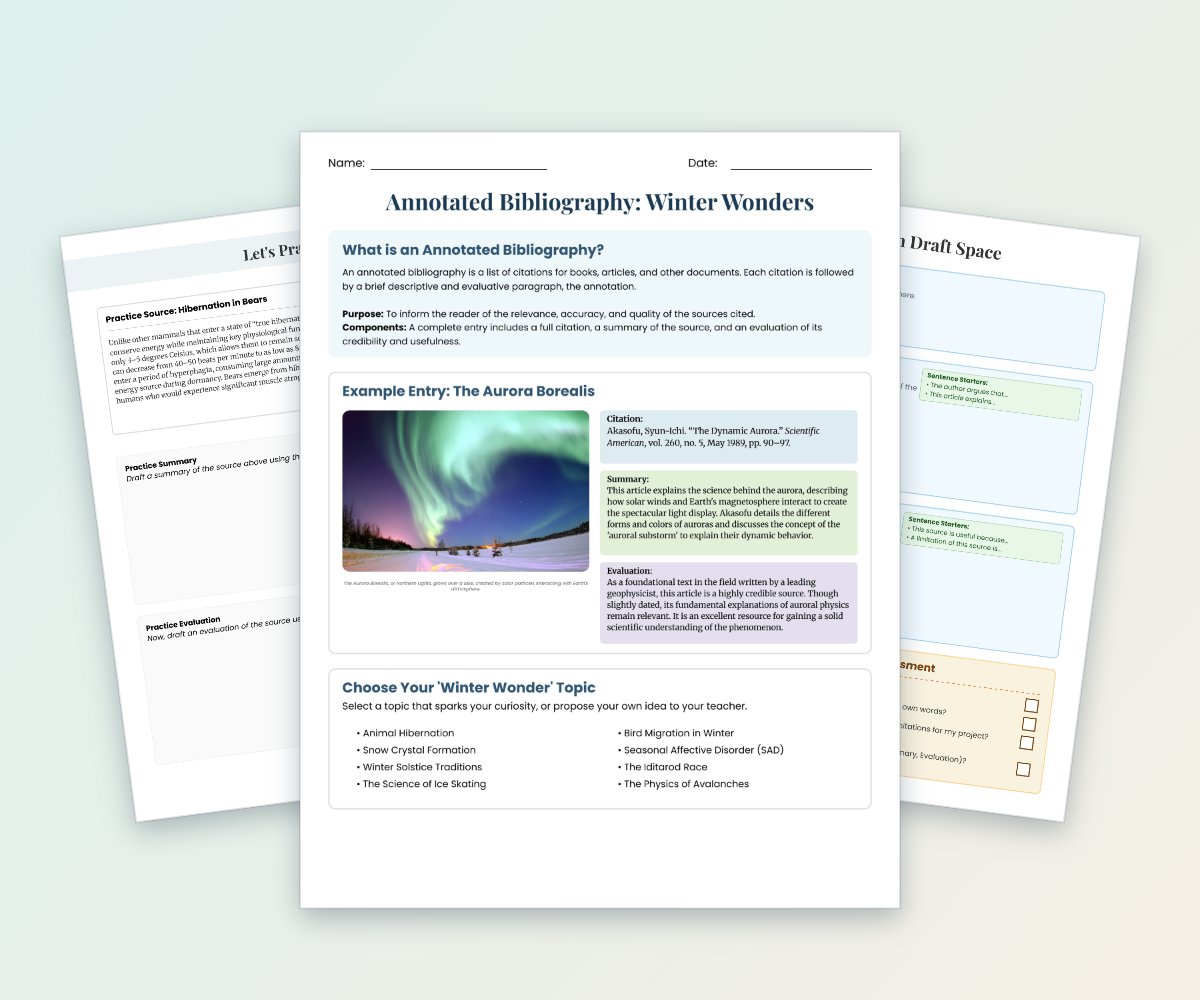
Students learn the purpose and components of an annotated bibliography through explanations, a model entry, topic choices, and guided practice.
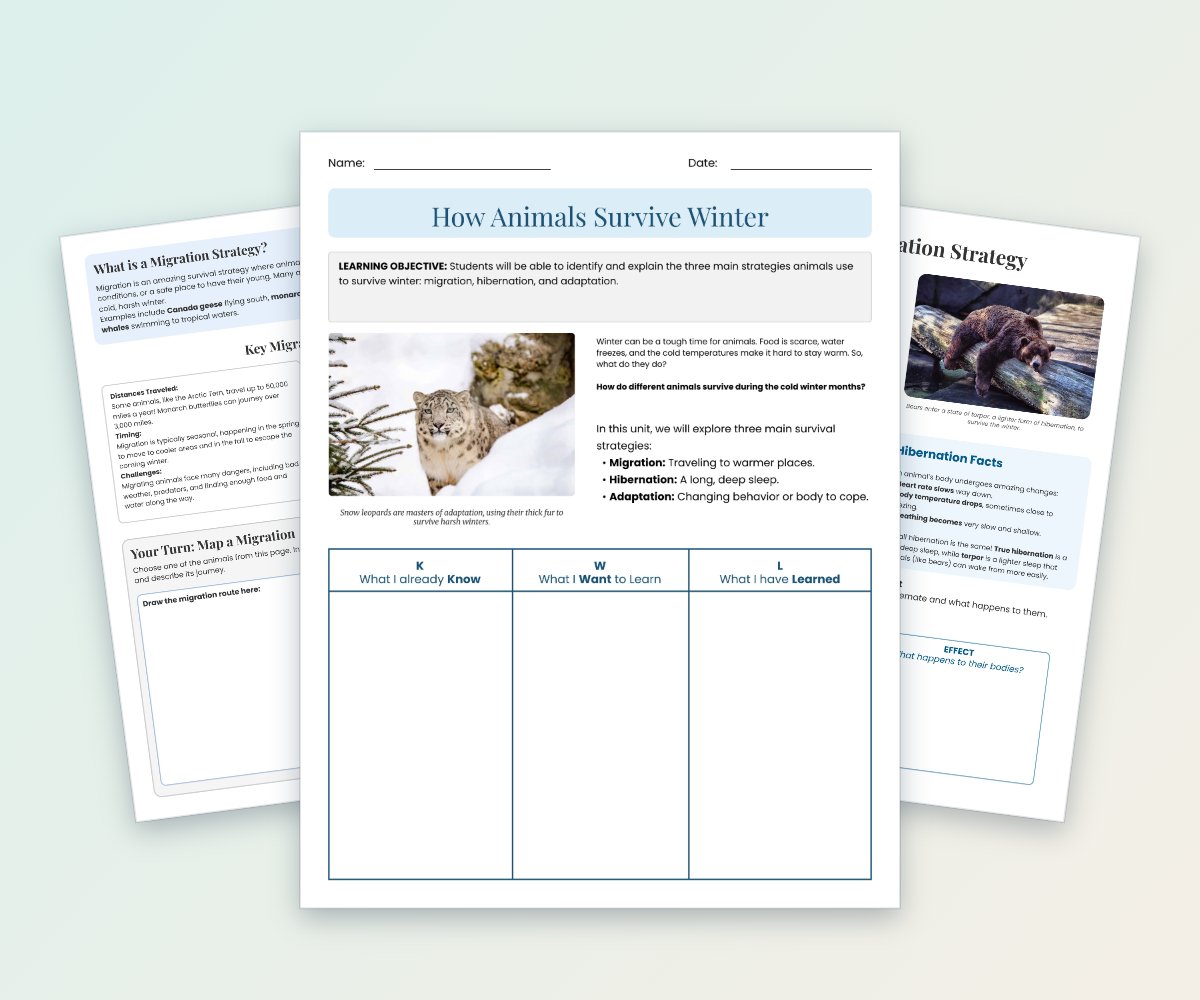
This seven-page science unit introduces migration, hibernation, and adaptation as animal survival strategies during winter.
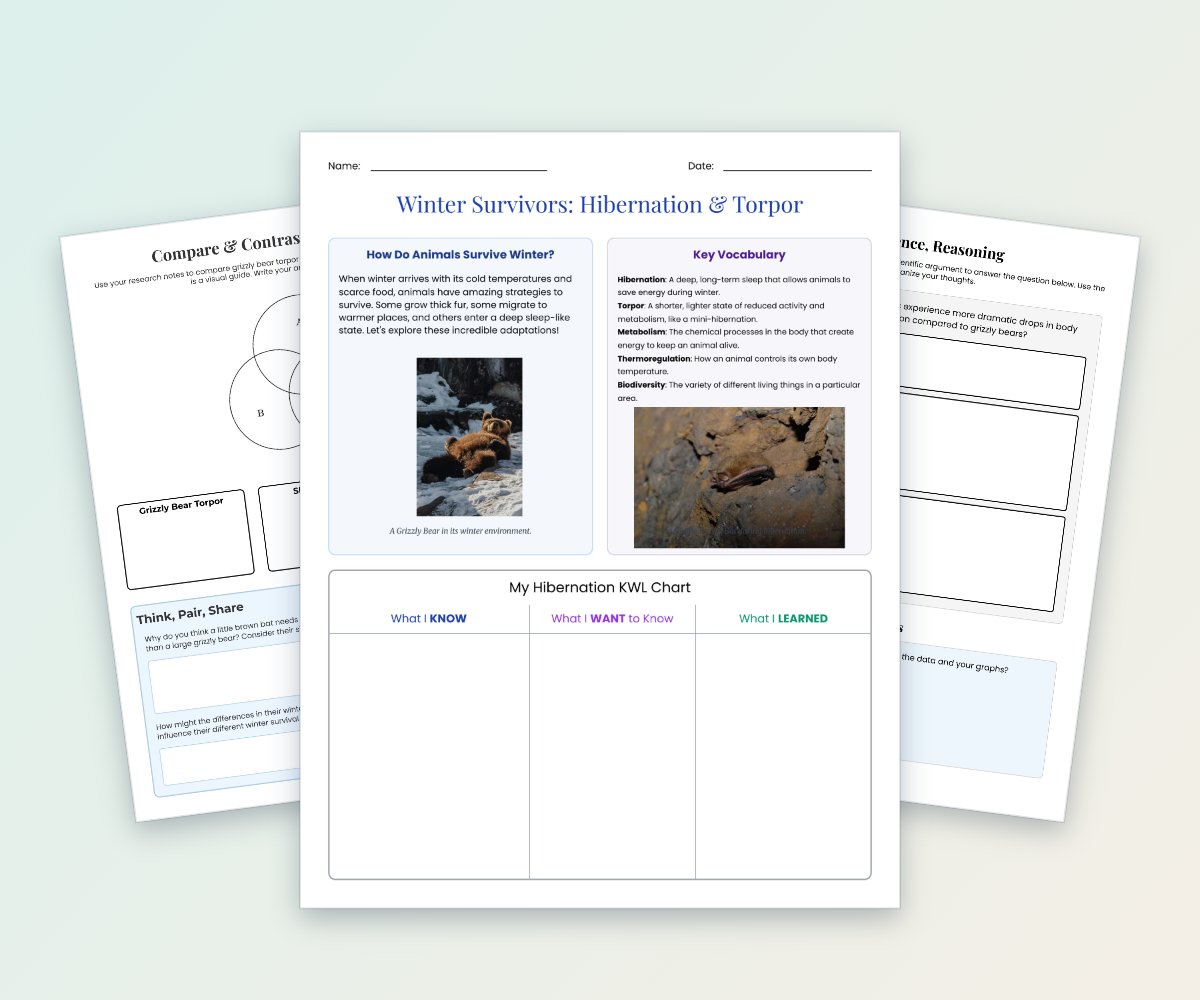
This four-page science activity pack explores how animals survive winter through hibernation, torpor, migration, insulation, and other adaptations.
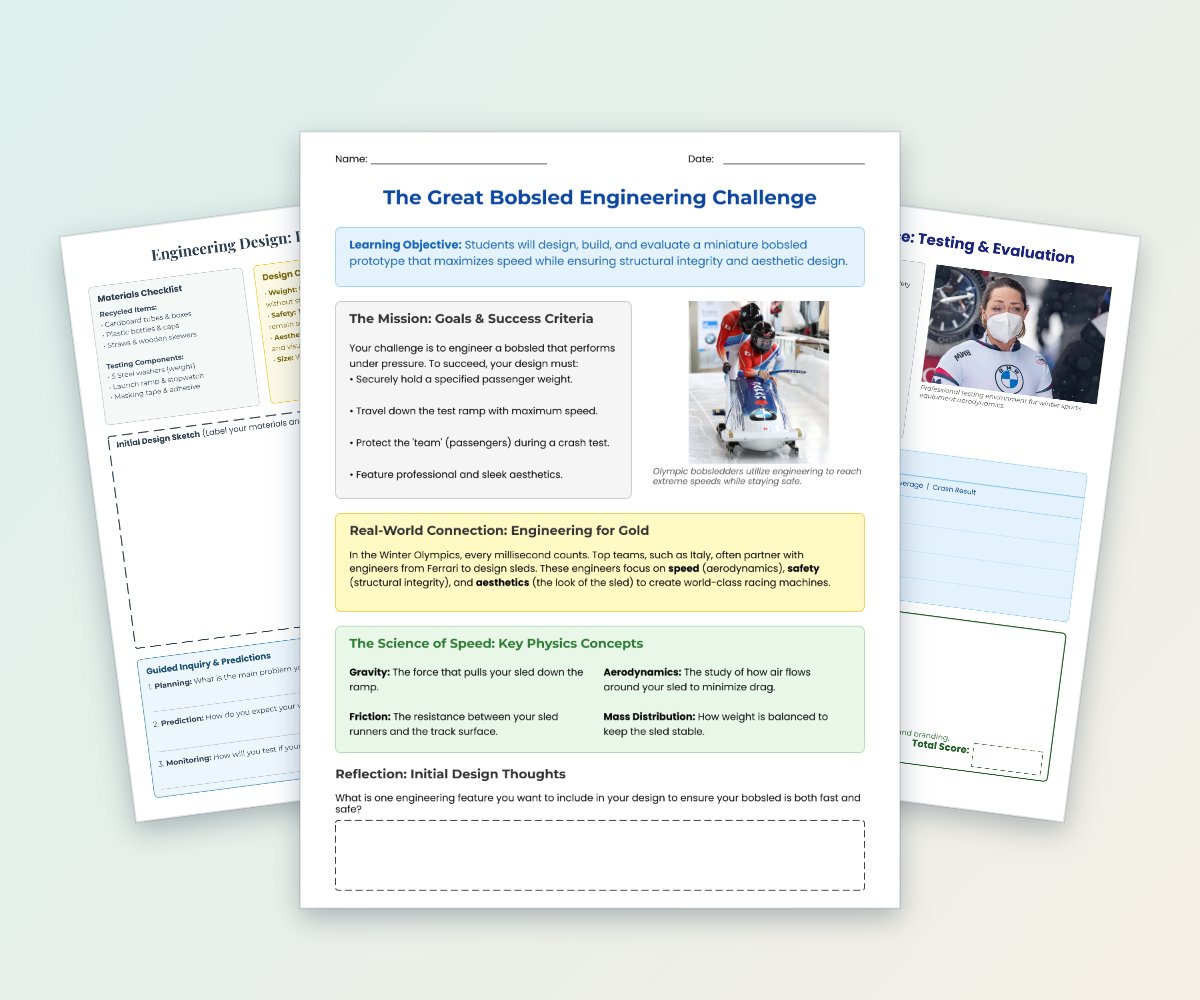
Students design, build, and evaluate a miniature bobsled prototype for speed, stability, safety, and visual appeal.
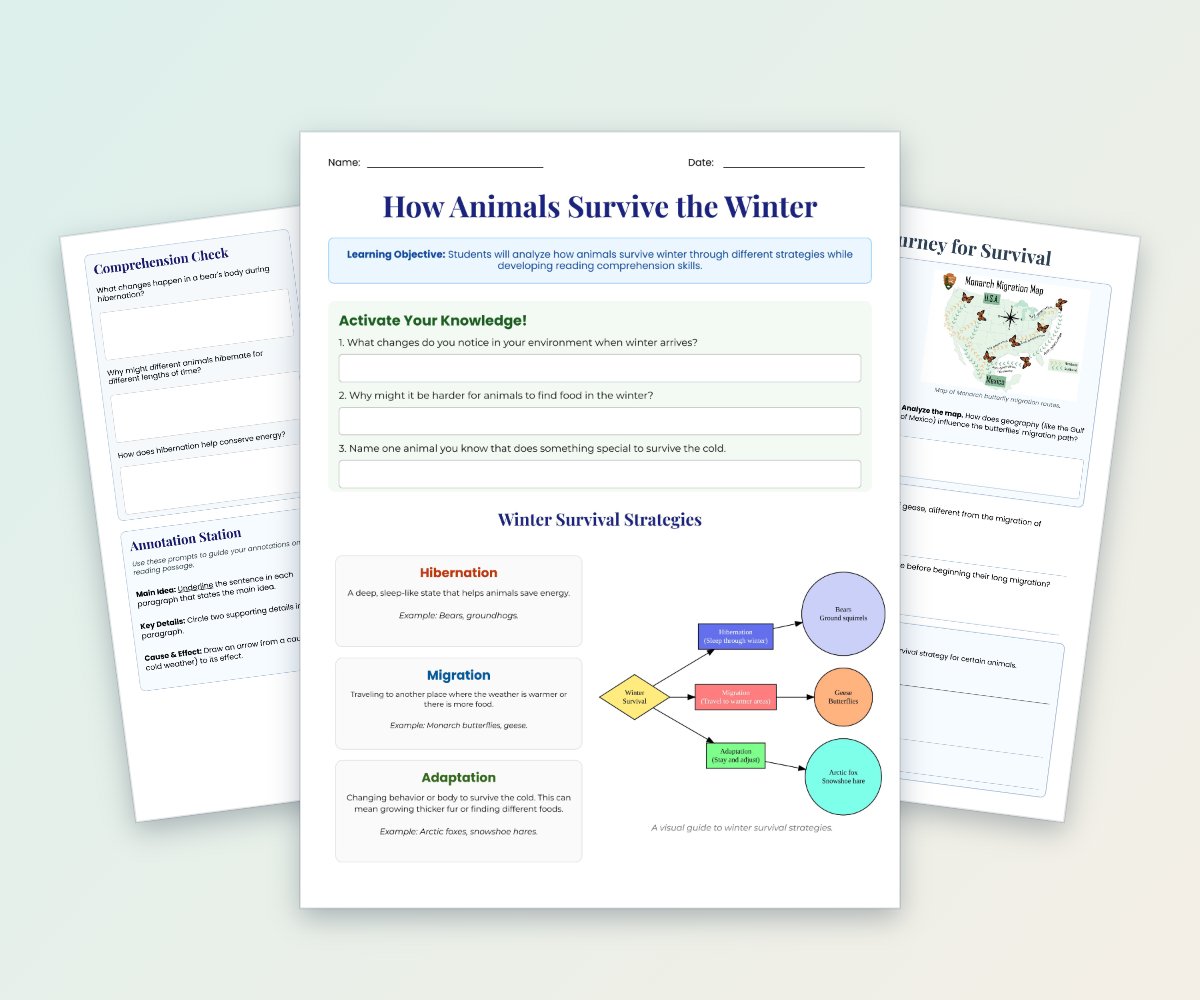
This four-page activity pack teaches students how animals survive winter through hibernation, migration, and adaptation.
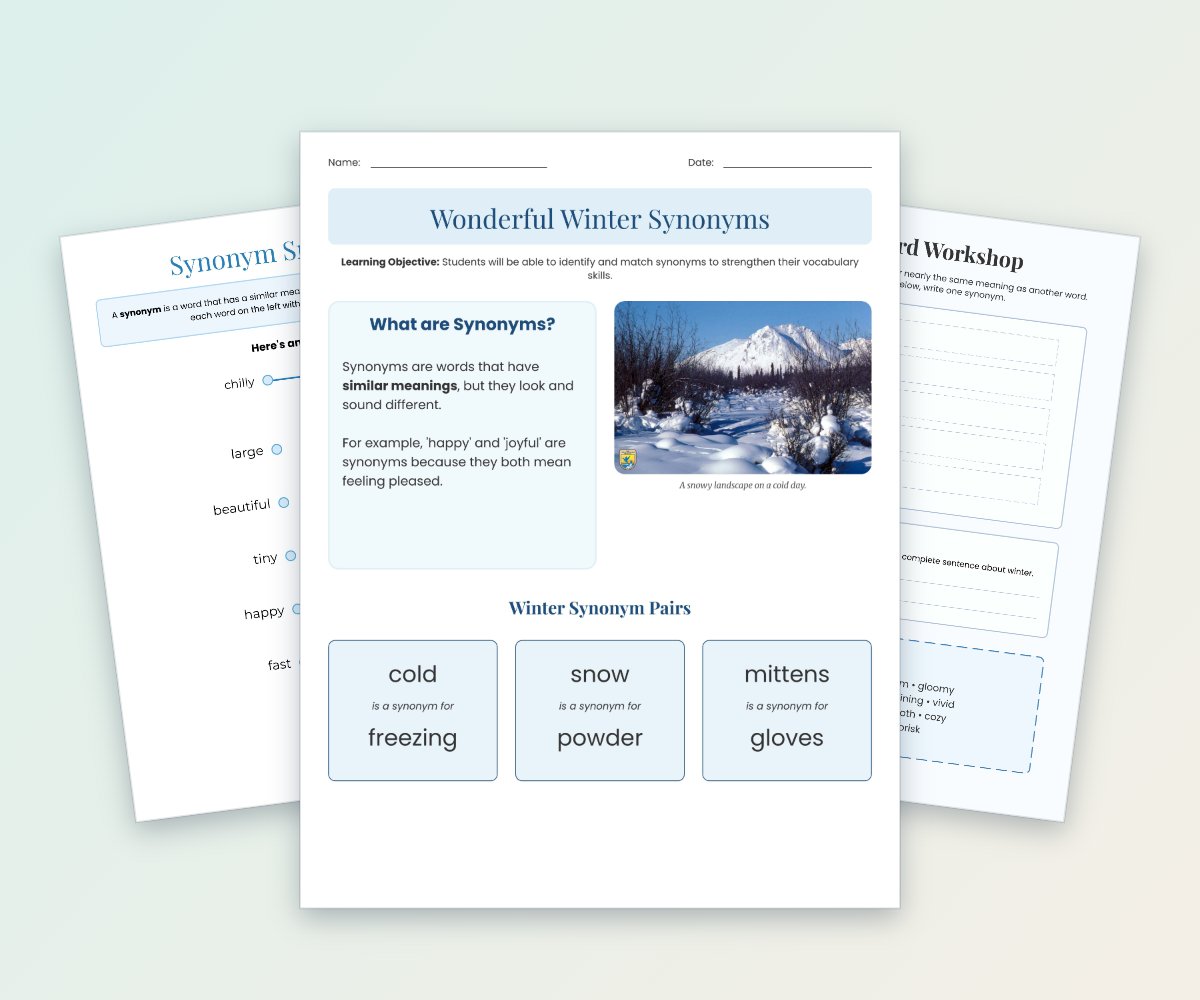
This three-page winter-themed activity helps students learn, recognize, and use synonyms.
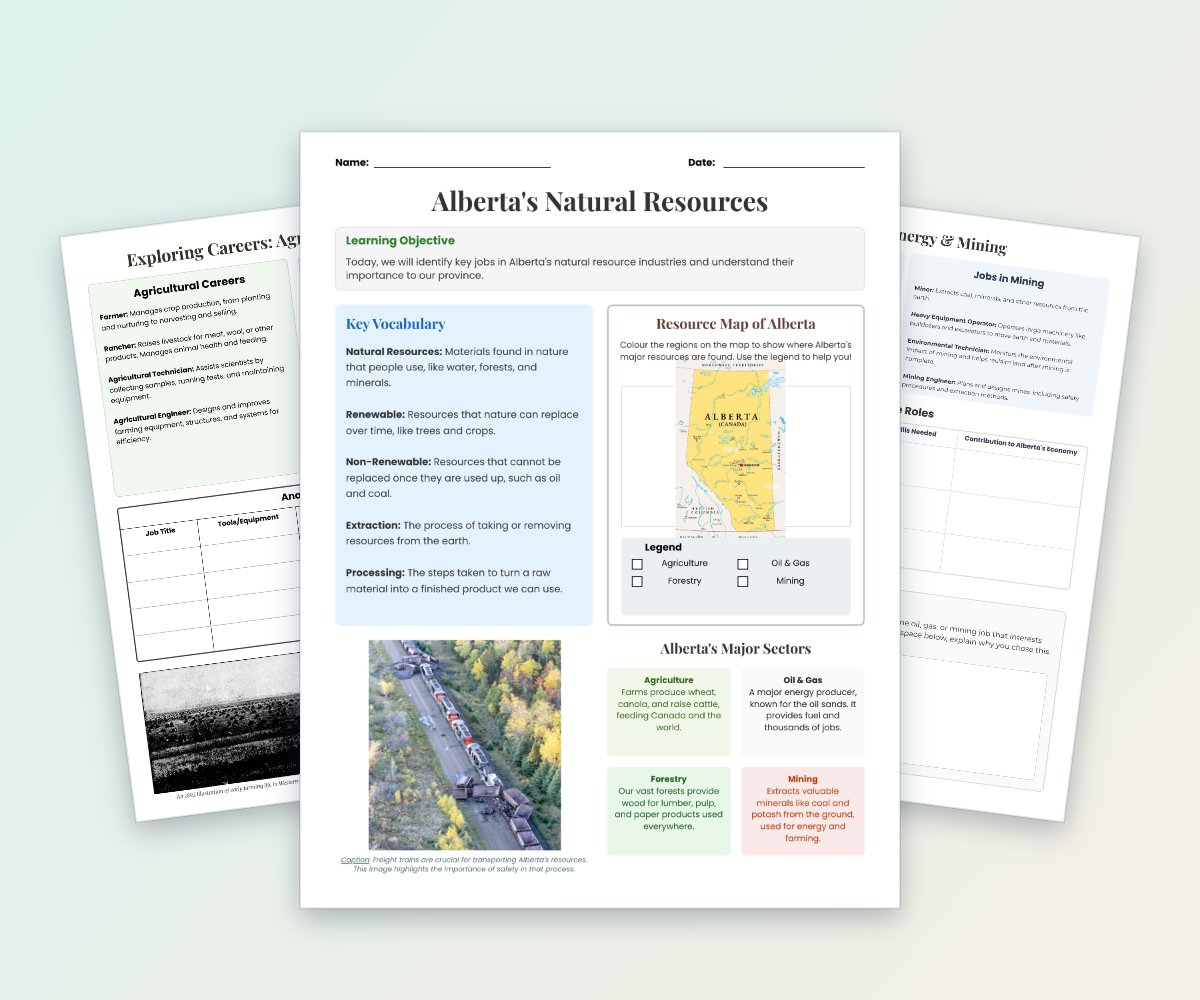
Students explore Alberta’s natural resource industries, including agriculture, forestry, oil and gas, and mining.
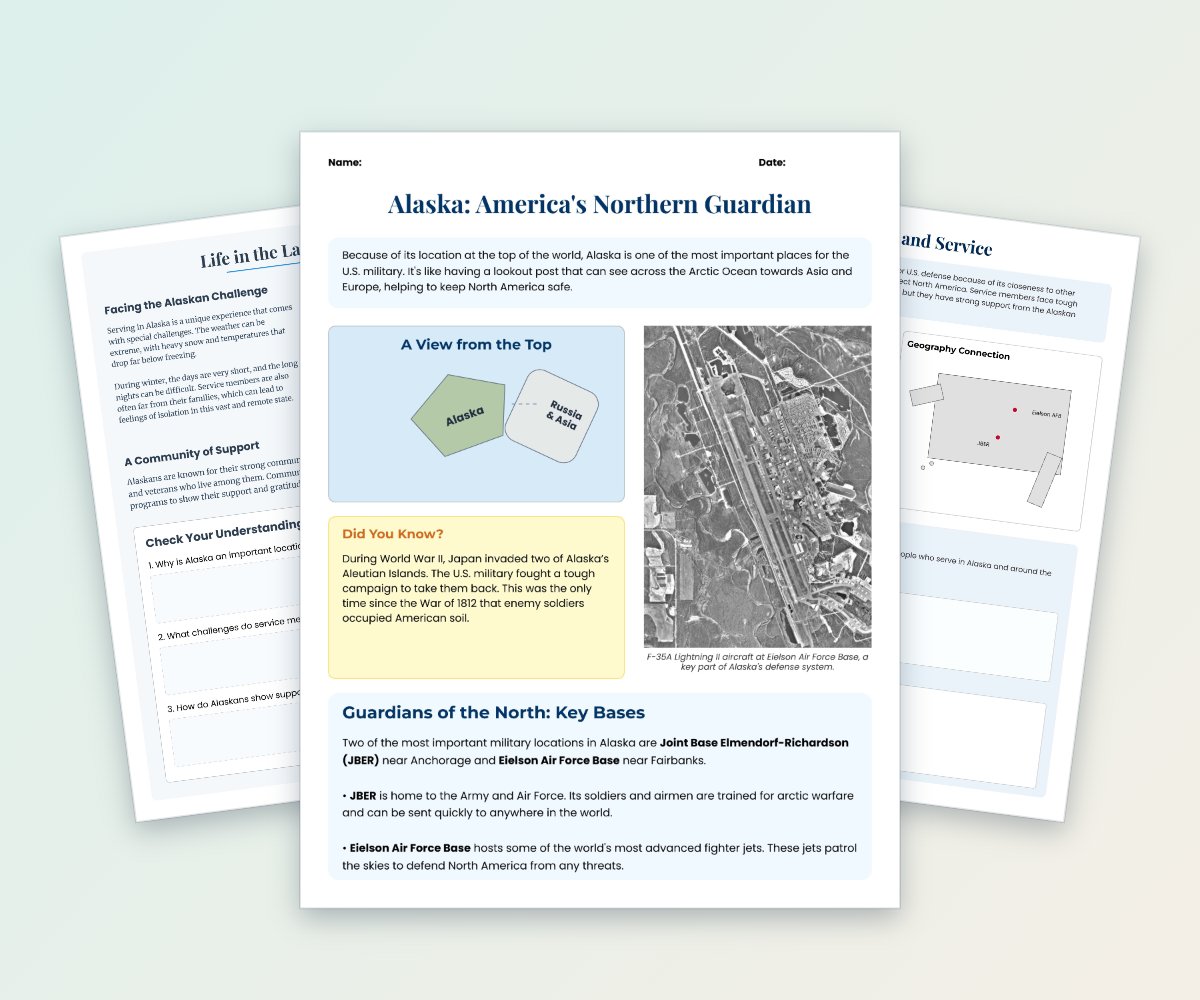
Students read about Alaska’s strategic location, military bases, World War II history, and the experiences of service members.
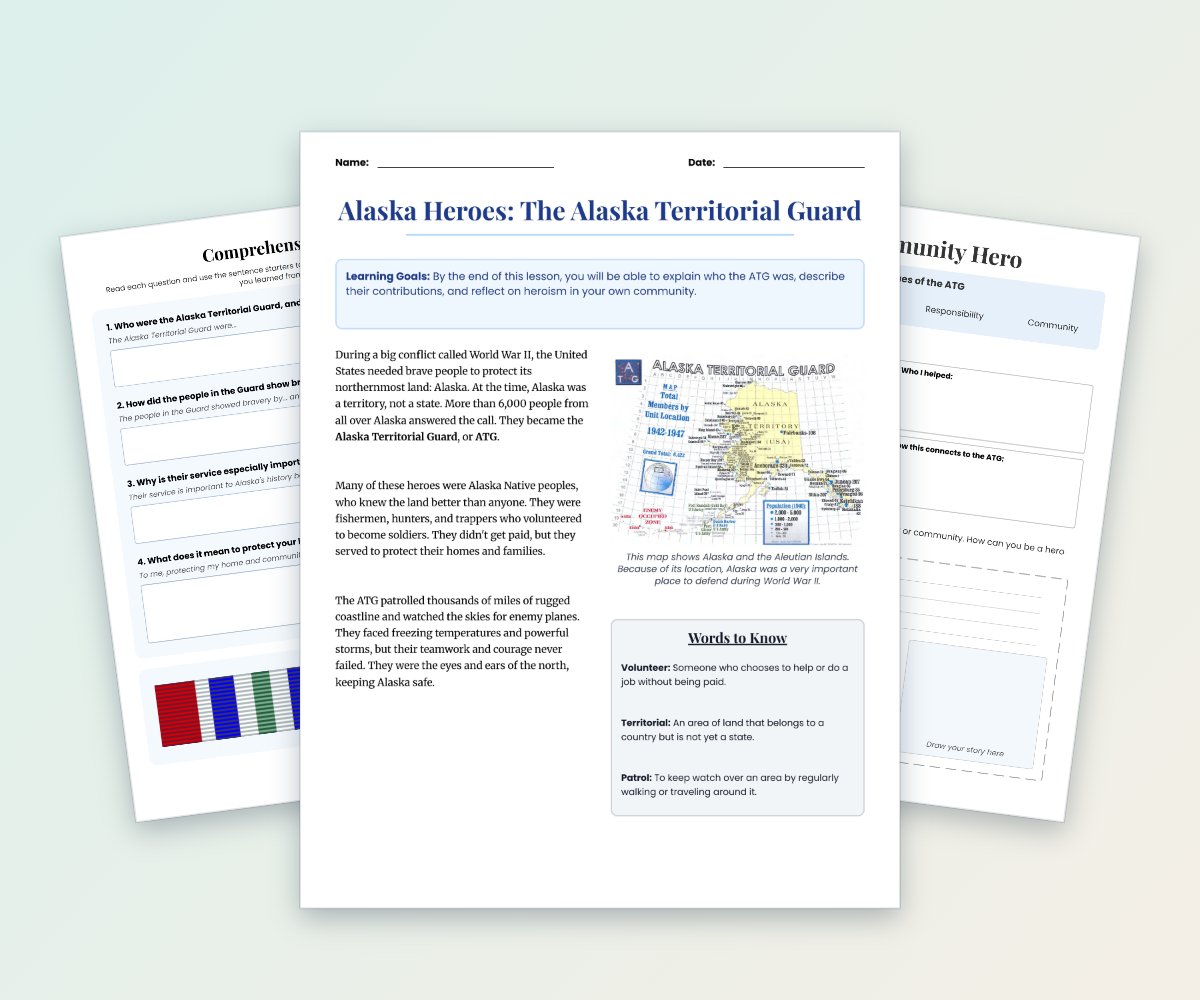
Teach students about the Alaska Territorial Guard, its Alaska Native members, and its role in protecting Alaska during World War II.
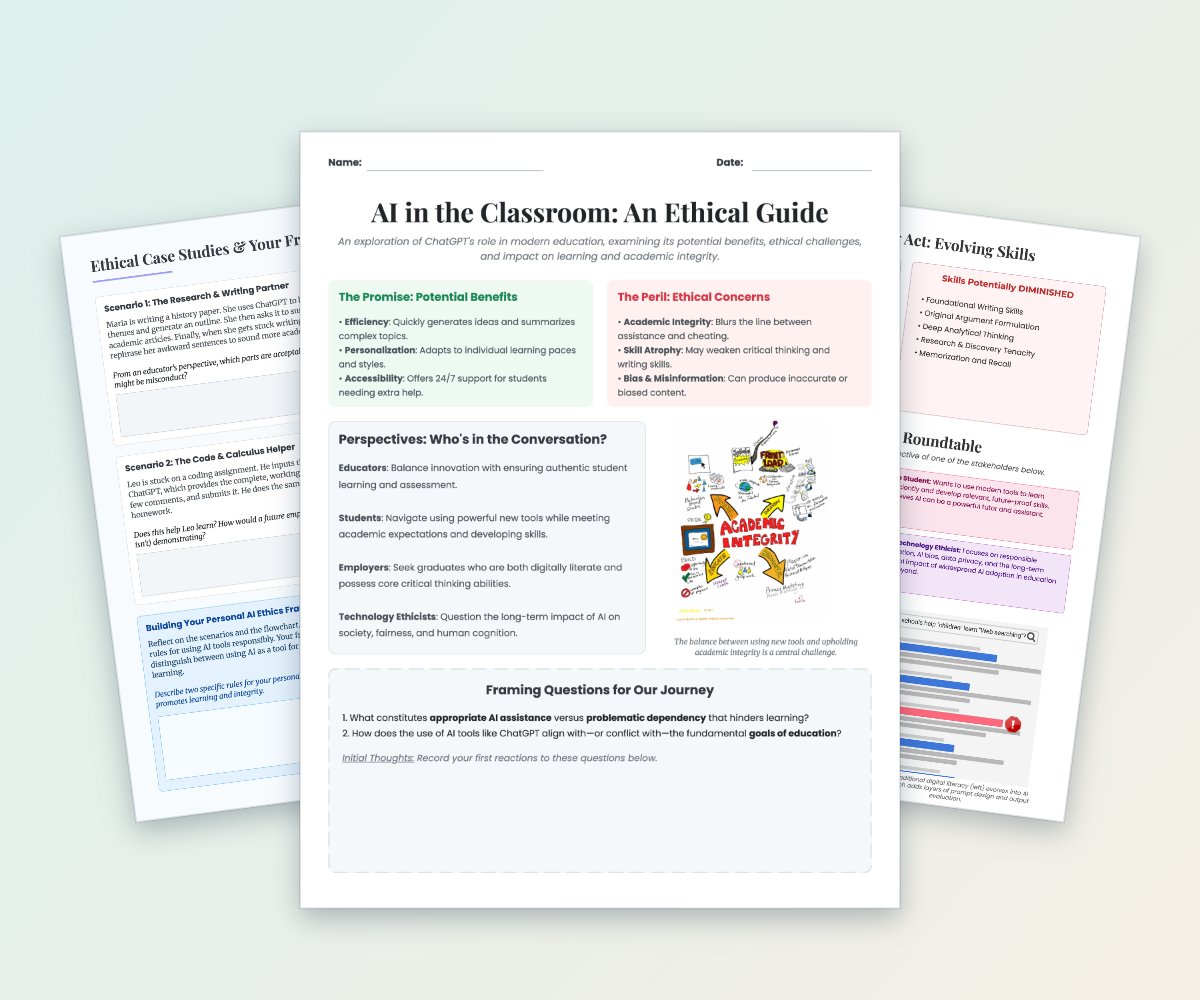
This four-page classroom activity guides students in examining ChatGPT’s benefits, risks, and impact on learning and academic integrity.
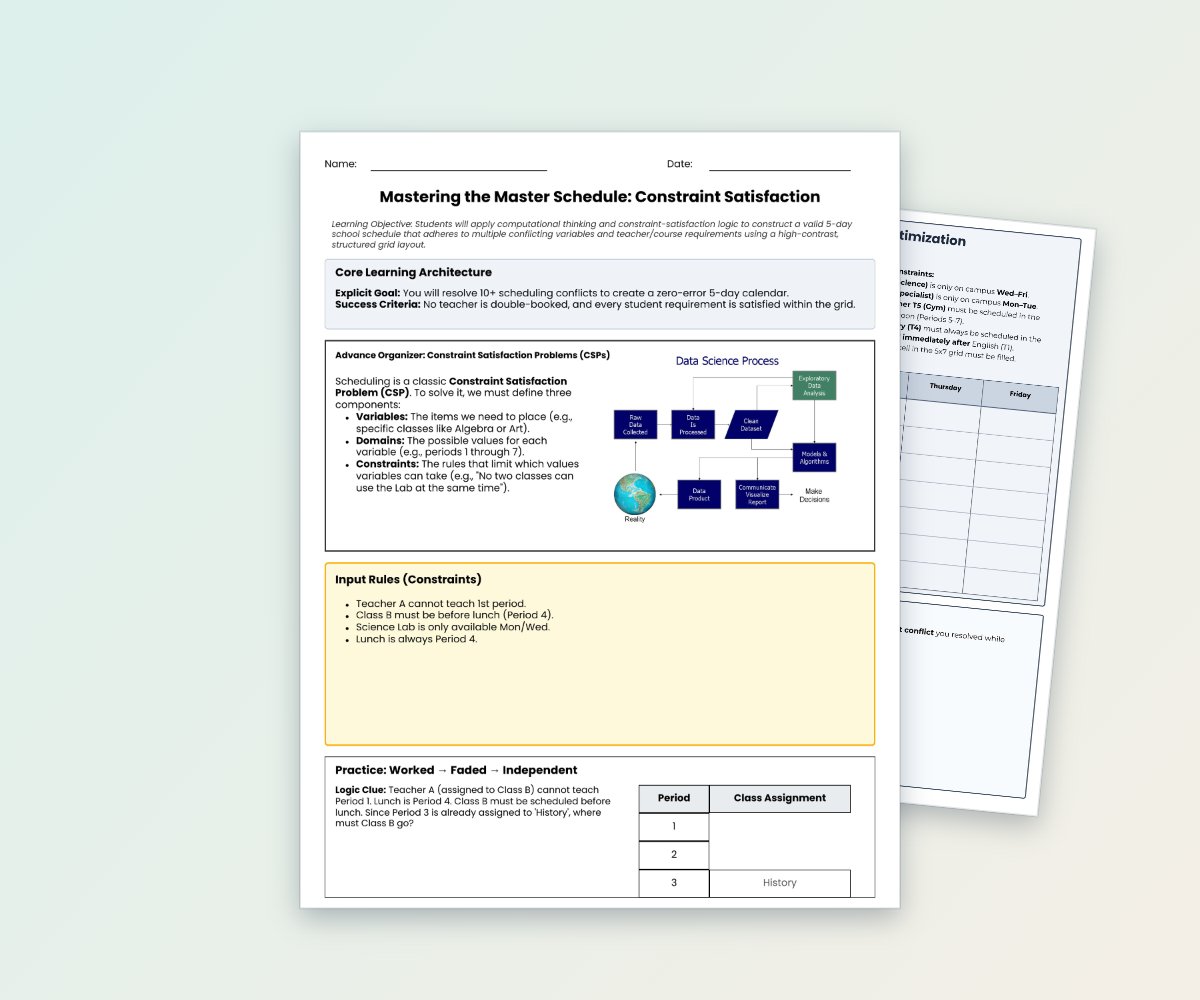
Students apply computational thinking and constraint-satisfaction logic to build a valid five-day school schedule.
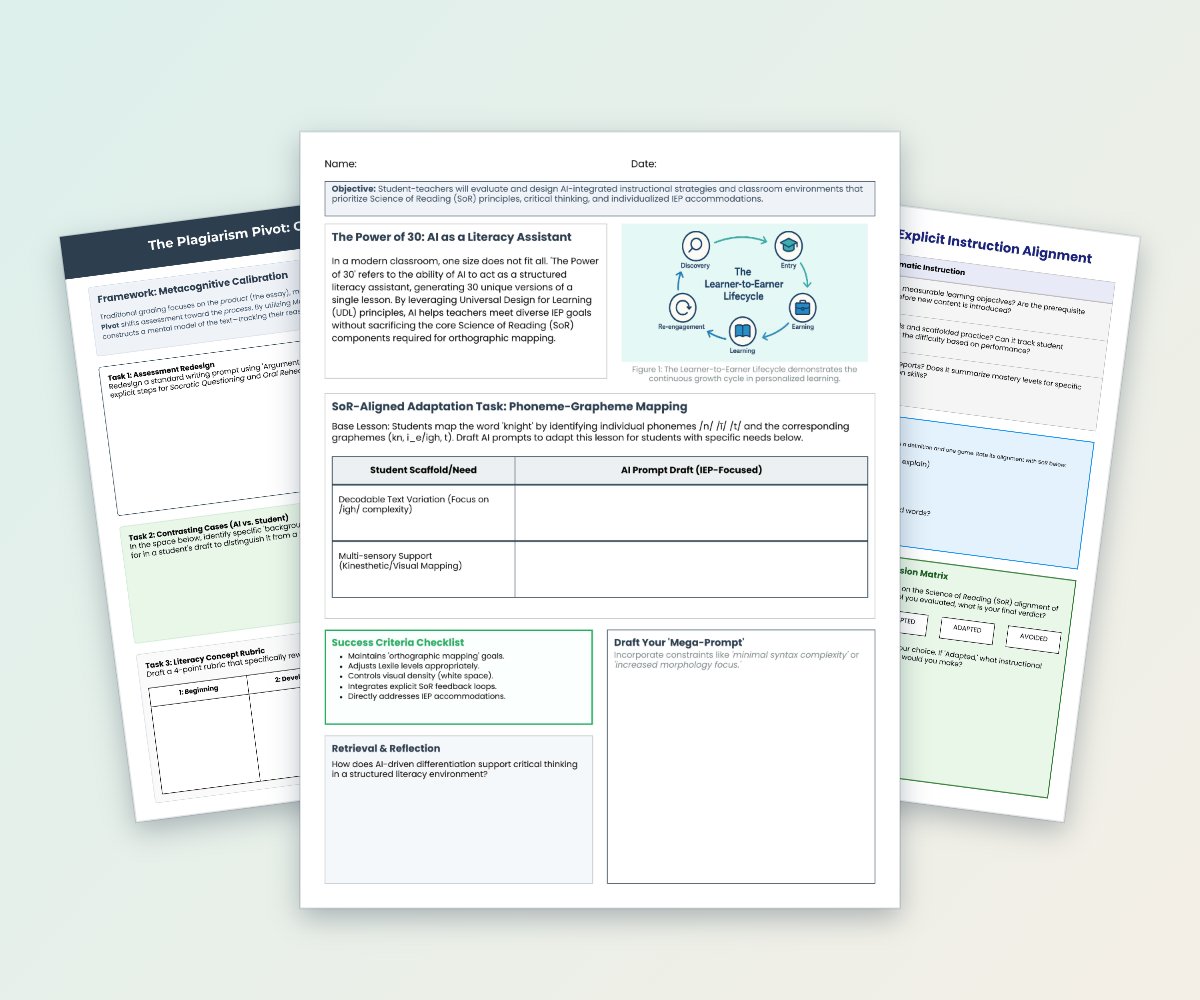
This professional learning activity pack guides student-teachers in designing AI-supported literacy instruction aligned with Science of Reading, UDL, critical thinking, and IEP accommodations.
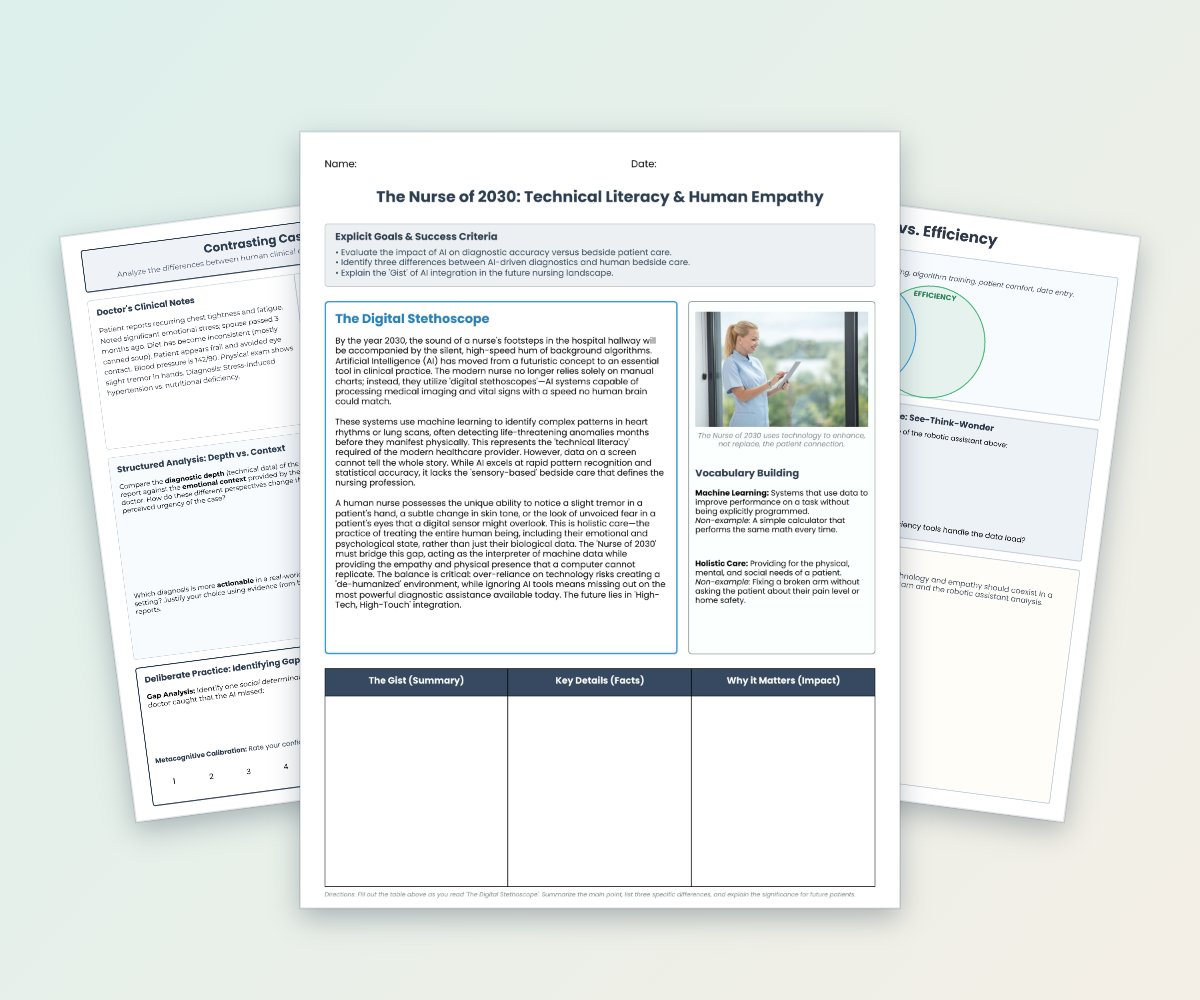
This lesson explores how artificial intelligence may affect diagnostic accuracy and bedside nursing care by 2030.
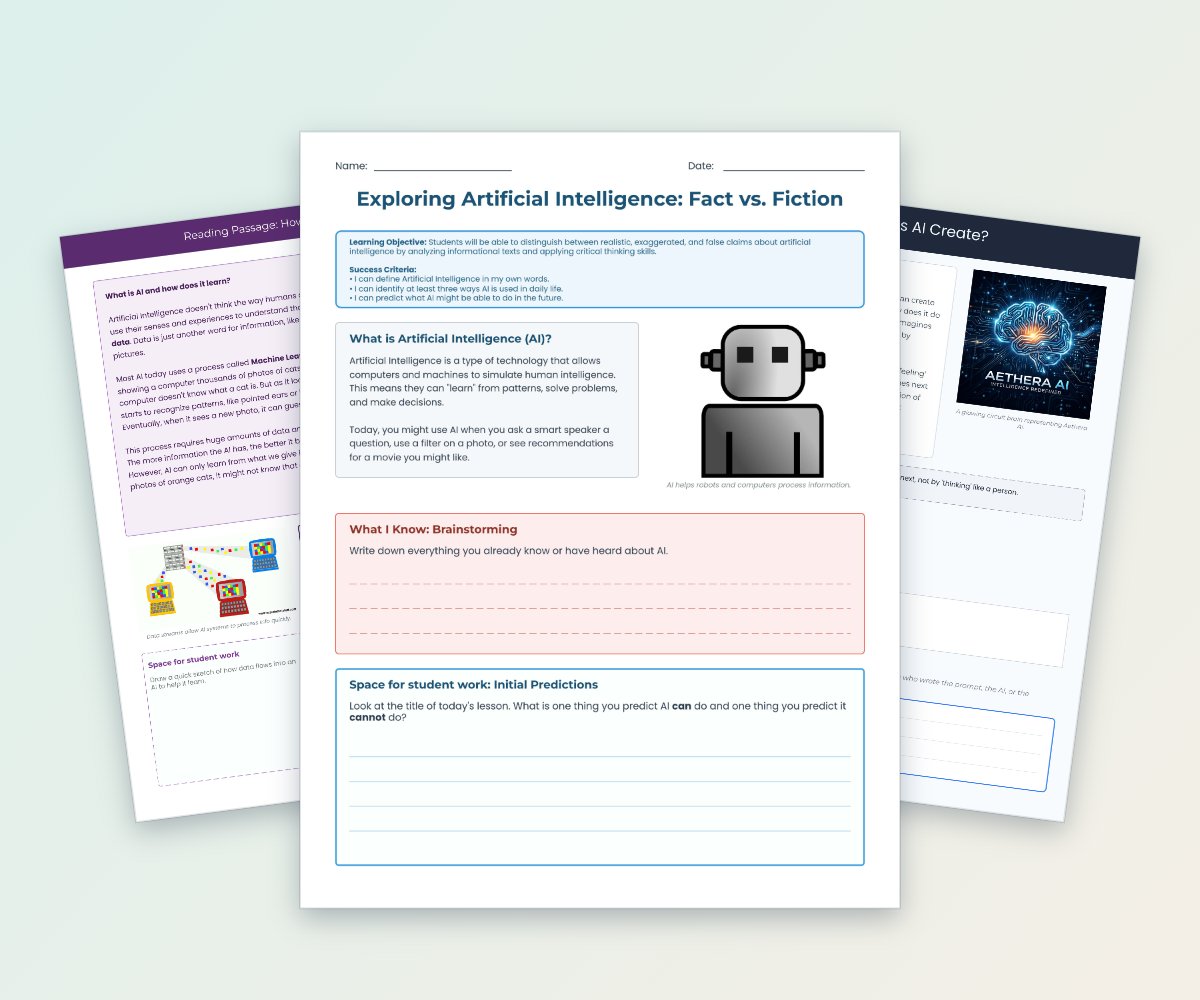
This six-page reading pack introduces artificial intelligence, machine learning, data, and everyday AI applications.
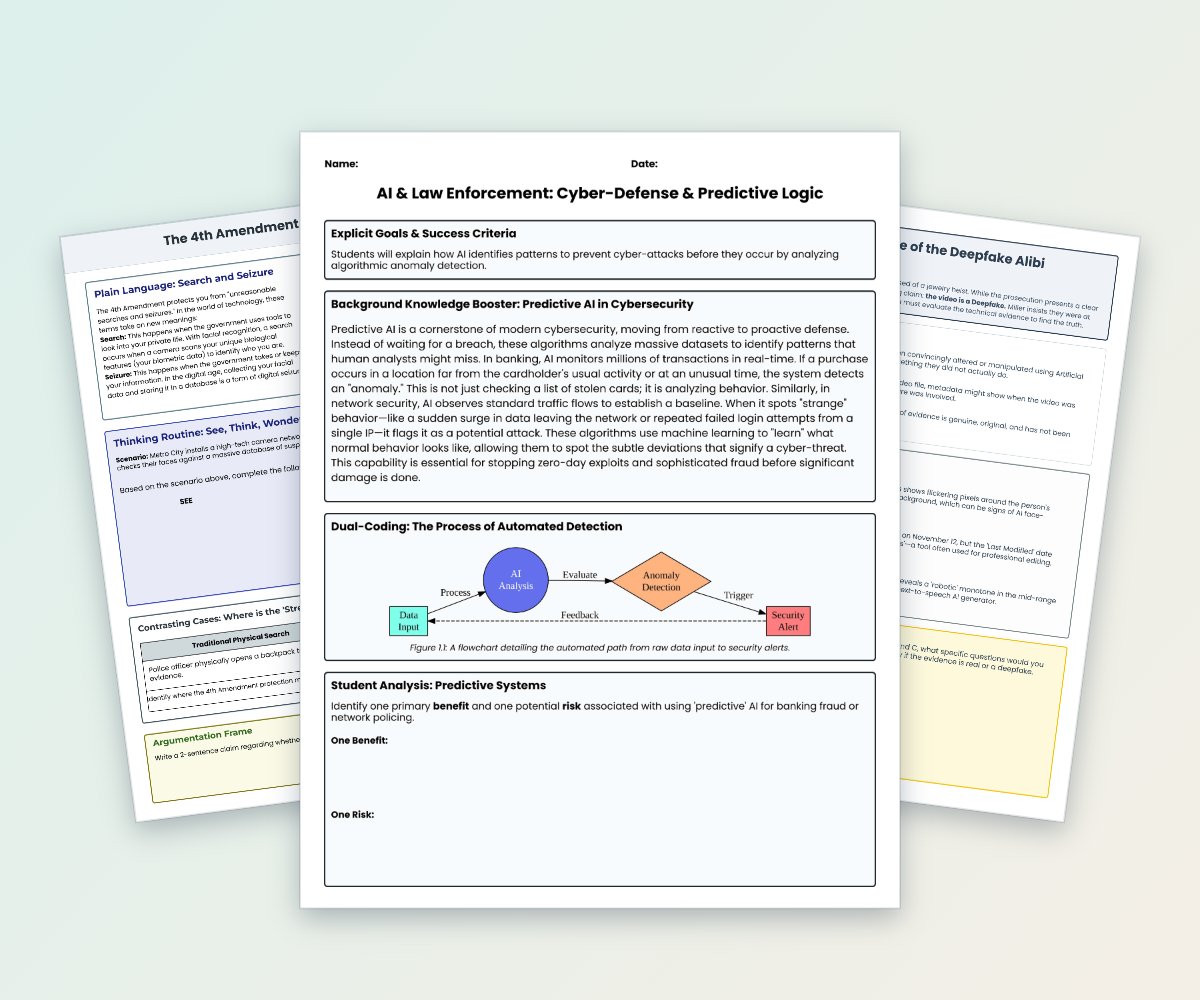
This lesson introduces predictive AI in cybersecurity, anomaly detection, facial recognition, and digital search and seizure.
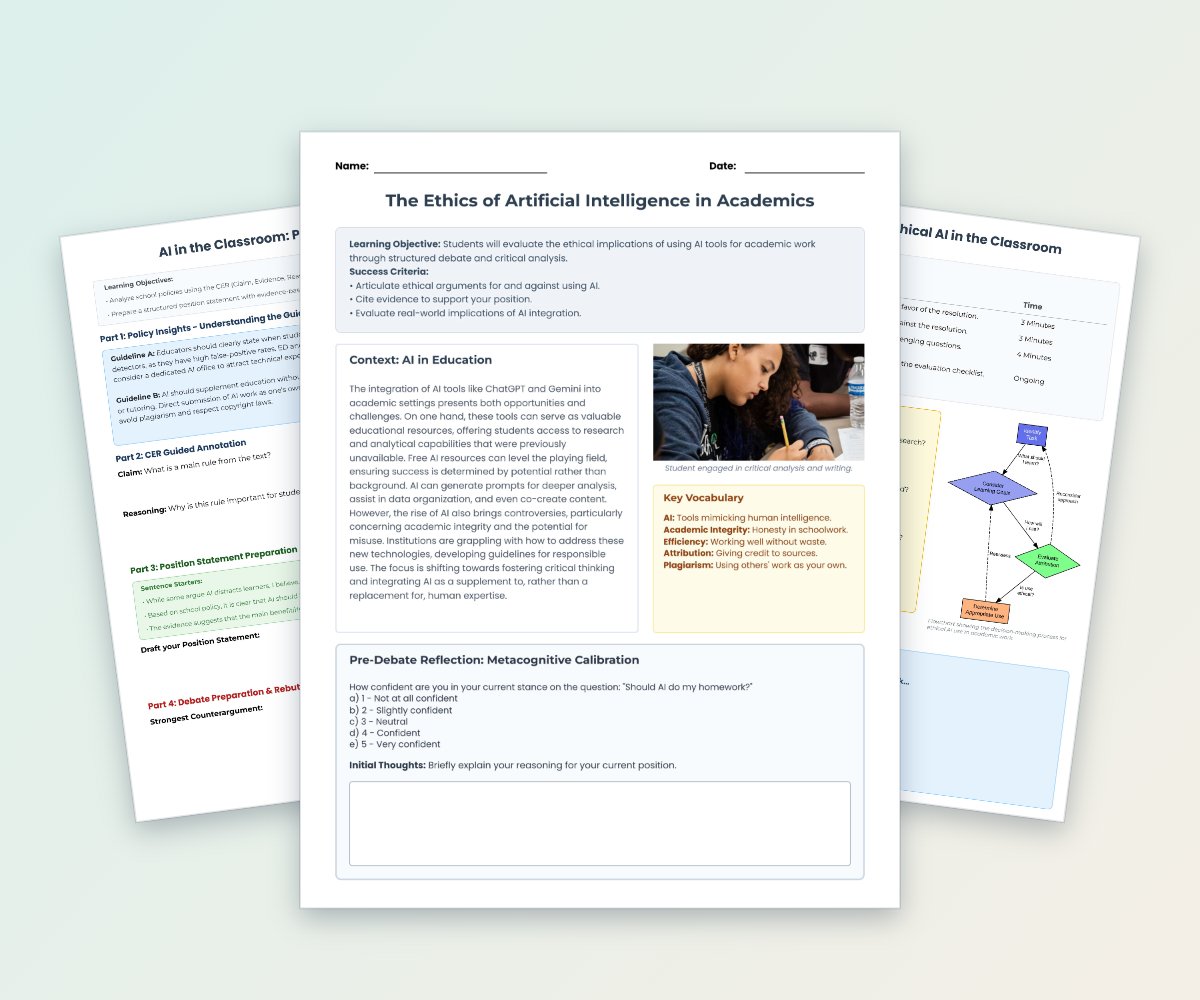
This compact debate kit guides students in examining the ethical implications of artificial intelligence in academic work.