Exploring Frida Kahlo’s Symbolic Art
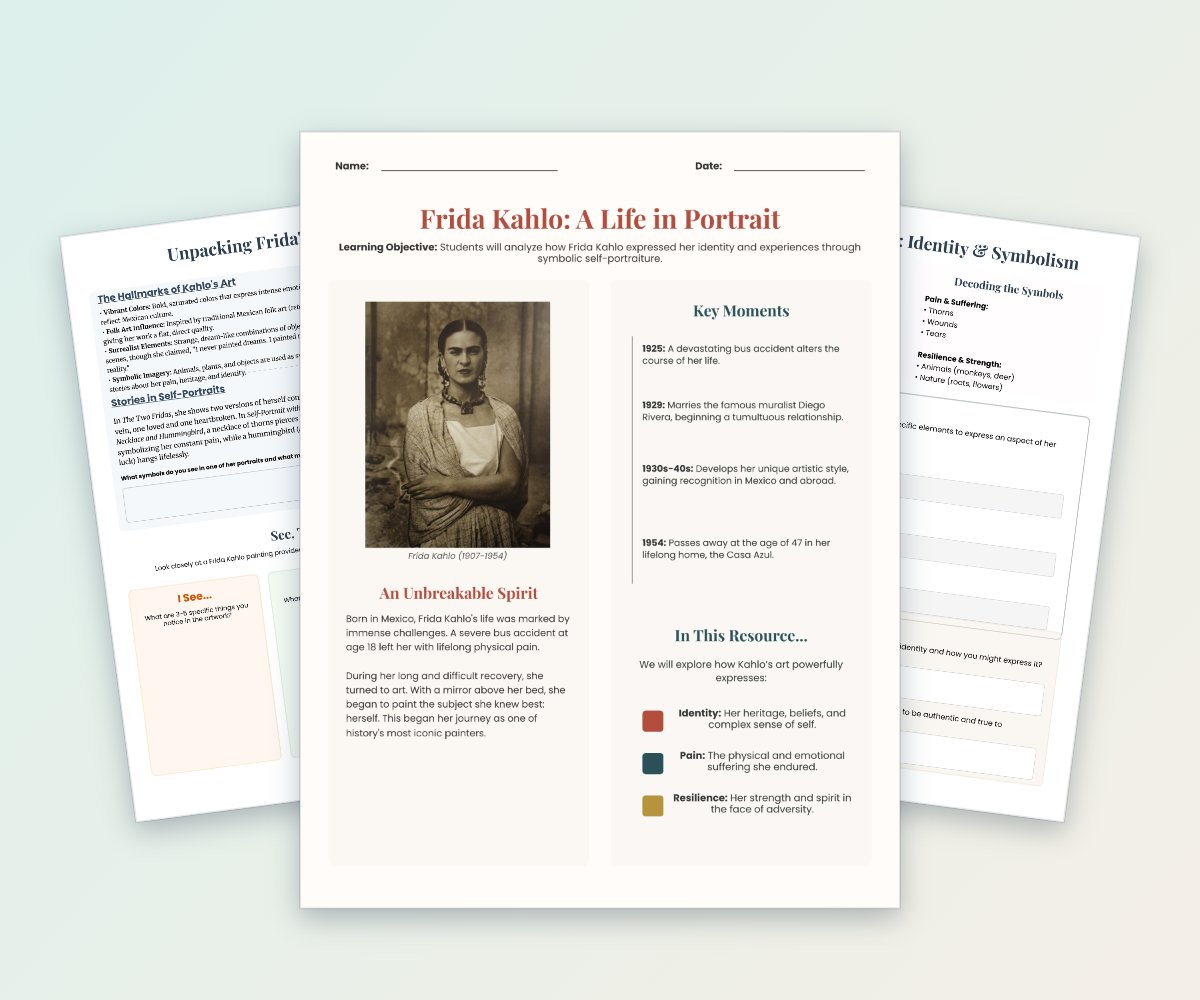
This four-page art lesson explores Frida Kahlo’s life, artistic style, and use of symbolic imagery in self-portraiture.
$4.50
Classroom-ready resources written for grade 6: printable worksheets, slides, activities and planning tools you can download and use straight away. Browse by subject below.
This four-page art lesson explores Frida Kahlo’s life, artistic style, and use of symbolic imagery in self-portraiture.
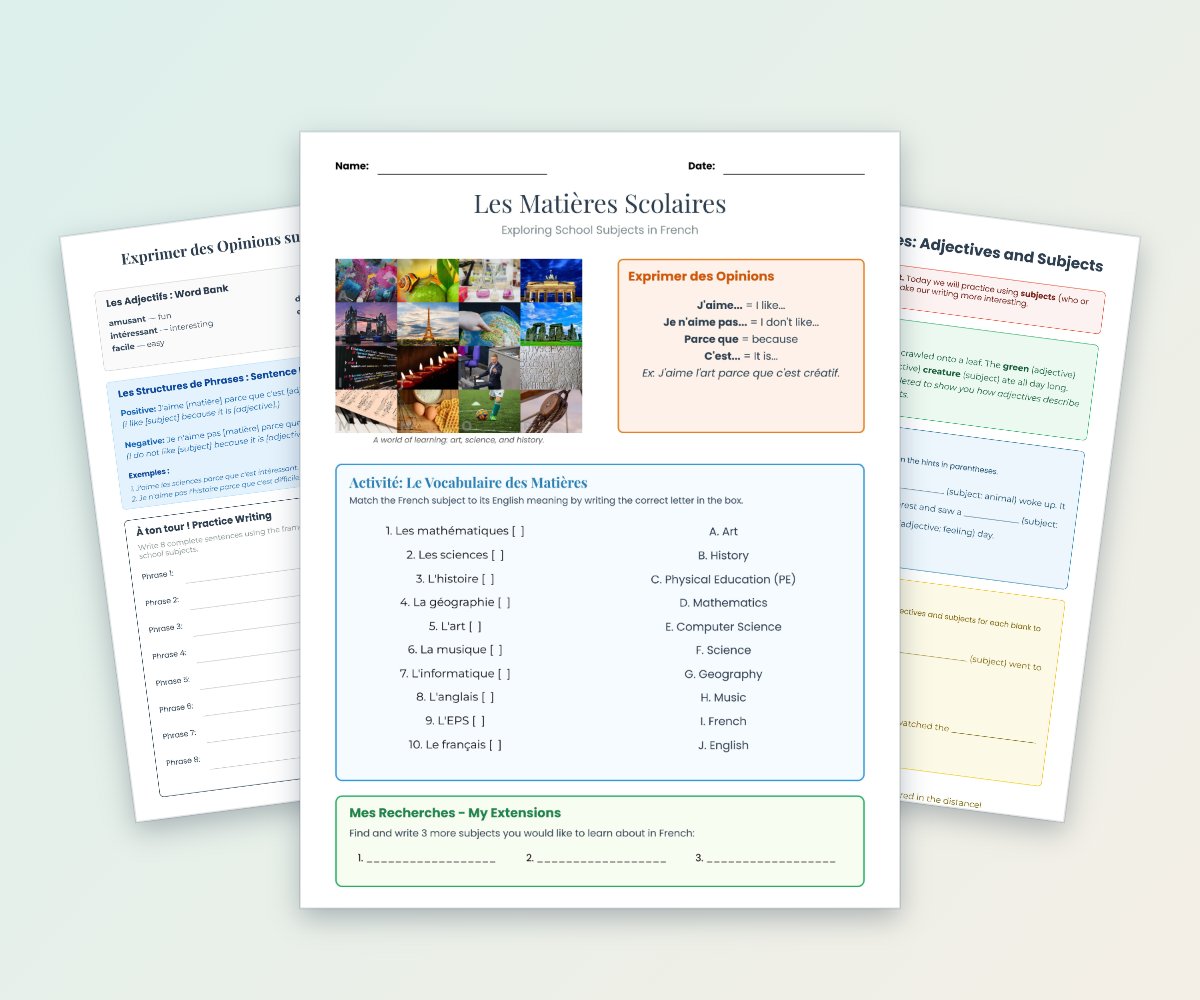
Students learn French vocabulary for common school subjects, match terms to English meanings, and express likes and dislikes using sentence frames.
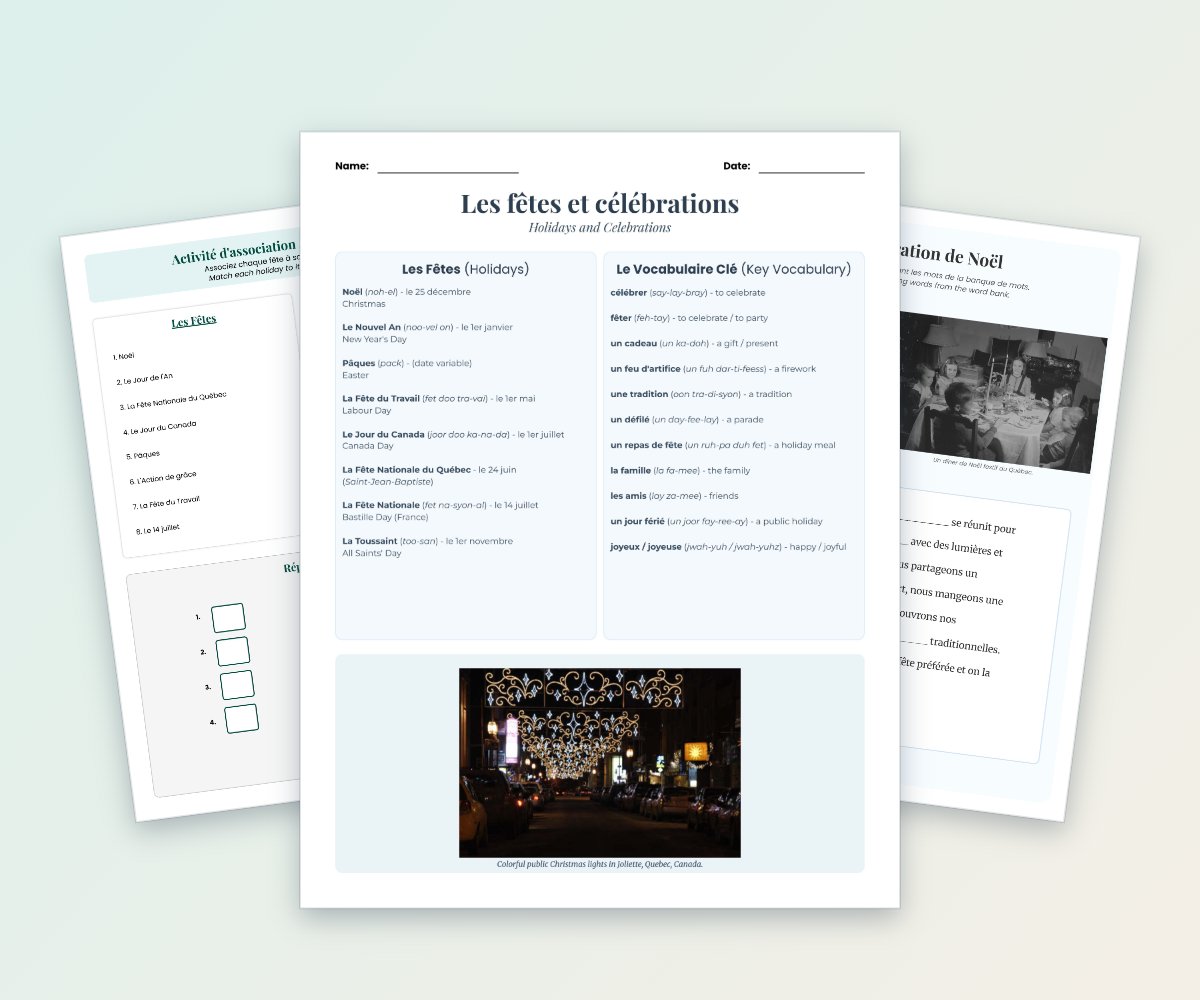
Introduce French-speaking holiday traditions through bilingual vocabulary, a matching activity, and a Christmas-themed fill-in-the-blank passage.
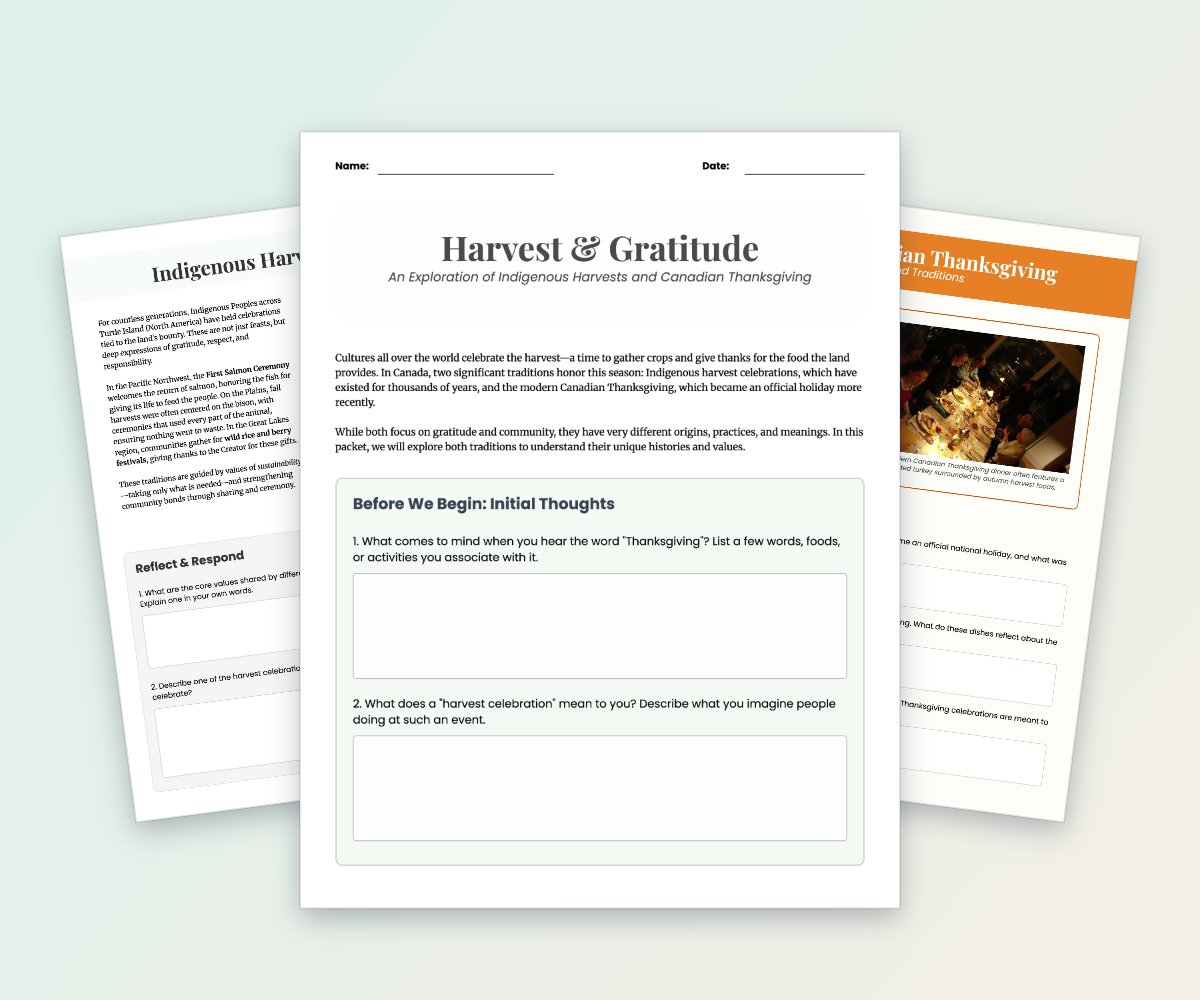
This activity packet explores Indigenous harvest celebrations across Canada and the origins and values associated with Canadian Thanksgiving.
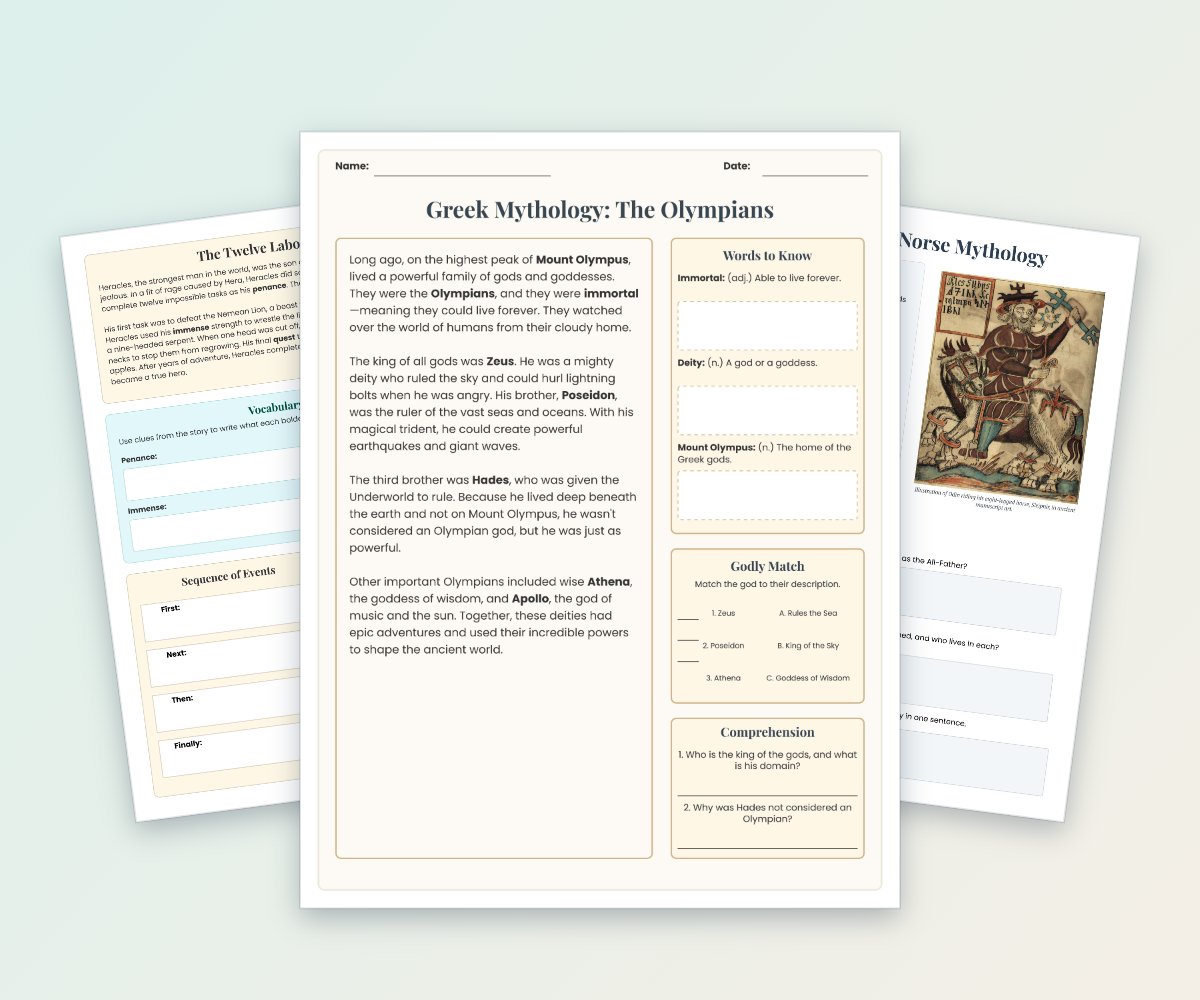
This four-page activity pack introduces students to Greek and Norse mythology through accessible informational passages and comprehension tasks.
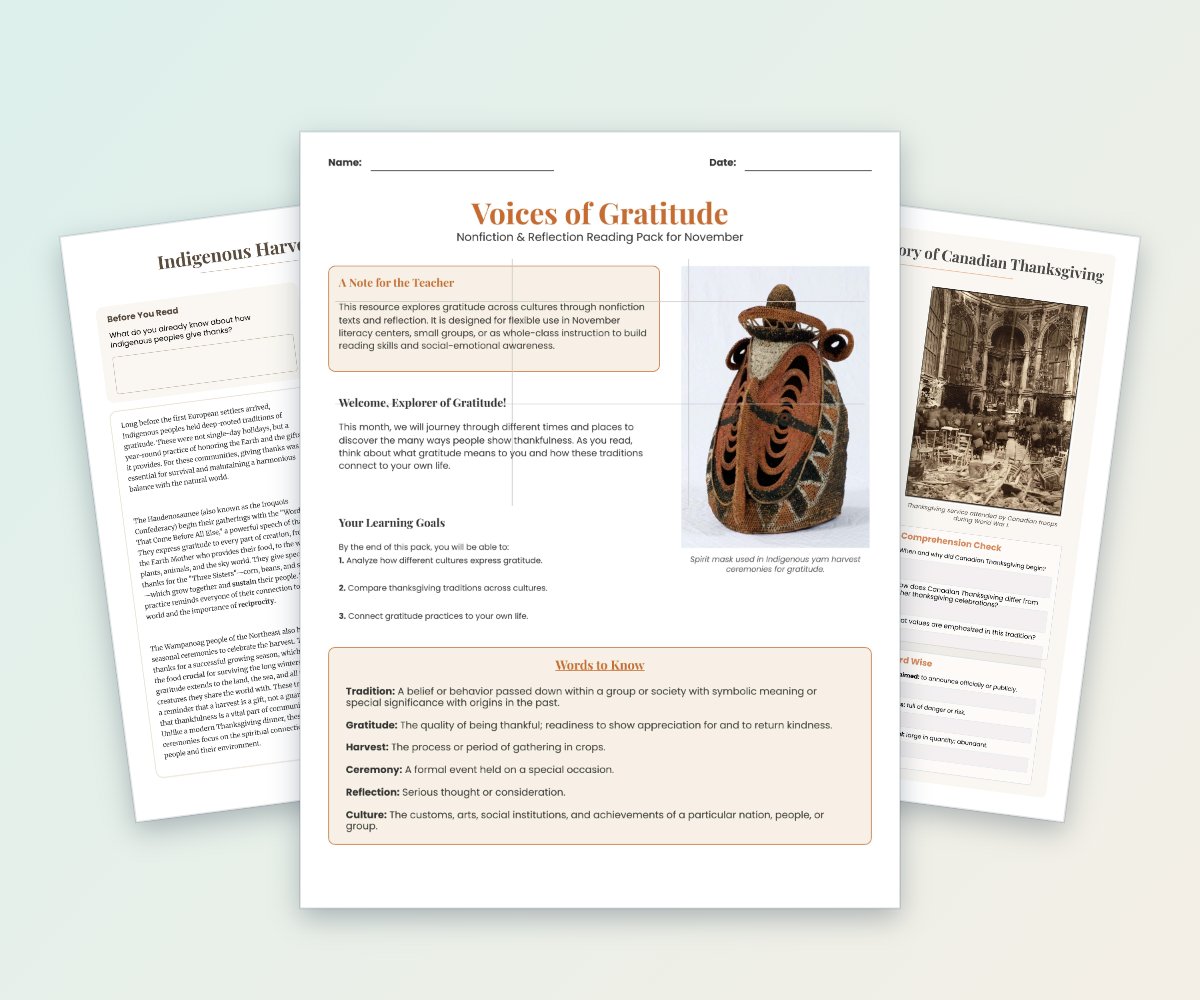
This six-page reading pack explores how different cultures express gratitude through traditions, ceremonies, and harvest celebrations.
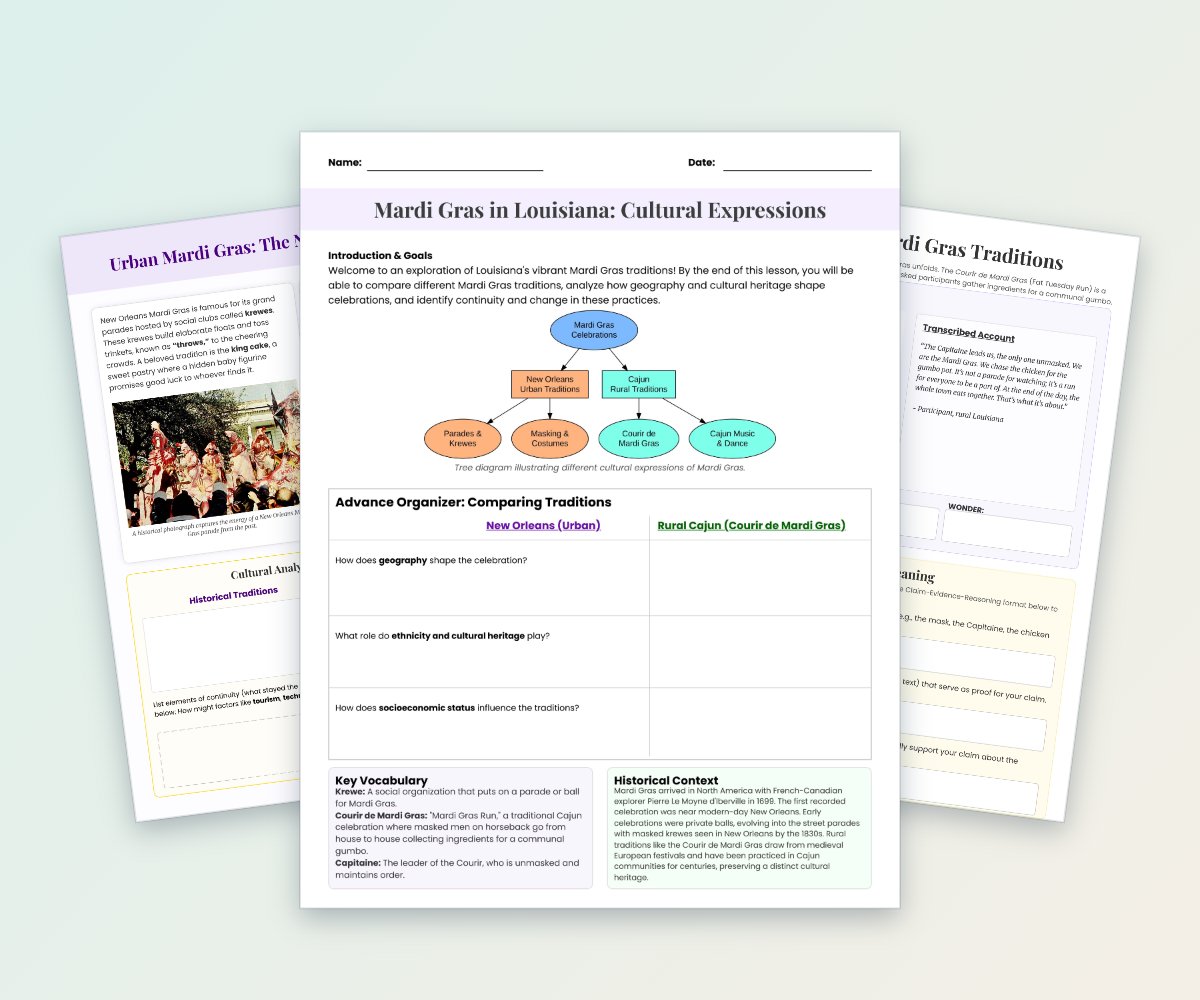
This five-page lesson explores urban New Orleans Mardi Gras and rural Cajun Courir de Mardi Gras traditions.
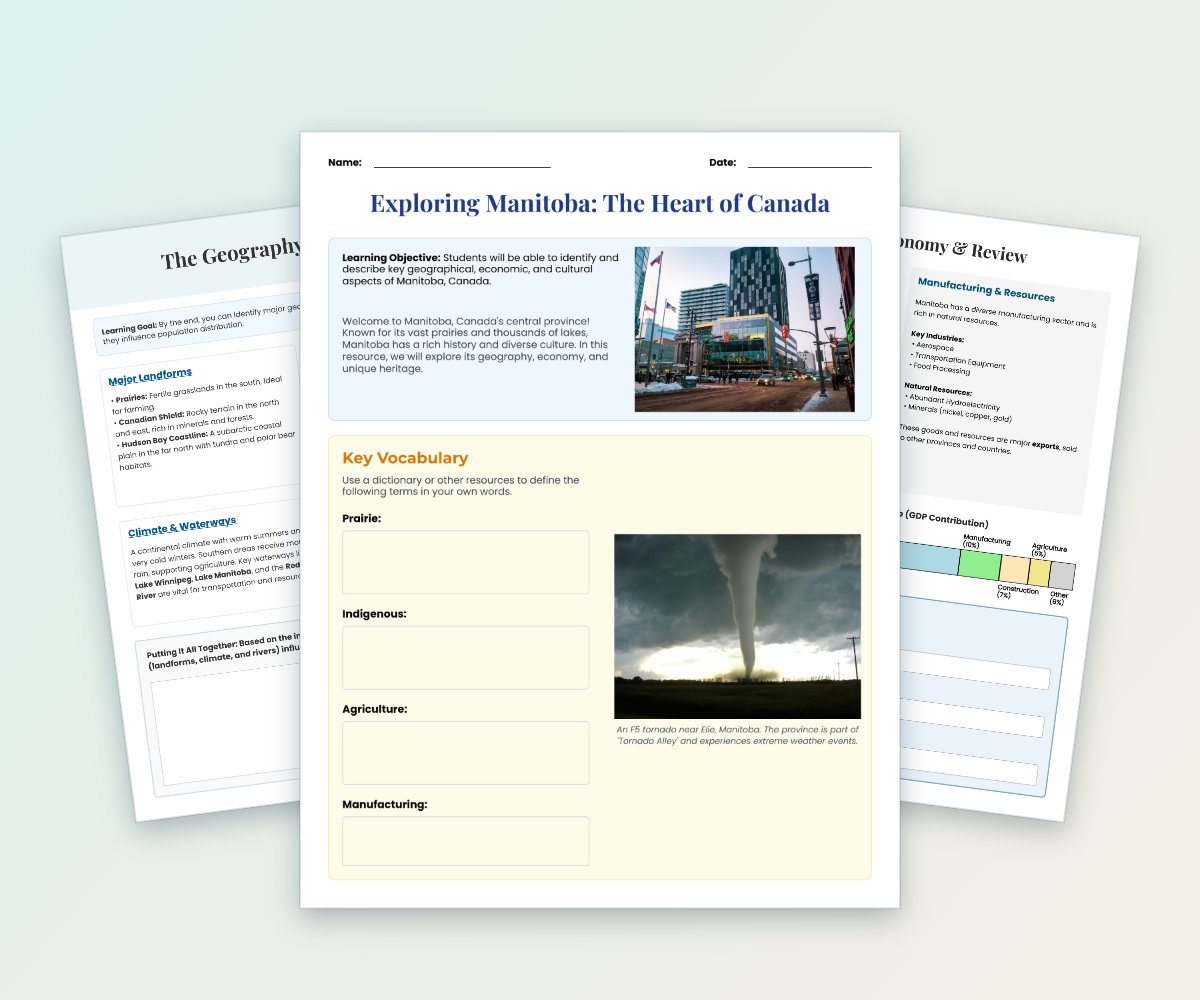
This student workbook explores Manitoba’s landforms, climate, waterways, population distribution, economy, natural resources, and cultural heritage.
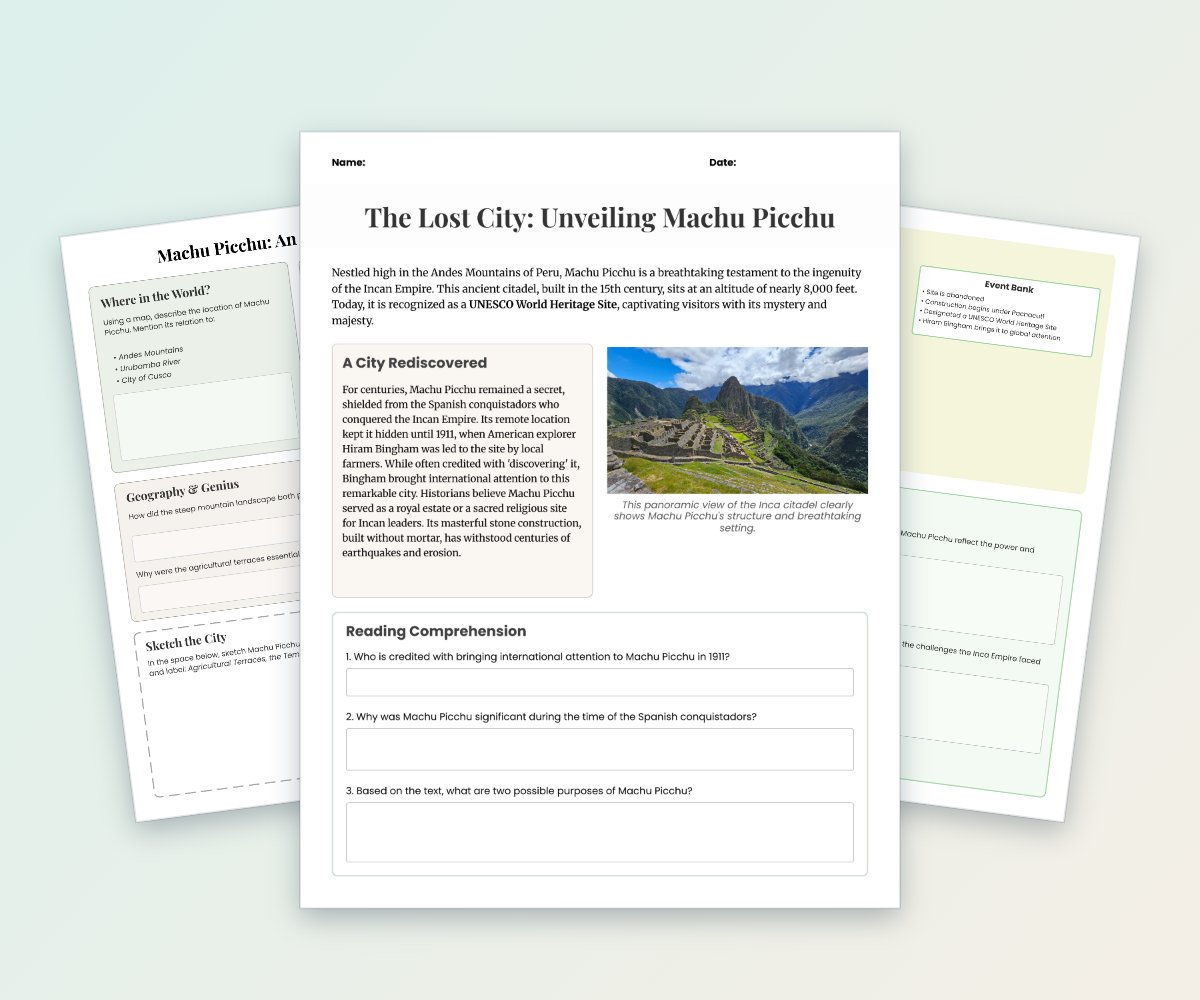
Students read an informative passage about Machu Picchu’s history, geography, architecture, and significance before completing comprehension and map-based questions.
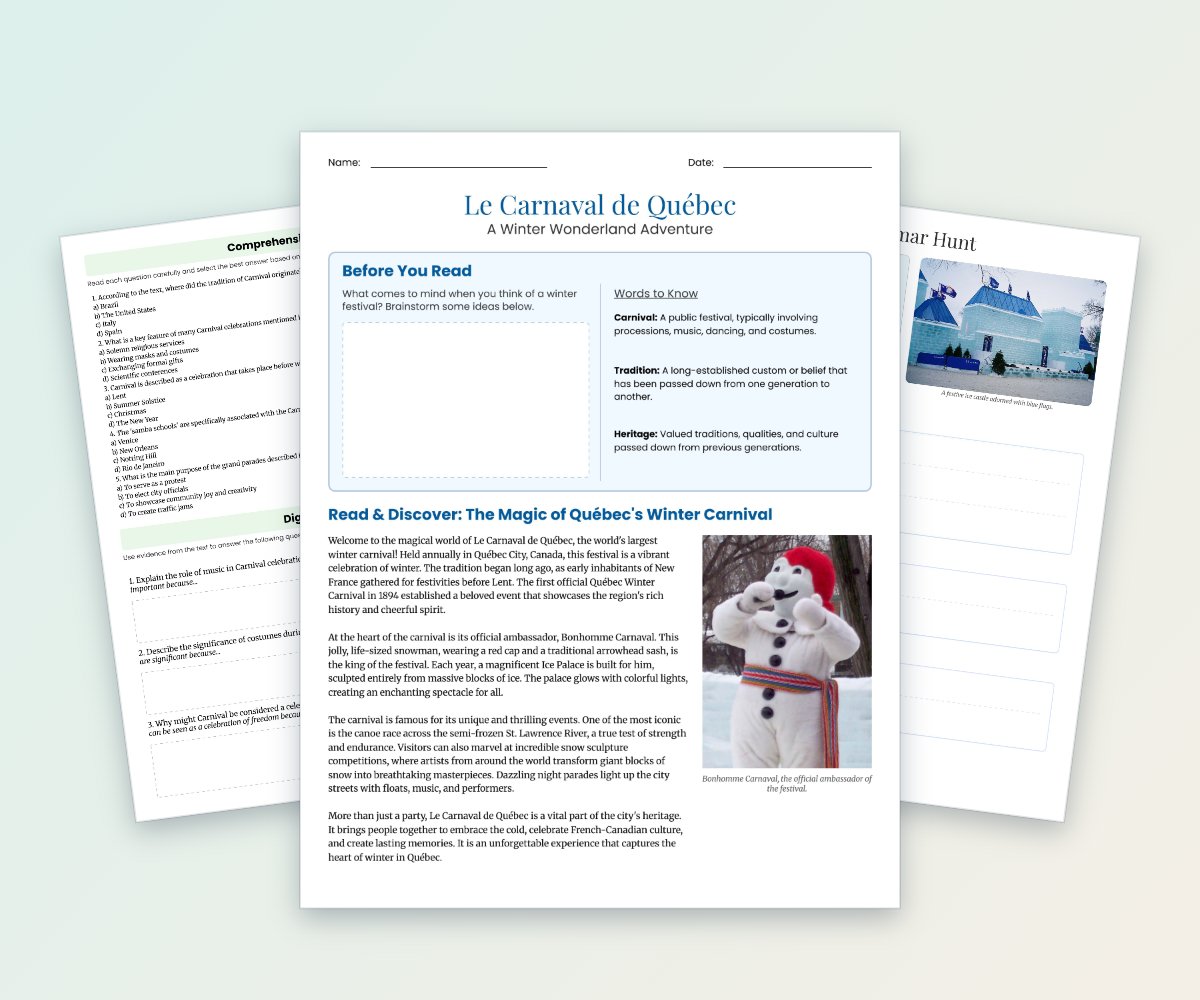
Students read an engaging informational passage about Le Carnaval de Québec, Bonhomme Carnaval, and French-Canadian winter traditions.
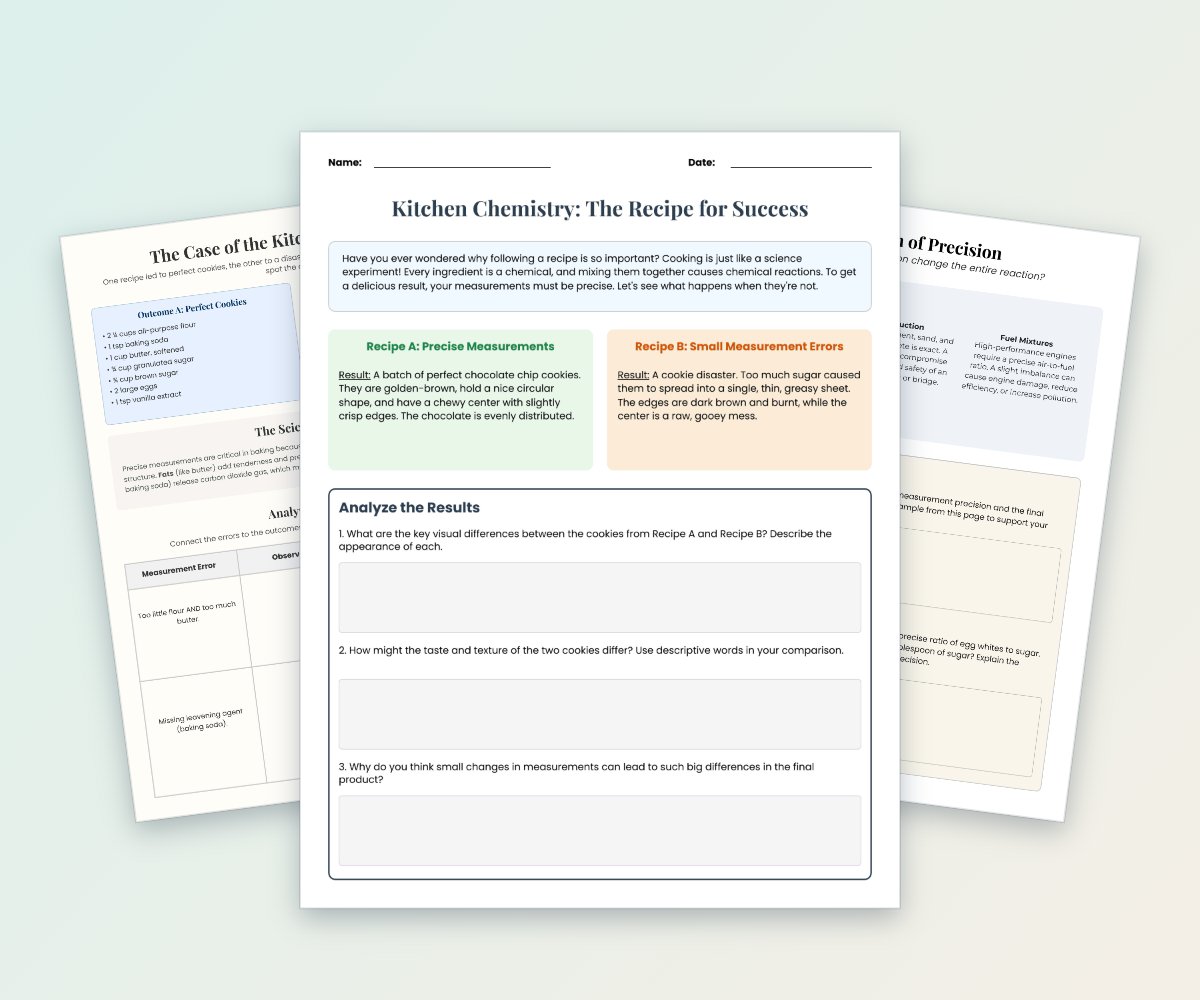
Students analyze two cookie recipes to compare the effects of measurement errors and missing ingredients.
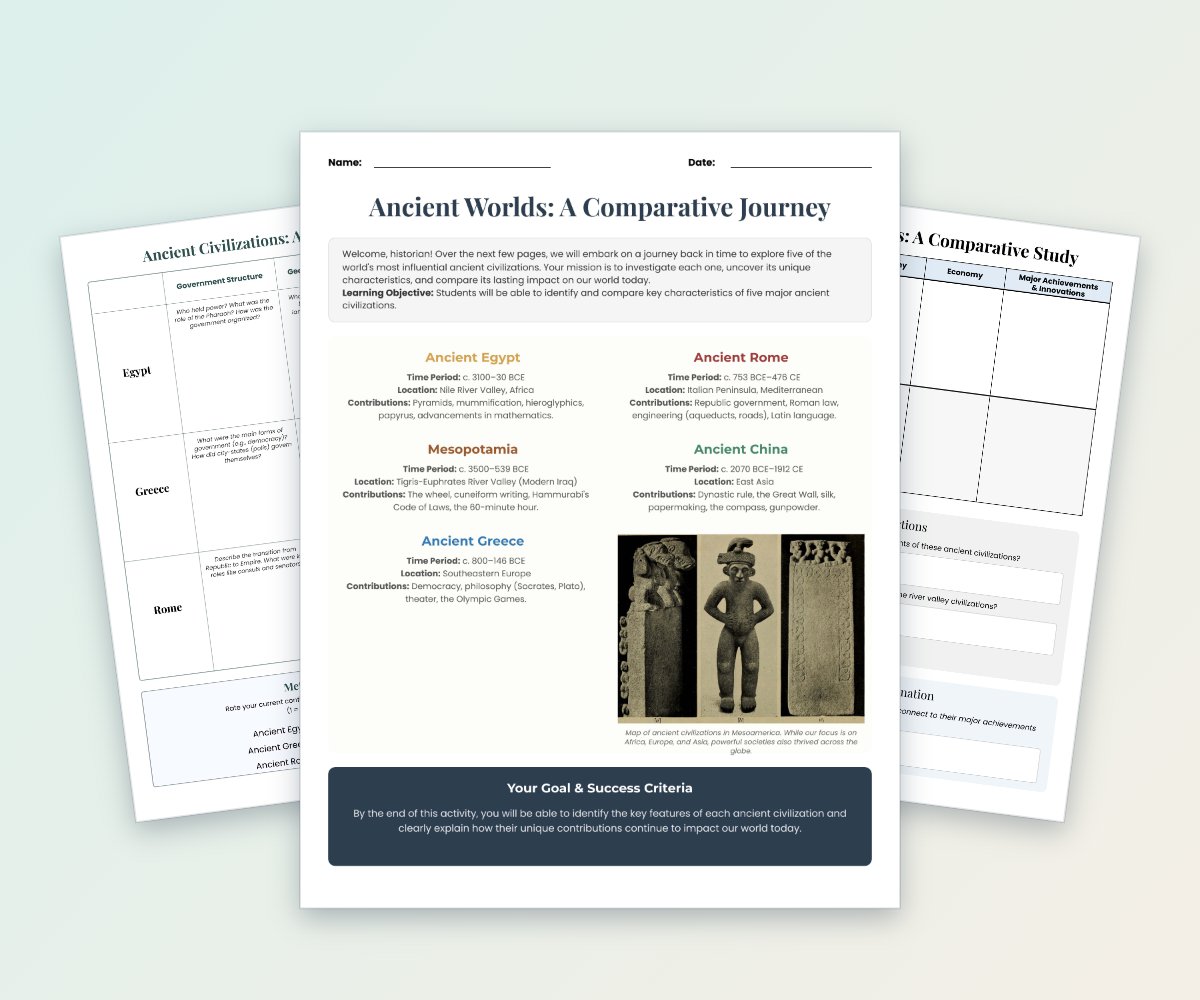
Students investigate and compare Ancient Egypt, Mesopotamia, Greece, Rome, and China through geography, government, economics, and cultural contributions.
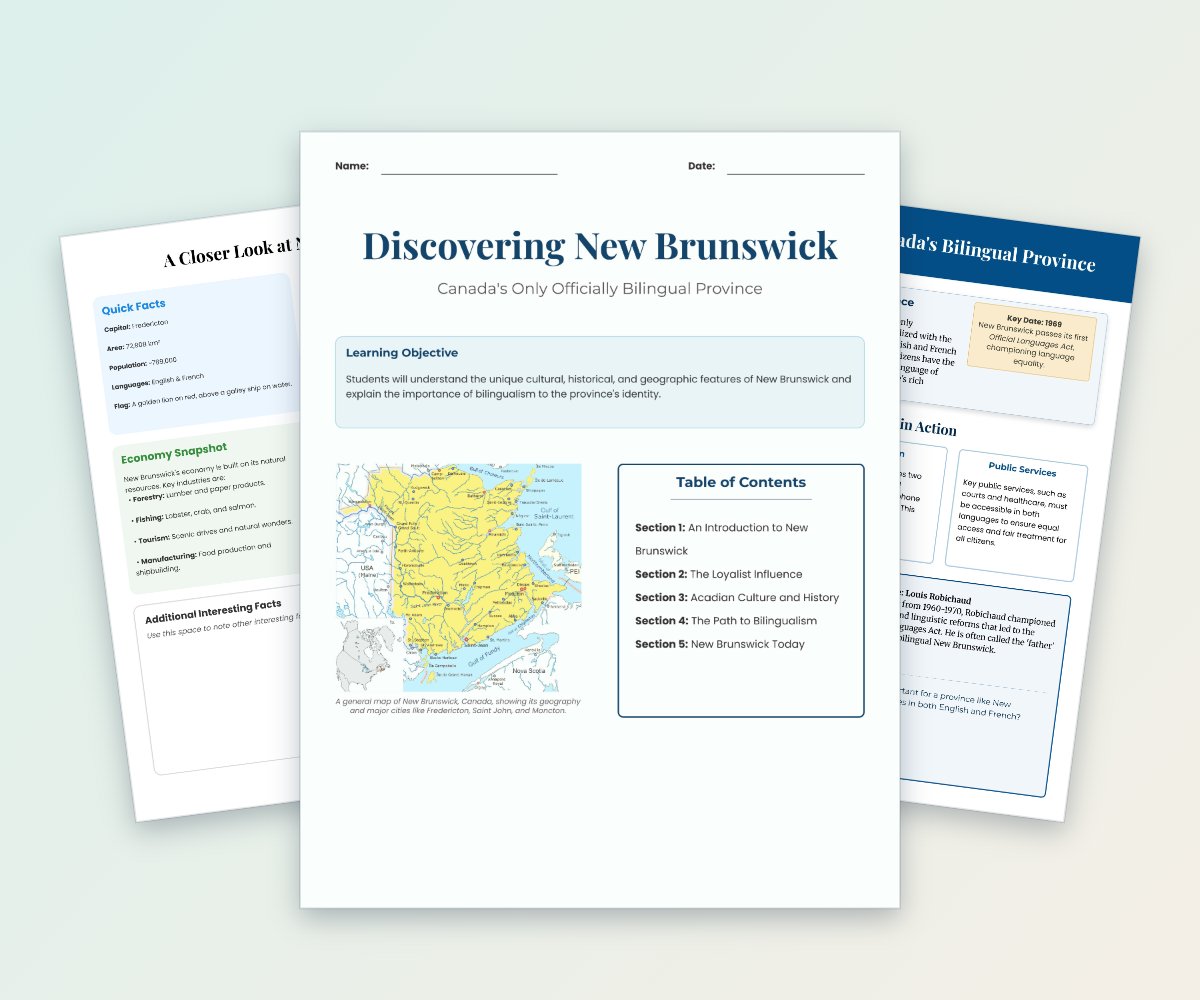
This seven-page activity pack introduces New Brunswick’s geography, Loyalist and Acadian history, official bilingual status, economy, and landmarks.
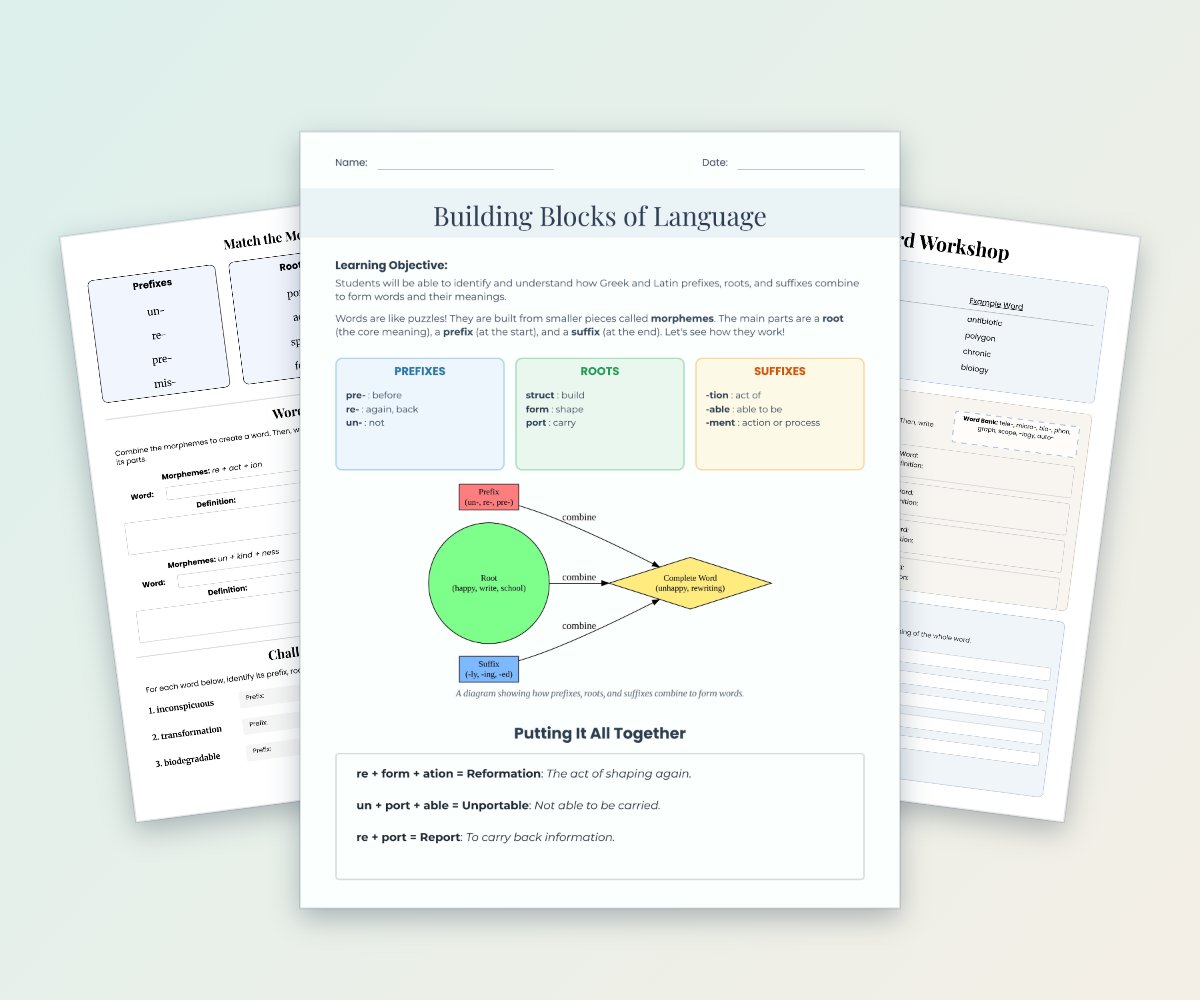
This four-page worksheet introduces prefixes, roots, and suffixes, with a focus on Greek and Latin morphemes.
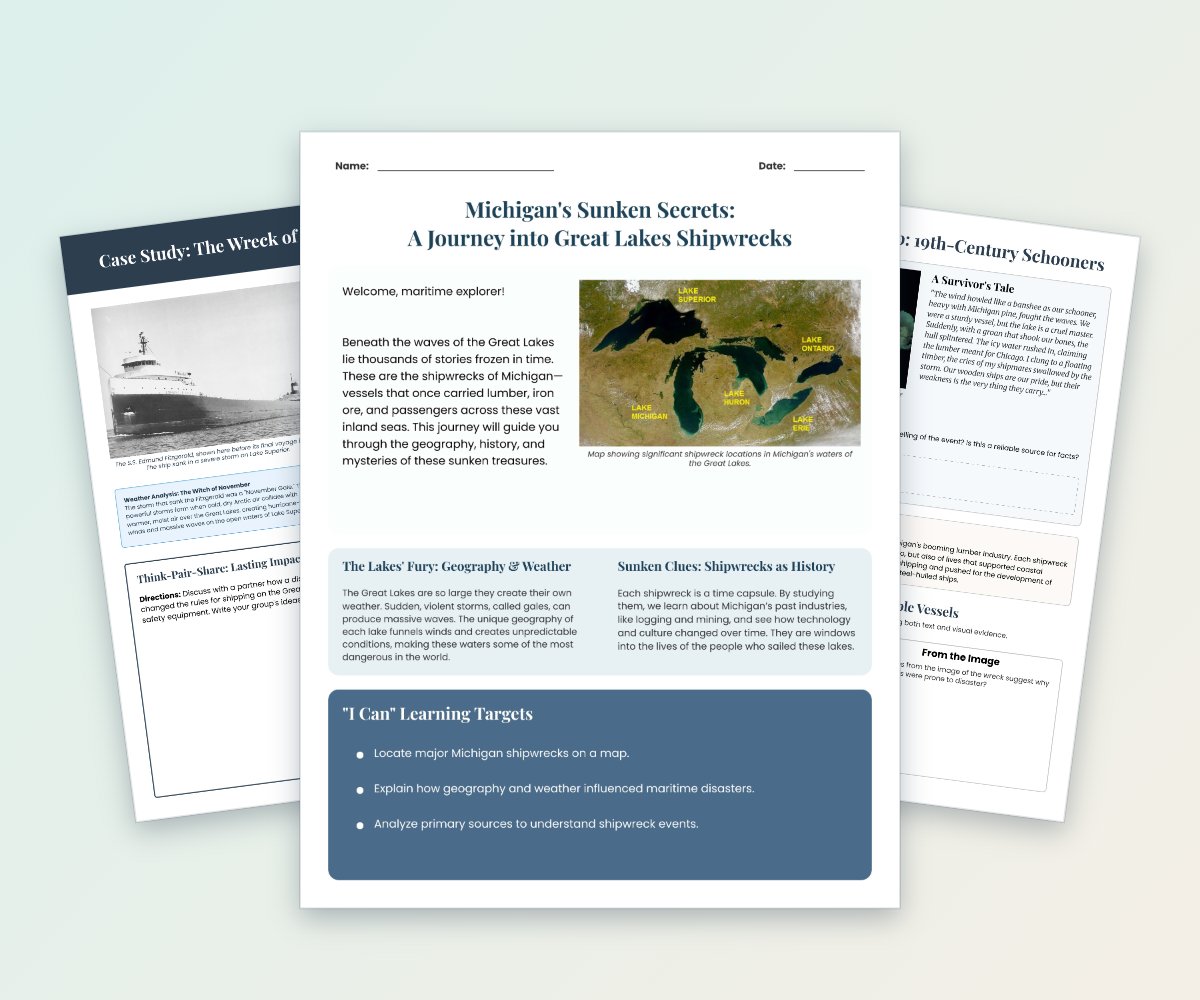
Students explore the geography and weather of the Great Lakes while investigating Michigan shipwrecks, including the Edmund Fitzgerald.
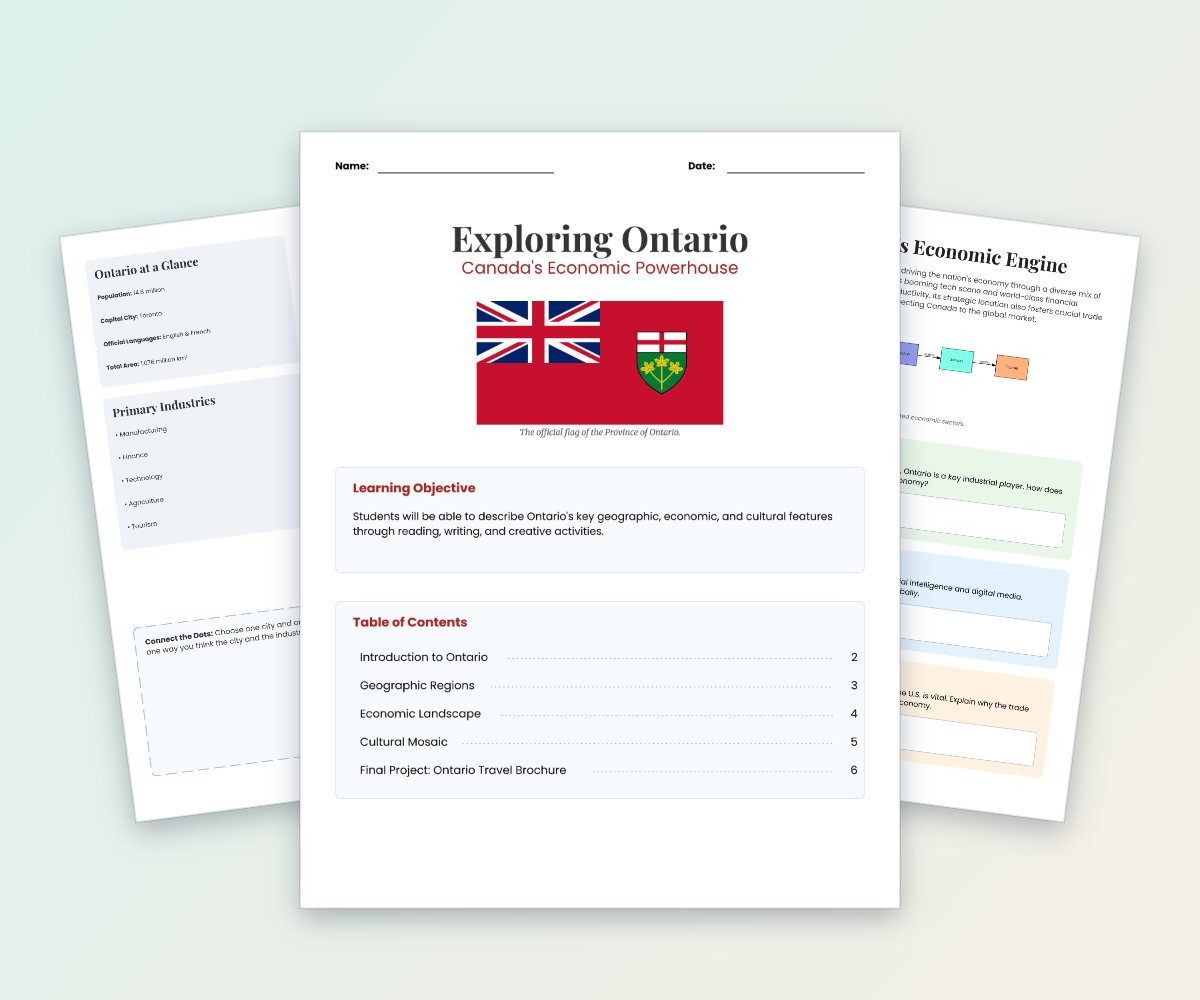
This eight-page activity pack introduces Ontario’s geographic regions, major cities, industries, economic connections, and cultural diversity.
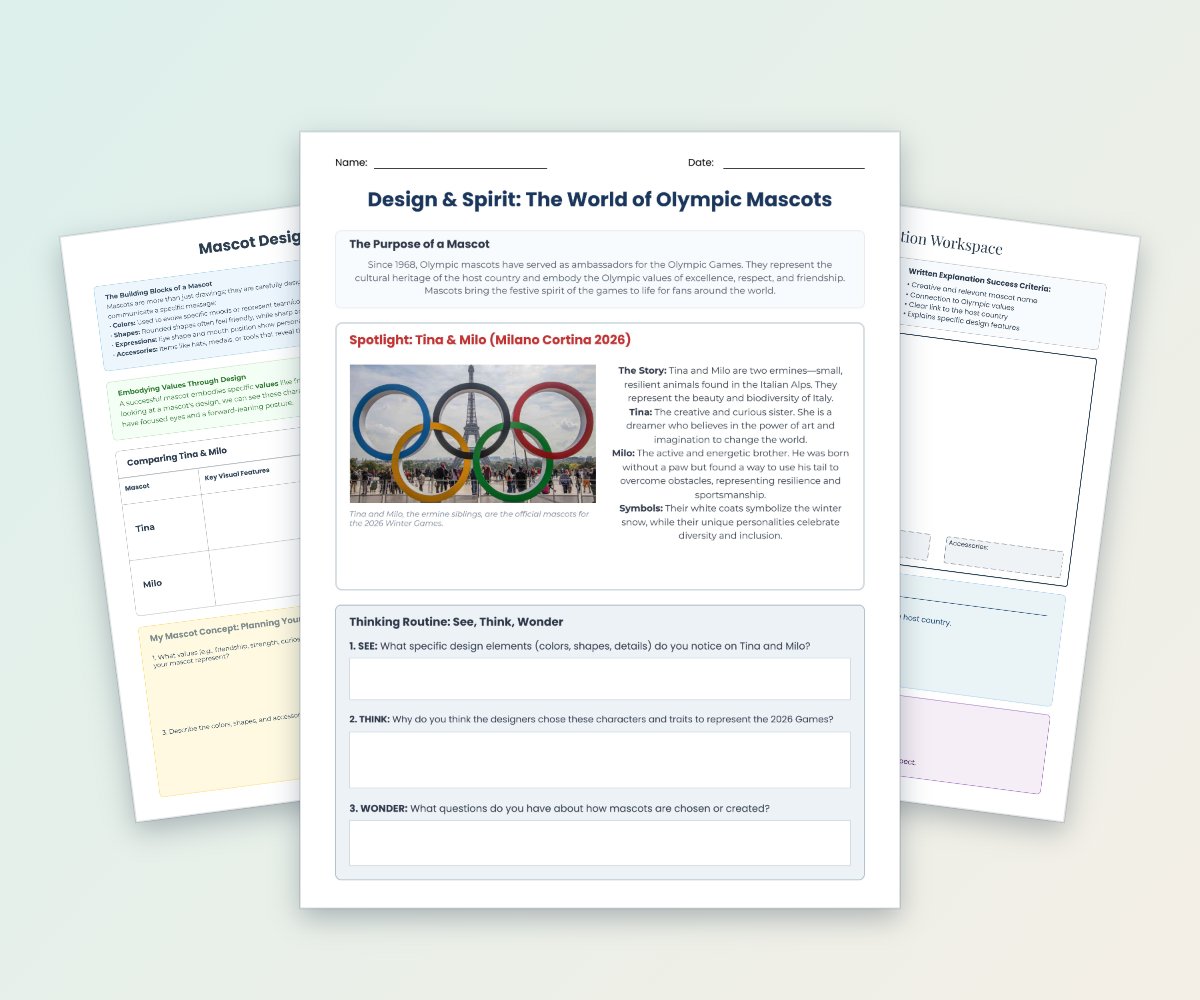
Students examine the design and symbolism of Olympic mascots, including Tina and Milo from the Milano Cortina 2026 Winter Games.
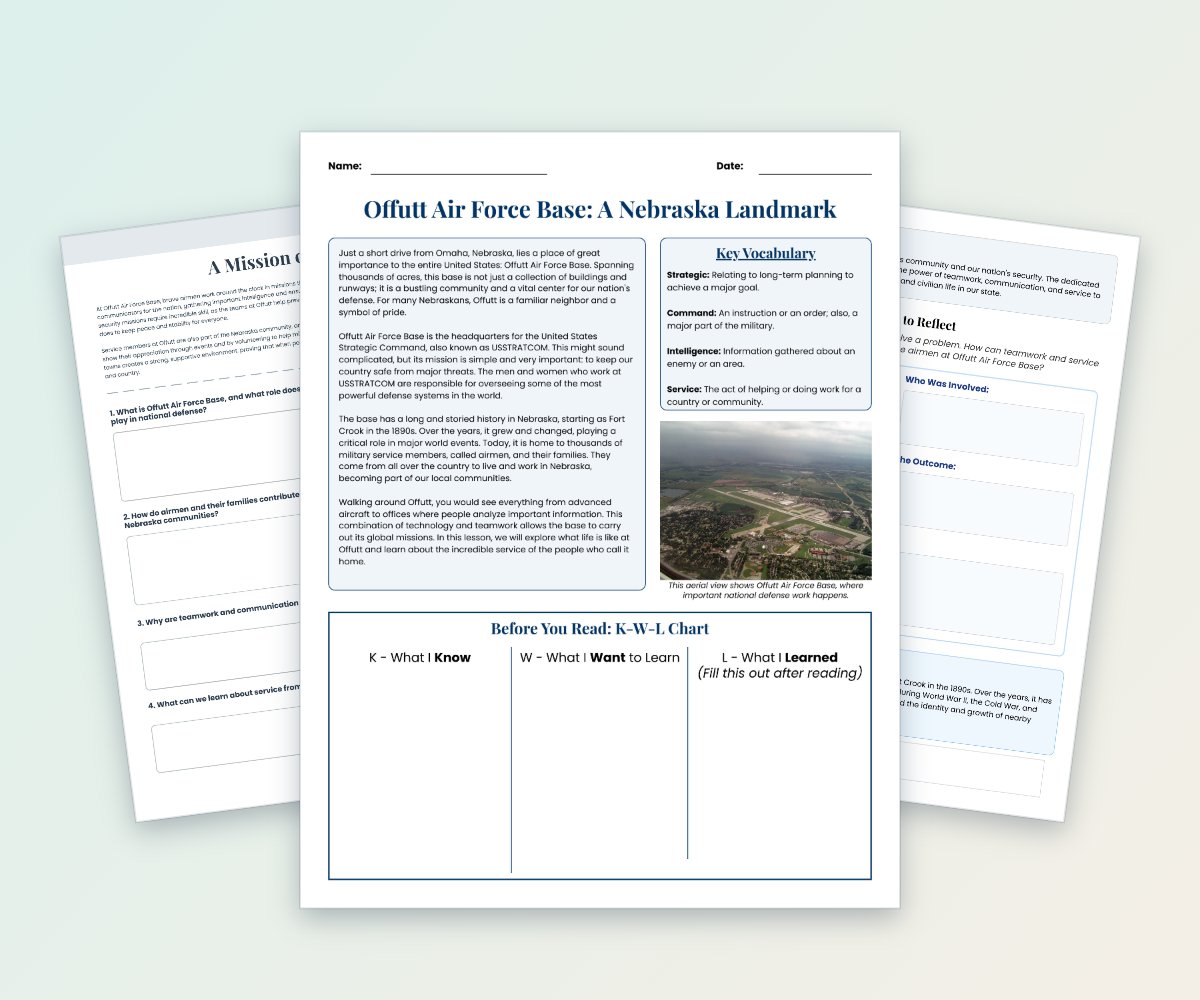
Students read an informational passage about Offutt Air Force Base, its history, mission, and role in Nebraska and national defense.
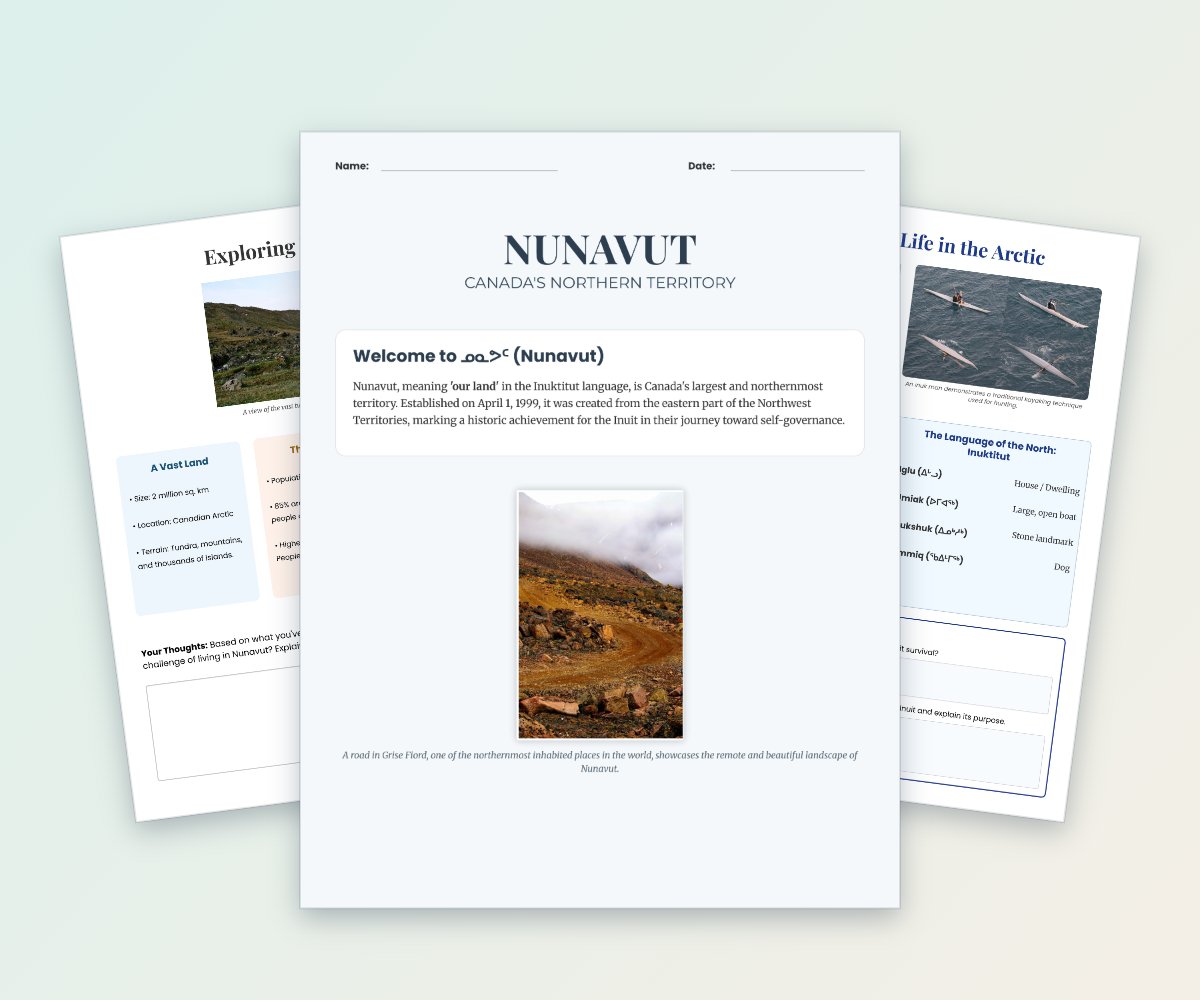
This eight-page student workbook introduces Nunavut’s geography, climate, history, Inuit culture, traditional tools, clothing, and community life.
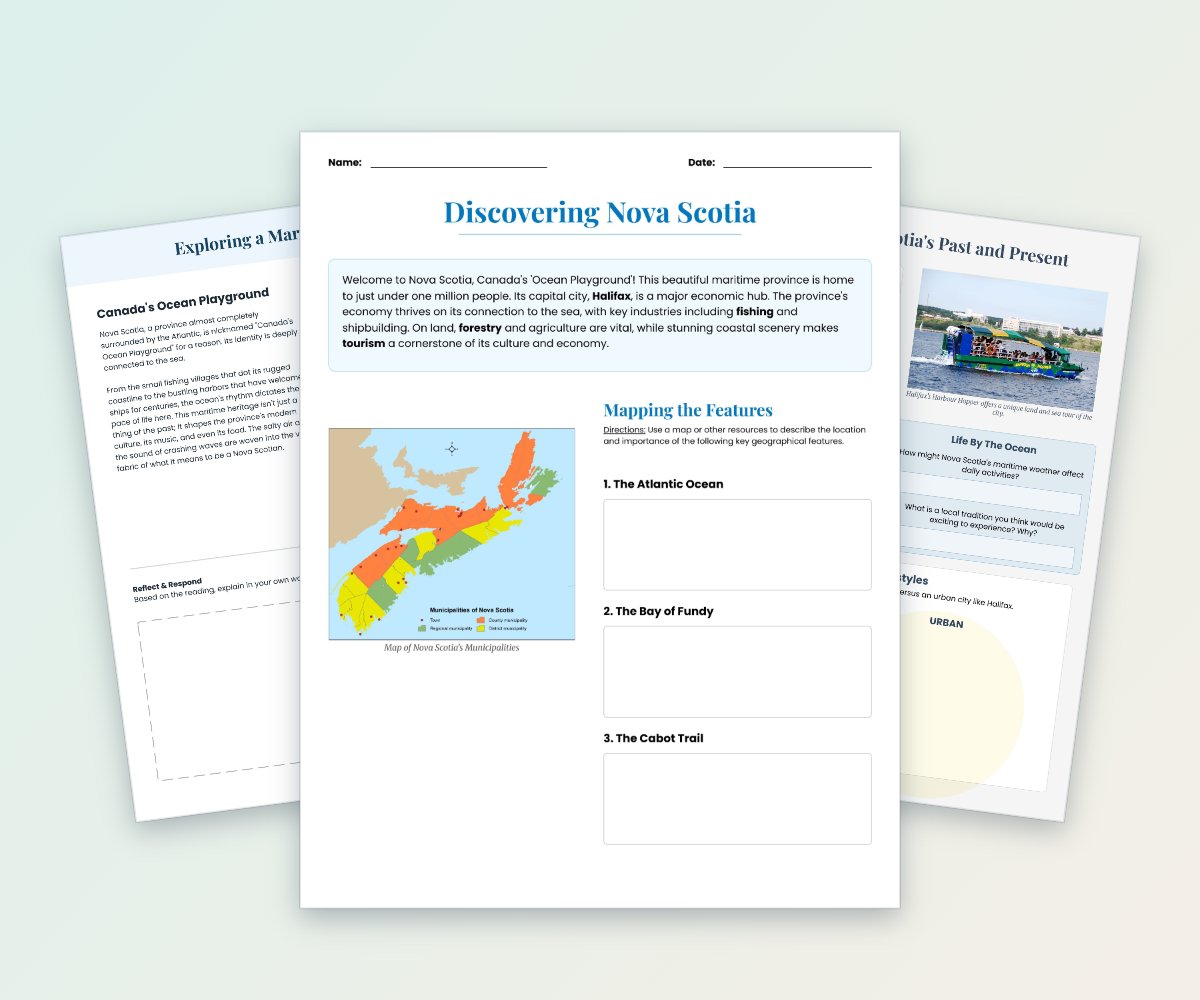
This six-page activity pack introduces students to Nova Scotia’s geography, municipalities, history, Mi’kmaq heritage, economy, and maritime identity.
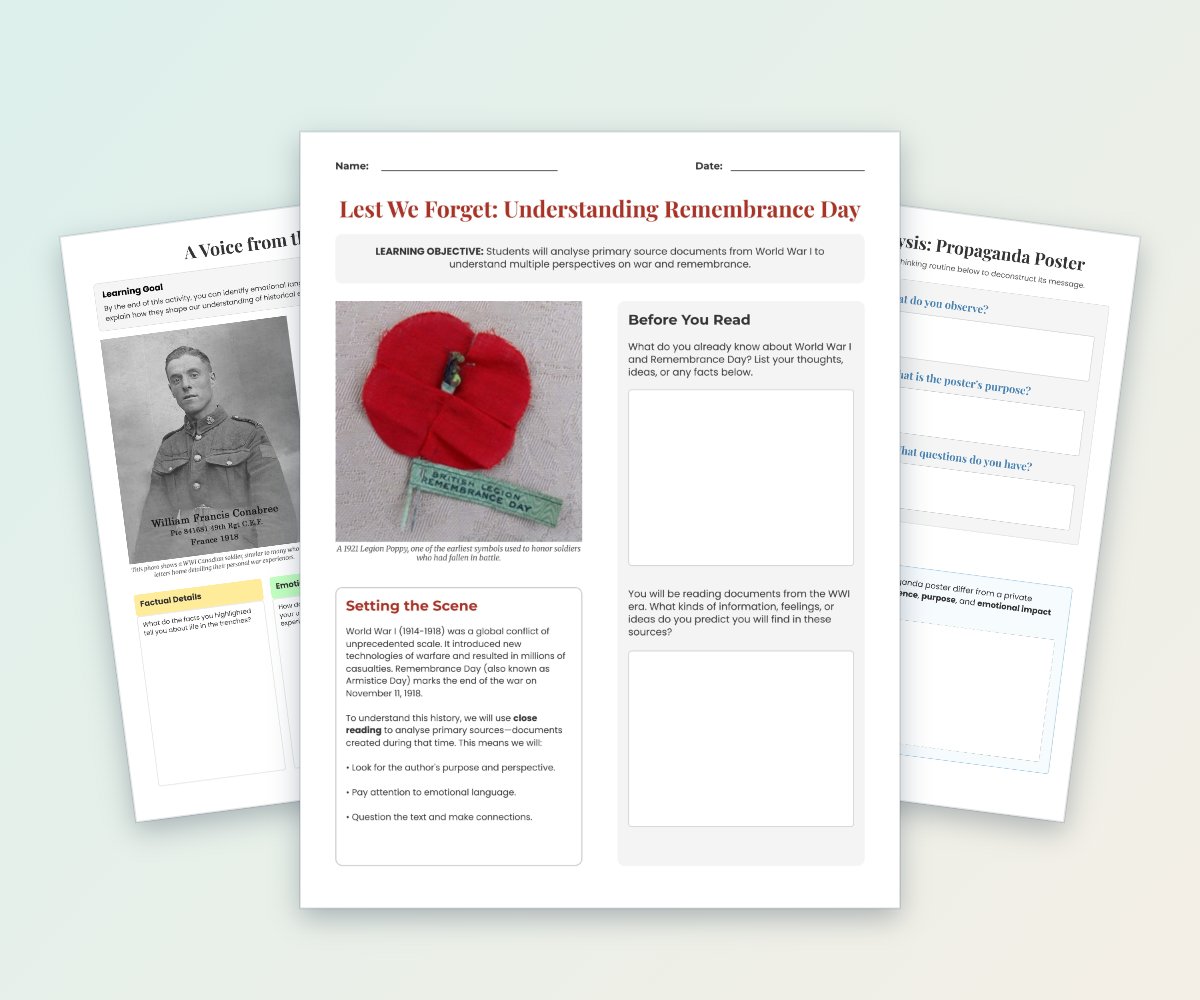
Students examine a World War I letter and related historical context to explore life in the trenches, emotional language, and remembrance.
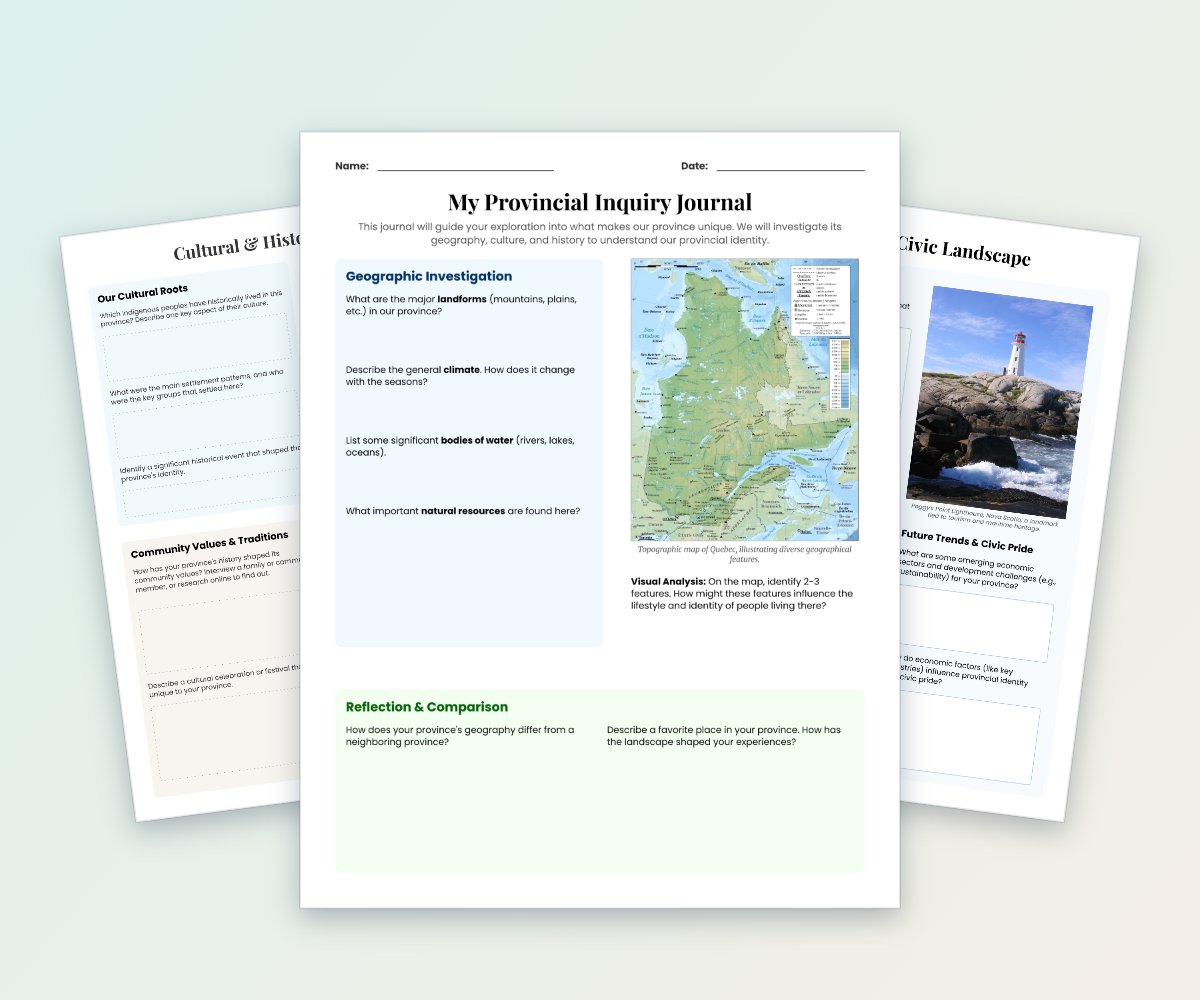
This inquiry journal guides students in exploring a province’s geography, Indigenous and settlement history, cultural traditions, community values, economy, and civic landscape.
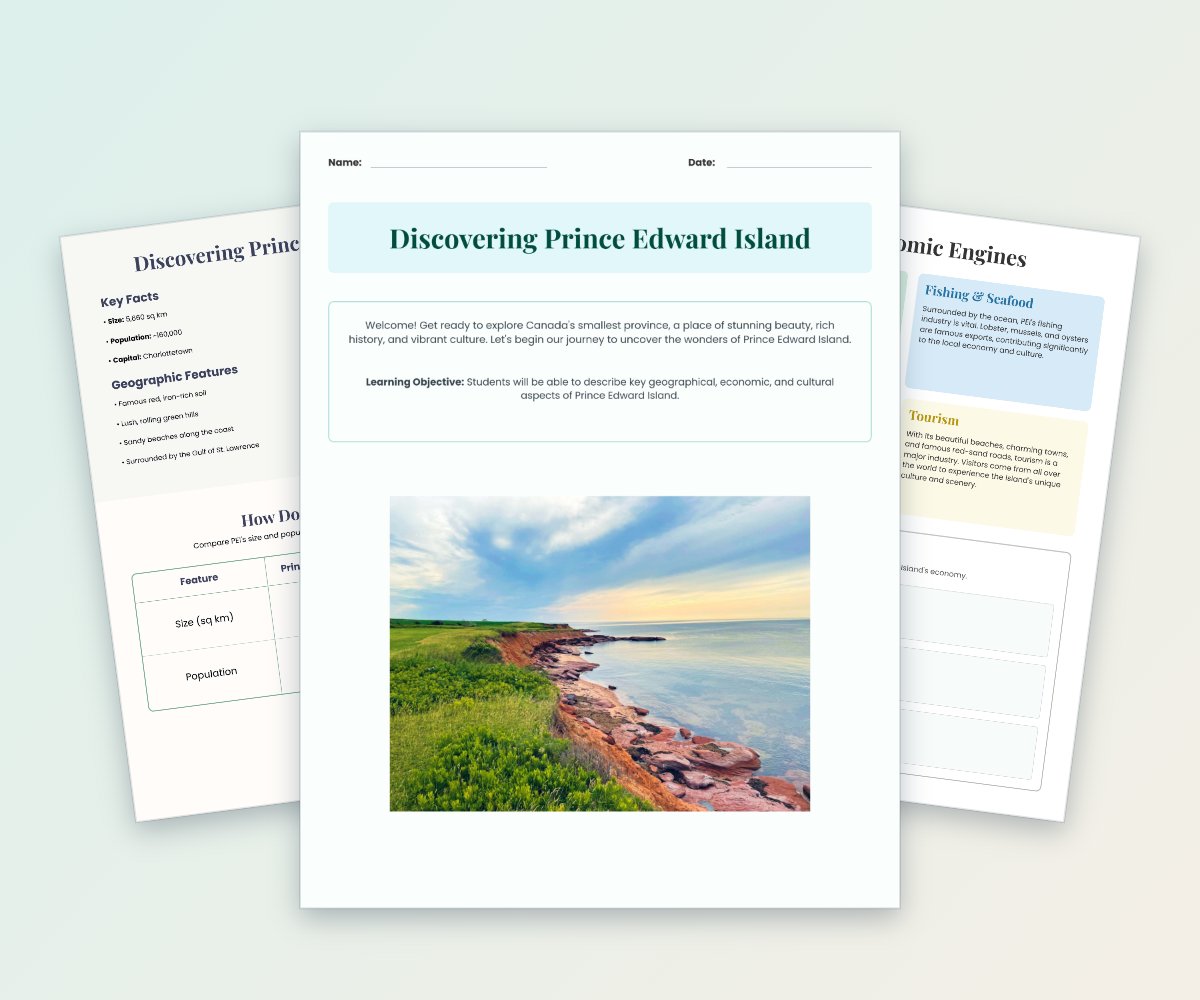
This student workbook introduces Prince Edward Island through its geography, economy, history, culture, and seasonal way of life.
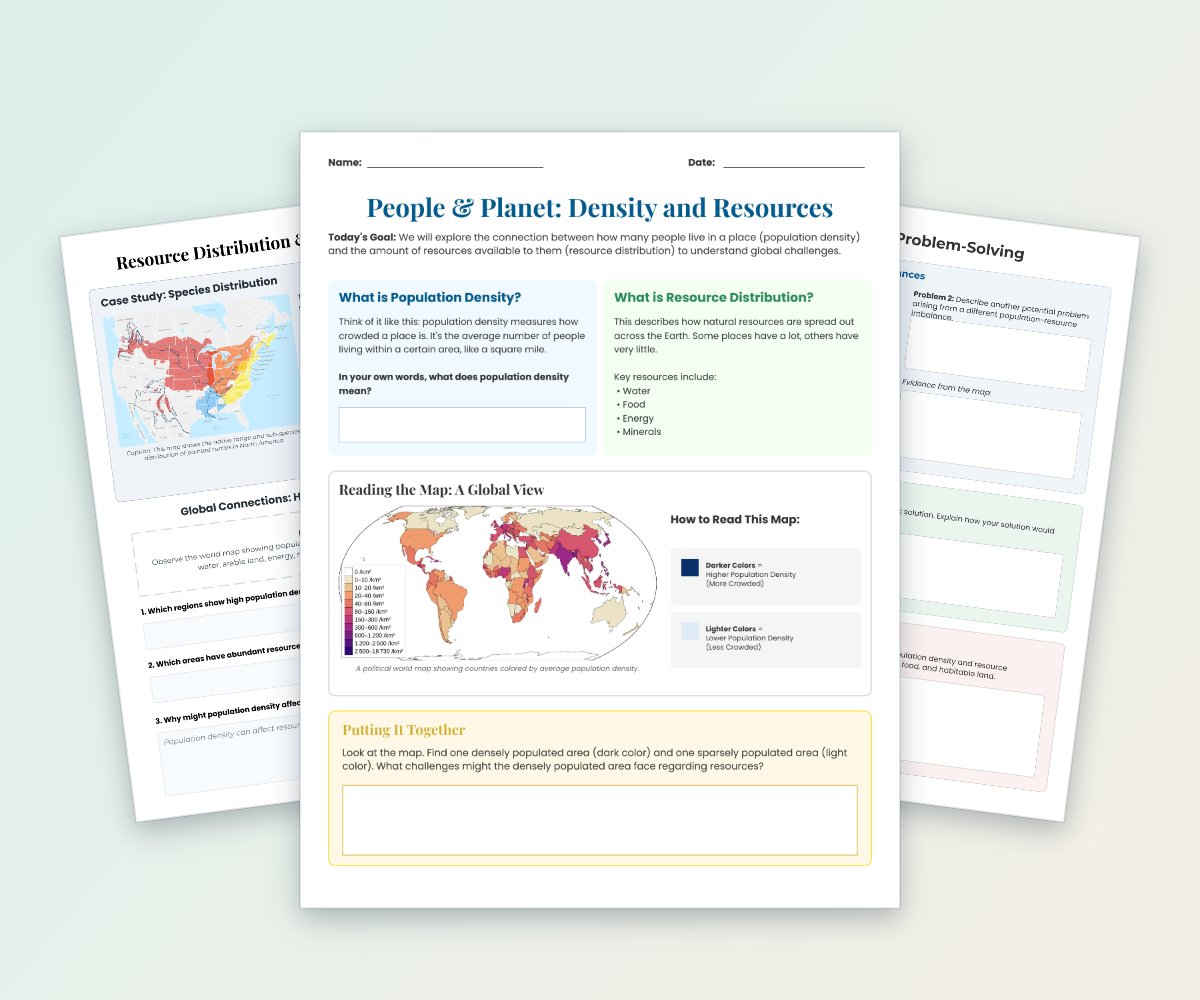
Students examine population-density and resource-distribution maps, connect resource availability to human and animal populations, and analyze global challenges.
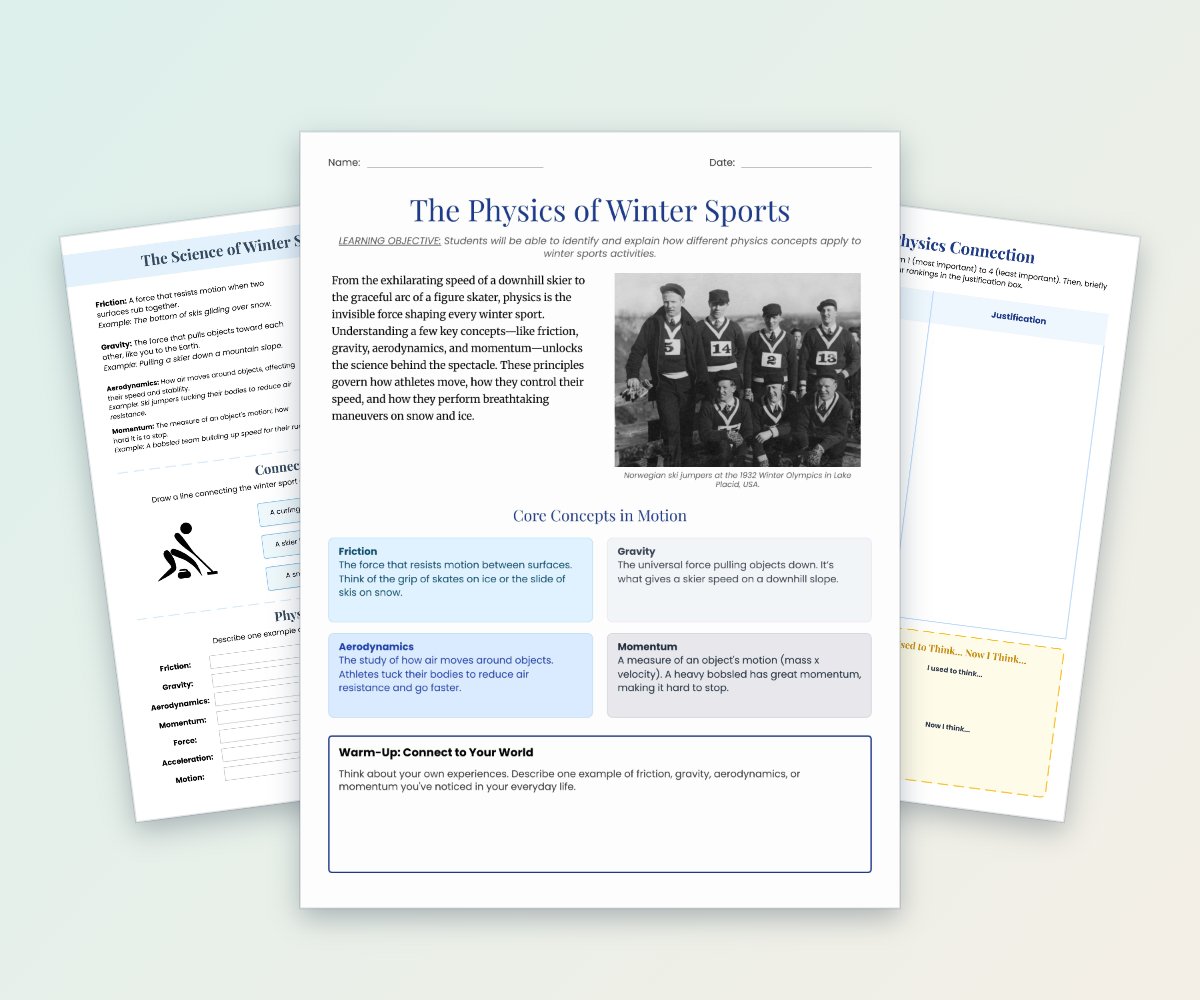
This four-page worksheet introduces friction, gravity, aerodynamics, momentum, force, acceleration, and motion through engaging winter sports examples.
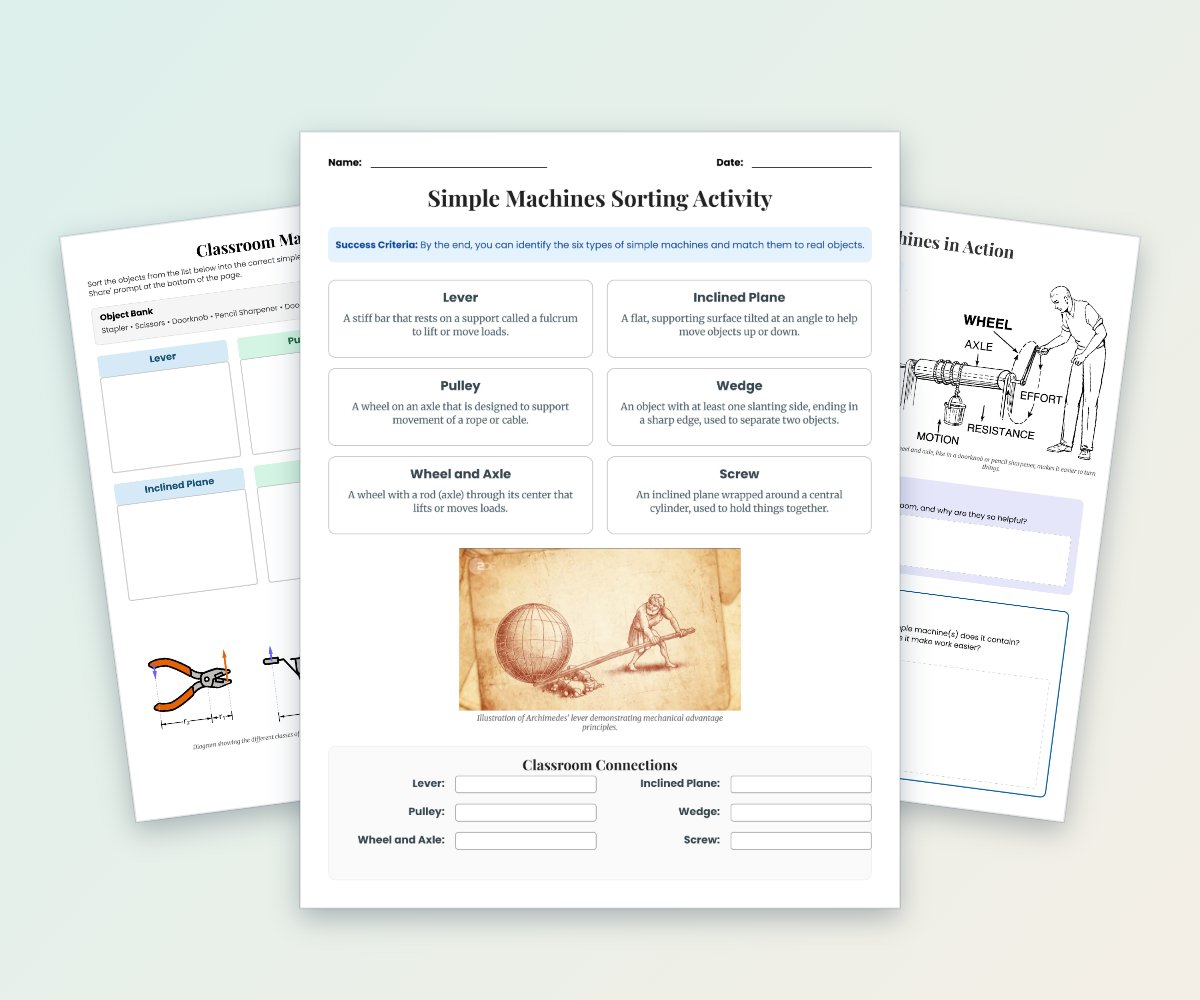
Students learn the six types of simple machines, match them to familiar objects, and explain how they make work easier.
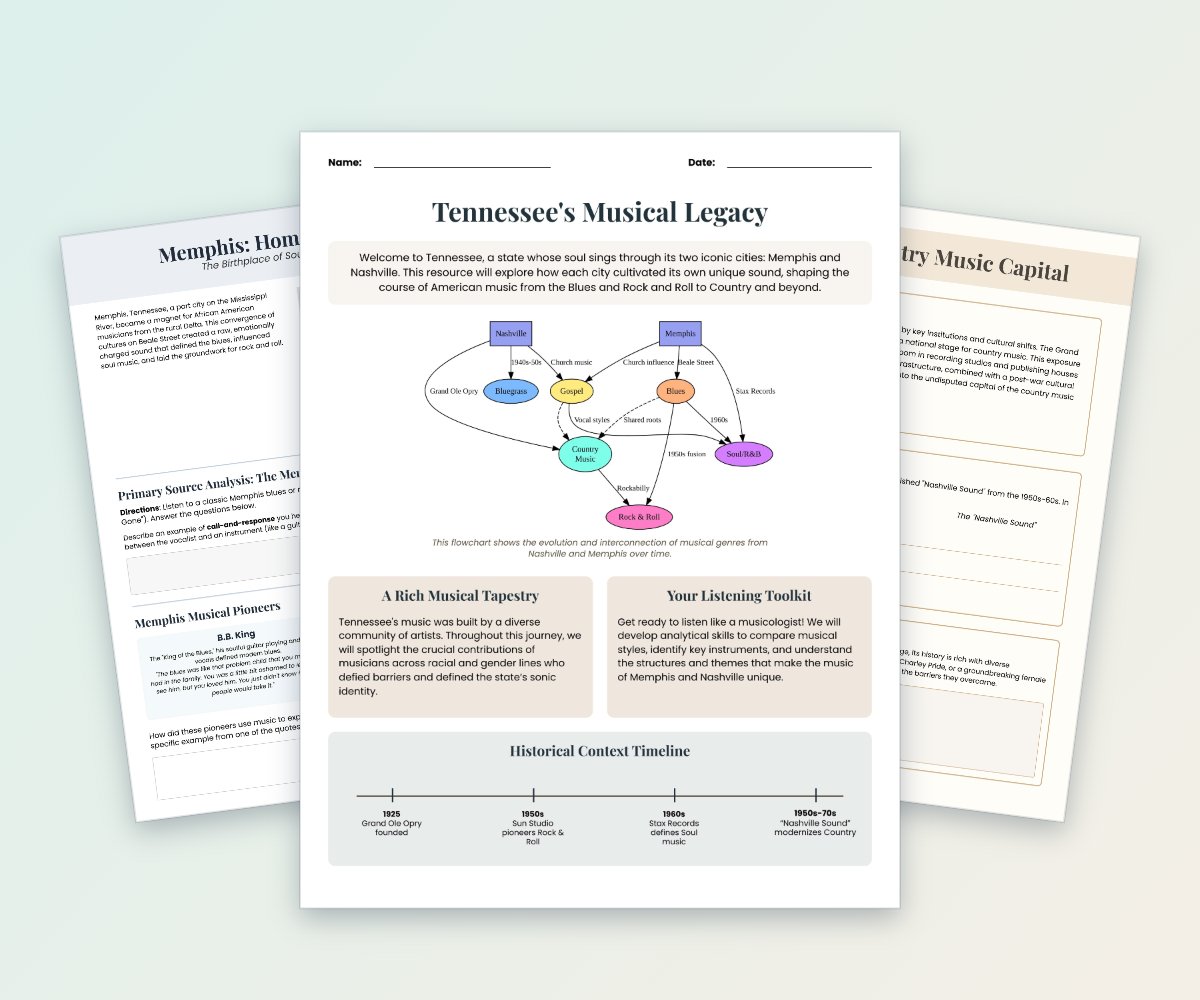
Students explore how Memphis and Nashville shaped blues, rock and roll, soul, bluegrass, and country music.
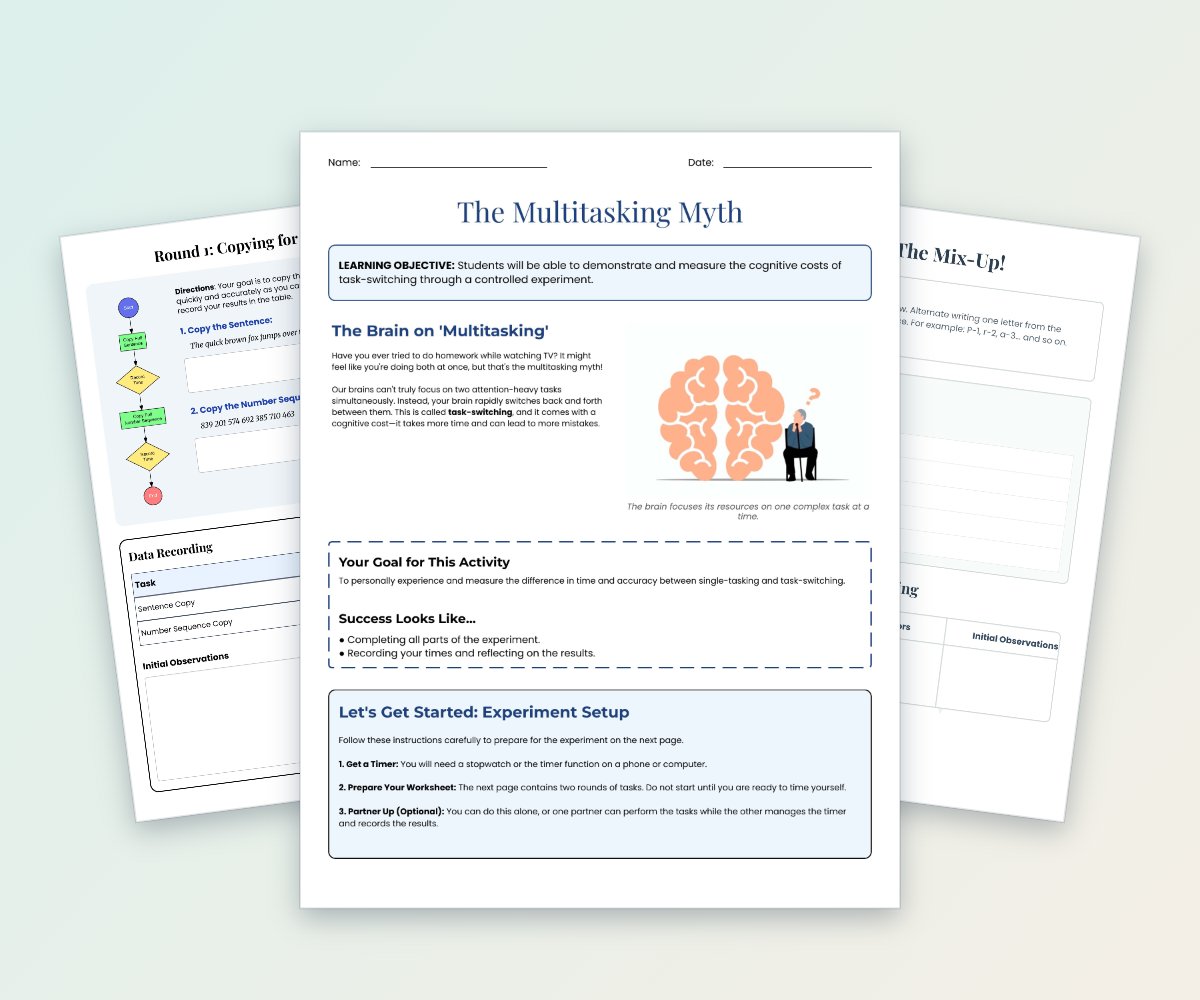
Students conduct a timed experiment comparing focused copying with alternating between letters and numbers.
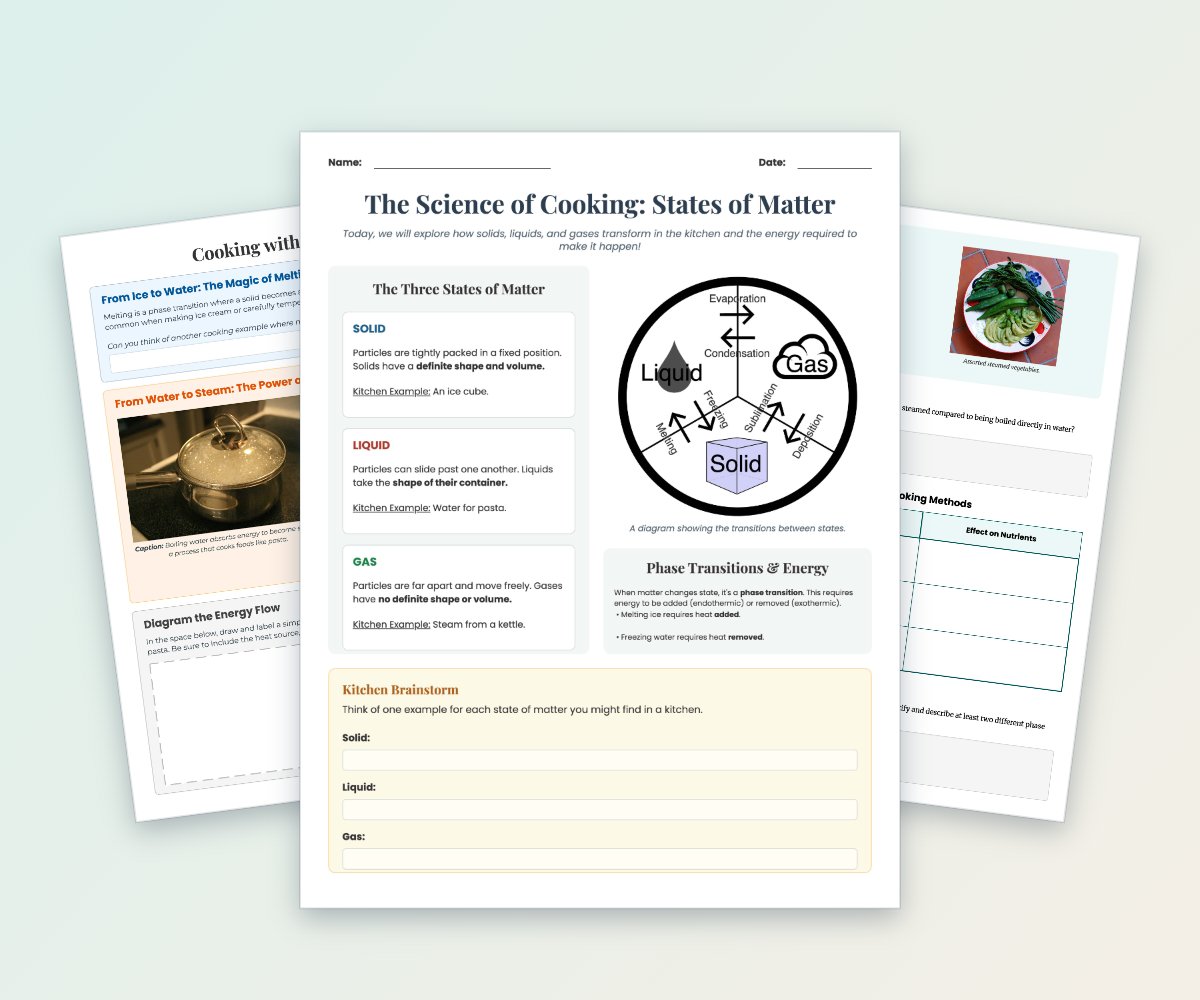
This four-page science worksheet explores solids, liquids, gases, phase transitions, and energy changes through familiar cooking examples.
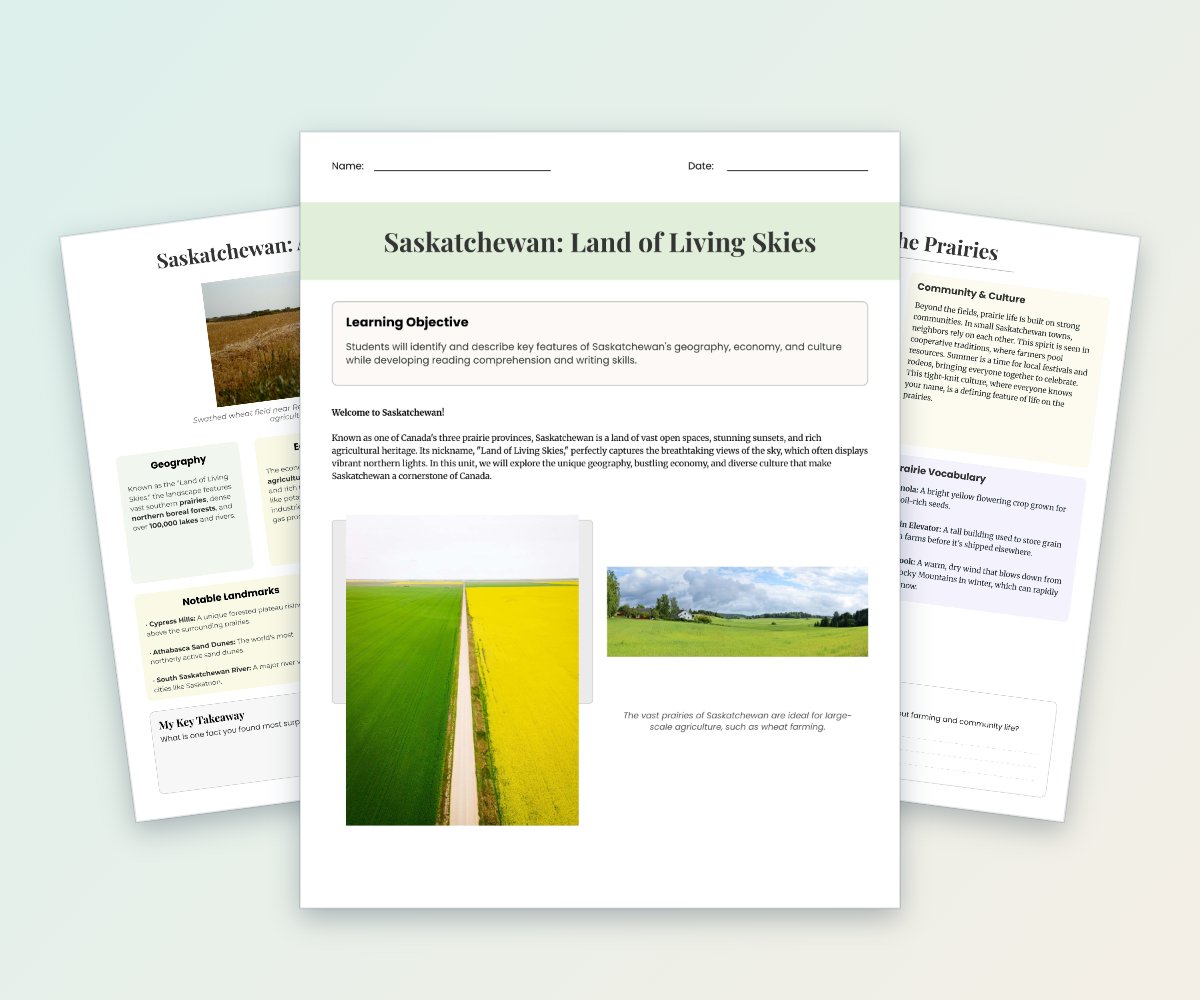
This six-page social studies unit introduces Saskatchewan’s landscapes, landmarks, industries, seasons, Indigenous communities, and cultural diversity.
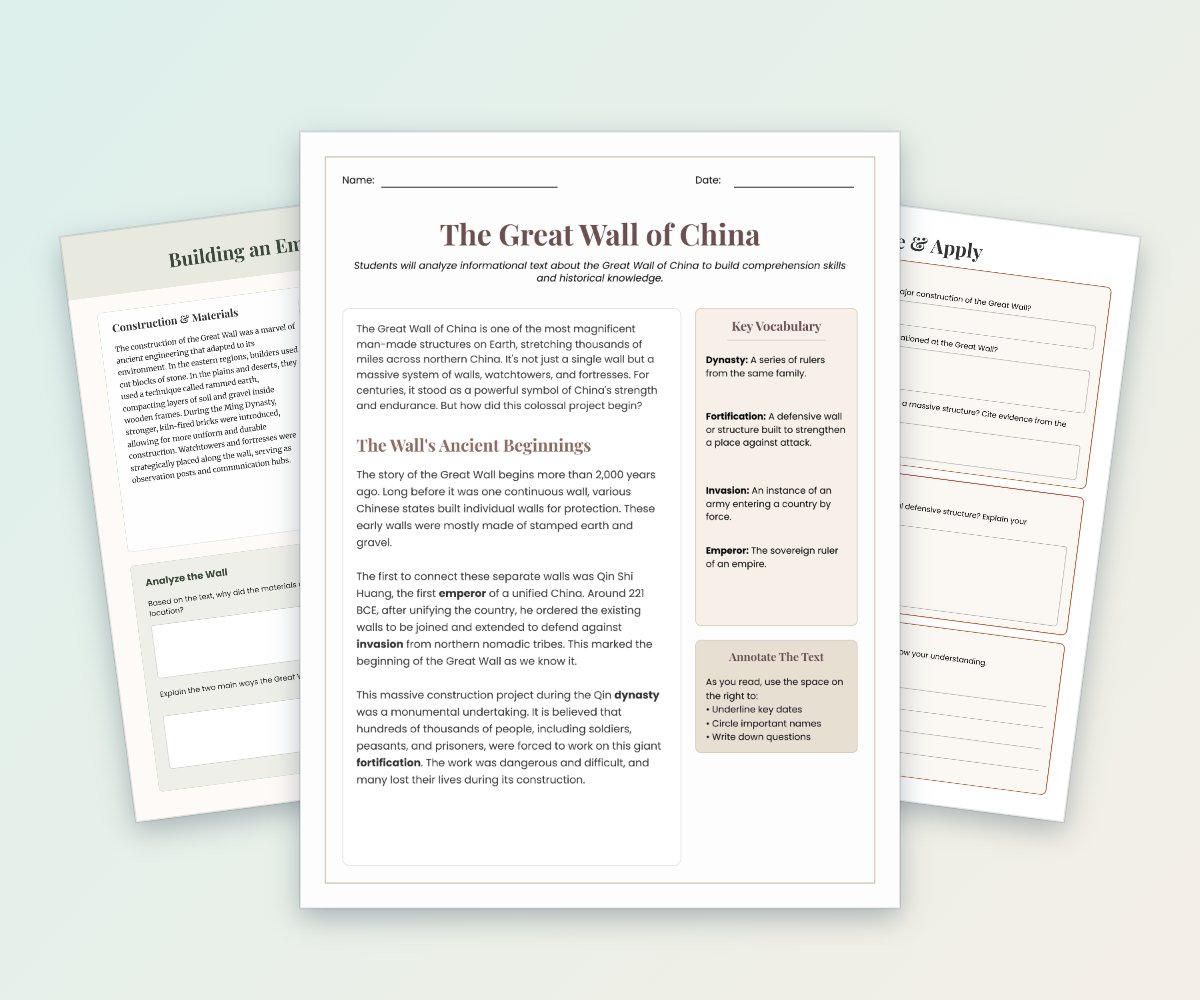
Students read an informational passage about the Great Wall of China, including its ancient origins, construction, materials, and historical significance.
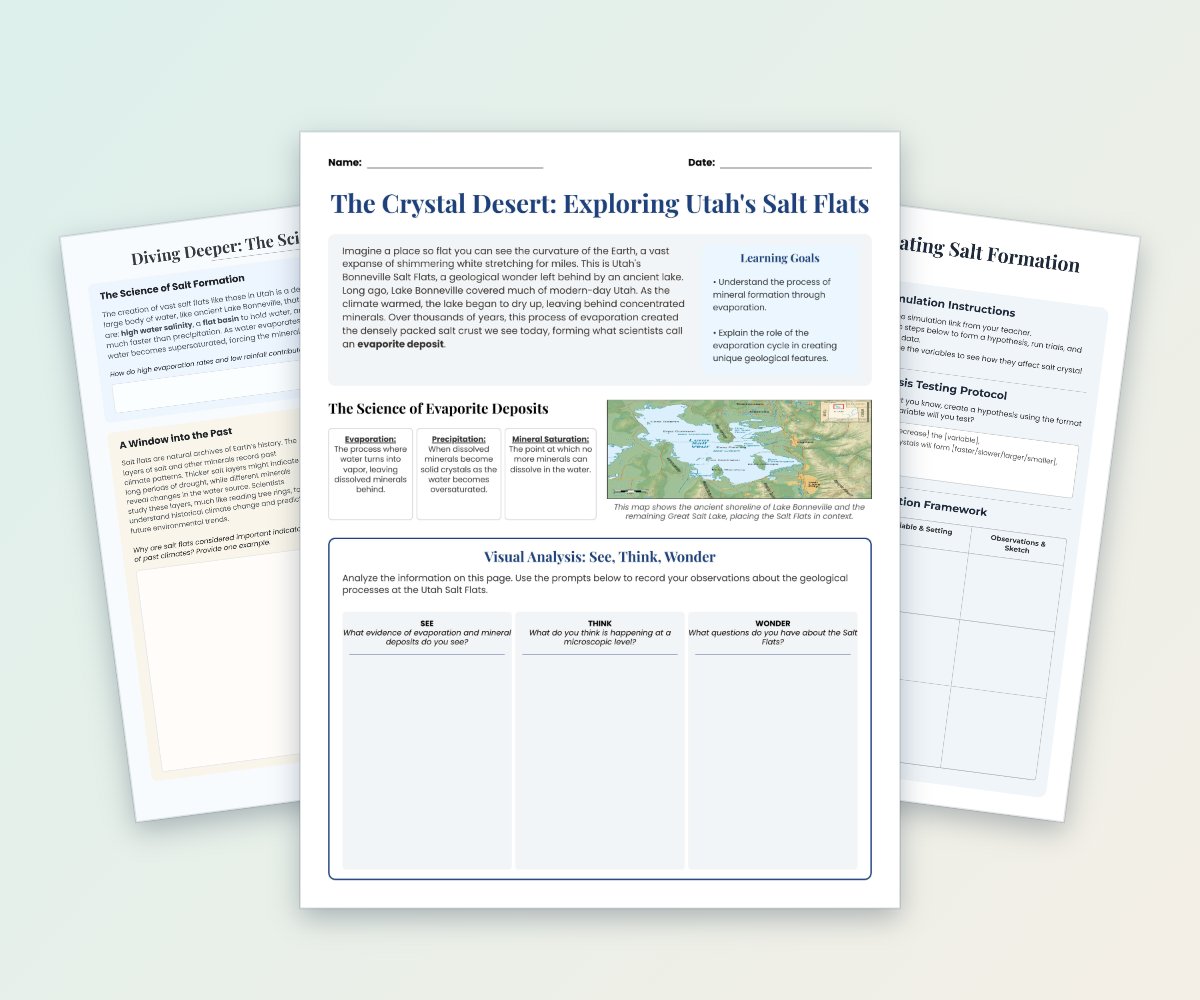
This four-page science resource examines how evaporation, mineral saturation, and precipitation formed Utah’s Bonneville Salt Flats.
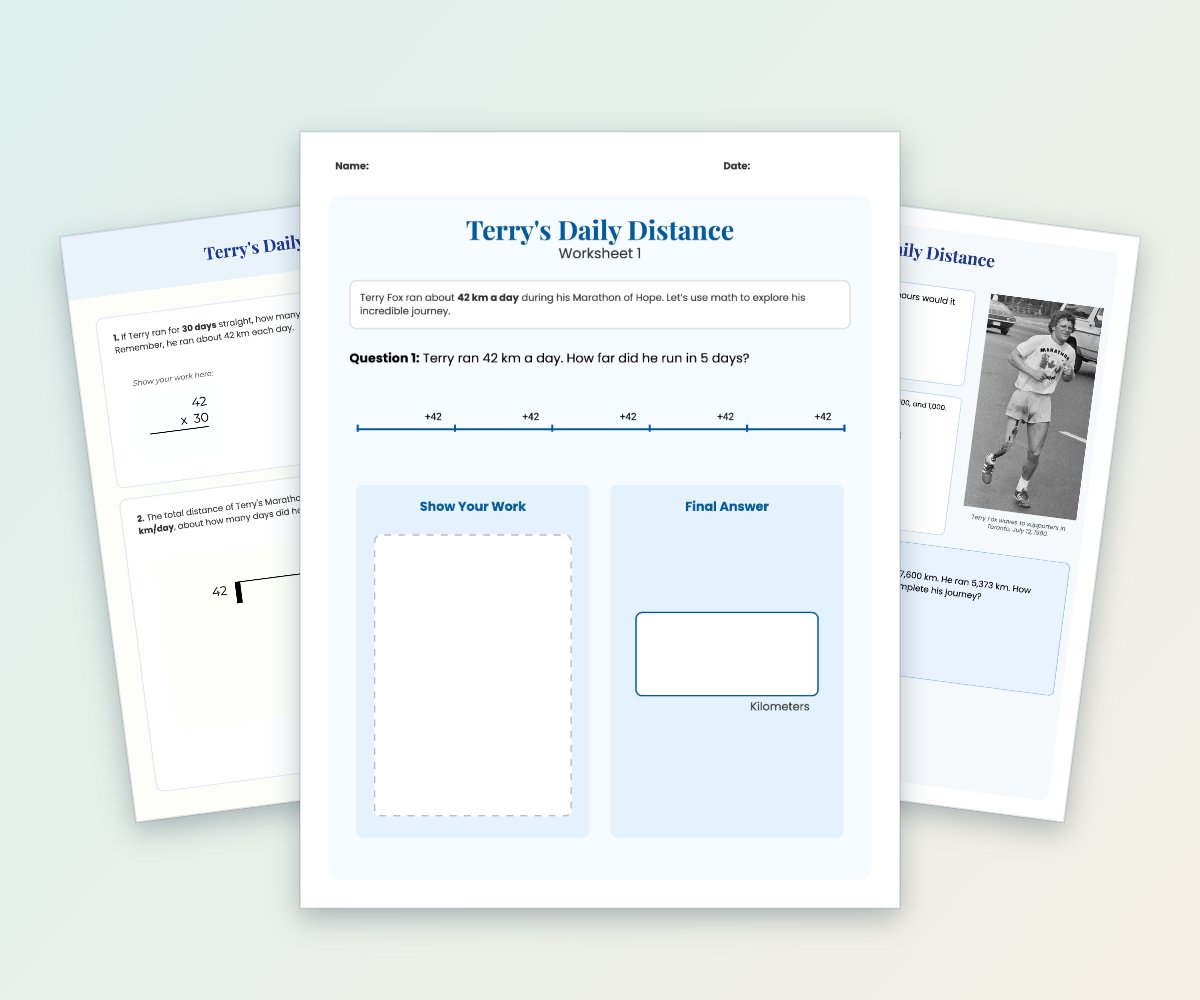
This nine-page worksheet set uses Terry Fox’s Marathon of Hope and fundraising efforts to provide meaningful math practice.
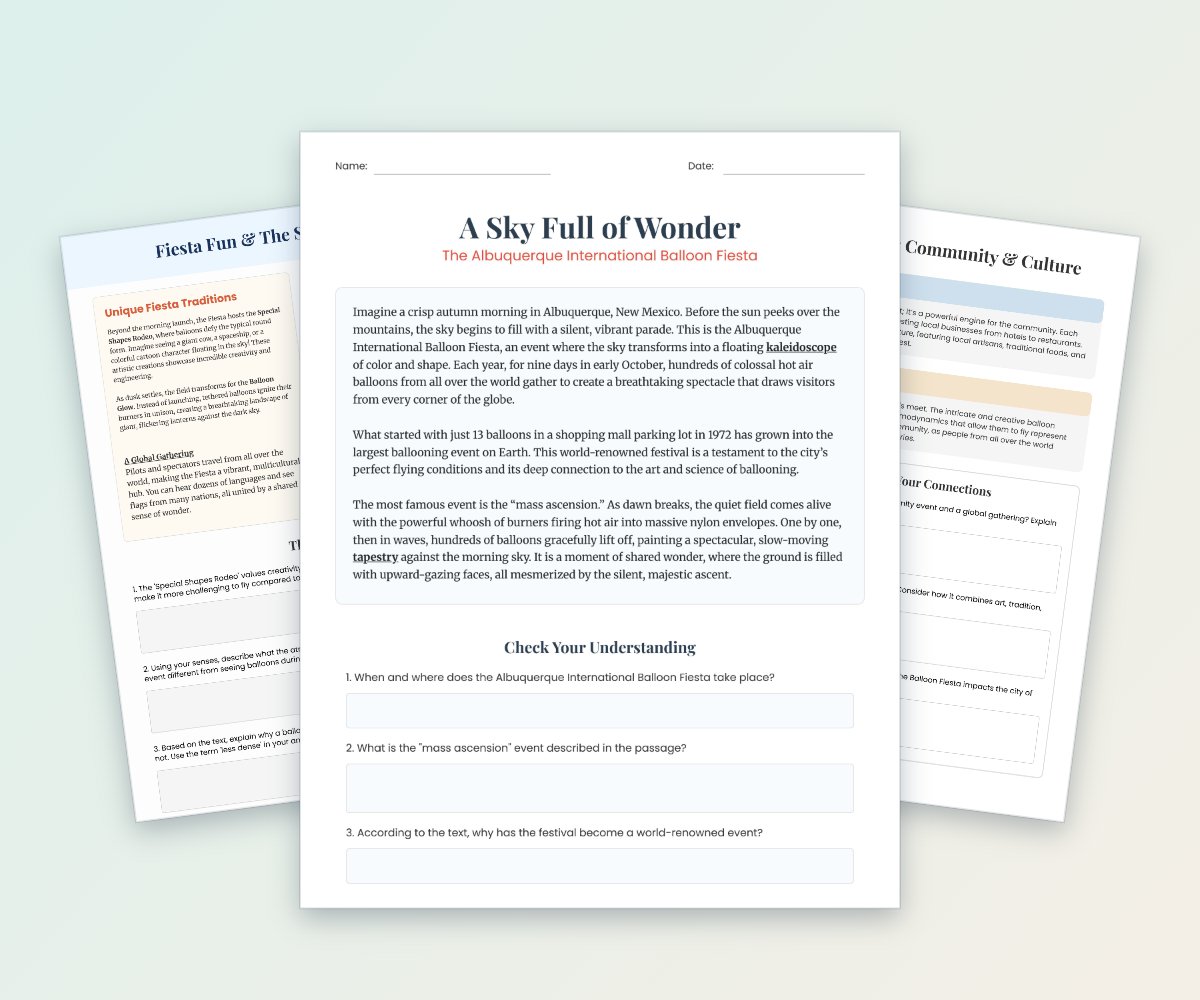
Students read about the Albuquerque International Balloon Fiesta, its traditions, and the science behind hot-air balloon flight.
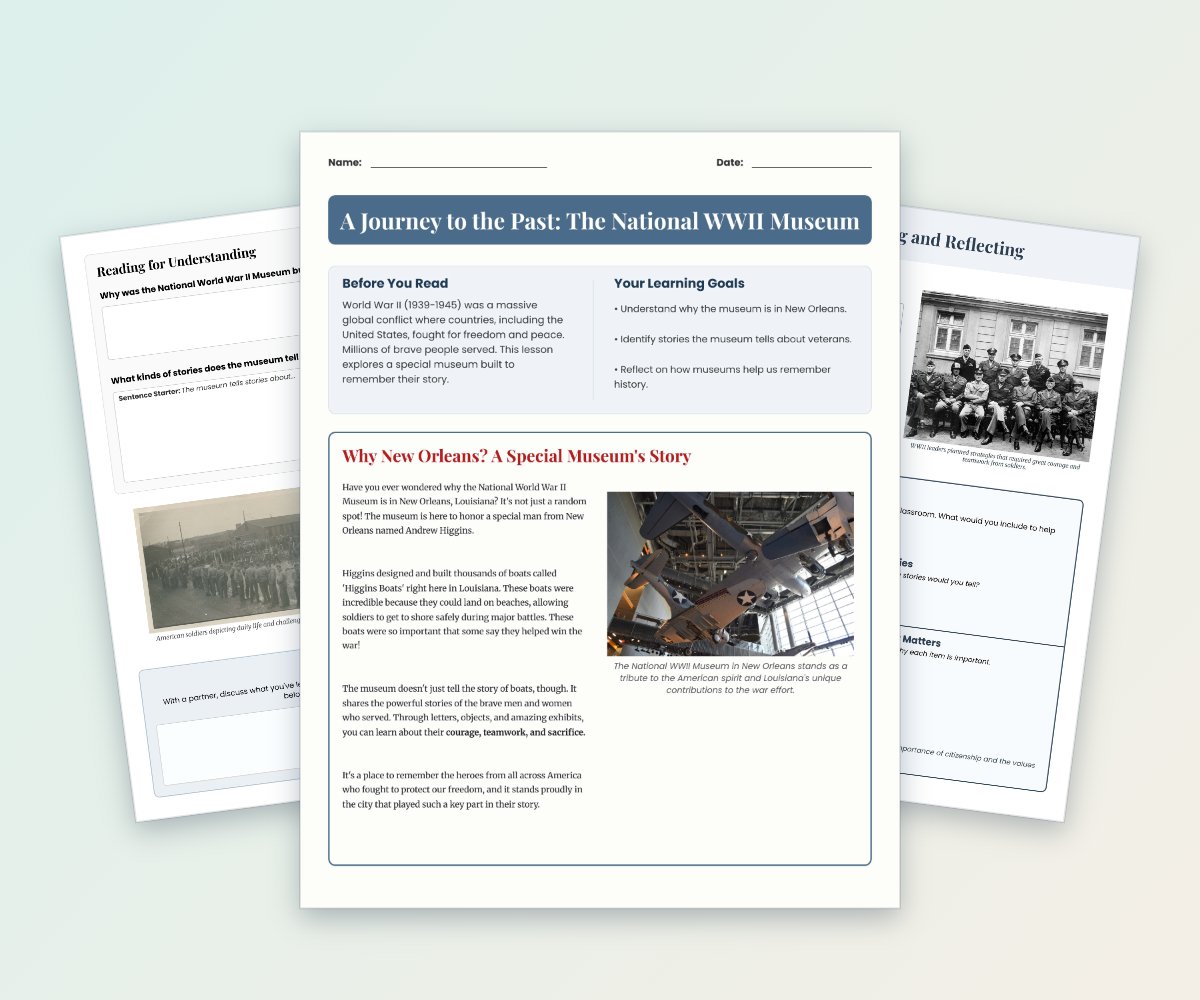
Students learn why the National World War II Museum is located in New Orleans and explore veterans’ stories, courage, teamwork, and sacrifice.
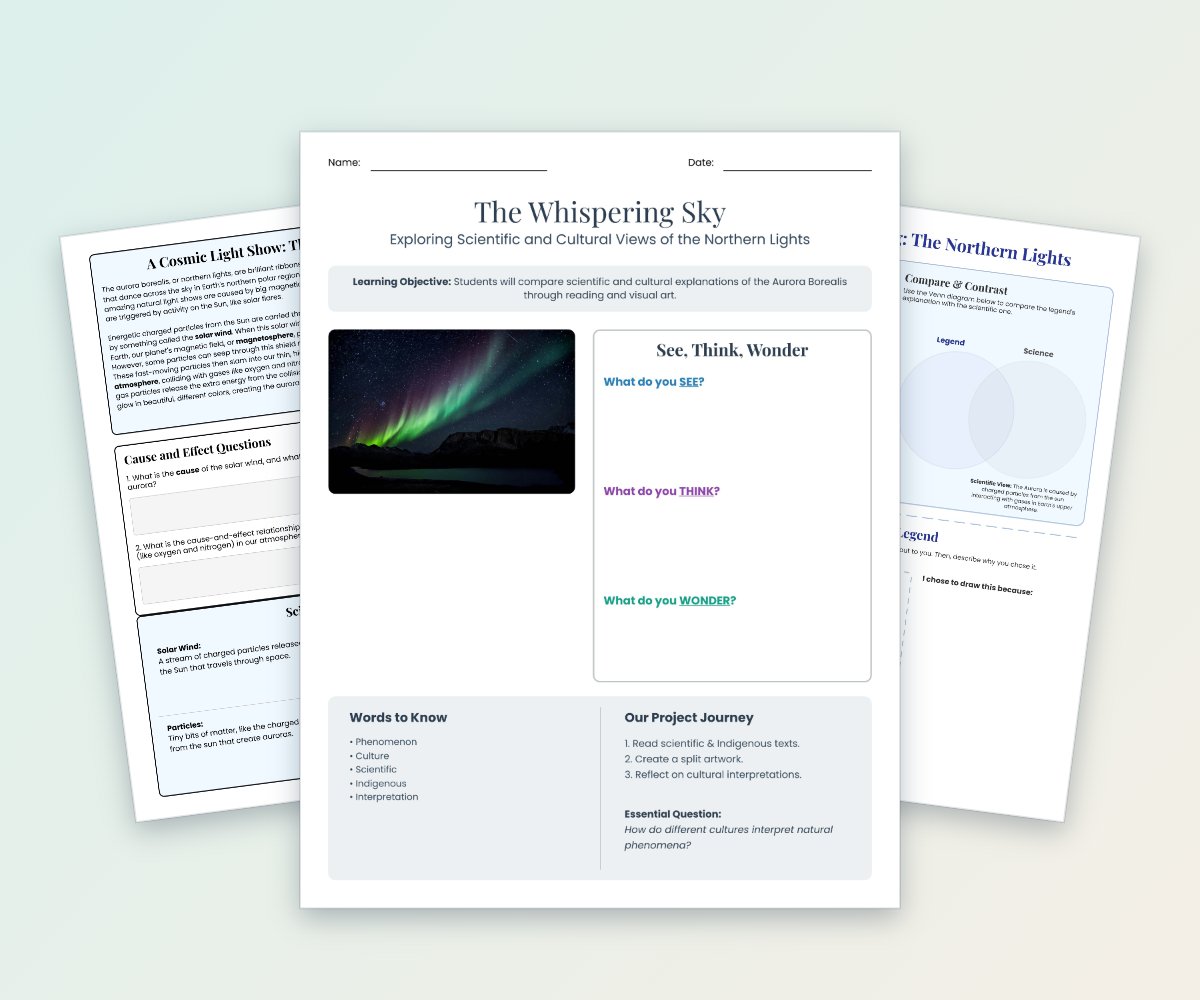
Students explore how auroras form through solar wind, charged particles, and Earth’s atmosphere, then compare scientific and Cree cultural interpretations.
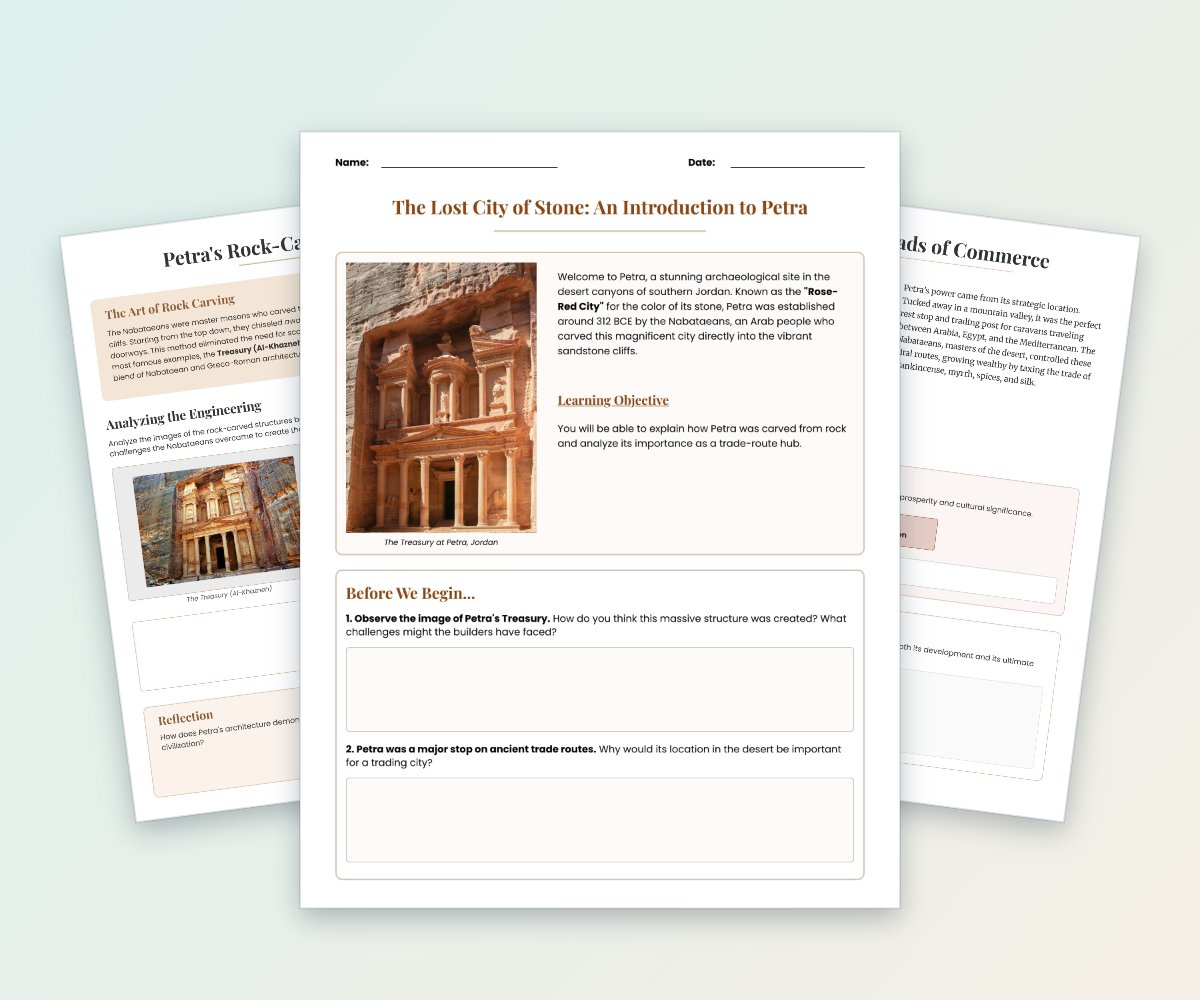
This four-page worksheet introduces students to Petra’s rock-carved architecture, strategic trade routes, and historical significance.
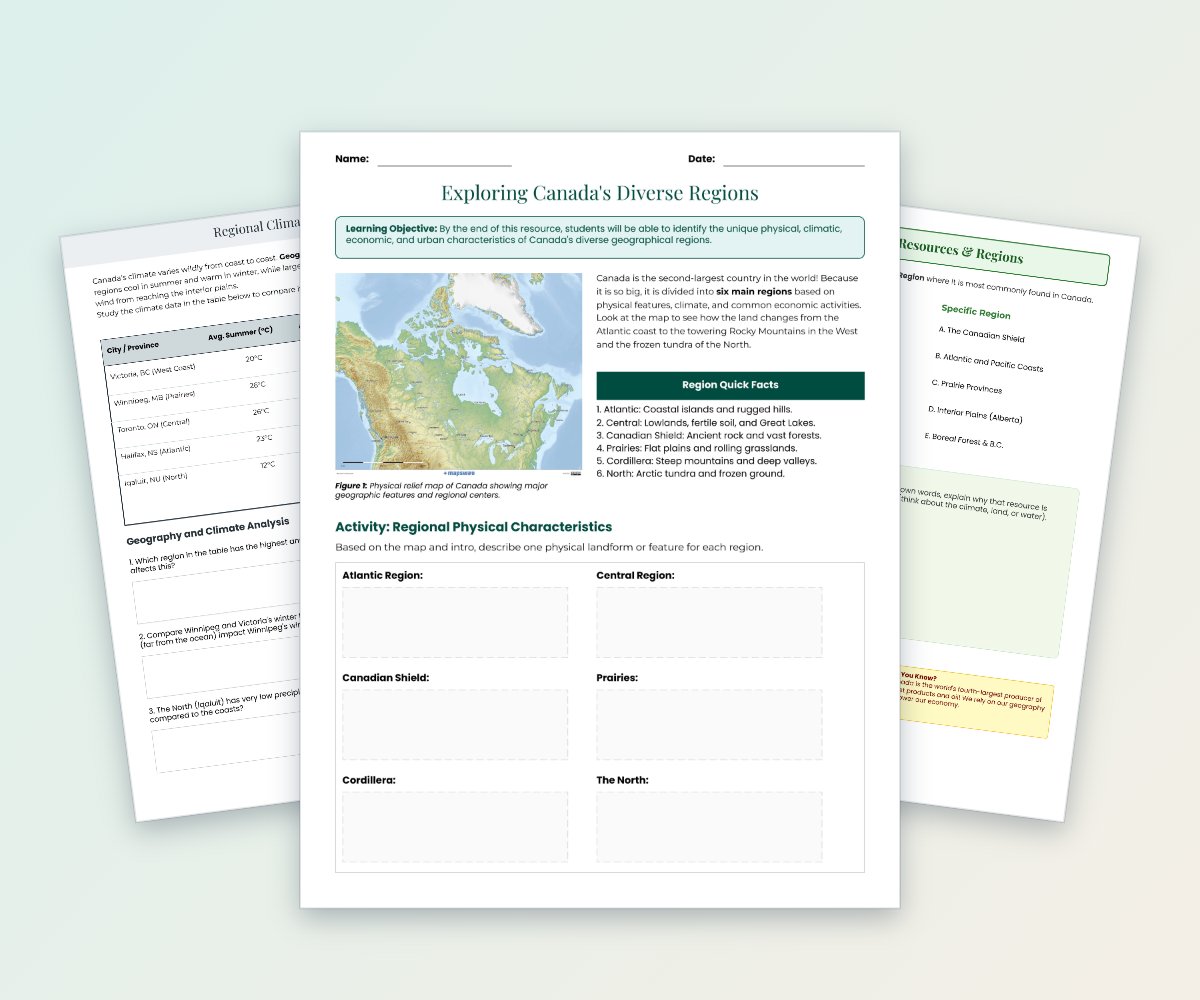
Students explore Canada's six geographic regions through physical features, climate data, economic activities, and natural resources.
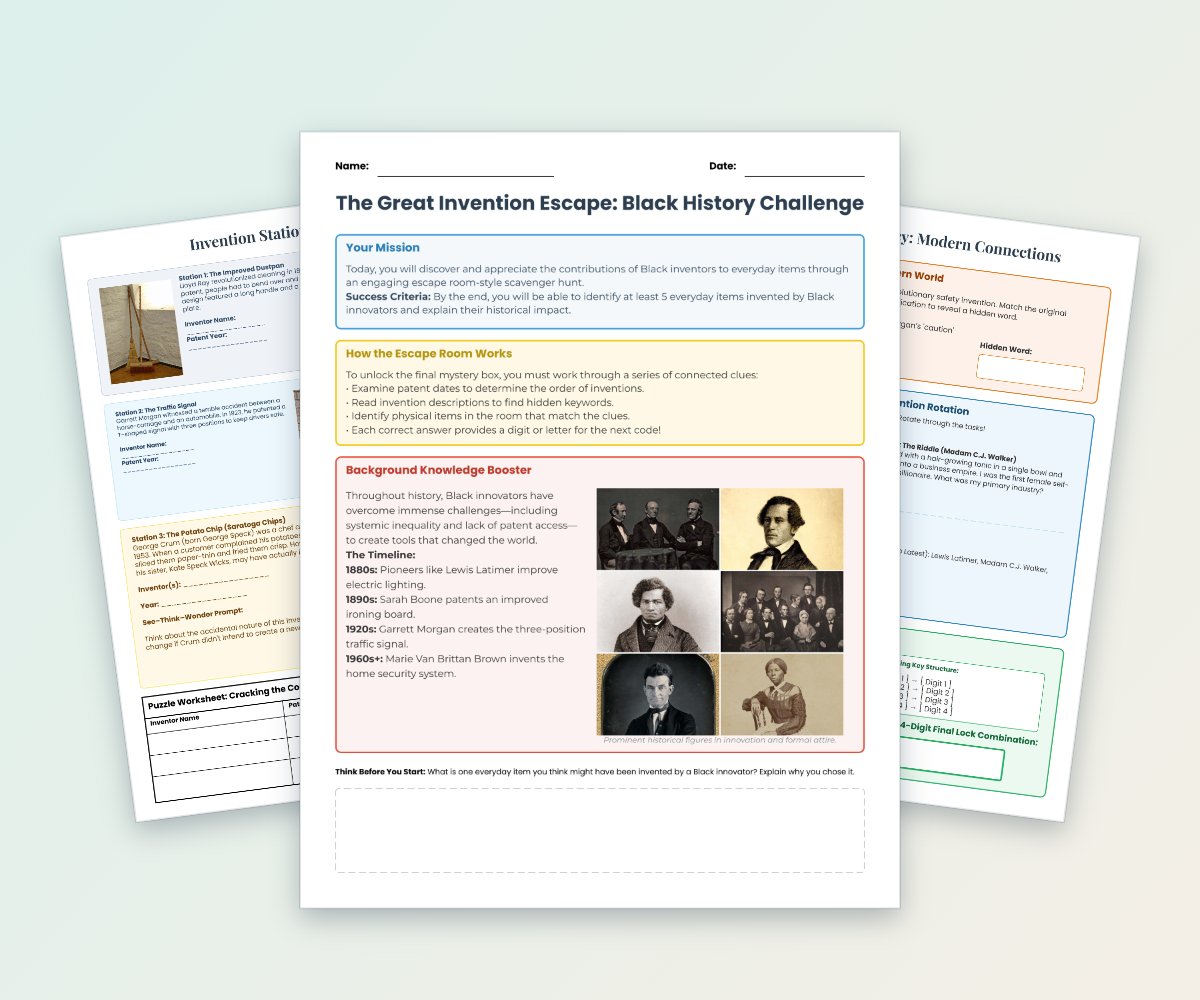
Students explore inventions and innovations by Black inventors through clues, patent dates, invention descriptions, and puzzle challenges.
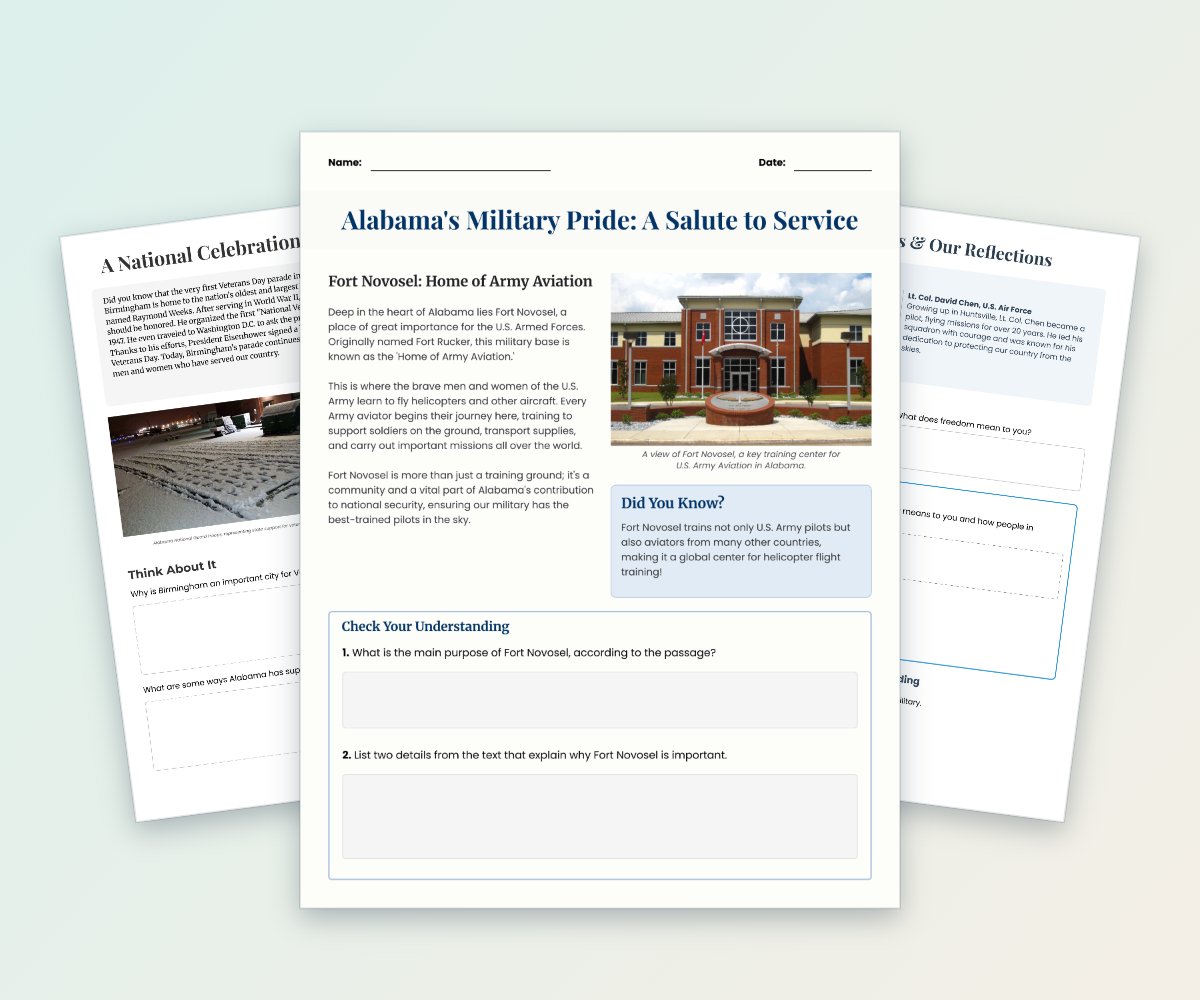
Students read about Fort Novosel, Army Aviation, Alabama's military contributions, and Birmingham's Veterans Day tradition.
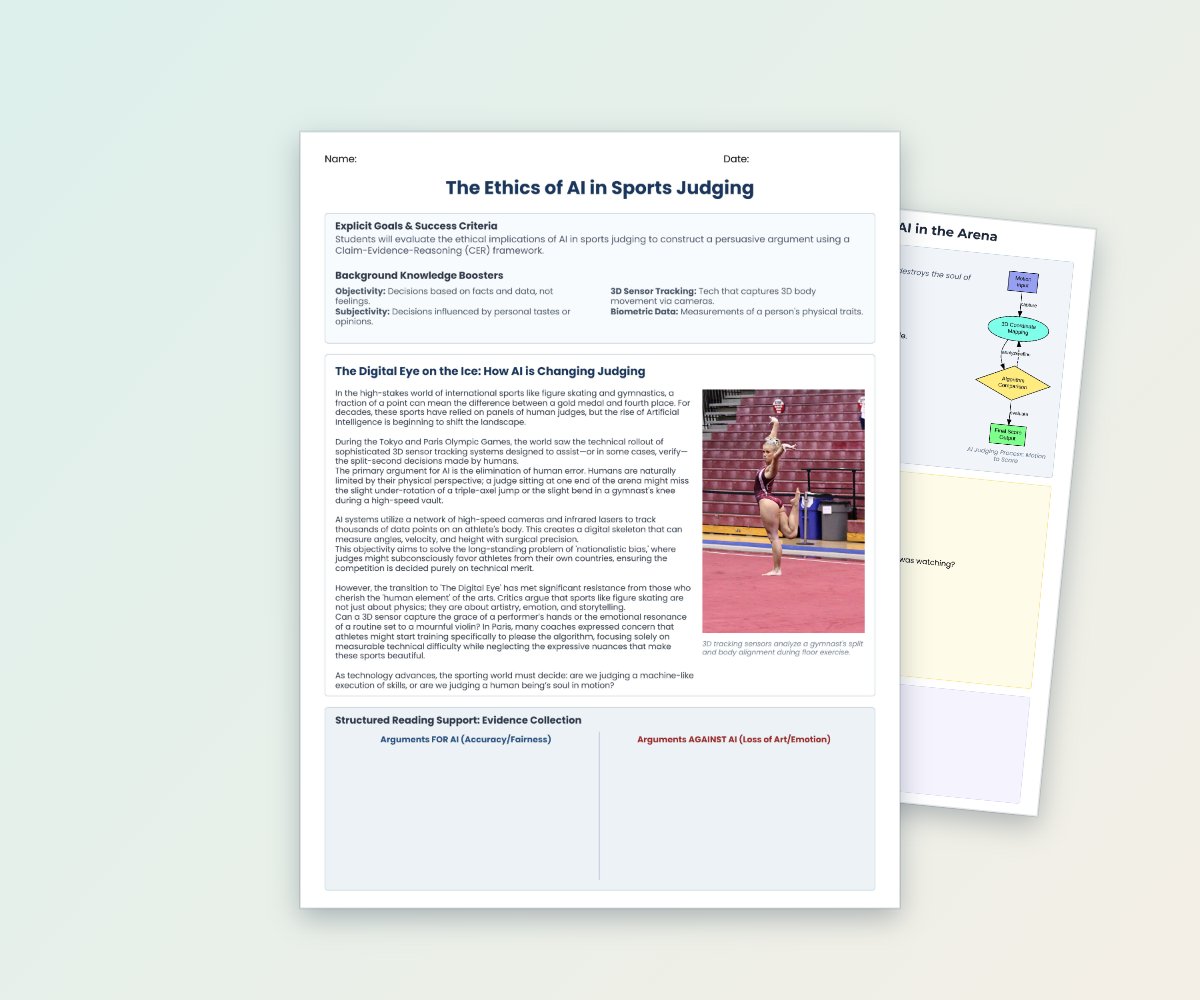
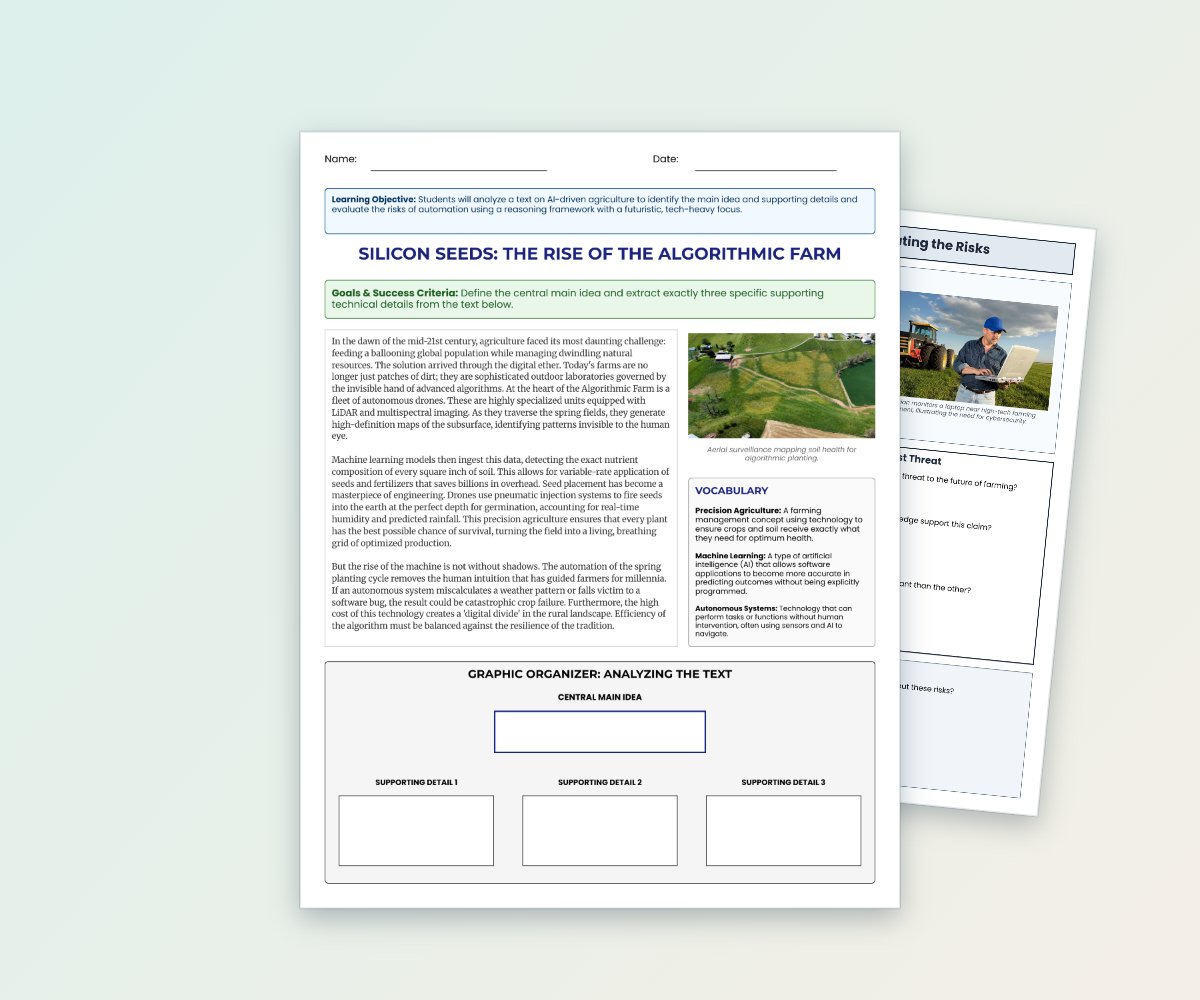
Students read an informational passage about artificial intelligence in sports judging, including objectivity, biometric data, and the human element of artistry.
Students read an informational passage about artificial intelligence, drones, and precision agriculture in spring planting.
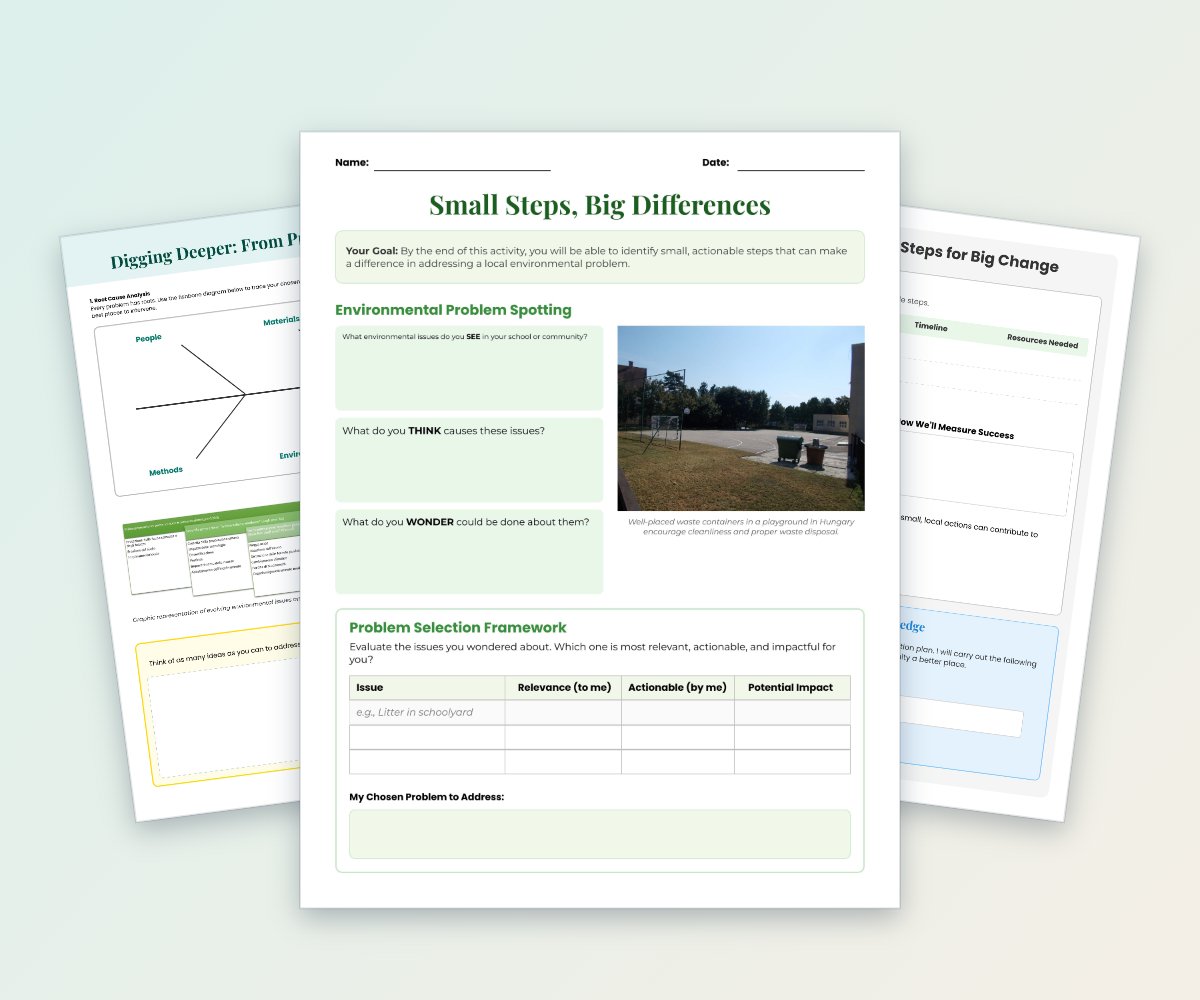
Students identify a local environmental problem, investigate its root causes, map stakeholders, brainstorm solutions, and create an action plan.
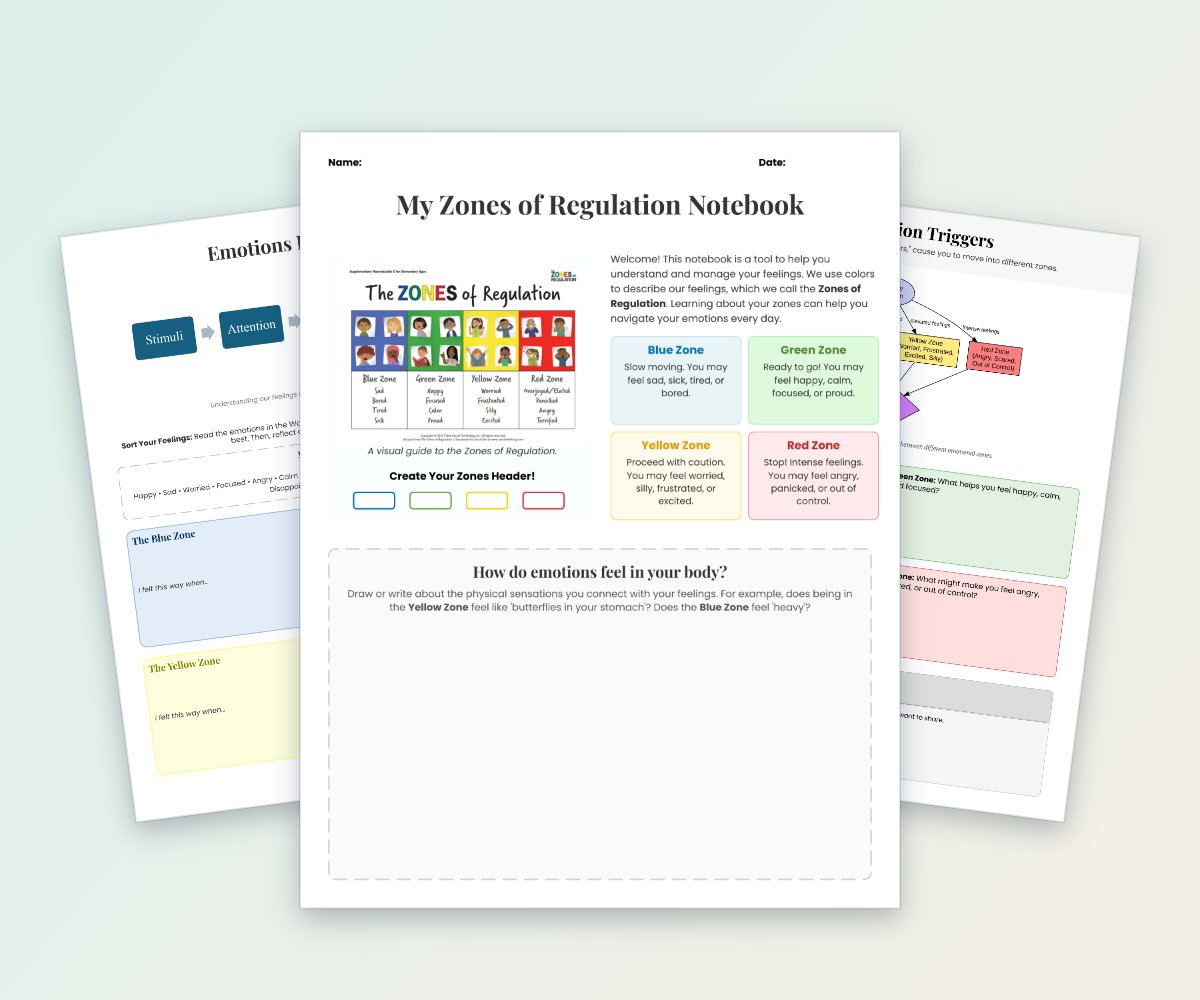
This five-page notebook supplement introduces the Blue, Green, Yellow, and Red Zones of Regulation.
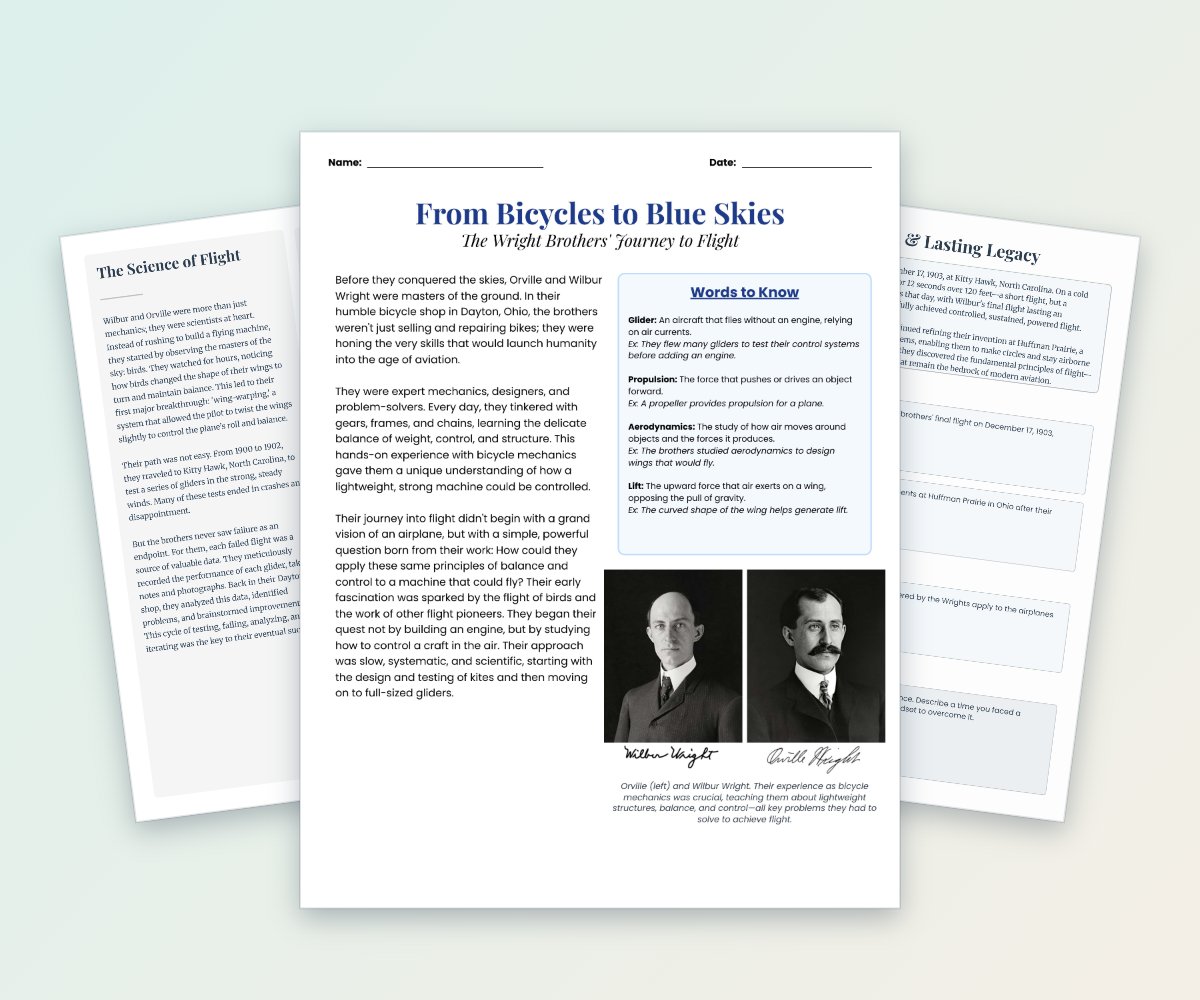
A student-friendly informational reading passage tracing Orville and Wilbur Wright’s journey from bicycle mechanics to aviation pioneers.
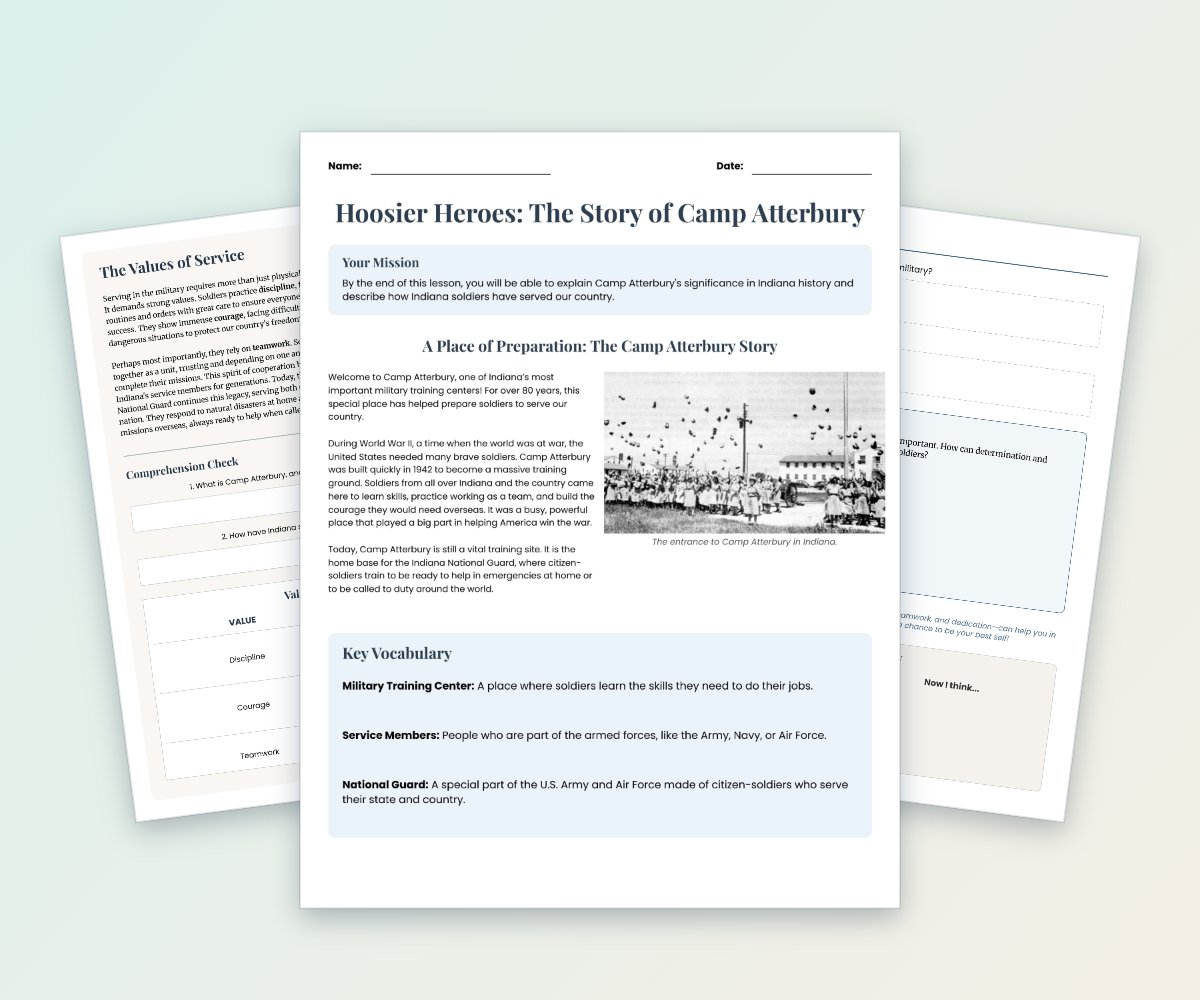
This short lesson introduces Camp Atterbury, its role in Indiana history, and the service of Indiana soldiers and the National Guard.
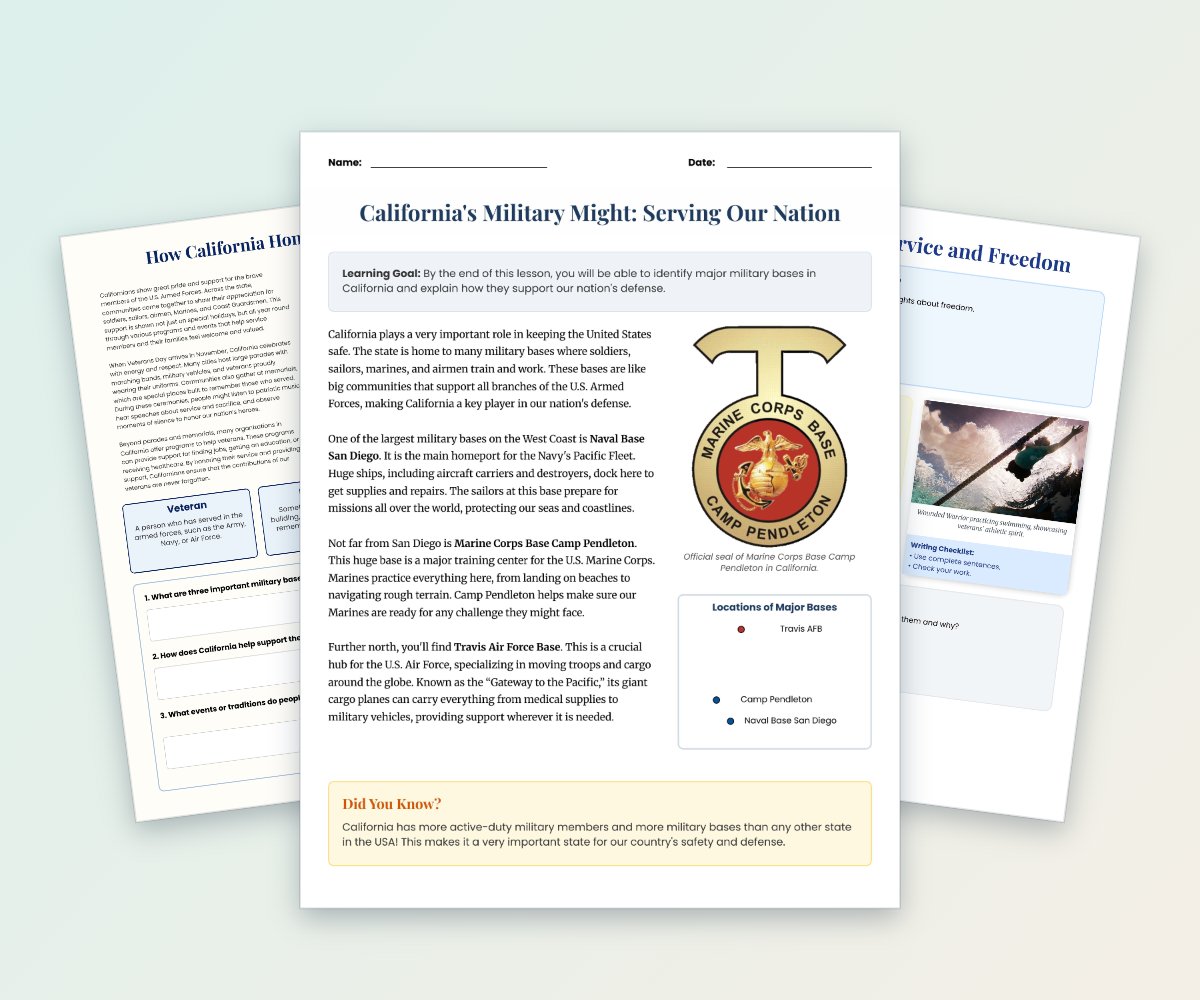
Students learn about major California military bases, their roles in national defense, and ways communities honor and support veterans.
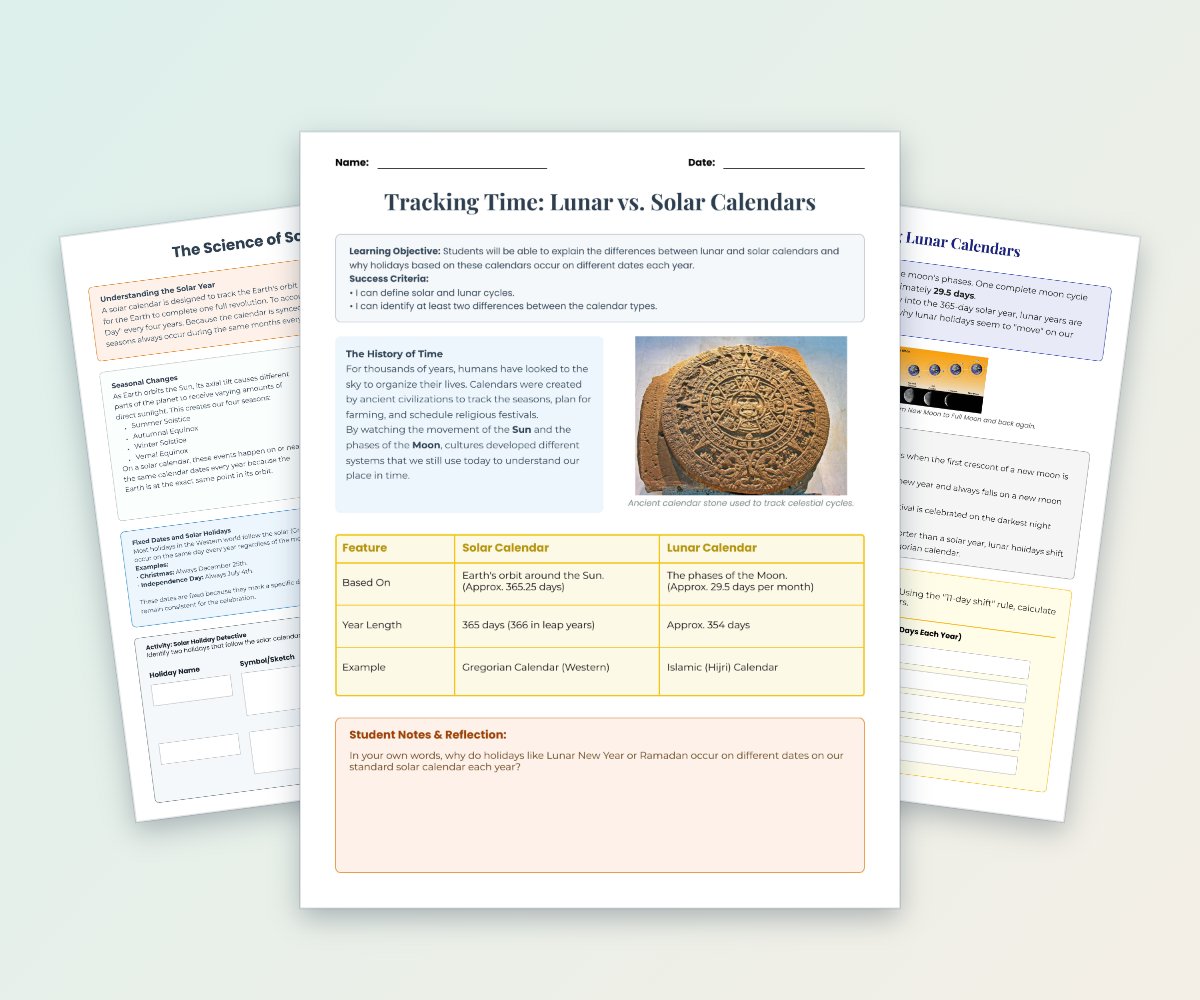
This four-page classroom resource introduces solar and lunar calendar systems, their relationship to Earth’s orbit and Moon phases, and why holidays may fall on different dates each year.