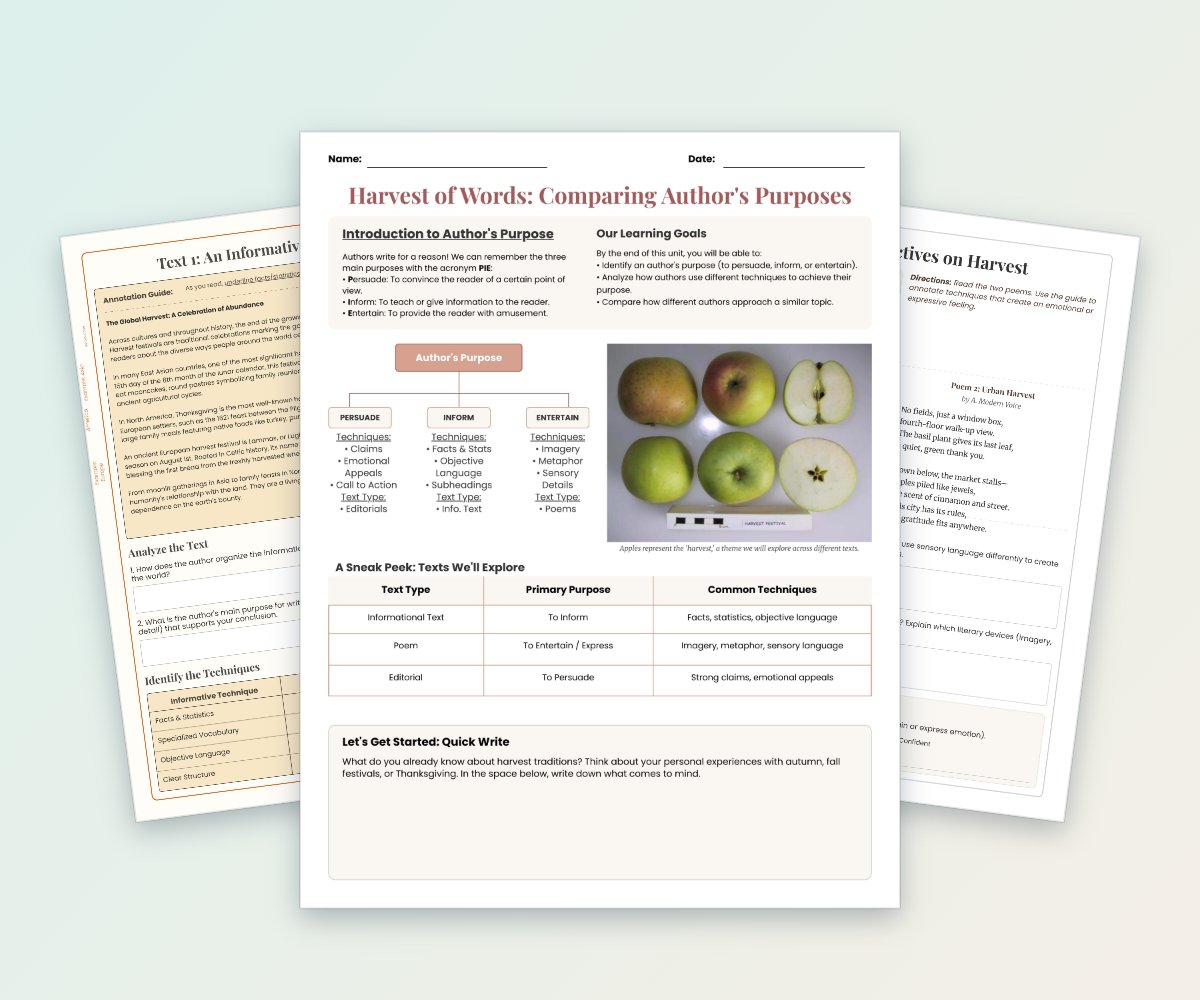
Exploring Author’s Purpose: Comparing Persuade, Inform, and Entertain
This six-page activity pack introduces the PIE framework—persuade, inform, and entertain—through harvest-themed informational texts, poems, and editorials.
$5
Classroom-ready resources written for grade 8: printable worksheets, slides, activities and planning tools you can download and use straight away. Browse by subject below.
This six-page activity pack introduces the PIE framework—persuade, inform, and entertain—through harvest-themed informational texts, poems, and editorials.
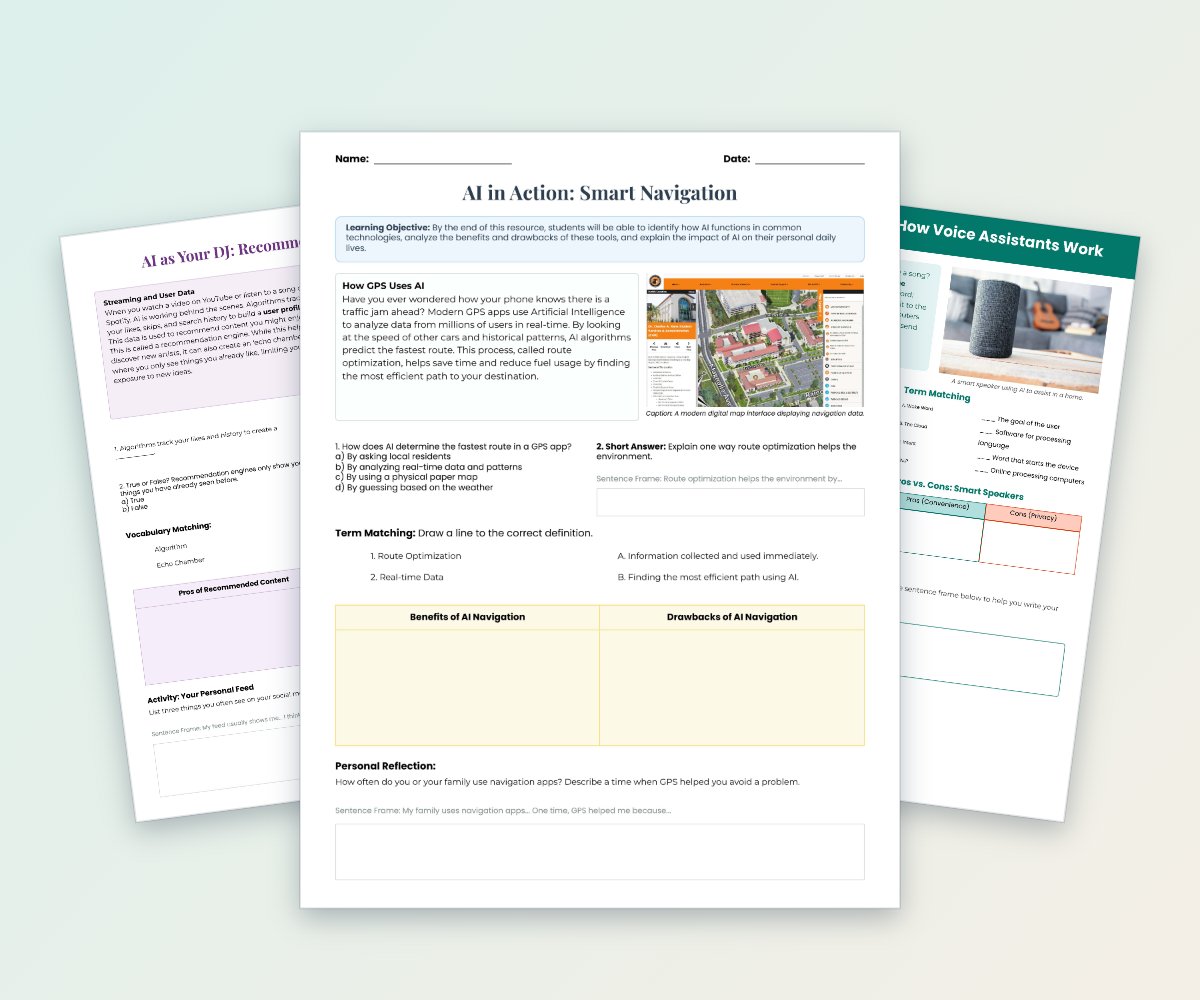
This six-page activity pack introduces students to how artificial intelligence supports GPS navigation and streaming recommendations.
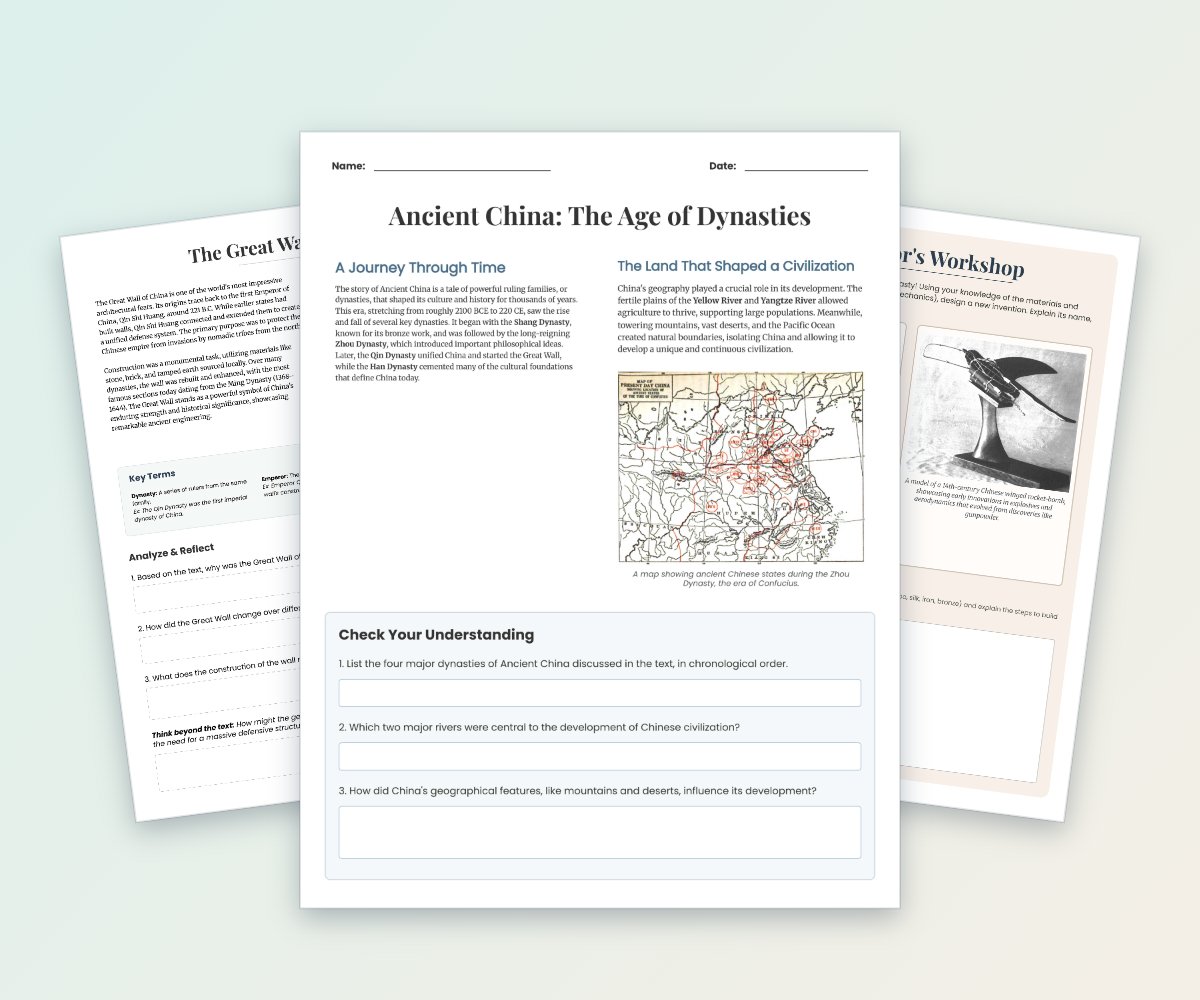
This six-page student workbook introduces the Shang, Zhou, Qin, and Han dynasties and examines how geography shaped Ancient Chinese civilization.
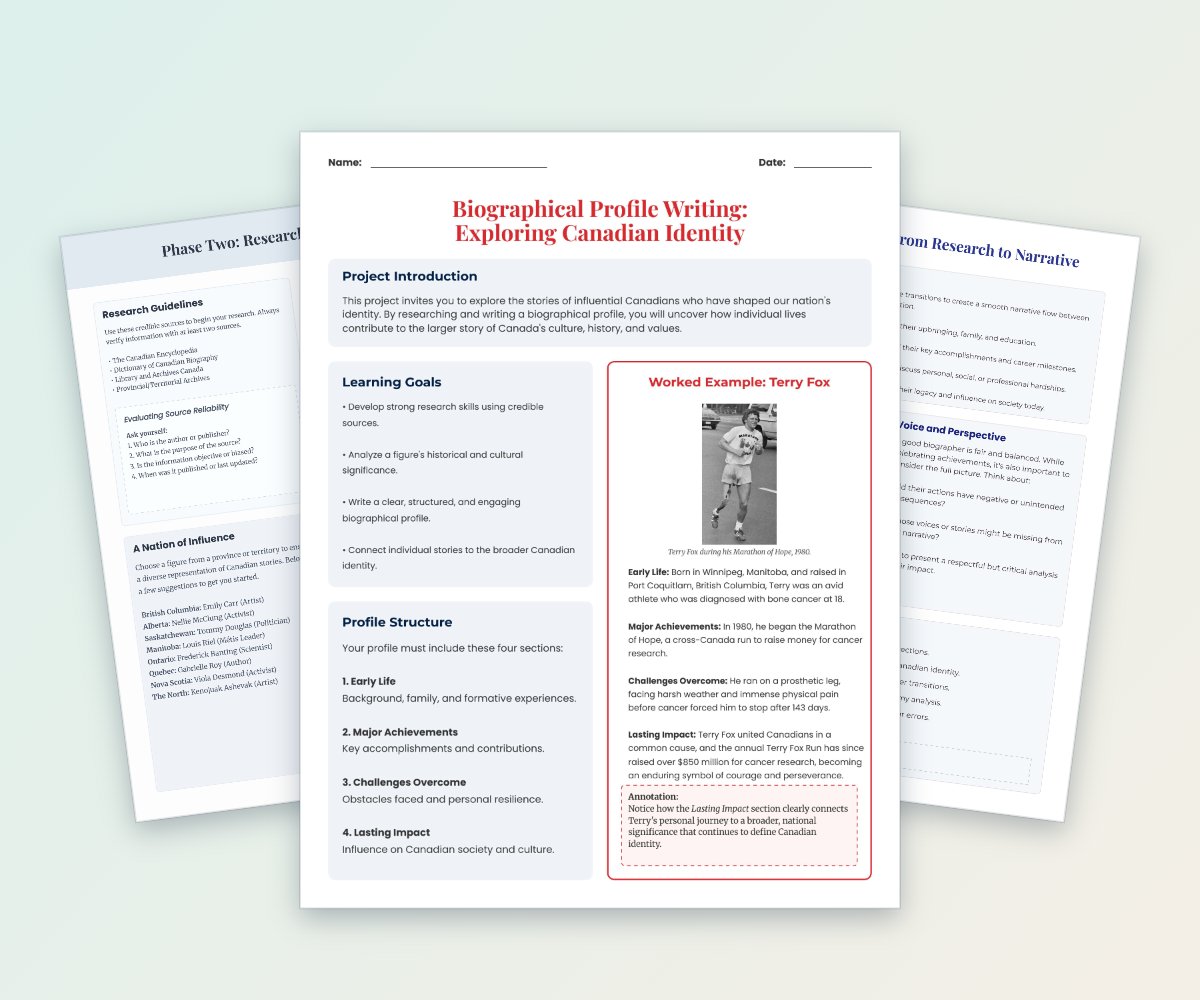
Students research an influential Canadian and write a structured biographical profile examining early life, achievements, challenges, and lasting impact.
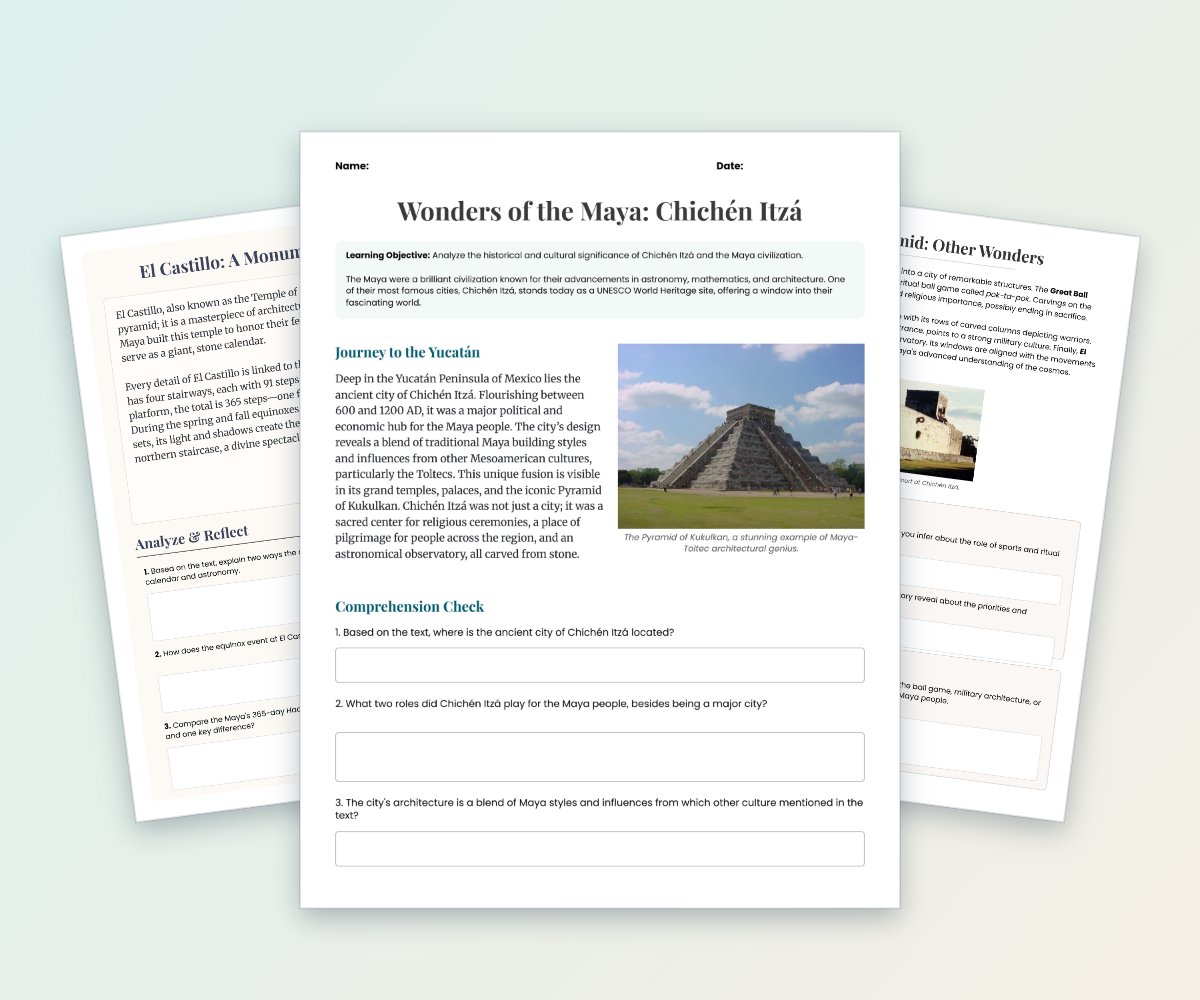
This three-page reading resource explores Chichén Itzá, Maya culture, architecture, astronomy, and the significance of El Castillo.
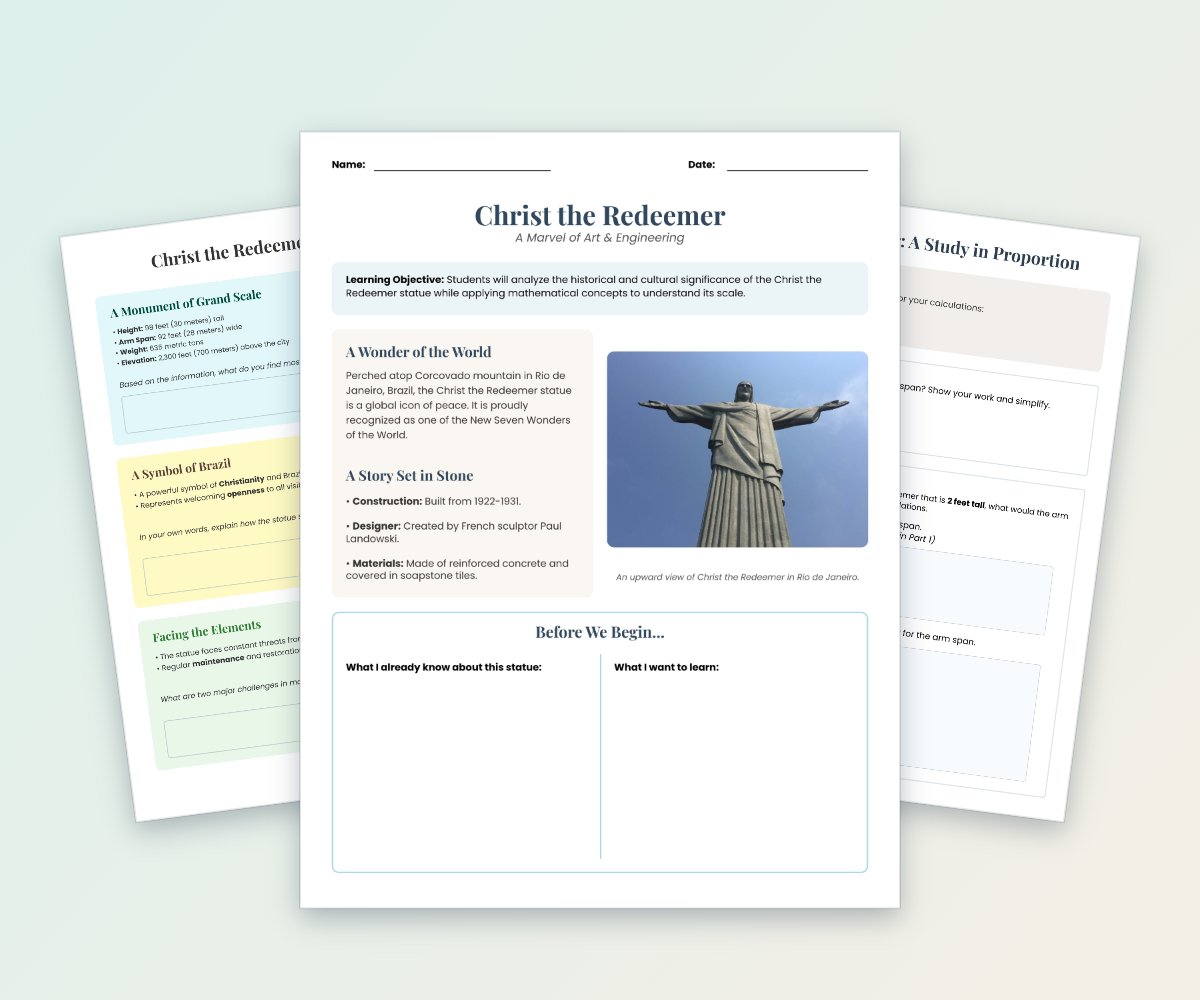
Students explore the history, materials, symbolism, and preservation challenges of Christ the Redeemer in Brazil.
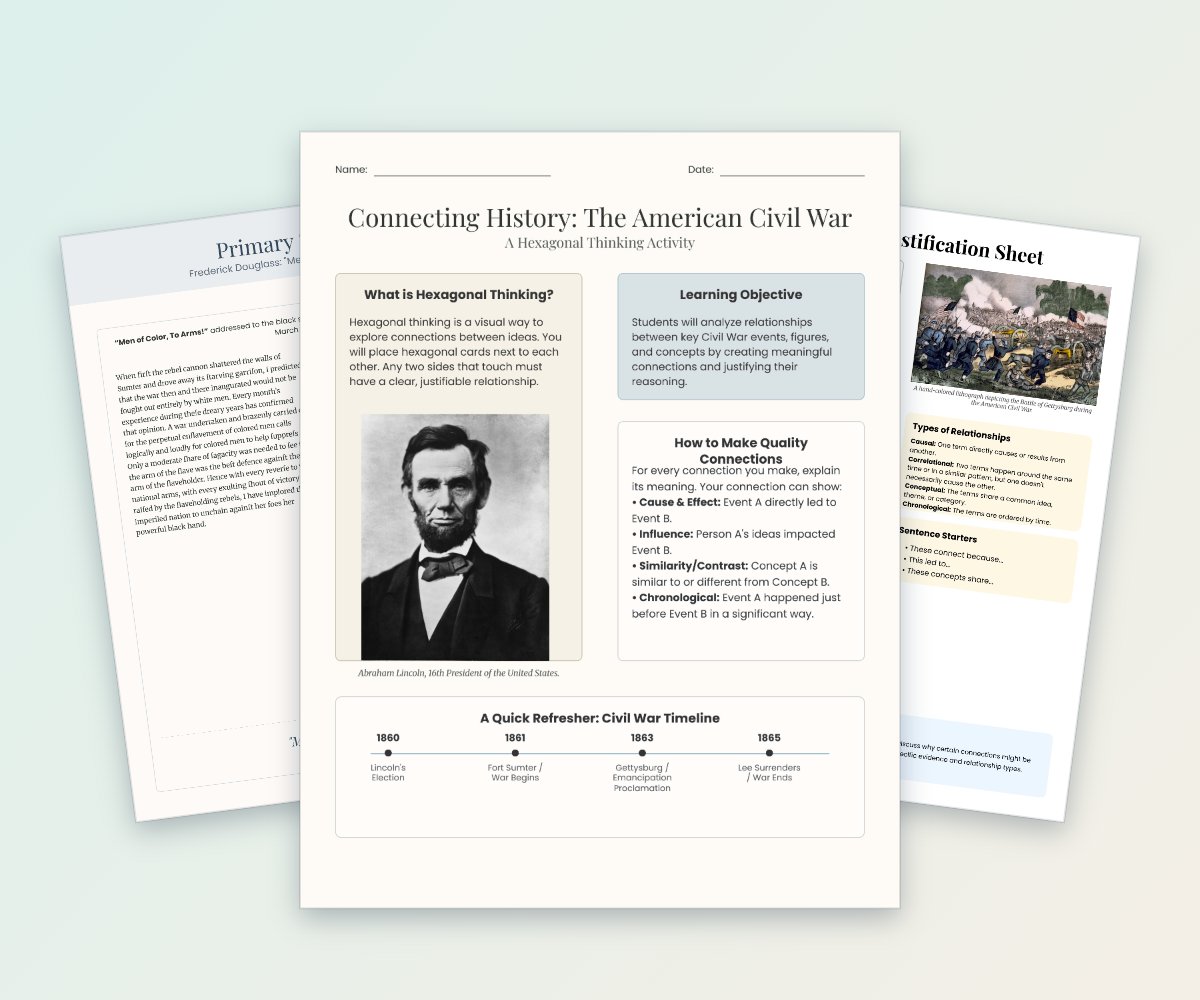
Students explore relationships among key Civil War events, figures, and concepts using a hexagonal thinking activity.
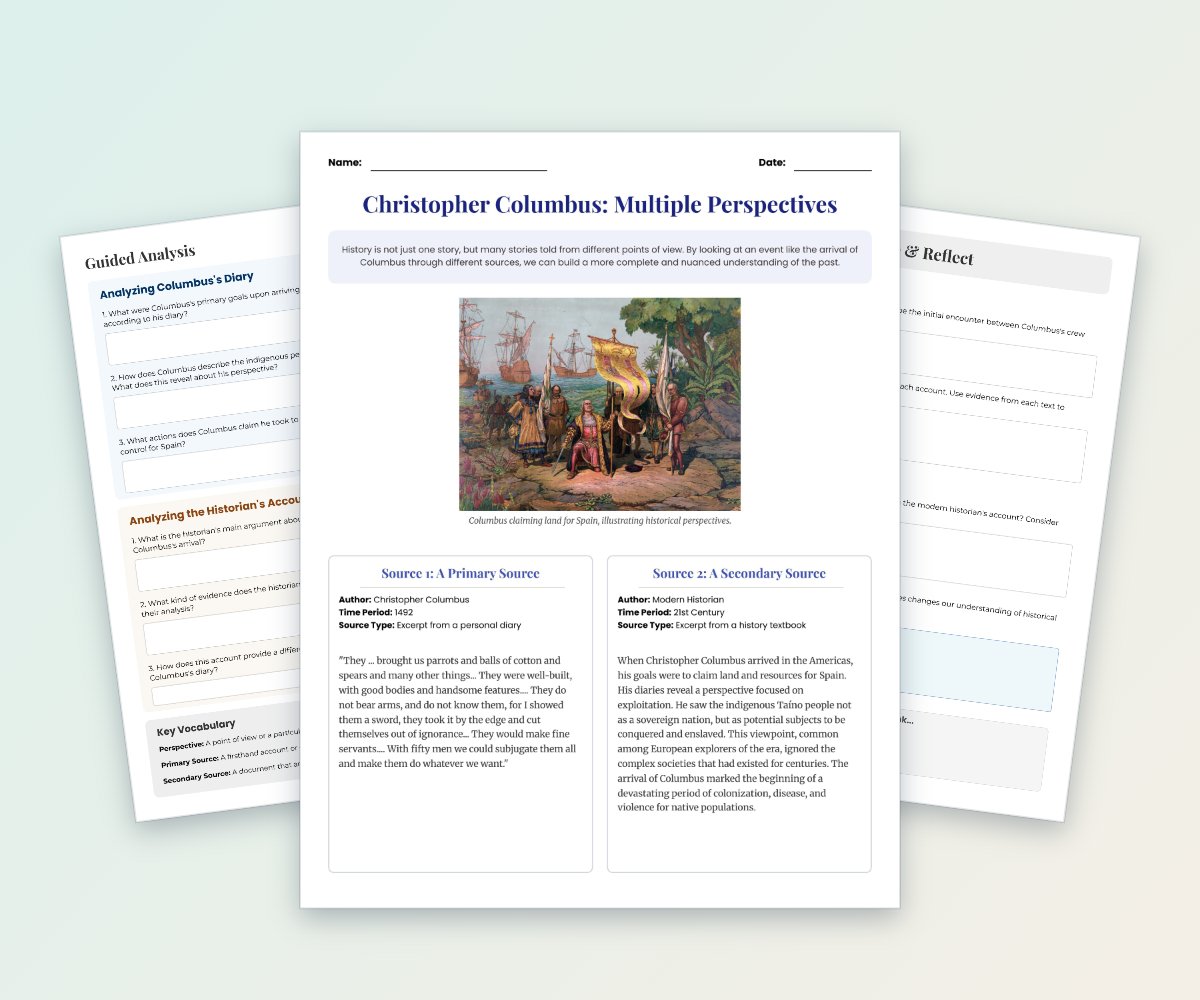
Students examine excerpts from Columbus’s diary and a modern historian’s account of his arrival in the Americas.
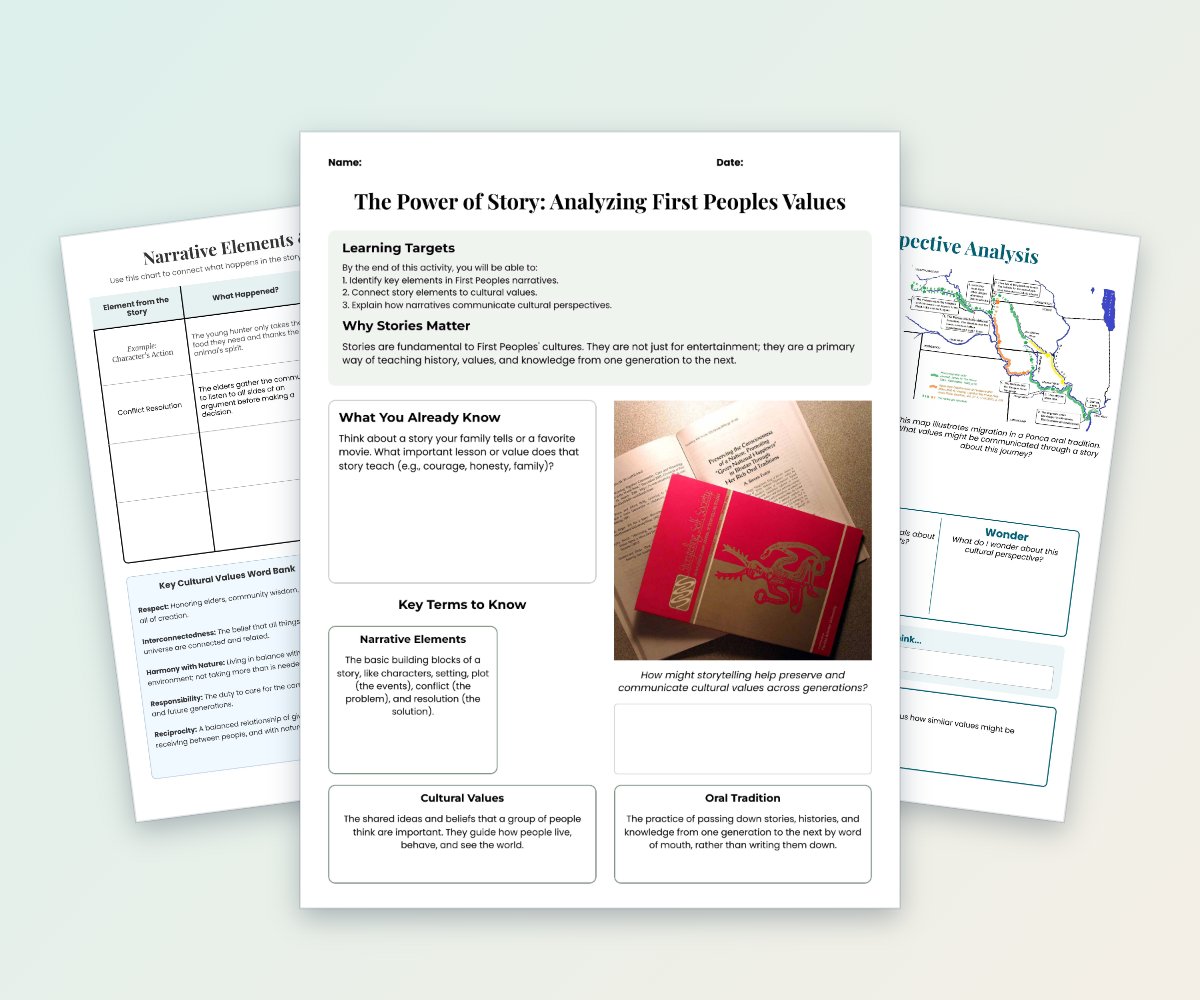
Students examine narrative elements, oral tradition, and cultural values in First Peoples stories.
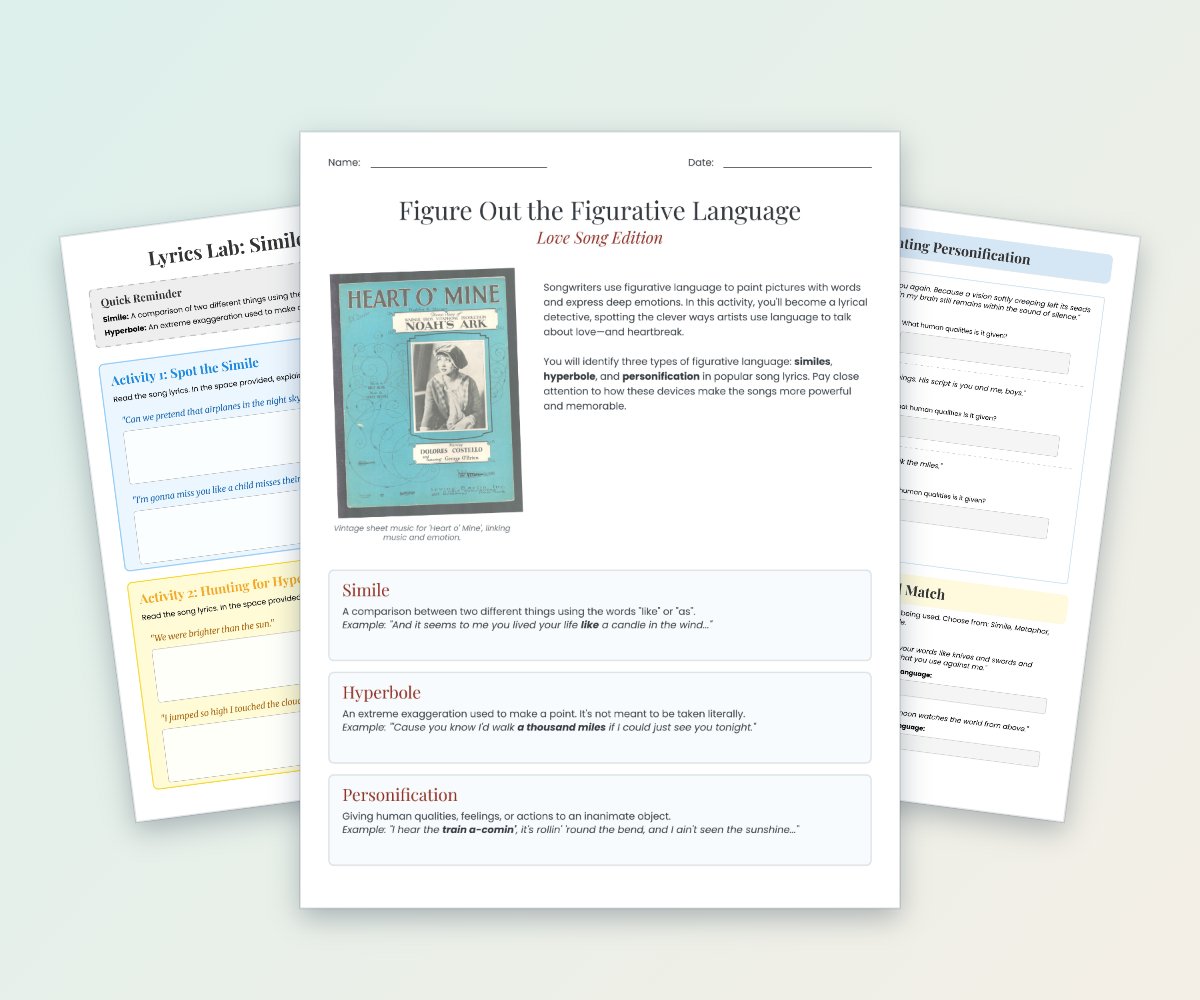
Students explore similes, hyperbole, and personification through familiar song lyrics.
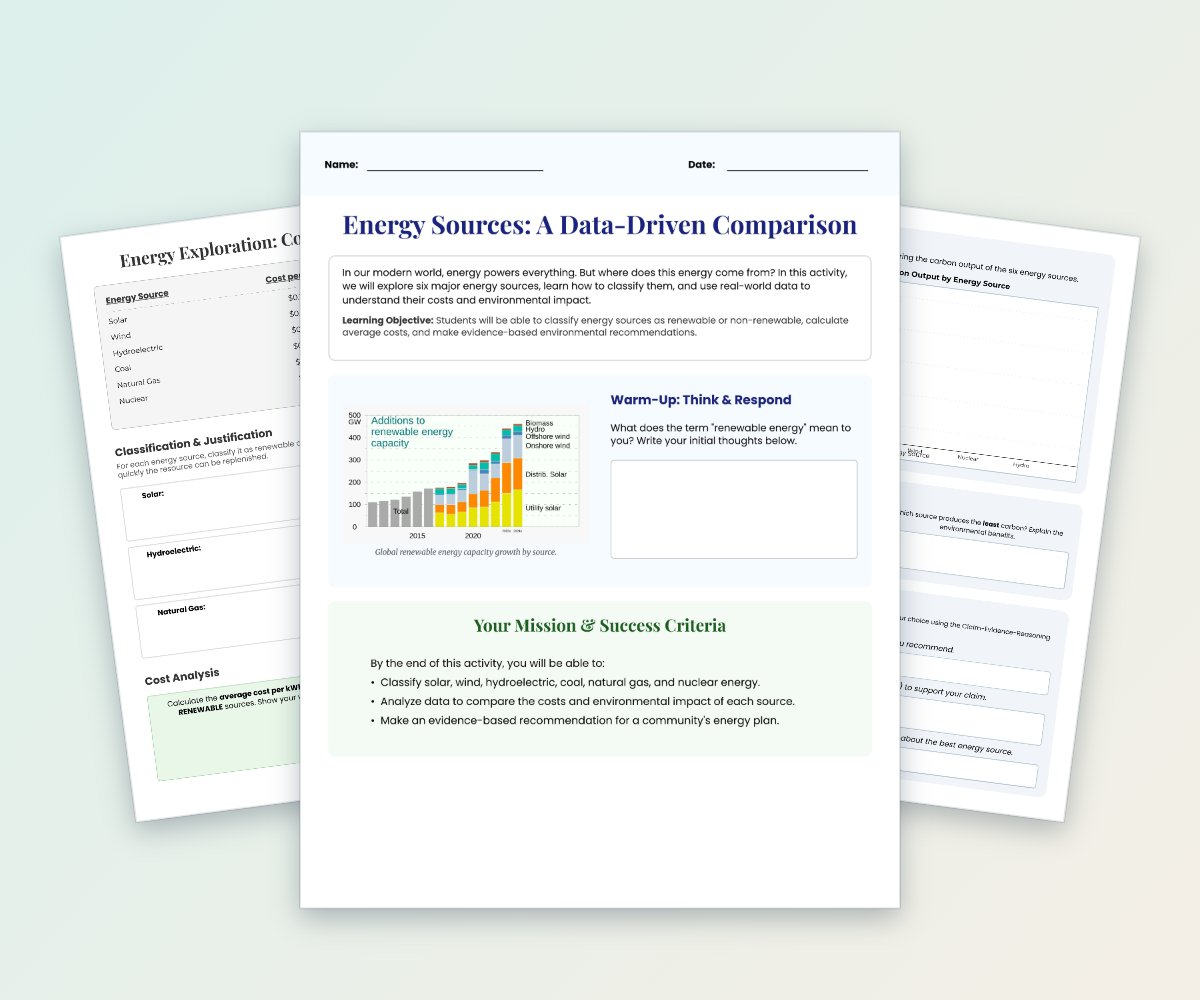
Students compare six energy sources, classify them as renewable or non-renewable, and analyze cost and carbon-output data.
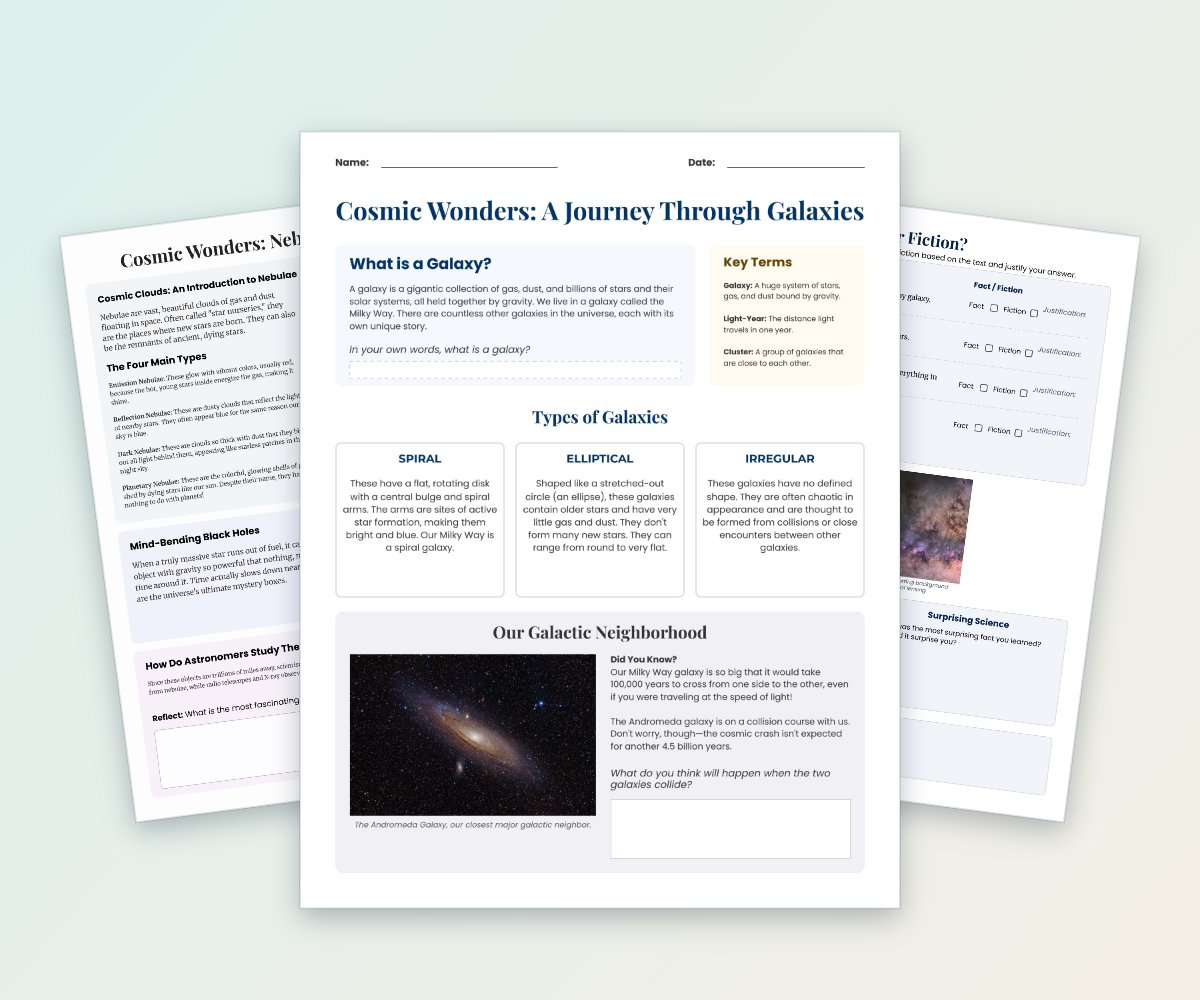
Introduce students to galaxies, galaxy classification, nebulae, and black holes through concise explanations, key terms, and reflection questions.
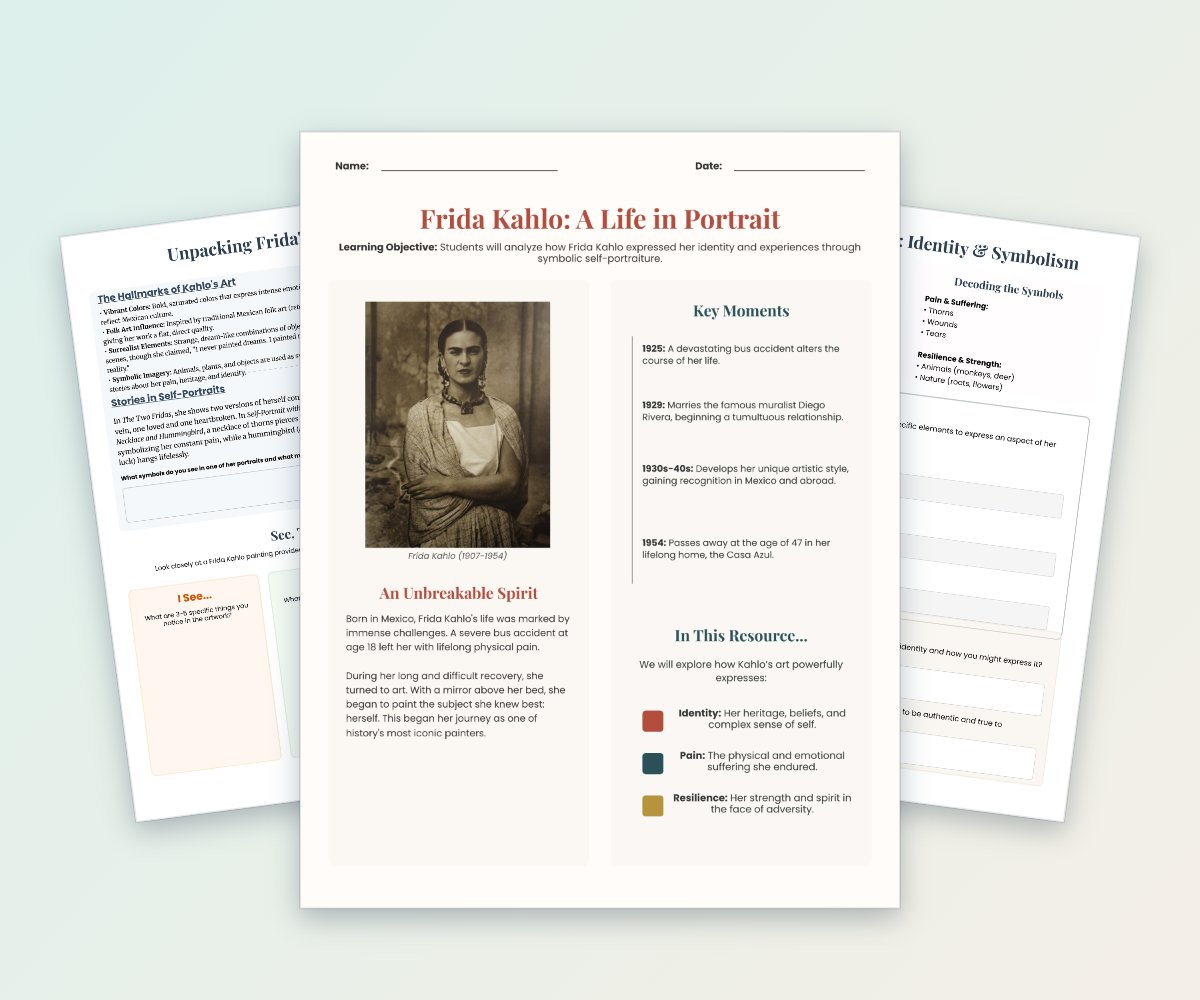
This four-page art lesson explores Frida Kahlo’s life, artistic style, and use of symbolic imagery in self-portraiture.
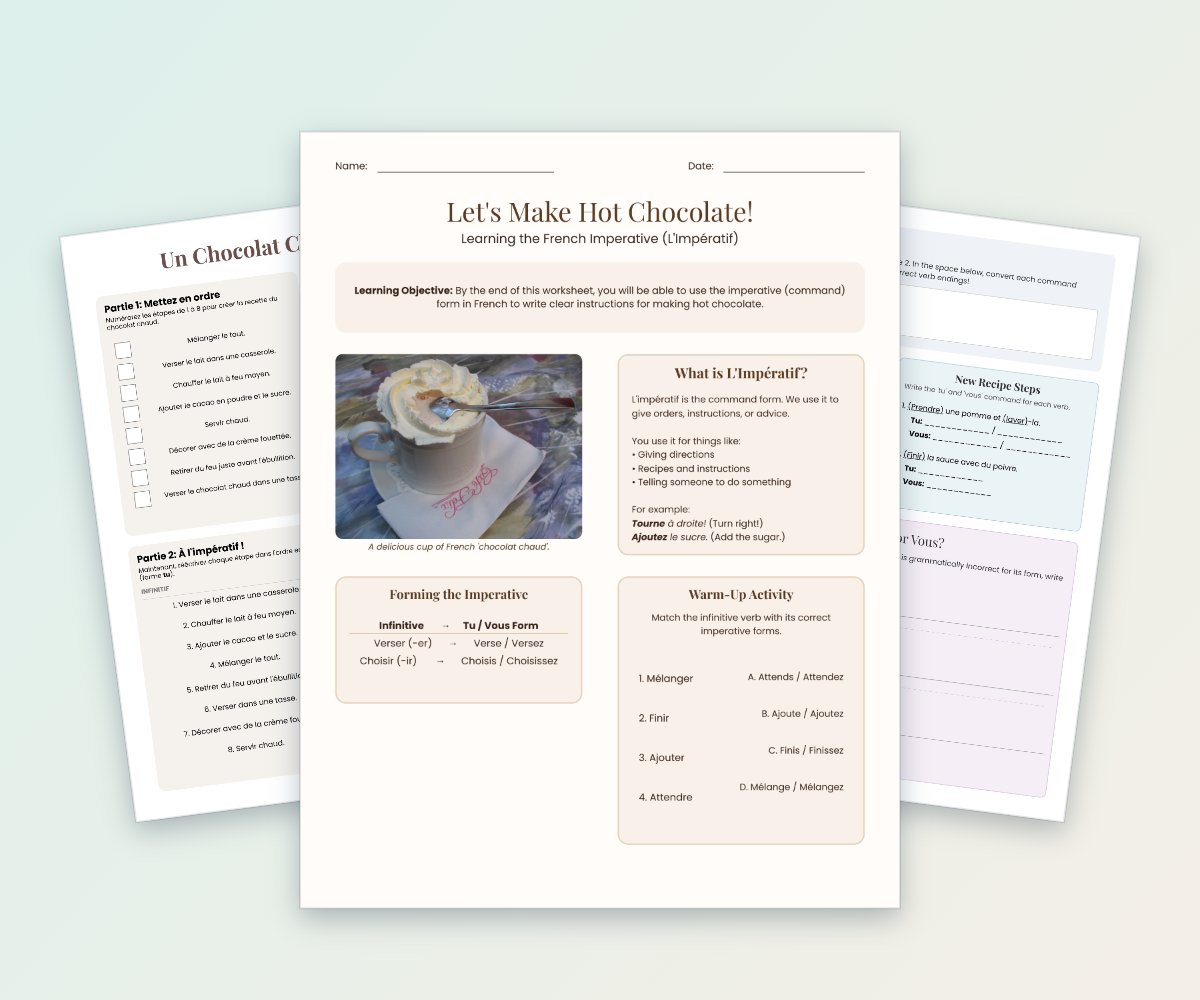
Students learn and practice French tu and vous imperative forms through matching, recipe sequencing, rewriting instructions, and new command prompts.
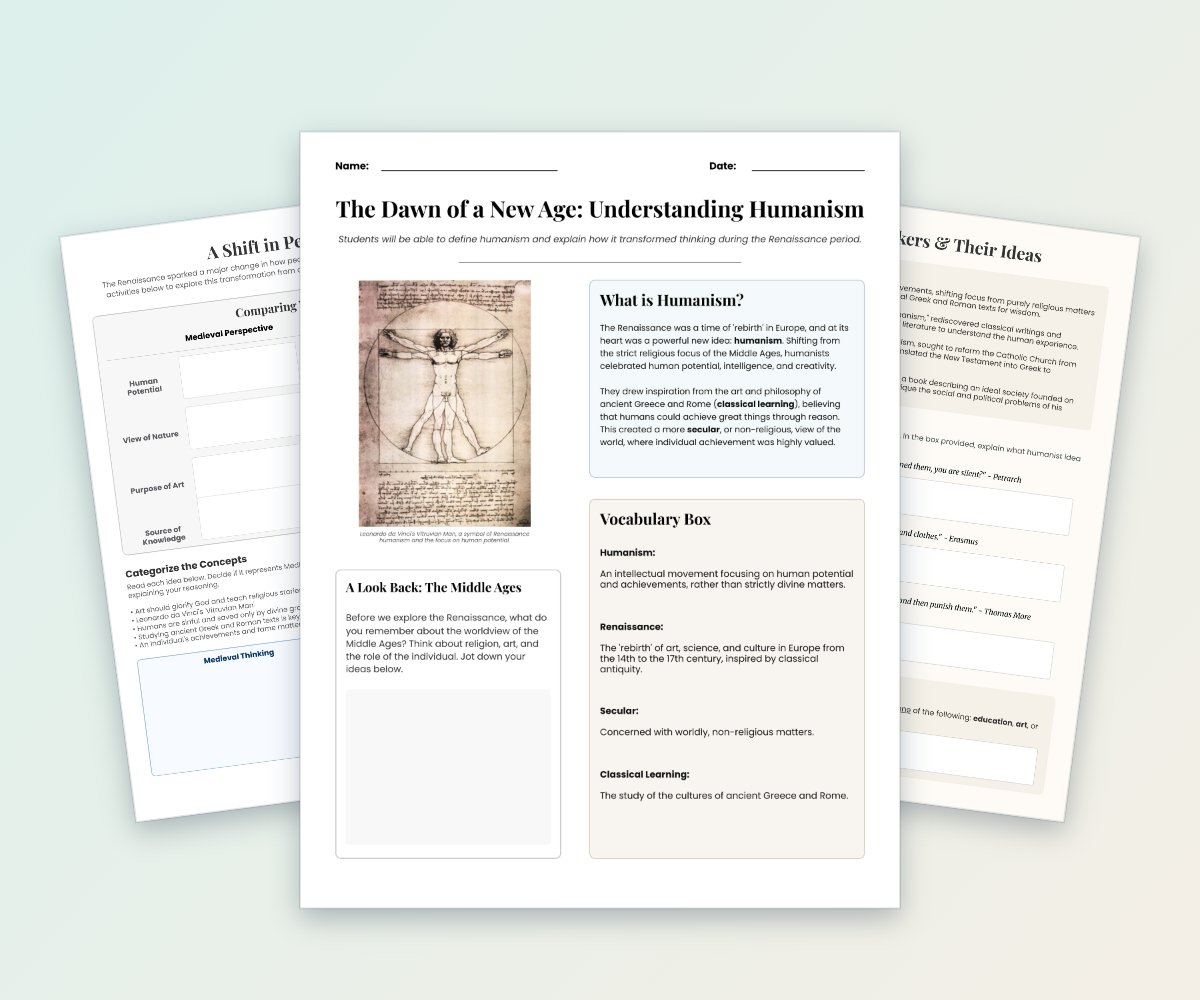
Students explore how humanism transformed Renaissance thinking by comparing medieval and Renaissance worldviews.
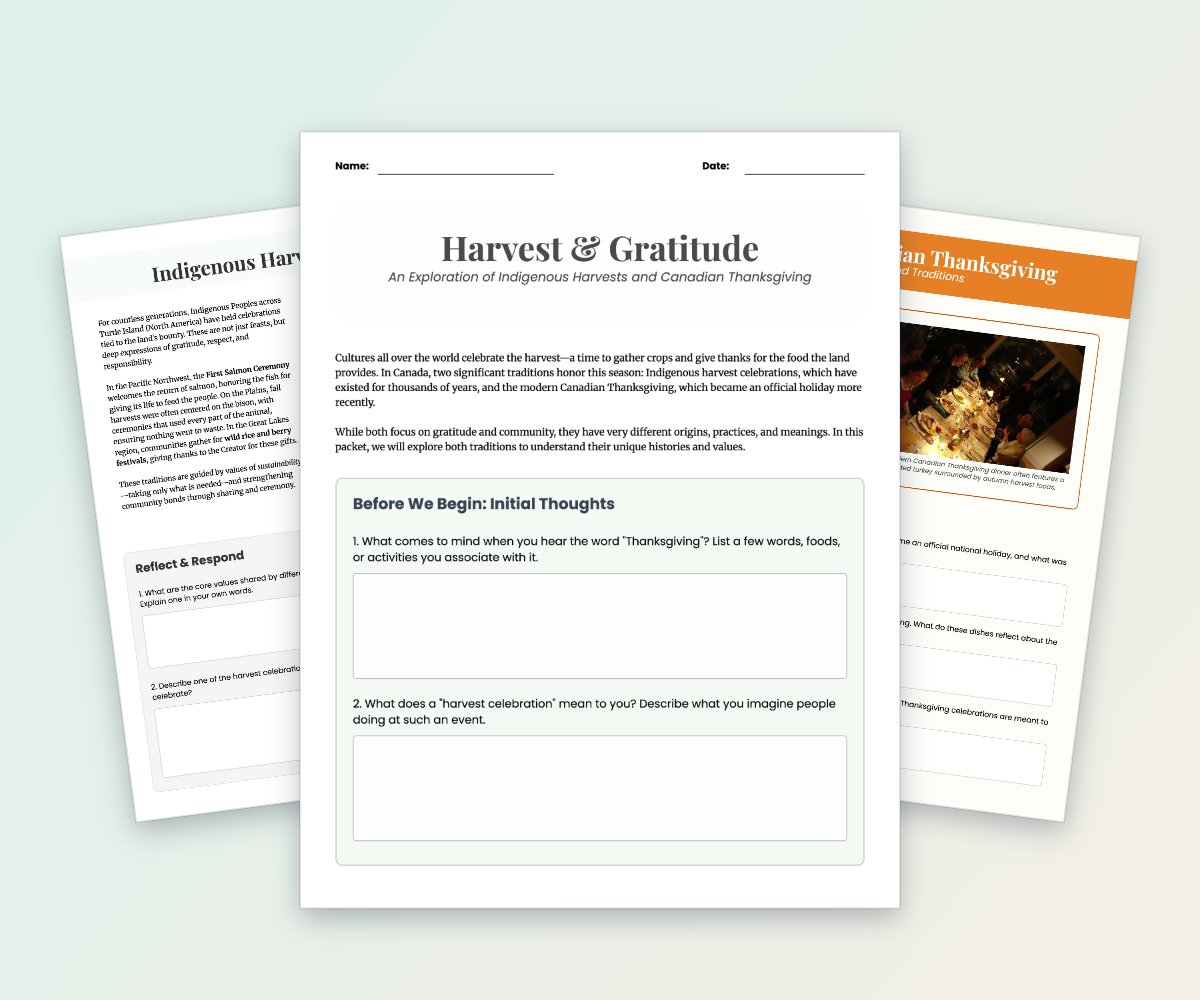
This activity packet explores Indigenous harvest celebrations across Canada and the origins and values associated with Canadian Thanksgiving.
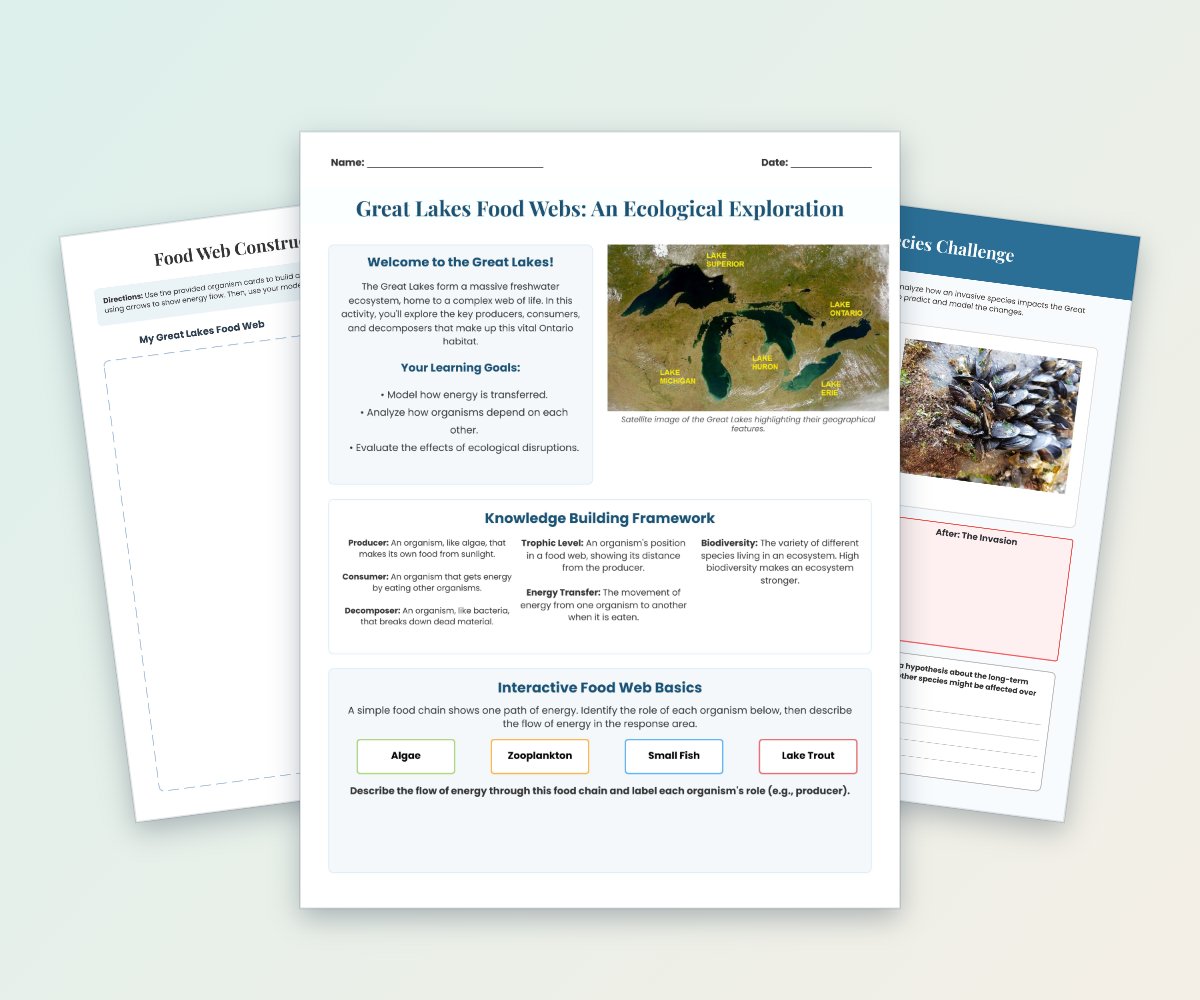
Students explore producers, consumers, decomposers, trophic levels, and energy transfer within a Great Lakes ecosystem.
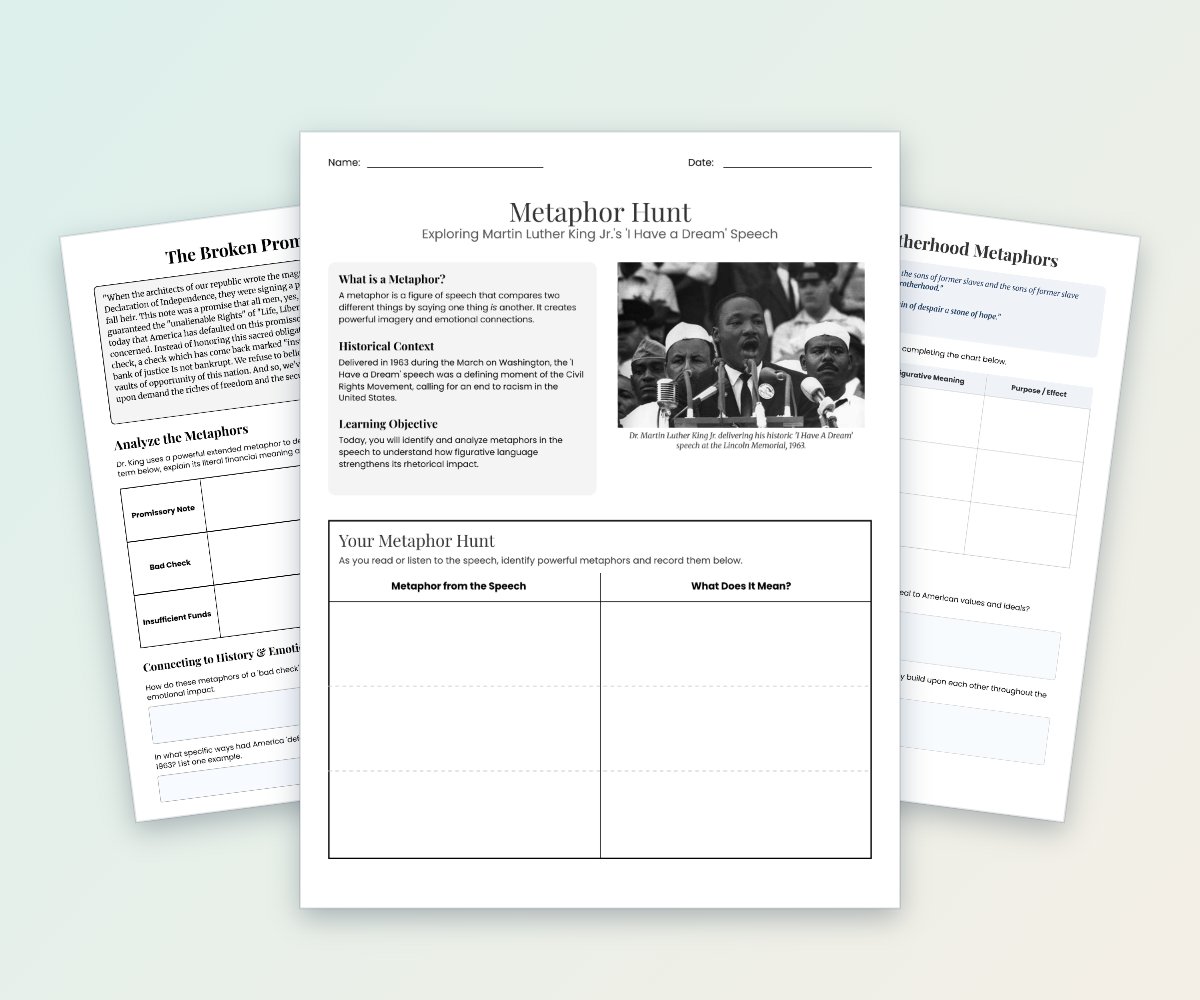
Students hunt for metaphors in Martin Luther King Jr.'s “I Have a Dream” speech and analyze their literal and figurative meanings.
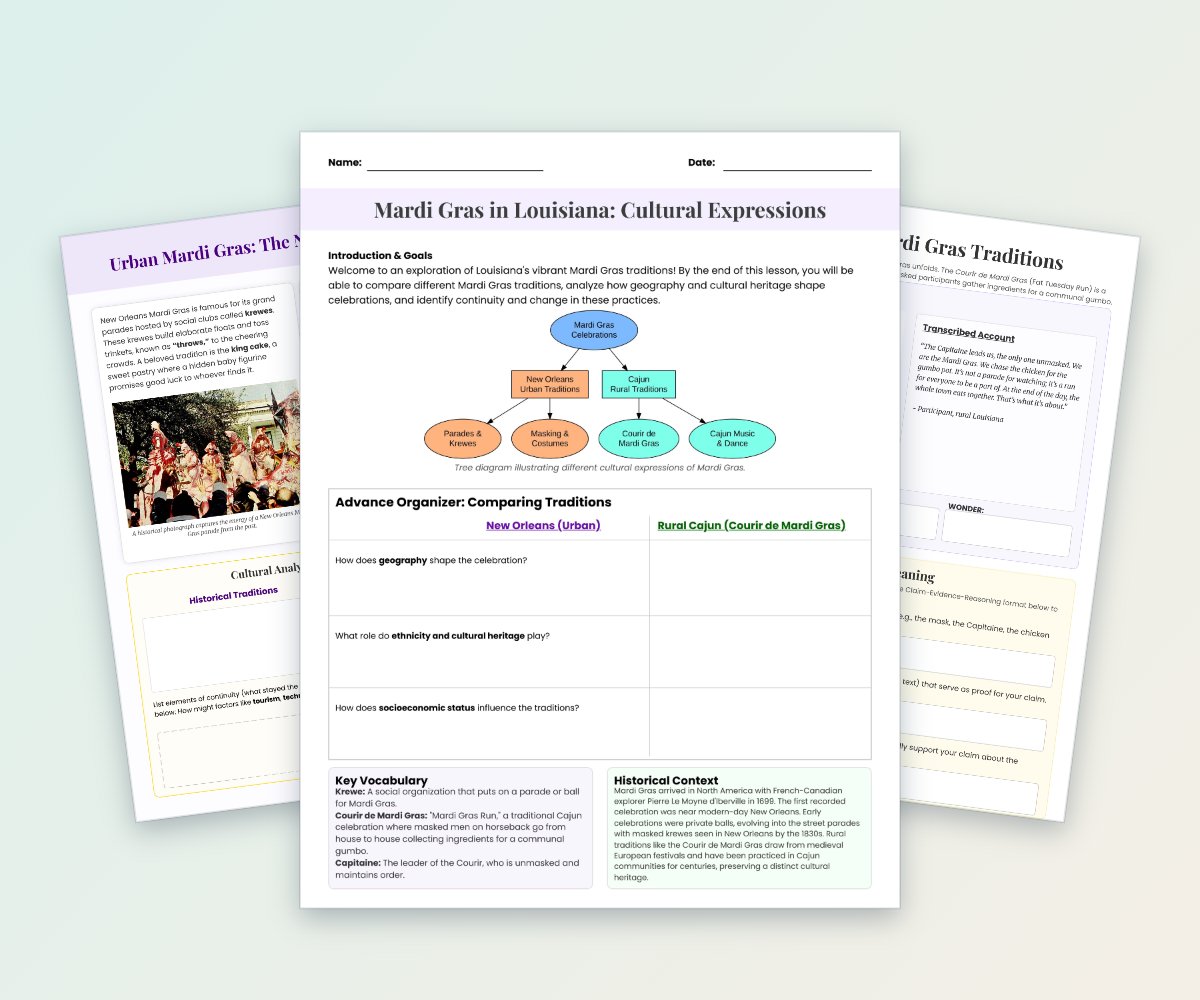
This five-page lesson explores urban New Orleans Mardi Gras and rural Cajun Courir de Mardi Gras traditions.
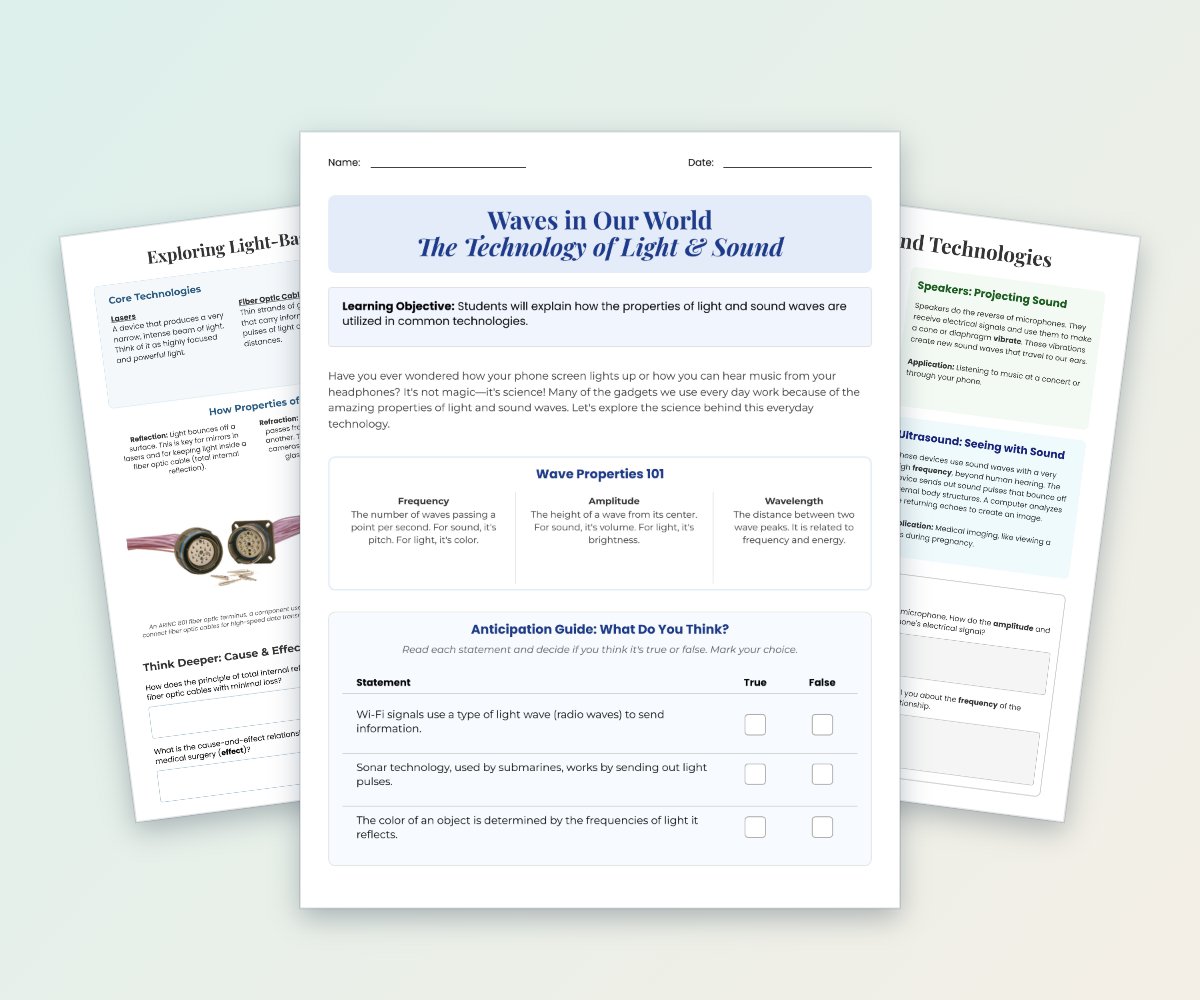
Students explore how frequency, amplitude, wavelength, reflection, refraction, and transmission explain everyday light- and sound-based technologies.
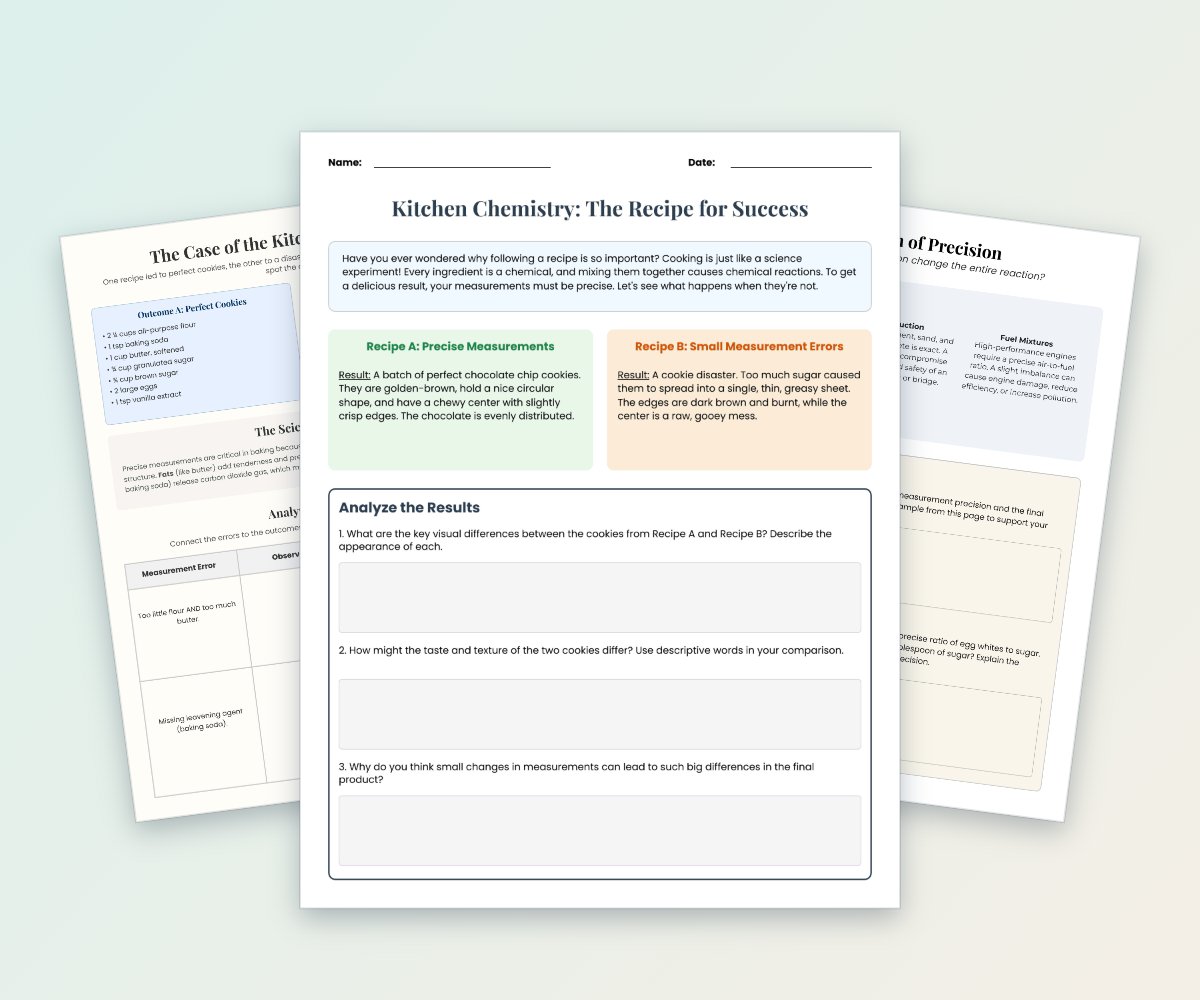
Students analyze two cookie recipes to compare the effects of measurement errors and missing ingredients.
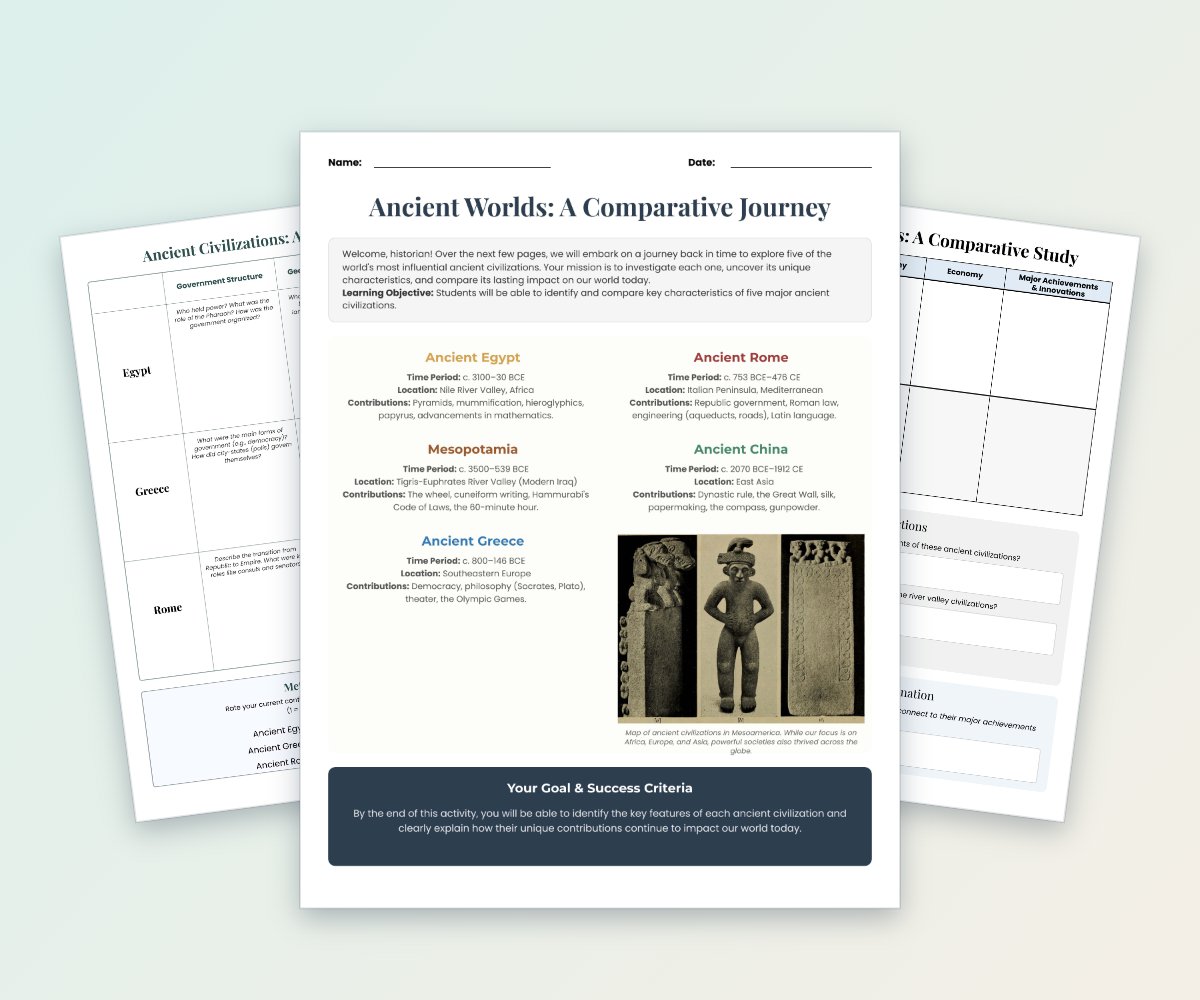
Students investigate and compare Ancient Egypt, Mesopotamia, Greece, Rome, and China through geography, government, economics, and cultural contributions.
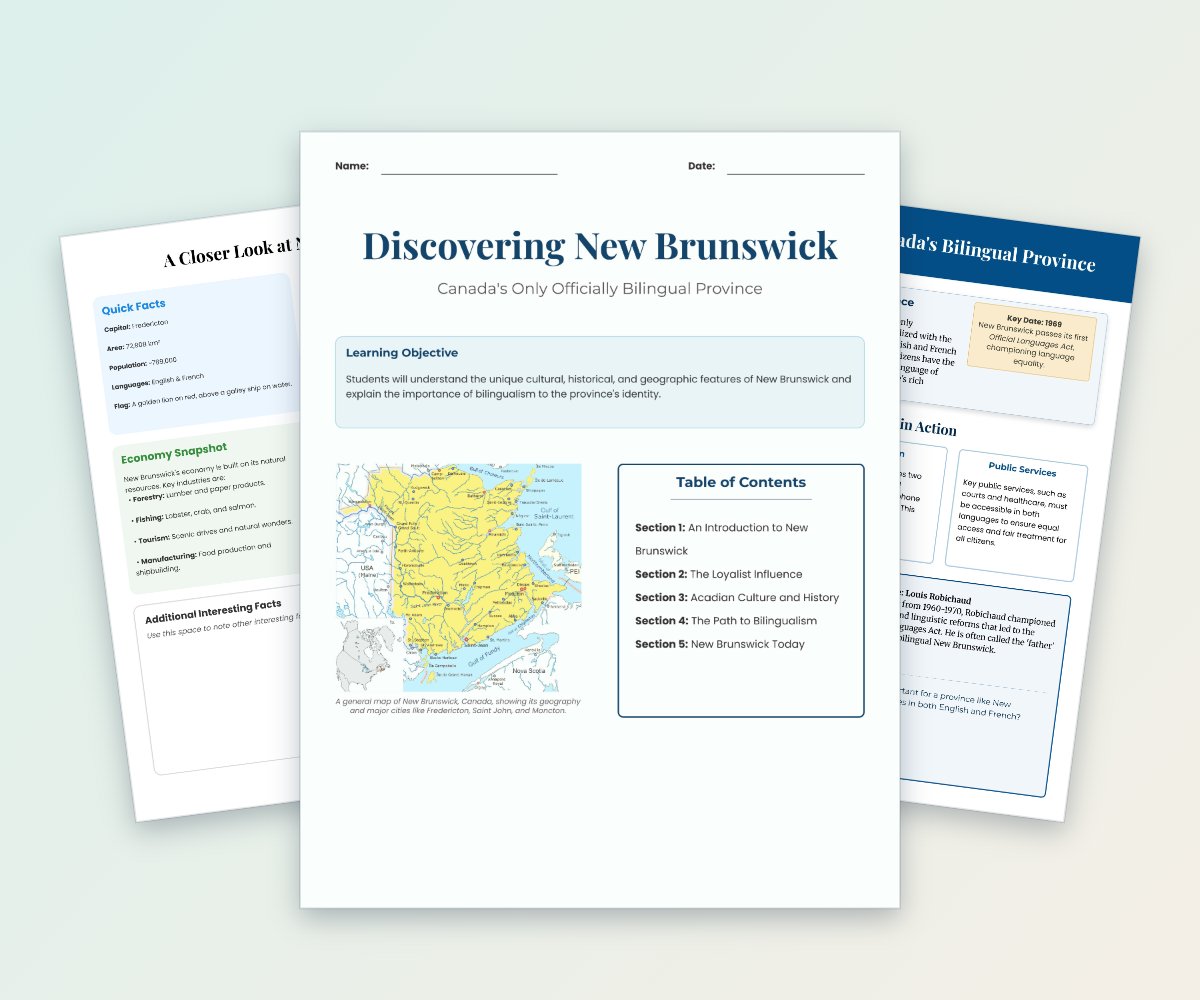
This seven-page activity pack introduces New Brunswick’s geography, Loyalist and Acadian history, official bilingual status, economy, and landmarks.
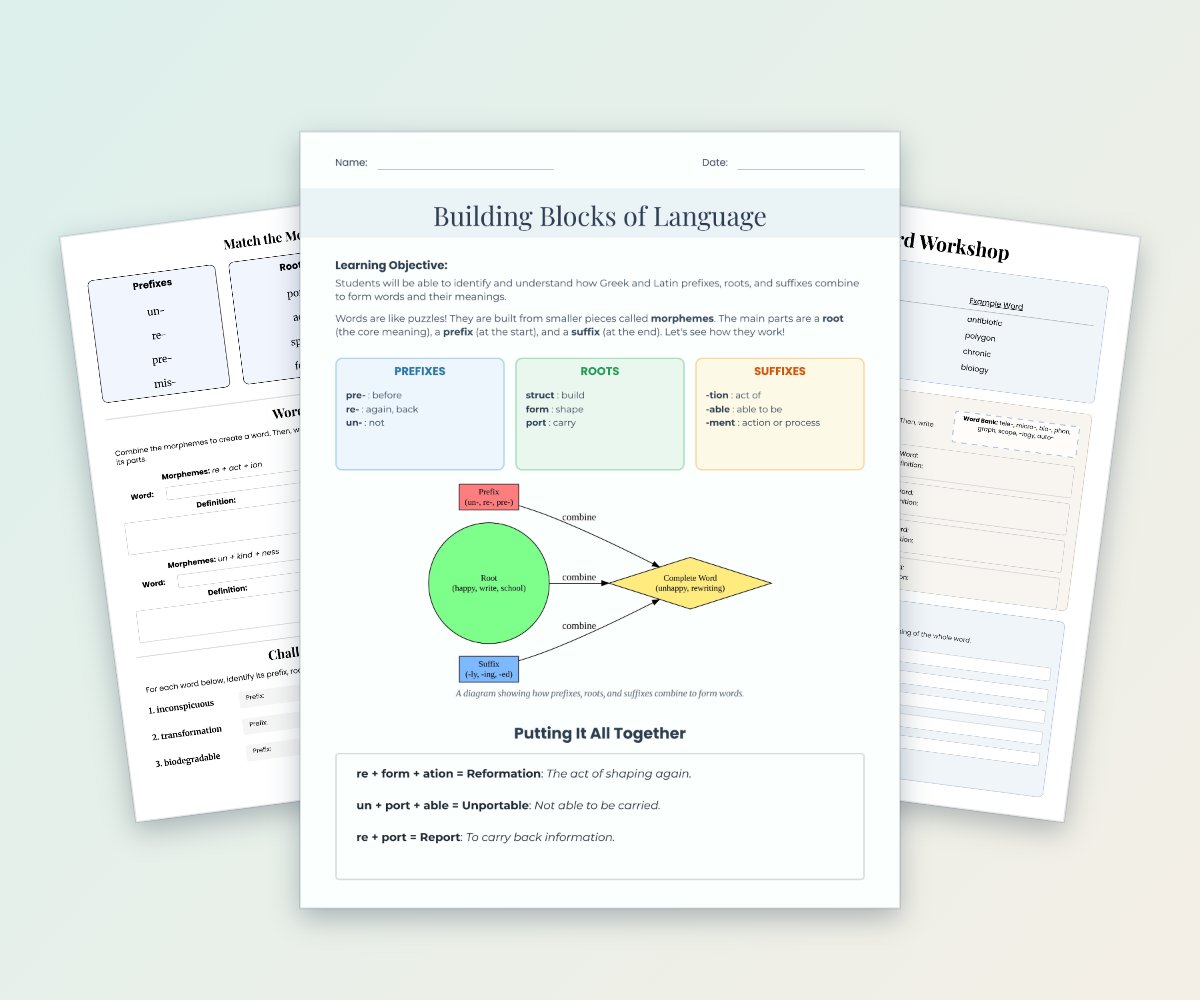
This four-page worksheet introduces prefixes, roots, and suffixes, with a focus on Greek and Latin morphemes.
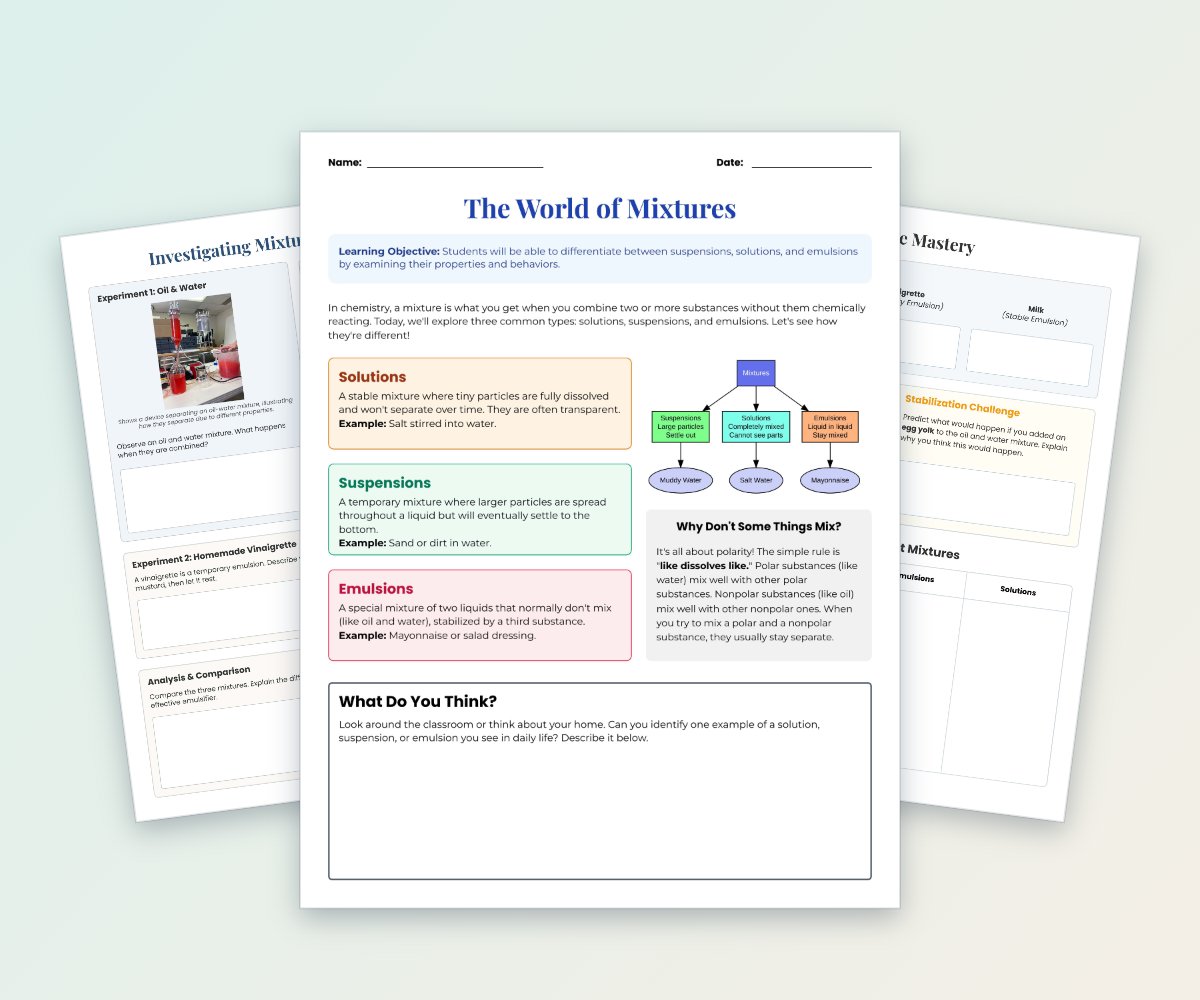
This four-page chemistry activity introduces solutions, suspensions, and emulsions through clear explanations, everyday examples, and comparison questions.
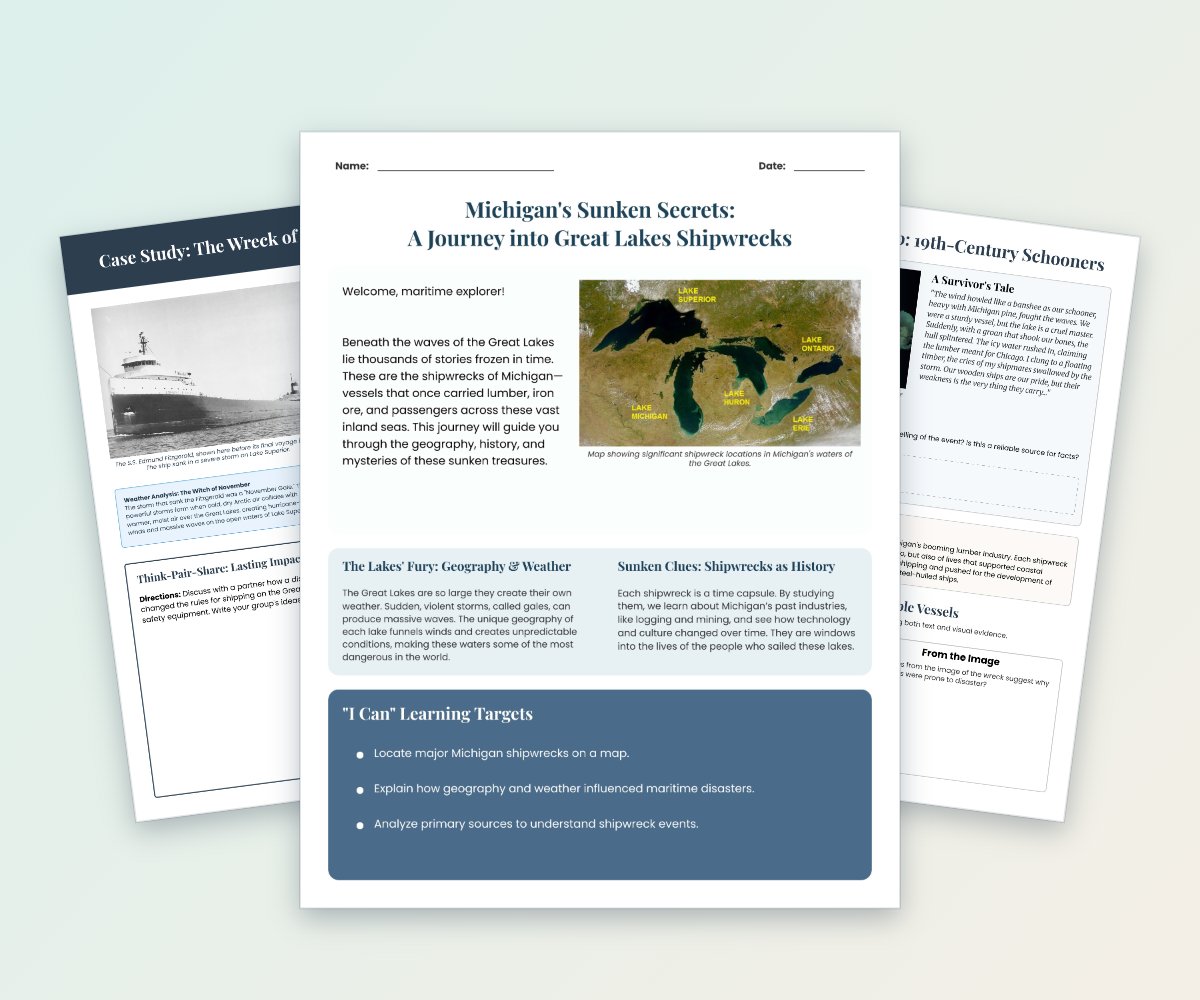
Students explore the geography and weather of the Great Lakes while investigating Michigan shipwrecks, including the Edmund Fitzgerald.
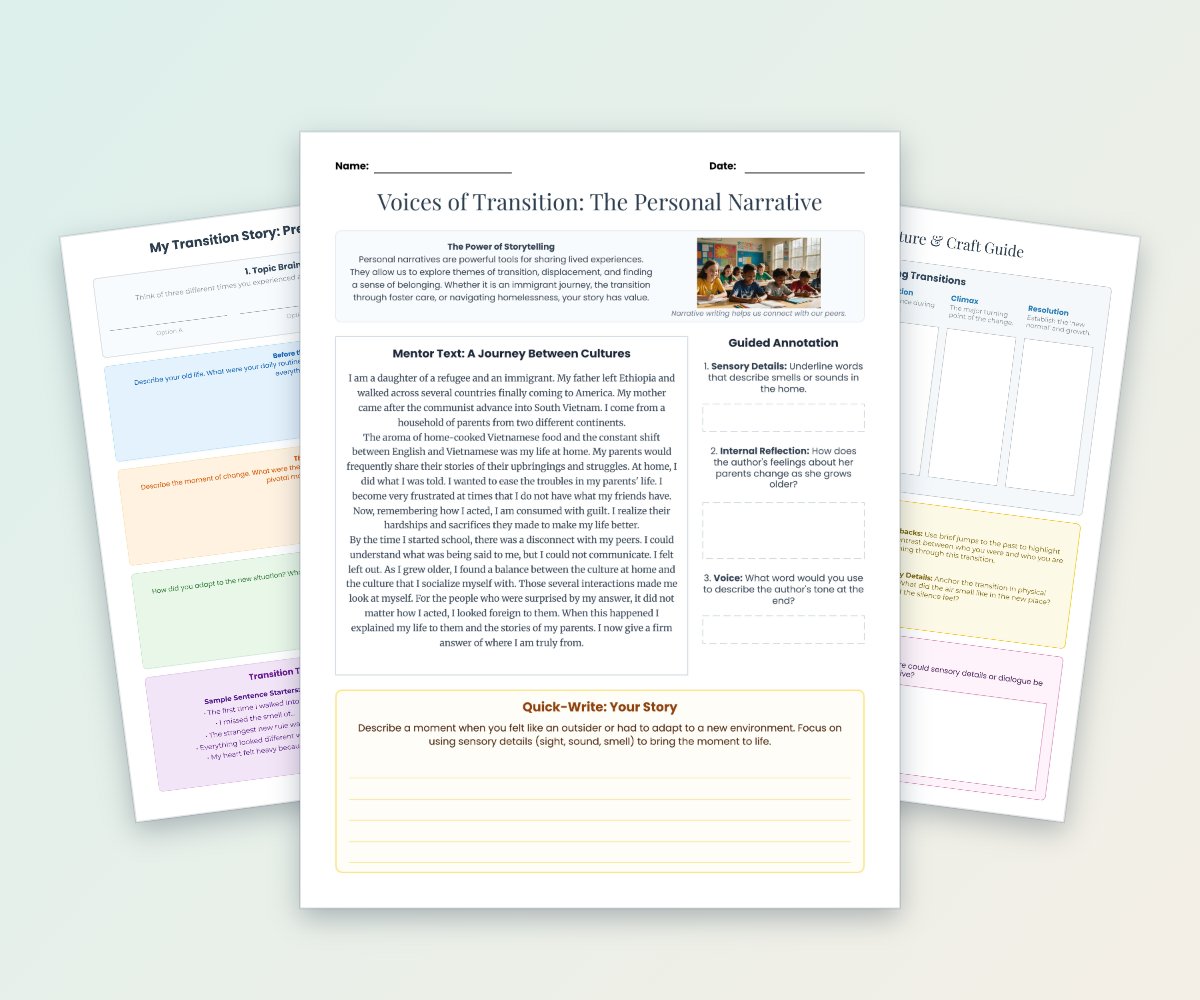
This four-page resource guides students through exploring personal narratives about transition, displacement, identity, and belonging.
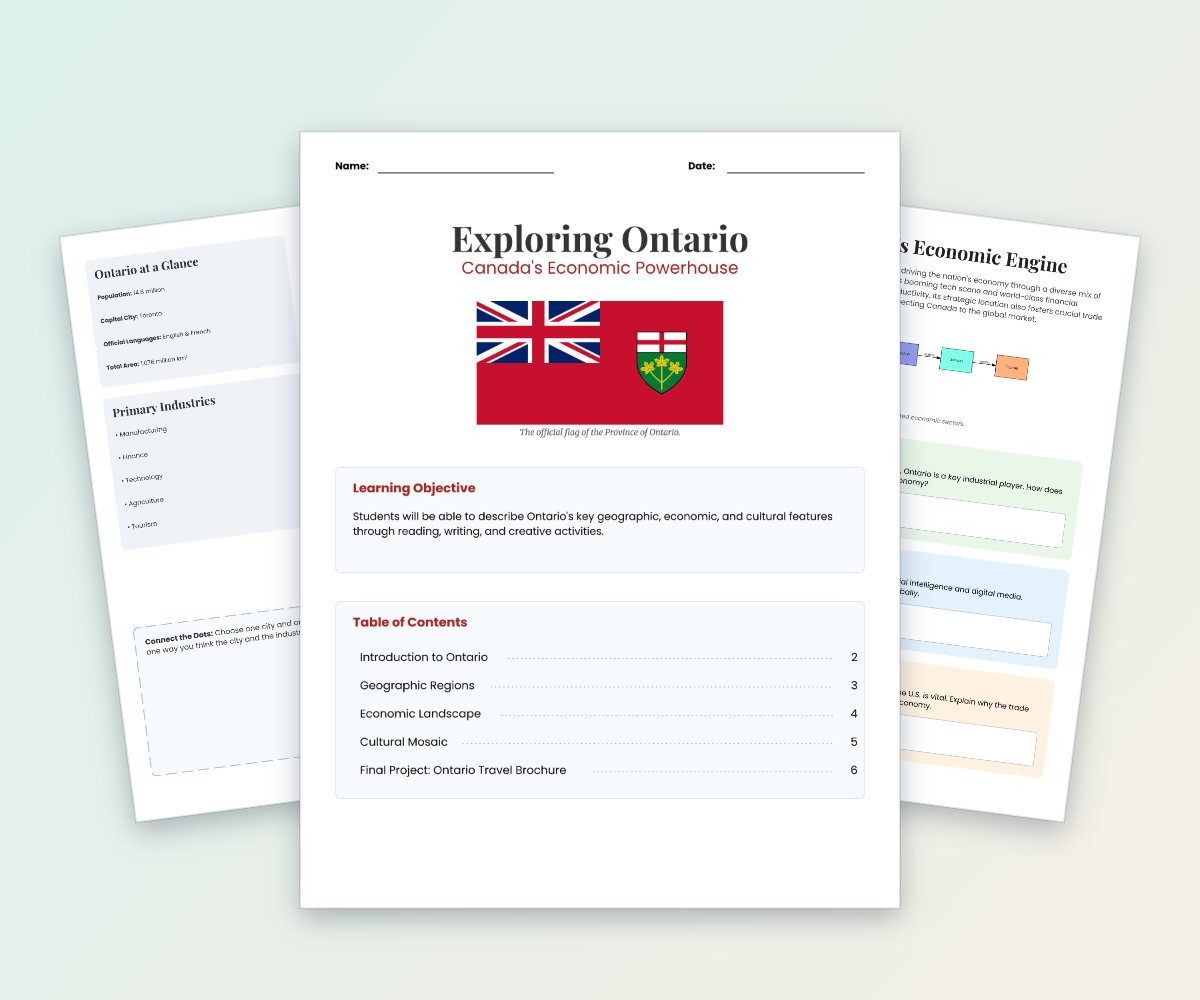
This eight-page activity pack introduces Ontario’s geographic regions, major cities, industries, economic connections, and cultural diversity.
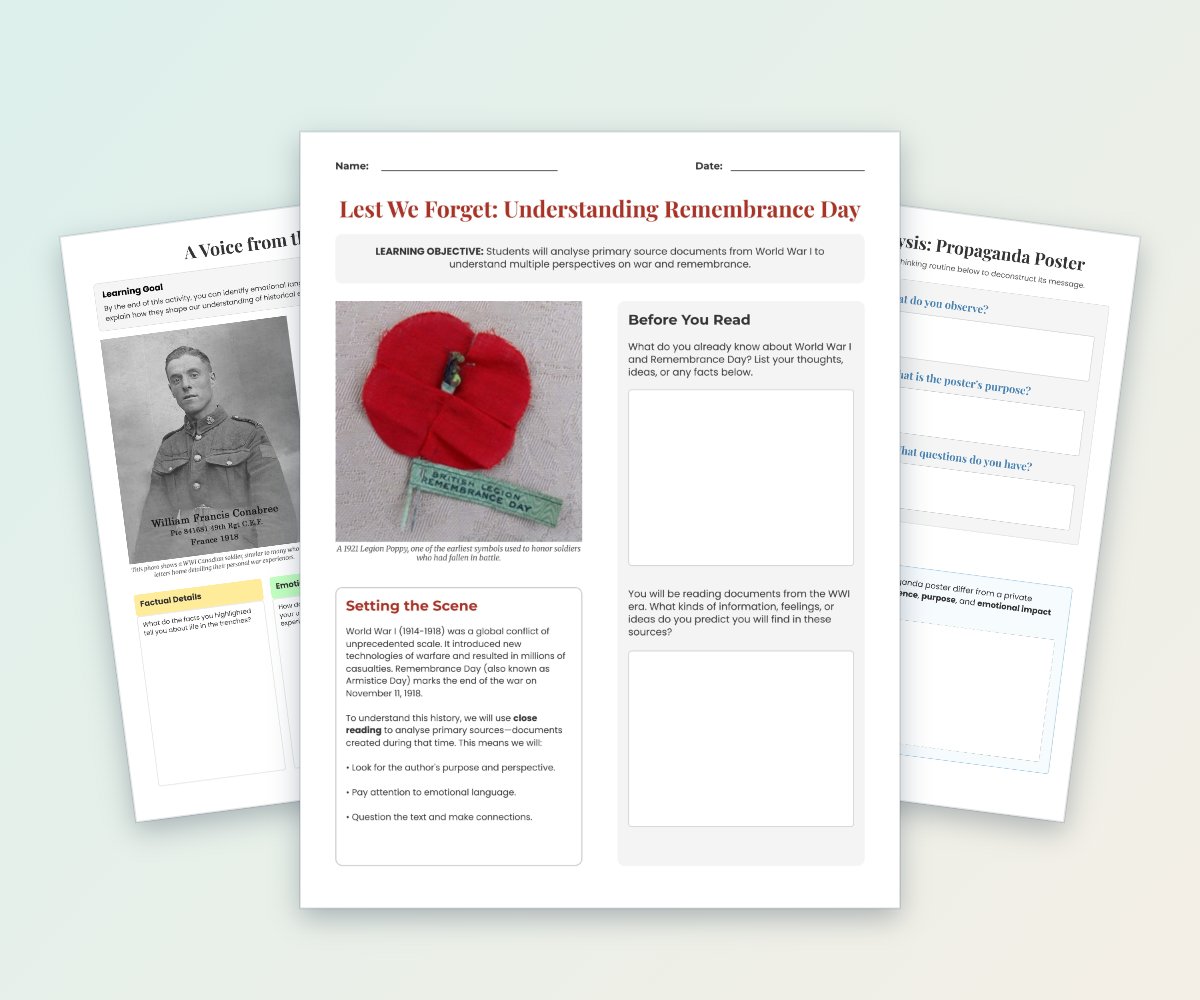
Students examine a World War I letter and related historical context to explore life in the trenches, emotional language, and remembrance.
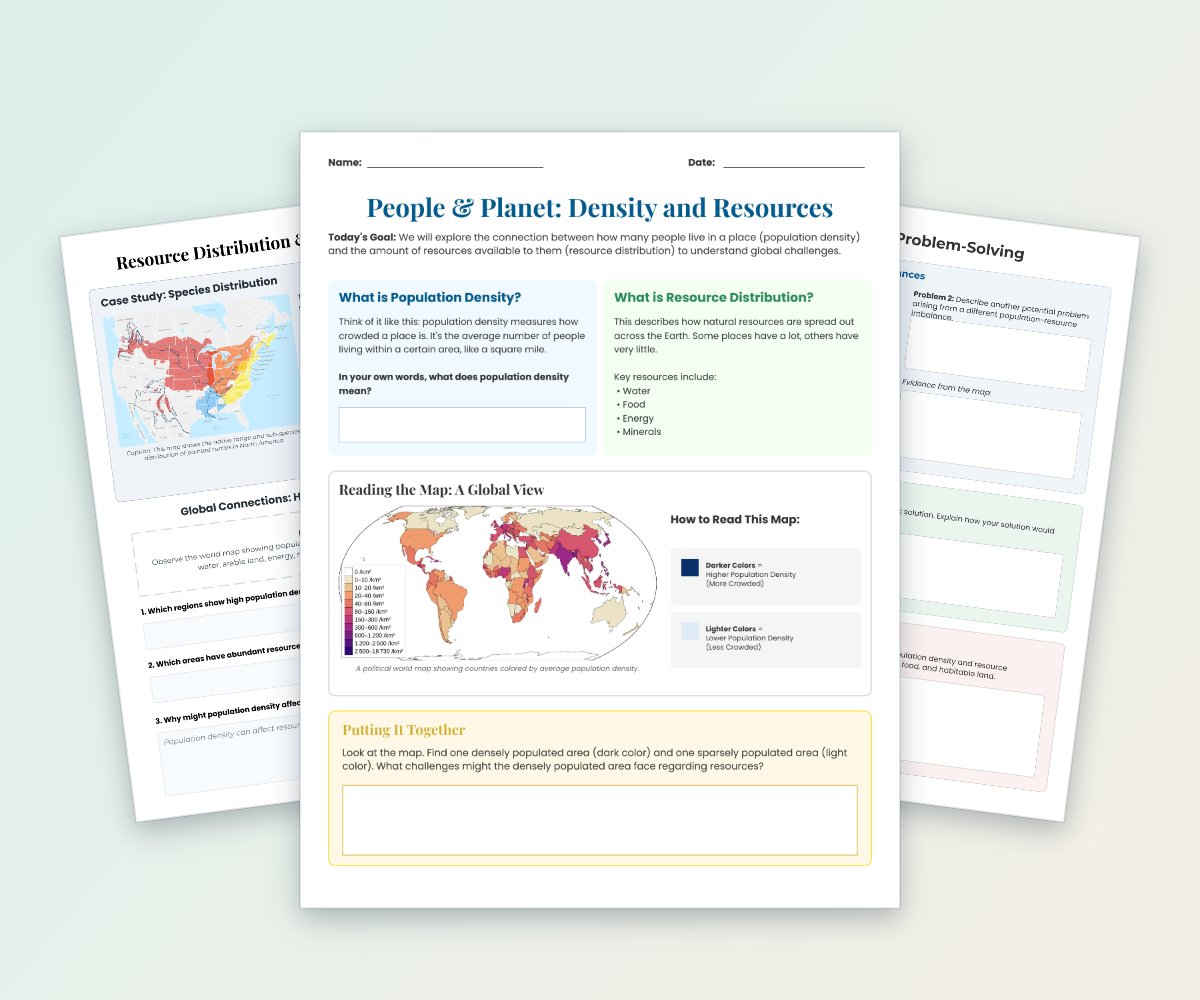
Students examine population-density and resource-distribution maps, connect resource availability to human and animal populations, and analyze global challenges.
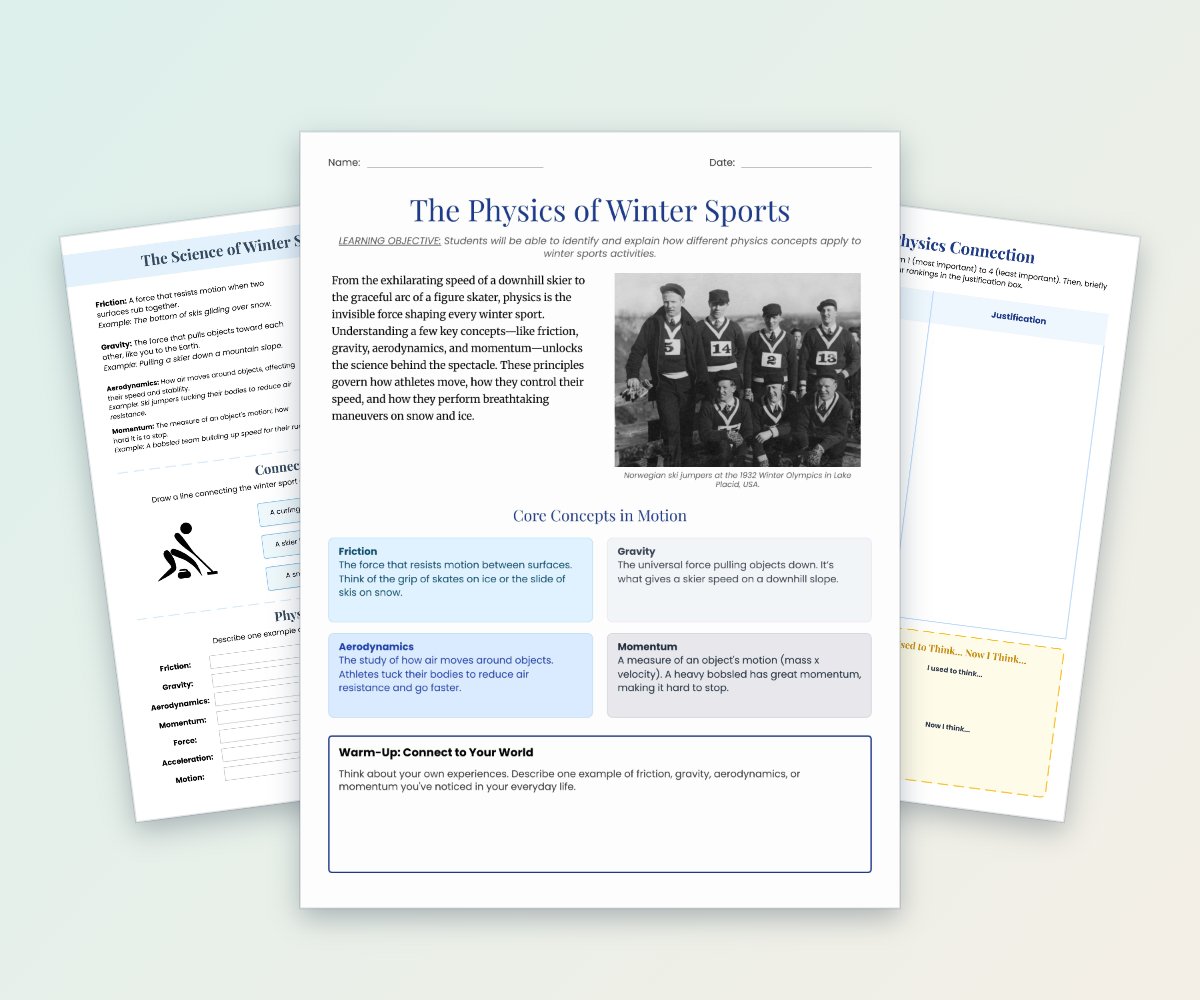
This four-page worksheet introduces friction, gravity, aerodynamics, momentum, force, acceleration, and motion through engaging winter sports examples.
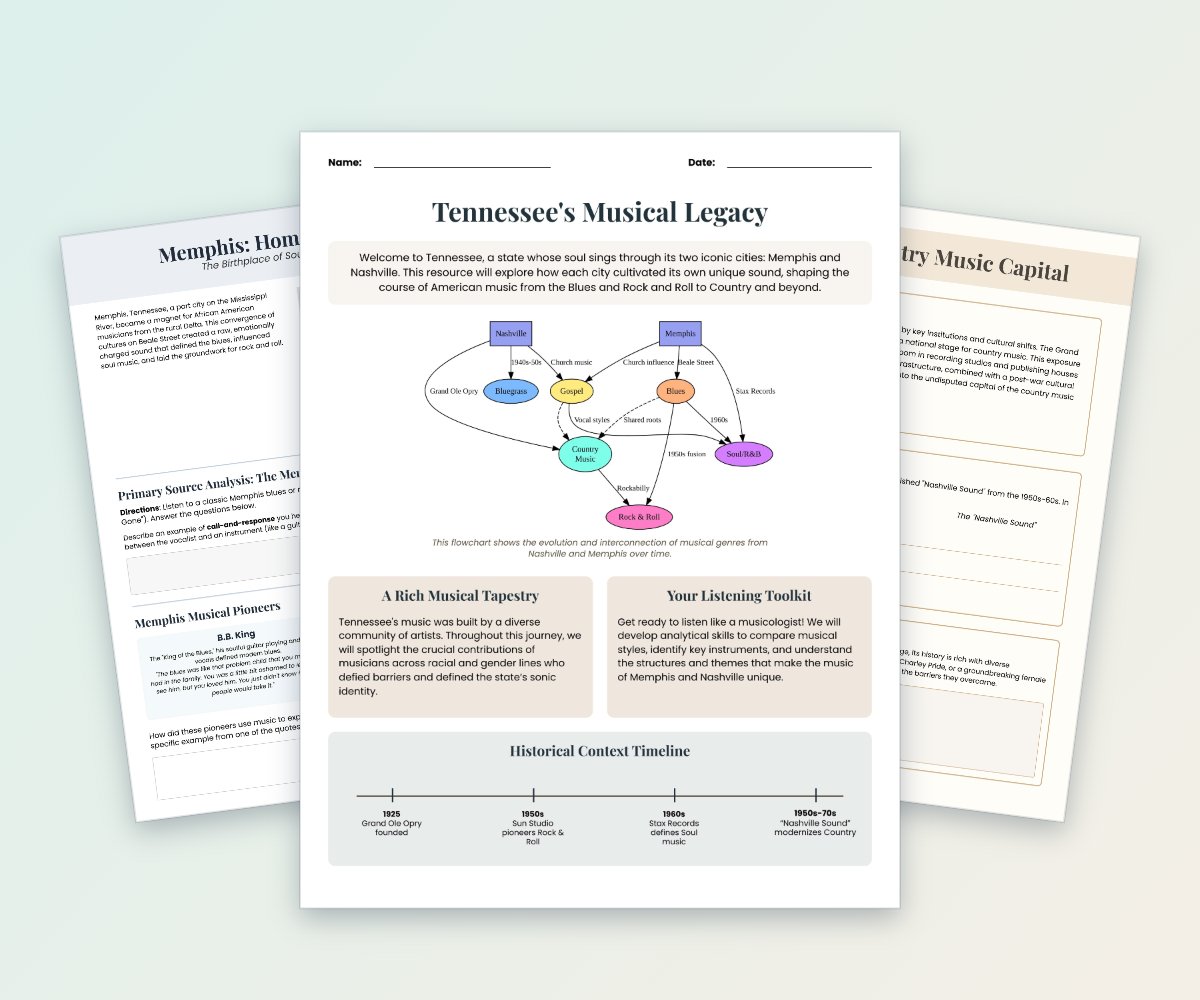
Students explore how Memphis and Nashville shaped blues, rock and roll, soul, bluegrass, and country music.
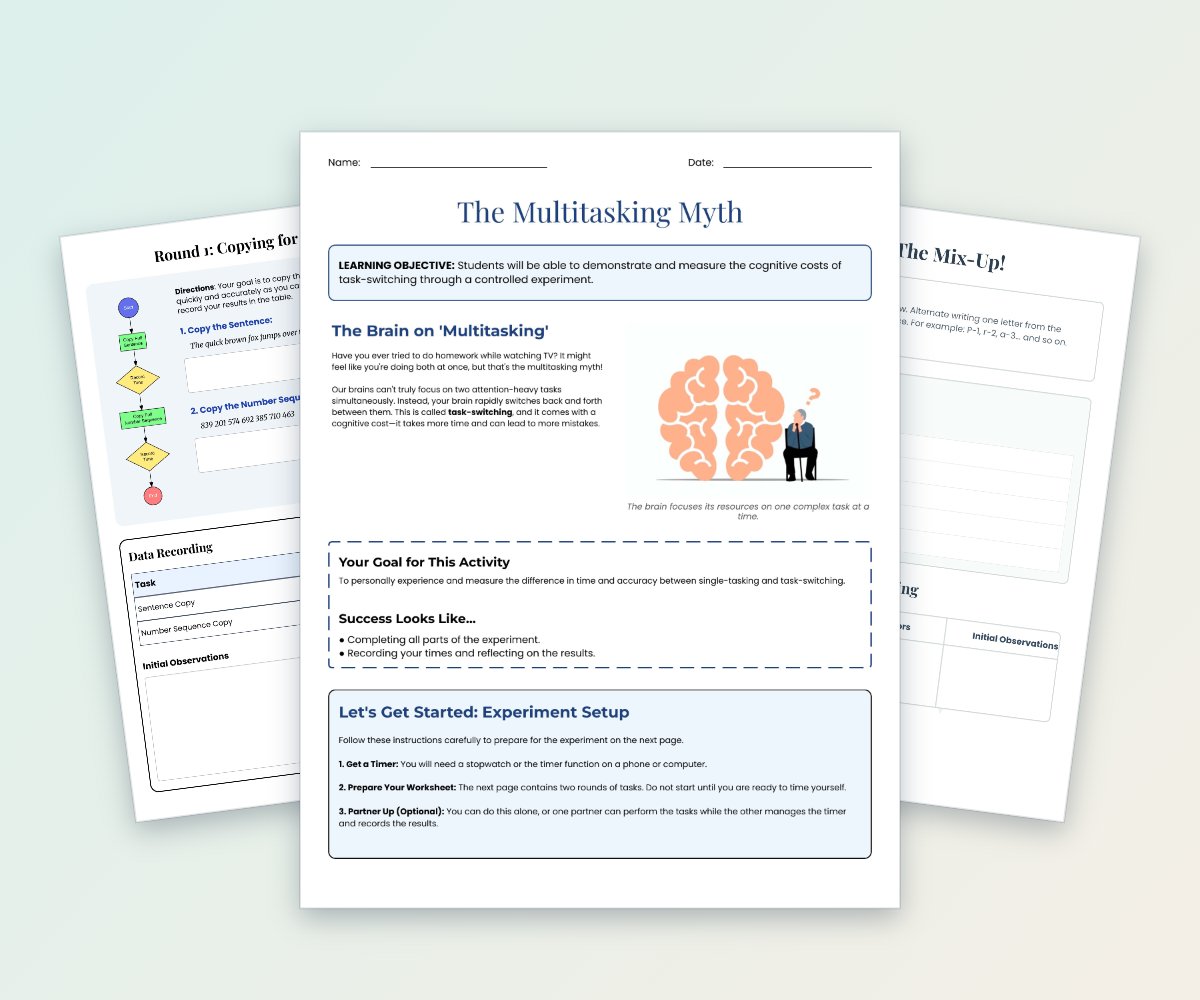
Students conduct a timed experiment comparing focused copying with alternating between letters and numbers.
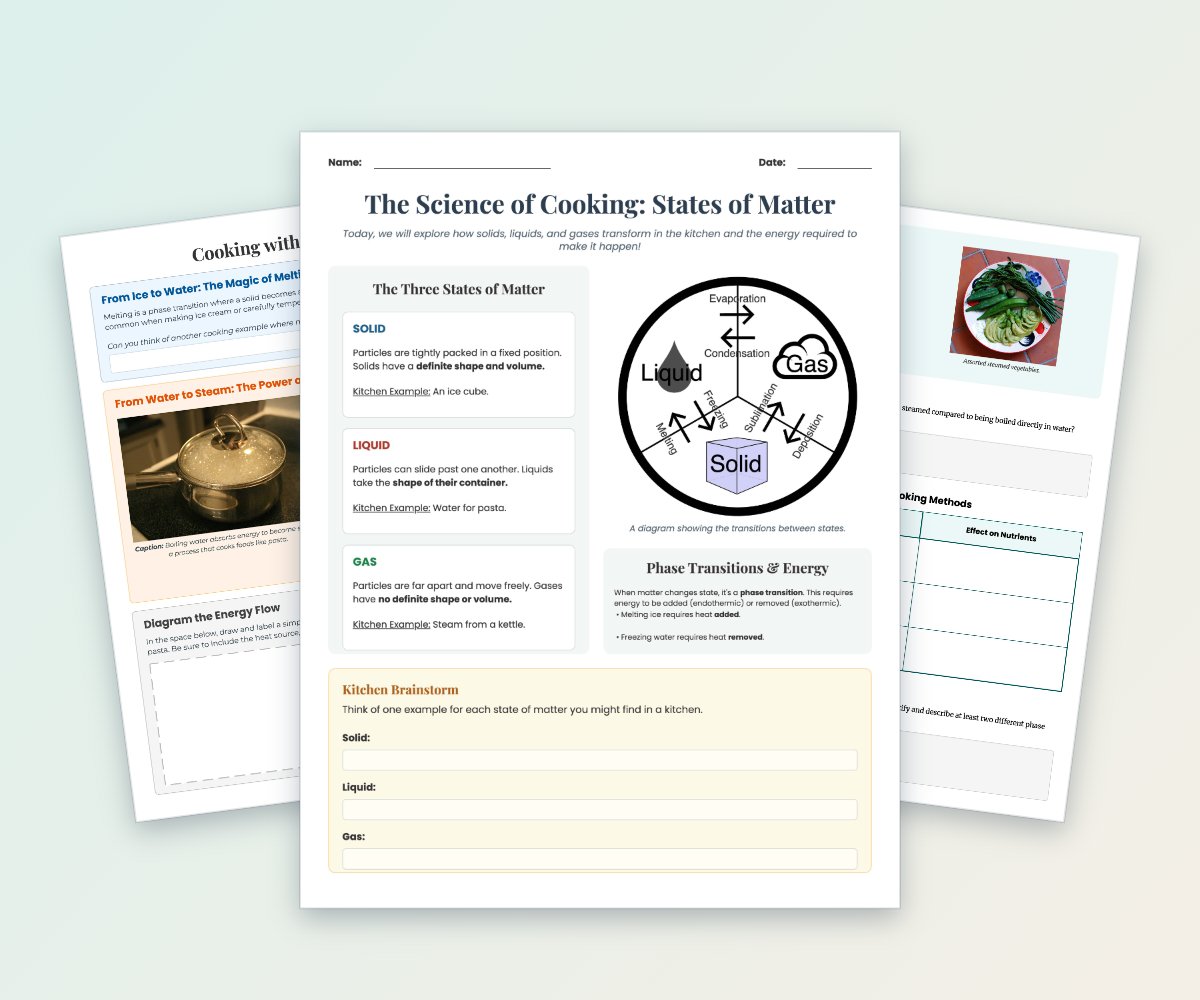
This four-page science worksheet explores solids, liquids, gases, phase transitions, and energy changes through familiar cooking examples.
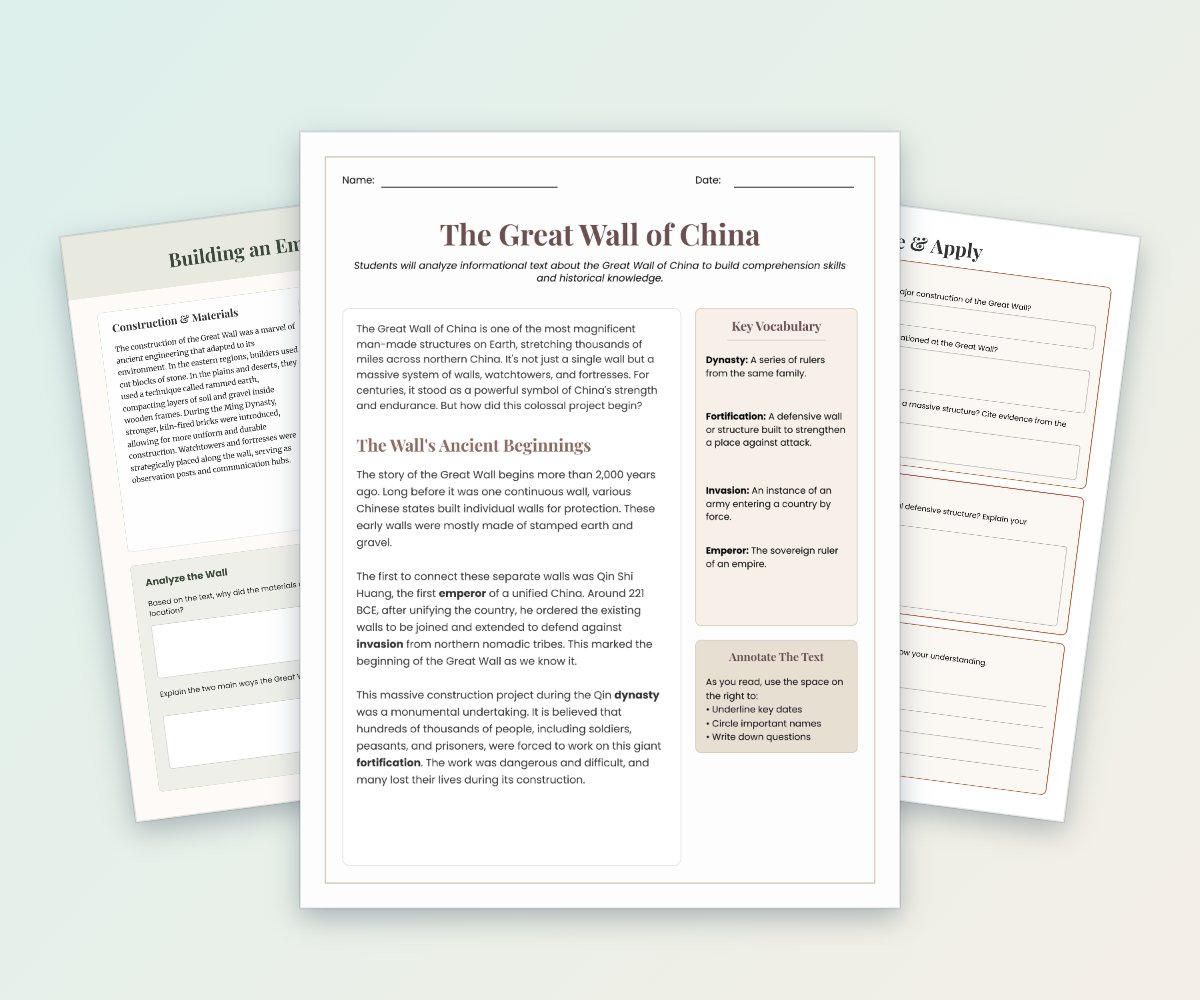
Students read an informational passage about the Great Wall of China, including its ancient origins, construction, materials, and historical significance.
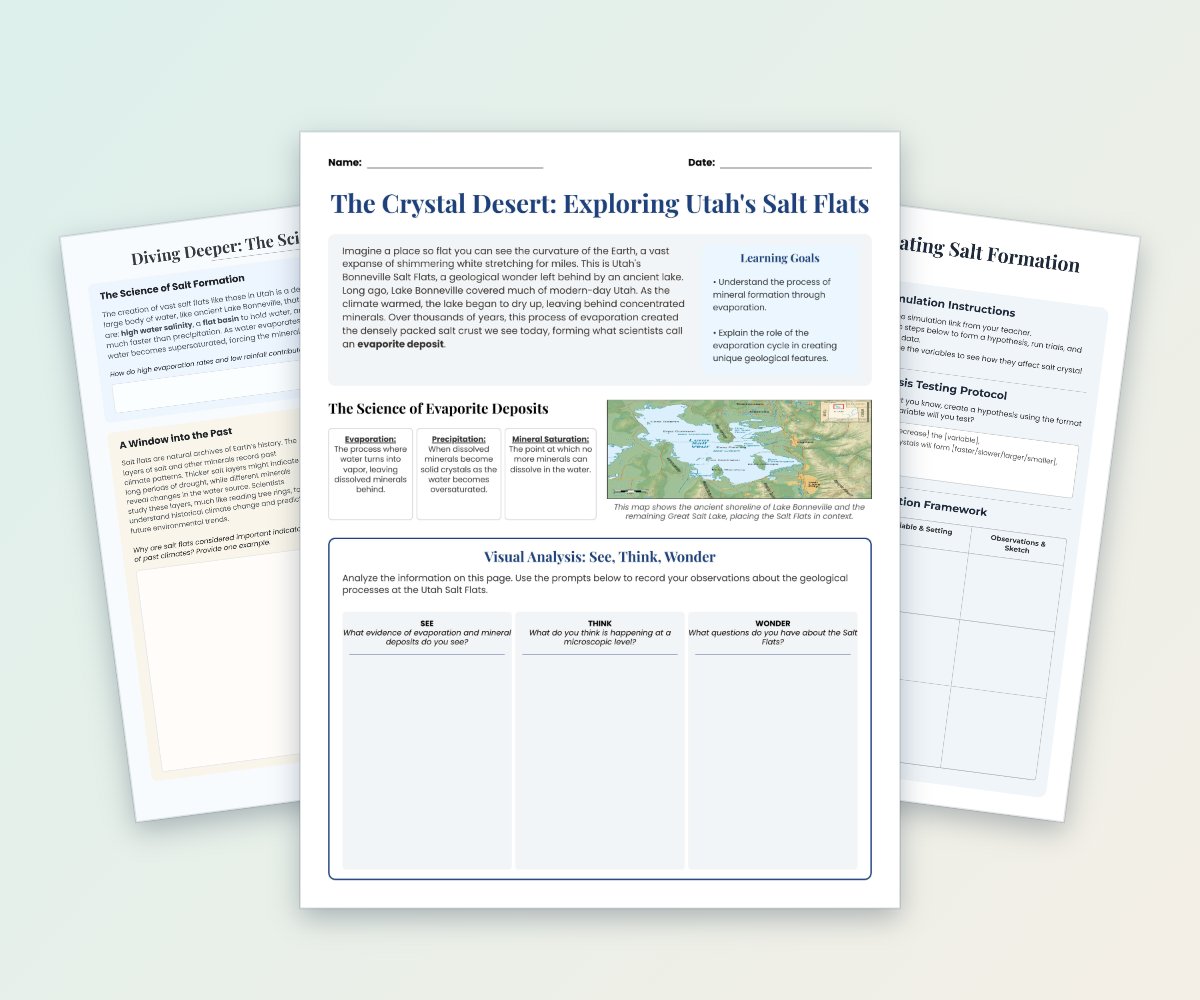
This four-page science resource examines how evaporation, mineral saturation, and precipitation formed Utah’s Bonneville Salt Flats.
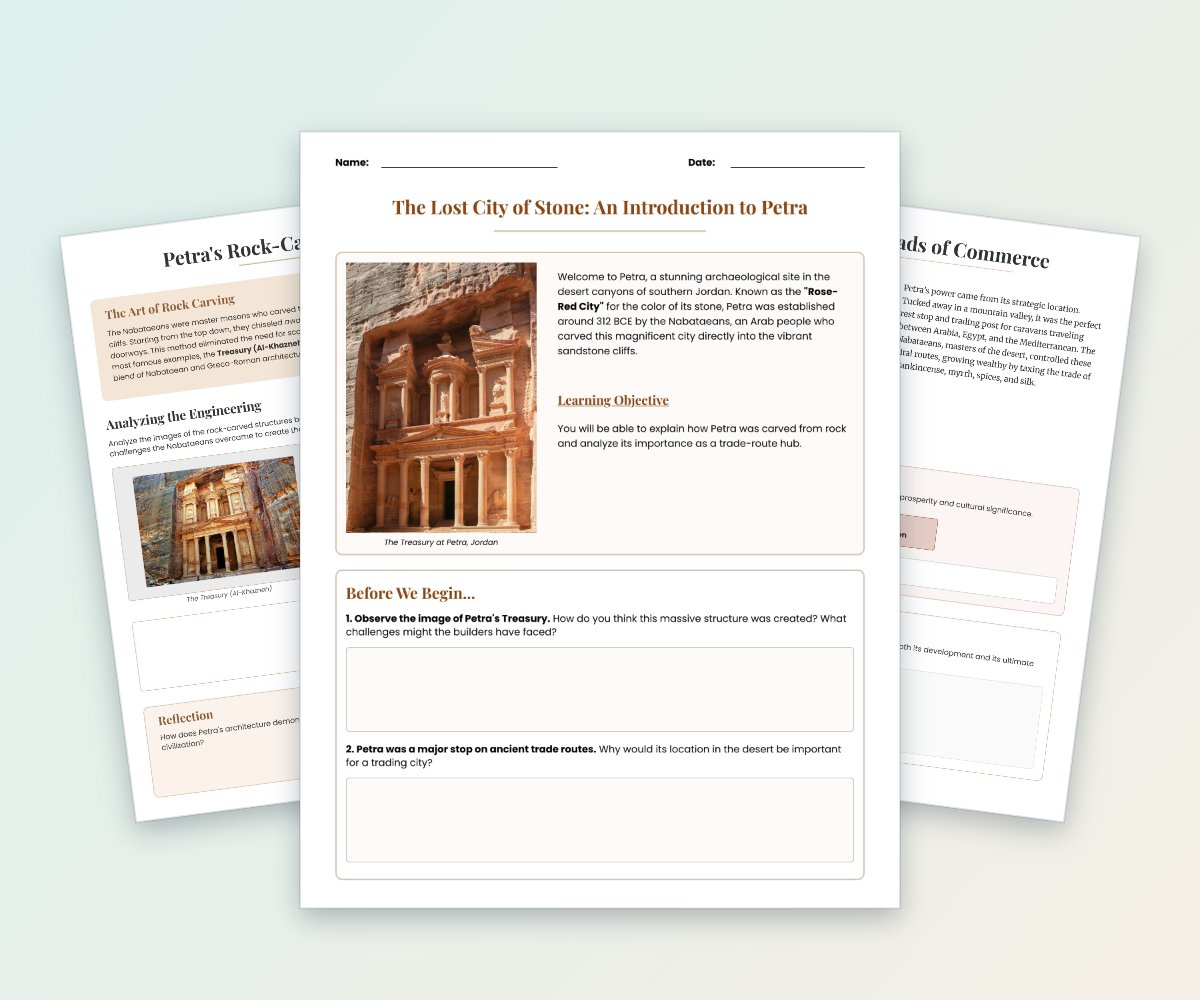
This four-page worksheet introduces students to Petra’s rock-carved architecture, strategic trade routes, and historical significance.
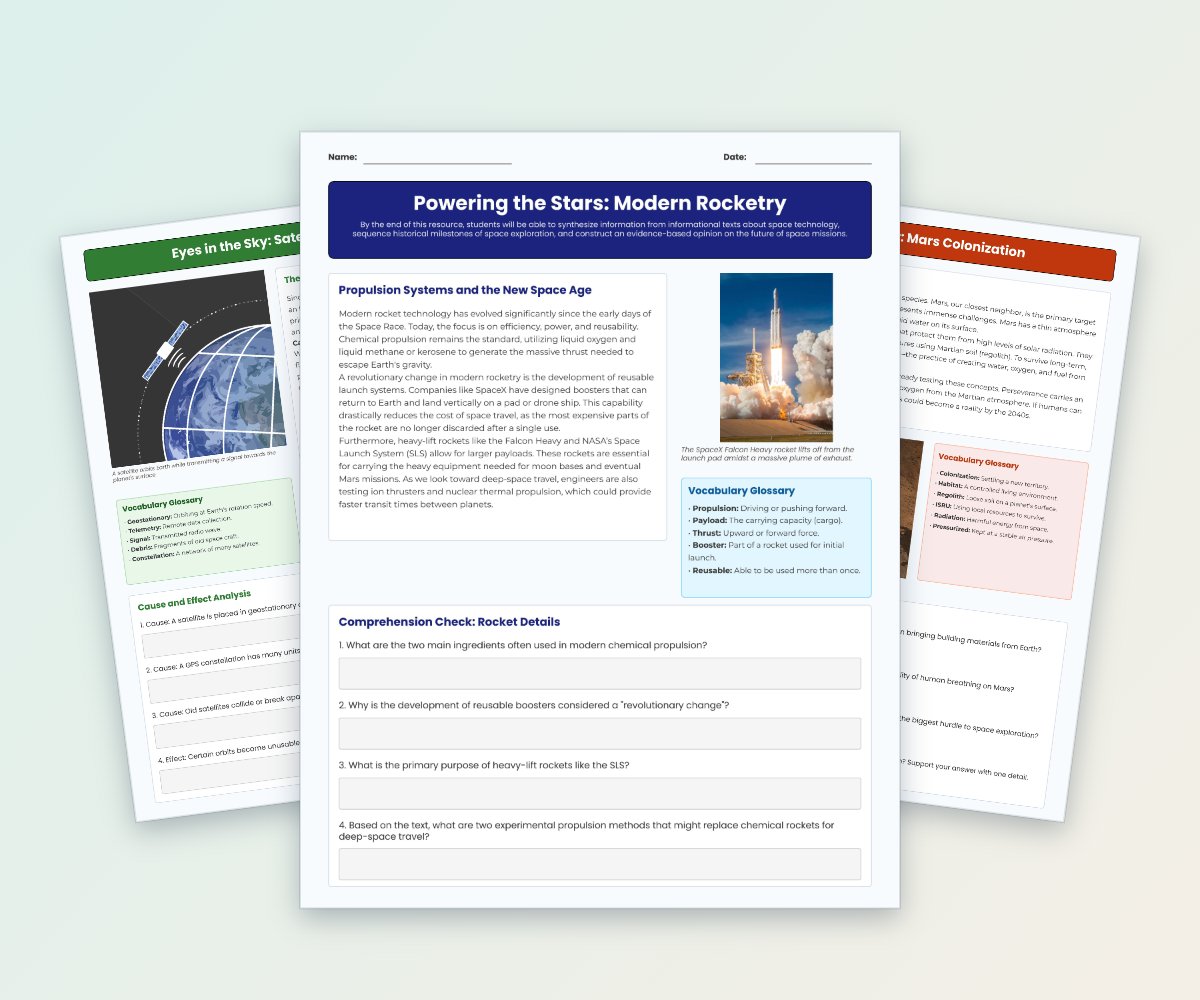
This activity pack explores modern rocketry, propulsion systems, satellite technology, and the future of space missions.
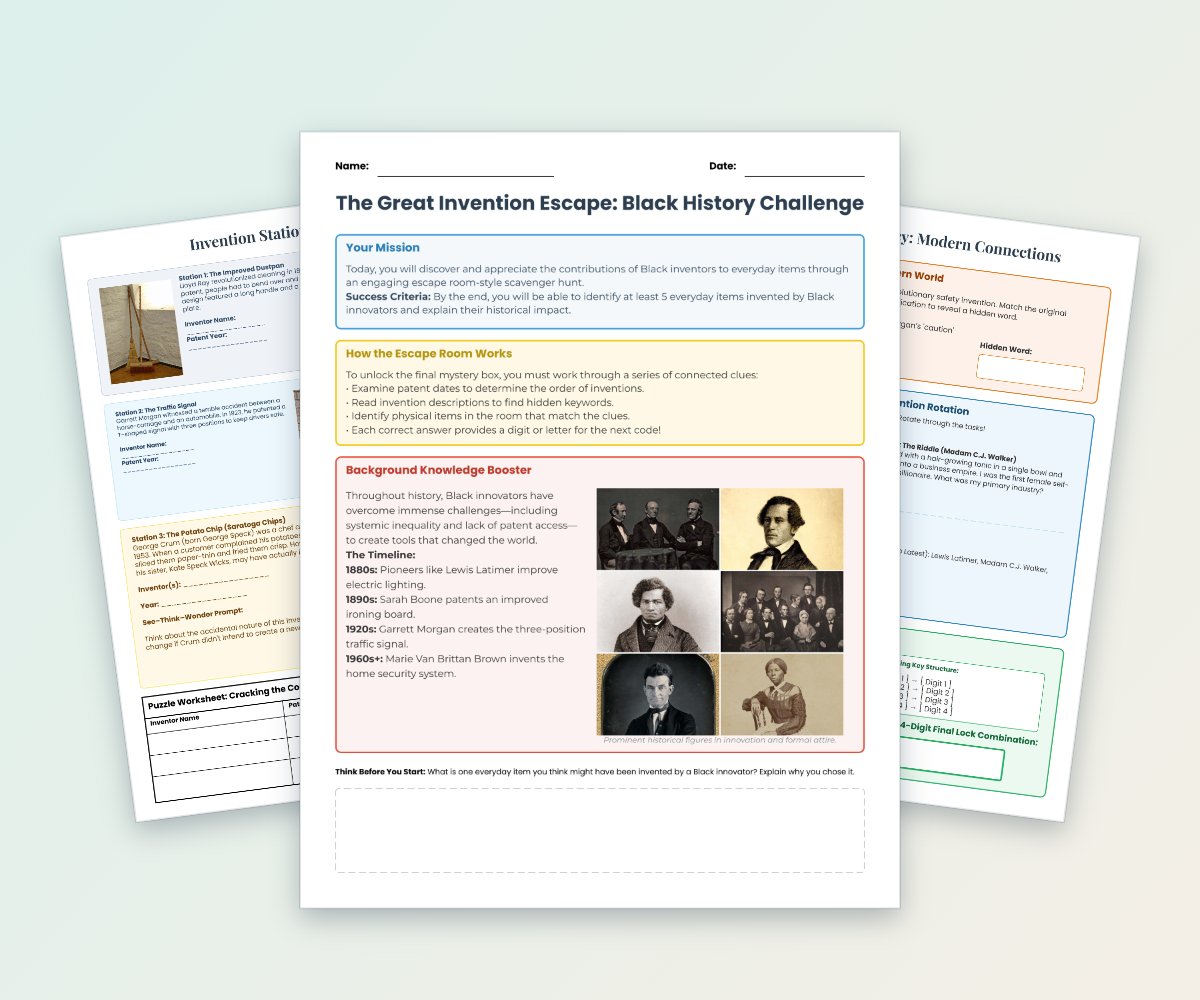
Students explore inventions and innovations by Black inventors through clues, patent dates, invention descriptions, and puzzle challenges.
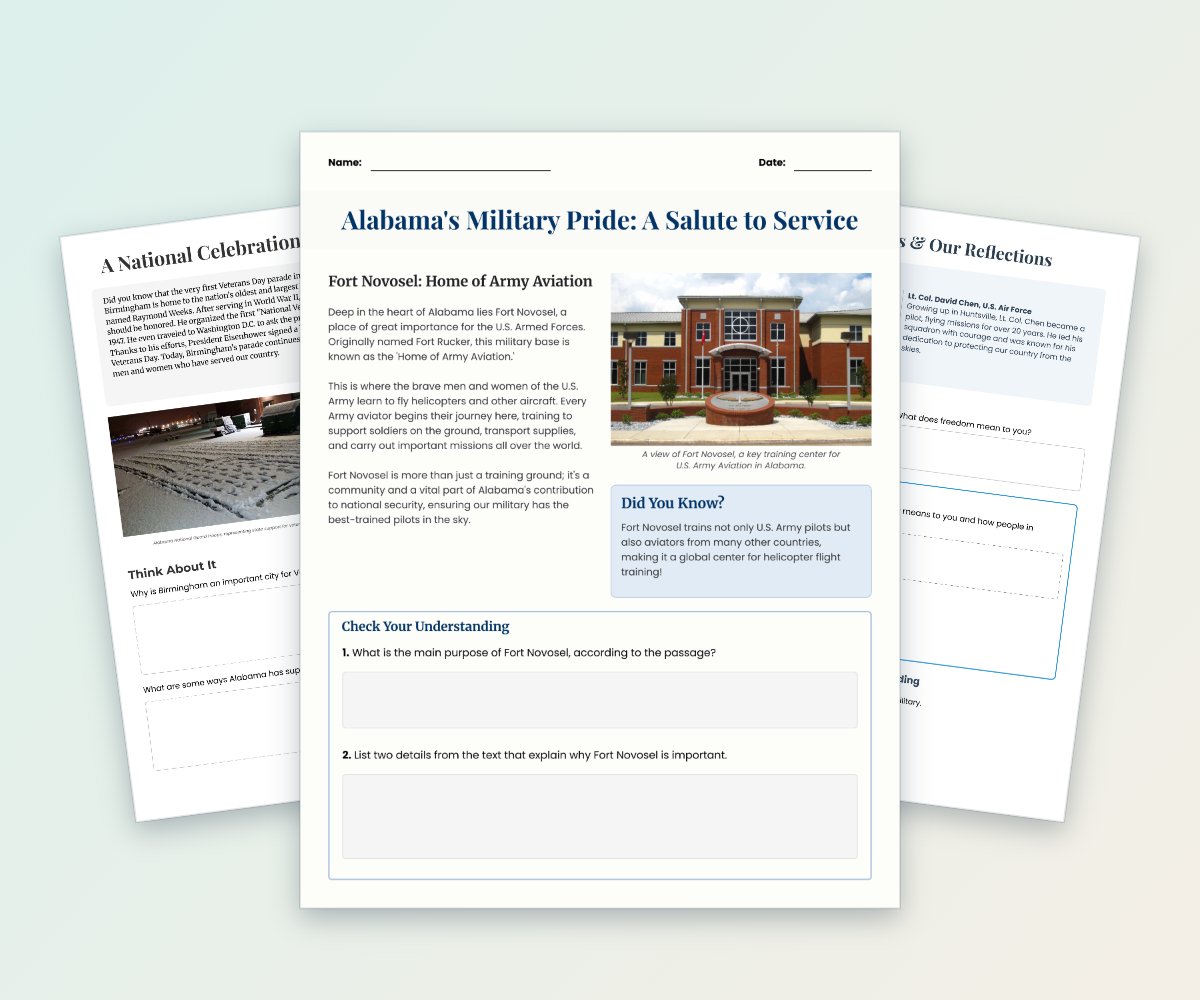
Students read about Fort Novosel, Army Aviation, Alabama's military contributions, and Birmingham's Veterans Day tradition.
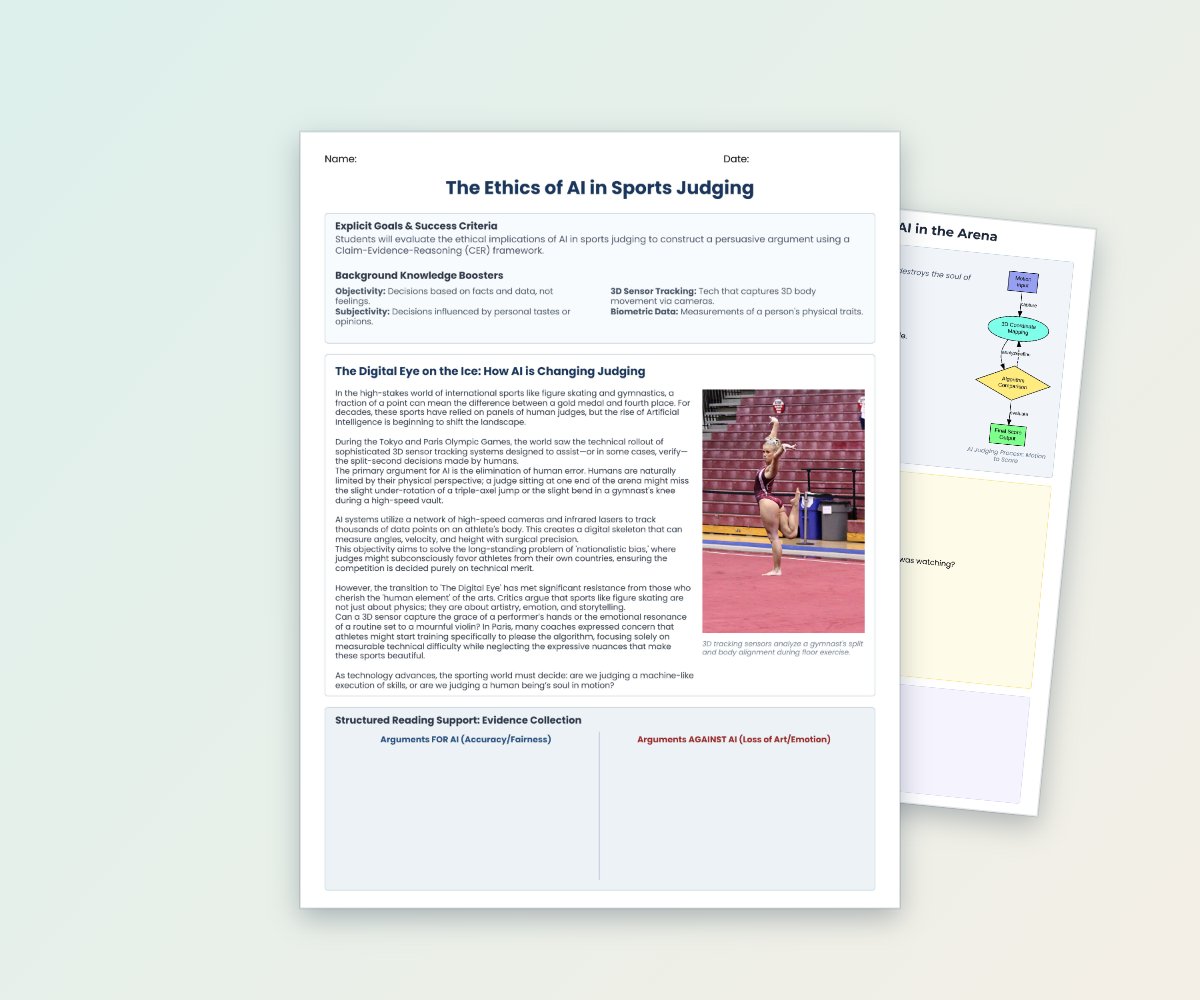
Students read an informational passage about artificial intelligence in sports judging, including objectivity, biometric data, and the human element of artistry.
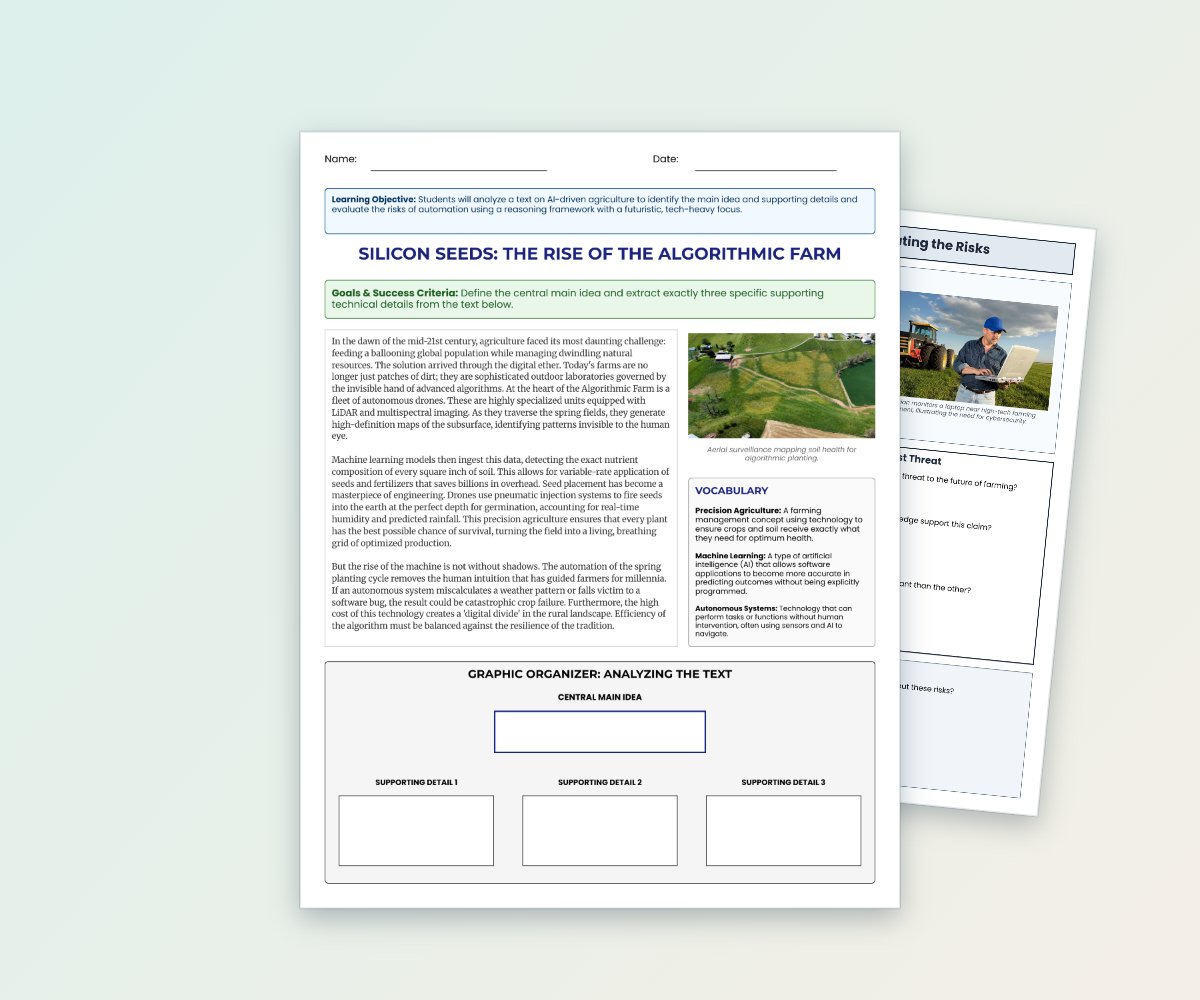
Students read an informational passage about artificial intelligence, drones, and precision agriculture in spring planting.
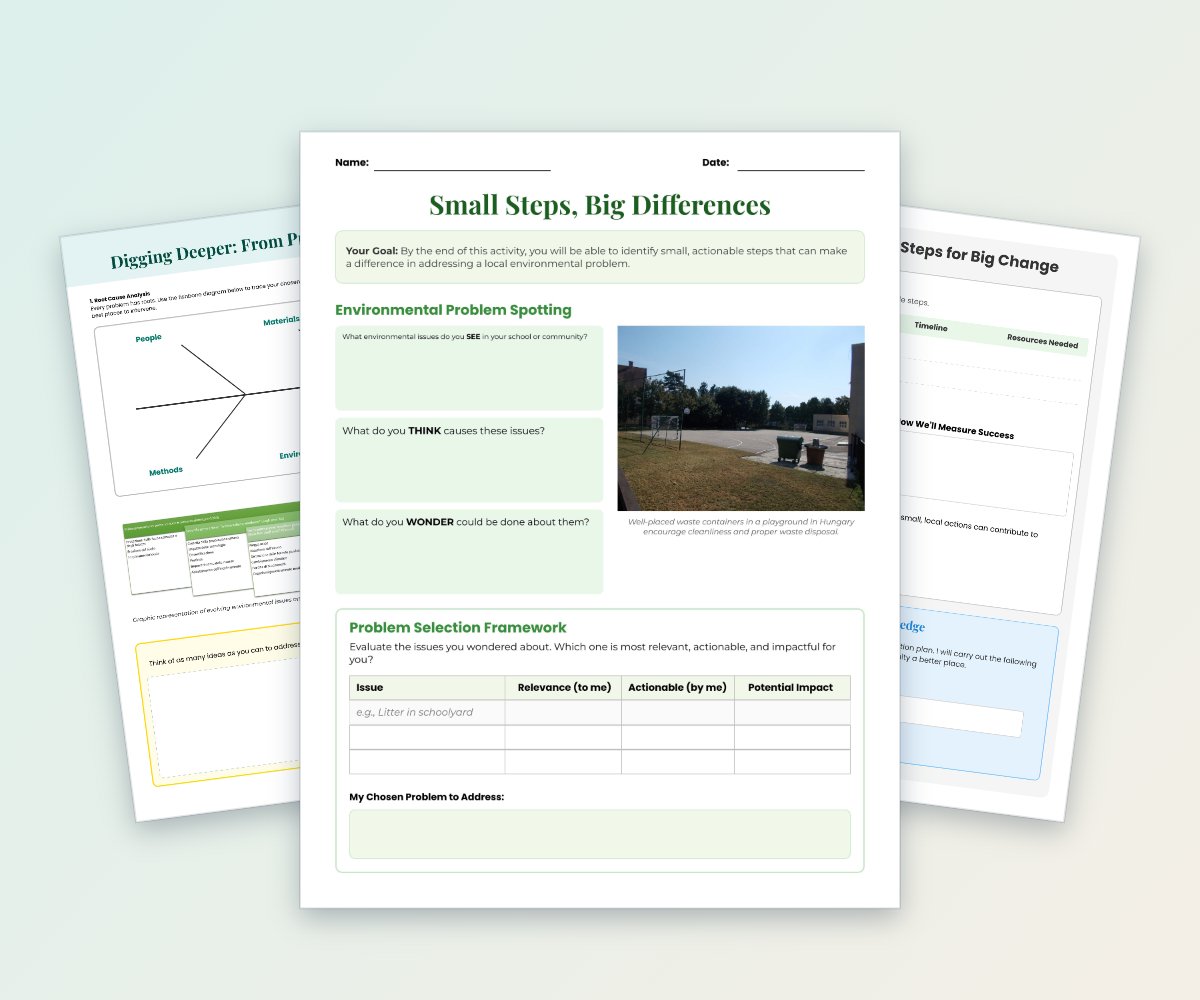
Students identify a local environmental problem, investigate its root causes, map stakeholders, brainstorm solutions, and create an action plan.
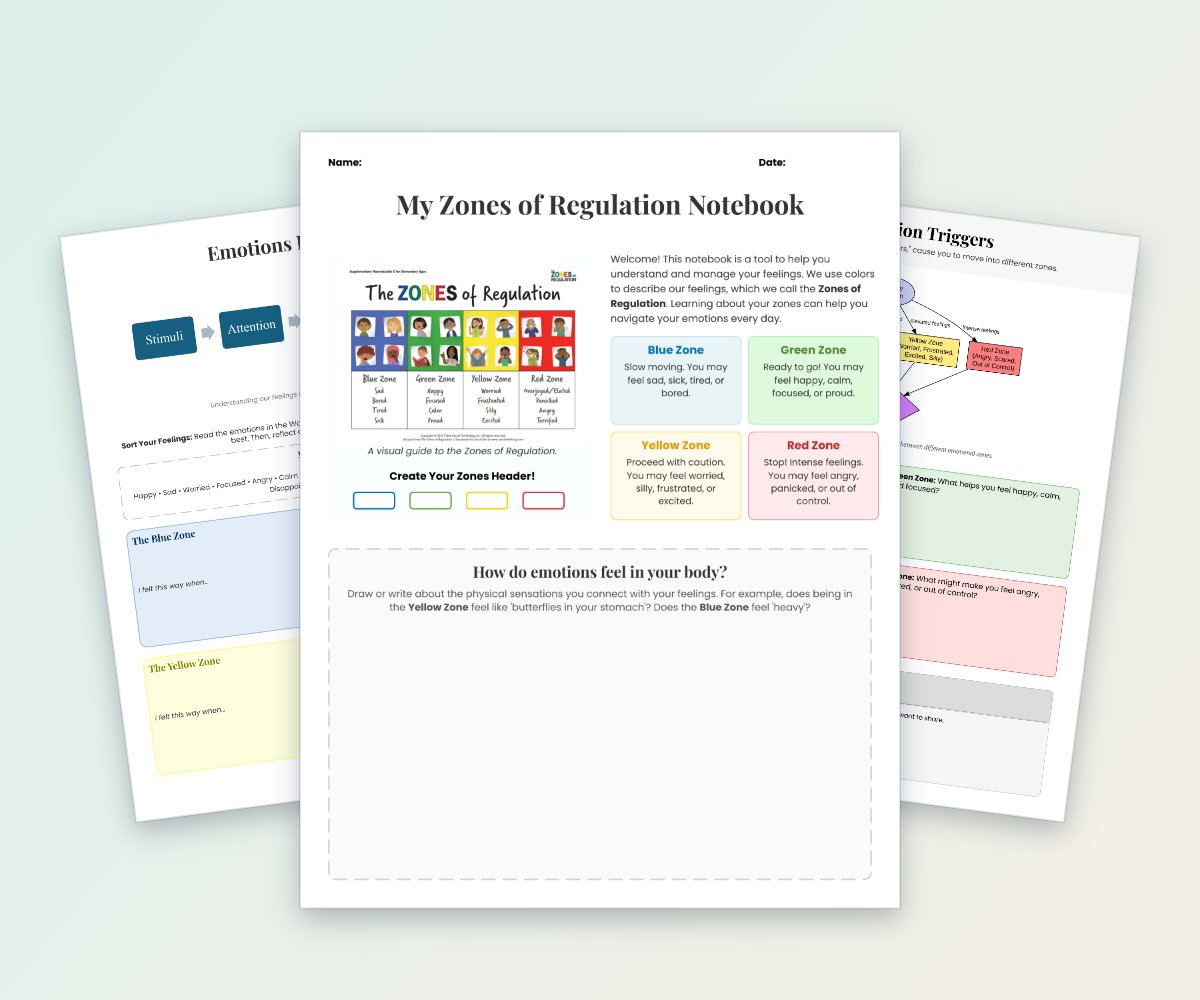
This five-page notebook supplement introduces the Blue, Green, Yellow, and Red Zones of Regulation.
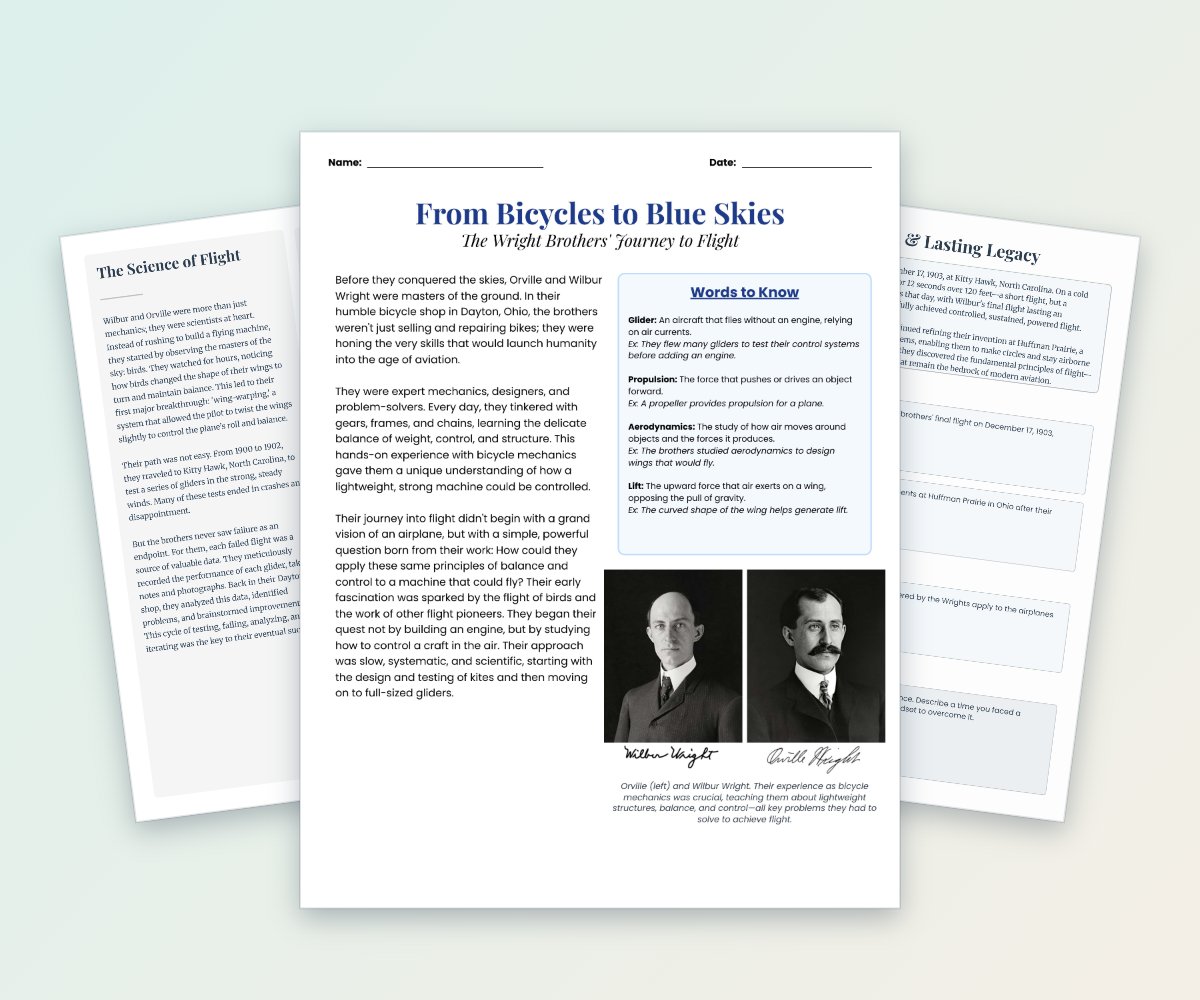
A student-friendly informational reading passage tracing Orville and Wilbur Wright’s journey from bicycle mechanics to aviation pioneers.
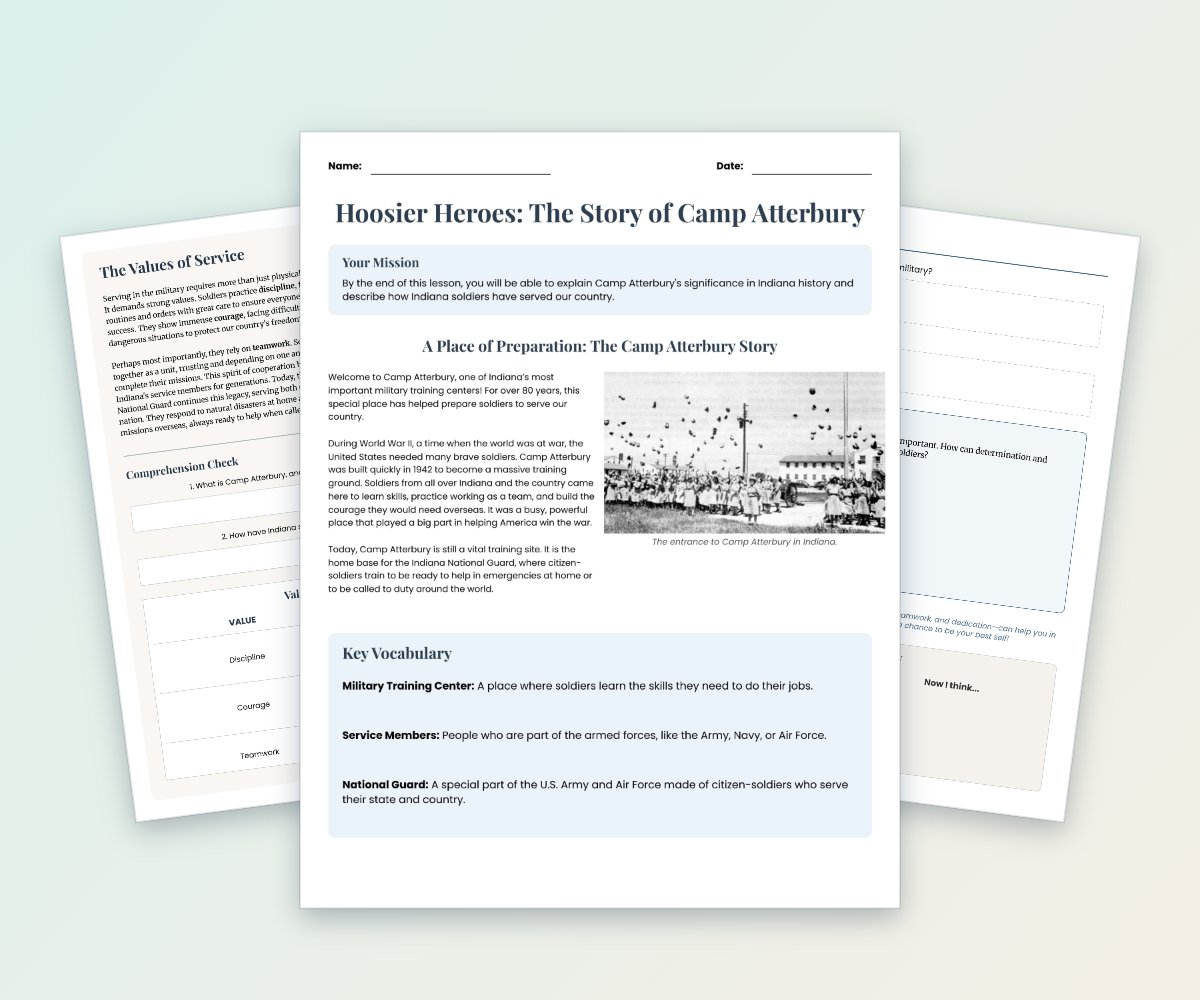
This short lesson introduces Camp Atterbury, its role in Indiana history, and the service of Indiana soldiers and the National Guard.
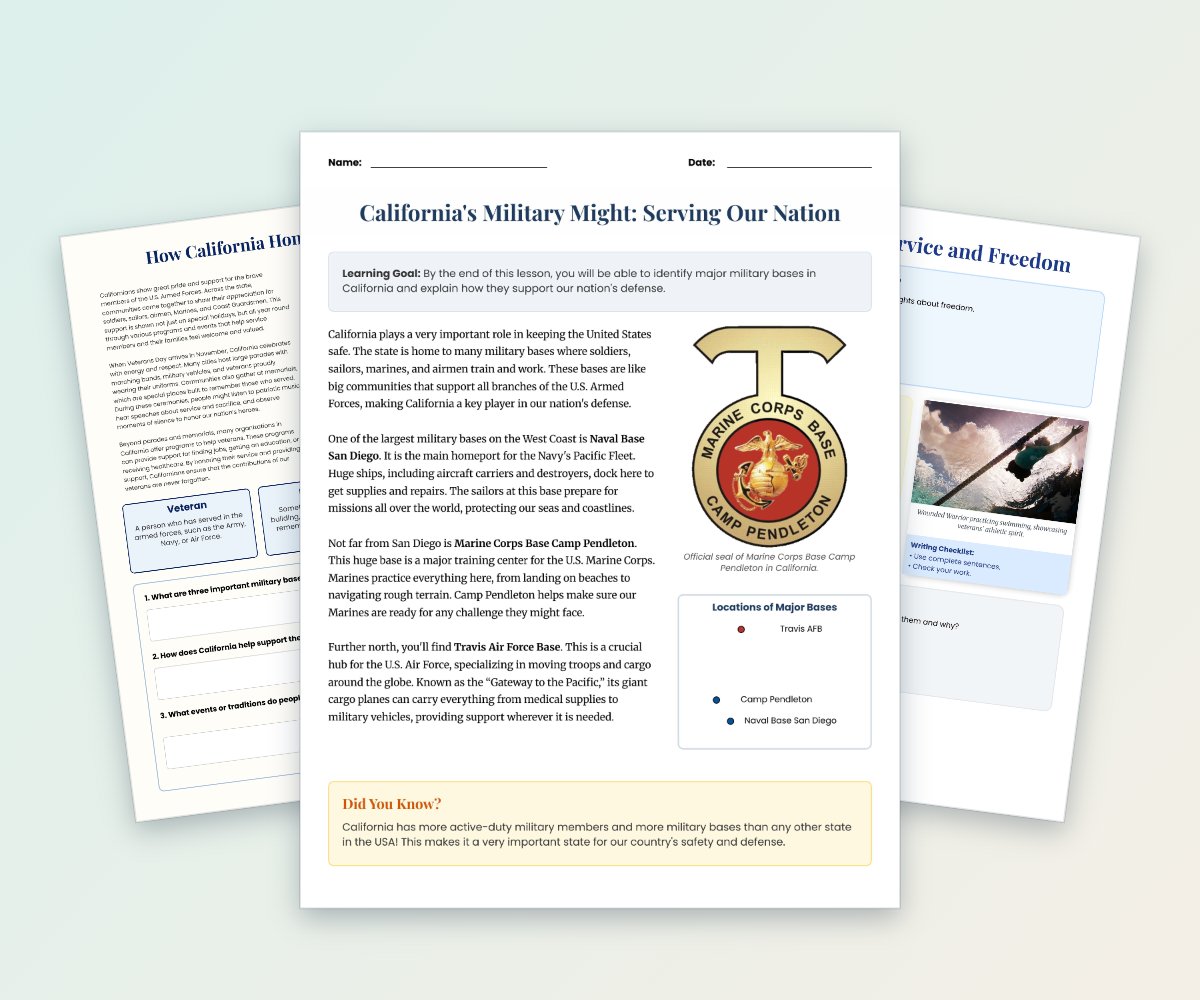
Students learn about major California military bases, their roles in national defense, and ways communities honor and support veterans.
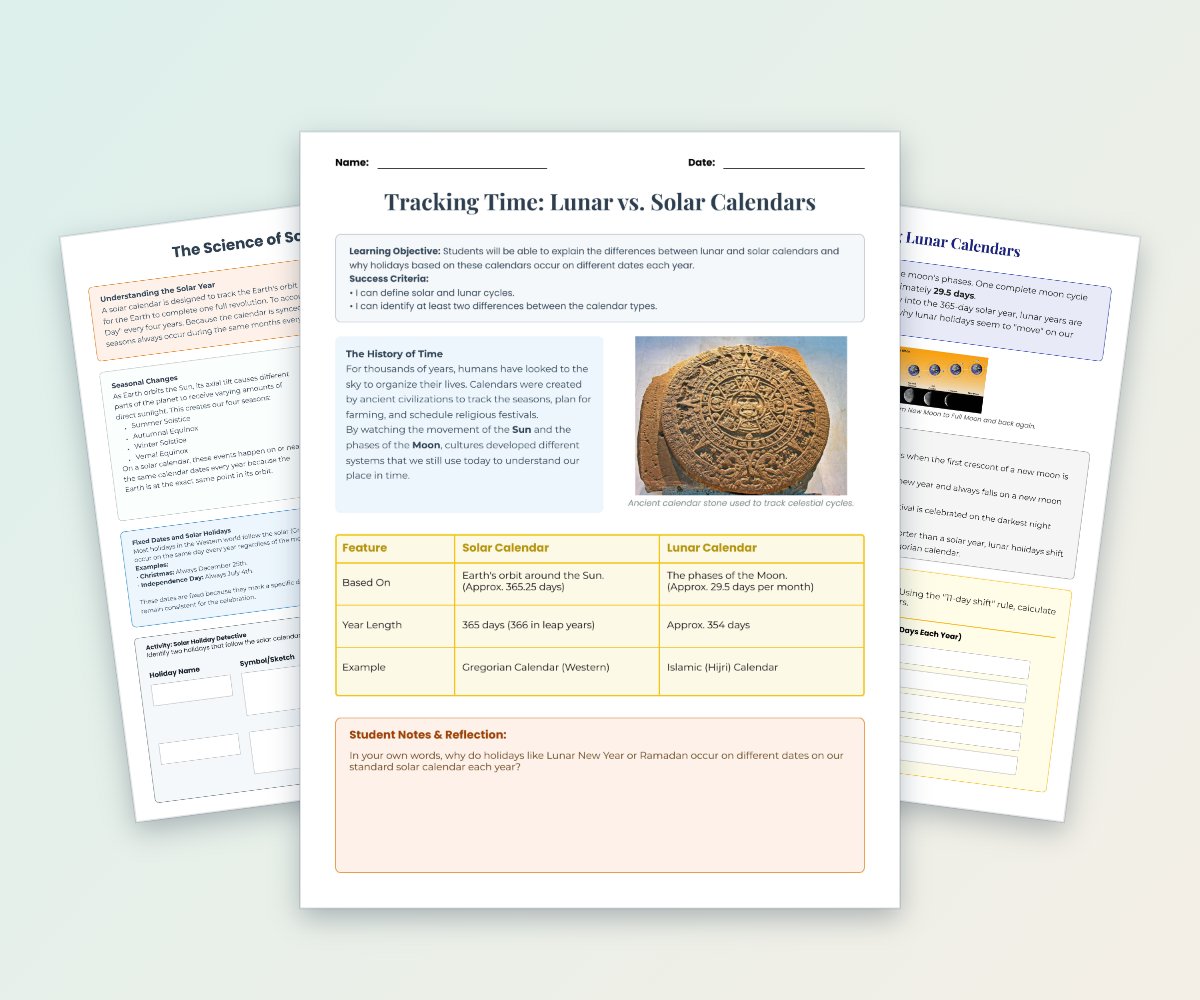
This four-page classroom resource introduces solar and lunar calendar systems, their relationship to Earth’s orbit and Moon phases, and why holidays may fall on different dates each year.