Guardians of the Sky: Nellis Air Force Base Training
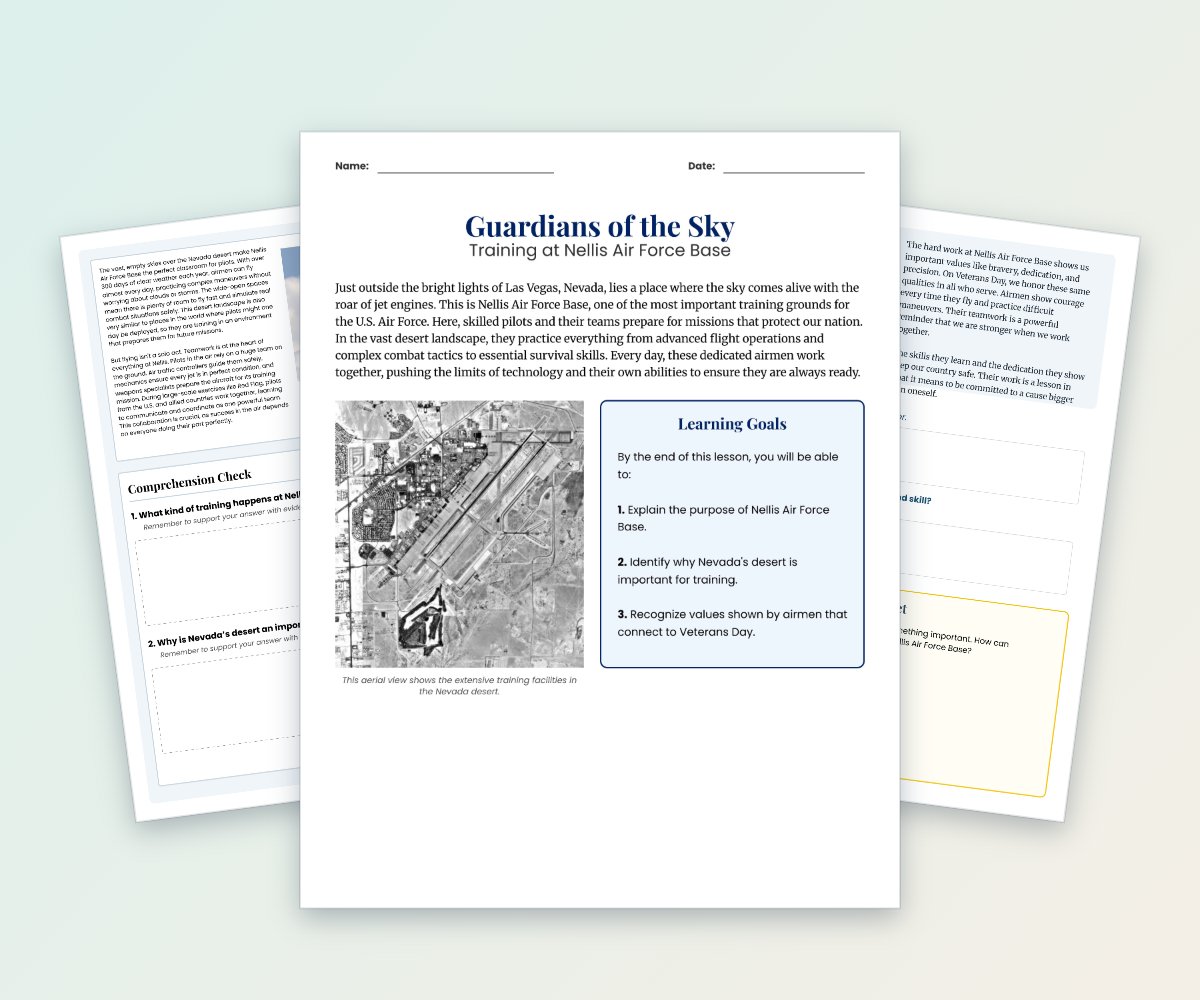
Students learn about Nellis Air Force Base, the Nevada desert’s role in pilot training, and teamwork among airmen.
$3
Classroom-ready resources written for grade 1: printable worksheets, slides, activities and planning tools you can download and use straight away. Browse by subject below.
Students learn about Nellis Air Force Base, the Nevada desert’s role in pilot training, and teamwork among airmen.
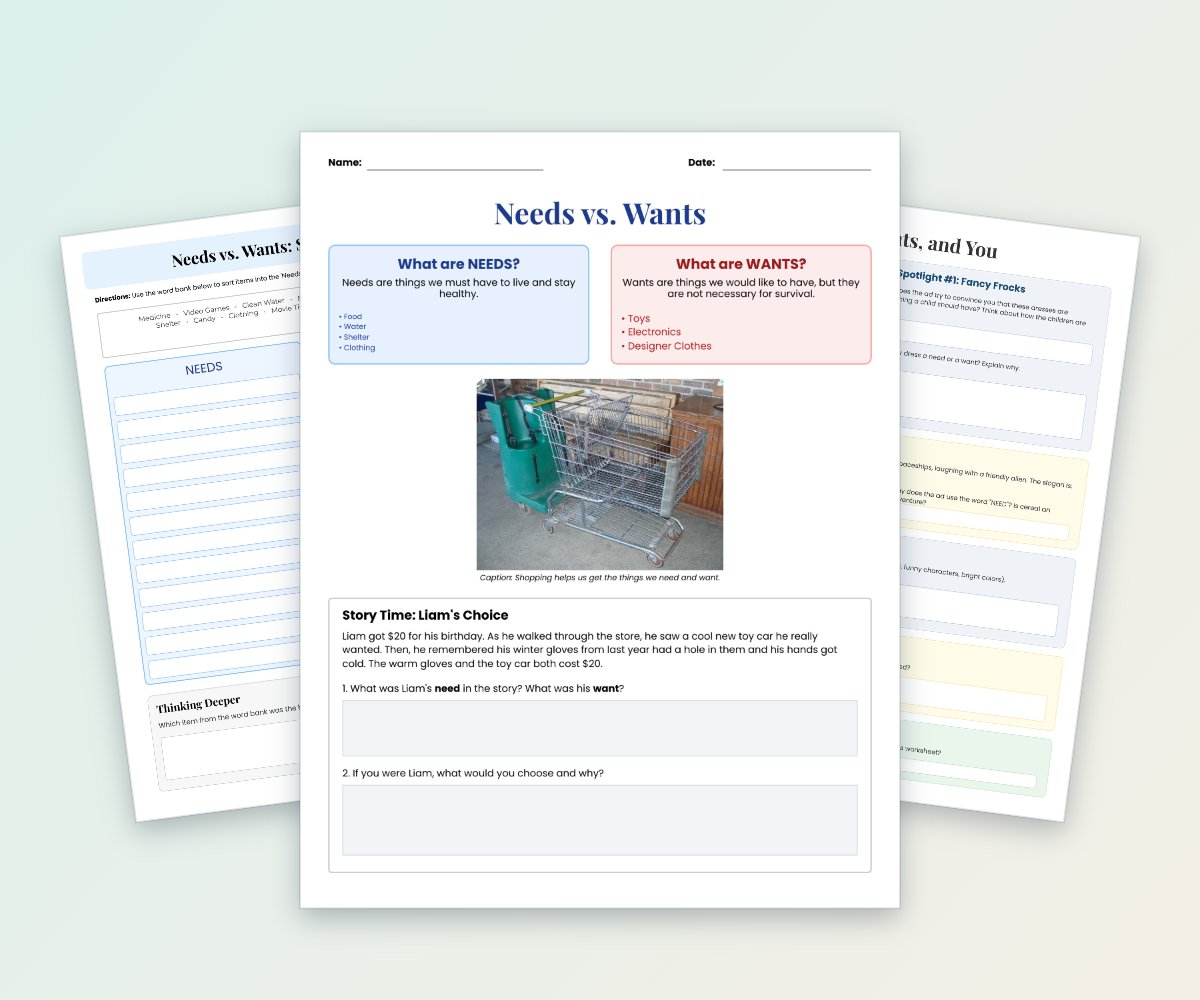
This four-page activity pack helps students distinguish needs from wants through definitions, a relatable spending story, sorting activity, and advertising analysis.
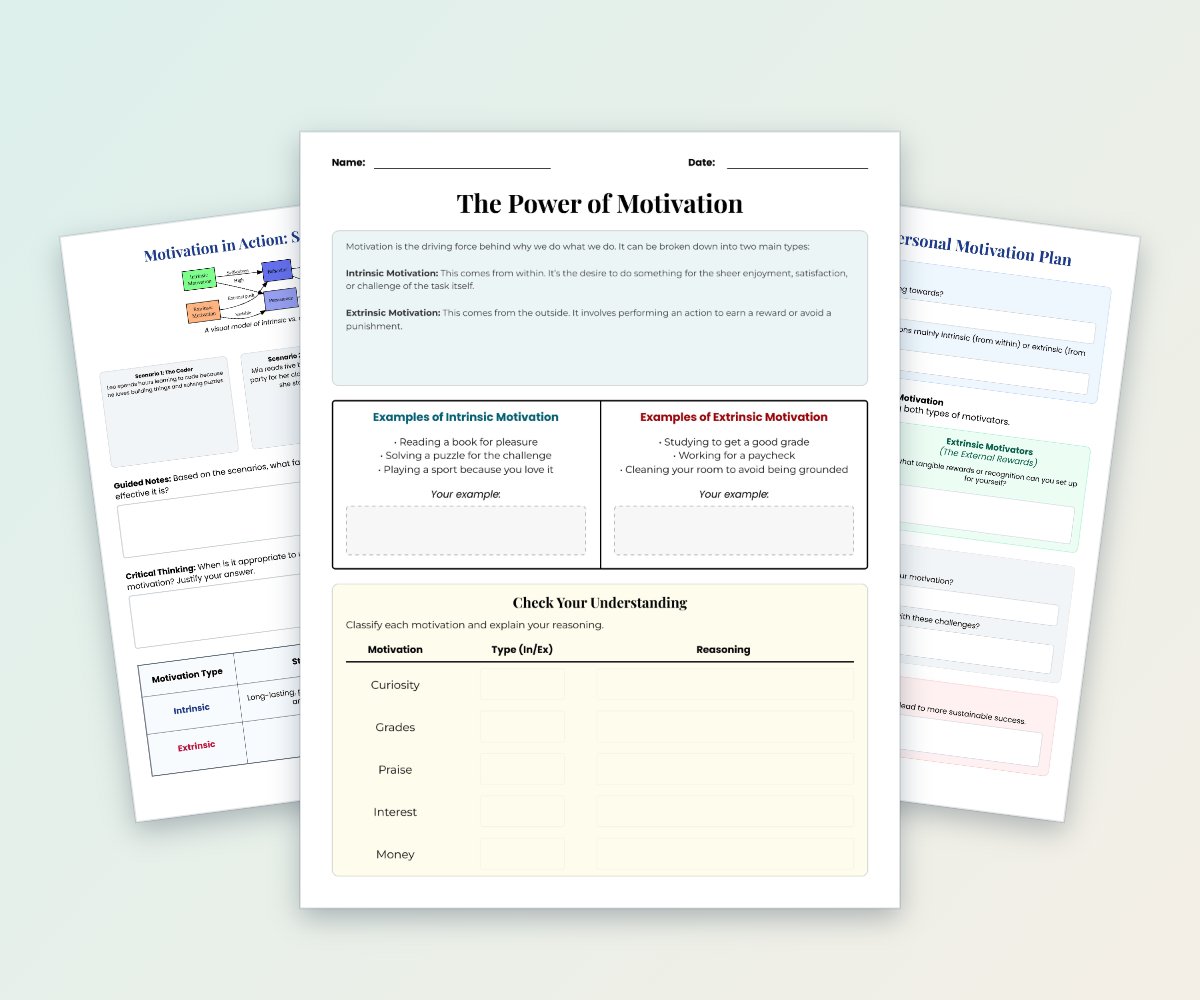
This three-page worksheet introduces intrinsic and extrinsic motivation with clear definitions, examples, classification practice, scenarios, and critical-thinking questions.
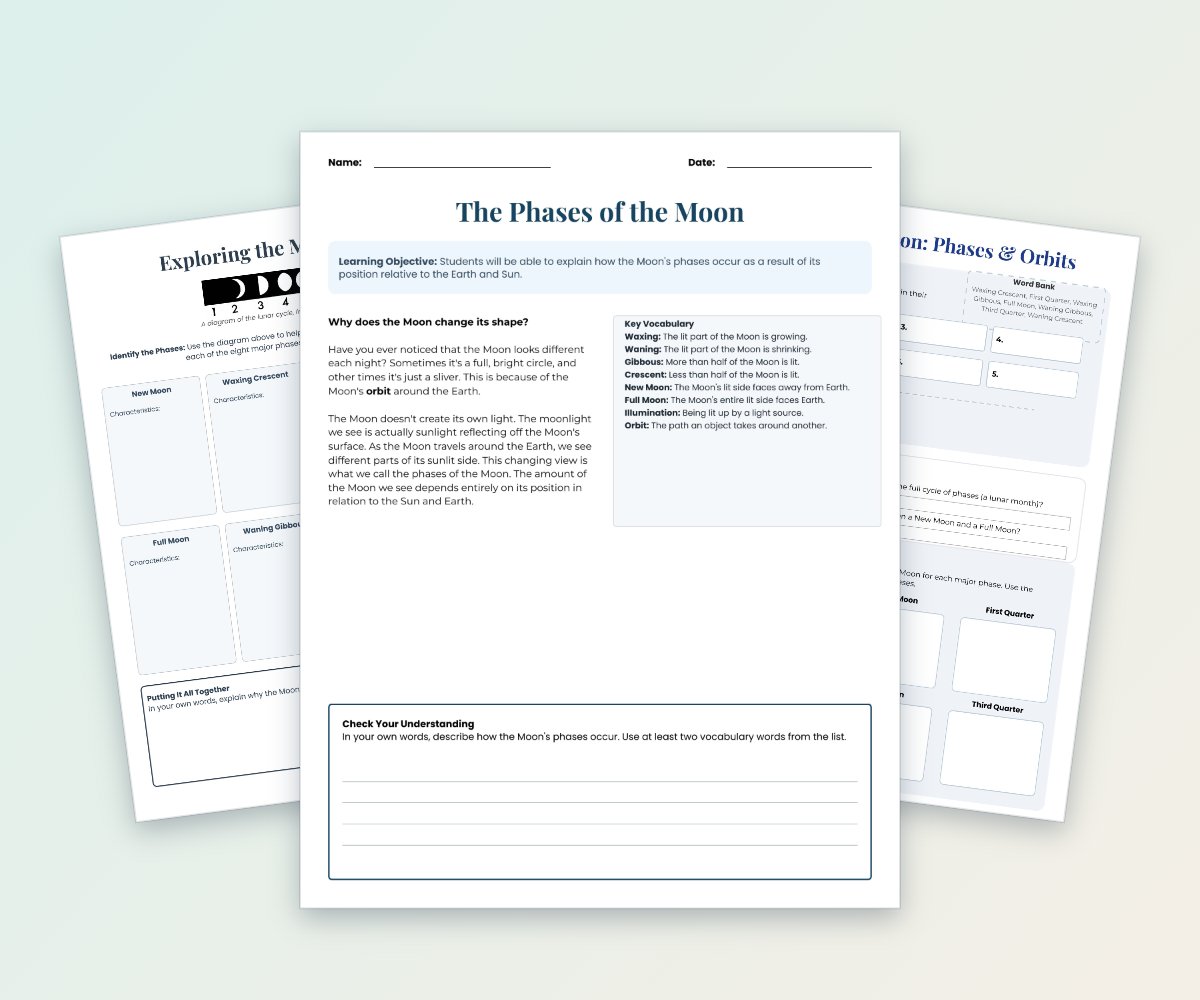
A four-page worksheet explaining how the Moon’s position relative to Earth and the Sun creates its phases.
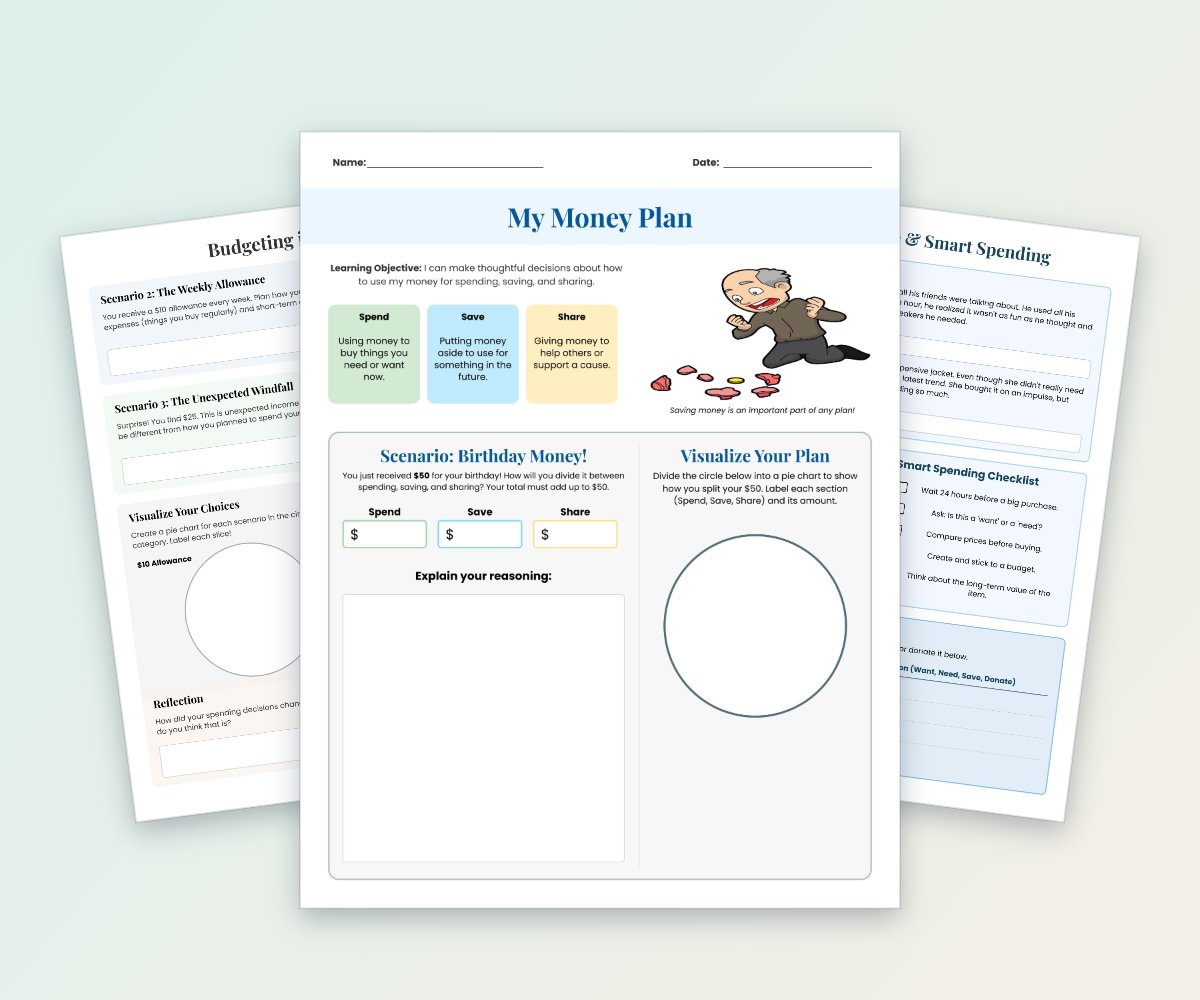
Students create spending, saving, and sharing plans using birthday money, an allowance, and an unexpected windfall.
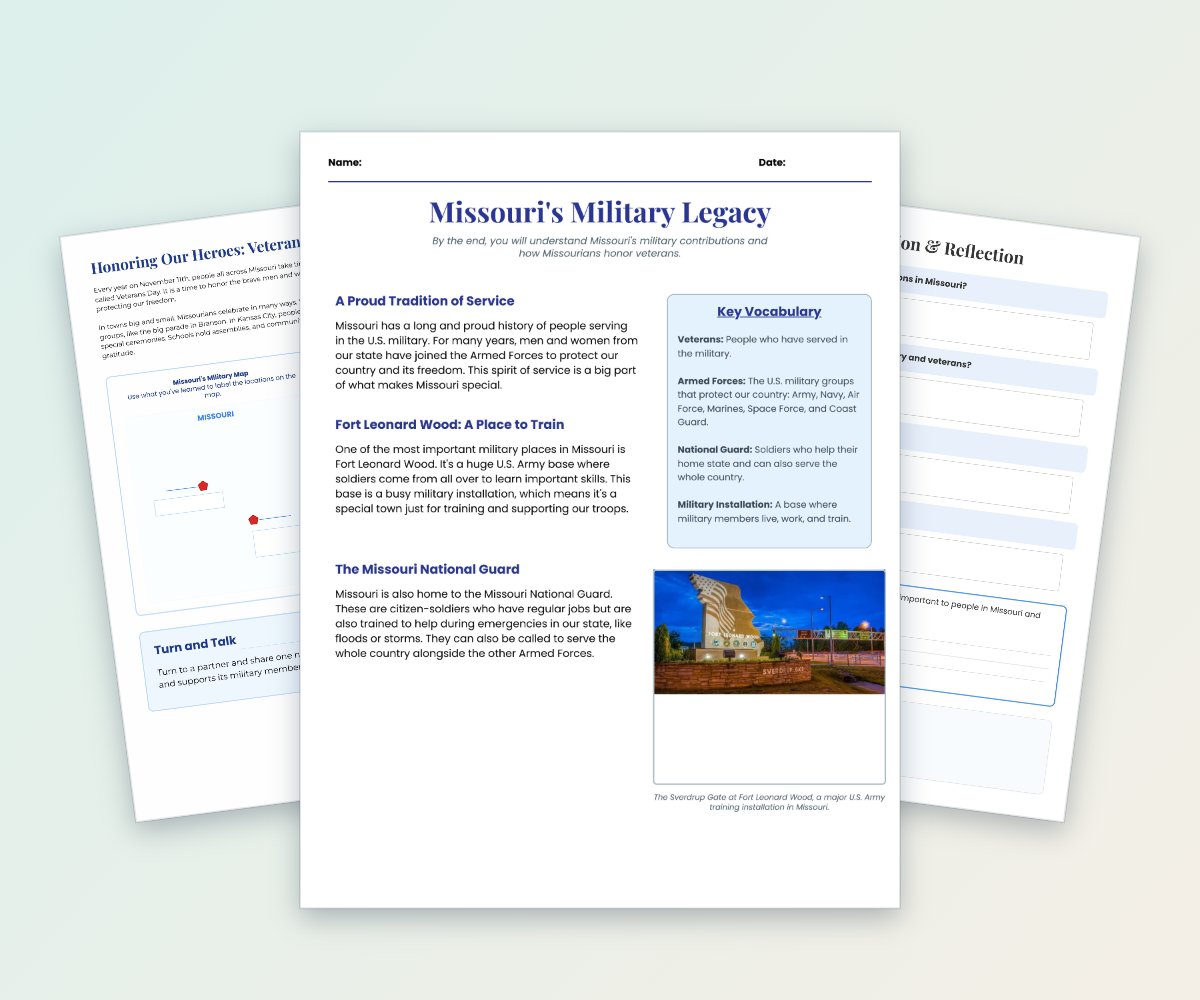
Students learn about Missouri’s military history, Fort Leonard Wood, the Missouri National Guard, and Veterans Day celebrations.
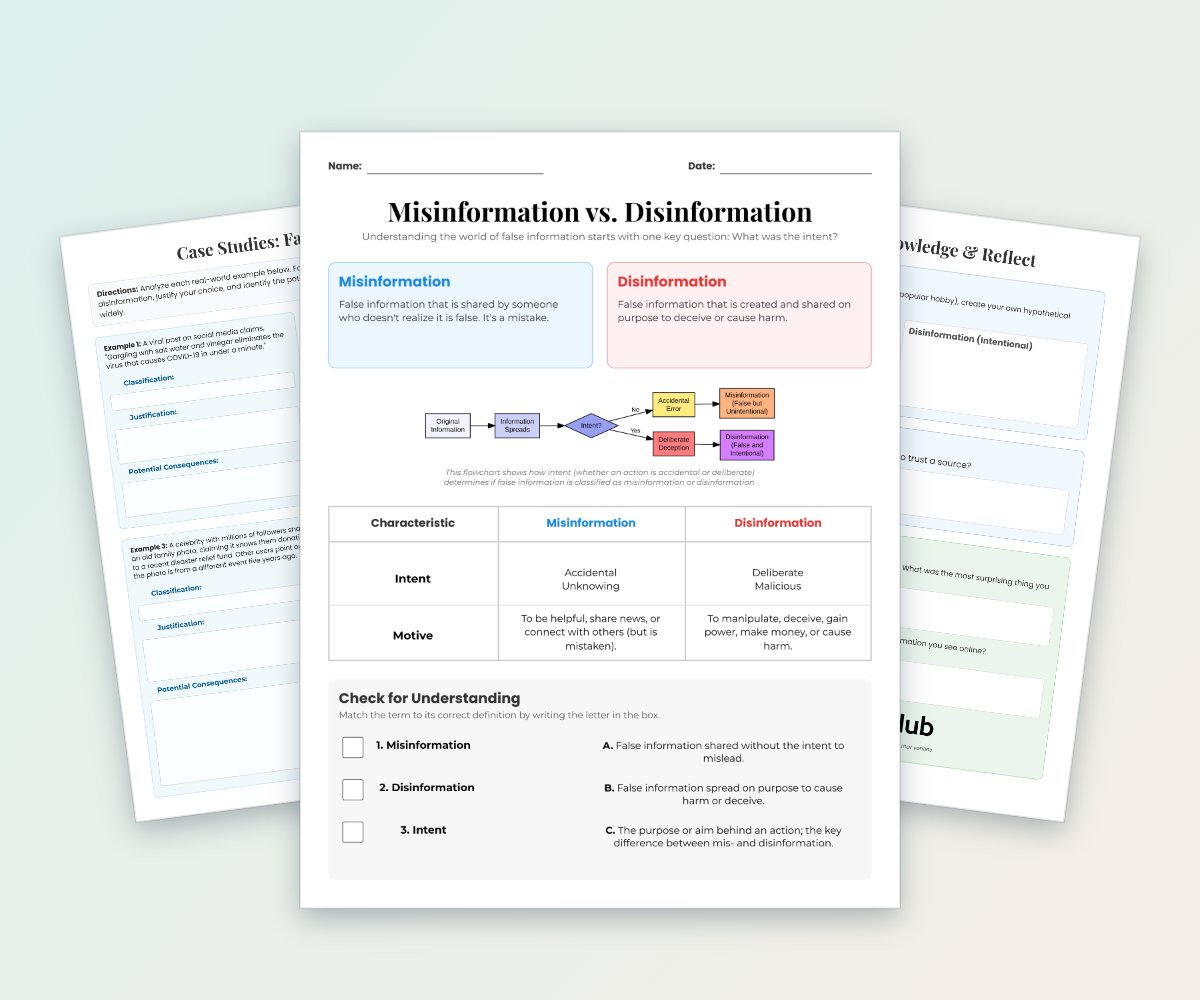
Students distinguish misinformation from disinformation by examining intent, motivation, and potential consequences.
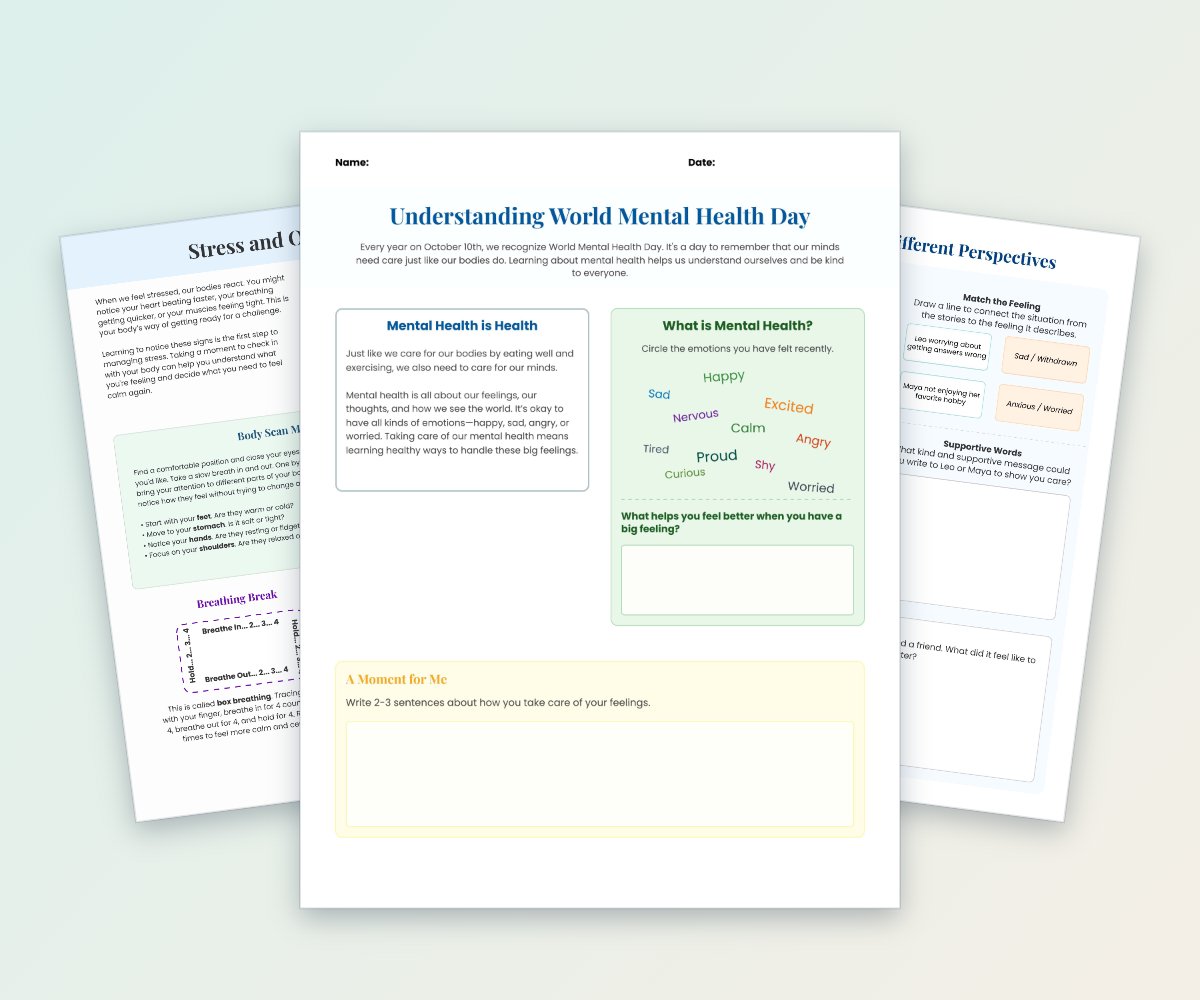
This five-page worksheet introduces mental health, emotions, stress responses, body awareness, and healthy coping strategies.
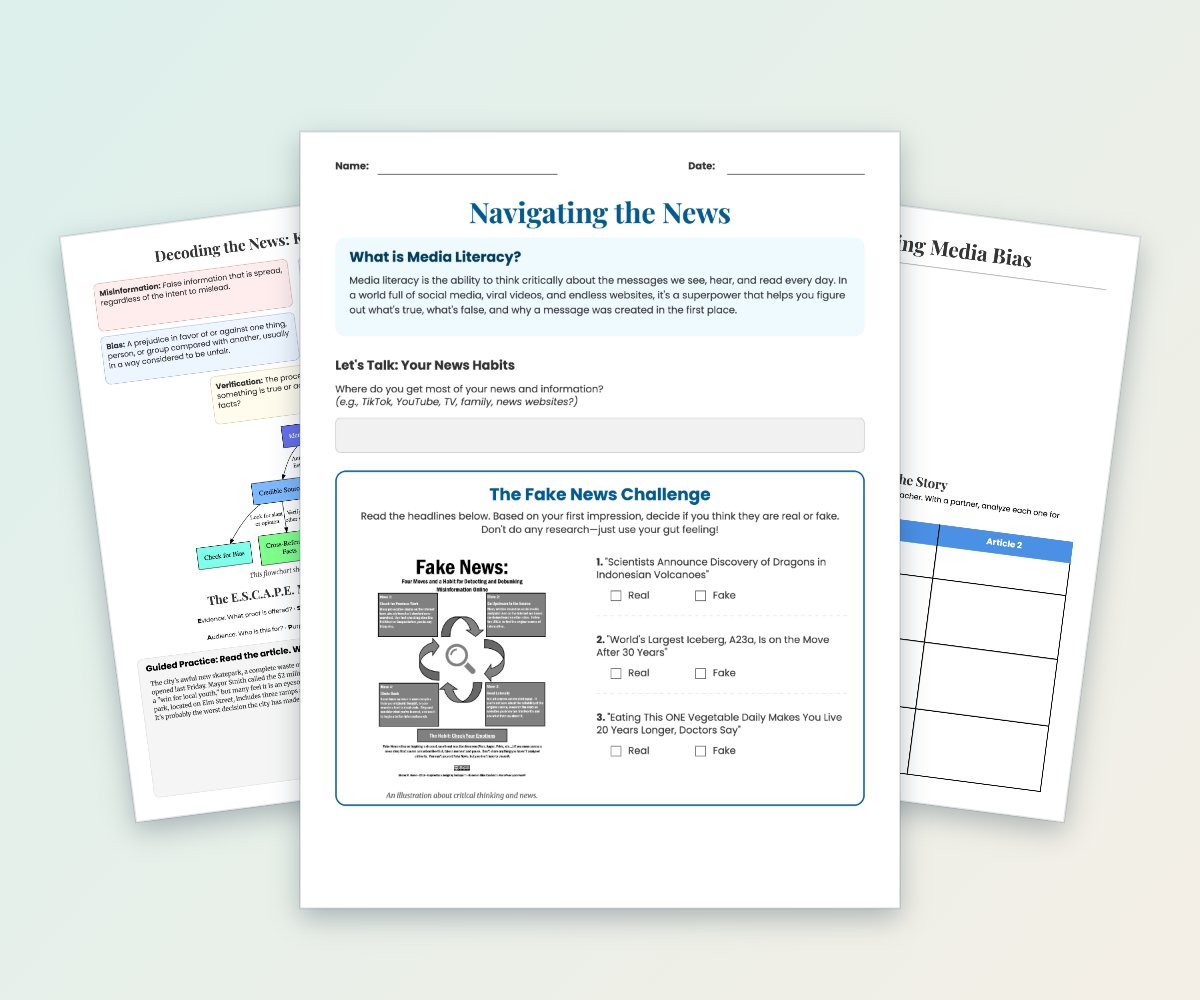
This four-page activity introduces media literacy through news habits, fake-news headline analysis, vocabulary, and source evaluation.
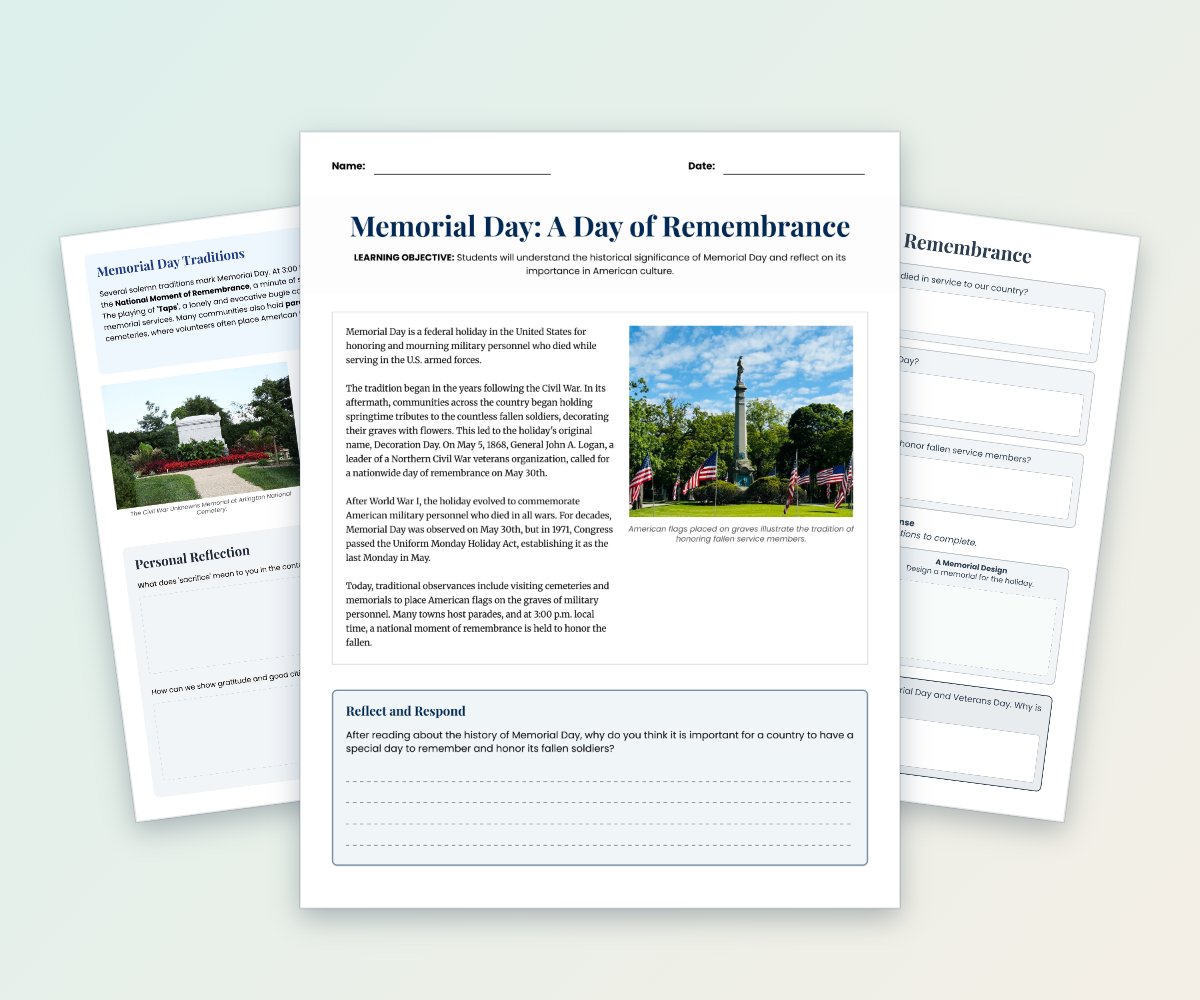
This three-page worksheet introduces students to the origins, historical significance, and traditions of Memorial Day.
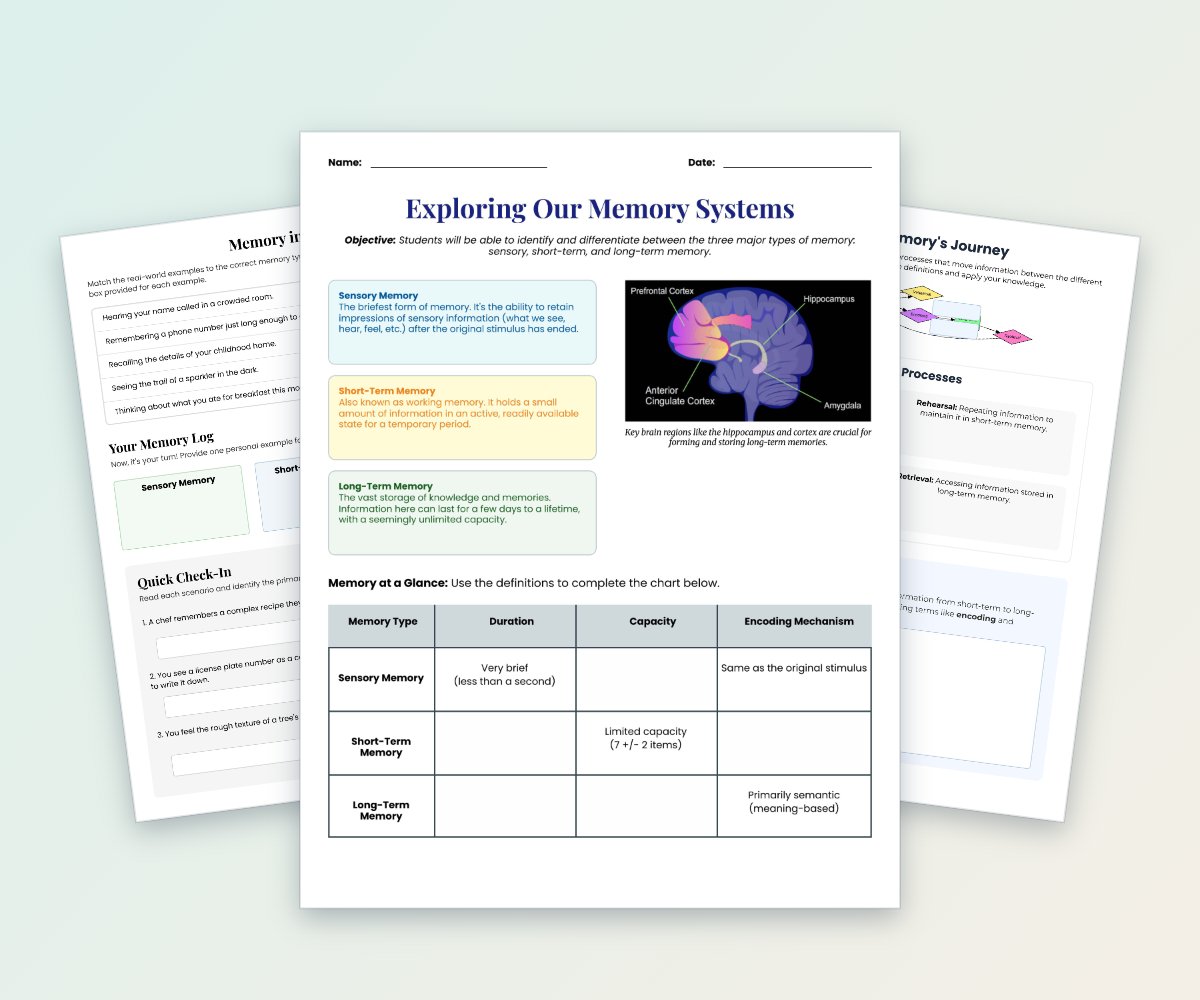
This four-page worksheet introduces sensory, short-term, and long-term memory.
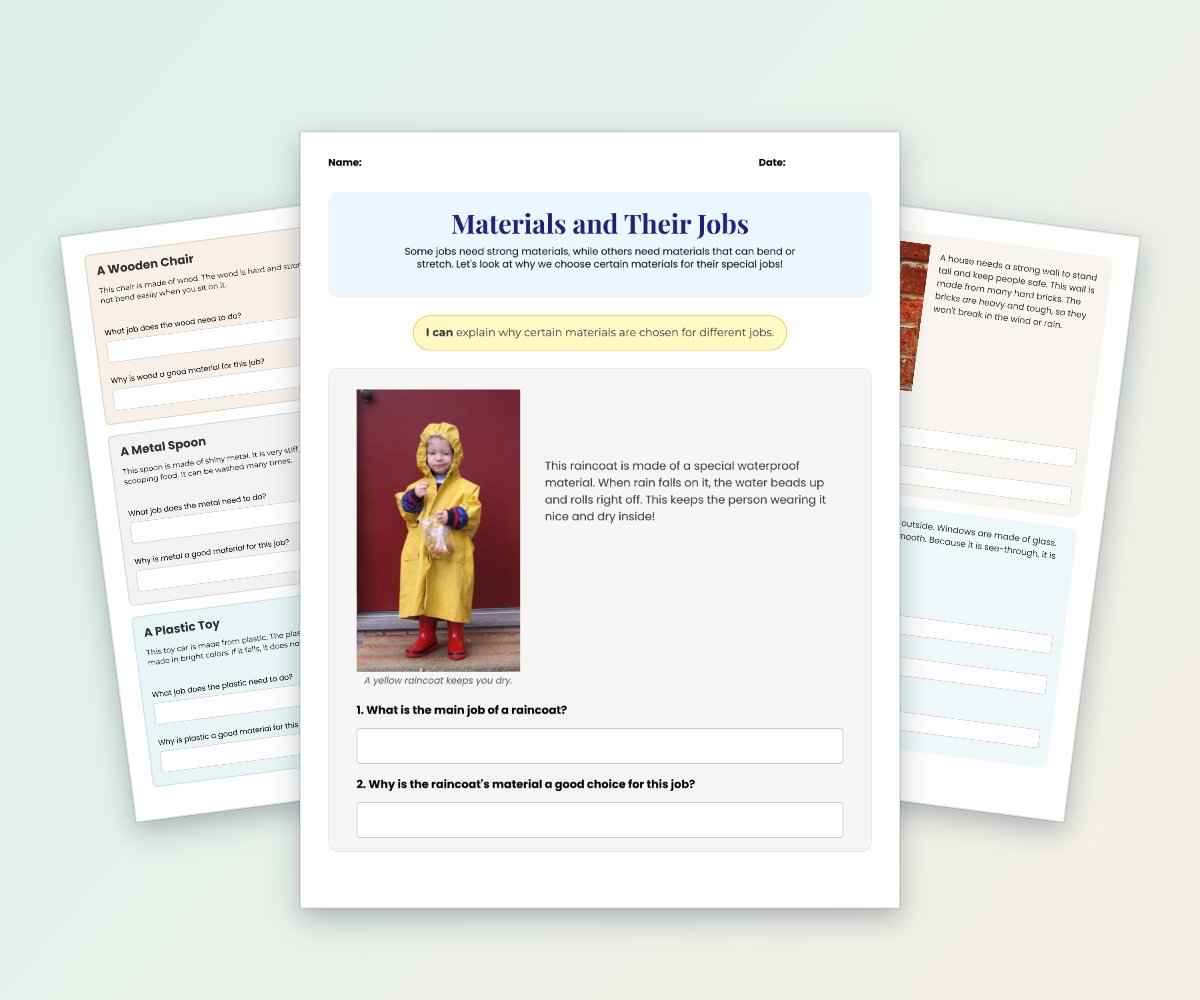
Students explore why materials such as wood, metal, plastic, glass, paper, rubber, cotton, and bricks are chosen for specific jobs.
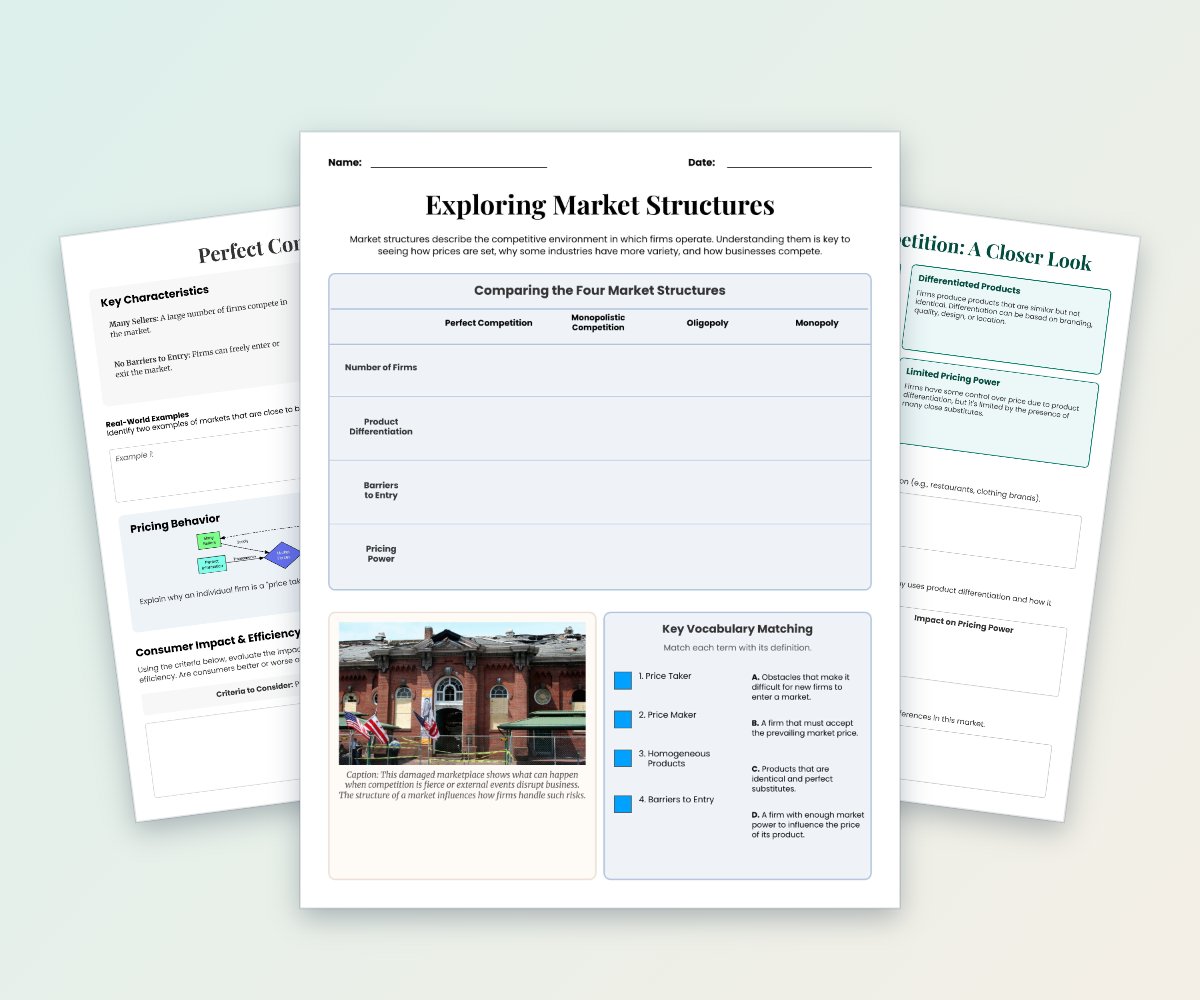
This six-page economics worksheet introduces perfect competition, monopolistic competition, oligopoly, and monopoly.
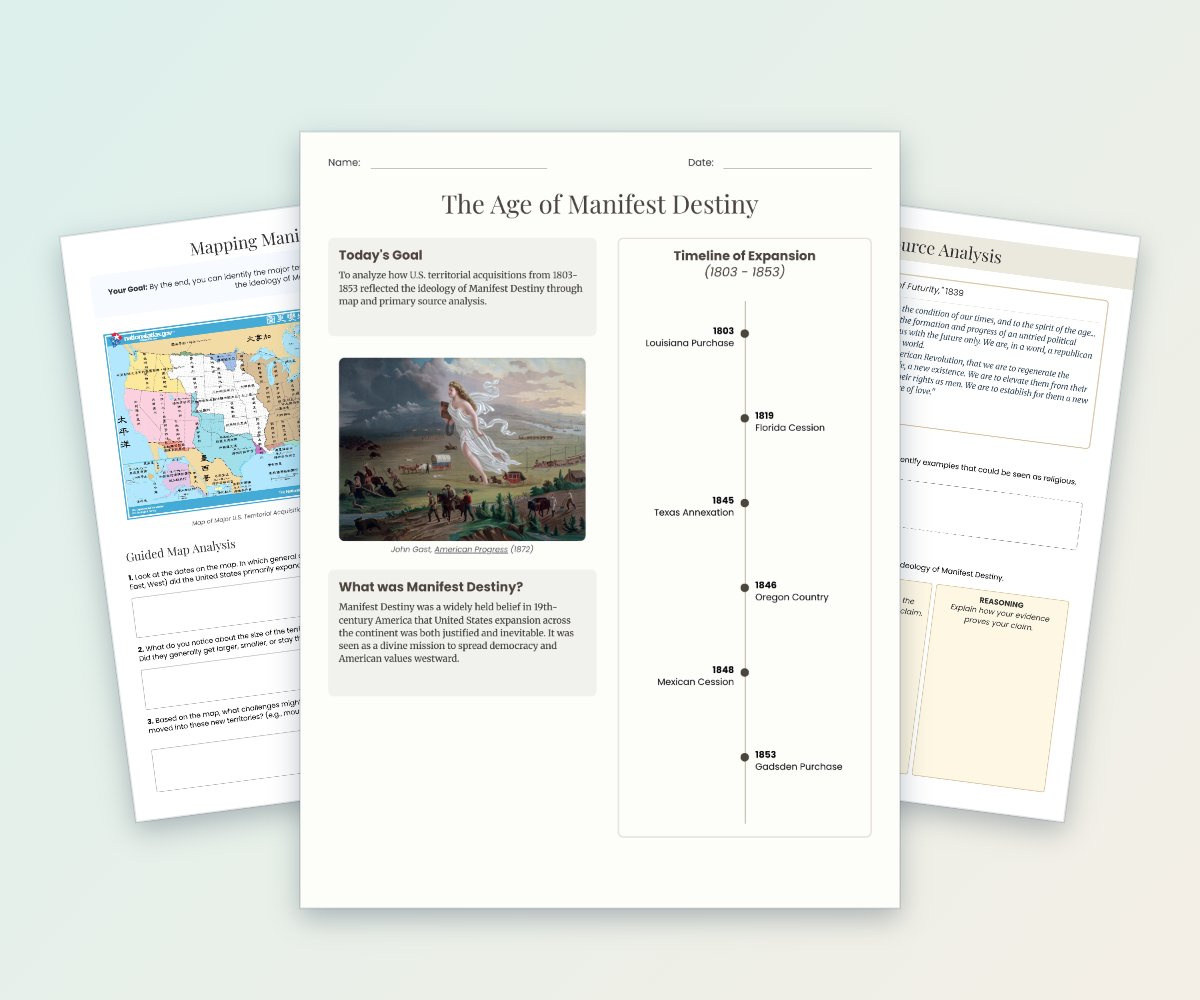
Students examine U.S.
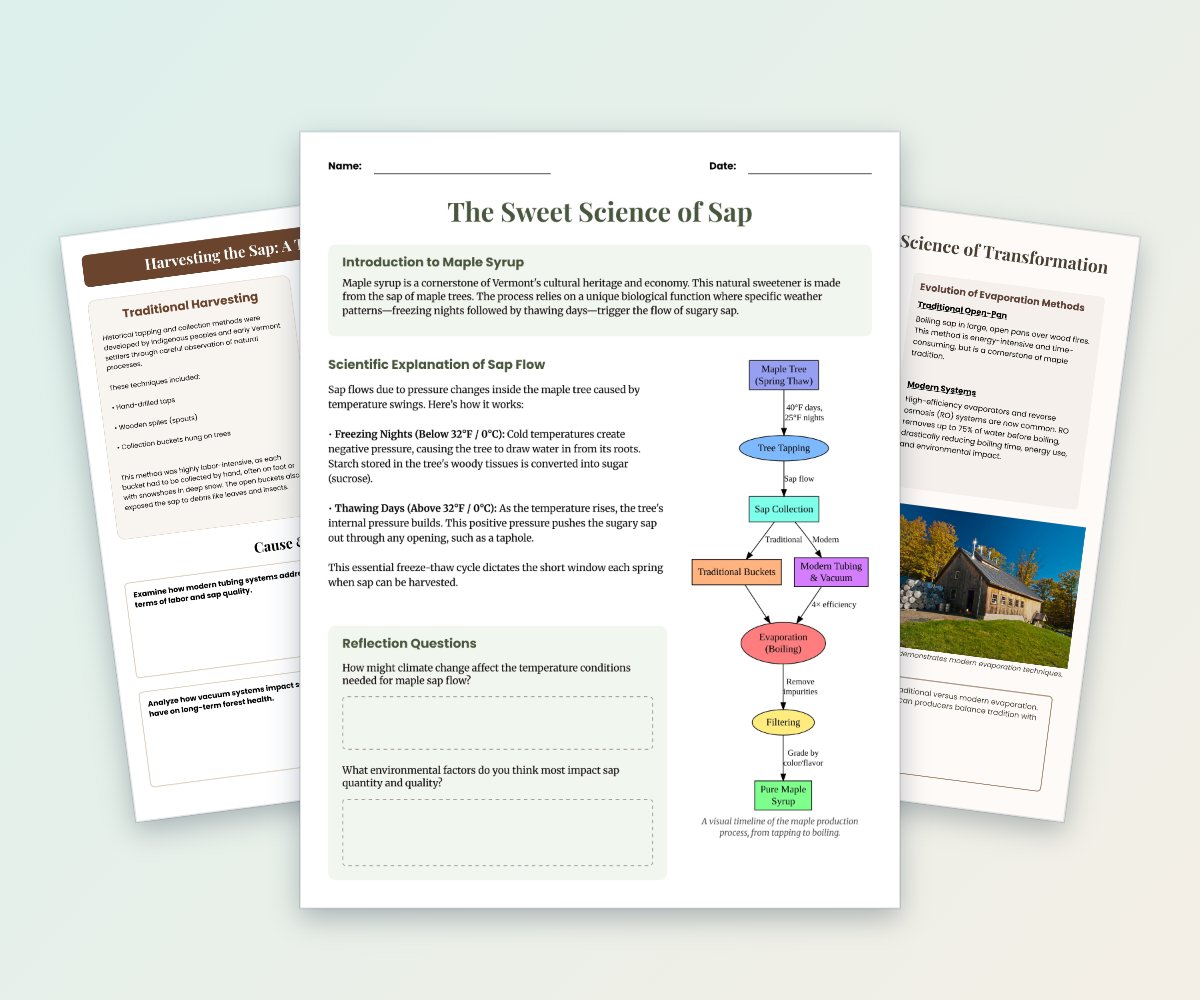
Students explore the science of maple sap flow, including freeze-thaw cycles, pressure changes, and sugar production.
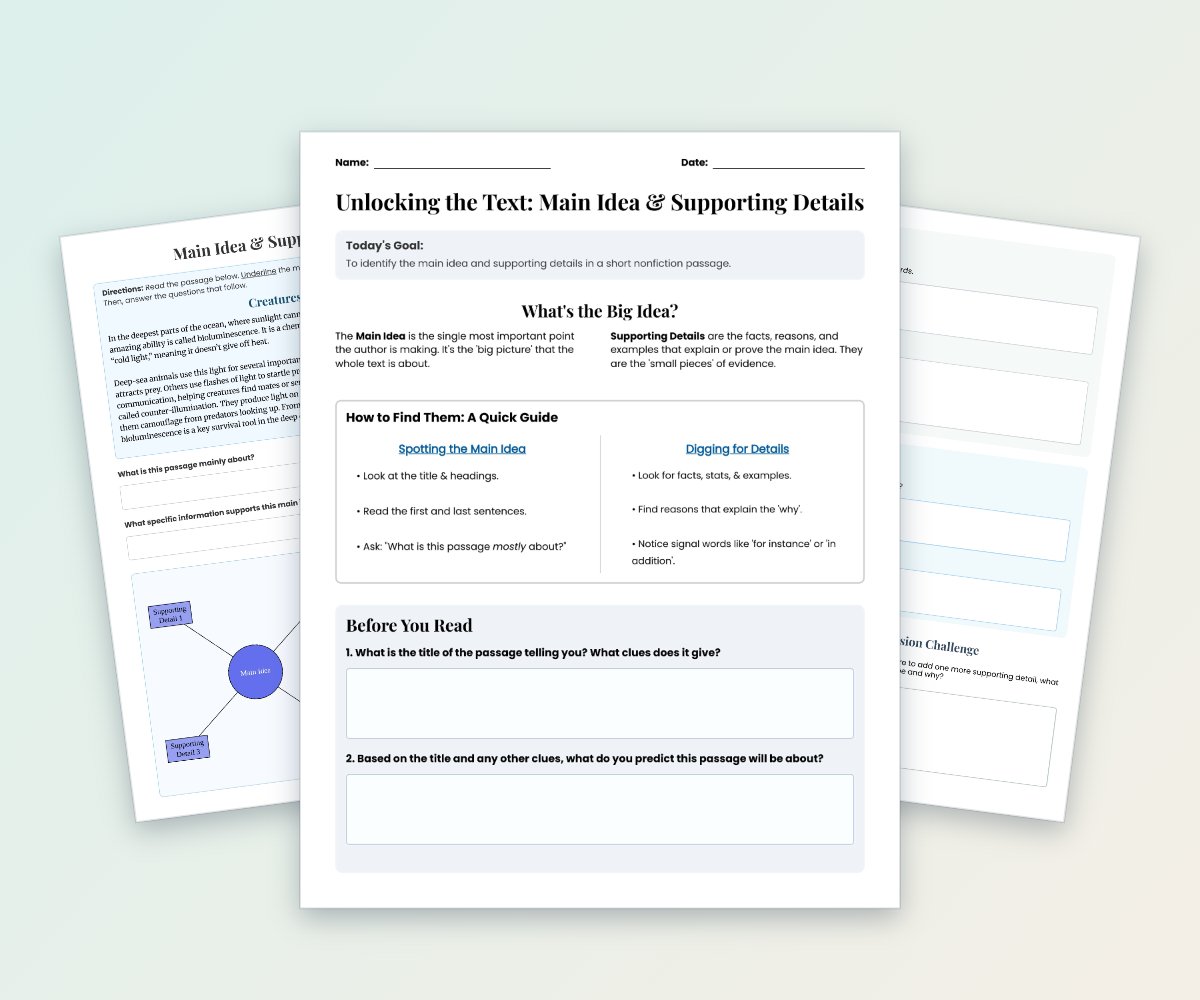
This three-page worksheet teaches students to identify the main idea and supporting details in a nonfiction passage.
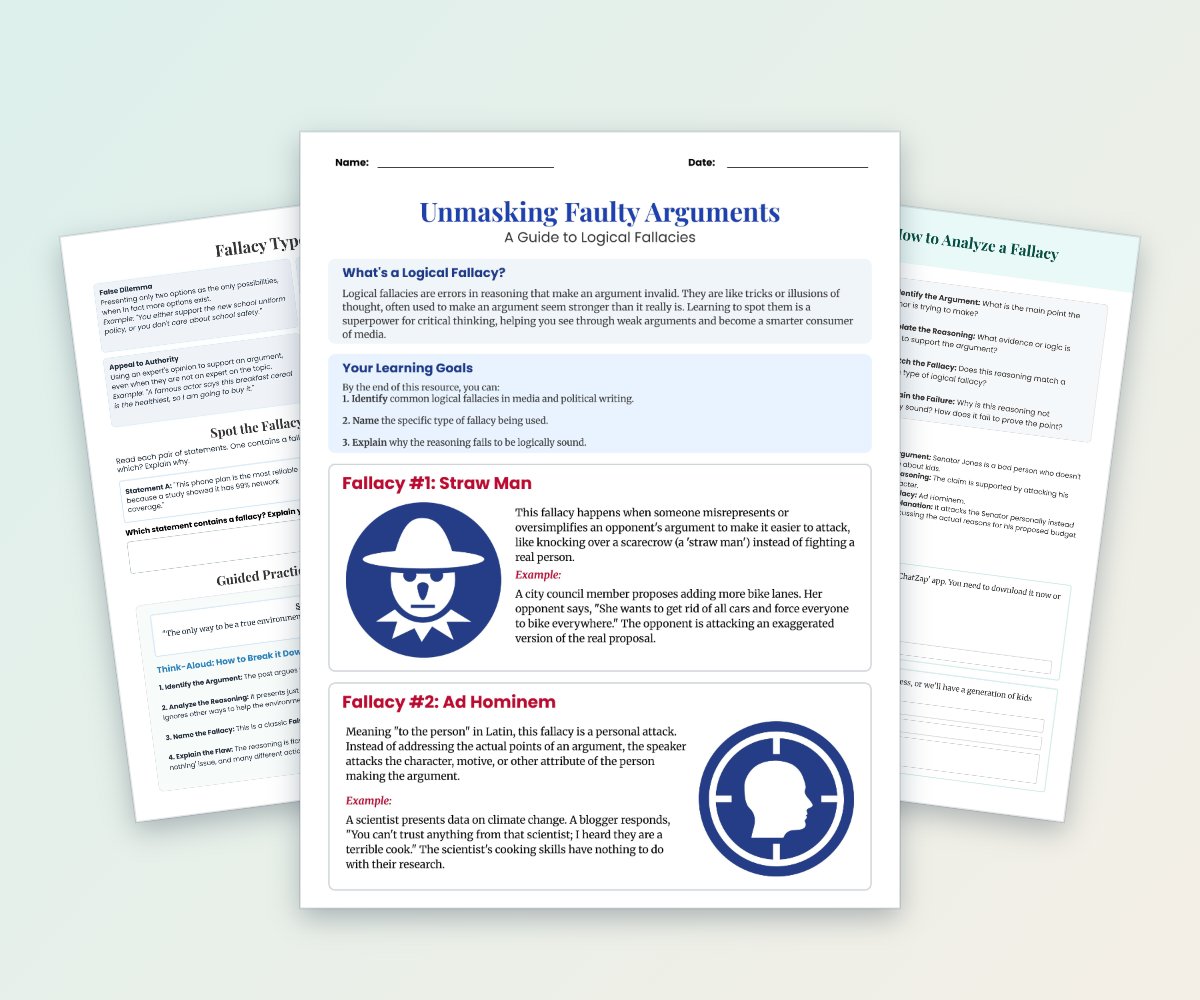
This four-page resource introduces common logical fallacies, including straw man, ad hominem, false dilemma, appeal to authority, bandwagon, and Texas sharpshooter.
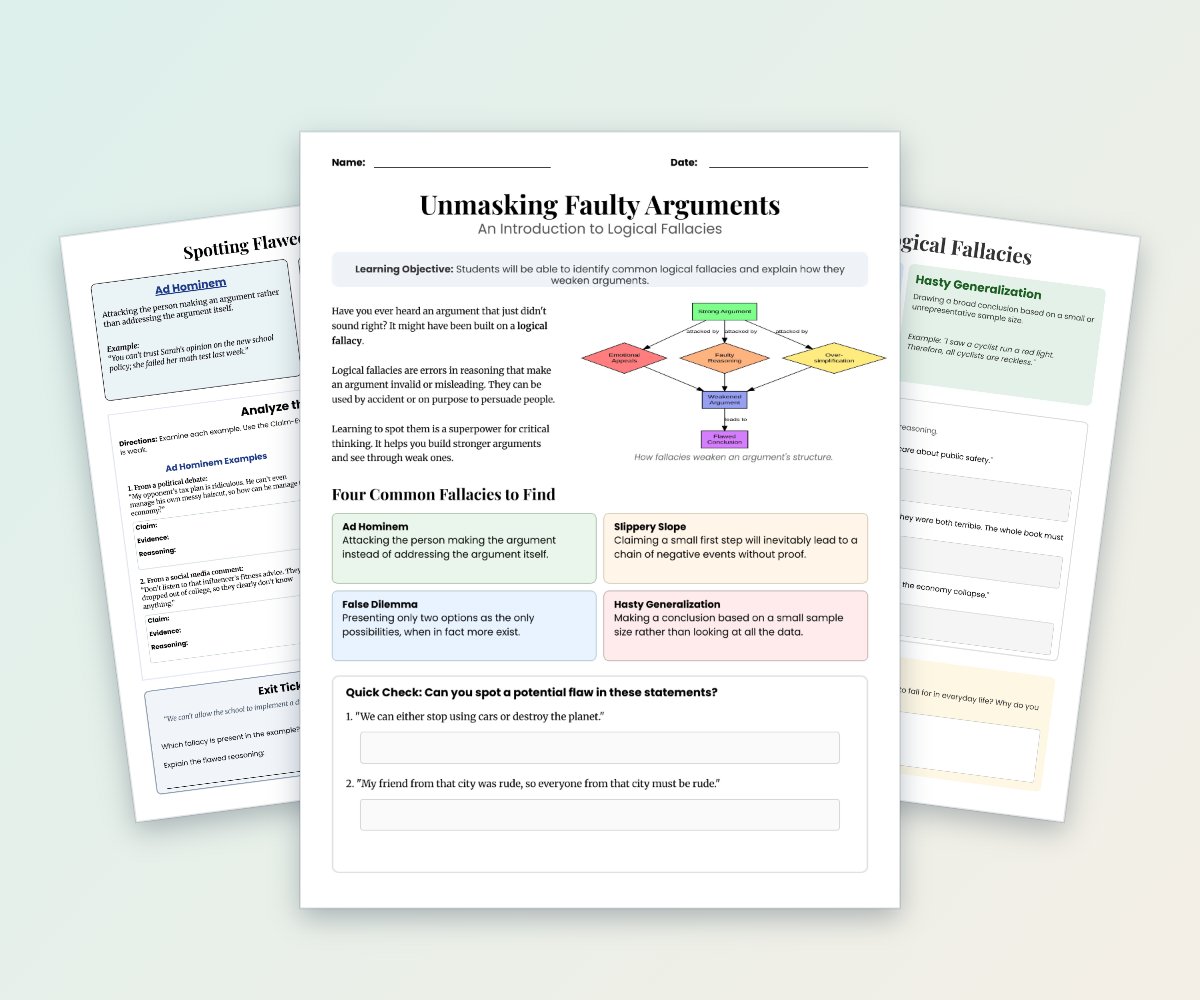
This four-page worksheet introduces ad hominem, false dilemma, slippery slope, and hasty generalization fallacies.
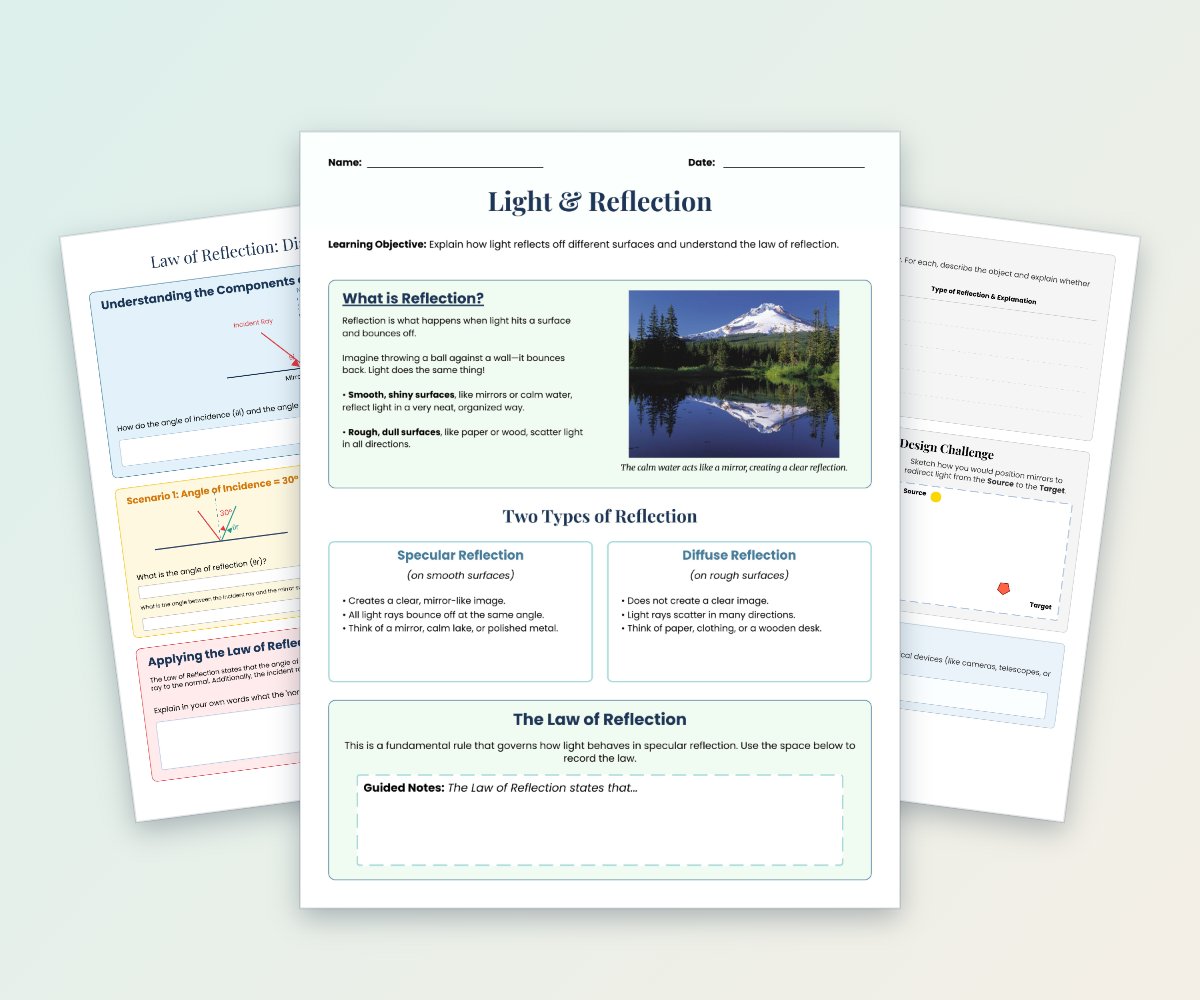
This three-page worksheet introduces specular and diffuse reflection, the law of reflection, and key terminology such as incident ray and normal line.
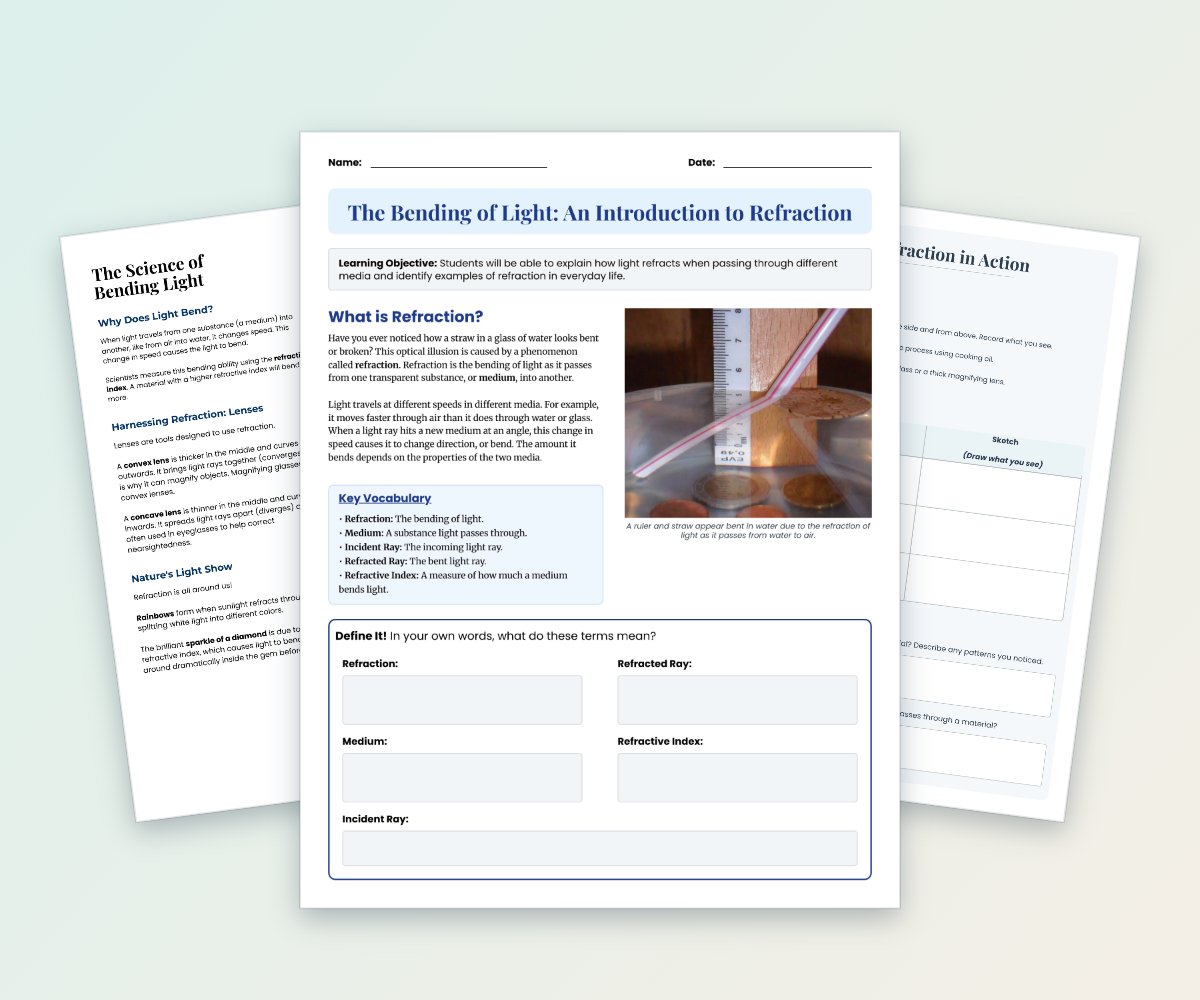
This four-page worksheet introduces light refraction, including how light bends between media and how refractive index affects bending.
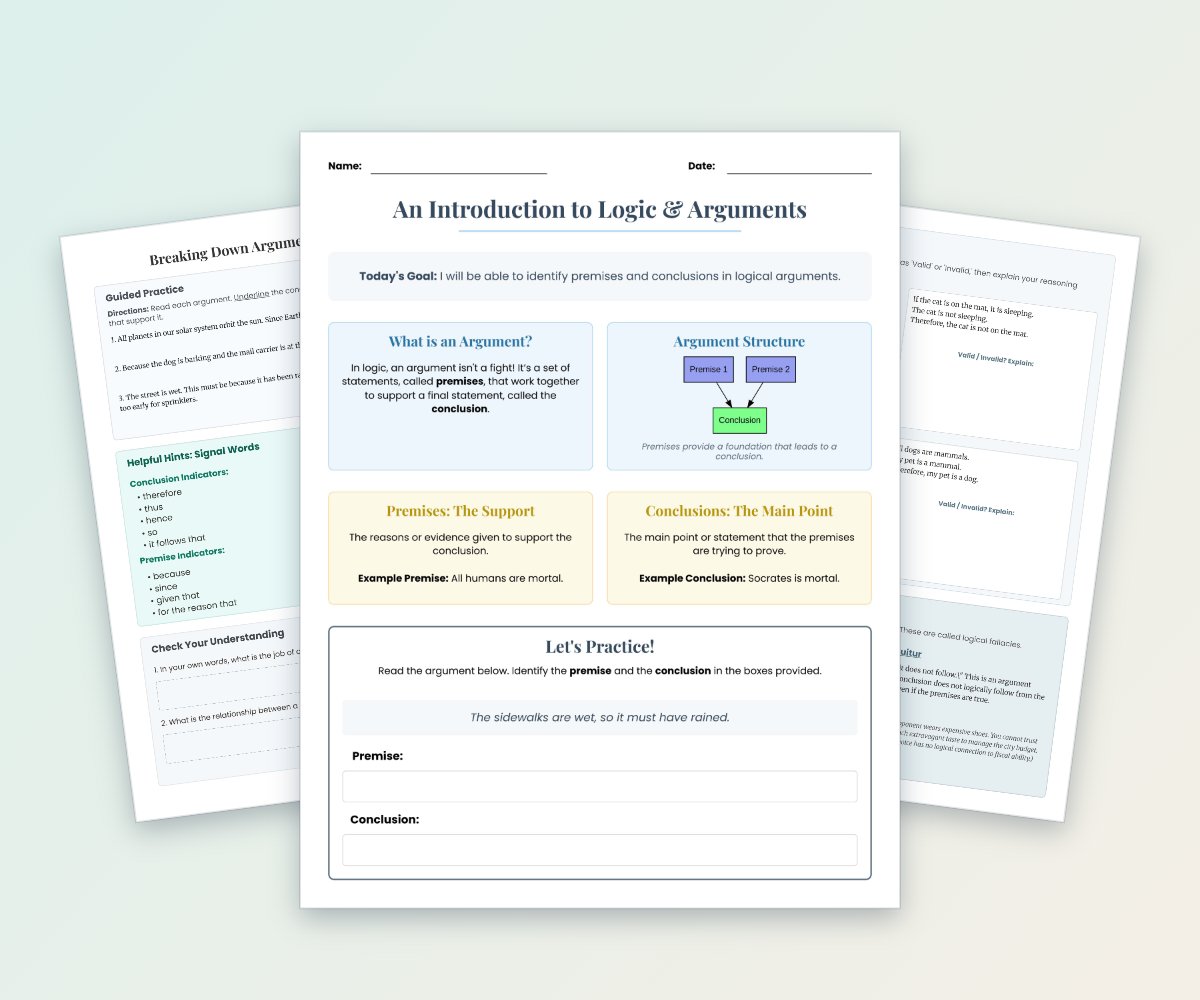
Introduce students to logical arguments by identifying premises, conclusions, signal words, and argument structure.
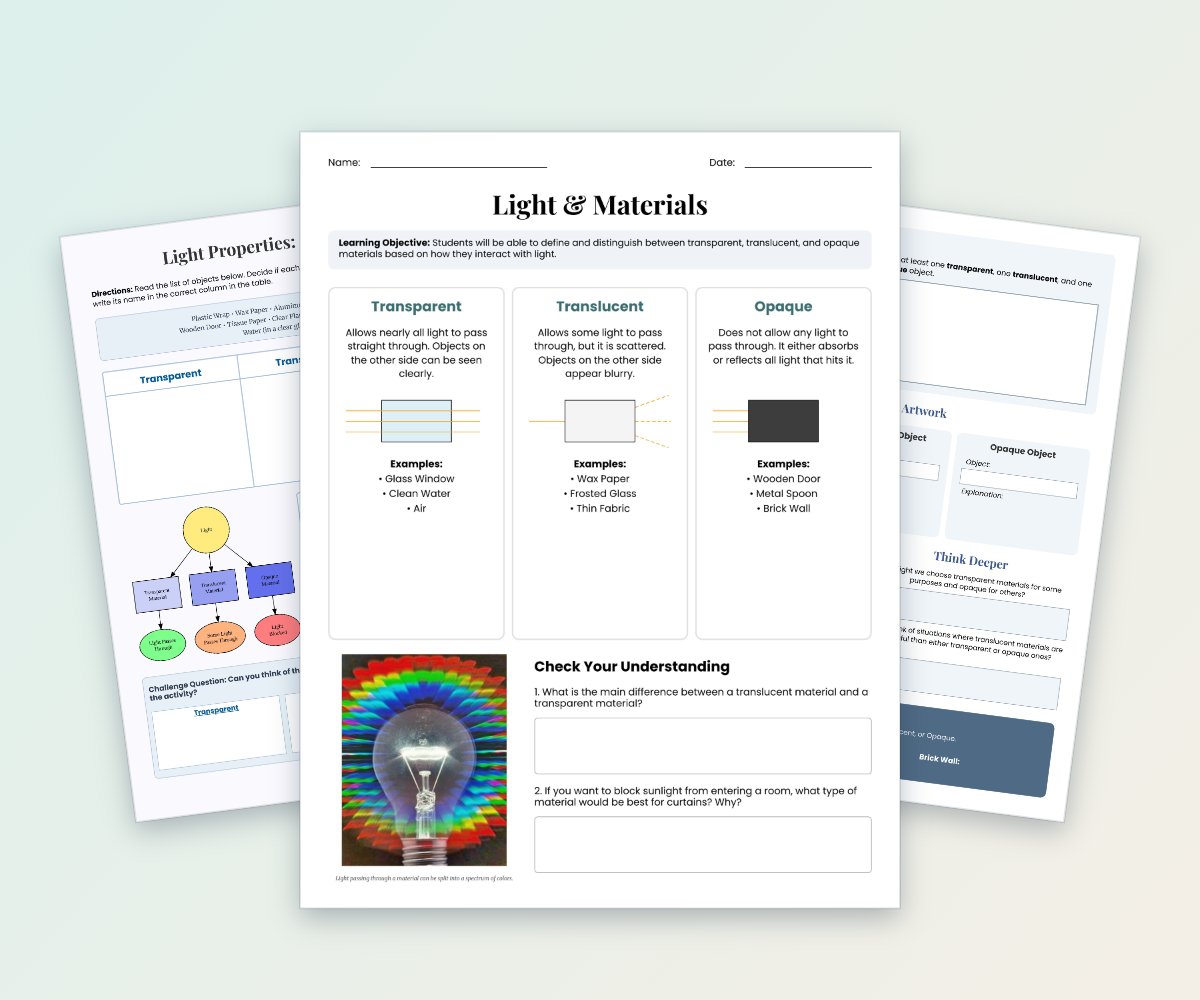
Students learn how transparent, translucent, and opaque materials interact with light.
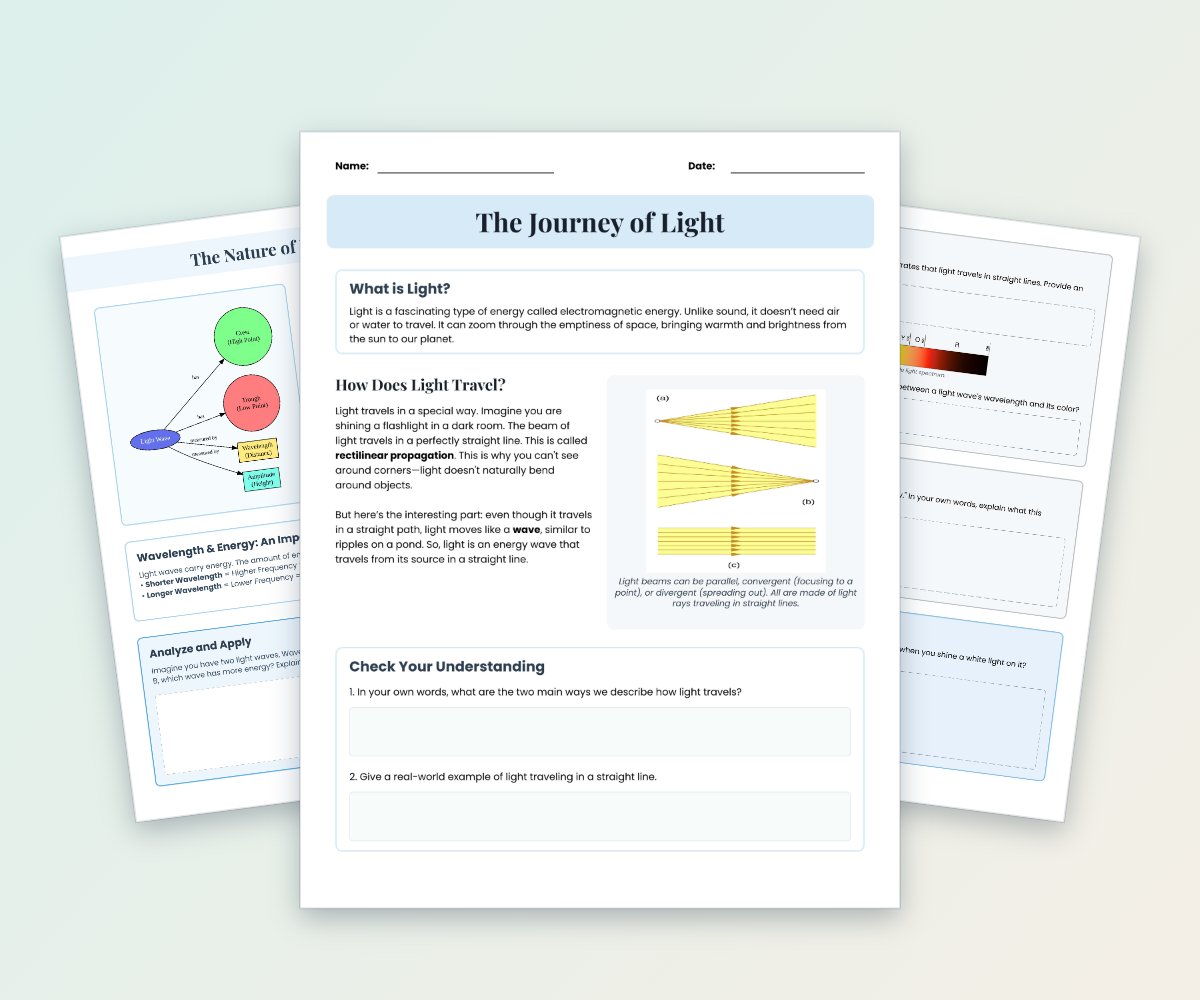
This three-page worksheet introduces light as electromagnetic energy and explains rectilinear propagation, light rays, wave properties, and the visible spectrum.
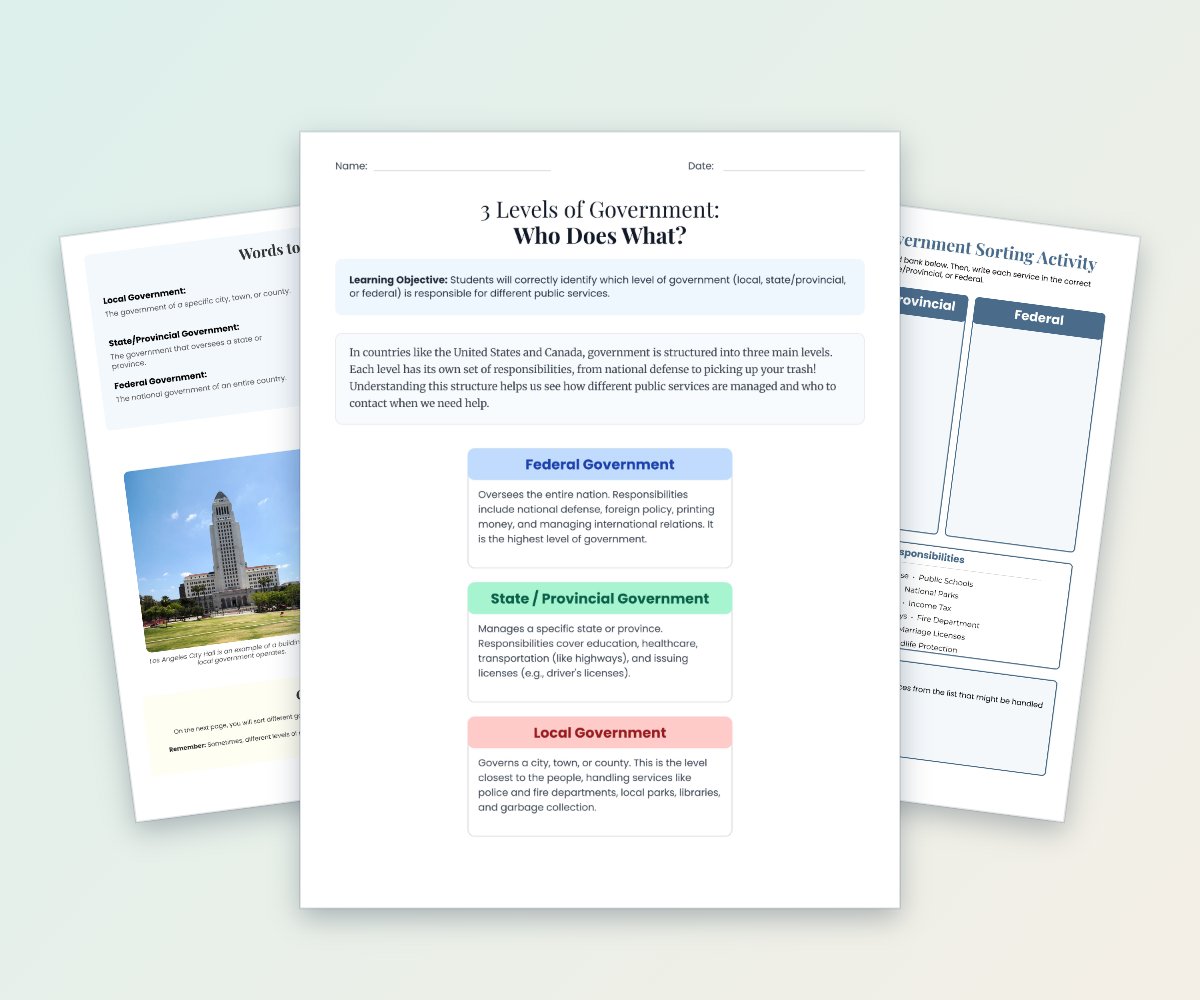
This four-page resource introduces local, state or provincial, and federal government responsibilities through clear explanations, vocabulary, examples, and a sorting activity.
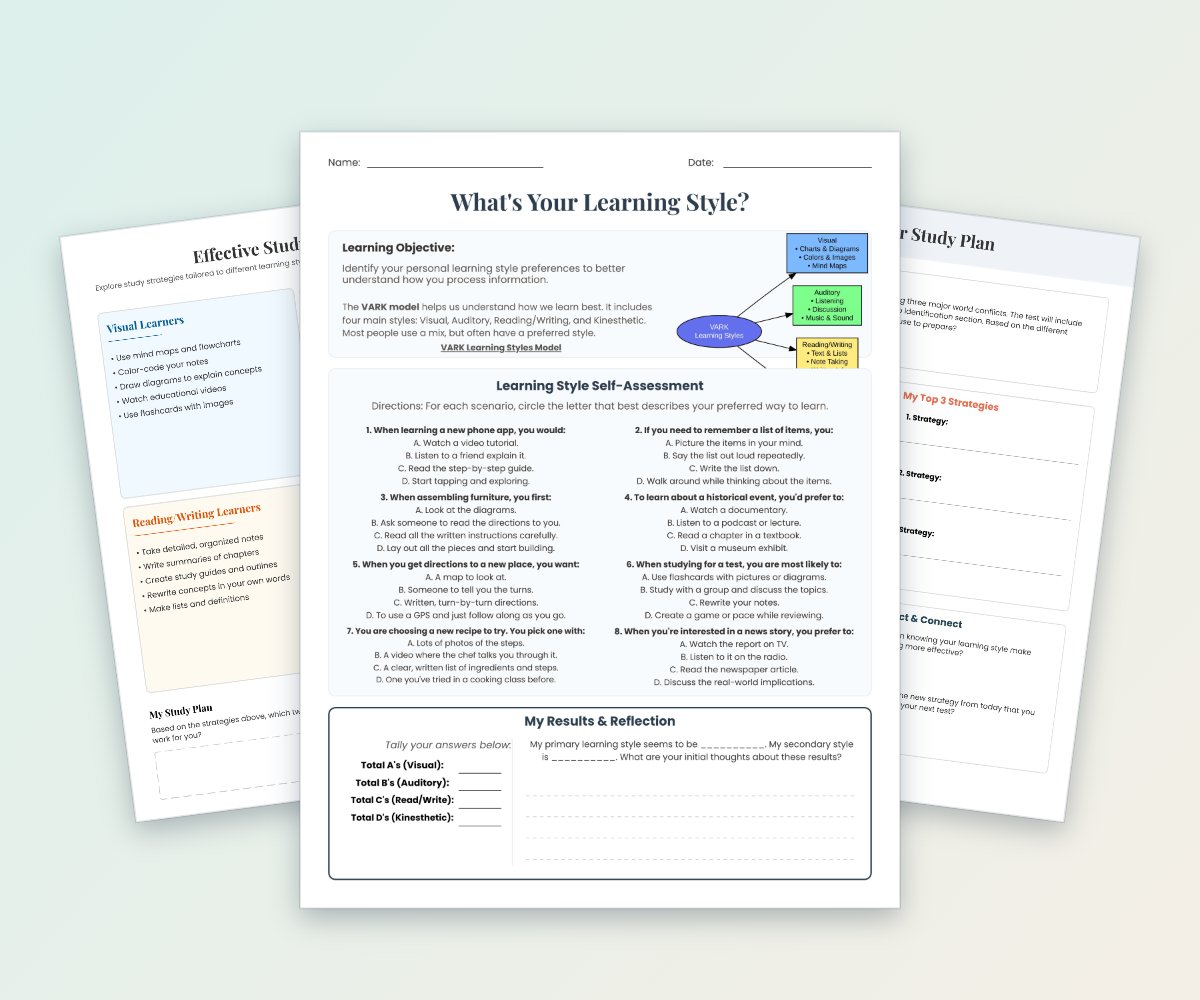
Students explore Visual, Auditory, Reading/Writing, and Kinesthetic learning preferences through an eight-question self-assessment.
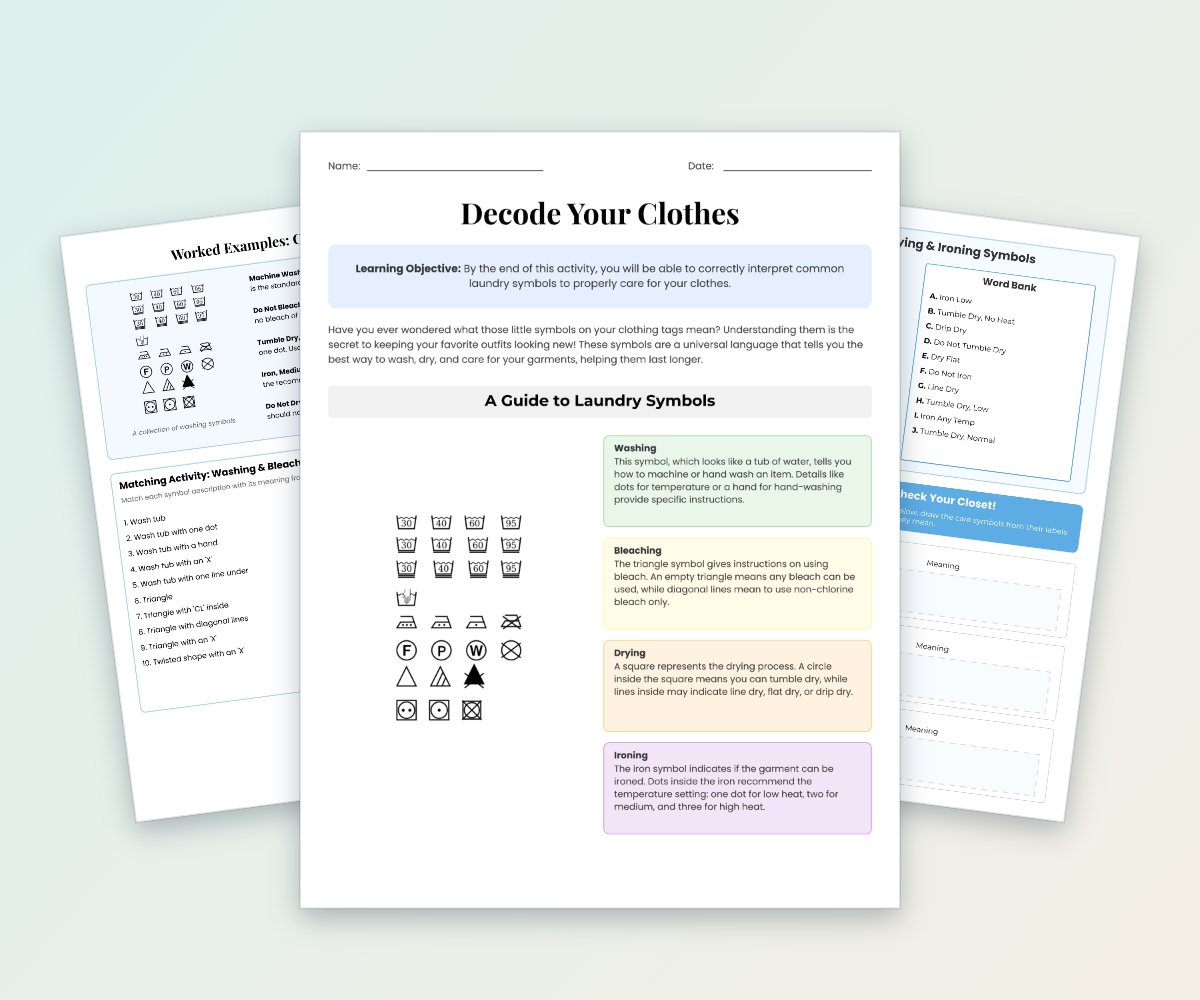
This four-page resource introduces common washing, bleaching, drying, ironing, and dry-cleaning symbols.
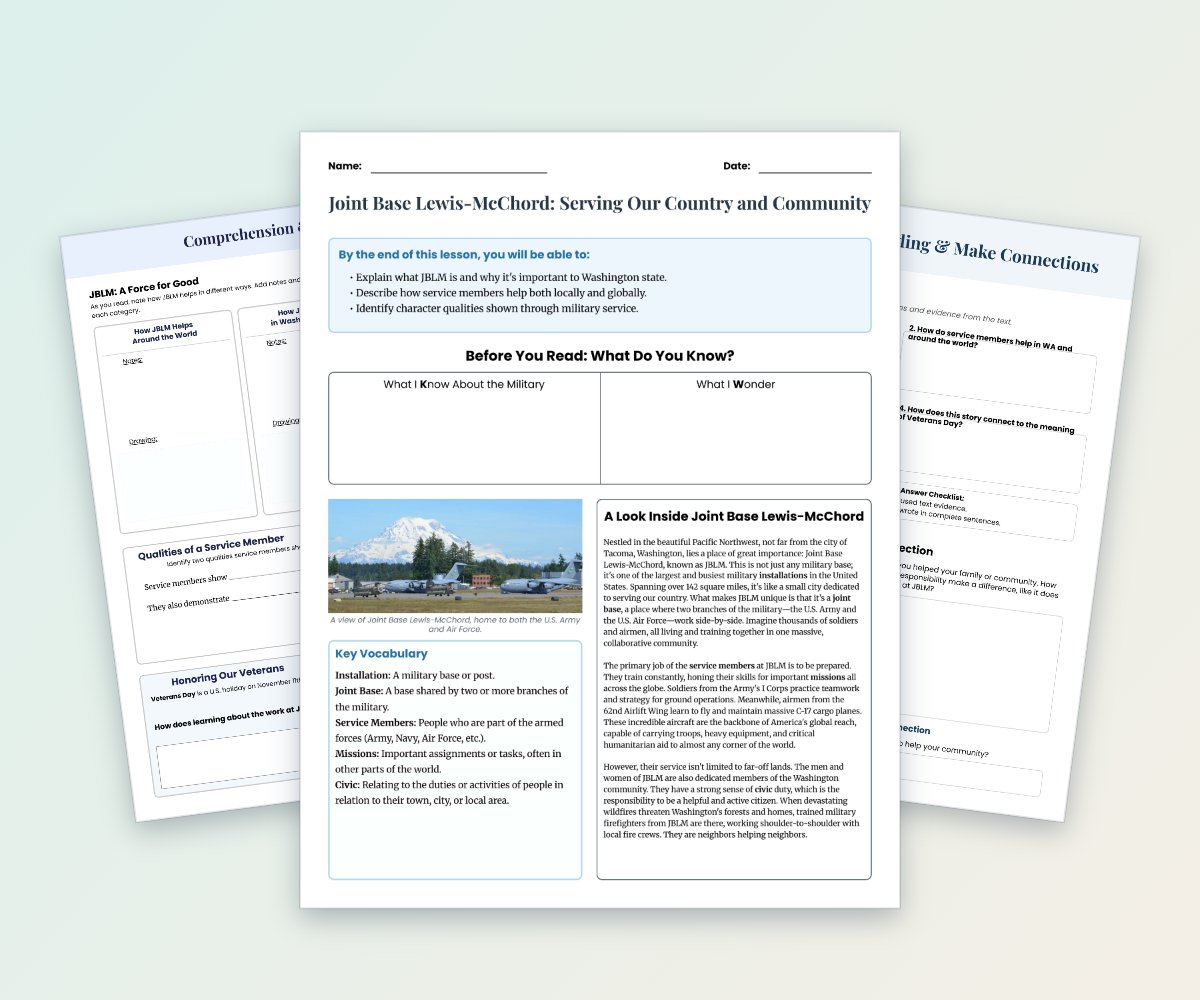
Students learn about Joint Base Lewis-McChord, its Army and Air Force missions, and its importance to Washington communities.
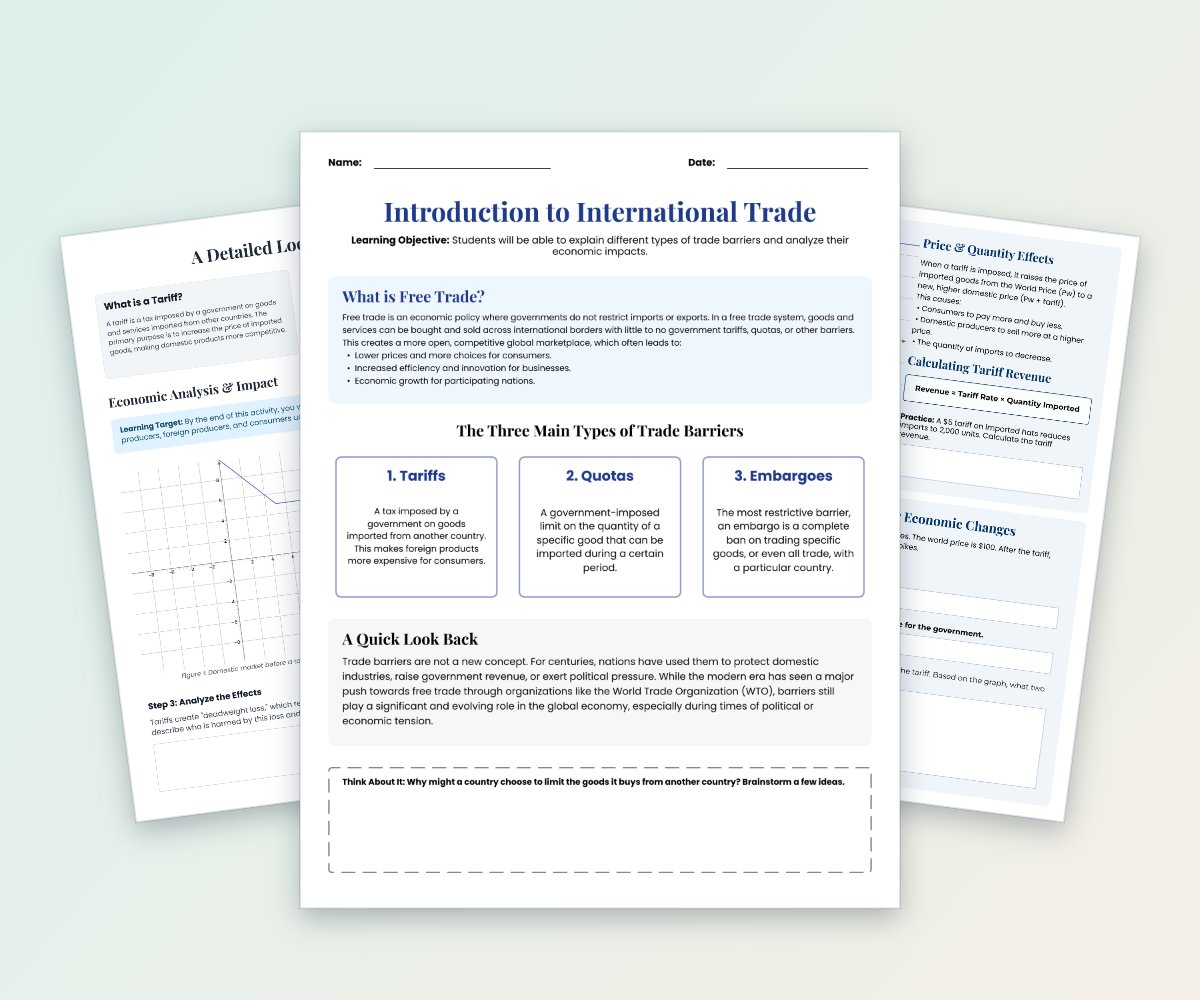
This six-page resource introduces free trade, tariffs, quotas, and embargoes through explanatory text and guided thinking prompts.
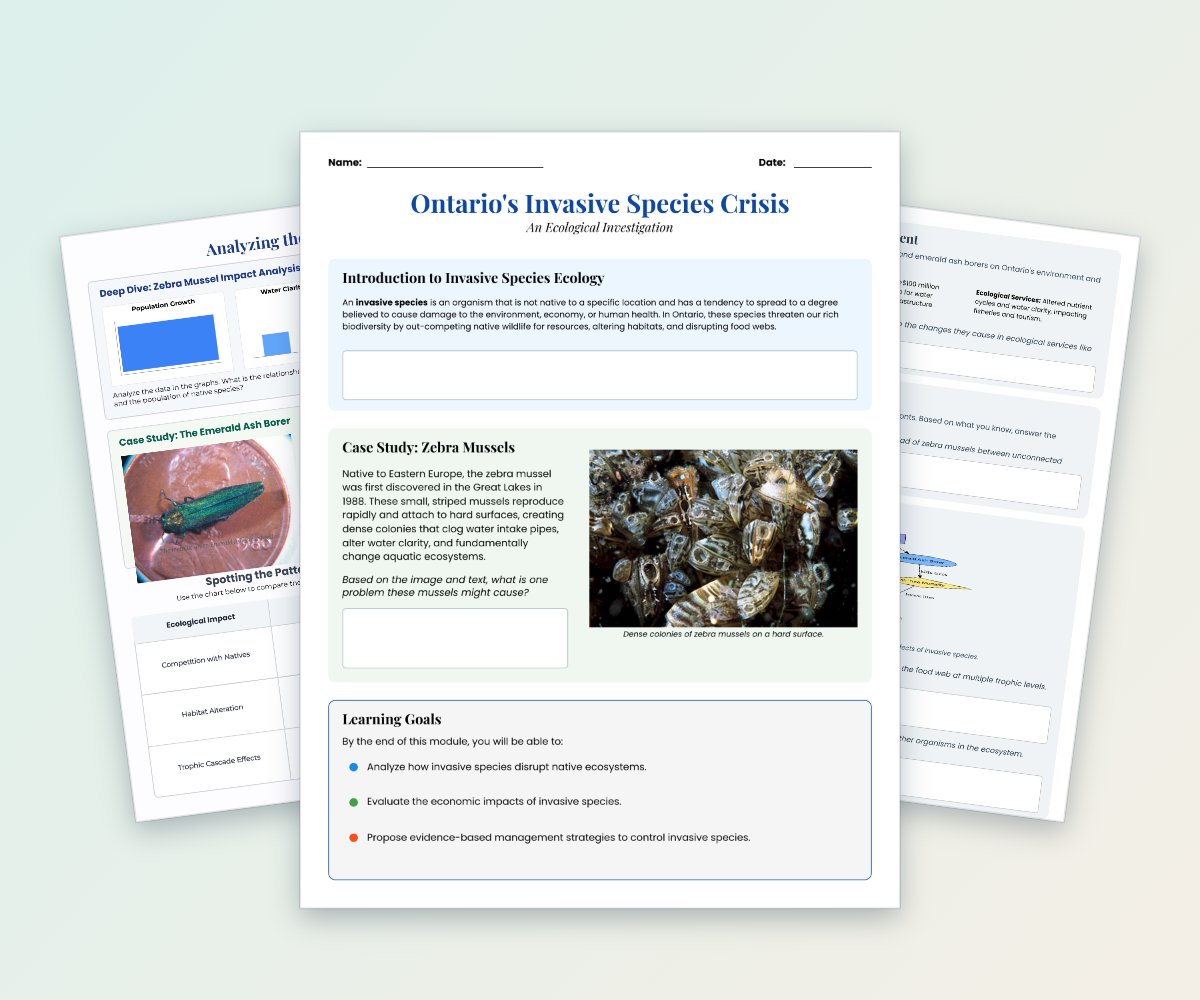
Students investigate zebra mussels and emerald ash borers through informational text, ecological data analysis, comparative questions, and economic impact evidence.
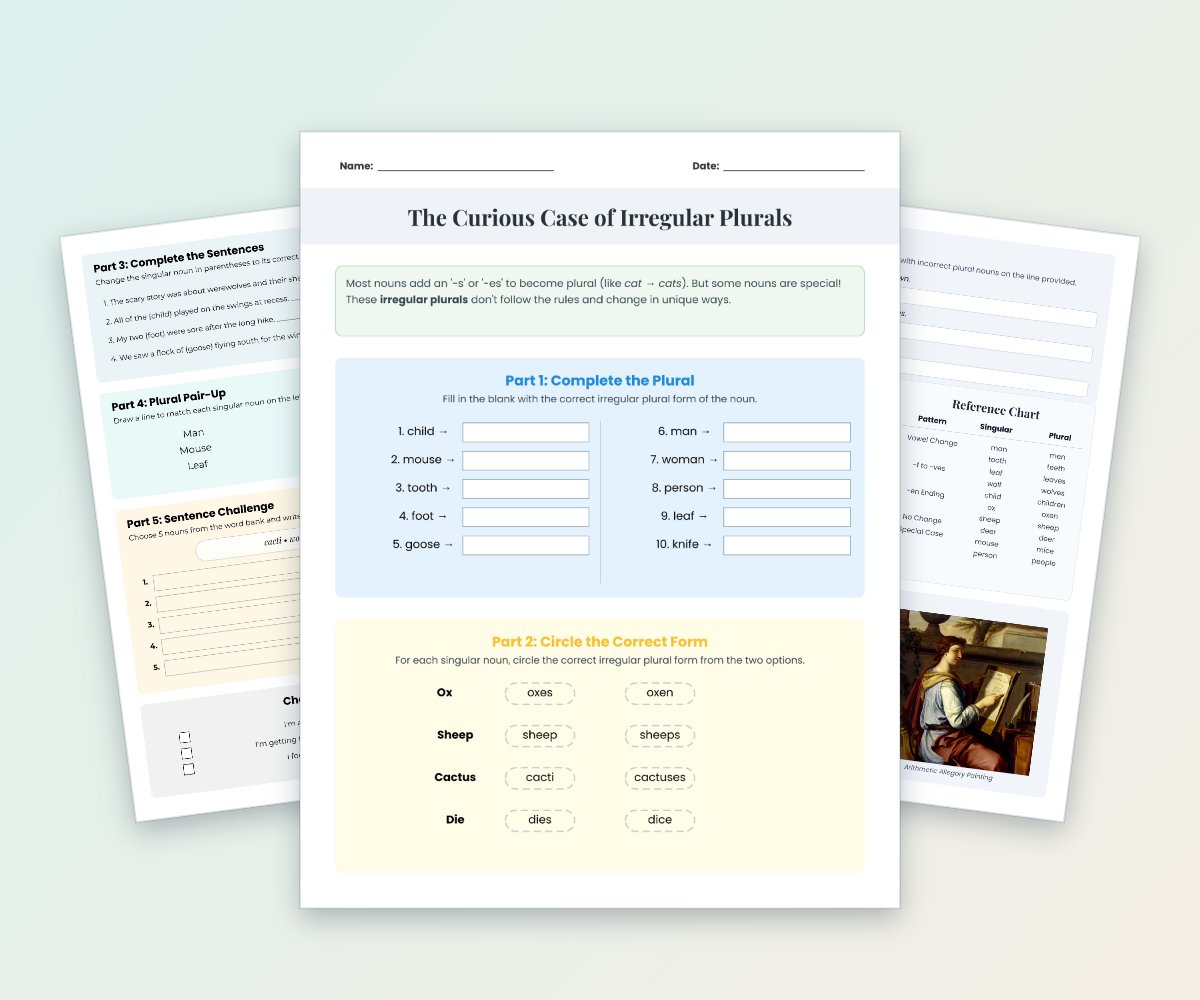
Students practice forming irregular plurals through fill-in-the-blank questions, multiple-choice identification, sentence completion, matching, writing, correction, and a word puzzle.
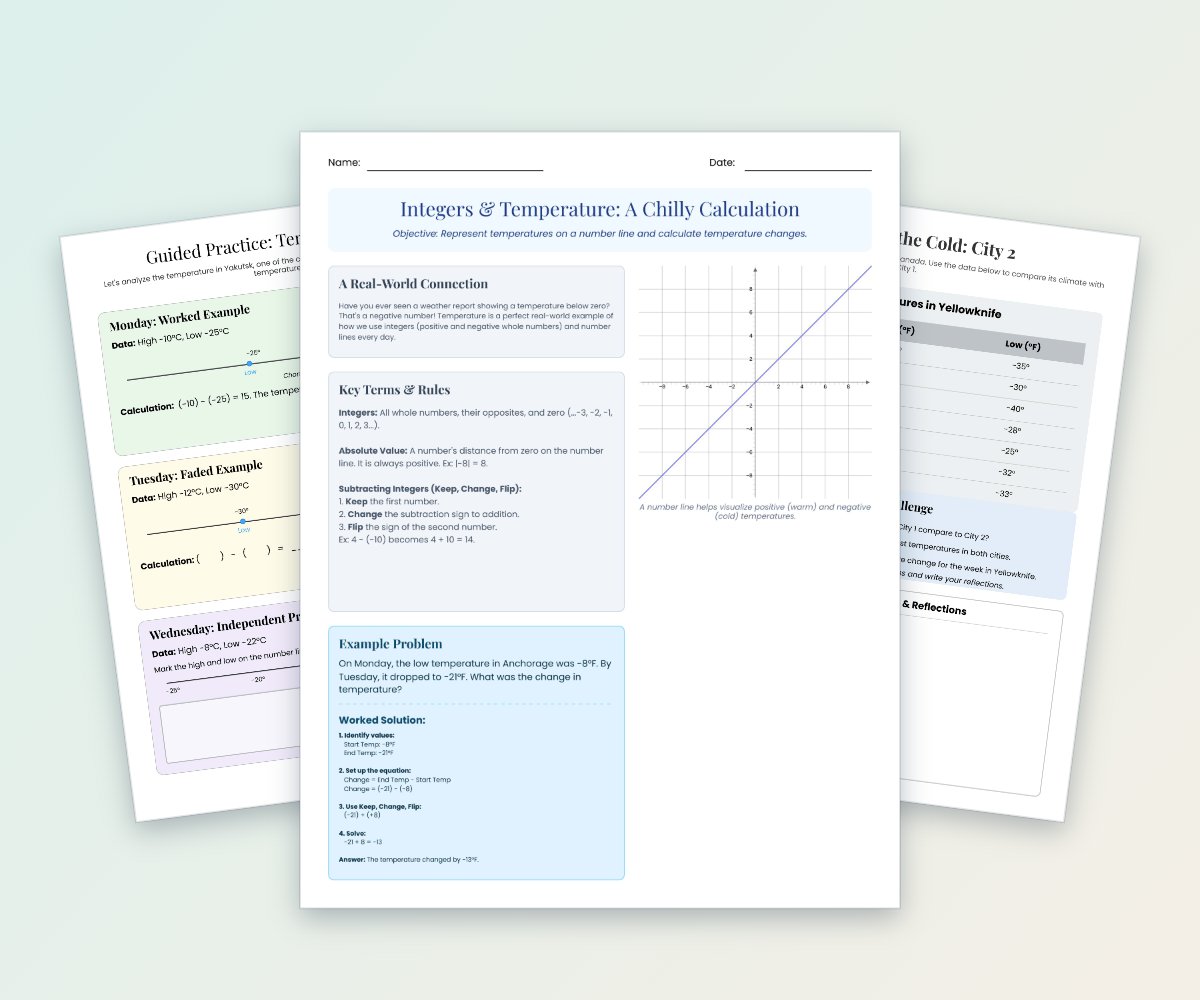
Students use number lines, absolute value, and Keep-Change-Flip to calculate temperature changes.
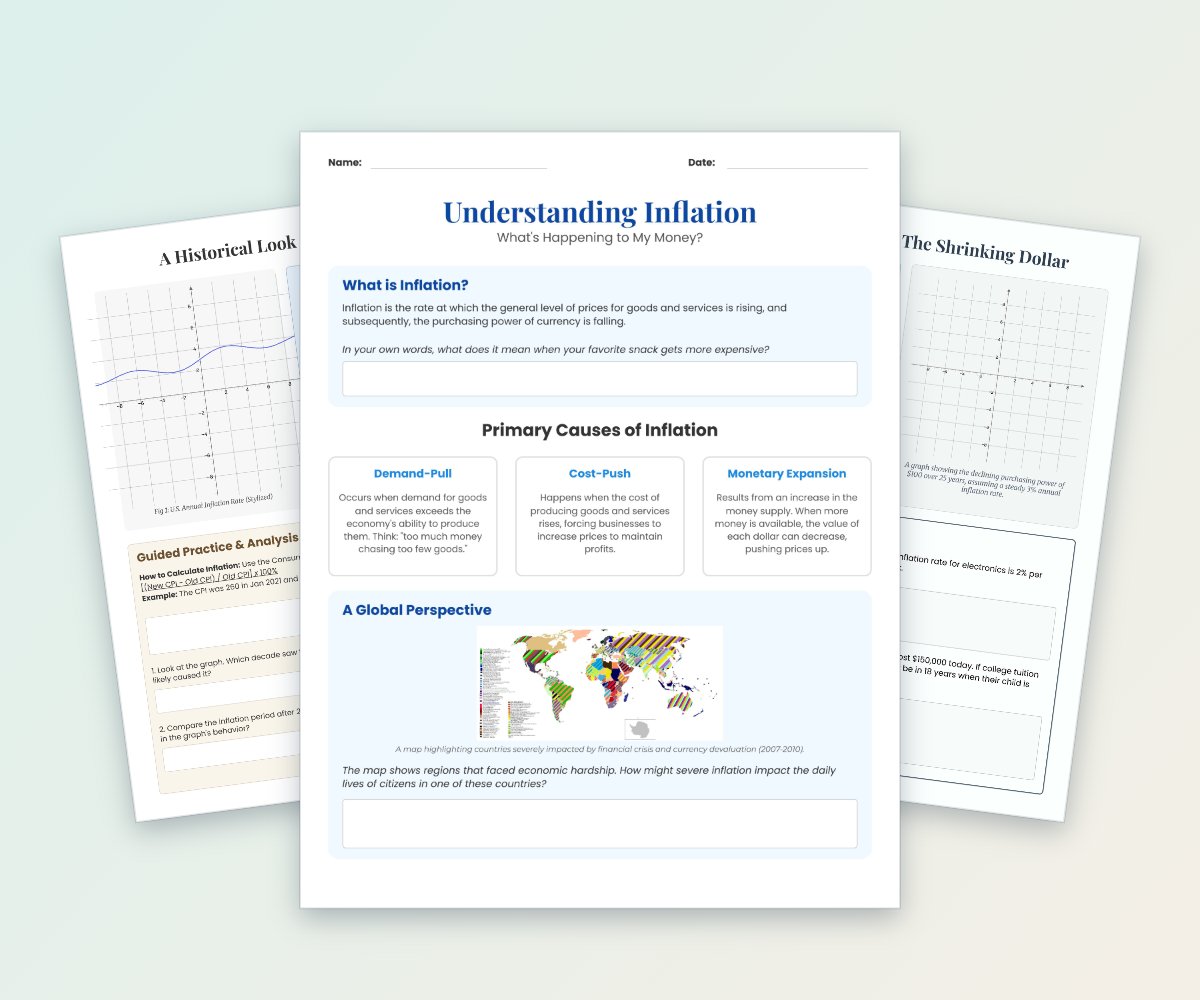
This six-page worksheet introduces inflation, its primary causes, historical U.S.
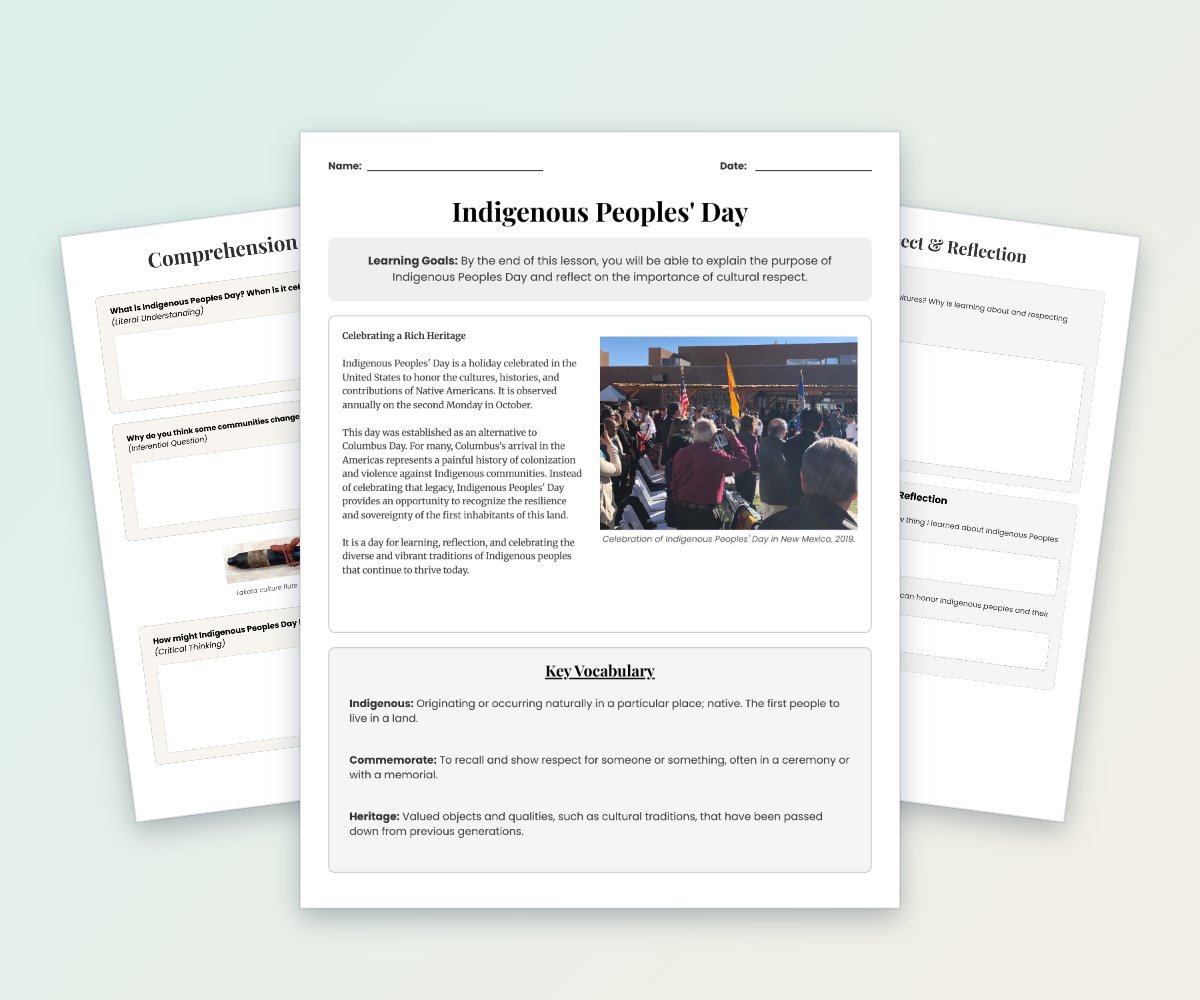
This three-page lesson worksheet introduces Indigenous Peoples' Day, its historical context, and the importance of honoring Indigenous cultures.
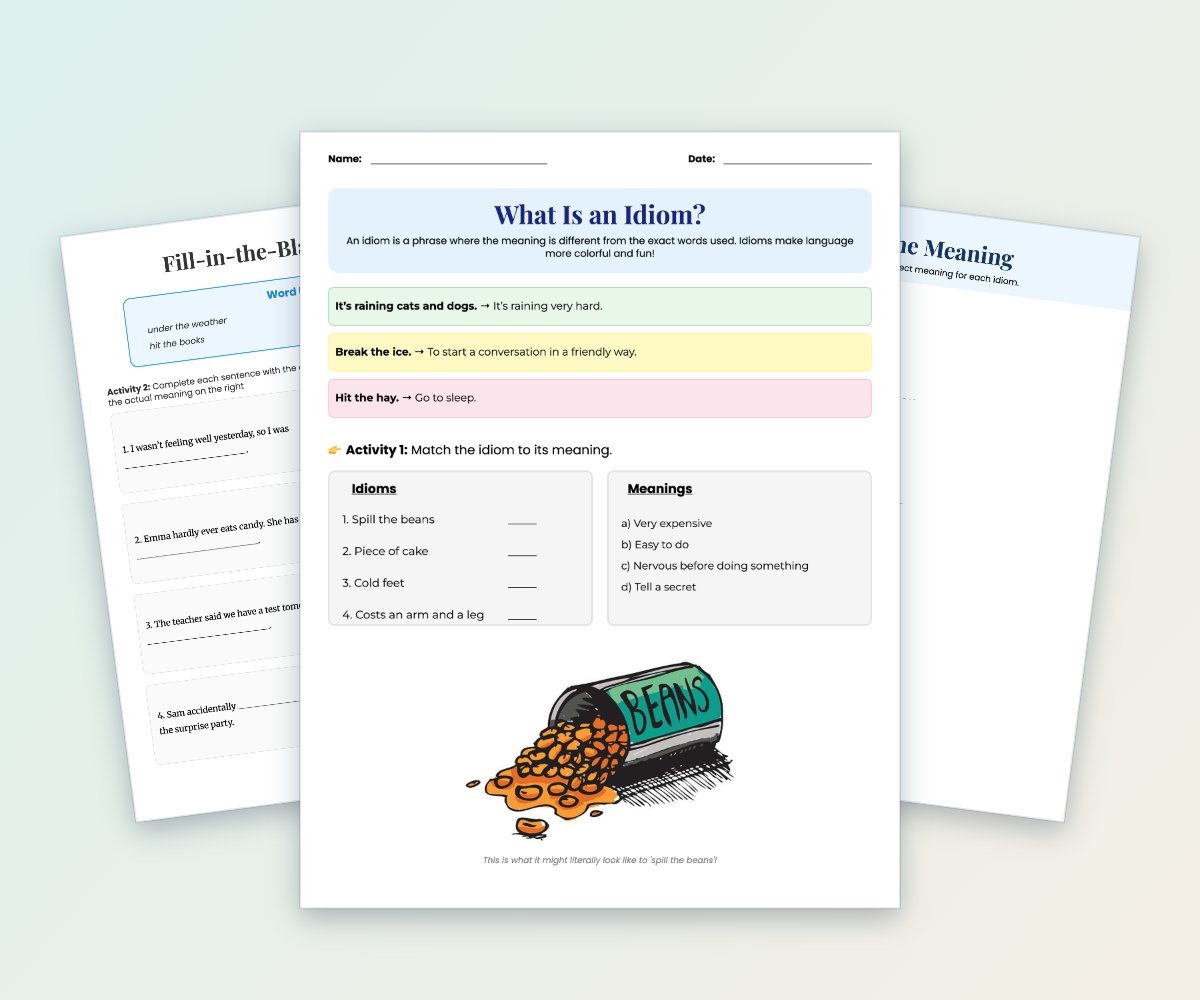
This five-page activity pack introduces idioms and provides varied practice with matching meanings, completing sentences, choosing definitions, writing, illustrating, and identifying idioms in context
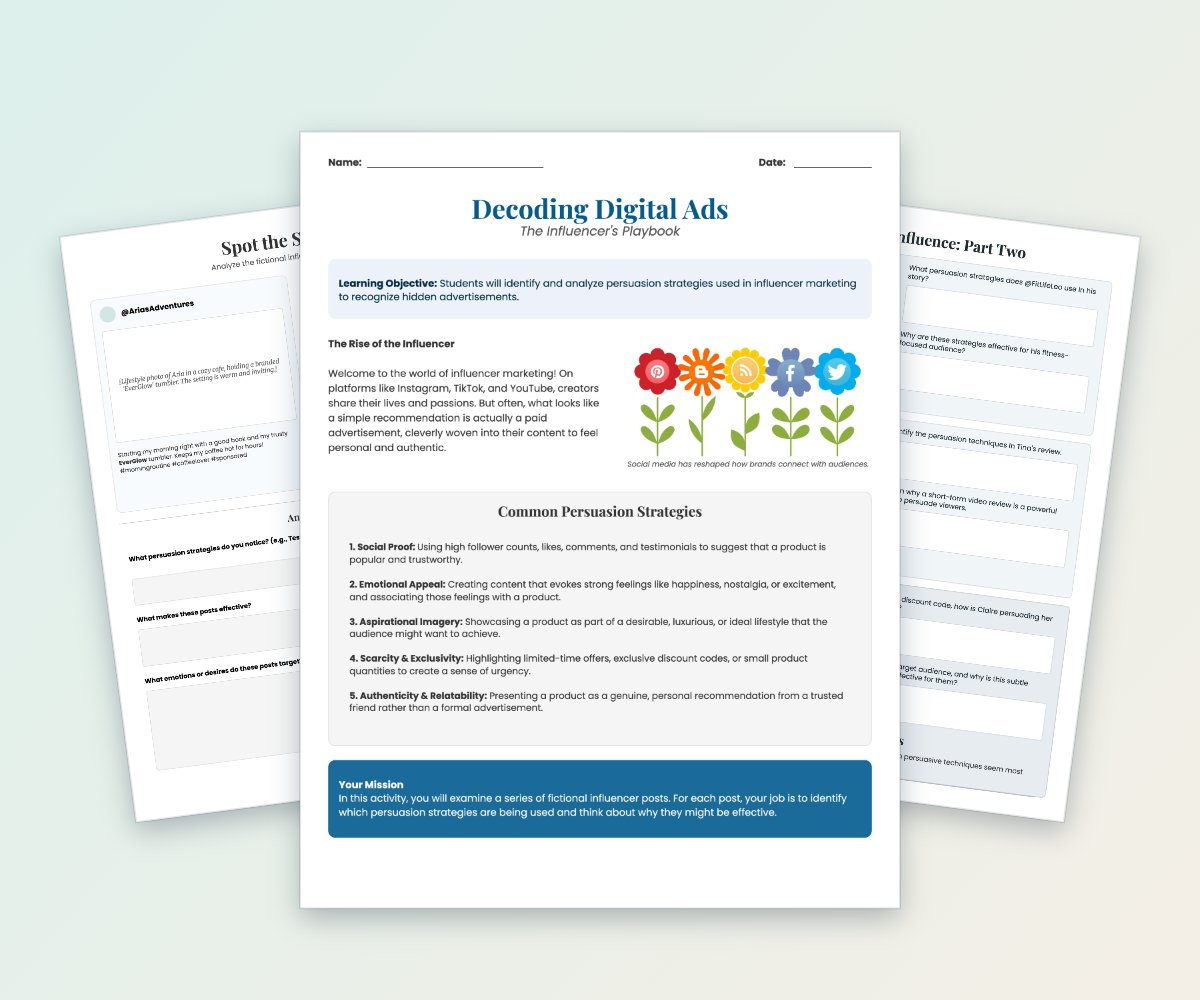
Students learn how influencer marketing uses social proof, emotional appeal, aspirational imagery, scarcity, and authenticity to promote products.
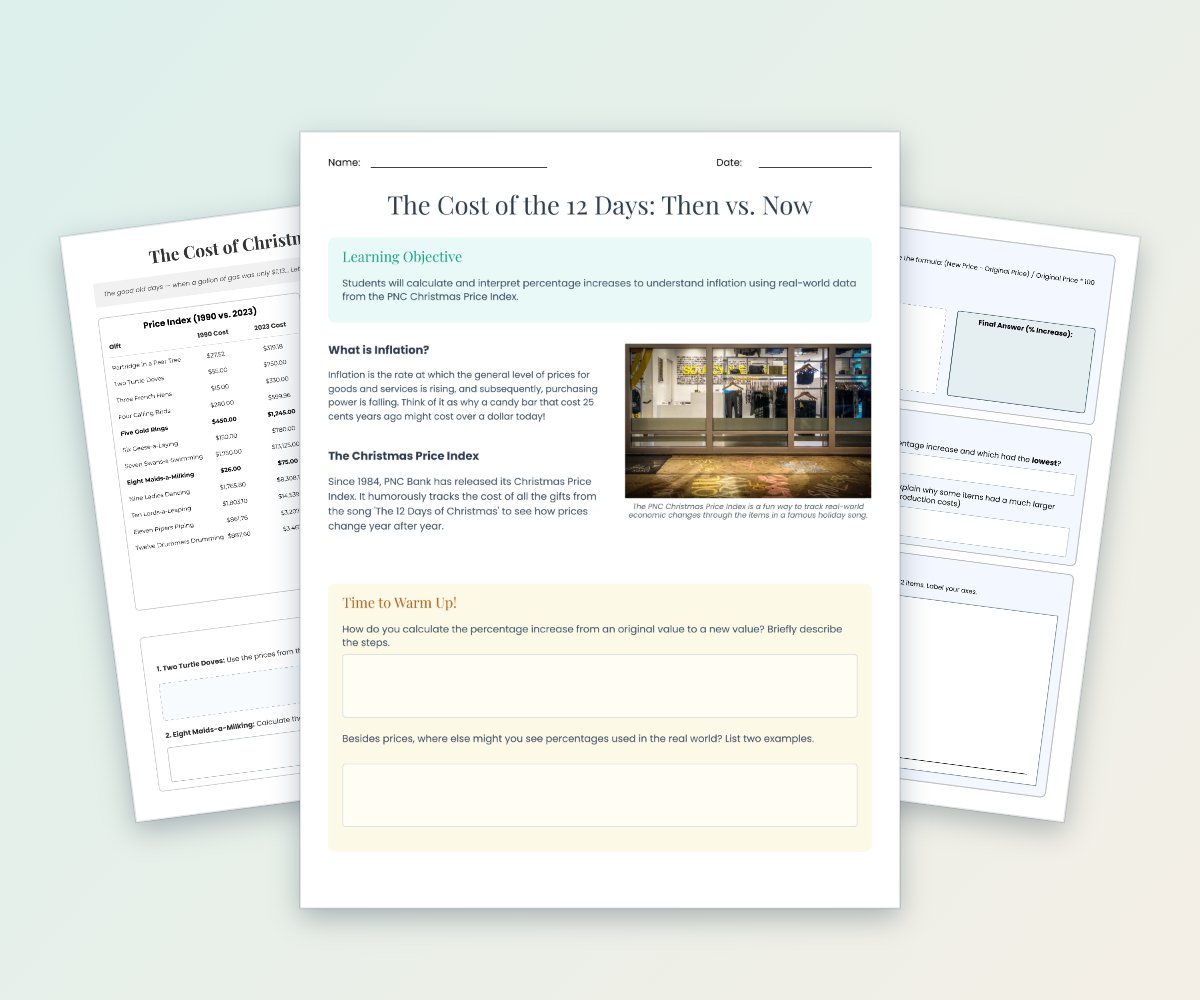
Students use historical and current Christmas Price Index data to calculate percentage increases and explore inflation.
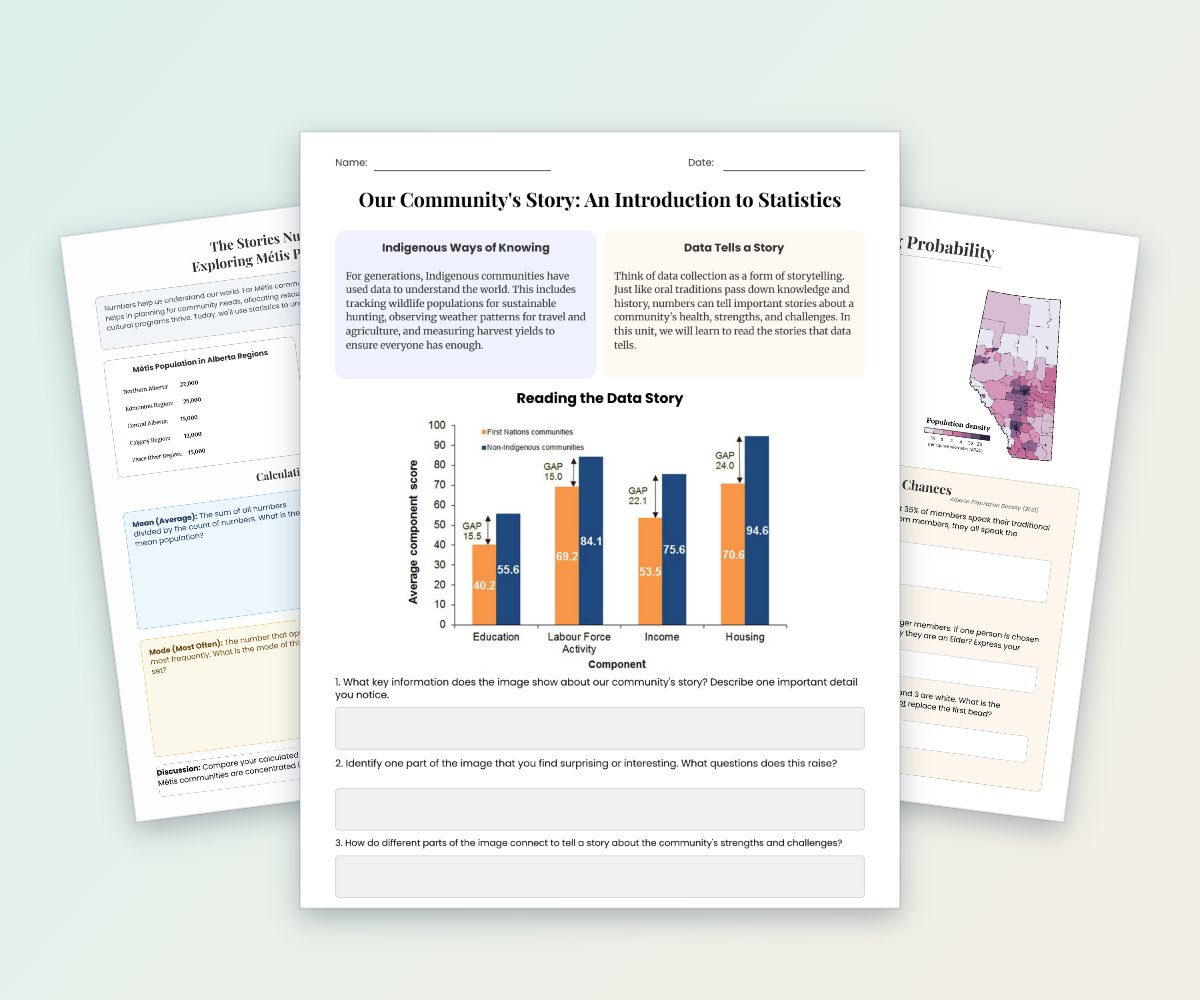
Students explore how Indigenous communities use data and interpret graphs about education, labour, income, housing, and Métis population distribution.
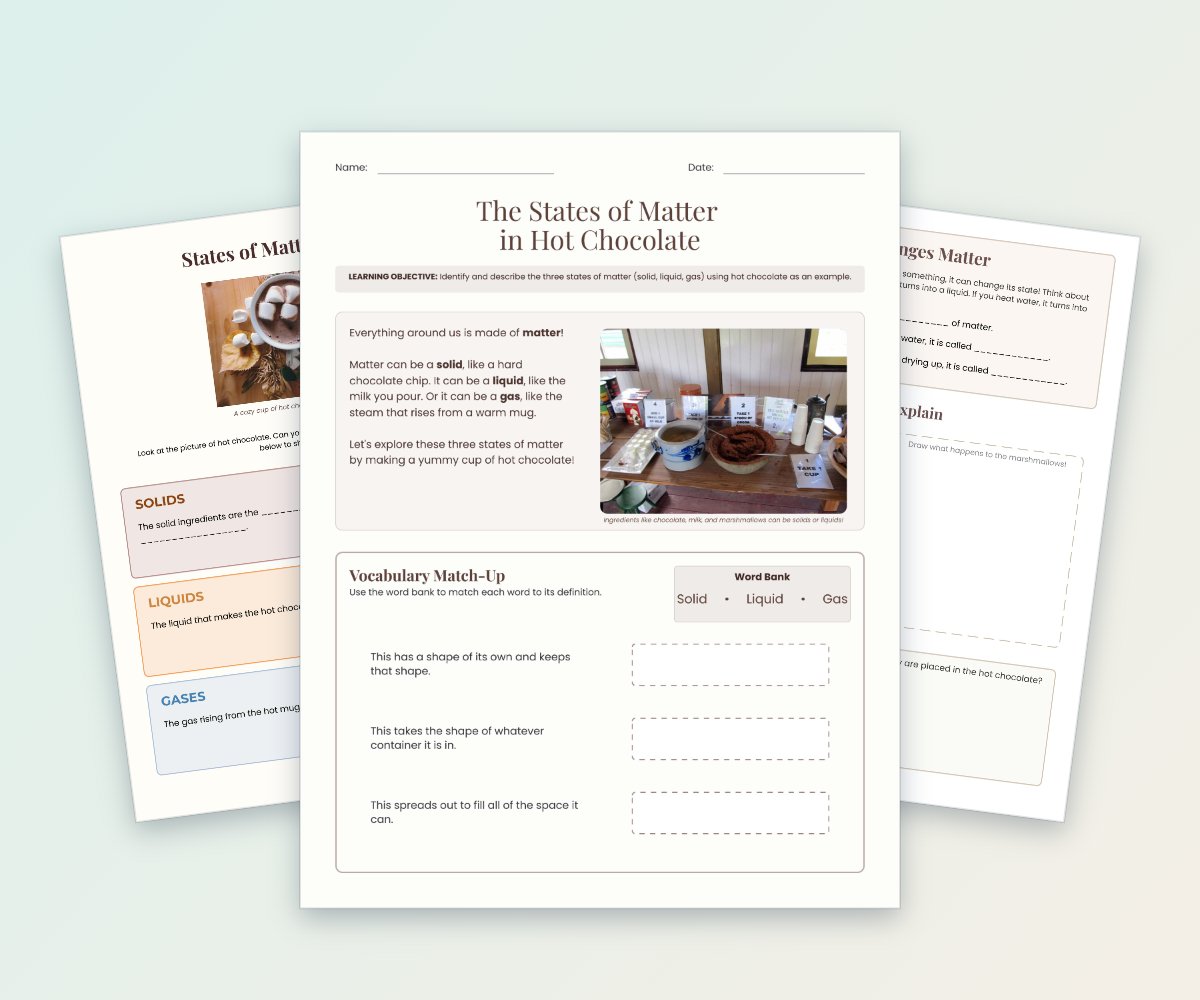
A themed science worksheet introducing solids, liquids, and gases through the familiar example of hot chocolate.
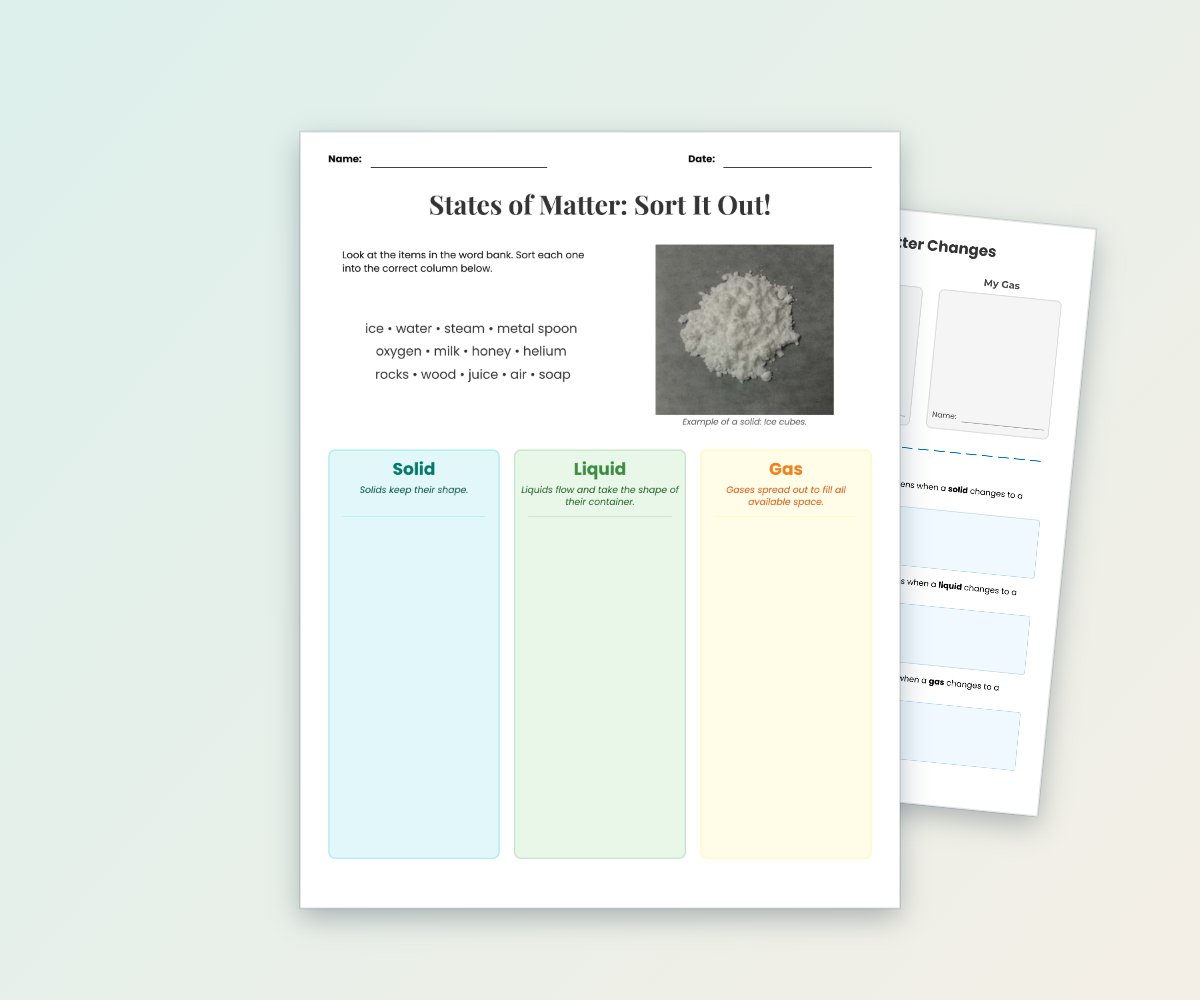
Students sort examples into solid, liquid, and gas categories, then describe the properties of each state.
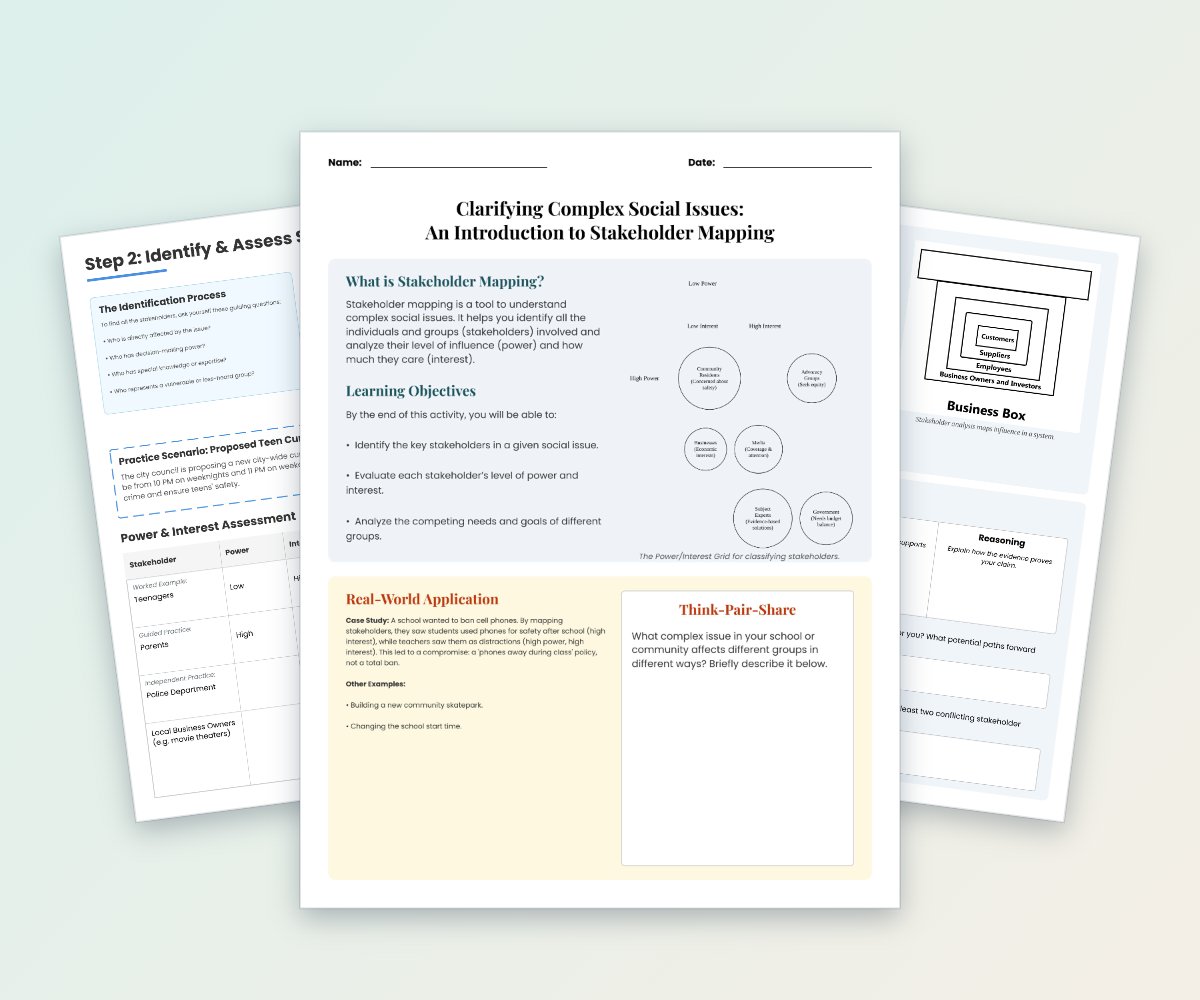
This three-page activity introduces stakeholder mapping and the power-interest grid for analyzing complex social issues.
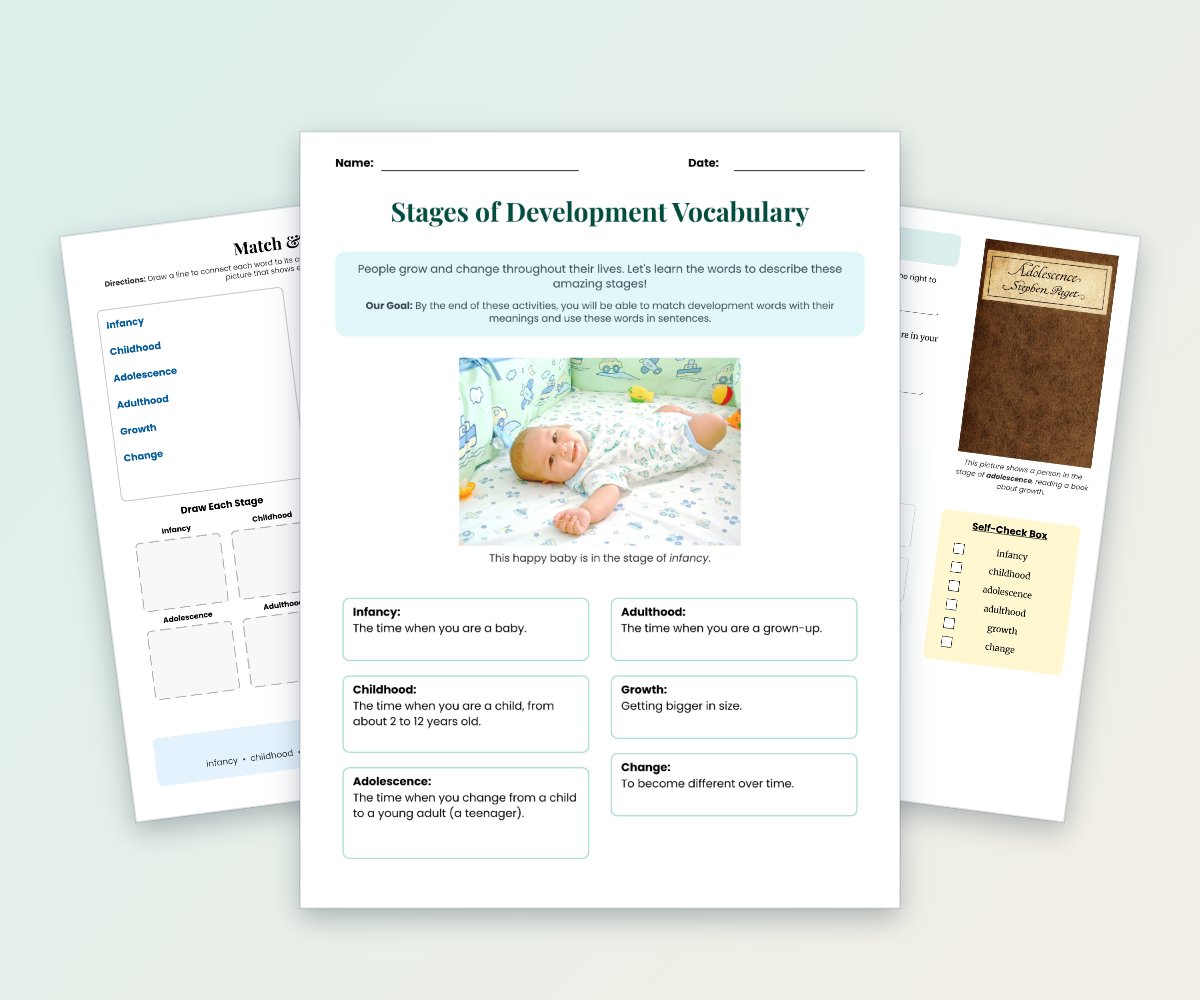
Help students learn vocabulary for infancy, childhood, adolescence, adulthood, growth, and change.
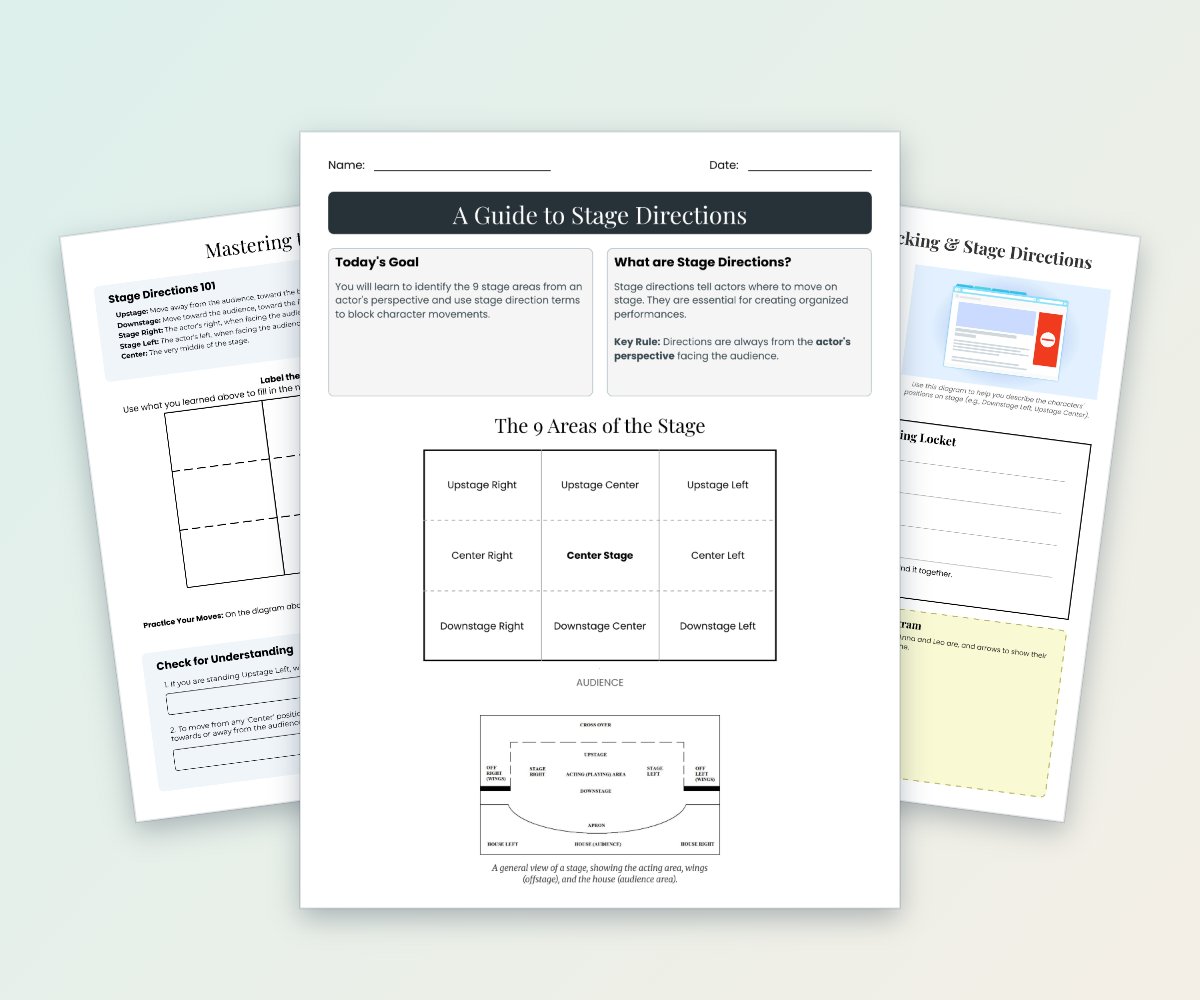
This three-page drama worksheet introduces the nine stage areas from the actor’s perspective and explains upstage, downstage, stage right, stage left, and center.
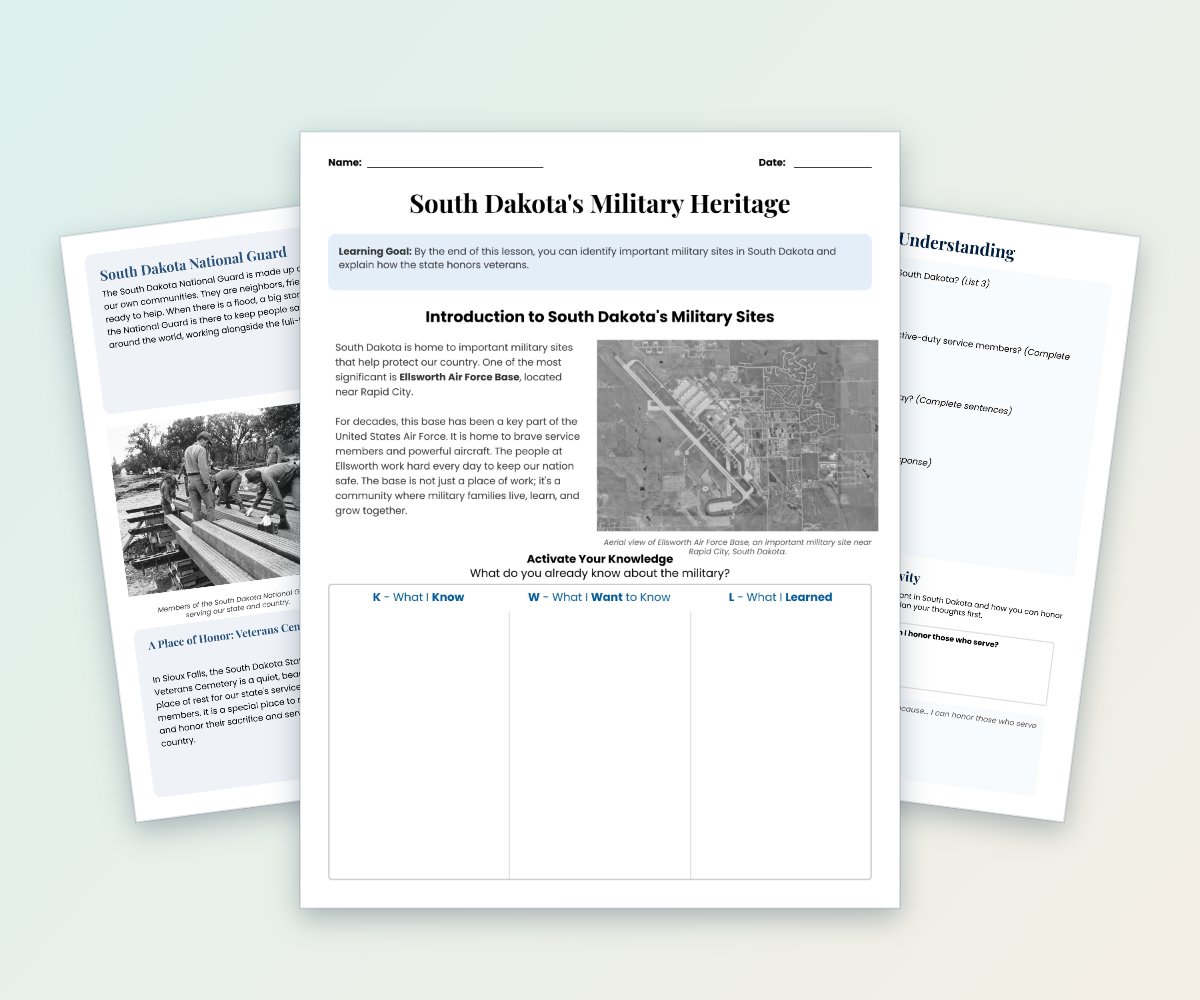
Students learn about Ellsworth Air Force Base, the South Dakota National Guard, the state veterans cemetery, and ways South Dakotans honor veterans.
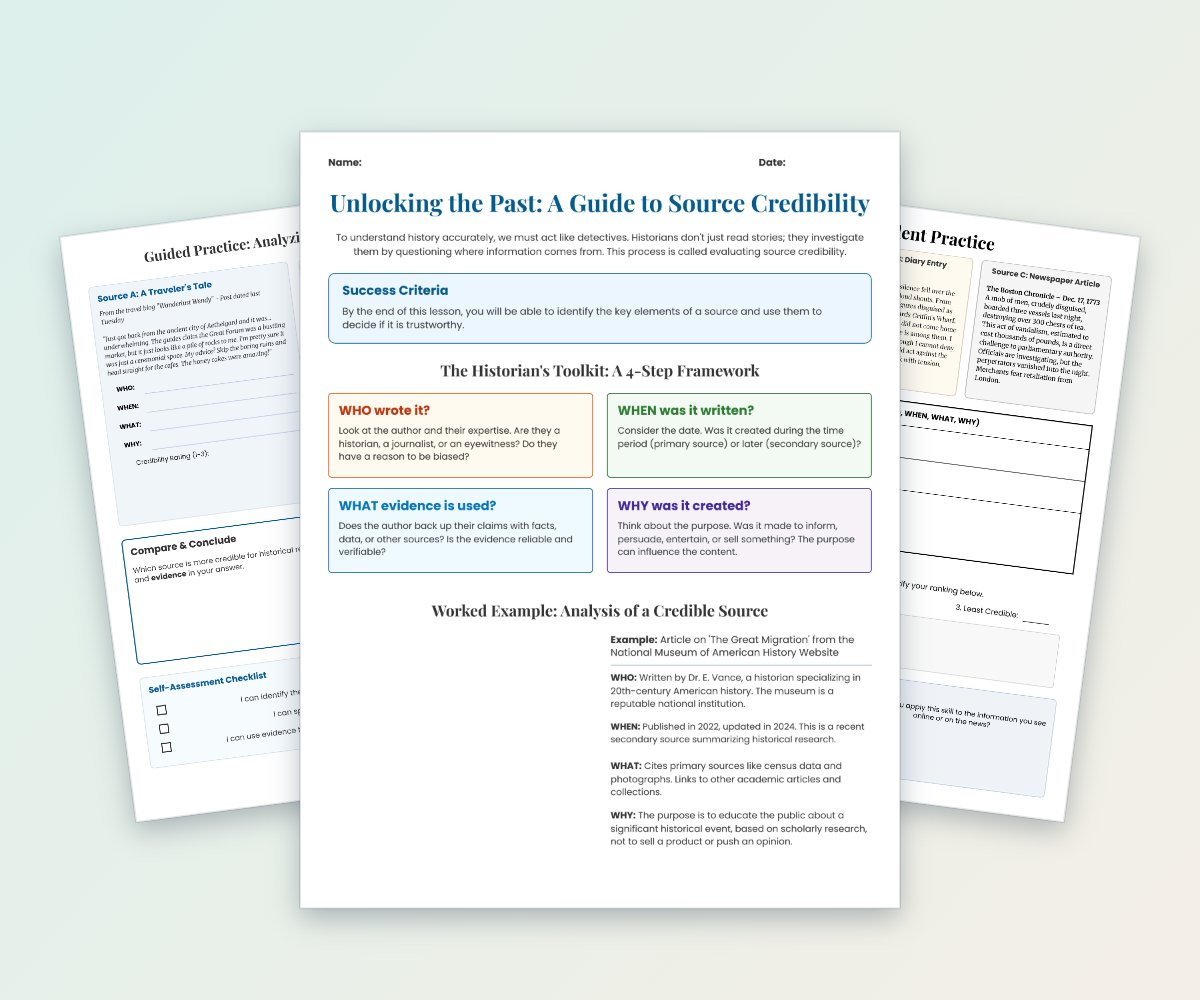
Students learn a four-step framework for evaluating historical sources by examining the author, evidence, date, and purpose.
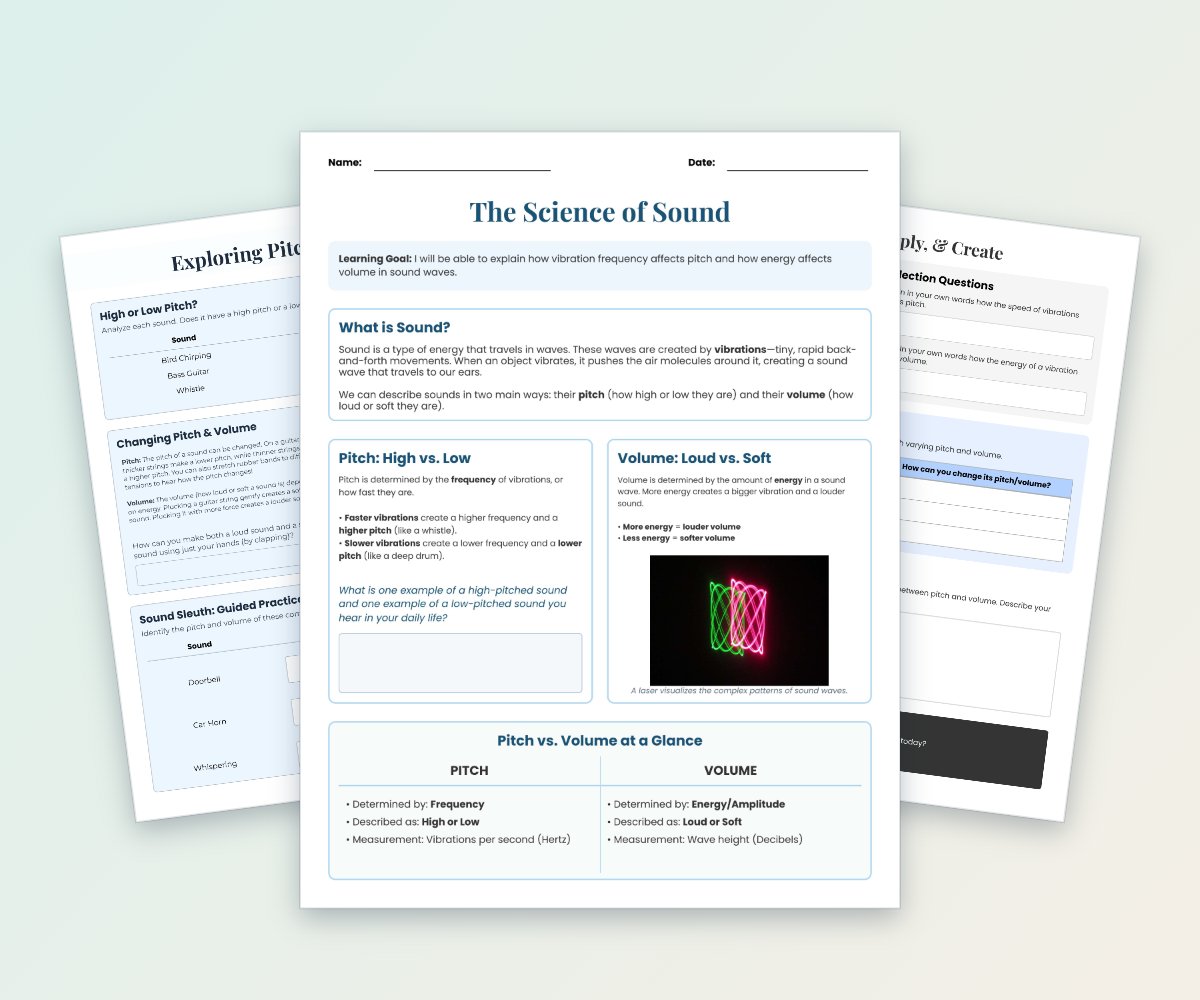
Students learn how vibrations create sound waves and how frequency affects pitch while energy and amplitude affect volume.
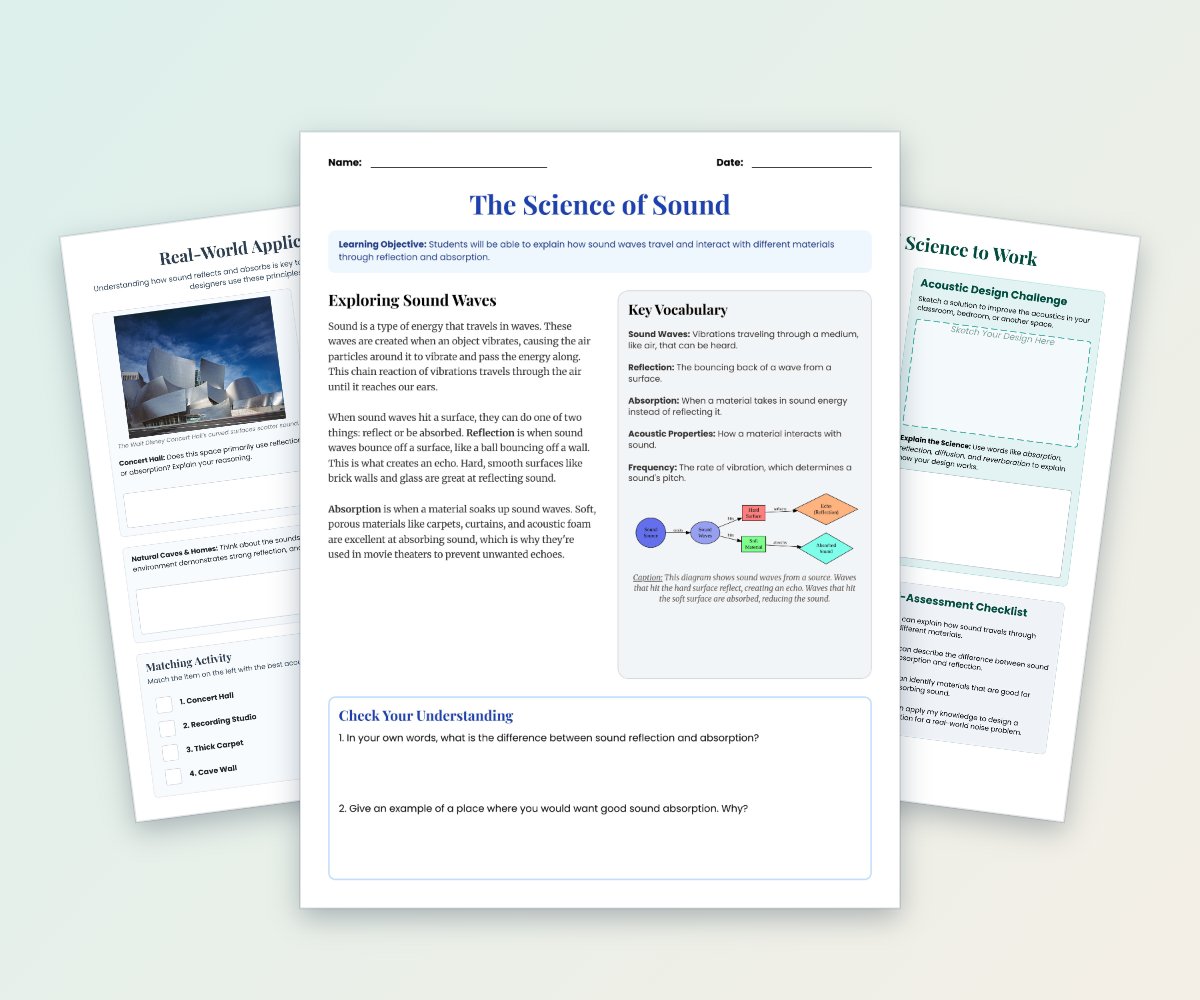
This three-page science worksheet introduces how sound waves travel and interact with materials through reflection and absorption.
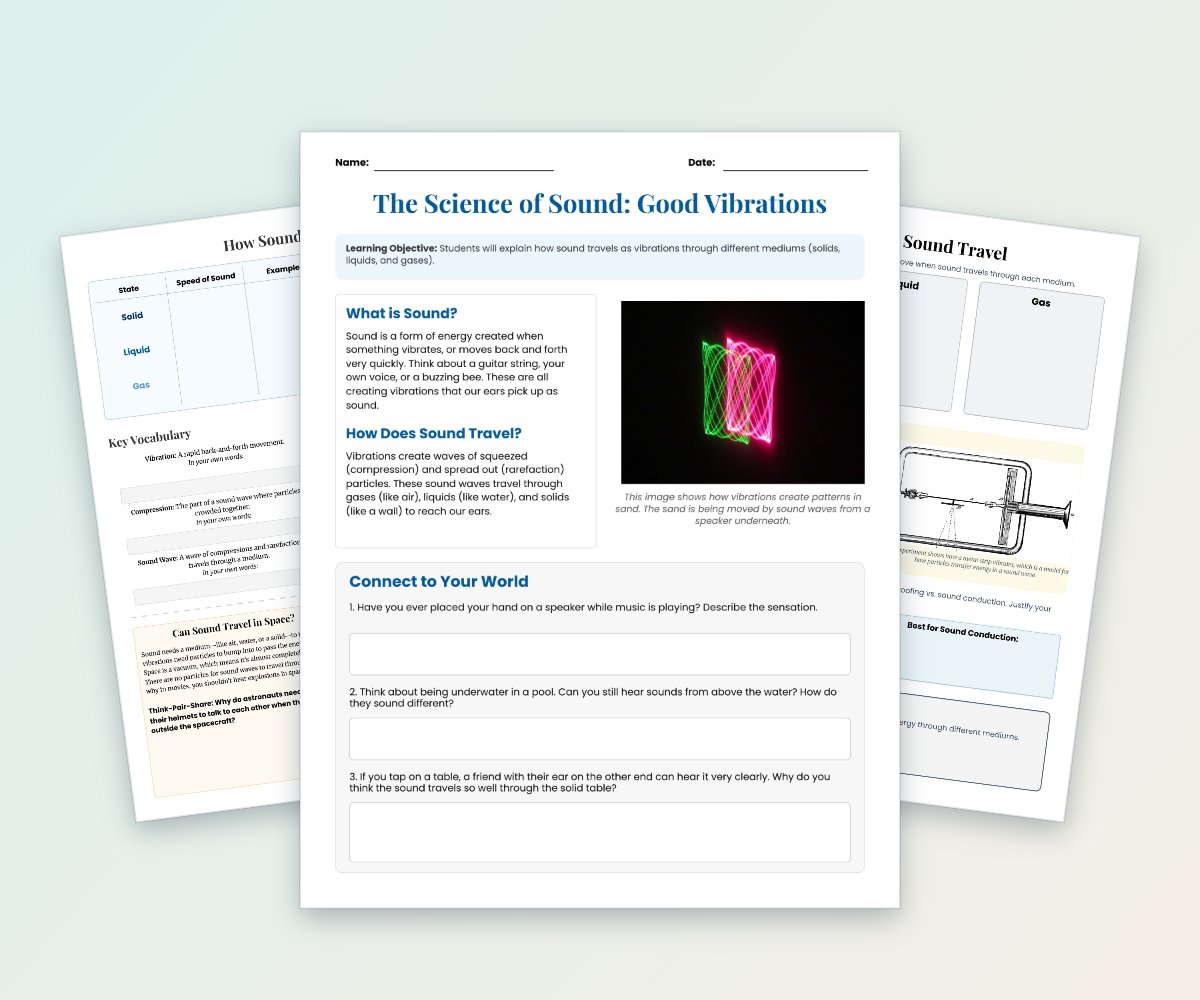
This three-page science worksheet explains how sound travels as vibrations through solids, liquids, and gases.
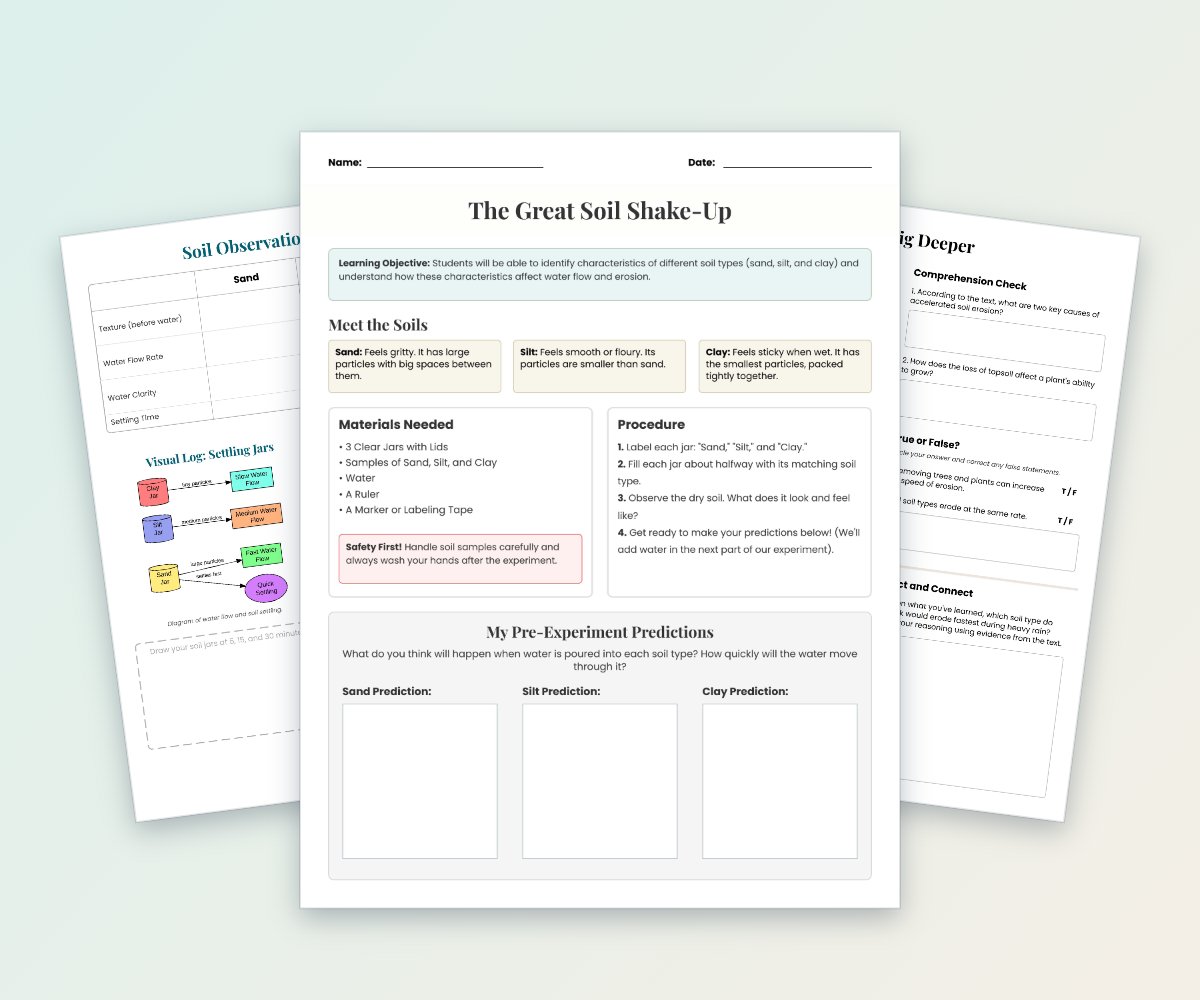
Students investigate sand, silt, and clay by observing texture, predicting water movement, and recording settling times.