Amelia Earhart: A Pioneering Legacy
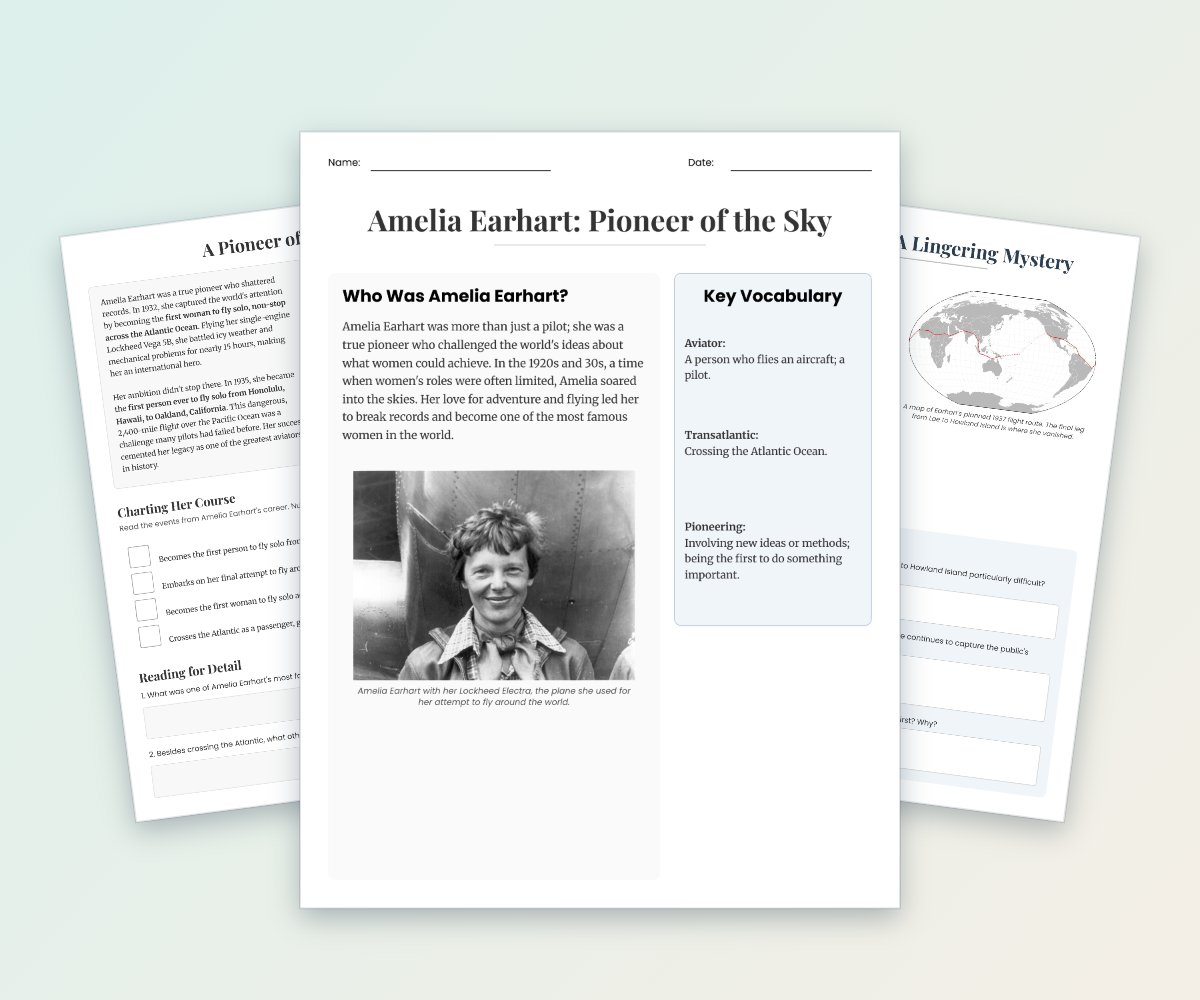
Students read an engaging biography of Amelia Earhart, learning about her record-setting flights, pioneering achievements, and final flight mystery.
$3
Classroom-ready resources written for grade 2: printable worksheets, slides, activities and planning tools you can download and use straight away. Browse by subject below.
Students read an engaging biography of Amelia Earhart, learning about her record-setting flights, pioneering achievements, and final flight mystery.
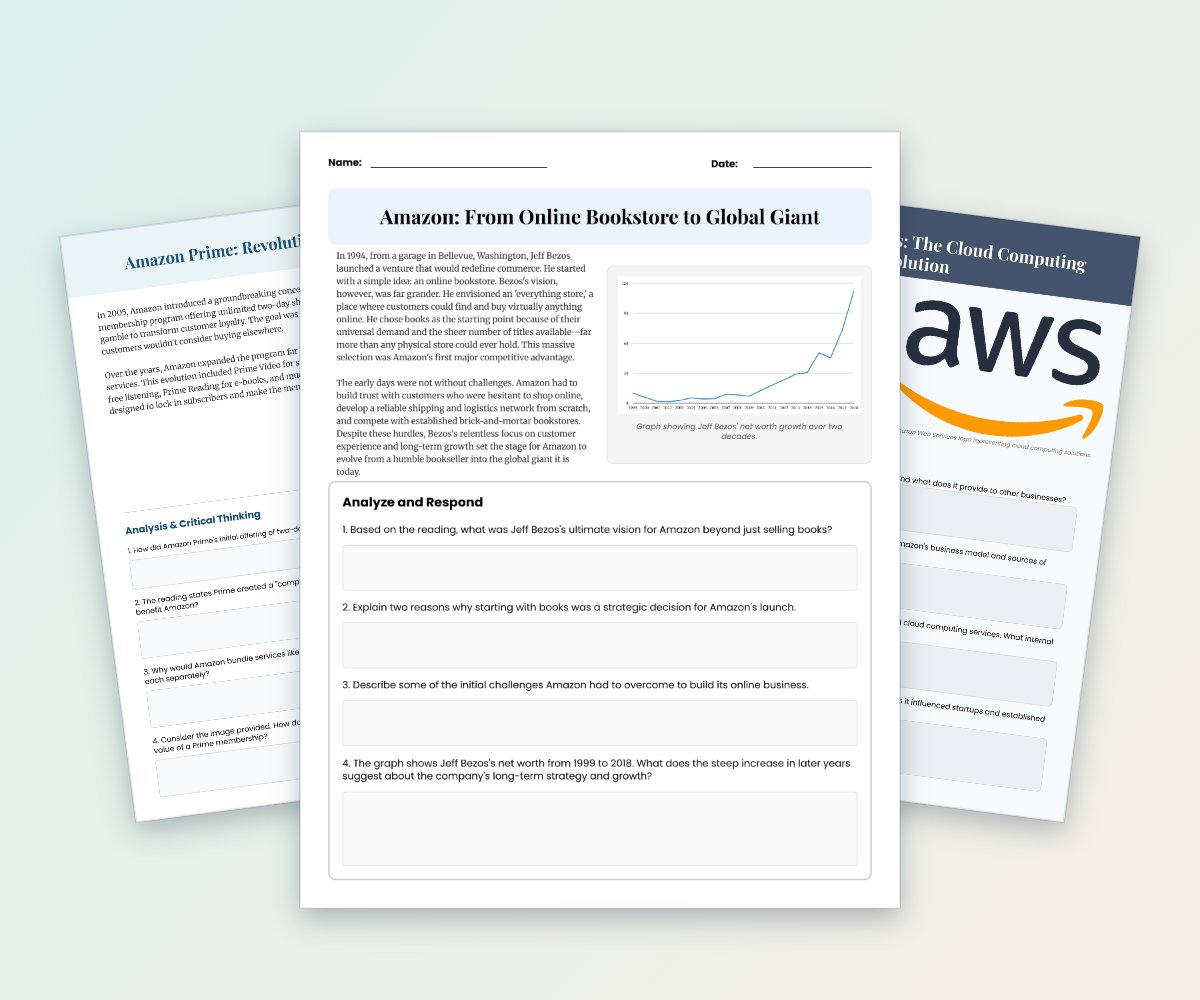
Students read about Amazon's origins, expansion, Amazon Prime, and long-term business strategy.
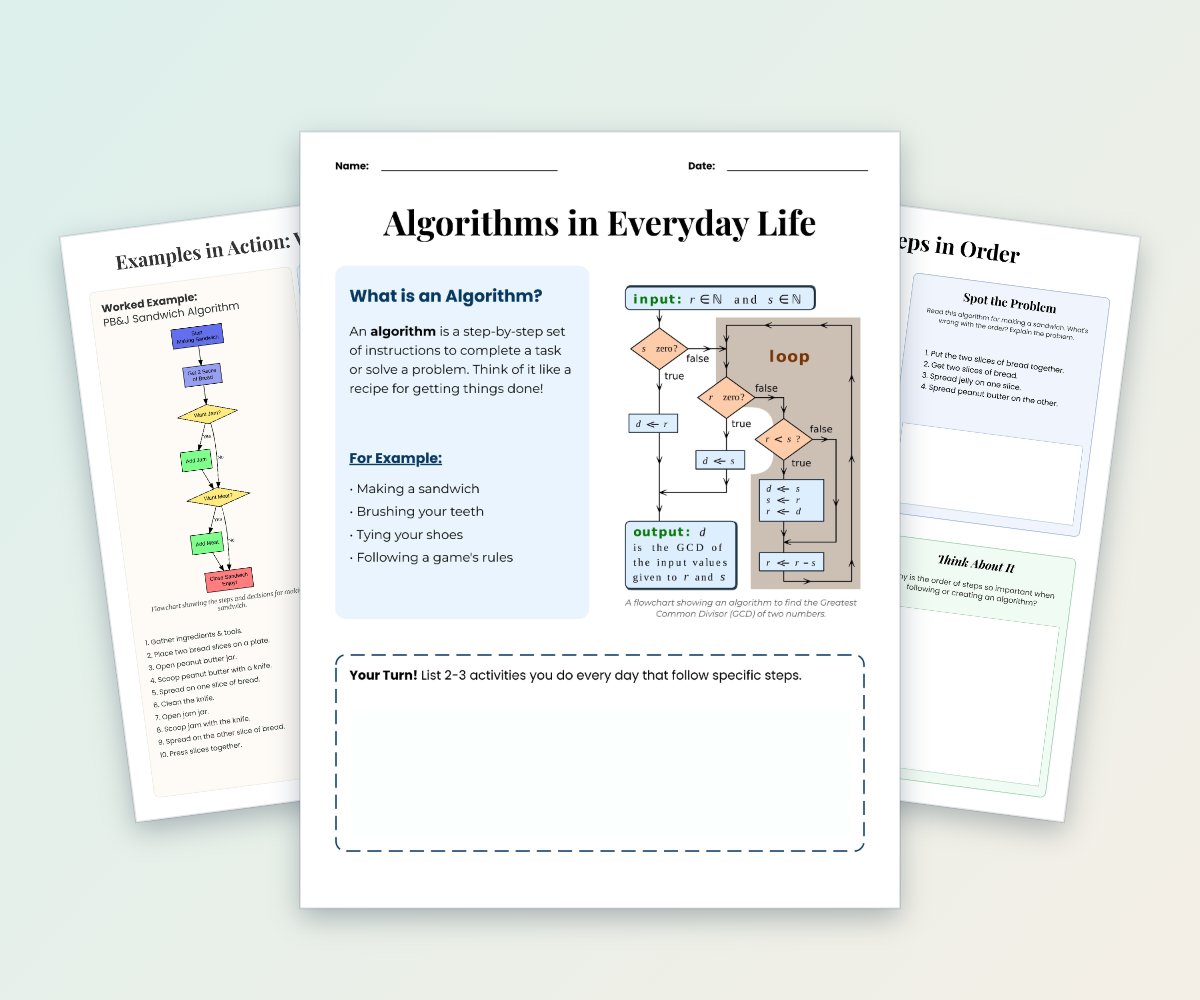
This four-page worksheet introduces algorithms as step-by-step instructions using everyday activities such as making a sandwich and brushing teeth.
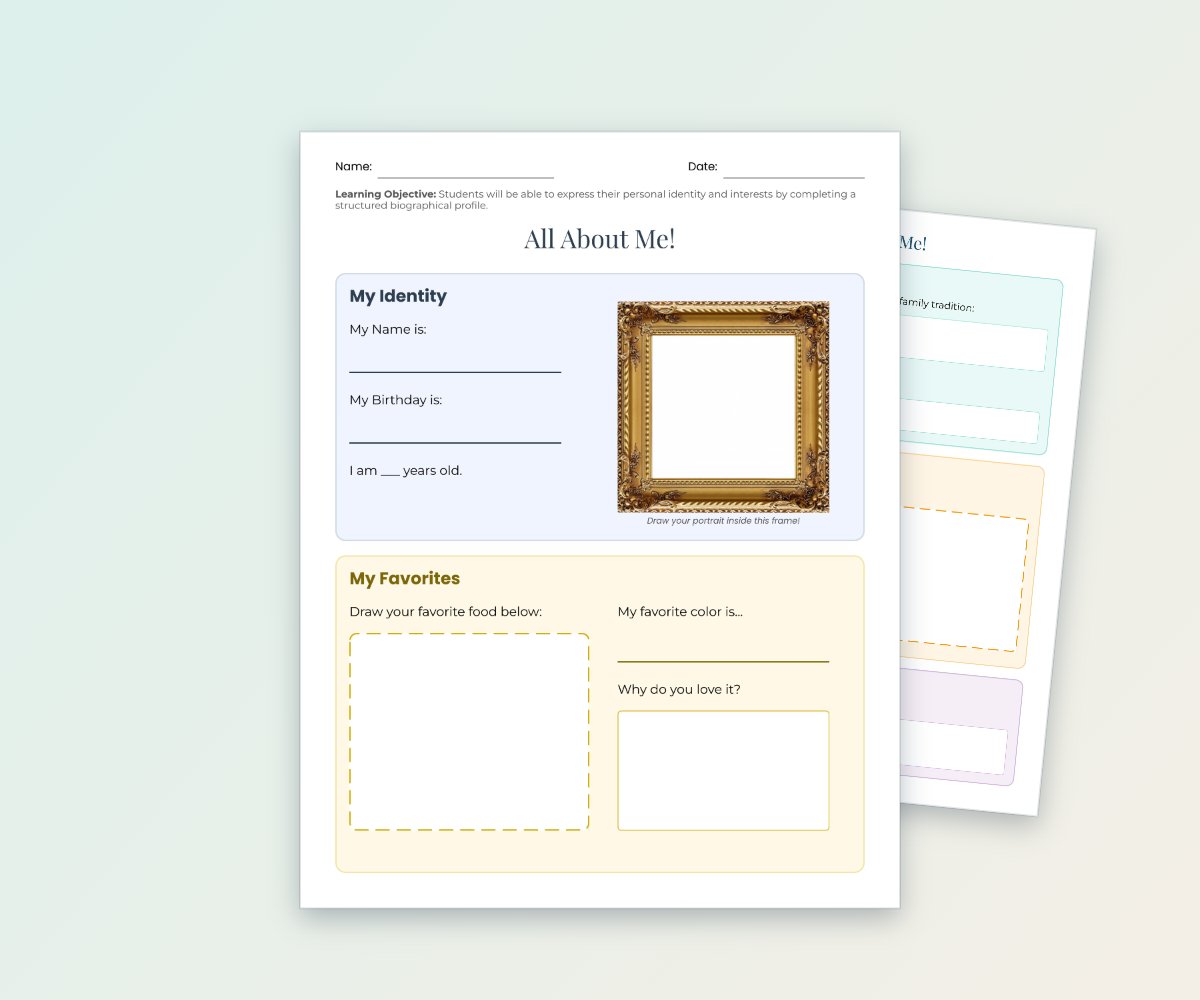
Students complete a structured personal profile about their identity, interests, family, favorite book, hobbies, and school-year goal.
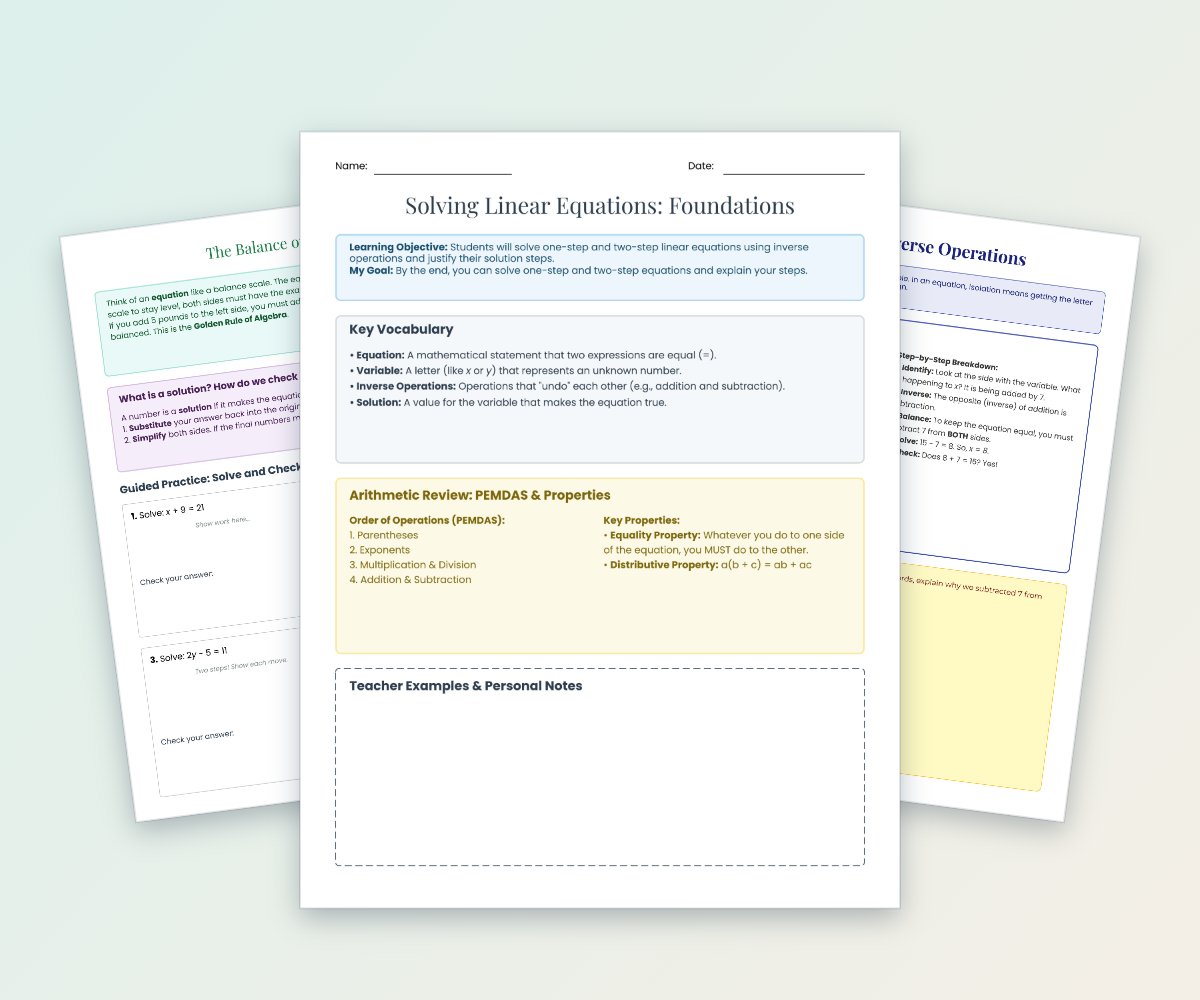
This 8-page student workbook teaches learners to solve one-step and two-step linear equations using inverse operations, equality properties, and equation-checking strategies.
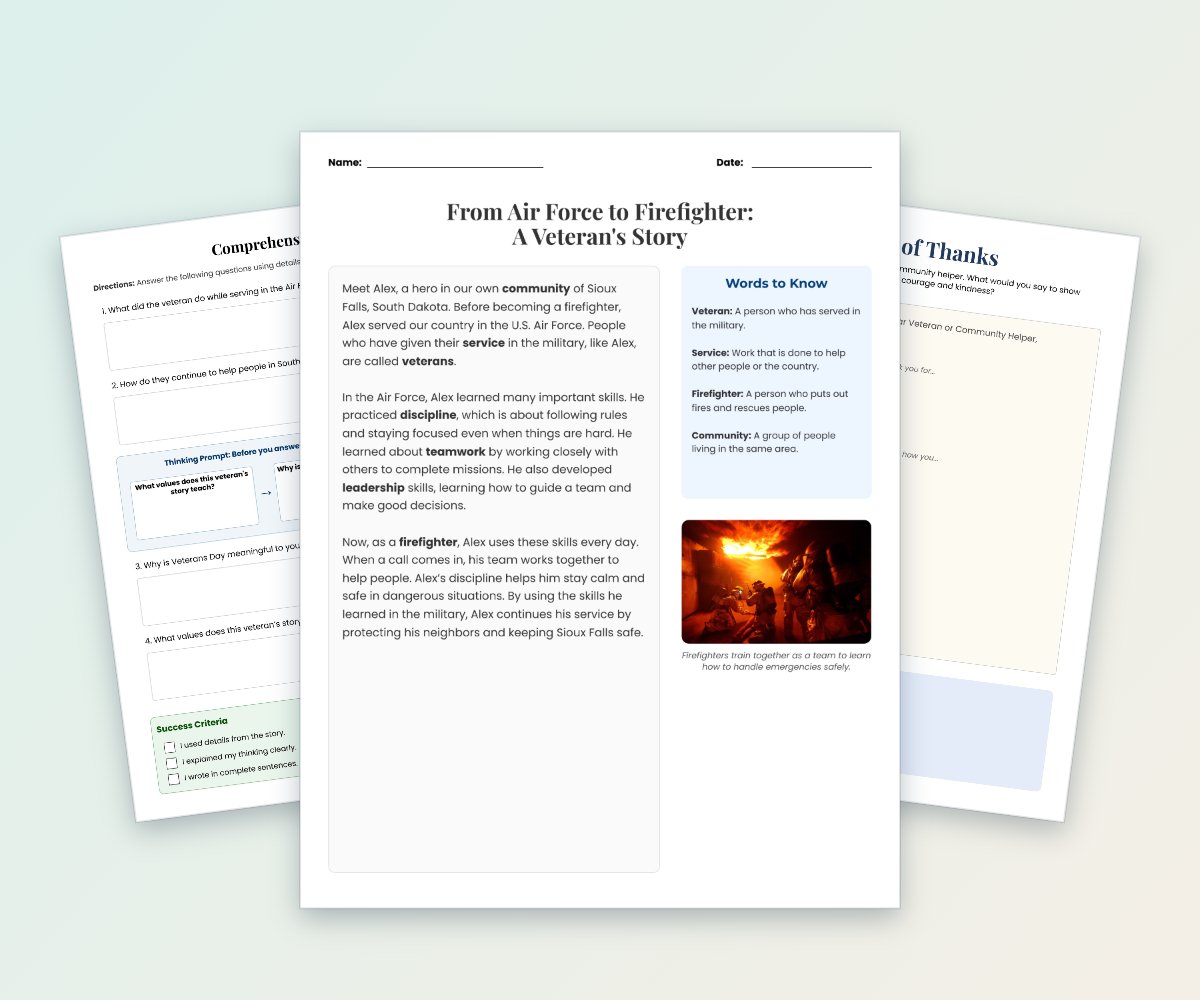
Students read a short narrative about a veteran who became a firefighter and identify skills such as discipline, teamwork, and leadership.
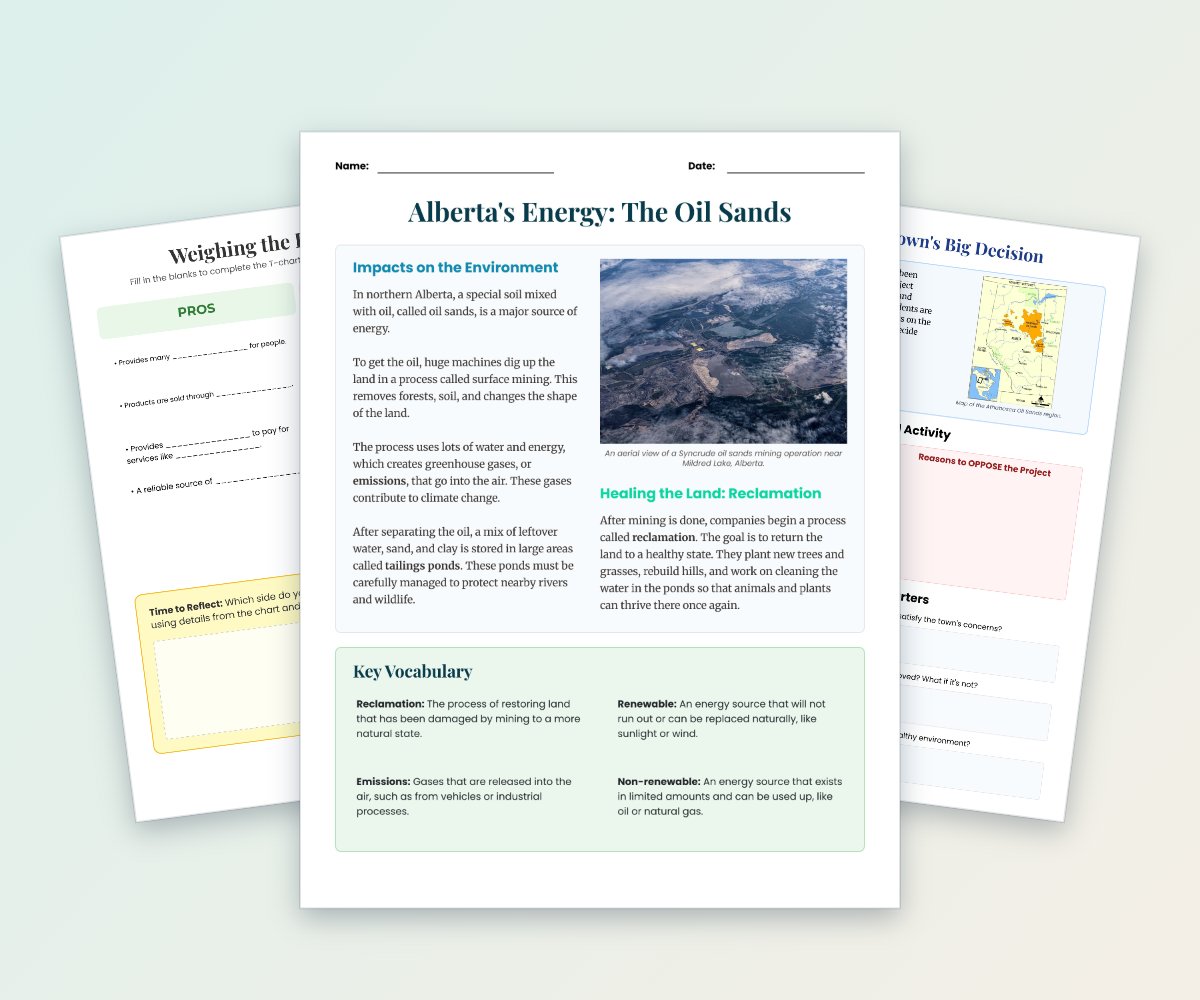
Students learn about Alberta’s oil sands, including surface mining, emissions, tailings ponds, reclamation, and renewable versus non-renewable energy.
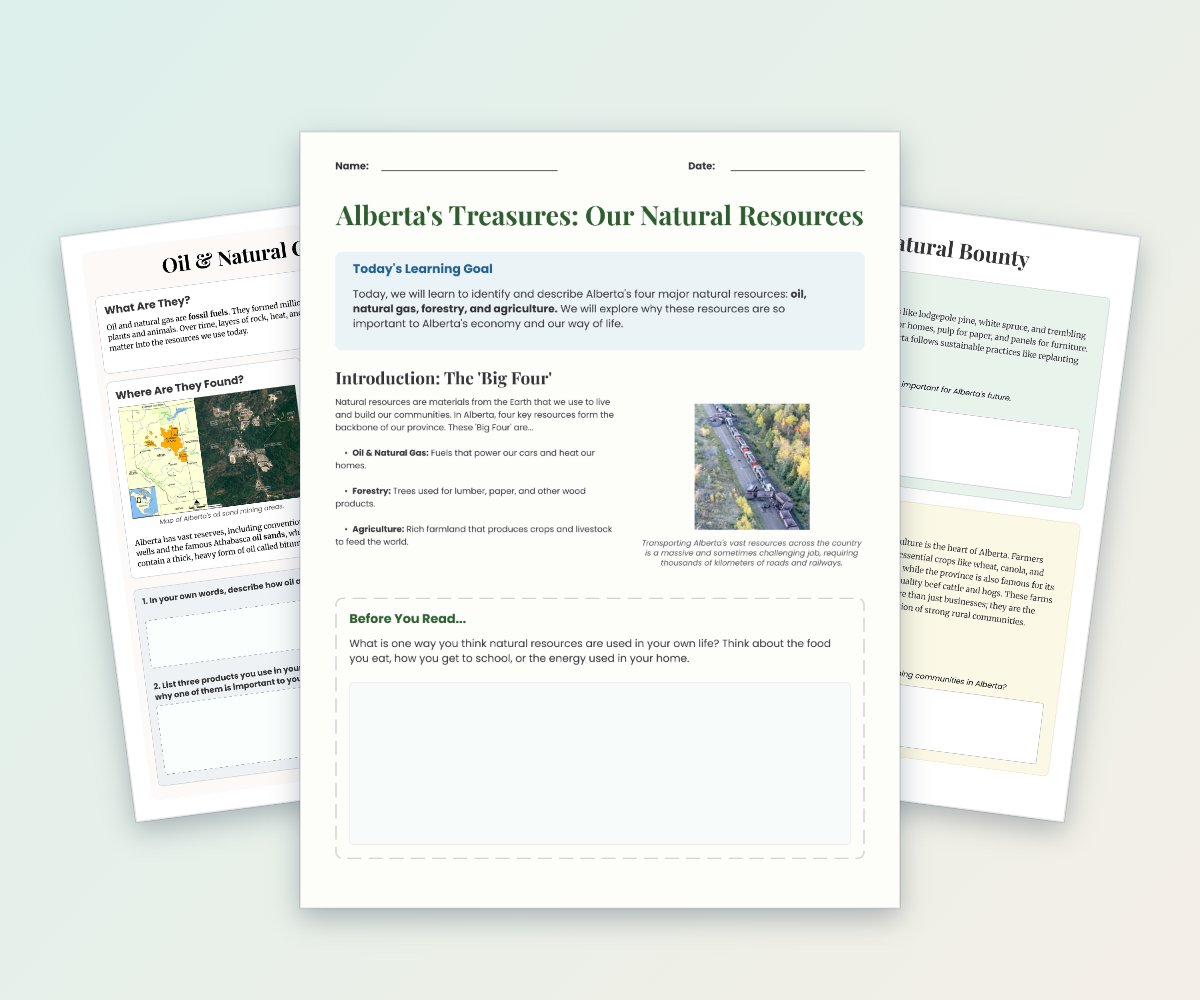
This four-page resource introduces Alberta’s major natural resources: oil and natural gas, forestry, and agriculture.
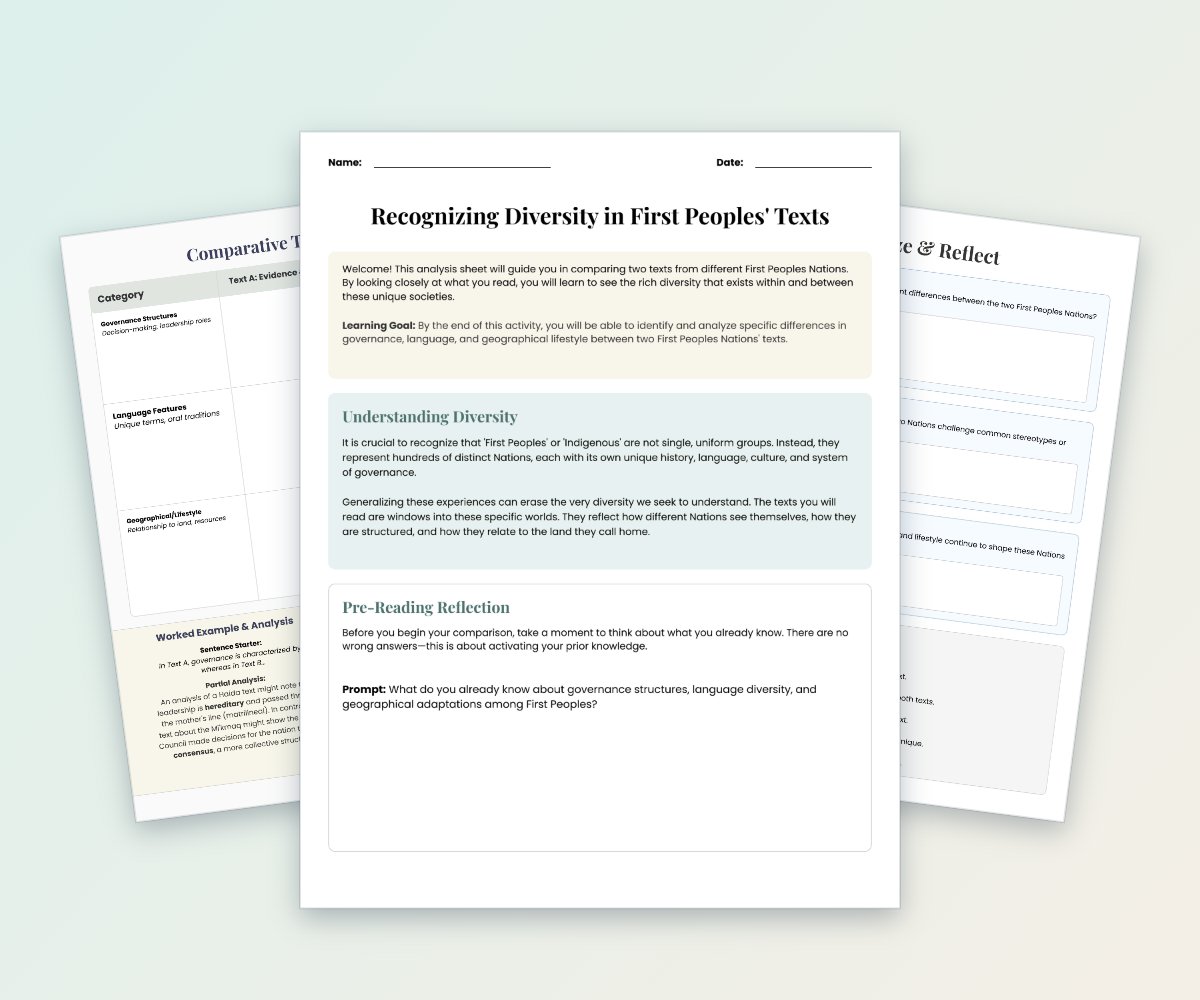
This three-page analysis worksheet guides students in comparing texts from two First Peoples Nations.
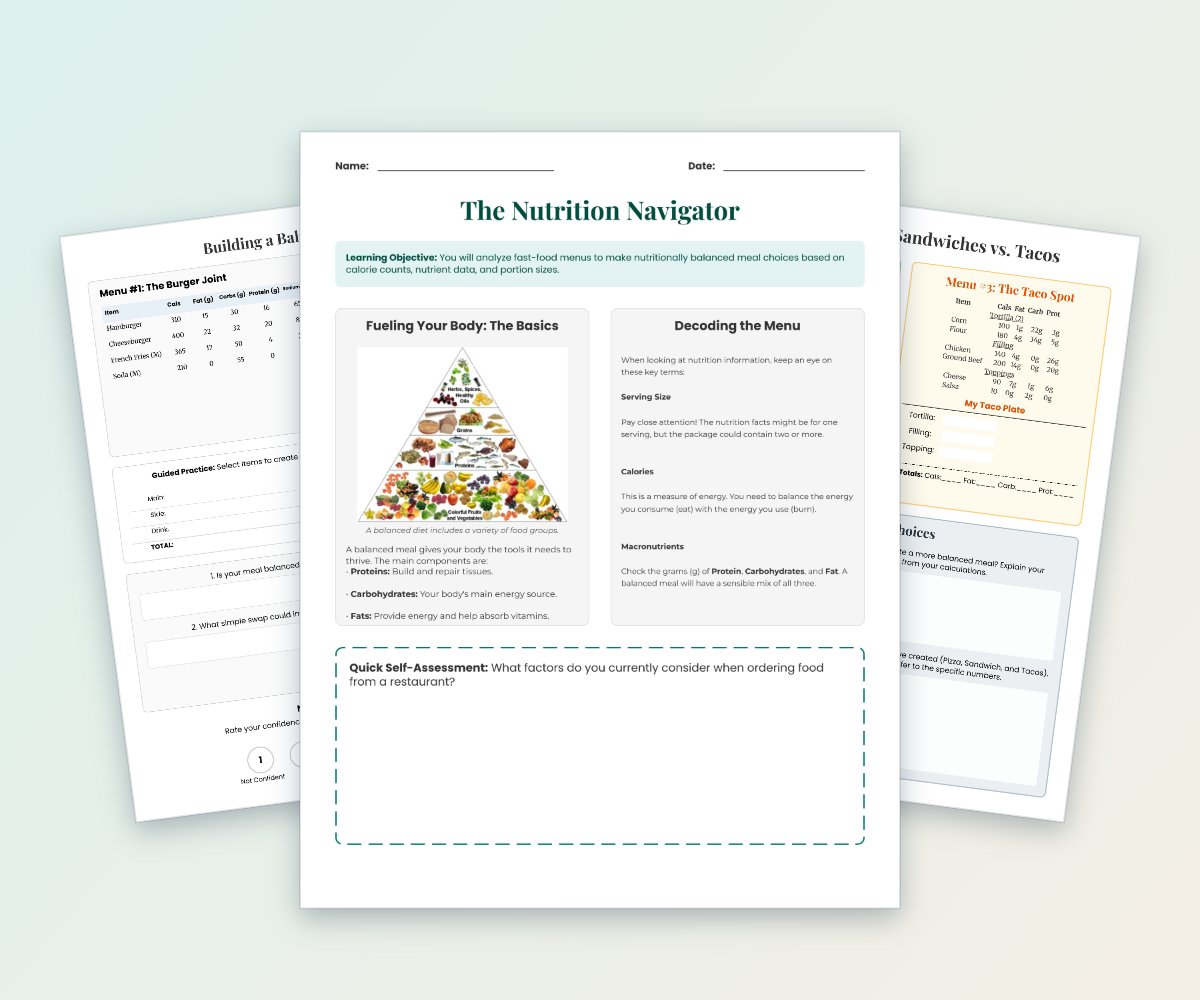
Students analyze fast-food menus, compare calories and macronutrients, and calculate totals for selected meals.
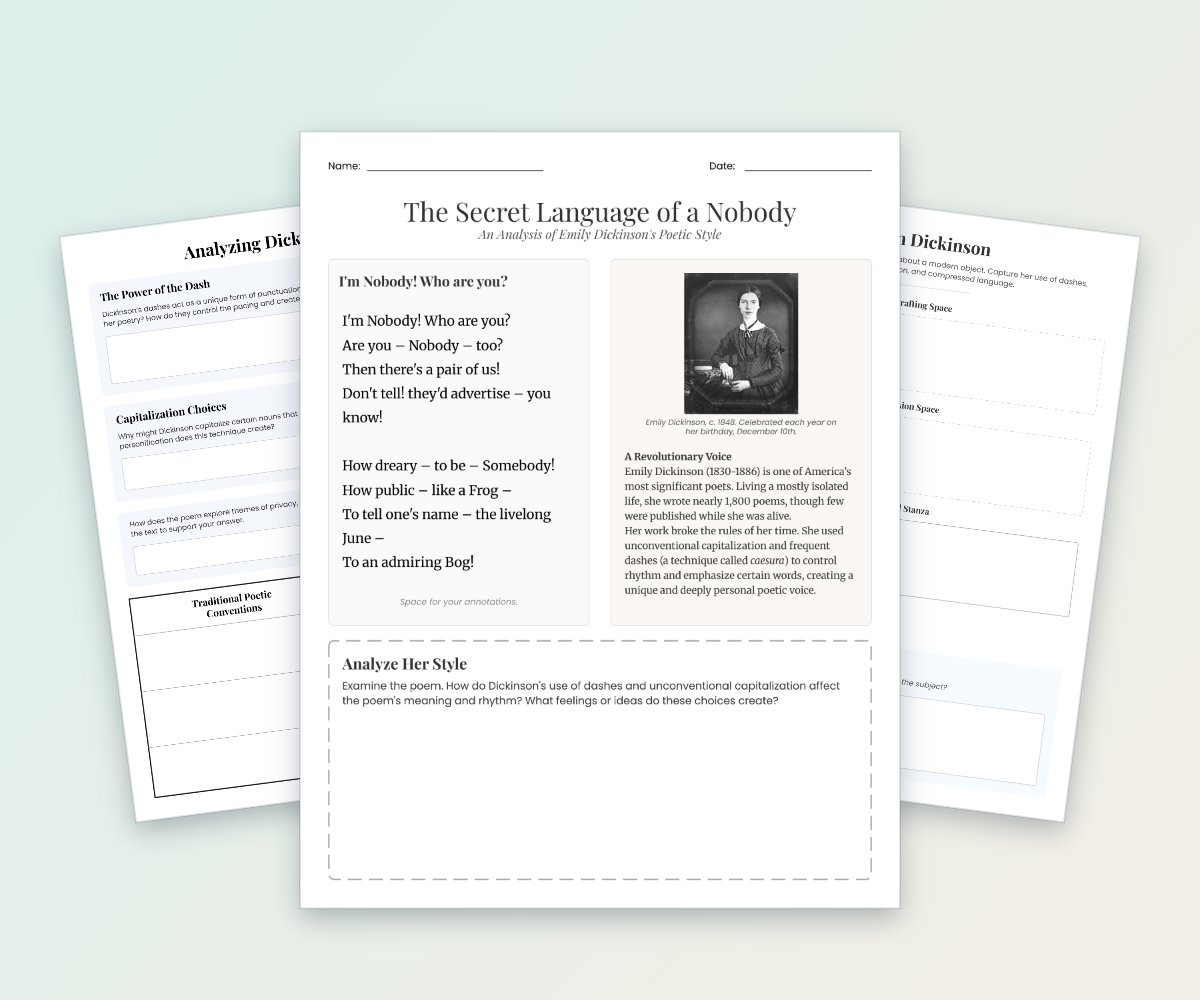
Students analyze Emily Dickinson’s poem “I’m Nobody! Who are you?” with attention to dashes, unconventional capitalization, rhythm, voice, and themes.
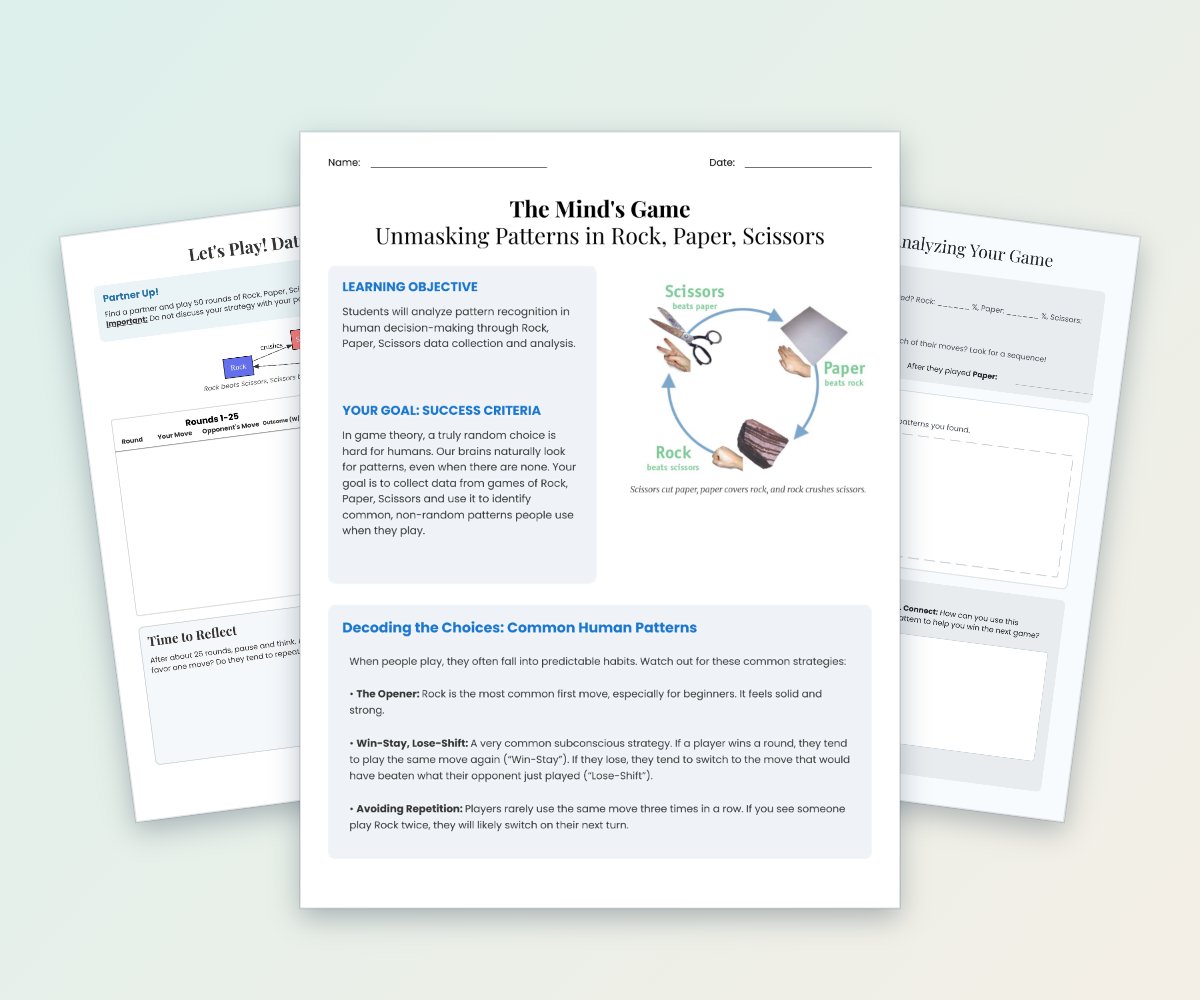
Students play 50 rounds of Rock, Paper, Scissors, record outcomes, and analyze opponents’ decision-making patterns.
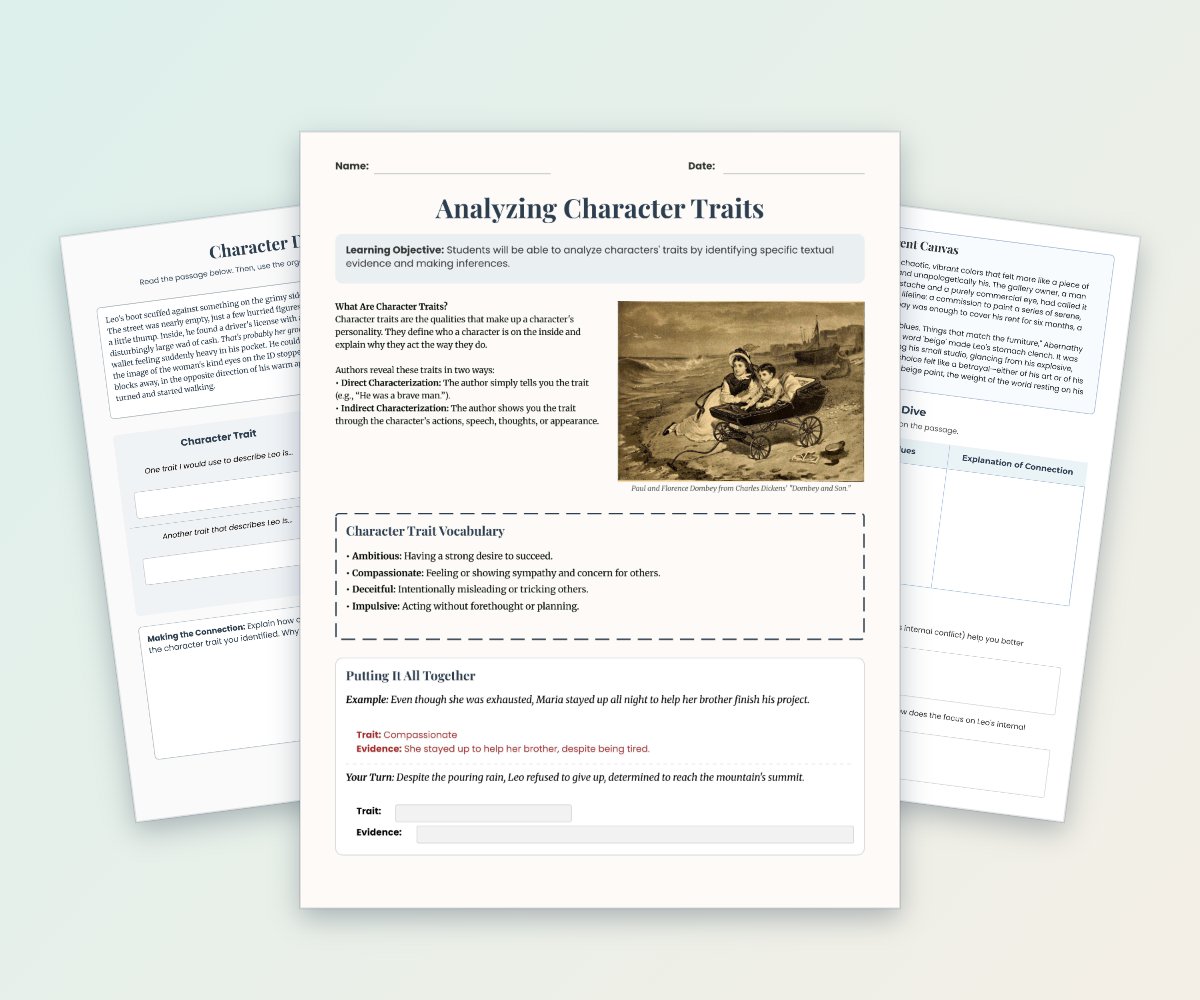
Students learn direct and indirect characterization, review trait vocabulary, and practice identifying traits using textual evidence.
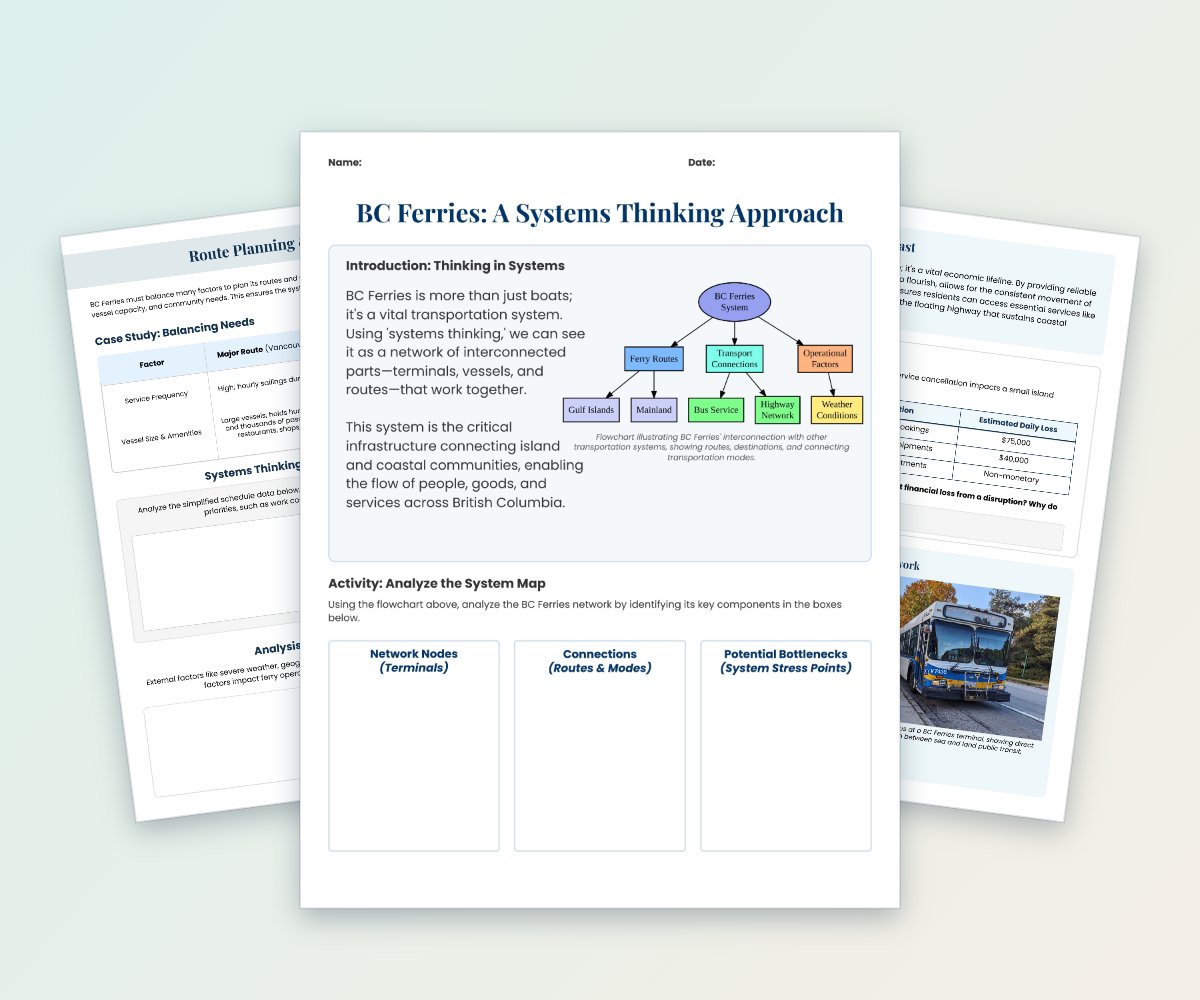
Students analyze BC Ferries as an interconnected transportation system, identifying network nodes, routes, modes, bottlenecks, and vulnerabilities.
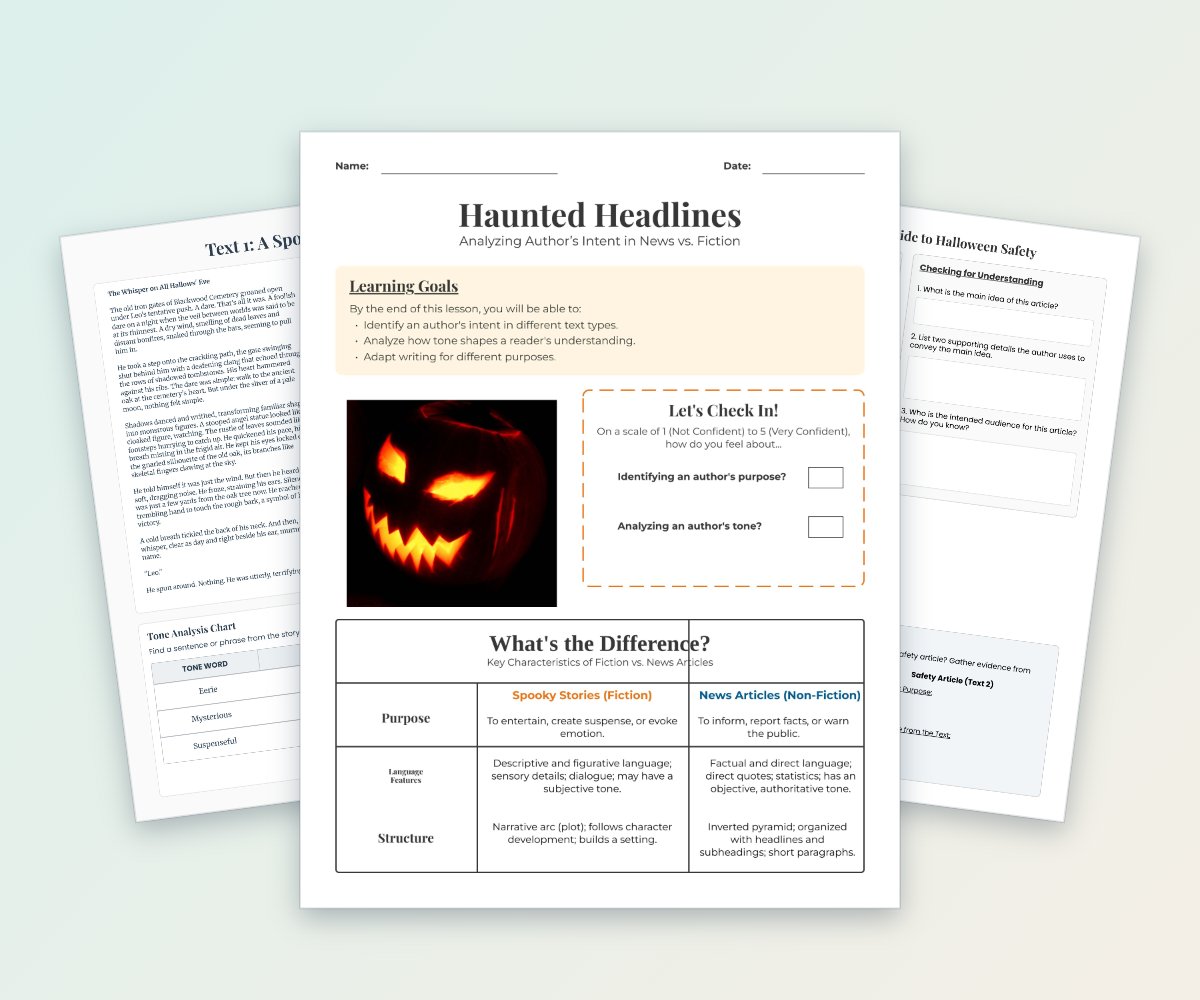
This lesson uses a spooky fictional story and news article comparison to teach authorial intent, tone, language features, and text structure.
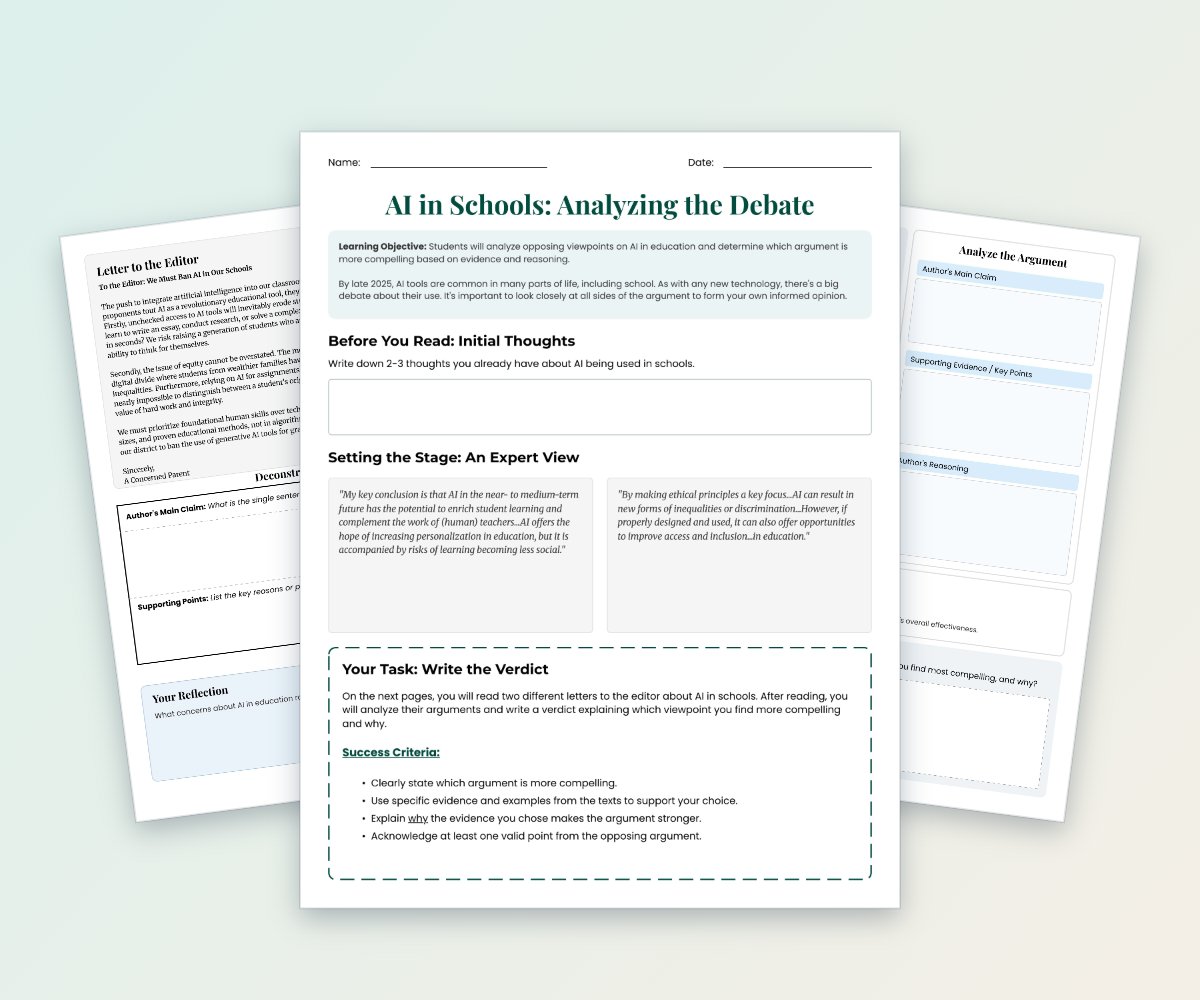
Students examine opposing letters about artificial intelligence in schools and evaluate which argument is more compelling.
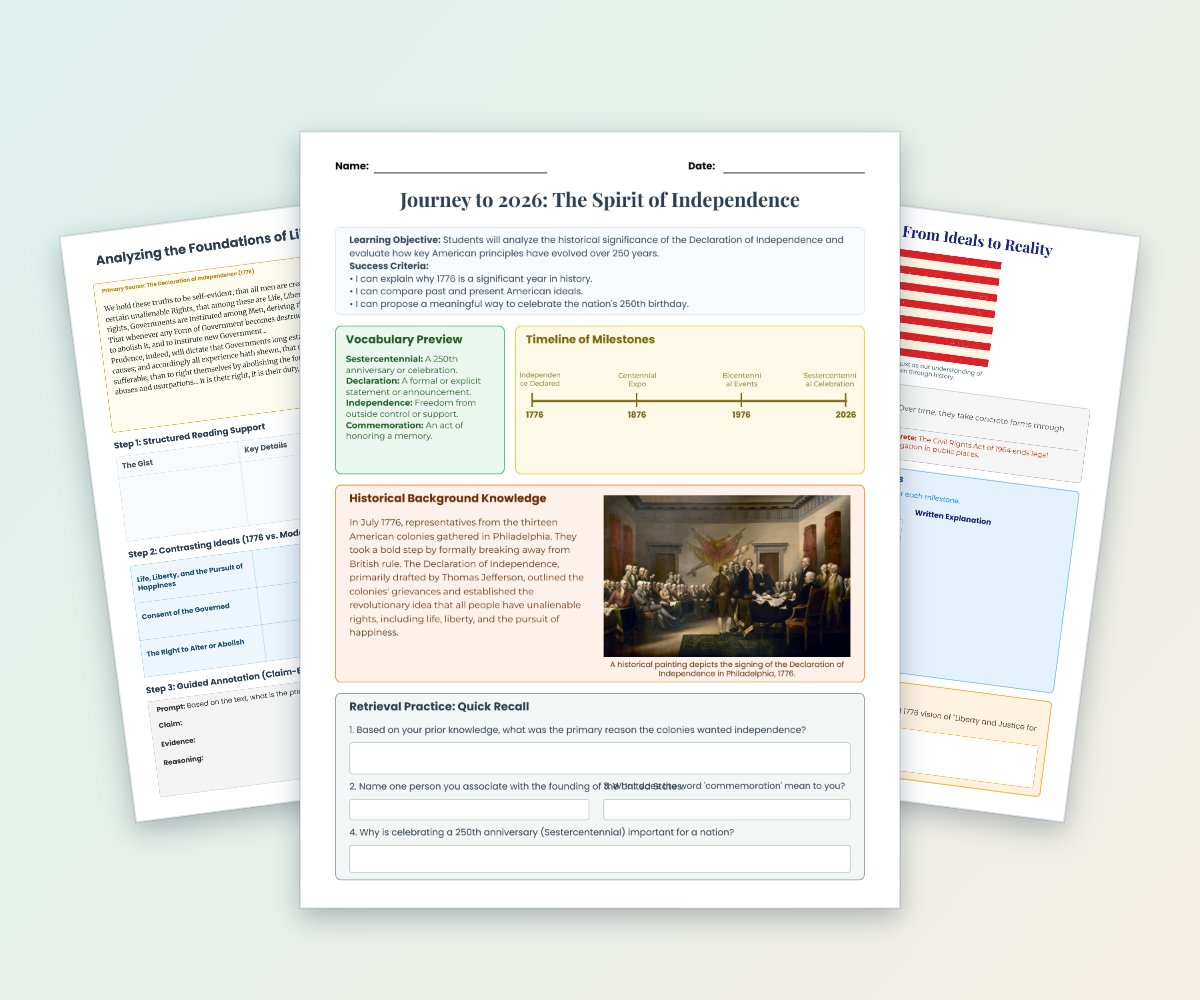
This four-page activity pack explores the historical significance of 1776 and America's 250th anniversary in 2026.
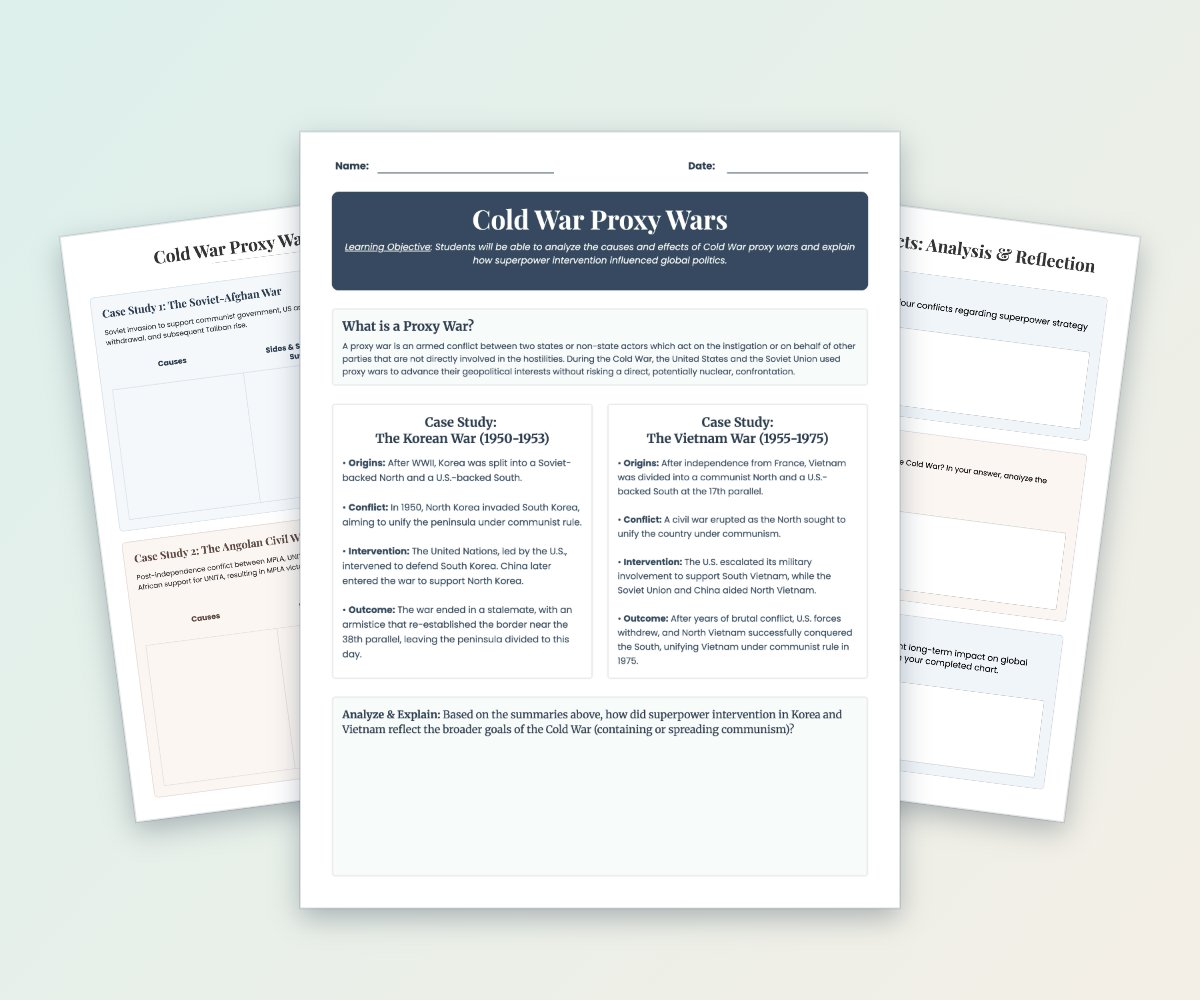
This three-page social studies worksheet introduces proxy wars and examines the Korean War, Vietnam War, Soviet-Afghan War, and Angolan Civil War.
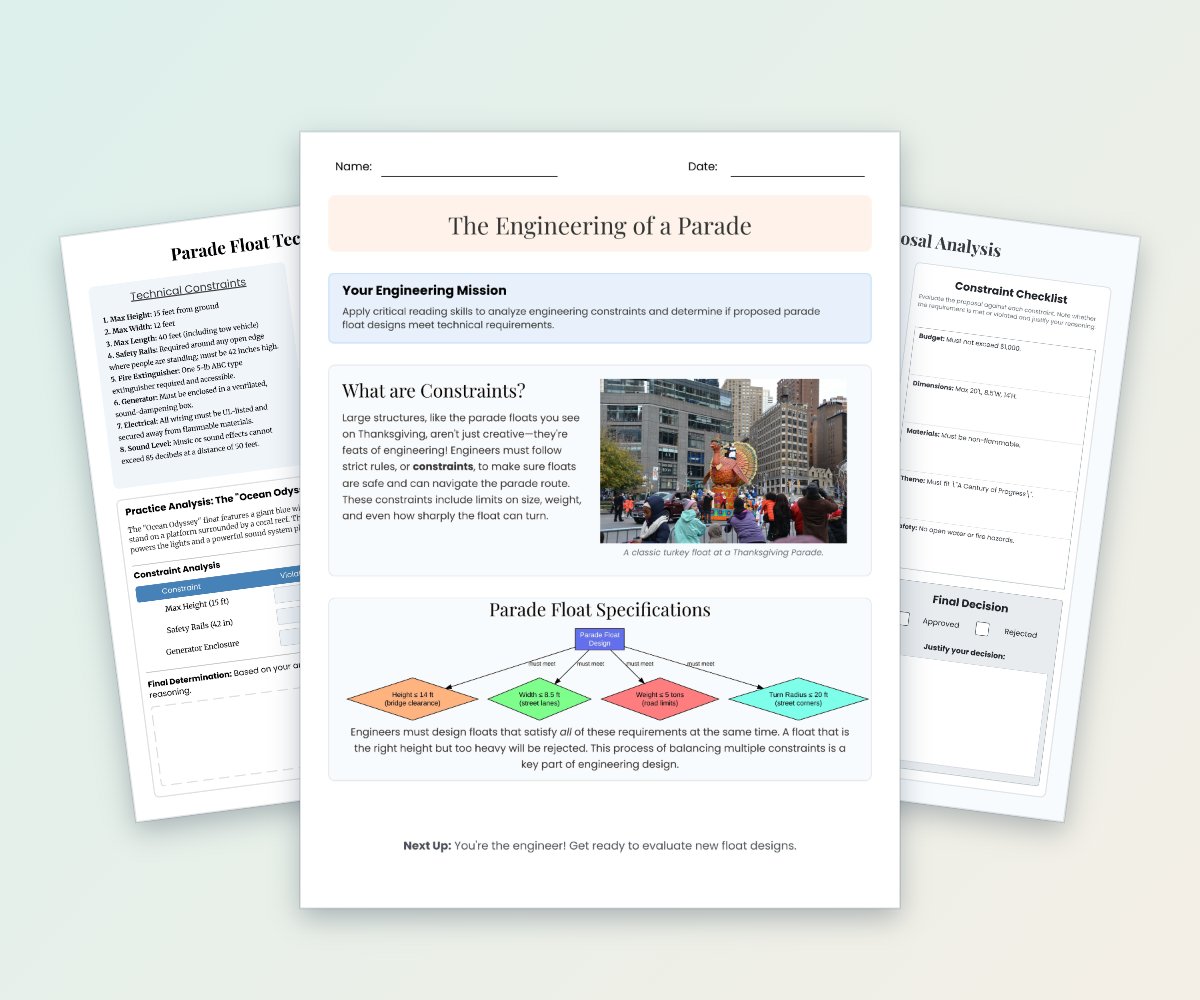
Students analyze parade float proposals against technical requirements for dimensions, safety features, generators, electrical systems, and sound levels.
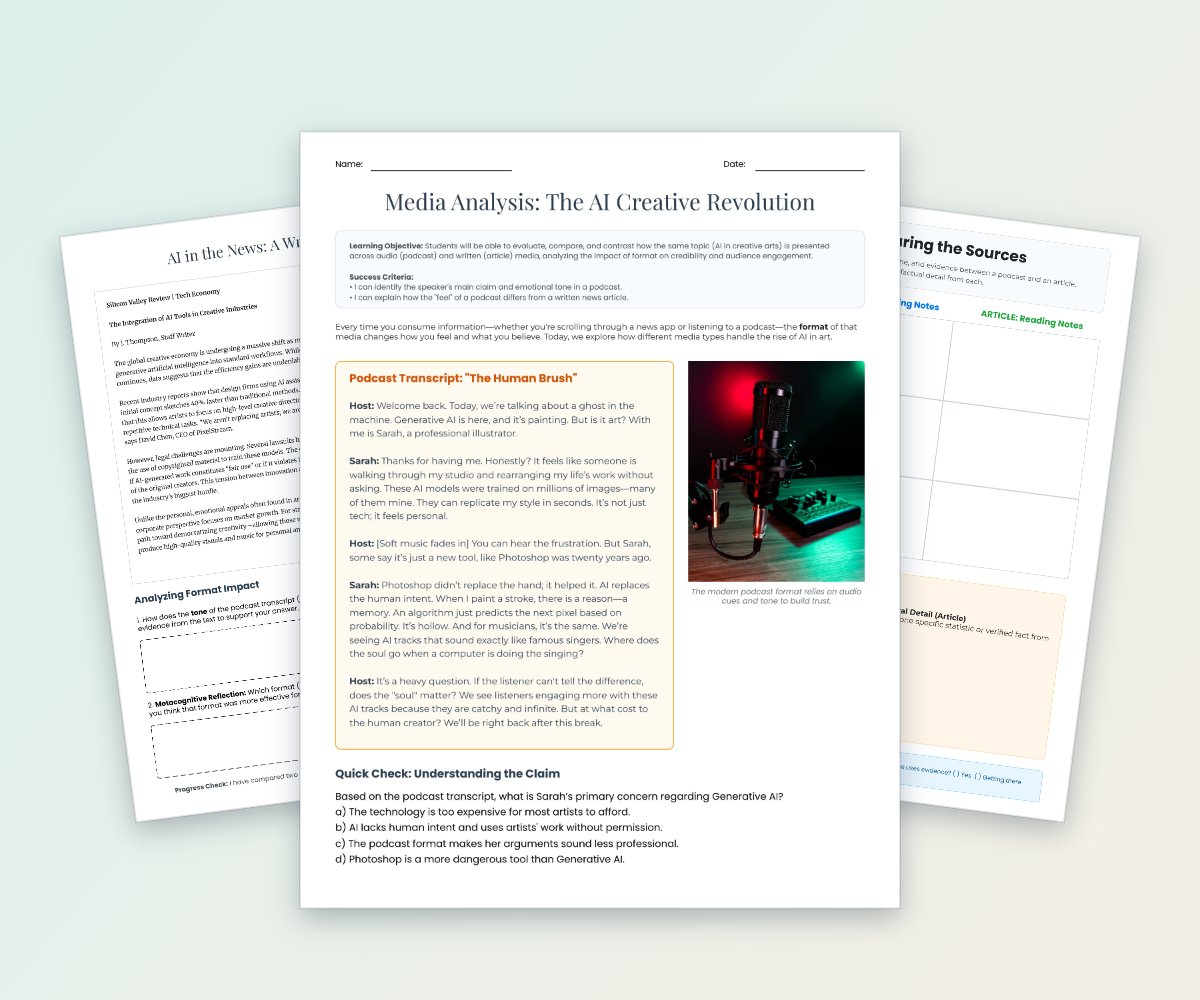
Students analyze how a podcast and written article present artificial intelligence in the creative arts.
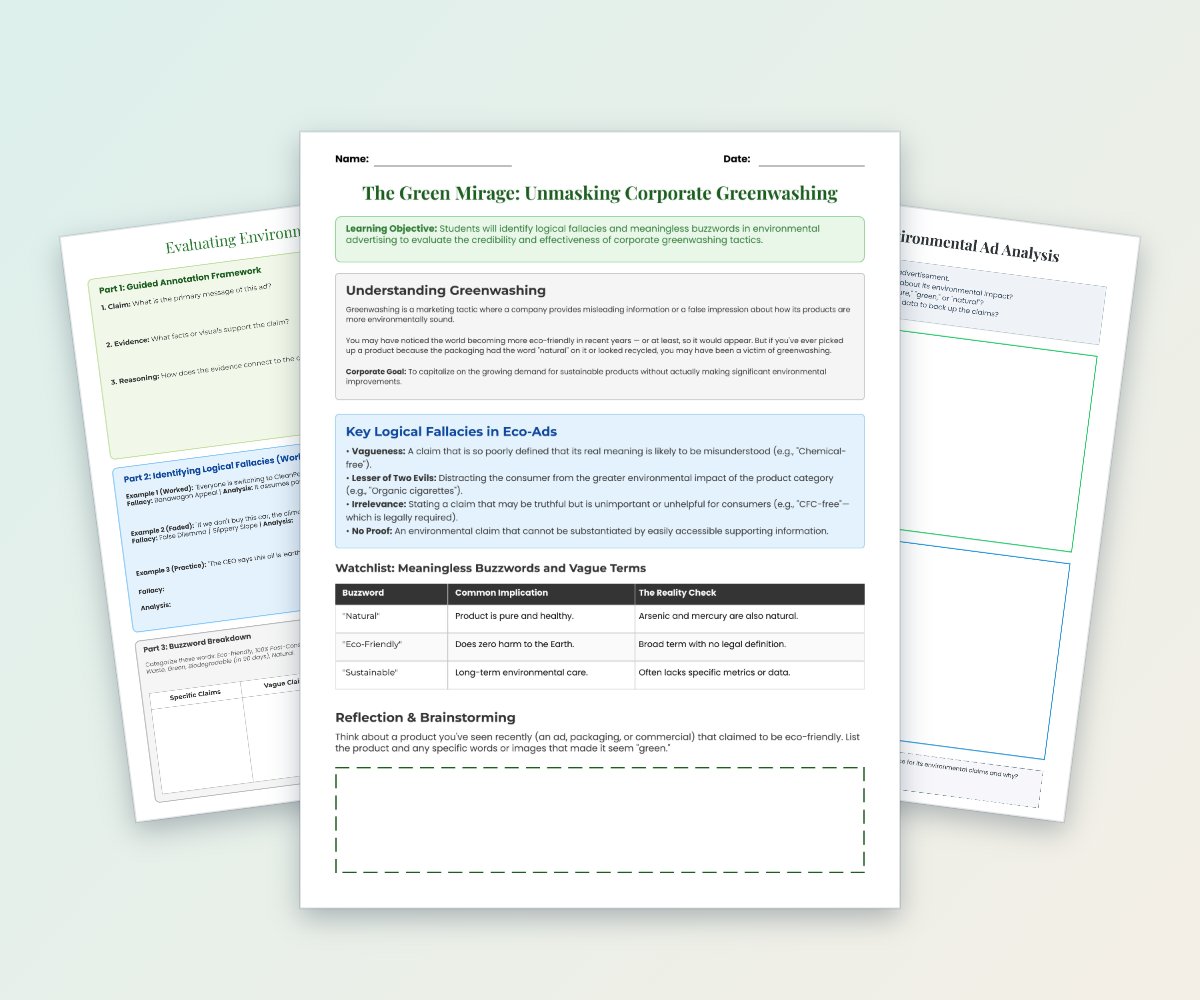
This four-page worksheet helps students analyze environmental advertising for greenwashing, vague claims, meaningless buzzwords, and logical fallacies.
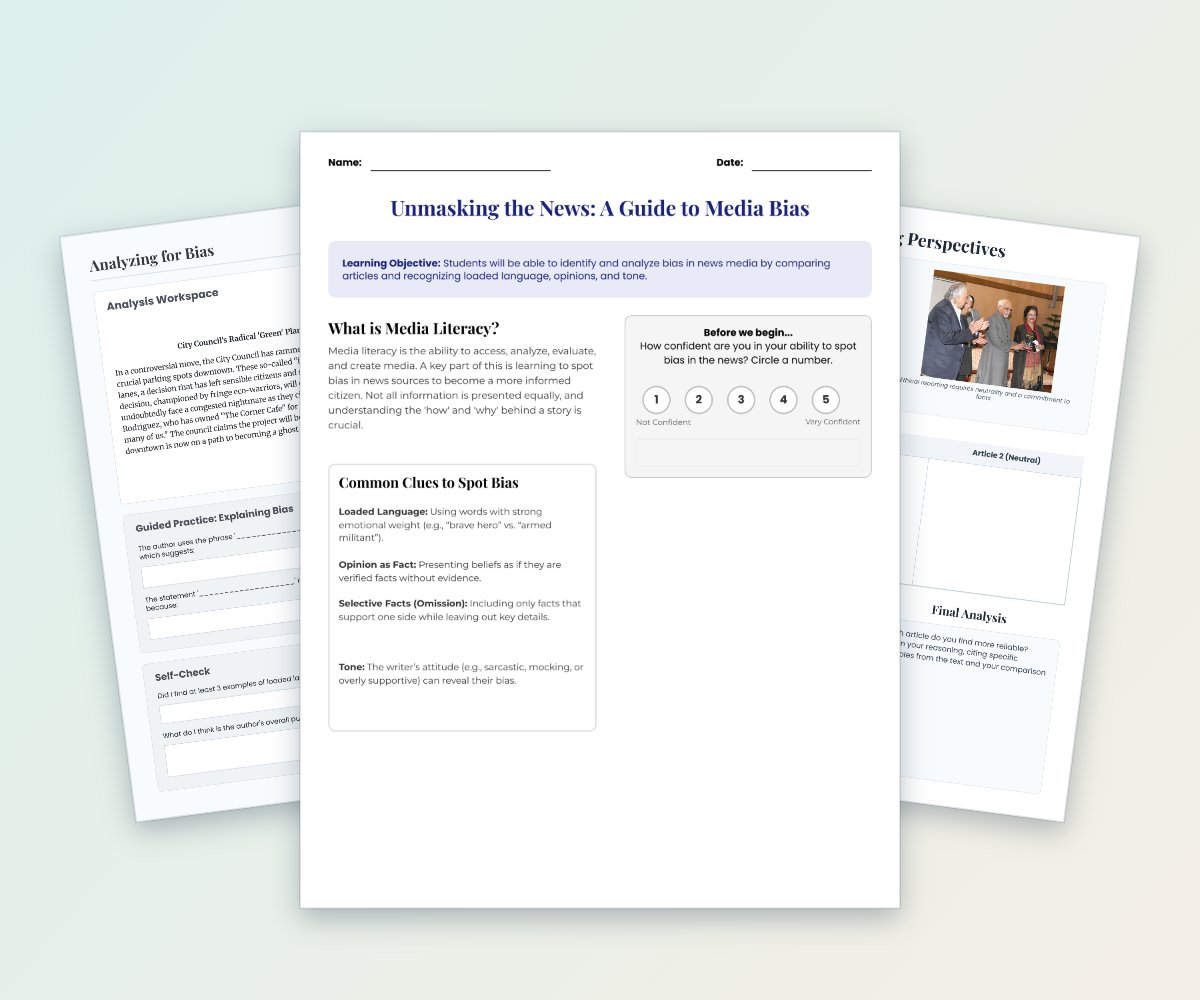
This four-page worksheet introduces media literacy and guides students in identifying loaded language, opinions presented as facts, selective facts, and tone.
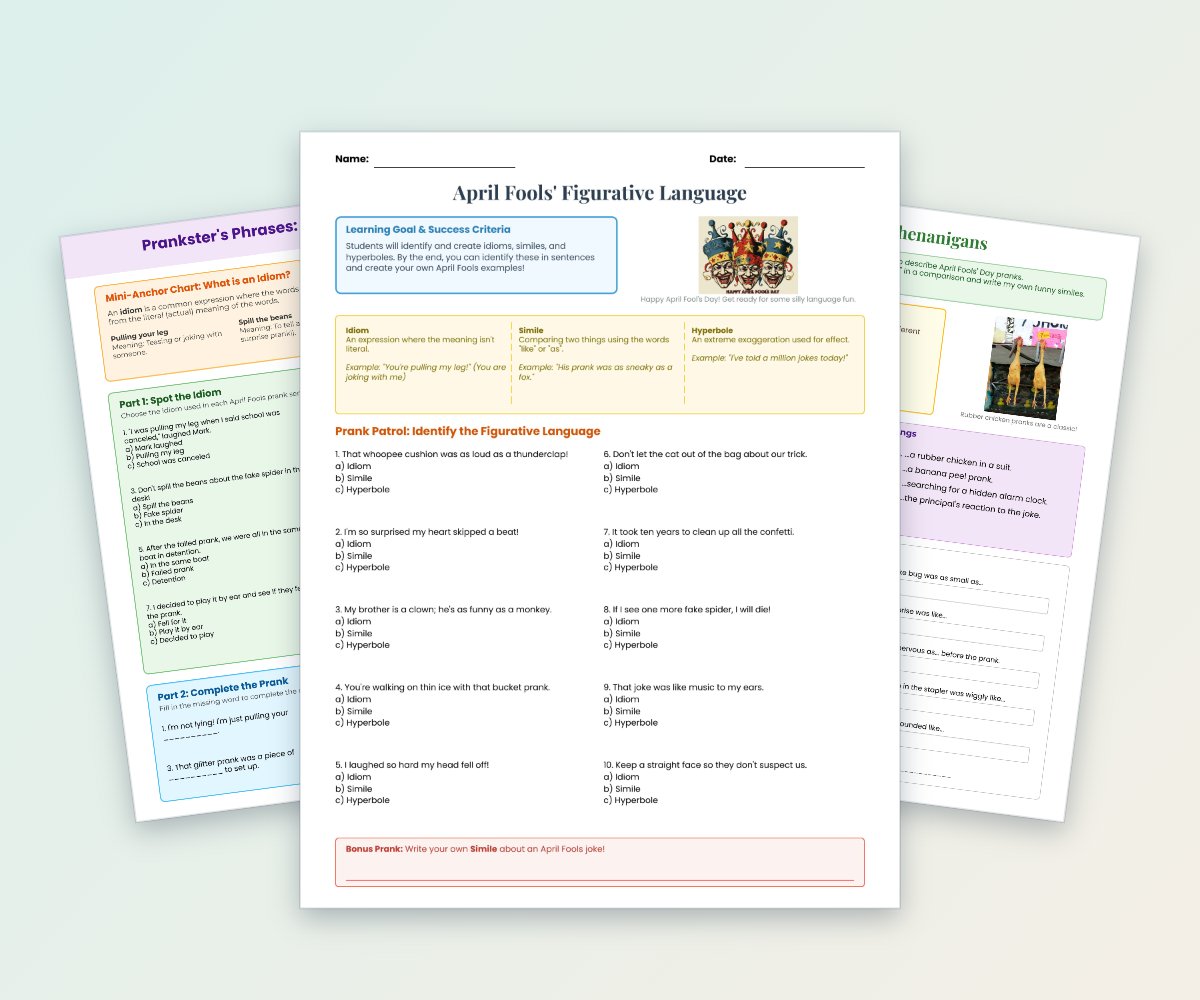
This five-page April Fools-themed activity pack teaches students to identify and create idioms, similes, and hyperboles.
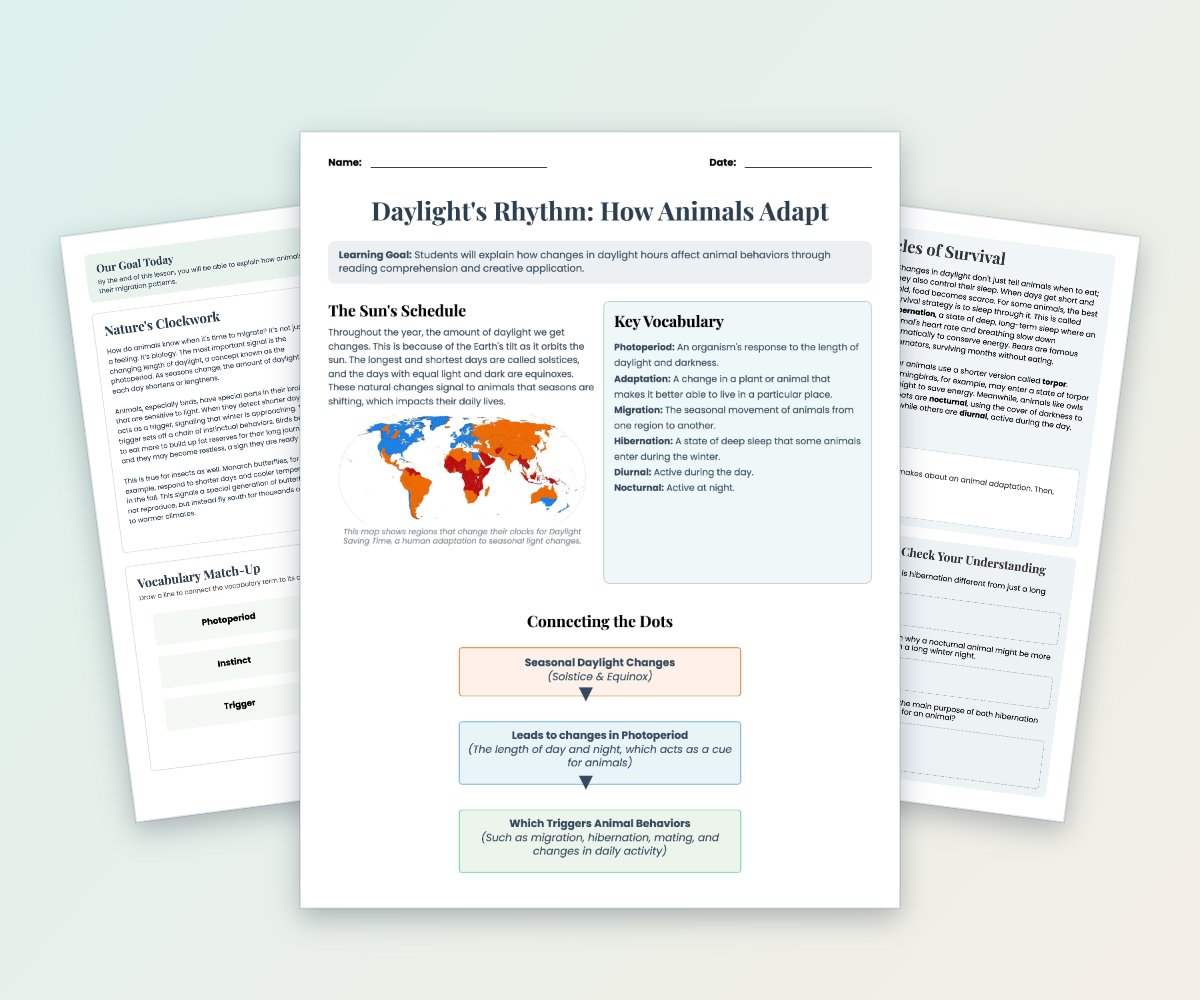
This lesson explains how seasonal changes in daylight influence animal behaviors such as migration, hibernation, mating, and daily activity.
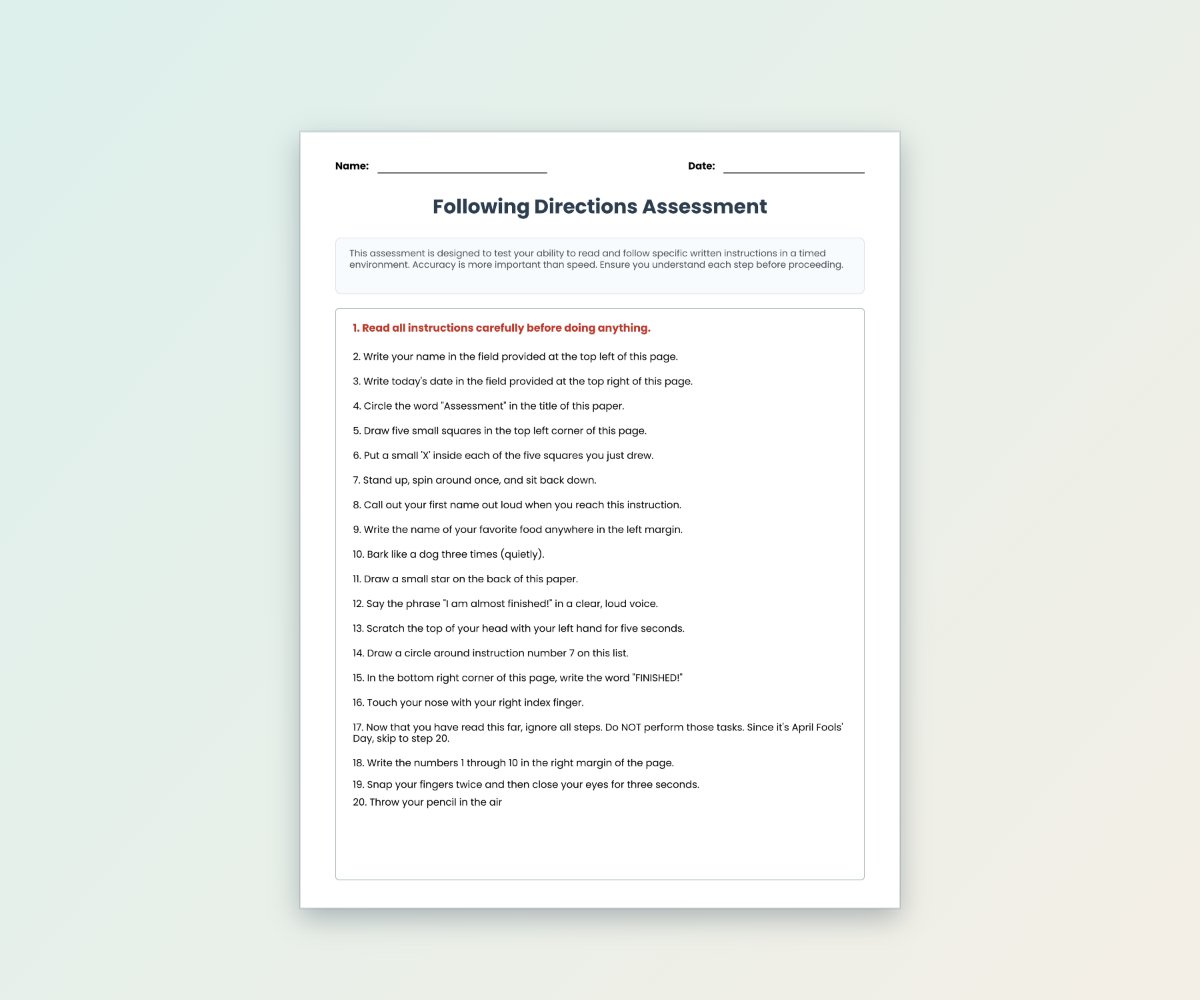
A humorous one-page April Fools assessment that challenges students to read instructions carefully before acting.
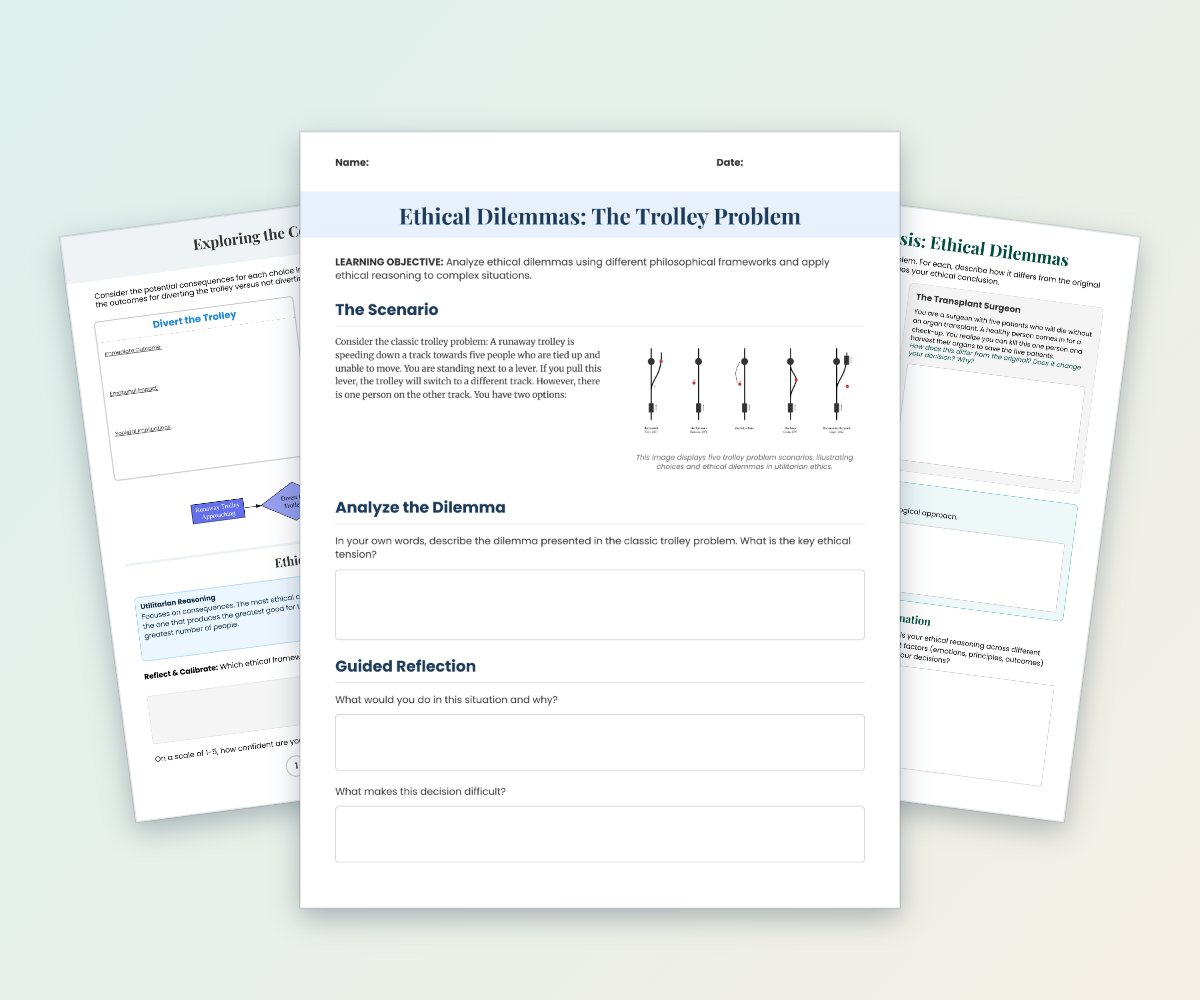
This four-page worksheet guides students through the classic trolley problem and related variations, including the footbridge dilemma.
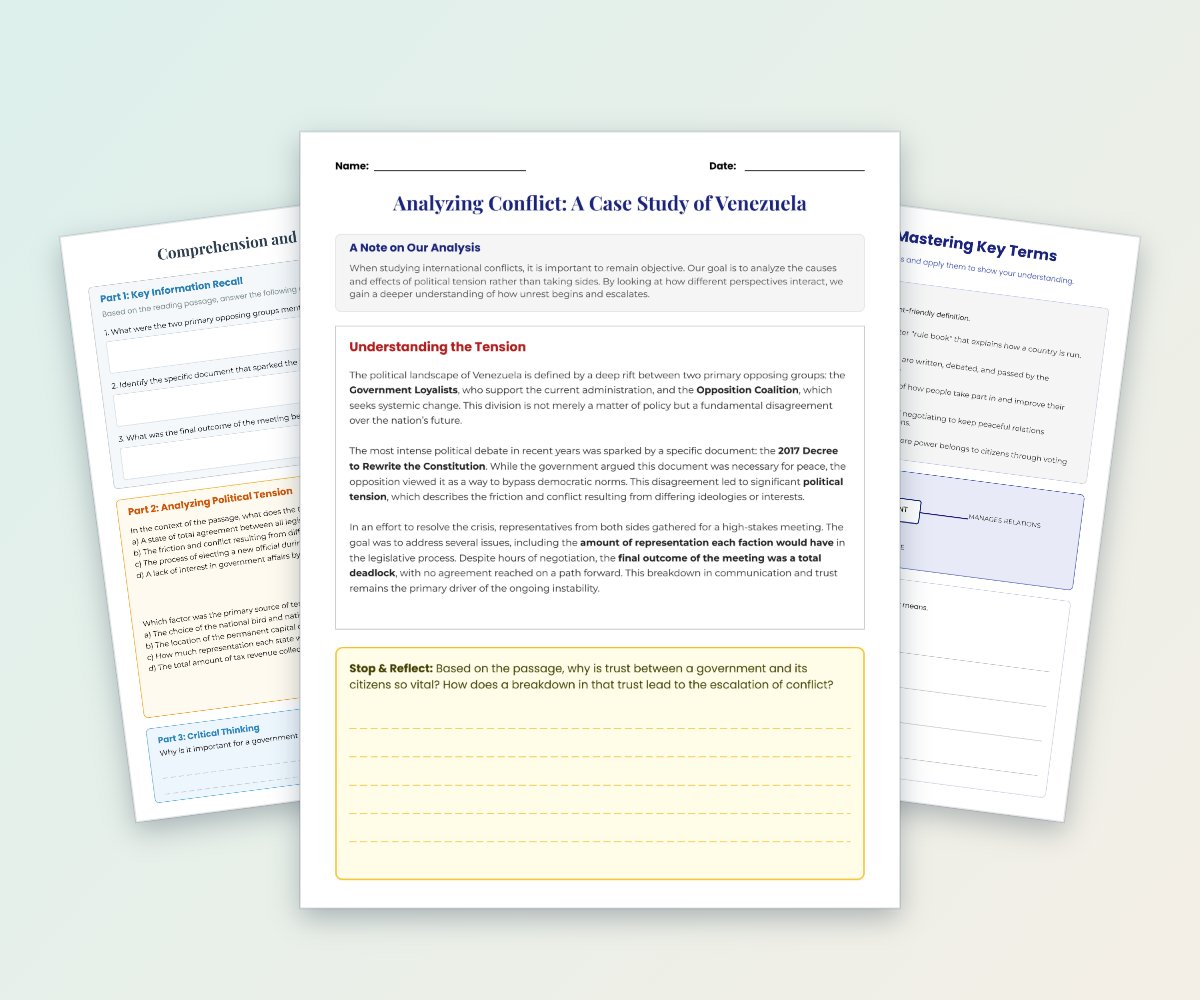
This case study examines Venezuela’s political conflict, including opposing perspectives, constitutional debate, political tension, negotiation, and deadlock.
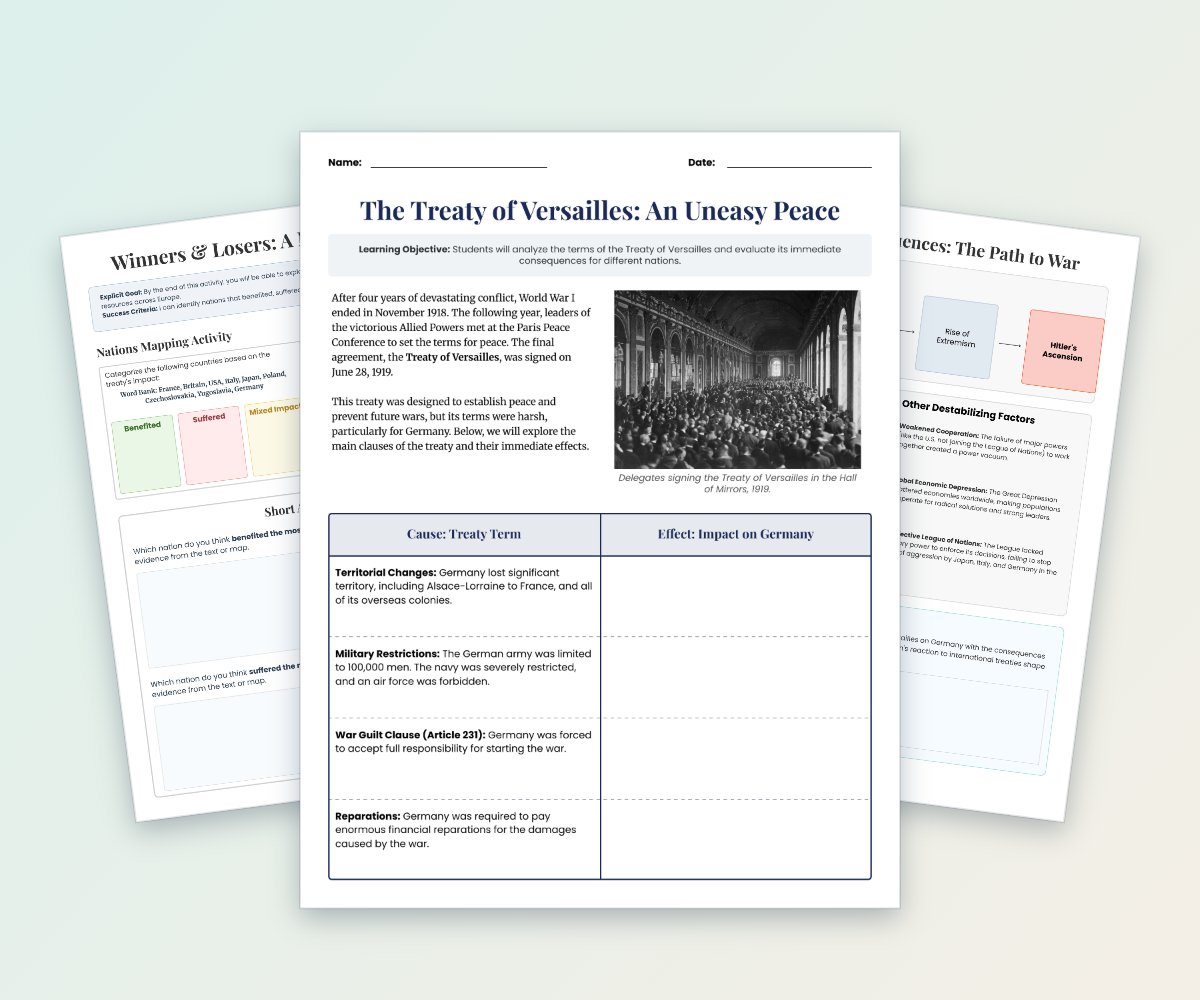
Students examine the Treaty of Versailles, including territorial changes, military restrictions, war guilt, and reparations.
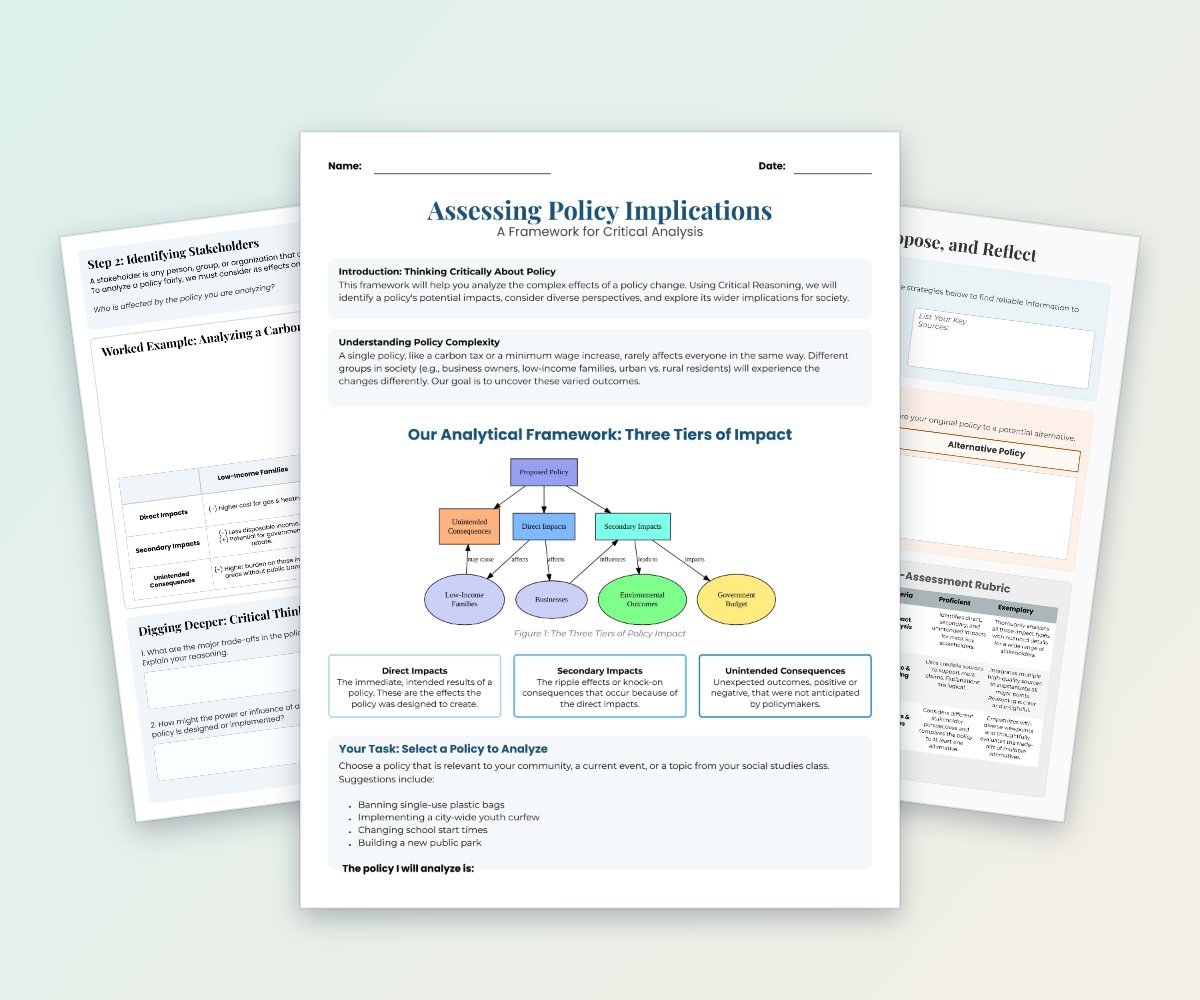
This three-page framework guides students through analyzing the direct impacts, secondary effects, and unintended consequences of a proposed policy.
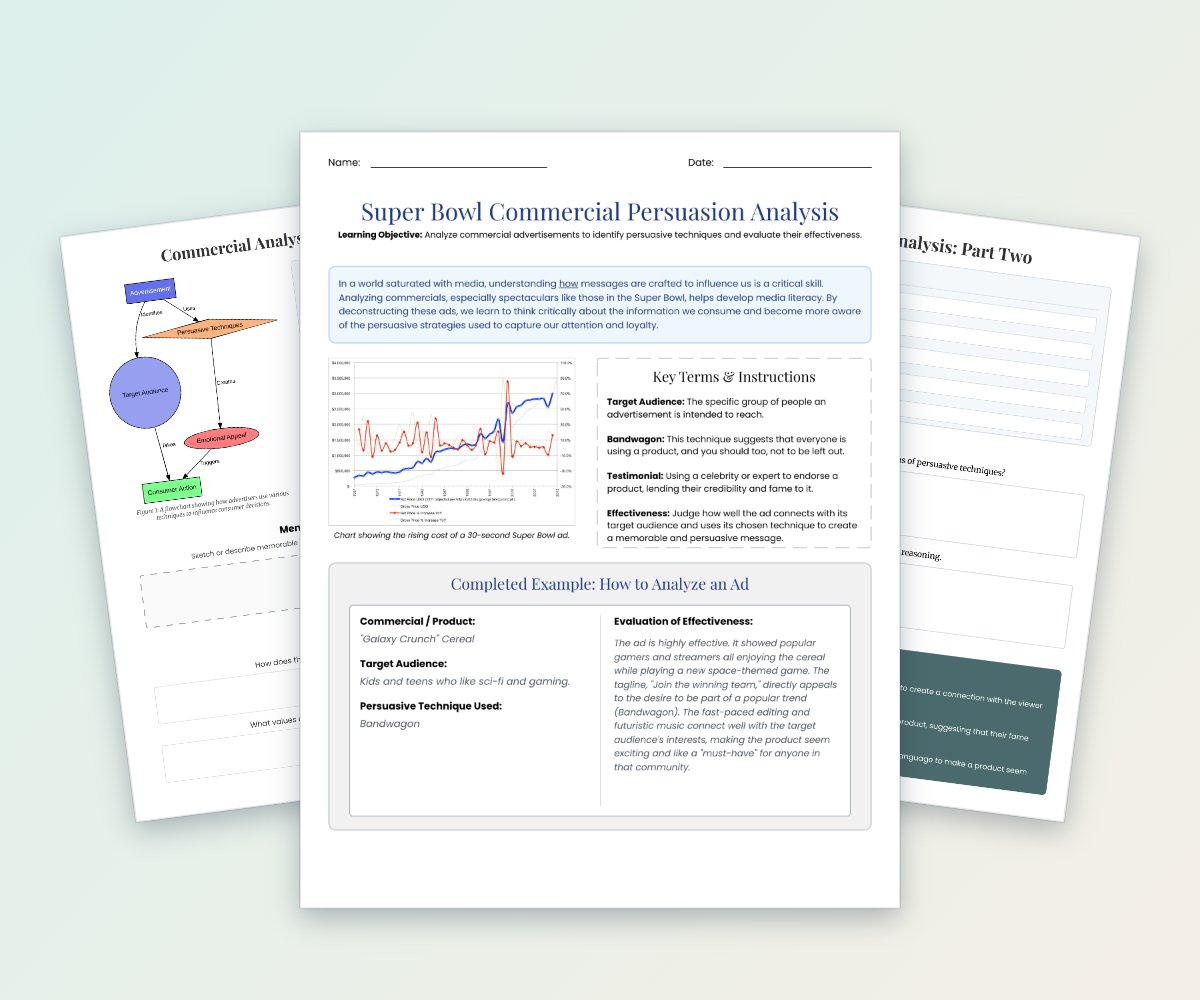
Students analyze Super Bowl commercials by identifying target audiences, persuasive techniques, memorable visuals, and consumer actions.
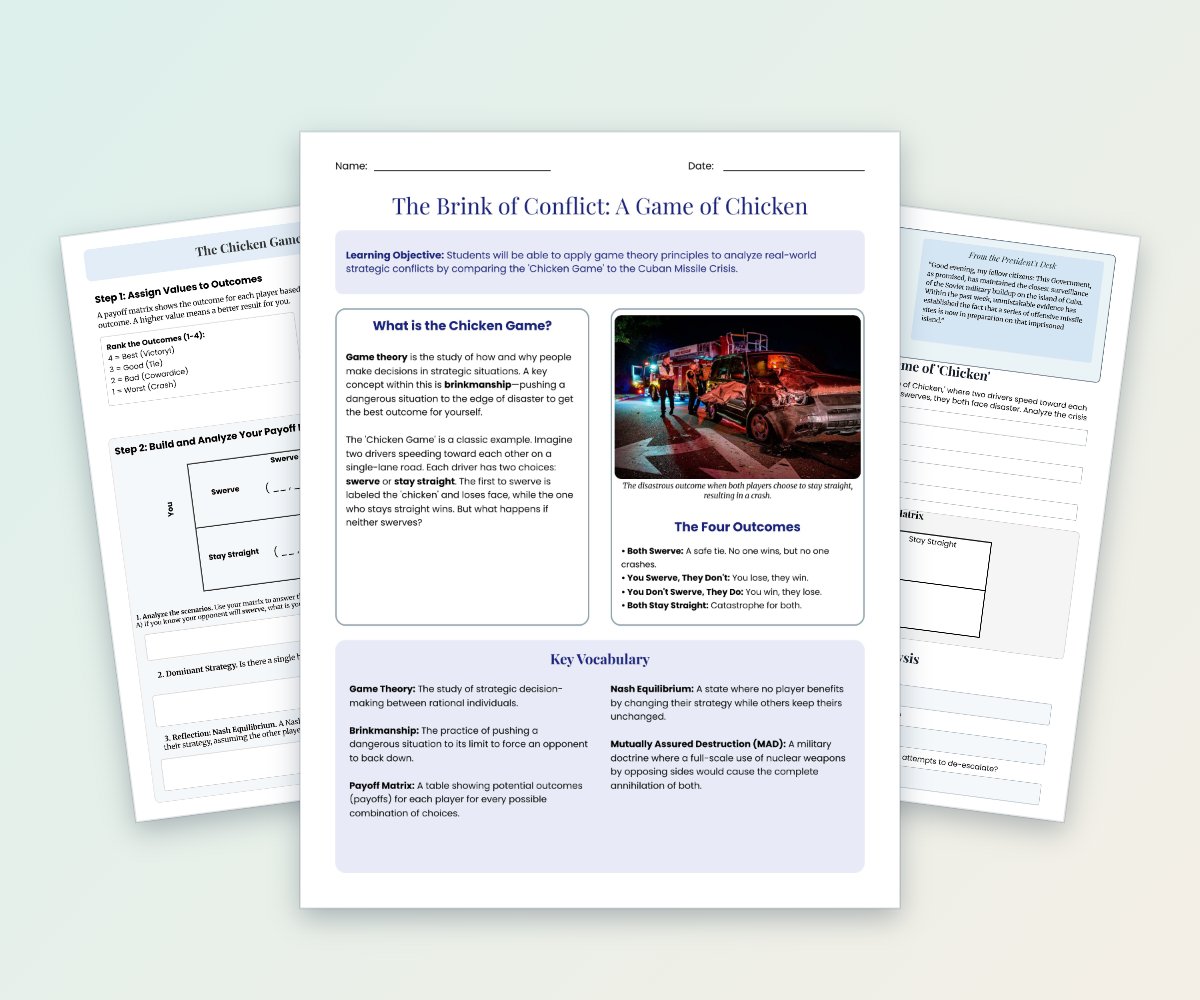
Students learn game theory, brinkmanship, Nash equilibrium, and mutually assured destruction through the Chicken Game.
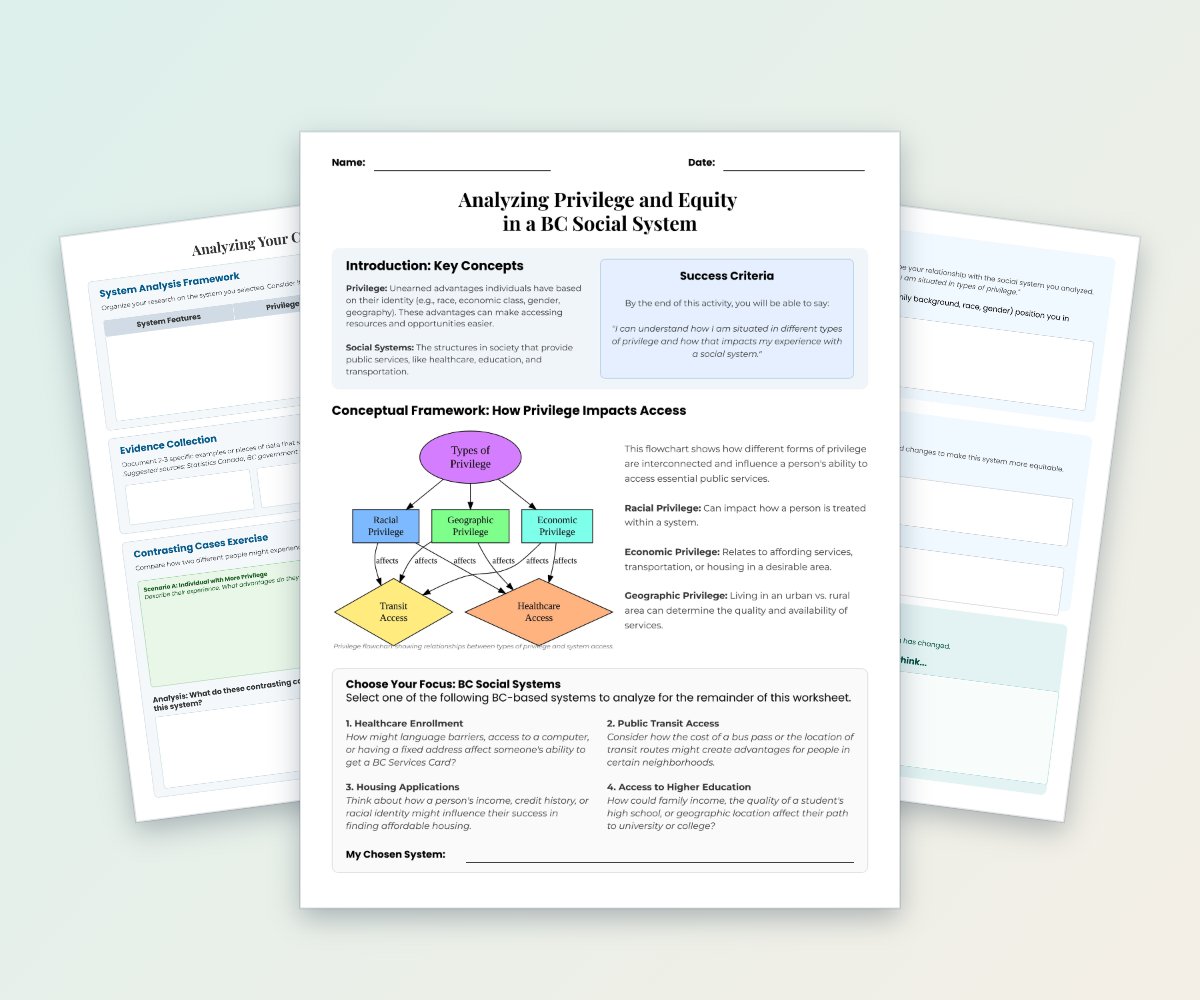
Students examine how racial, economic, and geographic privilege can influence access to healthcare, housing, transportation, and higher education in British Columbia.
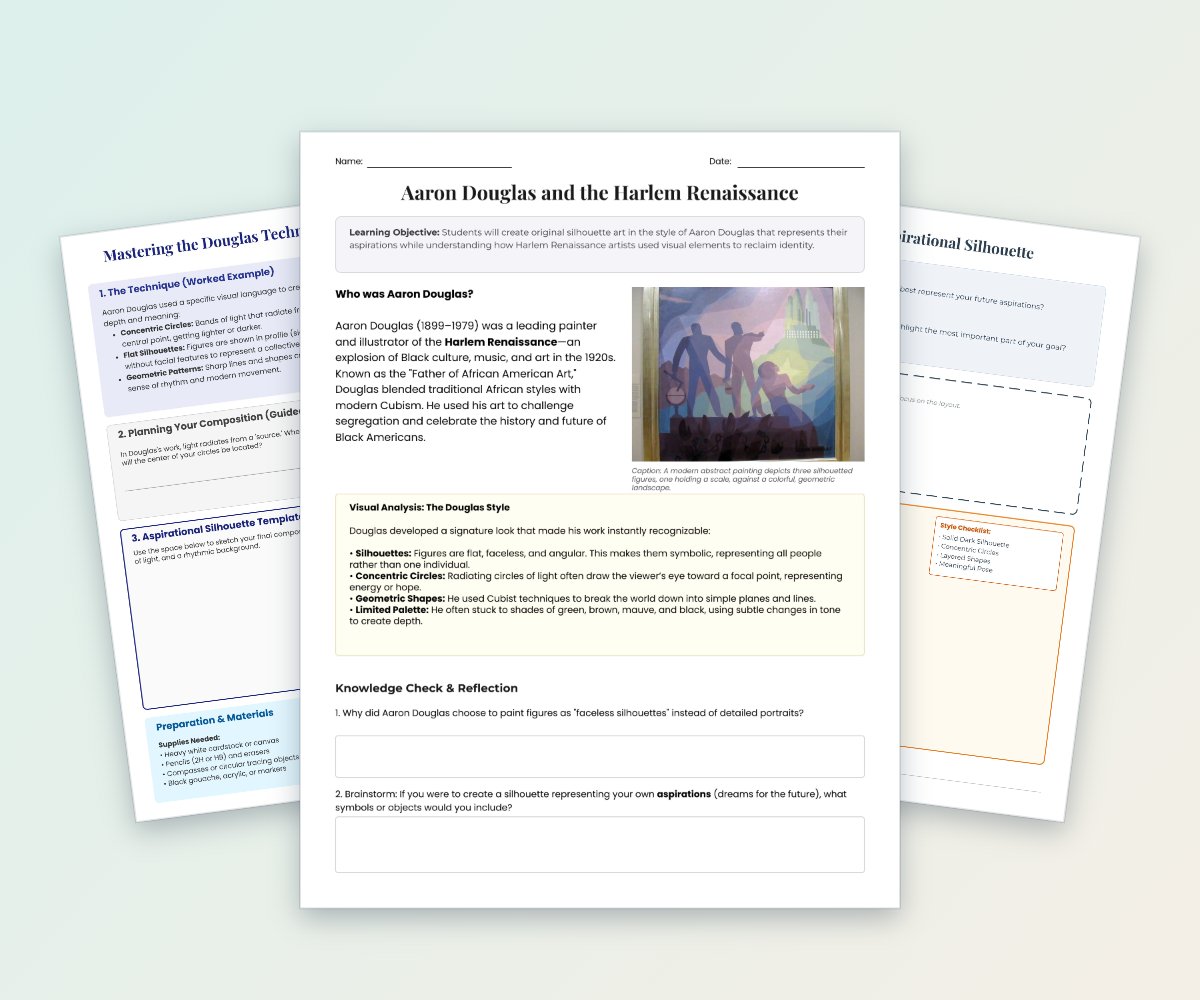
Students learn about Aaron Douglas and analyze his use of silhouettes, concentric circles, geometric shapes, and limited color palettes.
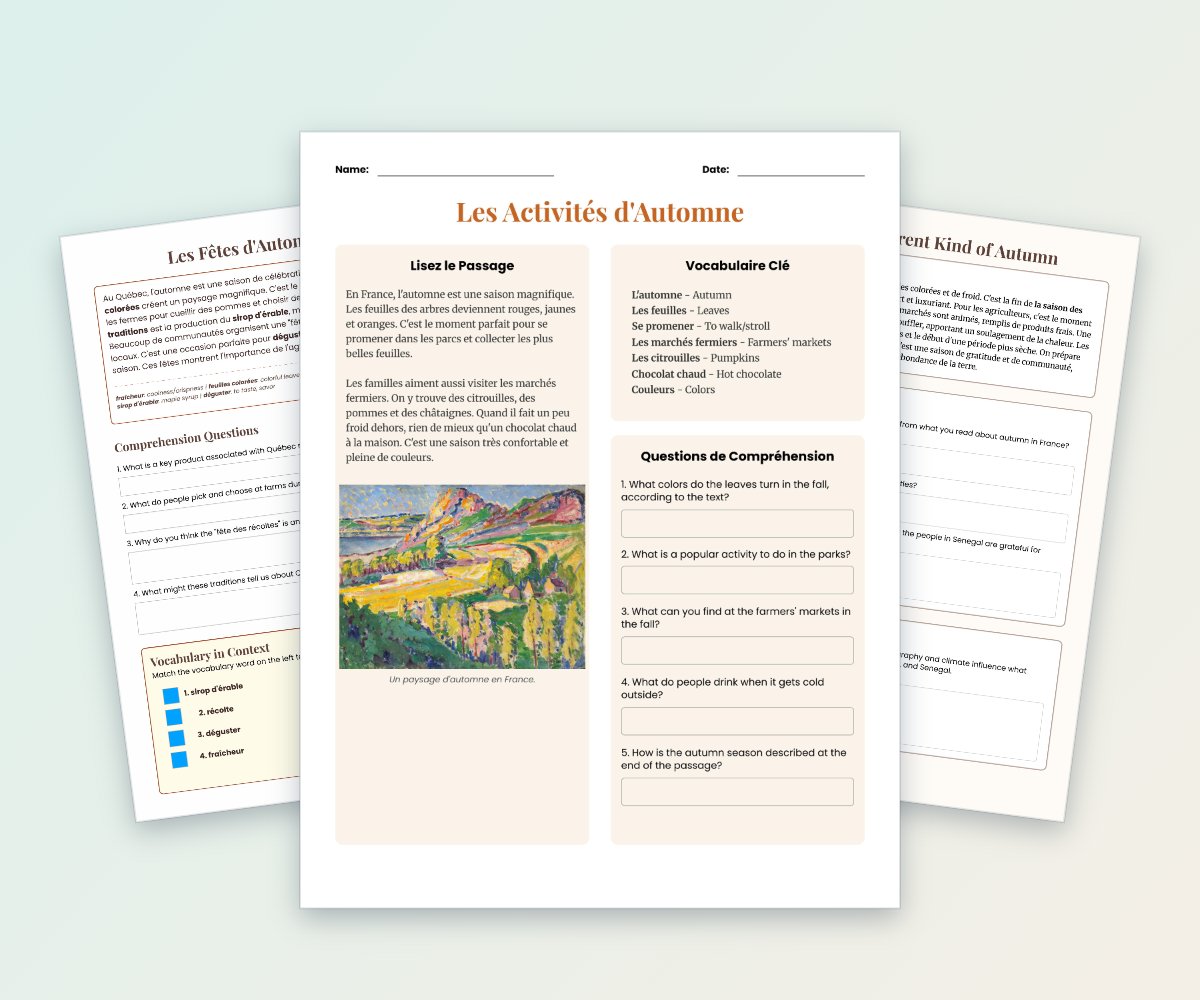
This four-page French activity pack features reading passages about autumn traditions in France and Quebec.
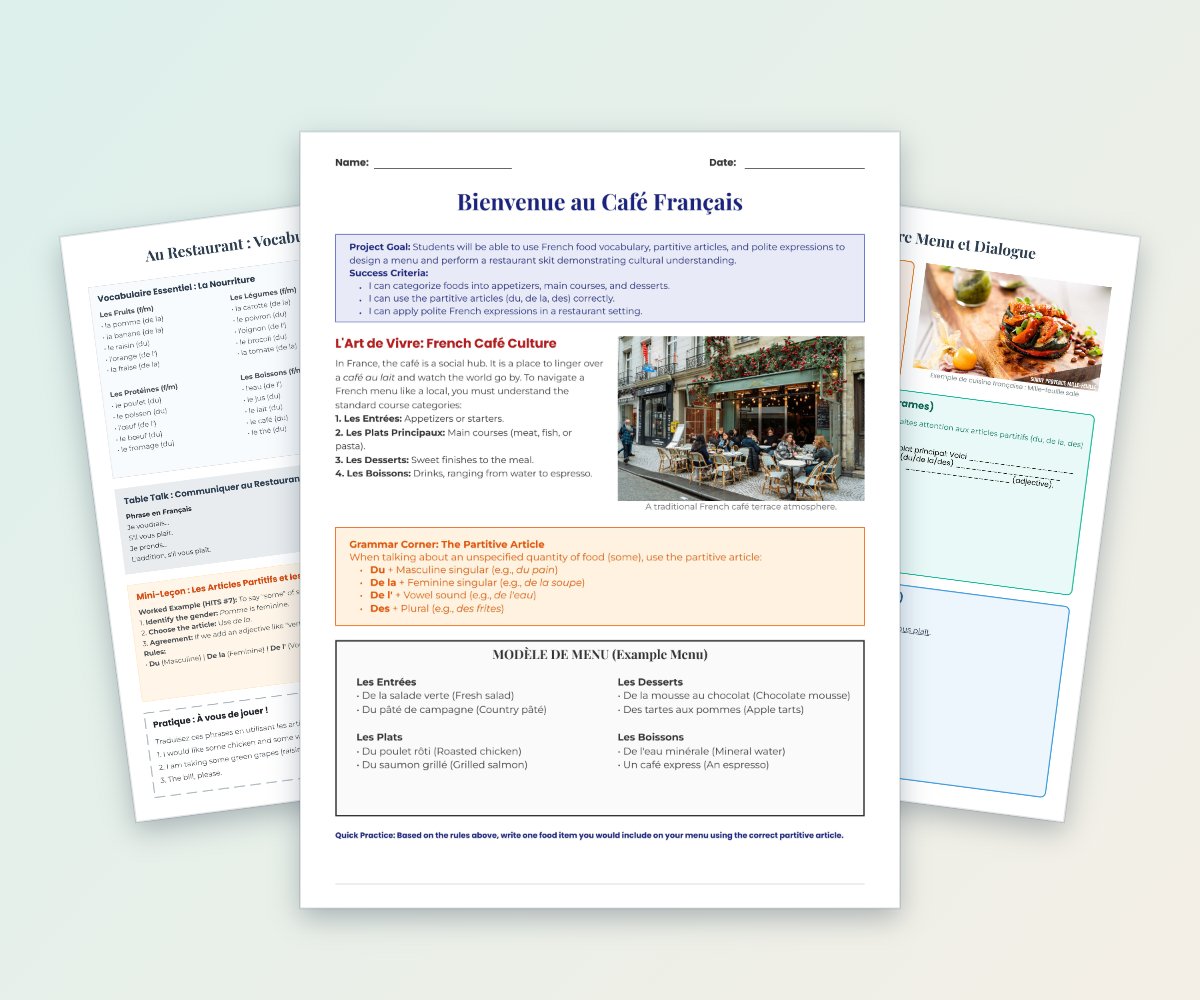
Students design a French café menu and perform a restaurant skit using food vocabulary, partitive articles, and polite expressions.
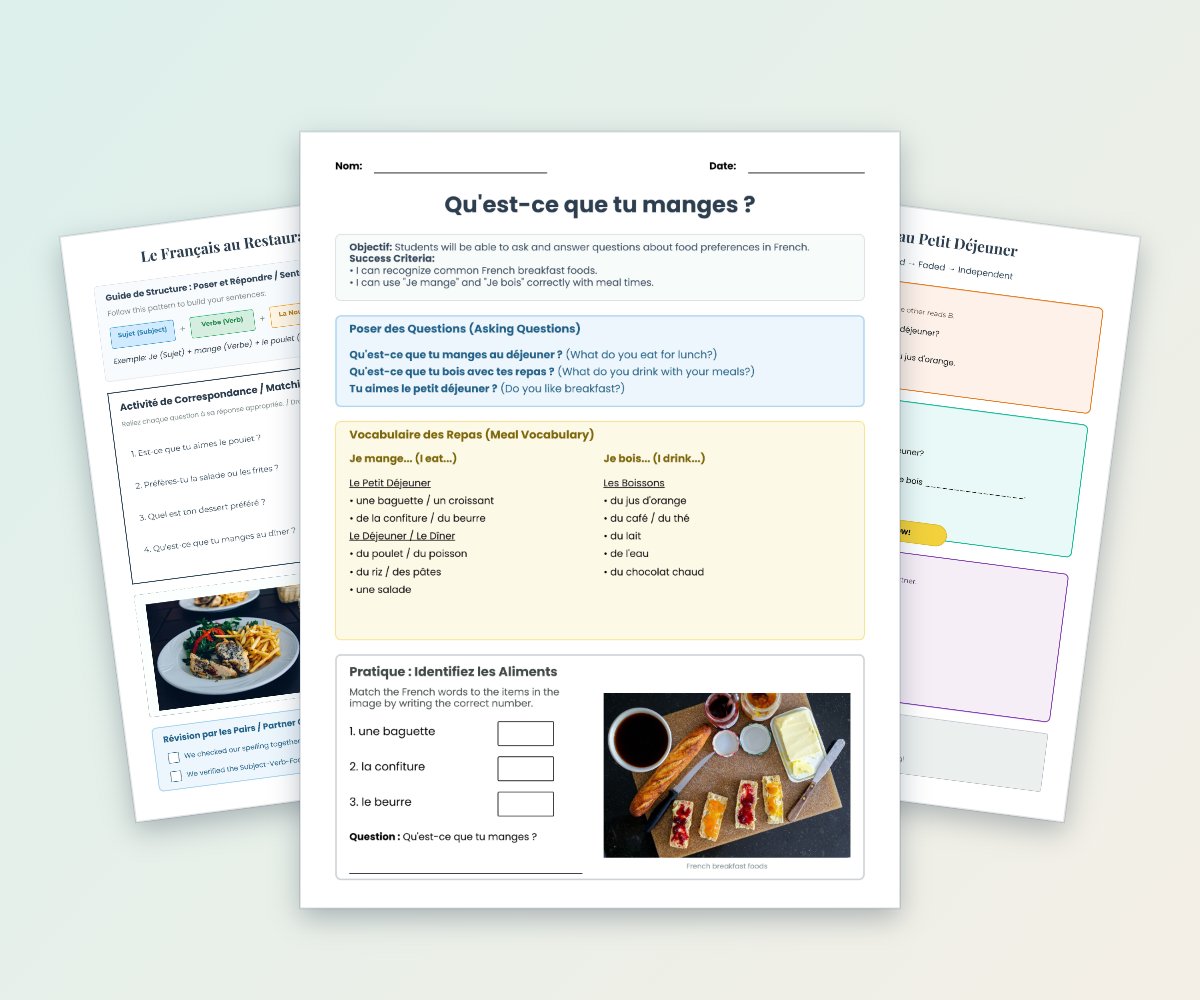
This four-page French activity pack helps students ask and answer questions about meals, food preferences, and beverages.
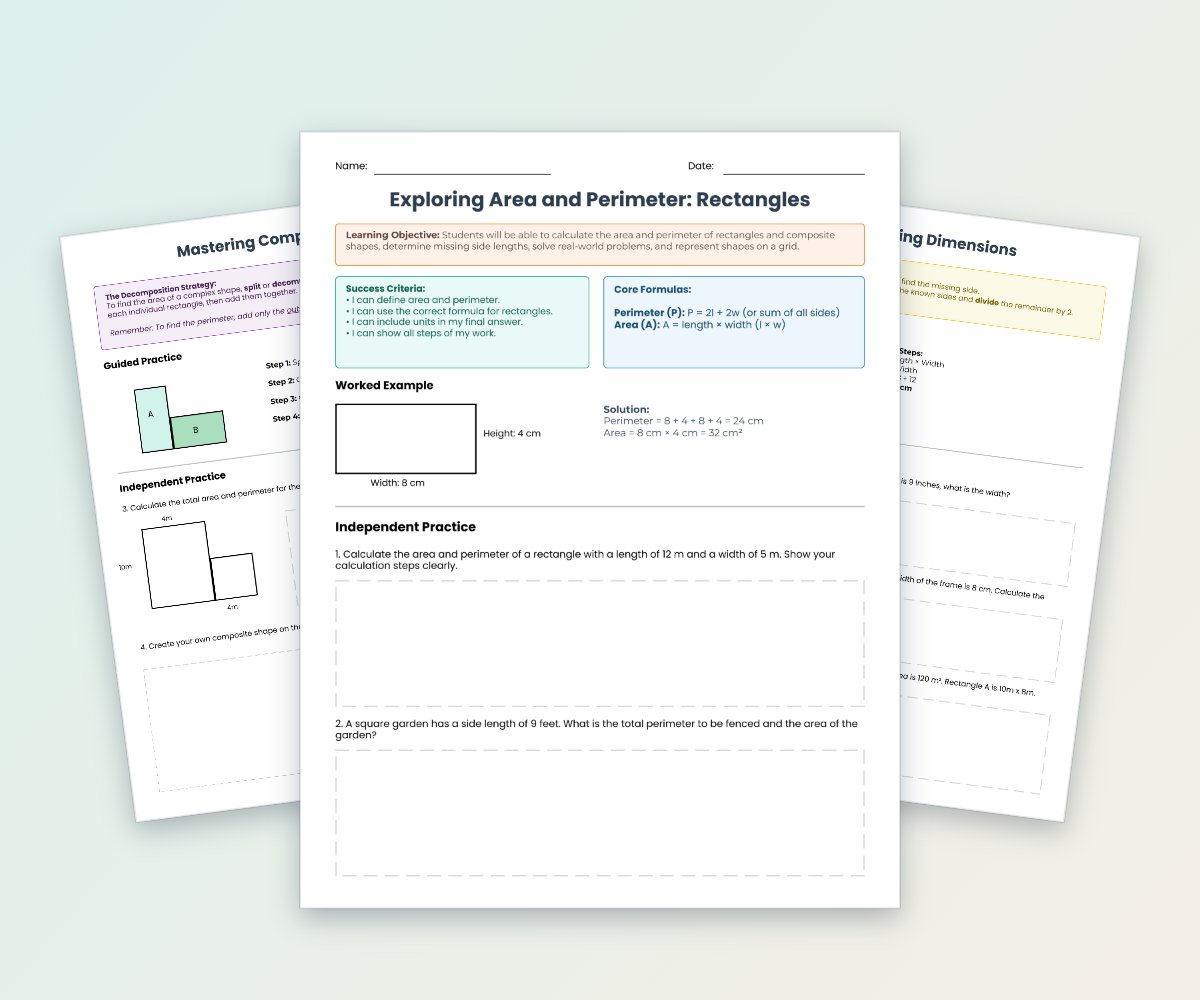
This six-page practice pack covers rectangle and square area and perimeter, composite shapes, missing dimensions, and grid-based shape construction.
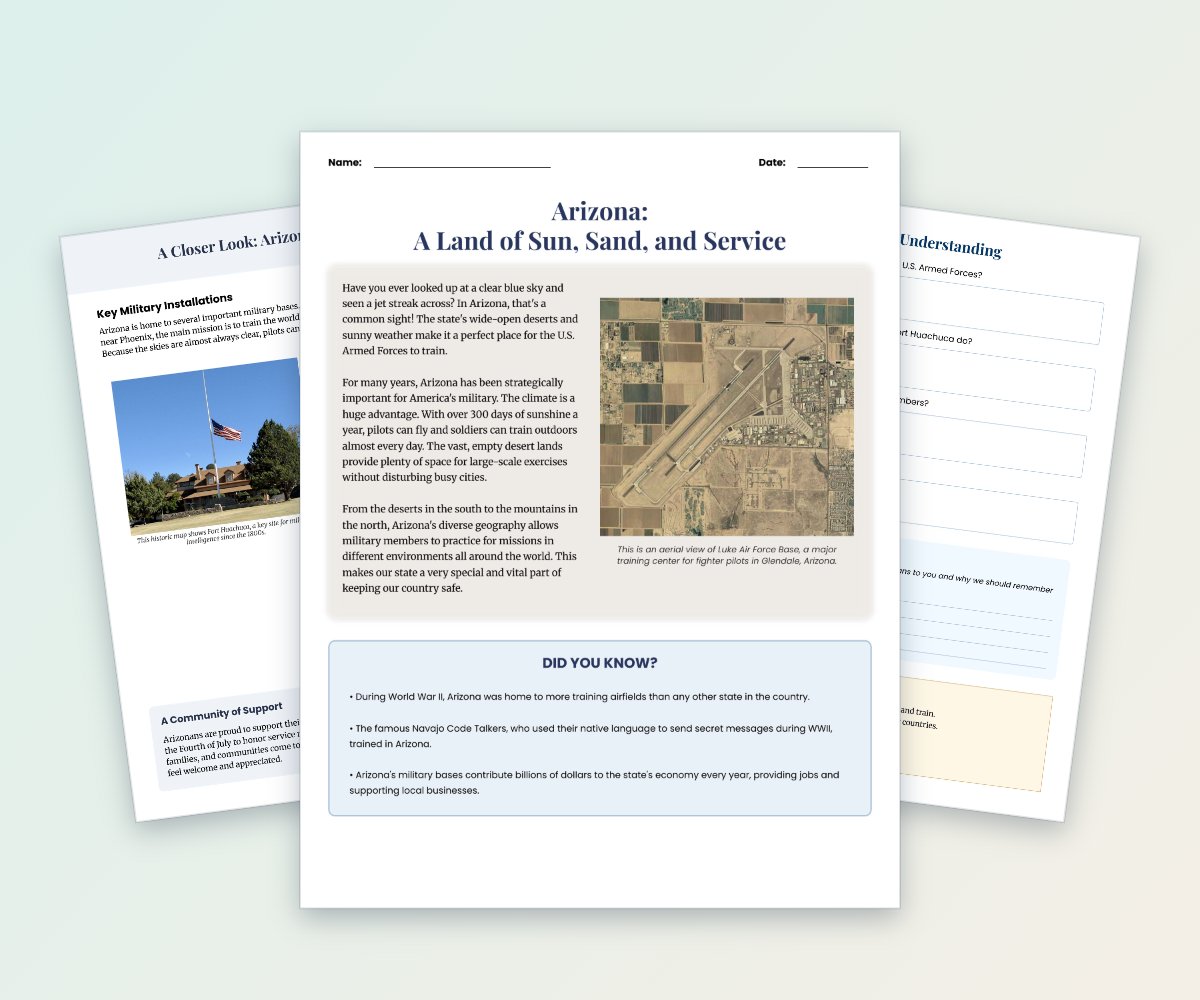
This three-page informational resource explains how Arizona’s climate, geography, military installations, and National Guard support military training.
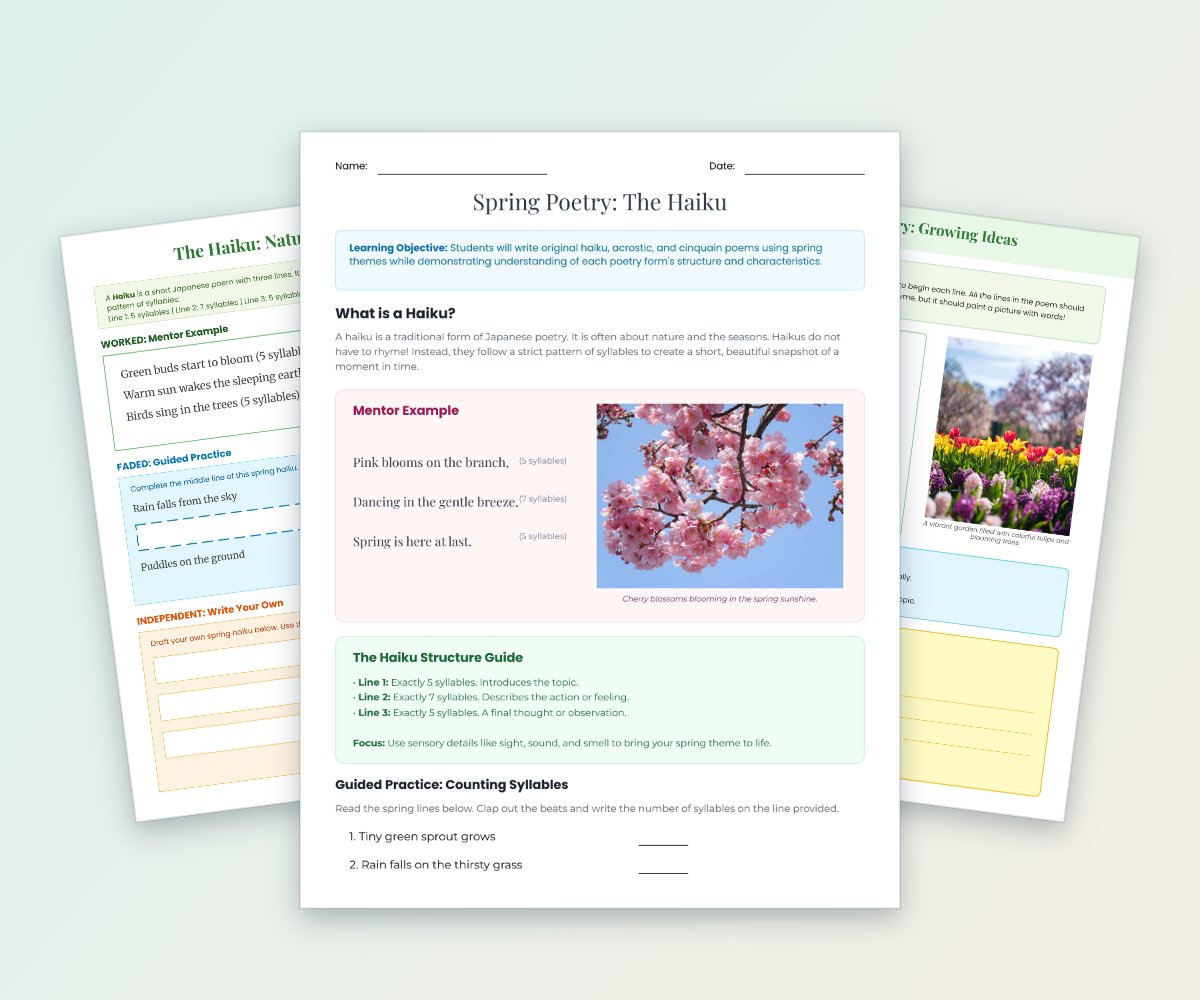
This spring-themed poetry collection teaches students to write haiku, acrostic, and cinquain poems.
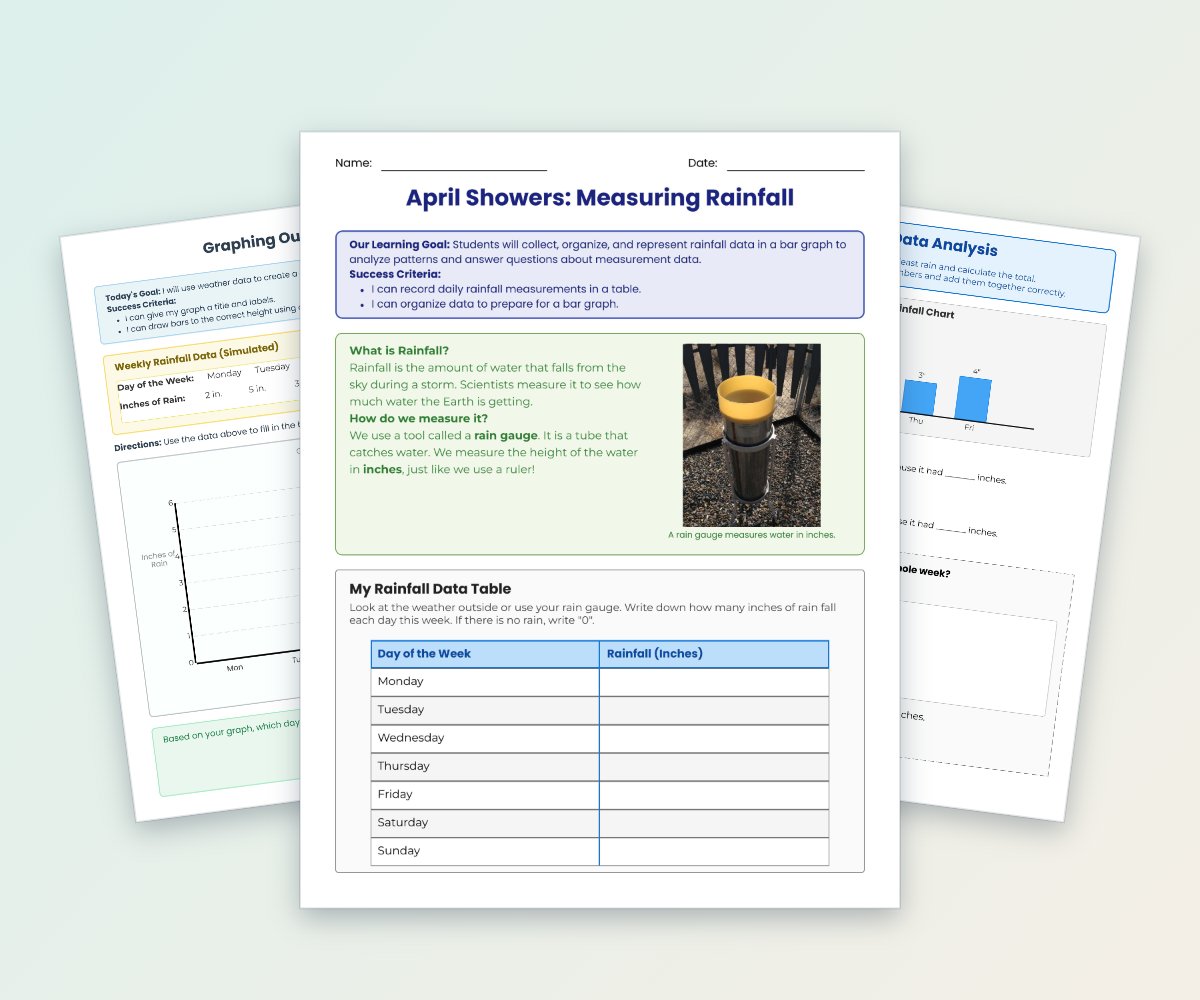
Students record and analyze rainfall measurements, organize weekly data, and create a bar graph using inches.
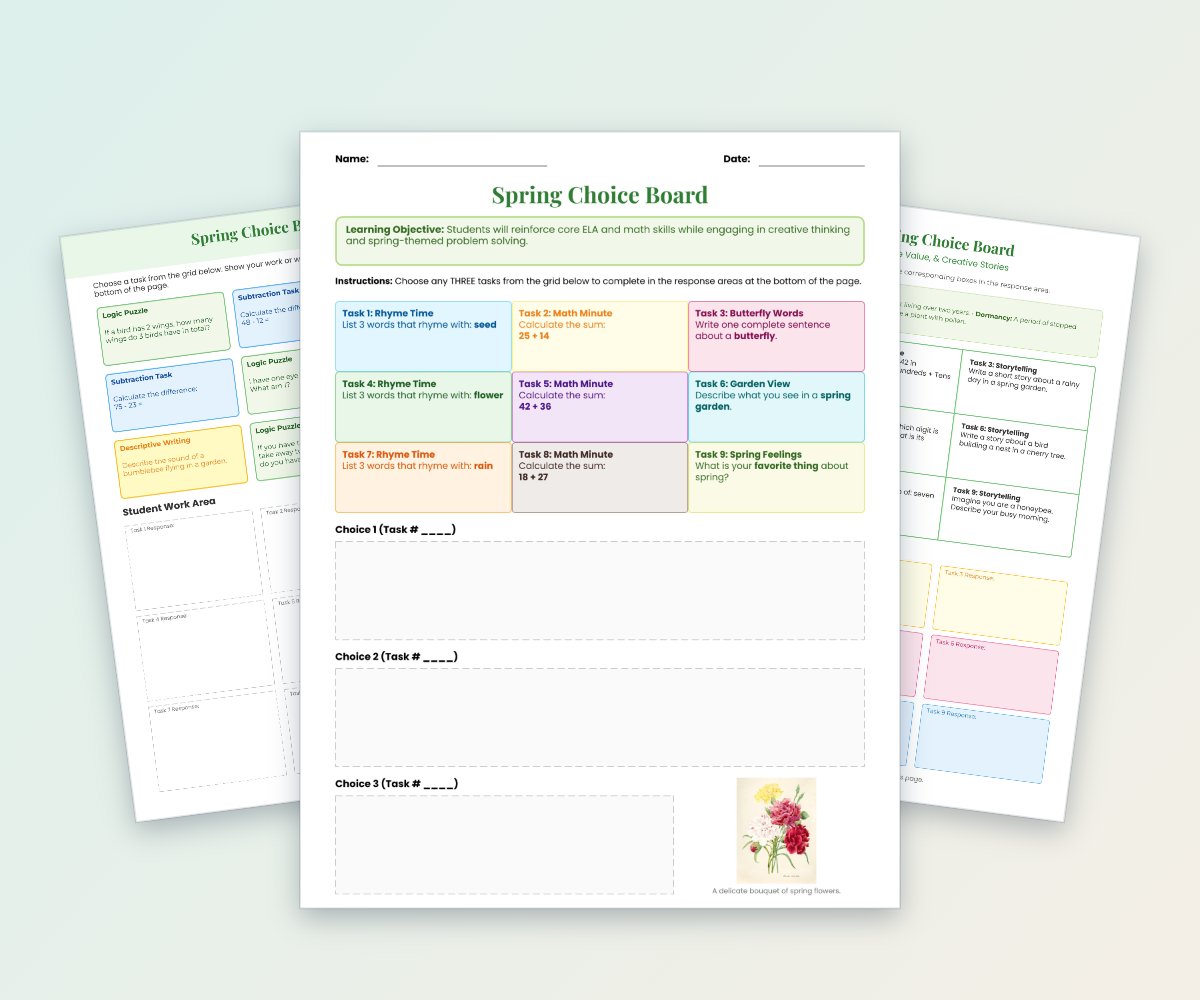
This four-page spring-themed choice board pack provides engaging morning work in rhyming, sentence writing, descriptive writing, addition, subtraction, place value, patterns, and logic.
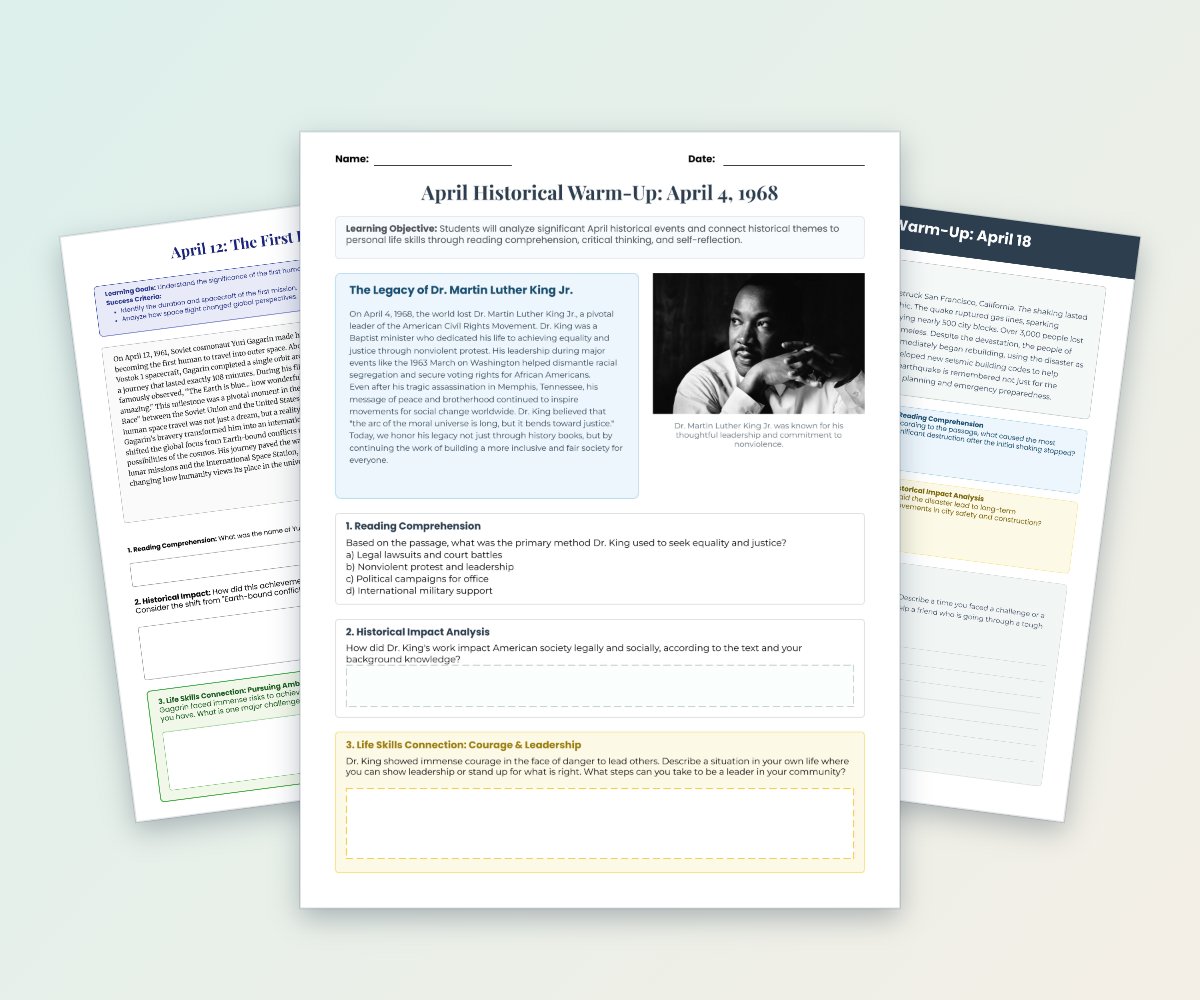
This seven-page April historical warm-up packet features significant events, including Dr.
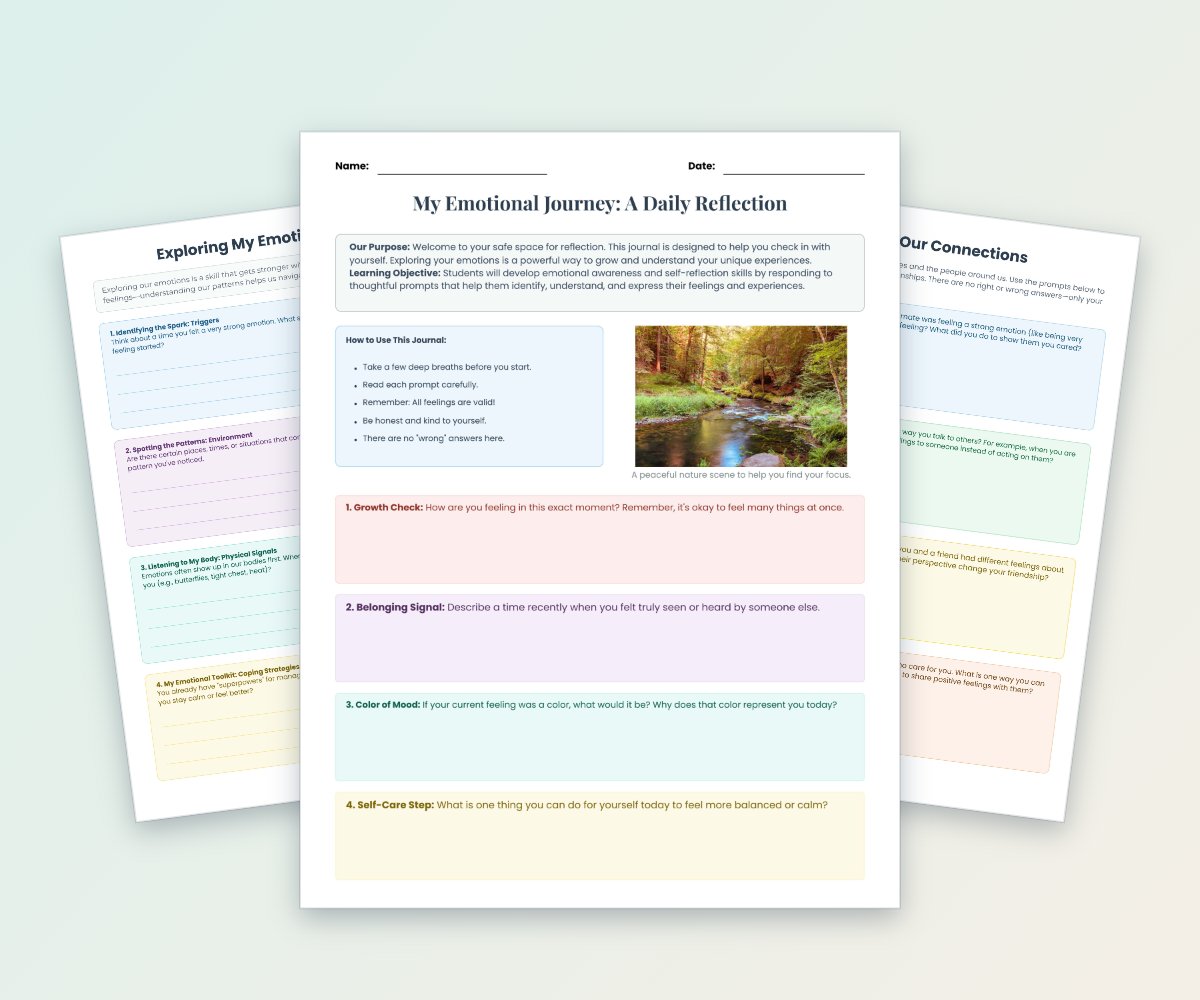
This five-page journal guides students through daily emotional check-ins and reflective prompts about feelings, triggers, body signals, coping strategies, empathy, and relationships.
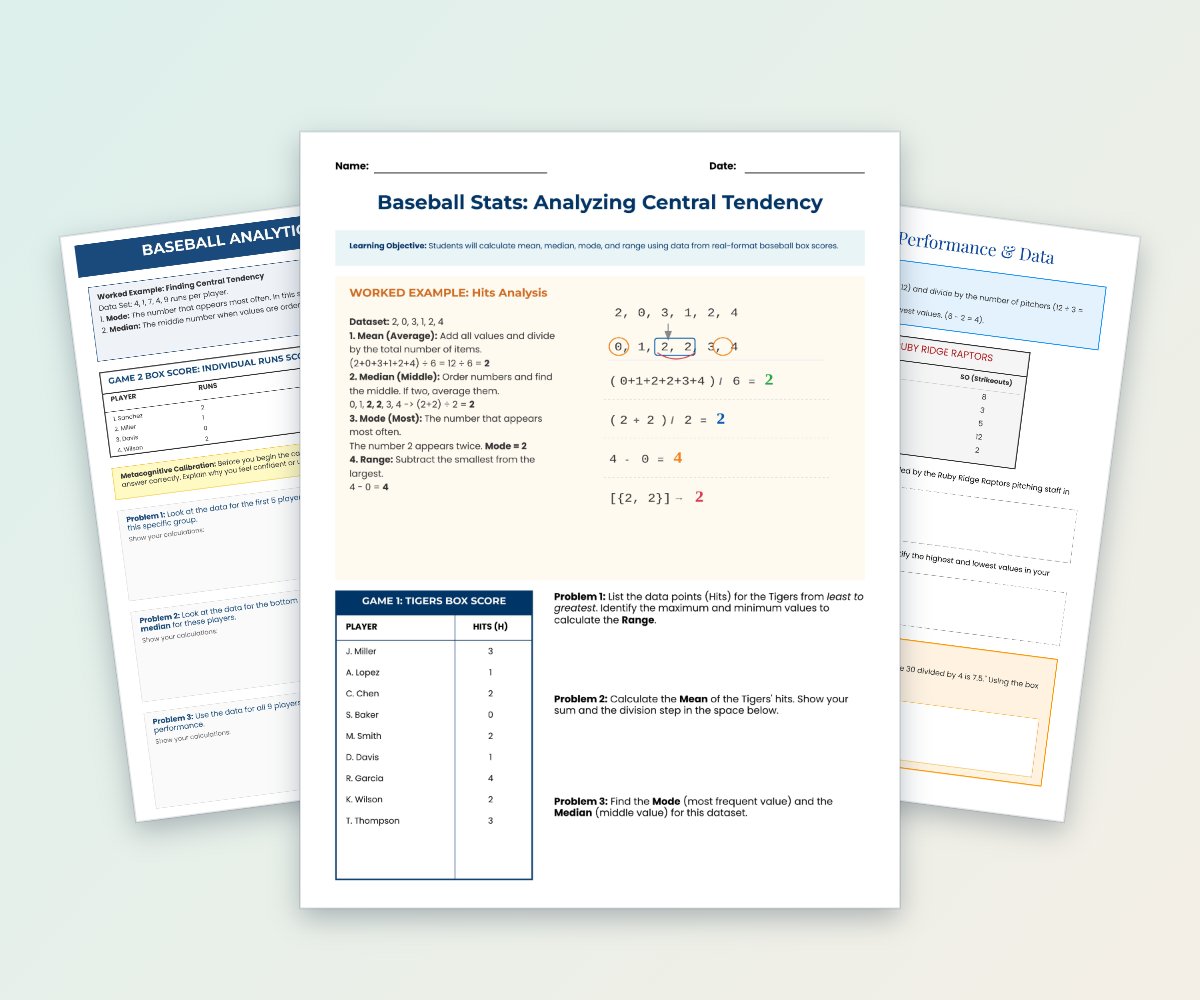
Students analyze baseball box scores and calculate mean, median, mode, and range using realistic player statistics.
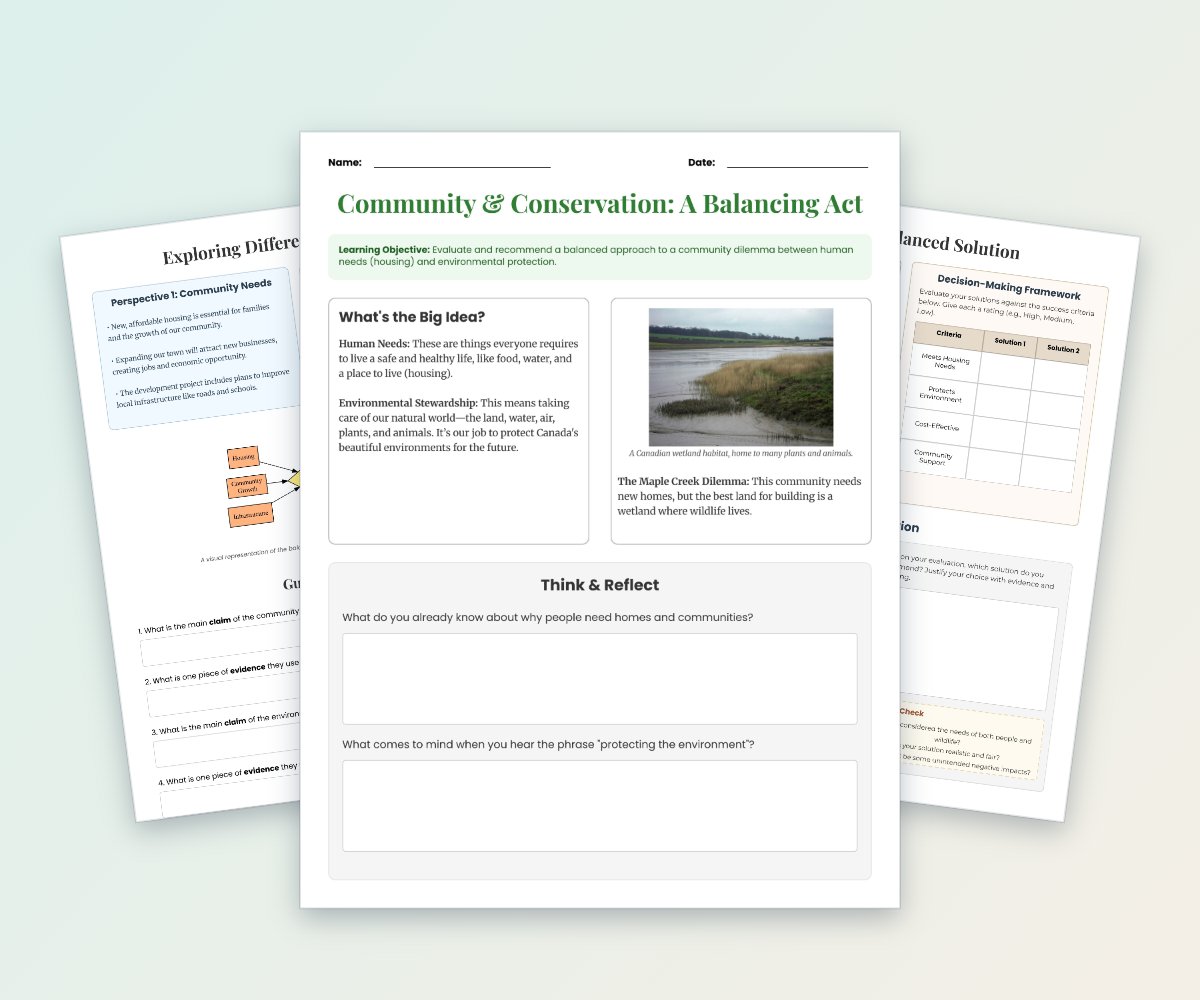
Students explore the Maple Creek dilemma, weighing the need for affordable housing against wetland conservation.
This four-page guide introduces common bank card fraud methods, including skimming, PIN theft, fake ATMs, and suspicious transactions.
Students categorize forestry, farming, and oil and gas practices according to their environmental effects.
This eight-page writing resource guides students through developing a balanced opinion essay about Halloween celebrations at school.