Crack the Code: Password Mastery
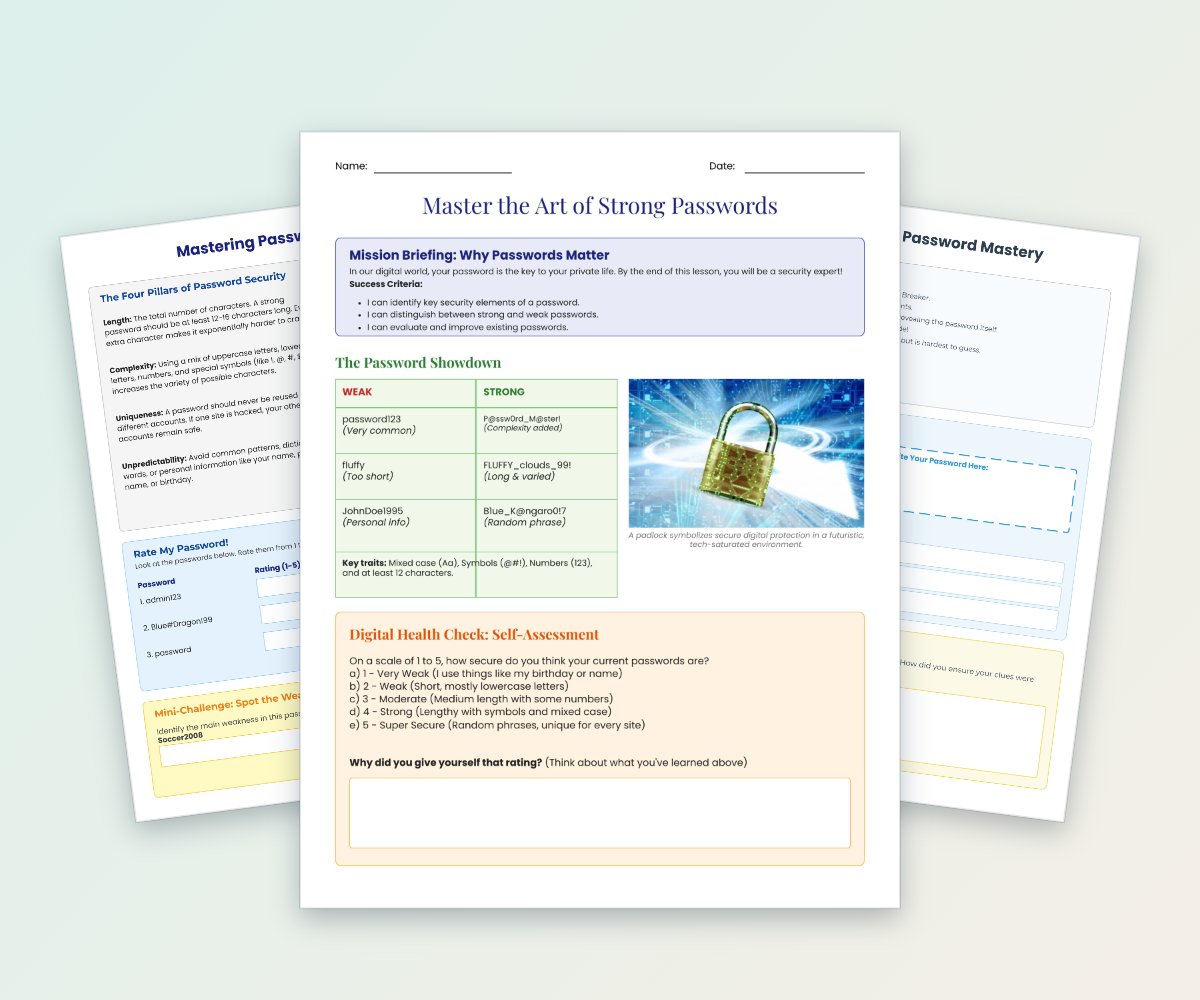
Students learn how to recognize strong and weak passwords through examples, self-assessment, rating activities, and a password-security game.
$4.99
Classroom-ready resources written for grade 4: printable worksheets, slides, activities and planning tools you can download and use straight away. Browse by subject below.
Students learn how to recognize strong and weak passwords through examples, self-assessment, rating activities, and a password-security game.
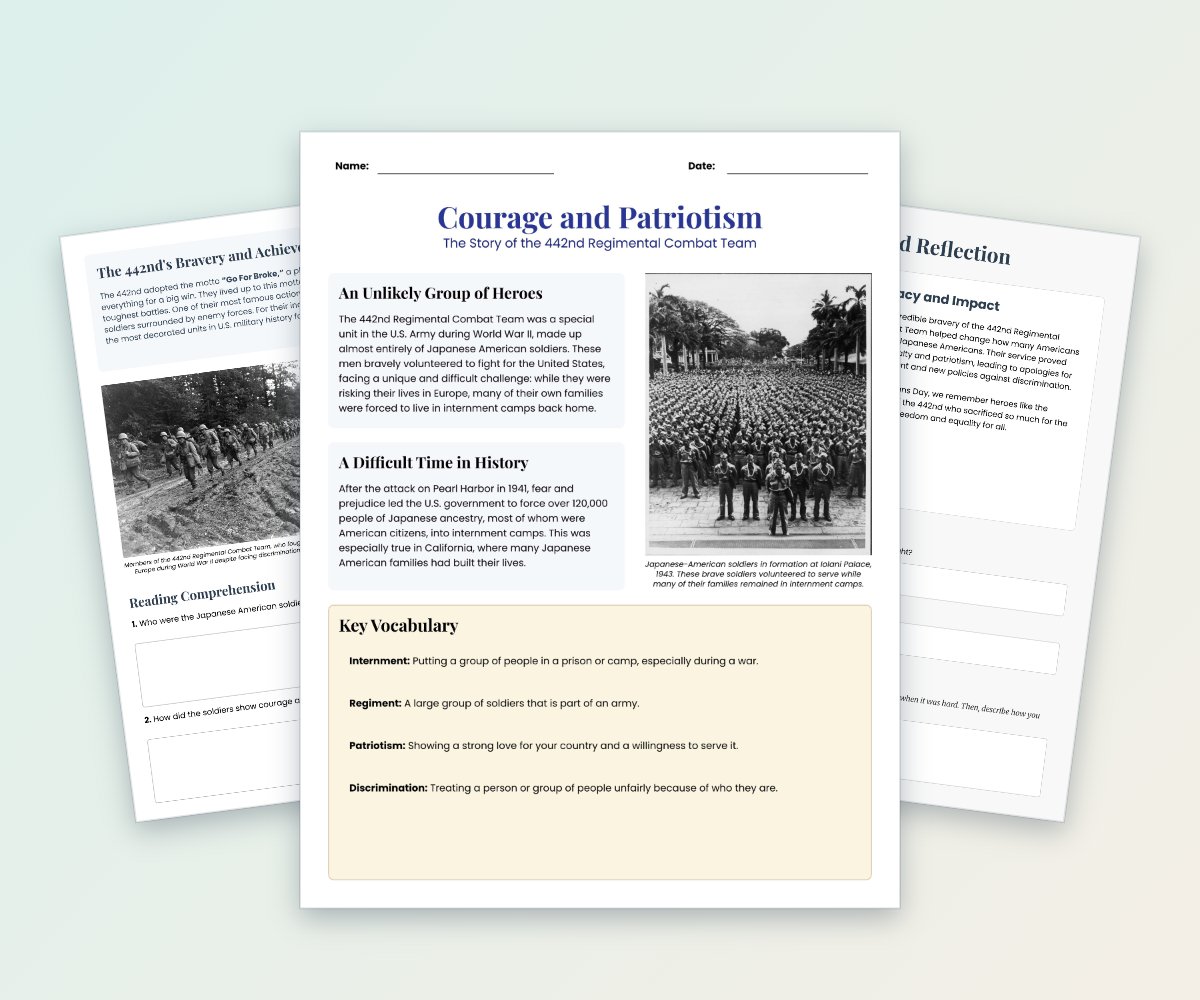
This three-page worksheet explores the courage, patriotism, and achievements of the Japanese American 442nd Regimental Combat Team during World War II.
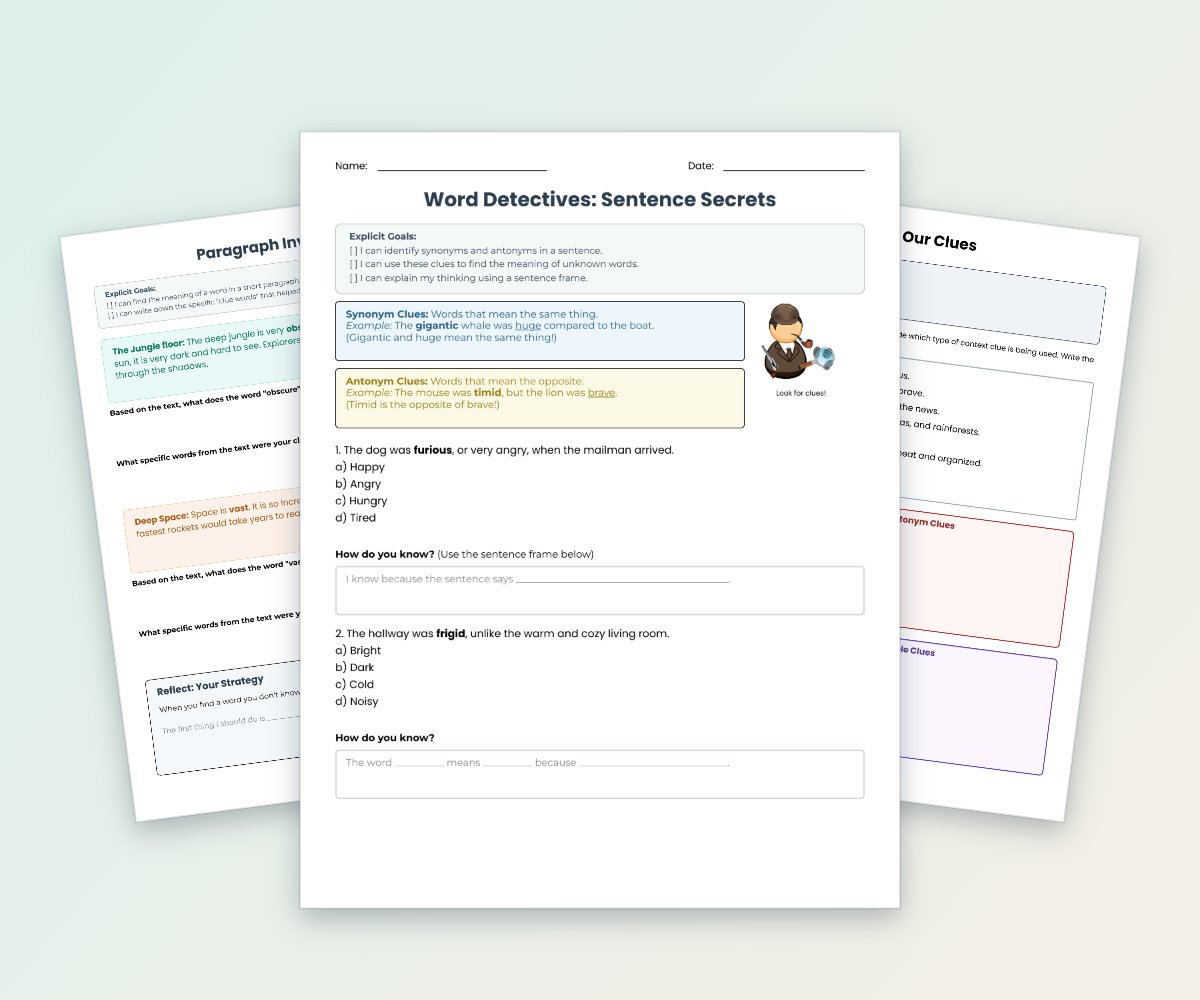
This six-page reading practice pack helps students use synonyms, antonyms, definitions, examples, and paragraph clues to determine unfamiliar word meanings.
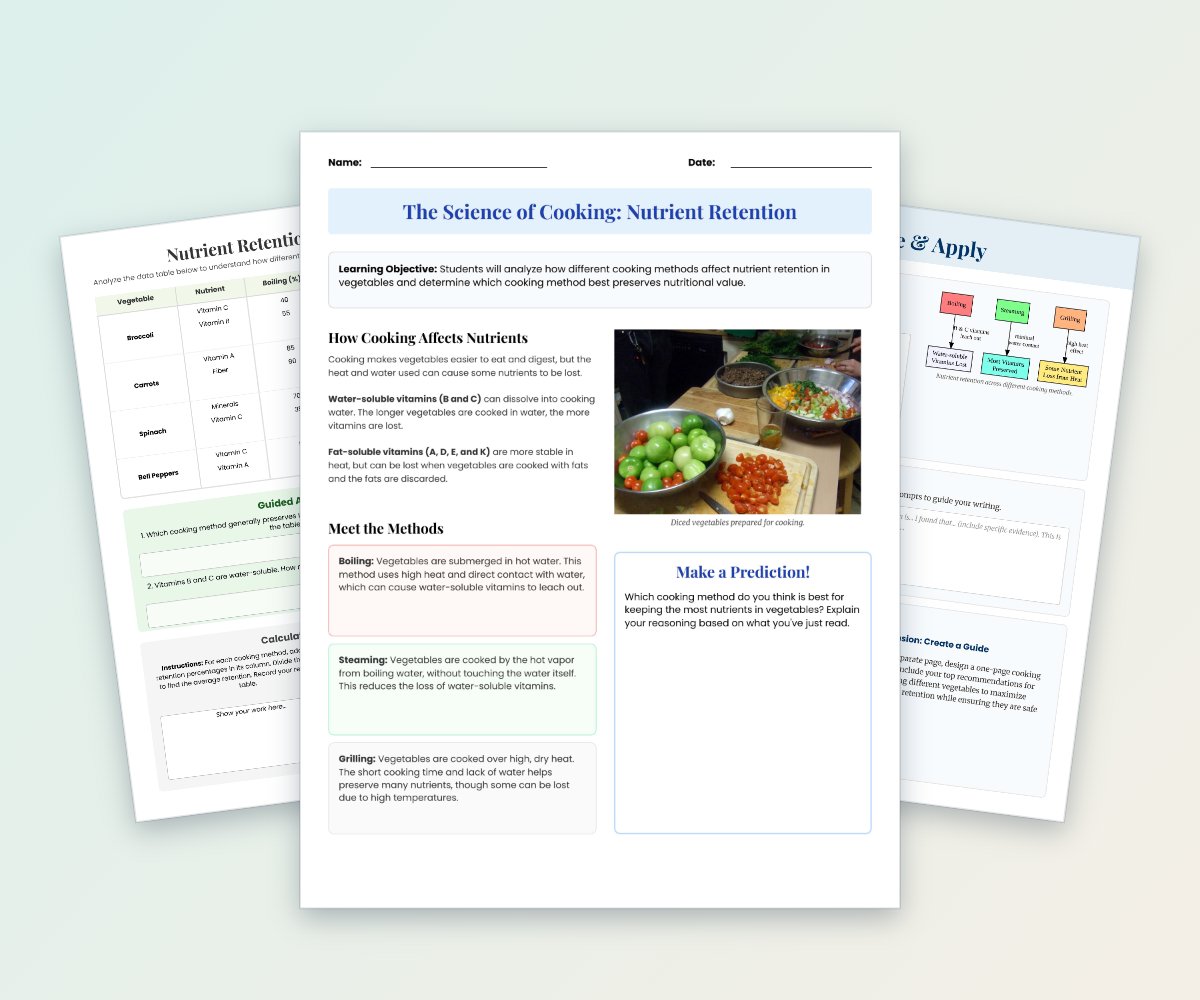
This three-page worksheet explores how boiling, steaming, and grilling affect nutrient retention in vegetables.
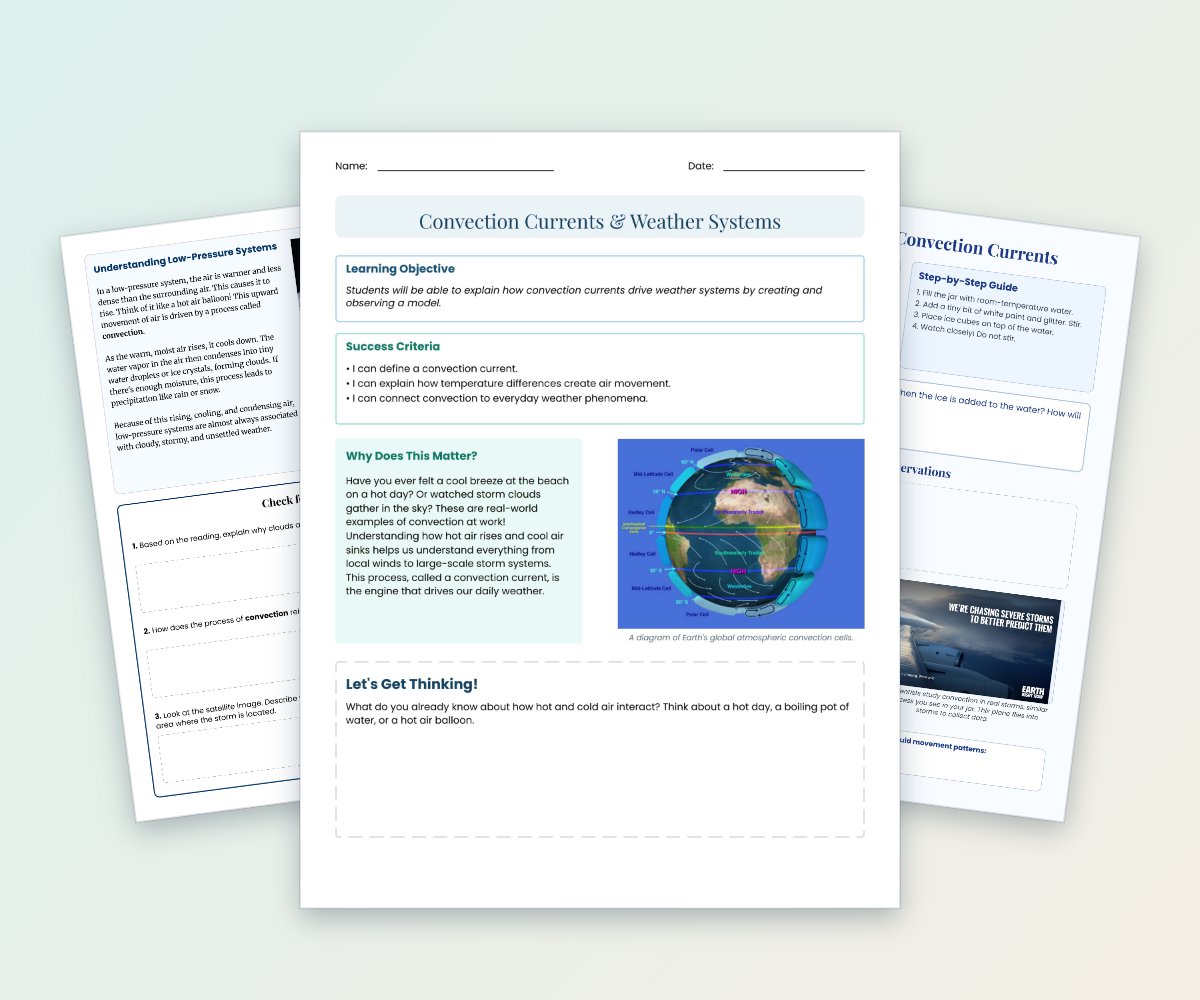
This four-page science resource introduces convection currents and explains how rising, cooling air contributes to low-pressure systems, clouds, and precipitation.
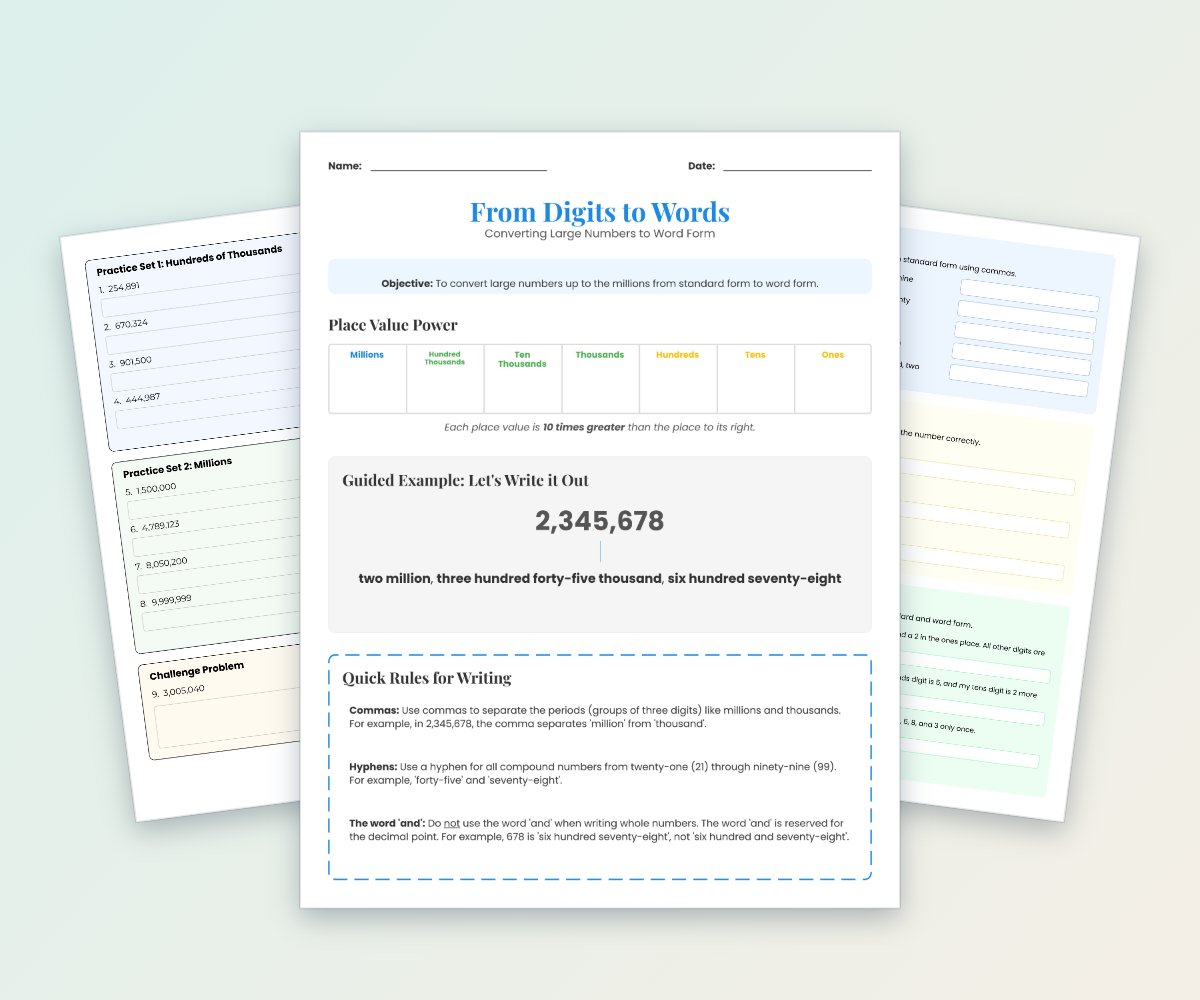
This four-page math worksheet helps students convert large numbers up to the millions between standard and word form.
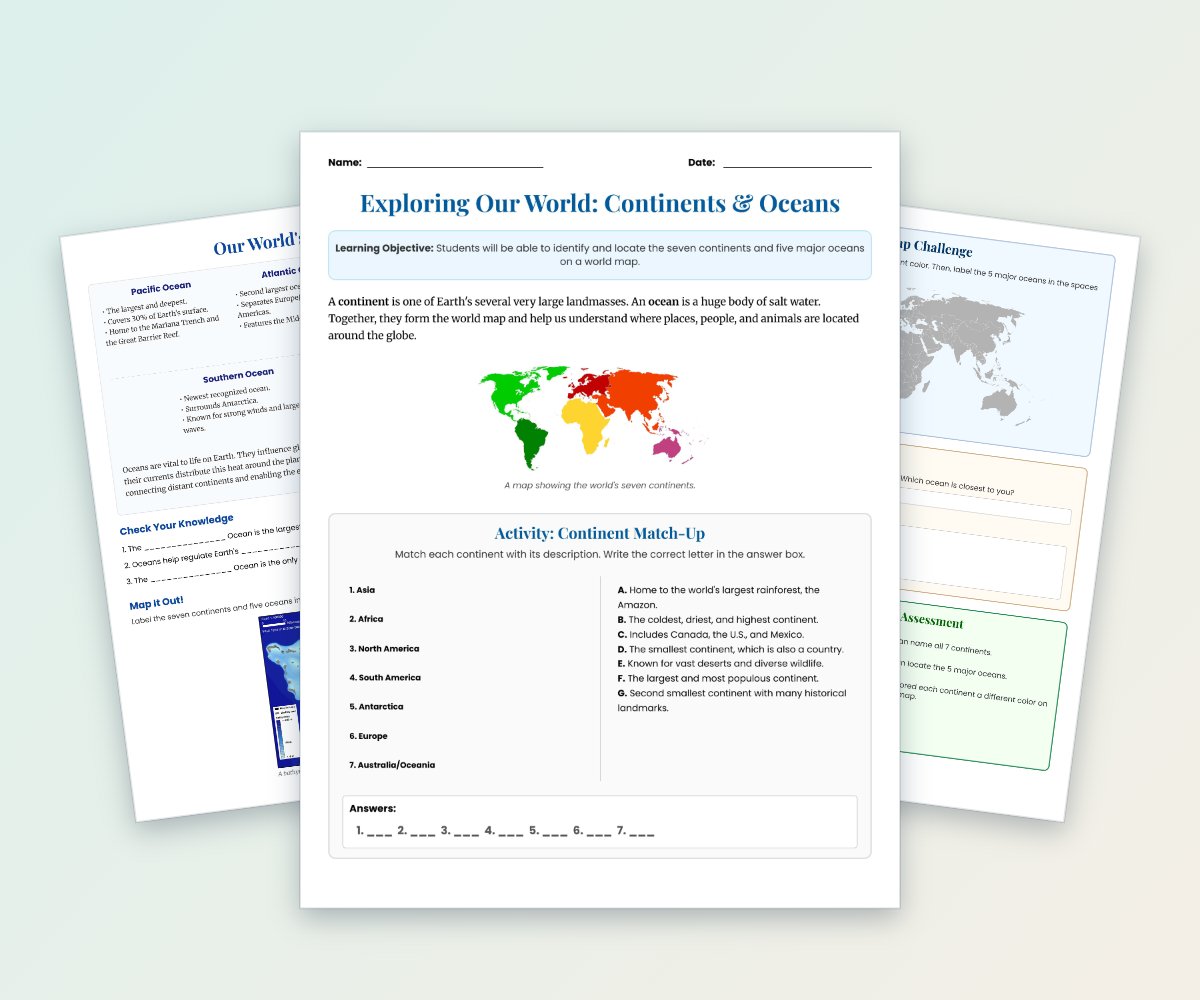
Teach students to identify and locate the seven continents and five major oceans.
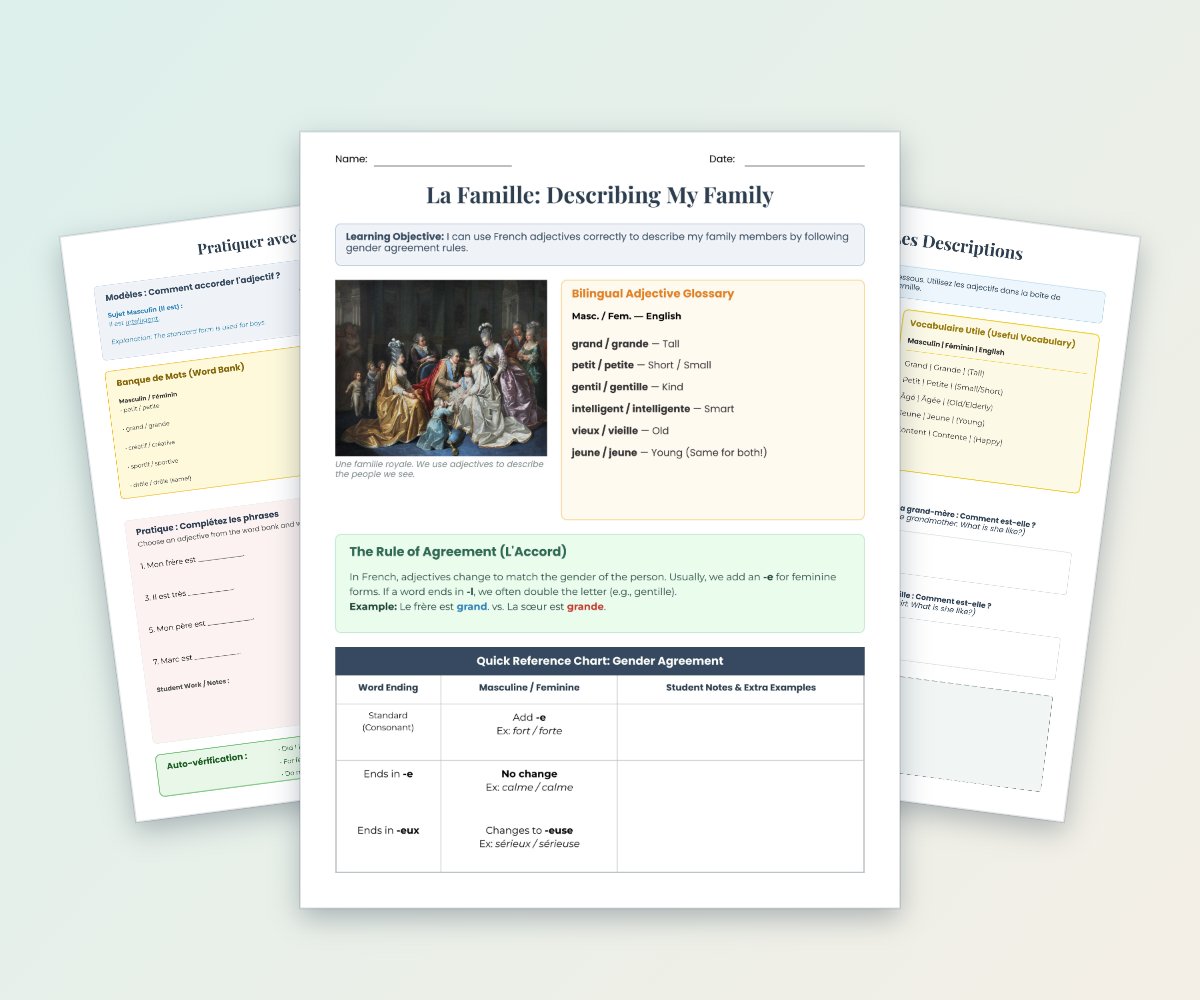
This four-page French worksheet teaches students to describe family members using vocabulary and gender-agreement rules for adjectives.
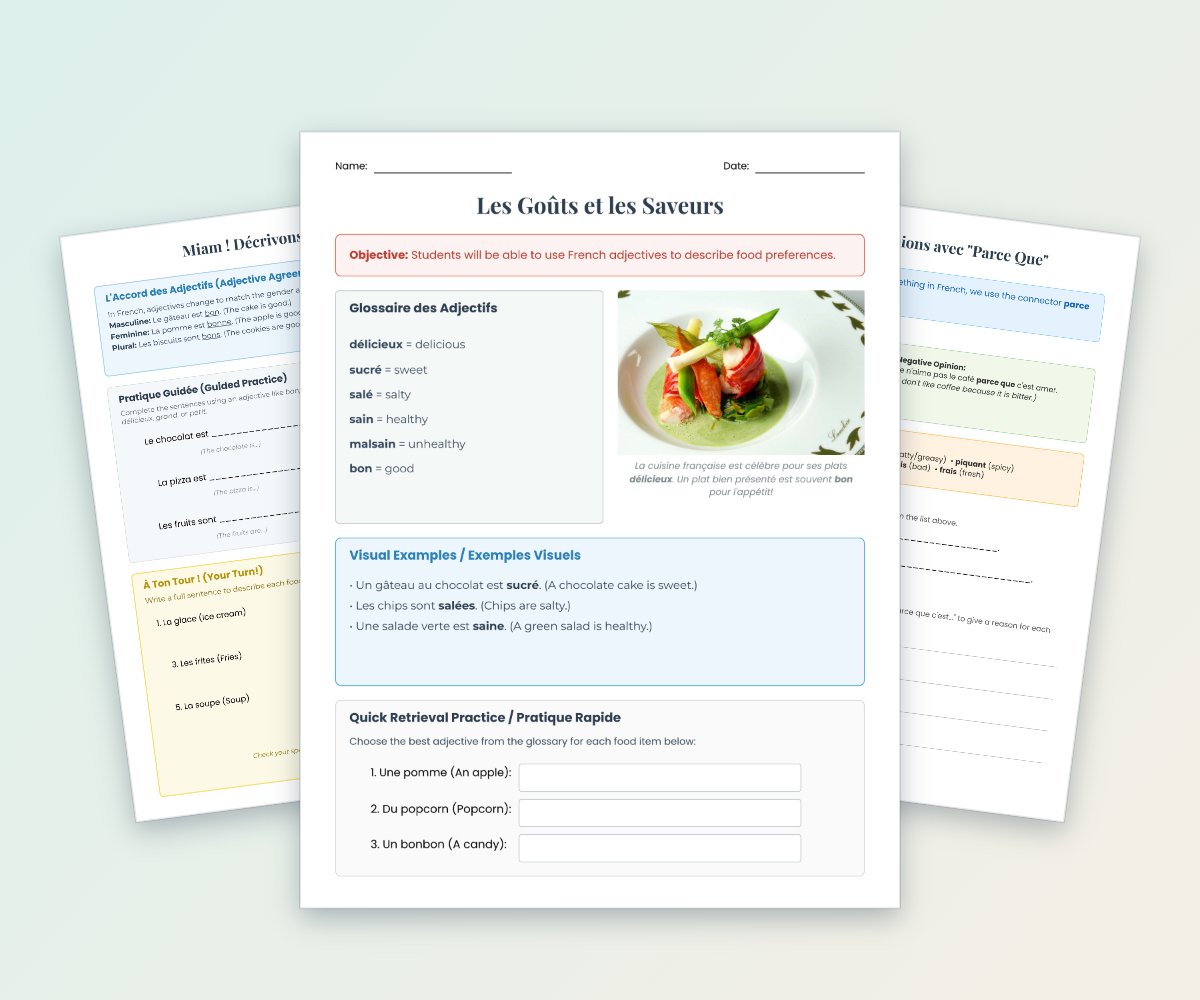
Students learn French adjectives for describing food, including sweet, salty, healthy, and delicious.
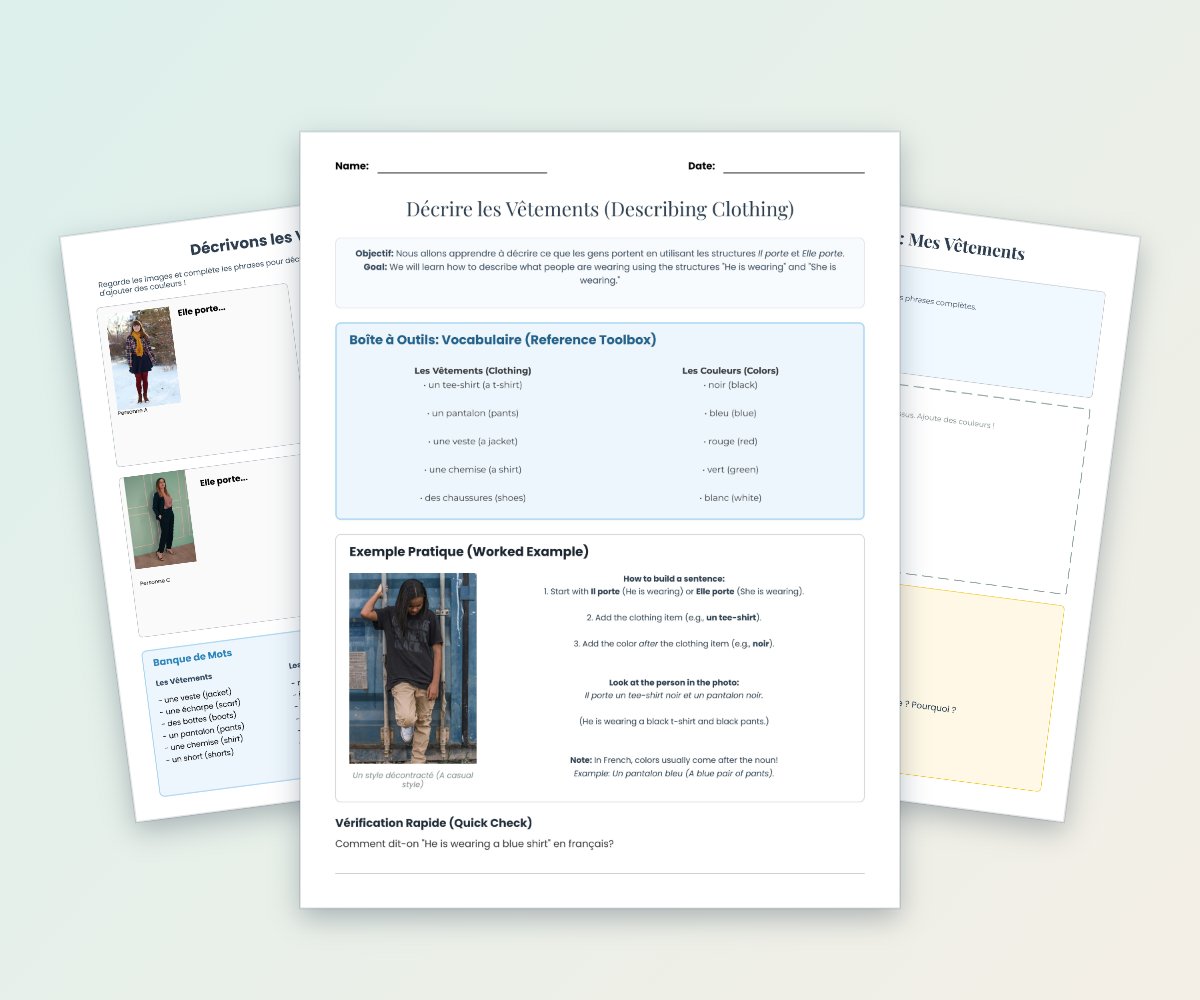
Students learn French clothing and color vocabulary while practicing sentences with “Il porte,” “Elle porte,” and “Je porte.” Activities include picture descriptions, personal writing, a fashion drawi
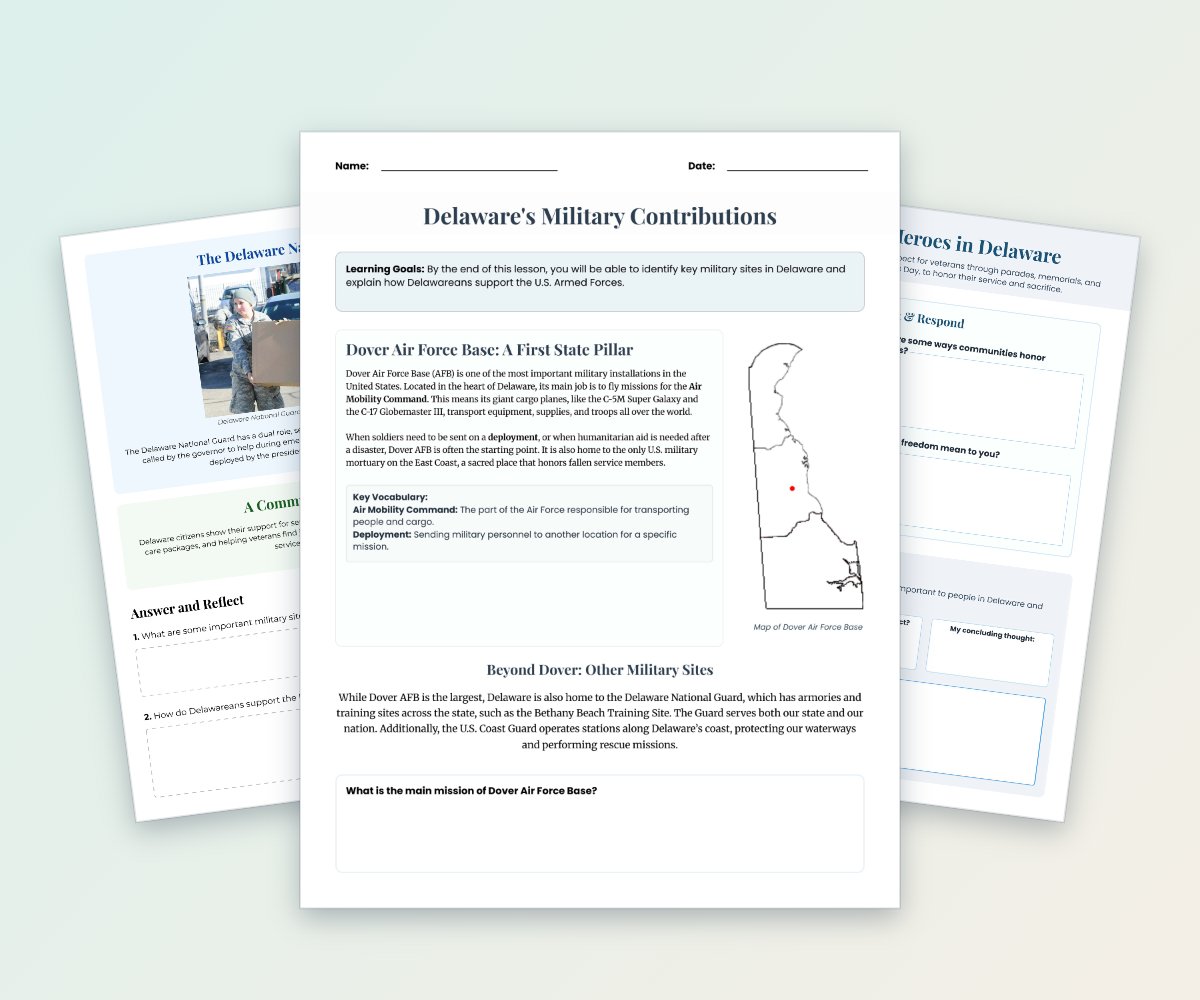
Students learn about Dover Air Force Base, the Delaware National Guard, the U.S.
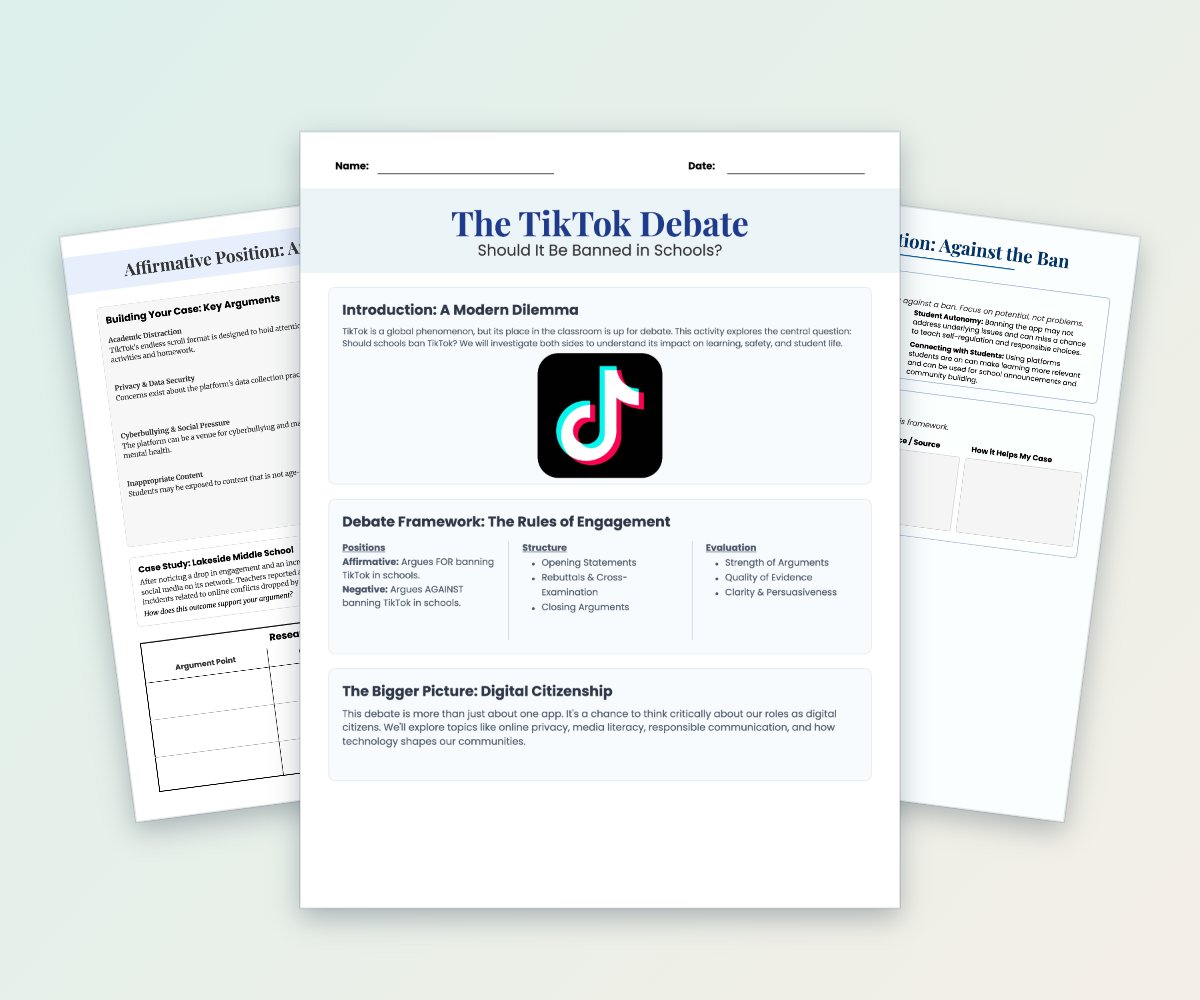
This five-page debate activity guides students through arguments for and against banning TikTok in schools.
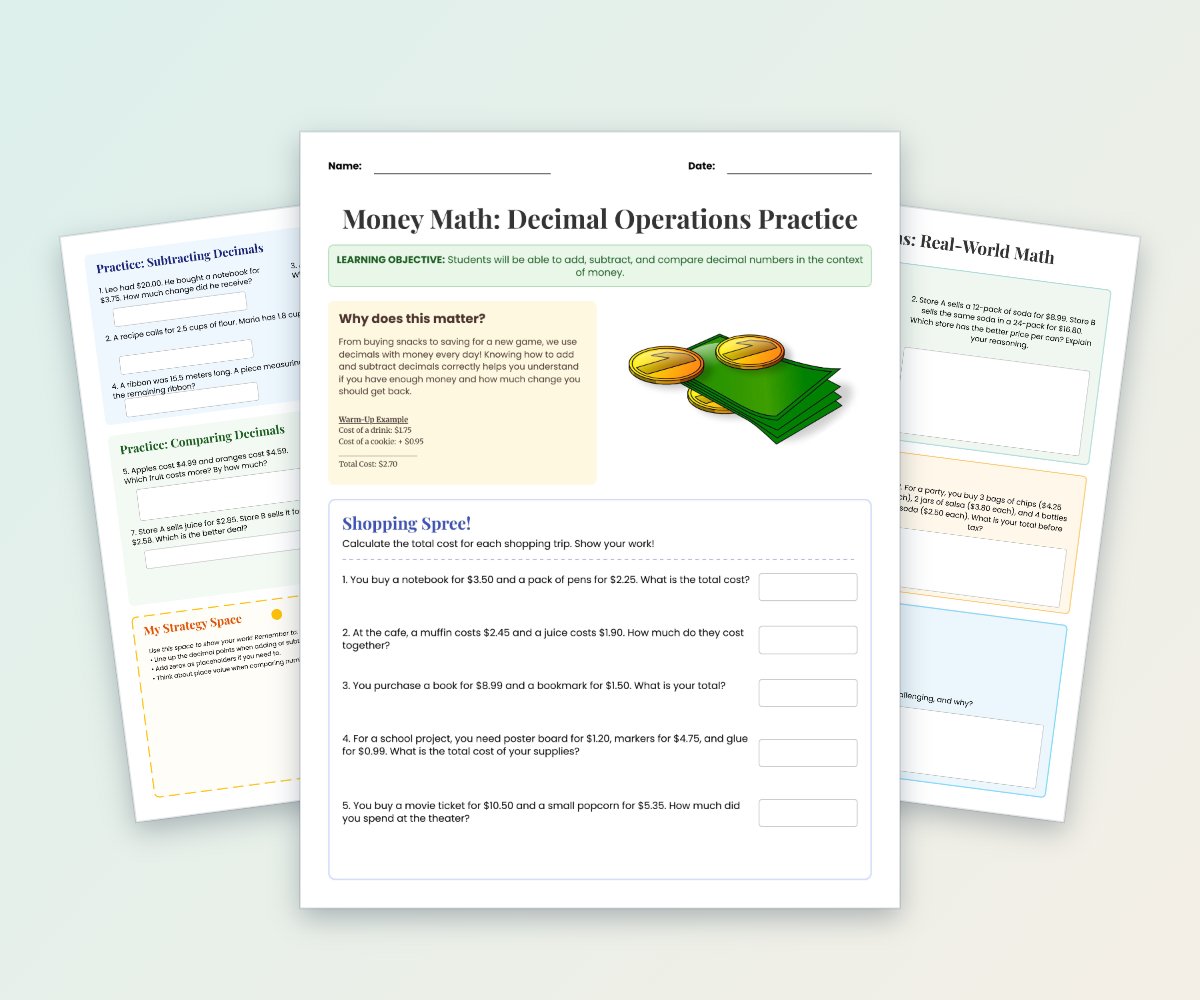
Students practice adding, subtracting, and comparing decimals using realistic shopping, budgeting, and measurement scenarios.
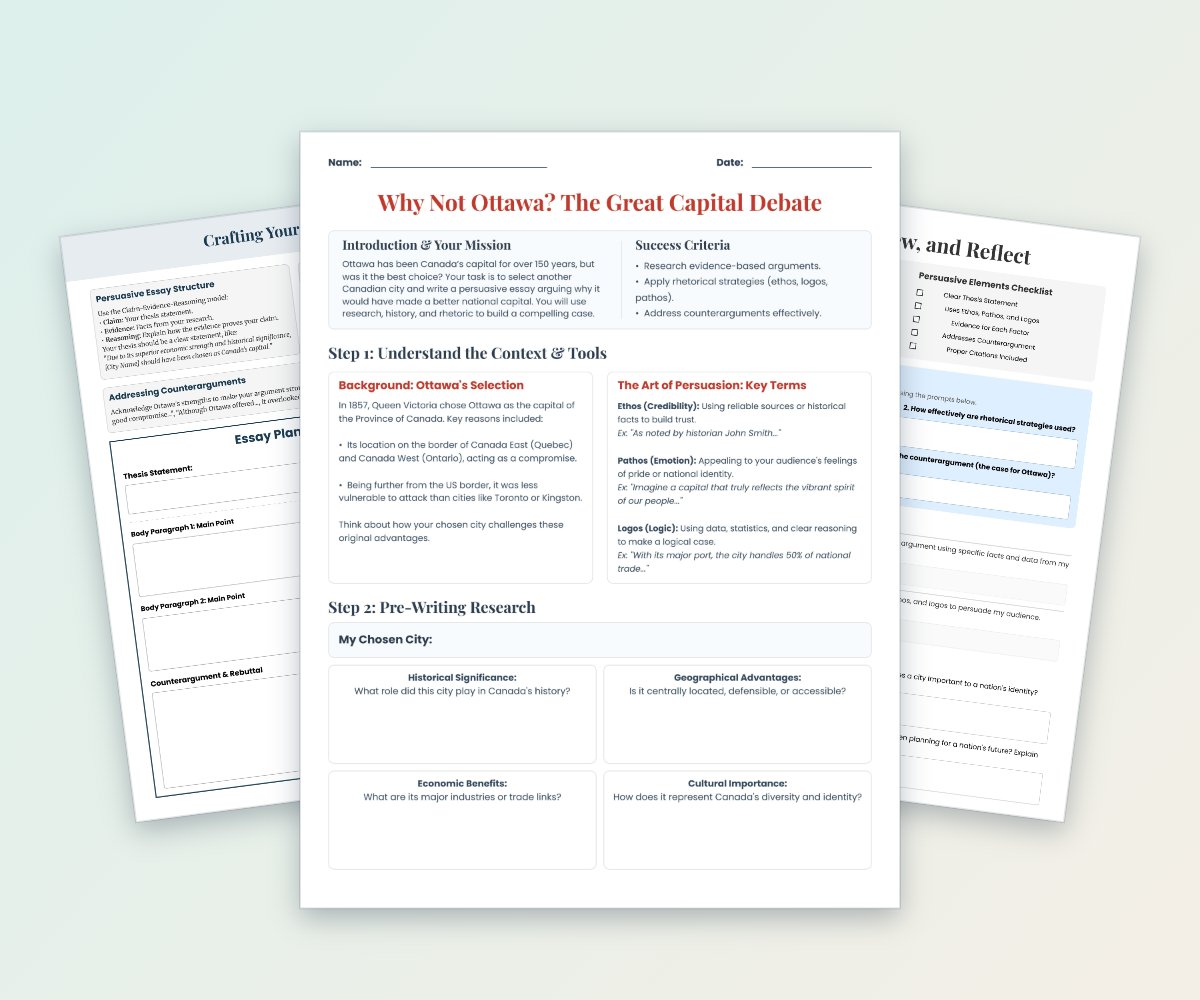
Students research a Canadian city and argue why it would have been a better national capital than Ottawa.
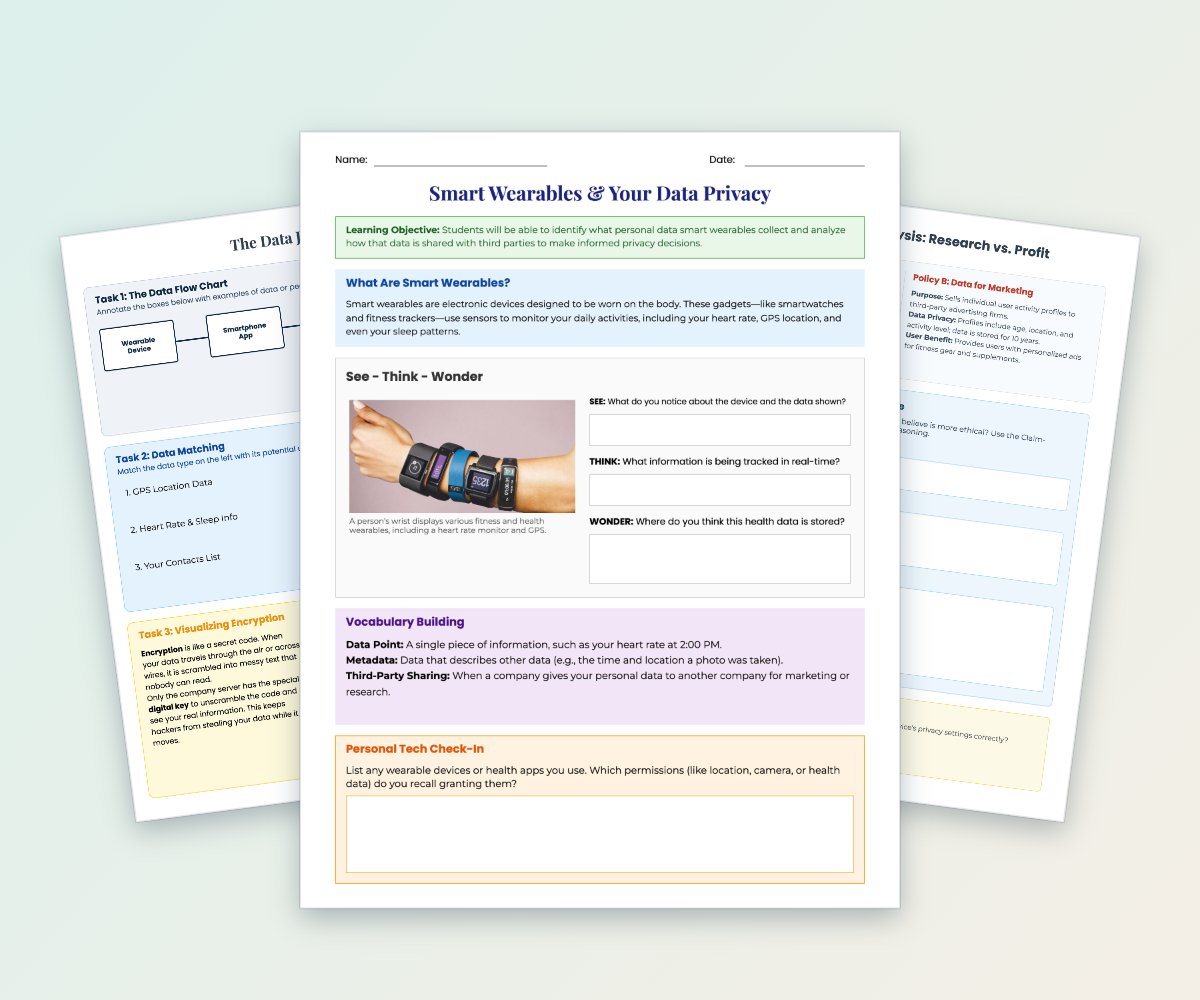
This four-page worksheet introduces students to the personal data collected by smartwatches, fitness trackers, and health apps.
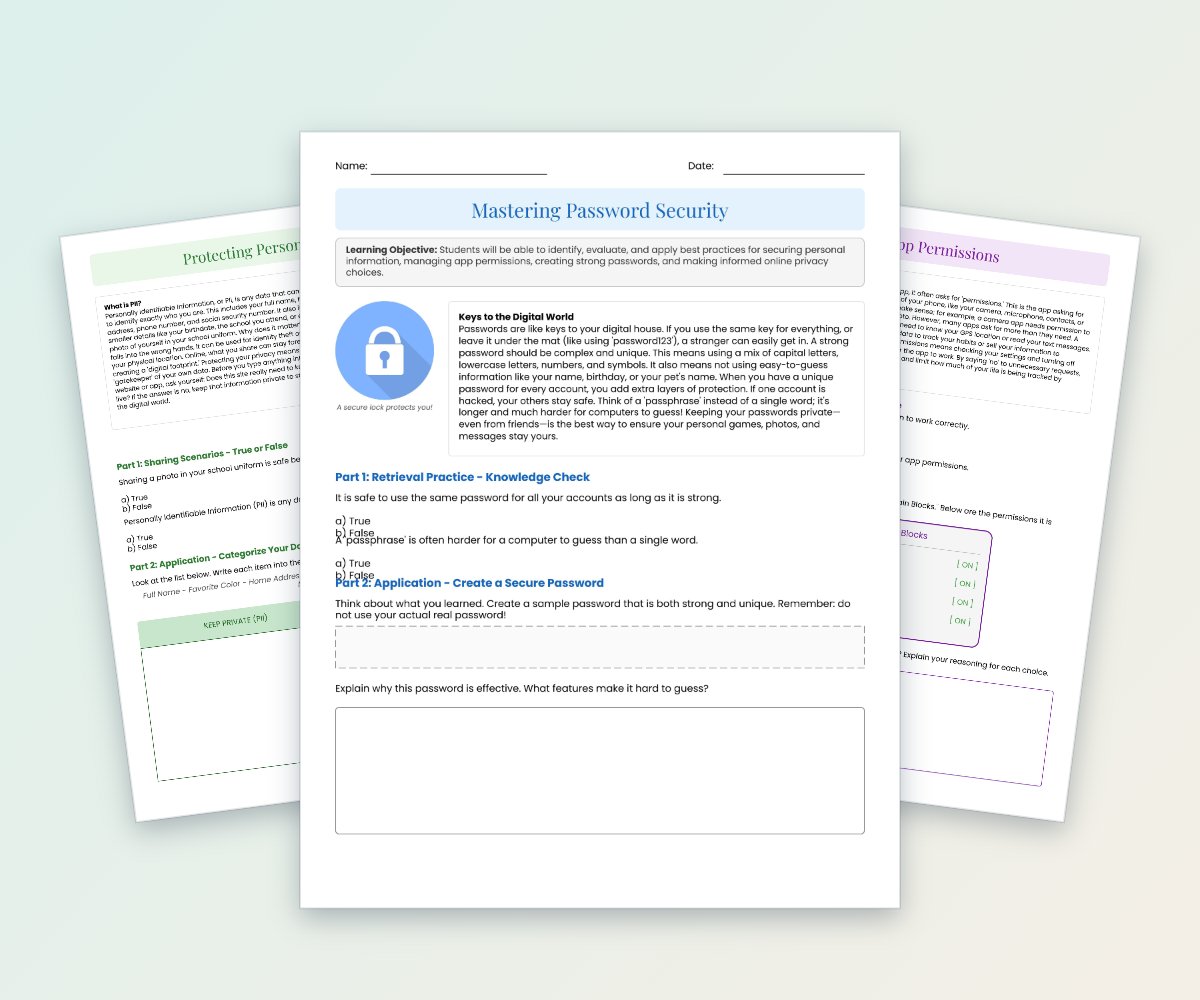
This six-page worksheet introduces password security, personally identifiable information, digital footprints, and safer online privacy choices.
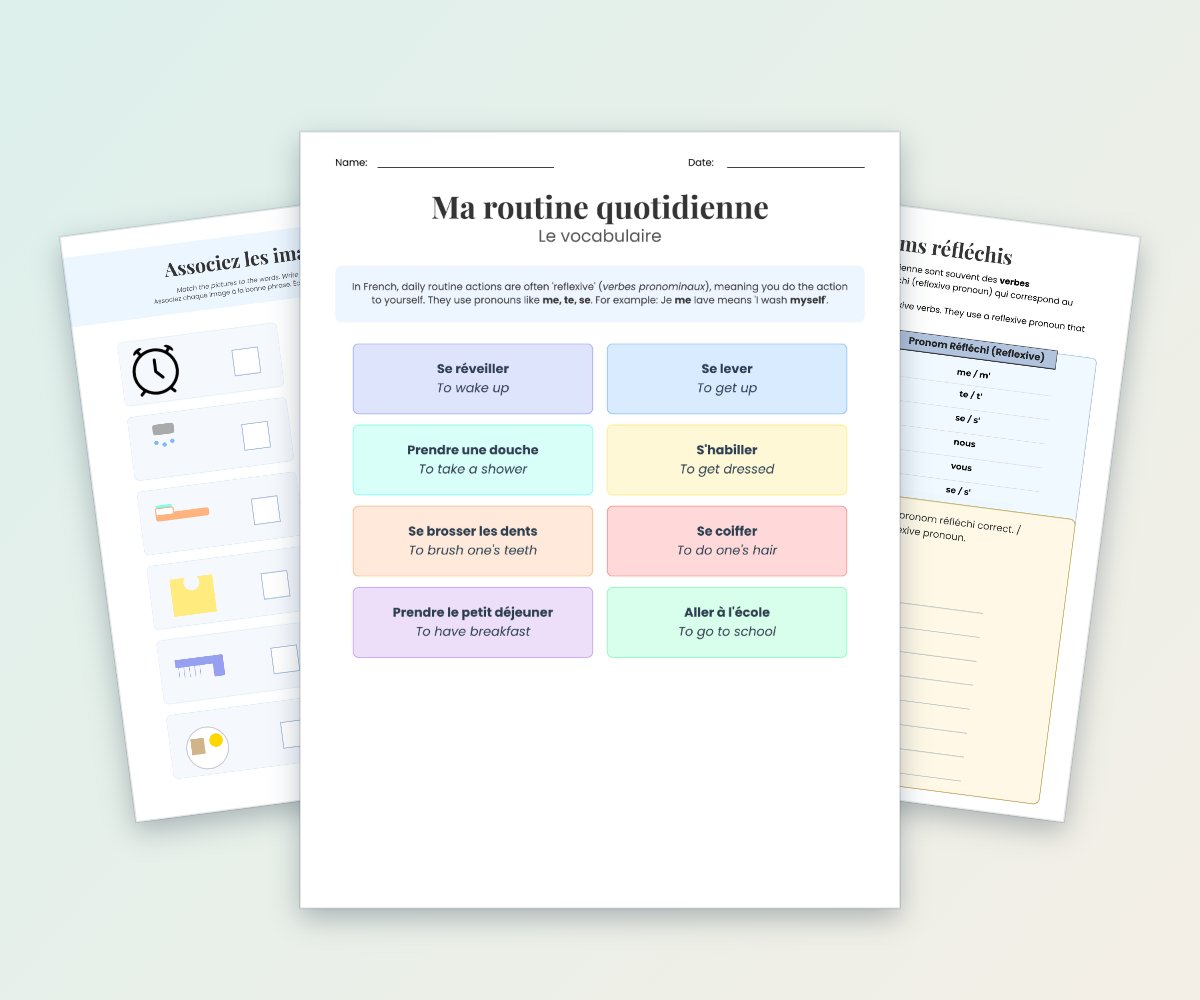
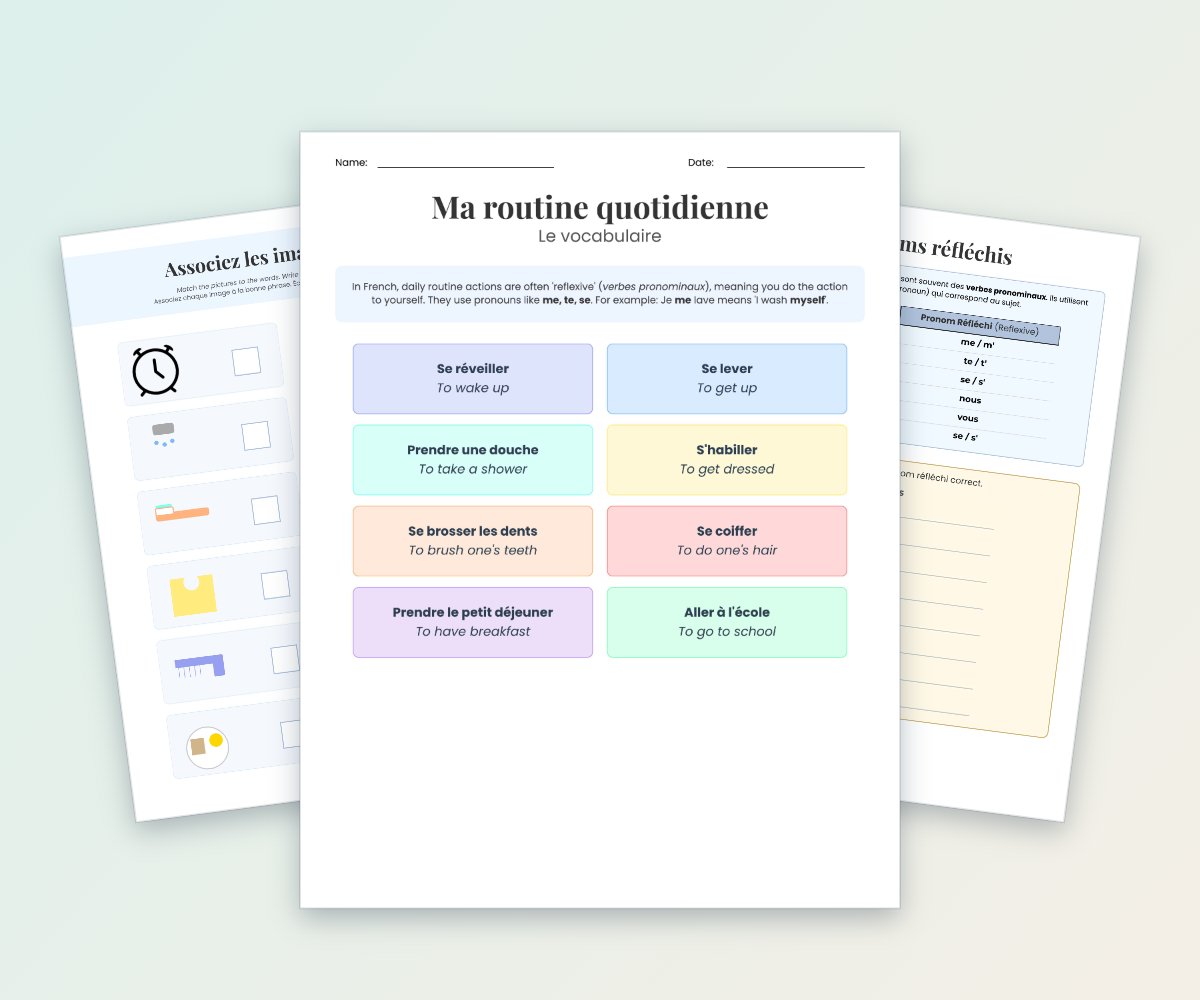
This five-page French activity pack introduces vocabulary for daily routines and practice with reflexive pronouns.
This five-page French resource introduces daily routine vocabulary and reflexive pronouns through picture matching, sentence completion, sequencing, and guided writing.
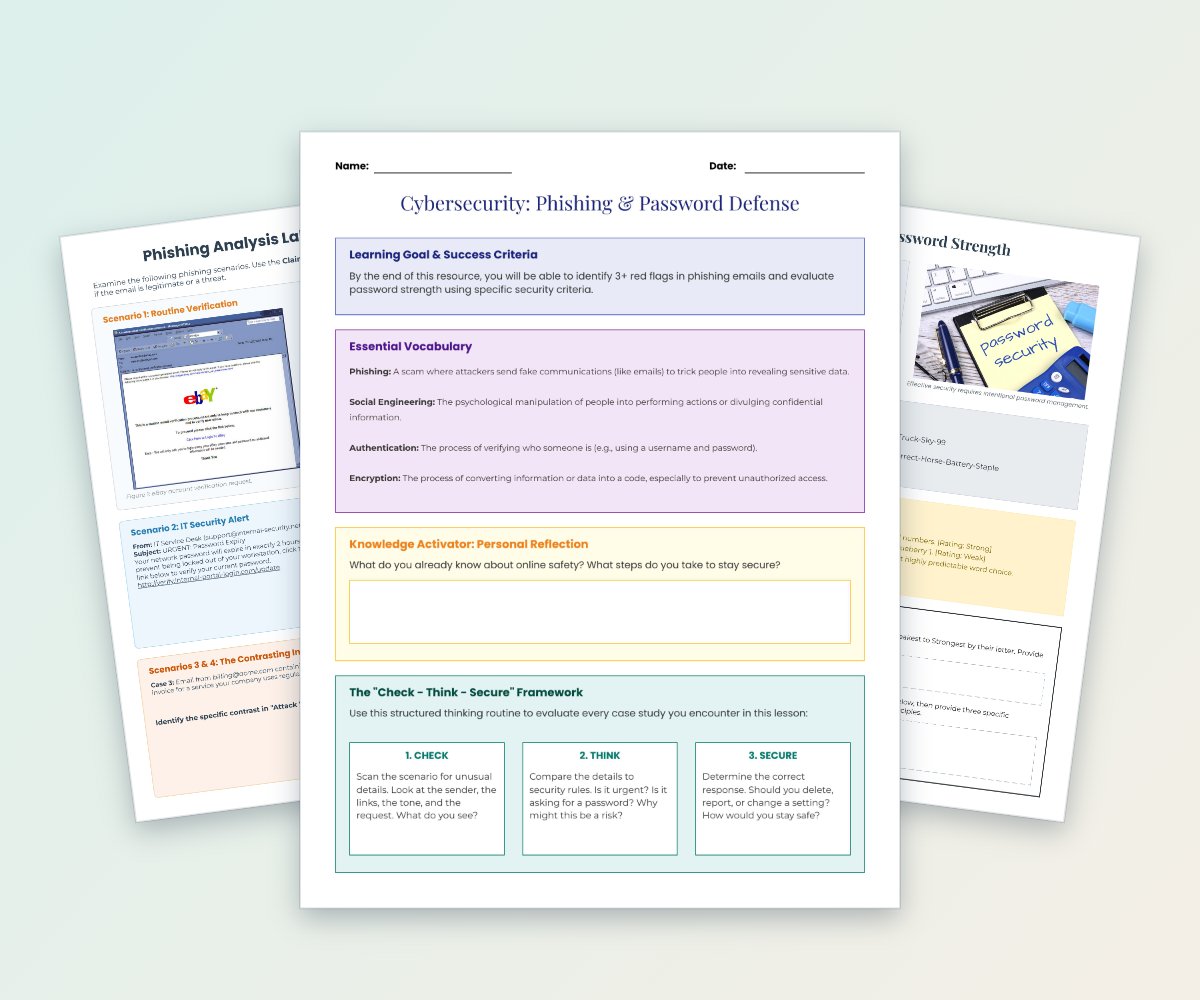
Students examine phishing scenarios, identify warning signs, and evaluate password security using the Check–Think–Secure framework.
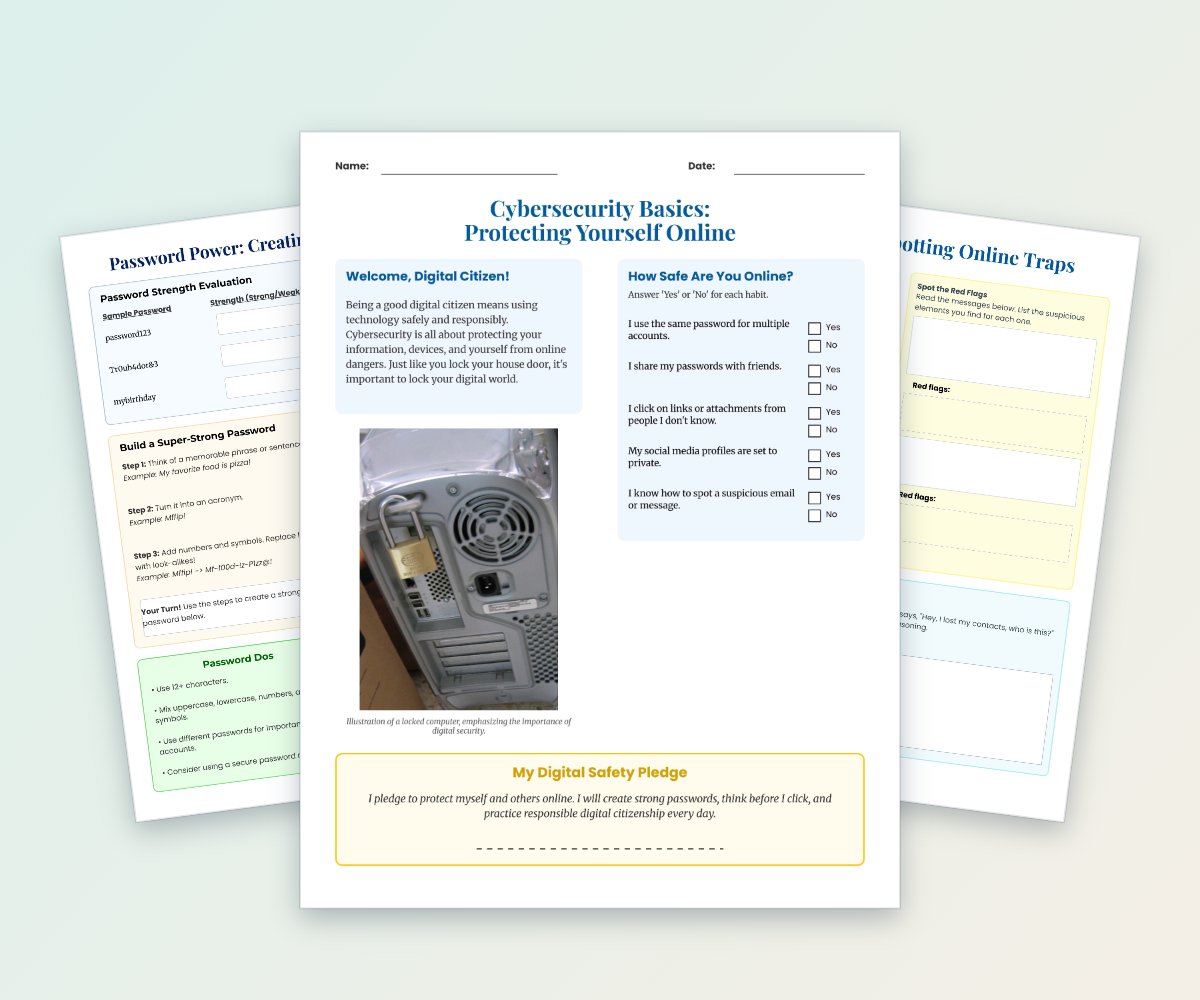
This student-friendly guide introduces cybersecurity, strong passwords, responsible digital citizenship, and phishing awareness.
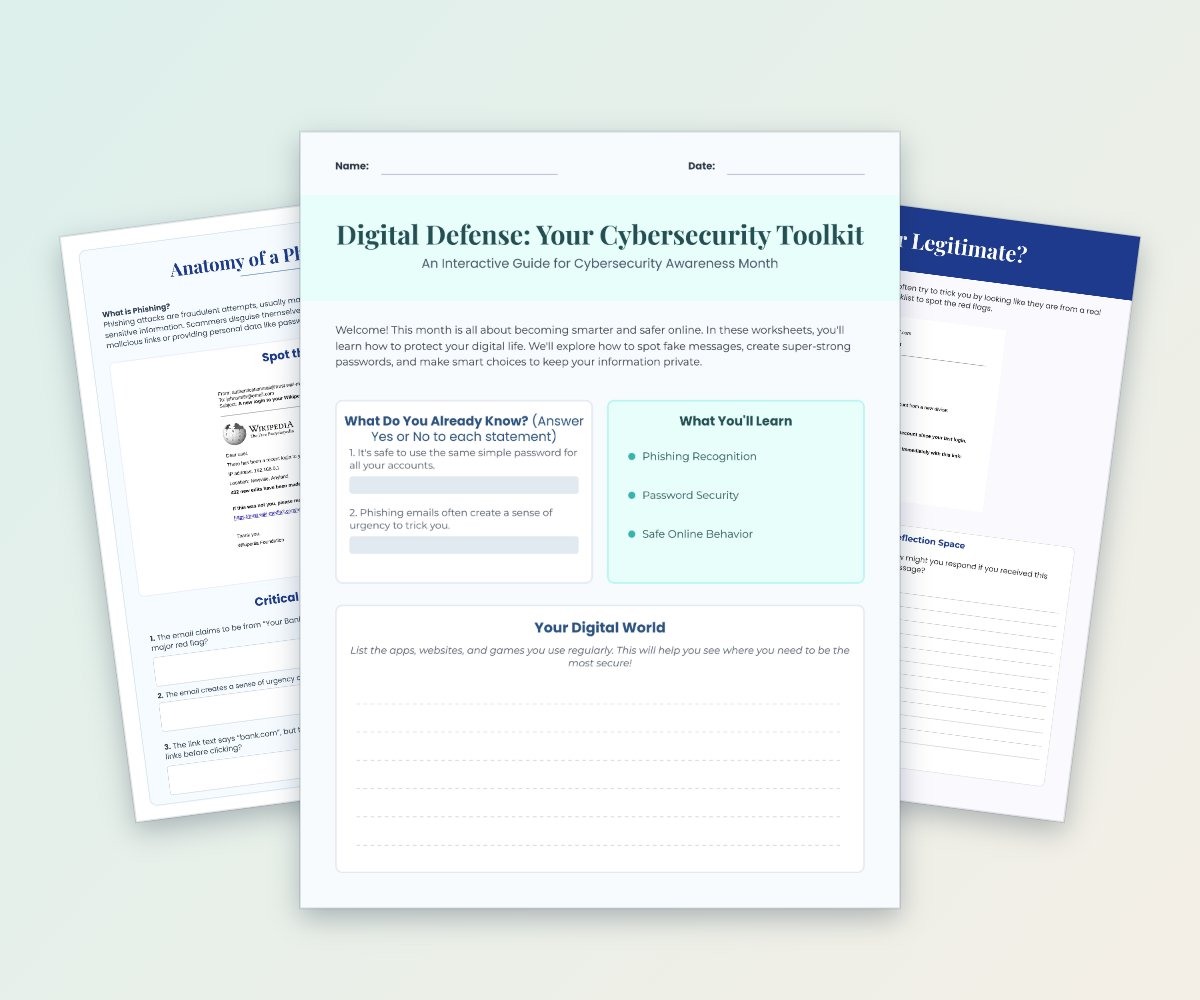
This 10-page interactive toolkit helps students recognize phishing attempts, create secure passwords, and make safer choices online.
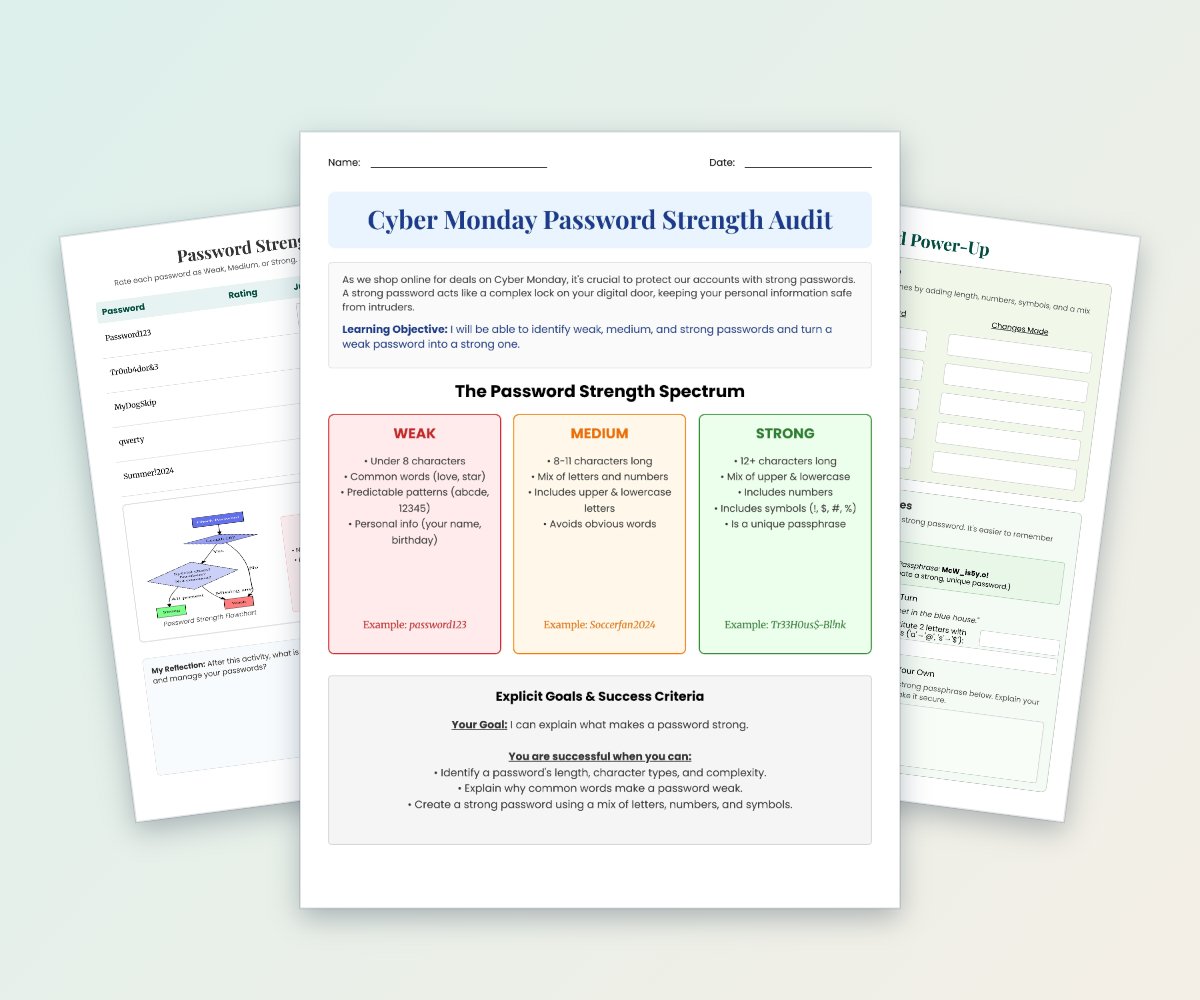
This four-page activity teaches students how to identify weak, medium, and strong passwords using length, character variety, predictability, and personal information criteria.
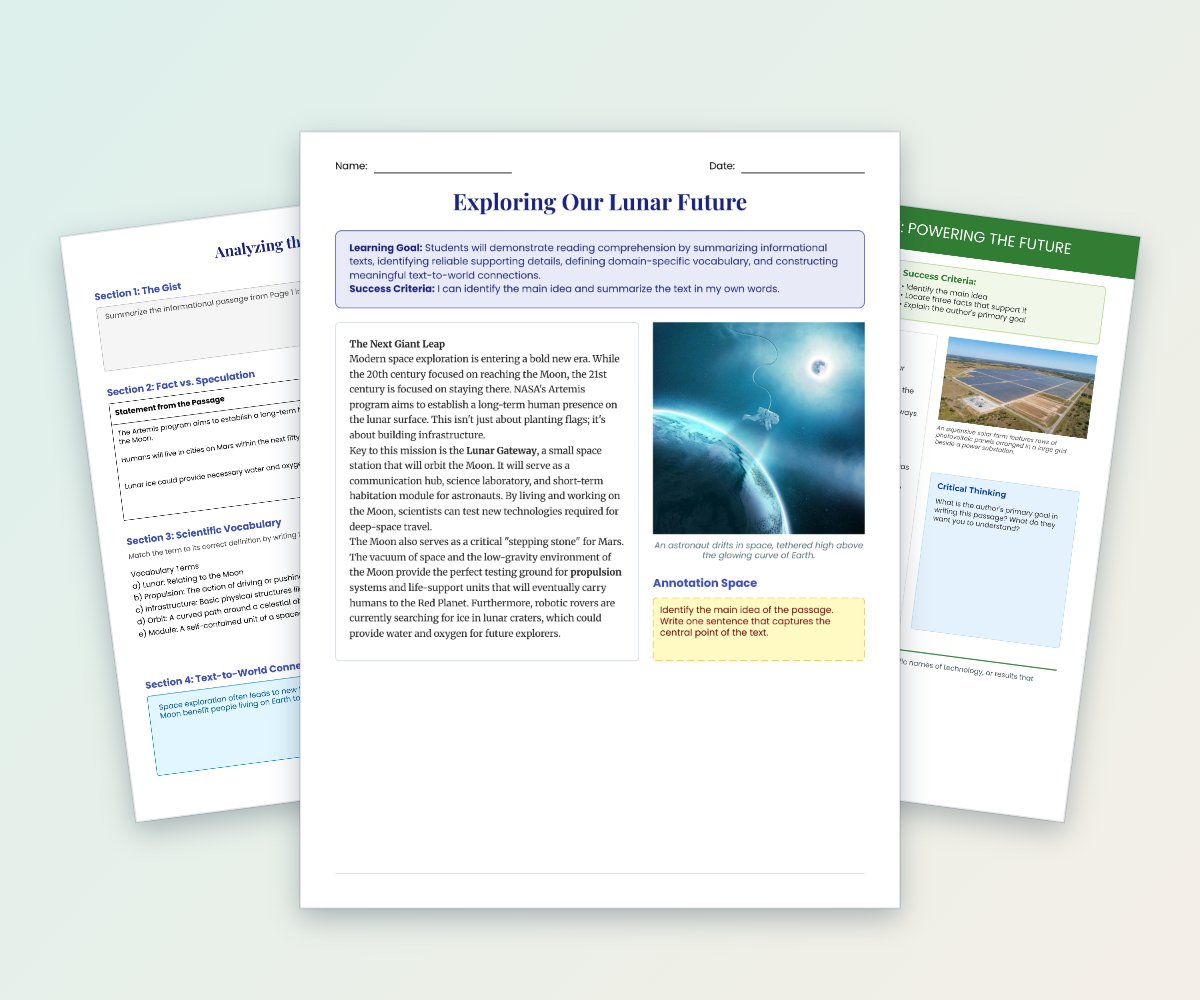
This six-page reading skills pack uses a passage about NASA’s Artemis program, the Lunar Gateway, lunar resources, and future Mars exploration.
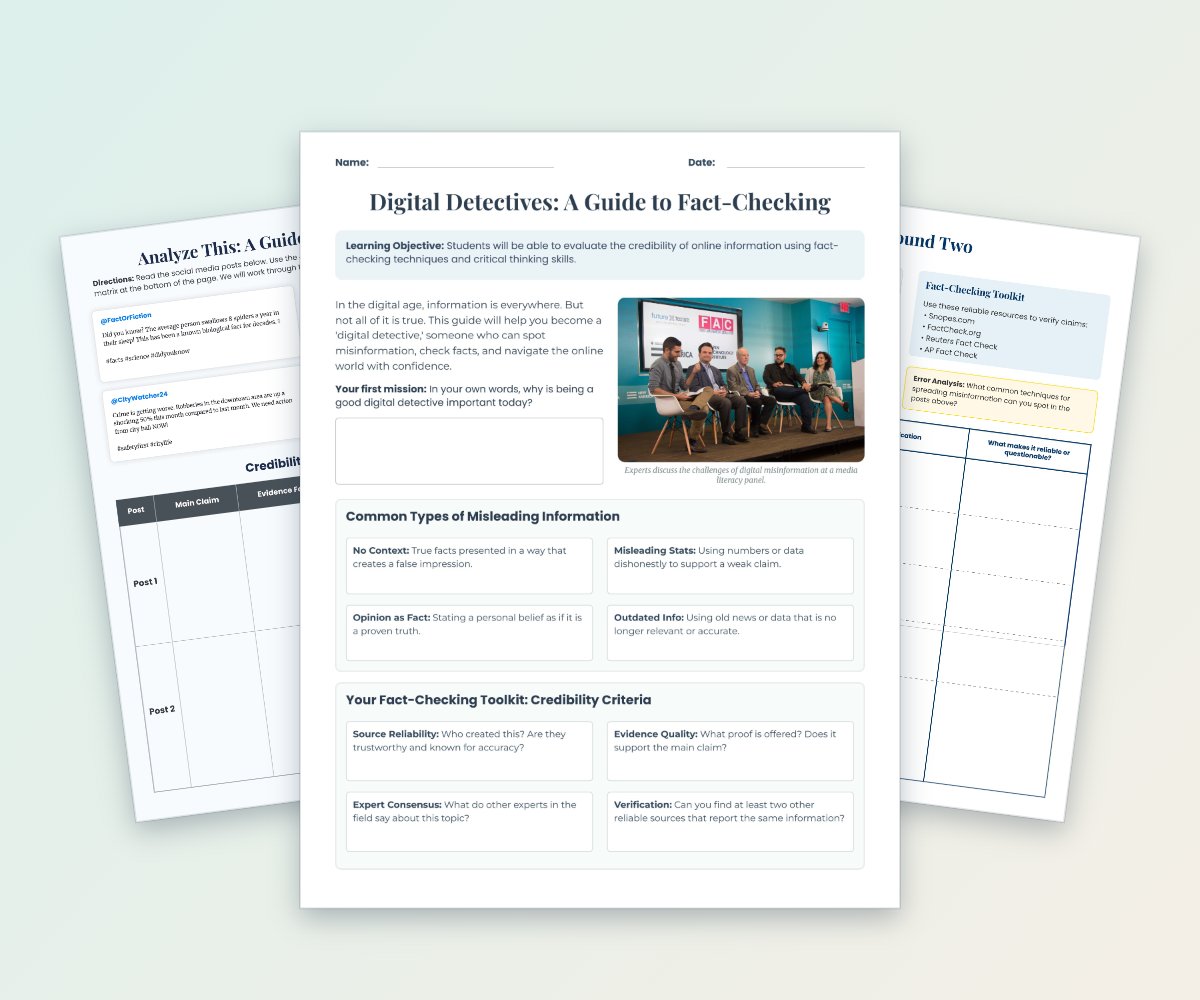
Students learn to identify misleading information, assess source reliability, cross-reference claims, and evaluate evidence.
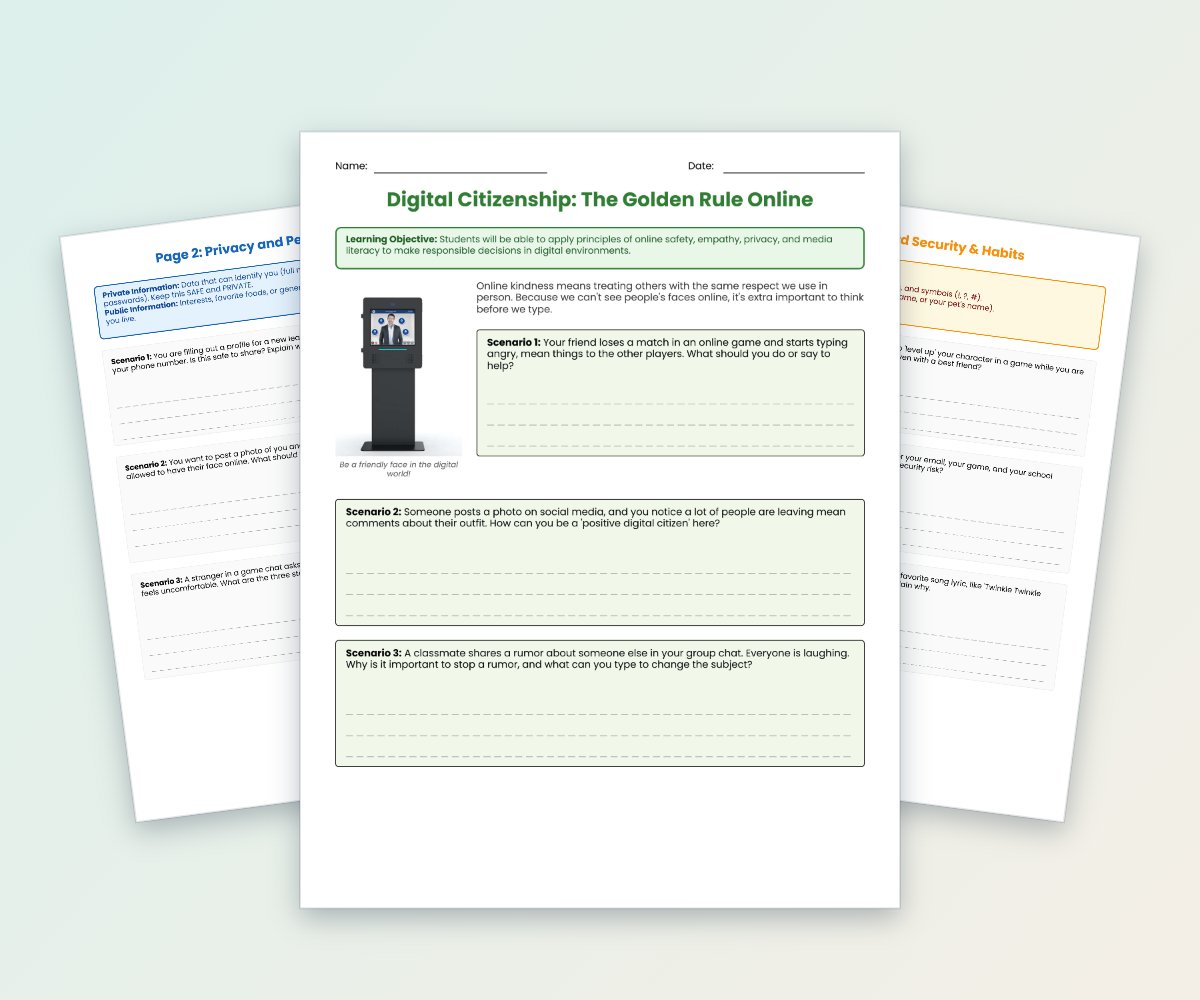
A six-page student guide teaching digital kindness, privacy protection, password security, and responsible online decision-making.
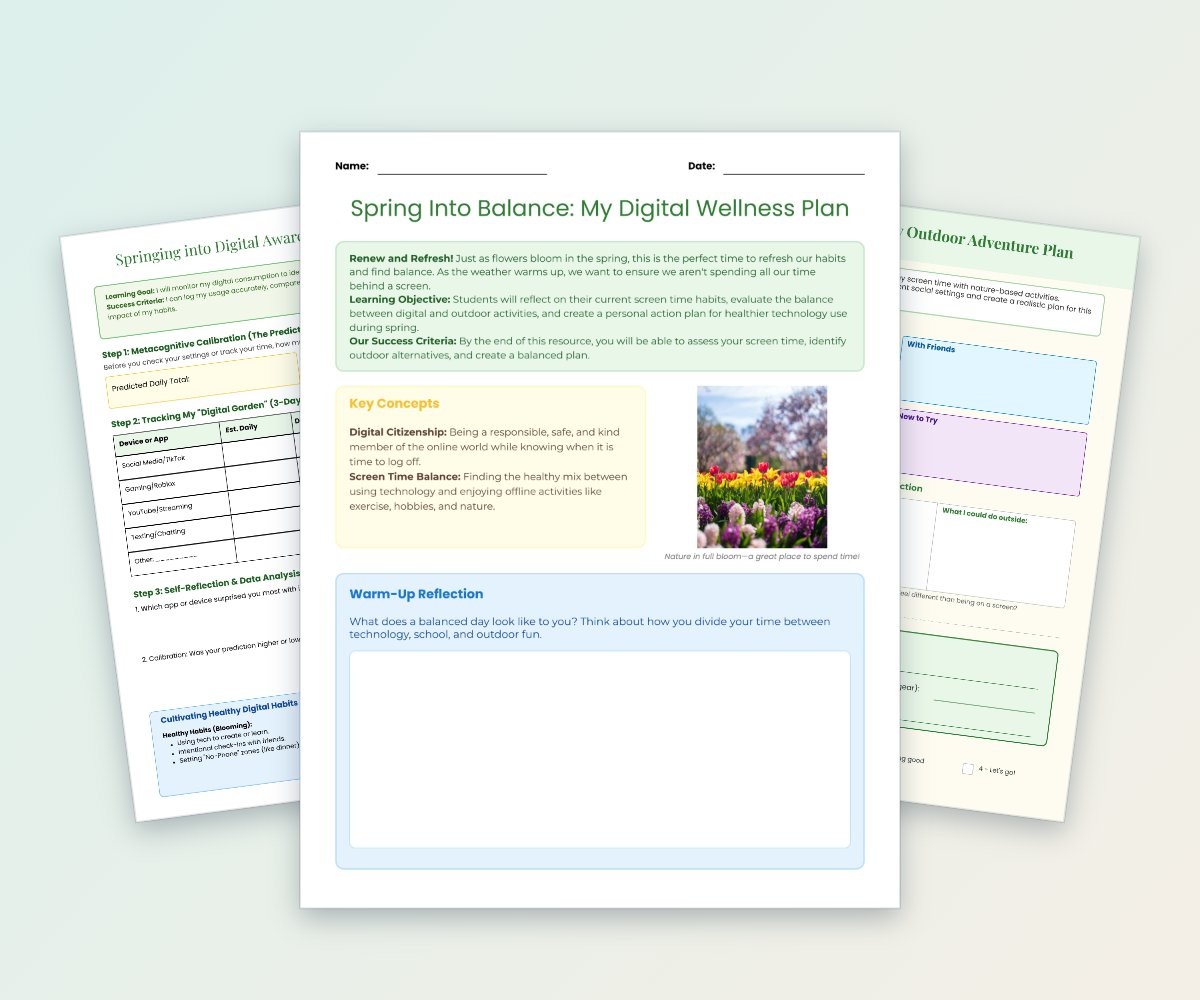
Students audit their three-day screen use, compare predictions with actual usage, and reflect on digital habits.
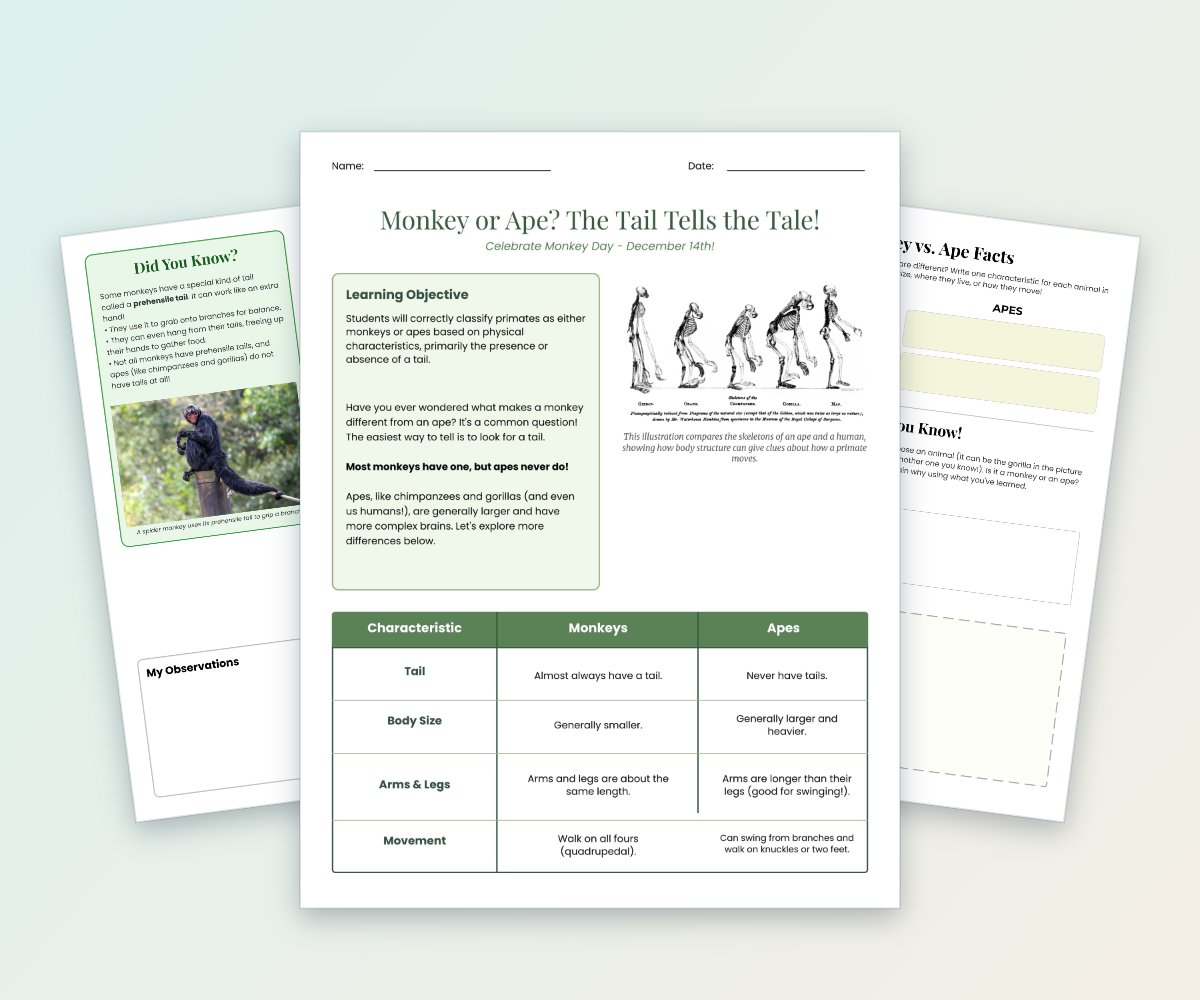
Students learn how to distinguish monkeys from apes by comparing tails, body size, limb proportions, and movement.
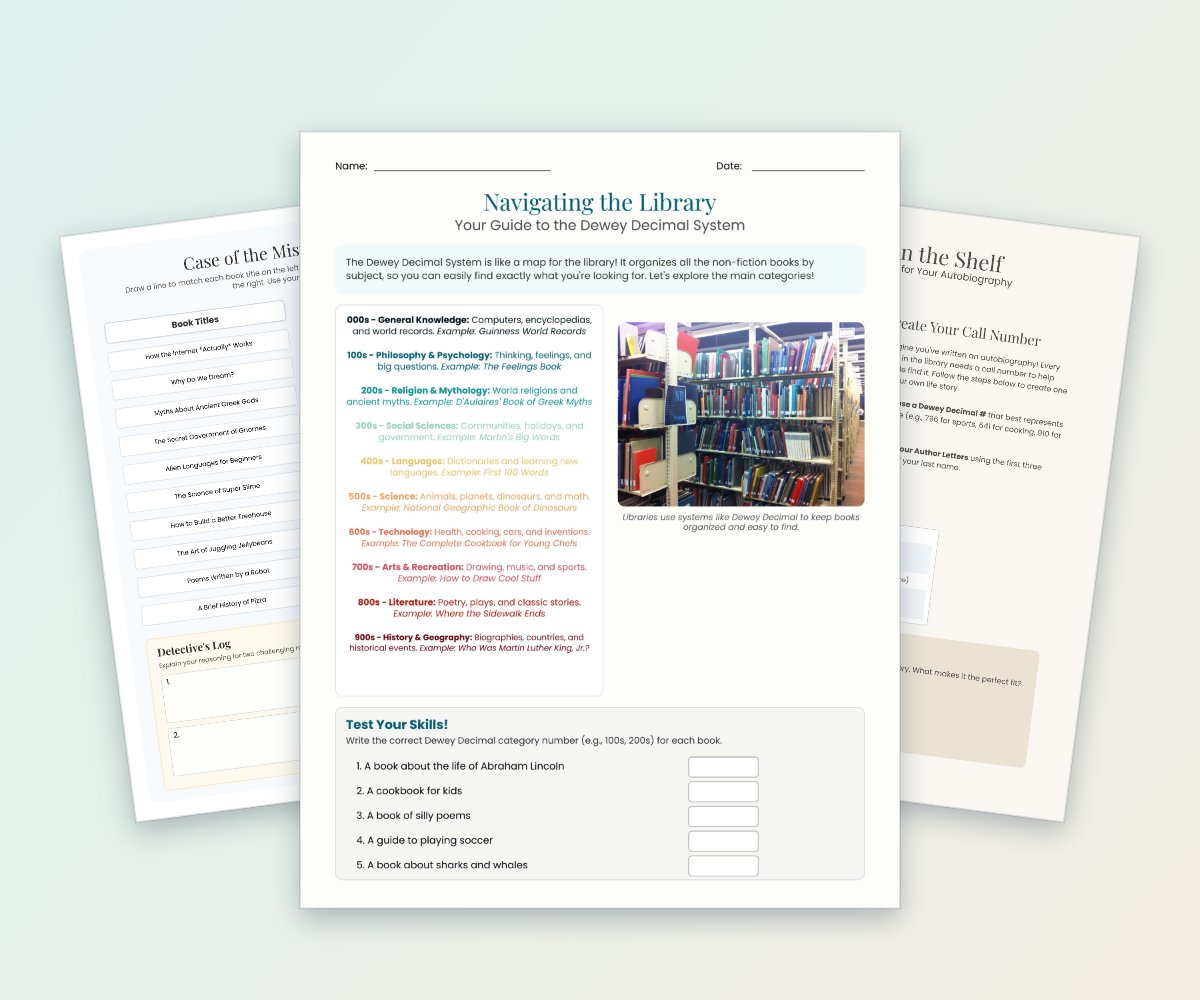
Introduce students to the ten main Dewey Decimal System categories through examples and accessible library-navigation explanations.
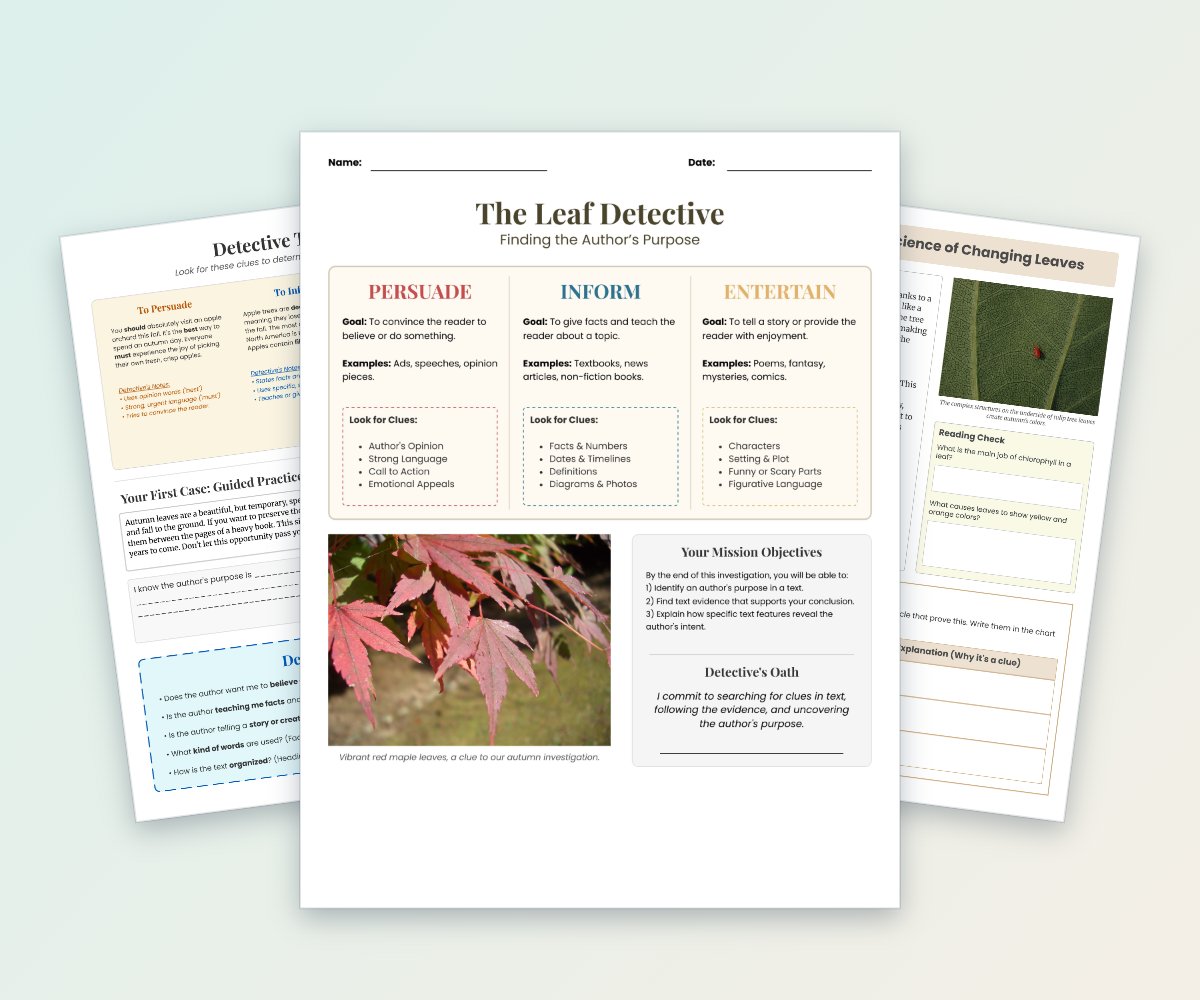
Students investigate whether texts are written to persuade, inform, or entertain using detective-themed examples and text clues.
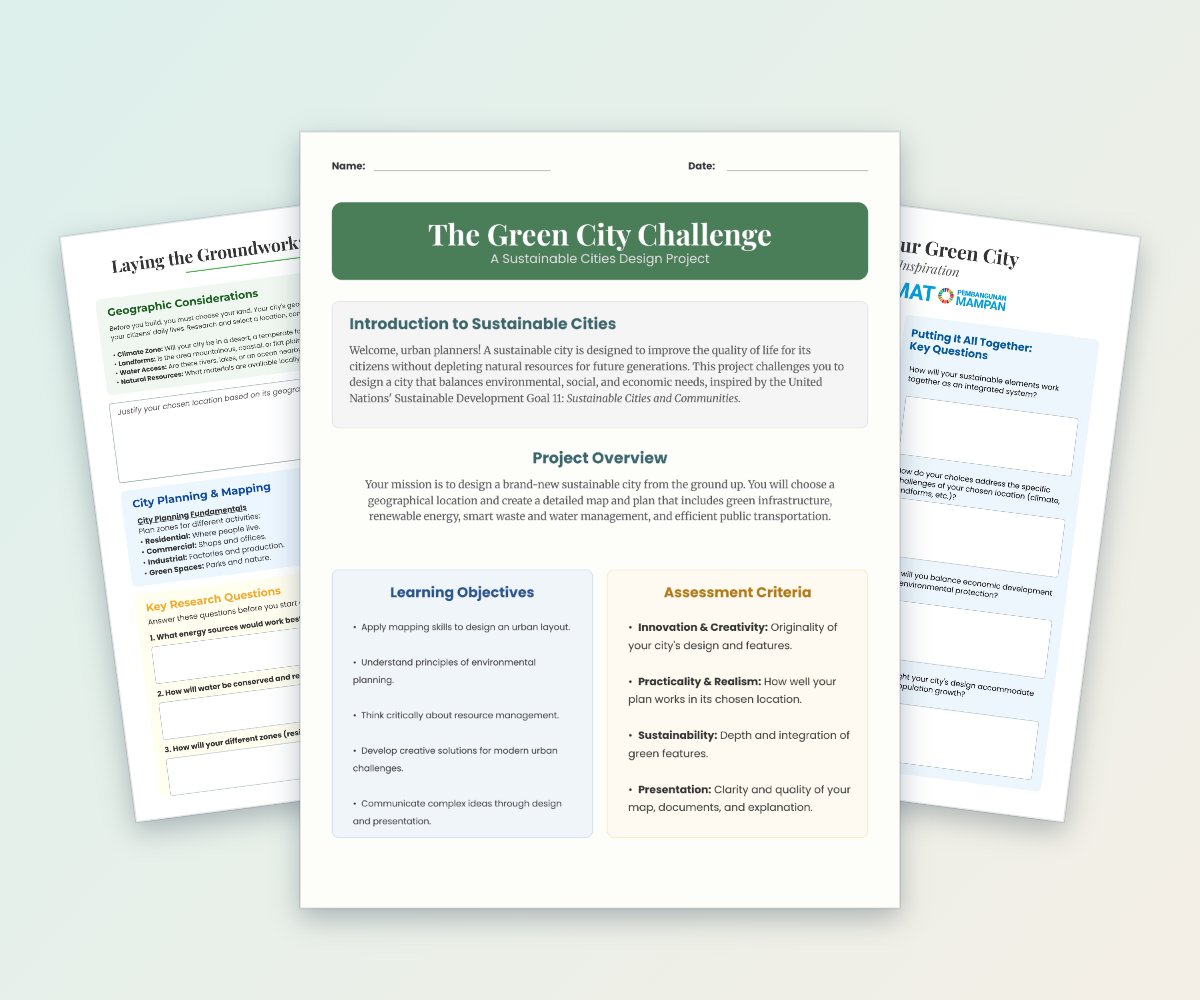
Students design a sustainable city by researching geography, planning urban zones, and incorporating green infrastructure, renewable energy, transportation, and resource management.
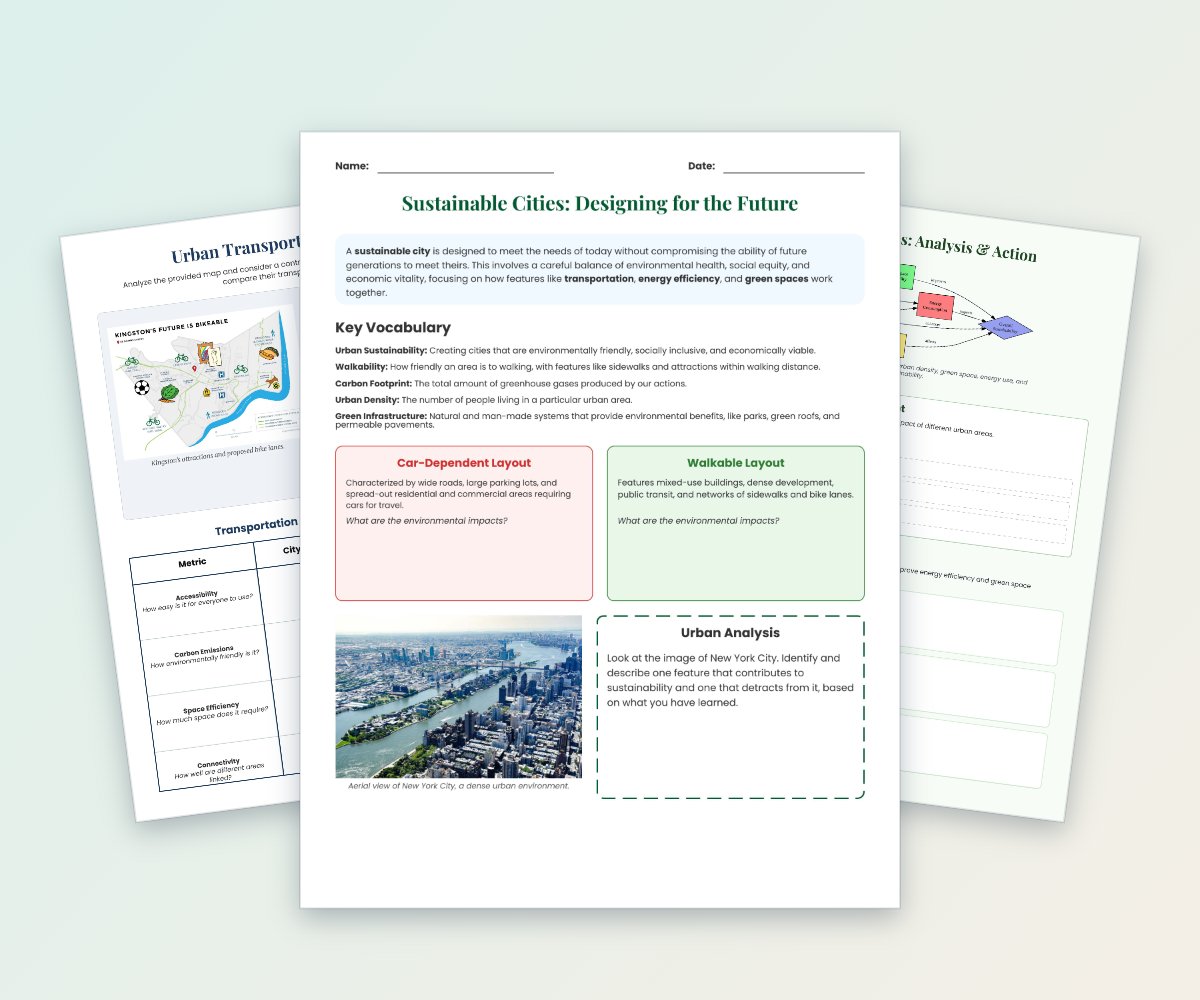
Students explore how transportation, density, green infrastructure, and walkability influence sustainable city design.
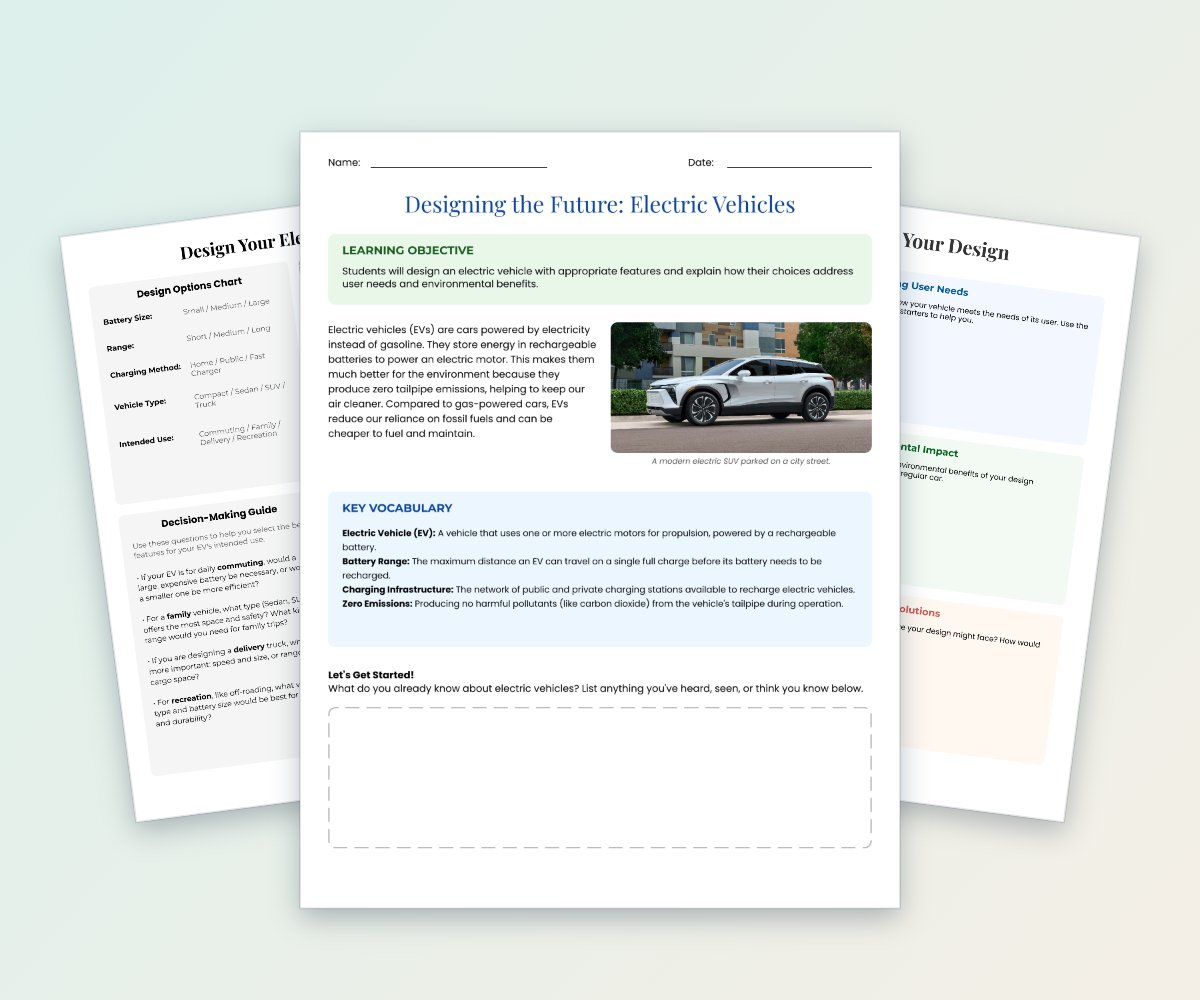
Students learn key electric vehicle vocabulary, compare design options, and make decisions based on intended use.
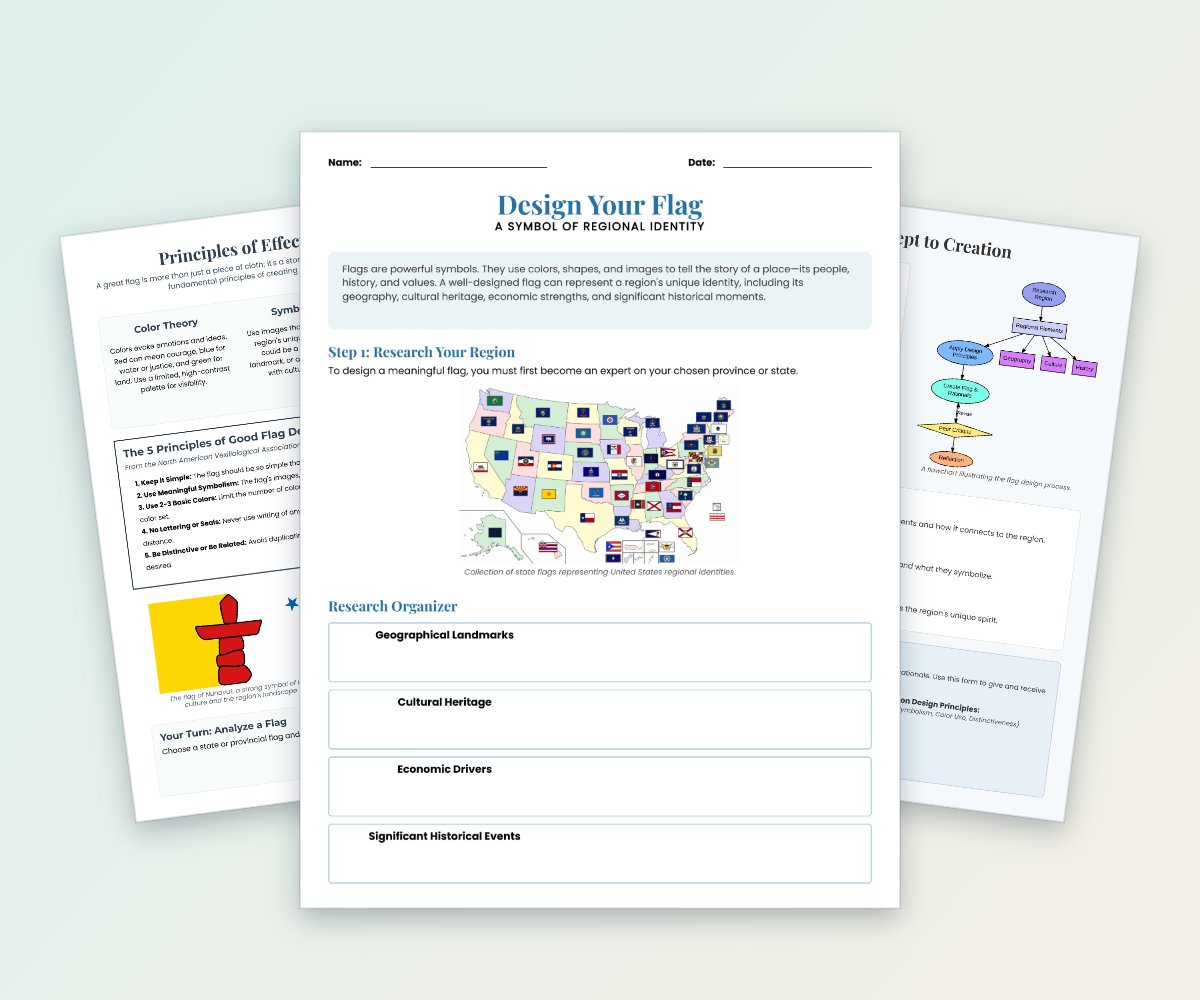
Students research a province or state and design a flag that represents its geography, cultural heritage, economy, history, and values.
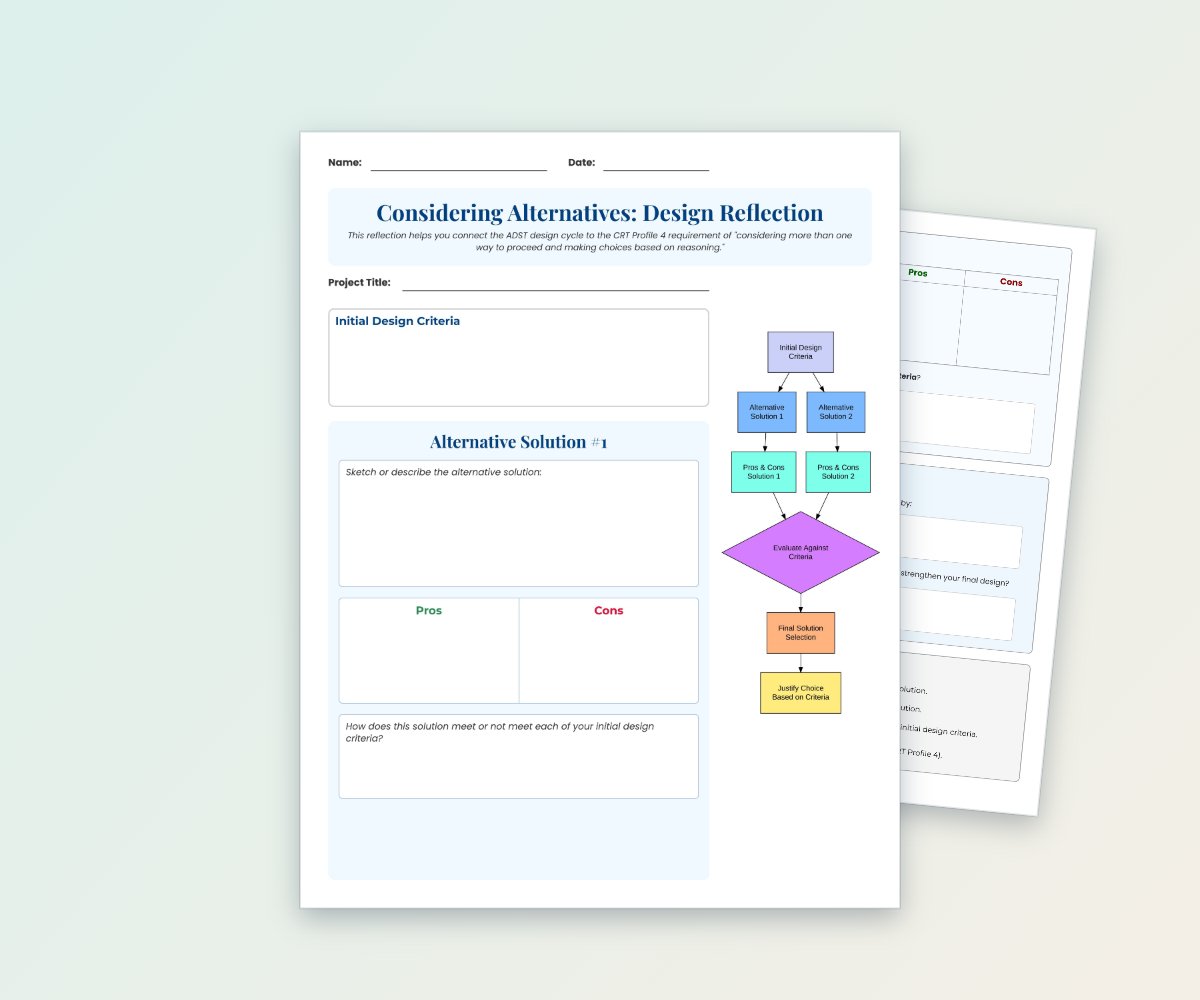
Students compare two alternative design solutions by documenting criteria, pros and cons, and the reasoning behind their final selection.
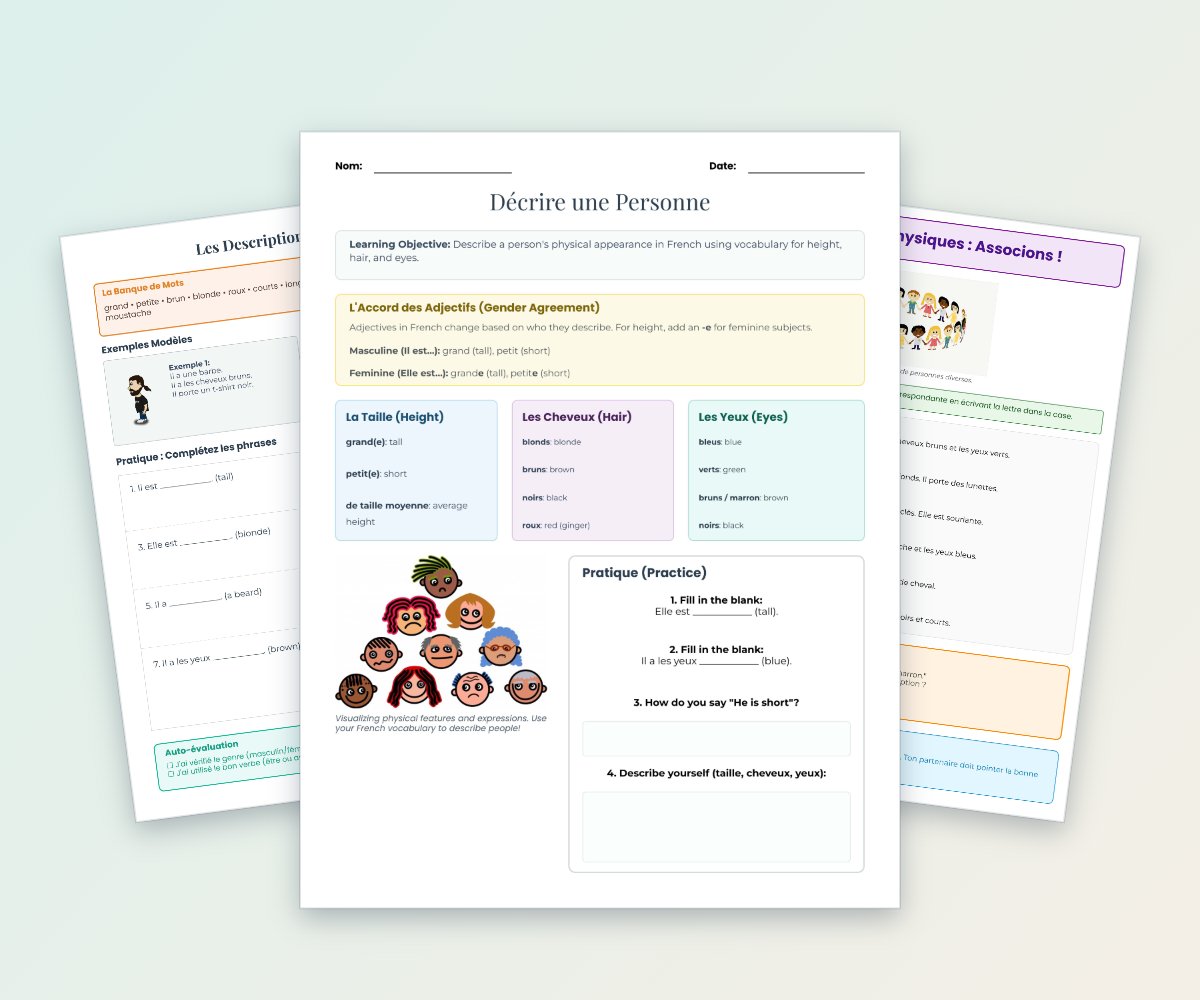
This four-page French worksheet teaches students to describe people using vocabulary for height, hair, eyes, facial features, and clothing.
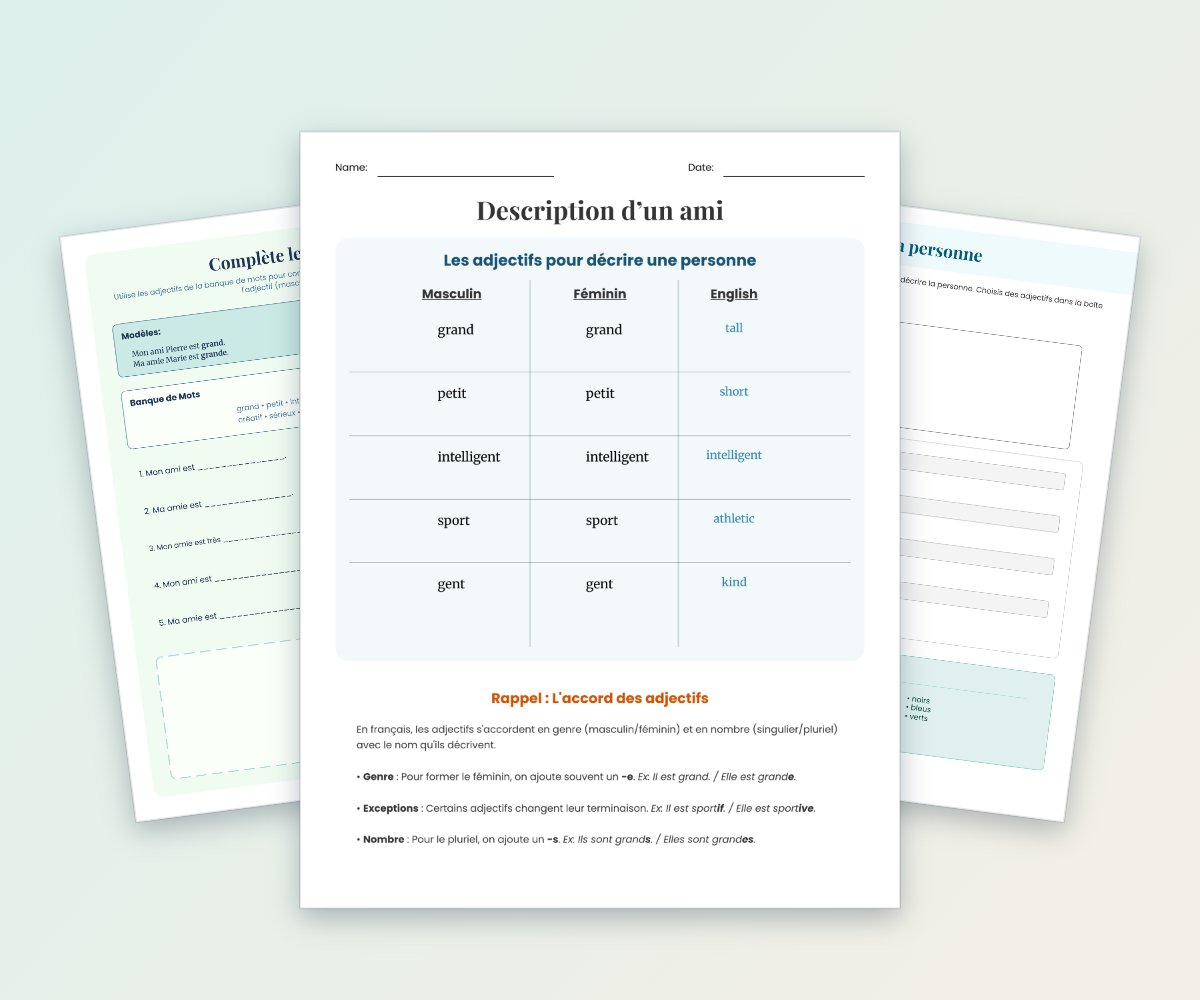
This six-page French worksheet helps students describe friends and people using physical and personality adjectives.
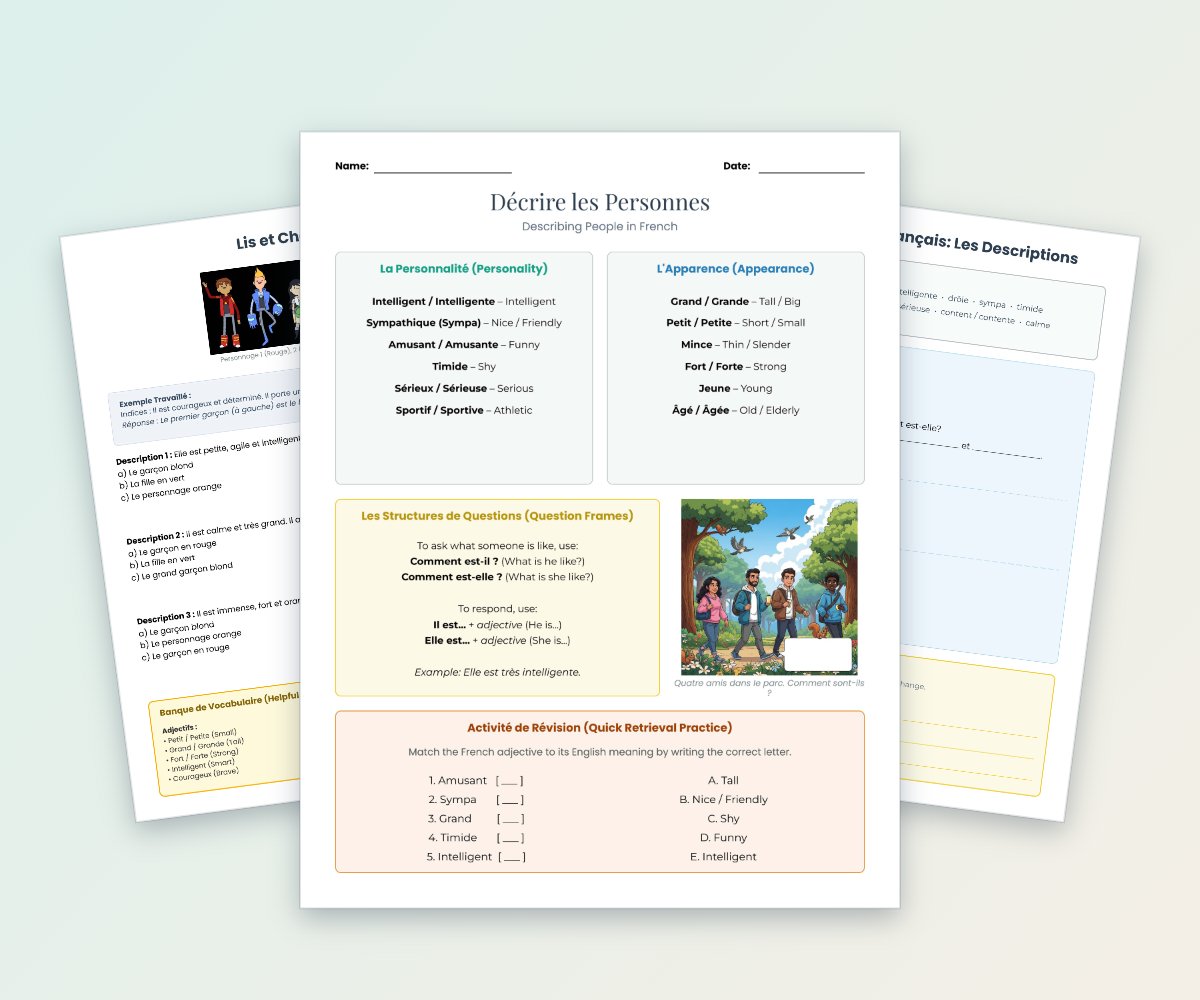
This four-page French activity pack teaches personality and appearance adjectives, question frames, vocabulary, reading practice, and dialogue prompts.
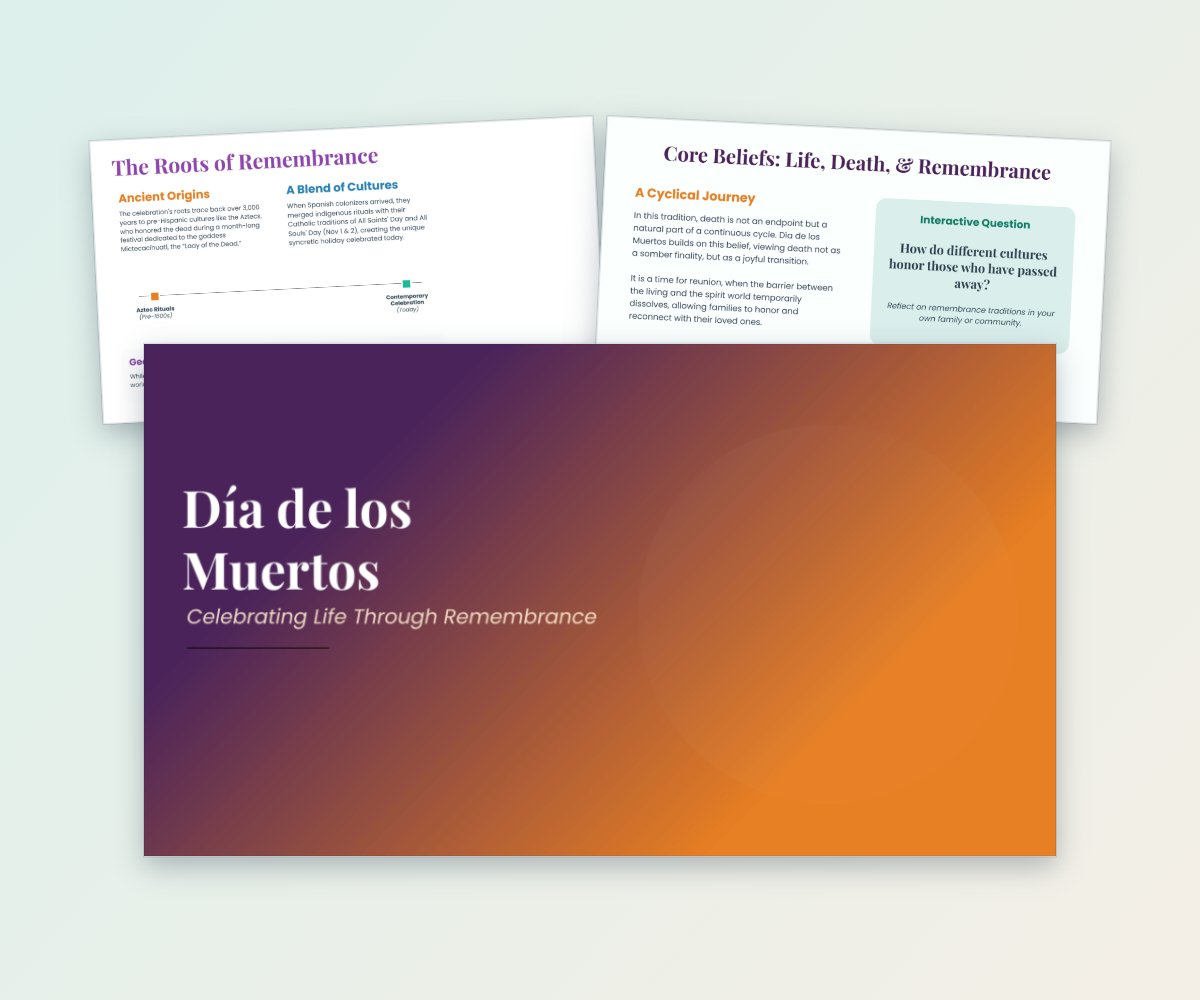
This 10-page classroom presentation introduces the origins, beliefs, traditions, and symbols of Día de los Muertos.
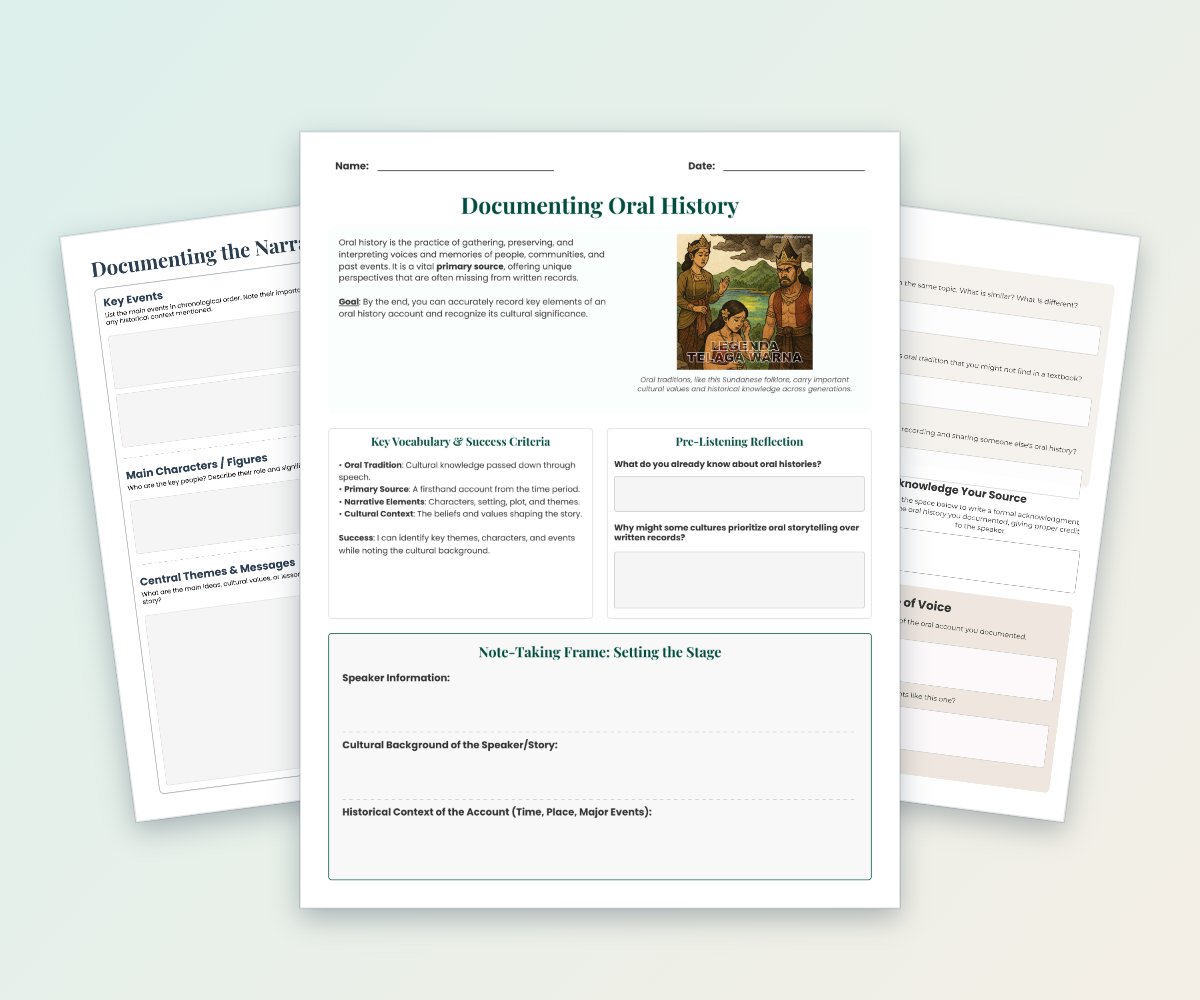
This three-page graphic organizer guides students in documenting oral histories through speaker information, cultural context, historical setting, key events, characters, themes, and quotations.
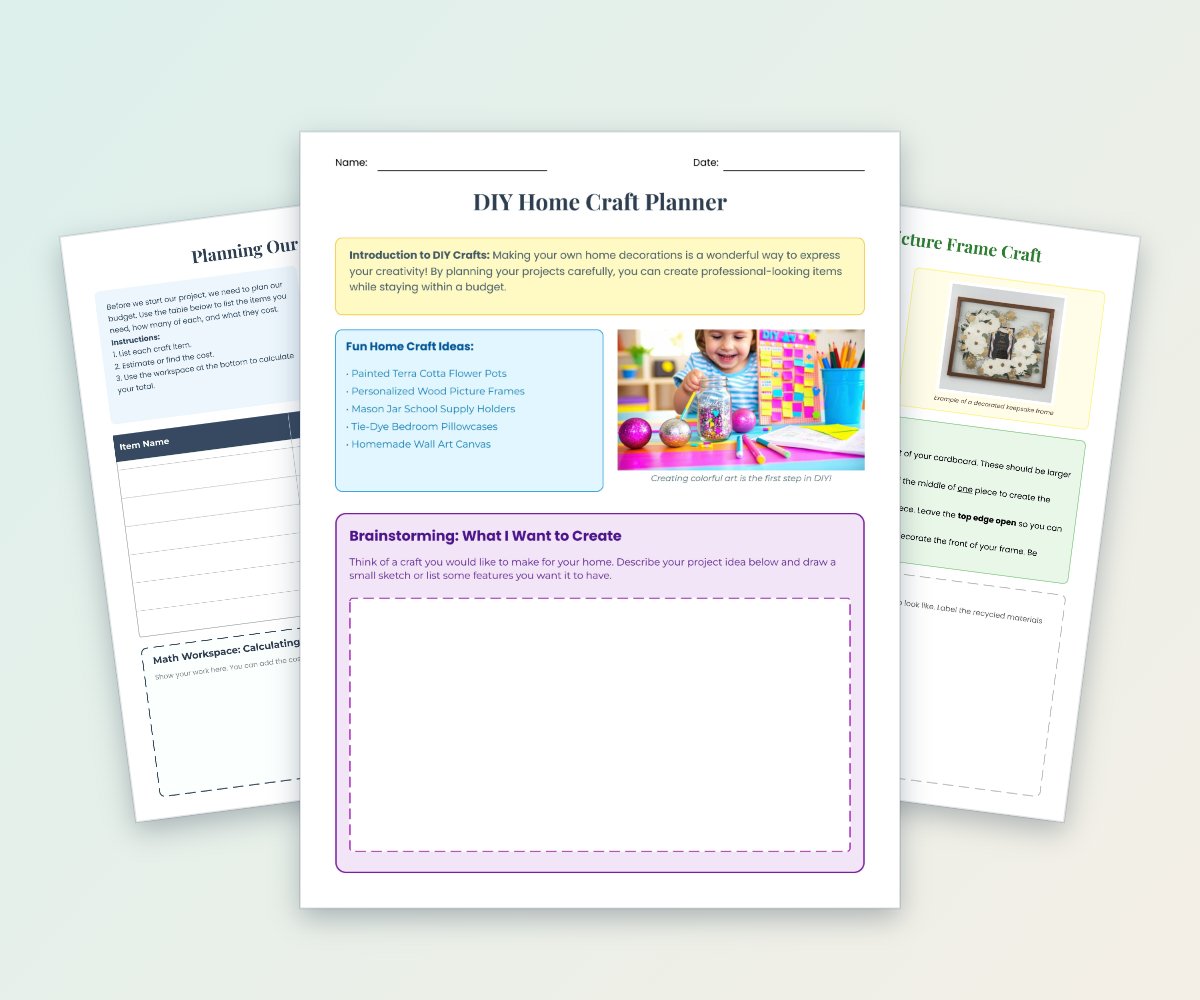
This four-page student activity pack guides learners through planning home crafts, creating supply lists, estimating costs, and sketching designs.
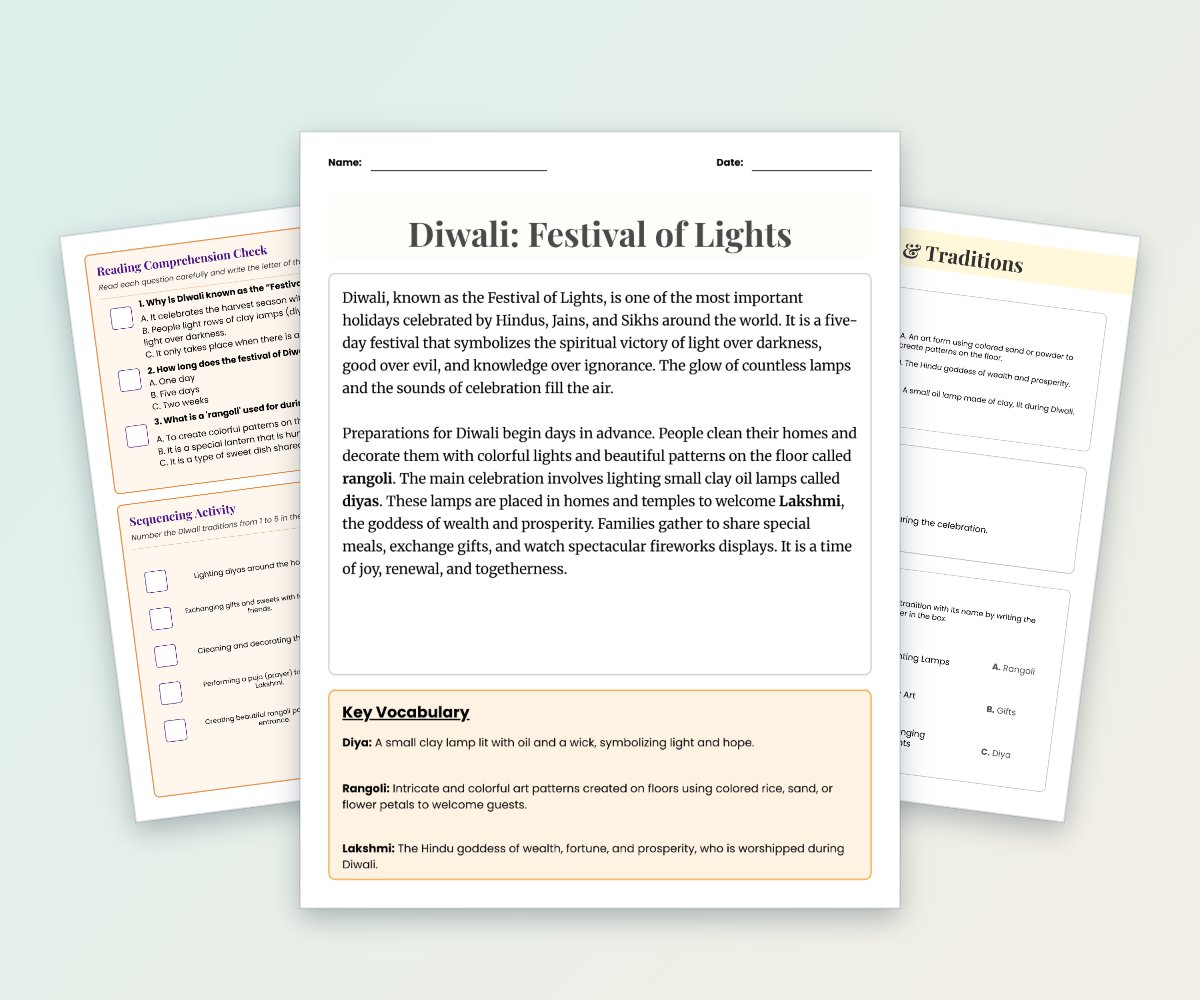
This three-page worksheet introduces Diwali, the Festival of Lights, and its cultural traditions among Hindu, Jain, and Sikh communities.
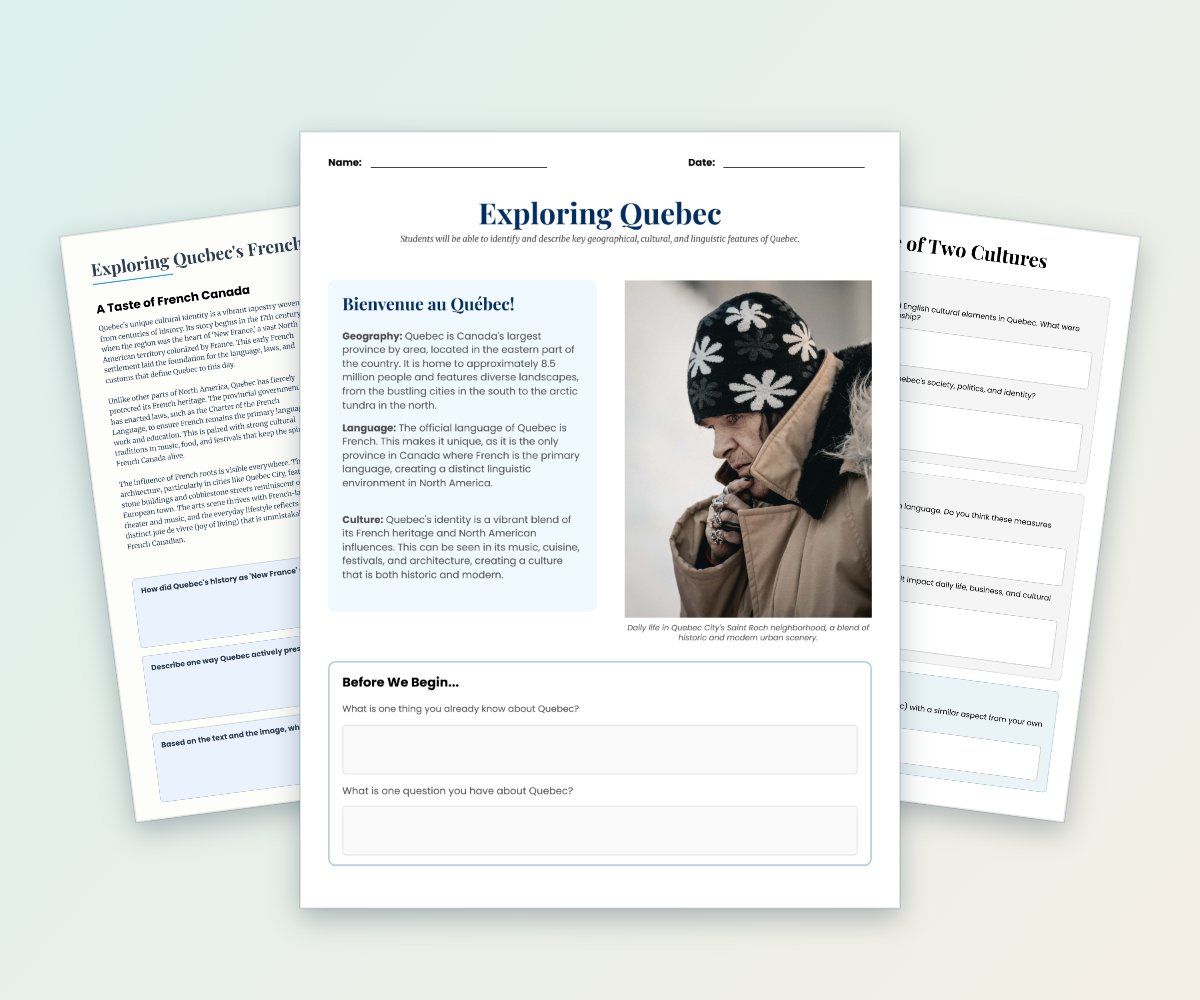
Students explore Quebec’s geography, French heritage, official language, cultural identity, architecture, traditions, and daily life.
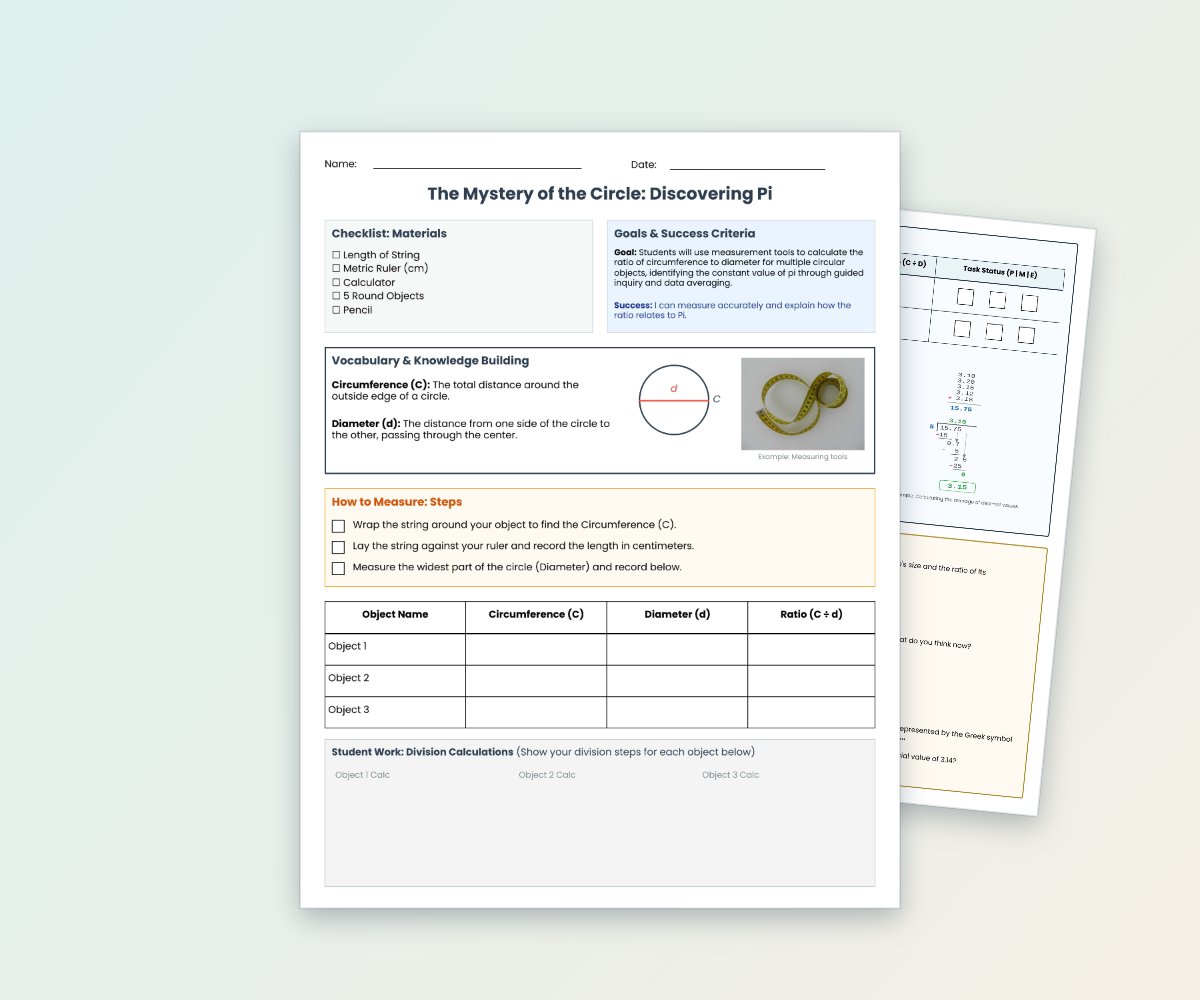
Students measure the circumference and diameter of five round objects using string and rulers, then calculate ratios and their mean.
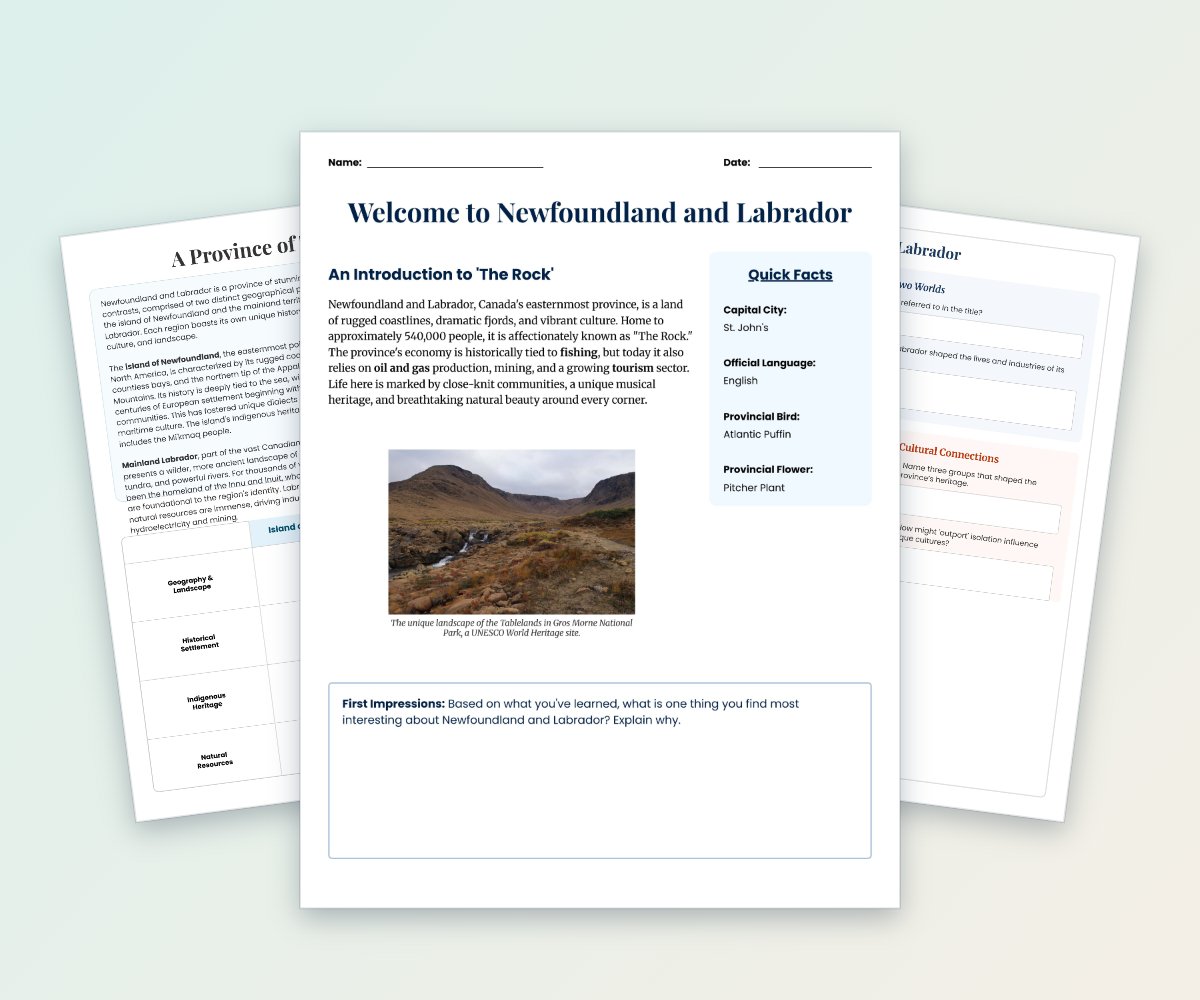
This six-page social studies resource introduces Newfoundland and Labrador through informational text, quick facts, reflection prompts, comprehension questions, and geographical inquiry.
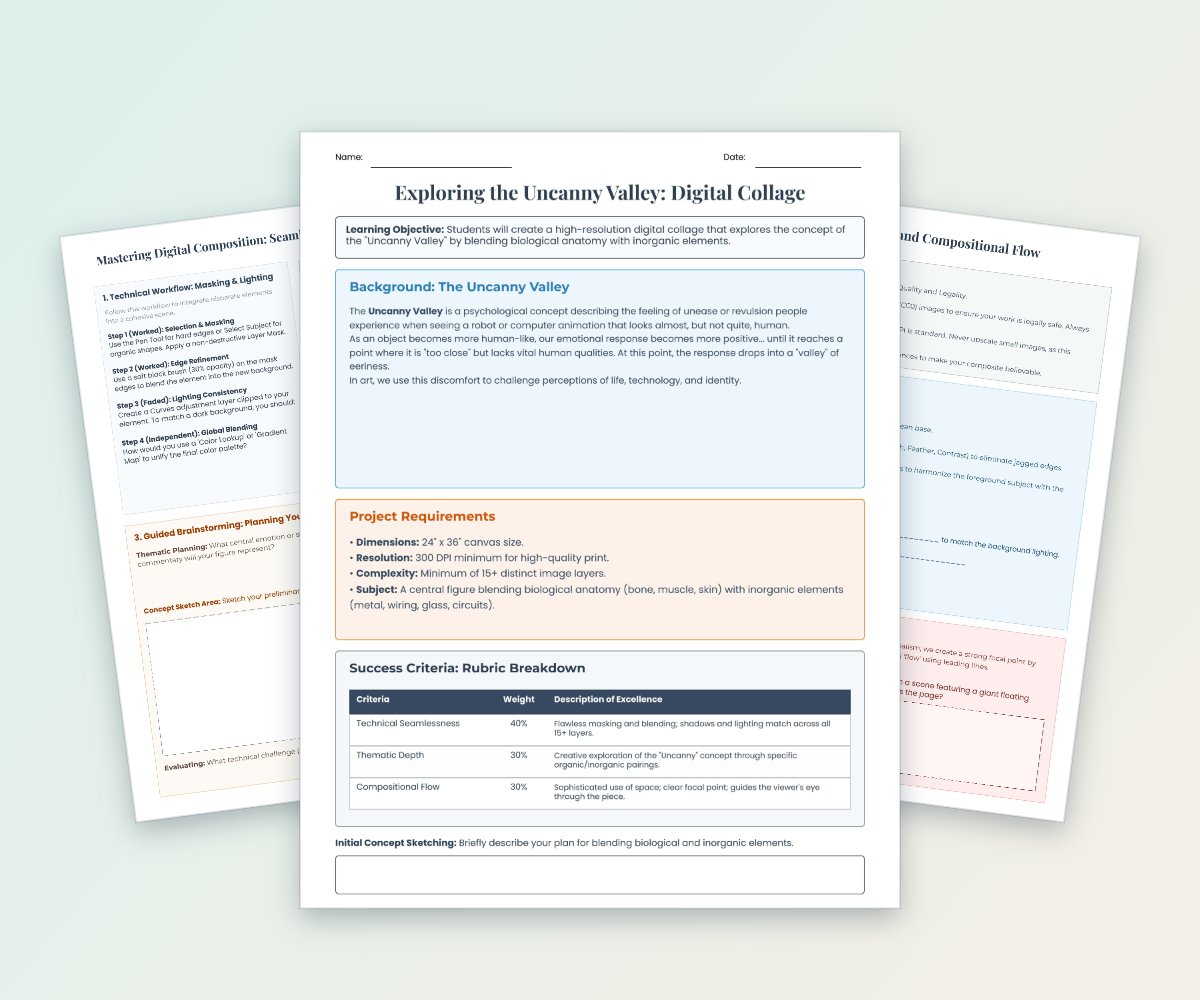
Students explore the psychological concept of the uncanny valley by creating a digital collage that combines biological anatomy with inorganic elements.
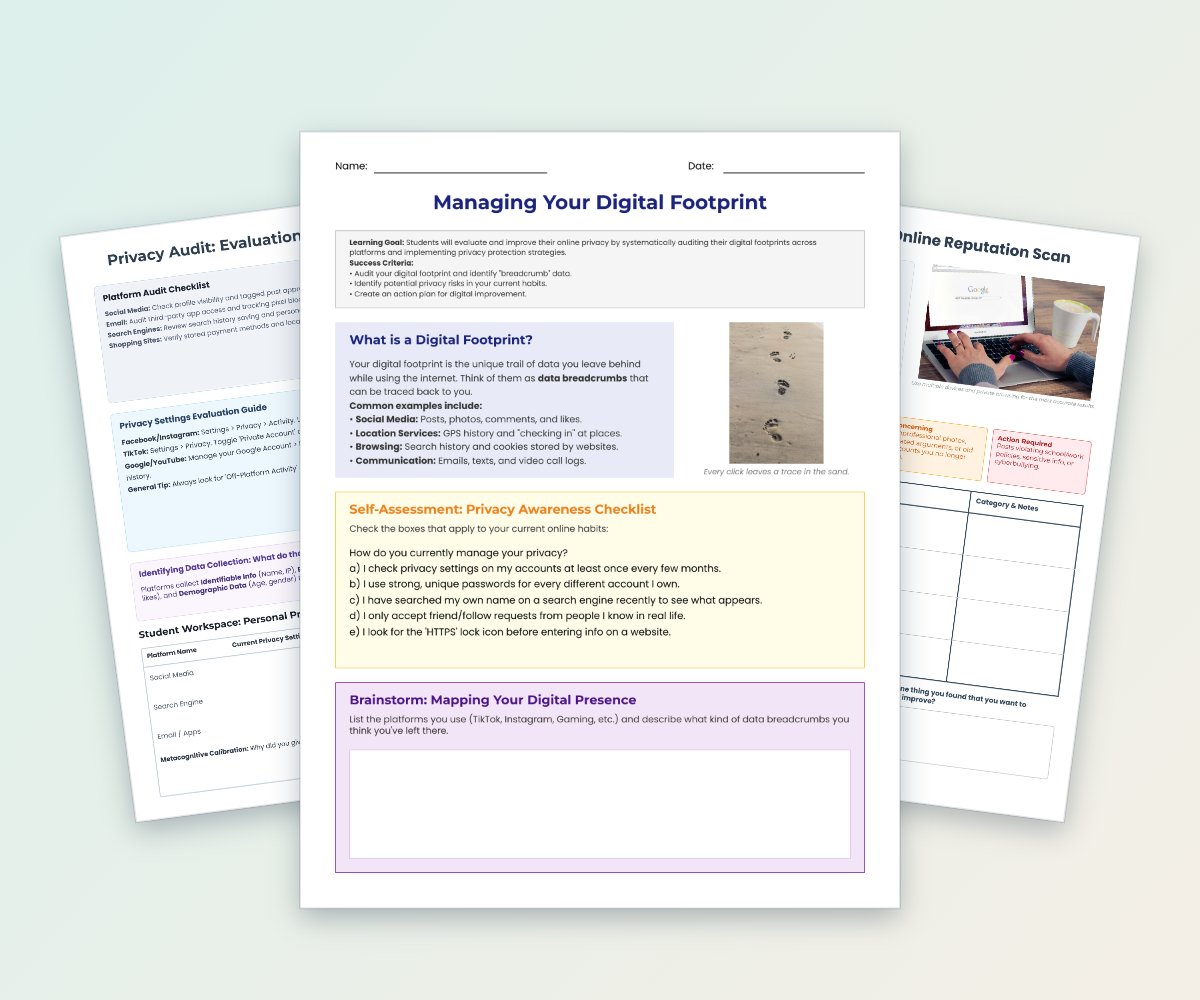
Students audit their digital footprints across social media, email, search engines, and shopping platforms.
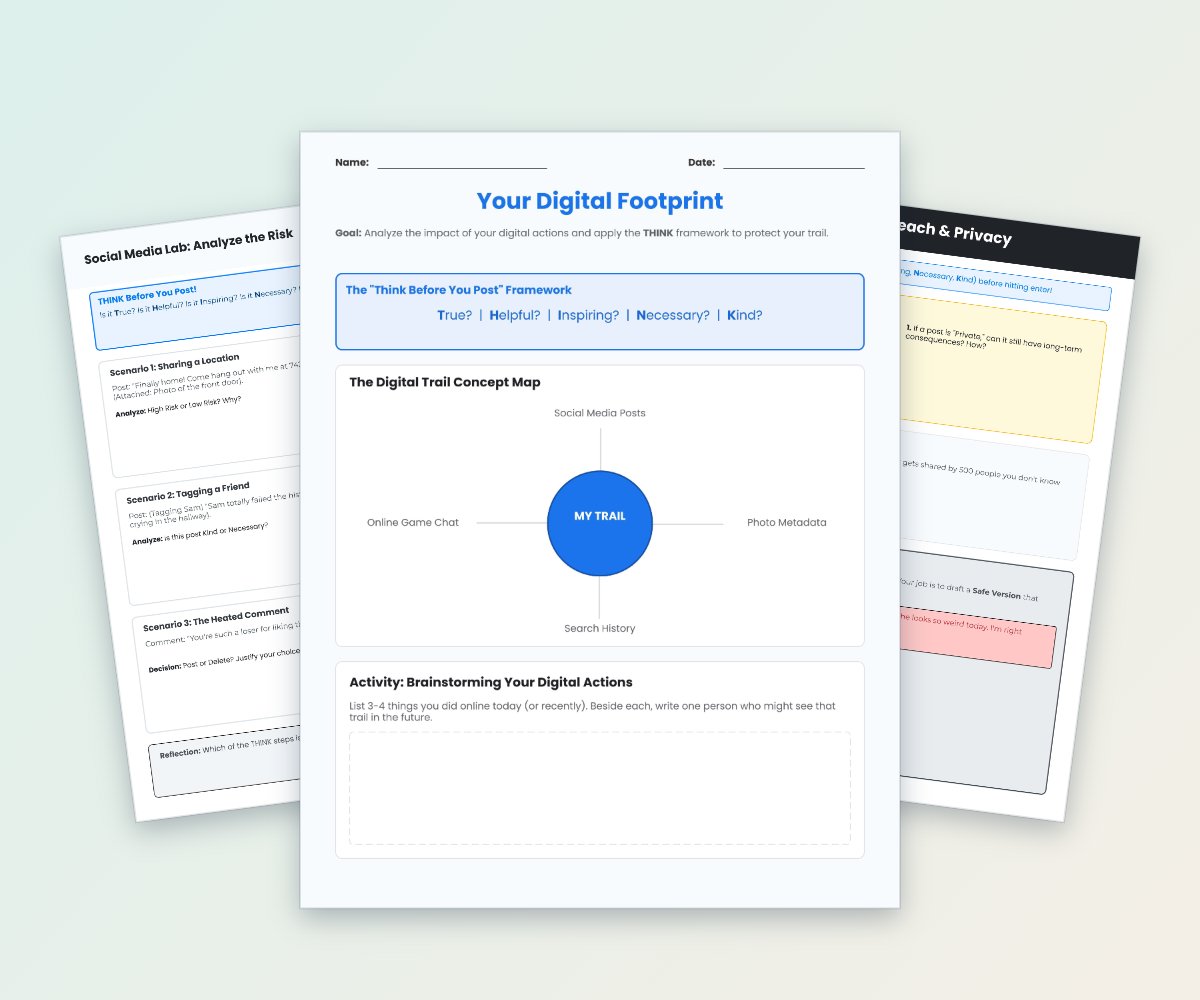
This six-page activity pack helps students analyze digital footprints, audience reach, privacy risks, and the consequences of online posts.
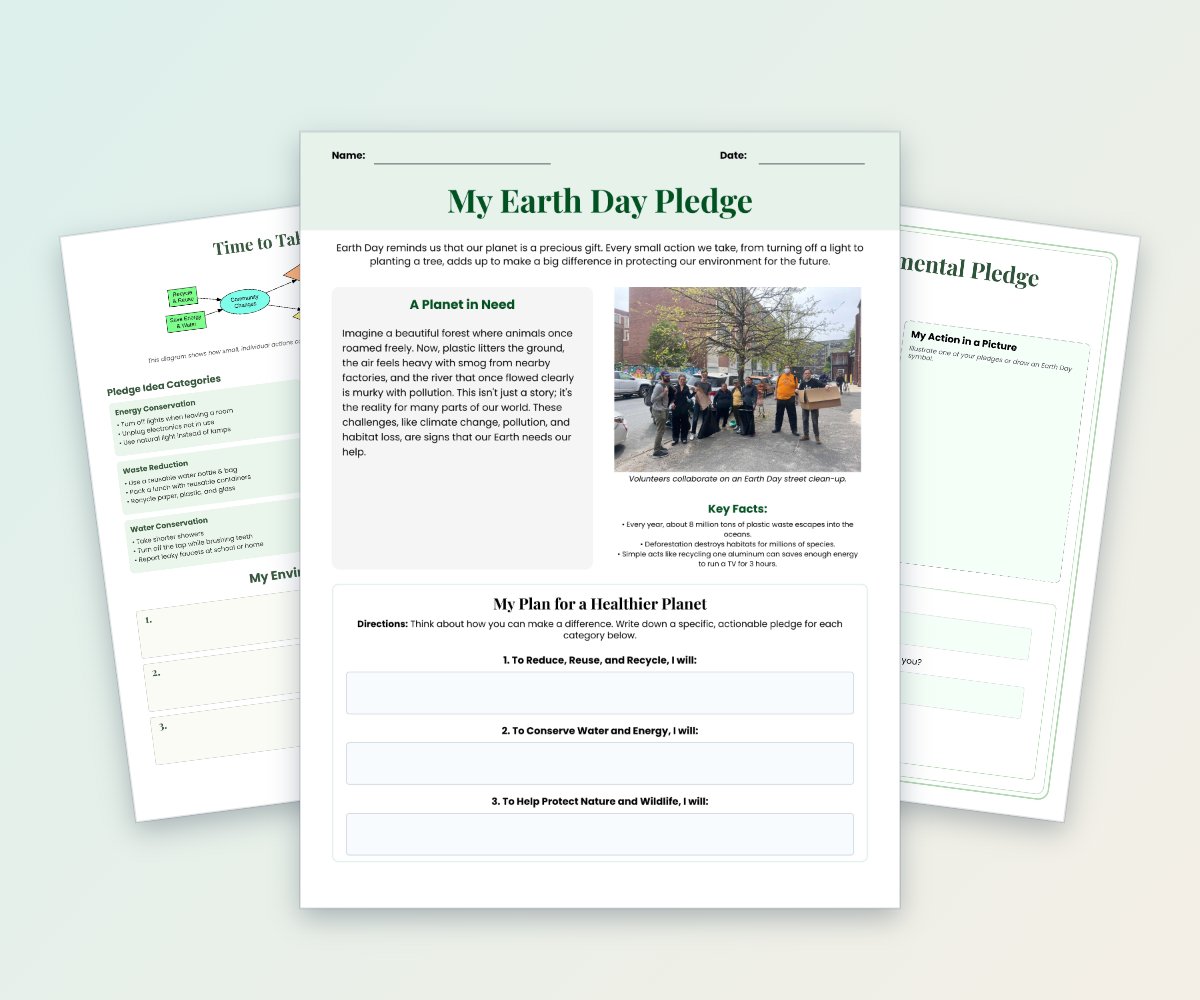
Students learn about pollution, habitat loss, conservation, and practical ways to protect the planet.