Understanding Food Browning Reactions: The Delicious Chemistry of Browning
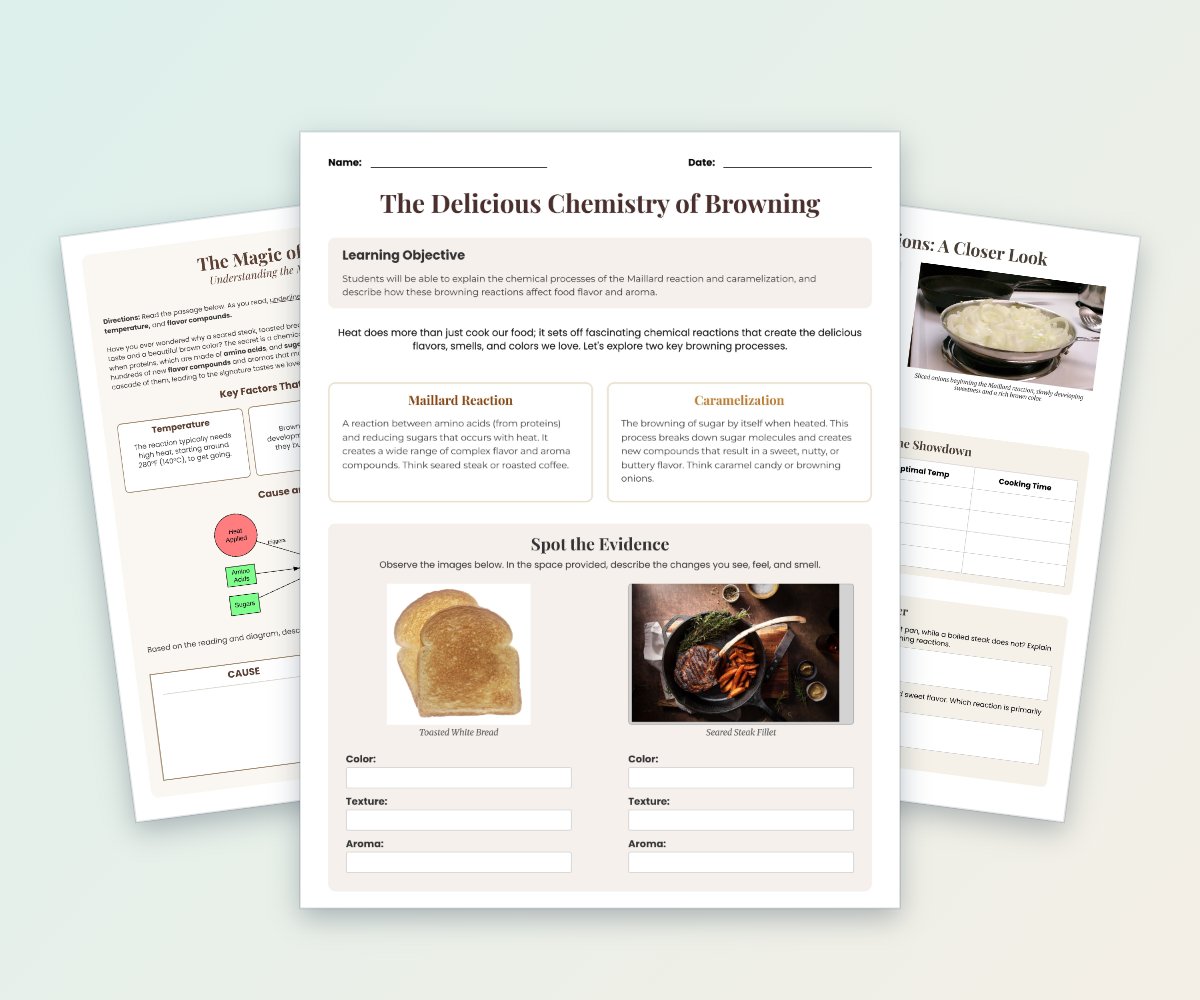
This four-page worksheet introduces the Maillard reaction and caramelization, explaining how heat, sugars, amino acids, temperature, and pH affect food browning.
$4.50
Classroom-ready resources written for grade 5: printable worksheets, slides, activities and planning tools you can download and use straight away. Browse by subject below.
This four-page worksheet introduces the Maillard reaction and caramelization, explaining how heat, sugars, amino acids, temperature, and pH affect food browning.
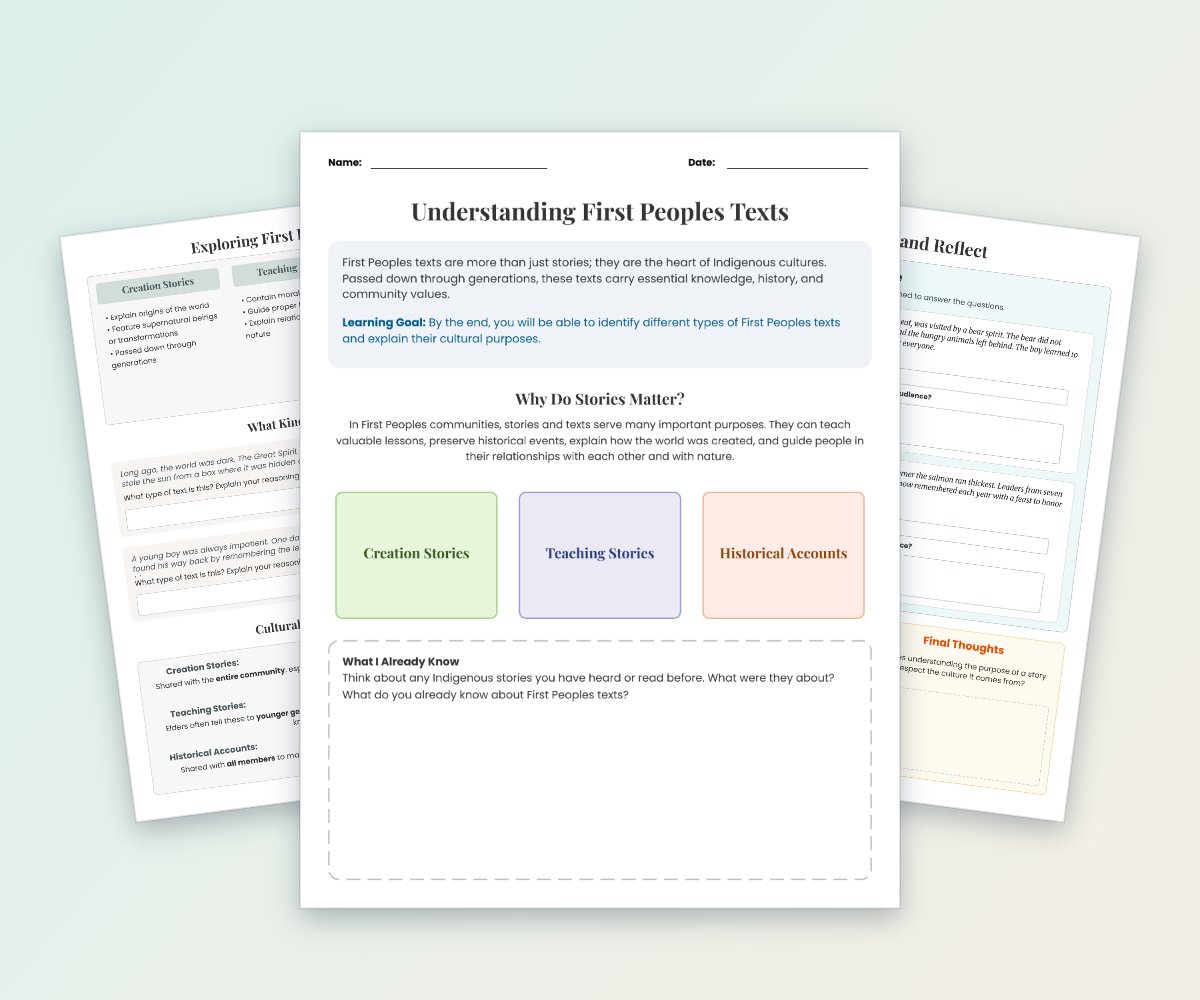
This three-page worksheet introduces creation stories, teaching stories, and historical accounts in First Peoples texts.
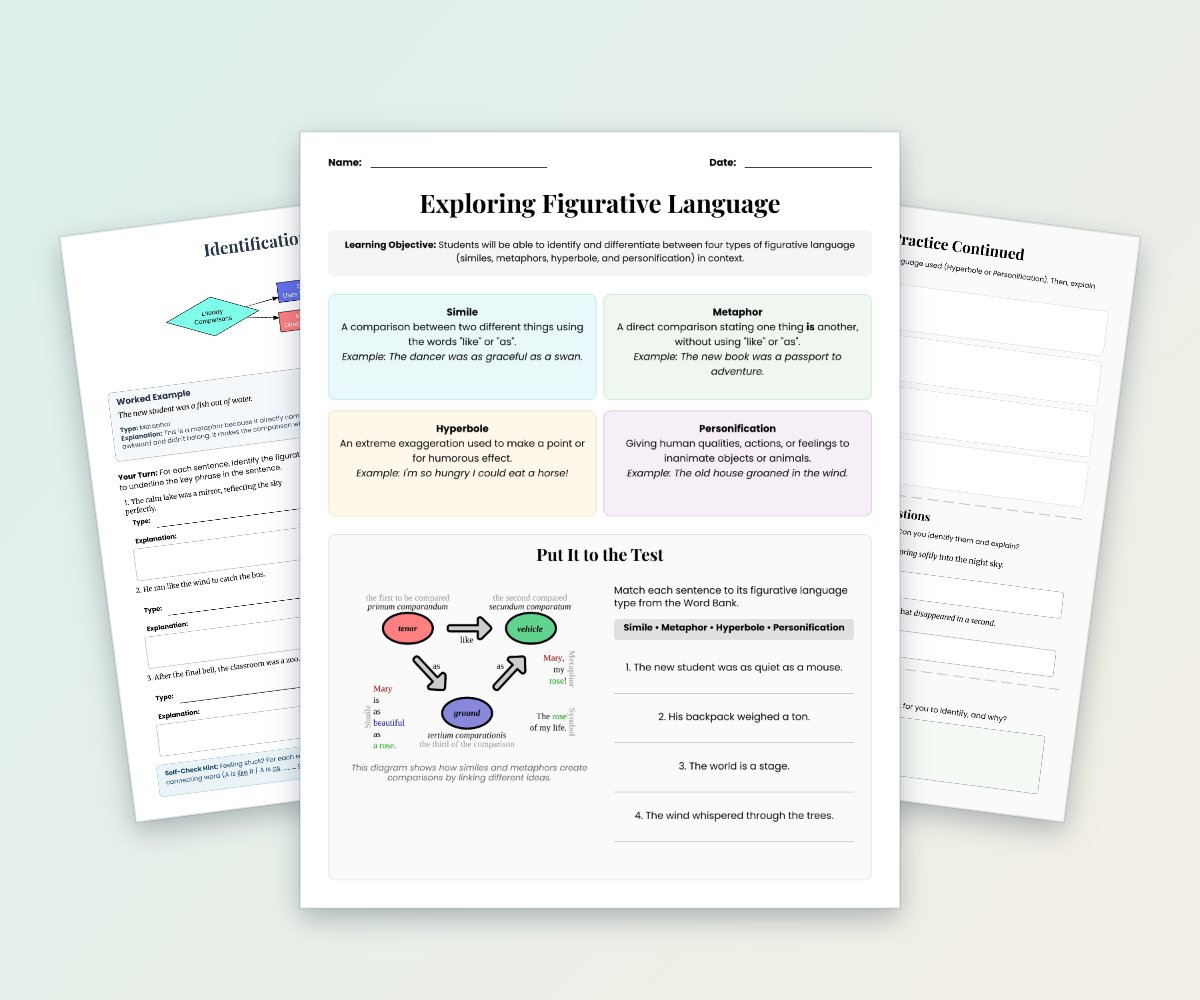
This four-page worksheet introduces similes, metaphors, hyperbole, and personification with clear definitions and examples.
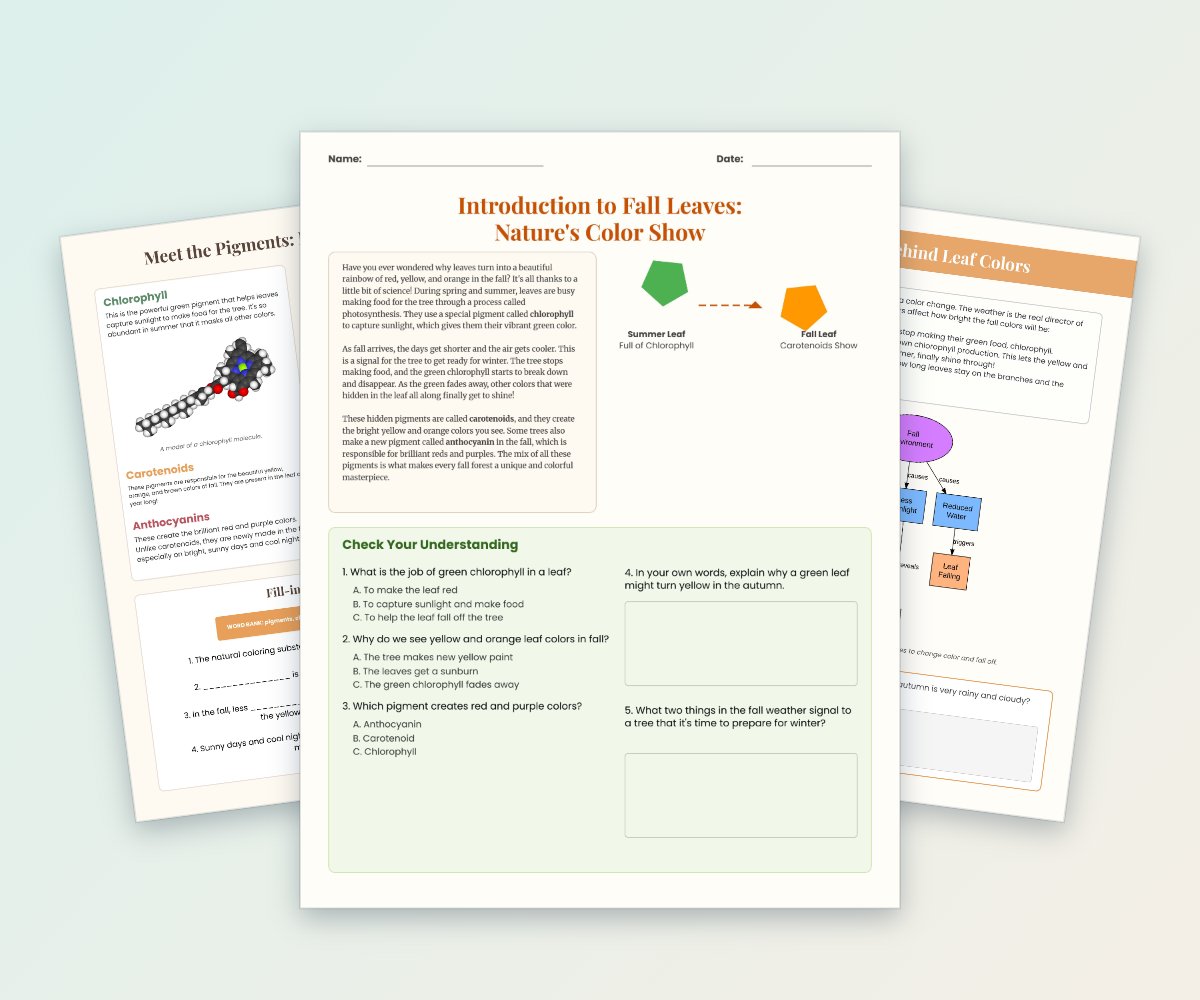
This five-page science activity pack explains why leaves change color in autumn, introducing chlorophyll, carotenoids, and anthocyanins.
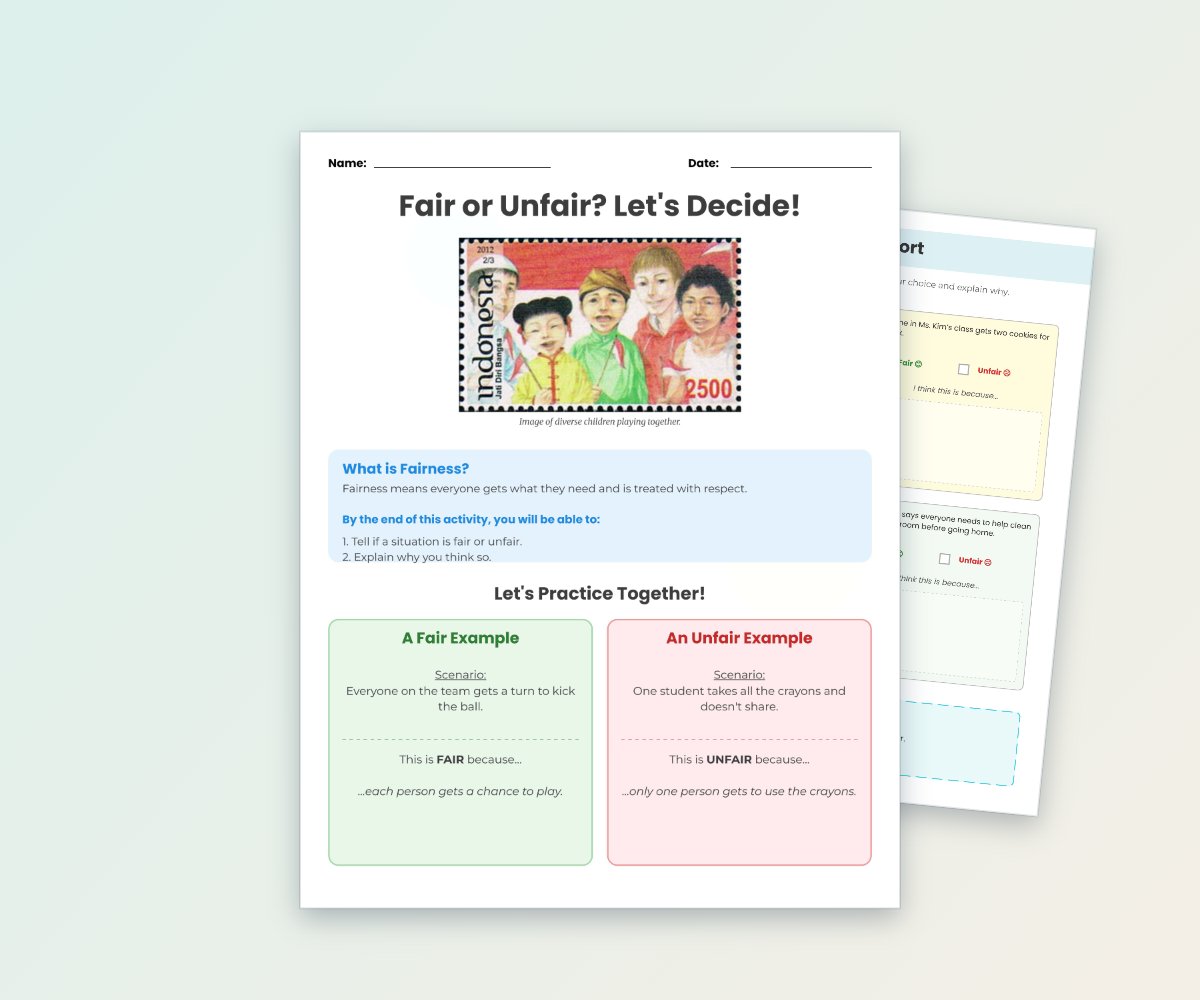
Students learn that fairness means receiving needed support and being treated with respect.
This three-page worksheet introduces students to different family structures, including single-parent, extended, nuclear, and same-sex parent families.
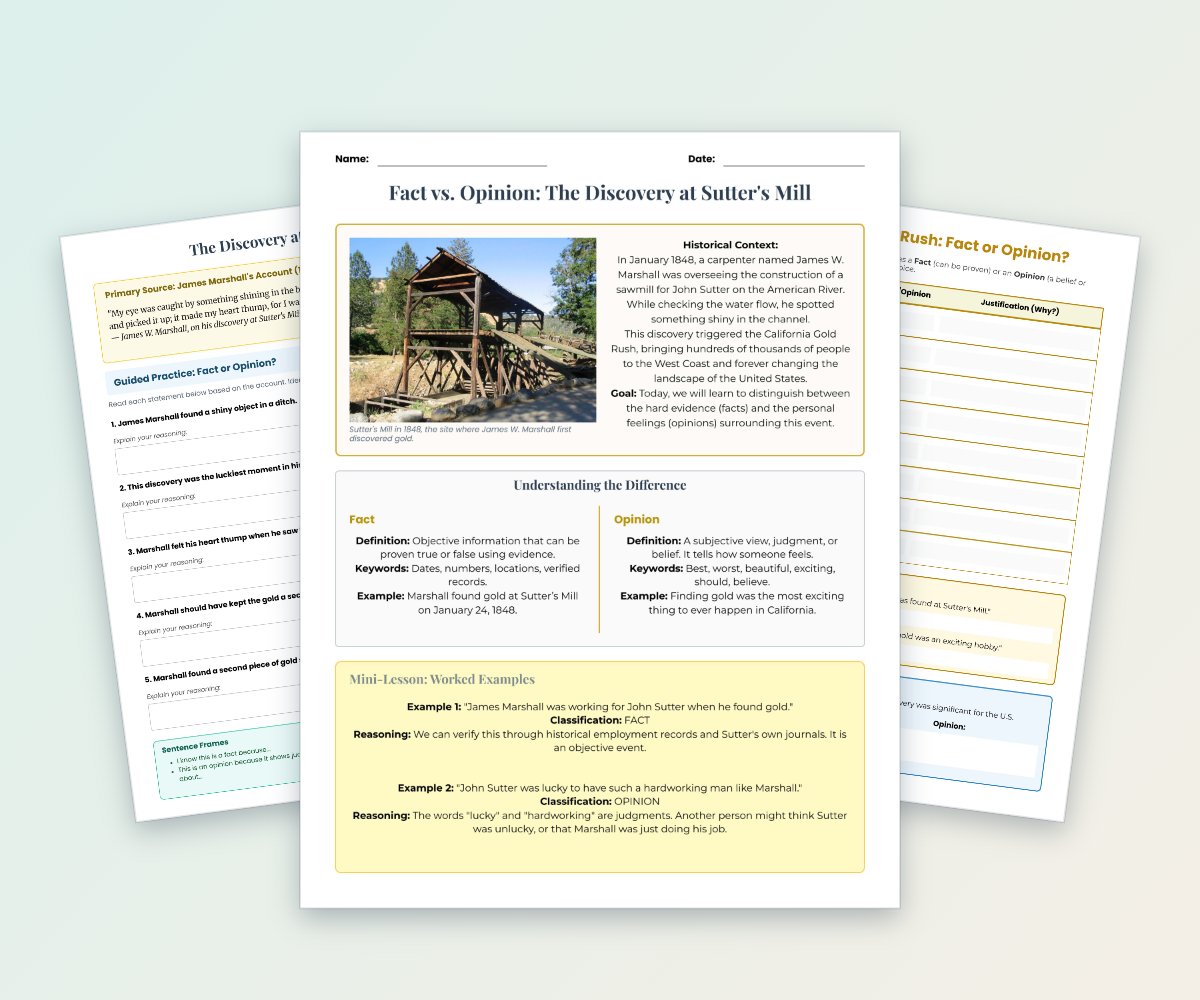
Students examine historical information and a primary-source account of James Marshall's 1848 gold discovery at Sutter's Mill.
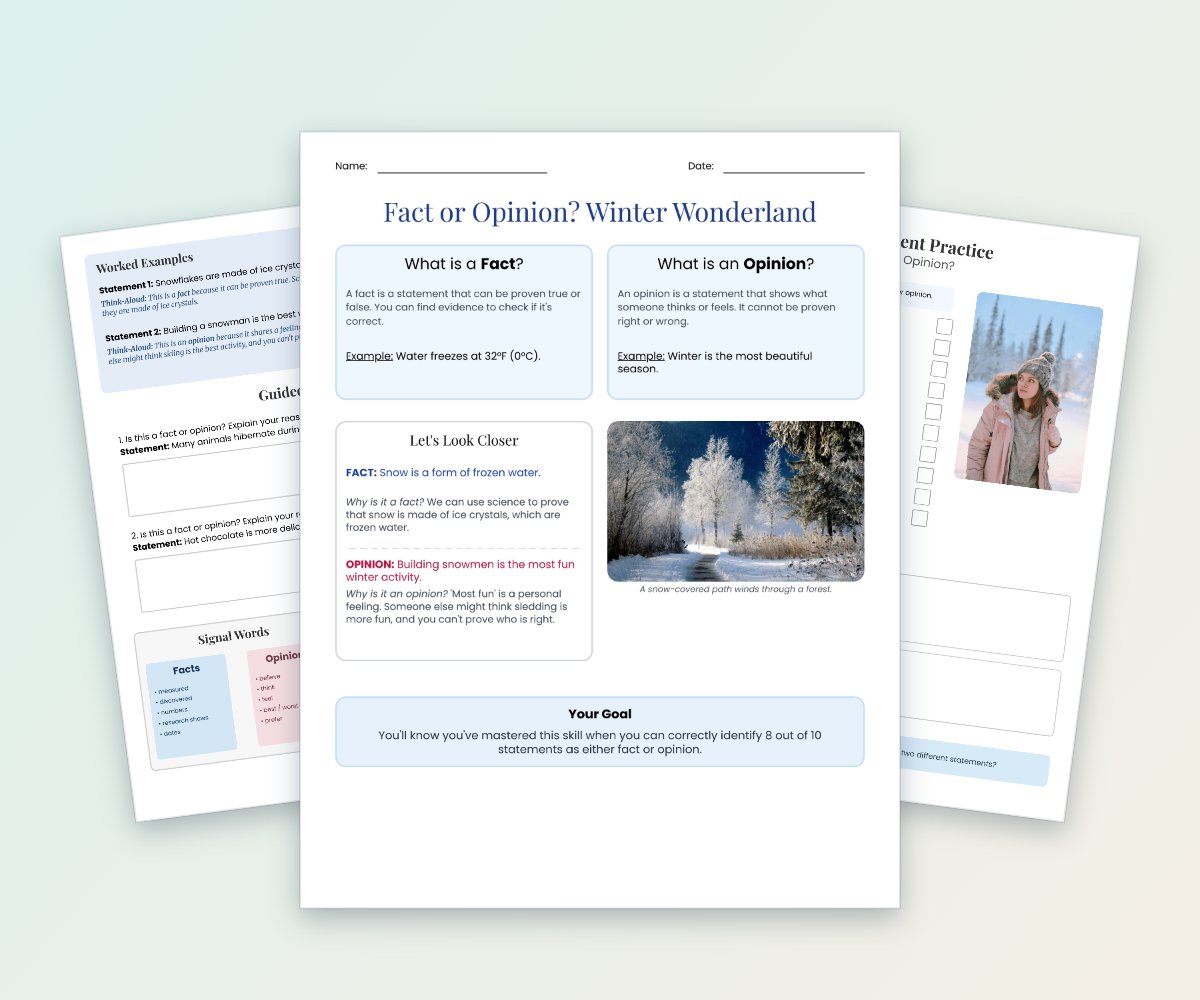
This winter-themed worksheet explains the difference between facts and opinions using clear definitions, worked examples, signal words, and guided practice.
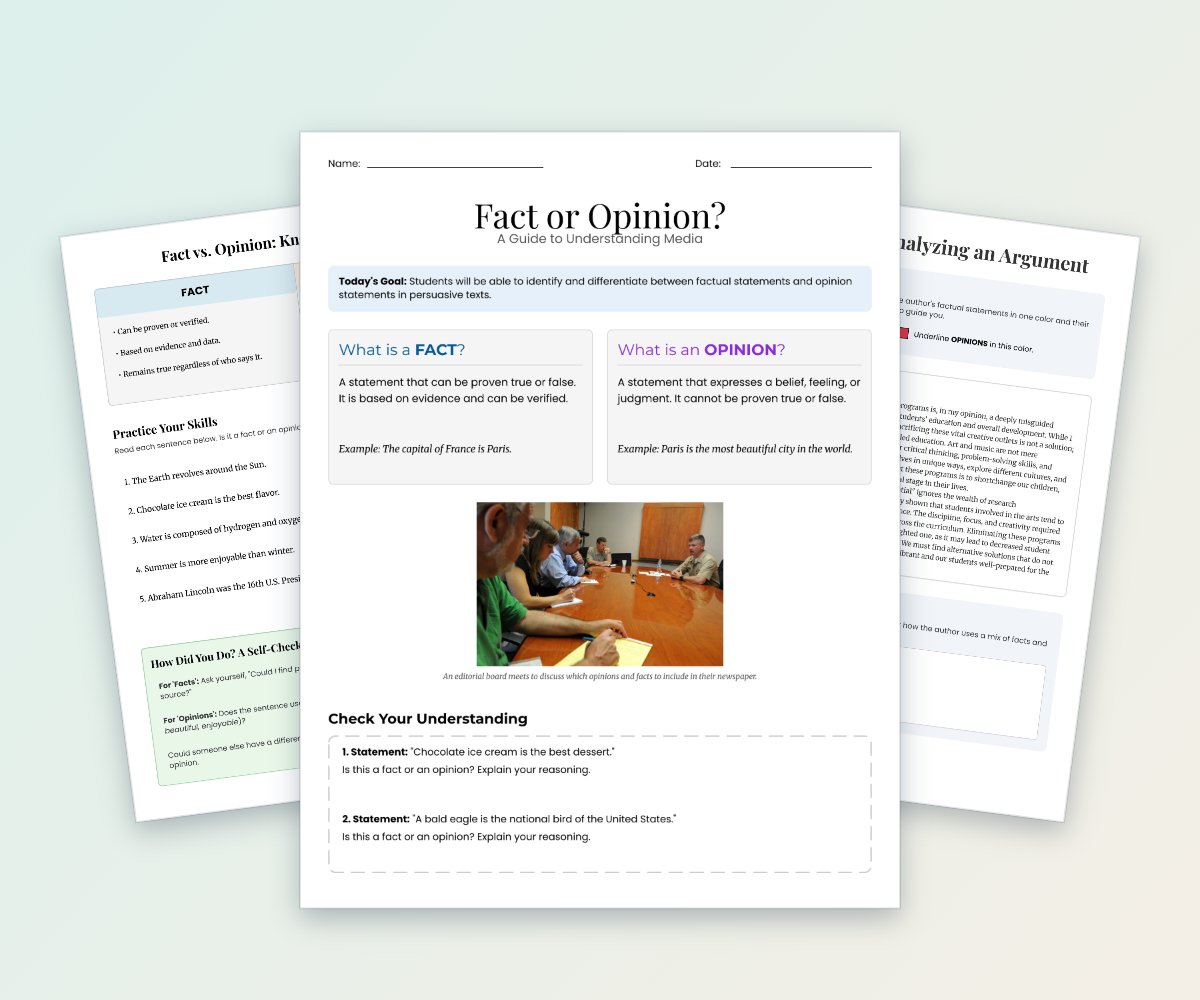
This four-page worksheet teaches students to distinguish factual statements from opinions in persuasive texts and media.
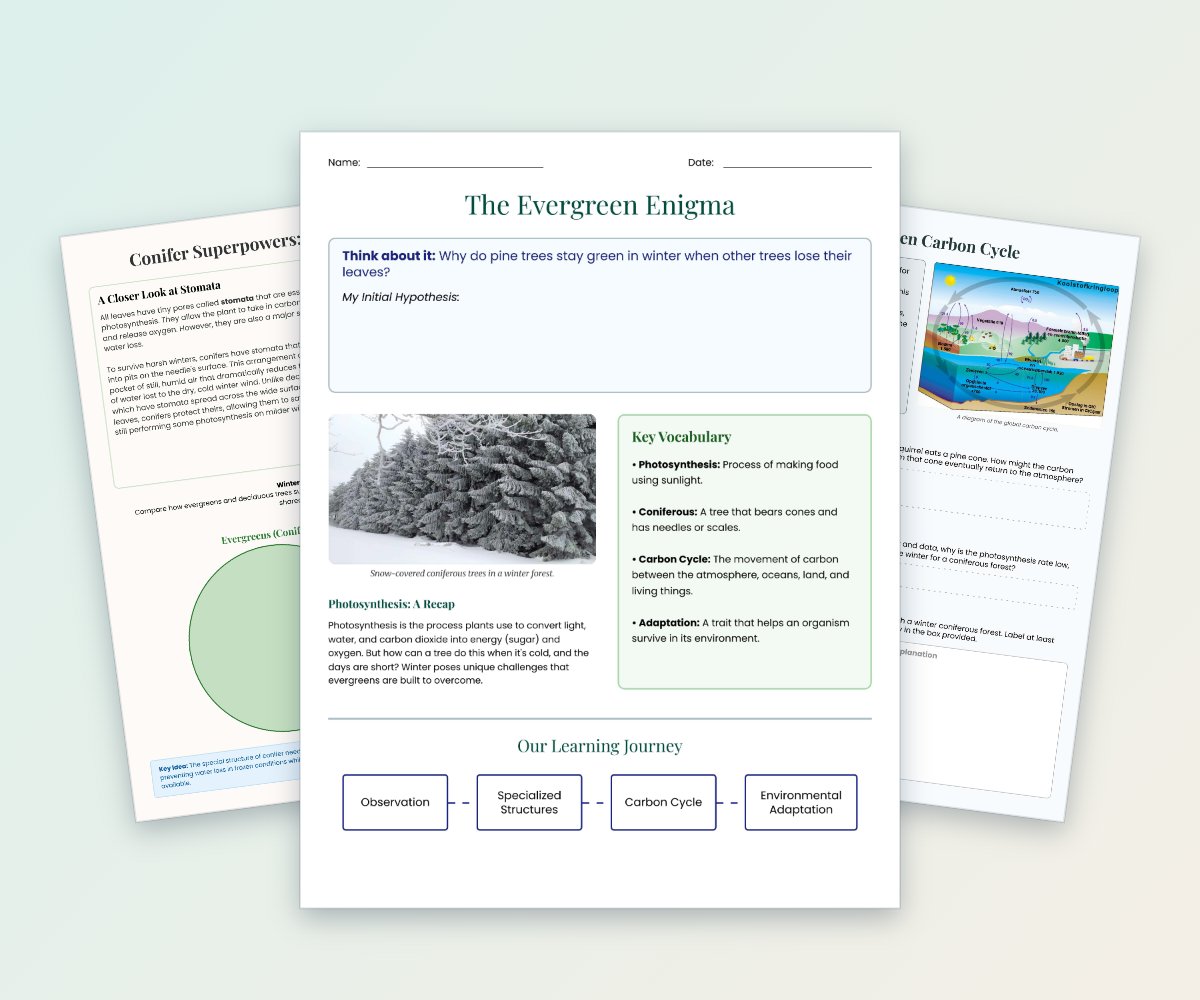
Students investigate how coniferous trees survive winter while continuing photosynthesis.
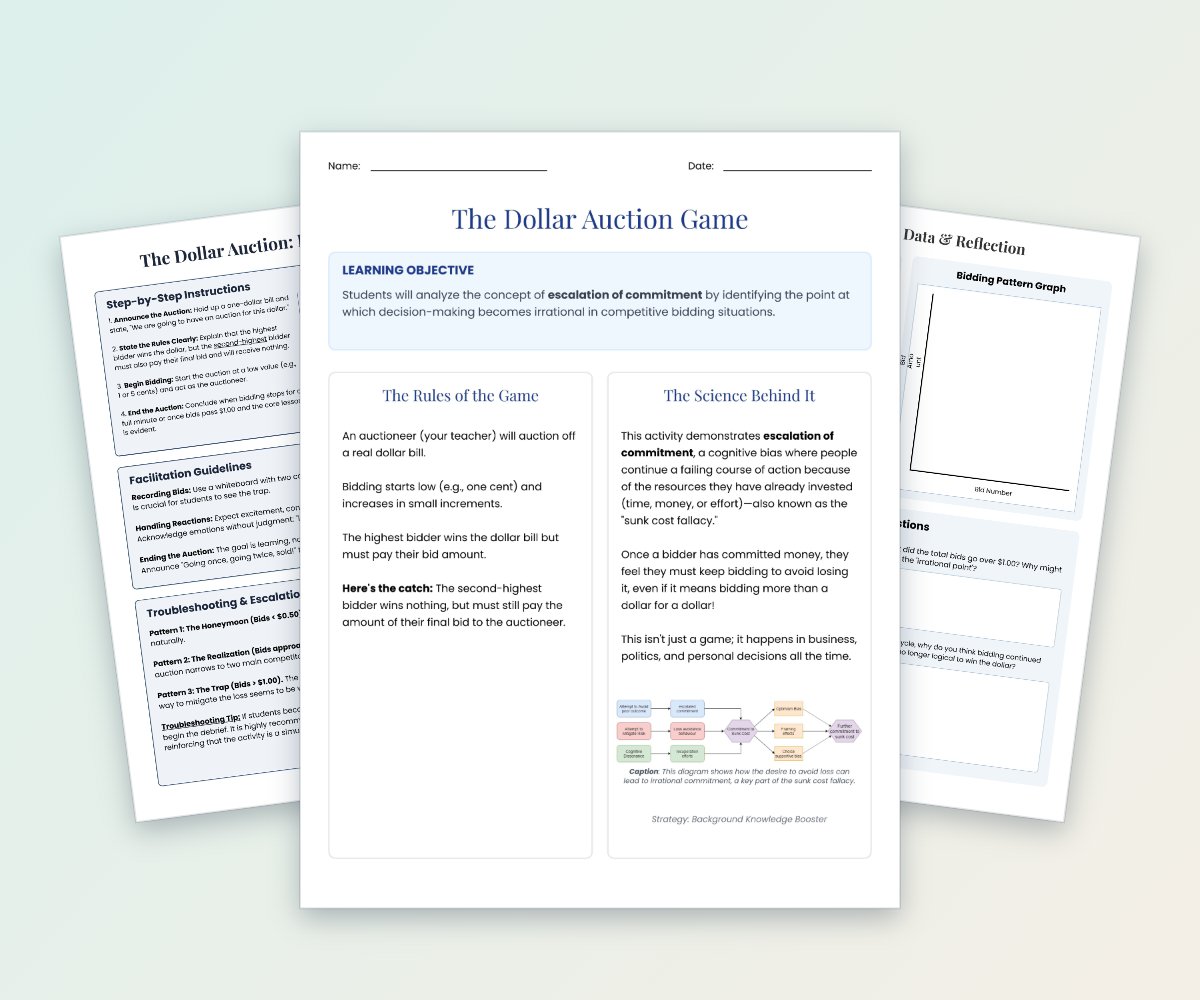
Students participate in a competitive dollar auction designed to reveal escalation of commitment and irrational bidding.
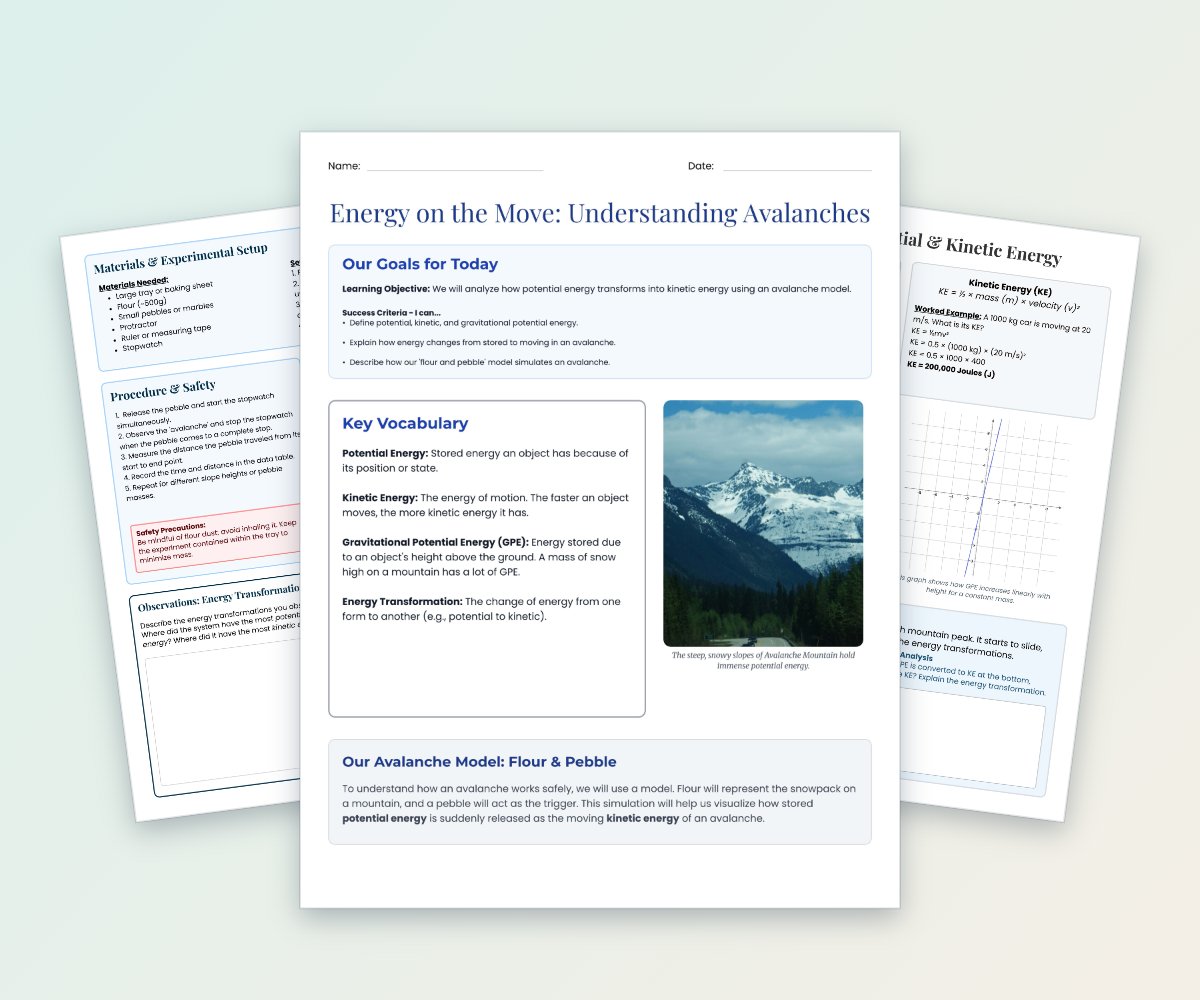
Students model an avalanche using flour and pebbles to investigate how gravitational potential energy transforms into kinetic energy.
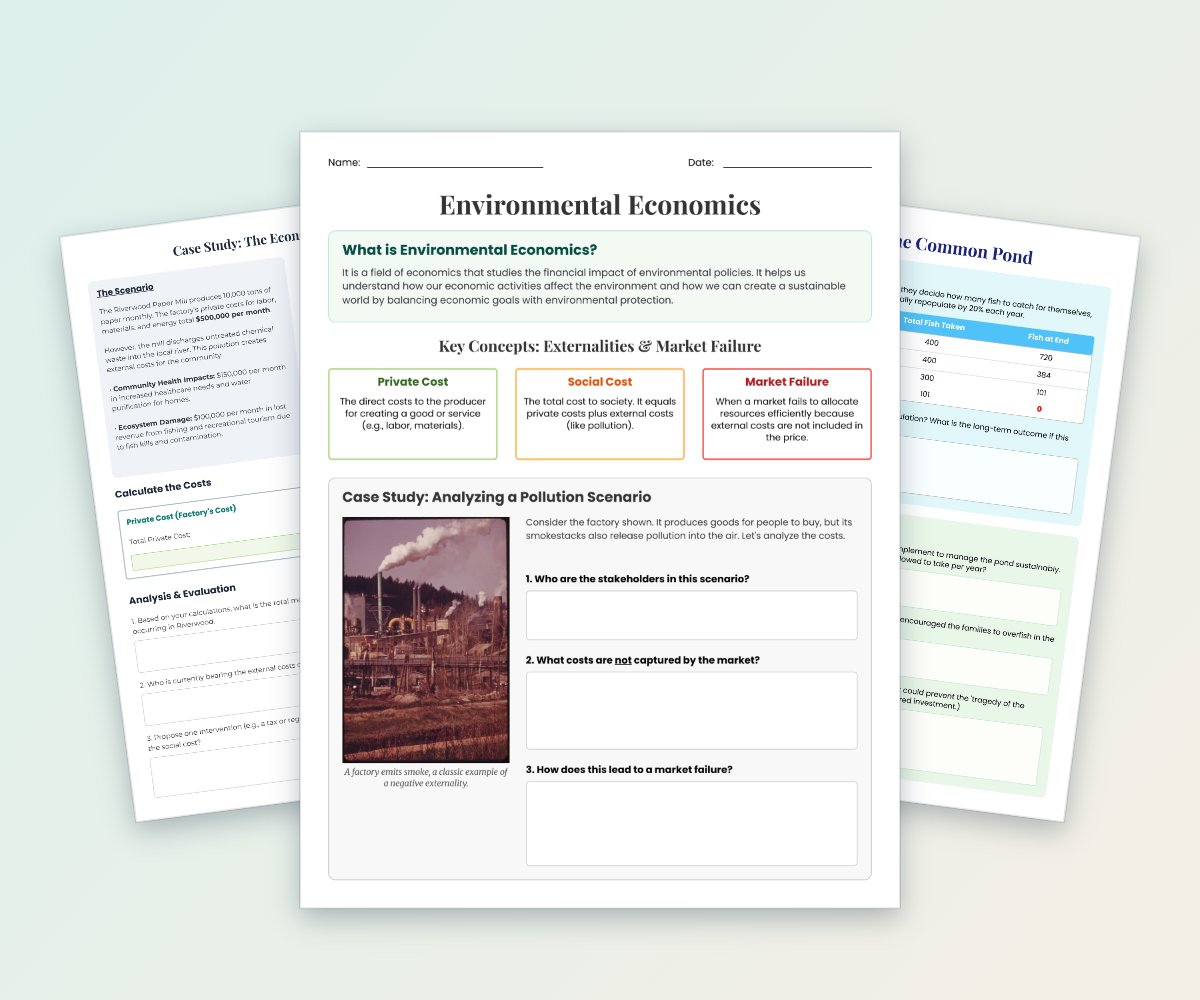
This six-page resource introduces environmental economics through externalities, private and social costs, market failure, and pollution.
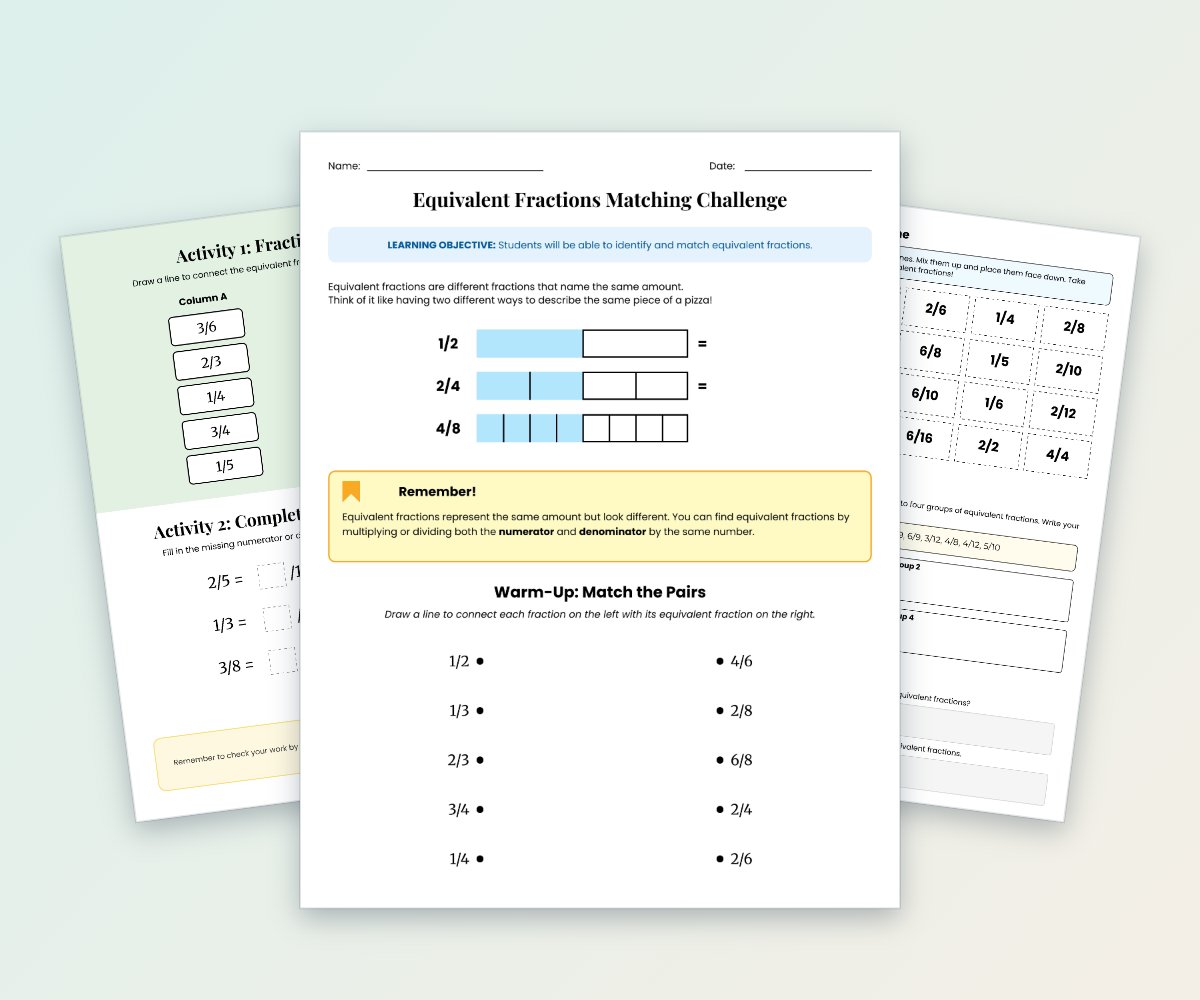
This four-page printable activity pack helps students identify, match, and complete equivalent fractions.
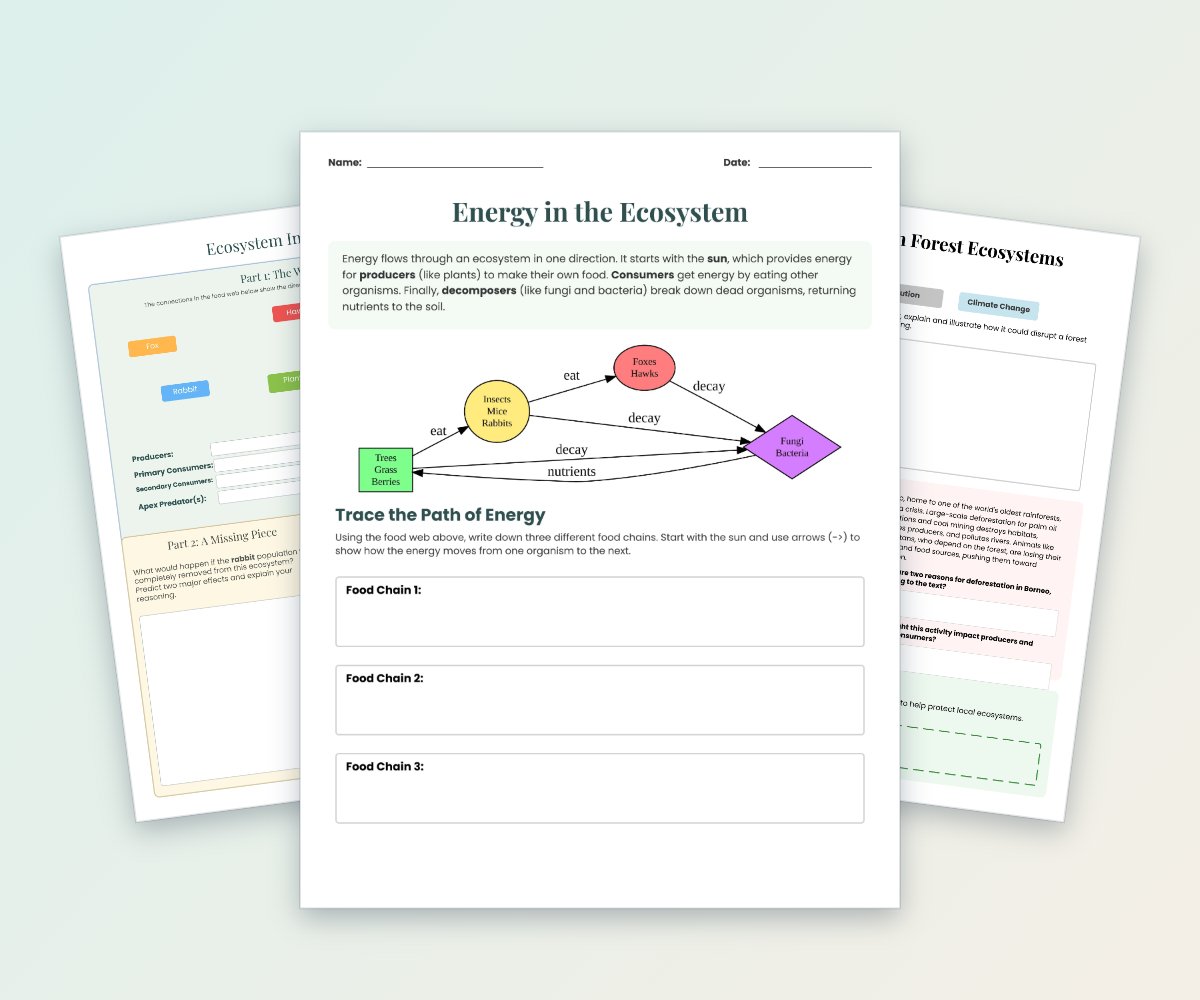
Students explore how energy moves through ecosystems by tracing food chains, identifying trophic roles, and analyzing food-web changes.
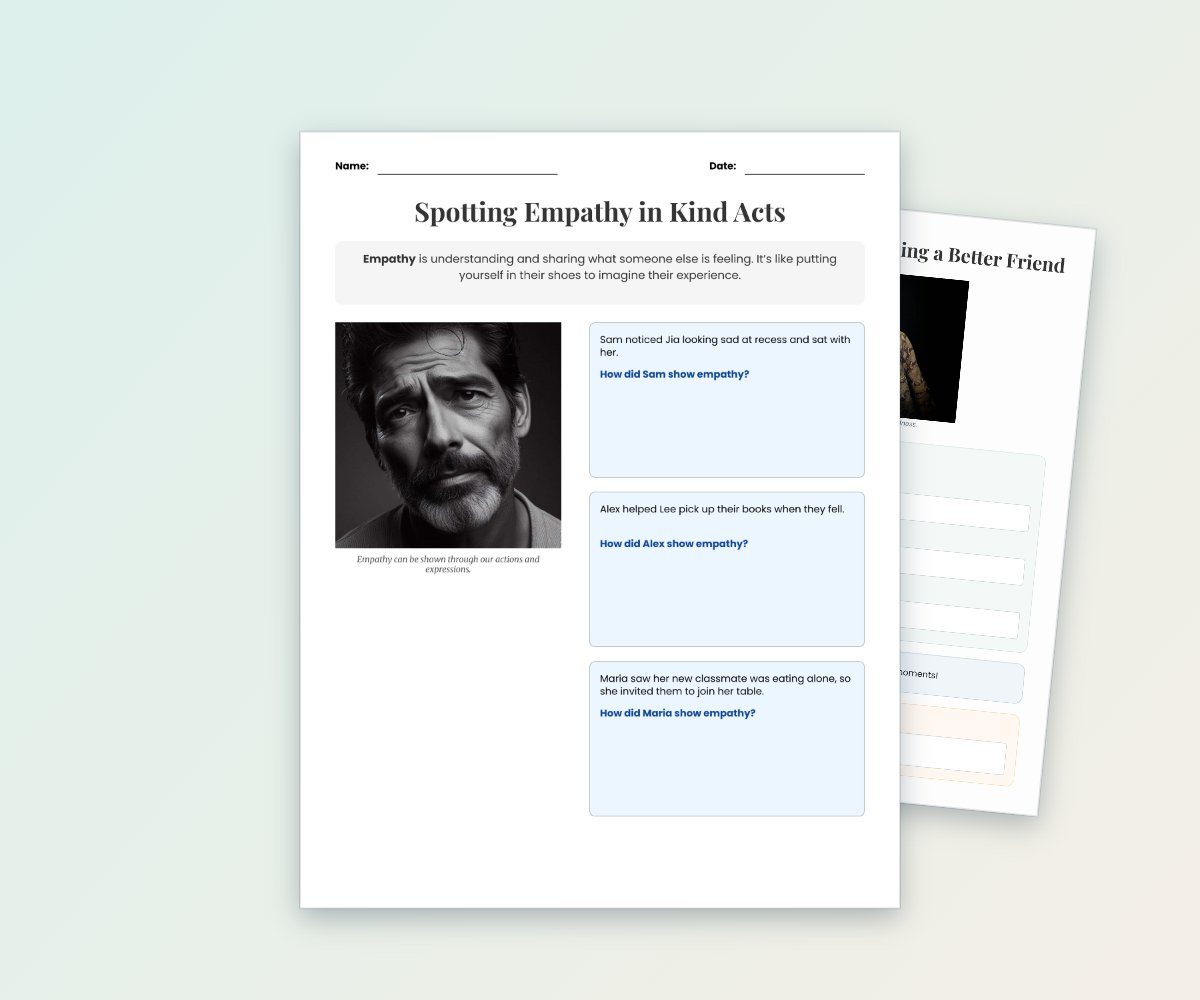
Students explore empathy by analyzing everyday acts of kindness and explaining how people show understanding of others’ feelings.
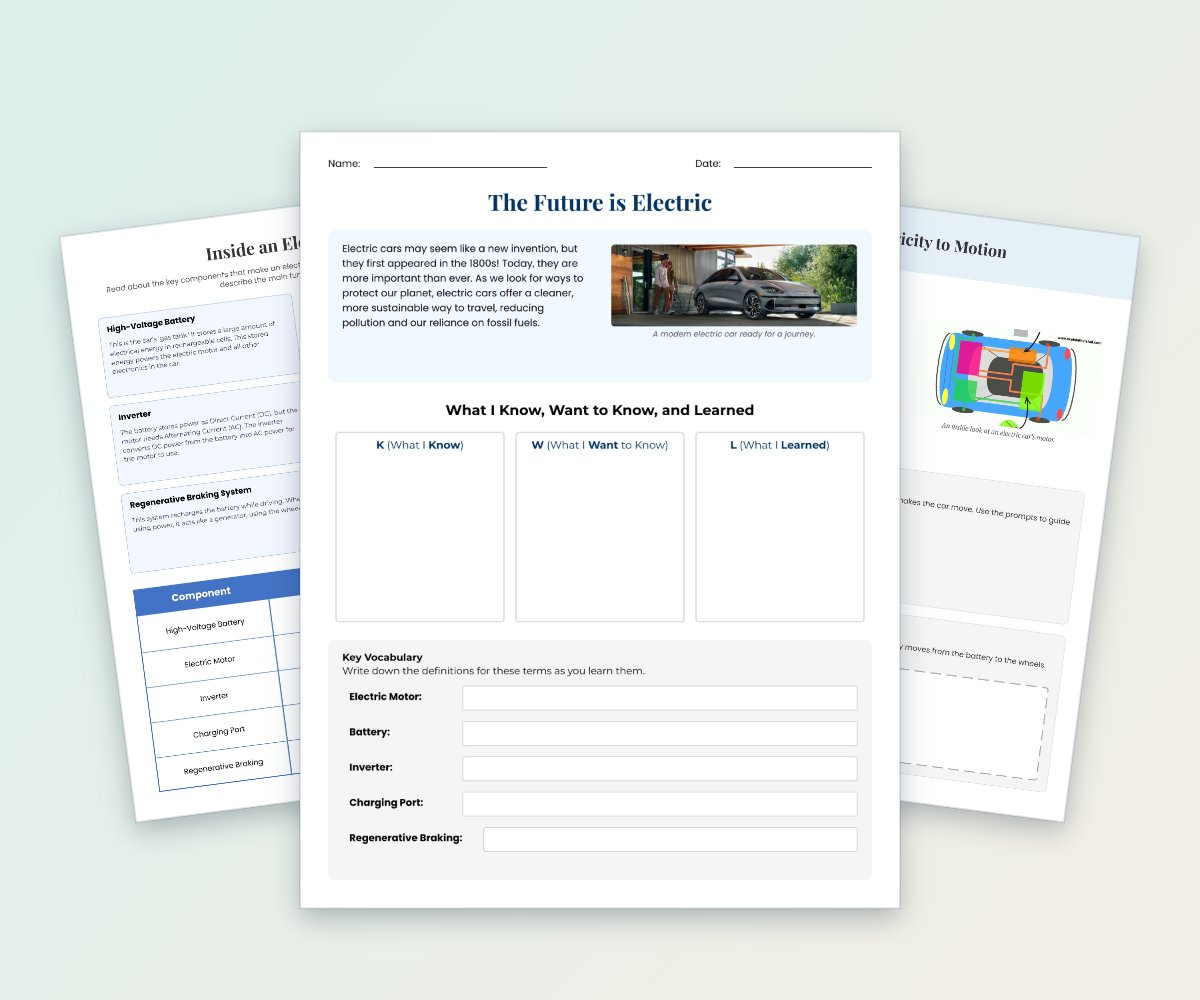
Students learn how electric cars work, including the roles of batteries, inverters, motors, charging ports, and regenerative braking.
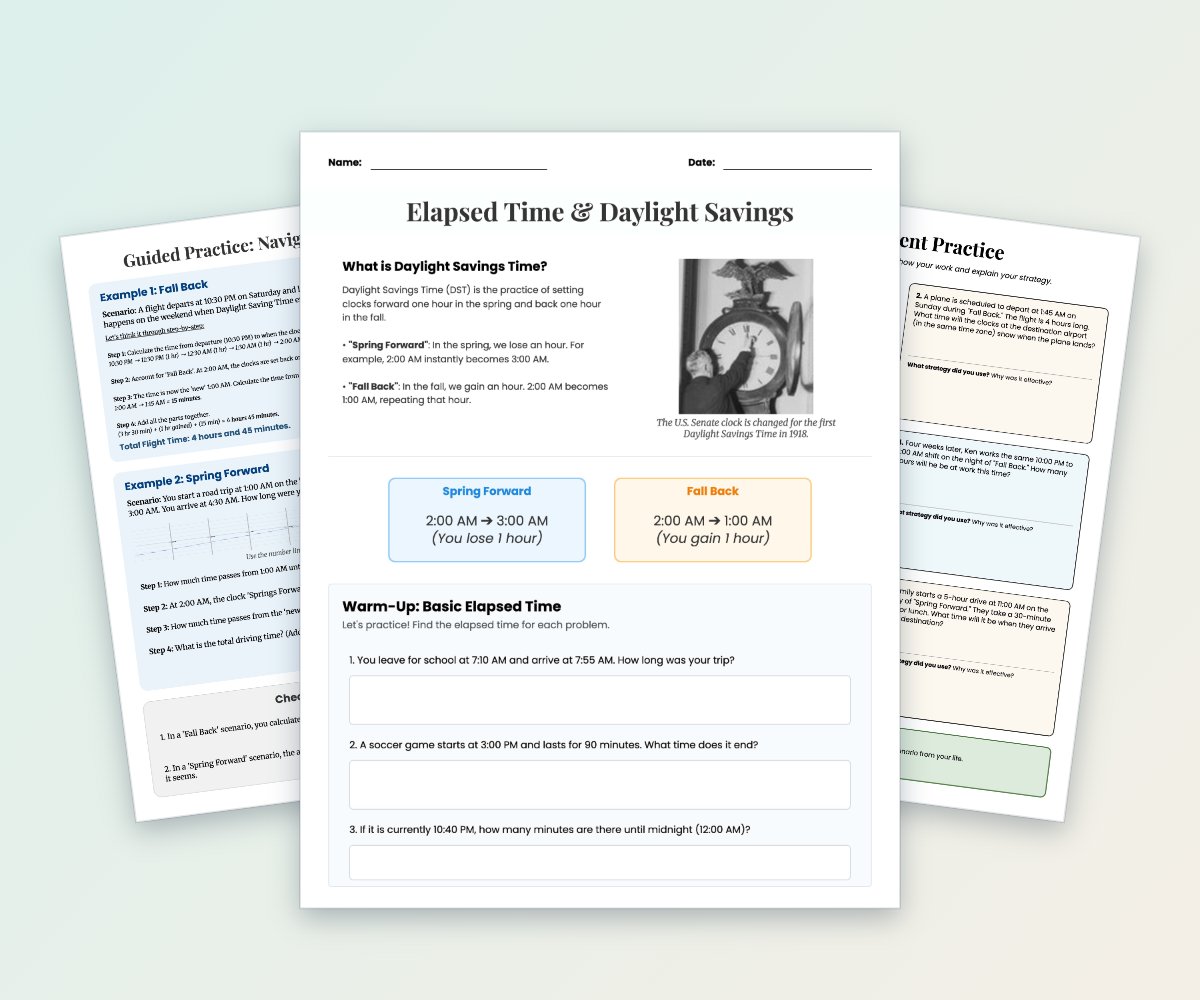
This four-page worksheet introduces daylight-saving time and connects clock changes to elapsed-time problem solving.
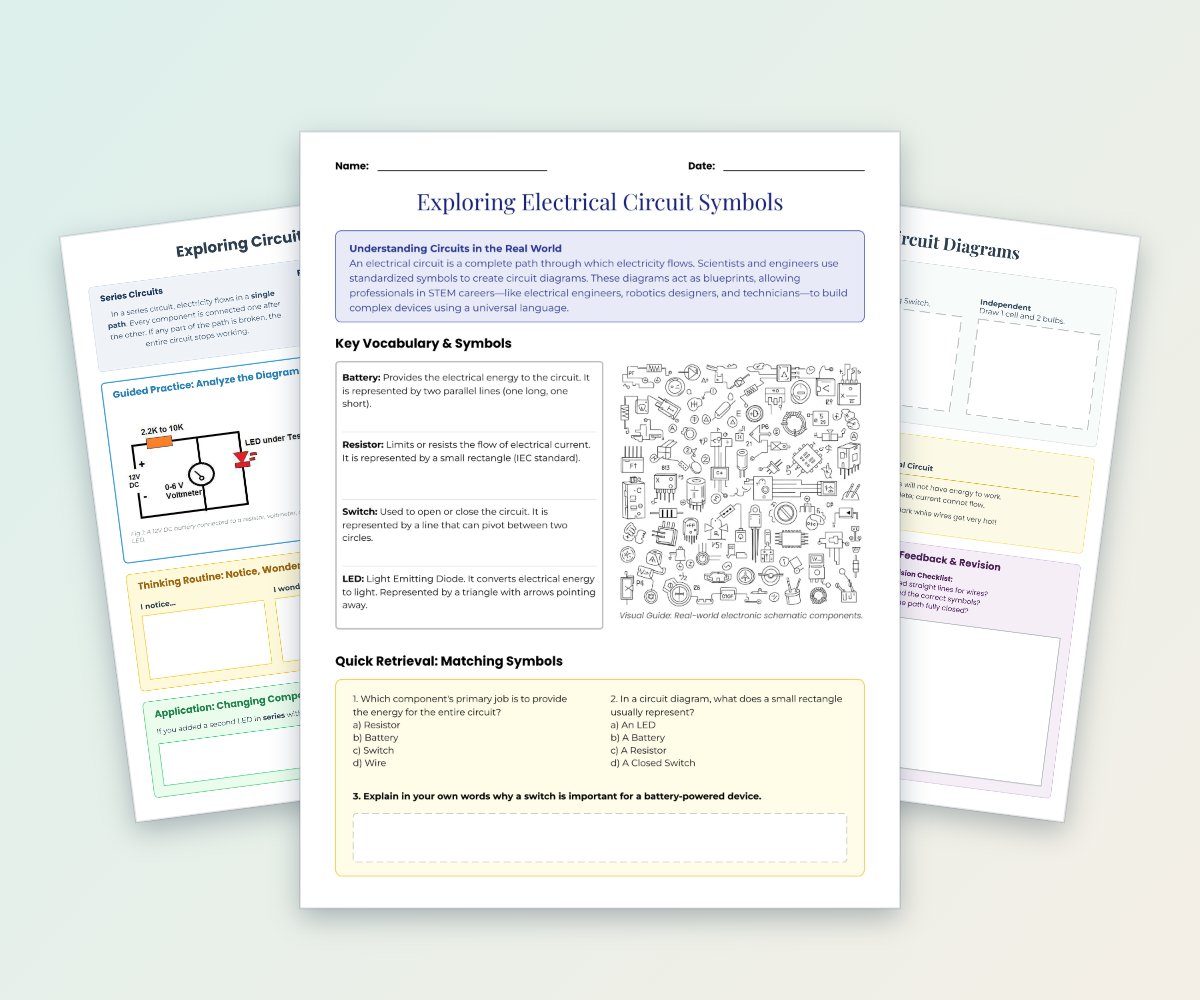
Students learn common electrical circuit symbols and the functions of batteries, resistors, switches, LEDs, and wires.
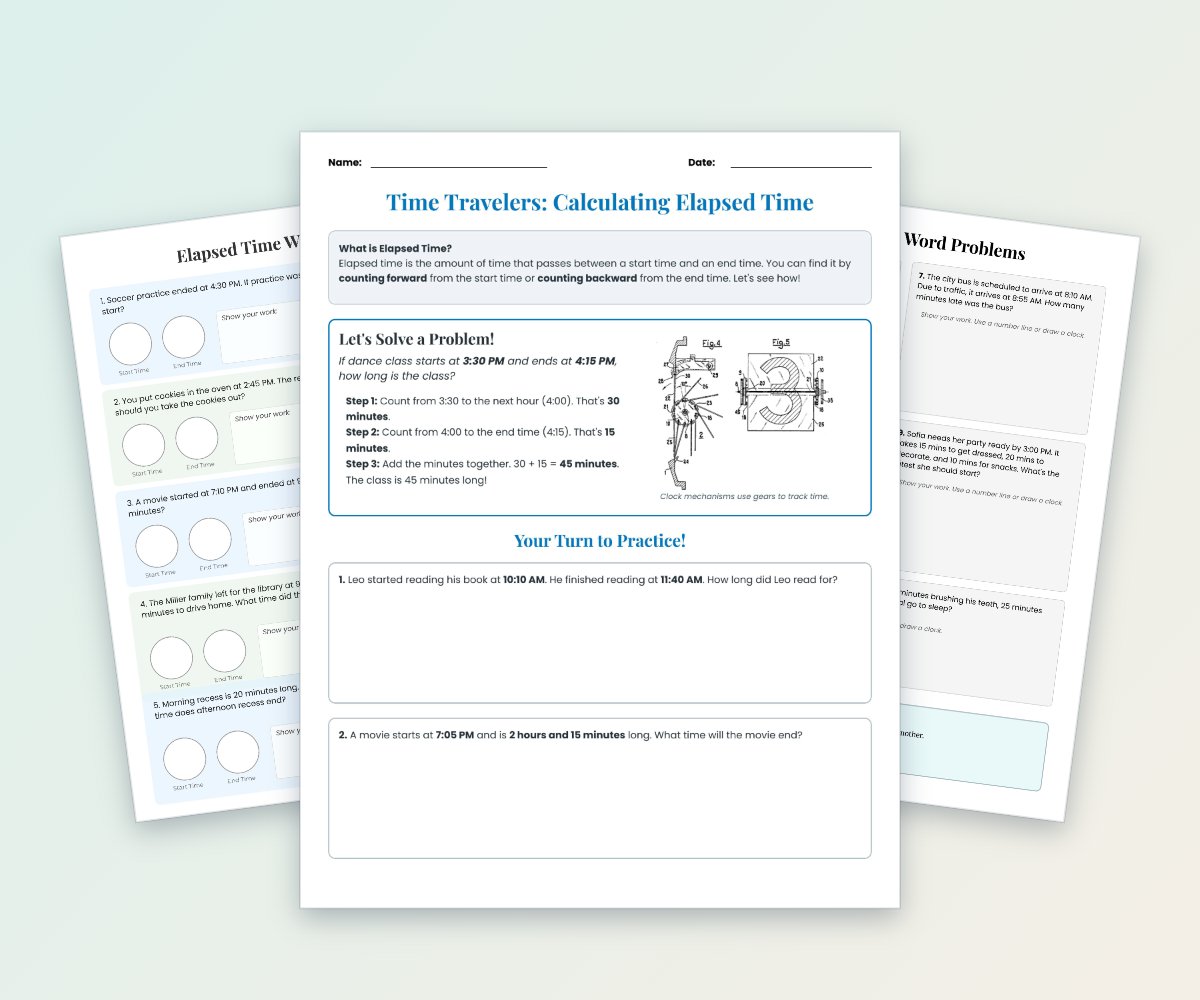
This four-page worksheet introduces elapsed time through a worked example and guided practice.
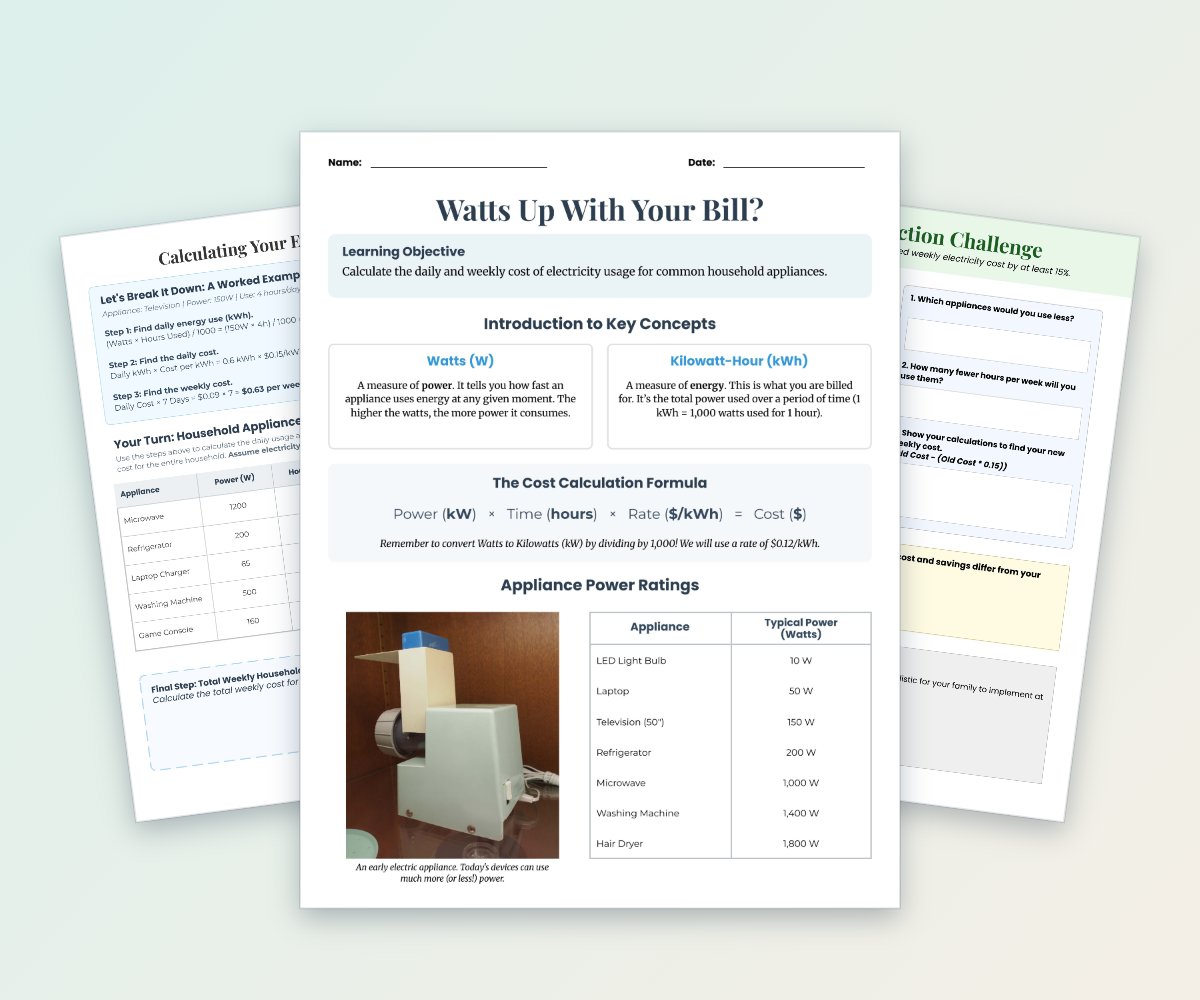
Students learn about watts, kilowatt-hours, electricity rates, and calculating appliance energy costs.
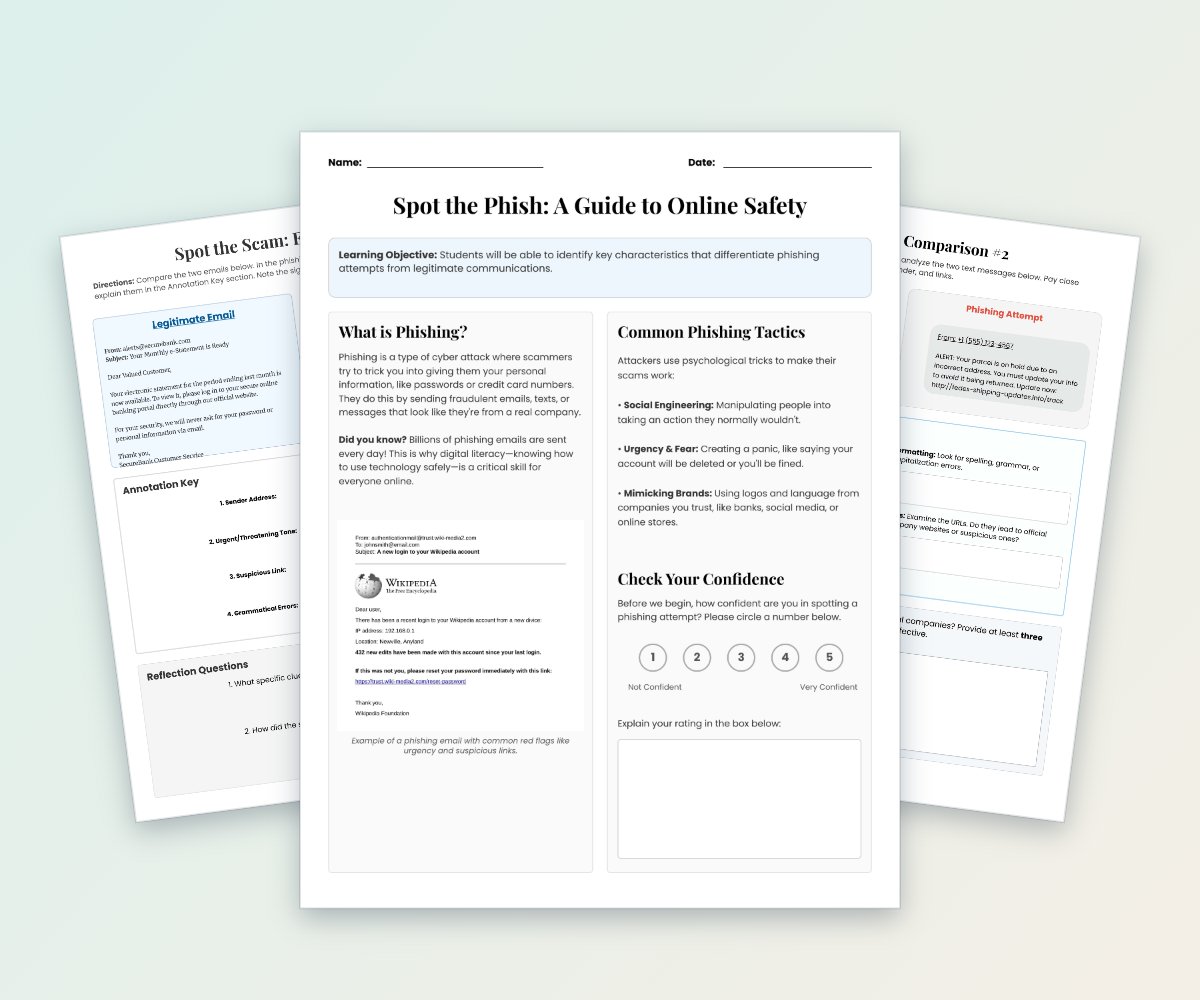
Students learn to recognize phishing tactics, including urgency, suspicious links, impersonation, and requests for personal information.
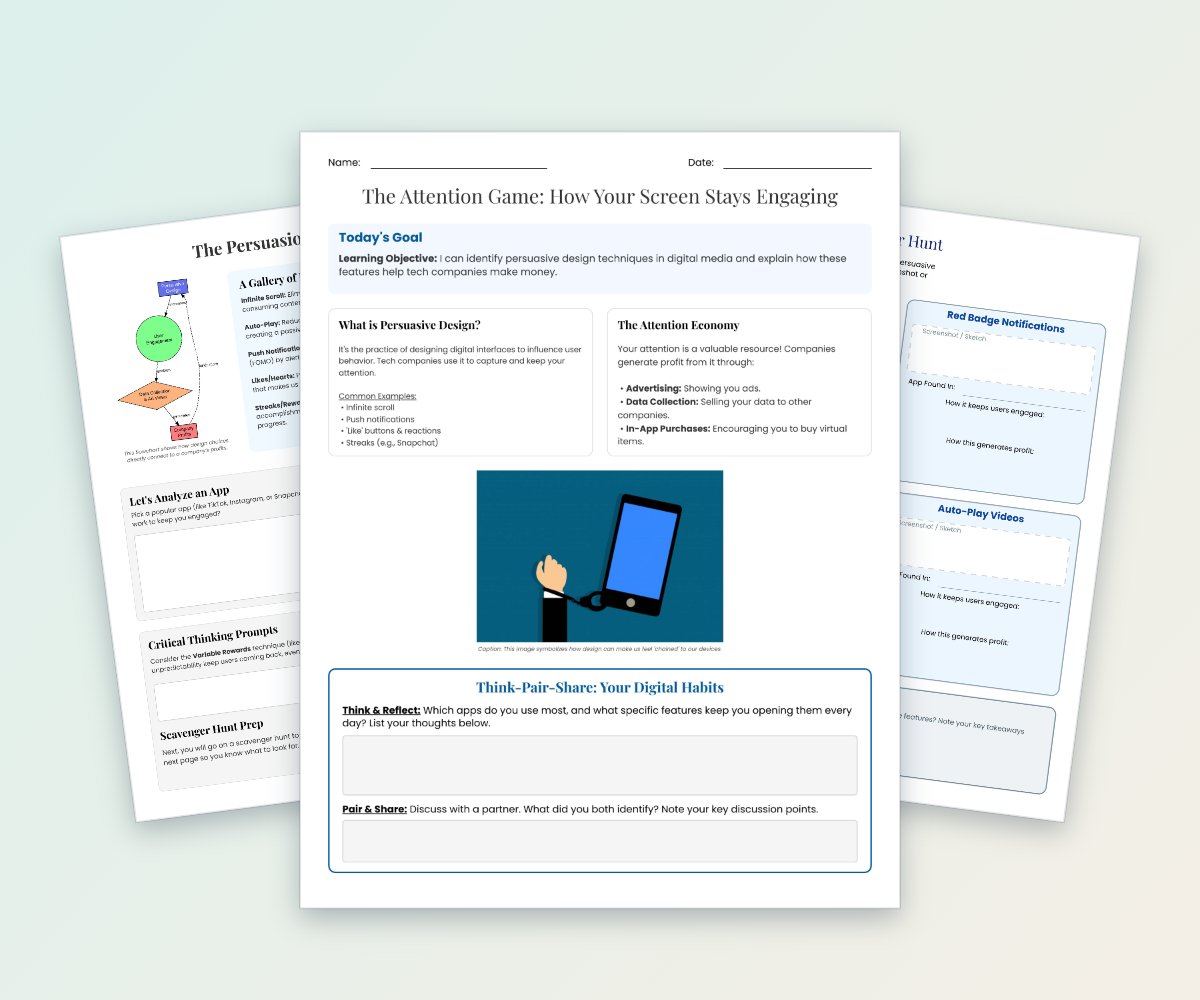
Students examine how digital features such as infinite scroll, notifications, autoplay, likes, and streaks influence user behavior.
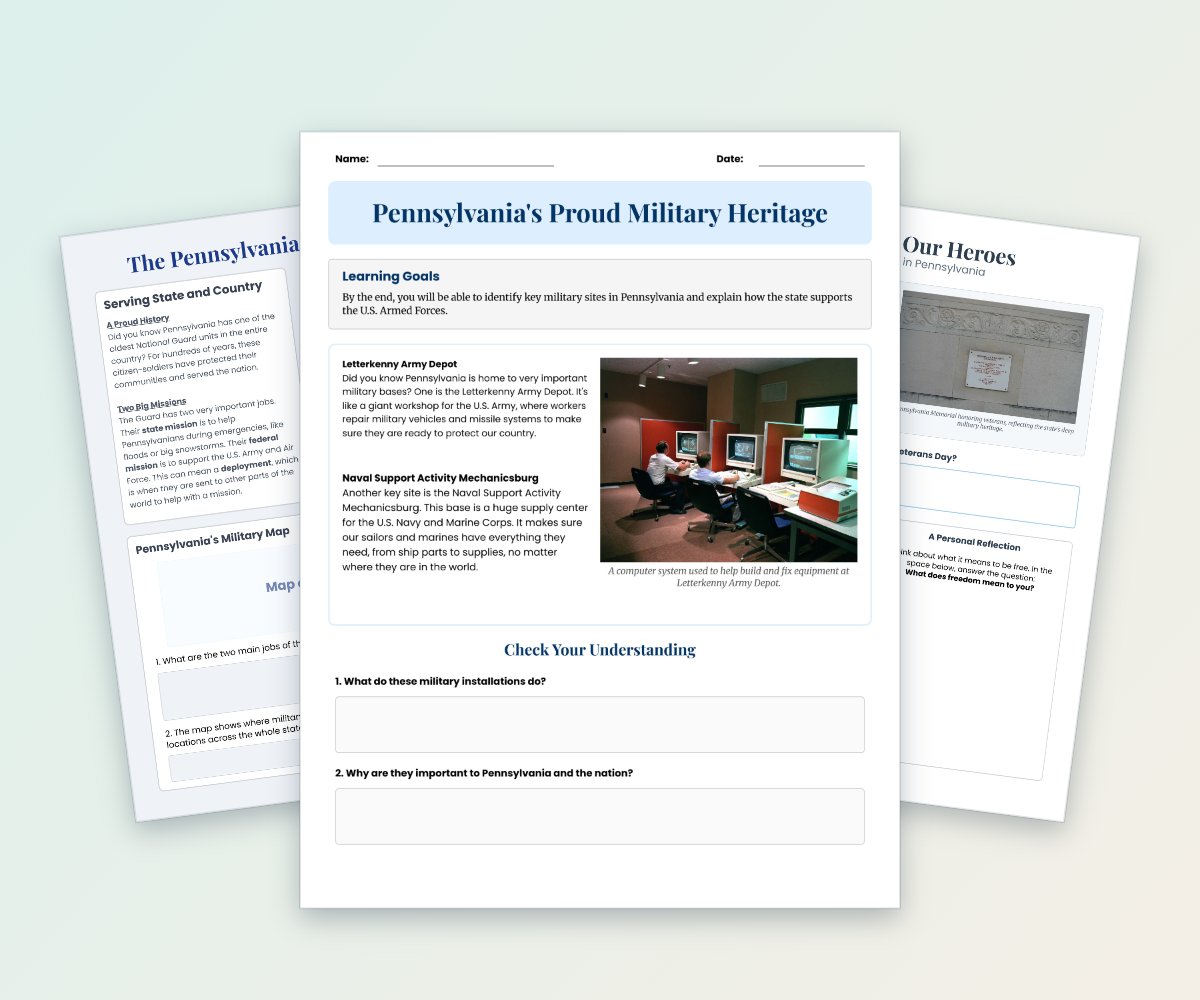
Students learn about Pennsylvania military installations, the Pennsylvania National Guard, and Veterans Day traditions.
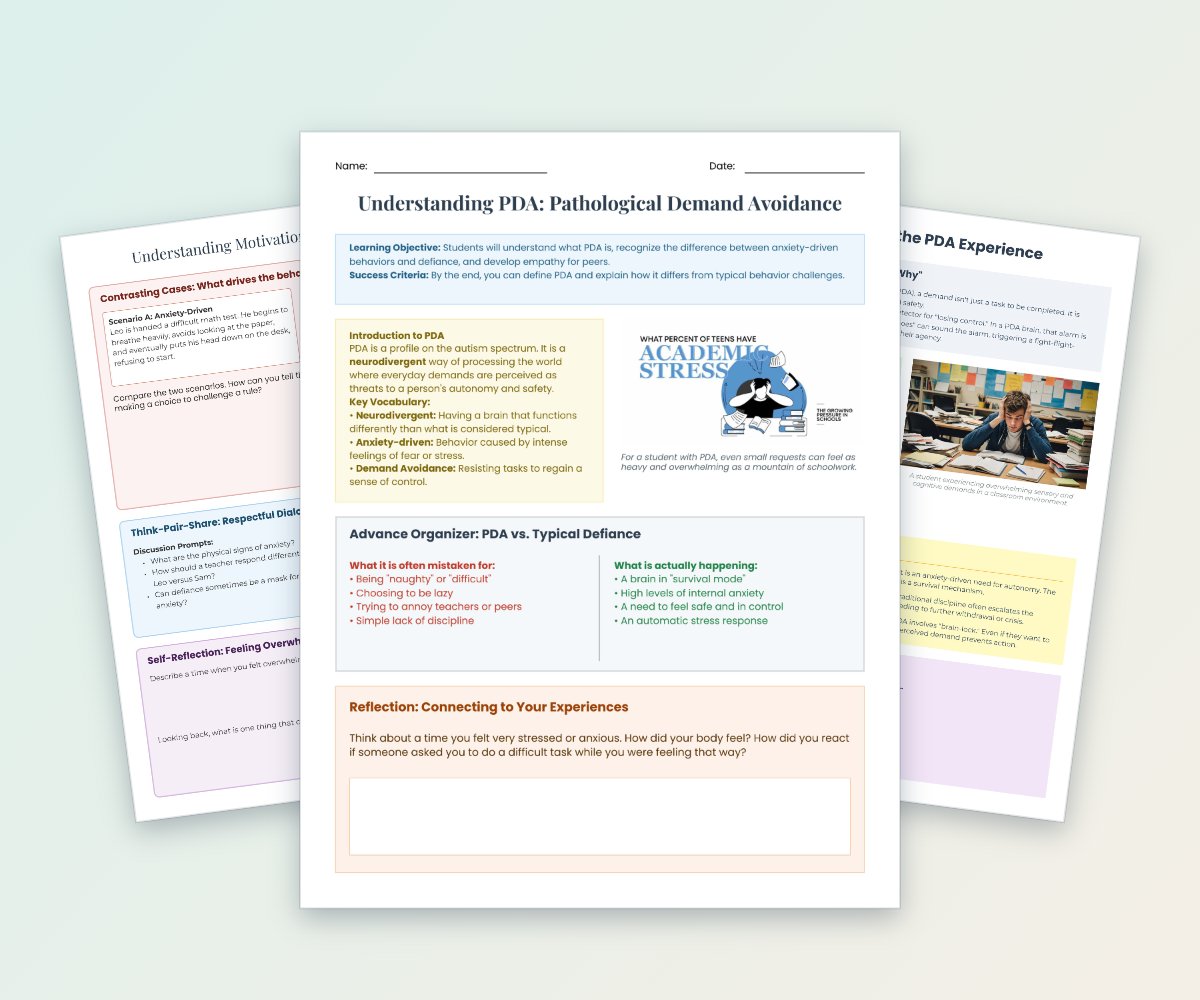
This five-page guide introduces Pathological Demand Avoidance (PDA), anxiety-driven behavior, and the difference between demand avoidance and deliberate defiance.
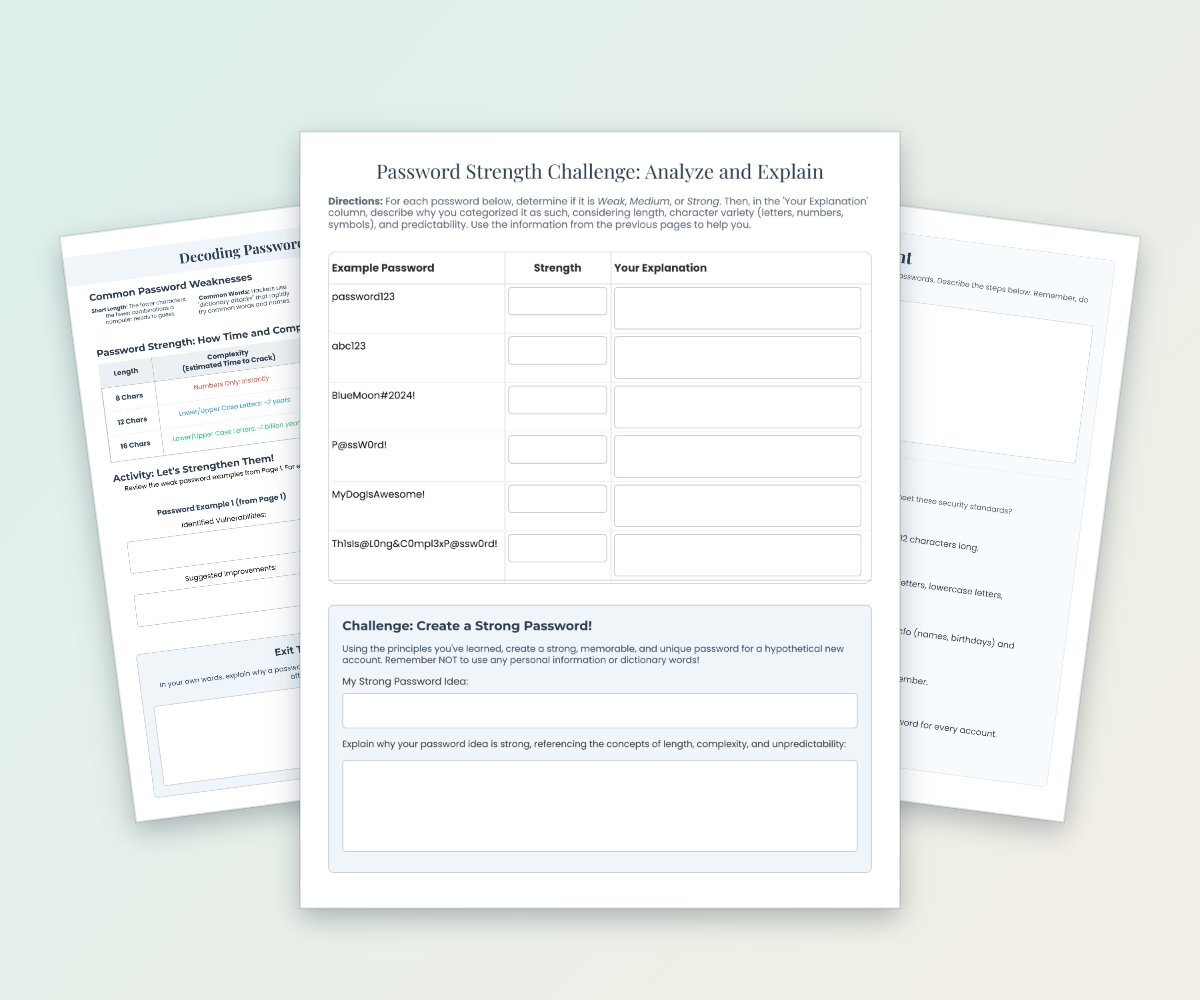
This four-page worksheet helps students analyze password strength, identify common vulnerabilities, and explain how length, complexity, and unpredictability improve security.
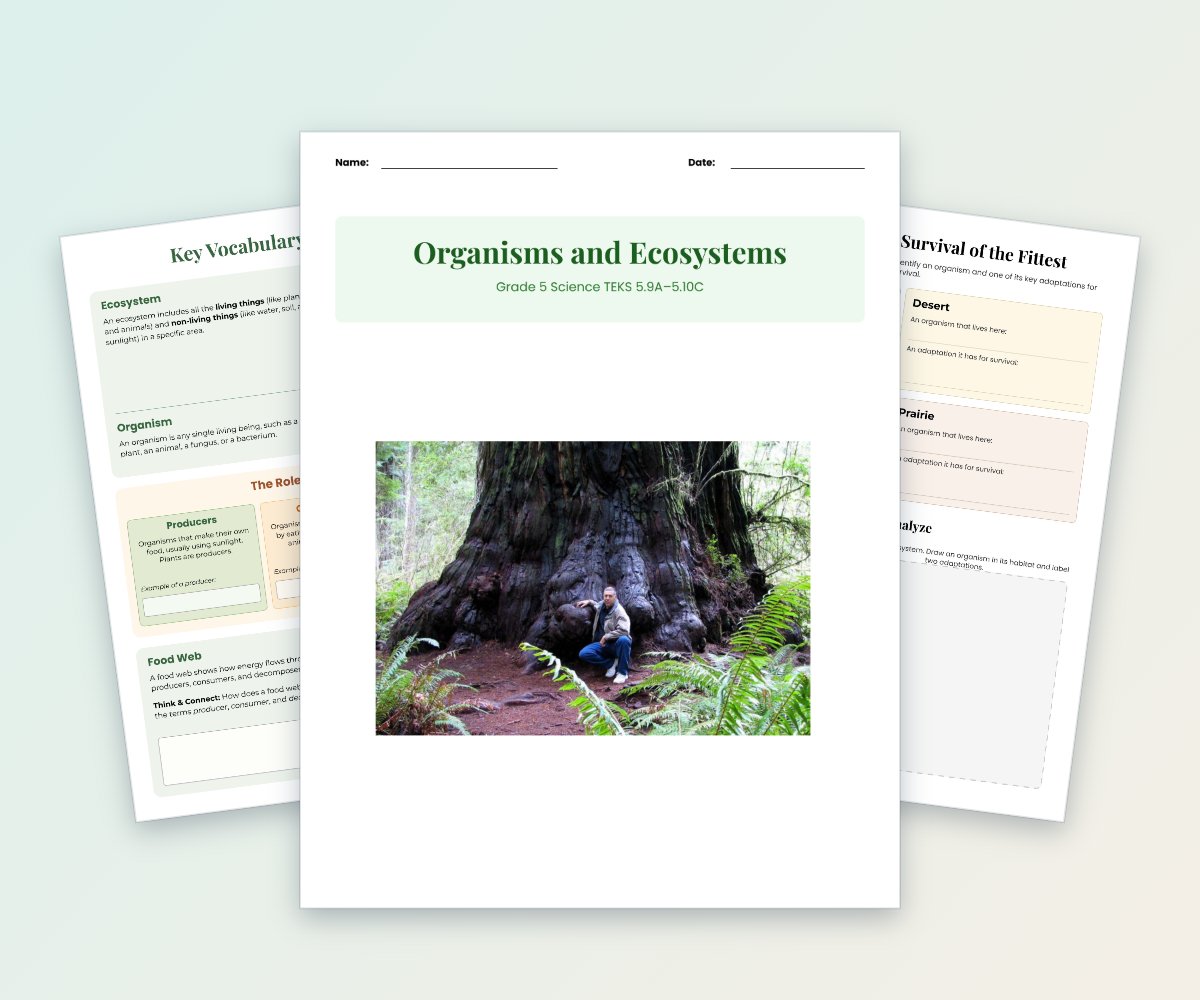
This 13-page Grade 5 science activity pack explores ecosystems, organisms, producers, consumers, decomposers, food webs, energy flow, and adaptations.
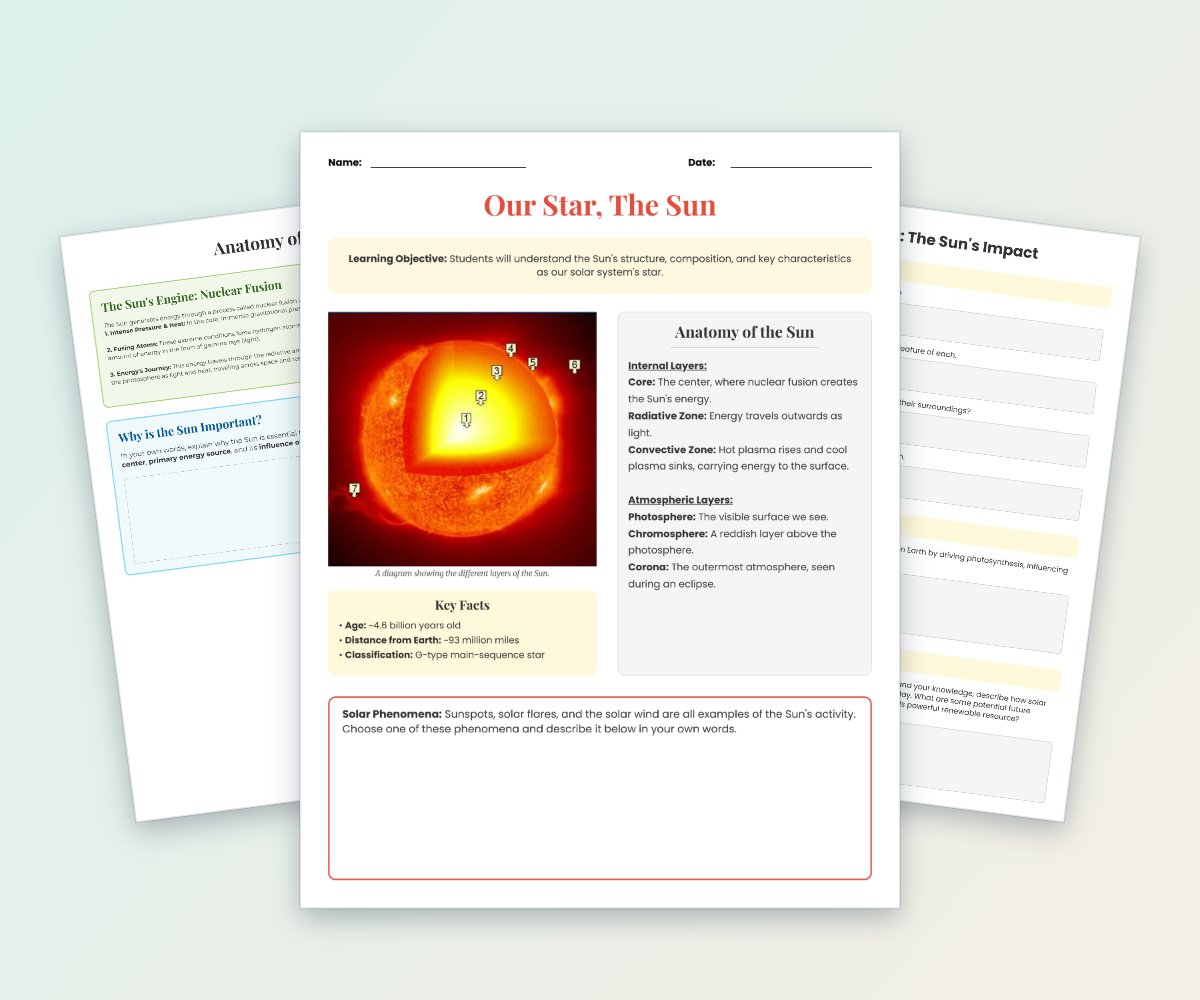
This three-page science resource introduces the Sun's layers, composition, nuclear fusion, solar phenomena, and importance to Earth.
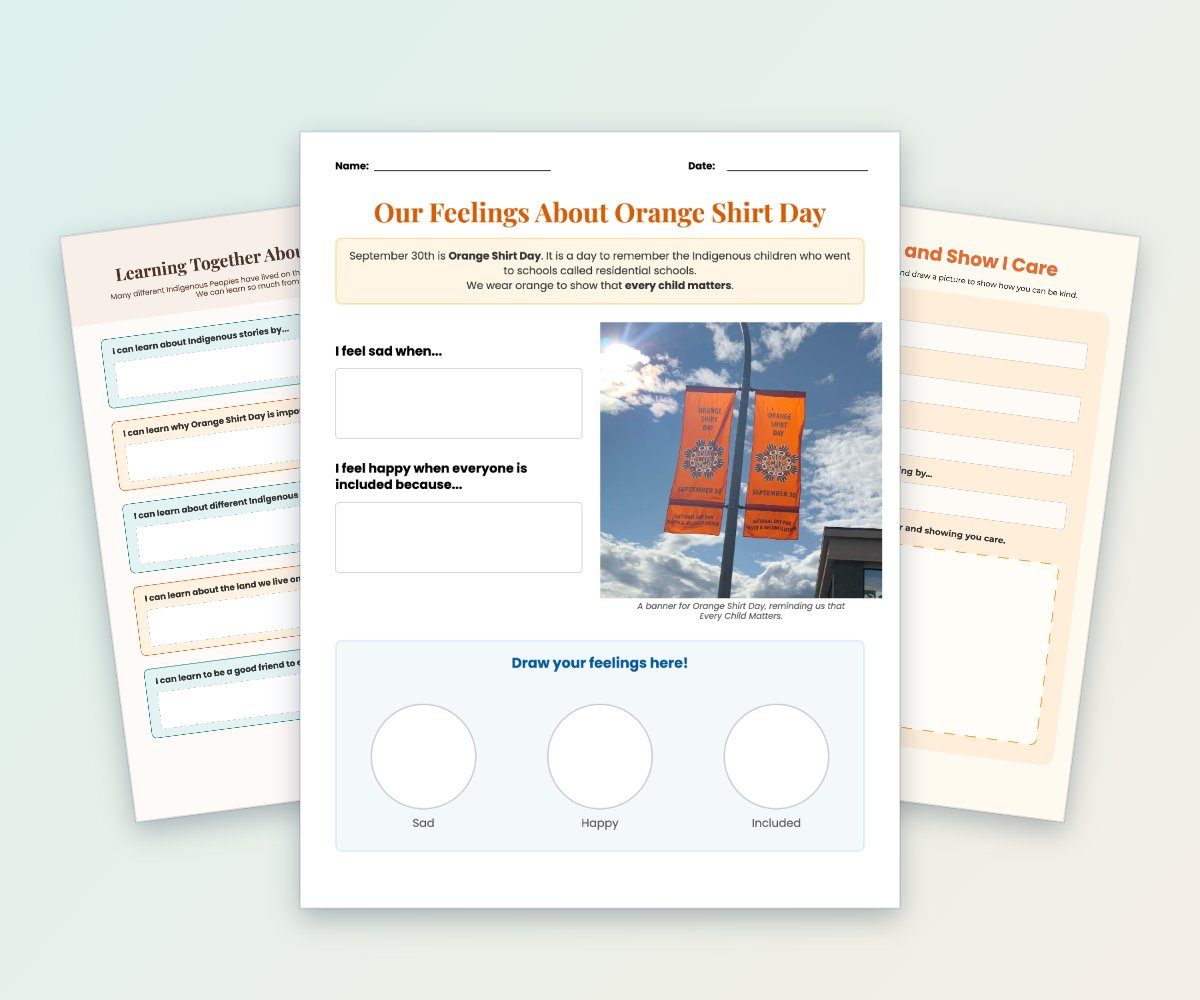
This three-page worksheet introduces Orange Shirt Day, residential schools, and the importance of Every Child Matters.
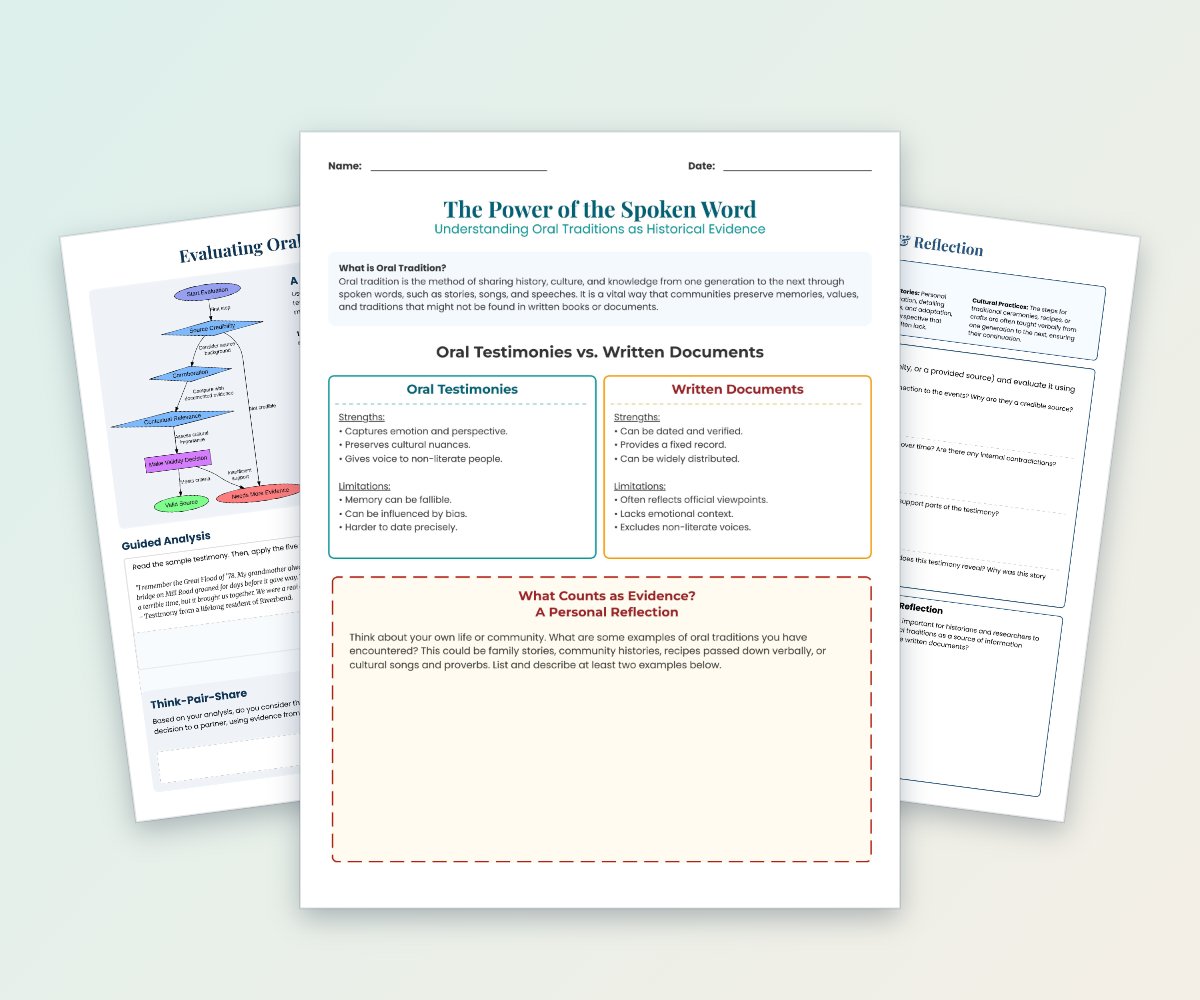
This three-page worksheet introduces oral traditions and compares oral testimonies with written documents.
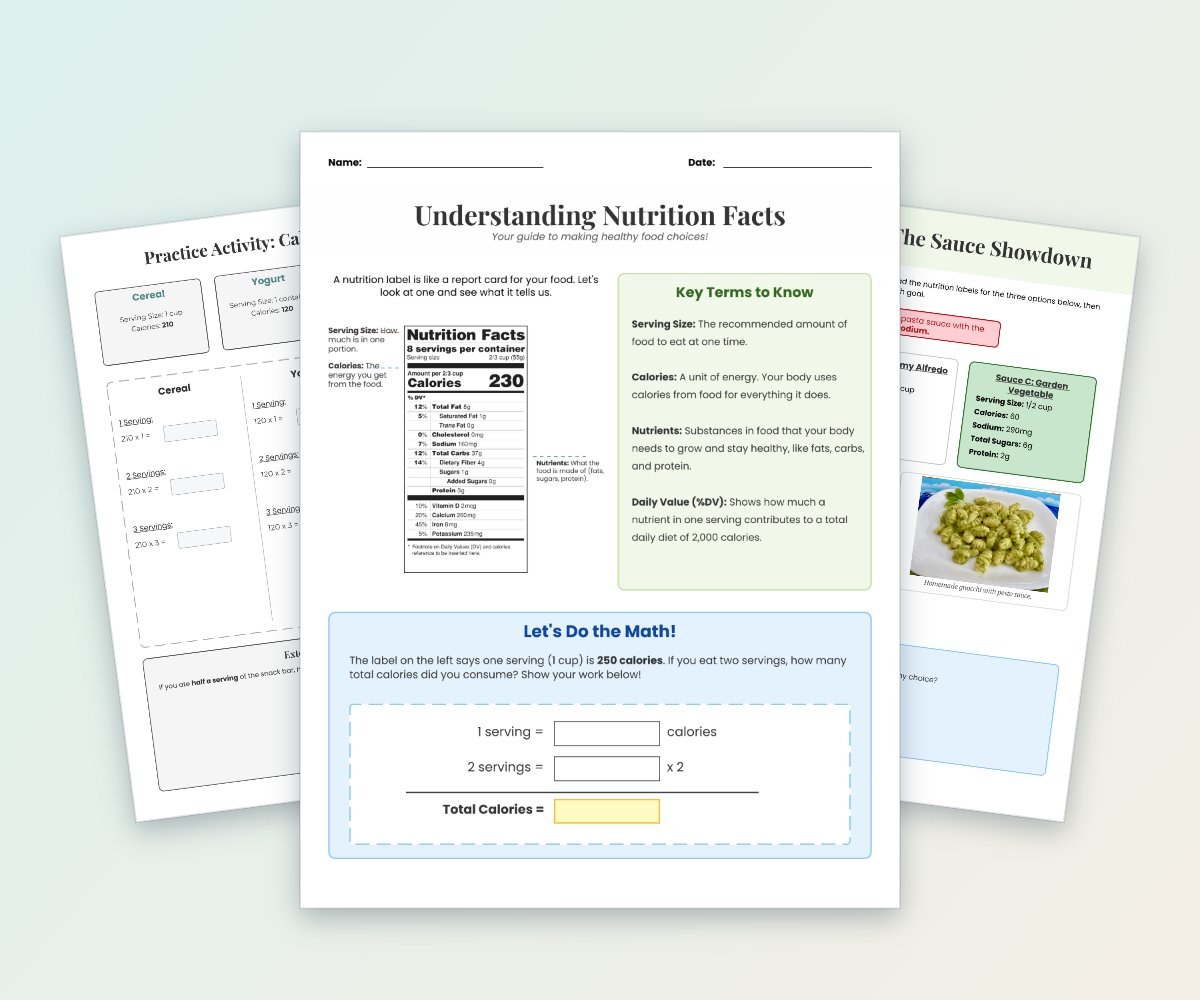
Students learn to interpret serving sizes, calories, nutrients, and Daily Values using a sample Nutrition Facts label.
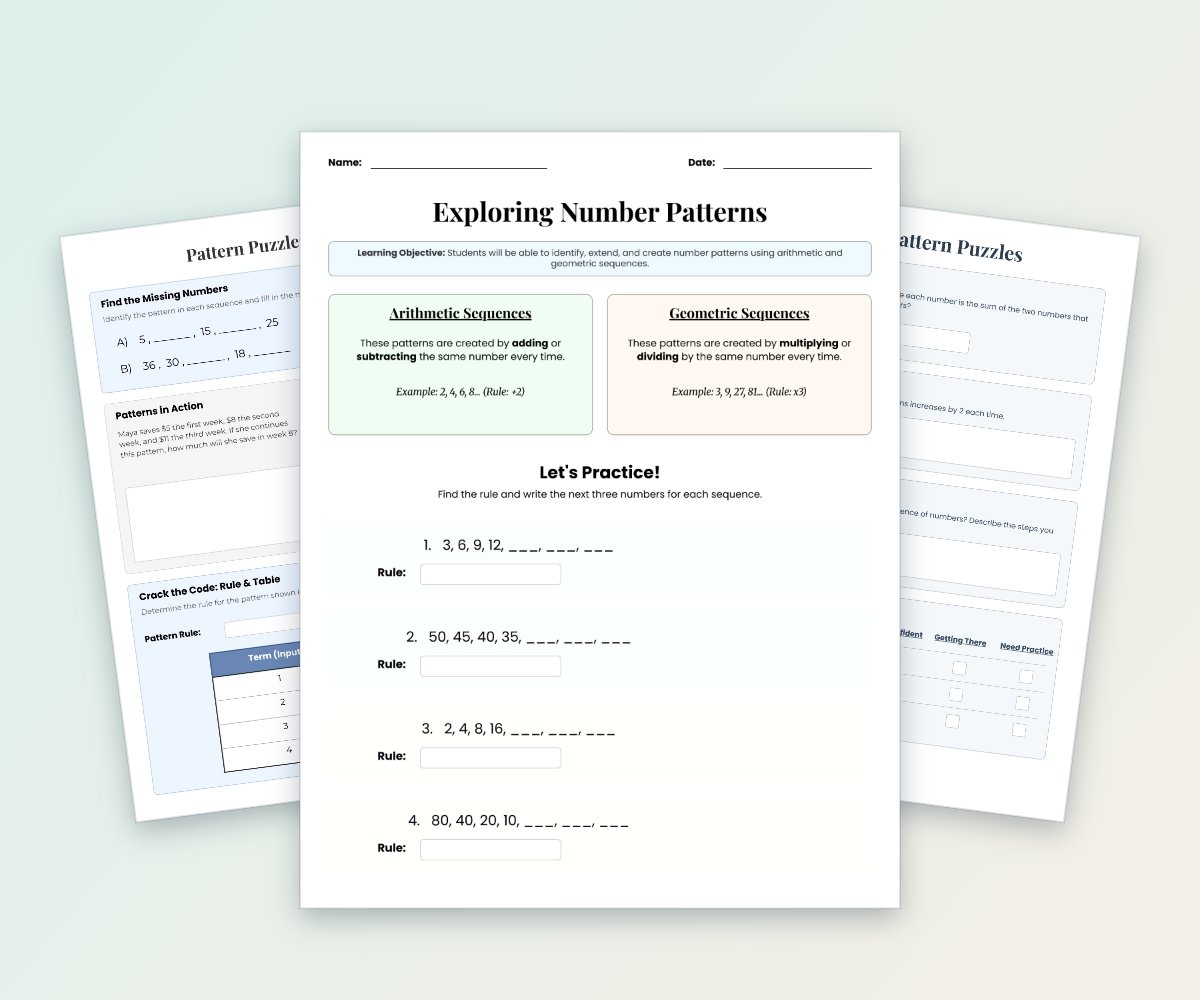
Students identify, extend, and create arithmetic and geometric sequences through guided examples, practice problems, pattern puzzles, and real-world applications.
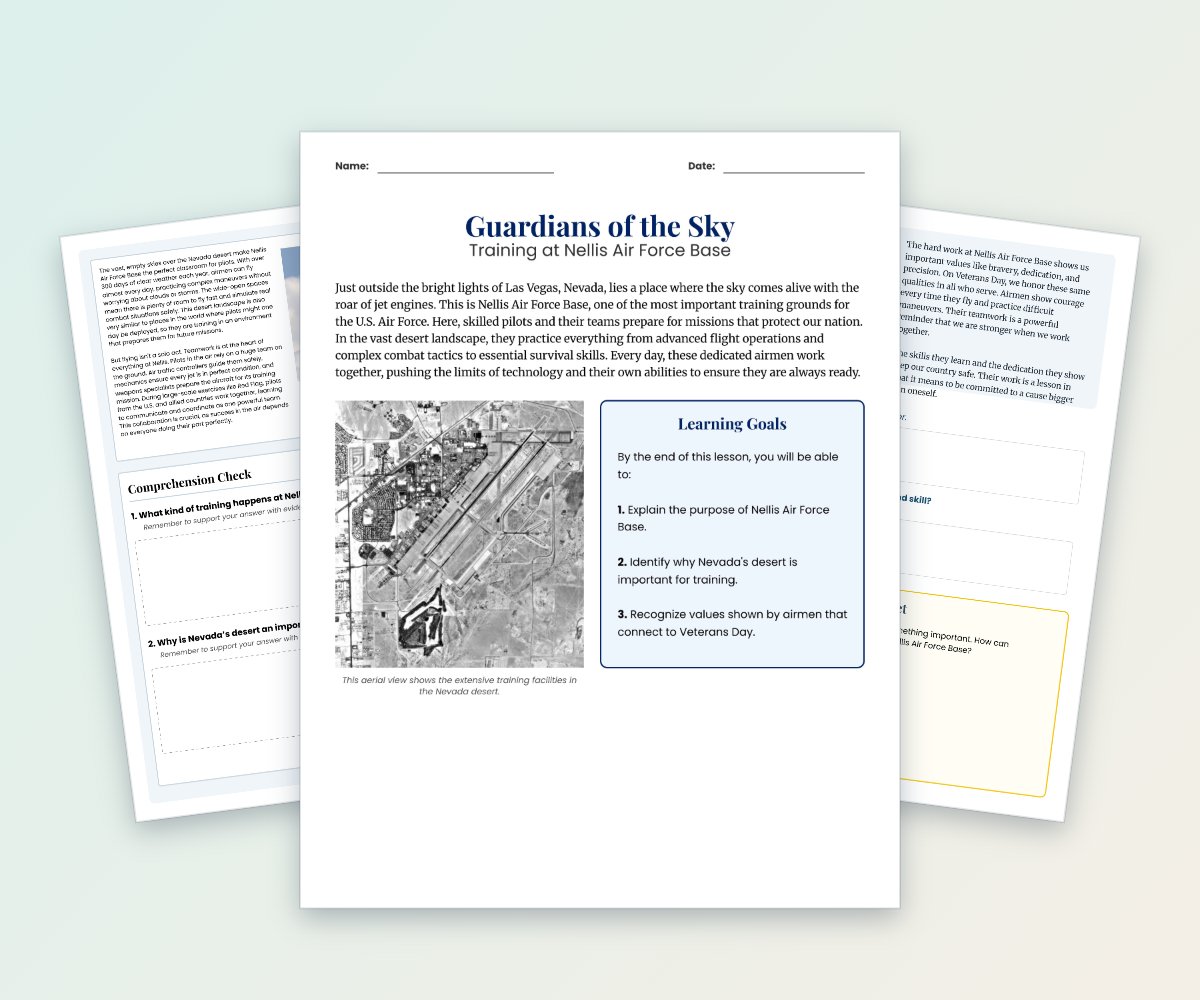
Students learn about Nellis Air Force Base, the Nevada desert’s role in pilot training, and teamwork among airmen.
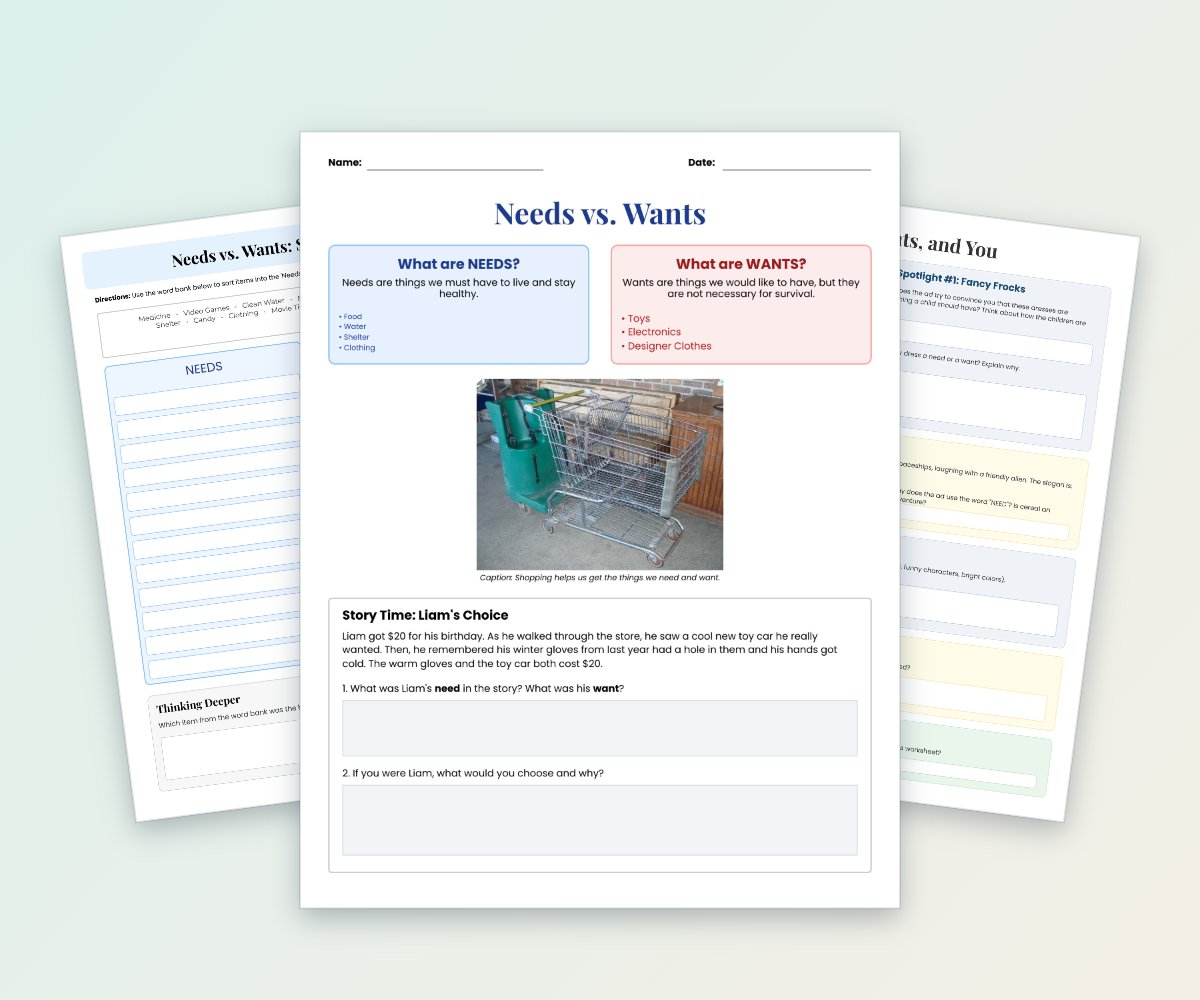
This four-page activity pack helps students distinguish needs from wants through definitions, a relatable spending story, sorting activity, and advertising analysis.
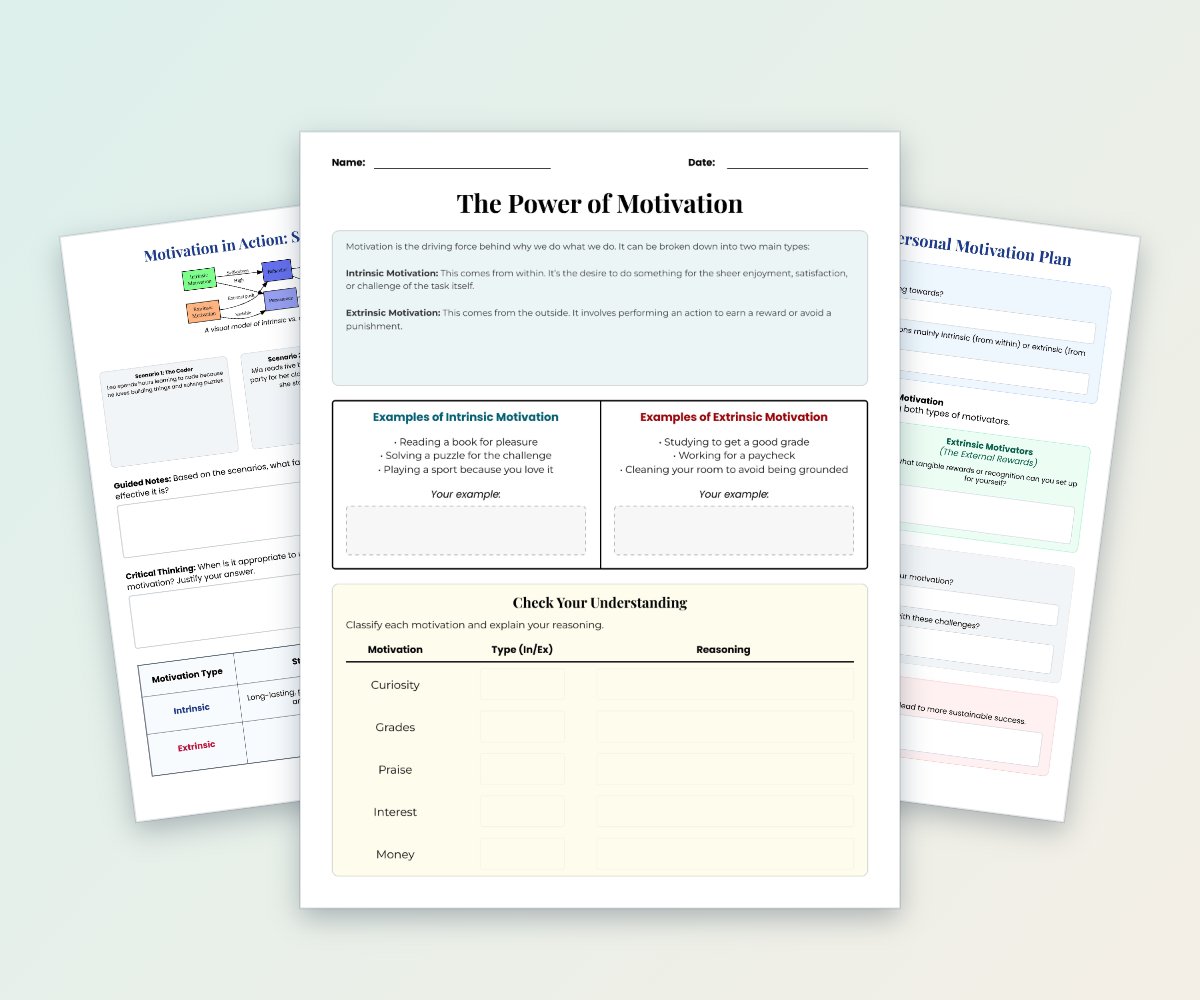
This three-page worksheet introduces intrinsic and extrinsic motivation with clear definitions, examples, classification practice, scenarios, and critical-thinking questions.
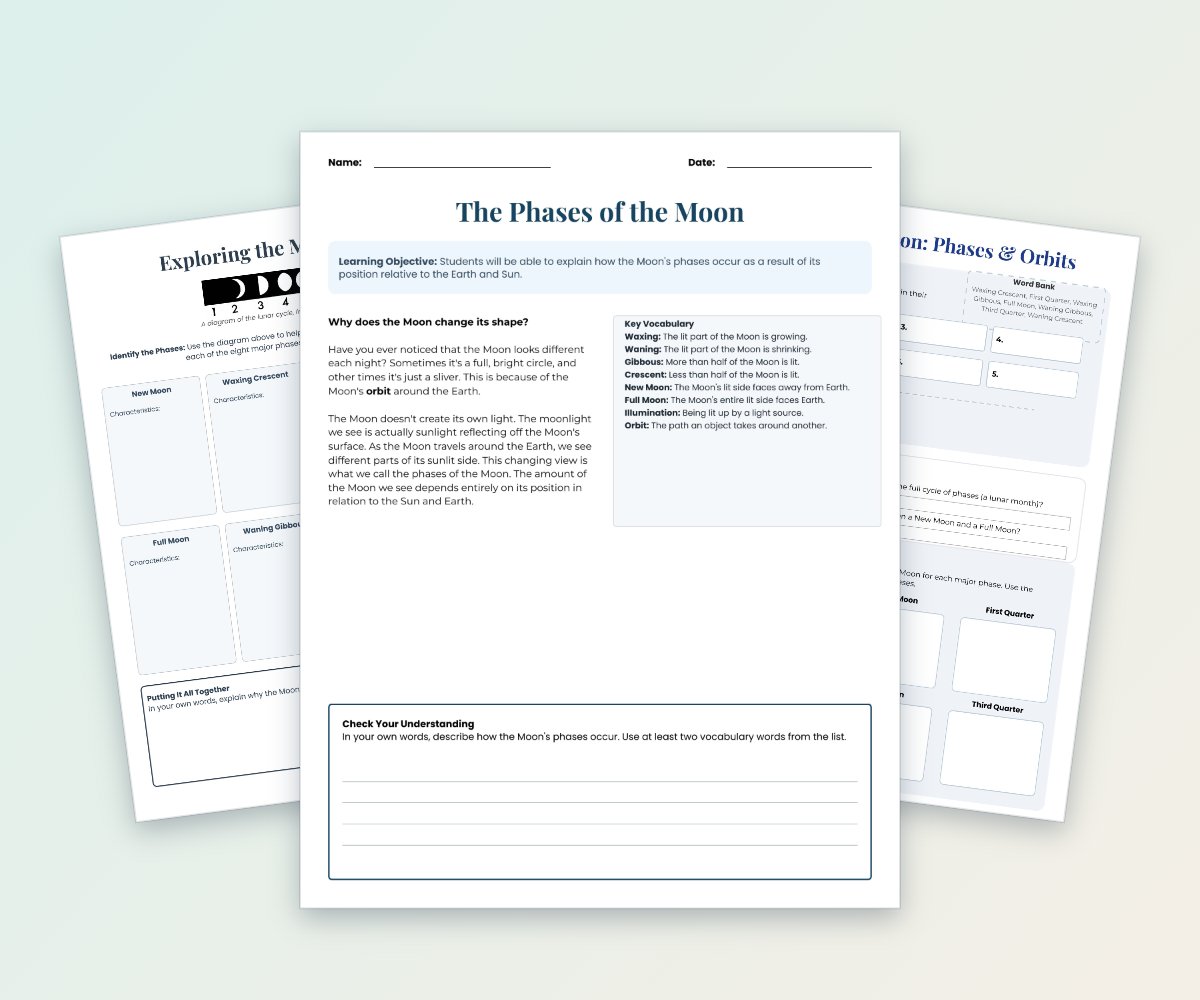
A four-page worksheet explaining how the Moon’s position relative to Earth and the Sun creates its phases.
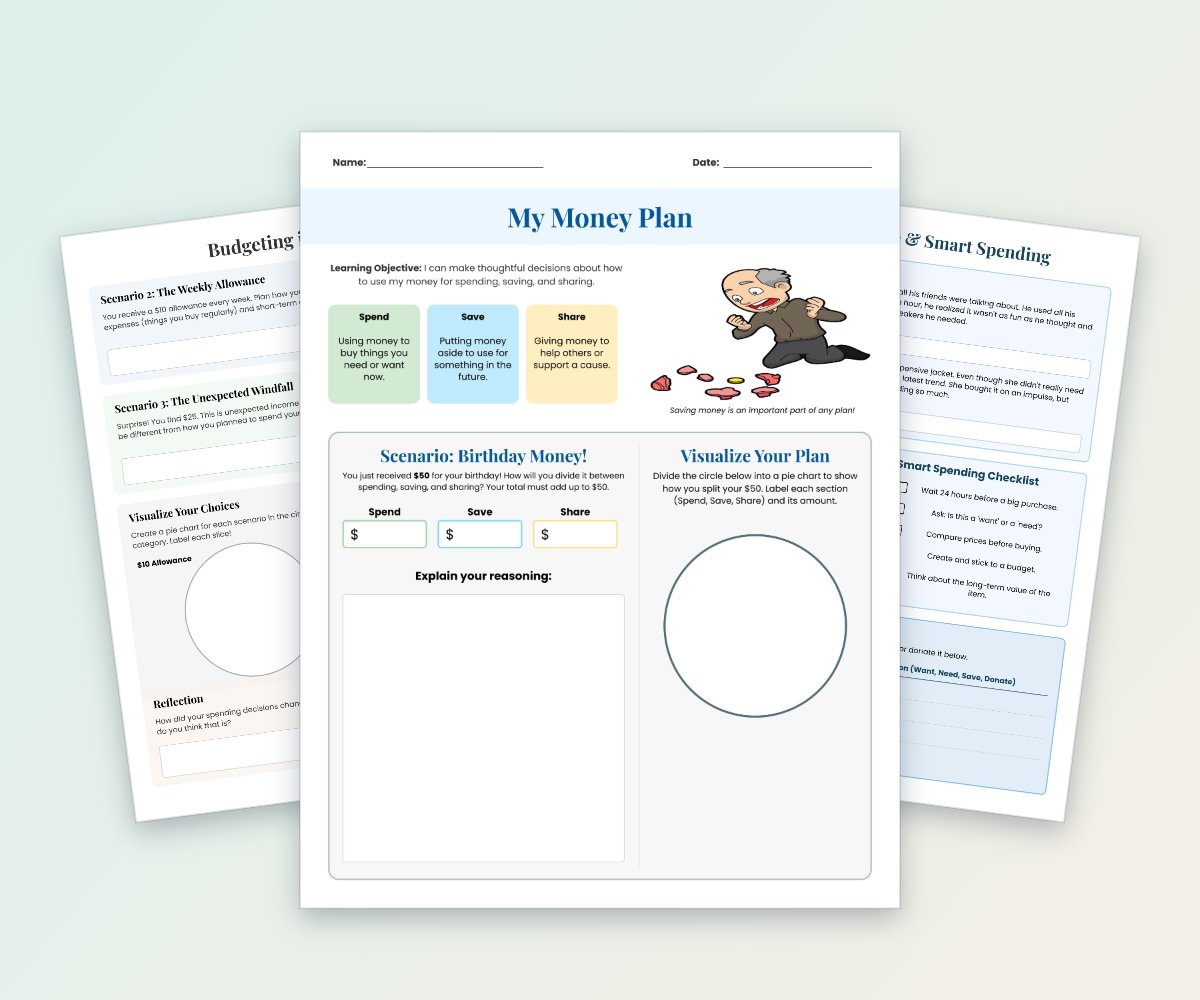
Students create spending, saving, and sharing plans using birthday money, an allowance, and an unexpected windfall.
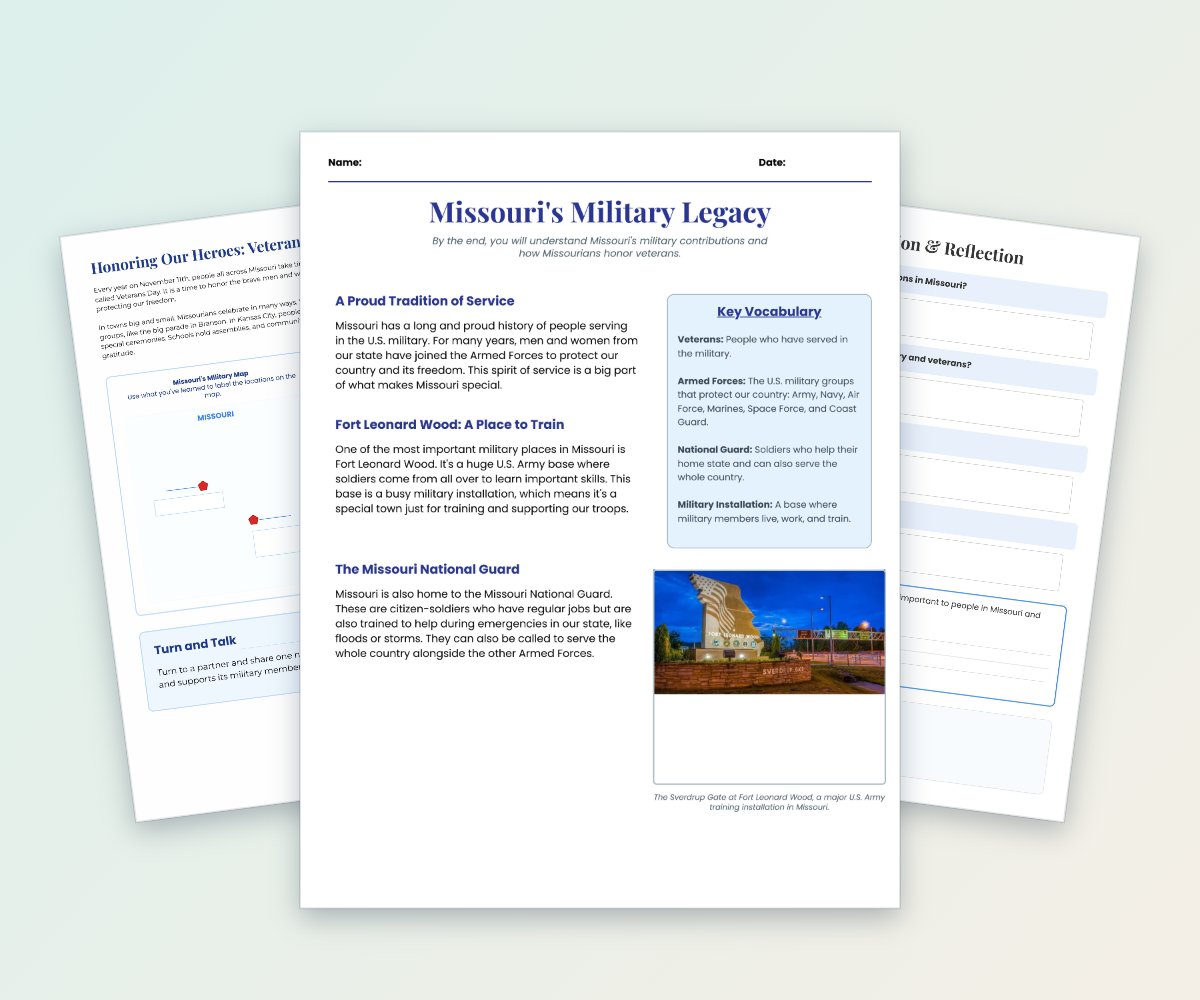
Students learn about Missouri’s military history, Fort Leonard Wood, the Missouri National Guard, and Veterans Day celebrations.
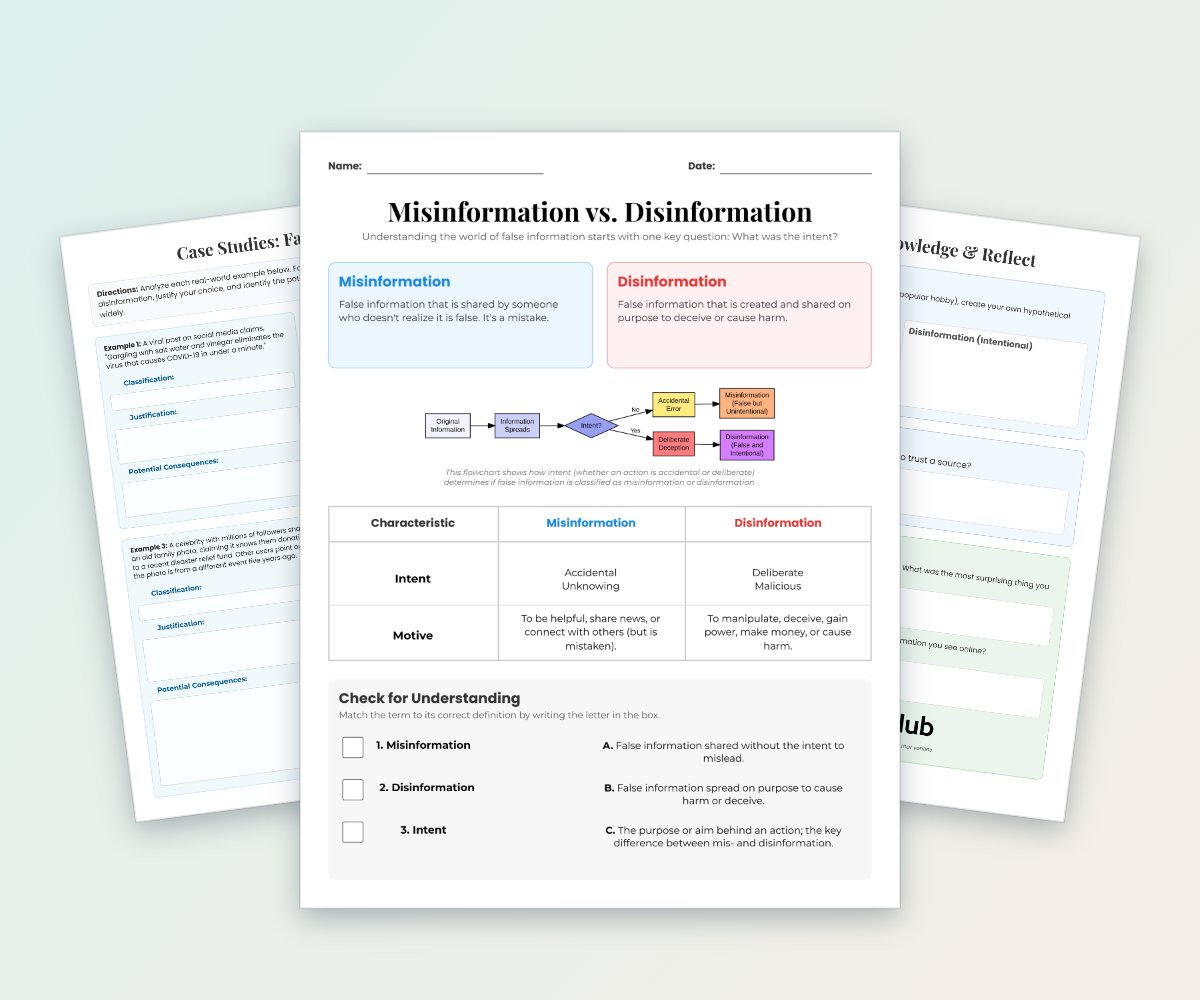
Students distinguish misinformation from disinformation by examining intent, motivation, and potential consequences.
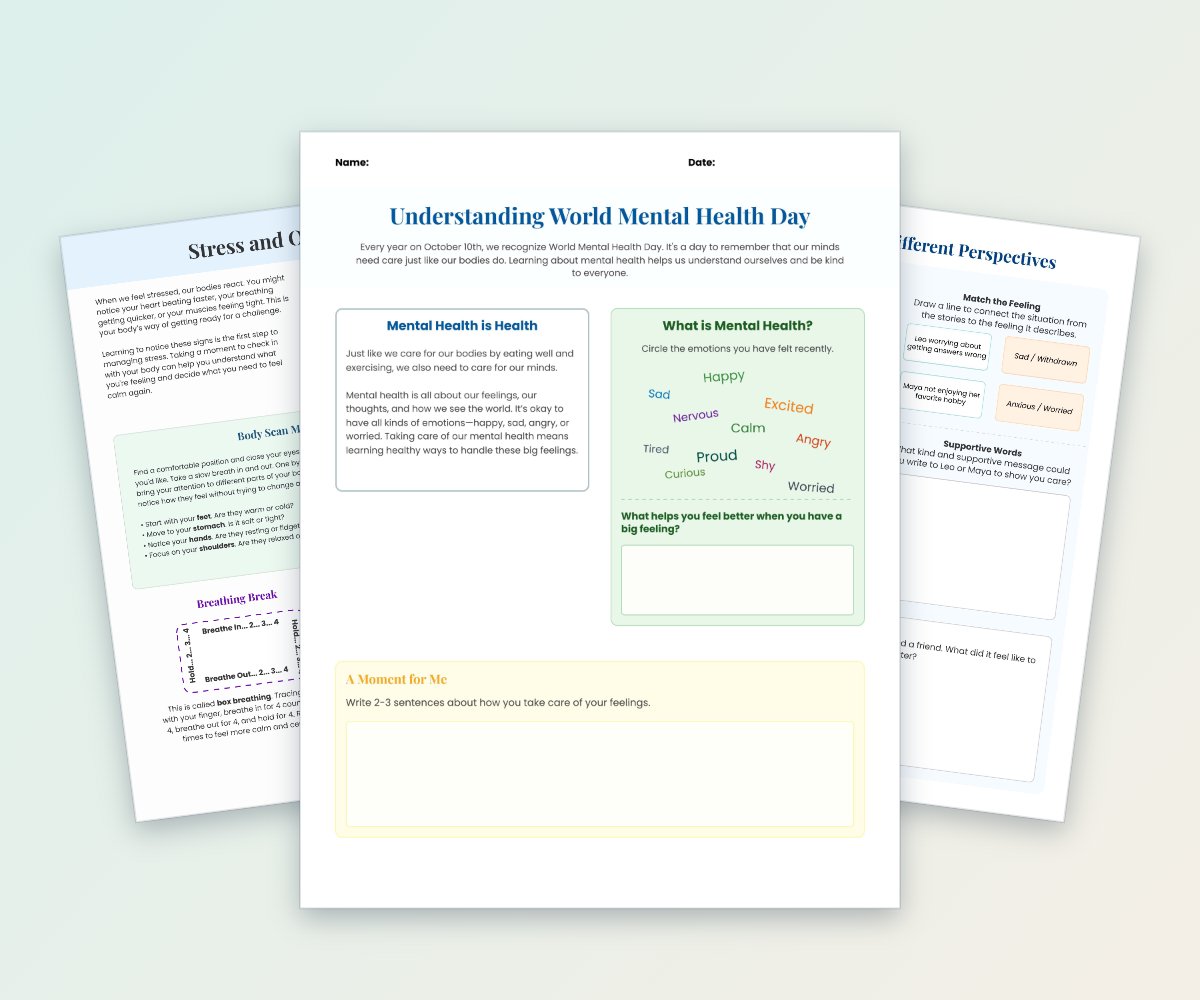
This five-page worksheet introduces mental health, emotions, stress responses, body awareness, and healthy coping strategies.
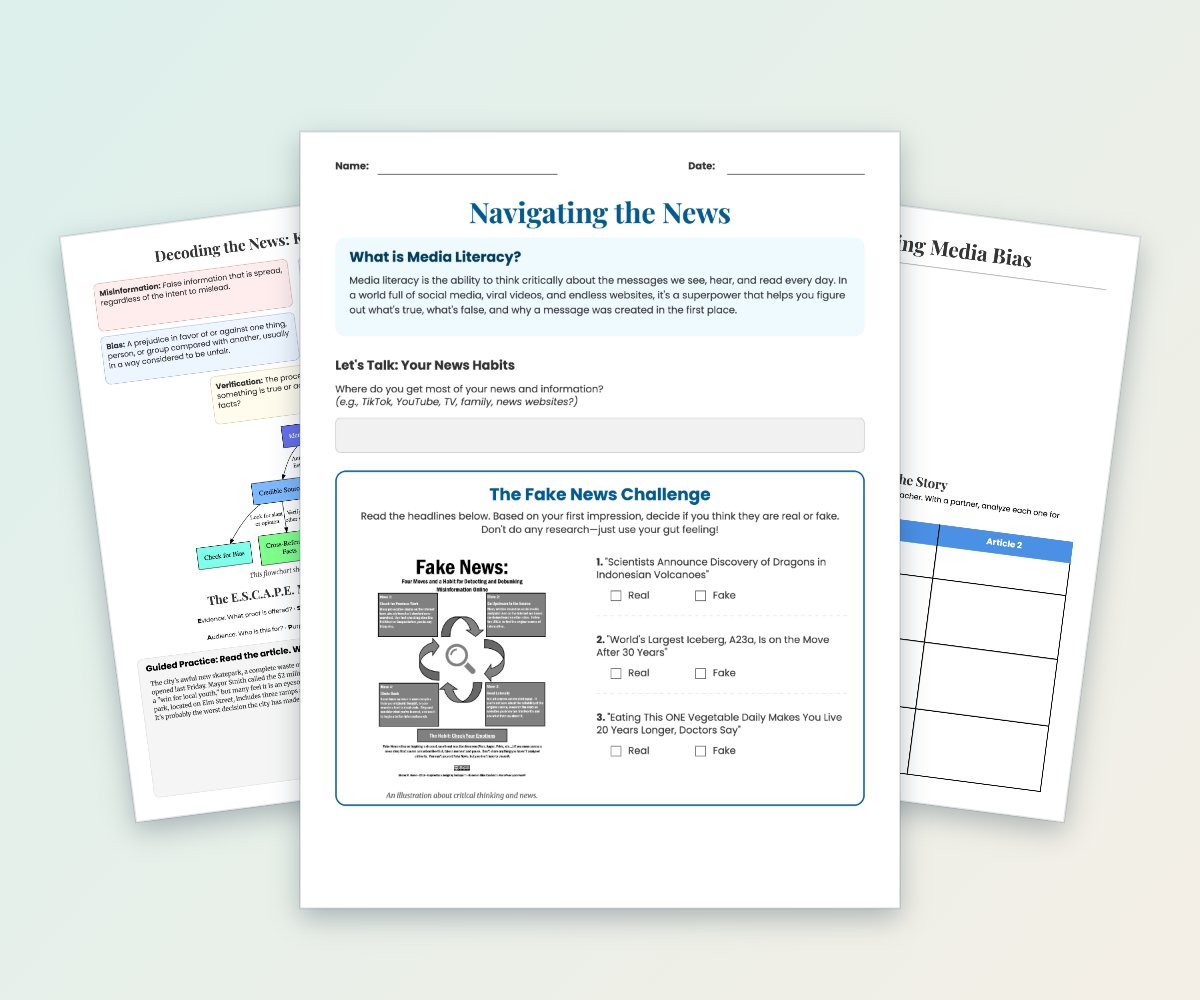
This four-page activity introduces media literacy through news habits, fake-news headline analysis, vocabulary, and source evaluation.
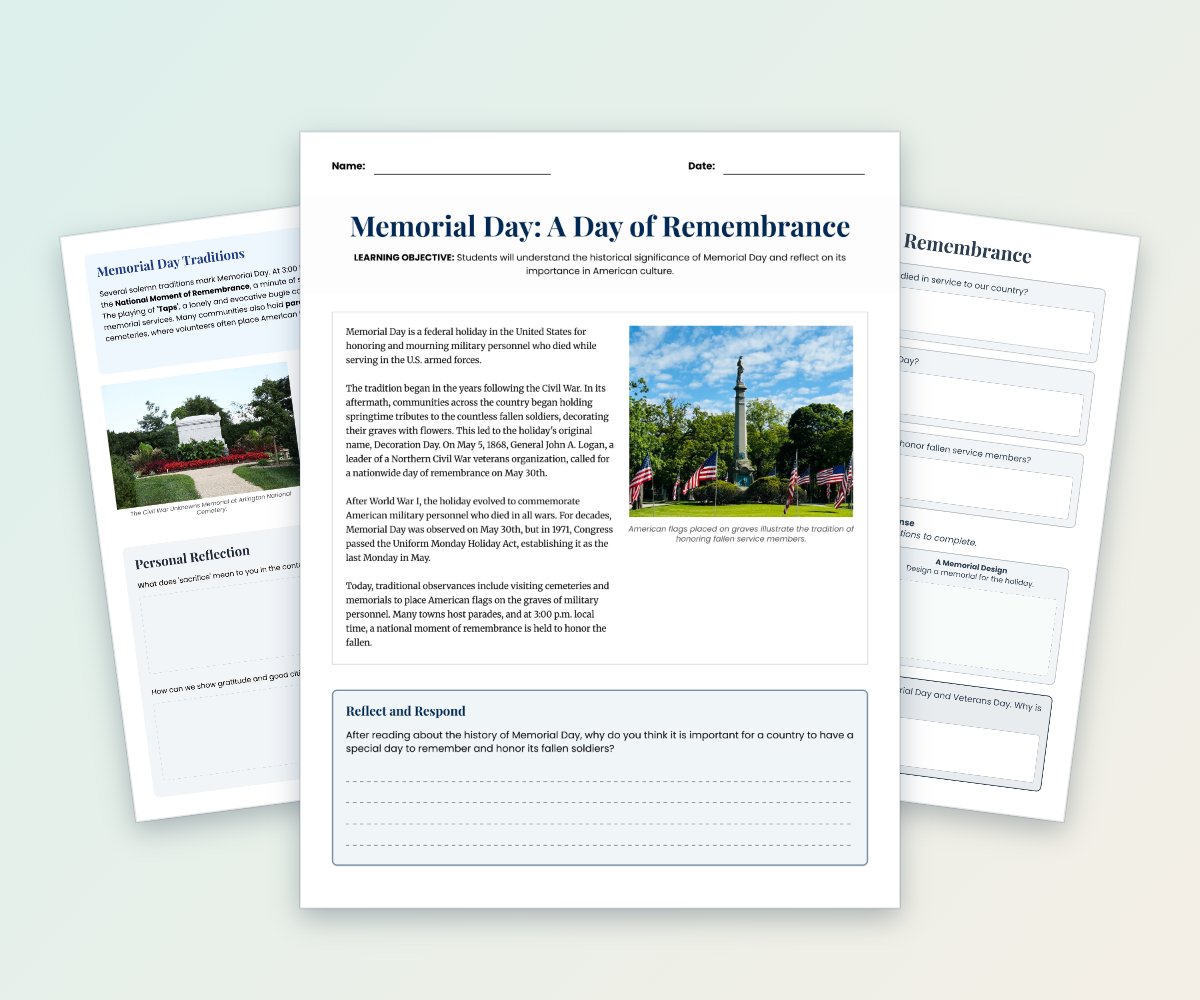
This three-page worksheet introduces students to the origins, historical significance, and traditions of Memorial Day.
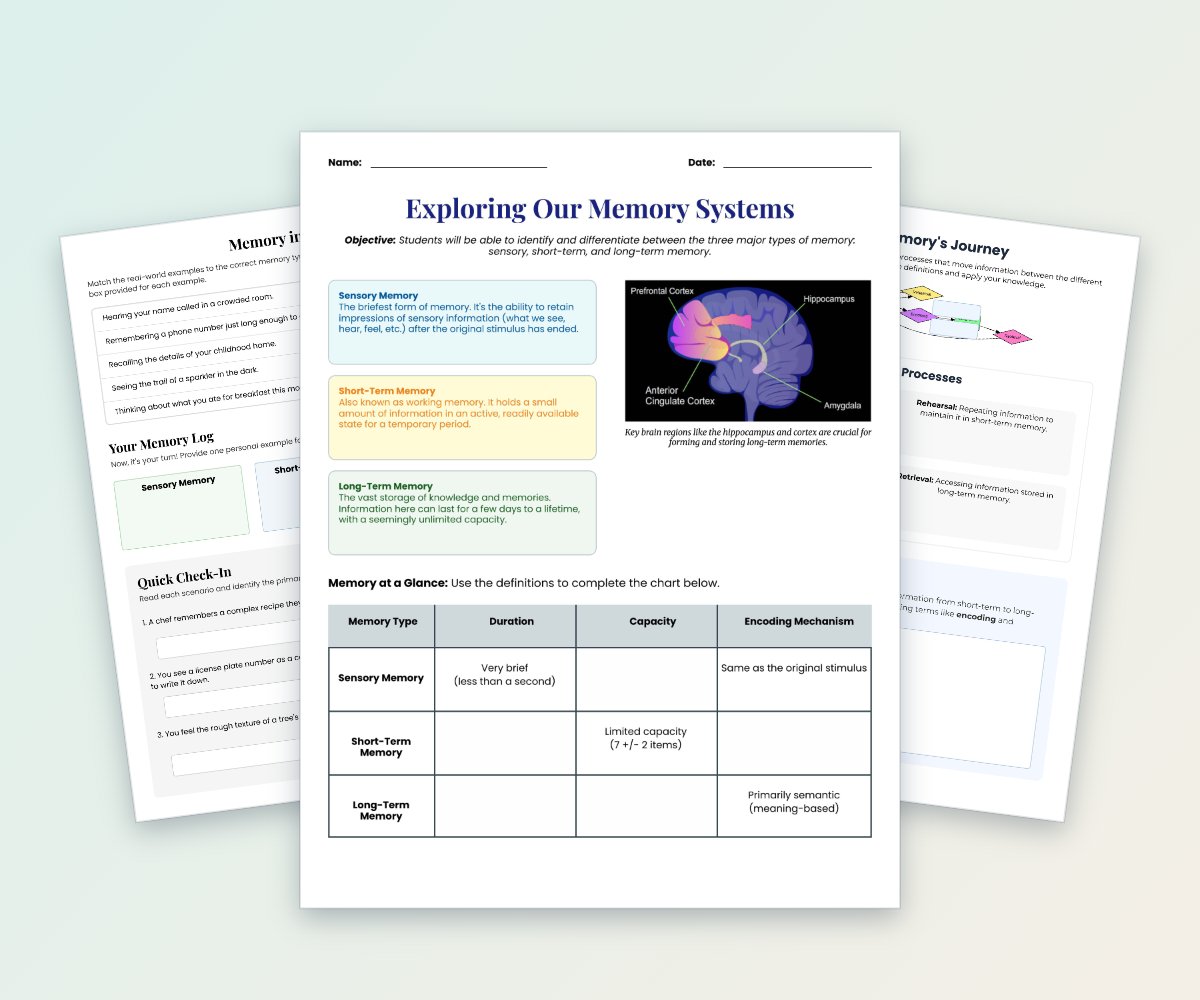
This four-page worksheet introduces sensory, short-term, and long-term memory.
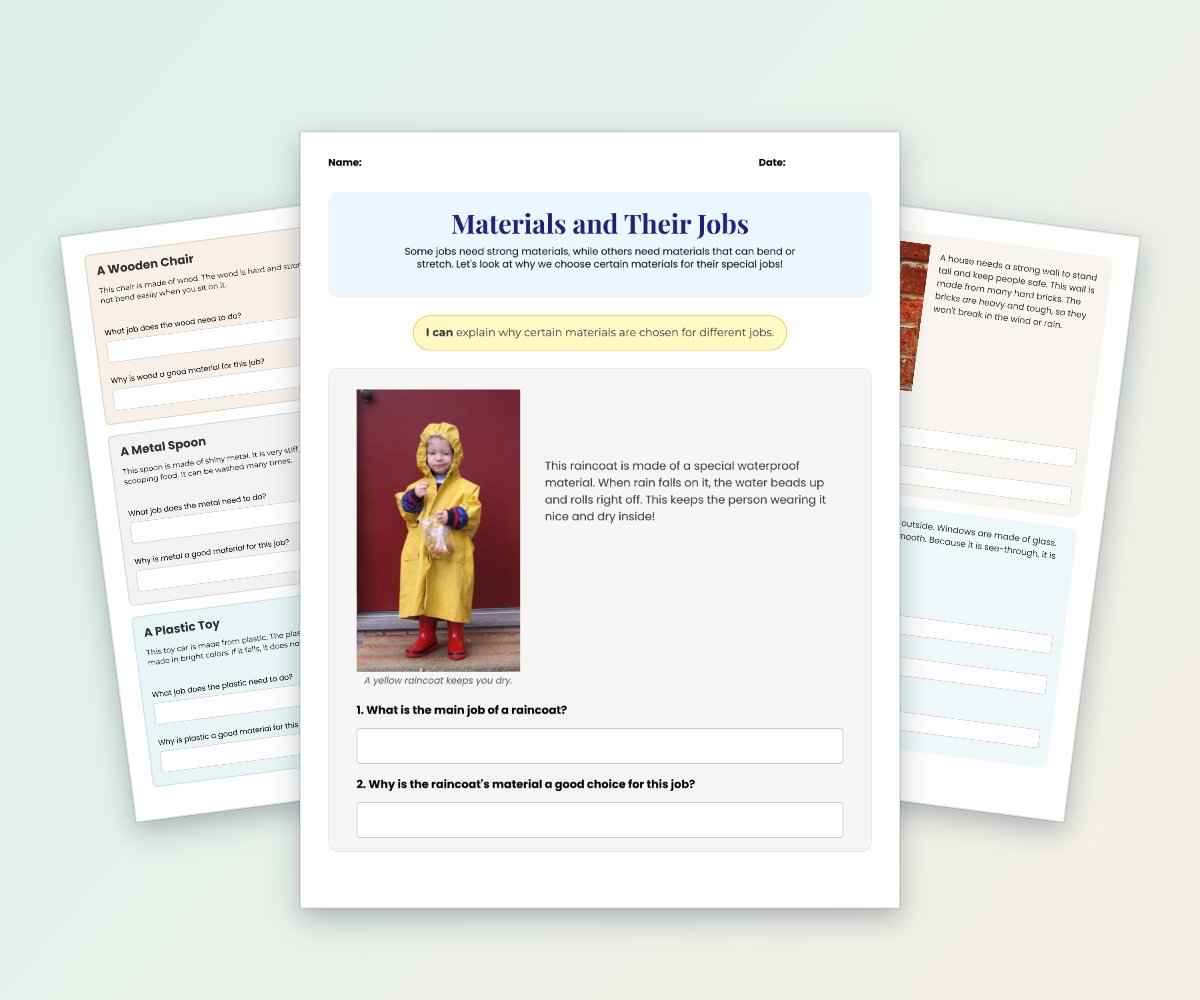
Students explore why materials such as wood, metal, plastic, glass, paper, rubber, cotton, and bricks are chosen for specific jobs.
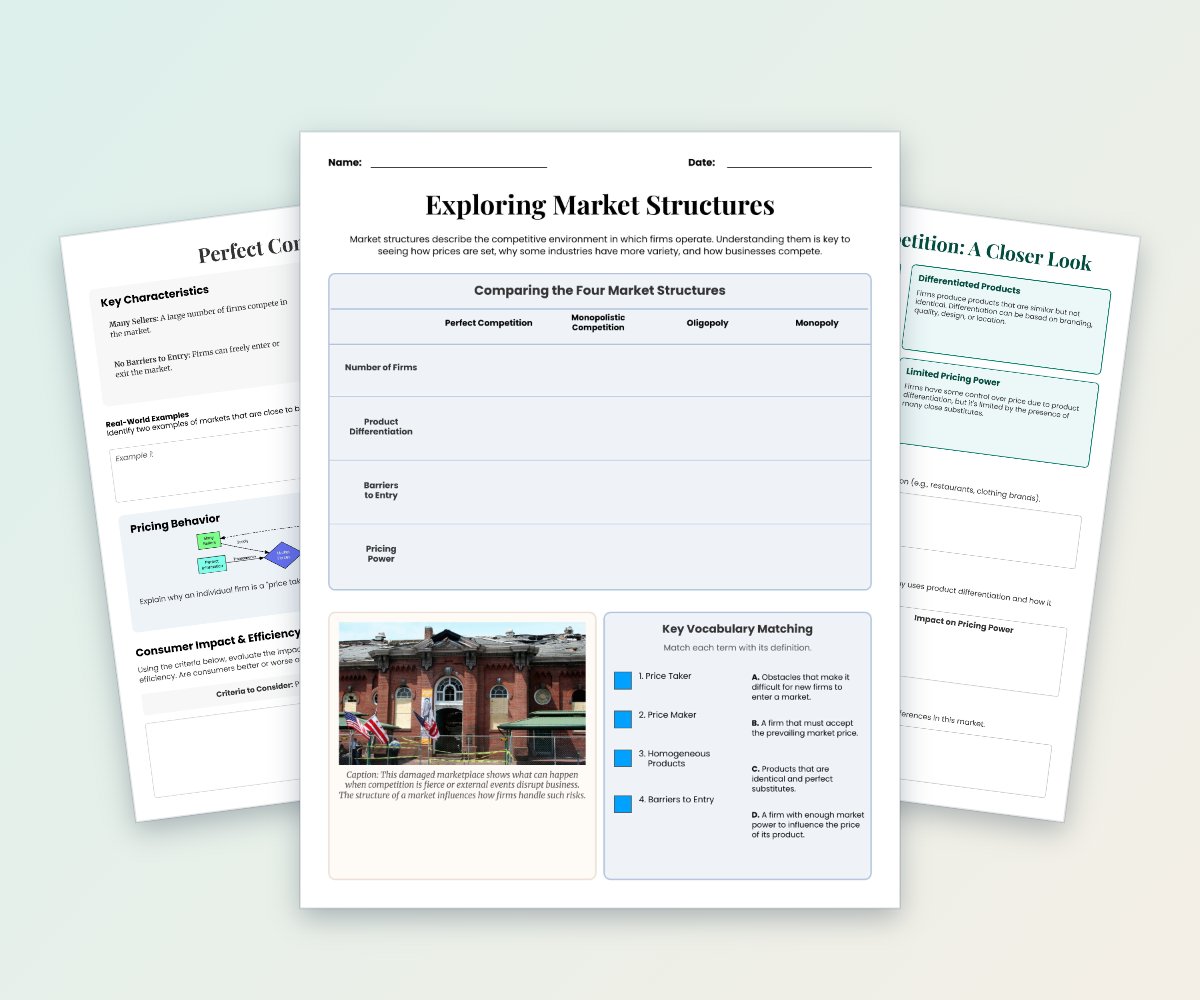
This six-page economics worksheet introduces perfect competition, monopolistic competition, oligopoly, and monopoly.
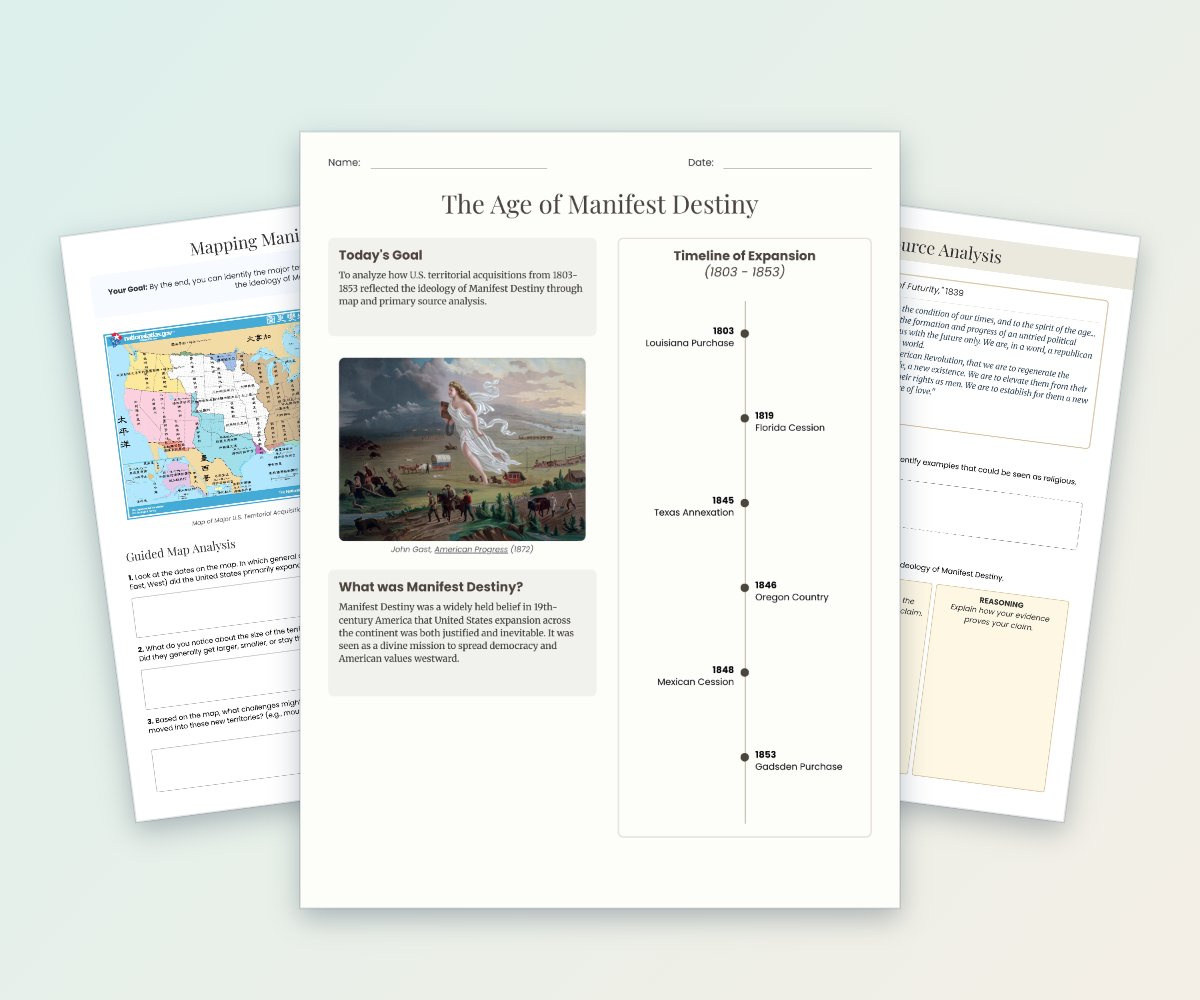
Students examine U.S.
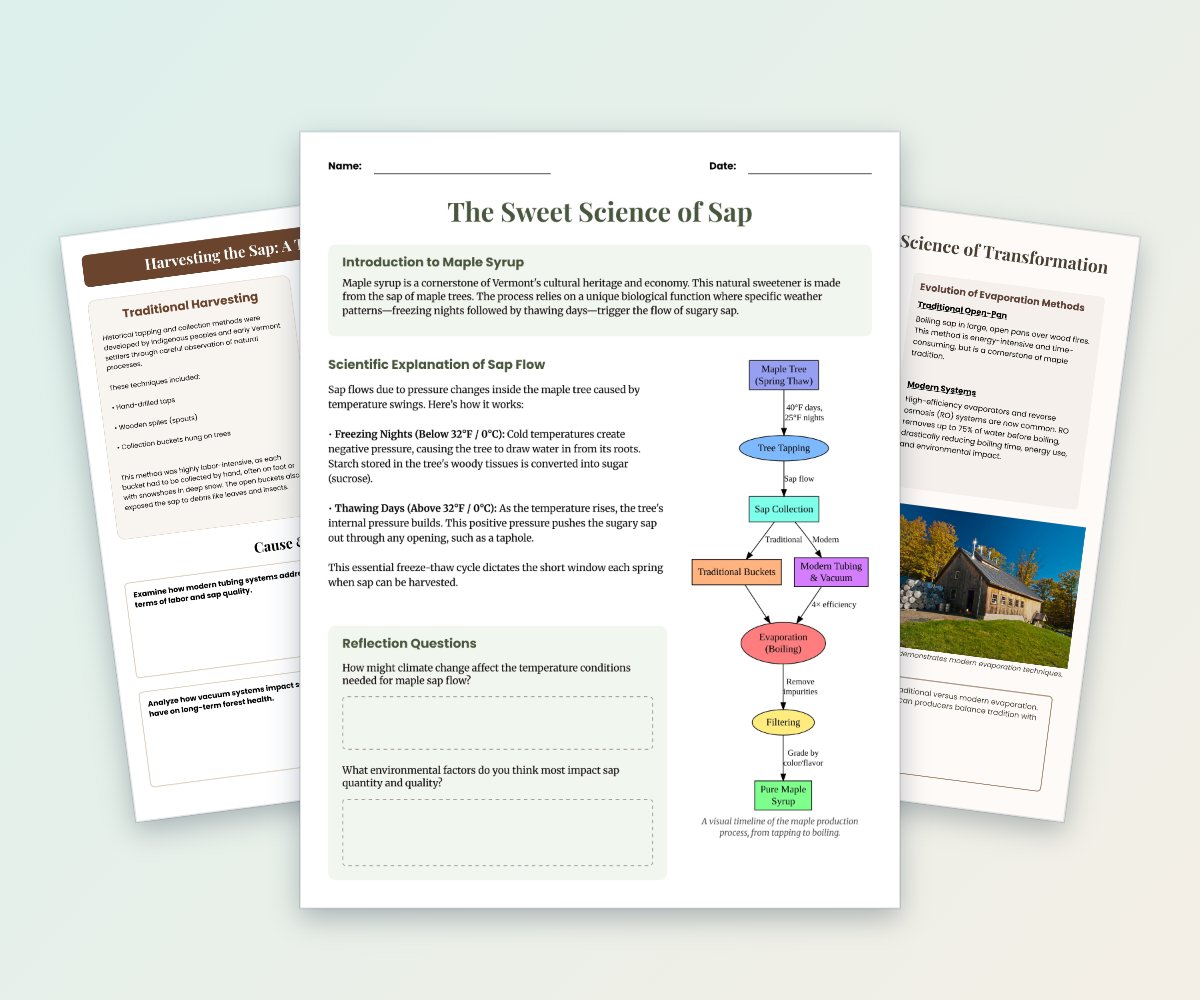
Students explore the science of maple sap flow, including freeze-thaw cycles, pressure changes, and sugar production.
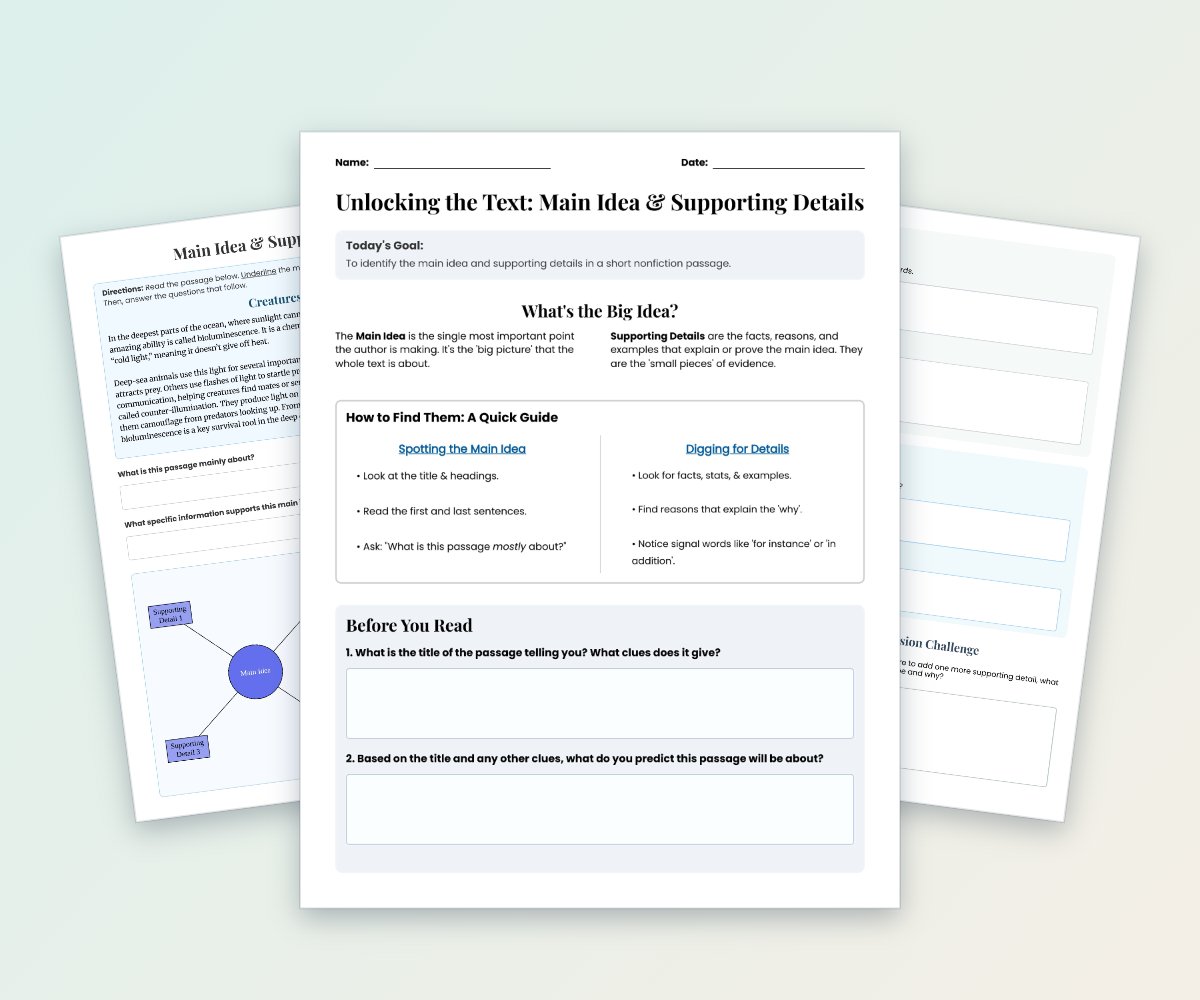
This three-page worksheet teaches students to identify the main idea and supporting details in a nonfiction passage.