Understanding City Councils and Budgets
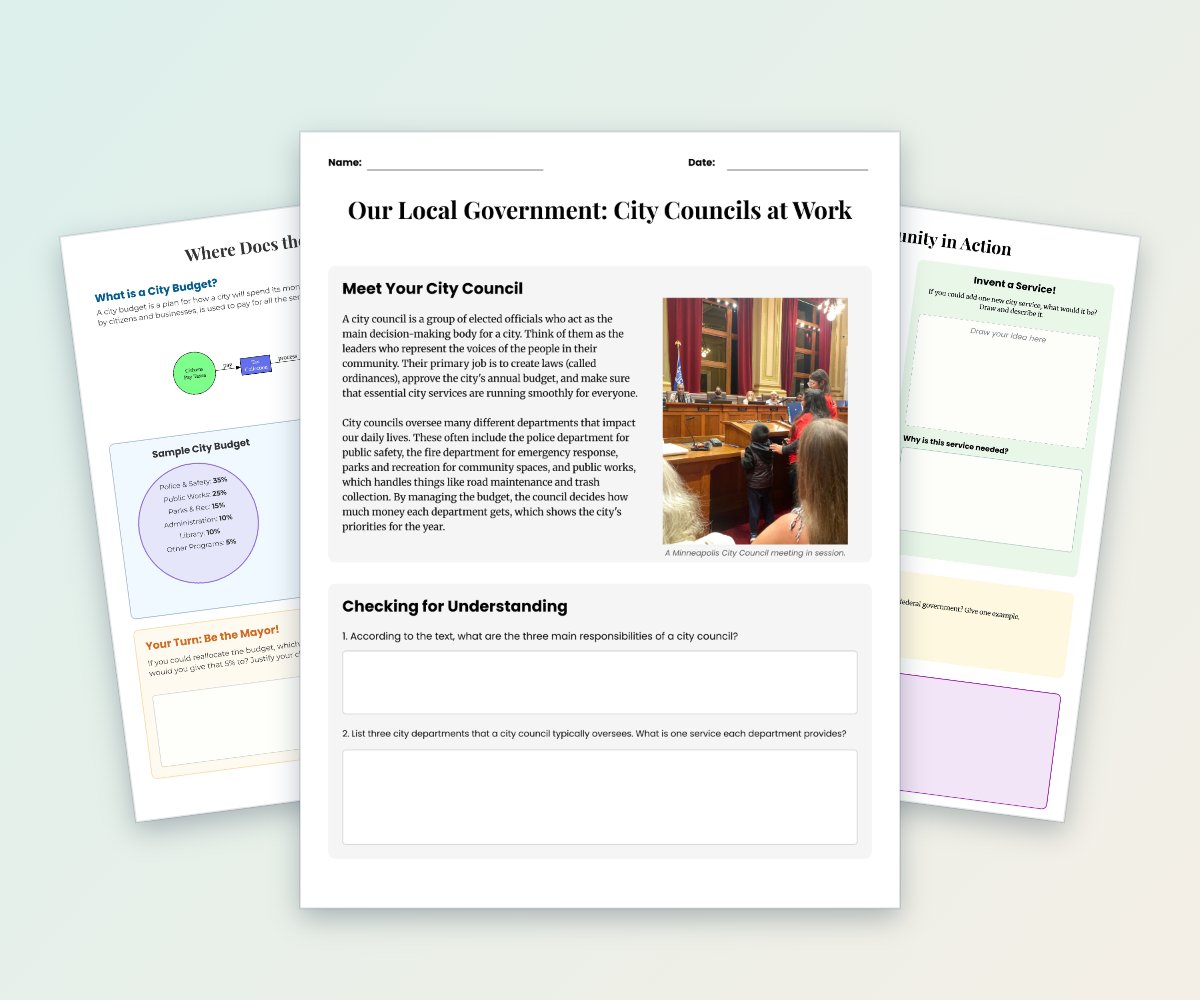
Students learn how city councils make decisions, oversee departments, and allocate annual budgets.
$4
Classroom-ready resources written for grade 7: printable worksheets, slides, activities and planning tools you can download and use straight away. Browse by subject below.
Students learn how city councils make decisions, oversee departments, and allocate annual budgets.
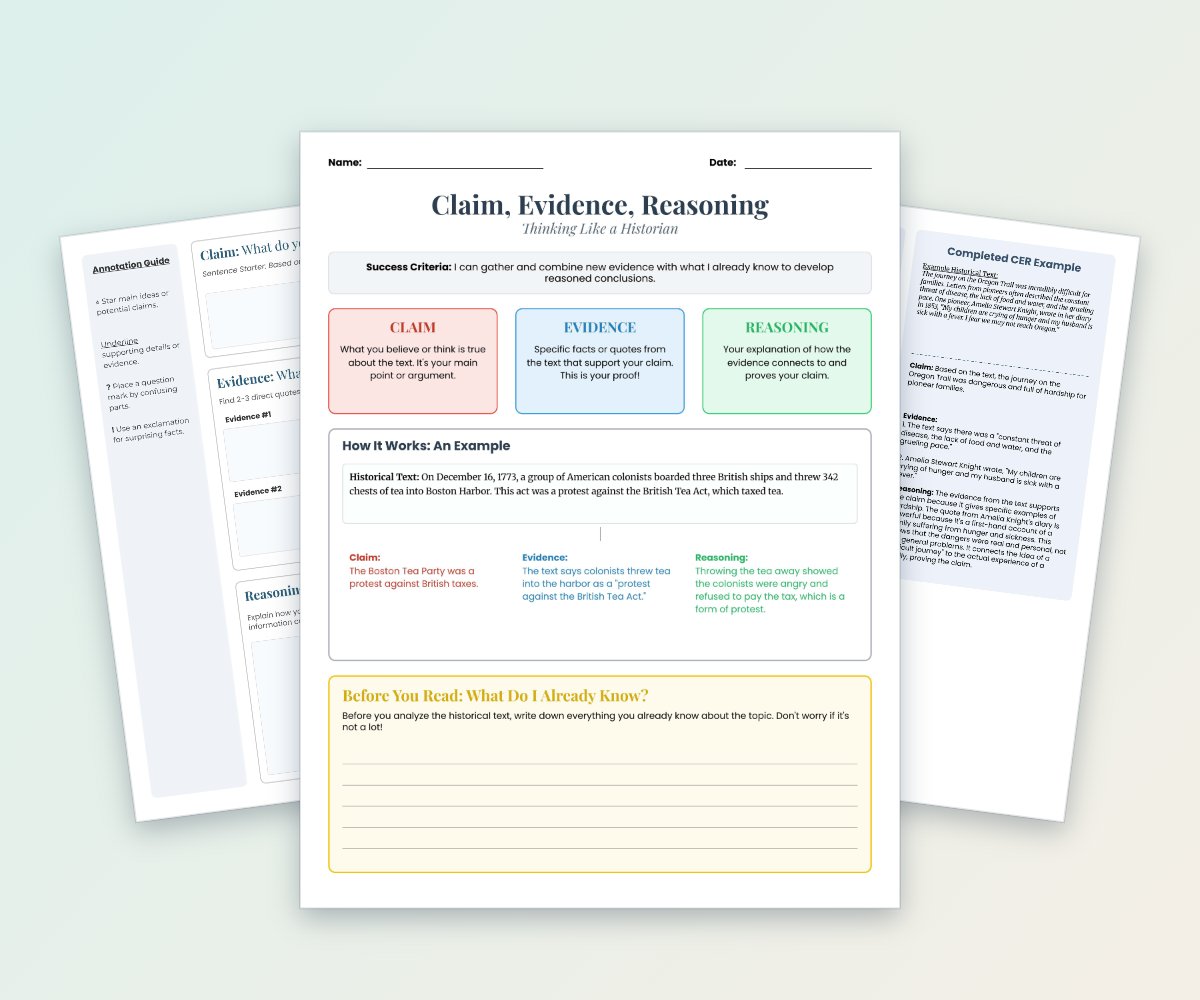
This three-page resource teaches students to develop historical claims, select textual evidence, and explain their reasoning.
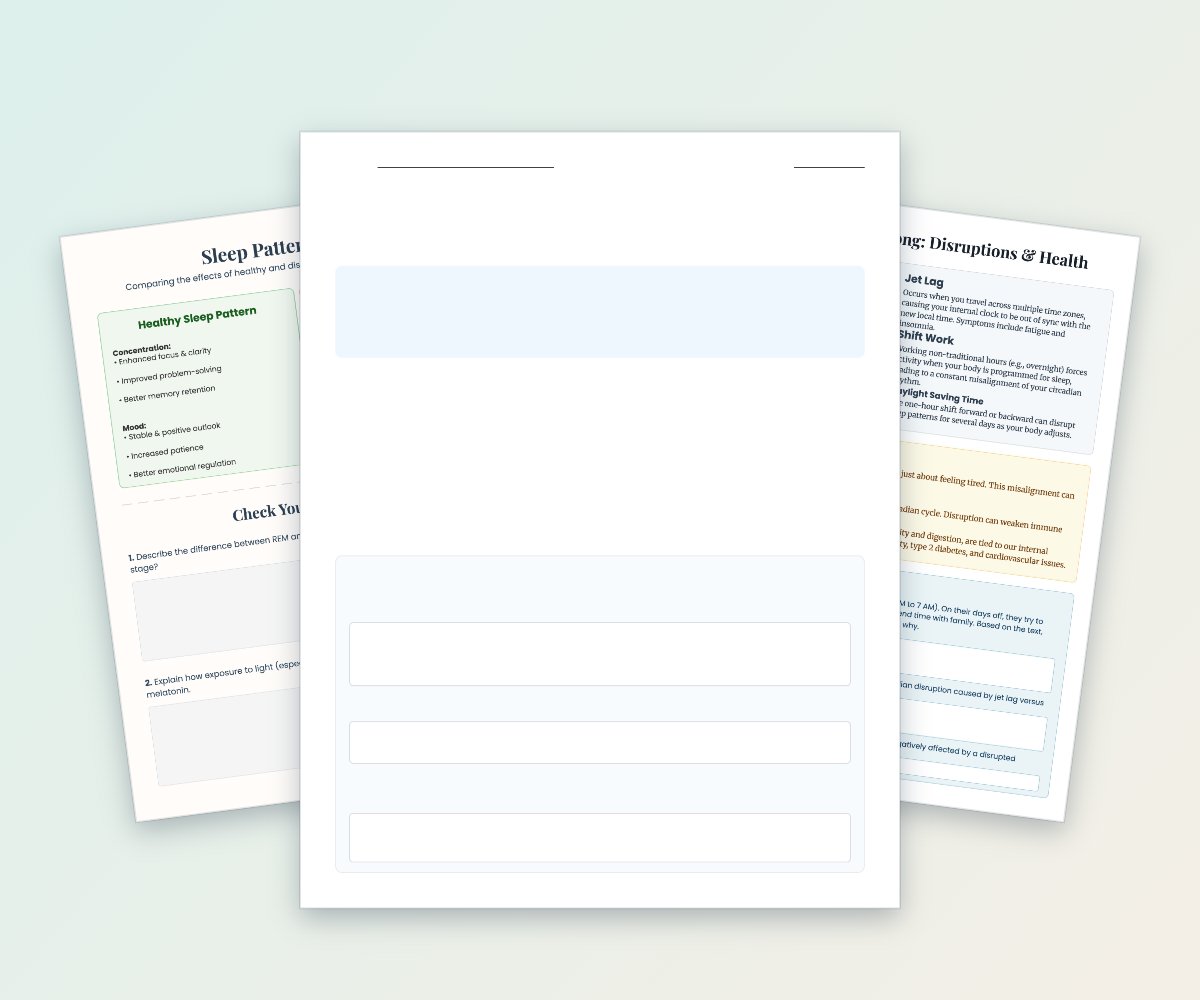
This four-page resource explains healthy and disrupted sleep patterns, REM and non-REM sleep, melatonin, jet lag, shift work, and health impacts.
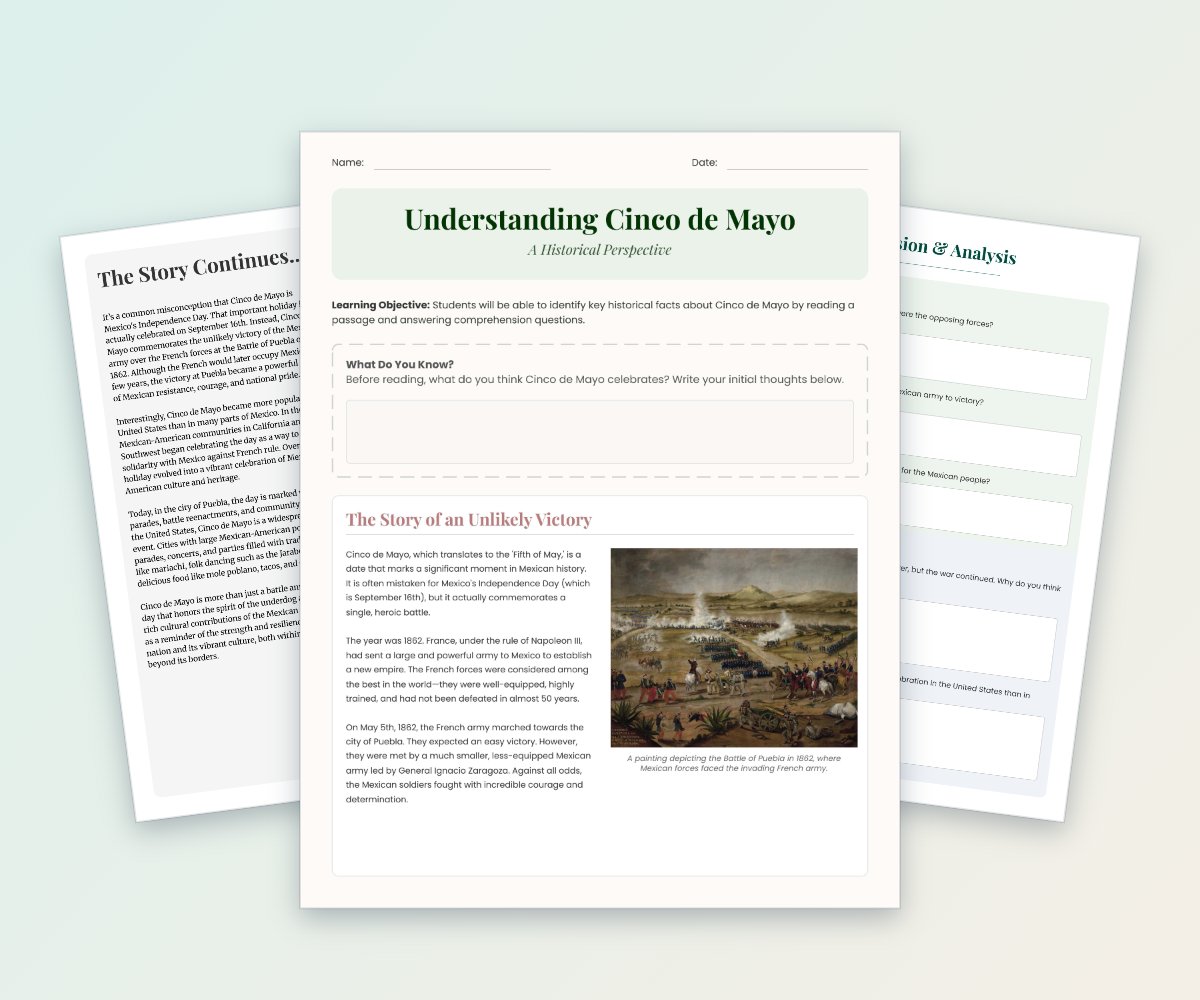
Students read an accessible historical passage about the Battle of Puebla, Mexican resistance, and the development of Cinco de Mayo celebrations.
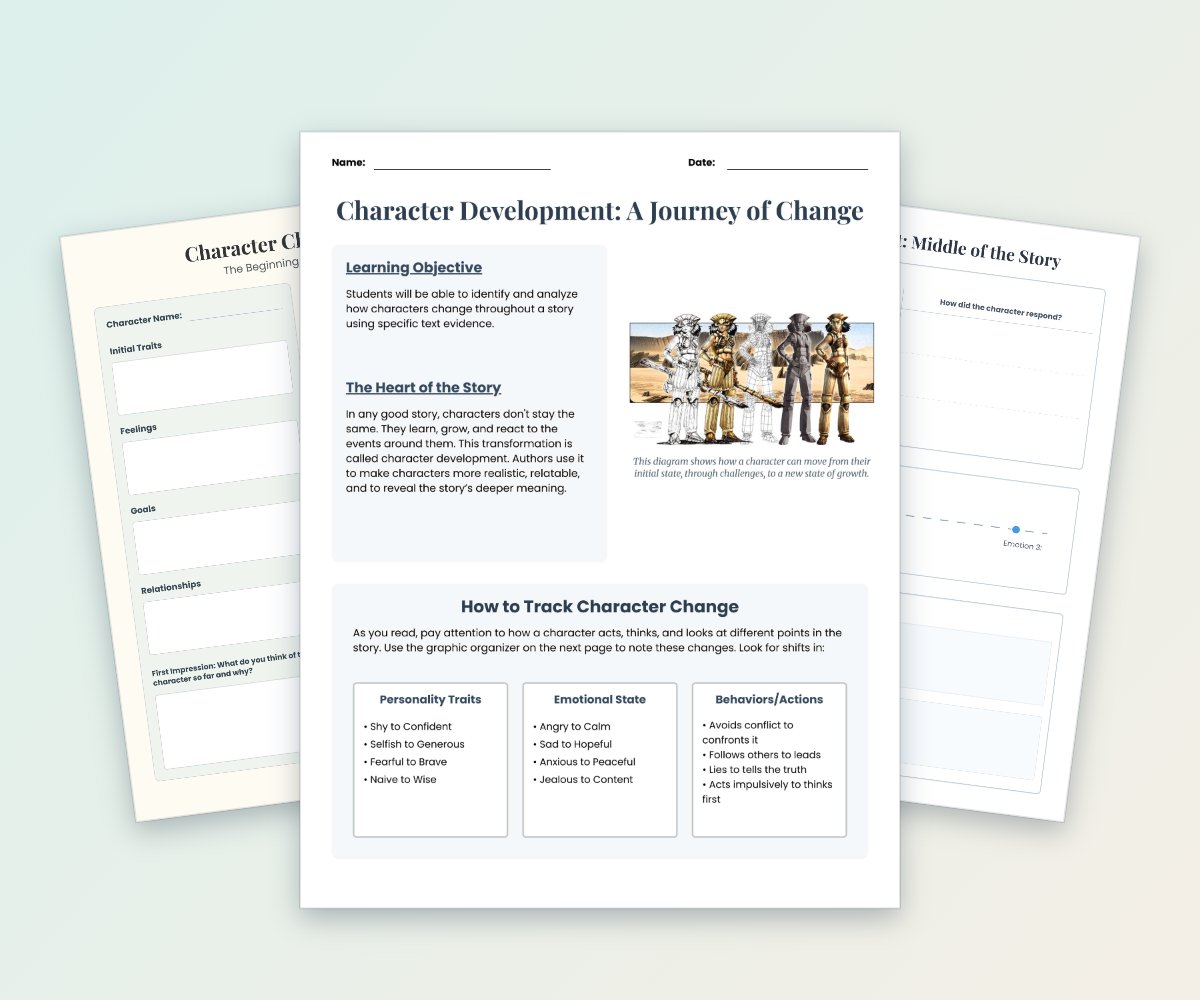
This four-page resource teaches students how to track character traits, emotions, actions, and relationships throughout a story.
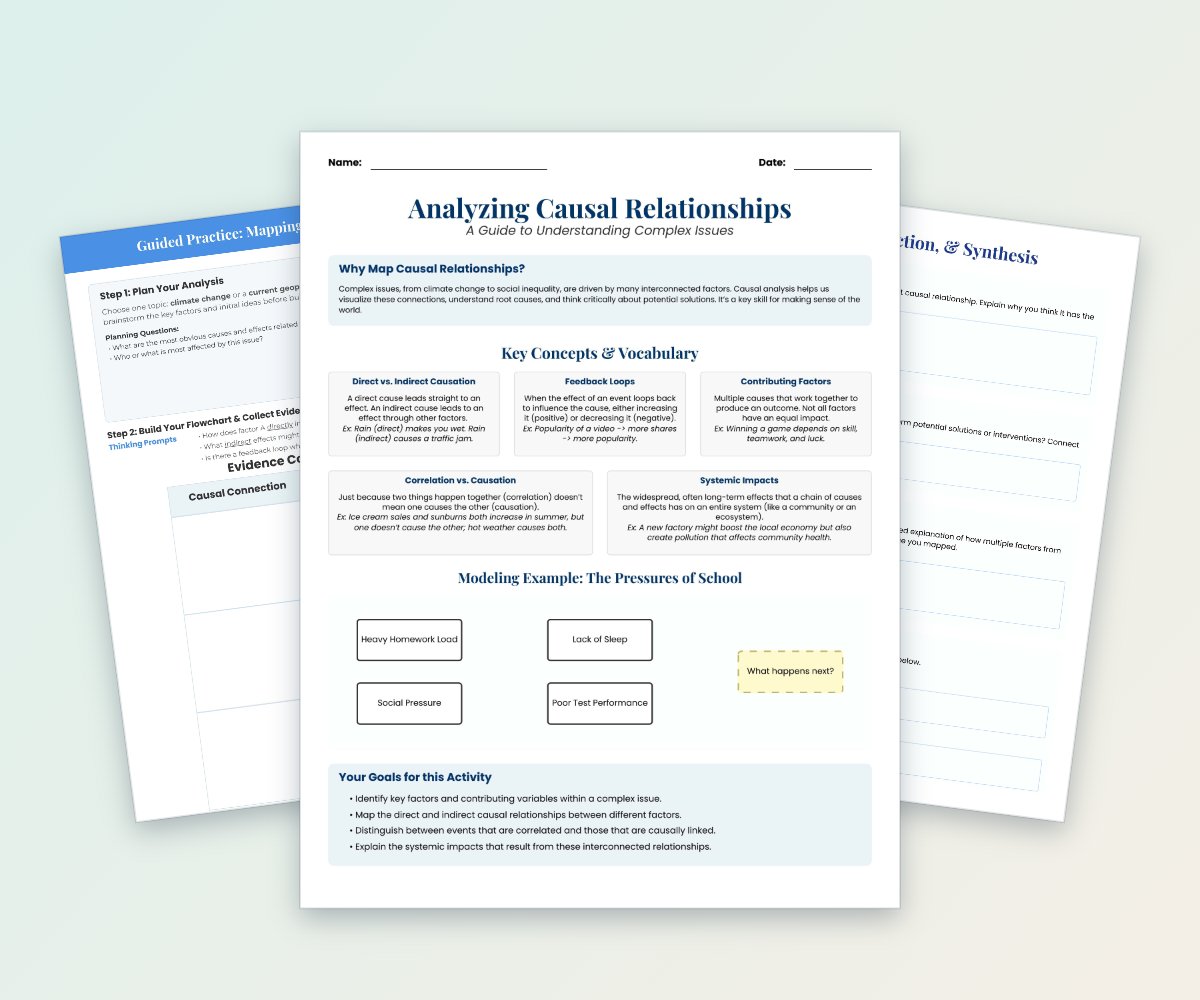
This three-page guide introduces direct and indirect causation, correlation versus causation, feedback loops, contributing factors, and systemic impacts.
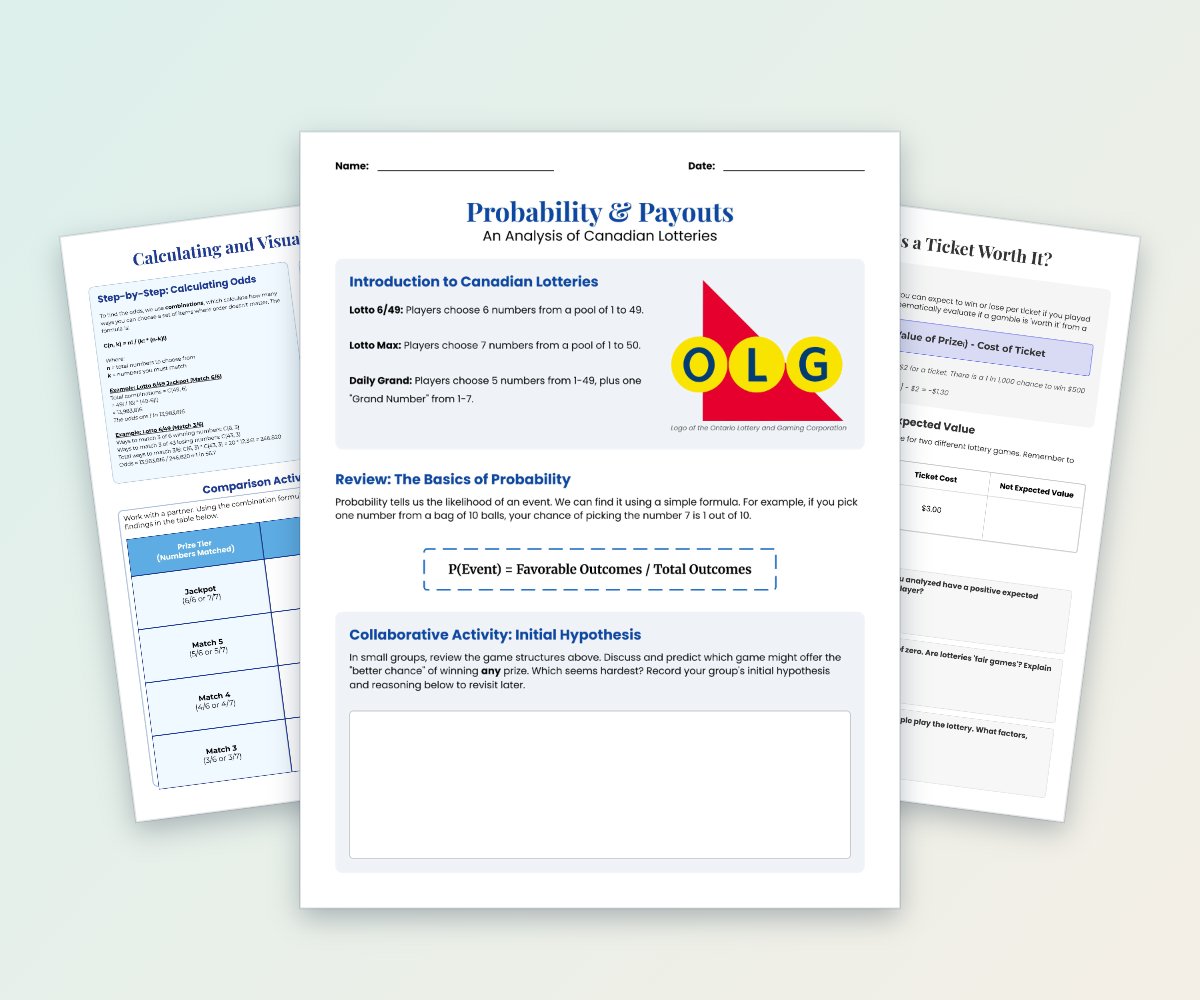
Students analyze Lotto 6/49, Lotto Max, and Daily Grand using probability formulas, combinations, odds, and expected value.
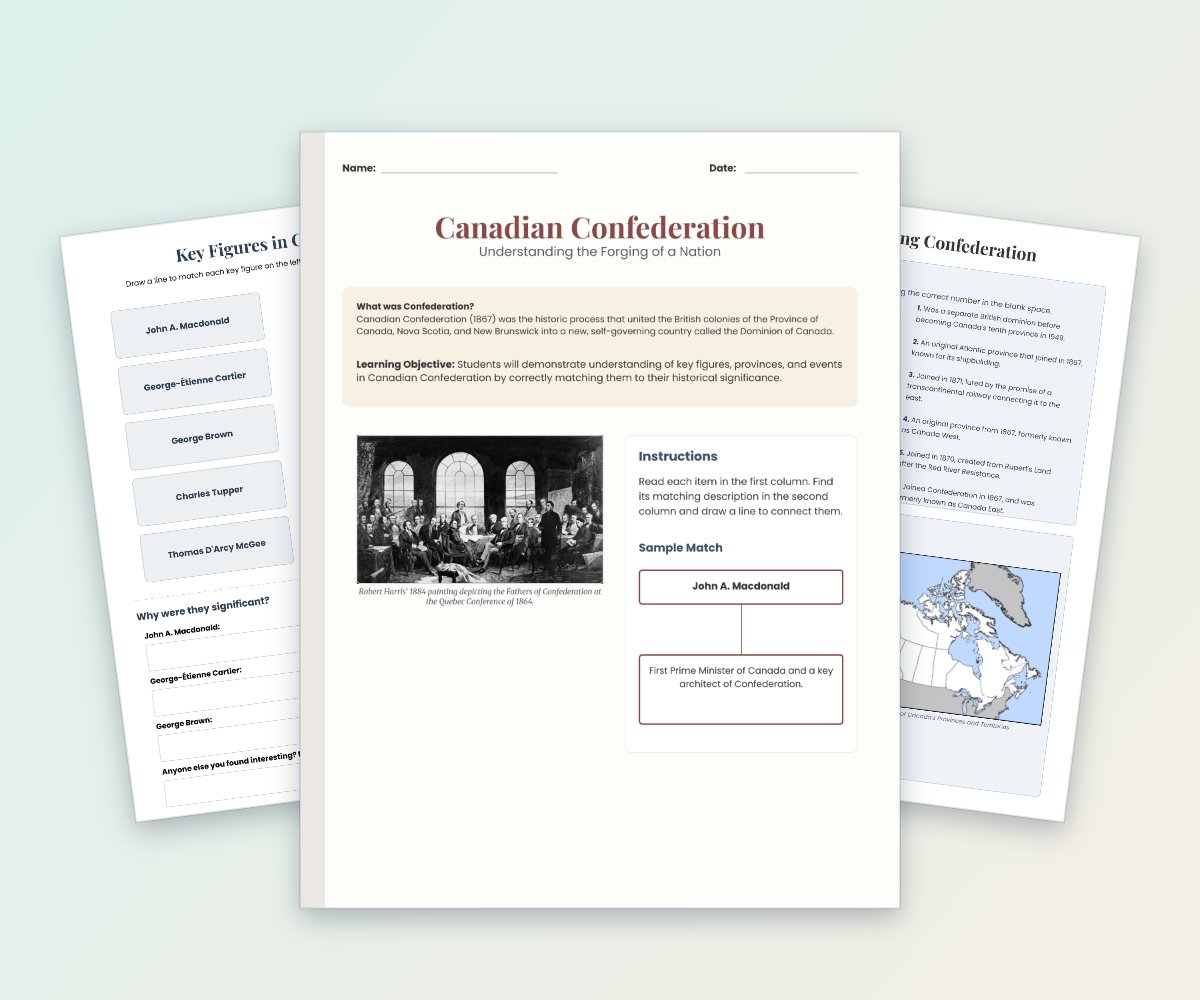
Students explore key figures, provinces, and events connected to Canadian Confederation through matching activities and a mapping task.
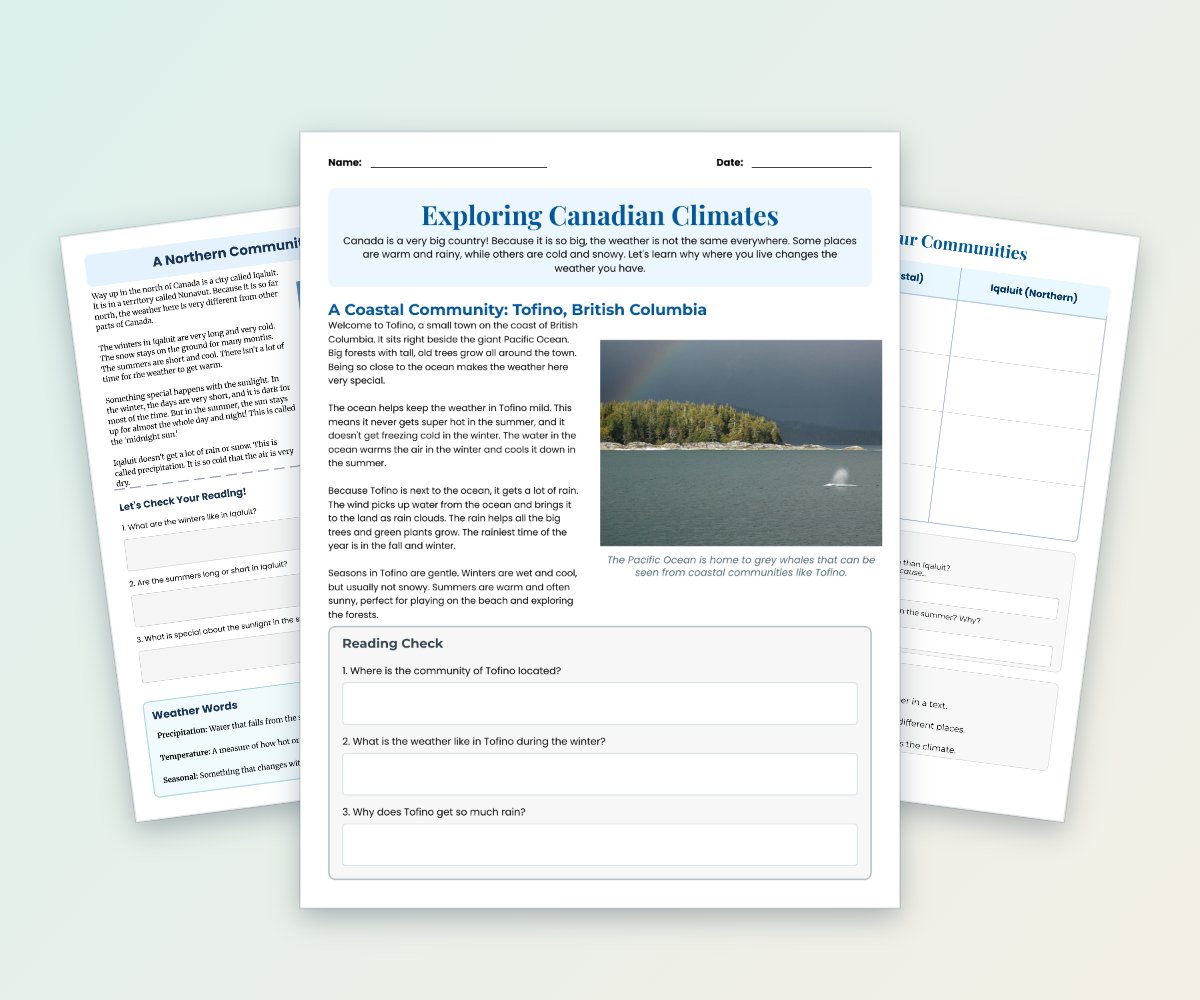
Students read accessible informational passages about coastal and northern climates in Tofino and Iqaluit.
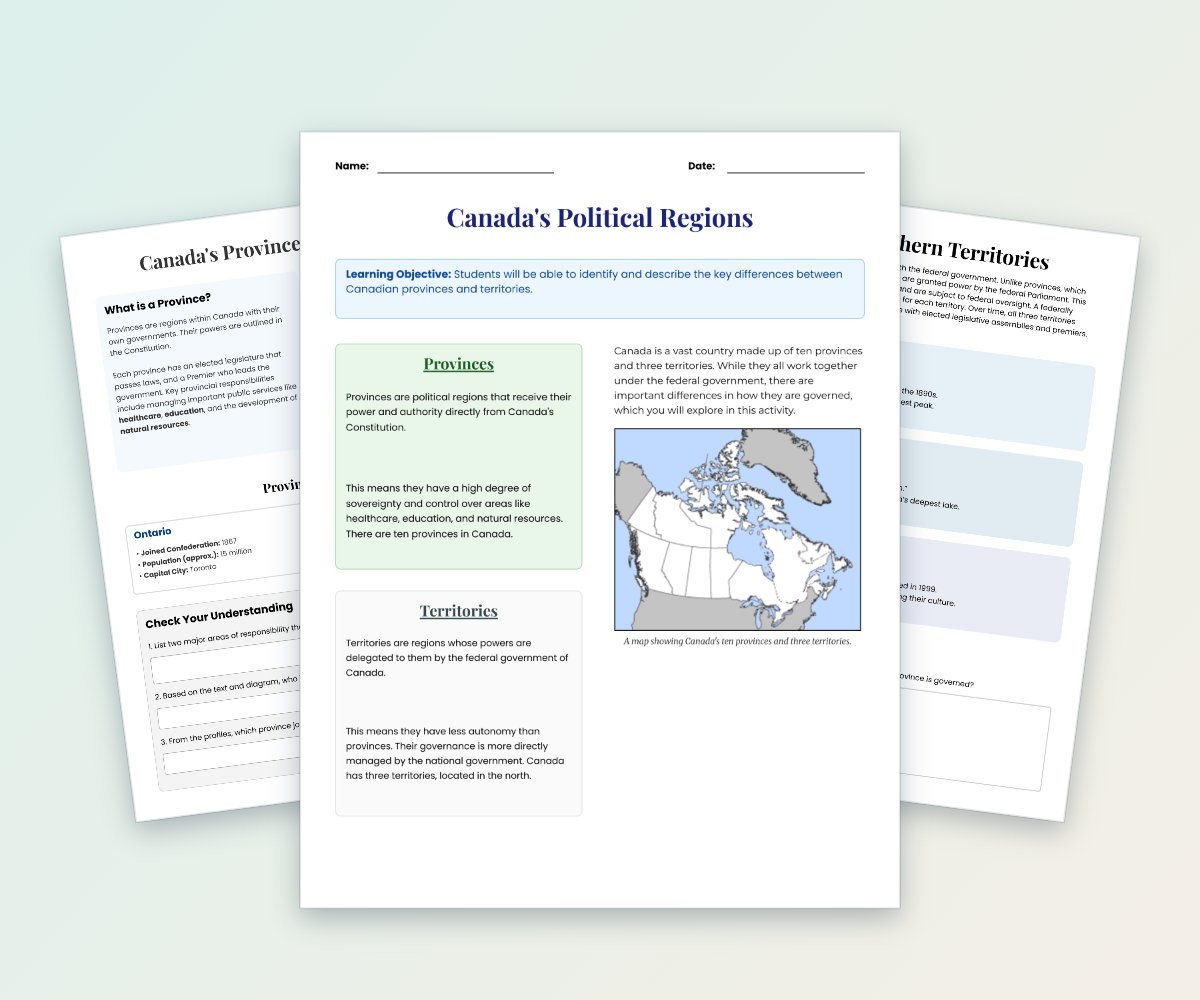
This four-page resource introduces the differences between Canada's provinces and territories, including governance, responsibilities, capitals, and Confederation dates.
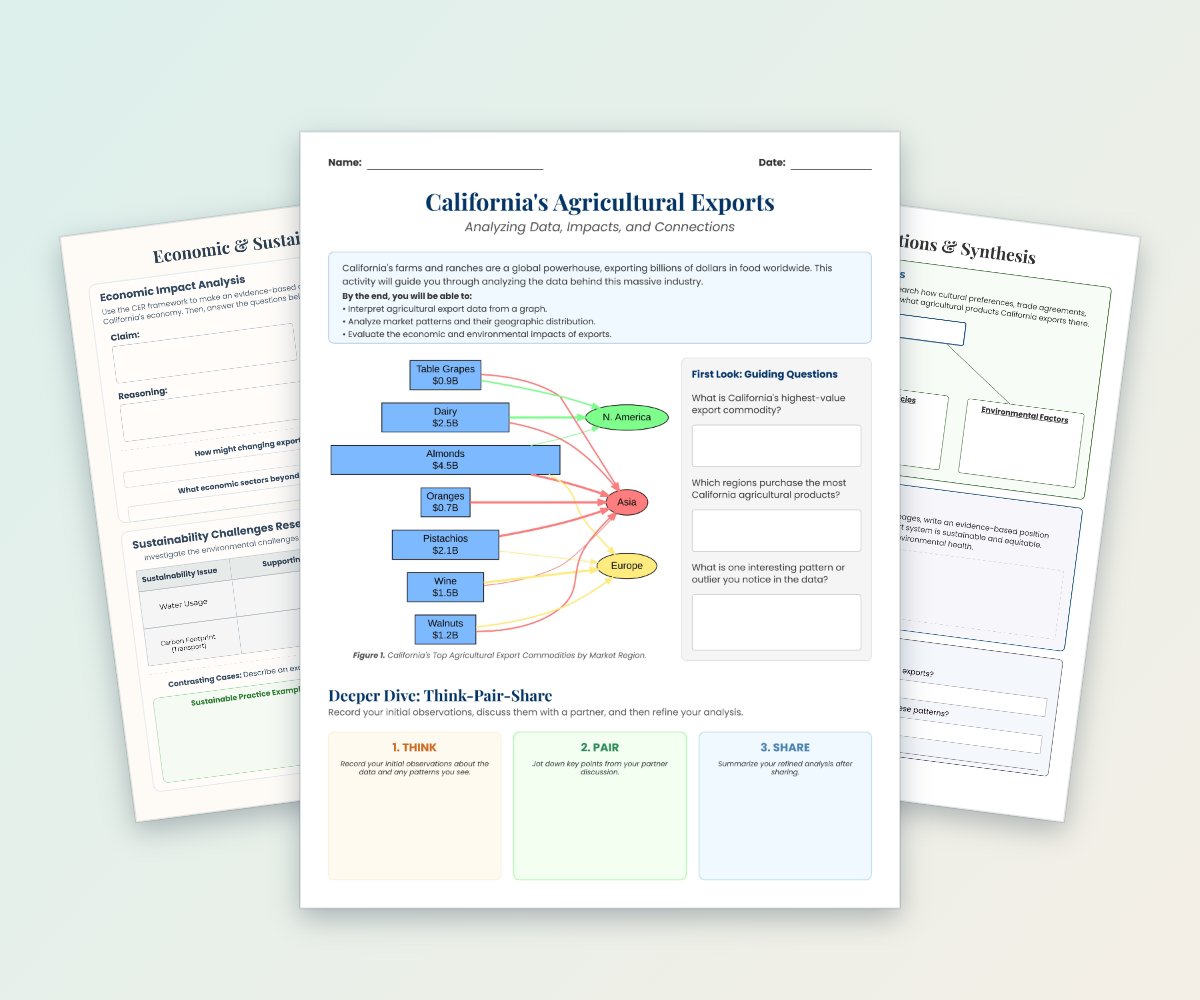
This three-page activity guides students in interpreting agricultural export data and examining economic, environmental, and global connections.
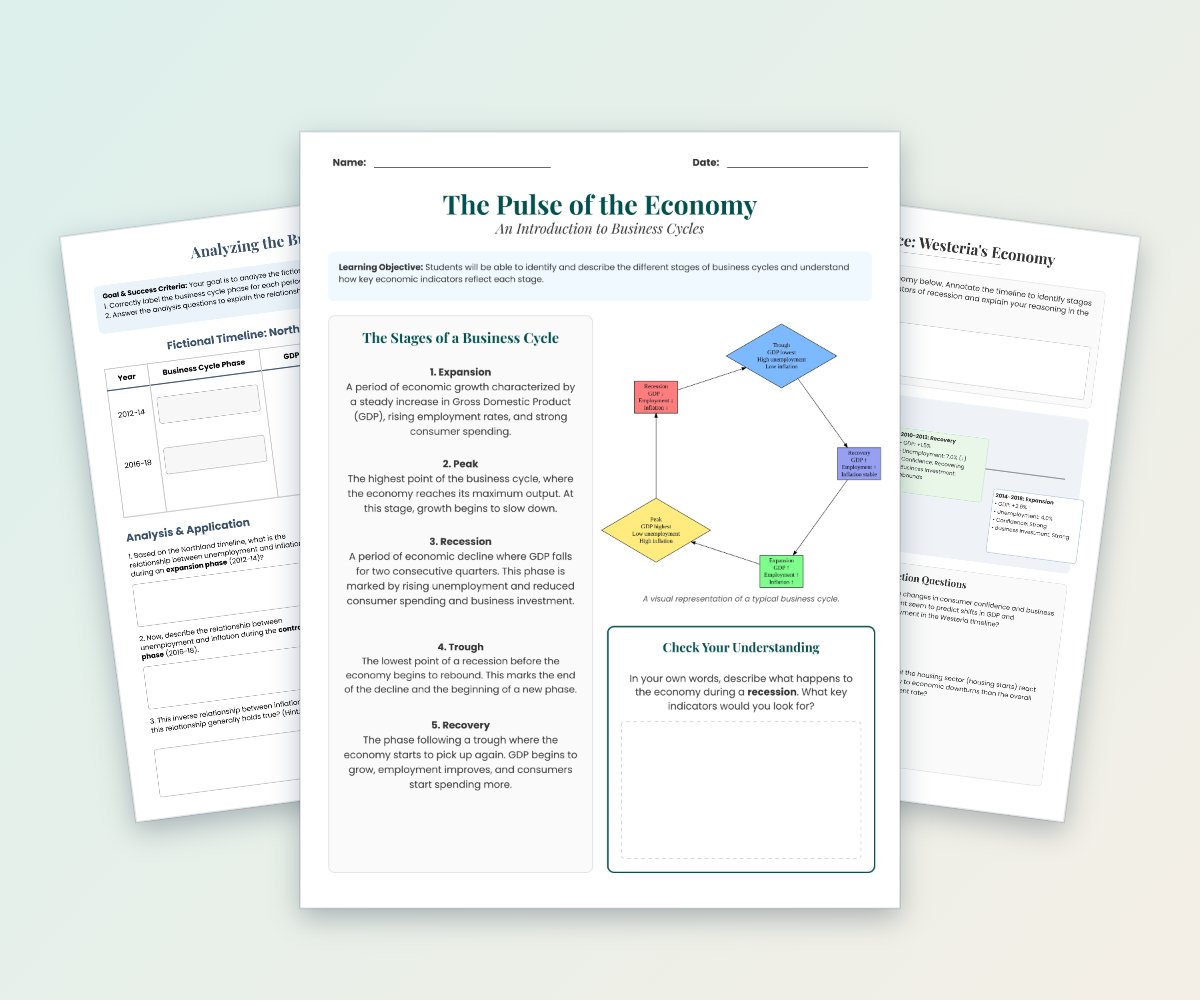
This five-page economics resource introduces expansion, peak, recession, trough, and recovery.
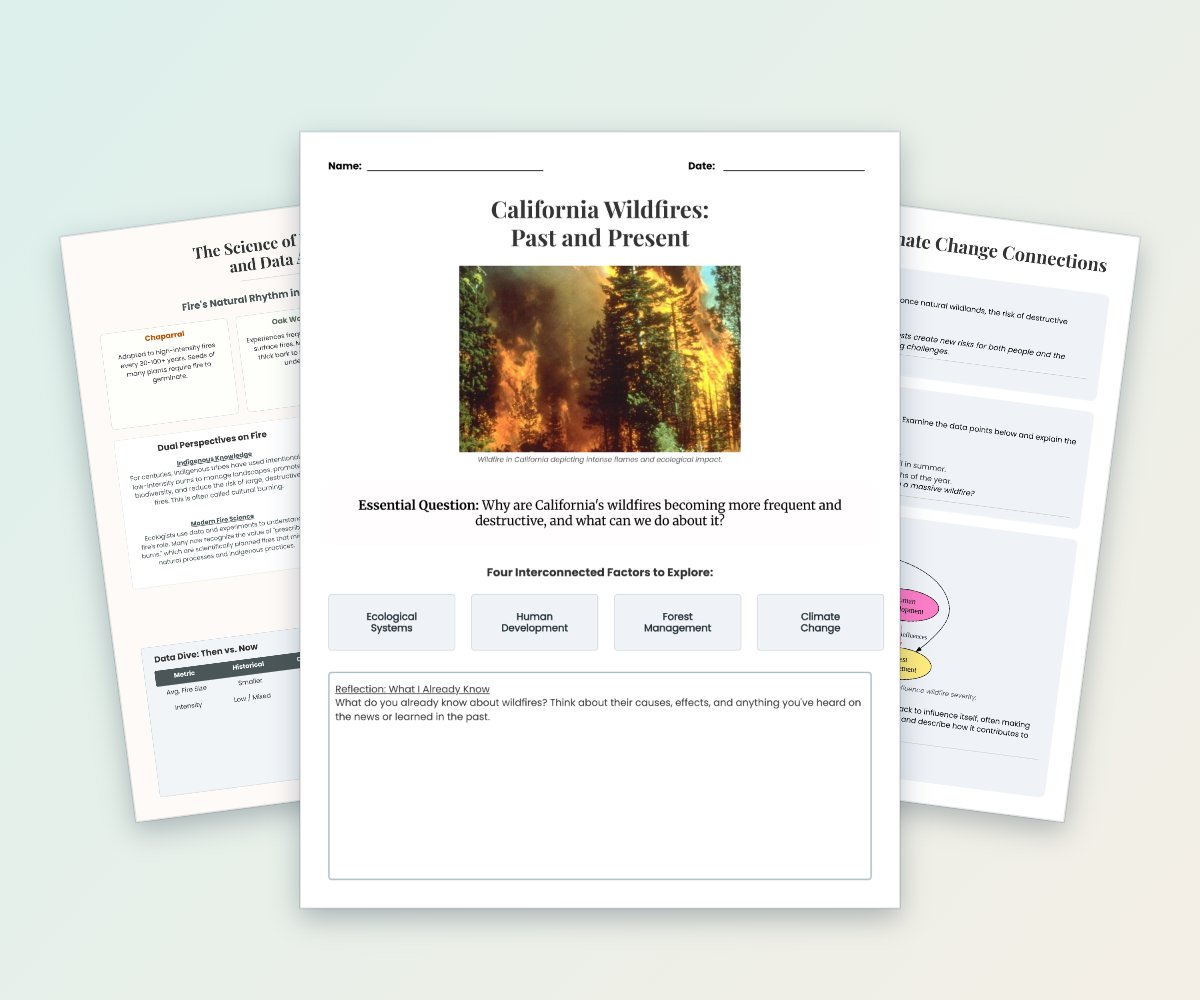
Students investigate why California wildfires are becoming more frequent and destructive through fire ecology, data analysis, case studies, and climate connections.
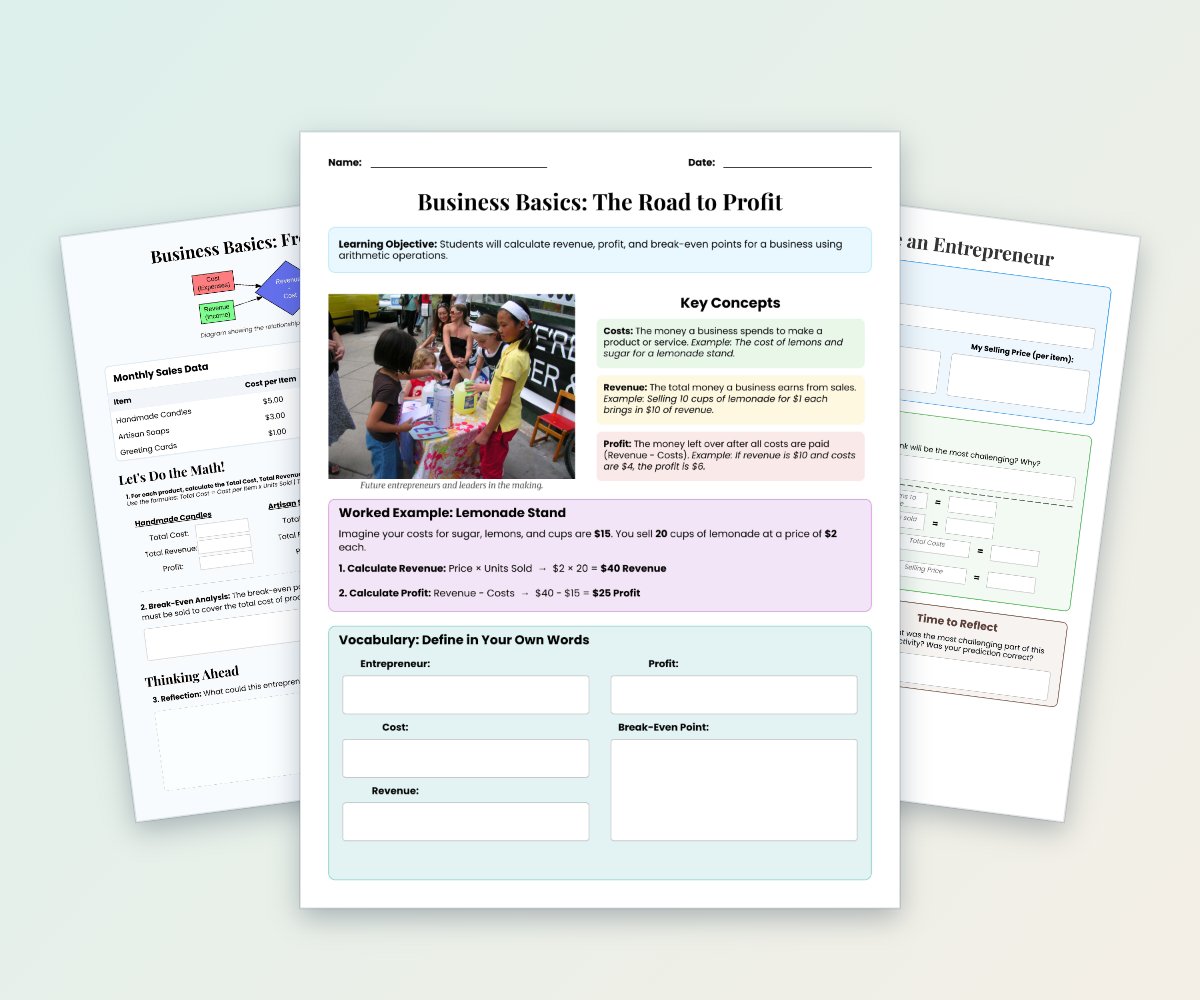
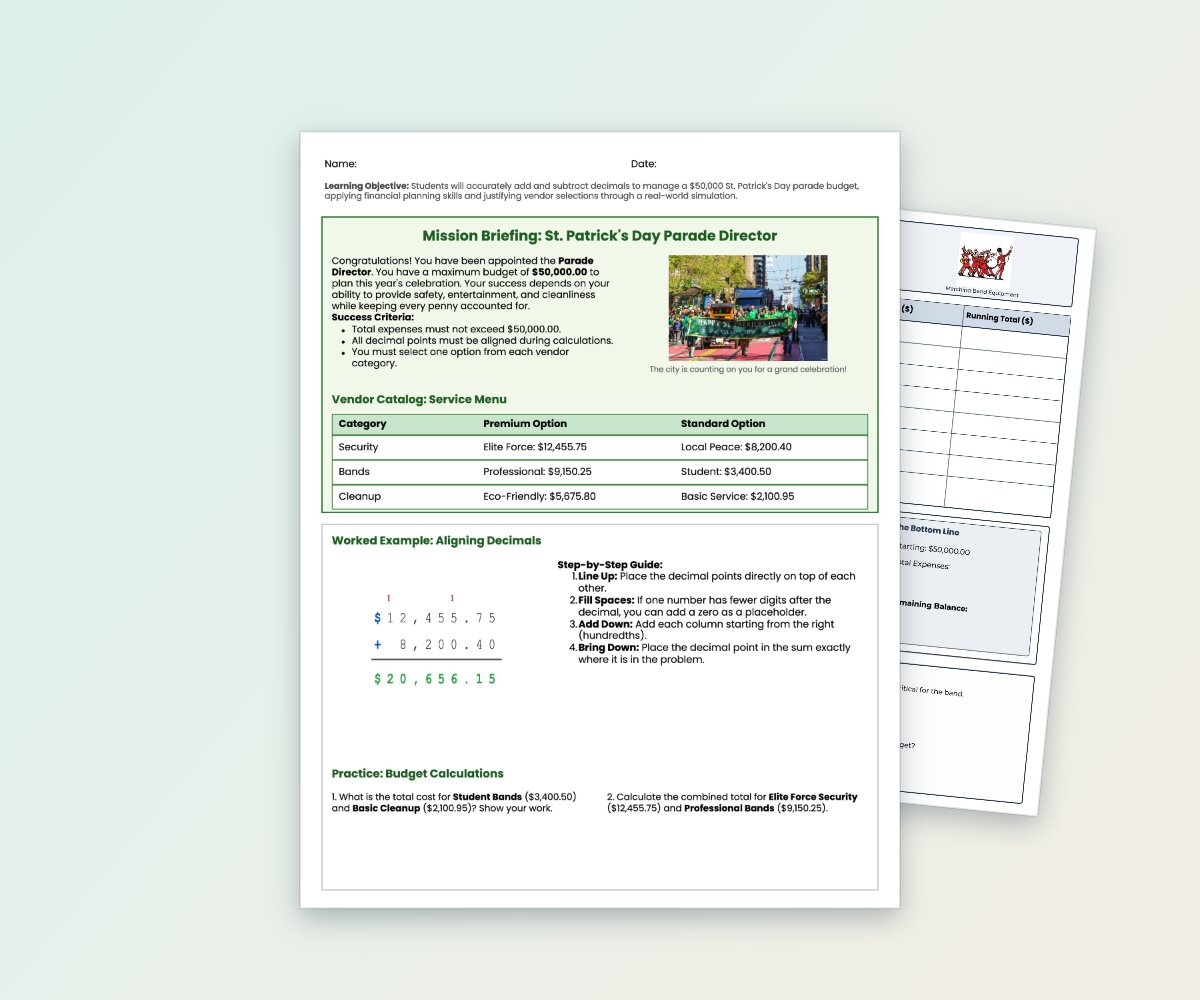
Students learn to calculate revenue, total costs, profit, and break-even points using lemonade-stand and product-sales examples.
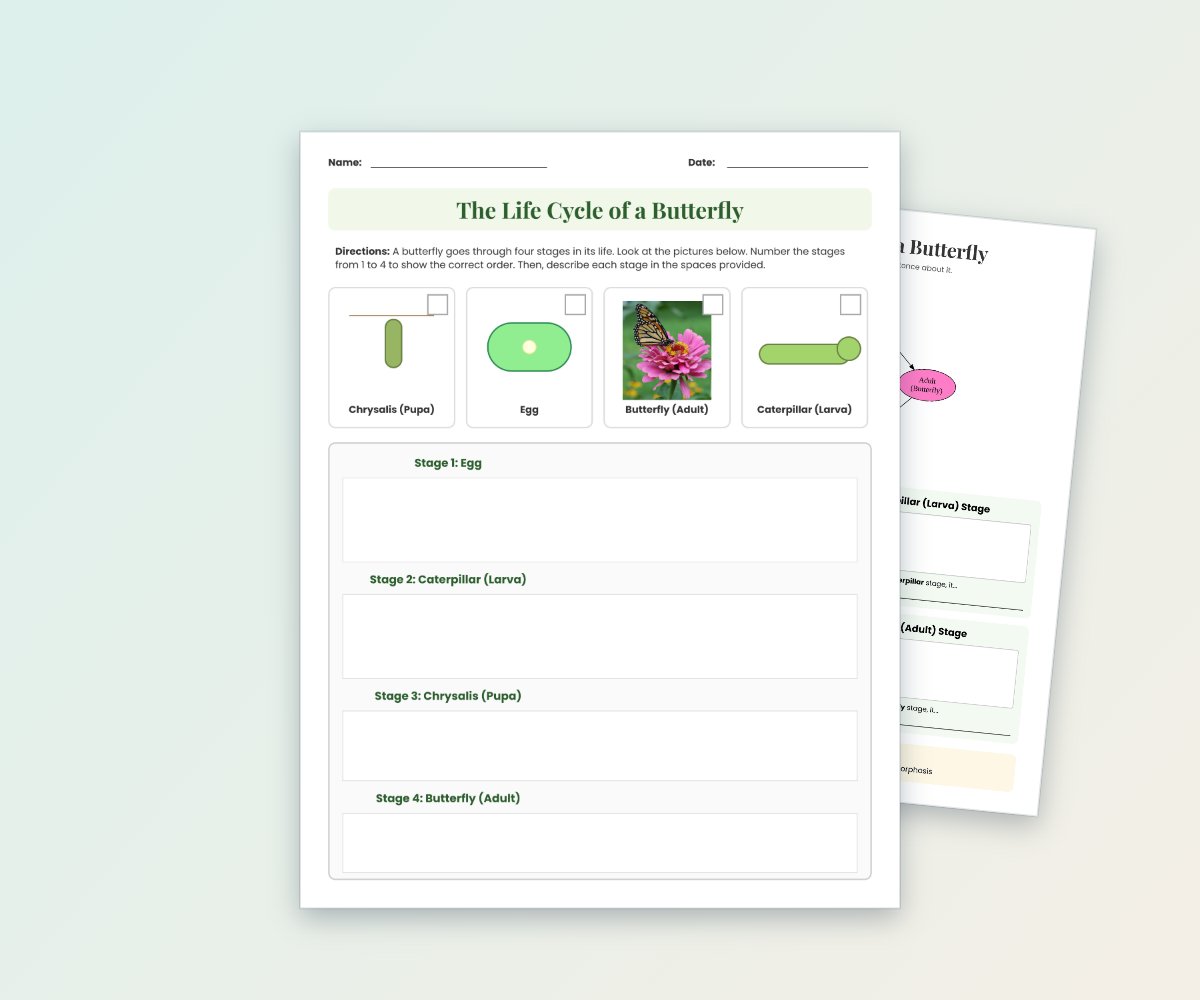
Students sequence the four stages of a butterfly's life cycle and describe each stage.
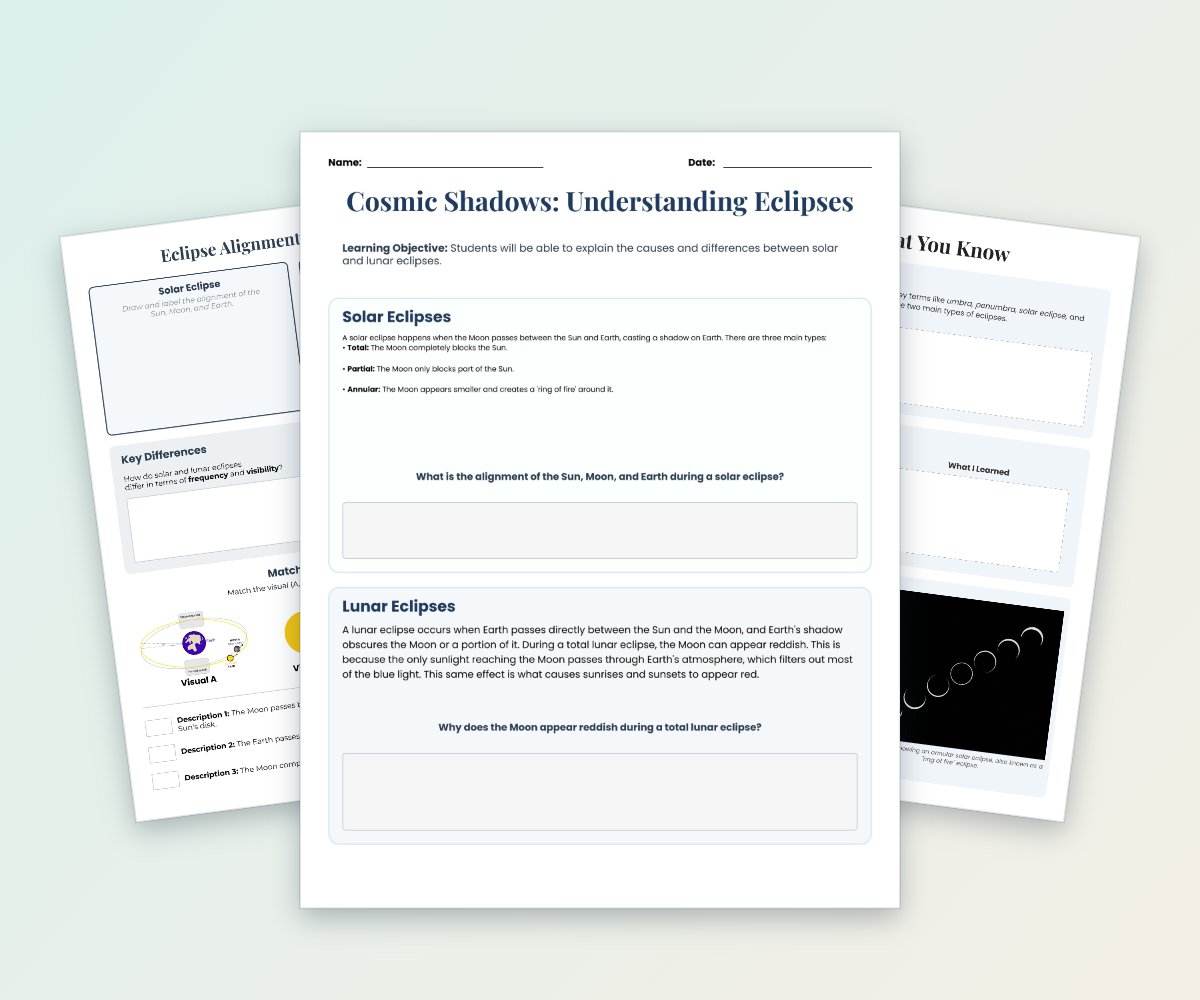
This three-page worksheet explores how solar and lunar eclipses occur, including Sun-Moon-Earth alignments, eclipse types, shadows, visibility, and safety.
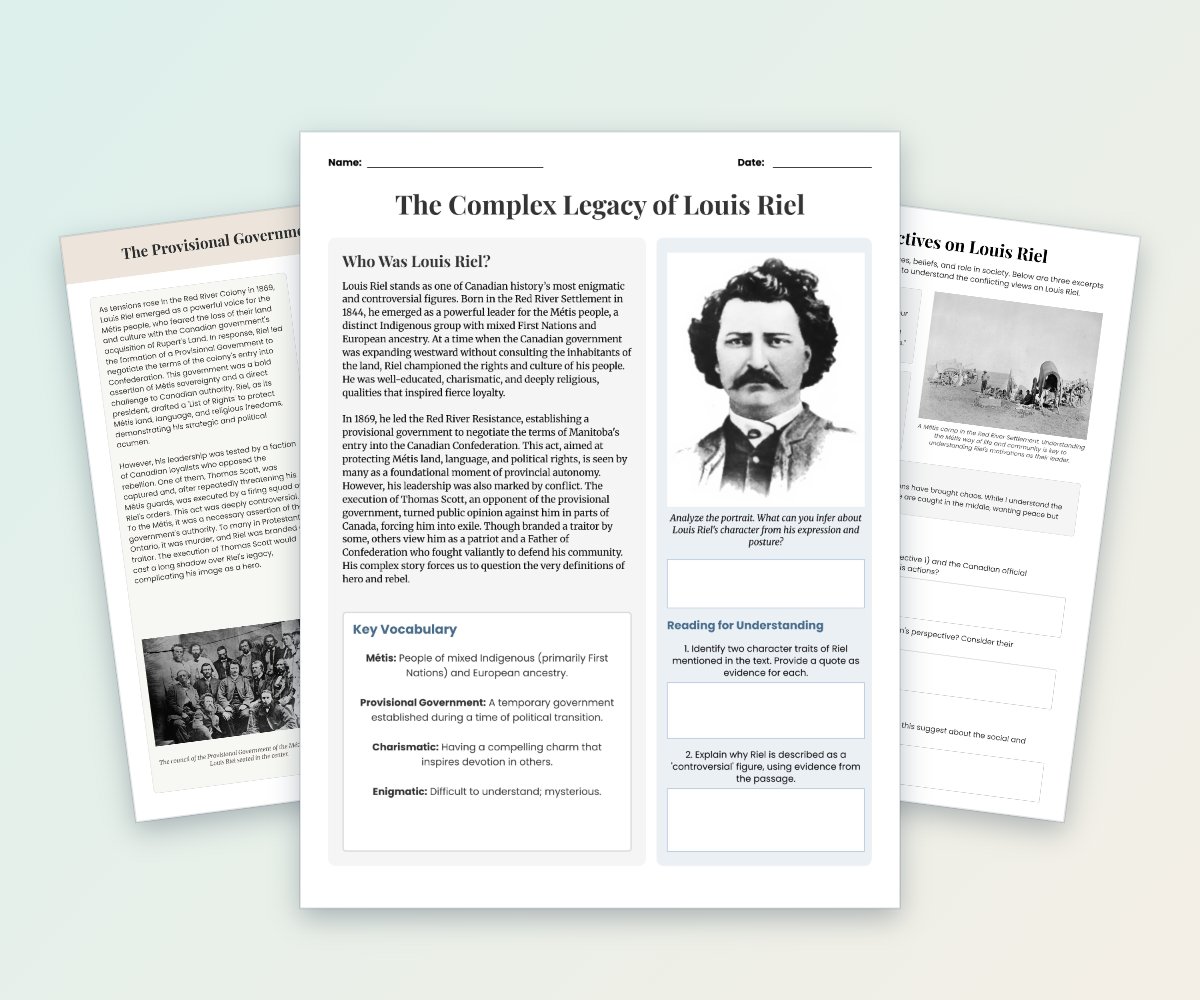
This four-page worksheet explores Louis Riel’s leadership, the Red River Resistance, the Provisional Government, and his contested historical legacy.
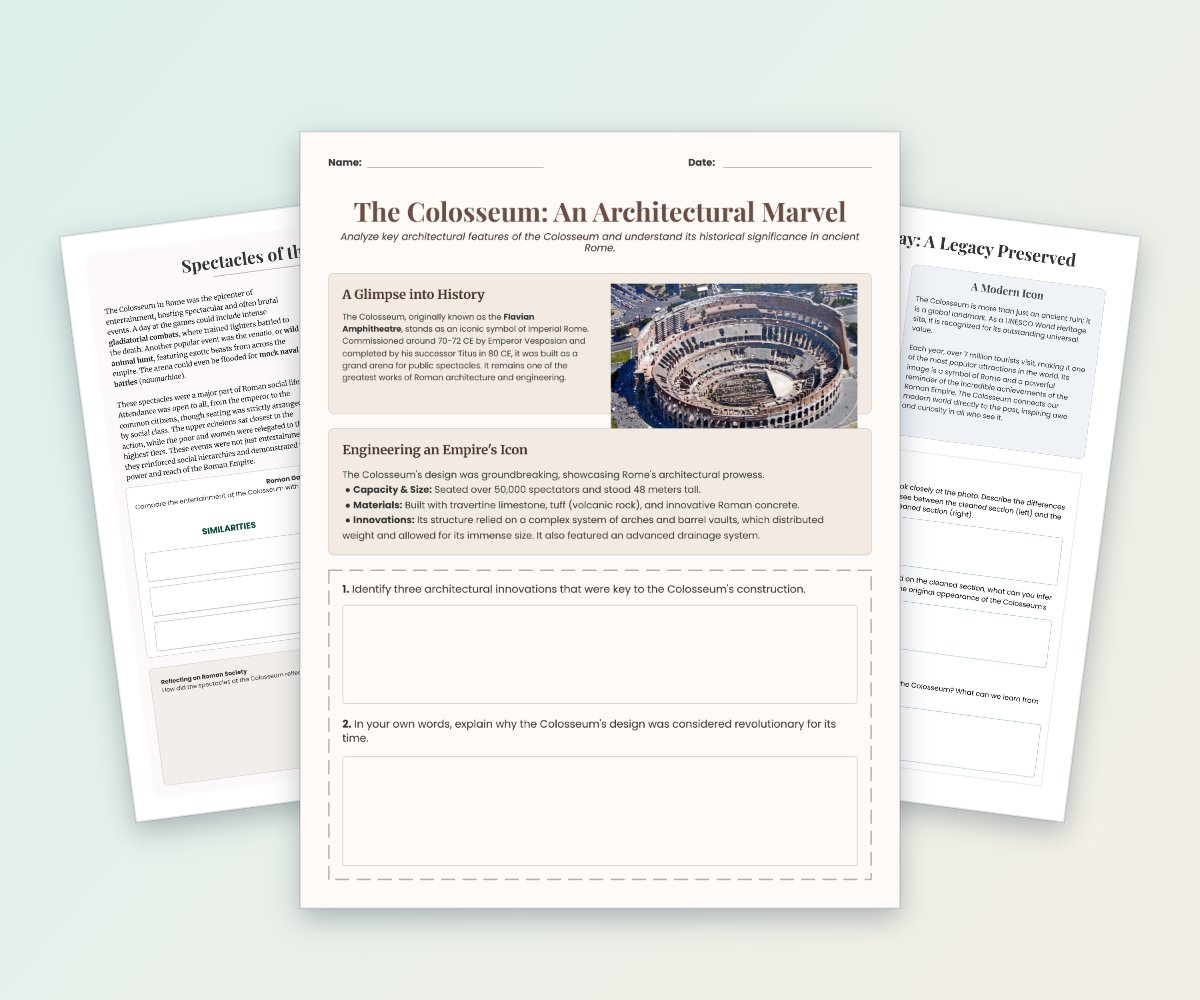
Students explore the Colosseum’s architecture, engineering innovations, historical significance, and role in Roman society.
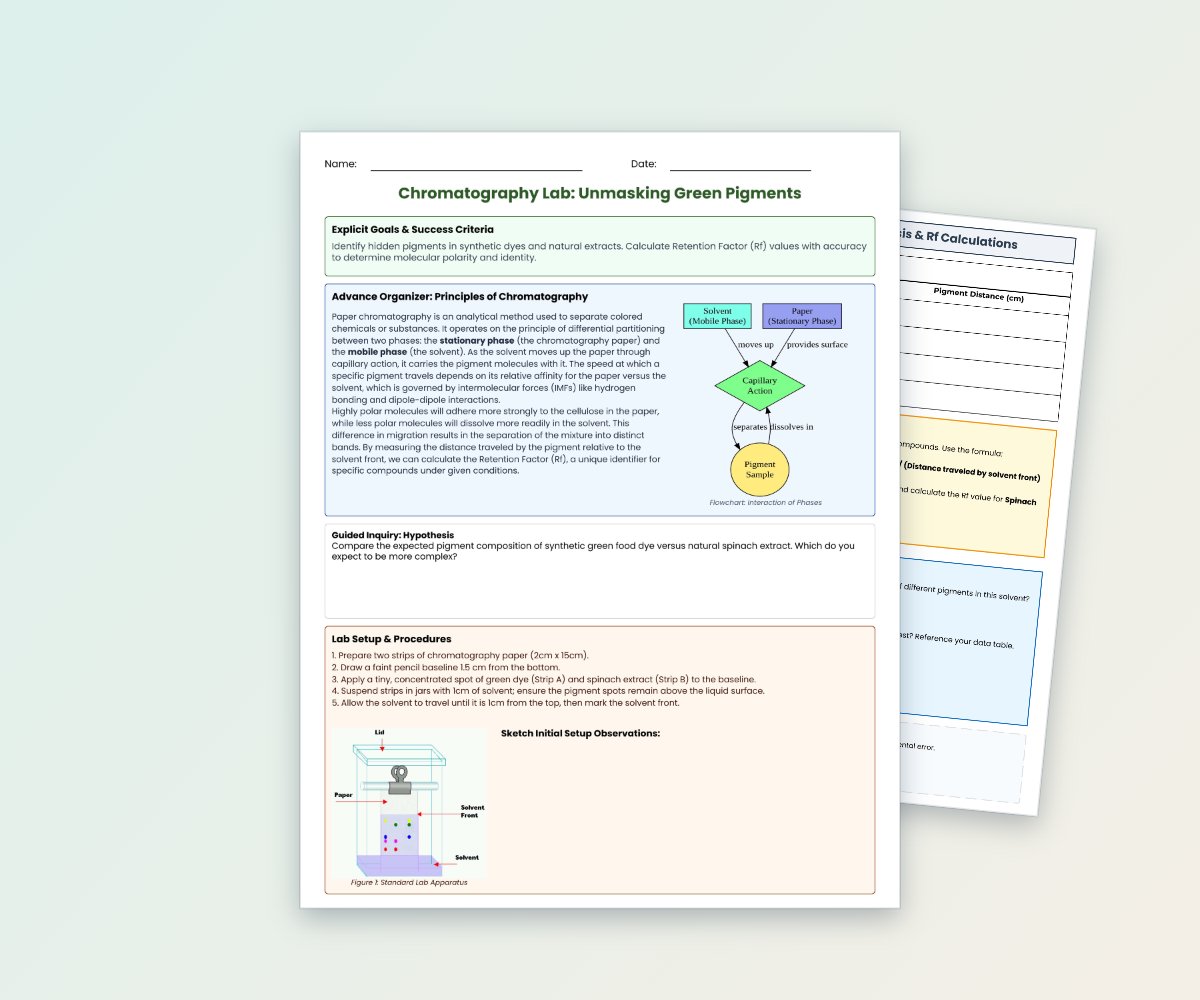
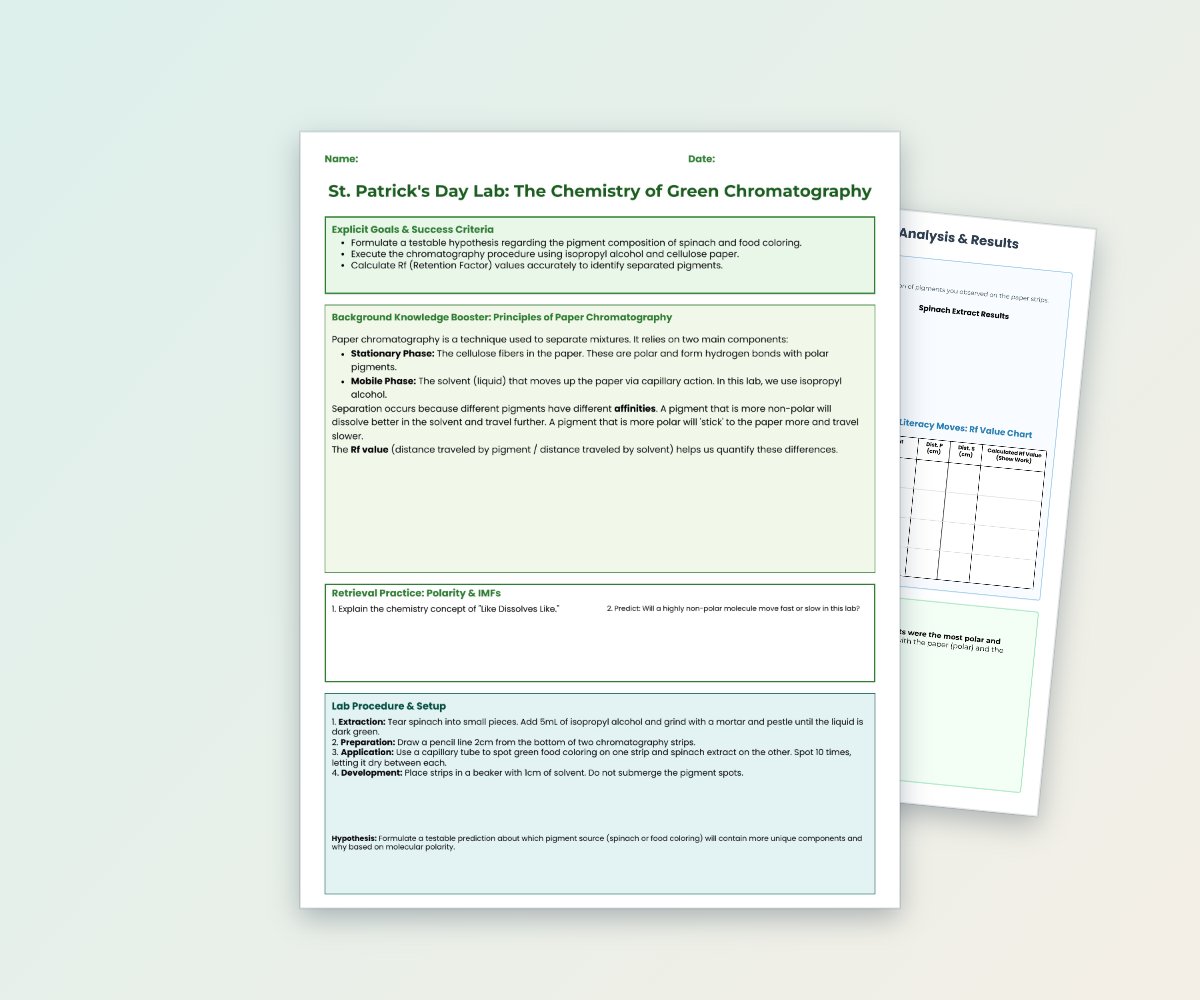
Students investigate synthetic green food dye and spinach extract using paper chromatography.
Students investigate spinach and food coloring through paper chromatography using isopropyl alcohol and cellulose paper.
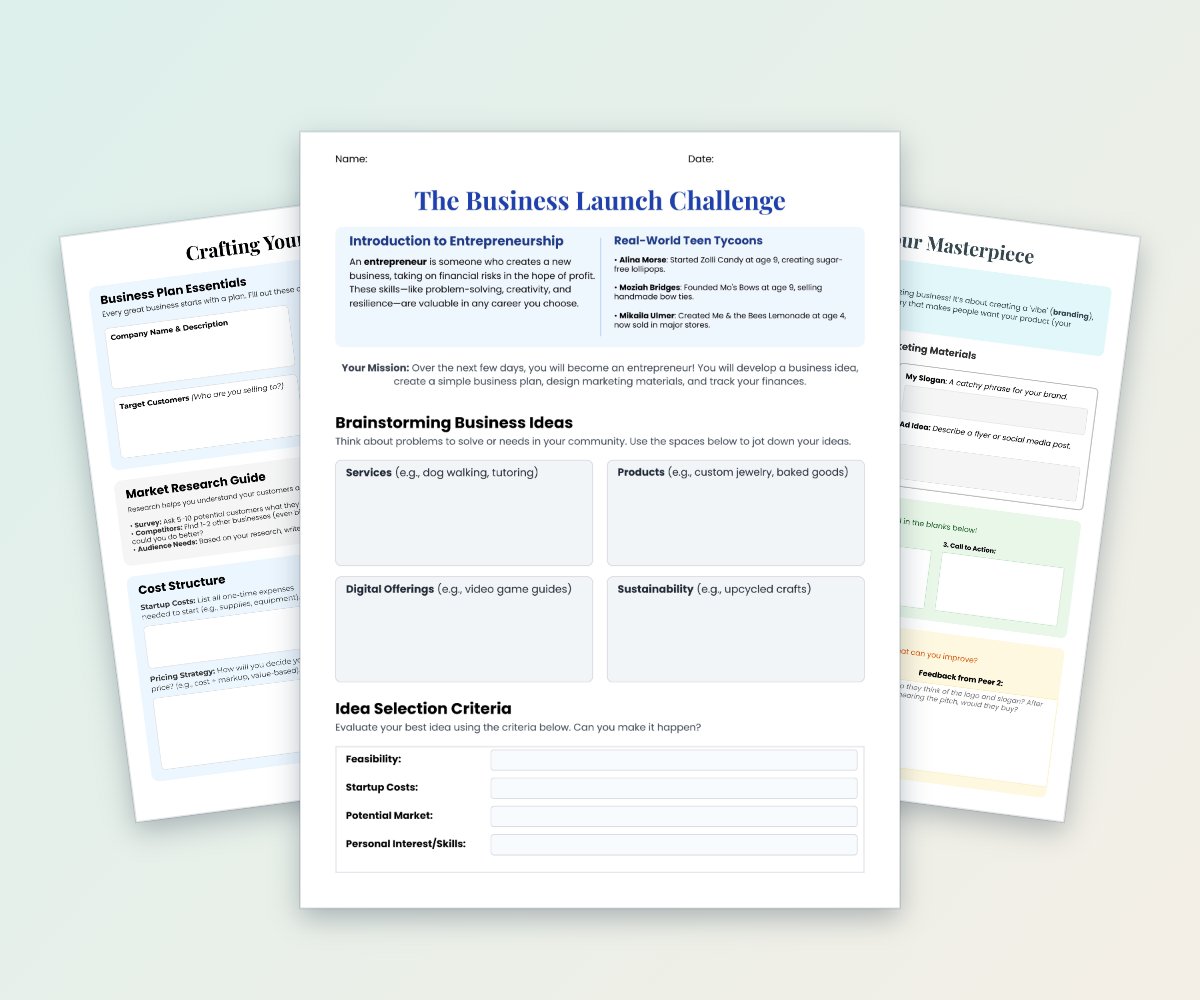
Students develop a business idea and work through feasibility, target customers, market research, startup costs, pricing, revenue, and break-even planning.
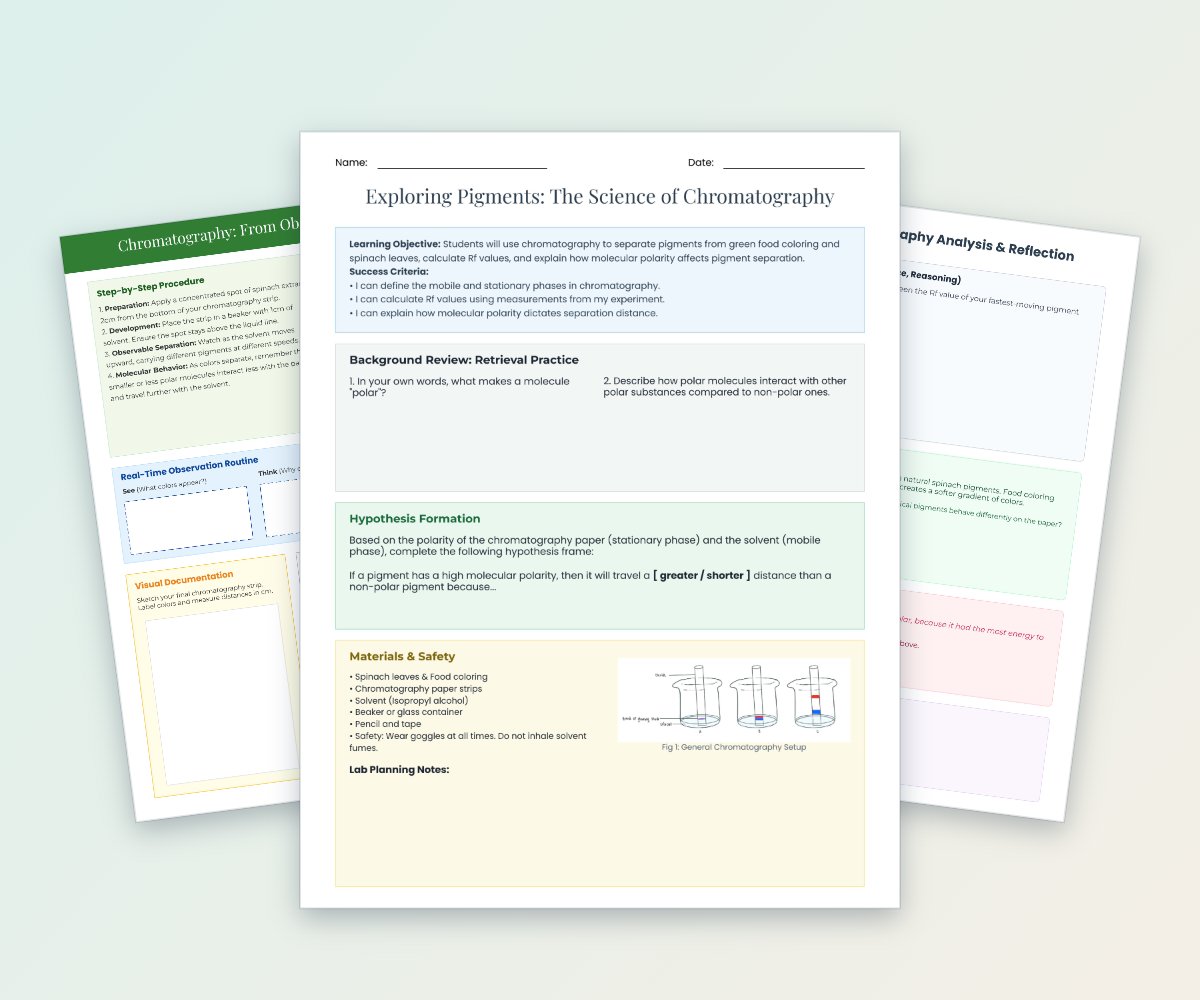
Students investigate the separation of pigments from green food coloring and spinach using paper chromatography.
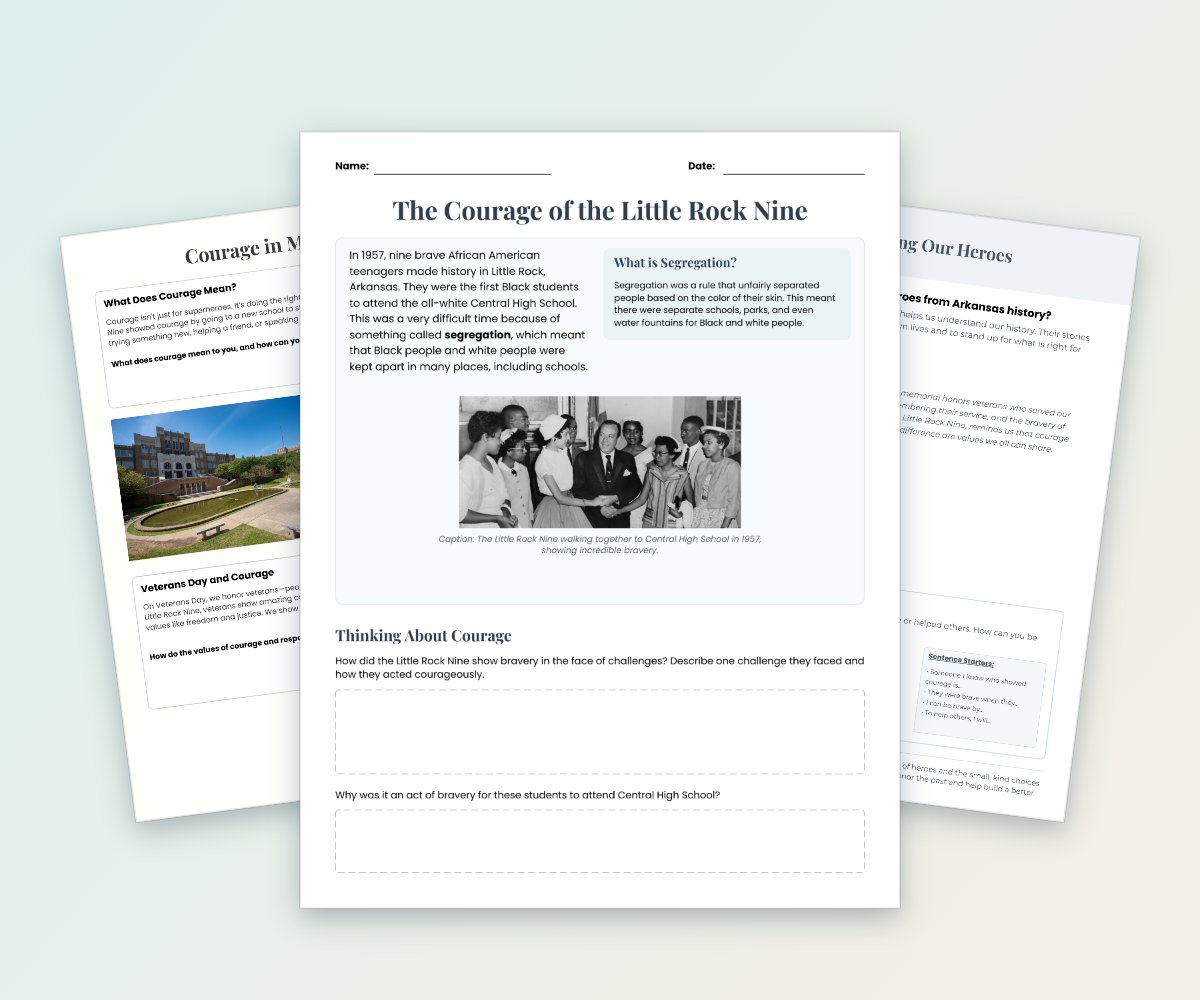
This three-page worksheet introduces students to the Little Rock Nine, segregation, desegregation, and the courage shown during the 1957 Central High School integration.
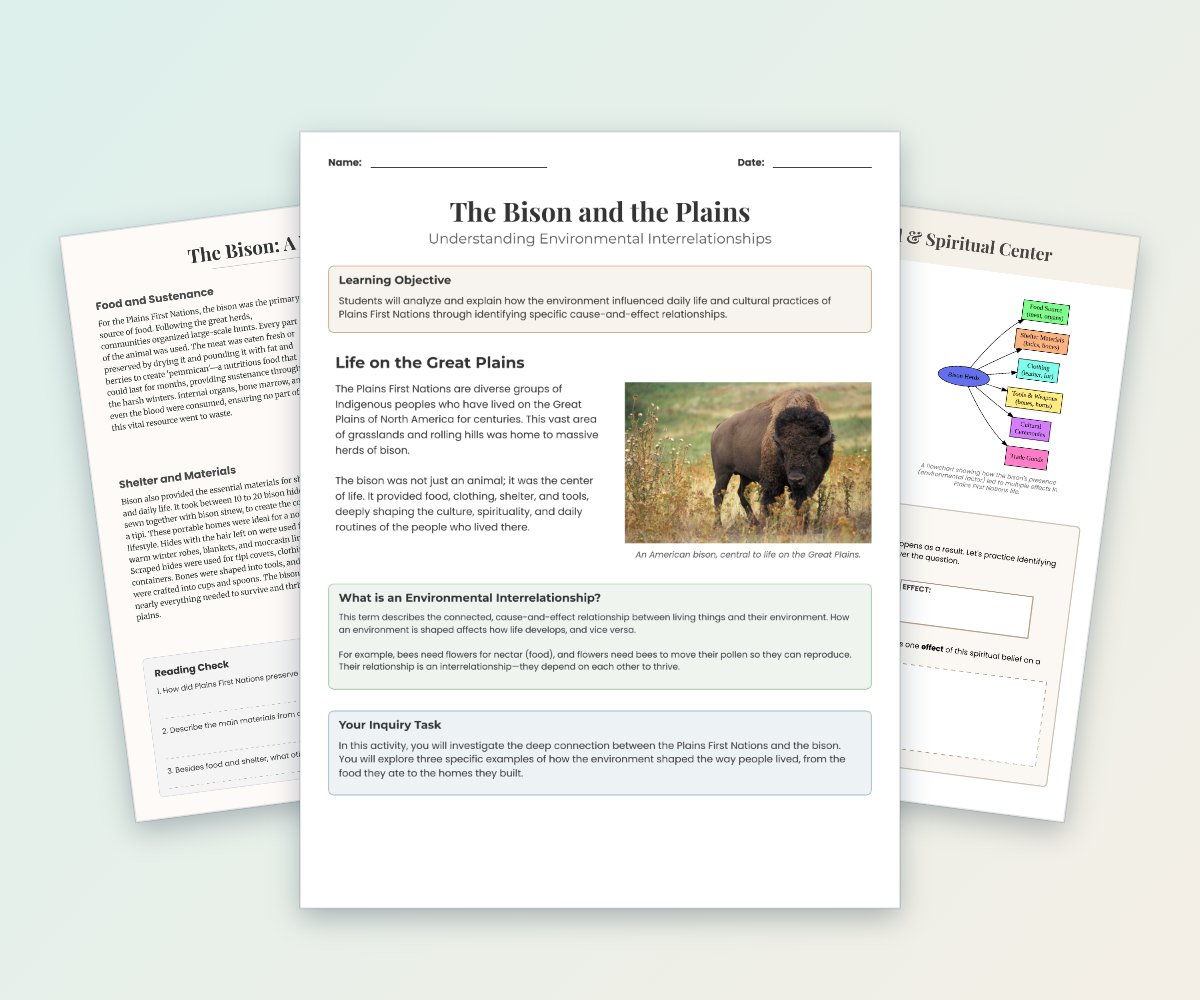
Students investigate how bison shaped food, shelter, clothing, tools, and cultural practices among Plains First Nations.
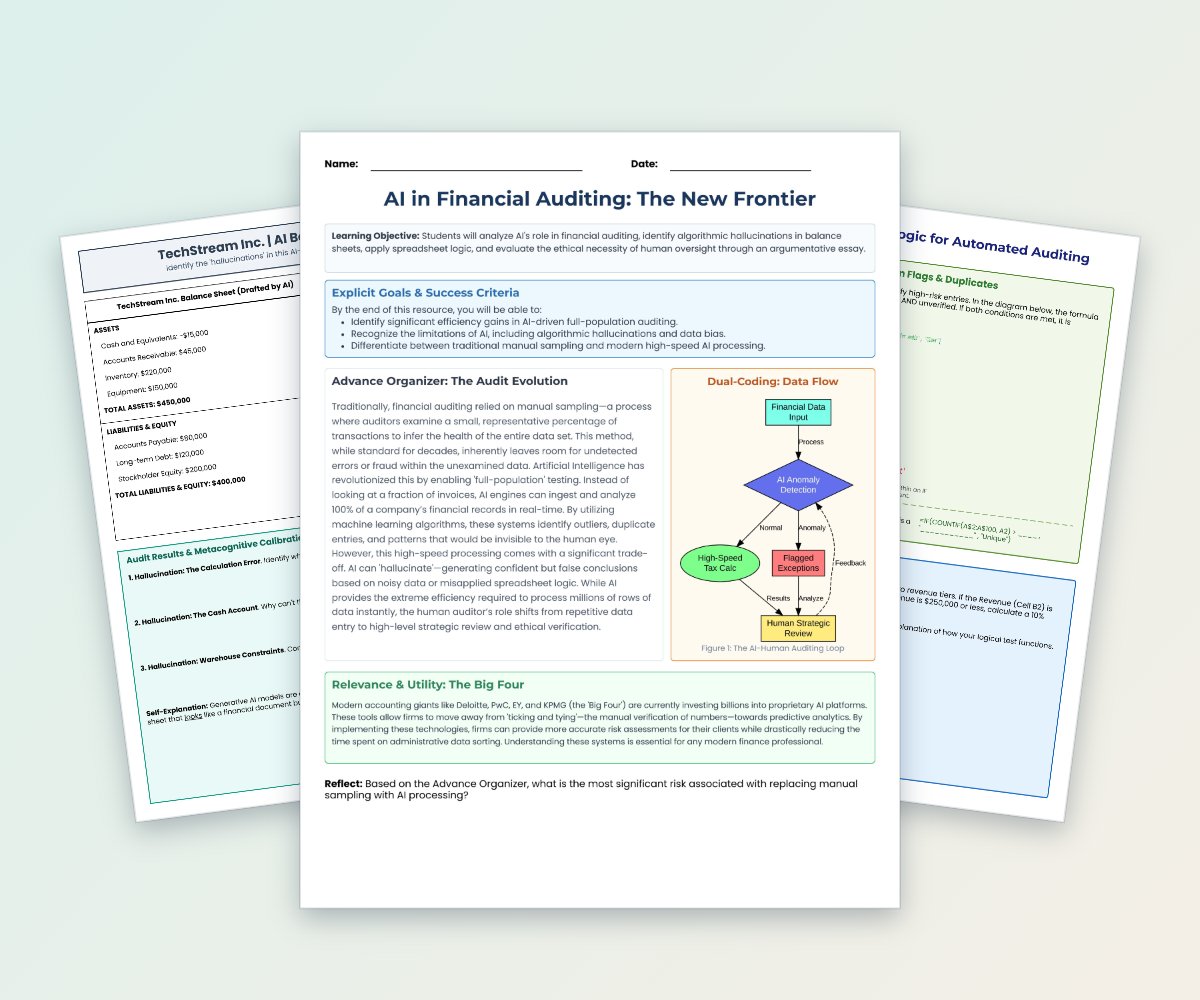
This five-page instructional resource introduces students to AI-powered full-population auditing, algorithmic hallucinations, data bias, and the continuing importance of human oversight.
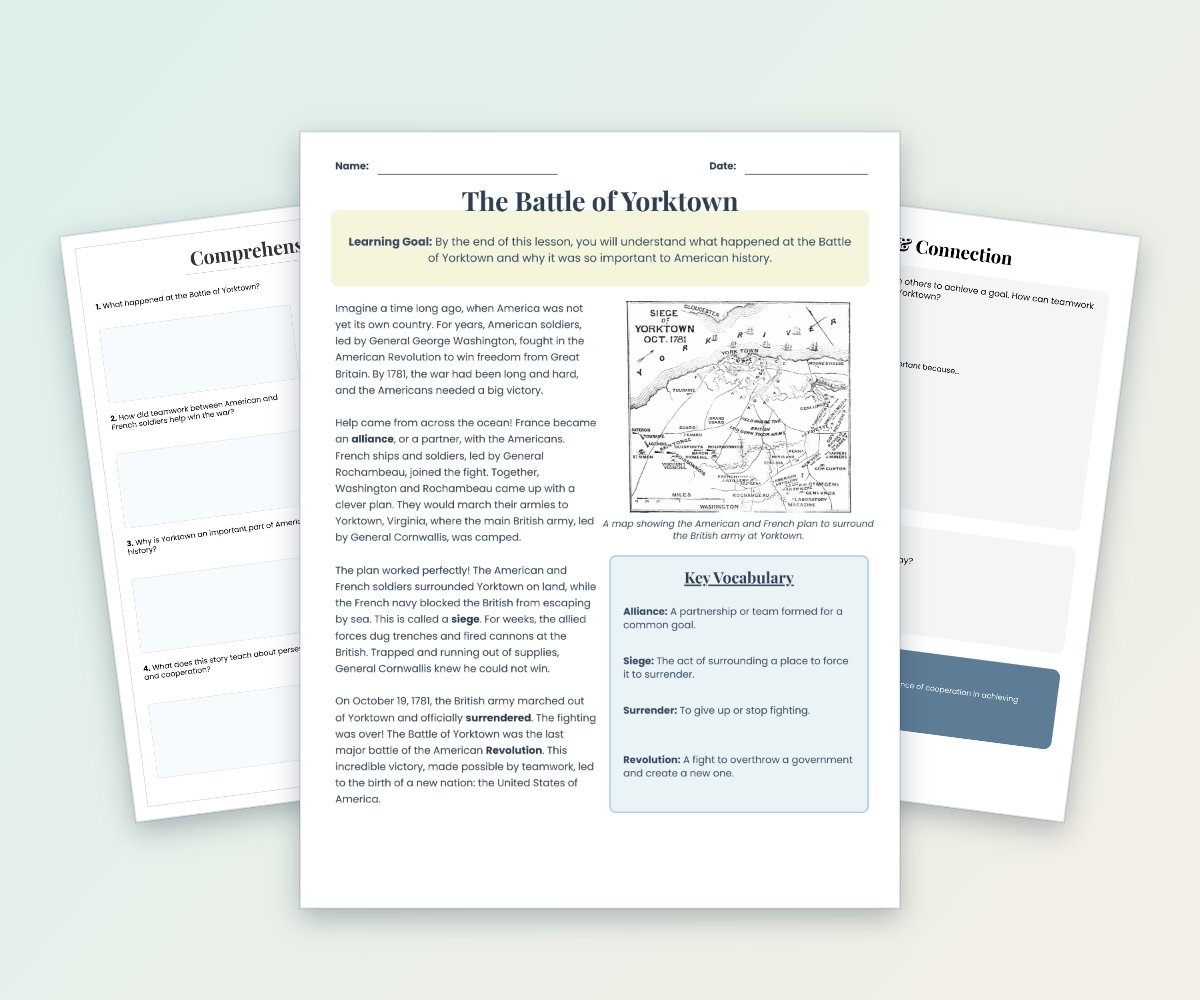
This three-page lesson explains the Battle of Yorktown, including the American-French alliance, siege strategy, and British surrender.
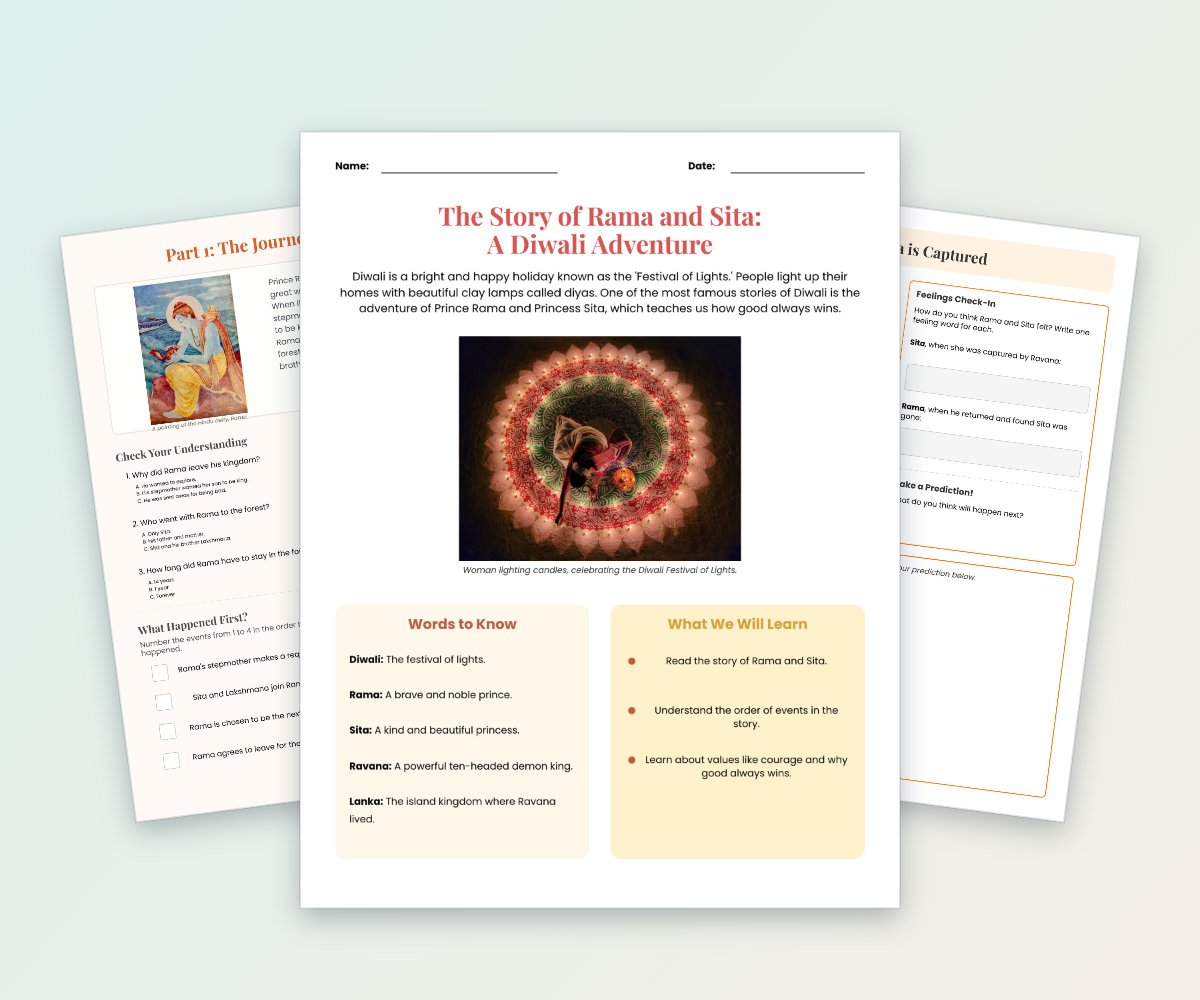
Students read an accessible retelling of the Rama and Sita story associated with Diwali.
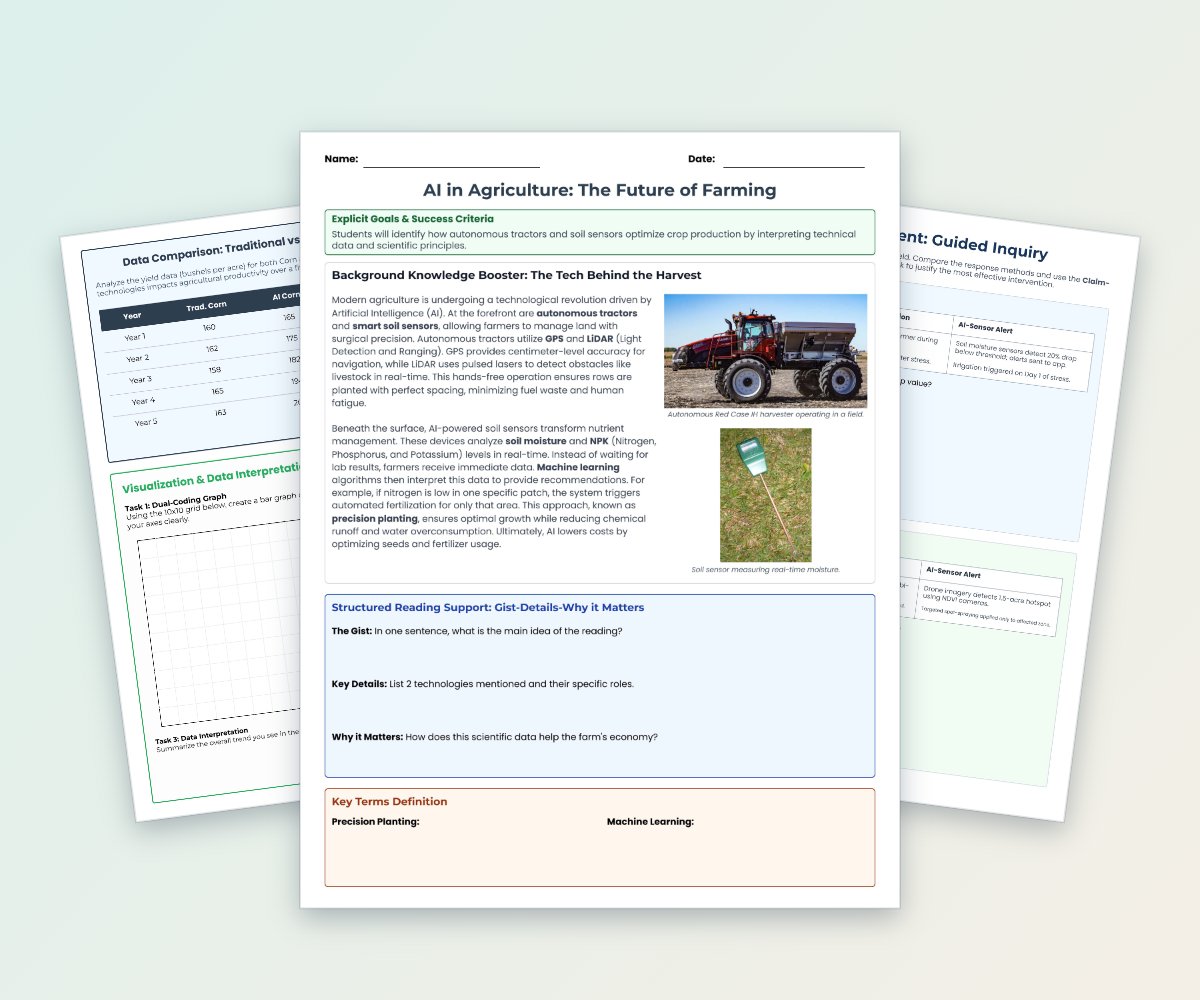
Students explore autonomous tractors, soil sensors, GPS, LiDAR, and machine learning in modern farming.
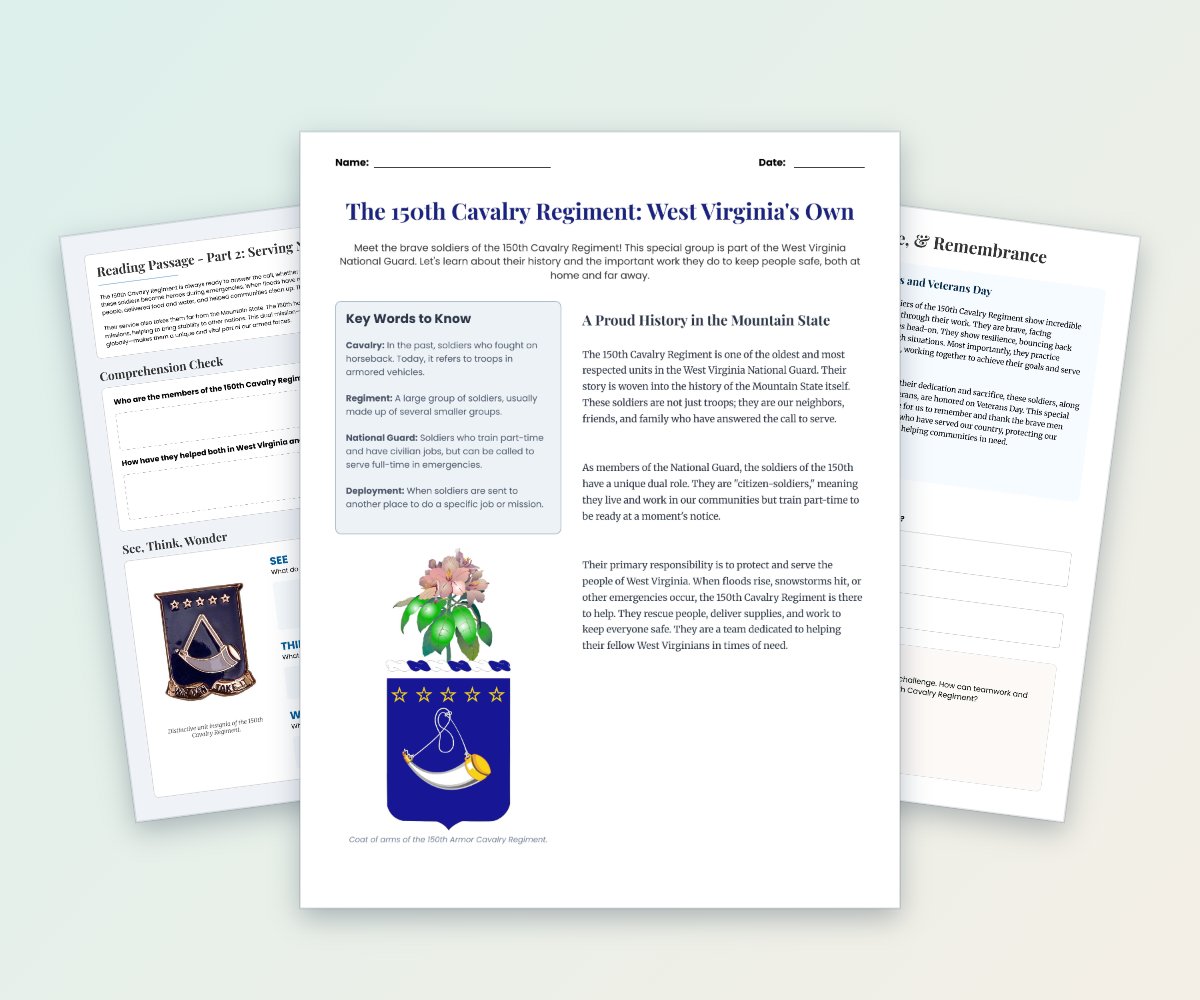
Introduce students to the history, mission, and community service of West Virginia’s 150th Cavalry Regiment.
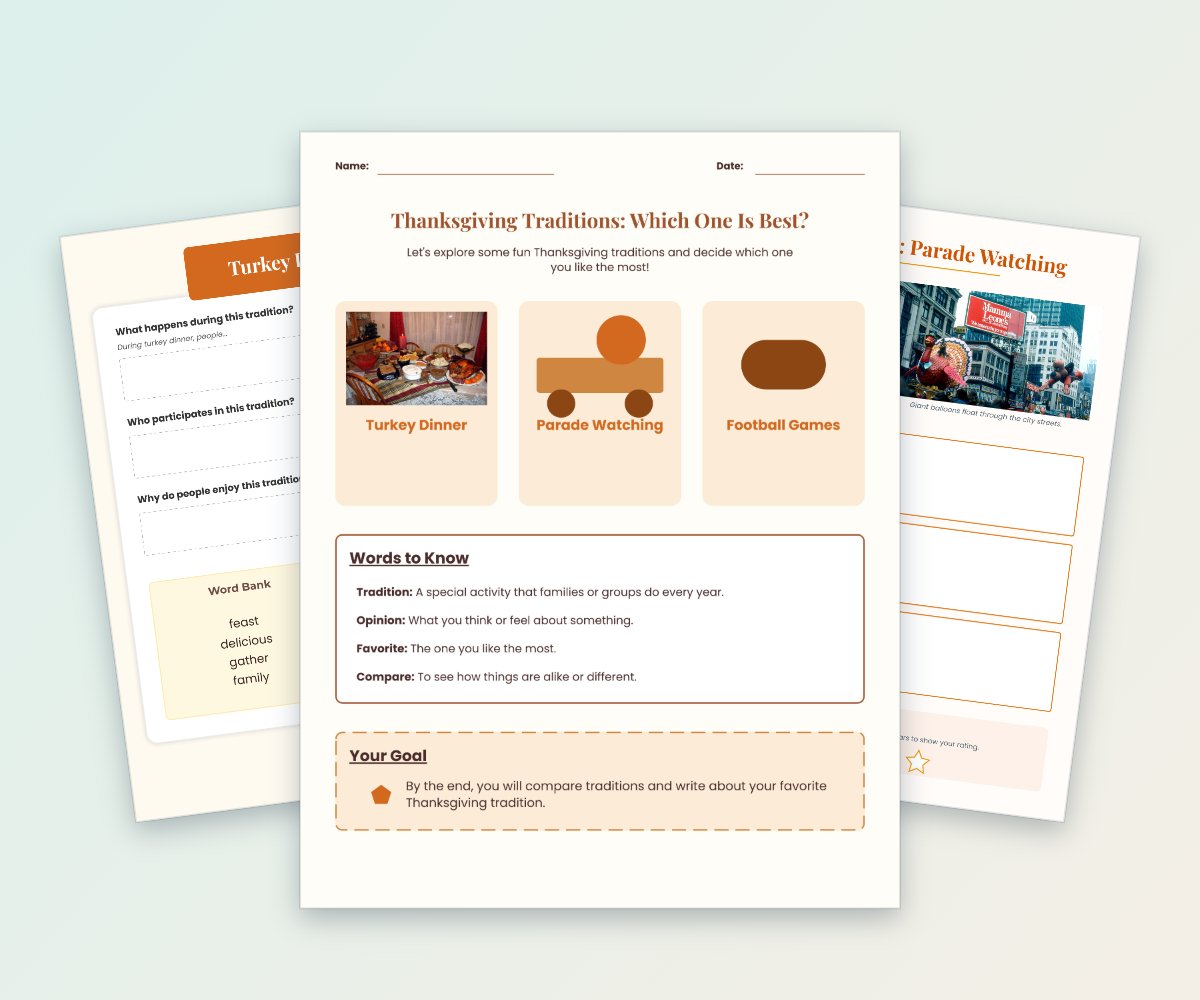
Students explore turkey dinner, parade watching, and football games as Thanksgiving traditions.
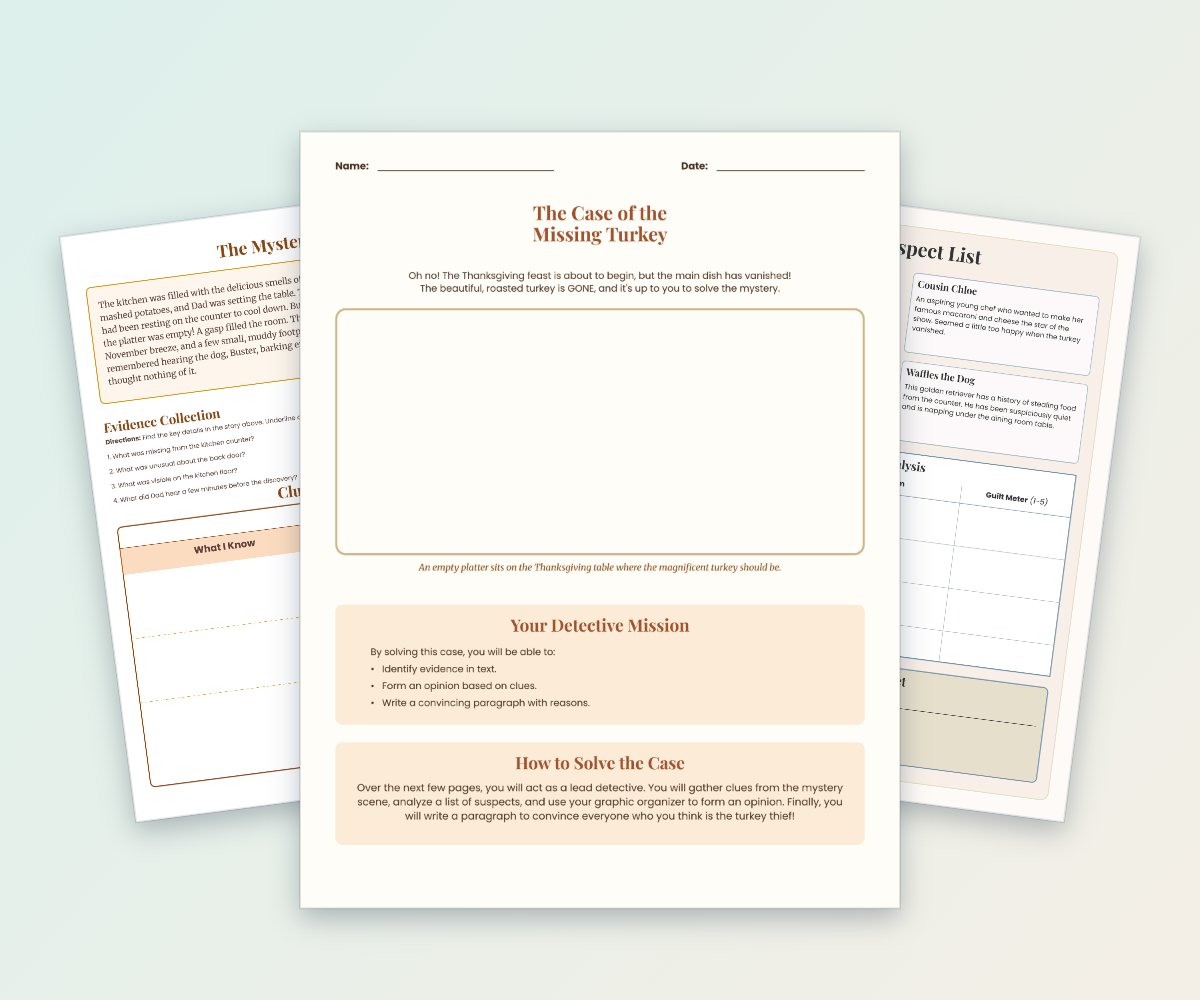
Students solve a humorous Thanksgiving turkey mystery by identifying evidence, interpreting clues, analyzing suspects, and forming an opinion.
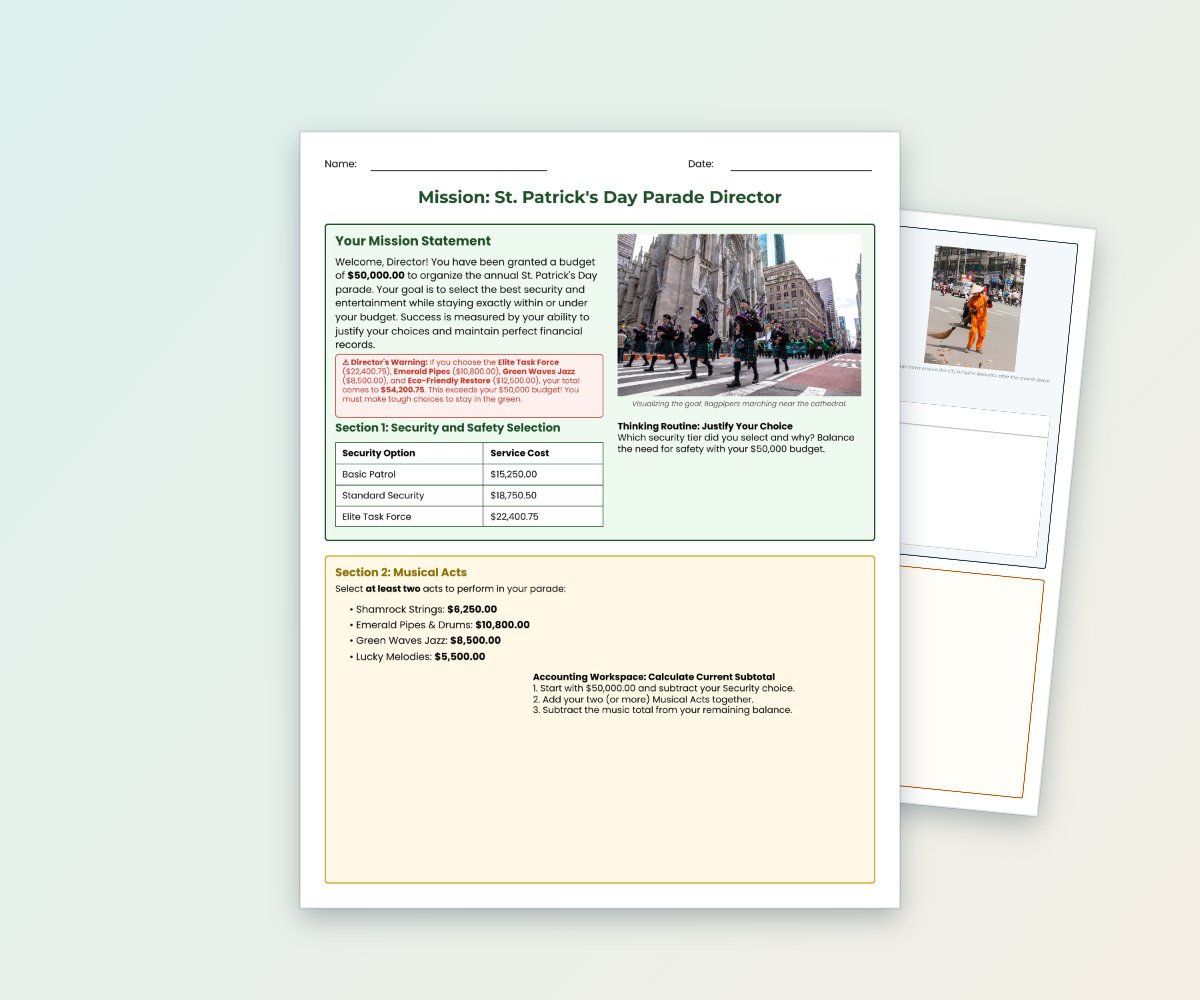
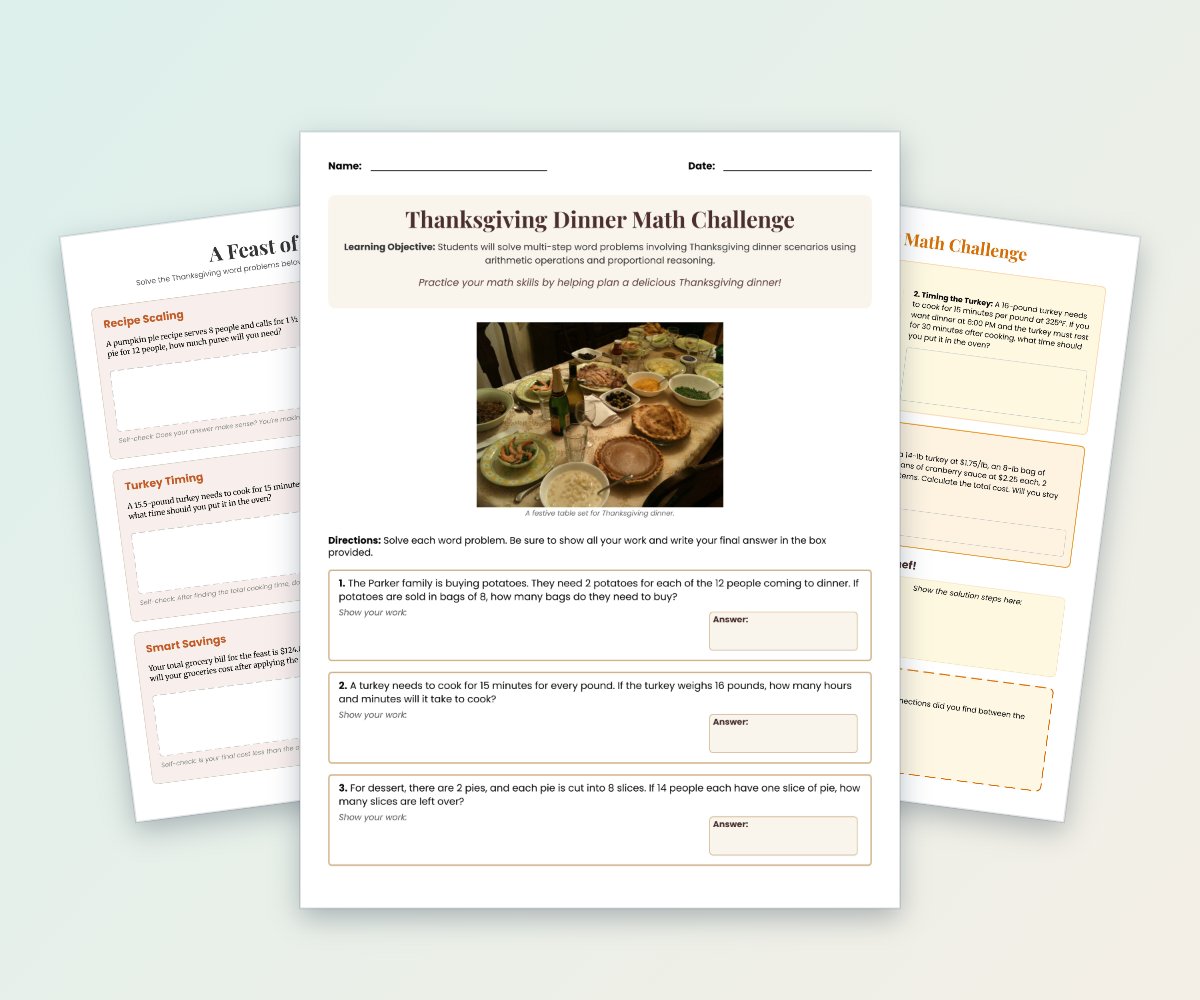
Students solve engaging Thanksgiving dinner problems involving multiplication, division, fractions, elapsed time, recipe scaling, and percent discounts.
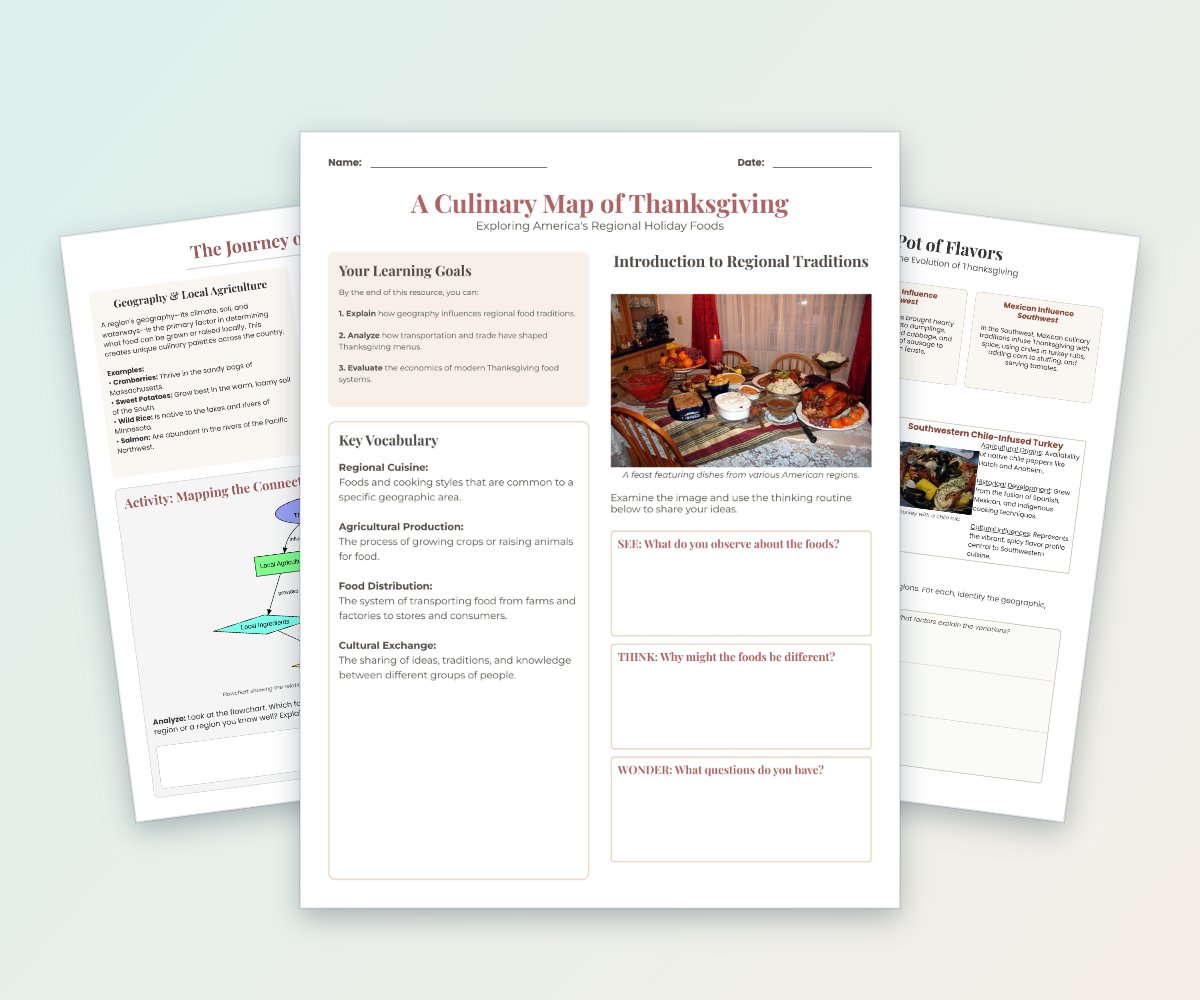
Students explore how geography, agriculture, transportation, trade, and cultural exchange have shaped regional Thanksgiving foods.
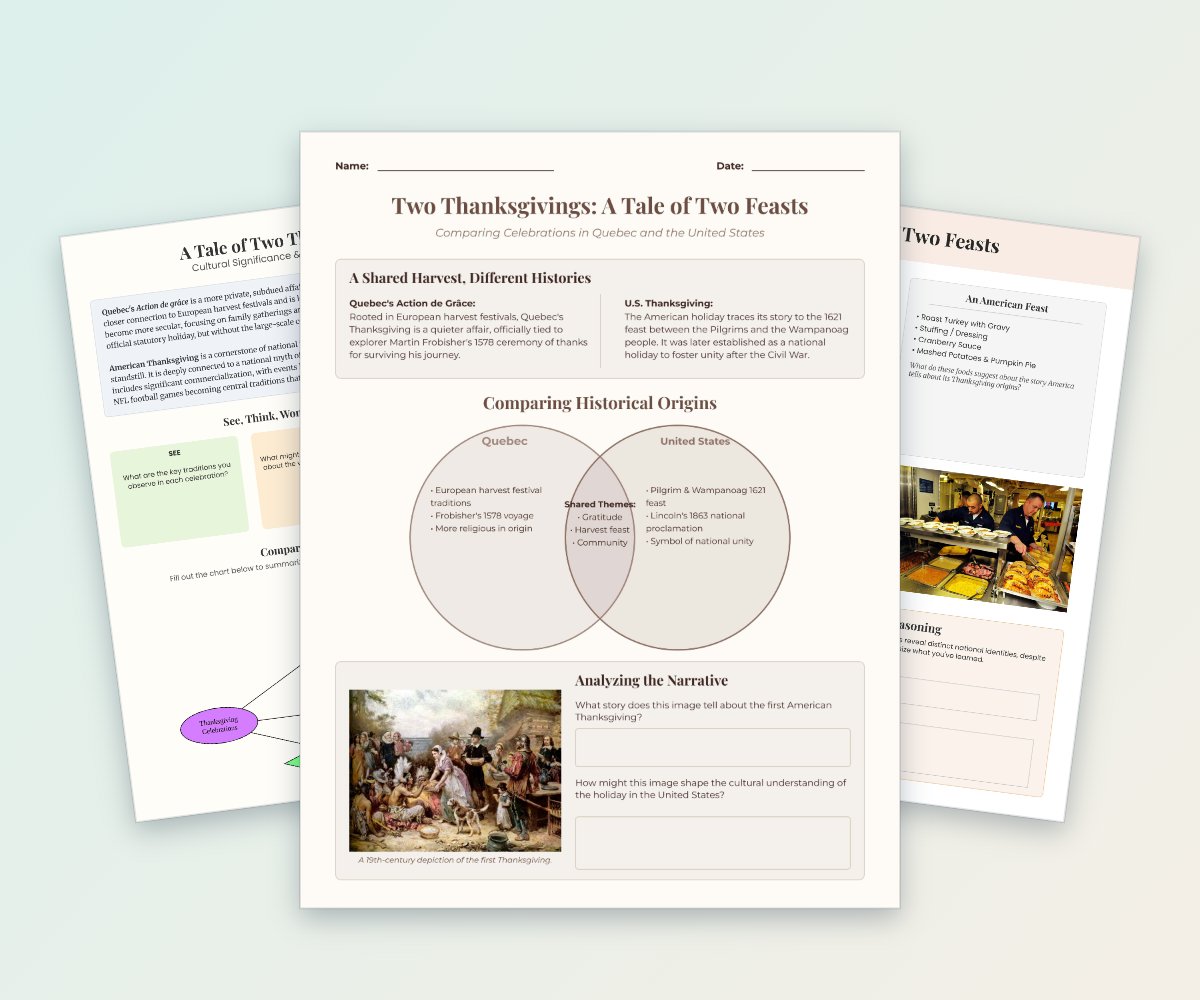
Students compare the historical origins, traditions, and cultural significance of Thanksgiving in Quebec and the United States.
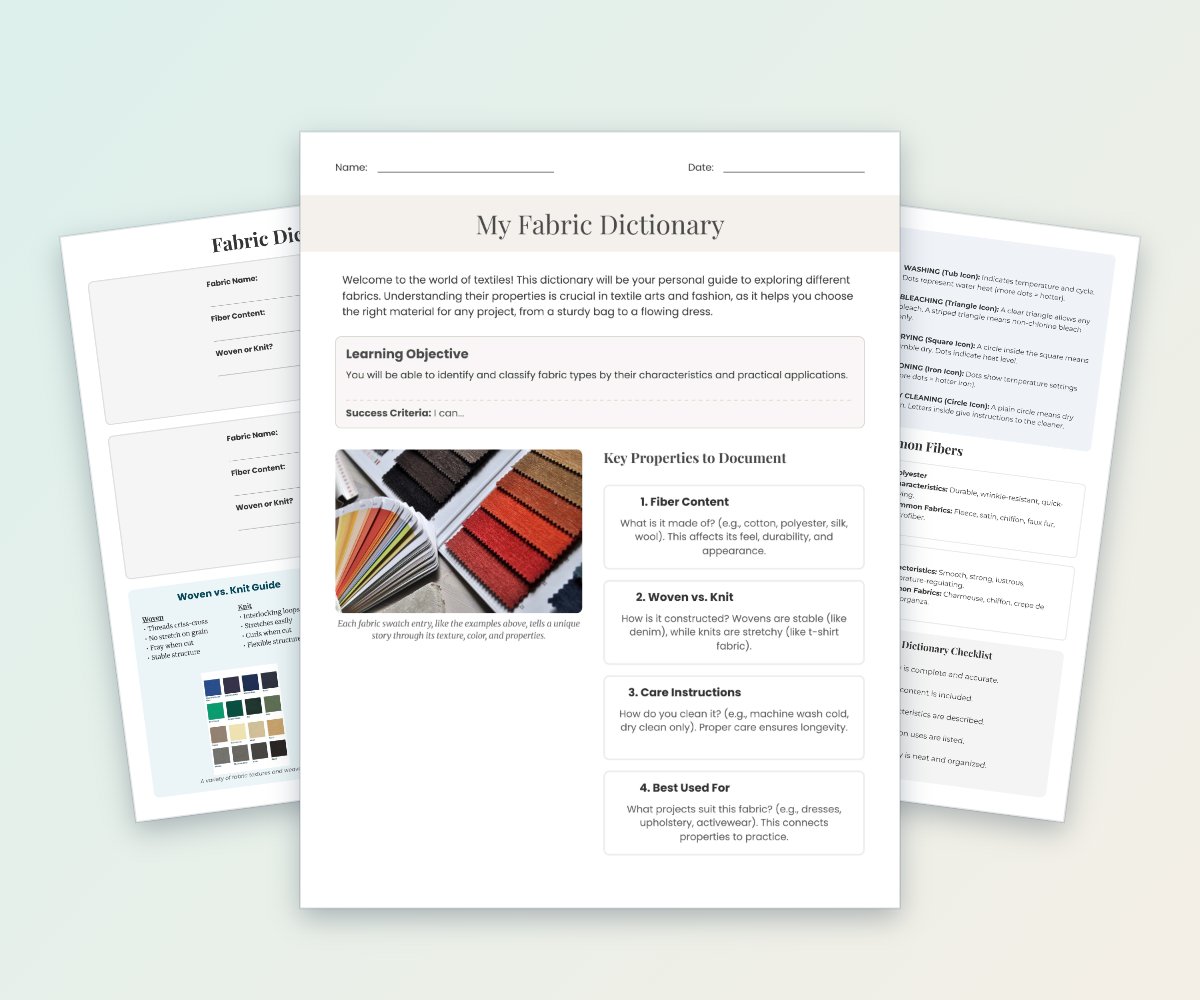
Students create a personal fabric dictionary by recording fiber content, construction, care instructions, and practical uses.
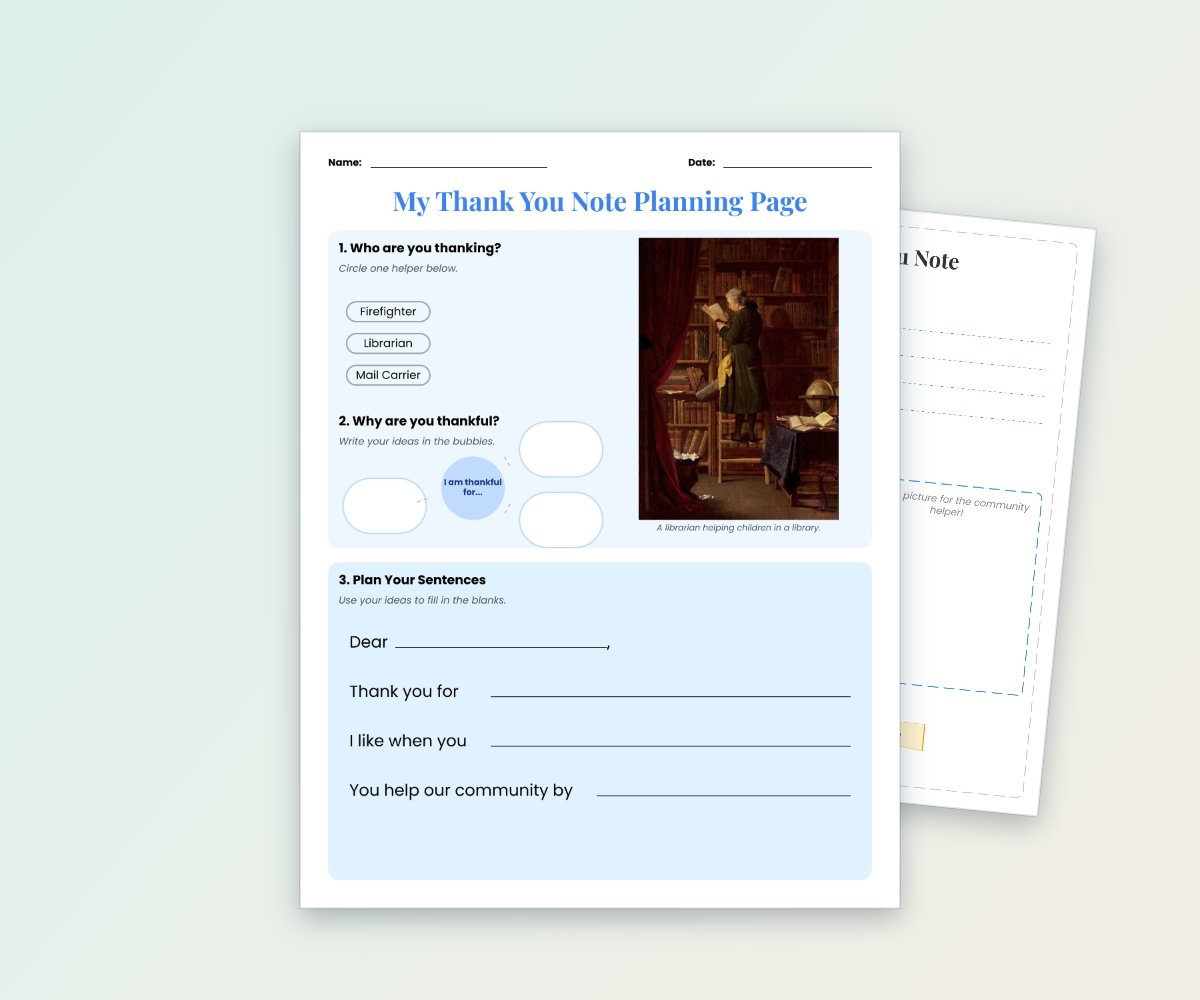
Students plan and write a thank-you note to a community helper such as a firefighter, librarian, or mail carrier.
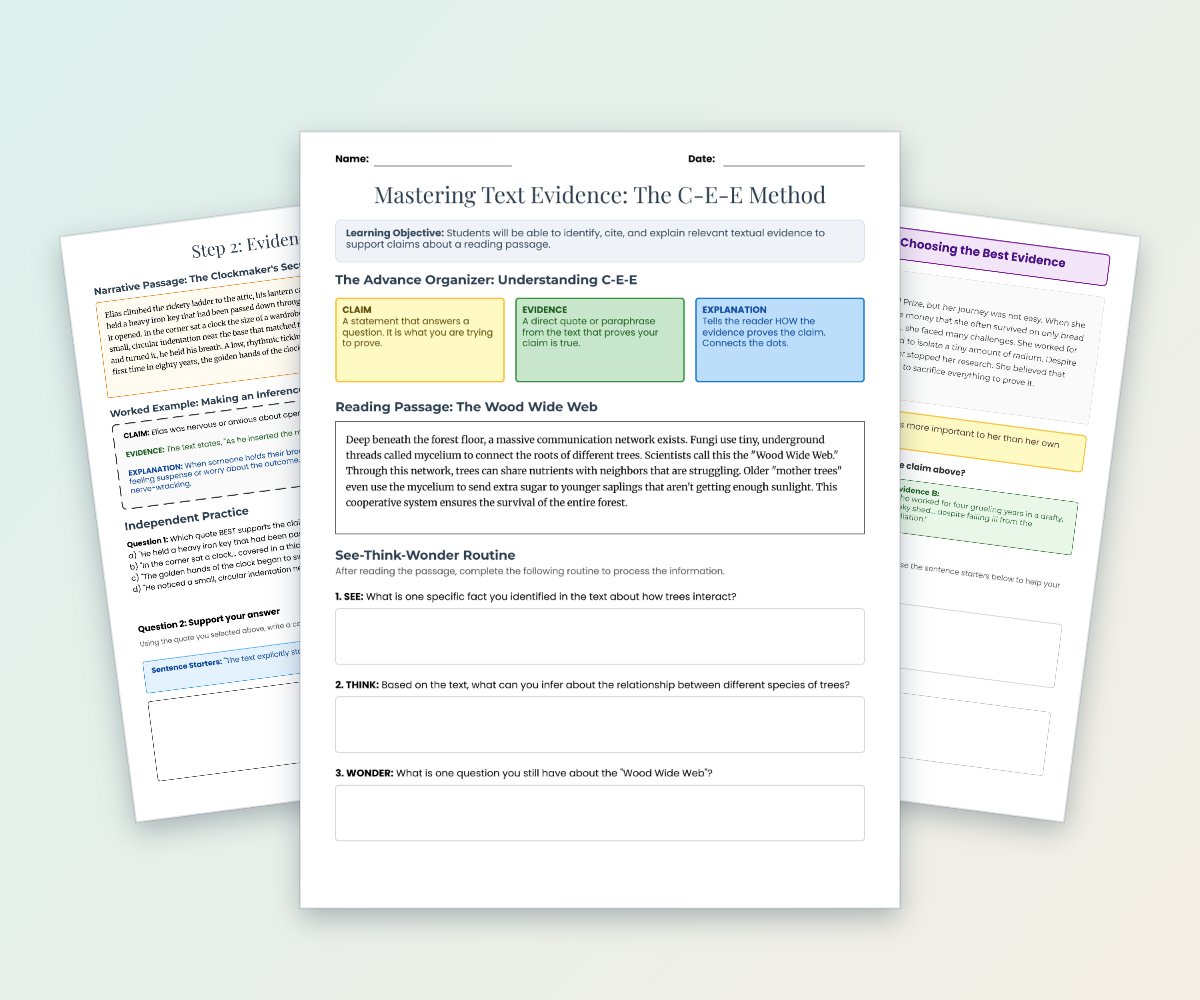
This six-page practice guide teaches the Claim-Evidence-Explanation method for responding to reading passages.
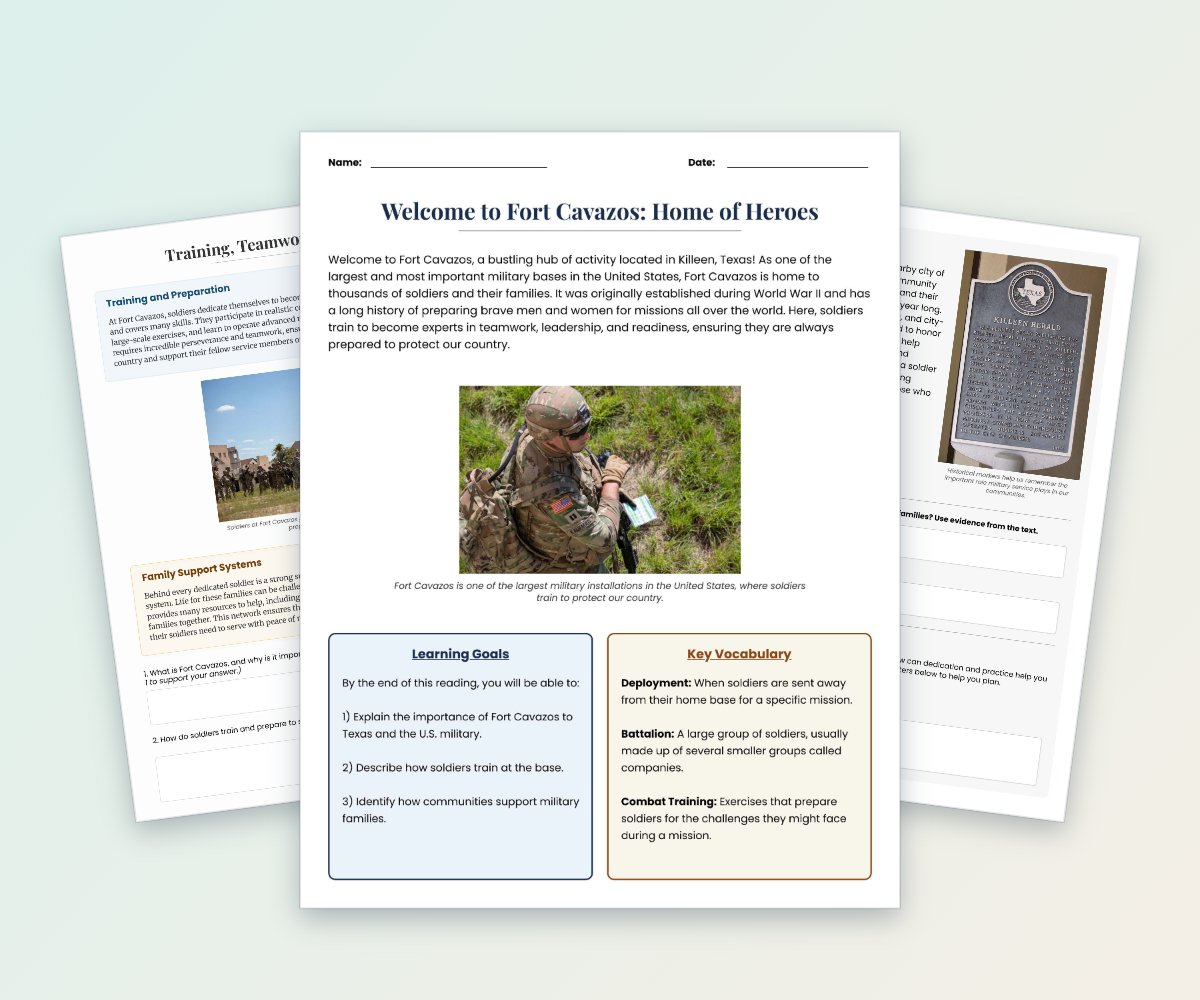
Students read about Fort Cavazos, soldier training, military families, and community support in this Texas-focused social studies passage.
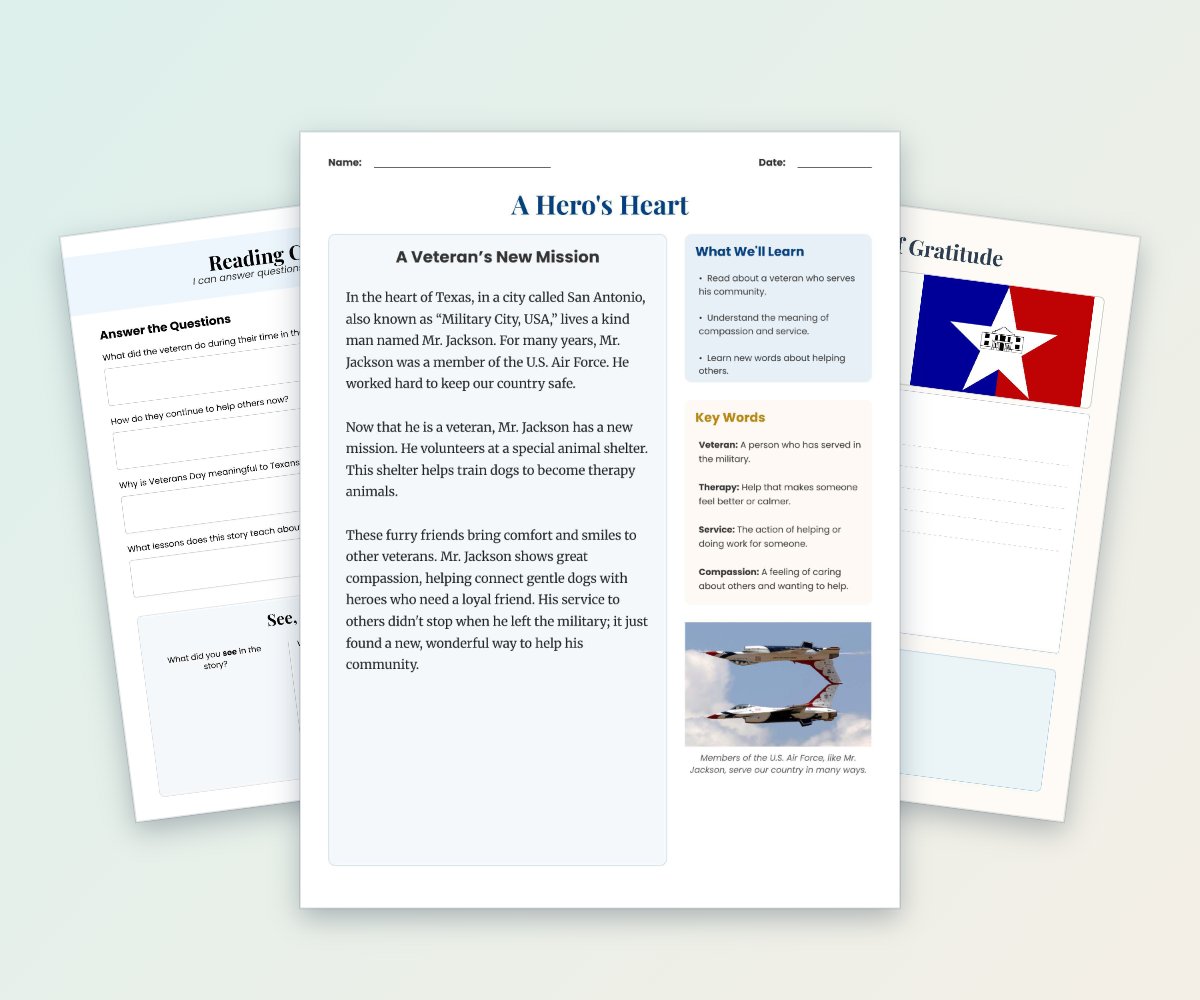
This three-page Texas Veterans Day ELA packet features a reading passage about a veteran serving his community through therapy-animal work.
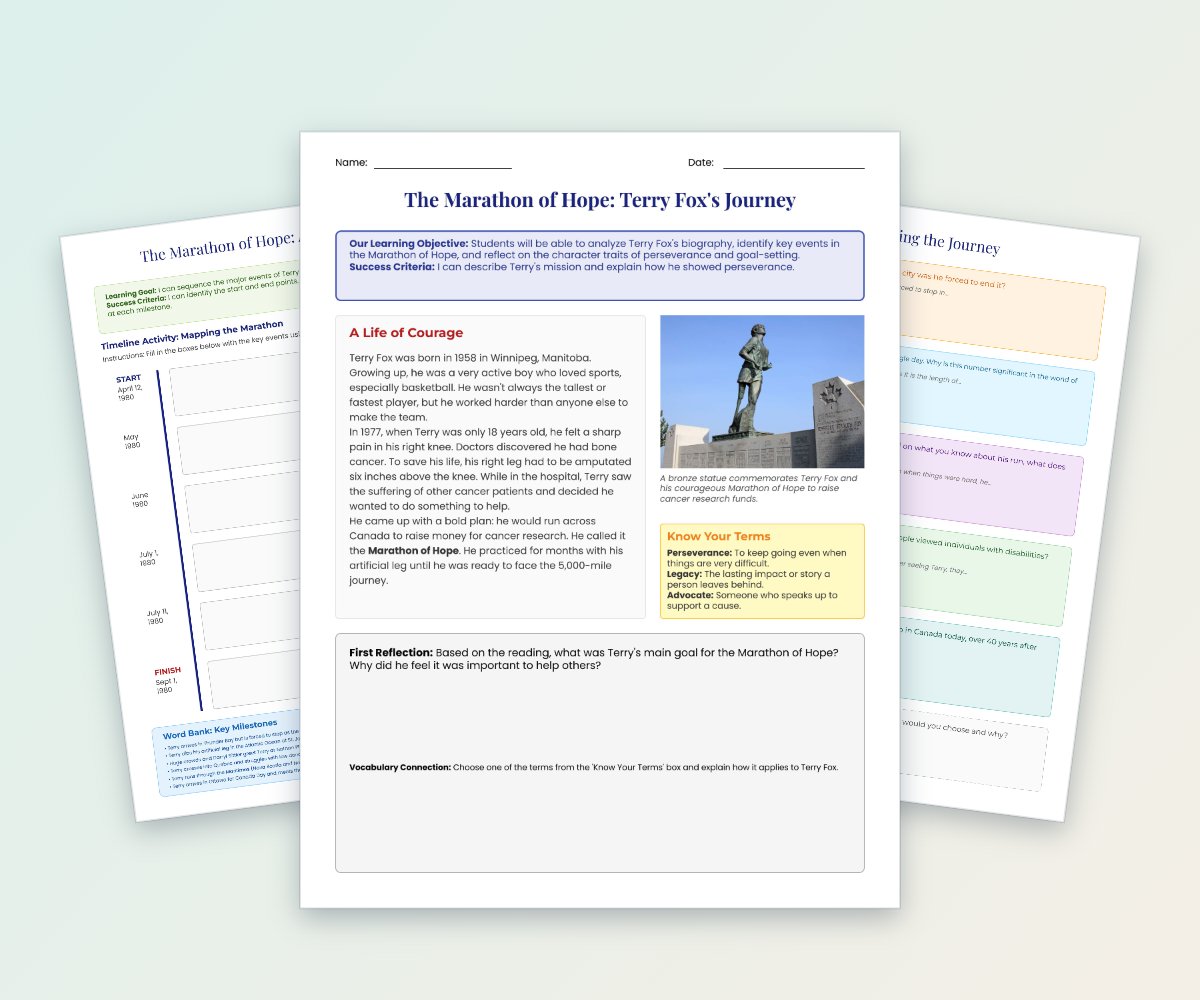
Students learn about Terry Fox’s life, cancer research mission, and Marathon of Hope through an informational reading and vocabulary activity.
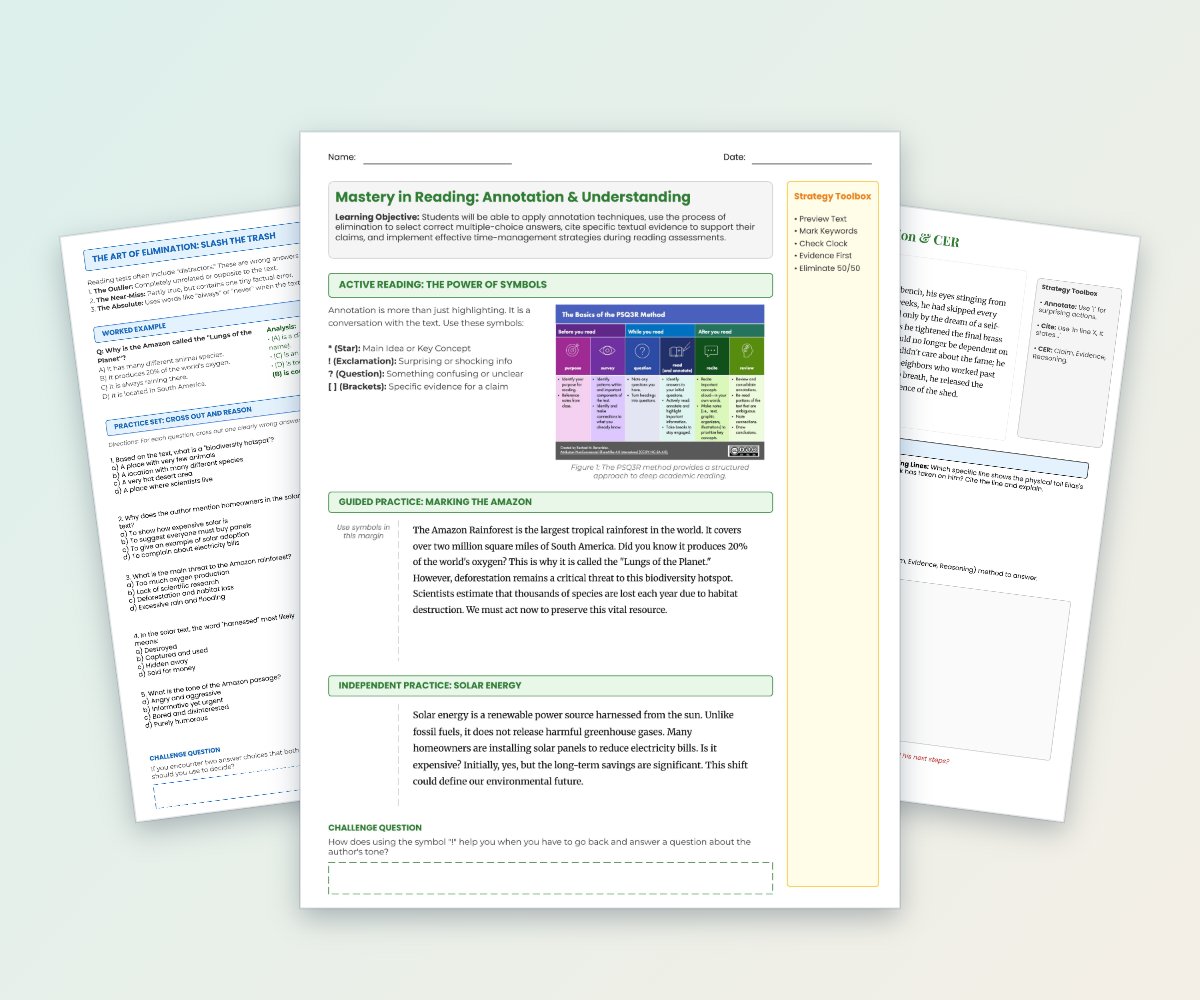
This six-page resource teaches annotation, the PSQ3R reading method, process of elimination, textual evidence, and time-management strategies.
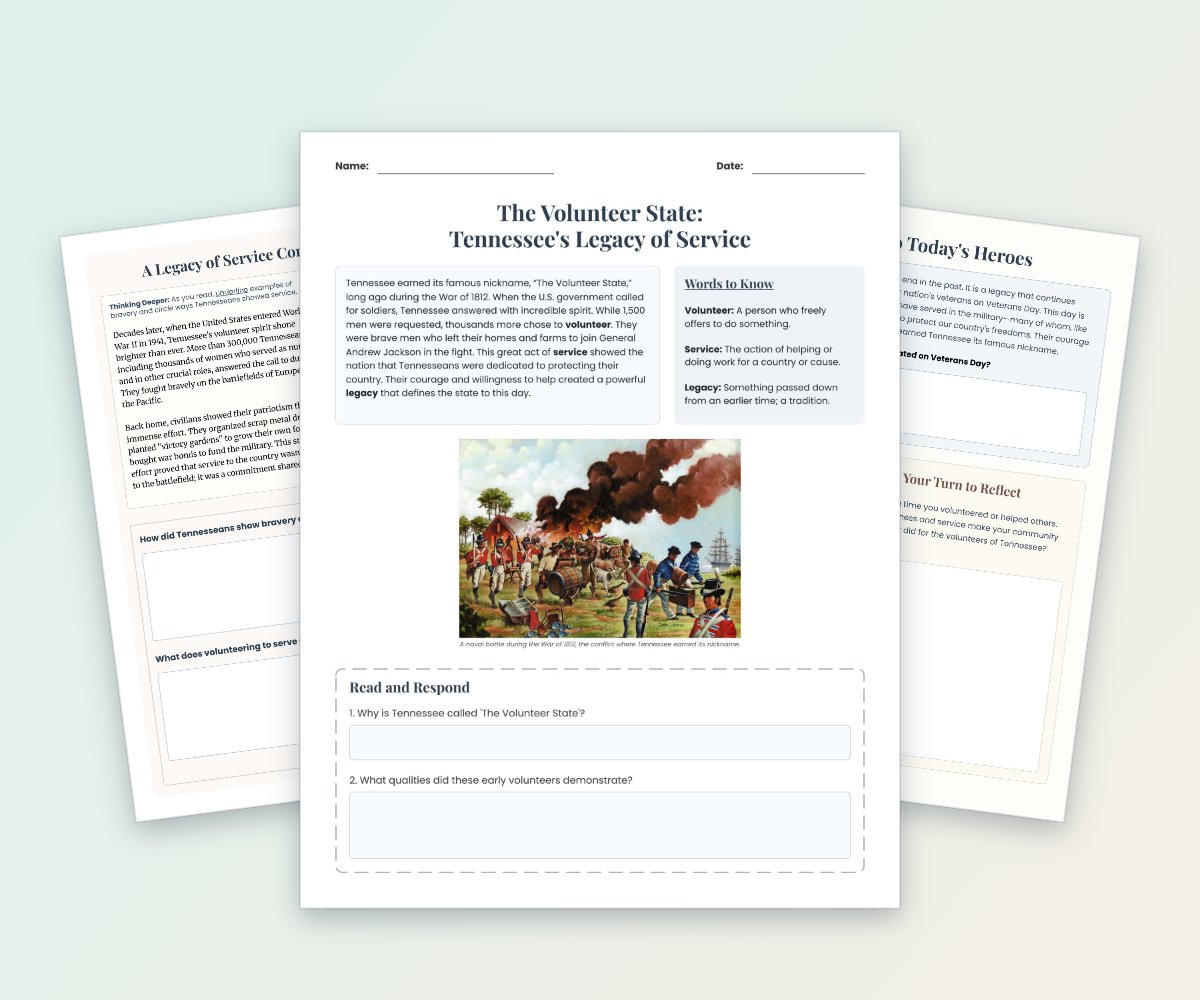
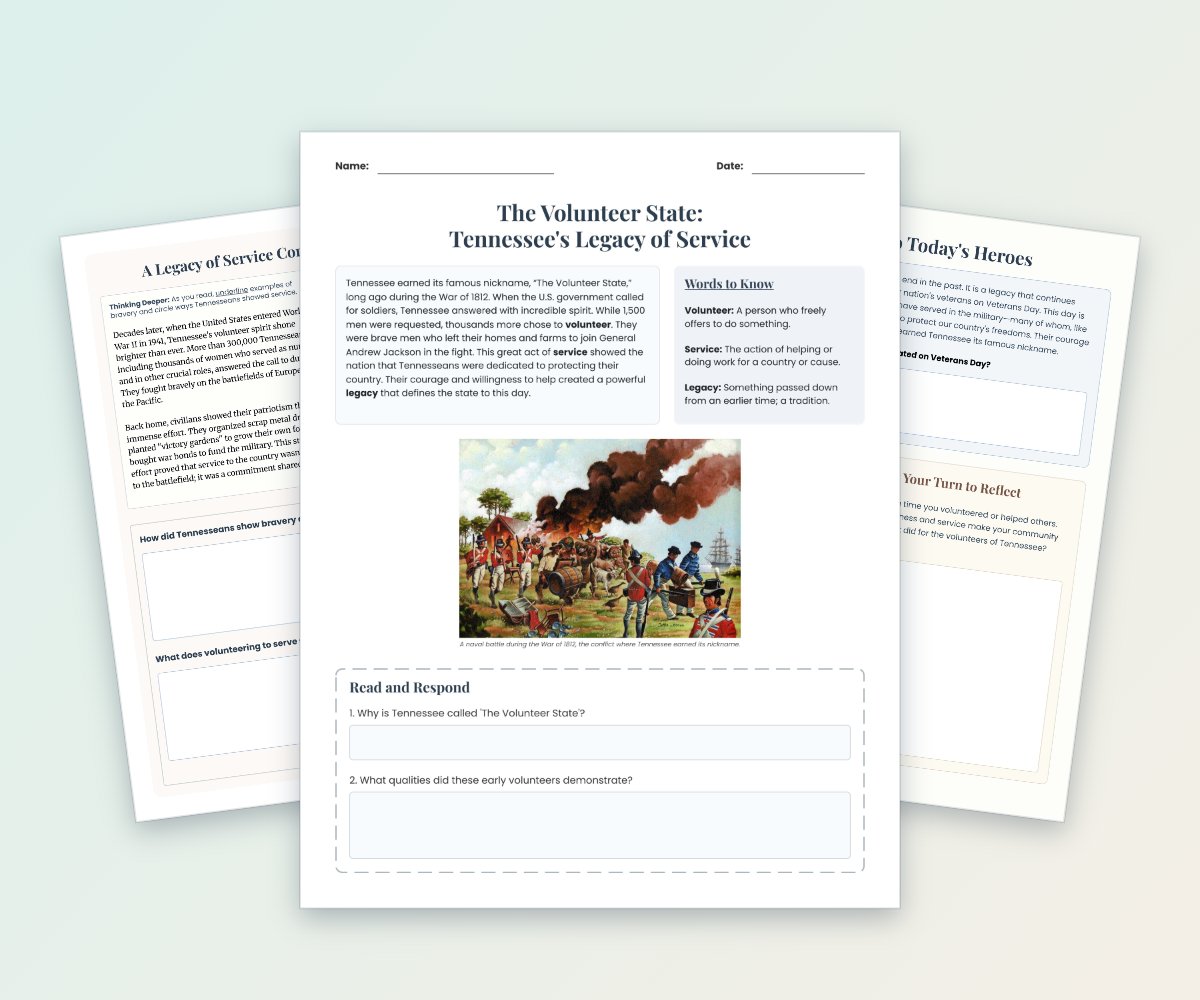
Students read informational passages about Tennessee’s Volunteer State legacy, the War of 1812, and World War II service.
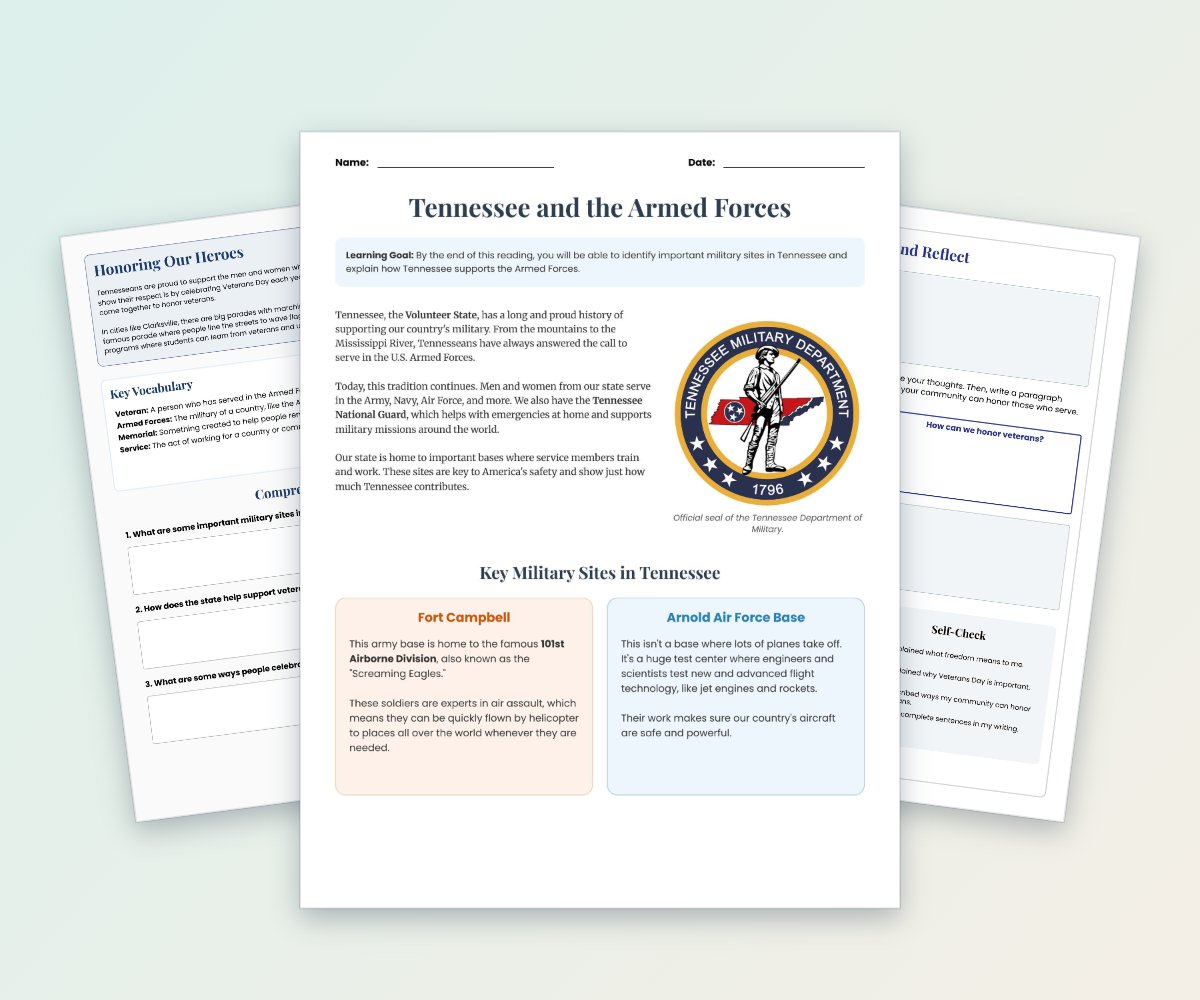
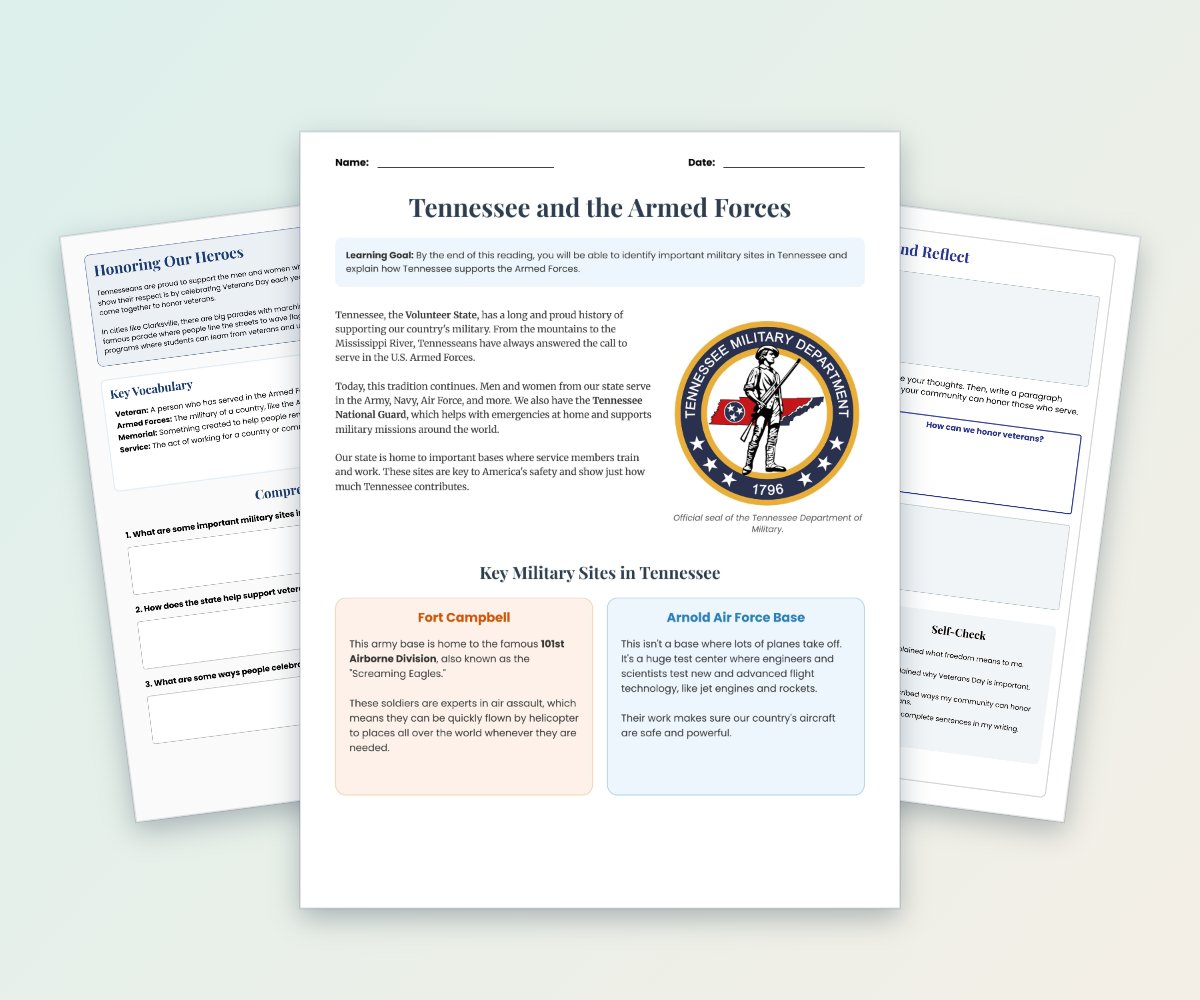
Students learn about Tennessee’s military sites, the National Guard, Veterans Day, and ways communities honor service members.
This reading worksheet introduces Tennessee’s military sites, including Fort Campbell and Arnold Air Force Base, and explains the state’s support for service members and veterans.
Students read about Tennessee's Volunteer State nickname, service during the War of 1812 and World War II, and continuing civic contributions.
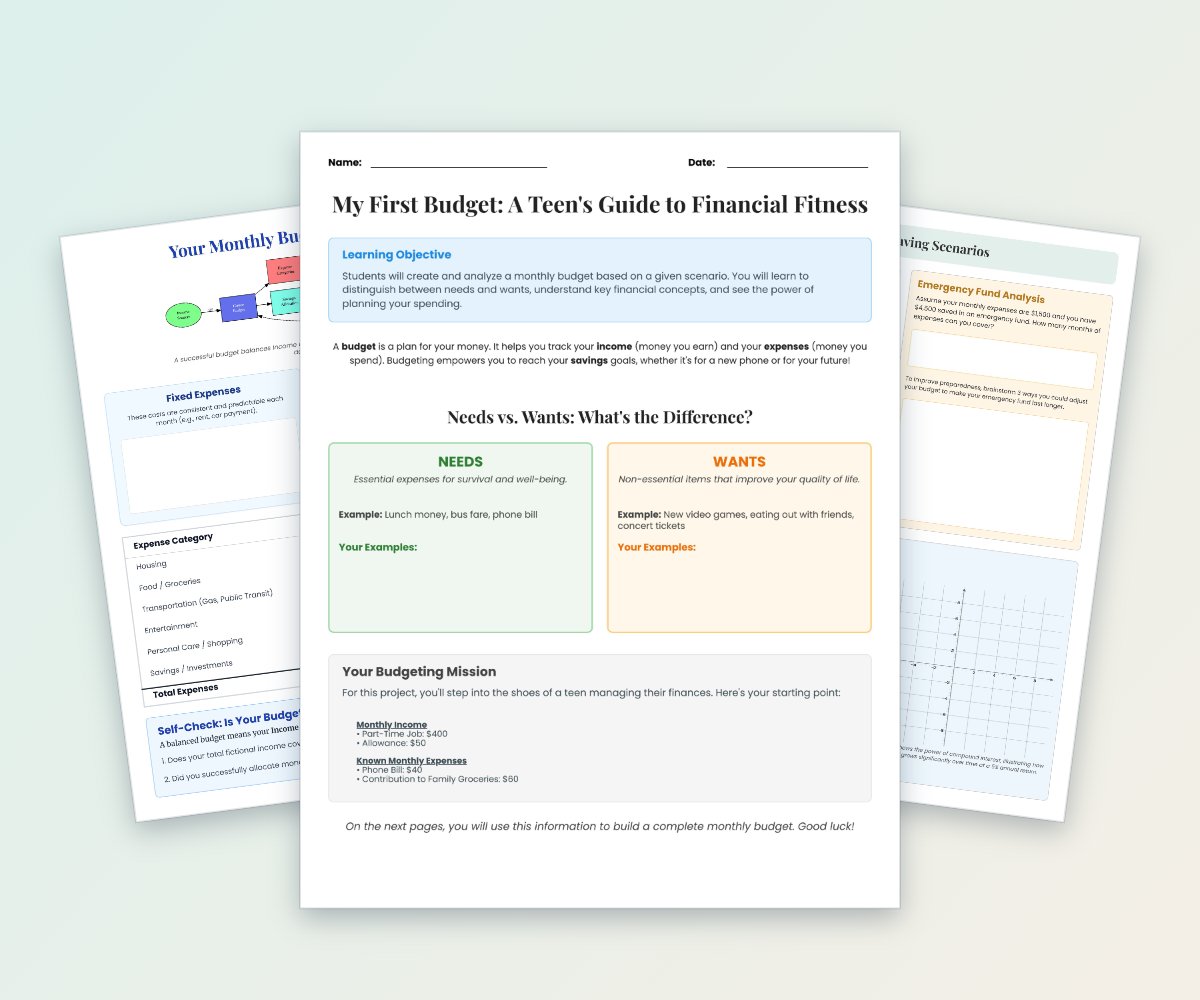
This six-page financial literacy guide helps teens distinguish needs from wants, create a monthly budget, and evaluate spending decisions.