Operation Cold Shadow: Cold War Espionage Simulation
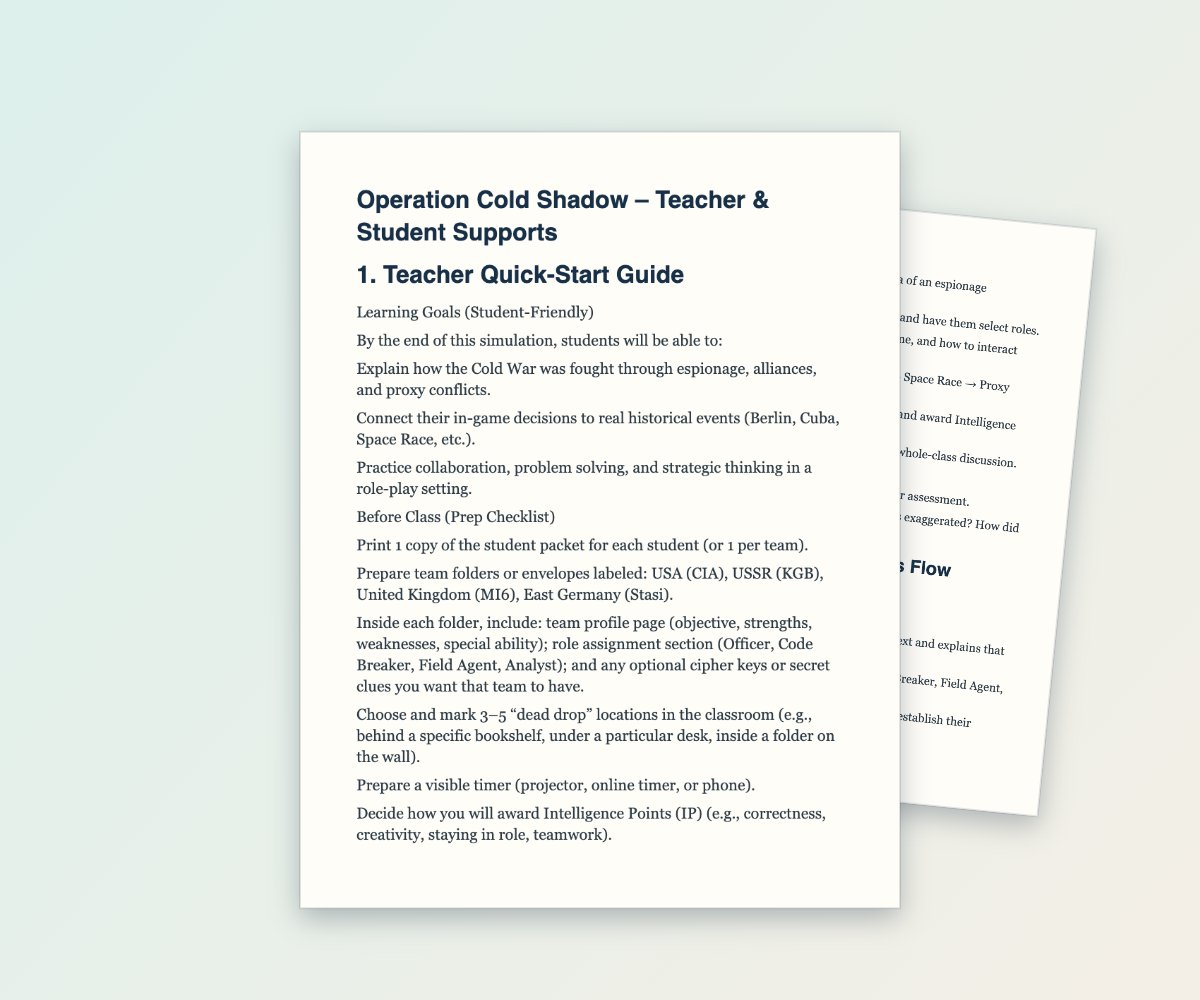
This four-page teacher and student support guide introduces a role-play simulation of Cold War espionage, alliances, proxy conflicts, and major events.
$4
Classroom-ready resources written for preschool: printable worksheets, slides, activities and planning tools you can download and use straight away. Browse by subject below.
This four-page teacher and student support guide introduces a role-play simulation of Cold War espionage, alliances, proxy conflicts, and major events.
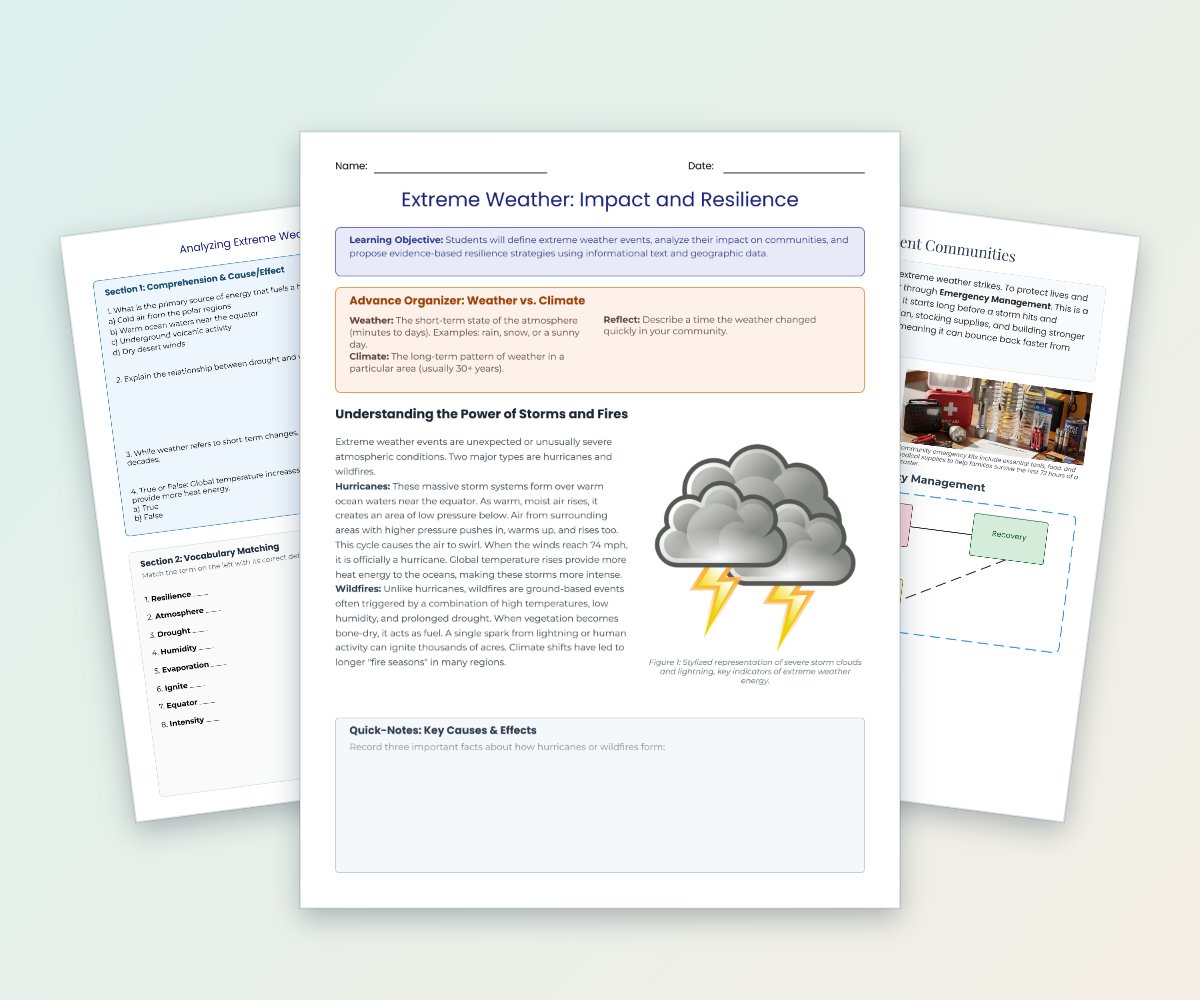
This six-page worksheet helps students distinguish weather from climate and examine how hurricanes and wildfires form.
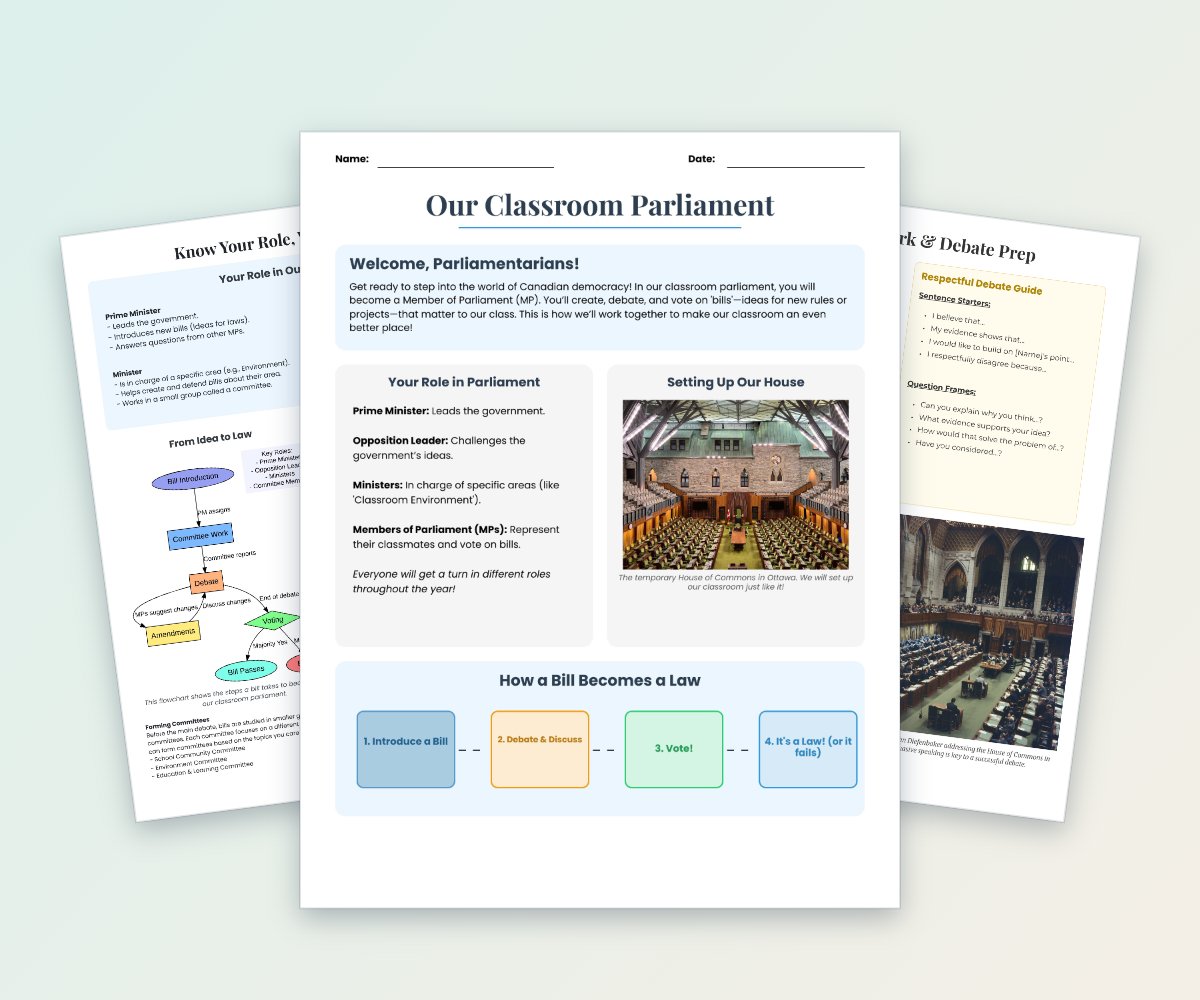
Students take on parliamentary roles, including Prime Minister, Opposition Leader, ministers, committee members, and MPs.
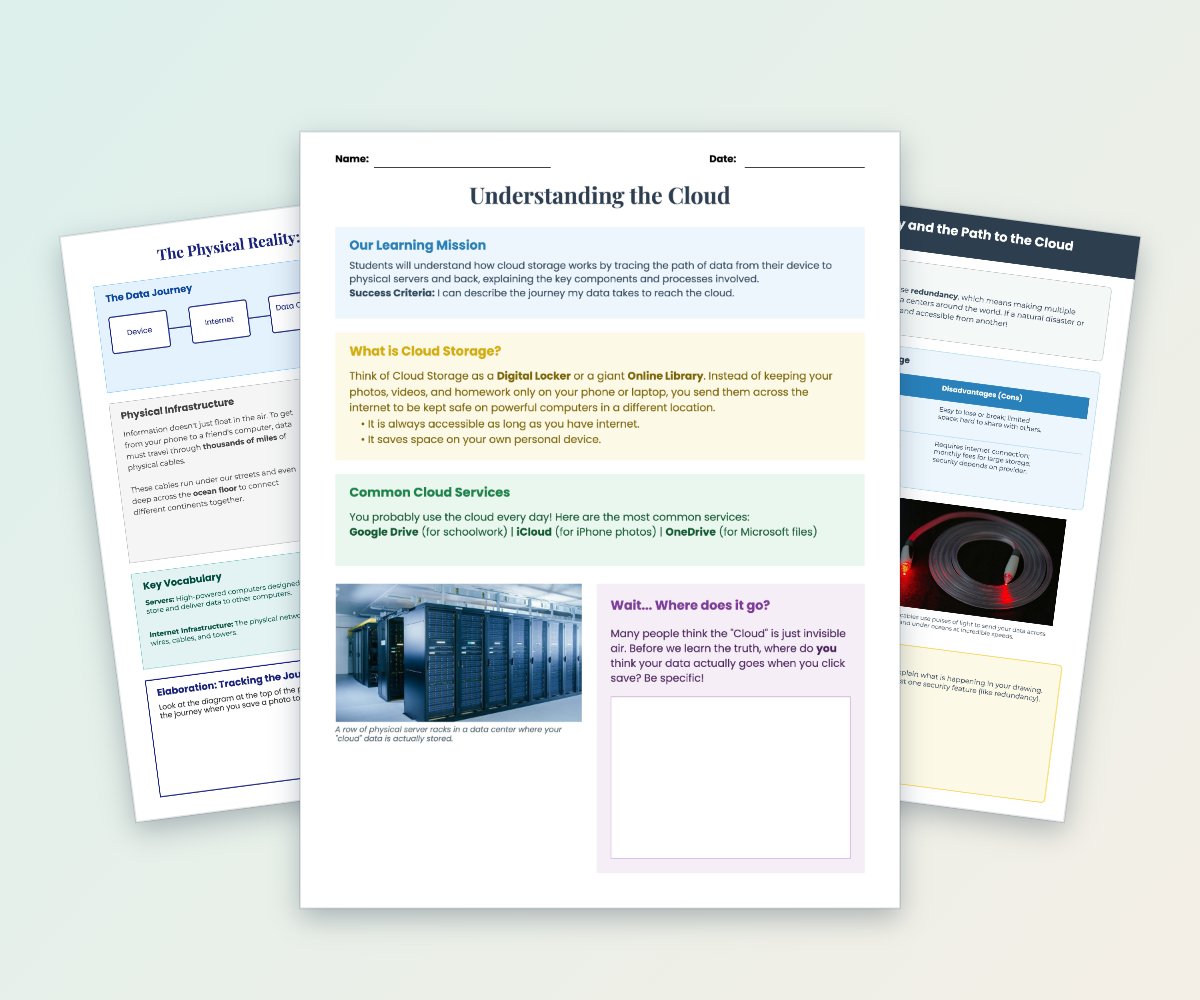
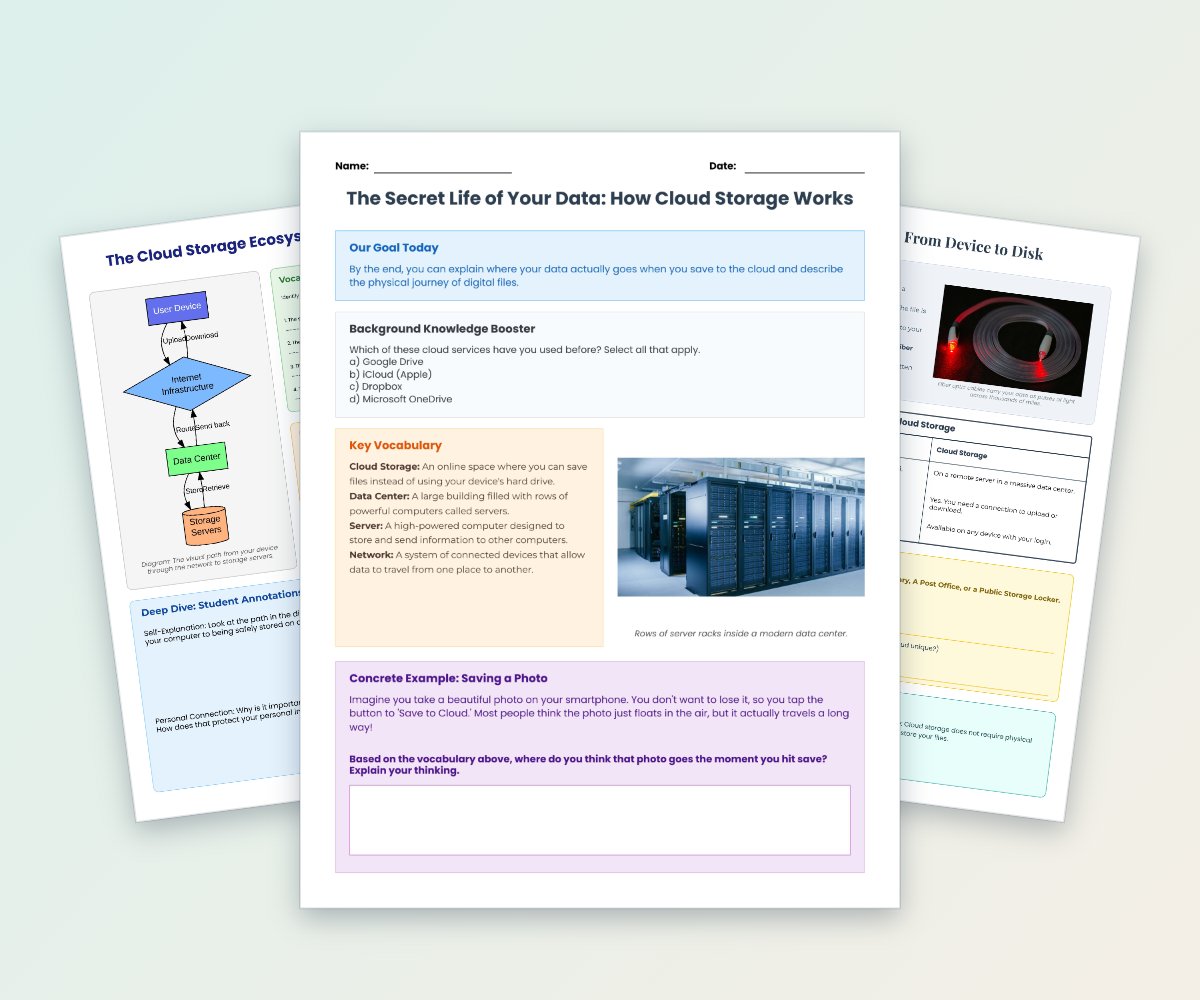
This instructional resource introduces cloud storage through accessible explanations of servers, data centers, internet infrastructure, backup copies, and redundancy.
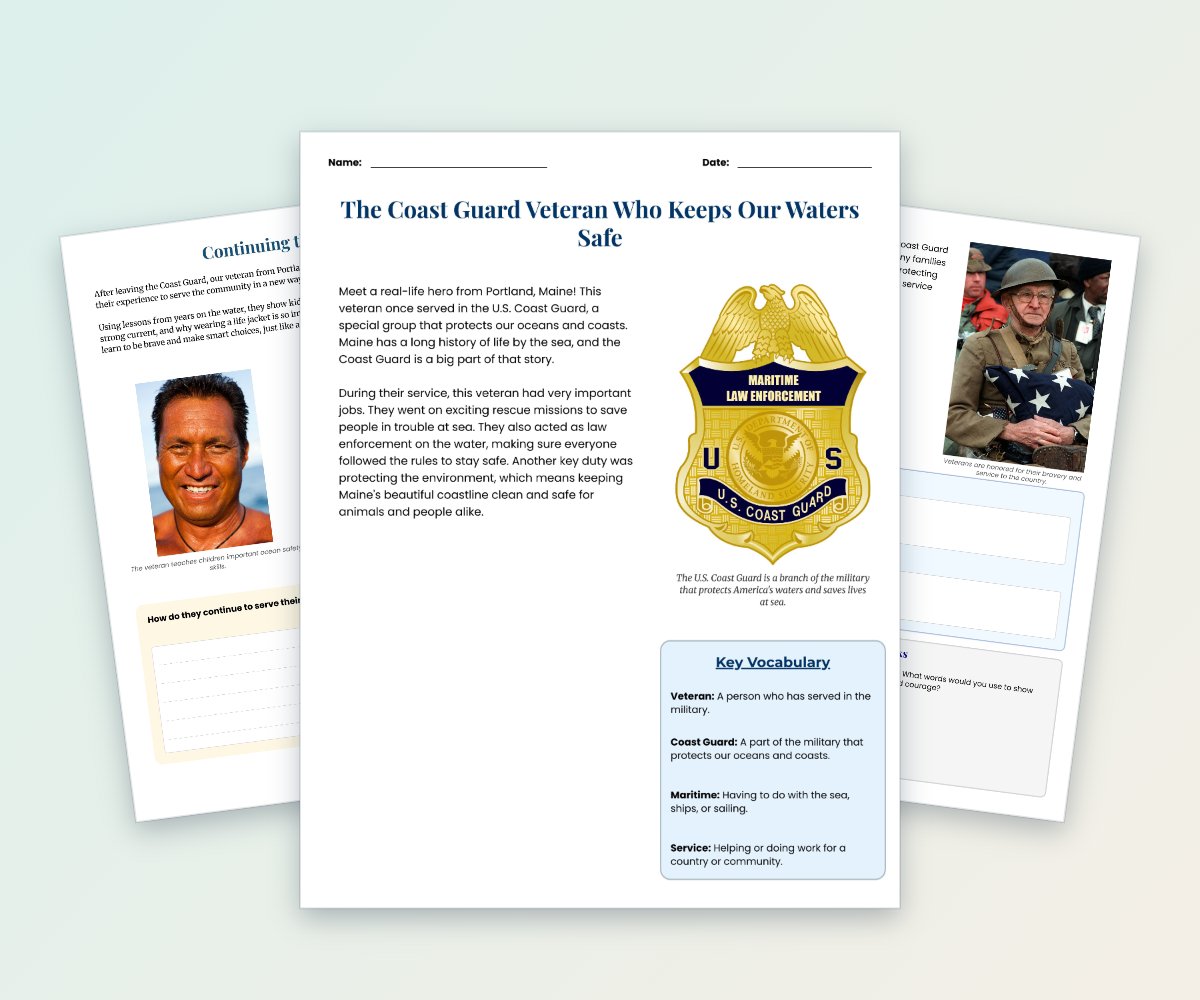
Students read an informational passage about a Maine Coast Guard veteran, including rescue missions, ocean safety, environmental protection, and continued community service.
This four-page worksheet introduces students to cloud storage, data centers, servers, networks, and the physical journey of digital files.
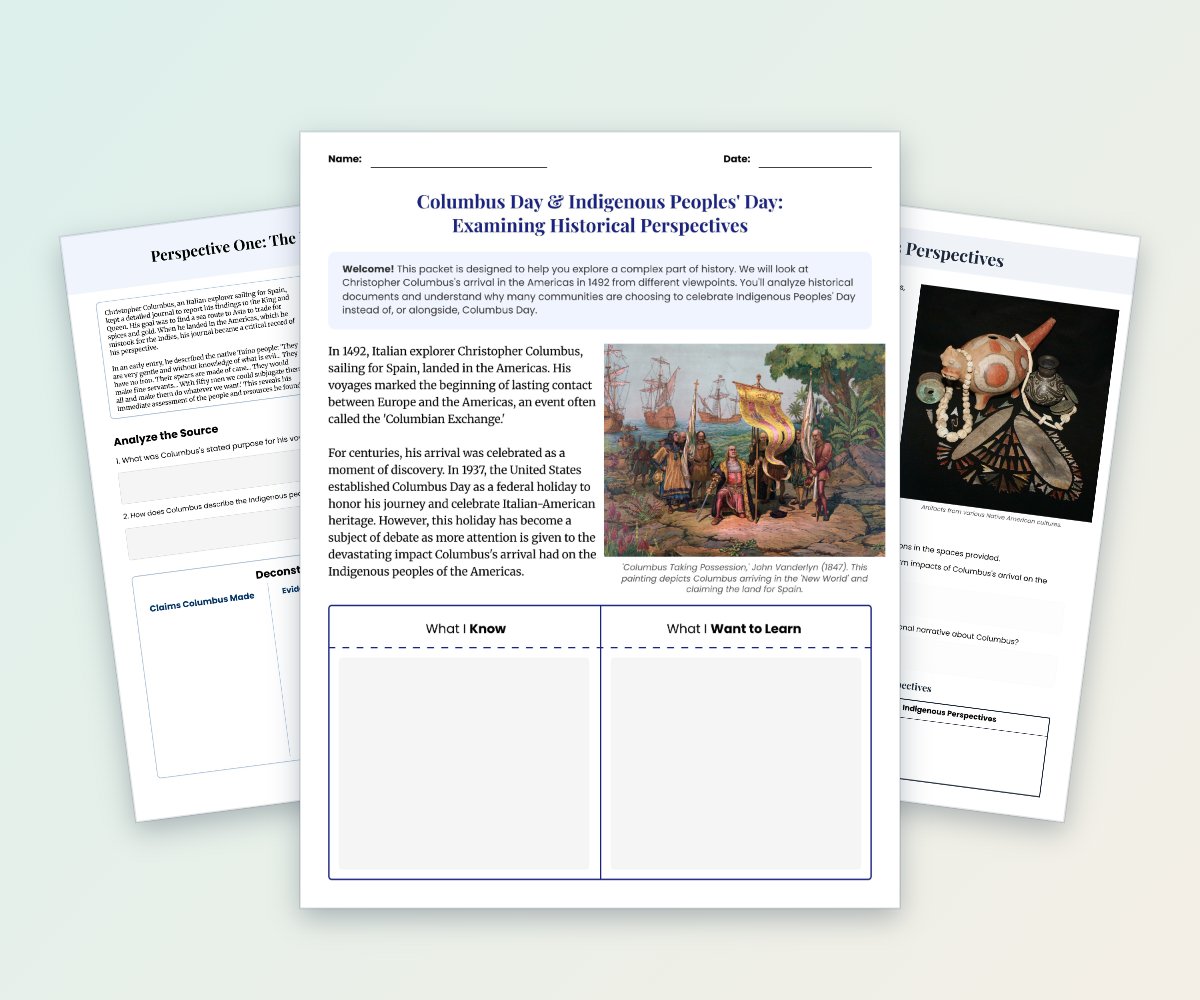
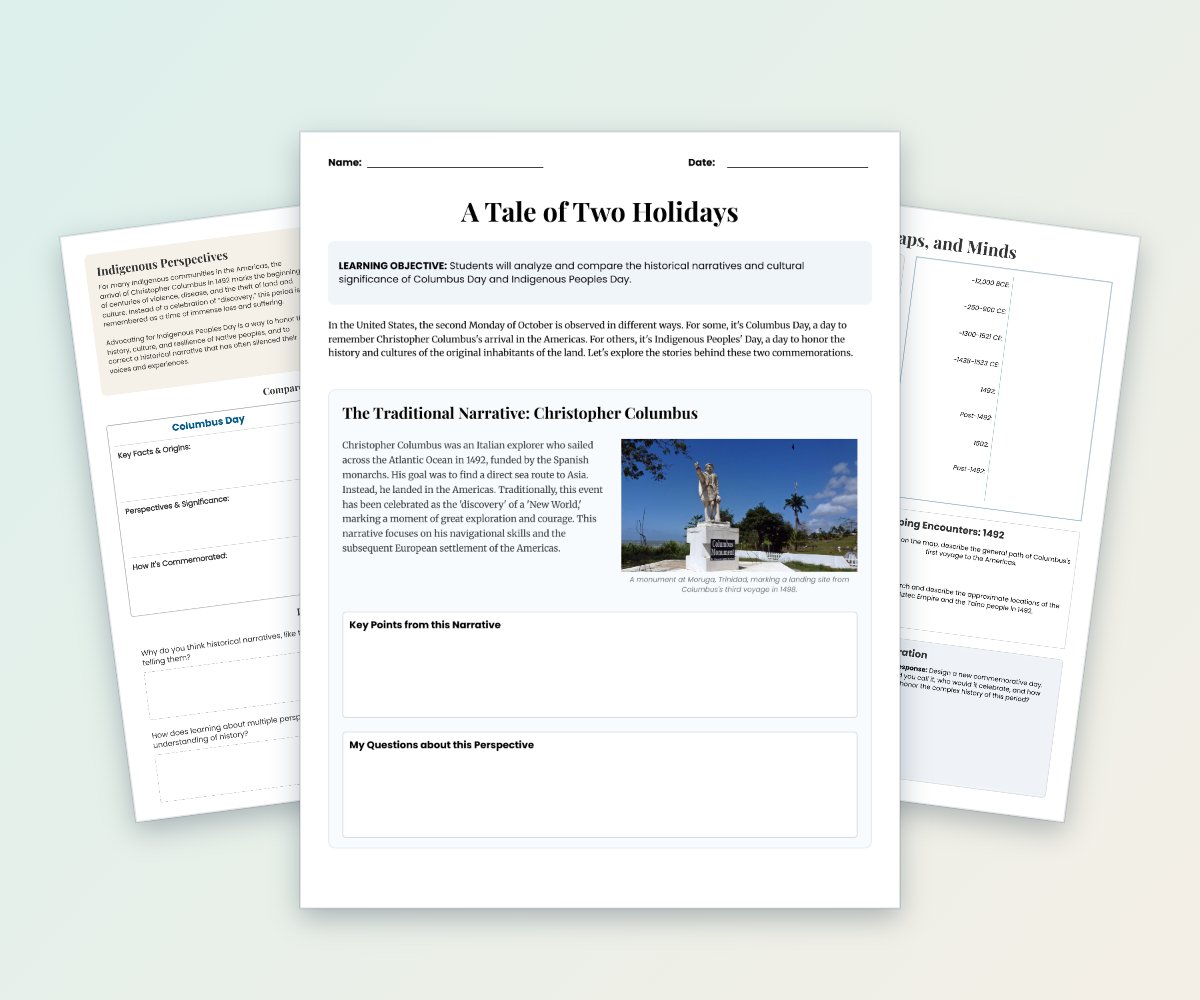
This five-page social studies packet examines Christopher Columbus's 1492 voyage, Columbus Day, and the growing recognition of Indigenous Peoples' Day.
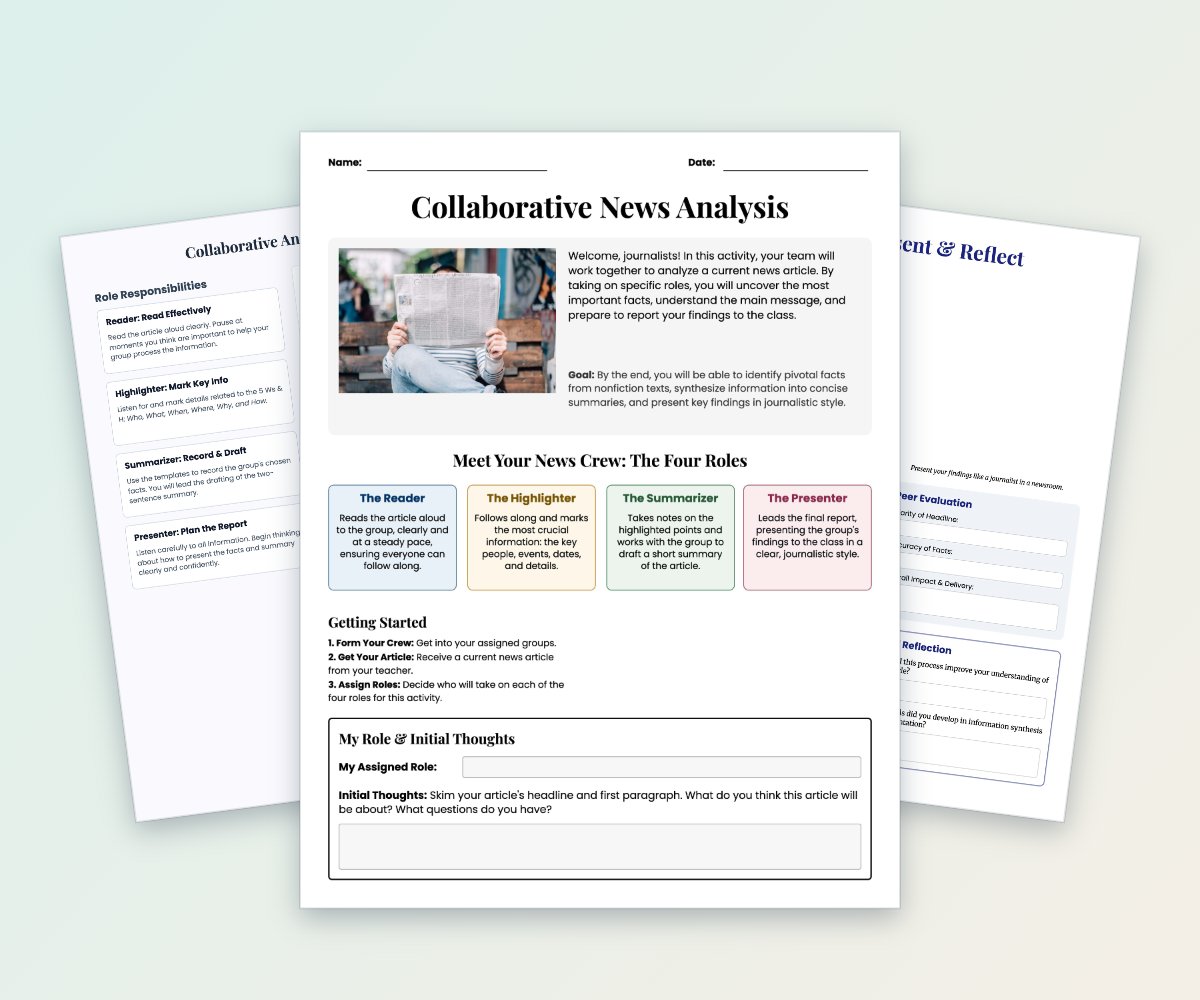
Students work in assigned roles to identify key facts, analyze the 5 Ws and H, write a concise summary, and prepare a journalistic presentation.
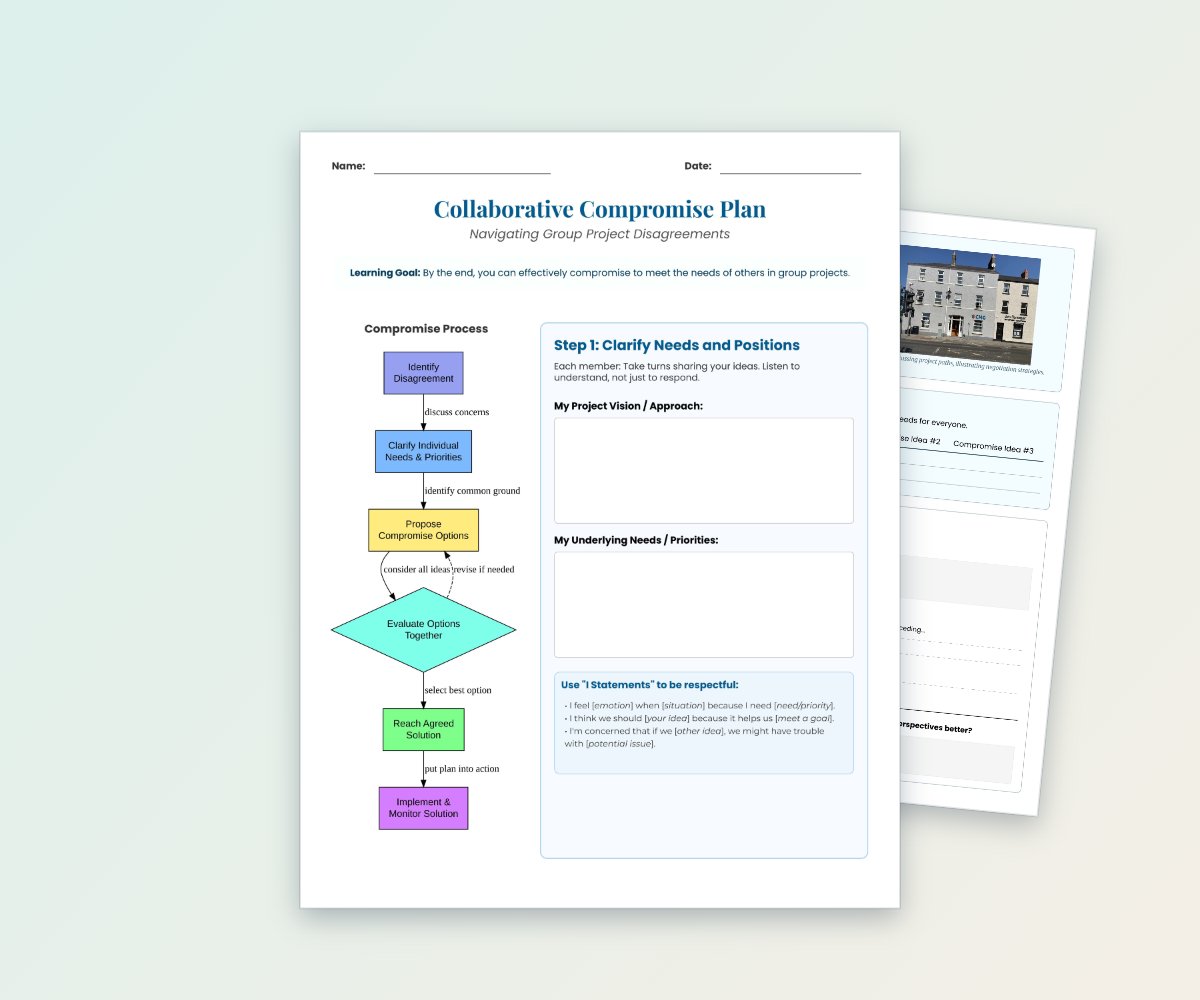
This two-page graphic organizer guides students through resolving group project disagreements.
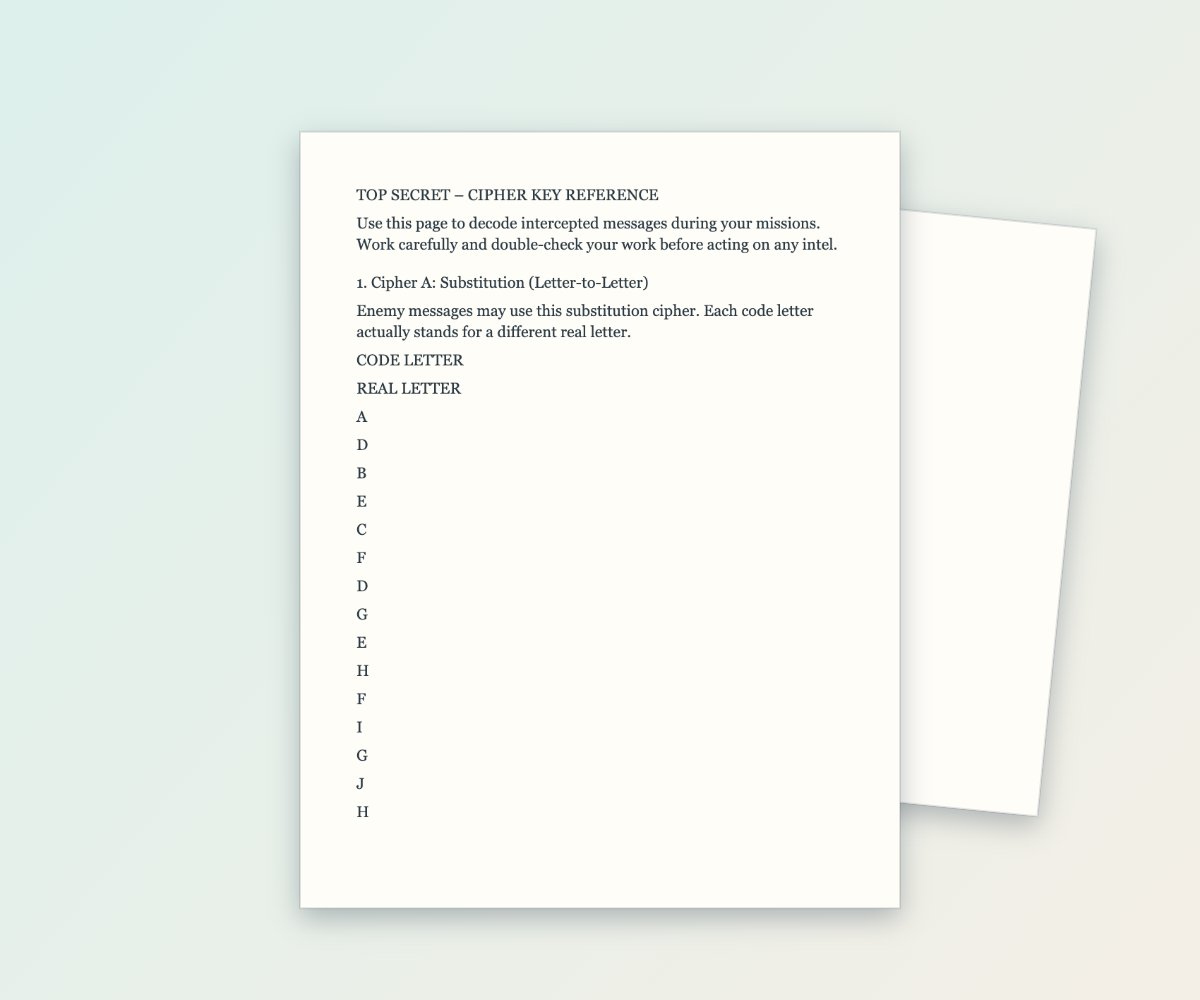
This three-page reference guide teaches students to decode substitution and number ciphers through clear tables, examples, and step-by-step directions.
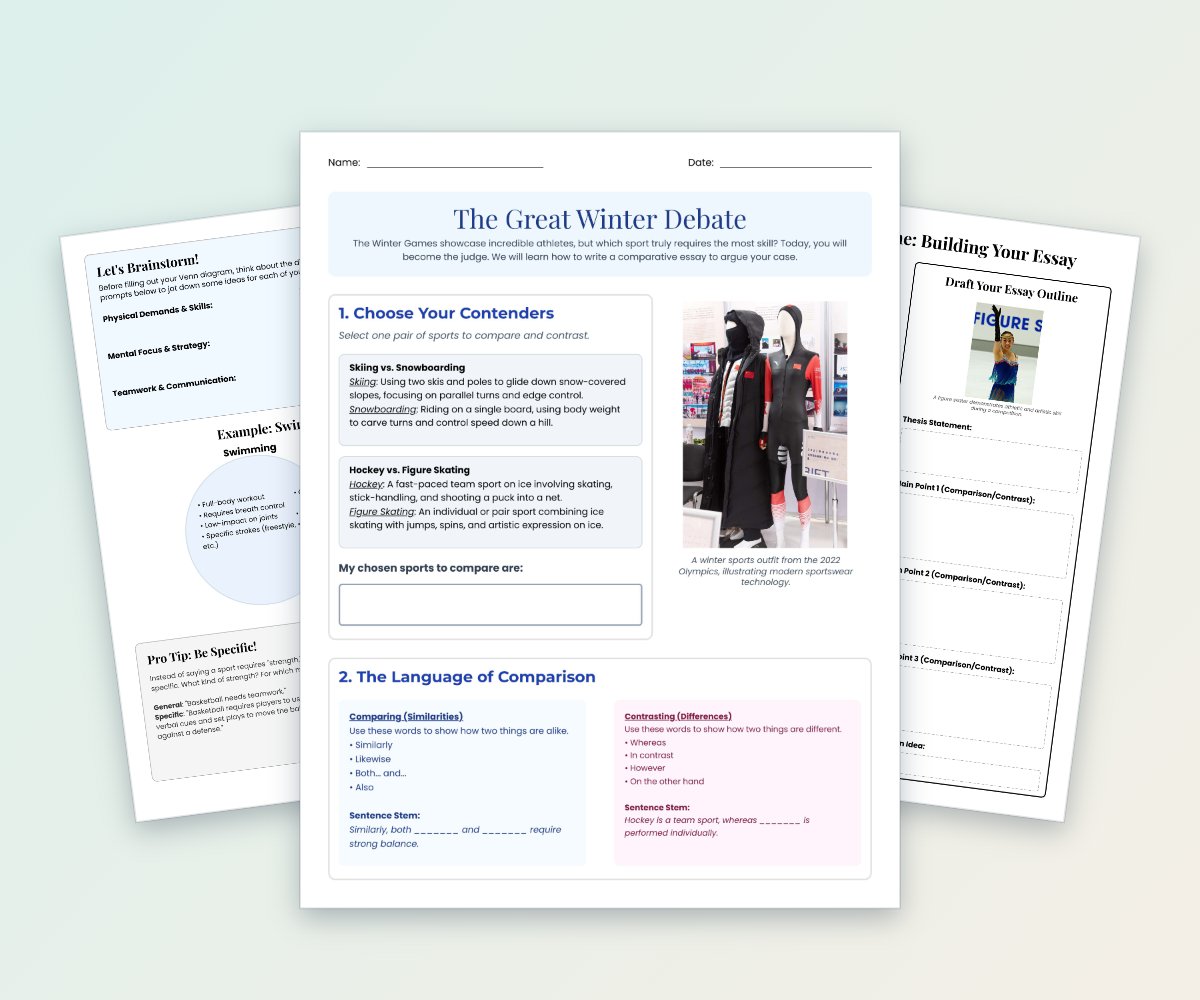
Students choose two winter sports, identify similarities and differences, and develop ideas for a comparative essay.
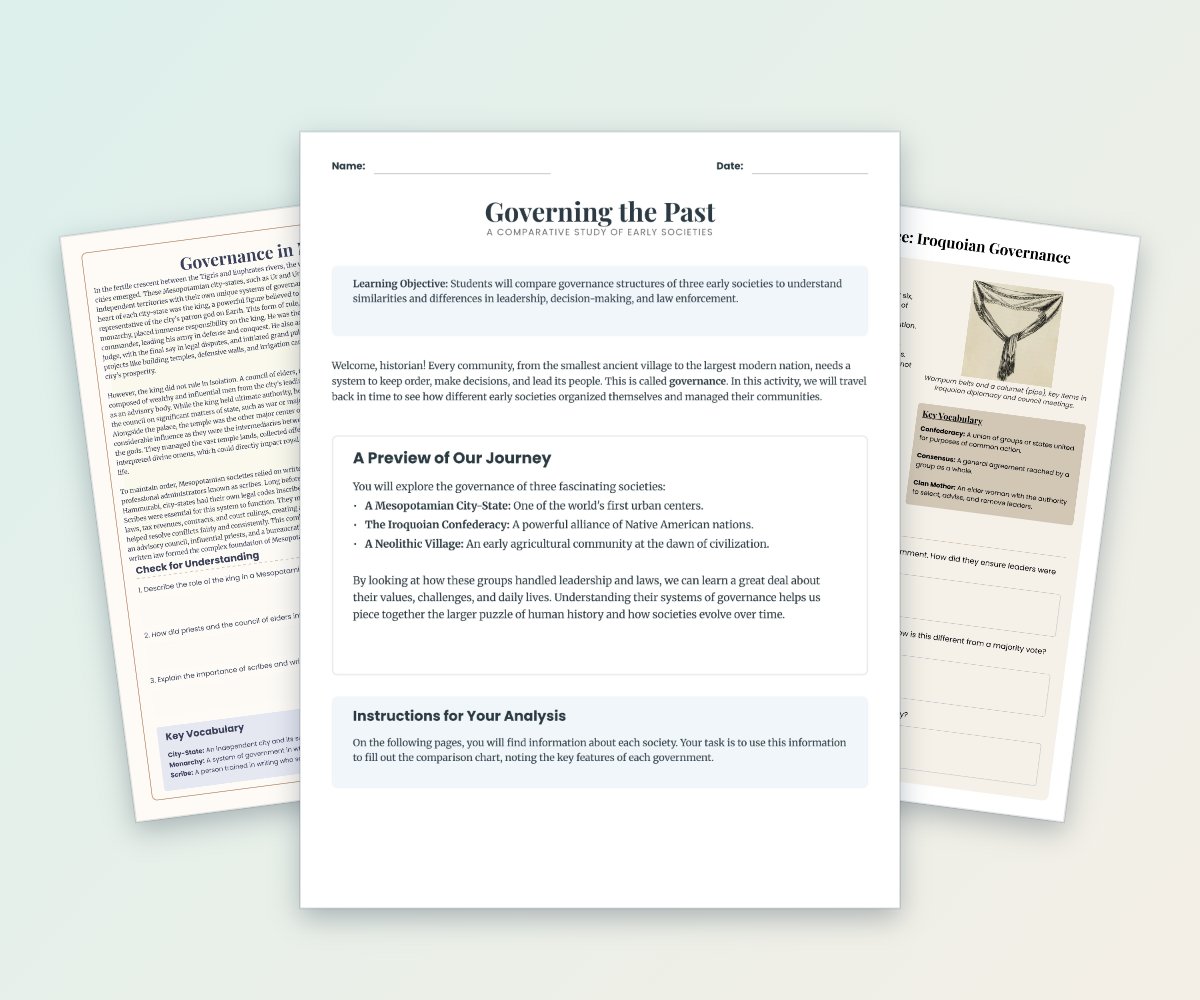
Students compare governance structures in Mesopotamian city-states, the Iroquoian Confederacy, and a Neolithic village.
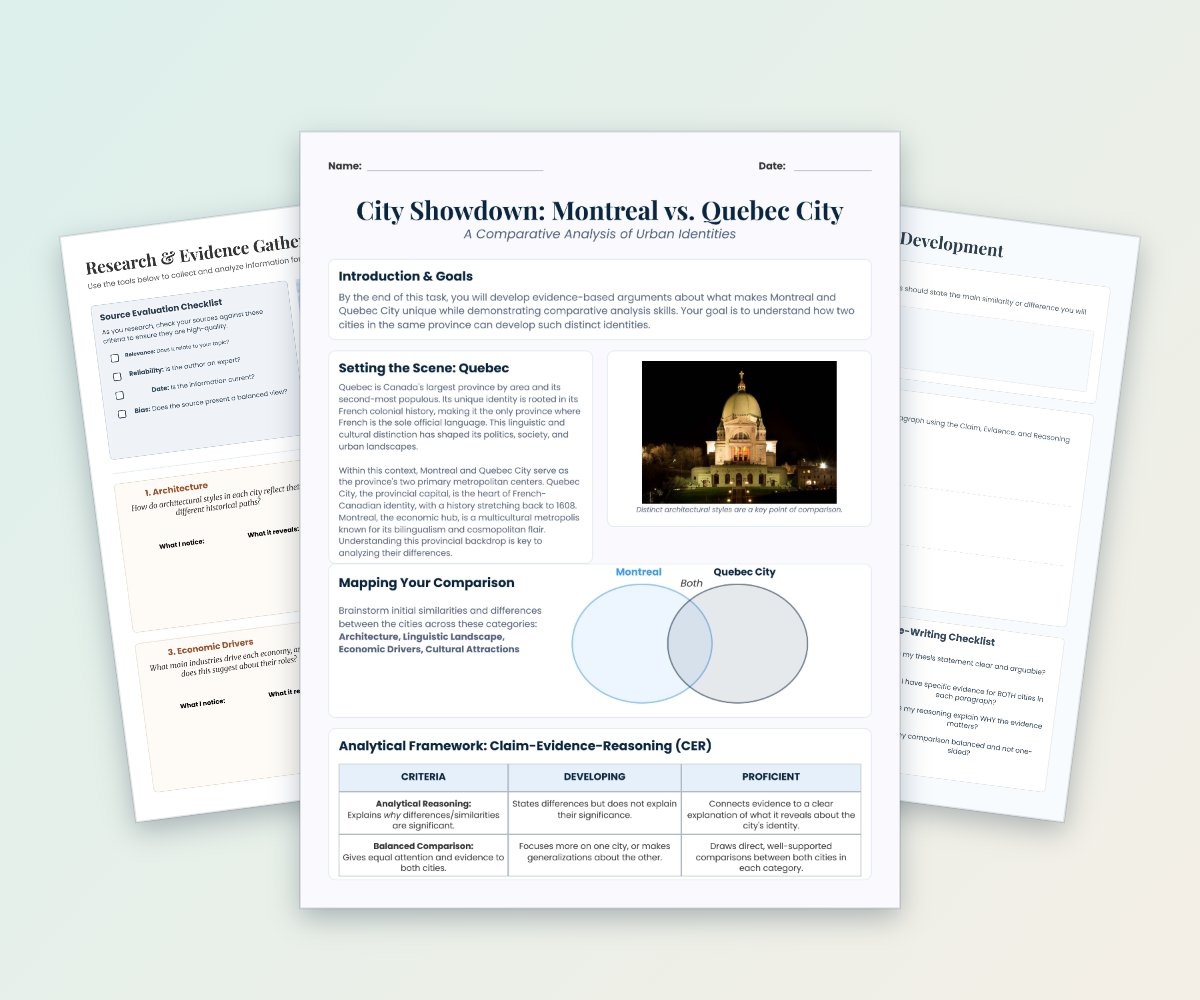
Students compare Montreal and Quebec City through architecture, language, economic drivers, and cultural attractions.
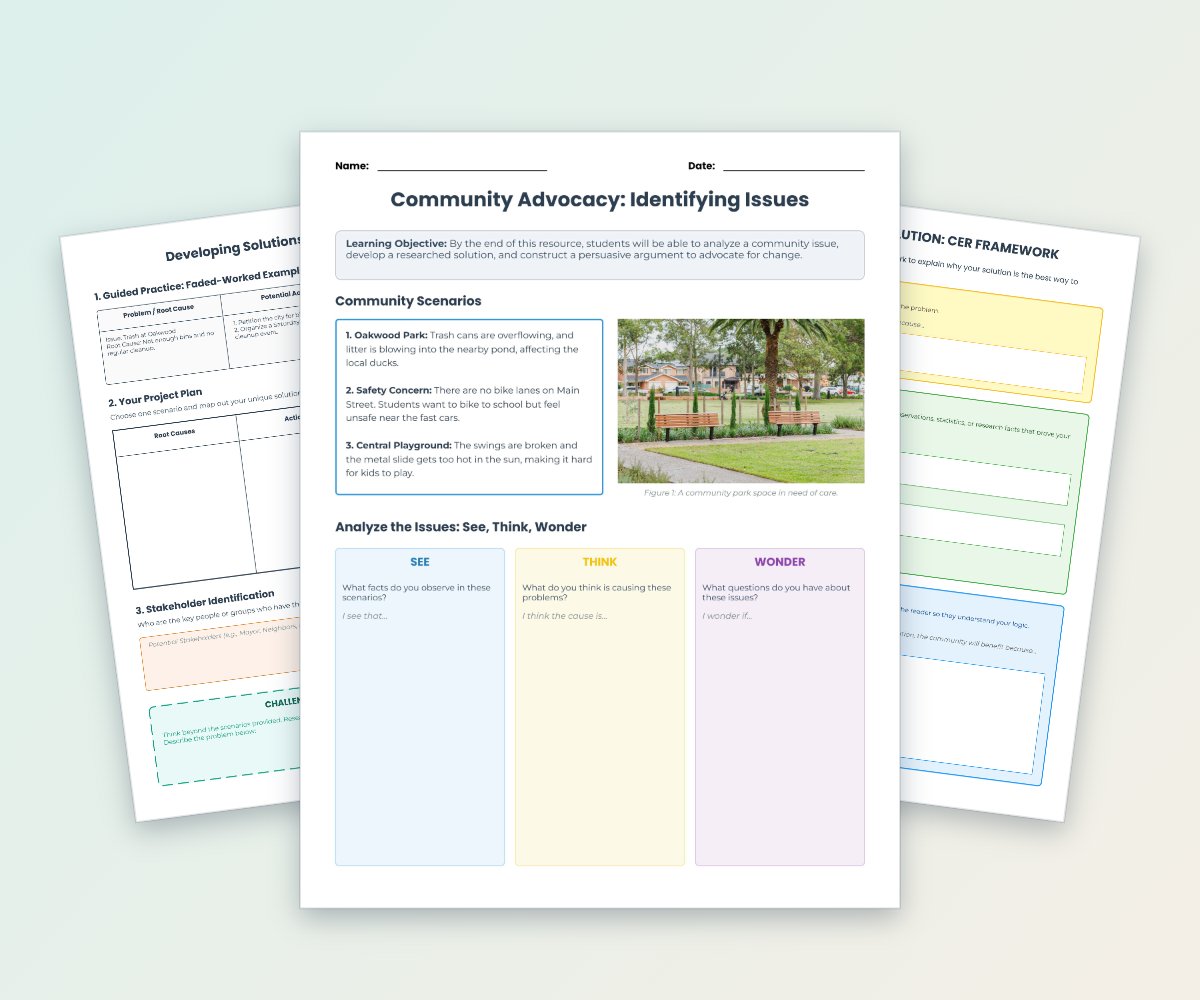
Students analyze local community problems, identify root causes and stakeholders, and develop practical action plans.
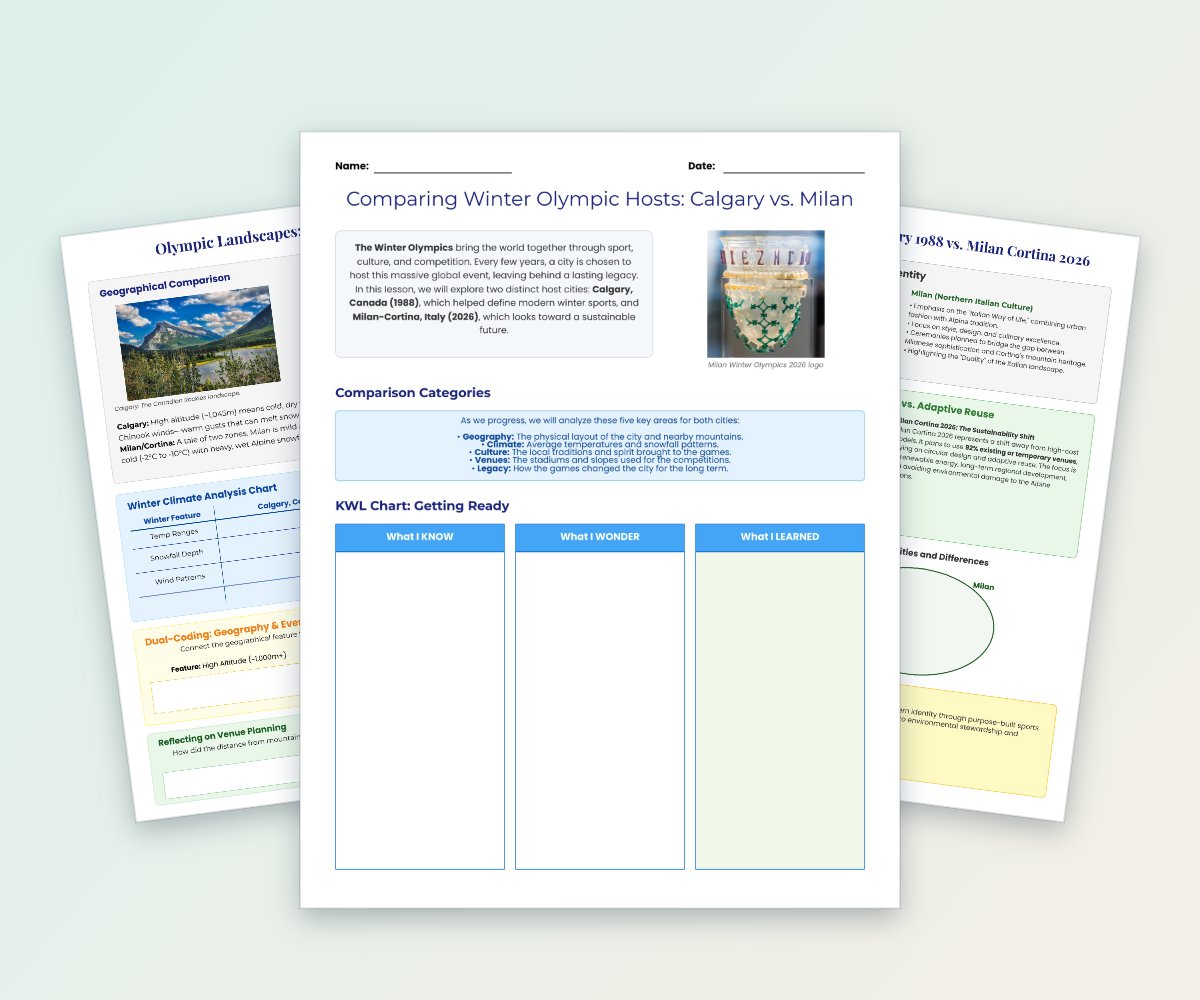
Students compare Calgary 1988 and Milan-Cortina 2026 through geography, climate, culture, venues, and legacy.
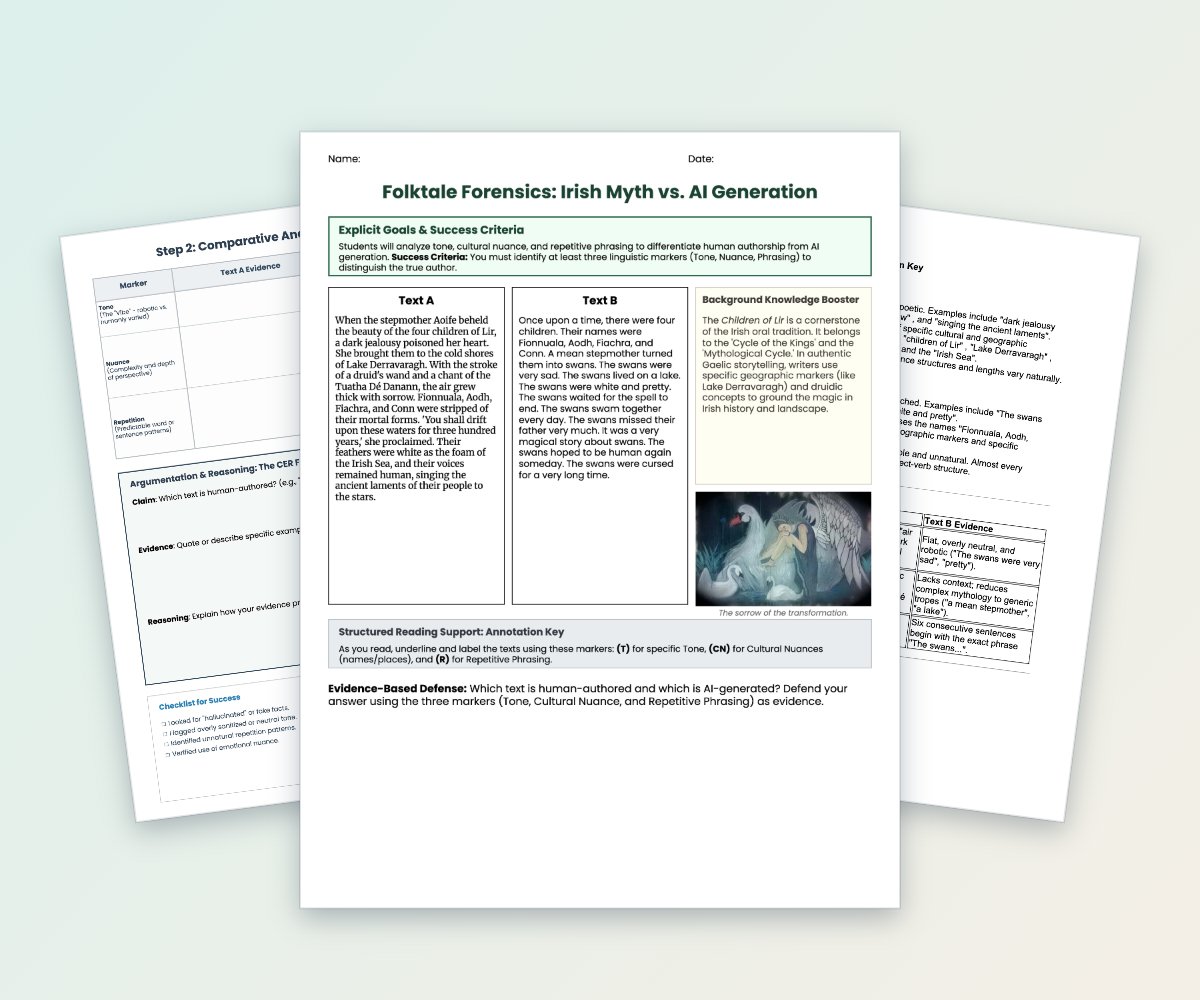
Students compare two versions of the Children of Lir folktale to identify differences in tone, cultural nuance, and repetitive phrasing.
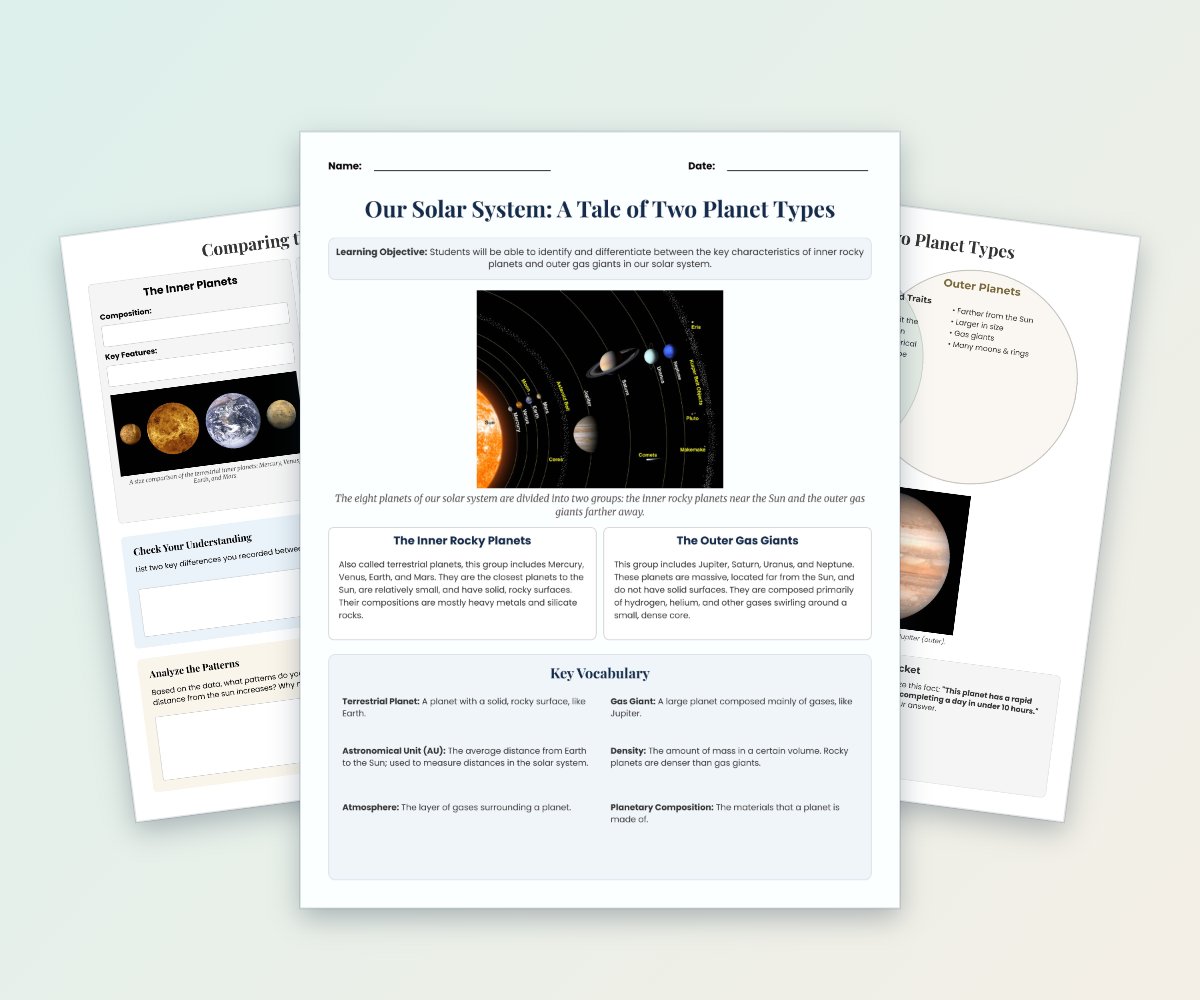
This three-page worksheet explains the differences between inner rocky planets and outer gas giants.
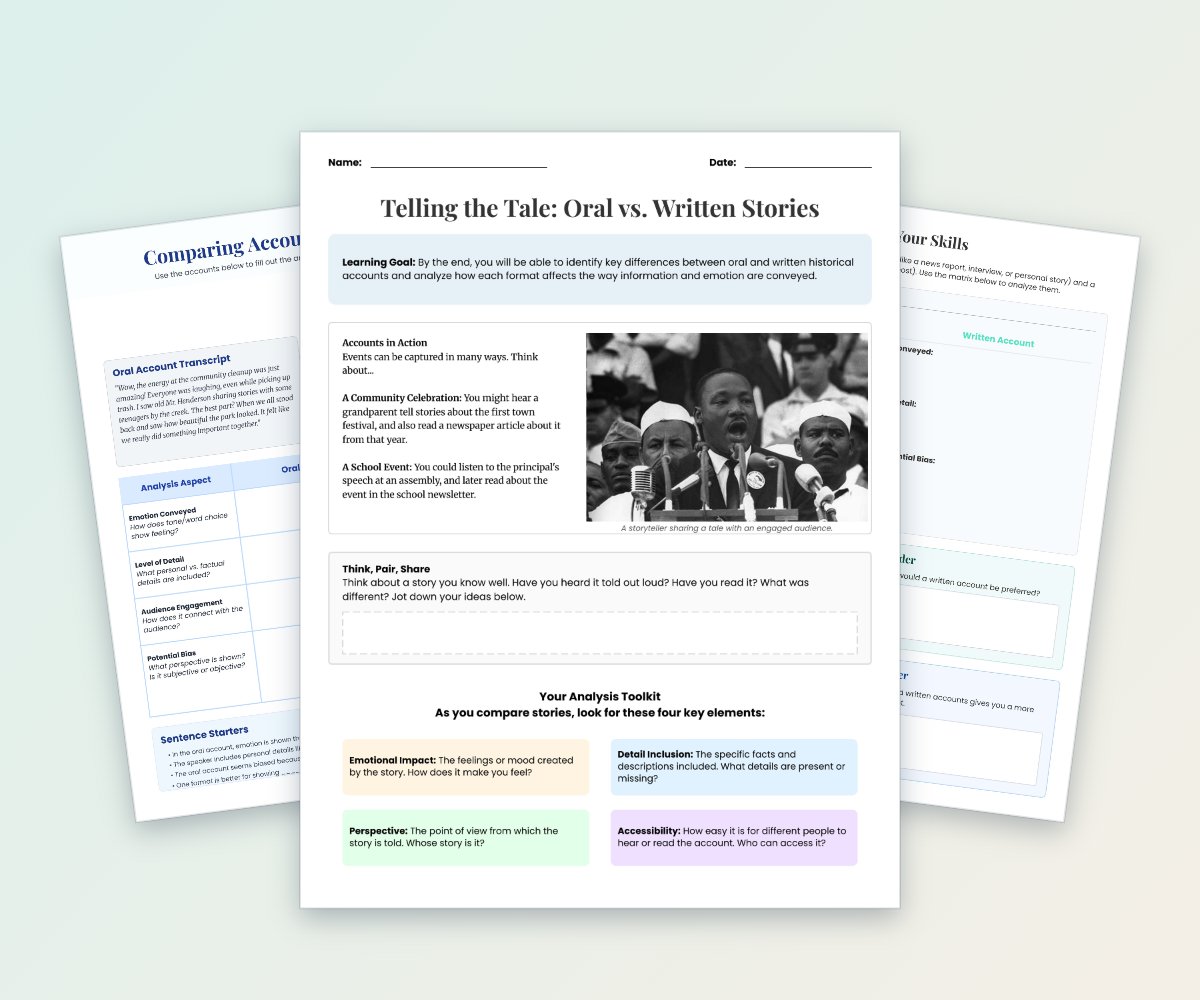
Students compare an oral account and a written newsletter account of a community cleanup.
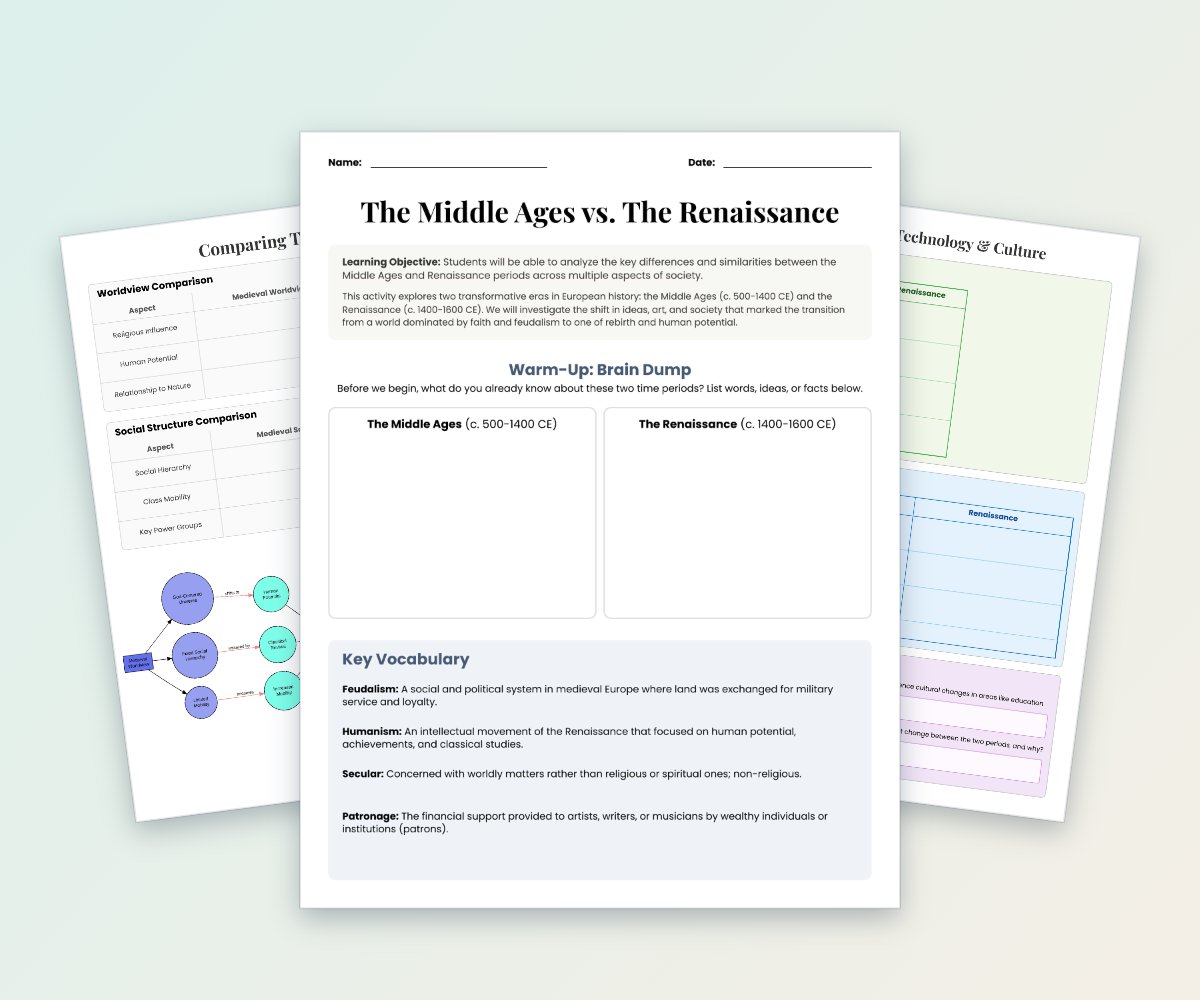
Students compare the Middle Ages and Renaissance through worldview, social structure, technology, art, literature, education, and daily life.
This three-page worksheet introduces contrasting historical narratives surrounding Columbus Day and Indigenous Peoples Day.
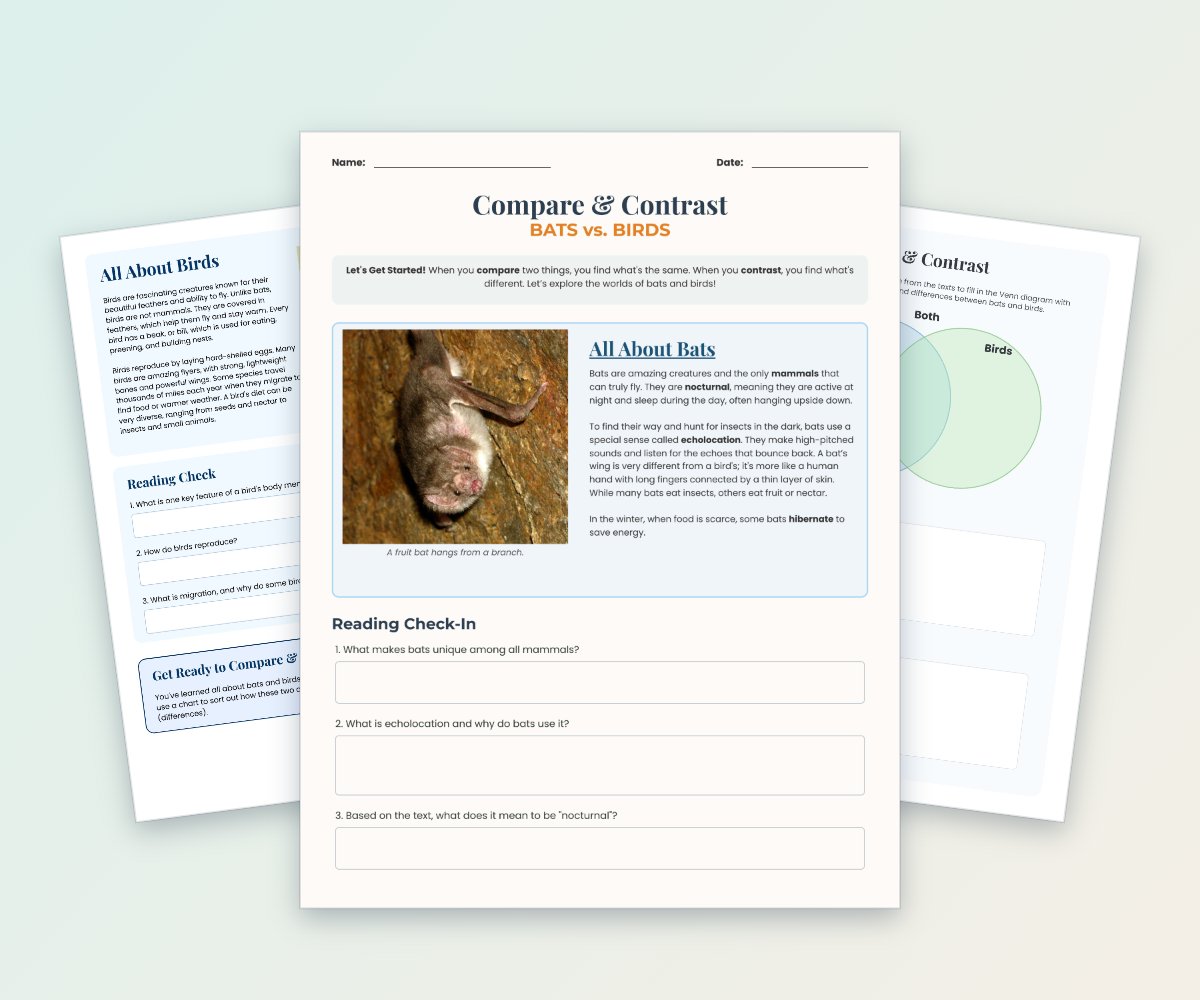
Students read informational passages about bats and birds, answer comprehension questions, and compare their similarities and differences.
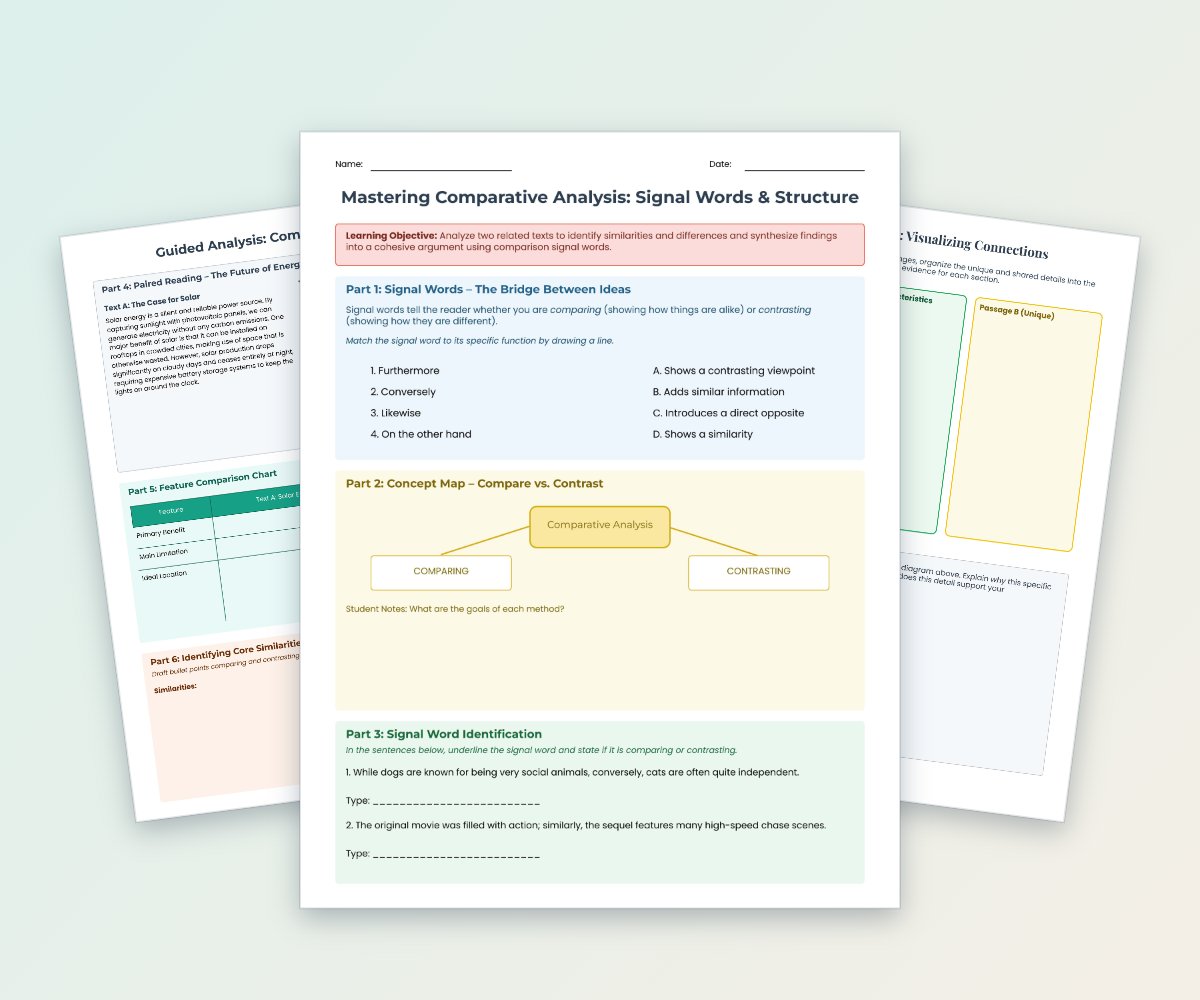
This six-page practice pack helps students identify comparison and contrast signal words, organize similarities and differences, and analyze paired informational texts.
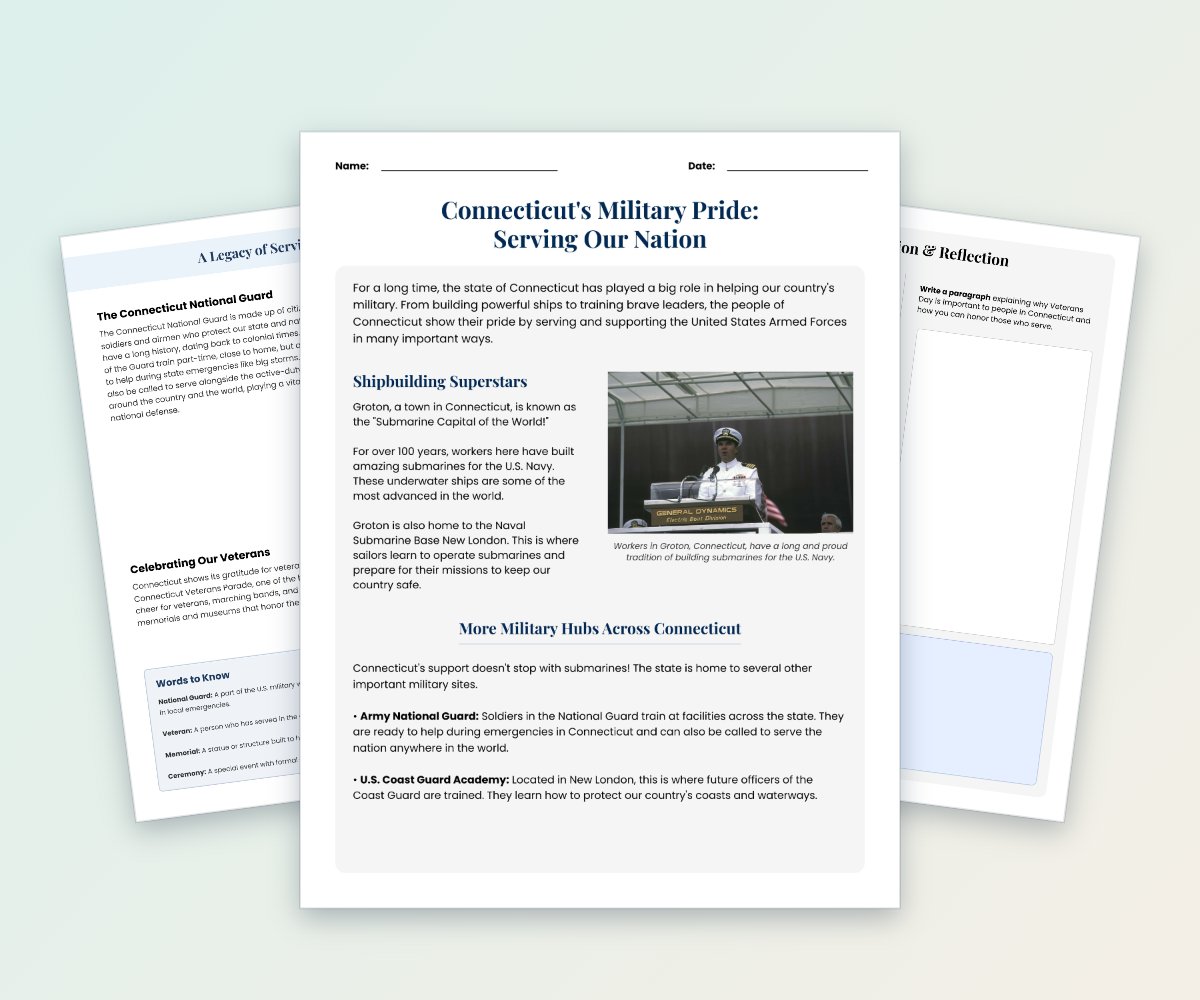
This worksheet introduces students to Connecticut's military contributions, including submarine building in Groton, the National Guard, the Coast Guard Academy, and veterans.
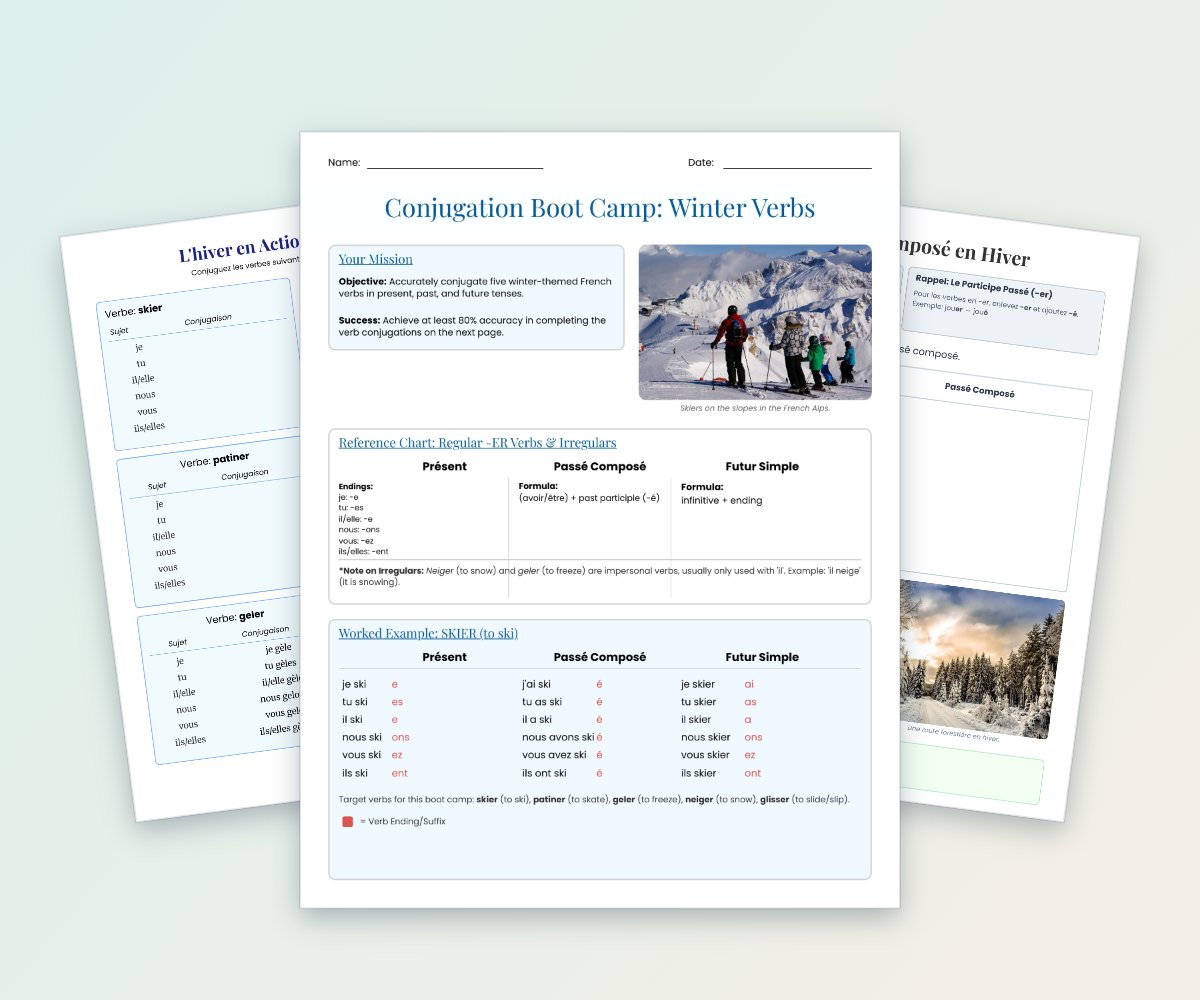
Students practice conjugating five winter-themed French verbs—skier, patiner, geler, neiger, and glisser—in the present, passé composé, and futur simple.
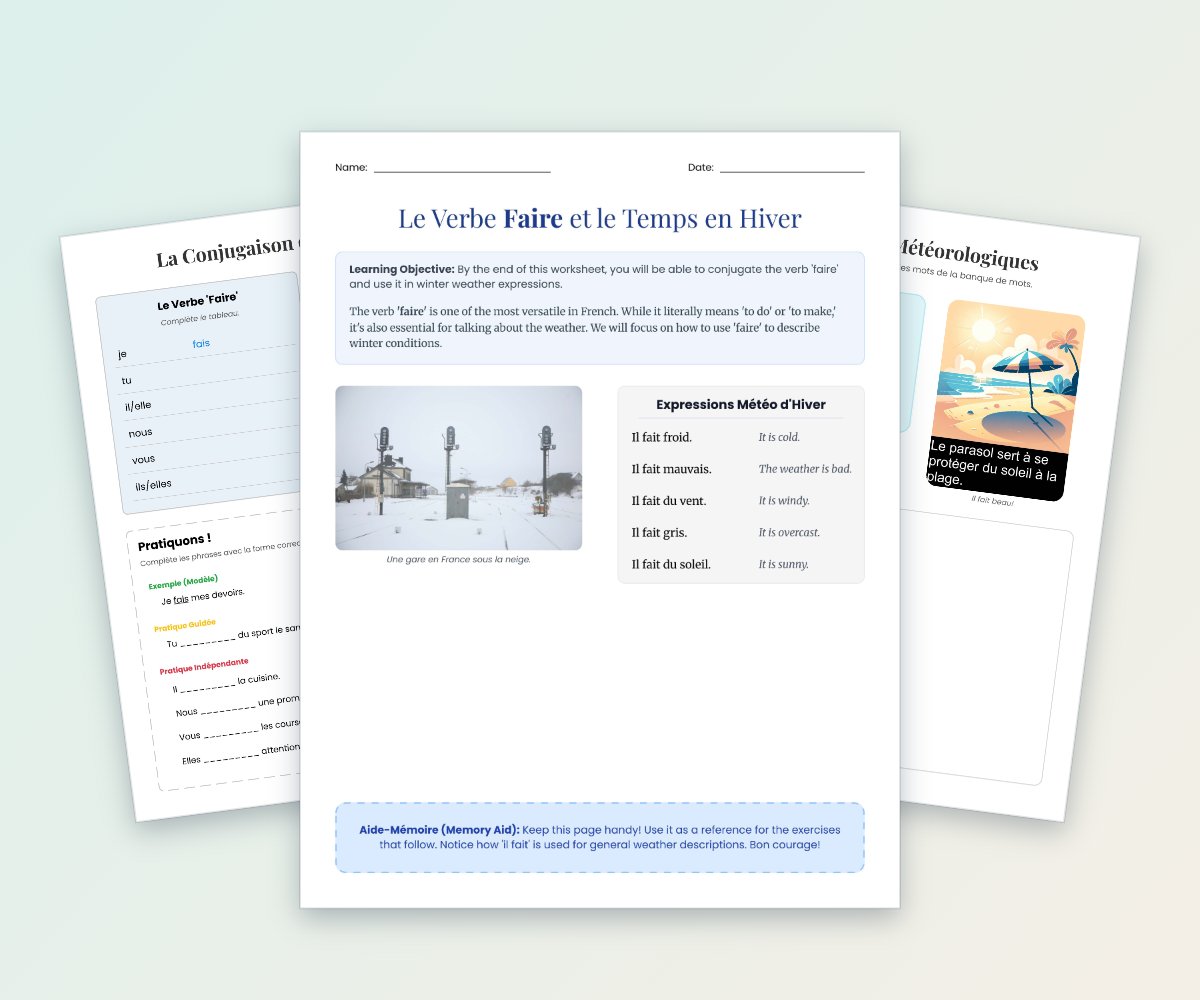
Students practice conjugating the French verb faire and using it in common winter weather expressions.
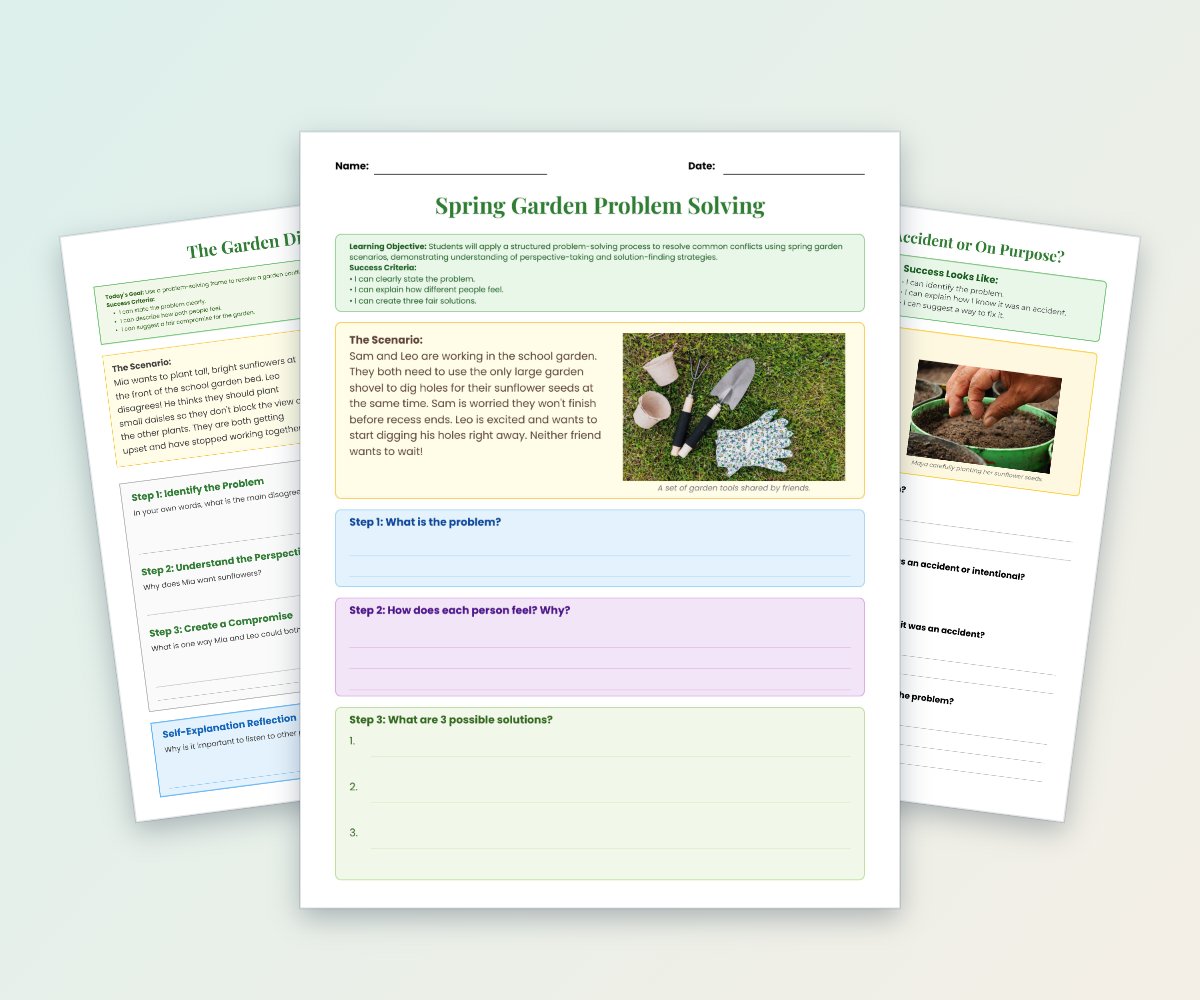
This six-page activity pack uses school garden scenarios to teach students how to identify conflicts, understand different perspectives, and develop fair solutions.
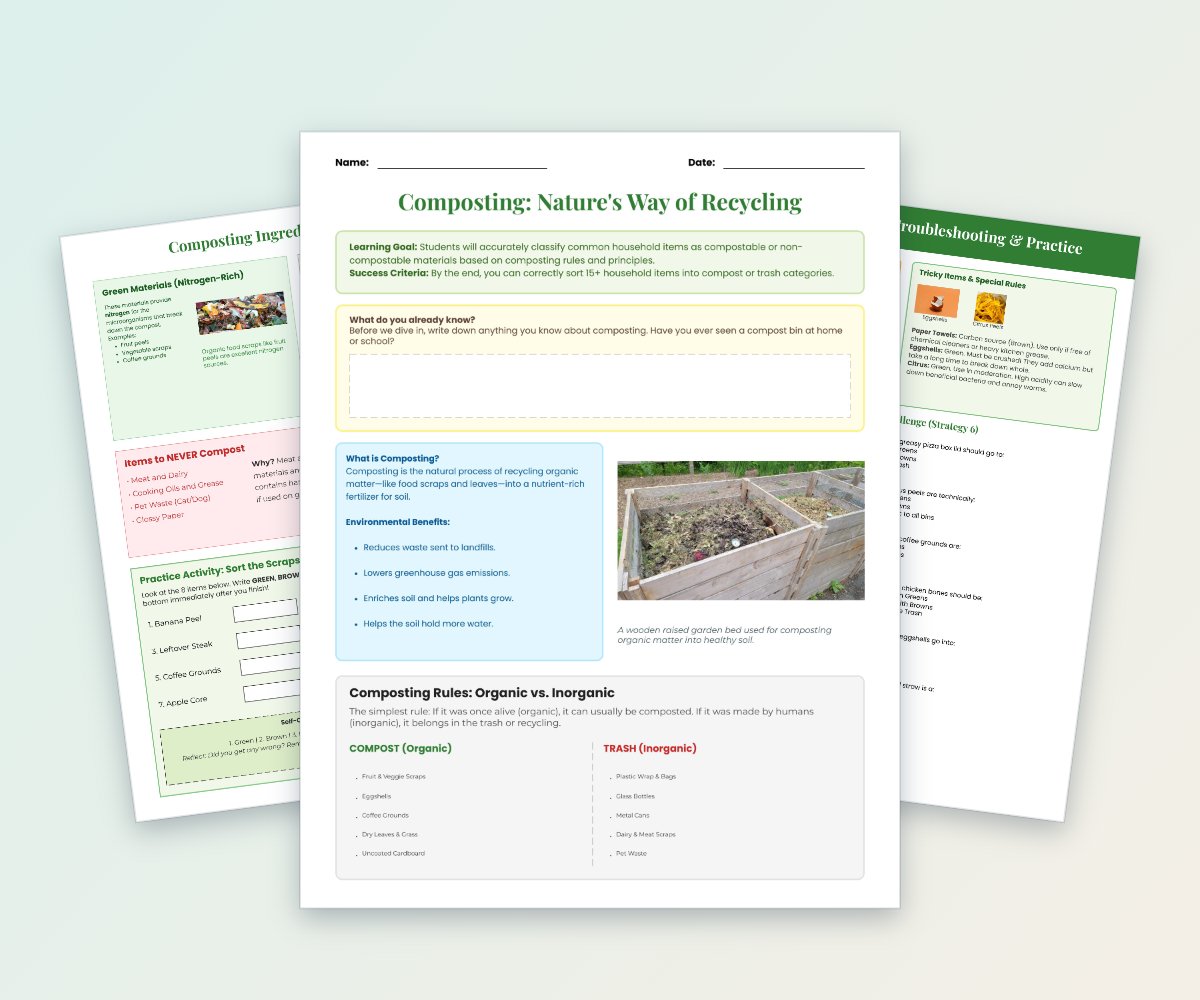
This four-page science activity introduces composting, organic and inorganic materials, compost ingredients, and safety rules.
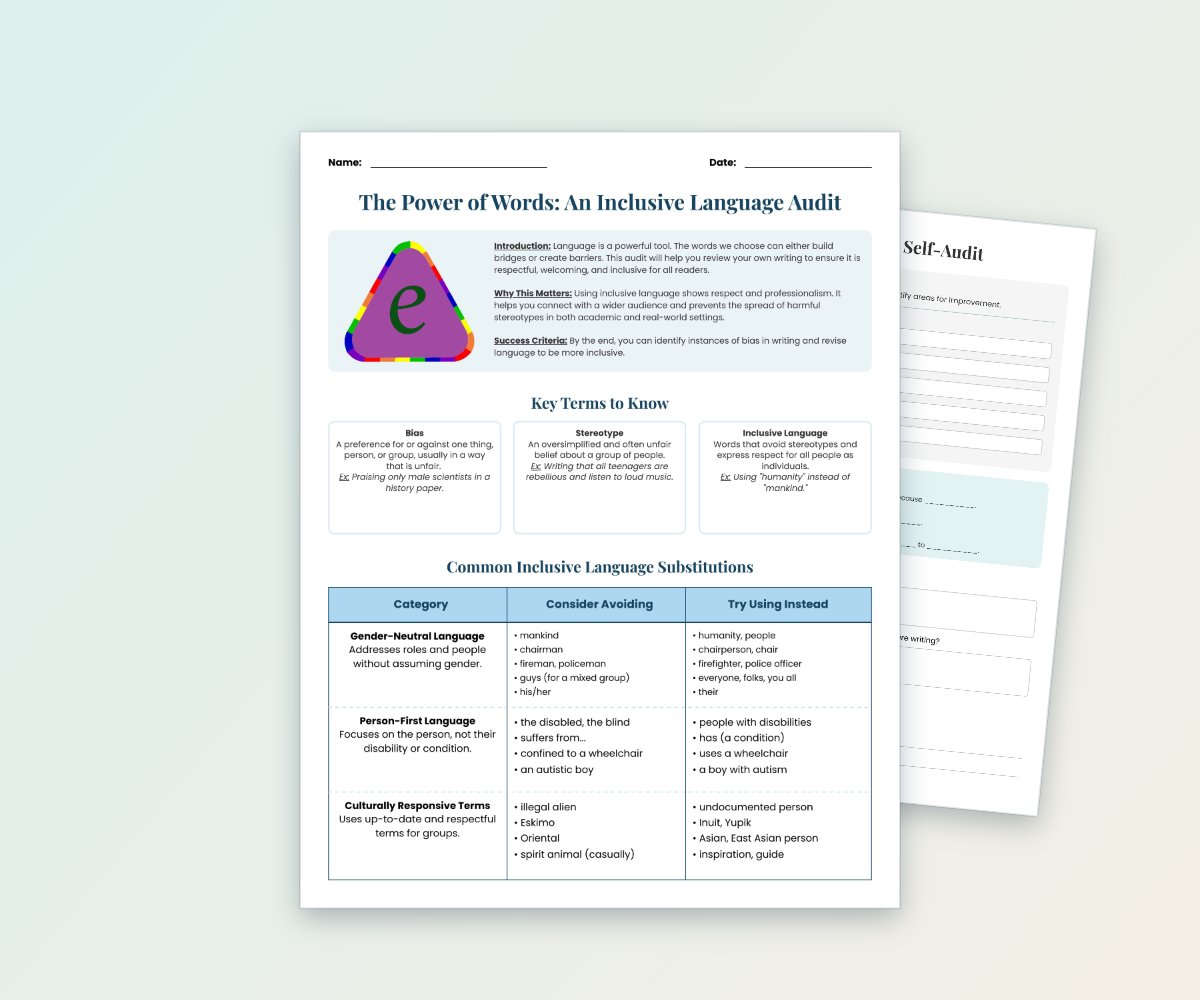
Students review their own writing for gender bias, ableist language, cultural insensitivity, stereotyping, and exclusionary phrasing.
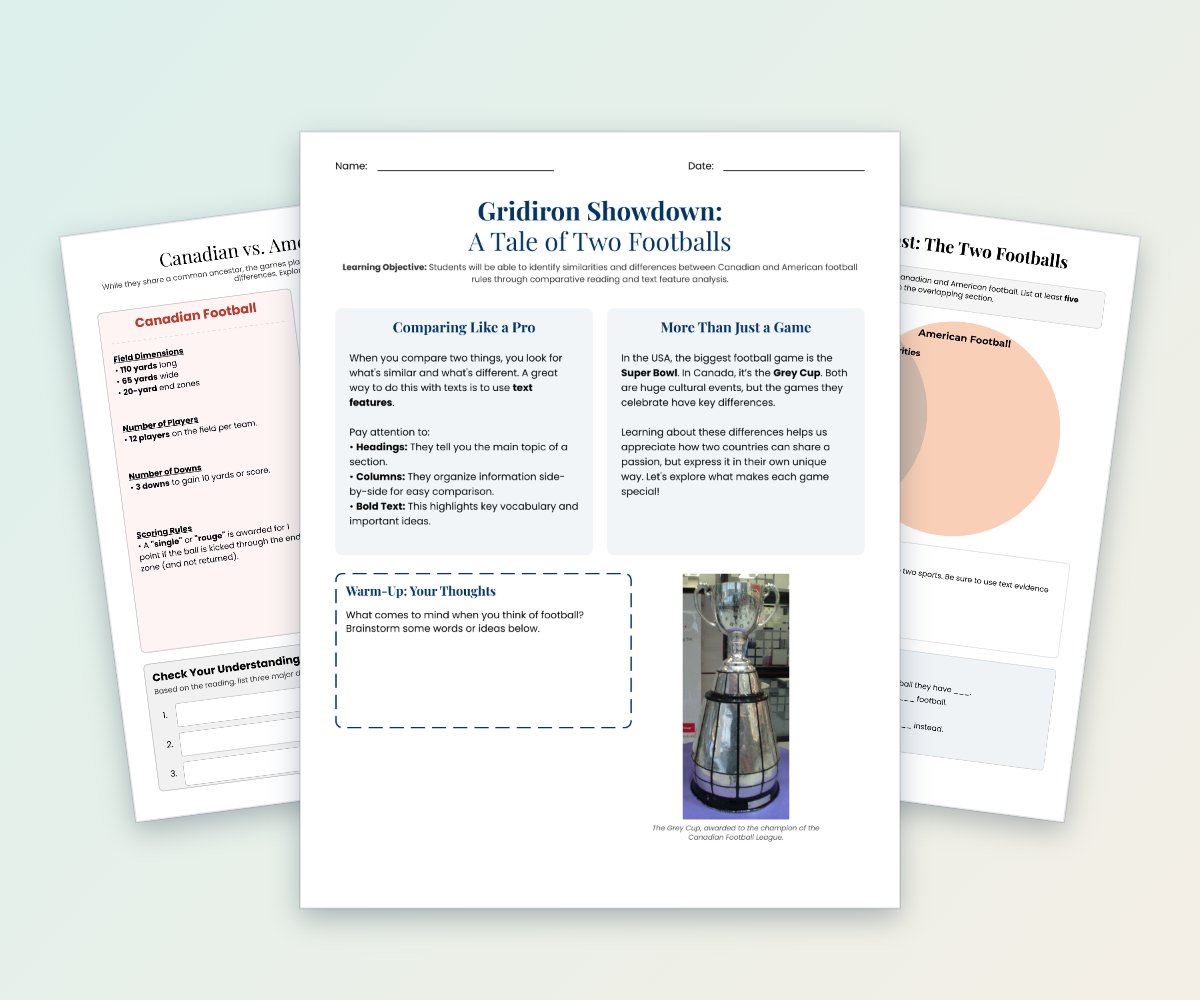
Students compare Canadian and American football using informational text, text features, and factual details about gameplay.
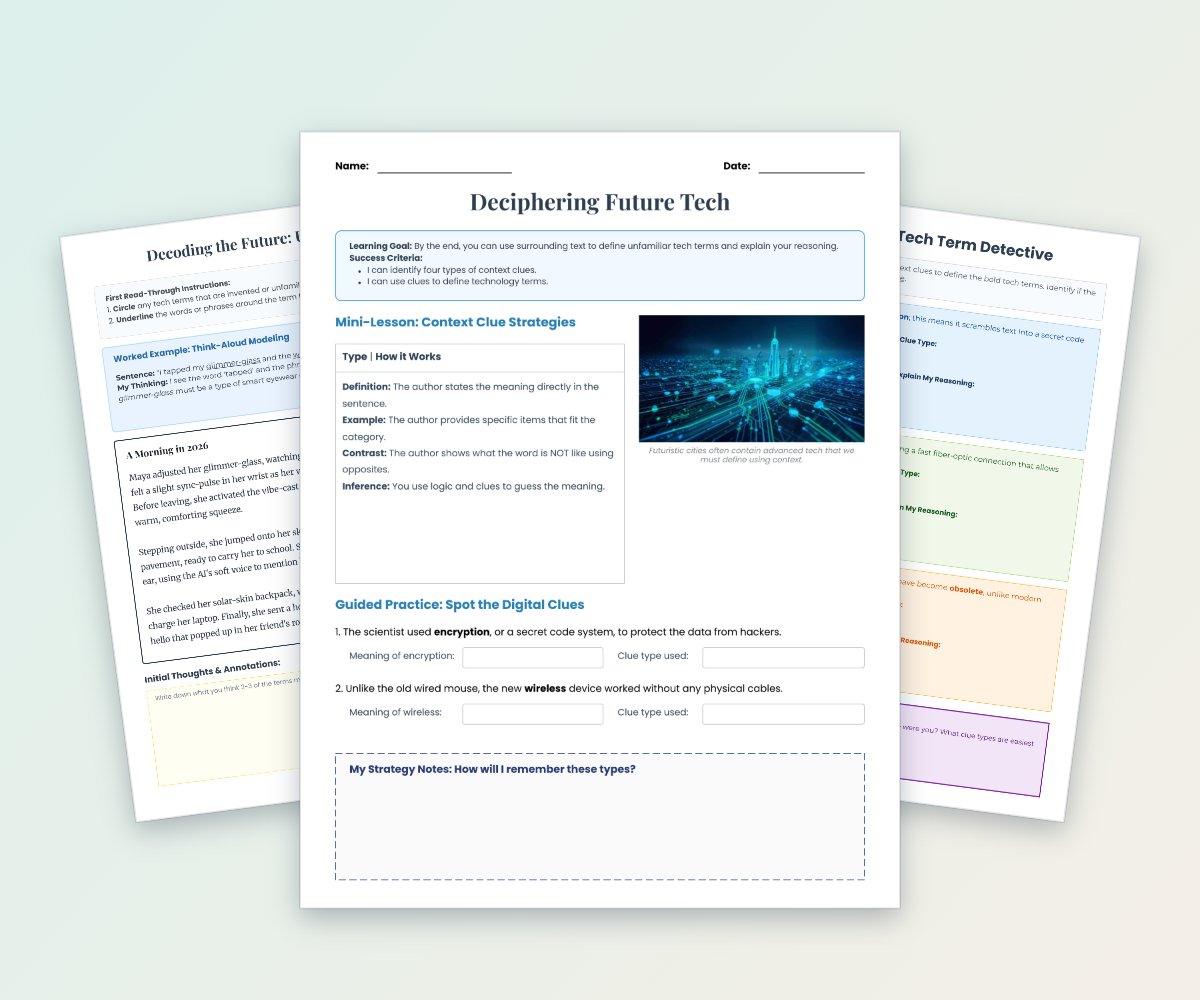
Students learn definition, example, contrast, and inference context clues through a futuristic technology theme.
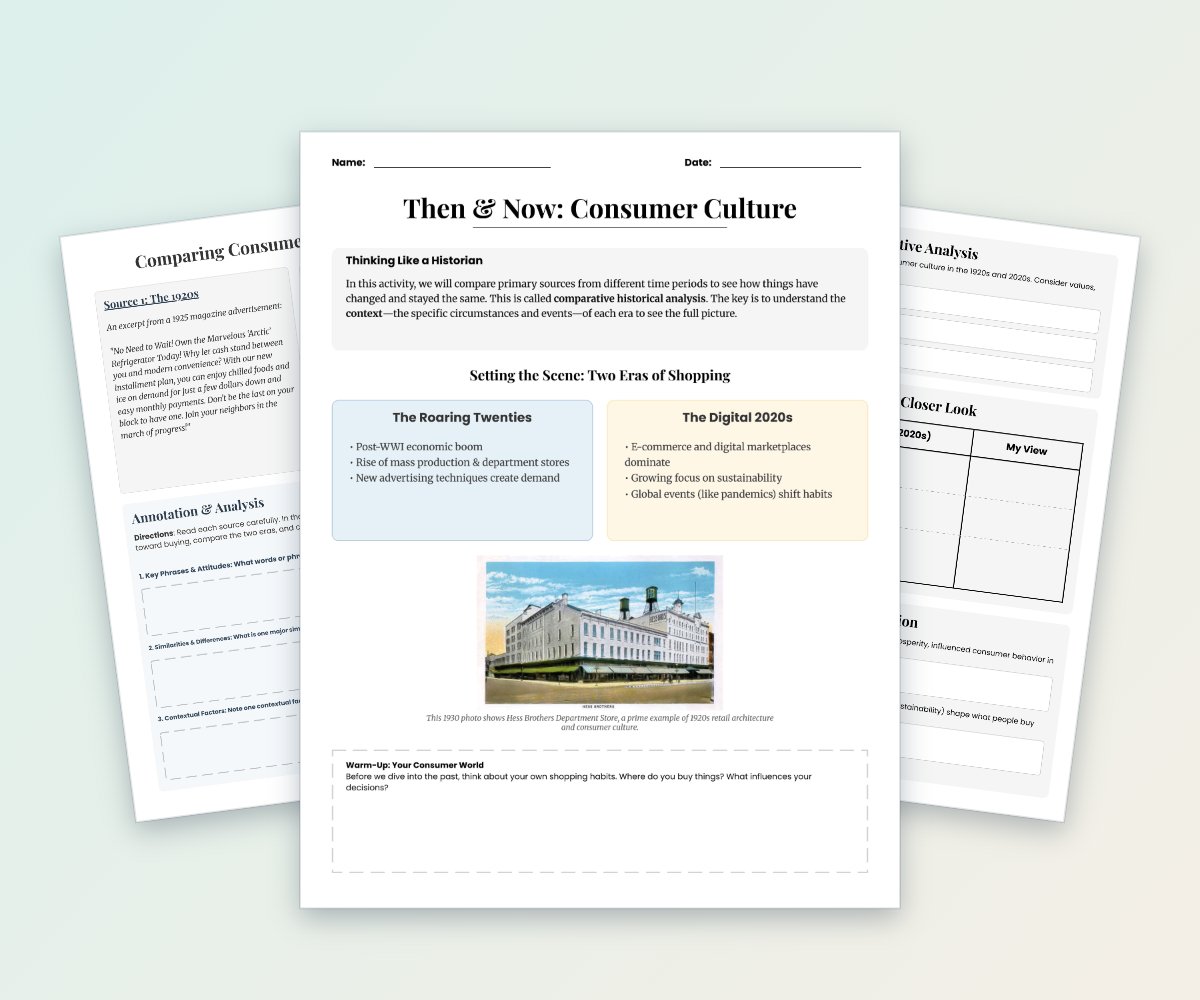
Students compare consumer culture in the Roaring Twenties and the digital 2020s using primary sources, contextual information, and guided analysis questions.
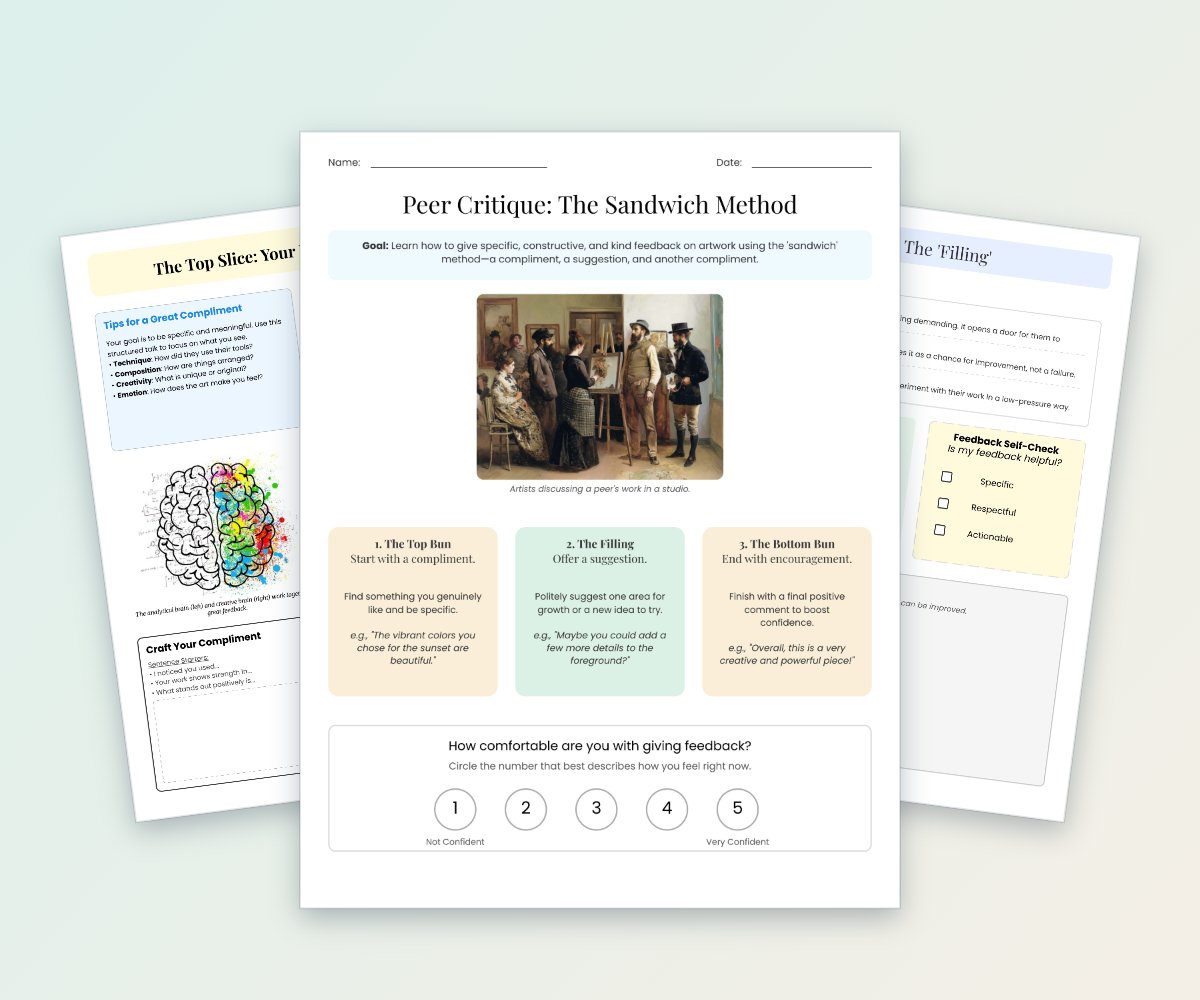
This four-page worksheet teaches students to give kind, specific, and actionable feedback on artwork using the sandwich method: compliment, suggestion, and encouragement.
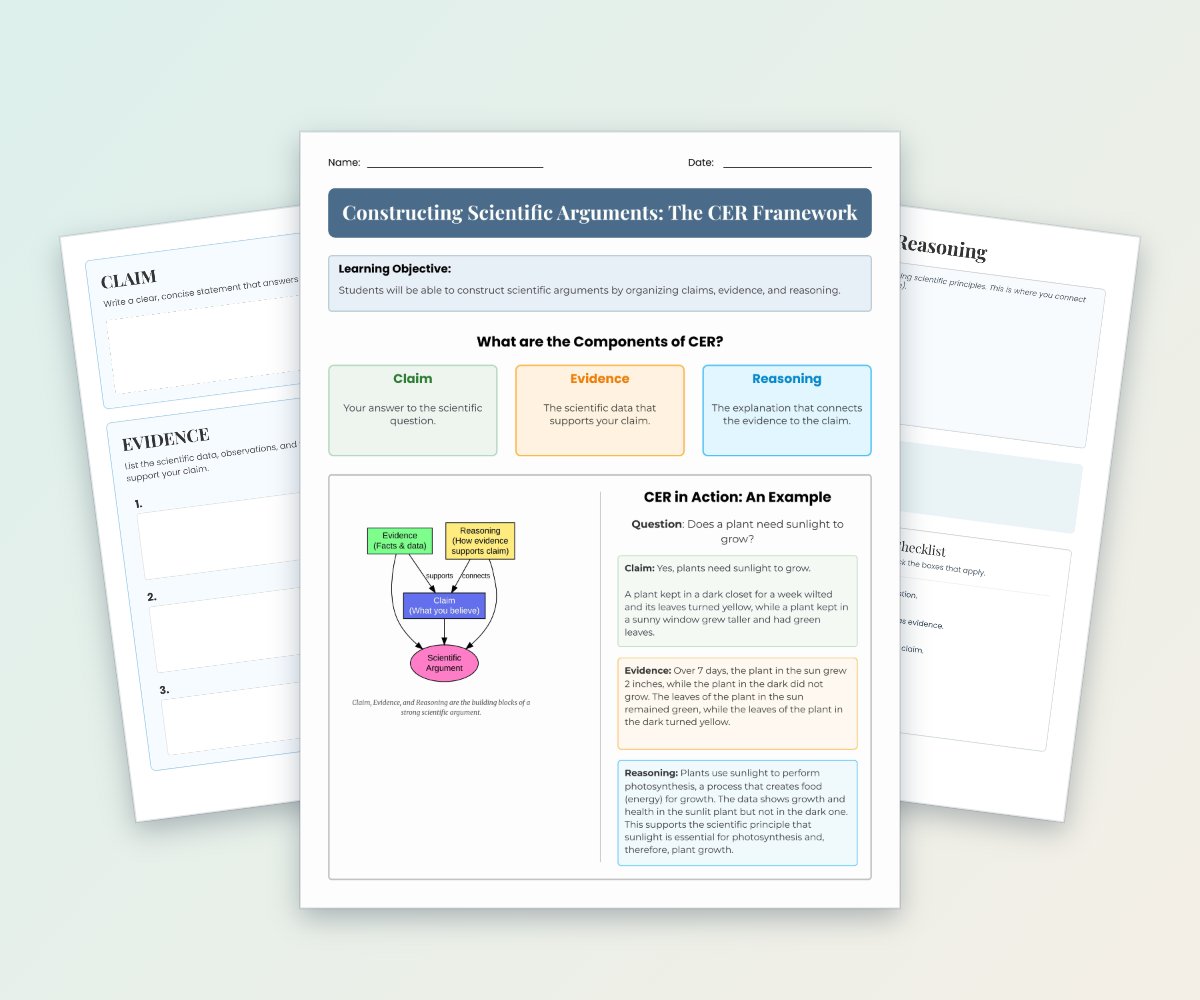
This four-page resource introduces the Claim, Evidence, and Reasoning framework for constructing scientific arguments.
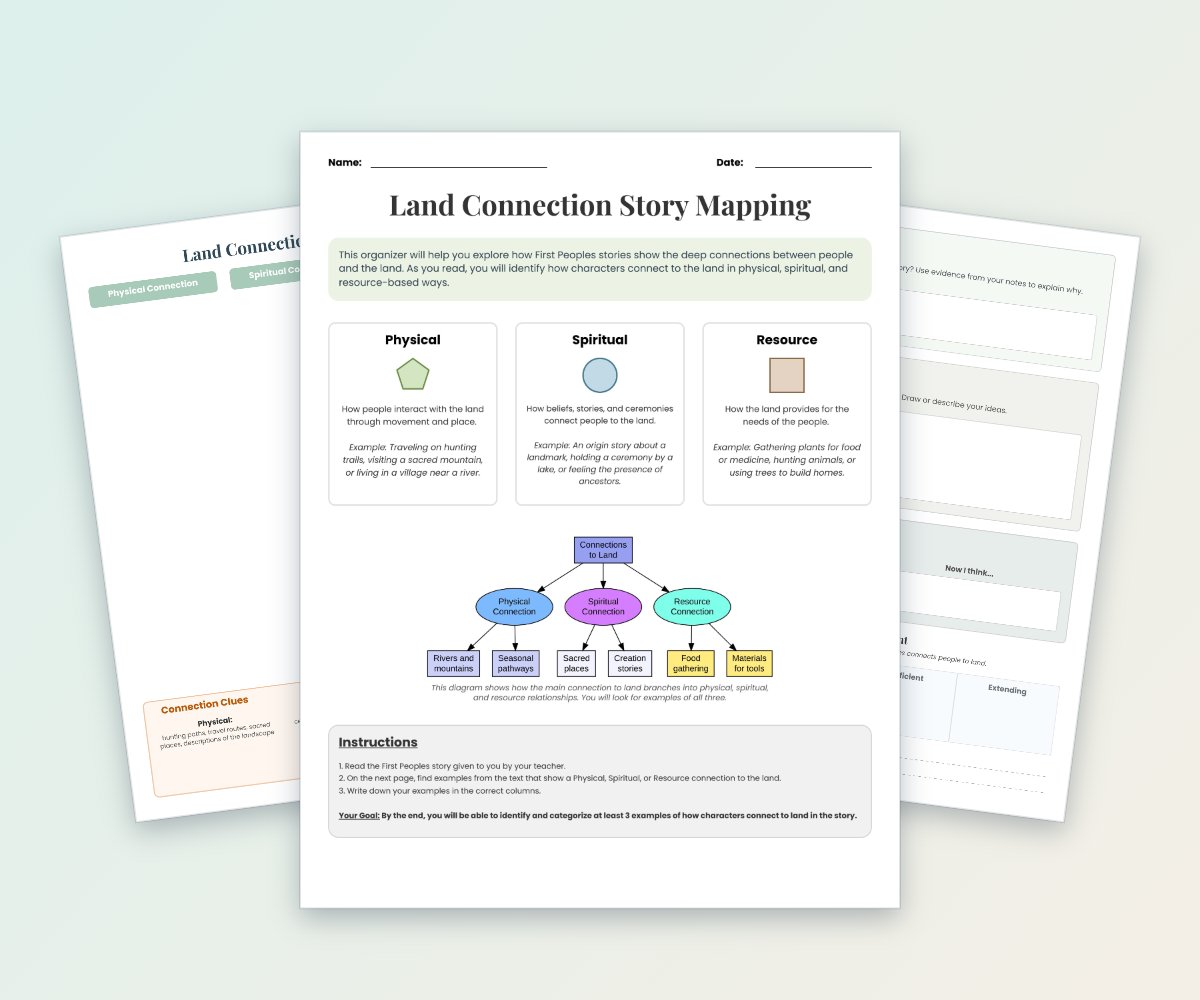
Students analyze a First Peoples story by identifying physical, spiritual, and resource-based connections to land.
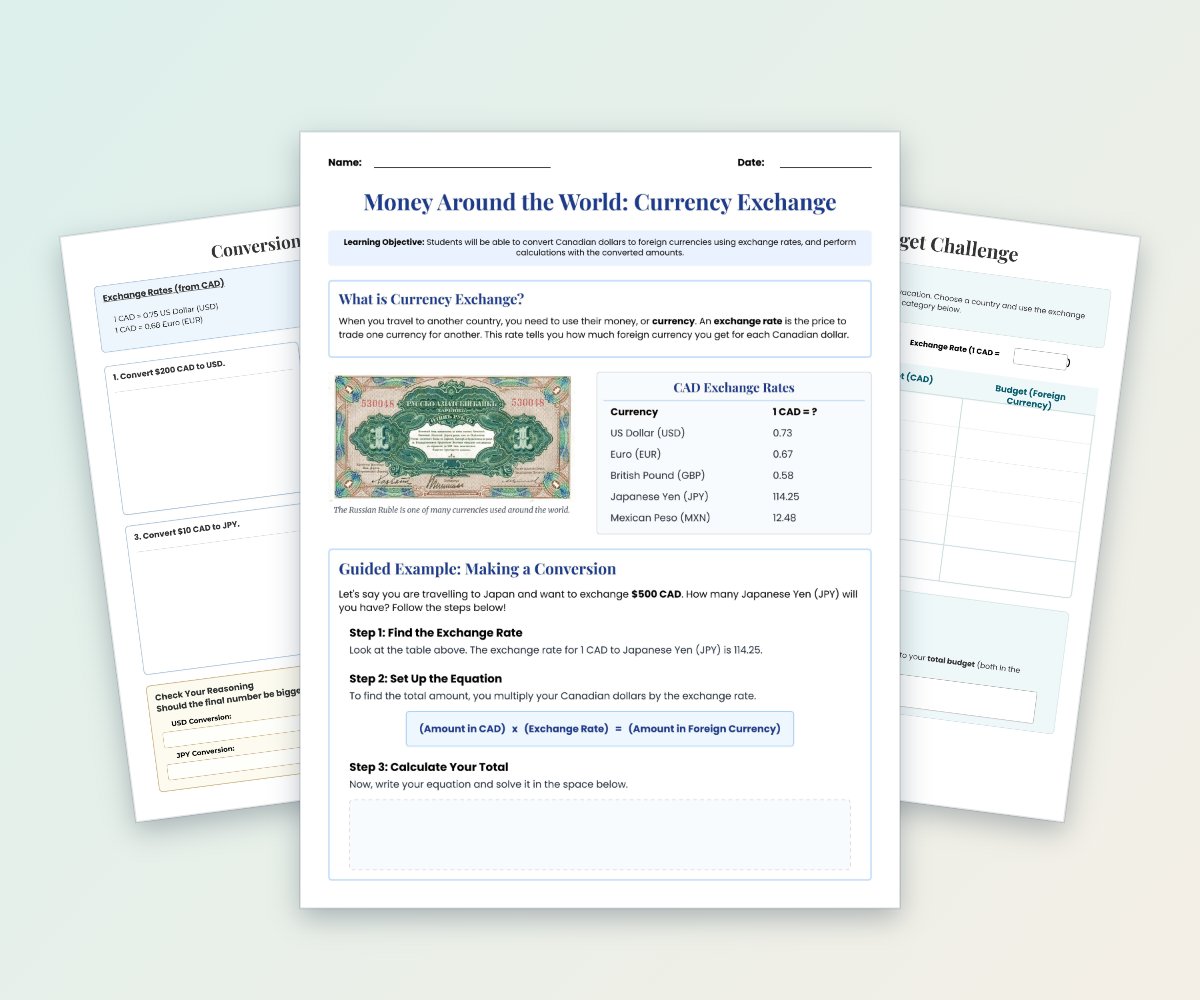
This four-page math activity introduces exchange rates through guided examples, conversion practice, and a vacation budgeting challenge.
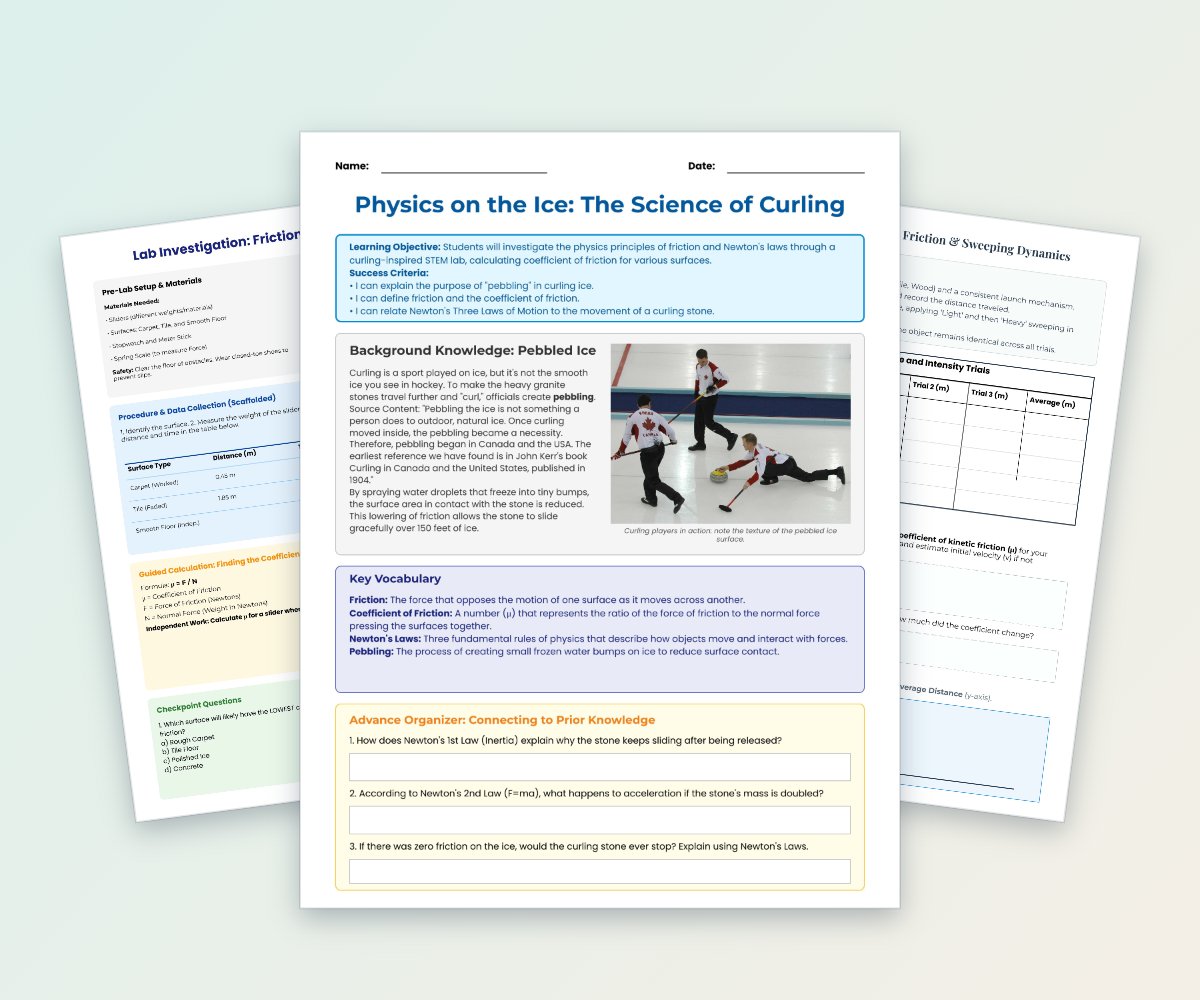
Students investigate friction and motion using a curling-inspired STEM lab.
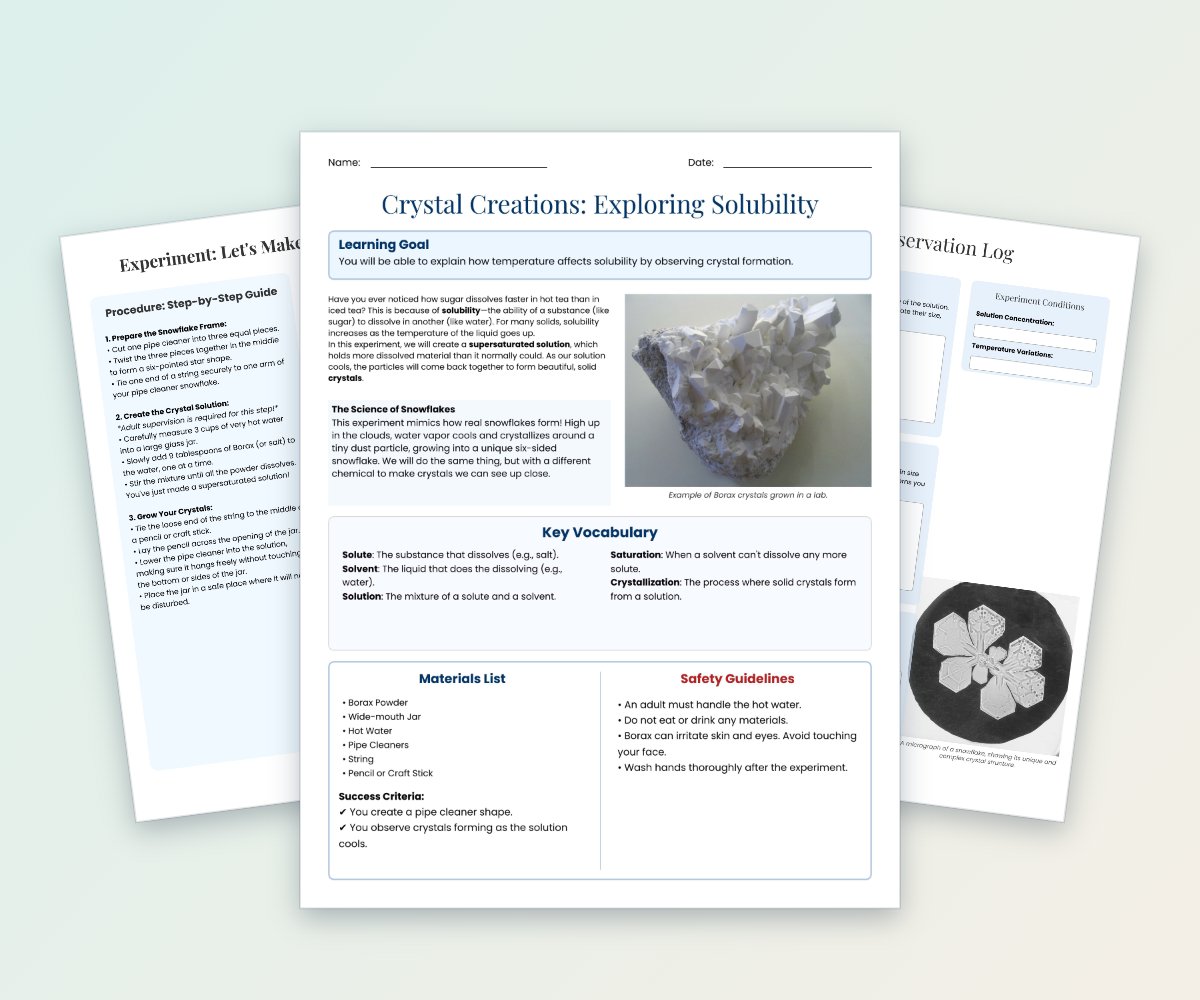
Students investigate how temperature affects solubility by creating crystal snowflakes from a supersaturated solution.
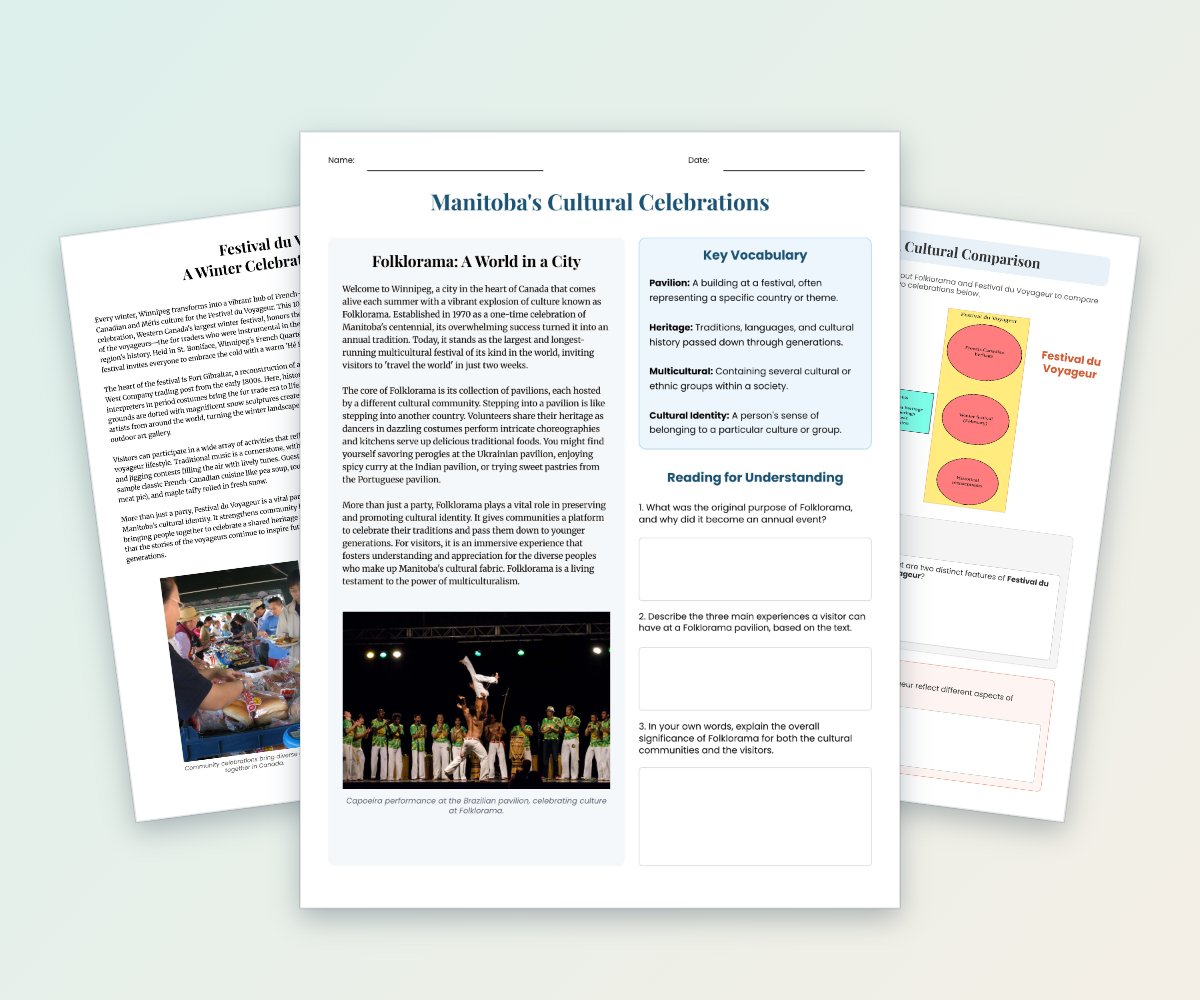
Students read about Manitoba celebrations including Folklorama and Festival du Voyageur.
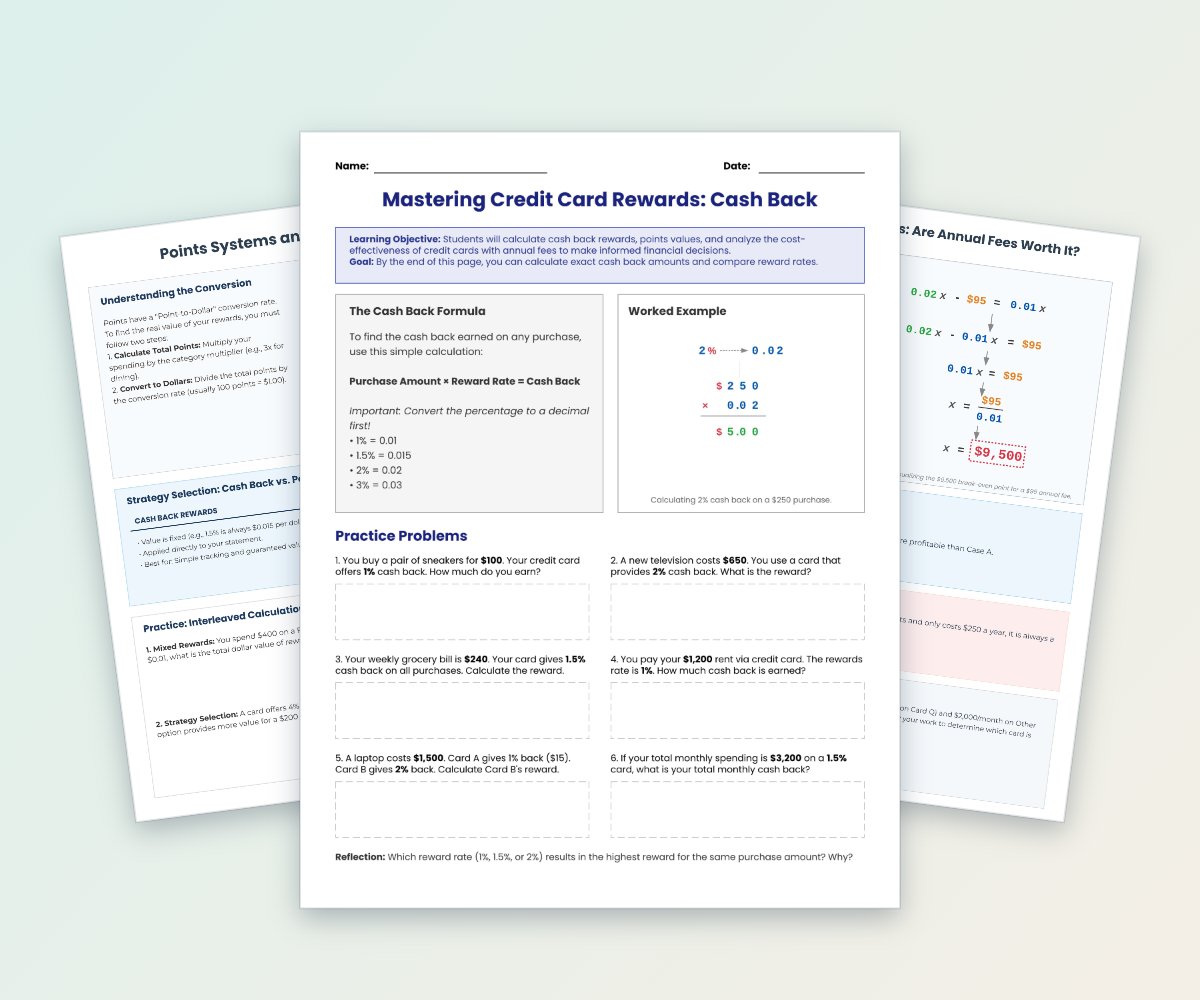
This four-page worksheet teaches students to calculate credit card cash-back rewards, convert percentages to decimals, and compare reward rates.
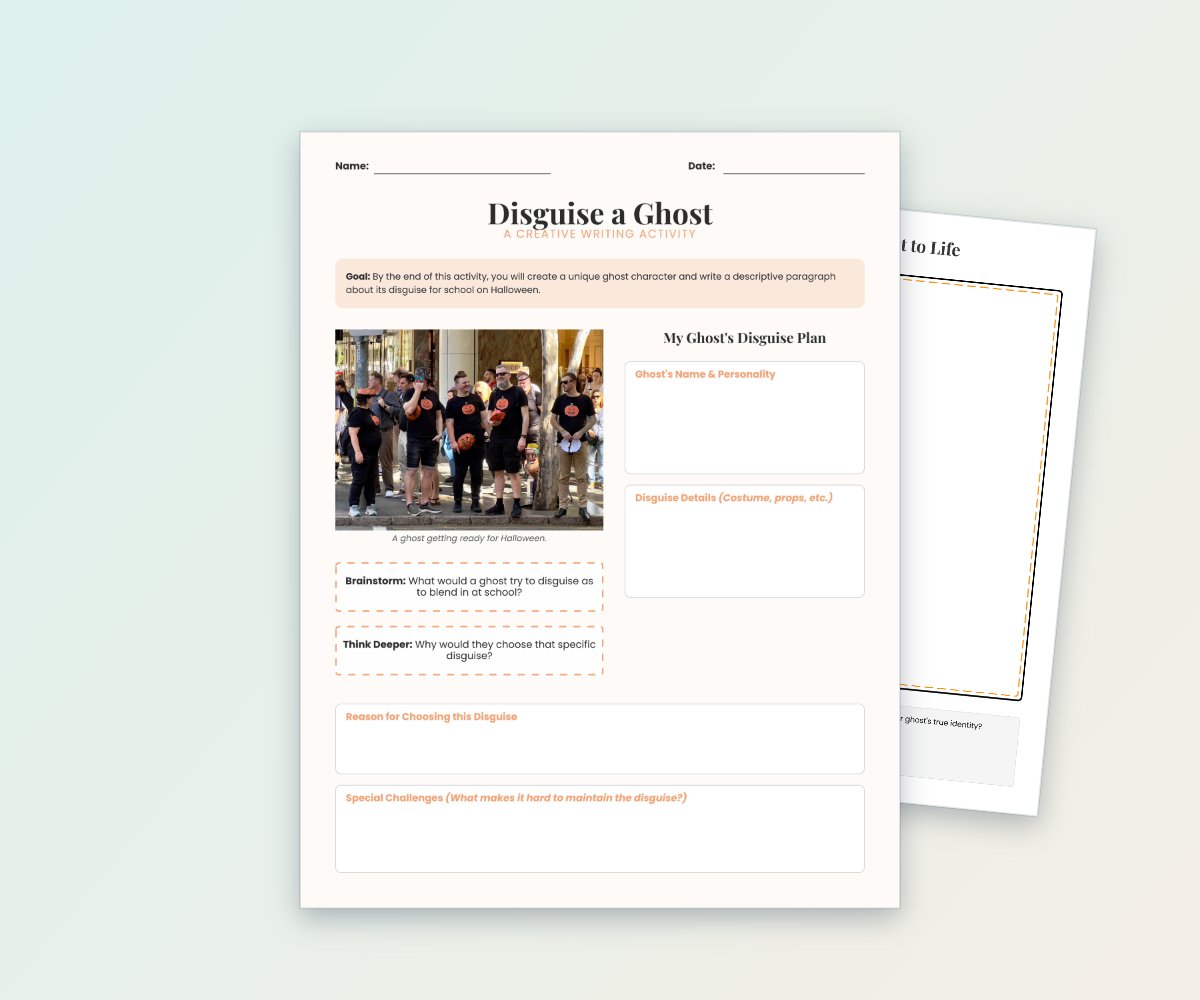
Students design a unique ghost character and plan a descriptive paragraph about its Halloween disguise.
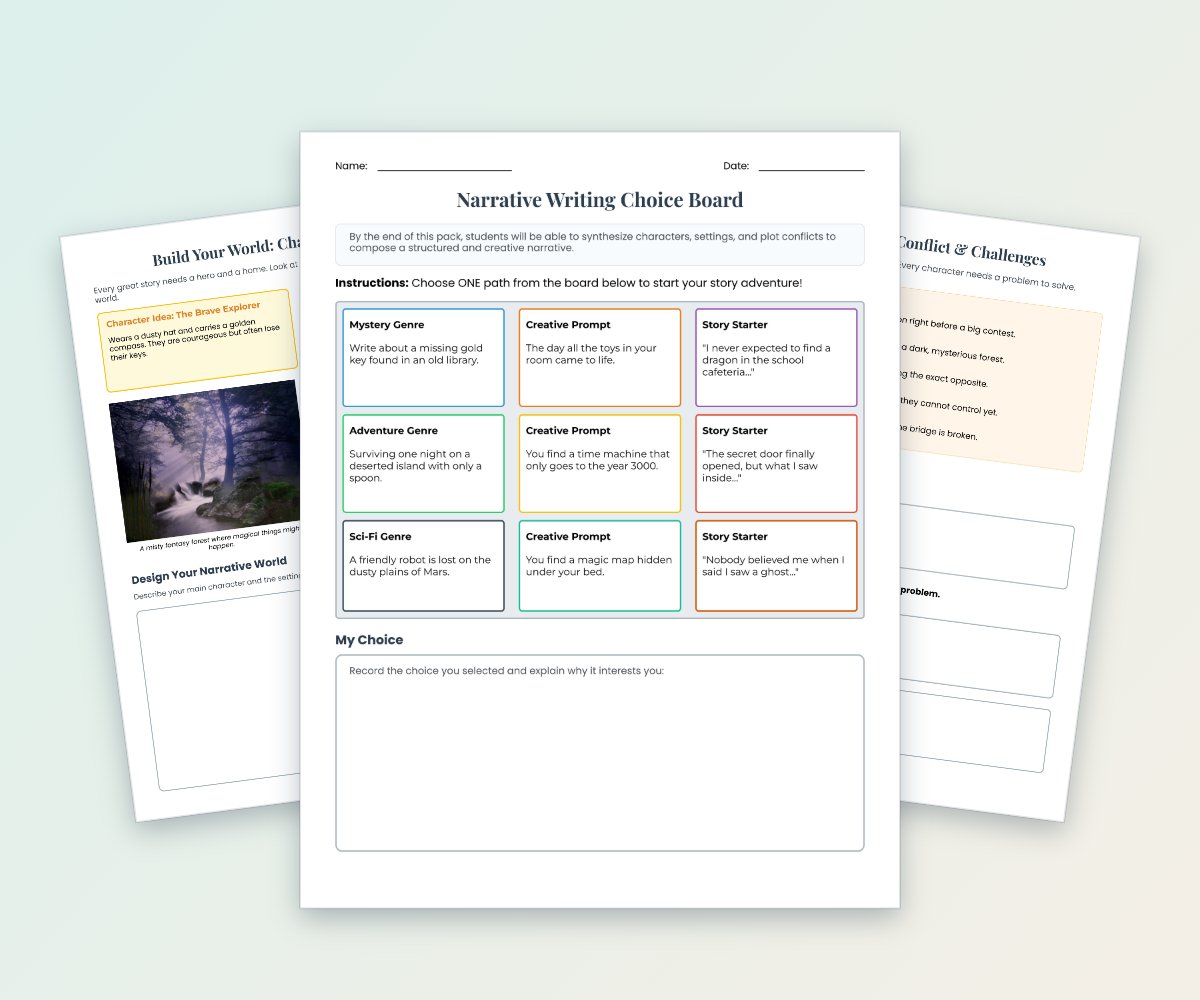
Guide students through planning creative narratives using genre-based choice boards, story starters, character and setting prompts, conflict development, and plot mapping.
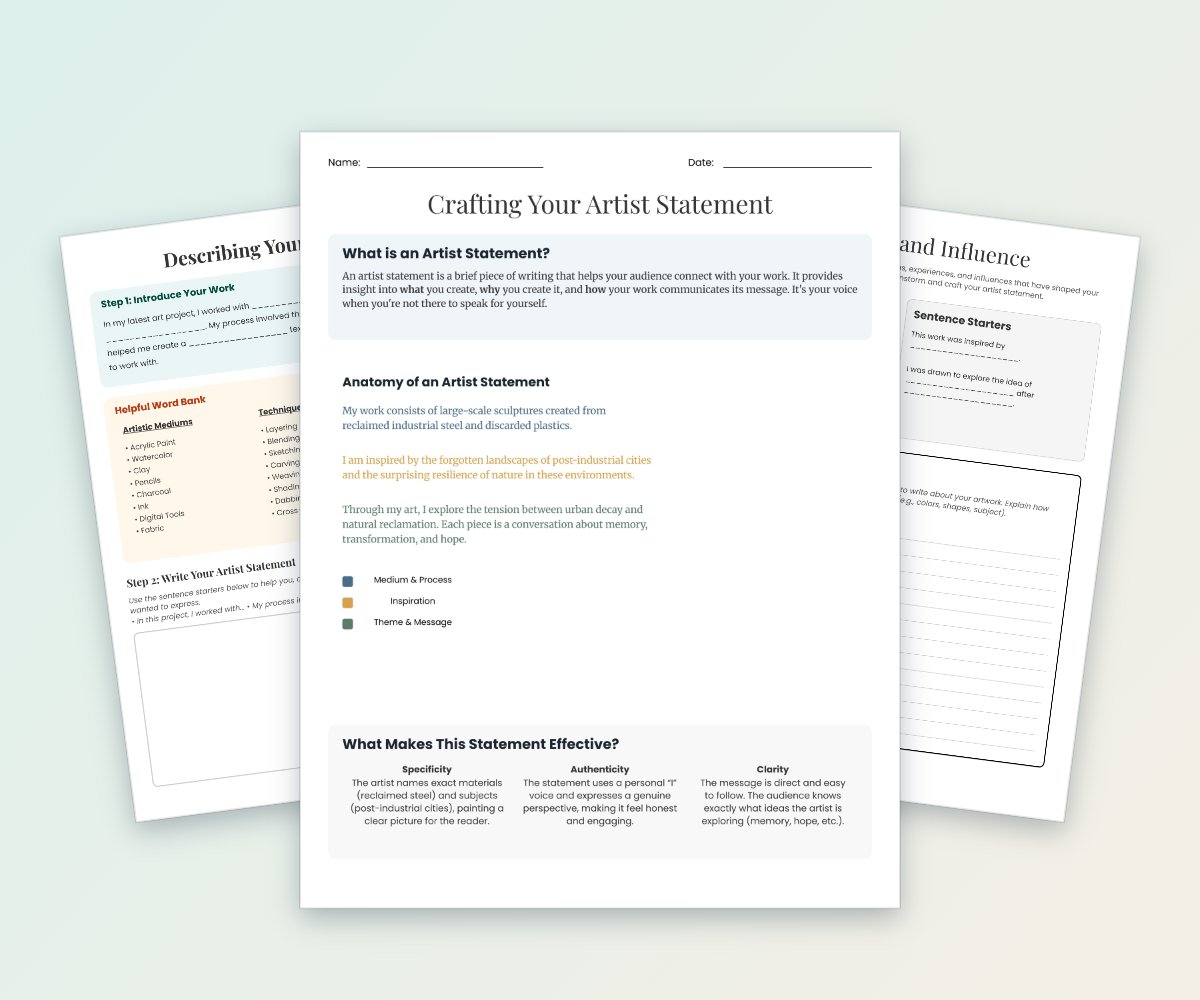
This four-page worksheet guides students through understanding and writing an artist statement.
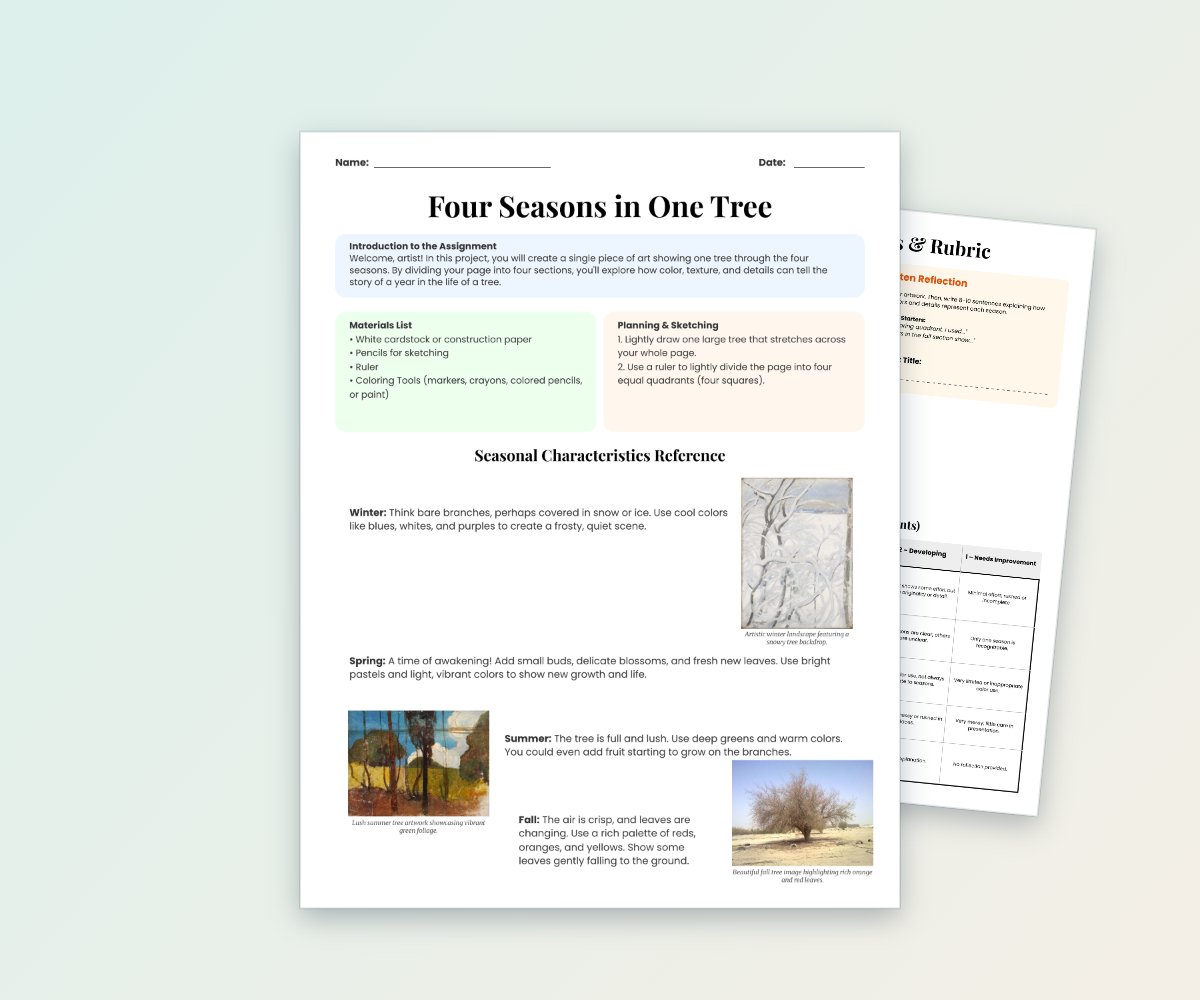
Students create one tree divided into four sections to represent winter, spring, summer, and fall.
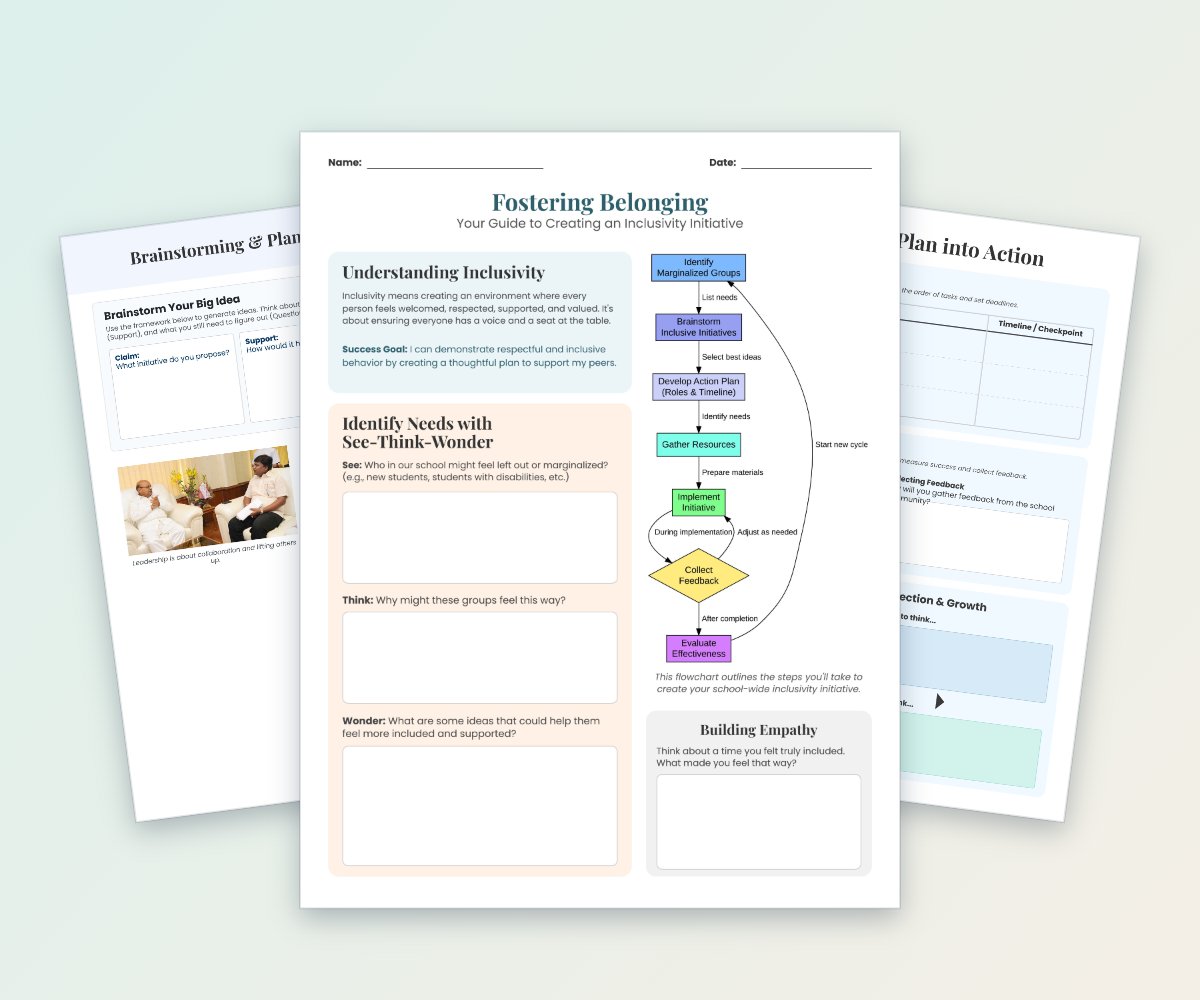
This three-page guide helps students identify exclusion and marginalization, brainstorm inclusive initiatives, and create an action plan.
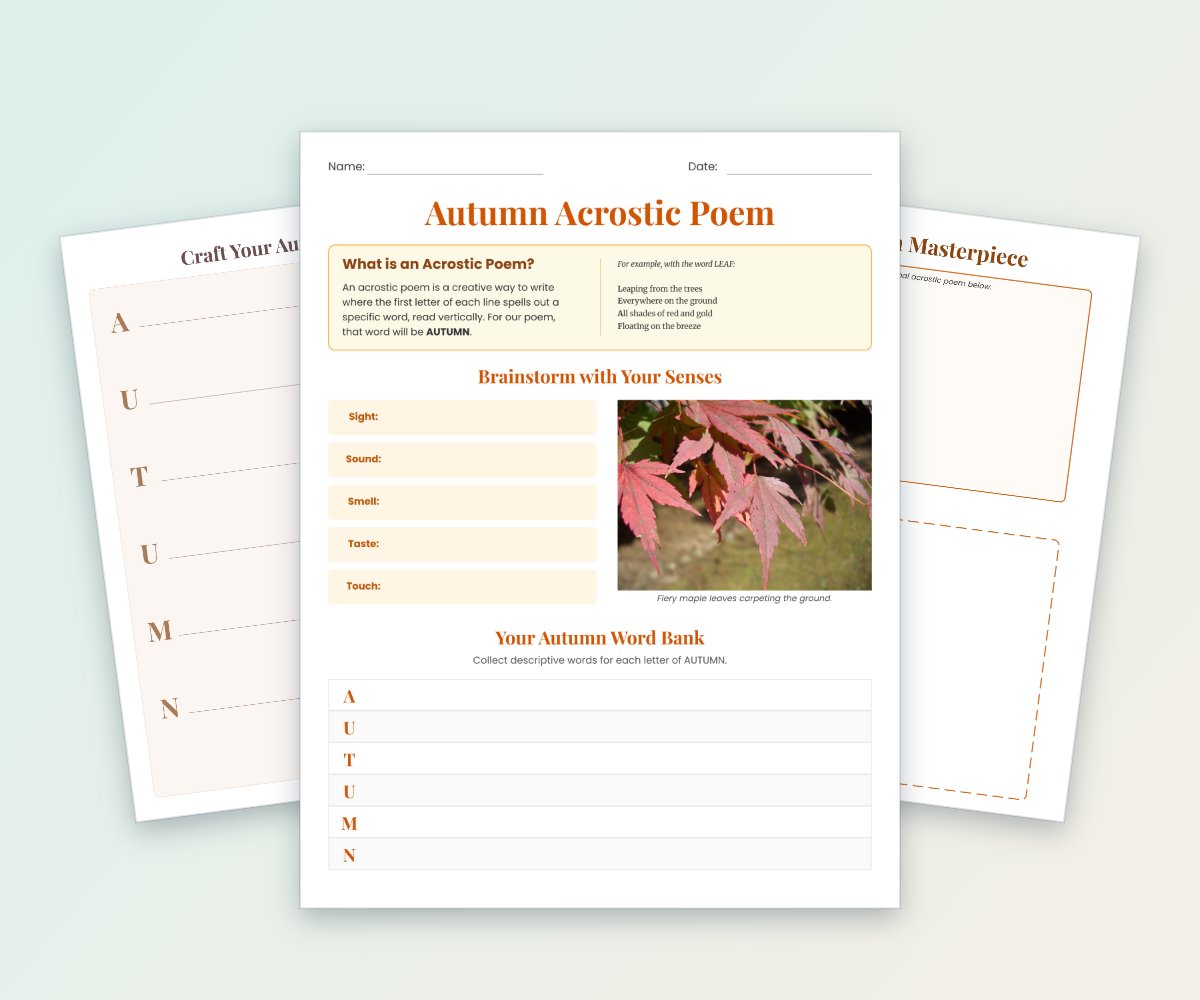
Students brainstorm autumn vocabulary using their senses, explore poetic devices, and collect descriptive words.
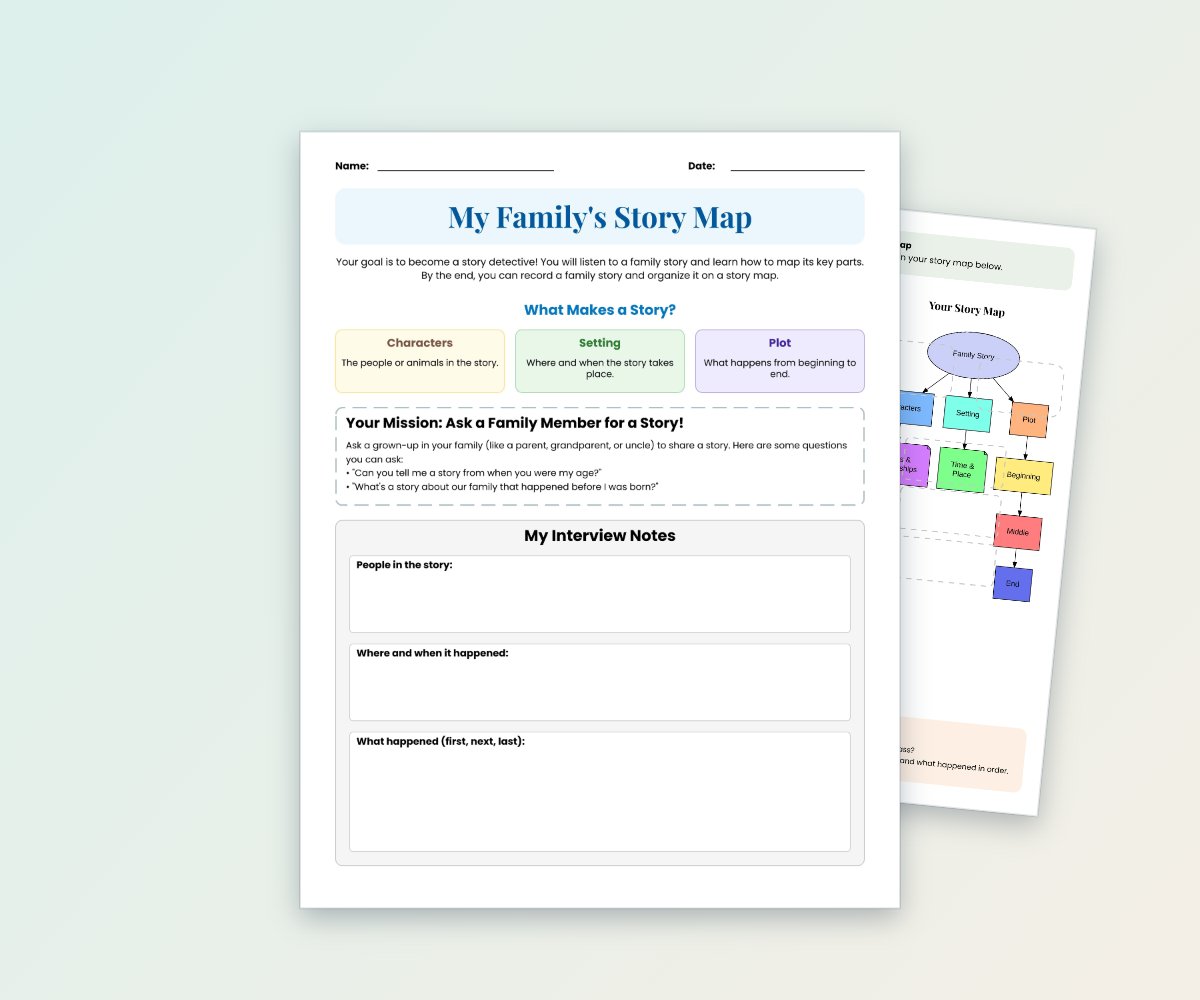
Students interview a family member, take notes, and organize the story’s characters, setting, and plot.
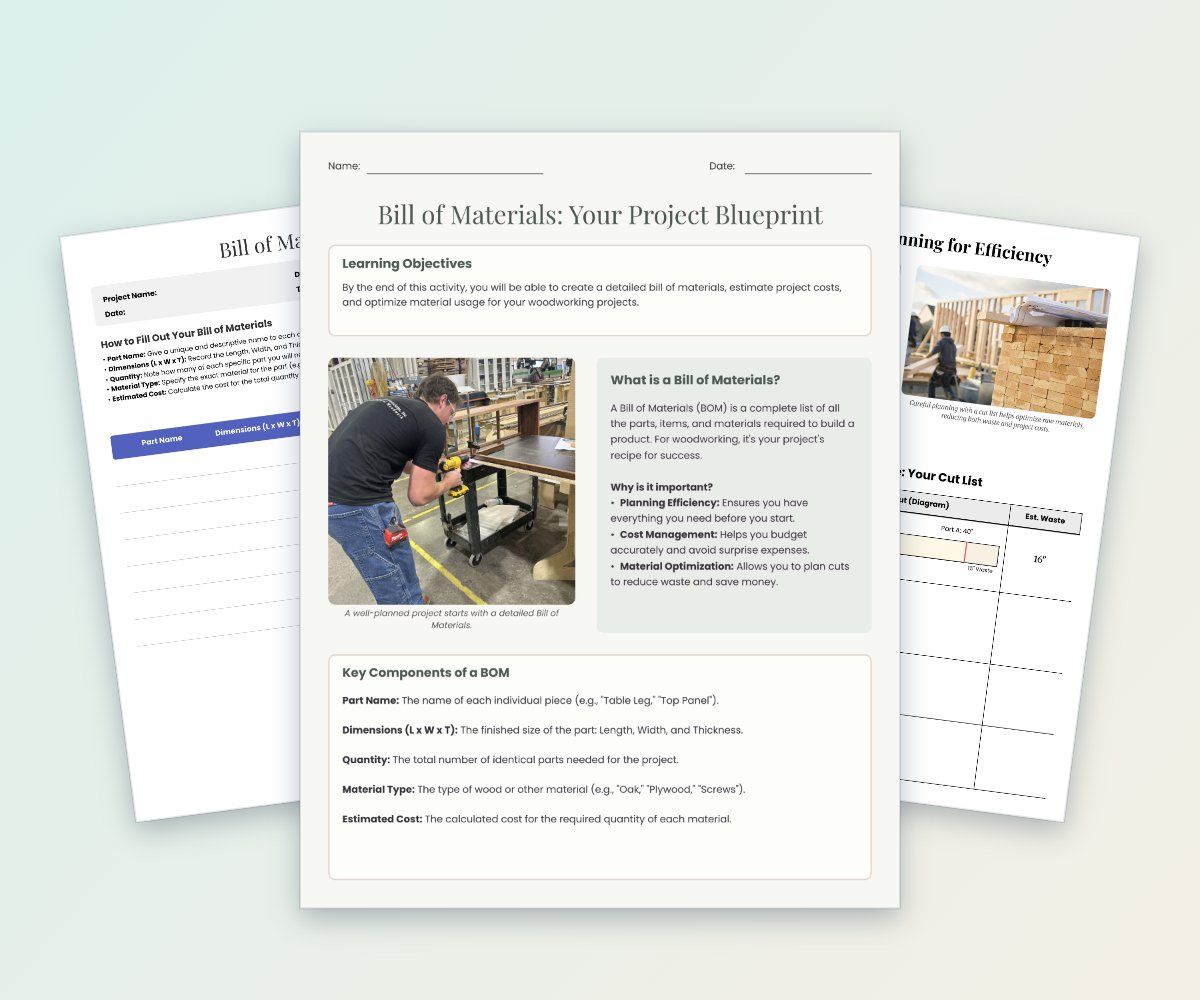
Students learn how to create a woodworking bill of materials by identifying parts, dimensions, quantities, materials, and estimated costs.
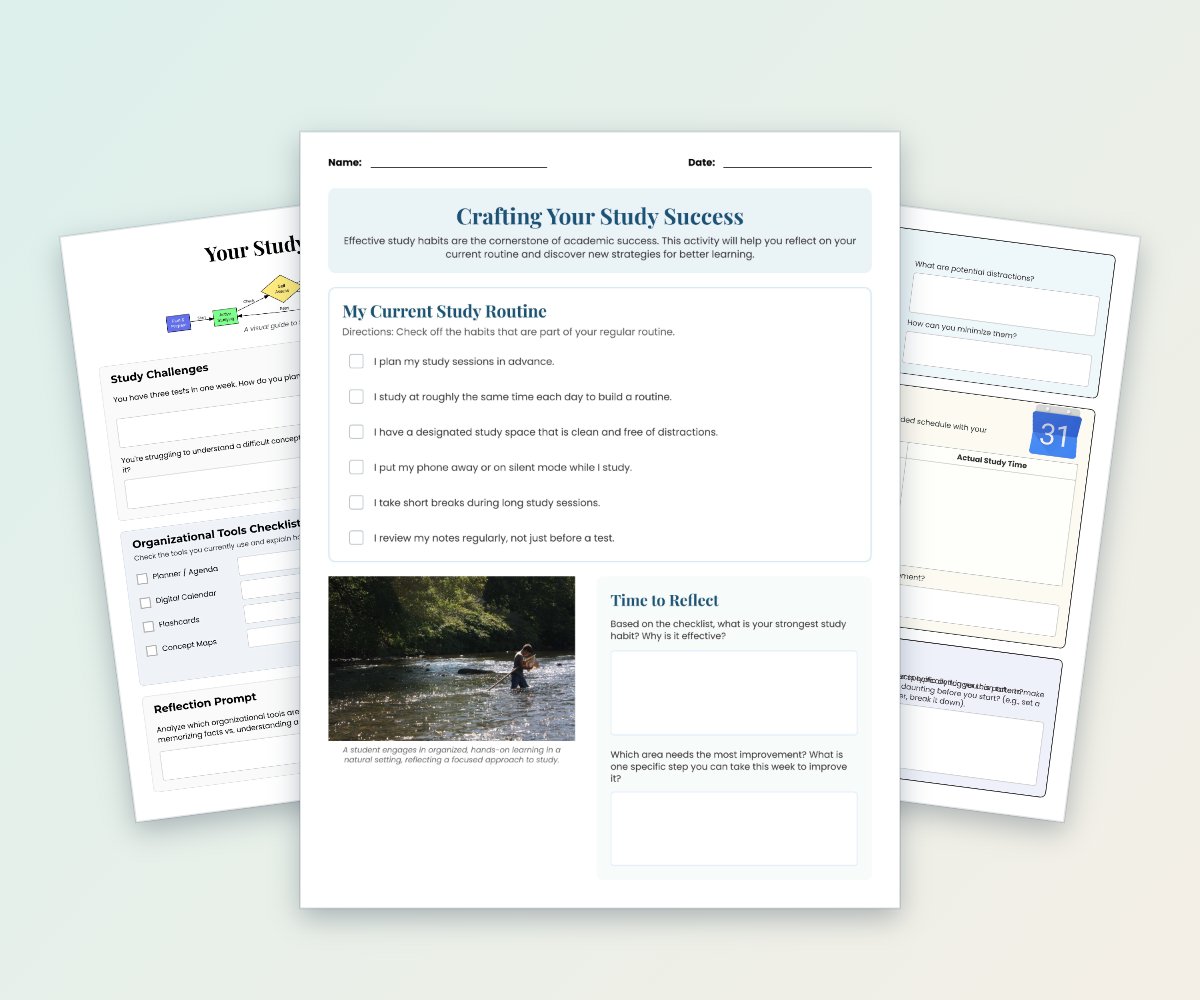
This four-page worksheet helps students reflect on their study routines, organization, time management, study environment, and procrastination habits.