
American Revolution: Causes, Key Events, Perspectives, and Legacy
A complete lesson exploring the causes, key events, perspectives, and legacy of the American Revolution.
$18
Clear, practical resources for busy educators, organized so you can get from search to ready-to-teach quickly.
A complete lesson exploring the causes, key events, perspectives, and legacy of the American Revolution.
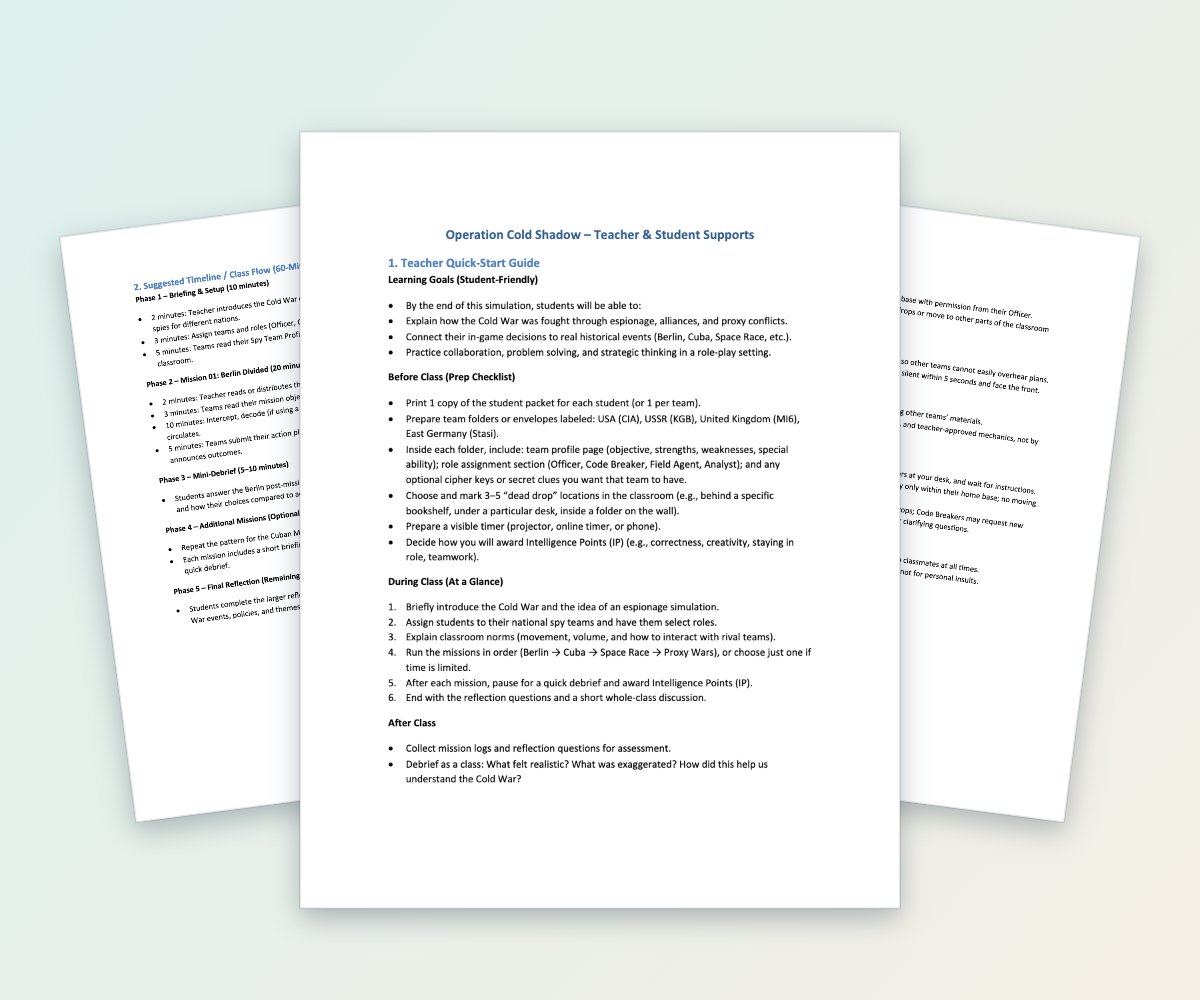
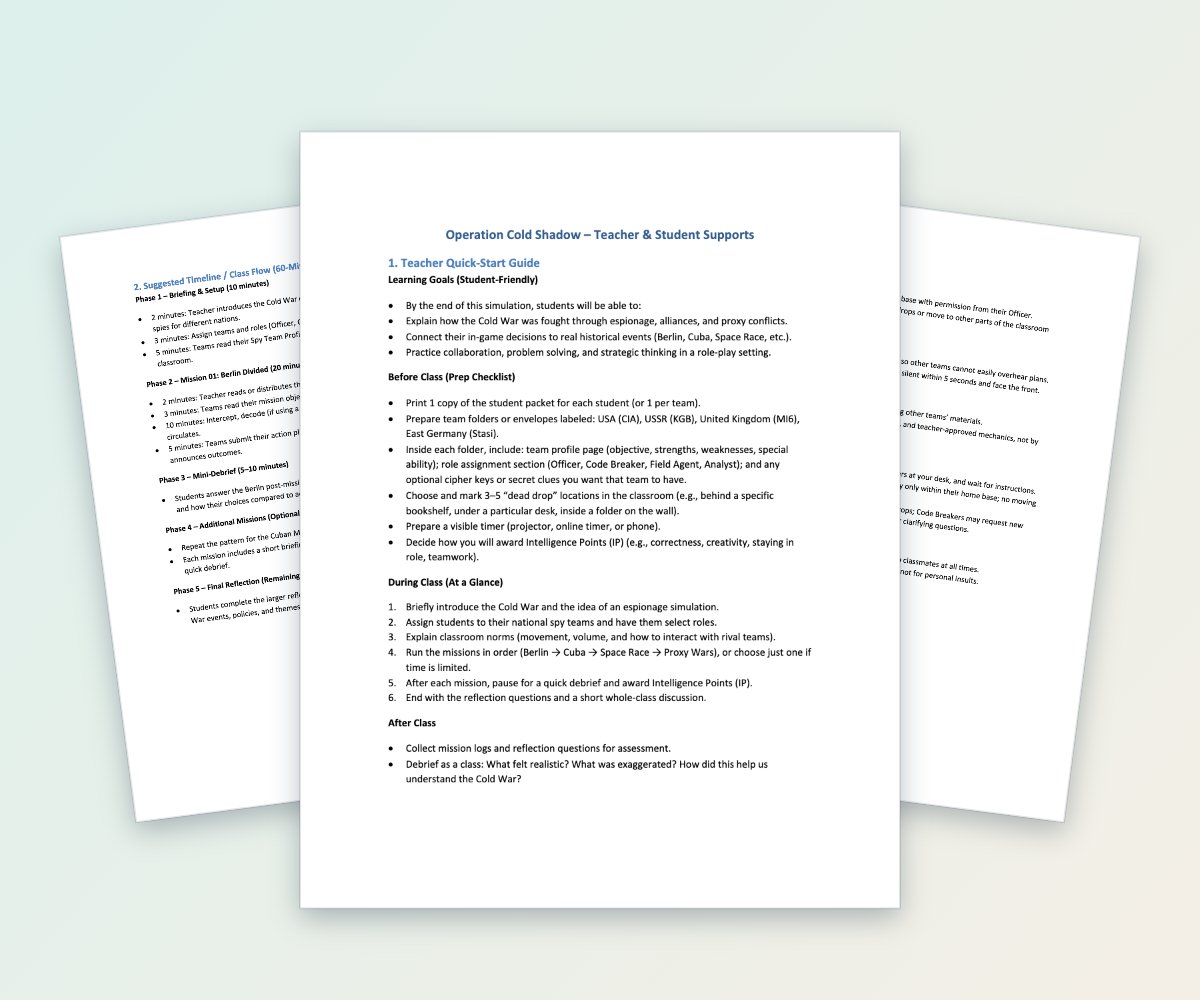
Students role-play spy teams representing Cold War nations as they complete missions involving Berlin, Cuba, the Space Race, and proxy conflicts.
Students role-play intelligence teams from the United States, Soviet Union, United Kingdom, and East Germany while completing missions connected to Berlin, Cuba, the Space Race, and proxy wars.
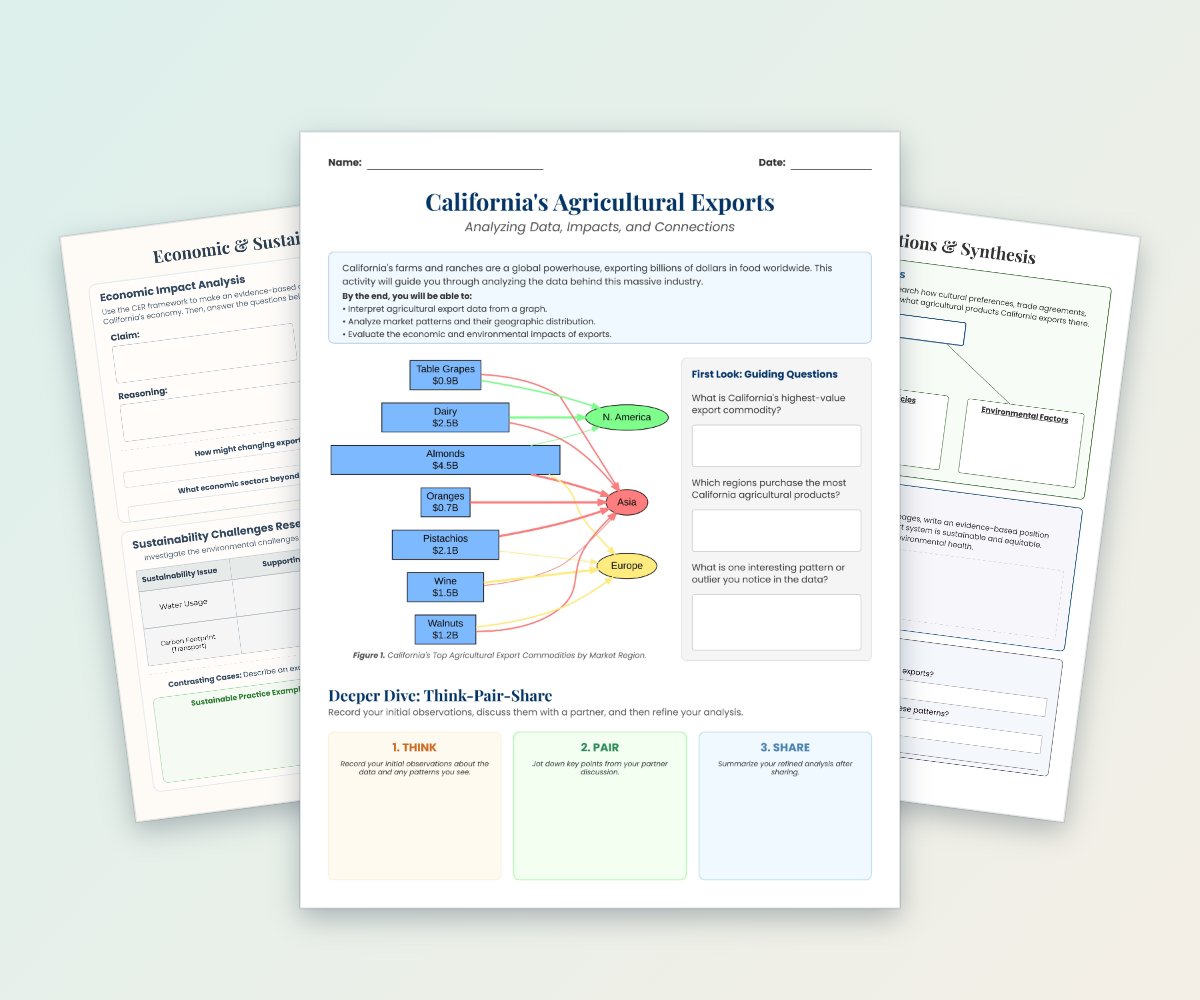
This three-page activity guides students in interpreting agricultural export data and examining economic, environmental, and global connections.
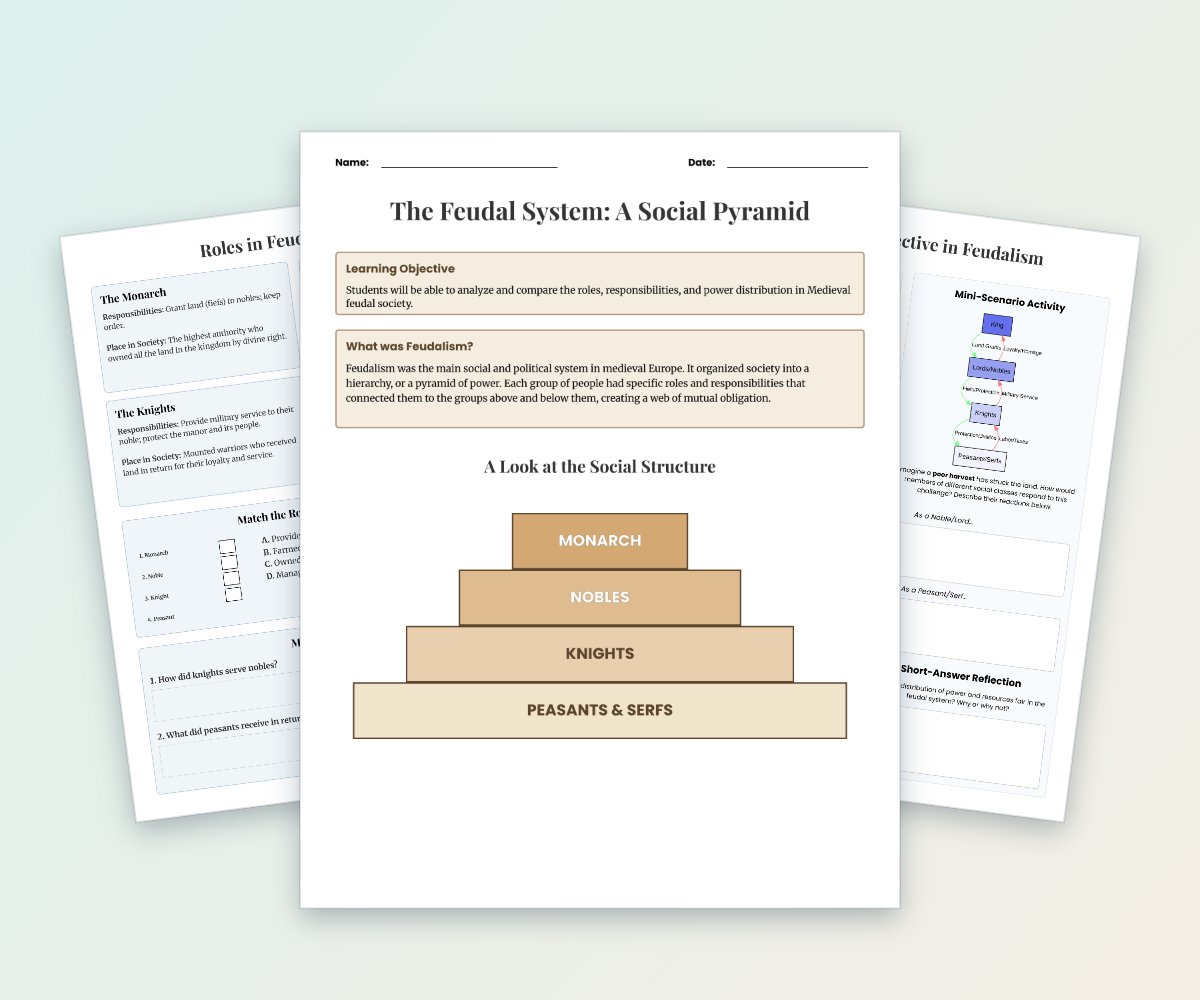
This four-page worksheet introduces the feudal system and examines the roles, responsibilities, power, and relationships among monarchs, nobles, knights, and peasants.
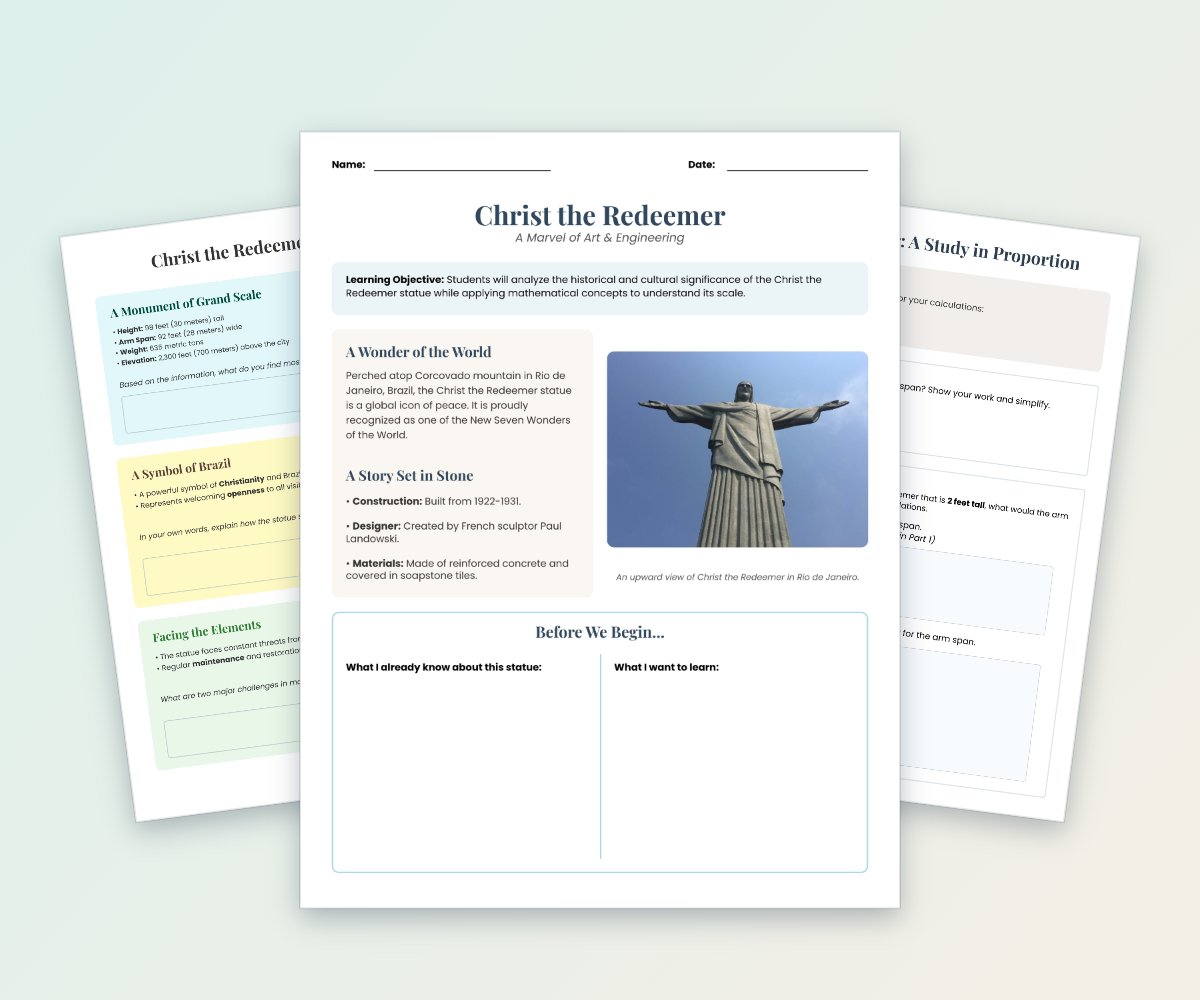
Students explore the history, materials, symbolism, and preservation challenges of Christ the Redeemer in Brazil.
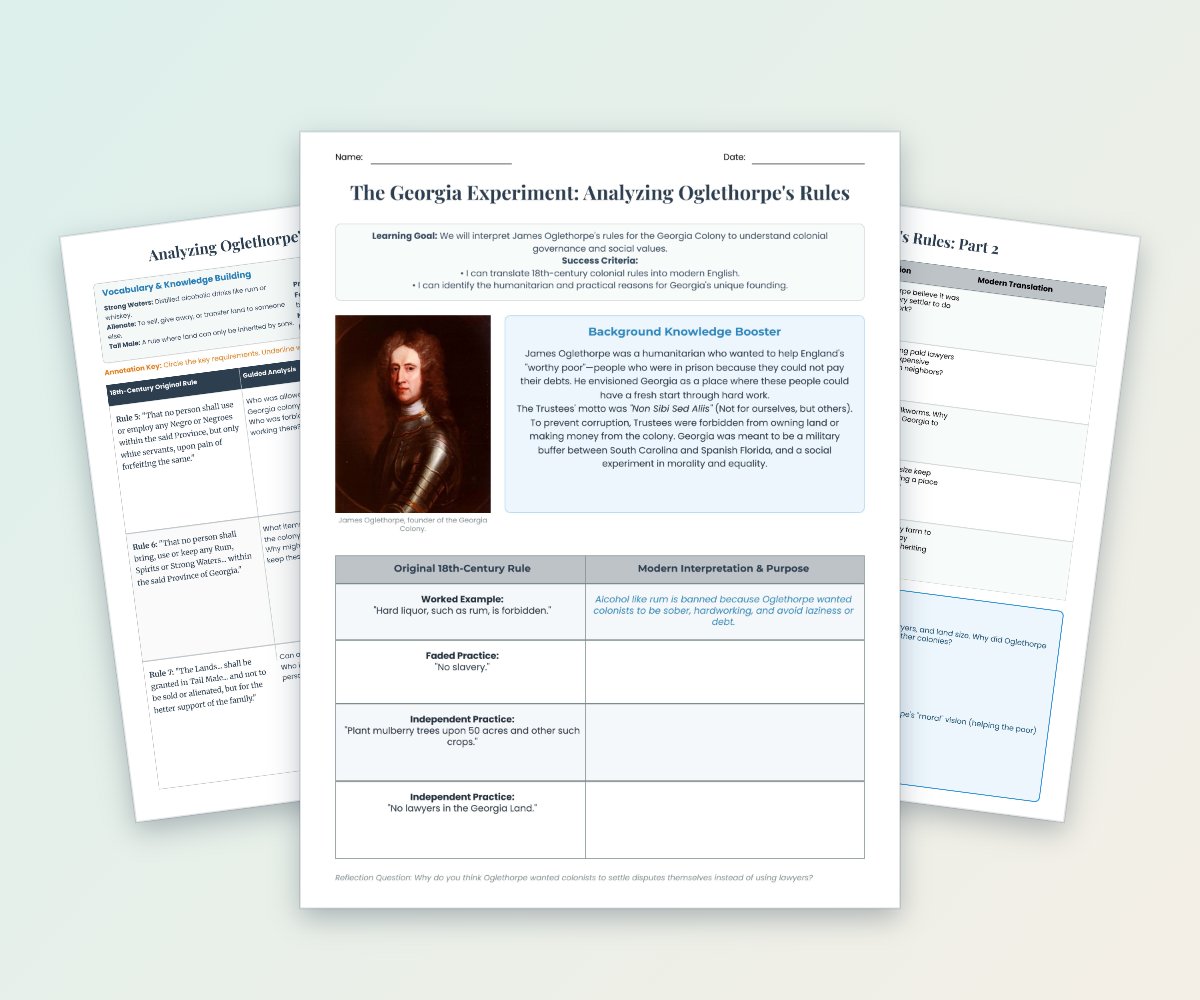
Students examine James Oglethorpe's rules for the Georgia Colony, translate historical language, and analyze the humanitarian, practical, and social purposes behind the rules.
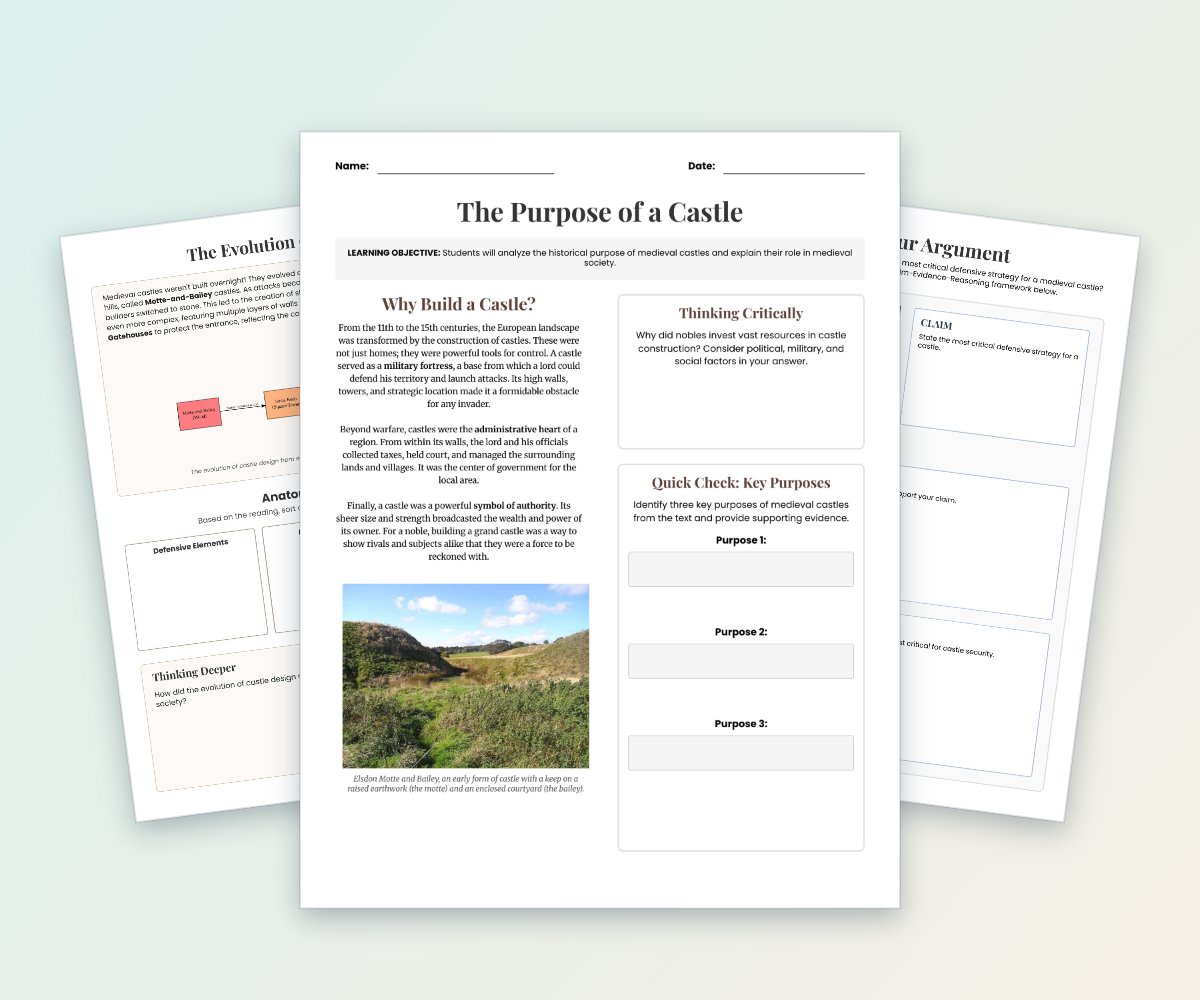
Students examine why medieval castles were built and how their designs evolved from motte-and-bailey forts to stone and concentric castles.
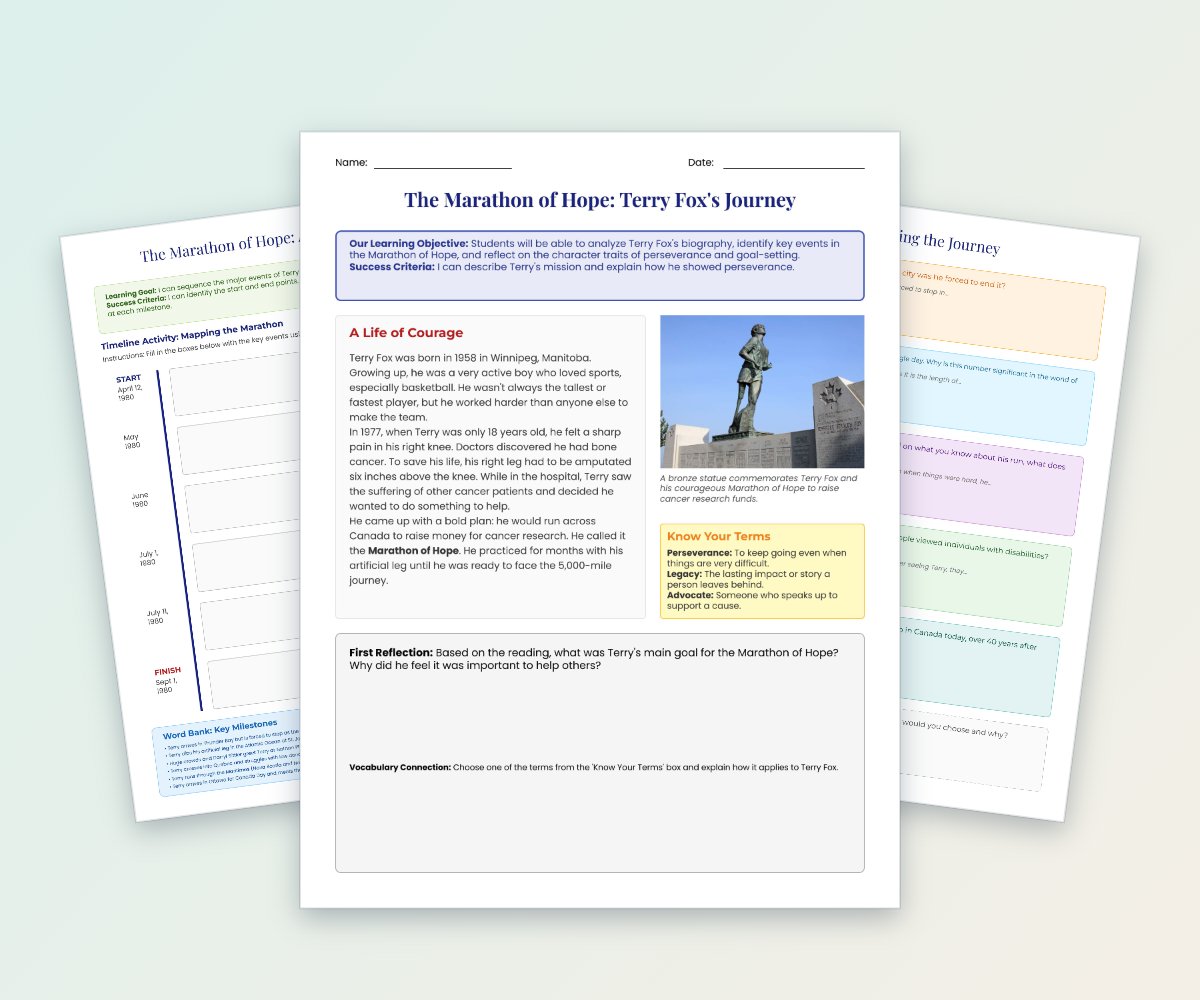
Students learn about Terry Fox’s life, cancer research mission, and Marathon of Hope through an informational reading and vocabulary activity.
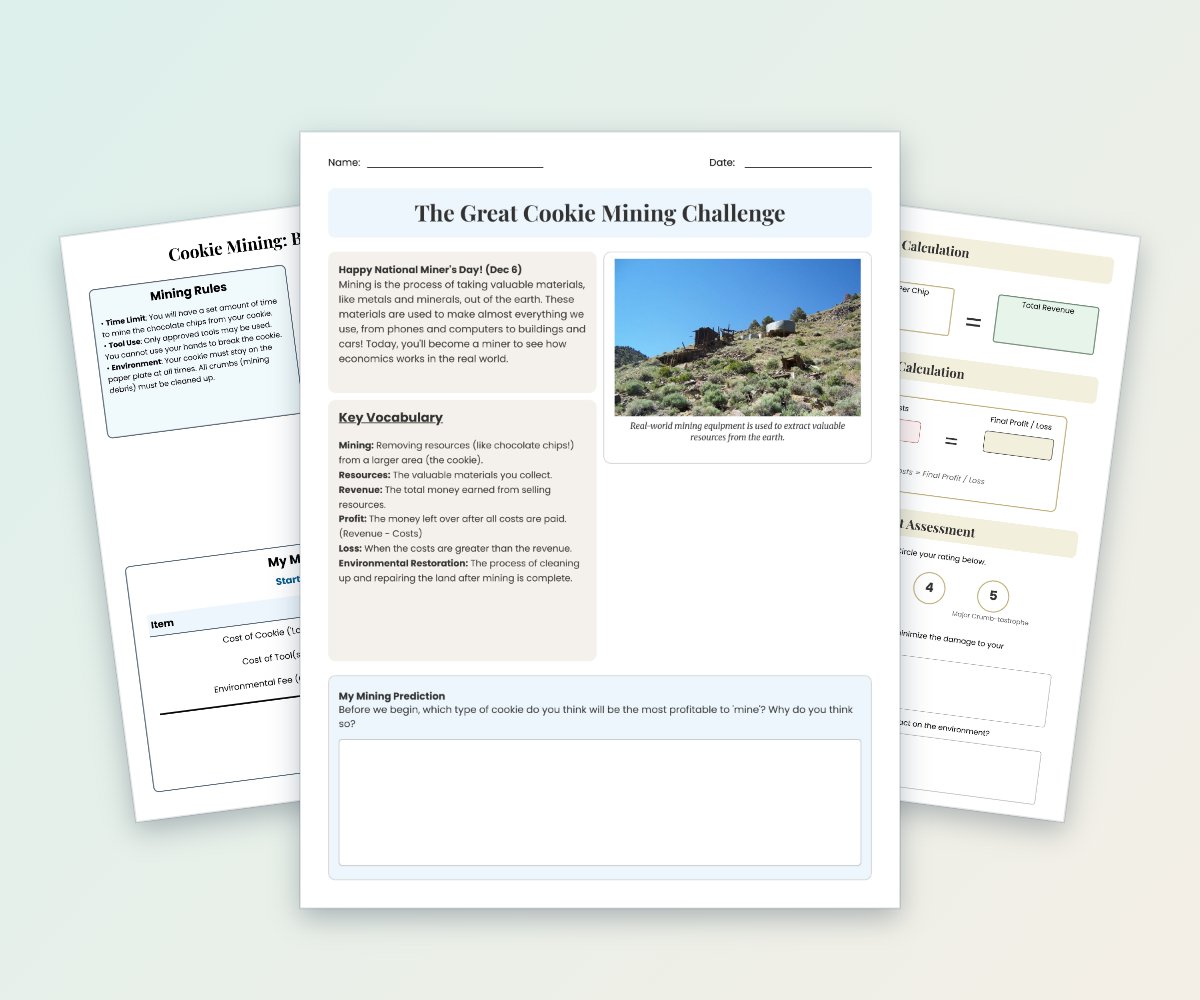
Students simulate mining by extracting chocolate chips from cookies while managing land, tool, cleanup, and environmental costs.
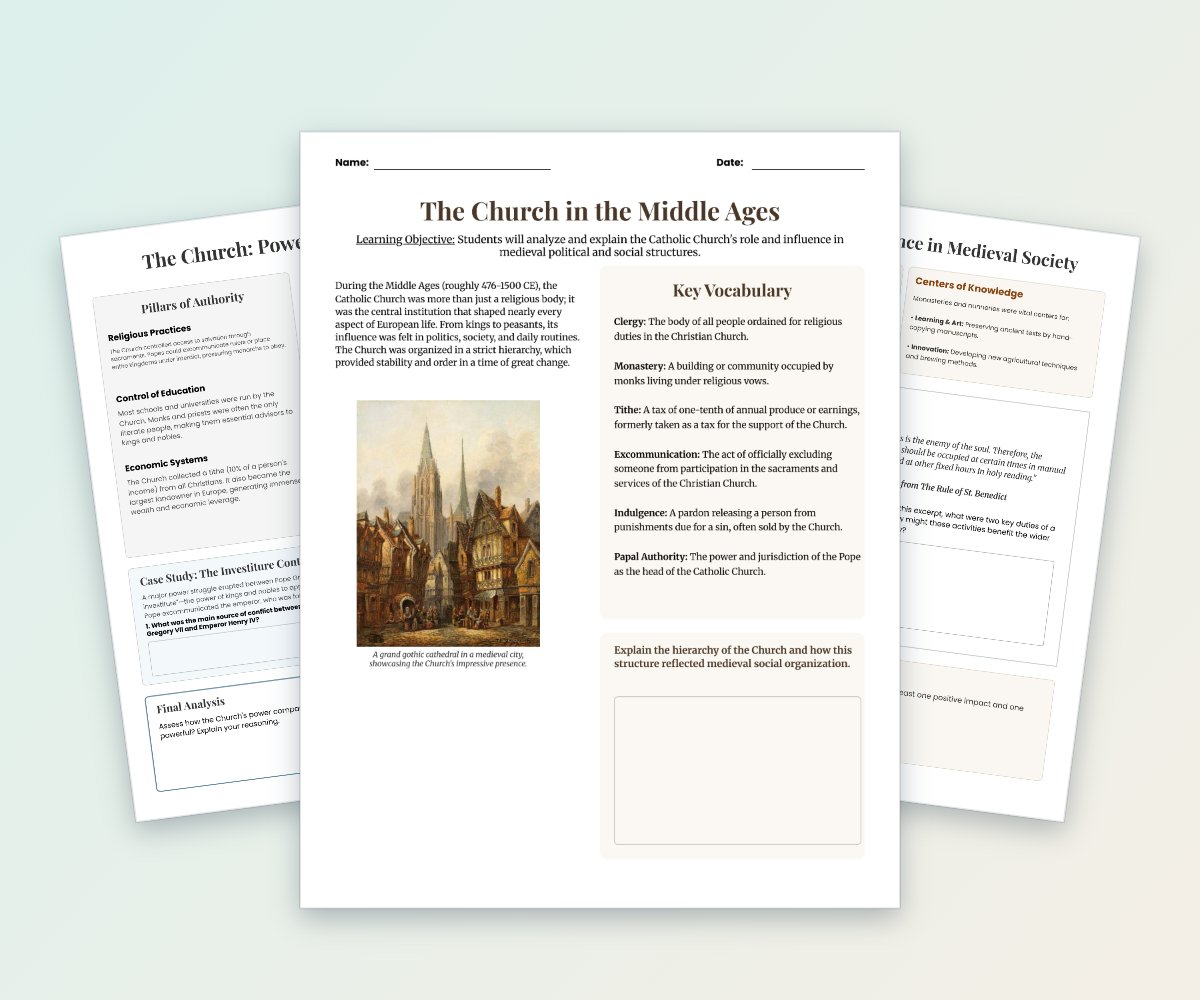
This four-page worksheet examines the Catholic Church’s role in medieval European political, social, educational, and economic life.
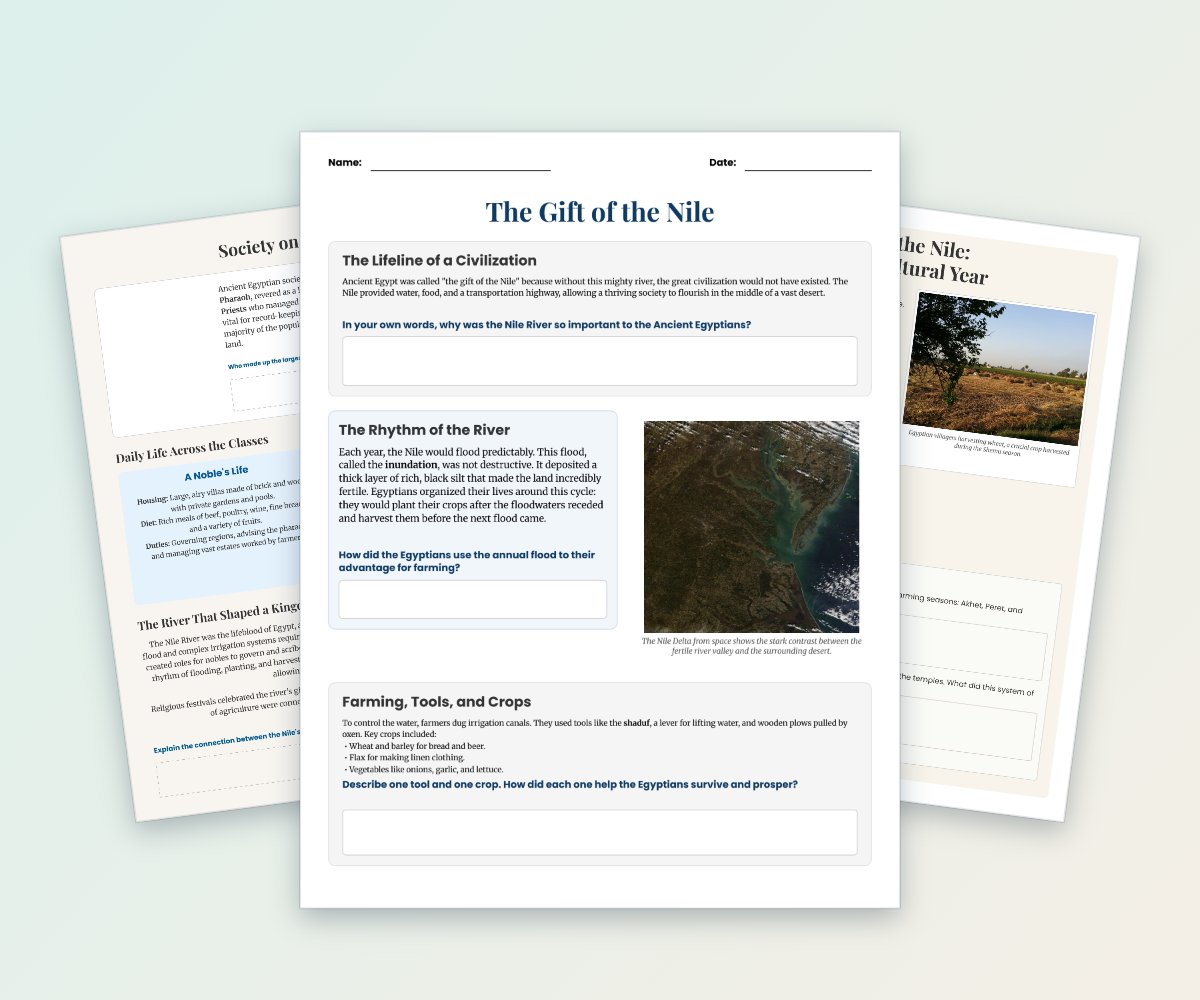
This five-page worksheet explores how the Nile supported farming, transportation, society, and daily life in Ancient Egypt.
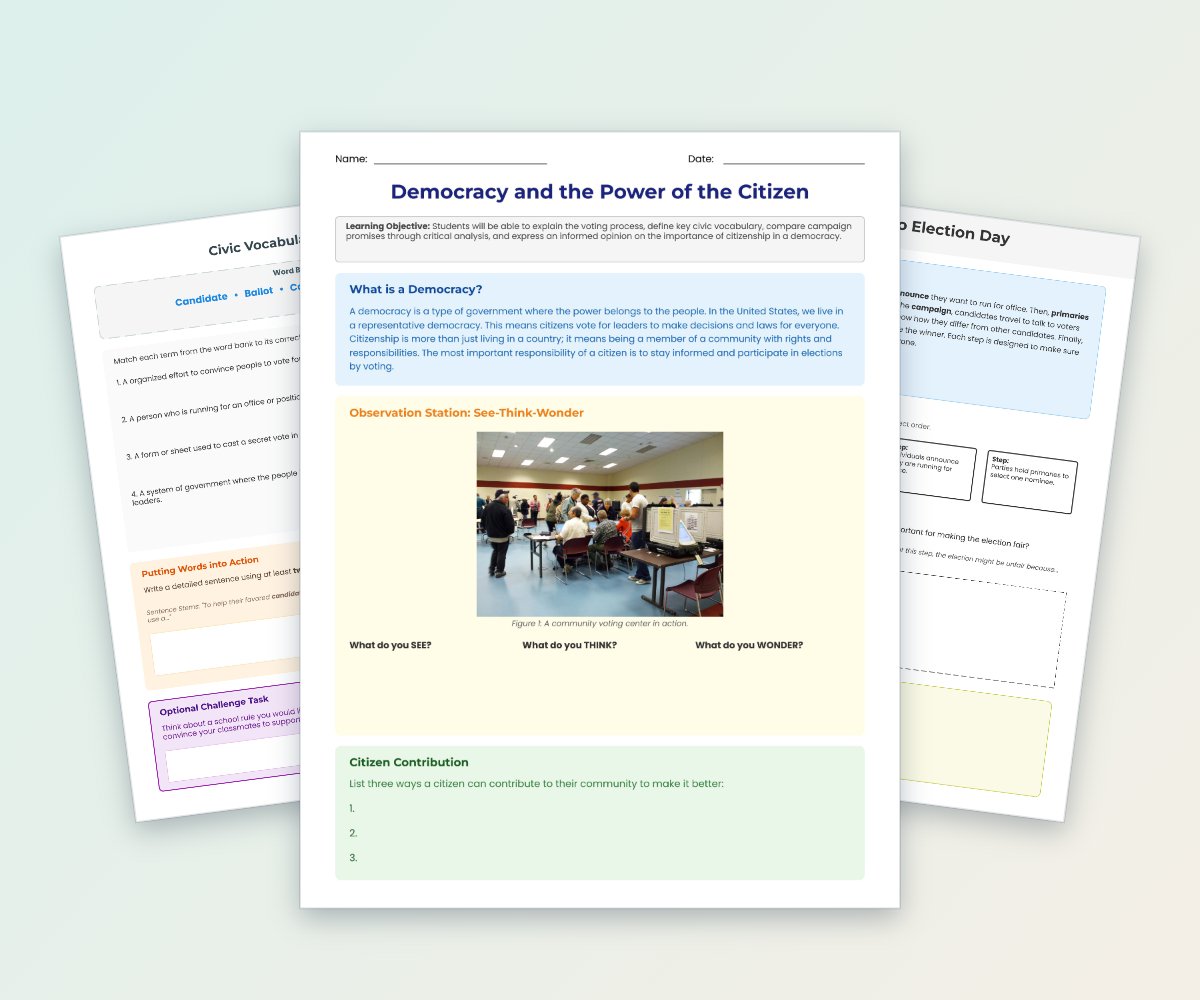
This six-page civics activity pack introduces democracy, citizenship, voting, elections, campaigns, candidates, and ballots.
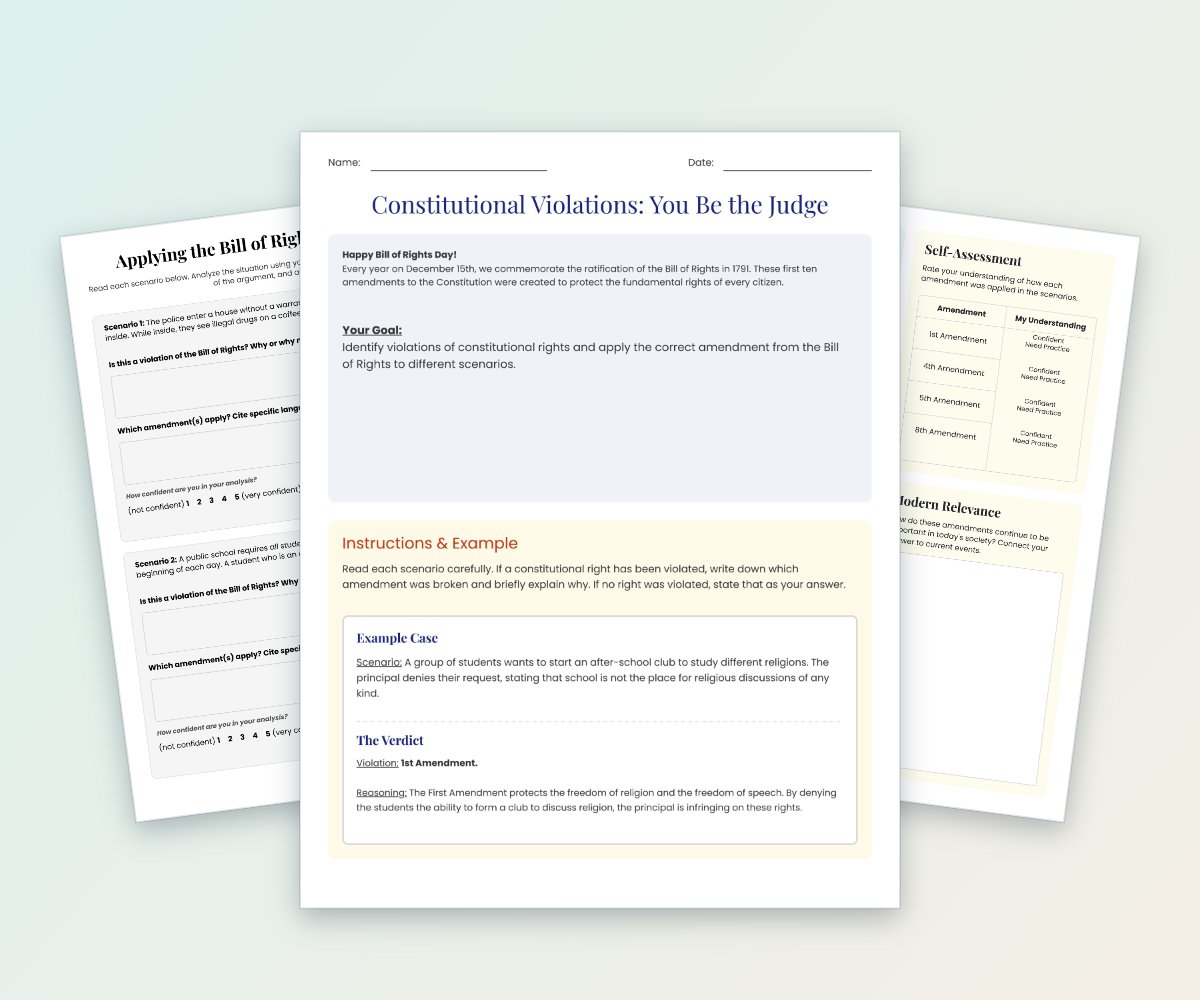
Students examine realistic scenarios involving the First, Fourth, and Fifth Amendments and determine whether constitutional rights were violated.
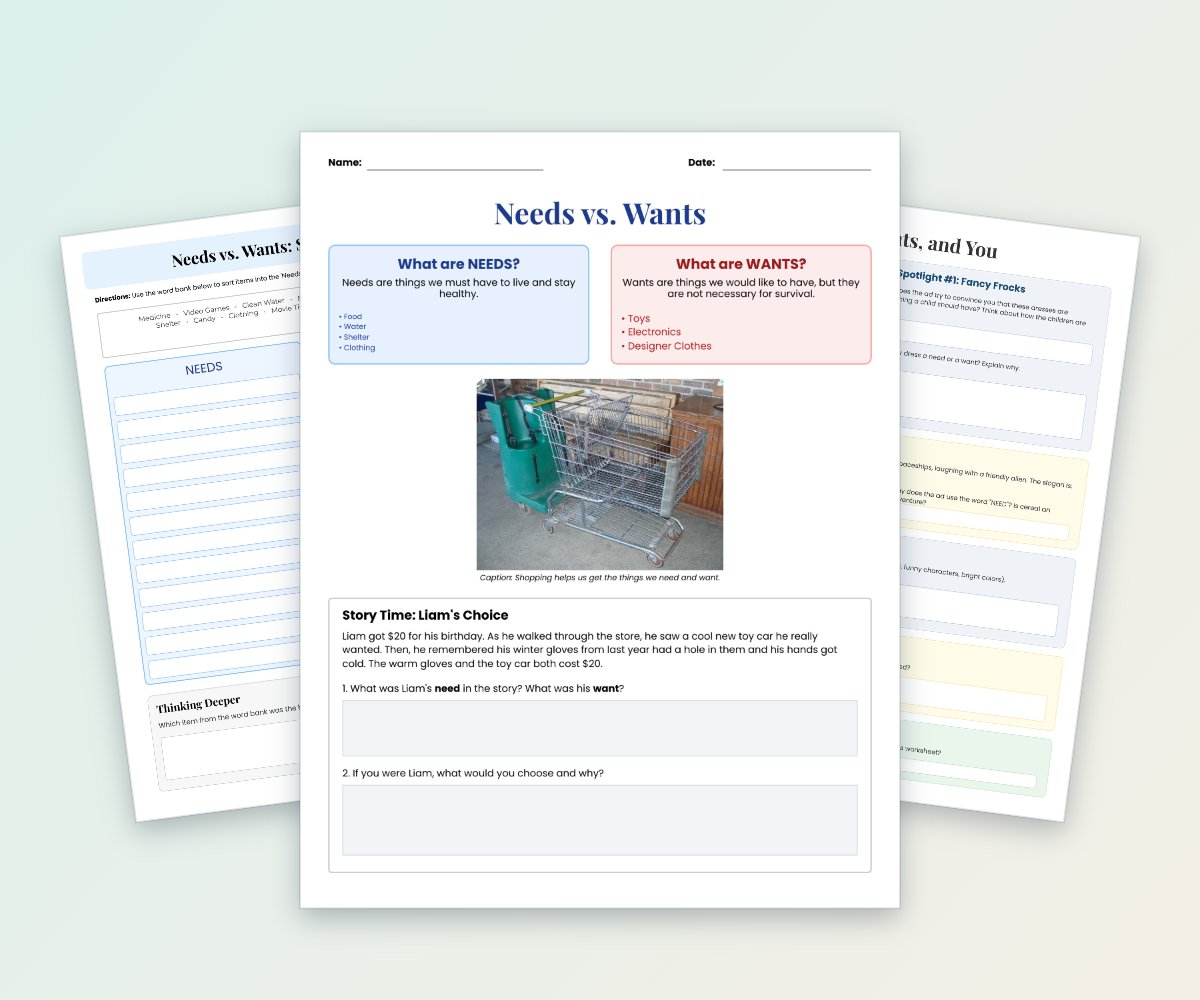
This four-page activity pack helps students distinguish needs from wants through definitions, a relatable spending story, sorting activity, and advertising analysis.
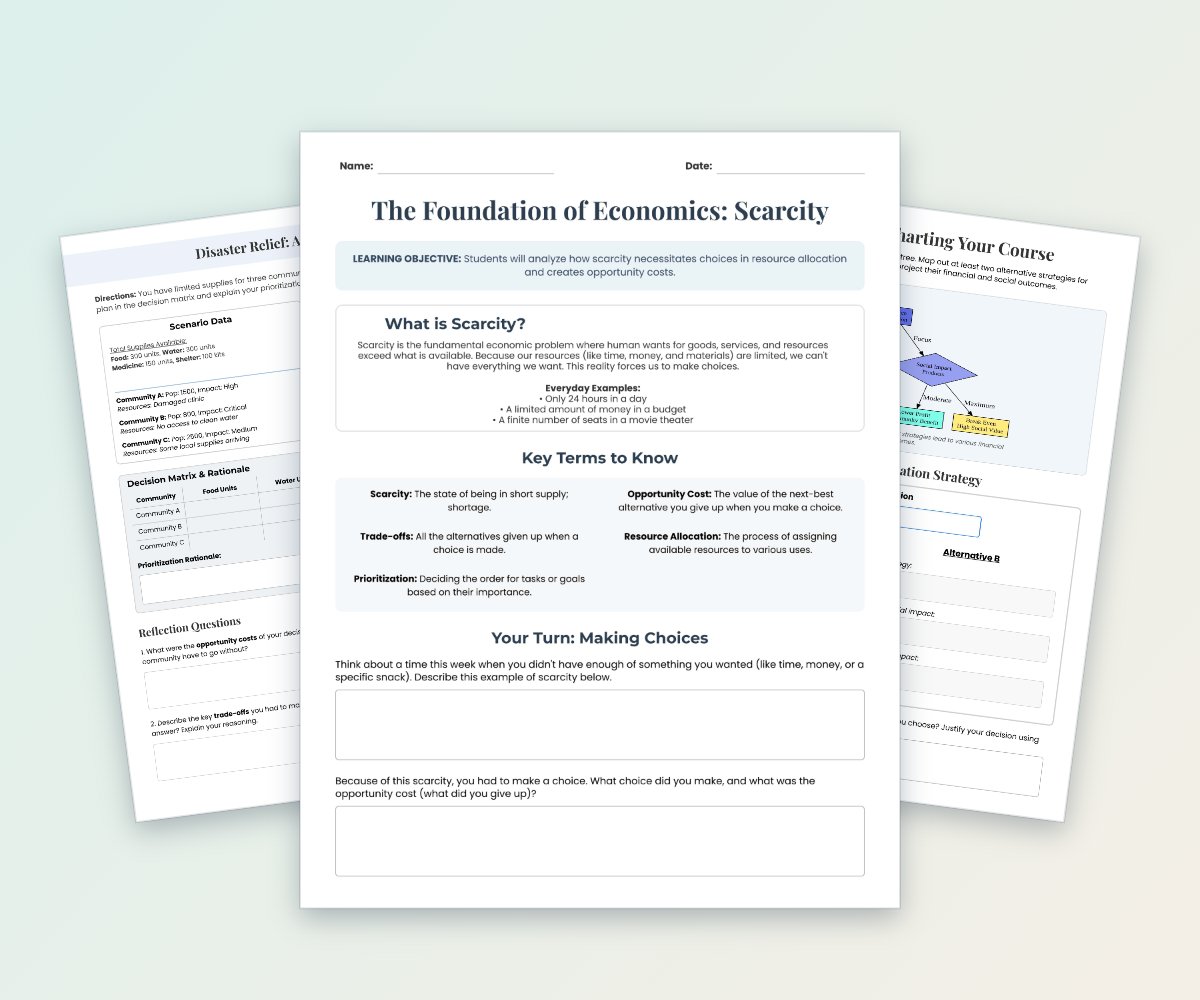
This five-page economics worksheet introduces scarcity, trade-offs, prioritization, opportunity cost, and resource allocation.
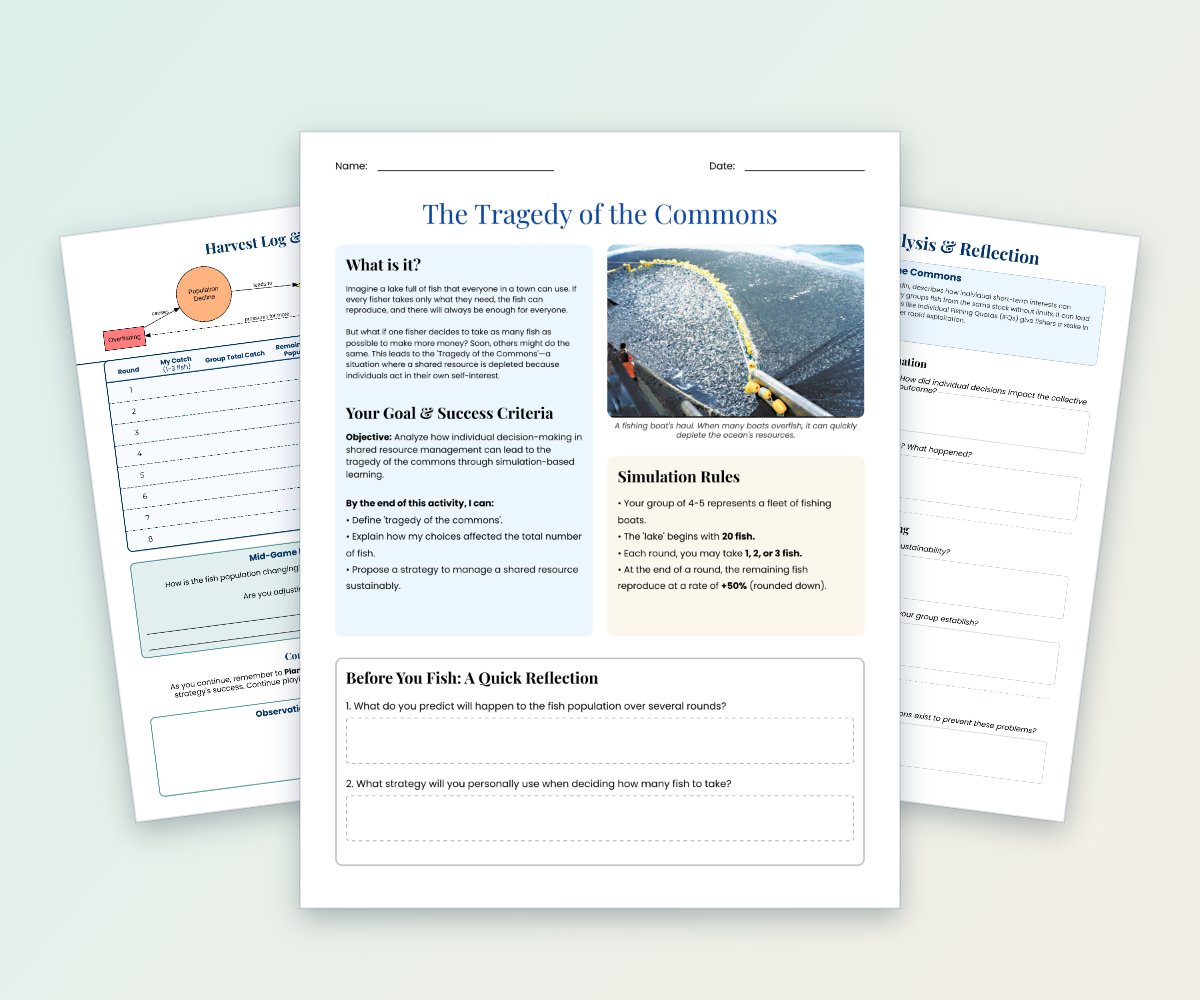
Students participate in an eight-round fishing simulation to explore how individual choices affect shared resources.
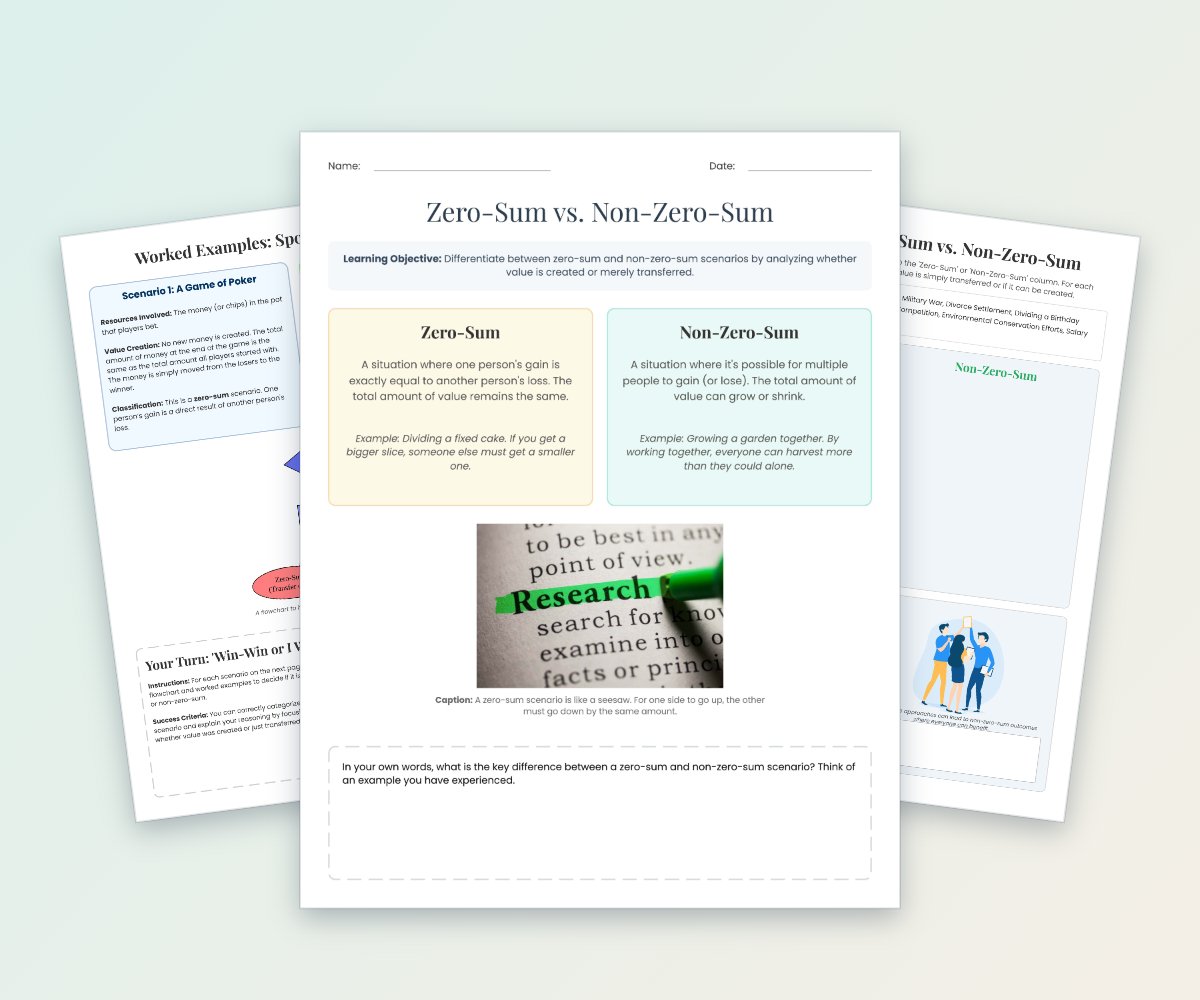
This four-page worksheet introduces zero-sum and non-zero-sum situations through definitions, examples, a decision flowchart, and scenario sorting.
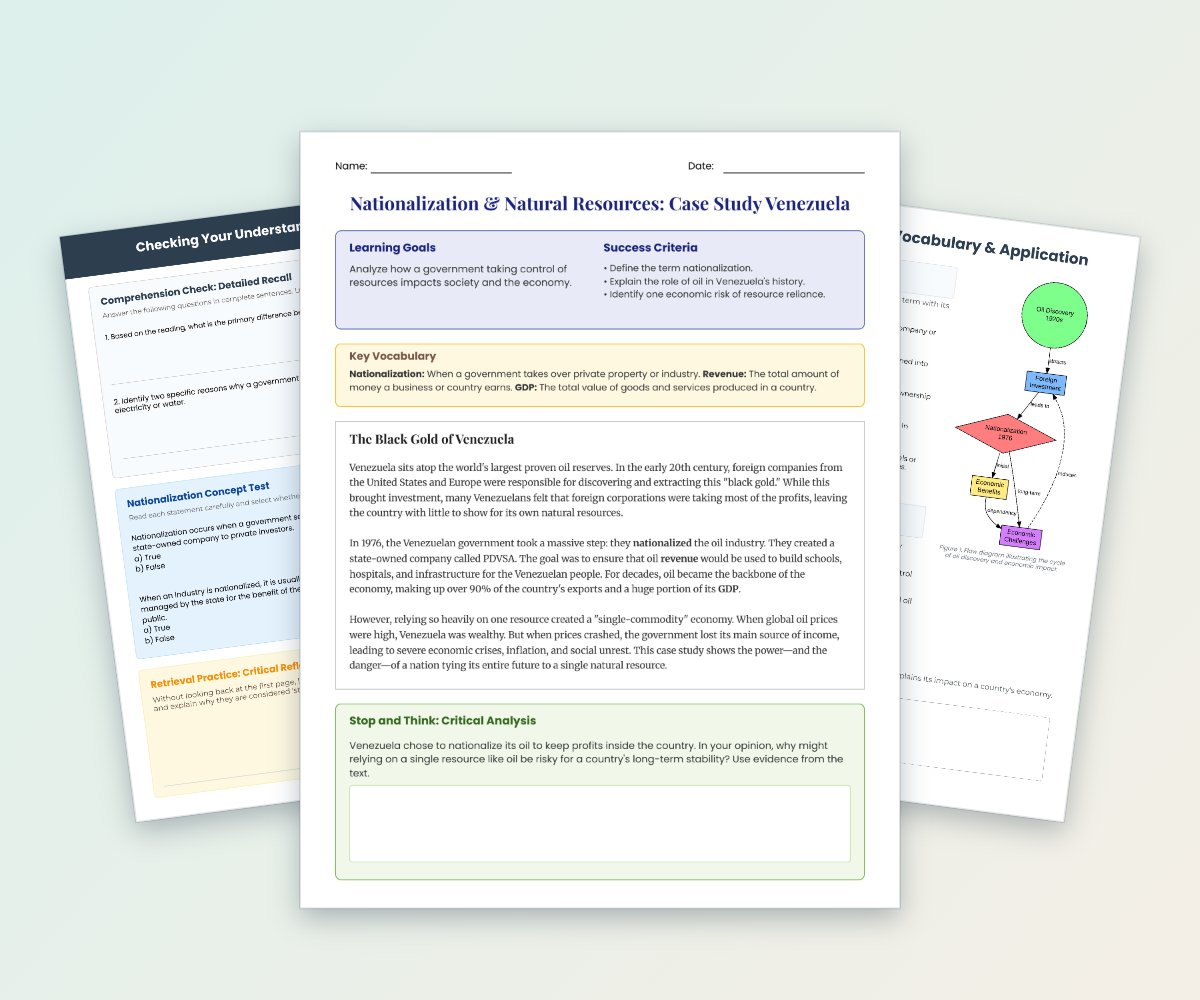
Students examine Venezuela’s 1976 nationalization of its oil industry, the role of PDVSA, and the economic risks of relying on one resource.
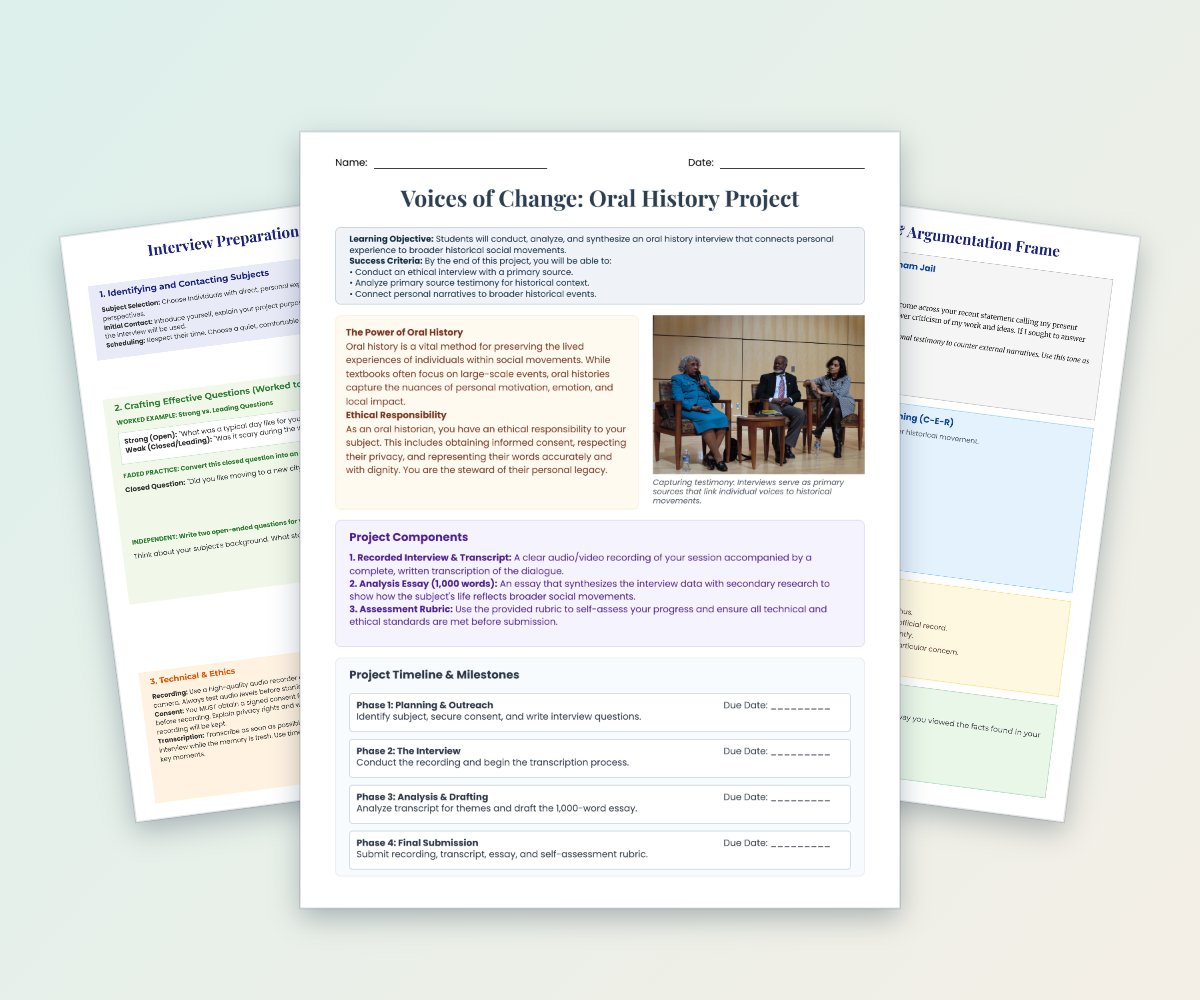
Guide students through planning, conducting, transcribing, and analyzing an oral history interview connected to broader social movements.
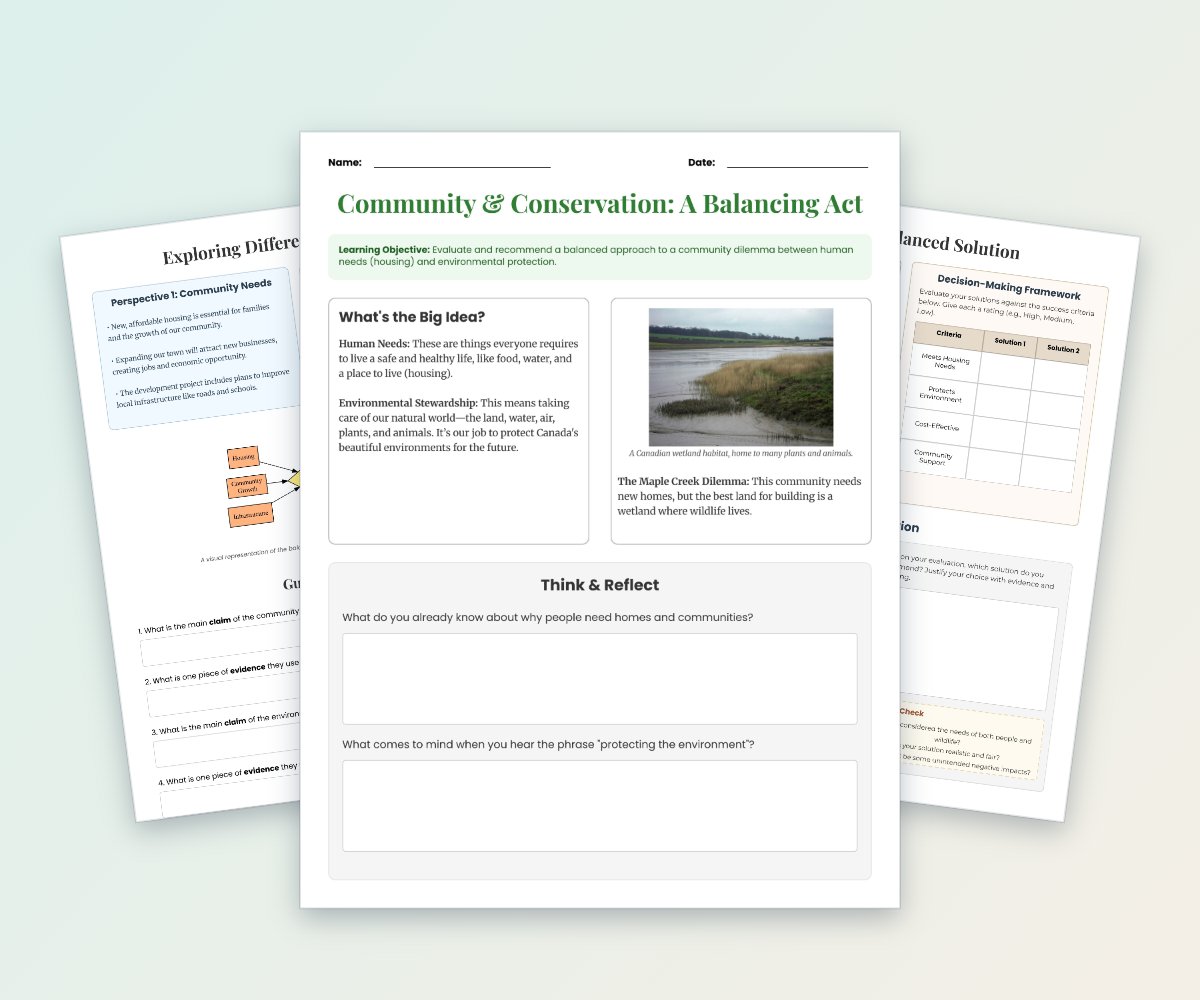
Students explore the Maple Creek dilemma, weighing the need for affordable housing against wetland conservation.
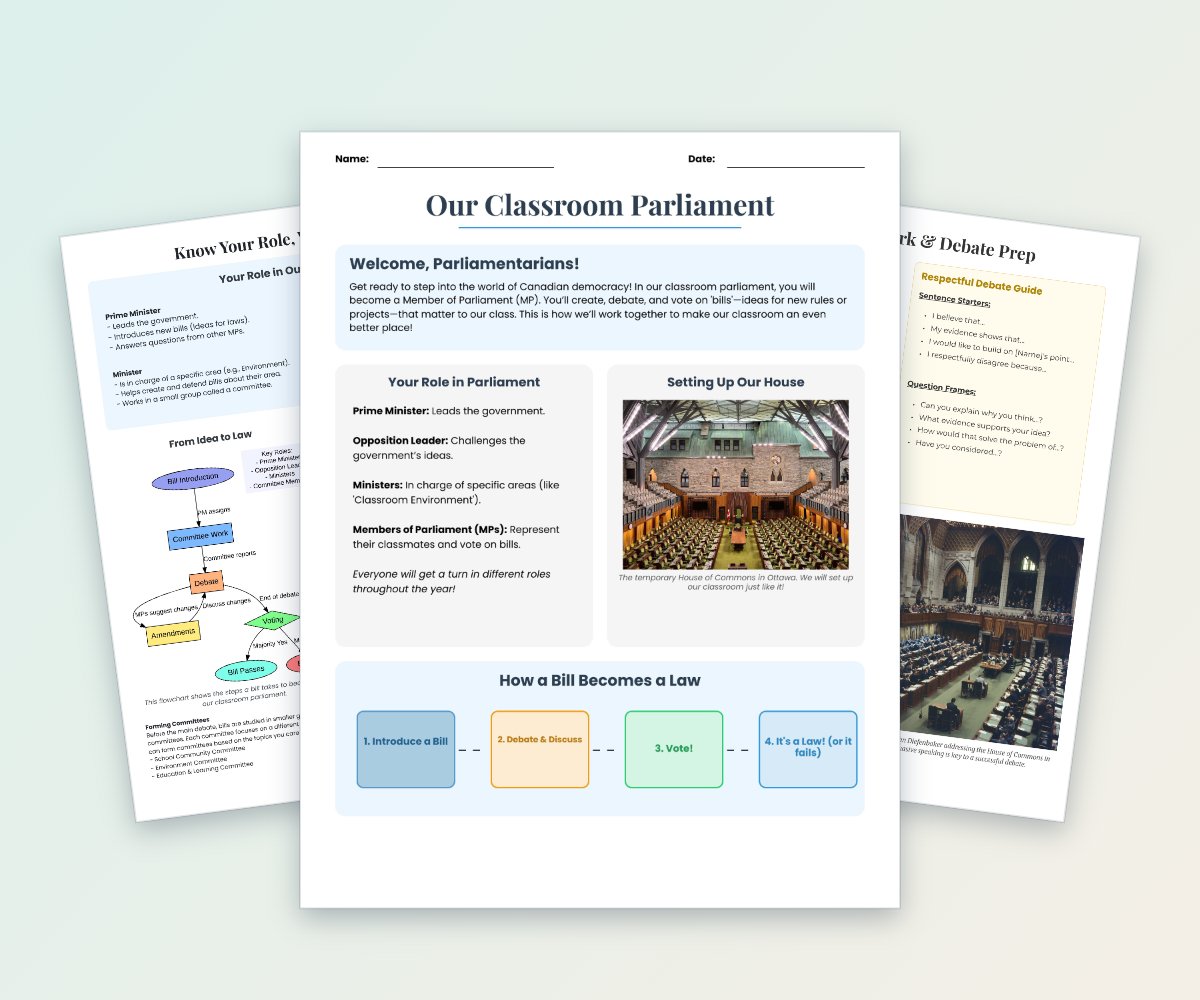
Students take on parliamentary roles, including Prime Minister, Opposition Leader, ministers, committee members, and MPs.
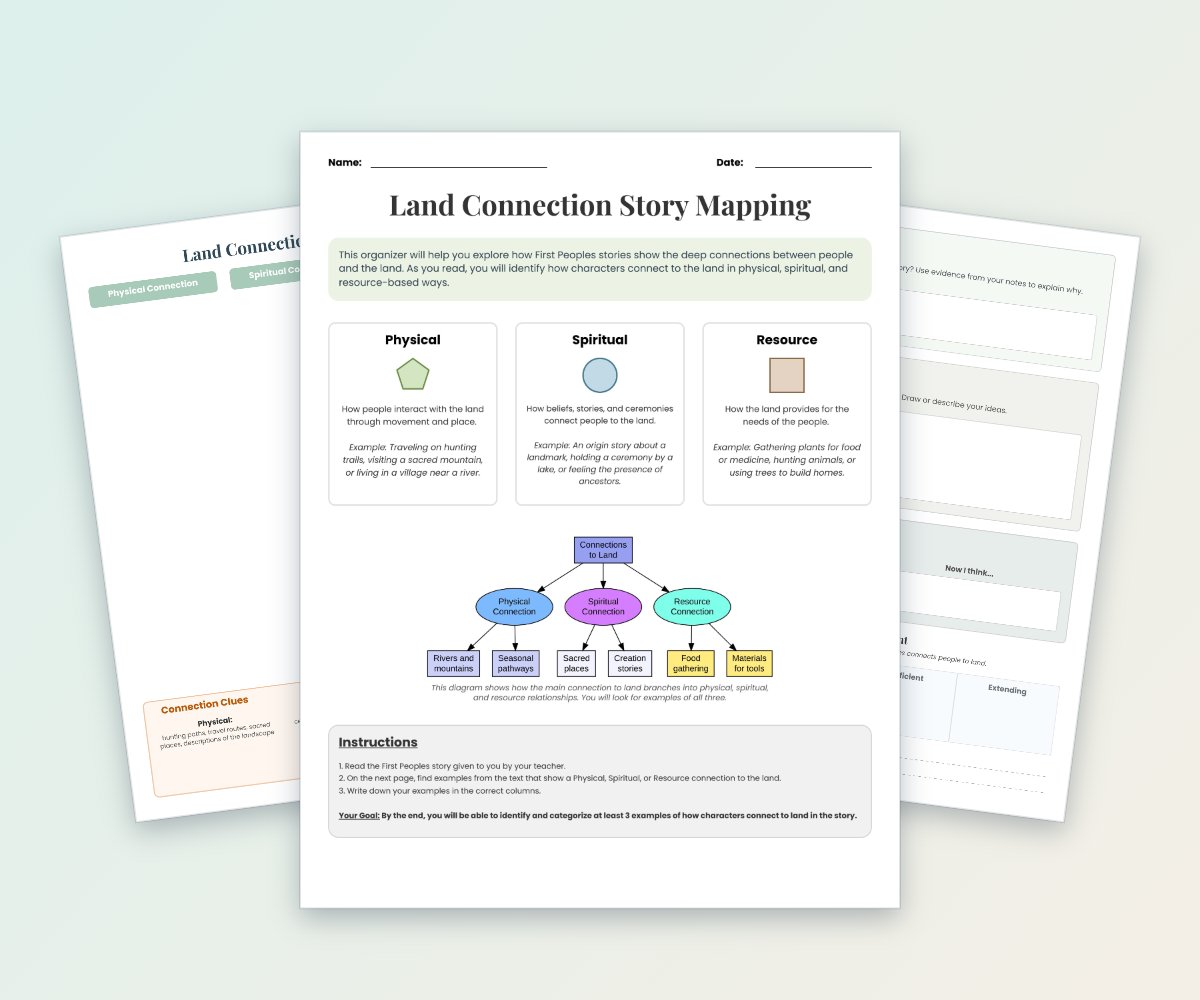
Students analyze a First Peoples story by identifying physical, spiritual, and resource-based connections to land.
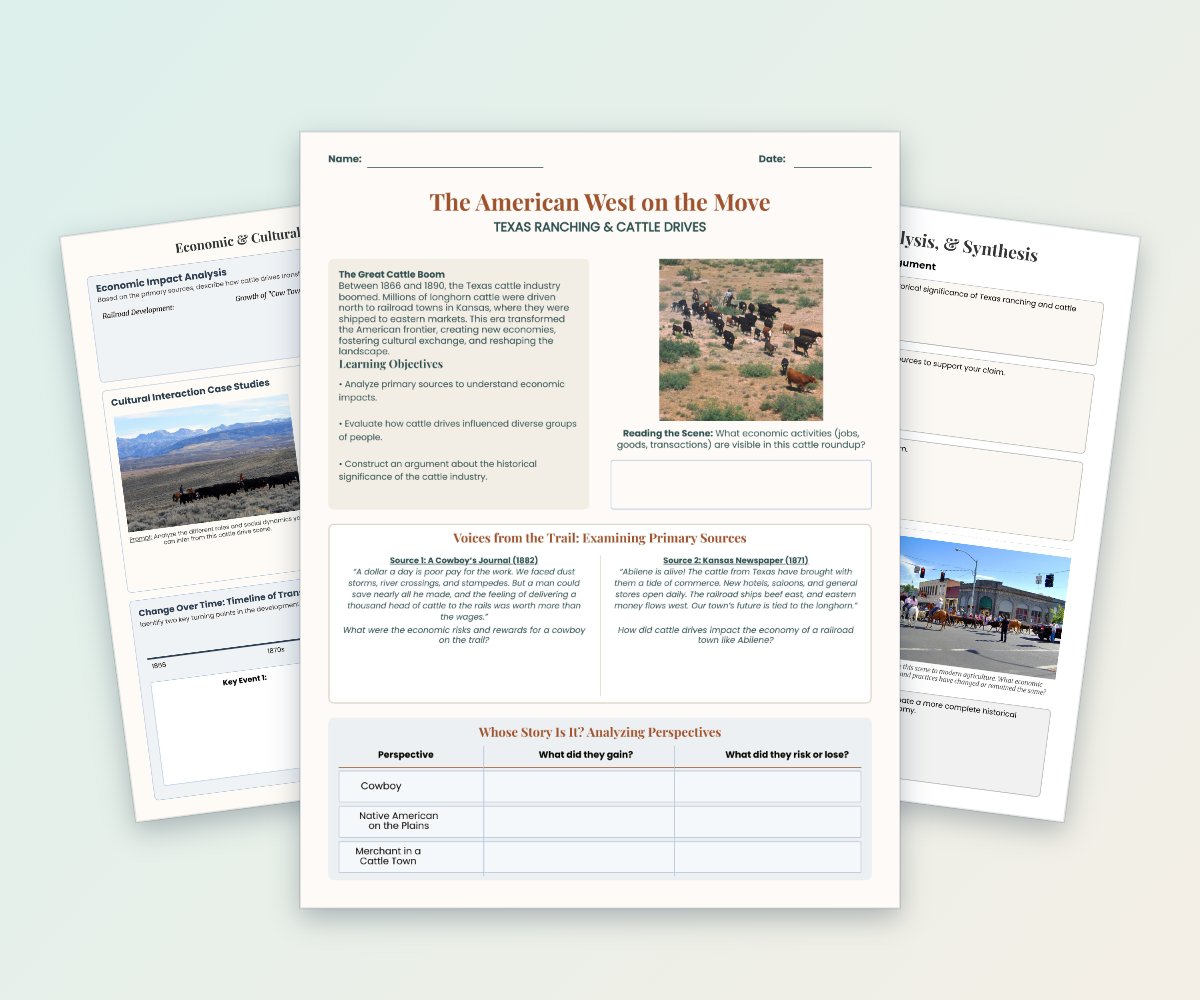
This three-page social studies activity examines how Texas ranching and cattle drives transformed frontier economies, communities, and cultural relationships.
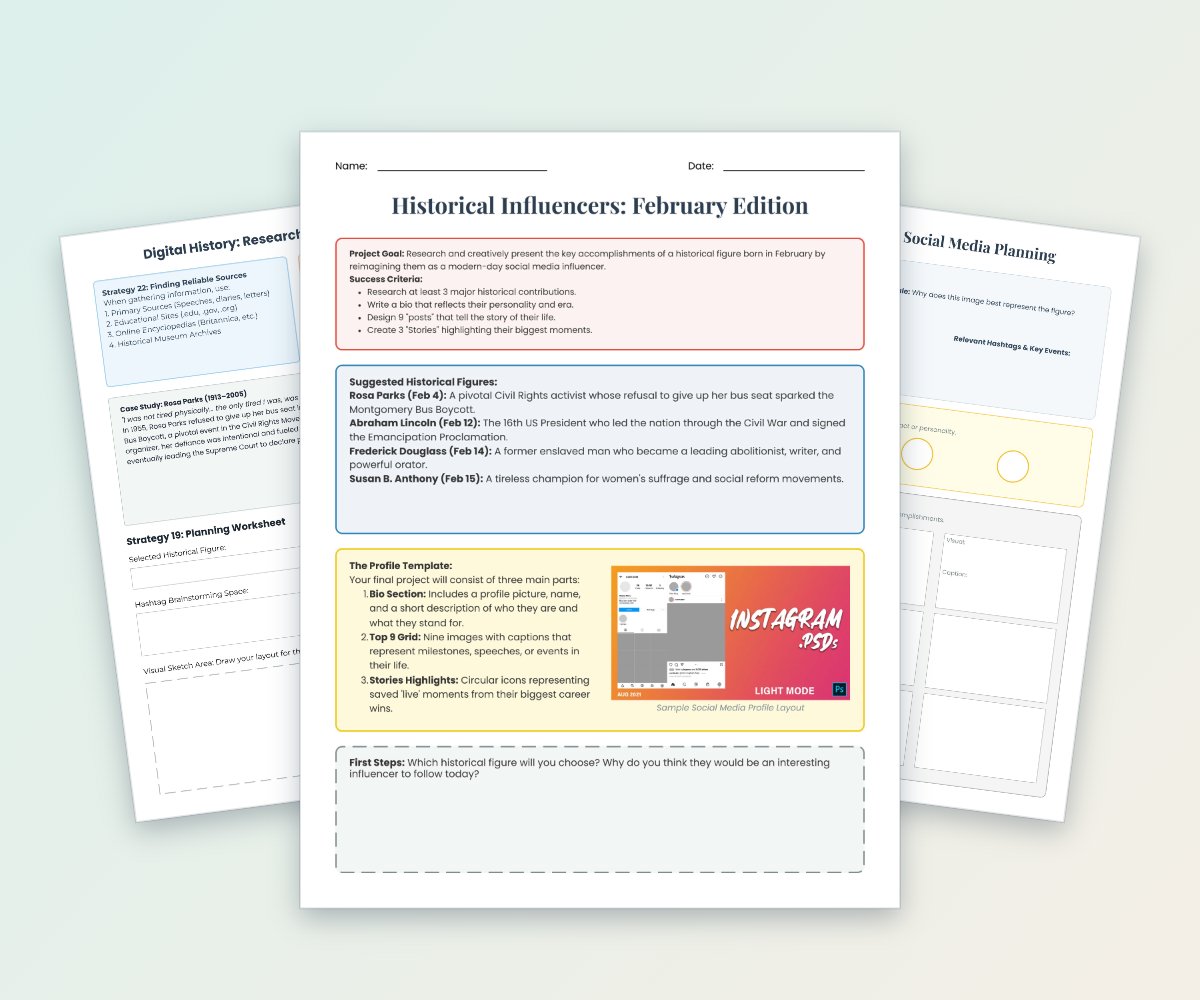
Students research a historical figure born in February and present their accomplishments through a modern social media influencer format.
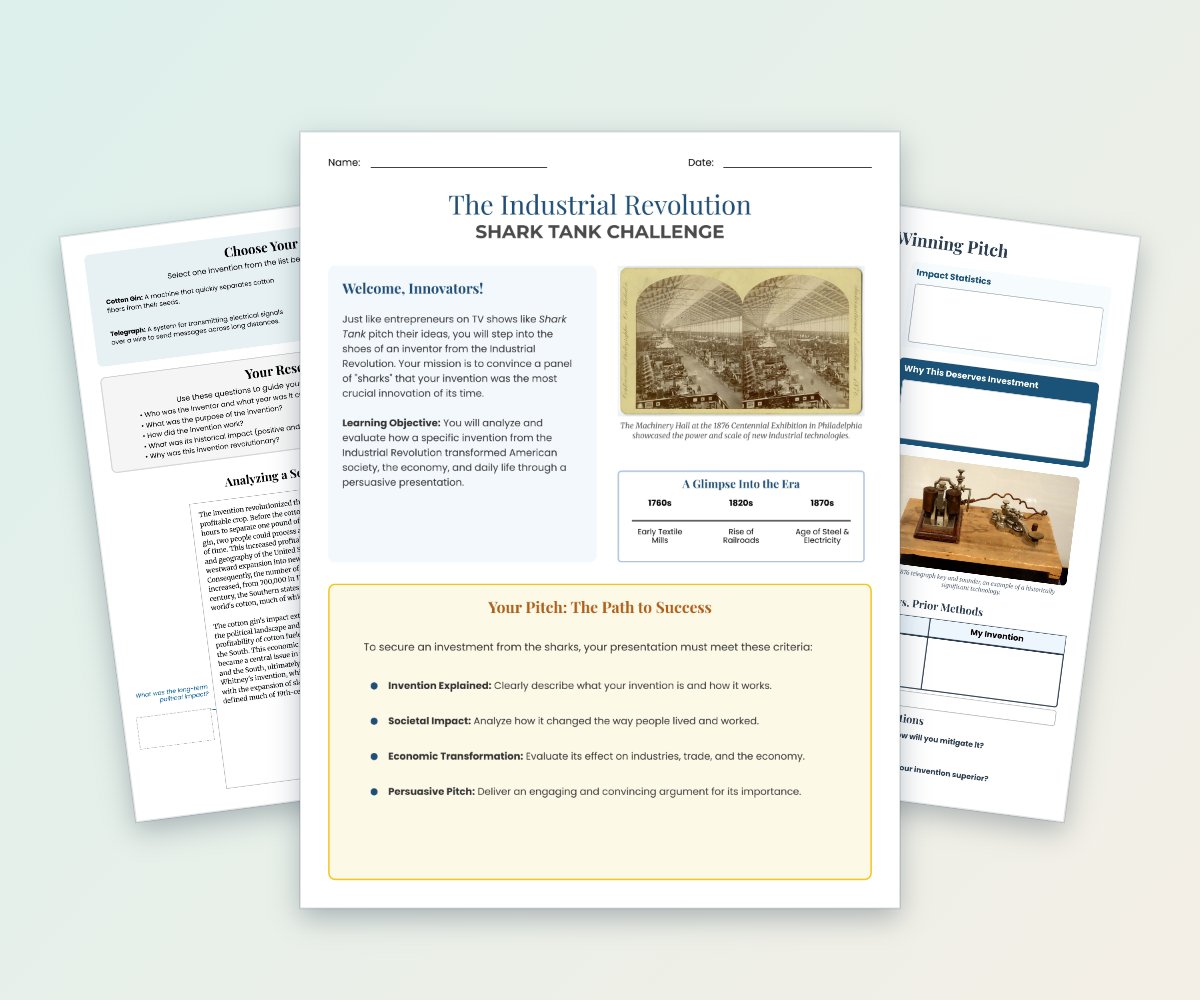
Students research a selected Industrial Revolution invention and create a persuasive Shark Tank-style pitch explaining its function and historical importance.
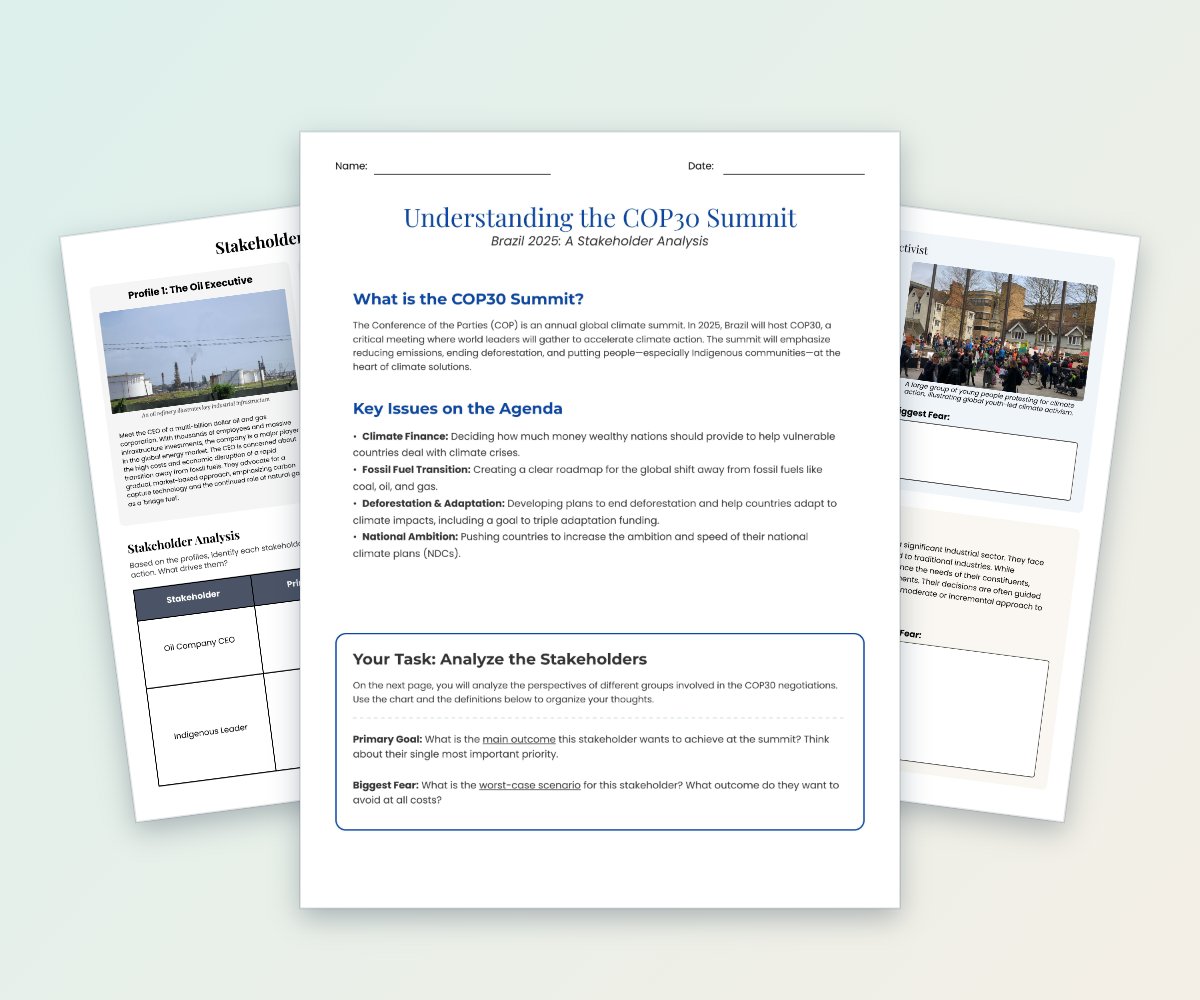
Students learn about COP30 and examine the priorities, concerns, and perspectives of stakeholders involved in global climate negotiations.
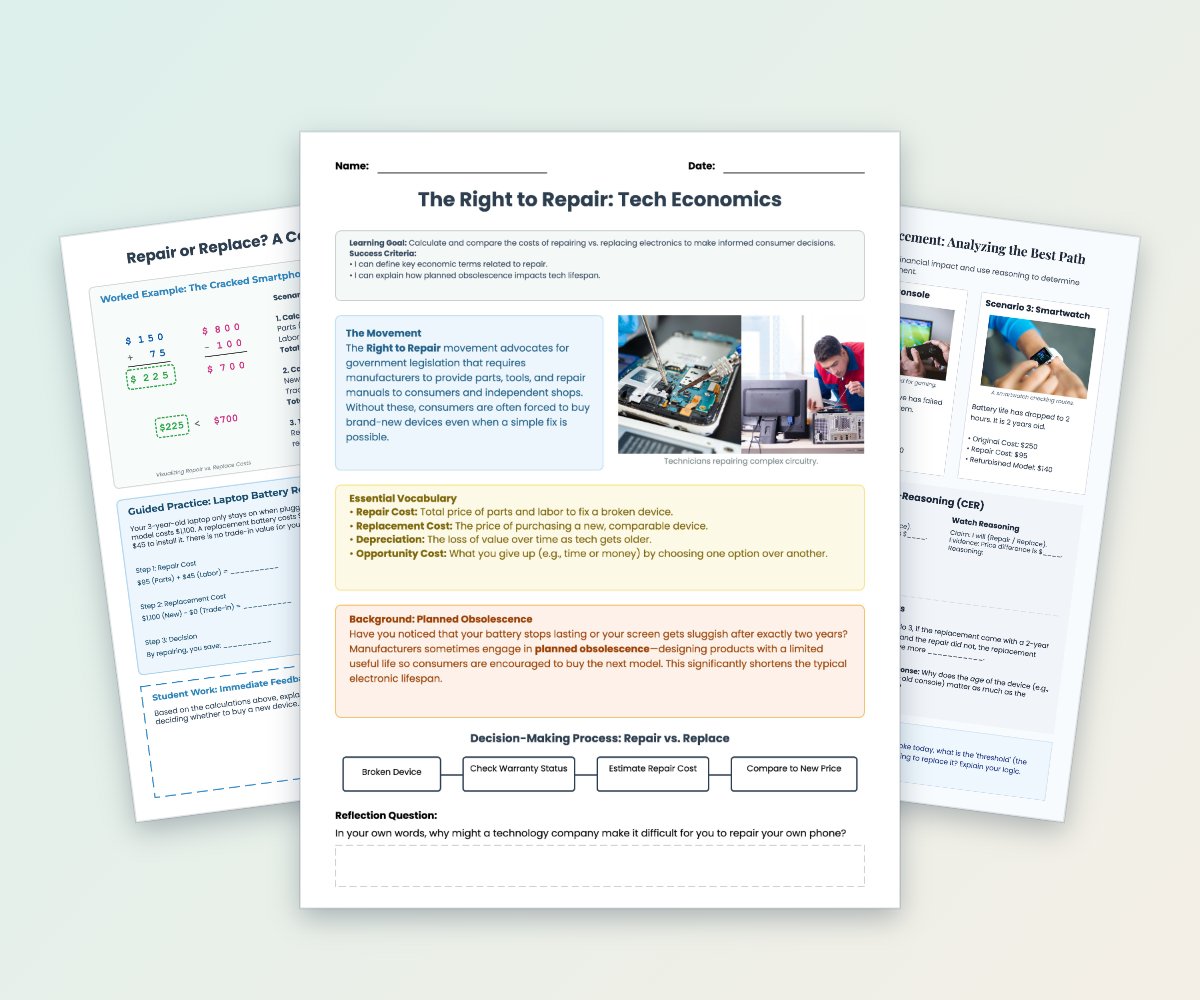
Students explore right-to-repair policies, planned obsolescence, depreciation, opportunity cost, and technology lifespan.
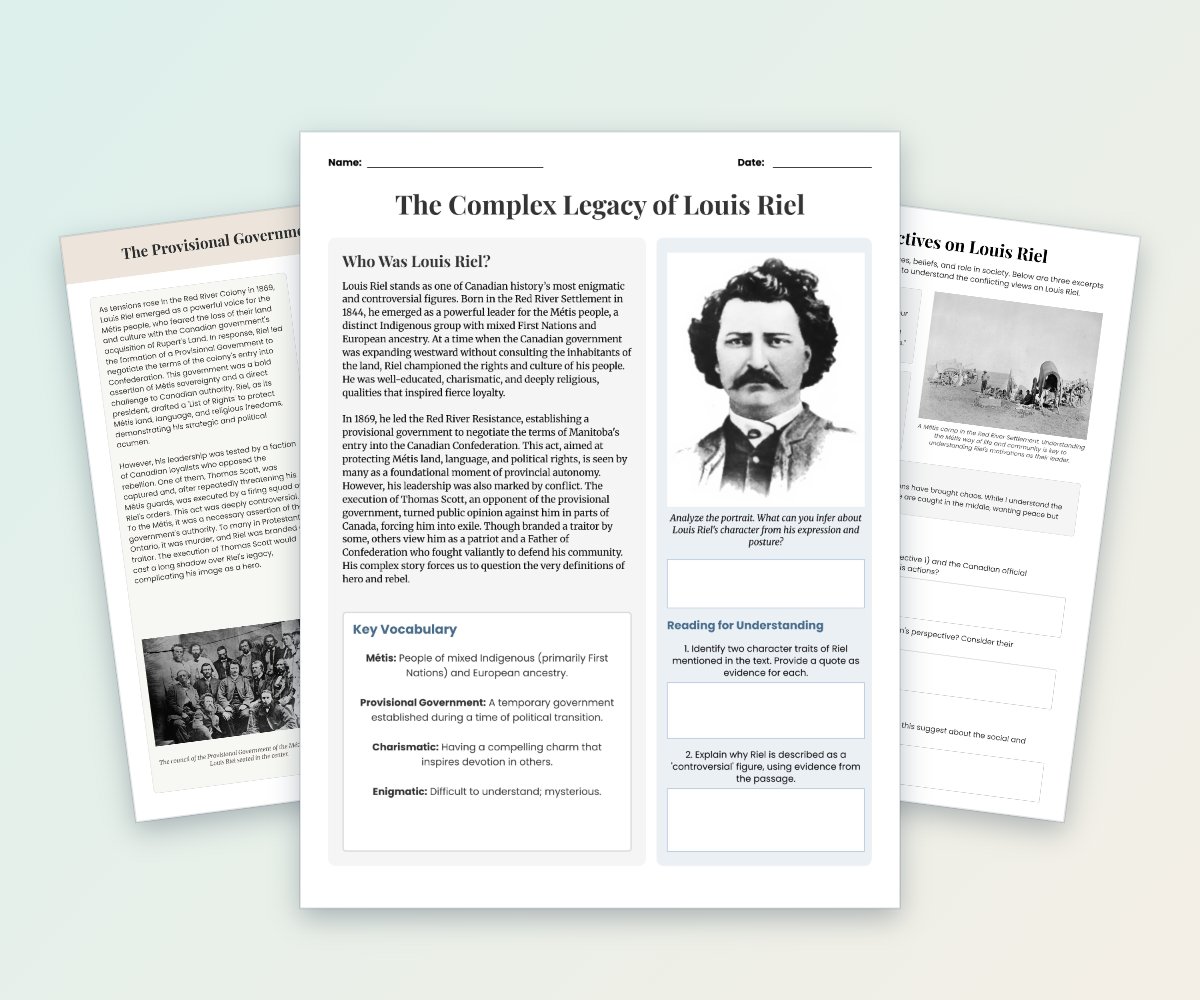
This four-page worksheet explores Louis Riel’s leadership, the Red River Resistance, the Provisional Government, and his contested historical legacy.
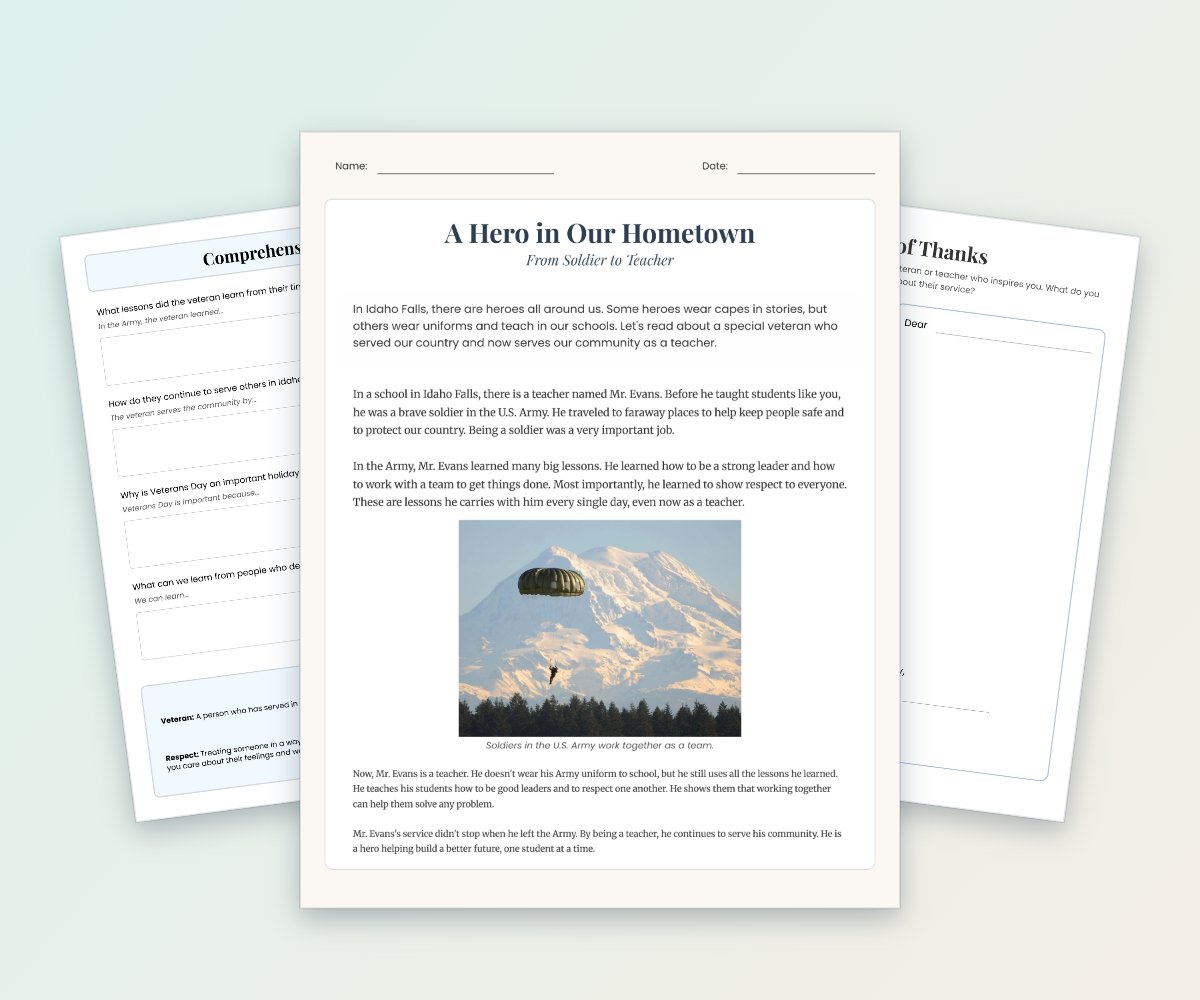
Students read a short informational passage about a veteran who became a teacher and answer comprehension questions.
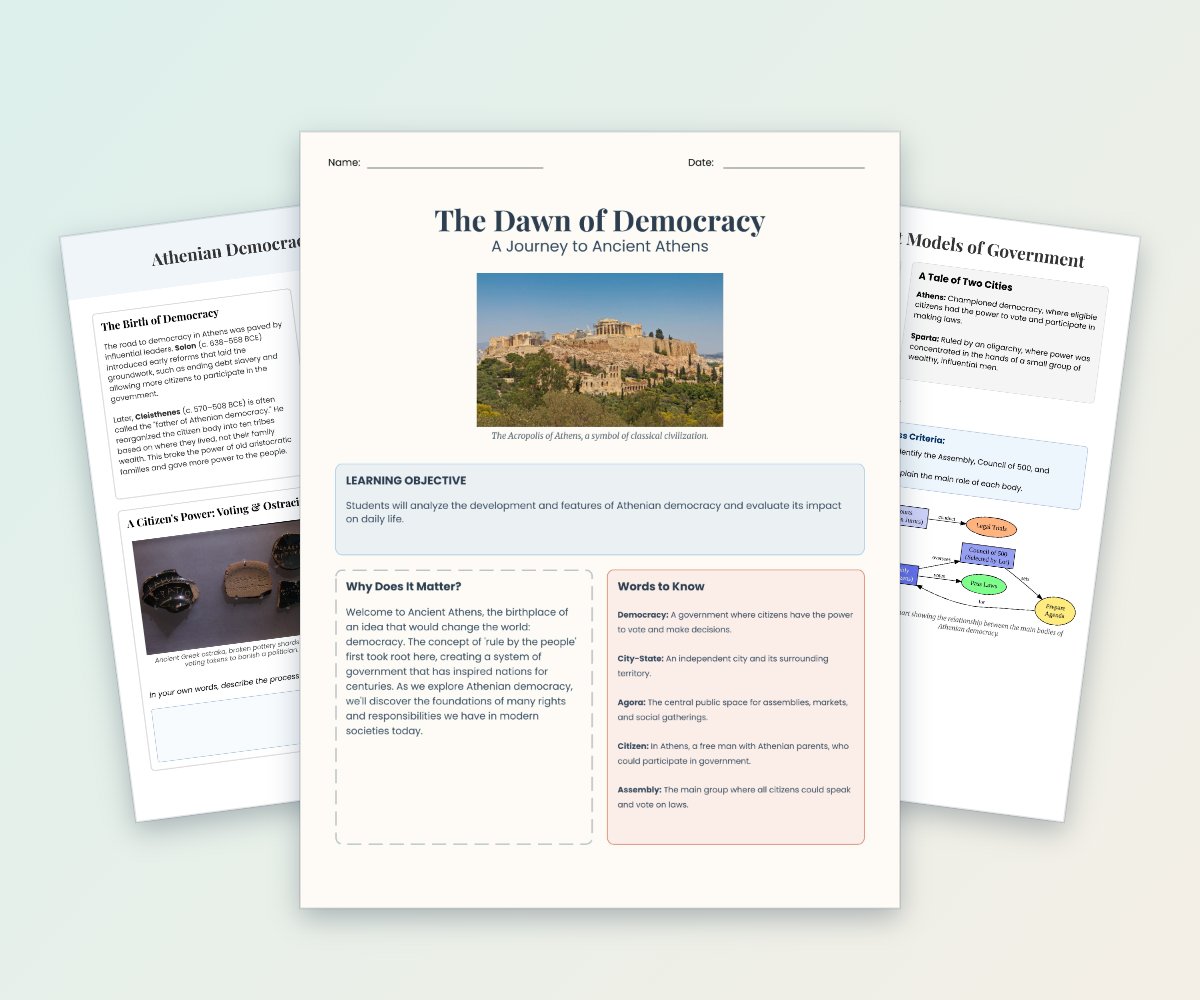
This six-page resource introduces students to the origins and features of Athenian democracy.
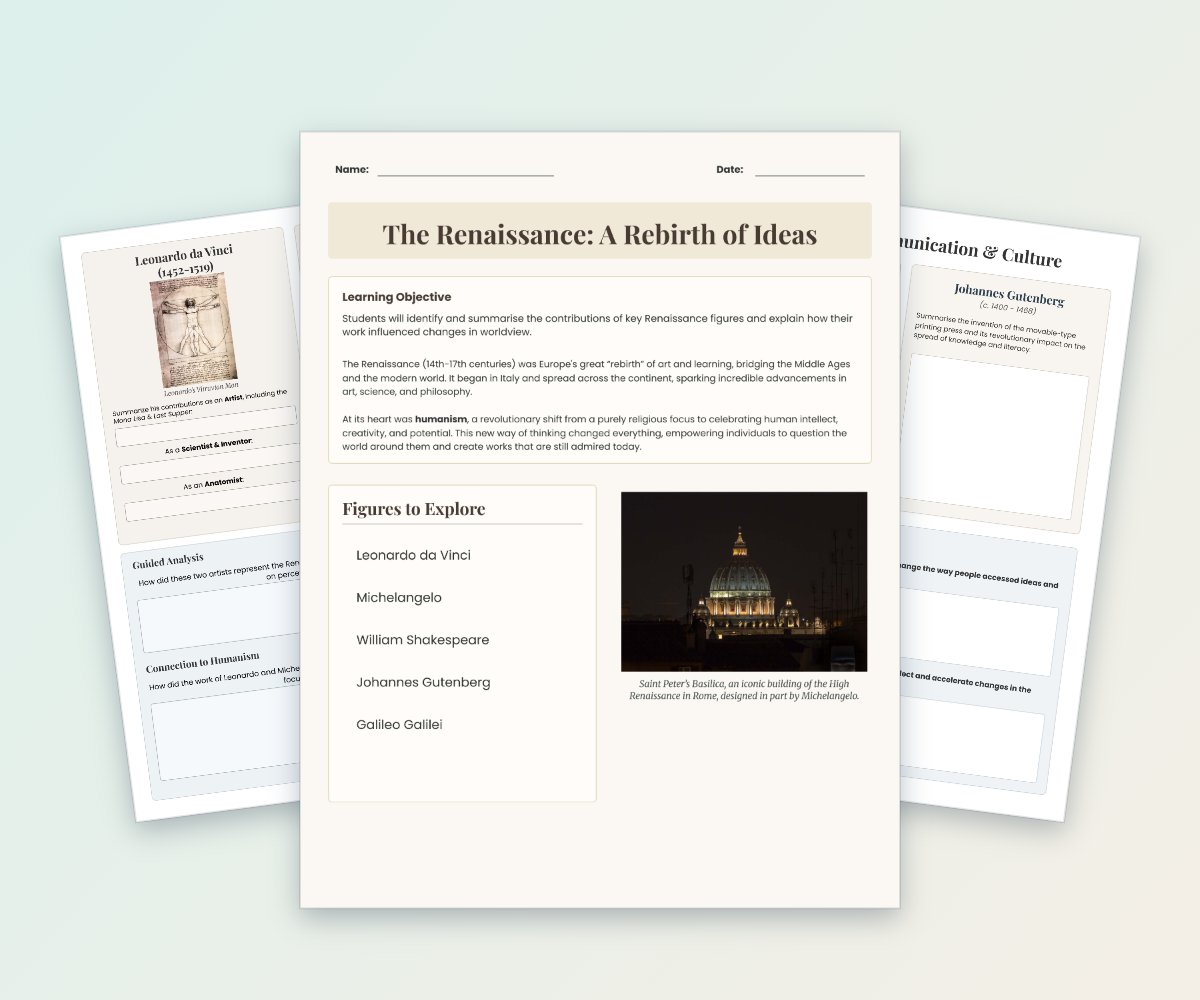
This four-page worksheet explores Leonardo da Vinci, Michelangelo, Shakespeare, Gutenberg, and Galileo and their contributions to Renaissance art, science, literature, and communication.
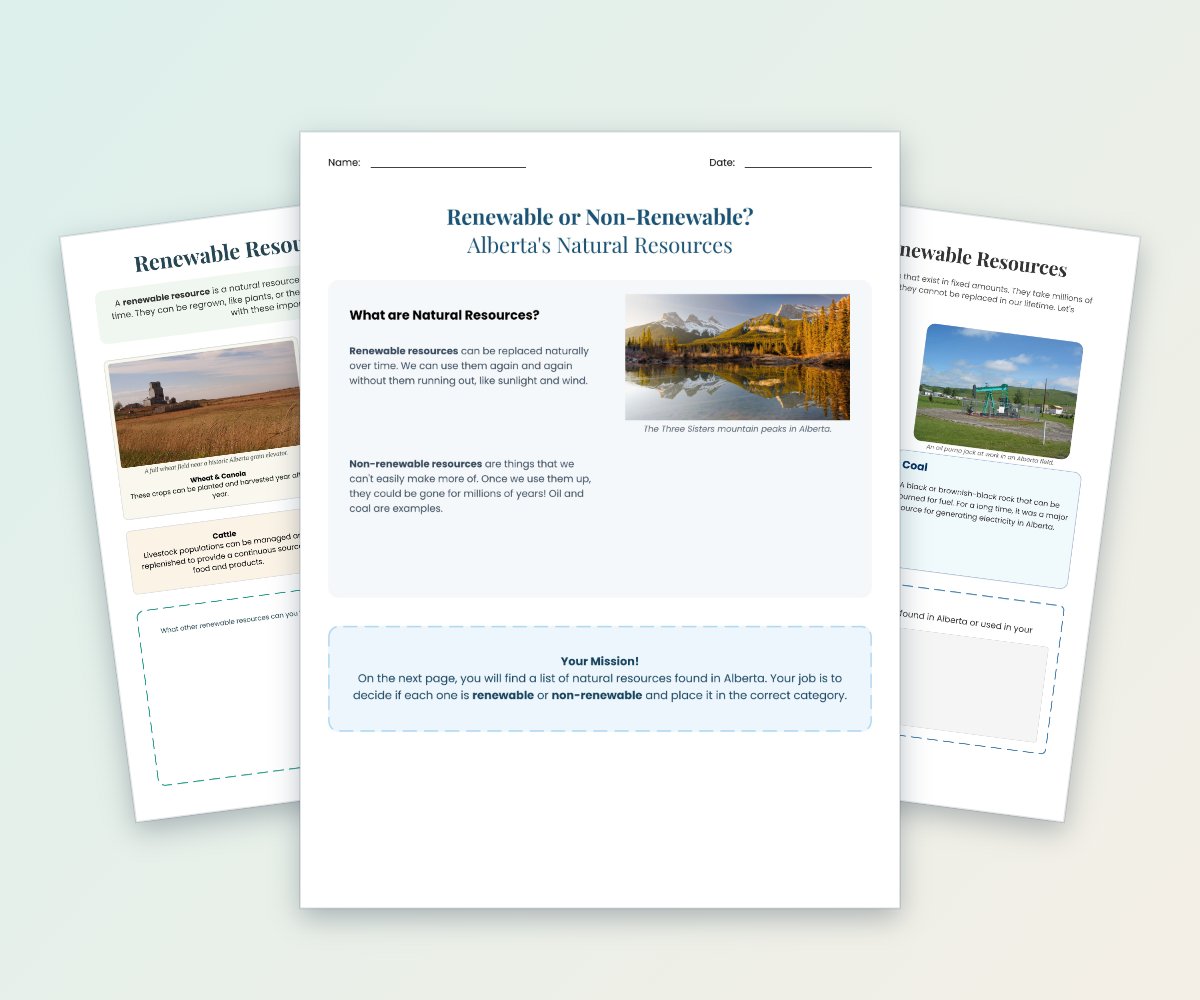
This four-page resource introduces renewable and non-renewable natural resources found in Alberta, including wheat, cattle, wind, timber, natural gas, oil, and coal.
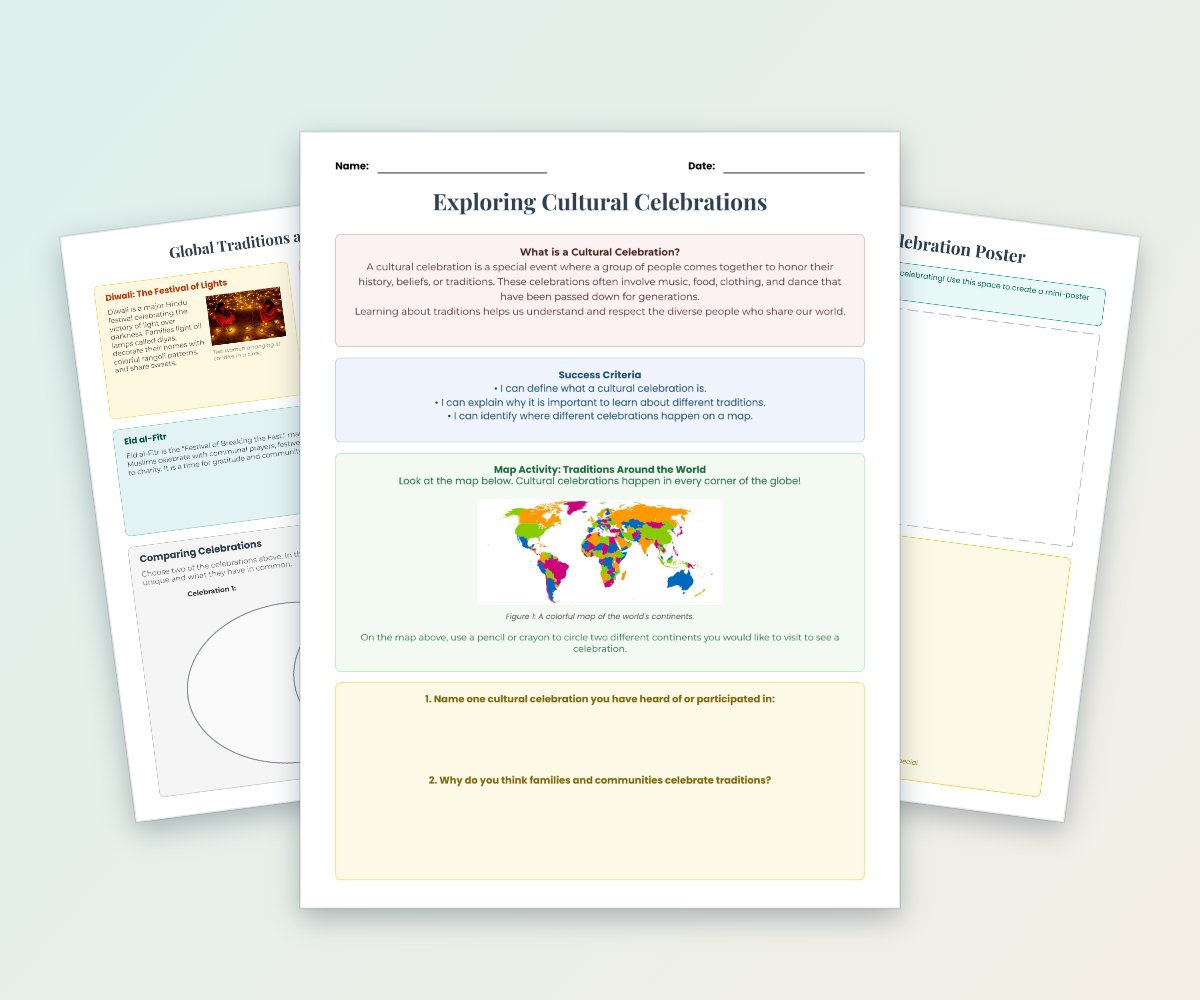
Students learn what cultural celebrations are and explore Diwali, Eid al-Fitr, and Lunar New Year.
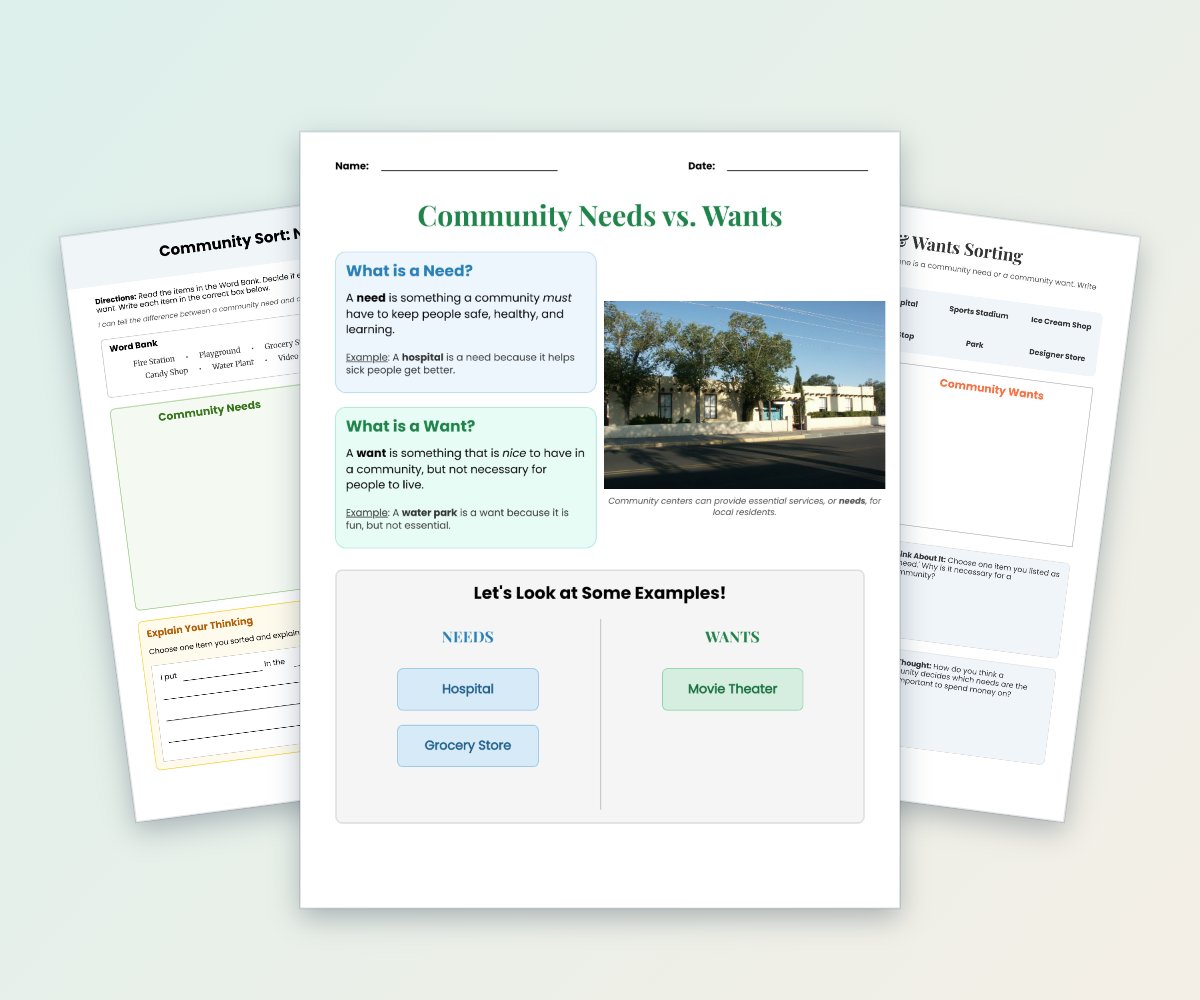
Students learn the difference between essential community needs and nonessential wants using examples such as hospitals, schools, parks, and stores.
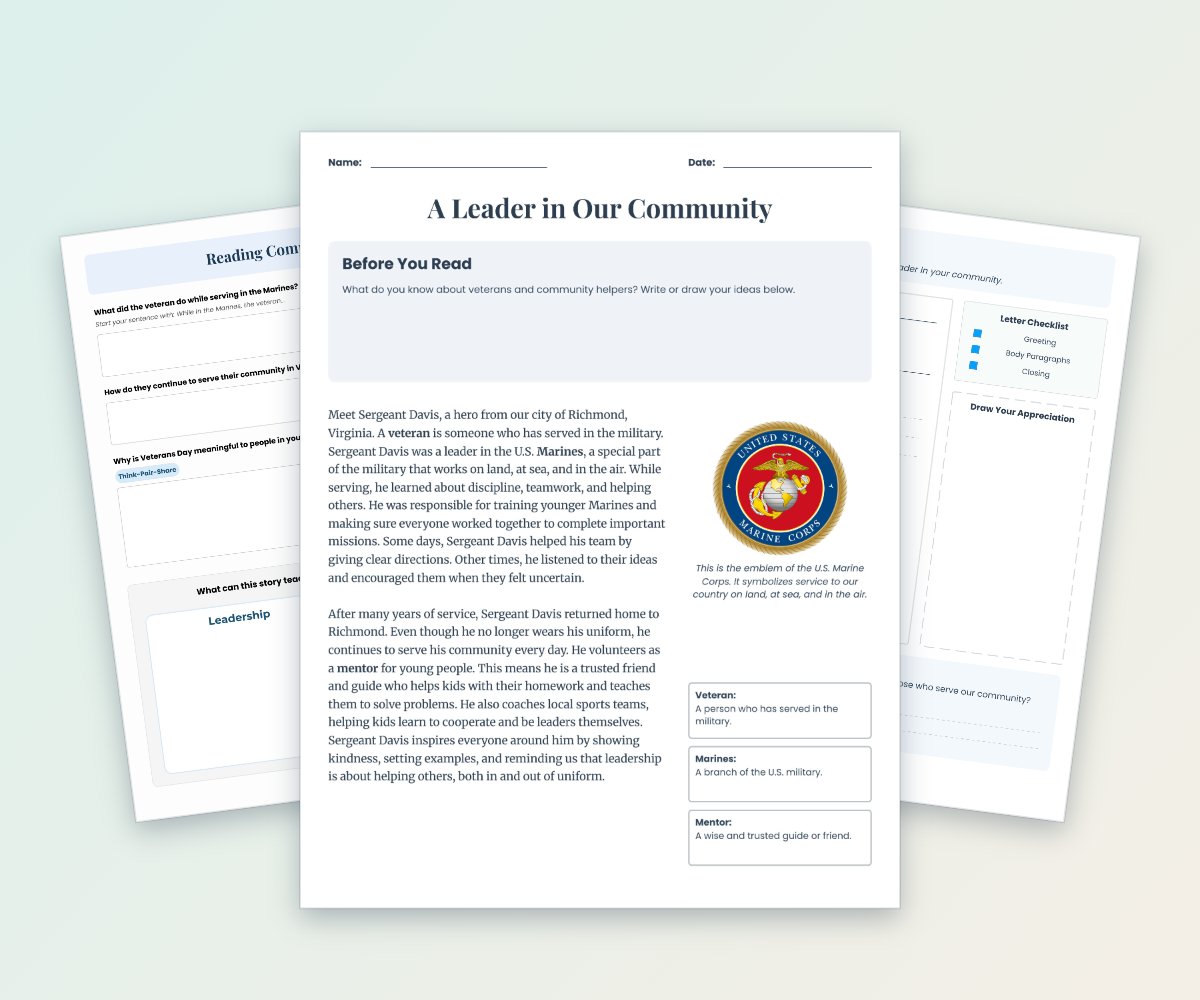
Students read about a veteran’s military service and continued community leadership in Richmond, Virginia.
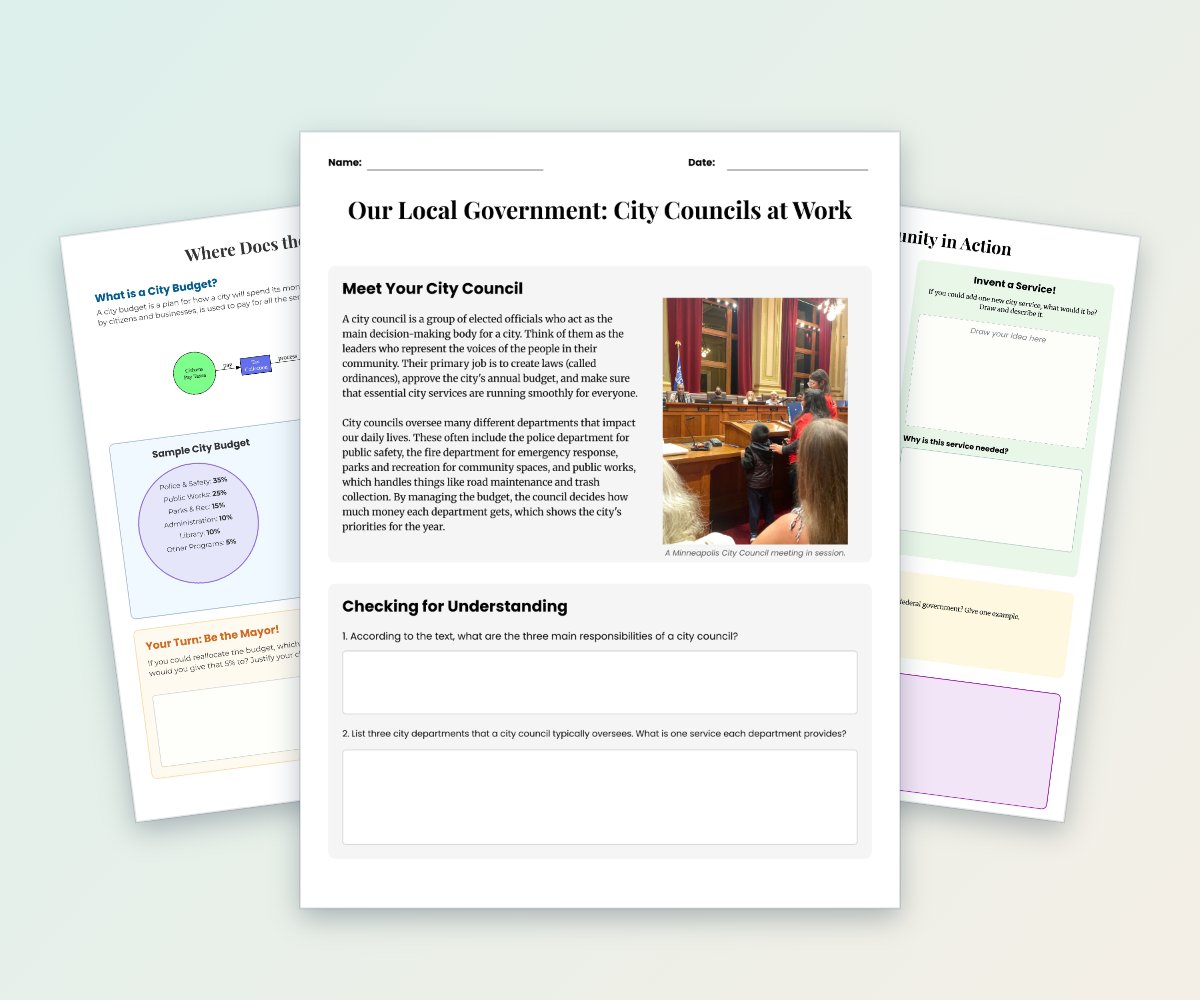
Students learn how city councils make decisions, oversee departments, and allocate annual budgets.
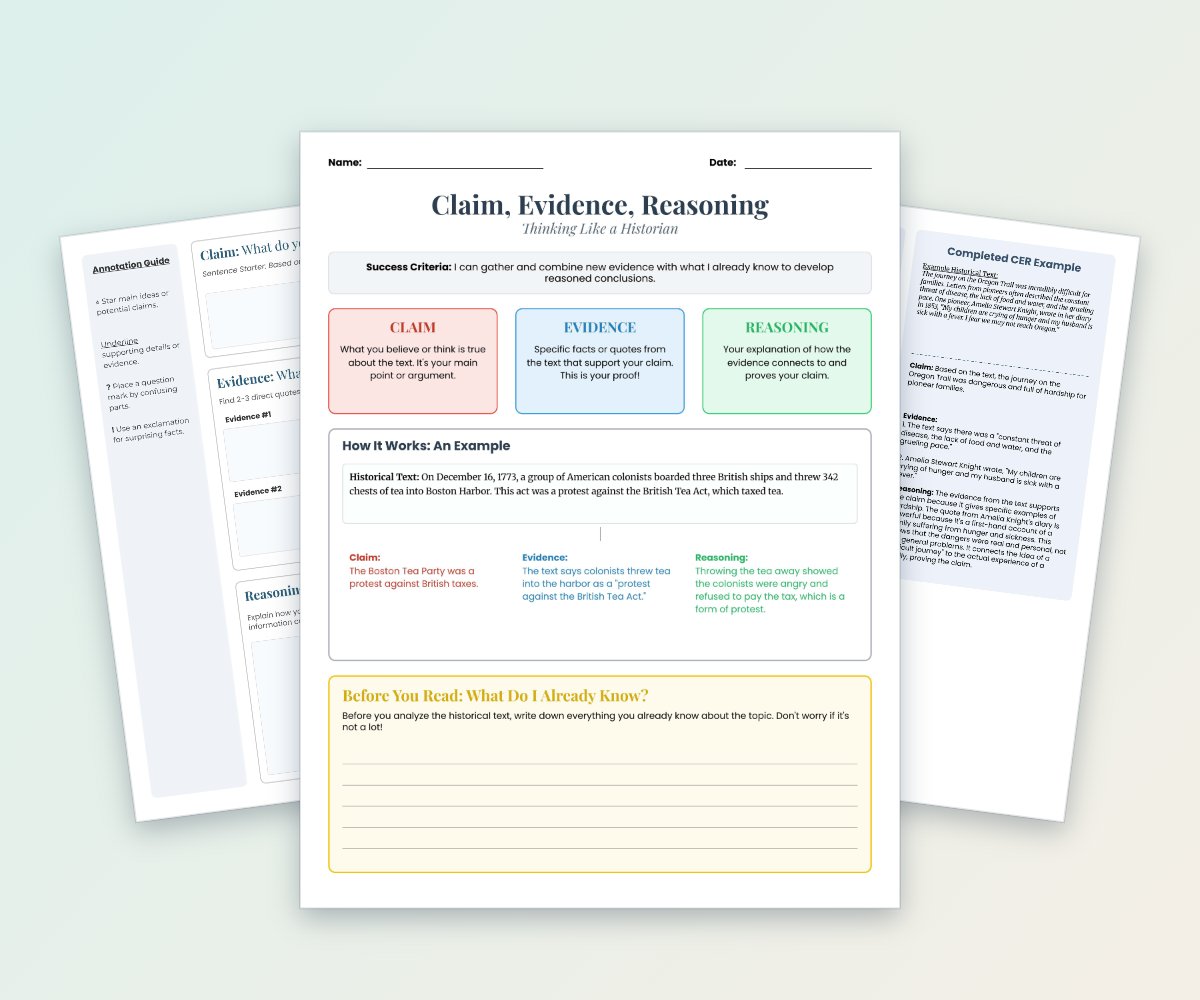
This three-page resource teaches students to develop historical claims, select textual evidence, and explain their reasoning.
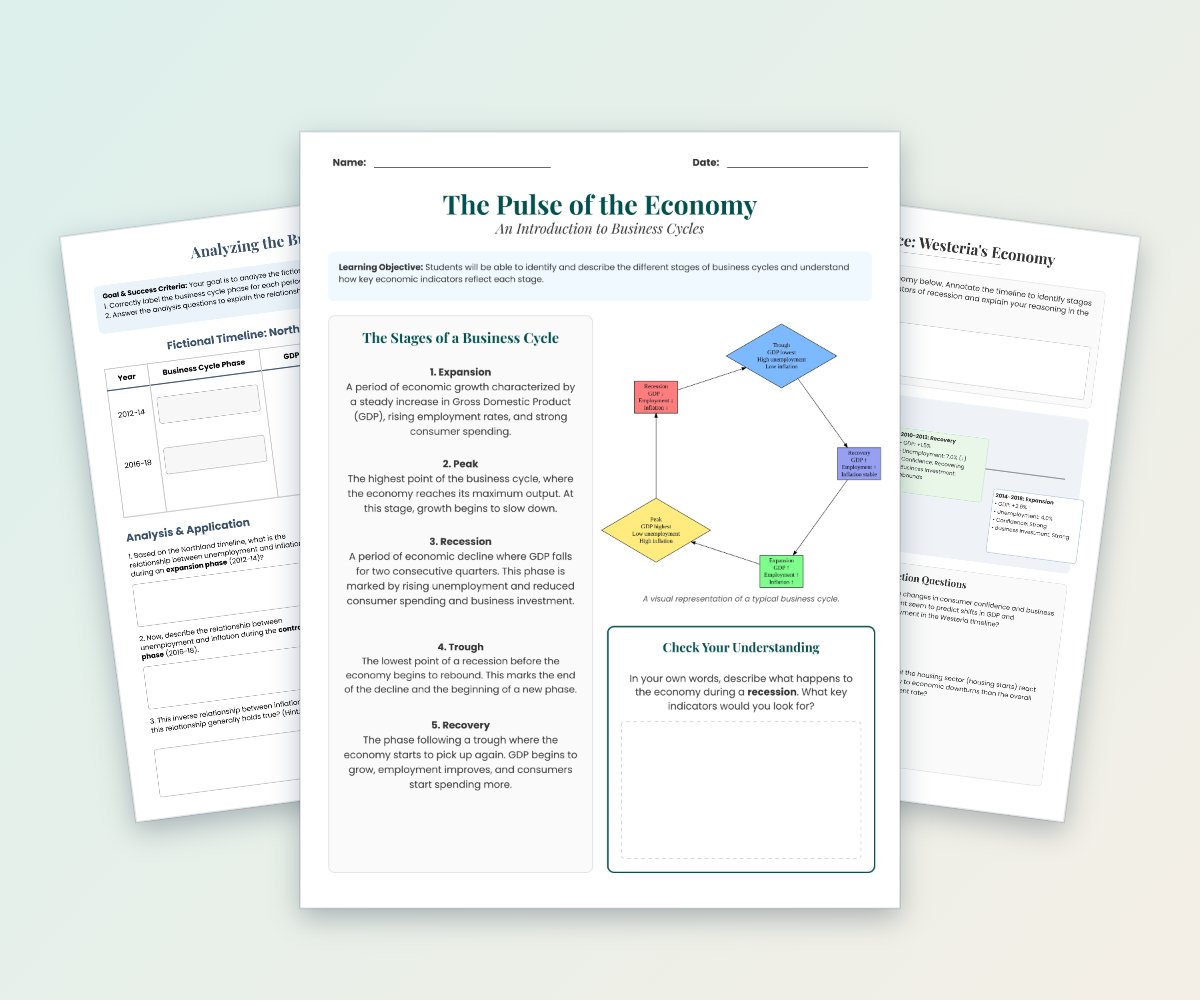
This five-page economics resource introduces expansion, peak, recession, trough, and recovery.
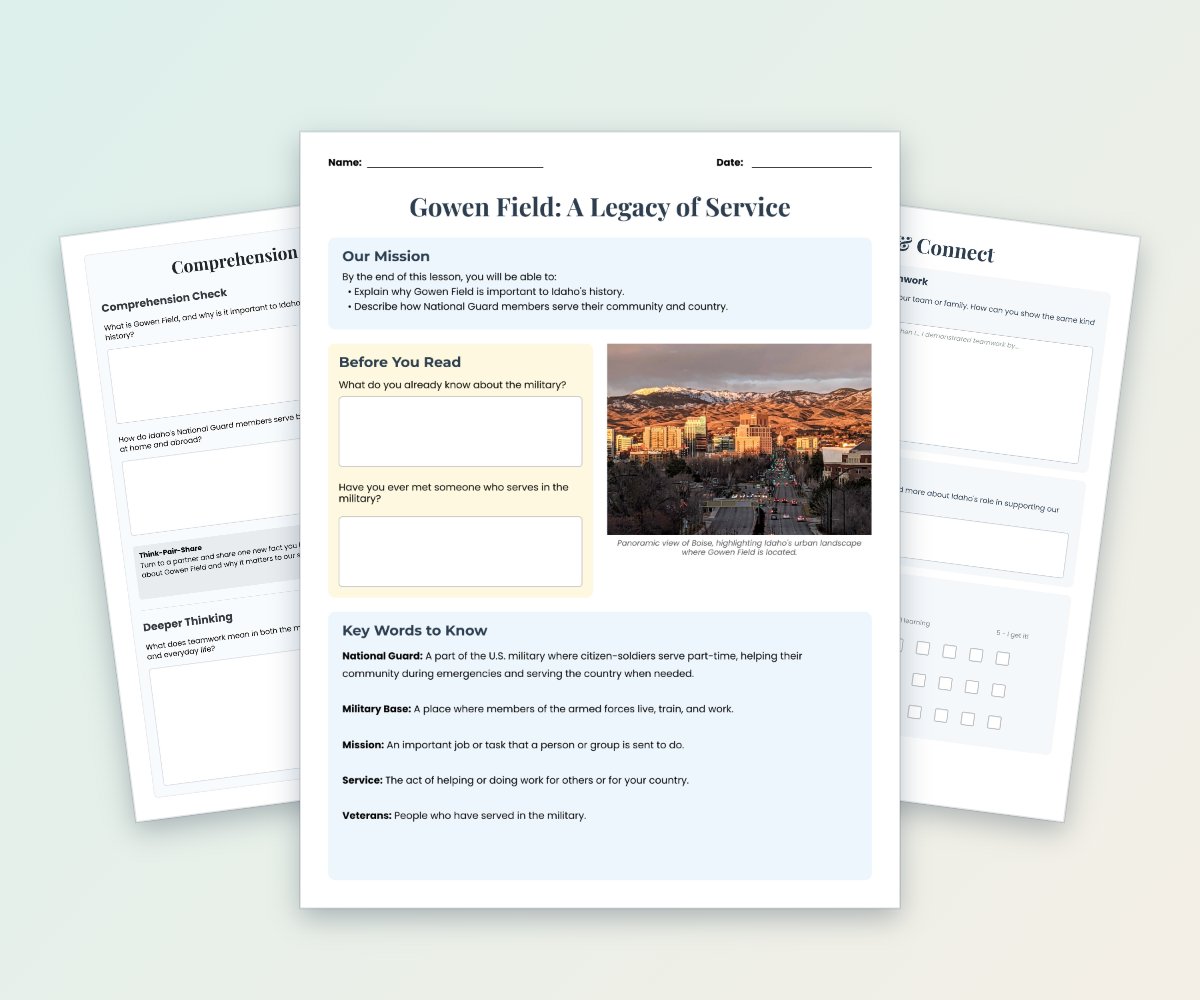
Students learn about Gowen Field’s importance to Idaho history and explore how National Guard members serve their communities and country.
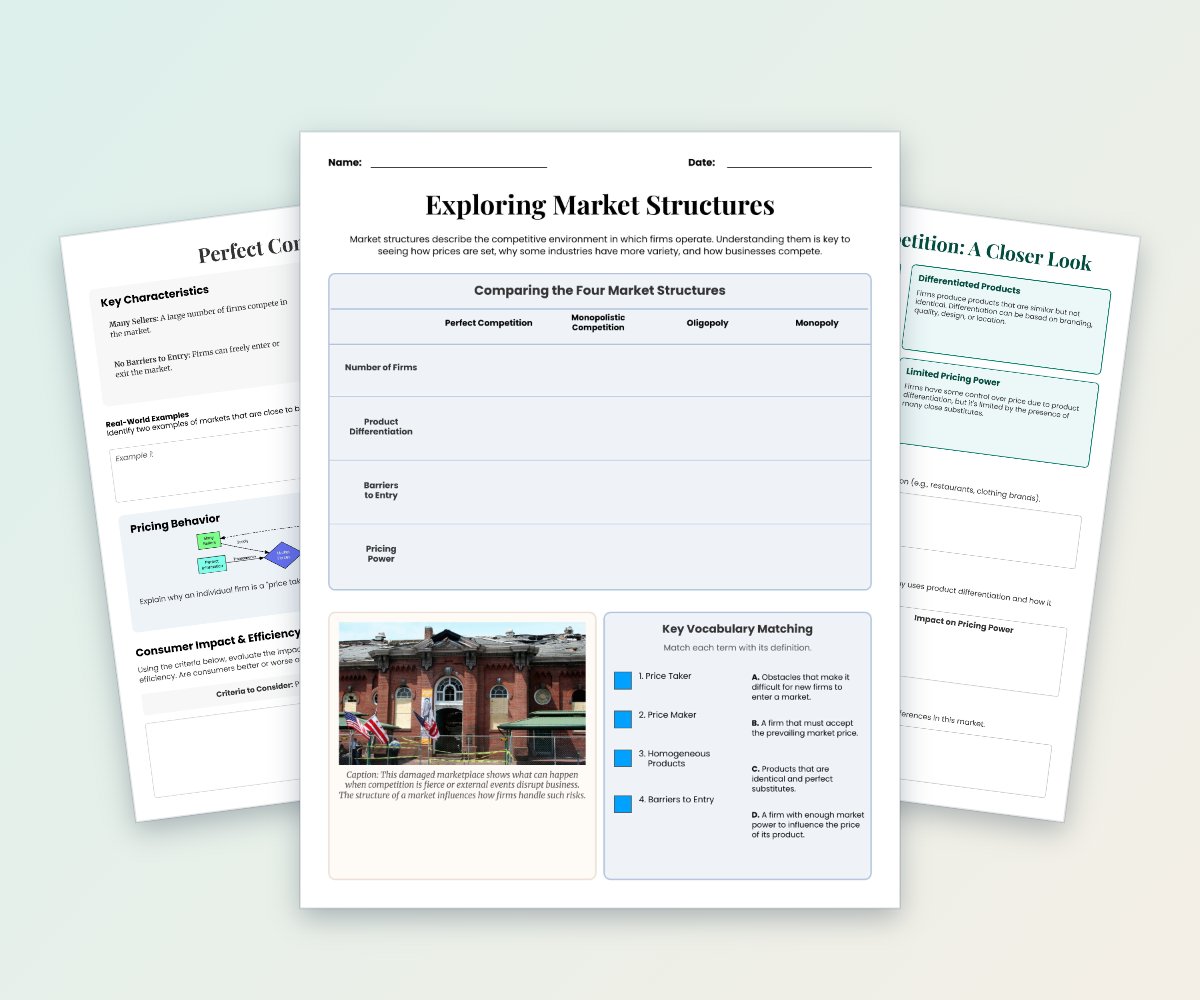
This six-page economics worksheet introduces perfect competition, monopolistic competition, oligopoly, and monopoly.
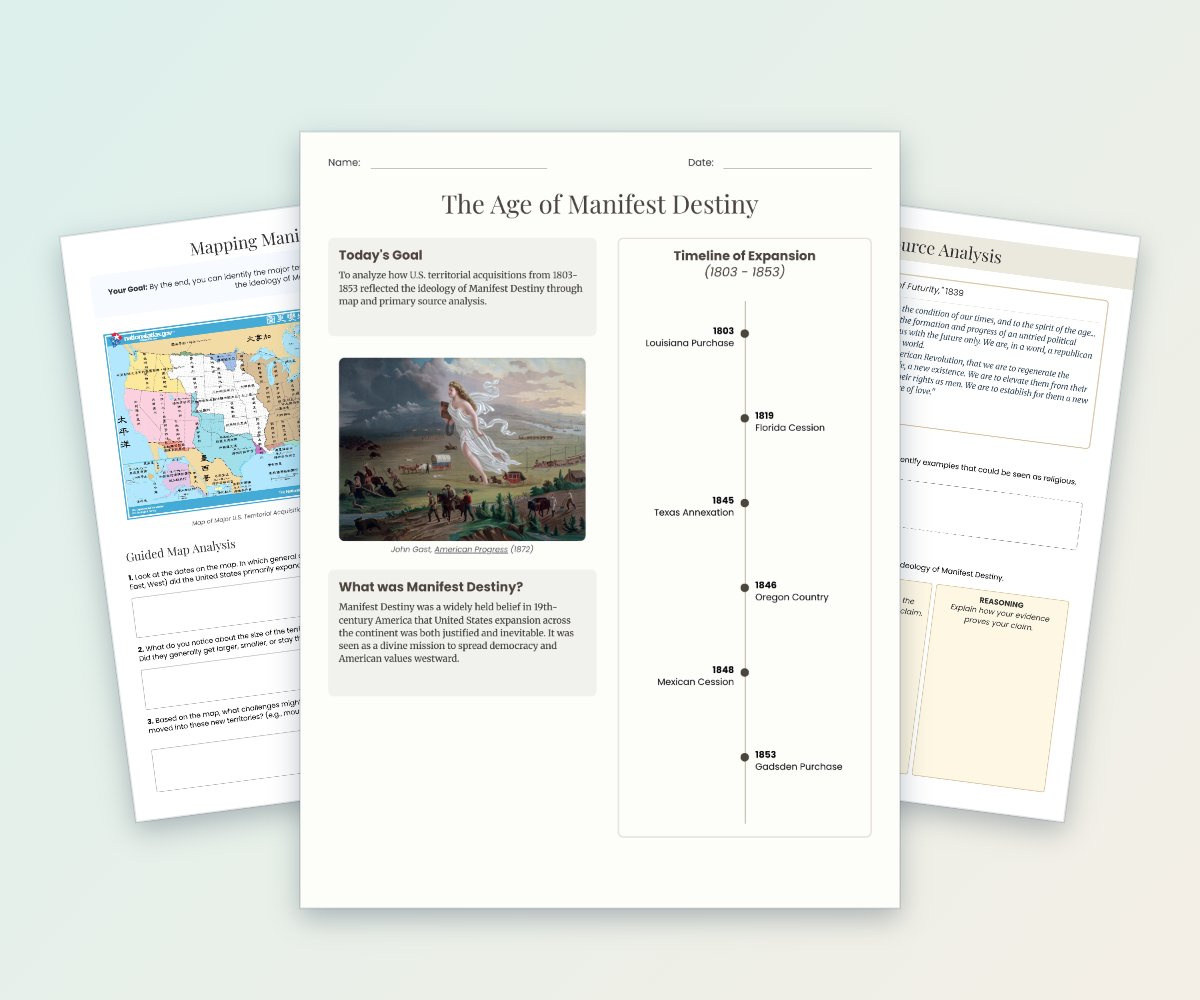
Students examine U.S.
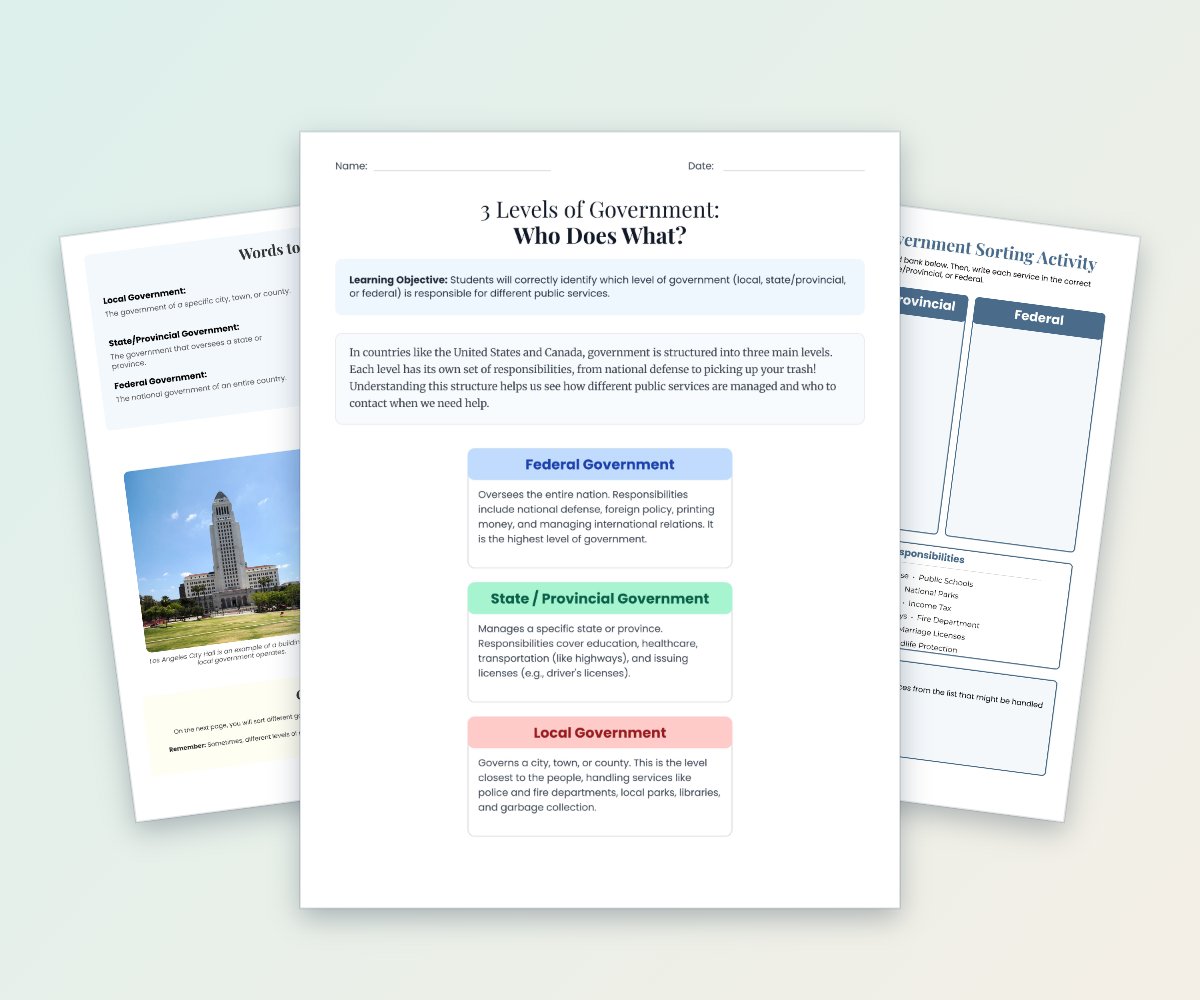
This four-page resource introduces local, state or provincial, and federal government responsibilities through clear explanations, vocabulary, examples, and a sorting activity.
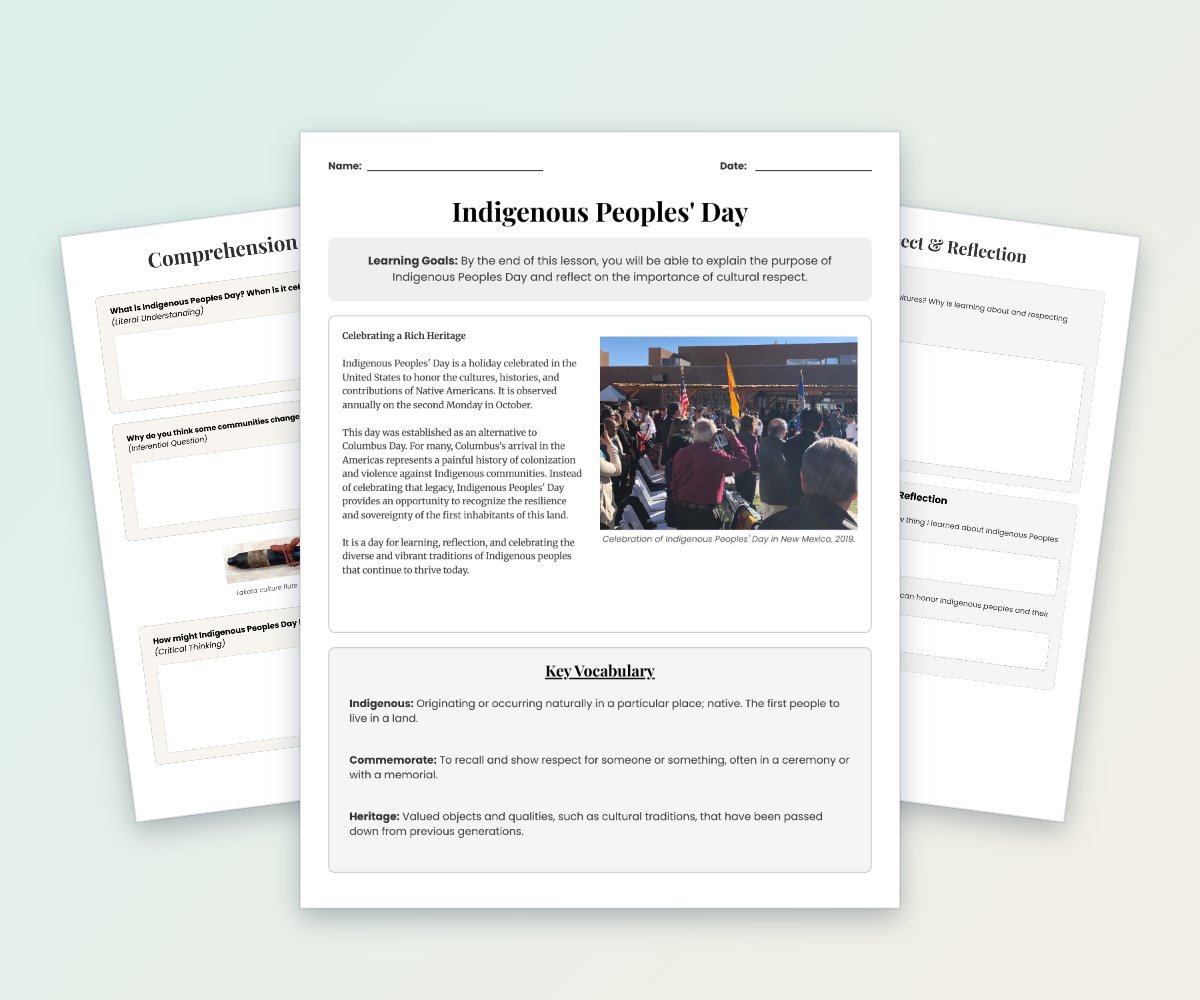
This three-page lesson worksheet introduces Indigenous Peoples' Day, its historical context, and the importance of honoring Indigenous cultures.
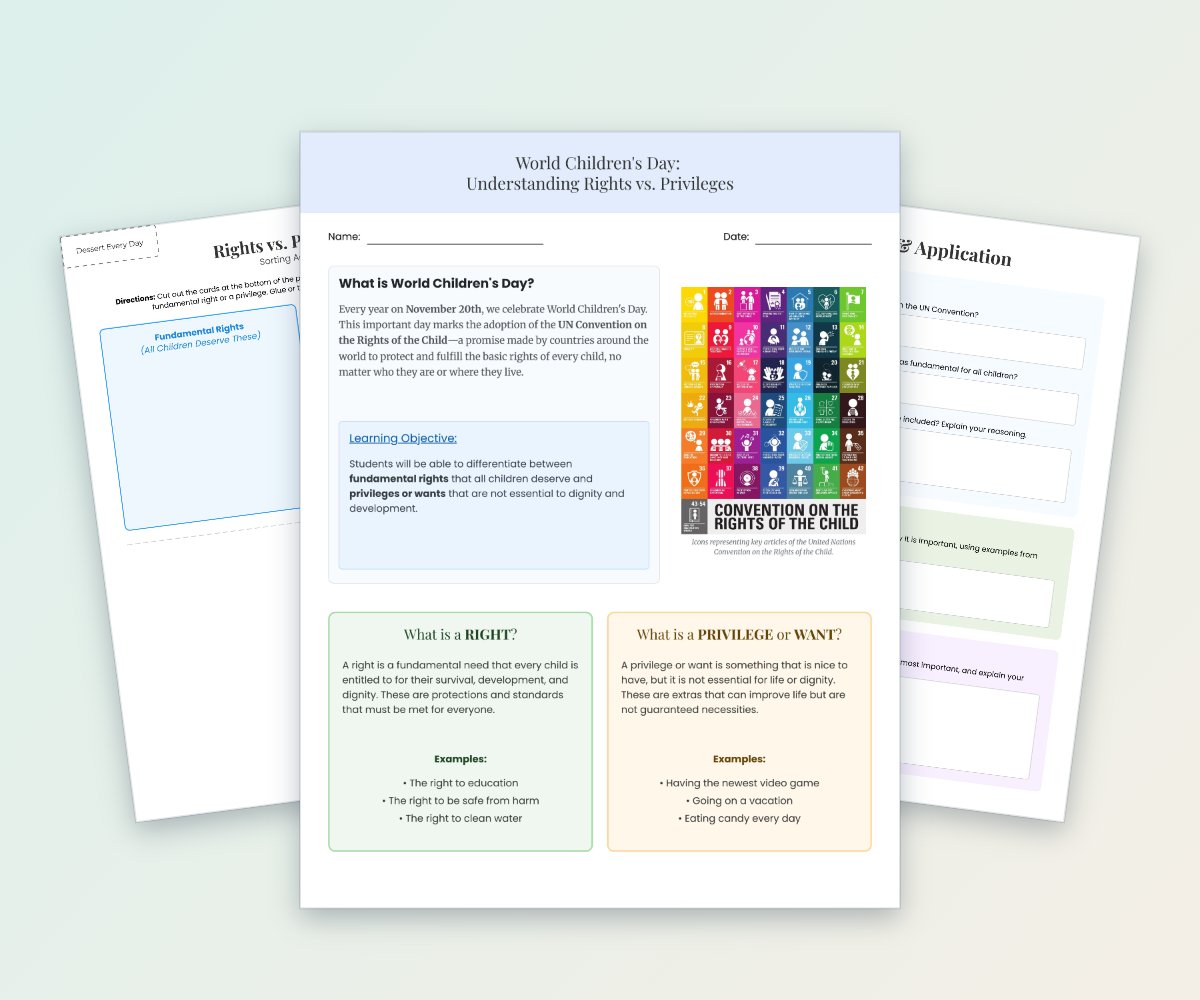
This World Children’s Day resource introduces the difference between fundamental rights and privileges or wants.
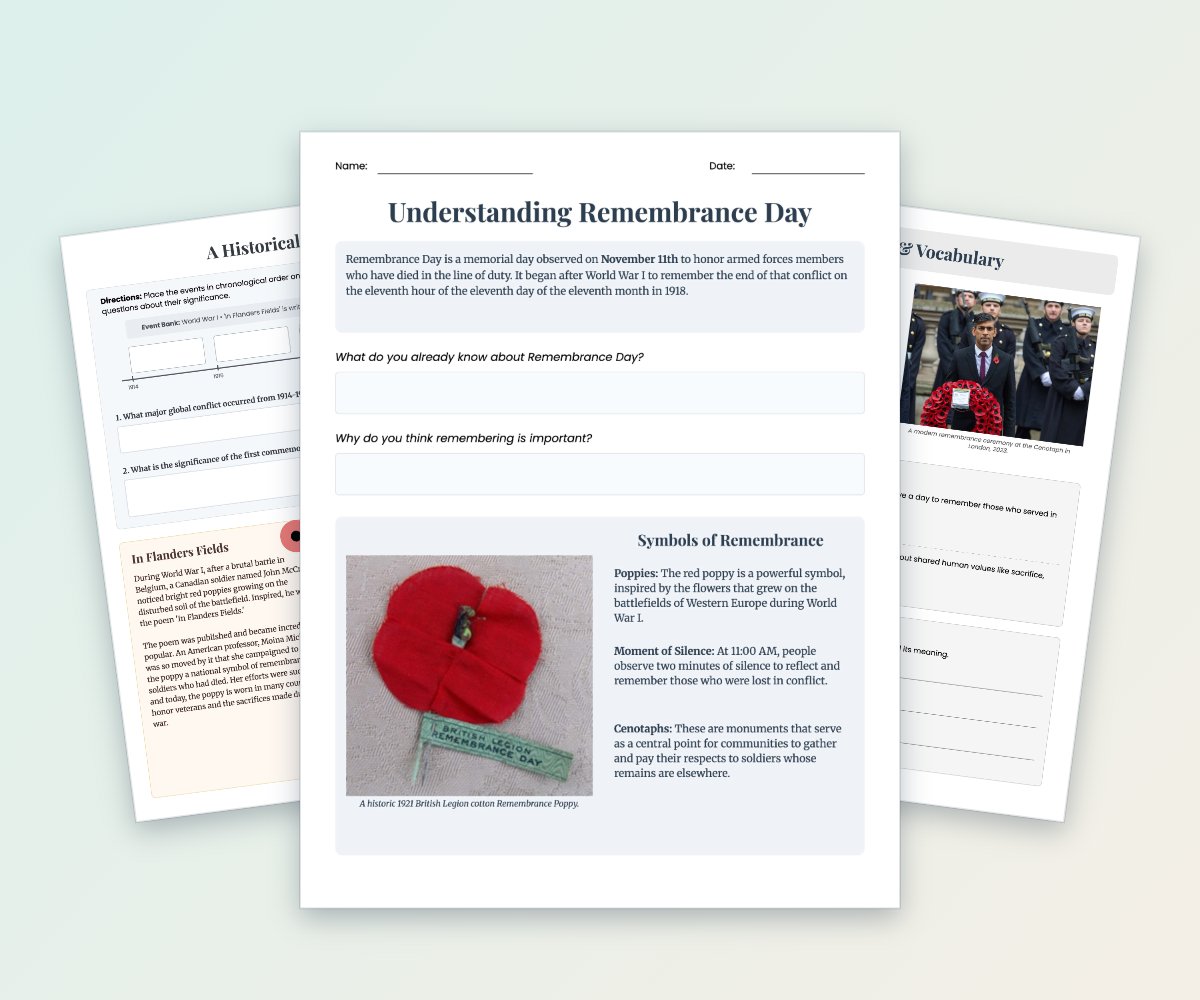
This four-page worksheet introduces Remembrance Day, the history of World War I, and symbols such as poppies, cenotaphs, and the moment of silence.
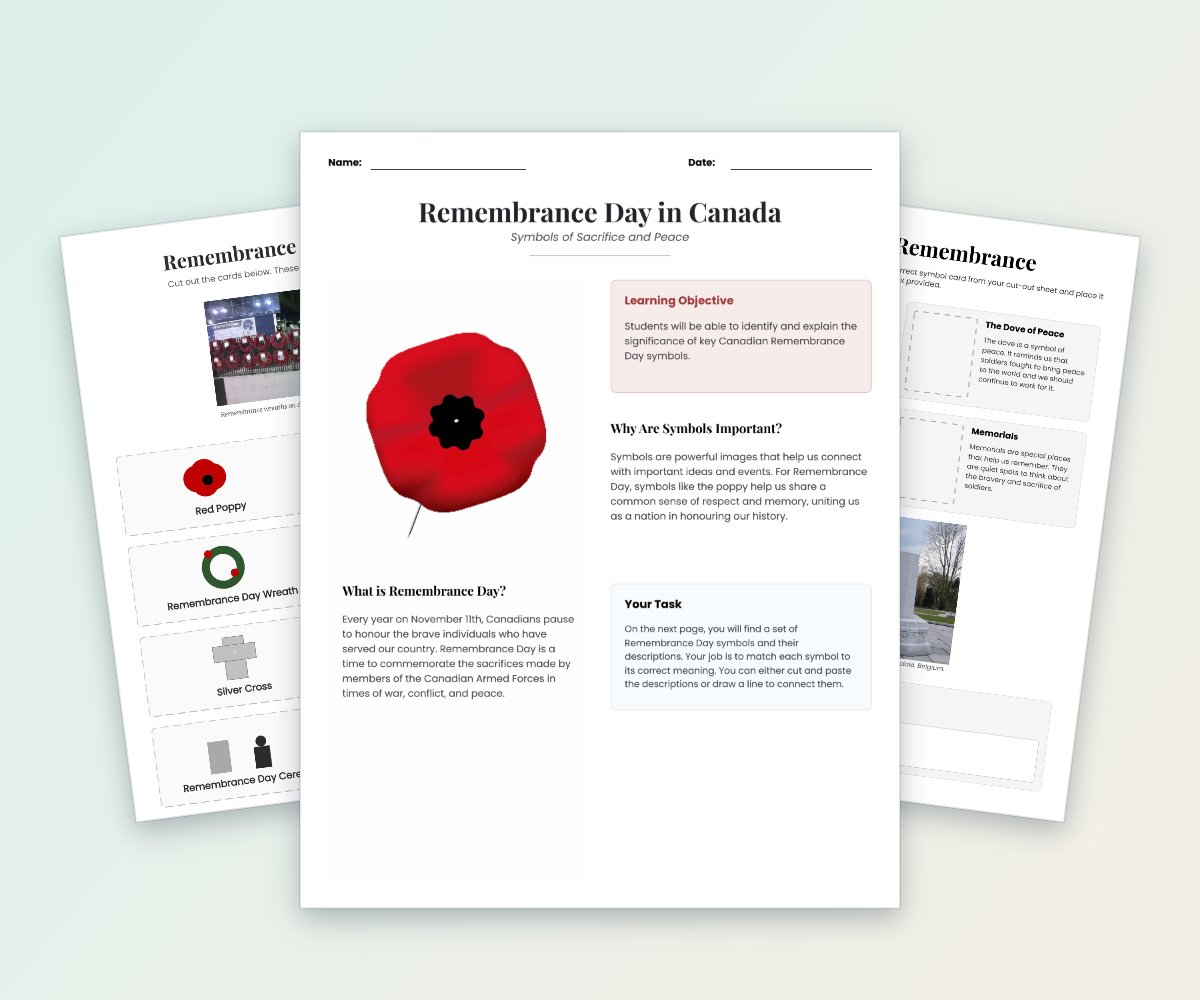
This four-page activity introduces Canadian Remembrance Day and the meaning of symbols including poppies, wreaths, memorials, and doves.
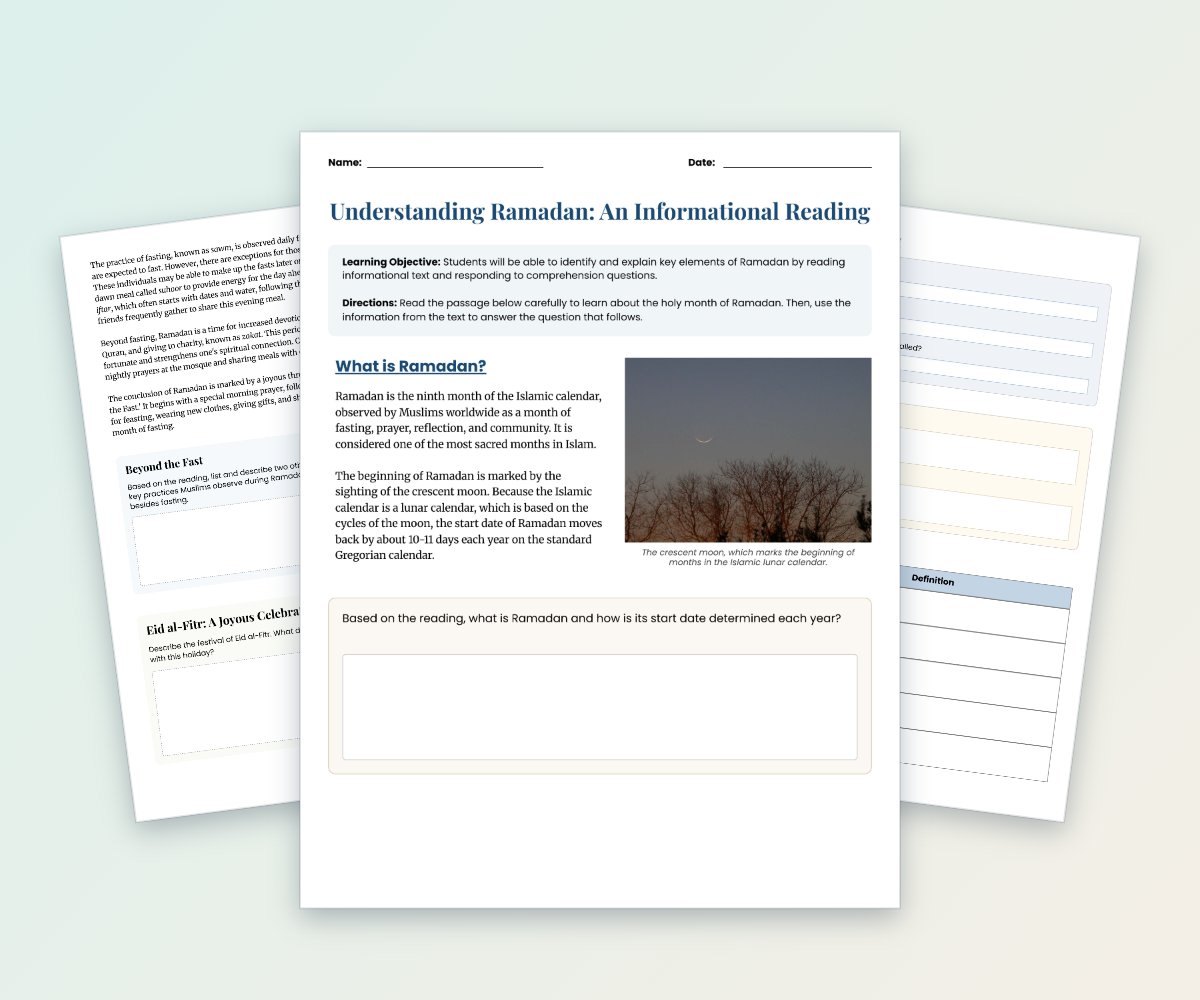
Students read an accessible informational passage about Ramadan, including fasting, prayer, charity, community, suhoor, iftar, and Eid al-Fitr.