Restaurant Menu Project: Applying Ratios and Proportions
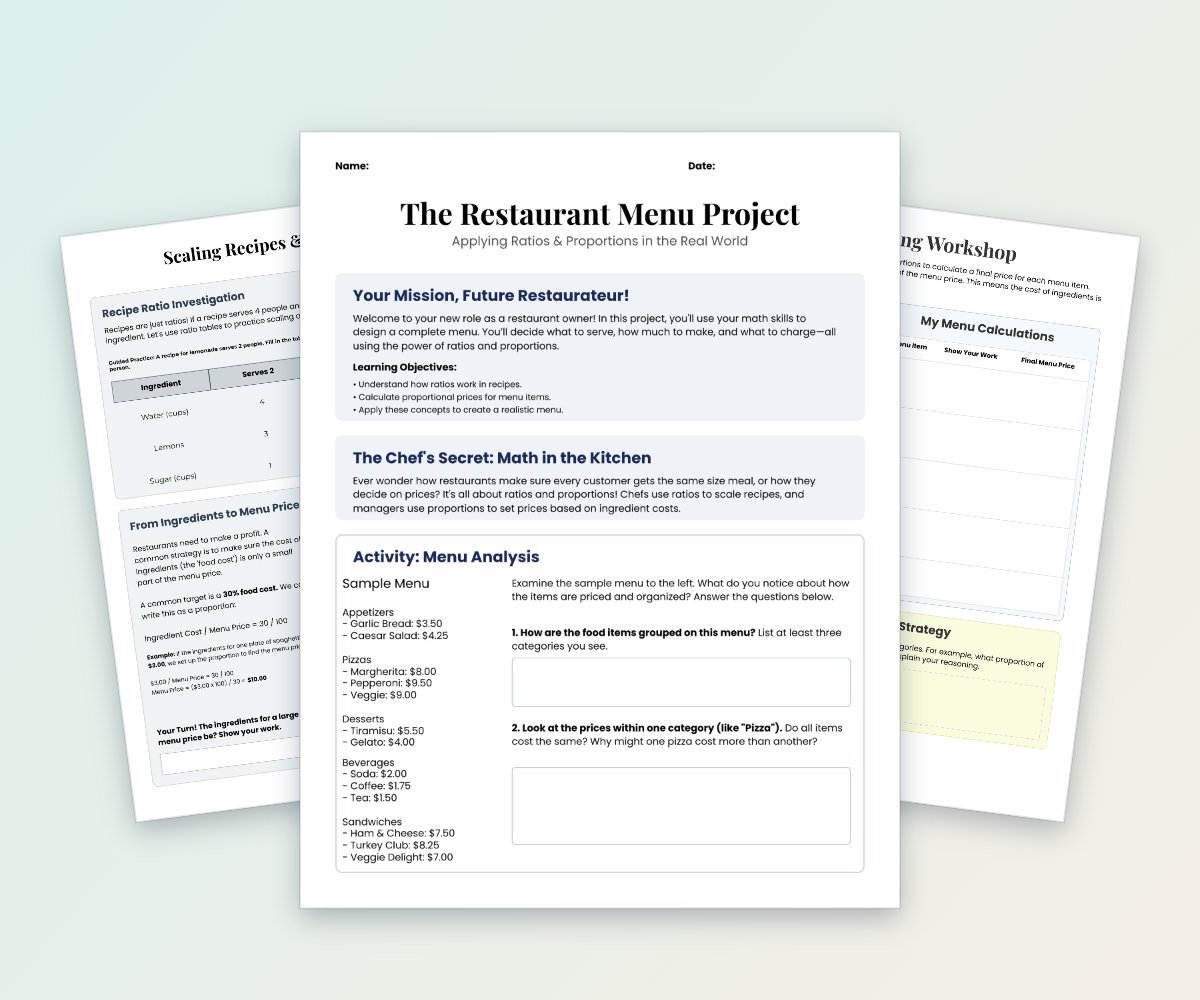
Students take on the role of restaurant owners and design a menu using ratios, proportions, recipe scaling, and realistic pricing.
$4.99
Classroom-ready resources written for grade 4: printable worksheets, slides, activities and planning tools you can download and use straight away. Browse by subject below.
Students take on the role of restaurant owners and design a menu using ratios, proportions, recipe scaling, and realistic pricing.
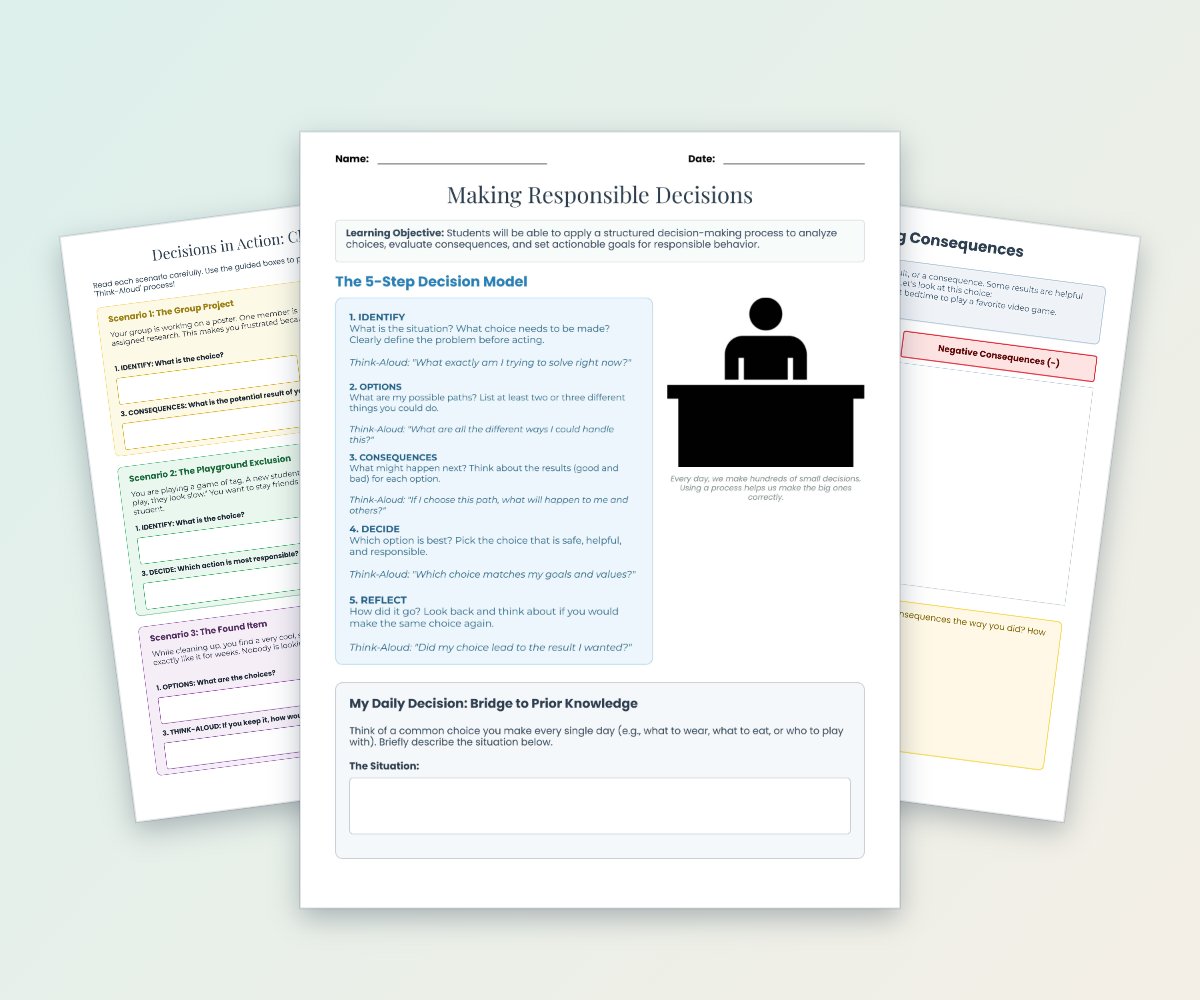
This six-page student toolkit teaches a five-step decision-making model: identify, consider options, evaluate consequences, decide, and reflect.
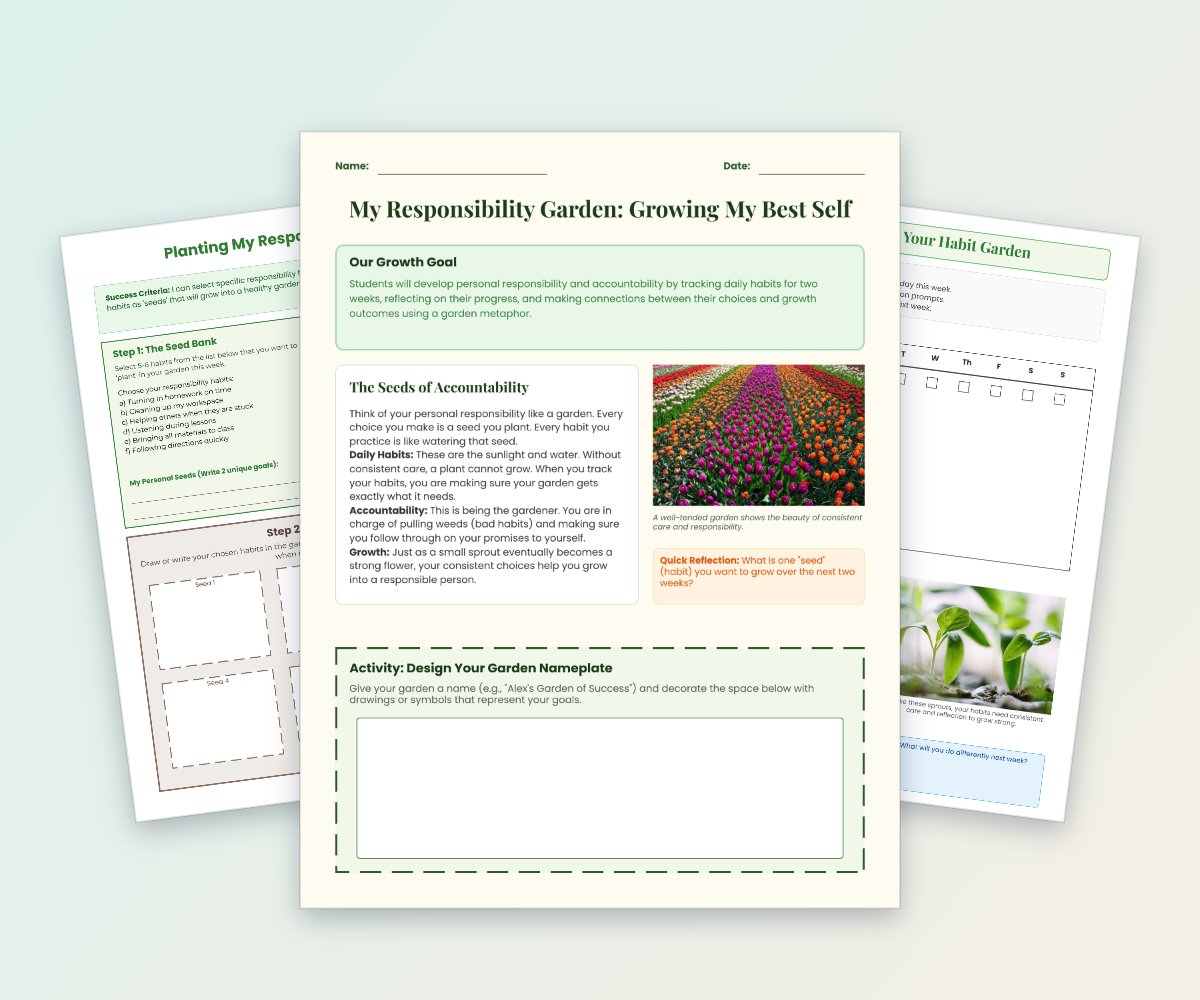
This five-page activity pack uses a garden metaphor to help students select responsibility habits, track progress for two weeks, and reflect on personal growth.
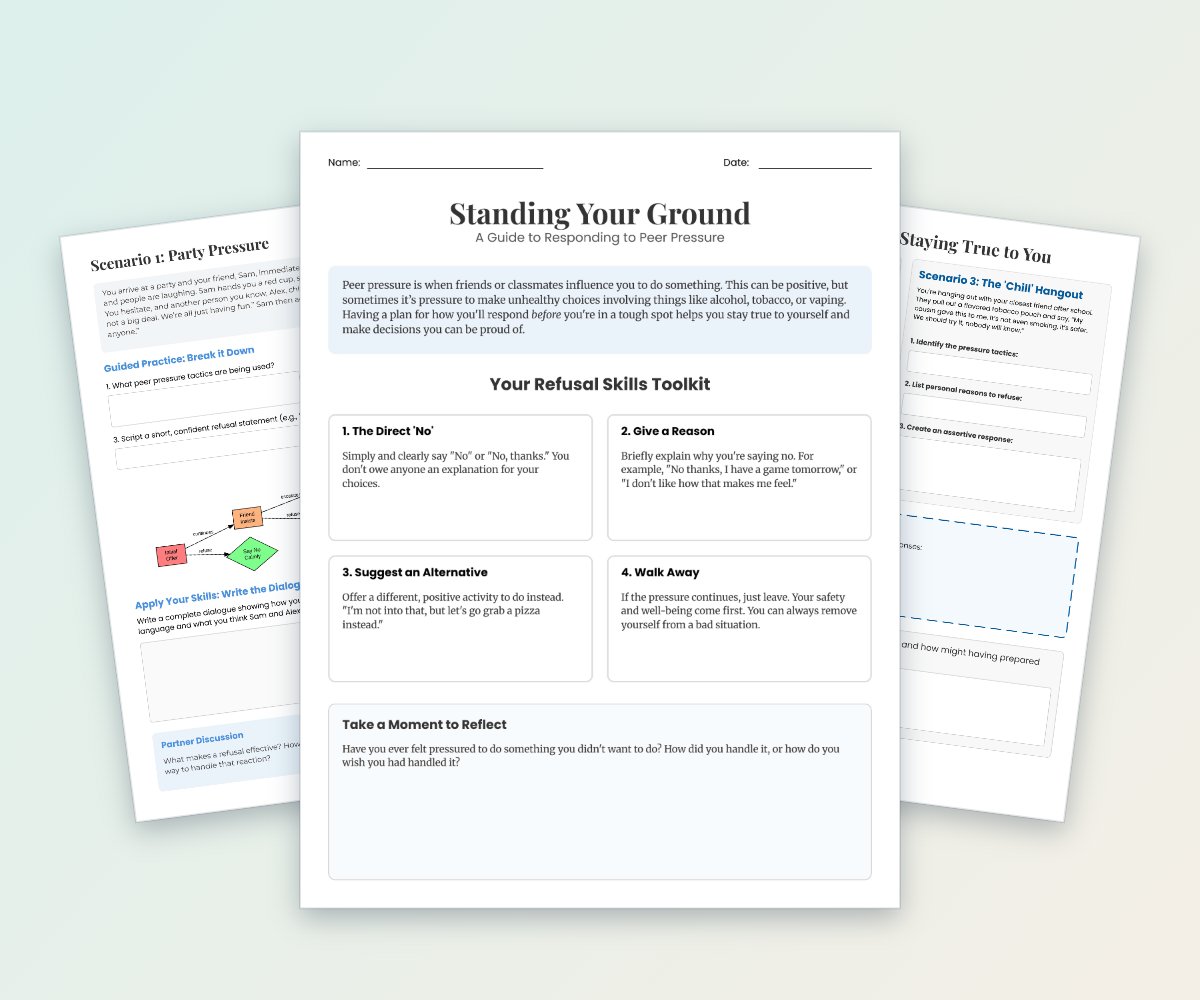
This four-page worksheet helps students recognize peer-pressure tactics and practice confident refusal strategies.
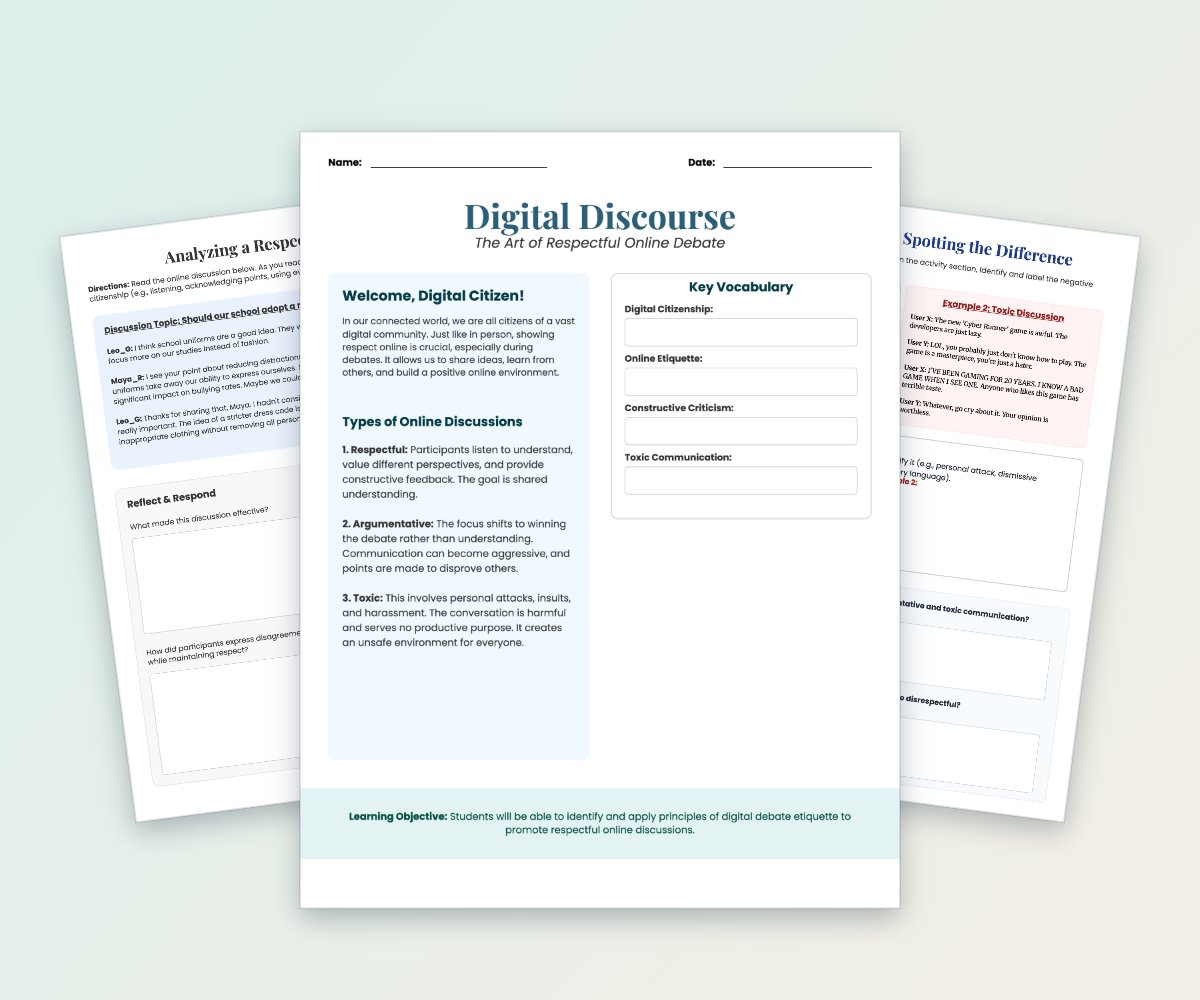
This four-page resource introduces respectful, argumentative, and toxic online discussions through definitions, vocabulary, and a modeled school-uniform debate.
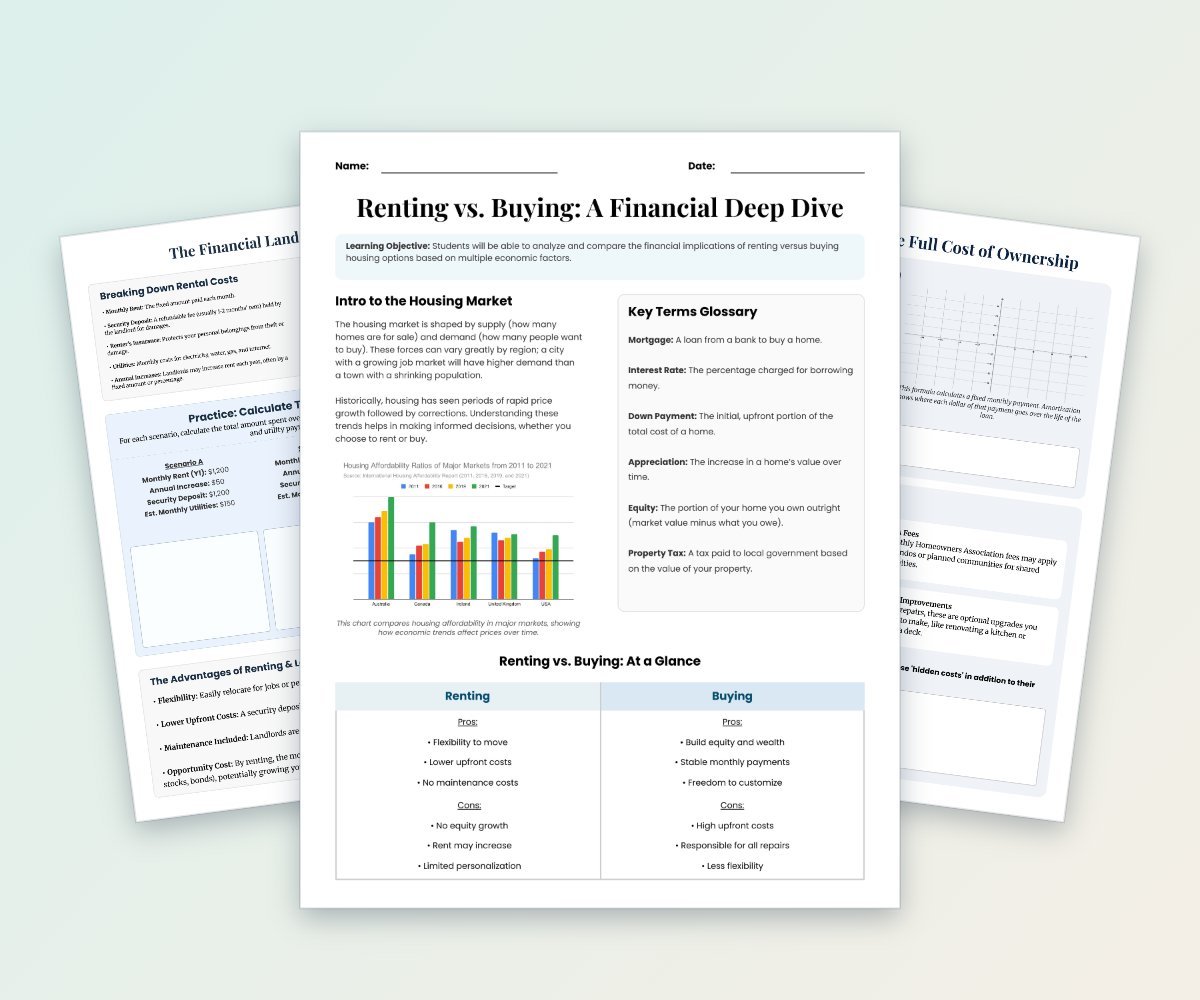
Students explore housing markets, compare the advantages and disadvantages of renting and buying, and learn essential housing-finance vocabulary.
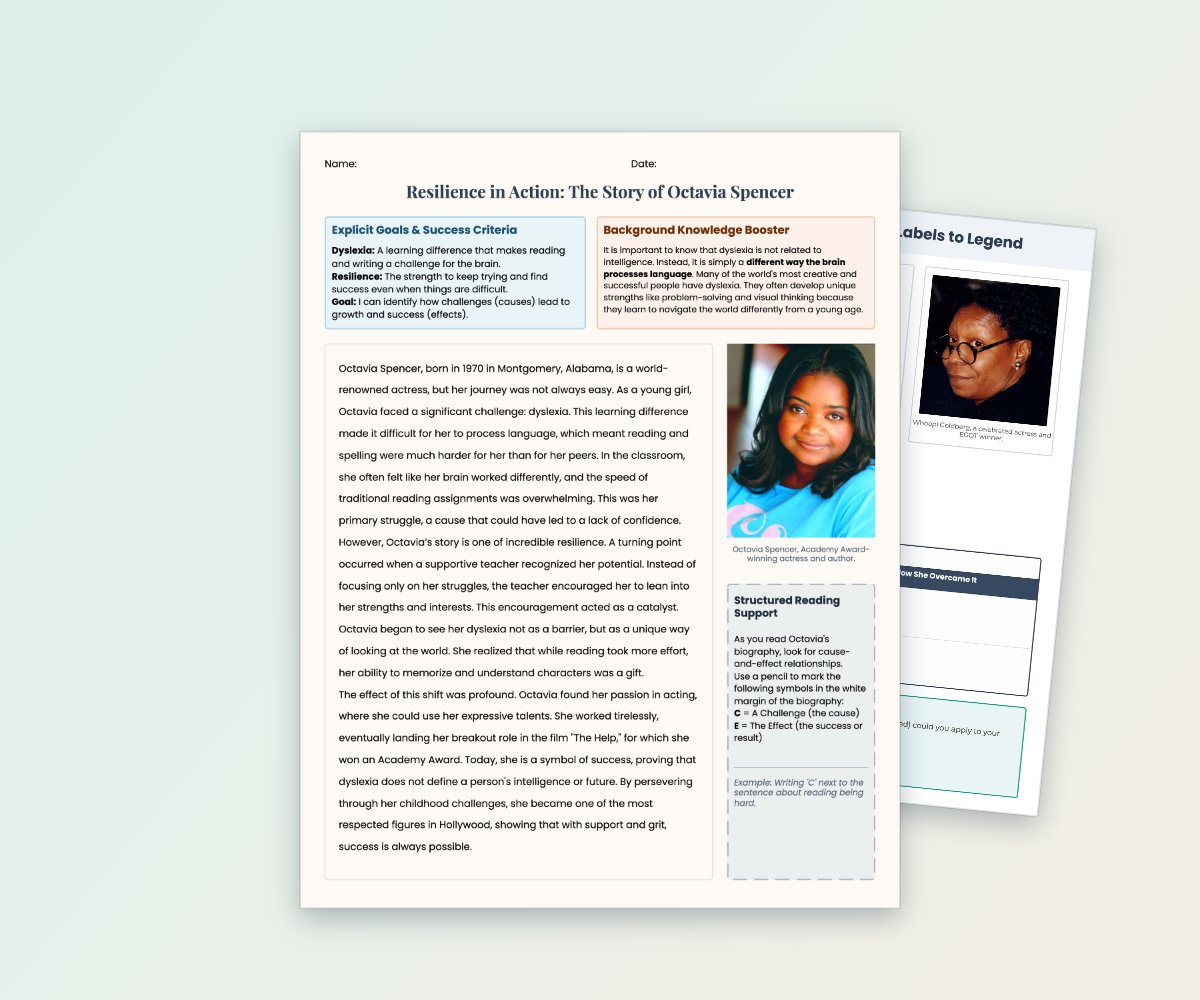
Students read a short biography of actress Octavia Spencer and examine how challenges, support, and perseverance contributed to her success.
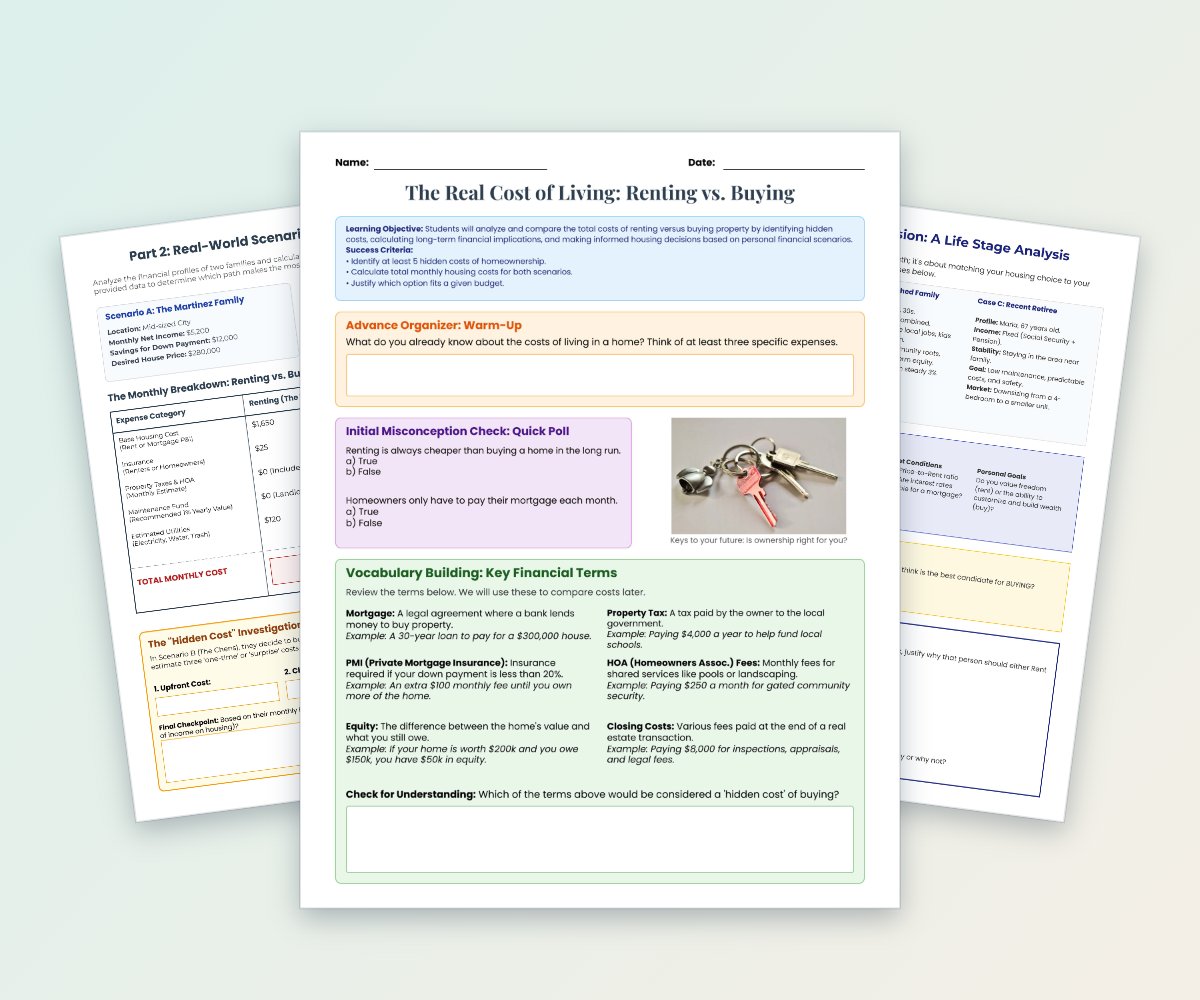
Students compare renting and buying by identifying hidden costs, reviewing key housing terms, and calculating monthly expenses.
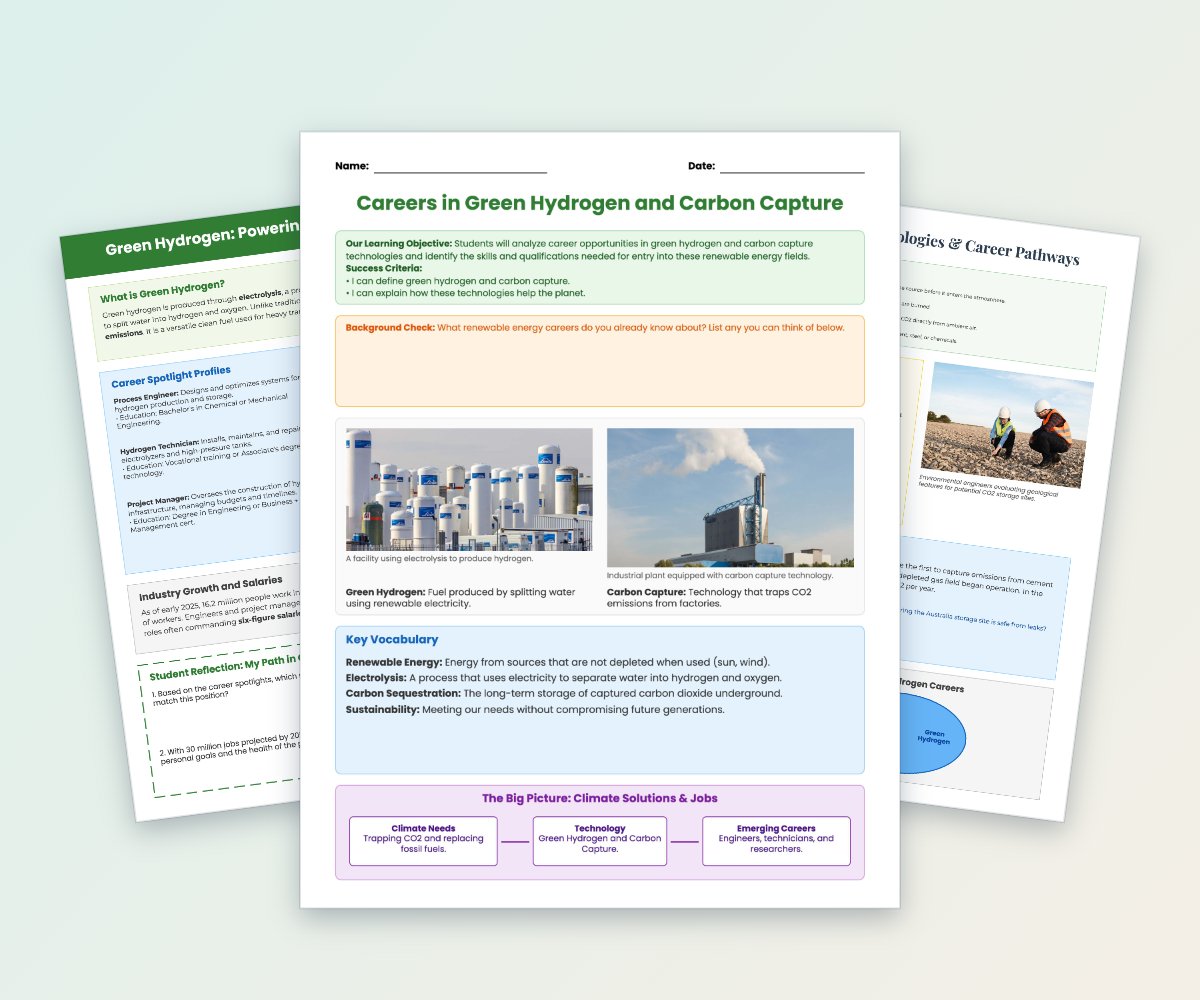
This career-focused lesson introduces green hydrogen and carbon capture technologies while connecting climate solutions to emerging employment opportunities.
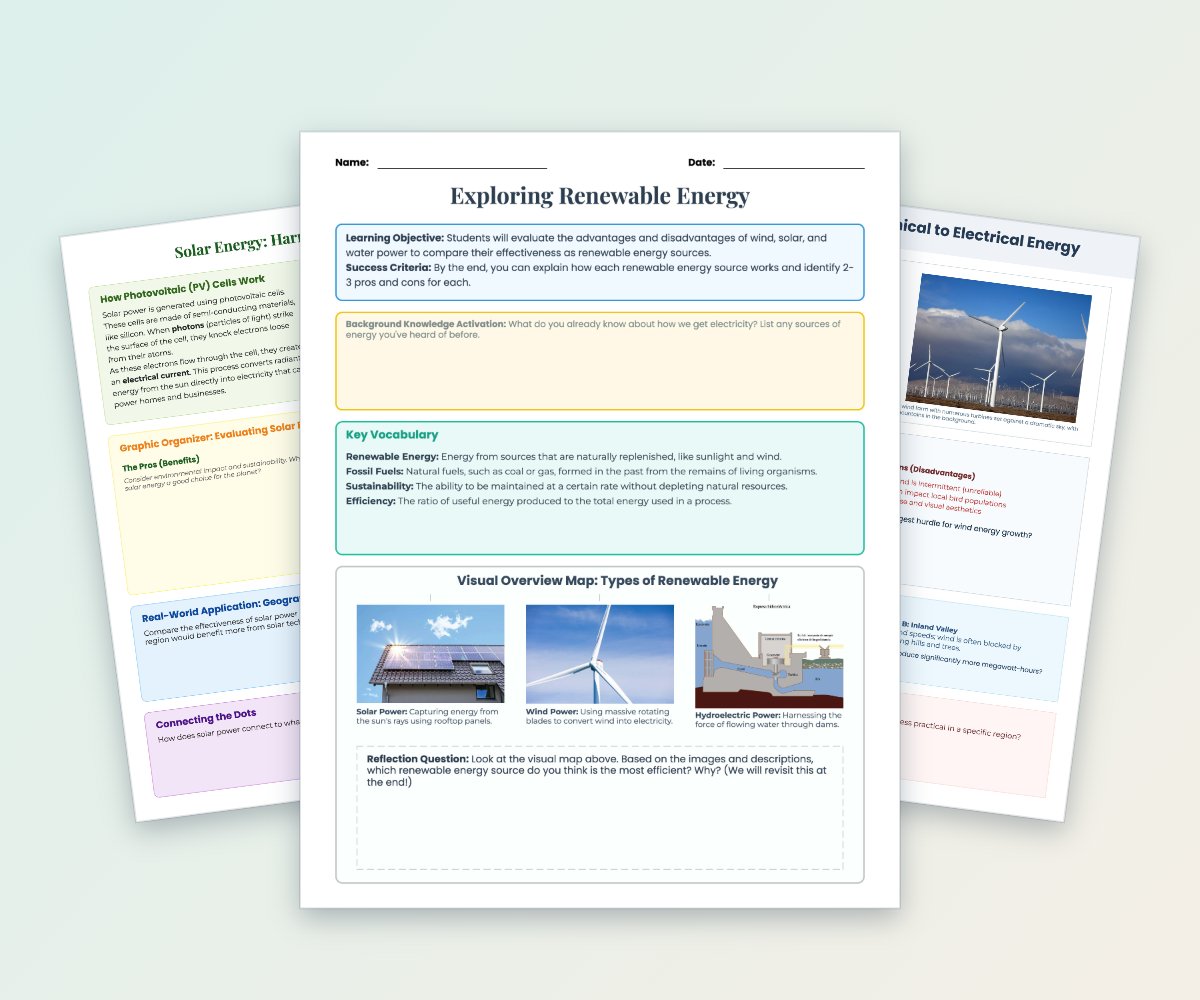
Introduce students to solar, wind, and hydroelectric power through background information, key vocabulary, visual mapping, and guided reflection.
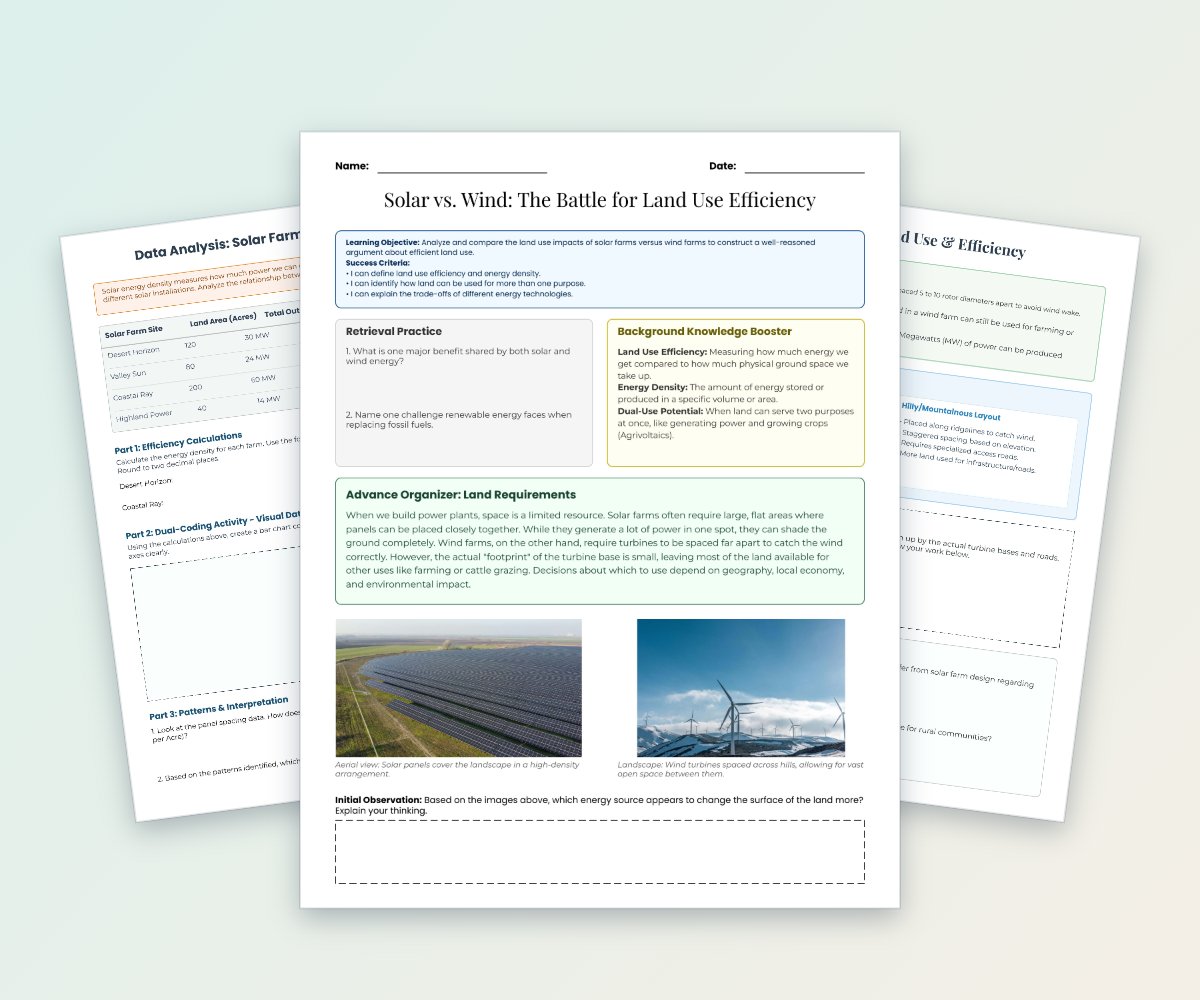
Students compare solar and wind energy through background reading, land-use analysis, energy-density calculations, and evidence-based argument writing.
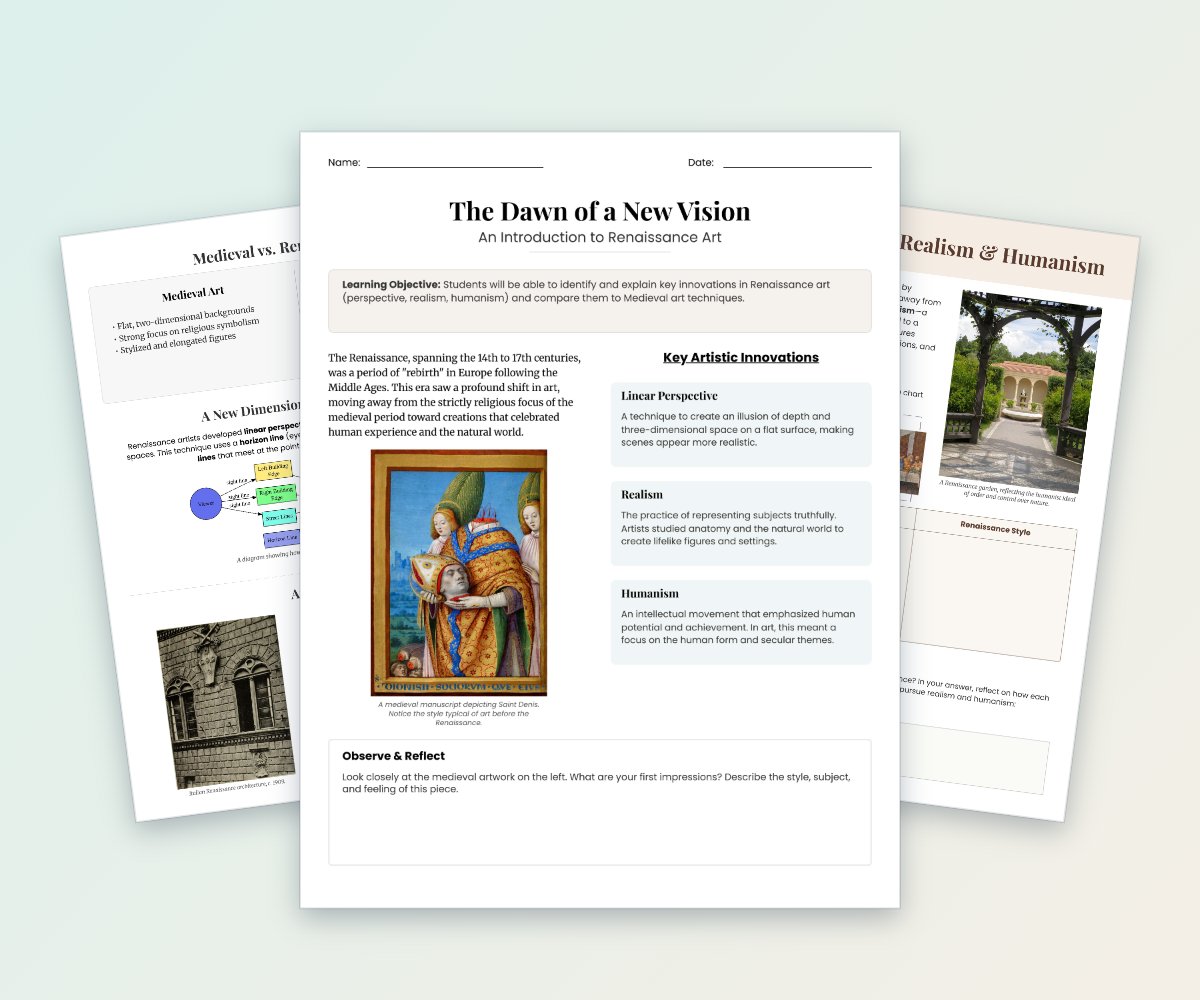
Introduce students to Renaissance art innovations, including linear perspective, realism, and humanism.
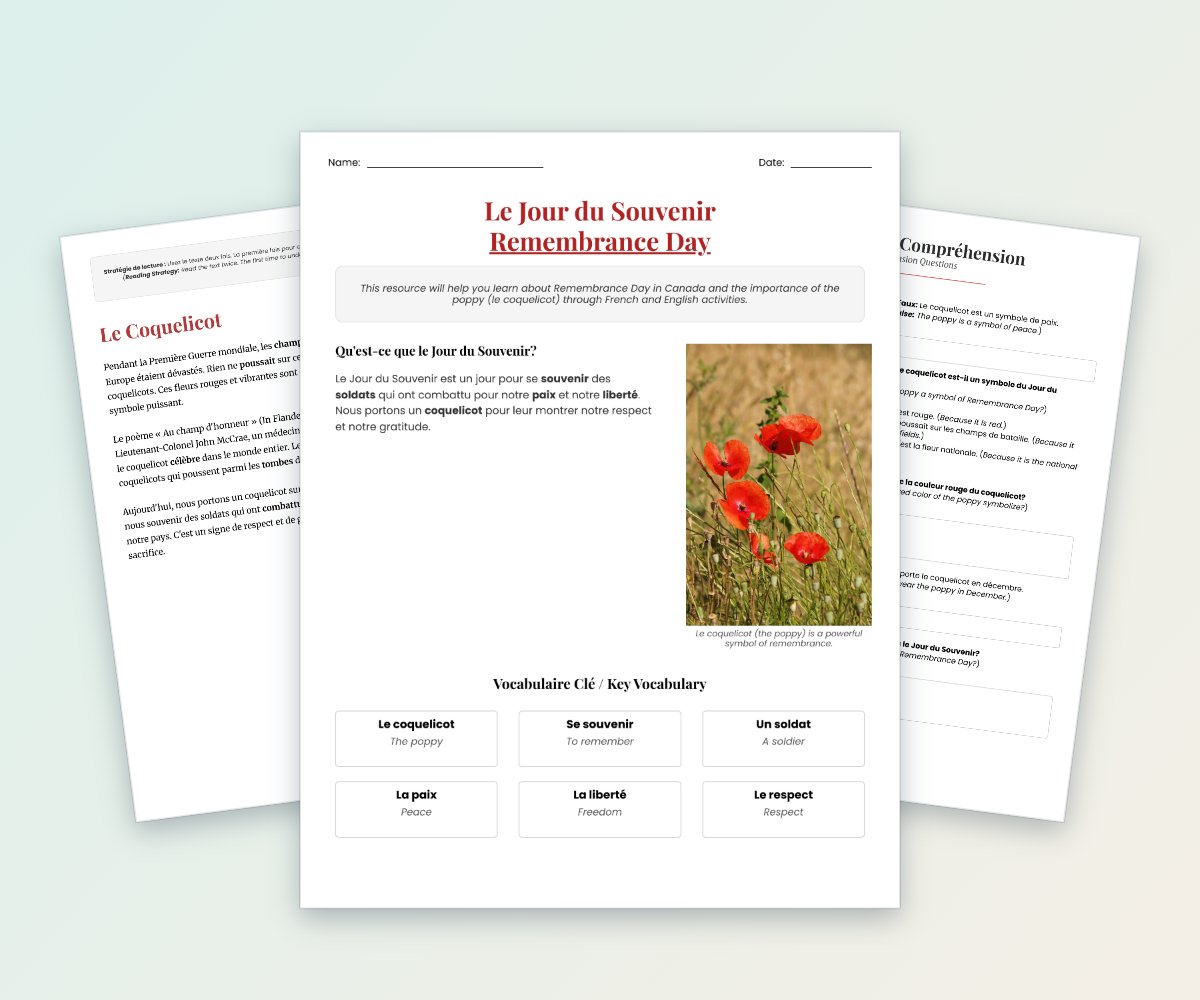
Teach students about Remembrance Day in Canada, the significance of the poppy, and the sacrifice of soldiers through French-English activities.
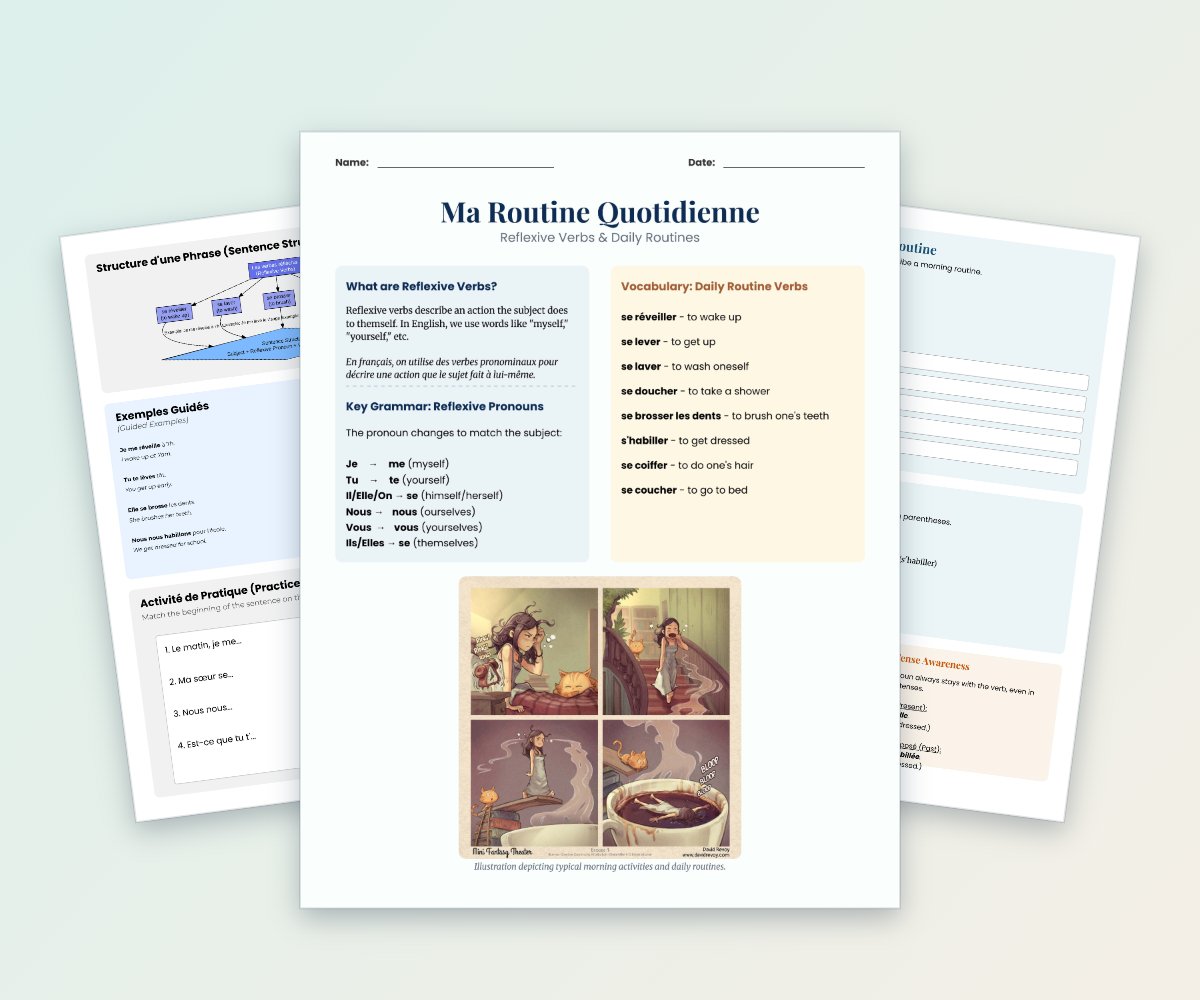
Teach French reflexive verbs, pronouns, sentence structure, and daily-routine vocabulary with bilingual explanations and guided examples.
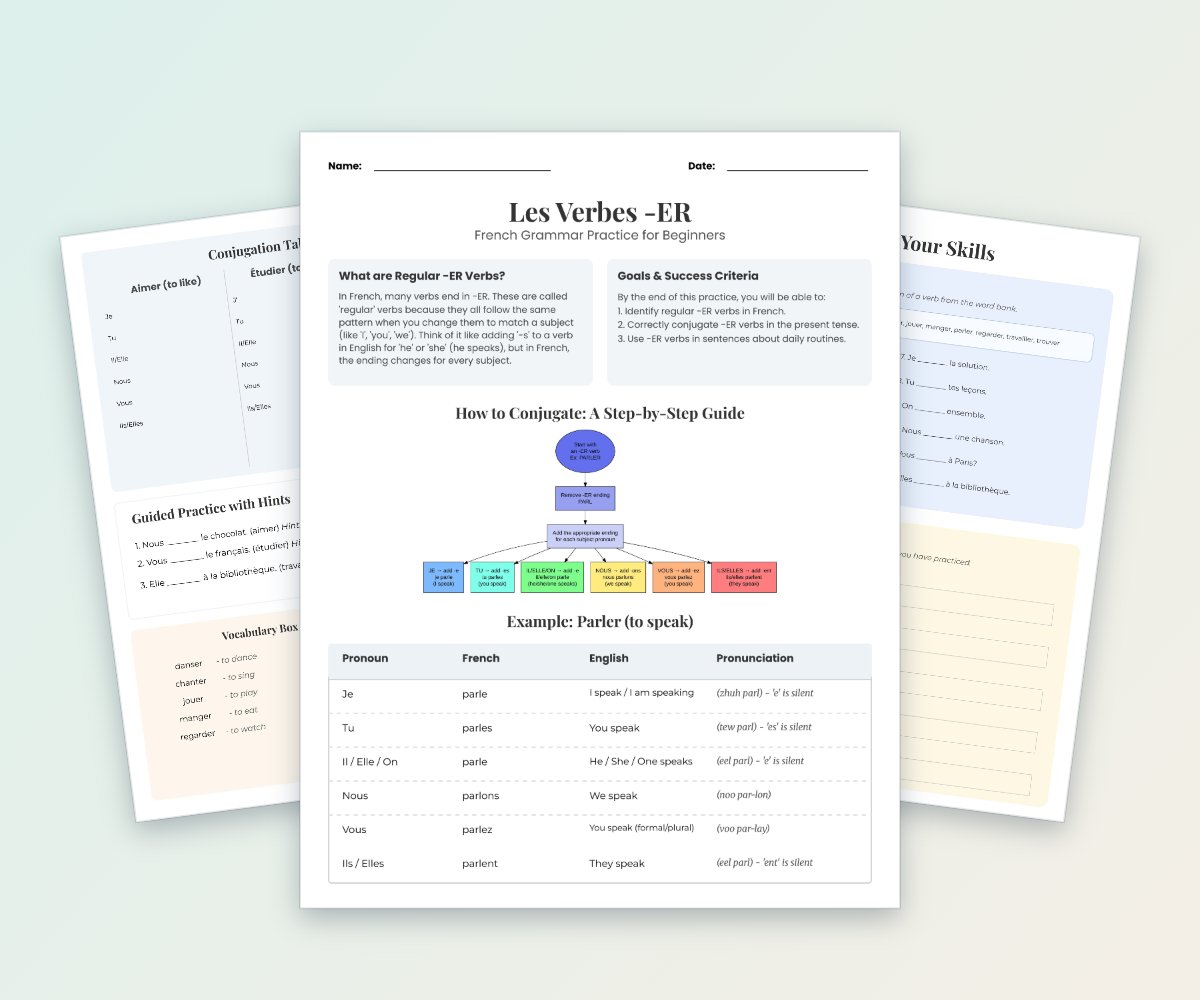
This five-page French grammar practice resource introduces regular -ER verbs in the present tense.
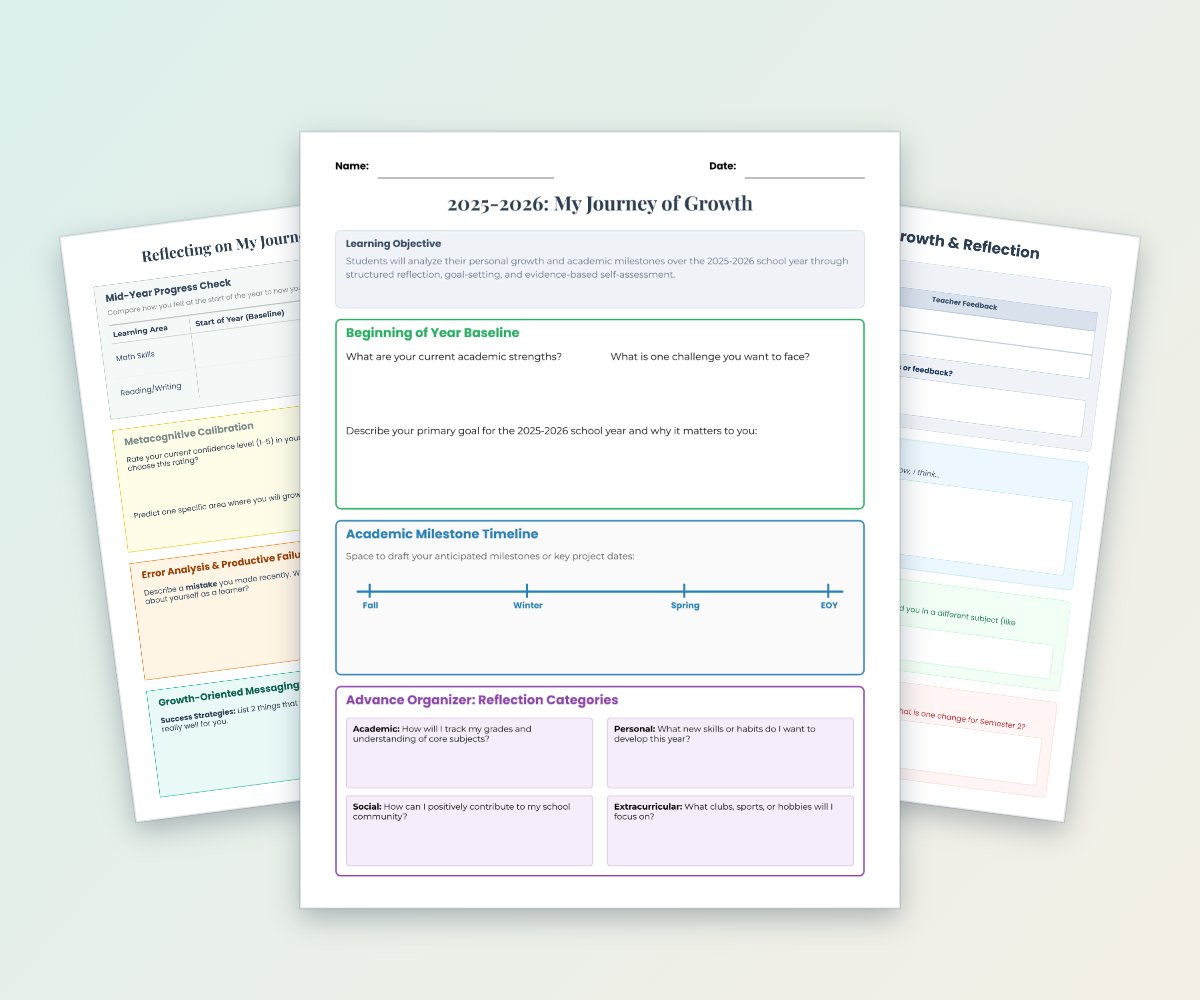
This four-page student journal guides learners through baseline reflection, milestone planning, progress checks, error analysis, academic evidence review, and end-of-year goal setting.
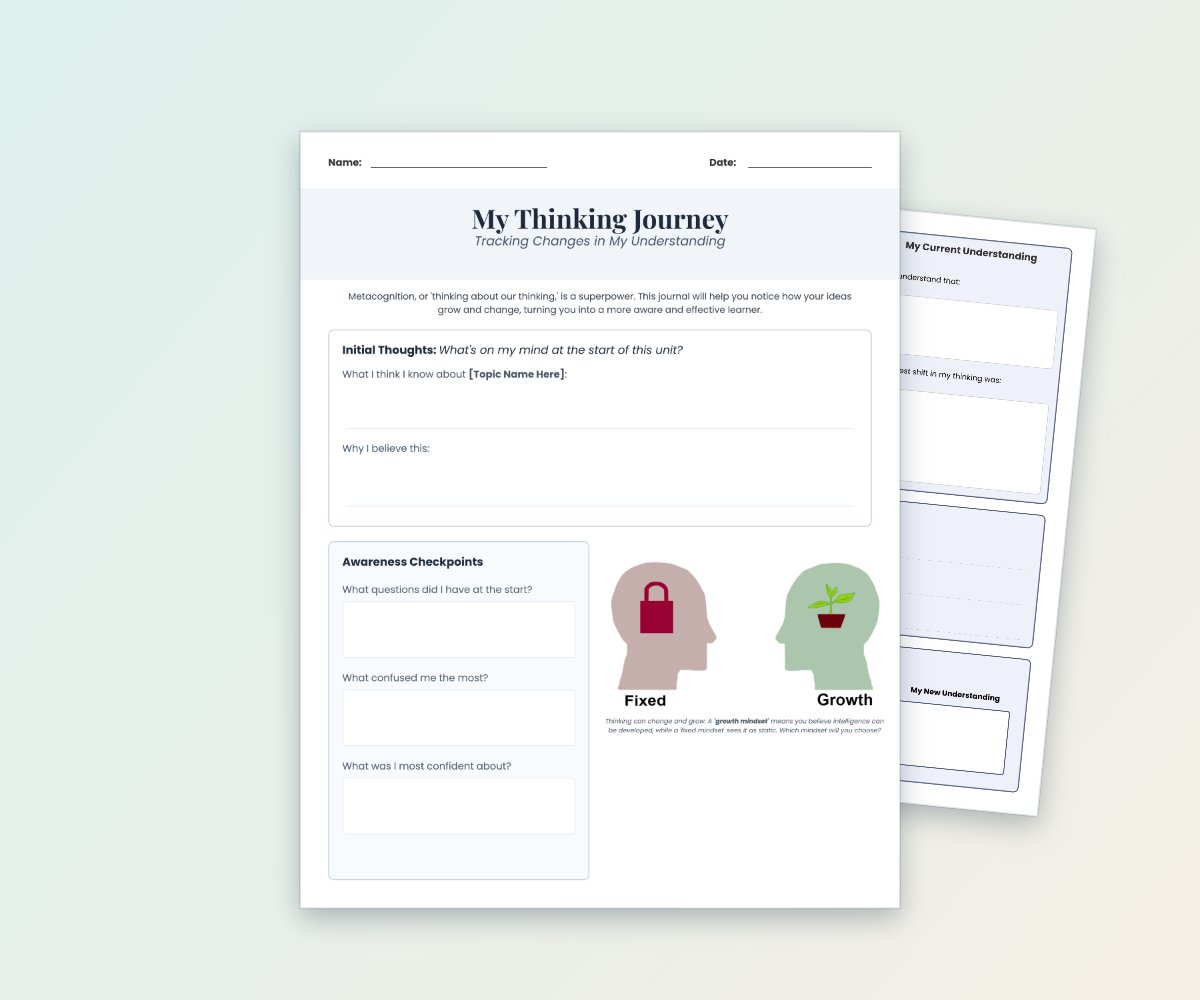
This two-page printable journal guides students in tracking how their understanding changes during a unit.
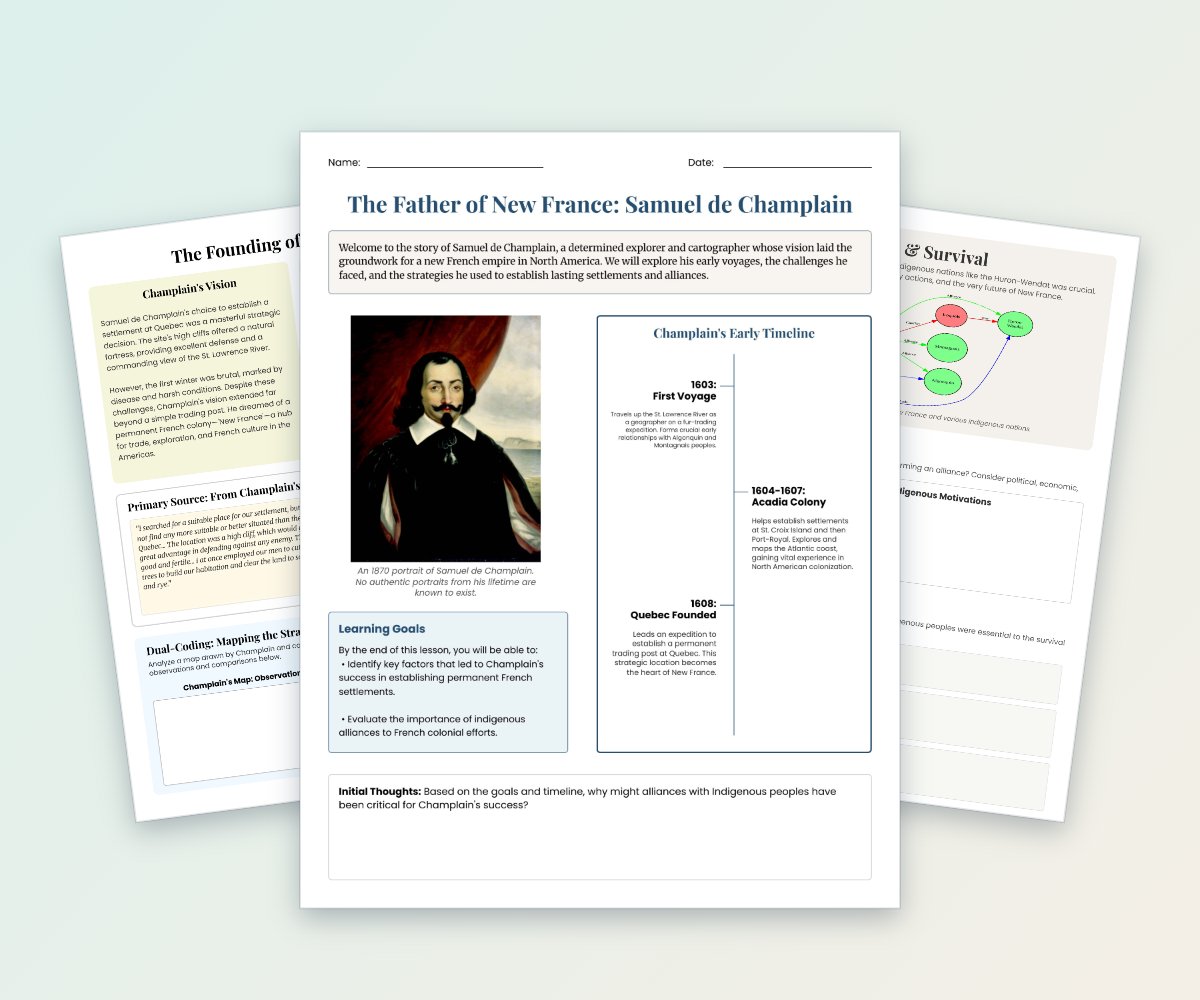
A no-prep printable activity pack introducing students to Samuel de Champlain and his role in Quebec history.
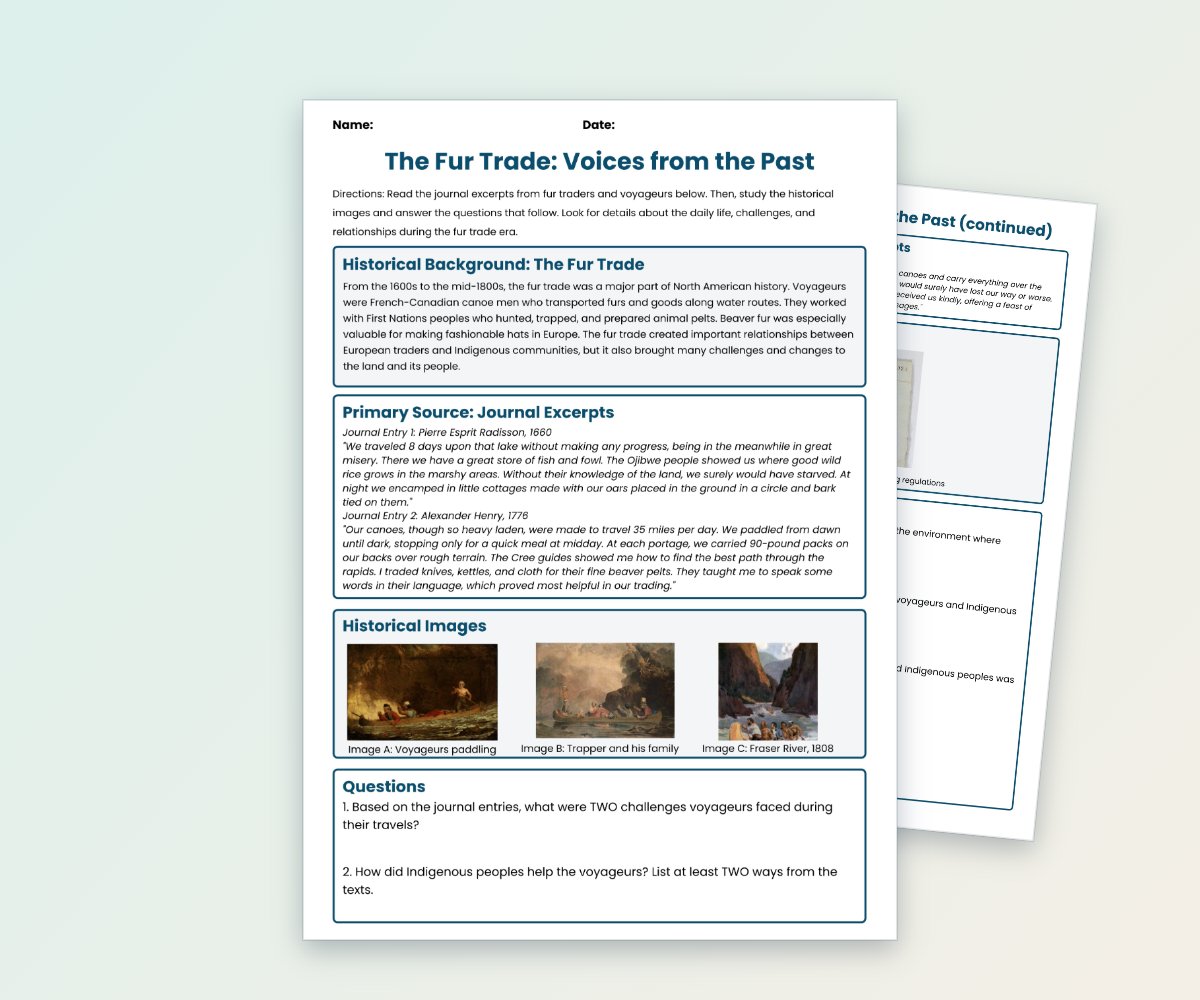
A graphic organizer for examining and interpreting excerpts from fur trade journals as historical primary sources.
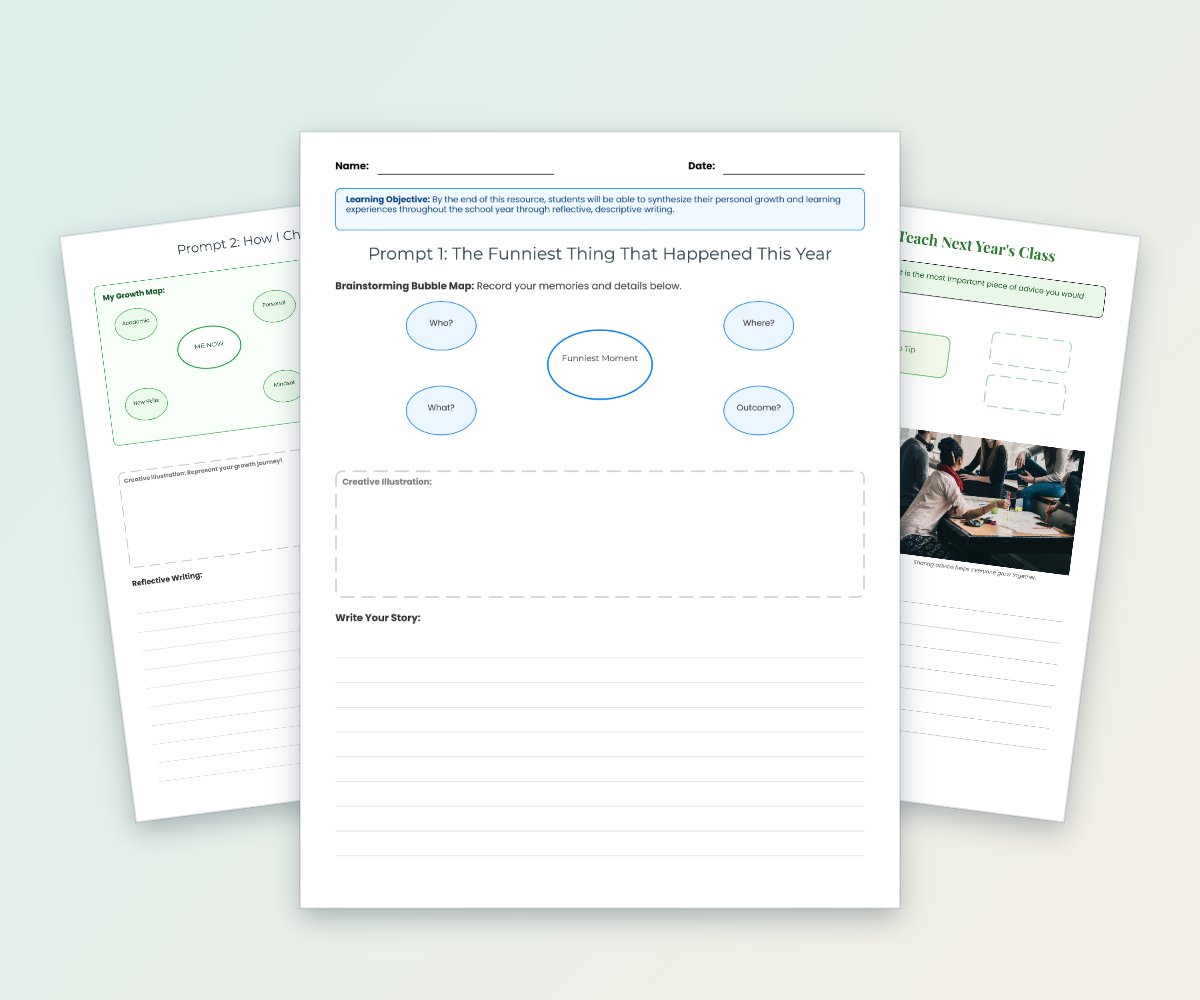
Guide students through reflective end-of-year writing with prompts about growth, challenges, memories, advice, and summer goals.
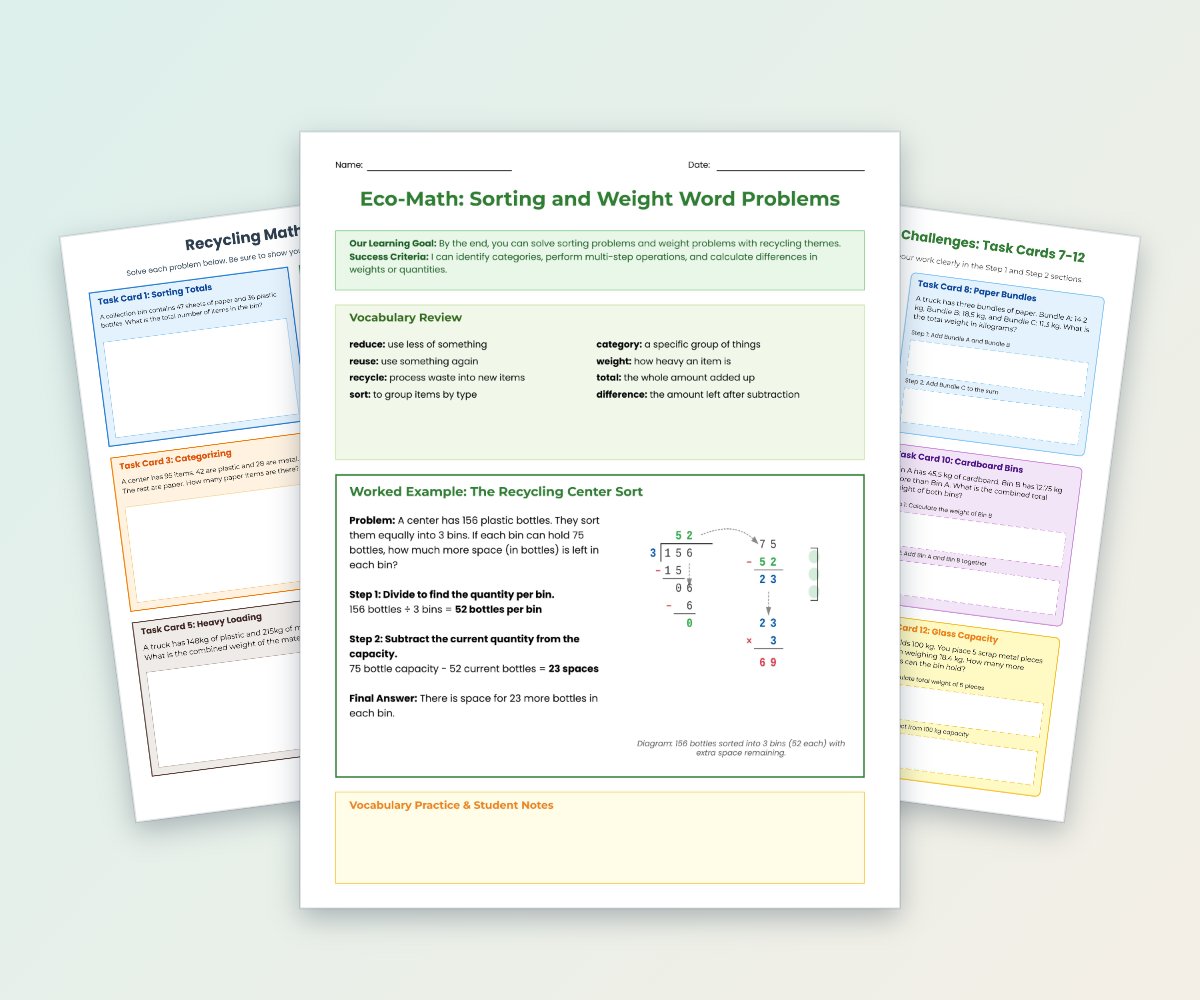
Students solve recycling-themed addition, subtraction, division, categorization, and weight word problems.
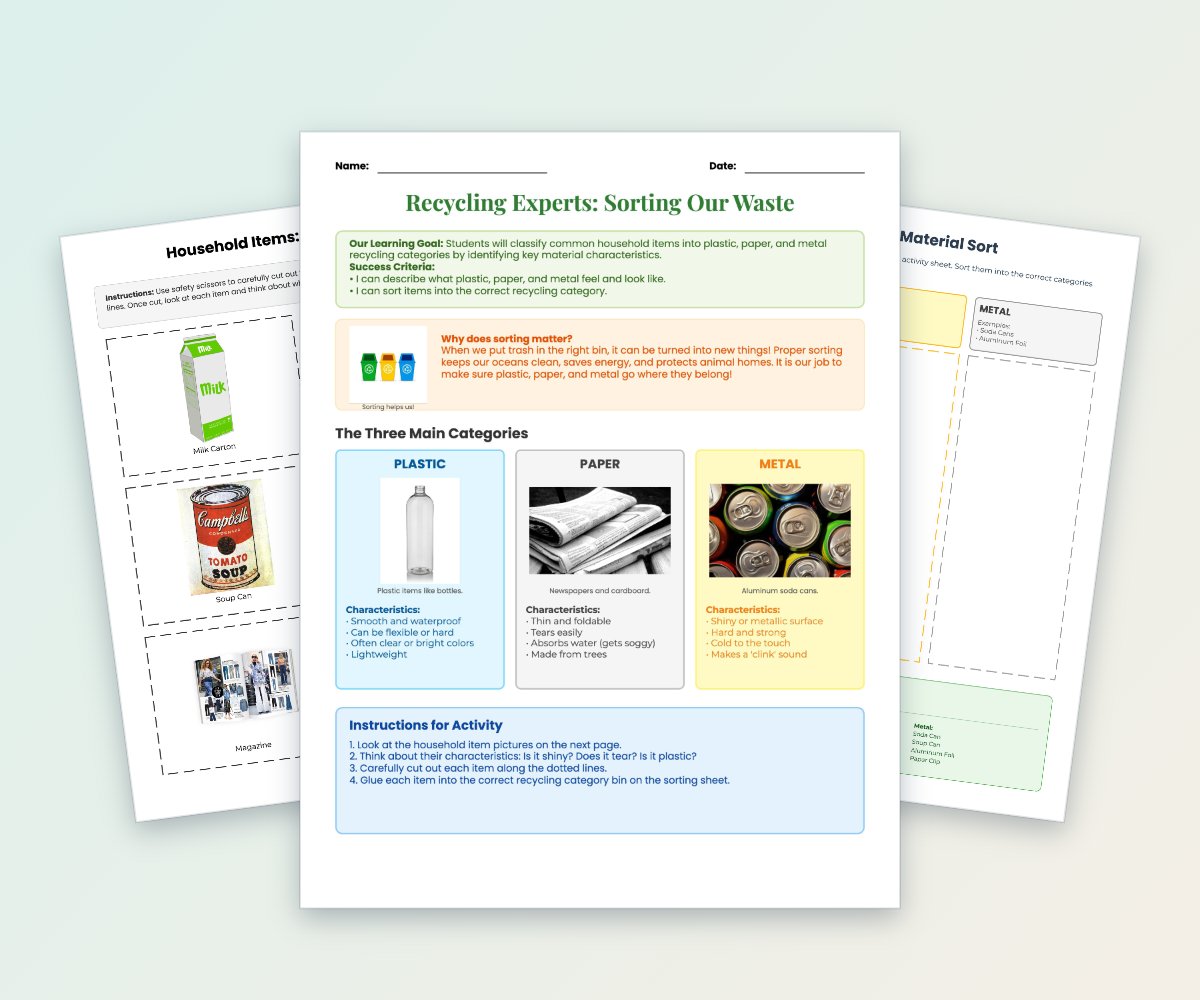
Students learn to identify plastic, paper, and metal by their observable characteristics, then sort household items into recycling categories.
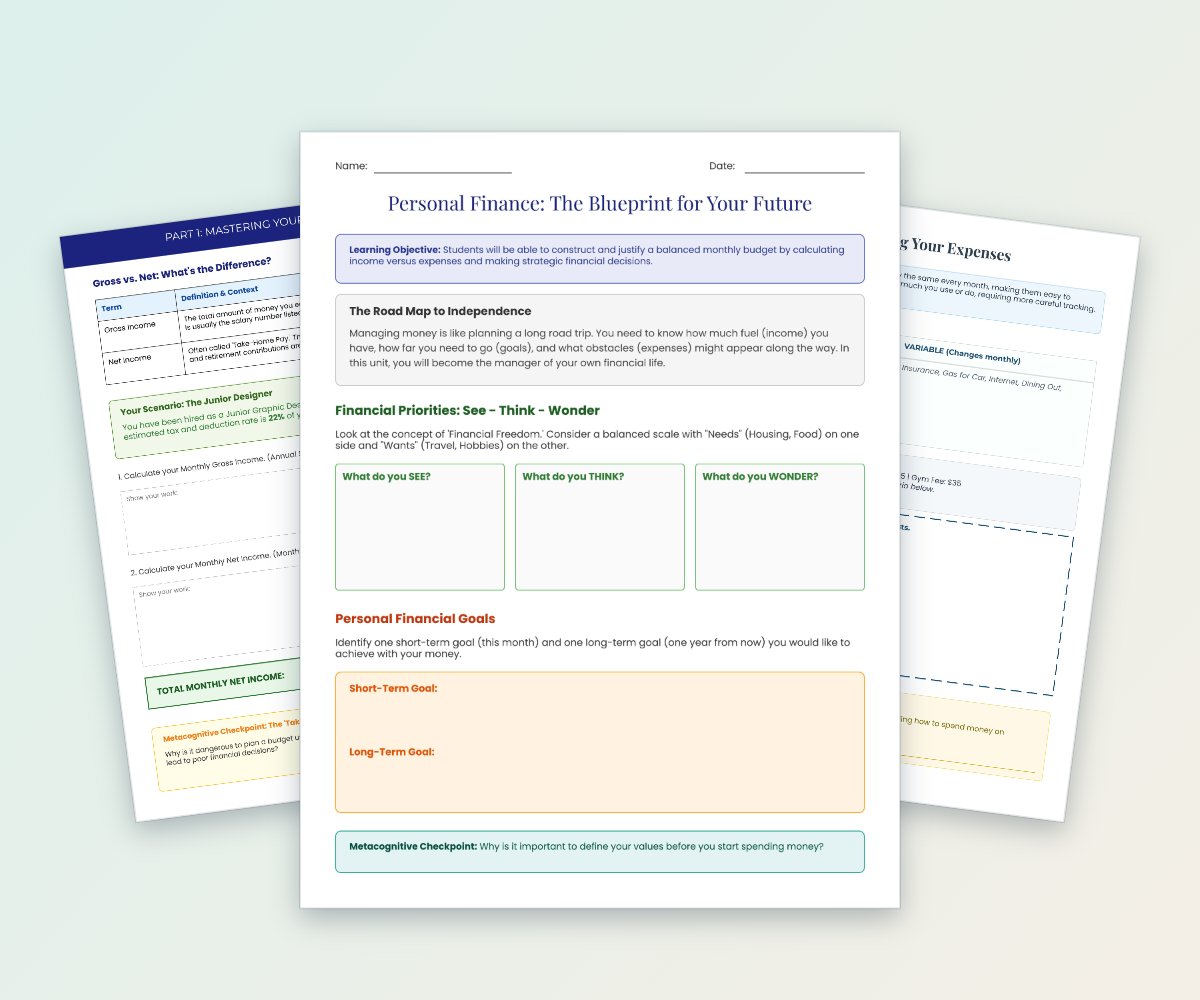
Students build and justify a balanced monthly budget using a realistic Junior Graphic Designer income scenario.
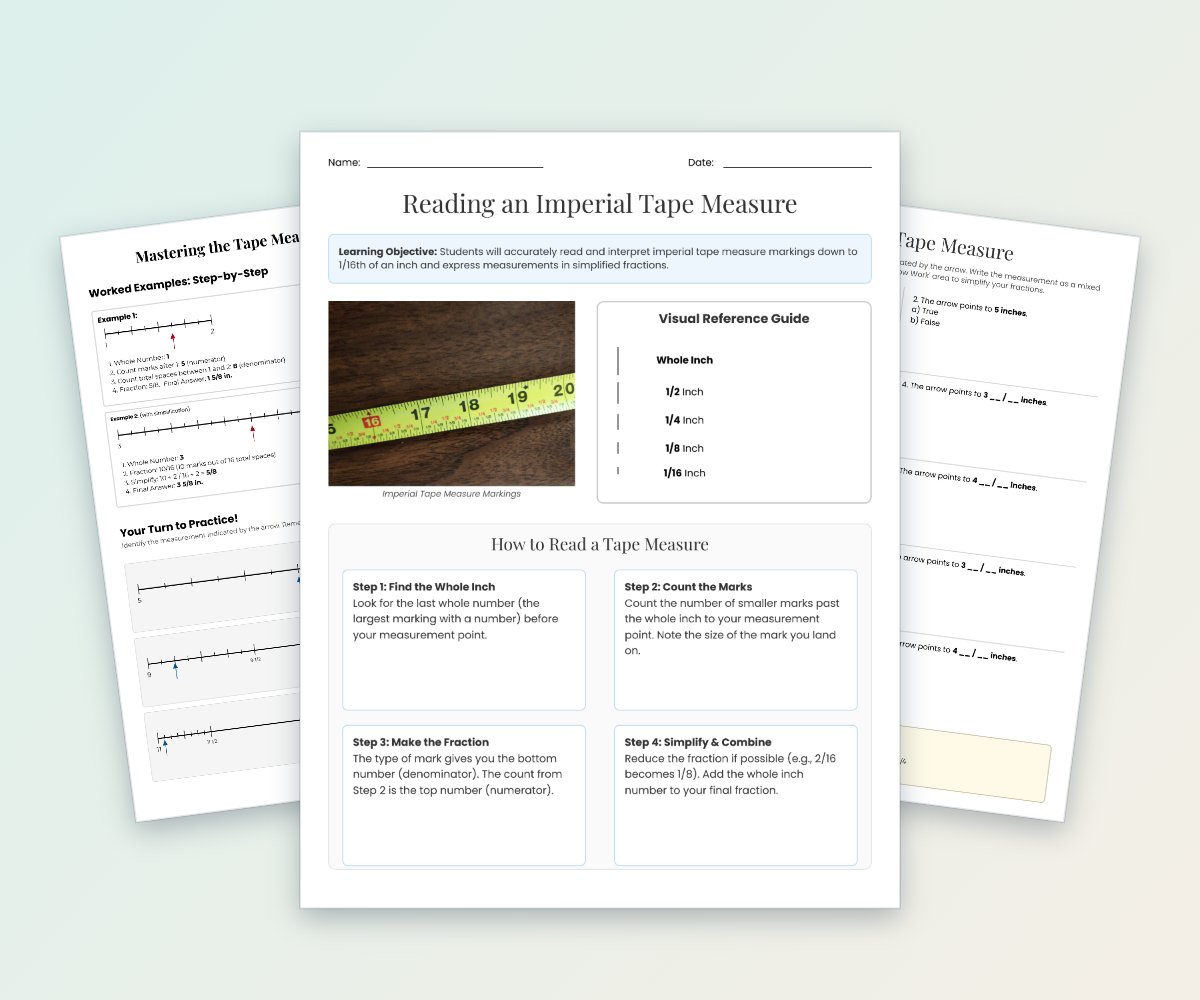
Teach students to read imperial tape measure markings to the nearest 1/16 inch and express measurements as simplified mixed numbers.
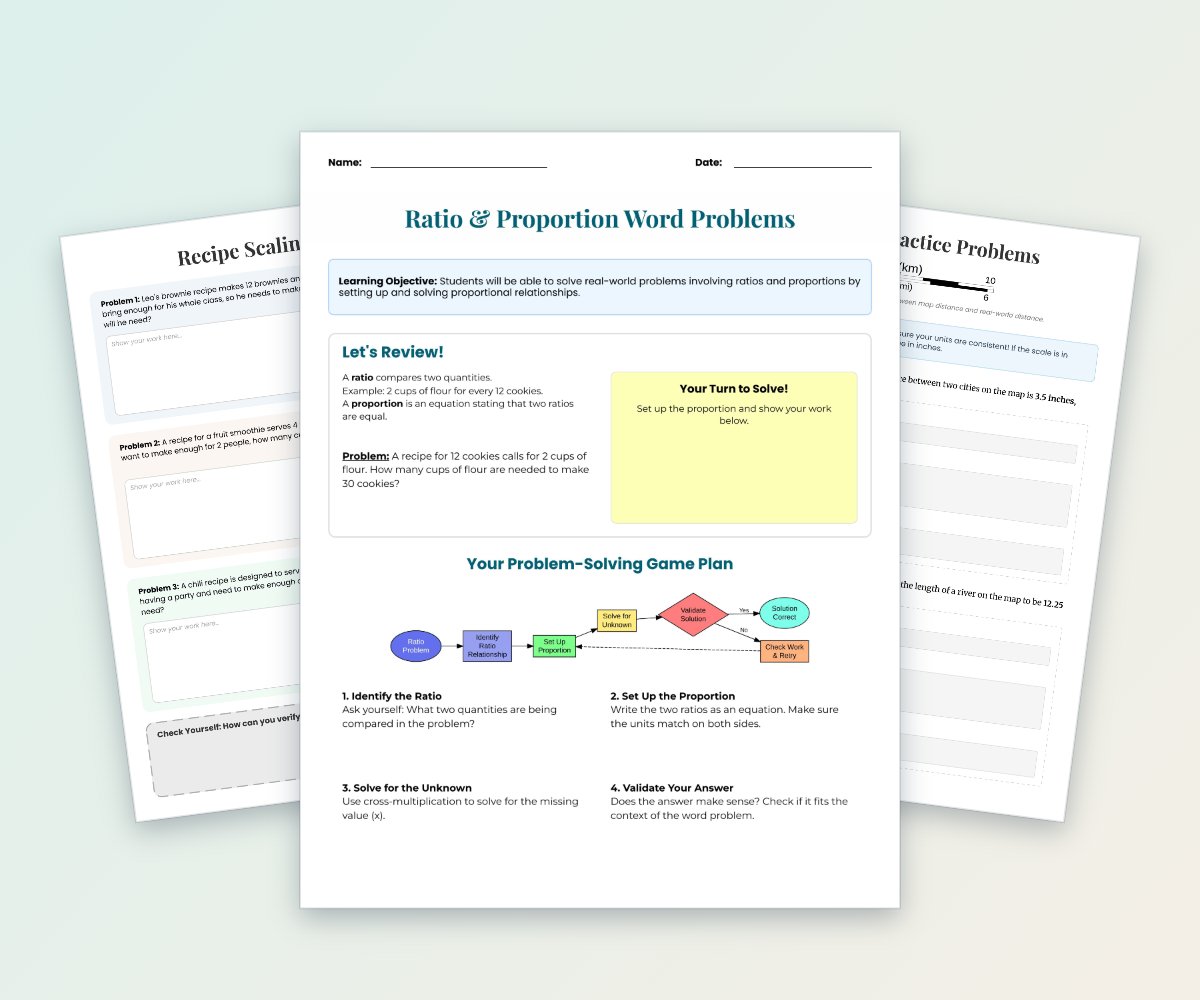
Students review ratios and proportions, then solve real-world problems involving recipe scaling and map scales.
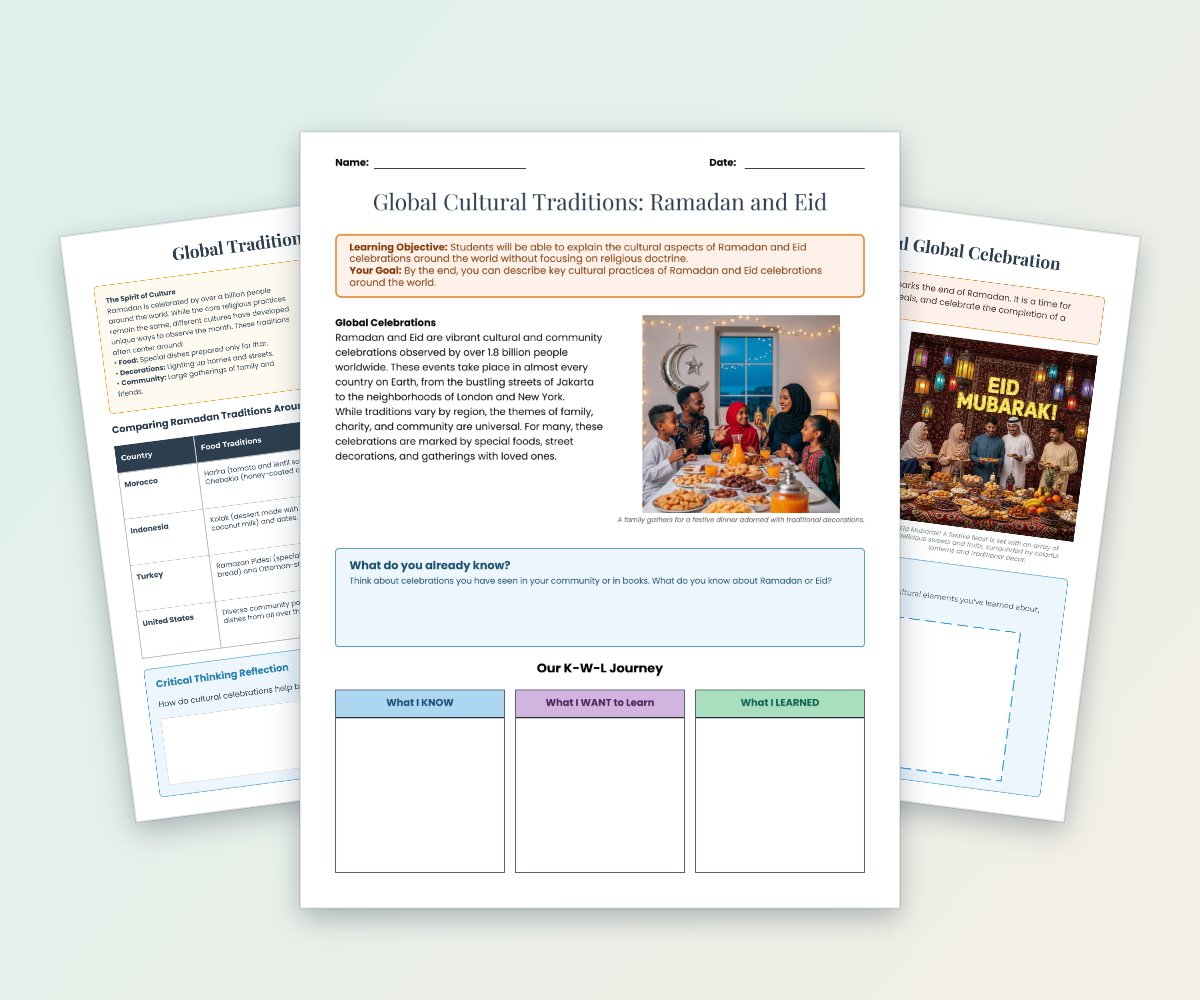
This four-page fact file introduces students to cultural traditions connected with Ramadan and Eid around the world.
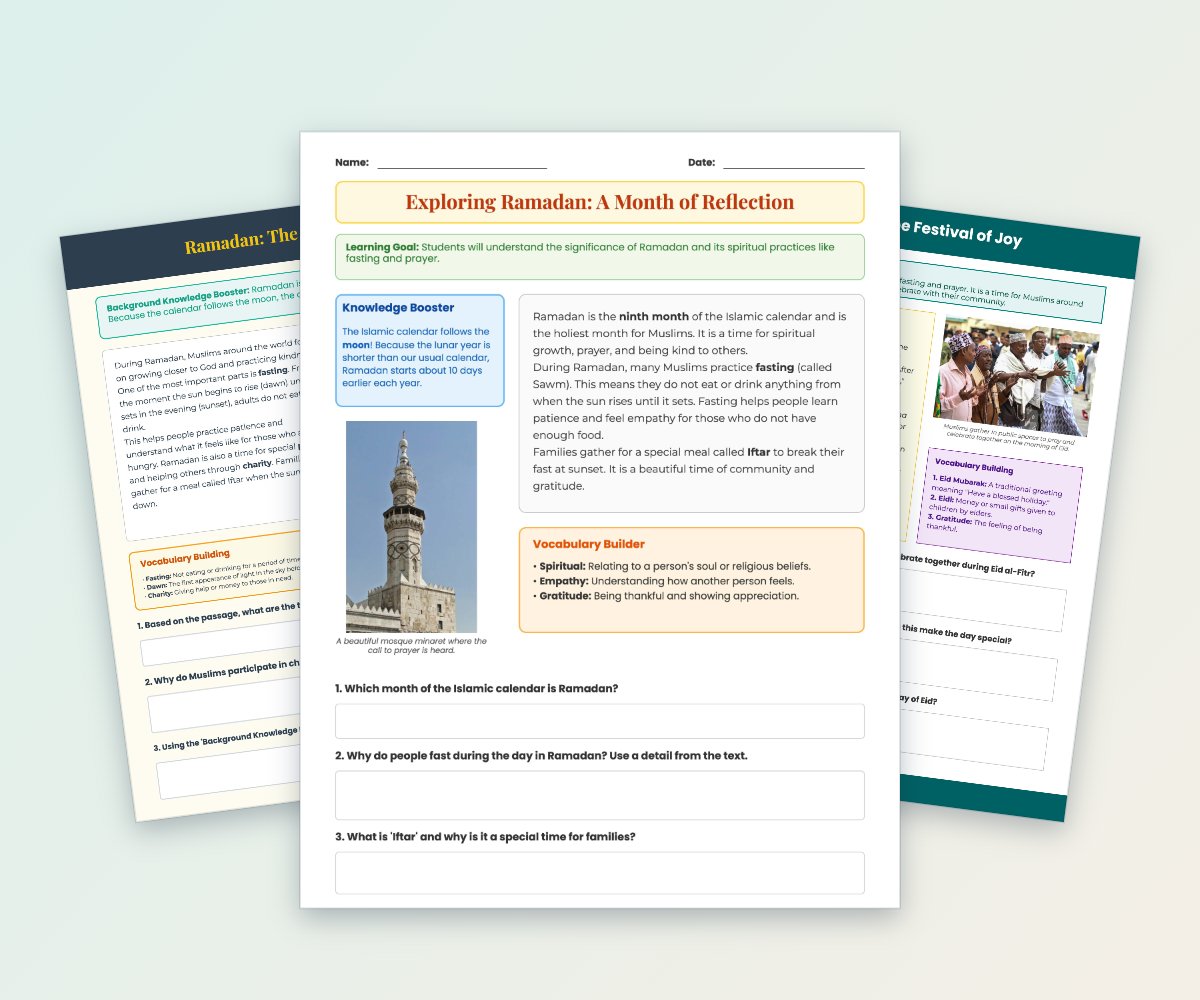
This five-page activity pack introduces students to Ramadan, fasting, prayer, charity, Iftar, and Eid al-Fitr.
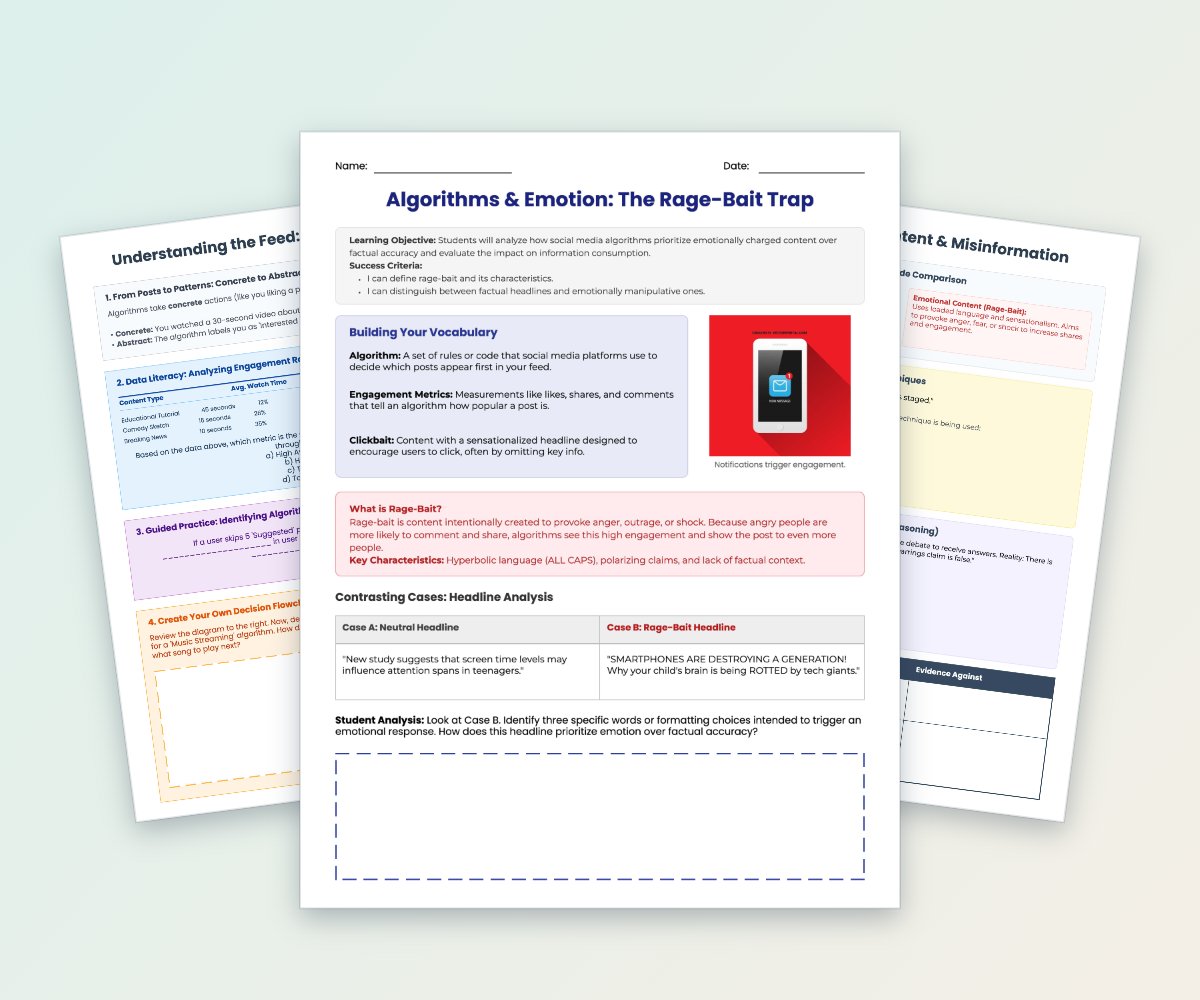
This worksheet introduces rage-bait, clickbait, engagement metrics, and the ways social media algorithms amplify emotionally charged content.
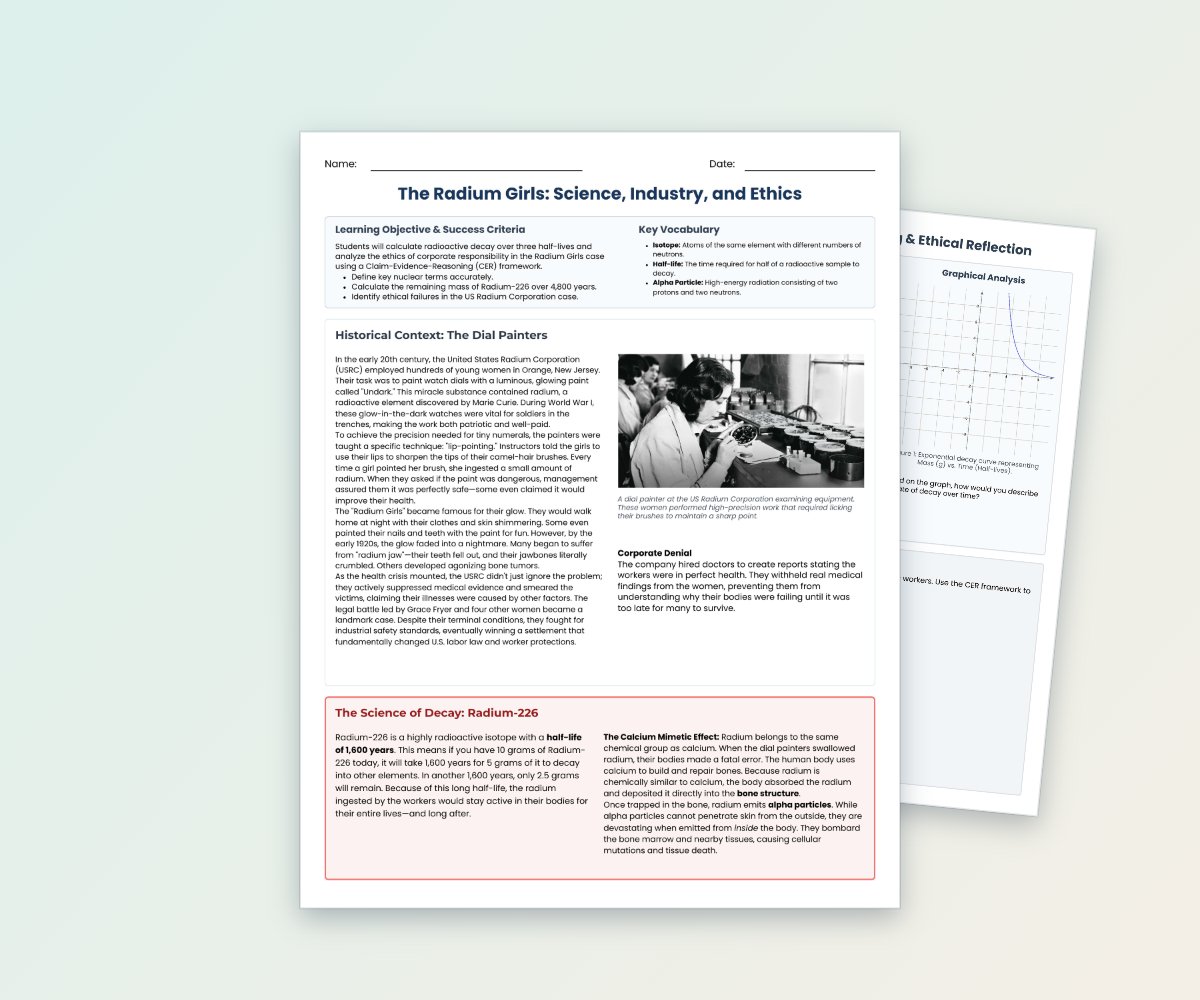
This two-page worksheet introduces isotopes, half-life, alpha particles, and radioactive decay through the history of the Radium Girls.
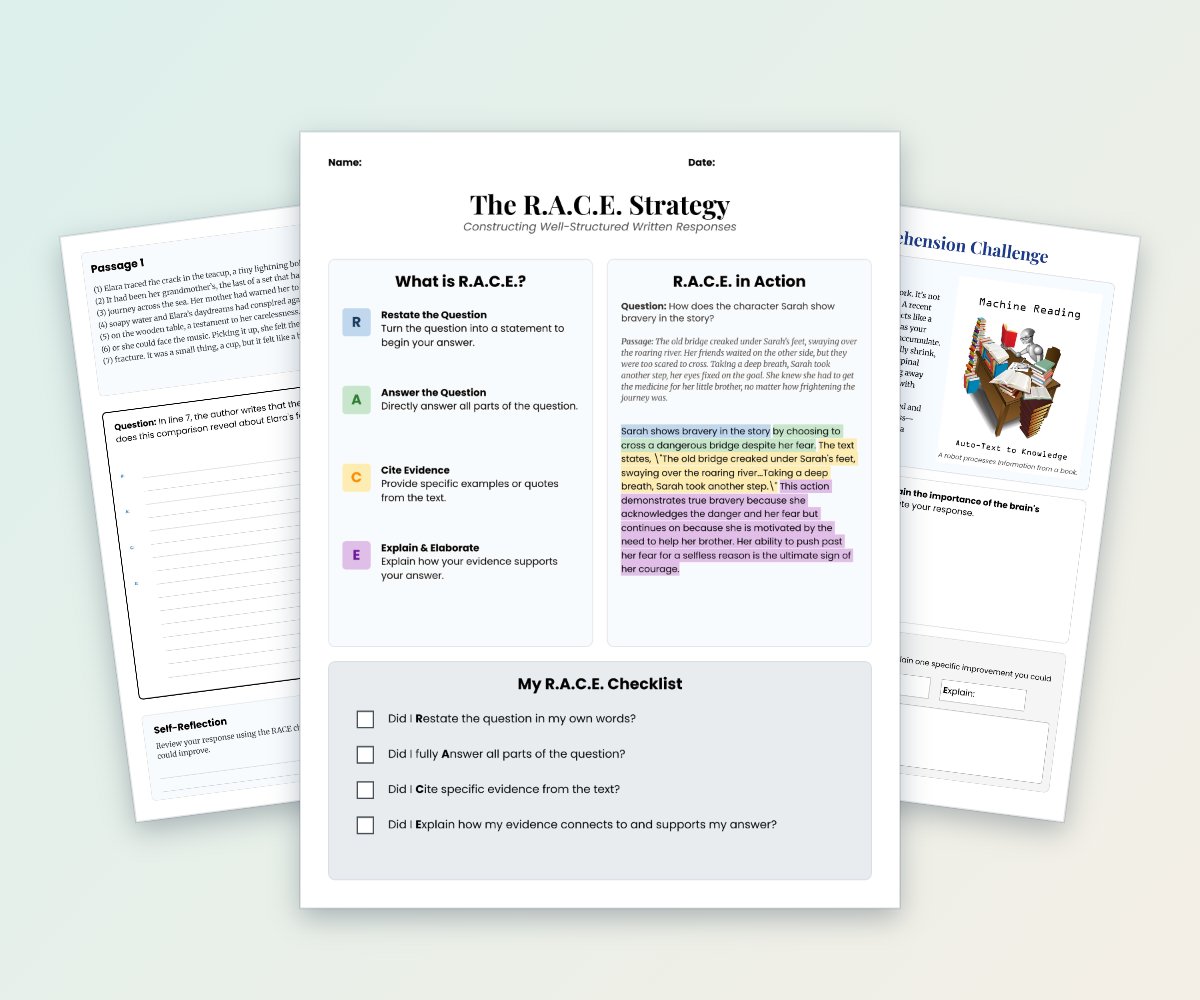
Teach students how to construct well-supported written responses using the R.A.C.E.
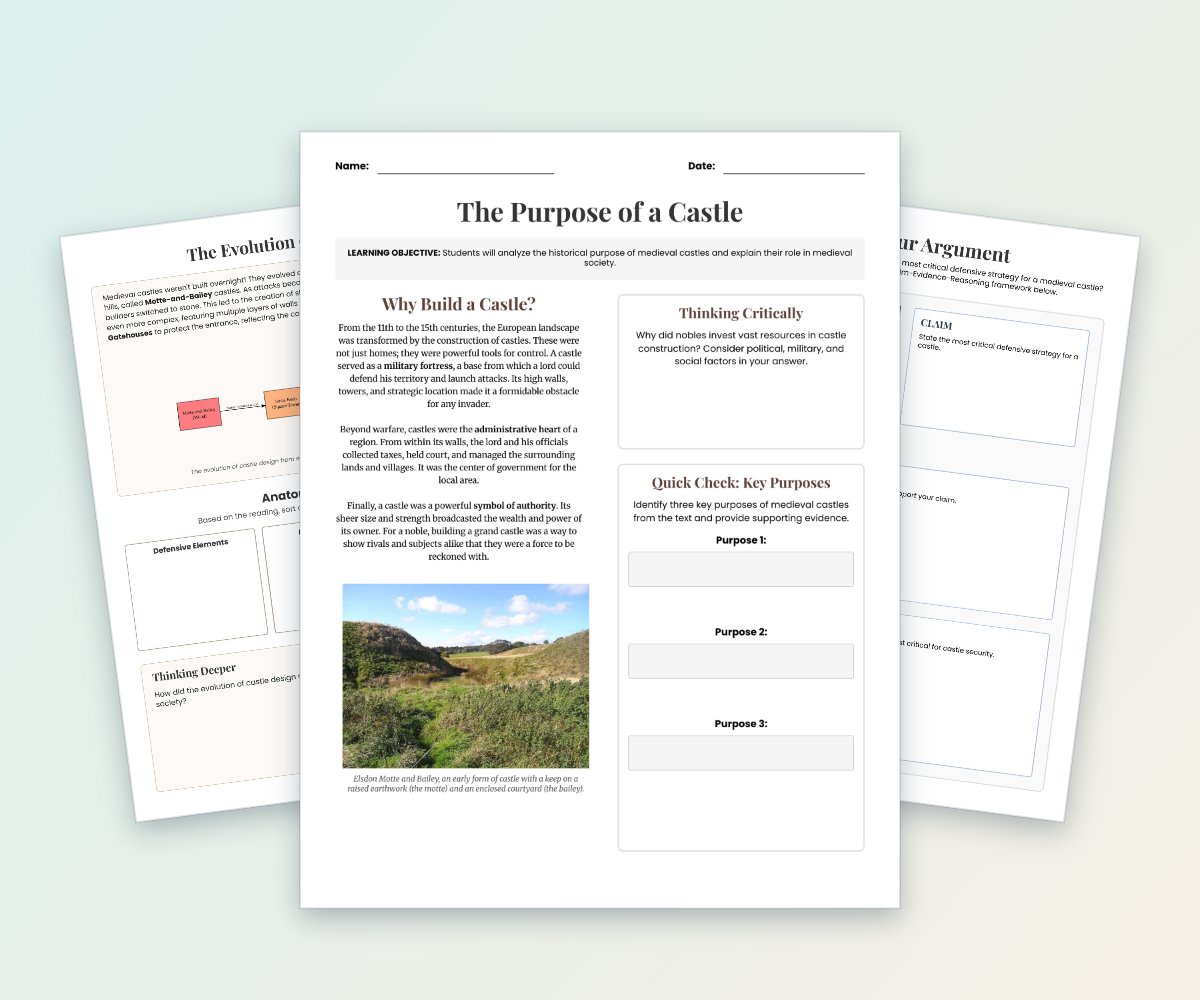
Students examine why medieval castles were built and how their designs evolved from motte-and-bailey forts to stone and concentric castles.
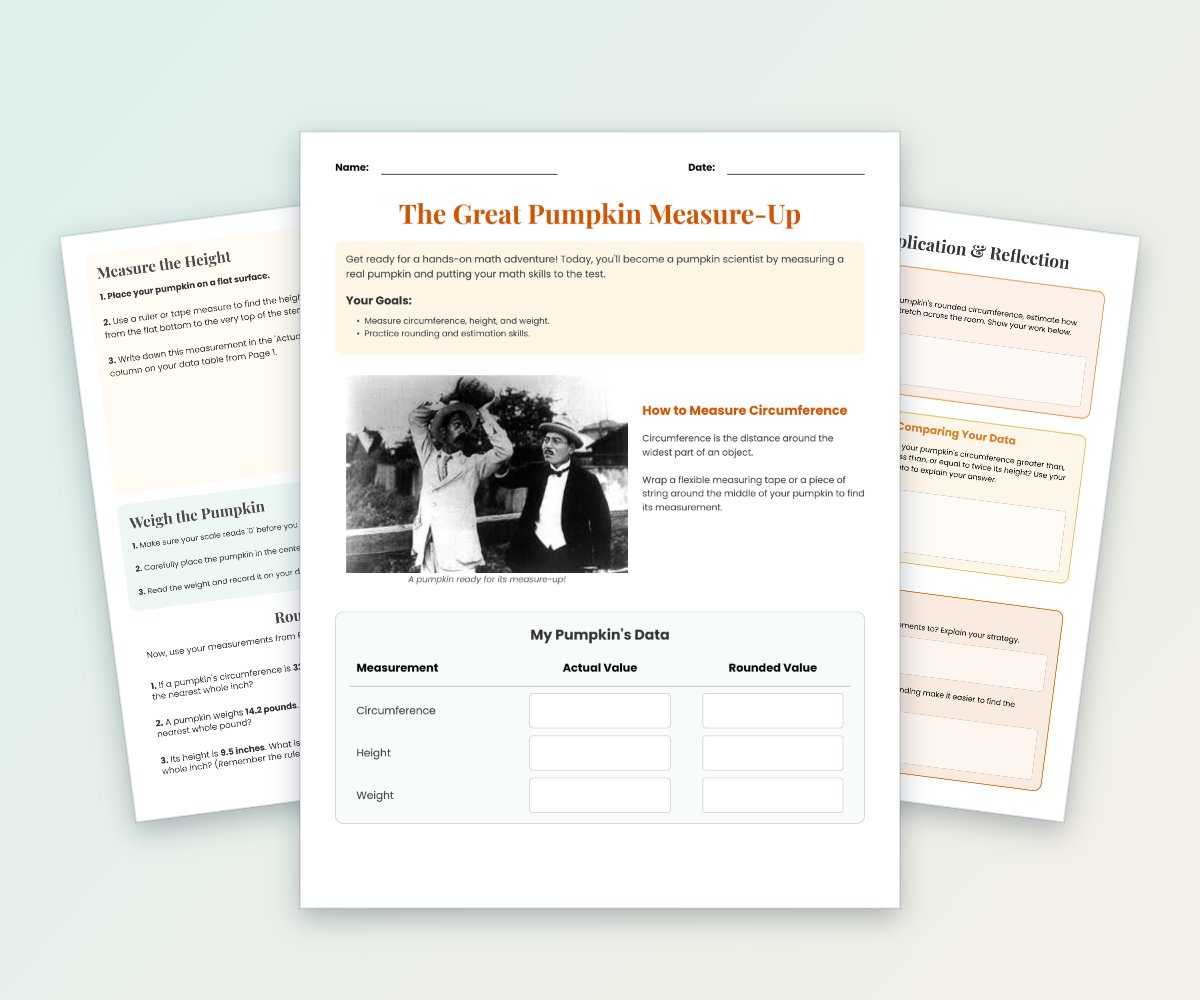
Students measure a real pumpkin’s circumference, height, and weight, record actual and rounded values, and practice estimation.
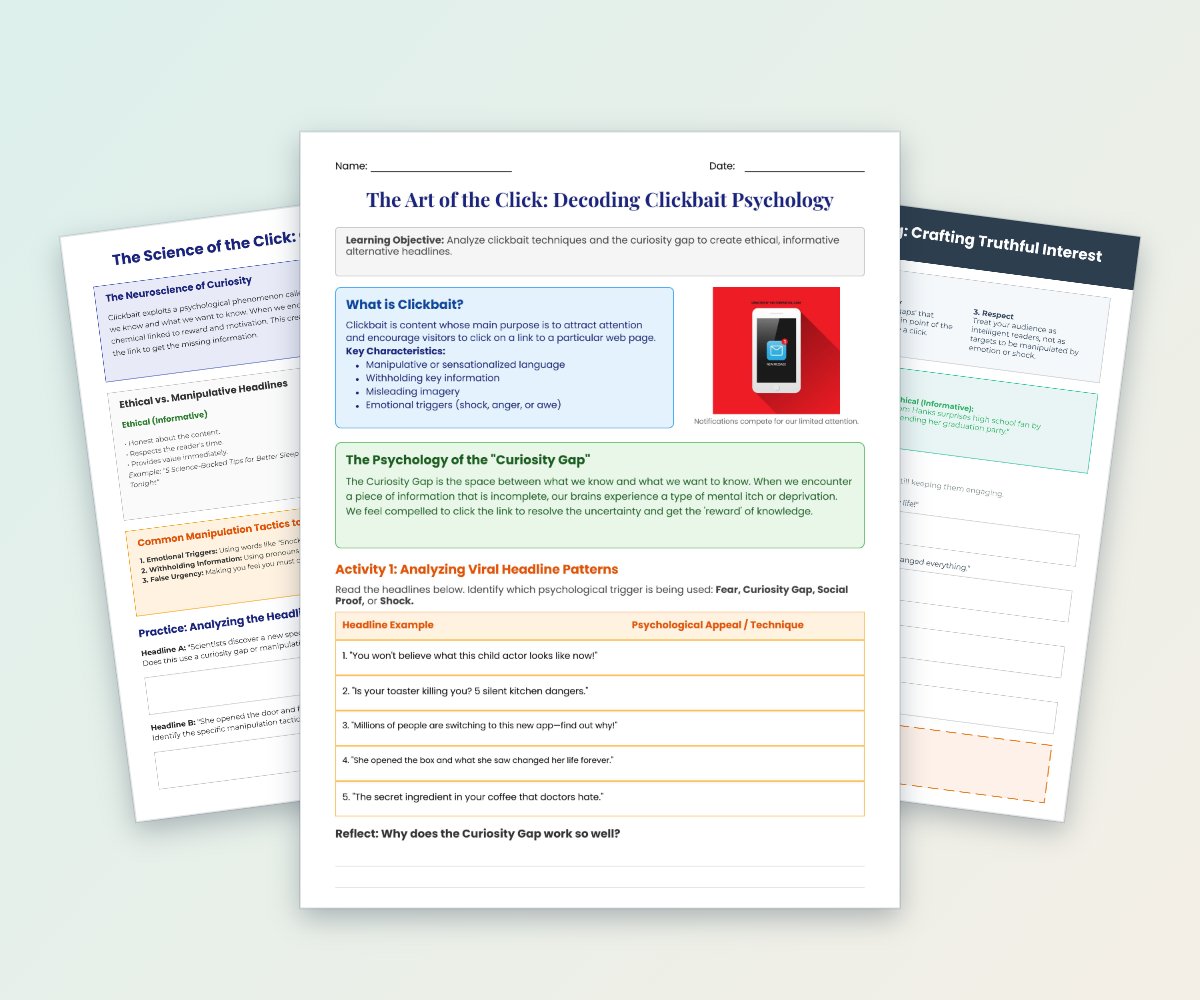
Students explore how clickbait uses curiosity gaps, emotional triggers, sensational language, and withheld information to attract attention.
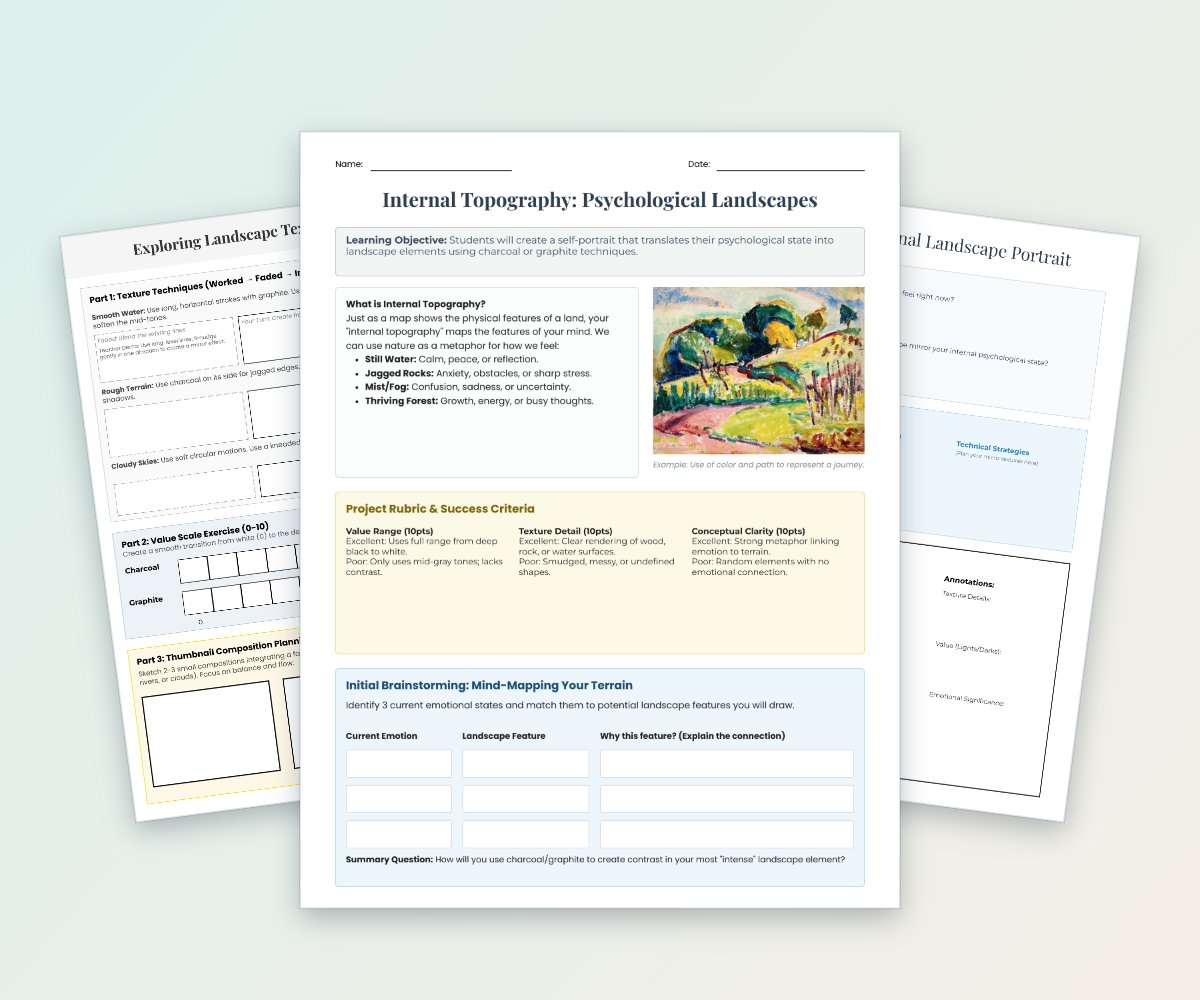
Students translate emotional states into landscape elements within a self-portrait using charcoal or graphite.
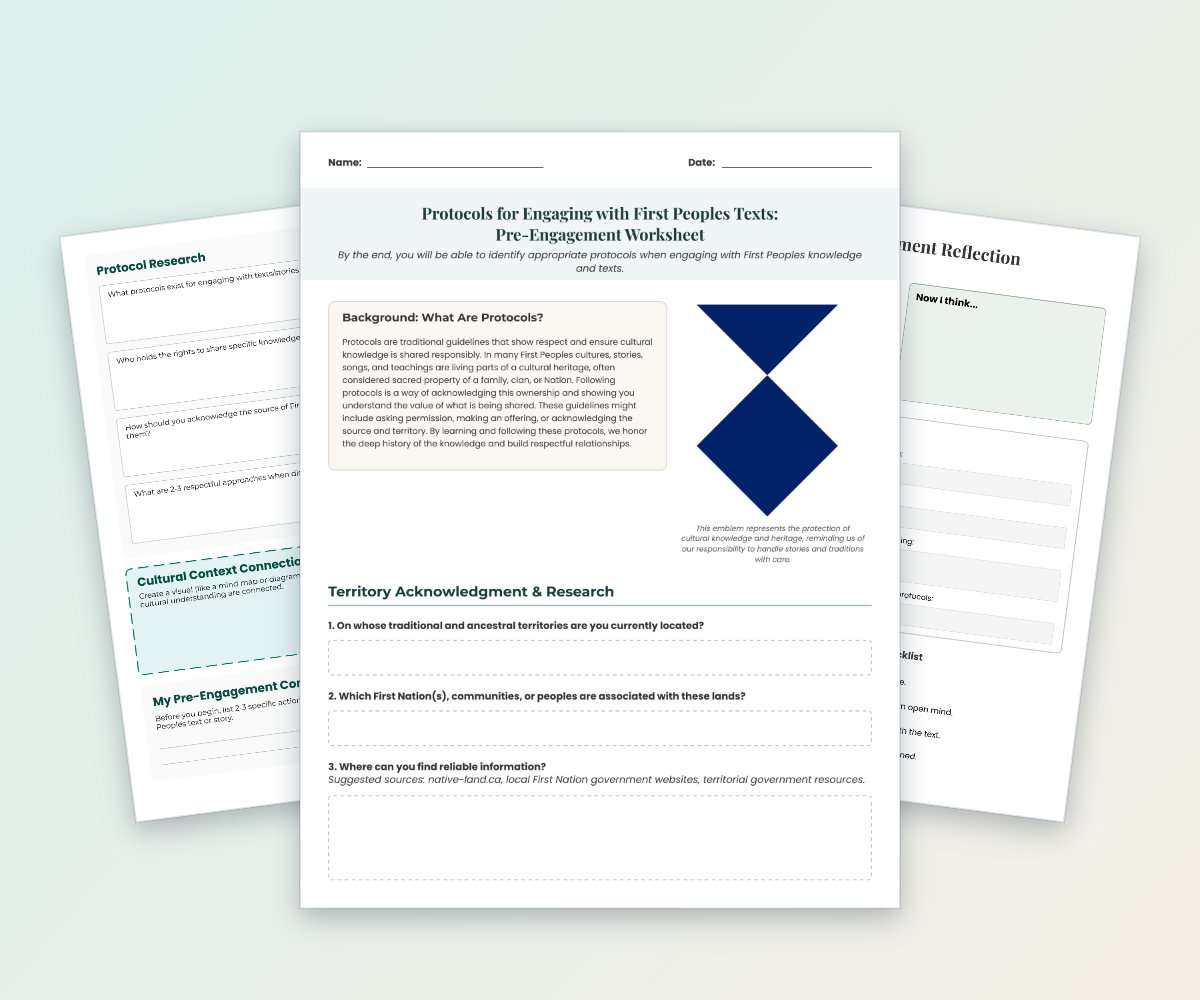
This pre- and post-engagement worksheet helps students research territory, identify cultural protocols, and consider respectful approaches to First Peoples texts and knowledge.
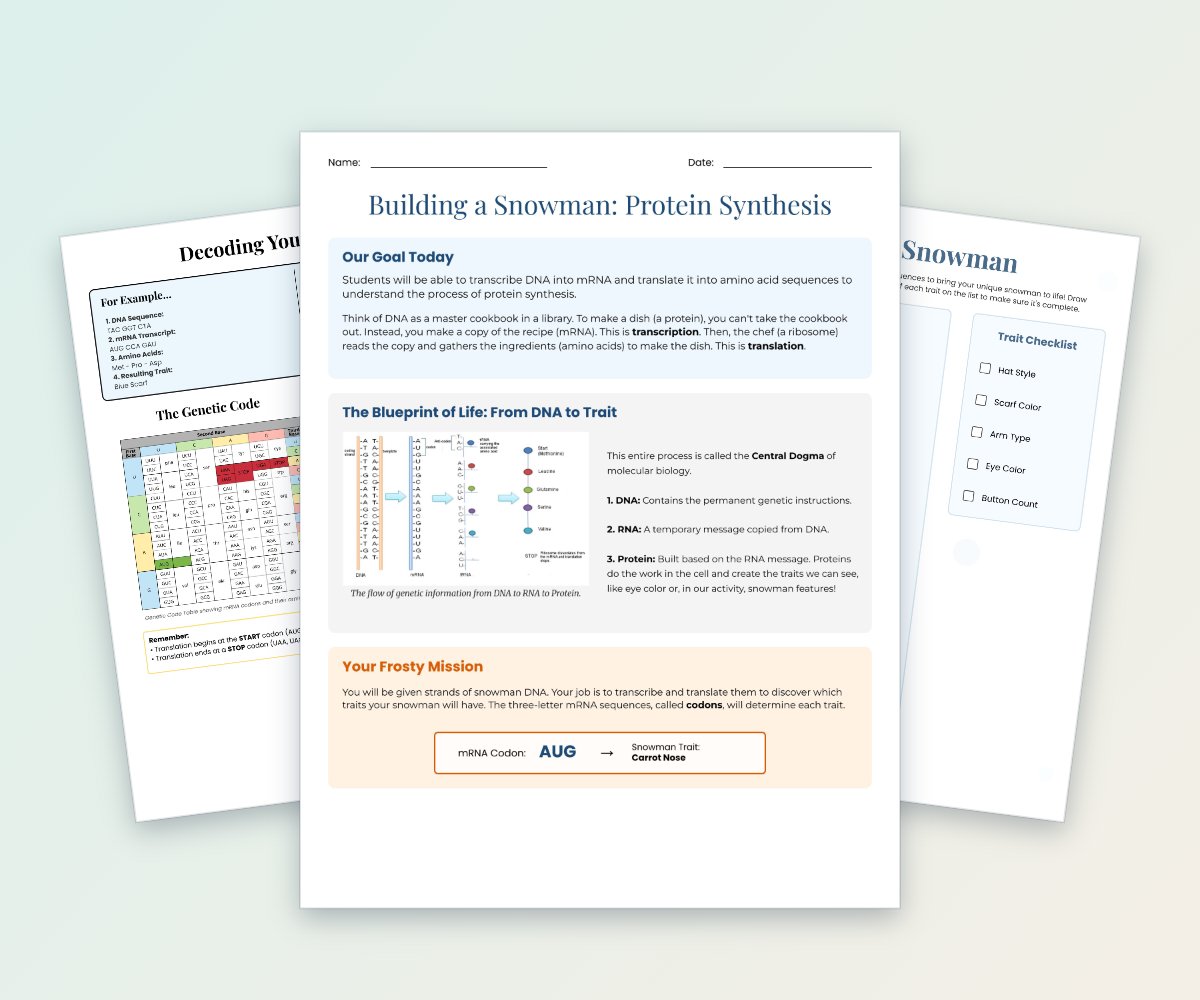
Students transcribe DNA into mRNA and translate codons into amino acid sequences using a snowman-themed activity.
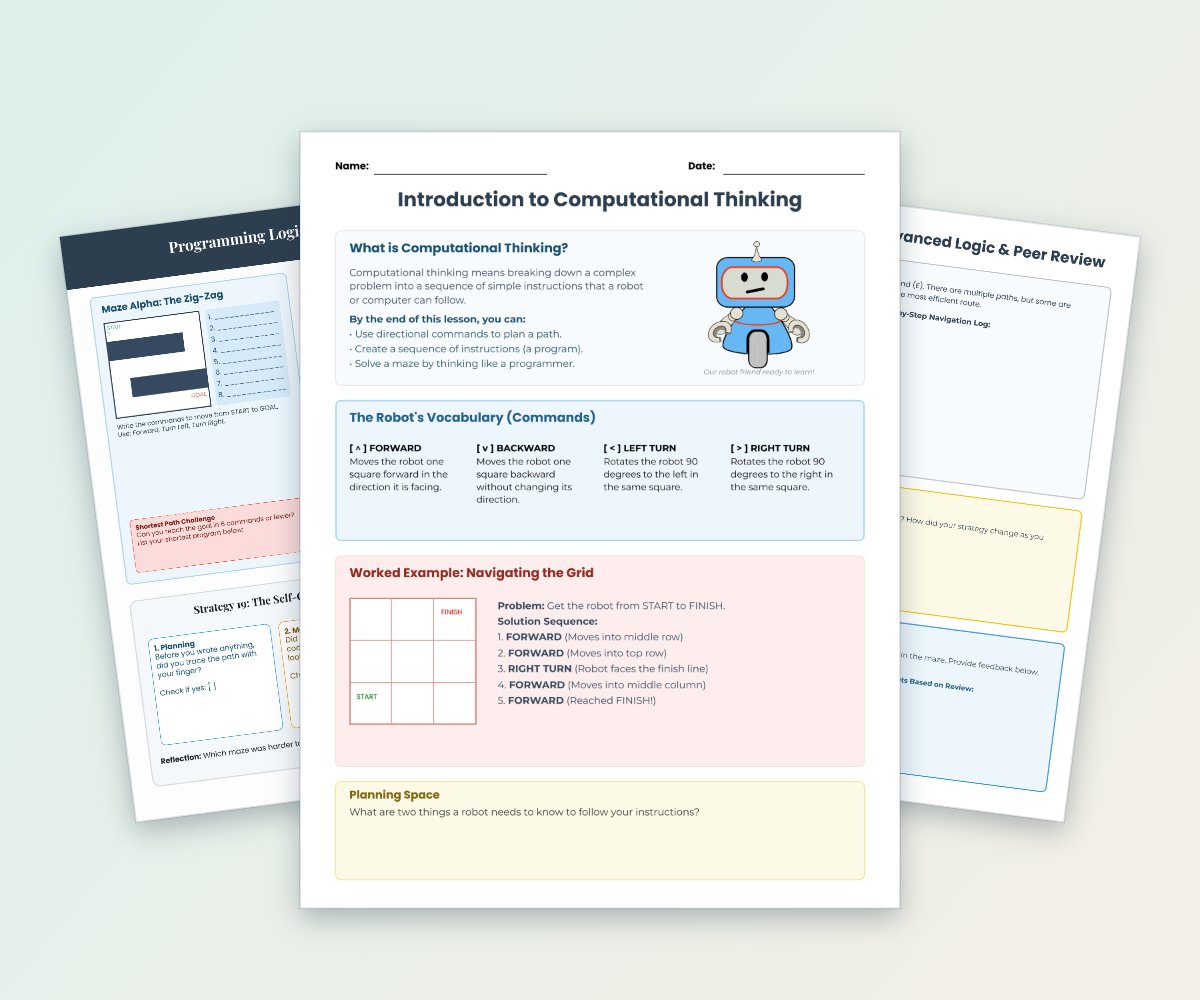
Introduce students to computational thinking through directional commands, robot vocabulary, and maze-navigation programming challenges.
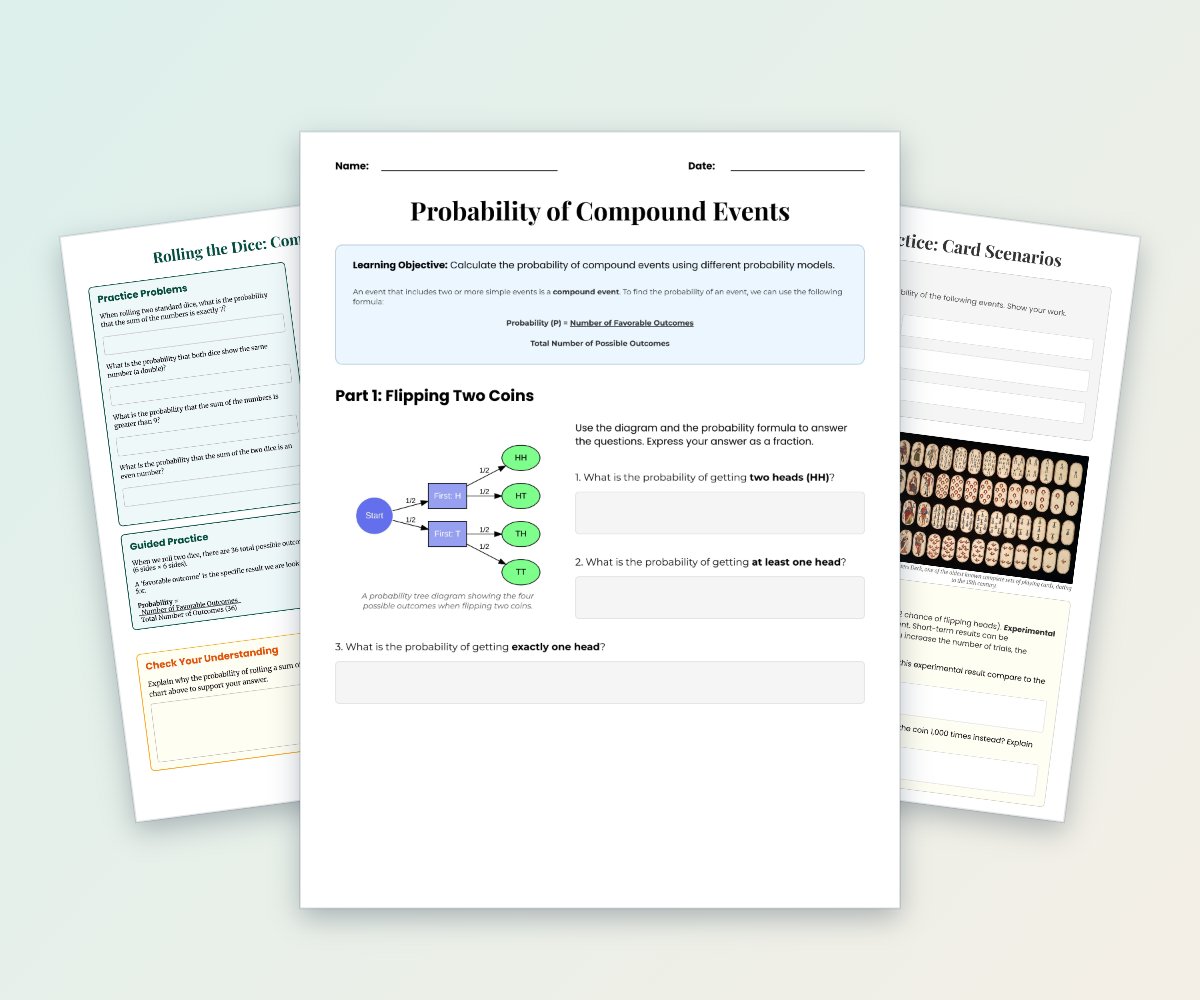
This four-page worksheet teaches students to calculate compound-event probabilities using coin flips, dice, card draws, tree diagrams, outcome charts, and probability models.
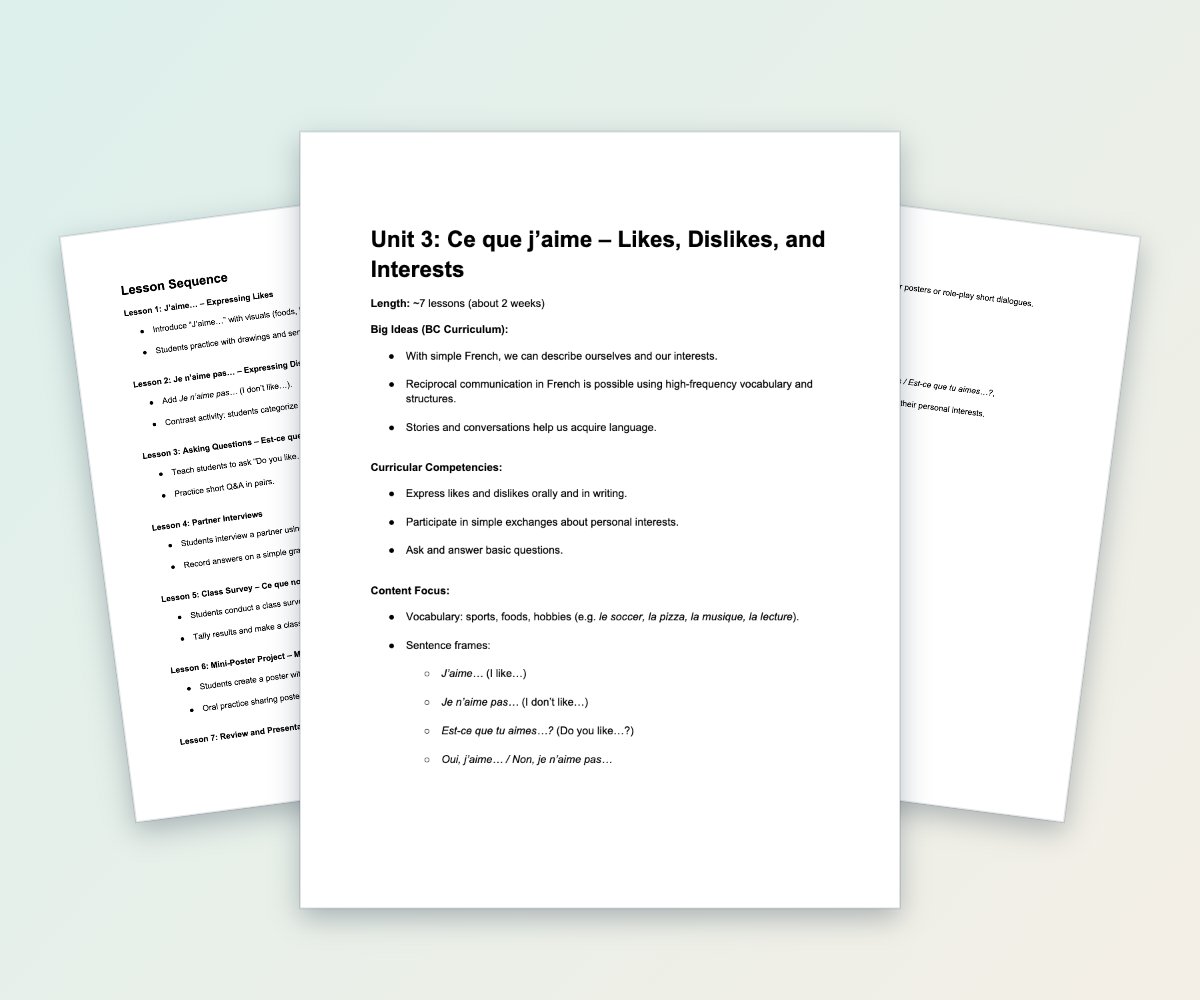
This 33-page French unit helps students express preferences, ask and answer questions, conduct surveys, and present personal interests.
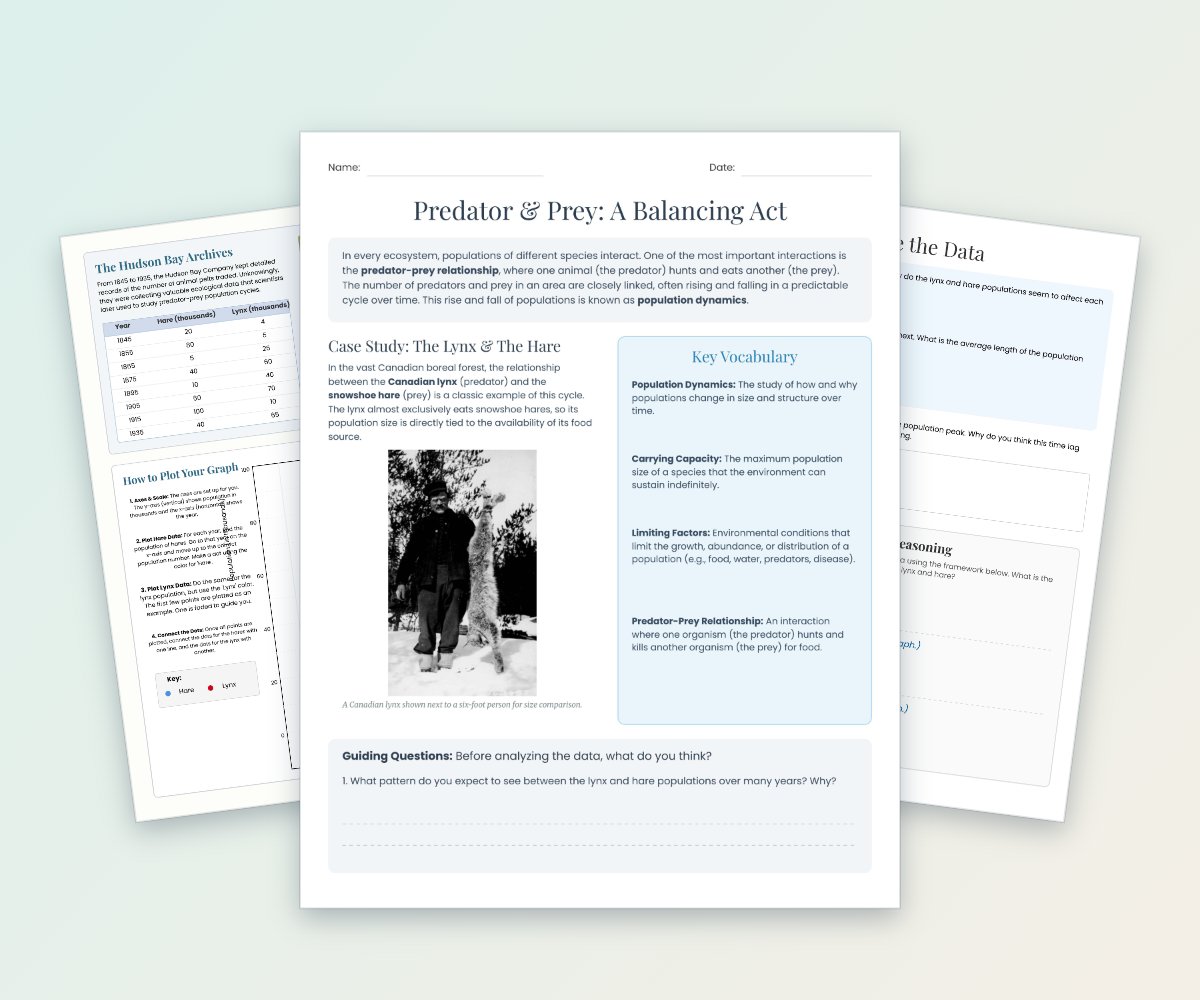
Students learn how predator and prey populations interact through vocabulary, guiding questions, and a Canadian lynx and snowshoe hare case study.
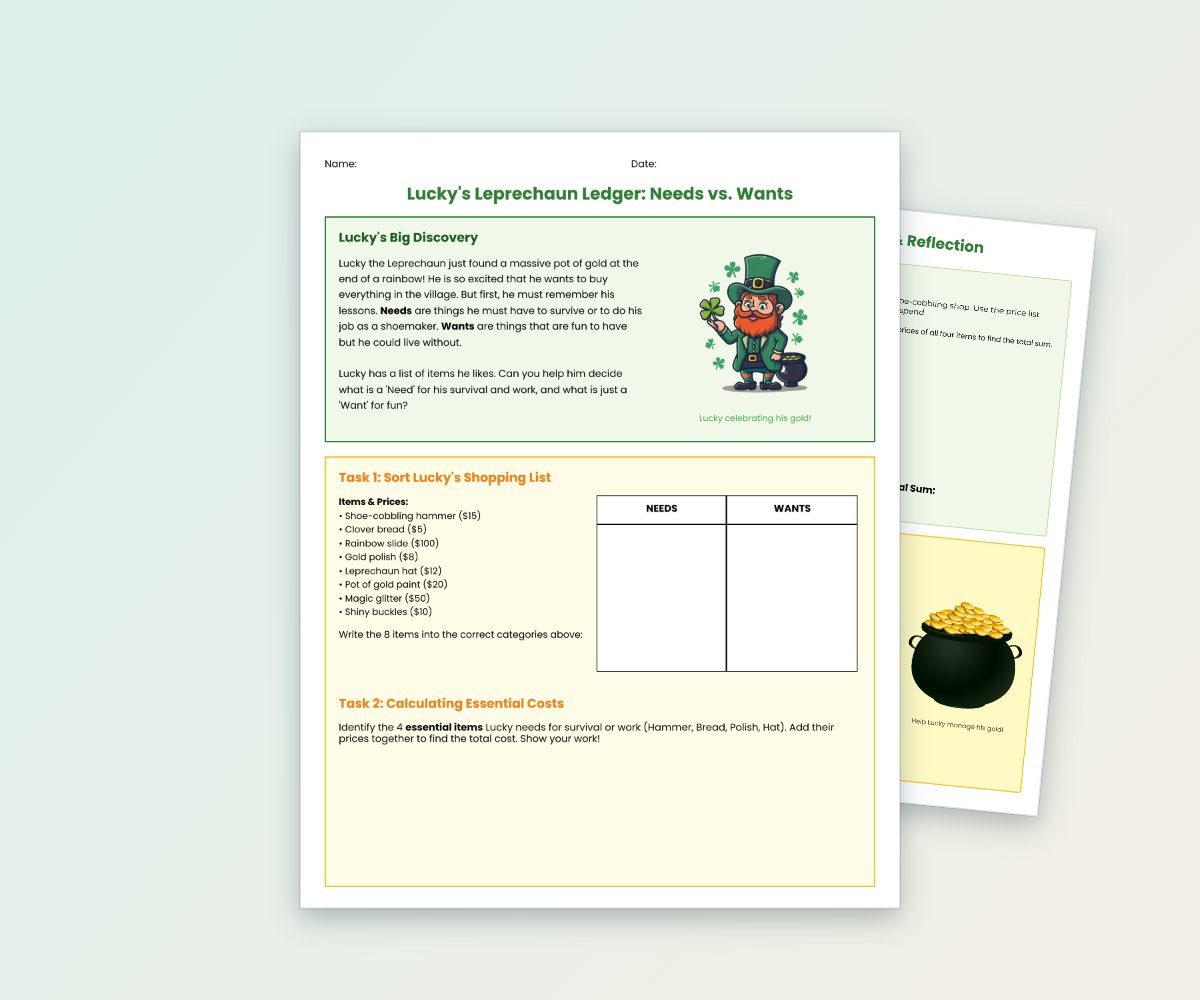
Students help a leprechaun sort shopping items into needs and wants, calculate essential costs, and reflect on spending choices.
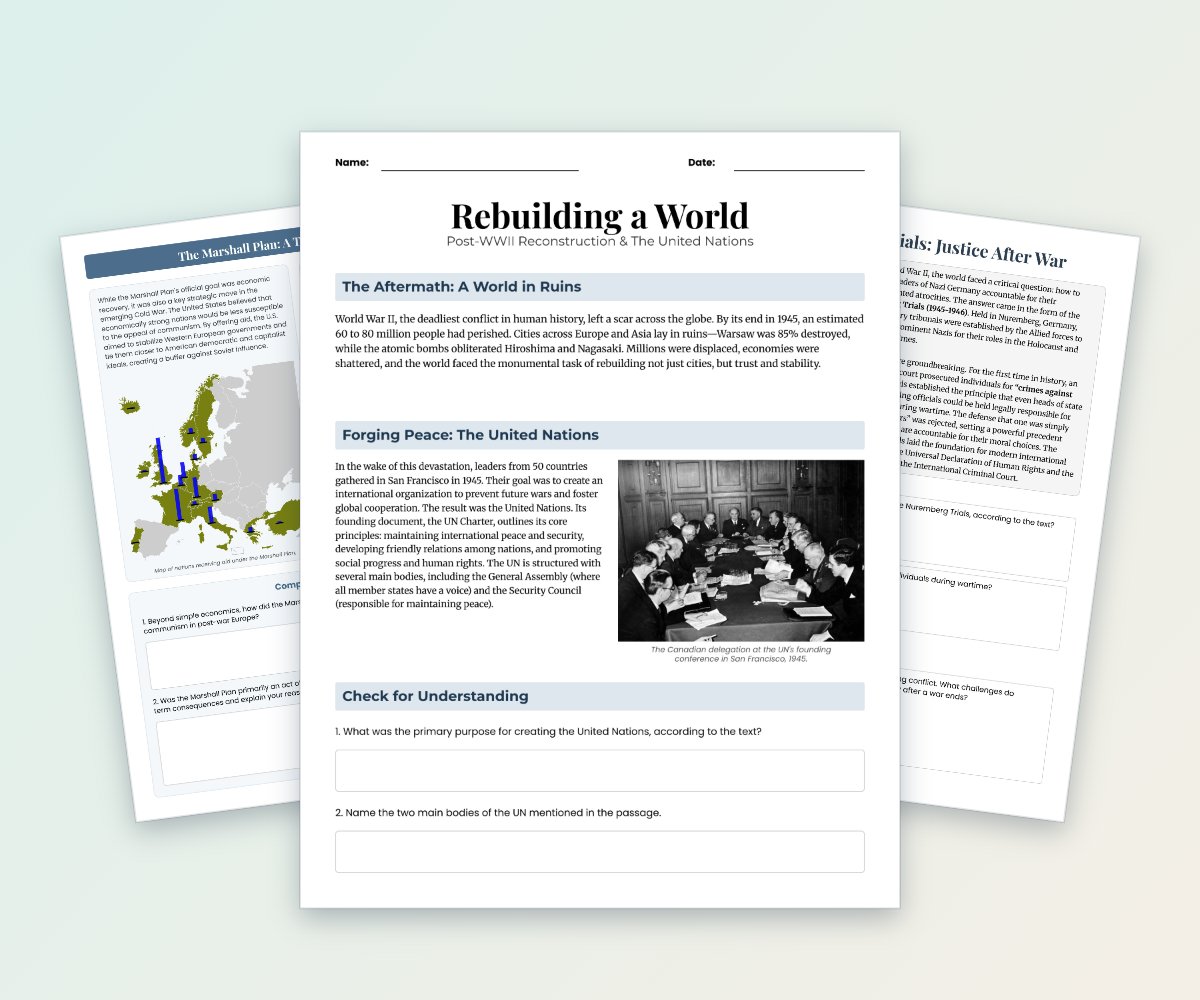
Students examine the United Nations, Marshall Plan, and Nuremberg Trials through informational passages, guided notes, and comprehension questions.
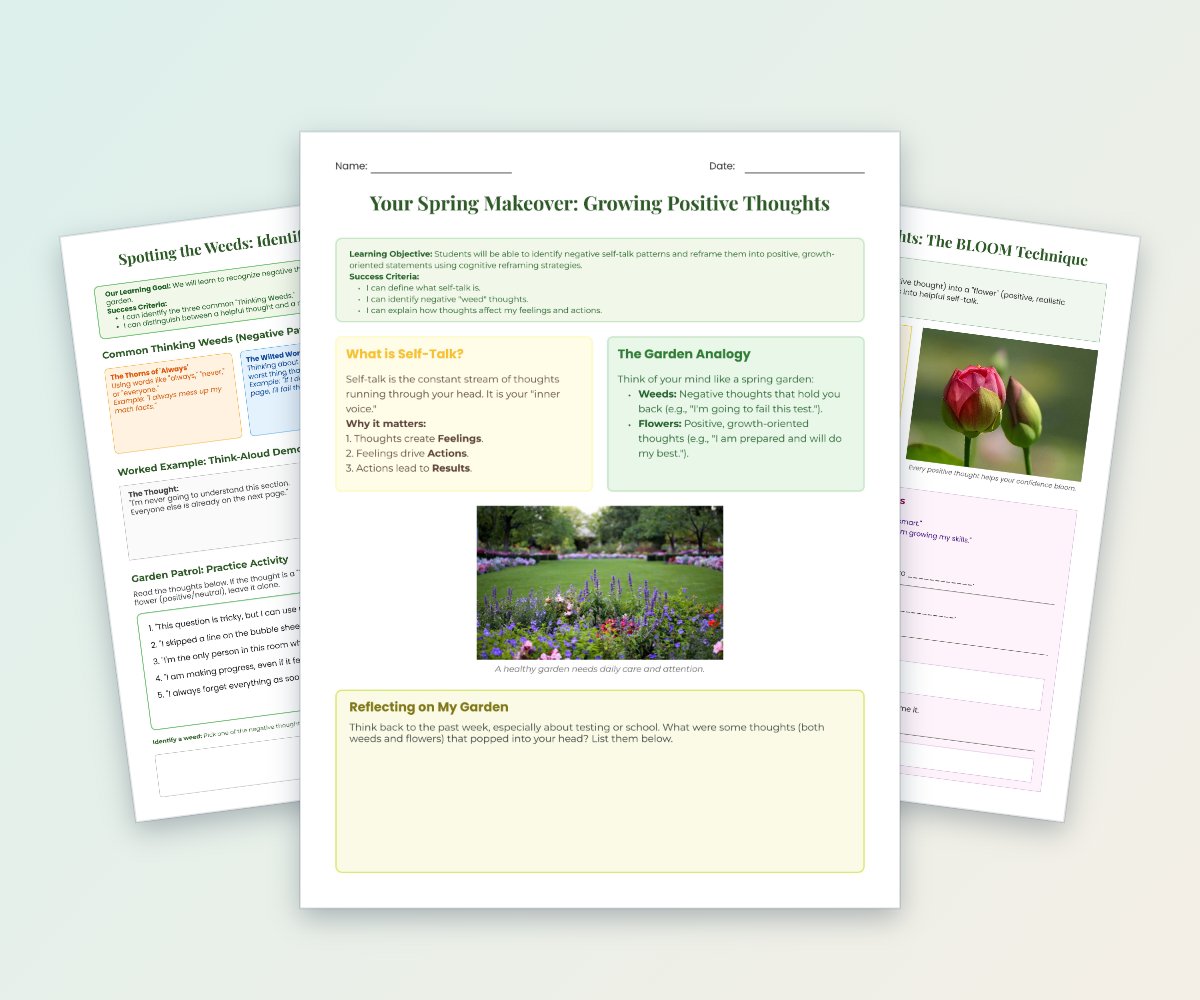
Students explore self-talk using a spring garden analogy, identifying negative “thinking weeds” and positive, growth-oriented thoughts.
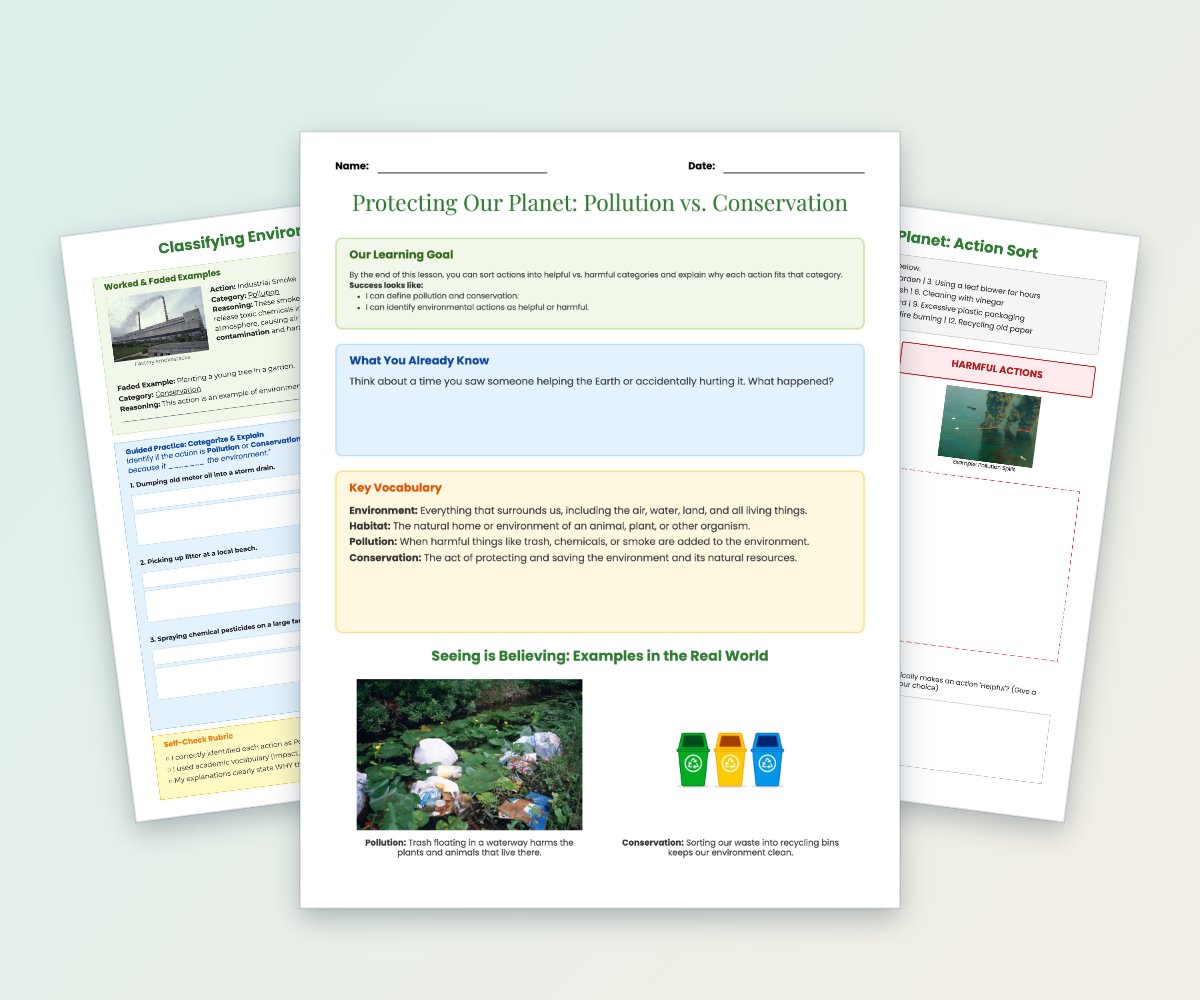
This four-page environmental science resource teaches students to distinguish pollution from conservation actions.
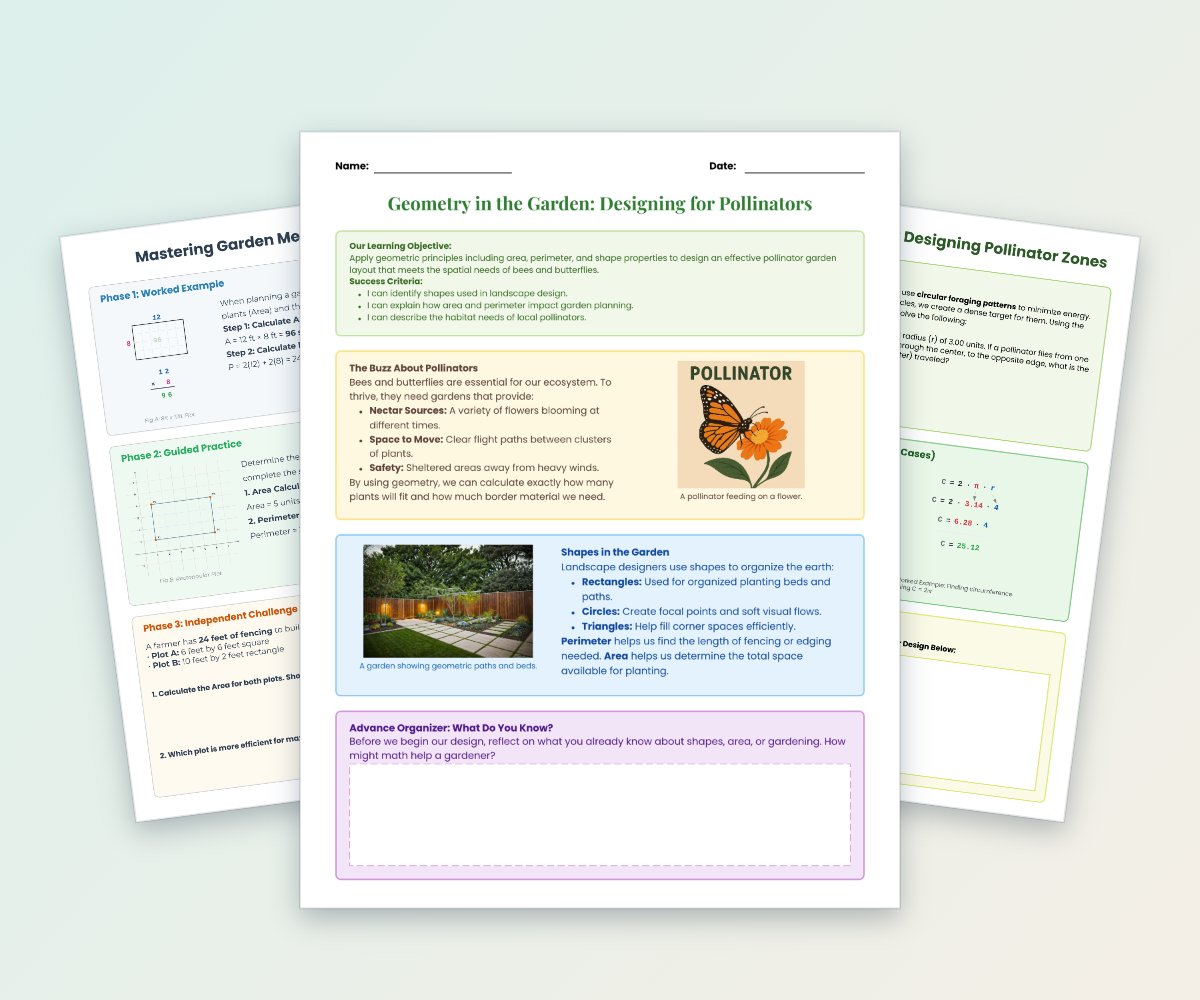
Students apply area, perimeter, and shape properties to design an effective pollinator garden layout.
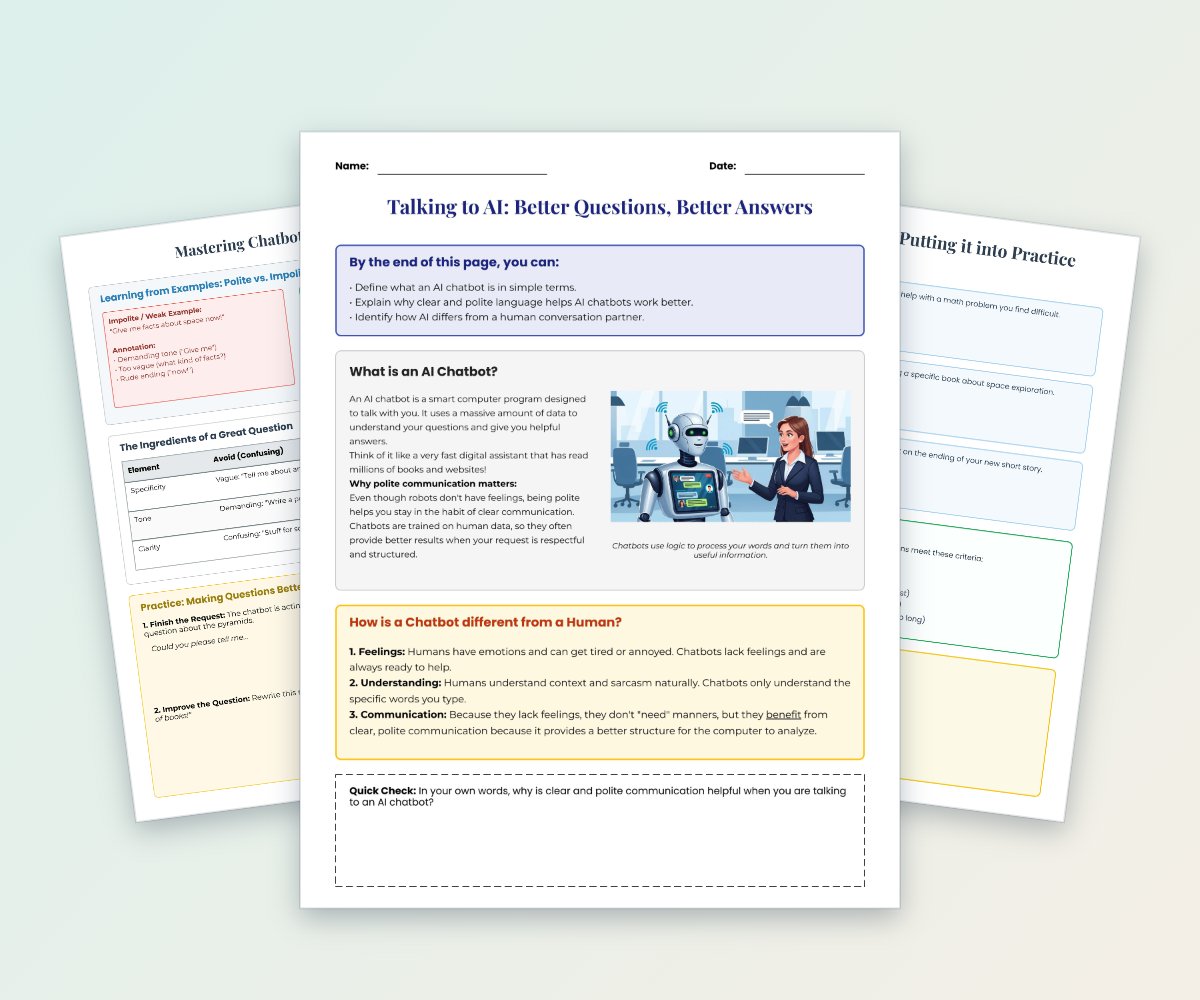
This four-page worksheet introduces AI chatbots and explains how clear, specific, and polite prompts improve responses.
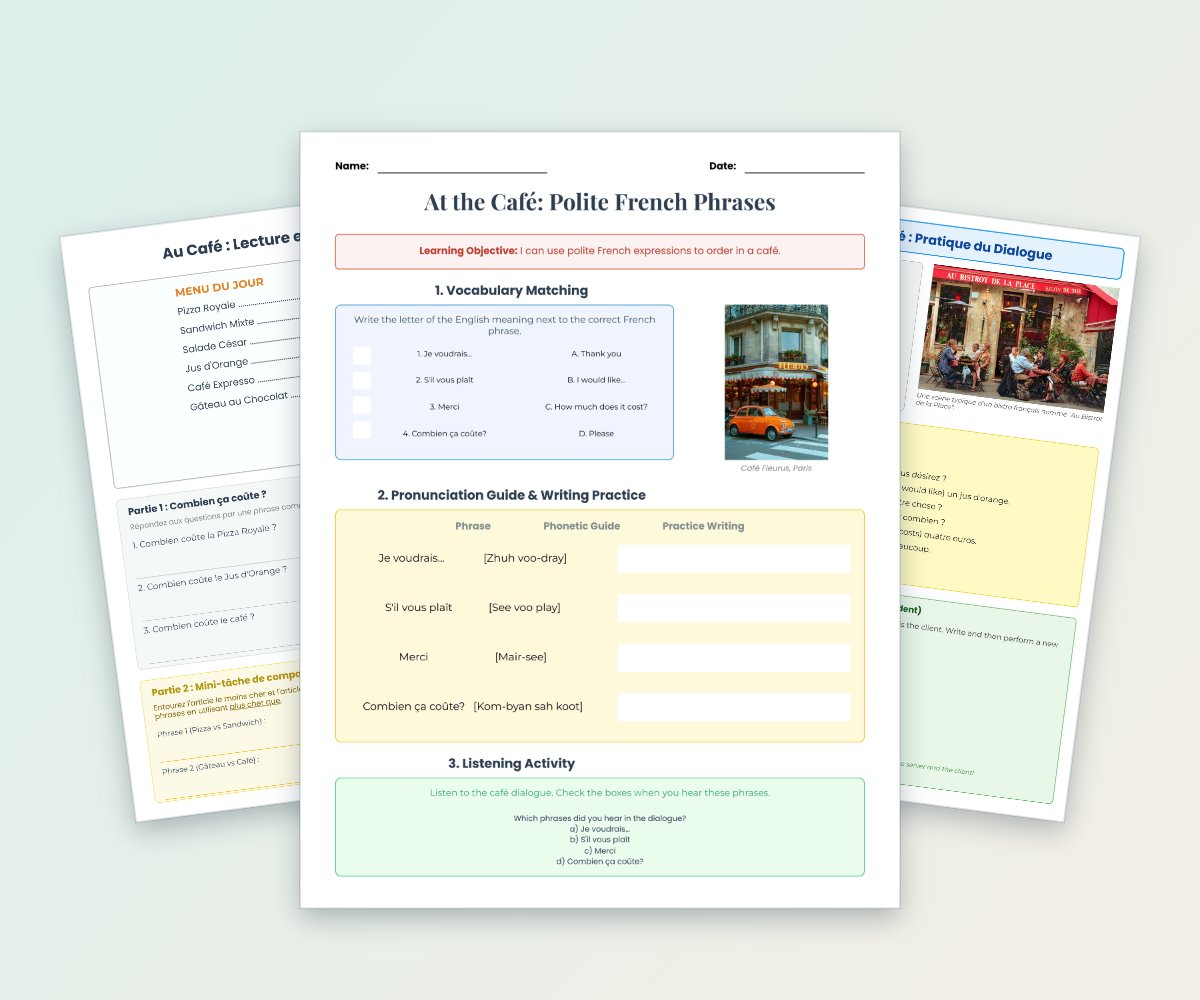
Students learn polite French expressions for ordering food and drinks in a café through vocabulary matching, pronunciation practice, listening, reading, and price-comparison activities.
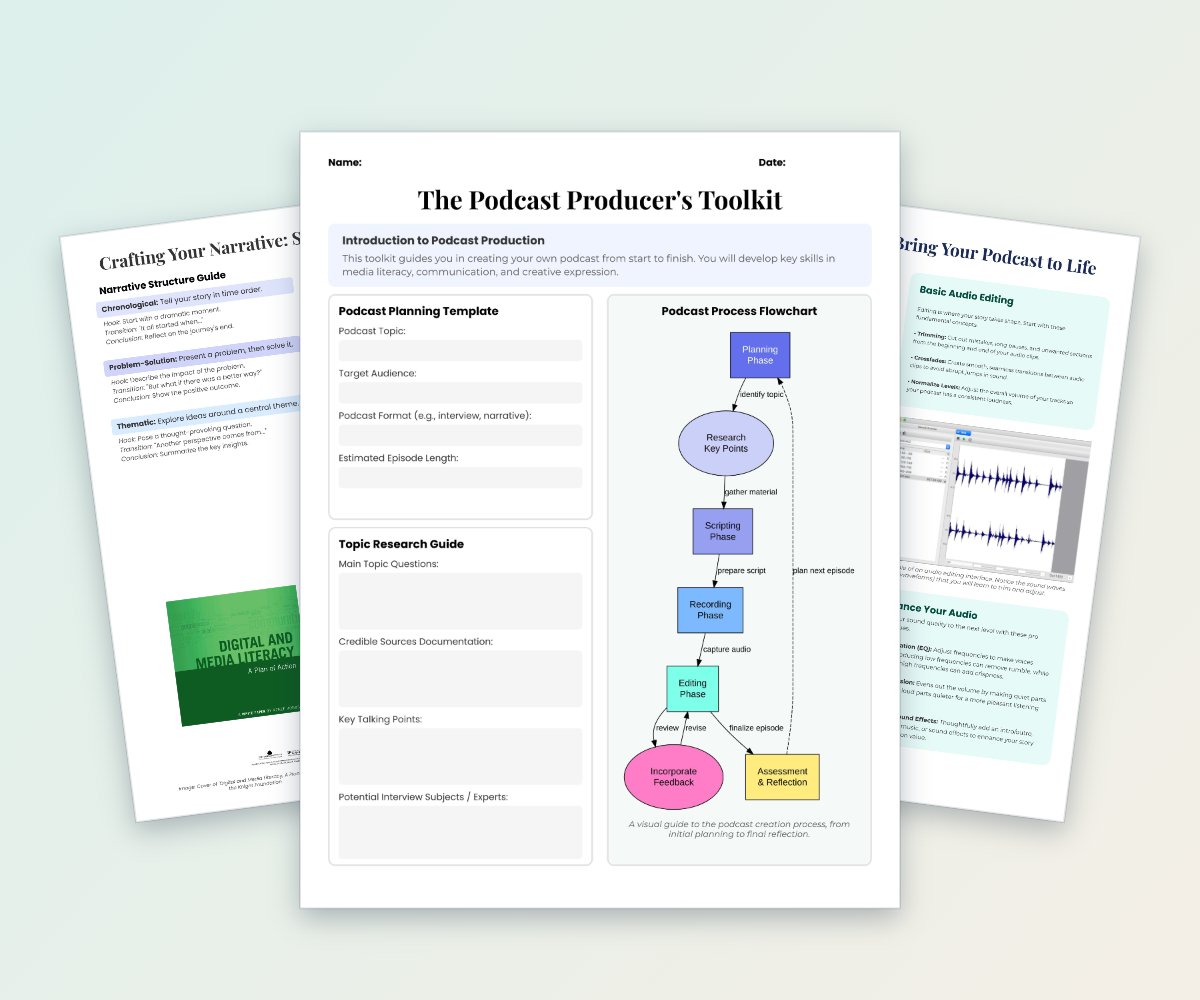
This four-page toolkit guides students through planning, researching, scripting, recording, editing, and reflecting on a podcast episode.