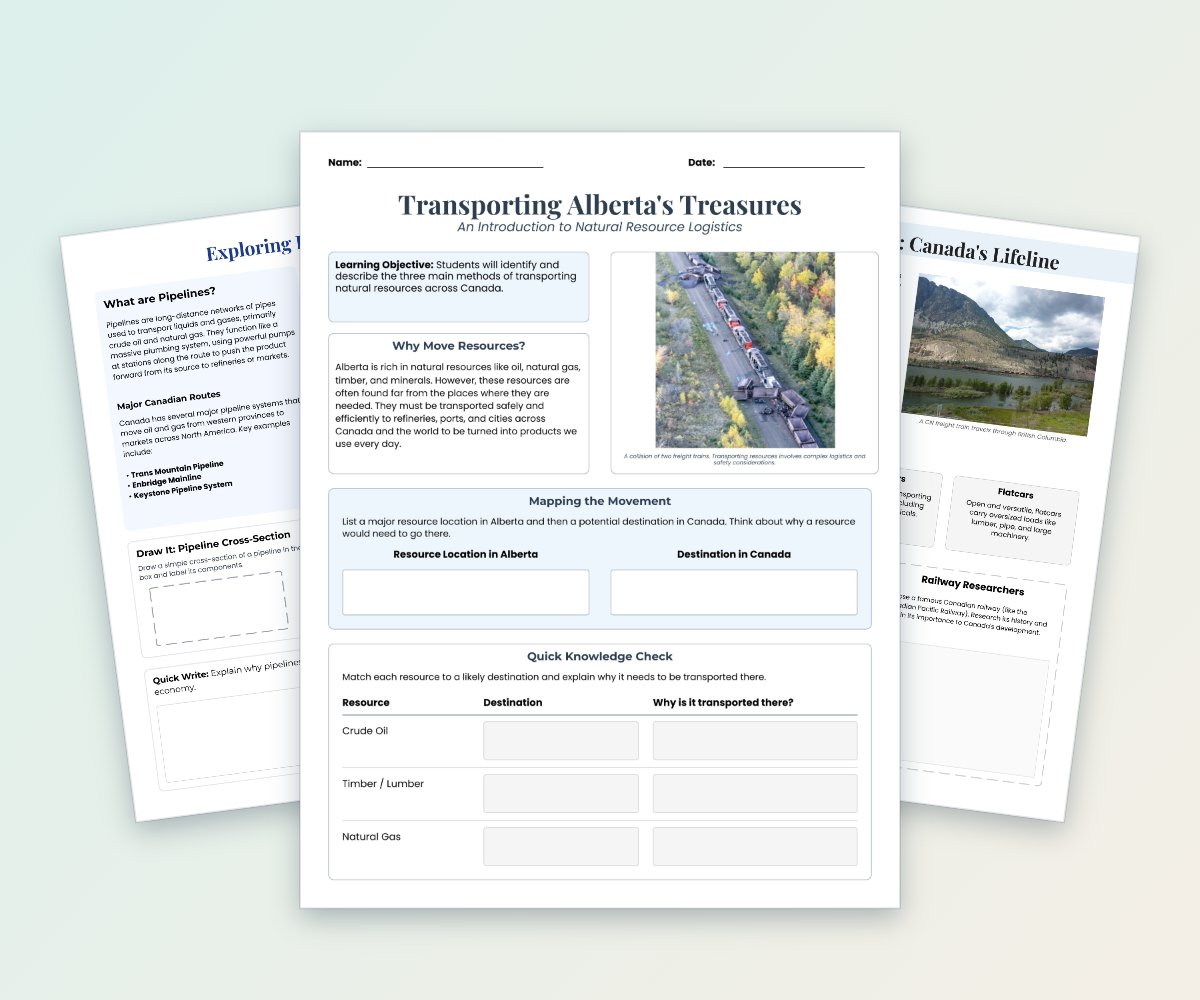
Transporting Alberta’s Natural Resources in Canada
Students explore why Alberta’s natural resources must be transported and compare pipelines with other transportation methods.
$4.99
Classroom-ready resources written for kindergarten: printable worksheets, slides, activities and planning tools you can download and use straight away. Browse by subject below.
Students explore why Alberta’s natural resources must be transported and compare pipelines with other transportation methods.
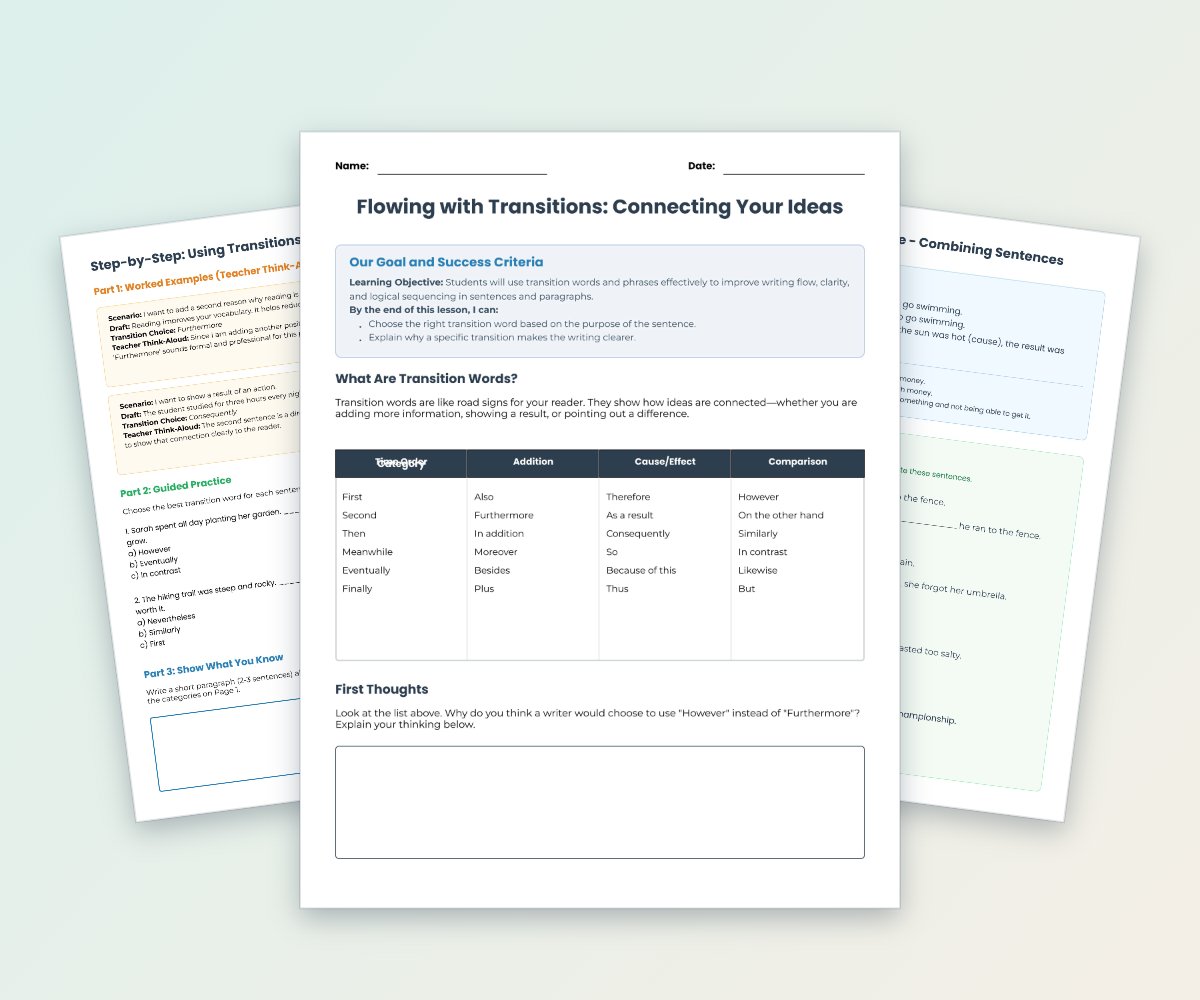
Teach students how transition words connect ideas and improve writing flow, clarity, and logical sequencing.
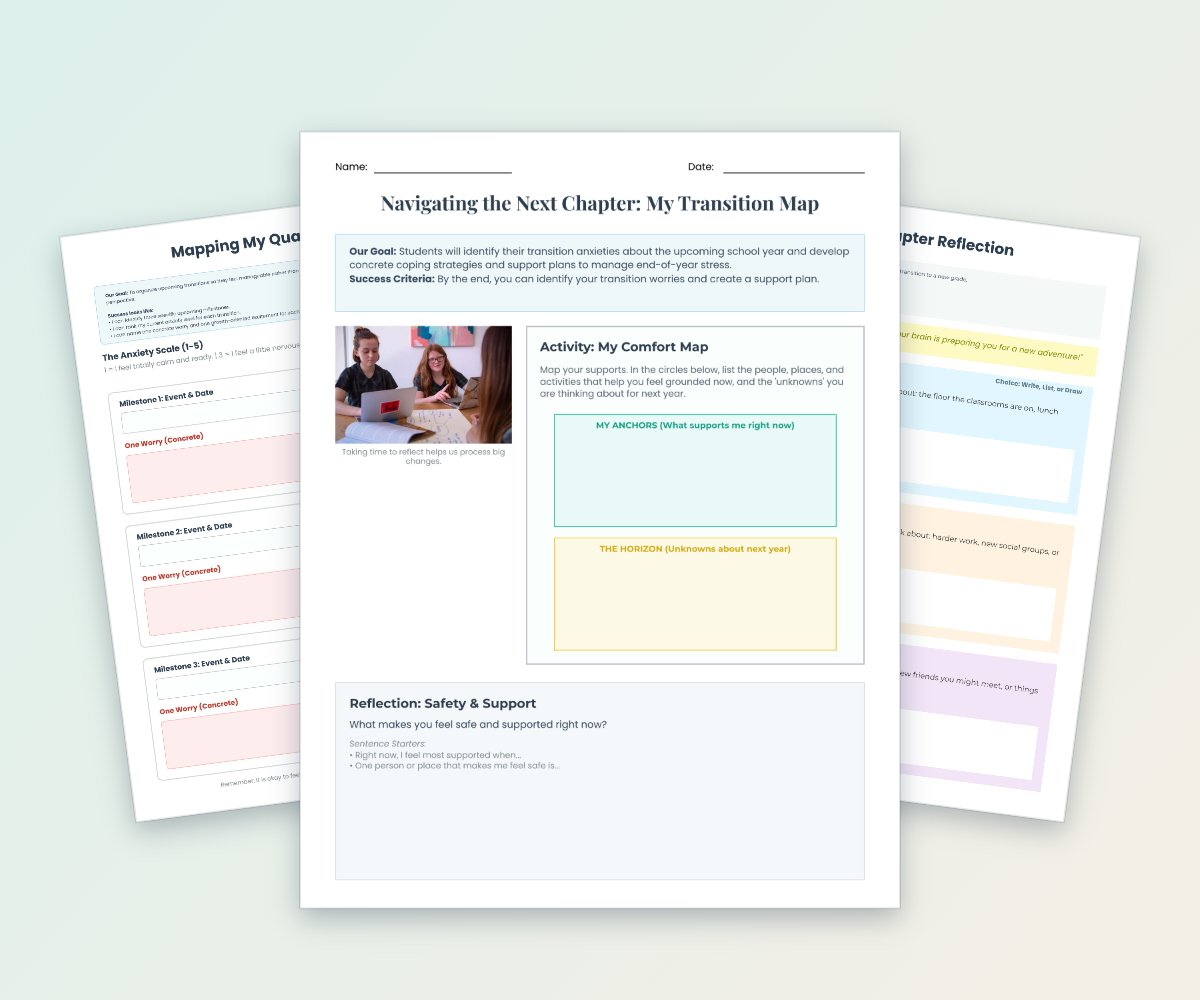
This five-page activity pack helps students reflect on upcoming school-year transitions, identify worries and excitement, and map supportive people and activities.
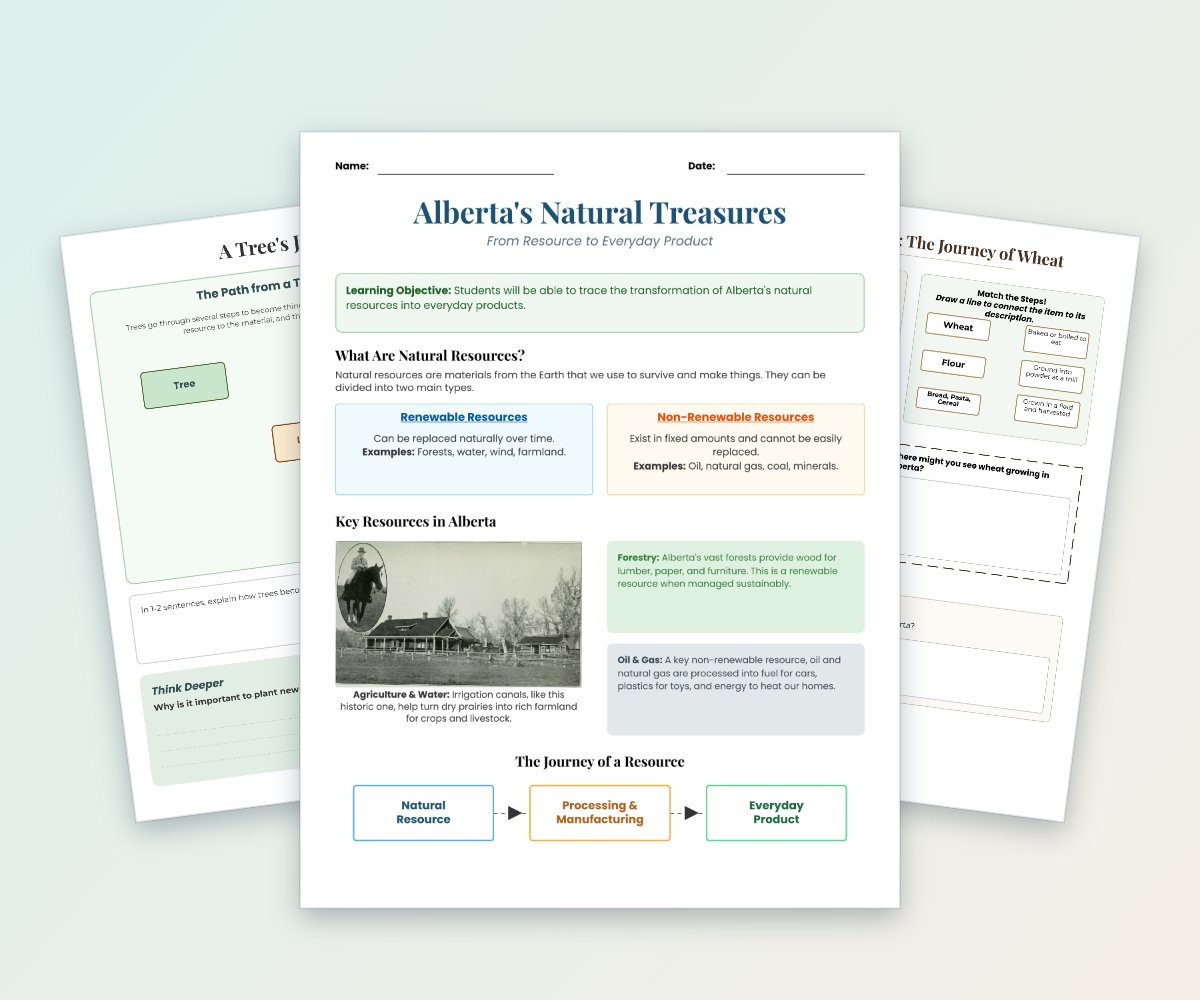
This four-page activity pack teaches students how Alberta’s natural resources become everyday products.
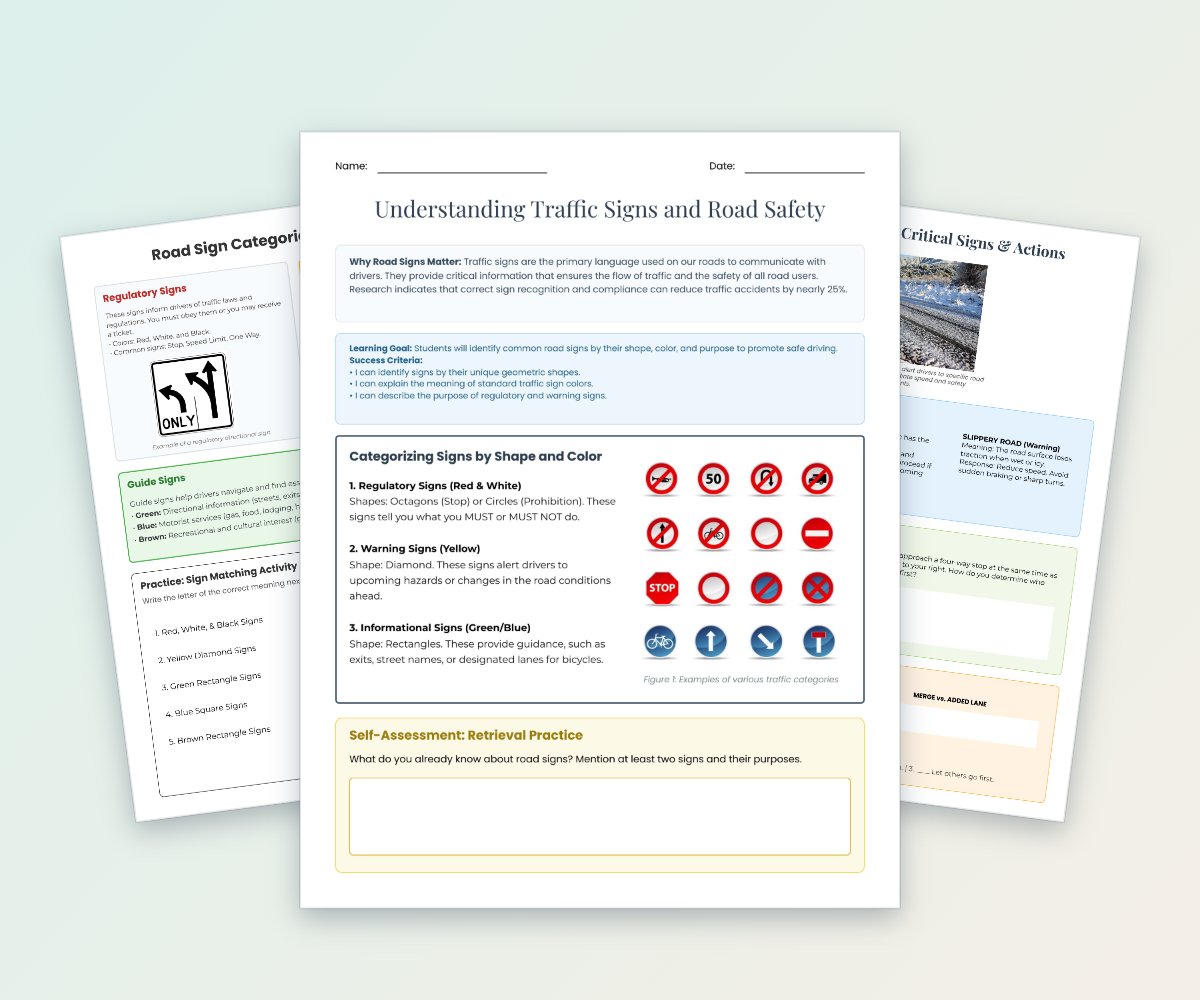
This four-page resource introduces regulatory, warning, and informational traffic signs through explanations, examples, self-assessment, and a sign-matching activity.
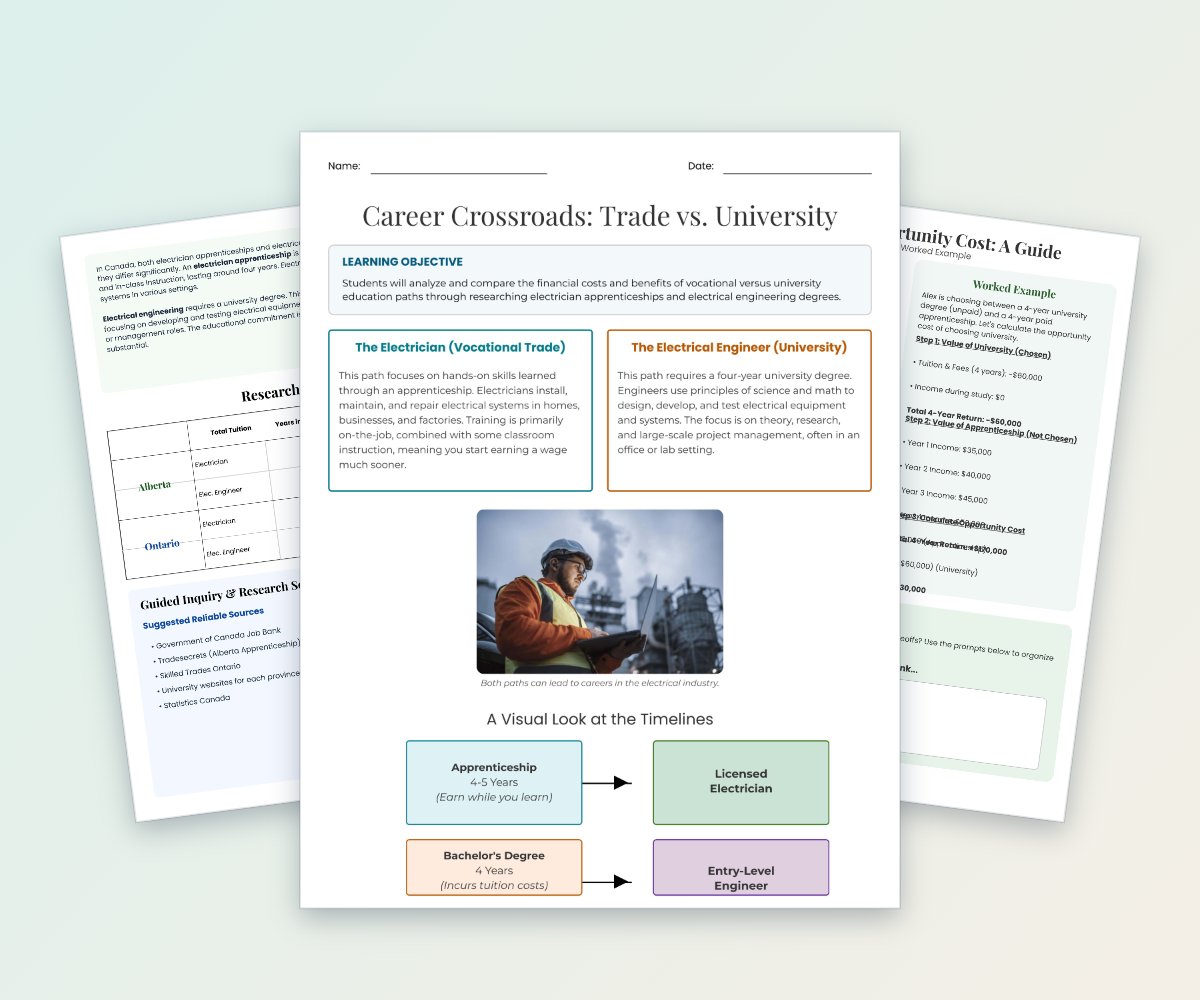
This four-page career exploration activity compares electrician apprenticeships with university electrical engineering programs.
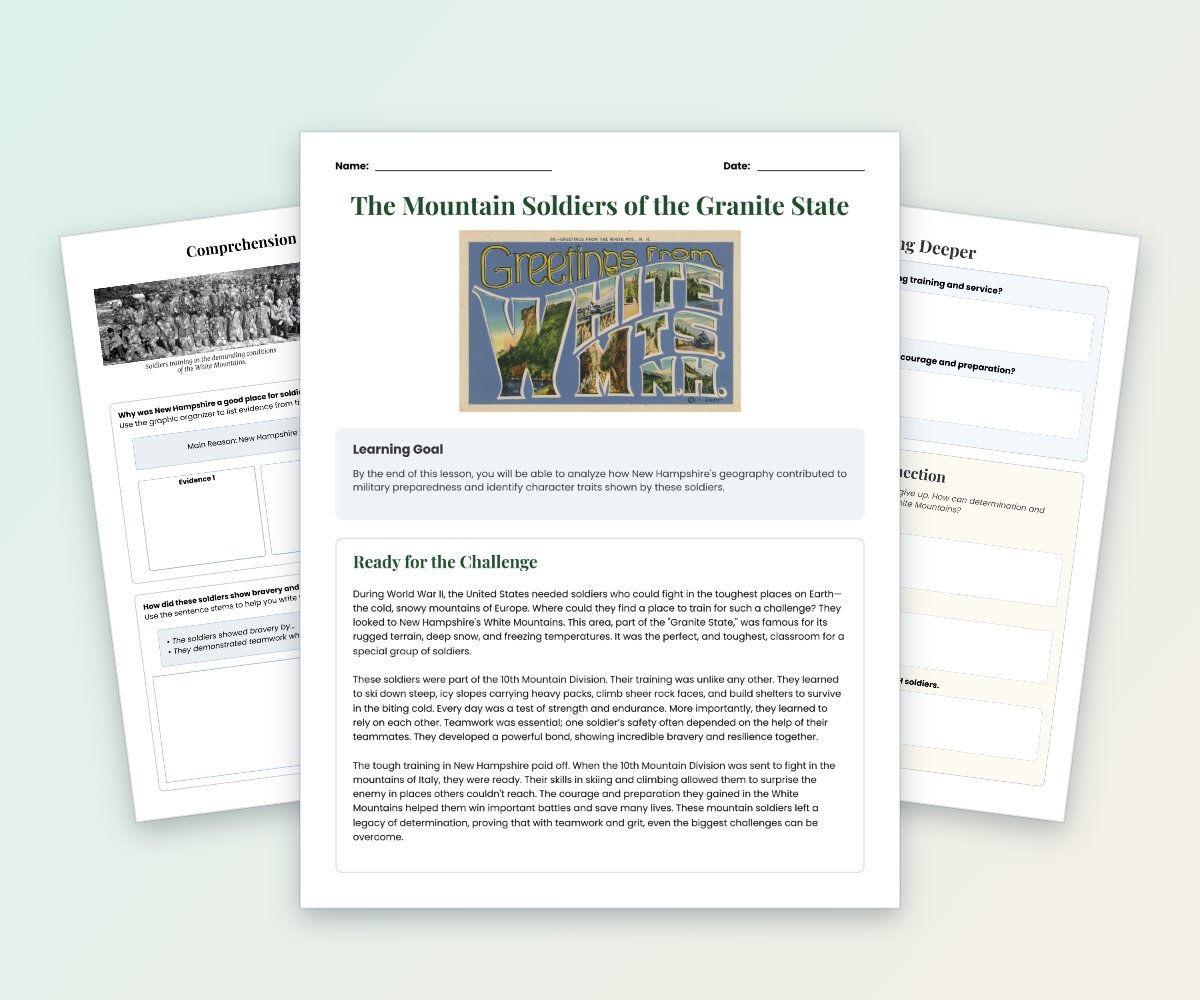
Students read about the 10th Mountain Division’s training in New Hampshire’s White Mountains during World War II.
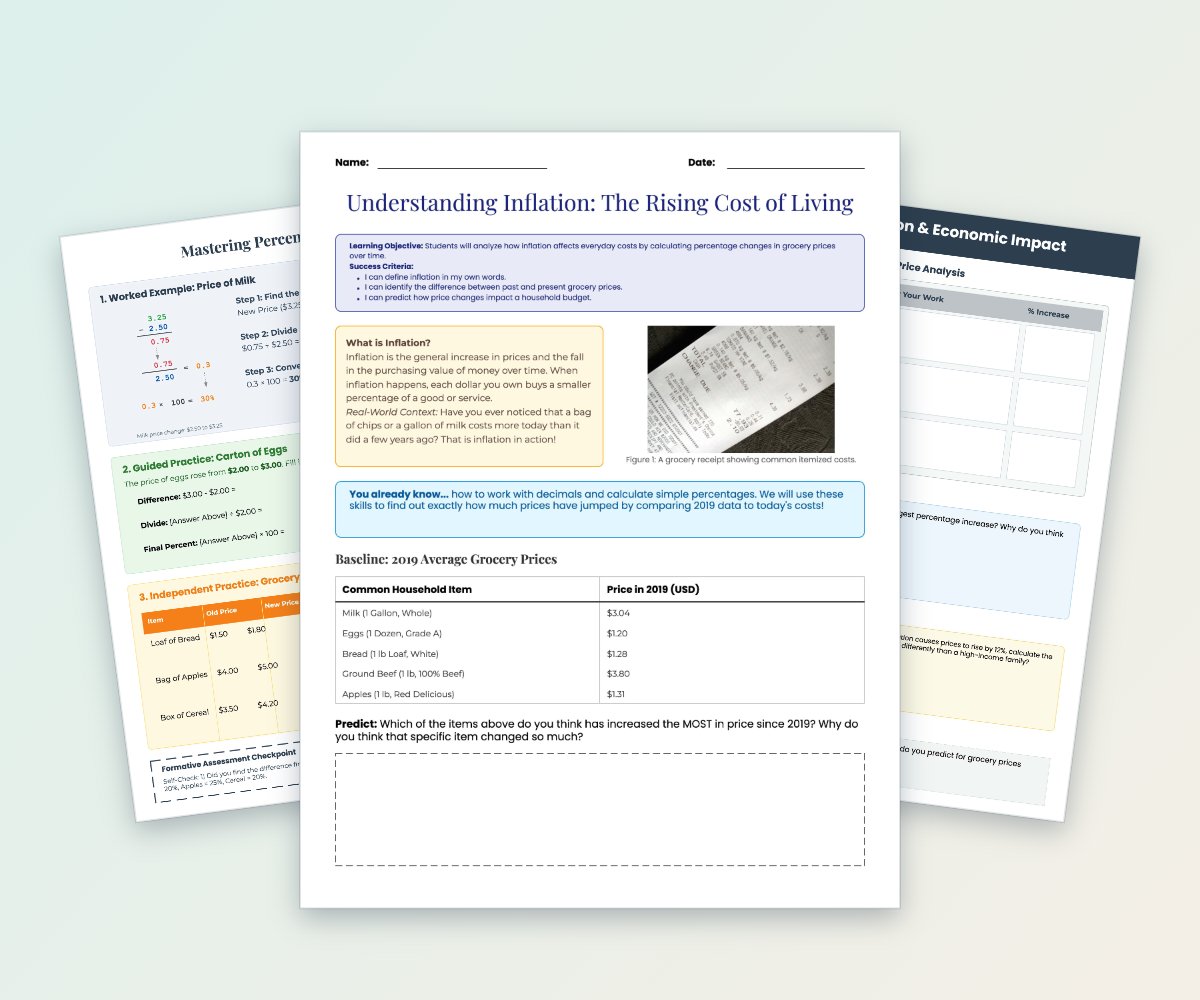
Students learn to define inflation and calculate percentage increases using historical and current grocery prices.
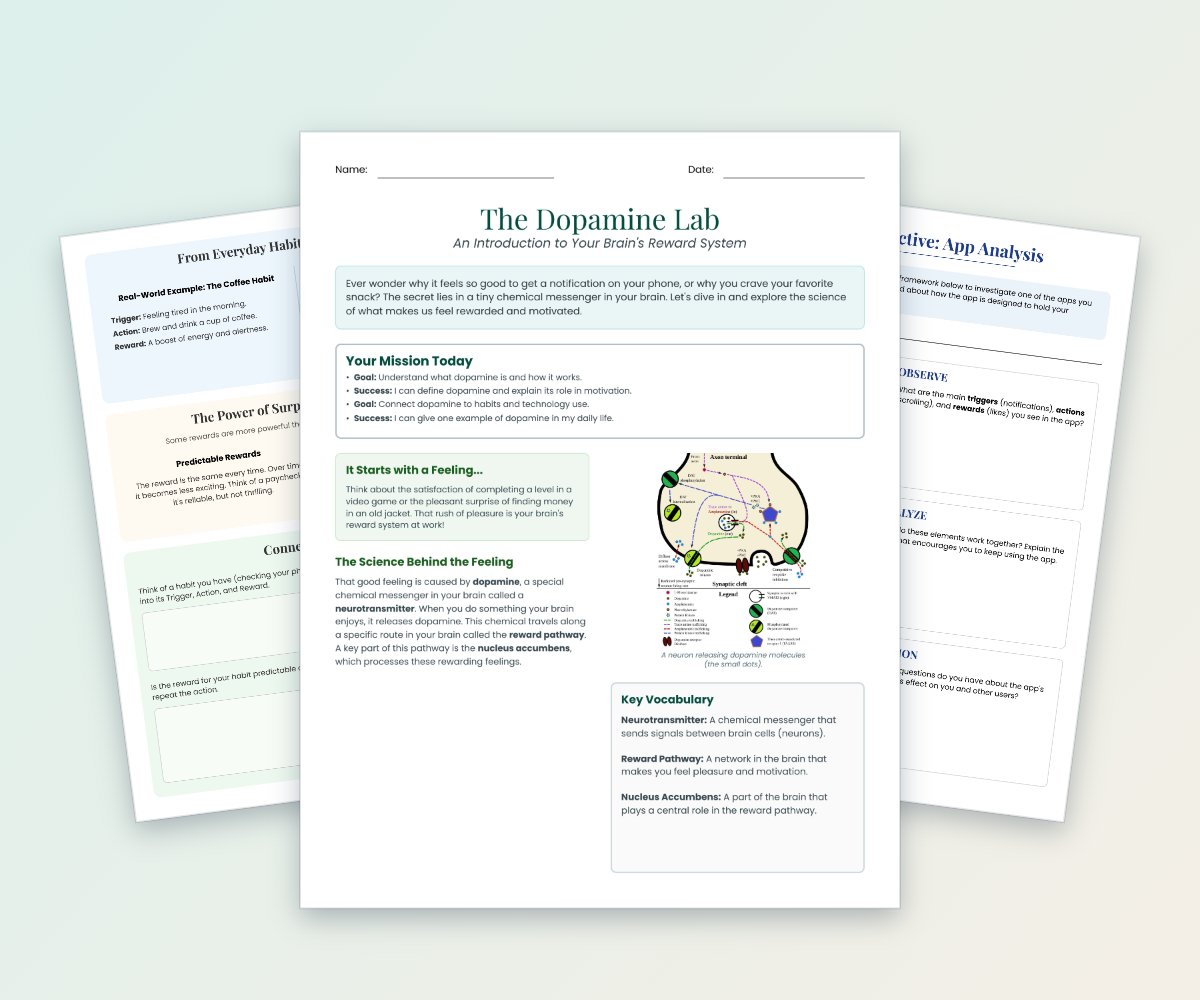
This four-page student resource introduces dopamine, neurotransmitters, the brain’s reward pathway, and the connection between rewards and everyday or digital habits.
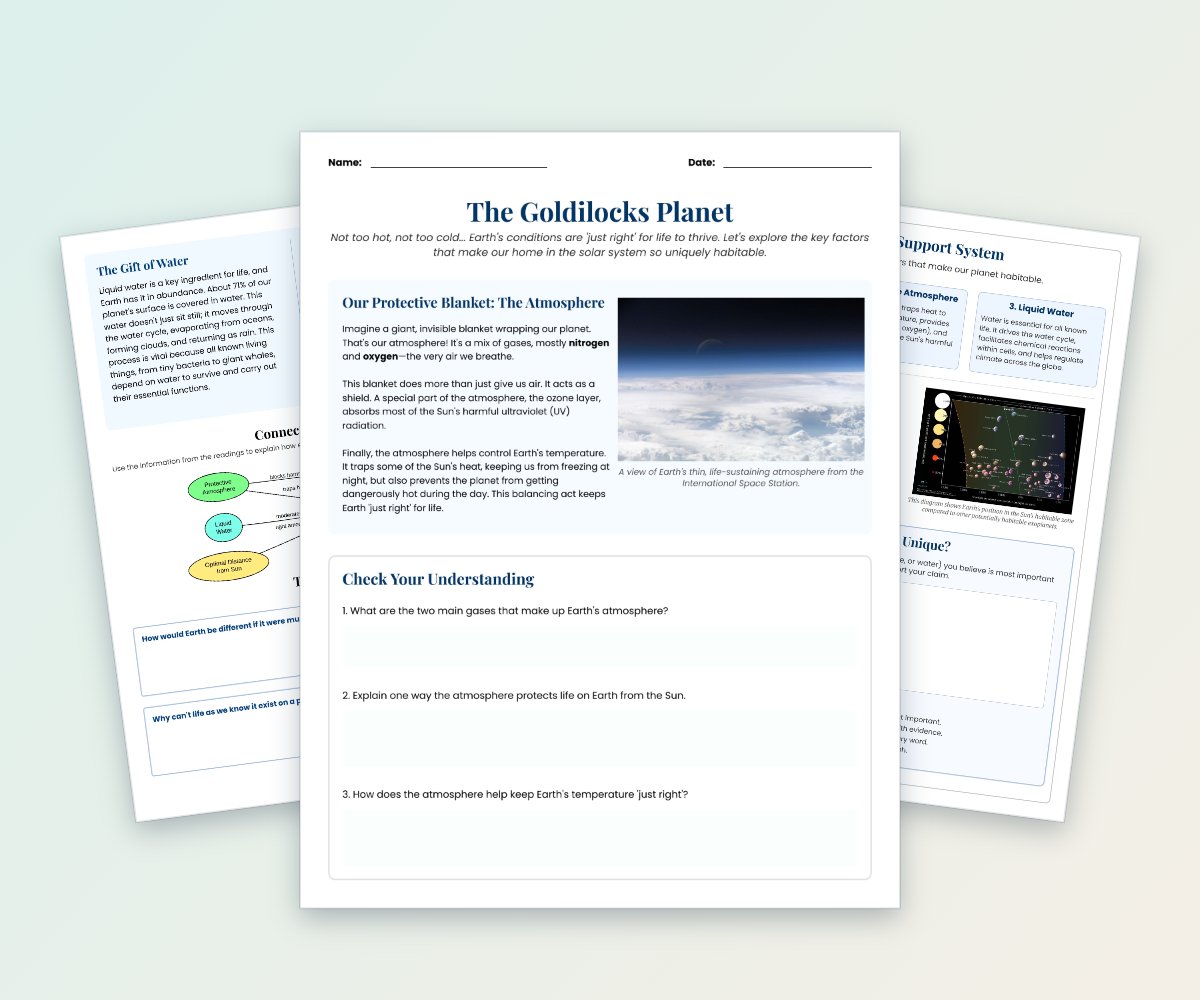
Students explore why Earth can support life, focusing on the atmosphere, liquid water, and its distance from the Sun.
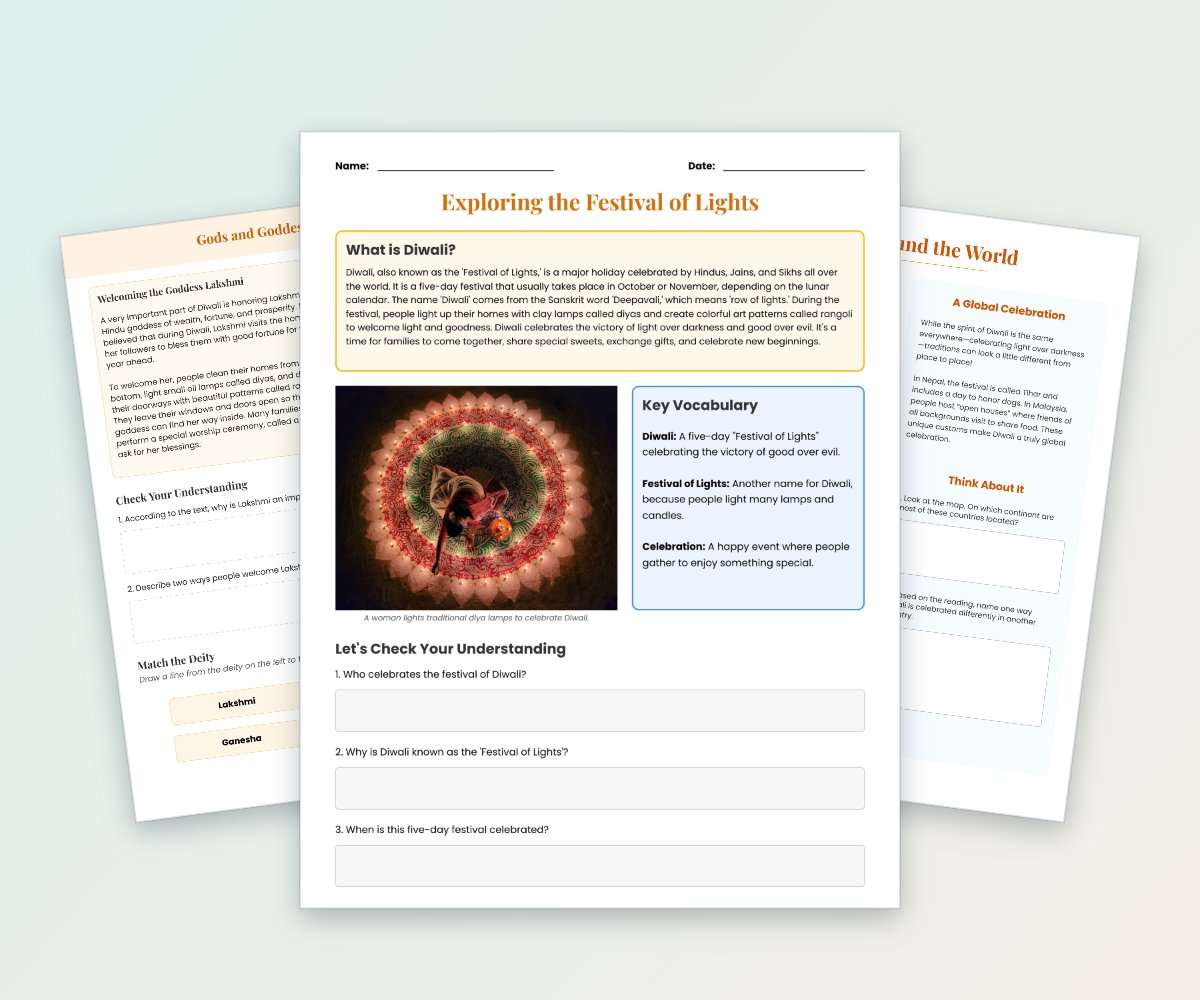
This six-page activity pack introduces students to Diwali, including its history, traditions, symbols, deities, and celebration practices.
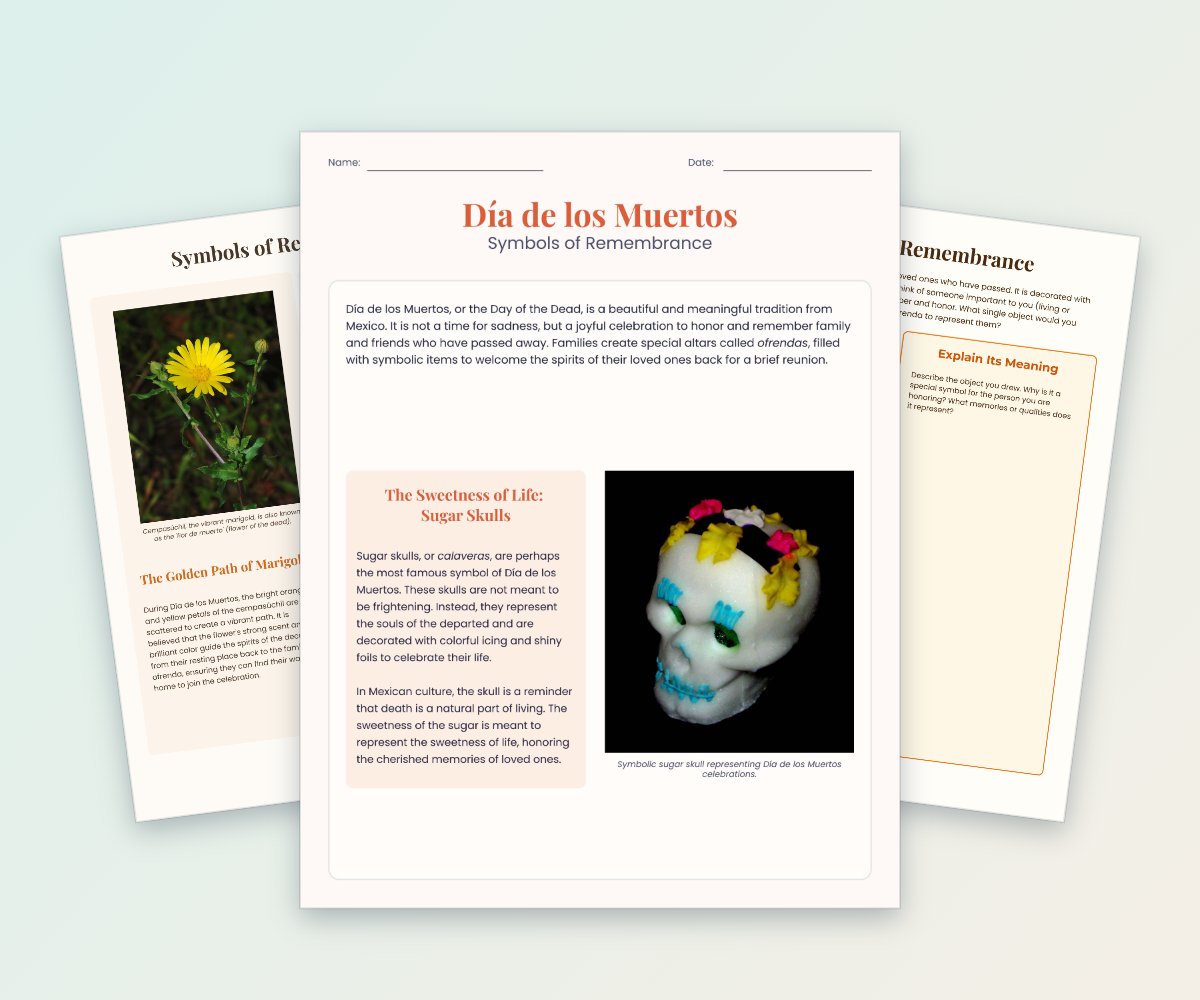
This three-page resource introduces students to Día de los Muertos, explaining sugar skulls, marigolds, ofrendas, candles, photographs, and favorite foods.
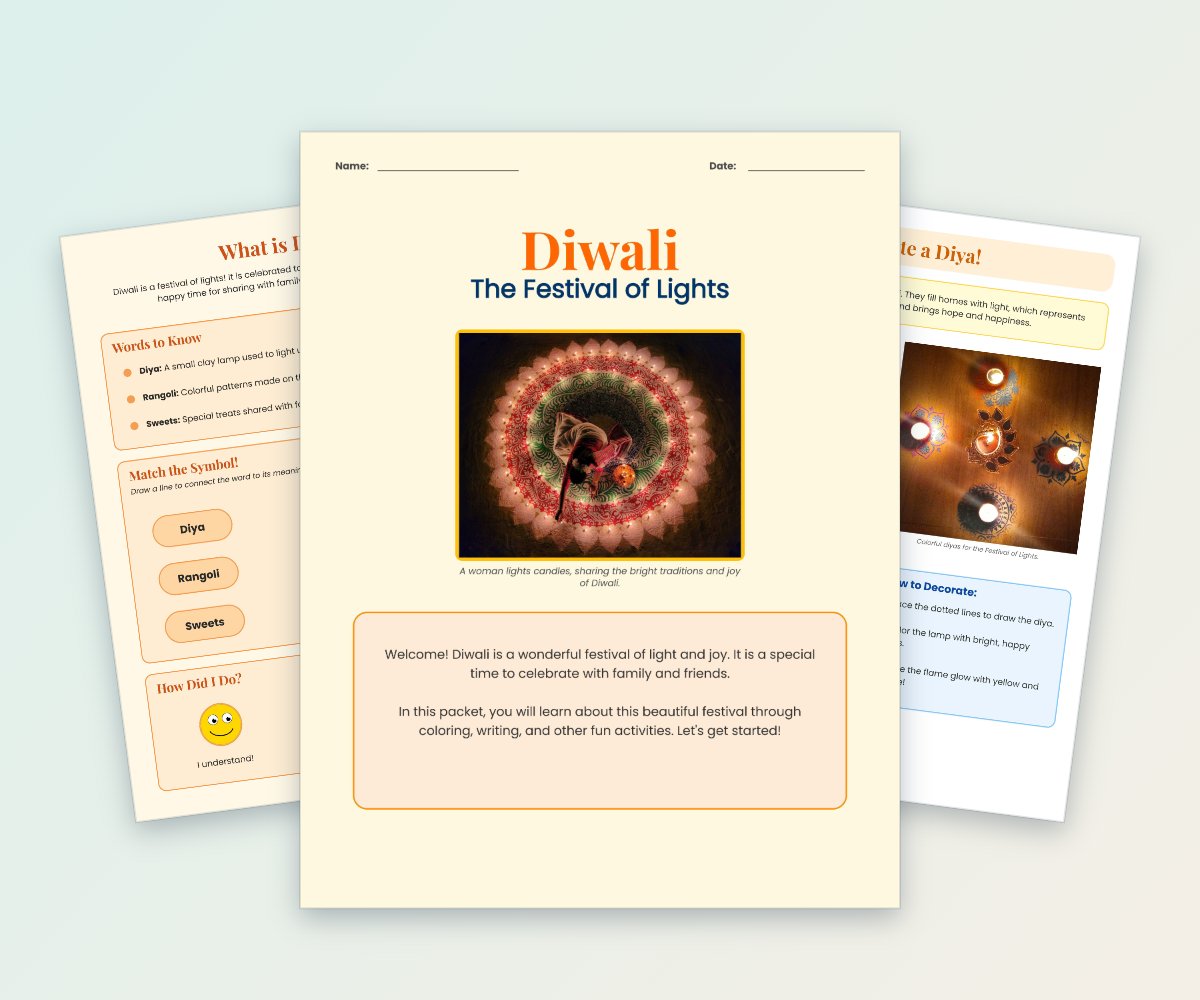
This six-page activity pack introduces students to Diwali, including diyas, rangoli, sweets, and the meaning of light.
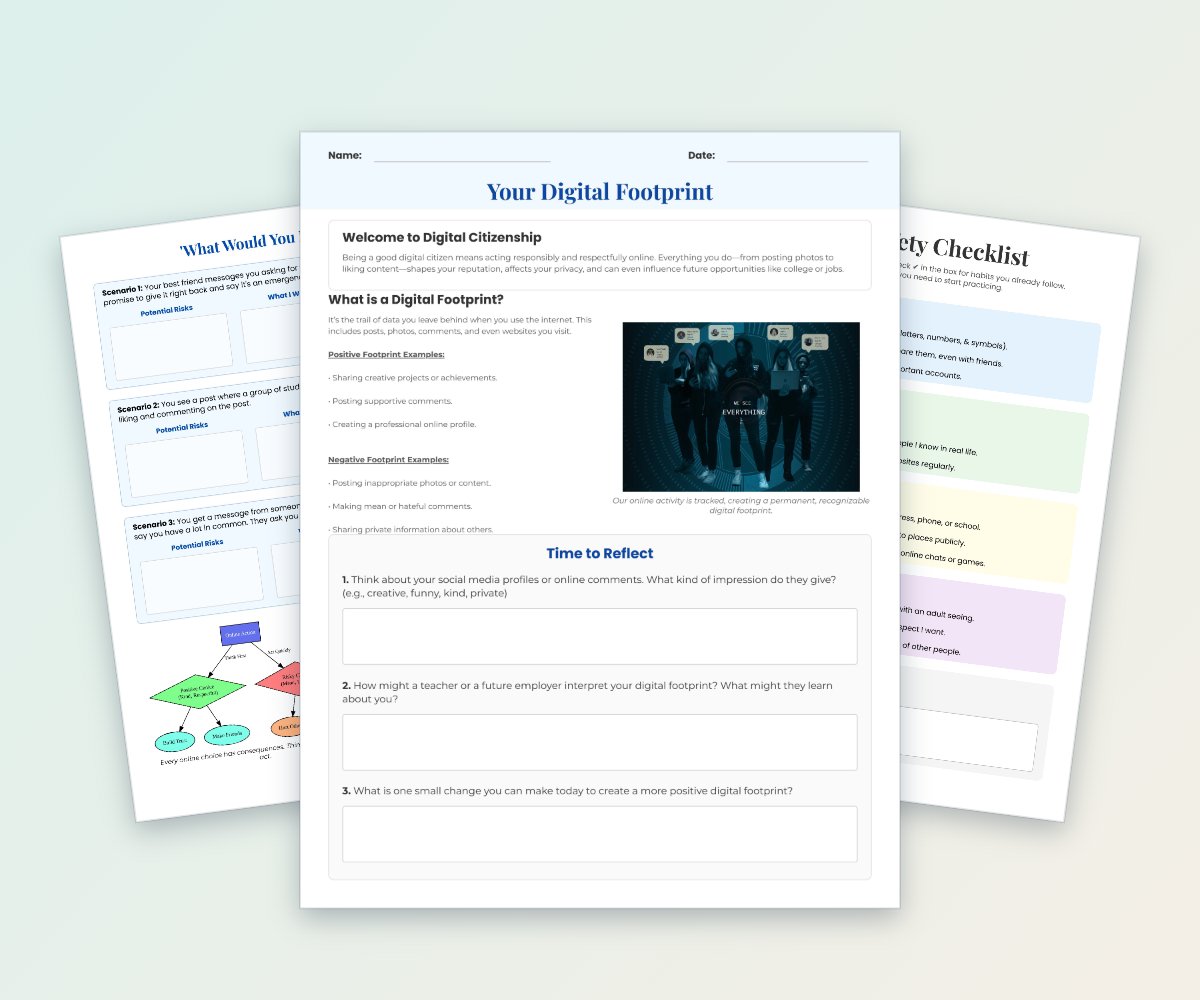
This four-page worksheet helps students understand digital footprints, online reputation, privacy, password safety, and responsible digital behavior.
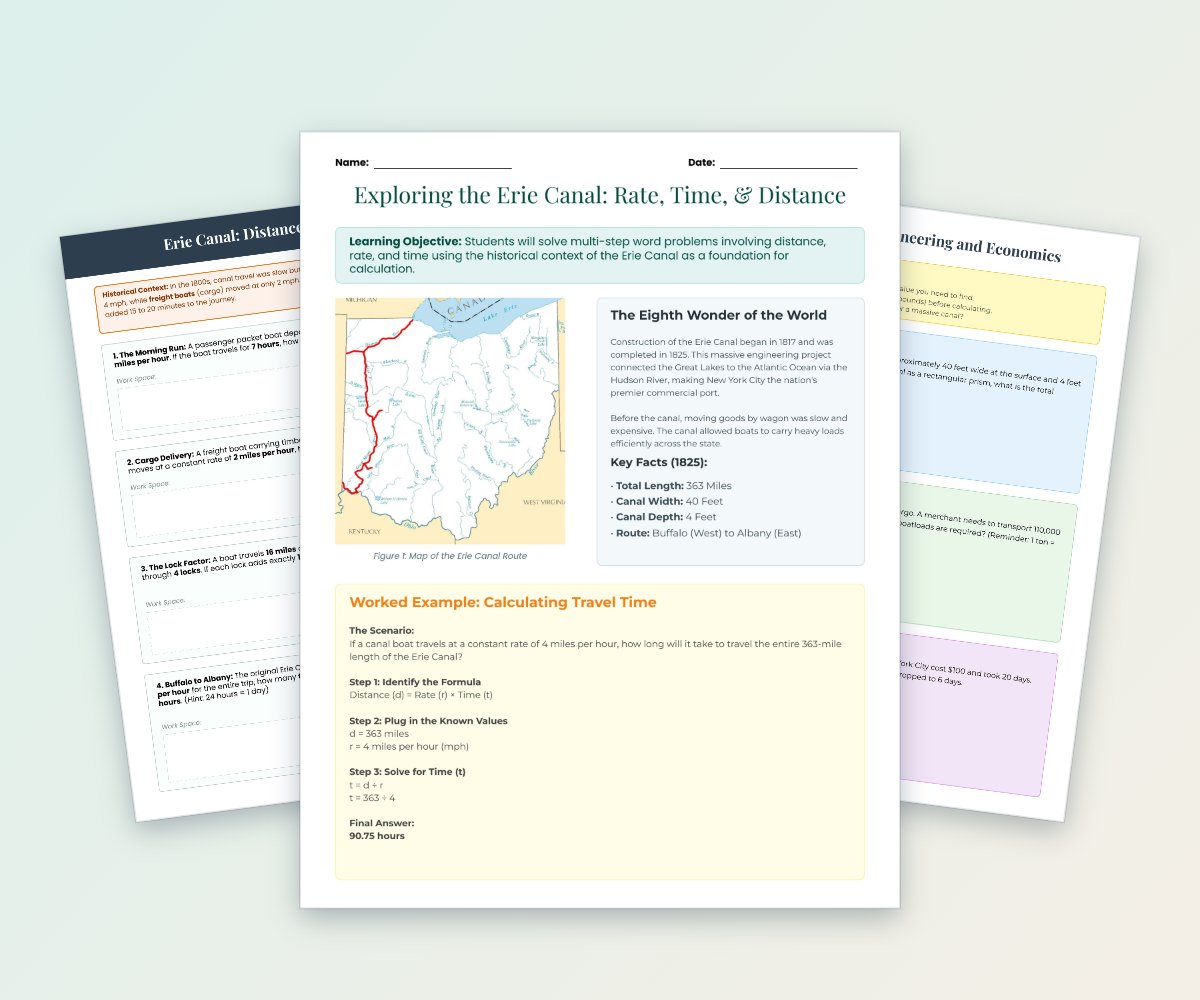
Students use Erie Canal history to explore the relationship between distance, rate, and time.
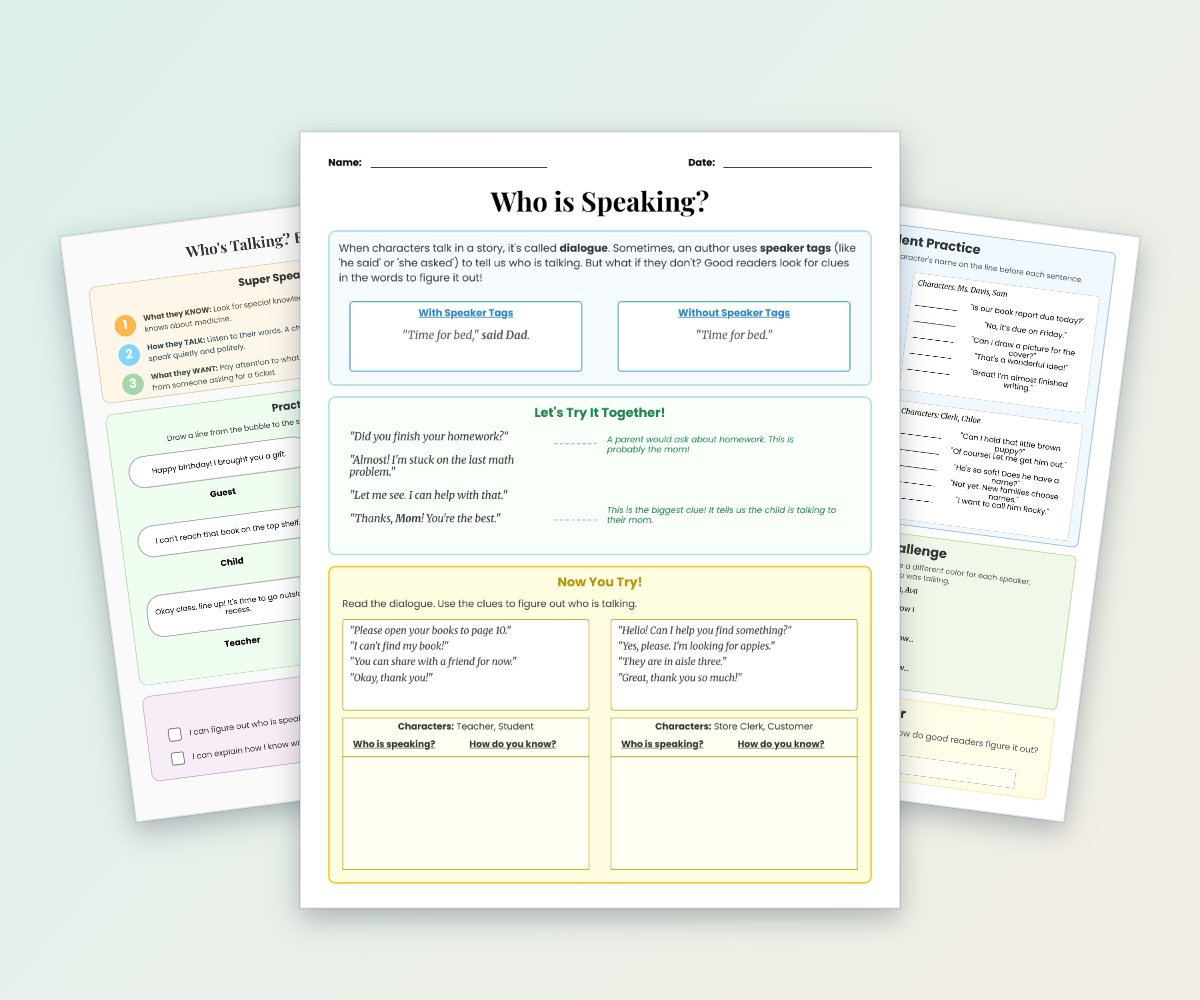
This three-page worksheet helps students identify who is speaking in dialogue by using speaker tags, character knowledge, word choice, and context clues.
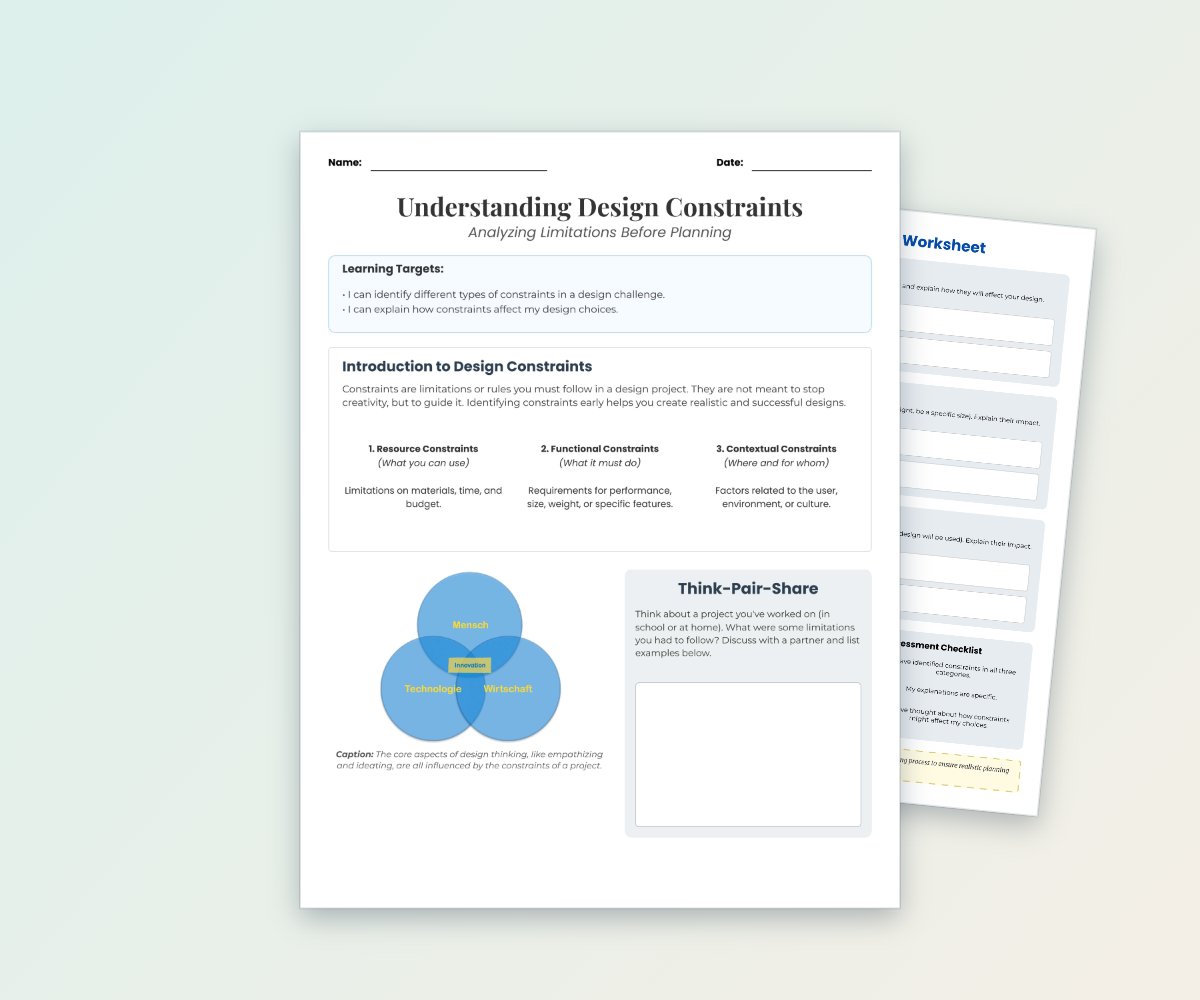
This two-page worksheet introduces resource, functional, and contextual design constraints before students begin planning a project.
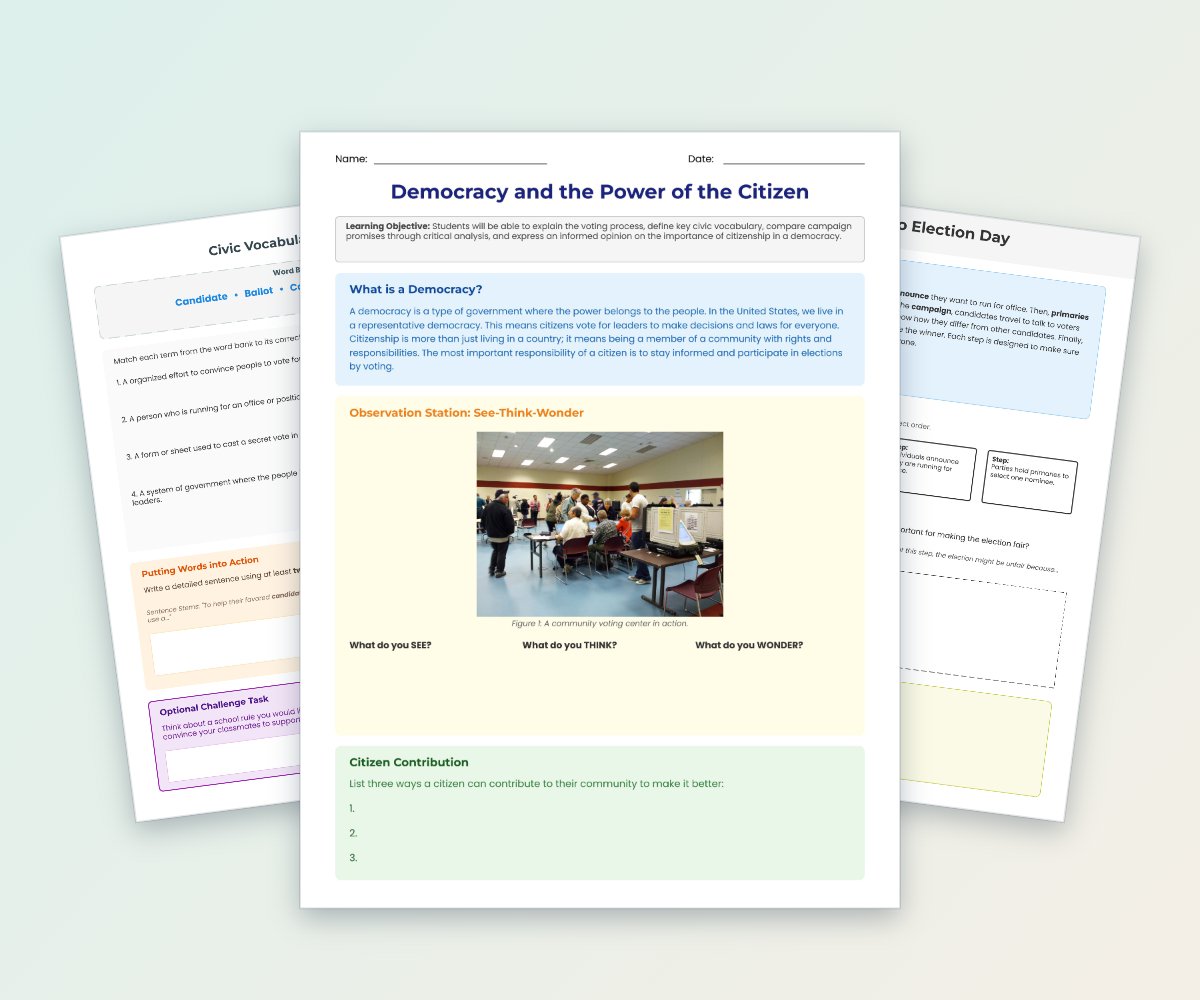
This six-page civics activity pack introduces democracy, citizenship, voting, elections, campaigns, candidates, and ballots.
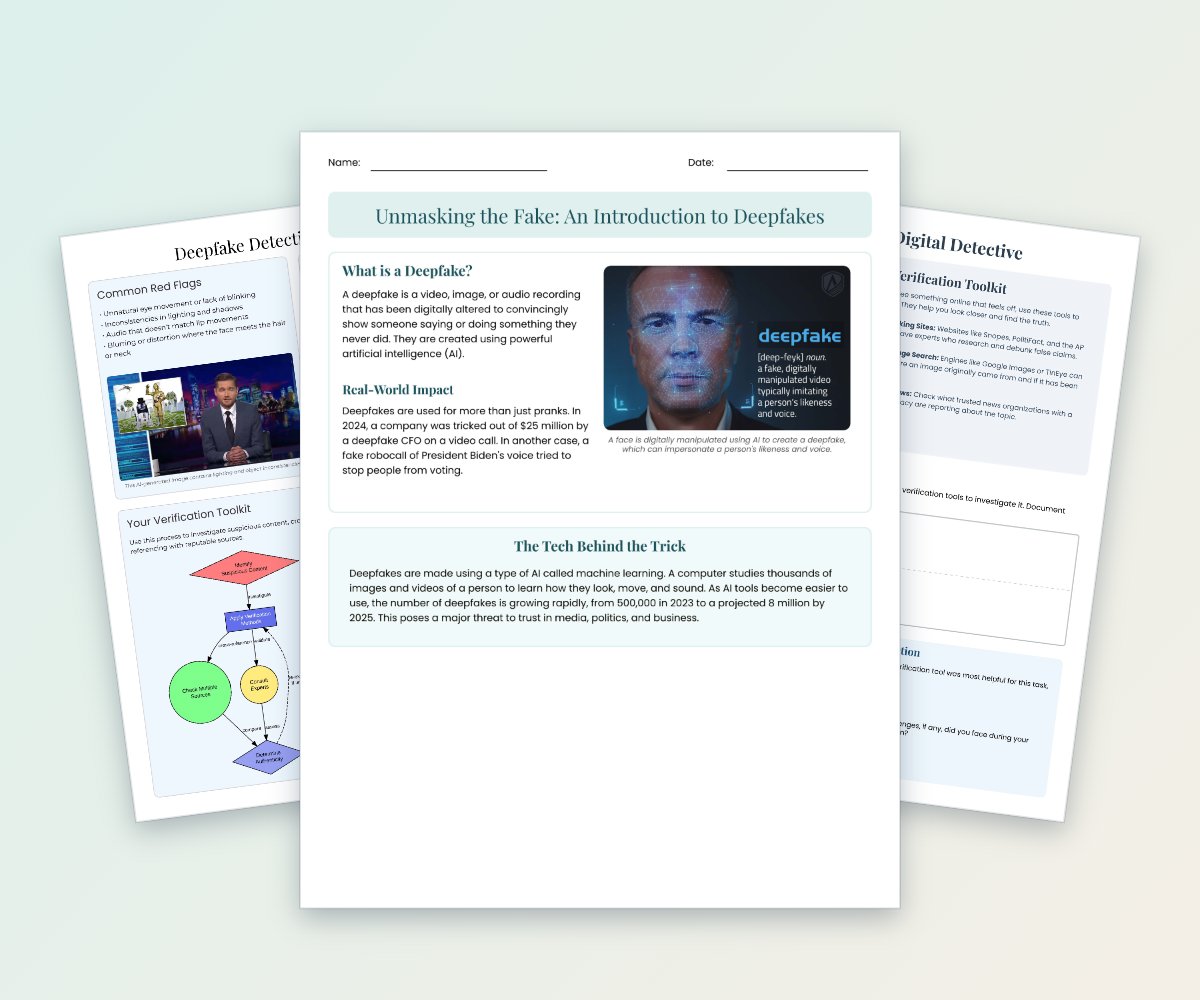
This four-page activity introduces deepfakes, explains how they are created, and identifies common signs of manipulated media.
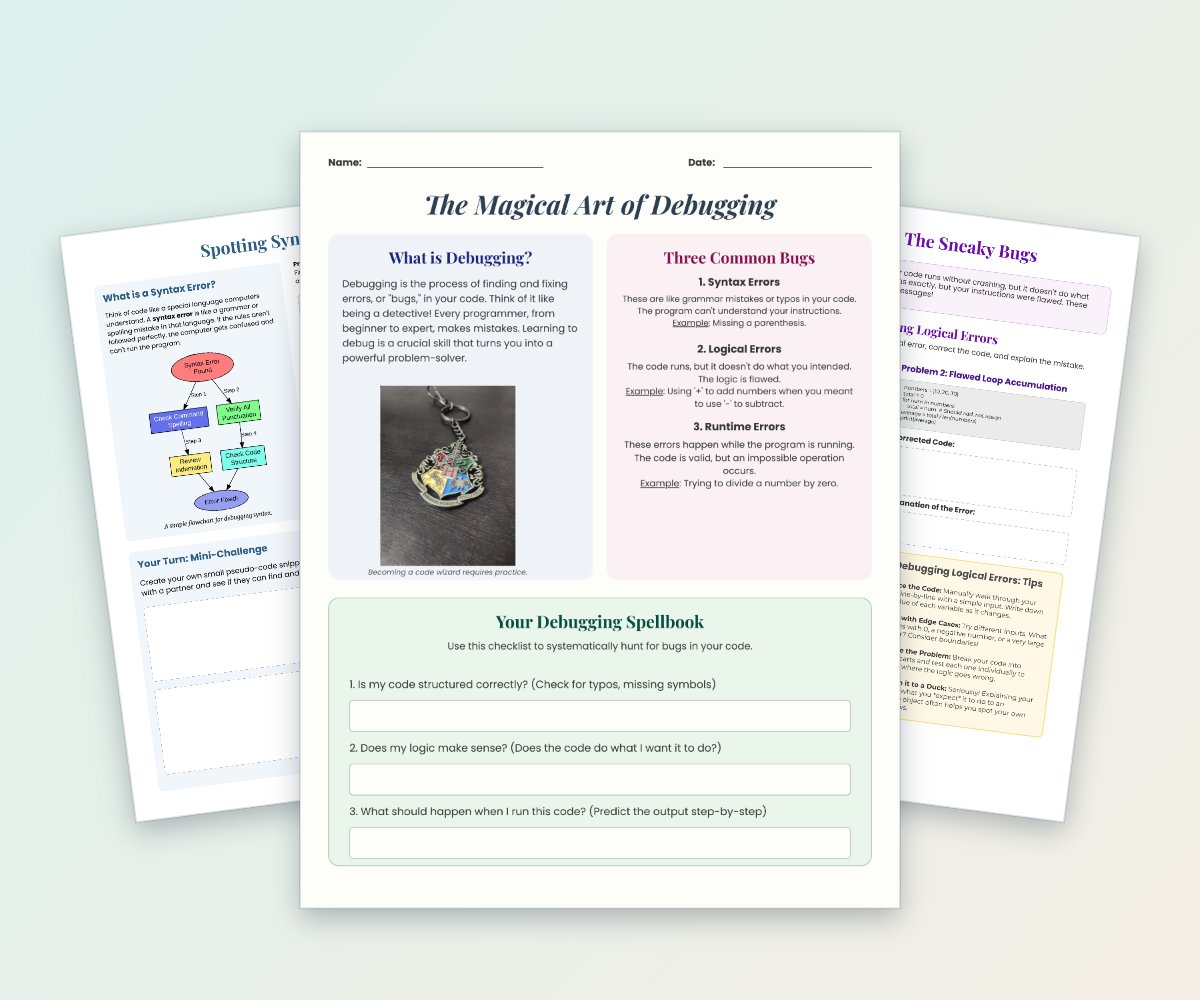
This four-page computer science worksheet introduces syntax, logical, and runtime errors through clear explanations and examples.
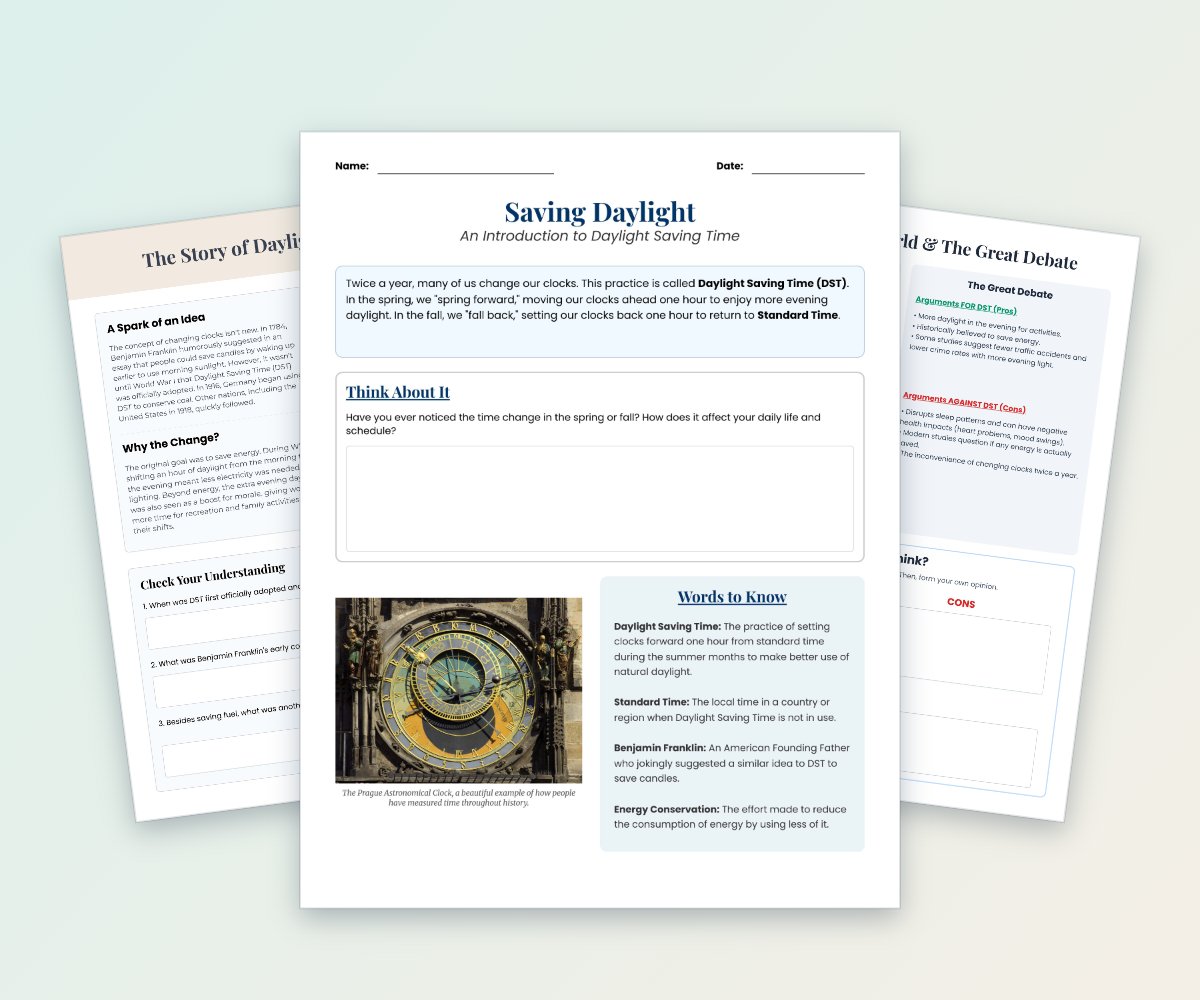
Students explore how humans measured time, the development of standard time zones, and the origins of Daylight Saving Time.
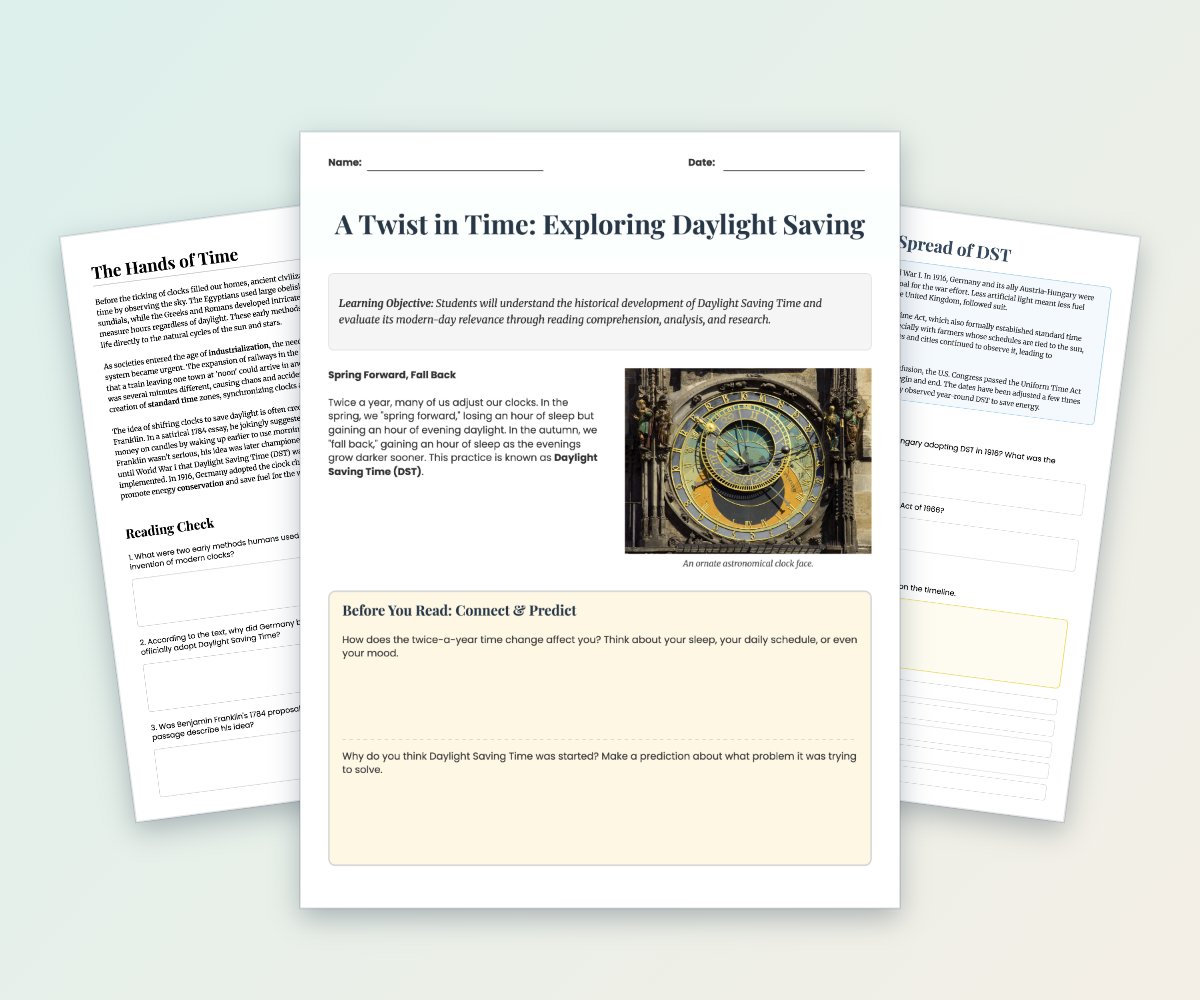
This four-page worksheet introduces Daylight Saving Time, Standard Time, Benjamin Franklin, energy conservation, and the history of clock changes.
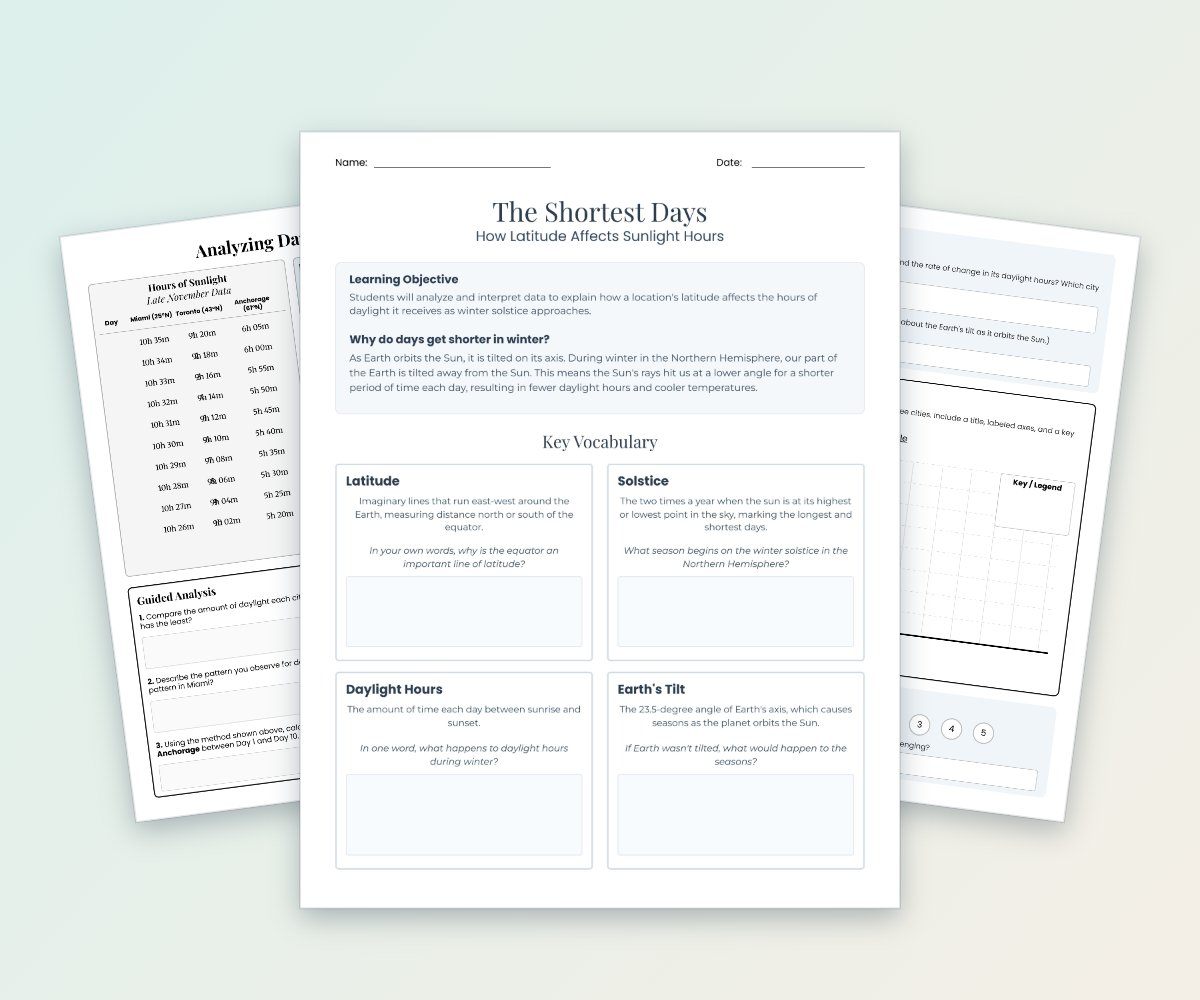
Students explore how latitude affects daylight hours as the winter solstice approaches.
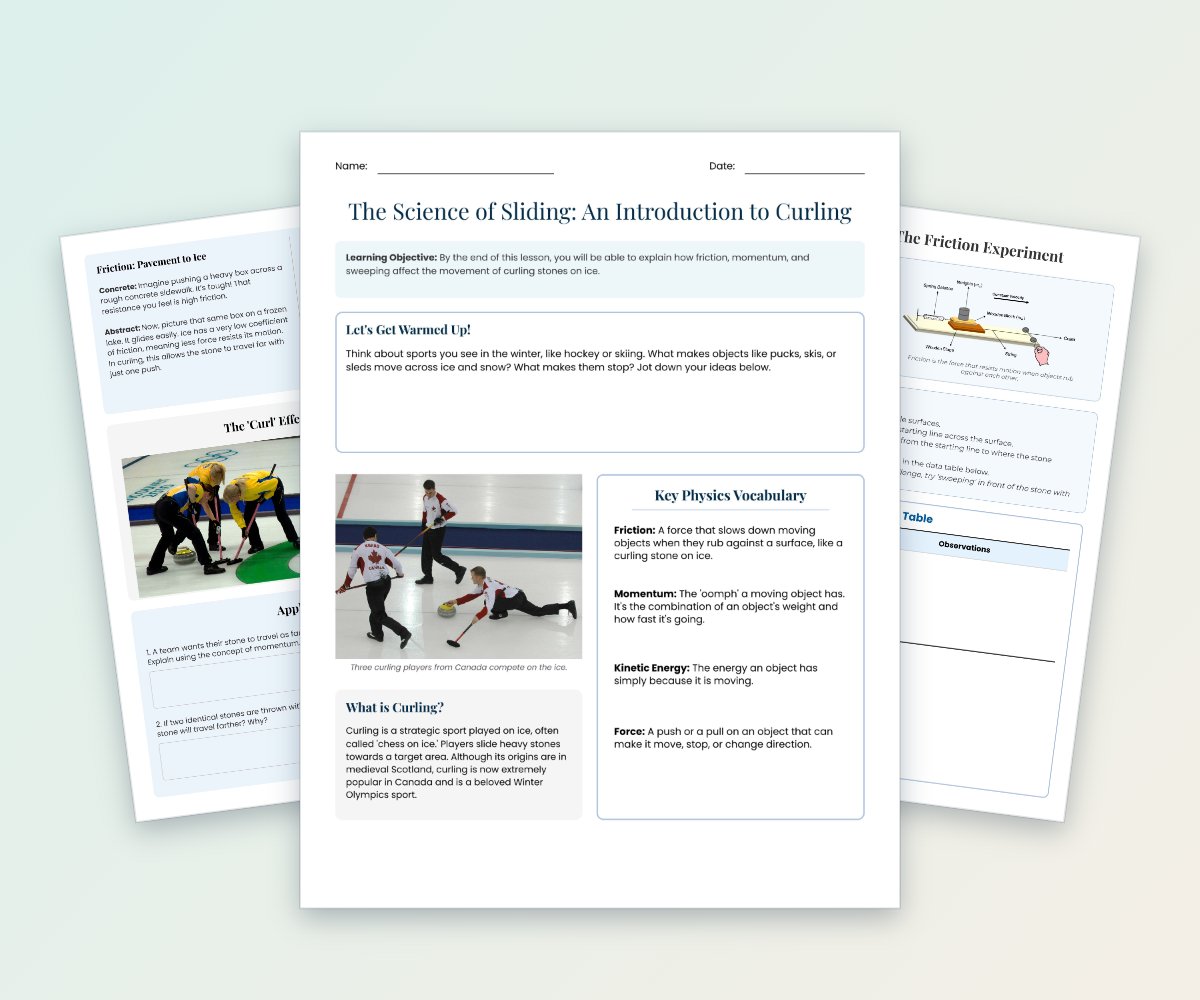
This lesson uses curling to introduce friction, momentum, kinetic energy, and force.
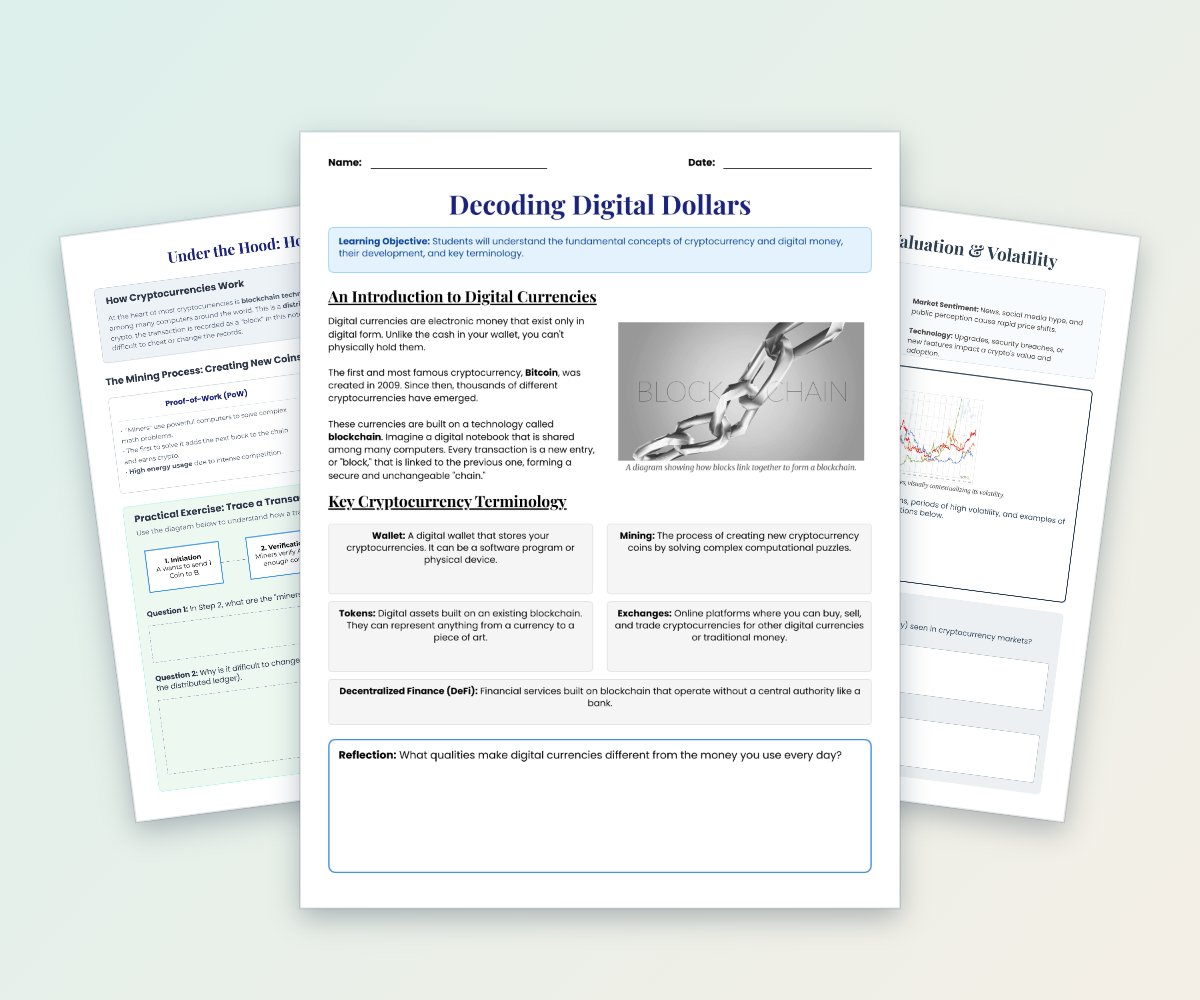
This six-page instructional resource introduces digital currencies, cryptocurrency terminology, blockchain technology, mining, proof-of-work, and proof-of-stake.
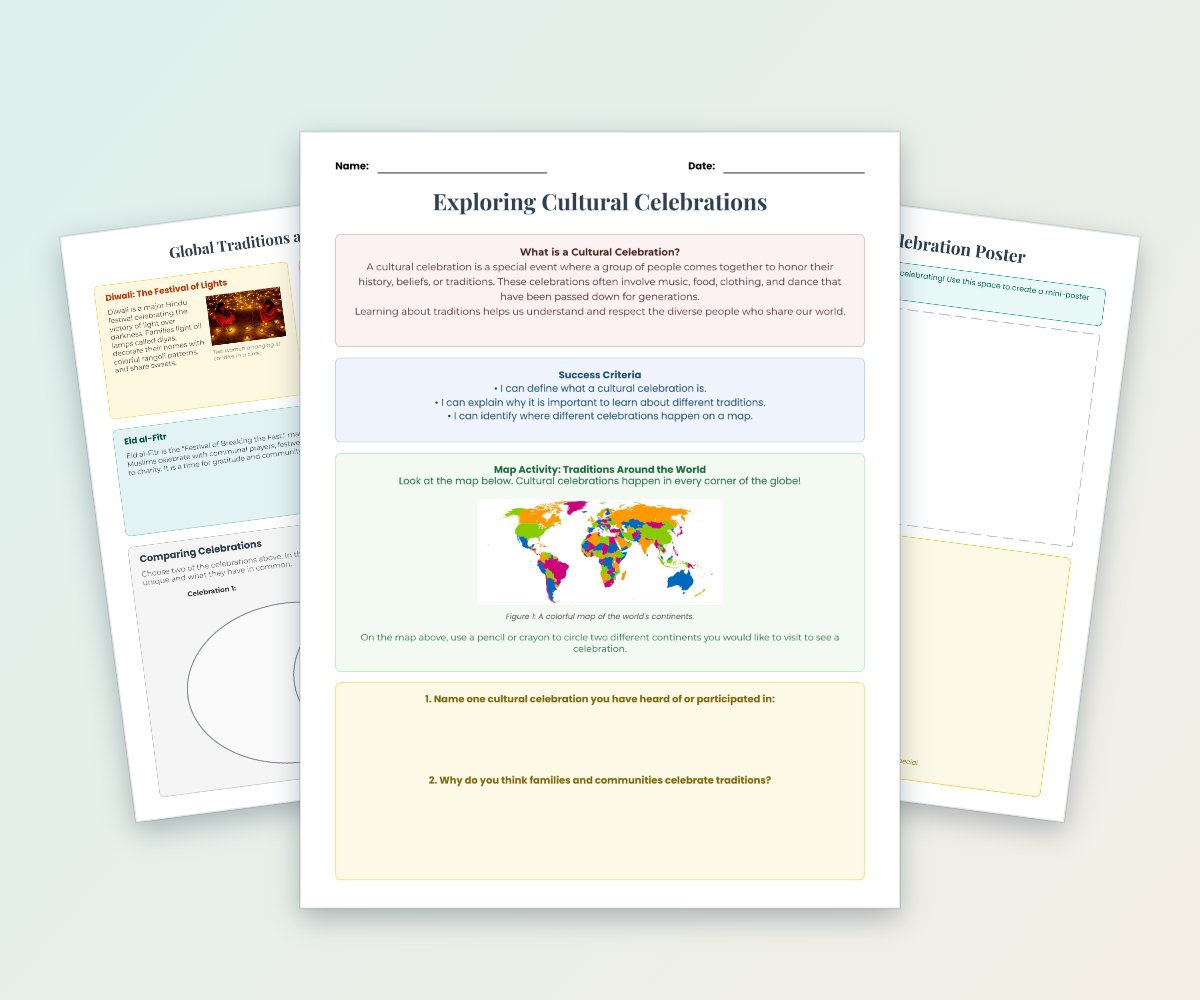
Students learn what cultural celebrations are and explore Diwali, Eid al-Fitr, and Lunar New Year.
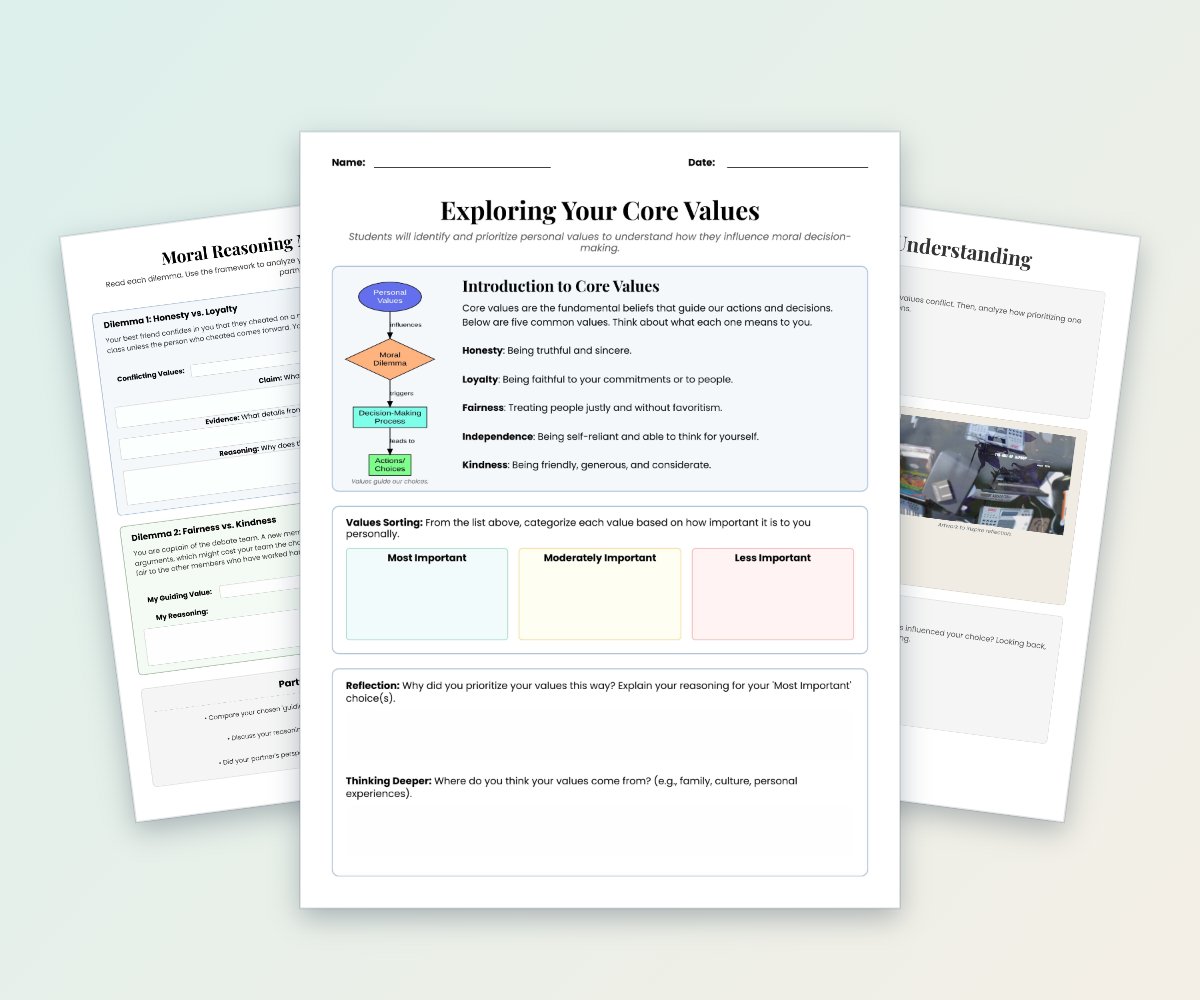
Students define and prioritize core values, then apply them to moral dilemmas involving honesty, loyalty, fairness, and kindness.
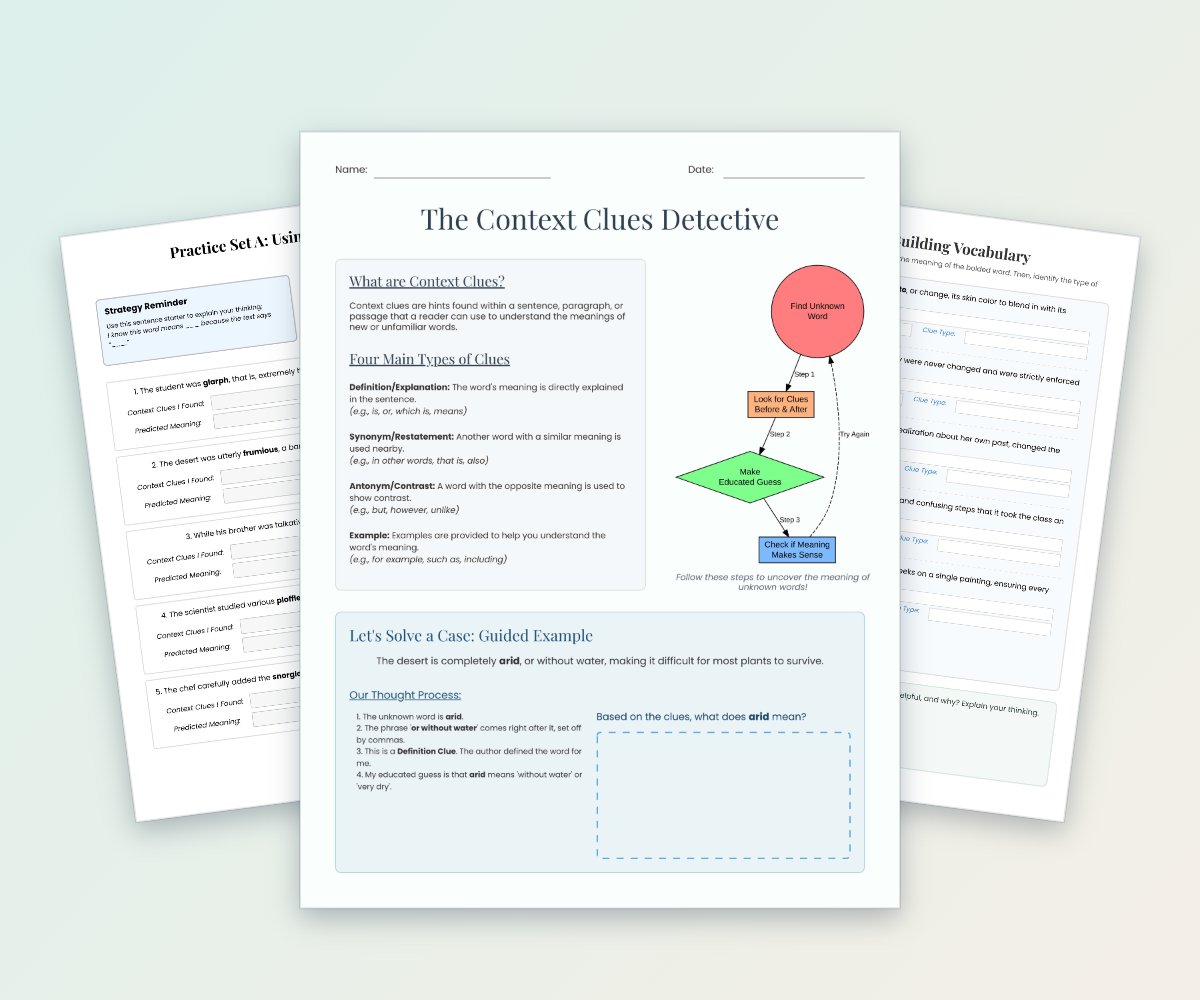
This four-page worksheet teaches students to identify definition, synonym, antonym, and example context clues.
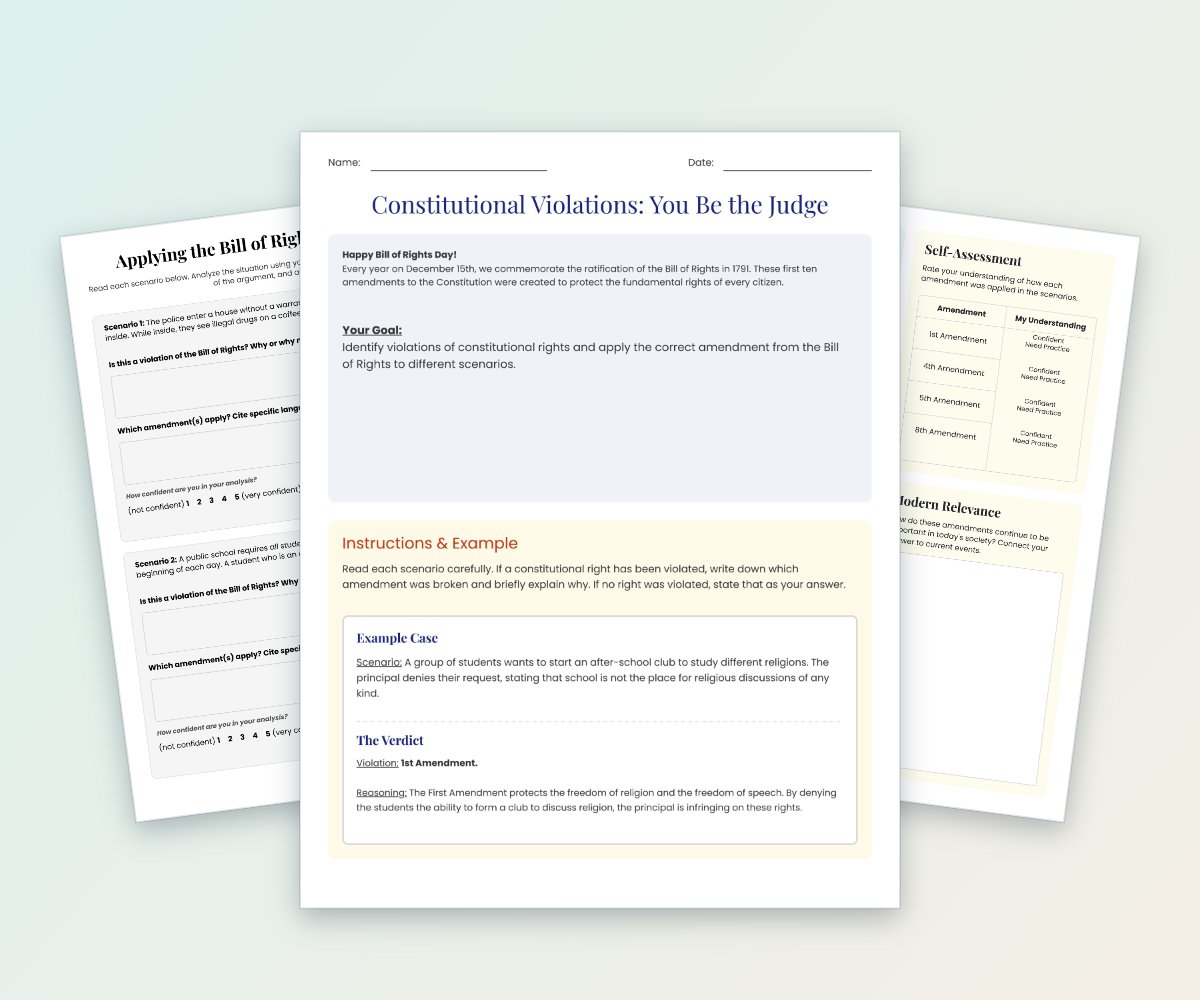
Students examine realistic scenarios involving the First, Fourth, and Fifth Amendments and determine whether constitutional rights were violated.
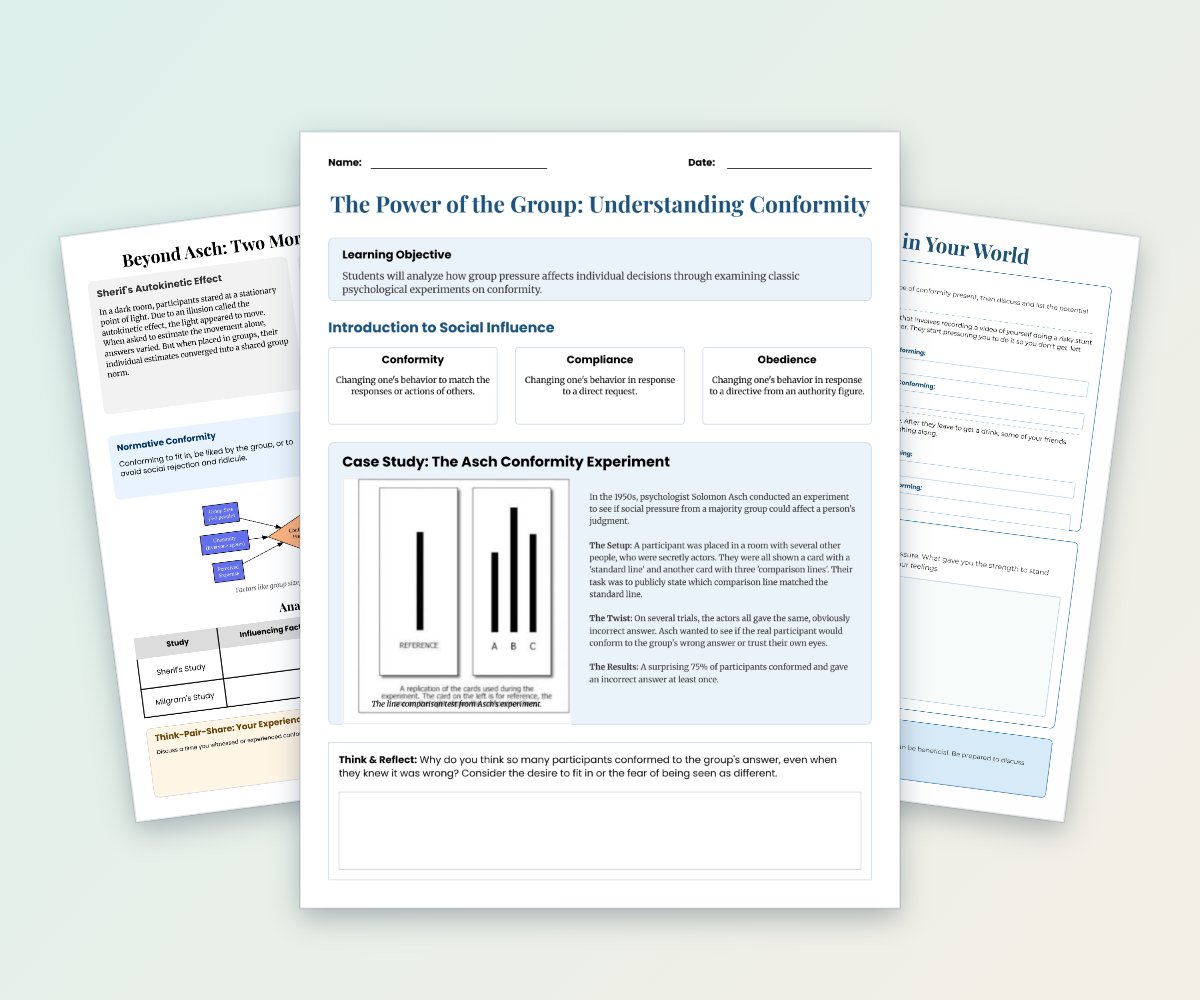
Students examine conformity, compliance, and obedience through the Asch, Sherif, and Milgram experiments.
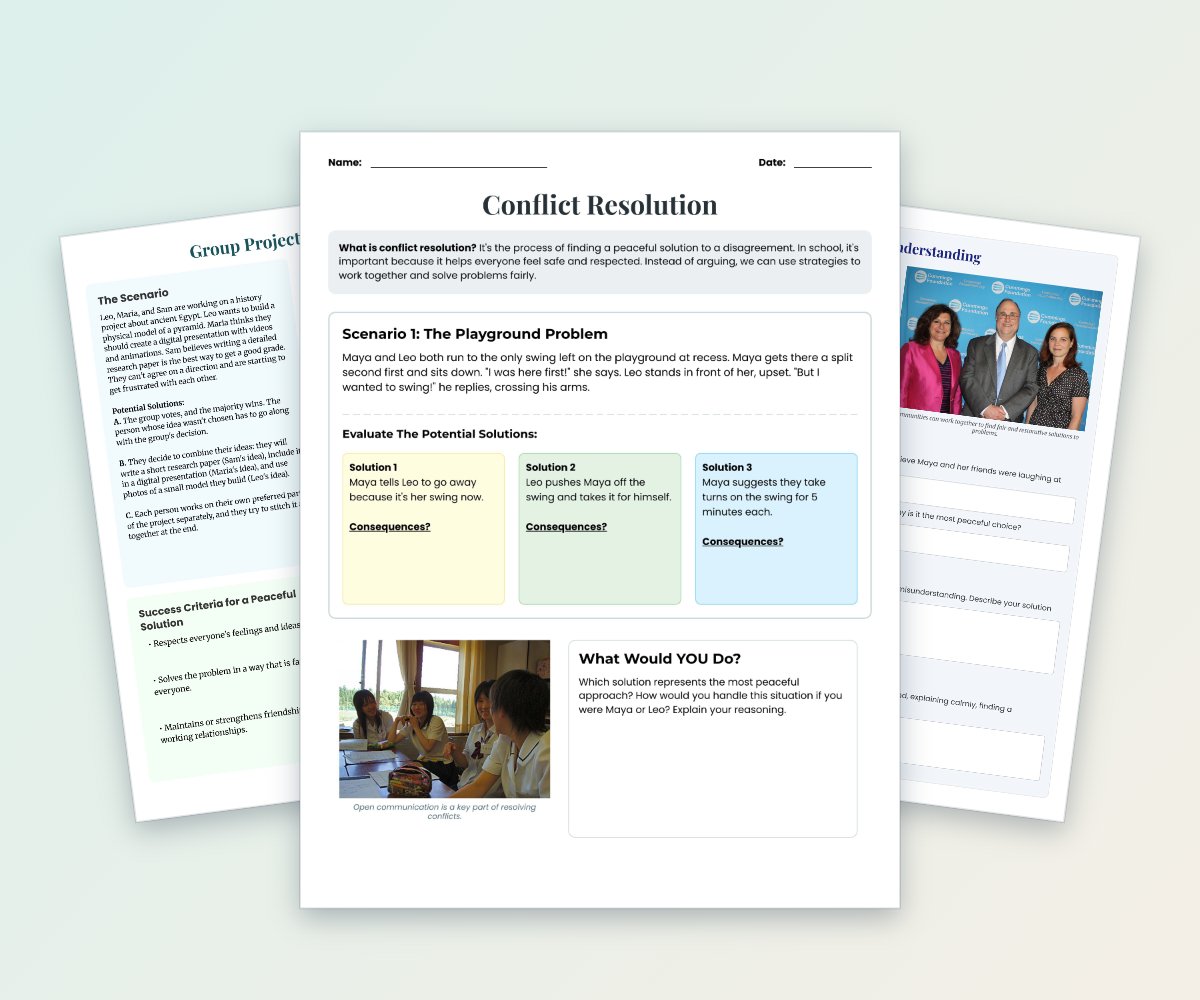
Students examine playground, group project, and lunchroom conflicts while evaluating possible solutions and their consequences.
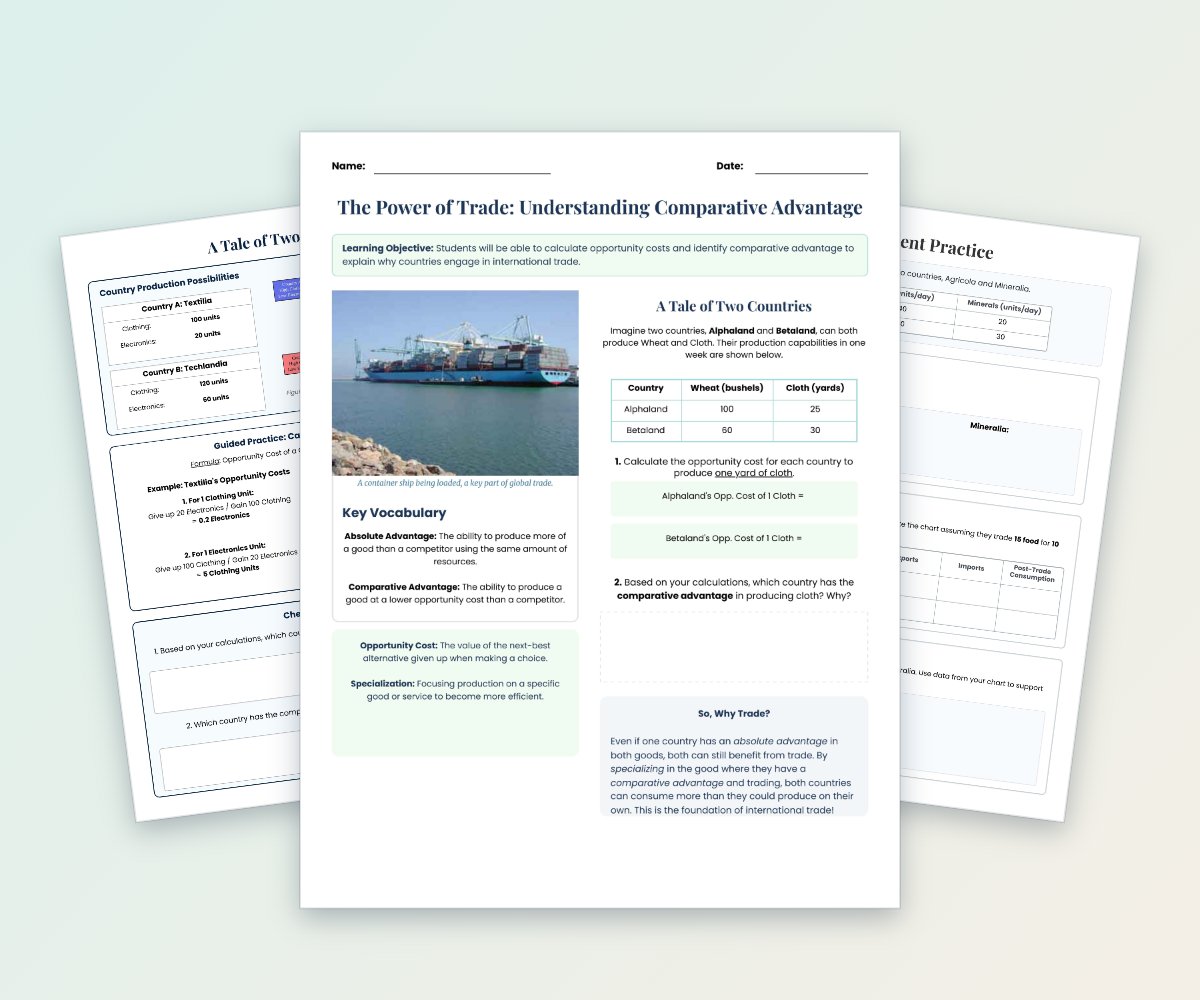
Students calculate opportunity costs and identify comparative advantage using country production scenarios.
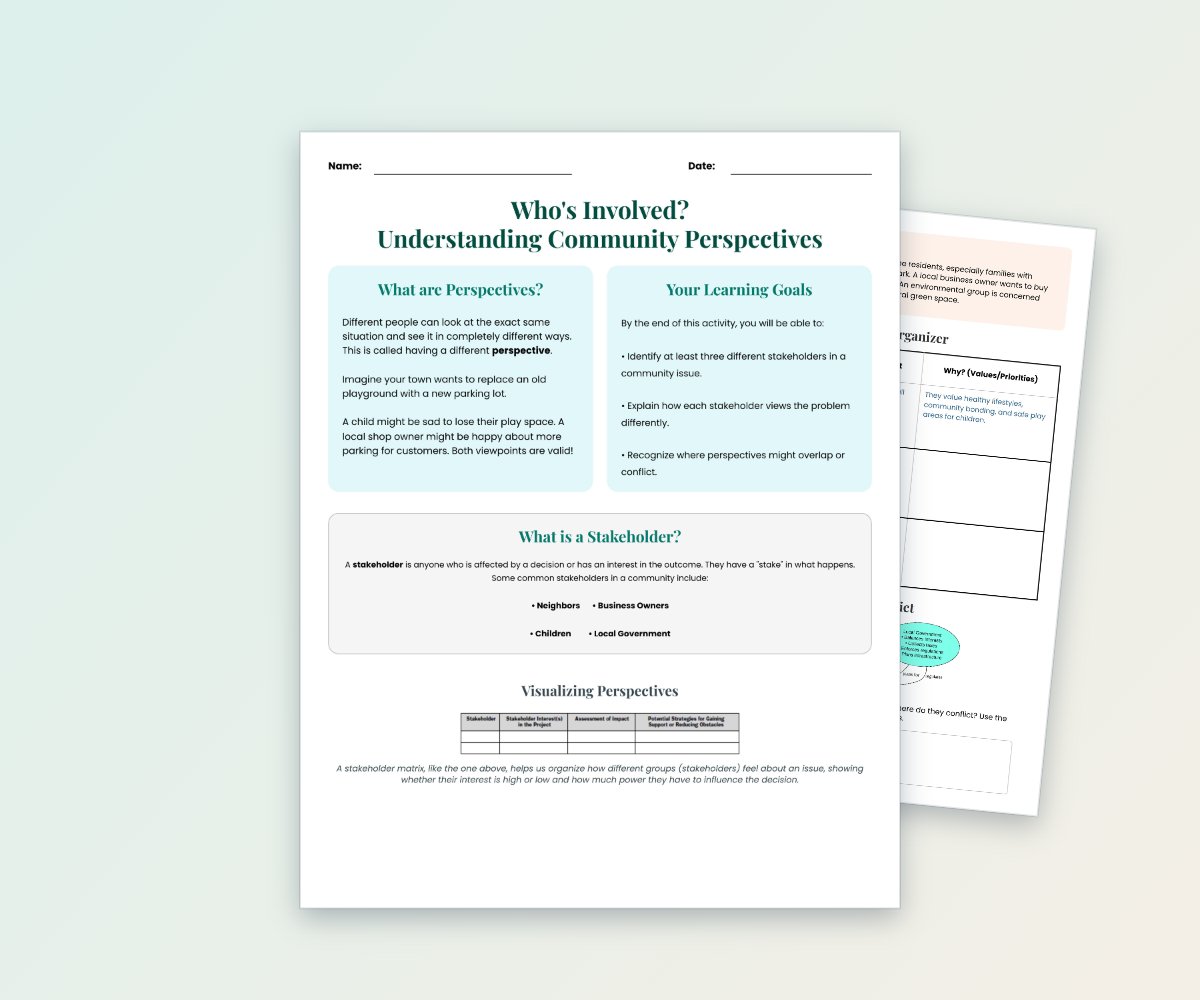
Students examine a community land-use issue from the perspectives of families, businesses, environmental groups, neighbors, developers, and local government.
Students read about a Providence, Rhode Island, veteran who continues serving the community through volunteering and mentoring.
Students learn the difference between essential community needs and nonessential wants using examples such as hospitals, schools, parks, and stores.
Students read about a veteran’s military service and continued community leadership in Richmond, Virginia.
This four-page resource introduces confirmation, anchoring, availability, and optimism biases through definitions, real-world examples, a flowchart, and a comparison table.
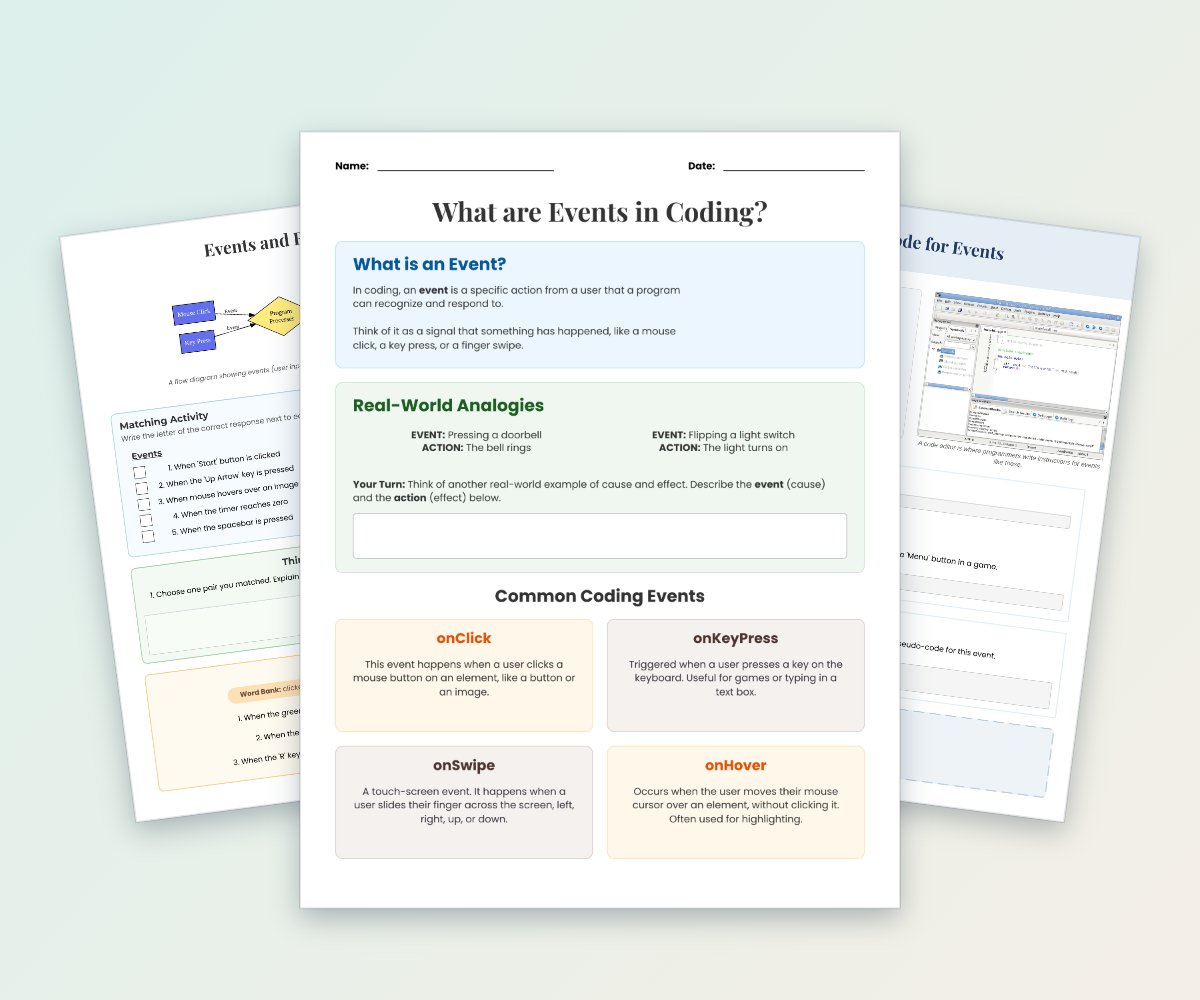
This four-page worksheet introduces coding events such as clicks, key presses, swipes, and hovers.
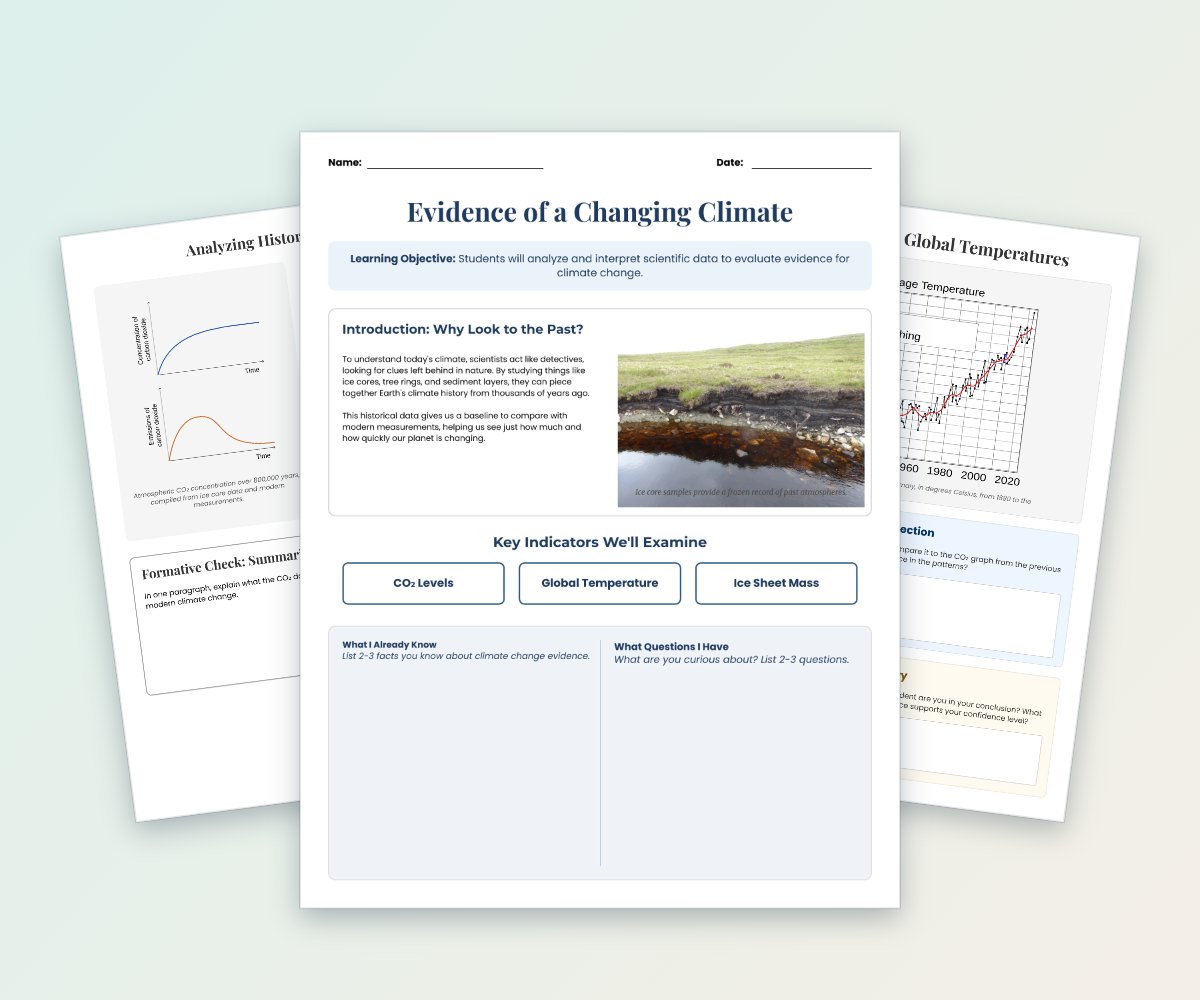
Students analyze historical and modern climate data, including atmospheric CO2 levels and global temperature trends.
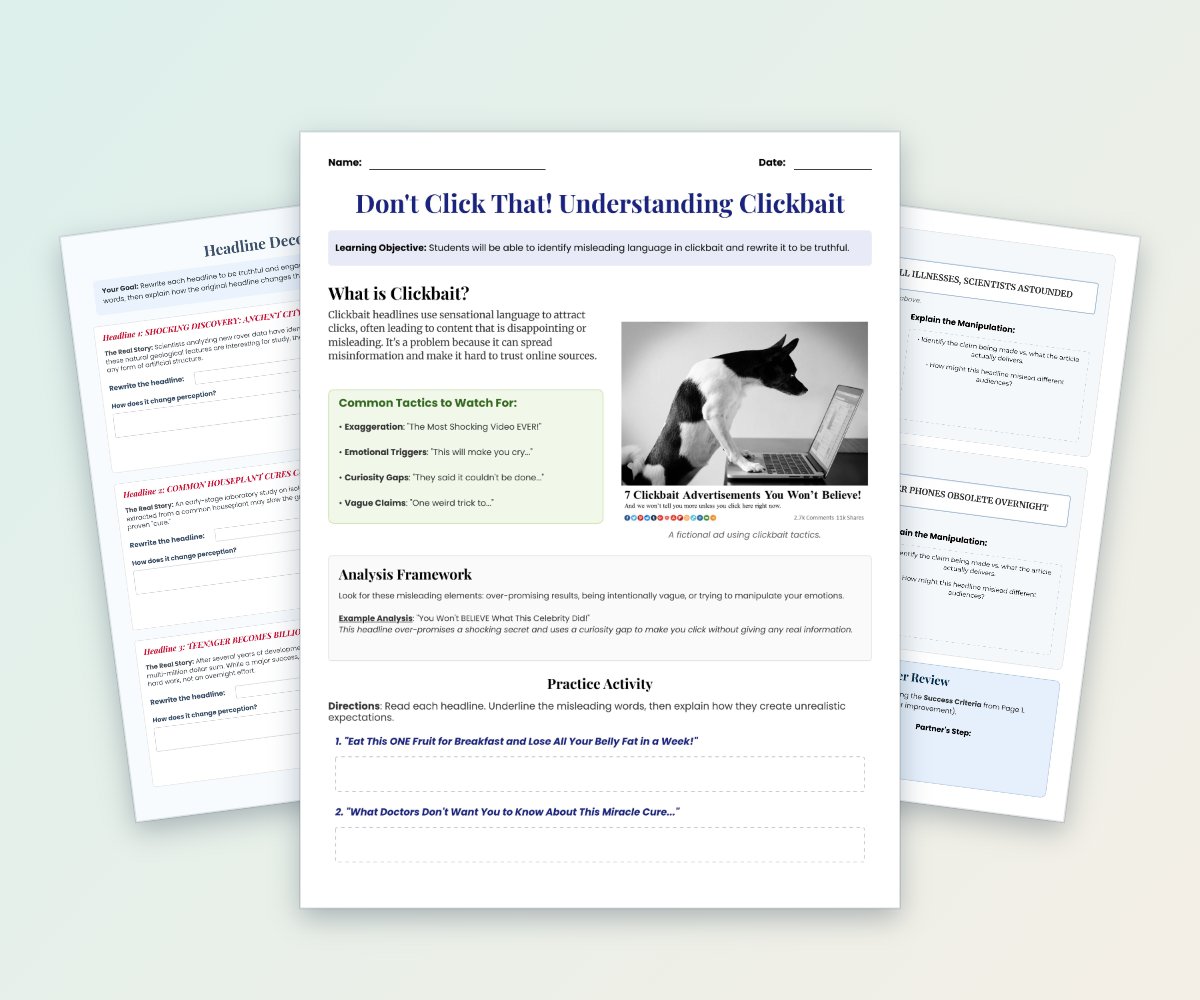
This four-page worksheet teaches students how clickbait uses exaggeration, emotional triggers, curiosity gaps, and vague claims.
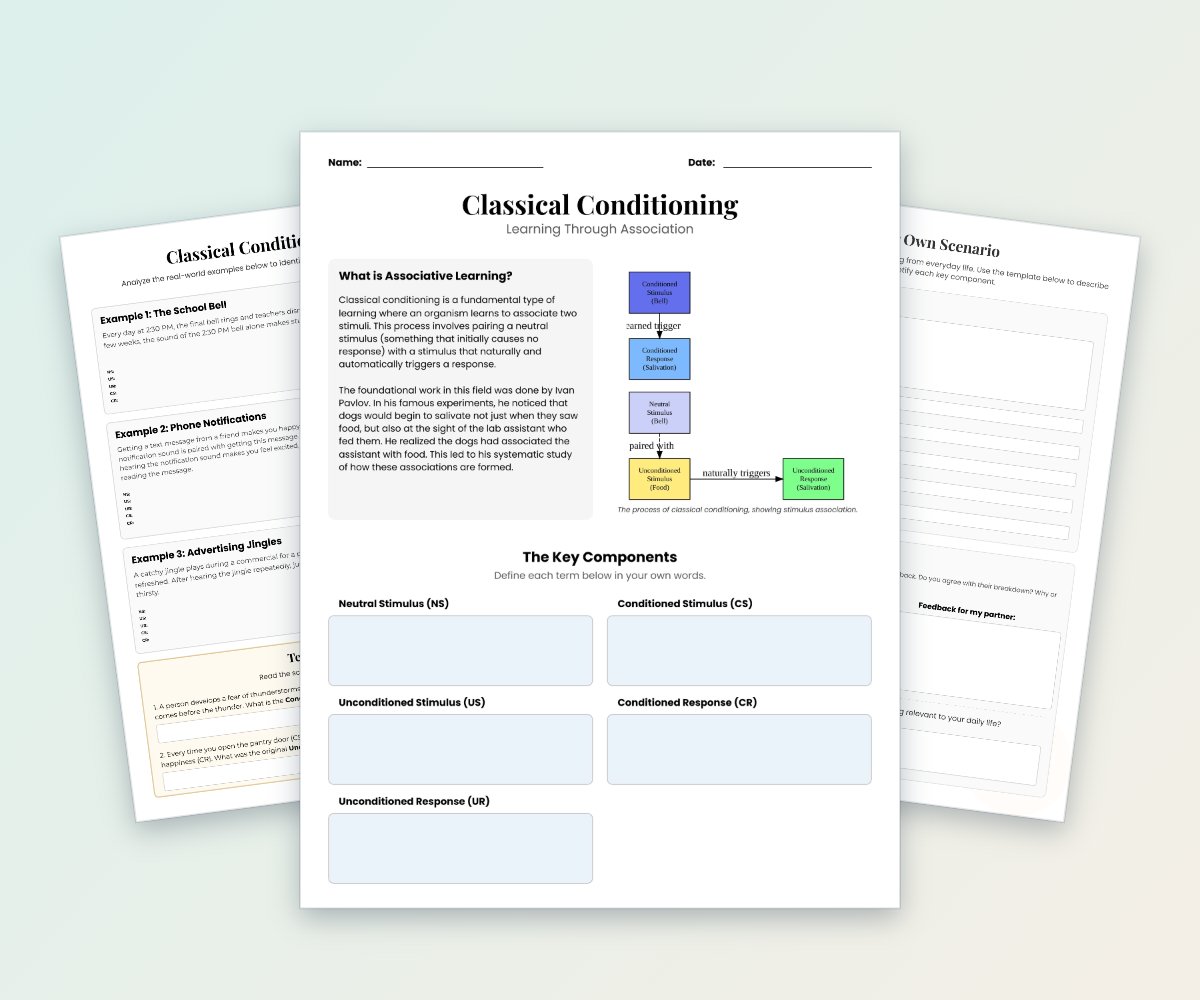
This three-page worksheet introduces classical conditioning and associative learning through explanations of Pavlov’s experiments, key vocabulary, diagrams, and real-world examples.
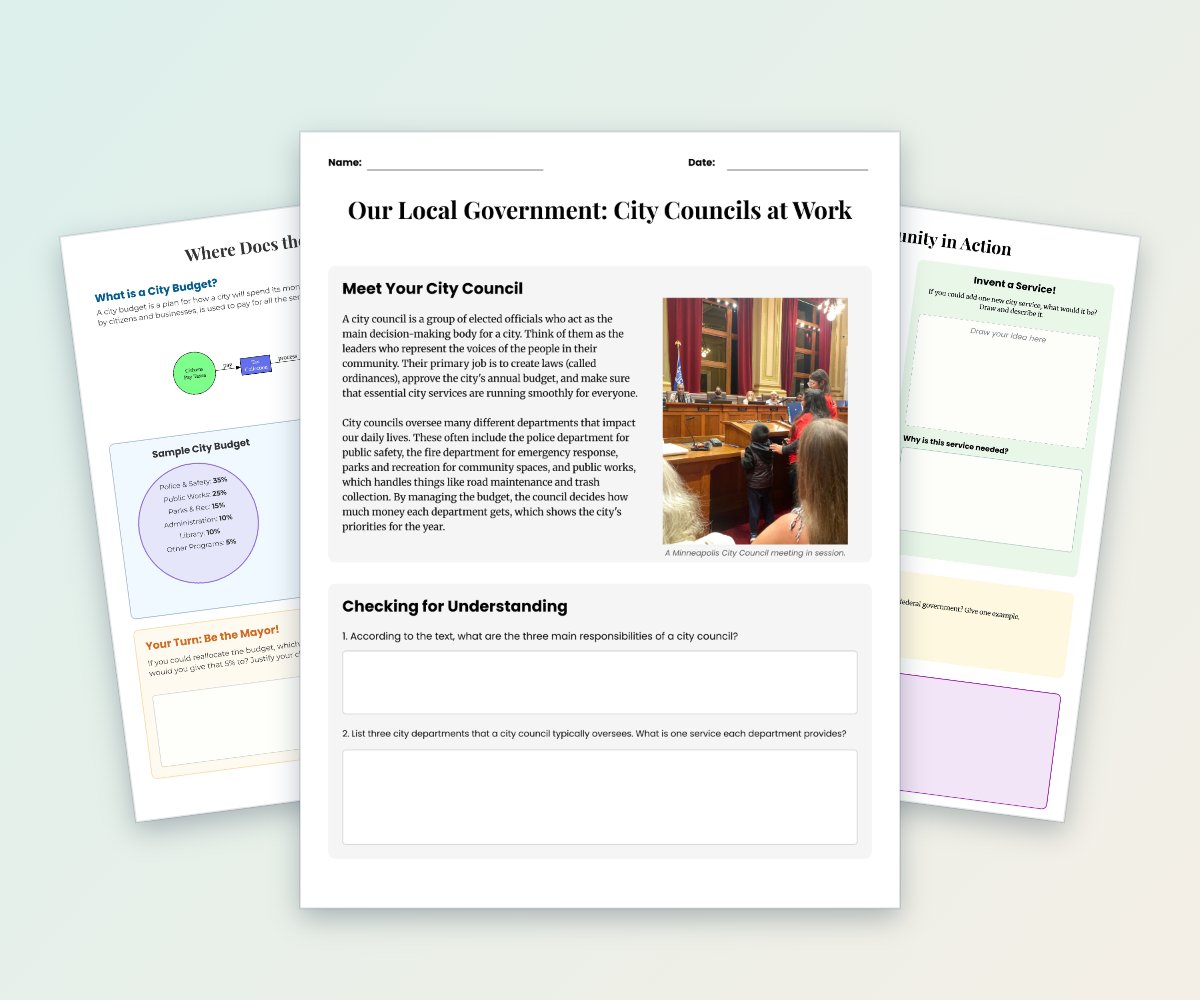
Students learn how city councils make decisions, oversee departments, and allocate annual budgets.
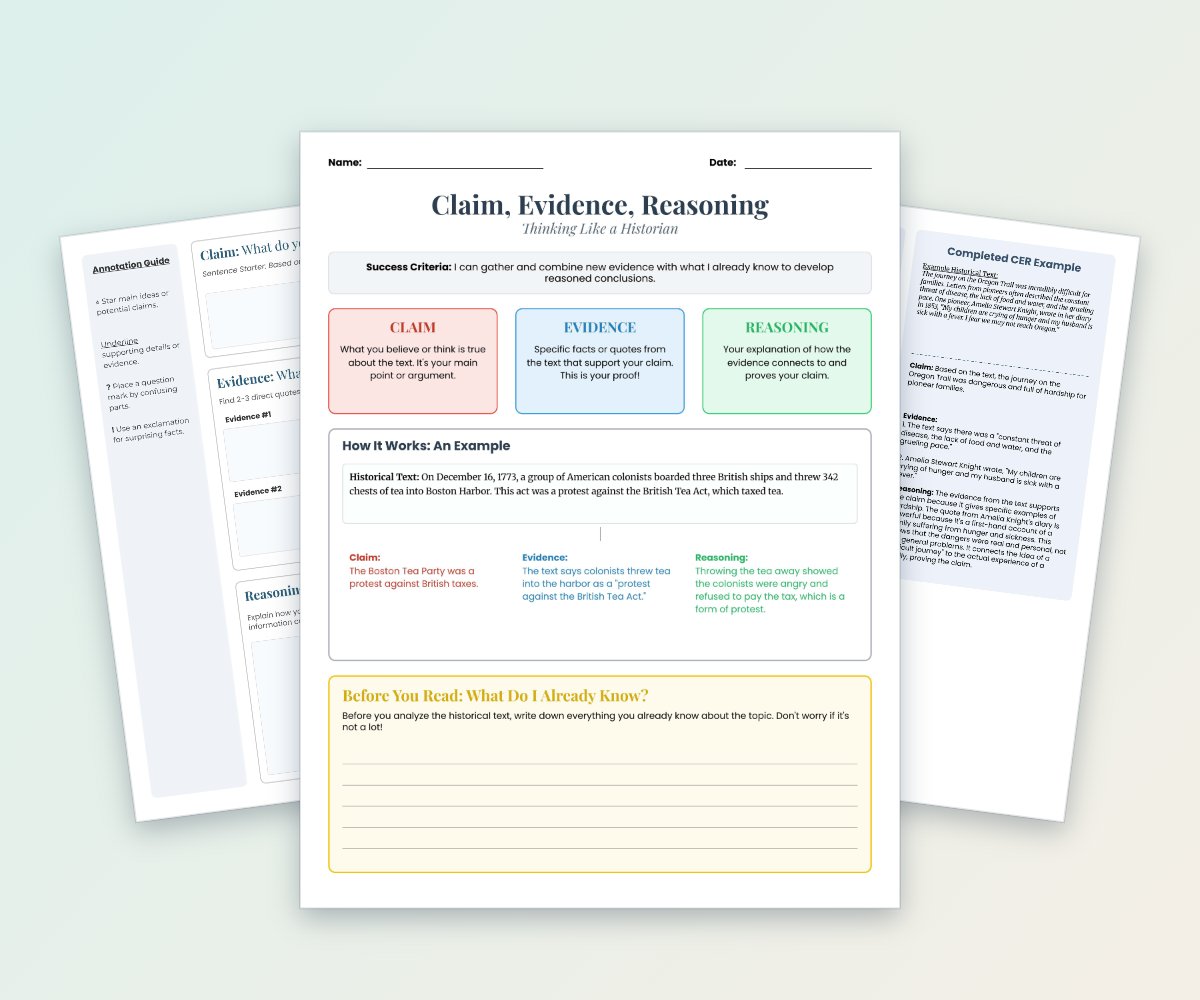
This three-page resource teaches students to develop historical claims, select textual evidence, and explain their reasoning.
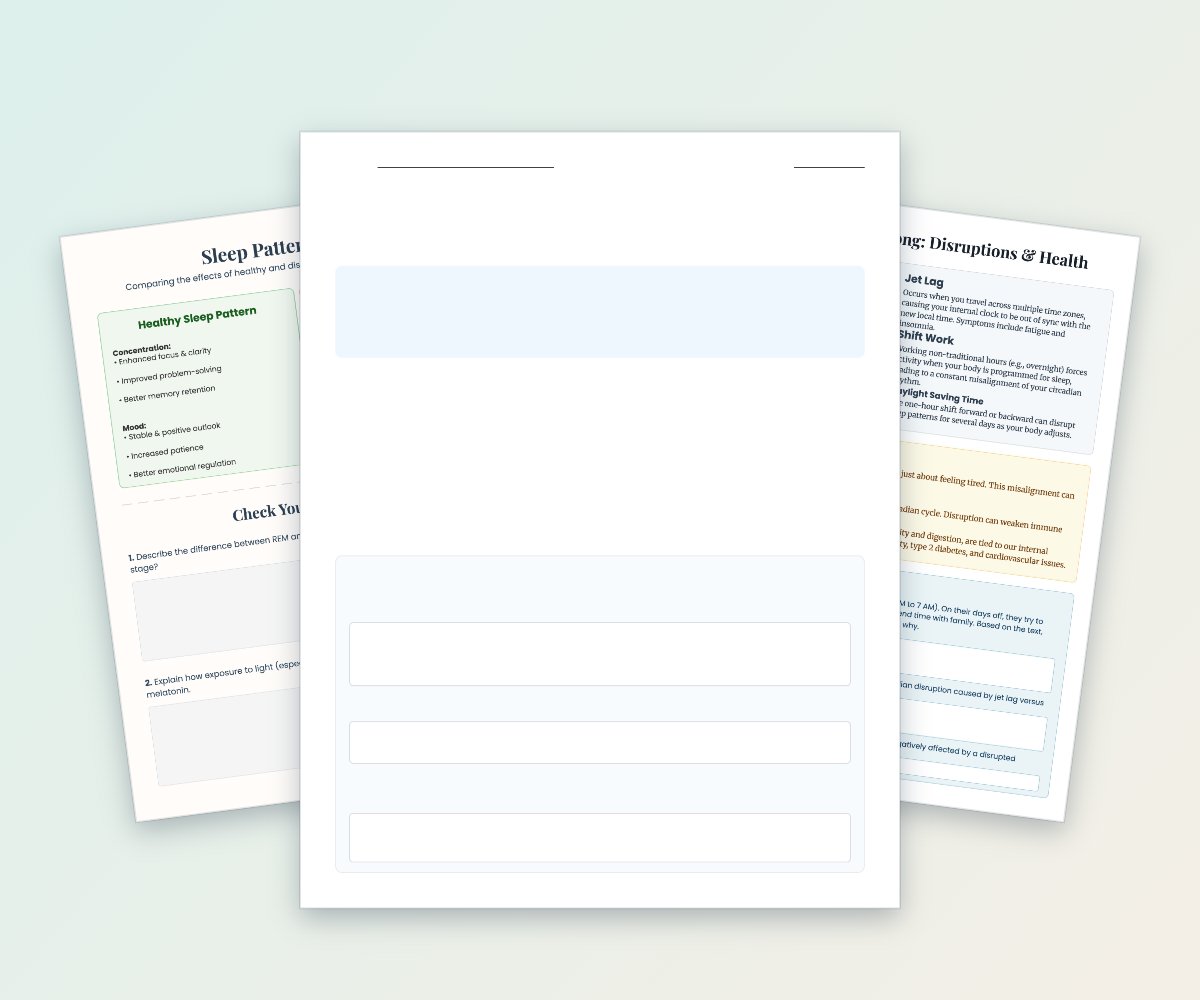
This four-page resource explains healthy and disrupted sleep patterns, REM and non-REM sleep, melatonin, jet lag, shift work, and health impacts.
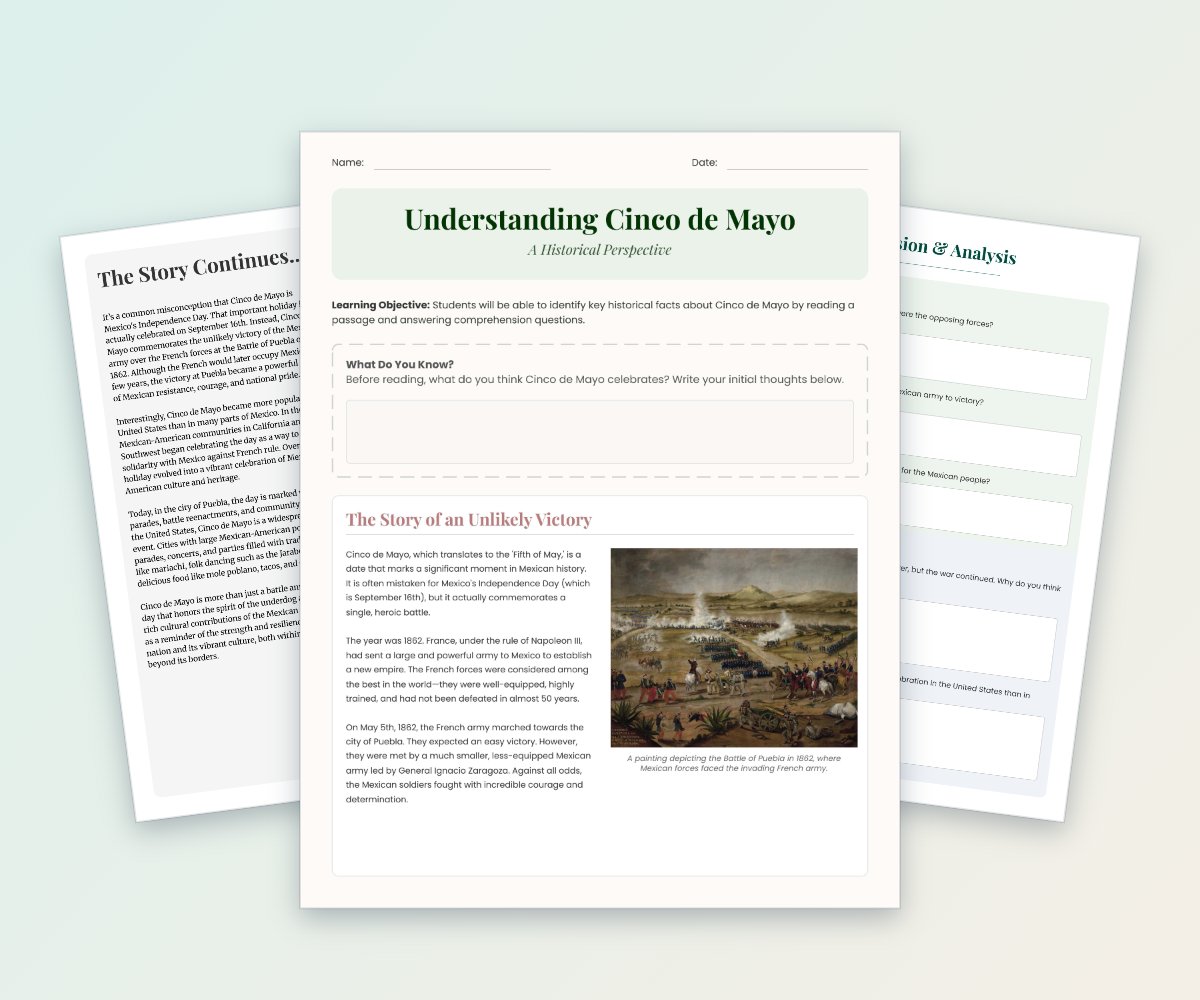
Students read an accessible historical passage about the Battle of Puebla, Mexican resistance, and the development of Cinco de Mayo celebrations.
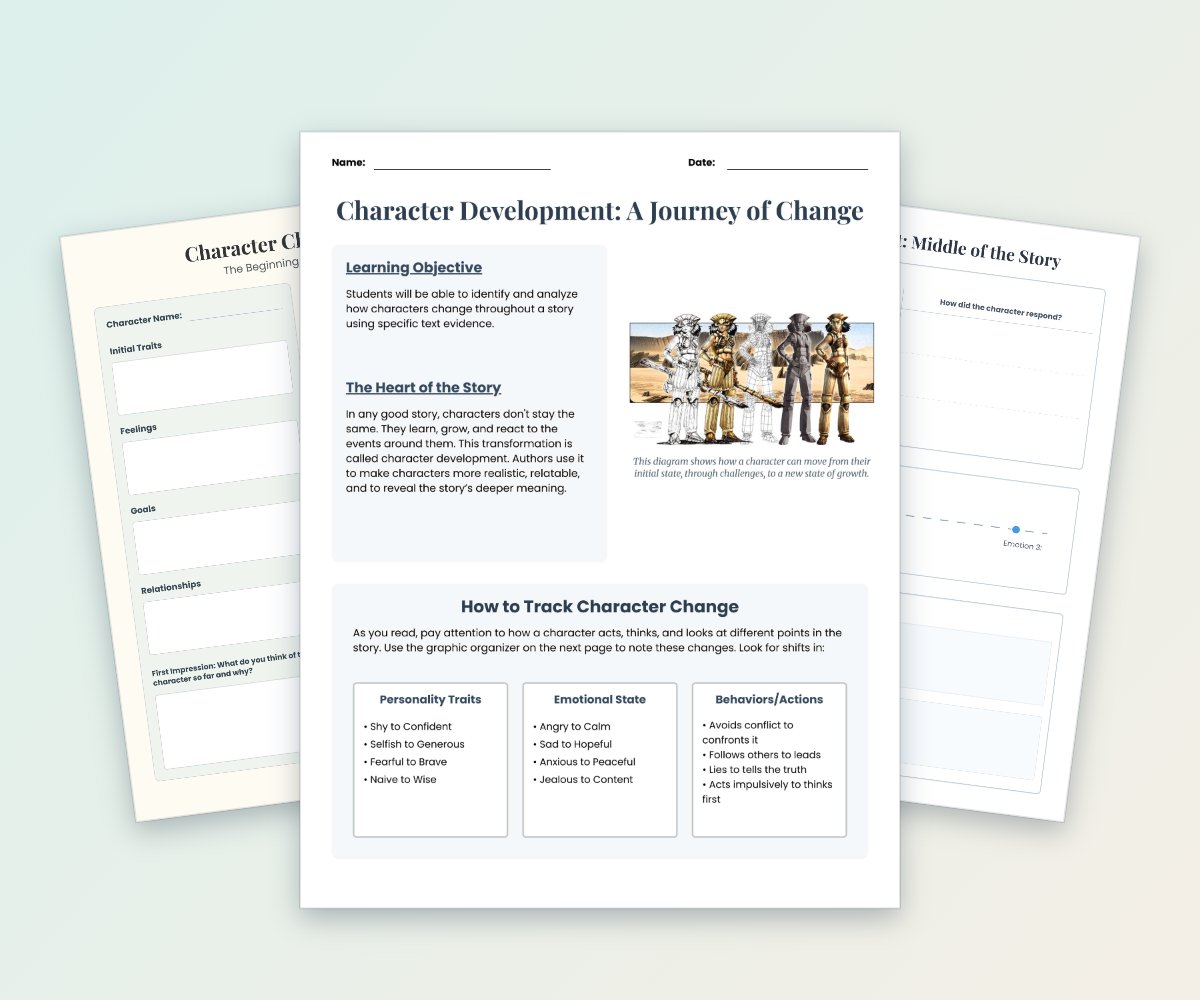
This four-page resource teaches students how to track character traits, emotions, actions, and relationships throughout a story.
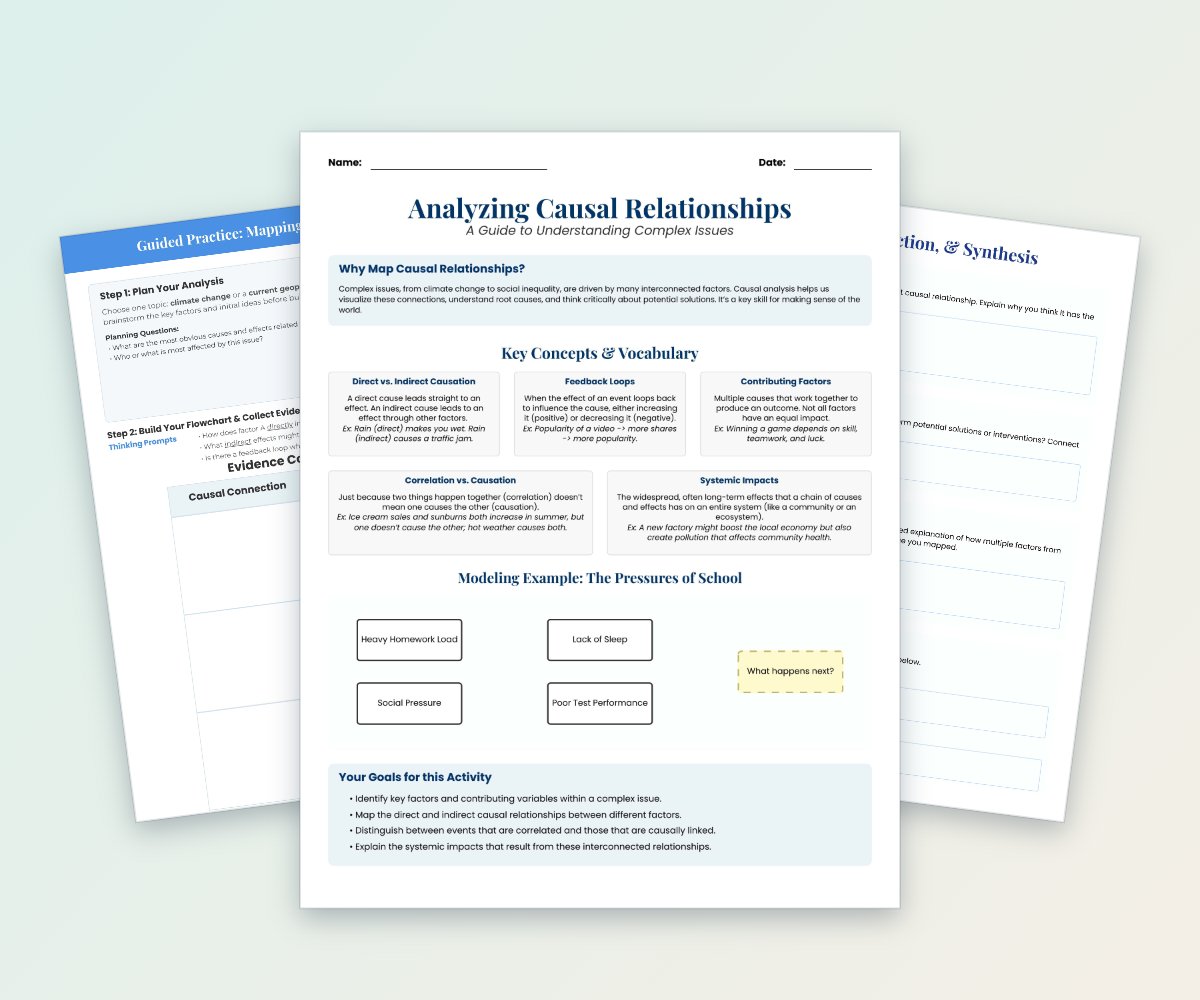
This three-page guide introduces direct and indirect causation, correlation versus causation, feedback loops, contributing factors, and systemic impacts.
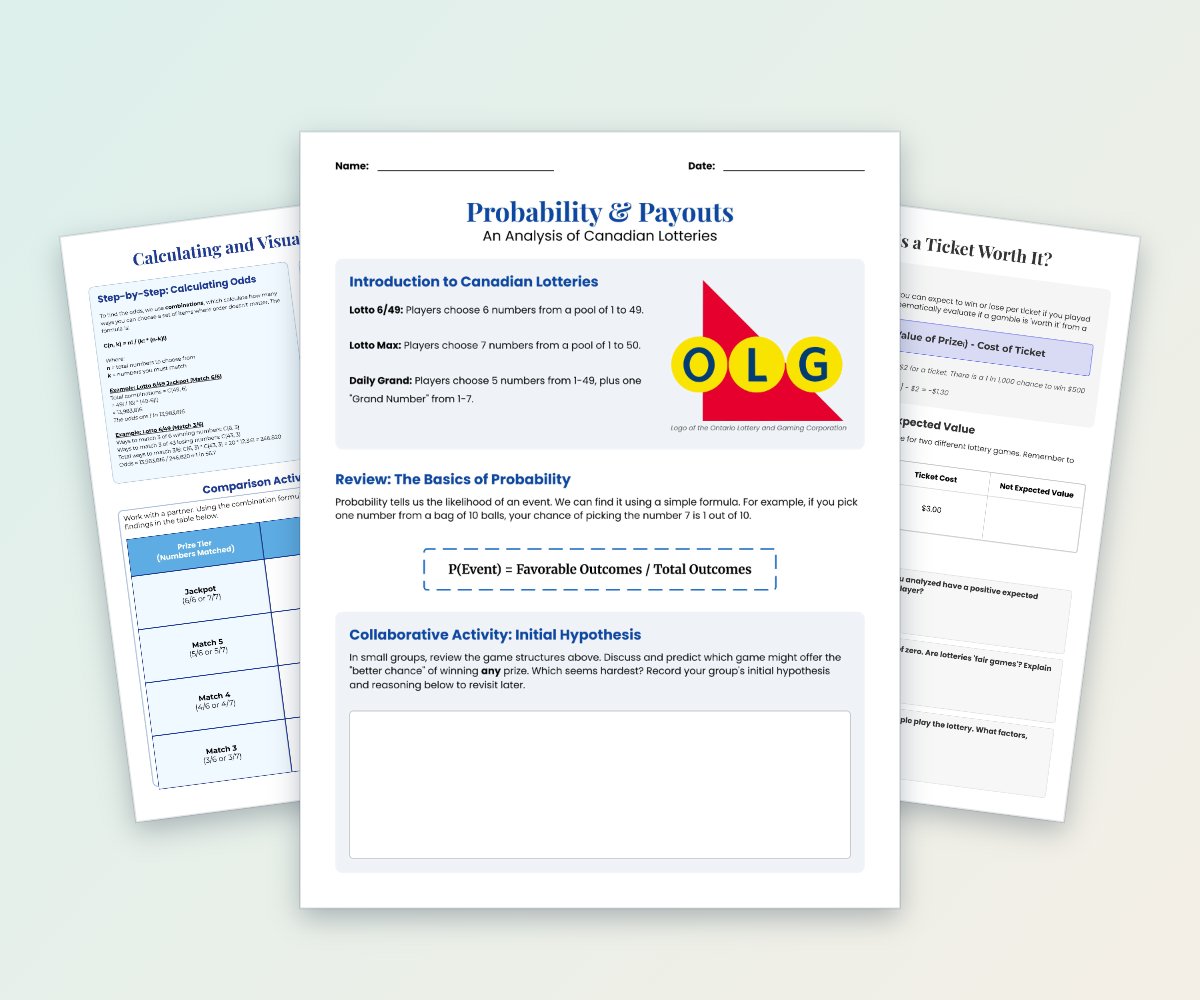
Students analyze Lotto 6/49, Lotto Max, and Daily Grand using probability formulas, combinations, odds, and expected value.