Earth Day Environmental Pledge Activities
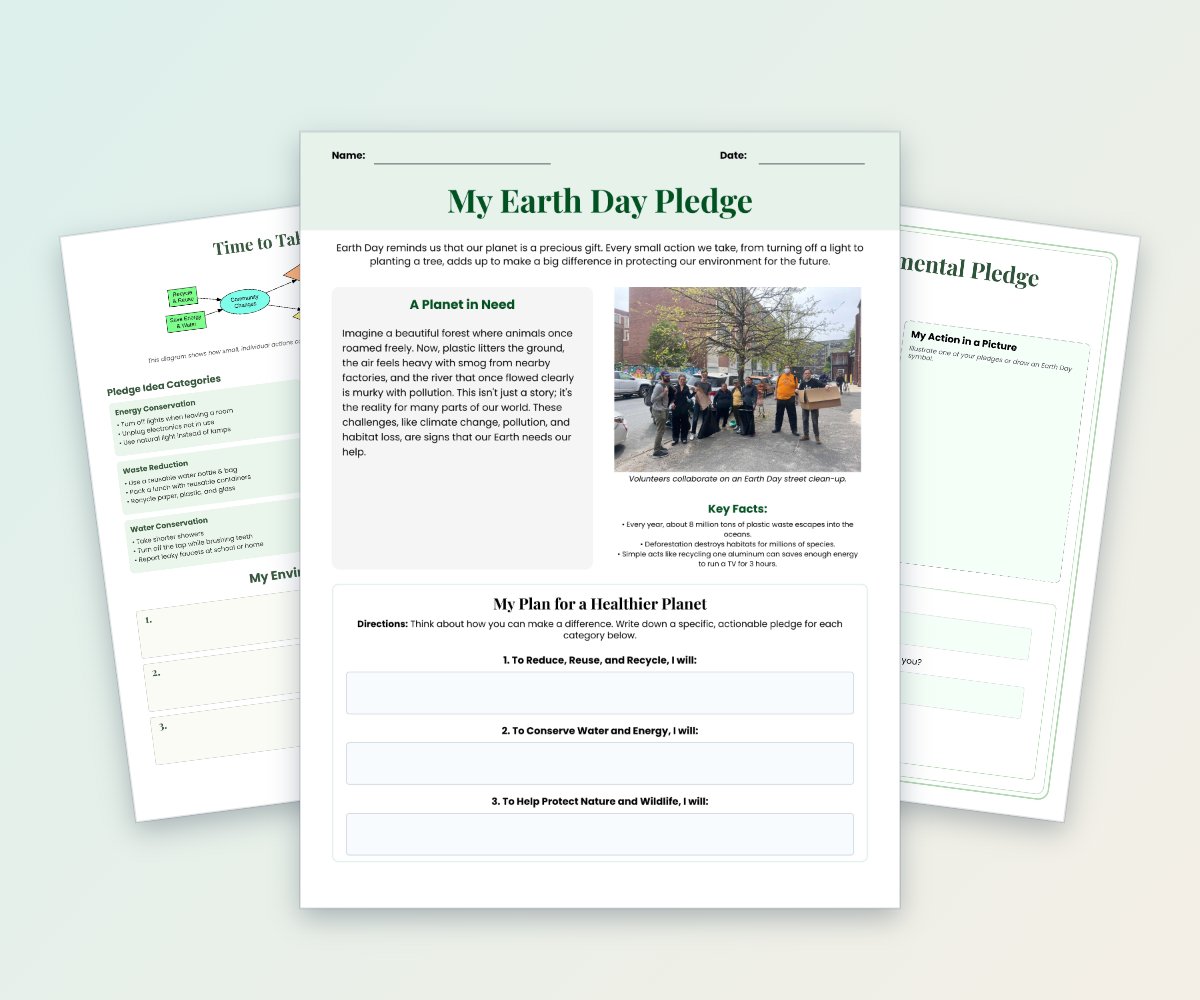
Students learn about pollution, habitat loss, conservation, and practical ways to protect the planet.
$3.50
Classroom-ready resources written for preschool: printable worksheets, slides, activities and planning tools you can download and use straight away. Browse by subject below.
Students learn about pollution, habitat loss, conservation, and practical ways to protect the planet.
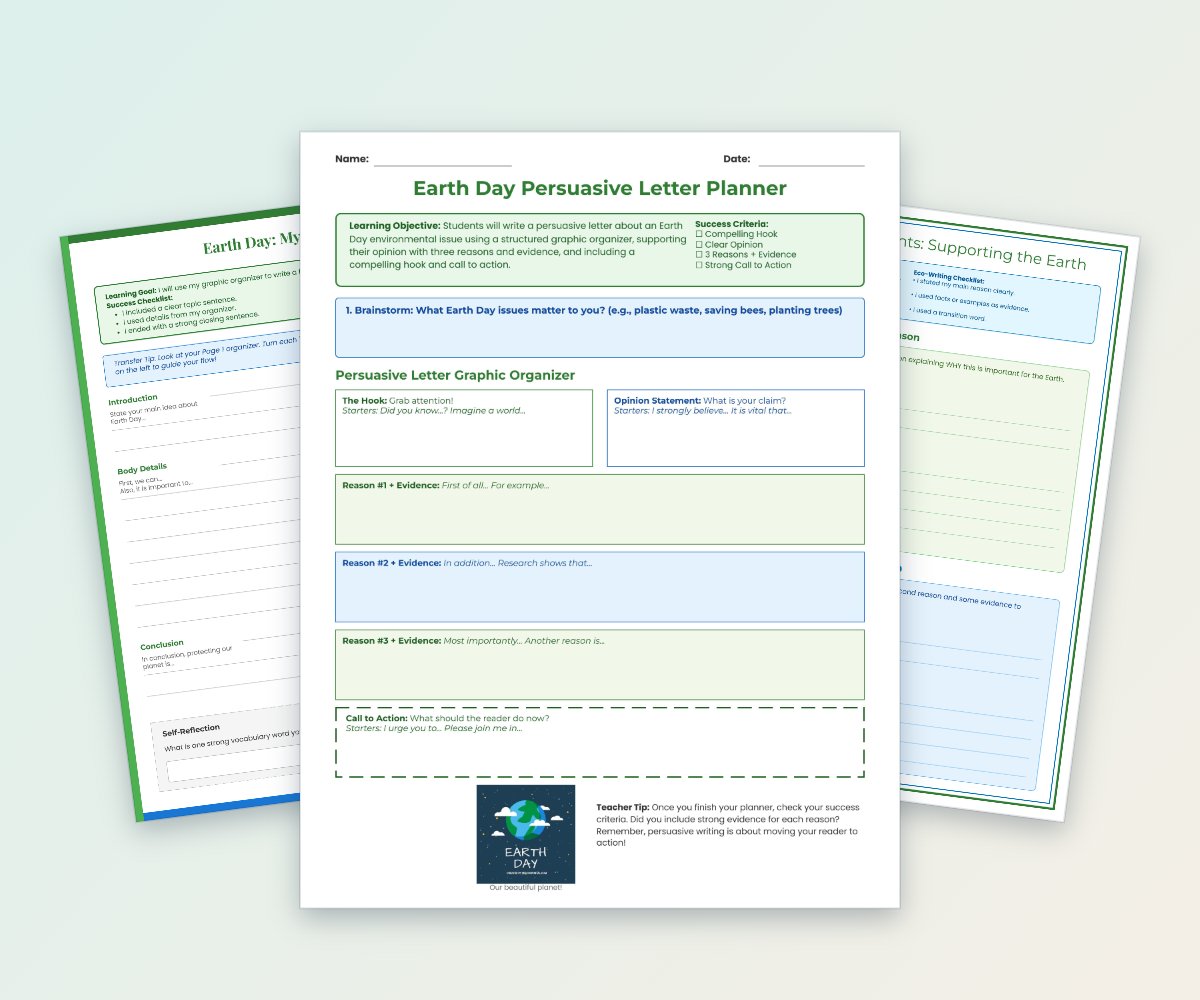
Students plan and draft a persuasive Earth Day letter about an environmental issue.
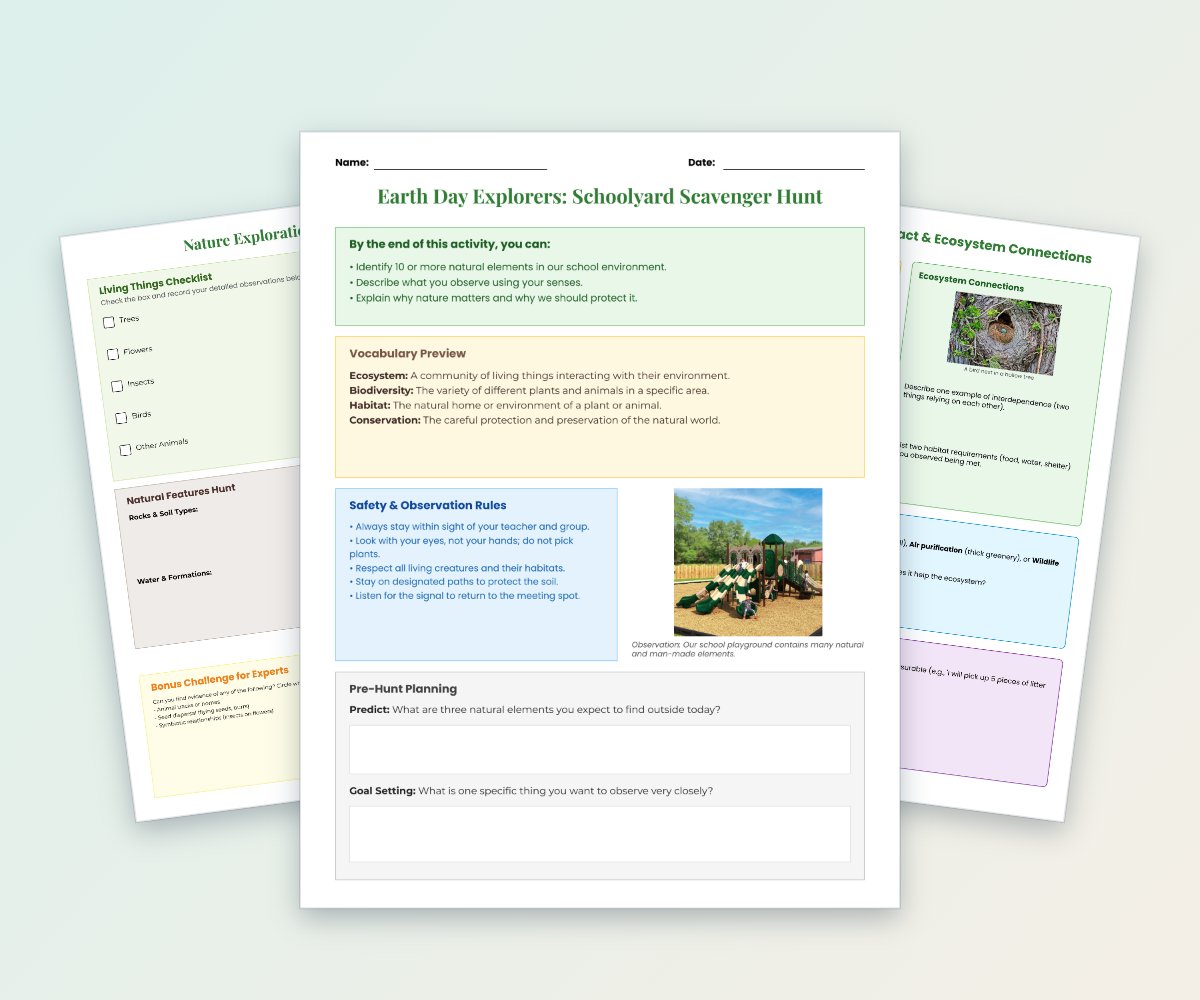
Students explore their schoolyard to identify natural elements, record sensory observations, and investigate habitats, biodiversity, seasonal changes, and human impact.
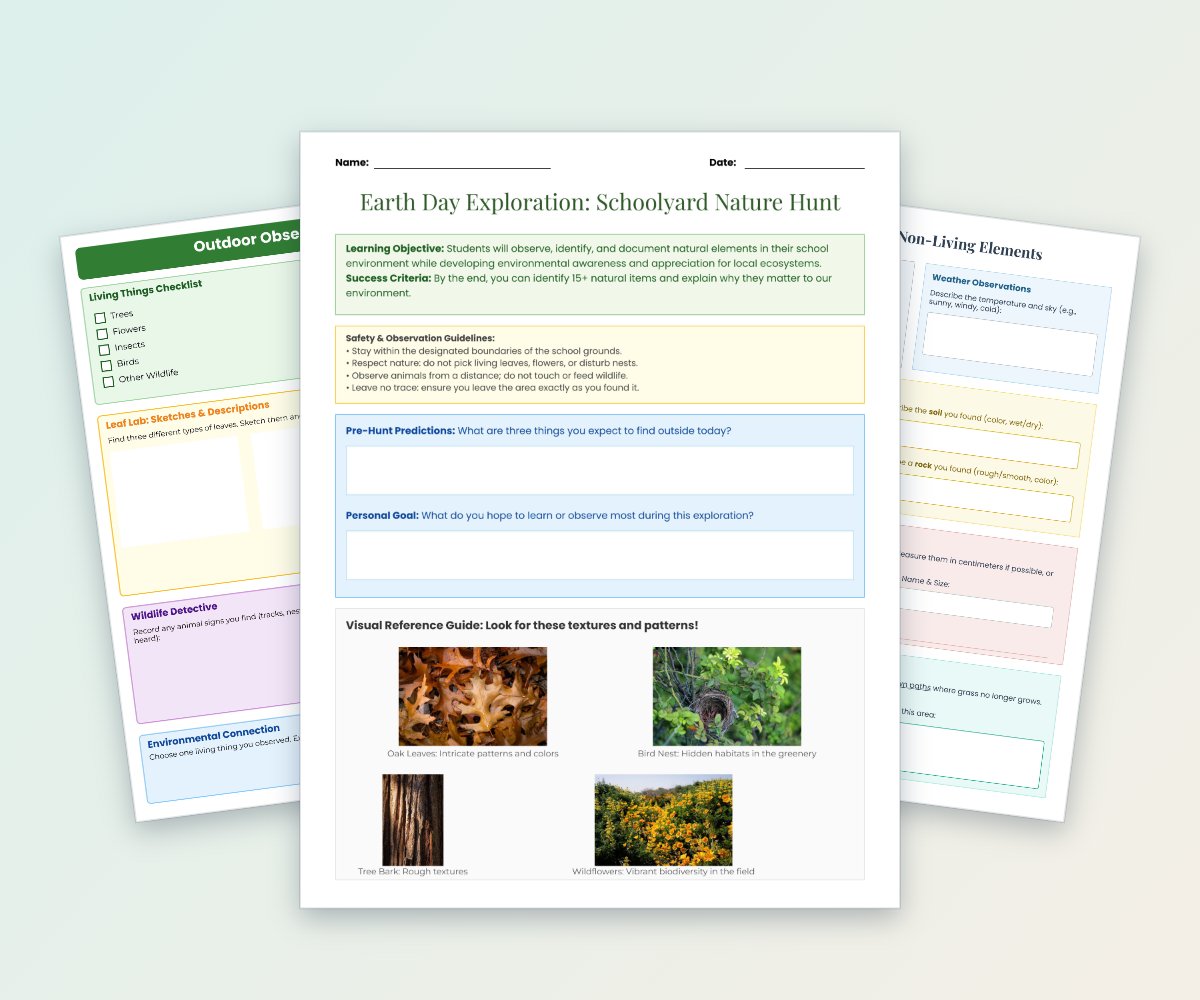
This Earth Day activity guides students through a schoolyard nature hunt focused on living and non-living elements, wildlife signs, textures, weather, and human impact.
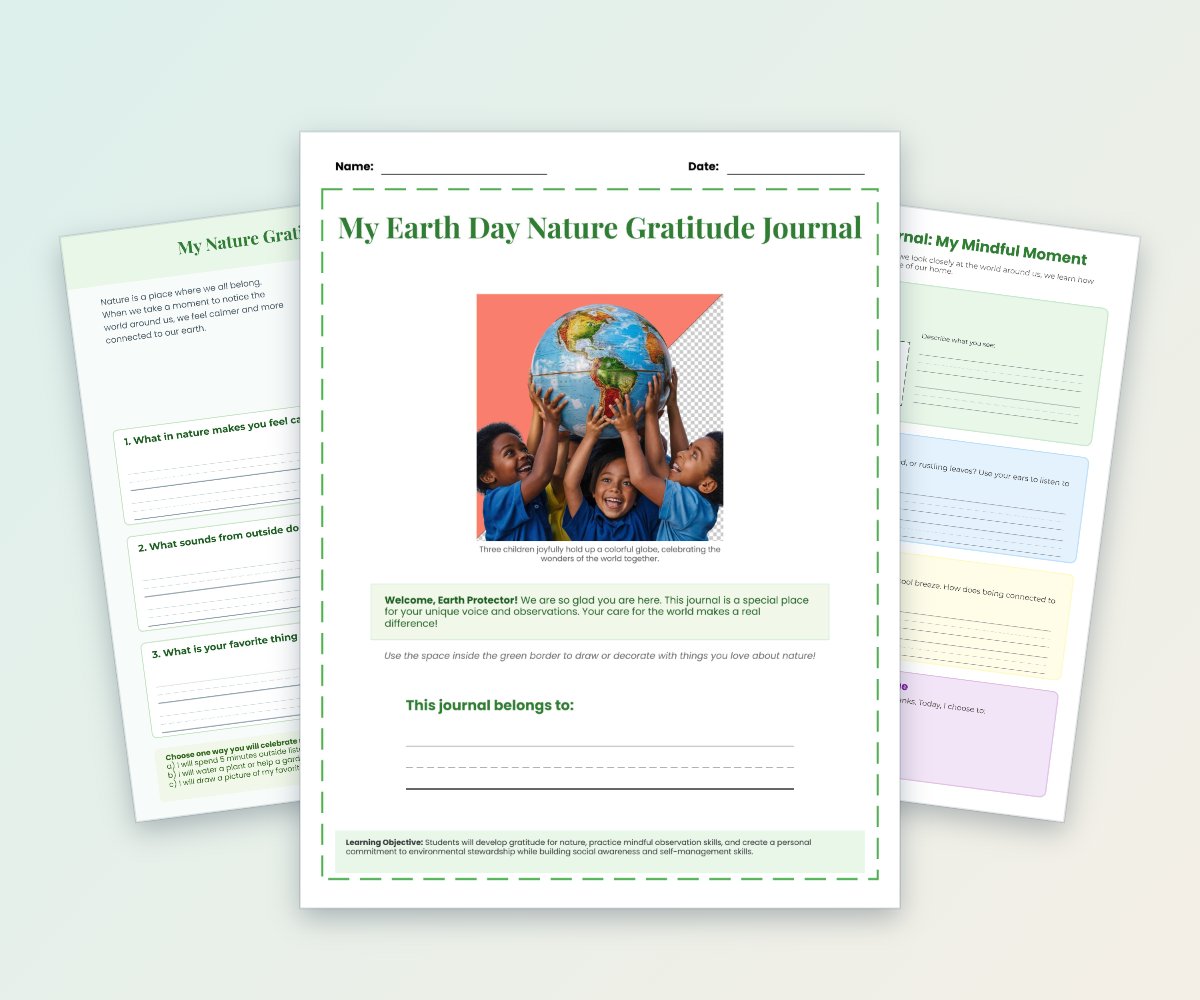
This four-page printable journal guides students through mindful nature observations, gratitude reflections, and an environmental stewardship pledge.
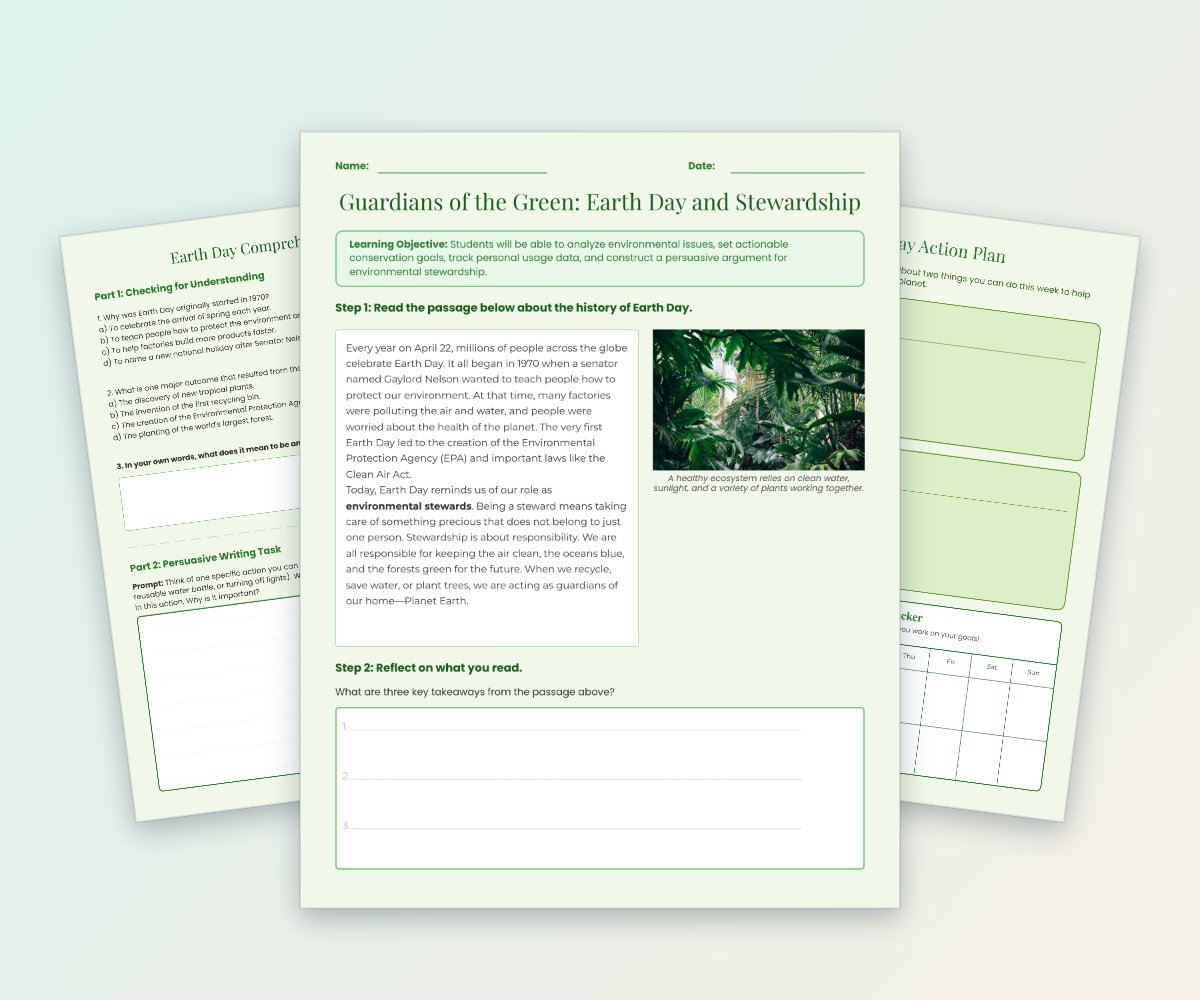
This workbook introduces Earth Day and environmental stewardship through an informational passage, comprehension questions, reflection prompts, and a persuasive writing task.
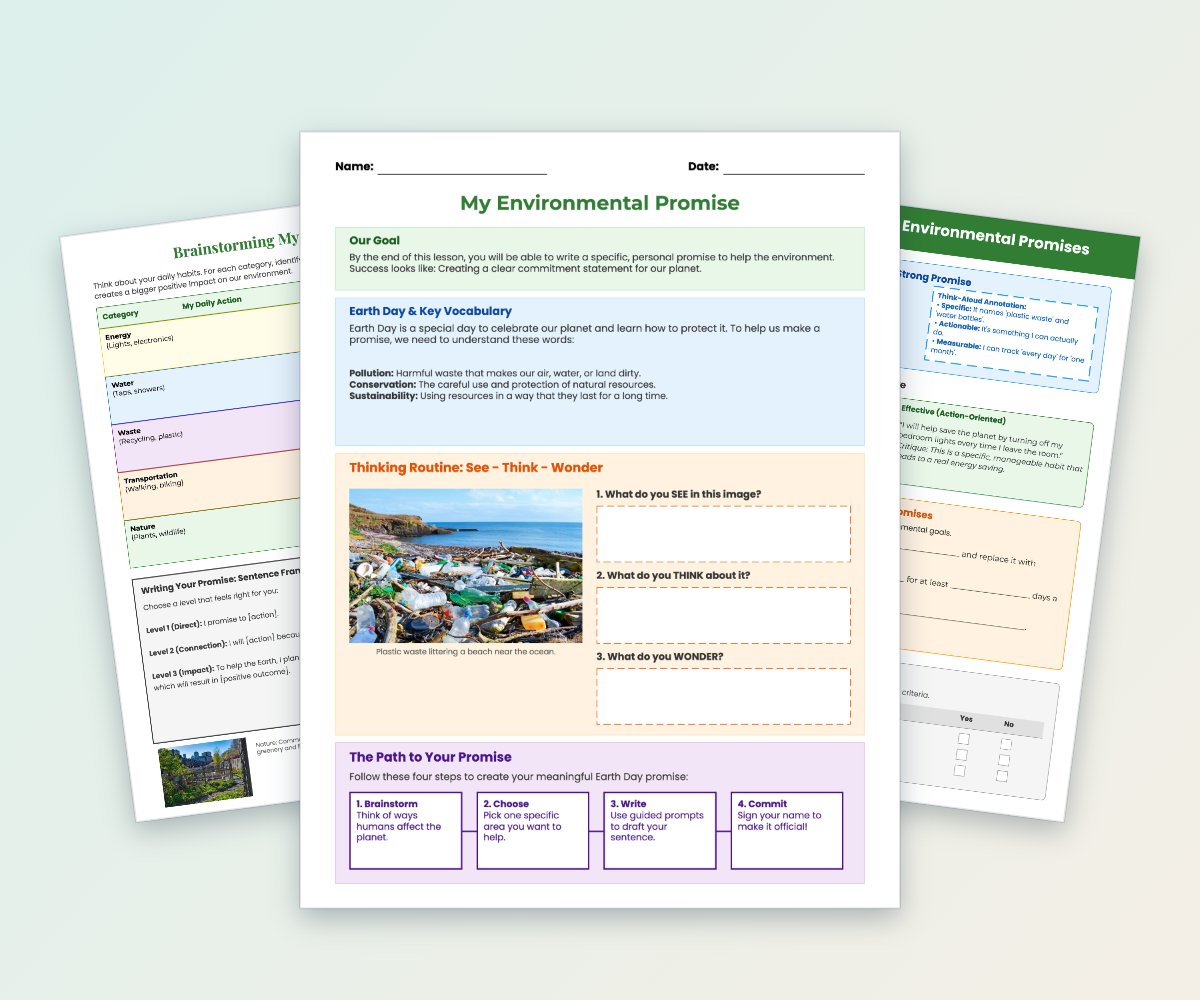
Guide students through creating a specific personal promise to help the environment.
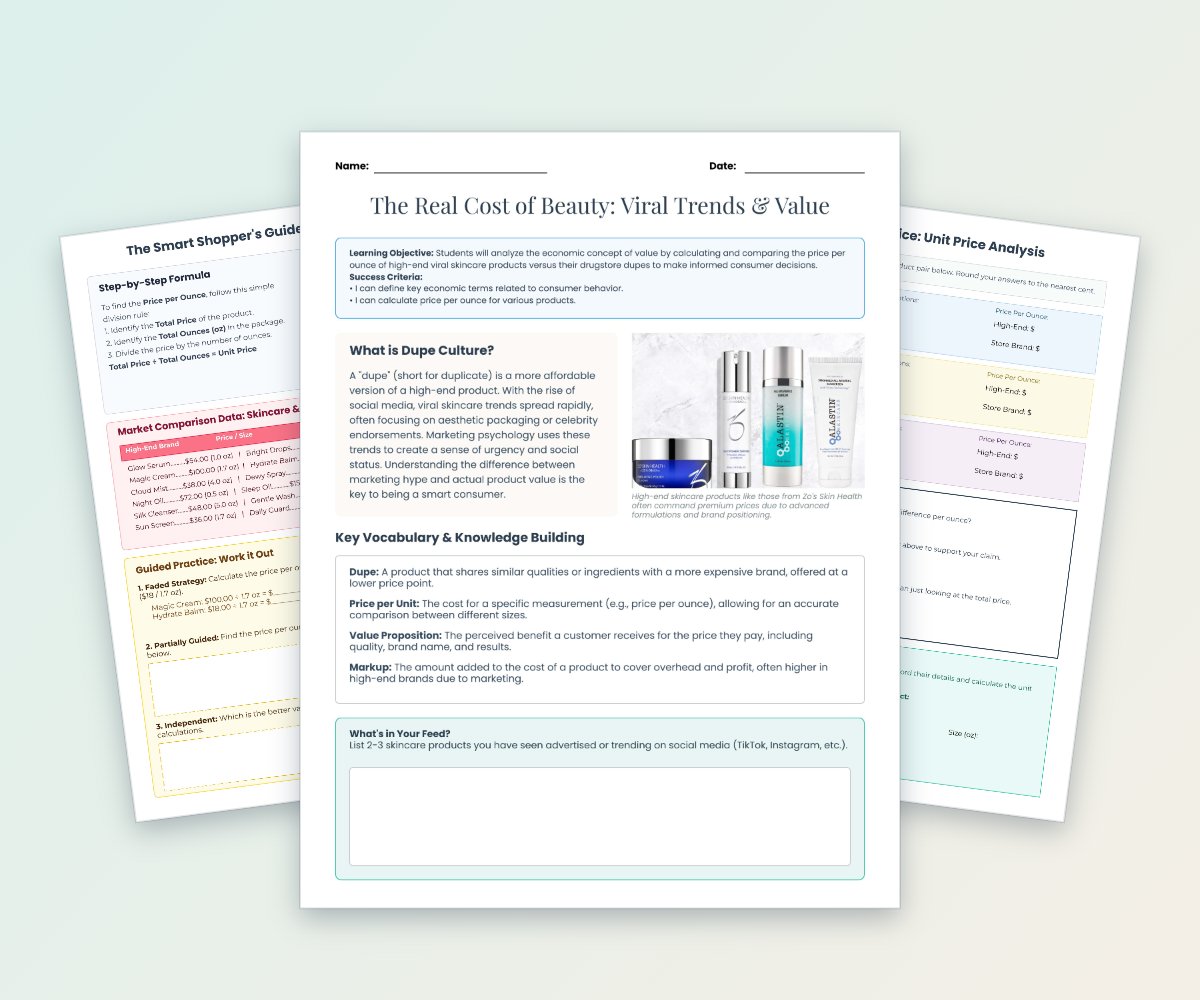
Students explore dupe culture, marketing psychology, and product value through viral skincare examples.
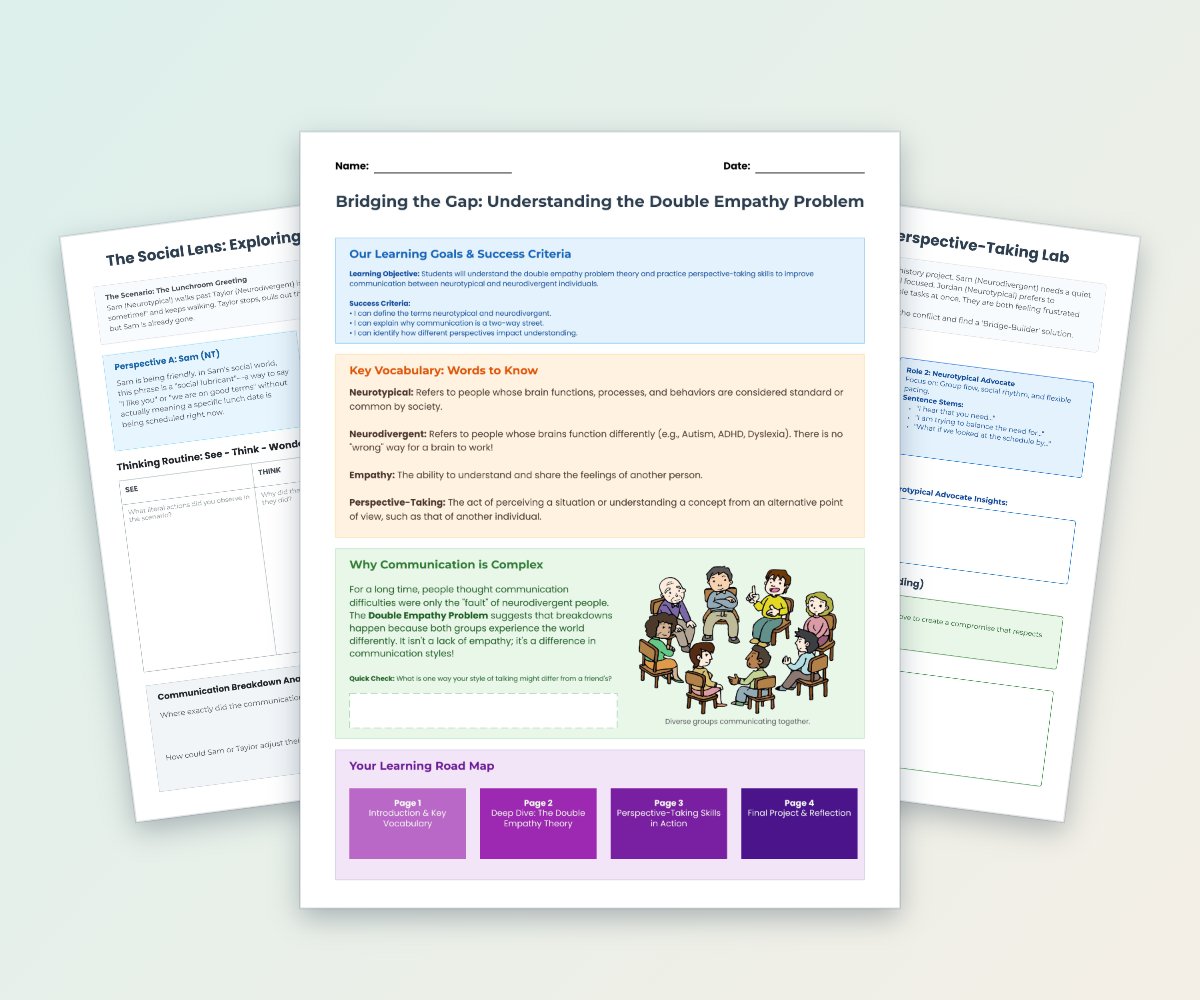
This four-page workshop introduces the double empathy problem and explains how communication differences affect neurotypical and neurodivergent people.
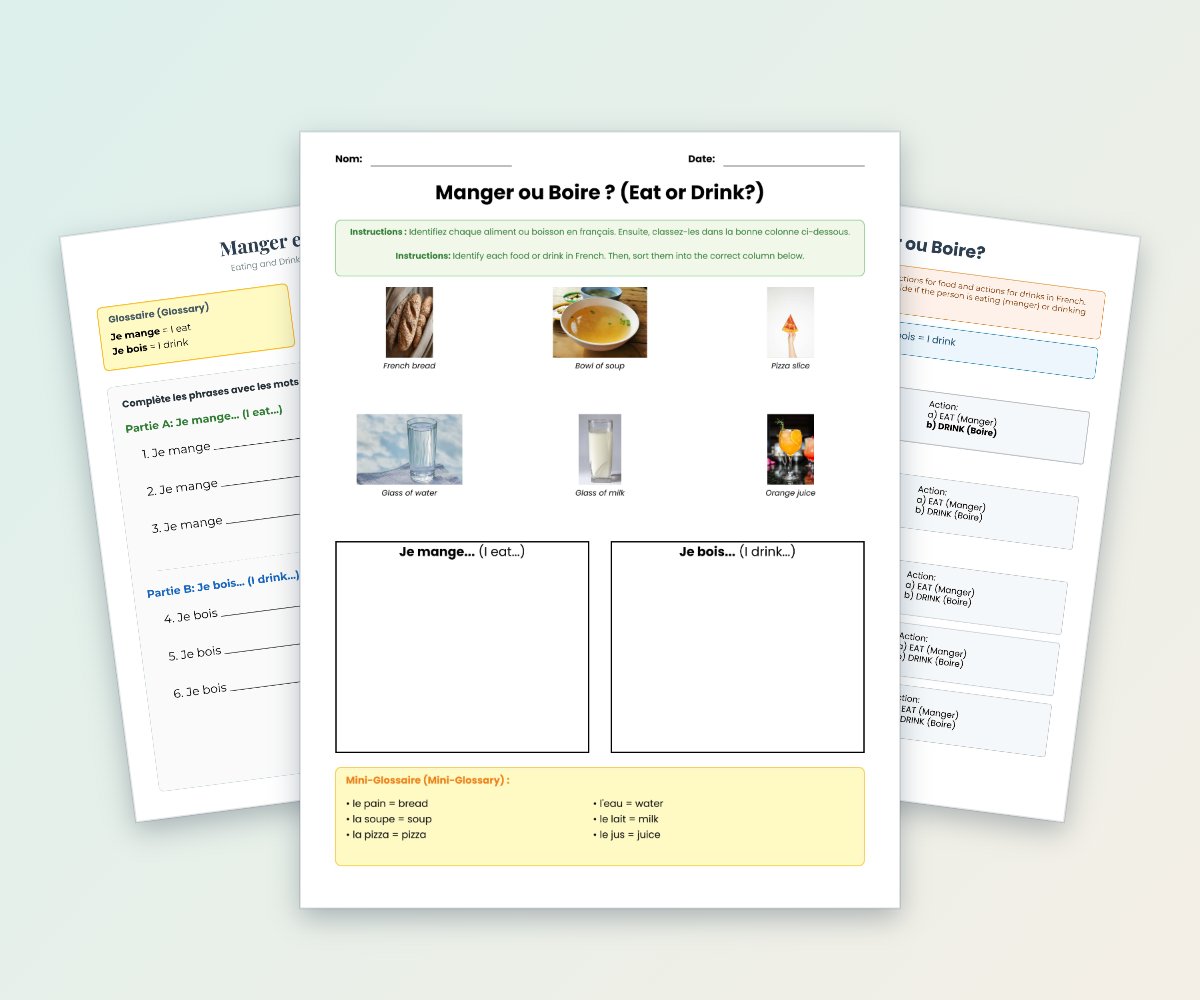
This four-page French activity pack helps students identify food and beverage vocabulary and distinguish between manger and boire.
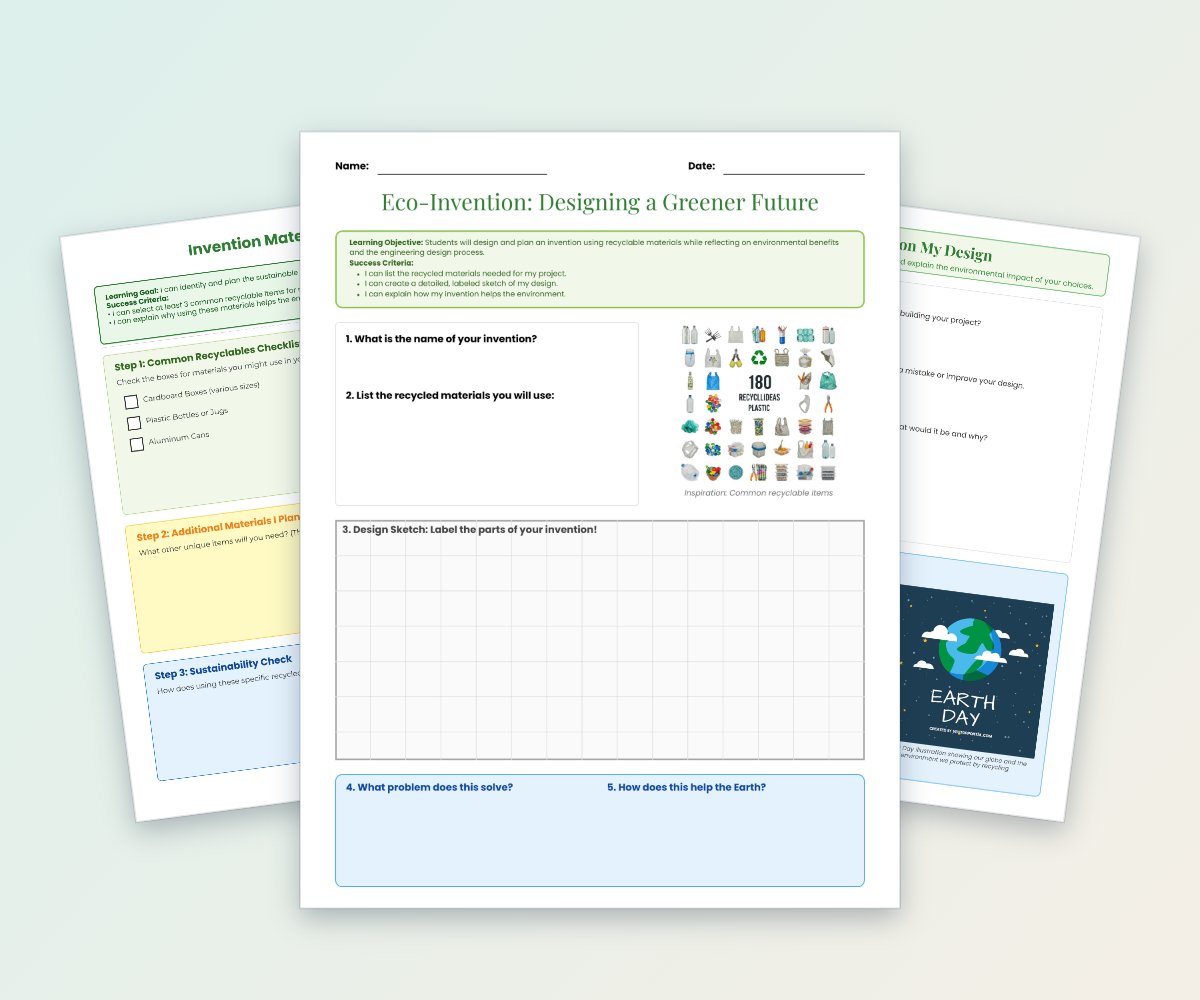
This three-page Earth Day activity guides students in designing an invention from recyclable materials.
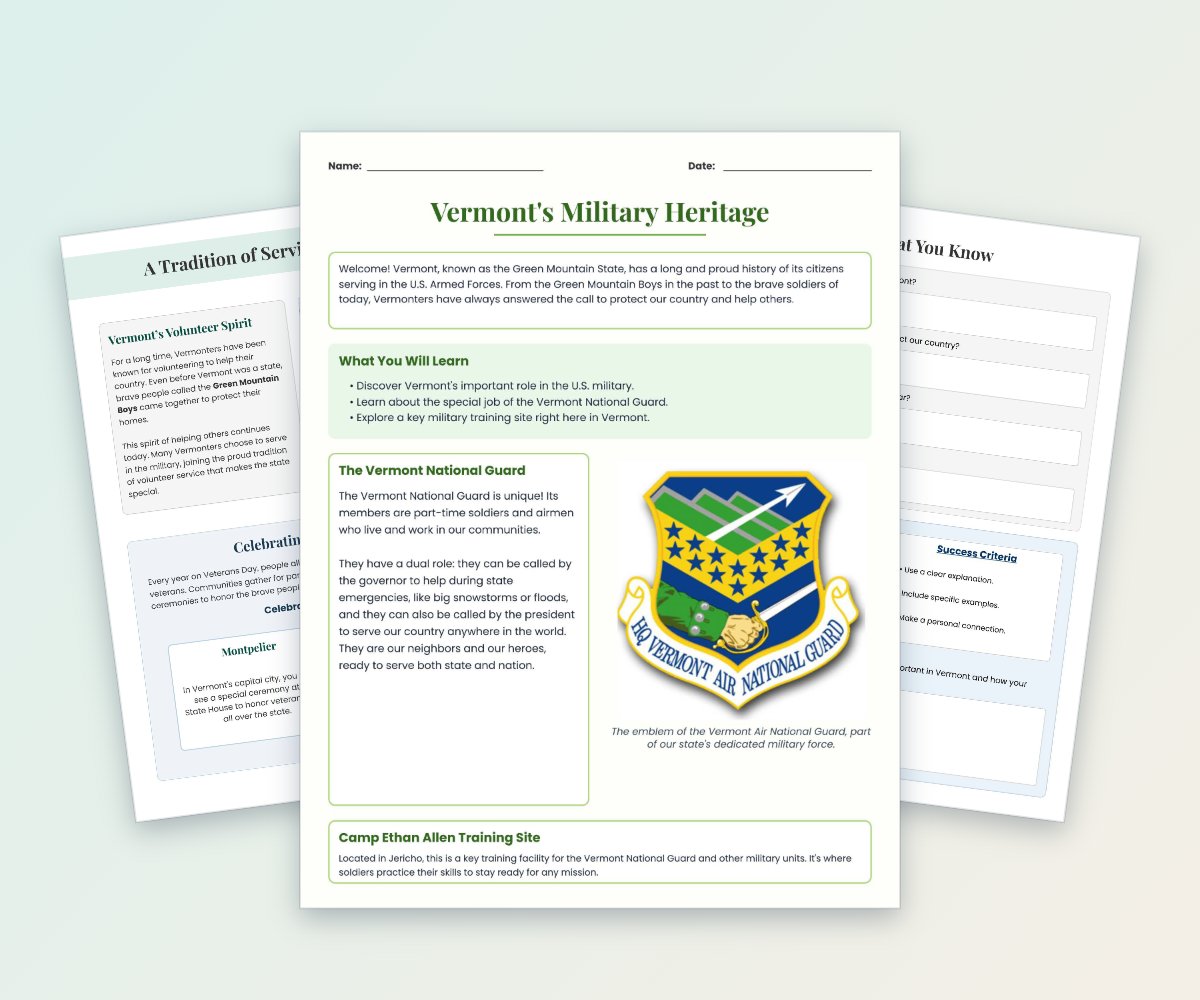
This three-page social studies pack introduces Vermont’s military heritage, the Vermont National Guard, Camp Ethan Allen Training Site, and Veterans Day traditions.
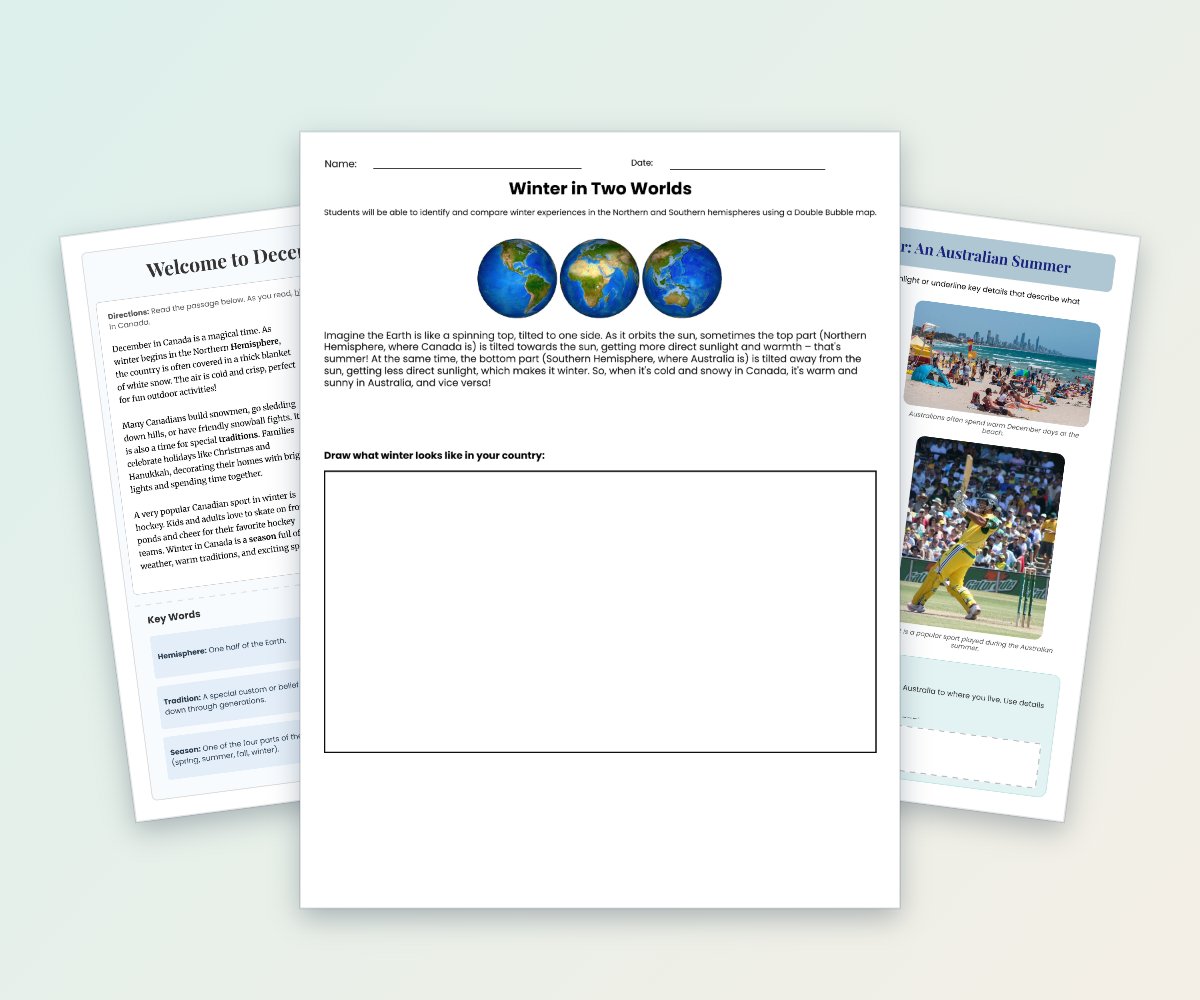
Students read passages comparing December winter in Canada with summer in Australia.
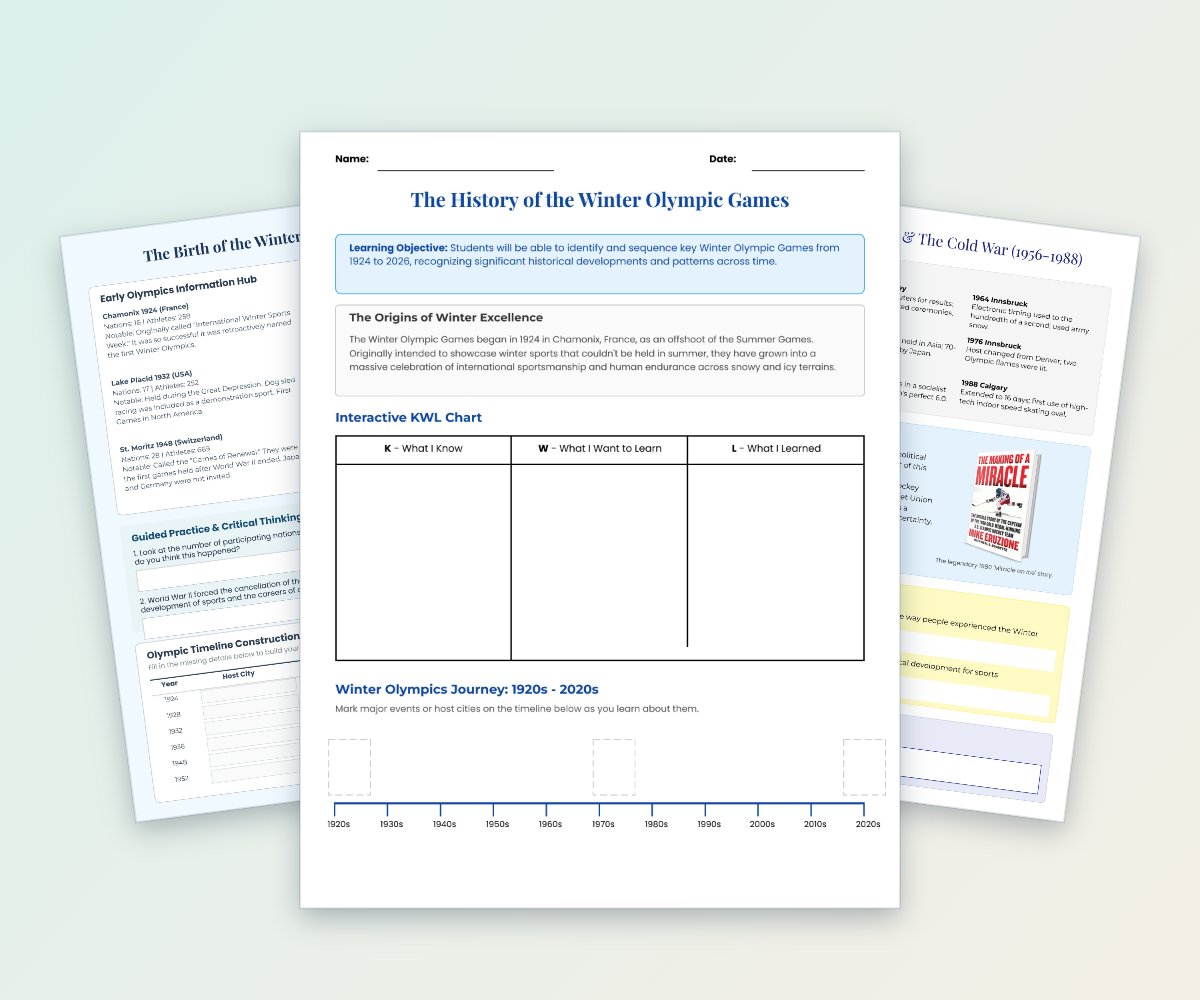
Students explore the history of the Winter Olympic Games from 1924 to 2026 through informational text, a KWL chart, timeline activities, and critical-thinking questions.
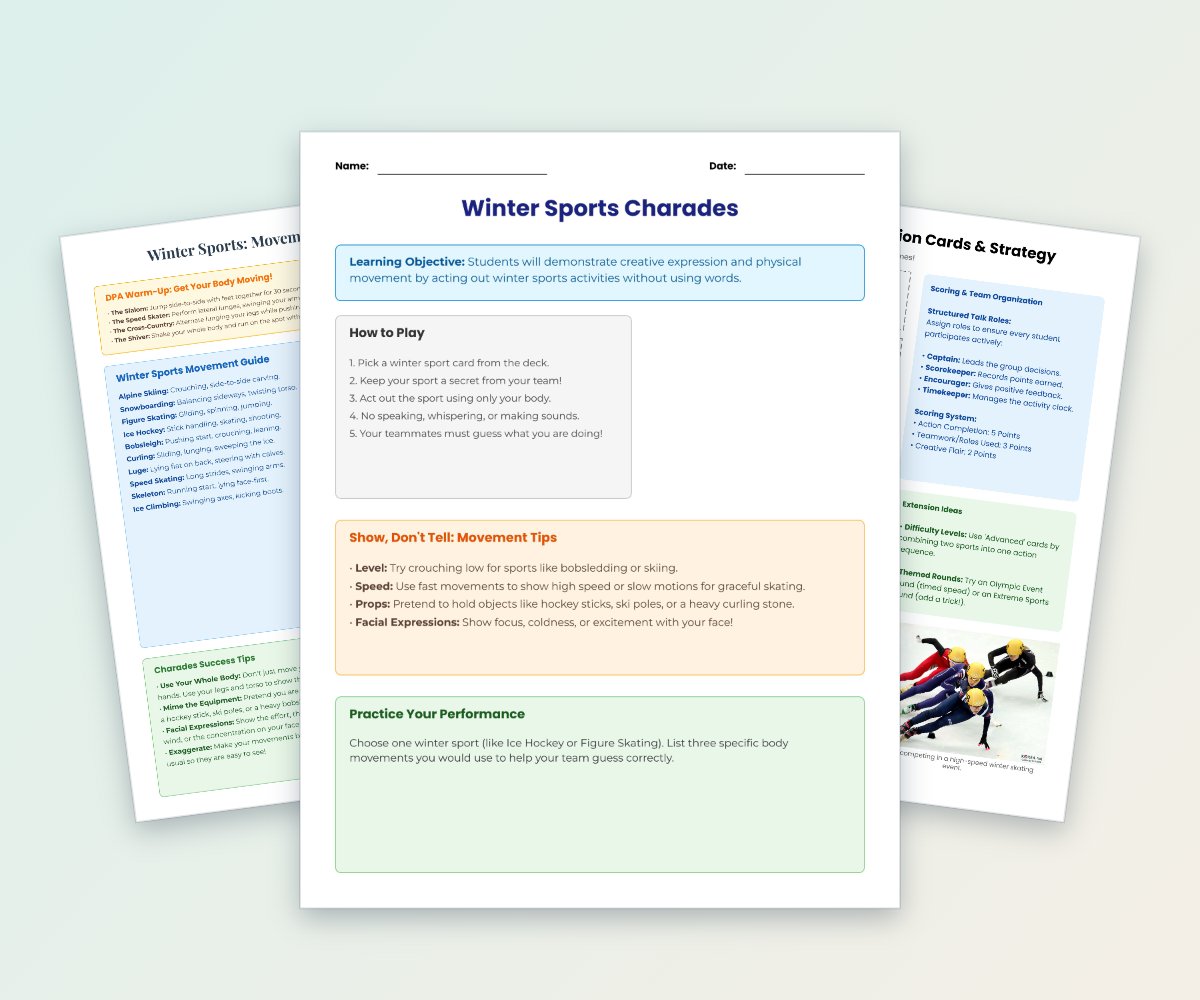
Students act out winter sports without speaking while teammates guess the activity.
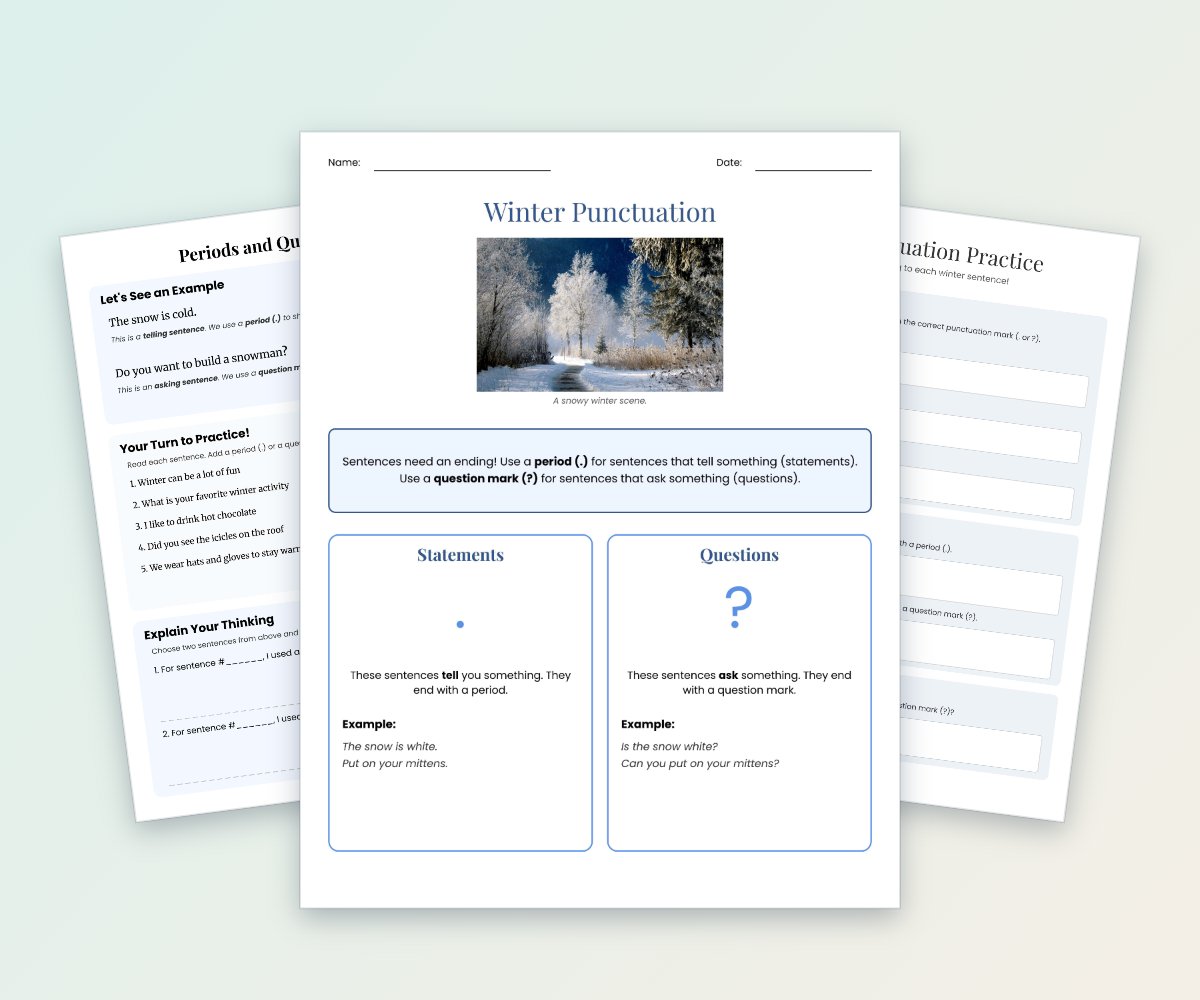
Students learn to distinguish statements from questions and choose the correct ending punctuation.
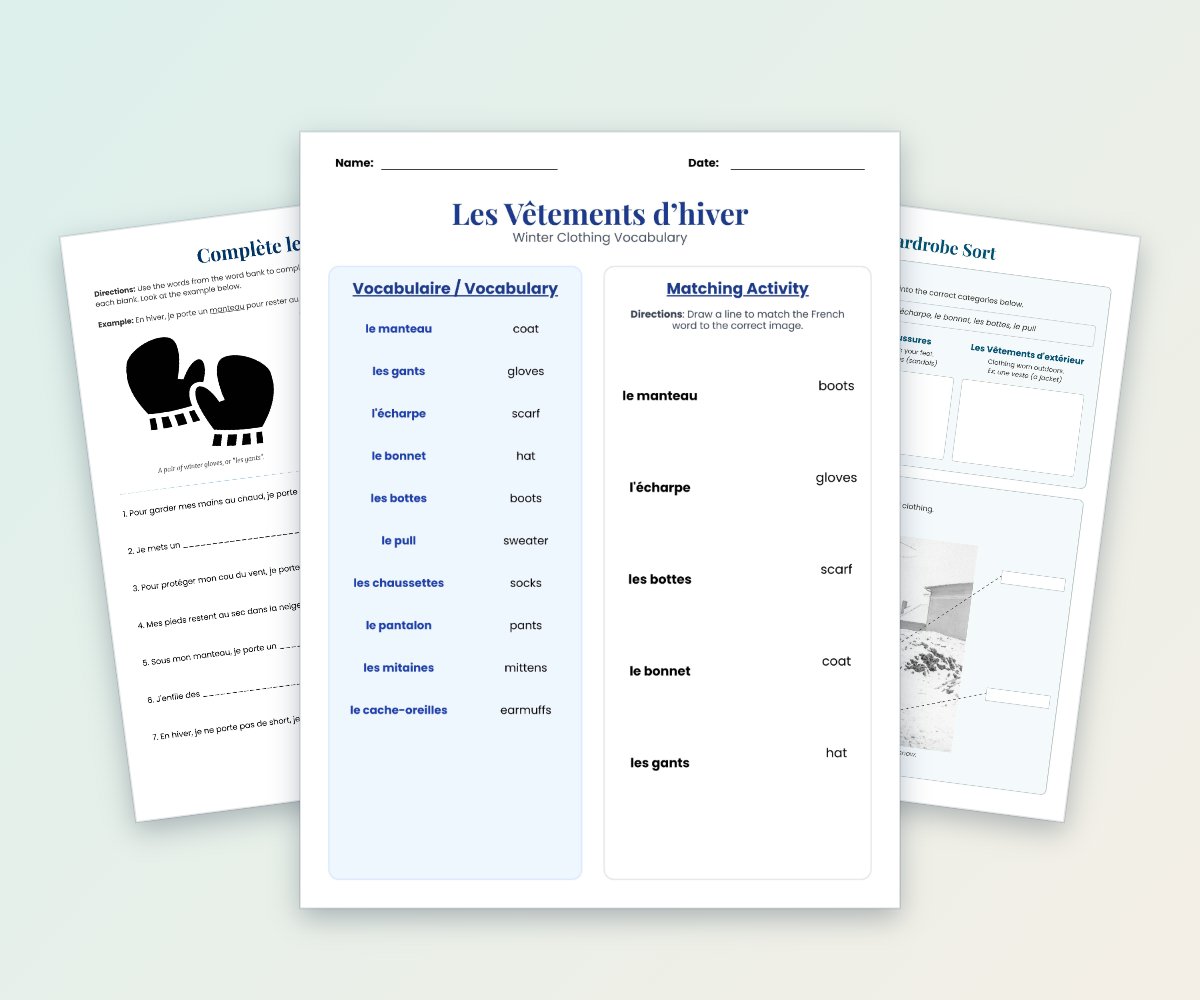
Teach French winter clothing vocabulary through matching, sentence completion, categorizing, picture labeling, and guided writing activities.
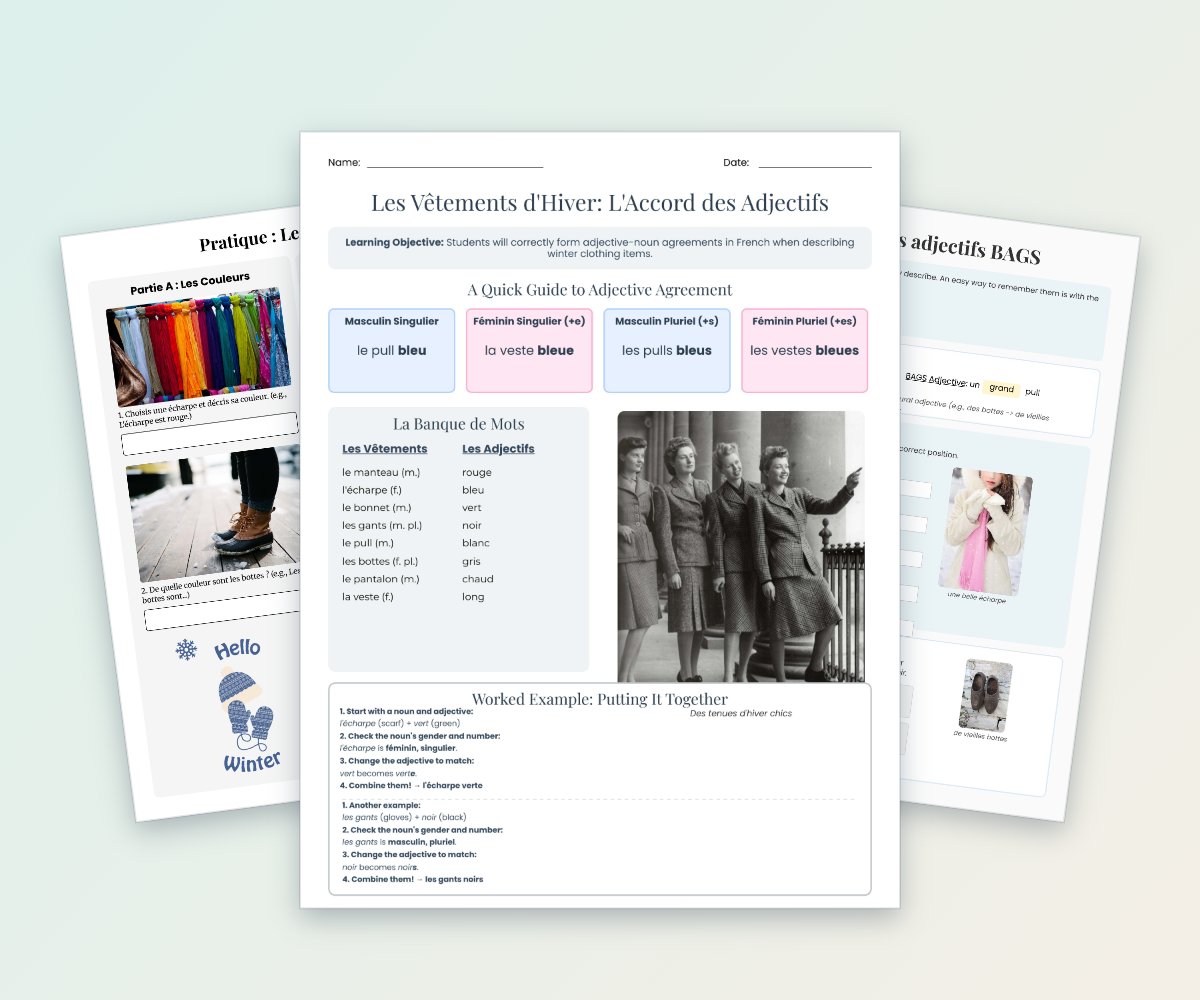
Students practice matching French adjectives to winter clothing nouns for gender and number.
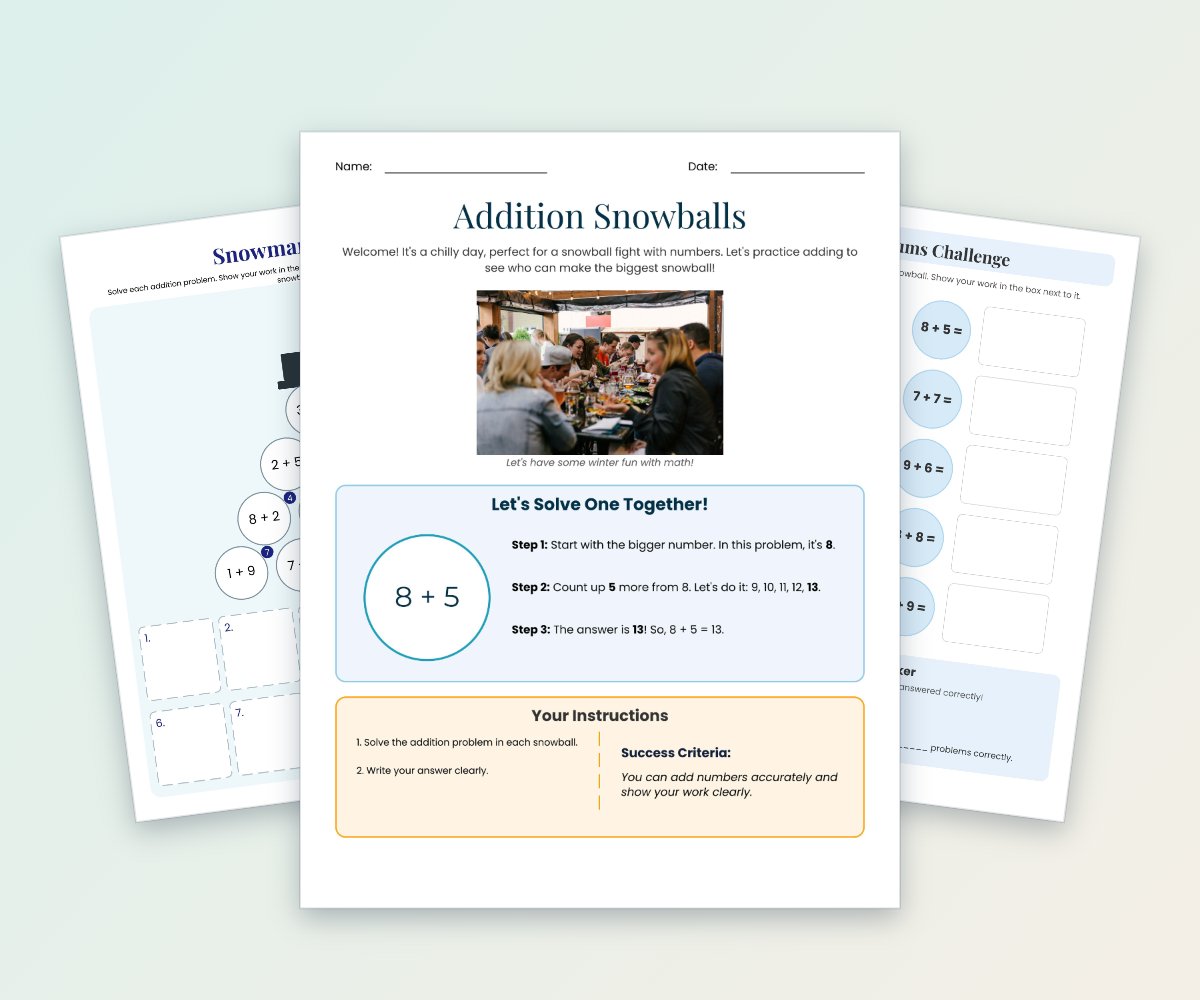
This winter-themed printable helps students practice addition facts through 20.
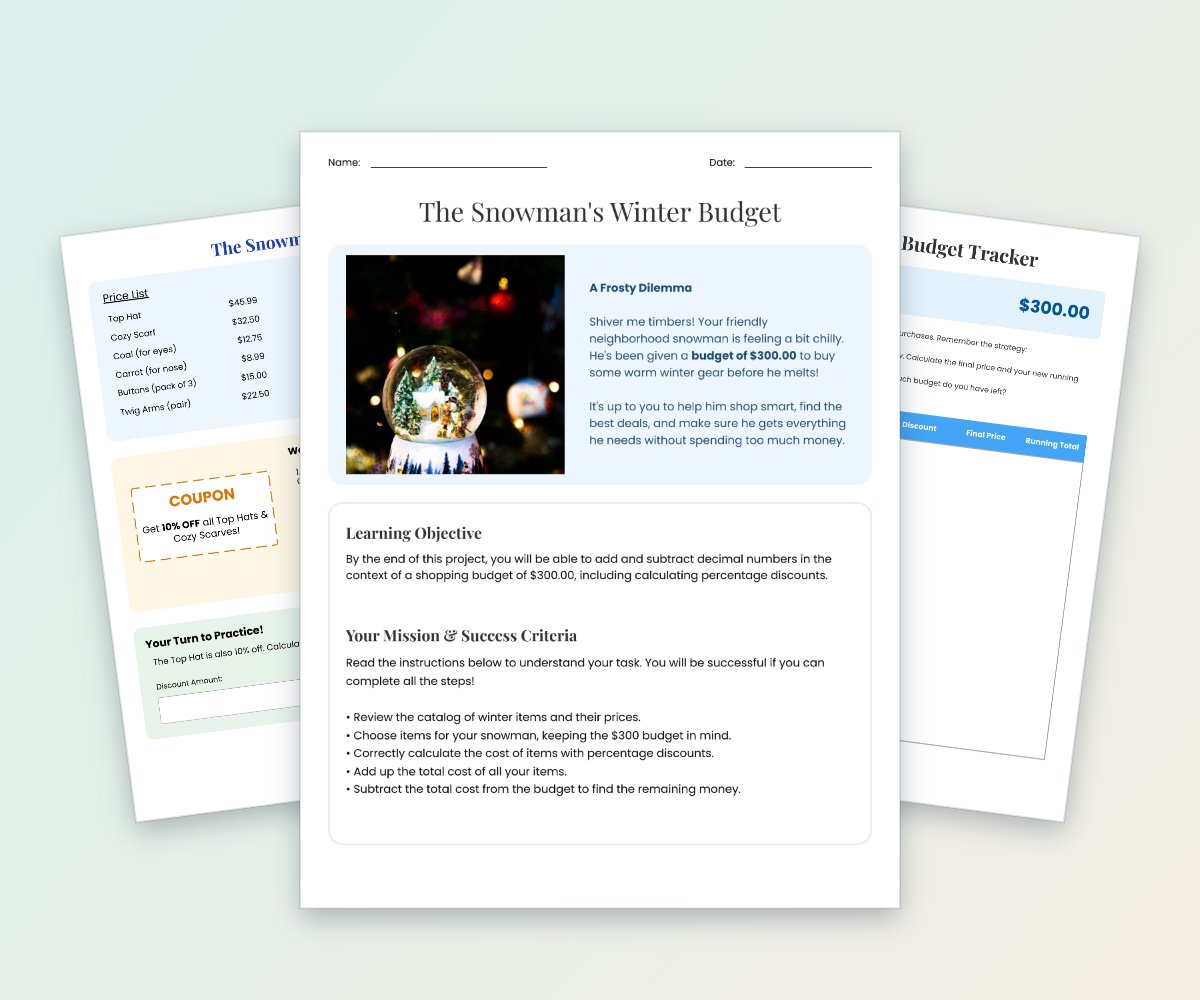
Students help a snowman shop for winter items within a $300 budget while calculating percentage discounts, final prices, totals, and remaining money.
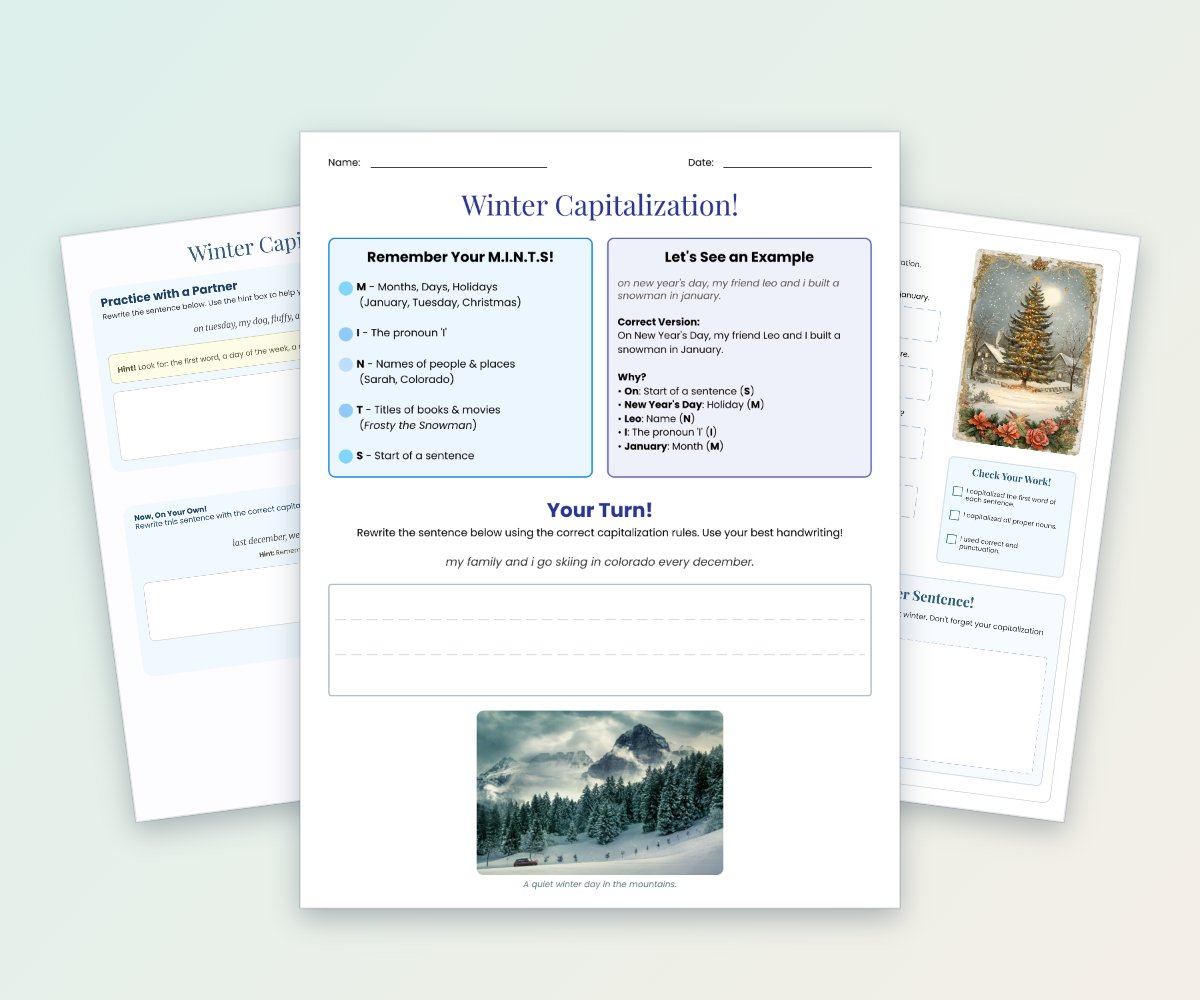
This three-page winter-themed worksheet teaches capitalization rules using the M.I.N.T.S.
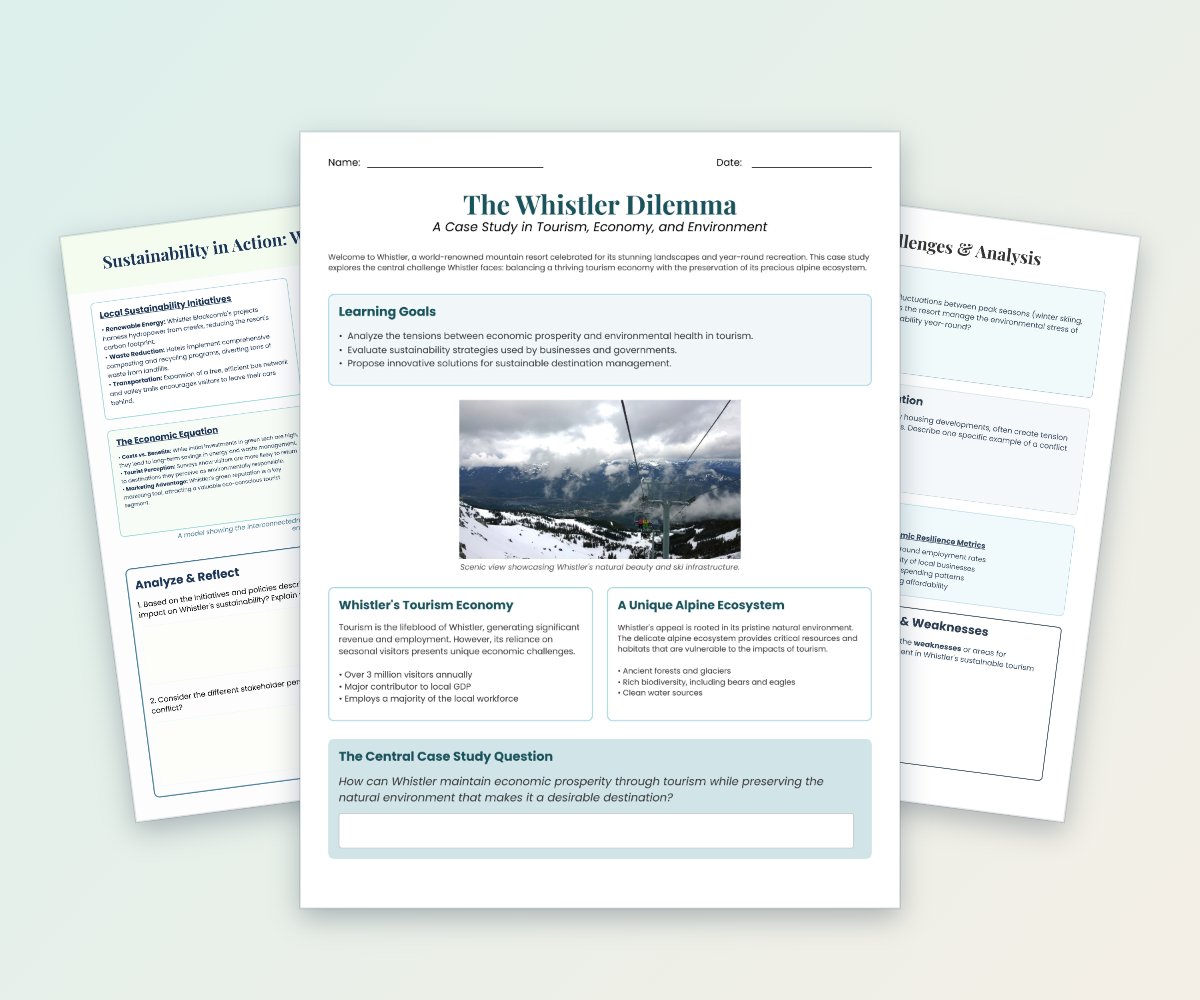
This four-page case study examines how Whistler can balance tourism-driven economic prosperity with protection of its alpine ecosystem.
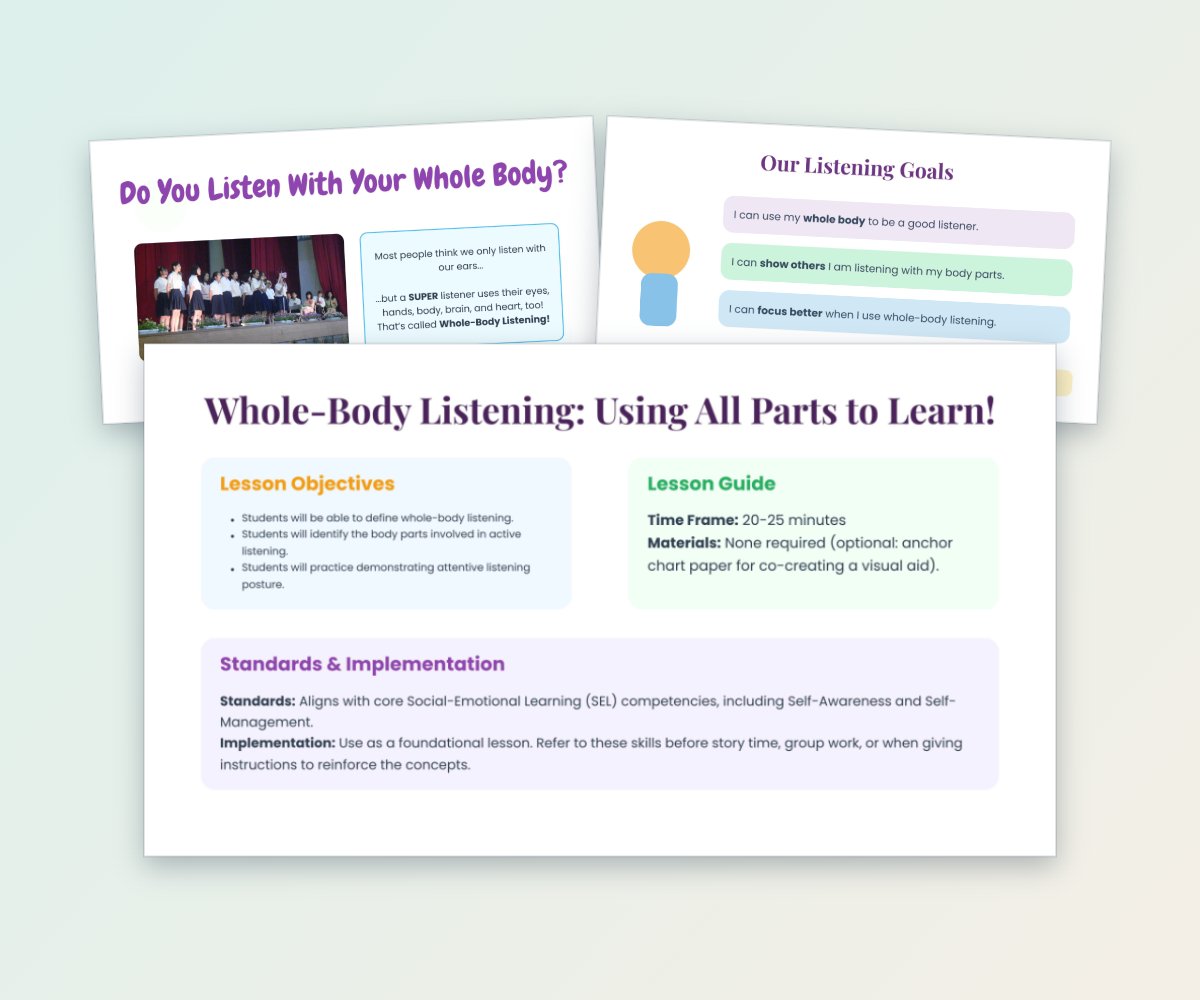
Teach students how to use their eyes, ears, hands, body, brain, and heart to listen attentively.
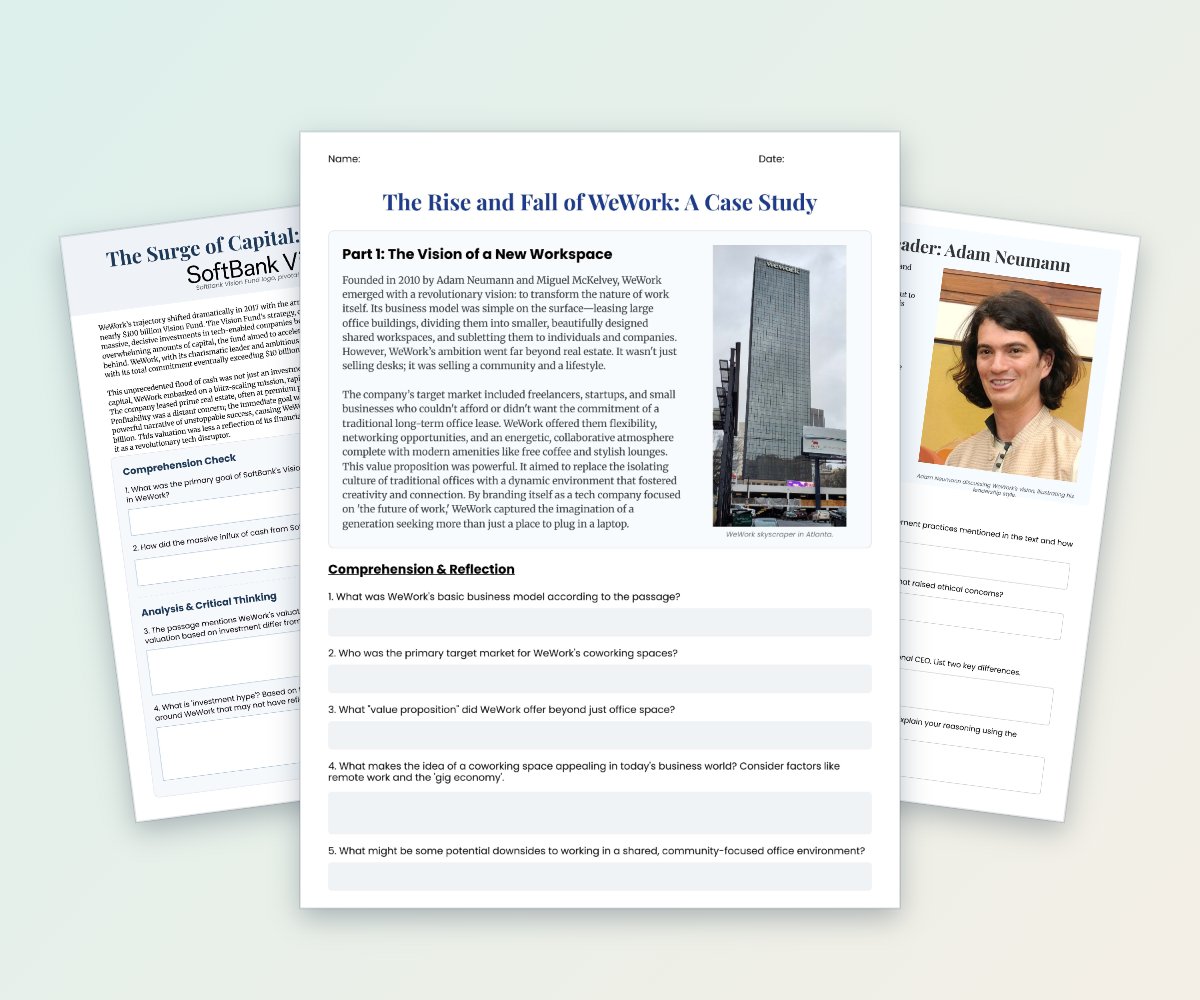
This case study examines WeWork’s coworking-space business model, target market, value proposition, and relationship with SoftBank’s Vision Fund.
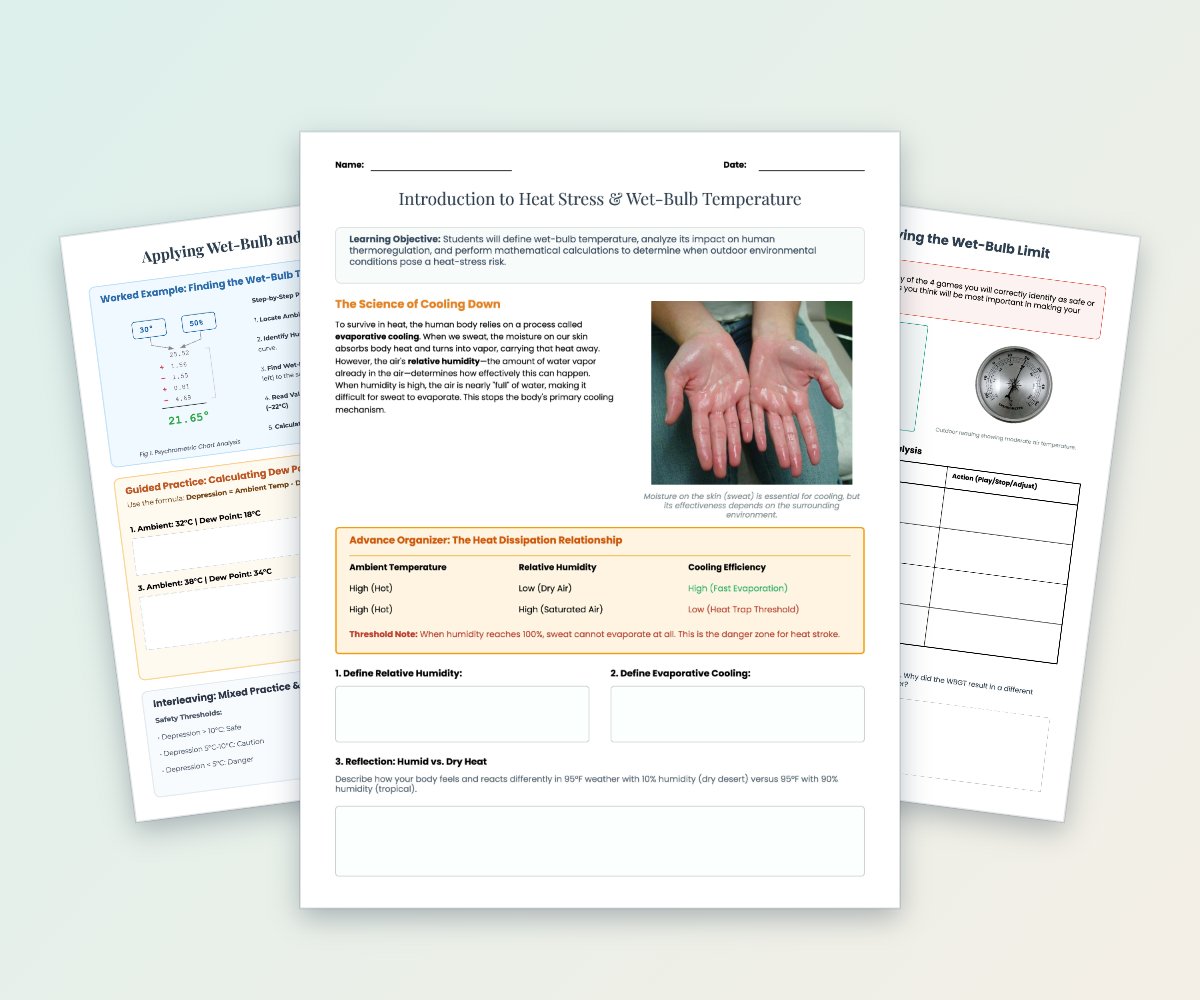
Students explore evaporative cooling, relative humidity, wet-bulb temperature, and human heat safety.
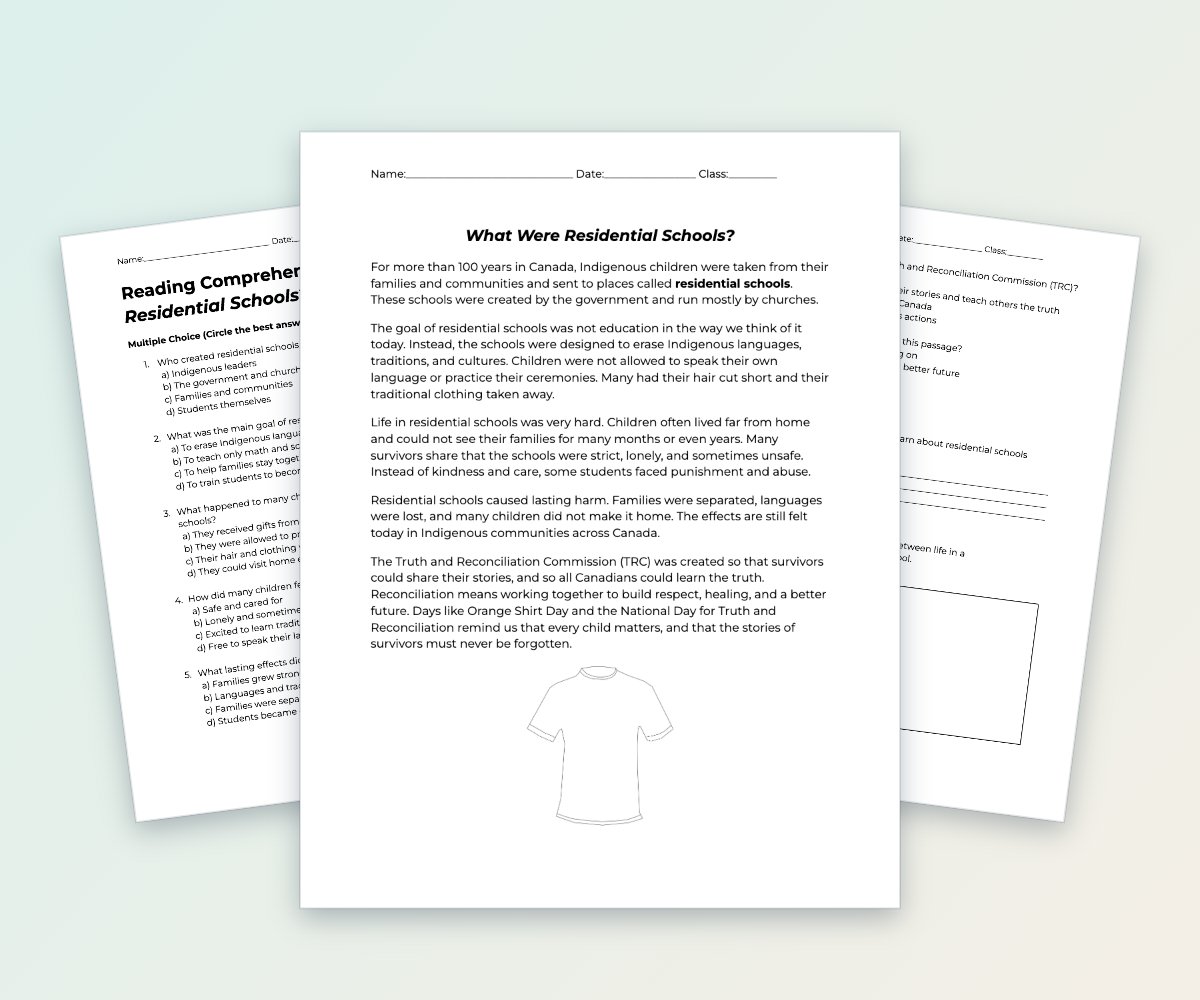
This five-page worksheet introduces students to the history and lasting impacts of residential schools in Canada.
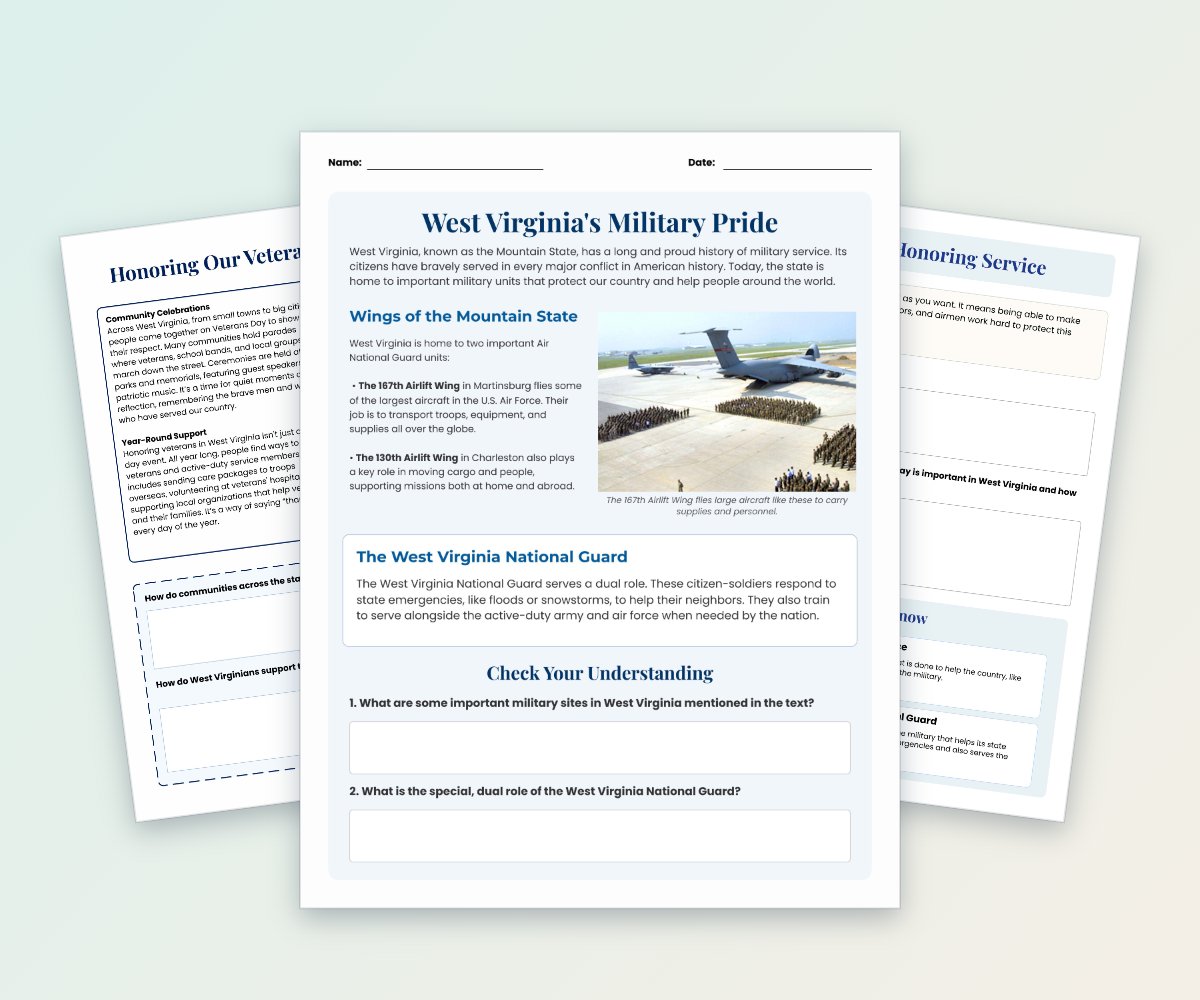
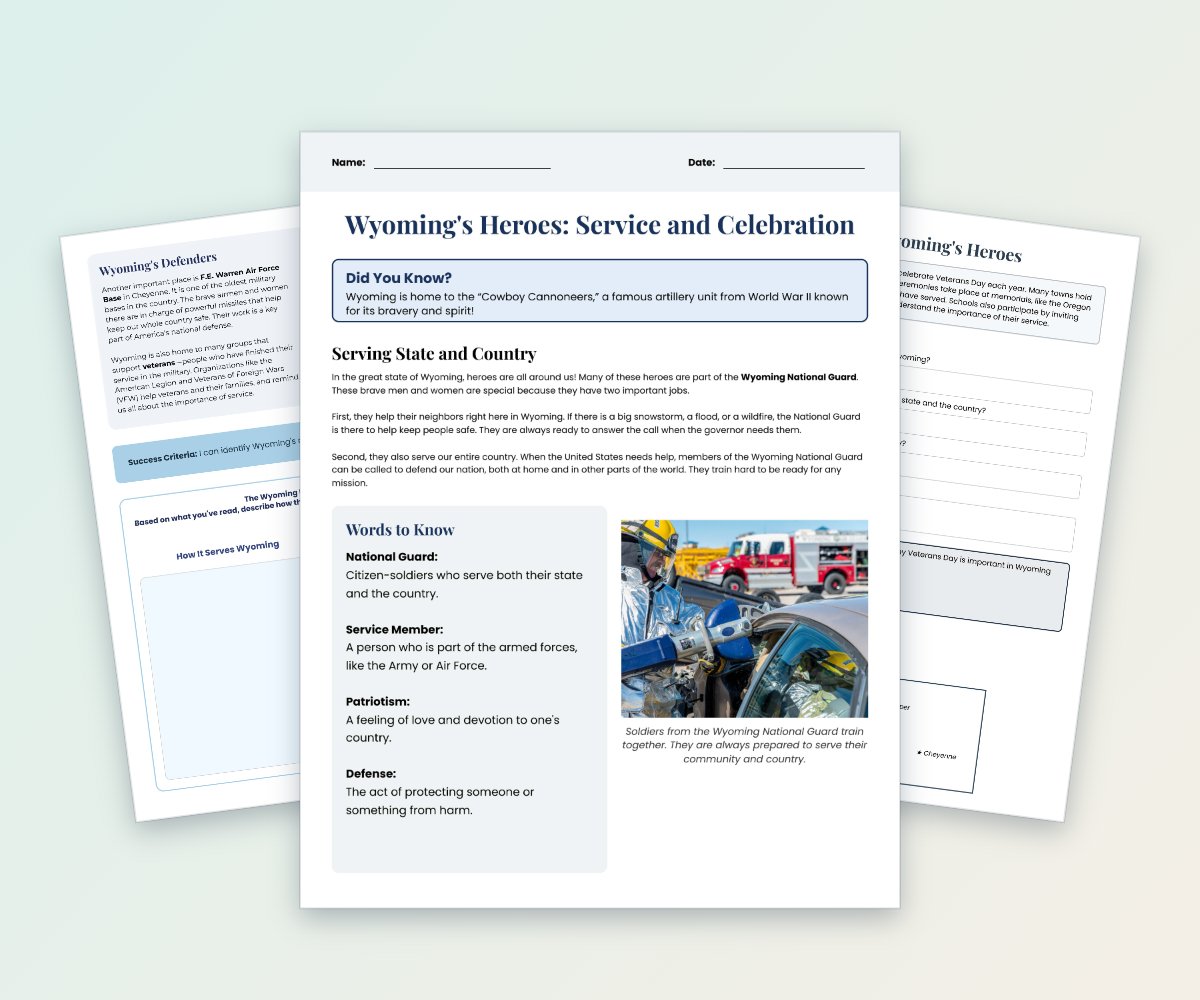
This three-page worksheet introduces West Virginia’s military heritage, Air National Guard units, National Guard responsibilities, and community support for veterans.
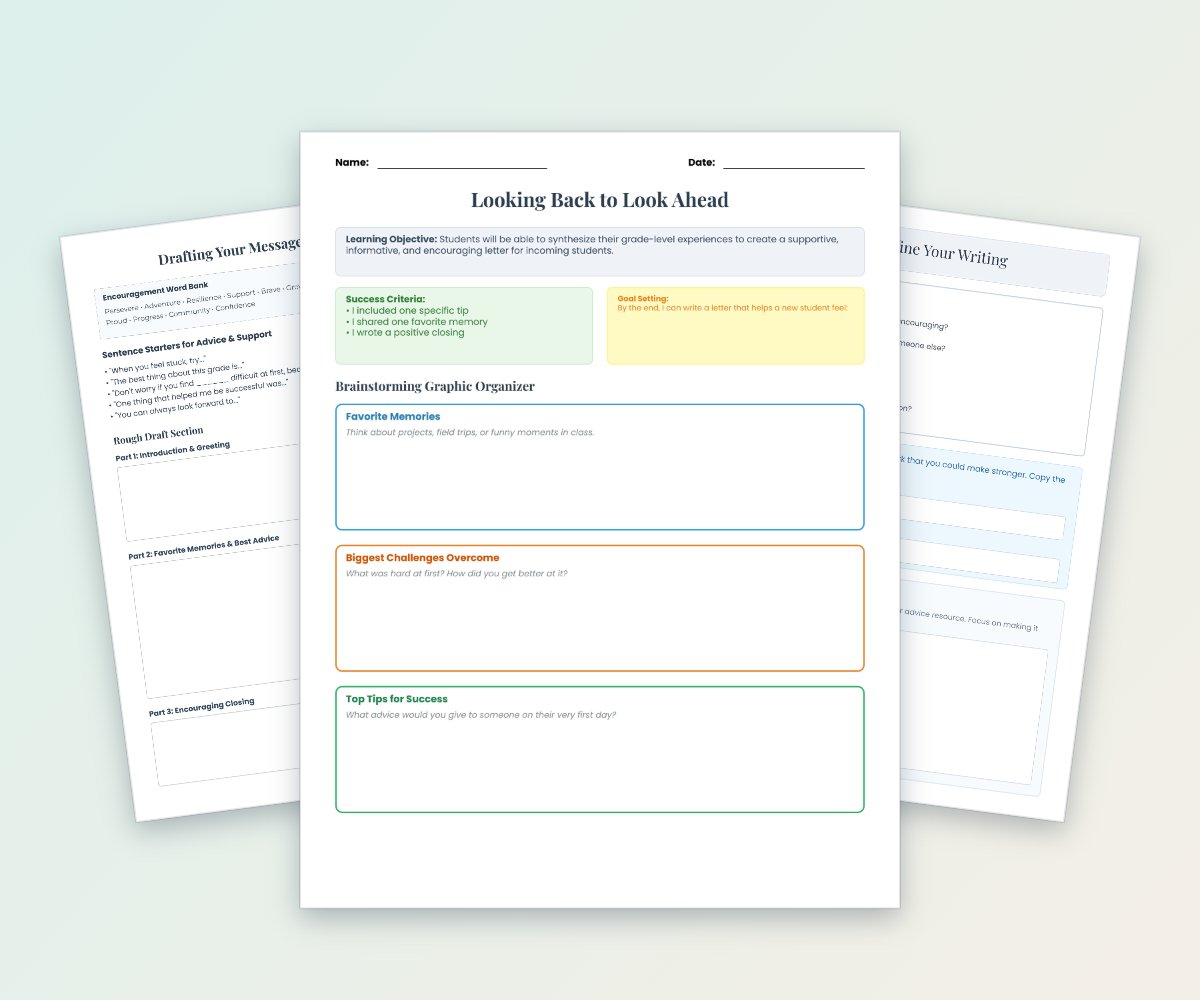
Students reflect on their grade-level experiences and write an encouraging letter to incoming students.
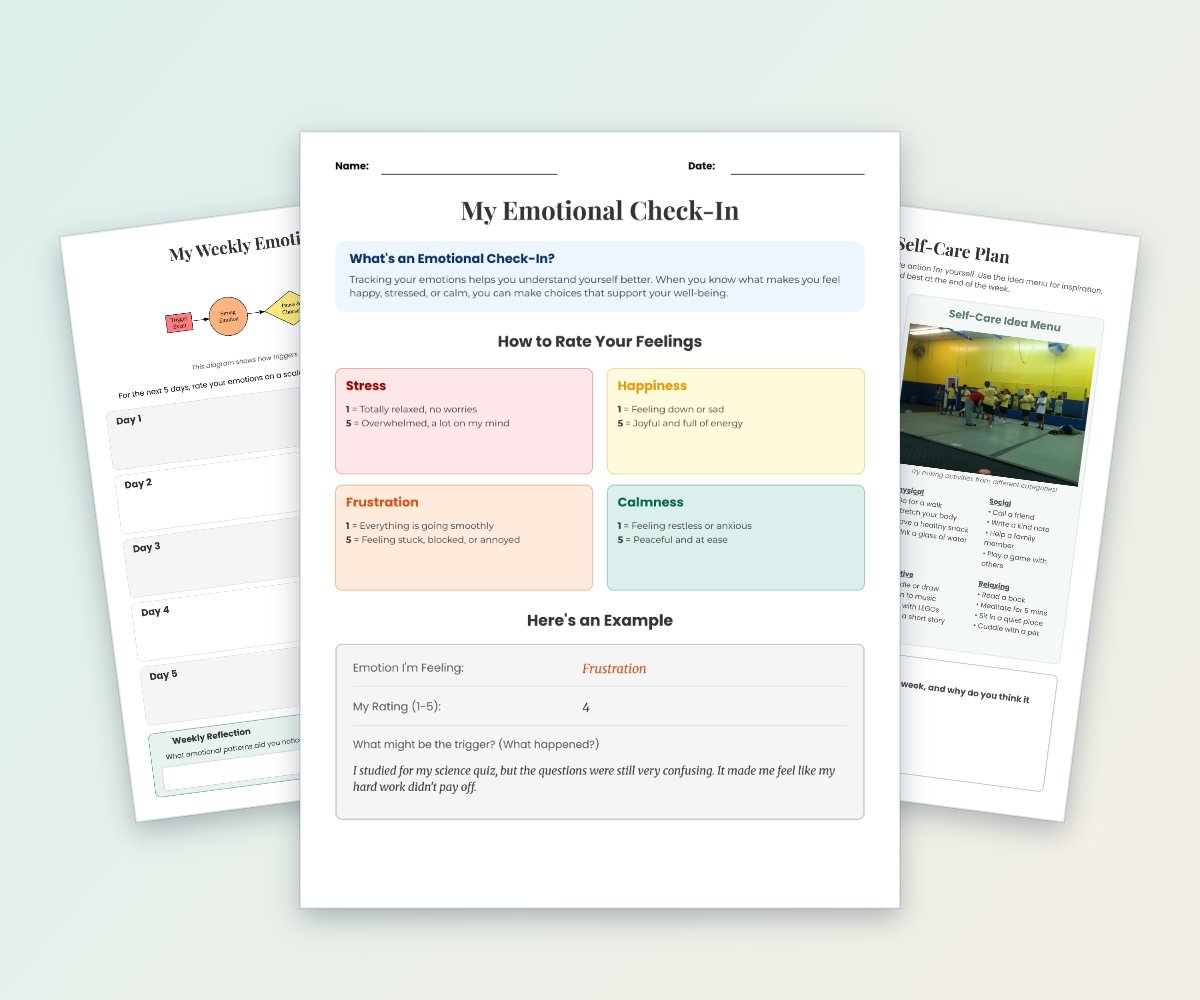
This four-page guide helps students track emotions, identify triggers, reflect on behavior, and develop personal coping strategies.
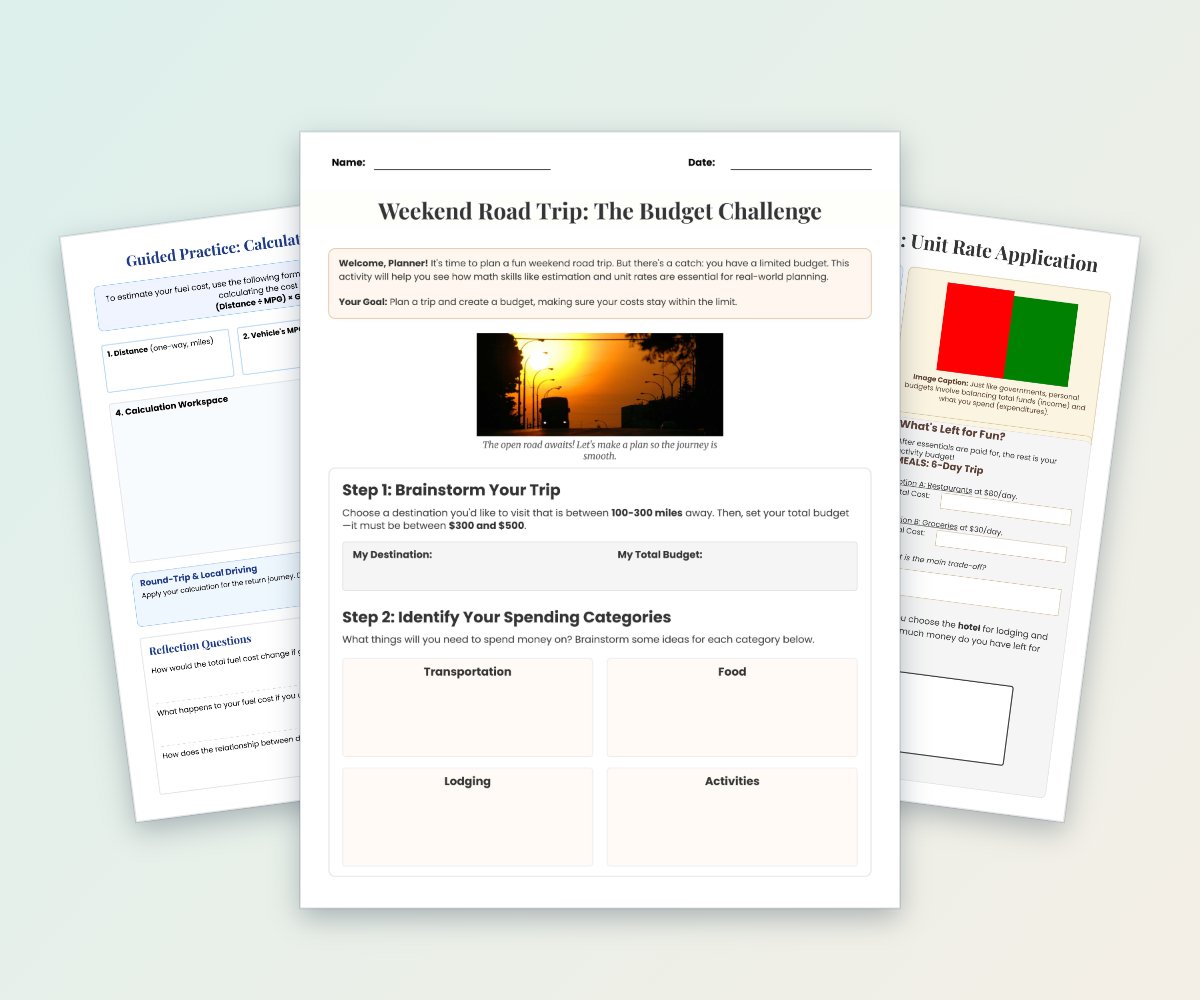
Students plan a weekend road trip within a fixed budget while estimating fuel, food, lodging, and activity costs.
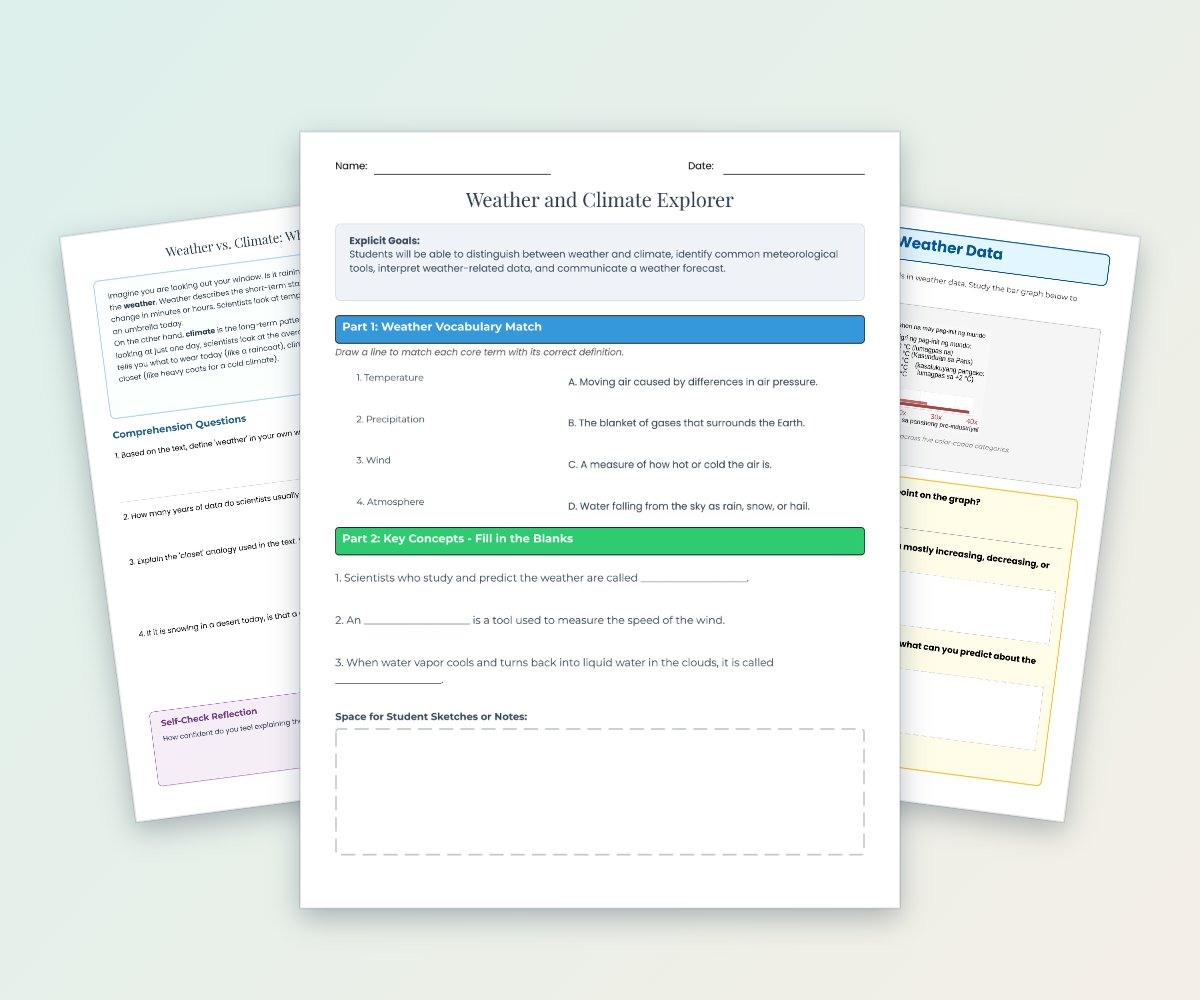
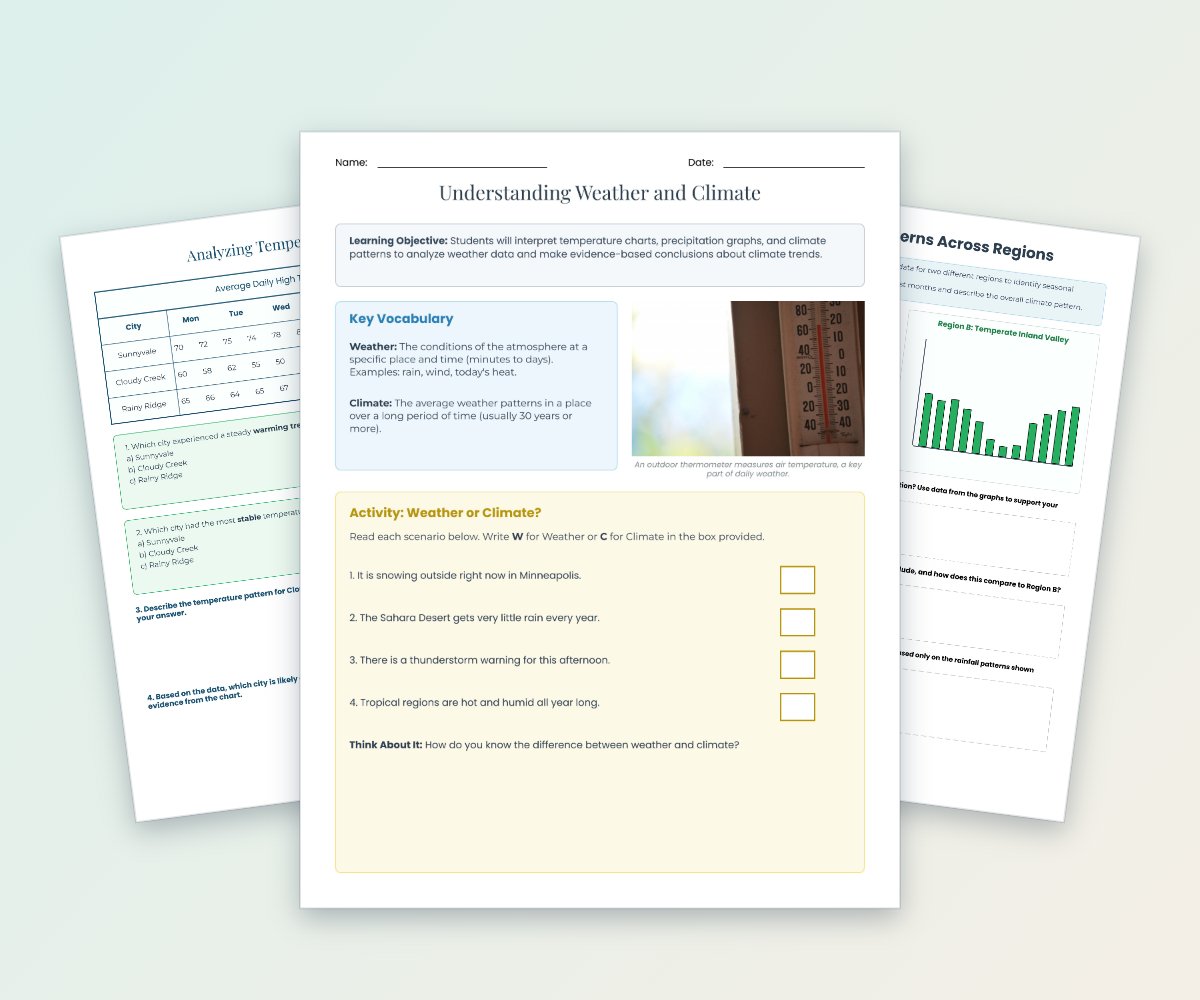
This six-page worksheet pack introduces the difference between weather and climate through vocabulary matching, reading comprehension, data analysis, and reflection activities.
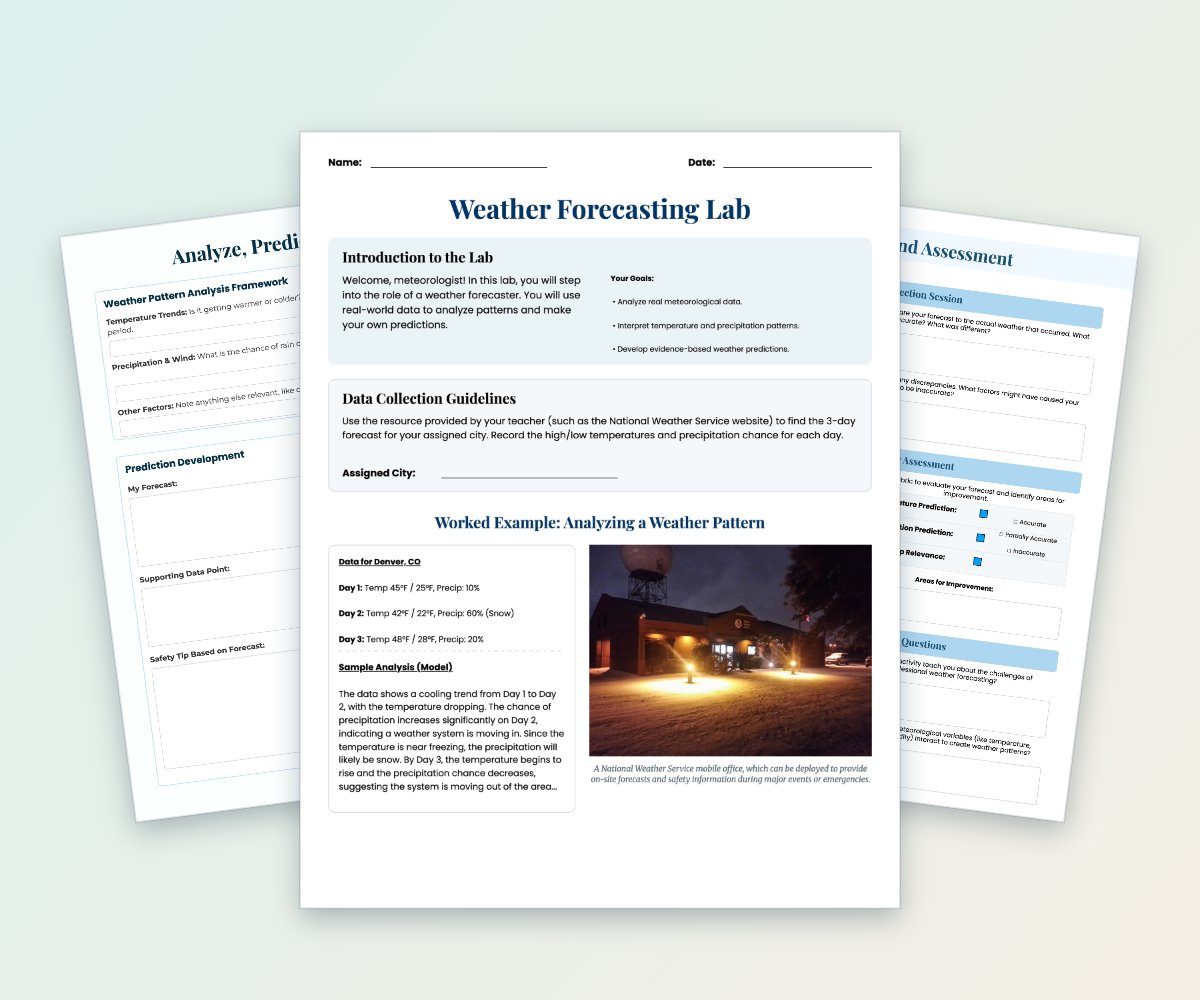
Students analyze three-day meteorological data, identify temperature and precipitation patterns, and develop evidence-based weather predictions.
Students distinguish weather from climate while analyzing temperature charts and precipitation patterns.
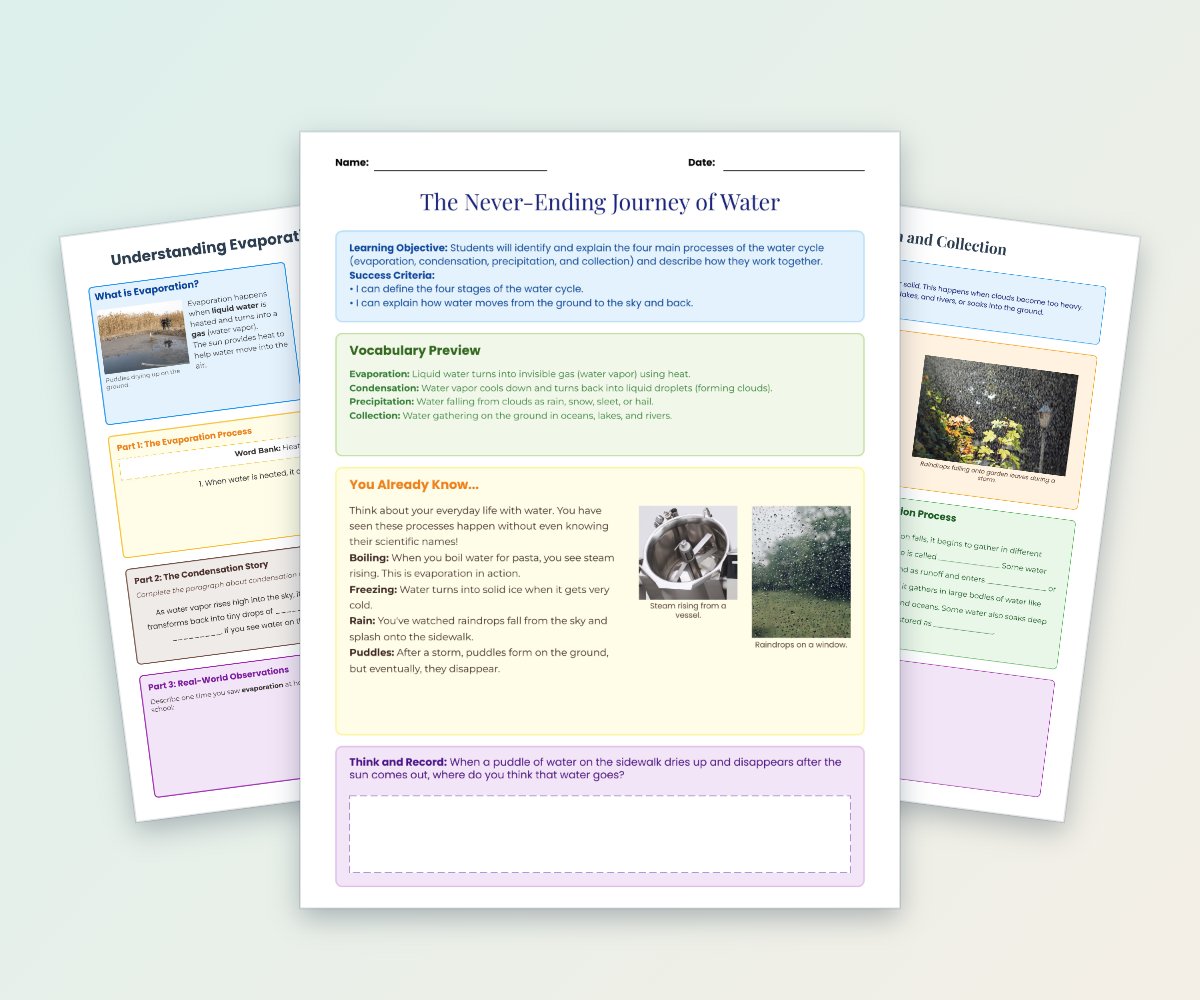
This four-page learning packet introduces evaporation, condensation, precipitation, and collection through clear definitions, examples, vocabulary practice, and written response activities.
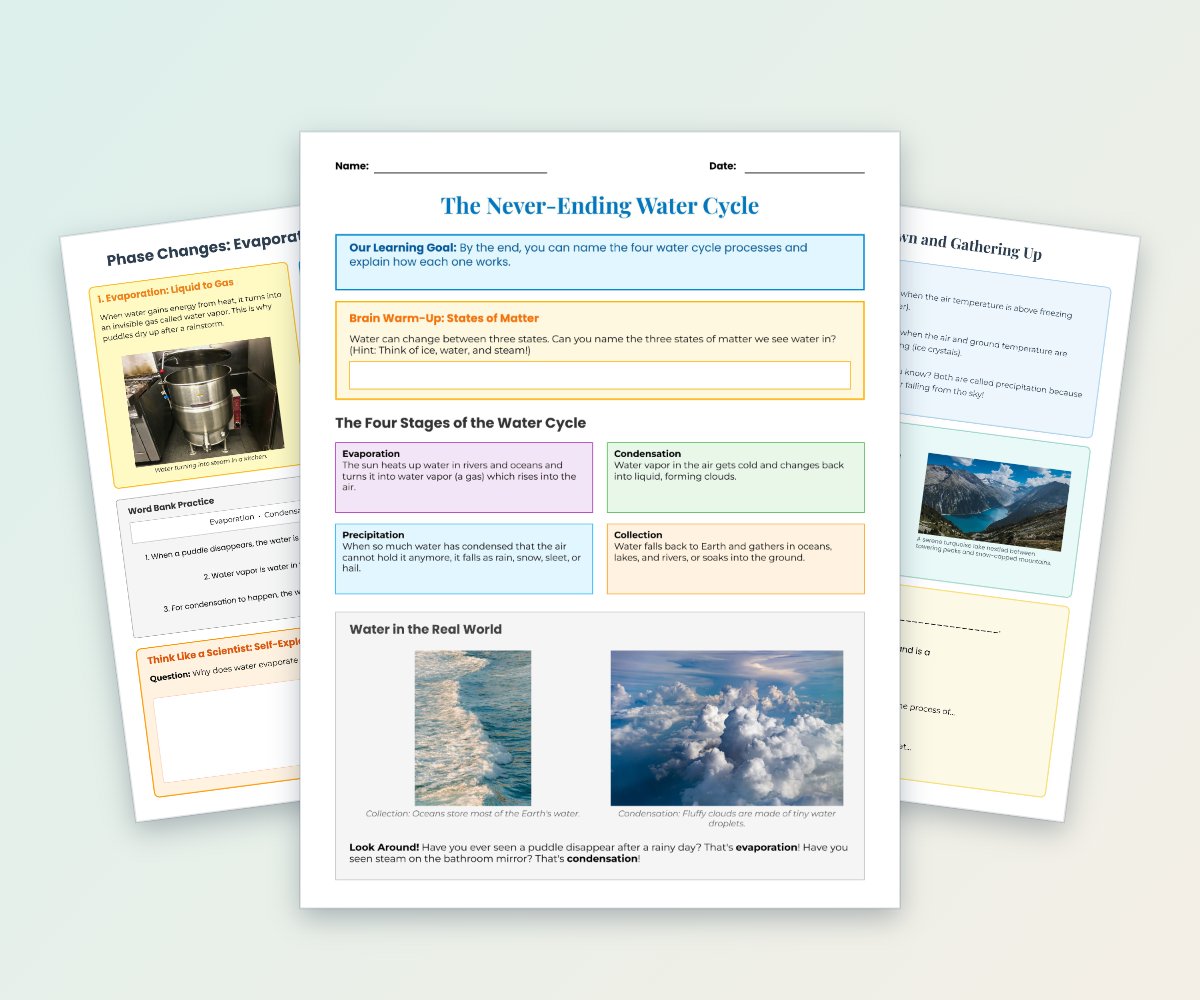
This four-page printable introduces evaporation, condensation, precipitation, and collection through clear explanations, real-world examples, vocabulary practice, and self-explanation questions.
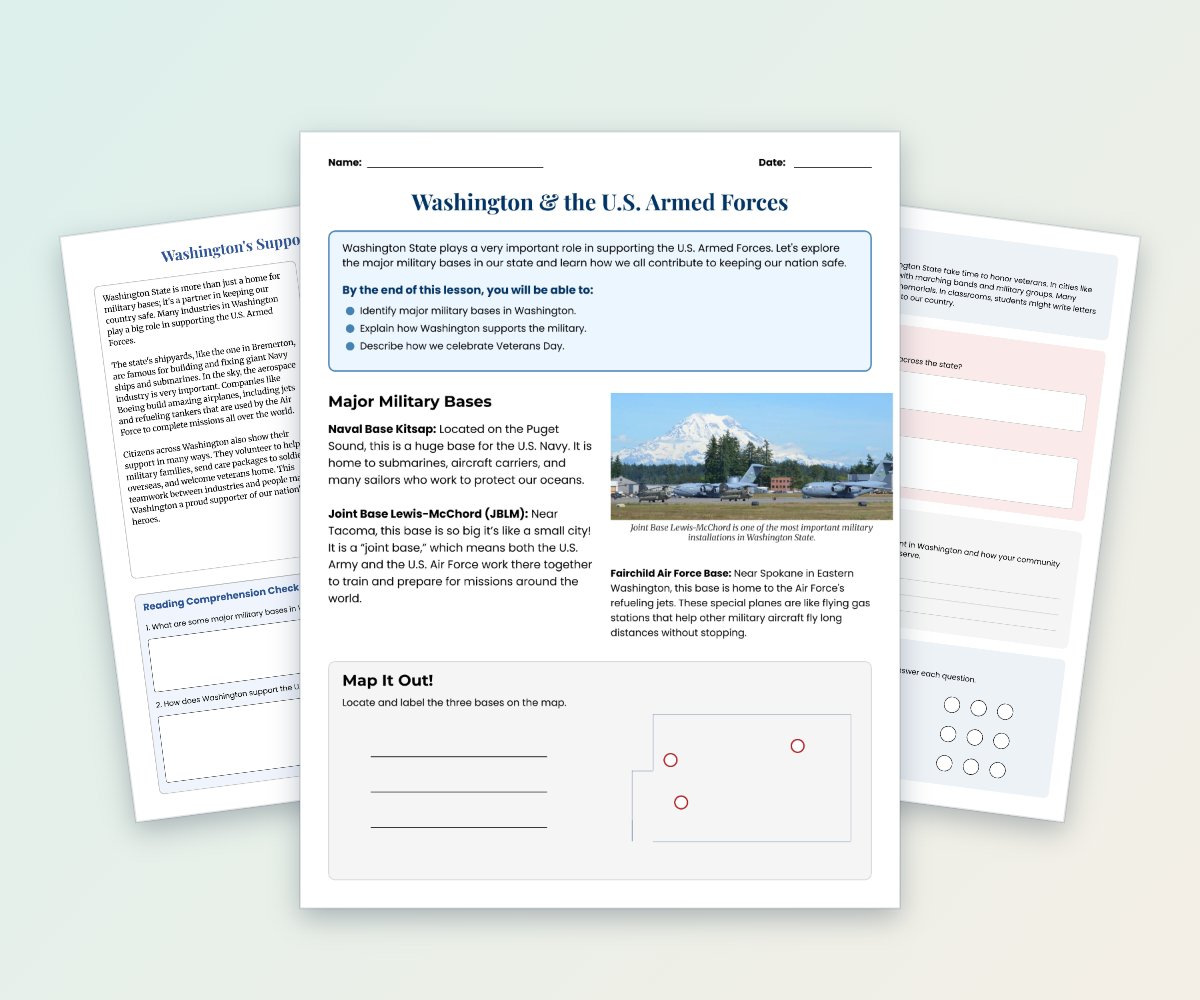
This three-page lesson introduces major Washington military bases, the state's industries supporting the armed forces, and community support for veterans.
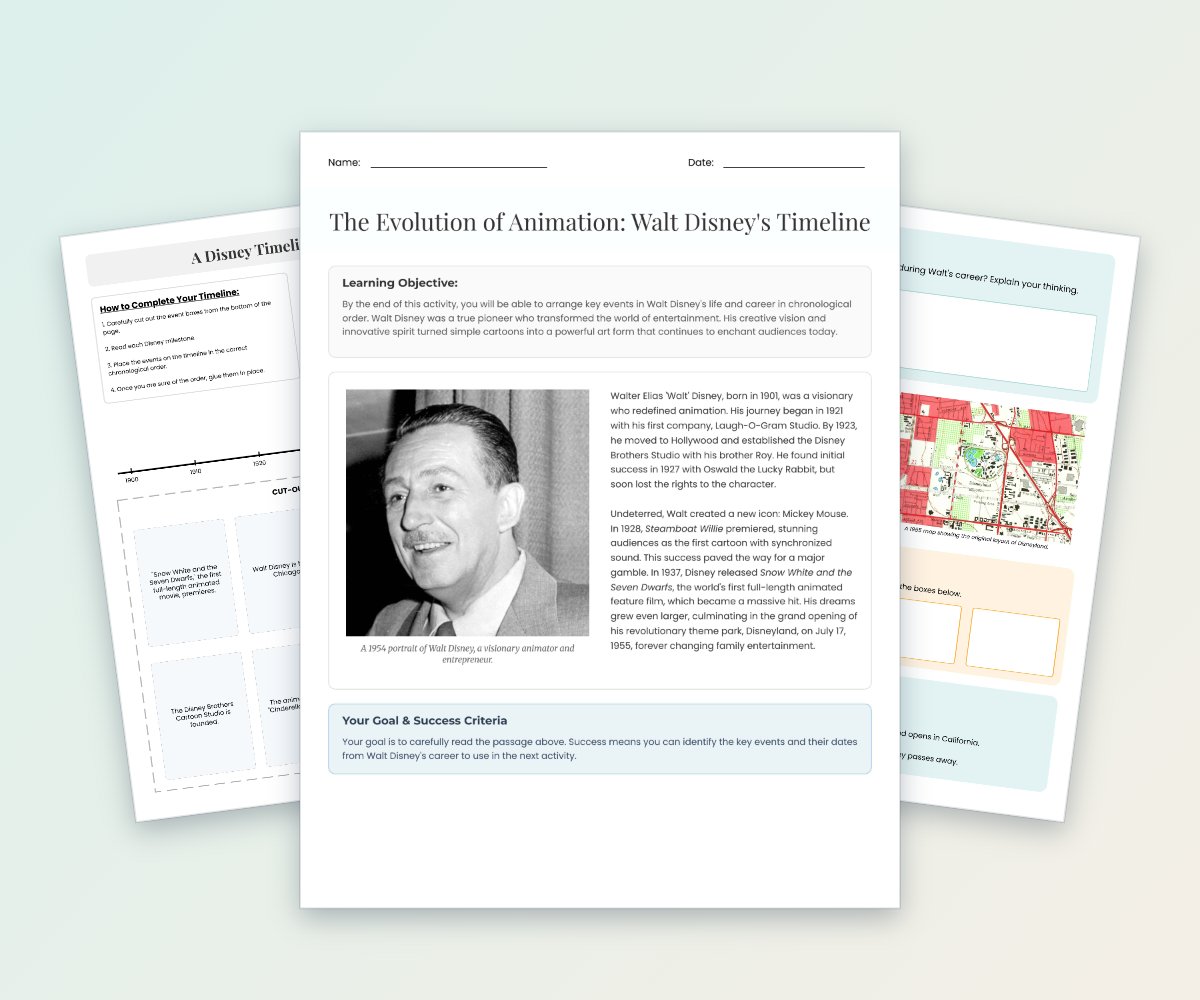
Students read a concise overview of Walt Disney's career and arrange major milestones in chronological order.
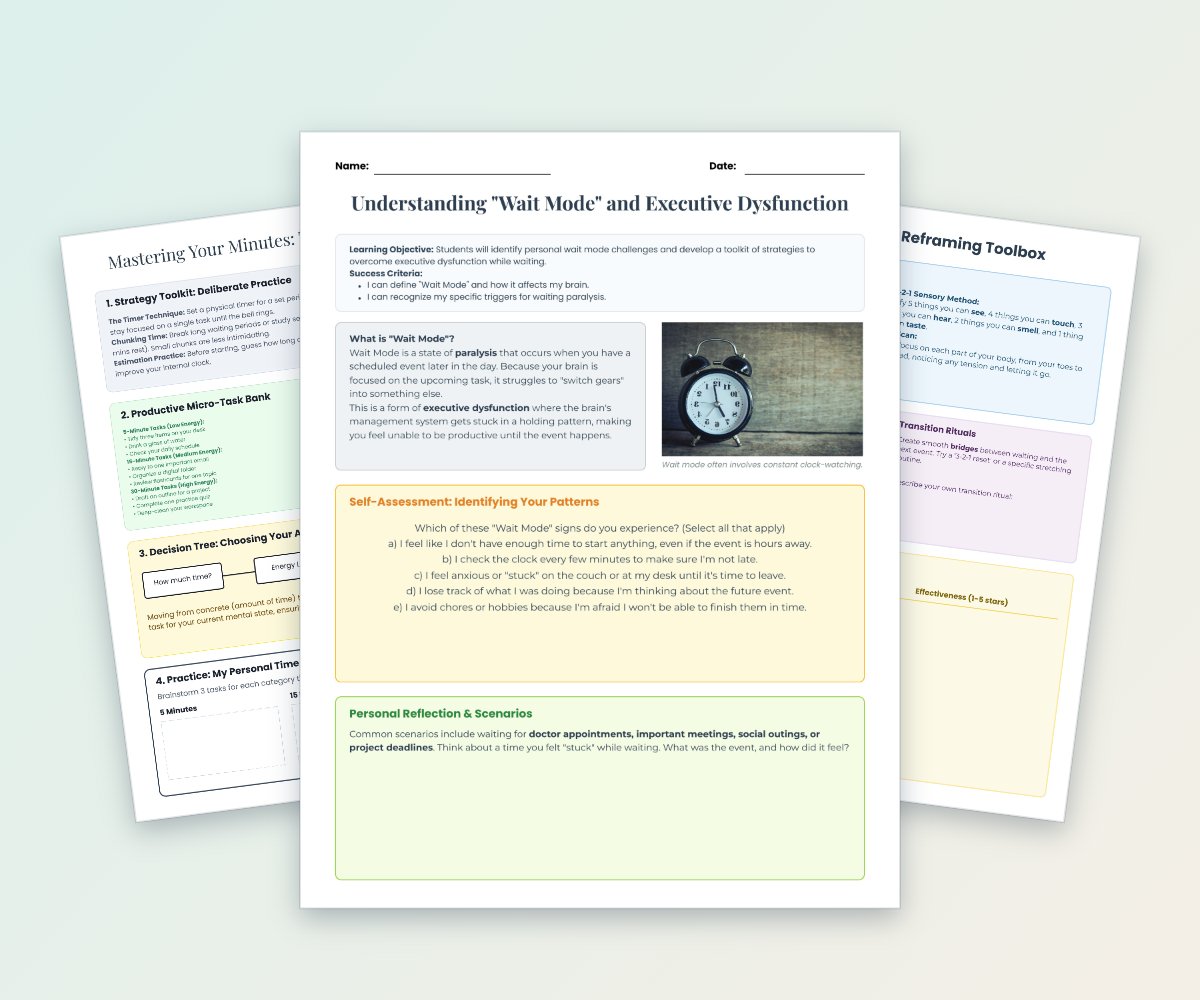
This five-page toolkit helps students understand wait mode and identify how scheduled events can affect focus and productivity.
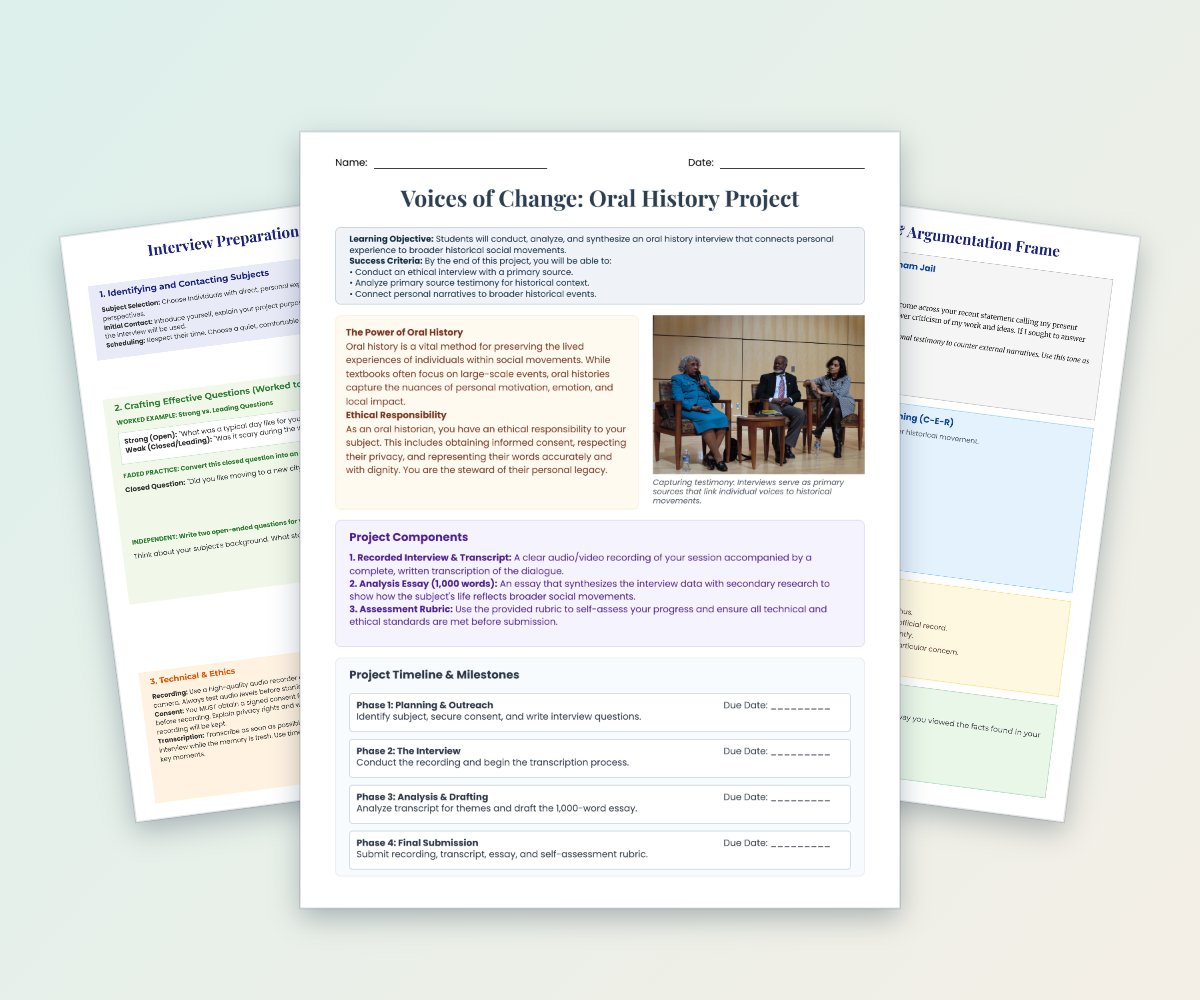
Guide students through planning, conducting, transcribing, and analyzing an oral history interview connected to broader social movements.
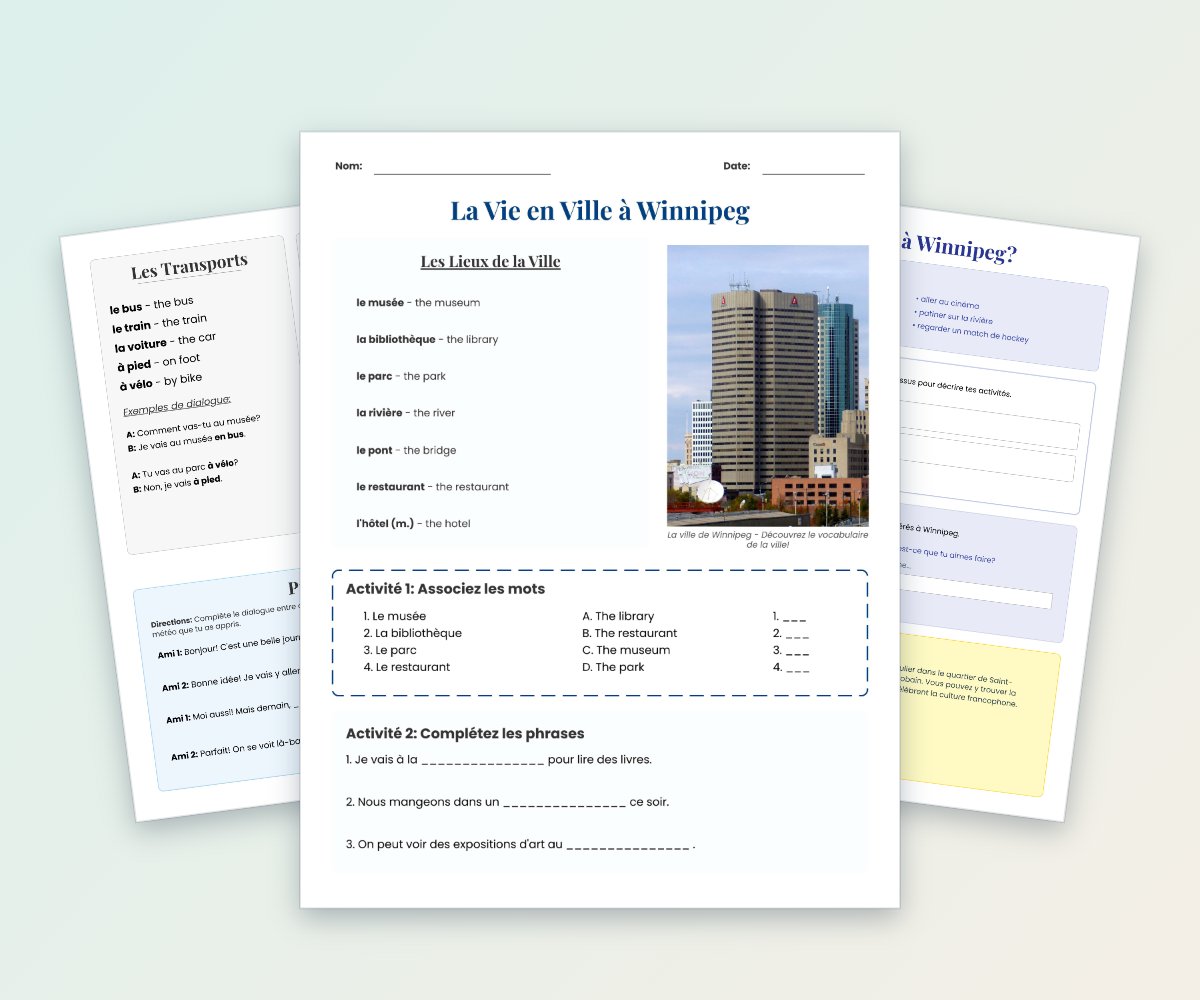
This four-page French activity pack teaches vocabulary for places in Winnipeg, transportation, weather, and weekend activities.
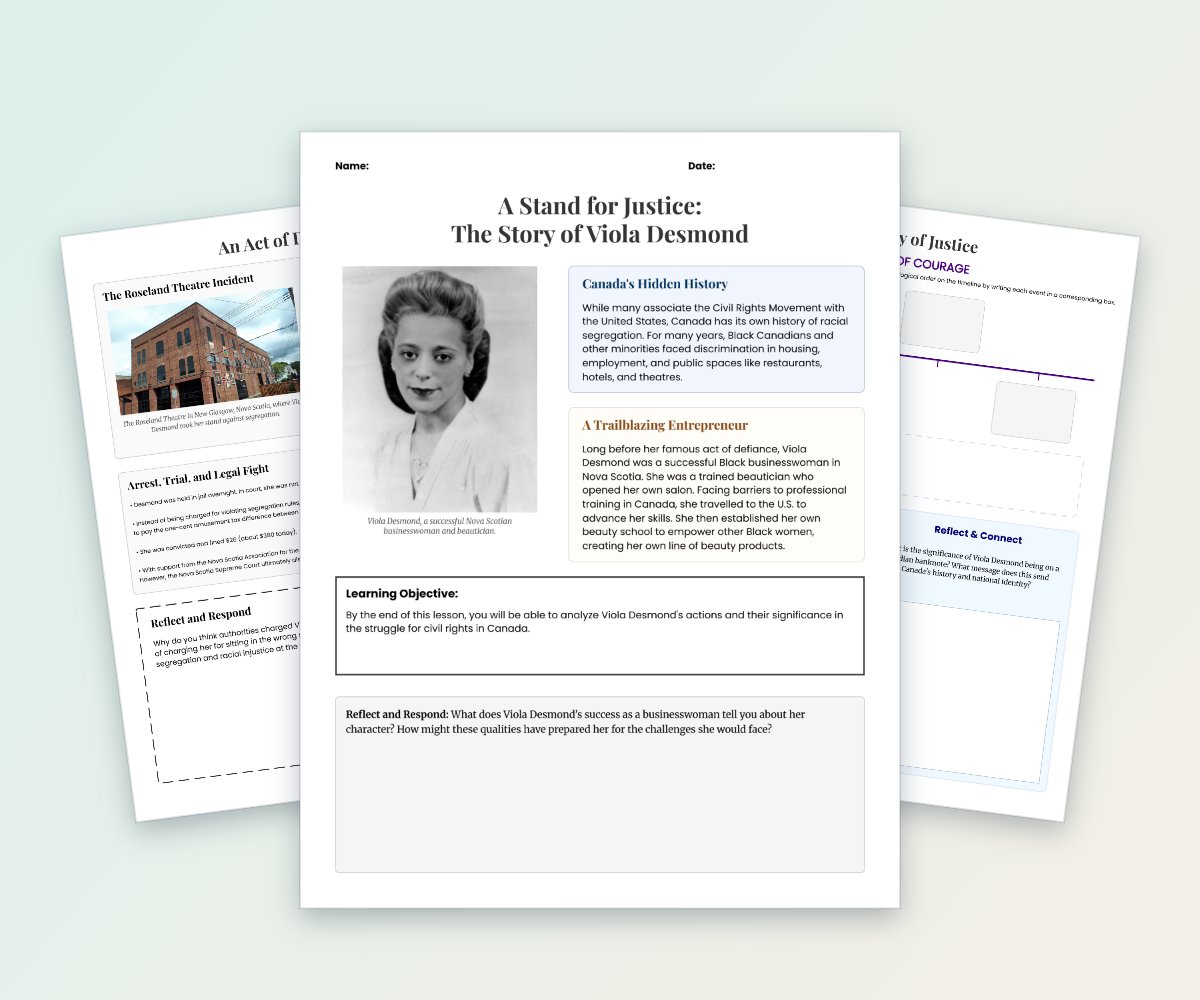
This four-page lesson explores Viola Desmond's entrepreneurship, resistance to segregation, arrest, and legal challenge in Nova Scotia.
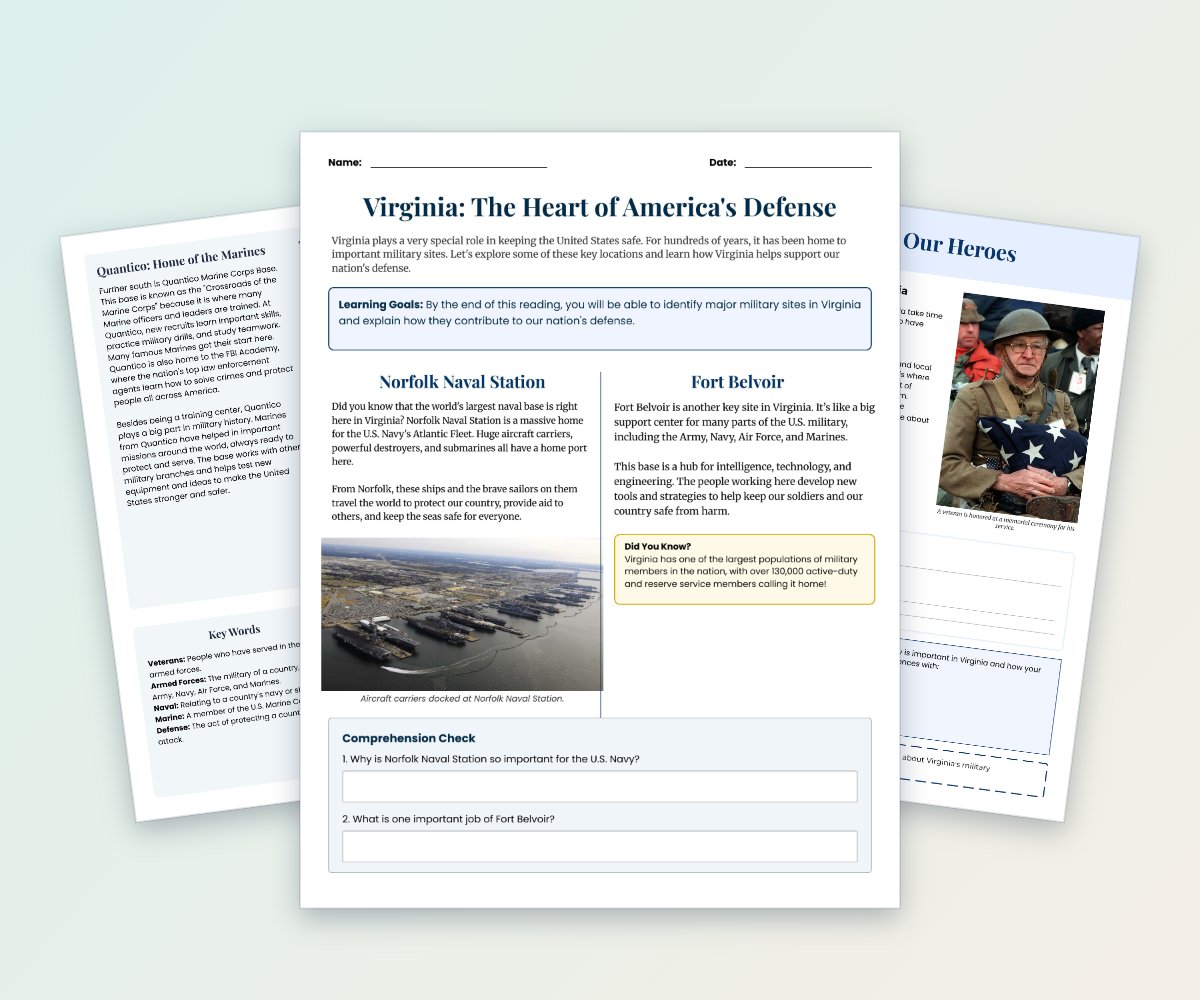
Students read about Norfolk Naval Station, Fort Belvoir, and Quantico Marine Corps Base and learn how these sites support national defense.
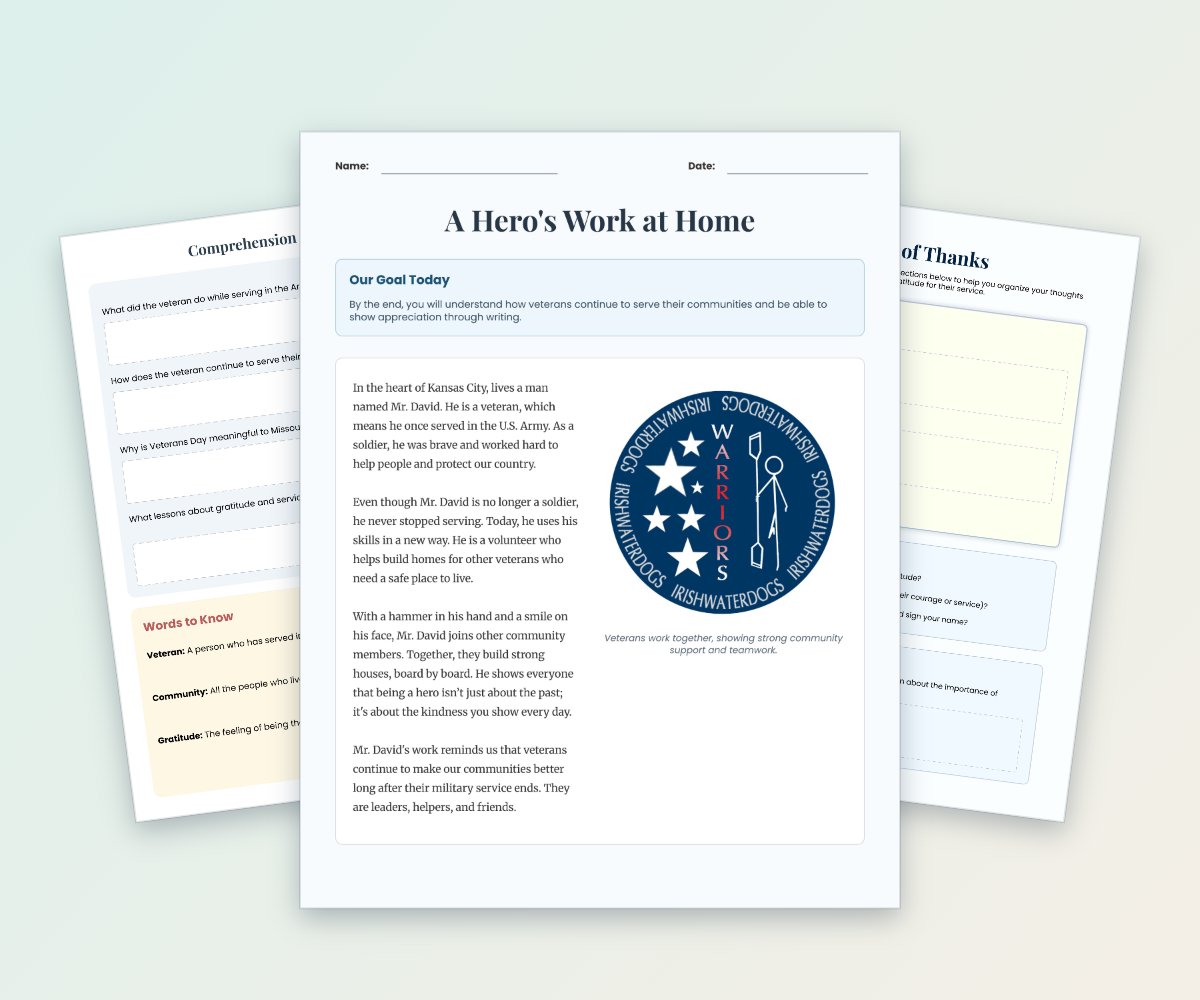
Students read about a veteran who continues serving the community by helping build homes for other veterans.
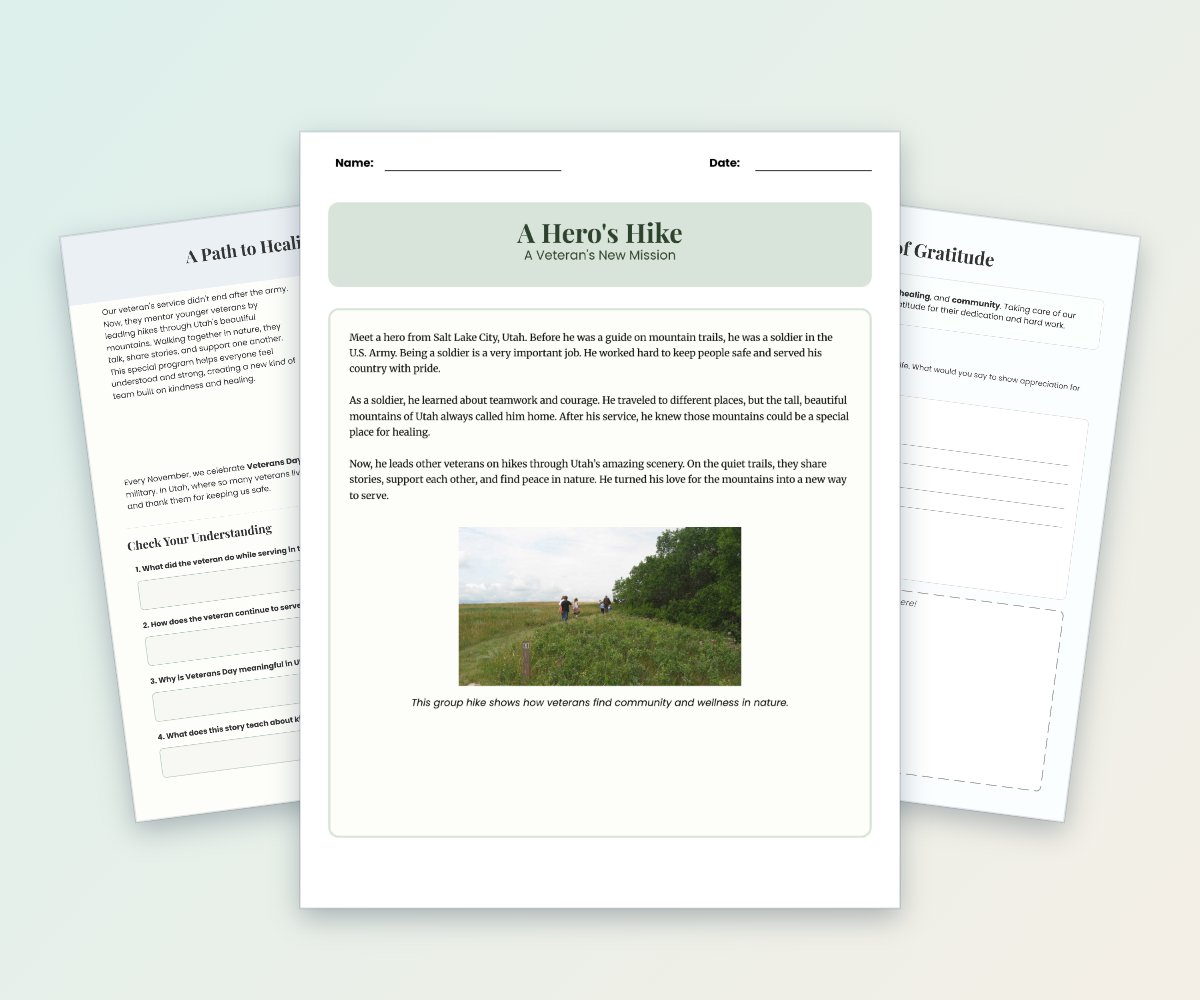
Students read a passage about a Utah veteran who leads healing hikes and mentors other veterans.
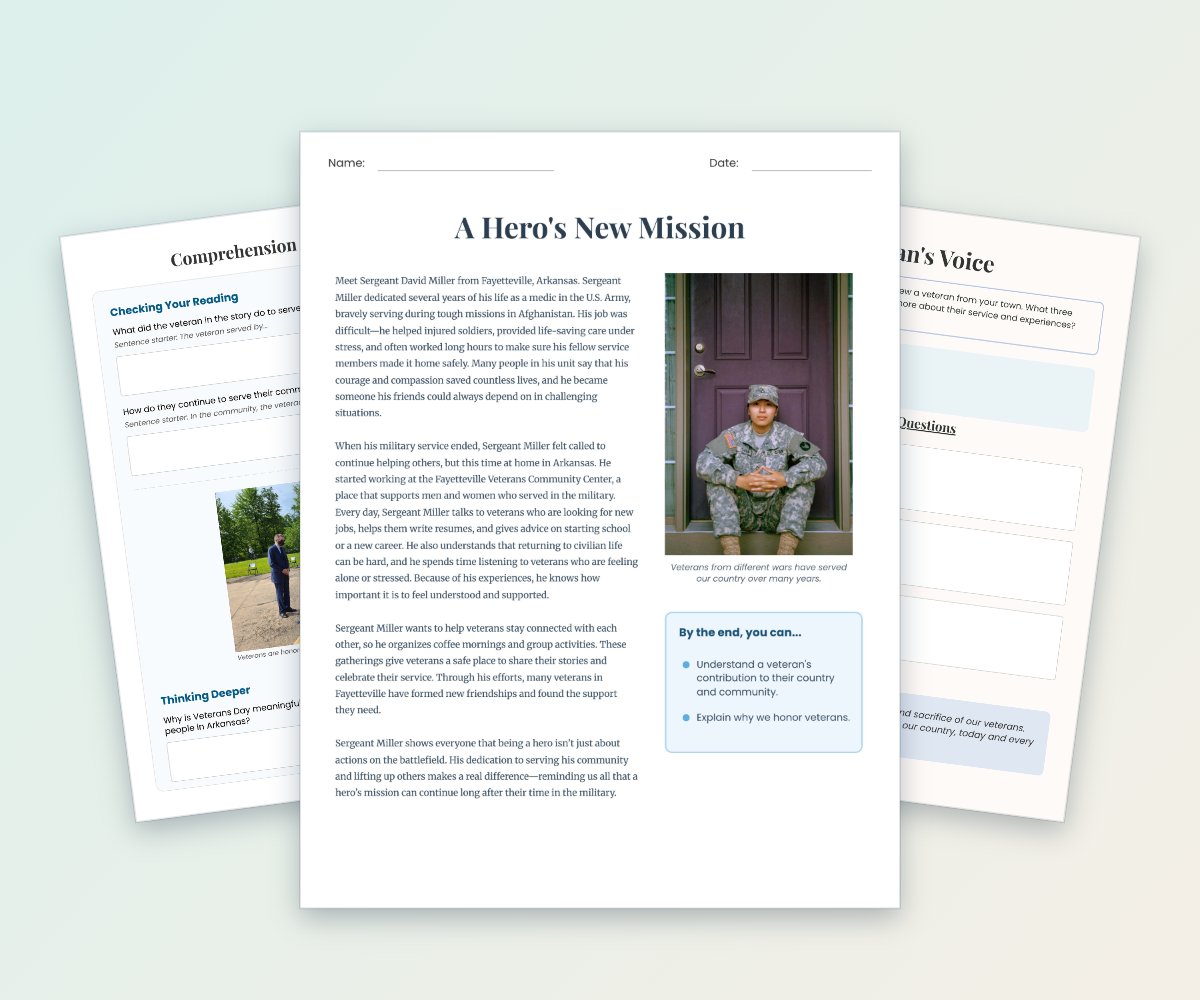
Students read a short nonfiction passage about an Arkansas veteran’s military service and continued work supporting veterans.
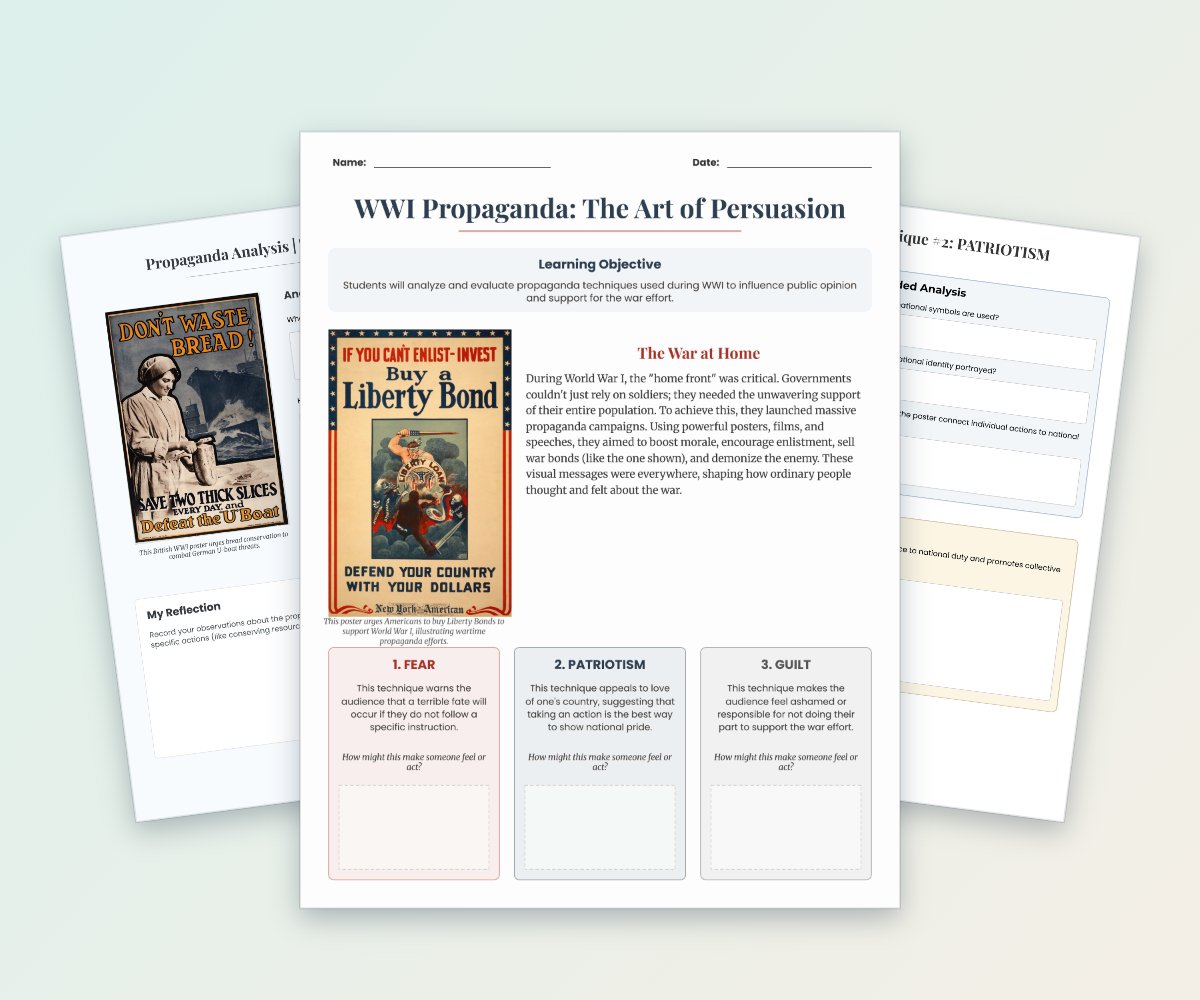
Students examine World War I posters and analyze how fear, patriotism, and guilt influenced public opinion and encouraged wartime actions.