Celebrating My Year Portfolio Reflection
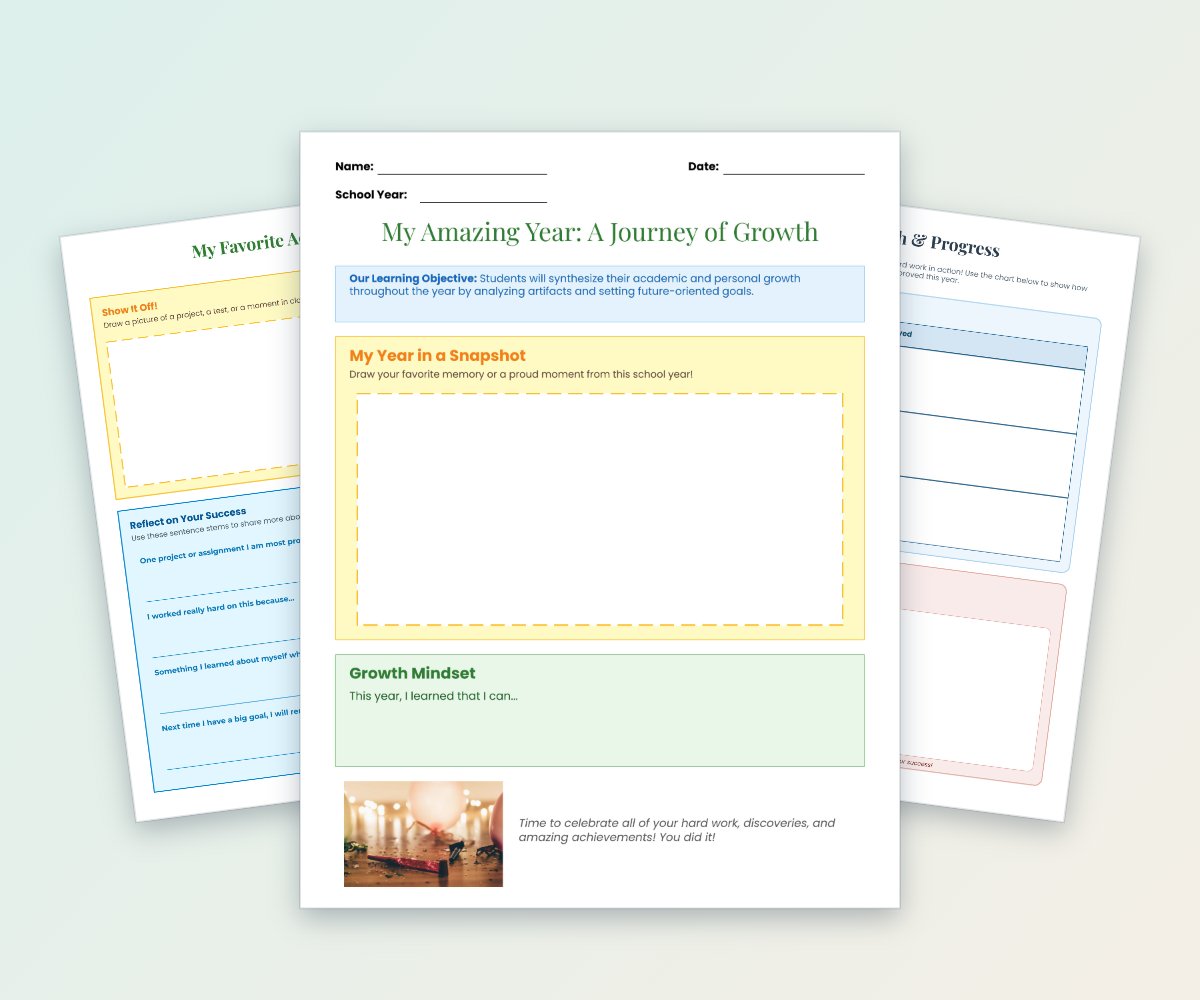
This six-page portfolio helps students reflect on academic growth, personal achievements, challenges overcome, and meaningful memories from the school year.
$4
Classroom-ready resources written for grade 11: printable worksheets, slides, activities and planning tools you can download and use straight away. Browse by subject below.
This six-page portfolio helps students reflect on academic growth, personal achievements, challenges overcome, and meaningful memories from the school year.
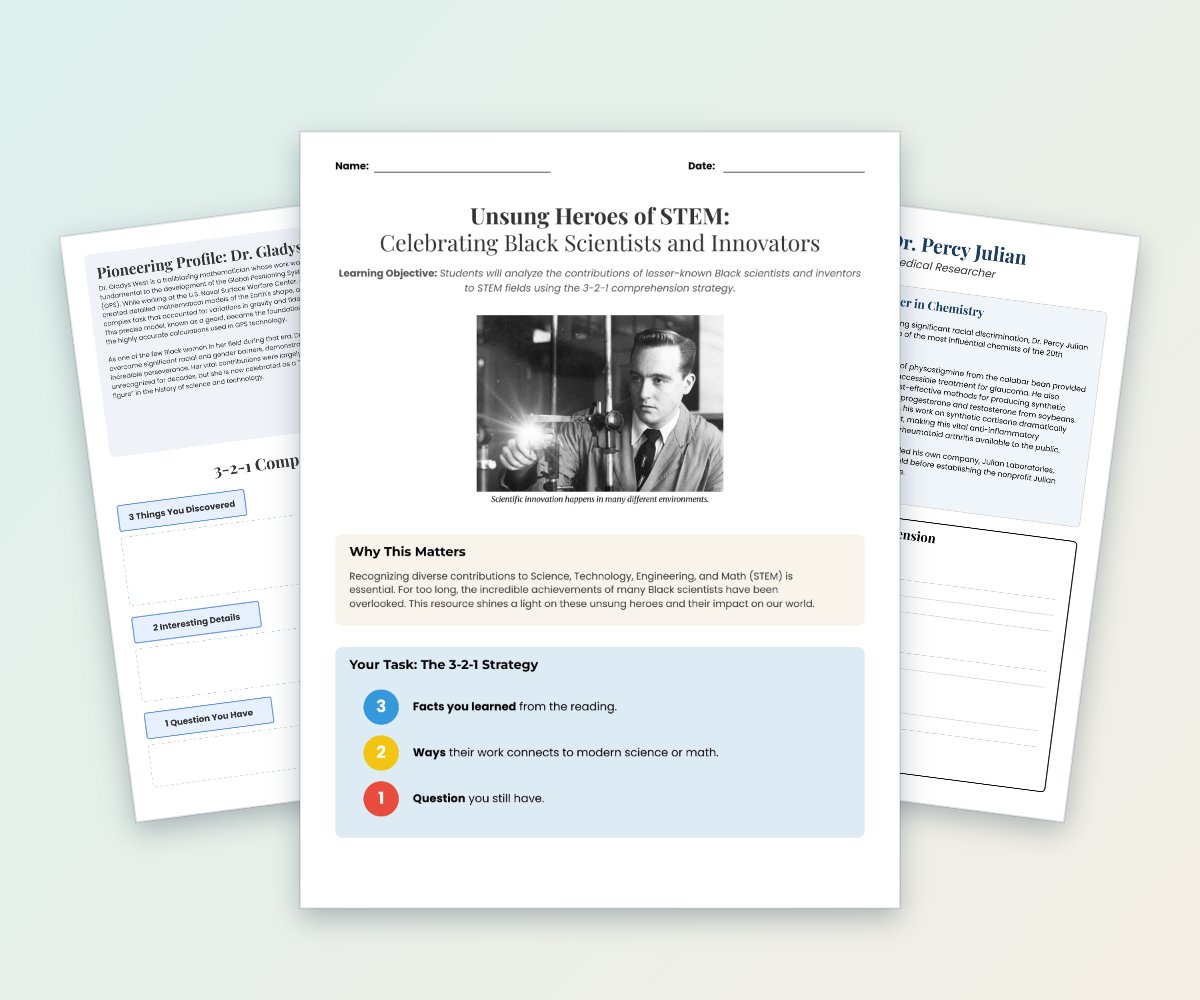
Students learn about the contributions of Black scientists and innovators, including Gladys West and Percy Julian.
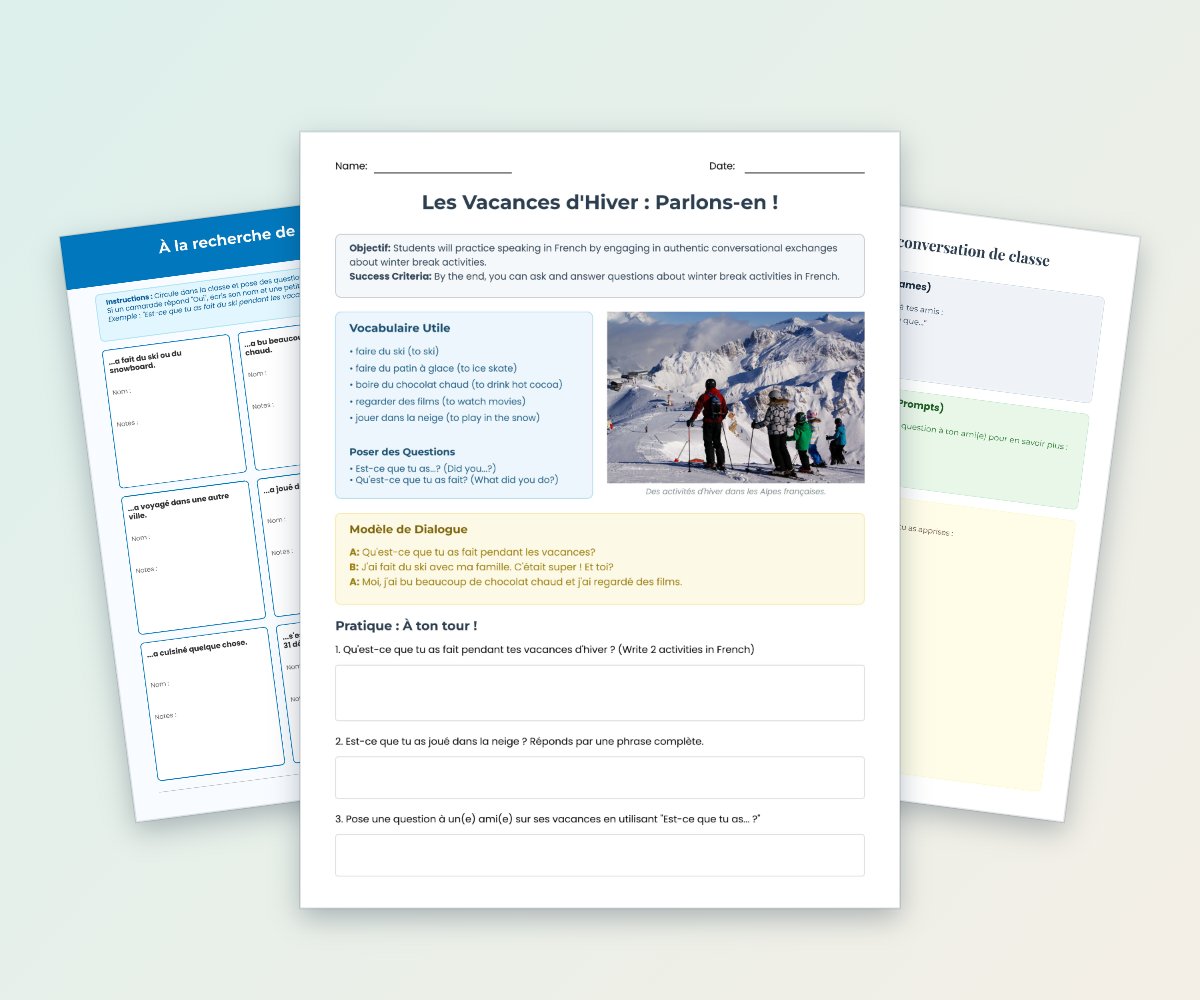
Students practice asking and answering questions in French about winter break activities.
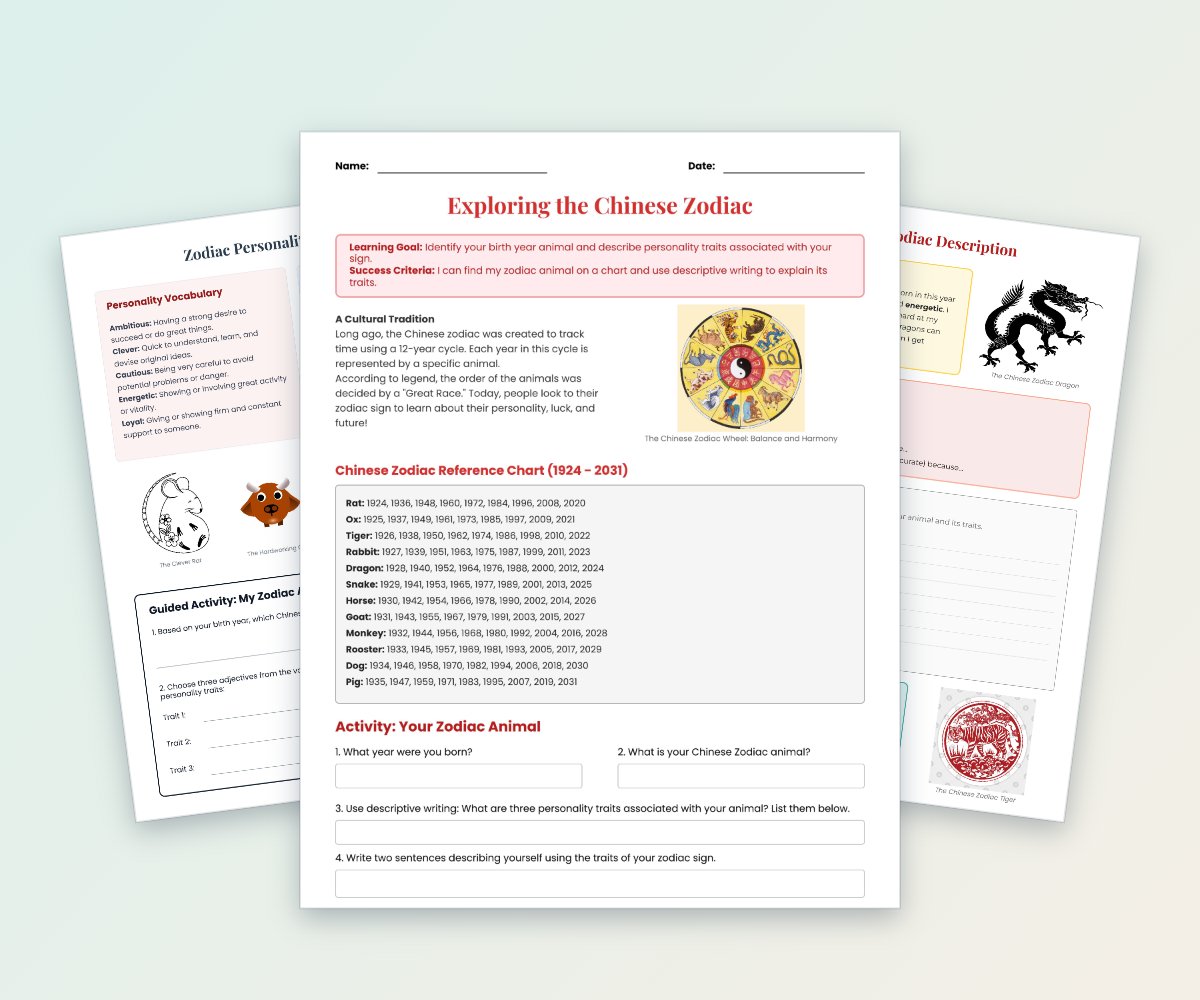
Students explore the 12 Chinese zodiac animals, locate their birth-year animal, and learn associated personality traits.
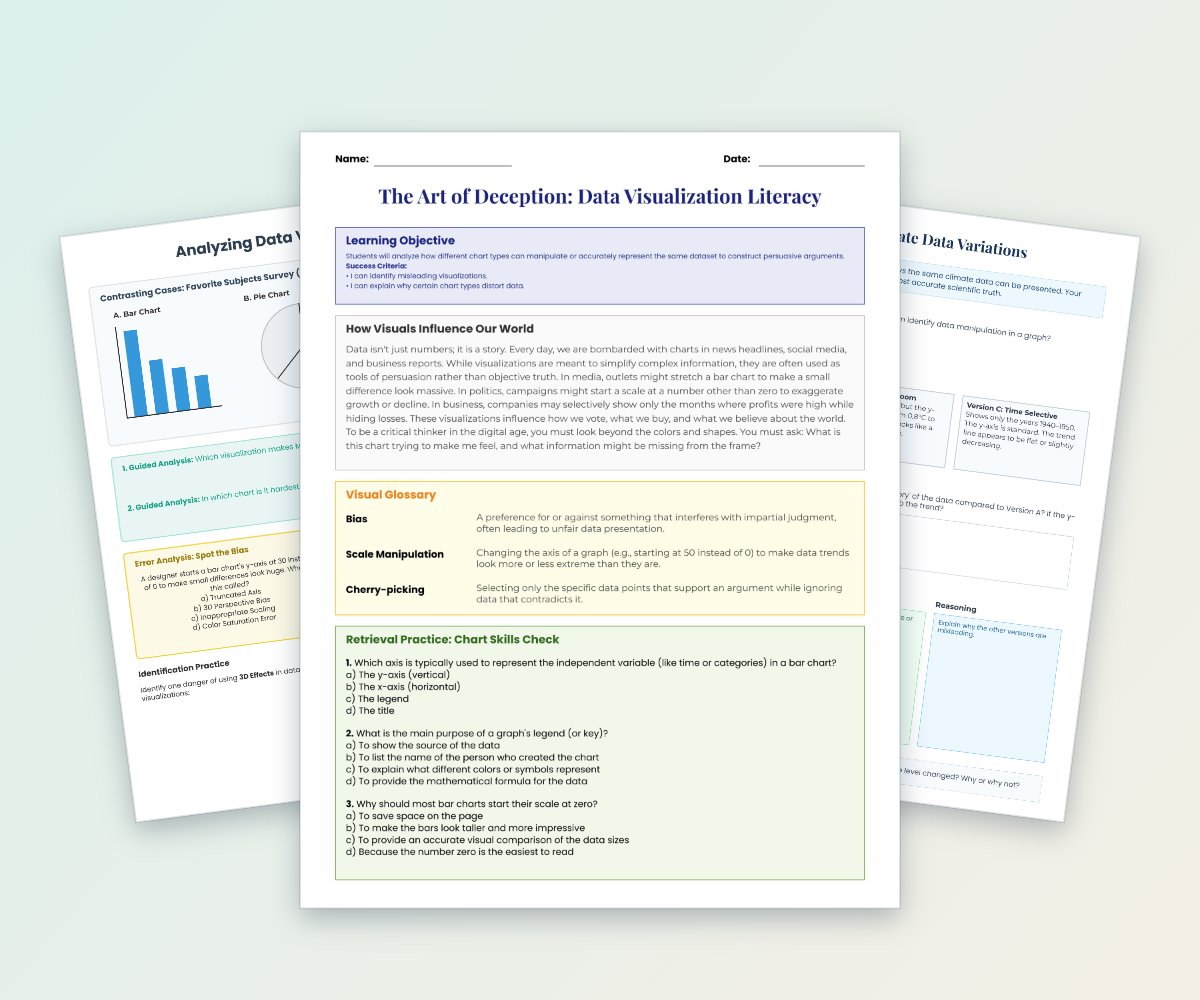
This four-page lesson introduces chart manipulation, bias, scale changes, and cherry-picking through examples and retrieval-practice questions.
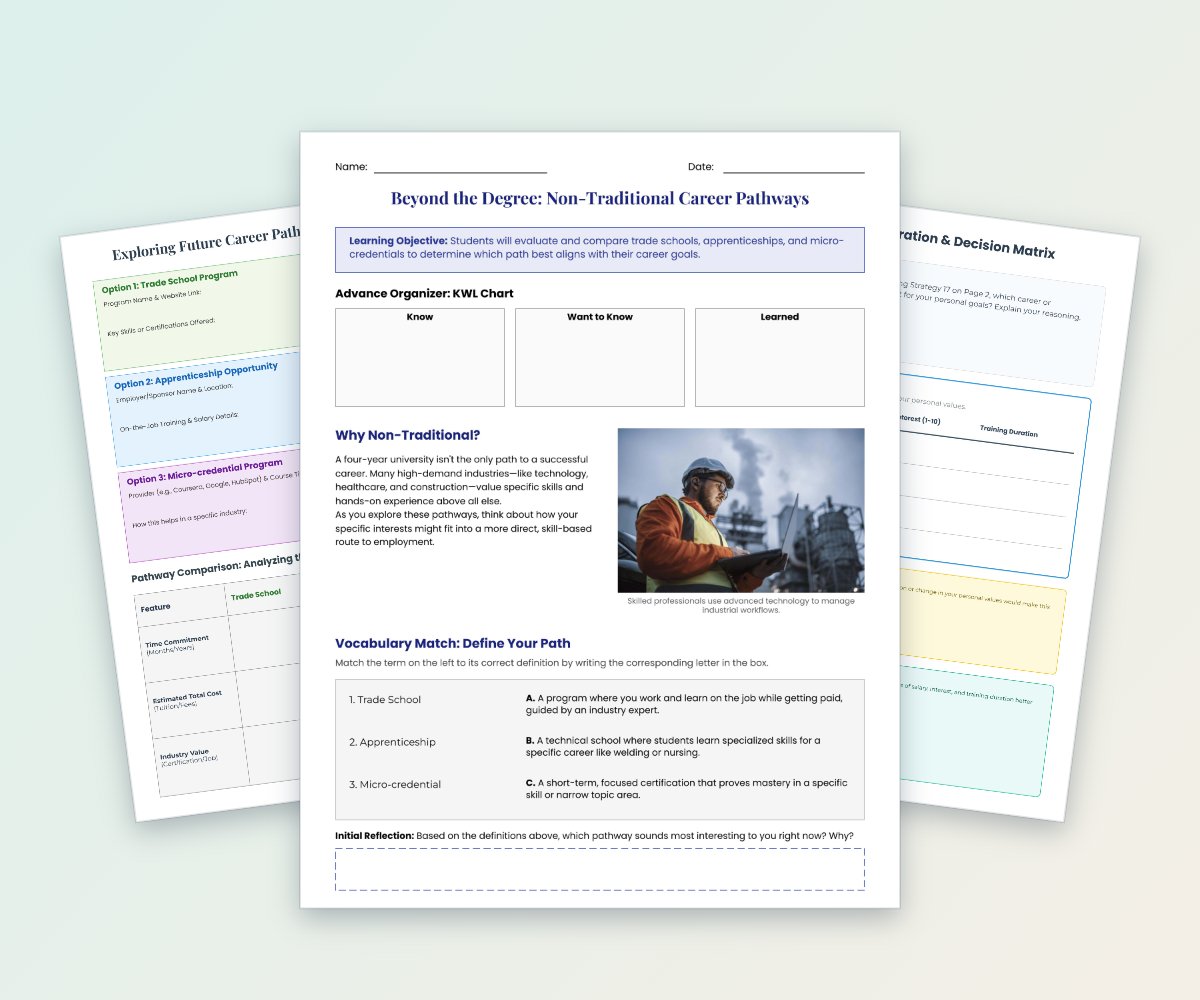
This four-page student workbook guides learners through trade schools, apprenticeships, and micro-credentials as alternatives to traditional university pathways.
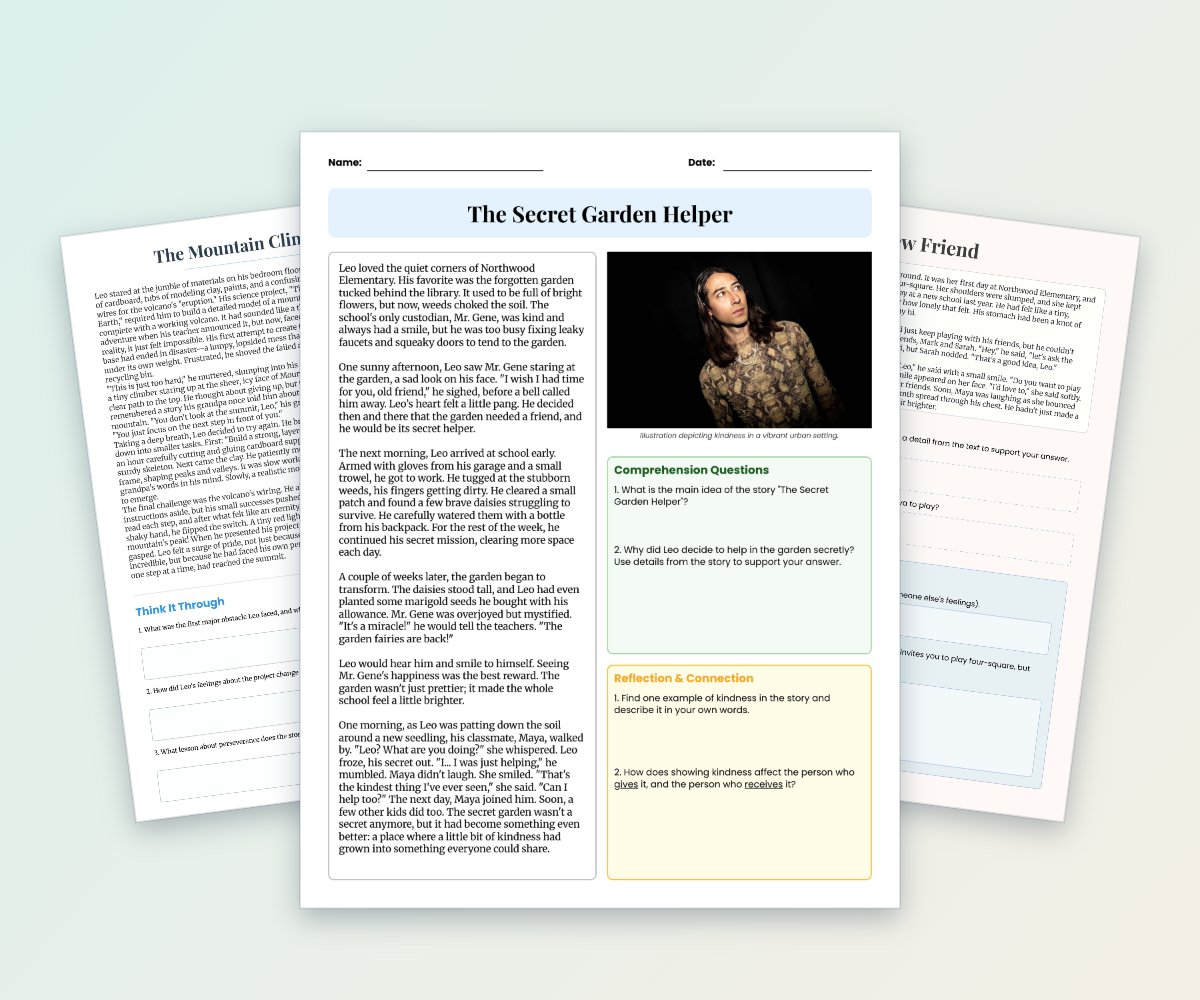
Students read a story about Leo secretly caring for a neglected school garden and inspiring others through kindness.
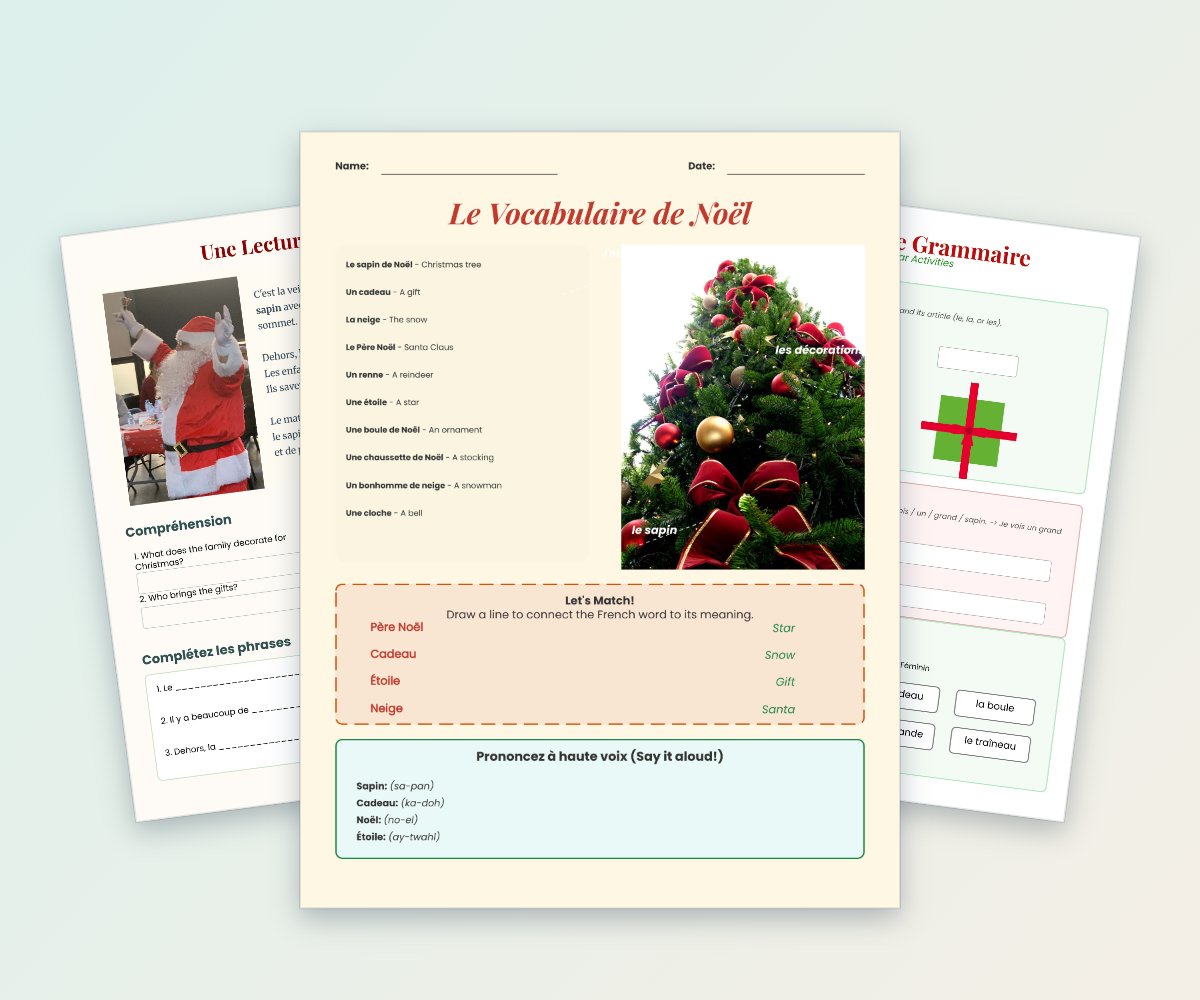
This four-page French activity pack teaches Christmas vocabulary through matching, pronunciation, reading comprehension, sentence construction, noun gender, and a guided letter-writing task.
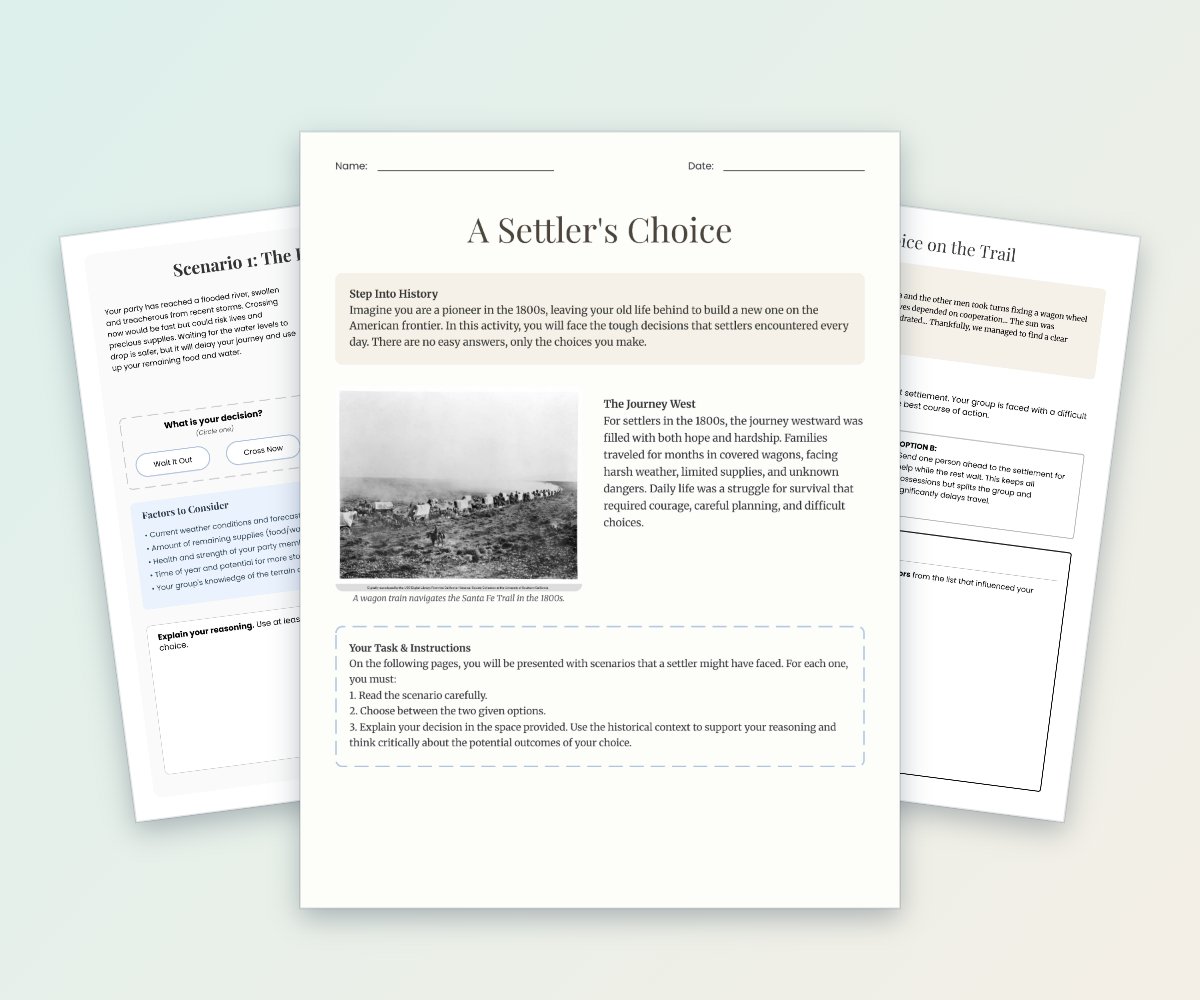
Students step into the role of 1800s settlers and make difficult decisions about river crossings, supplies, travel, and wagon repairs.
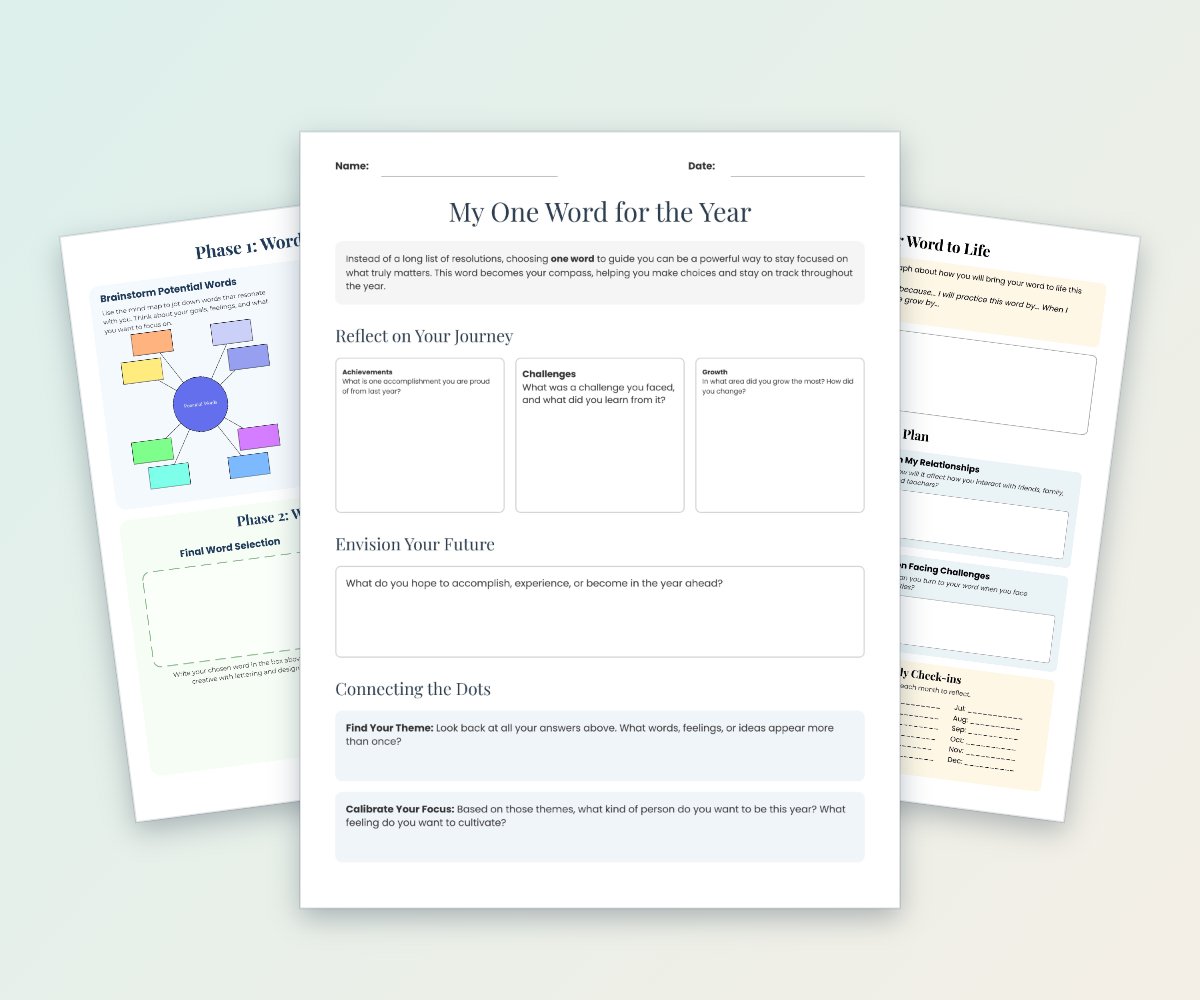
Students reflect on past achievements, challenges, and growth before selecting one guiding word for the year.
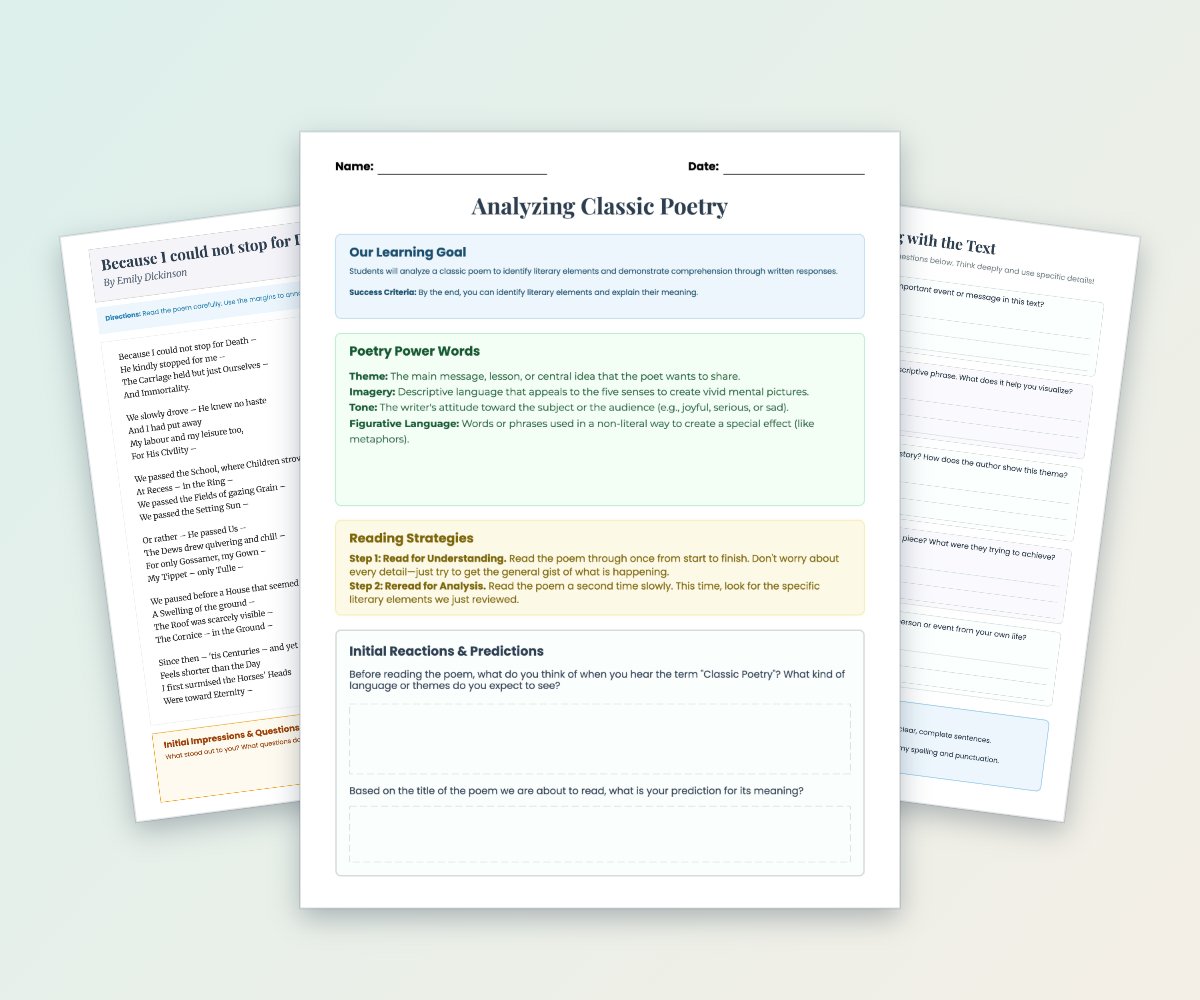
Students analyze Emily Dickinson’s “Because I Could Not Stop for Death” using guided reading strategies and annotation prompts.
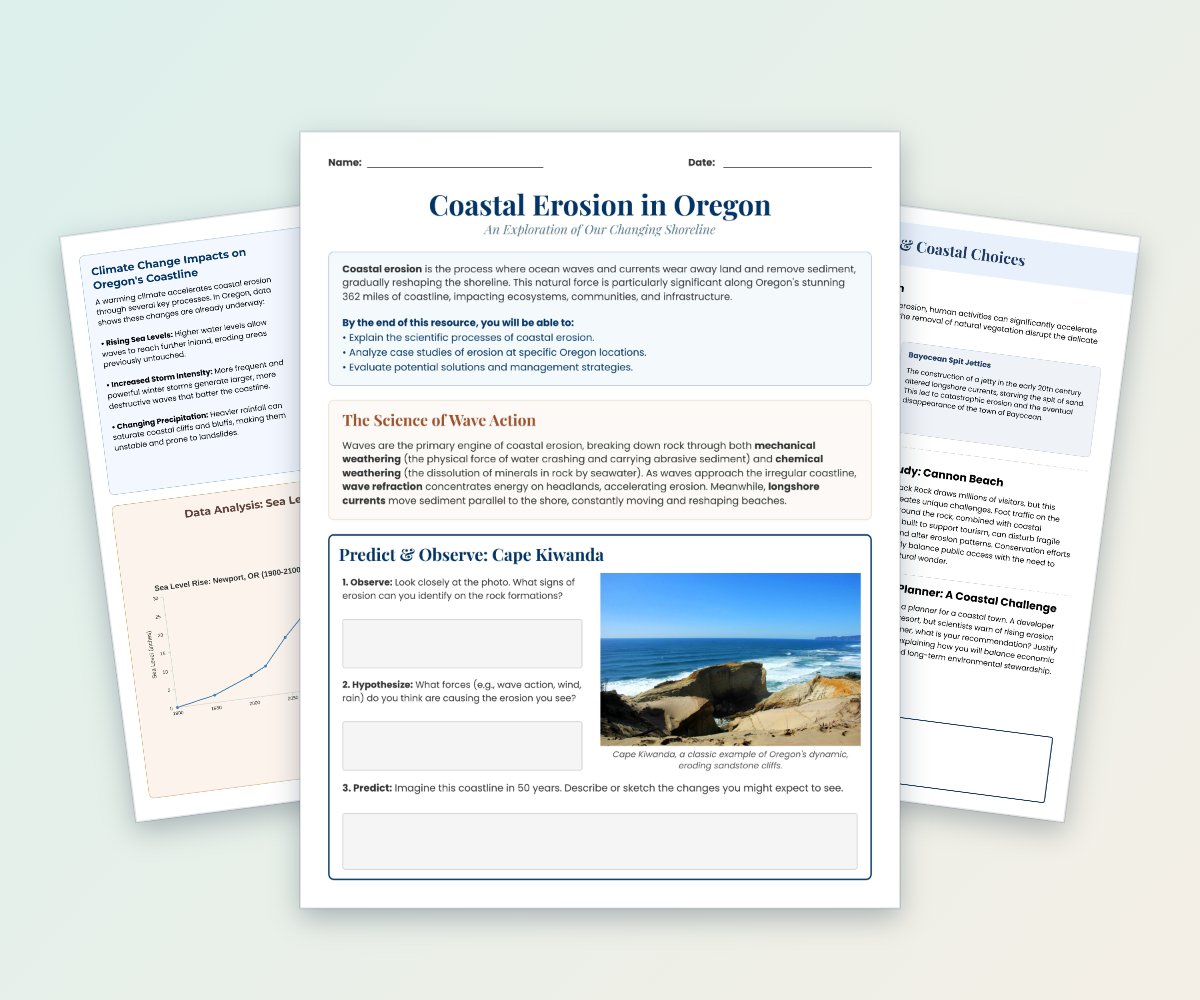
This four-page science resource explores wave action, weathering, longshore currents, climate change, and coastal erosion along Oregon’s shoreline.
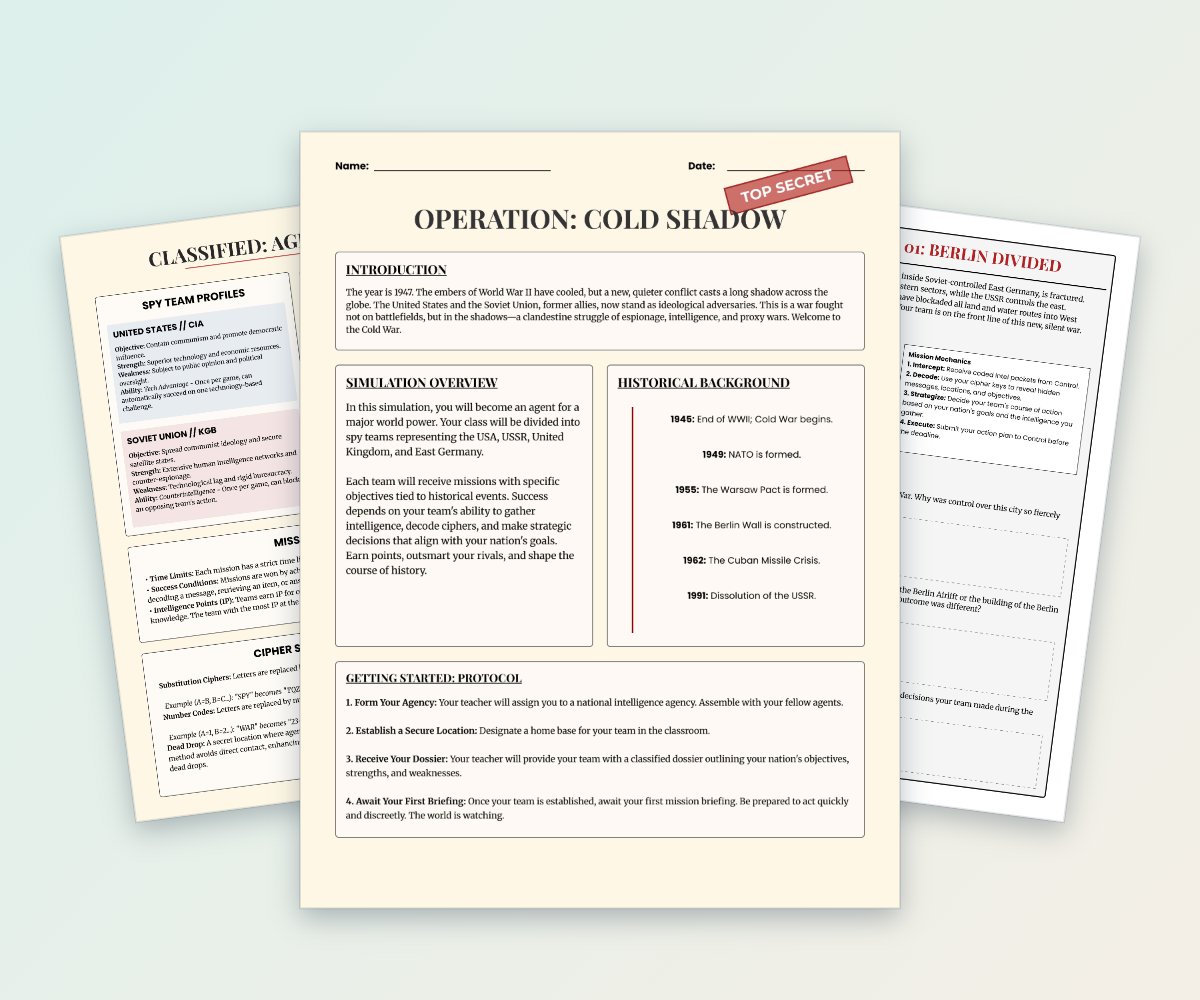
Students role-play intelligence teams representing the United States, Soviet Union, United Kingdom, and East Germany during the Cold War.
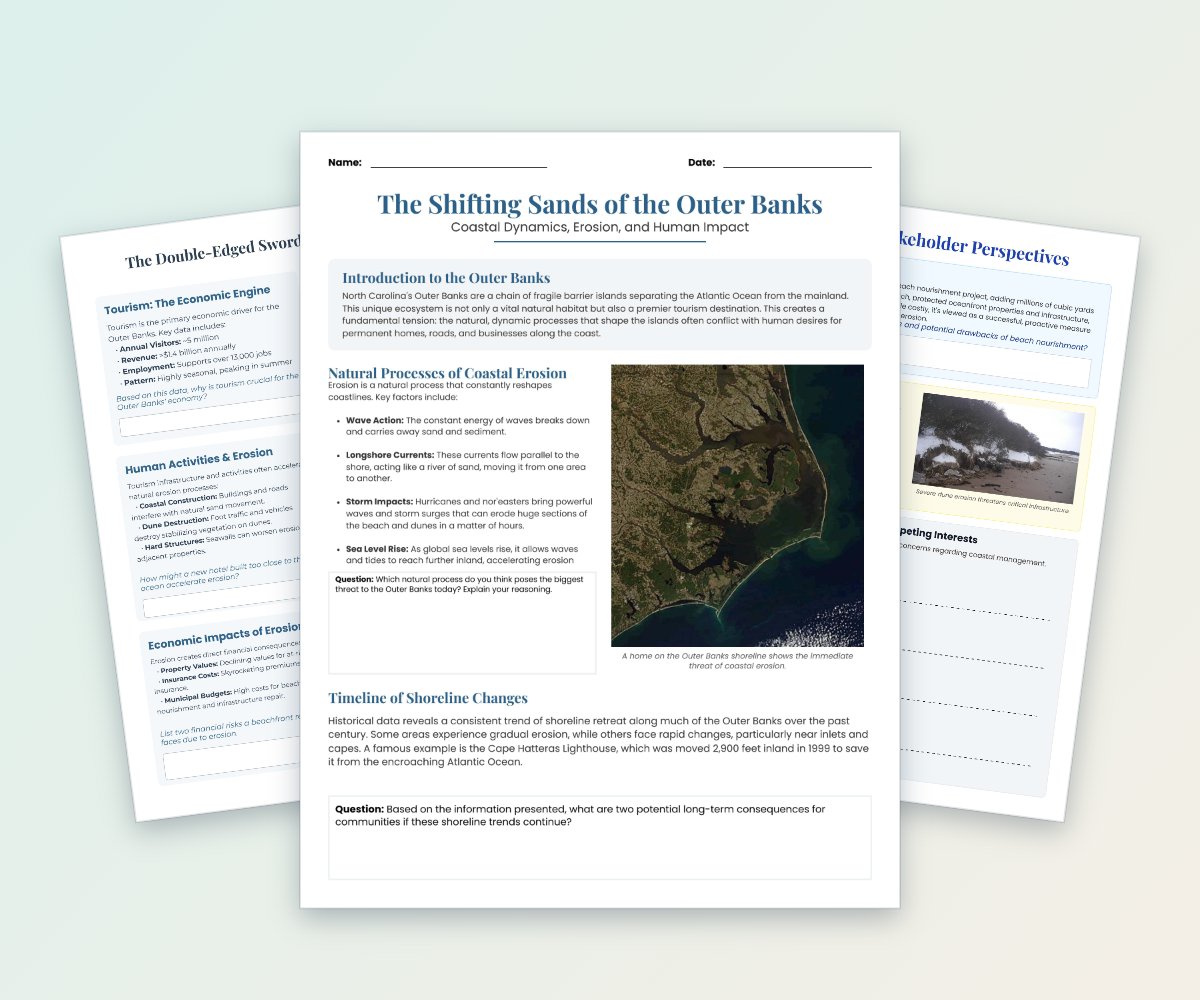
This five-page worksheet explores erosion, longshore currents, storms, sea level rise, shoreline retreat, tourism, and coastal development in North Carolina’s Outer Banks.
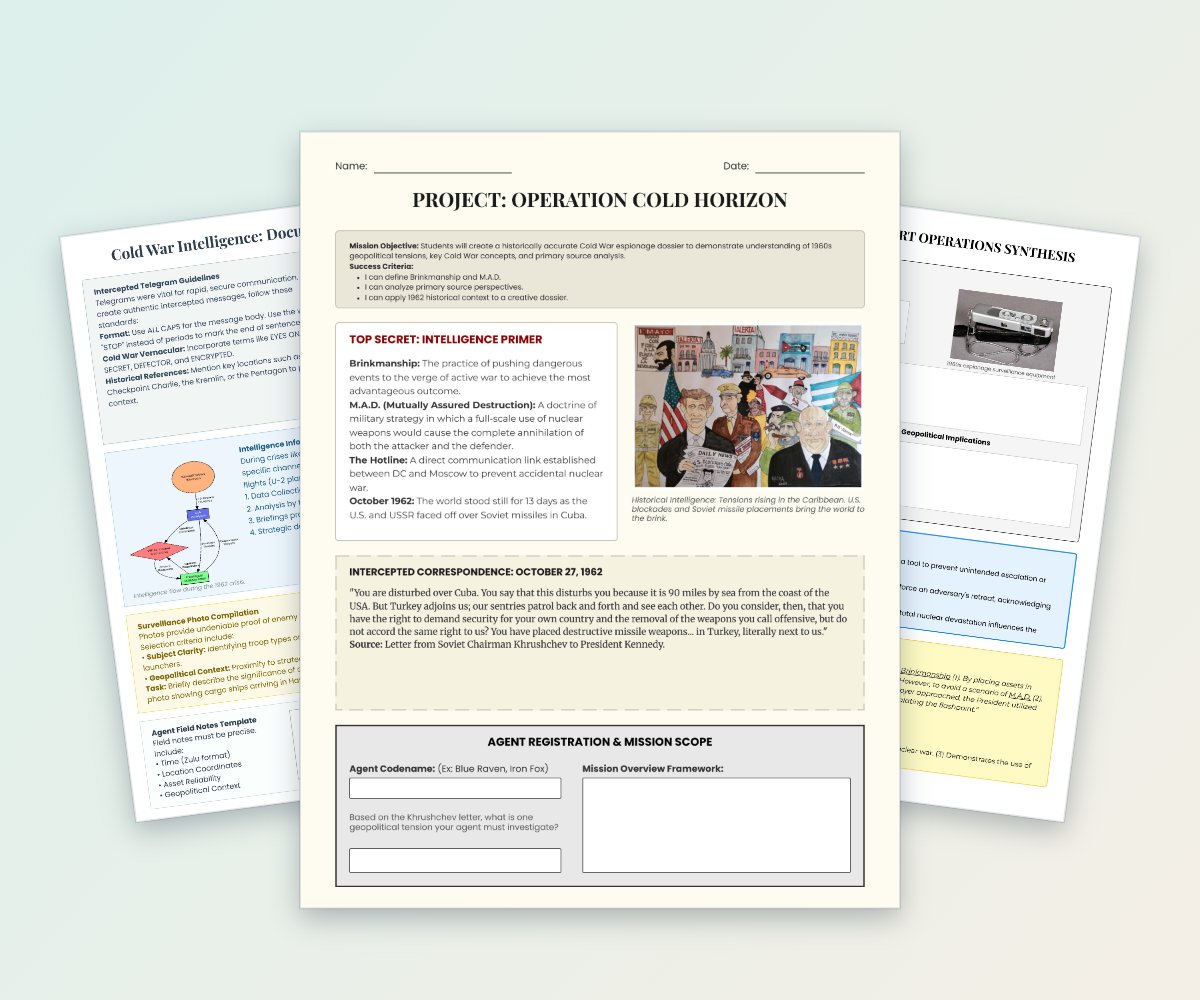
Students investigate 1962 Cold War tensions by analyzing a Khrushchev letter and creating a historically accurate espionage dossier.
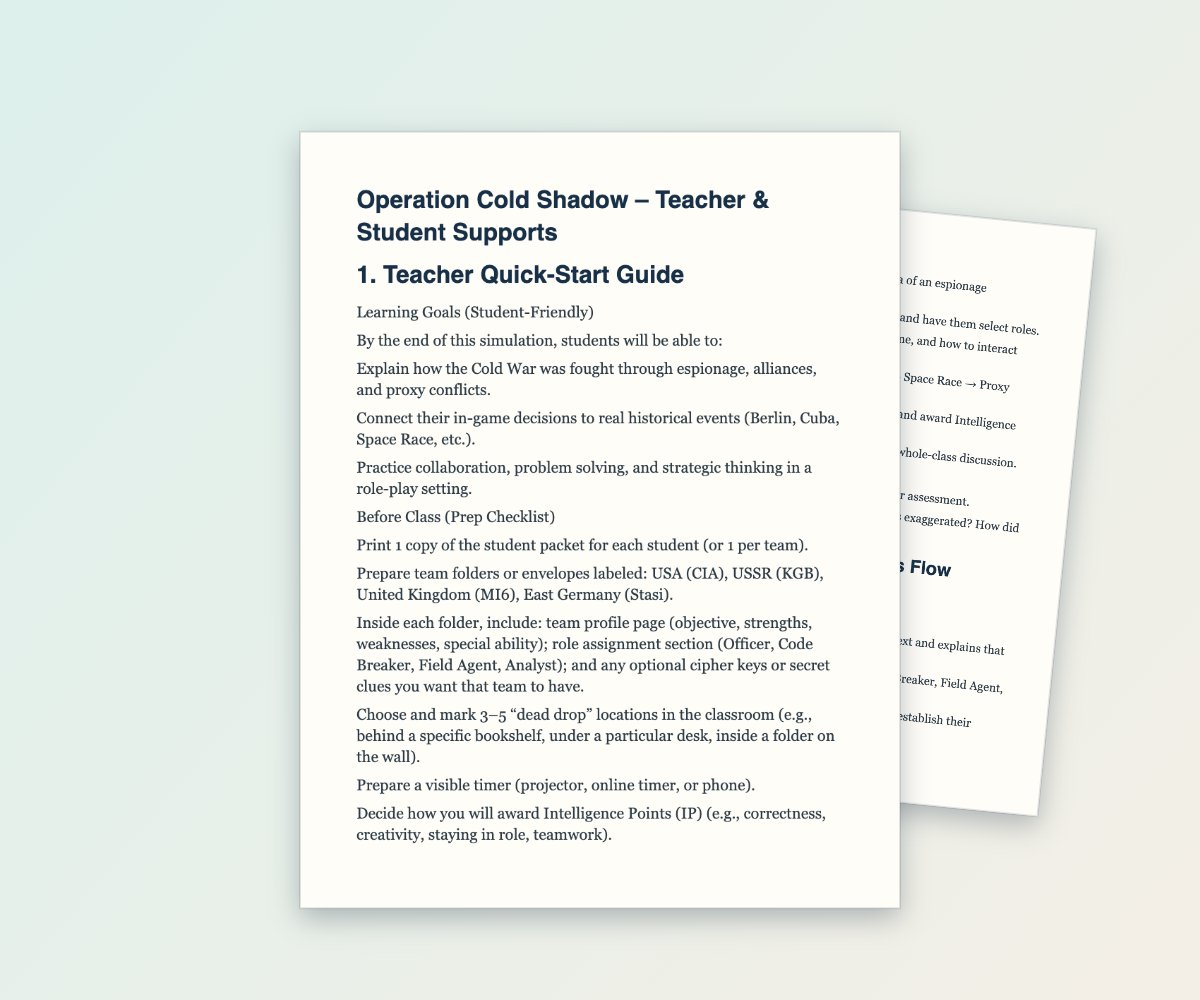
This four-page teacher and student support guide introduces a role-play simulation of Cold War espionage, alliances, proxy conflicts, and major events.
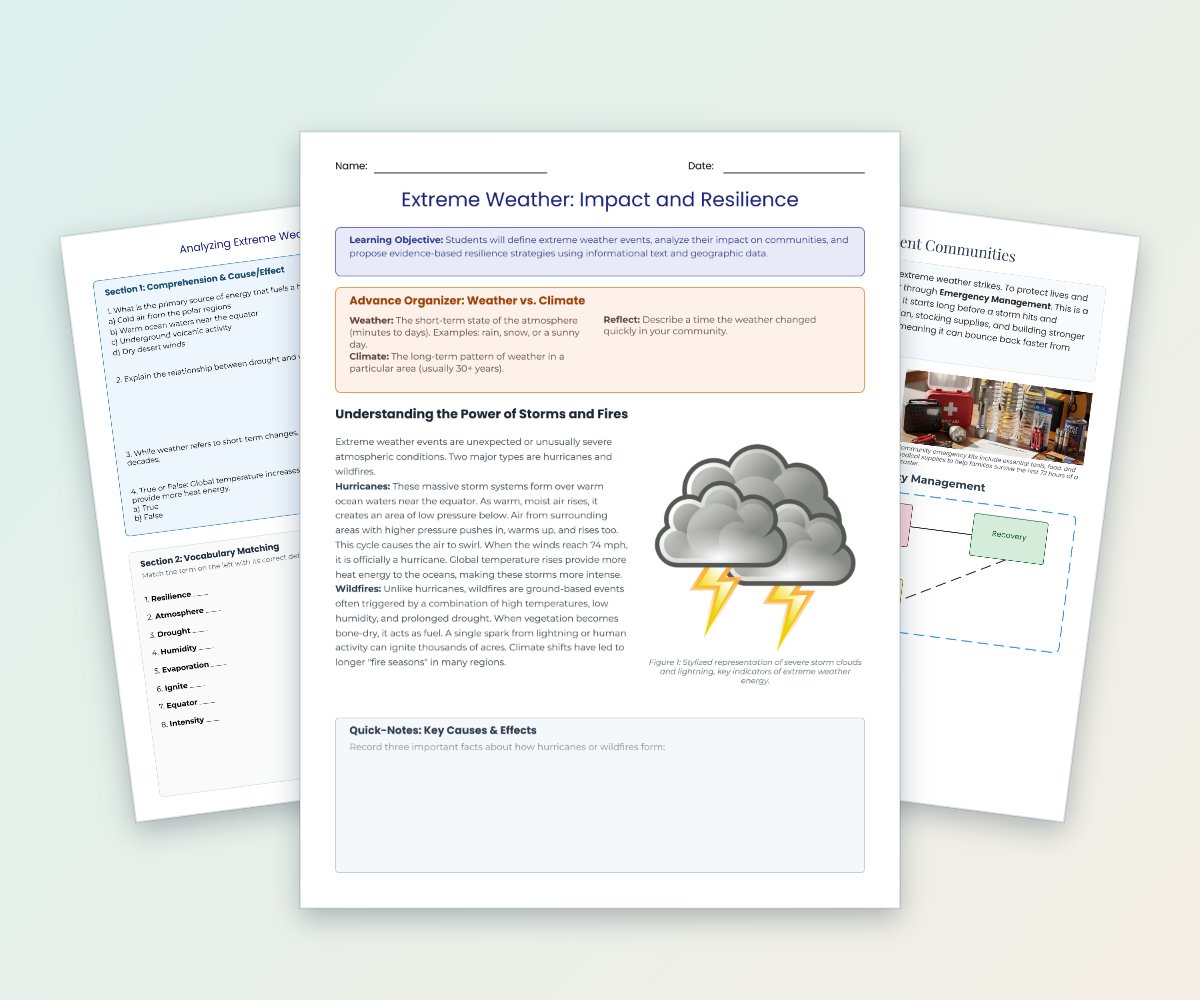
This six-page worksheet helps students distinguish weather from climate and examine how hurricanes and wildfires form.
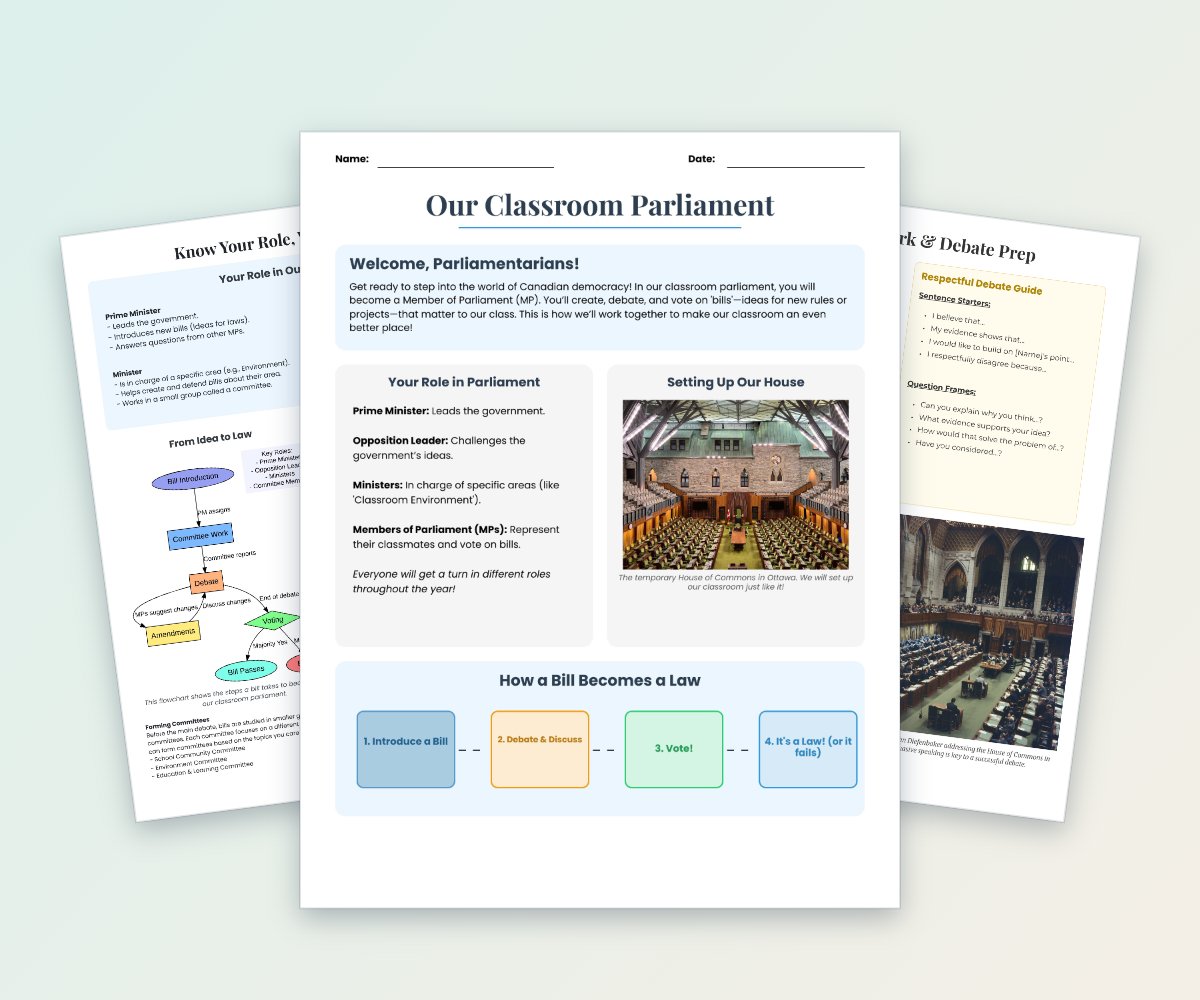
Students take on parliamentary roles, including Prime Minister, Opposition Leader, ministers, committee members, and MPs.
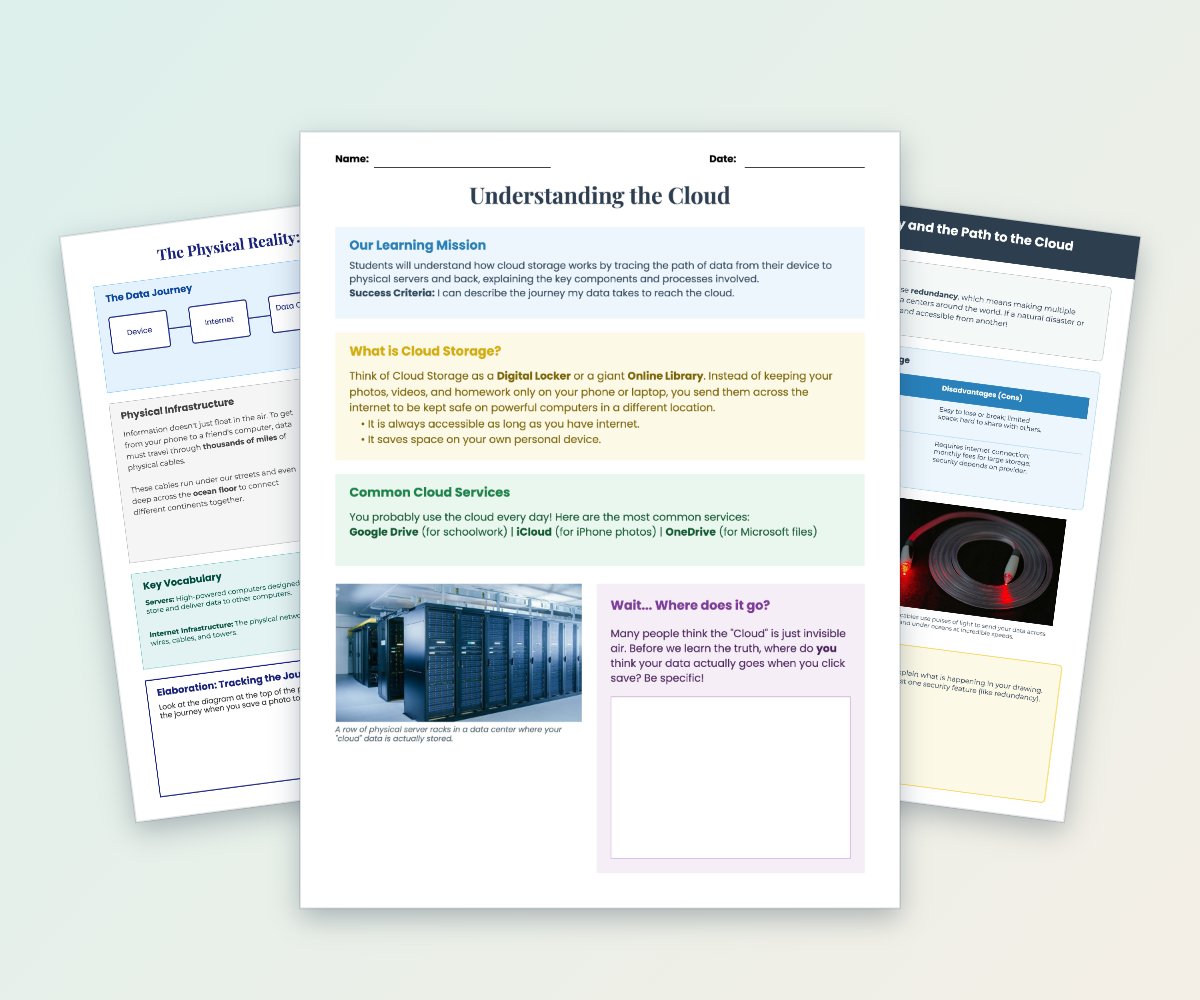
This instructional resource introduces cloud storage through accessible explanations of servers, data centers, internet infrastructure, backup copies, and redundancy.
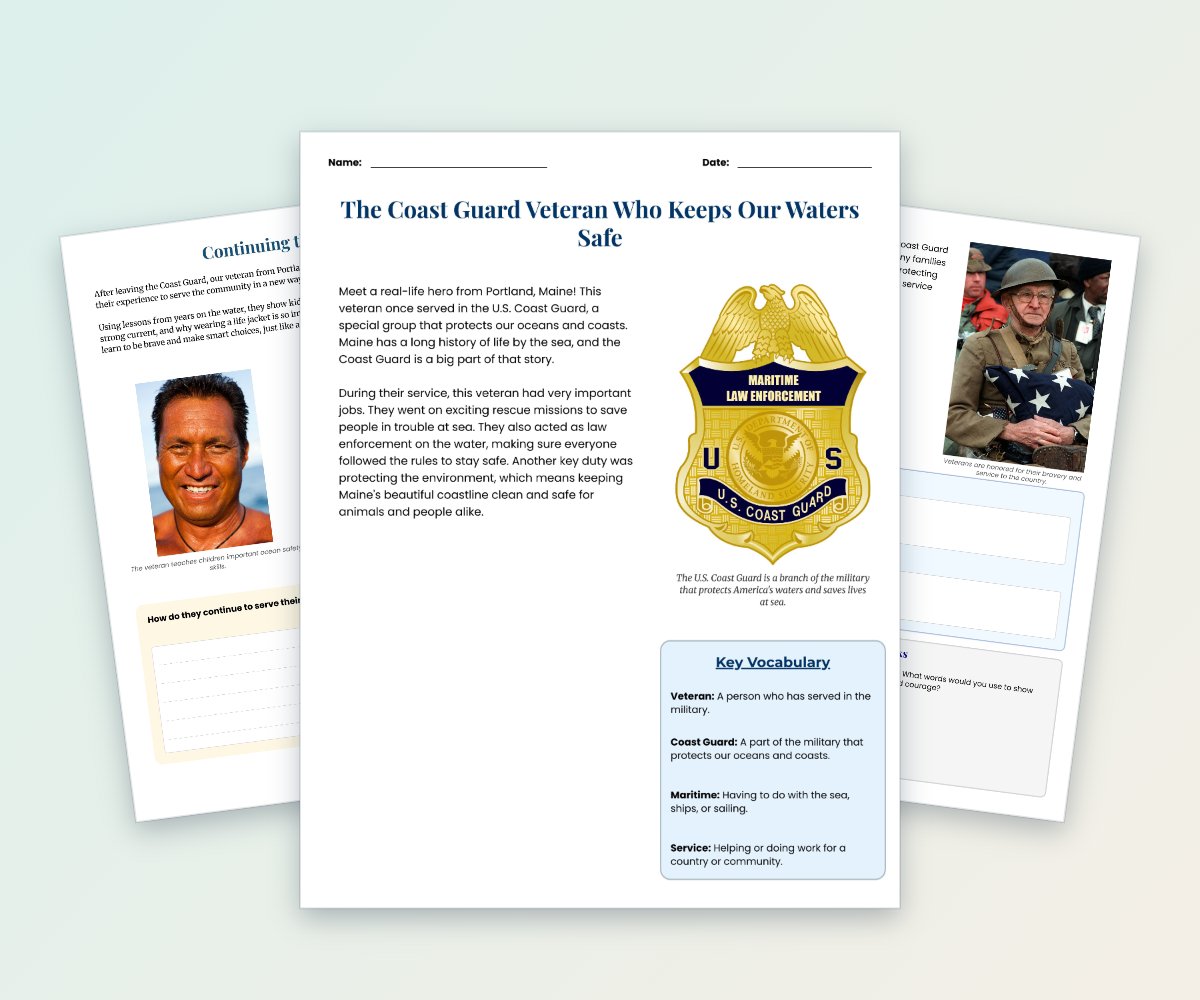
Students read an informational passage about a Maine Coast Guard veteran, including rescue missions, ocean safety, environmental protection, and continued community service.
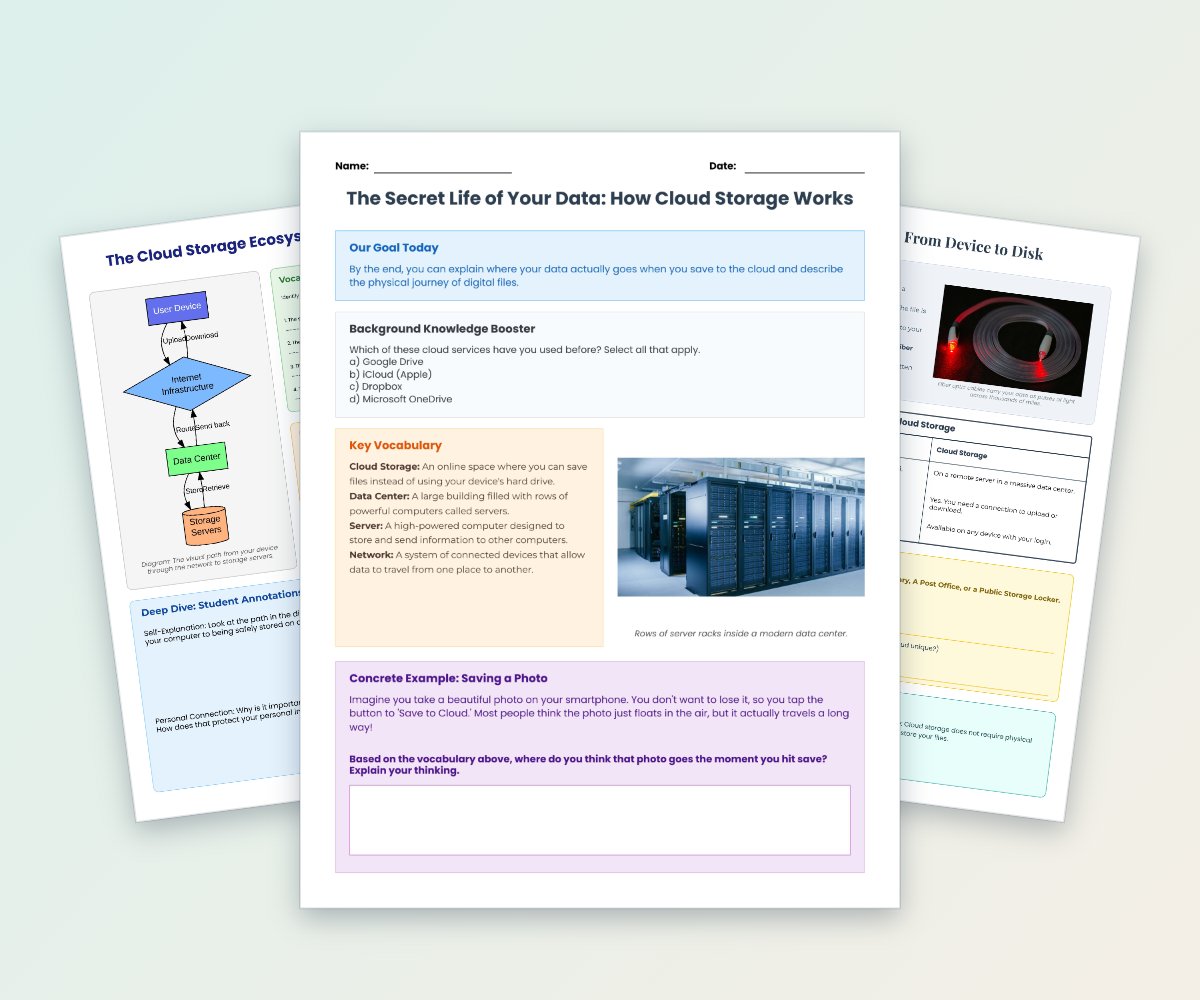
This four-page worksheet introduces students to cloud storage, data centers, servers, networks, and the physical journey of digital files.
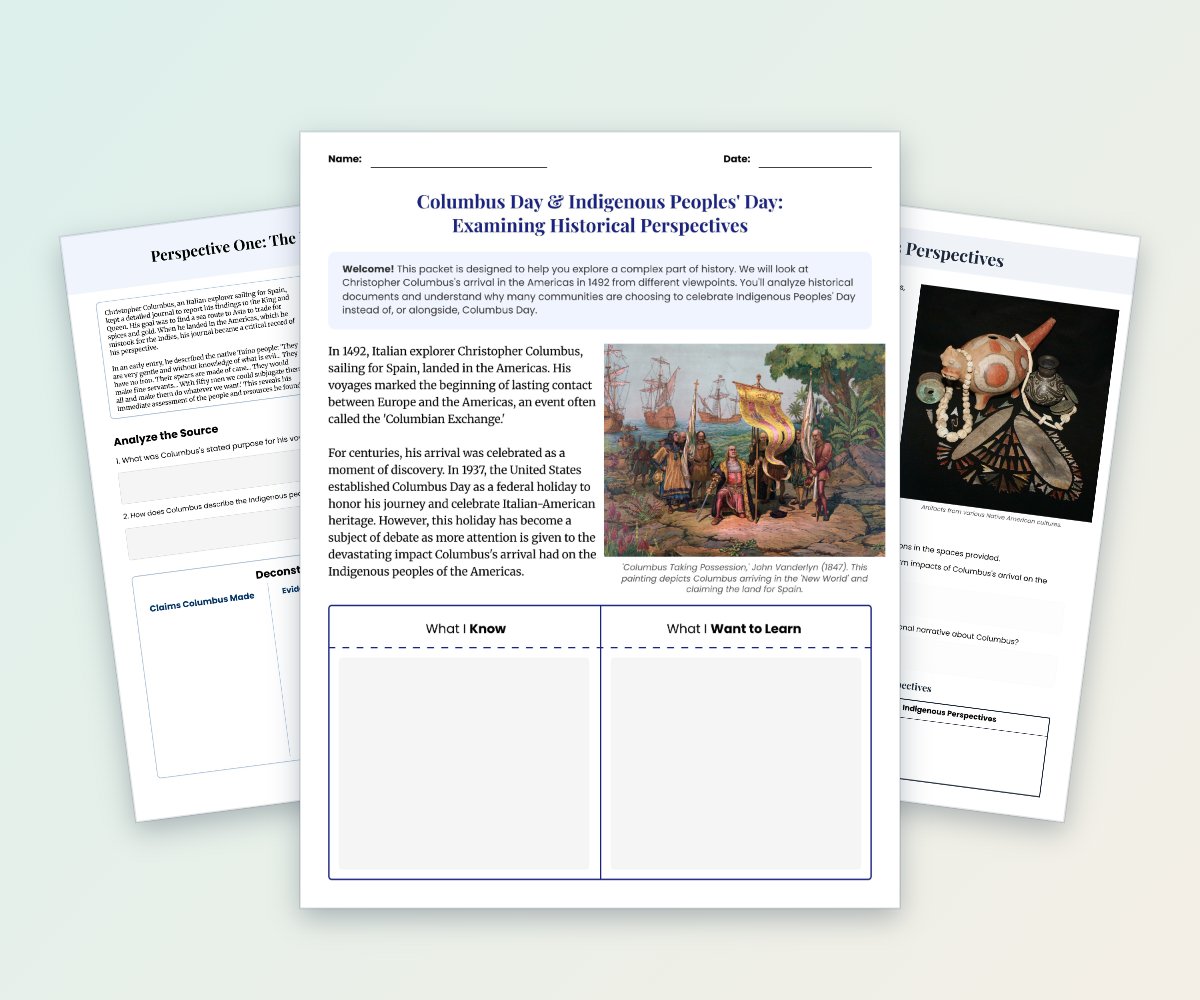
This five-page social studies packet examines Christopher Columbus's 1492 voyage, Columbus Day, and the growing recognition of Indigenous Peoples' Day.
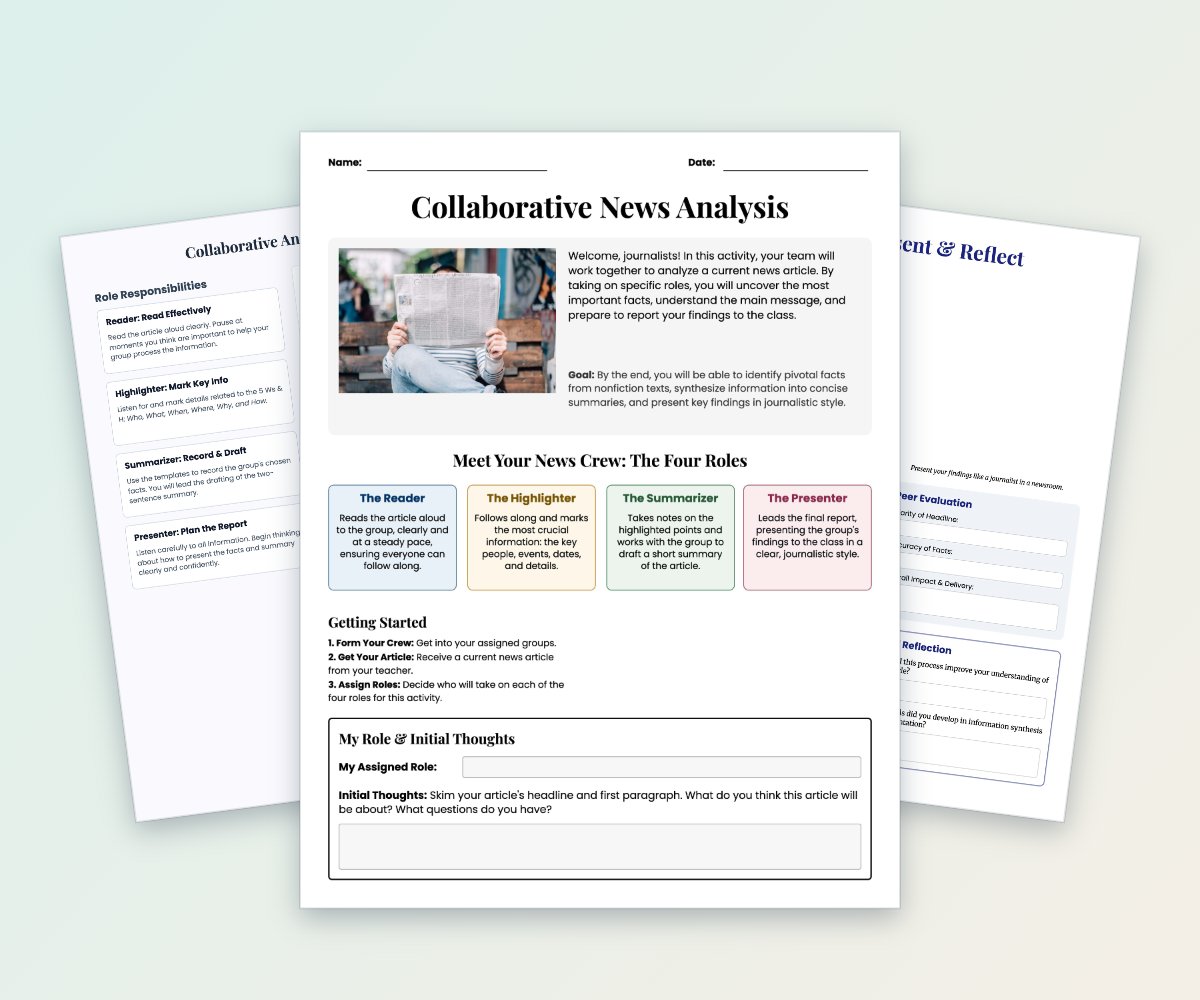
Students work in assigned roles to identify key facts, analyze the 5 Ws and H, write a concise summary, and prepare a journalistic presentation.
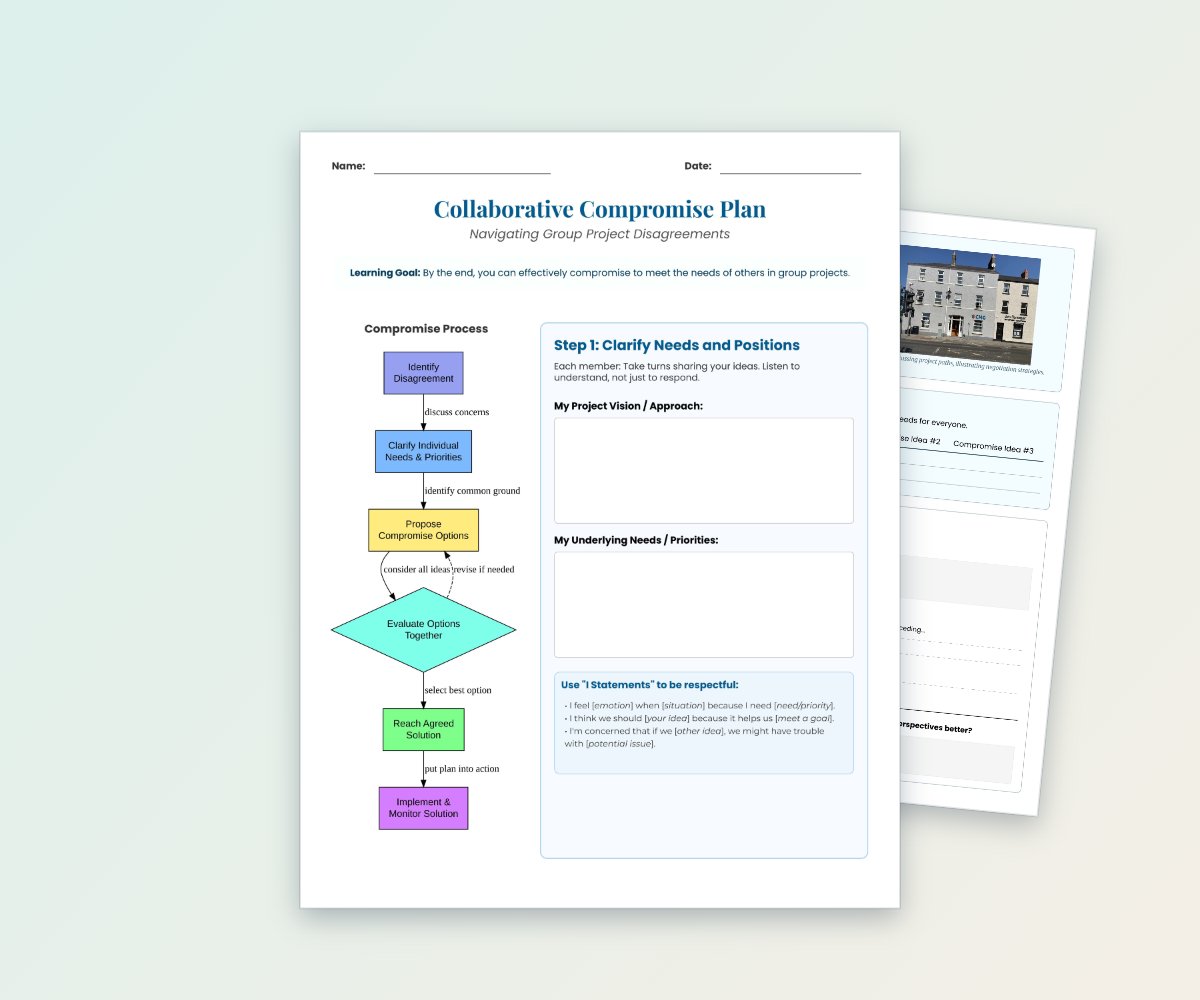
This two-page graphic organizer guides students through resolving group project disagreements.
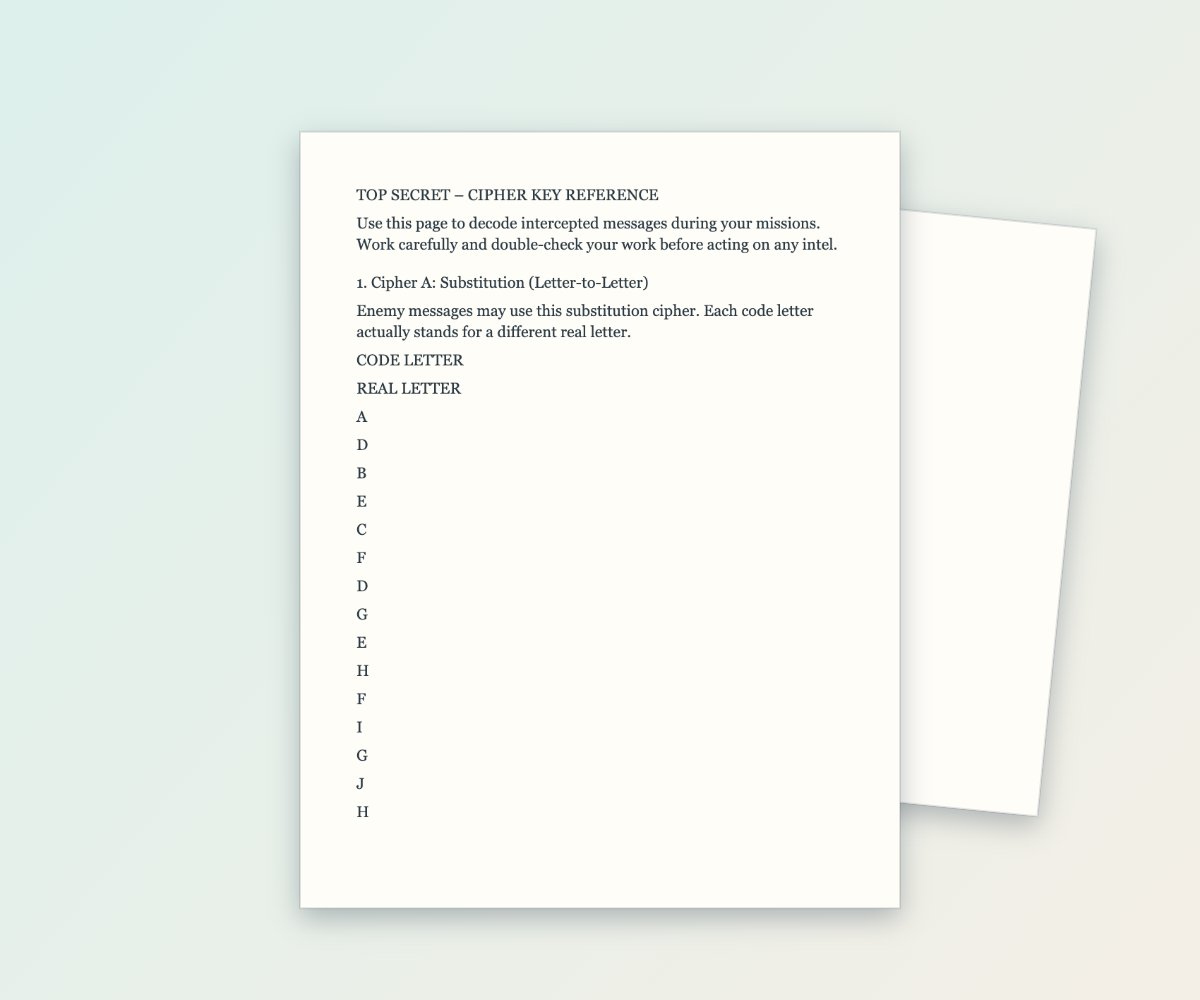
This three-page reference guide teaches students to decode substitution and number ciphers through clear tables, examples, and step-by-step directions.
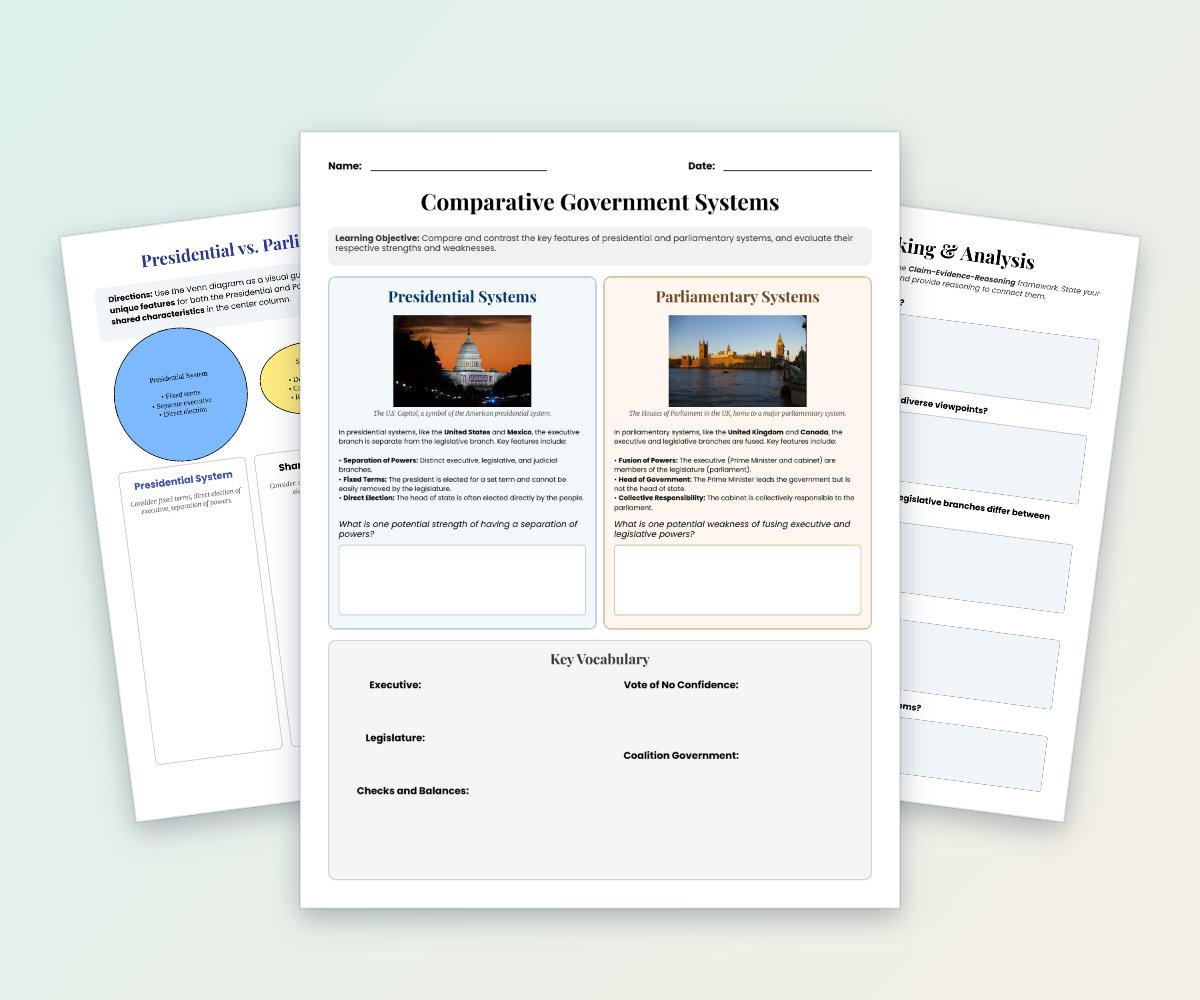
Students compare presidential and parliamentary systems using definitions, identifying features, a Venn diagram, and Claim-Evidence-Reasoning prompts.
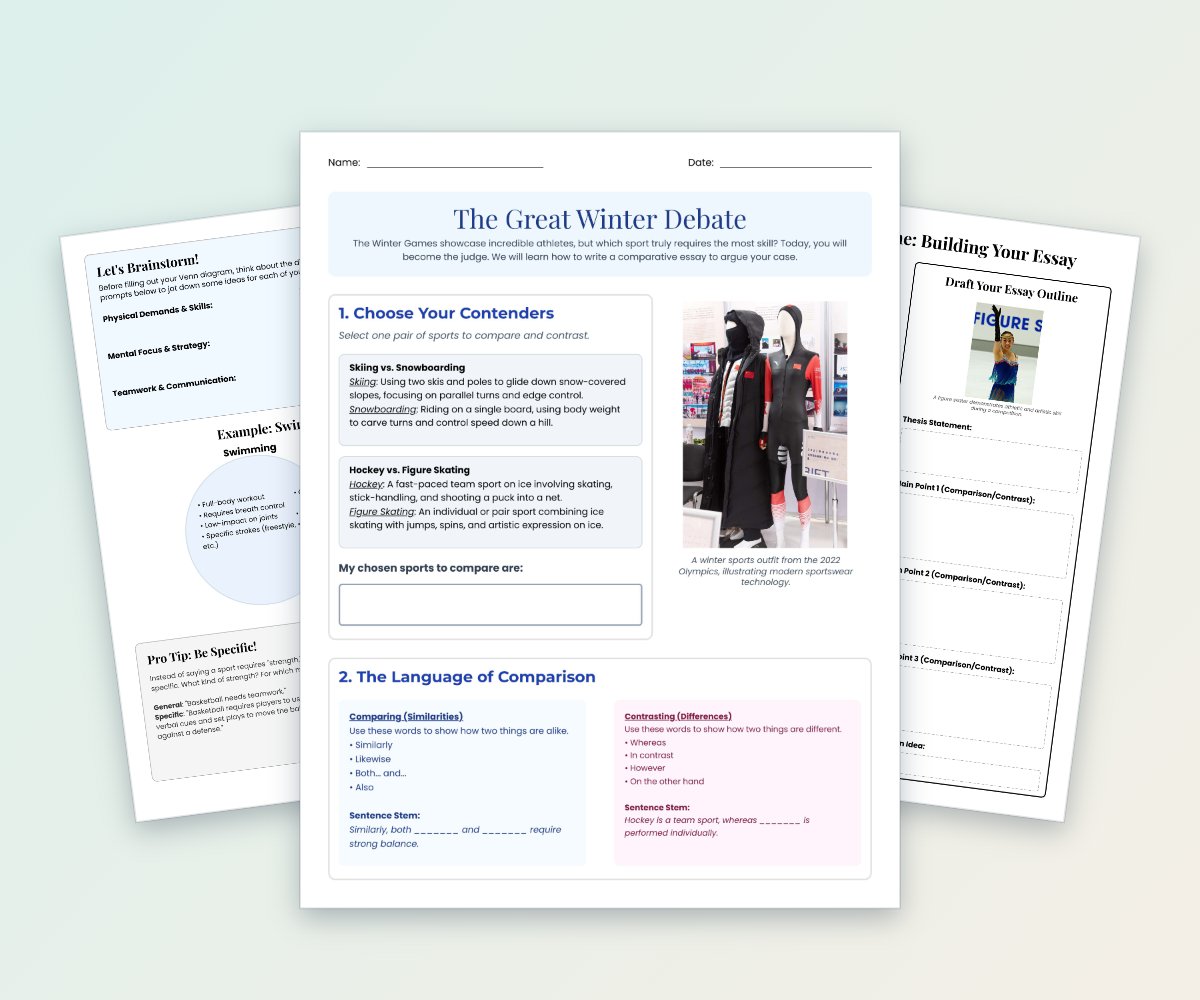
Students choose two winter sports, identify similarities and differences, and develop ideas for a comparative essay.
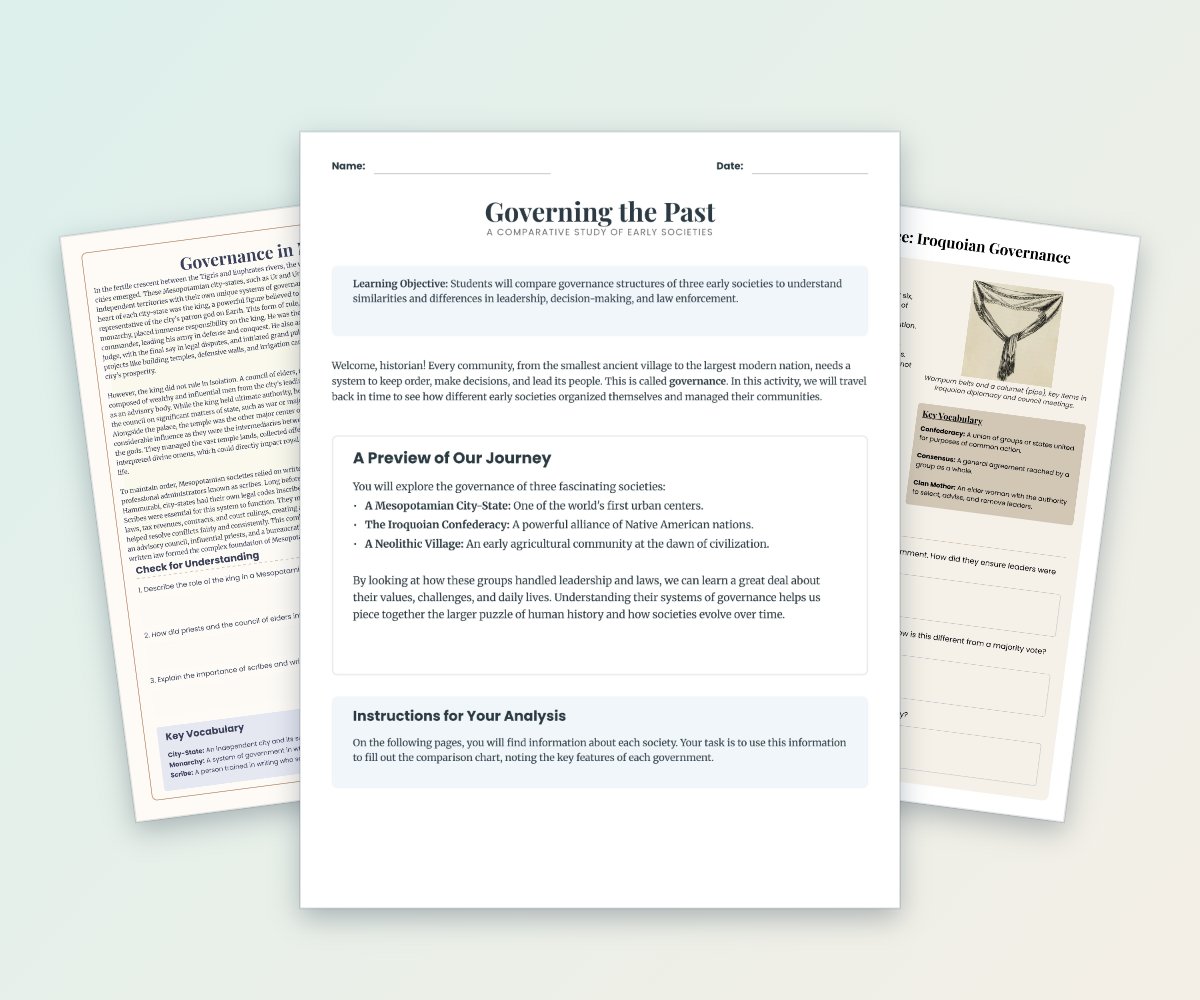
Students compare governance structures in Mesopotamian city-states, the Iroquoian Confederacy, and a Neolithic village.
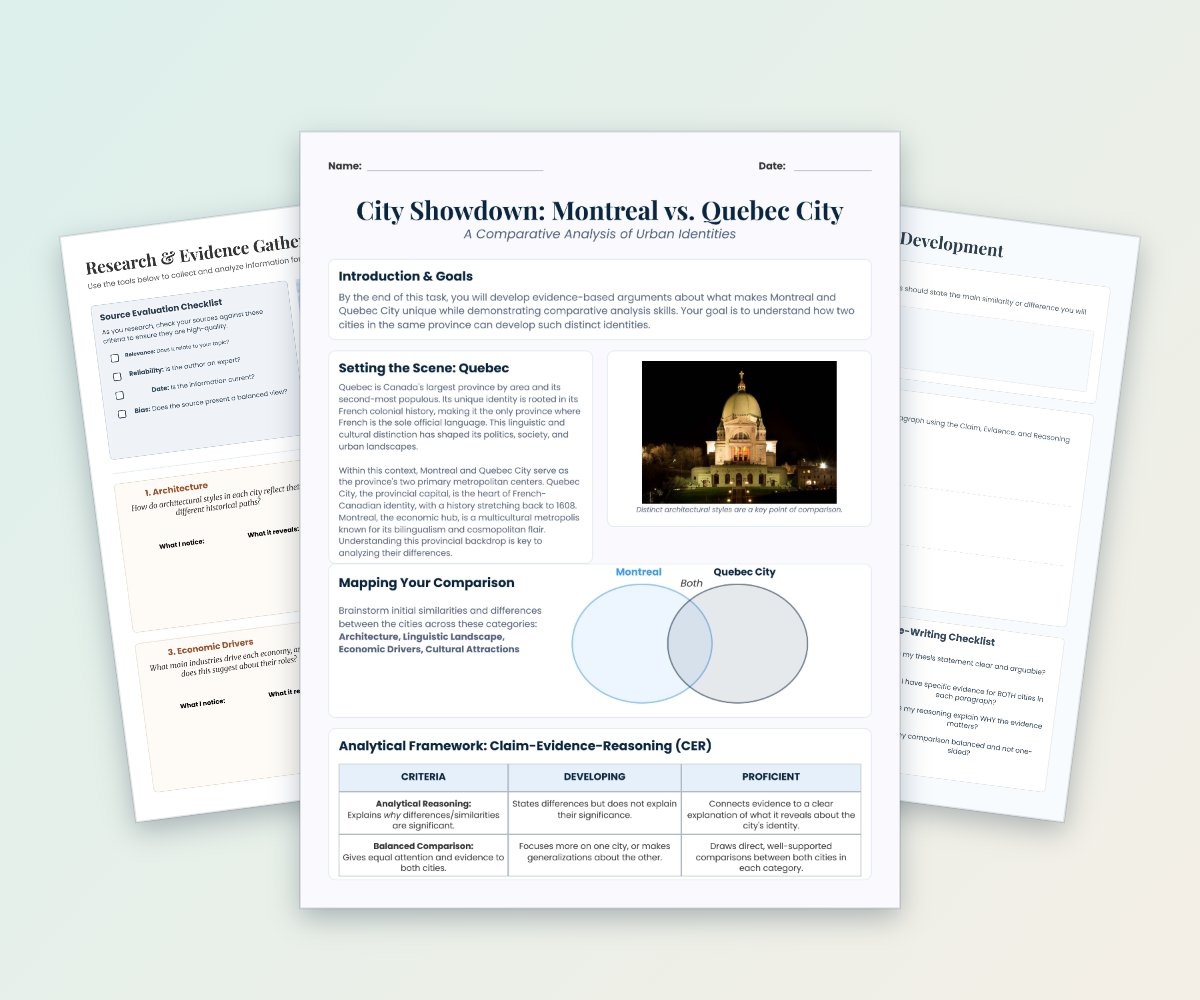
Students compare Montreal and Quebec City through architecture, language, economic drivers, and cultural attractions.
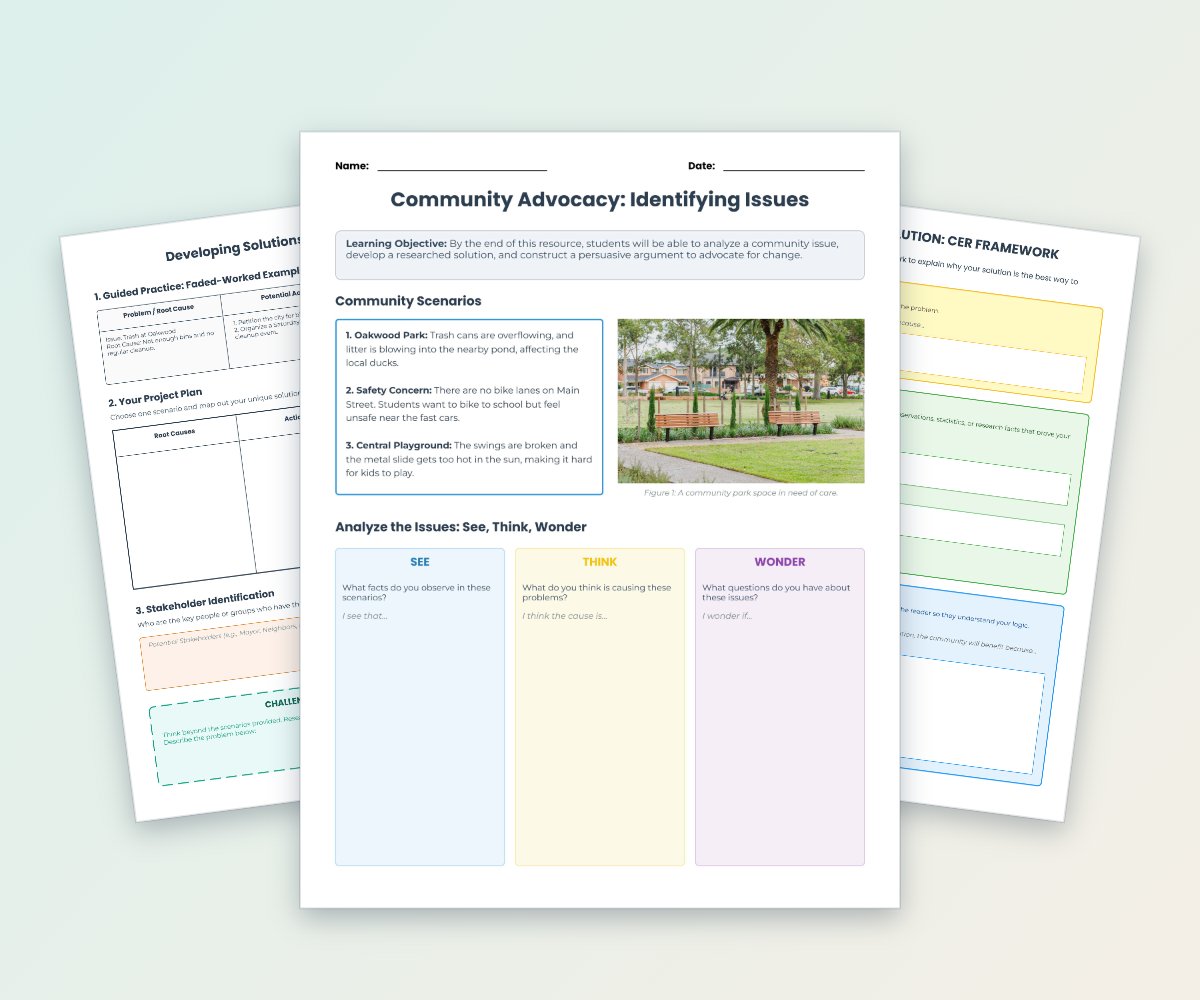
Students analyze local community problems, identify root causes and stakeholders, and develop practical action plans.
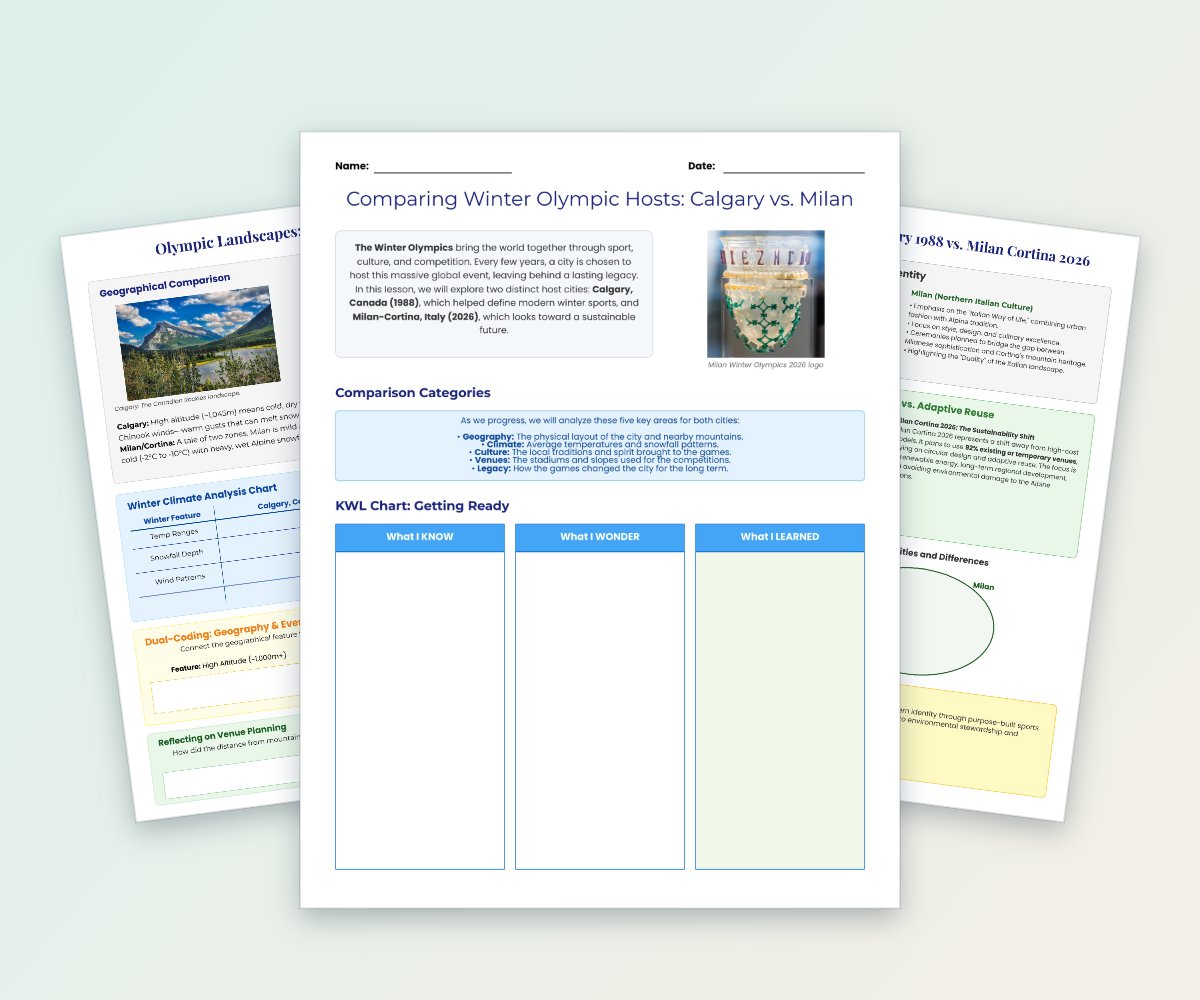
Students compare Calgary 1988 and Milan-Cortina 2026 through geography, climate, culture, venues, and legacy.
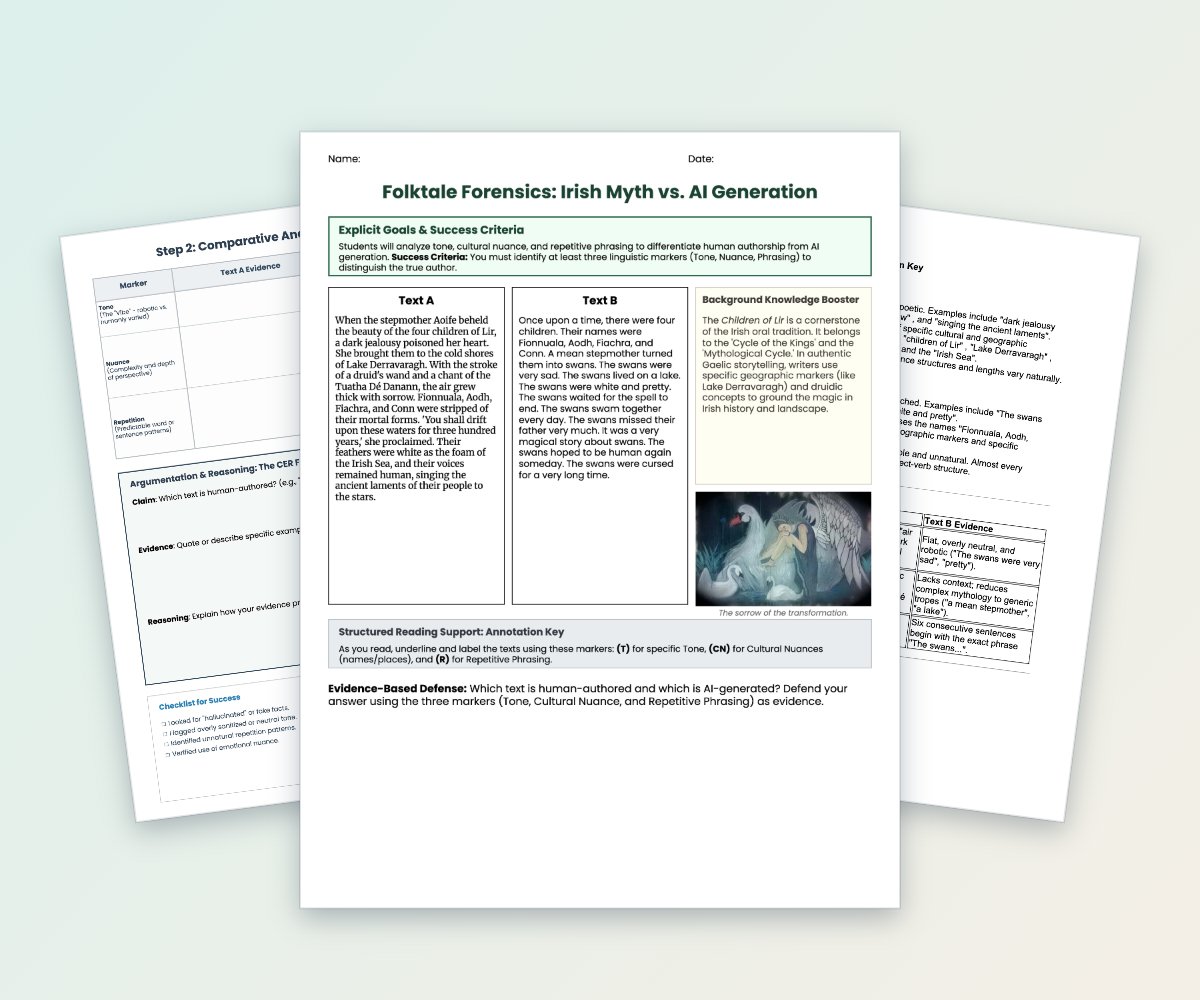
Students compare two versions of the Children of Lir folktale to identify differences in tone, cultural nuance, and repetitive phrasing.
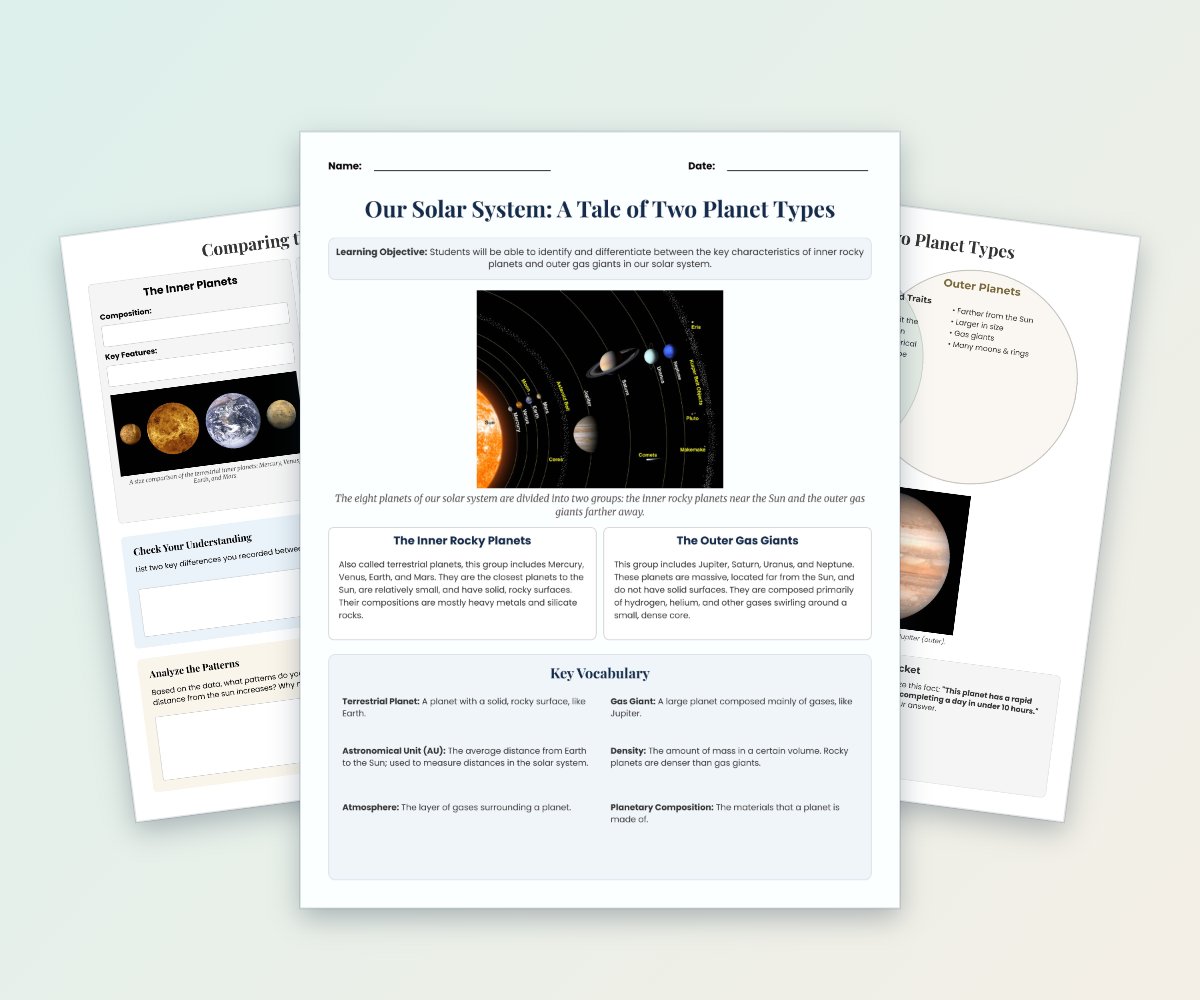
This three-page worksheet explains the differences between inner rocky planets and outer gas giants.
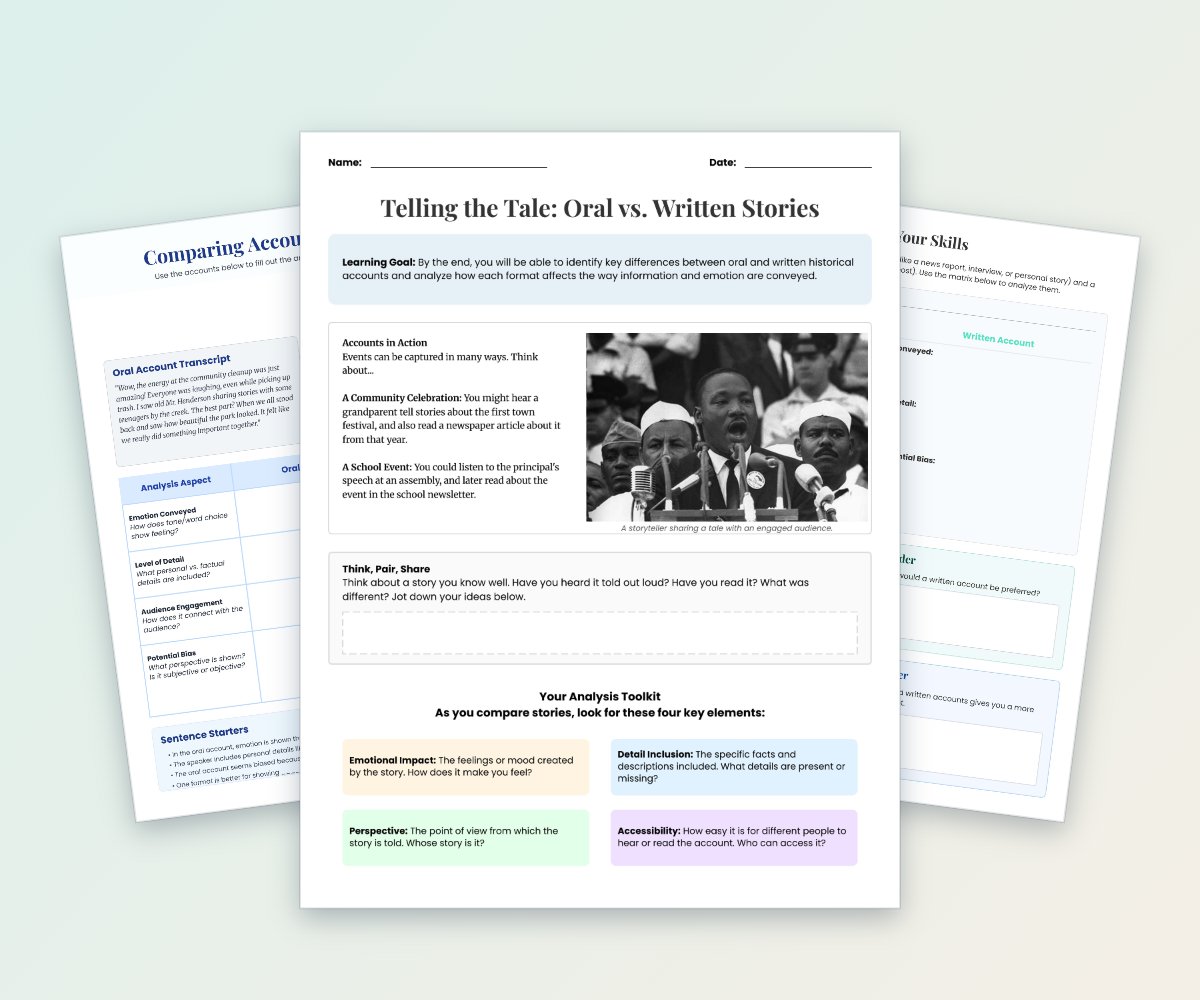
Students compare an oral account and a written newsletter account of a community cleanup.
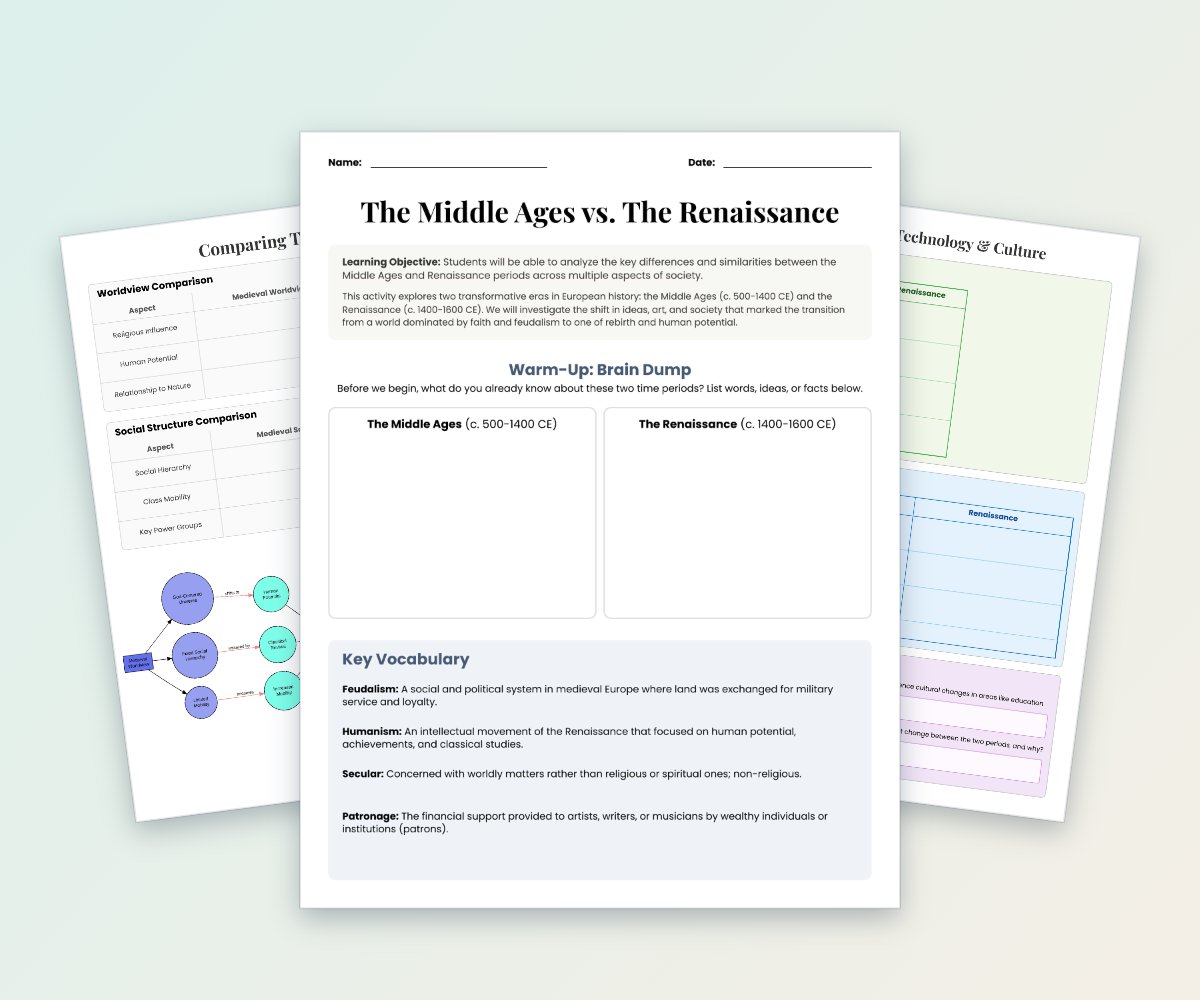
Students compare the Middle Ages and Renaissance through worldview, social structure, technology, art, literature, education, and daily life.
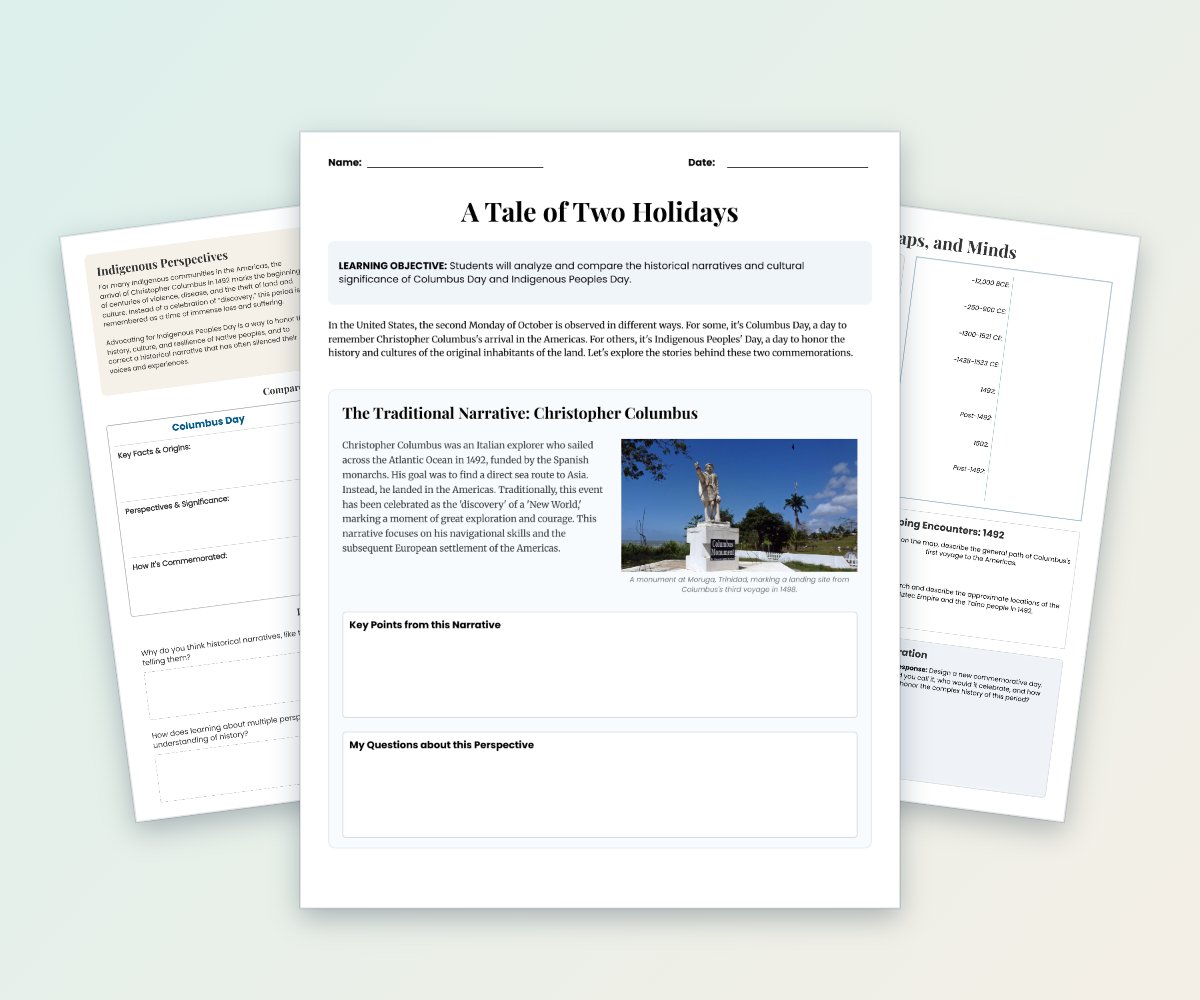
This three-page worksheet introduces contrasting historical narratives surrounding Columbus Day and Indigenous Peoples Day.
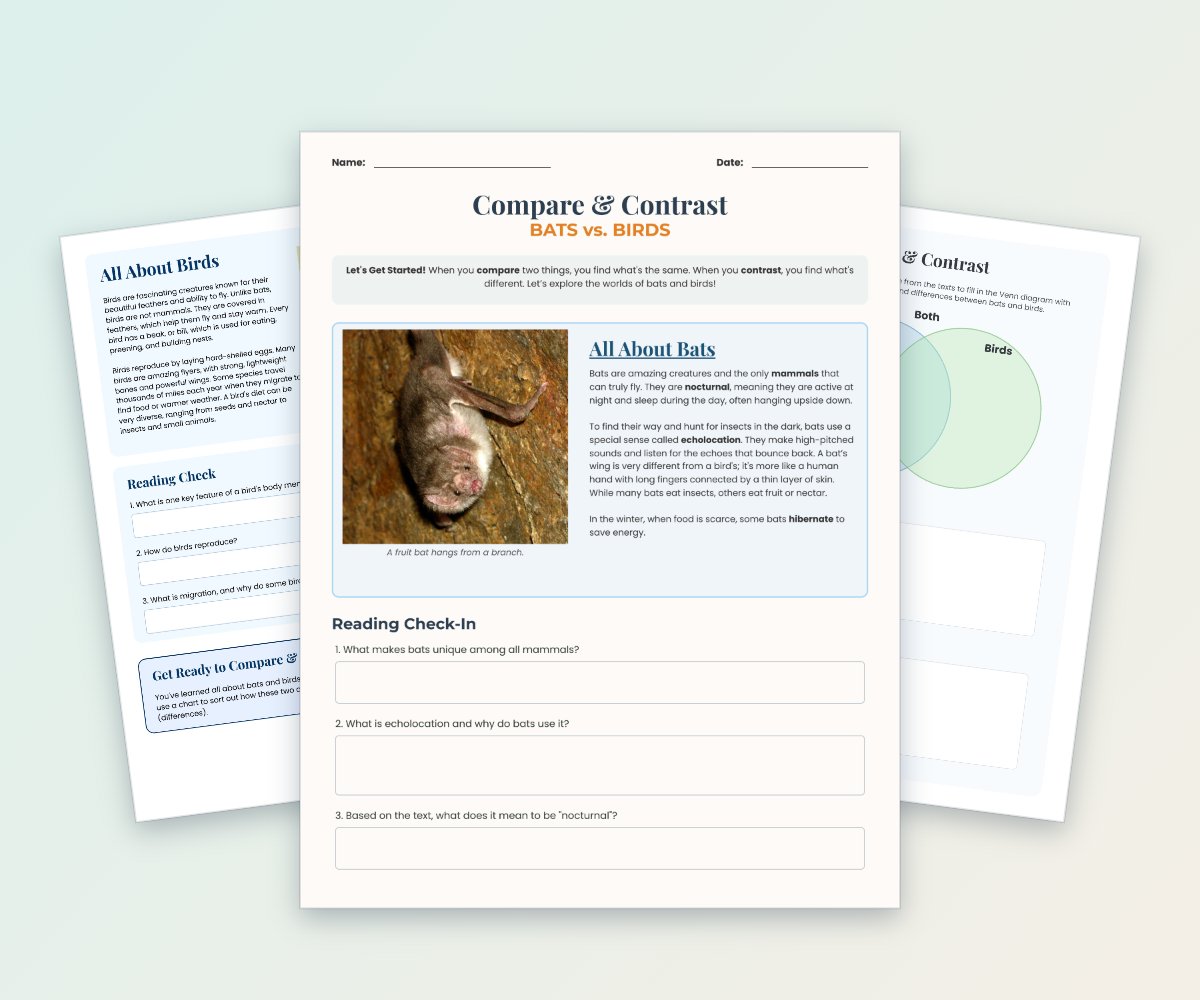
Students read informational passages about bats and birds, answer comprehension questions, and compare their similarities and differences.
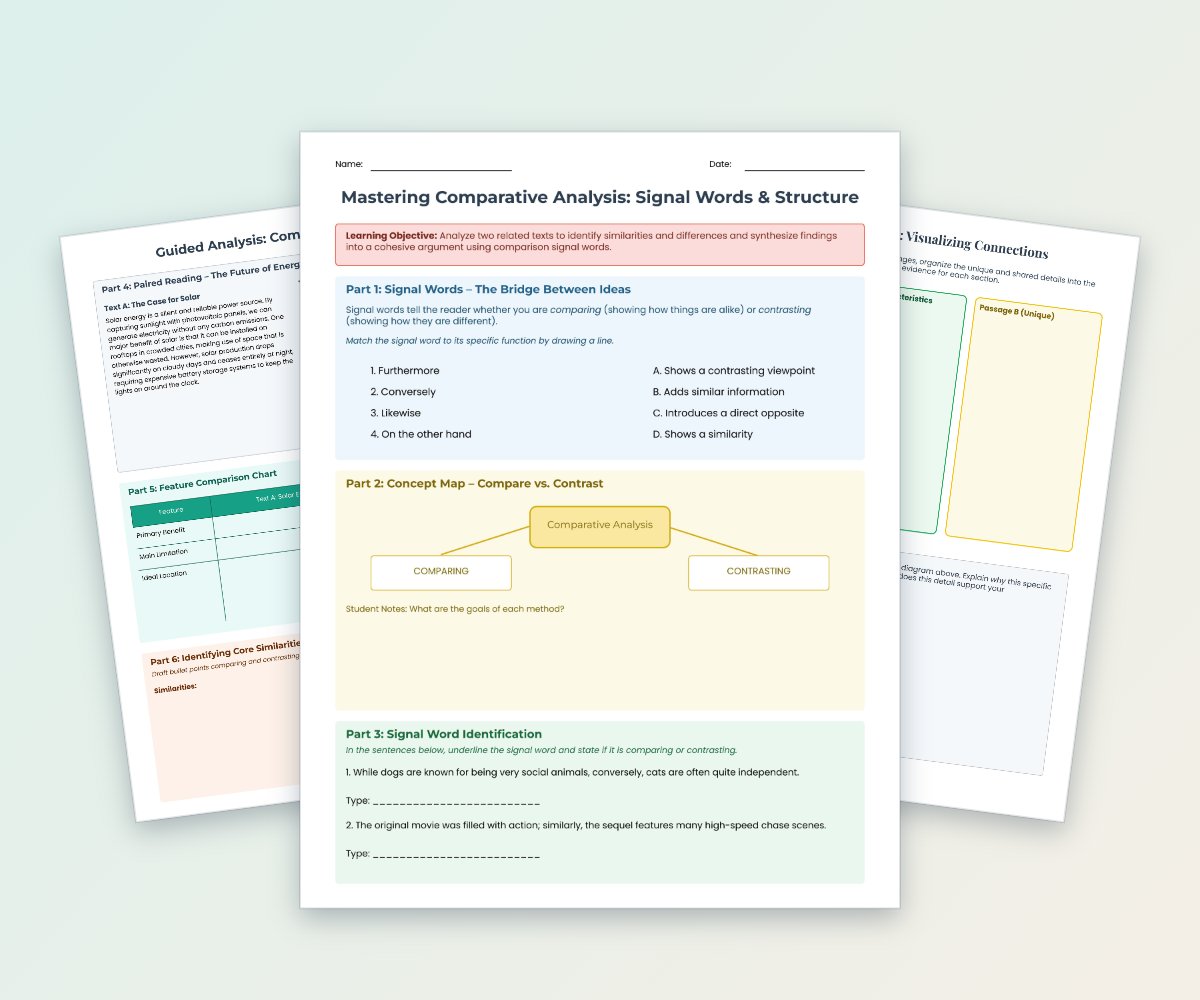
This six-page practice pack helps students identify comparison and contrast signal words, organize similarities and differences, and analyze paired informational texts.
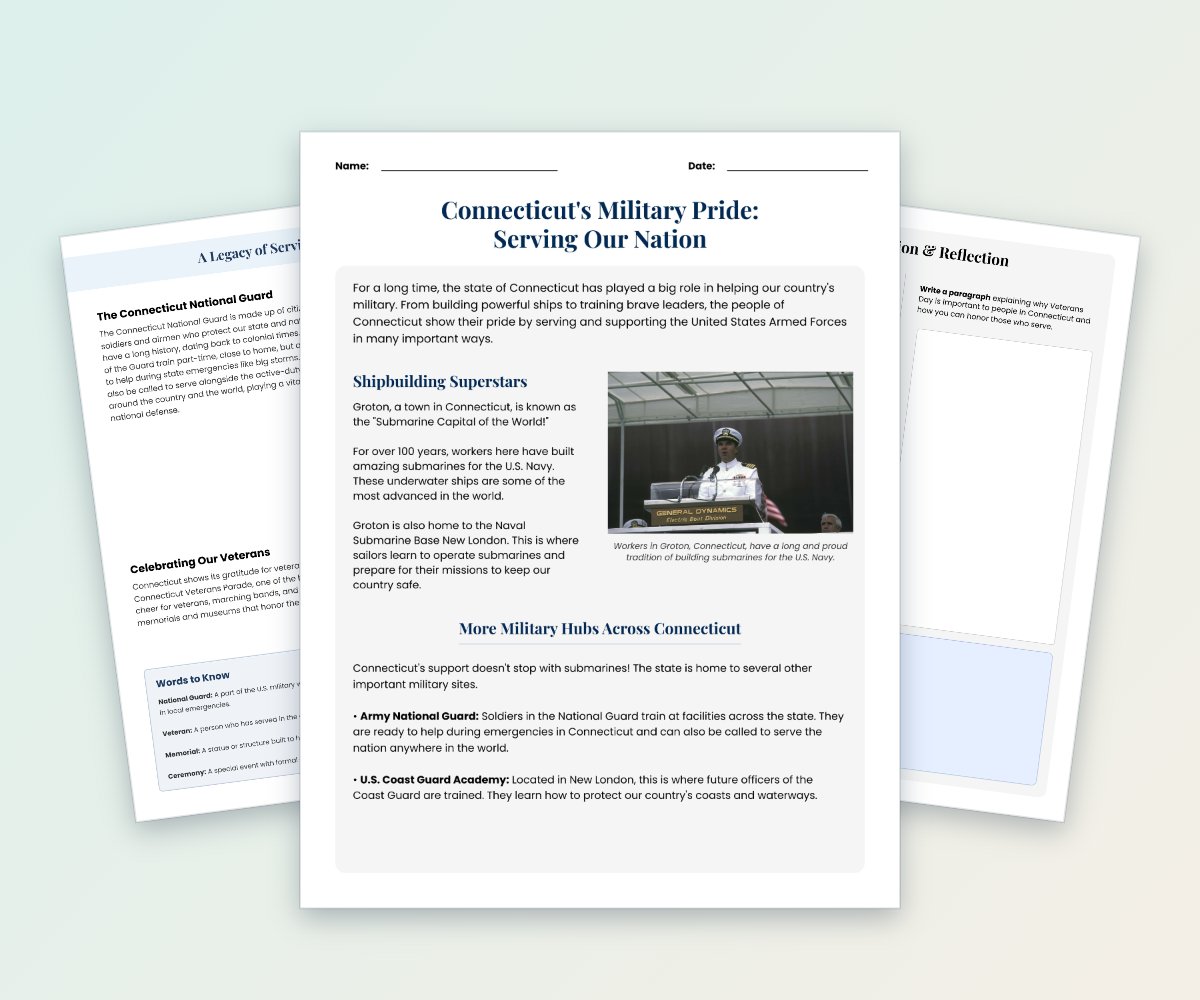
This worksheet introduces students to Connecticut's military contributions, including submarine building in Groton, the National Guard, the Coast Guard Academy, and veterans.
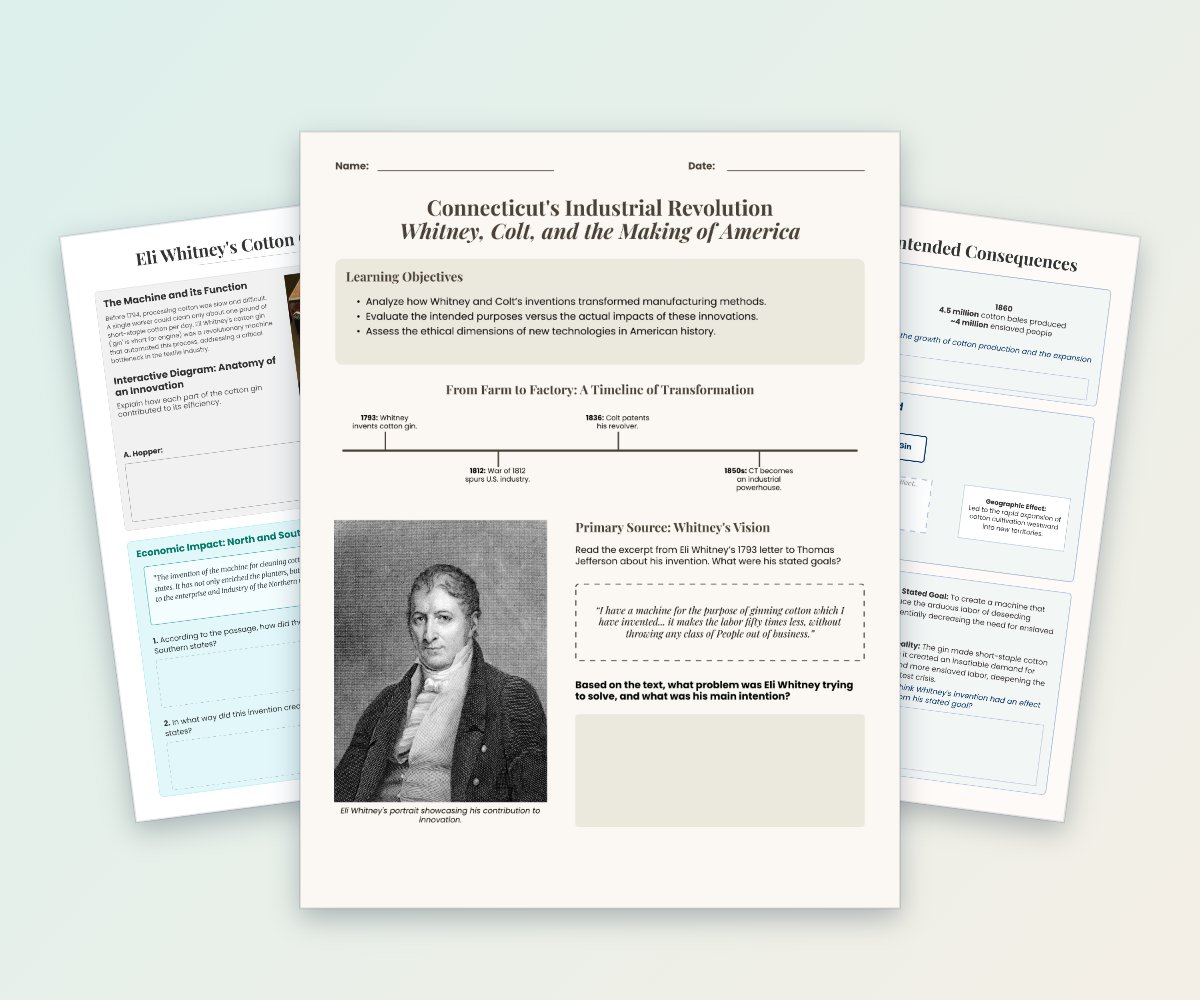
This five-page worksheet explores how Eli Whitney's cotton gin and Samuel Colt's revolver transformed manufacturing and Connecticut industry.
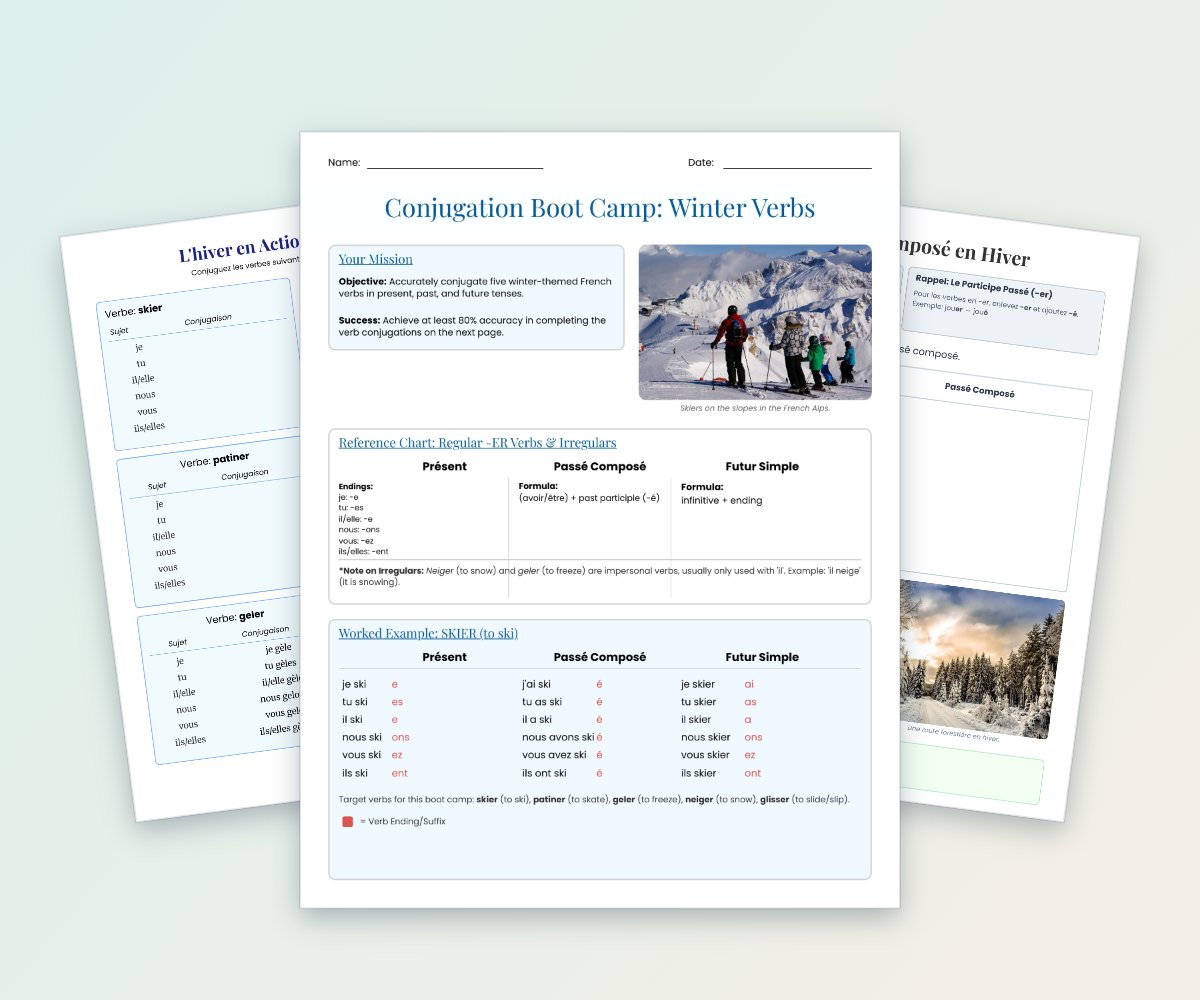
Students practice conjugating five winter-themed French verbs—skier, patiner, geler, neiger, and glisser—in the present, passé composé, and futur simple.
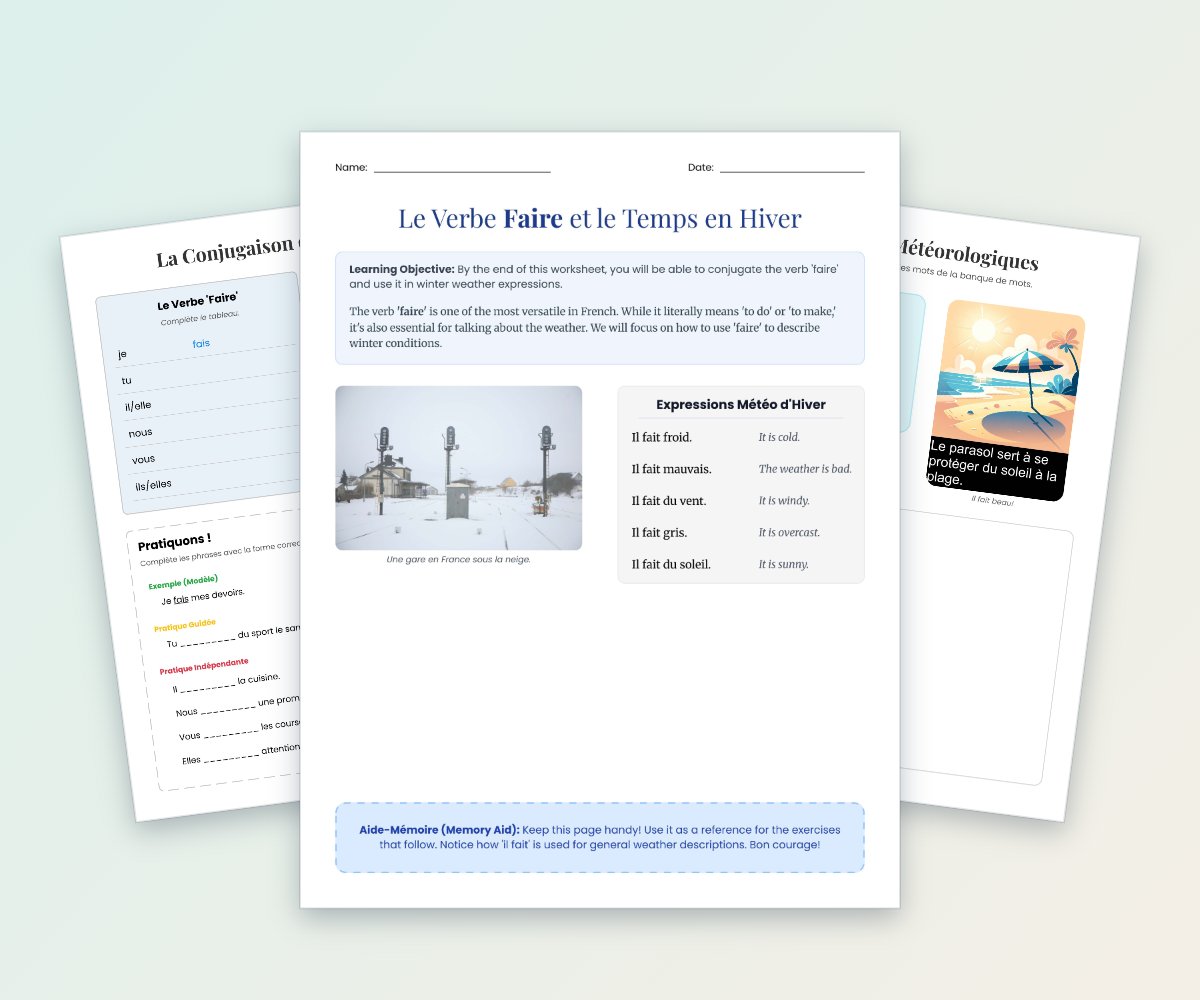
Students practice conjugating the French verb faire and using it in common winter weather expressions.
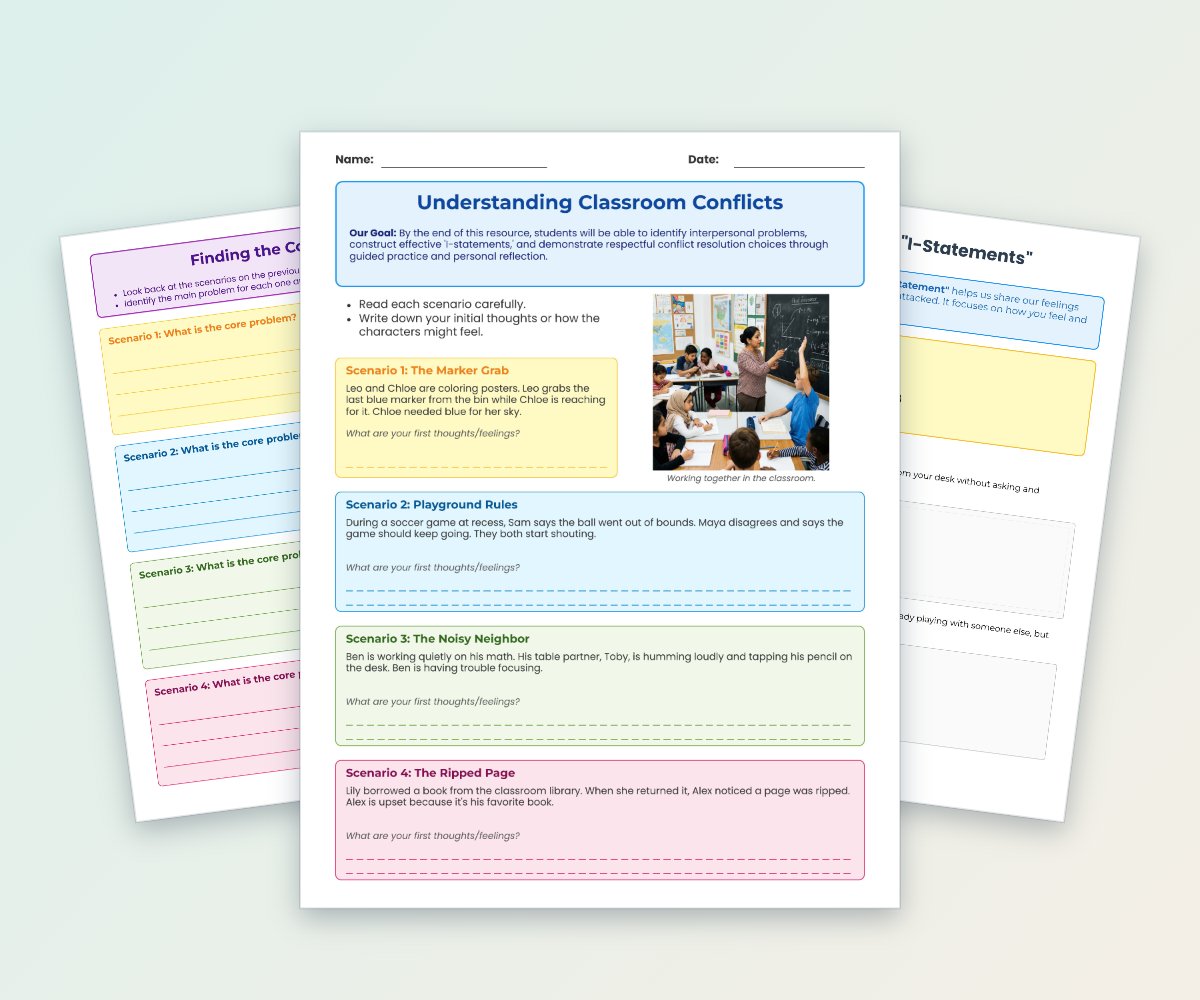
This six-page student guide helps learners identify interpersonal conflicts, recognize emotions, and describe core problems through classroom and playground scenarios.
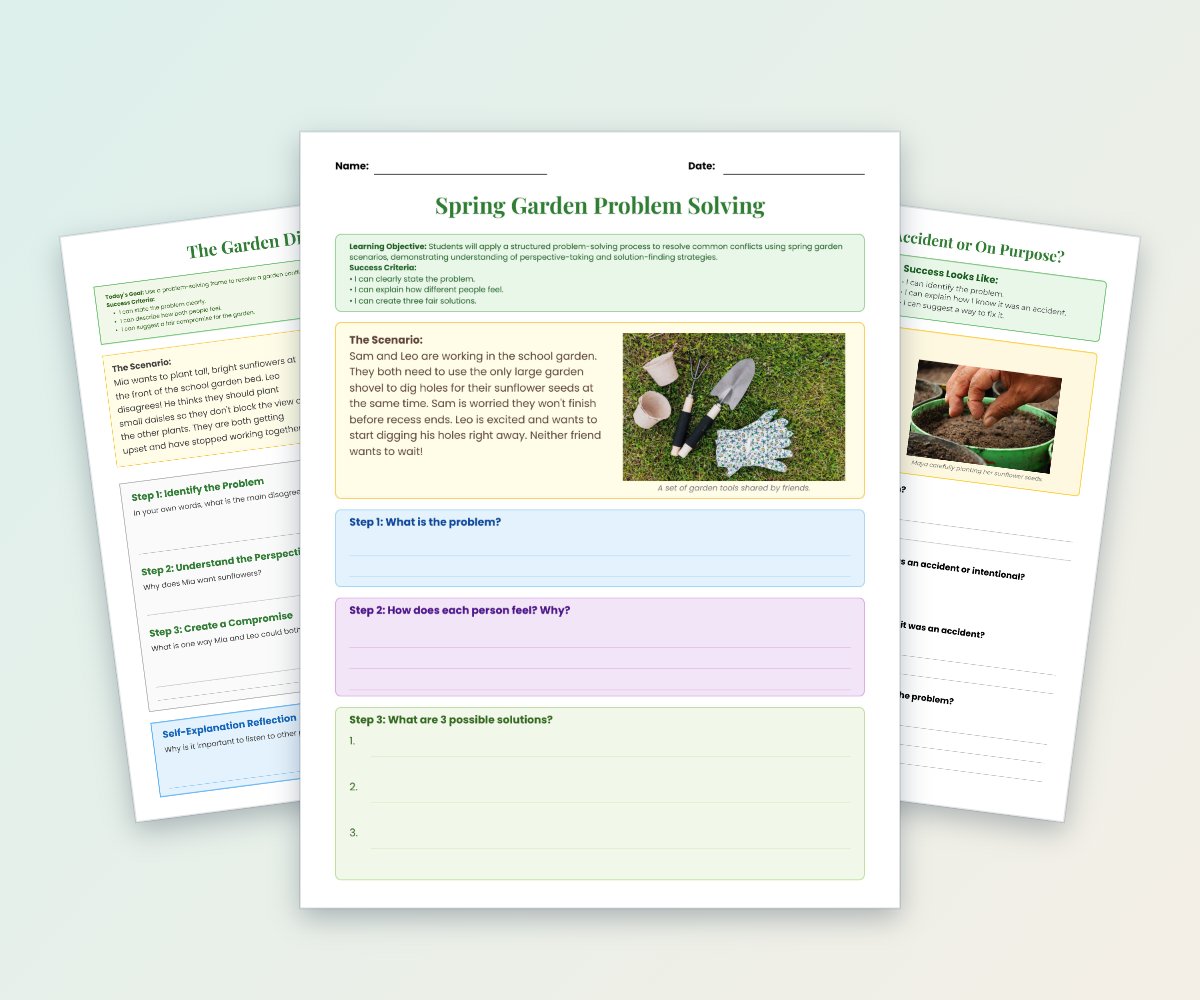
This six-page activity pack uses school garden scenarios to teach students how to identify conflicts, understand different perspectives, and develop fair solutions.
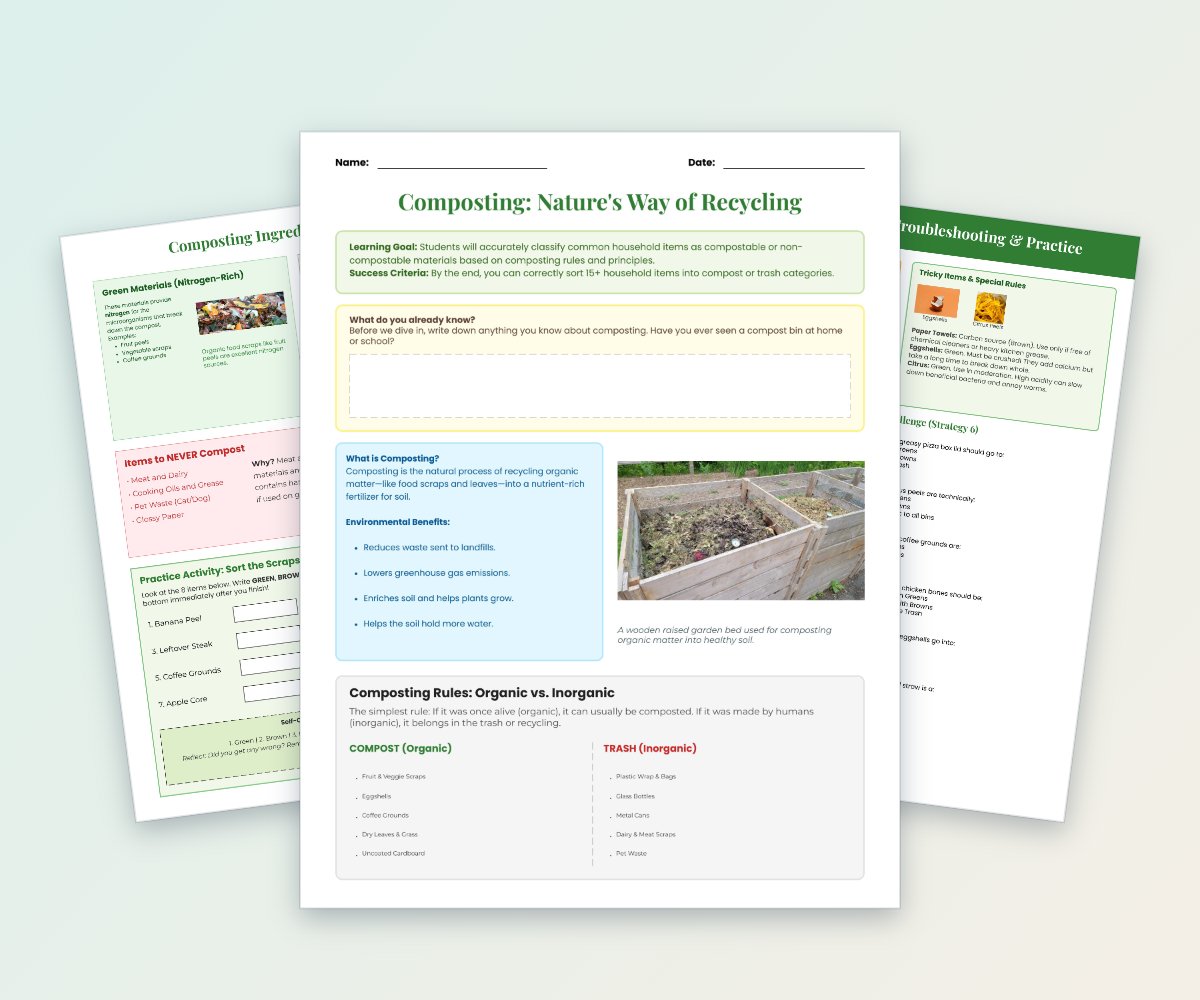
This four-page science activity introduces composting, organic and inorganic materials, compost ingredients, and safety rules.
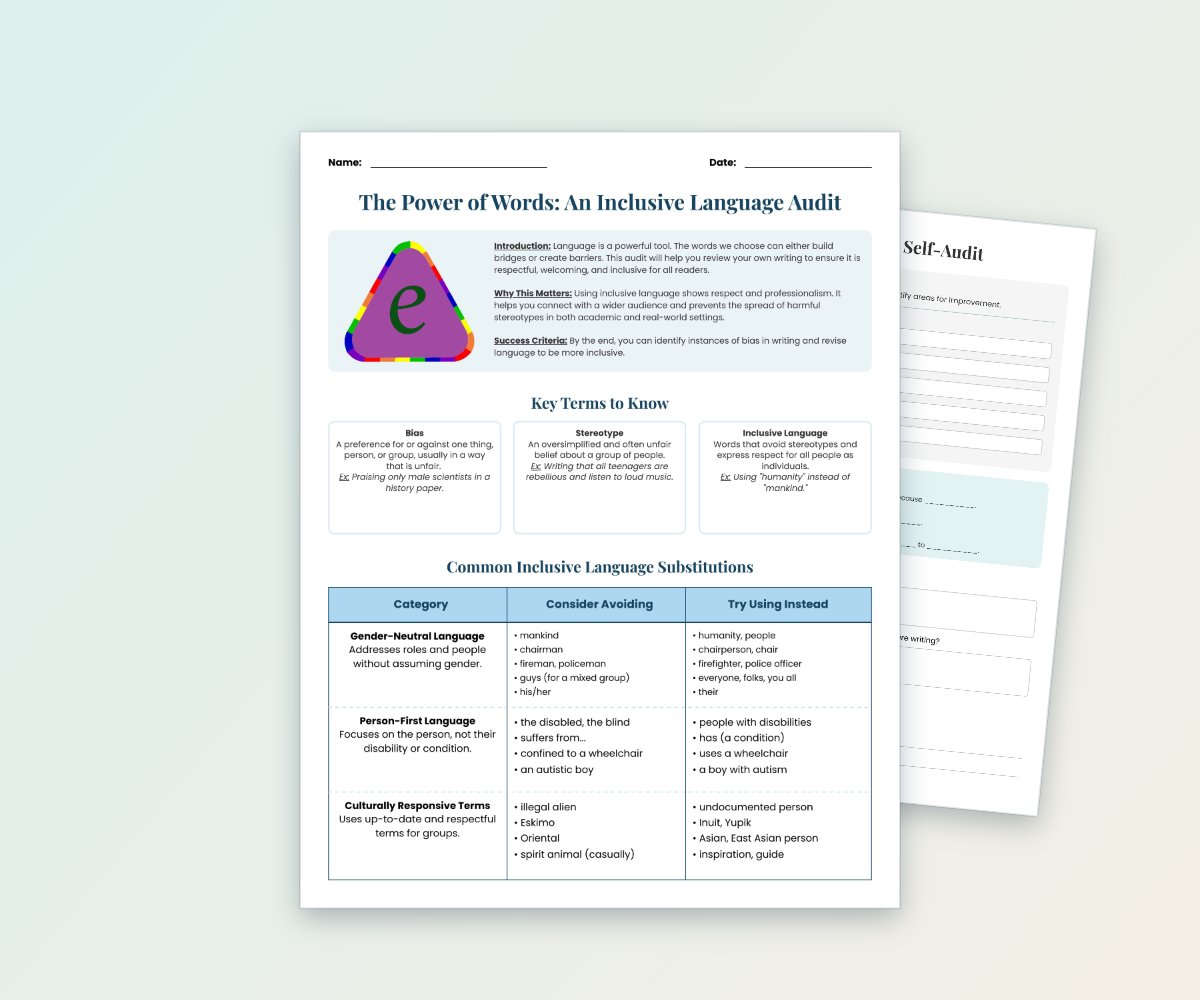
Students review their own writing for gender bias, ableist language, cultural insensitivity, stereotyping, and exclusionary phrasing.
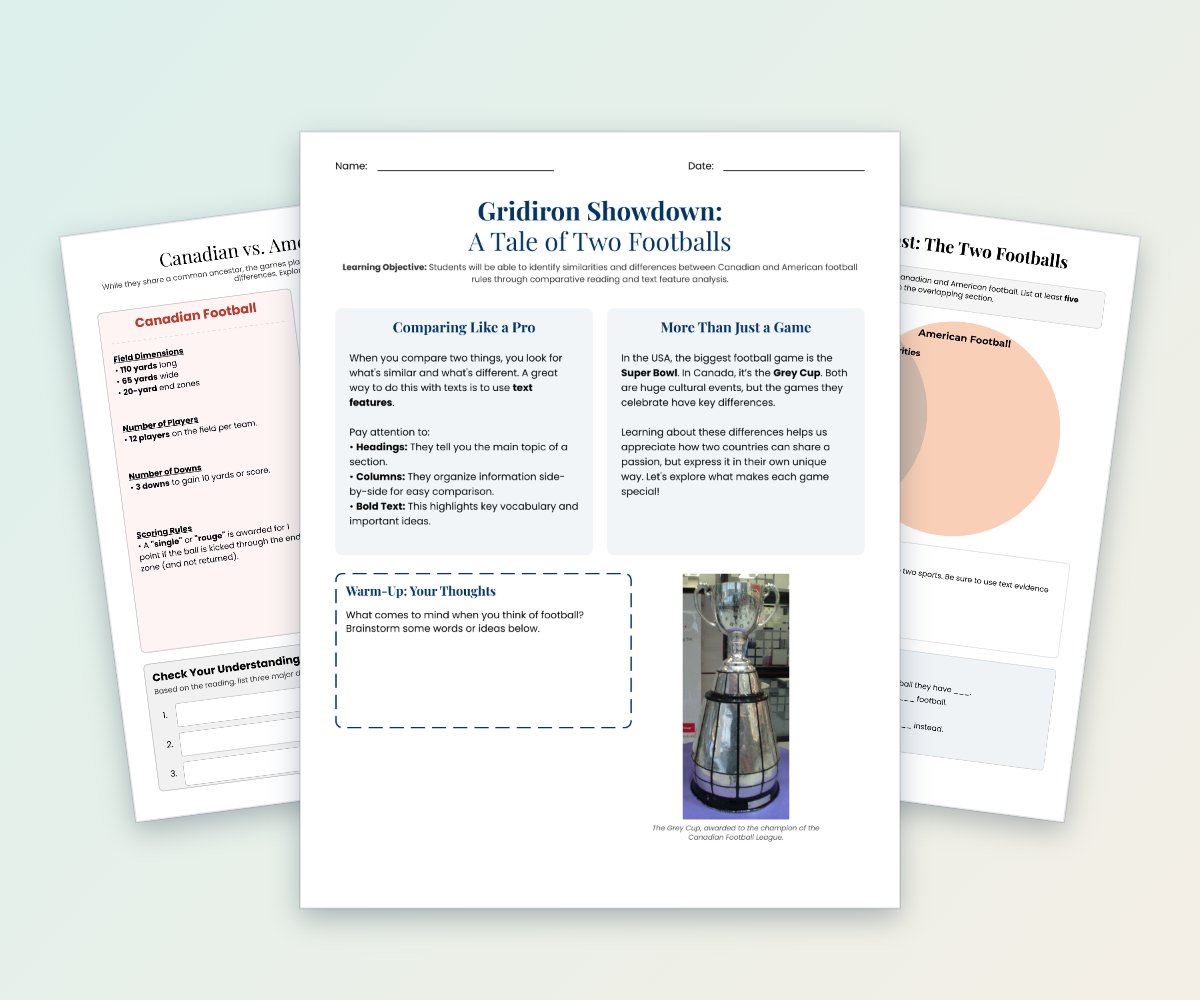
Students compare Canadian and American football using informational text, text features, and factual details about gameplay.
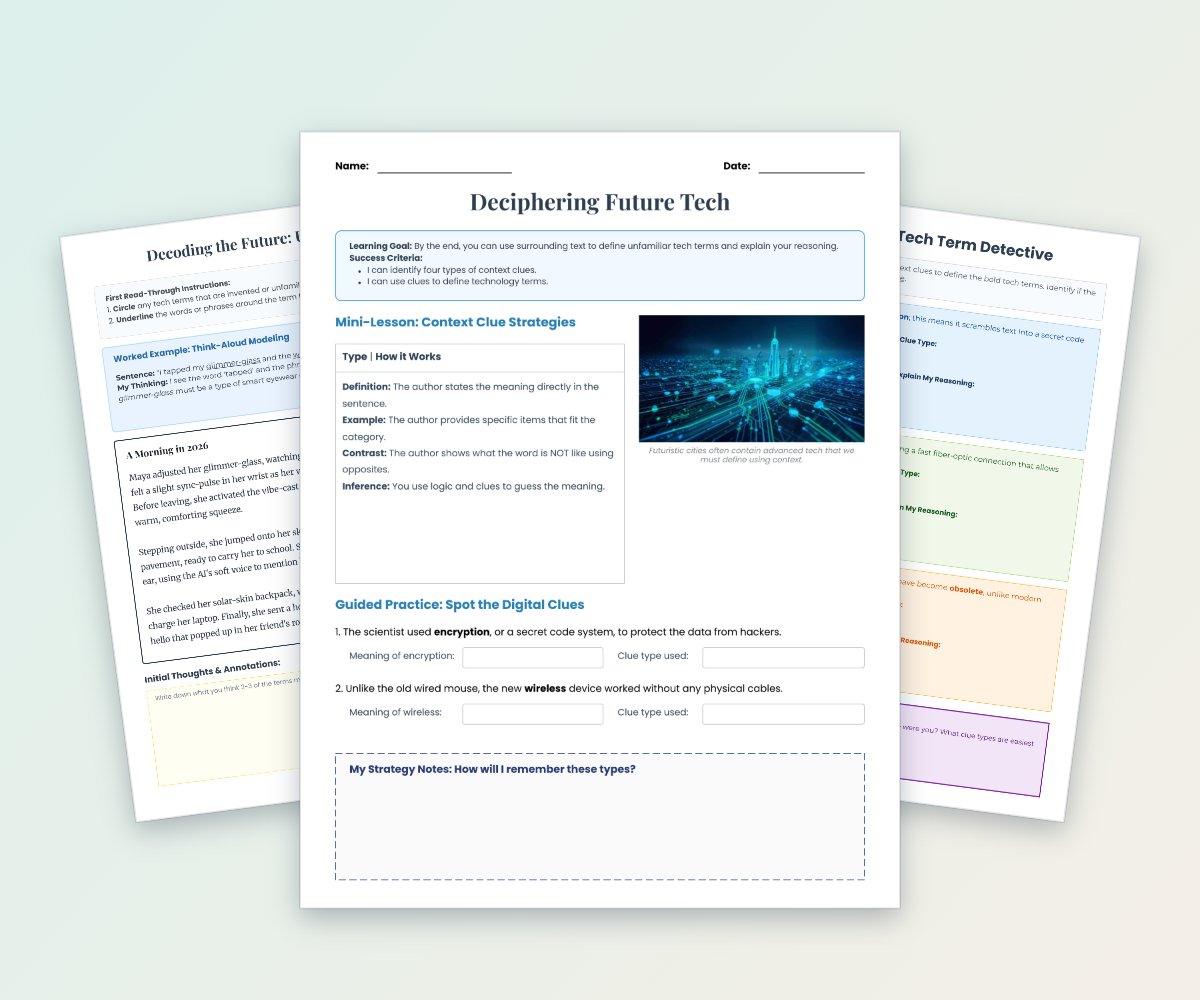
Students learn definition, example, contrast, and inference context clues through a futuristic technology theme.