Understanding Shrinkflation and Unit Prices
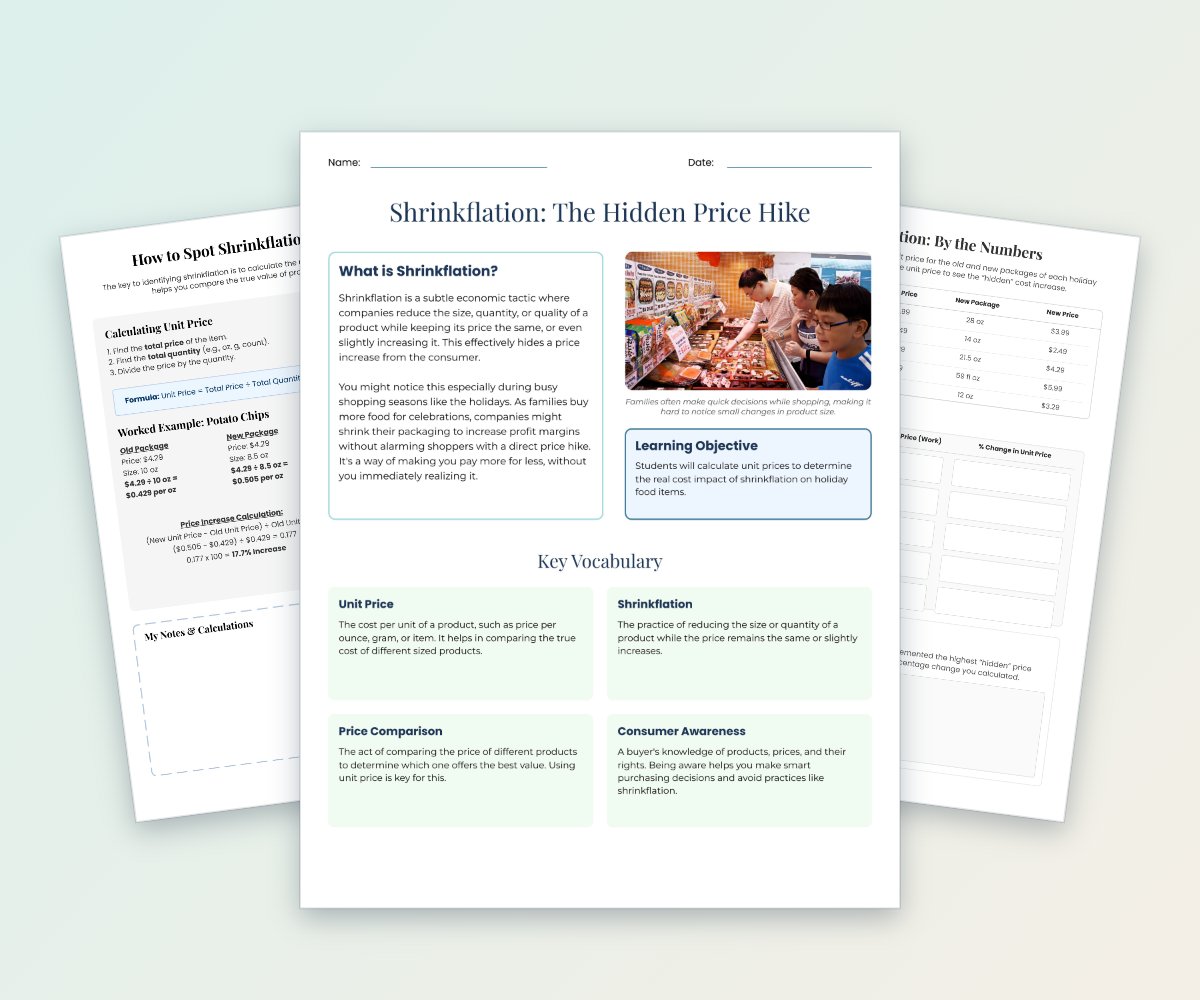
Students learn how to calculate unit prices and identify the real cost impact of shrinkflation.
$3.99
Classroom-ready resources written for grade 4: printable worksheets, slides, activities and planning tools you can download and use straight away. Browse by subject below.
Students learn how to calculate unit prices and identify the real cost impact of shrinkflation.
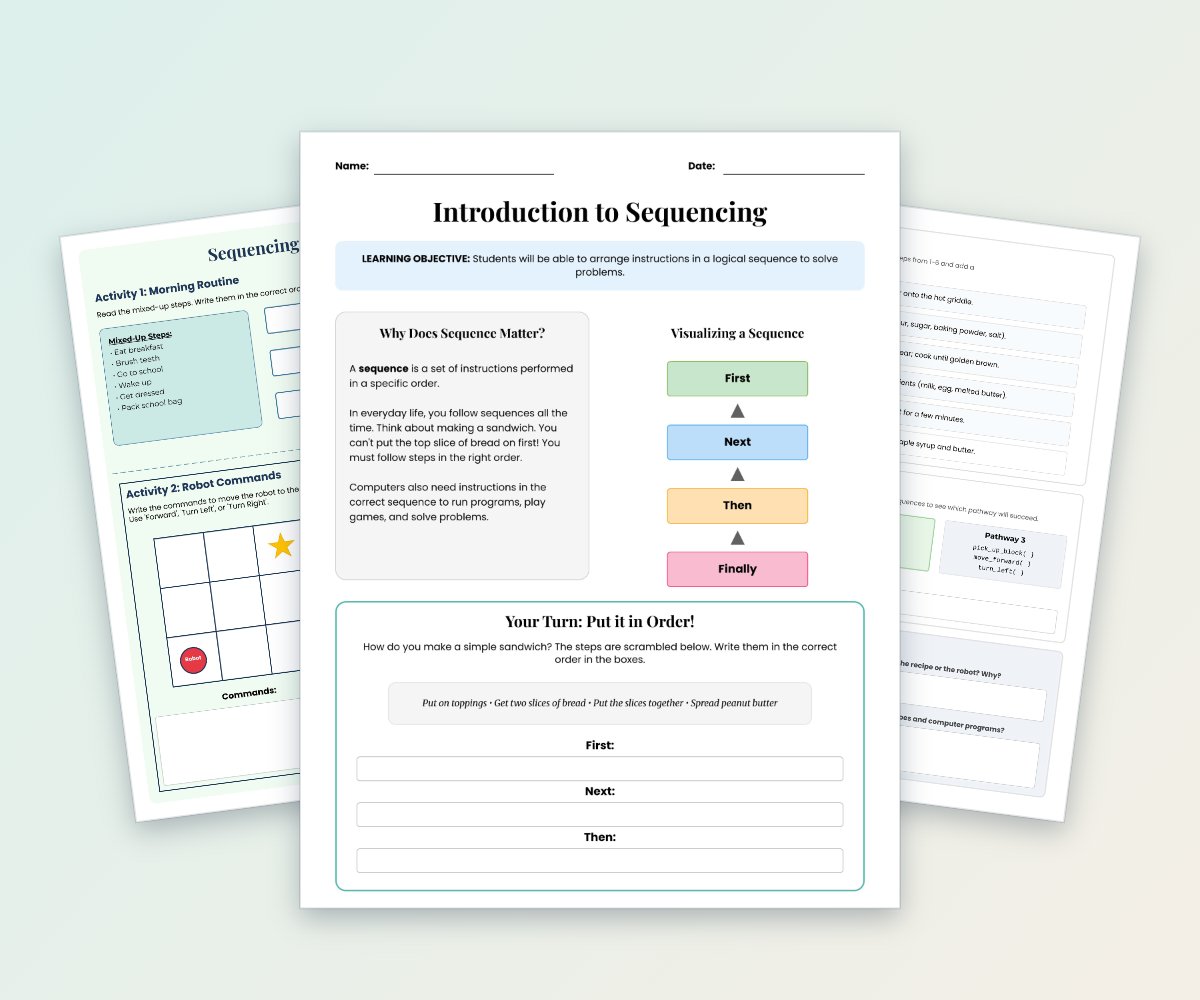
This four-page activity pack introduces sequencing through familiar routines, sandwich and pancake recipes, robot commands, and logic pathways.
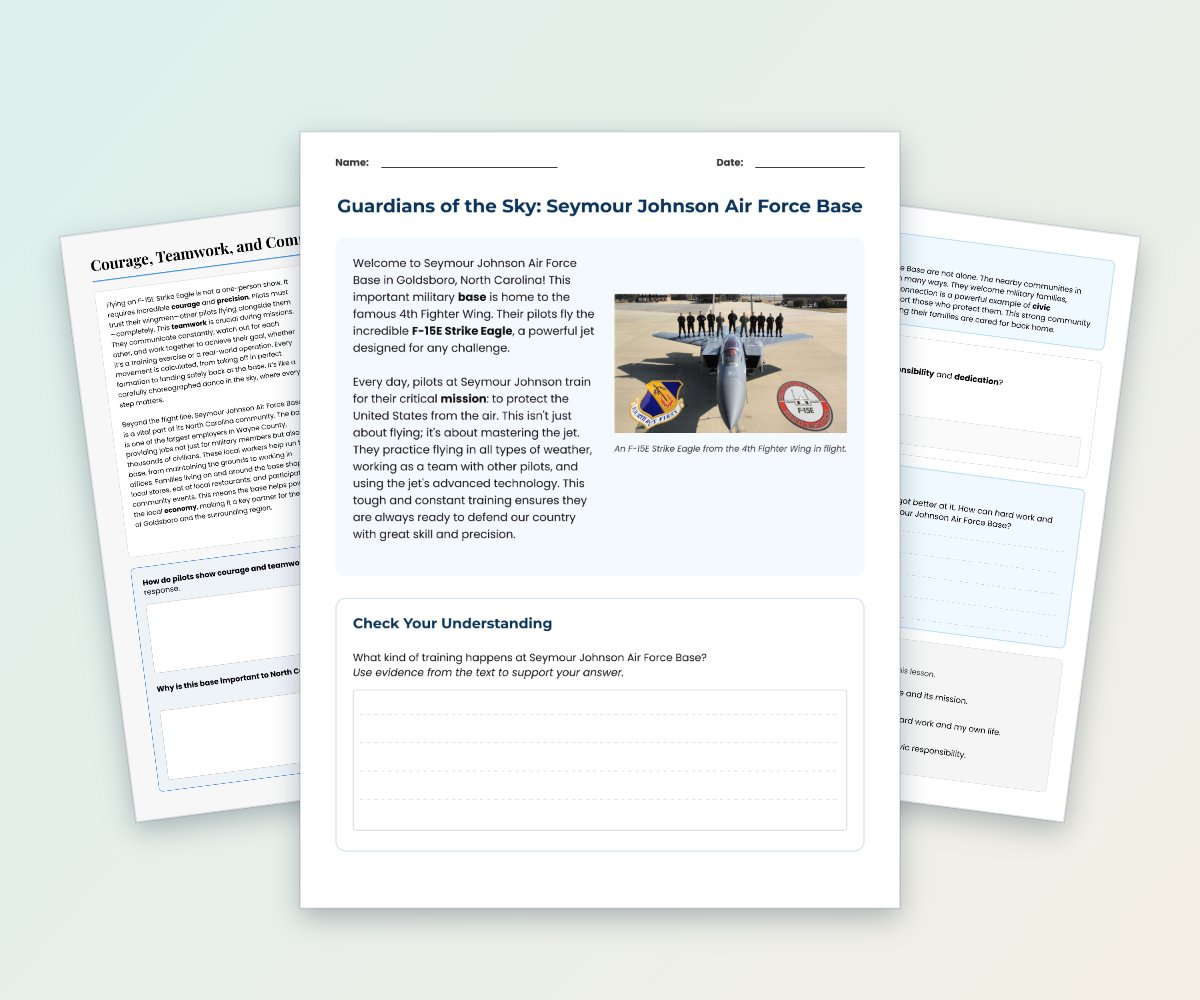
Students read an informational passage about Seymour Johnson Air Force Base, its pilots, missions, and importance to North Carolina.
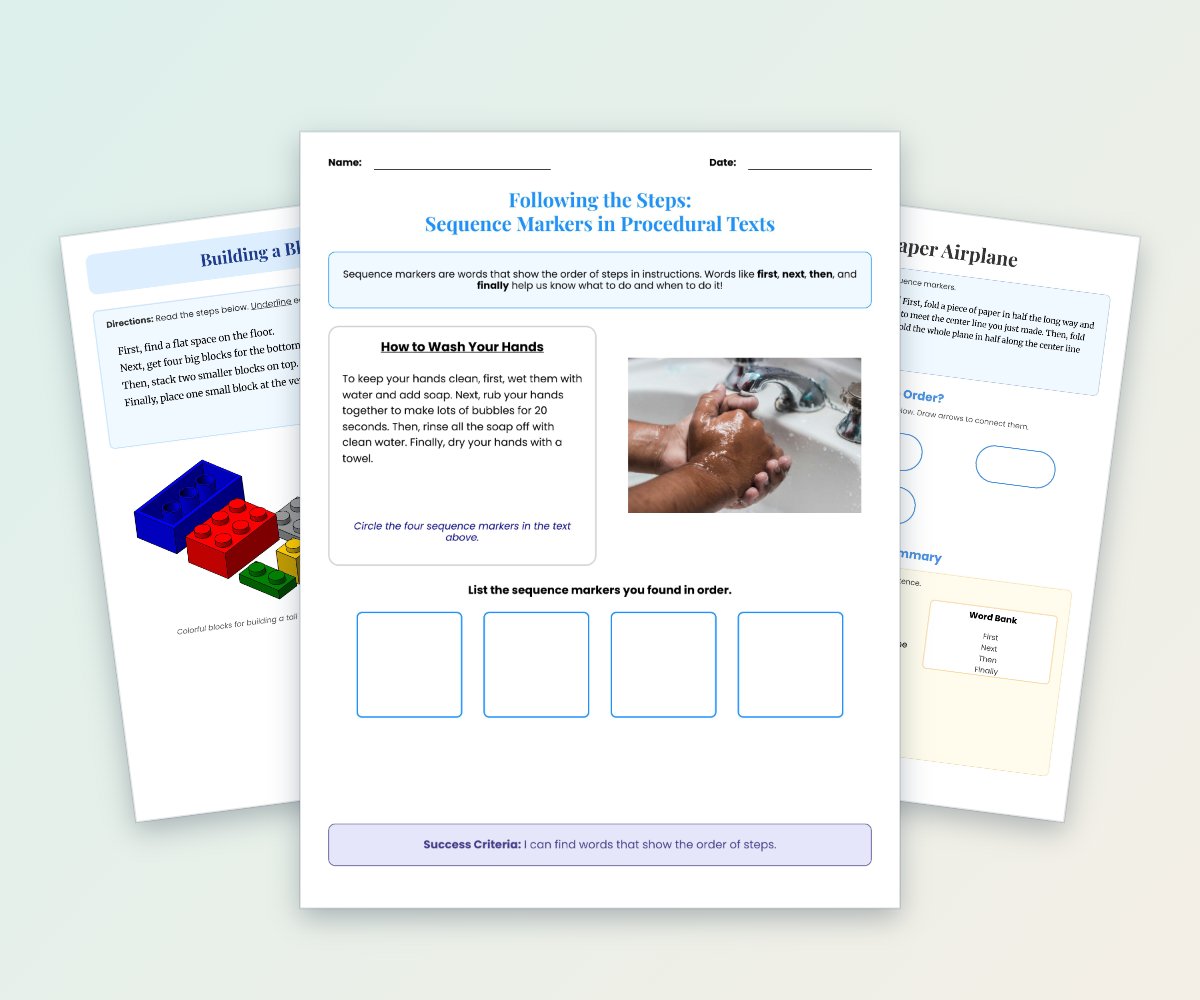
Students identify sequence markers such as first, next, then, and finally in procedural texts.
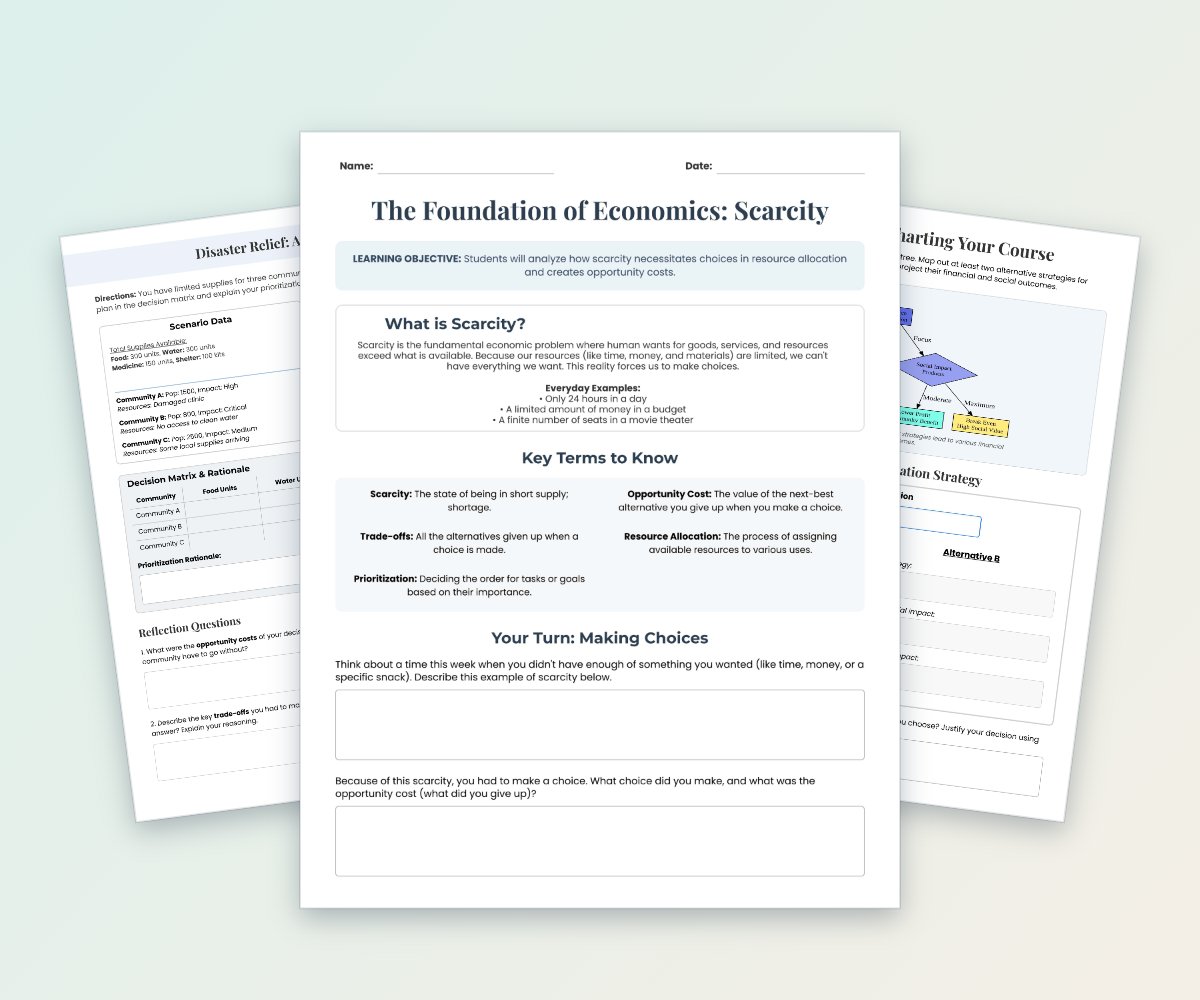
This five-page economics worksheet introduces scarcity, trade-offs, prioritization, opportunity cost, and resource allocation.
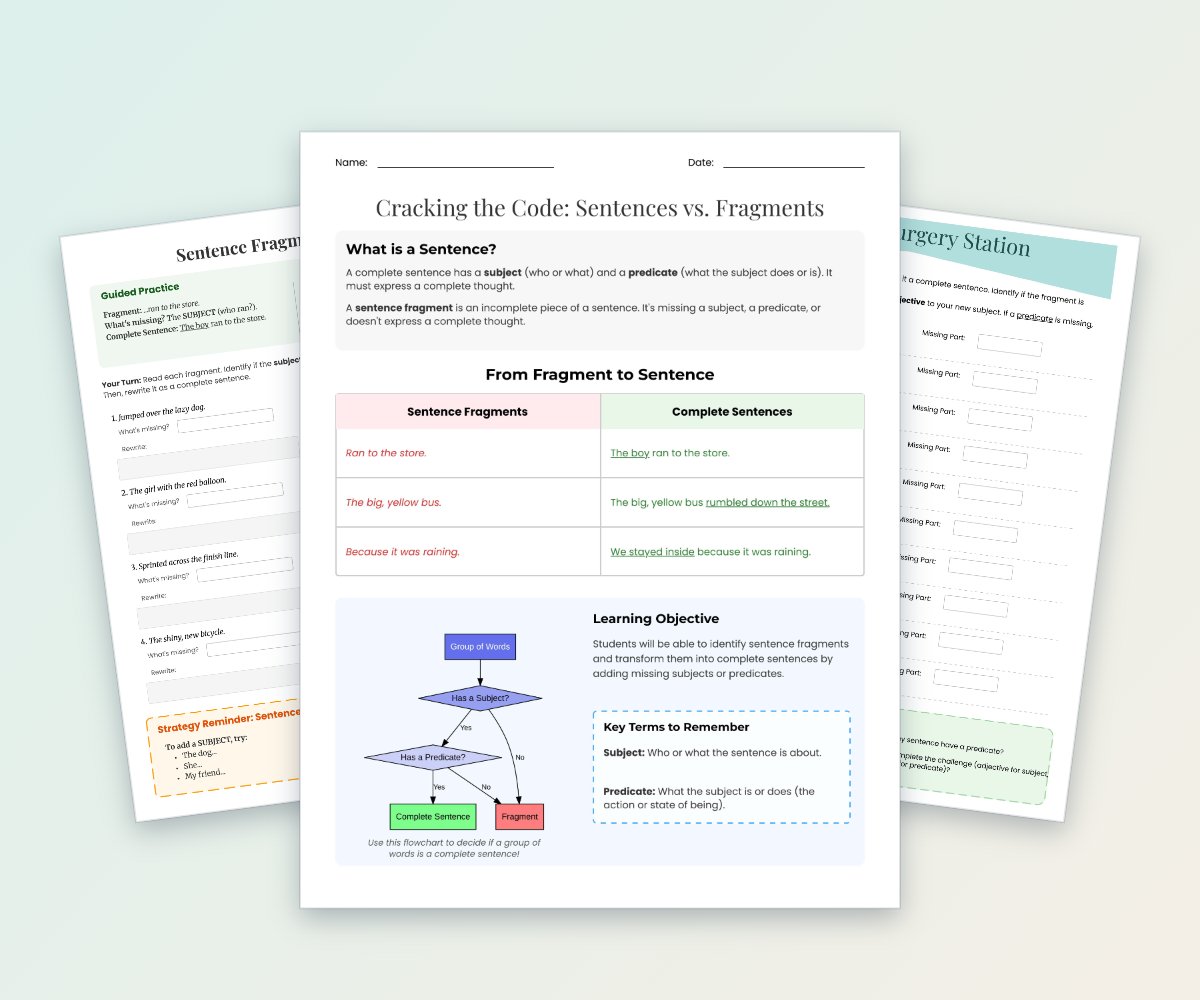
This four-page worksheet teaches students to distinguish complete sentences from fragments by identifying missing subjects or predicates.
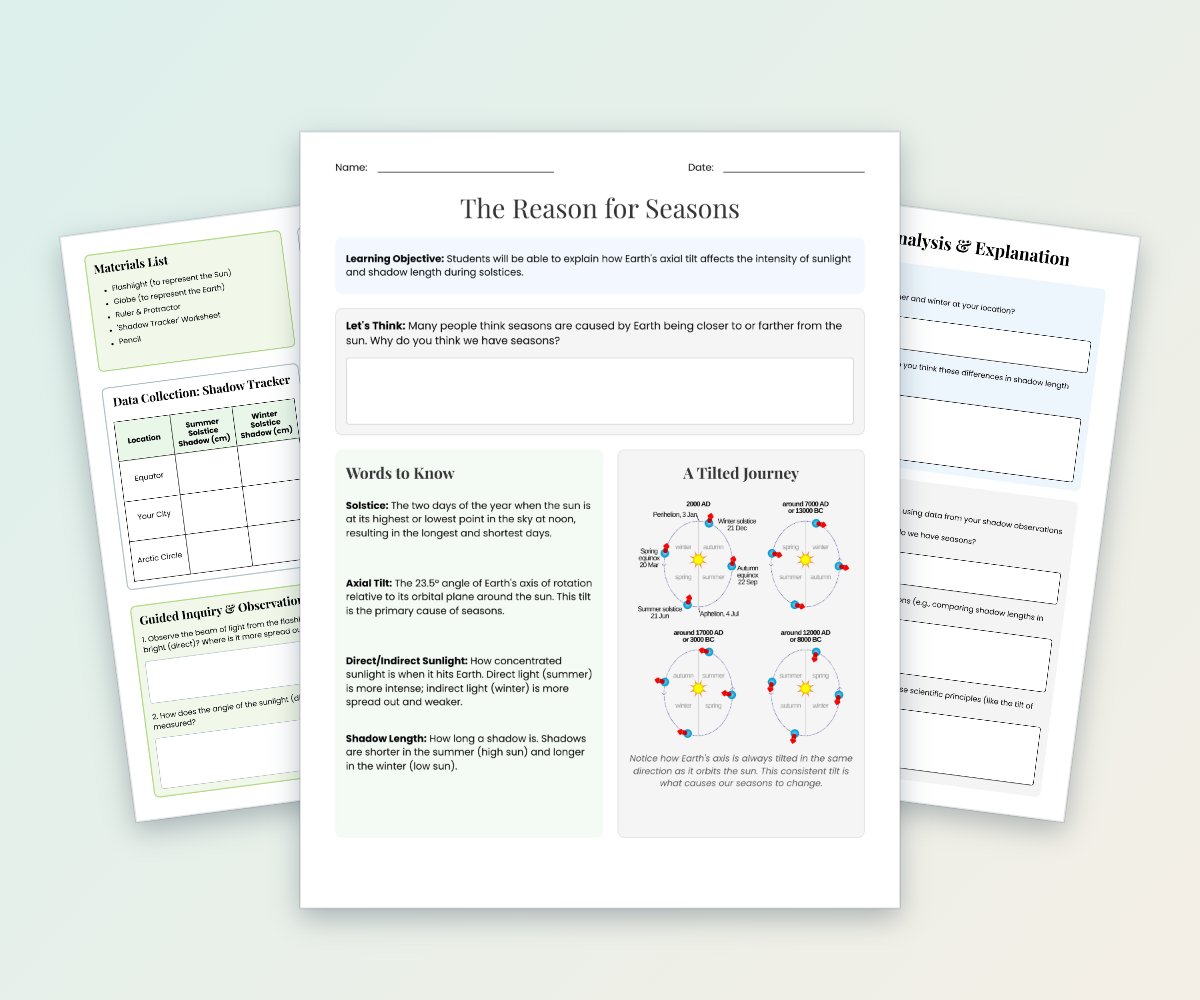
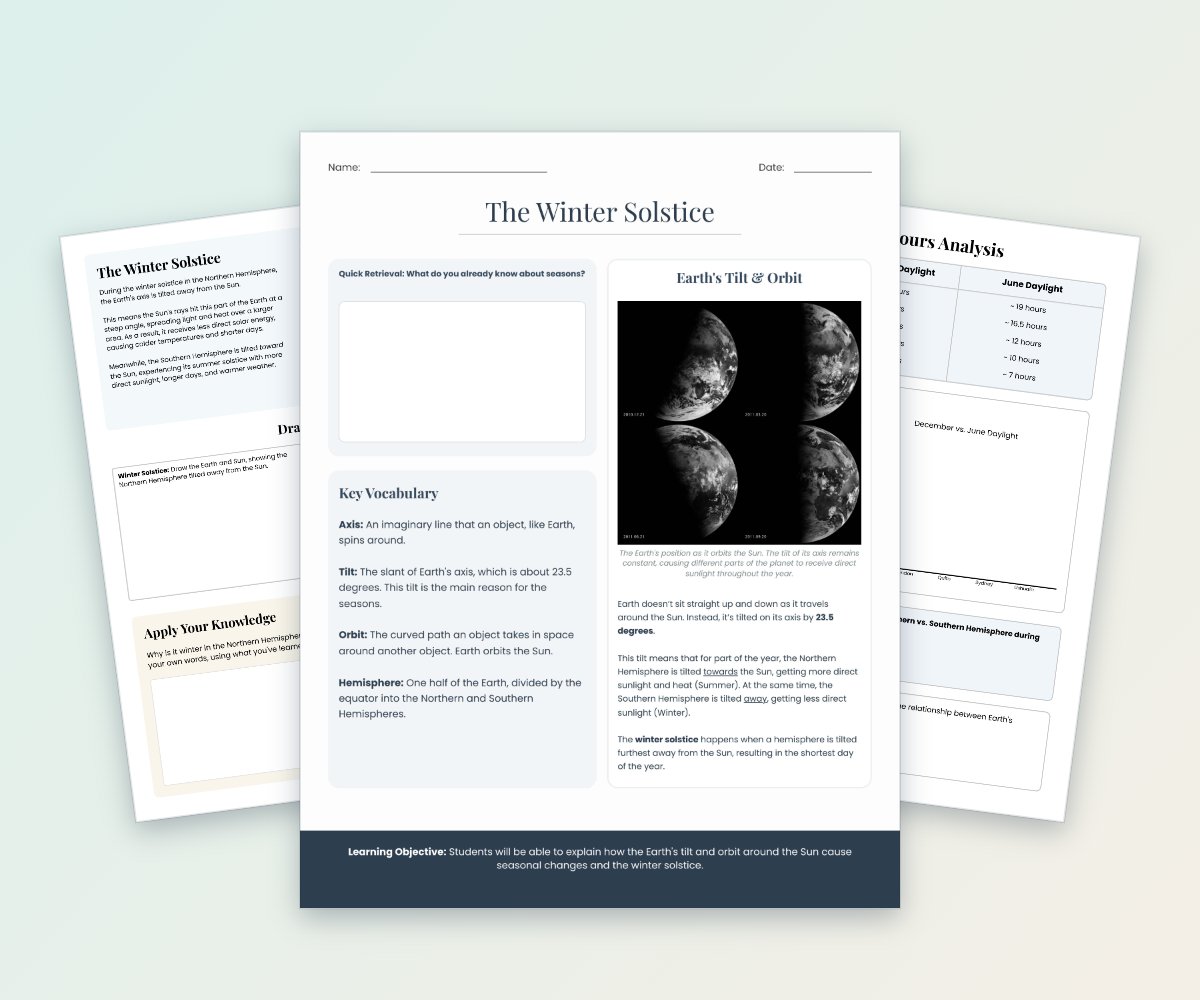
This four-page science activity explains how Earth’s 23.5° axial tilt causes seasonal changes in sunlight intensity and shadow length.
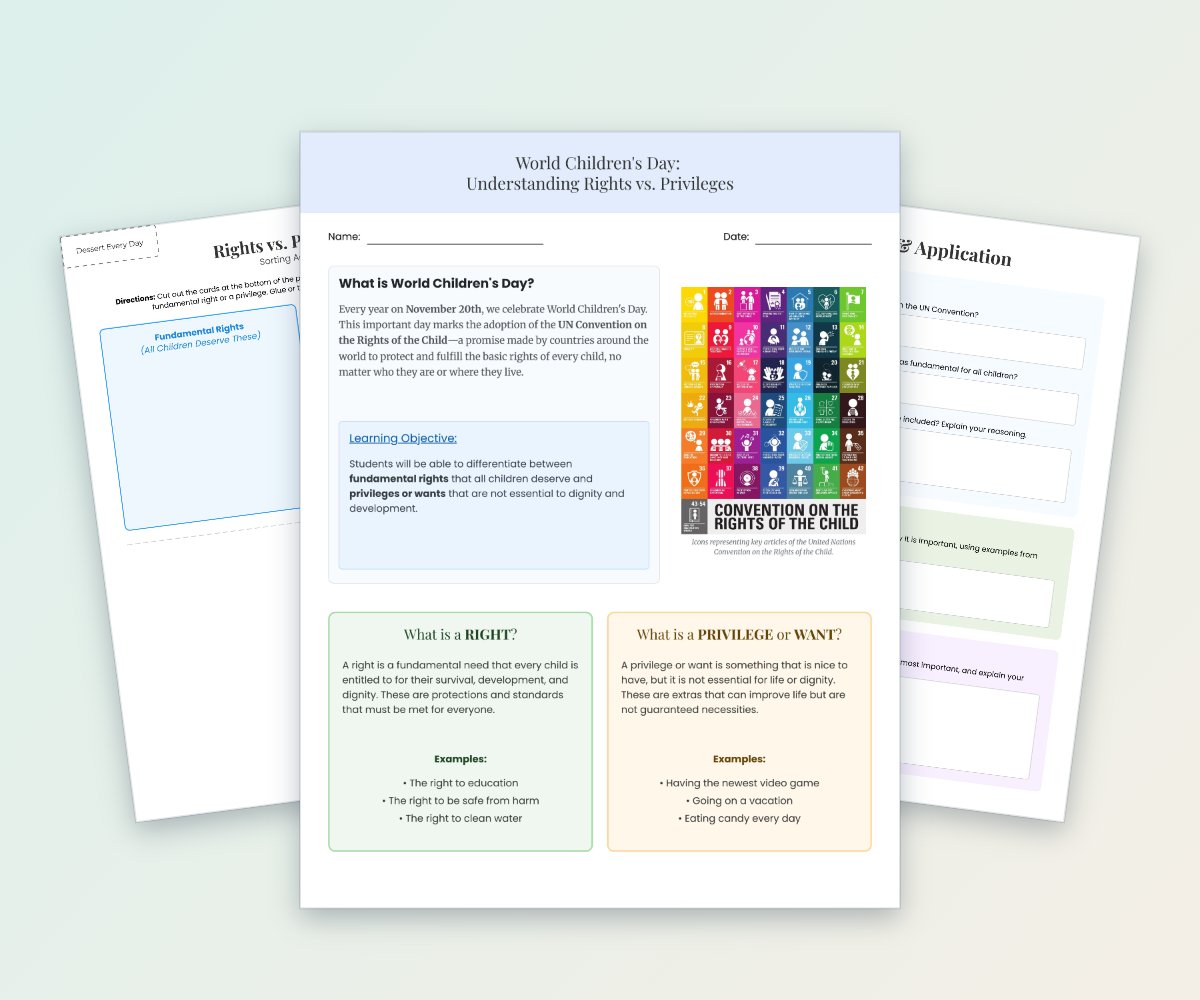
This World Children’s Day resource introduces the difference between fundamental rights and privileges or wants.
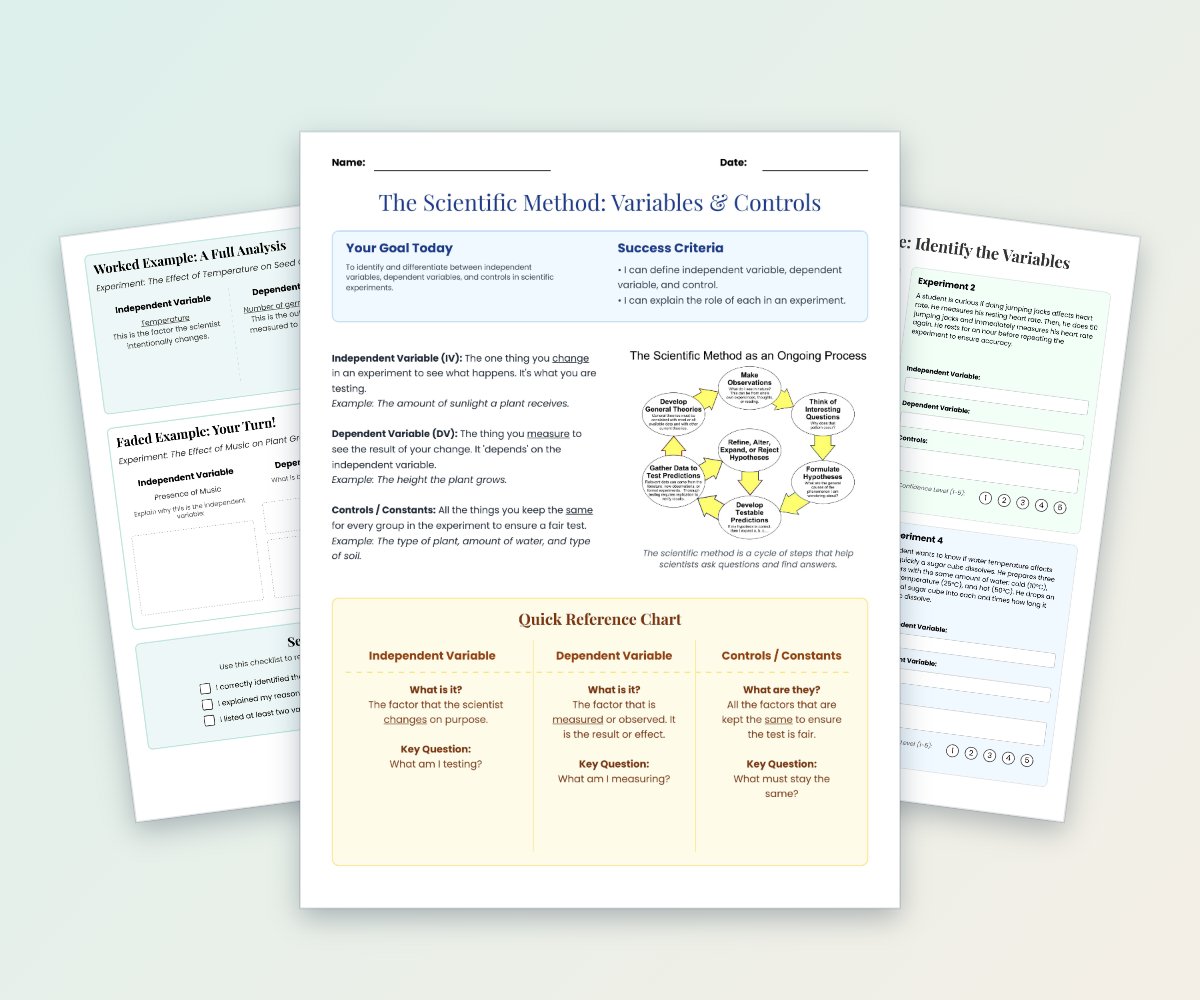
This four-page worksheet teaches students to identify independent variables, dependent variables, and controlled variables in scientific experiments.
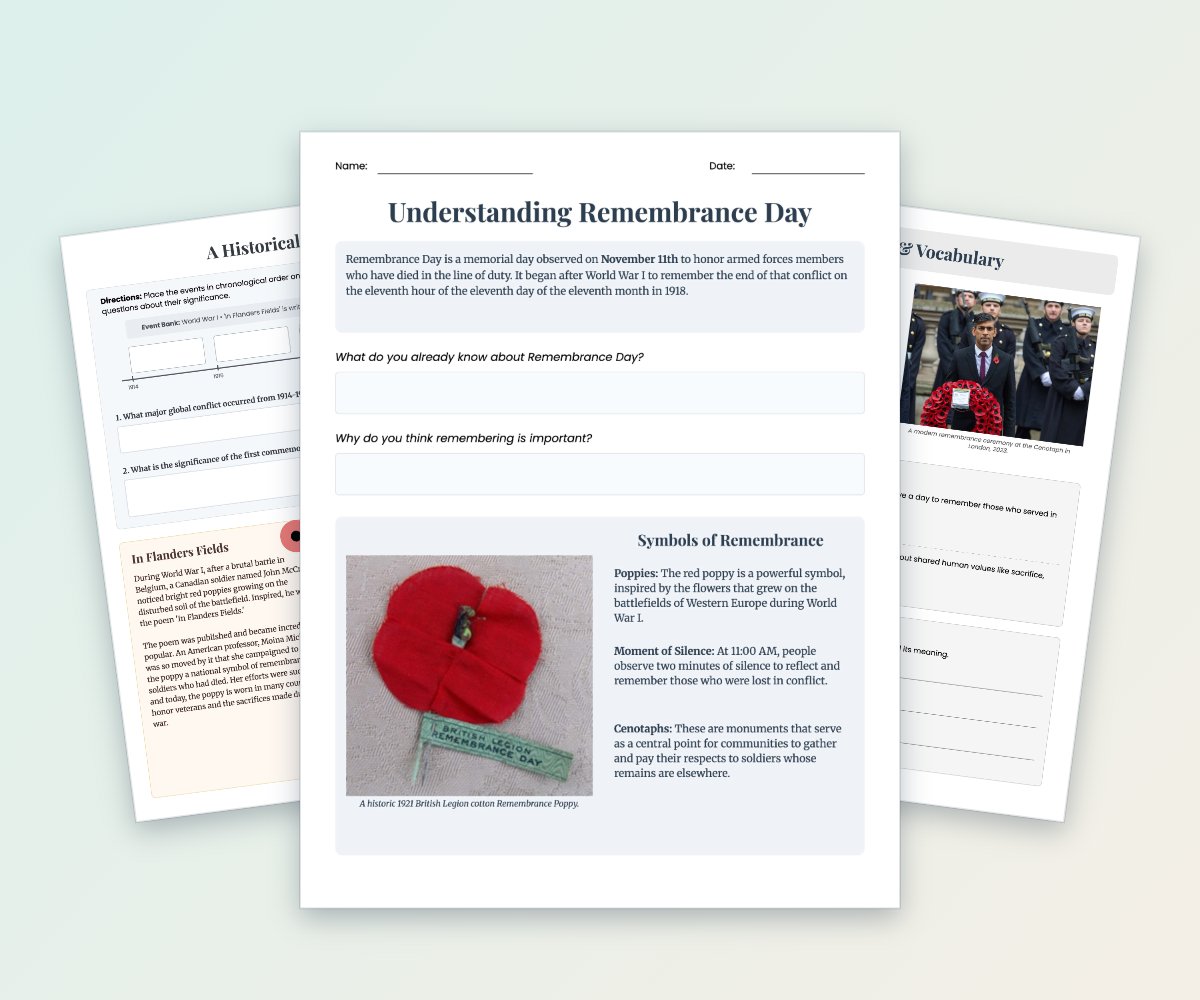
This four-page worksheet introduces Remembrance Day, the history of World War I, and symbols such as poppies, cenotaphs, and the moment of silence.
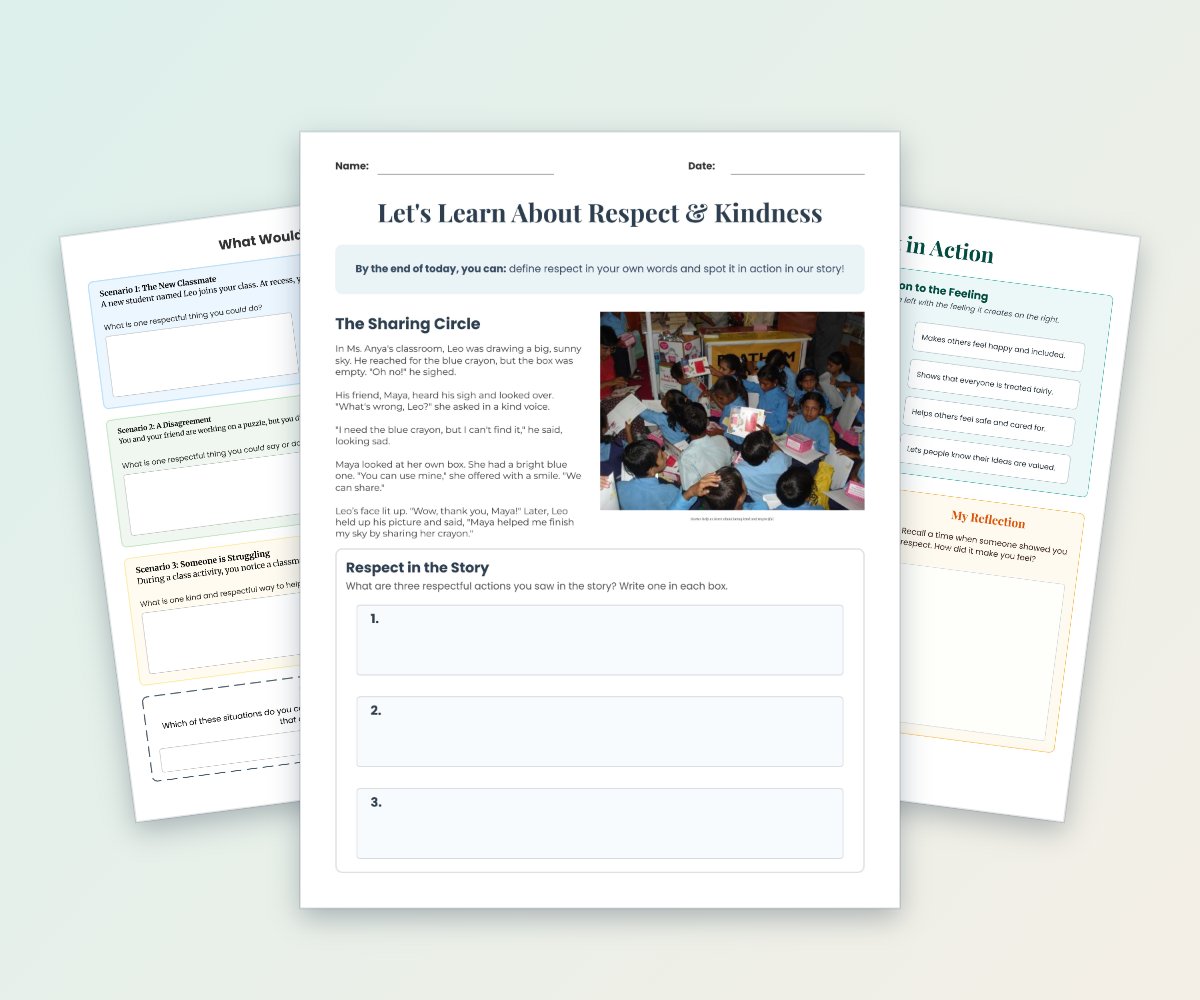
This four-page activity pack helps students explore respect and kindness through a classroom story, scenarios, discussion, matching, reflection, and a weekly goal tracker.
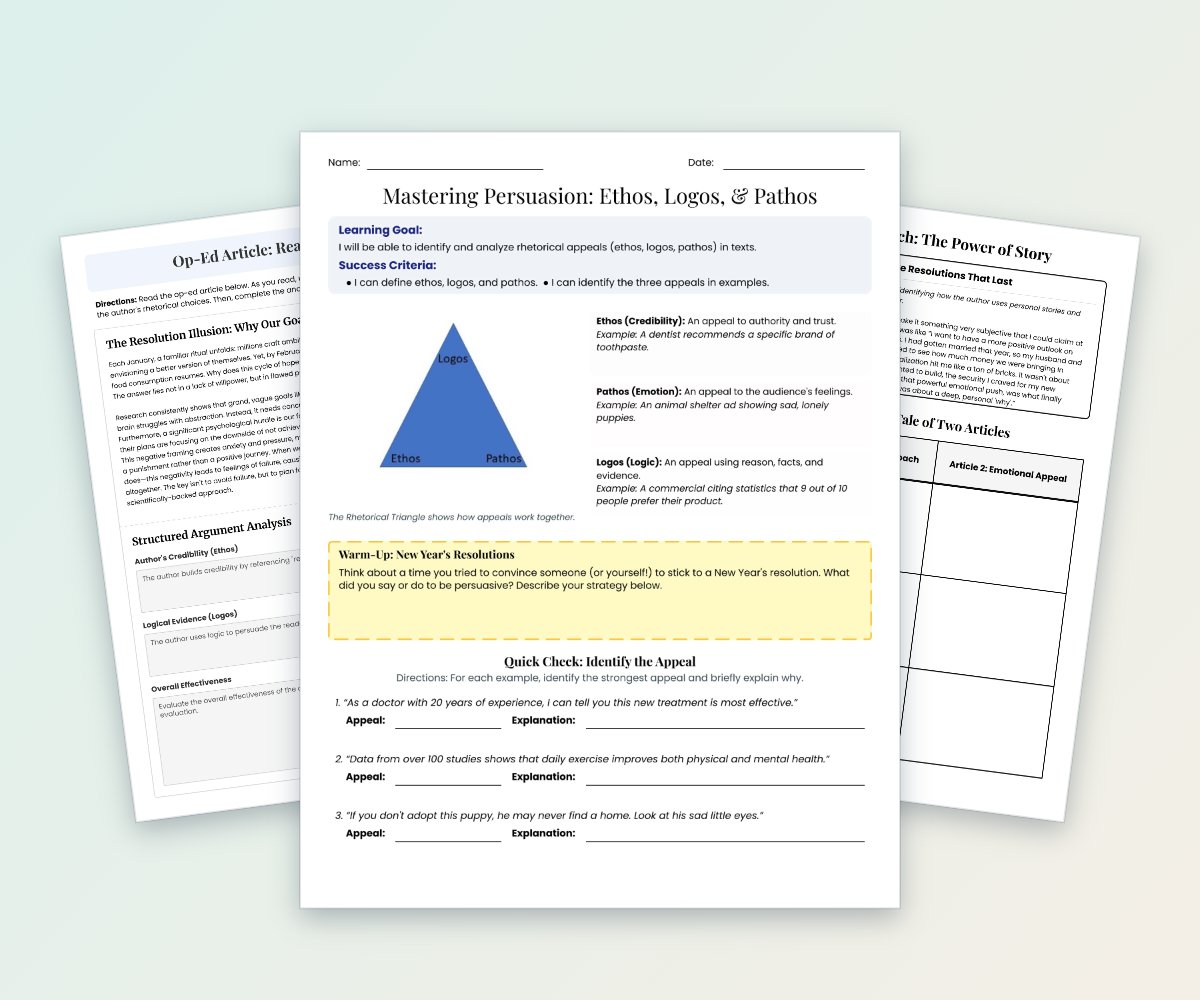
This four-page resource introduces ethos, logos, and pathos with definitions, examples, a warm-up, and identification practice.
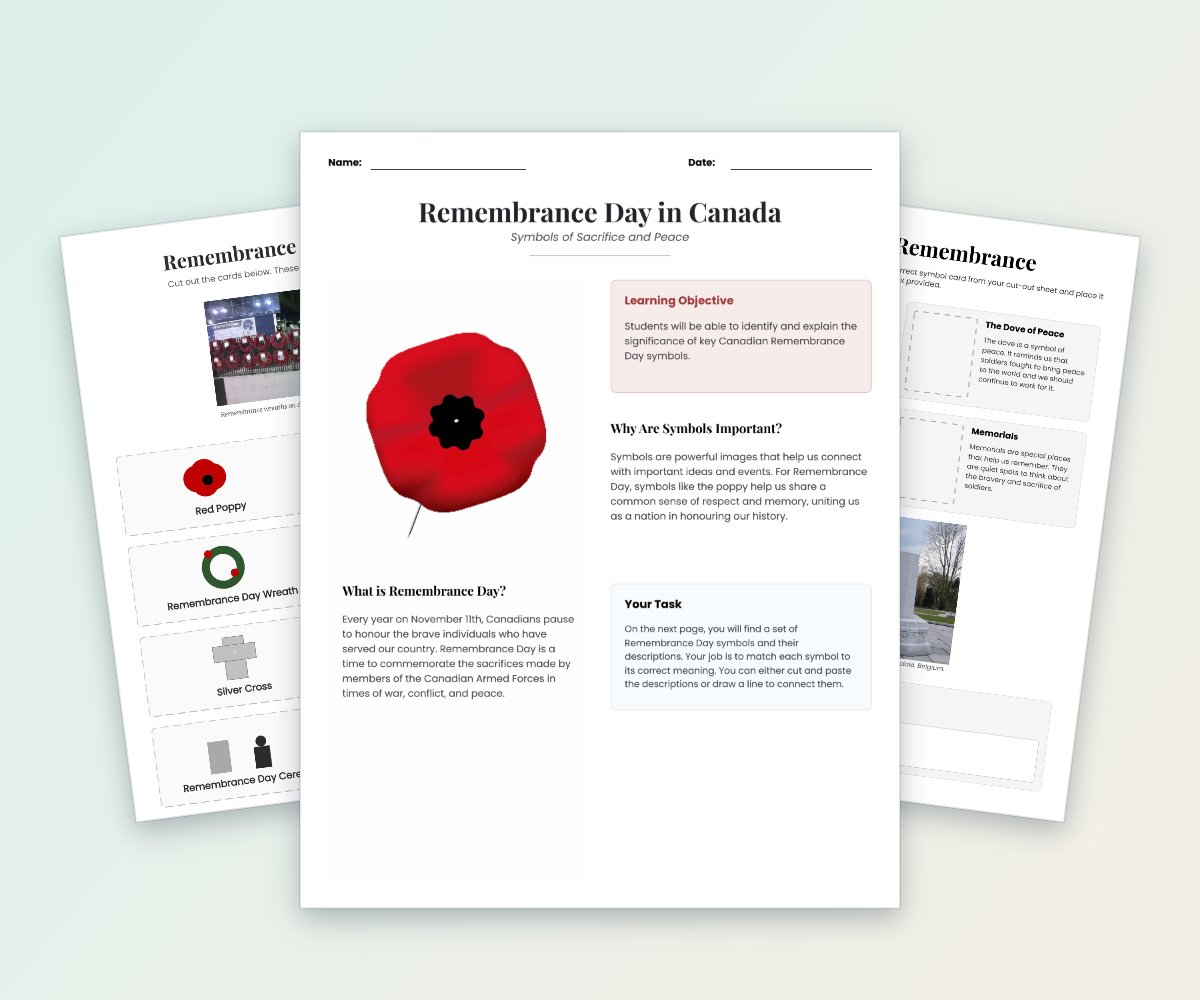
This four-page activity introduces Canadian Remembrance Day and the meaning of symbols including poppies, wreaths, memorials, and doves.
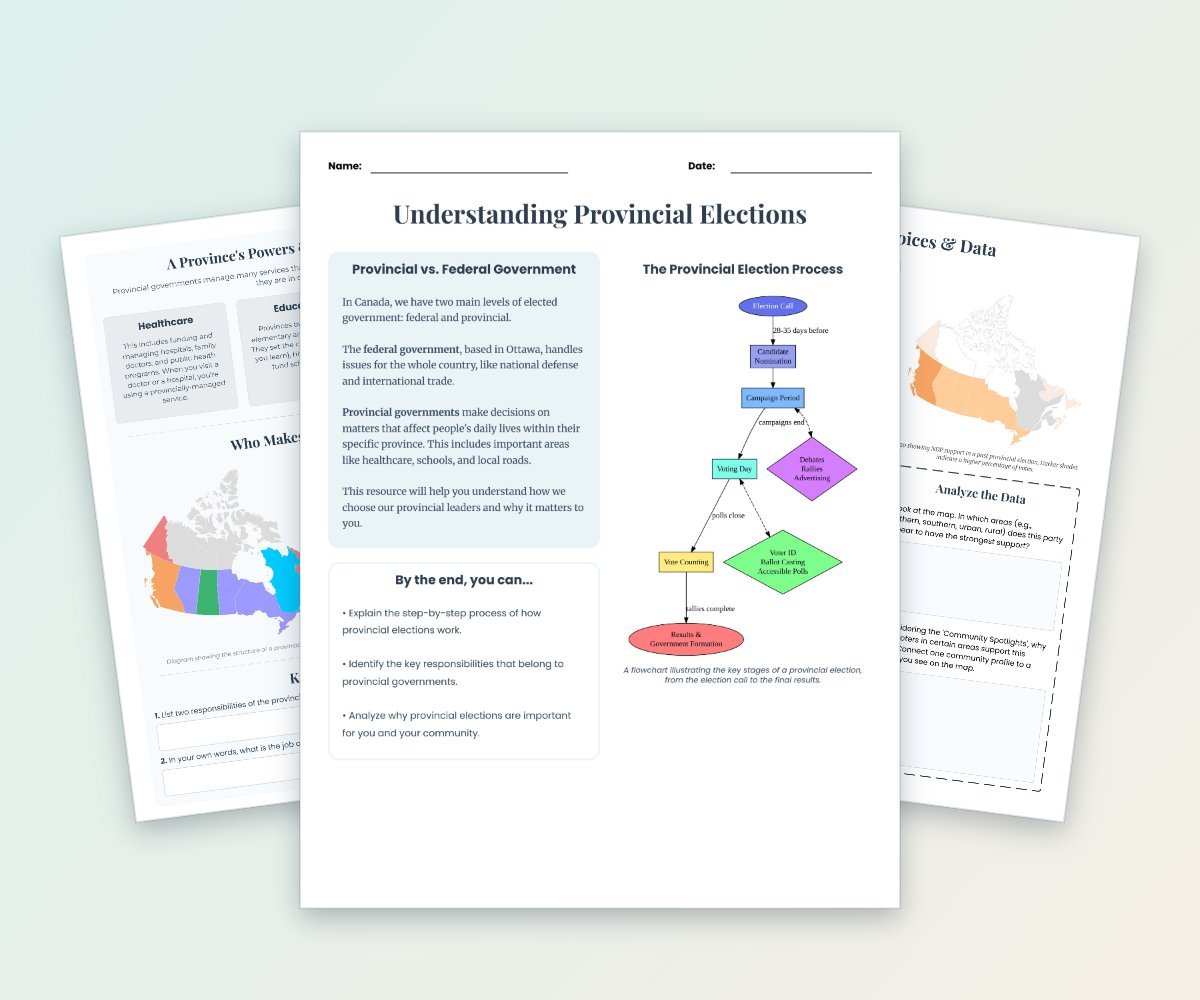
This four-page resource introduces students to the difference between federal and provincial government in Canada.
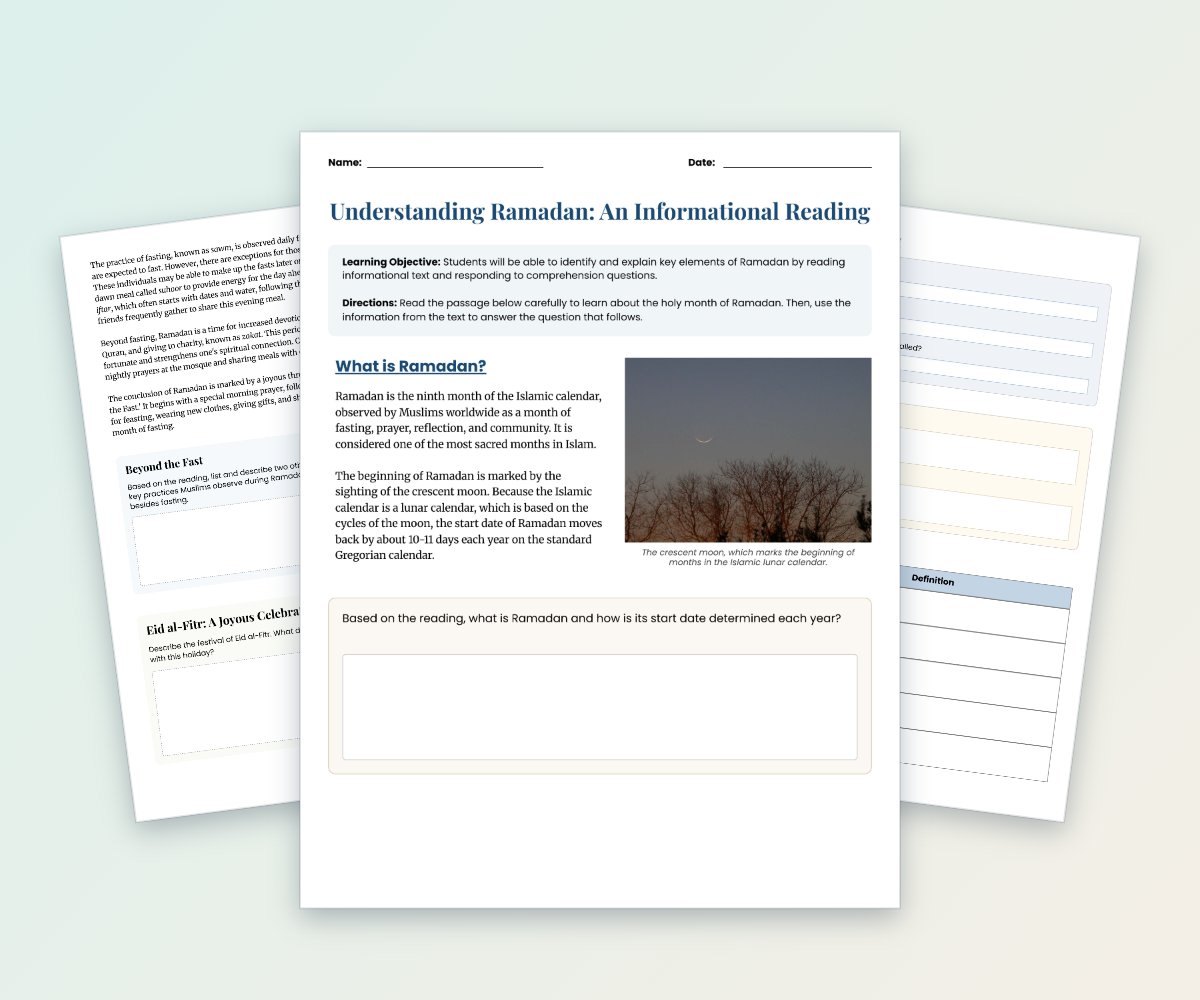
Students read an accessible informational passage about Ramadan, including fasting, prayer, charity, community, suhoor, iftar, and Eid al-Fitr.
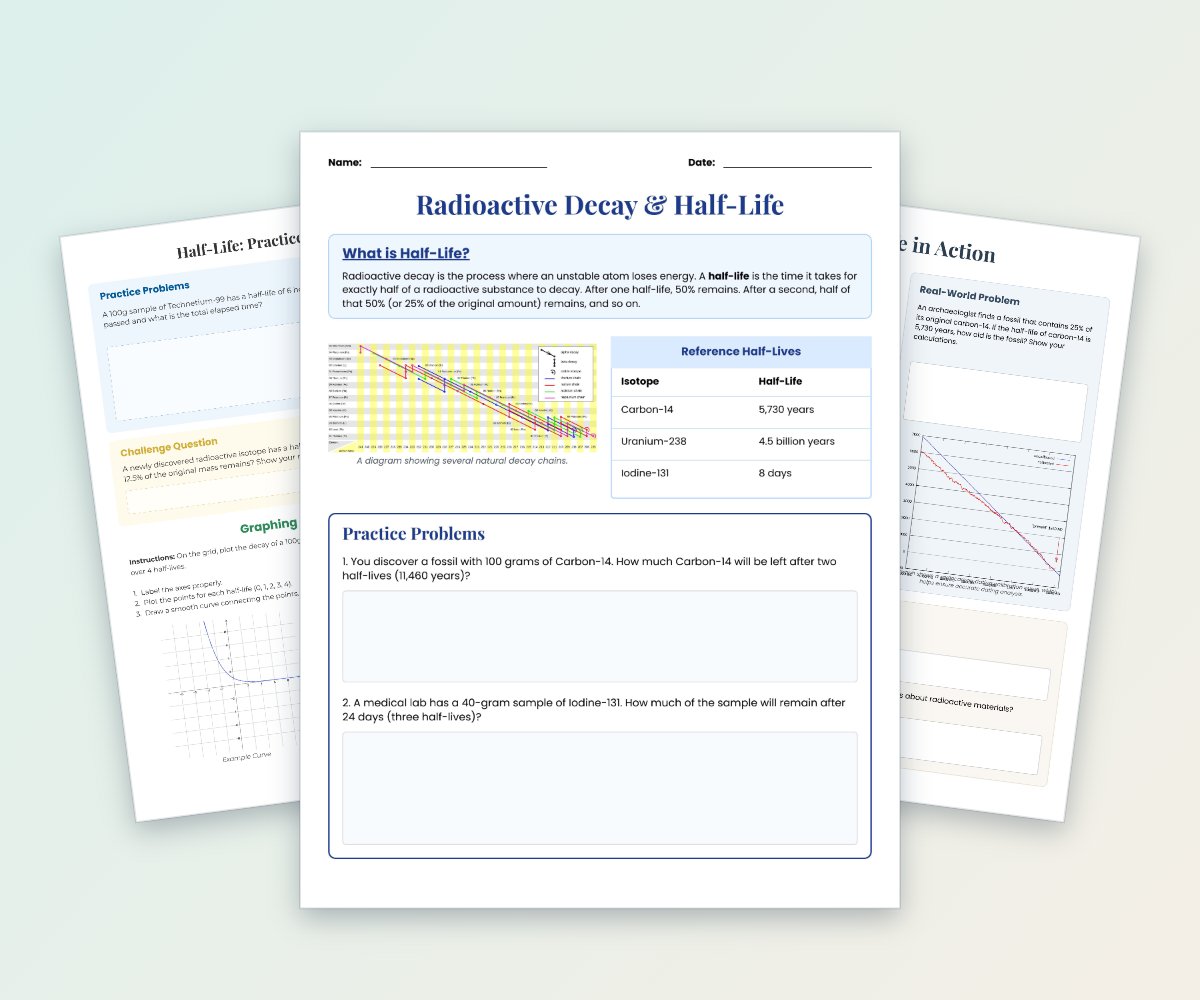
This three-page worksheet introduces radioactive decay and half-life with reference data, calculation practice, graphing, challenge questions, and real-world applications.
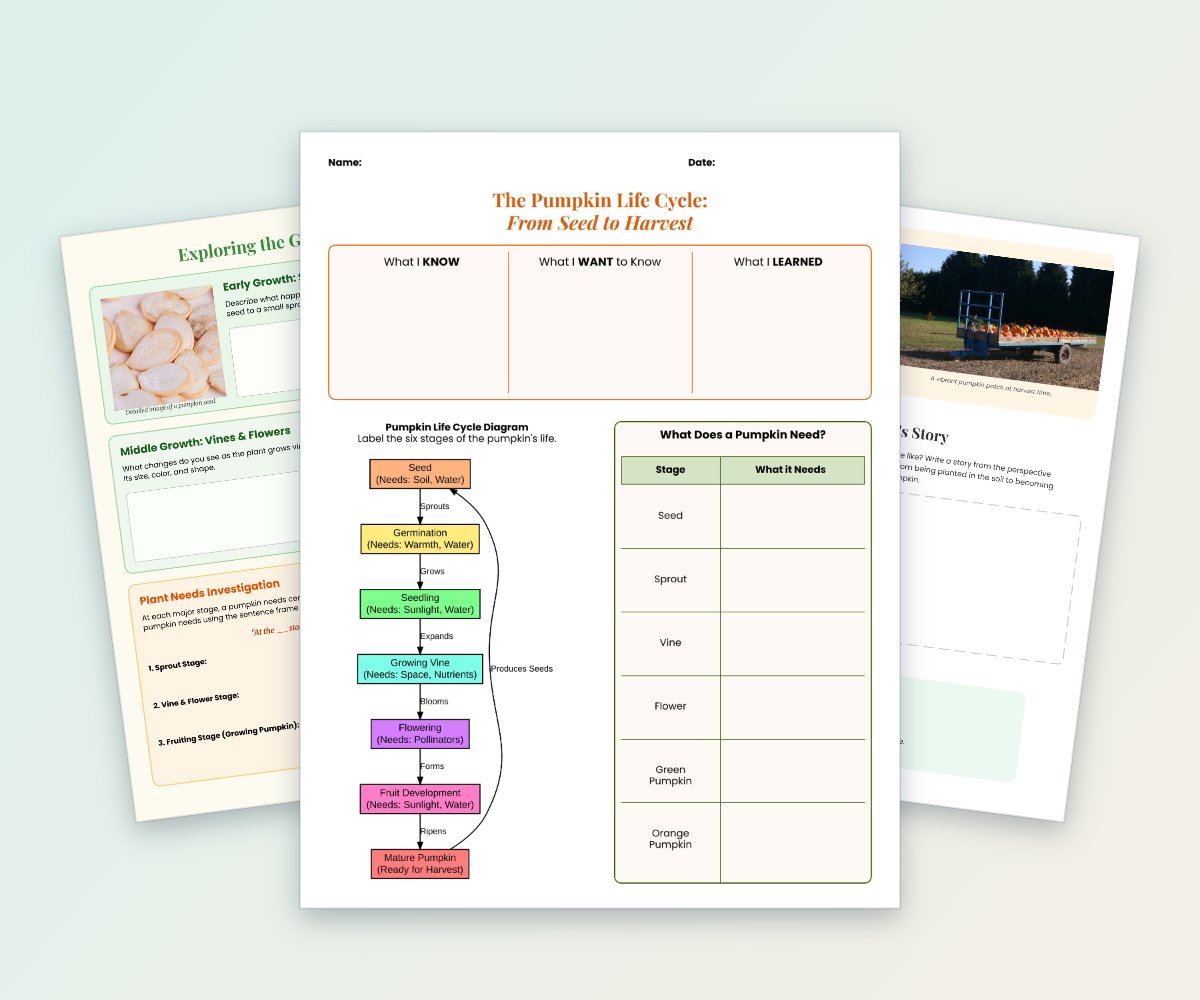
This three-page resource guides students through the pumpkin life cycle, from seed and sprout to flowering, fruit development, and harvest.
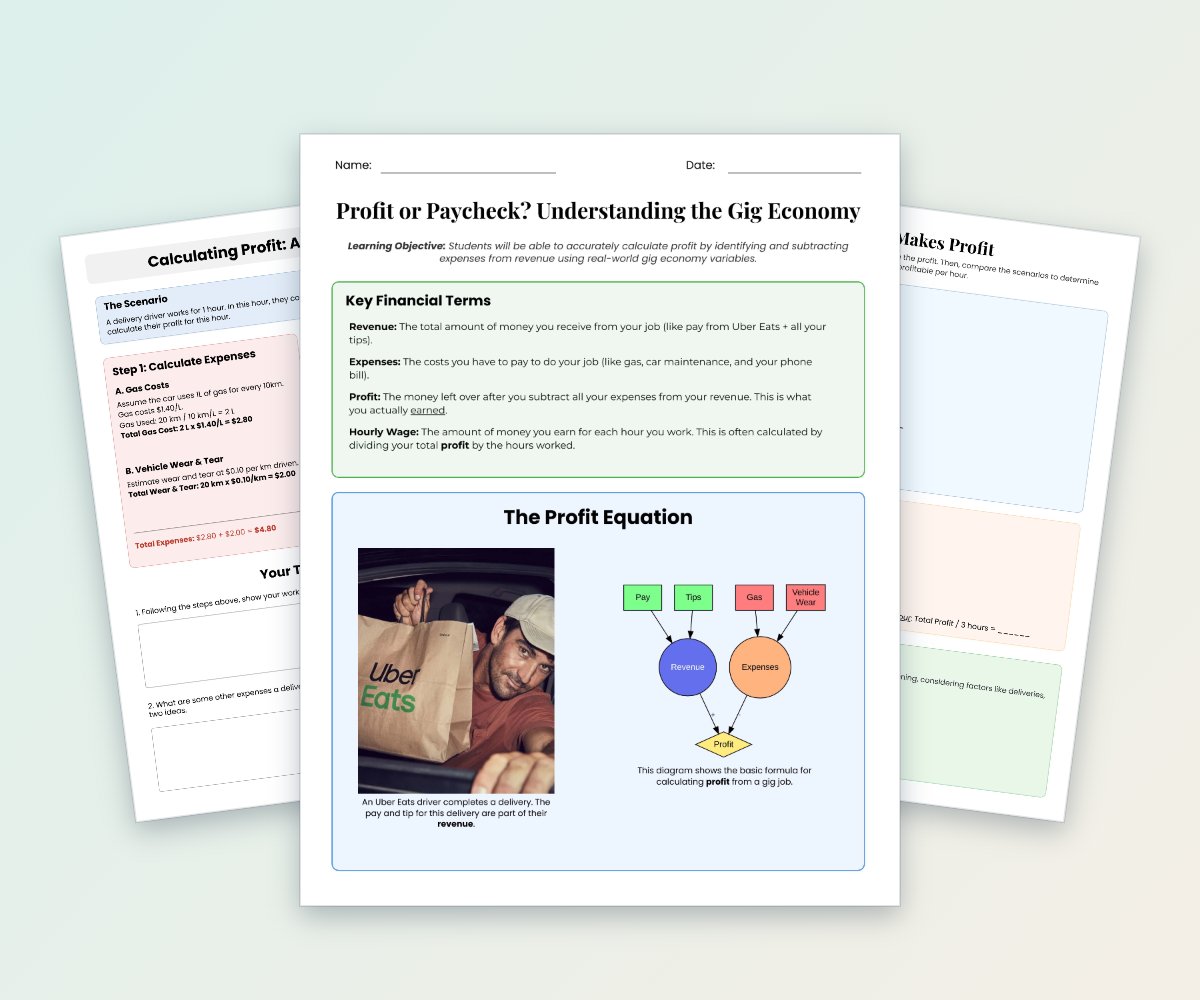
This worksheet introduces revenue, expenses, profit, and hourly wage through realistic gig-economy delivery scenarios.
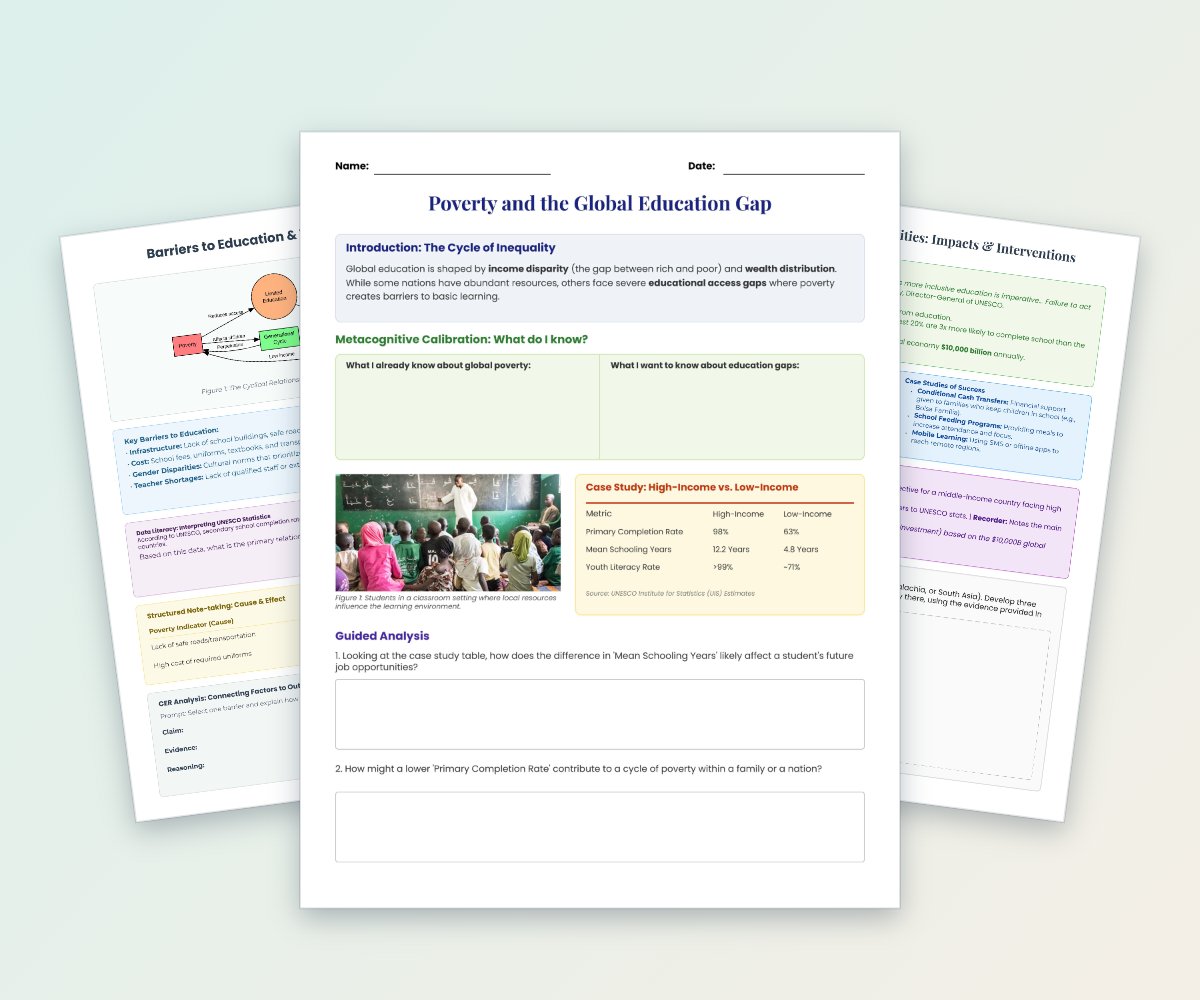
Students examine how poverty affects educational access, completion rates, literacy, and future opportunities worldwide.
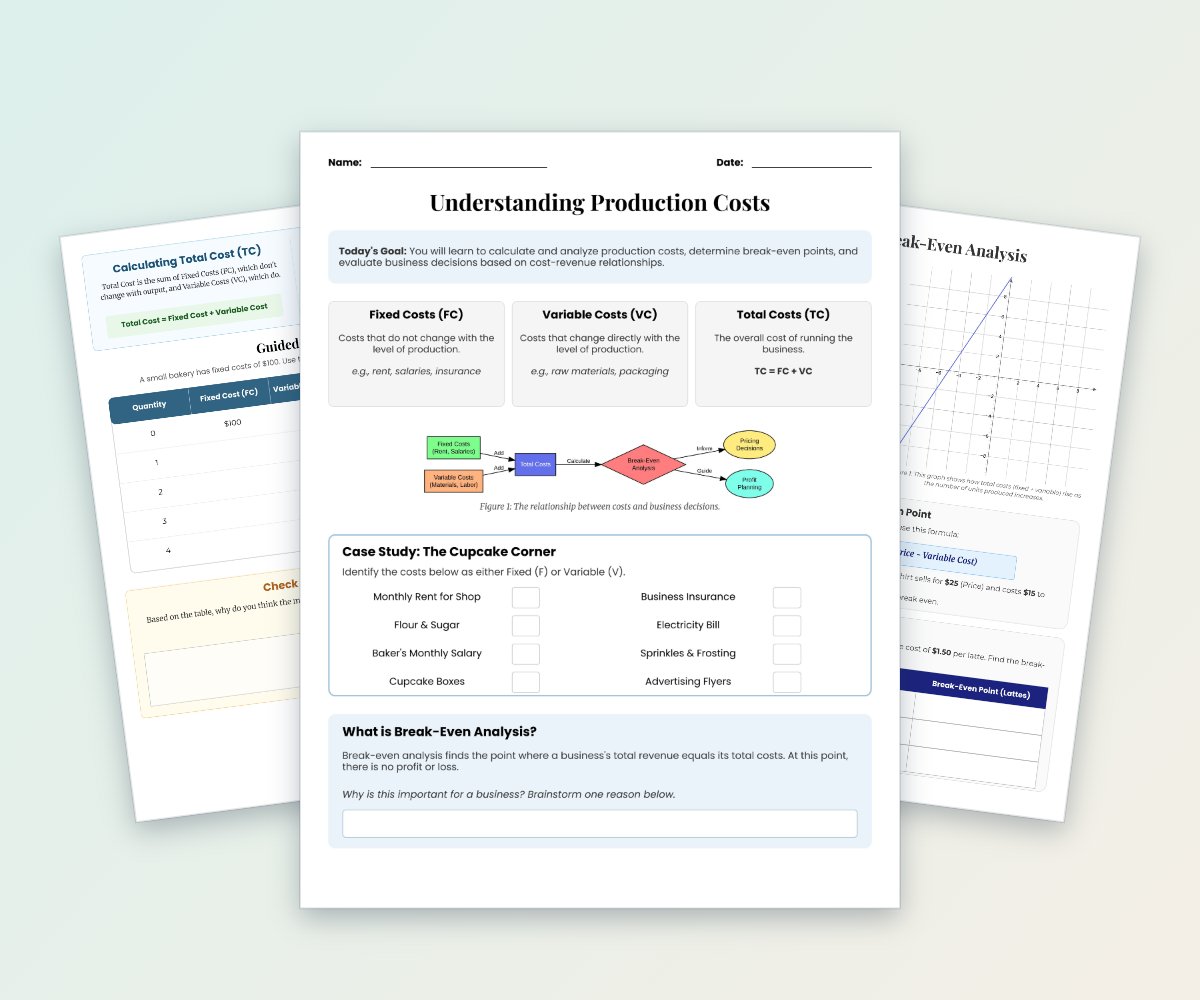
This five-page worksheet introduces fixed, variable, total, and marginal costs through definitions, a cupcake business case study, guided calculations, and break-even analysis.
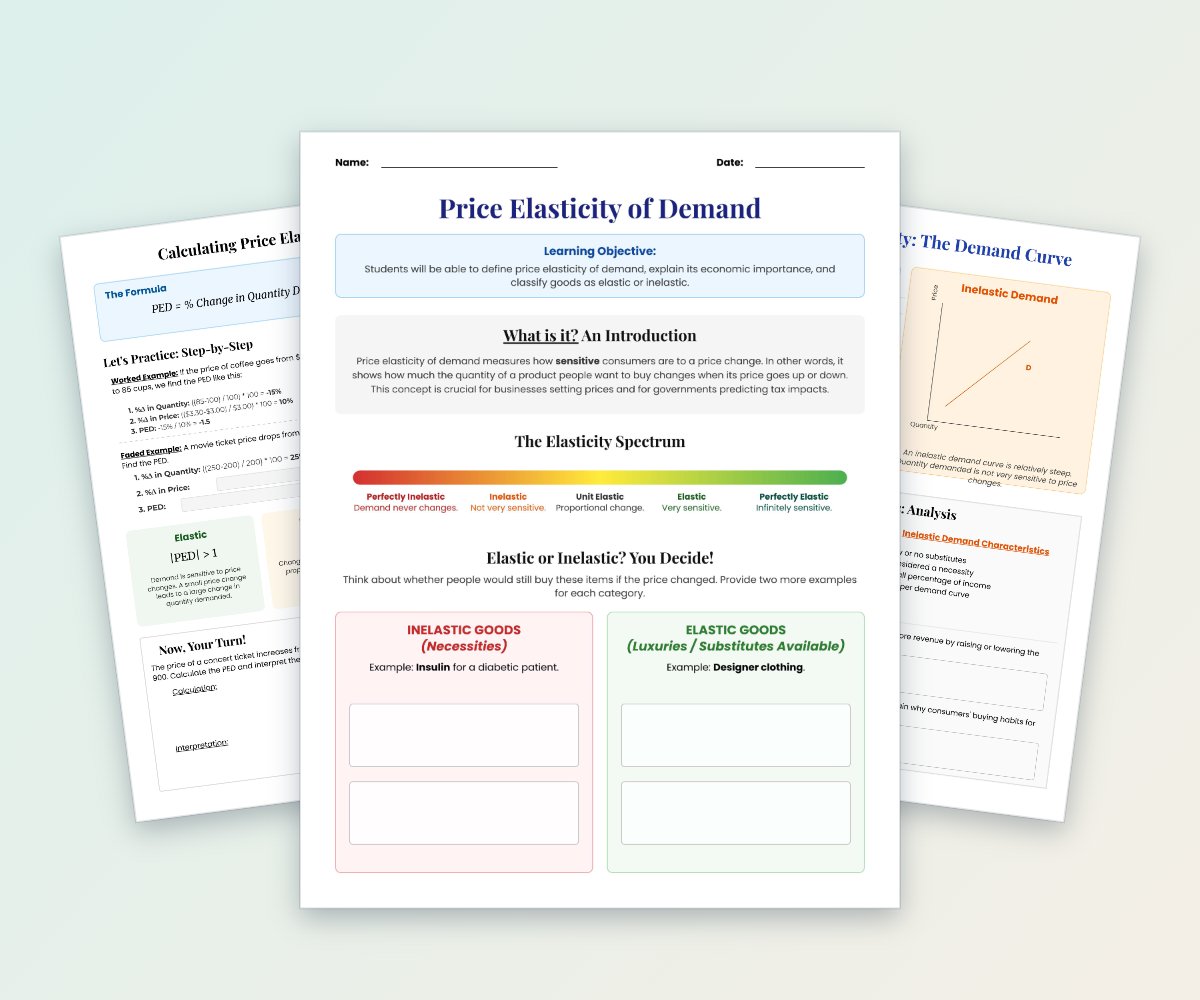
This six-page resource introduces price elasticity of demand, including elastic, inelastic, unit elastic, perfectly elastic, and perfectly inelastic demand.
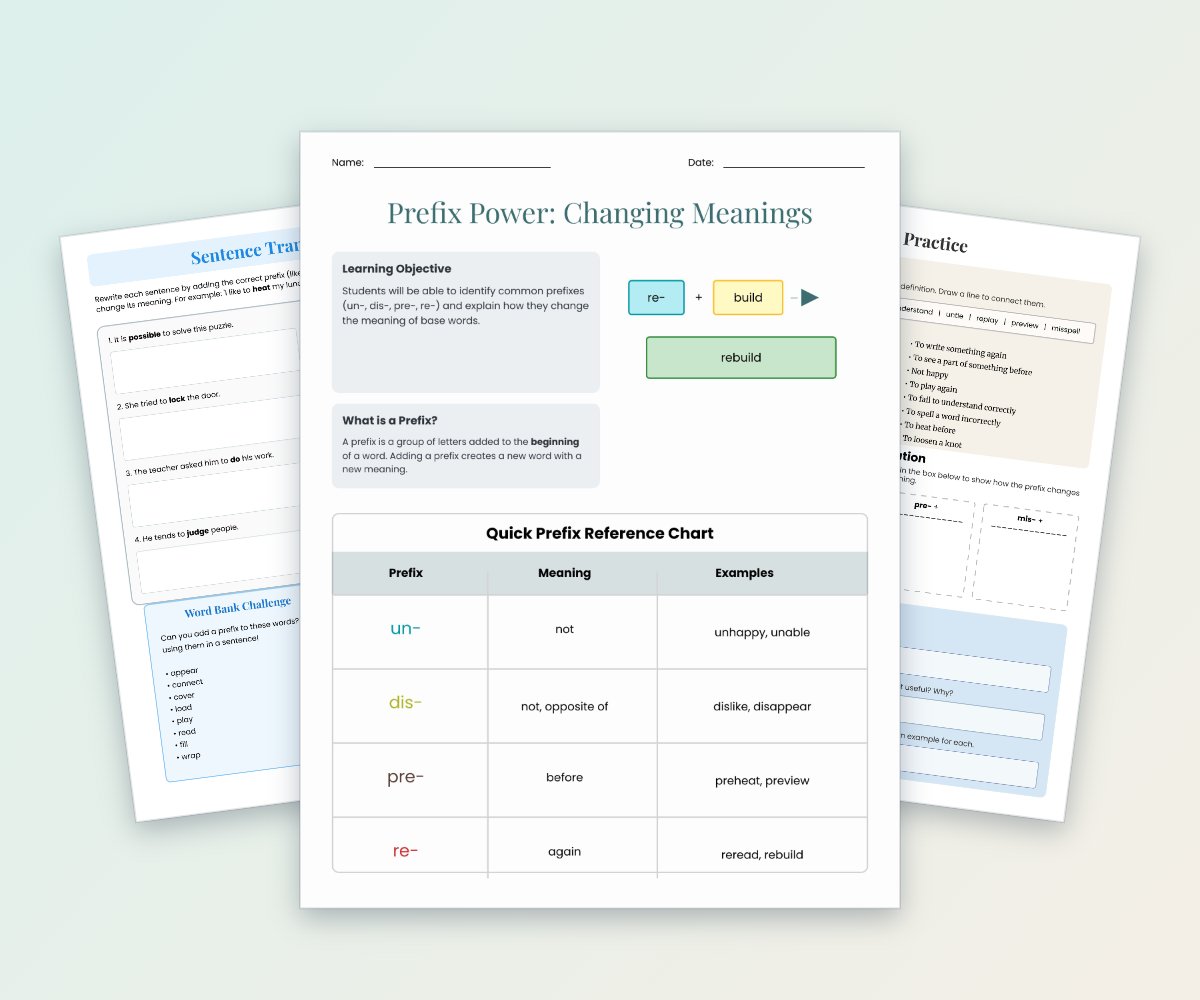
This four-page printable helps students identify common prefixes, including un-, dis-, pre-, re-, and mis-, and explain how prefixes change base-word meanings.
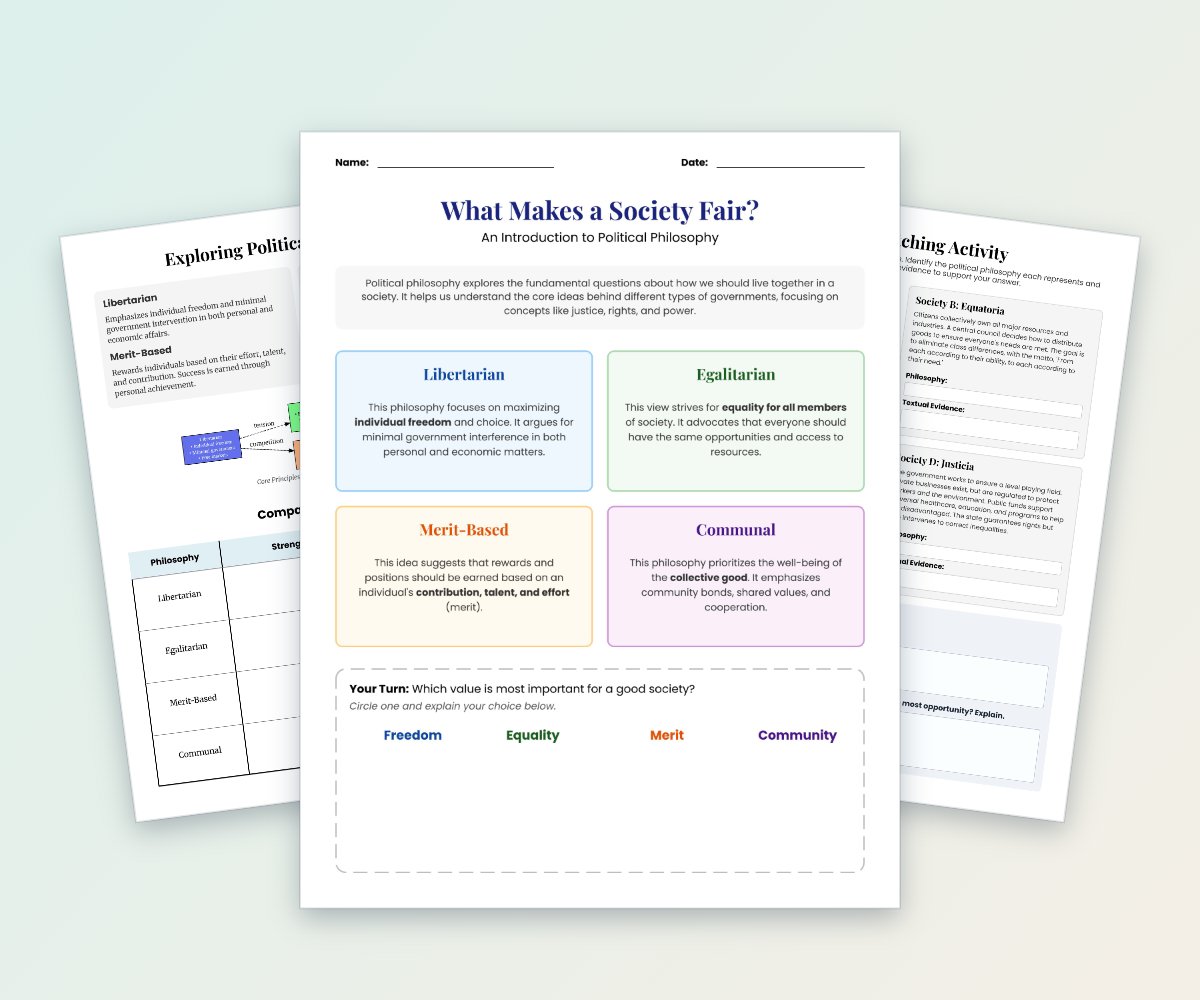
This four-page worksheet introduces libertarian, egalitarian, merit-based, and communal political philosophies.
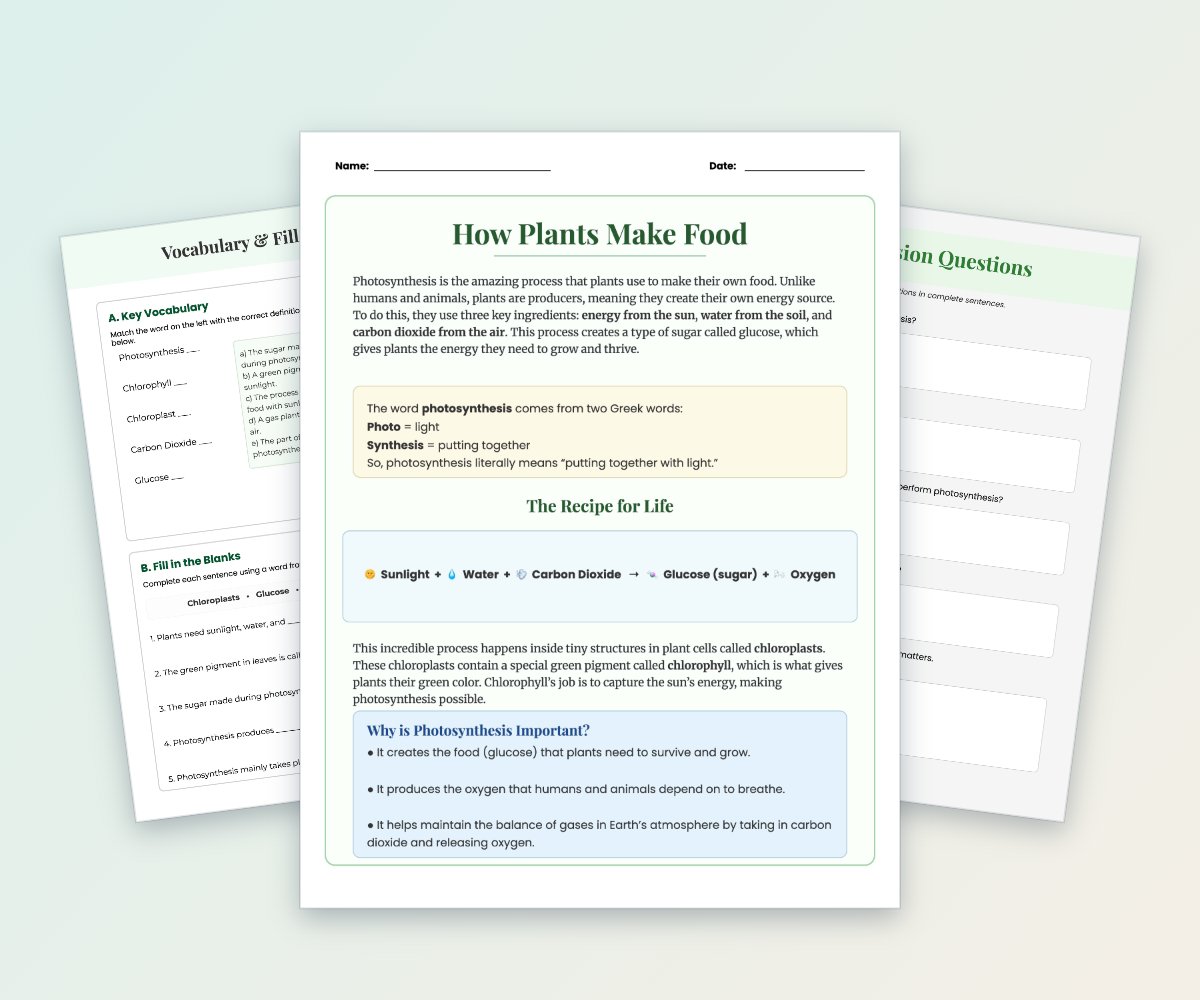
This five-page resource introduces how plants make food through photosynthesis, including sunlight, water, carbon dioxide, glucose, oxygen, chlorophyll, and chloroplasts.
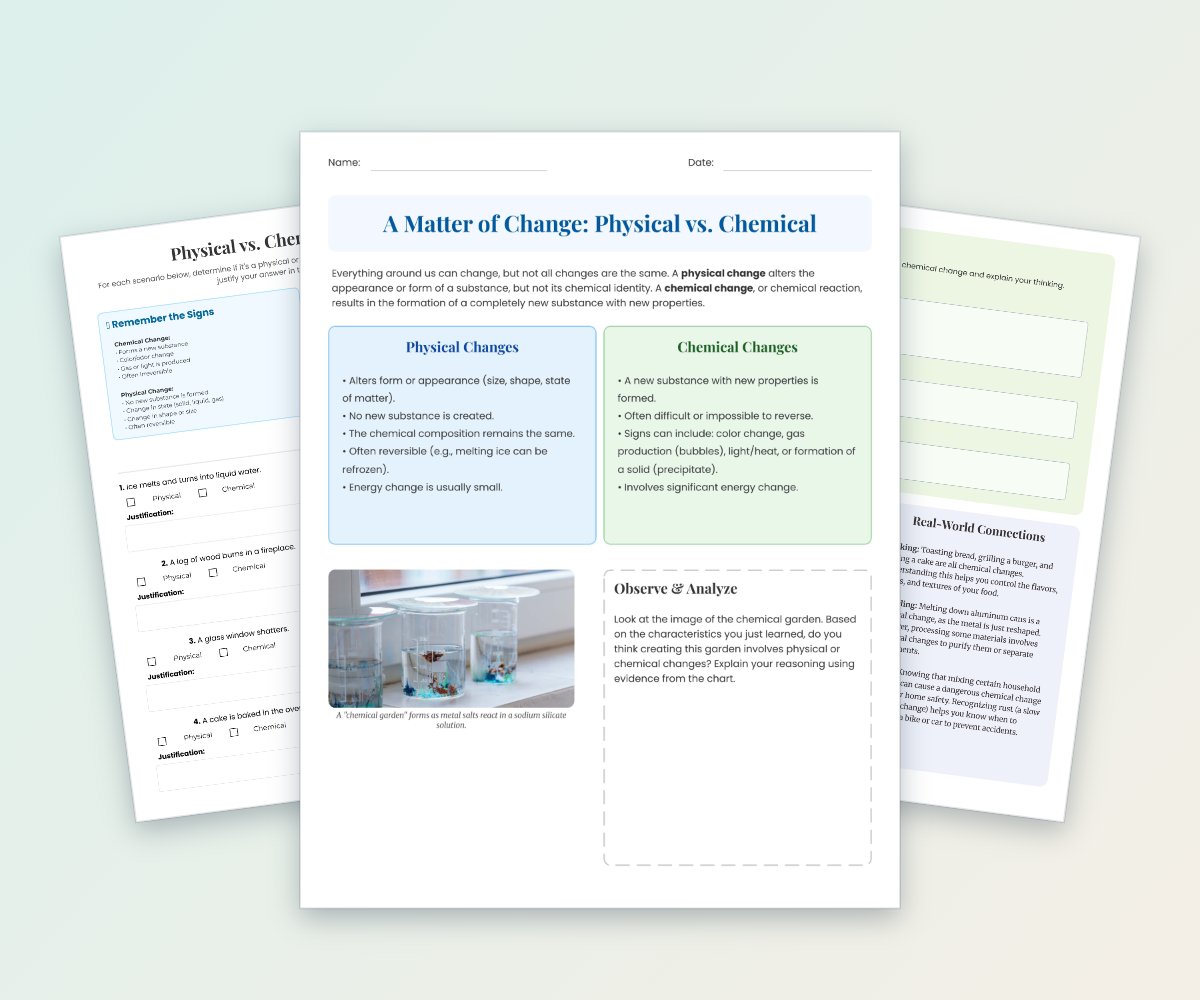
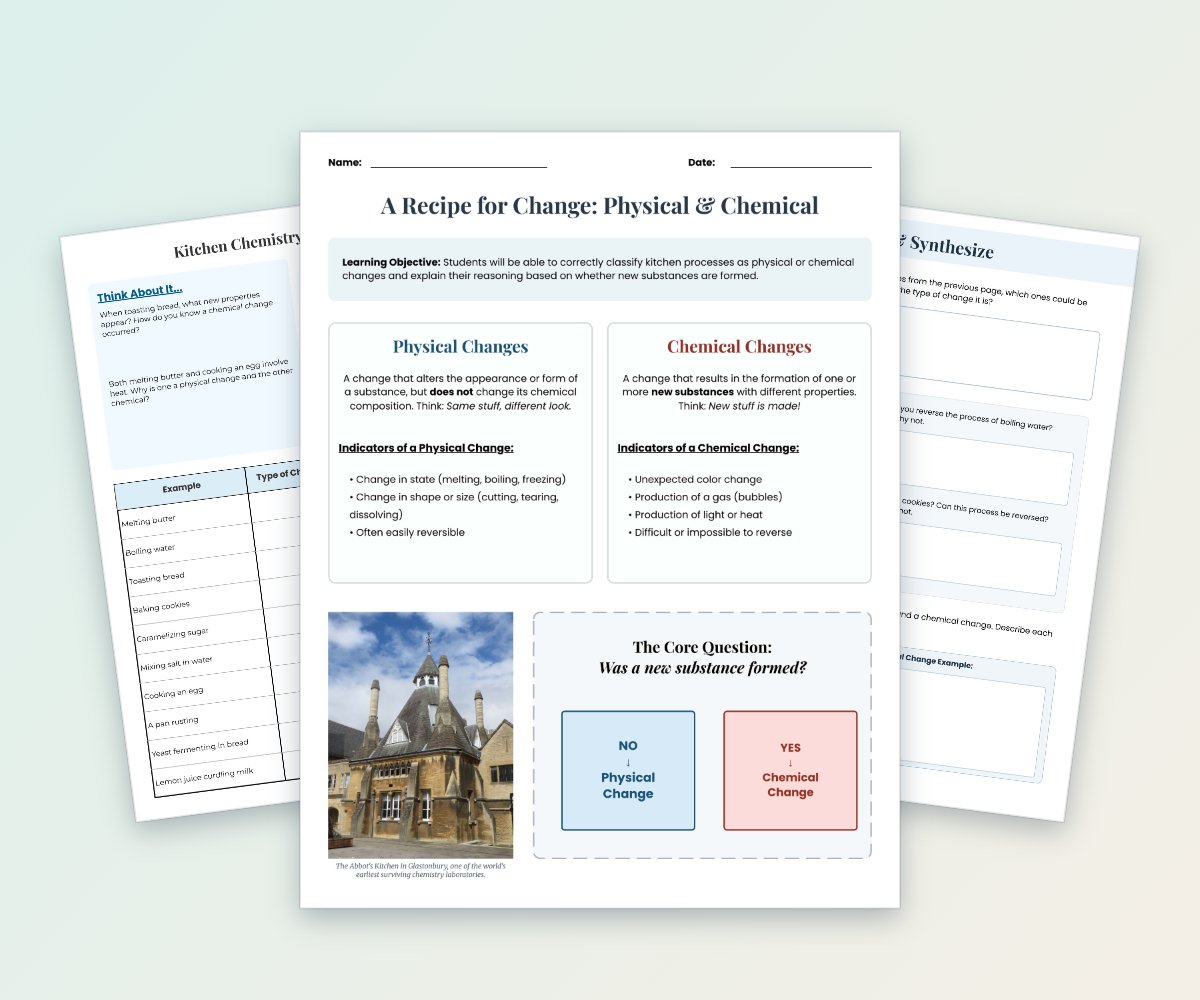
This three-page worksheet introduces the differences between physical and chemical changes using definitions, examples, and visual evidence.
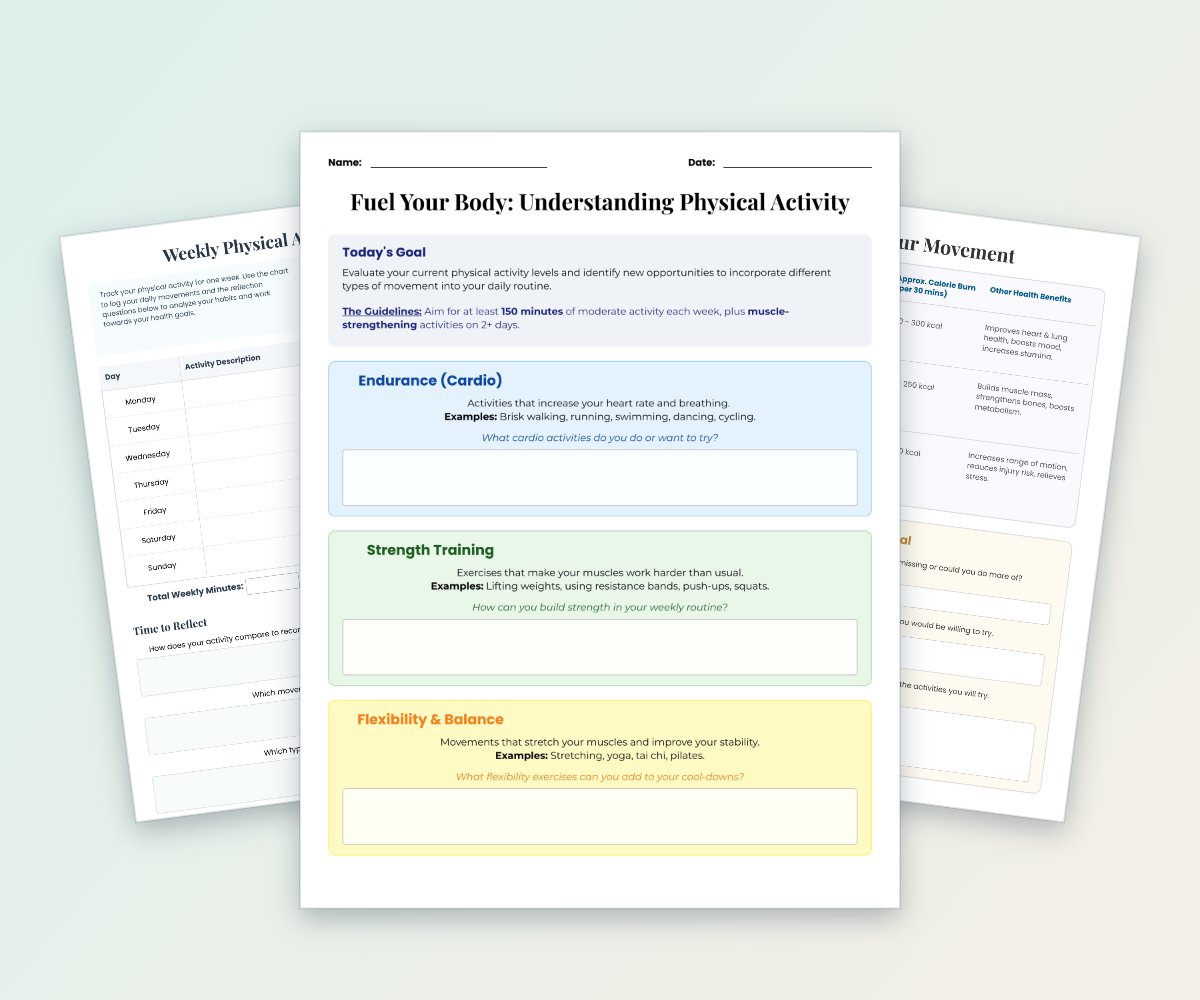
This four-page student worksheet introduces endurance, strength, flexibility, and balance activities.
This three-page worksheet introduces physical and chemical changes using familiar kitchen processes such as melting butter, baking cookies, and rusting.
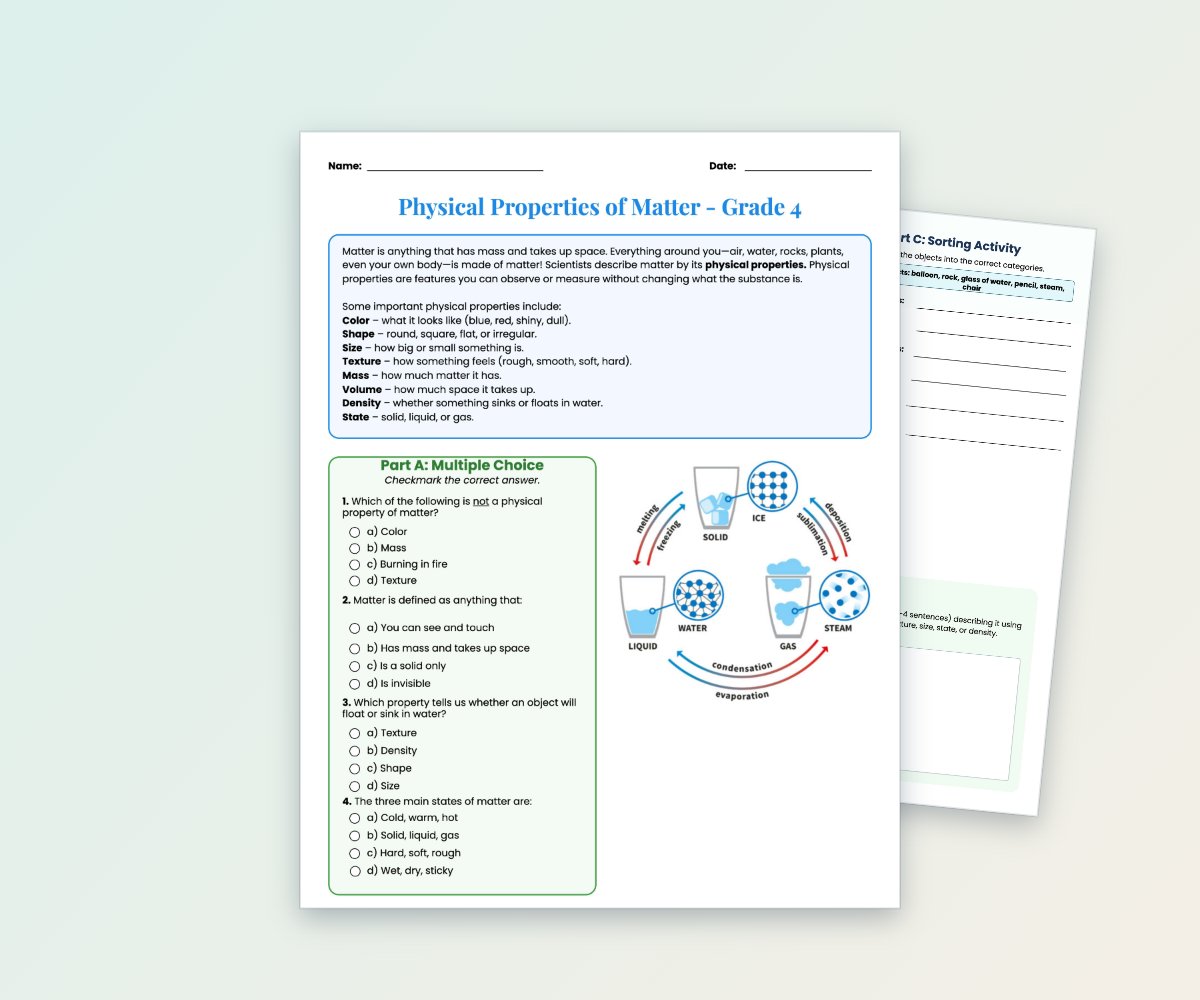
This Grade 4 science worksheet introduces observable and measurable physical properties, including color, shape, texture, mass, volume, density, and states of matter.
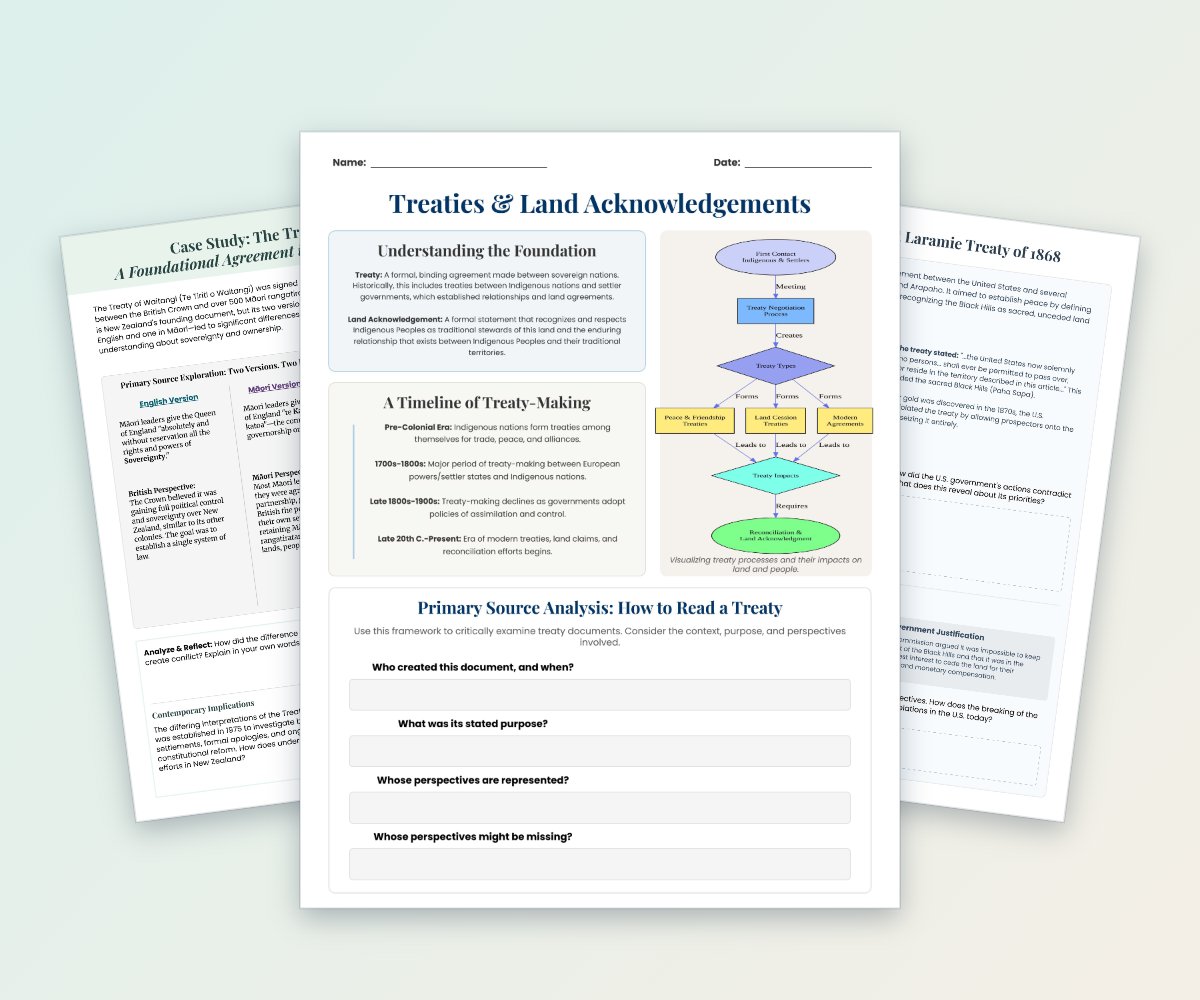
This five-page activity pack introduces treaties, land acknowledgements, treaty-making timelines, and reconciliation.
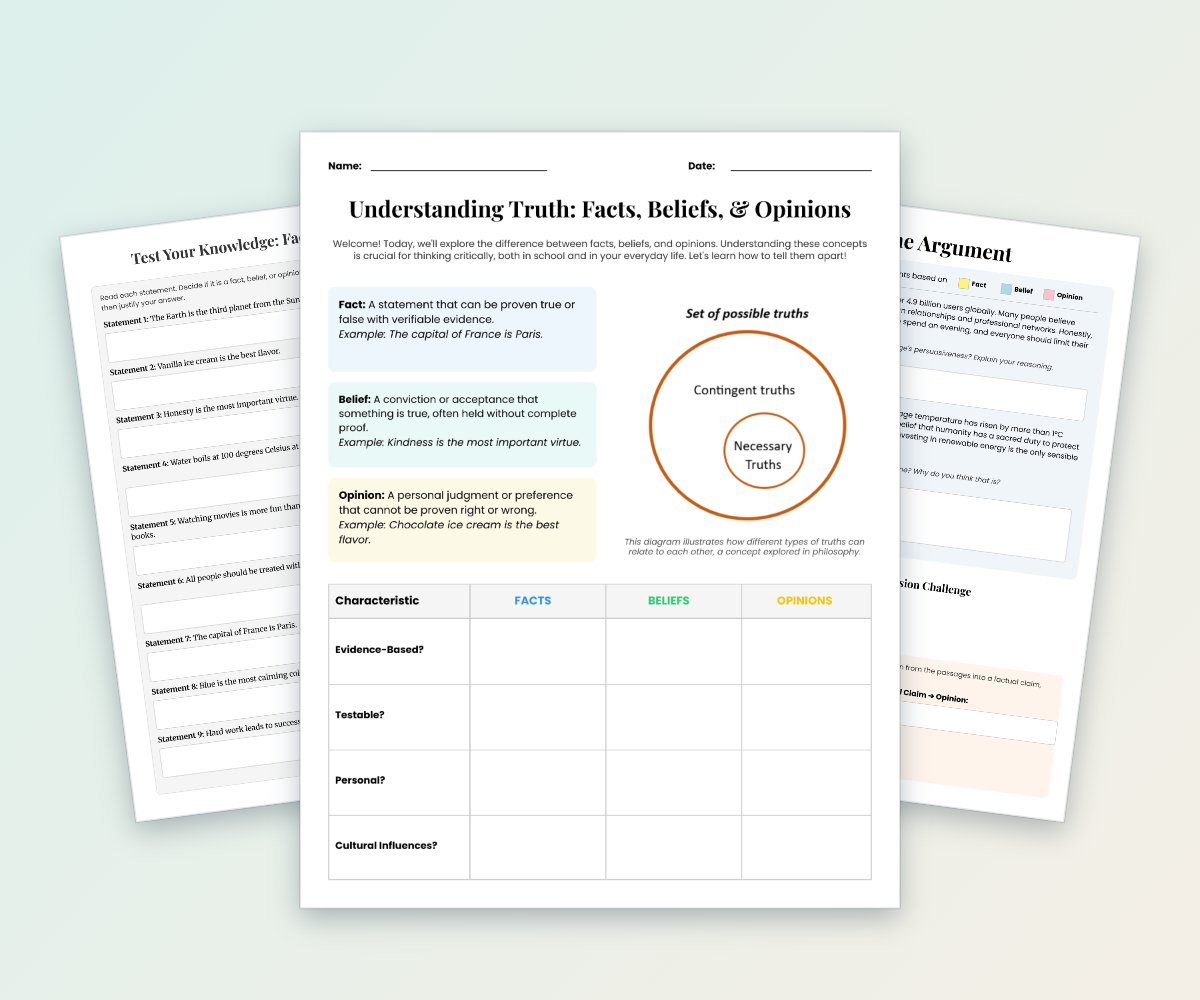
This four-page critical-thinking worksheet introduces the differences between facts, beliefs, and opinions.
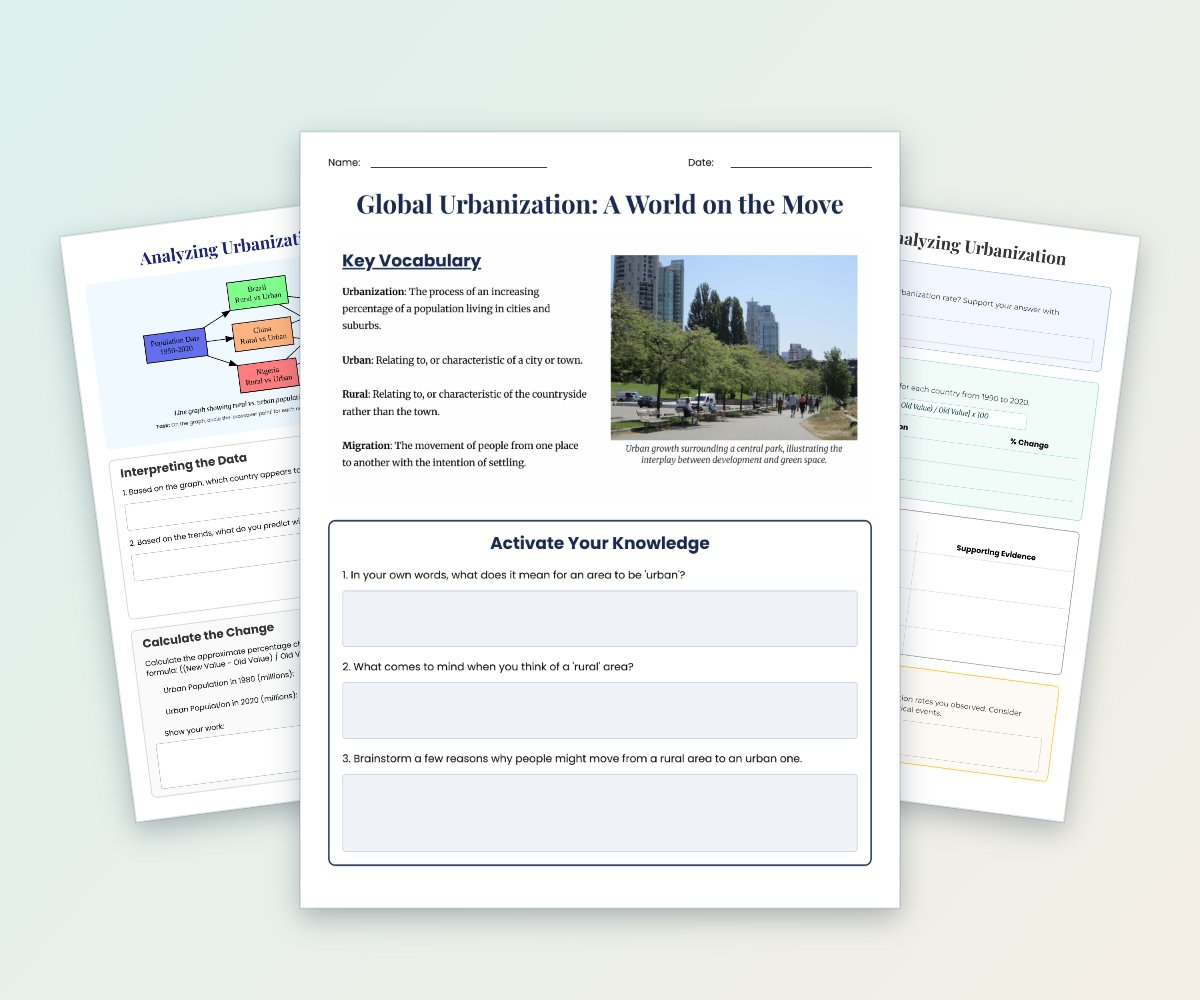
Students explore urbanization, rural and urban populations, migration, and urban growth through vocabulary review, graphs, calculations, and guided analysis.
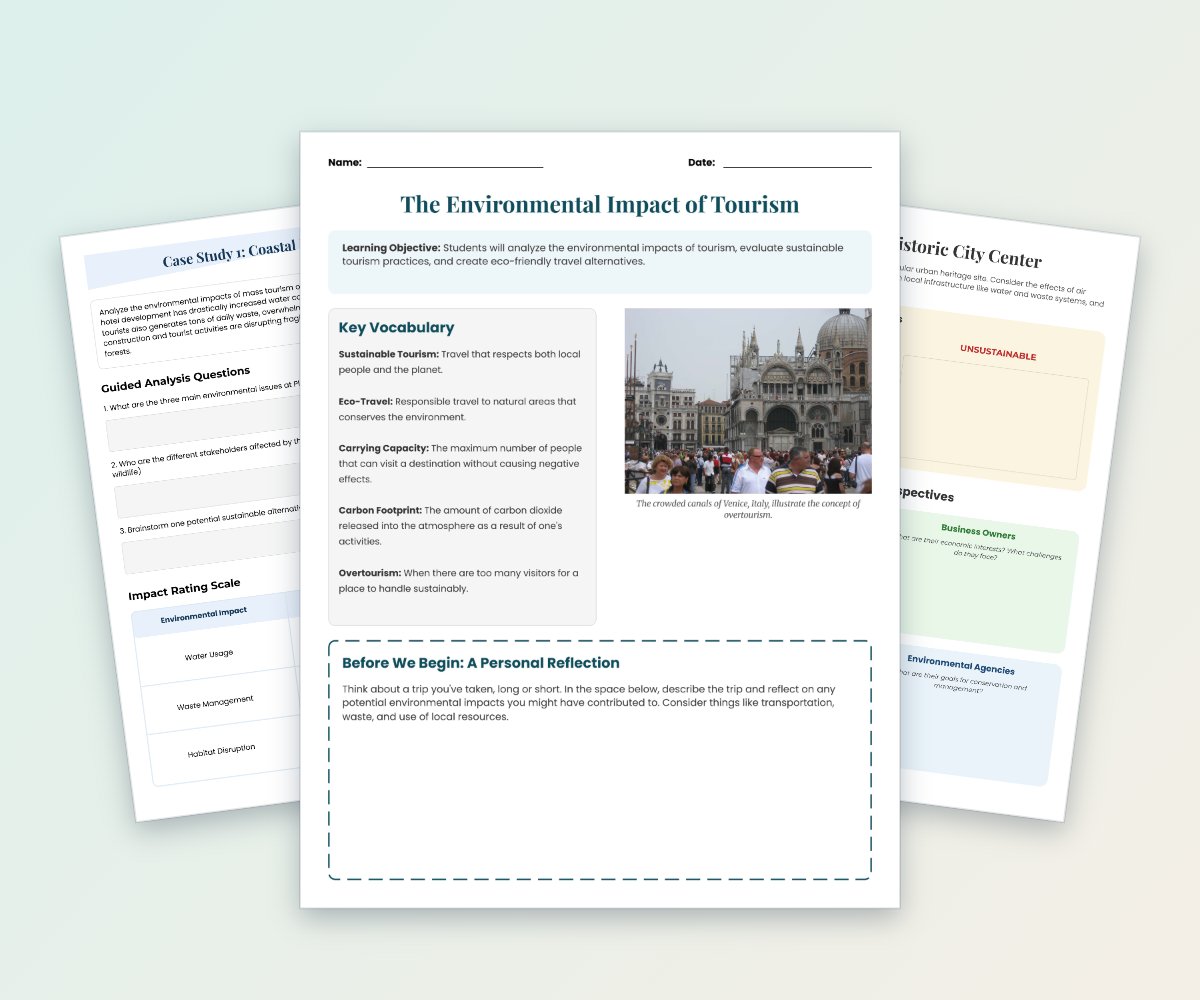
This five-page worksheet explores how tourism affects water supplies, waste systems, transportation, wildlife habitats, and local communities.
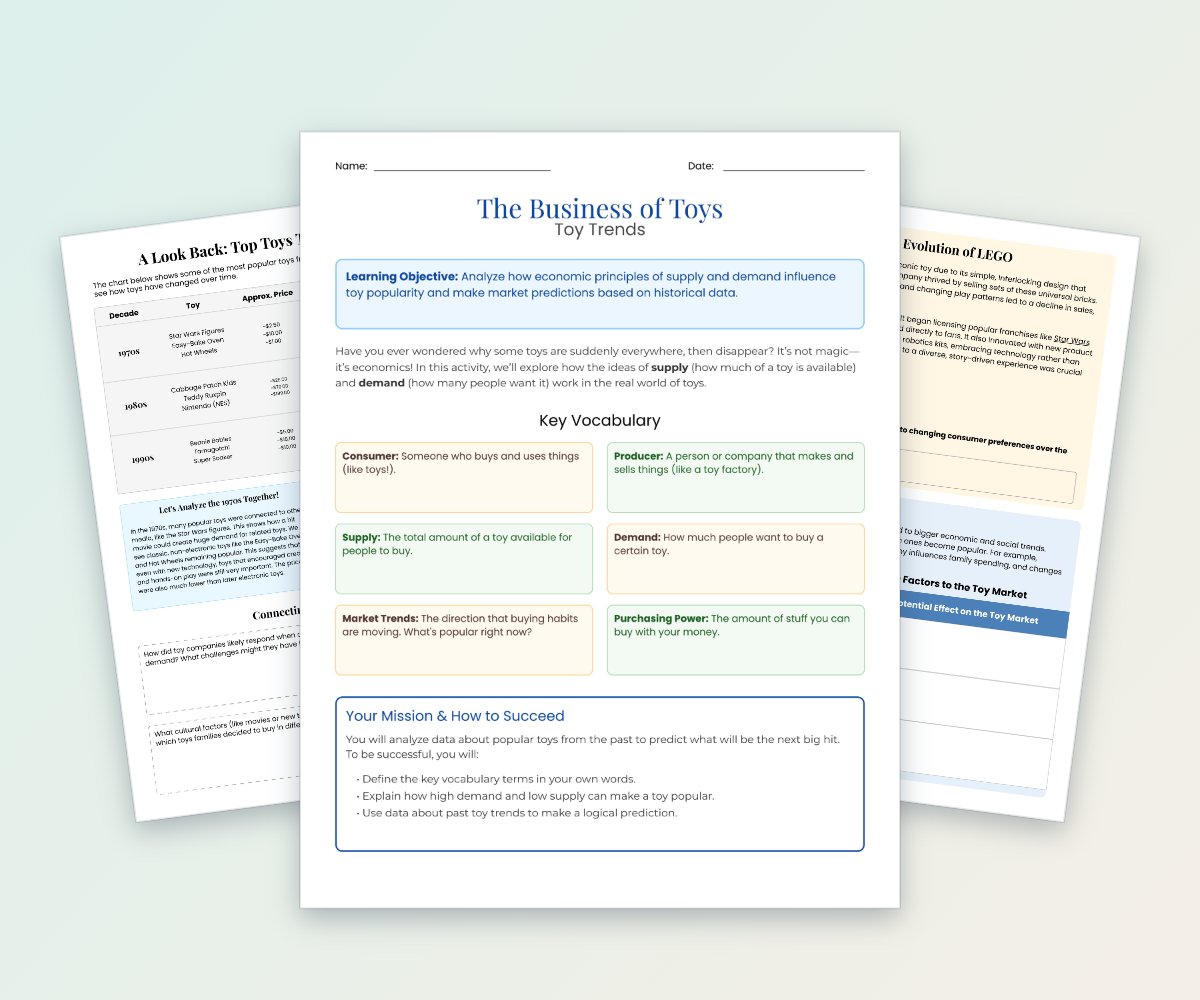
Students explore how supply, demand, purchasing power, and media influence toy popularity.
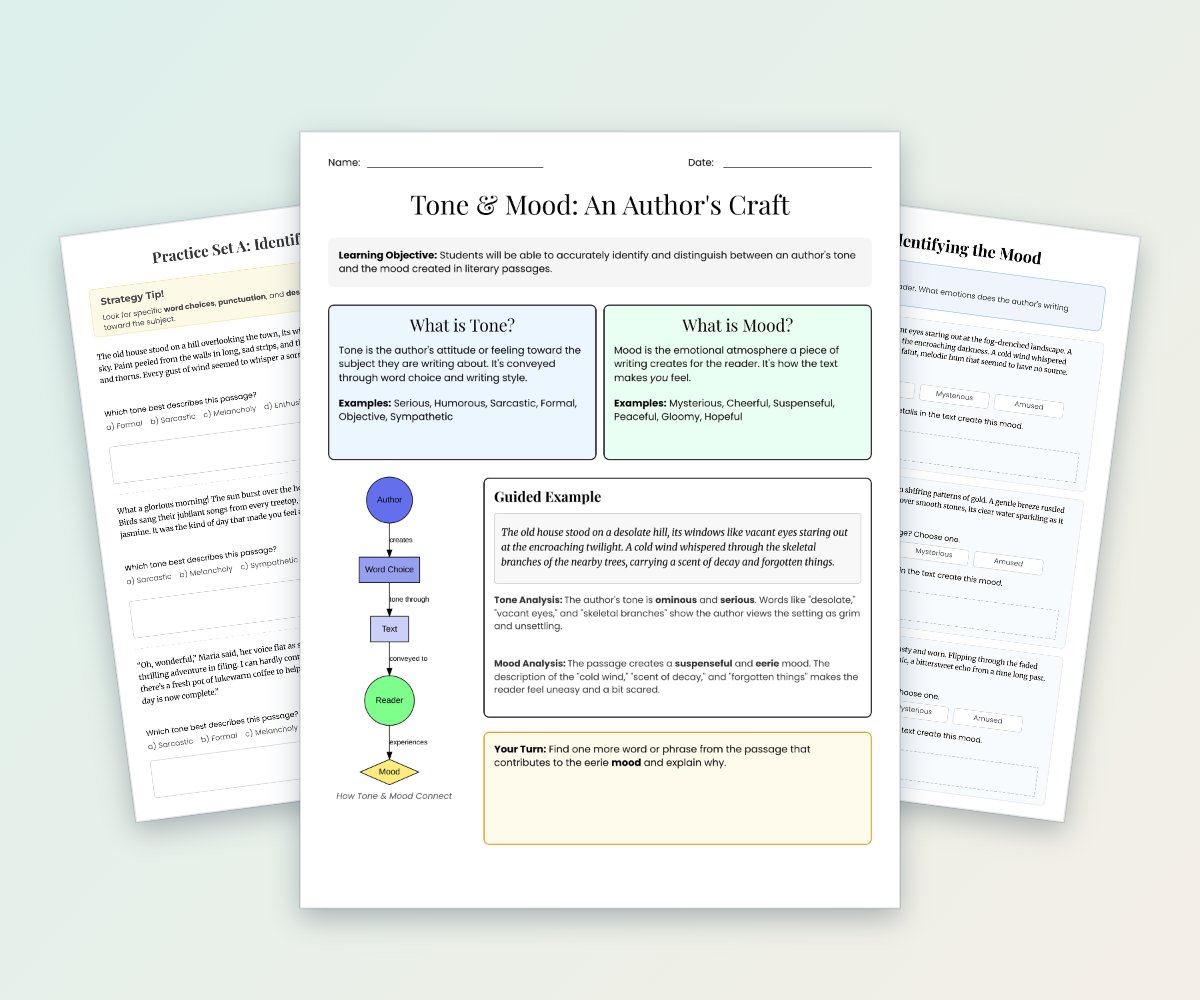
This four-page worksheet introduces the difference between an author’s tone and a text’s mood.
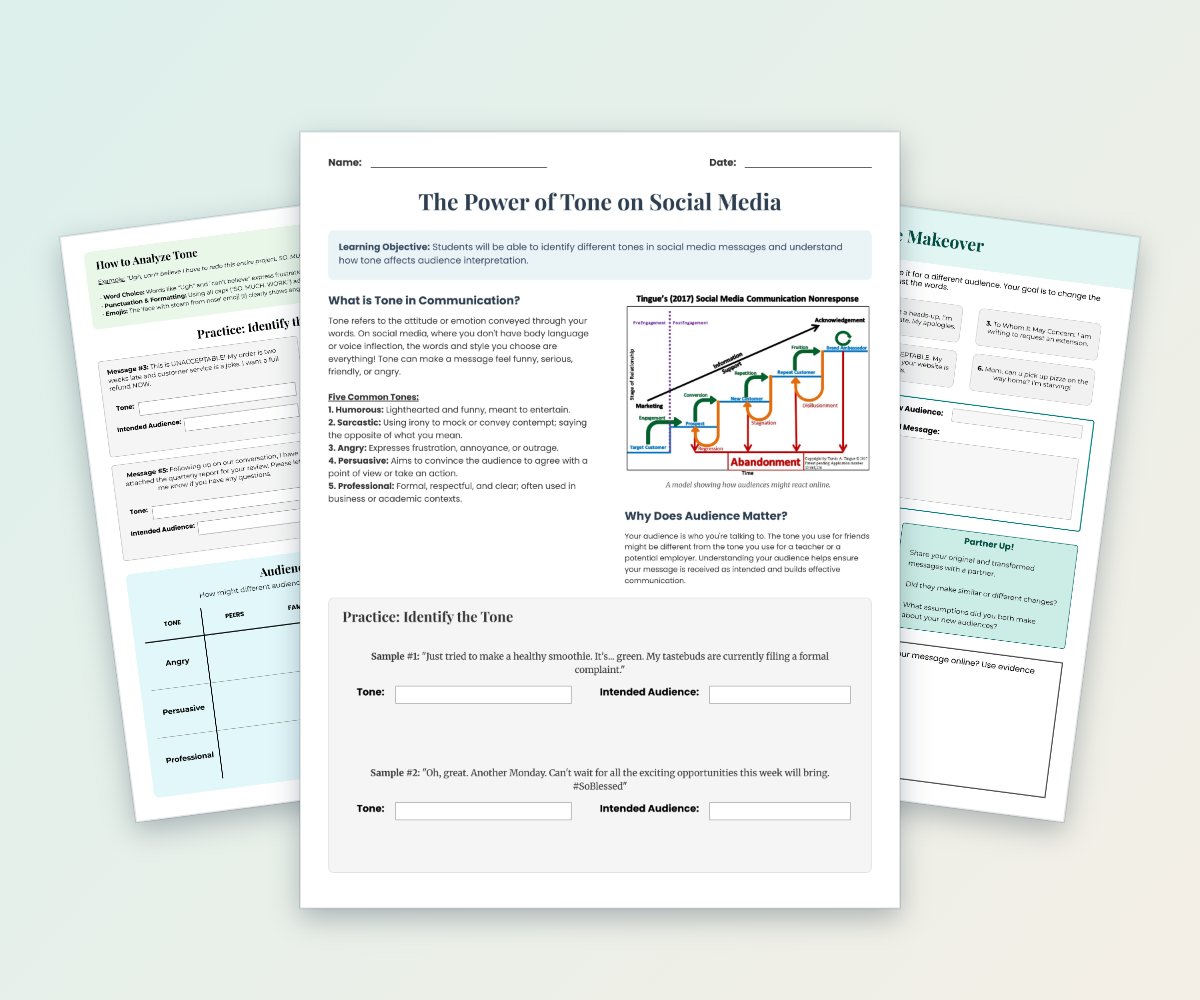
This three-page worksheet introduces five common tones in social media communication and explains how word choice, punctuation, formatting, and emojis affect audience interpretation.
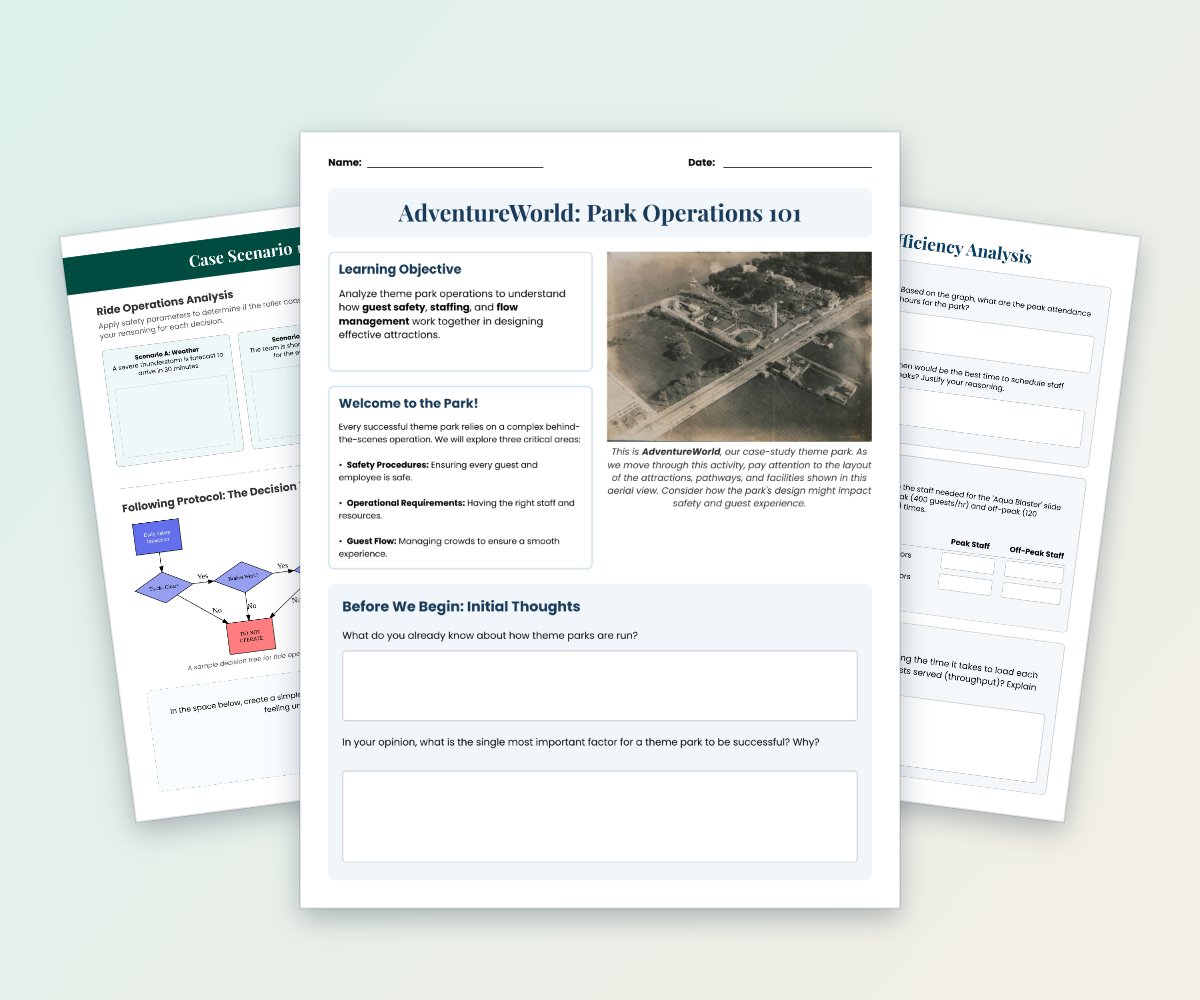
Students examine a fictional theme park to analyze ride safety, staffing requirements, guest flow, and operational efficiency.
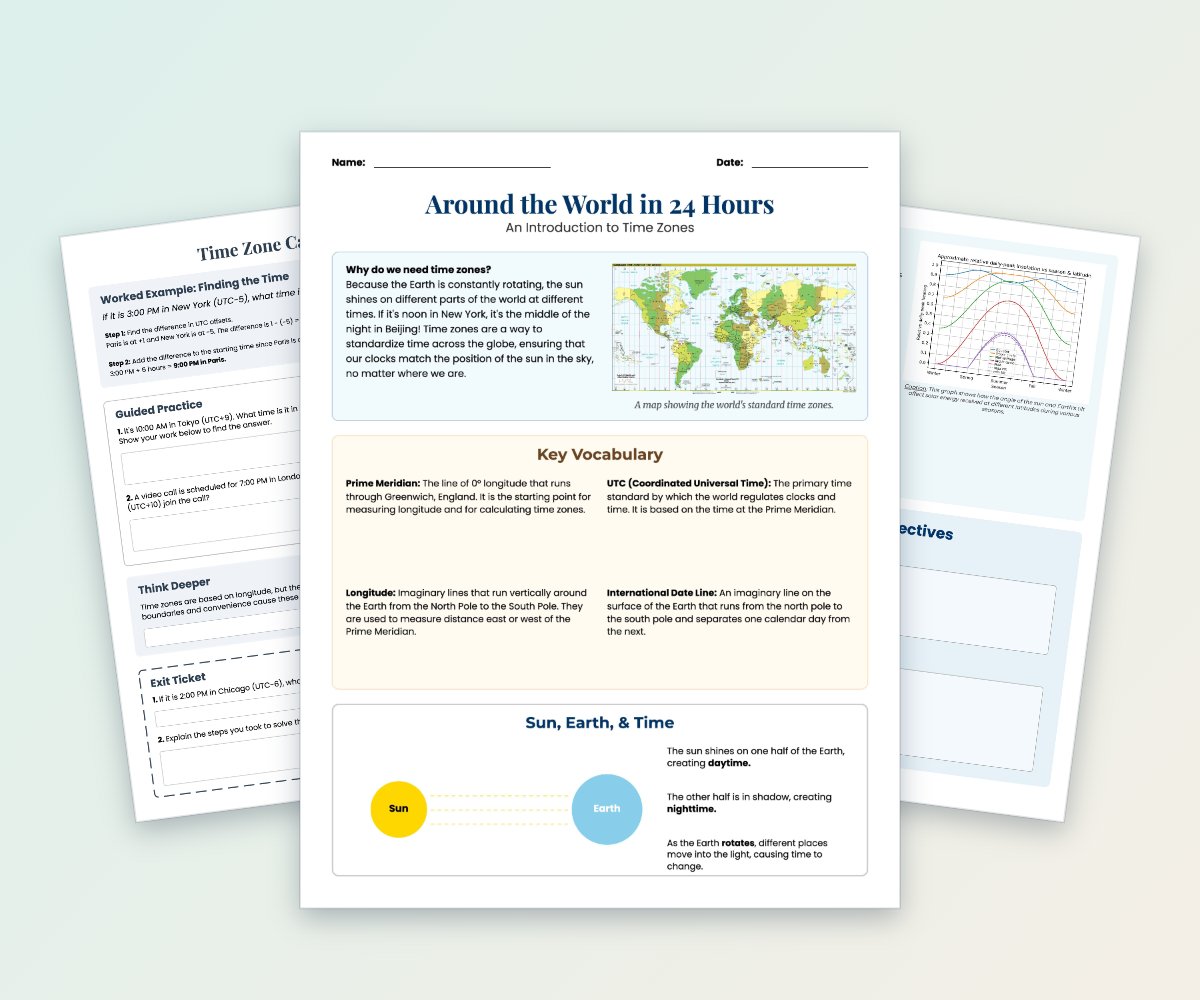
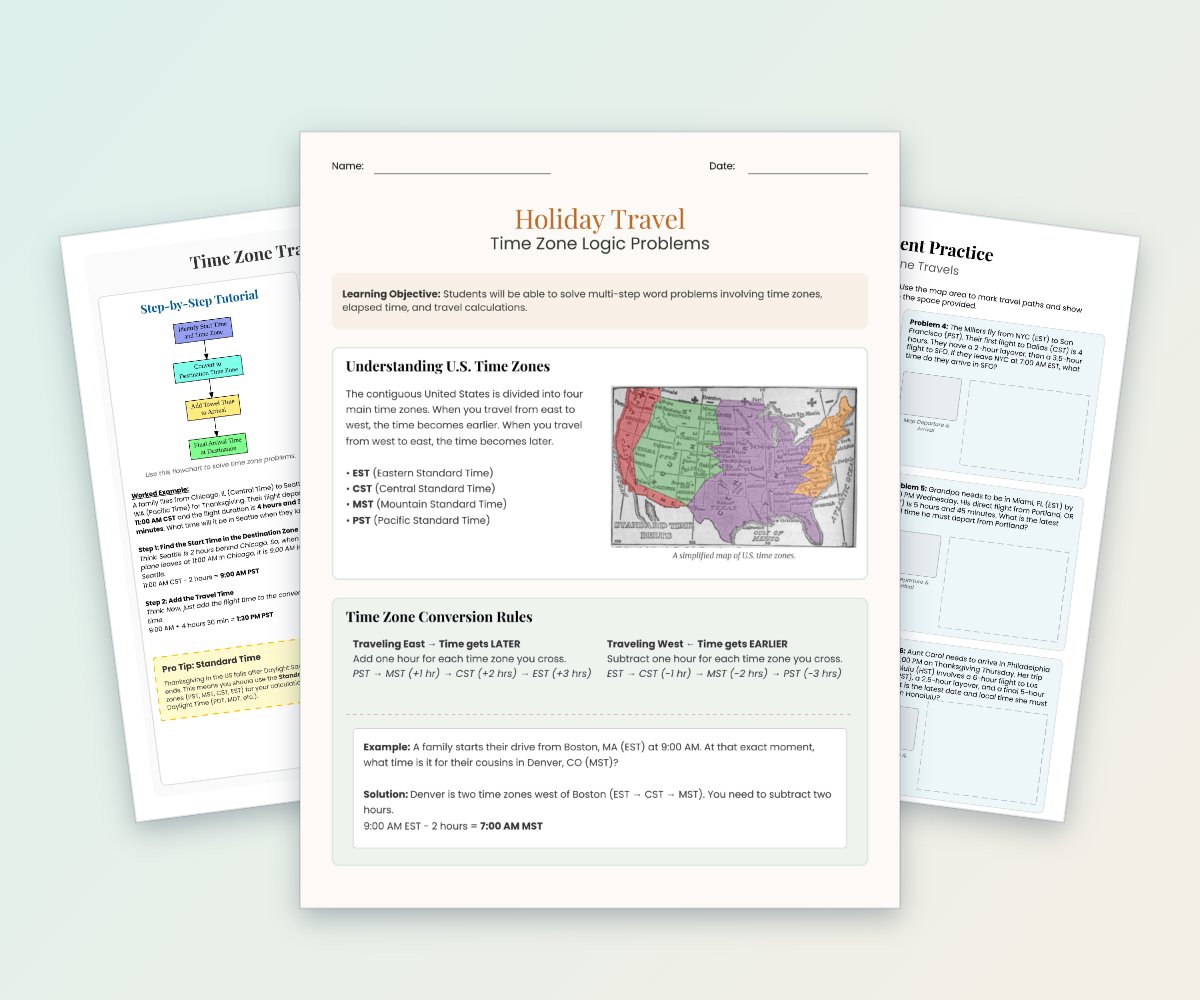
This four-page resource introduces time zones, longitude, UTC offsets, the Prime Meridian, and the International Date Line.
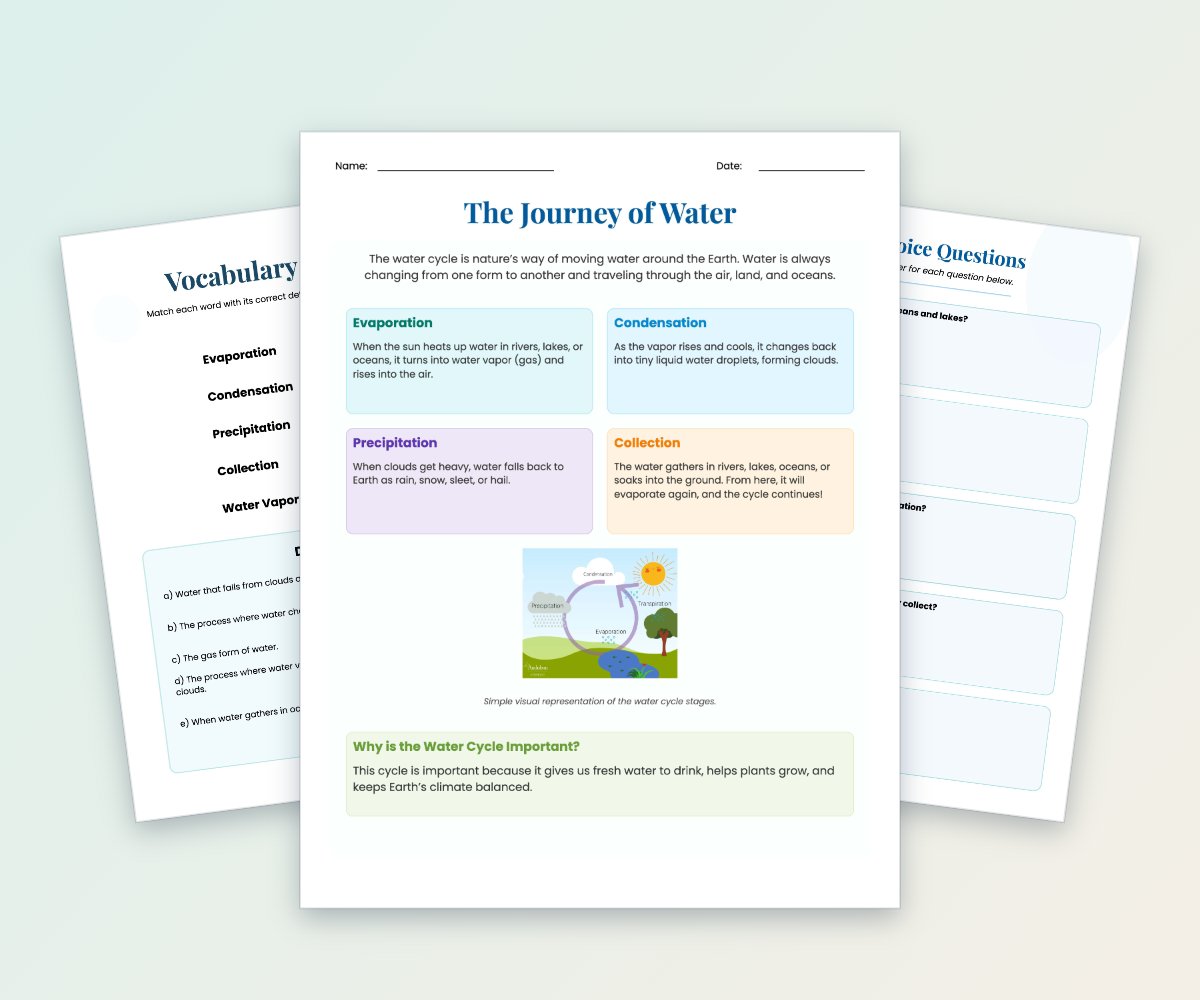
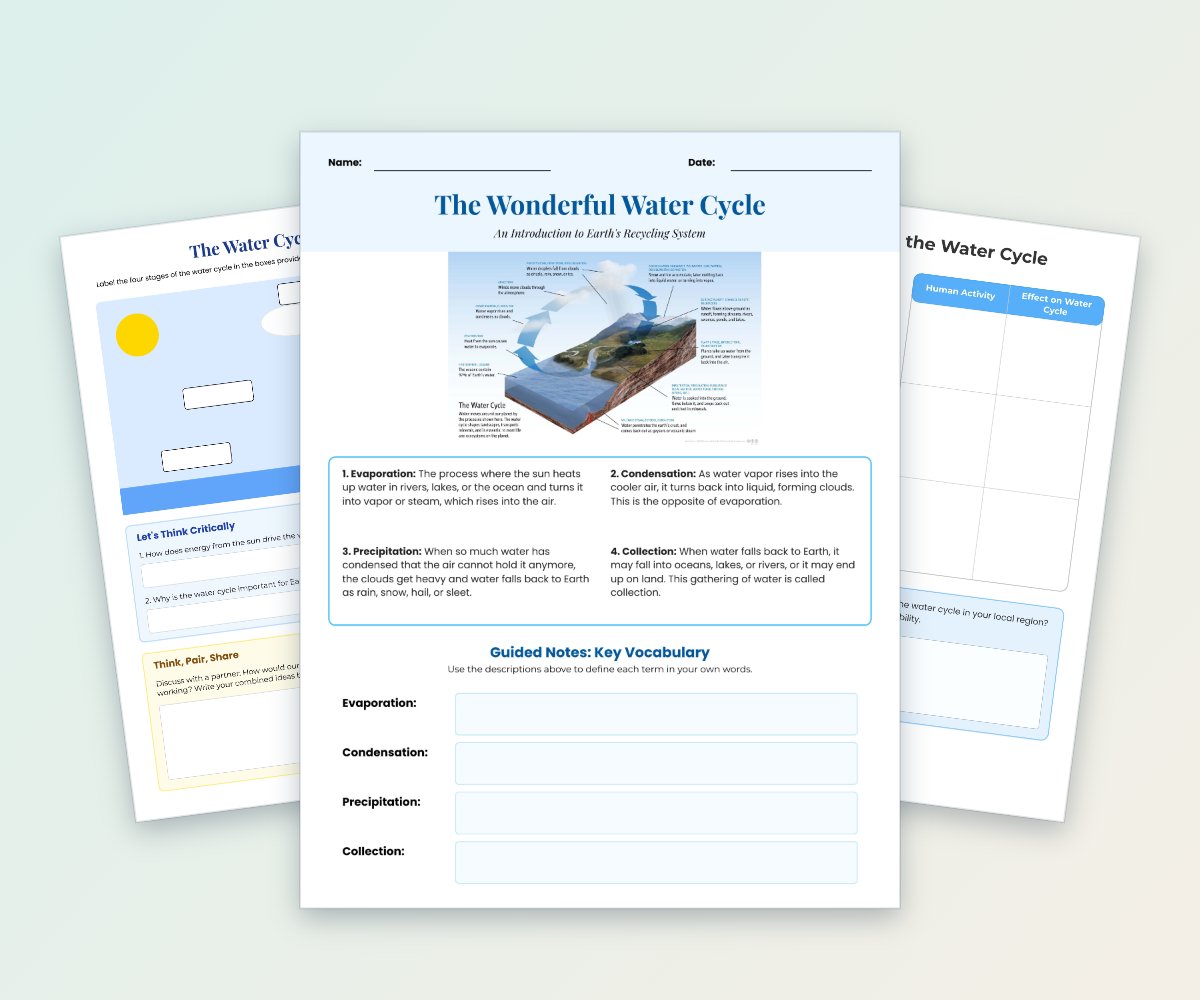
This six-page resource introduces evaporation, condensation, precipitation, collection, and water vapor through student-friendly explanations and visuals.
This four-page worksheet introduces Earth’s tilt, orbit, hemispheres, and their relationship to seasonal changes and the winter solstice.
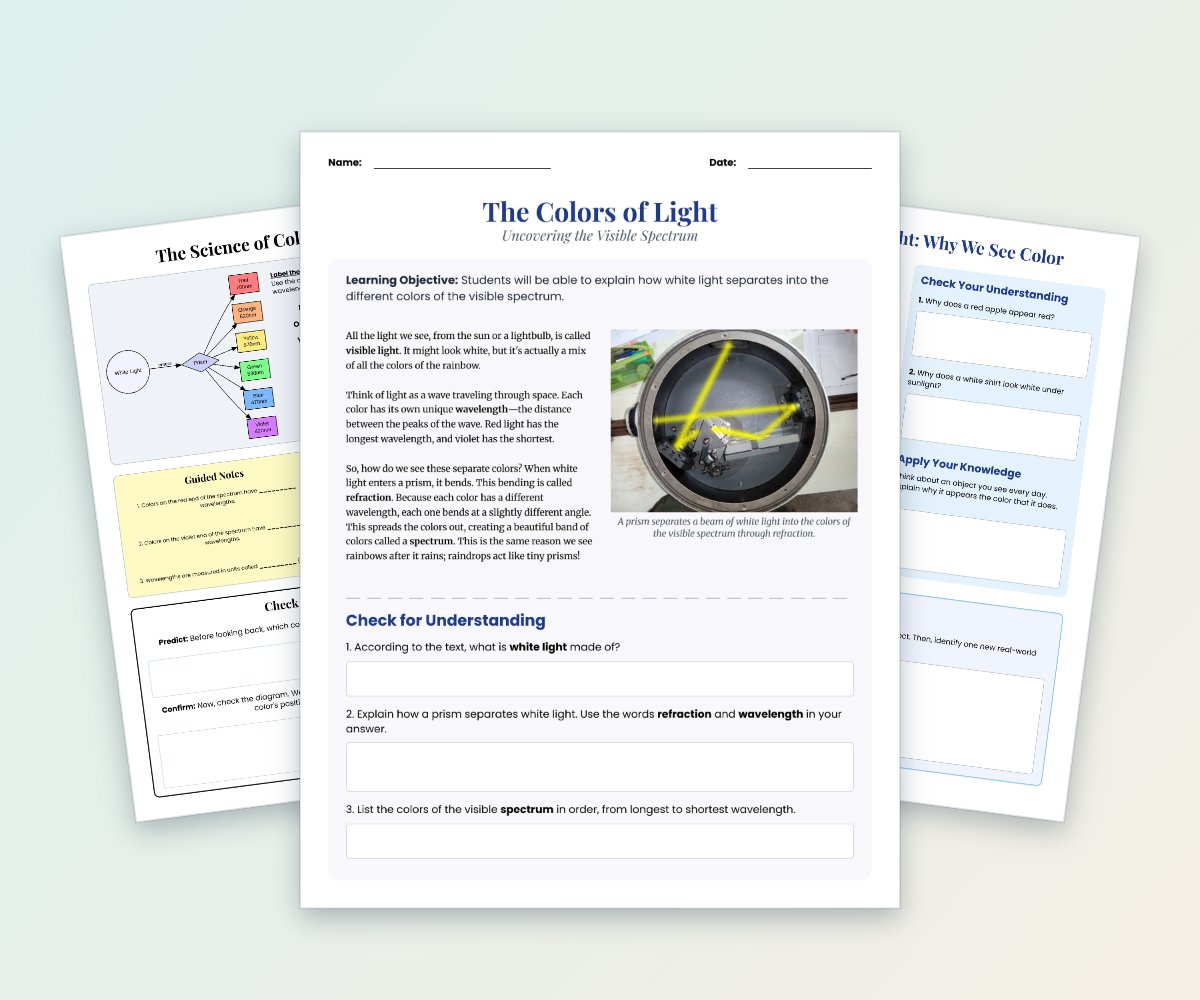
Students explore how white light separates into the visible spectrum through refraction and how wavelength relates to color.
This four-page resource introduces evaporation, condensation, precipitation, and collection through an illustrated water-cycle overview and guided notes.
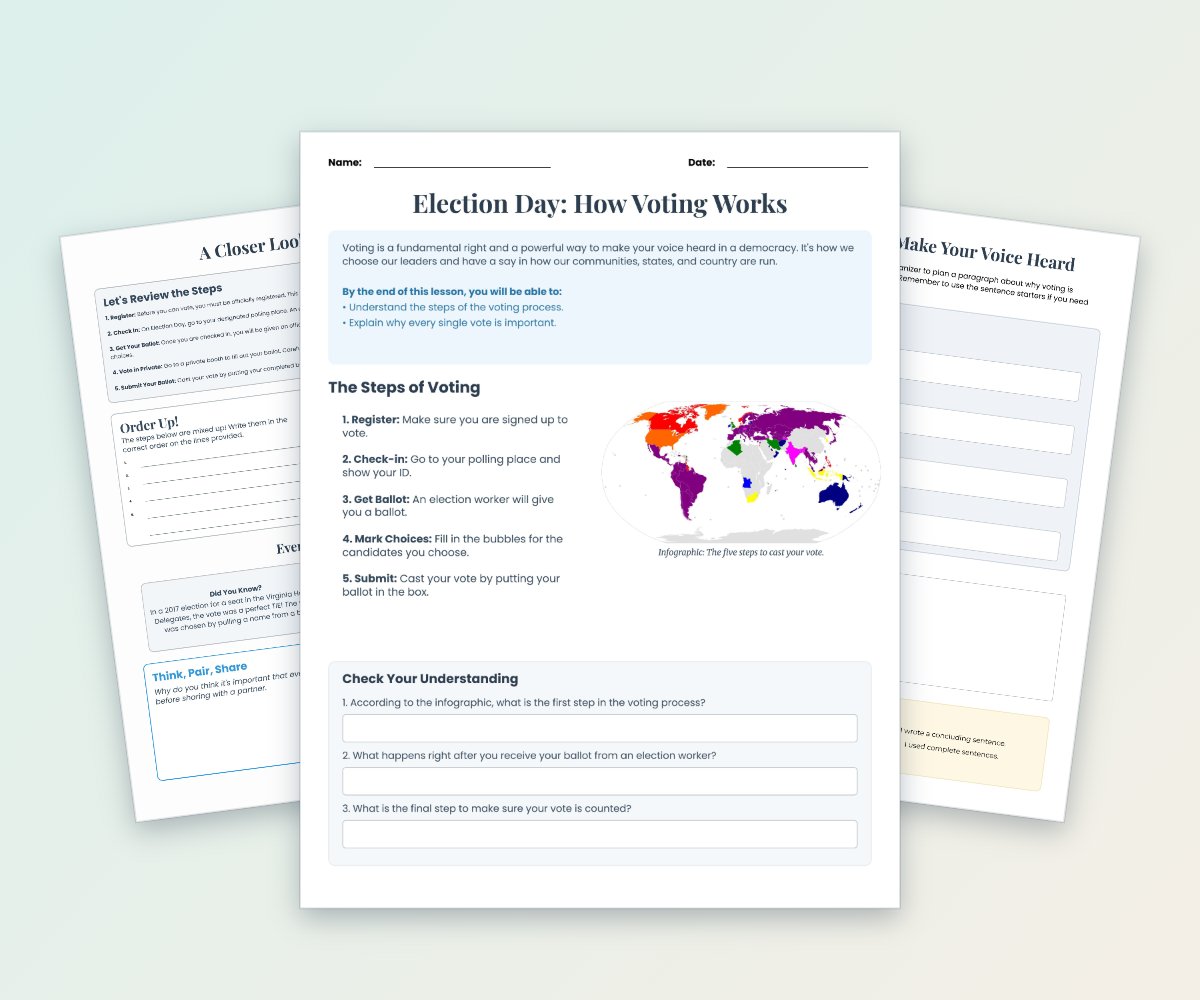
Teach students the five steps of voting, from registration through submitting a ballot.
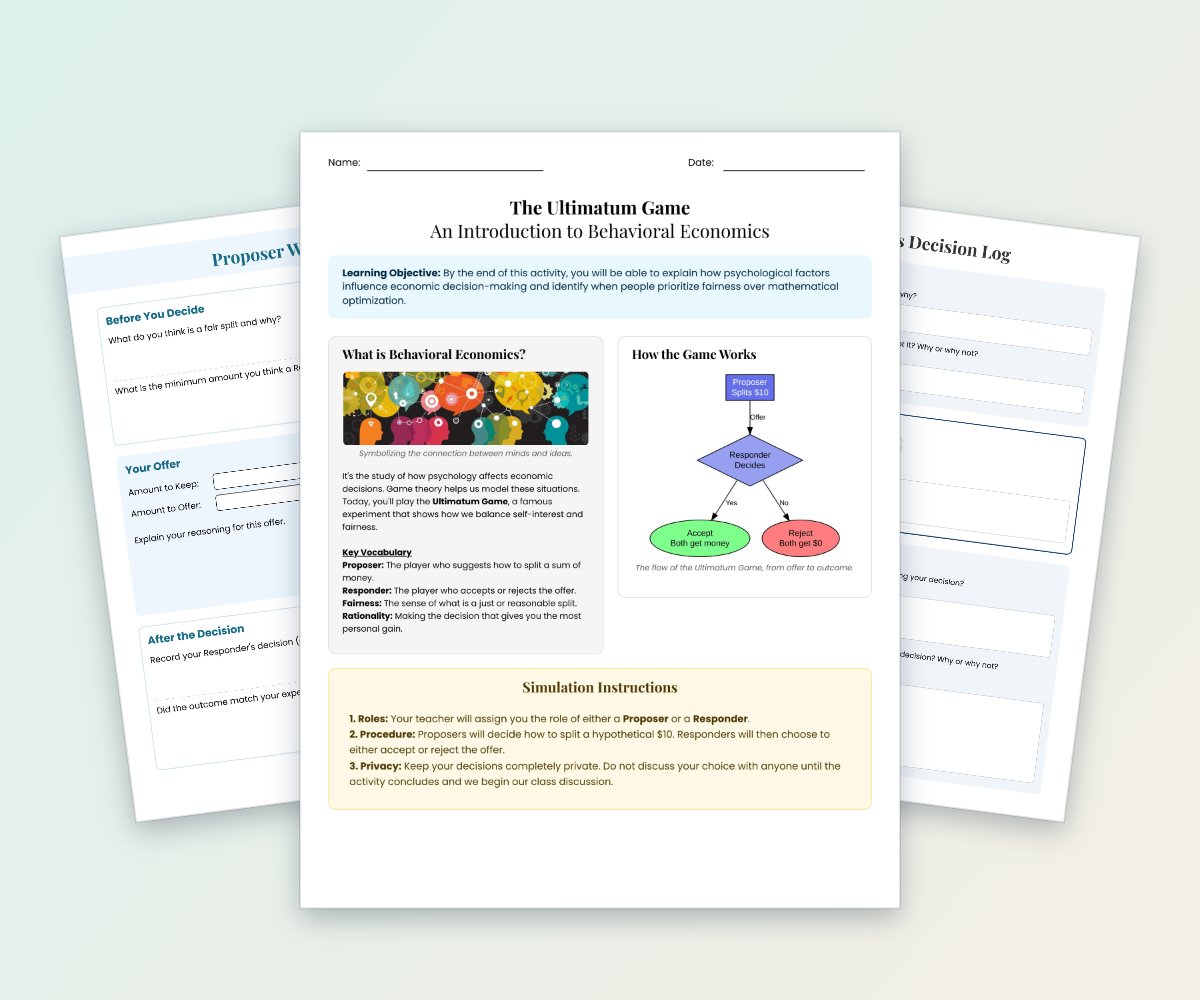
Students explore fairness, rationality, and decision-making through a classroom simulation of the Ultimatum Game.
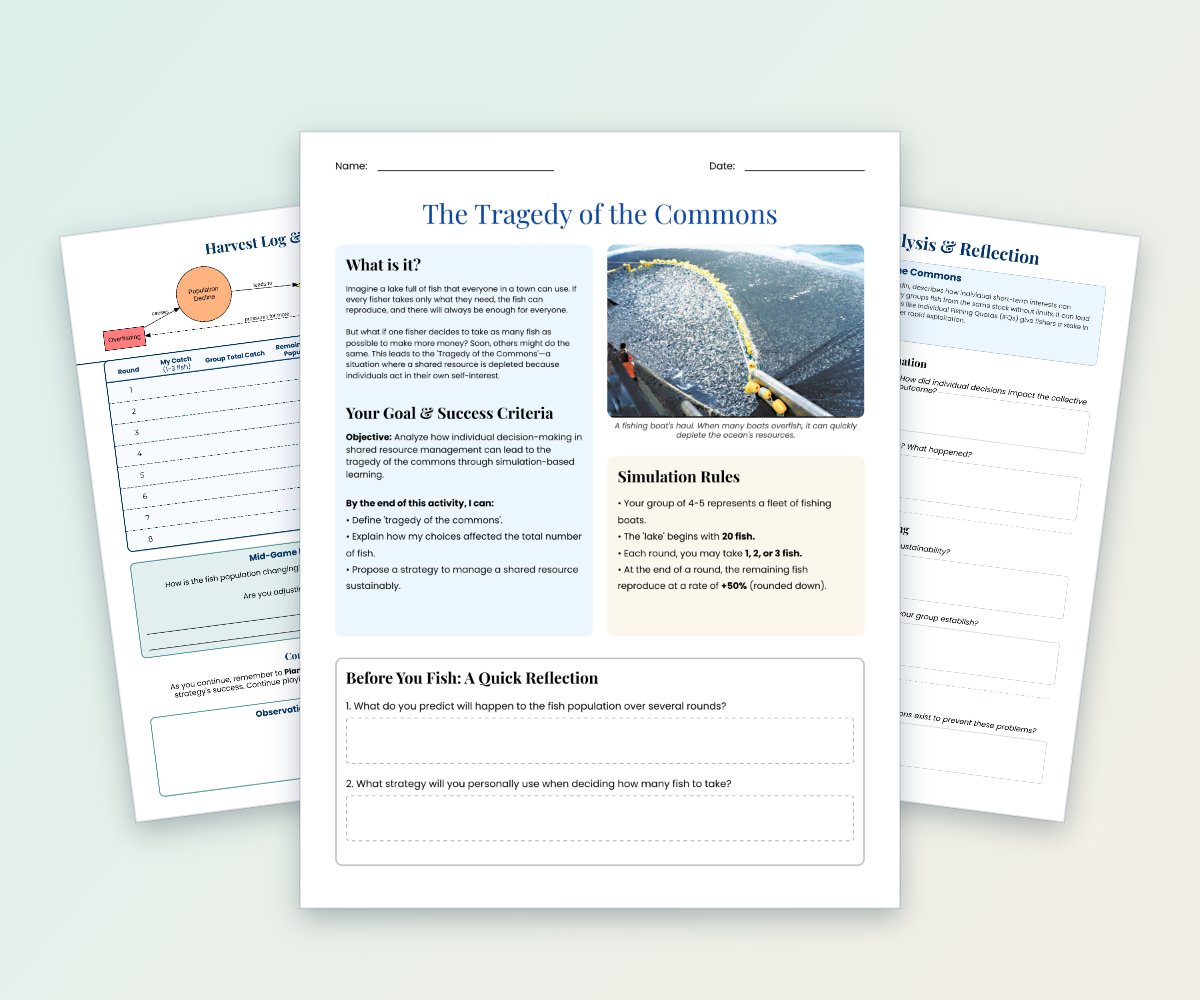
Students participate in an eight-round fishing simulation to explore how individual choices affect shared resources.
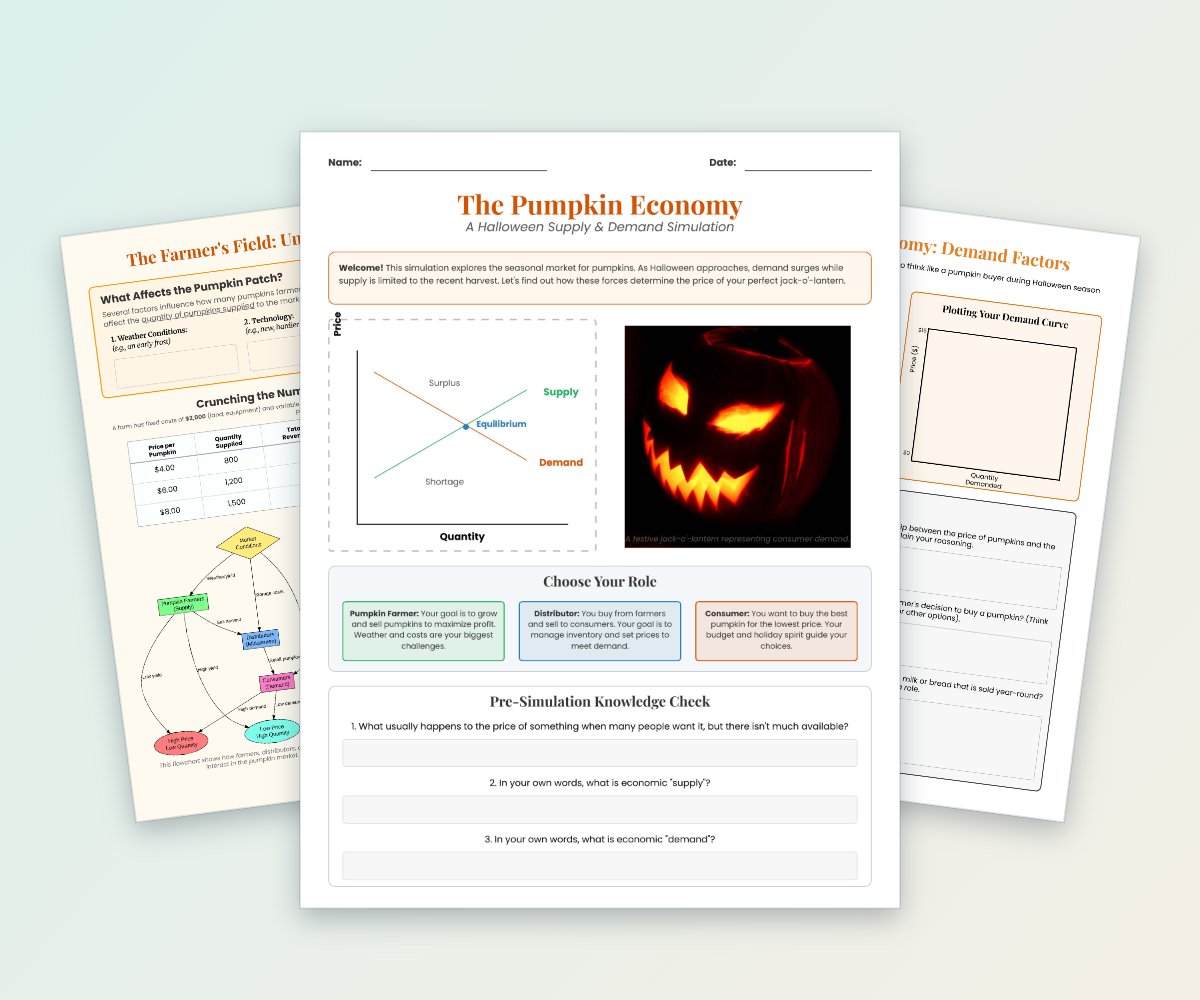
Students take on roles as pumpkin farmers, distributors, and consumers in a Halloween-themed market simulation.
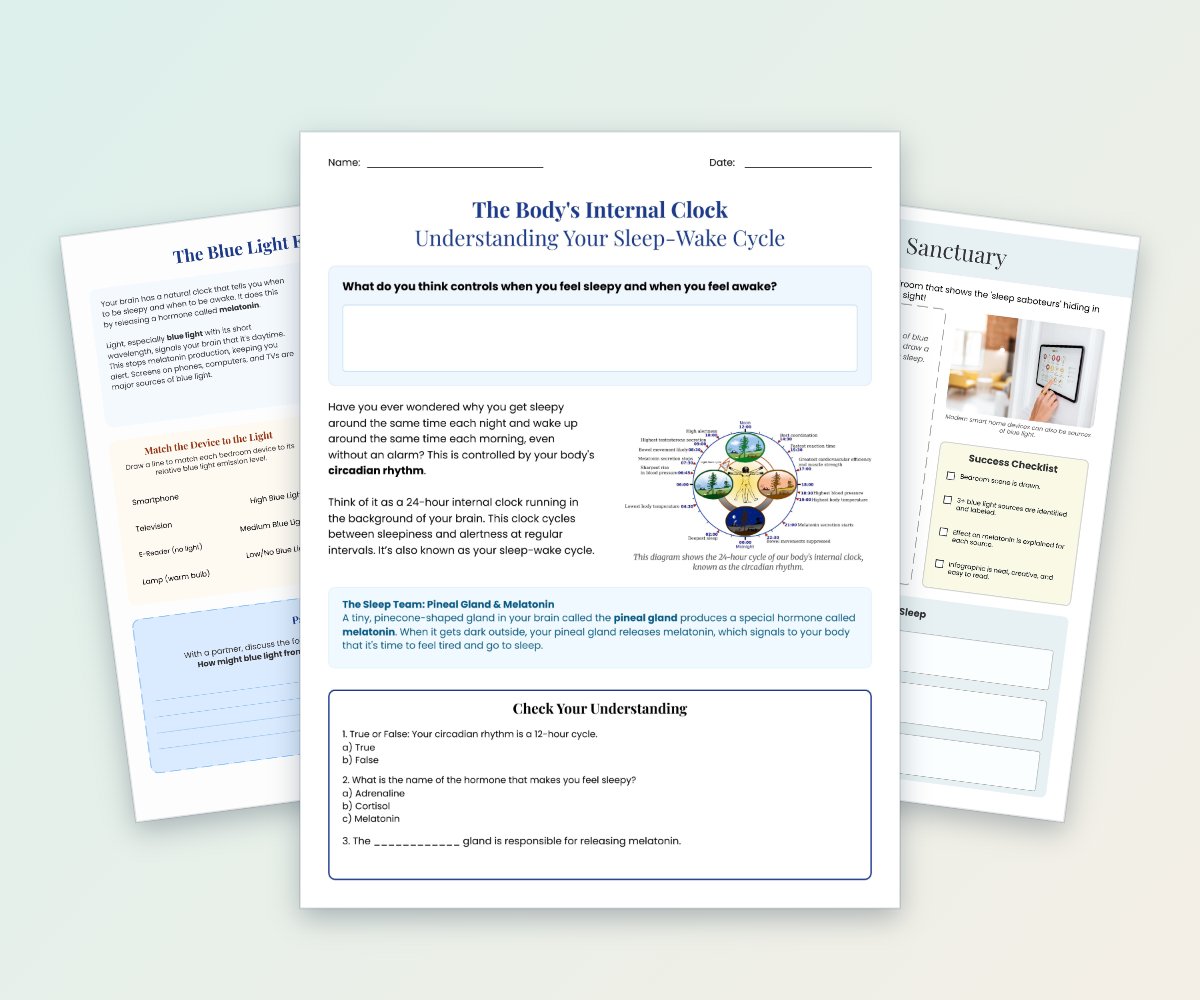
This student worksheet introduces the circadian rhythm, the pineal gland, melatonin, and the effects of blue light on sleep.
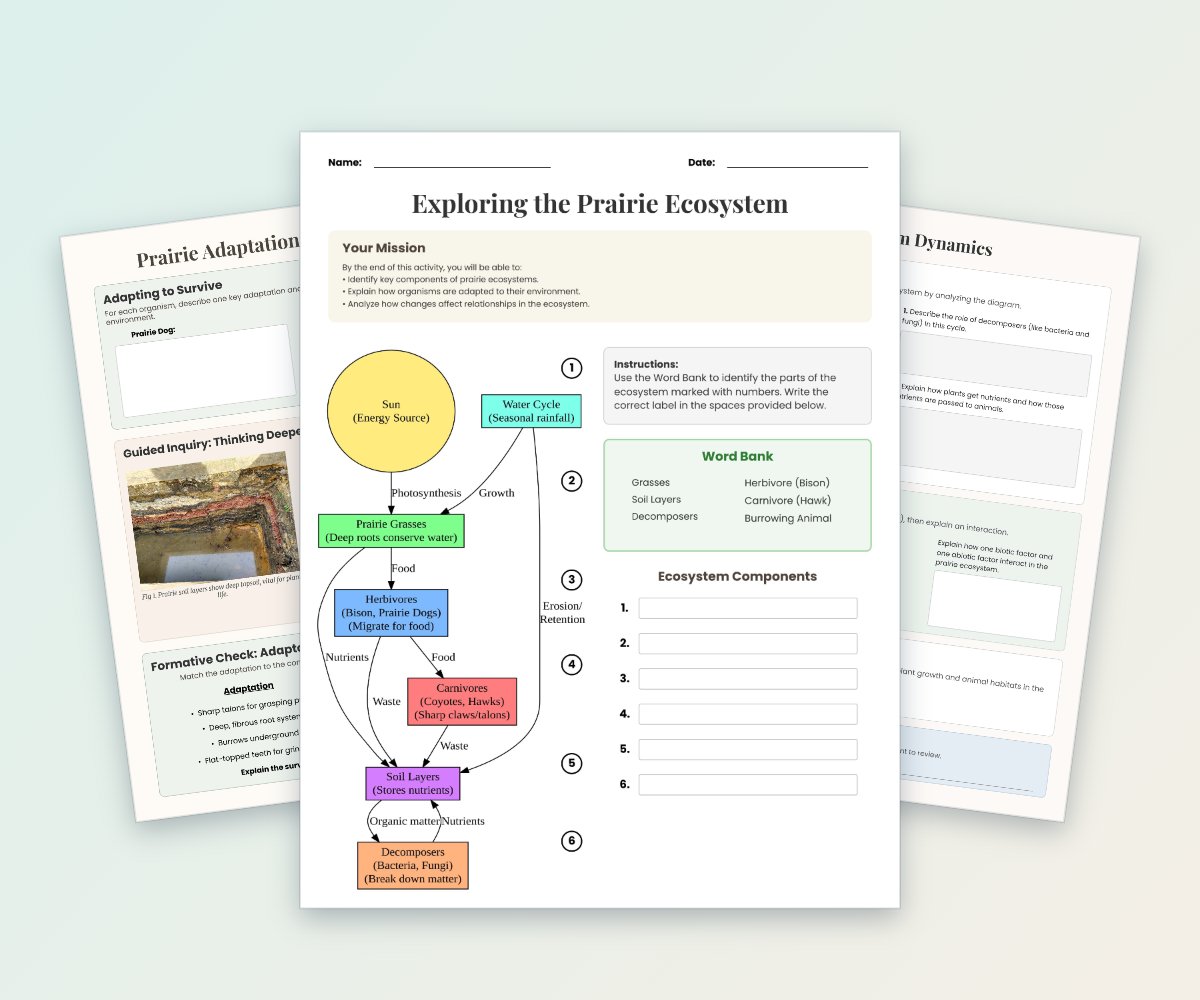
This four-page activity pack guides students through prairie ecosystem components, organism adaptations, energy flow, nutrient cycling, and biotic and abiotic factors.