Understanding Your Digital Footprint
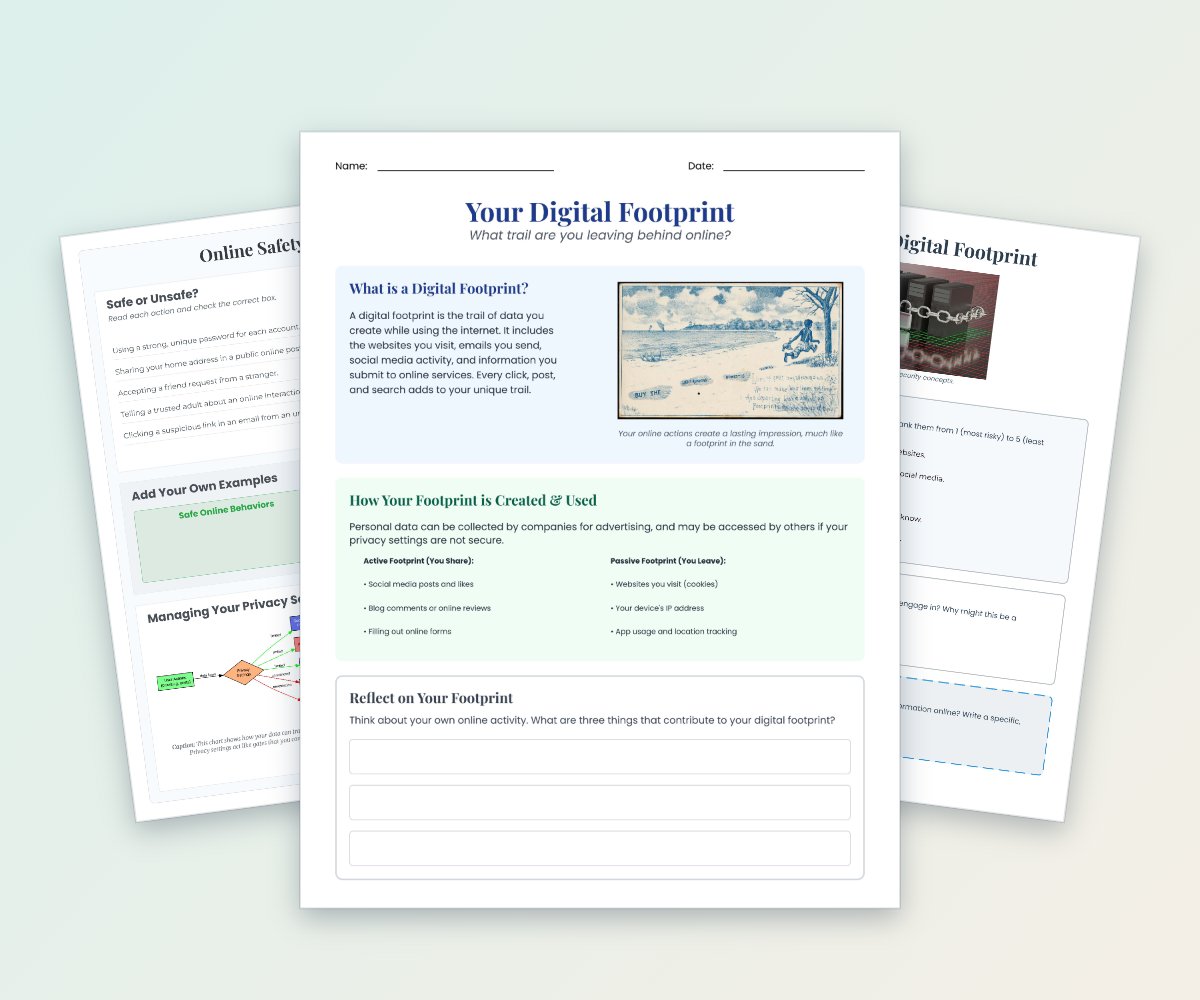
This three-page worksheet introduces digital footprints, active and passive data collection, online safety, privacy settings, and digital risks.
$3.99
Classroom-ready resources written for grade 4: printable worksheets, slides, activities and planning tools you can download and use straight away. Browse by subject below.
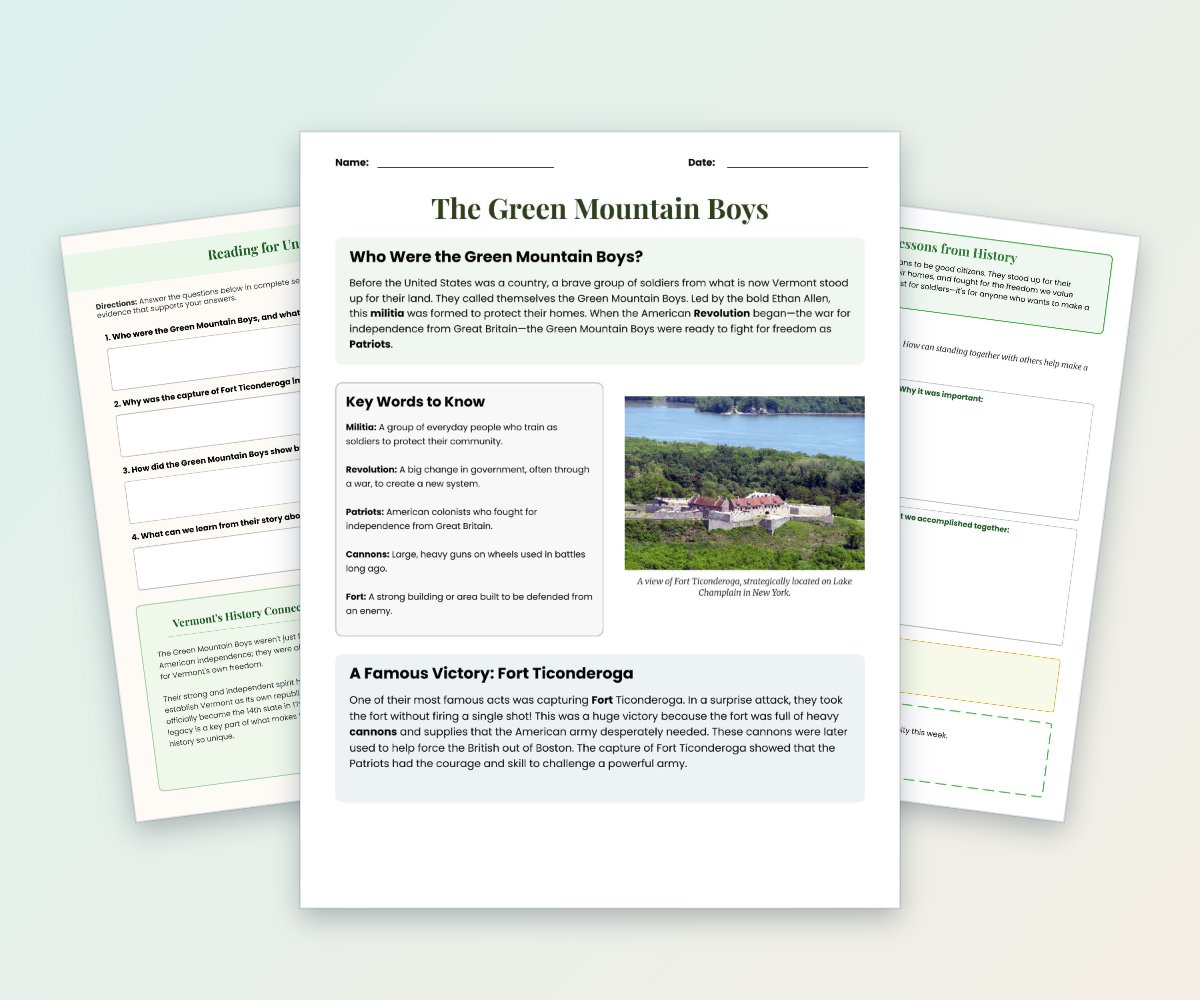
This three-page worksheet introduces digital footprints, active and passive data collection, online safety, privacy settings, and digital risks.
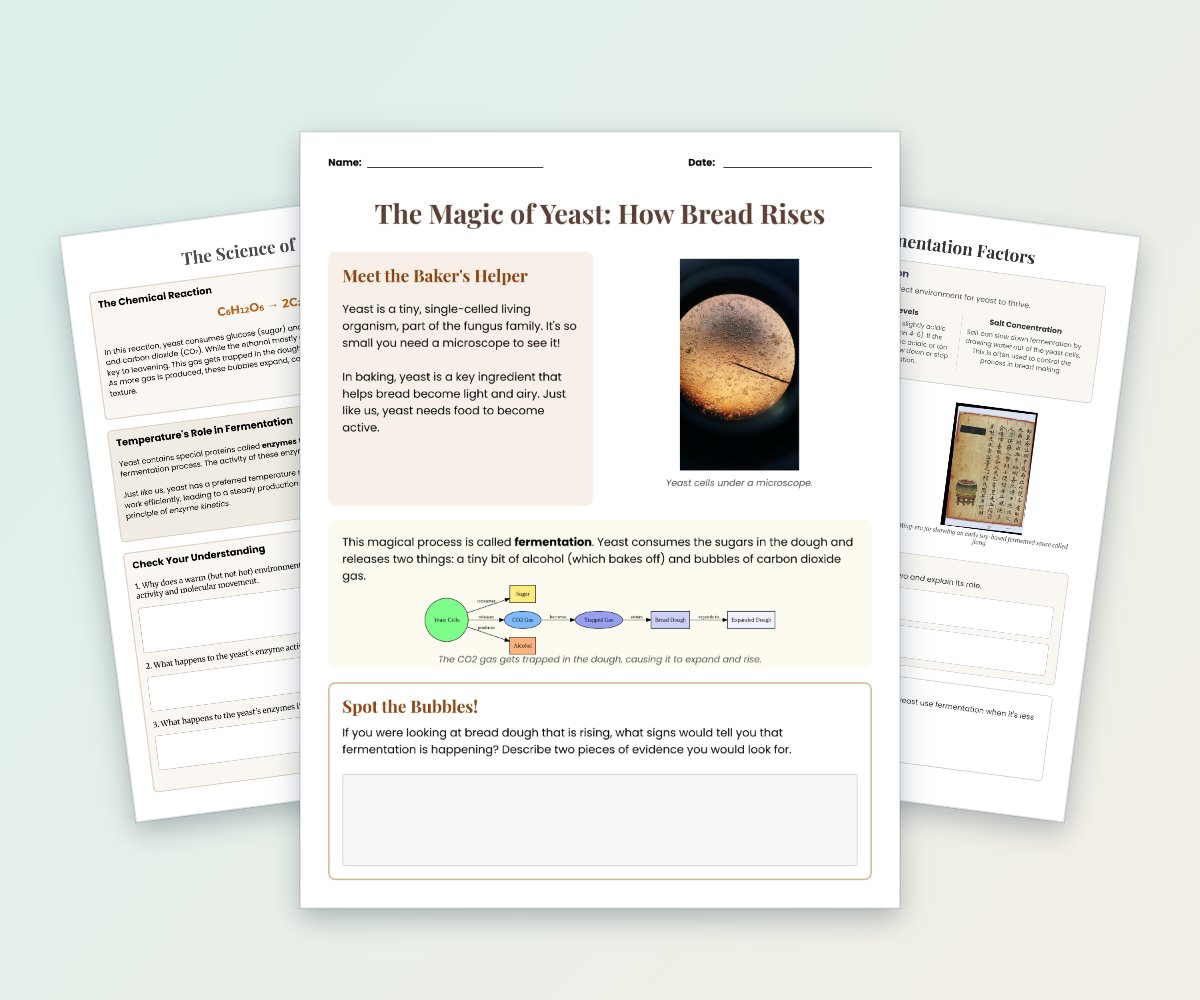
This three-page science worksheet explores how yeast causes bread to rise through fermentation and carbon dioxide production.
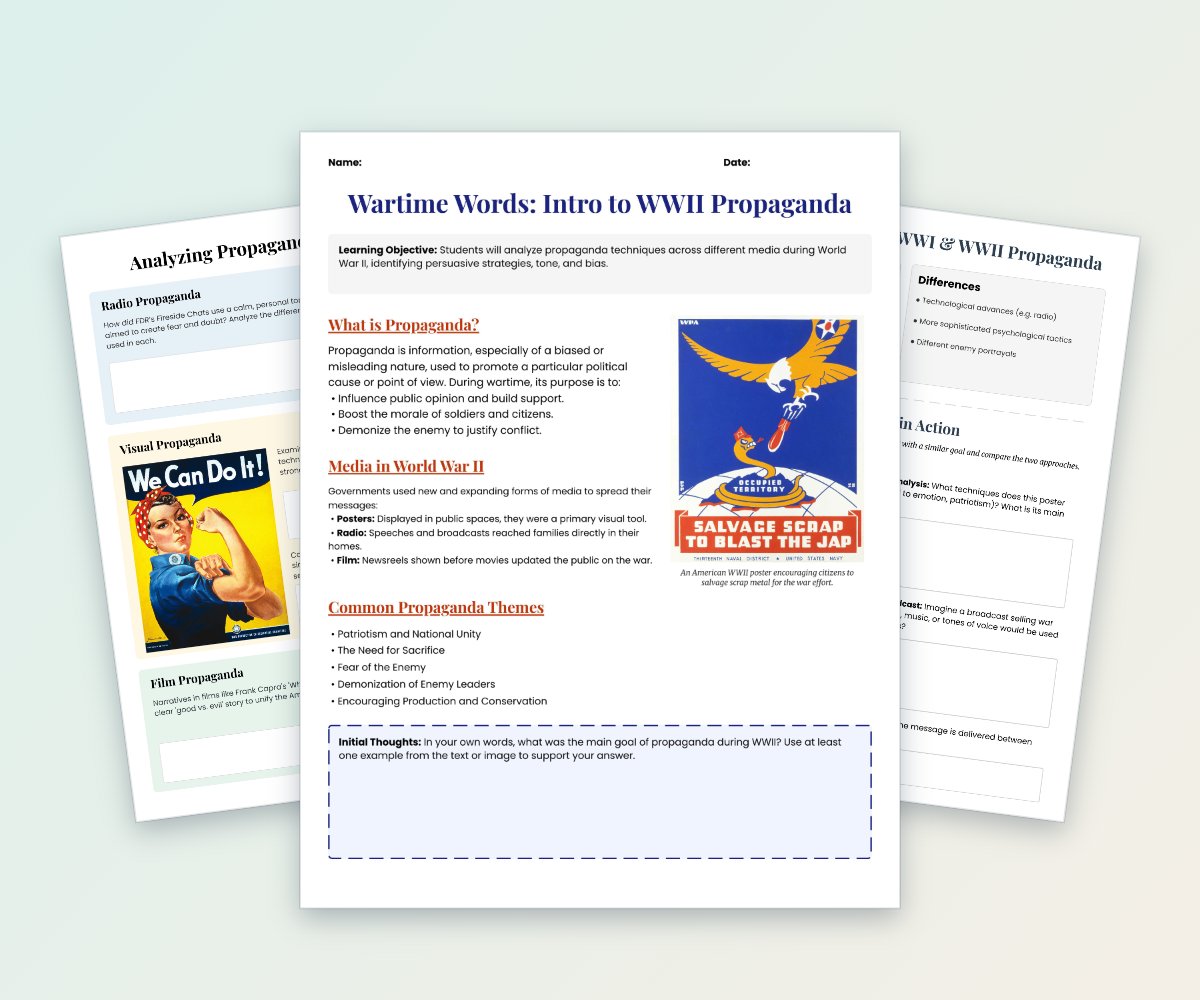
This five-page resource introduces wartime propaganda and guides students in analyzing posters, radio broadcasts, films, emotional appeals, tone, bias, and persuasive techniques.
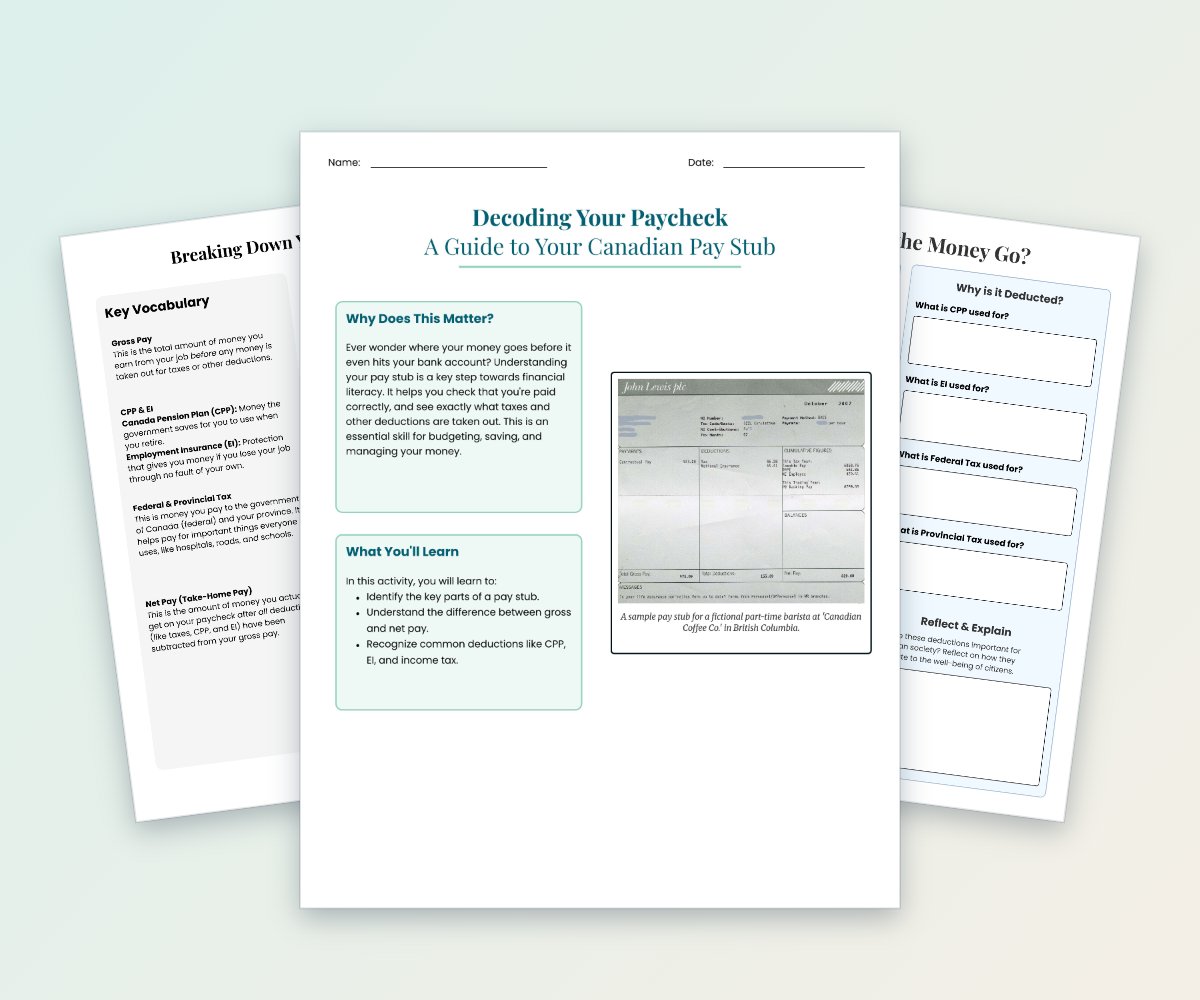
Students learn to identify gross pay, net pay, CPP, Employment Insurance, and federal and provincial tax deductions using a fictional Canadian pay stub.
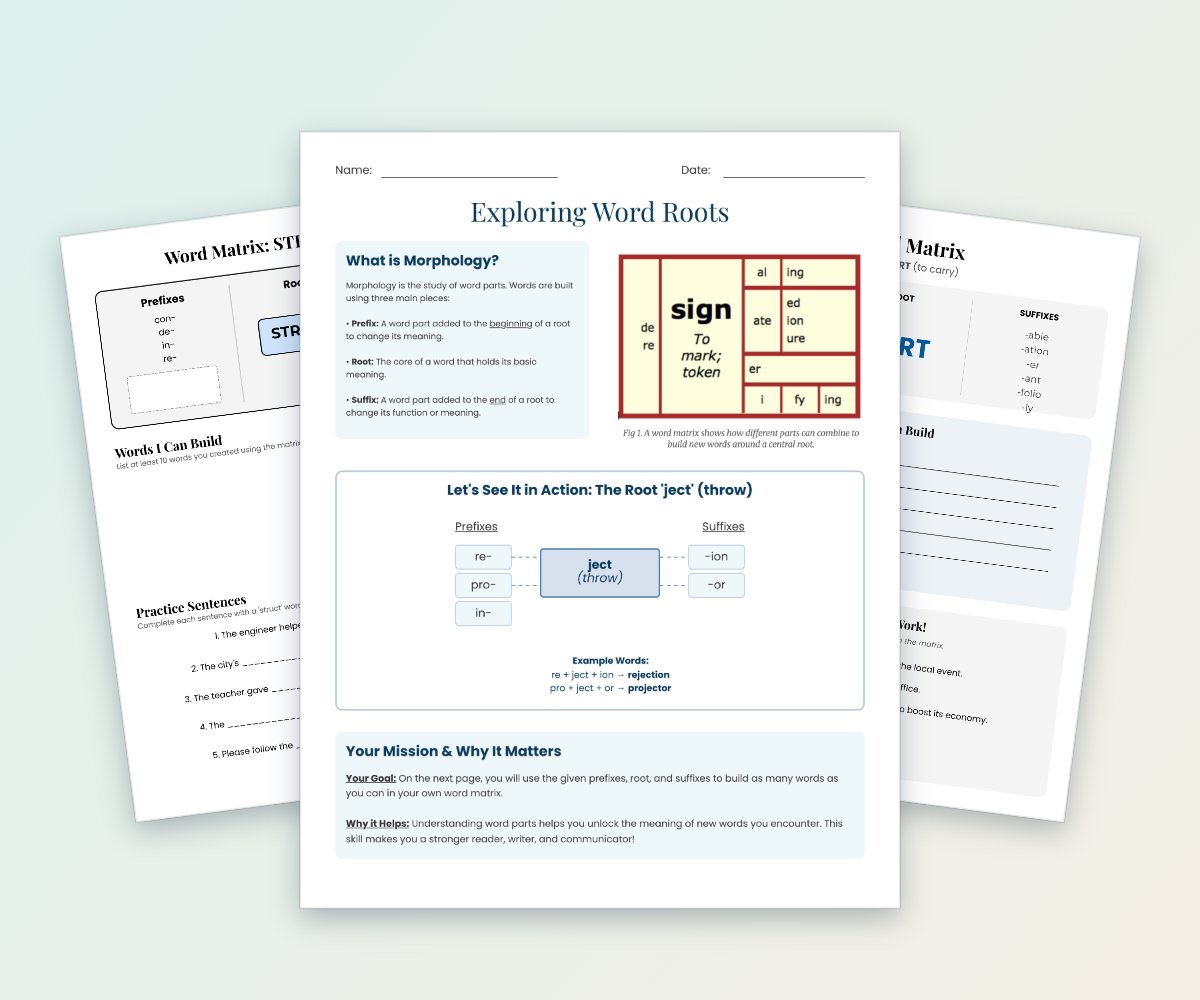
Students learn how prefixes, roots, and suffixes combine to form words and change meaning or function.
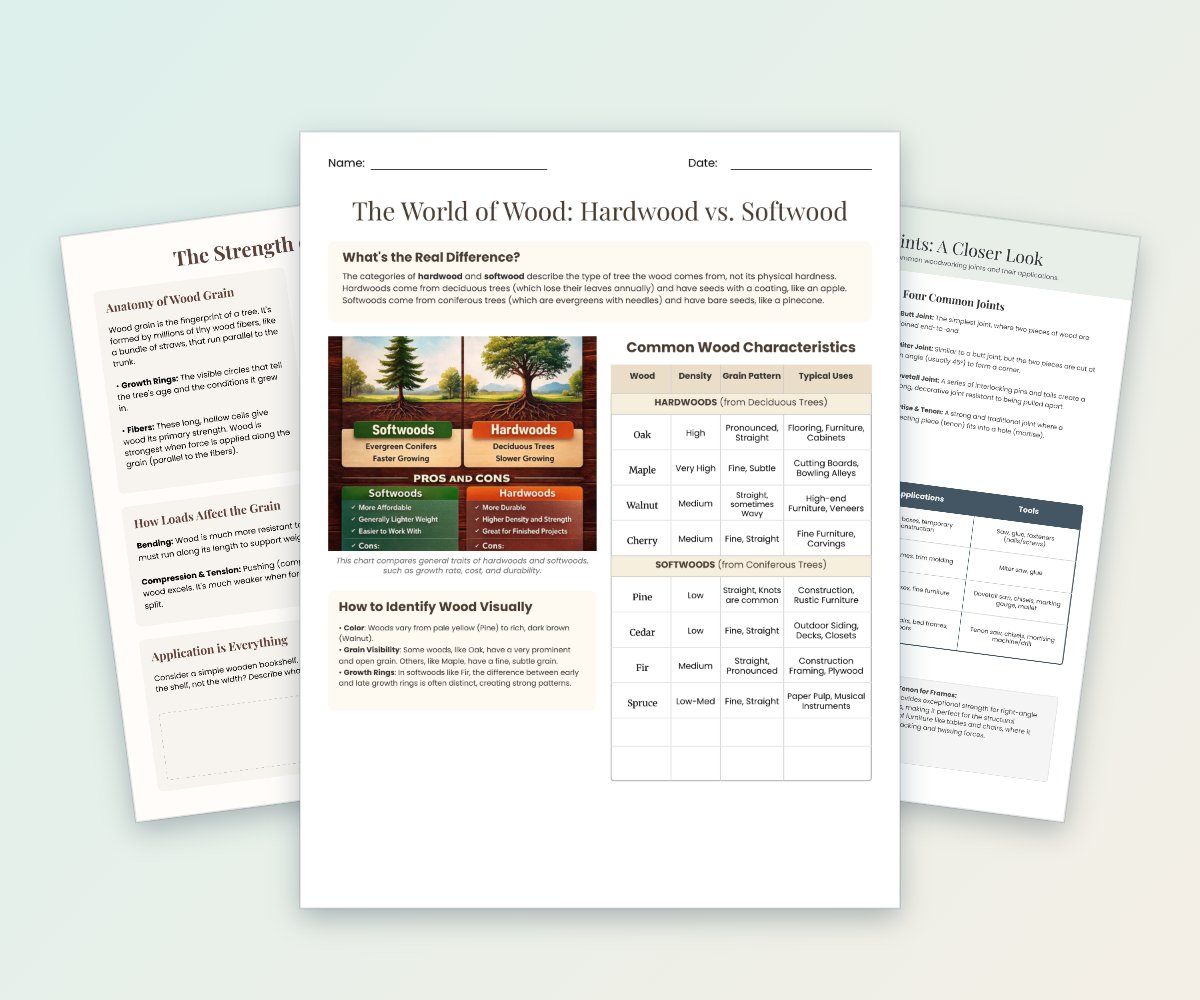
This four-page worksheet introduces hardwoods and softwoods, including their origins, characteristics, uses, and visual identification.
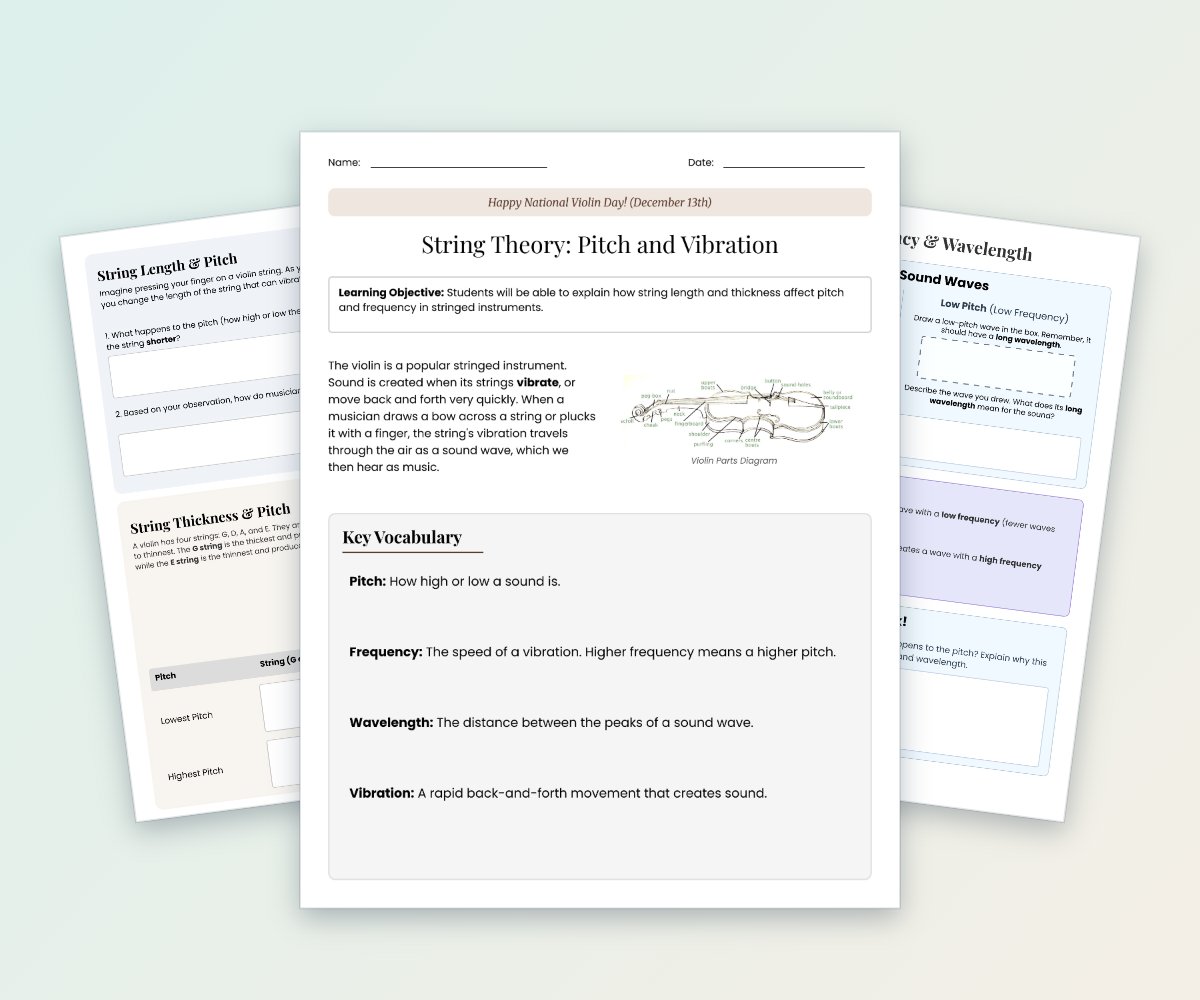
Students explore how string length, thickness, and tension affect pitch and frequency using violin examples.
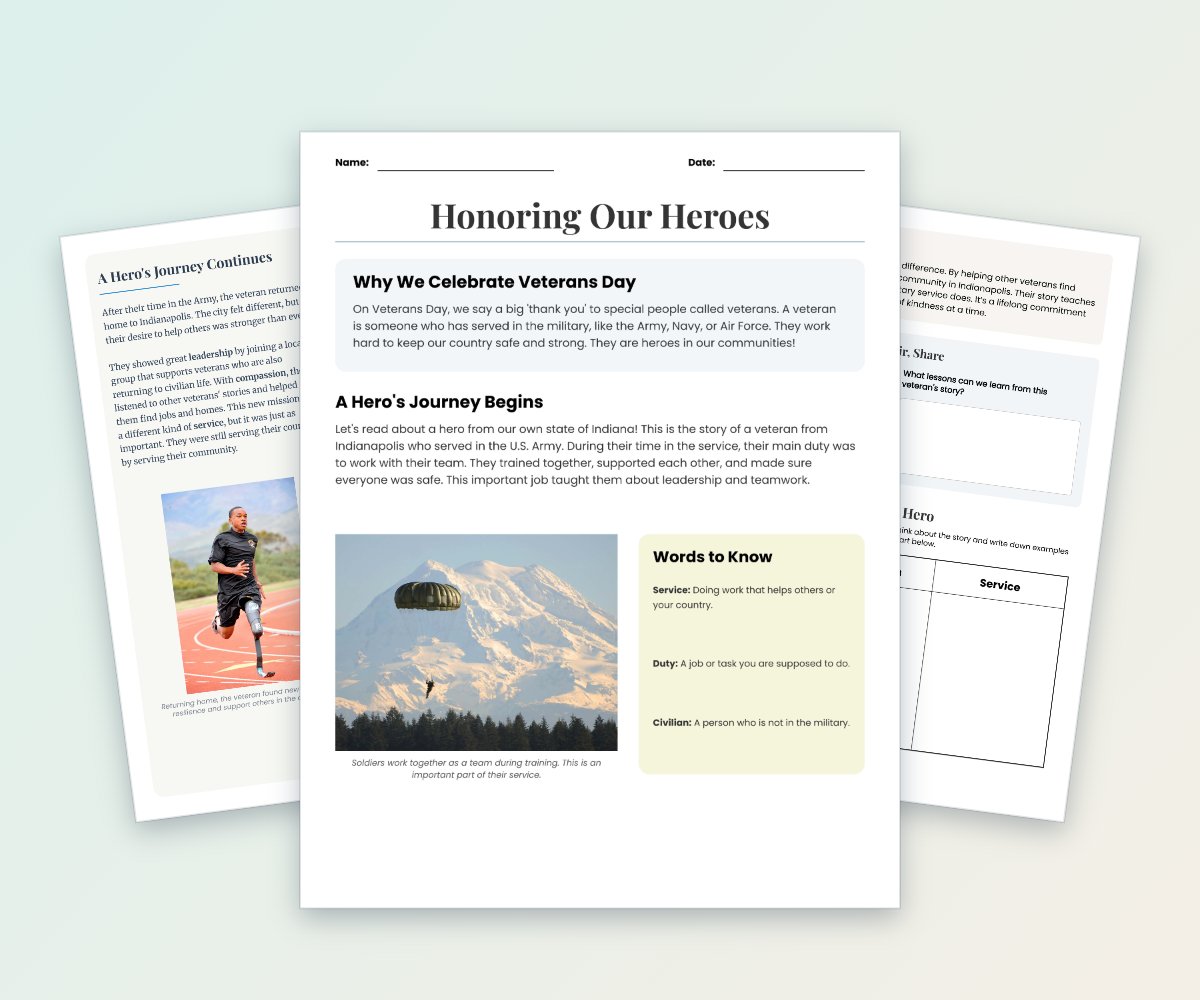
Students learn why Veterans Day is celebrated through a short story about an Indiana veteran’s military and community service.
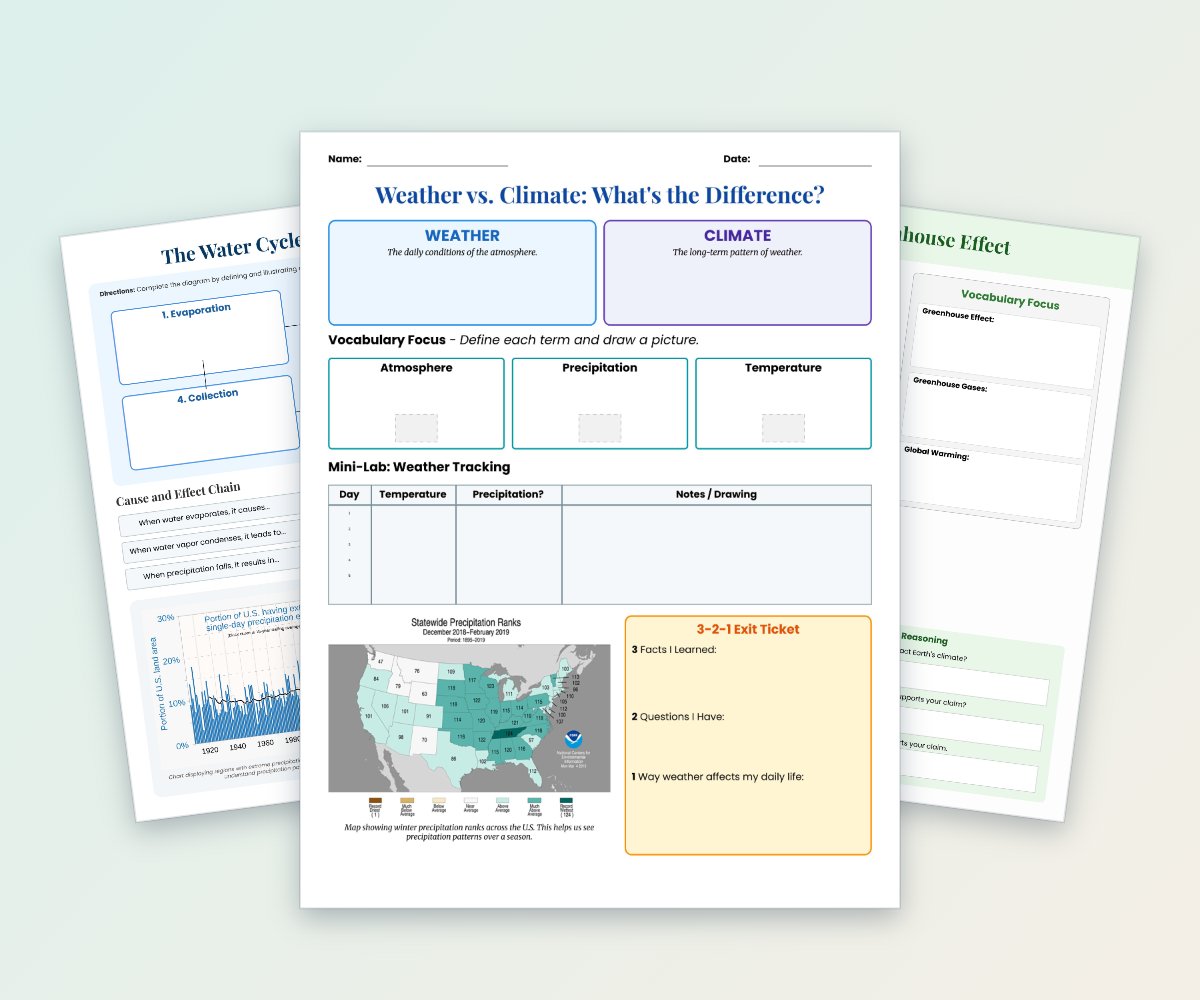
This four-page science activity pack helps students distinguish weather from climate and explore precipitation patterns, the water cycle, and the greenhouse effect.
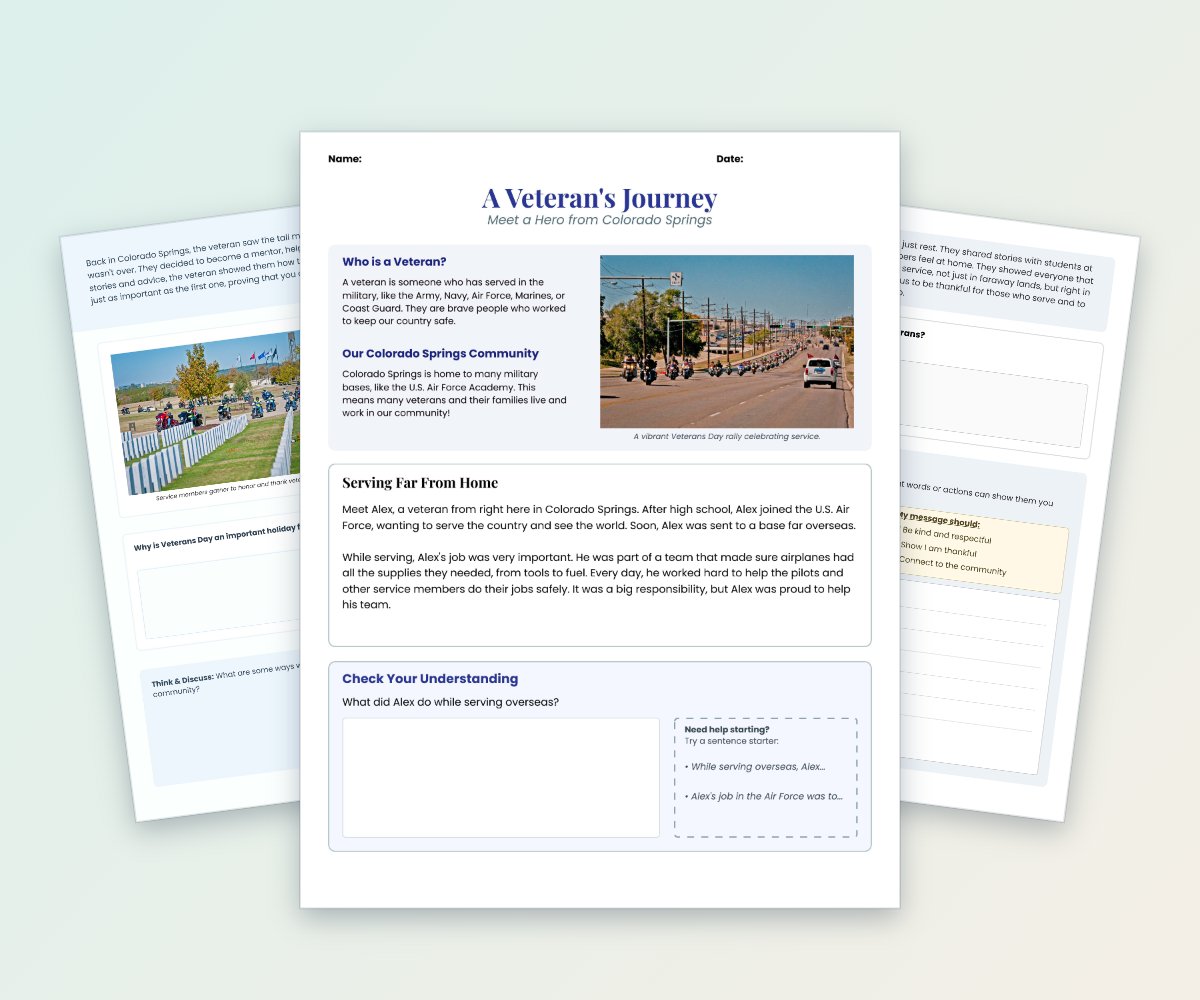
Students learn what veterans do through a relatable story about an Air Force veteran from Colorado Springs.
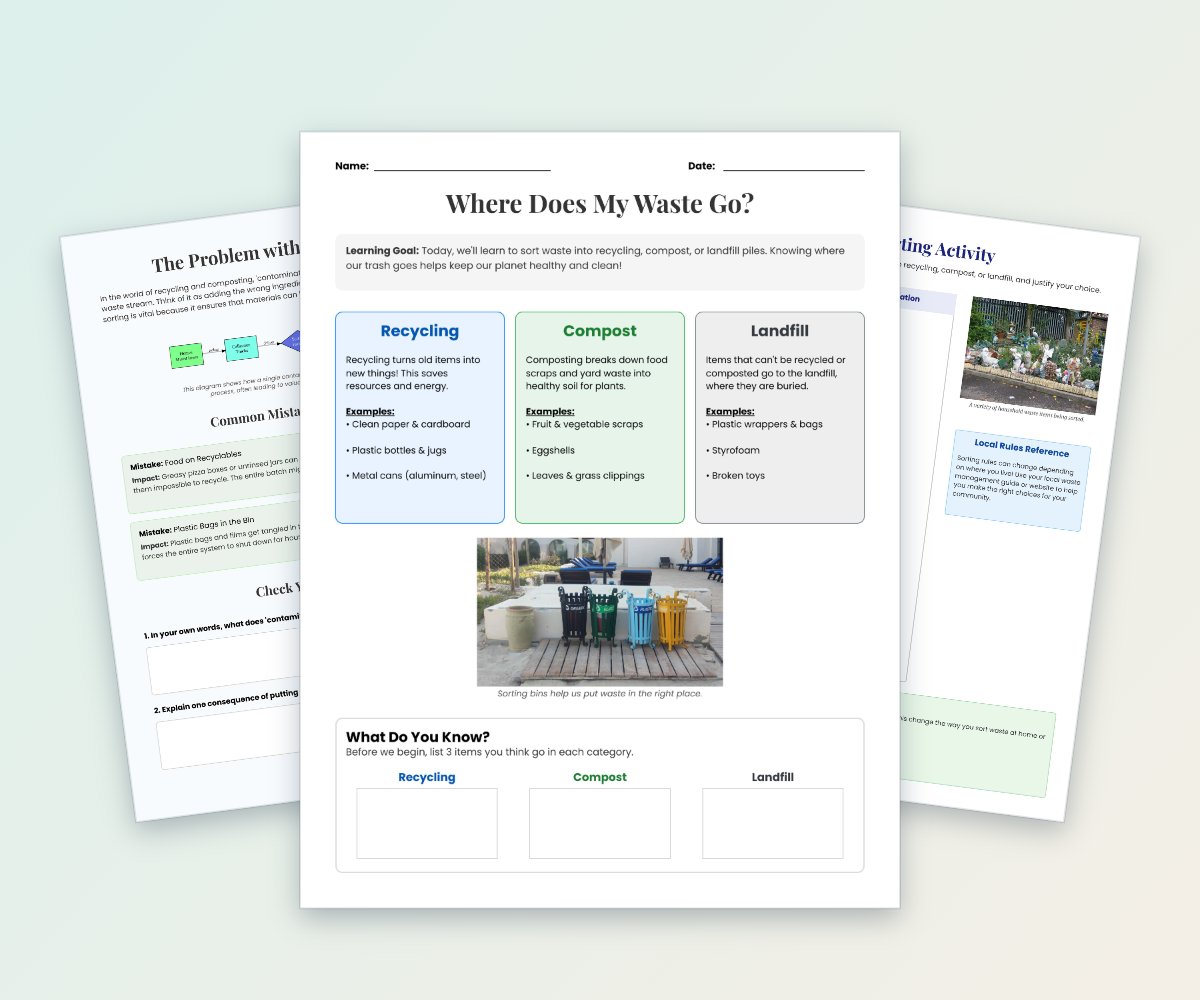
Students learn to classify household waste as recyclable, compostable, or landfill material.
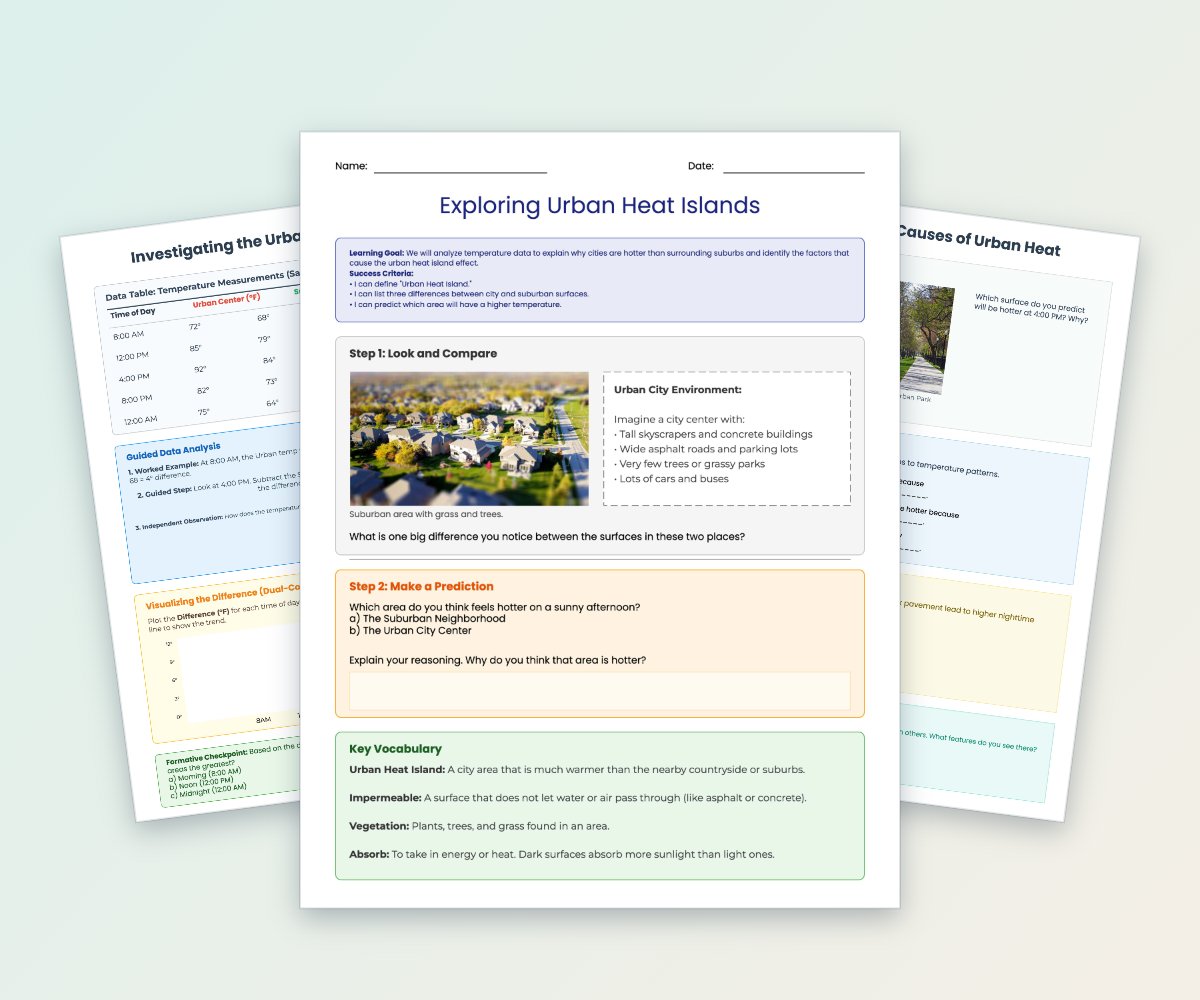
Students investigate why urban areas are warmer than nearby suburban areas using comparisons, temperature data, vocabulary, and guided analysis.
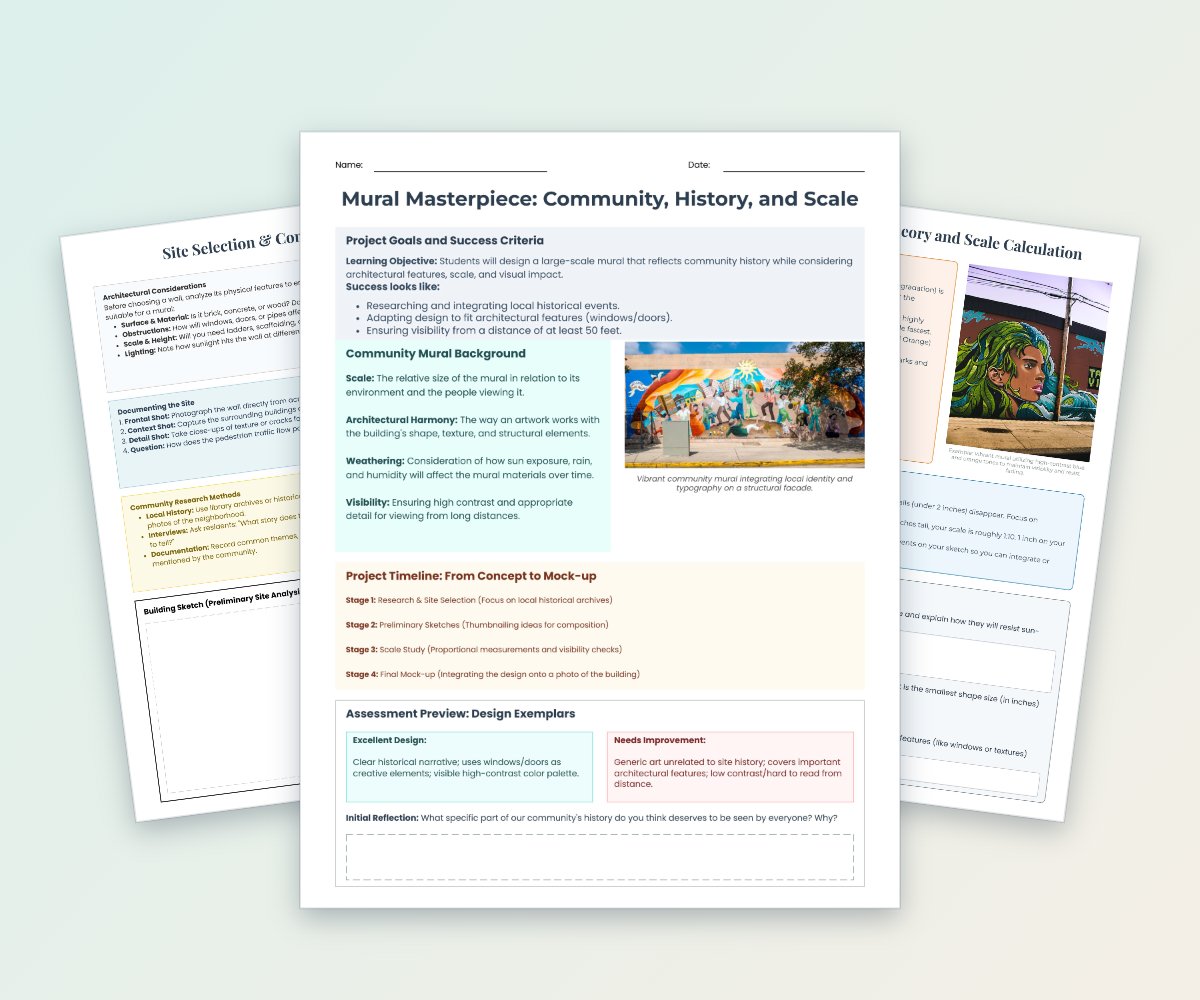
Students design a large-scale mural connected to community history while considering architectural features, scale, visibility, materials, and weathering.
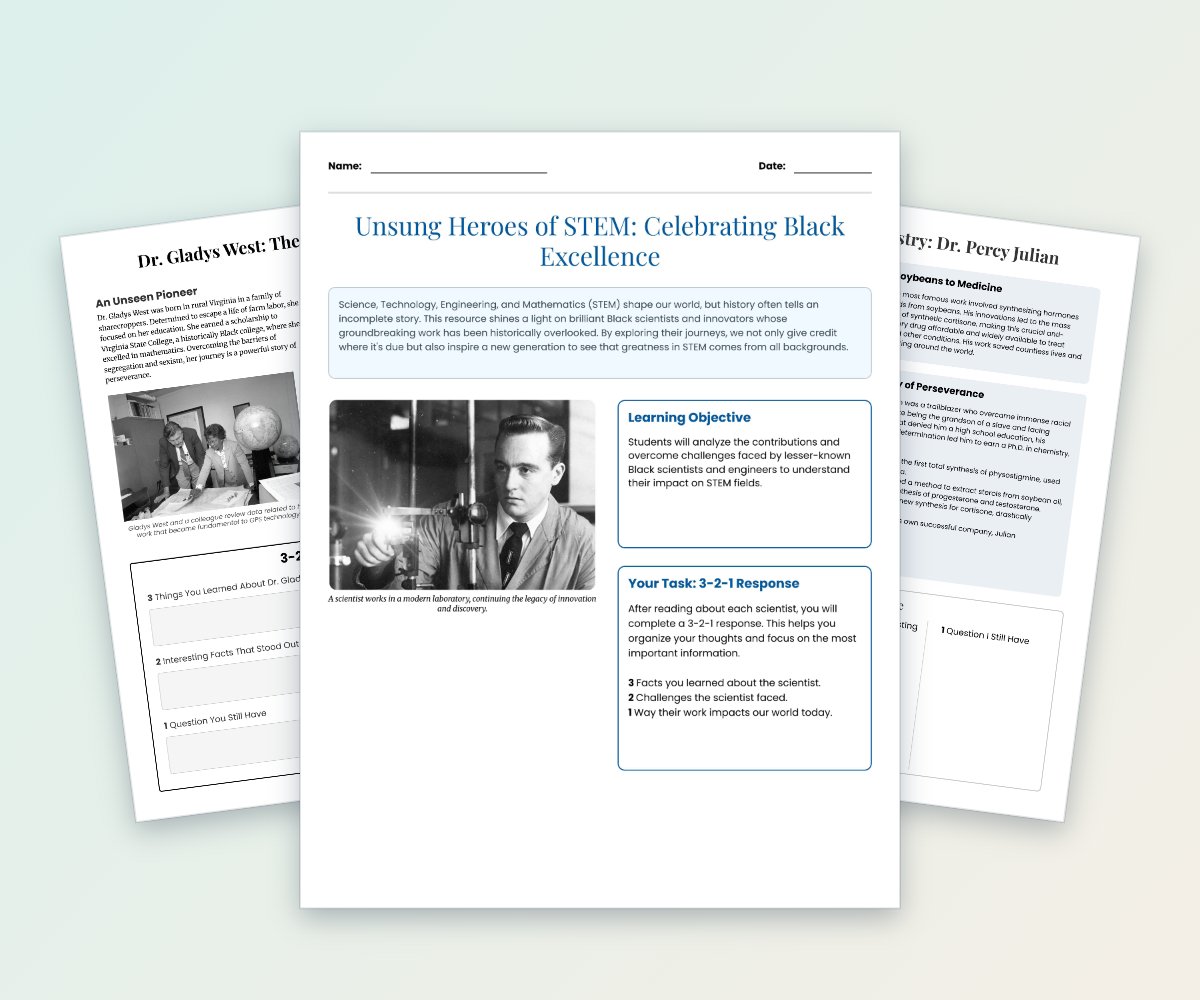
Students explore the lives, challenges, and contributions of overlooked Black scientists and innovators, including Dr.
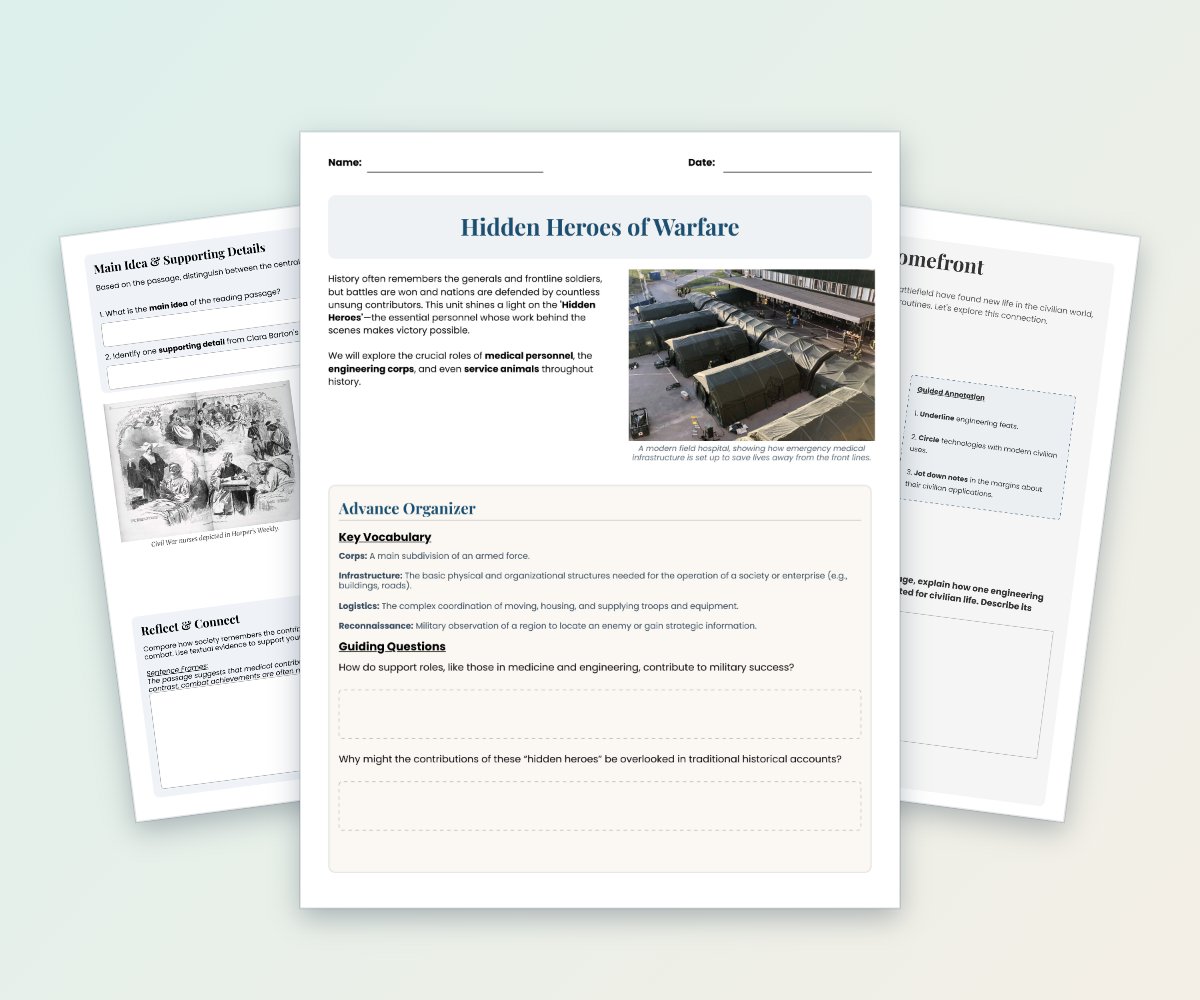
This four-page resource explores the contributions of medical personnel, engineering corps, logistics workers, and service animals in warfare.
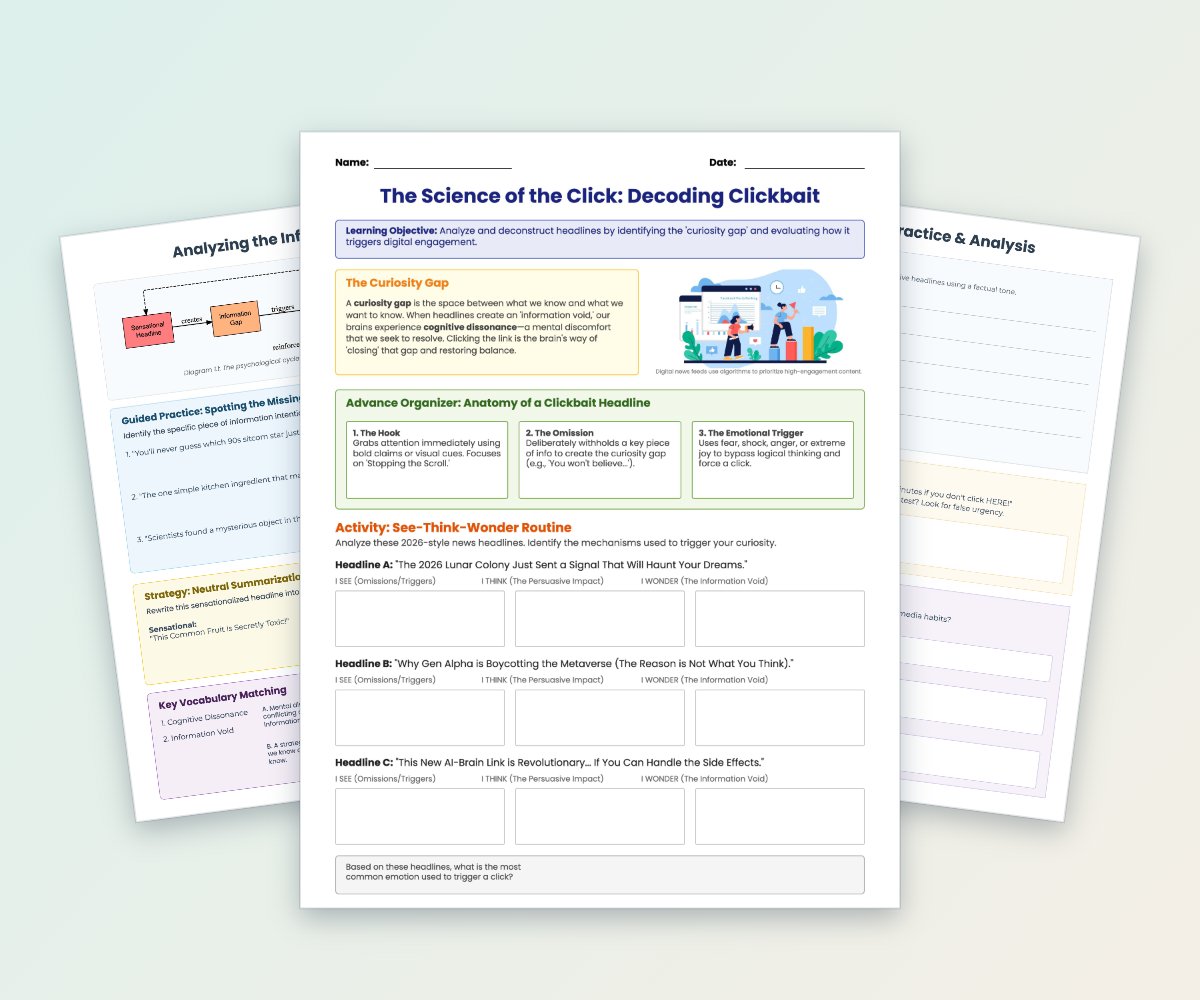
Students learn how clickbait headlines use curiosity gaps, omissions, and emotional triggers to encourage digital engagement.
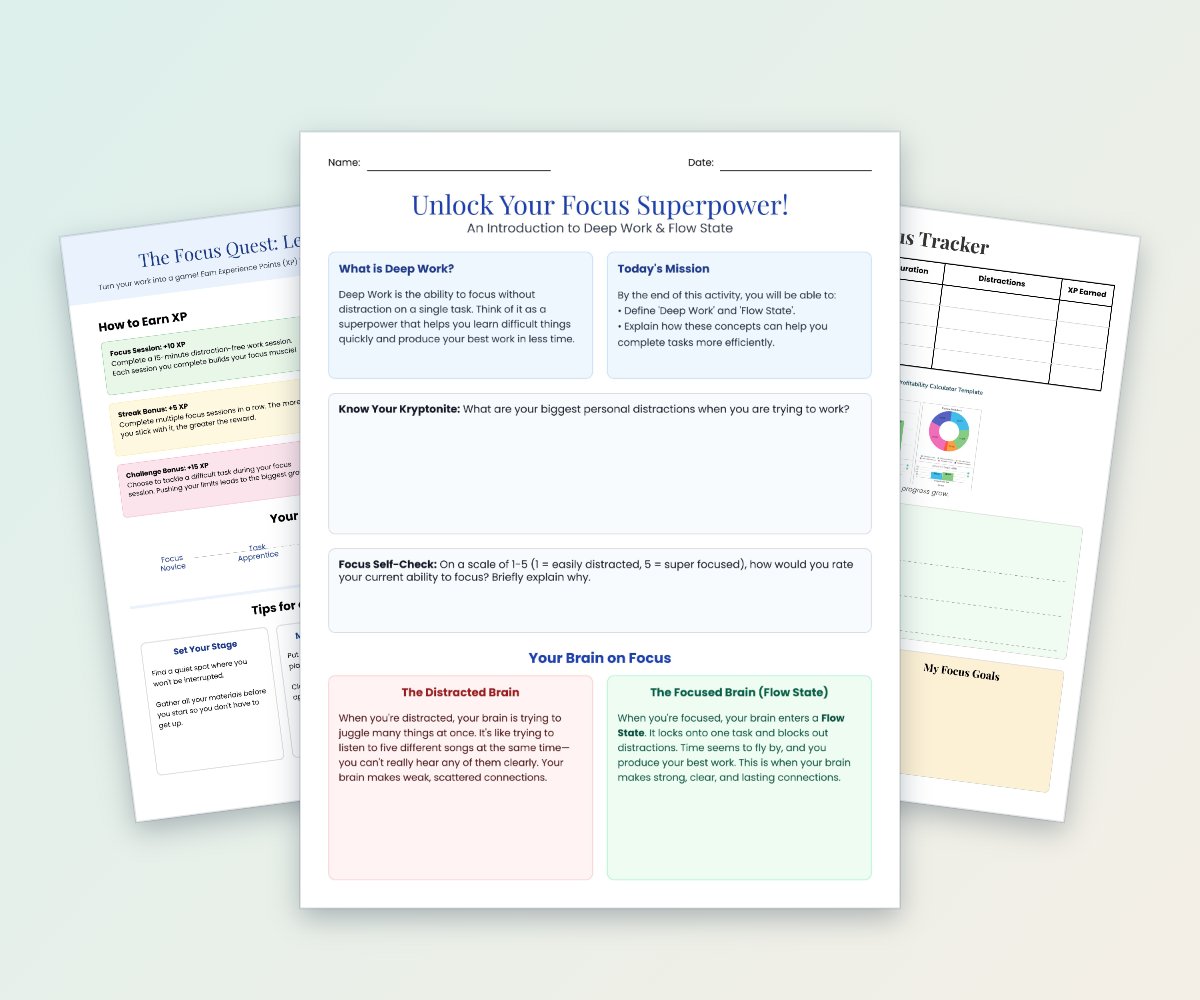
This four-page student worksheet introduces deep work and flow state through explanations, self-reflection, focus challenges, and a tracking chart.
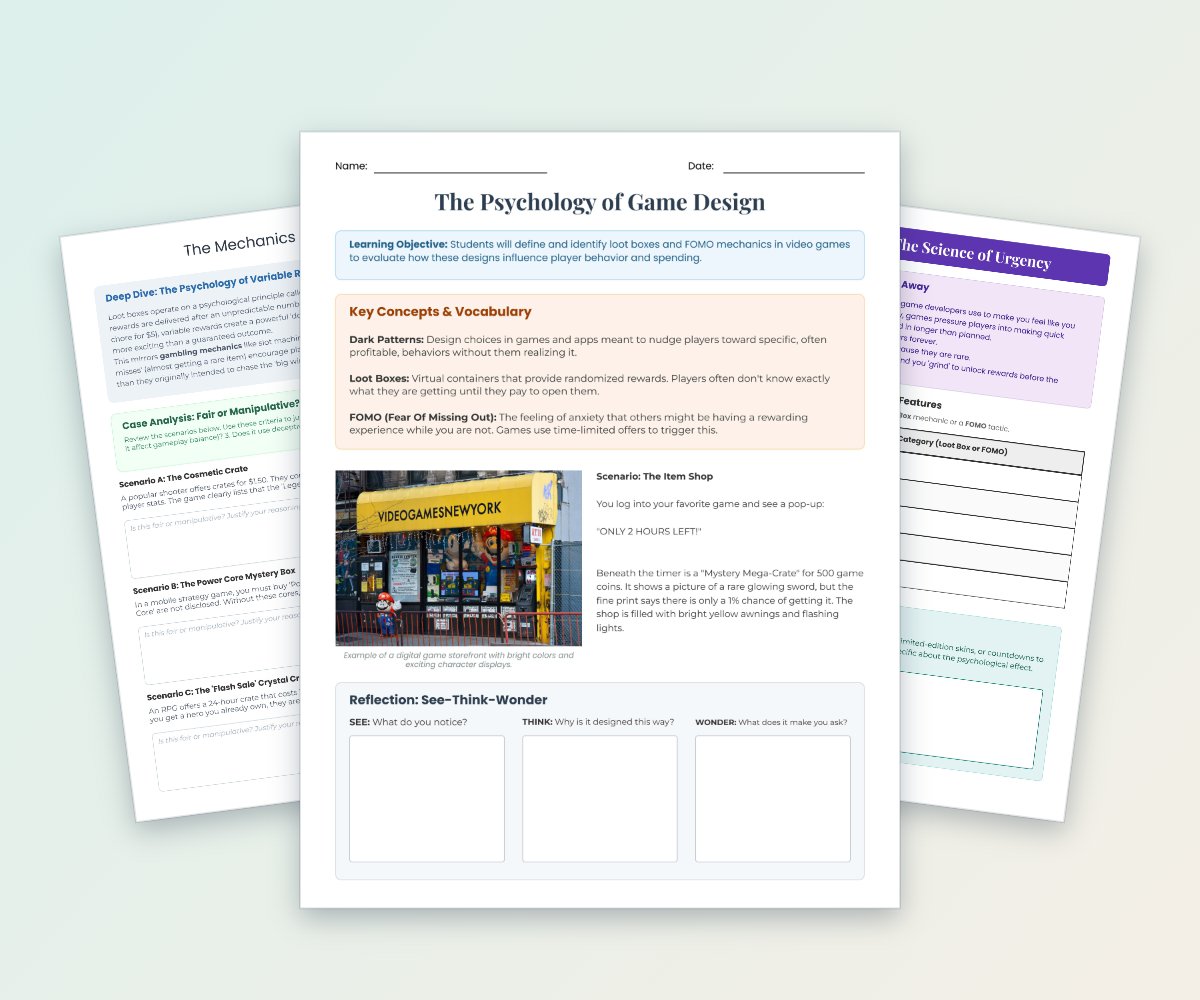
Students explore how loot boxes, FOMO, variable rewards, and virtual pricing influence player behavior and spending.
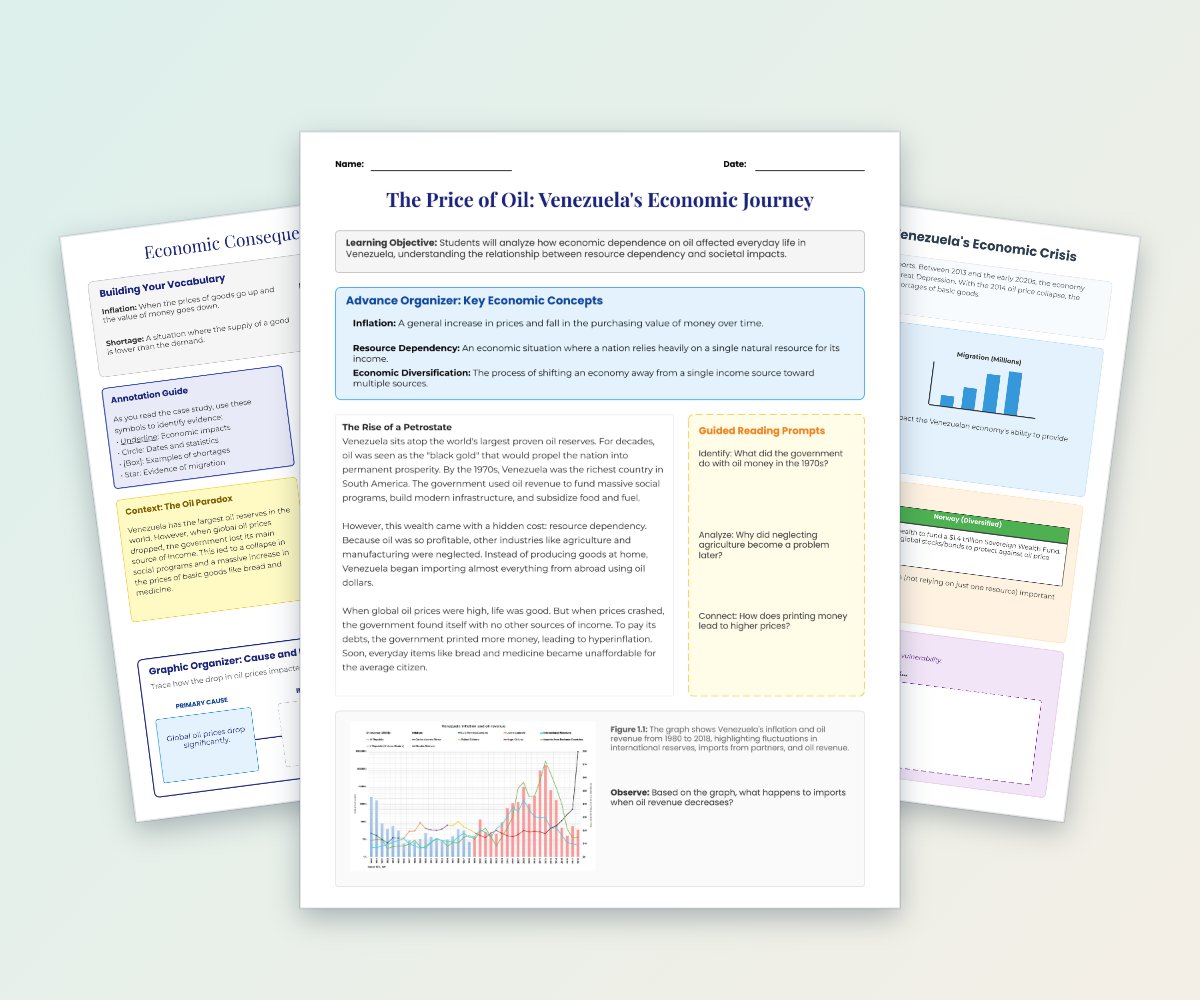
This four-page case study examines how Venezuela’s dependence on oil affected inflation, imports, agriculture, manufacturing, and everyday life.
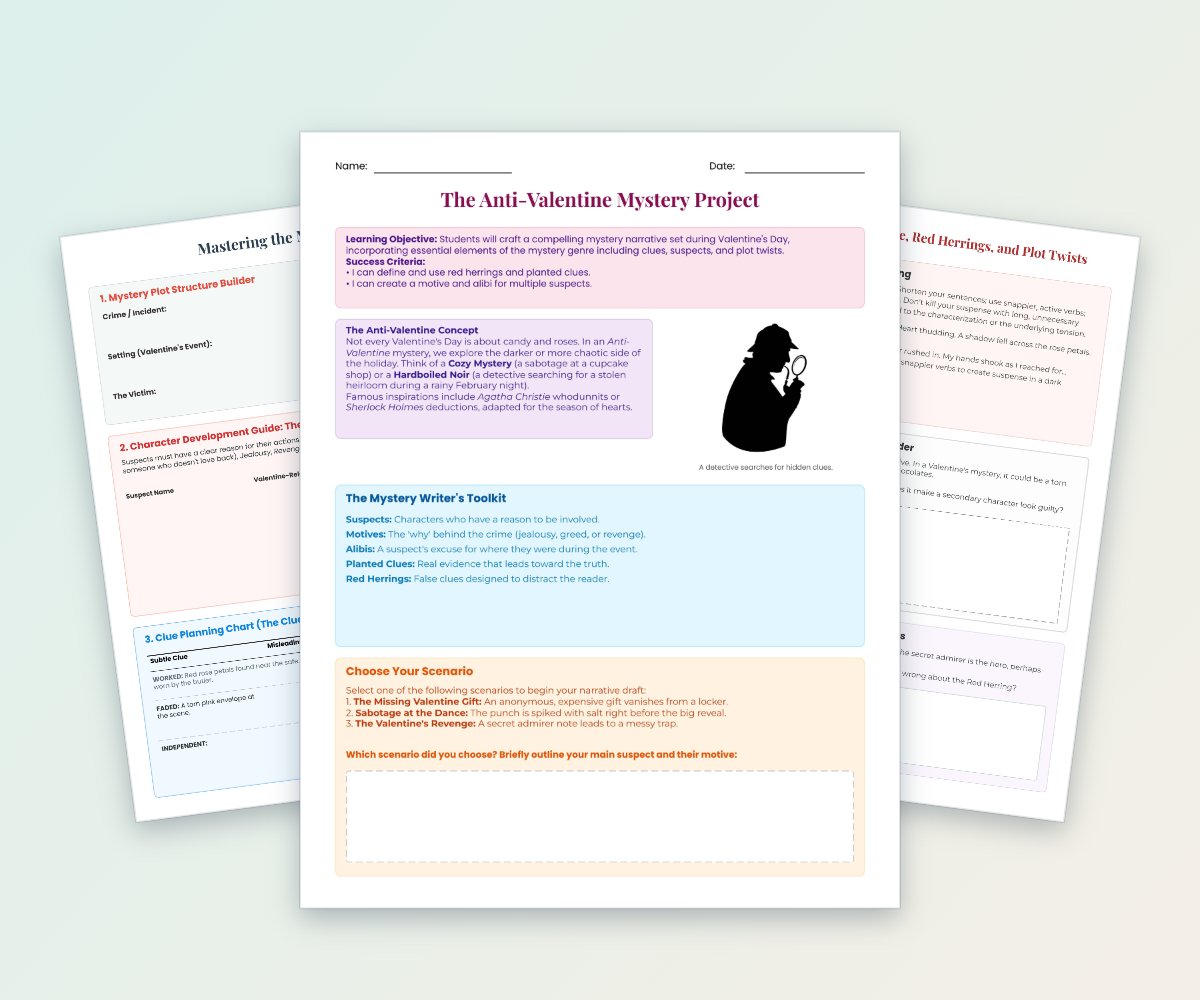
Students develop a Valentine's-themed mystery narrative using suspects, motives, alibis, planted clues, red herrings, and plot twists.
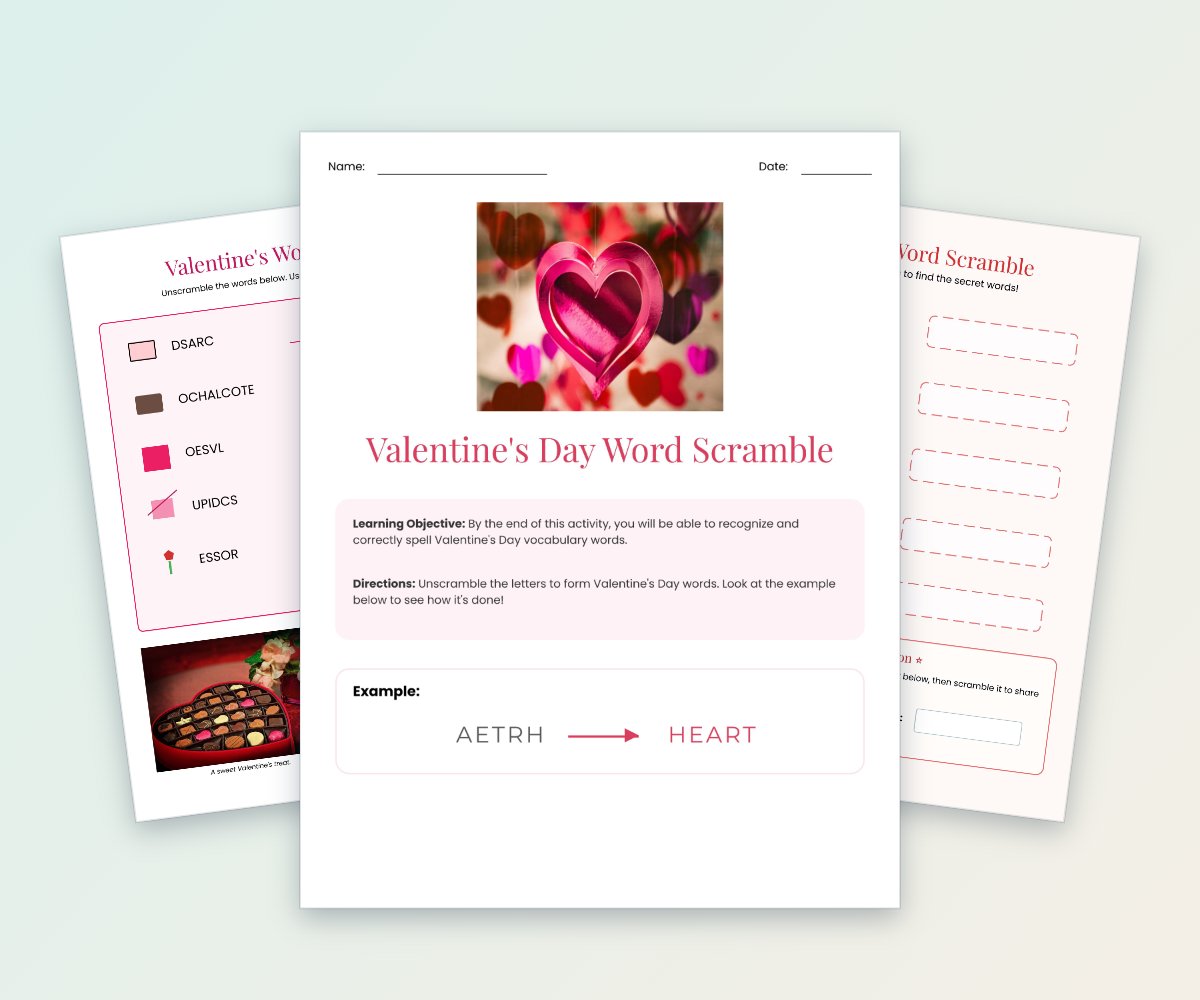
Students unscramble Valentine's Day vocabulary words using picture hints and an example.
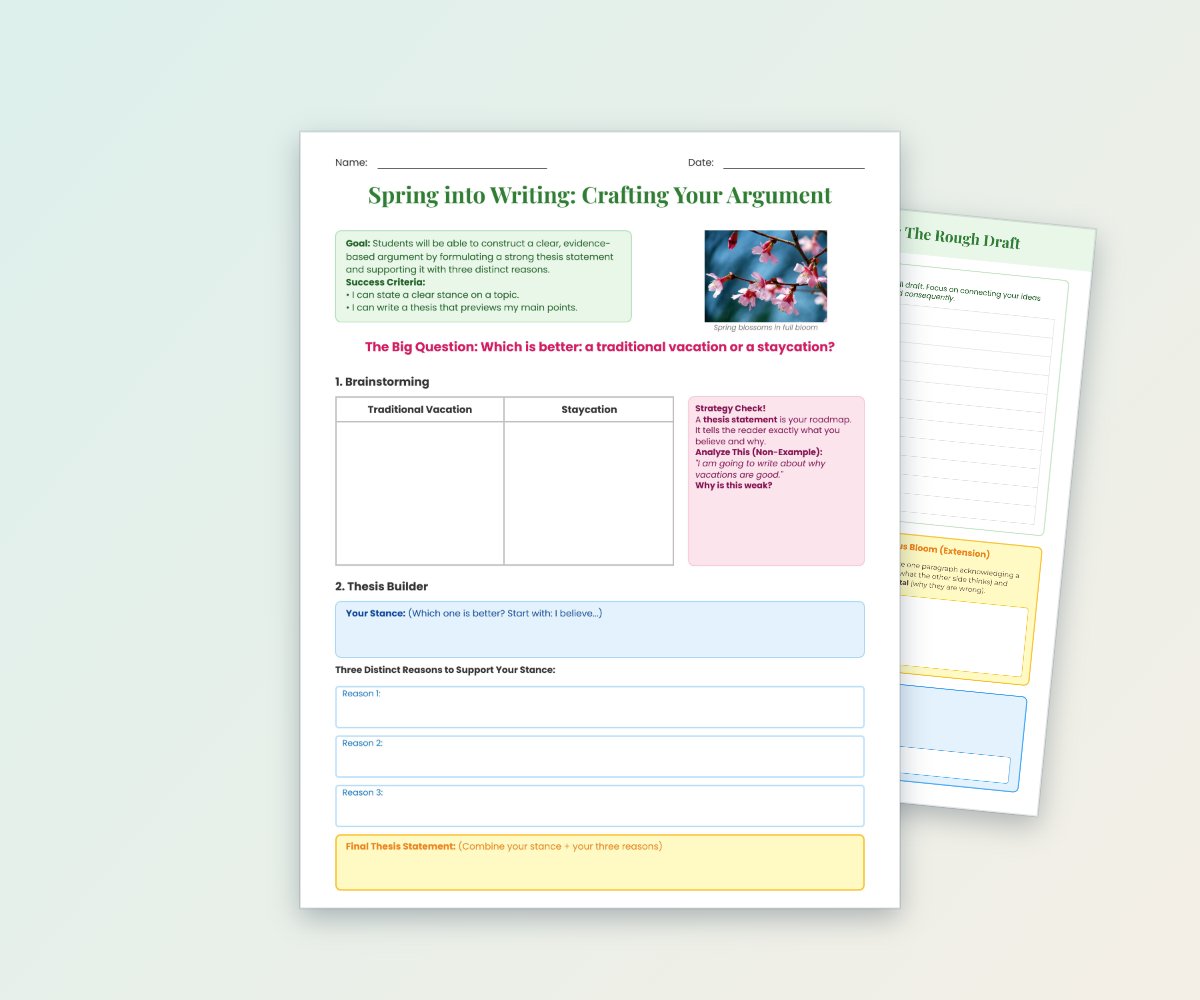
Students compare traditional vacations and staycations while developing a thesis and three supporting reasons.
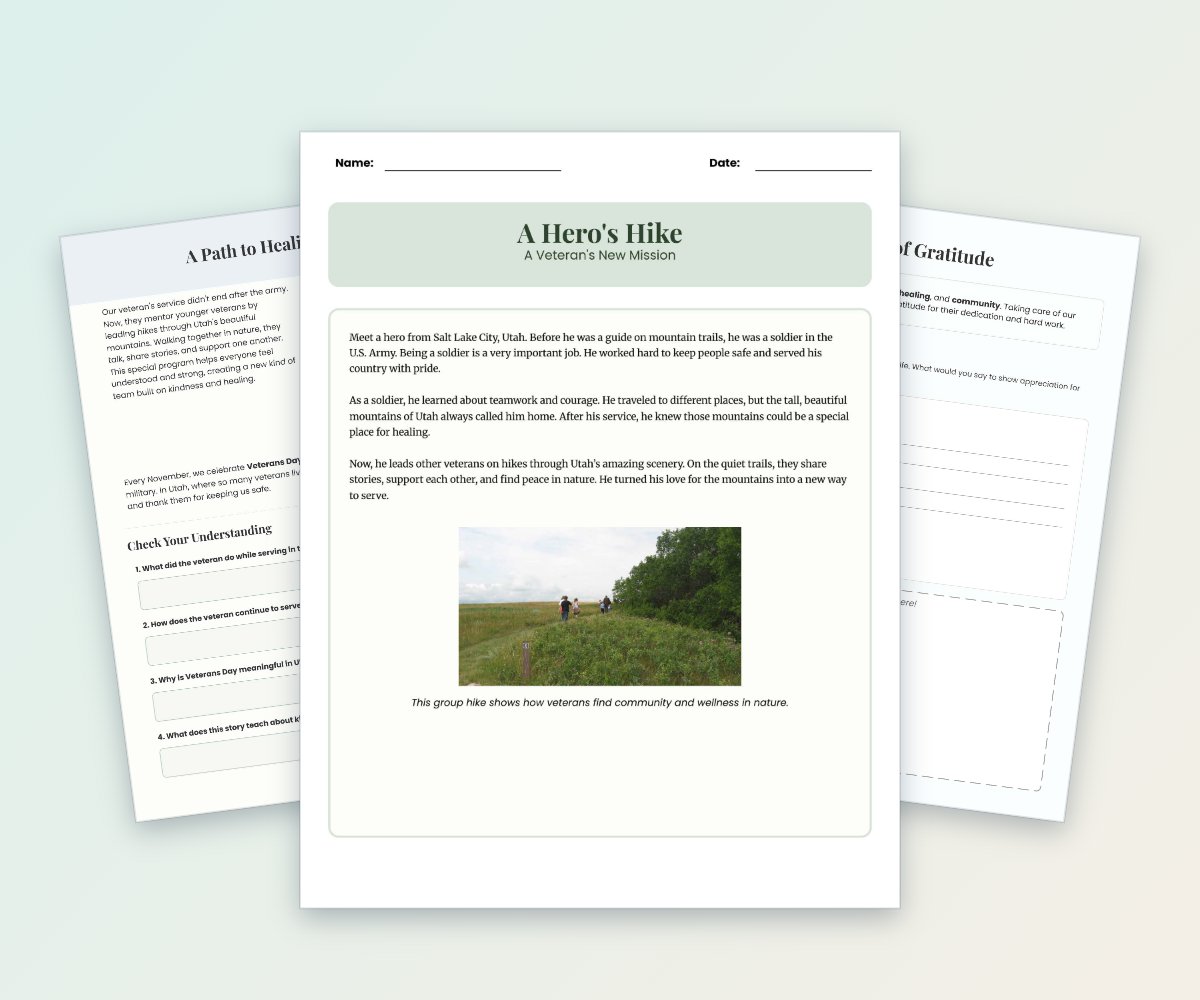
Students read an informational passage about a Utah veteran who leads healing hikes, then answer comprehension questions.
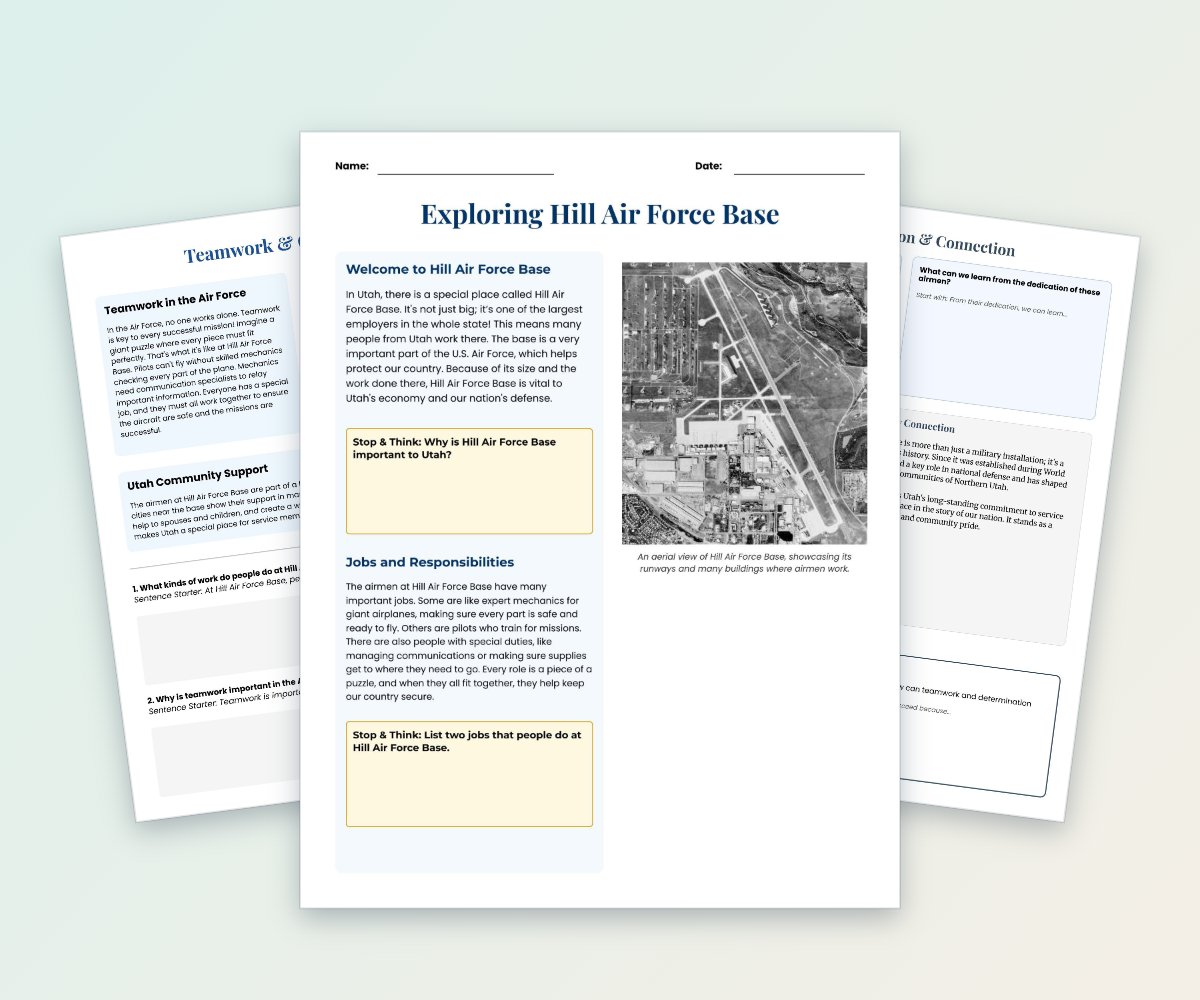
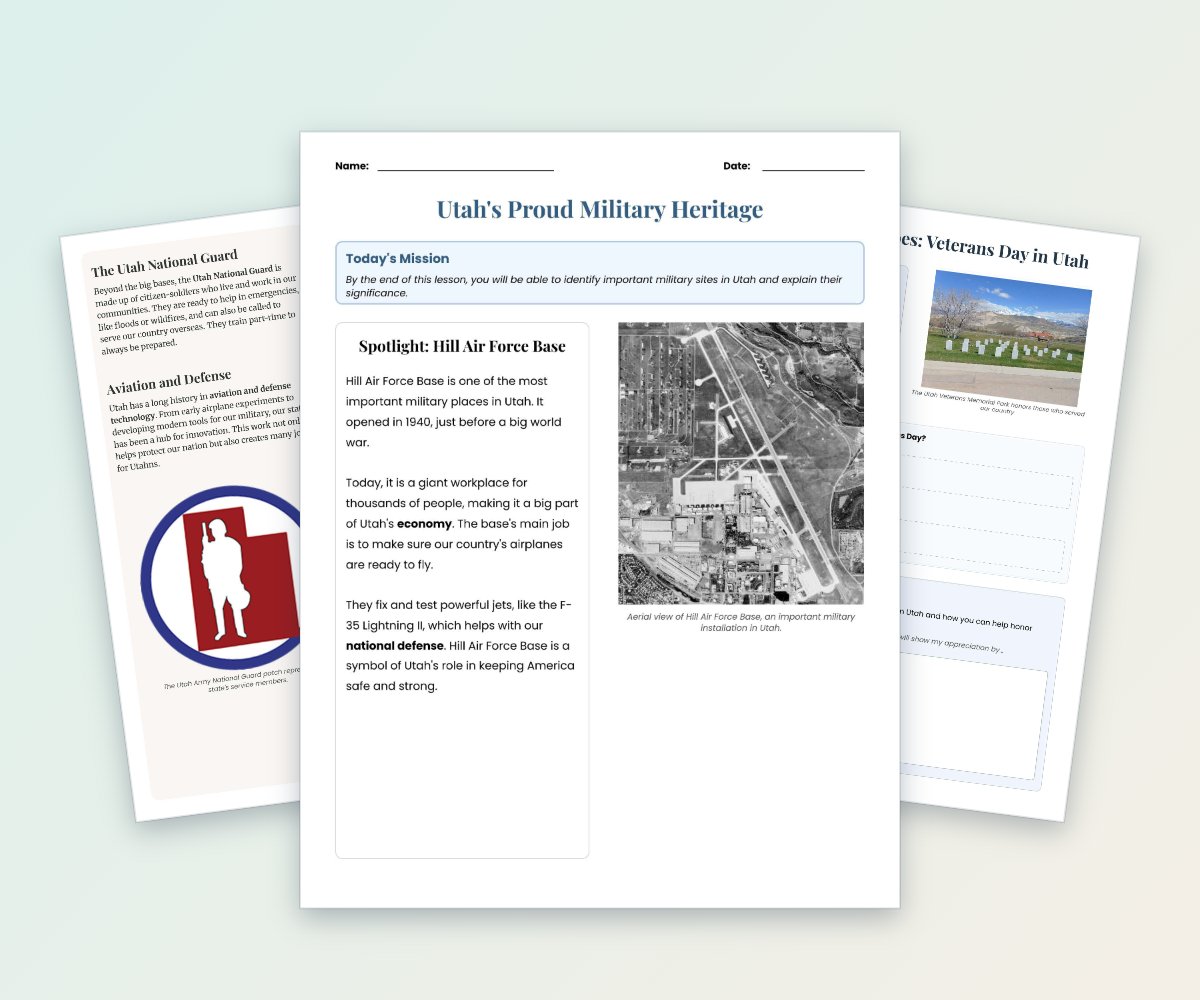
Students read about Hill Air Force Base, its role in Utah, Air Force careers, teamwork, and community support.
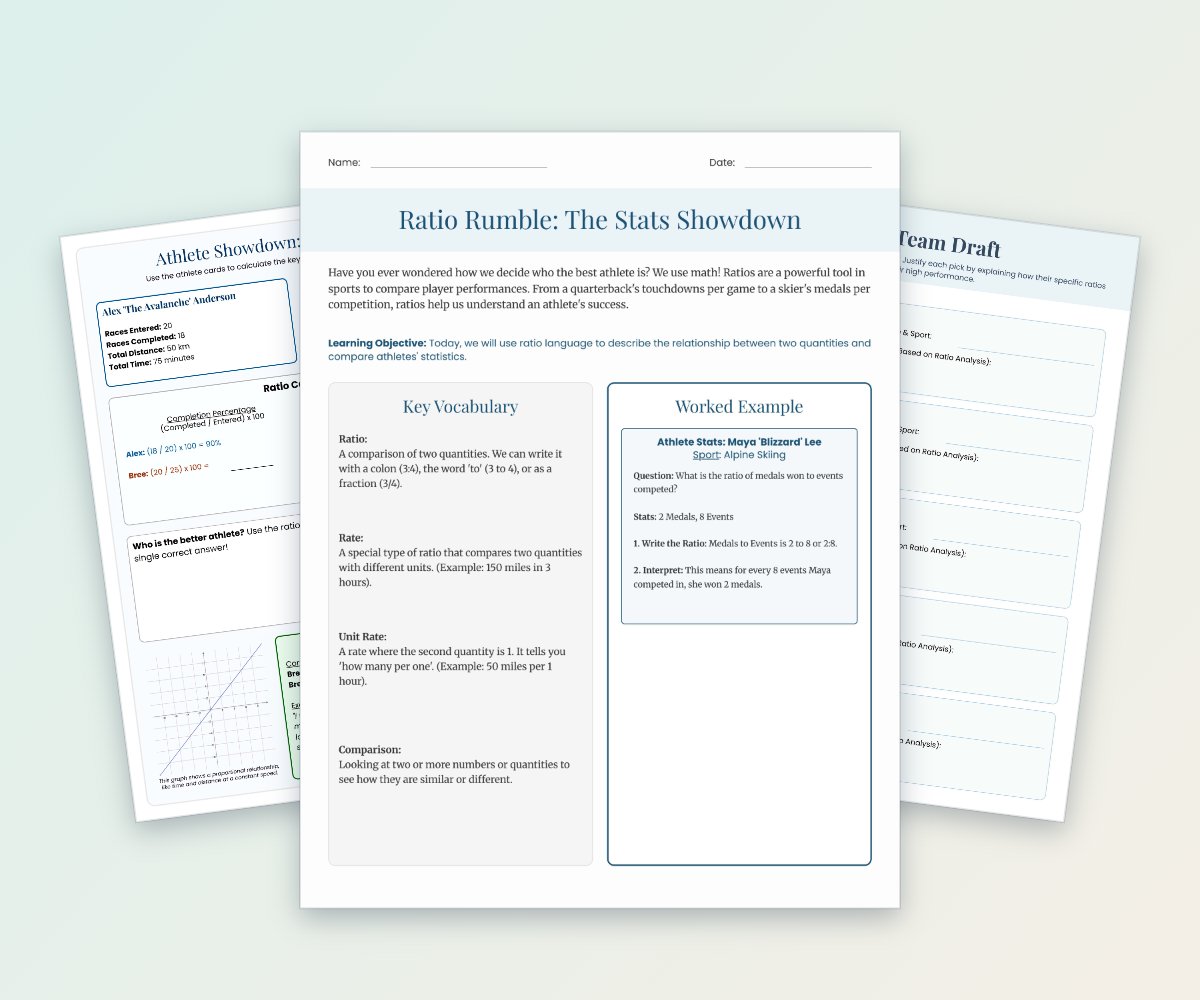
Students use sports statistics to calculate ratios, rates, unit rates, completion percentages, and speed.
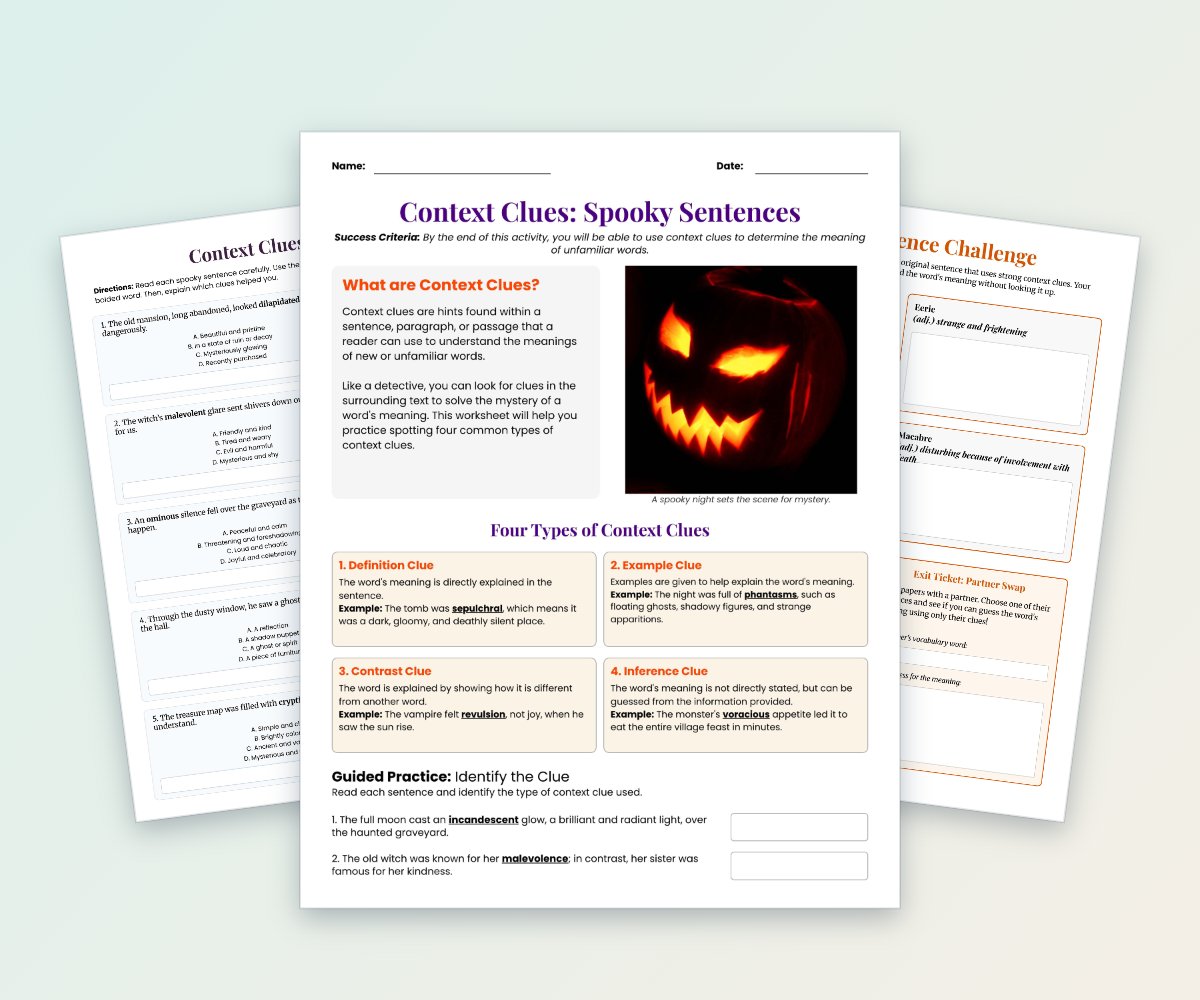
Students learn four types of context clues through spooky examples and guided practice.
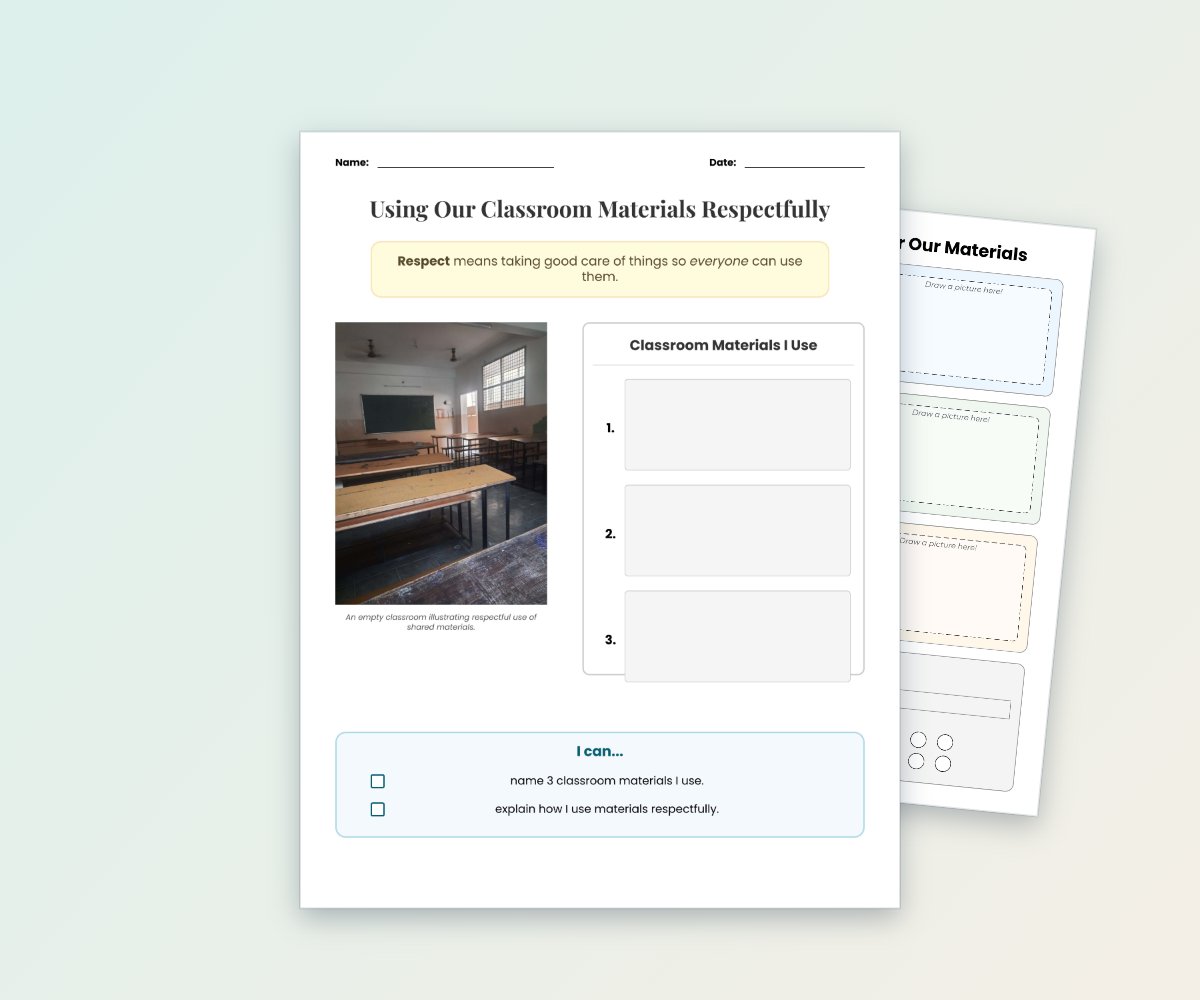
This two-page worksheet helps students identify classroom materials and describe respectful ways to use them.
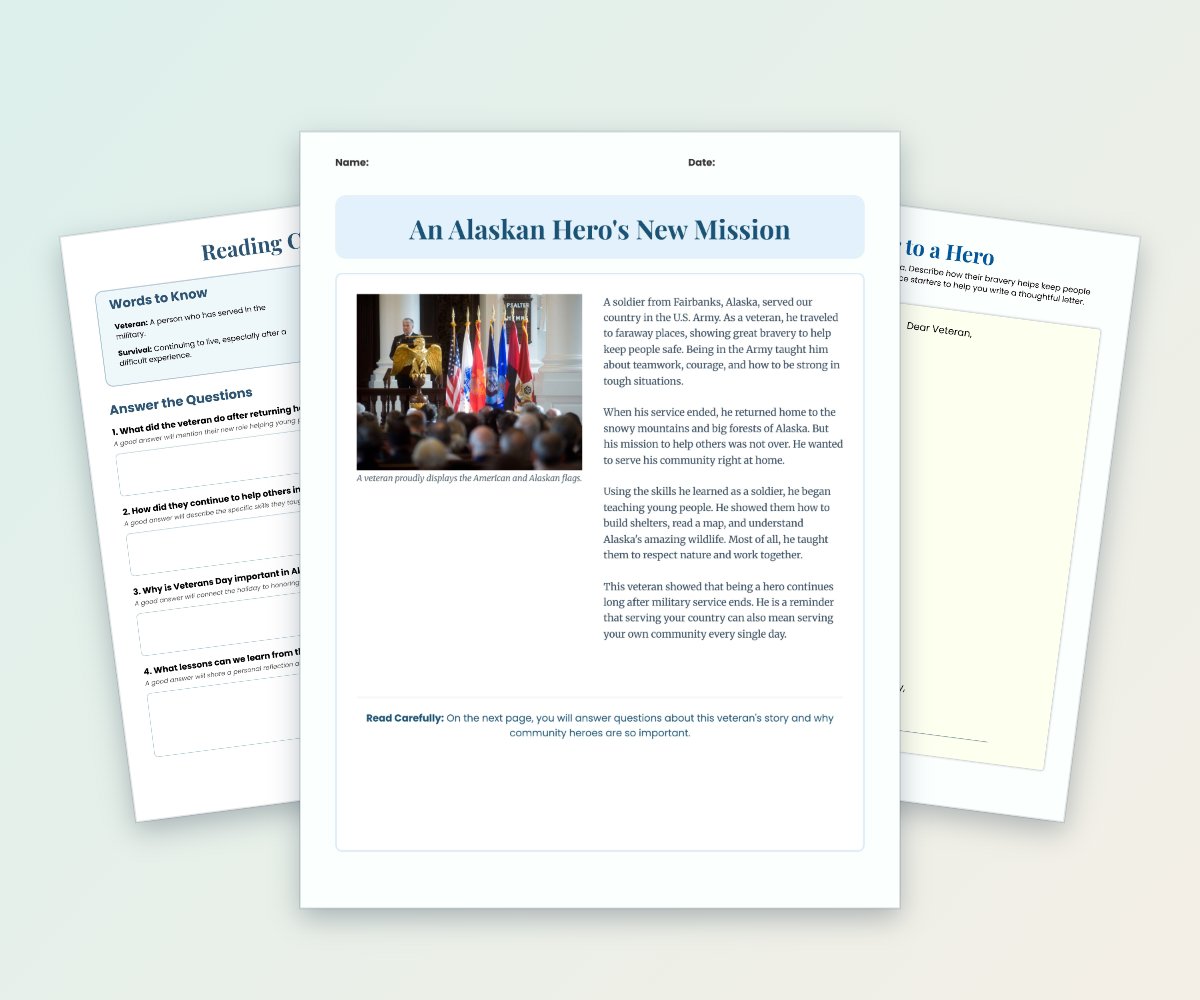
Students read about an Alaskan veteran who continues serving the community by teaching survival skills, teamwork, and respect for nature.
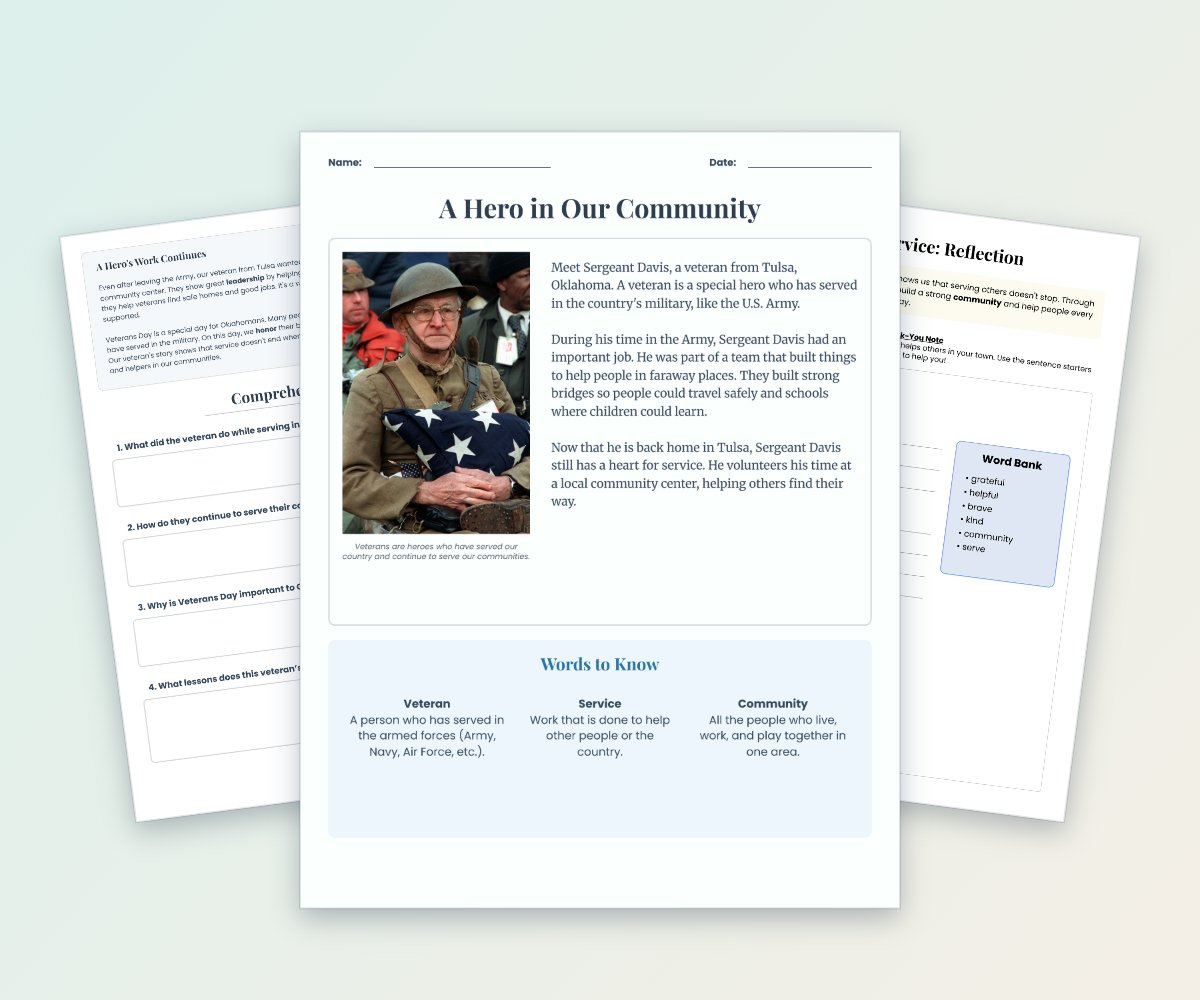
Students read about an Oklahoma veteran's military and community service, learn key vocabulary, and answer comprehension questions.
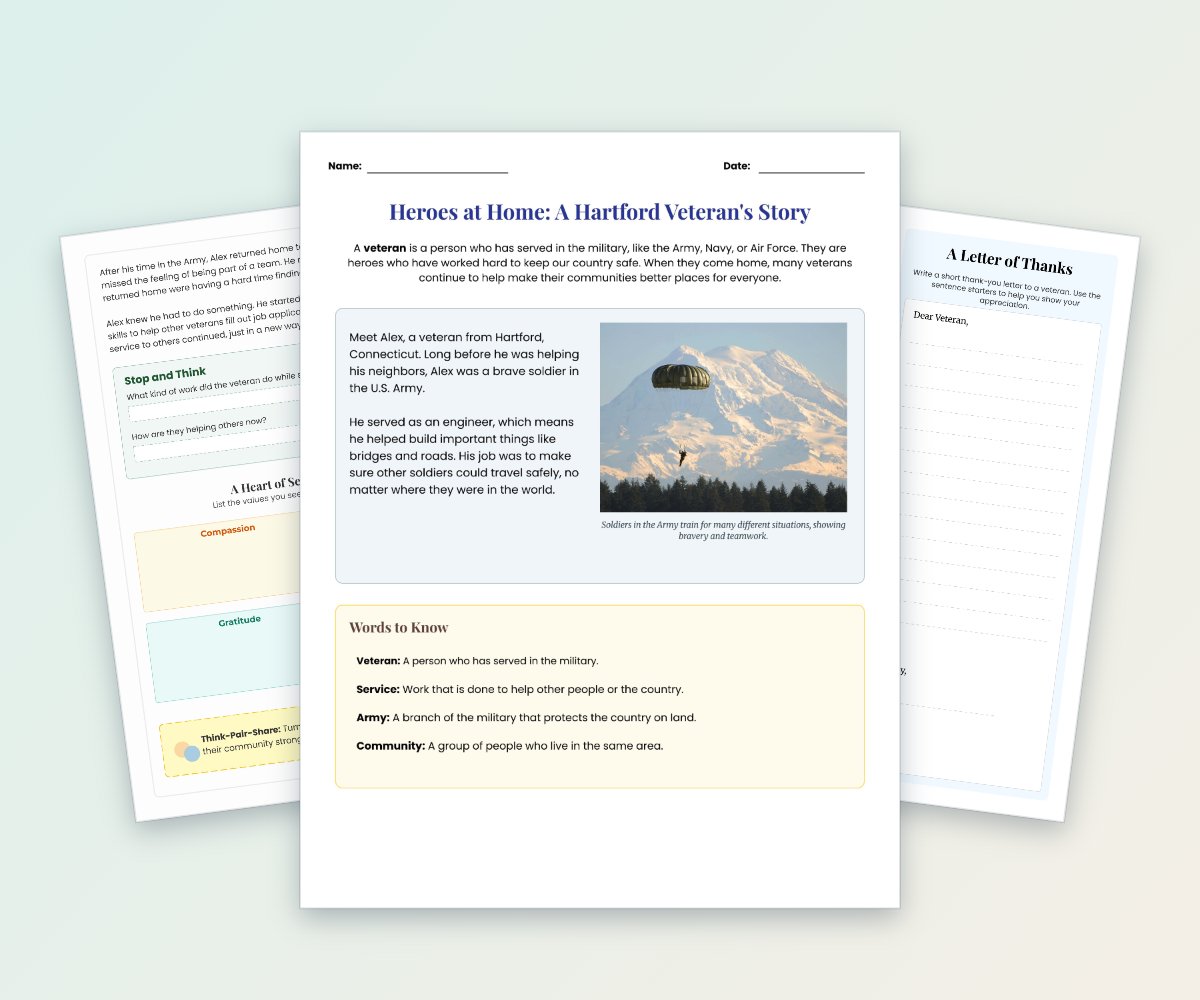
Students read a short nonfiction story about a Hartford veteran who continues serving his community after military service.
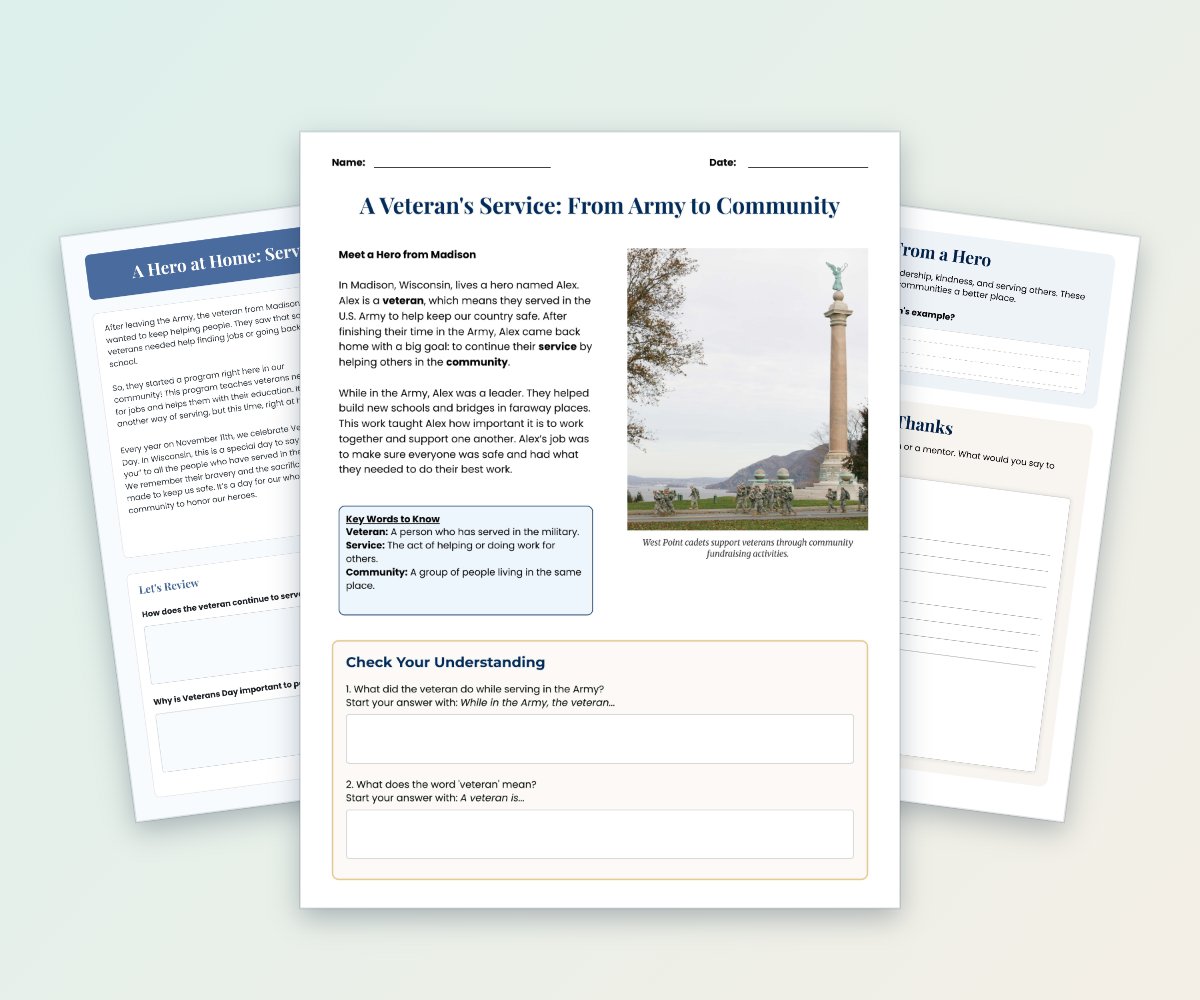
Students read about a Wisconsin veteran’s military and community service, learn key vocabulary, and answer comprehension questions.
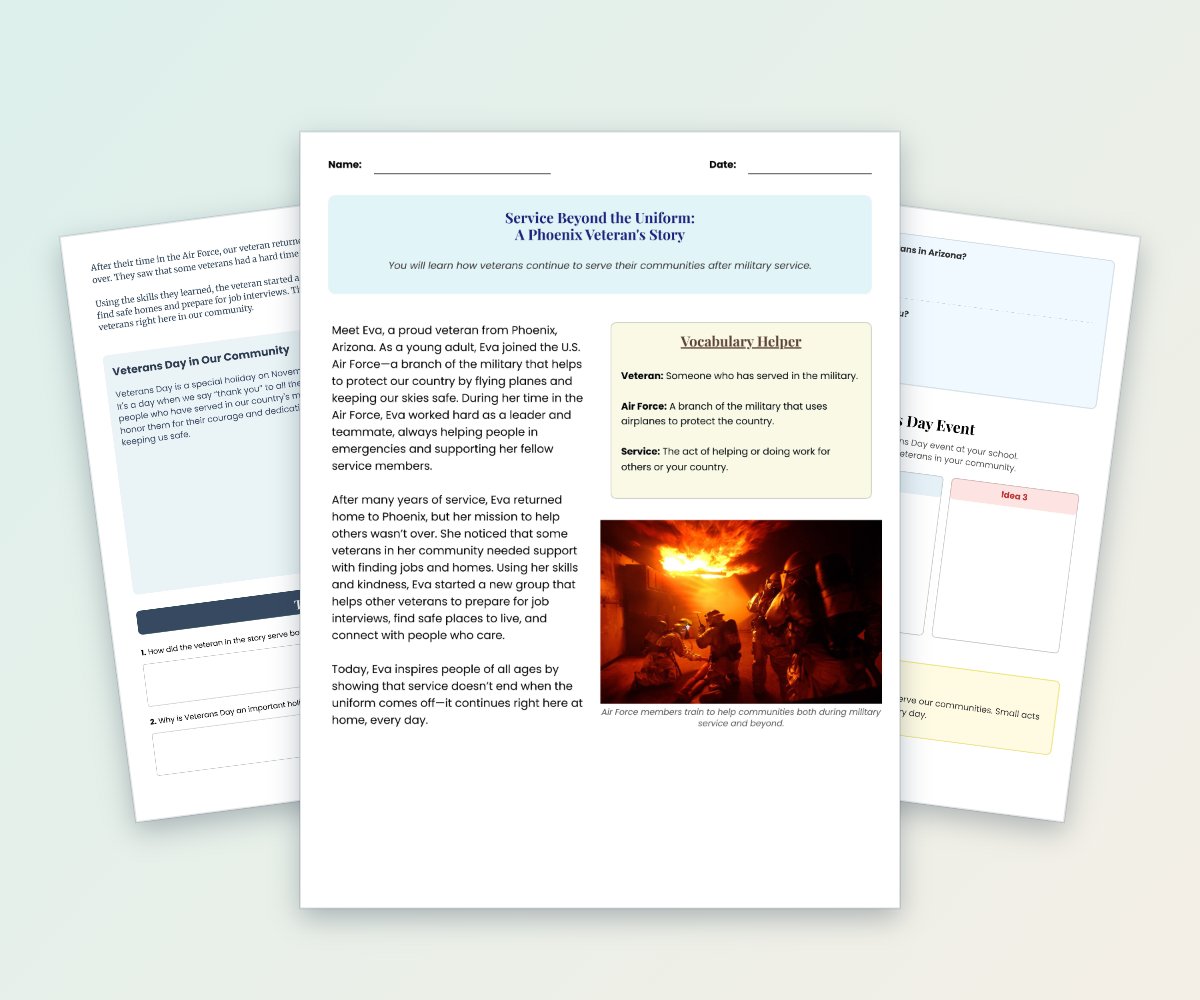
Students read about a Phoenix veteran who continues serving the community after military service.
Students read an informational passage about the Green Mountain Boys, Ethan Allen, and the capture of Fort Ticonderoga.
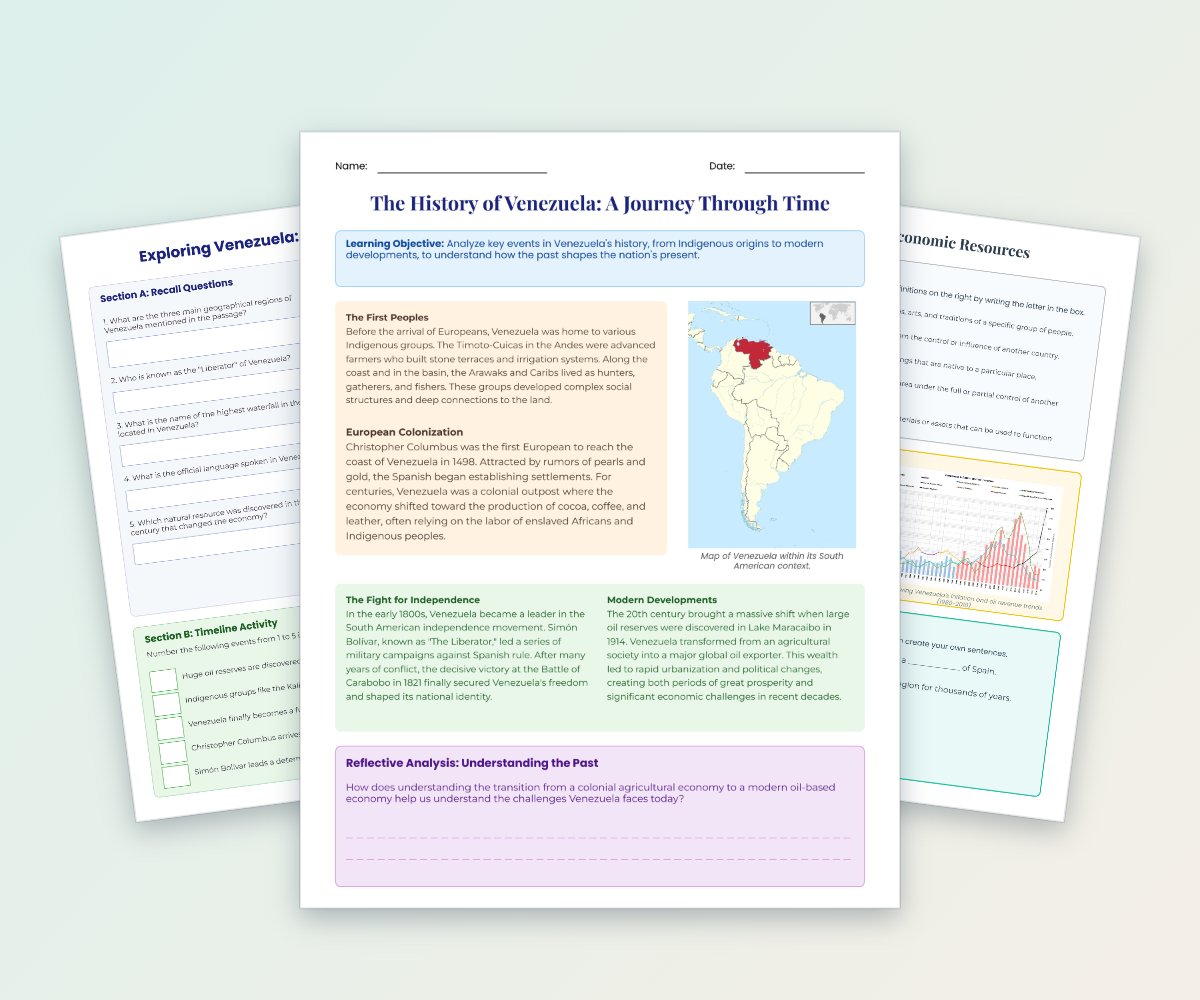
Students explore Venezuela’s Indigenous peoples, European colonization, independence movement, and transition to an oil-based economy.
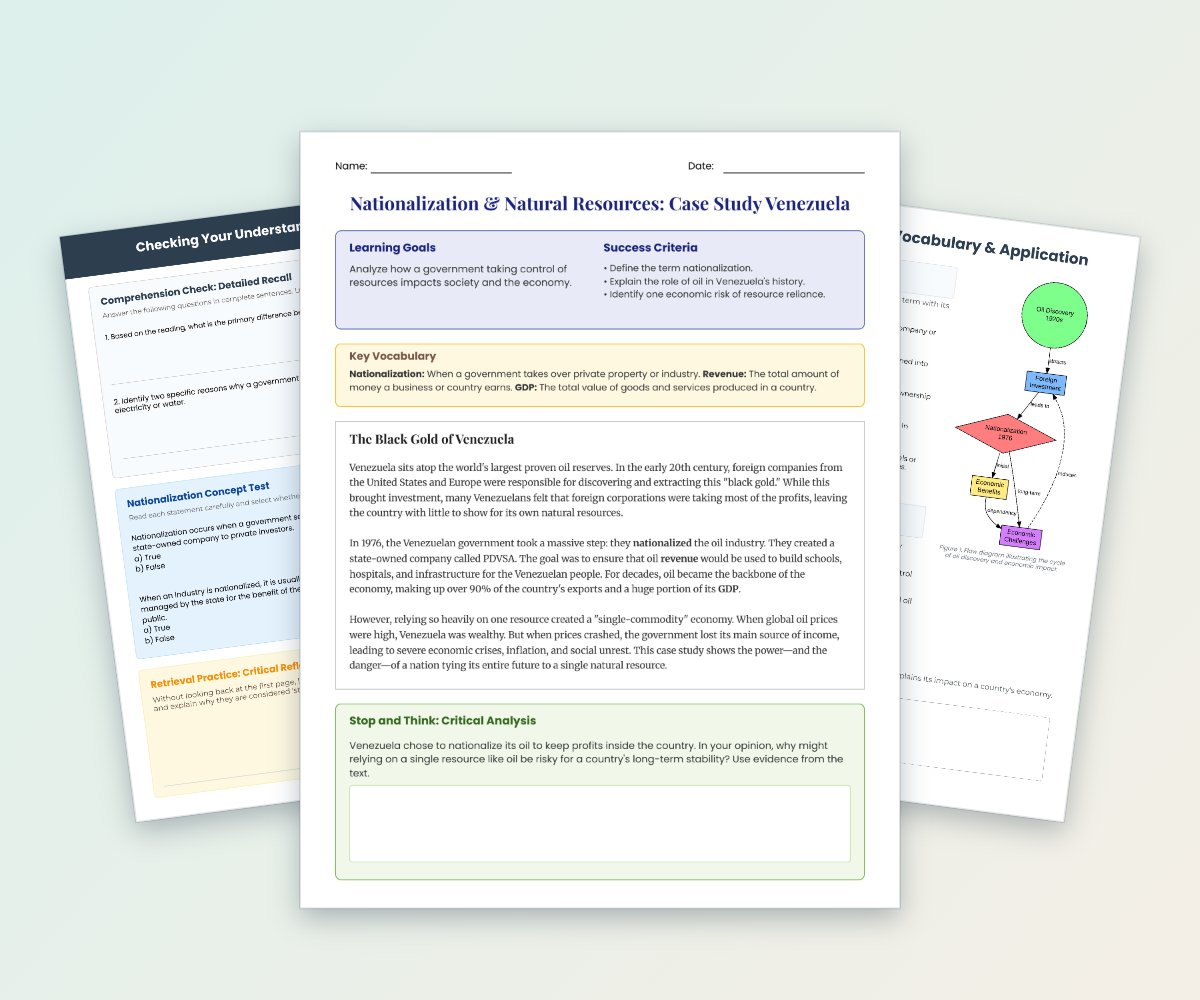
Students examine Venezuela’s 1976 nationalization of its oil industry, the role of PDVSA, and the economic risks of relying on one resource.
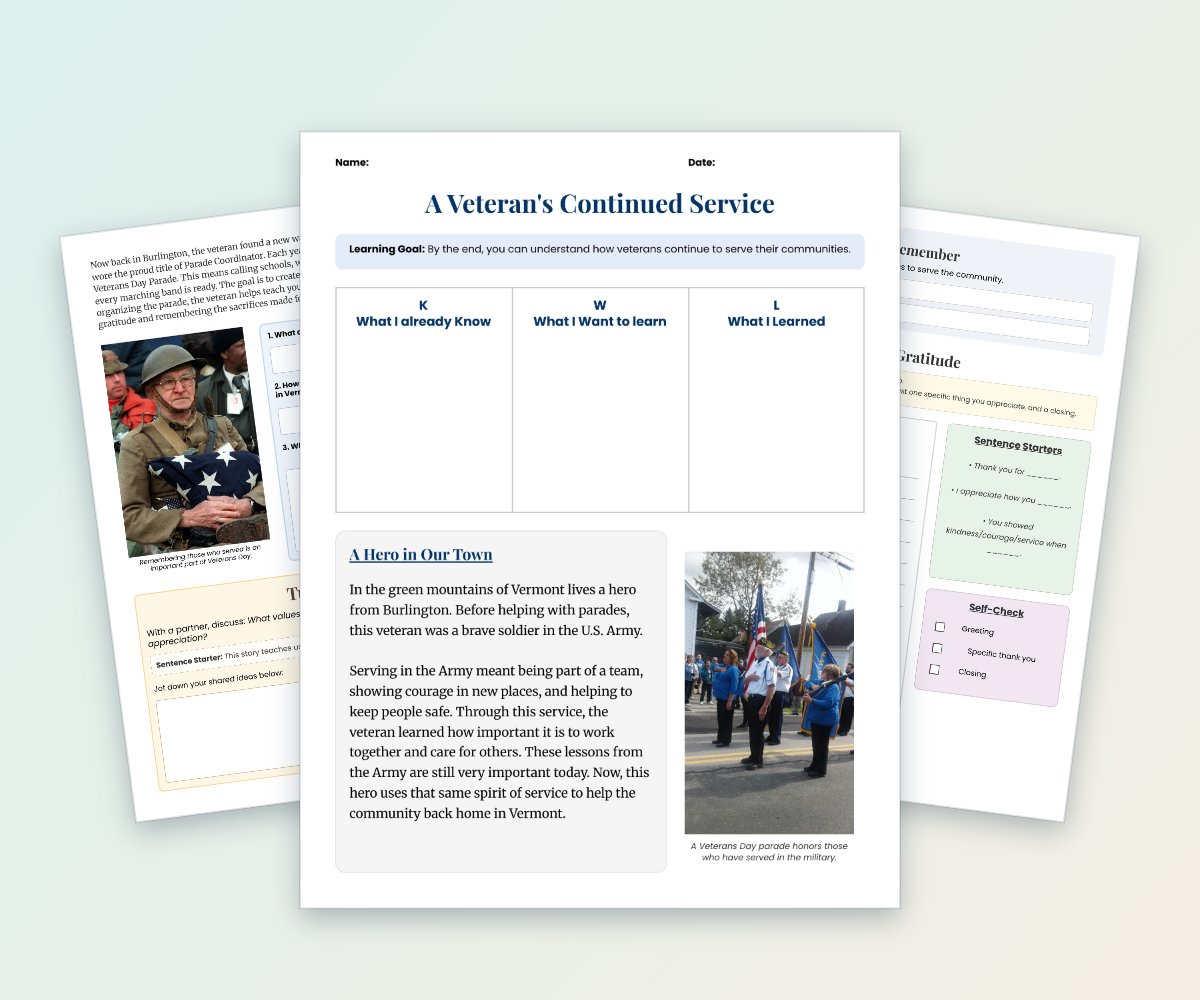
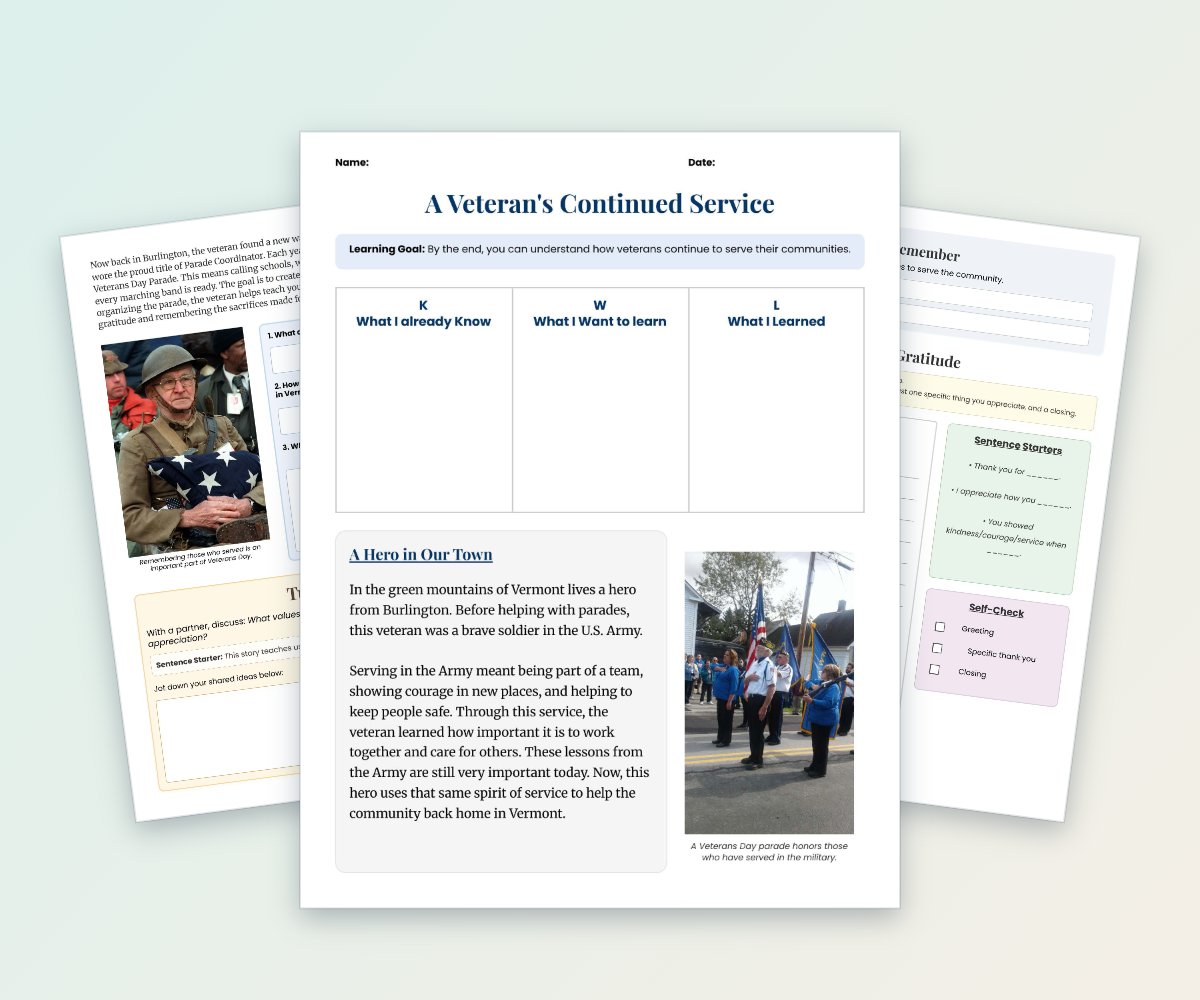
Students read about a Vermont veteran who organizes a Veterans Day parade and answer comprehension questions about service, gratitude, and community involvement.
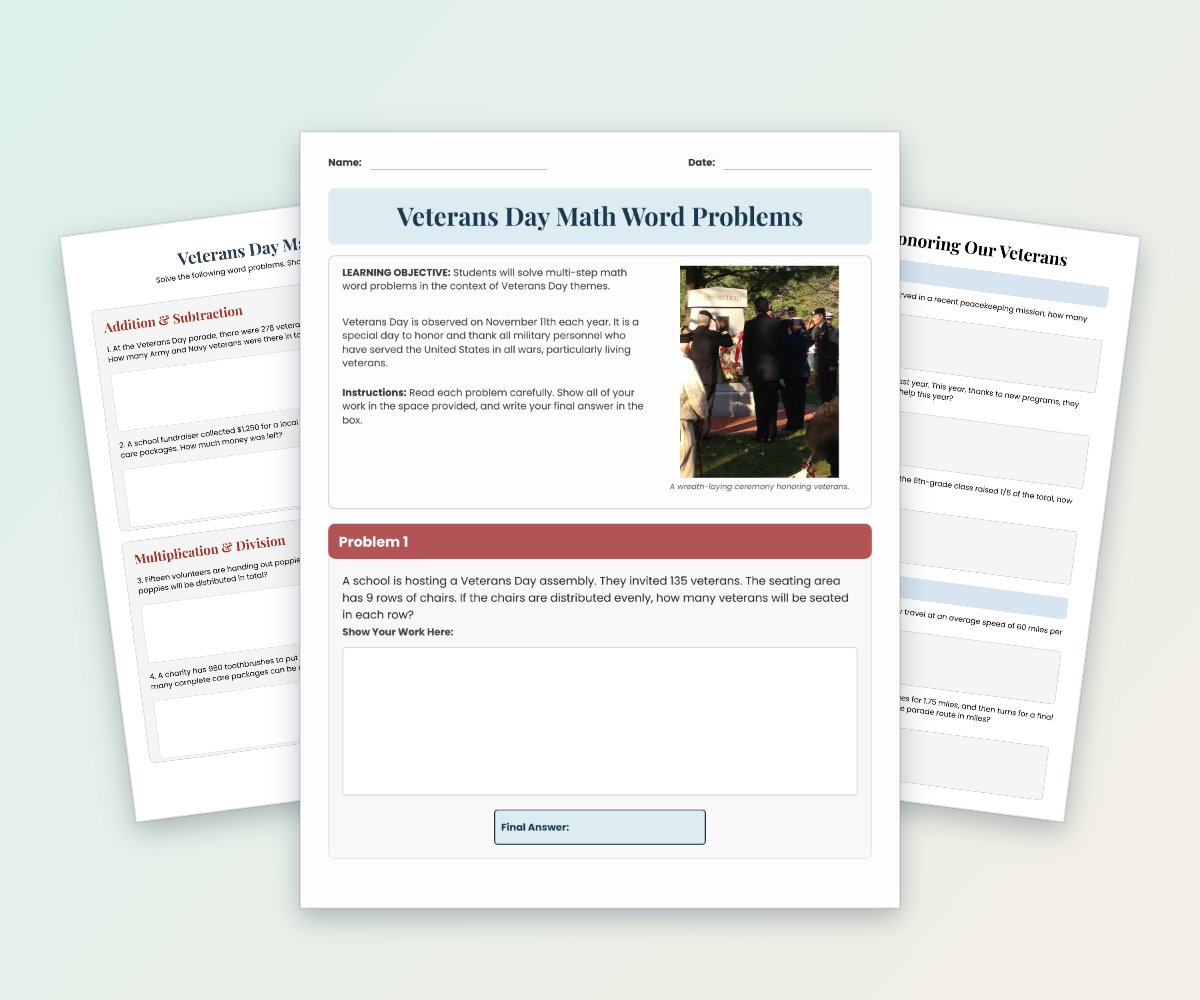
Students solve addition, subtraction, multiplication, division, fraction, percentage, time, distance, and multi-step word problems in a Veterans Day context.
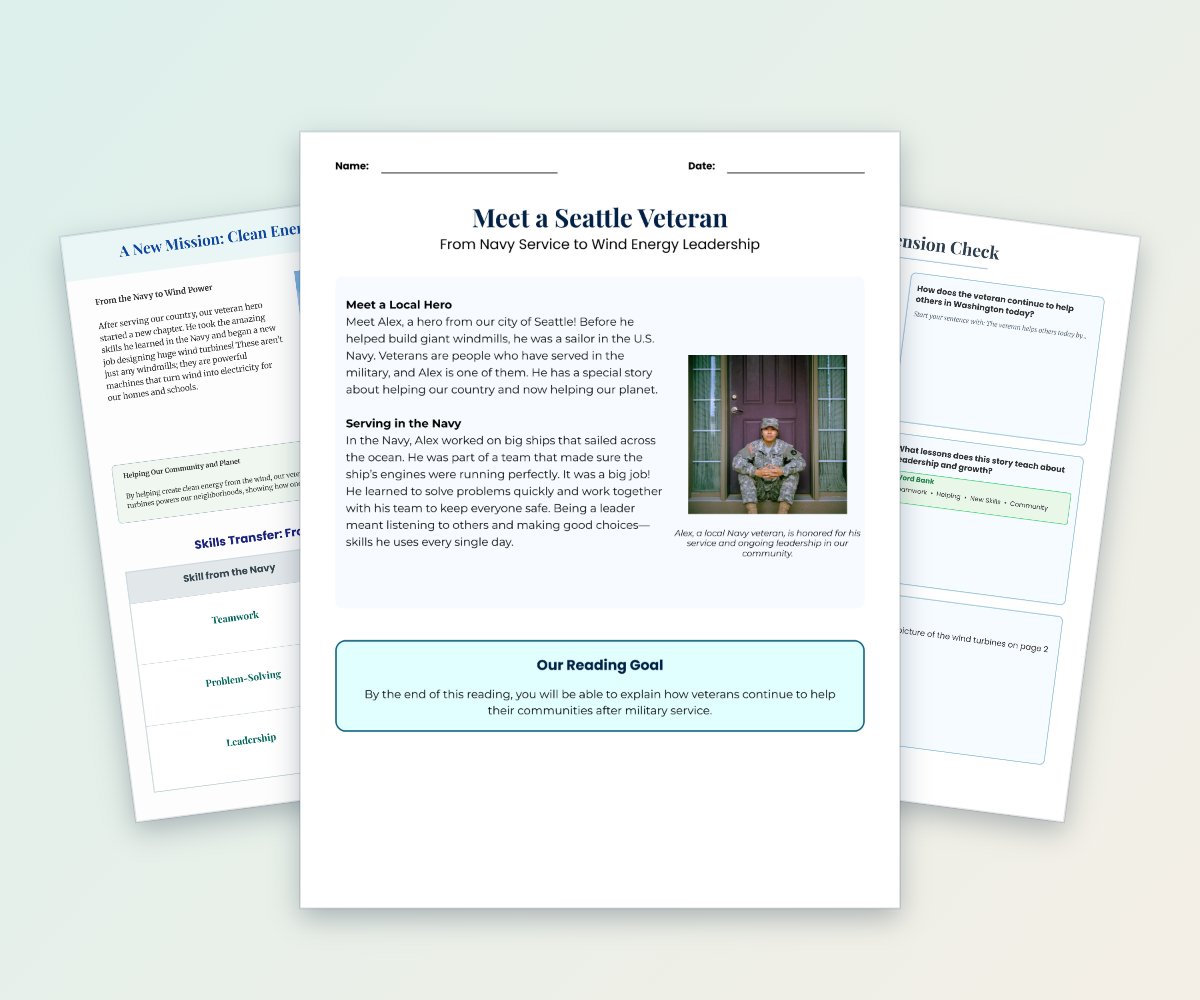
Students read about a Seattle Navy veteran who applies teamwork, problem-solving, and leadership skills to wind-energy work.
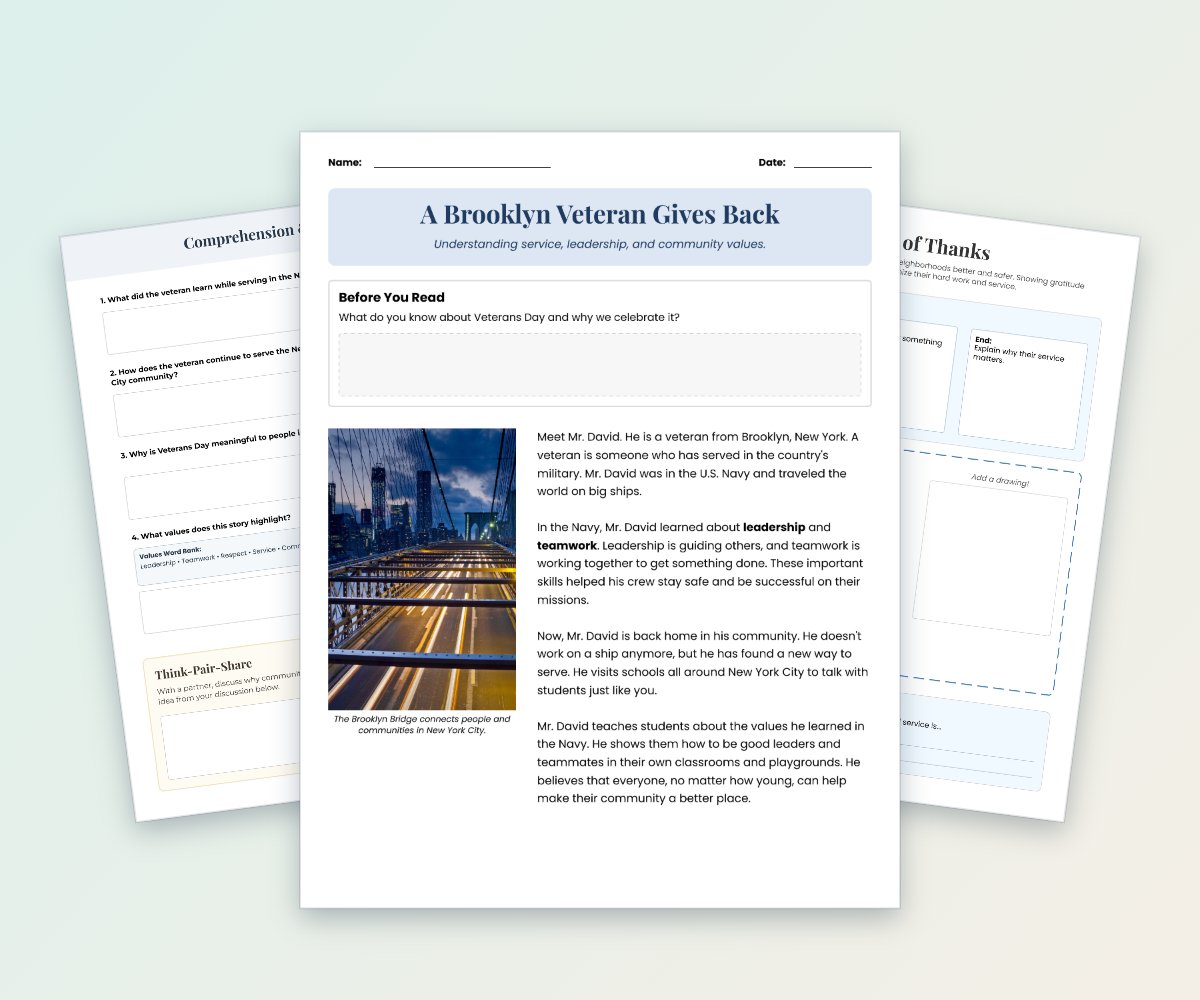
Students read about a Brooklyn veteran, answer comprehension questions, discuss leadership and teamwork, and write a thank-you letter.
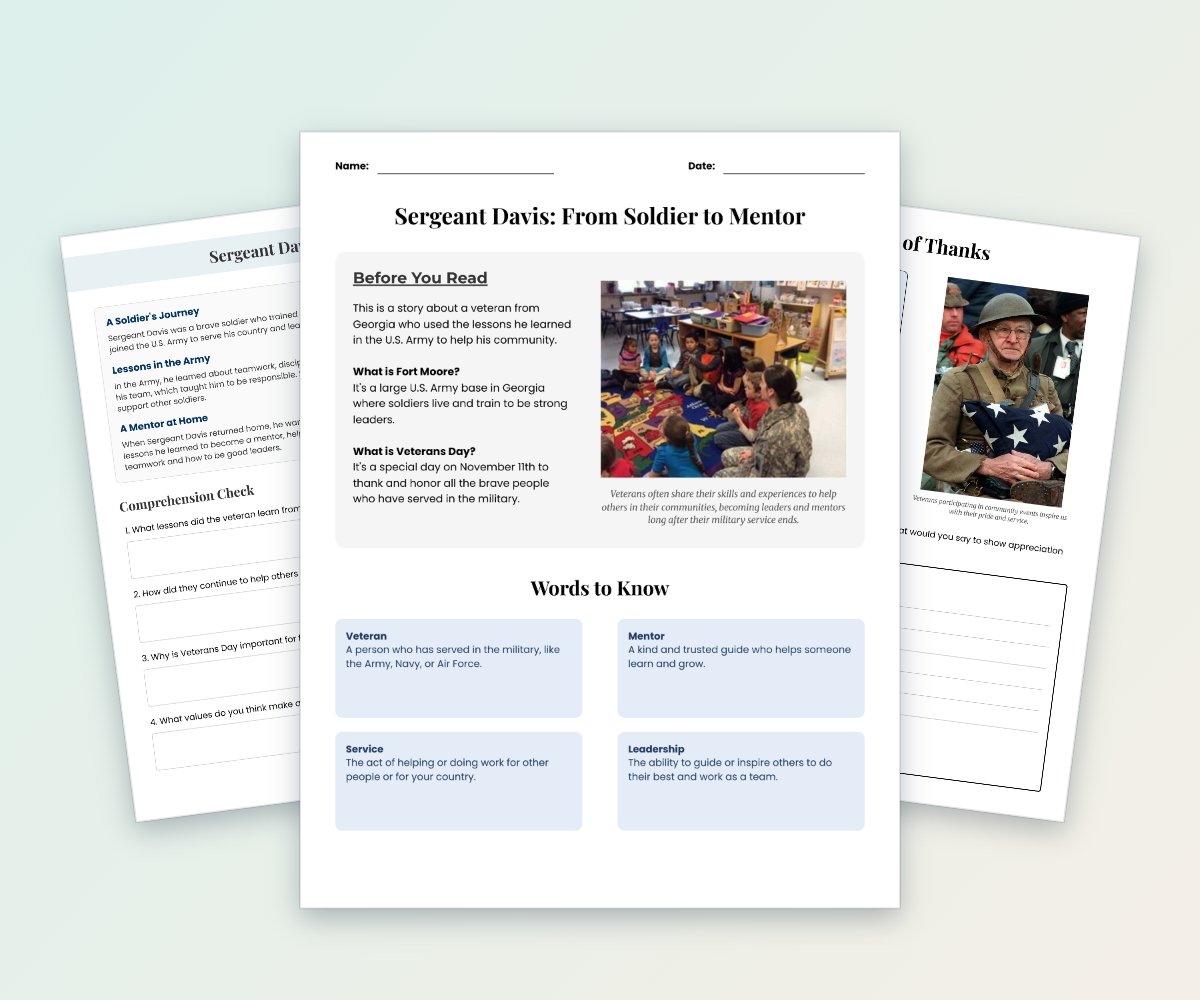
Students read a short informational story about Sergeant Davis, Fort Moore, Veterans Day, and community mentorship.
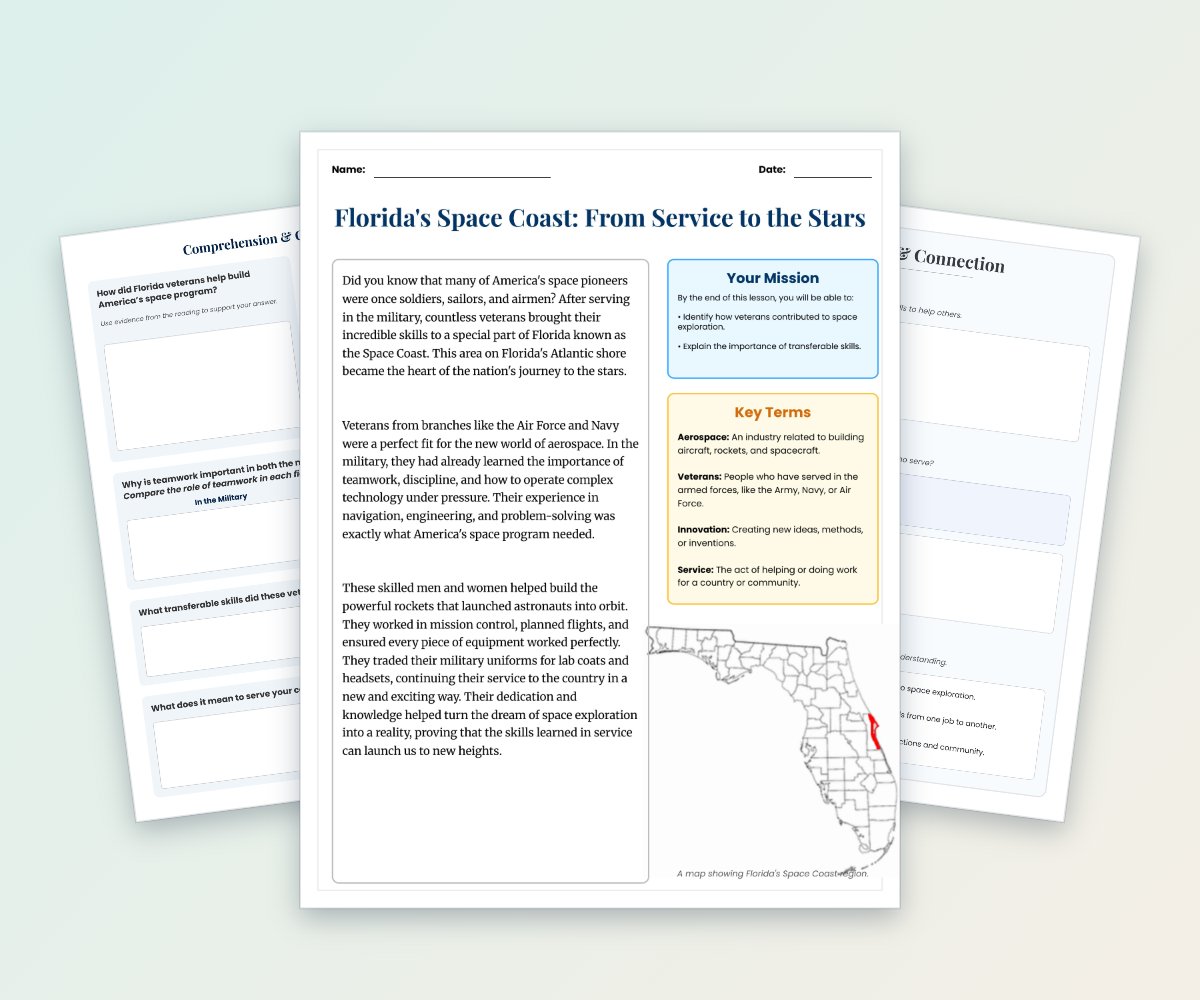
Students explore how military veterans contributed to Florida's space program through an informational reading and key vocabulary.
Students read an informational passage about a Vermont veteran’s continued community service and answer comprehension questions.
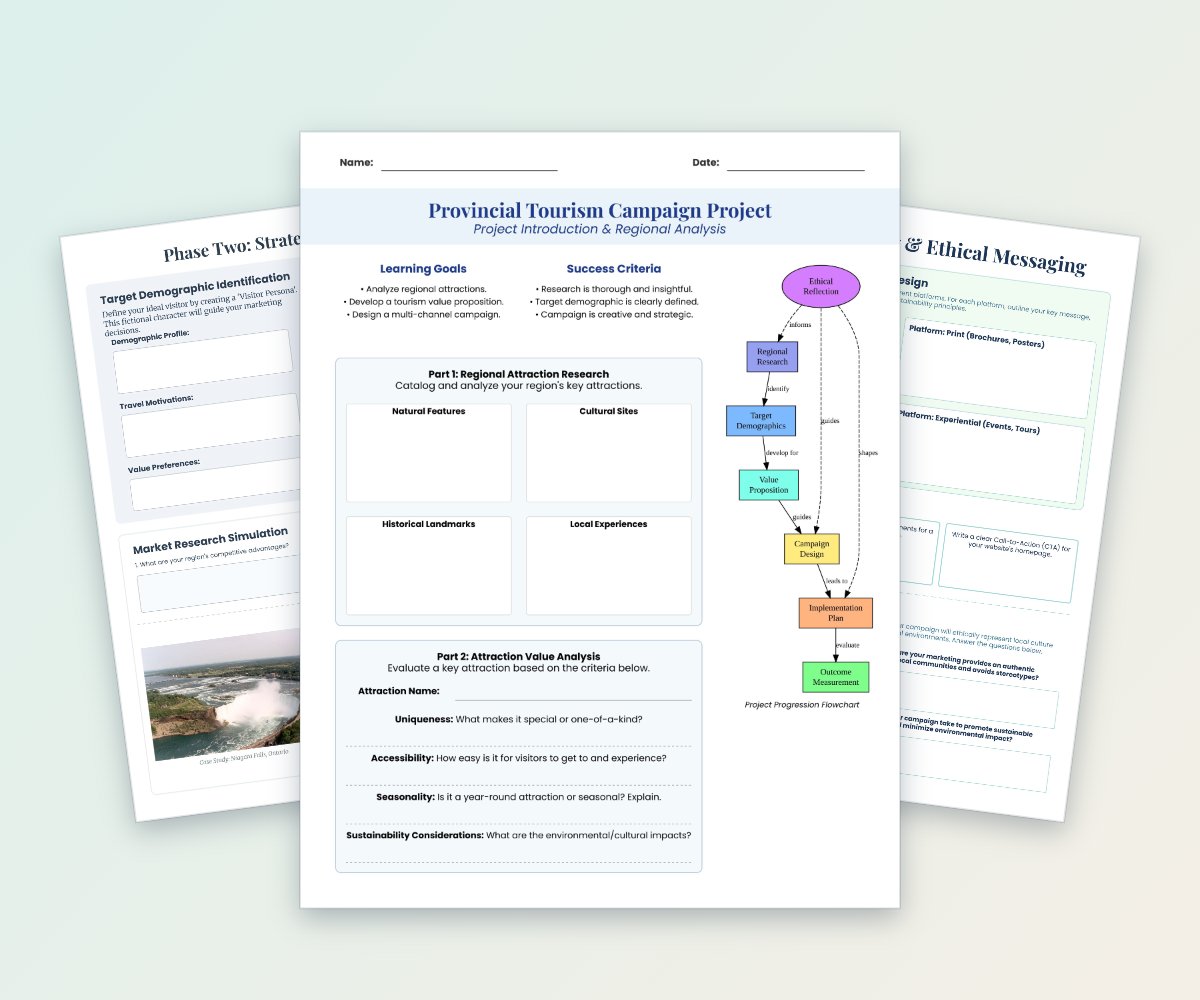
Students research regional attractions, analyze their tourism value, define a target visitor persona, and develop a compelling value proposition.
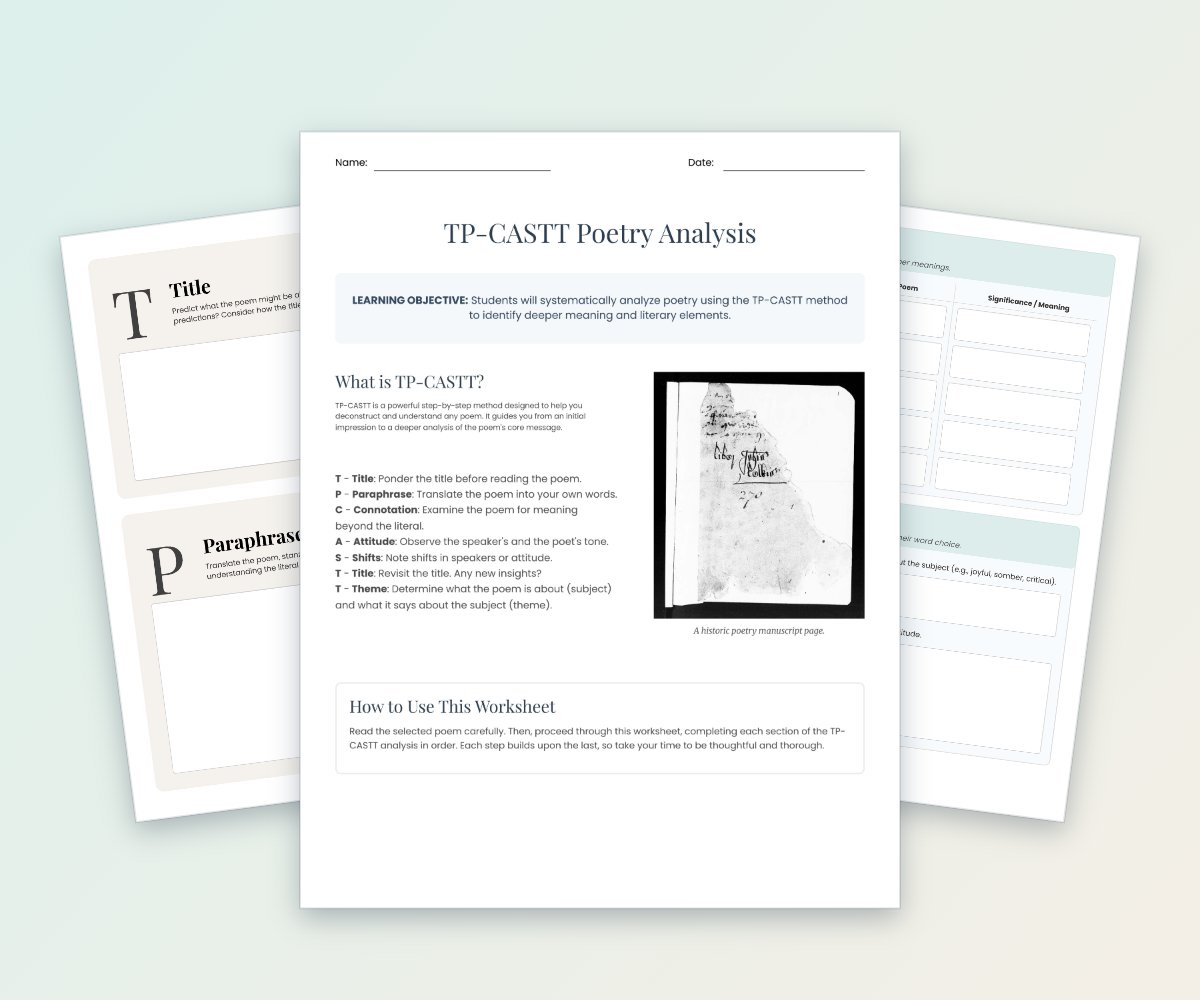
This four-page resource introduces the TP-CASTT method and guides students through analyzing title, paraphrase, connotation, attitude, shifts, title revisited, and theme.
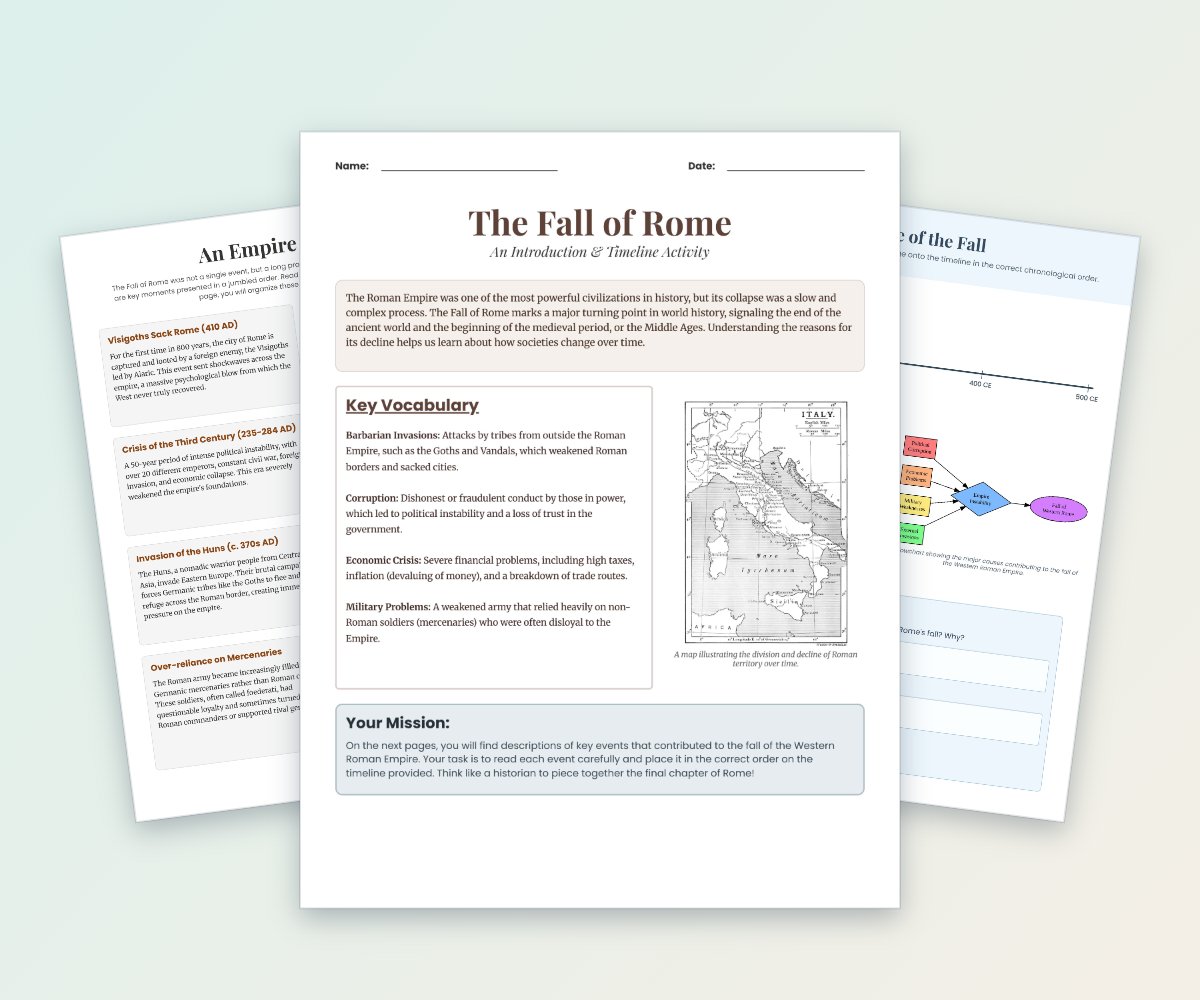
Students learn about major causes and events connected to the decline of the Western Roman Empire.
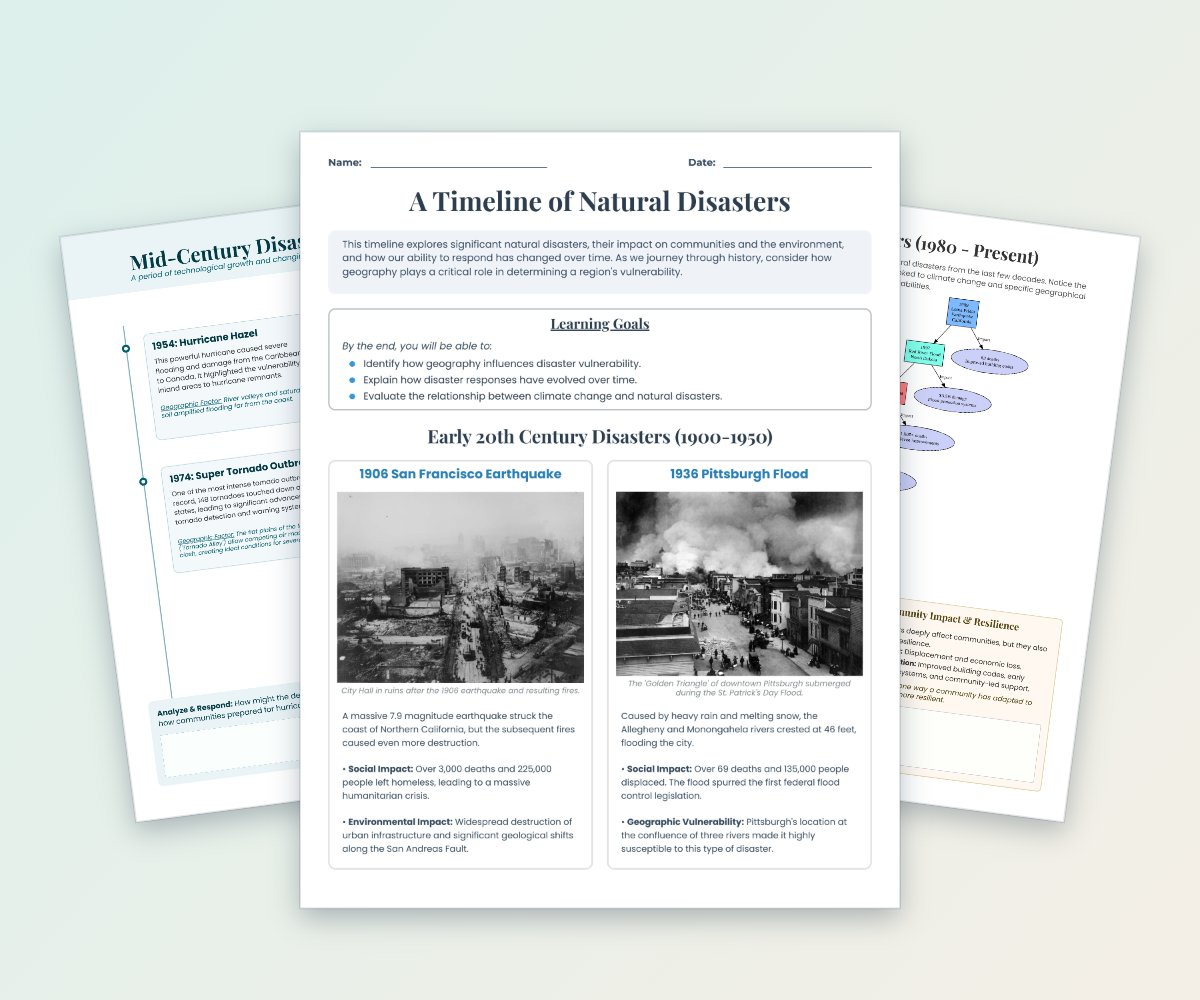
Students examine major natural disasters from 1900 to 1980, including earthquakes, floods, hurricanes, and tornadoes.
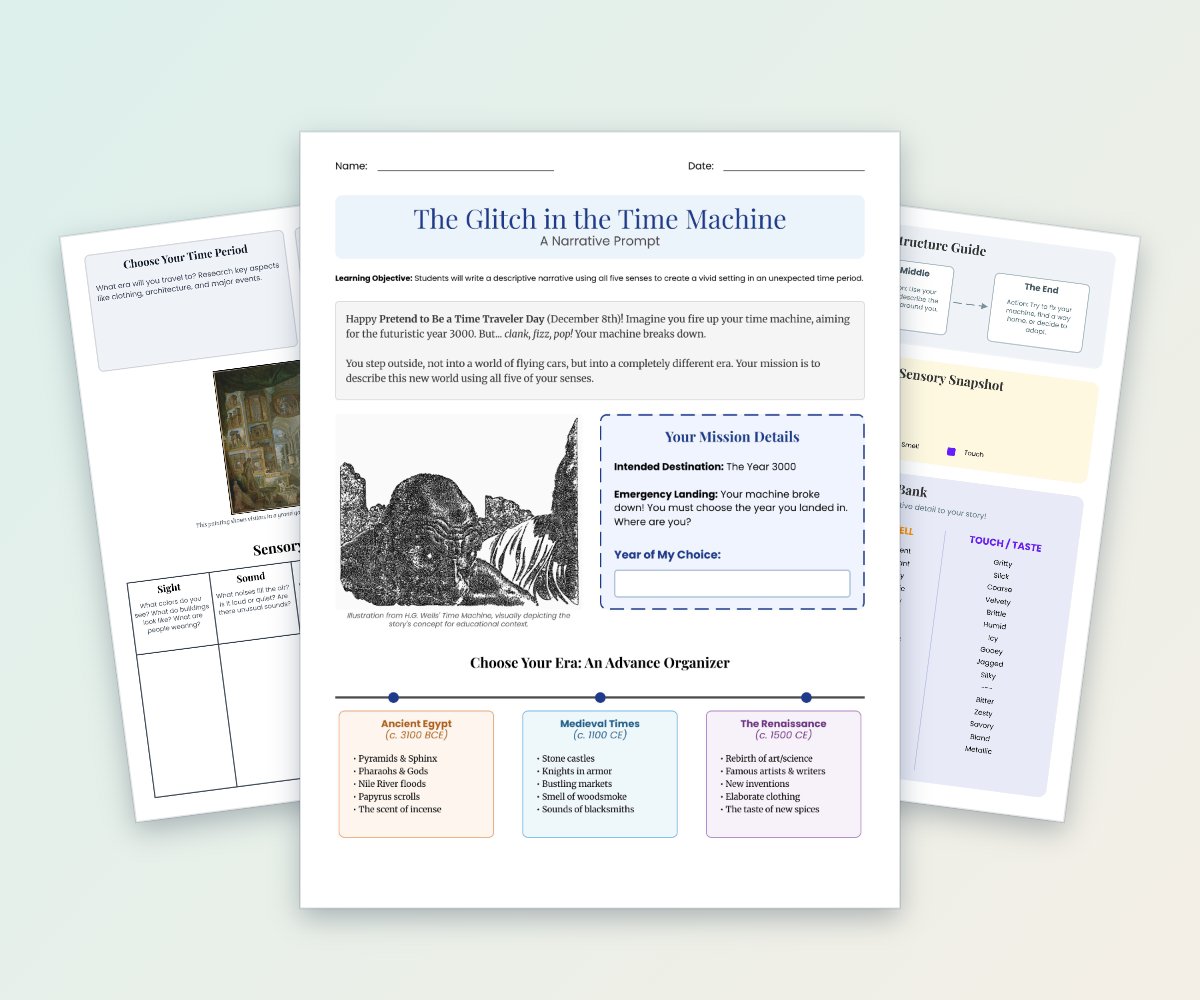
Students imagine a malfunctioning time machine, choose a historical era, and plan a vivid narrative using all five senses.