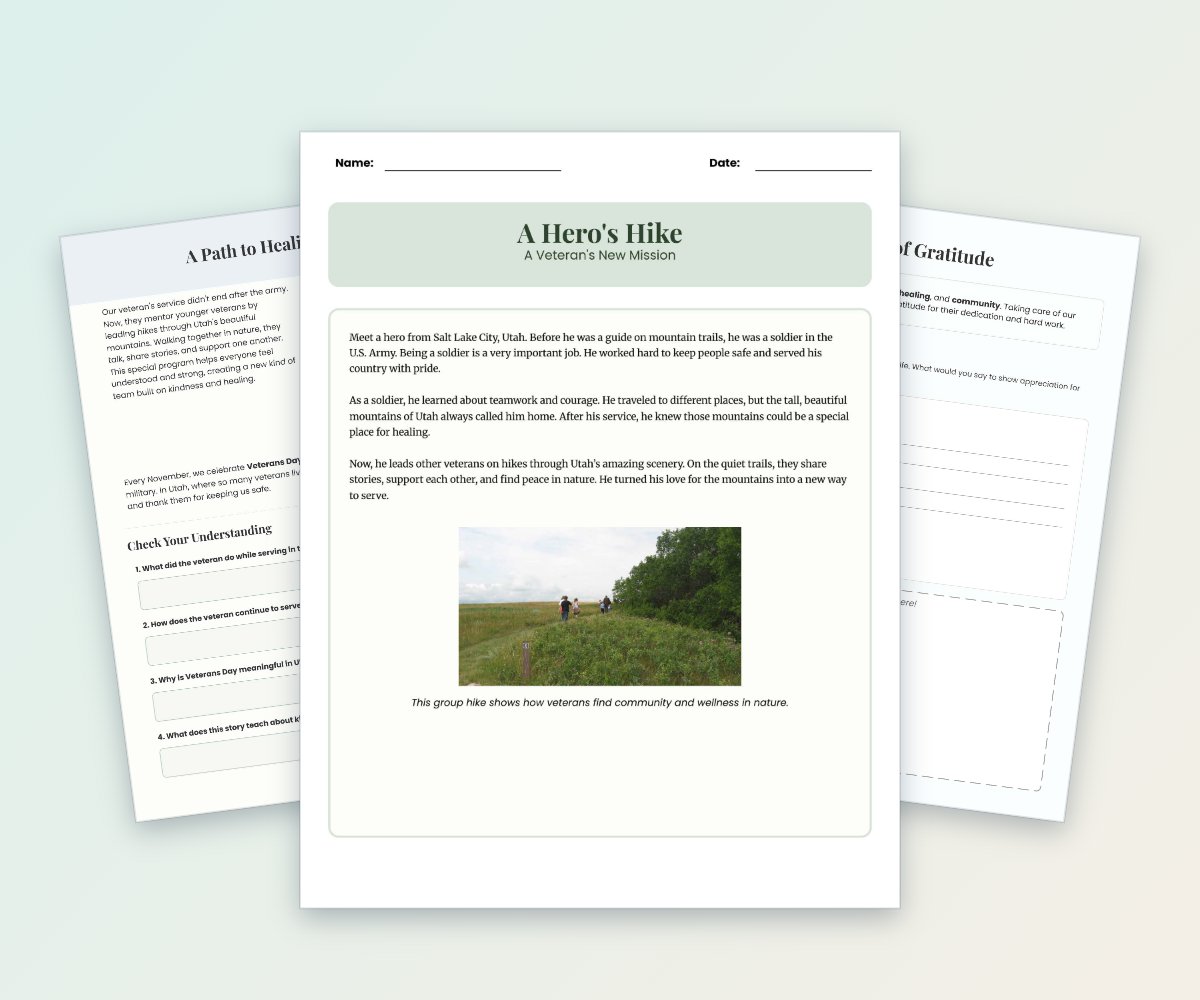
Veterans Day Reading and Writing Packet: A Hero’s Hike
Students read an informational passage about a Utah veteran who leads healing hikes, then answer comprehension questions.
$3.99
Classroom-ready resources written for grade 6: printable worksheets, slides, activities and planning tools you can download and use straight away. Browse by subject below.
Students read an informational passage about a Utah veteran who leads healing hikes, then answer comprehension questions.
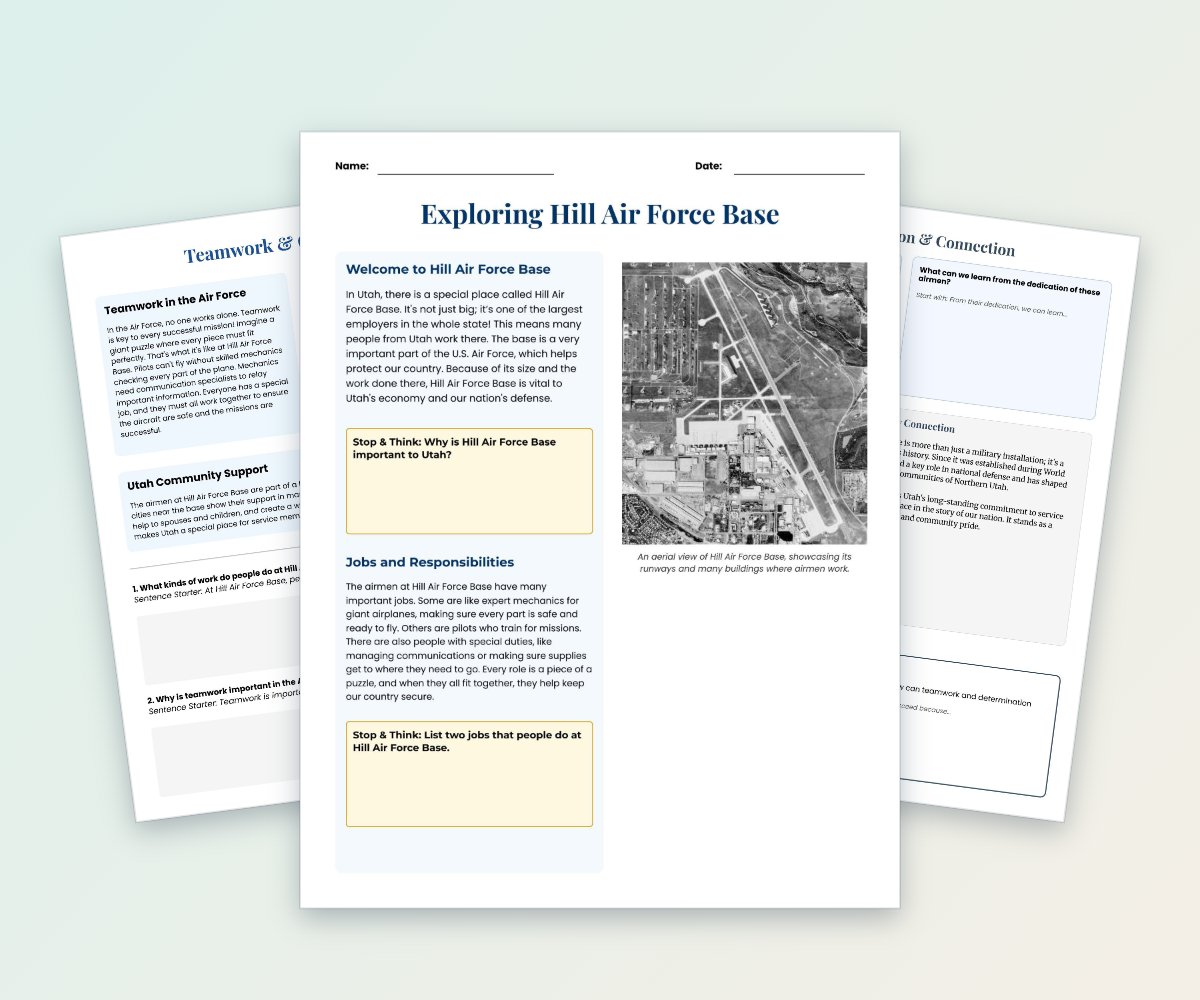
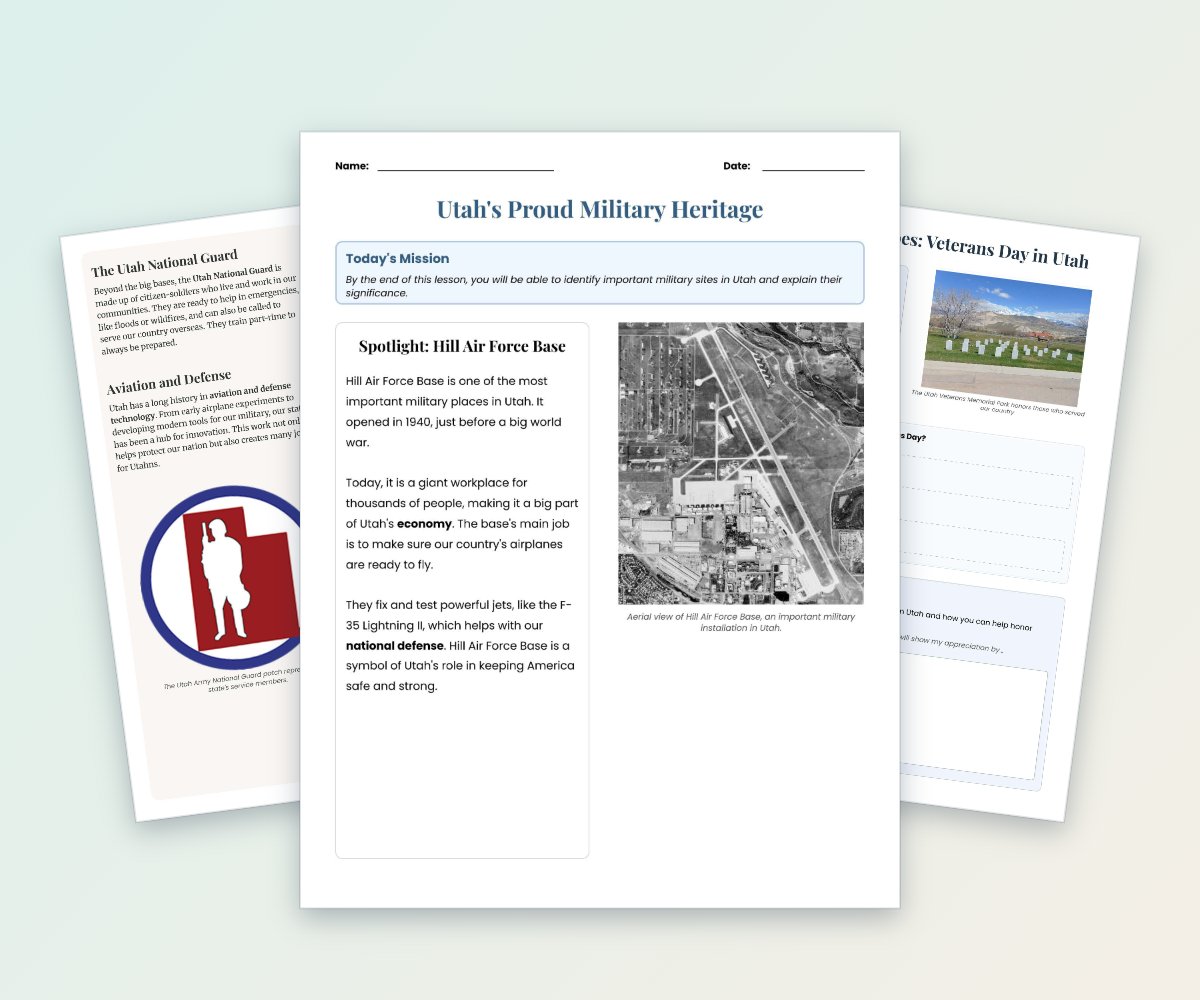
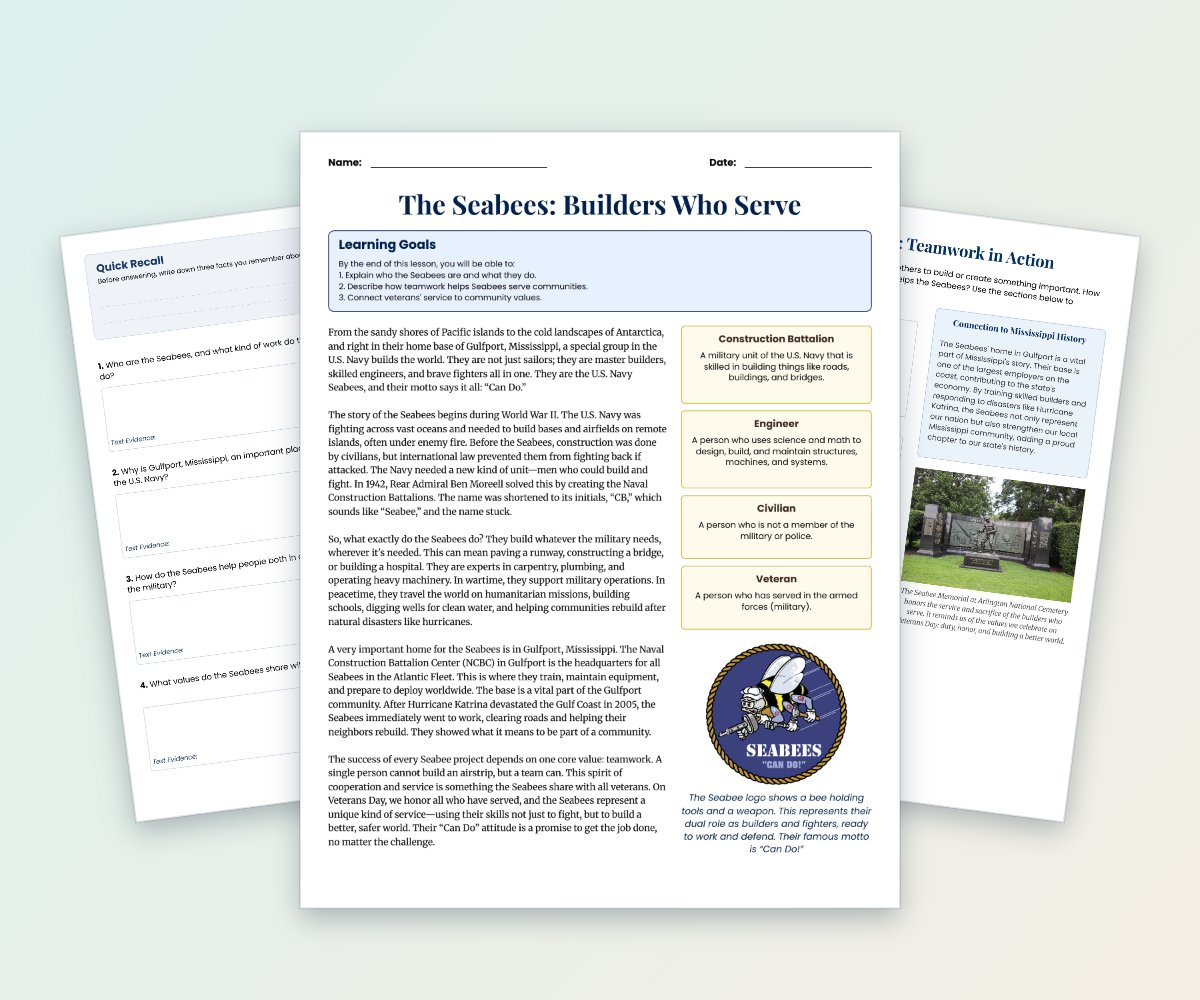
Students read about Hill Air Force Base, its role in Utah, Air Force careers, teamwork, and community support.
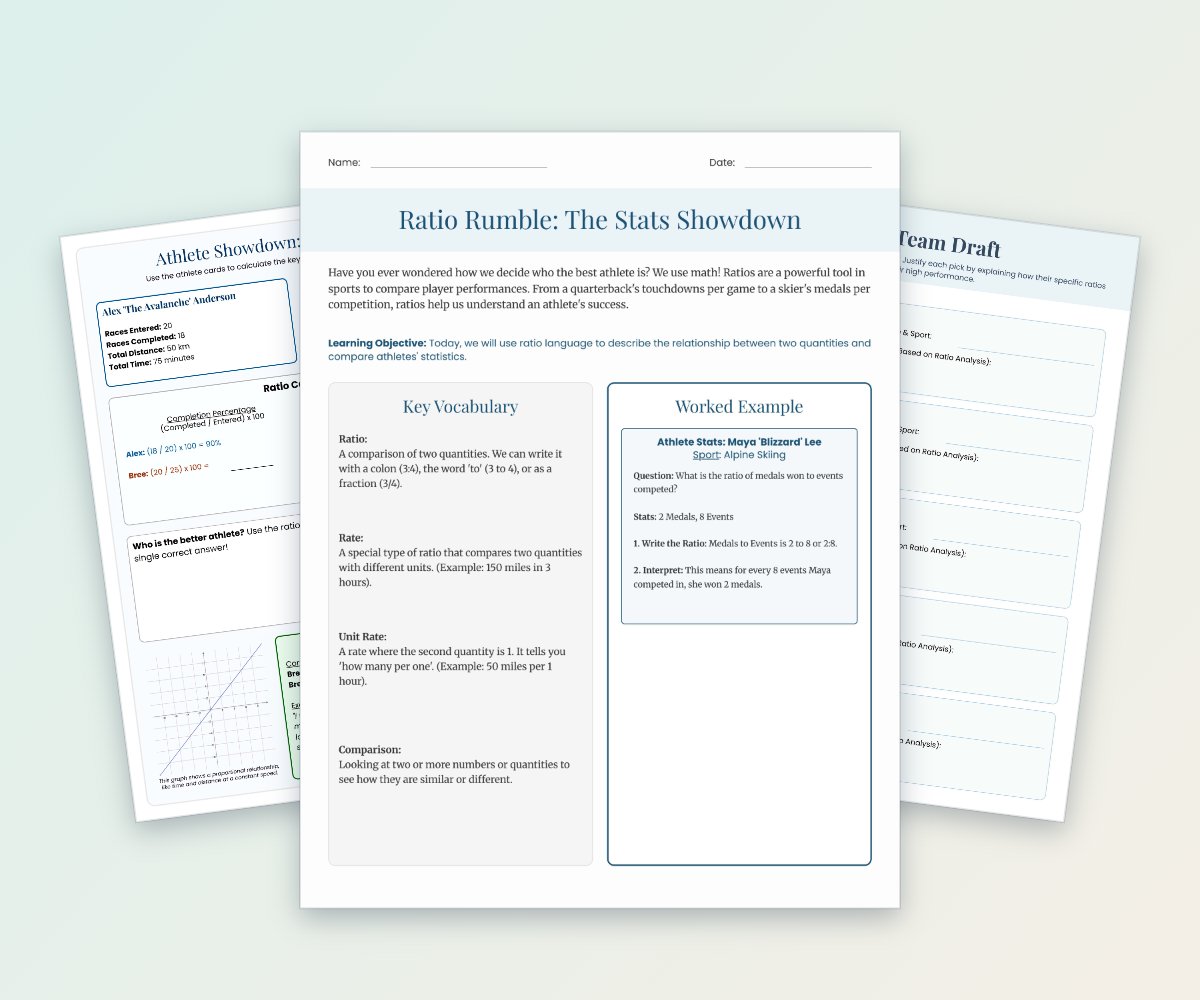
Students use sports statistics to calculate ratios, rates, unit rates, completion percentages, and speed.
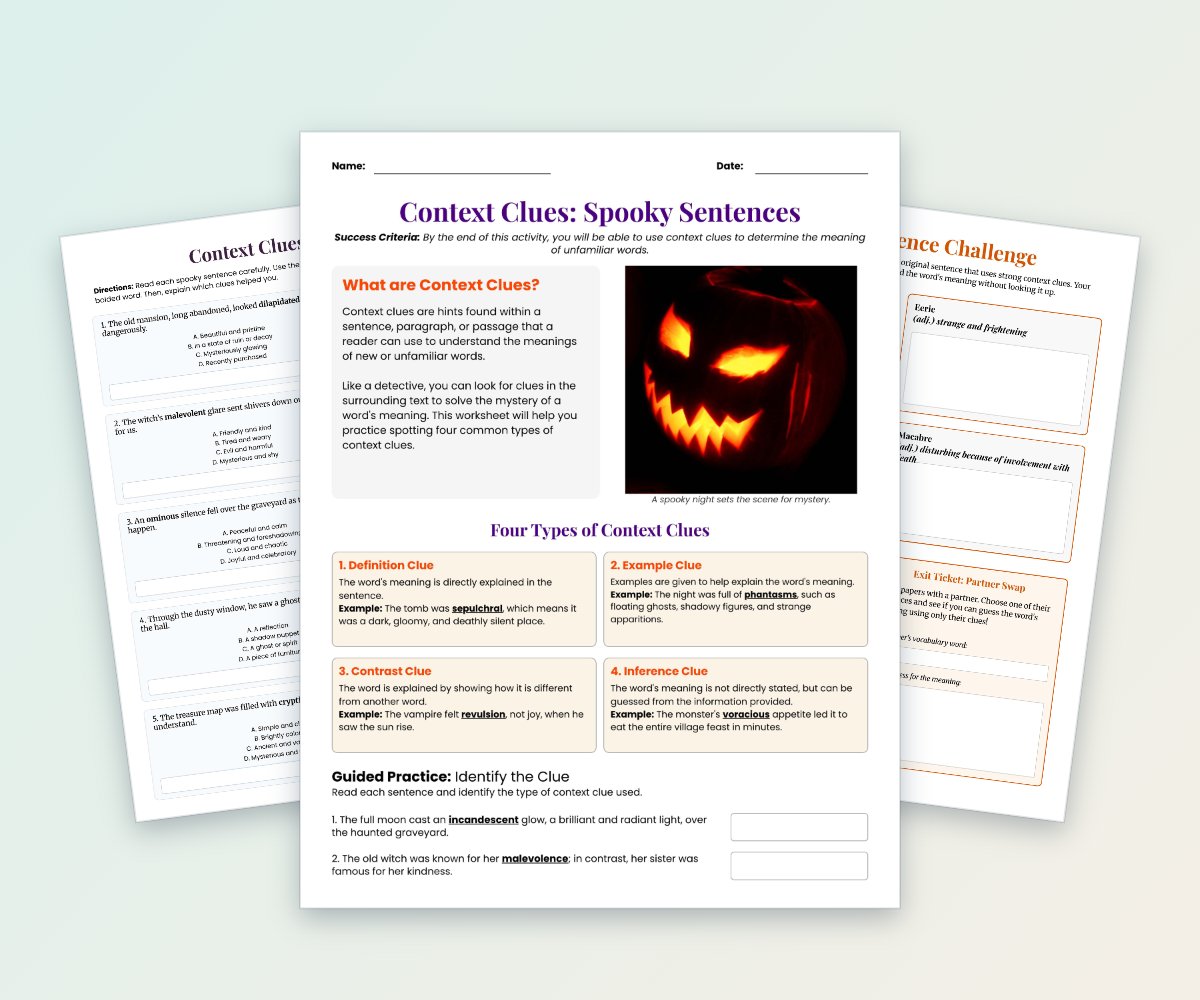
Students learn four types of context clues through spooky examples and guided practice.
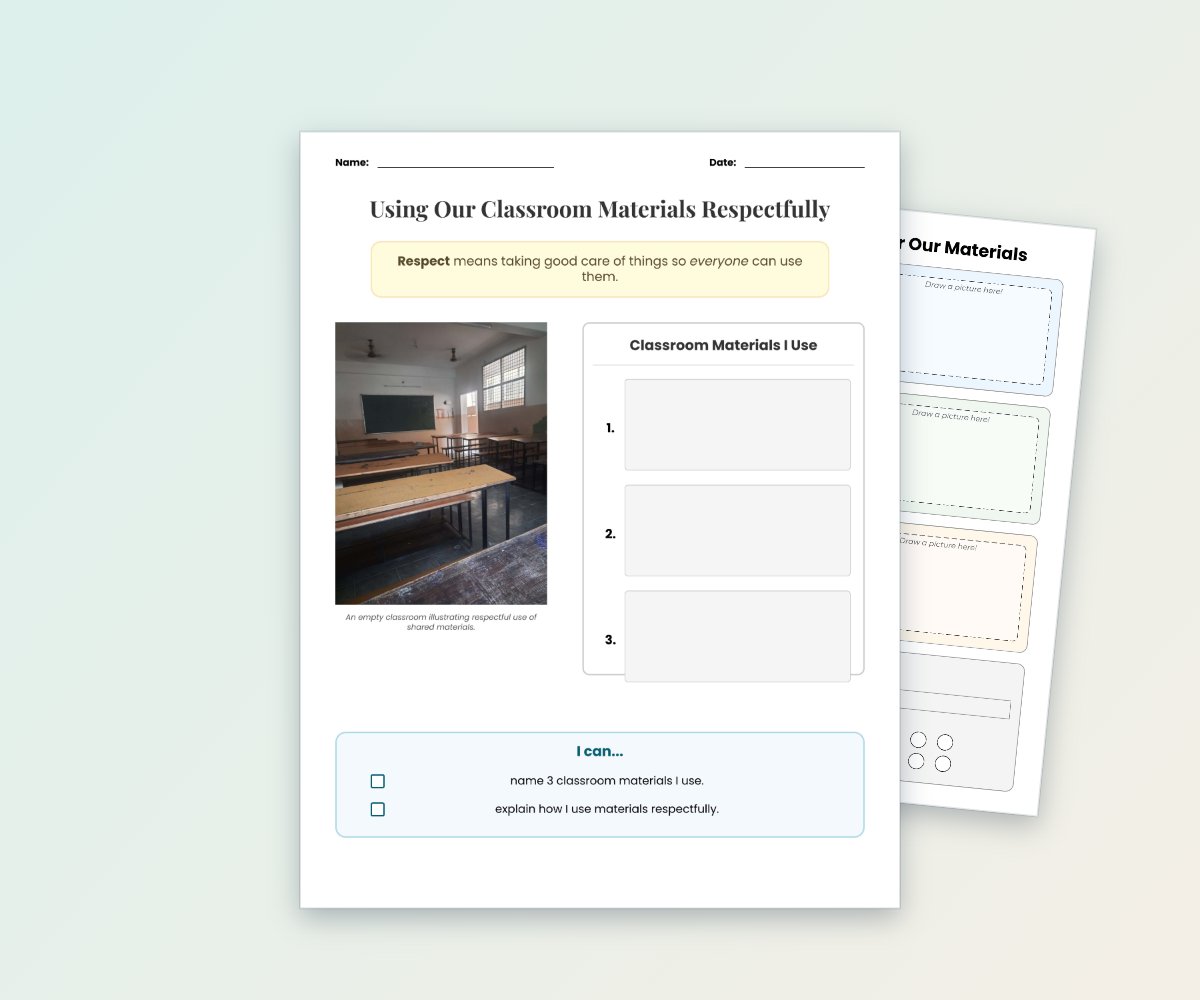
This two-page worksheet helps students identify classroom materials and describe respectful ways to use them.
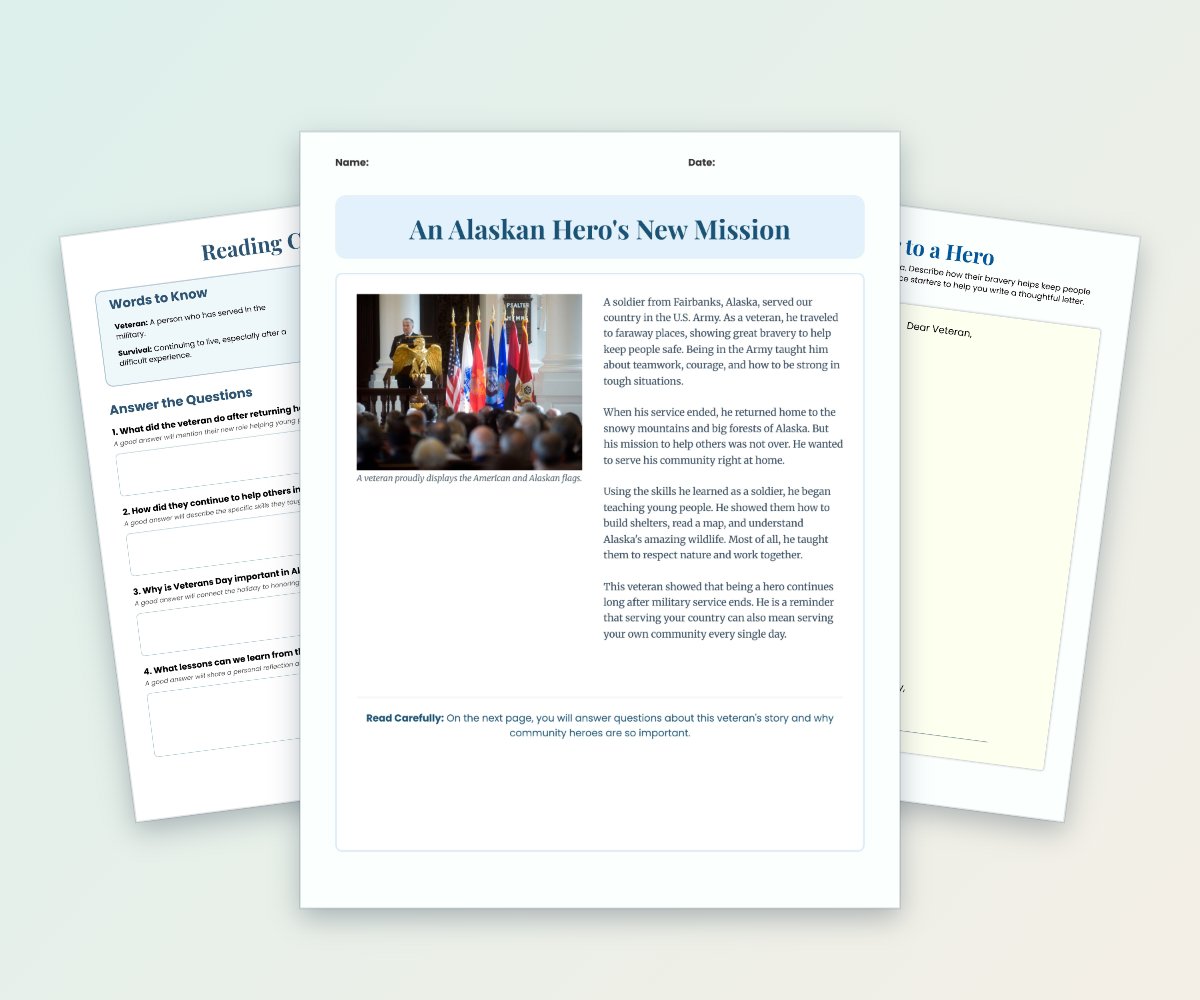
Students read about an Alaskan veteran who continues serving the community by teaching survival skills, teamwork, and respect for nature.
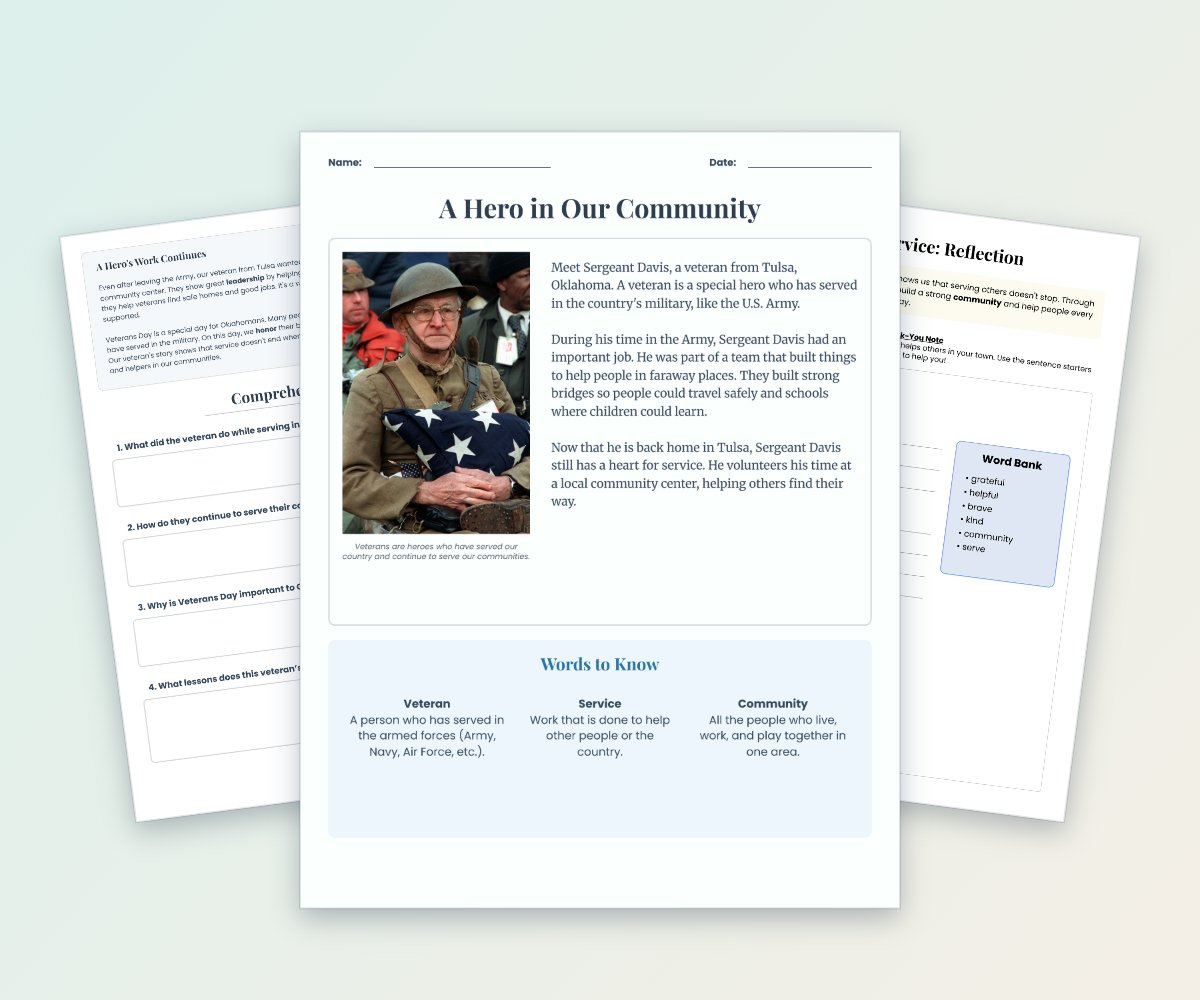
Students read about an Oklahoma veteran's military and community service, learn key vocabulary, and answer comprehension questions.
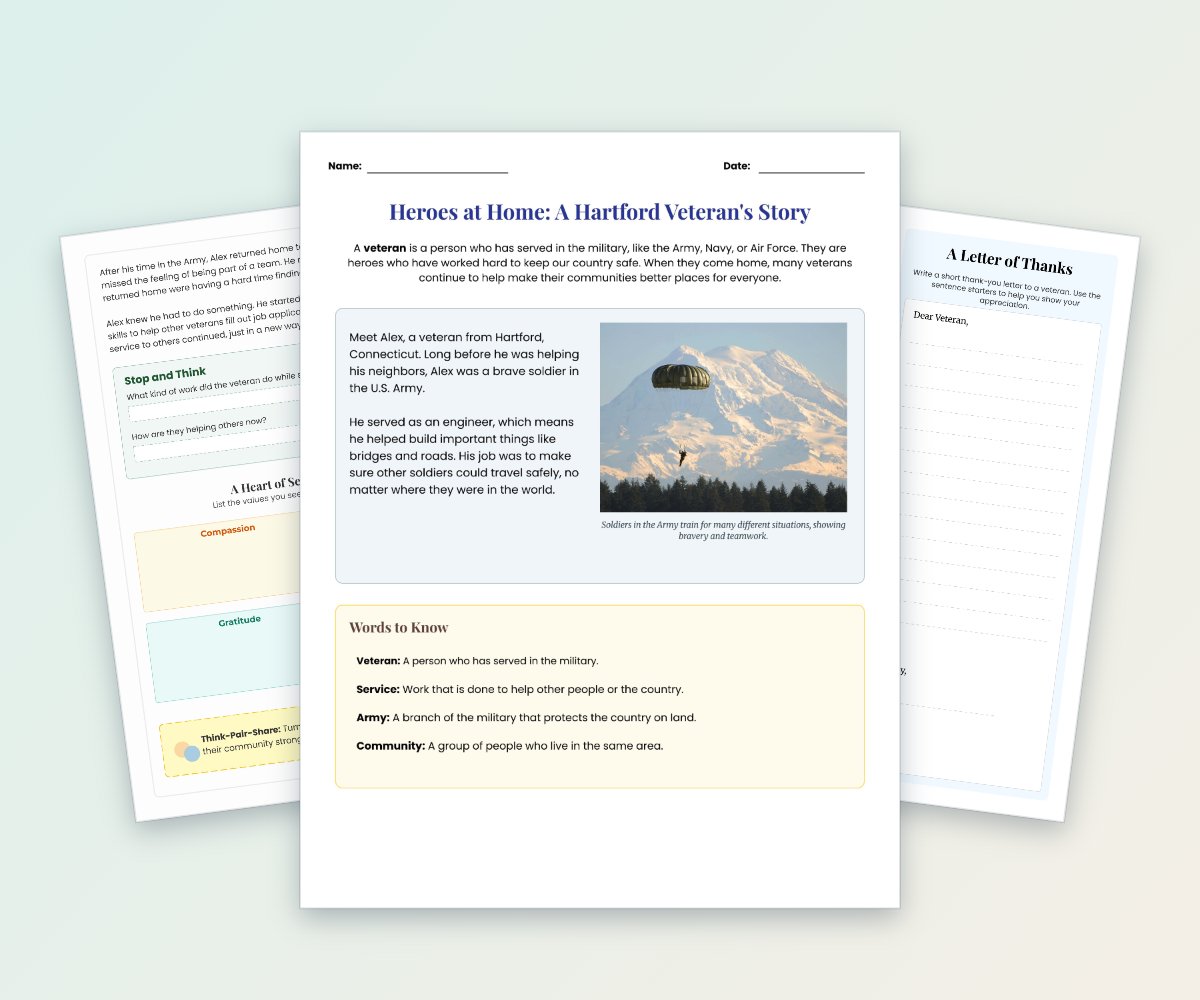
Students read a short nonfiction story about a Hartford veteran who continues serving his community after military service.
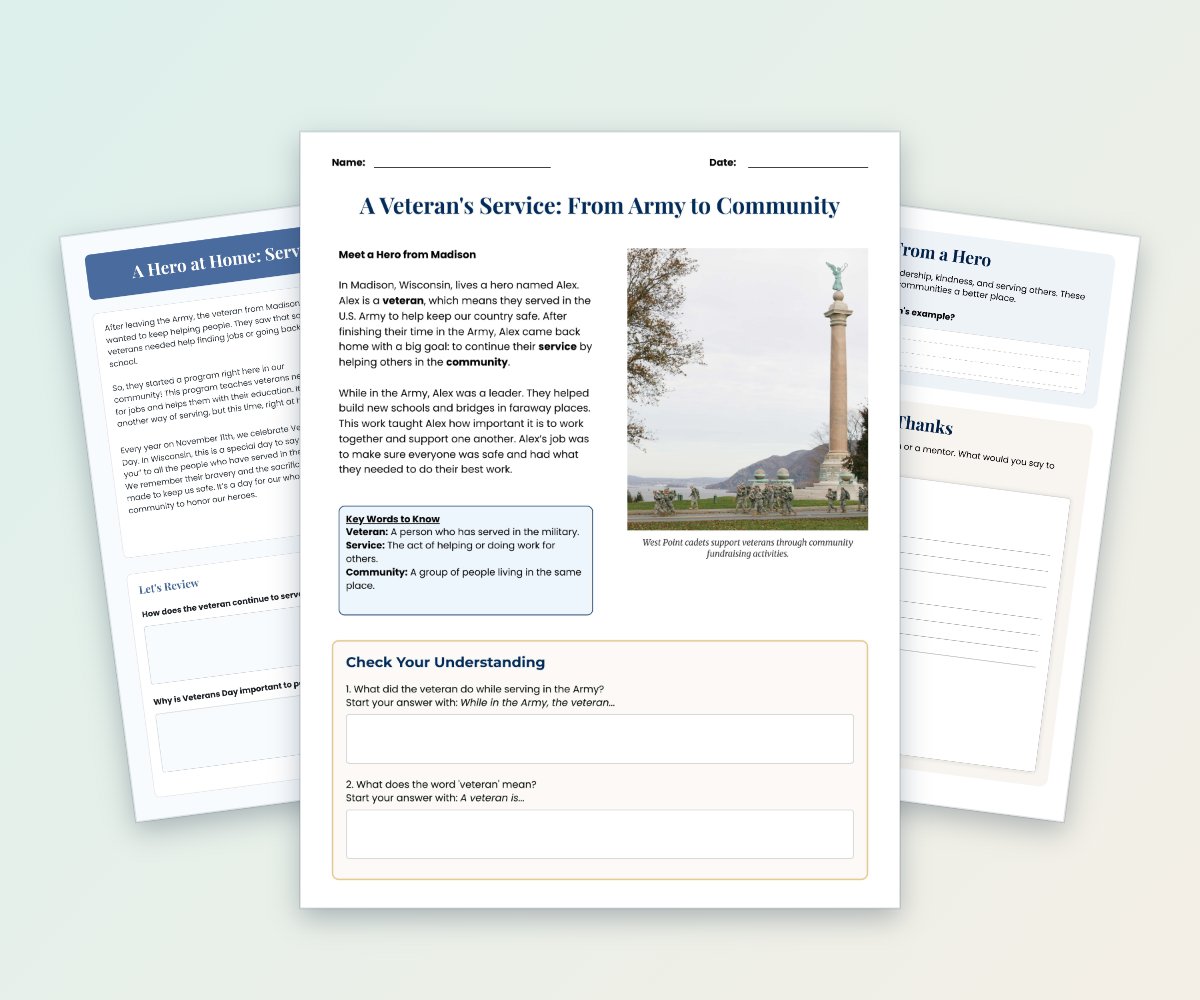
Students read about a Wisconsin veteran’s military and community service, learn key vocabulary, and answer comprehension questions.
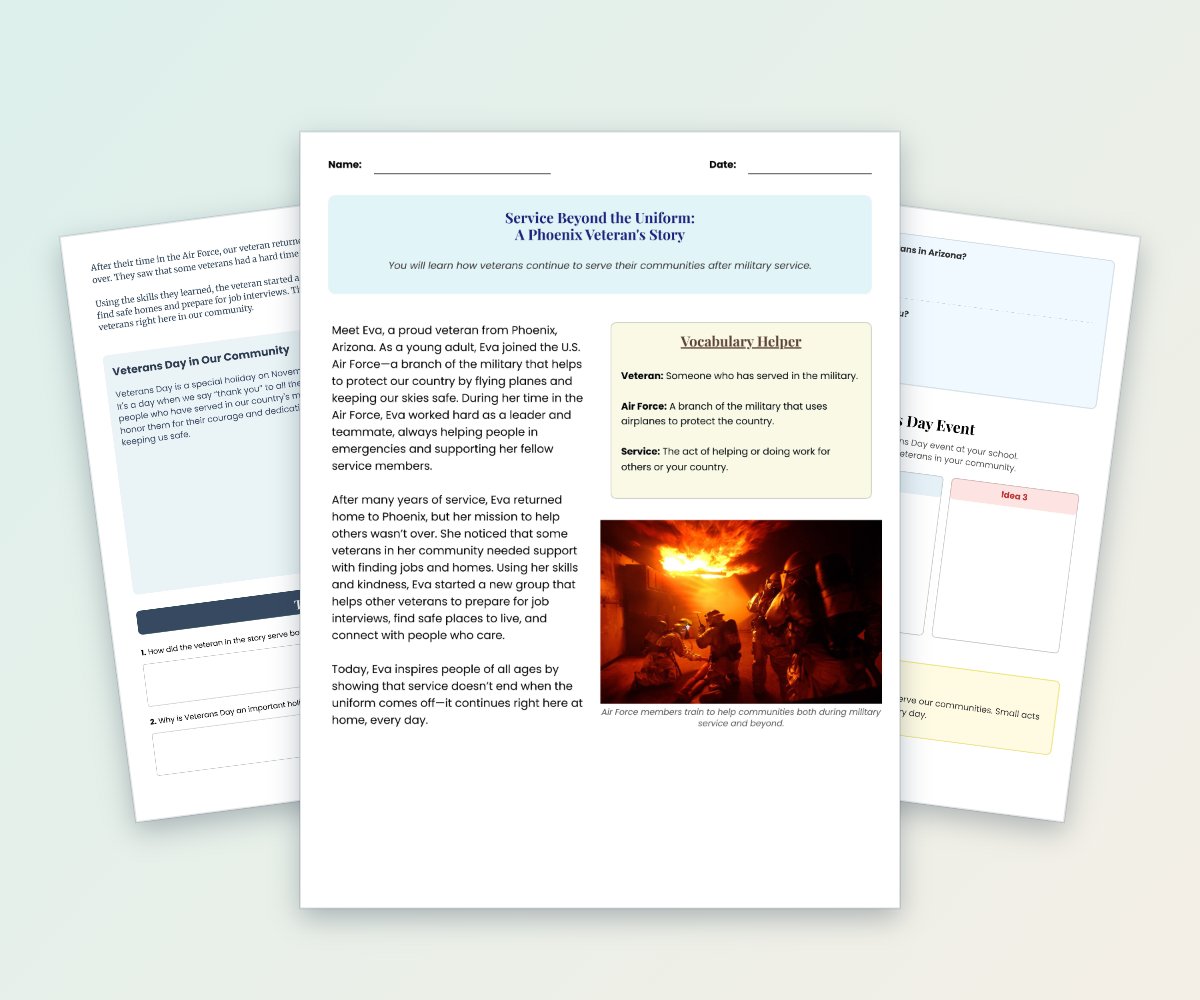
Students read about a Phoenix veteran who continues serving the community after military service.
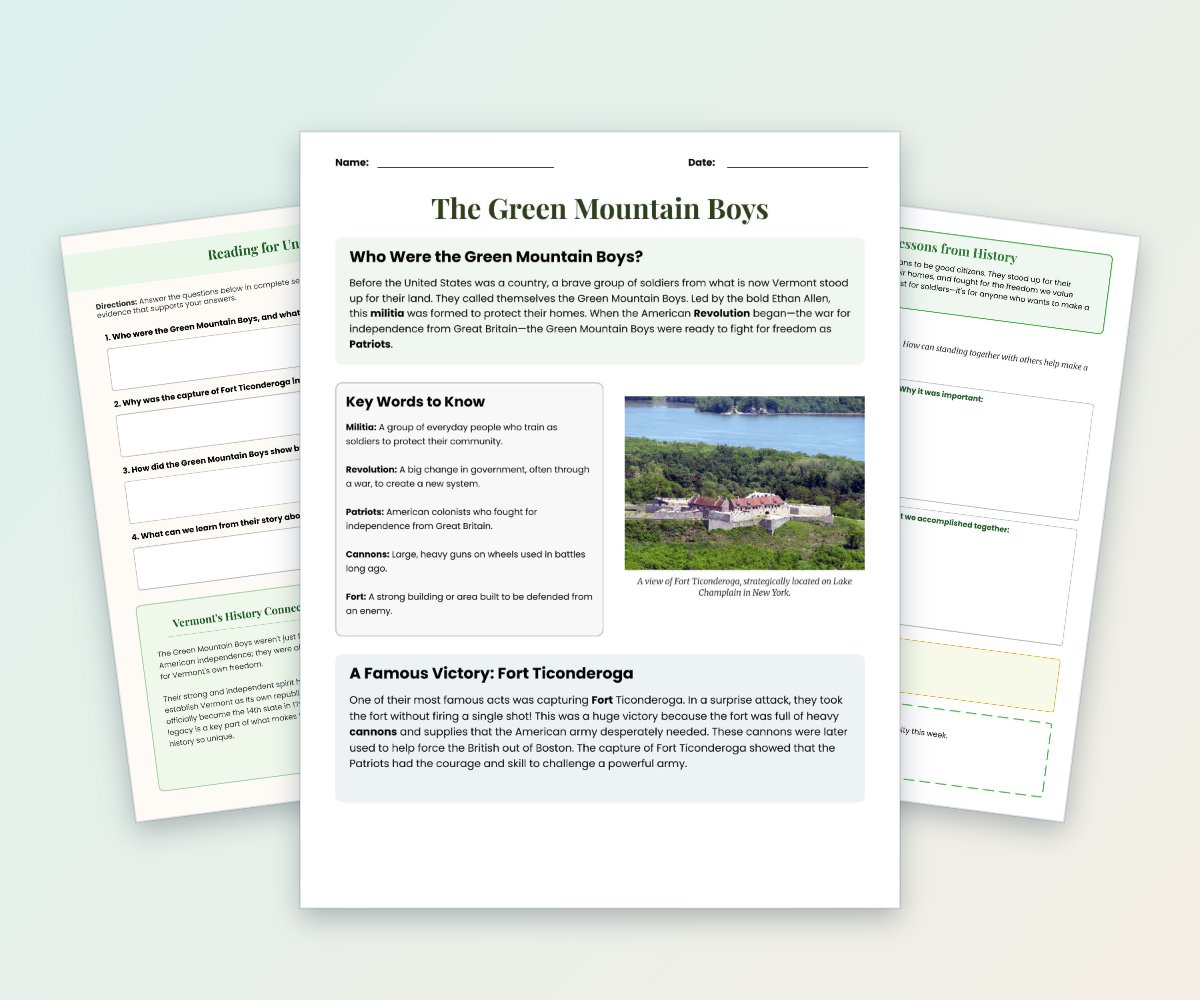
Students read an informational passage about the Green Mountain Boys, Ethan Allen, and the capture of Fort Ticonderoga.
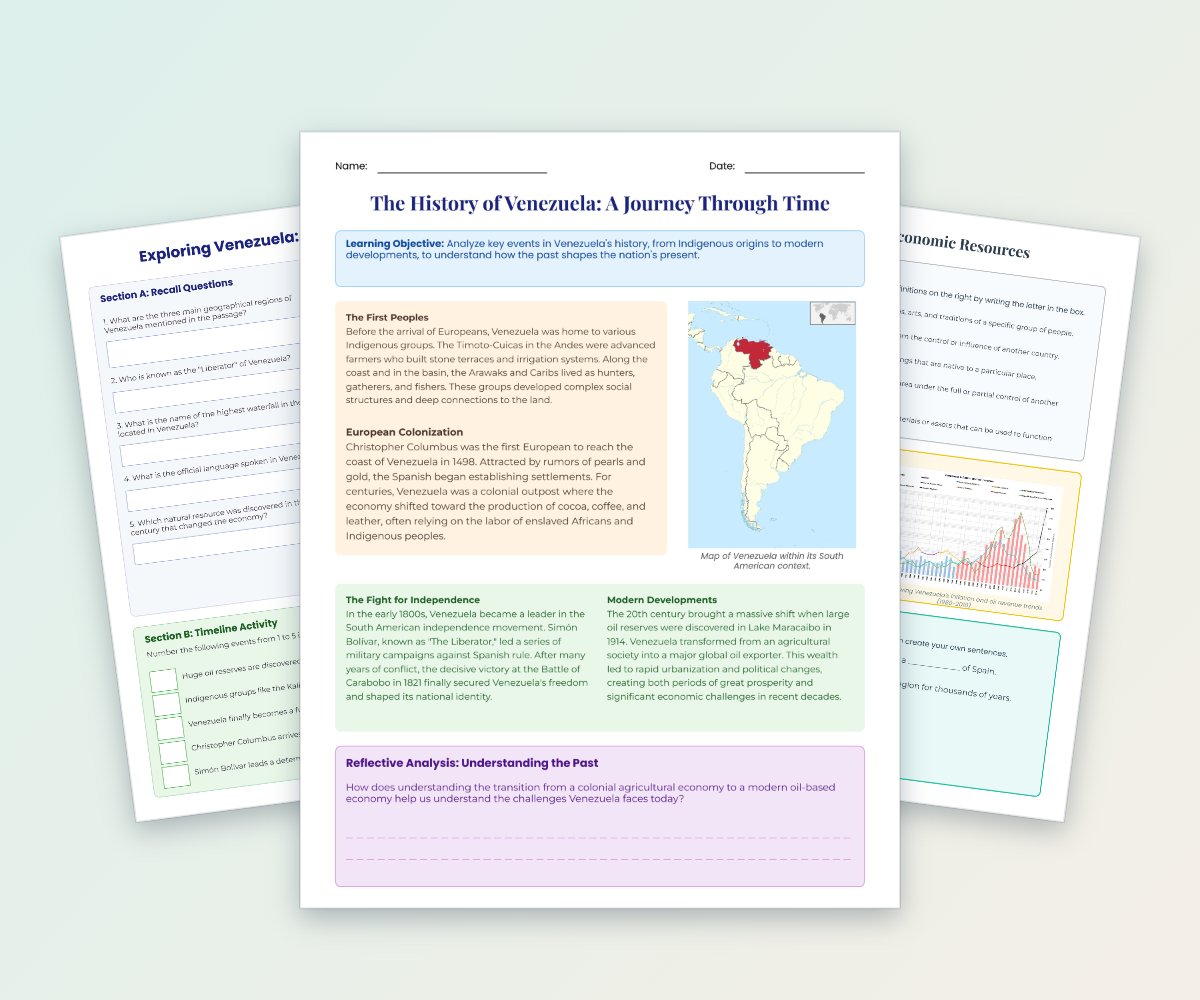
Students explore Venezuela’s Indigenous peoples, European colonization, independence movement, and transition to an oil-based economy.
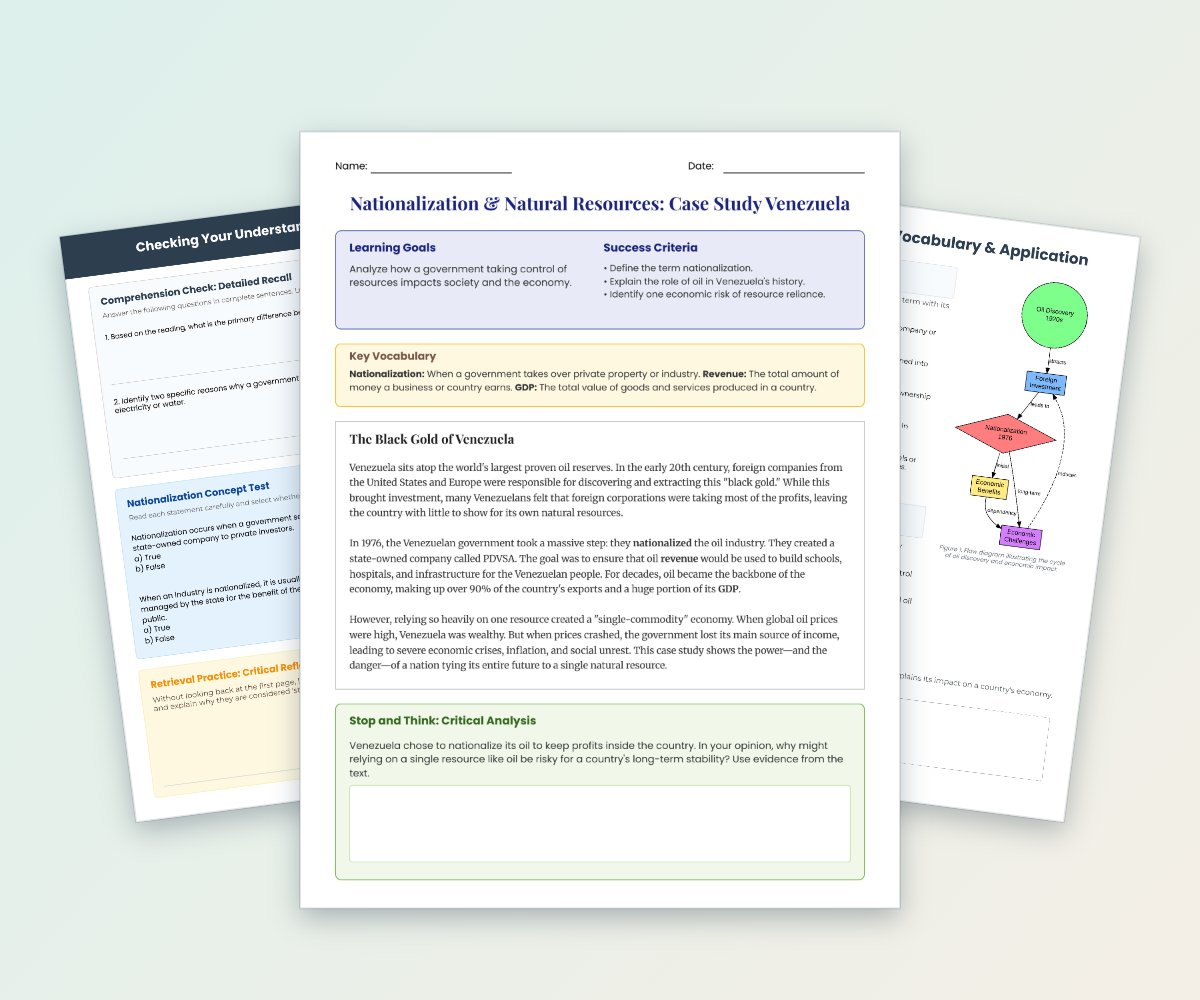
Students examine Venezuela’s 1976 nationalization of its oil industry, the role of PDVSA, and the economic risks of relying on one resource.
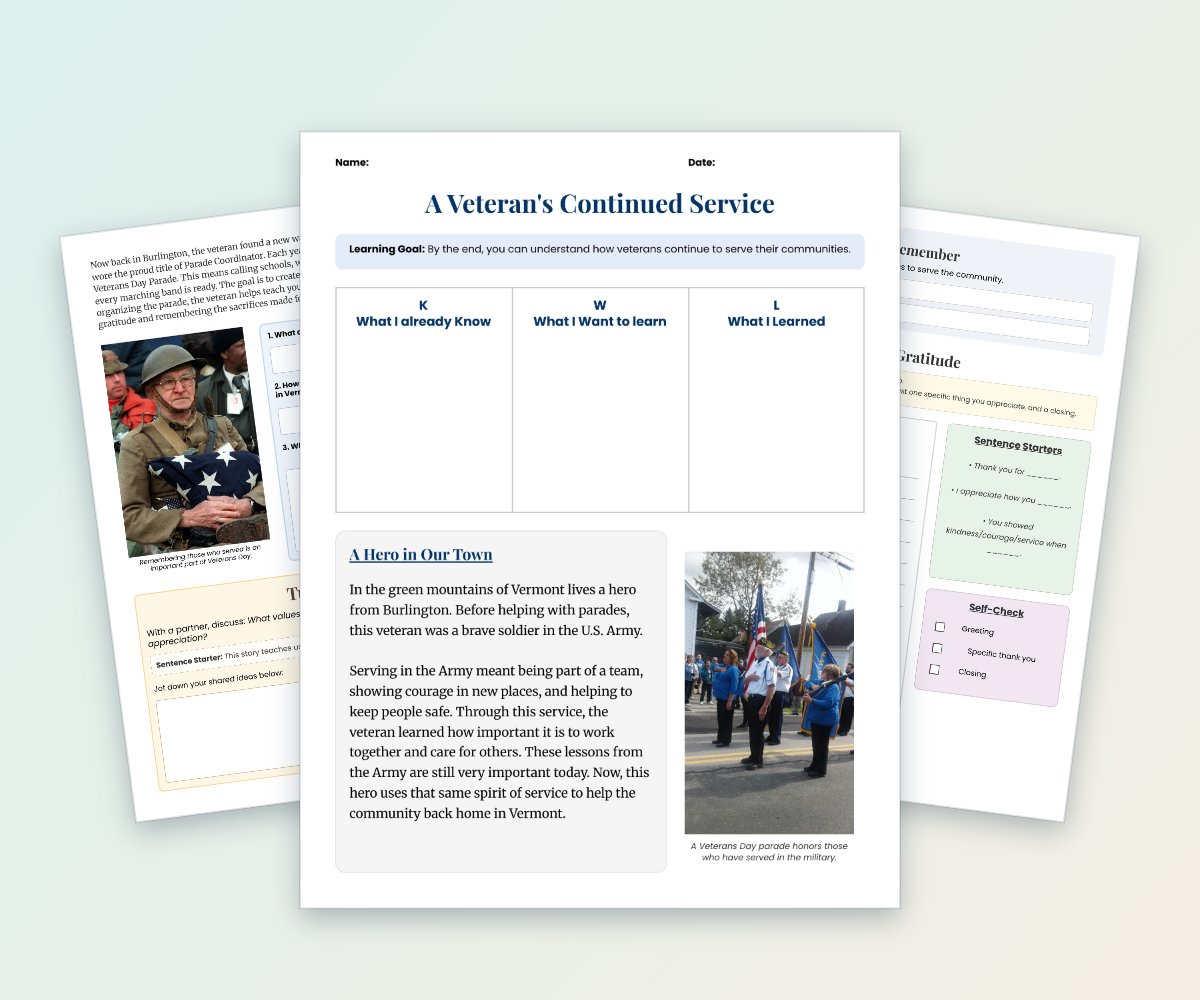
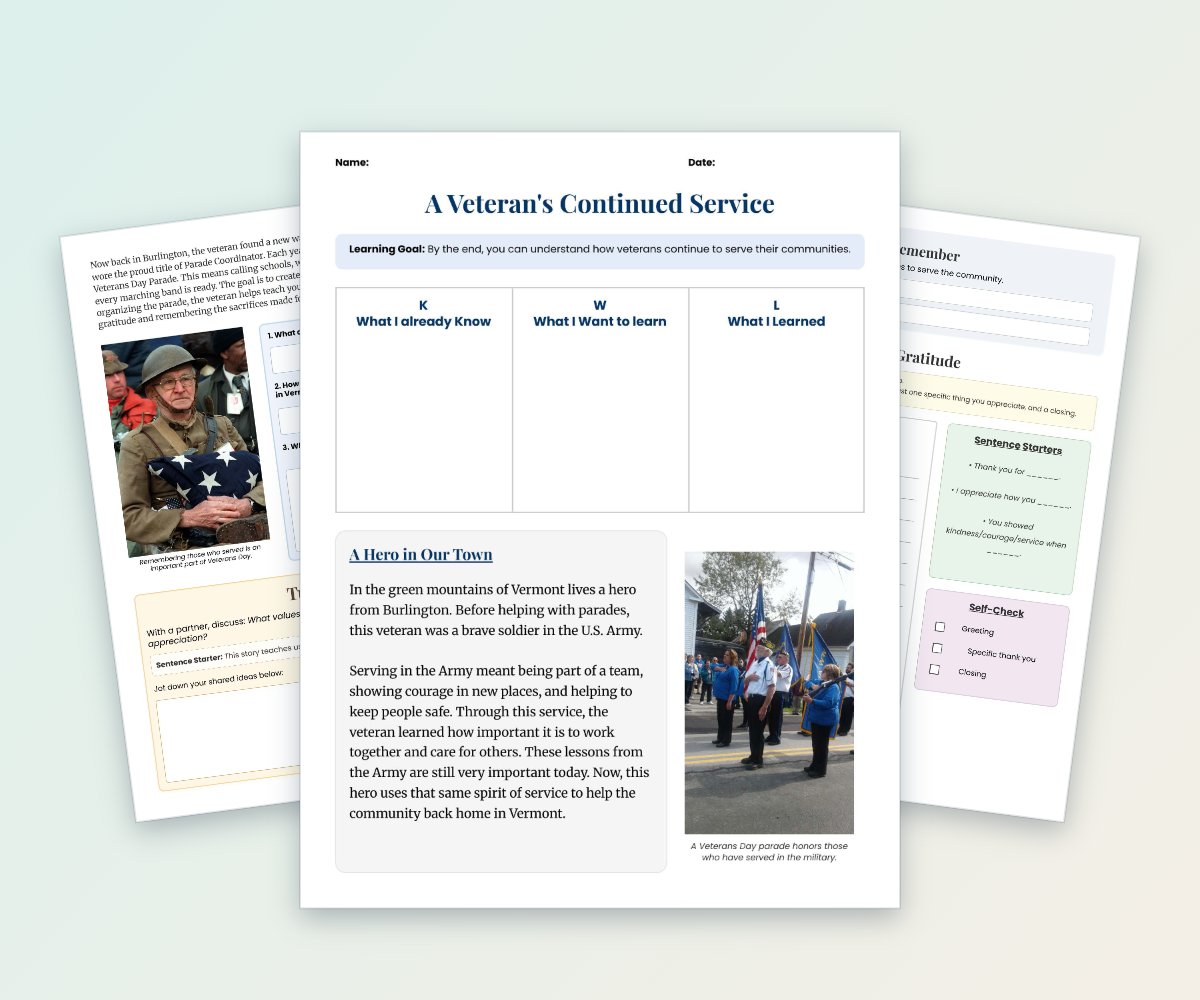
Students read about a Vermont veteran who organizes a Veterans Day parade and answer comprehension questions about service, gratitude, and community involvement.
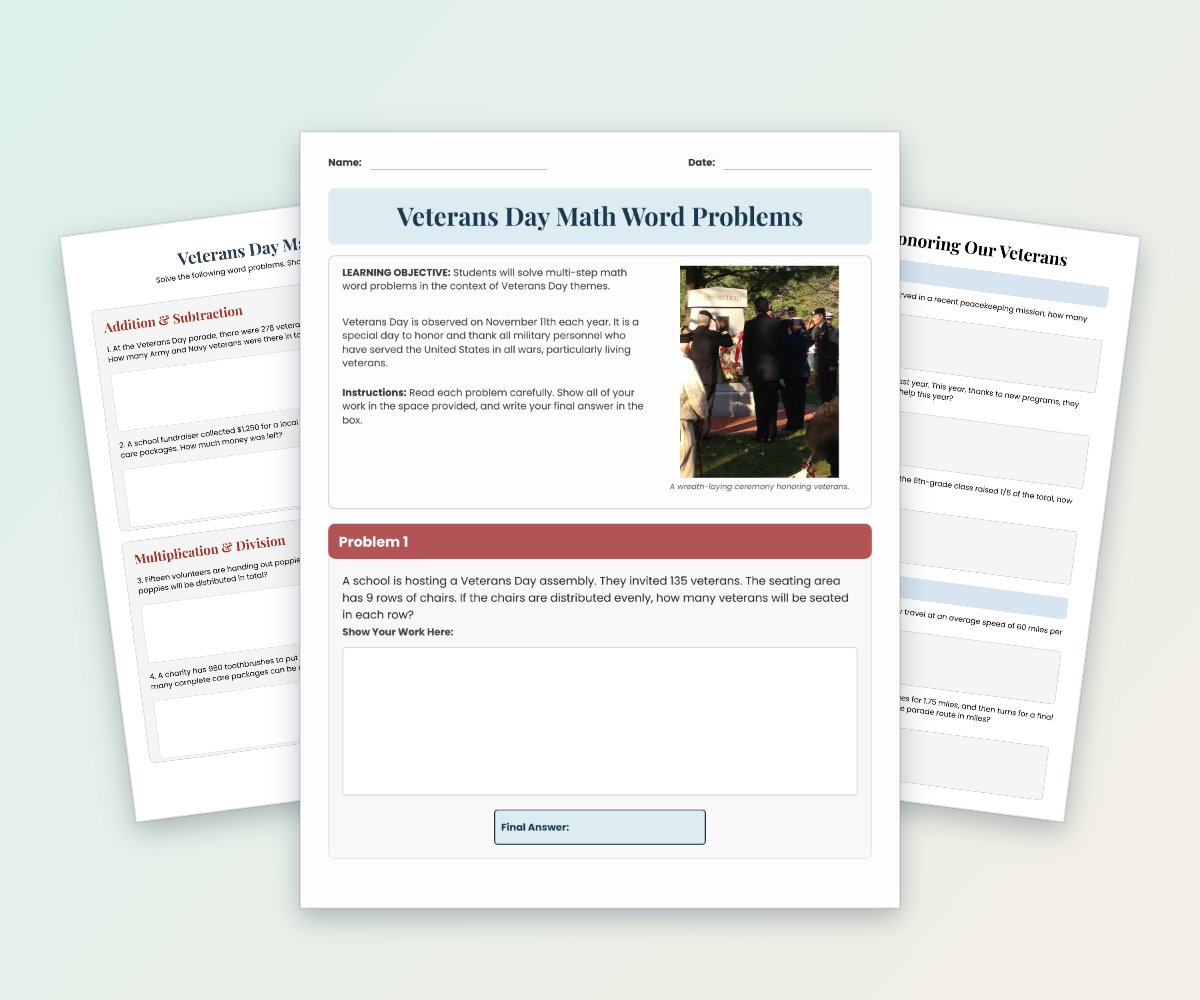
Students solve addition, subtraction, multiplication, division, fraction, percentage, time, distance, and multi-step word problems in a Veterans Day context.
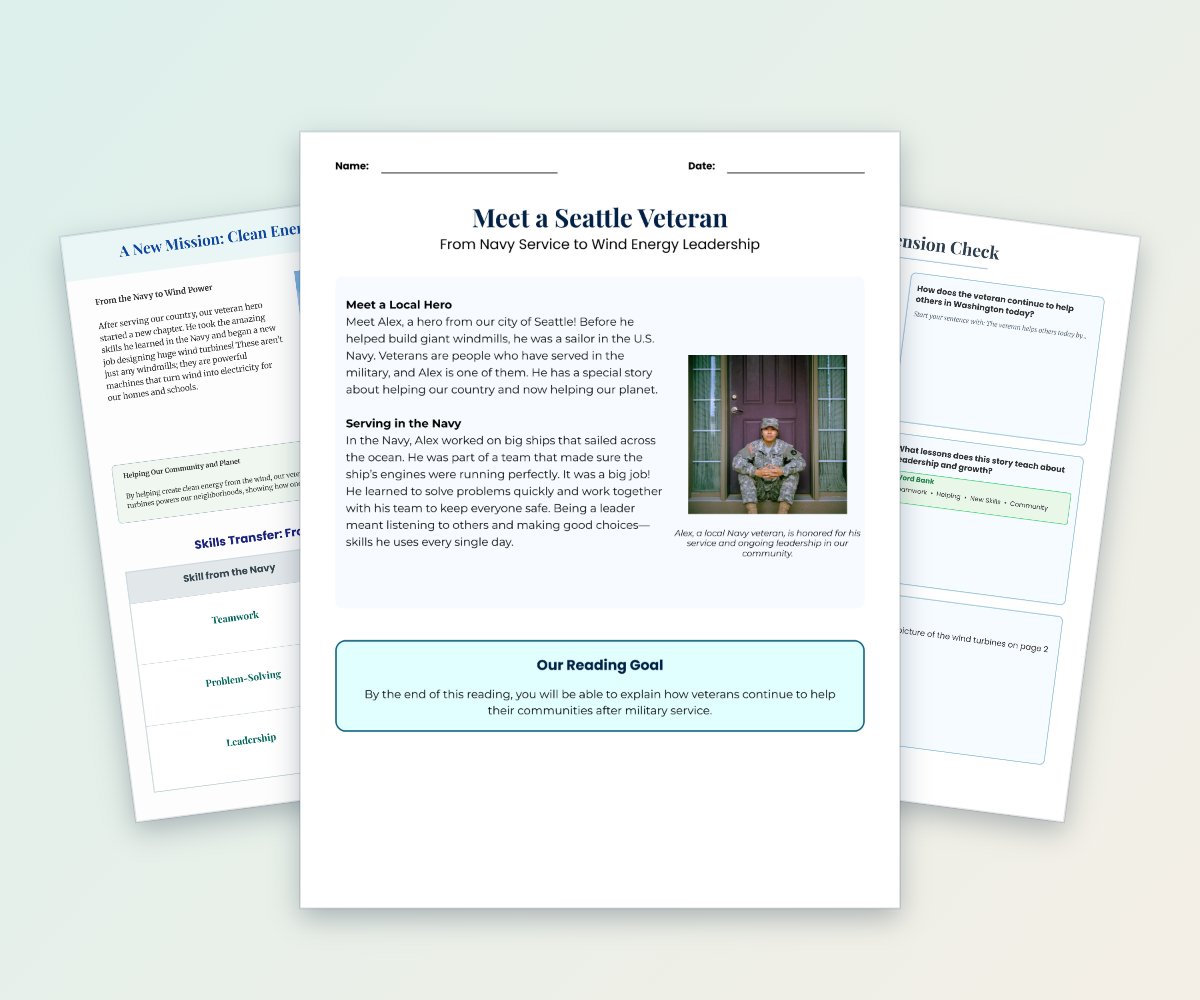
Students read about a Seattle Navy veteran who applies teamwork, problem-solving, and leadership skills to wind-energy work.
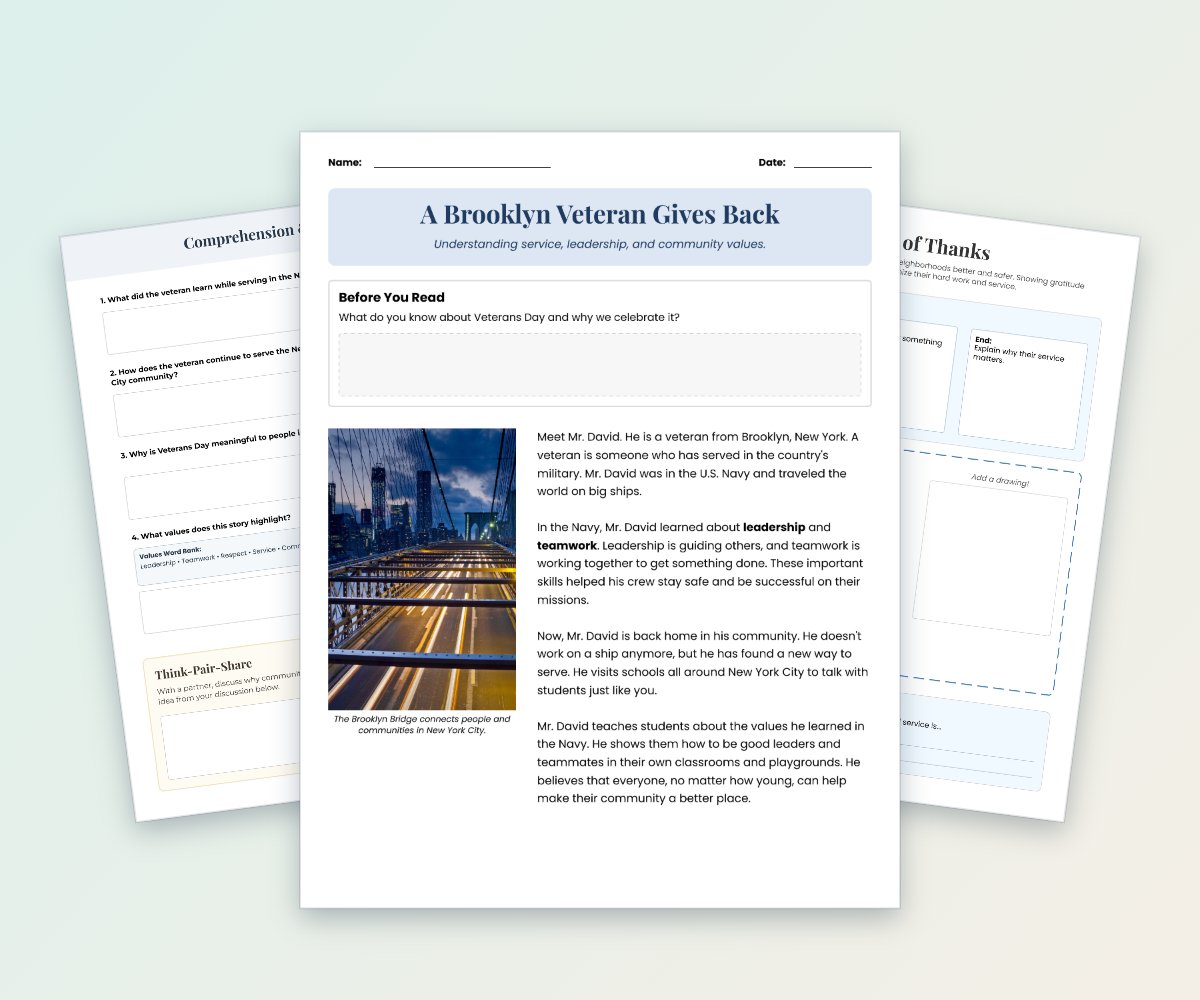
Students read about a Brooklyn veteran, answer comprehension questions, discuss leadership and teamwork, and write a thank-you letter.
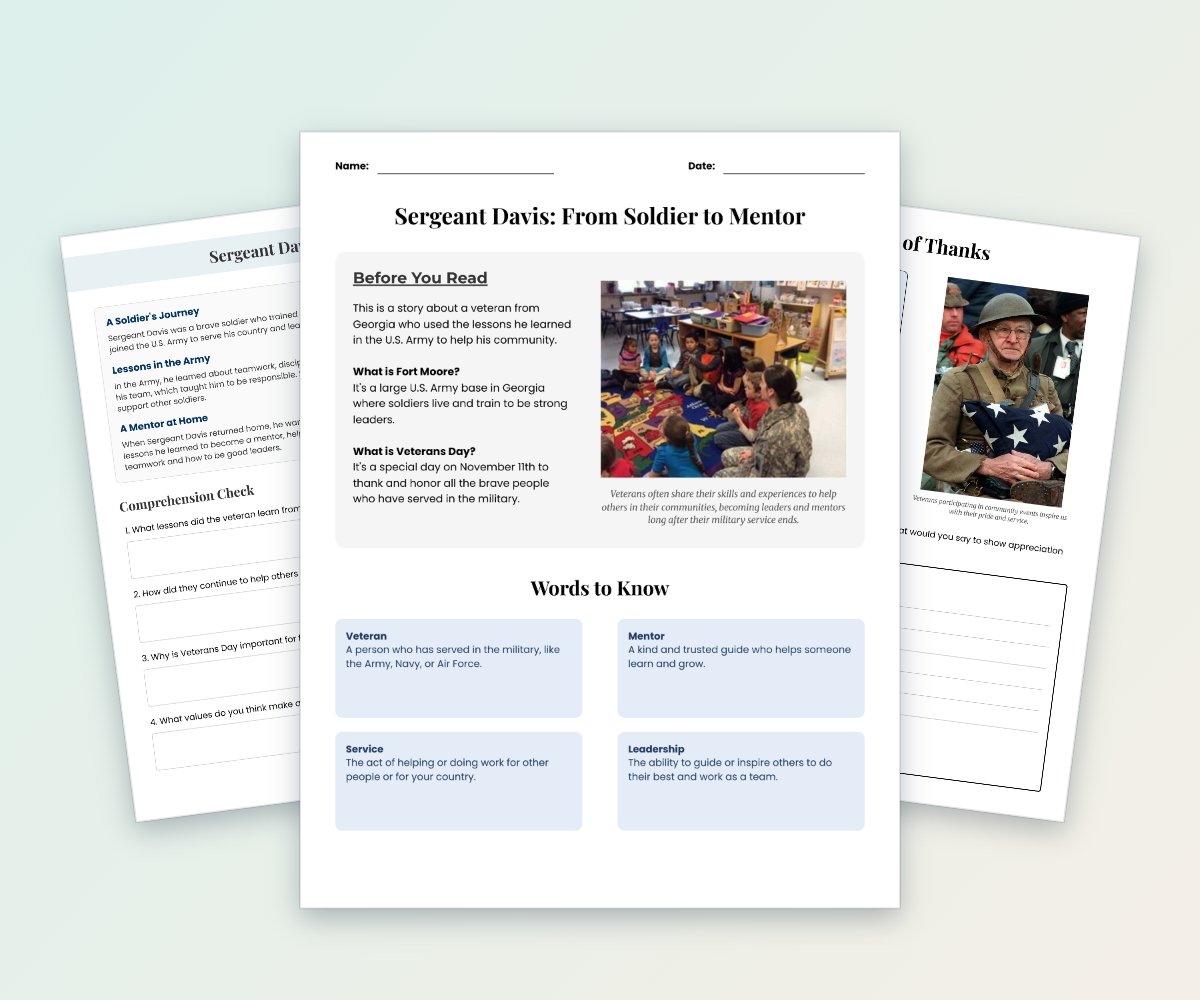
Students read a short informational story about Sergeant Davis, Fort Moore, Veterans Day, and community mentorship.
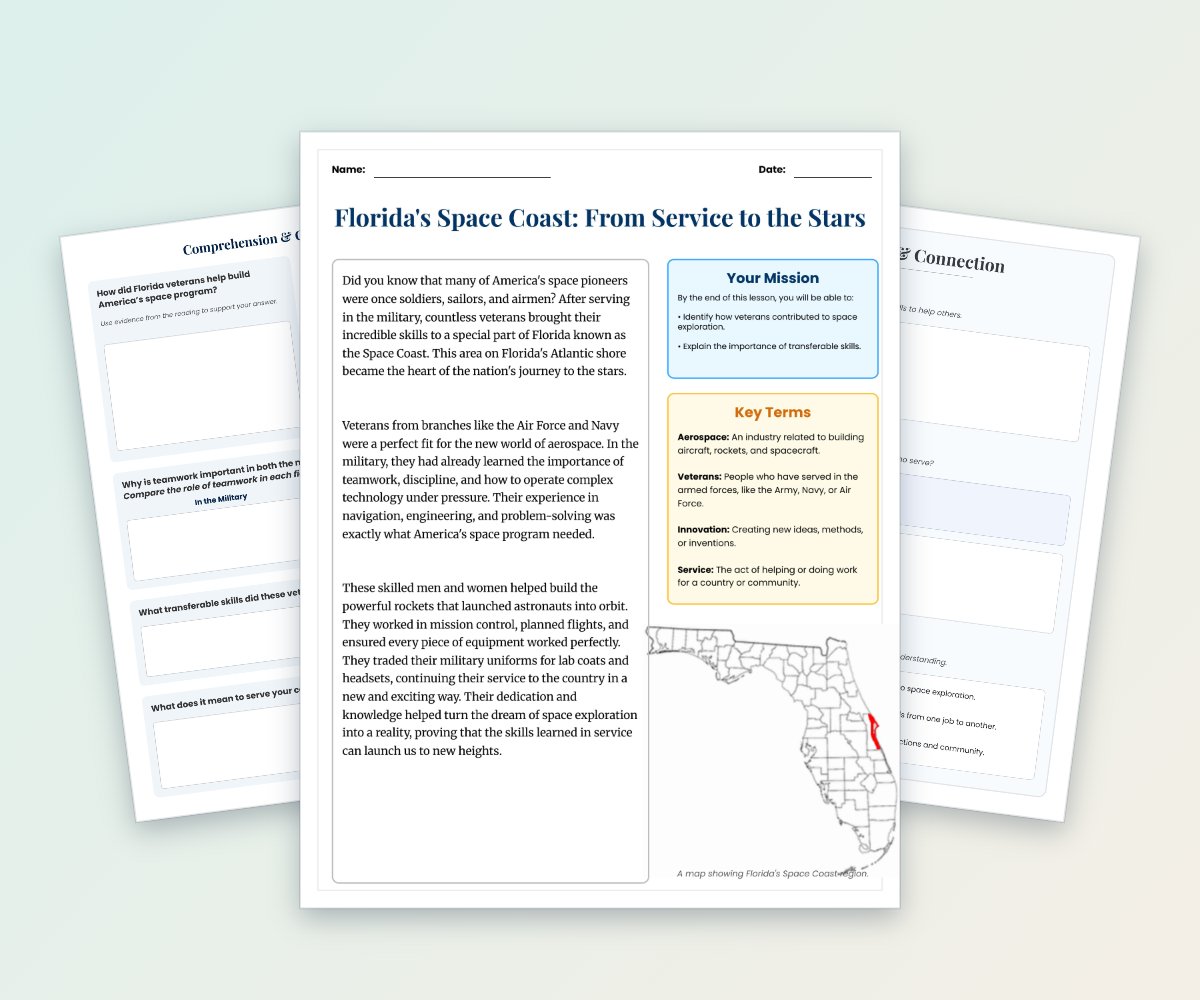
Students explore how military veterans contributed to Florida's space program through an informational reading and key vocabulary.
Students read an informational passage about a Vermont veteran’s continued community service and answer comprehension questions.
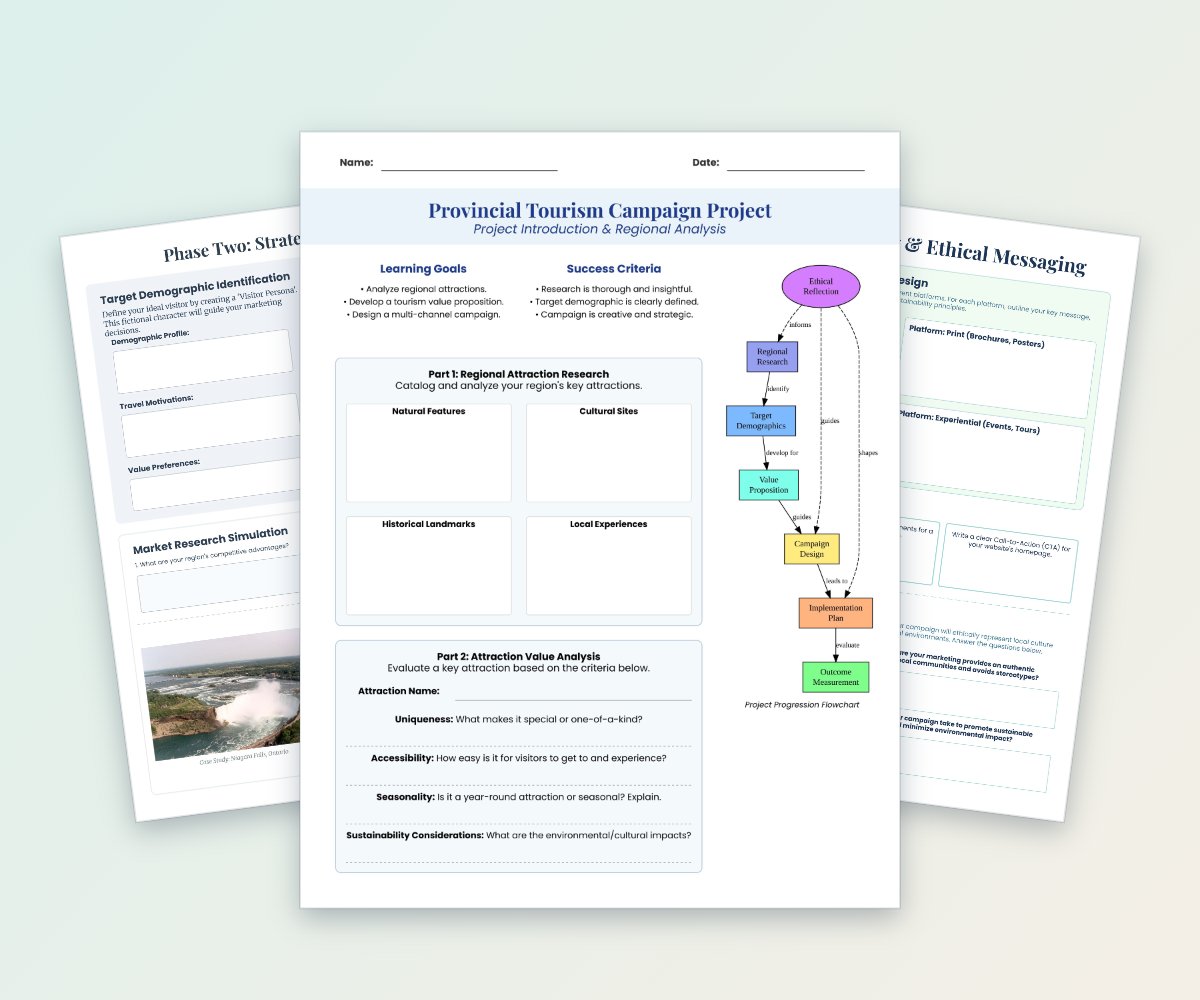
Students research regional attractions, analyze their tourism value, define a target visitor persona, and develop a compelling value proposition.
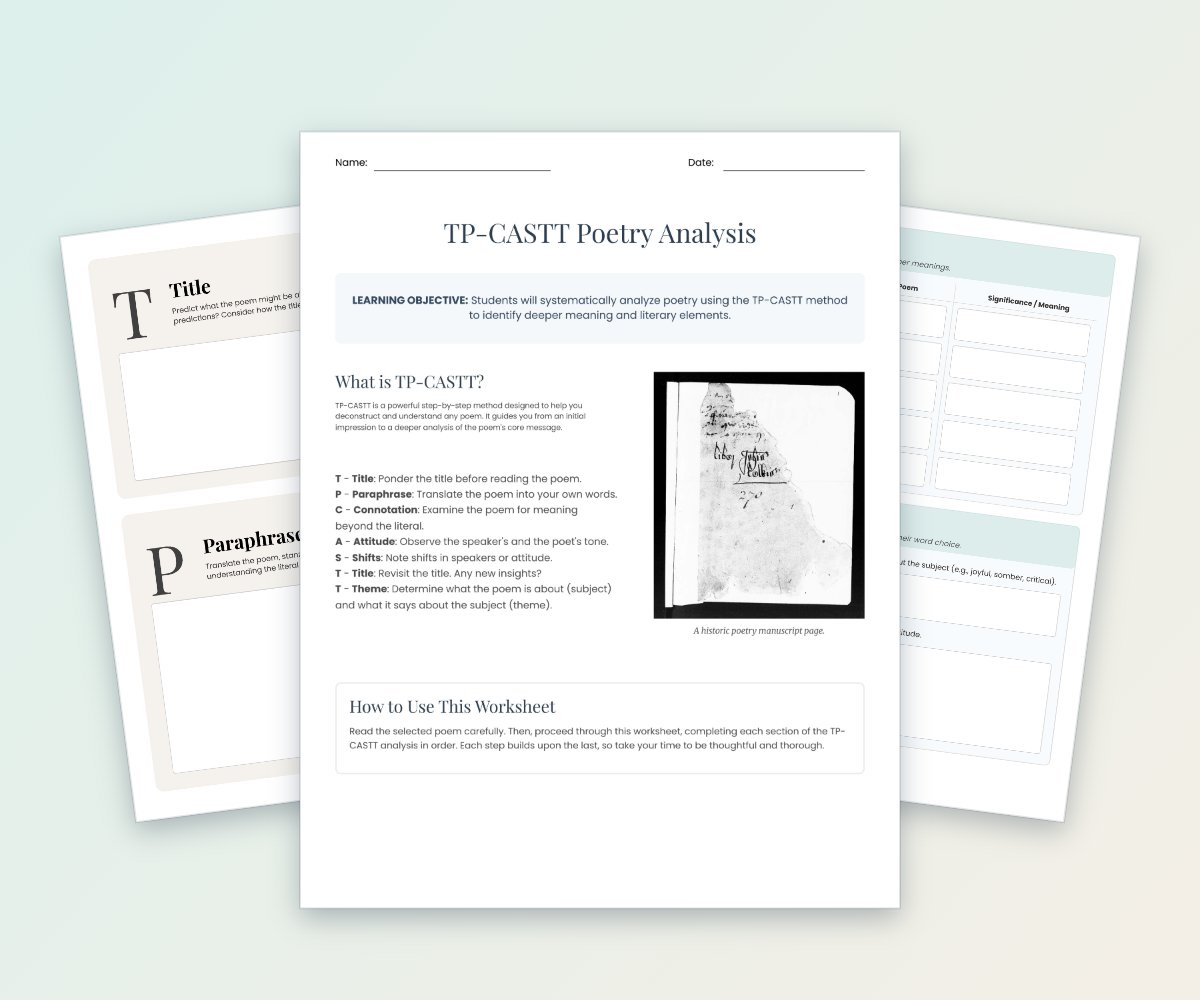
This four-page resource introduces the TP-CASTT method and guides students through analyzing title, paraphrase, connotation, attitude, shifts, title revisited, and theme.
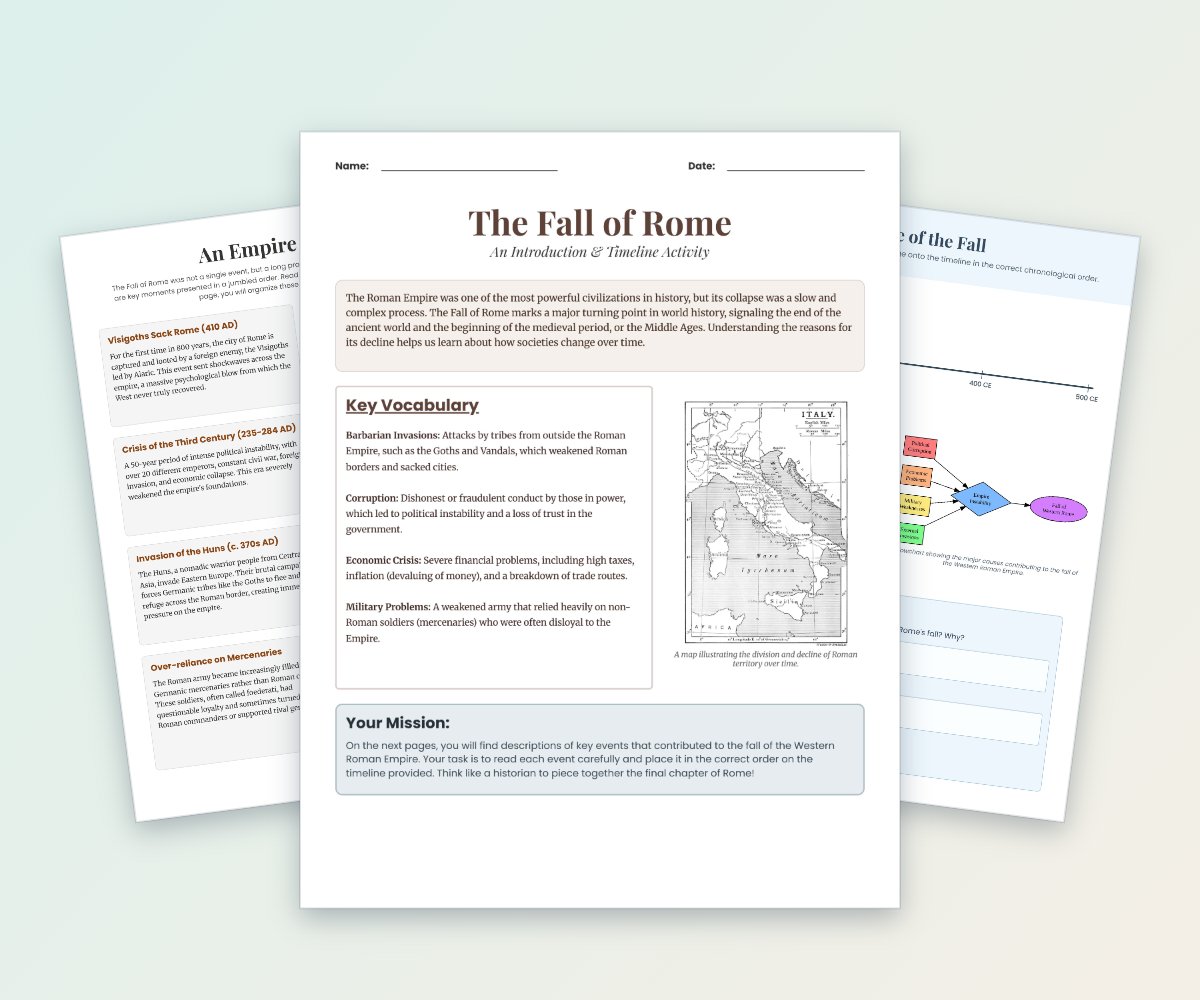
Students learn about major causes and events connected to the decline of the Western Roman Empire.
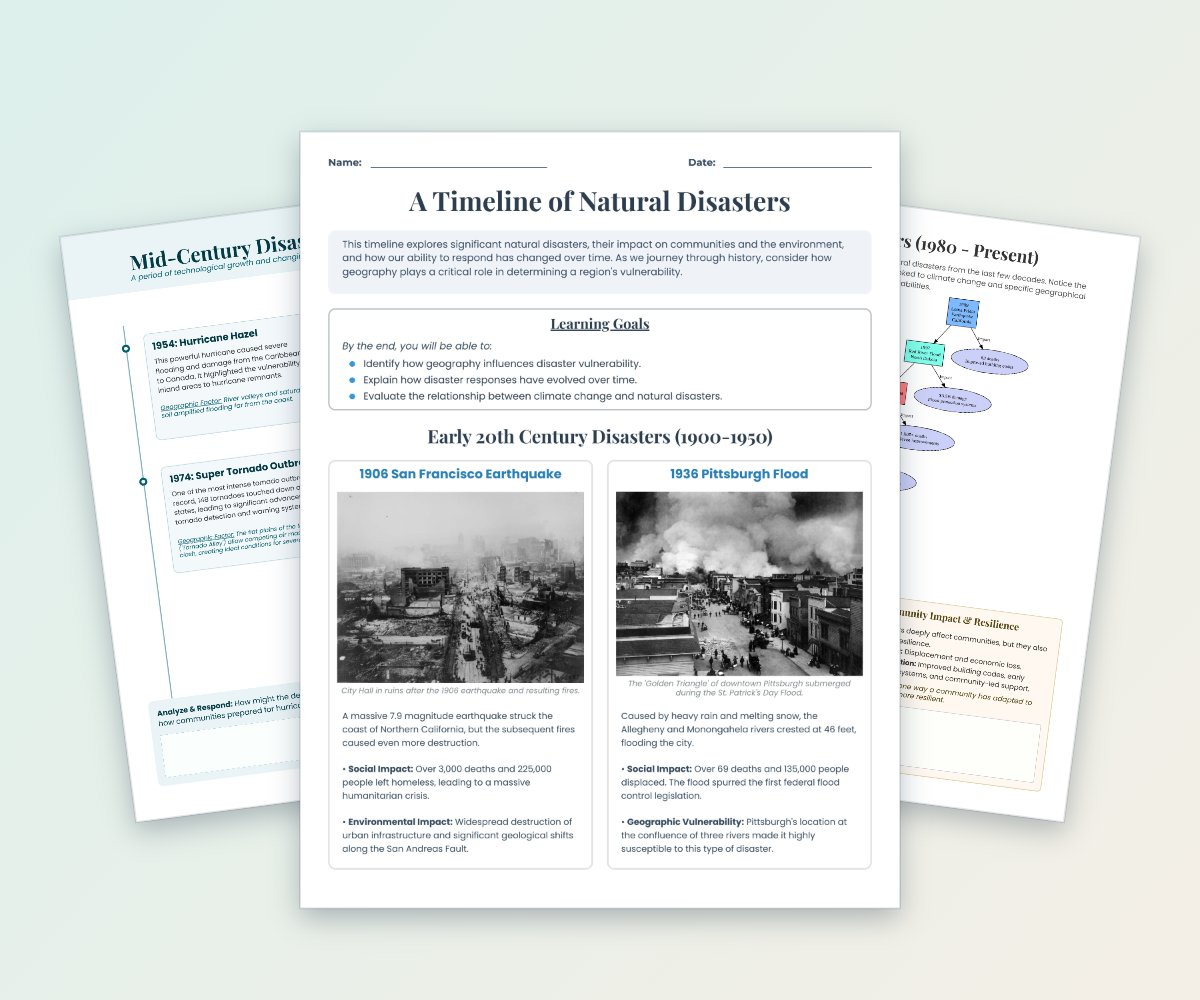
Students examine major natural disasters from 1900 to 1980, including earthquakes, floods, hurricanes, and tornadoes.
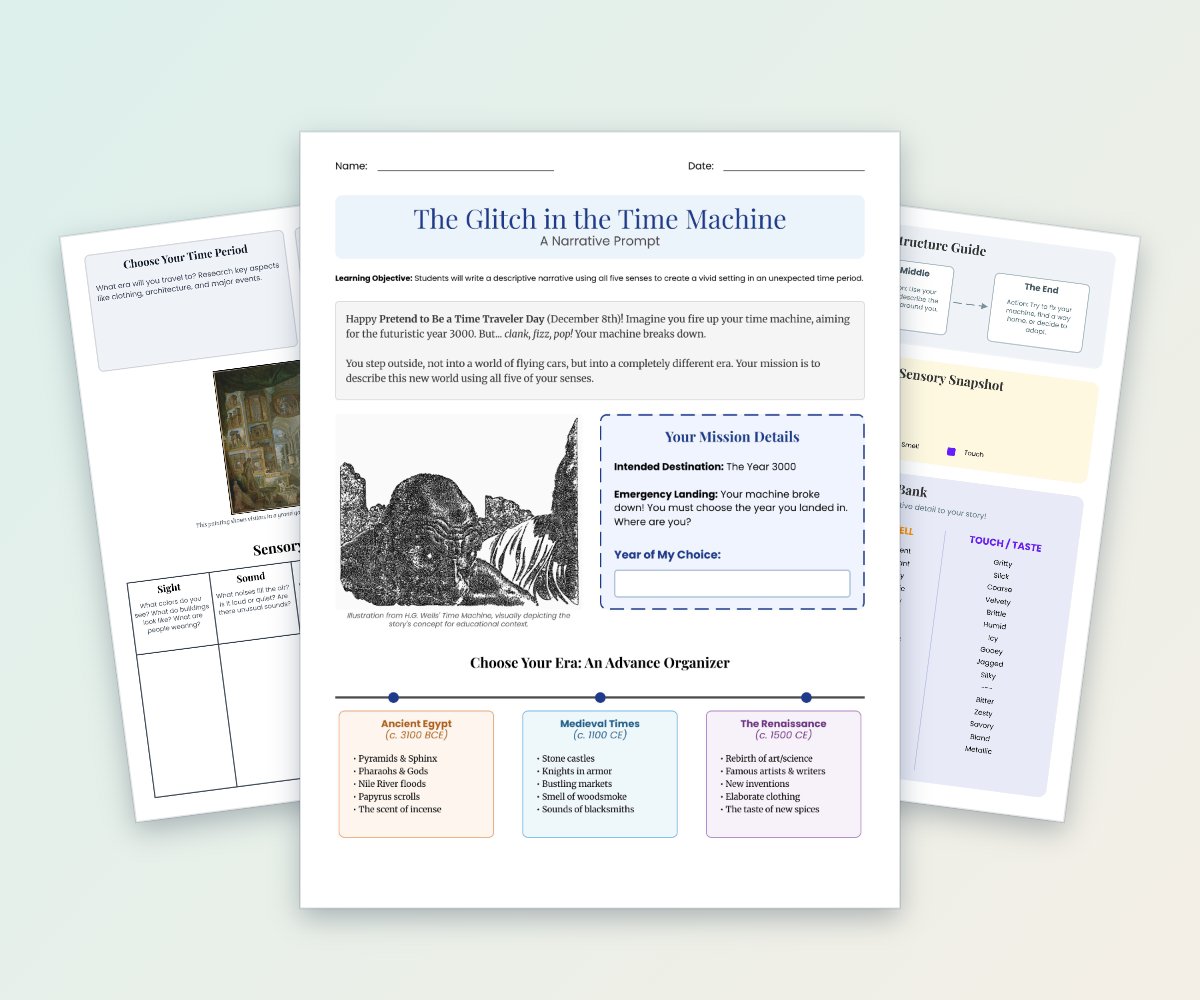
Students imagine a malfunctioning time machine, choose a historical era, and plan a vivid narrative using all five senses.
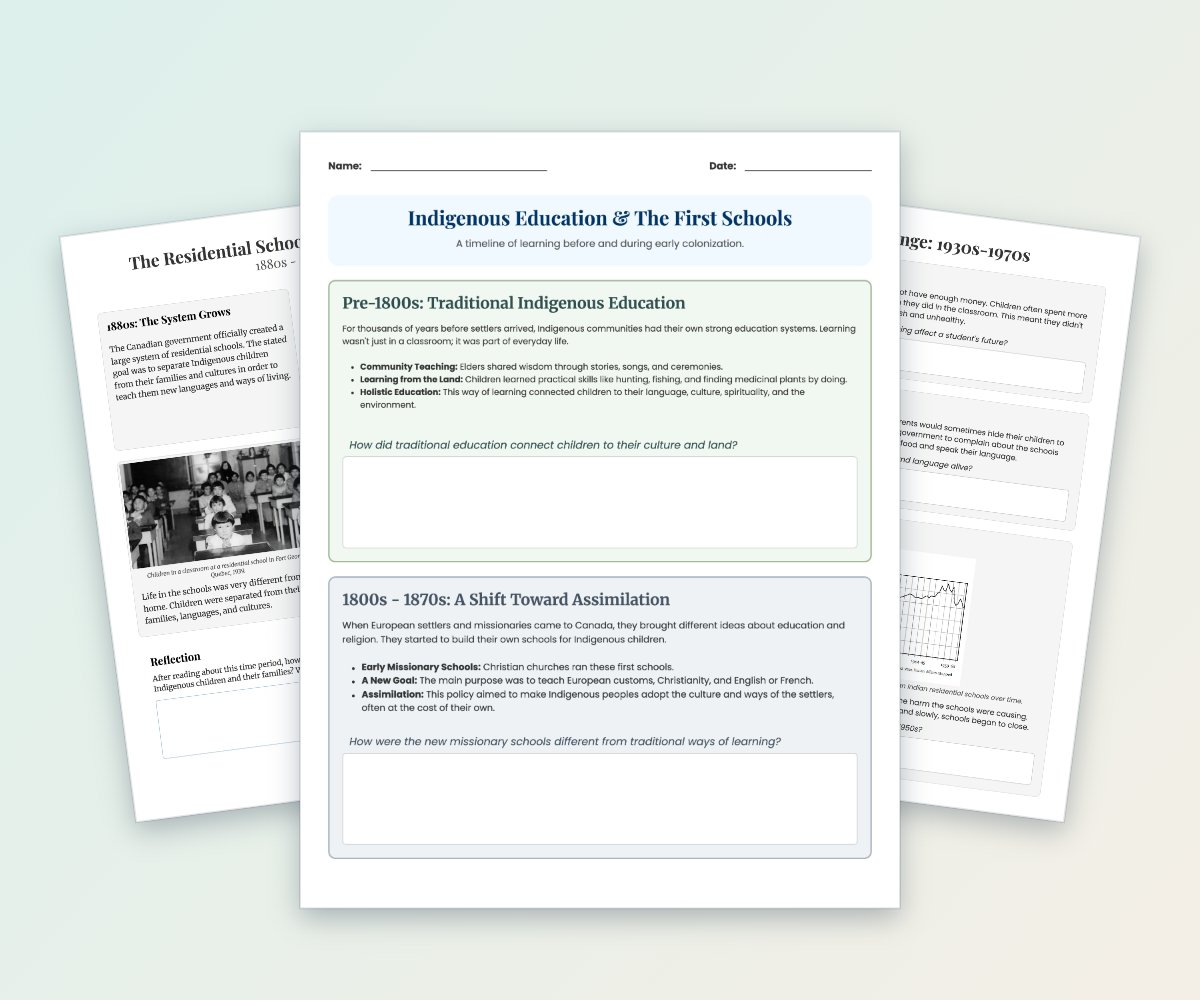
This four-page printable timeline introduces traditional Indigenous education, missionary schools, assimilation, and the development of Canada’s residential school system.
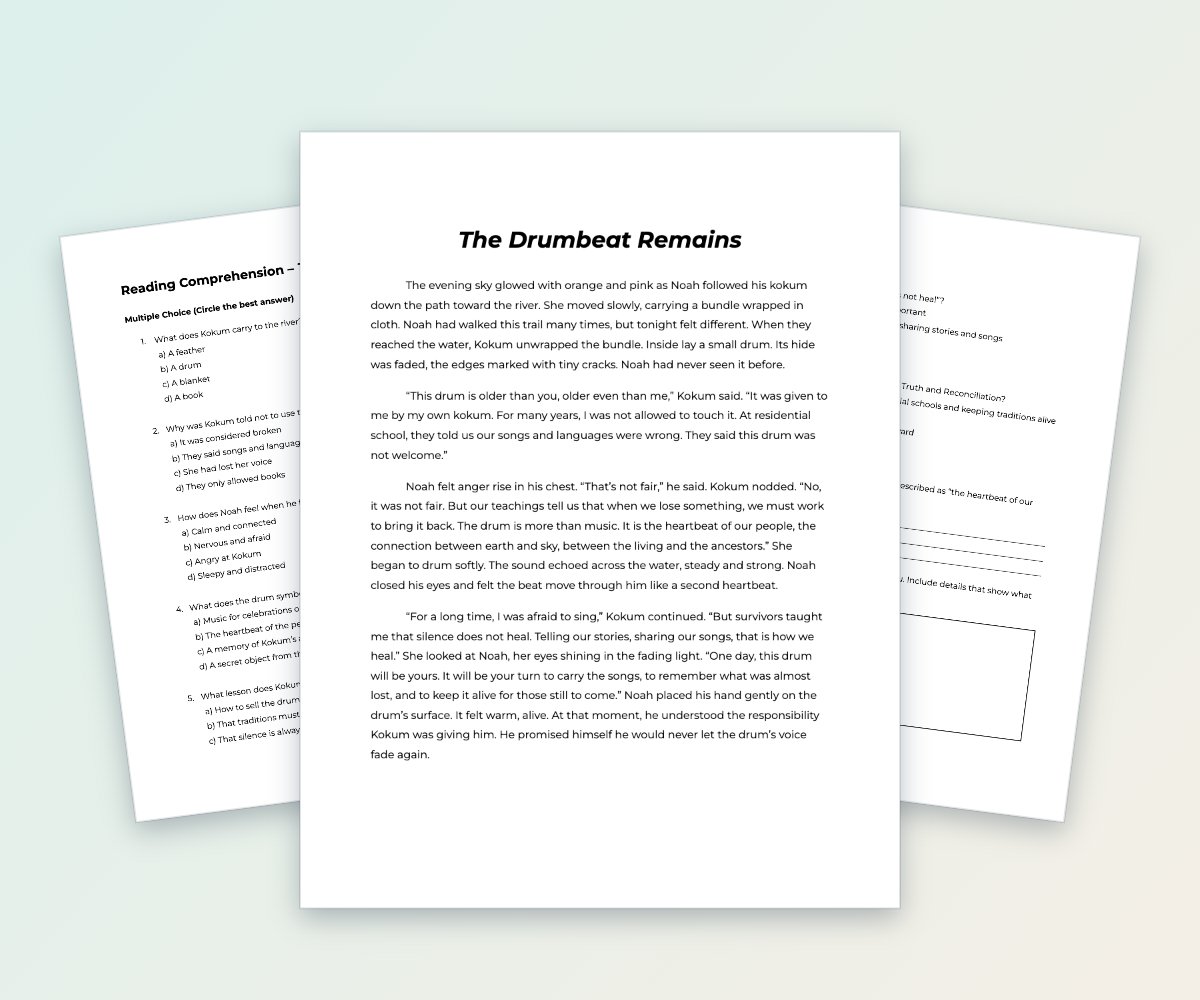
Students read a narrative about Noah, his kokum, and a drum connected to Indigenous culture, residential schools, and healing.
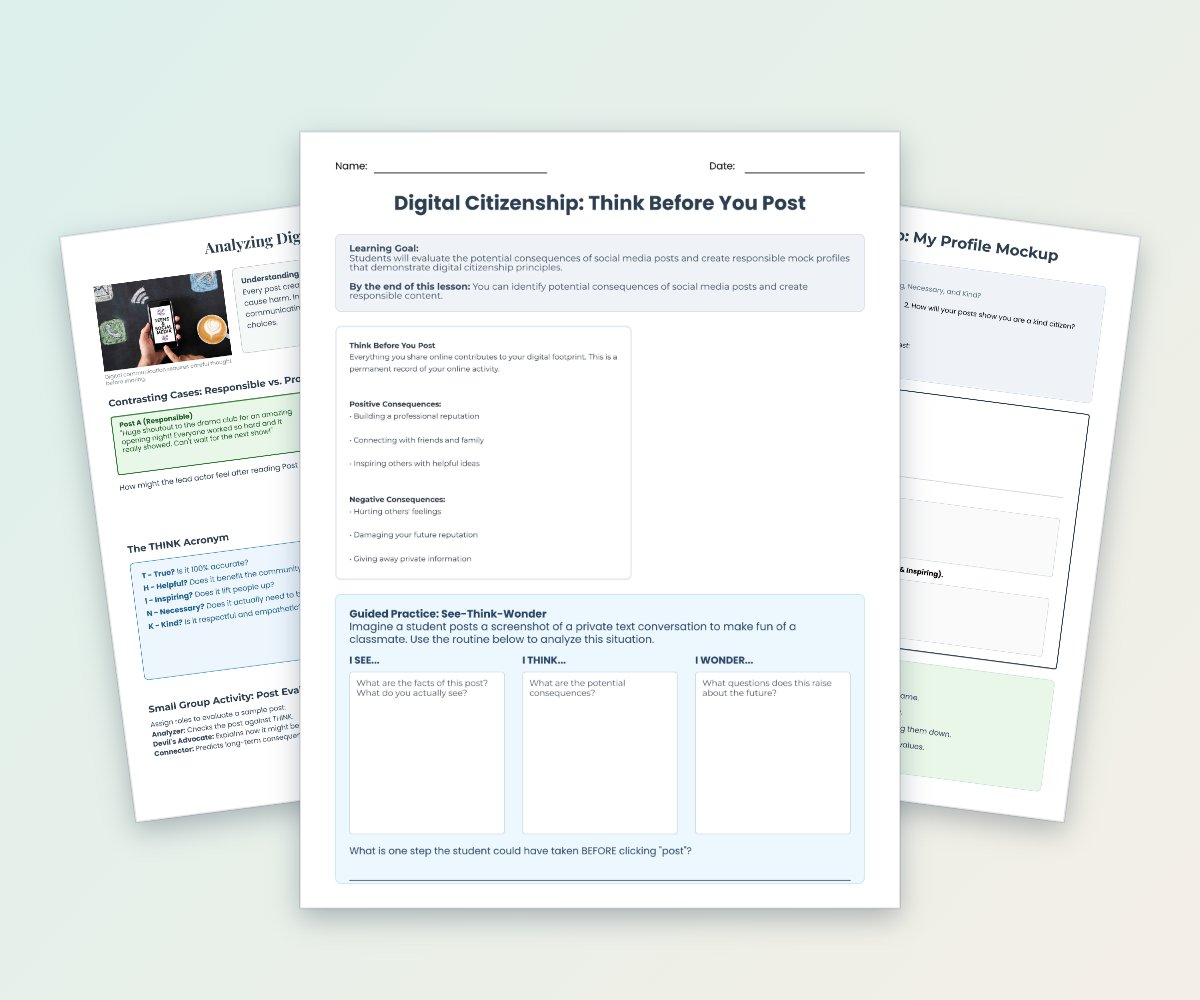
This lesson helps students evaluate the potential consequences of social media posts and make responsible choices online.
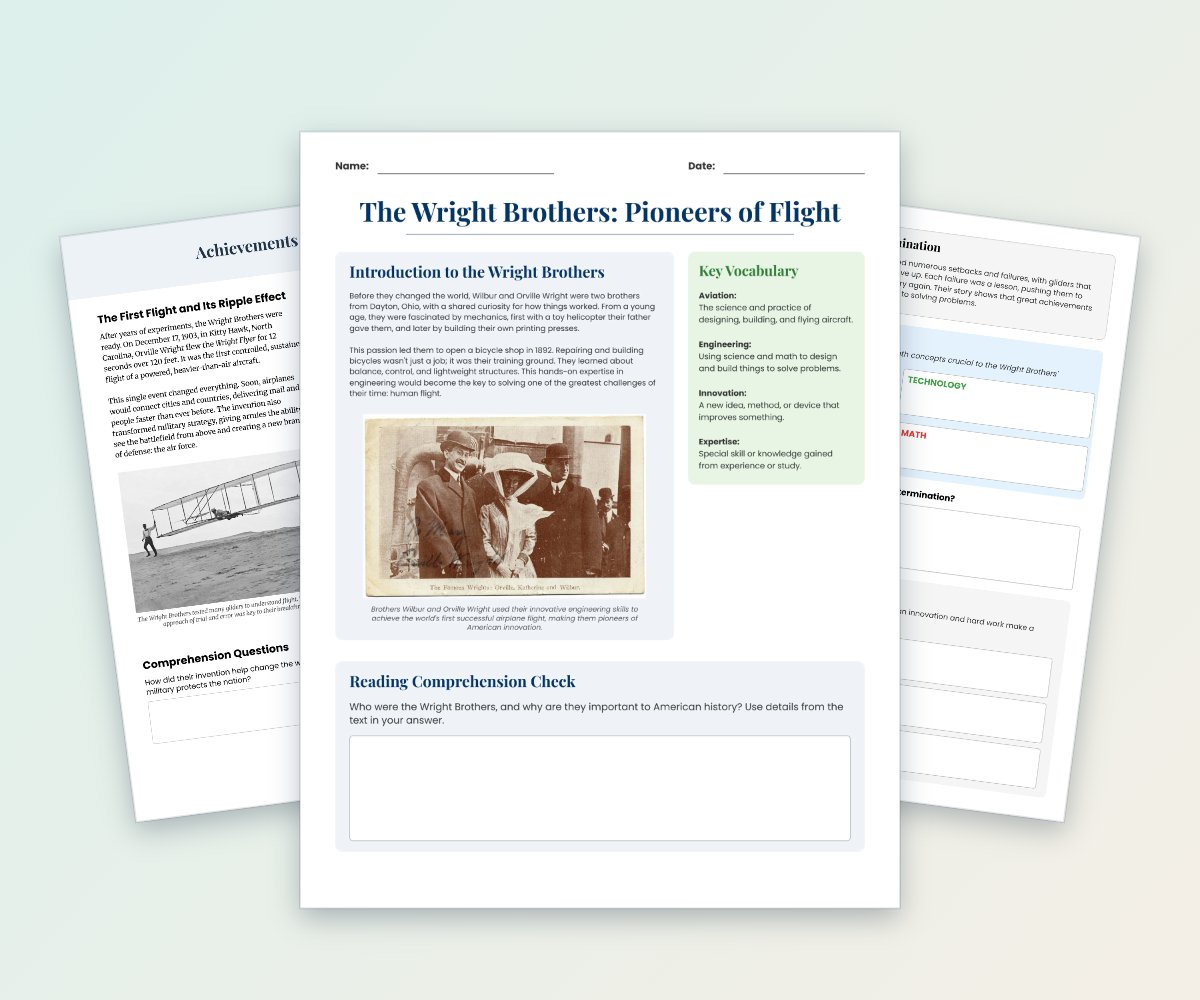
Students read an informational passage about Wilbur and Orville Wright, their engineering background, and the first powered flight.
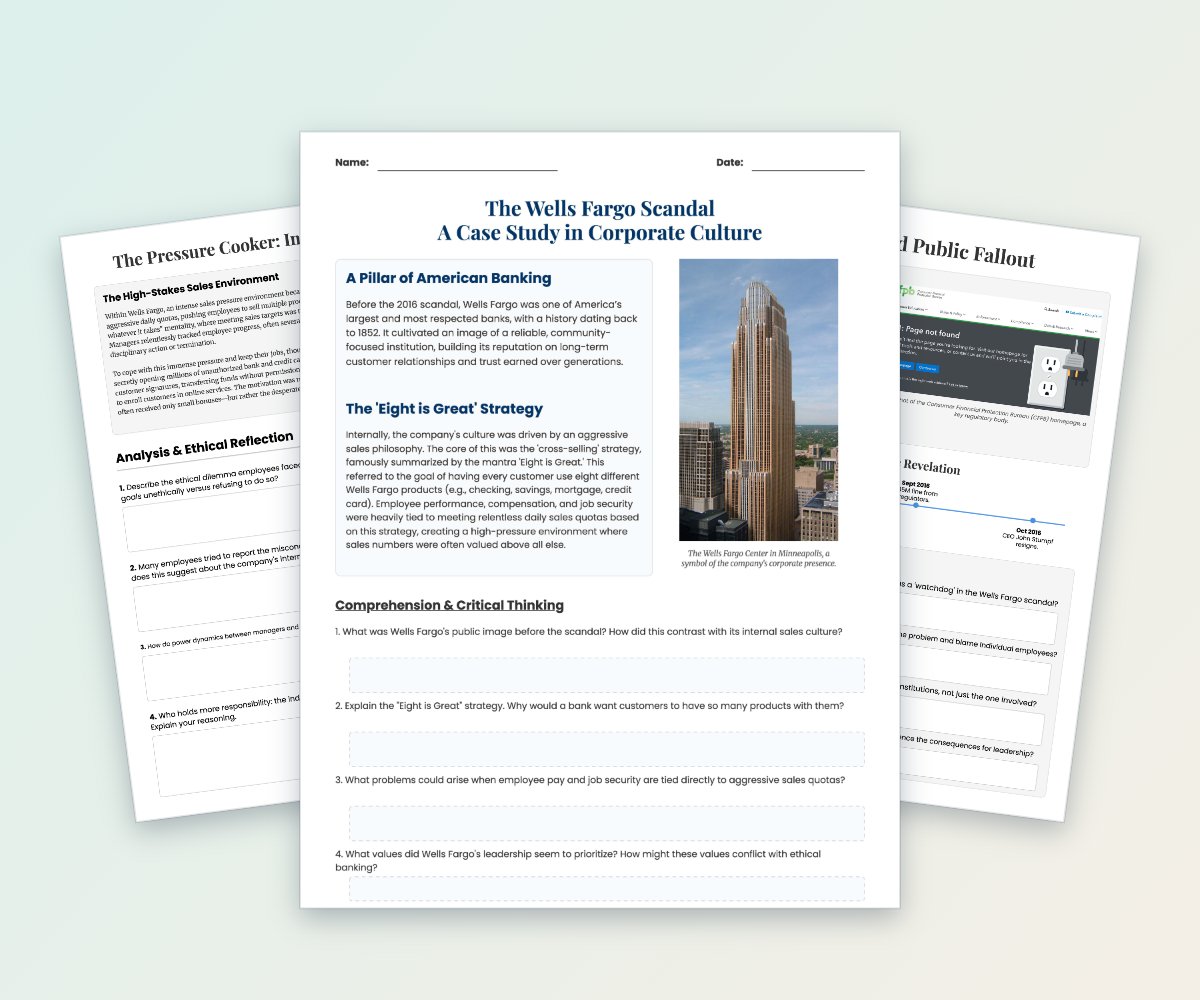
Students examine Wells Fargo’s aggressive sales culture, the “Eight is Great” strategy, and the unauthorized account scandal.
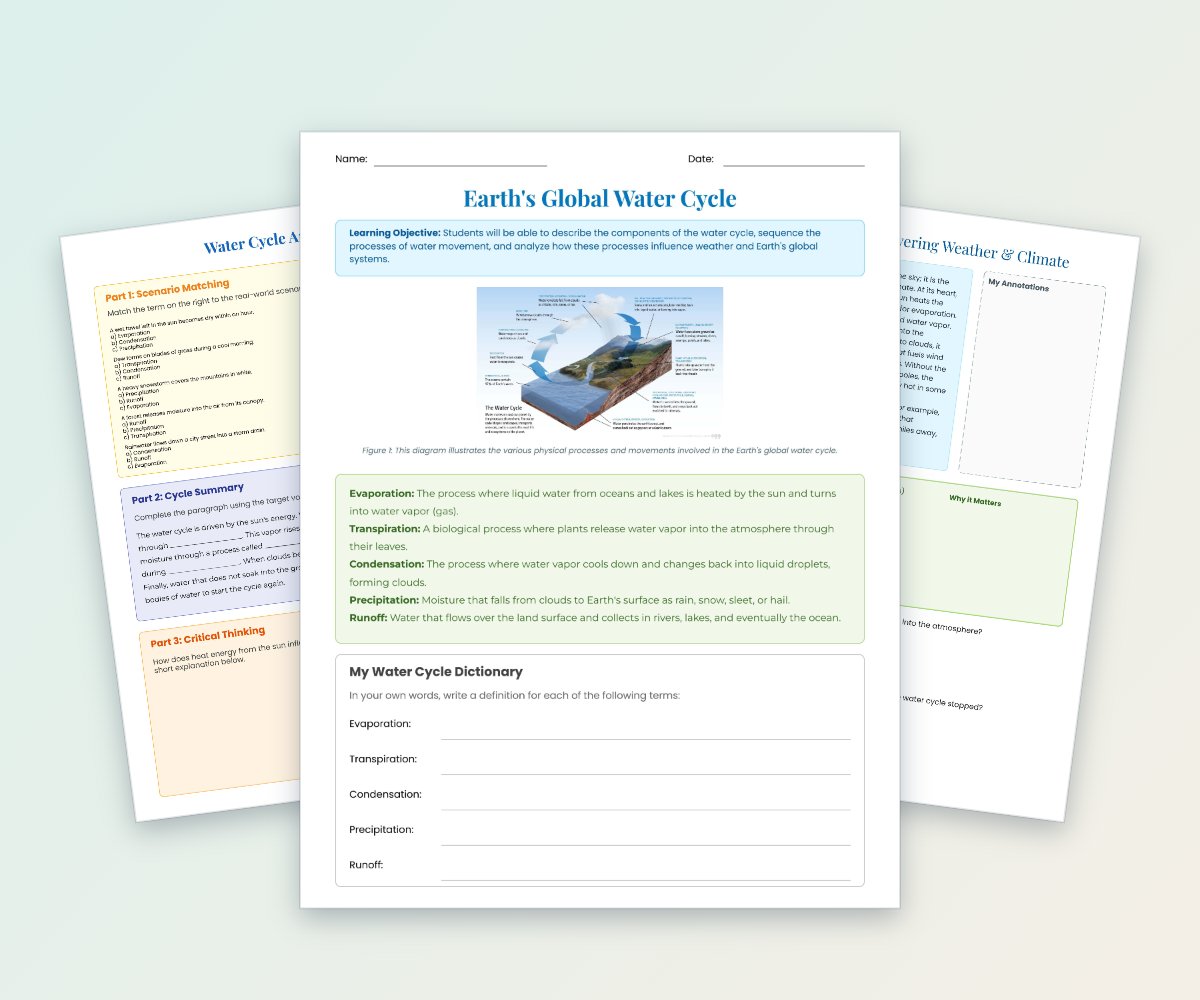
This six-page study guide introduces evaporation, transpiration, condensation, precipitation, runoff, and groundwater movement.
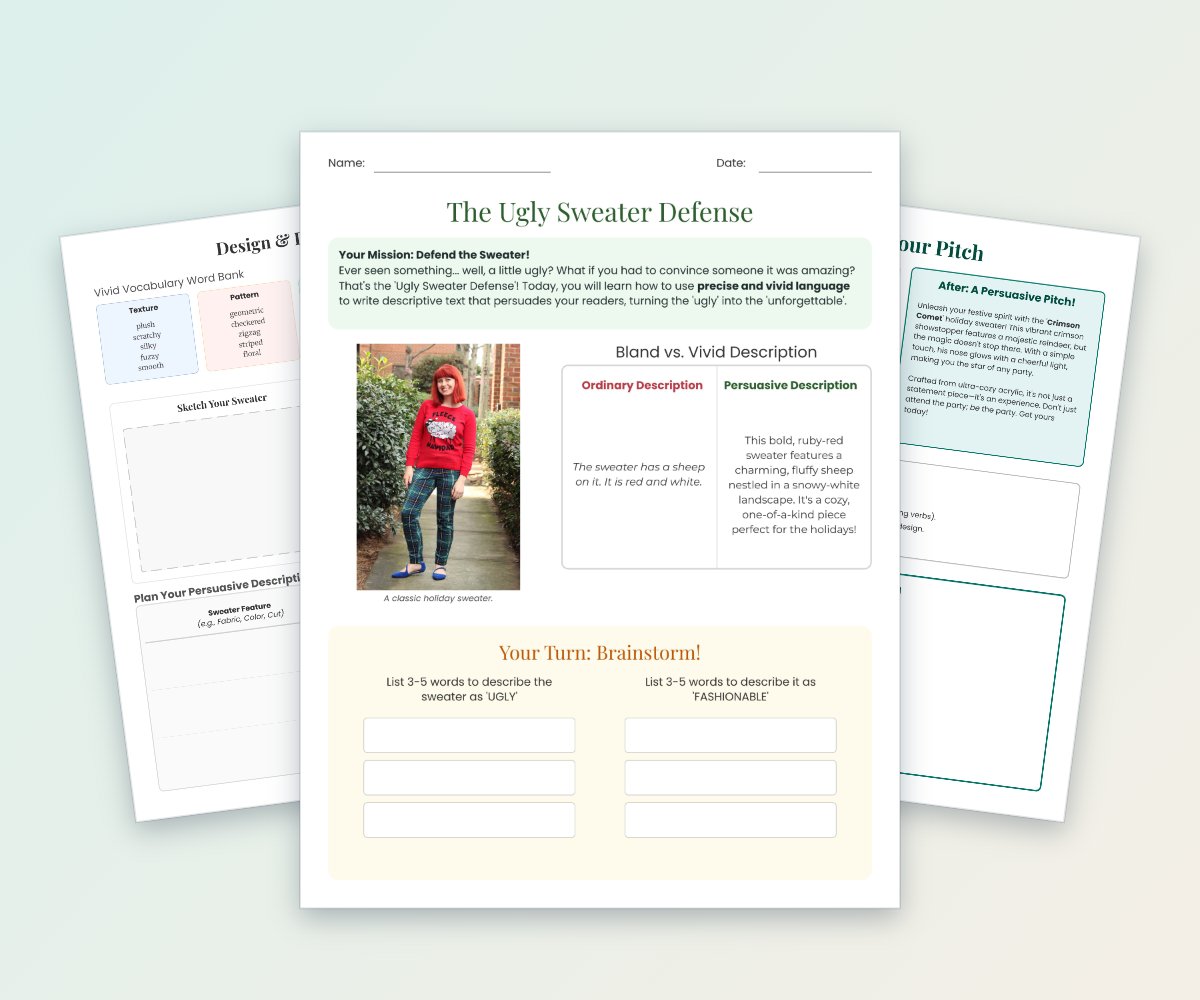
Students transform an ordinary ugly sweater description into an engaging persuasive catalog pitch using vivid vocabulary, sensory details, and strong calls to action.
This concise lesson introduces students to the history and responsibilities of the U.S.
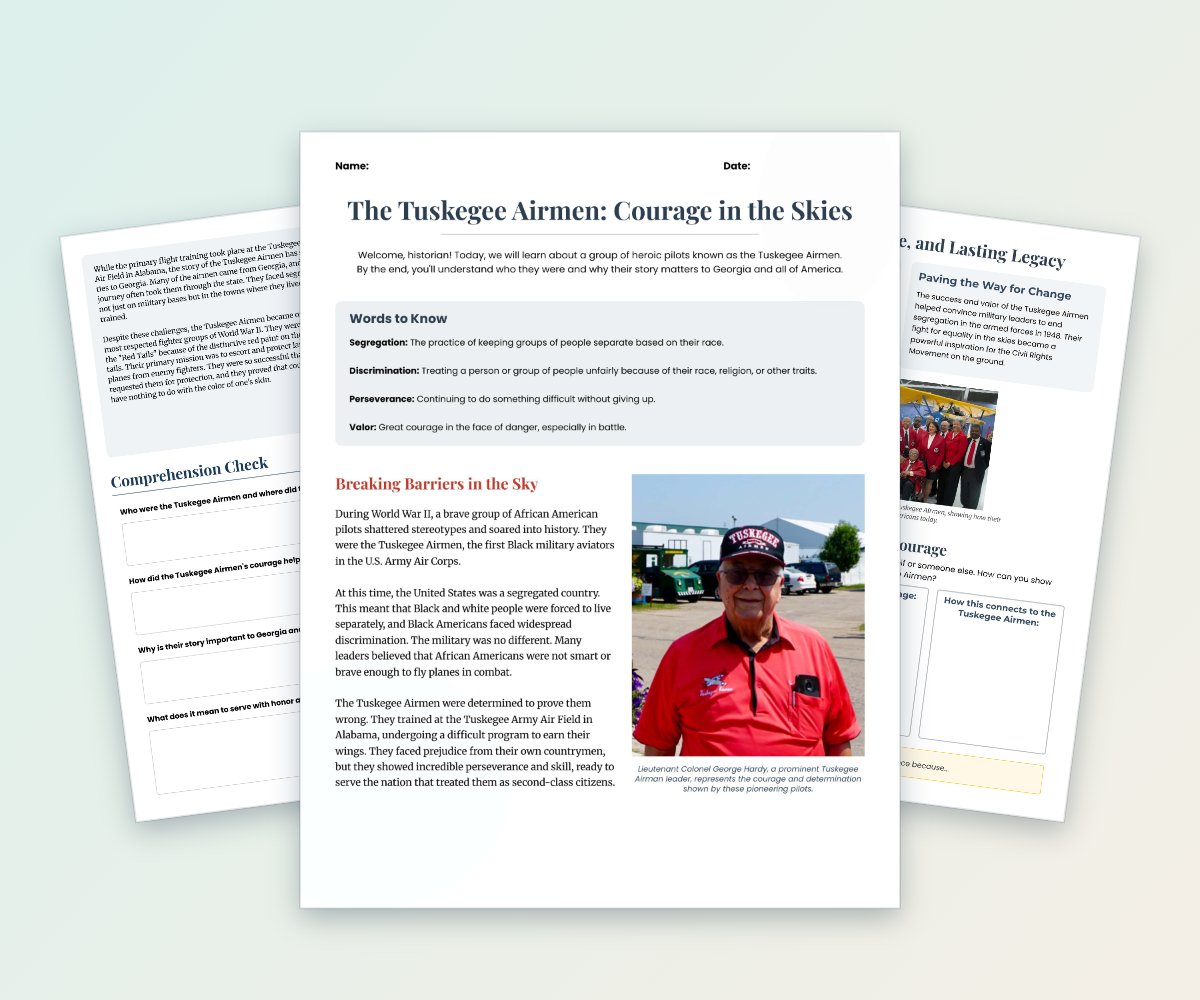
Students read about the Tuskegee Airmen, segregation, discrimination, perseverance, and their role as World War II military aviators.
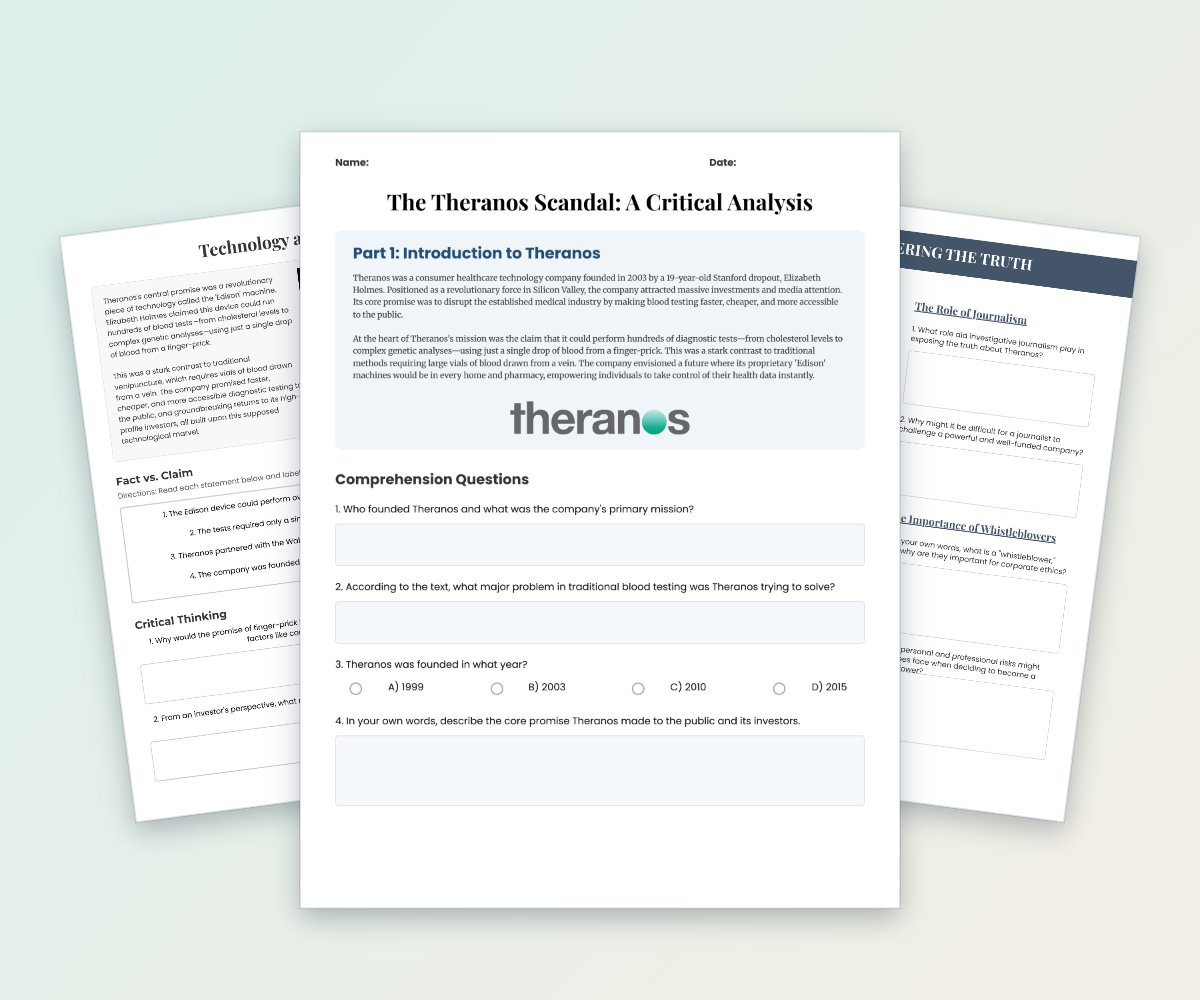
Students examine Theranos, its blood-testing claims, investors, and public impact through informational text and guided questions.
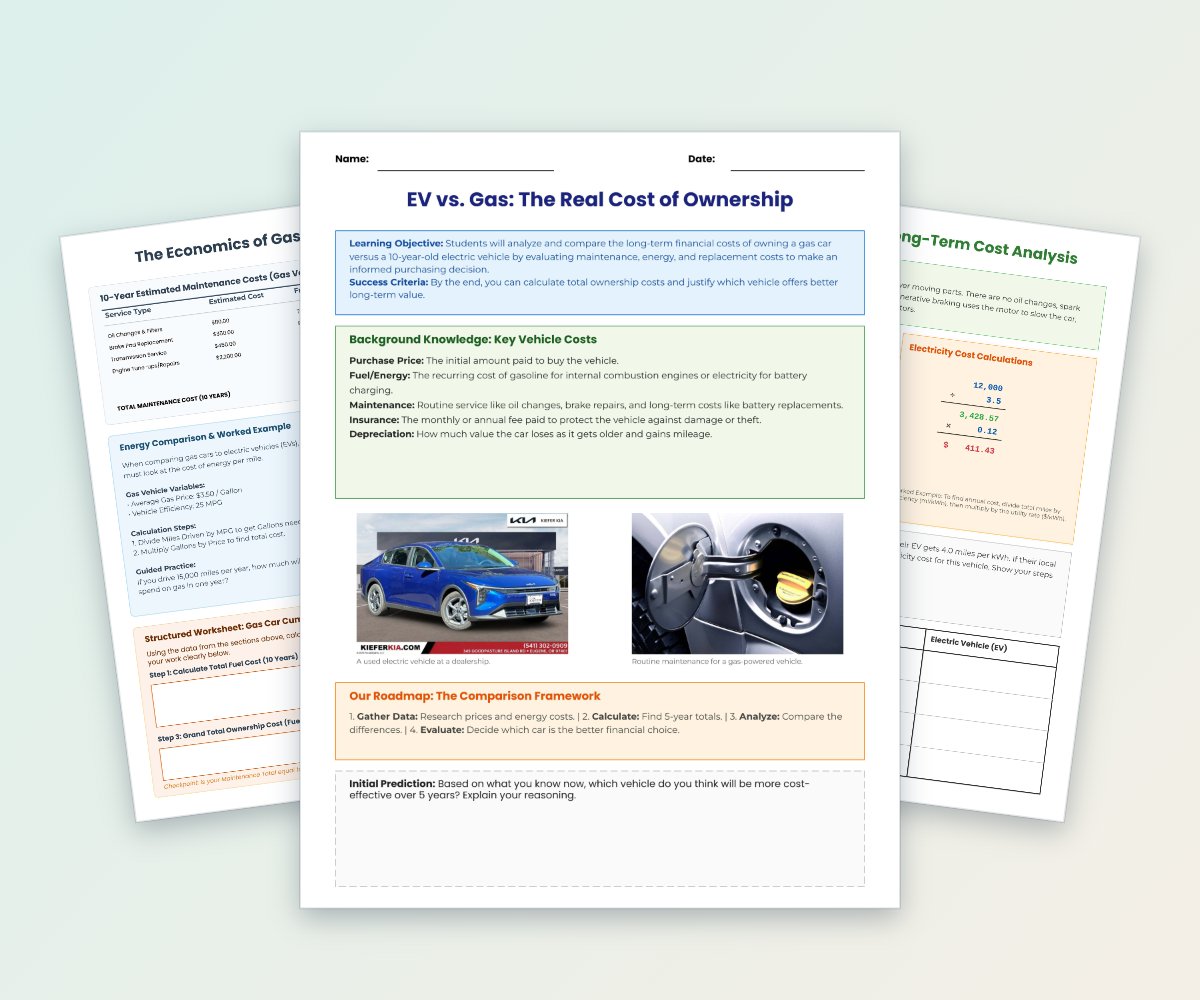
Students compare the long-term costs of owning a used electric vehicle and a gas-powered vehicle.
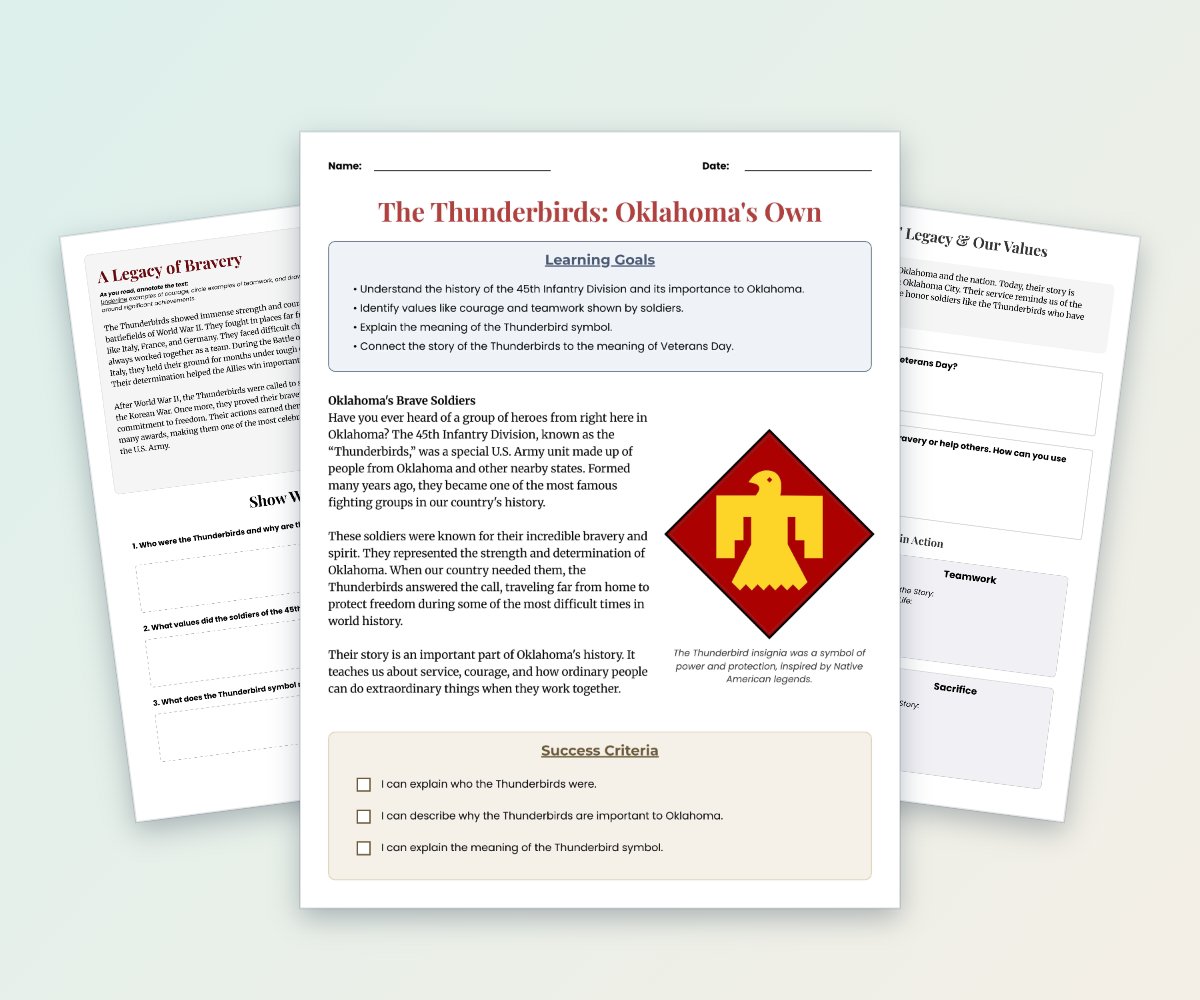
Students learn about Oklahoma's 45th Infantry Division, known as the Thunderbirds, and its service in World War II and the Korean War.
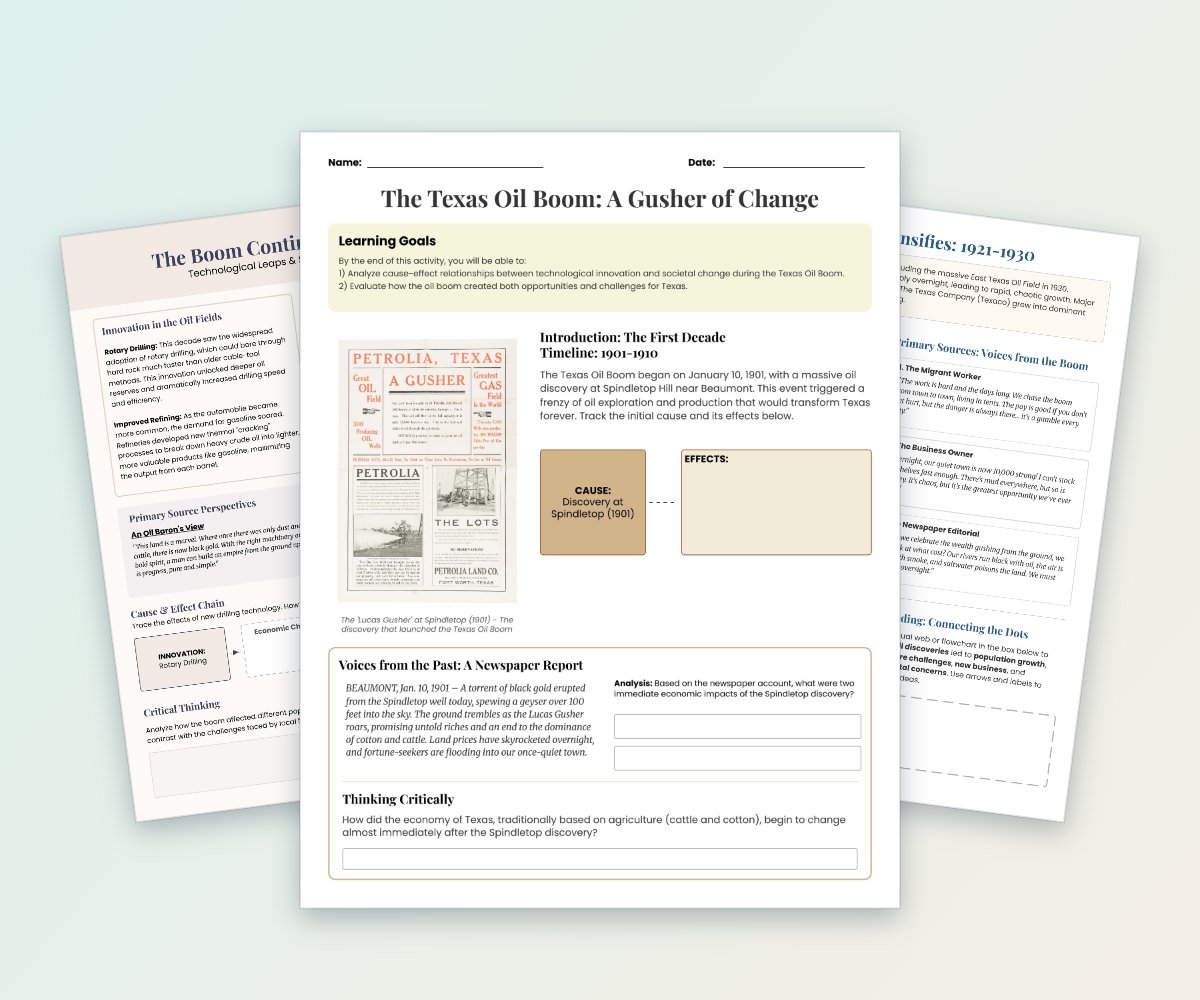
Students examine the 1901 Spindletop discovery and trace how technological innovation fueled economic and social change in Texas.
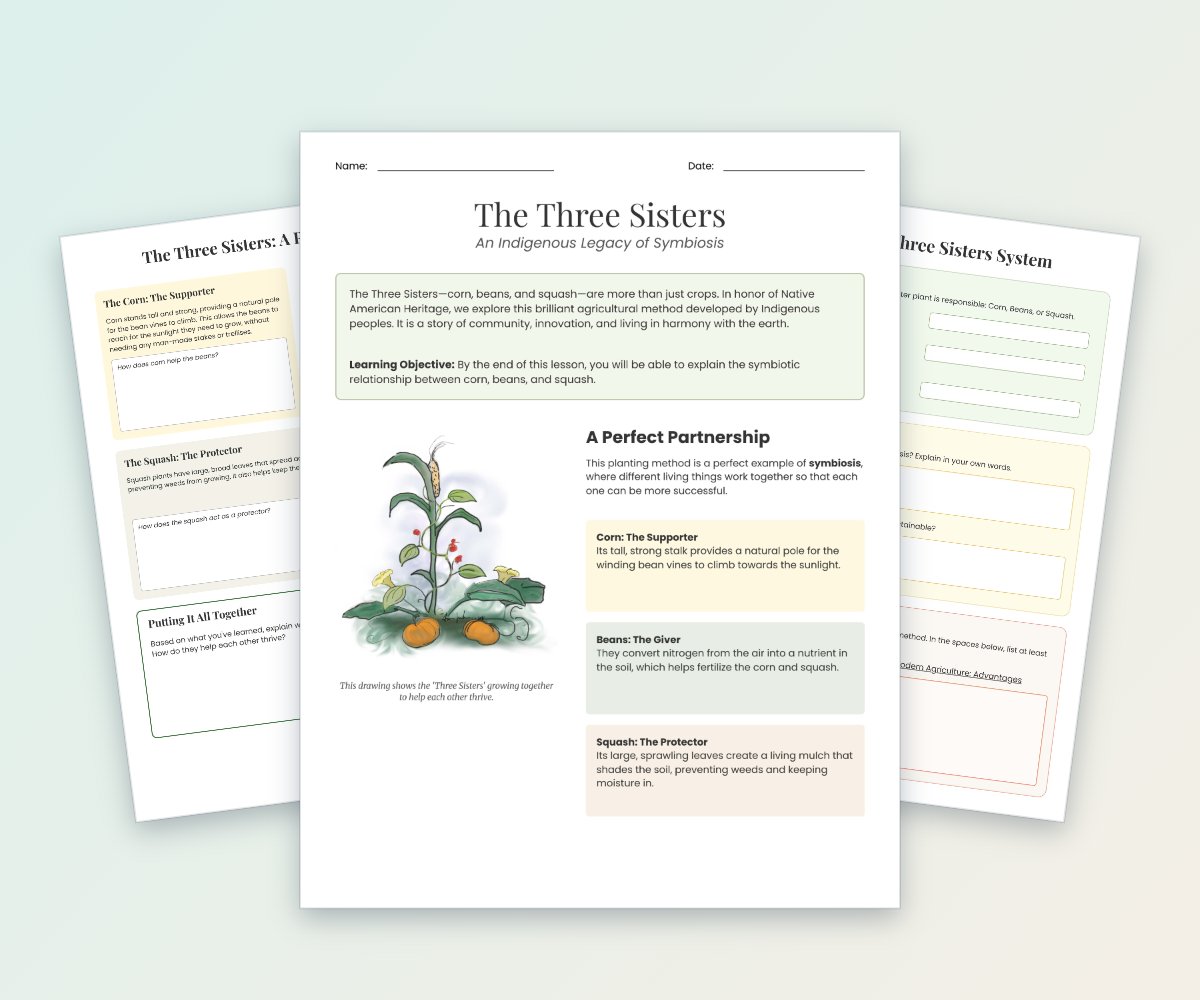
This four-page lesson explores how corn, beans, and squash support one another in the Three Sisters planting system.
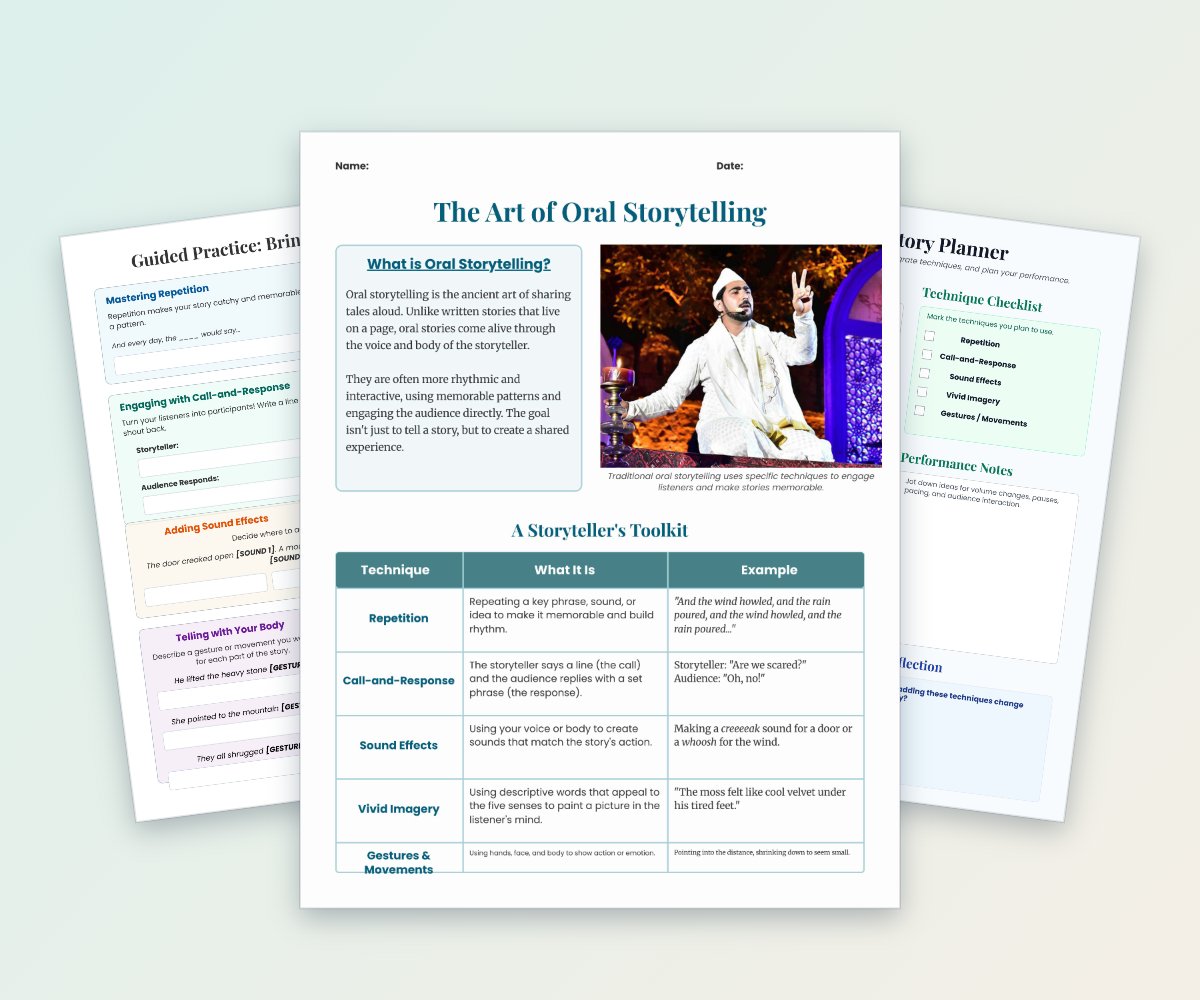
Teach students how to use repetition, call-and-response, sound effects, vivid imagery, and gestures to make oral stories engaging.
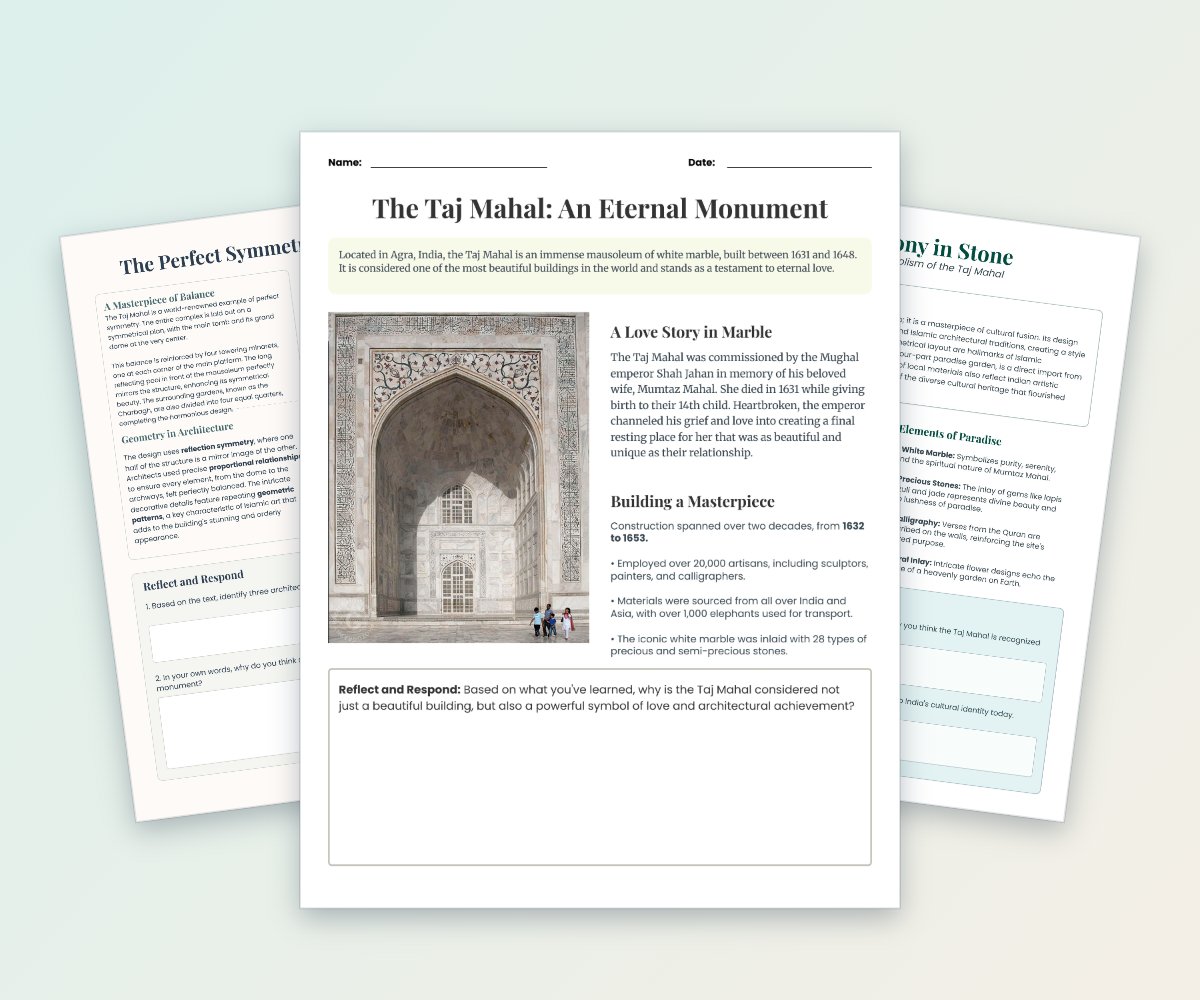
This four-page reading resource explores the Taj Mahal’s history, cultural significance, construction, and symmetrical architectural design.
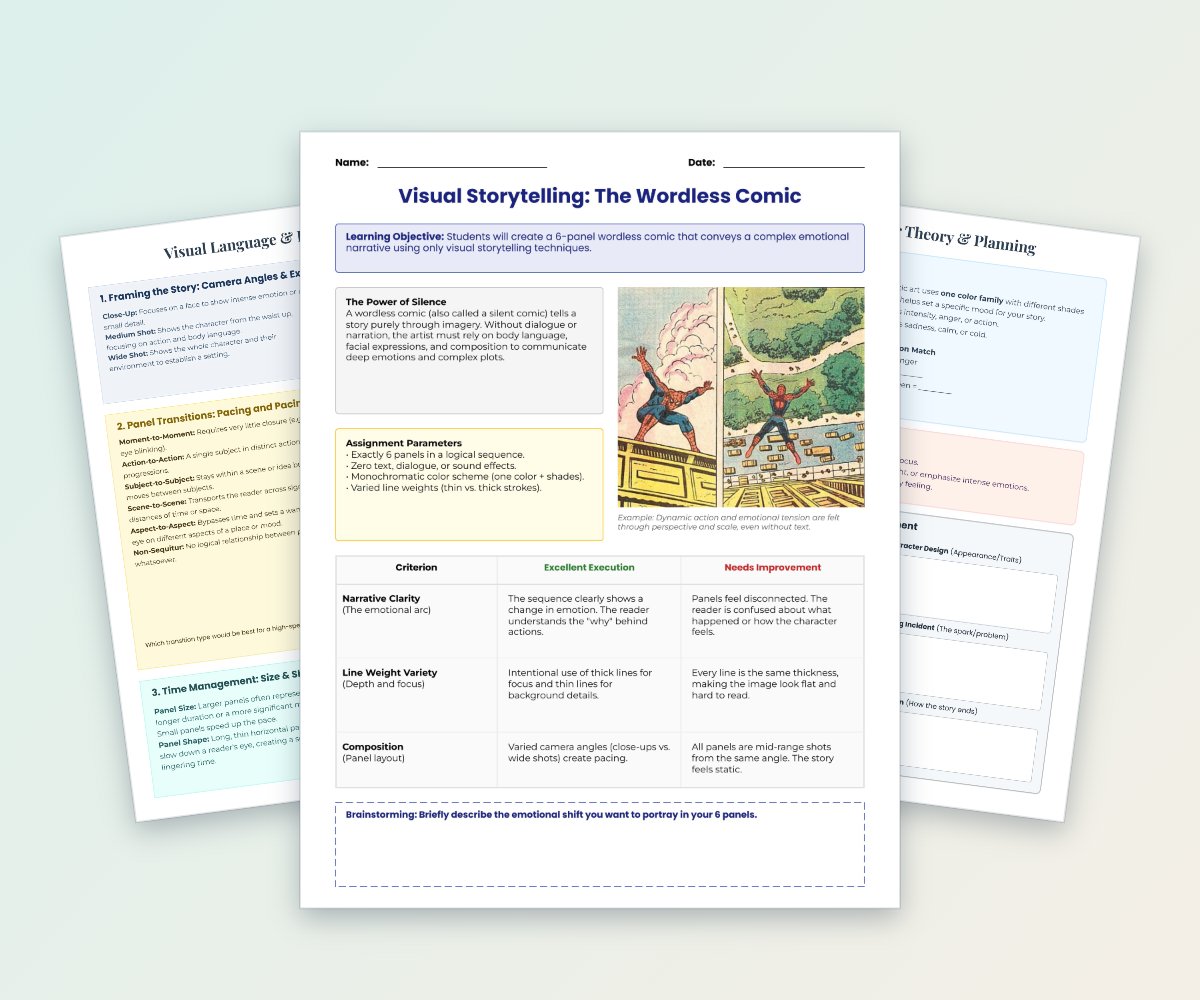
Students create a six-panel wordless comic that communicates an emotional narrative through imagery alone.
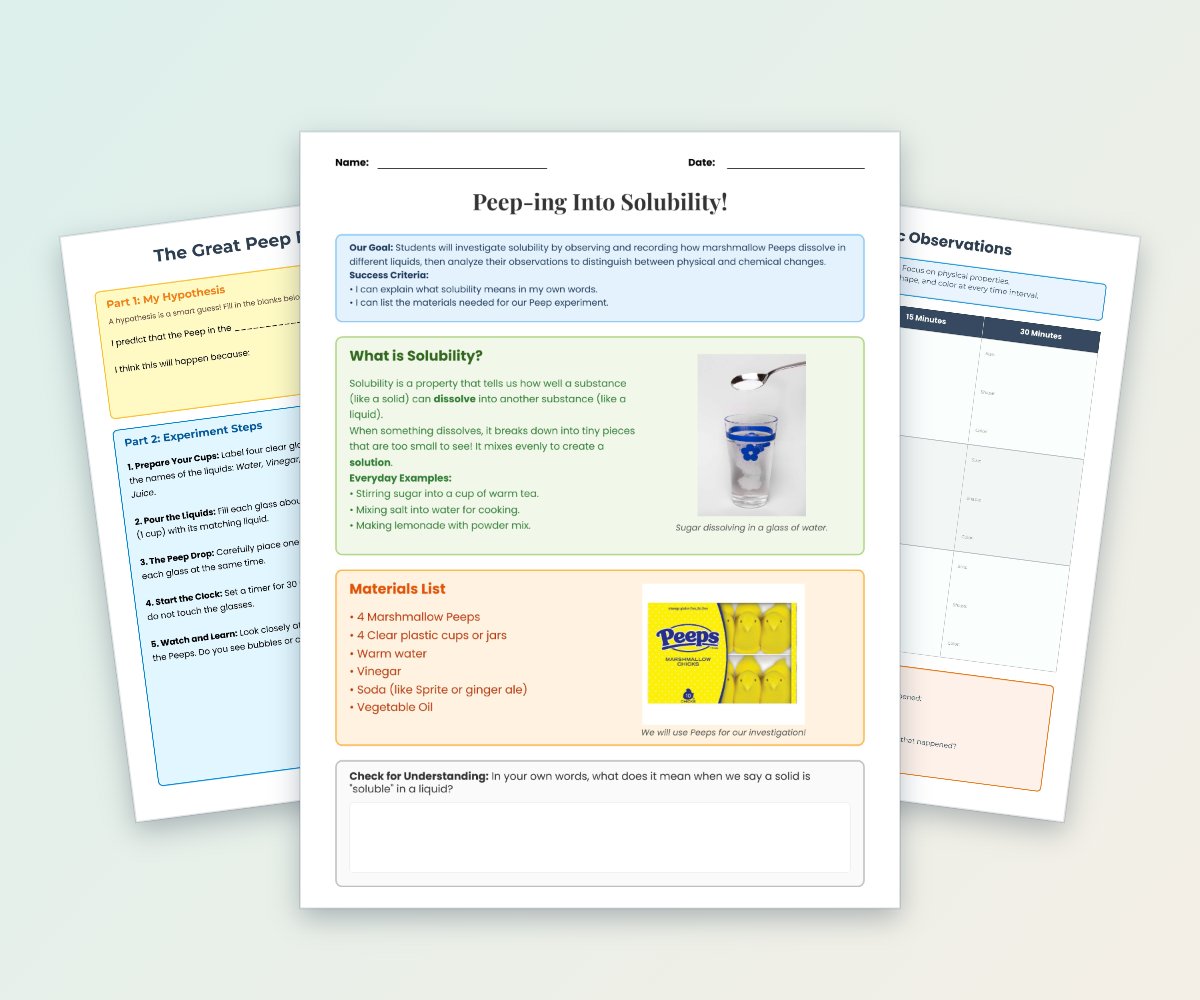
Students investigate how marshmallow Peeps dissolve in different liquids, making predictions and recording changes in size, shape, color, and other observations.
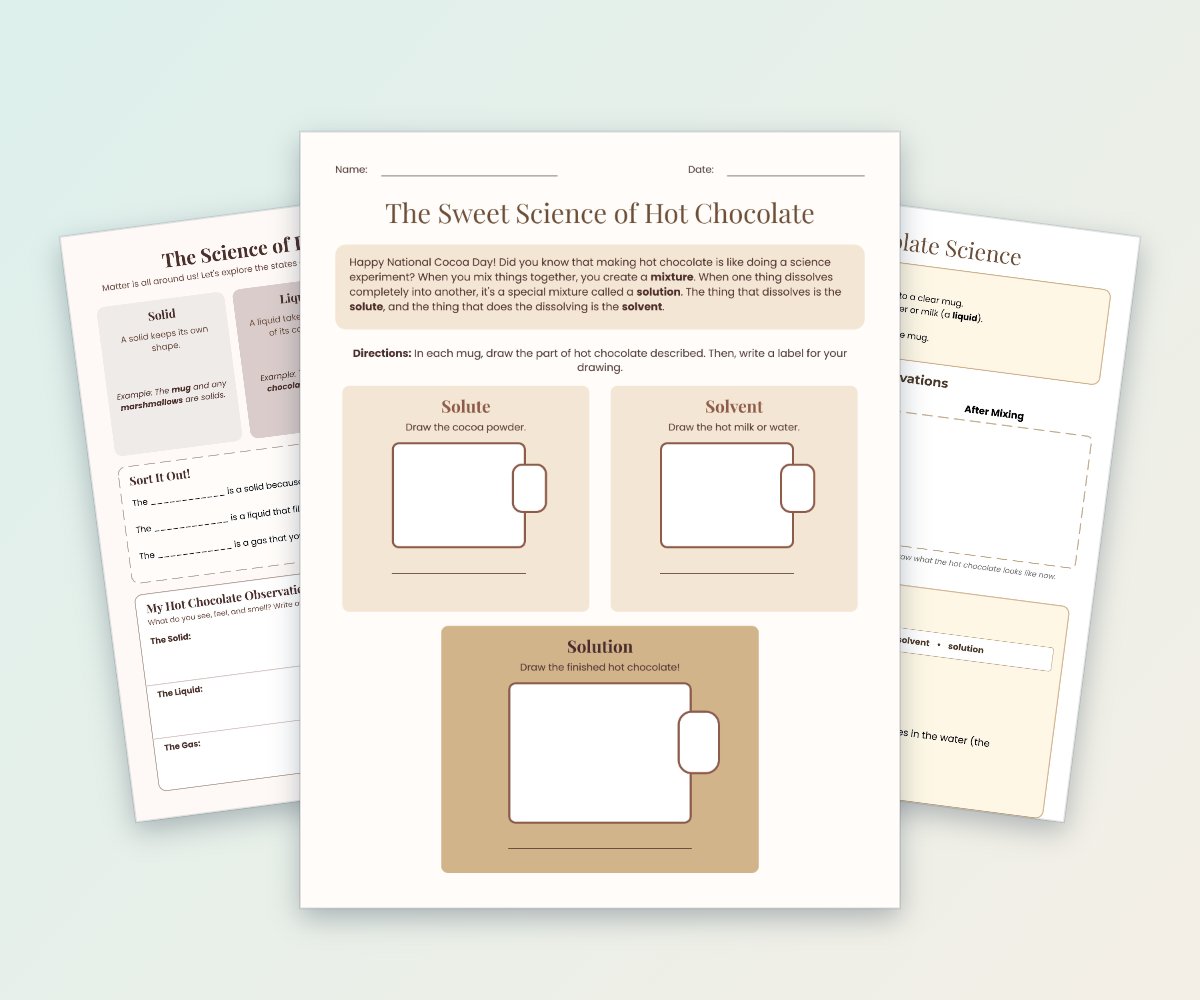
This engaging hot chocolate-themed science activity introduces students to solids, liquids, gases, mixtures, solutions, solutes, and solvents.
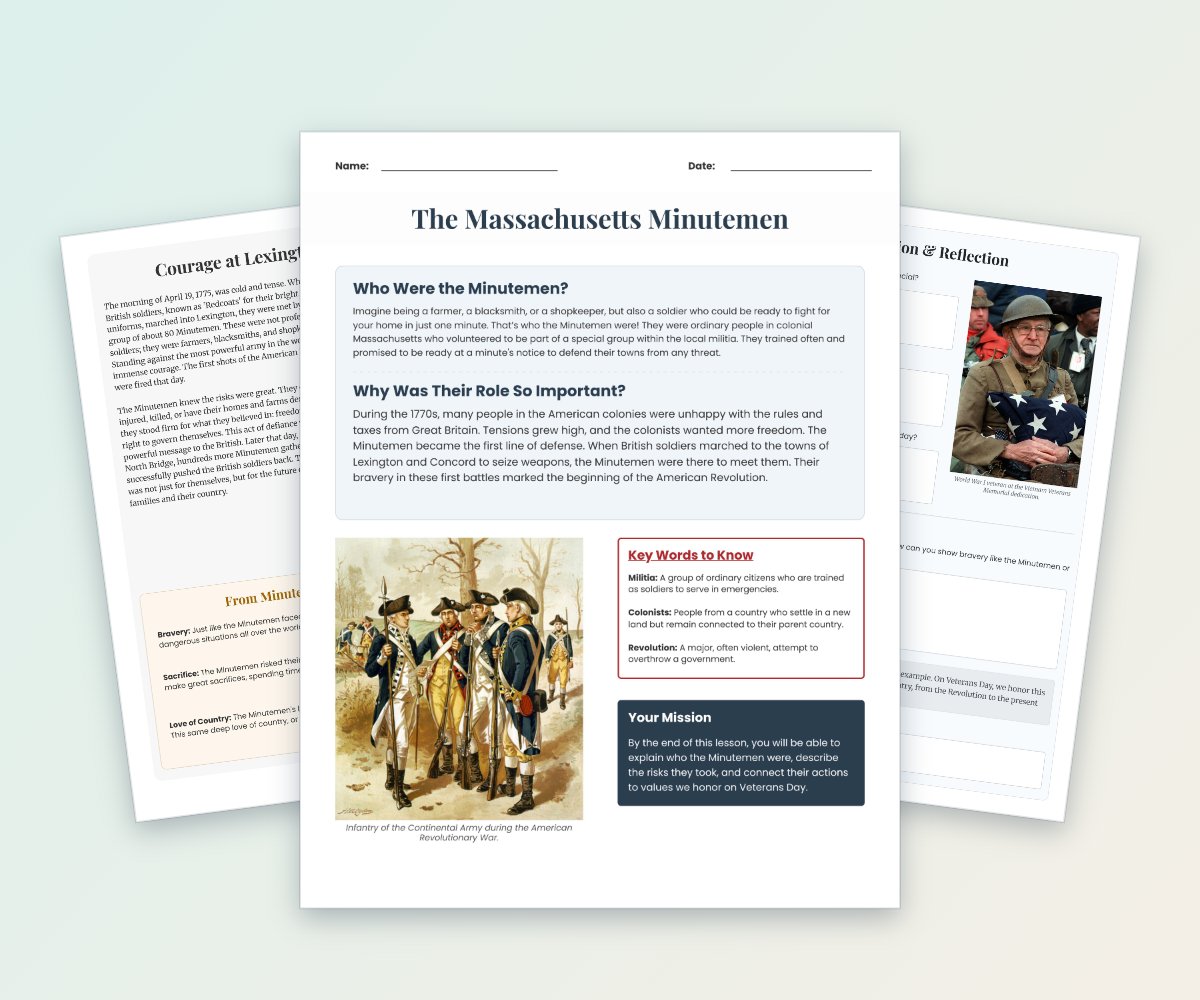
This three-page lesson introduces students to the Massachusetts Minutemen and their role at Lexington and Concord.
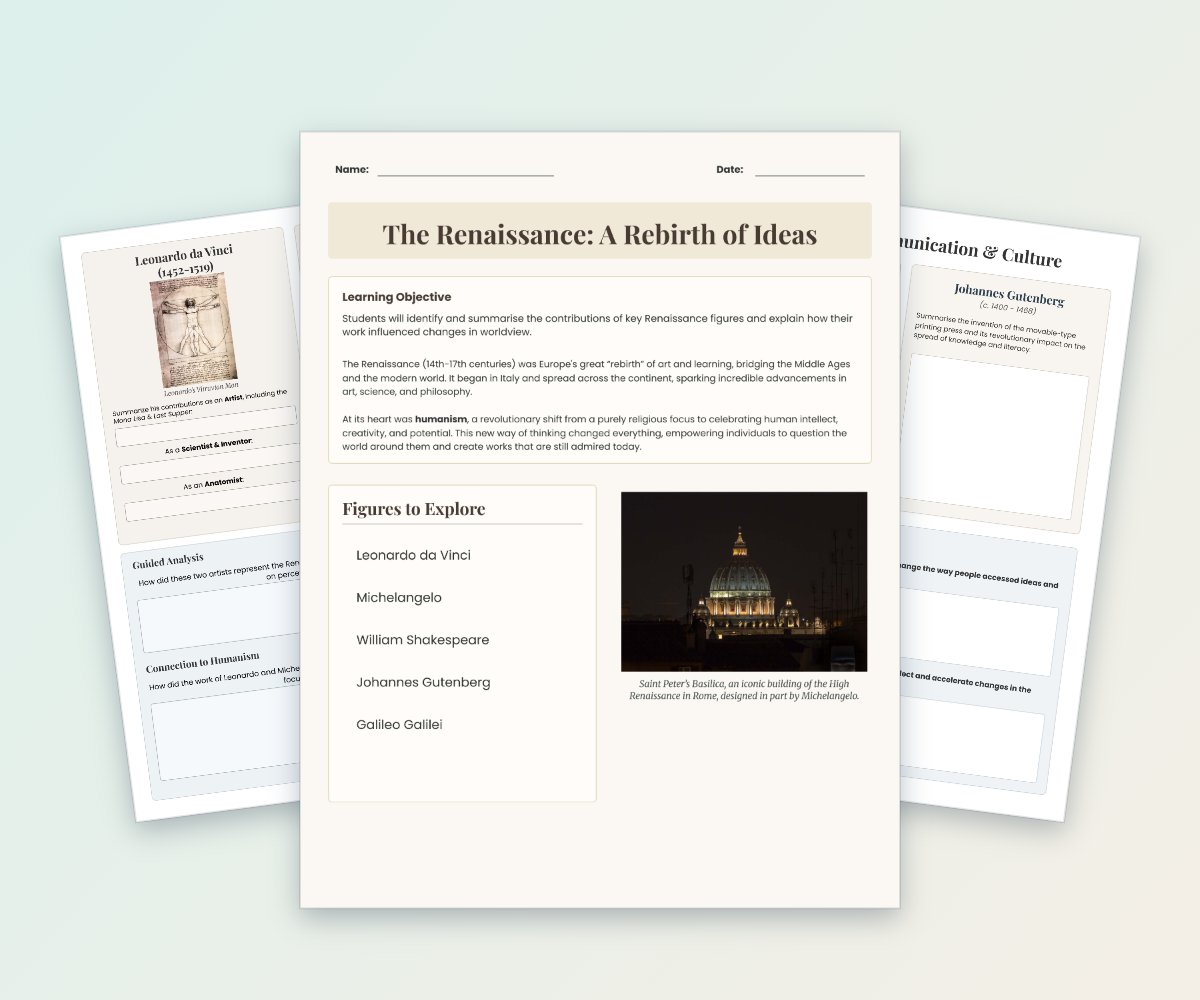
This four-page worksheet explores Leonardo da Vinci, Michelangelo, Shakespeare, Gutenberg, and Galileo and their contributions to Renaissance art, science, literature, and communication.
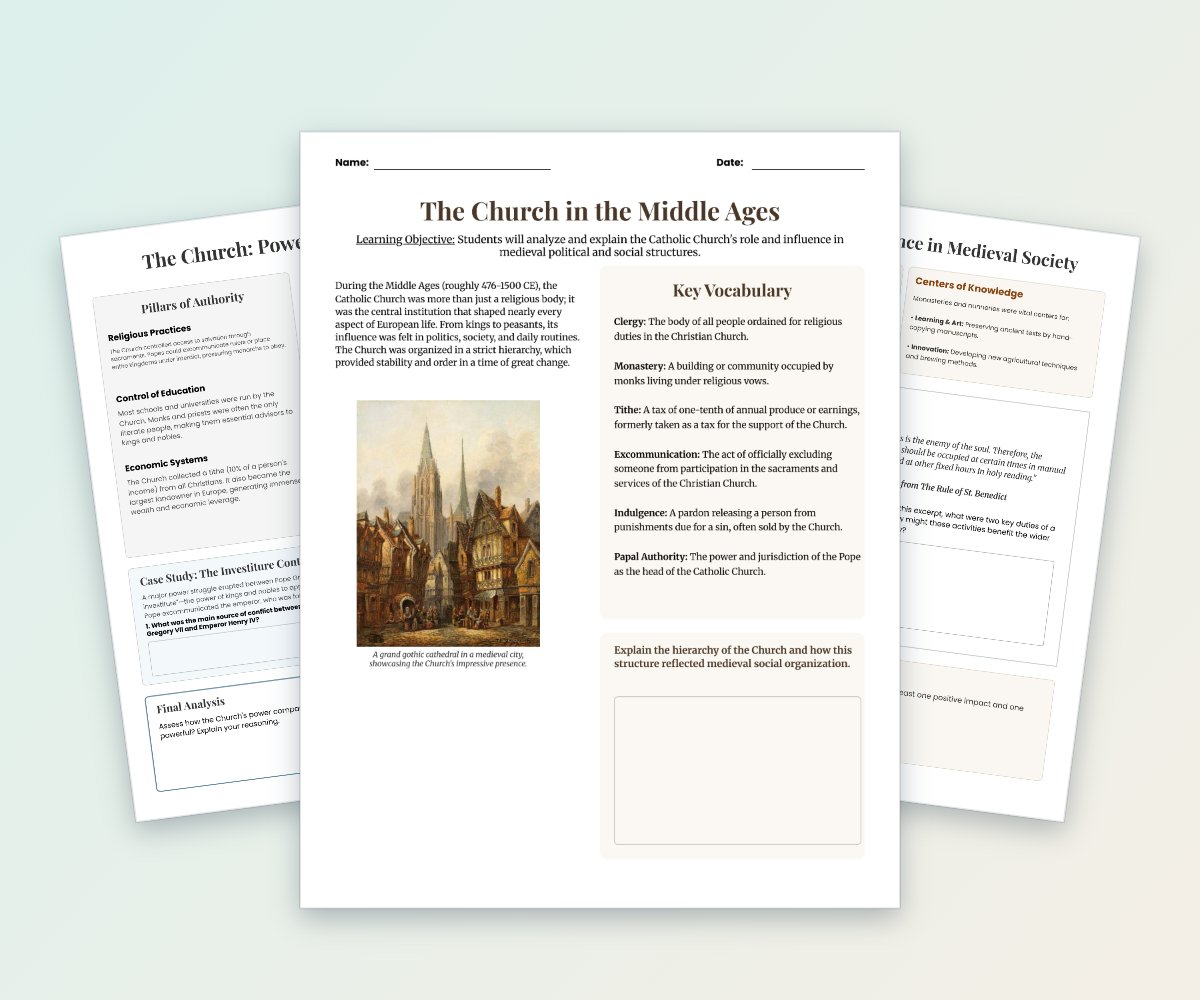
This four-page worksheet examines the Catholic Church’s role in medieval European political, social, educational, and economic life.