Student Loan Interest Calculations: Compound Interest and Amortization
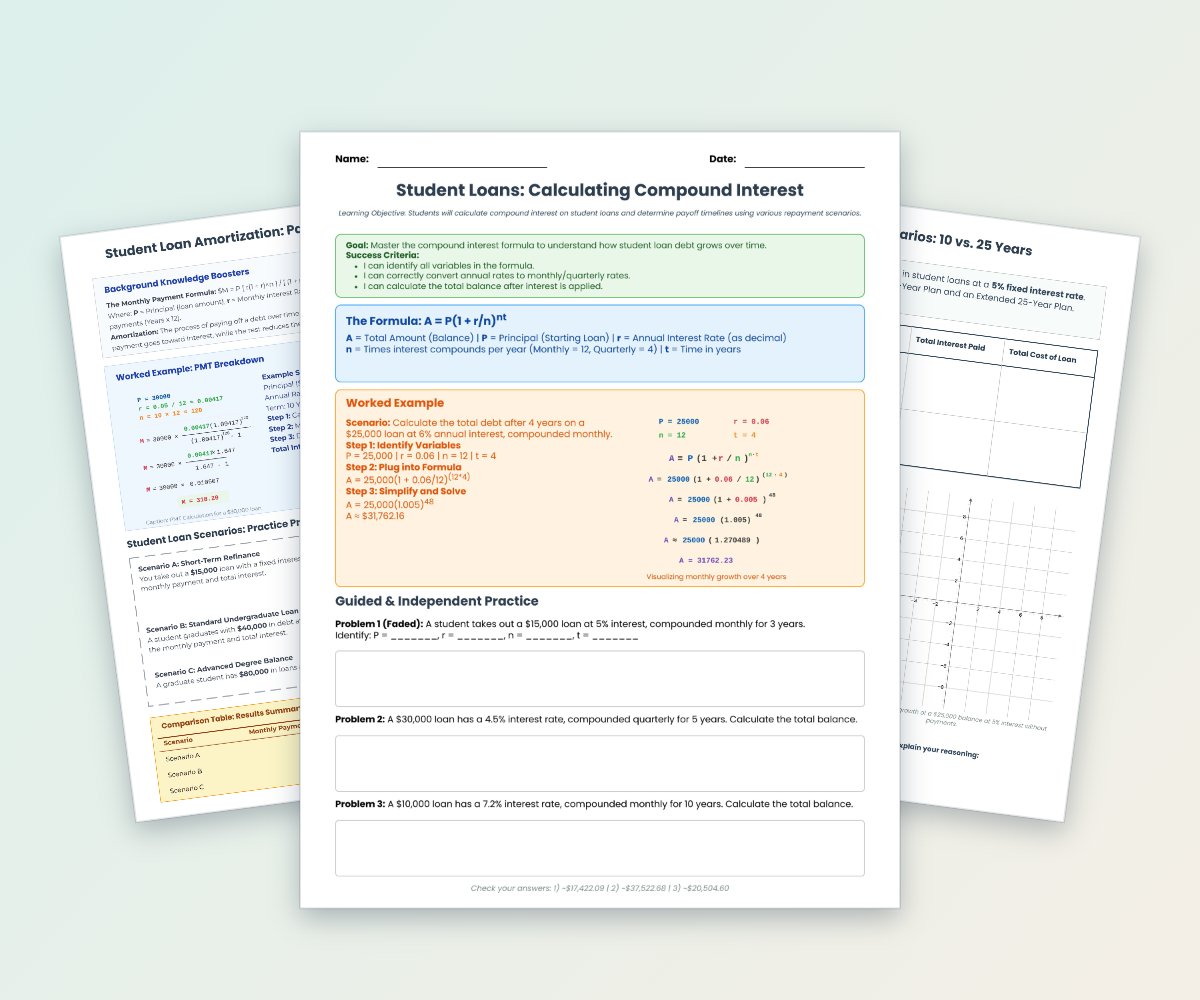
Students calculate compound interest on student loans, identify formula variables, and determine balances under monthly and quarterly compounding.
$4.99
Classroom-ready resources written for grade 5: printable worksheets, slides, activities and planning tools you can download and use straight away. Browse by subject below.
Students calculate compound interest on student loans, identify formula variables, and determine balances under monthly and quarterly compounding.
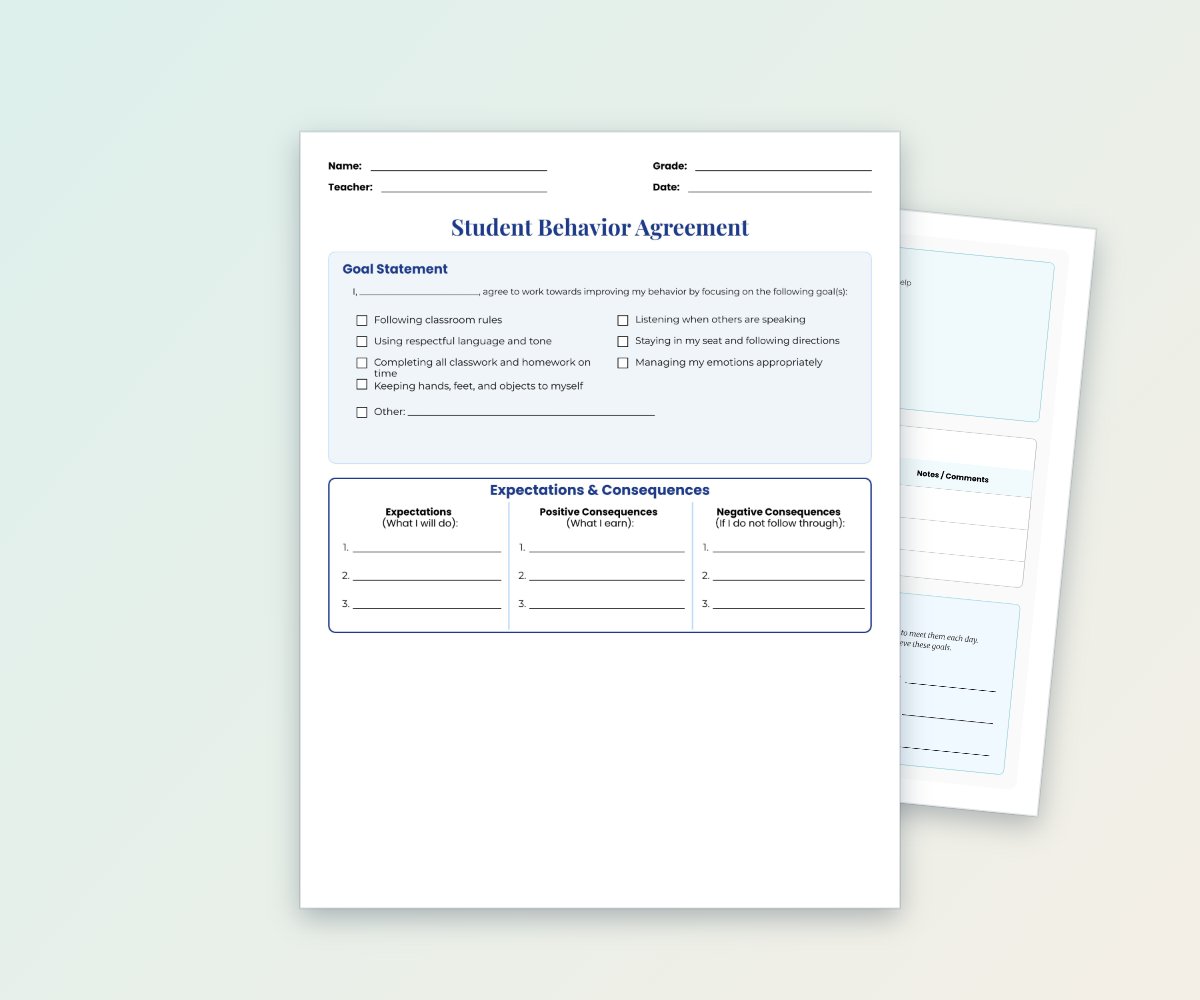
This two-page behavior agreement helps students set behavior goals, identify expectations and consequences, and select support strategies.
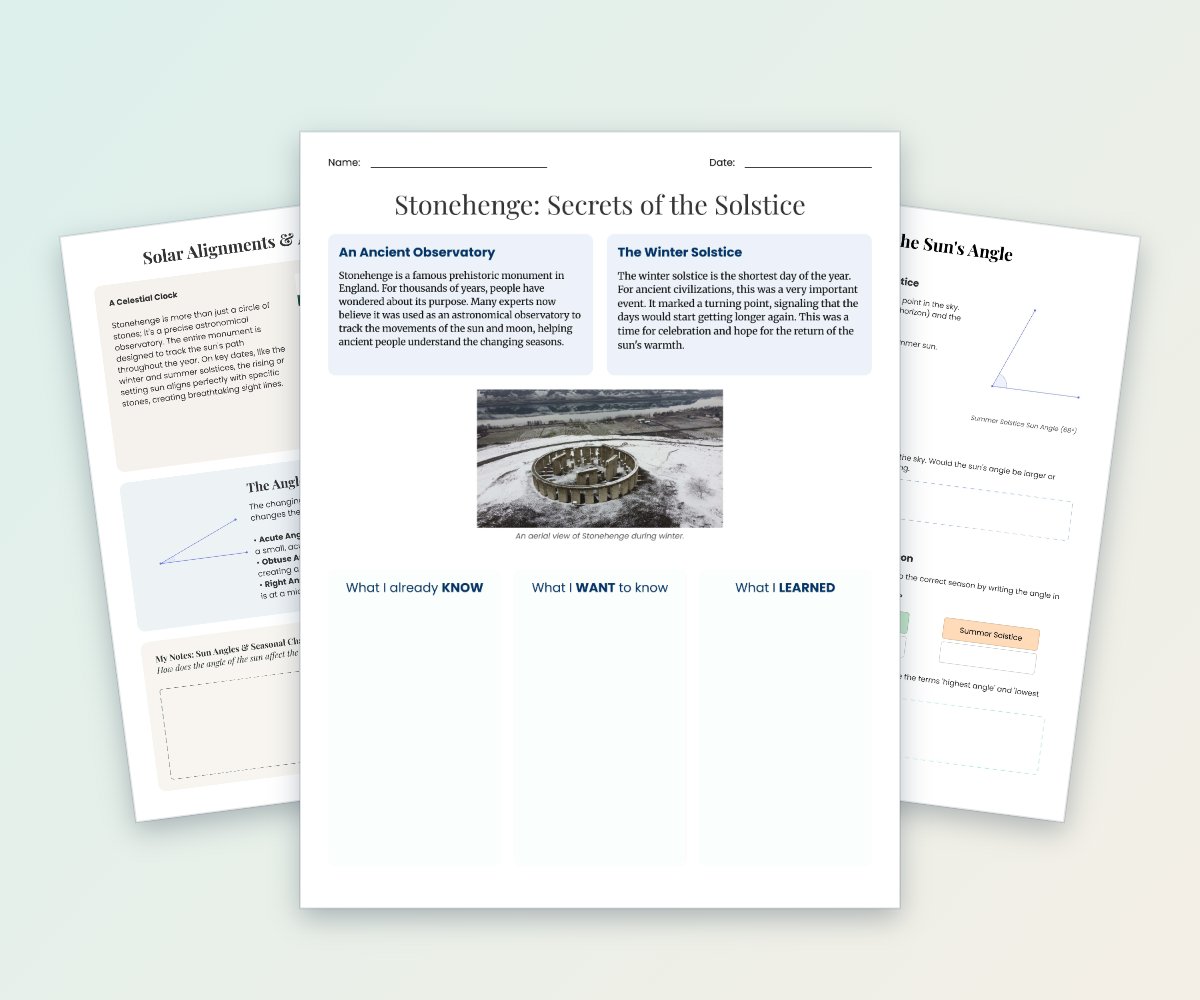
Students explore Stonehenge’s possible astronomical purpose, the winter and summer solstices, Earth’s tilt, and seasonal changes.
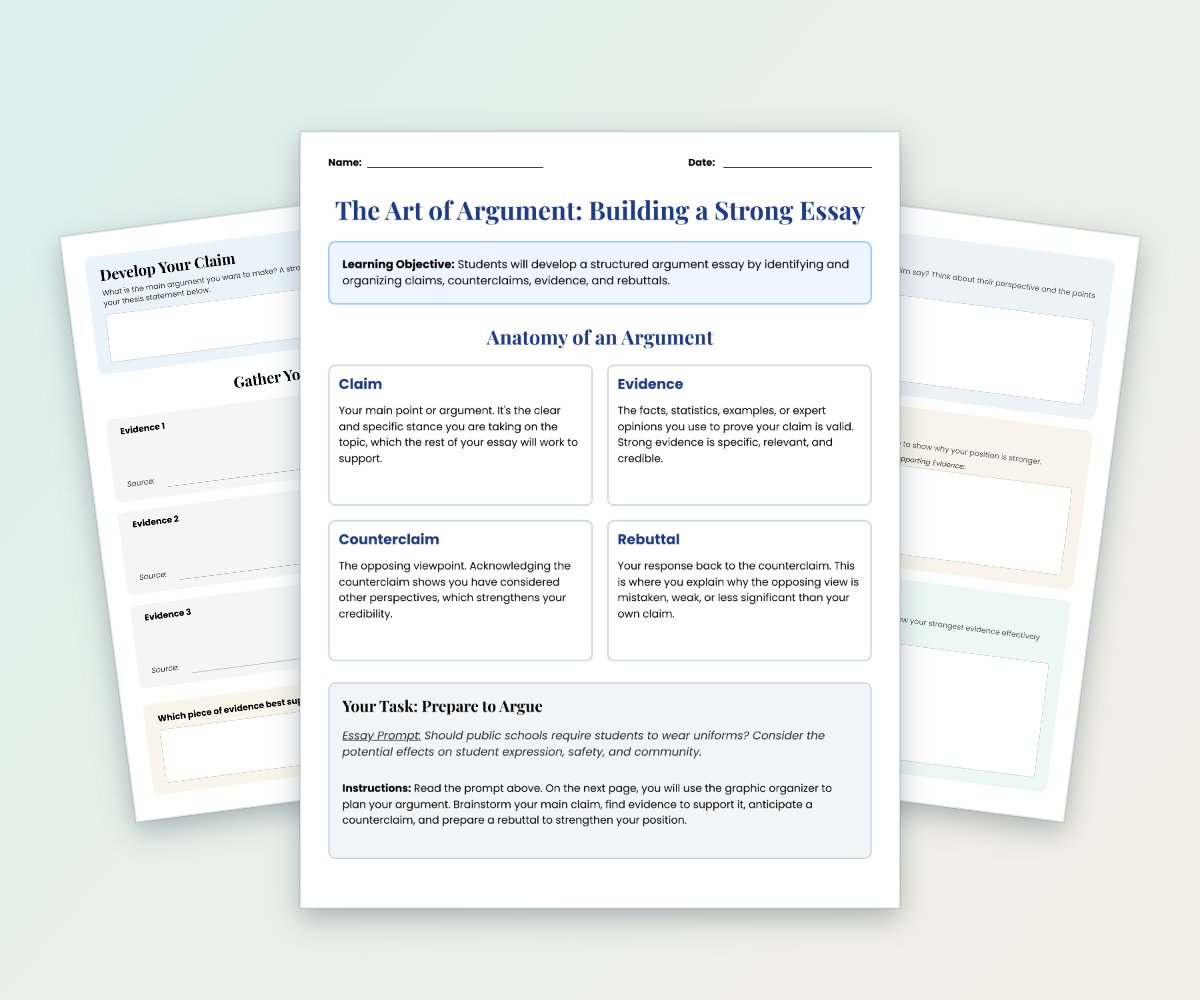
Students plan an argumentative essay by developing a claim, gathering evidence, addressing a counterclaim, and writing a rebuttal.
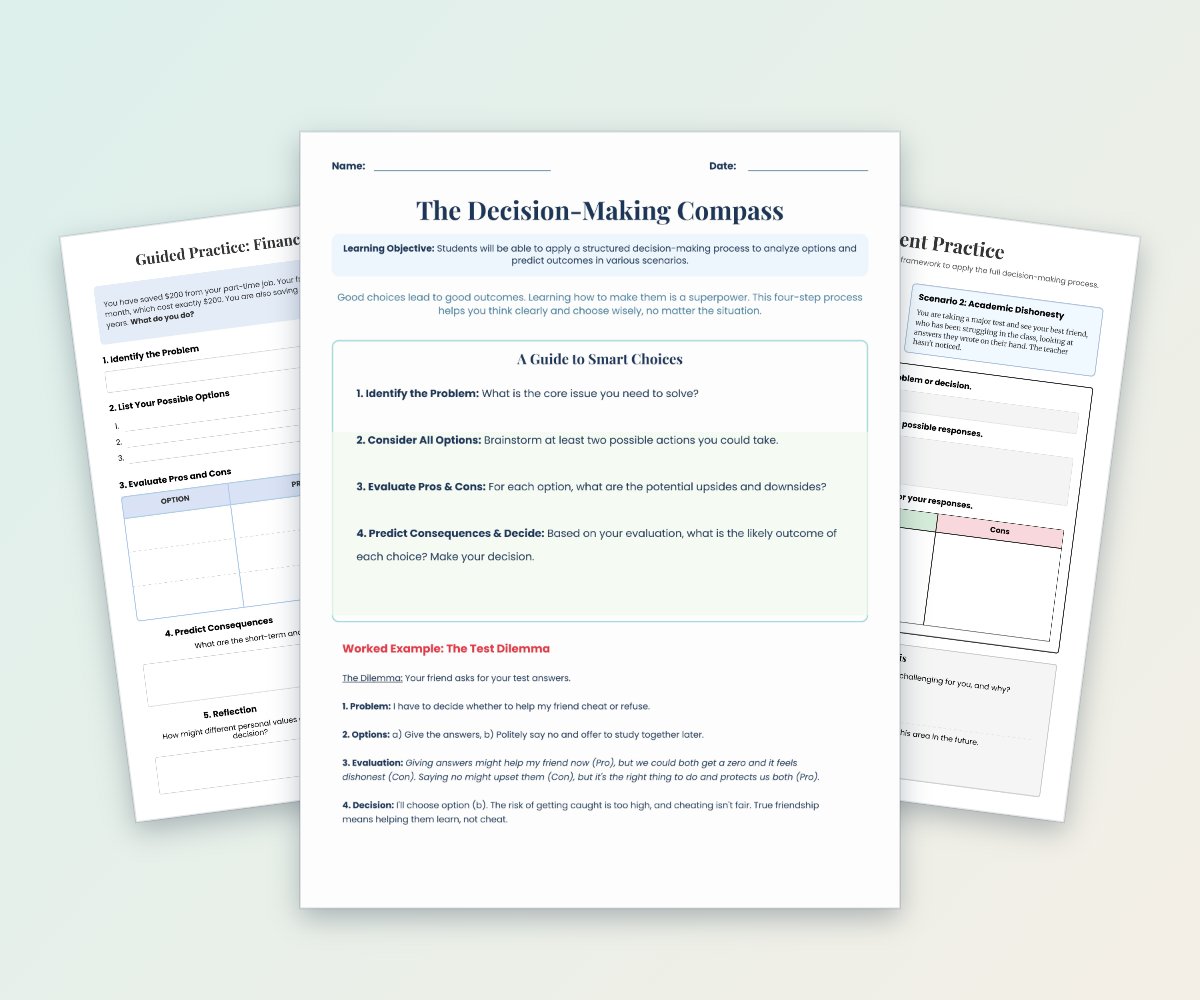
Students learn a four-step decision-making process: identify the problem, consider options, evaluate pros and cons, and predict consequences.
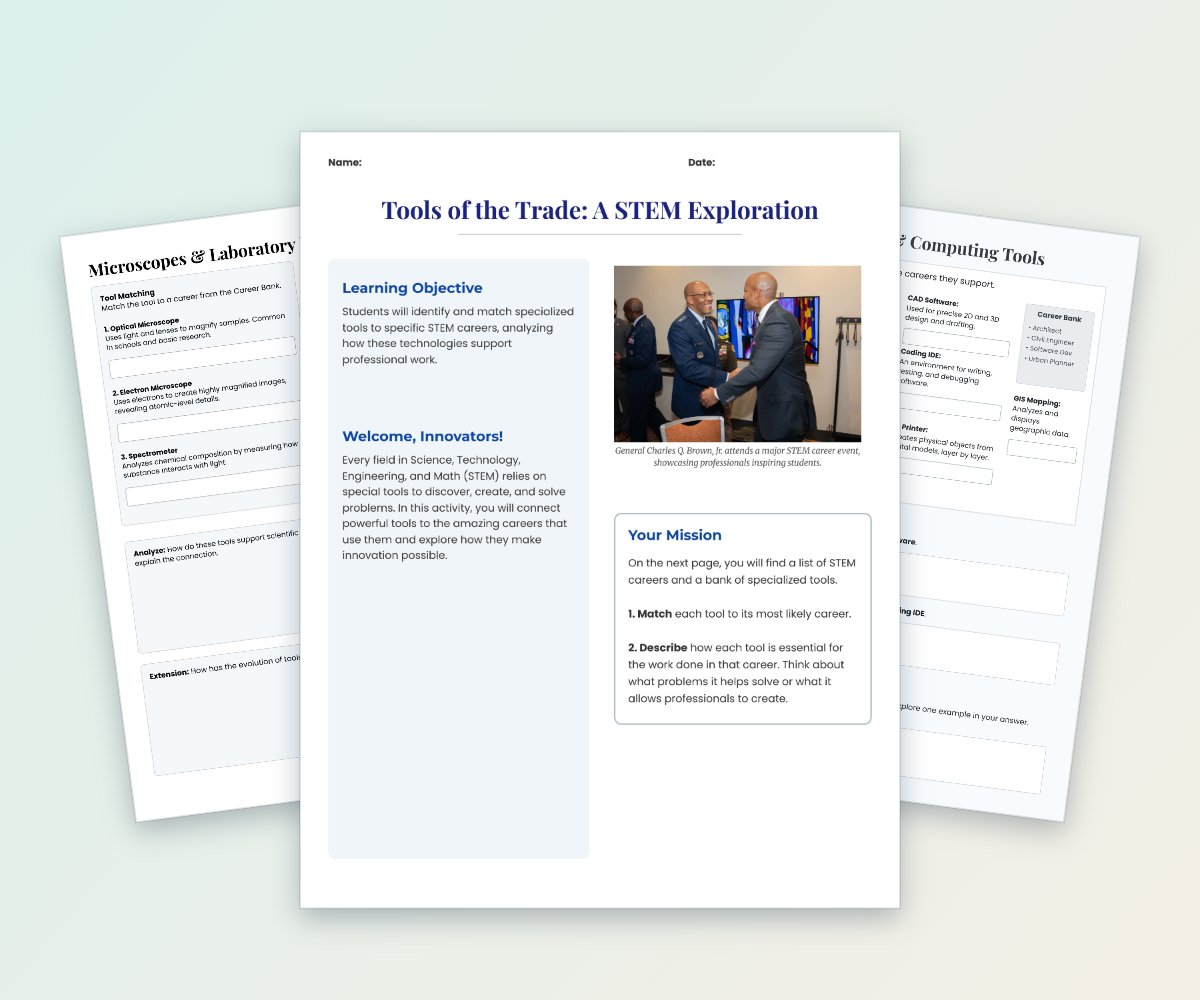
Students match specialized scientific and digital tools to STEM careers, including microbiologists, forensic scientists, architects, and software developers.
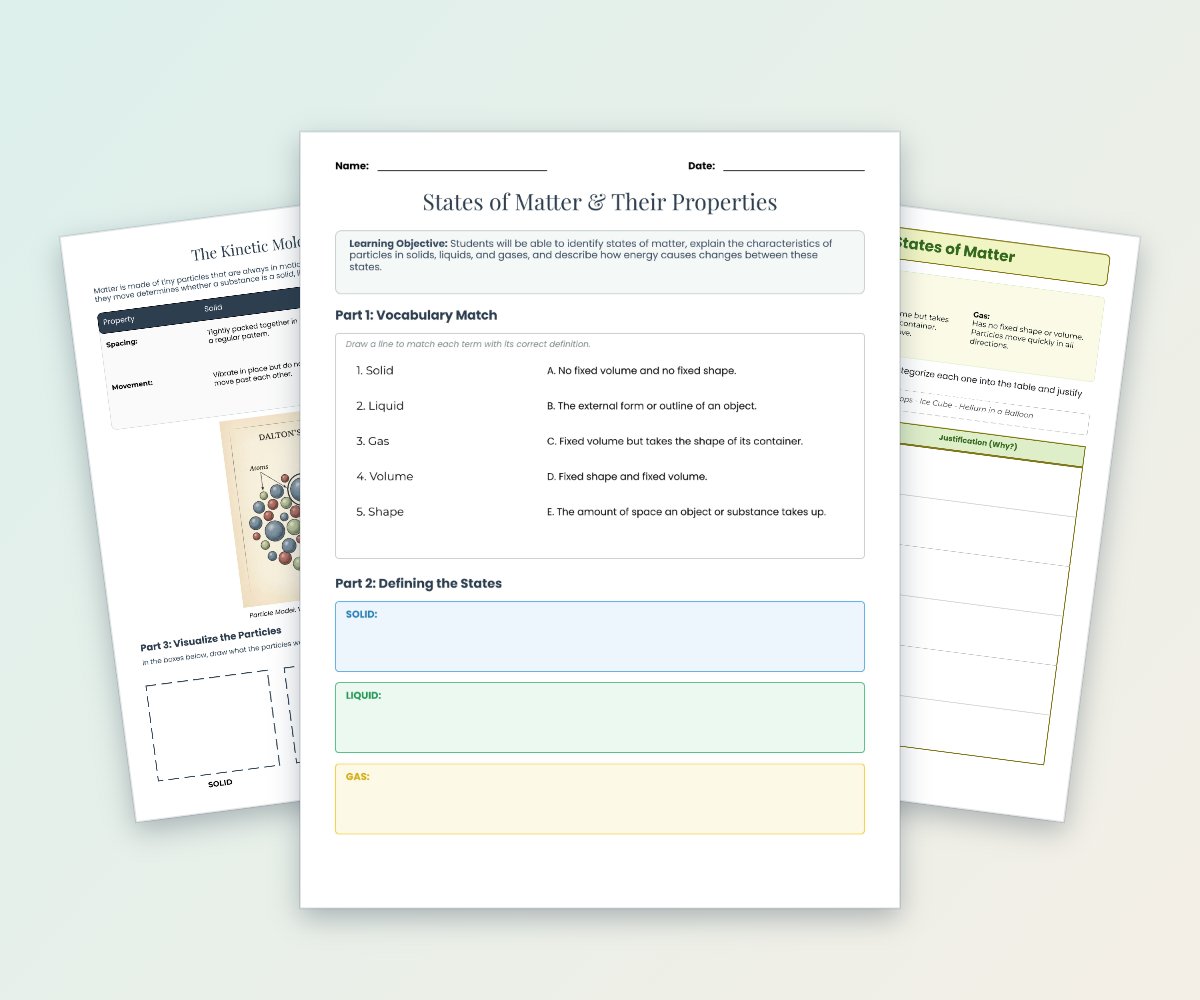
This six-page worksheet pack reviews solids, liquids, gases, particle motion, properties, and phase changes.
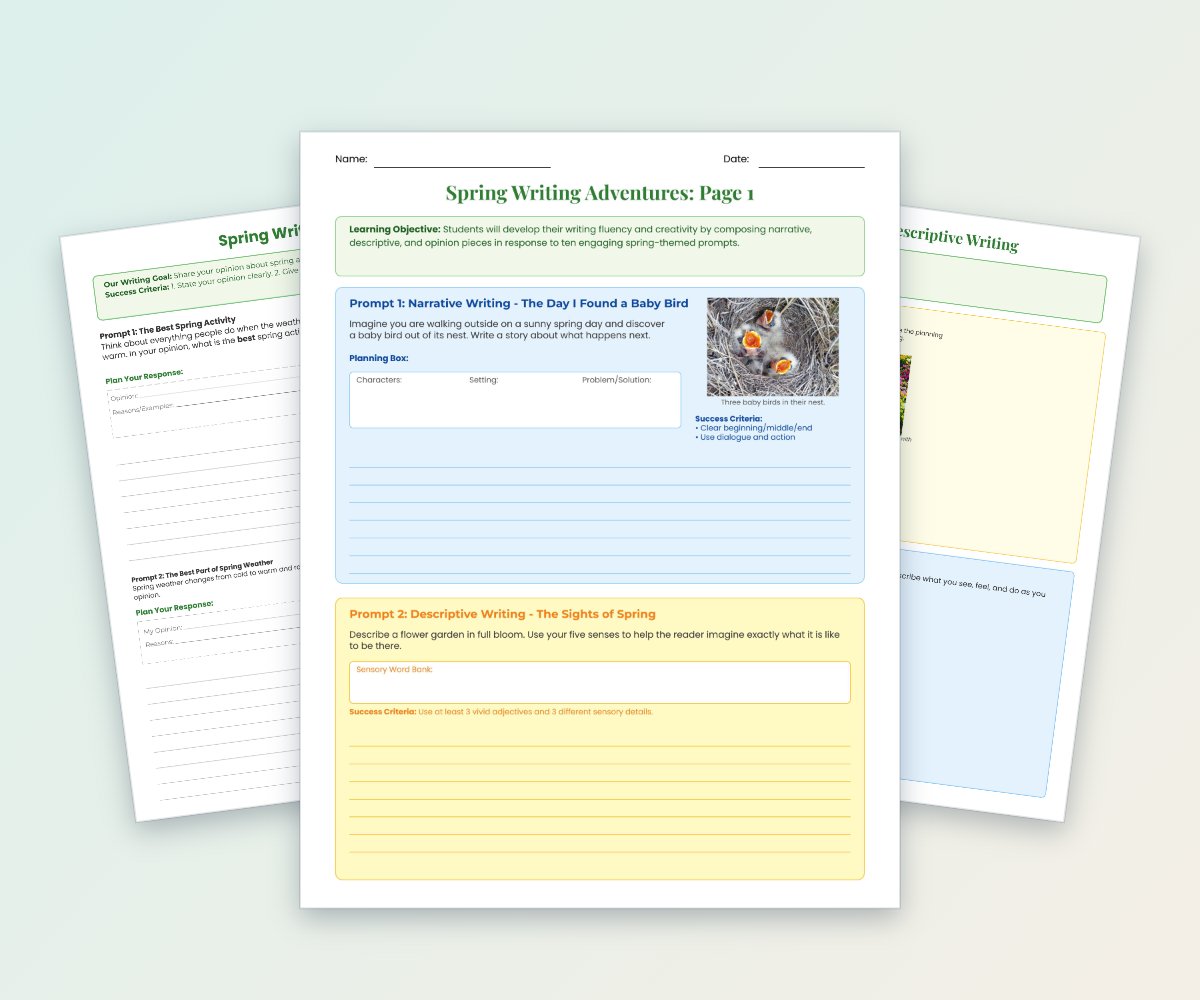
This five-page writing journal provides spring-themed prompts for narrative, descriptive, and opinion writing.
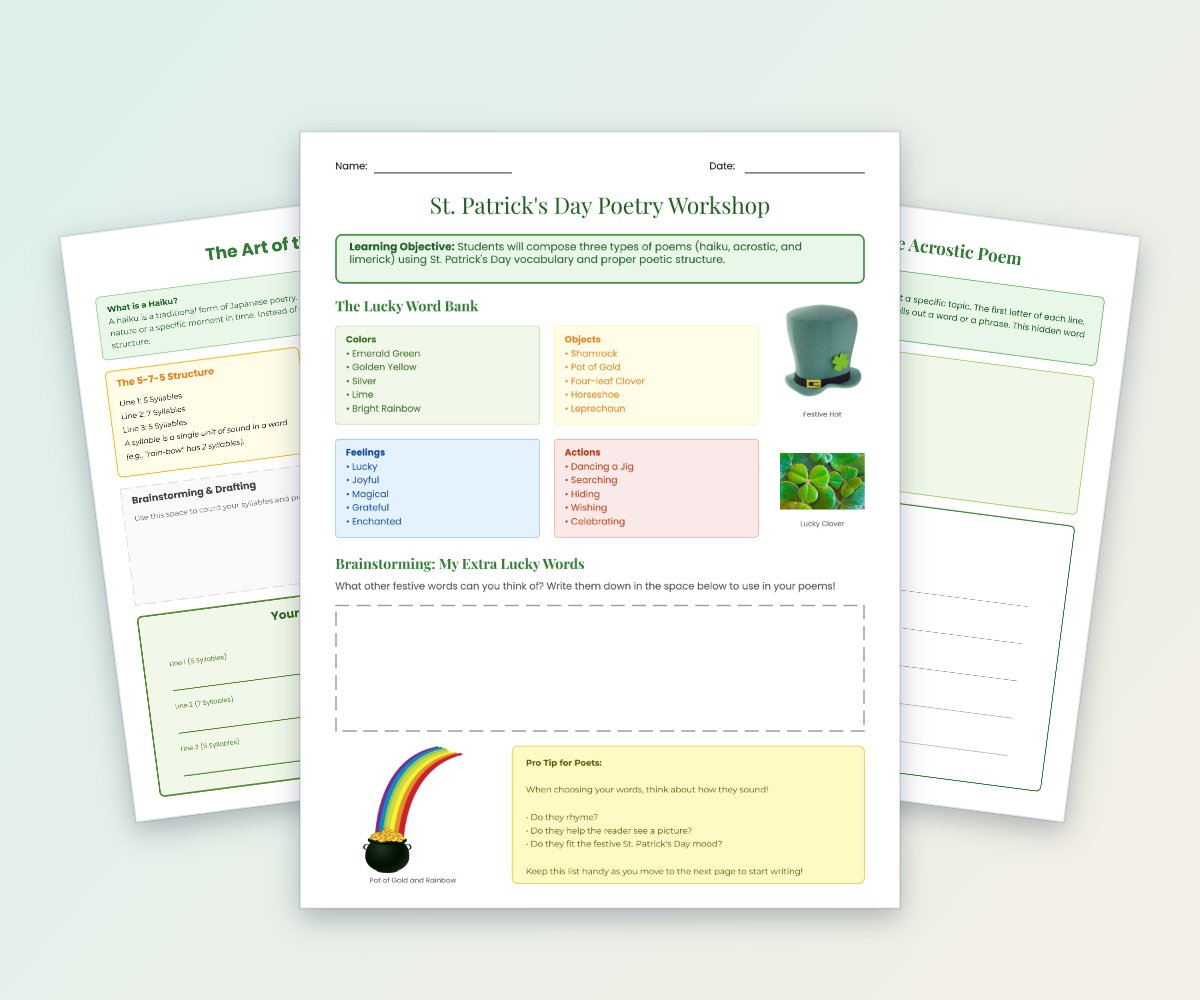
Students learn and practice writing haiku, acrostic poems, and limericks using St.
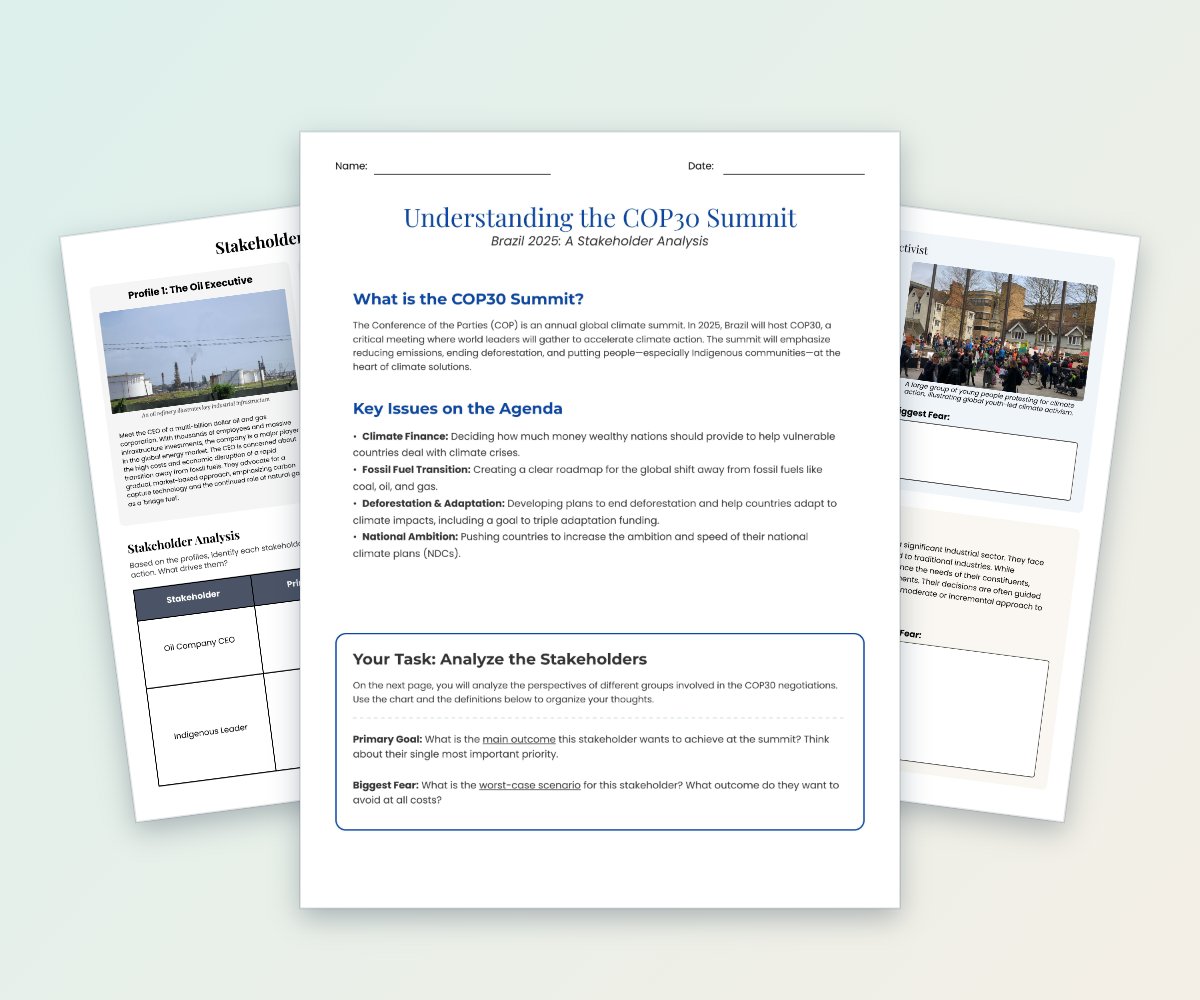
Students learn about COP30 and examine the priorities, concerns, and perspectives of stakeholders involved in global climate negotiations.
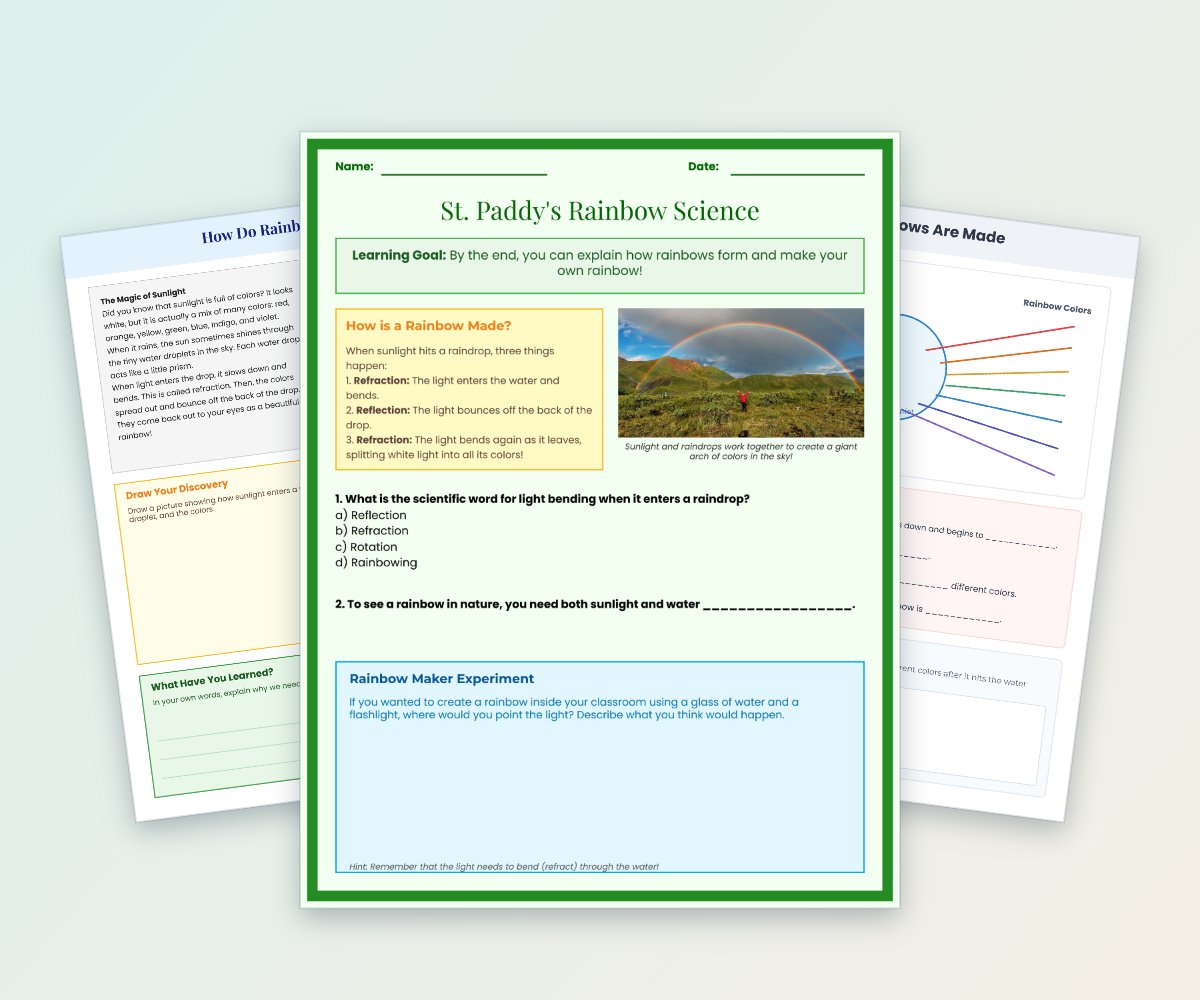
This five-page science activity pack teaches students how refraction and reflection create rainbows.
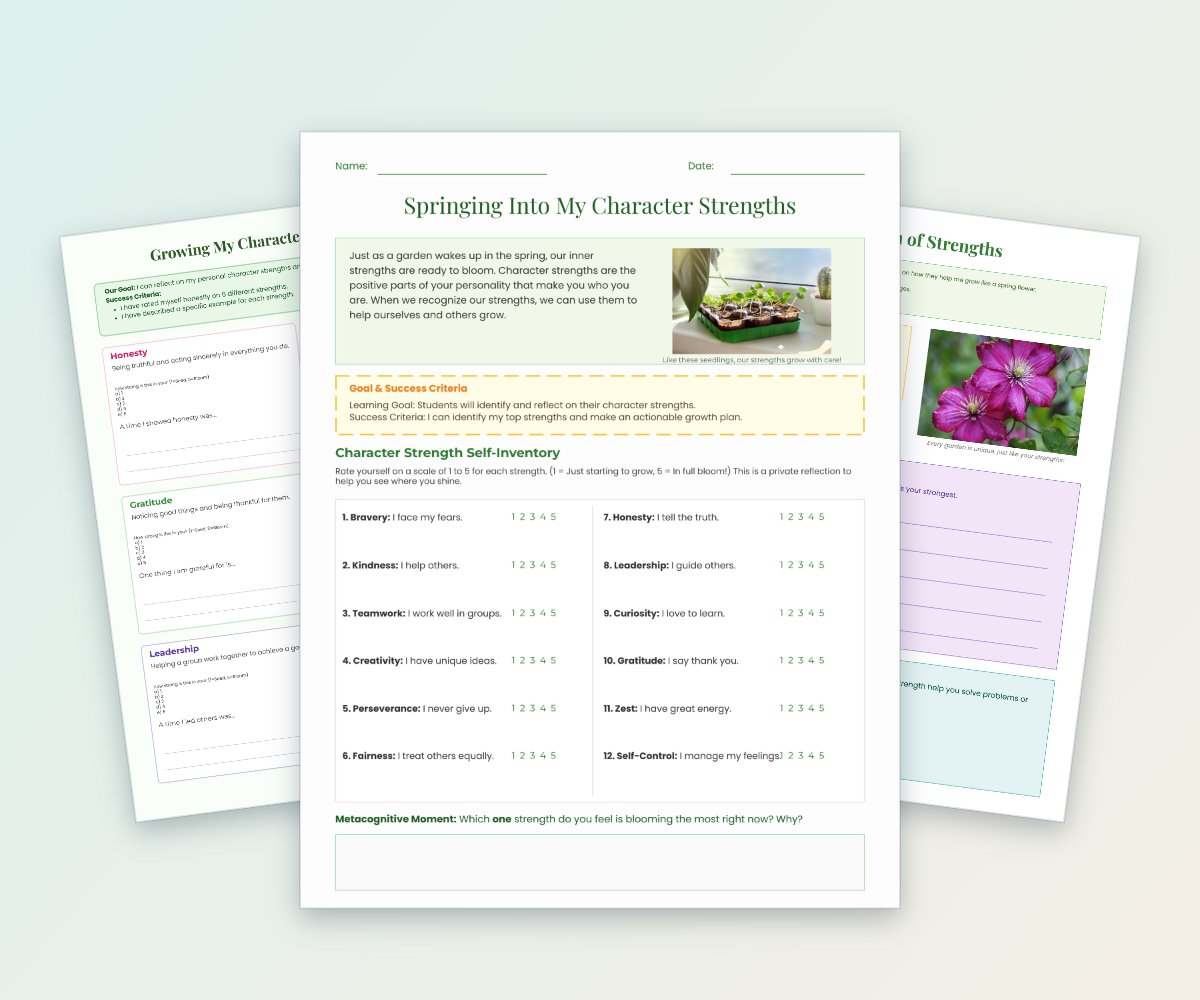
Students identify, rate, and reflect on personal character strengths using a spring-themed self-inventory.
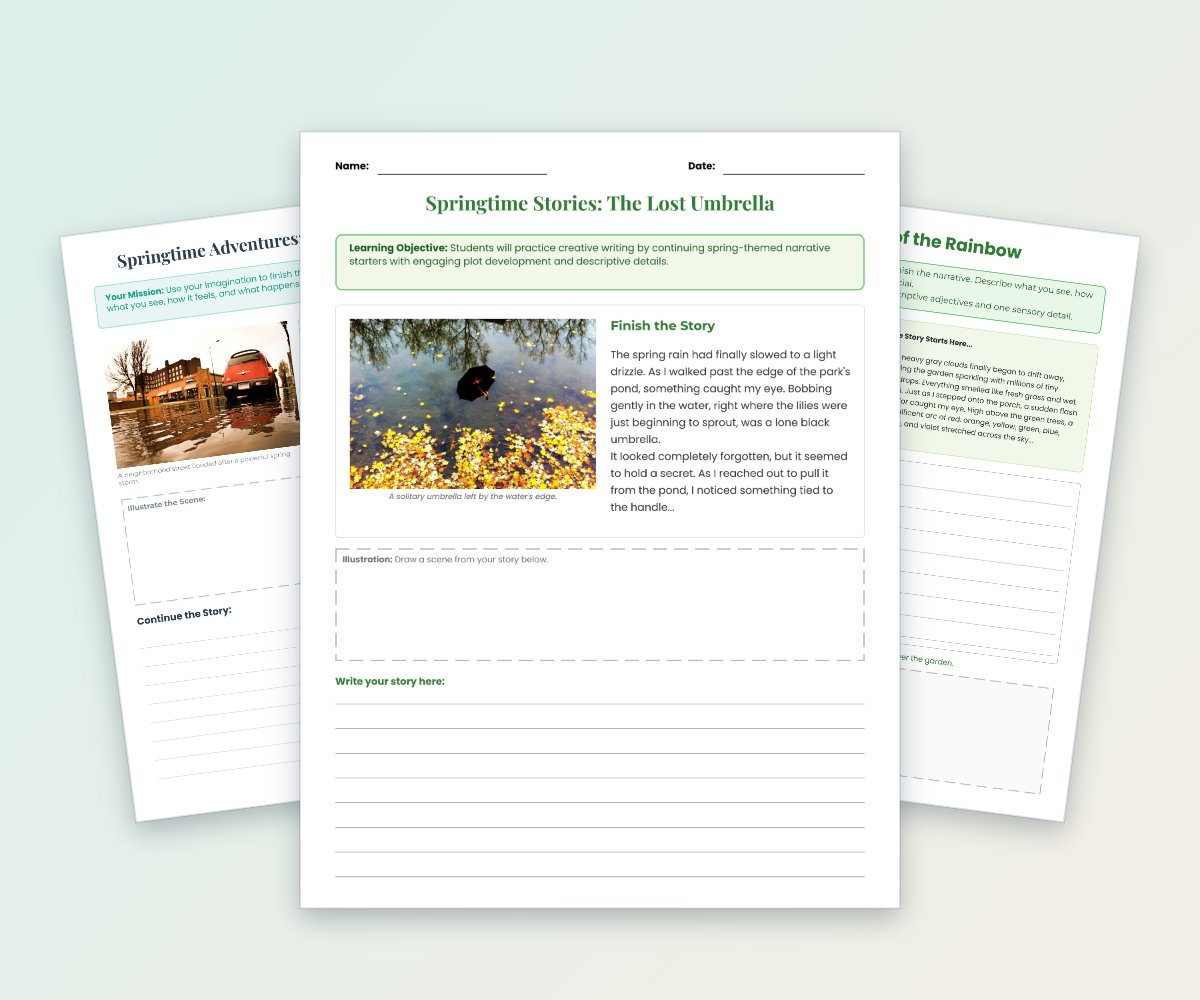
Students continue spring-themed story starters about a lost umbrella, mysterious puddle, magical rainbow, and rainy frog adventure.
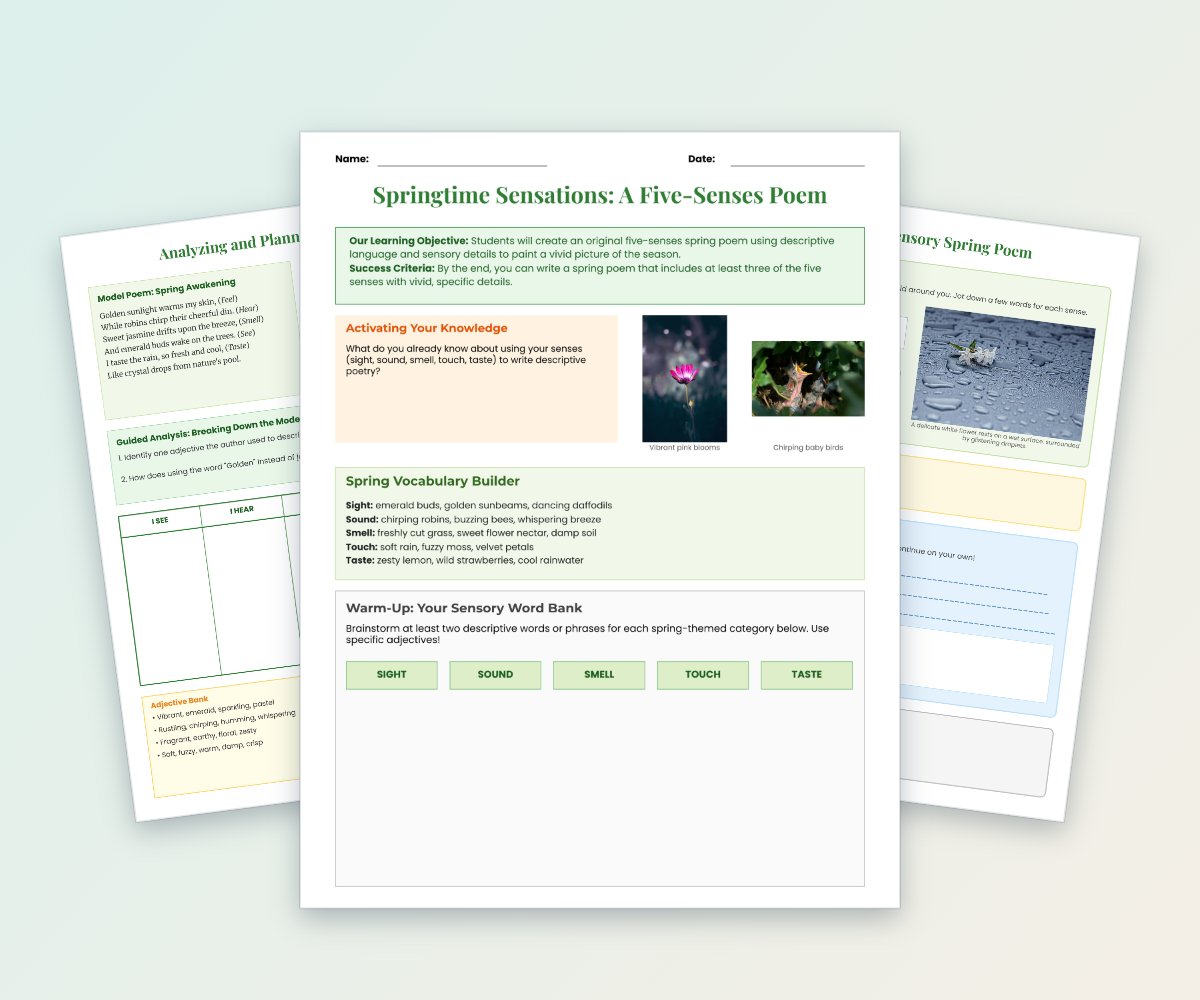
Students use the five senses and descriptive language to plan and draft an original spring poem.
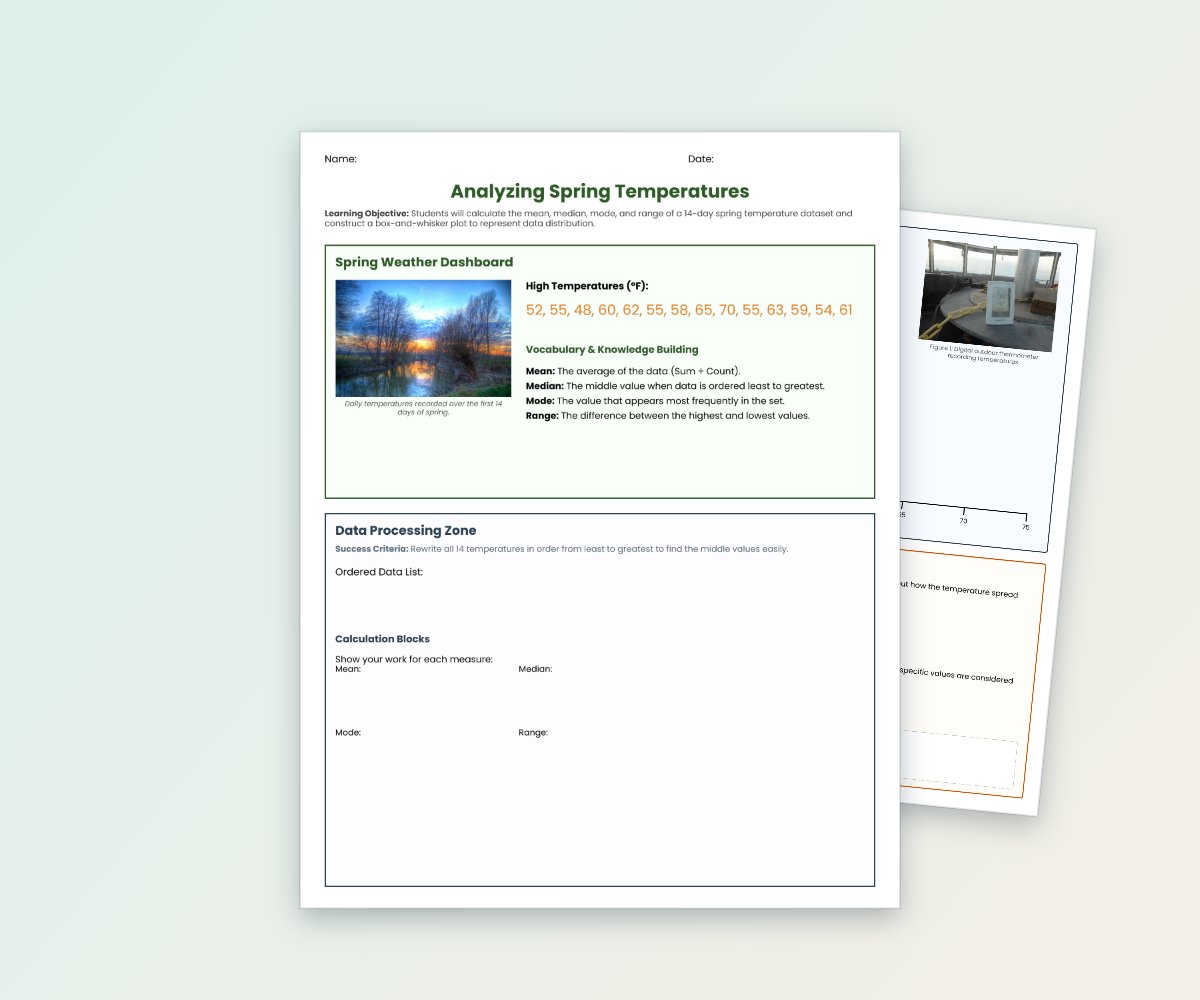
Students analyze a 14-day spring temperature dataset by calculating the mean, median, mode, and range.
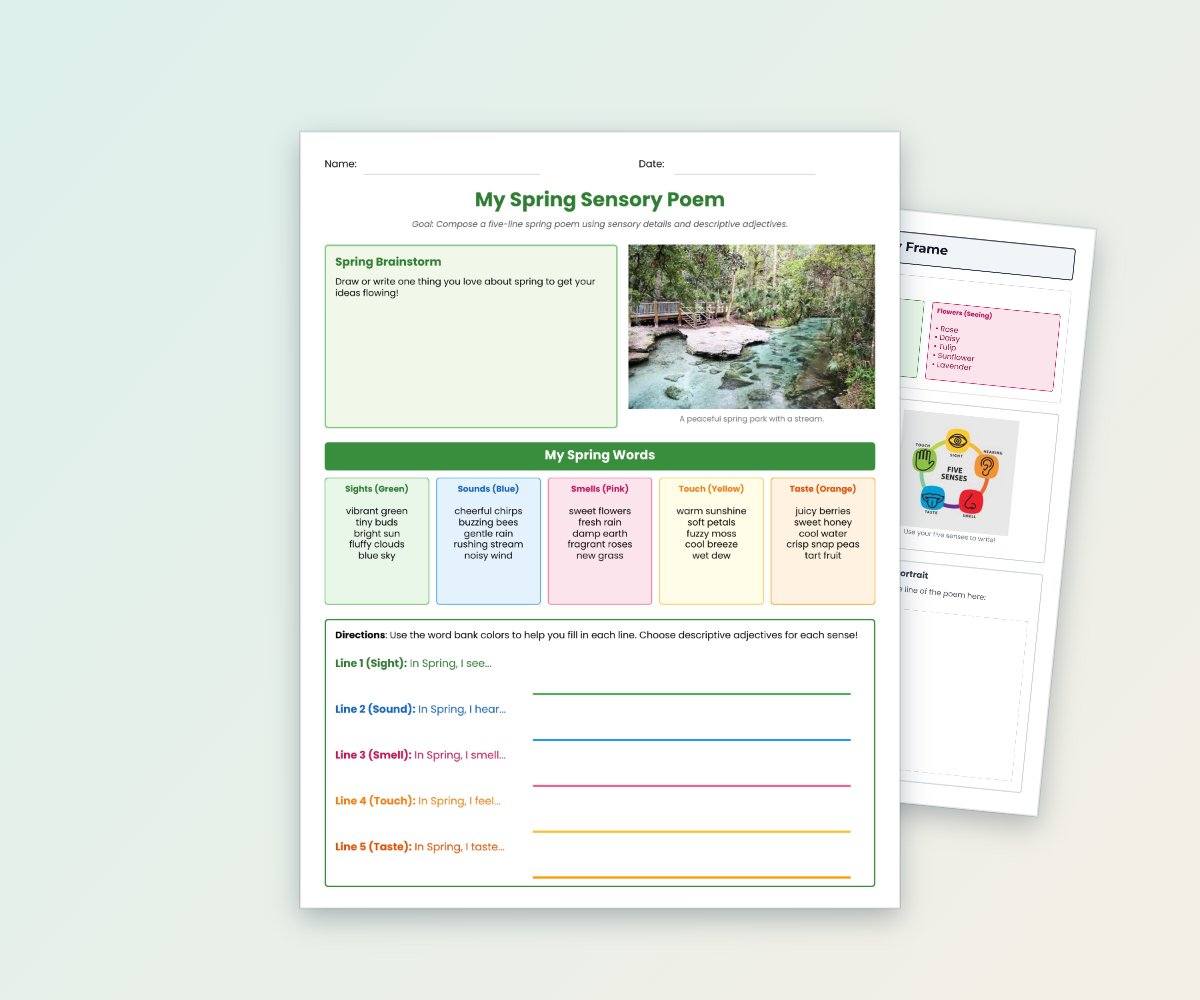
Students brainstorm spring vocabulary using the five senses, then compose a five-line sensory poem with descriptive adjectives.
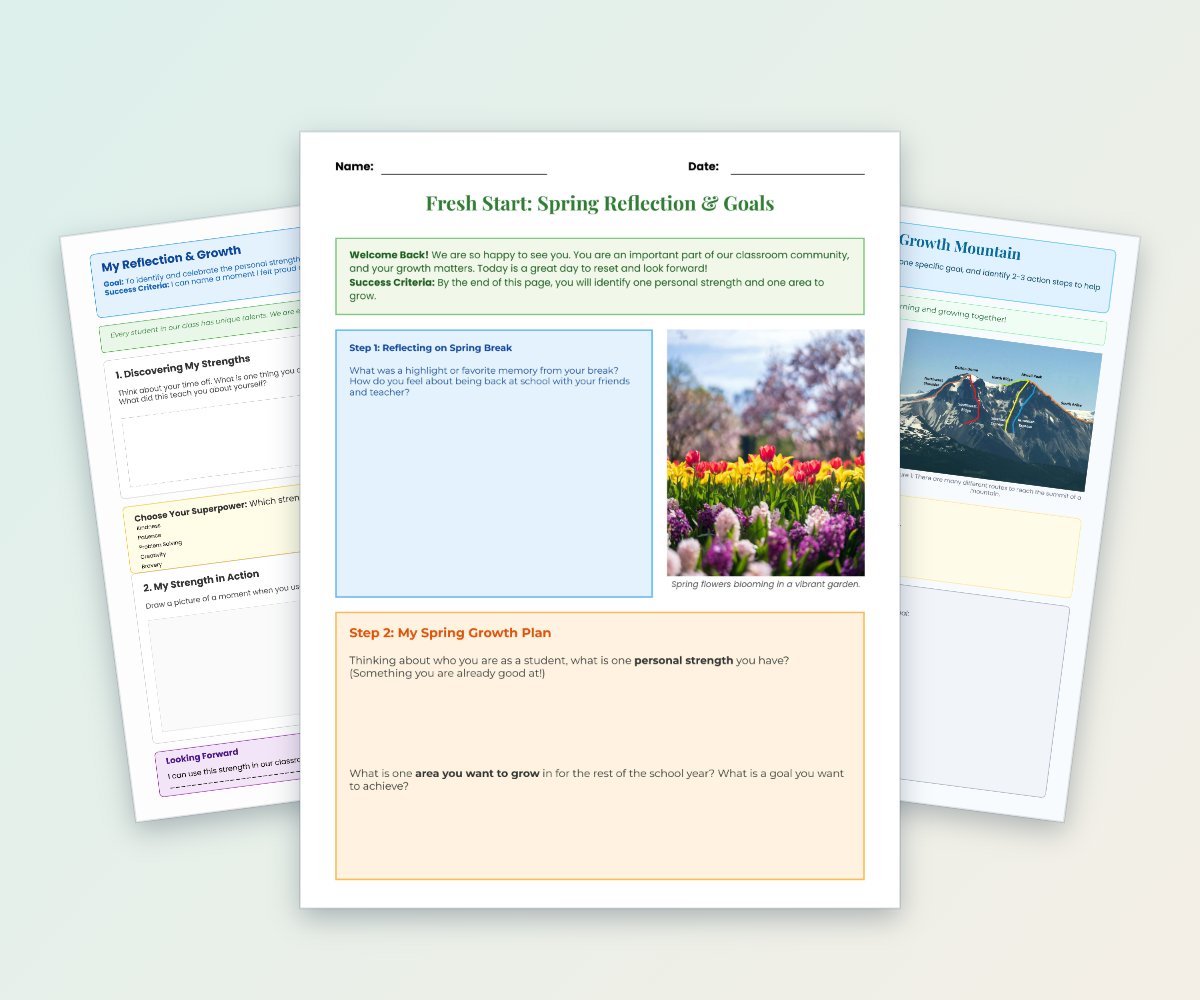
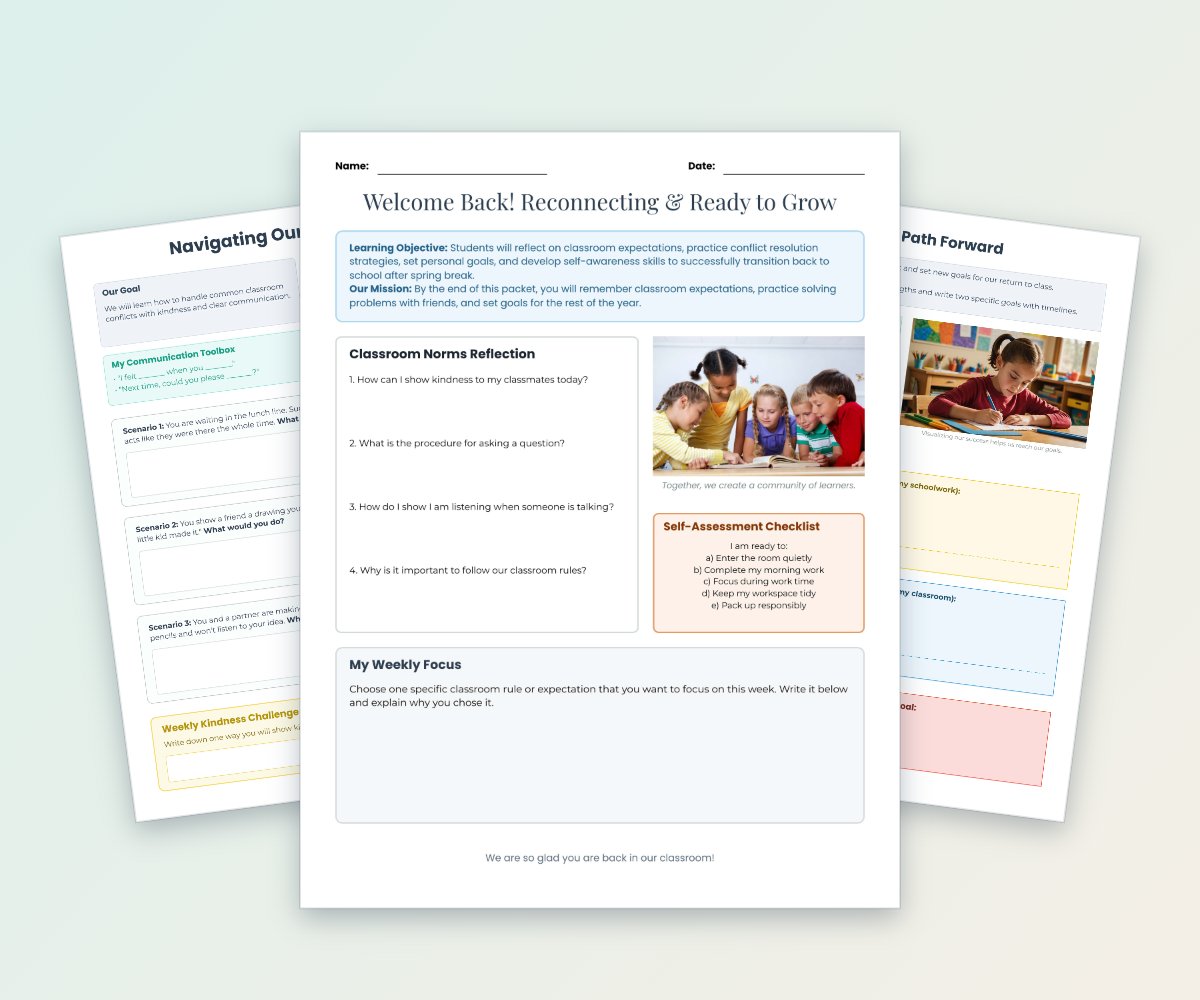
Help students return from spring break with guided reflection, strengths identification, and personal goal-setting activities.
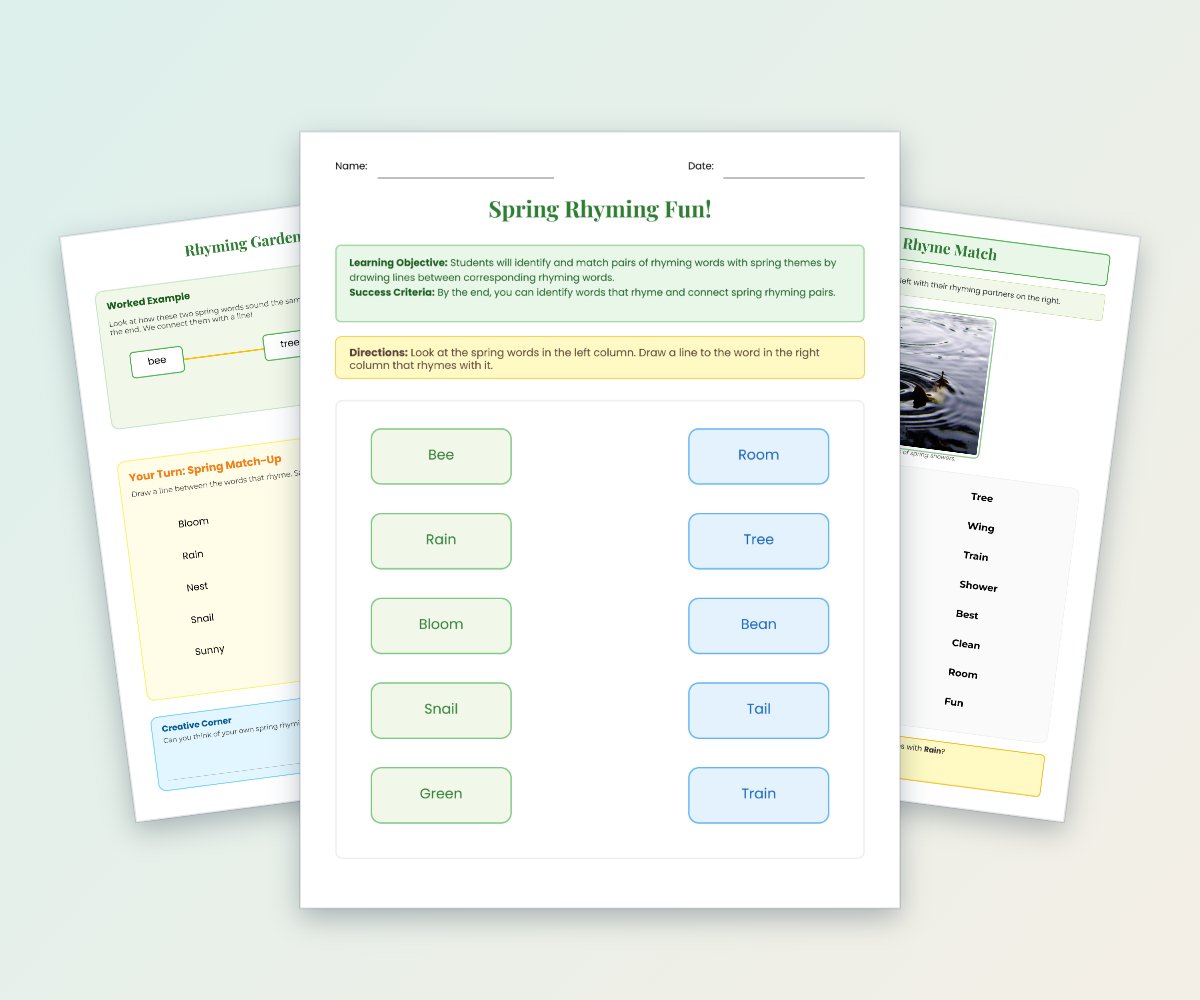
This four-page spring-themed activity pack helps students identify, match, and generate rhyming words.
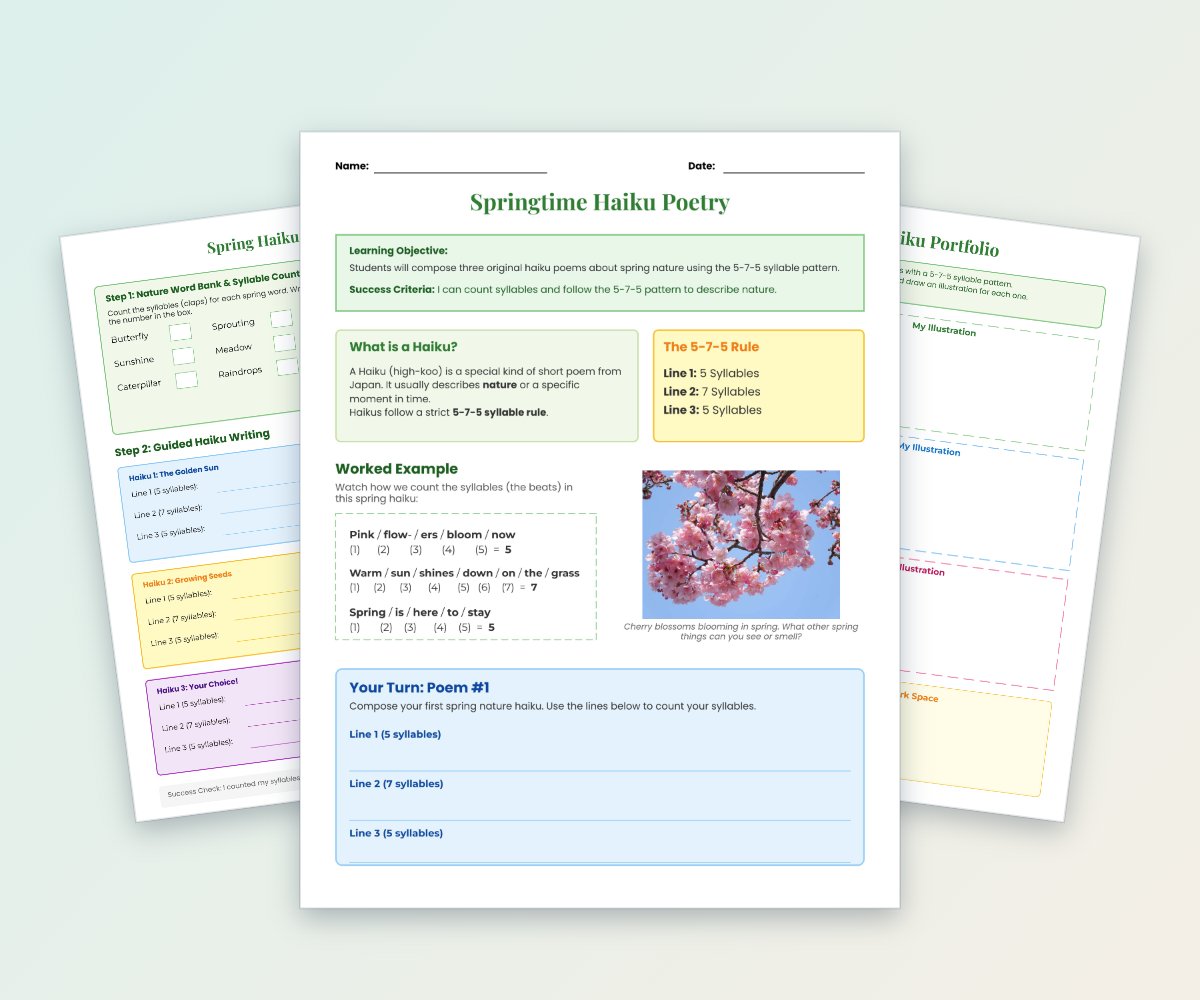
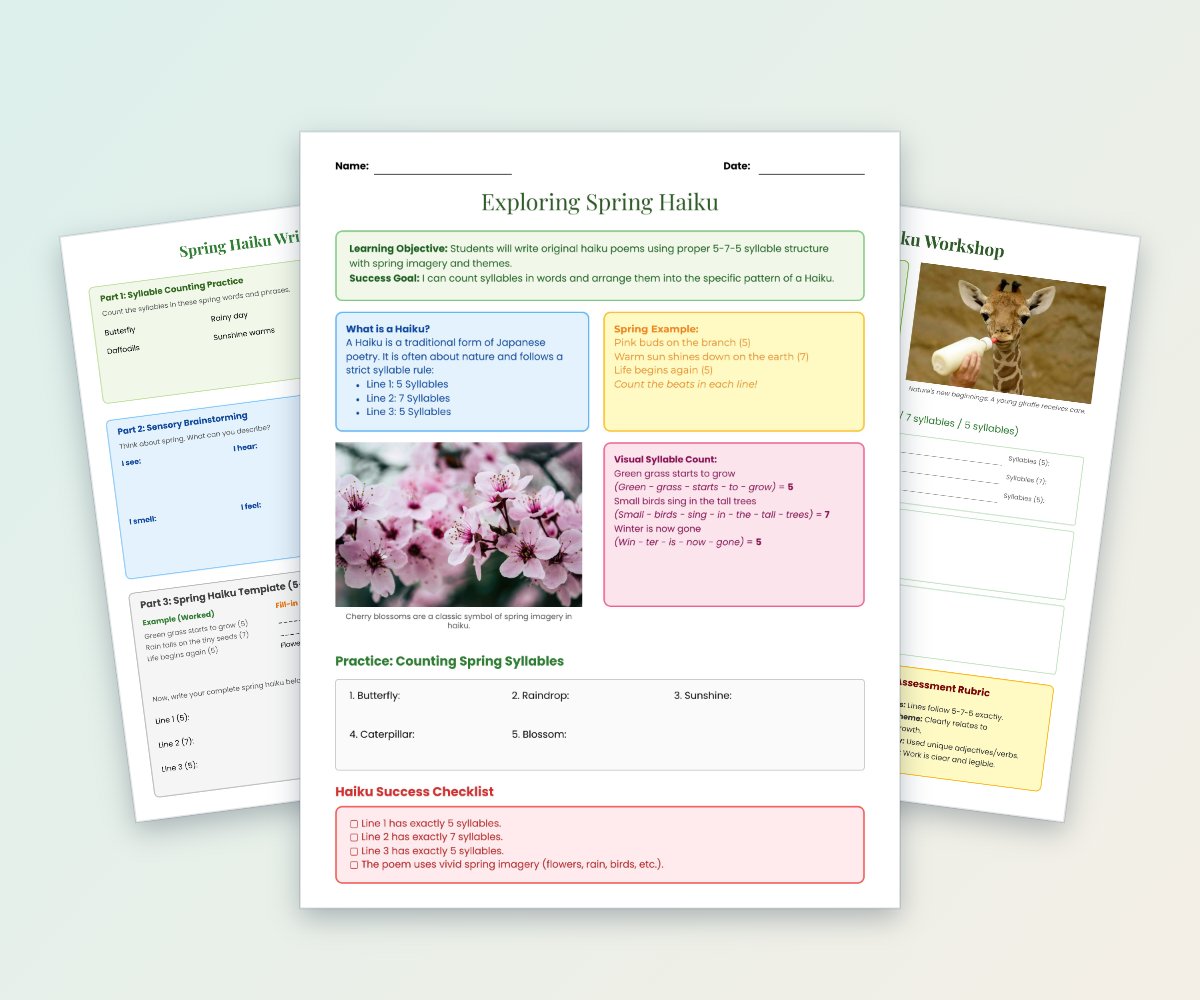
This spring-themed haiku workshop teaches students the 5-7-5 syllable pattern through examples, nature vocabulary, syllable counting, and guided writing.
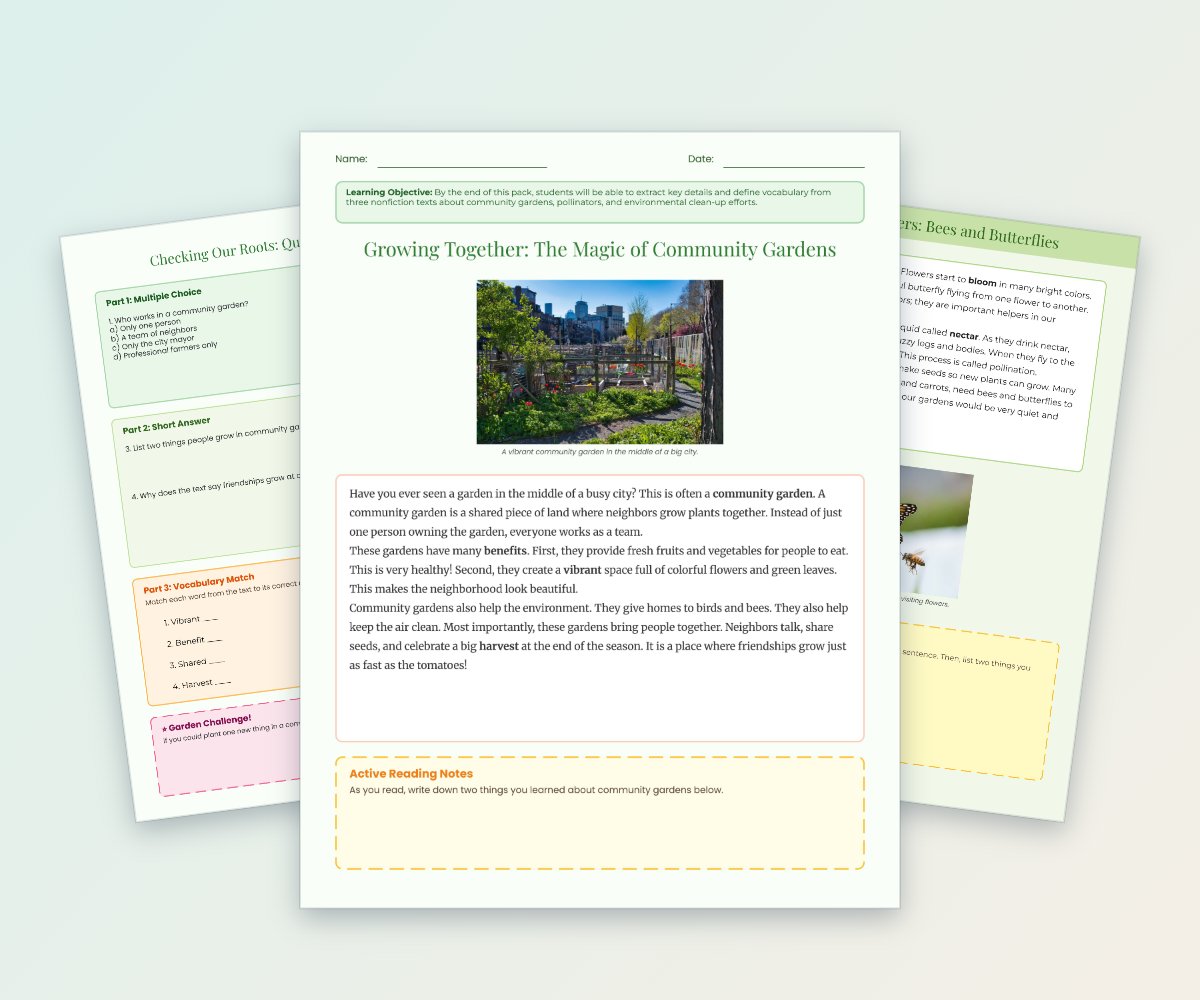
This six-page reading pack features three nonfiction texts about community gardens, pollinators, and environmental clean-up efforts.
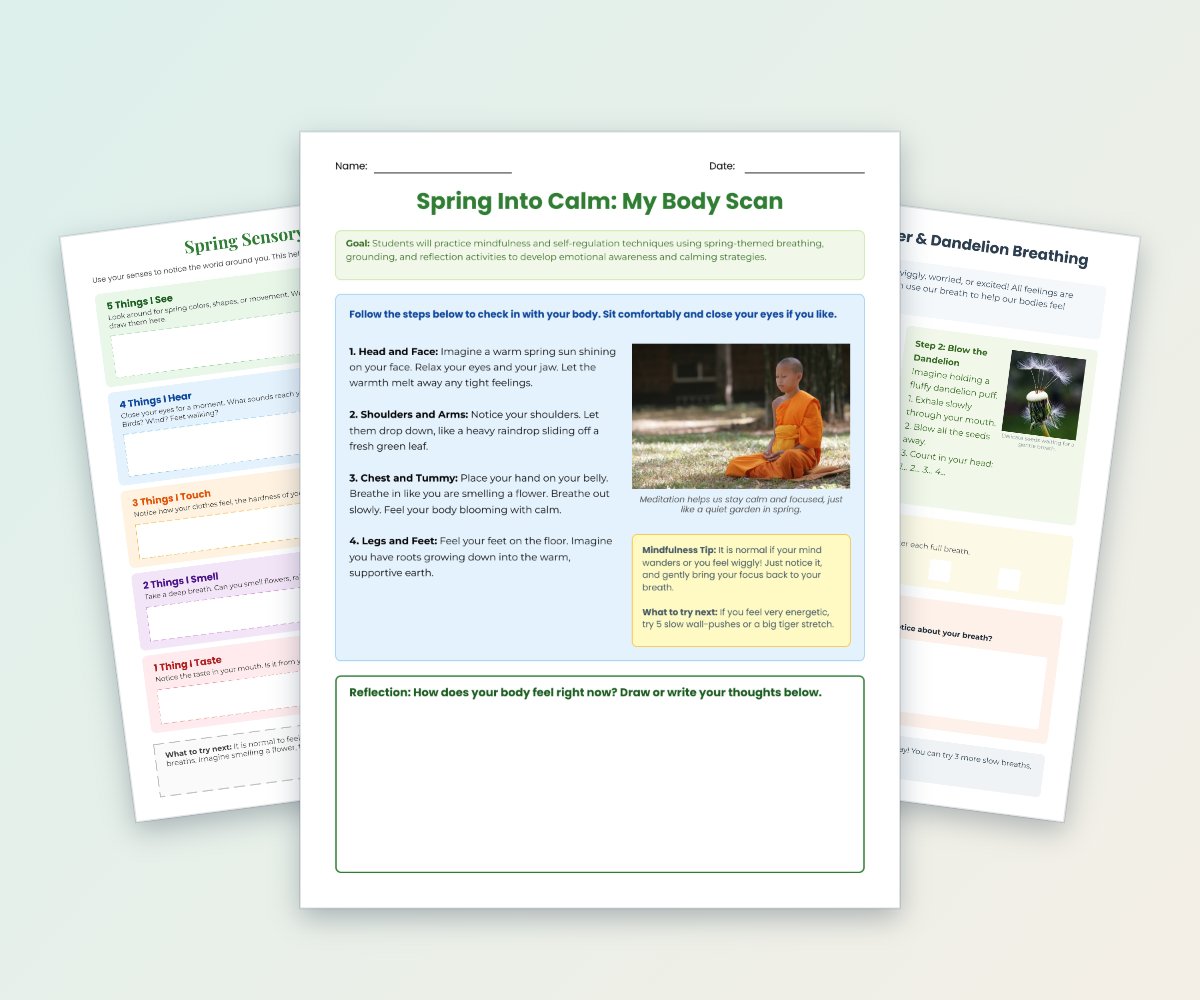
This spring-themed activity pack guides students through a body scan, sensory grounding, breathing, reflection, and calming movement activities.
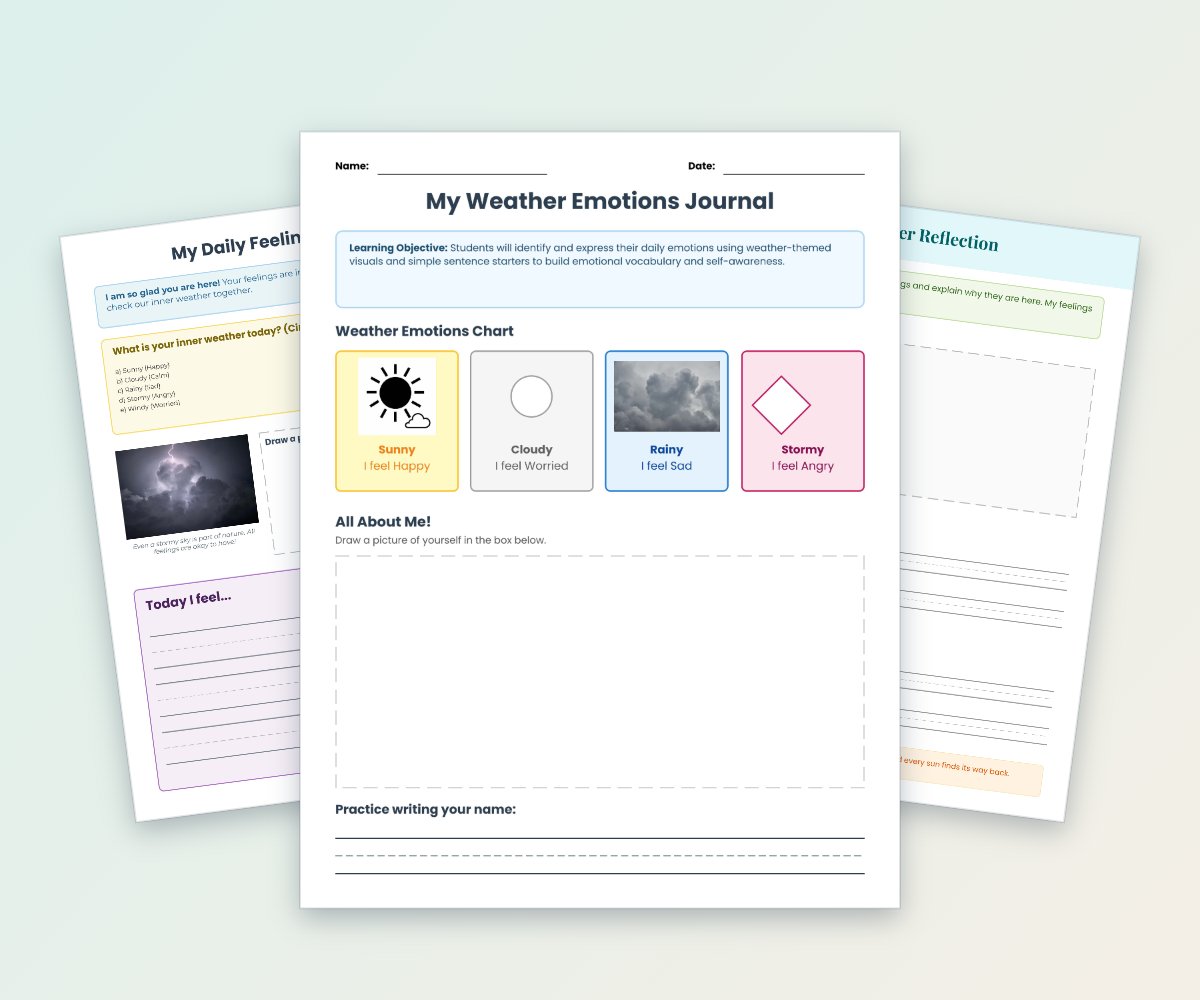
This four-page weather-themed journal helps young students identify, express, and reflect on their feelings using simple visuals and sentence starters.
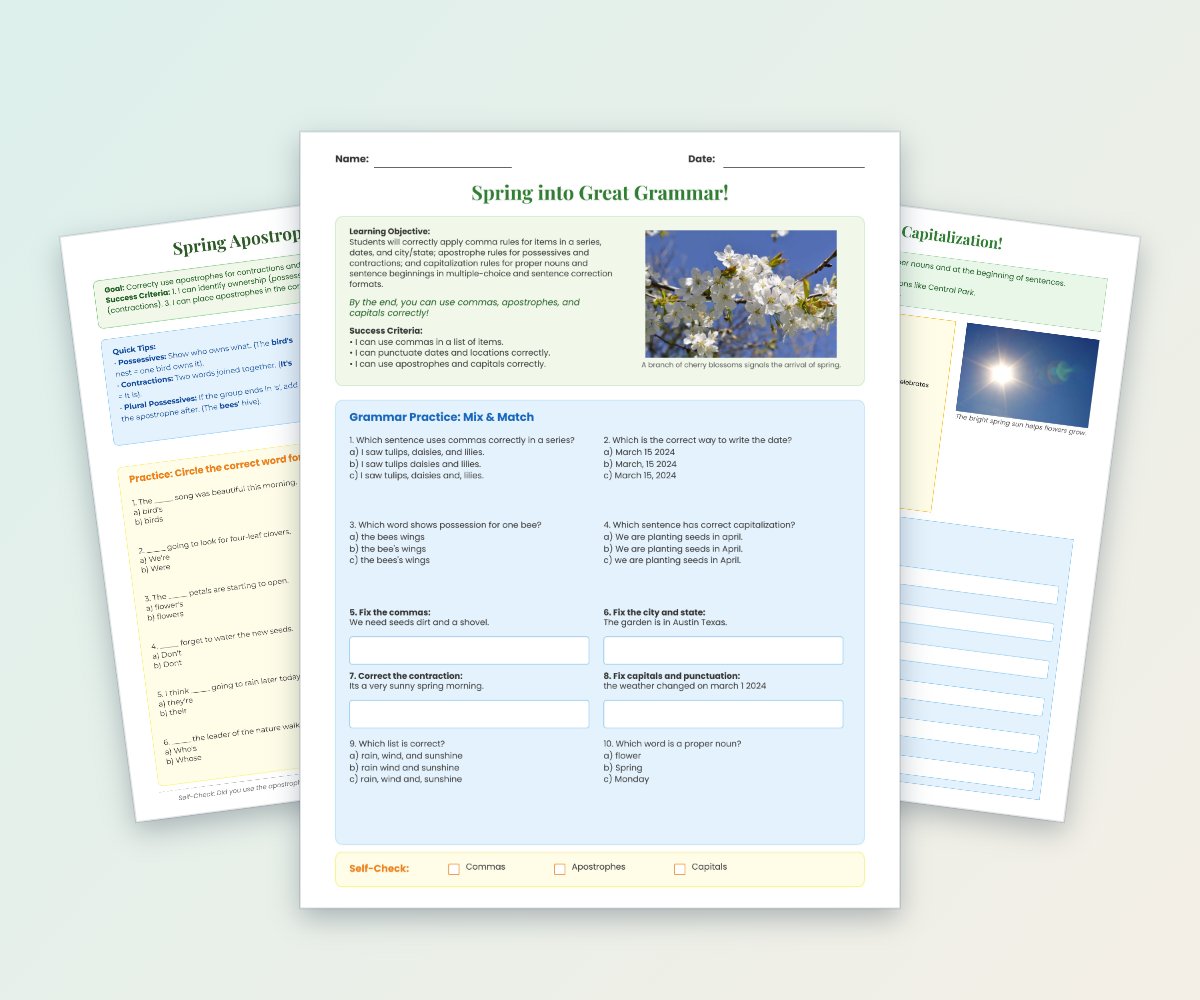
This four-page spring-themed grammar packet provides multiple-choice and sentence-correction practice with commas, apostrophes, possessives, contractions, capitalization, dates, and locations.
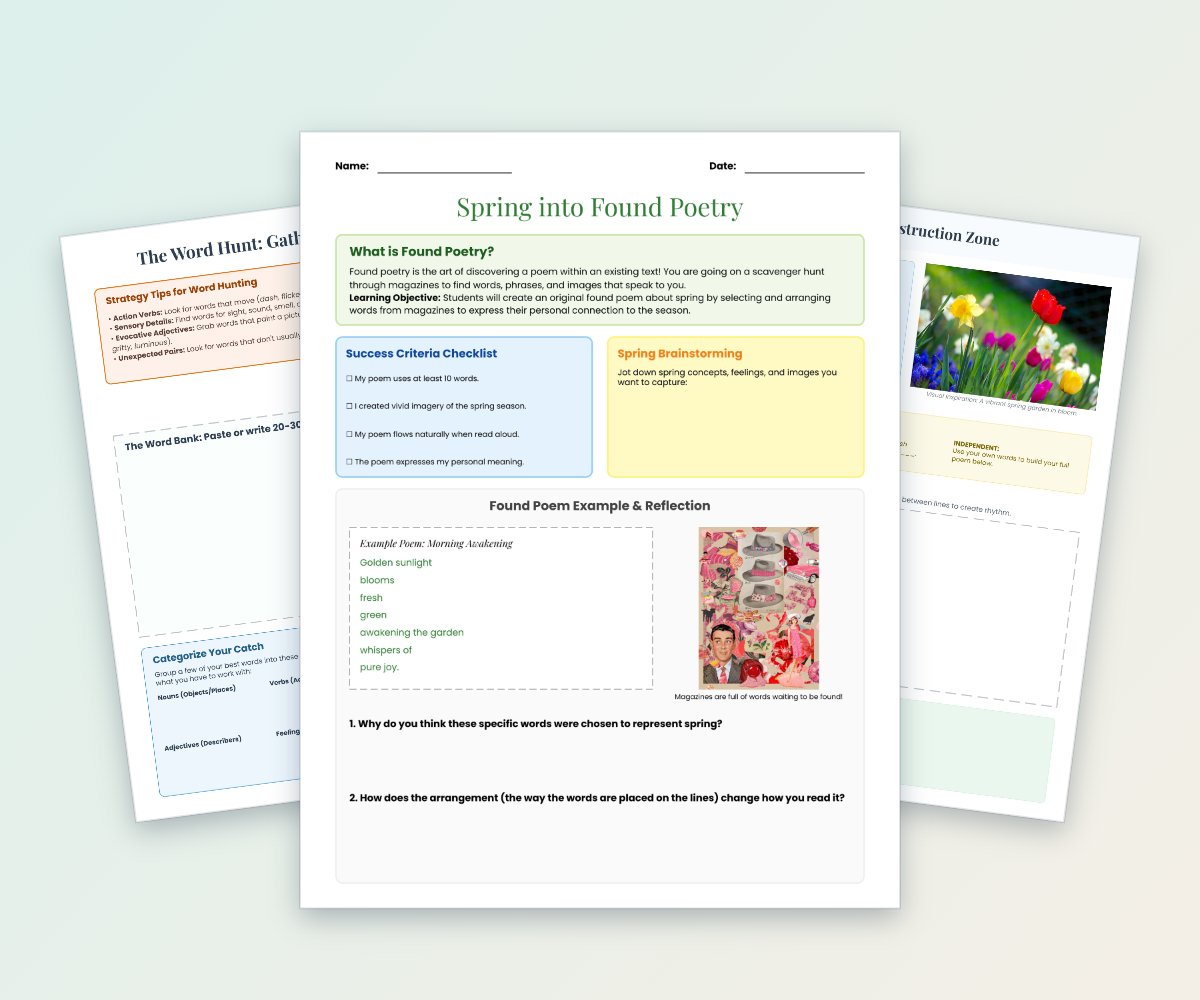
Guide students through creating an original spring-themed found poem using words gathered from magazines.
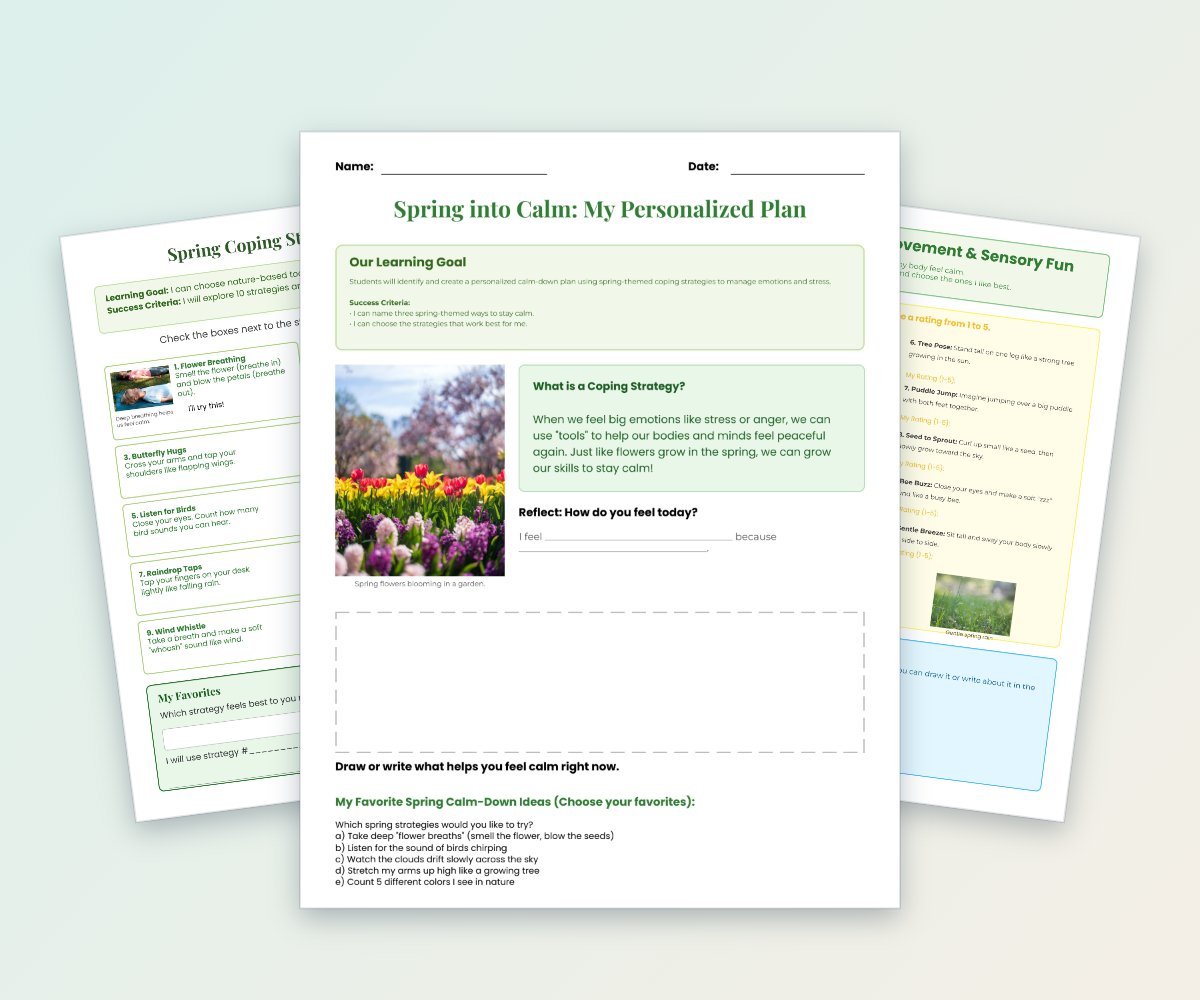
This five-page spring-themed activity pack helps students explore nature-based breathing, grounding, movement, and sensory strategies for managing stress and big emotions.
Teach students to write spring-themed haiku using the traditional 5-7-5 syllable structure.
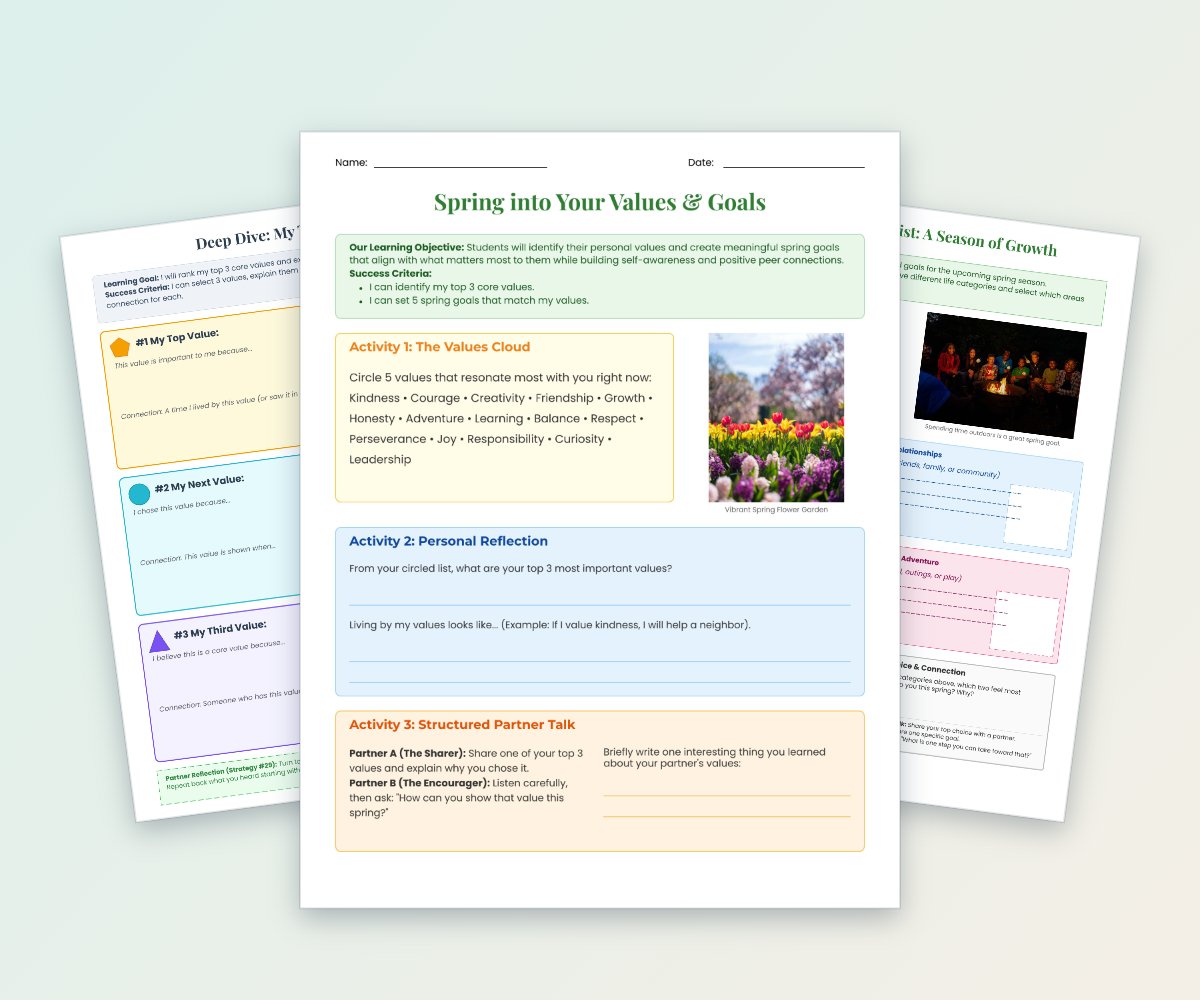
This five-page spring activity pack guides students through identifying core values, reflecting on personal growth, and creating meaningful seasonal goals.
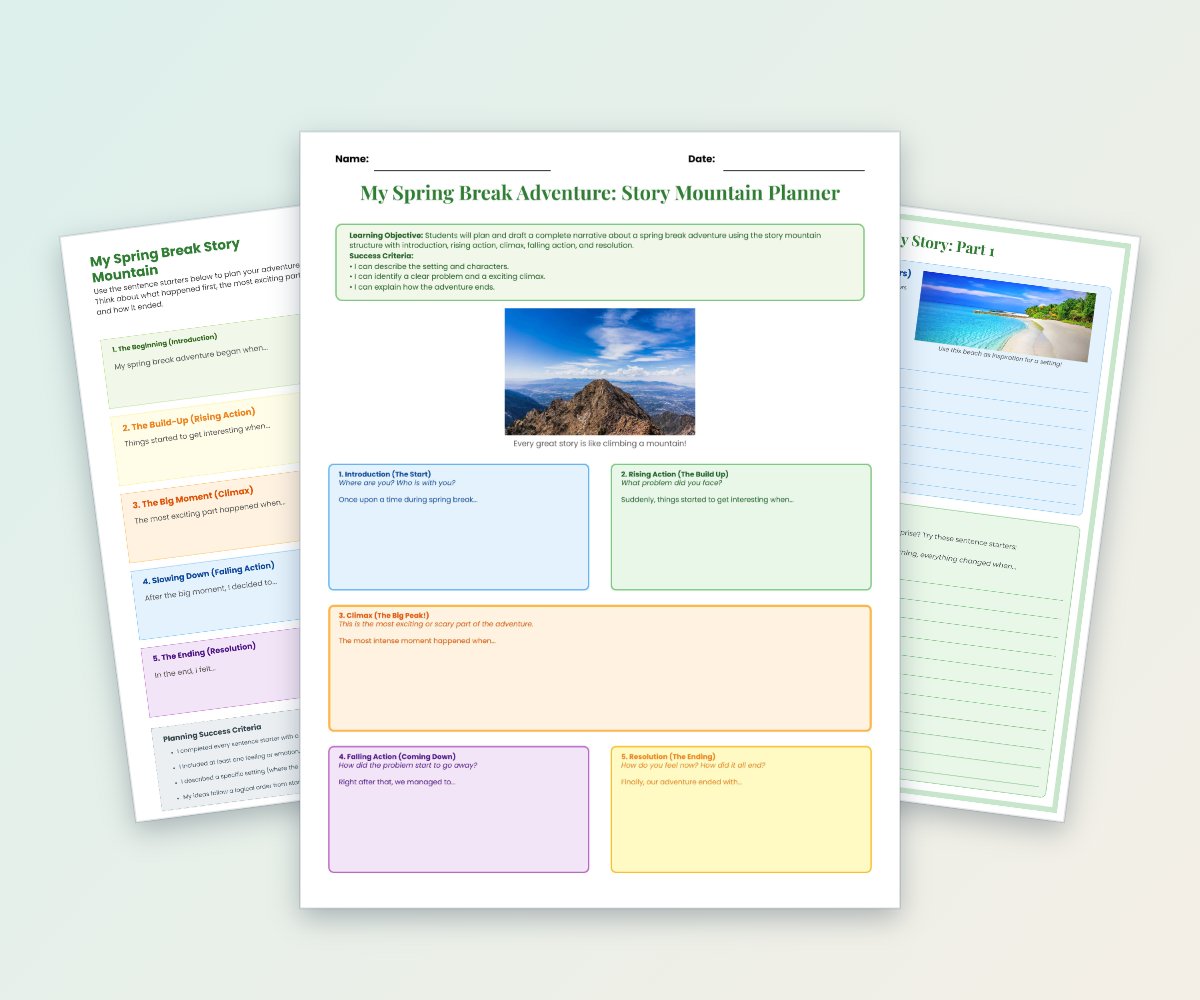
Students plan and draft a spring break adventure using the five-part story mountain structure: introduction, rising action, climax, falling action, and resolution.
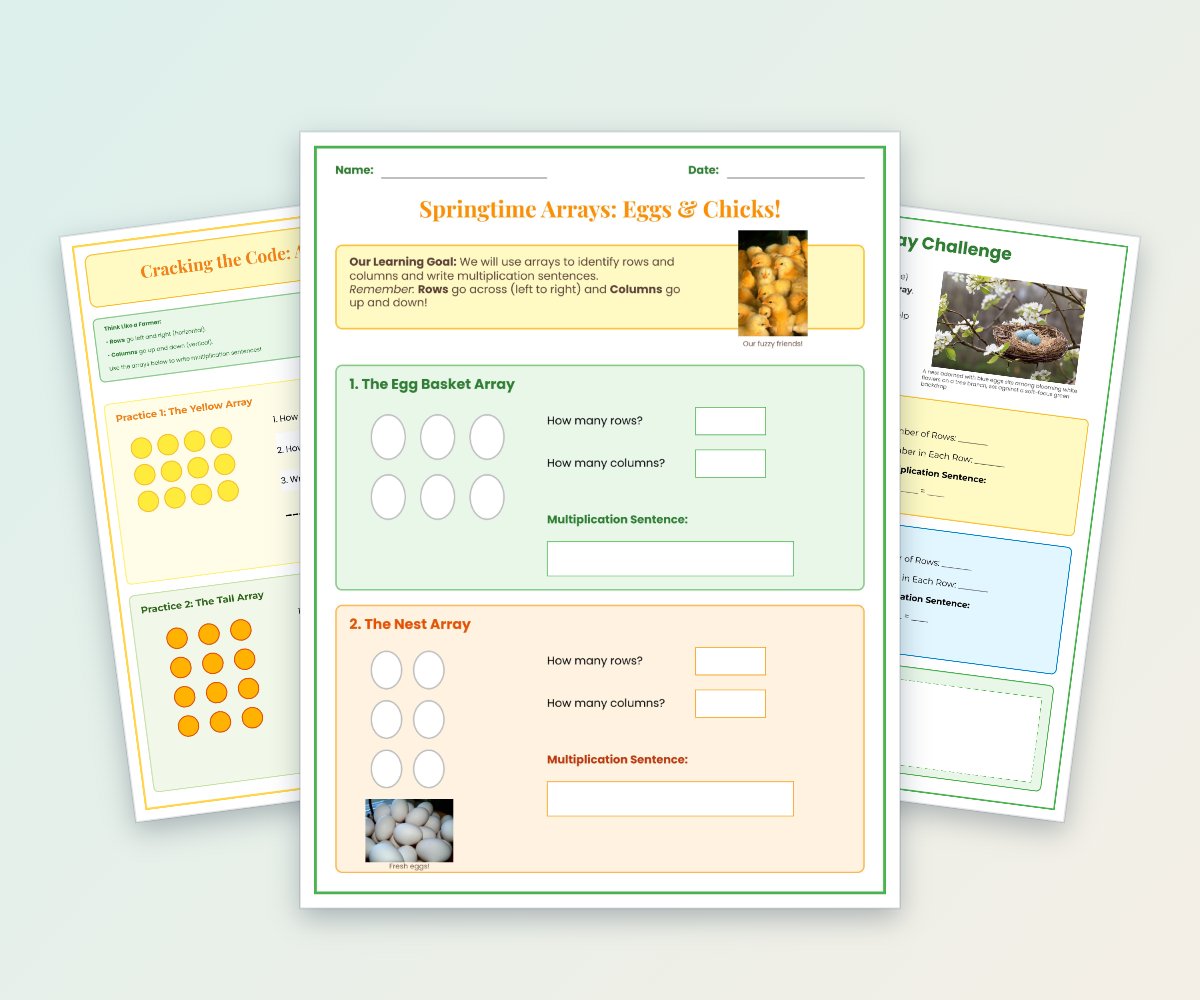
Students identify rows and columns, write multiplication sentences, and represent facts using spring-themed egg and chick arrays.
Help students transition back to school after spring break by reviewing classroom expectations, practicing conflict-resolution strategies, and reflecting on kindness.
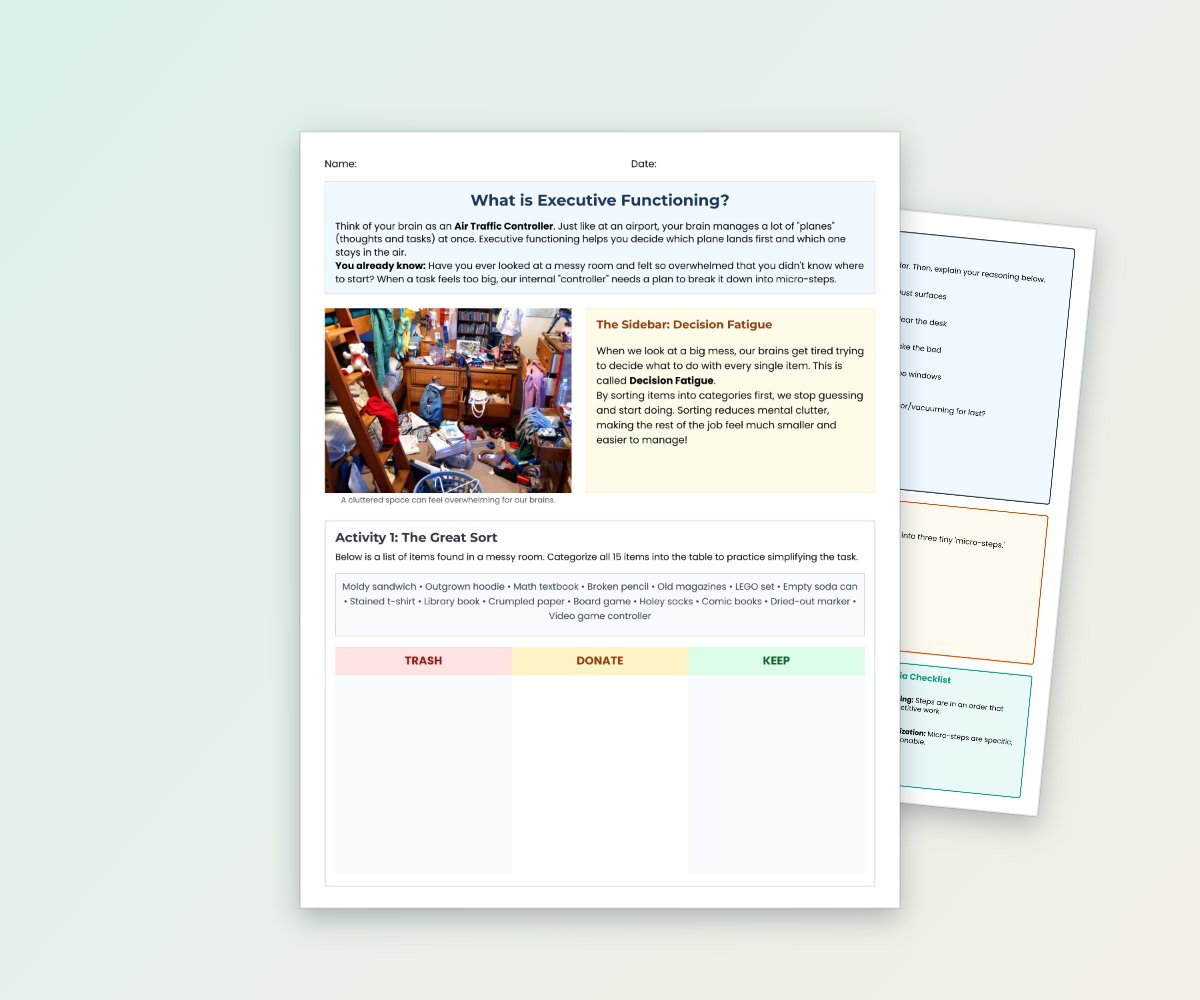
This two-page guide helps students practice executive functioning skills through spring-cleaning scenarios.
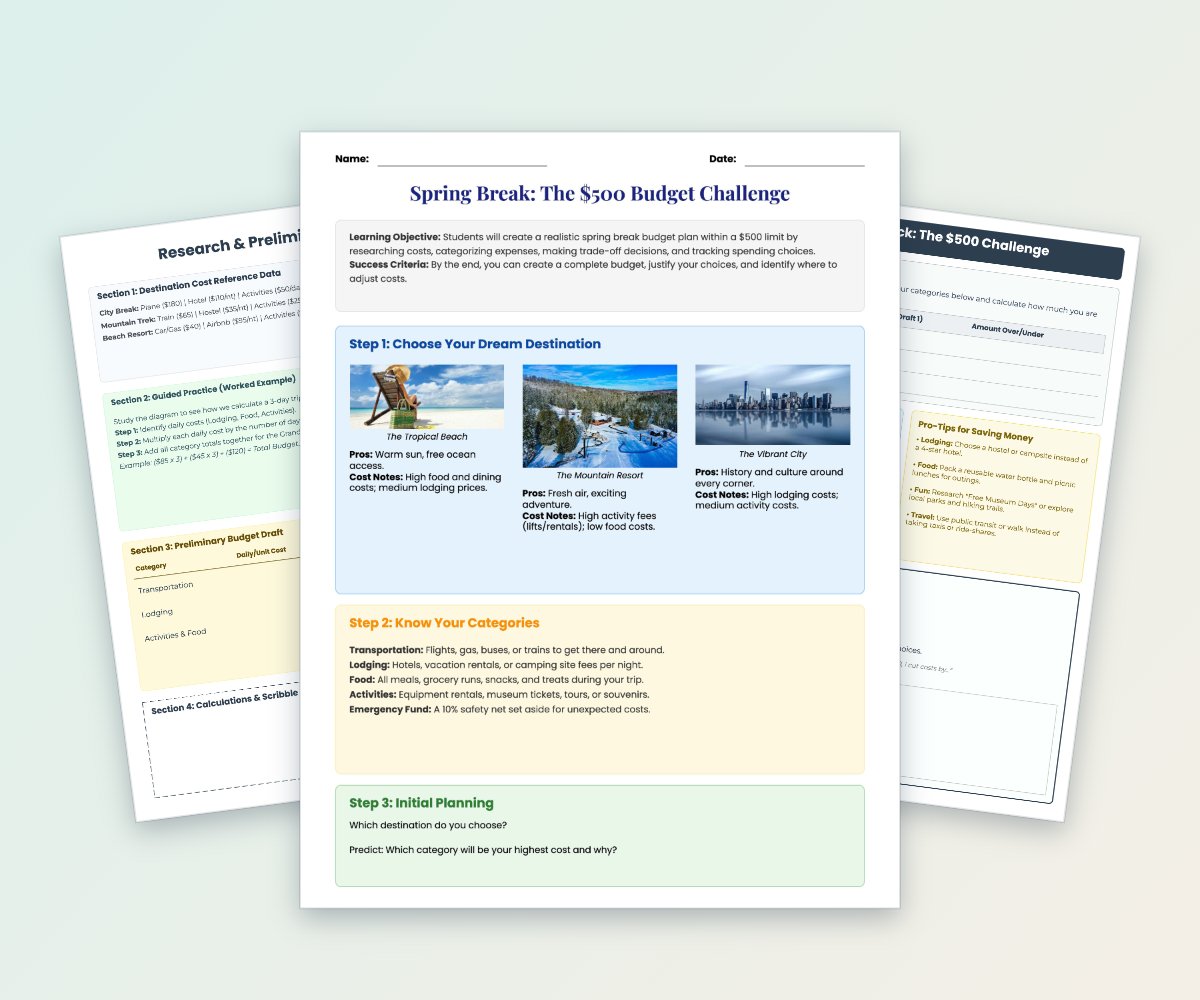
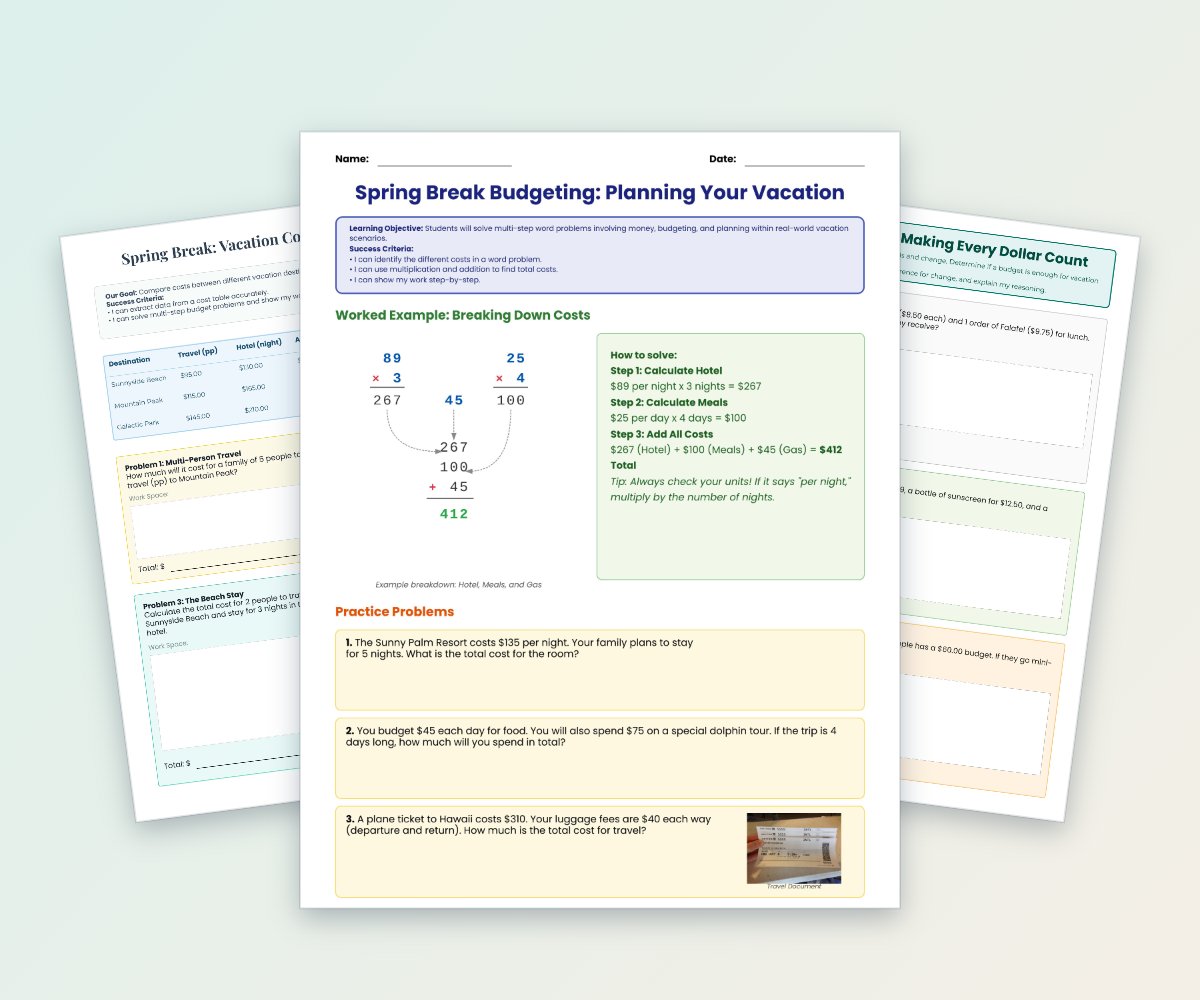
Students plan a spring break trip within a $500 limit using destination cost data, expense categories, and guided calculations.
Students practice multiplication, addition, subtraction, cost comparison, and budgeting through realistic spring break vacation scenarios.
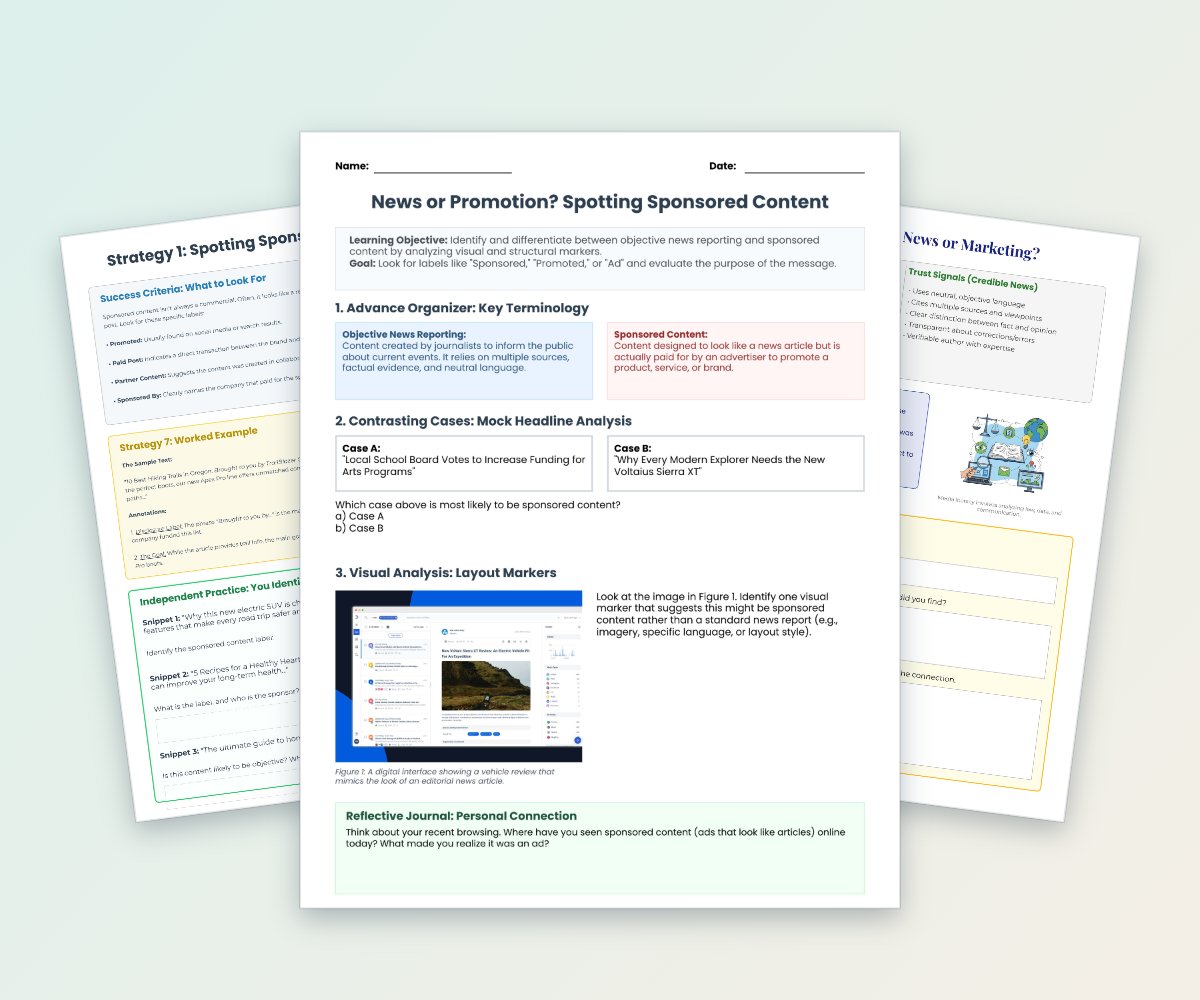
This four-page worksheet teaches students to distinguish objective news reporting from sponsored content.
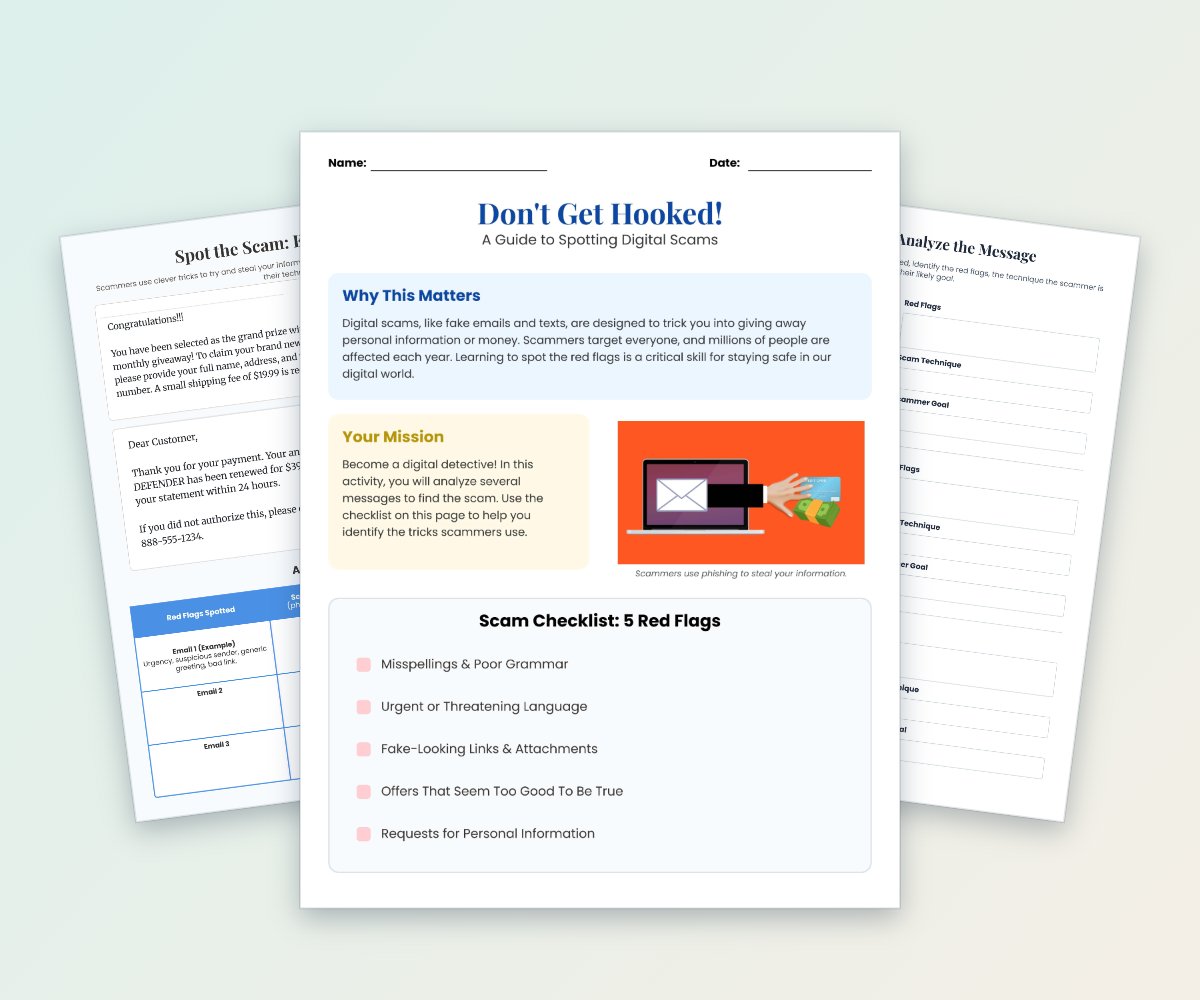
This four-page student guide teaches learners how to recognize phishing, fake prizes, suspicious links, urgent language, and requests for personal information.
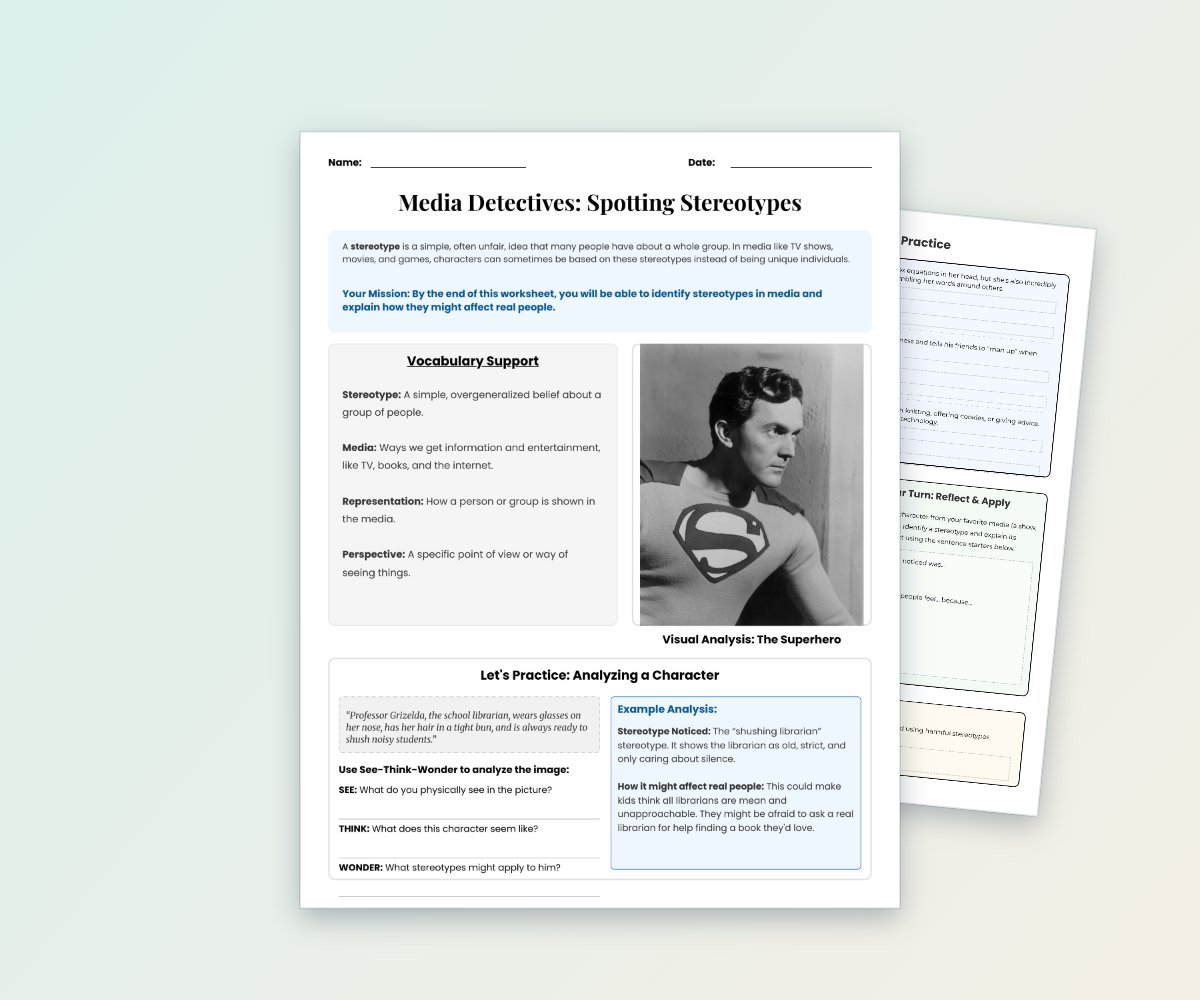
Students learn vocabulary related to stereotypes, media, representation, and perspective.
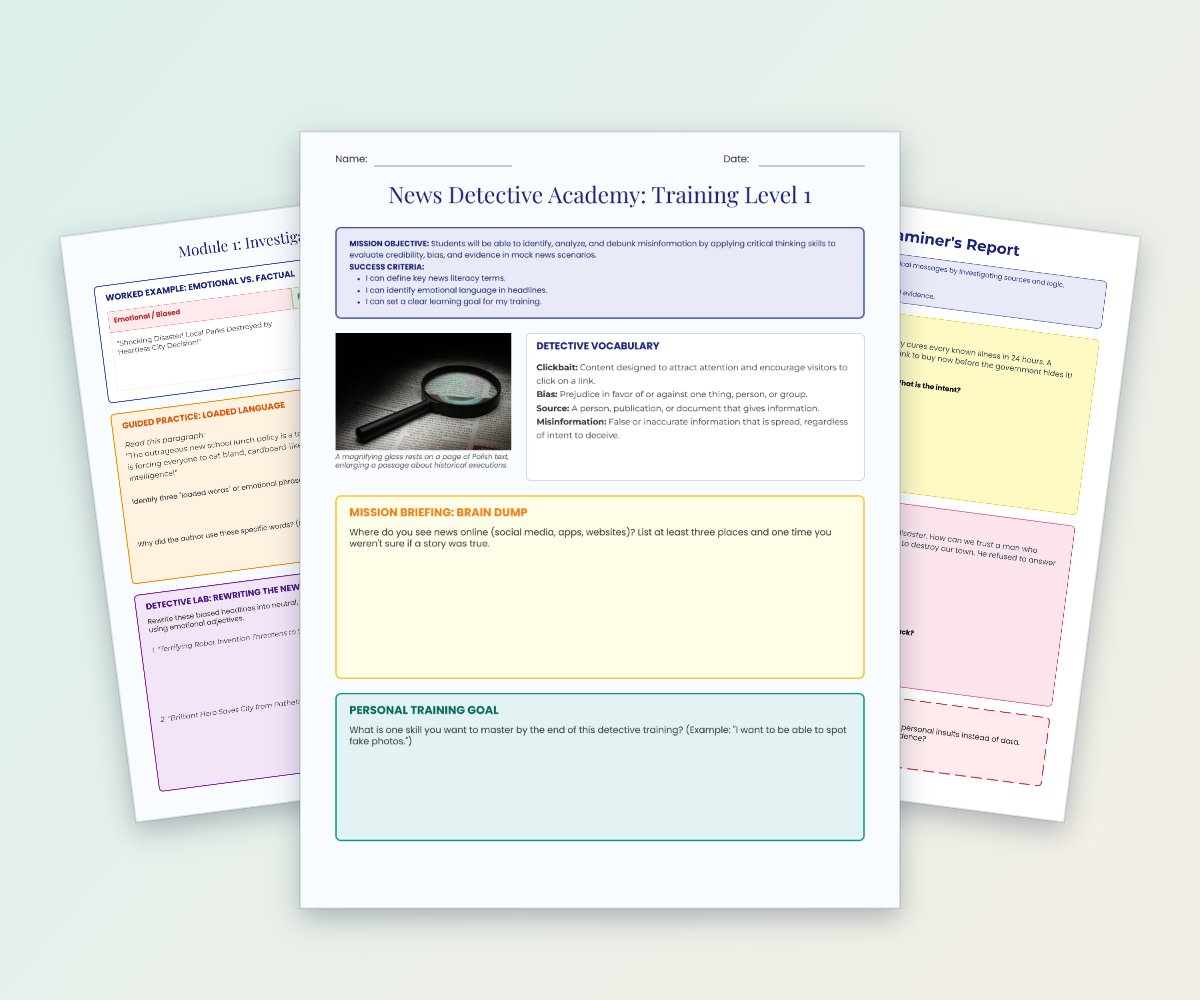
This six-page news literacy activity pack guides students through identifying clickbait, bias, emotional language, questionable sources, and misinformation.
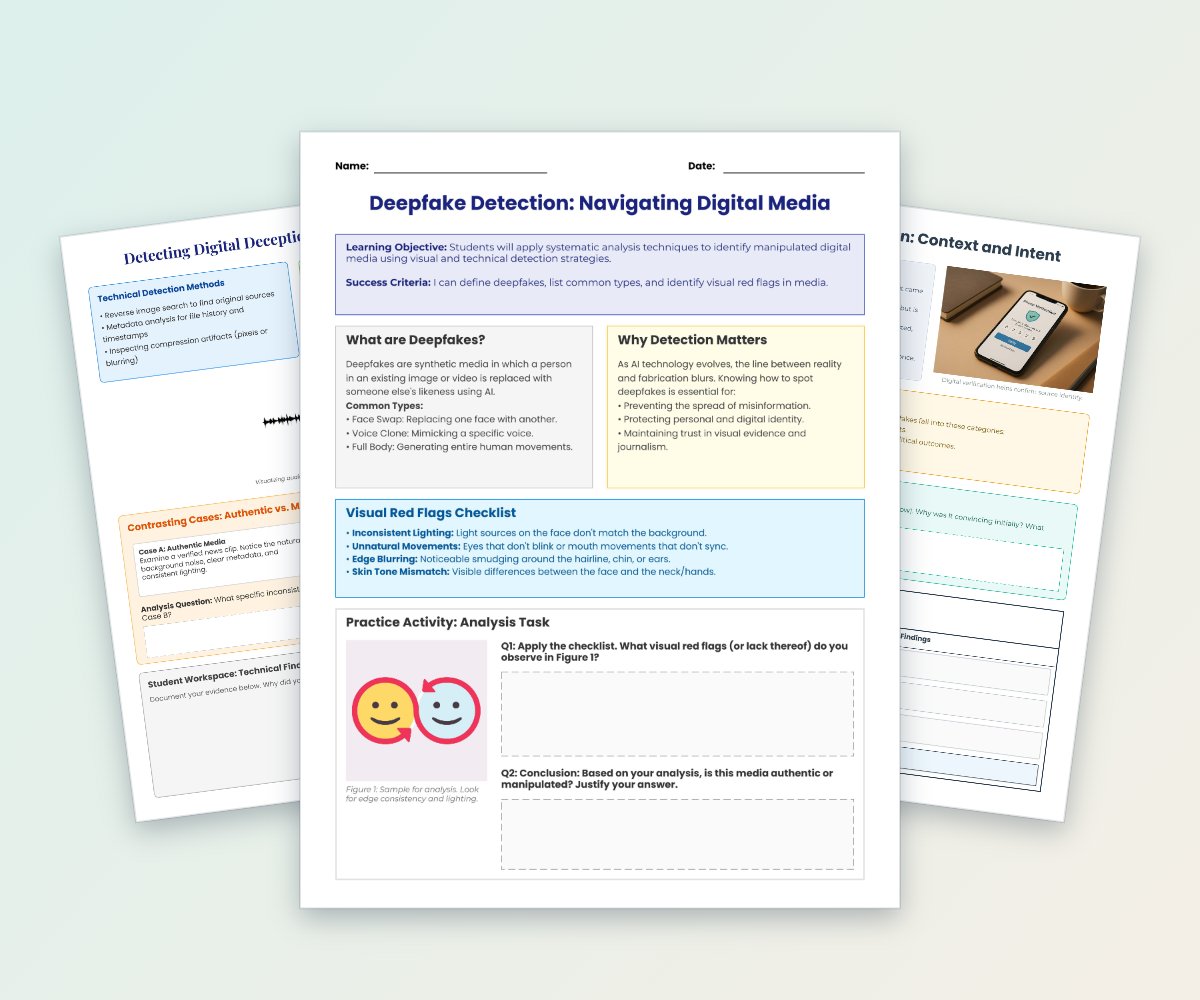
Students learn what deepfakes are, explore common forms, and use visual and technical indicators to evaluate digital media.
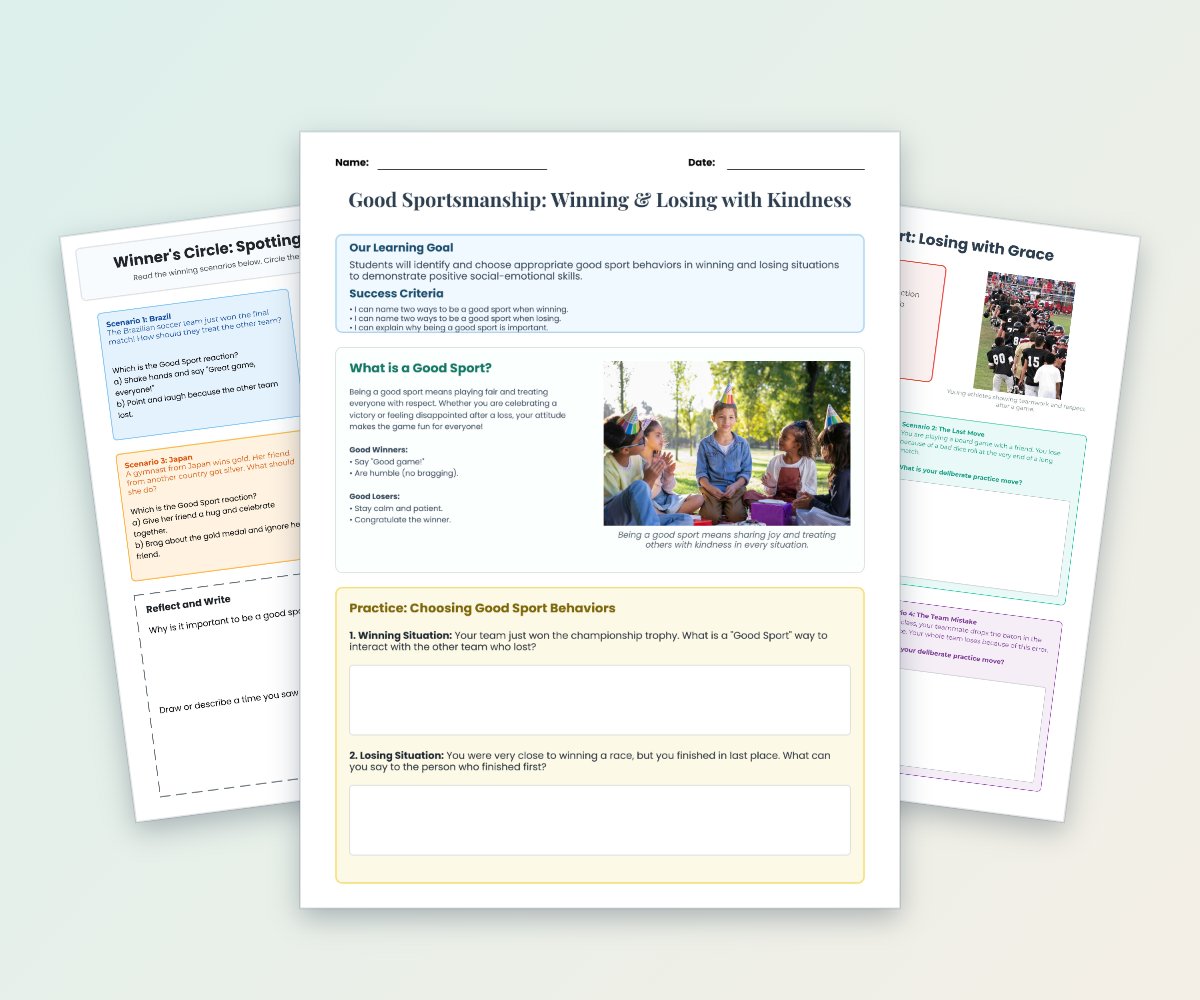
This four-page social-emotional learning resource teaches students how to demonstrate kindness, humility, patience, and respect when winning or losing.
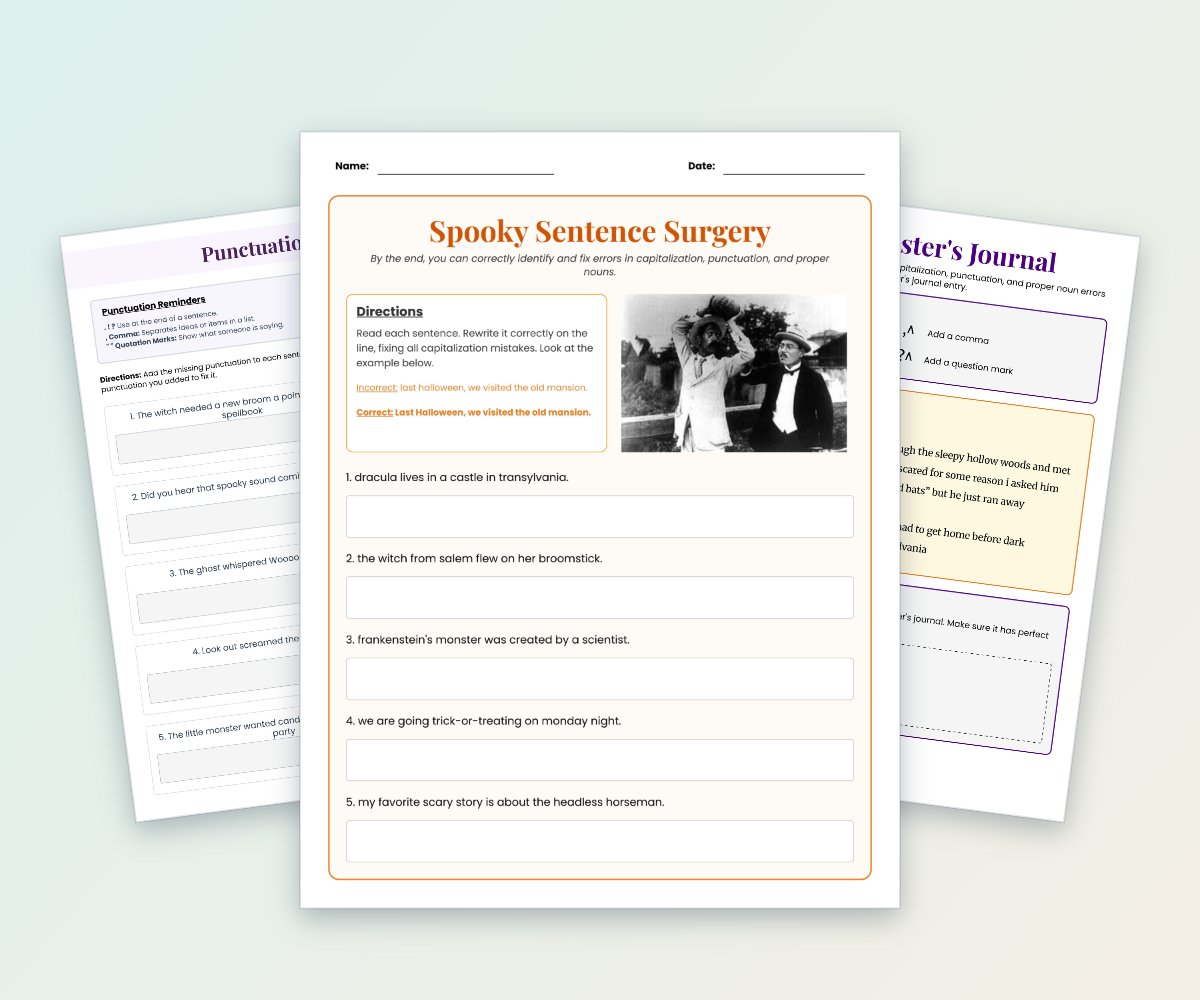
Students edit spooky-themed sentences by correcting capitalization, punctuation, proper nouns, and dialogue.
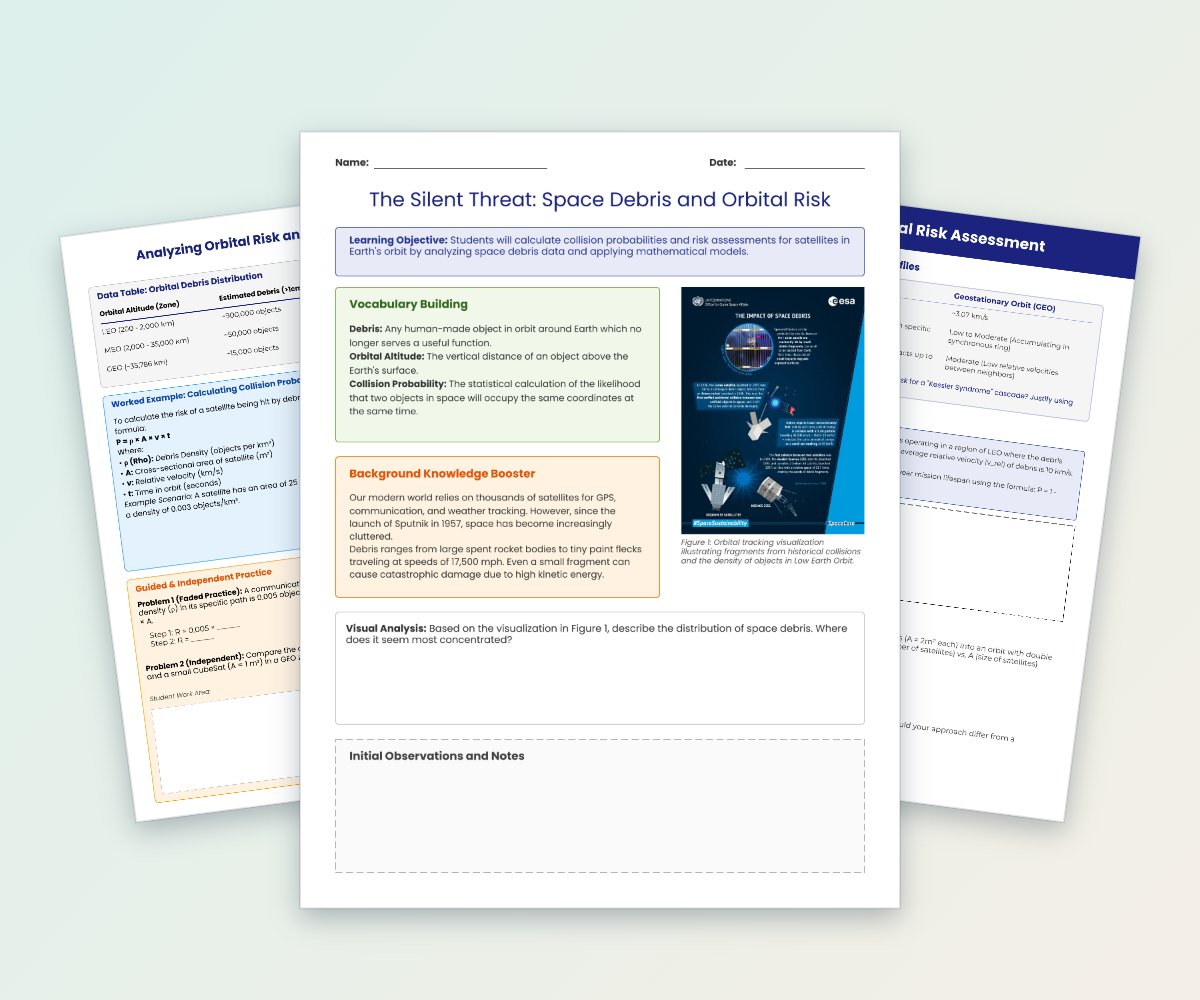
Students investigate space debris, orbital altitude, debris density, and satellite collision risk.
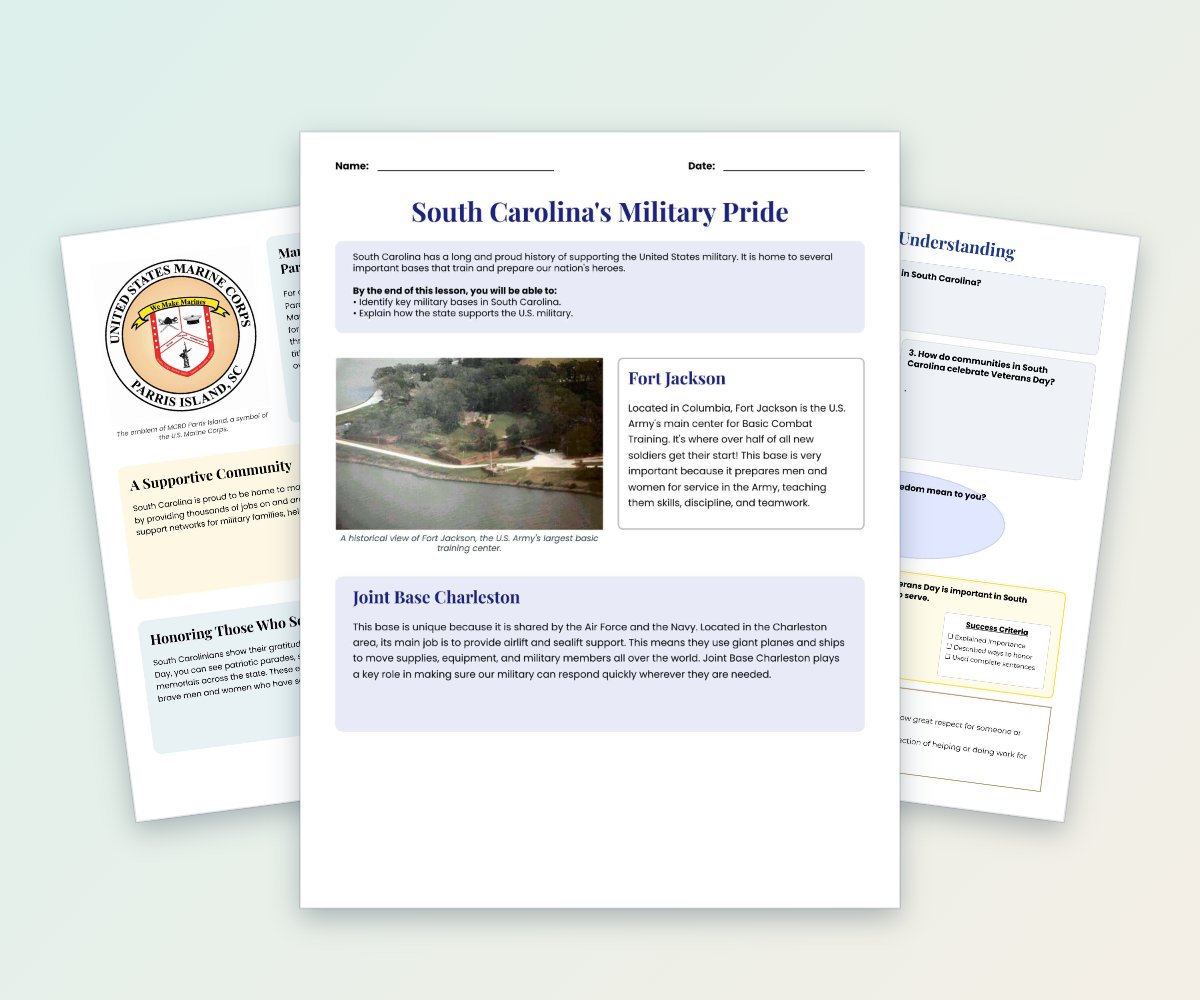
This mini-unit explores South Carolina military bases, community support for military families, and ways residents honor veterans.
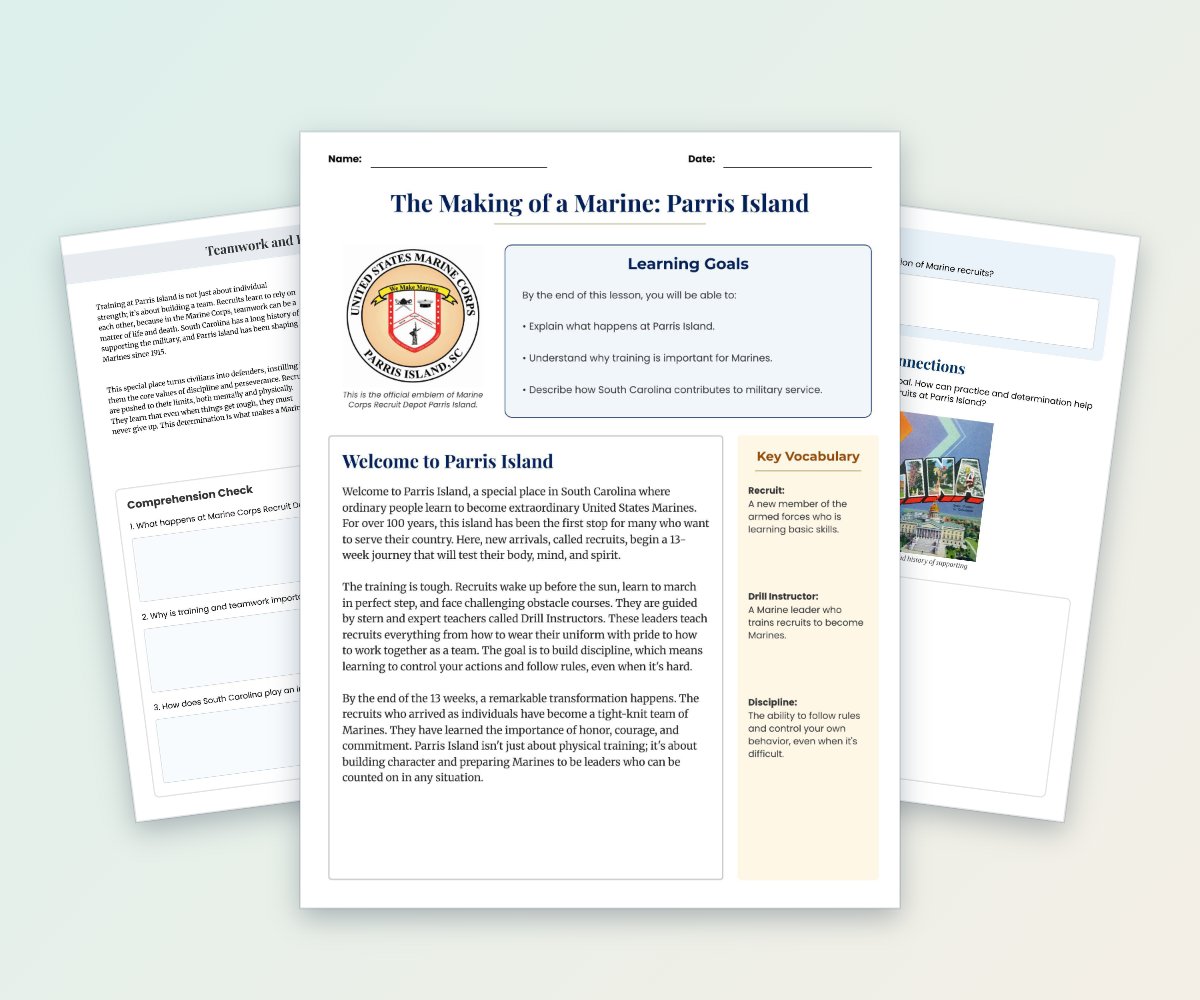
Students read about Marine recruit training at Parris Island and South Carolina’s contribution to military service.
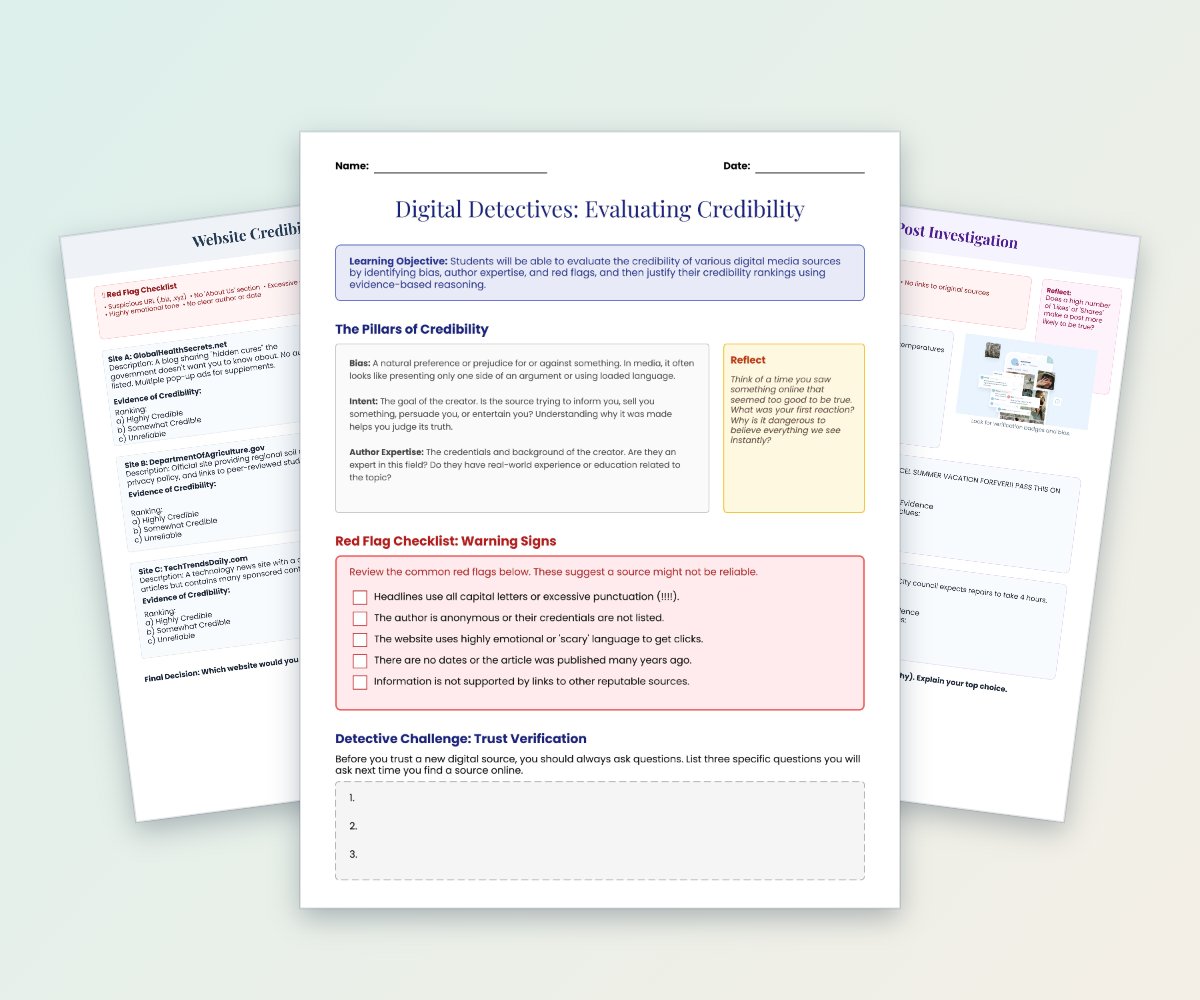
Students examine bias, intent, author expertise, website clues, and red flags to rank digital sources by credibility.
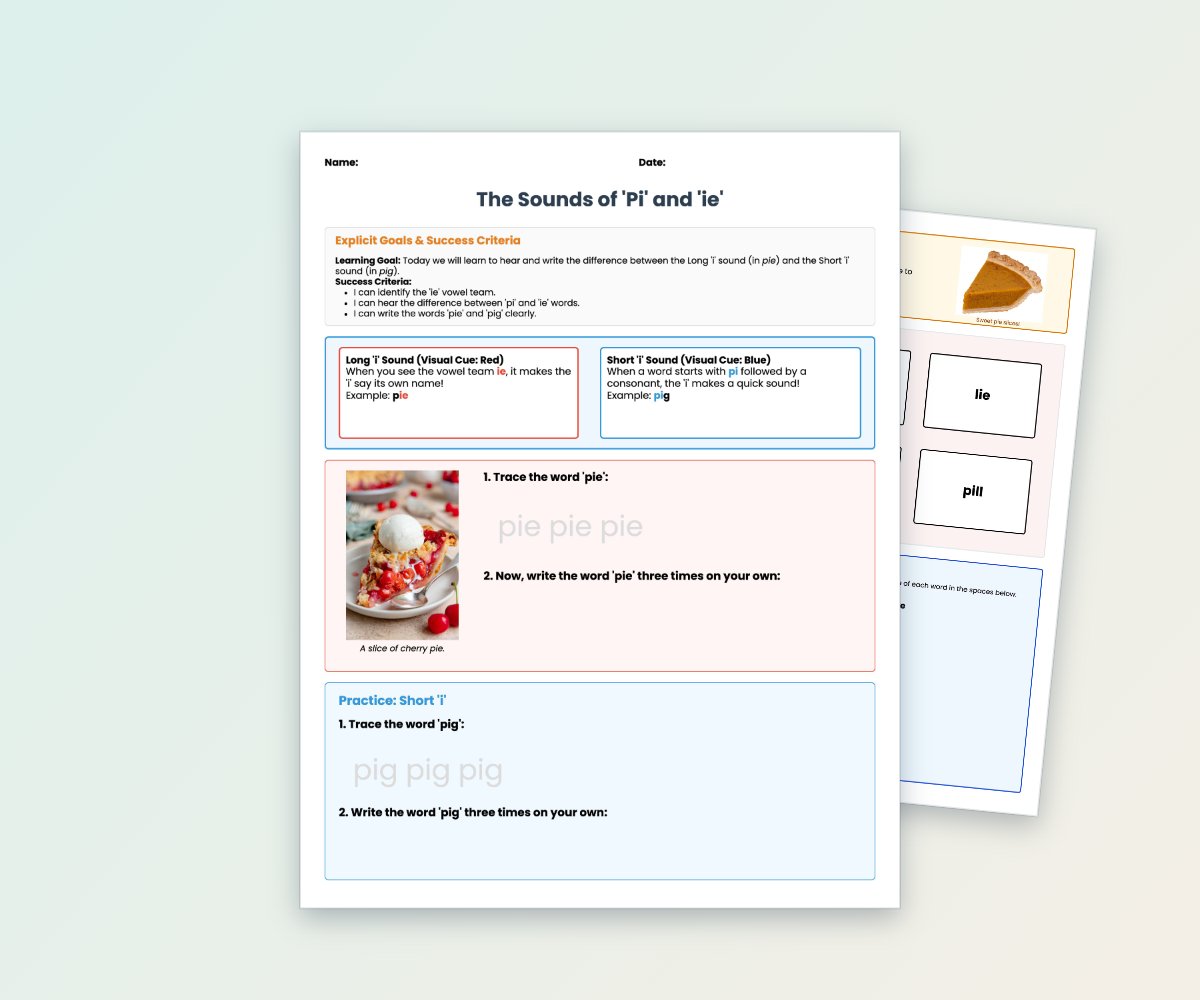
This two-page phonics worksheet helps students distinguish the long i sound in words such as pie and tie from the short i sound in words such as pig and pit.
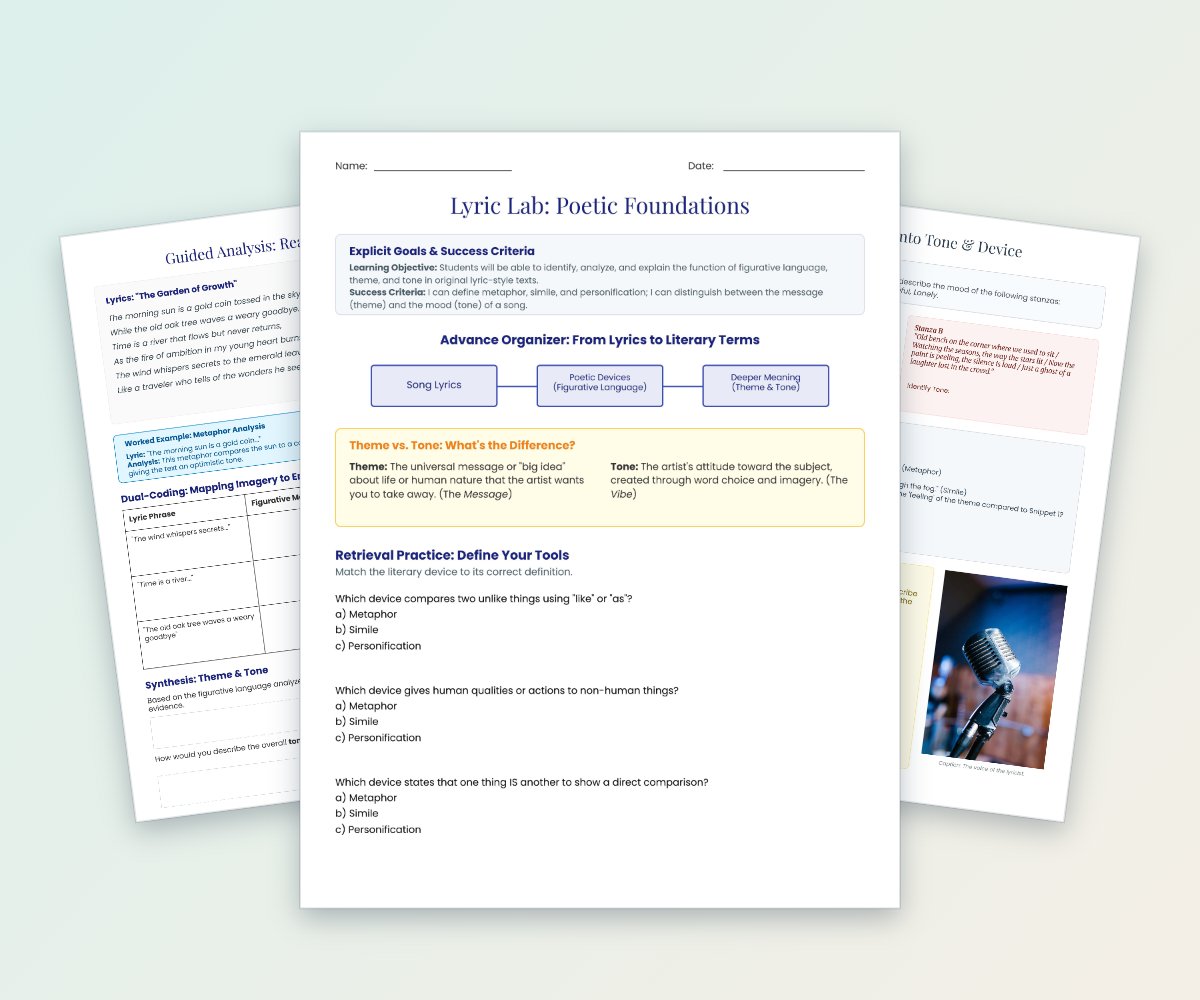
This six-page activity pack guides students through identifying and analyzing metaphor, simile, personification, theme, and tone in lyric-style texts.
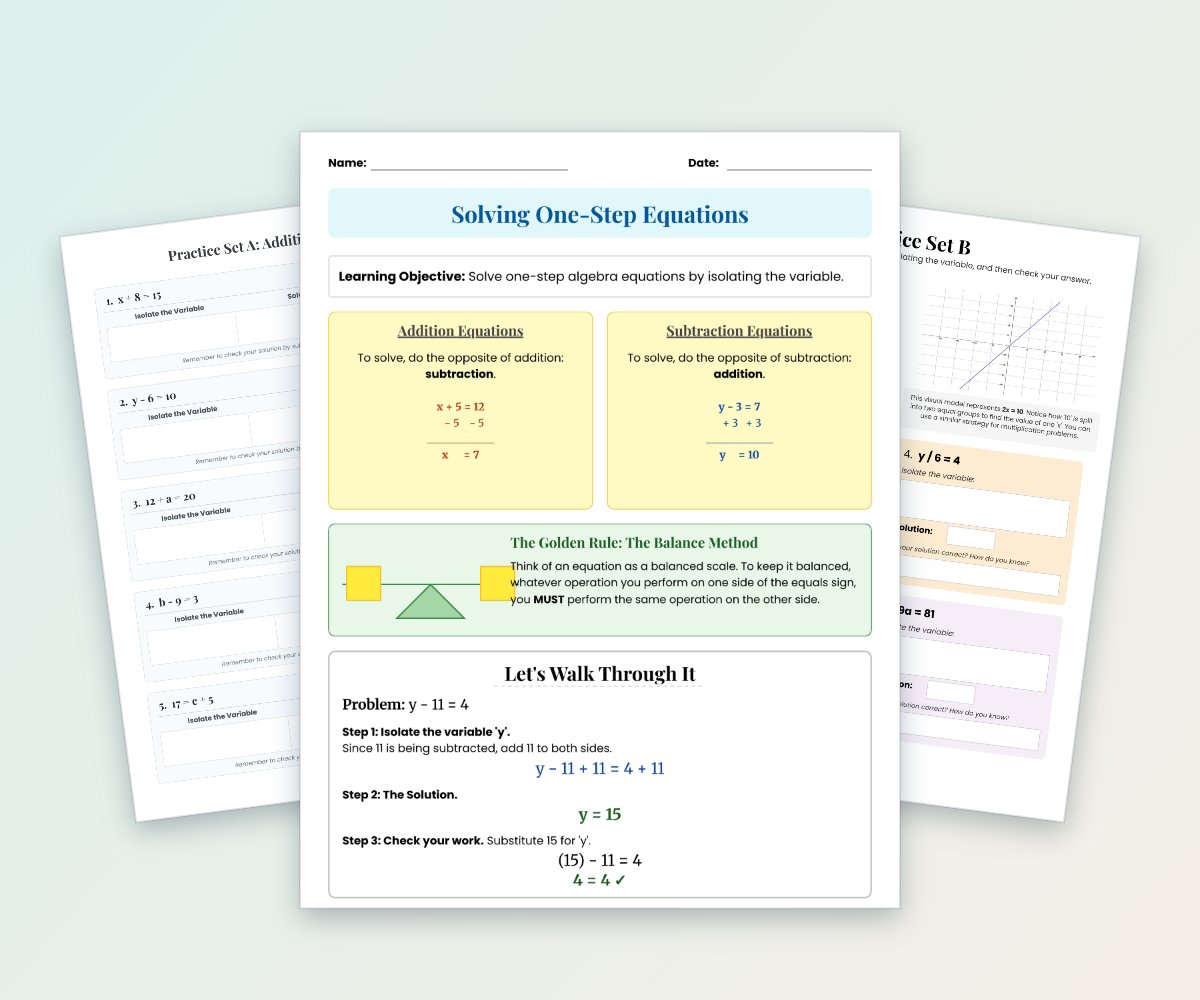
This four-page guide introduces solving one-step equations using inverse operations and the balance method.