Syllable Types with Female Scientists
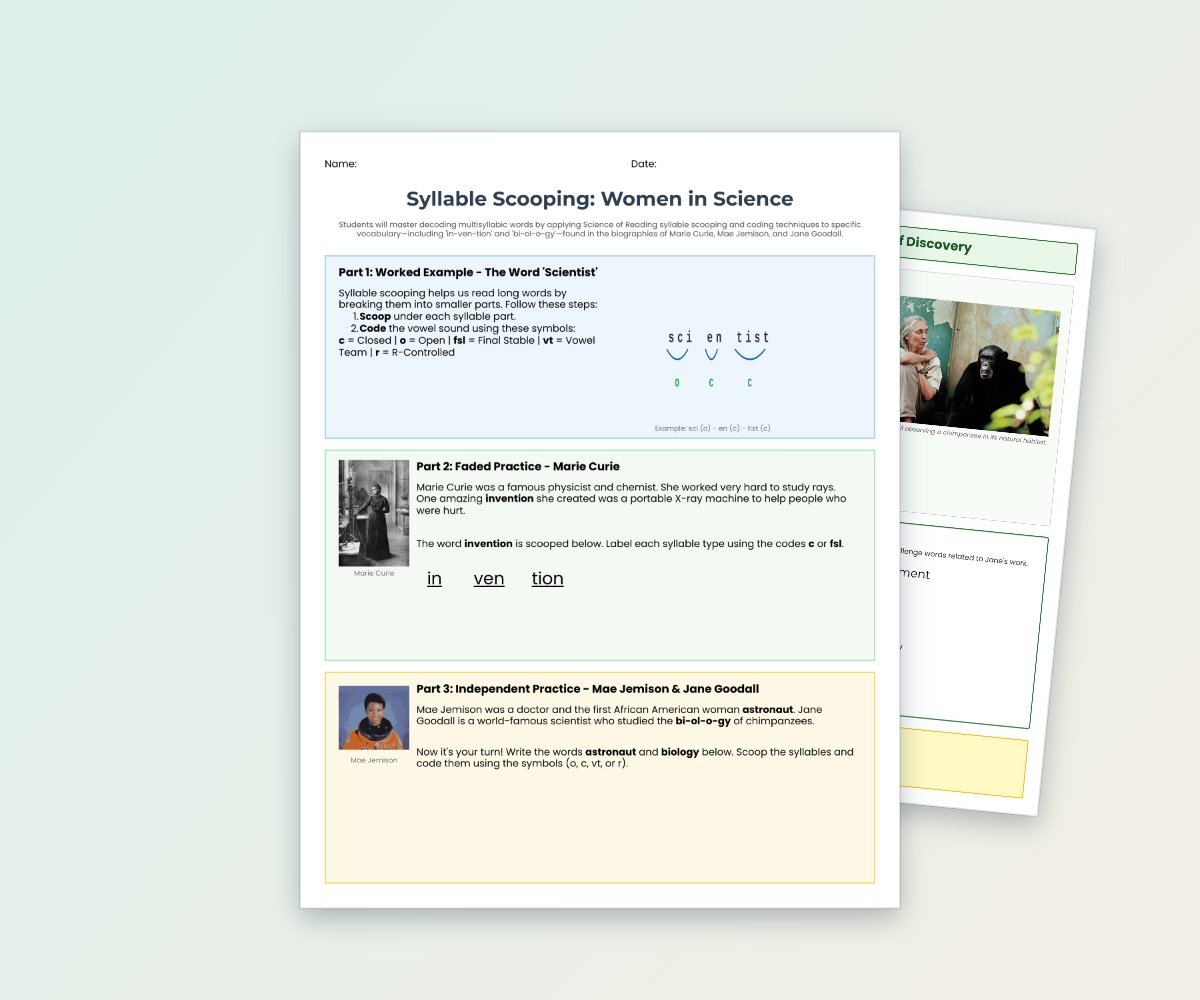
Students practice syllable scooping and vowel coding while reading science-related vocabulary and short biographies of Marie Curie, Mae Jemison, and Jane Goodall.
$3
Classroom-ready resources written for grade 5: printable worksheets, slides, activities and planning tools you can download and use straight away. Browse by subject below.
Students practice syllable scooping and vowel coding while reading science-related vocabulary and short biographies of Marie Curie, Mae Jemison, and Jane Goodall.
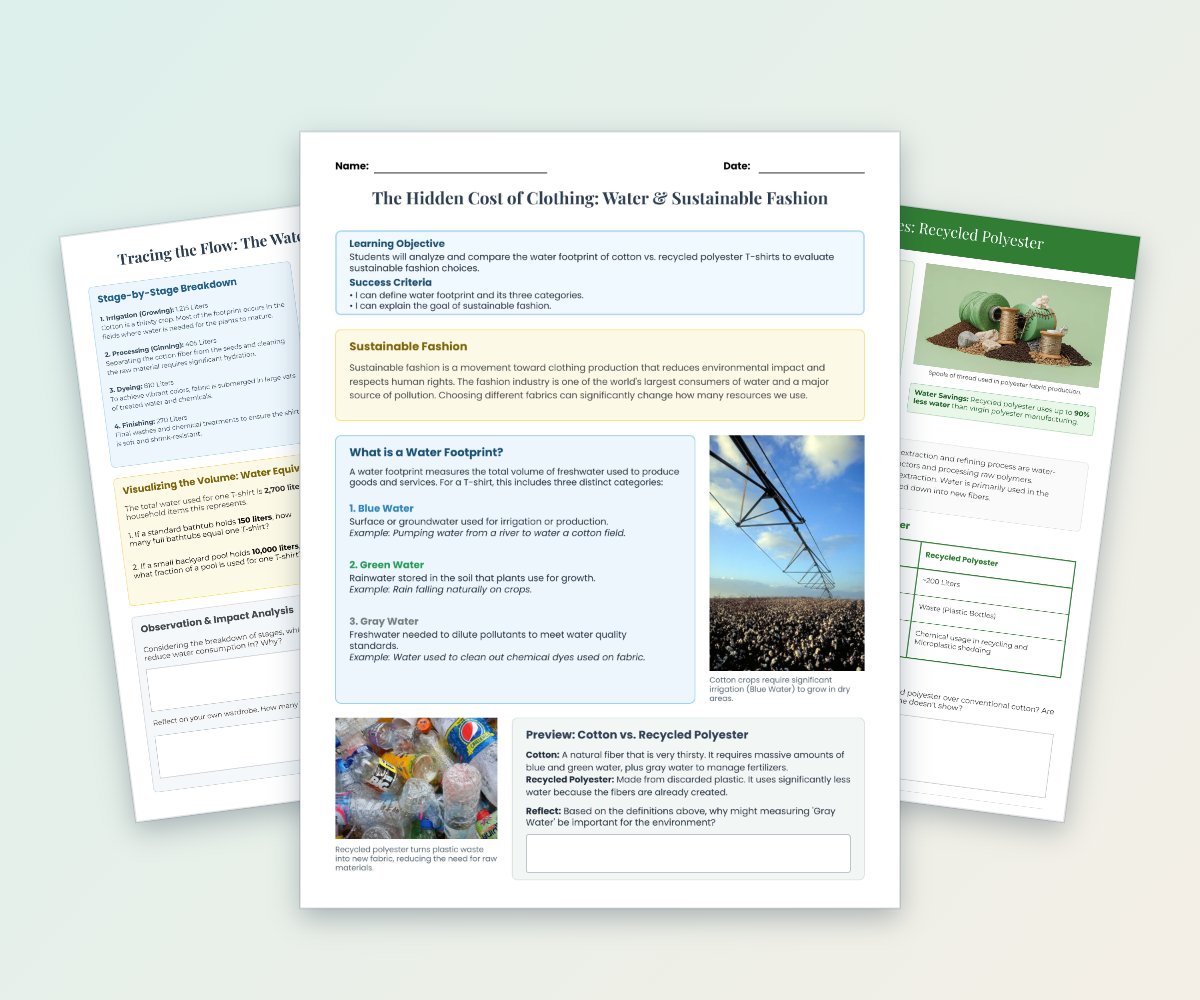
Students learn the three categories of water footprints and examine how cotton and recycled polyester affect water use.
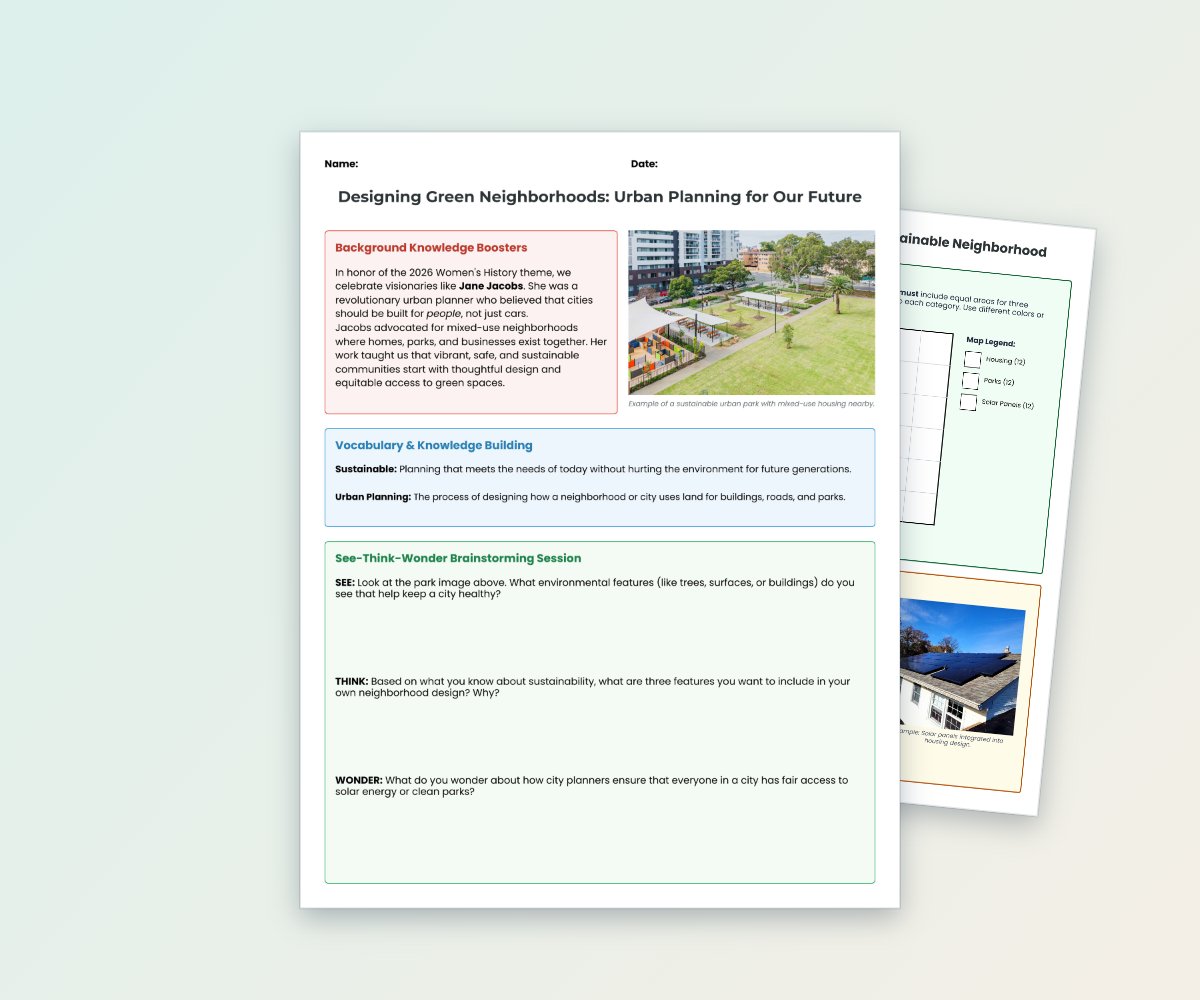
Students explore sustainable urban planning through vocabulary, a See-Think-Wonder brainstorm, and a guided neighborhood mapping task.
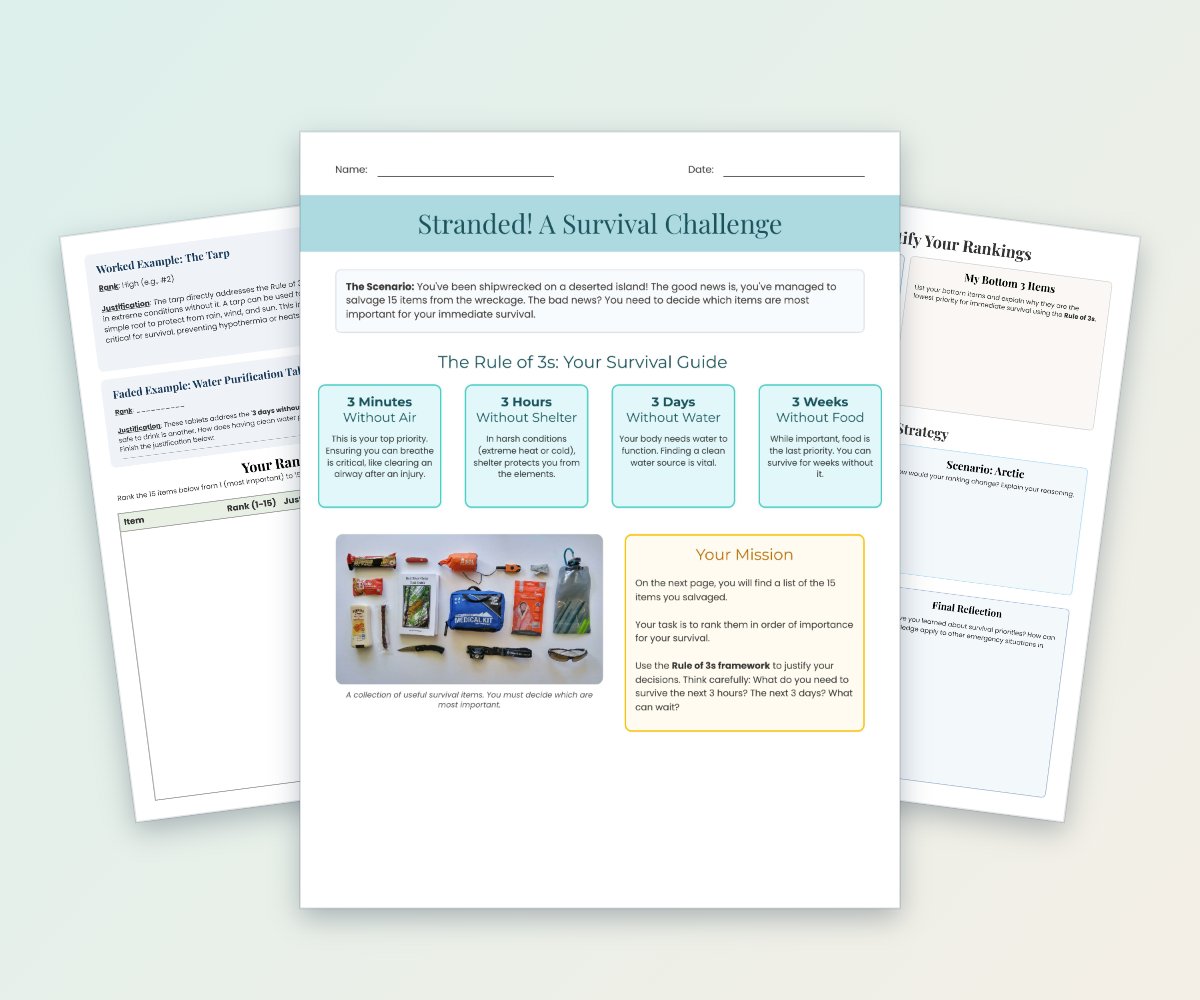
Students rank 15 salvaged items by survival importance using the Rule of 3s for air, shelter, water, and food.
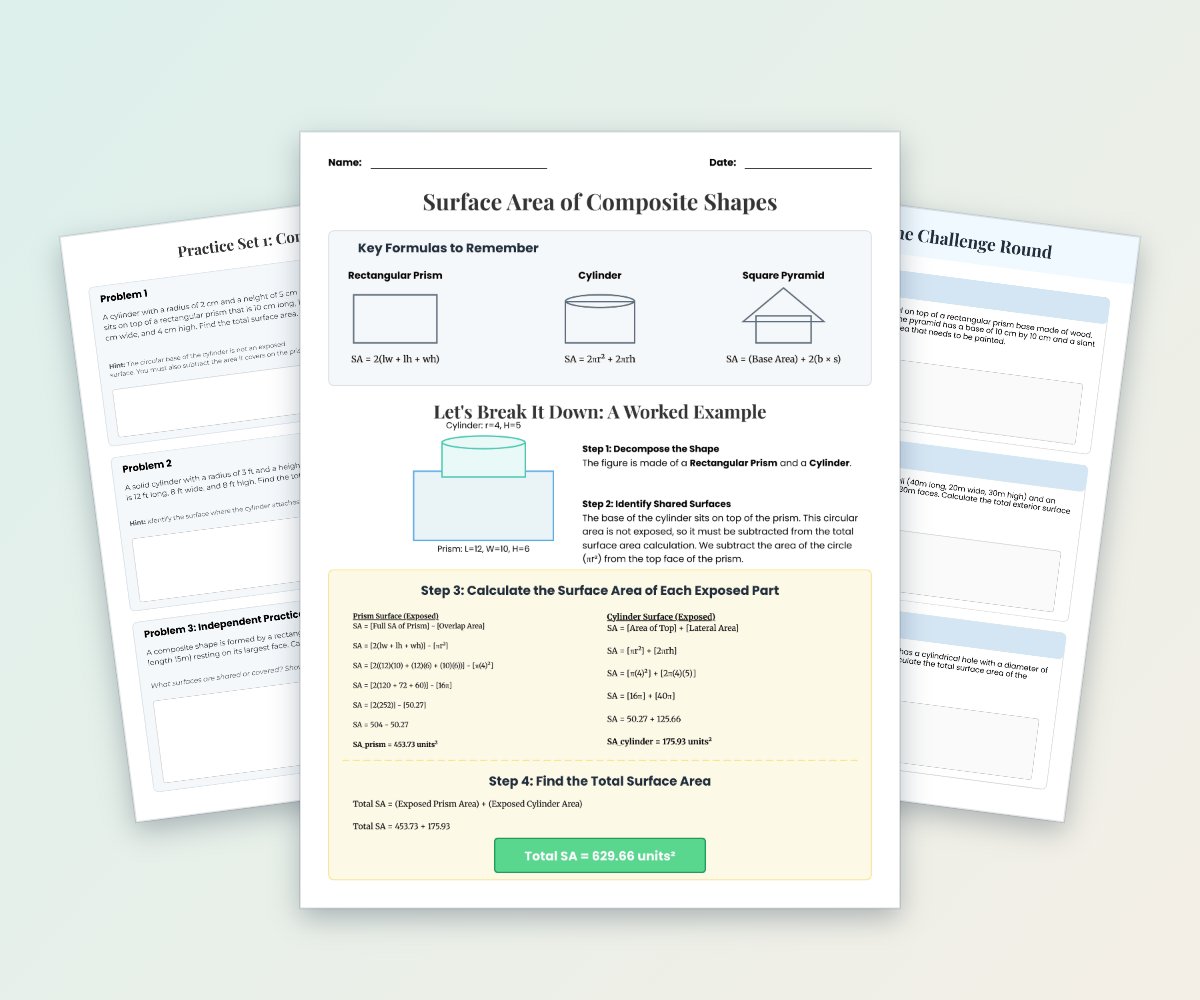
Students learn to decompose composite three-dimensional figures and calculate exposed surface area using rectangular prisms, cylinders, half-cylinders, and pyramids.
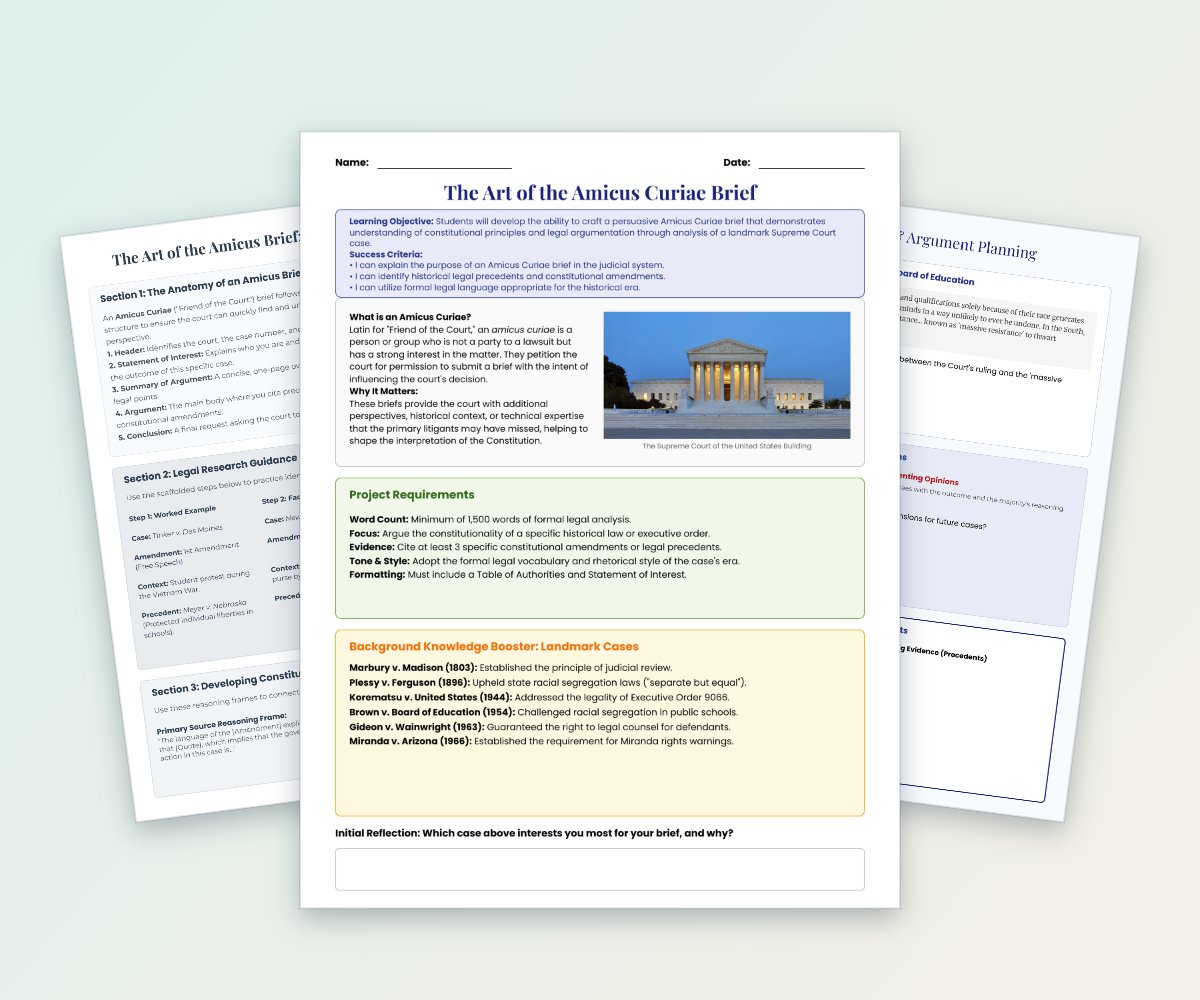
Students research a landmark Supreme Court case or historical law and write a 1,500-word amicus curiae brief.
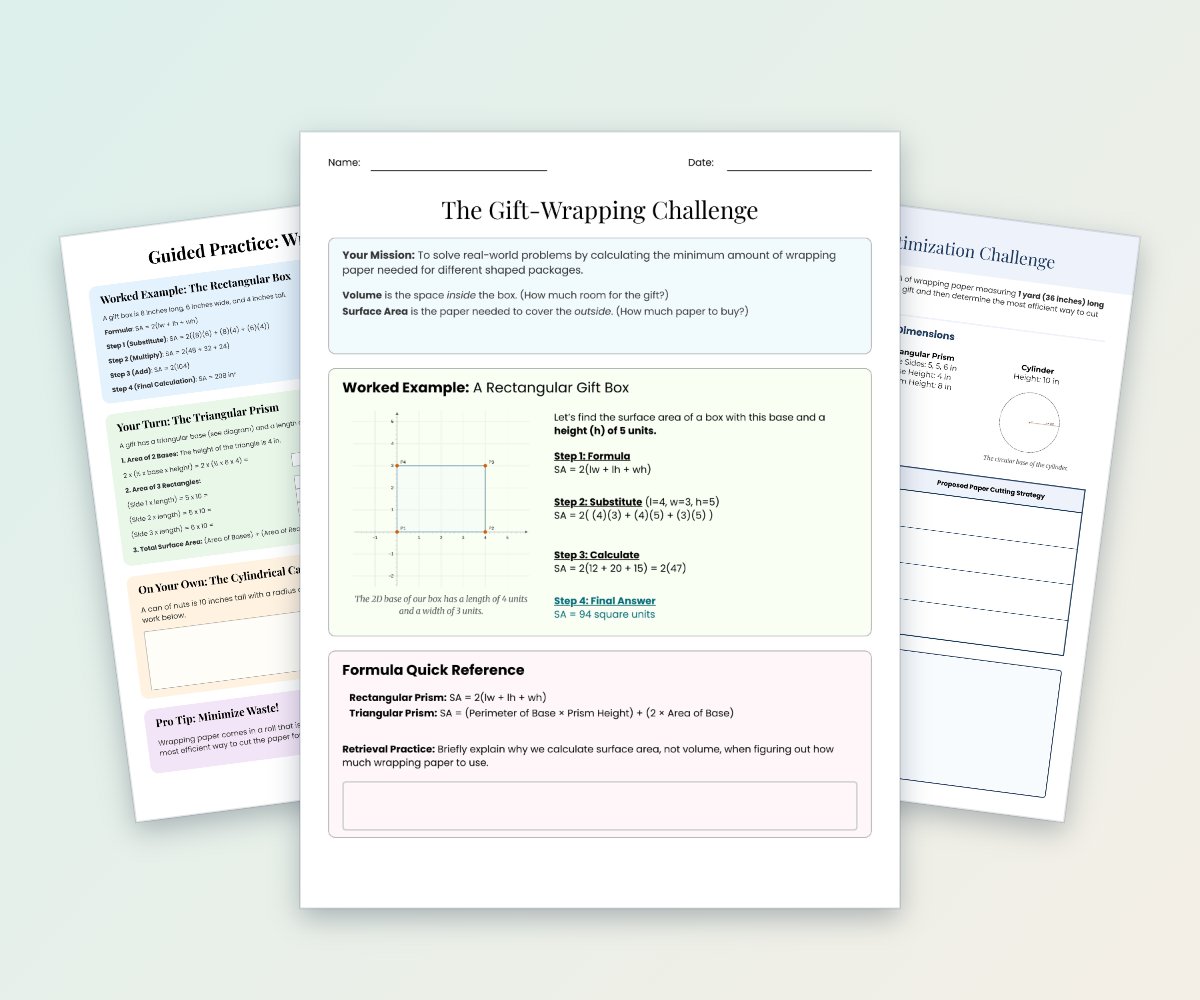
Students calculate the surface area of rectangular prisms, triangular prisms, cubes, and cylinders in a gift-wrapping context.
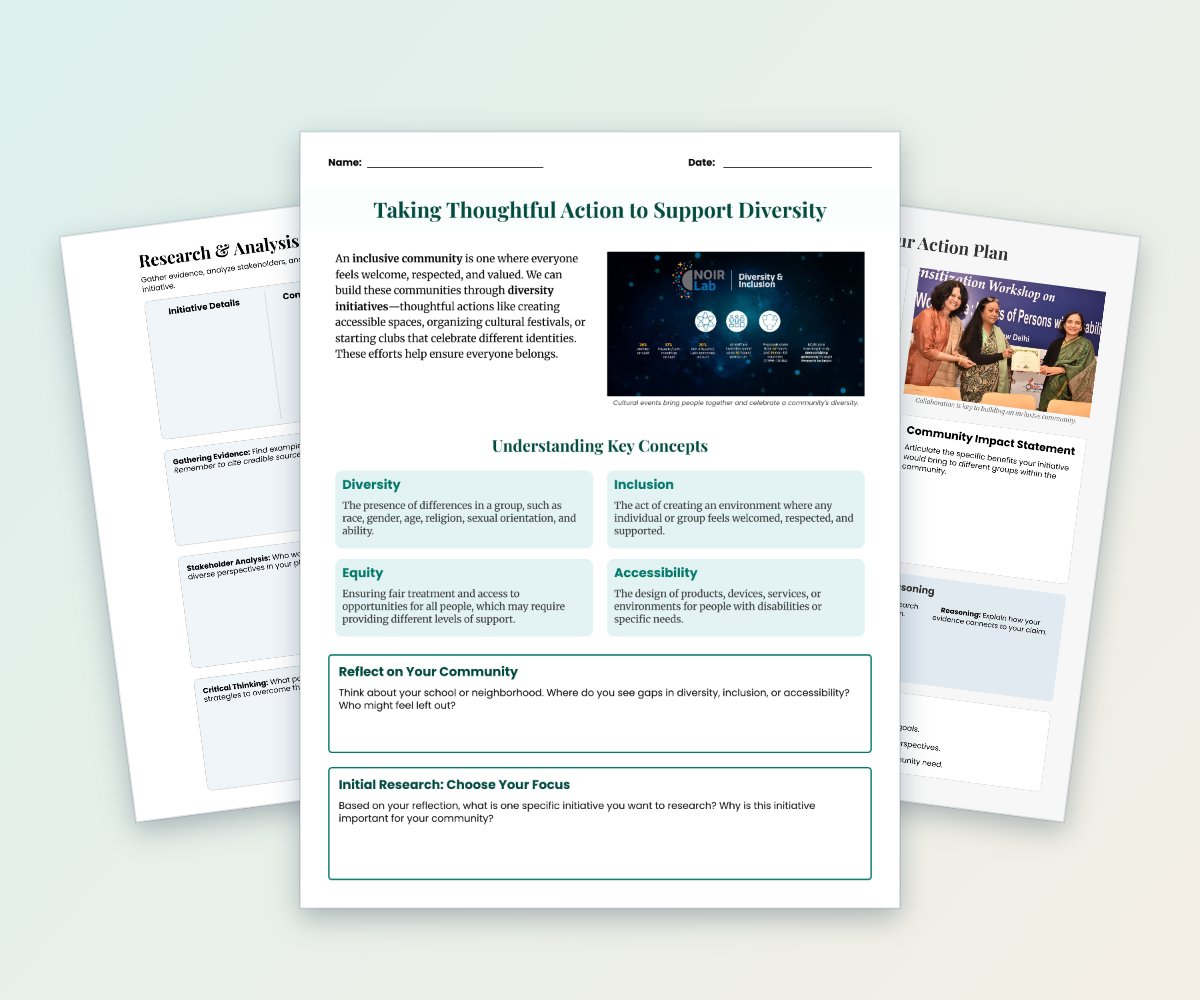
Students reflect on diversity, equity, inclusion, and accessibility in their school or community, then research a specific initiative.
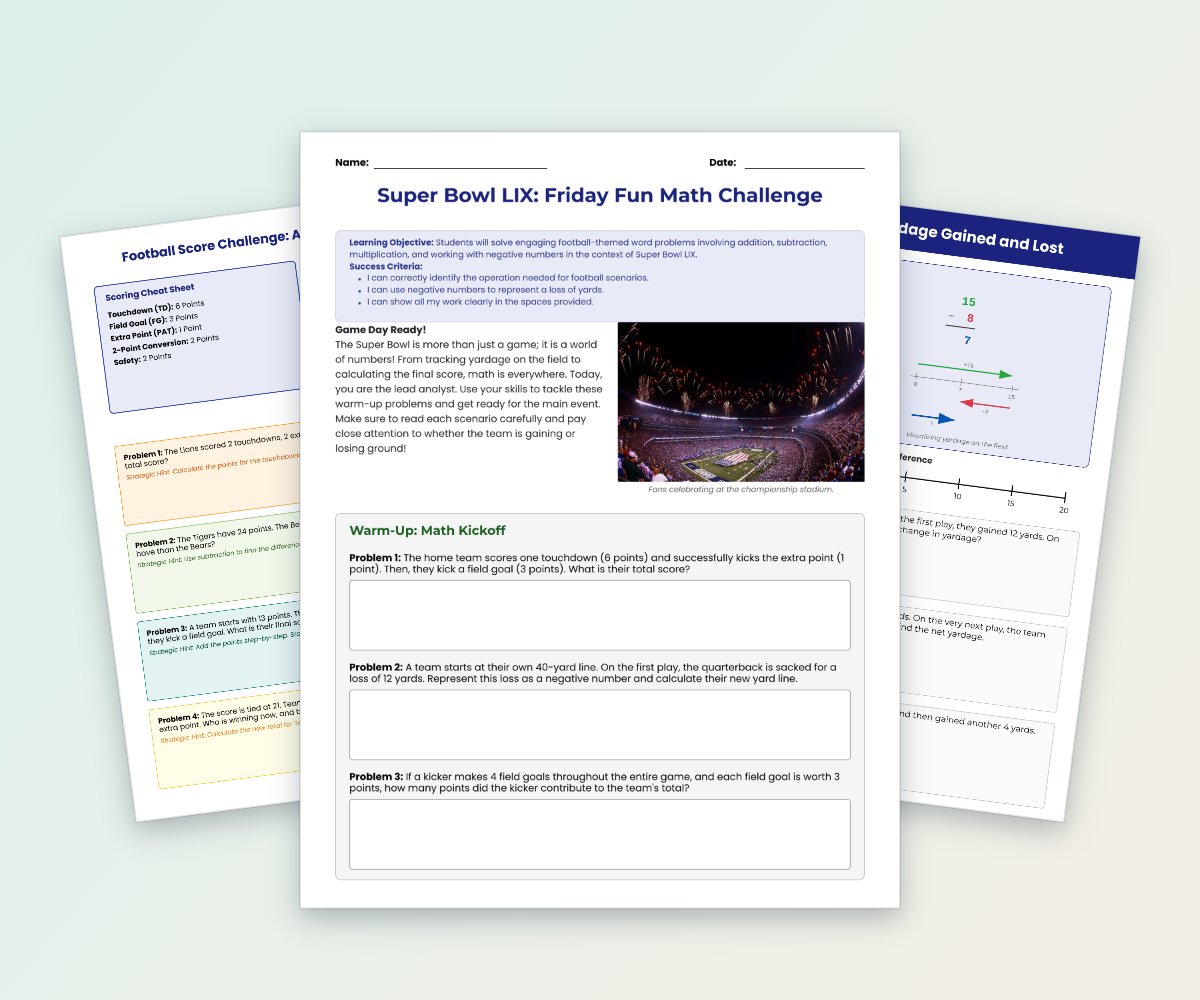
Students solve football-themed word problems involving addition, subtraction, multiplication, scoring, yardage, and negative numbers.
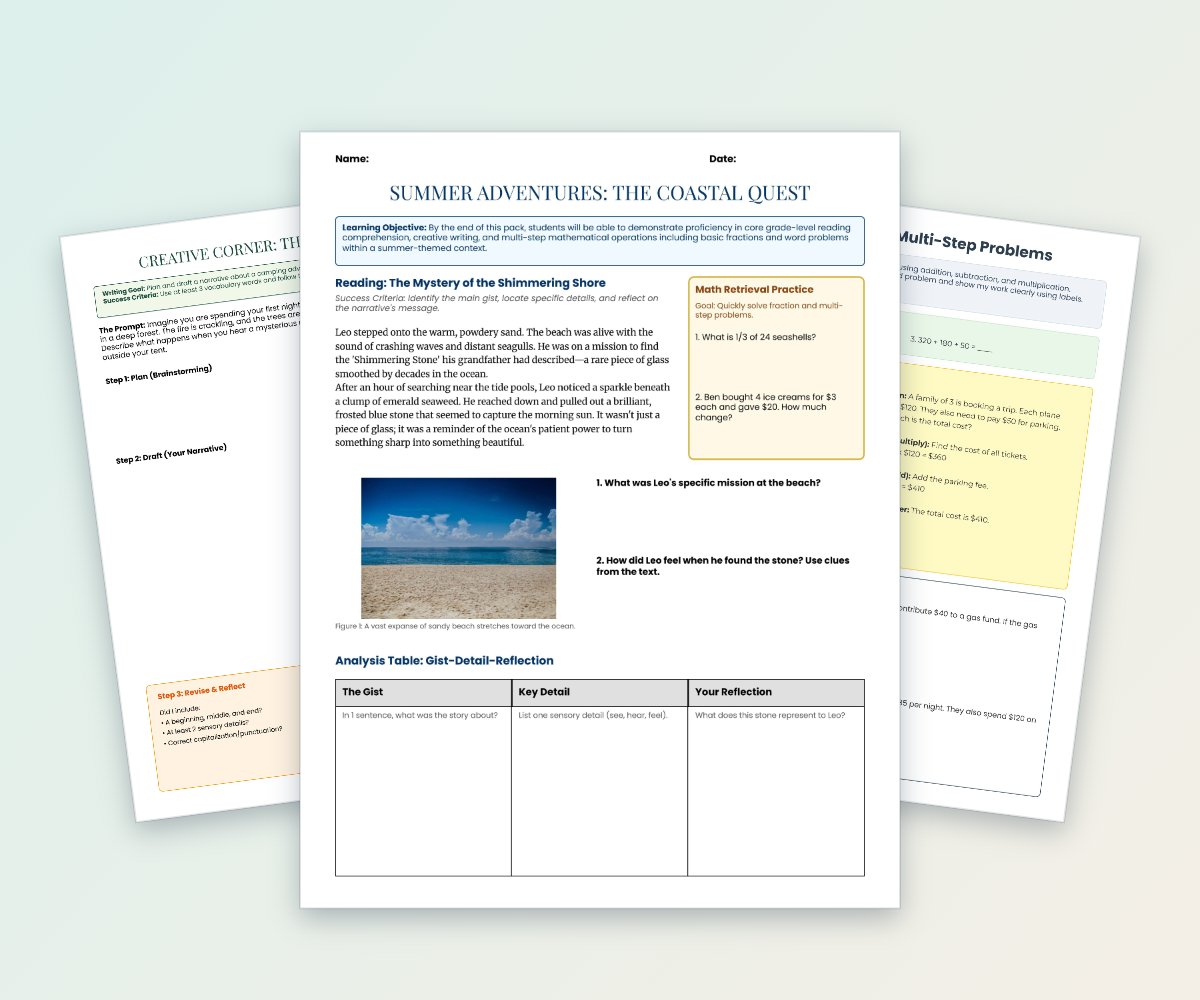
This summer-themed review pack combines a narrative reading passage, comprehension questions, creative writing planning and drafting, fraction practice, and multi-step money problems.
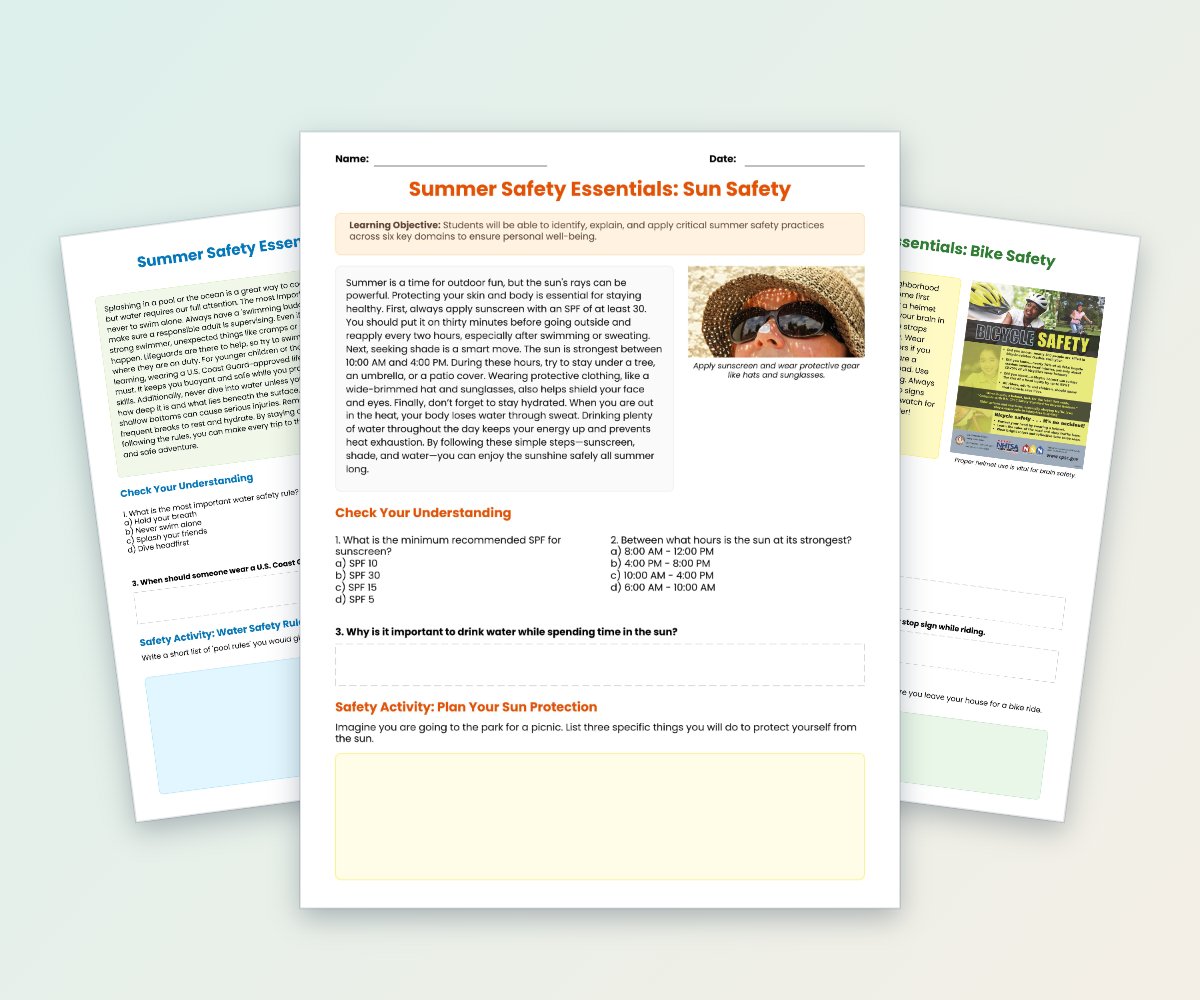
This six-page pack combines informational reading passages, comprehension questions, and writing activities about sun, water, and summer safety.
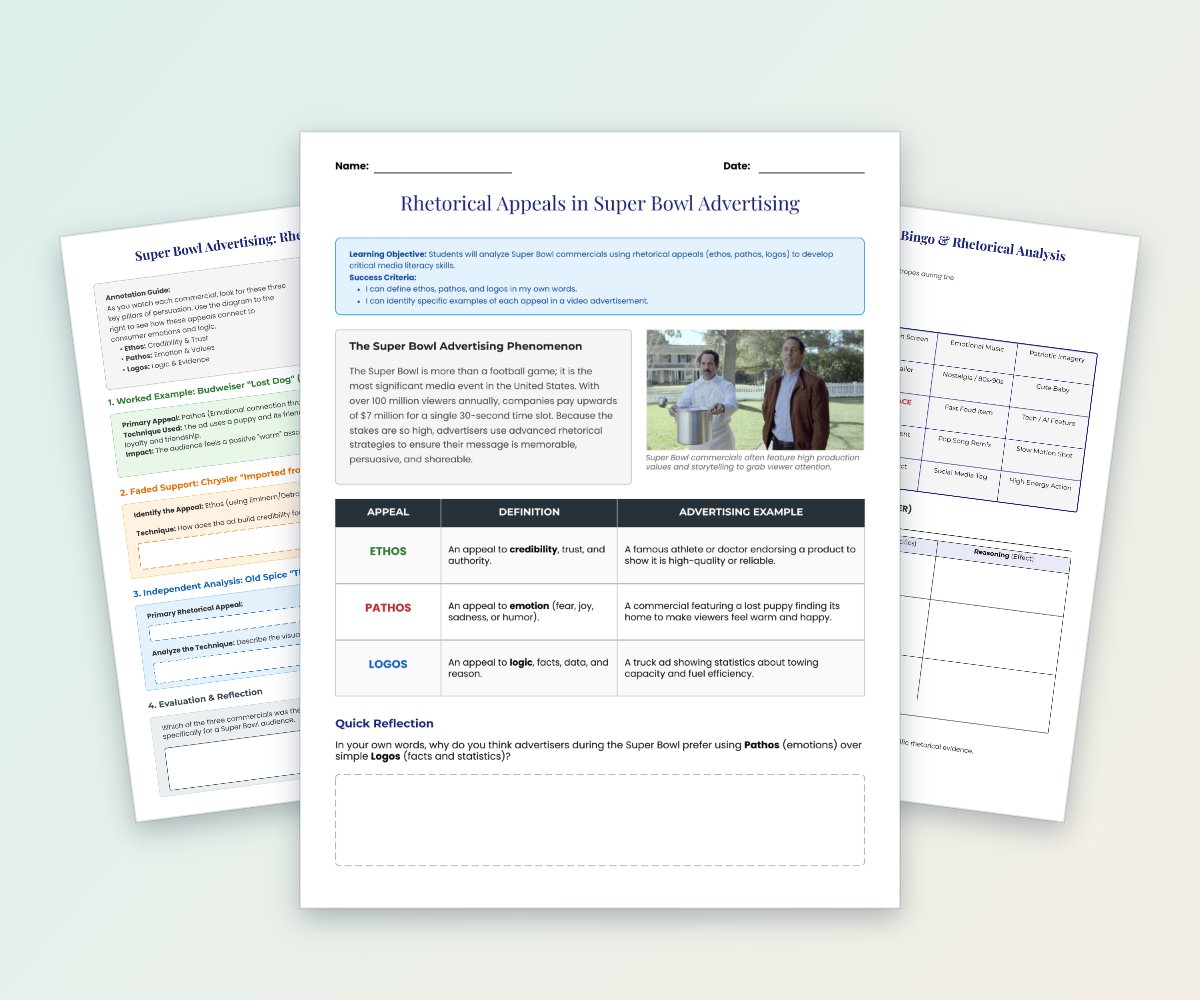
Students analyze Super Bowl advertisements through ethos, pathos, and logos.
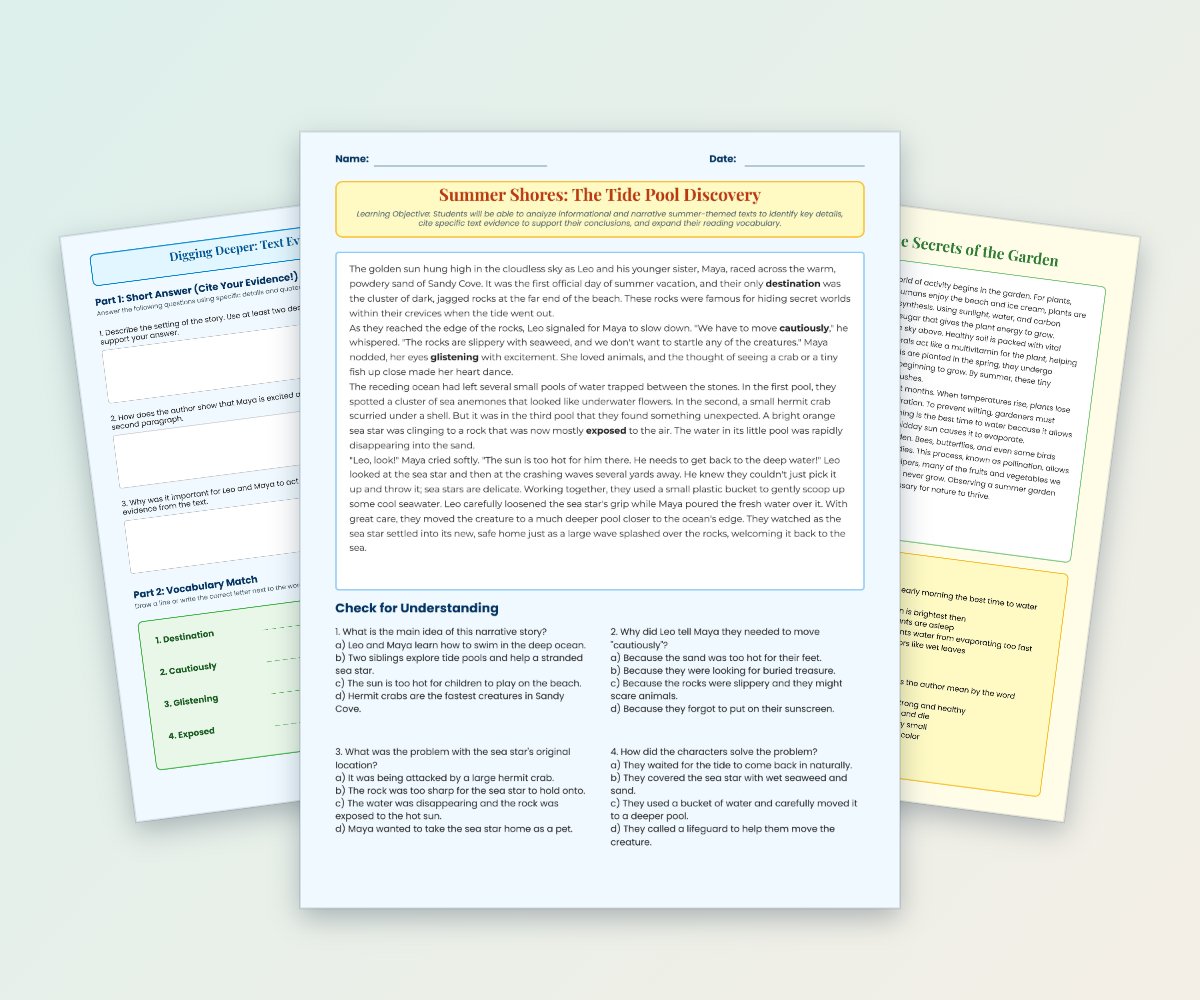
This summer-themed reading comprehension packet features a narrative about siblings exploring tide pools and helping a sea star.
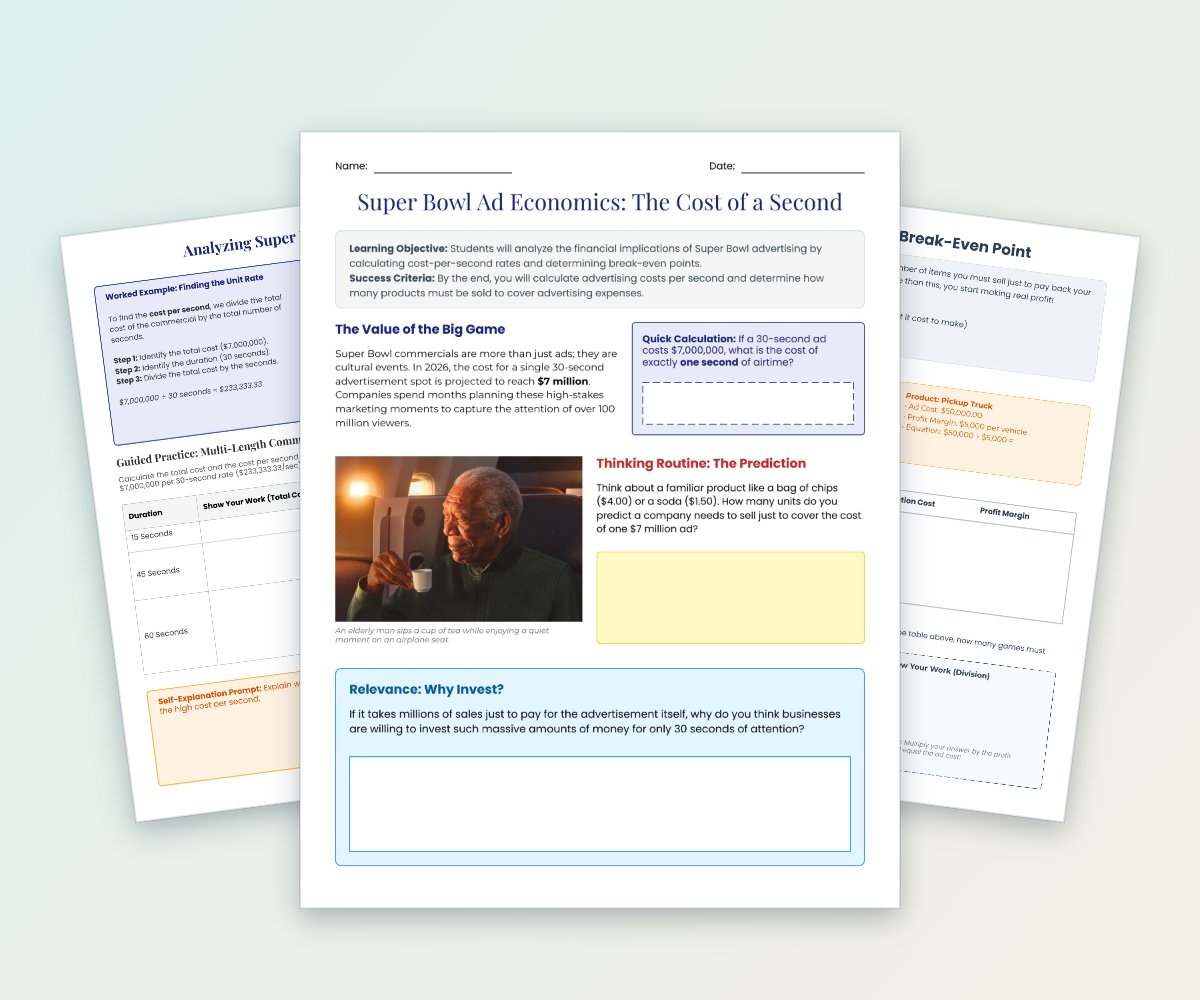
Students analyze the cost of Super Bowl advertising by calculating cost per second, comparing commercial lengths, and determining break-even sales.
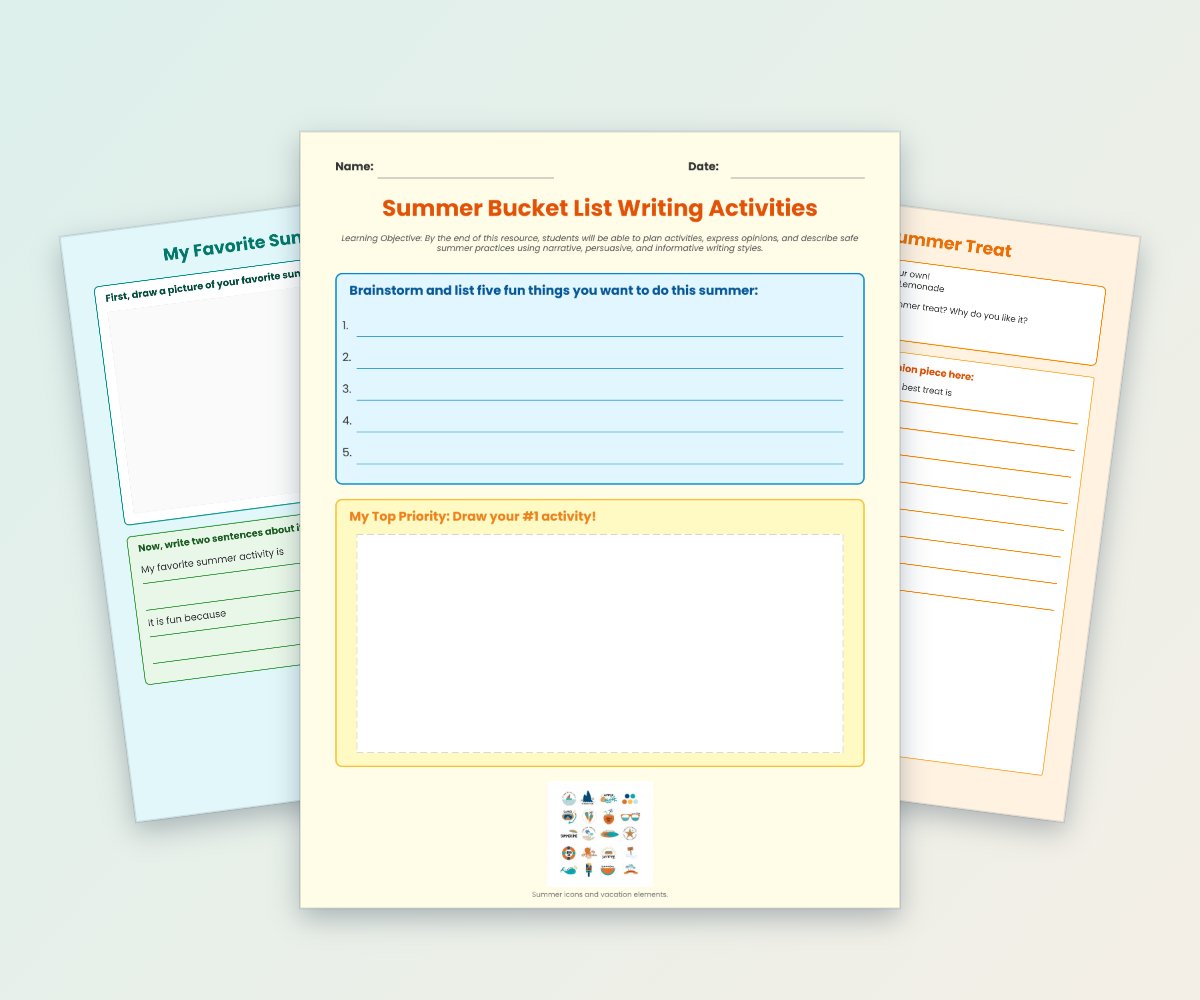
A six-page summer writing activity pack featuring brainstorming, opinion writing, sequencing, personal goals, and sun-safety prompts.
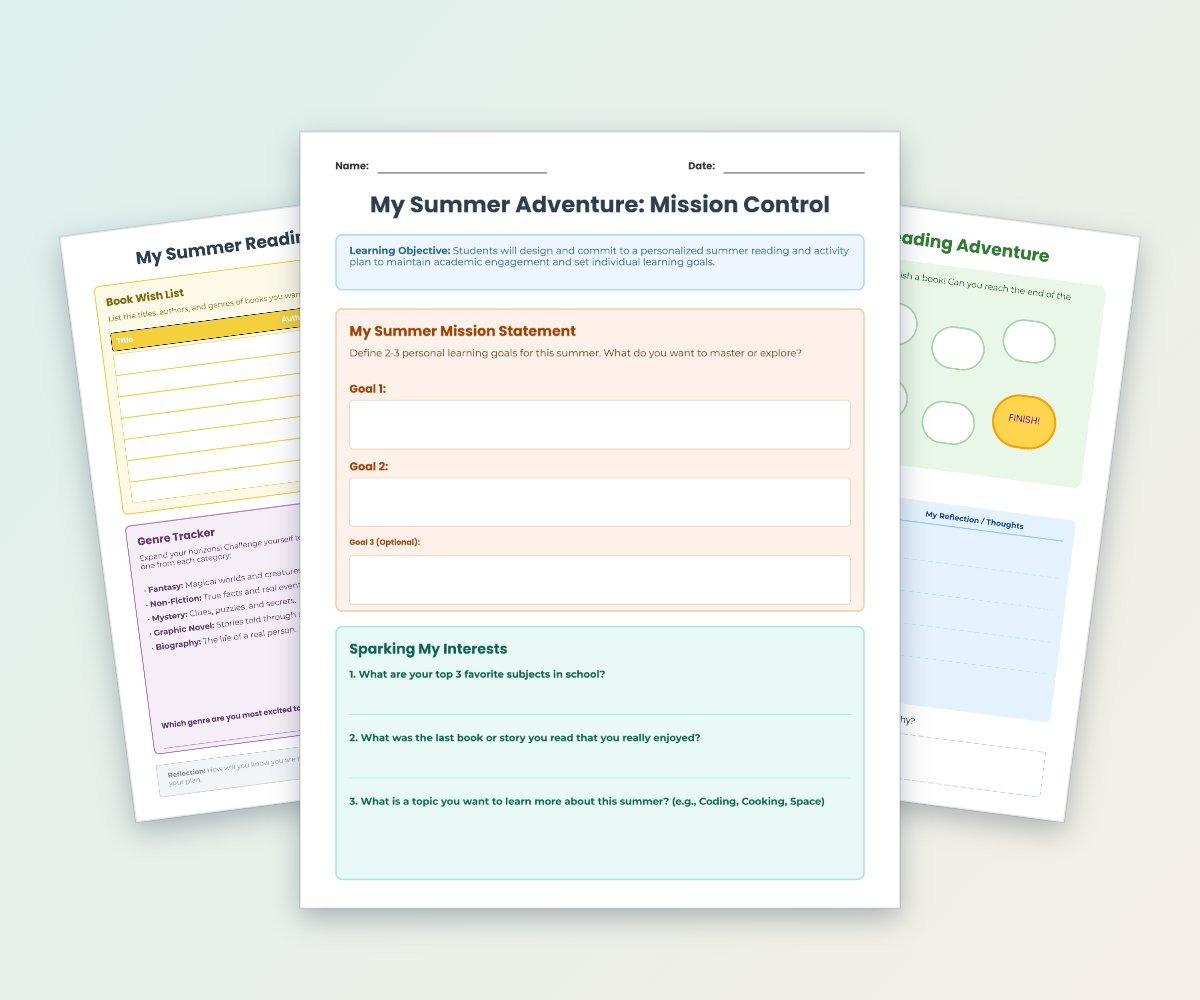
This six-page printable helps students set summer learning goals, create a reading plan, track genres and books, and reflect on progress.
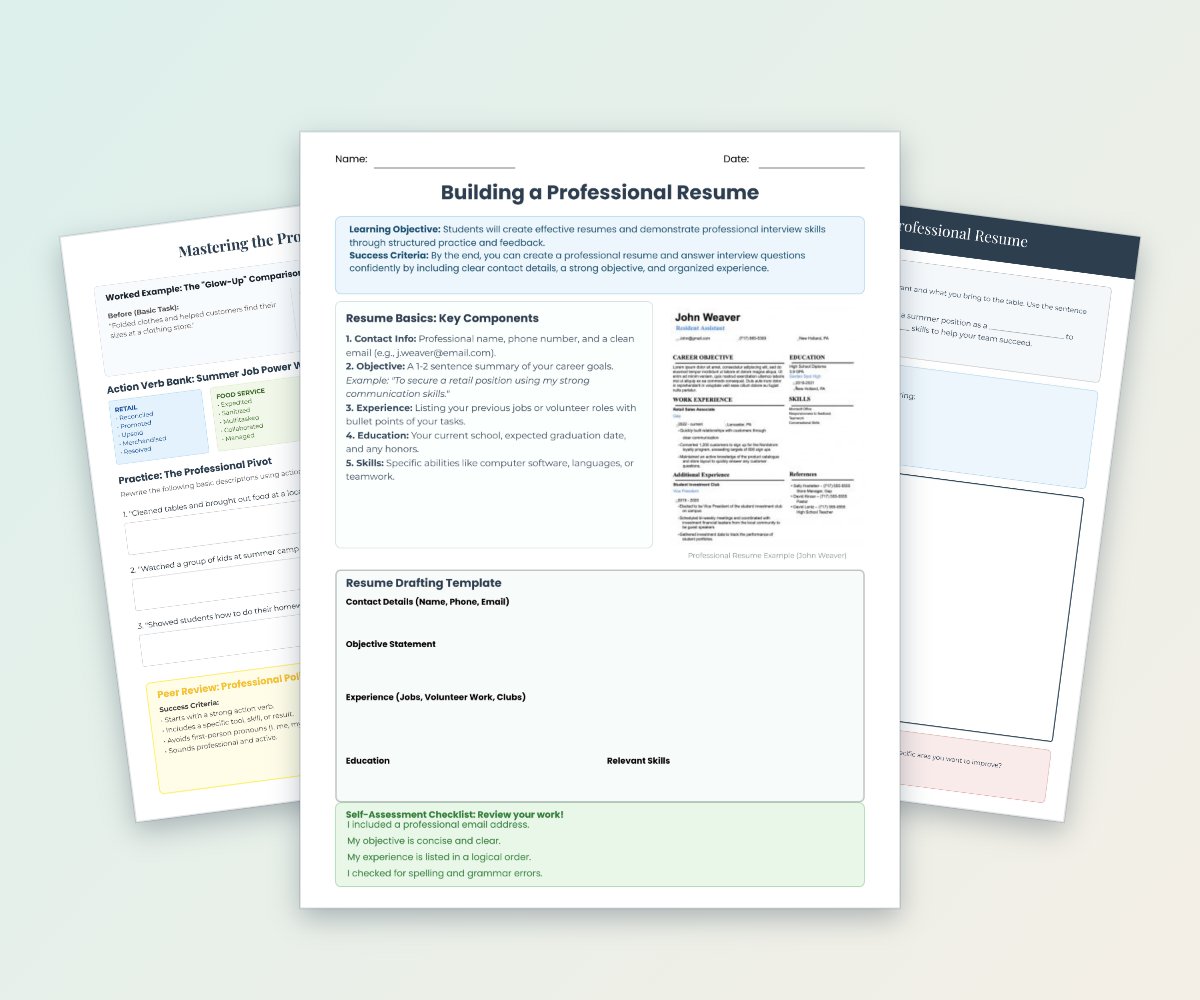
Students build a professional resume, revise basic job descriptions with strong action verbs, and practice workplace communication.
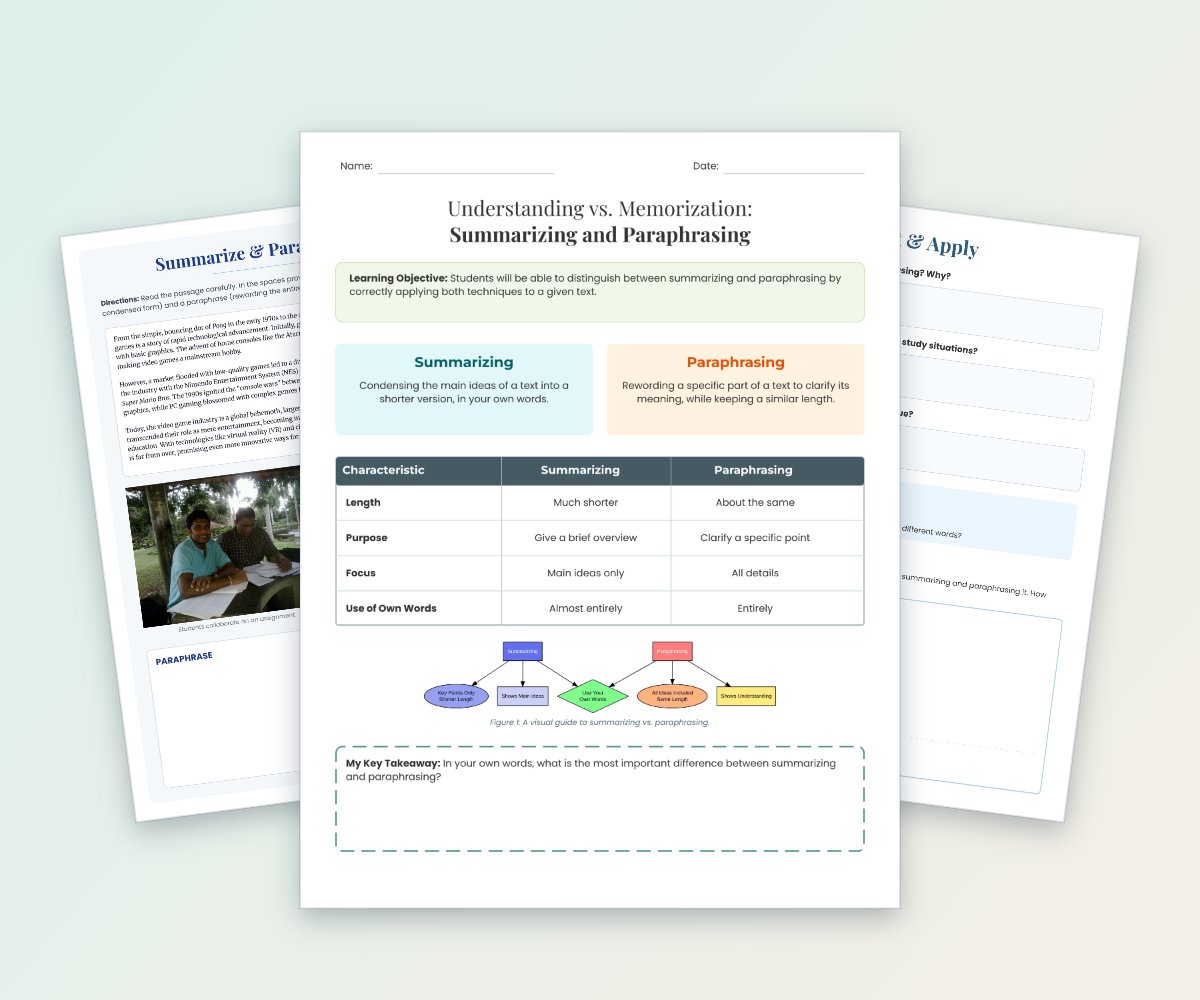
This three-page worksheet teaches students to distinguish between summarizing and paraphrasing through definitions, comparisons, reflection, and guided practice.
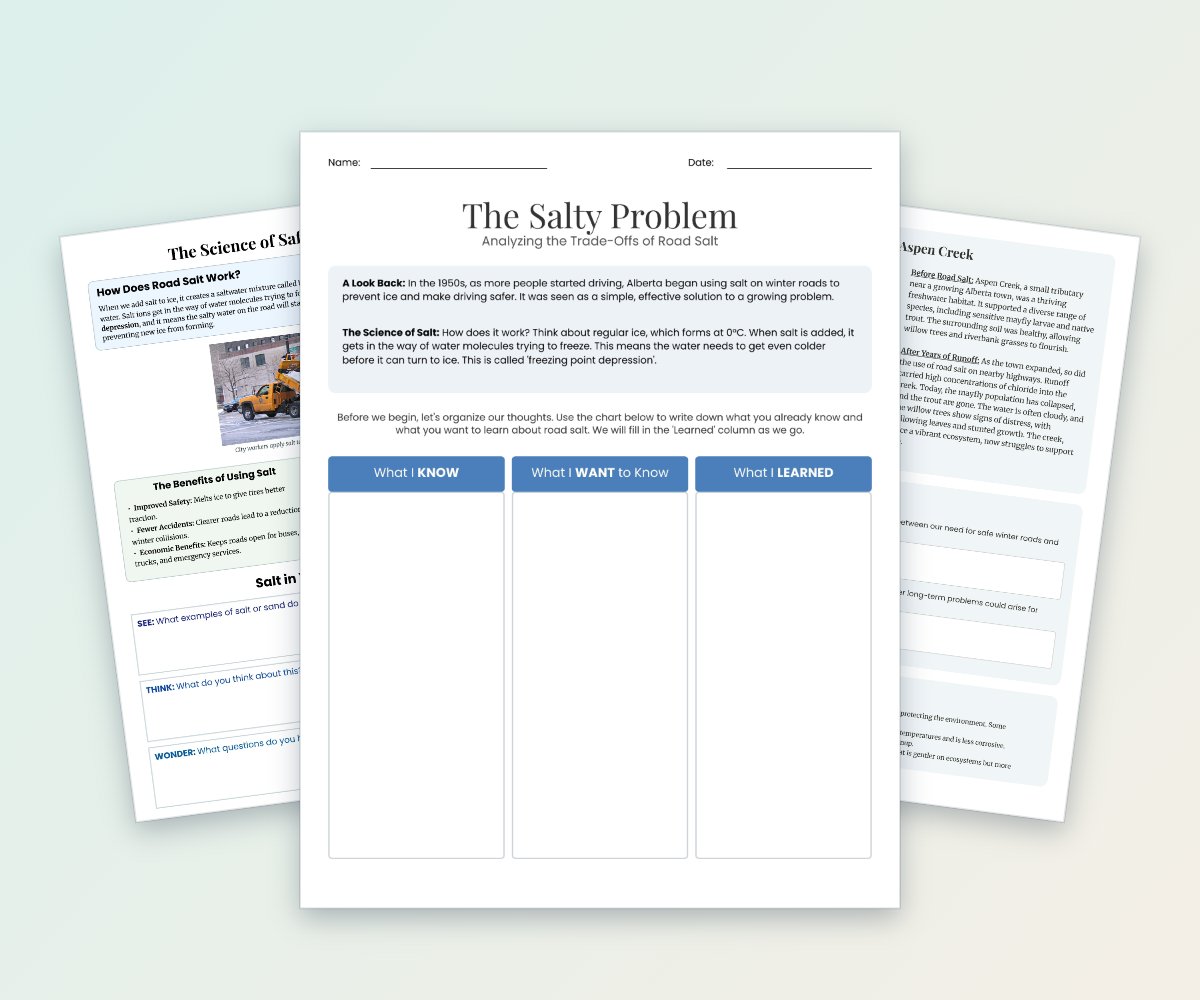
Students investigate how road salt lowers water’s freezing point and improves winter road safety.
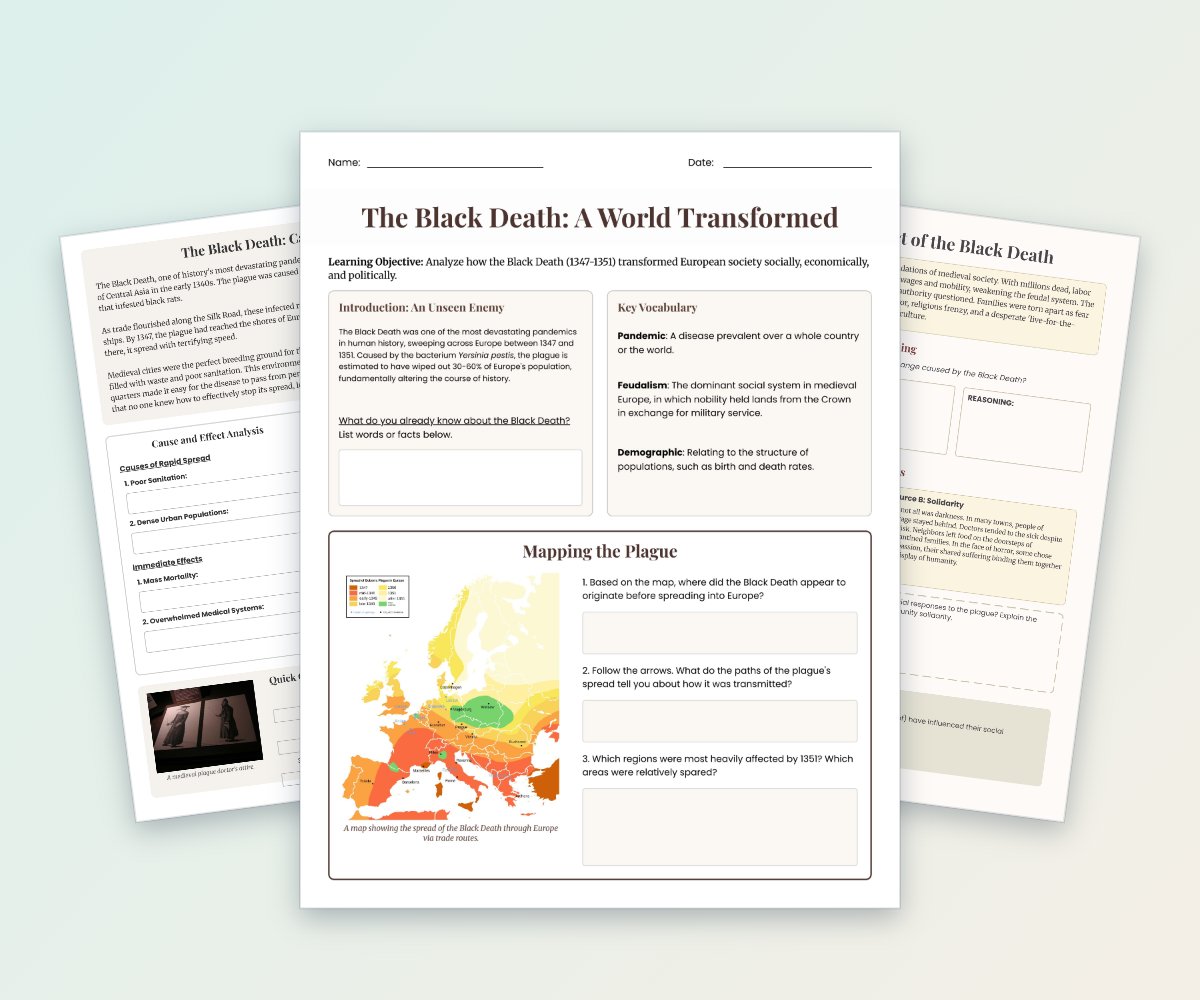
This four-page worksheet explores how the Black Death spread through Europe and transformed medieval society.
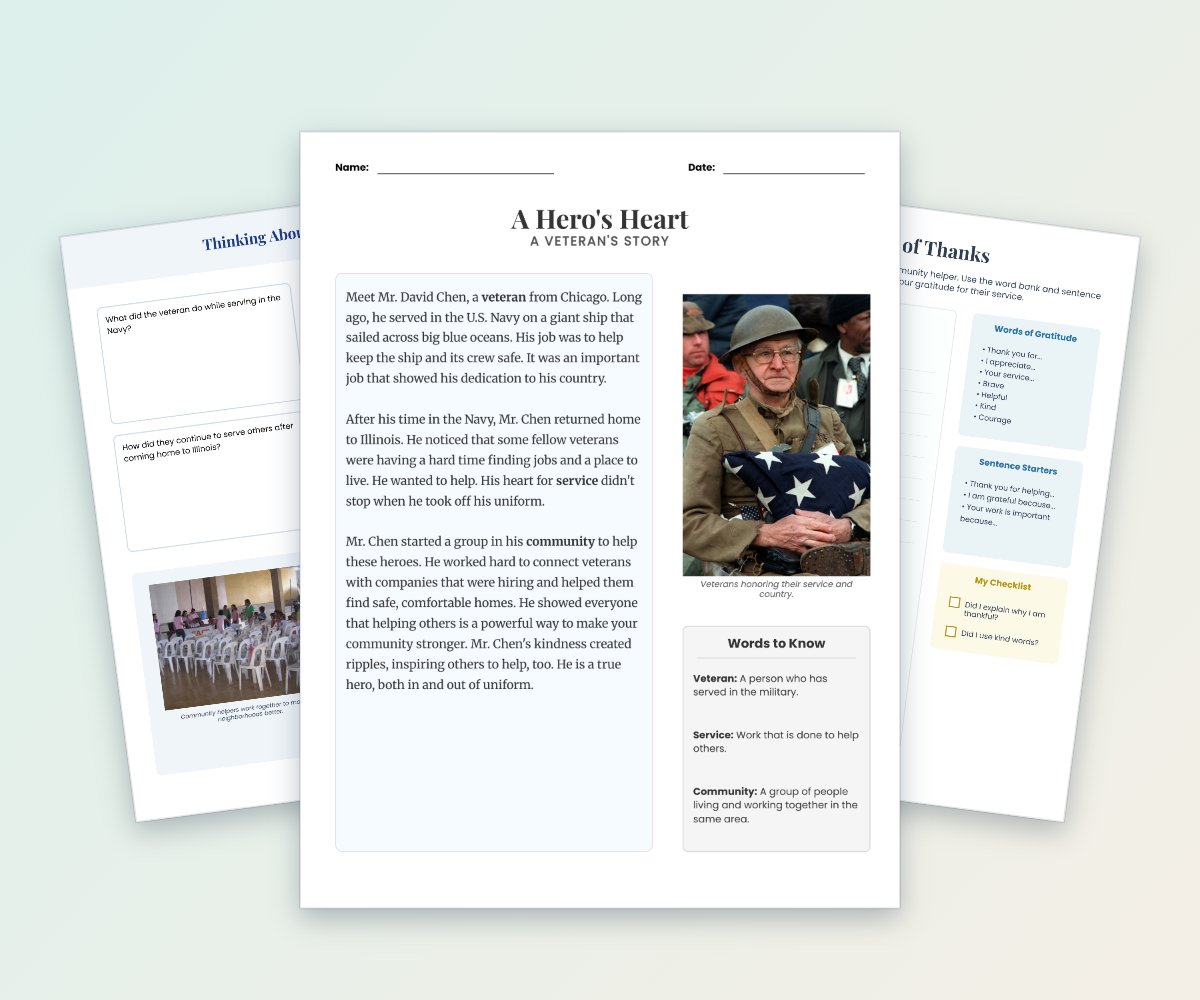
Students read about a veteran’s military and community service, learn key vocabulary, and answer comprehension questions.
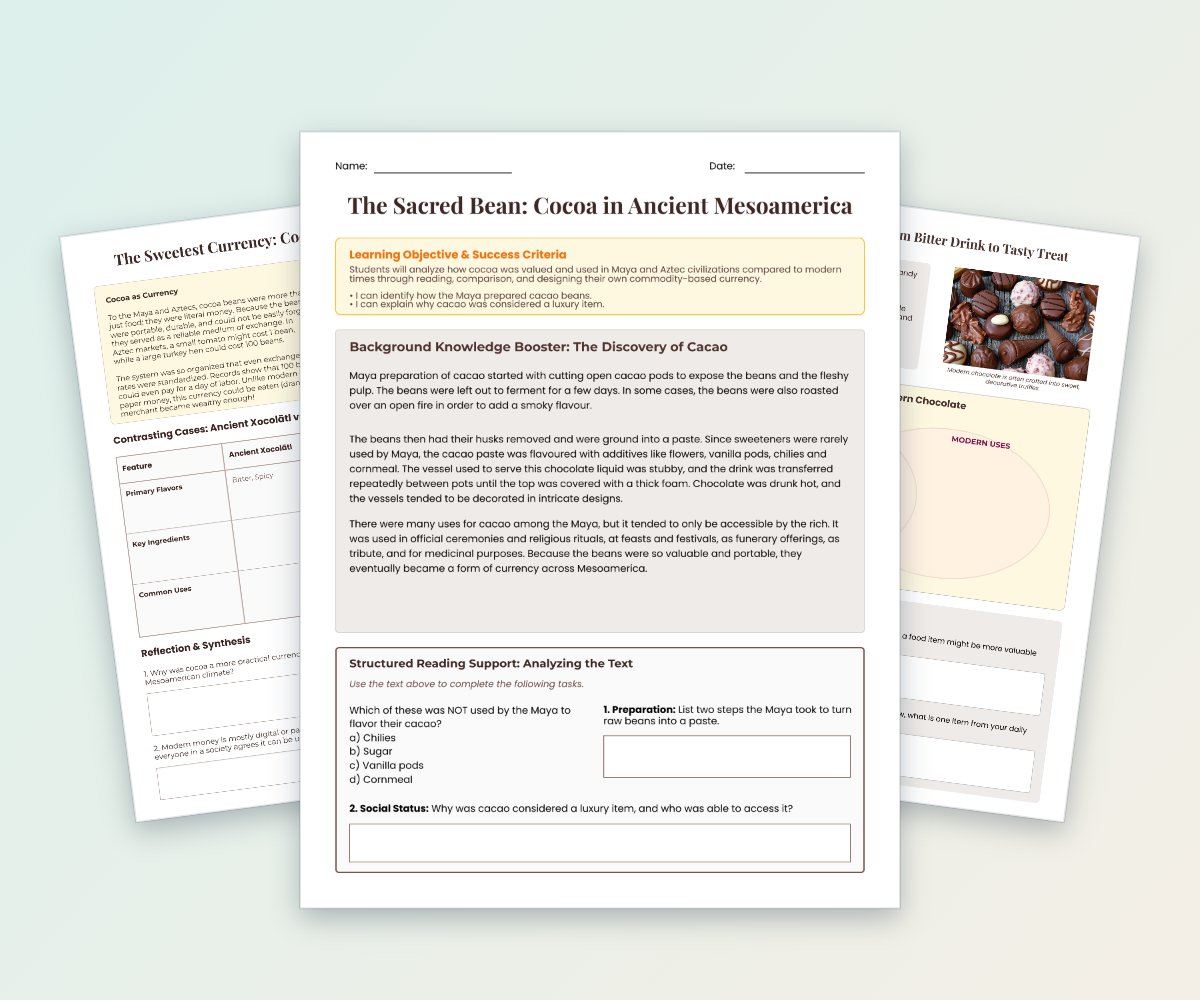
Students explore how the Maya and Aztecs prepared, valued, and used cacao, including its role as a luxury item and currency.
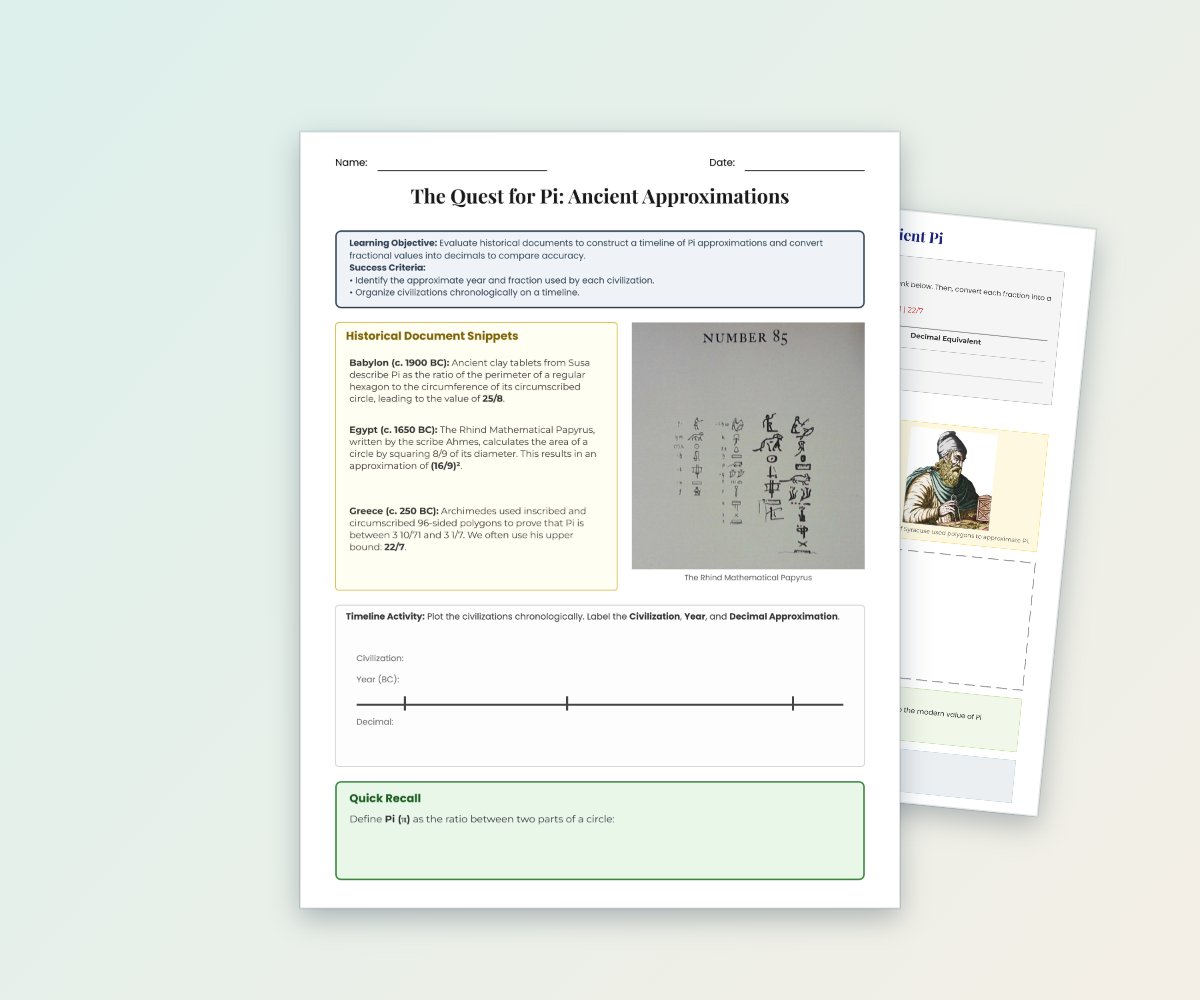
Students examine historical approximations of pi from Babylon, Egypt, and Greece, then organize them chronologically on a timeline.
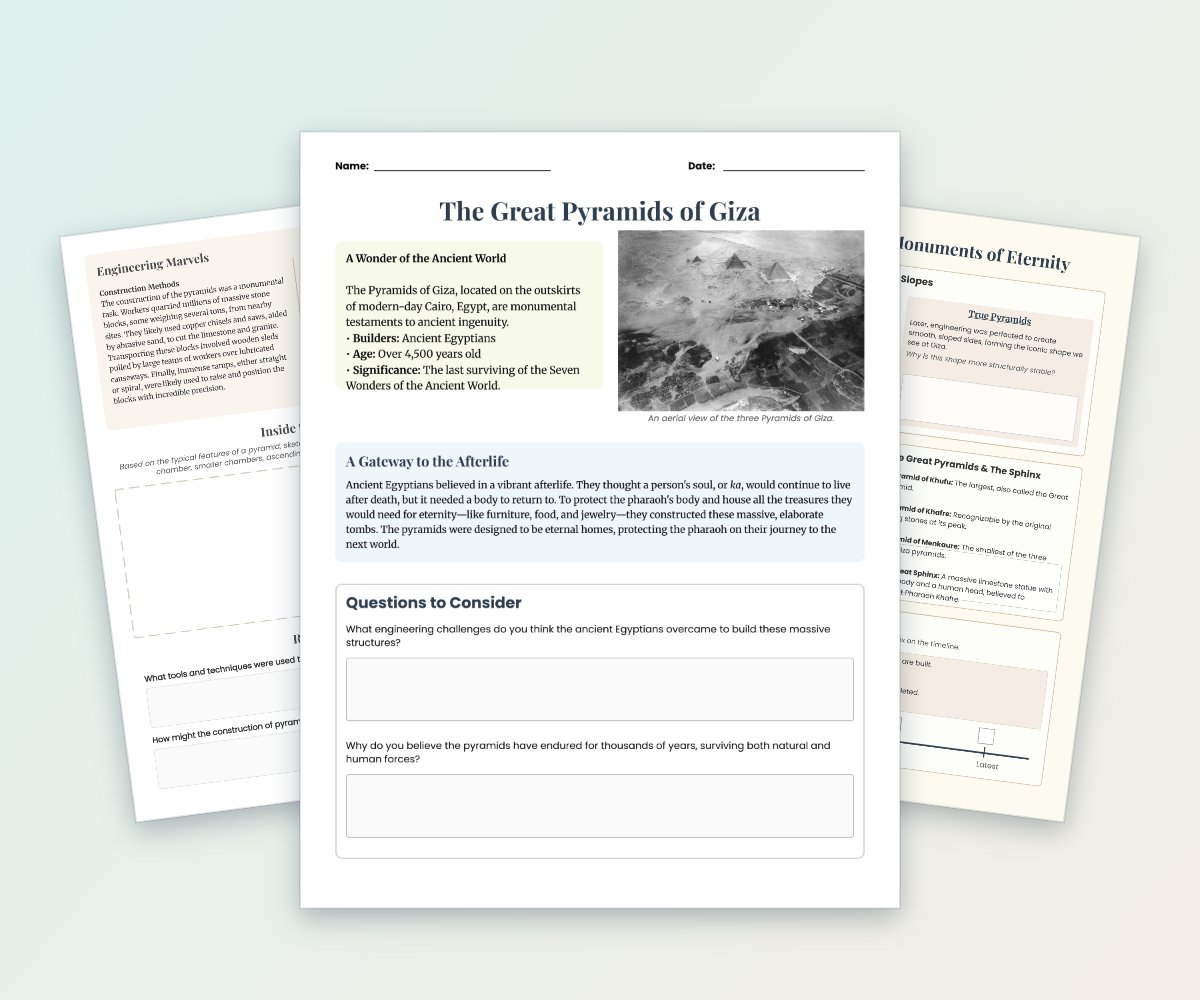
Students learn about the purpose, construction methods, engineering, and cultural significance of the Great Pyramids of Giza.
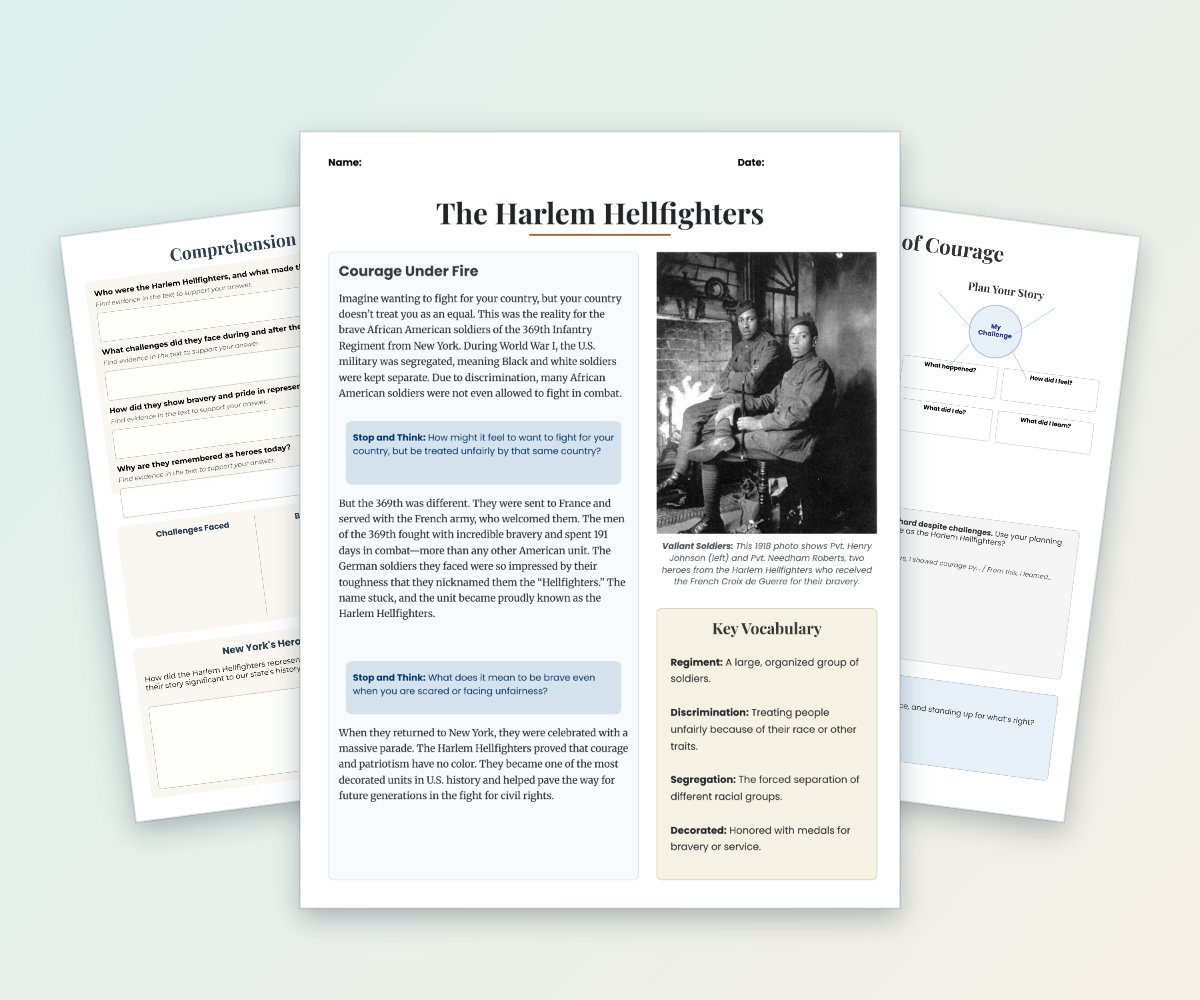
Students read about the 369th Infantry Regiment, known as the Harlem Hellfighters, and examine their bravery, discrimination, military service, and impact on civil rights.
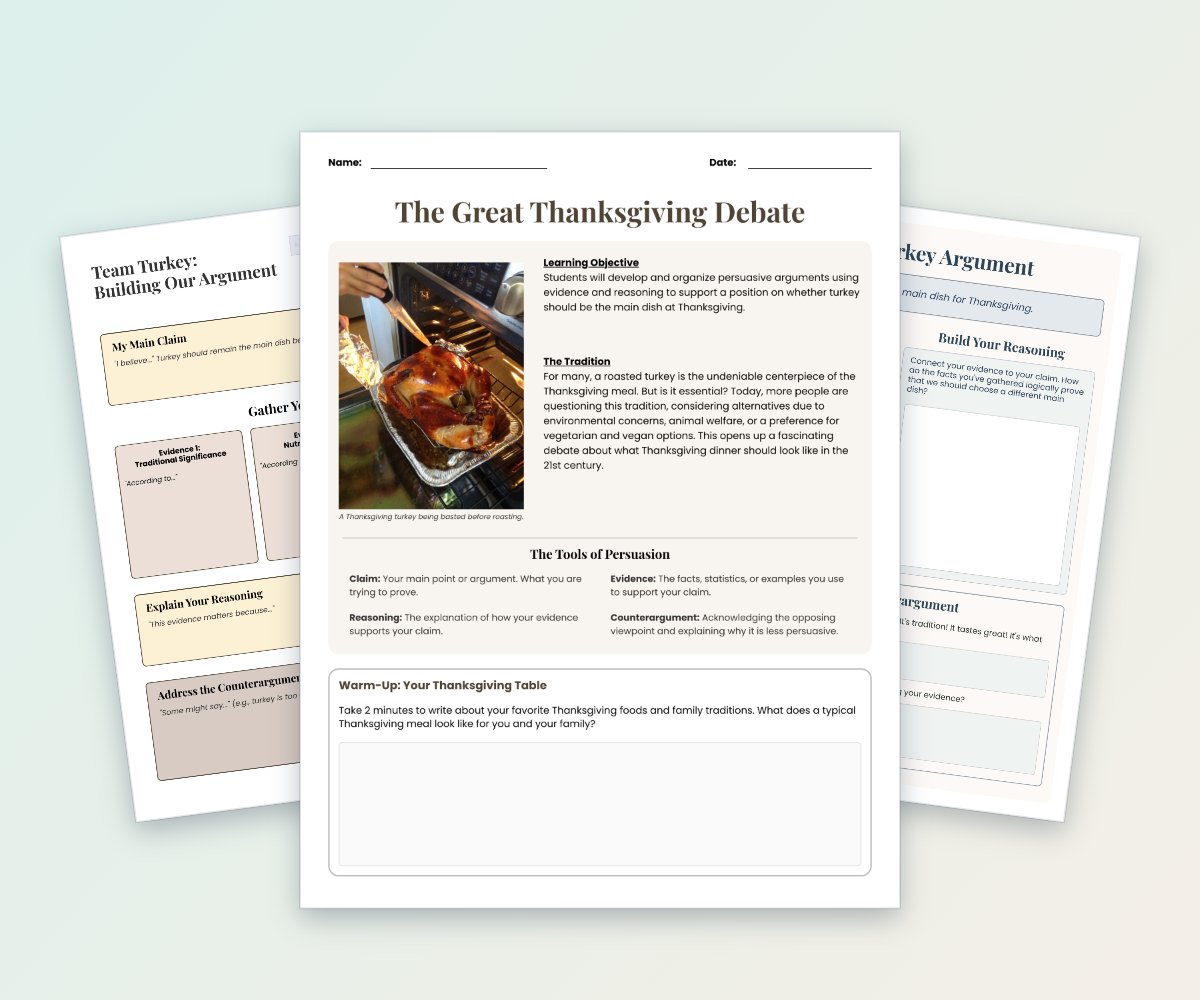
Students debate whether turkey should remain the main Thanksgiving dish while developing claims, gathering evidence, explaining reasoning, and addressing counterarguments.
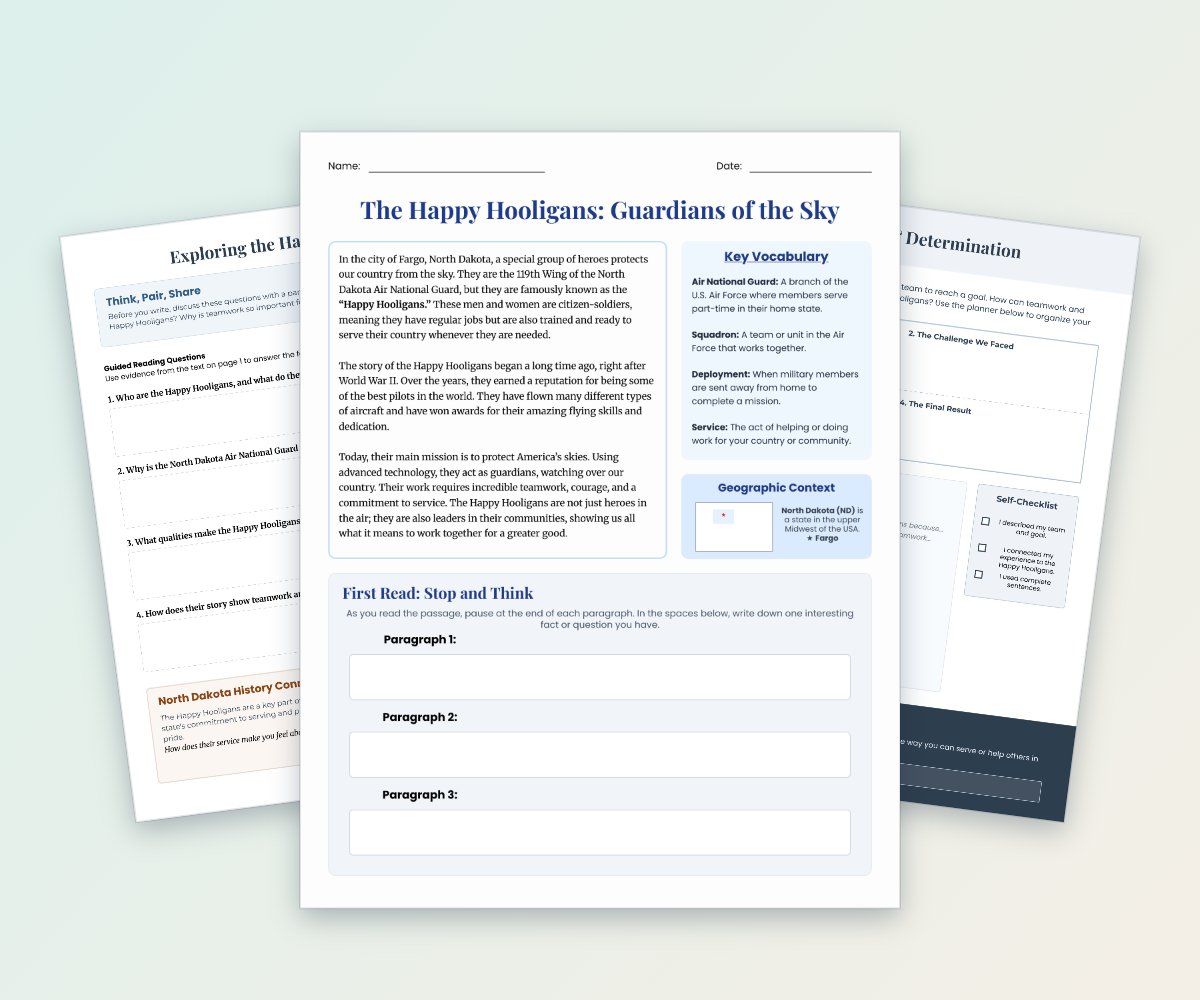
Students read an informational passage about the 119th Wing of the North Dakota Air National Guard, known as the Happy Hooligans.
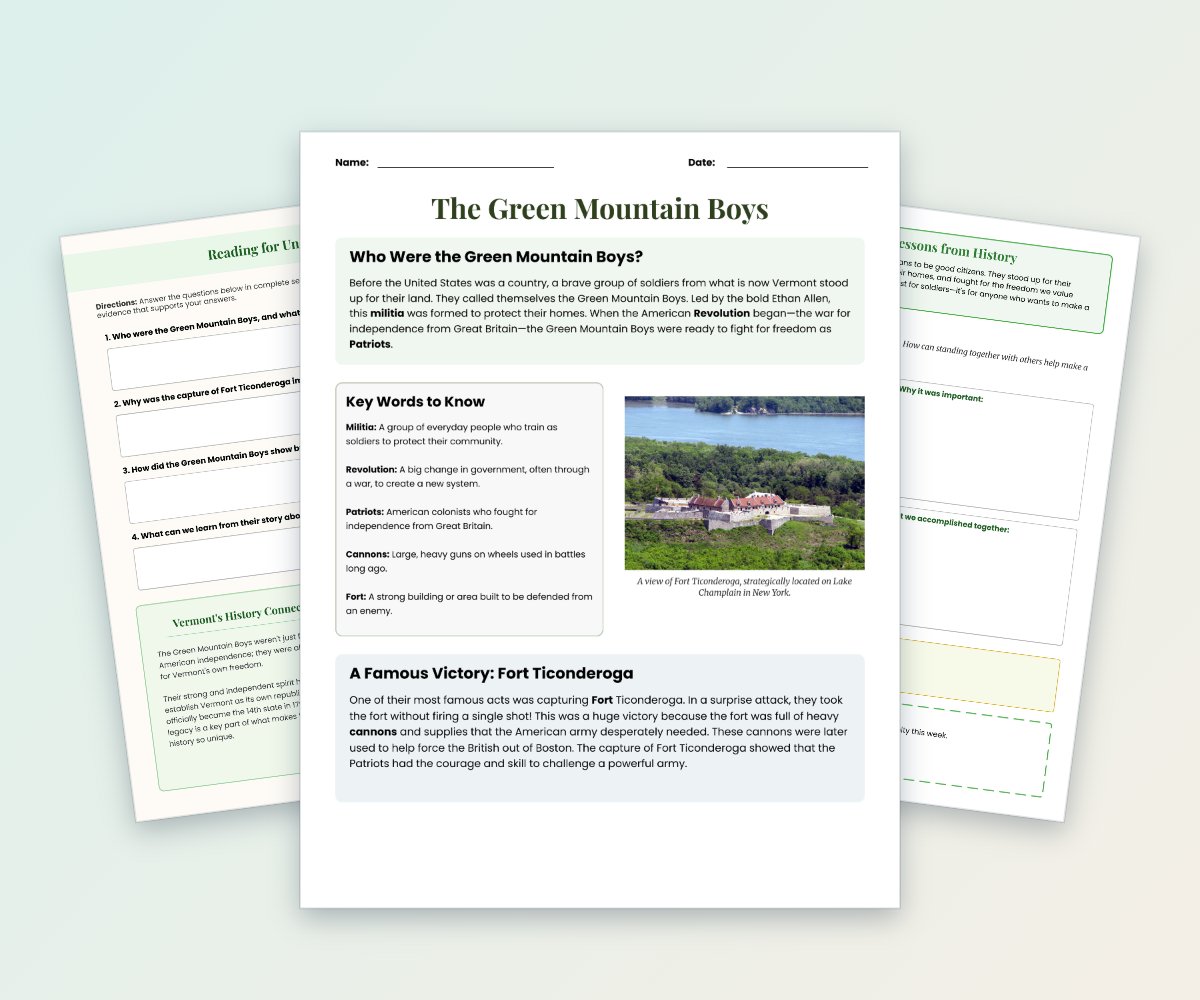
This three-page resource introduces the Green Mountain Boys, Ethan Allen, and the capture of Fort Ticonderoga.
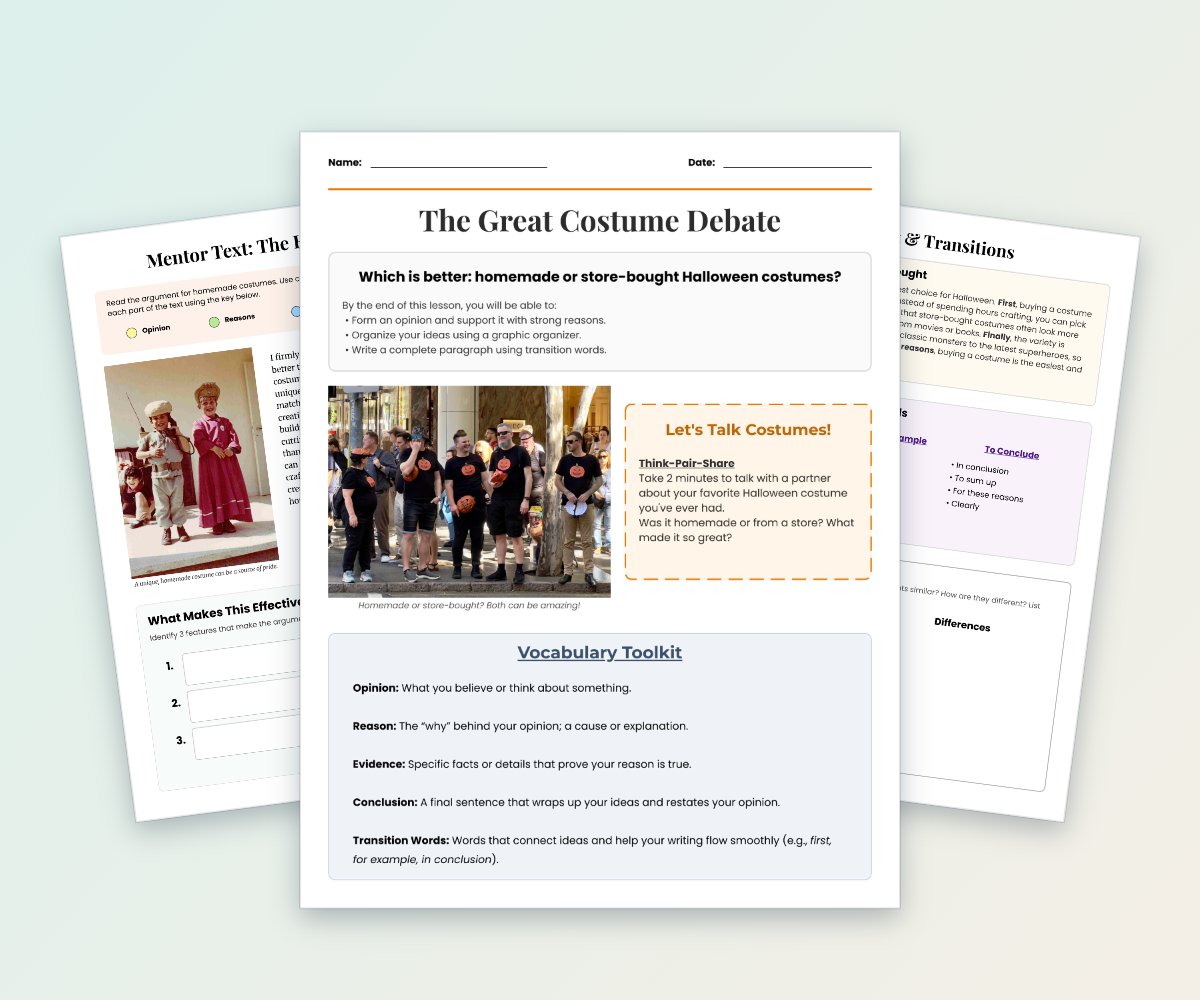
Students examine arguments about homemade and store-bought Halloween costumes, identify persuasive features, and organize their own opinions.
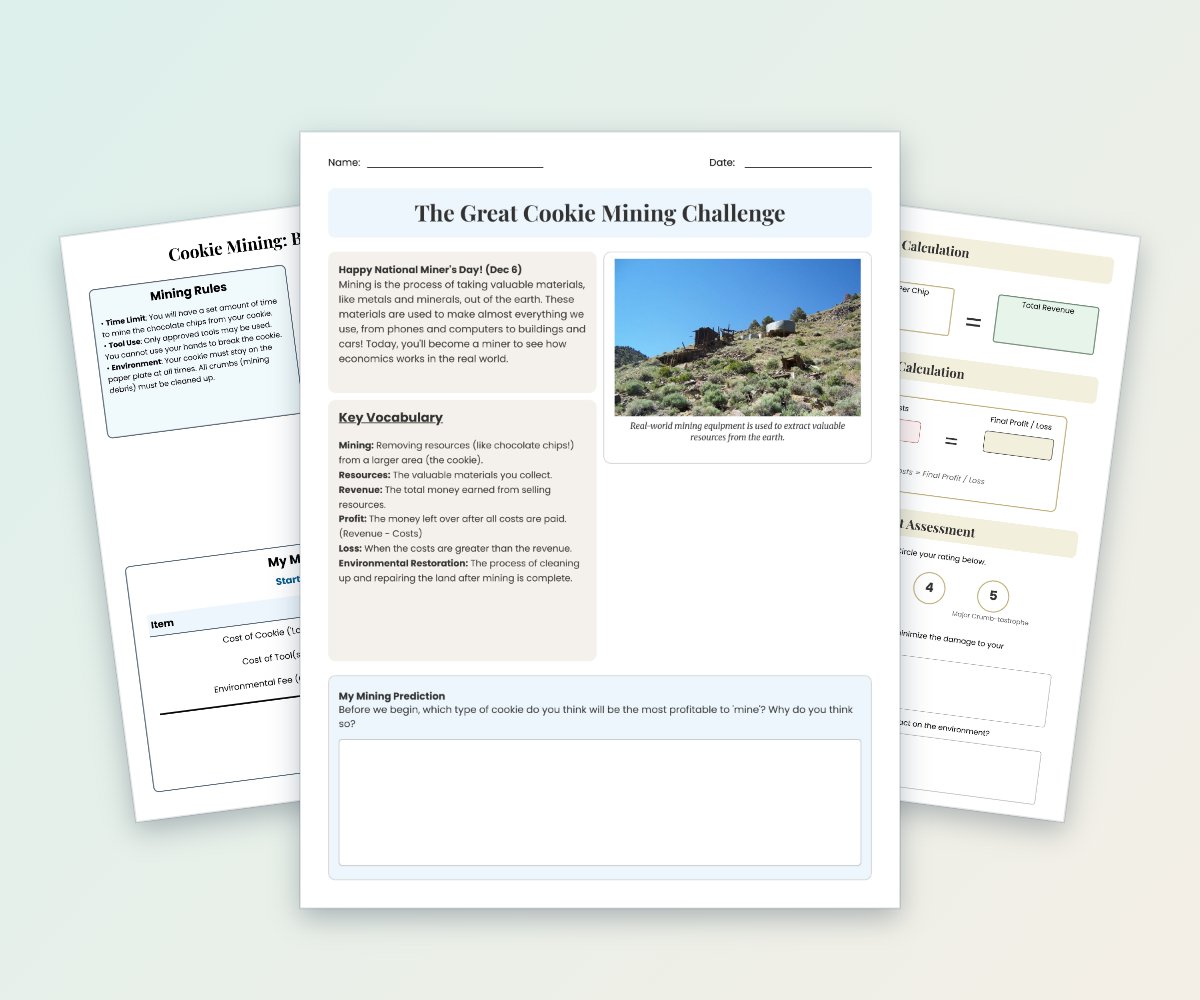
Students simulate mining by extracting chocolate chips from cookies while managing land, tool, cleanup, and environmental costs.
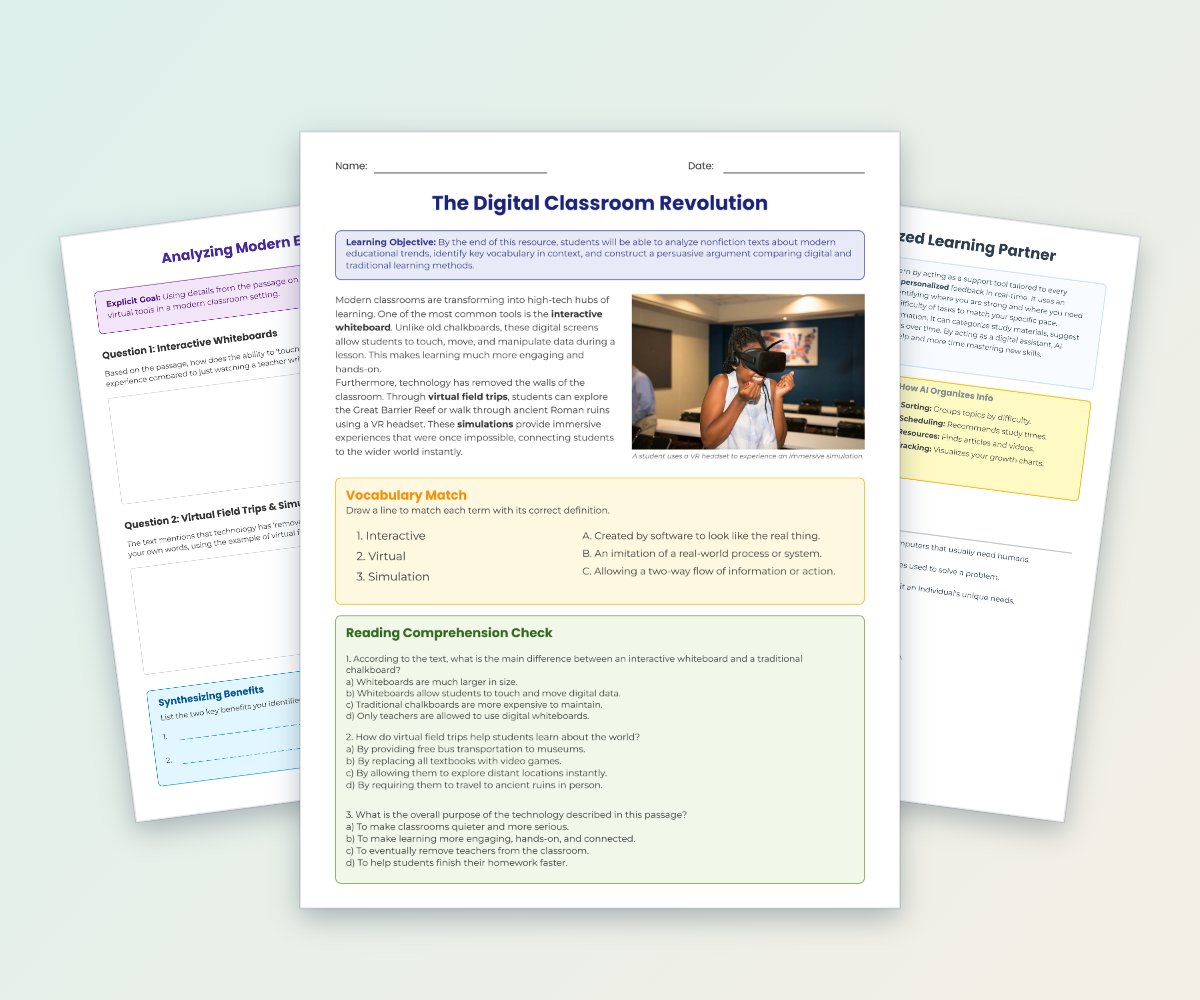
This six-page worksheet explores modern classroom technology through an informational passage about interactive whiteboards, virtual field trips, and digital learning tools.
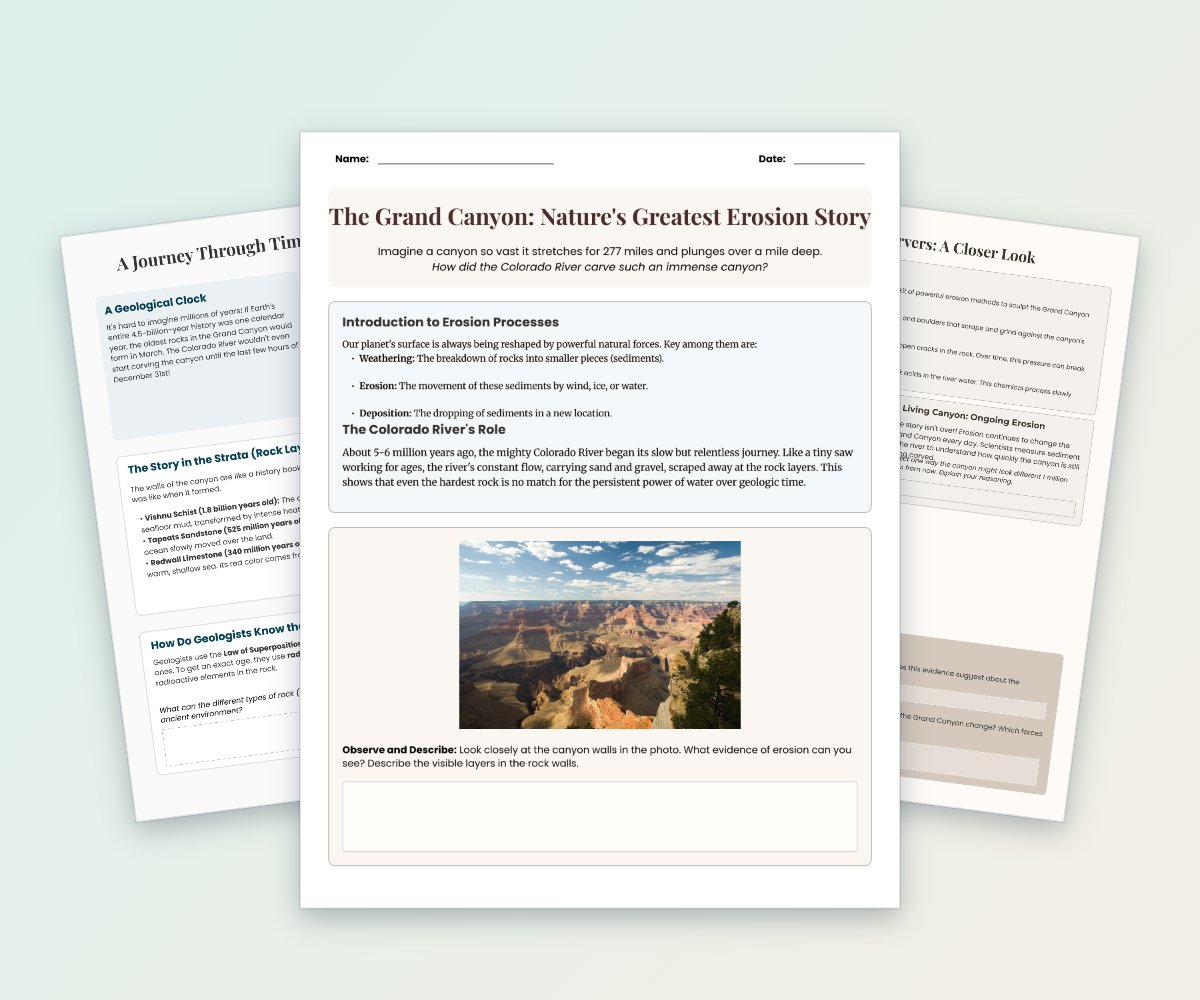
This concise science resource explores how the Colorado River shaped the Grand Canyon through weathering, erosion, and deposition.
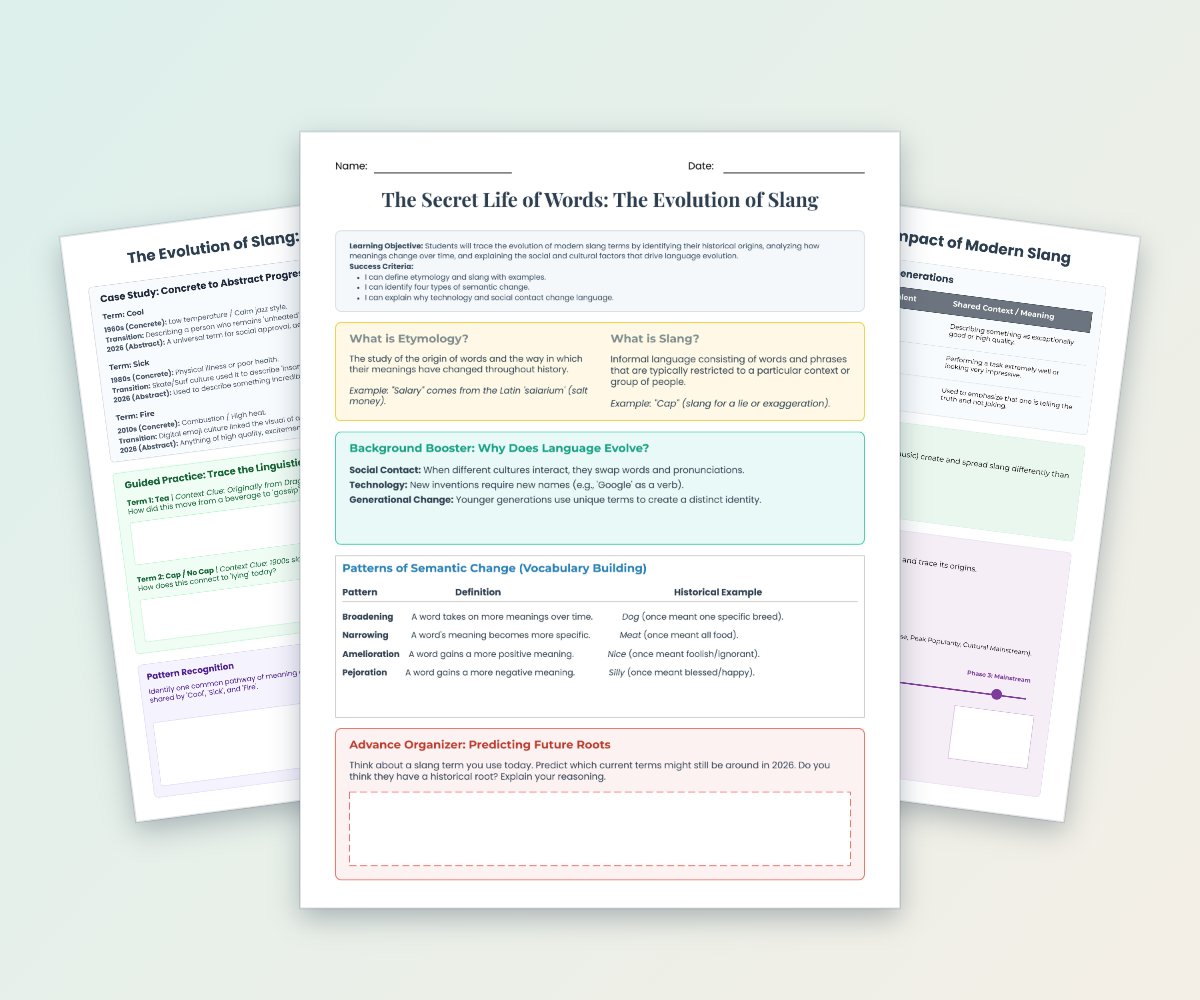
Students explore the origins and changing meanings of slang through definitions, semantic-change patterns, historical examples, and timeline case studies.
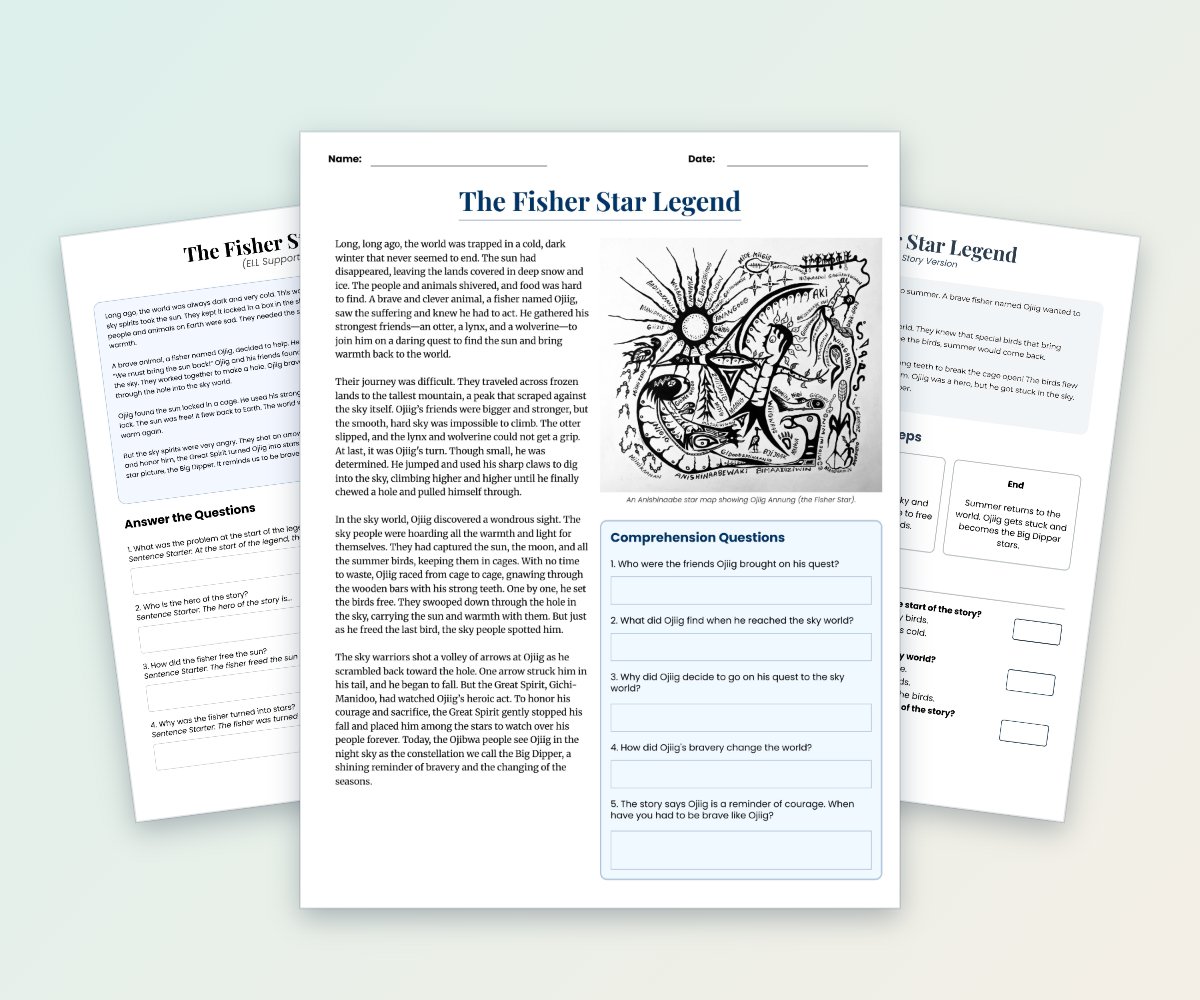
Students read an accessible version of the Anishinaabe Fisher Star Legend, featuring Ojiig’s journey to restore sunlight and warmth.
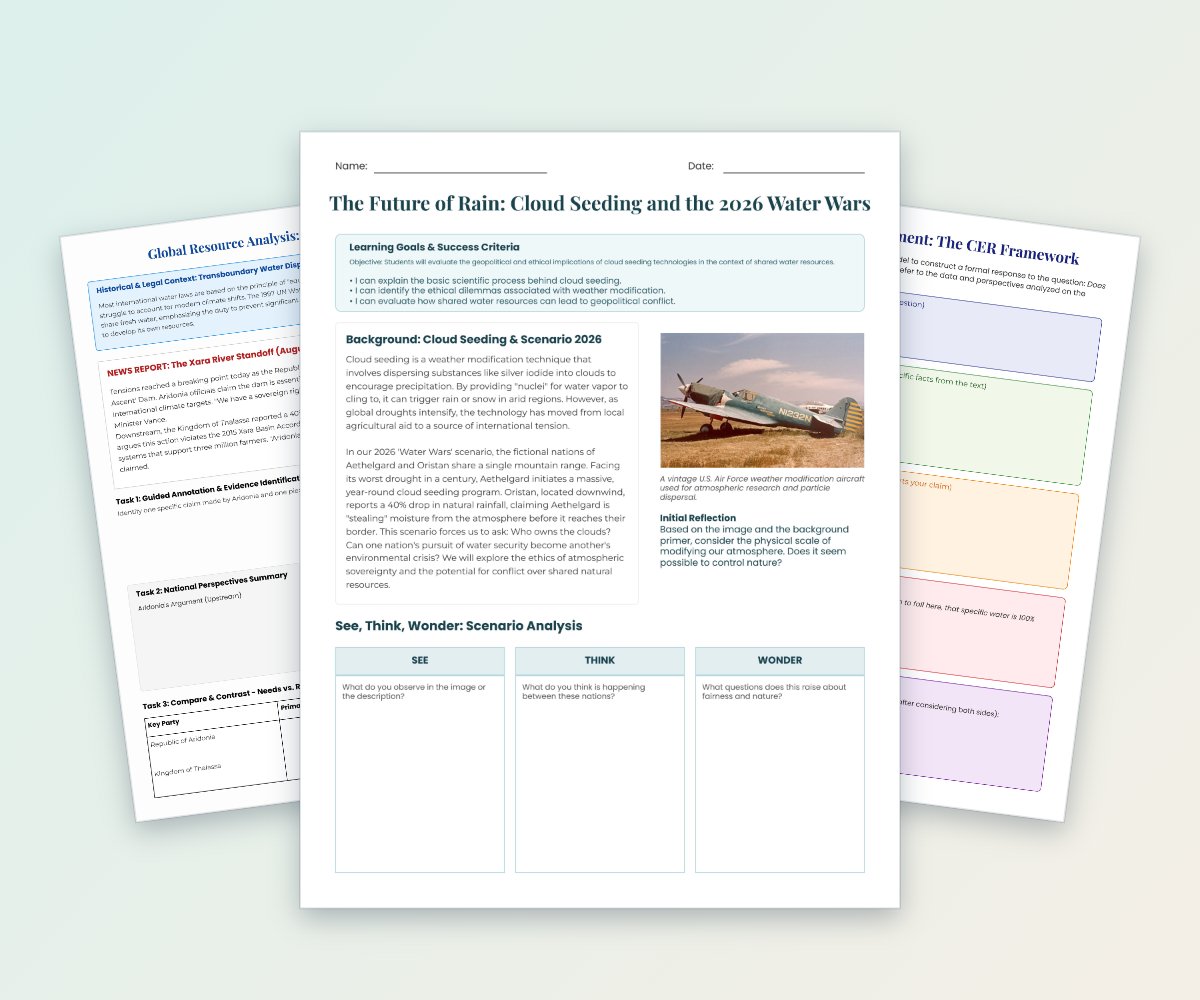
Students investigate the science and ethical implications of cloud seeding through a fictional 2026 conflict between nations sharing water resources.
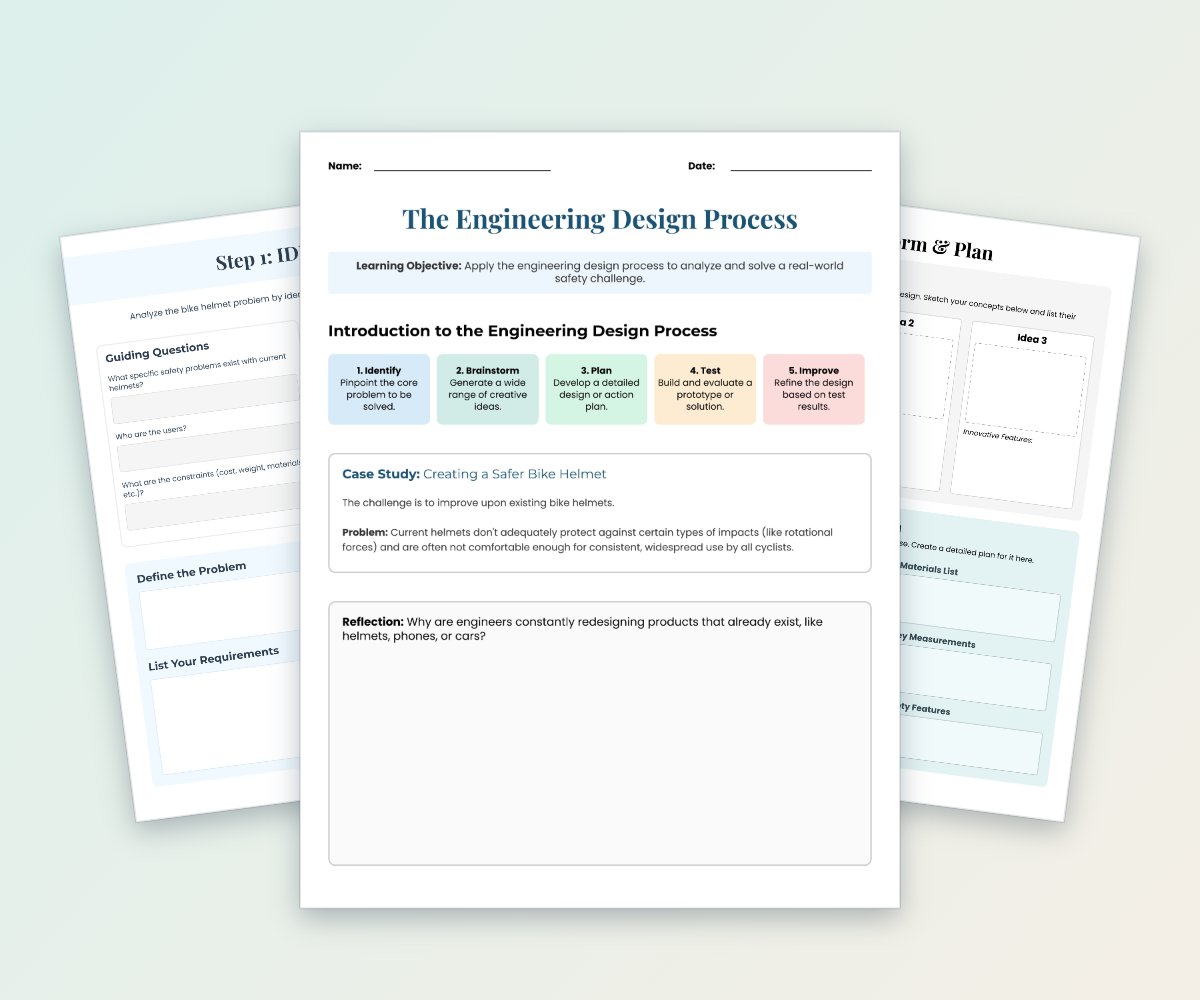
Students apply the engineering design process to analyze a bike helmet safety challenge.
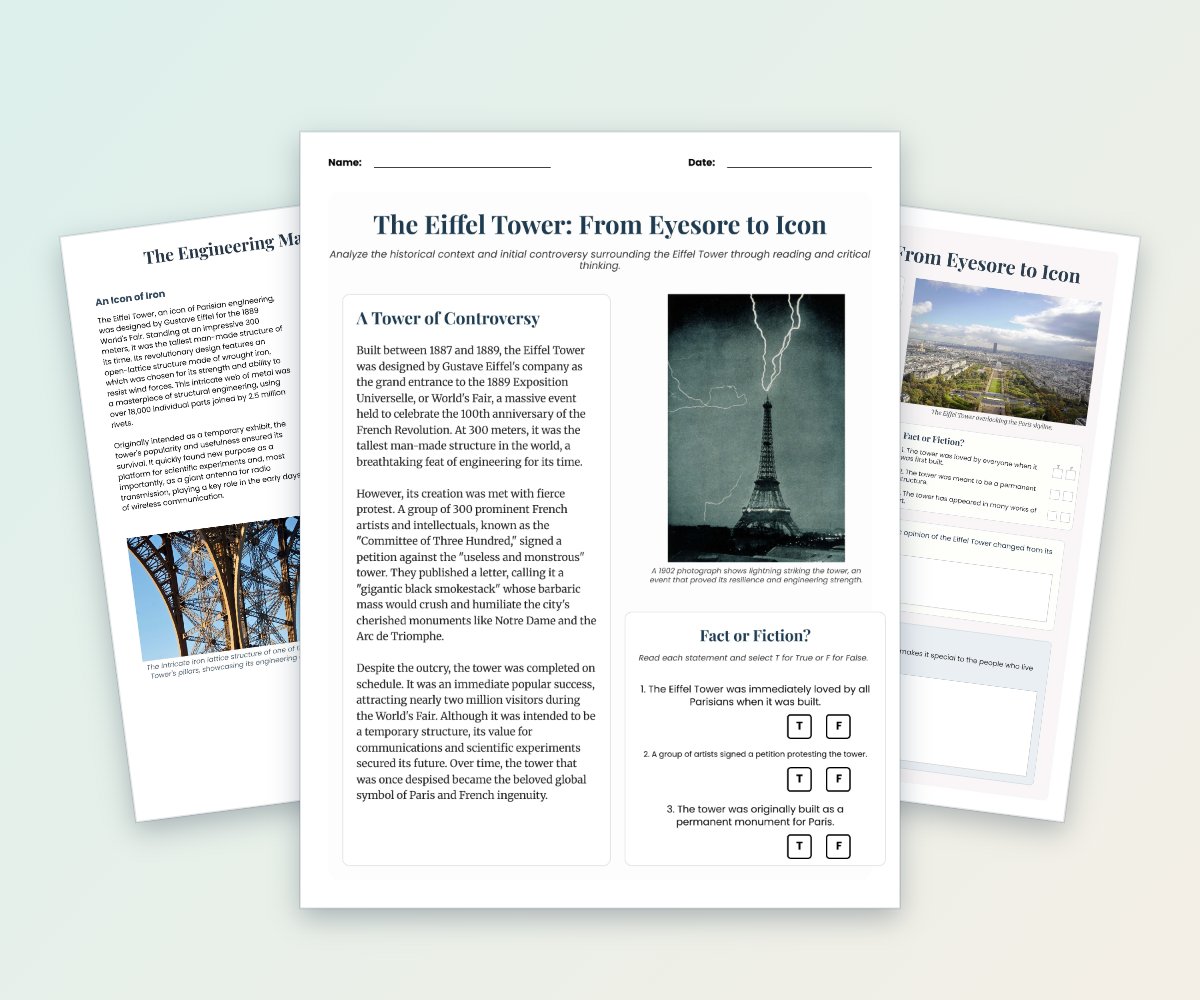
Students read about the Eiffel Tower's construction, initial controversy, engineering design, and transformation into a Parisian icon.
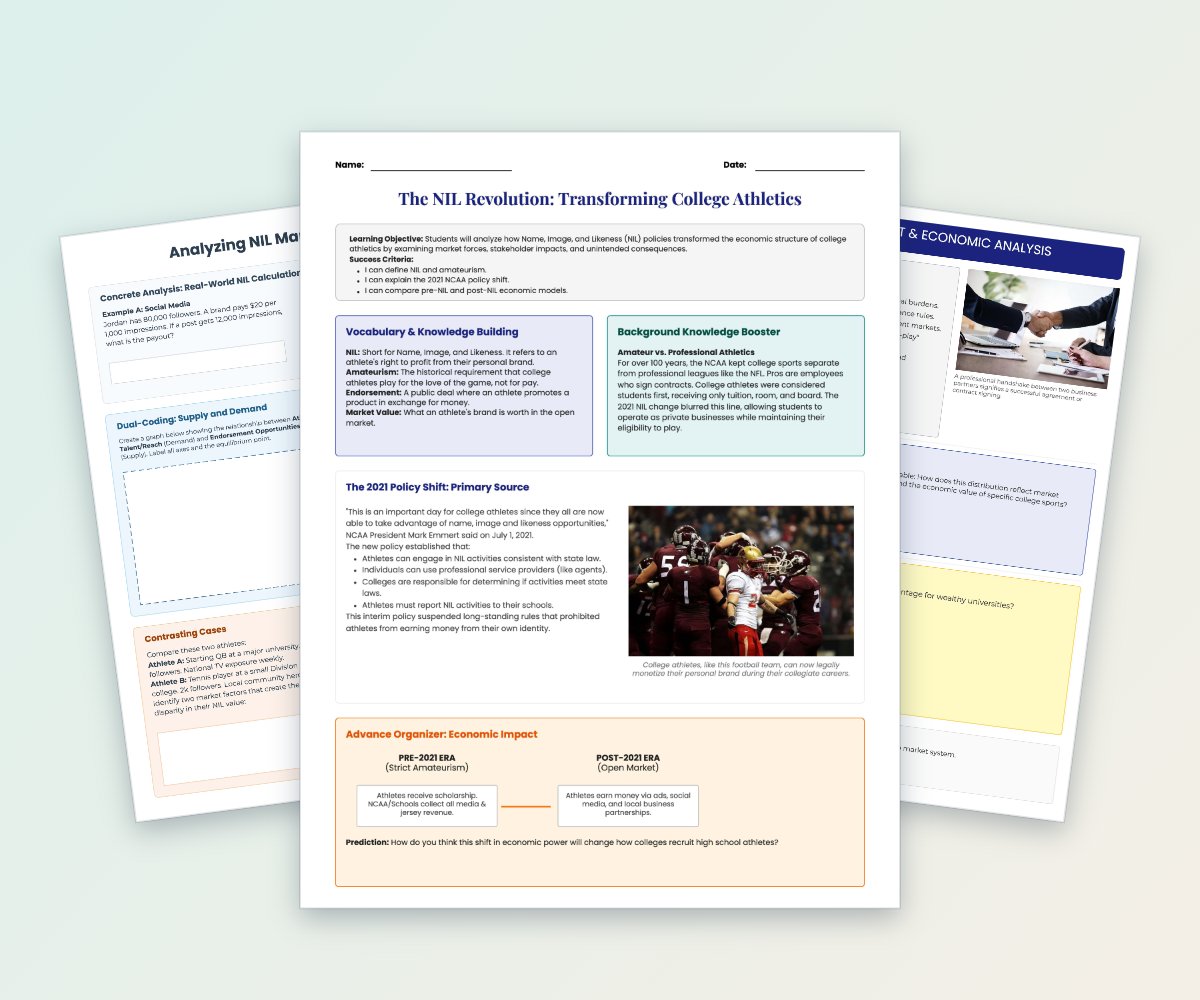
Students examine how Name, Image, and Likeness policies changed the economic structure of college athletics.
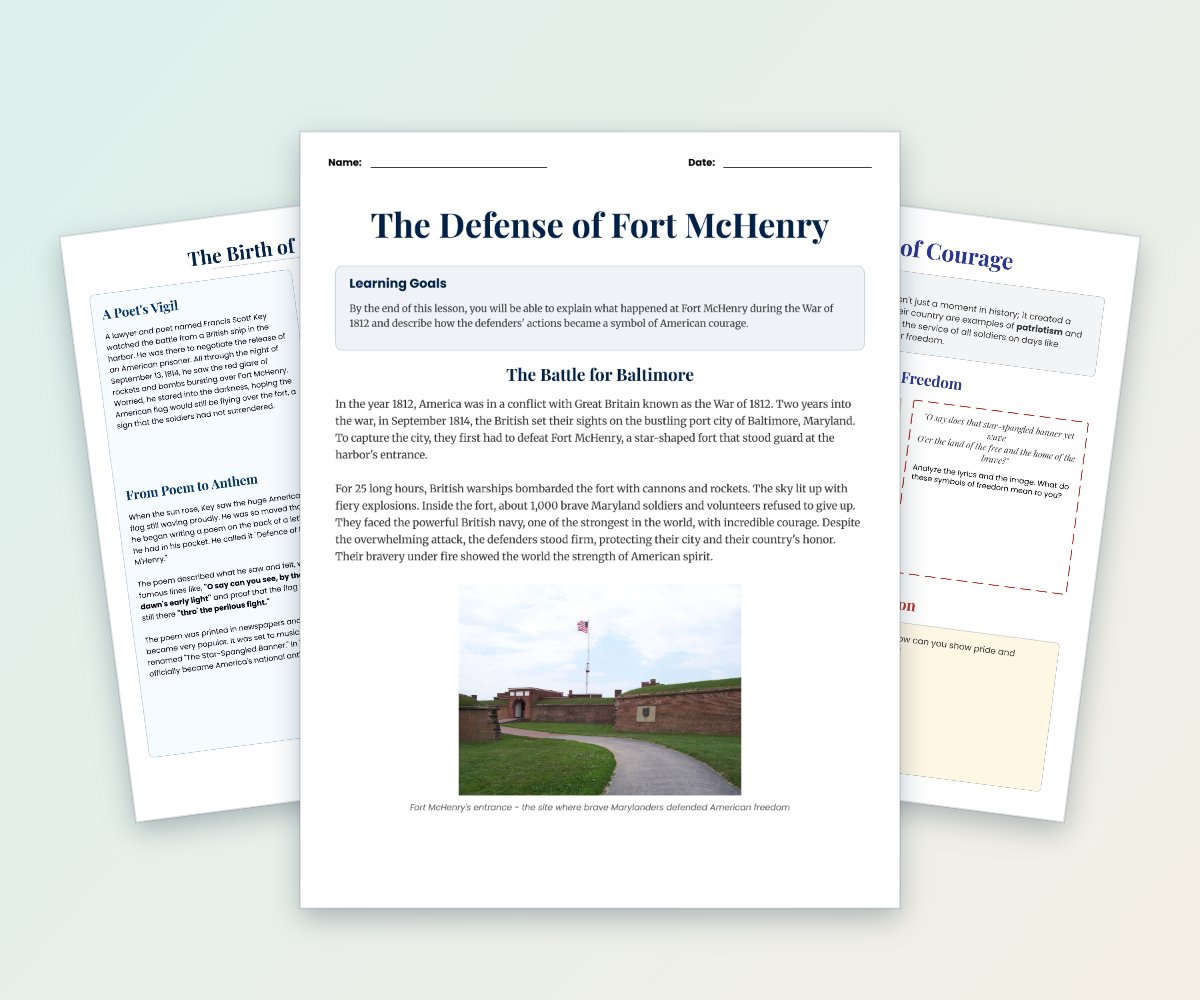
Students learn about the 1814 defense of Fort McHenry, the Battle of Baltimore, and Francis Scott Key’s inspiration for writing the national anthem.
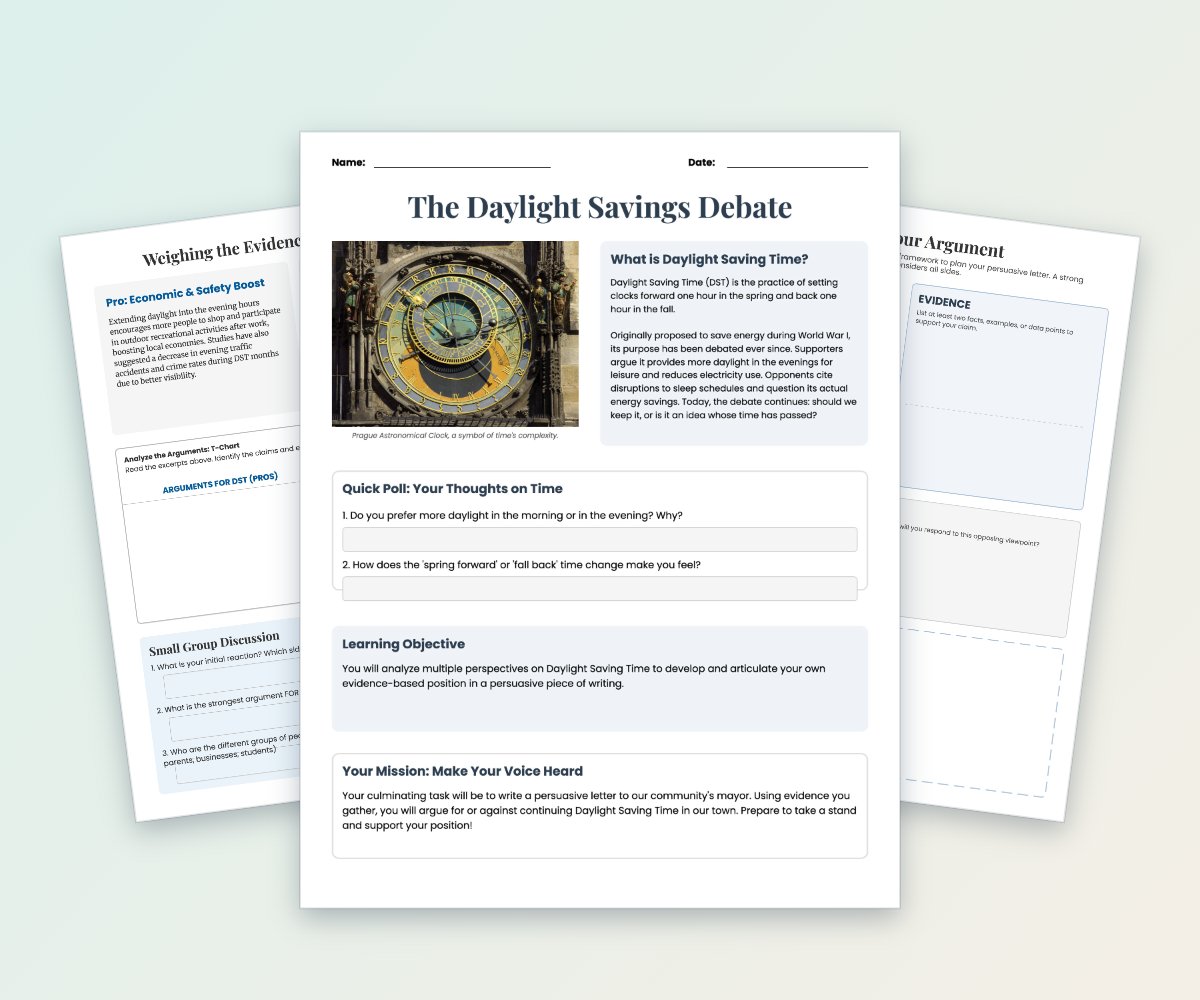
Students examine arguments for and against Daylight Saving Time, identify claims and evidence, and discuss affected stakeholders.
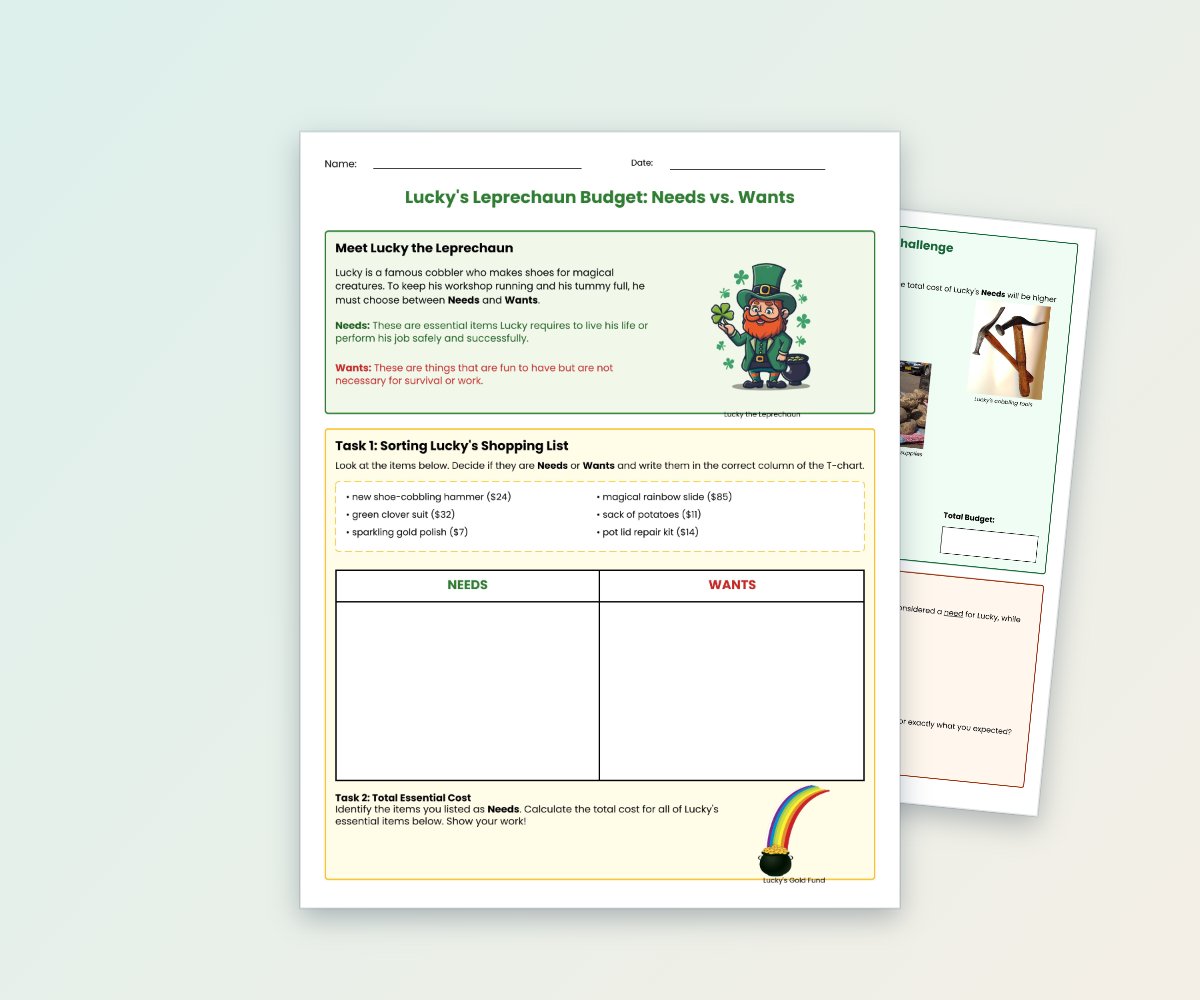
Students help Lucky the Leprechaun sort purchases into needs and wants, calculate essential costs, and compare totals with predictions.
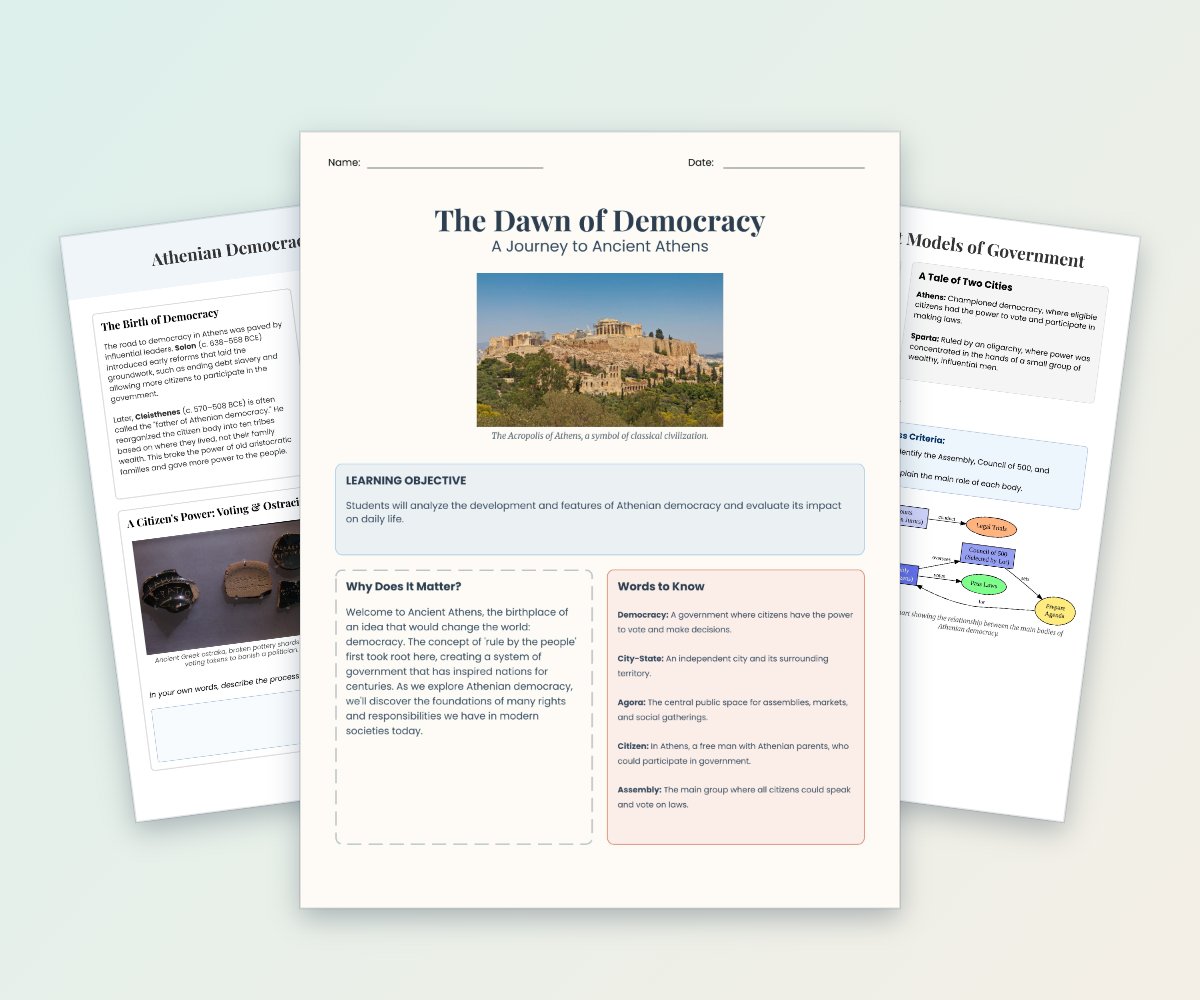
This six-page resource introduces students to the origins and features of Athenian democracy.
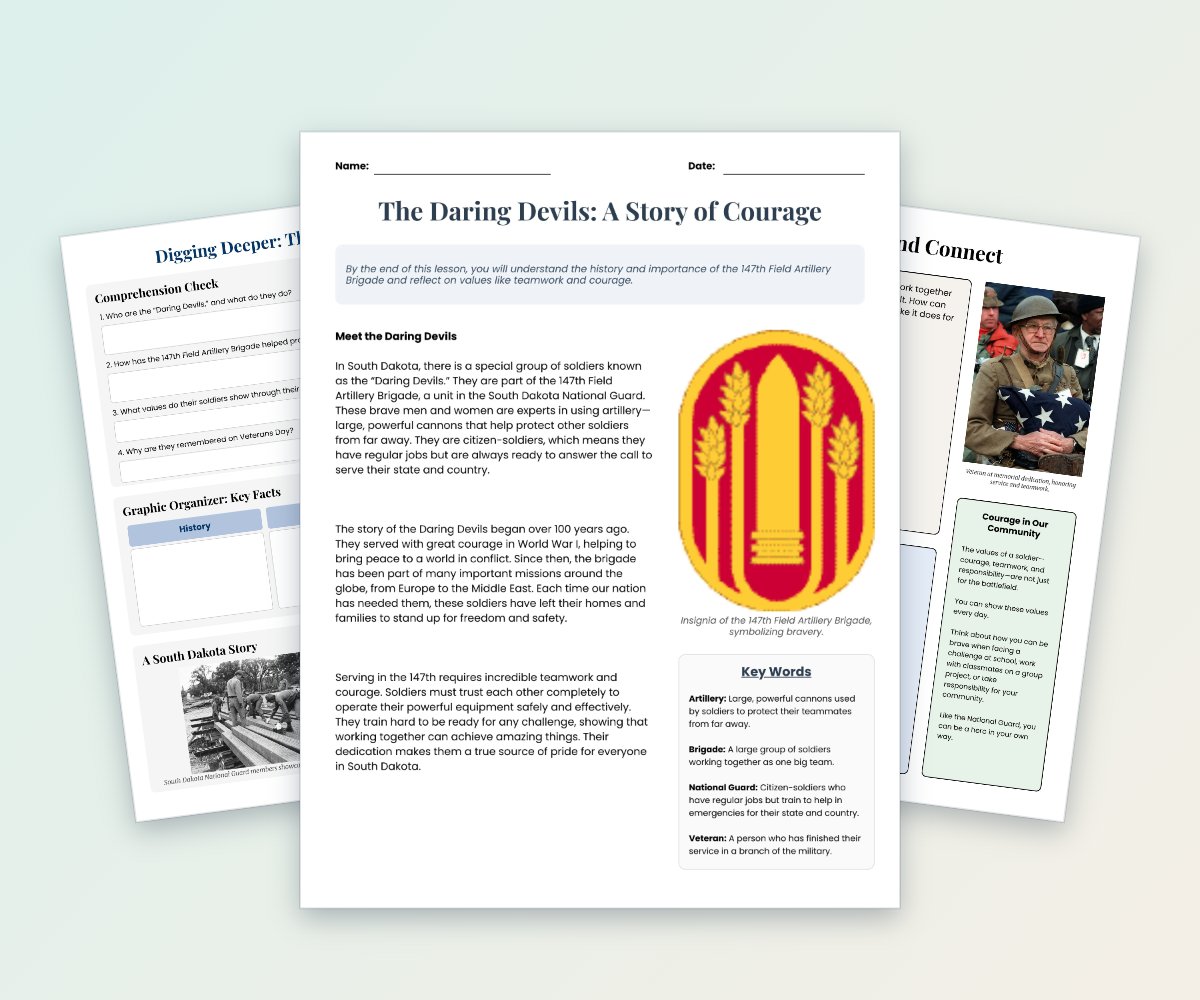
Students learn about the 147th Field Artillery Brigade, its history, missions, and service as part of the South Dakota National Guard.
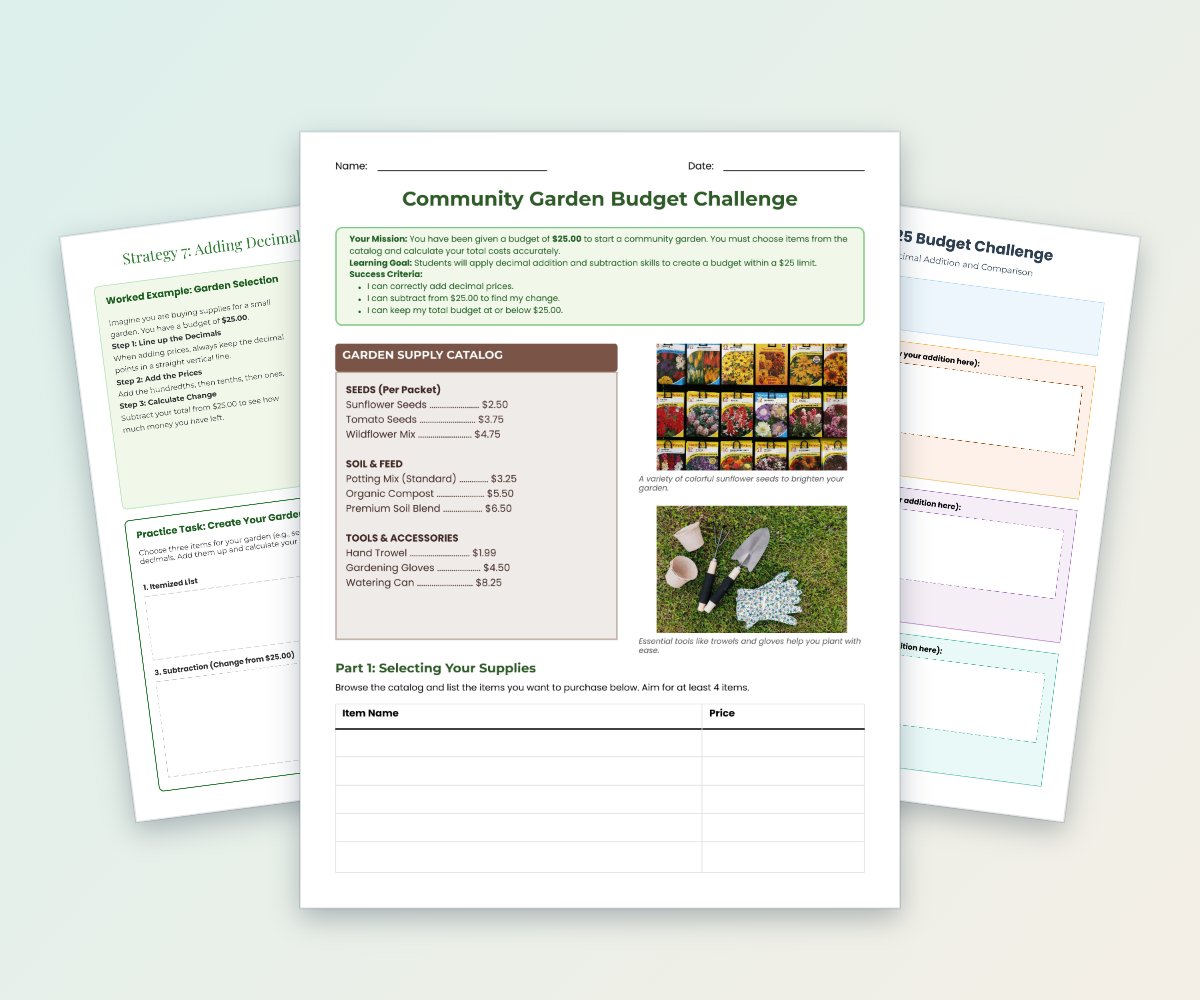
Students use a community garden supply catalog to select items, add decimal prices, stay within a $25 budget, and calculate change.
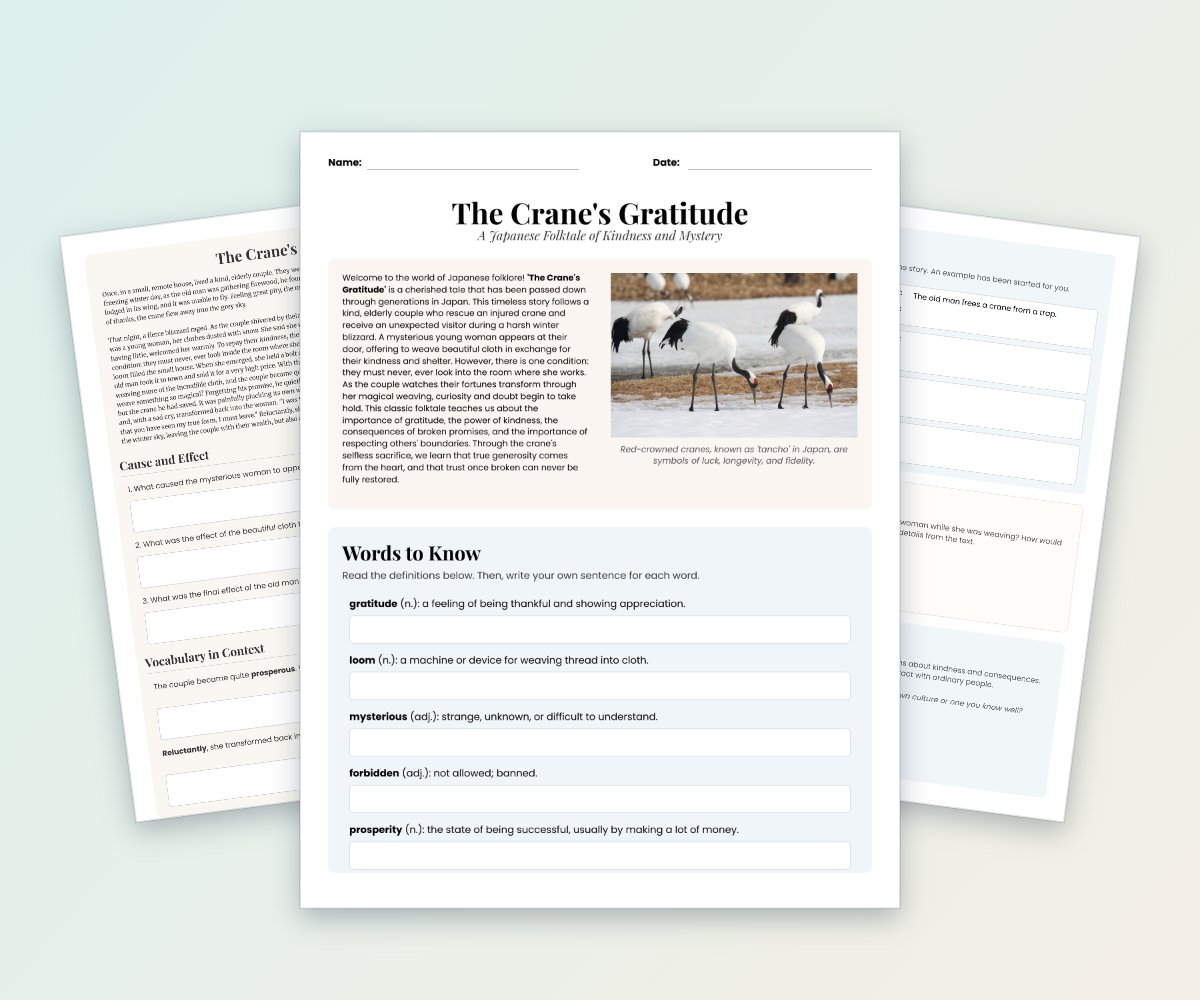
Students read an adapted Japanese folktale about kindness, gratitude, trust, and respecting boundaries.
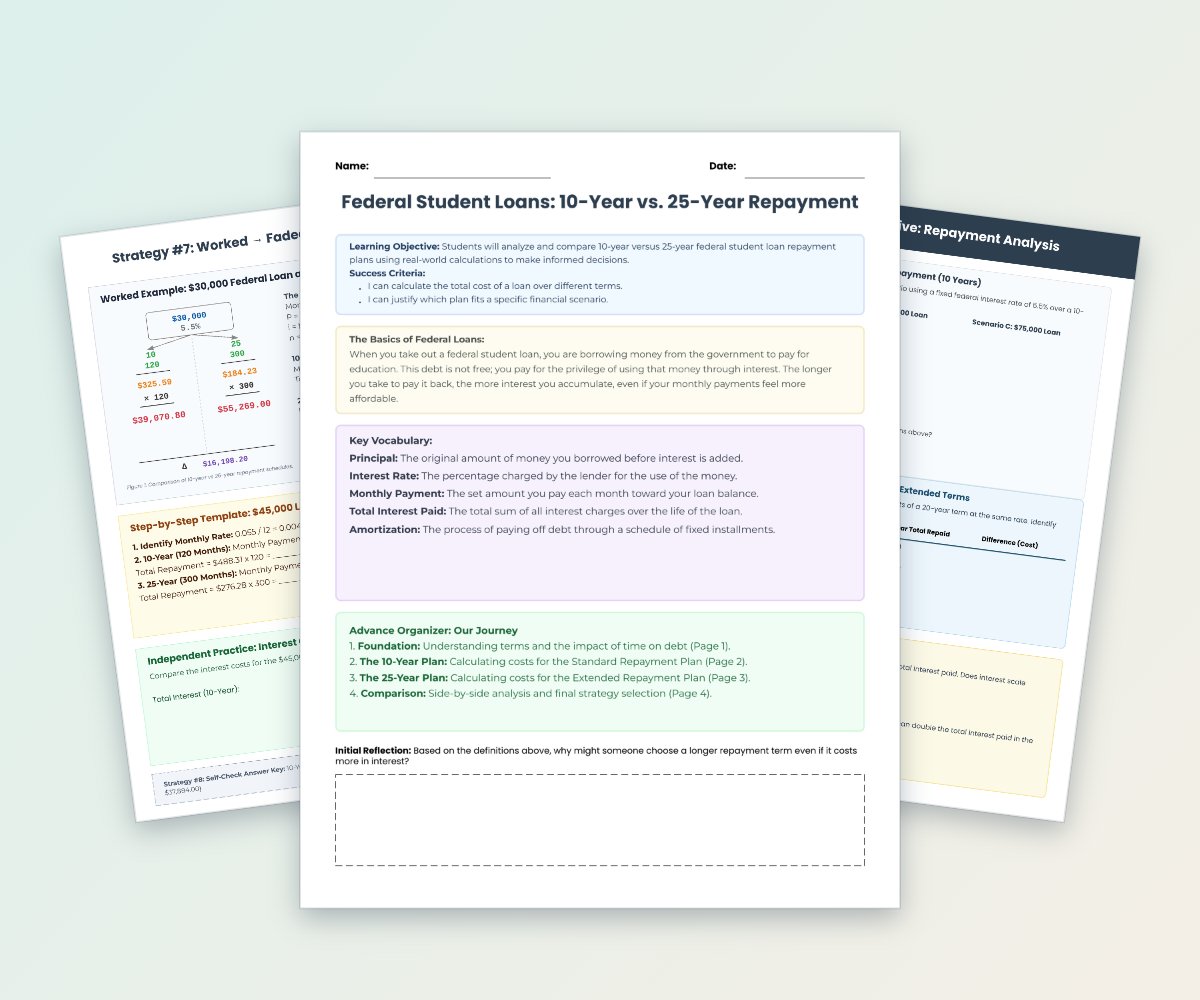
Students compare 10-year and 25-year federal student loan repayment plans through vocabulary, worked examples, formulas, and loan scenarios.
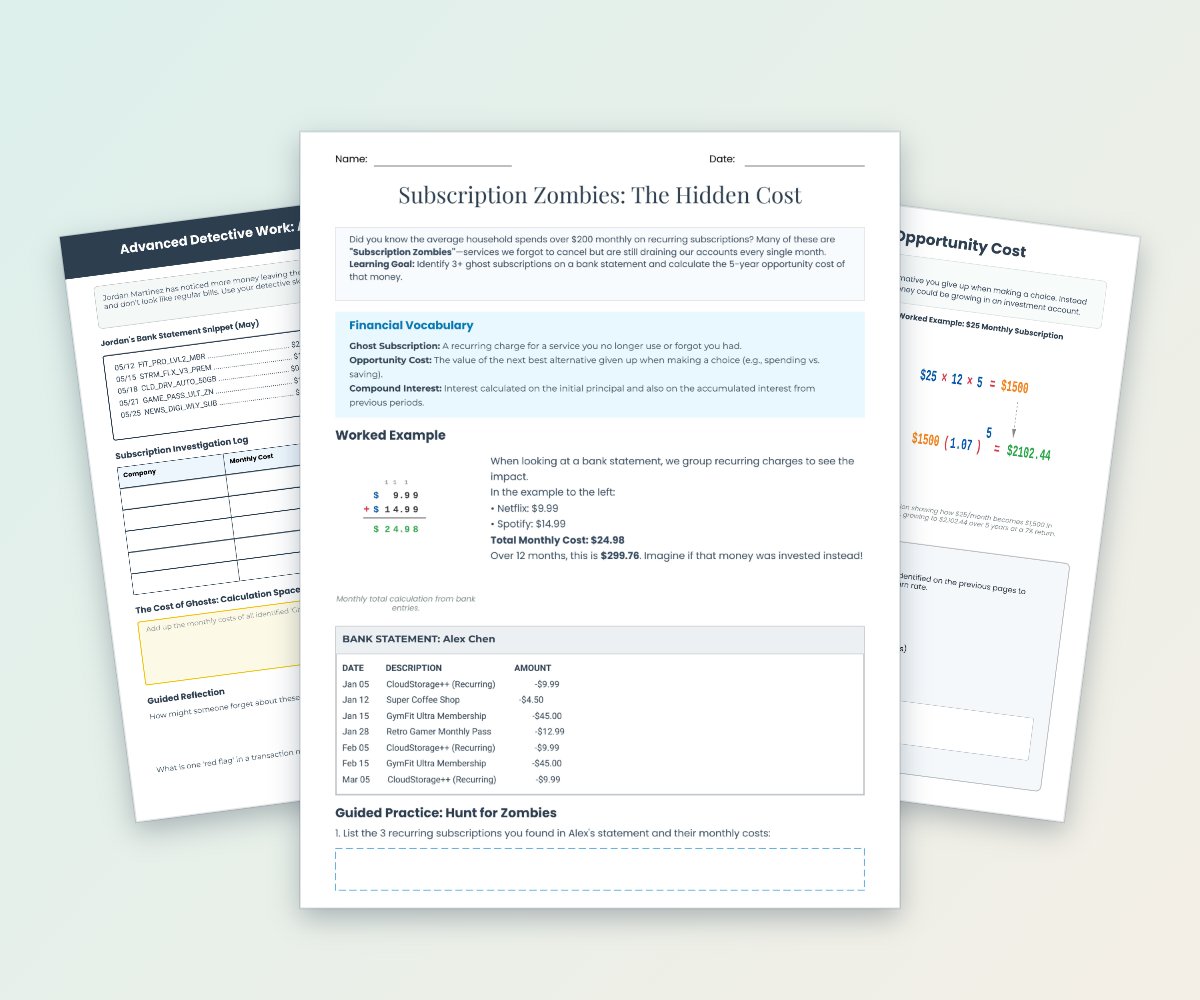
Students investigate recurring charges, identify forgotten subscriptions, calculate monthly and long-term costs, and consider opportunity cost.
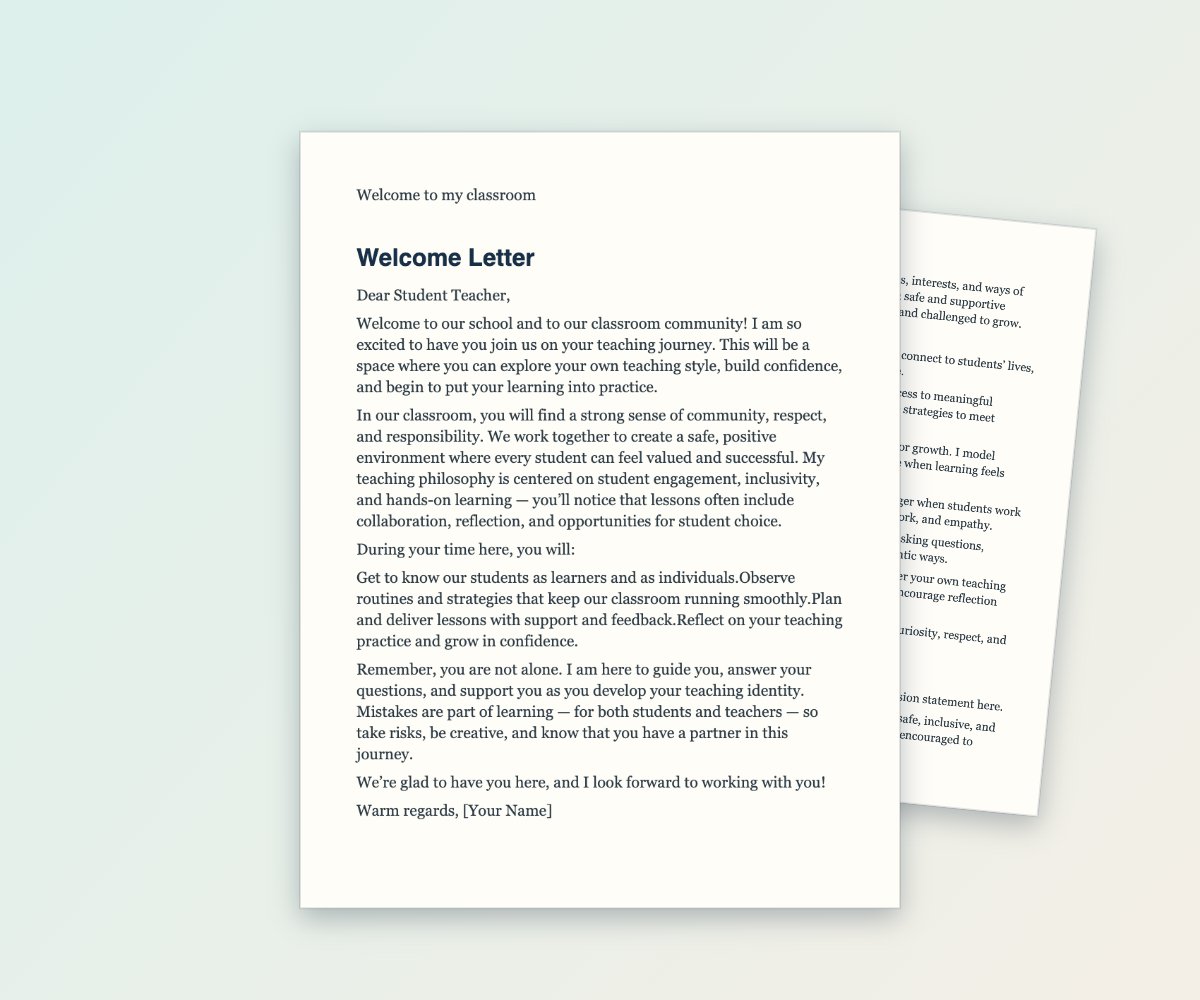
A comprehensive binder for student teachers entering classroom placements.