Calm Down Corner and Emotional Regulation Mini-Lessons
This editable 85-slide presentation teaches students to identify feelings and body clues, practise calming strategies, and return to learning.
$18.99
Clear, practical resources for busy educators, organized so you can get from search to ready-to-teach quickly.
This editable 85-slide presentation teaches students to identify feelings and body clues, practise calming strategies, and return to learning.
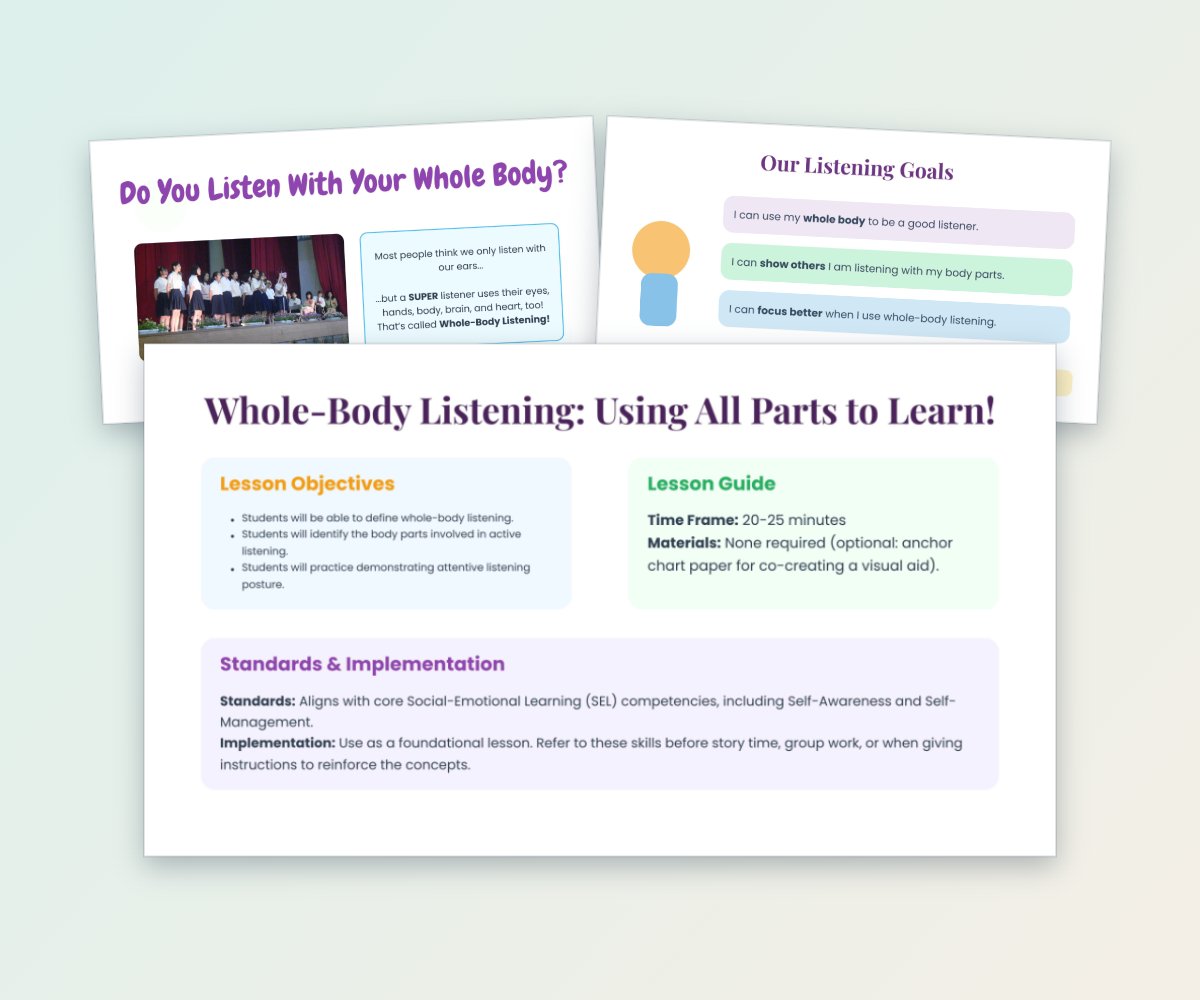
Teach students how to use their eyes, ears, hands, body, brain, and heart to listen attentively.
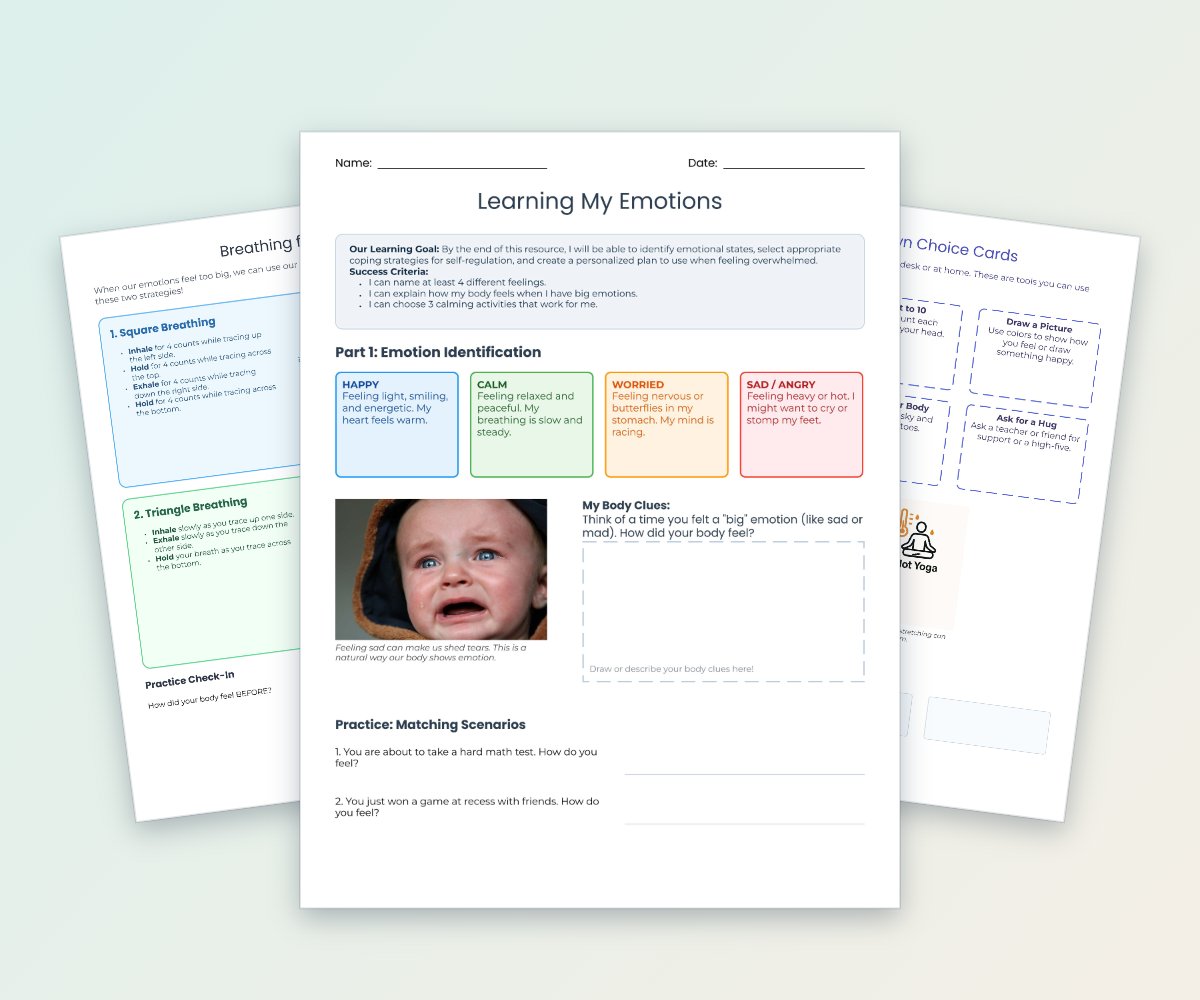
This seven-page activity pack helps students identify emotions, recognize physical signs of big feelings, and practice calming strategies.
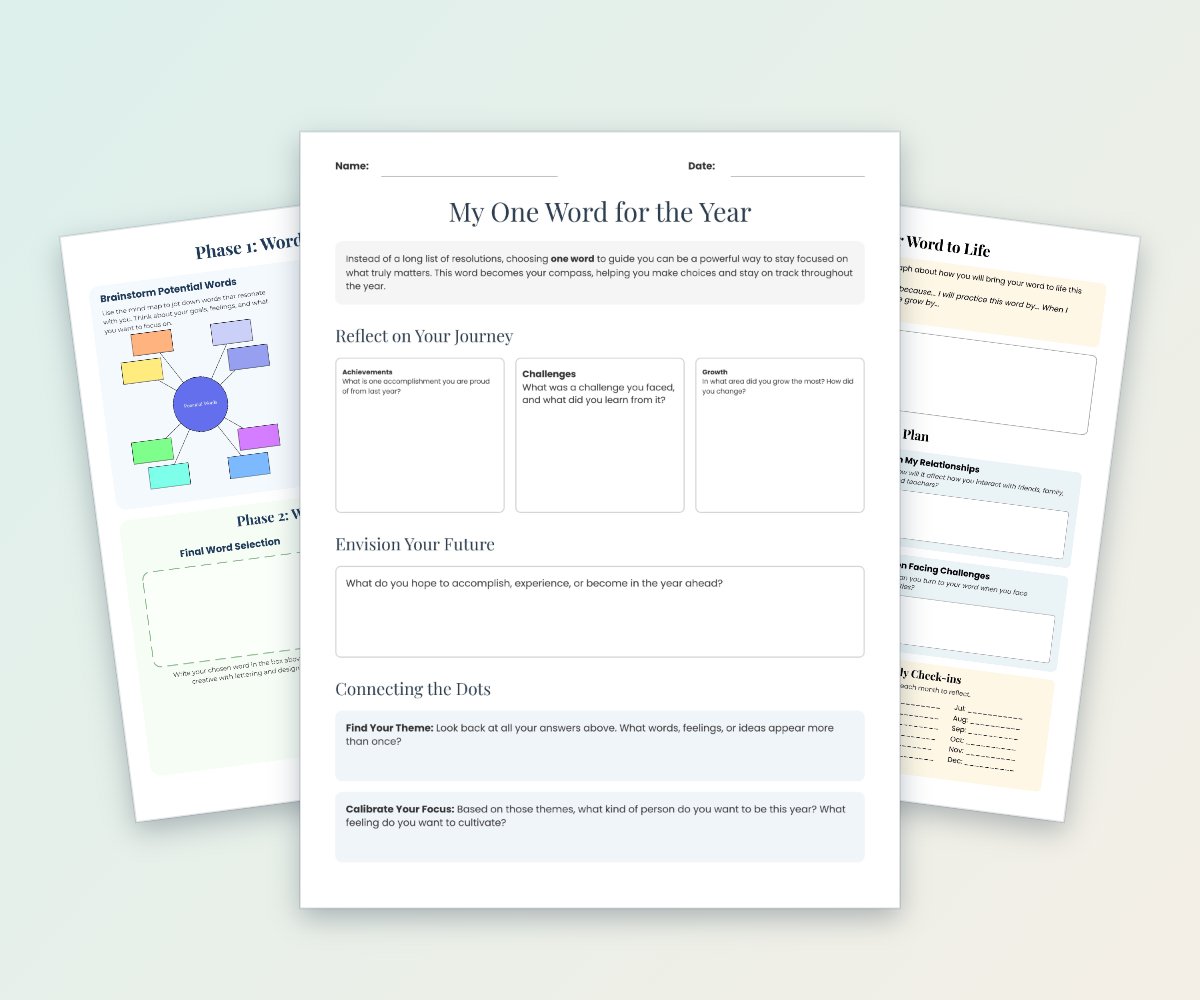
Students reflect on past achievements, challenges, and growth before selecting one guiding word for the year.
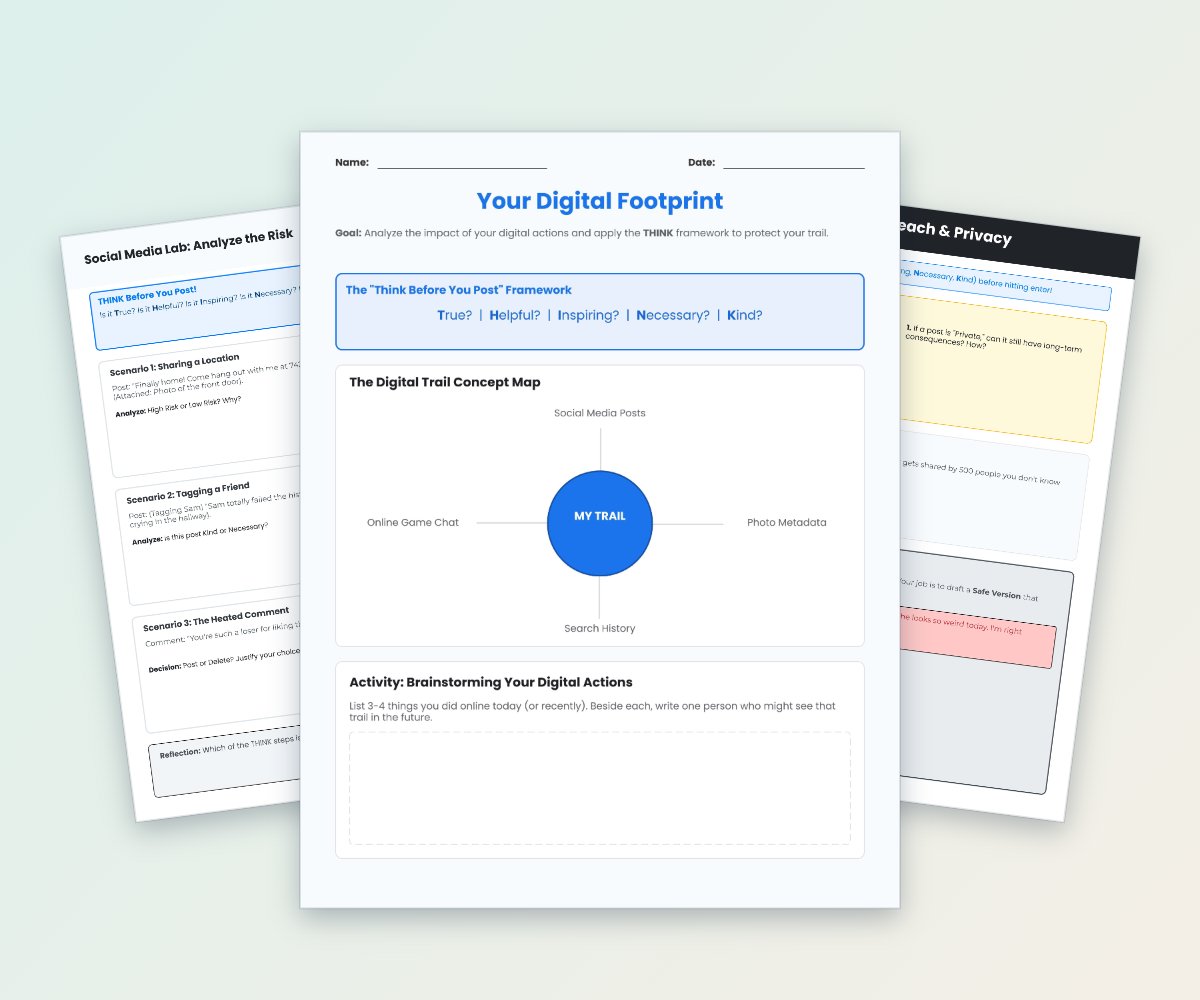
This six-page activity pack helps students analyze digital footprints, audience reach, privacy risks, and the consequences of online posts.
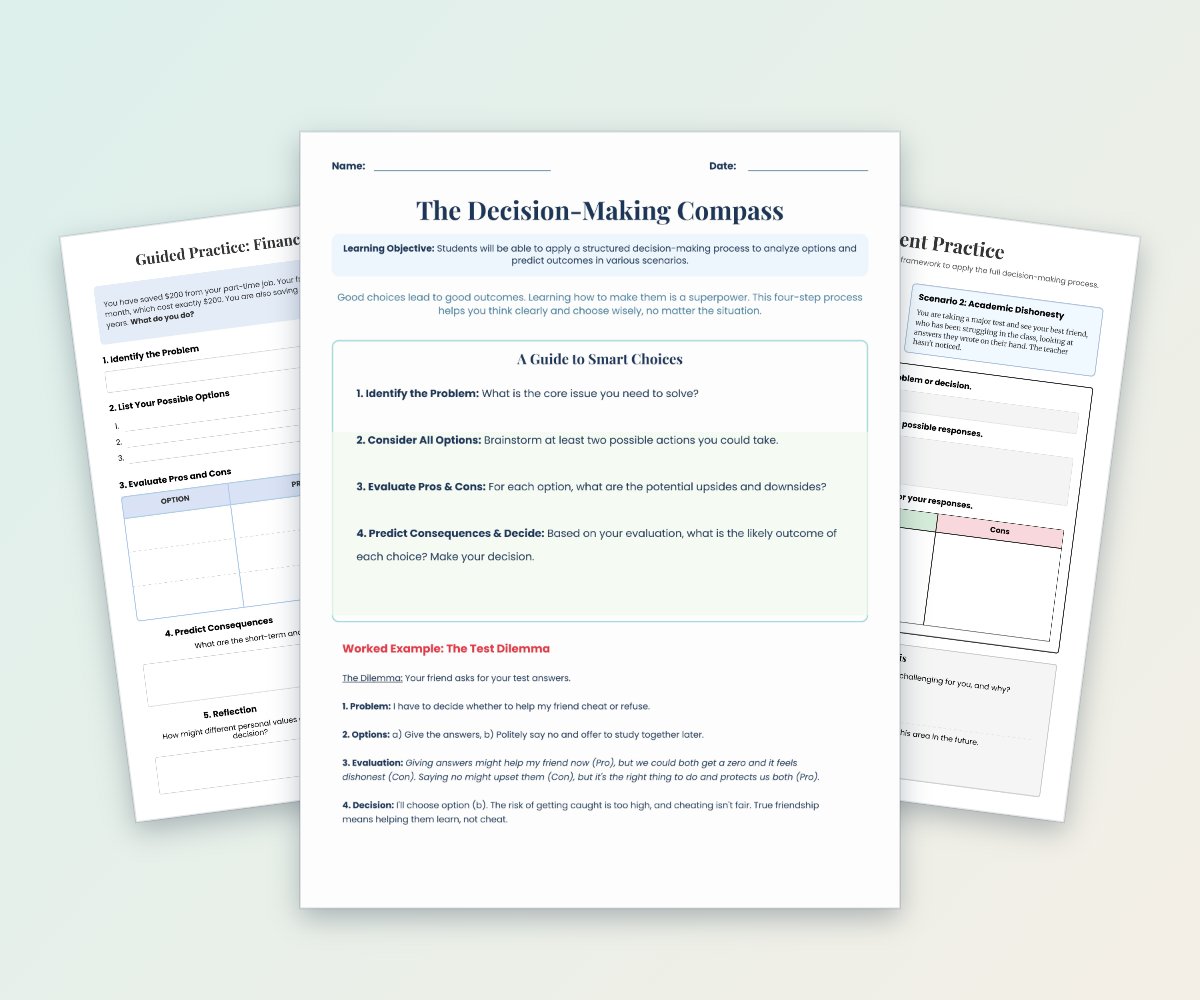
Students learn a four-step decision-making process: identify the problem, consider options, evaluate pros and cons, and predict consequences.
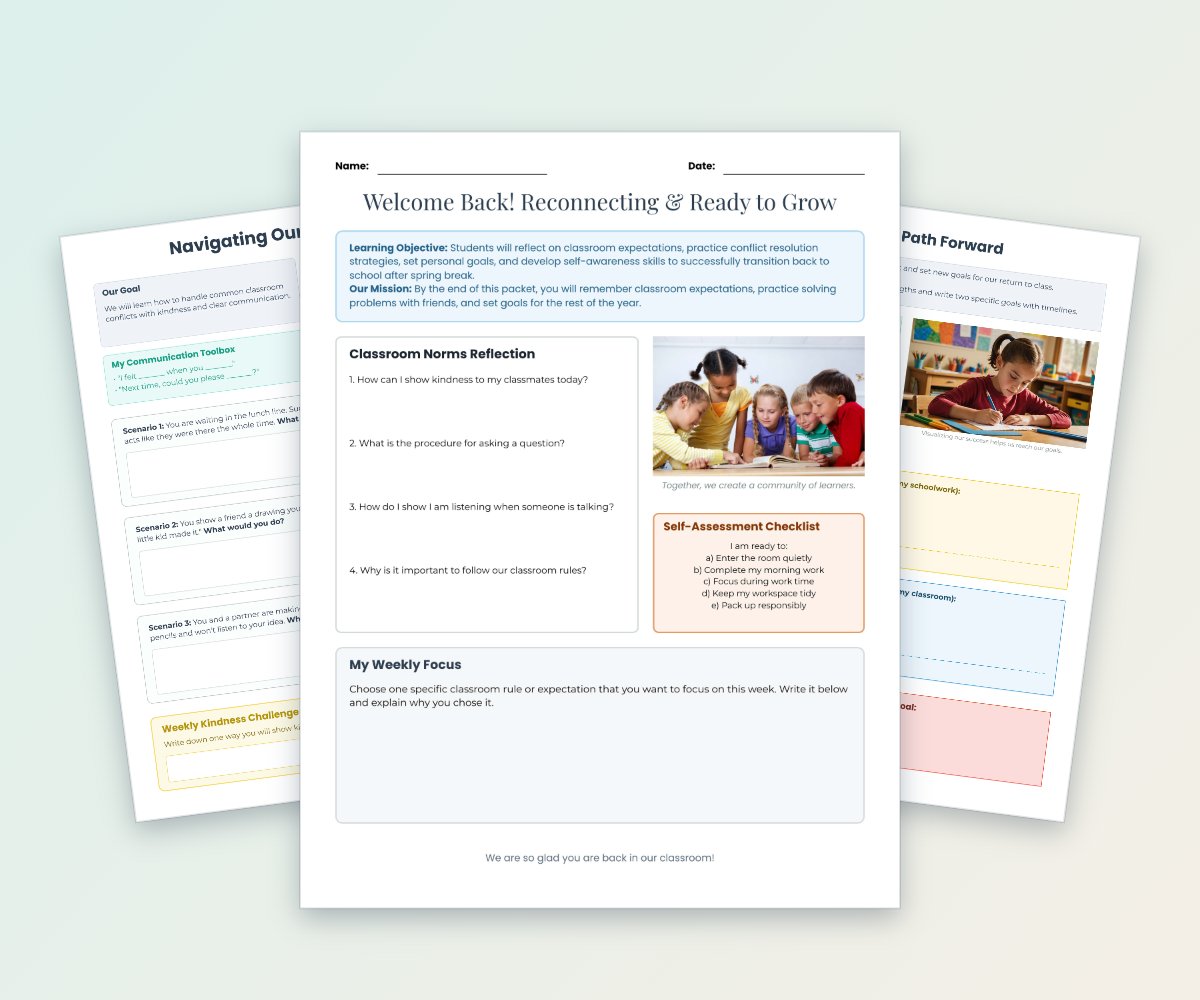
Help students transition back to school after spring break by reviewing classroom expectations, practicing conflict-resolution strategies, and reflecting on kindness.
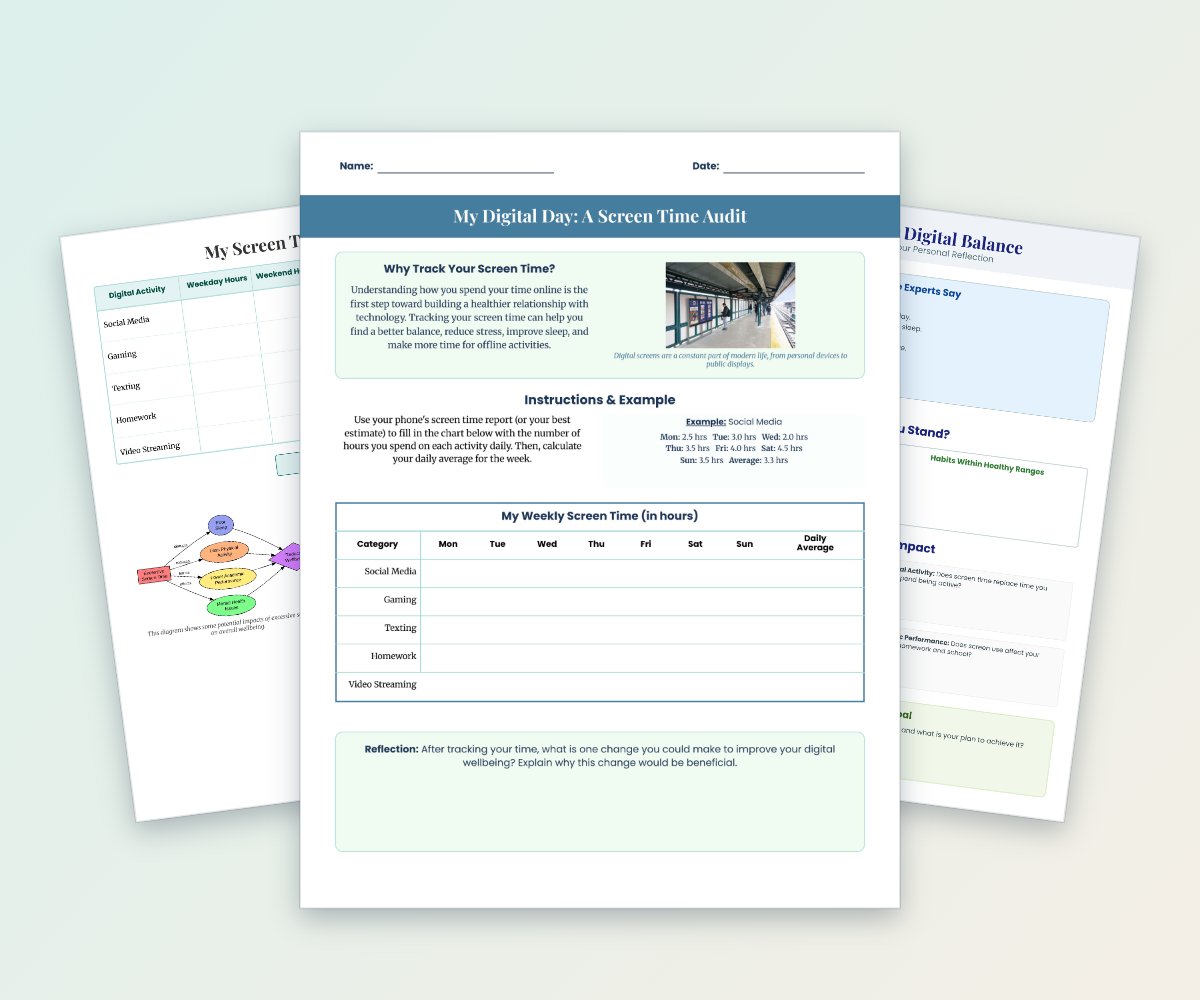
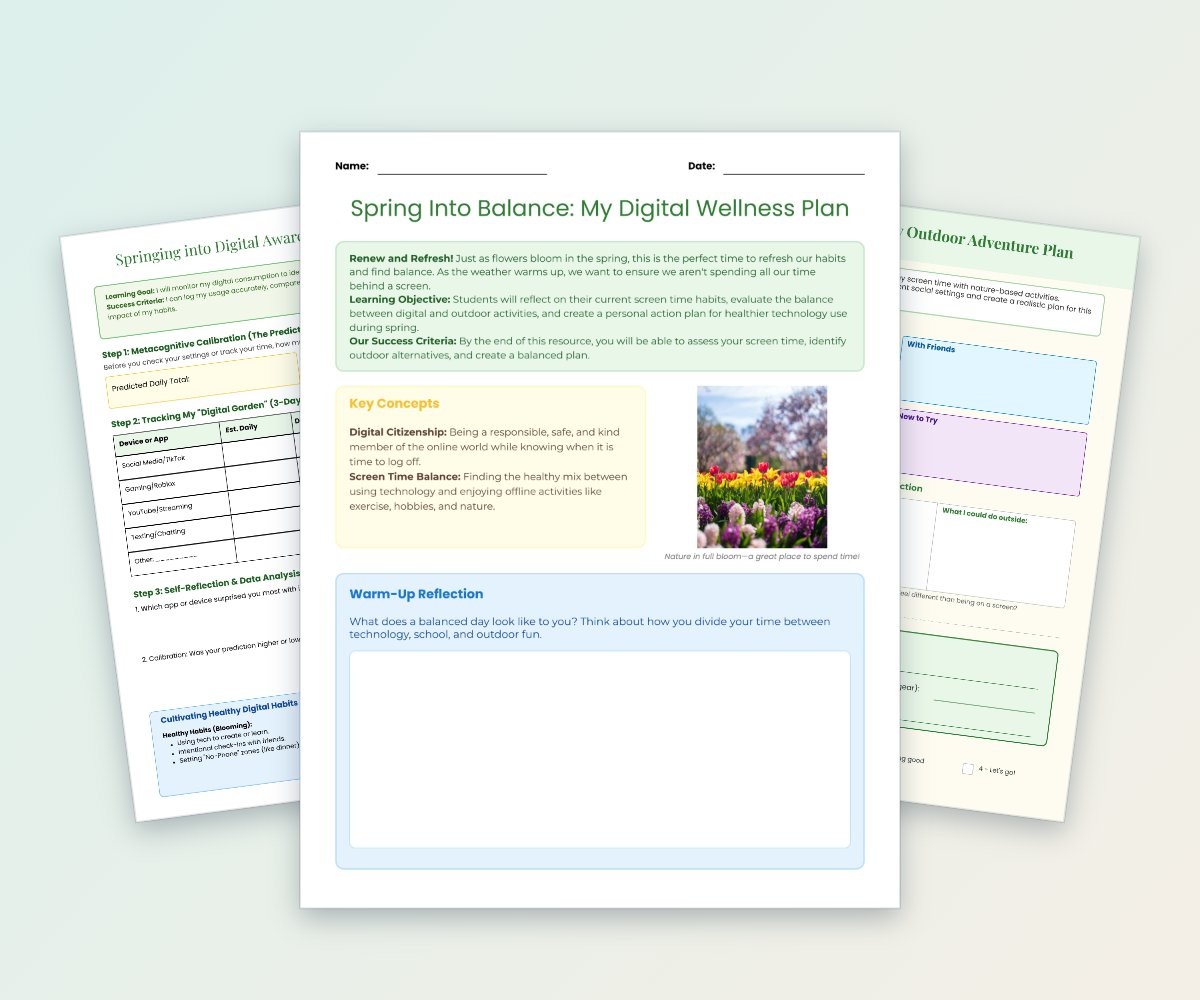
This four-page worksheet helps students track daily screen use across activities, calculate weekly totals, and compare habits with recommended recreational screen-time guidelines.
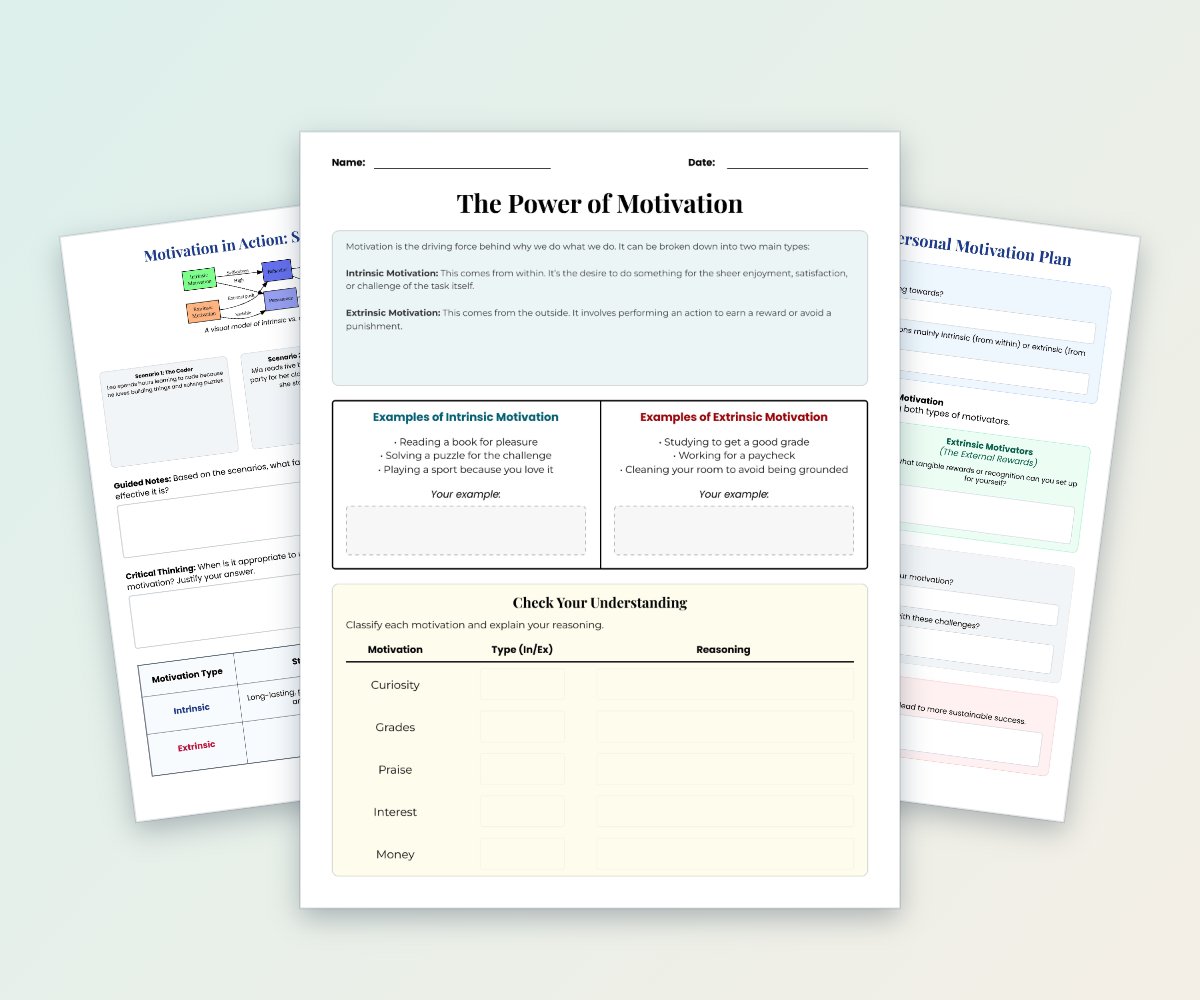
This three-page worksheet introduces intrinsic and extrinsic motivation with clear definitions, examples, classification practice, scenarios, and critical-thinking questions.
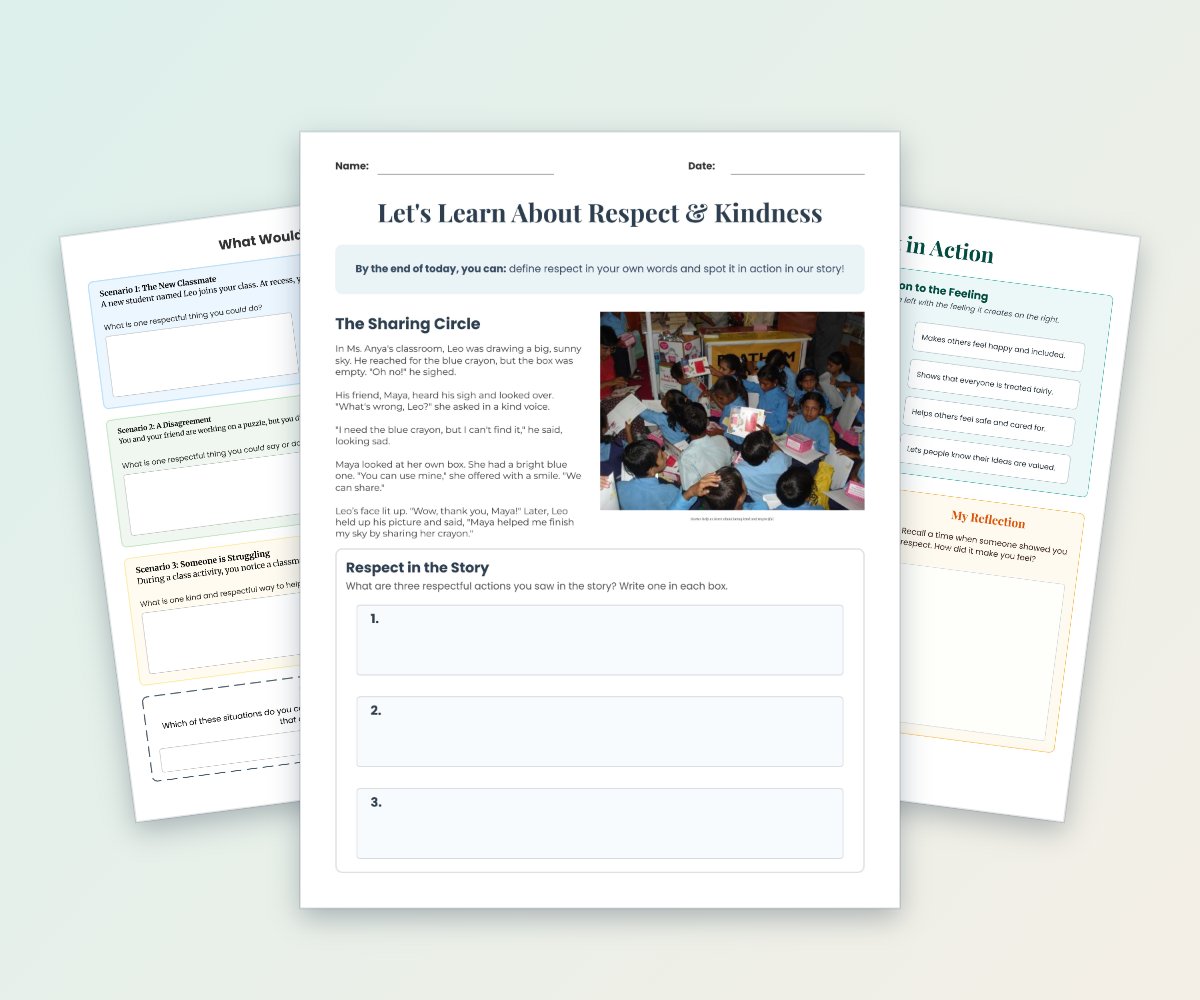
This four-page activity pack helps students explore respect and kindness through a classroom story, scenarios, discussion, matching, reflection, and a weekly goal tracker.
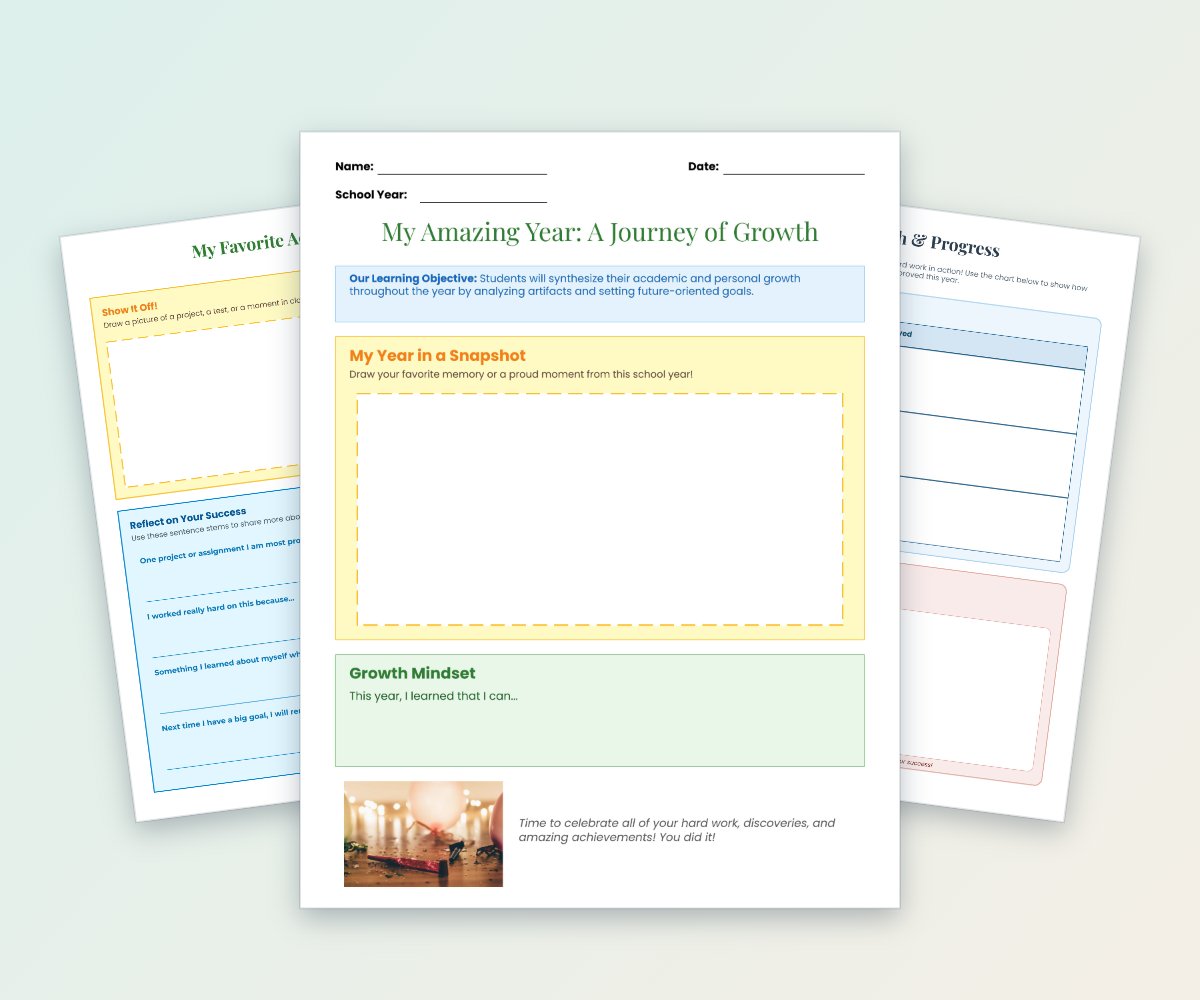
This six-page portfolio helps students reflect on academic growth, personal achievements, challenges overcome, and meaningful memories from the school year.
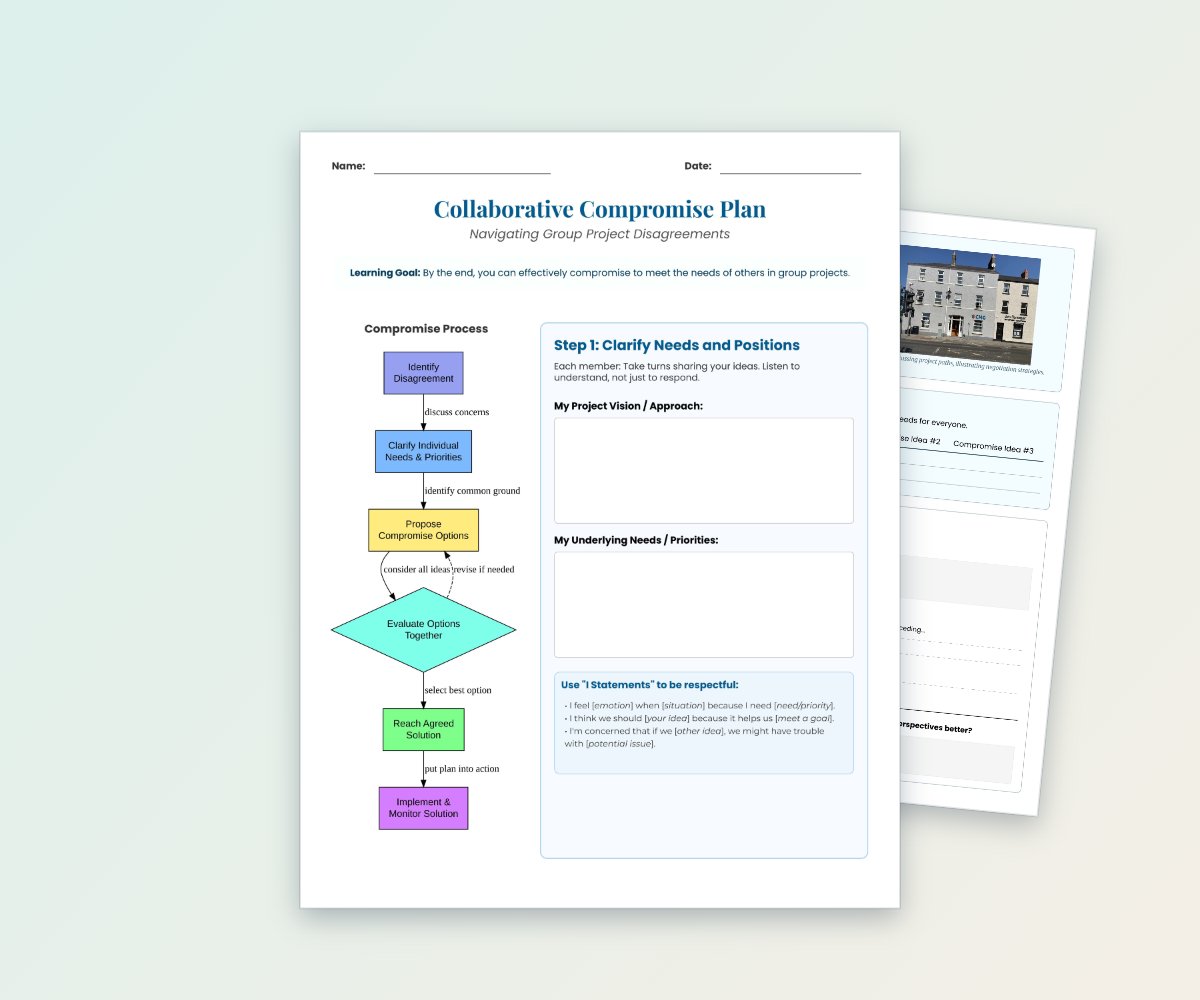
This two-page graphic organizer guides students through resolving group project disagreements.
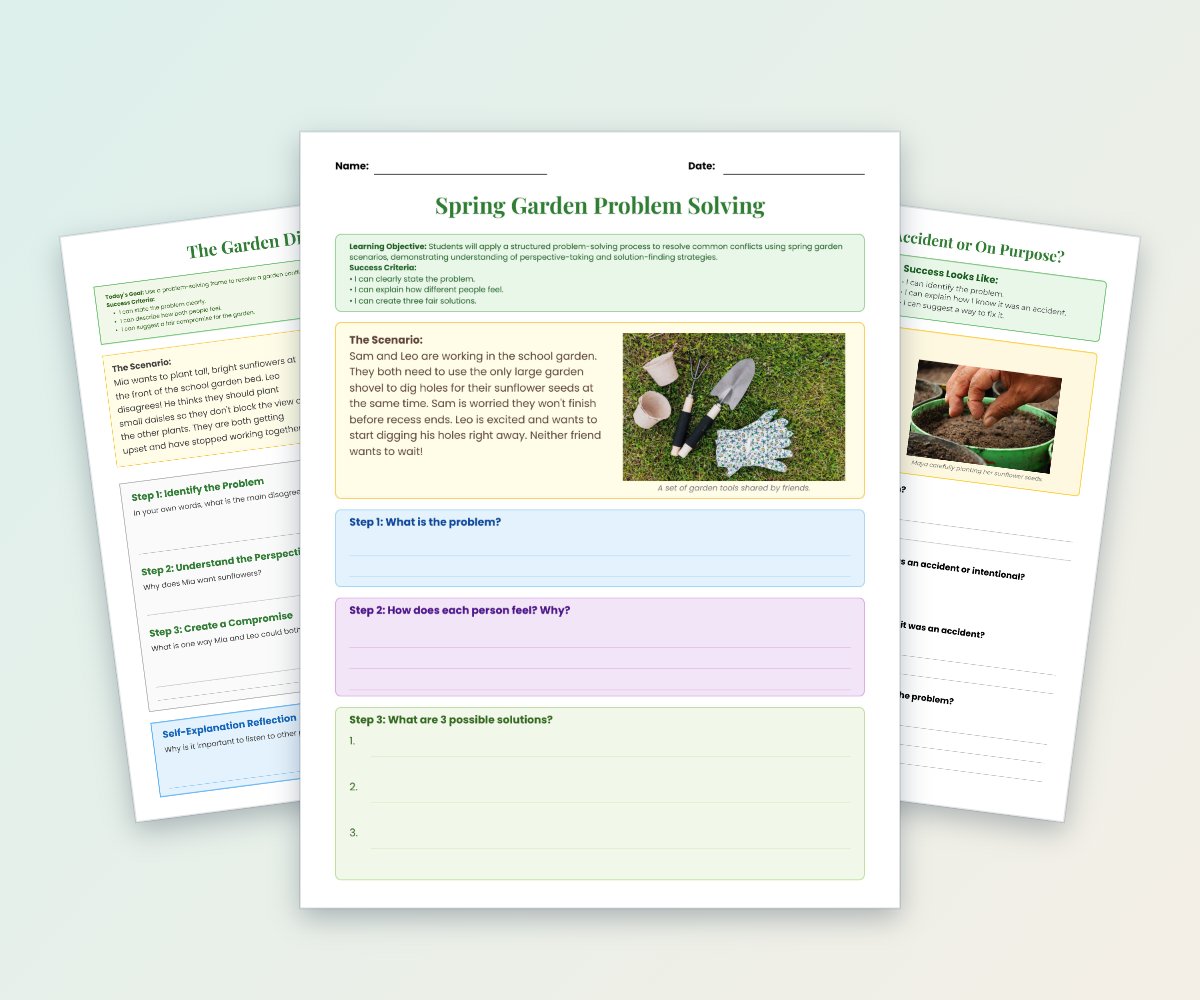
This six-page activity pack uses school garden scenarios to teach students how to identify conflicts, understand different perspectives, and develop fair solutions.
Students audit their three-day screen use, compare predictions with actual usage, and reflect on digital habits.
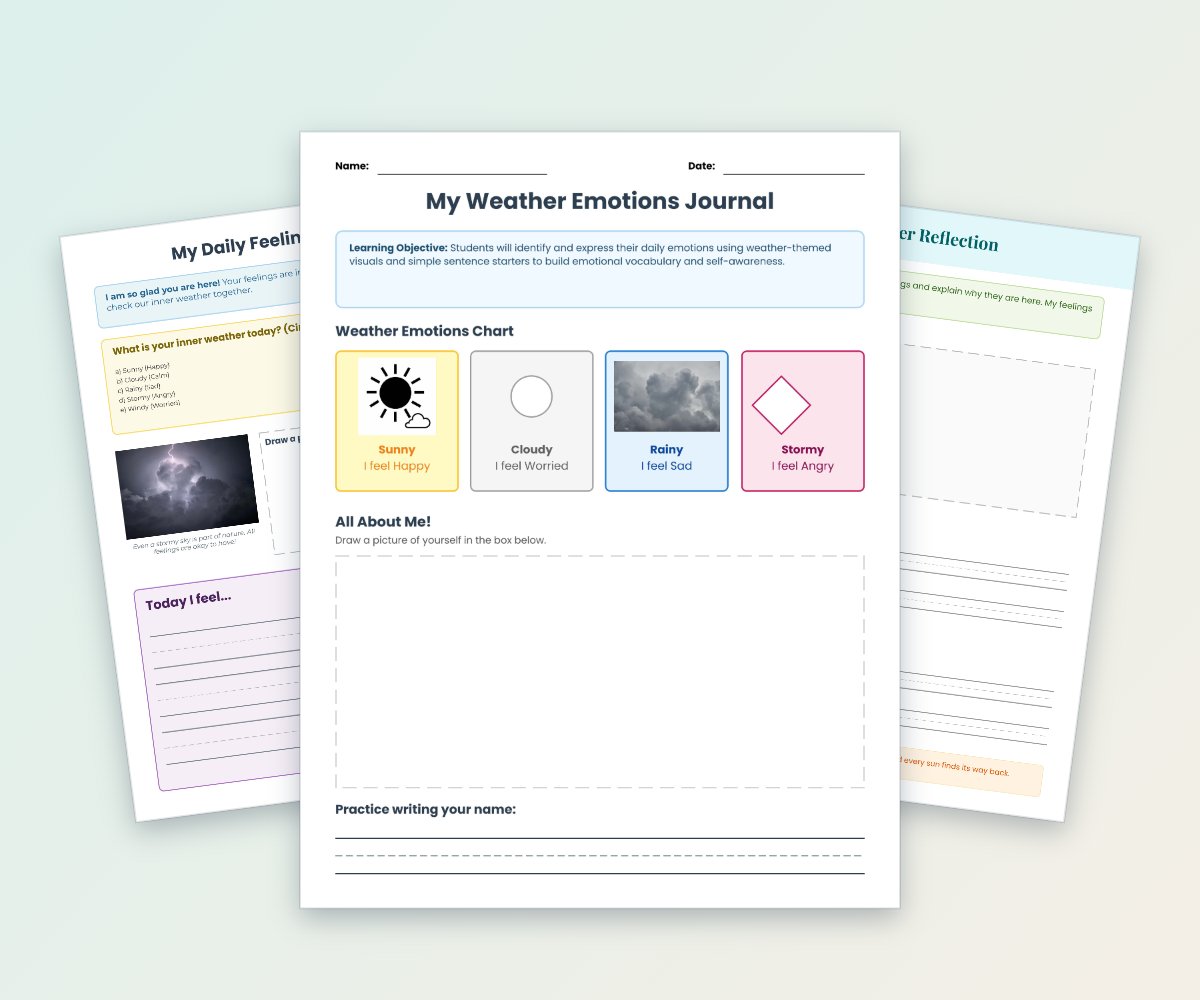
This four-page weather-themed journal helps young students identify, express, and reflect on their feelings using simple visuals and sentence starters.
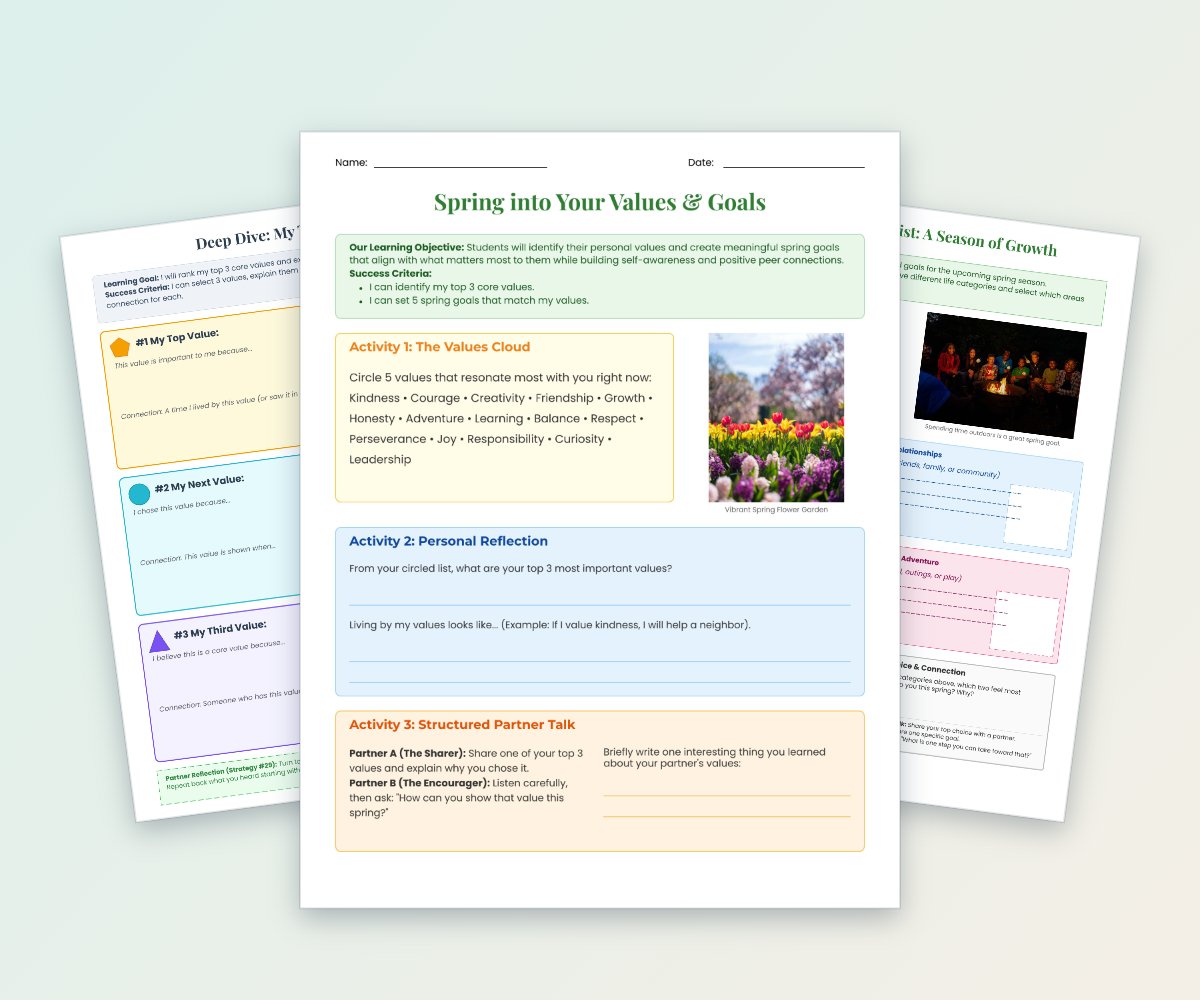
This five-page spring activity pack guides students through identifying core values, reflecting on personal growth, and creating meaningful seasonal goals.
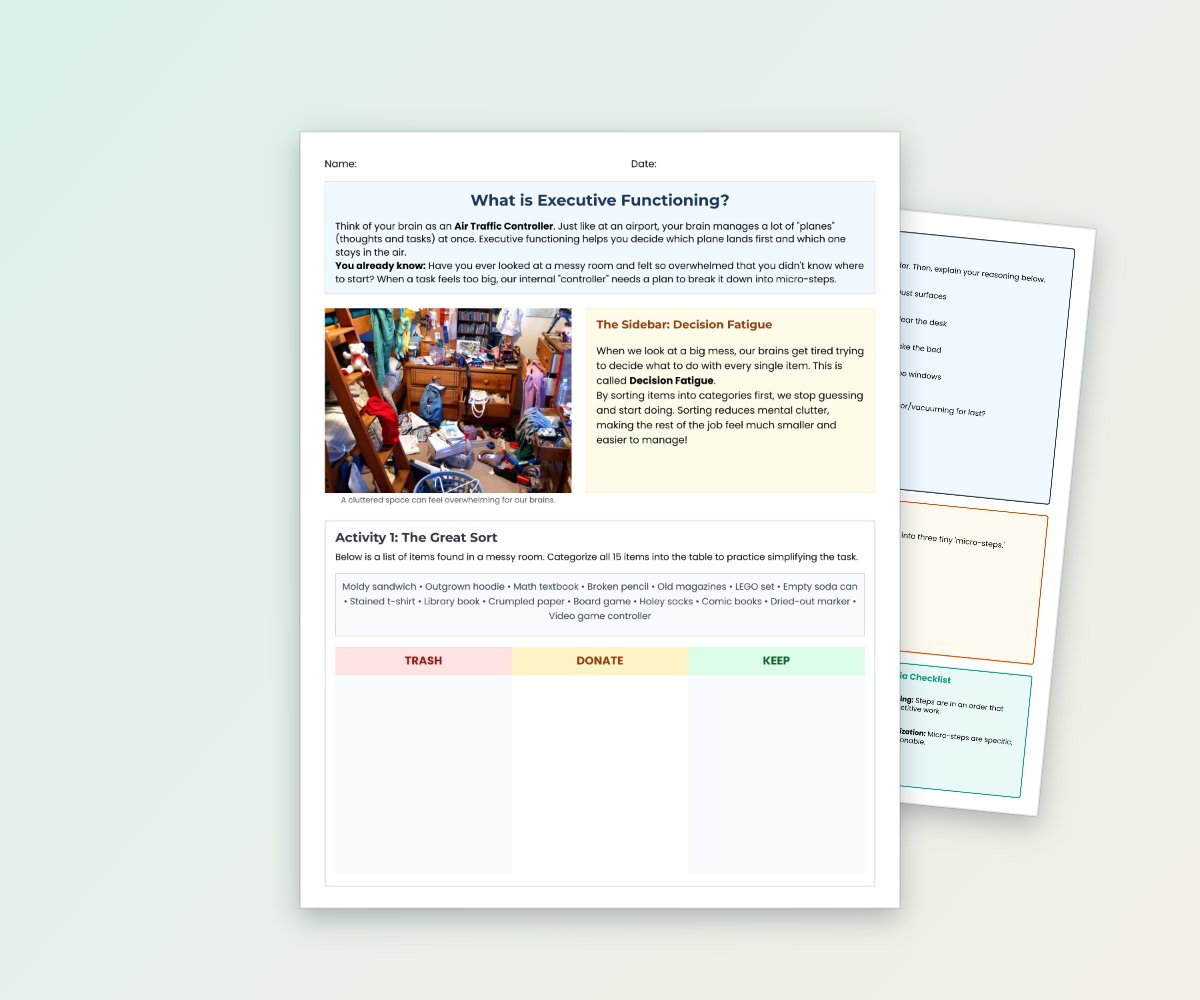
This two-page guide helps students practice executive functioning skills through spring-cleaning scenarios.
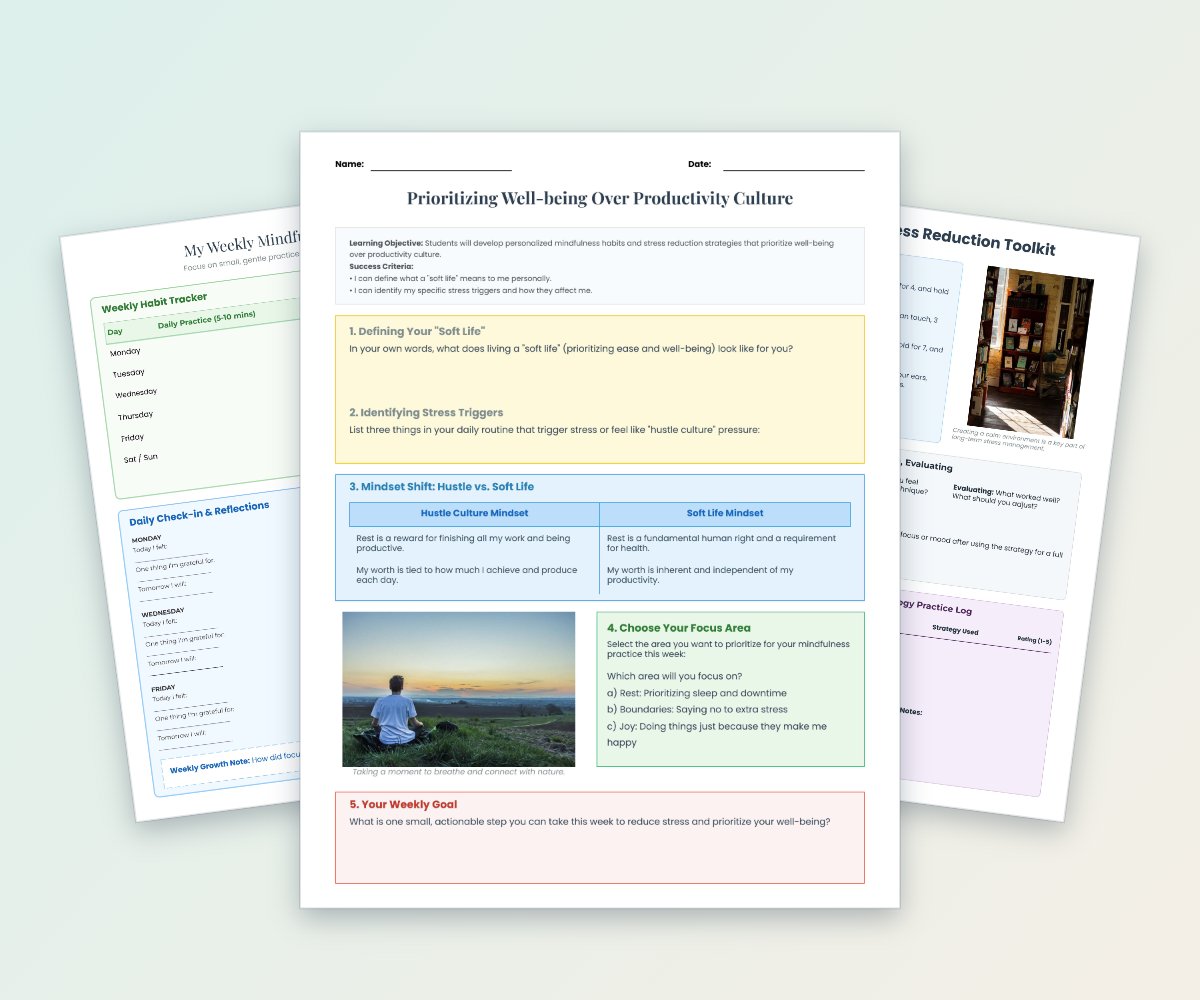
This four-page student activity pack helps learners explore well-being, identify stress triggers, and shift away from productivity-based self-worth.
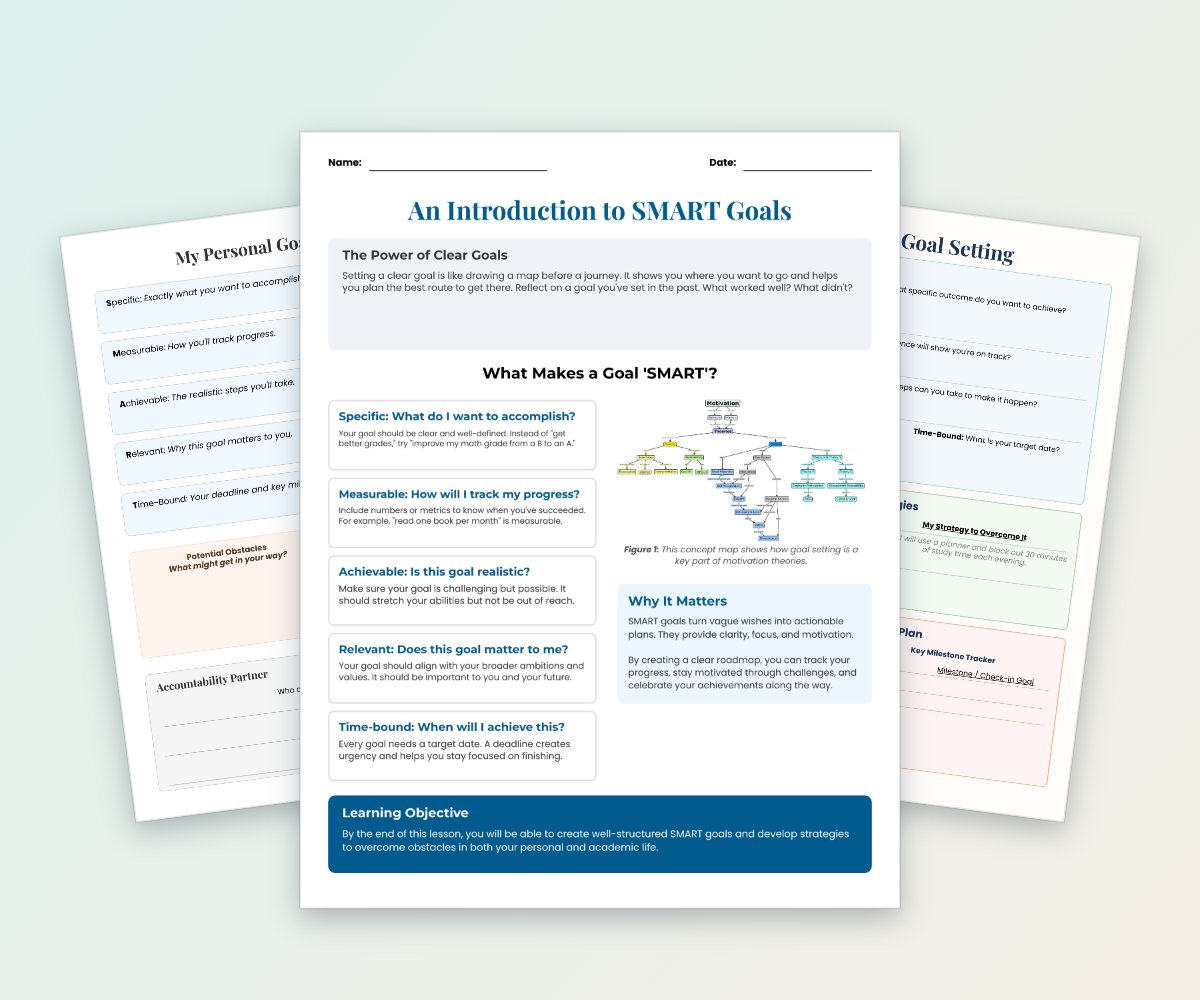
This four-page resource introduces the SMART goal framework and guides learners through creating personal and academic goals.
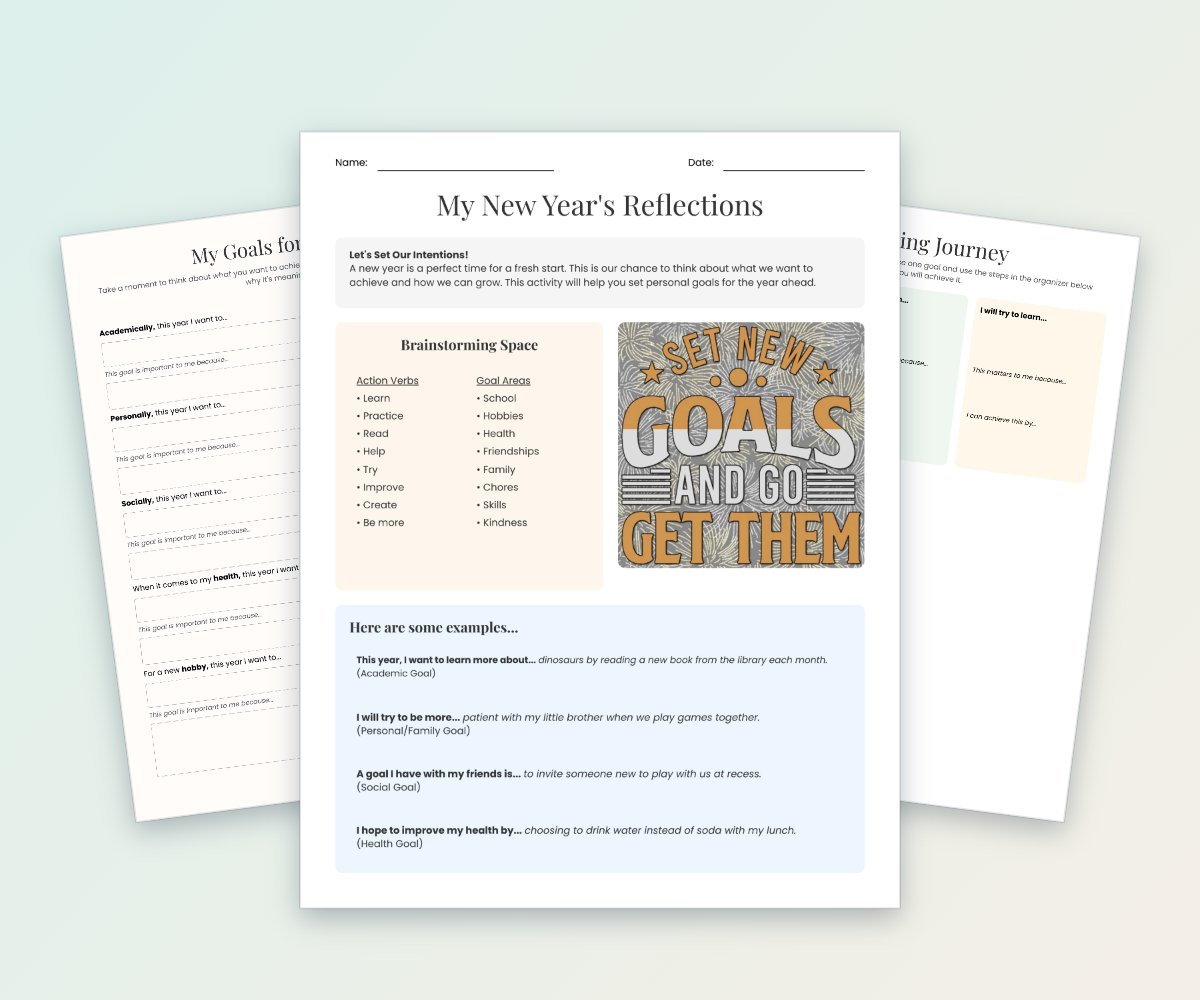
Guide students through reflecting on the past year and setting academic, personal, social, health, and hobby goals.
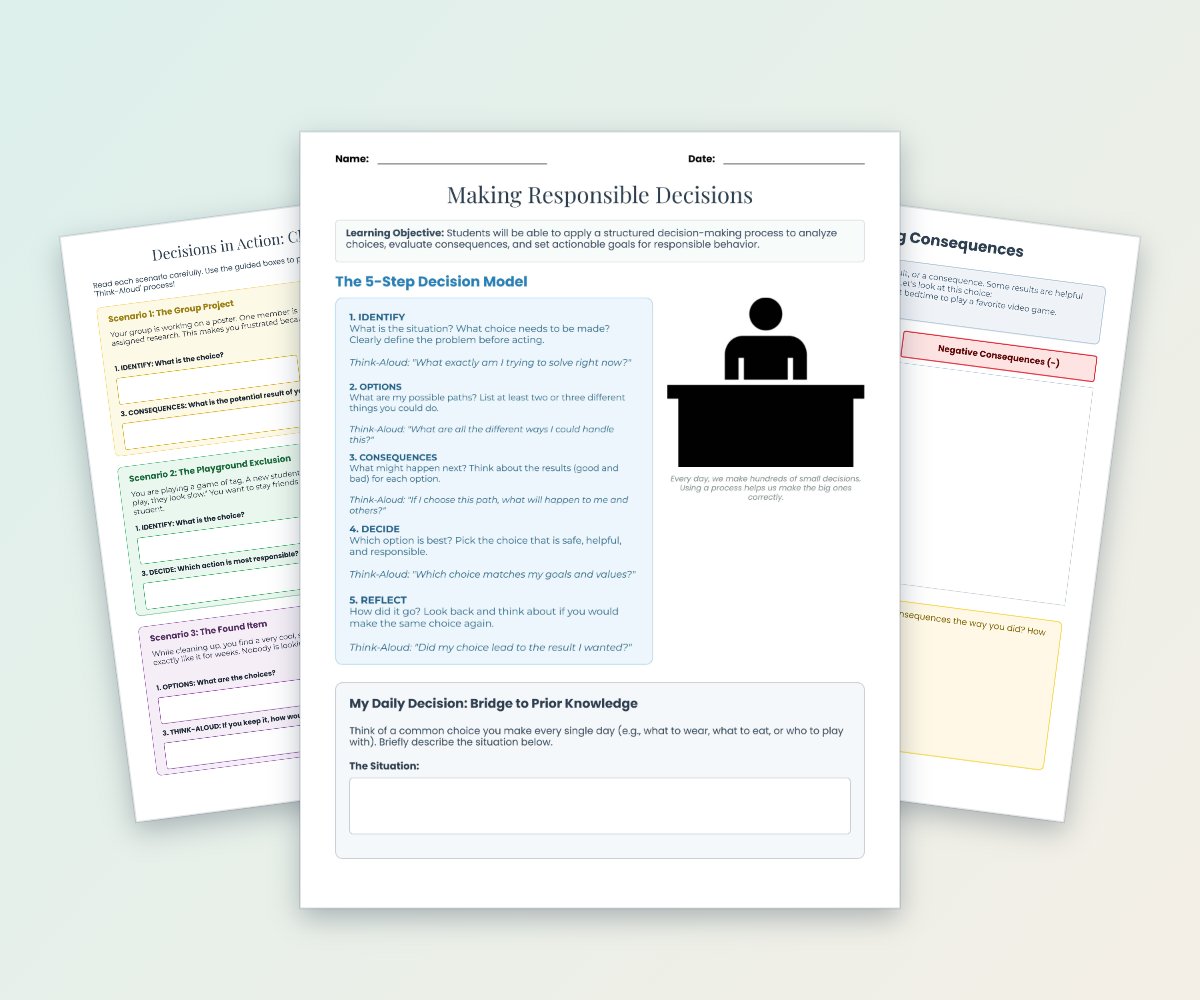
This six-page student toolkit teaches a five-step decision-making model: identify, consider options, evaluate consequences, decide, and reflect.
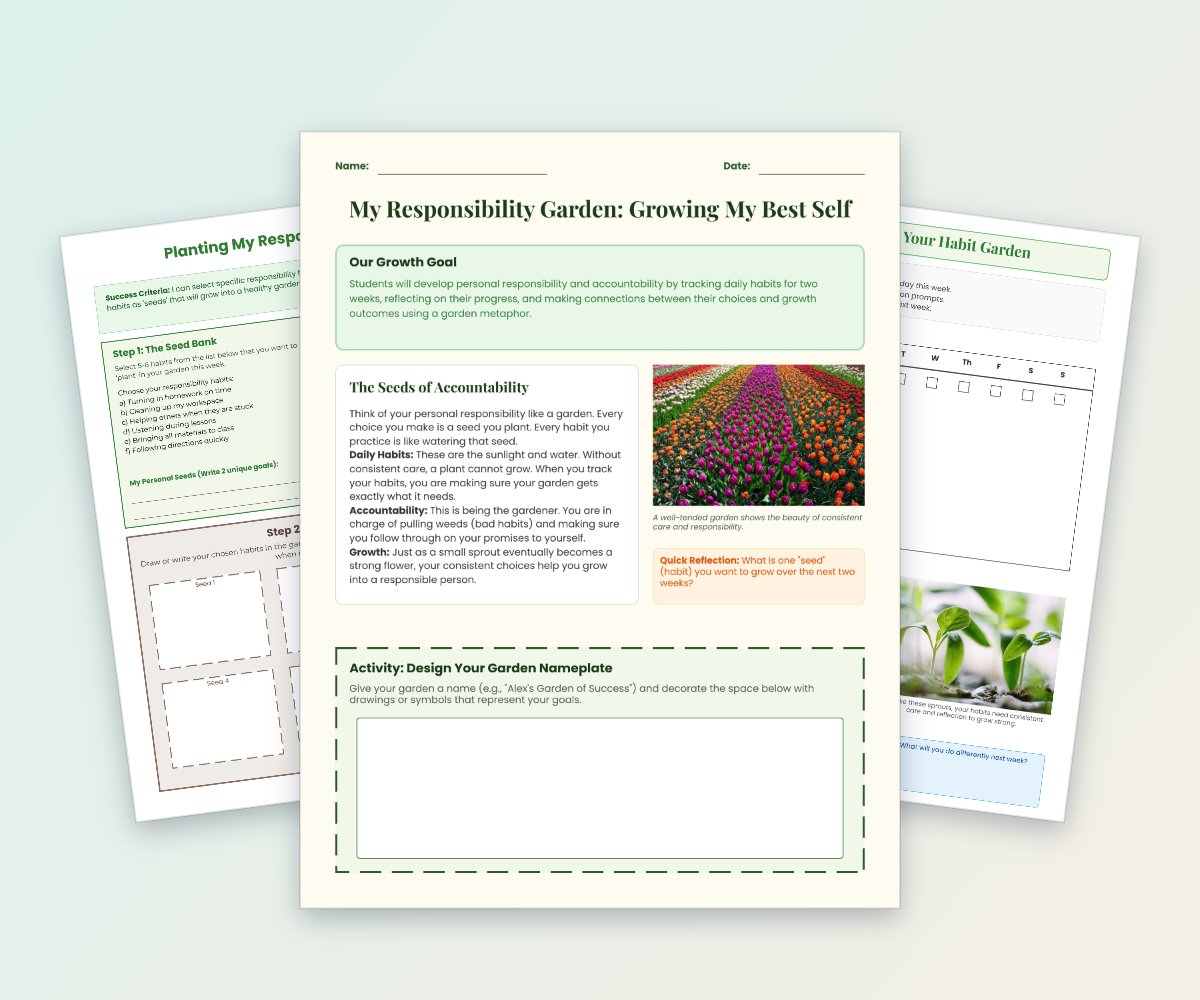
This five-page activity pack uses a garden metaphor to help students select responsibility habits, track progress for two weeks, and reflect on personal growth.
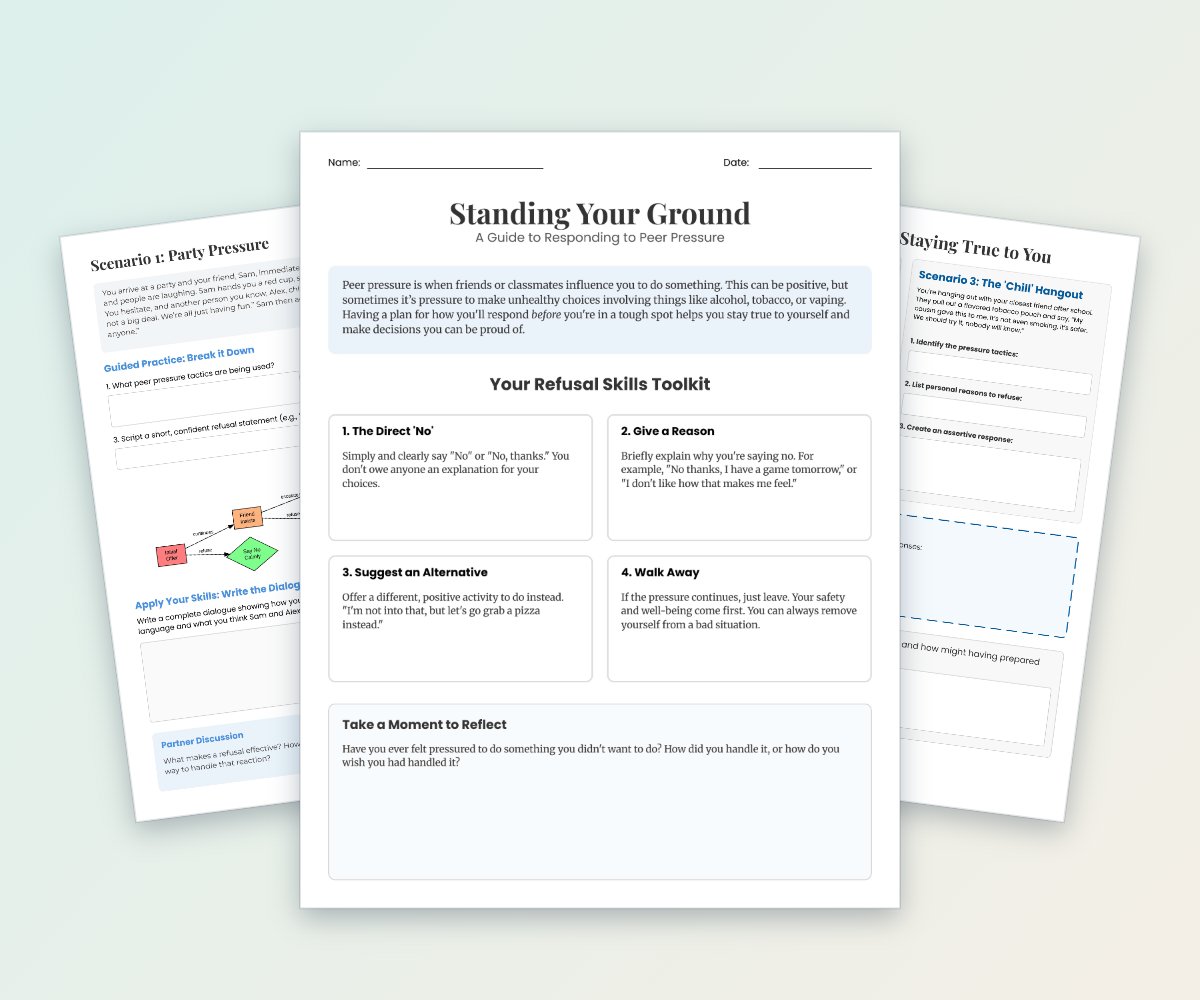
This four-page worksheet helps students recognize peer-pressure tactics and practice confident refusal strategies.
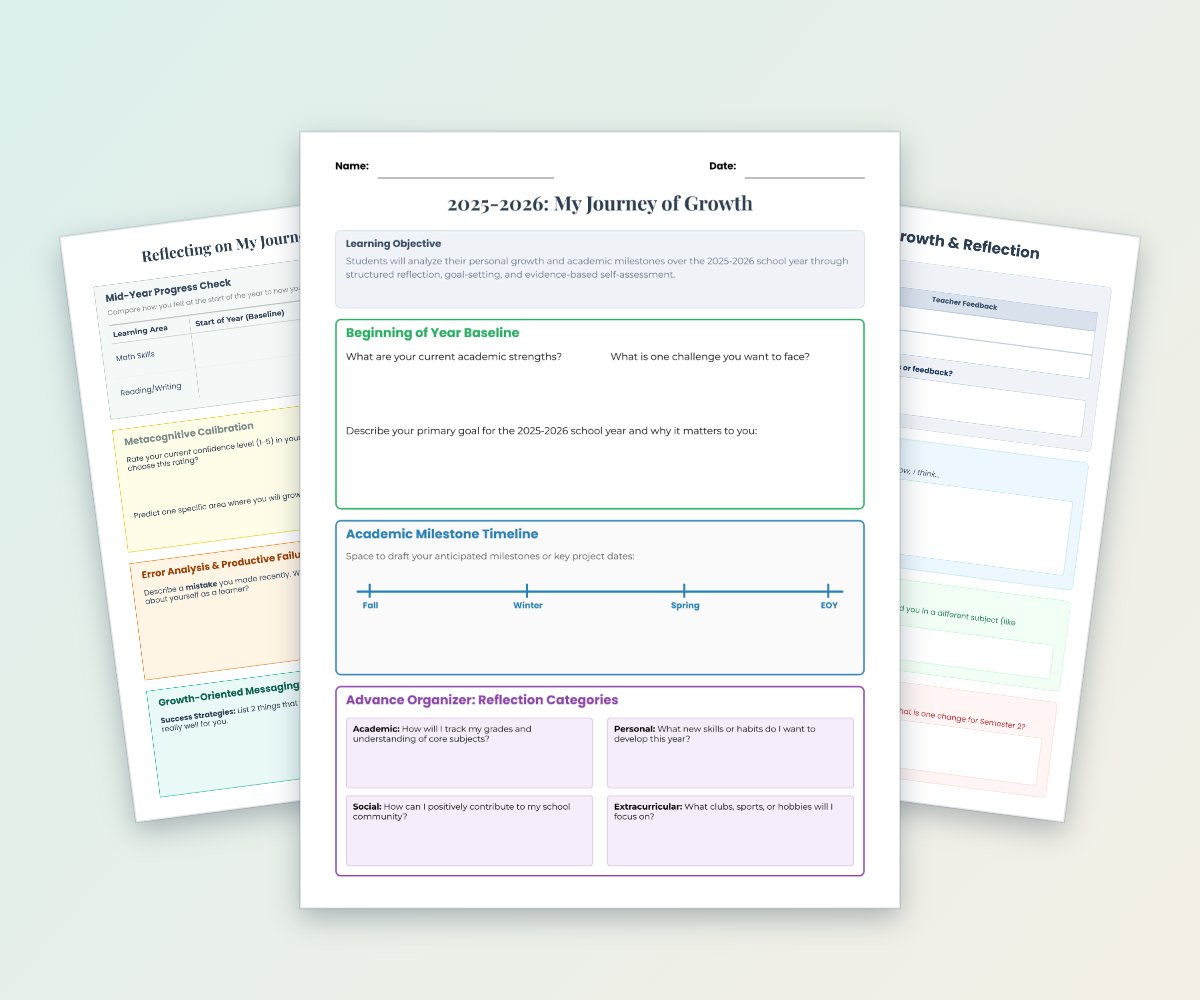
This four-page student journal guides learners through baseline reflection, milestone planning, progress checks, error analysis, academic evidence review, and end-of-year goal setting.
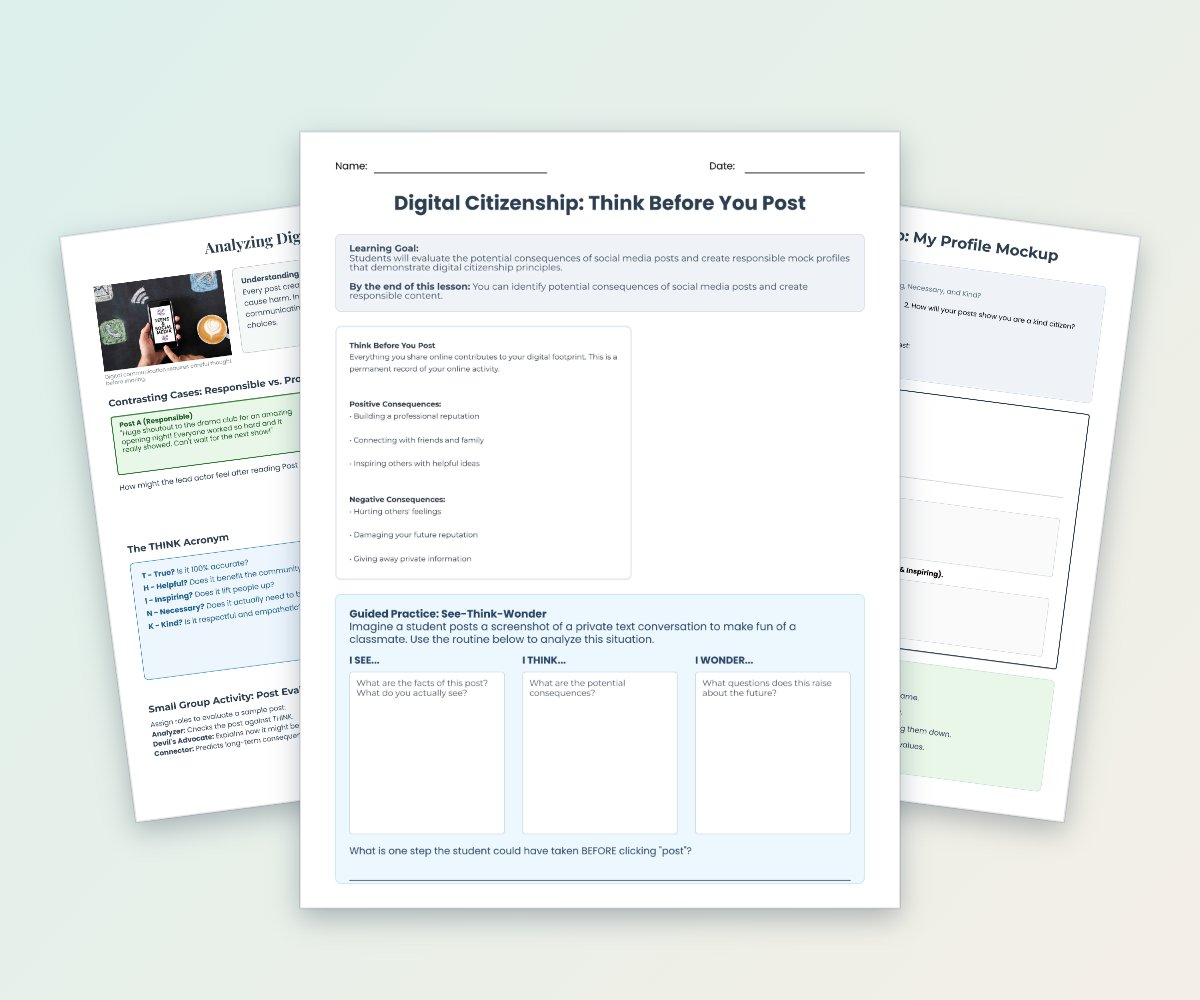
This lesson helps students evaluate the potential consequences of social media posts and make responsible choices online.
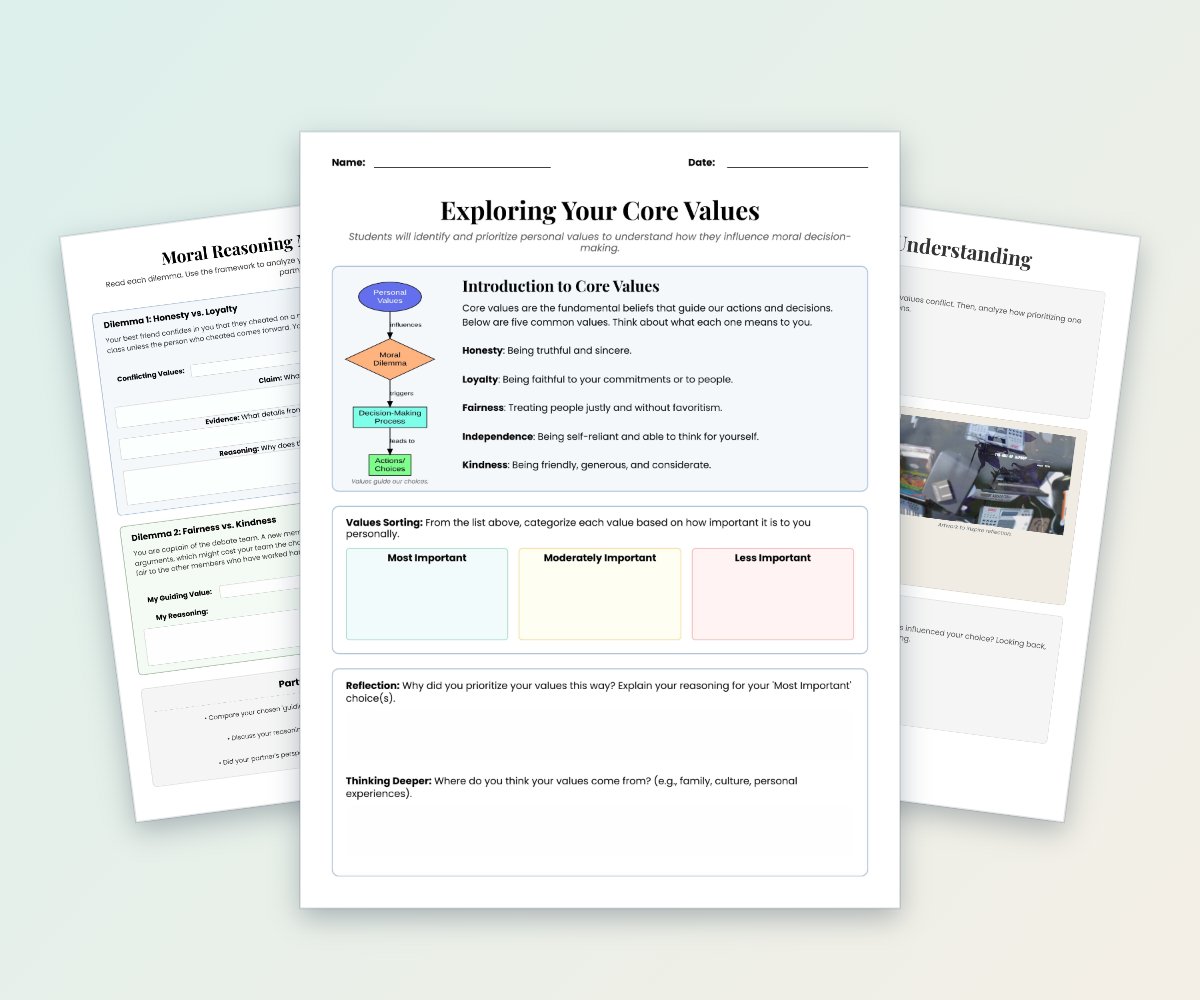
Students define and prioritize core values, then apply them to moral dilemmas involving honesty, loyalty, fairness, and kindness.
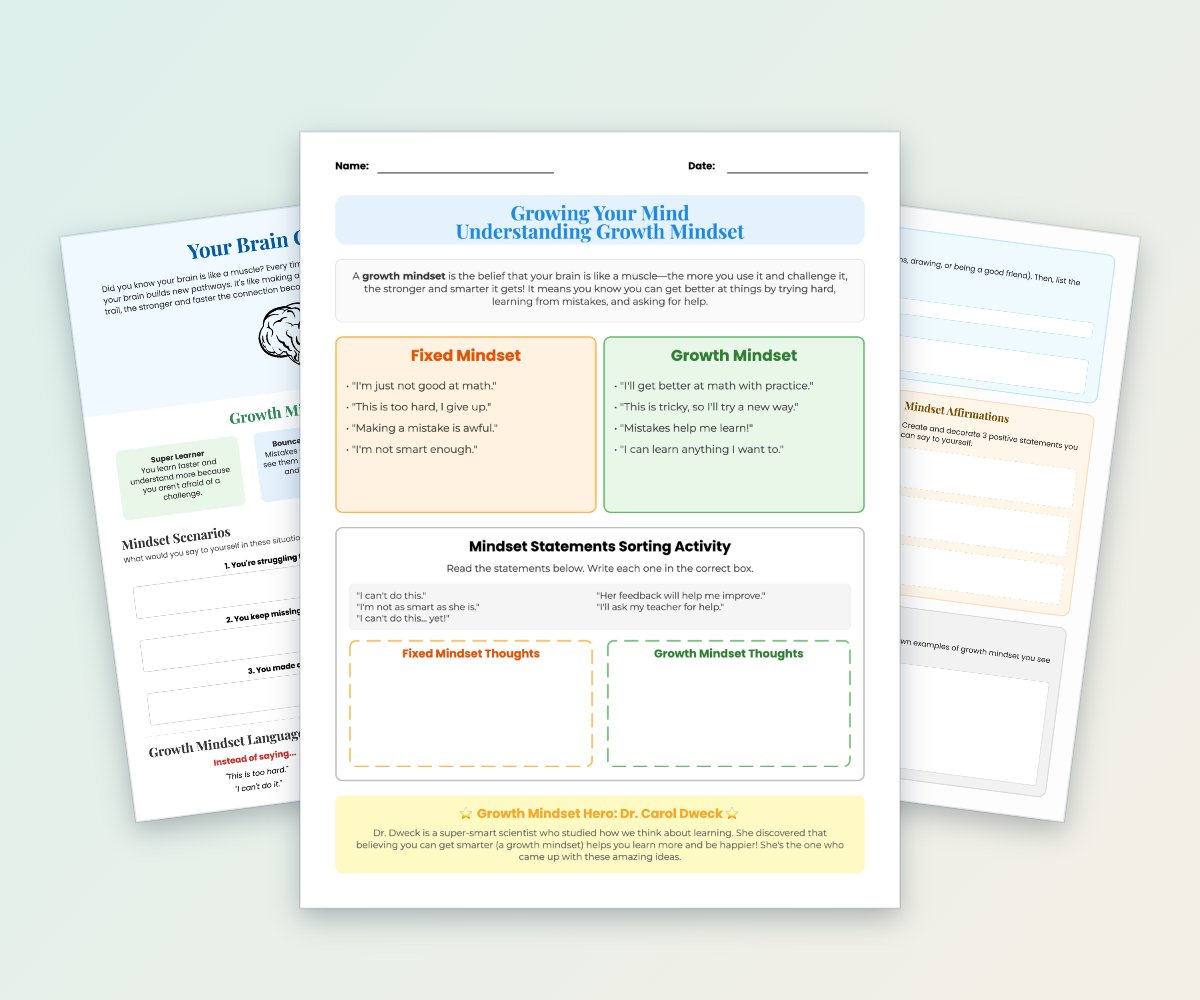
This three-page printable introduces growth mindset through explanations, fixed-versus-growth mindset sorting, scenarios, reflection, and a personal growth plan.
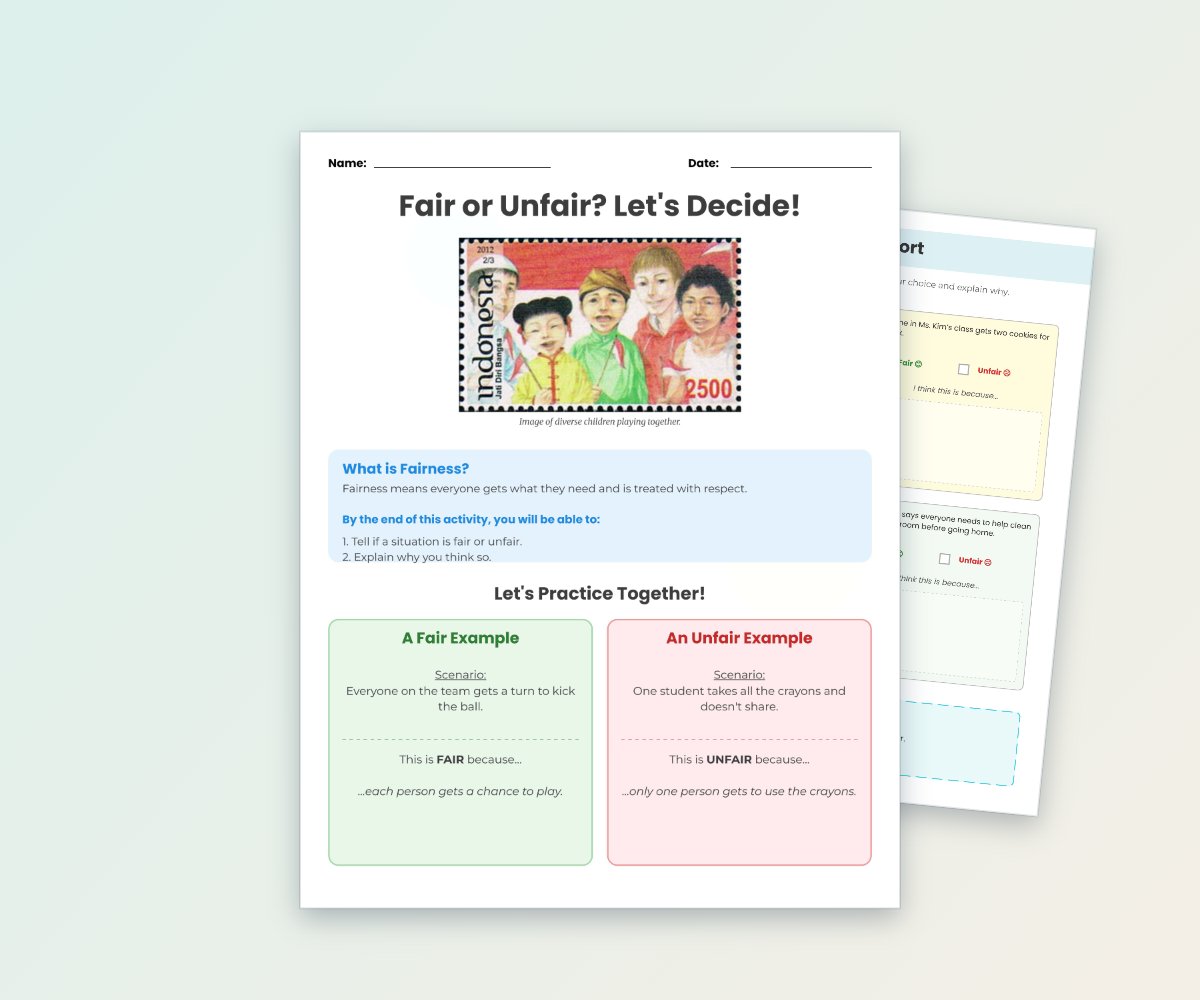
Students learn that fairness means receiving needed support and being treated with respect.
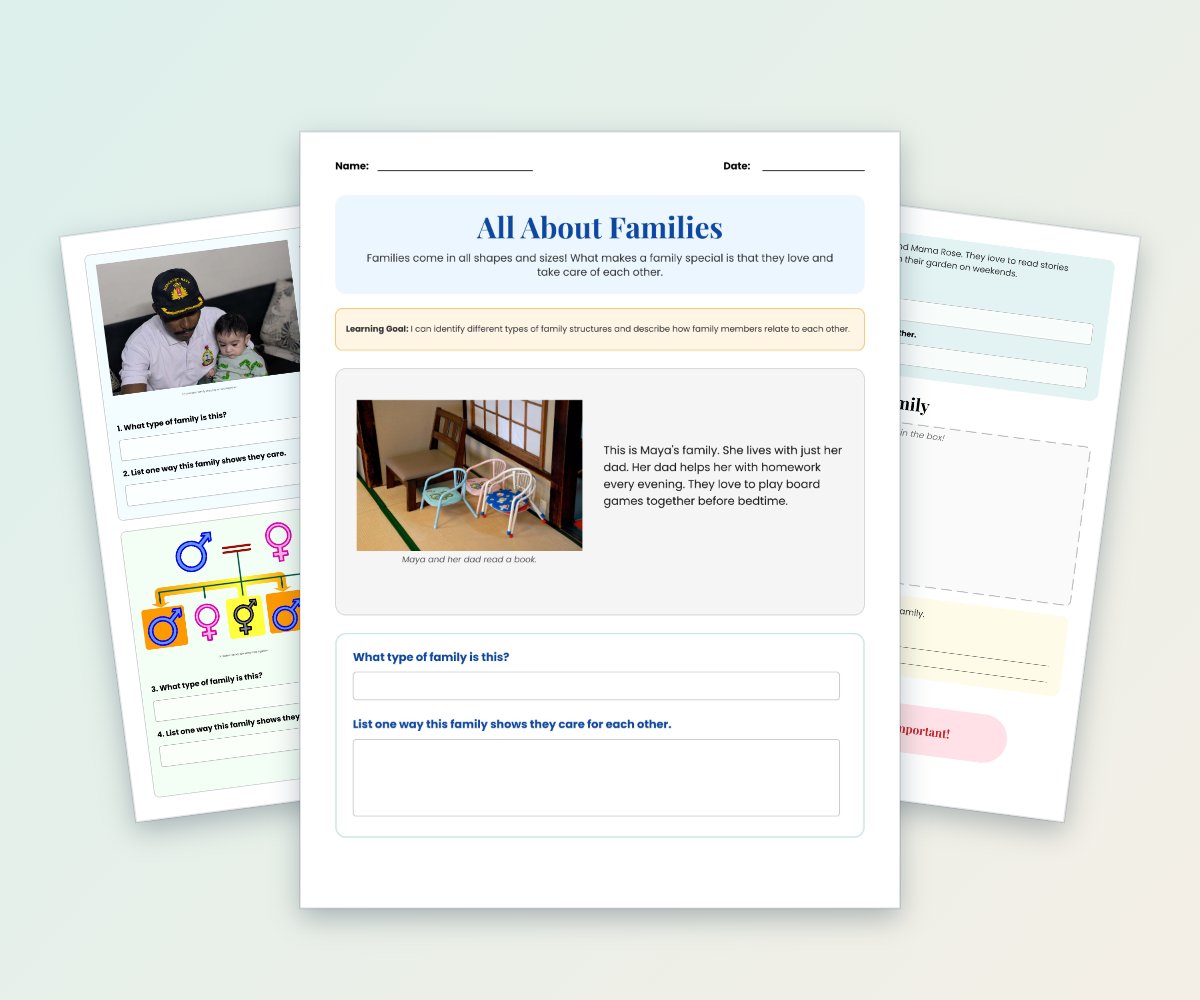
This three-page worksheet introduces students to different family structures, including single-parent, extended, nuclear, and same-sex parent families.
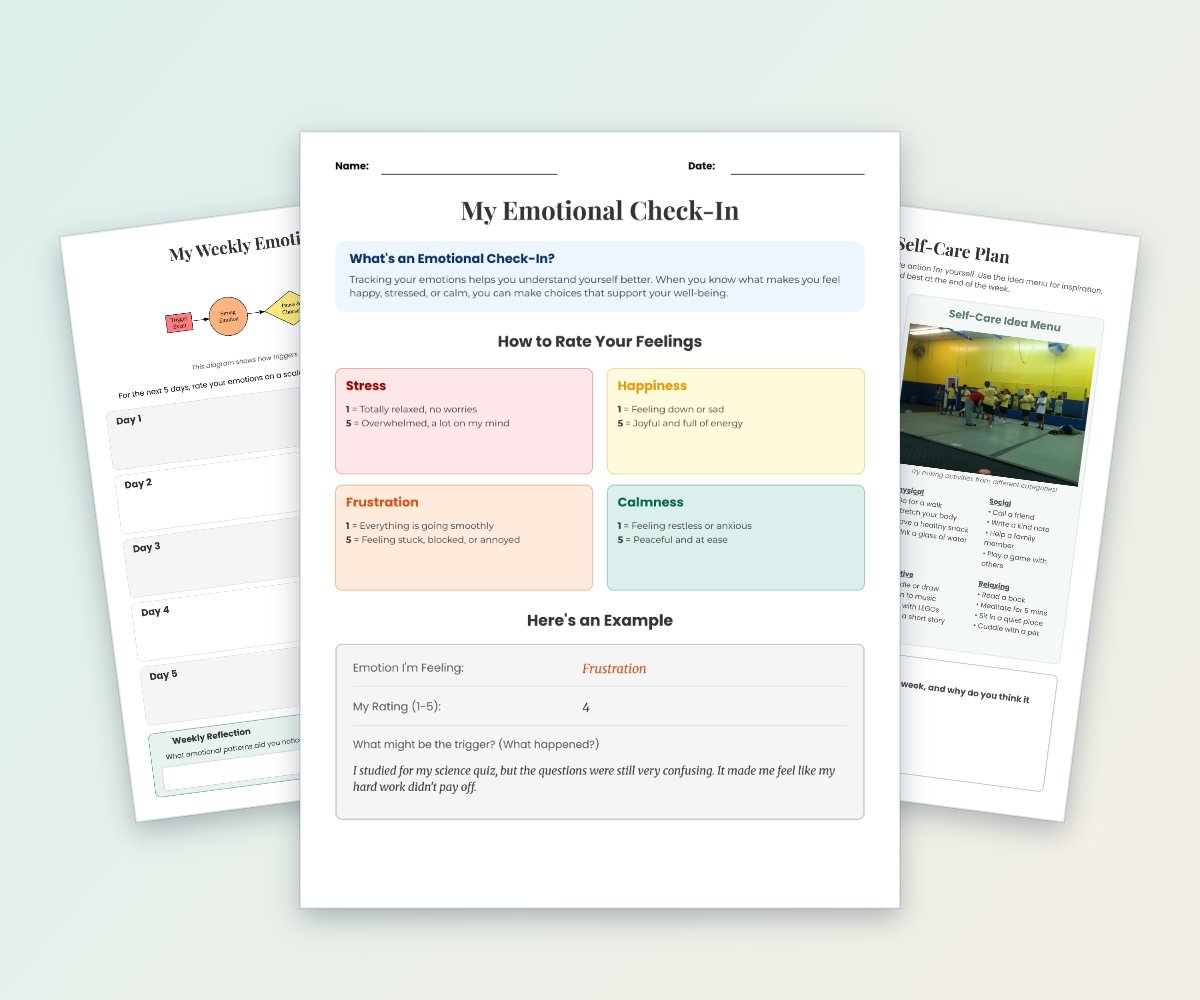
This four-page guide helps students track emotions, identify triggers, reflect on behavior, and develop personal coping strategies.
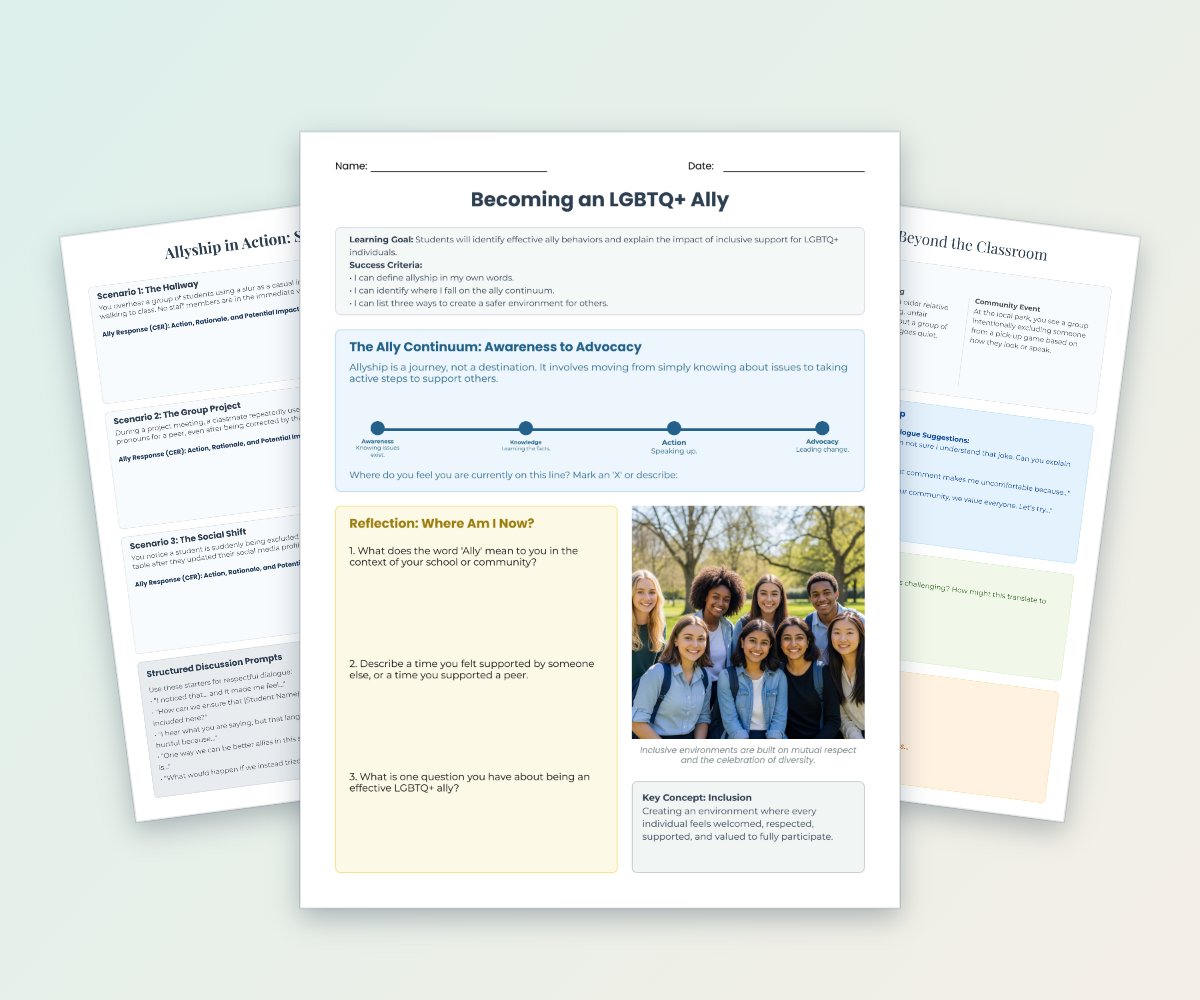
This four-page classroom resource helps students explore allyship, inclusion, and ways to create safer environments for LGBTQ+ peers.
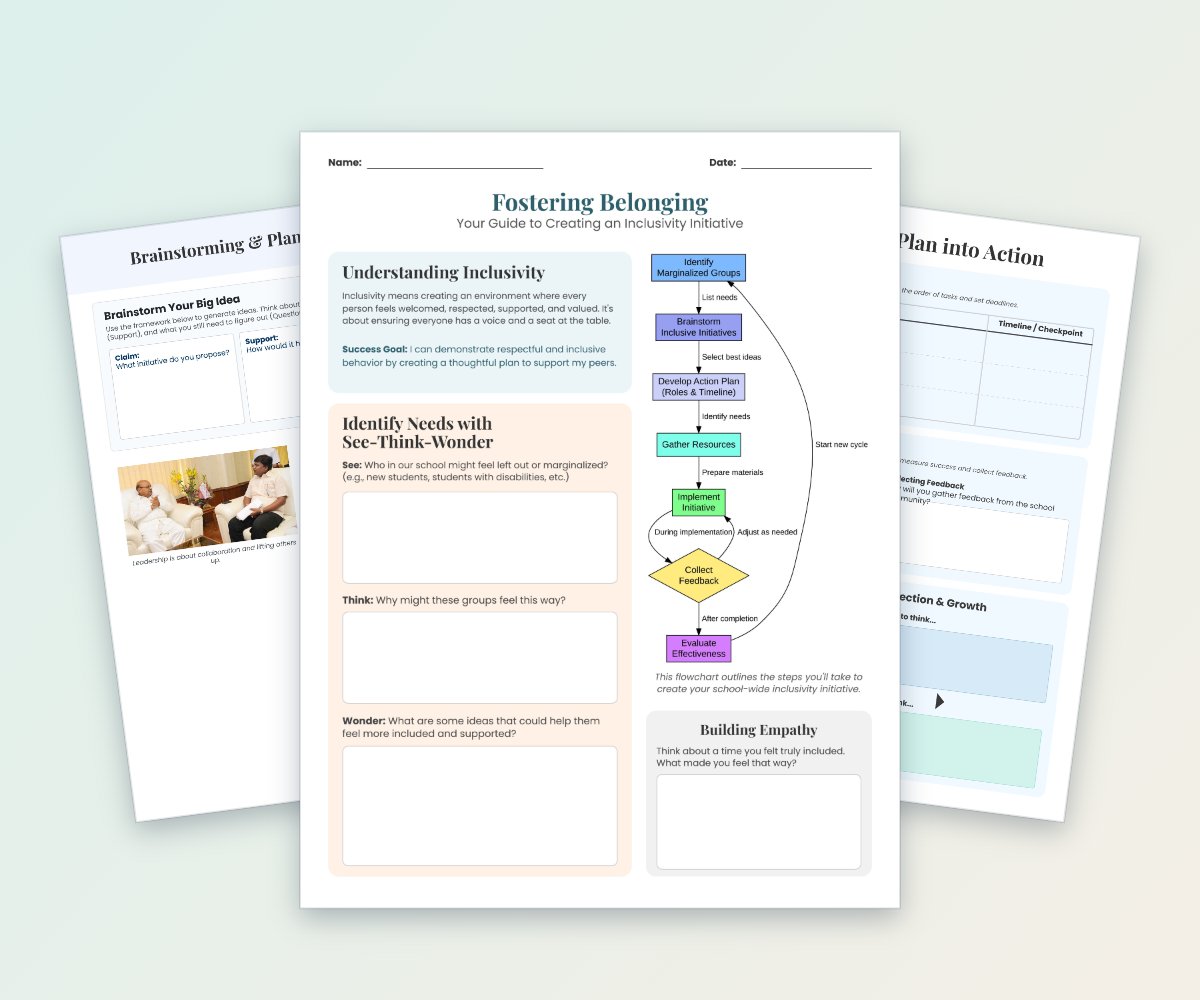
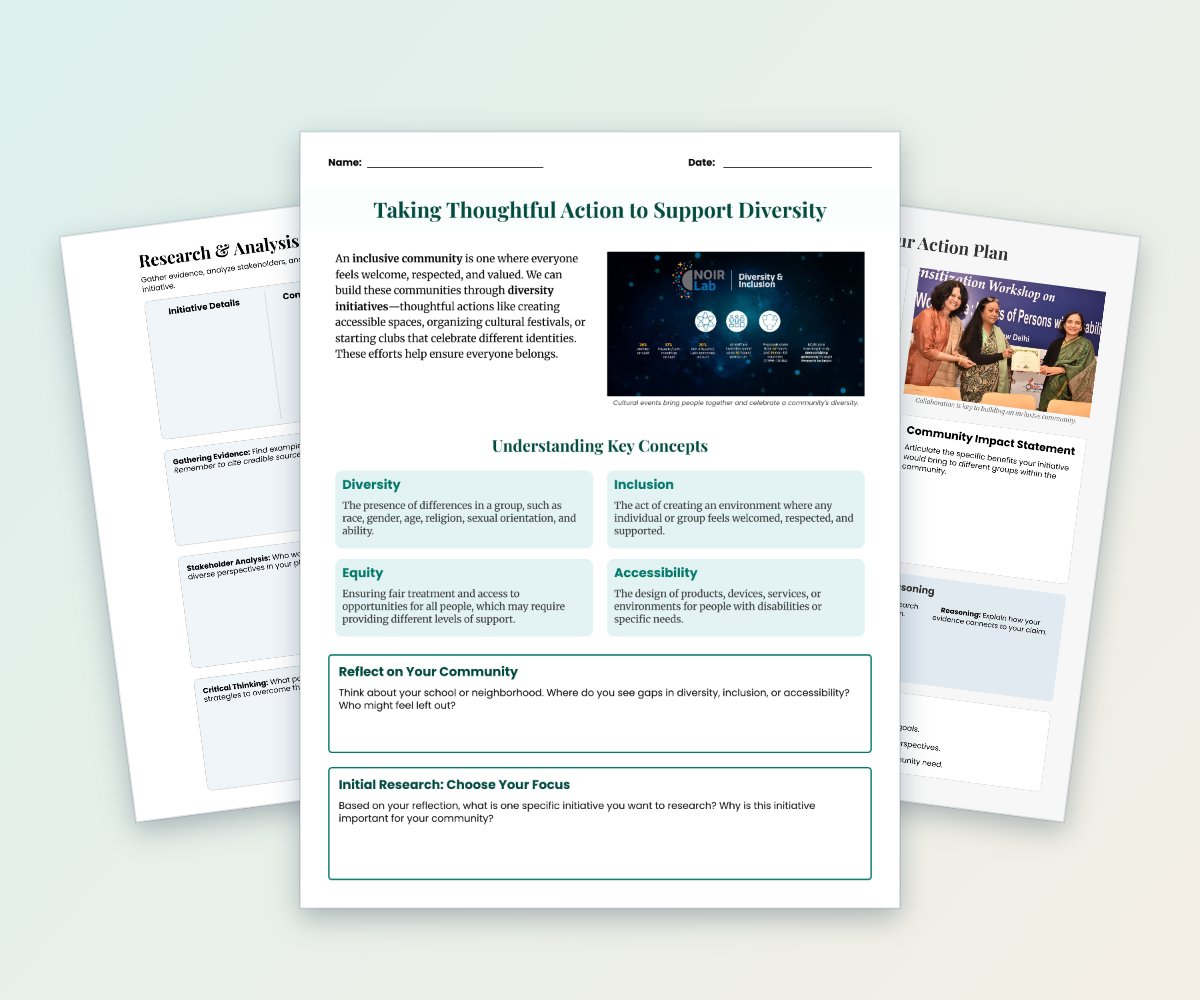
This three-page guide helps students identify exclusion and marginalization, brainstorm inclusive initiatives, and create an action plan.
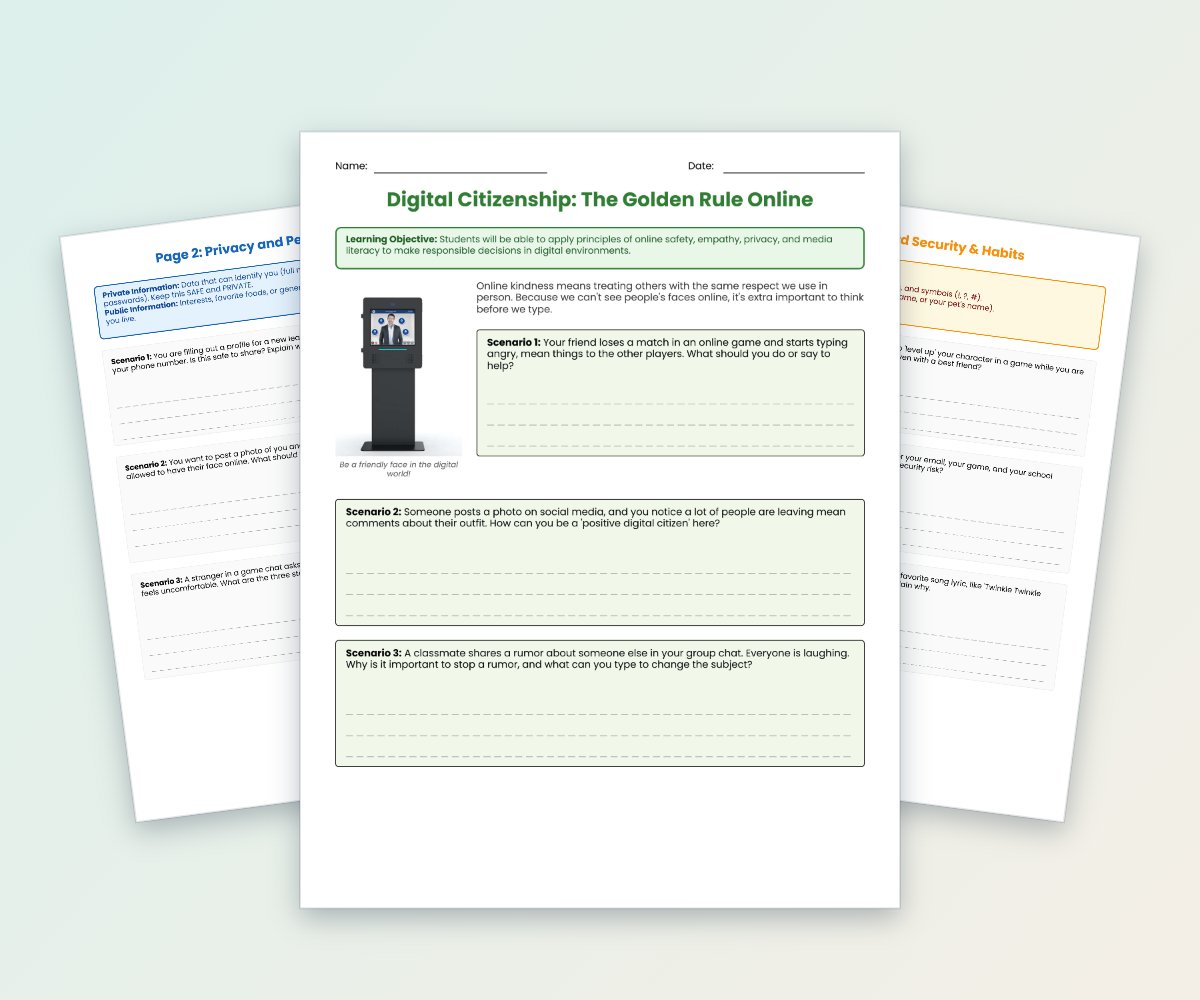
A six-page student guide teaching digital kindness, privacy protection, password security, and responsible online decision-making.
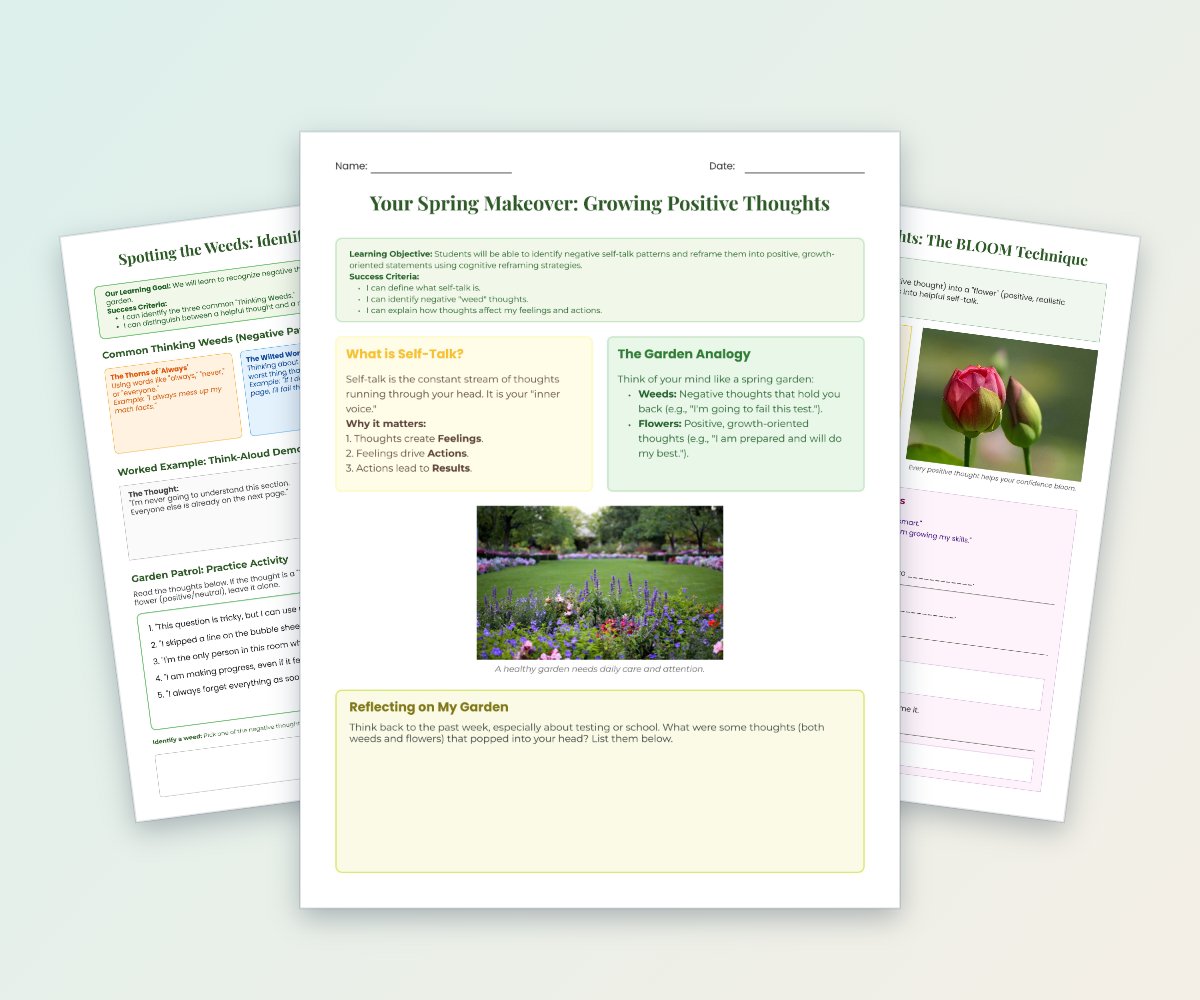
Students explore self-talk using a spring garden analogy, identifying negative “thinking weeds” and positive, growth-oriented thoughts.
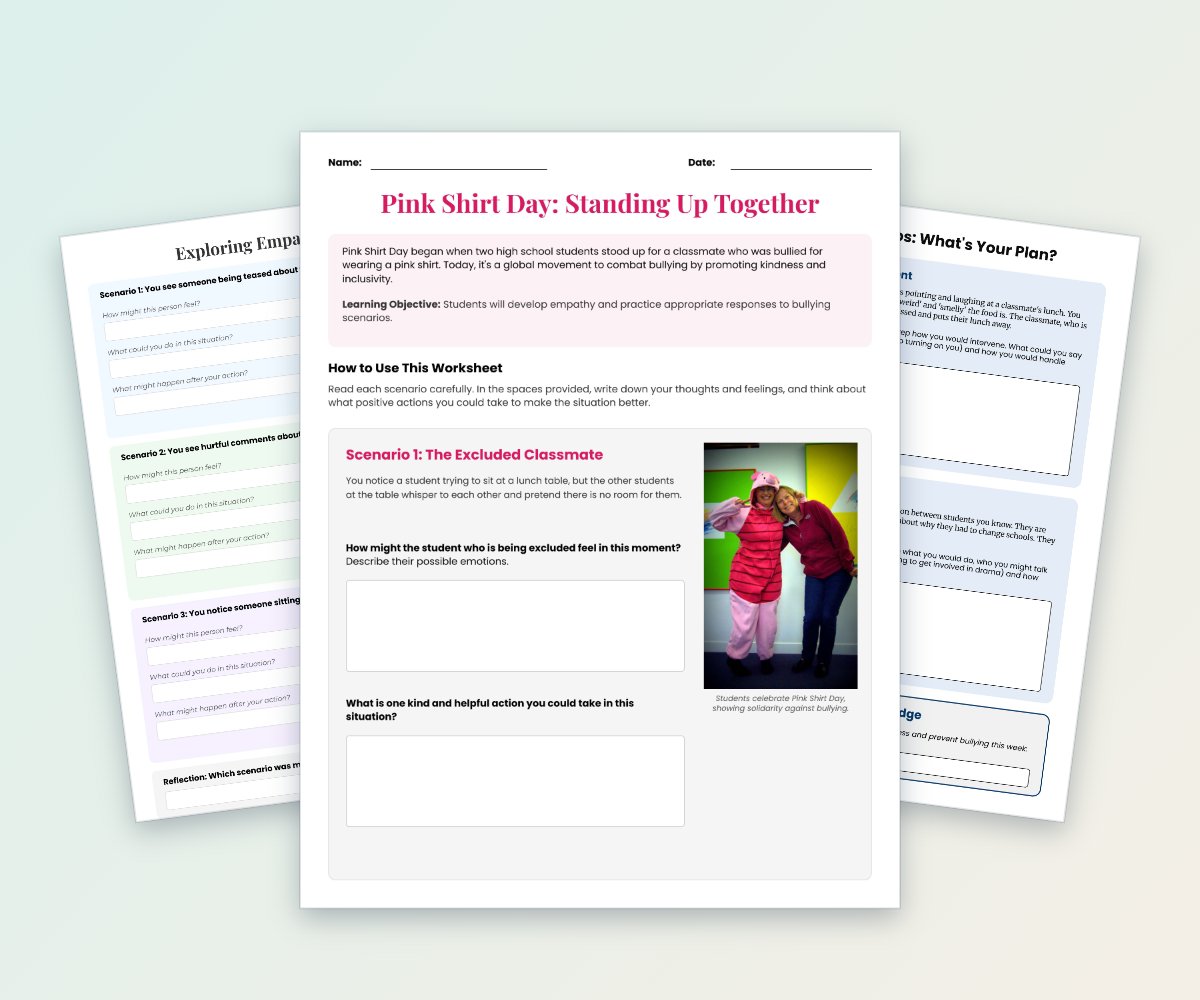
This four-page Pink Shirt Day worksheet helps students explore empathy, inclusion, and appropriate responses to bullying.
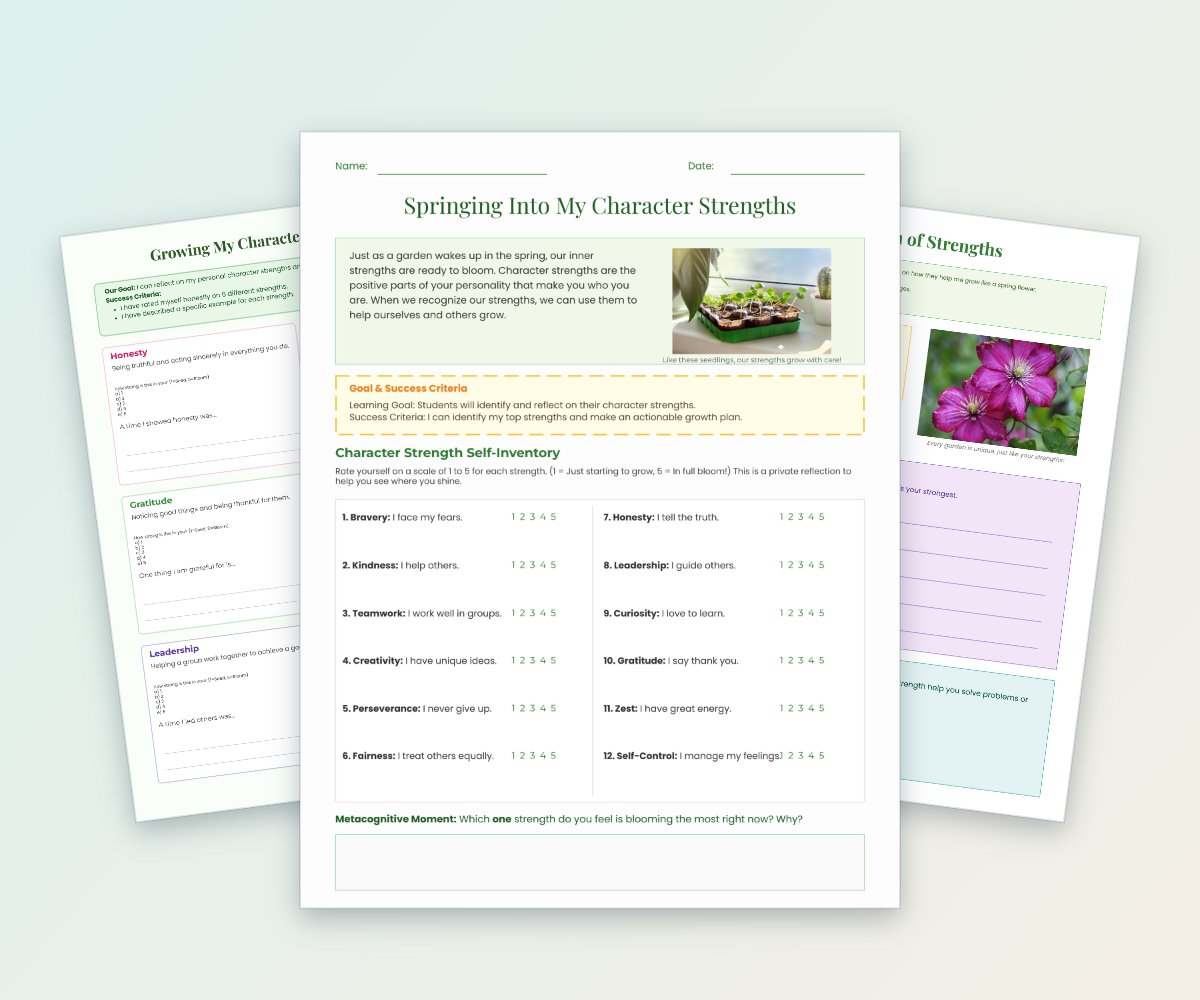
Students identify, rate, and reflect on personal character strengths using a spring-themed self-inventory.
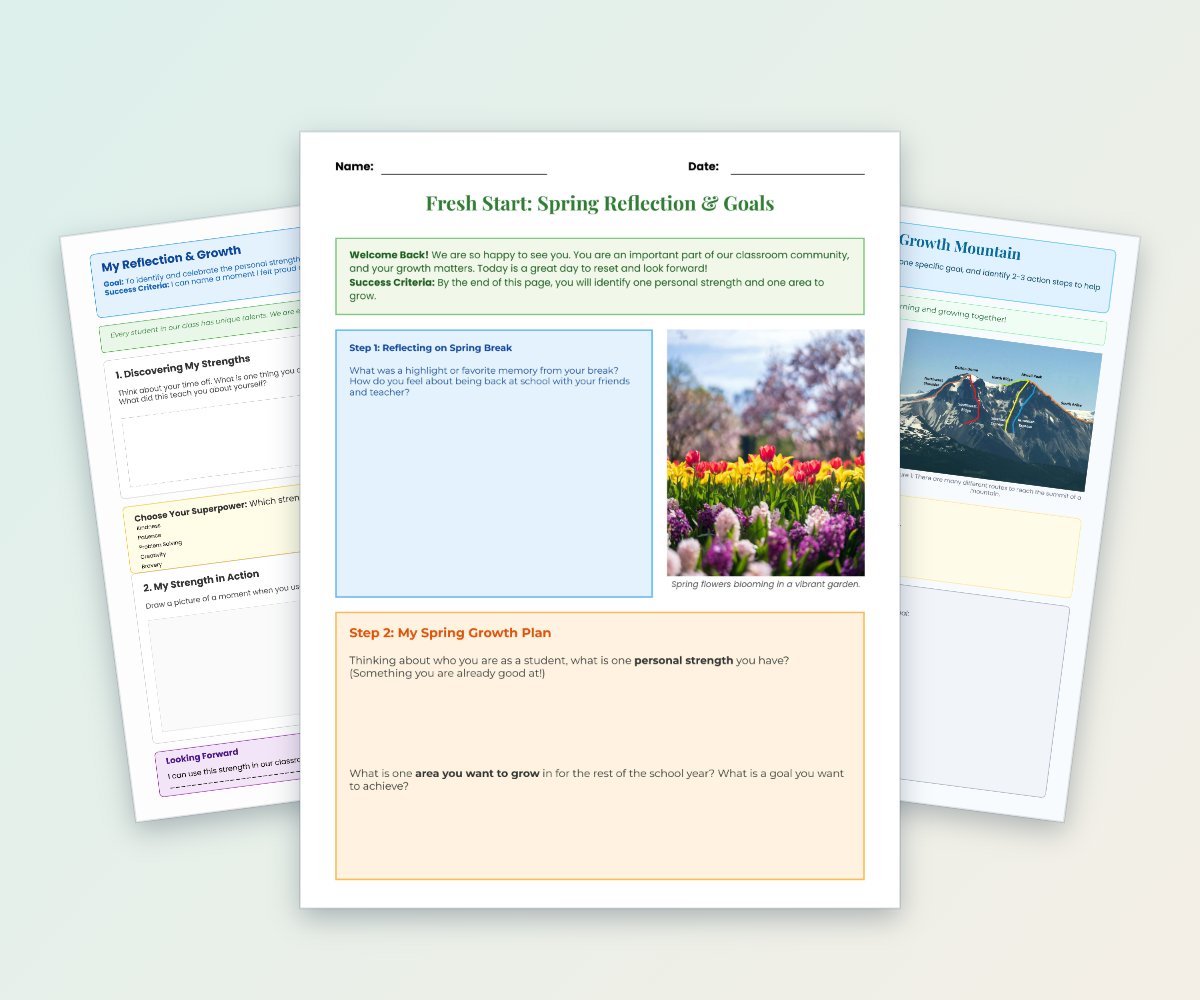
Help students return from spring break with guided reflection, strengths identification, and personal goal-setting activities.
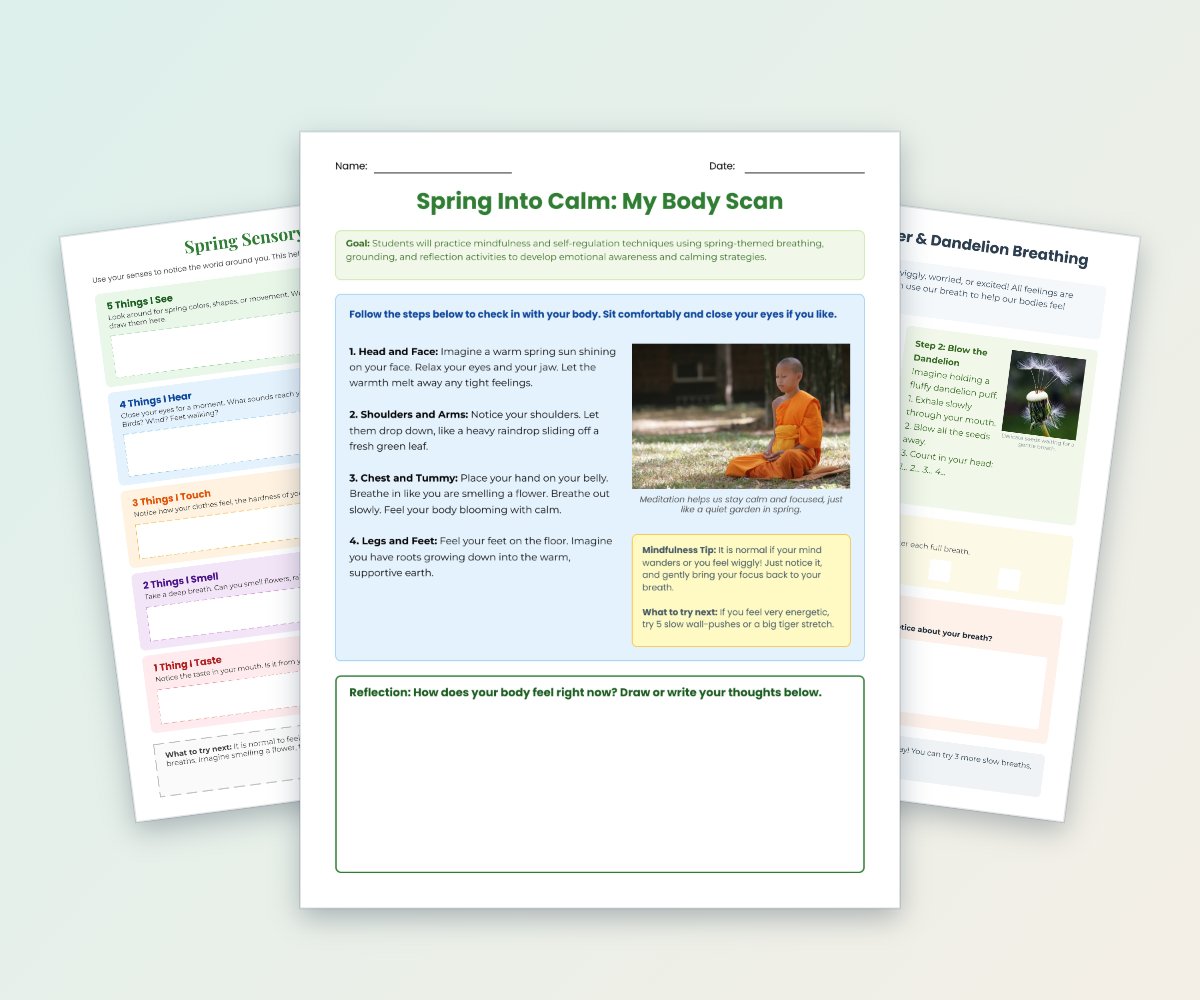
This spring-themed activity pack guides students through a body scan, sensory grounding, breathing, reflection, and calming movement activities.
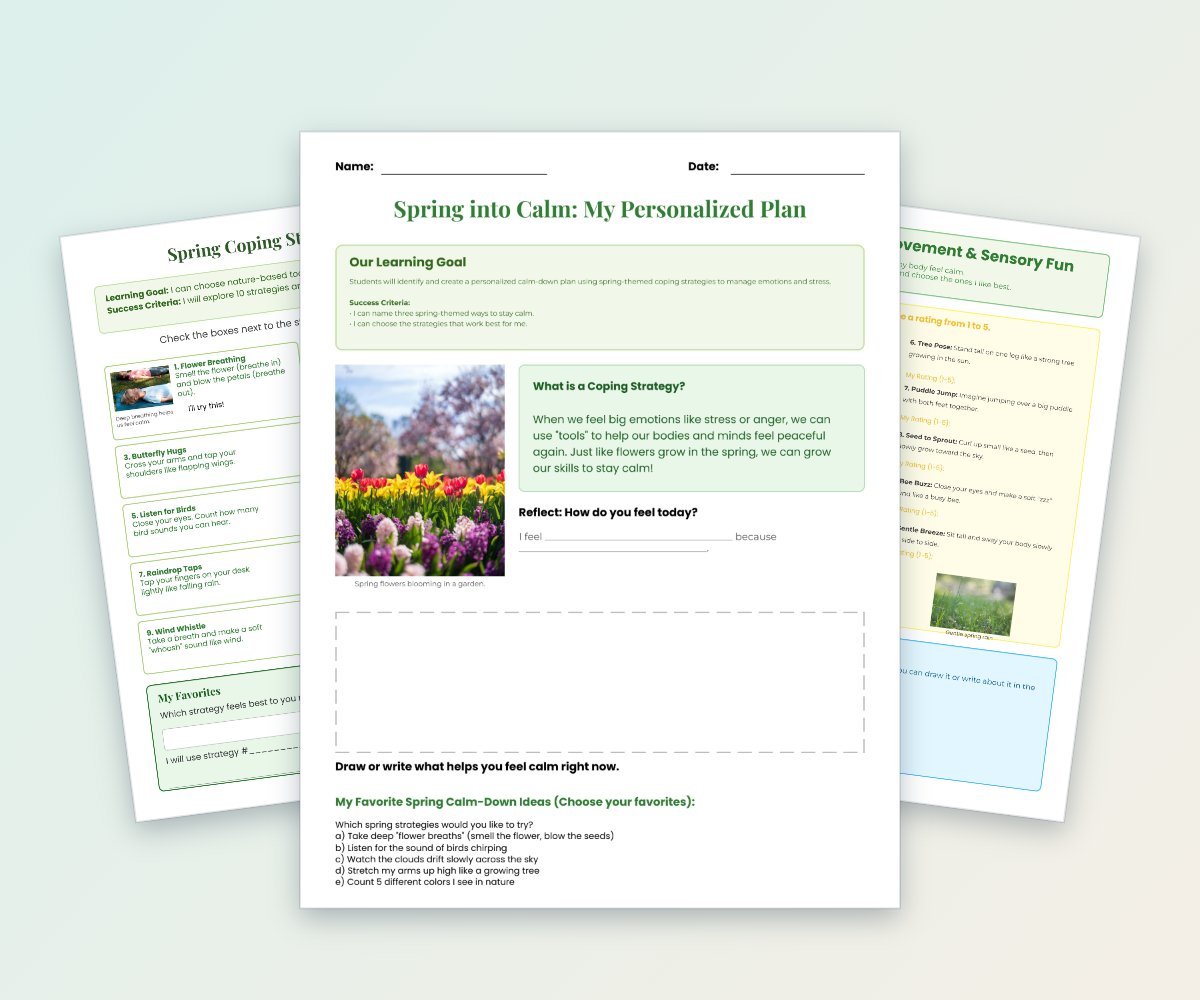
This five-page spring-themed activity pack helps students explore nature-based breathing, grounding, movement, and sensory strategies for managing stress and big emotions.
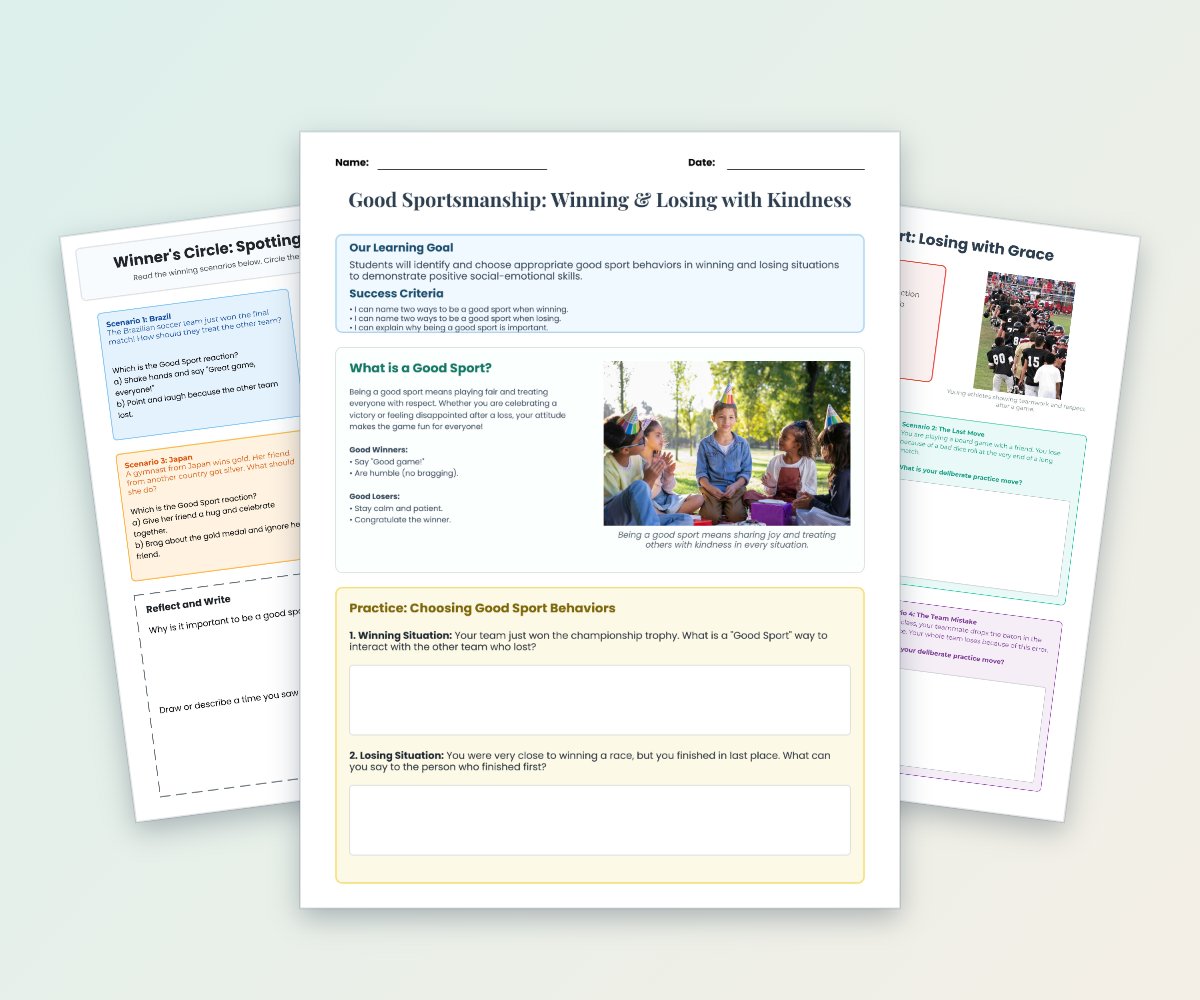
This four-page social-emotional learning resource teaches students how to demonstrate kindness, humility, patience, and respect when winning or losing.
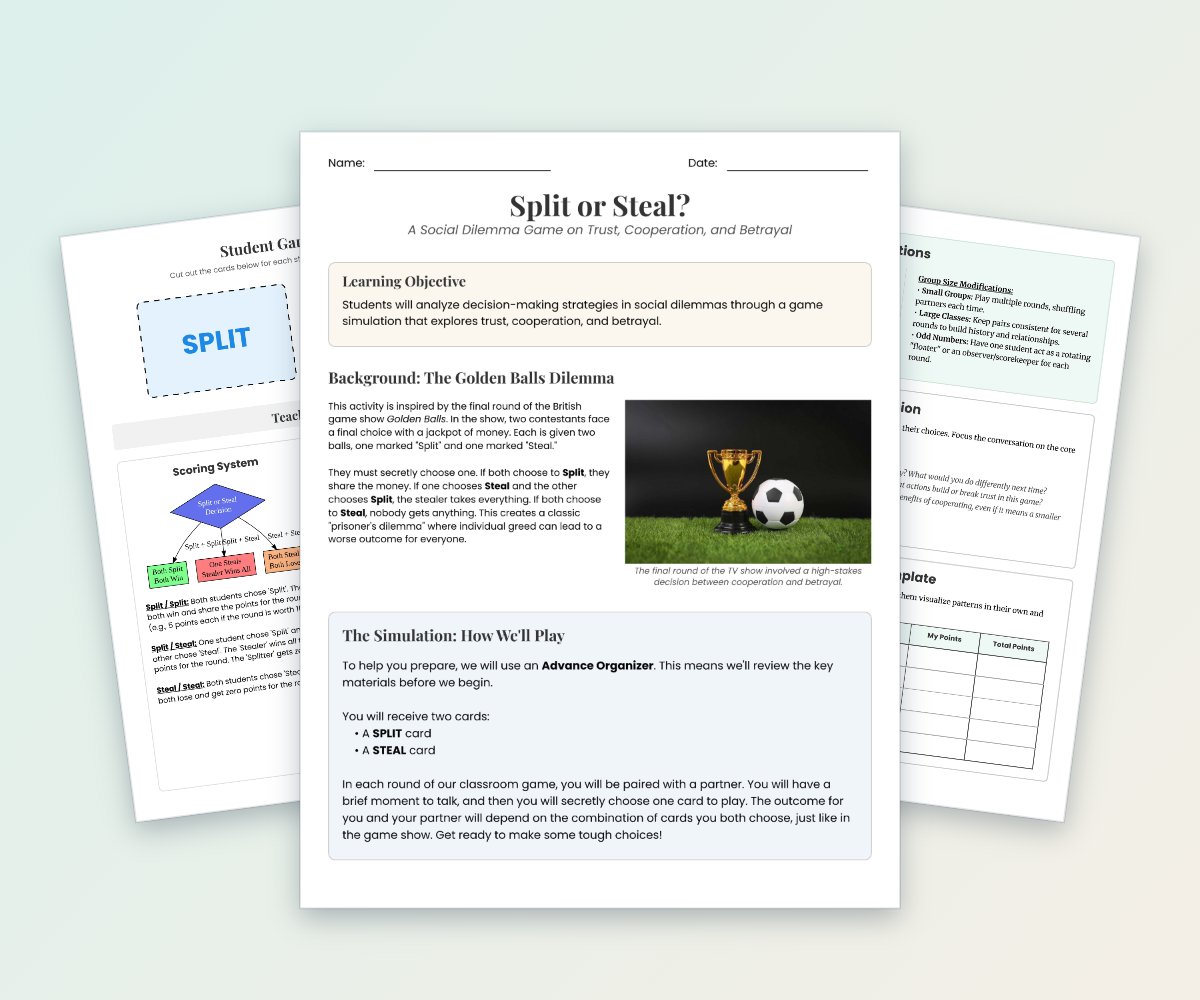
Students explore trust, cooperation, and betrayal through a classroom simulation based on the Split or Steal dilemma.
Students reflect on diversity, equity, inclusion, and accessibility in their school or community, then research a specific initiative.
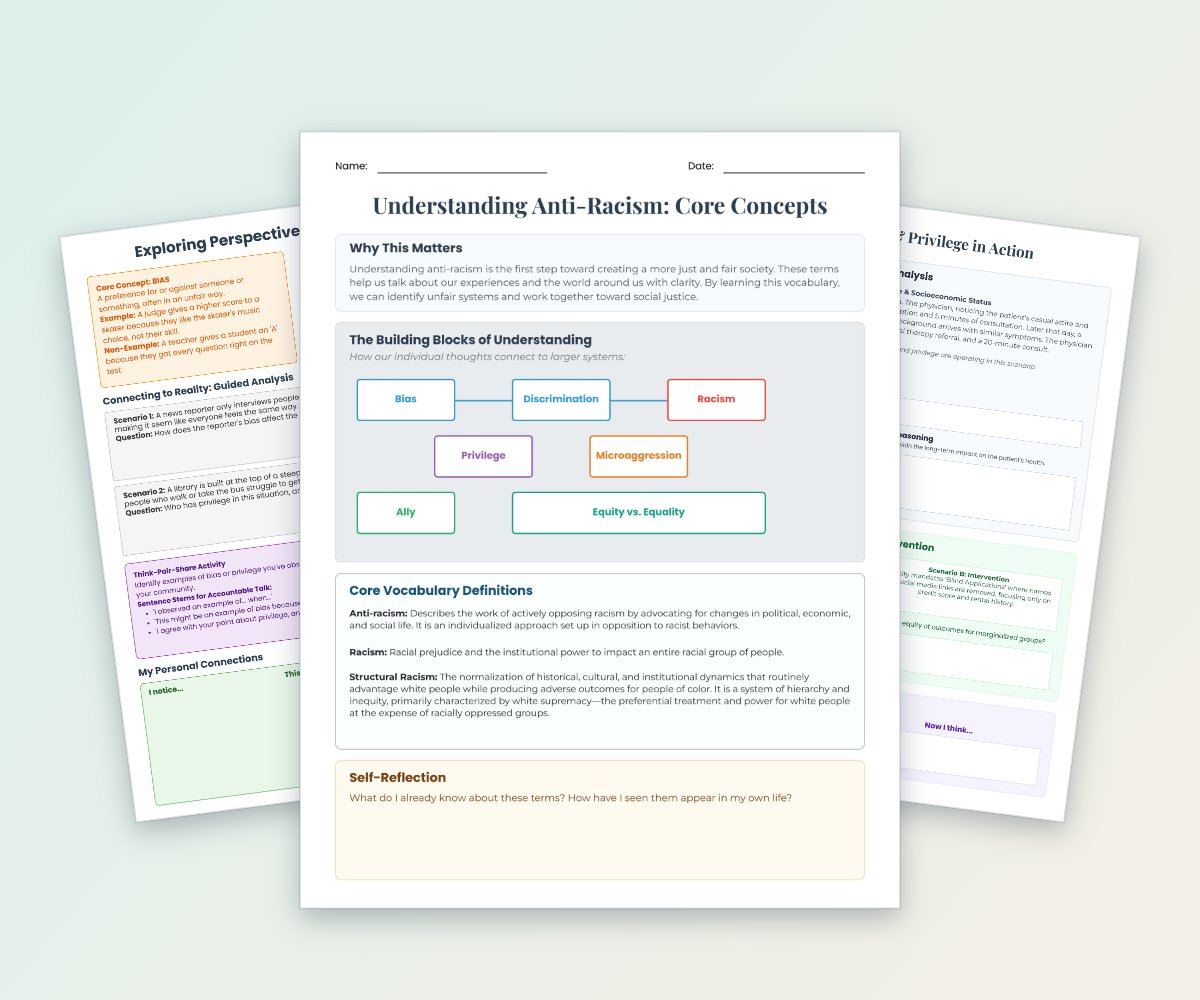
This four-page worksheet introduces core anti-racism concepts, including racism, structural racism, bias, privilege, discrimination, and equity.
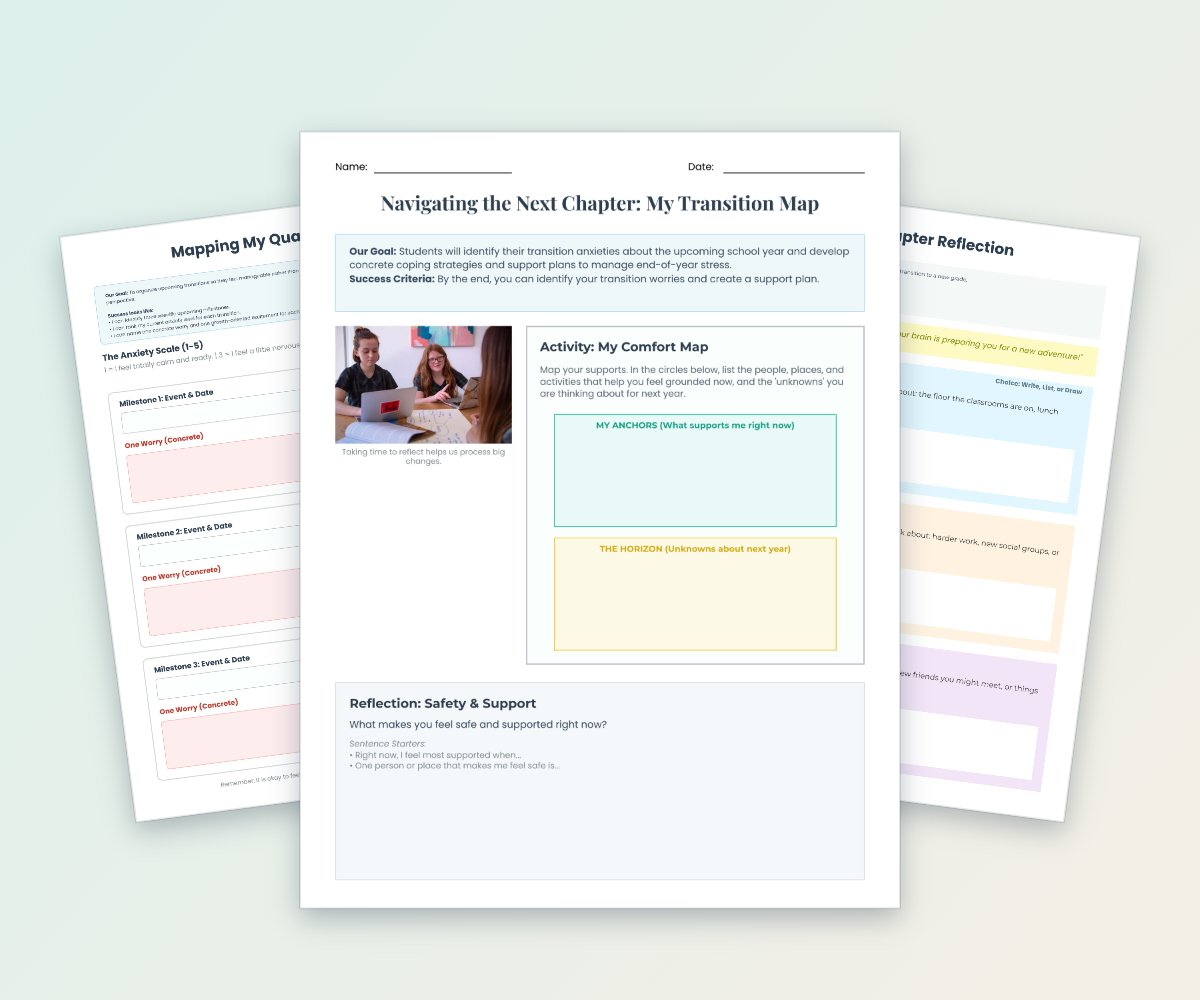
This five-page activity pack helps students reflect on upcoming school-year transitions, identify worries and excitement, and map supportive people and activities.
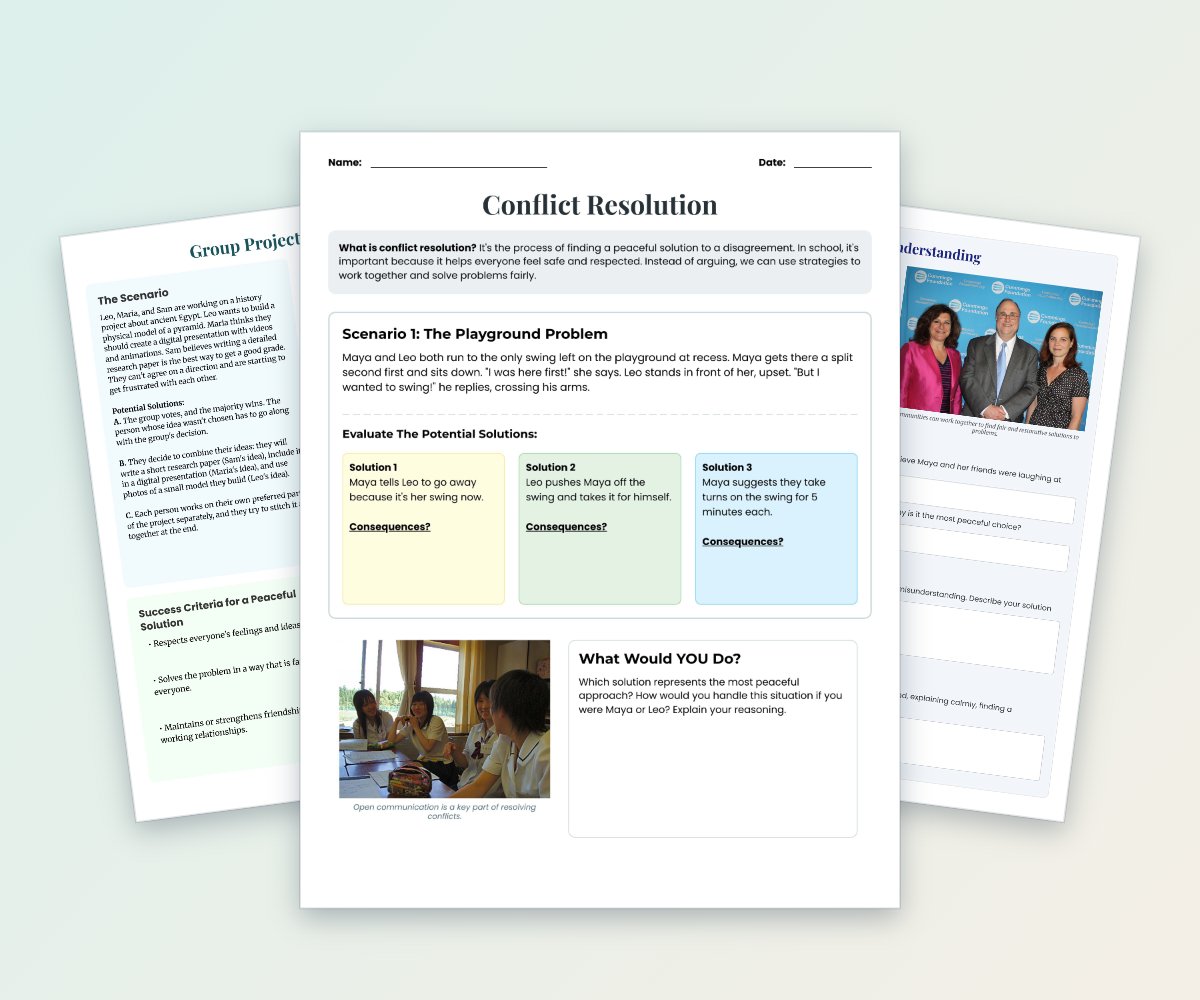
Students examine playground, group project, and lunchroom conflicts while evaluating possible solutions and their consequences.
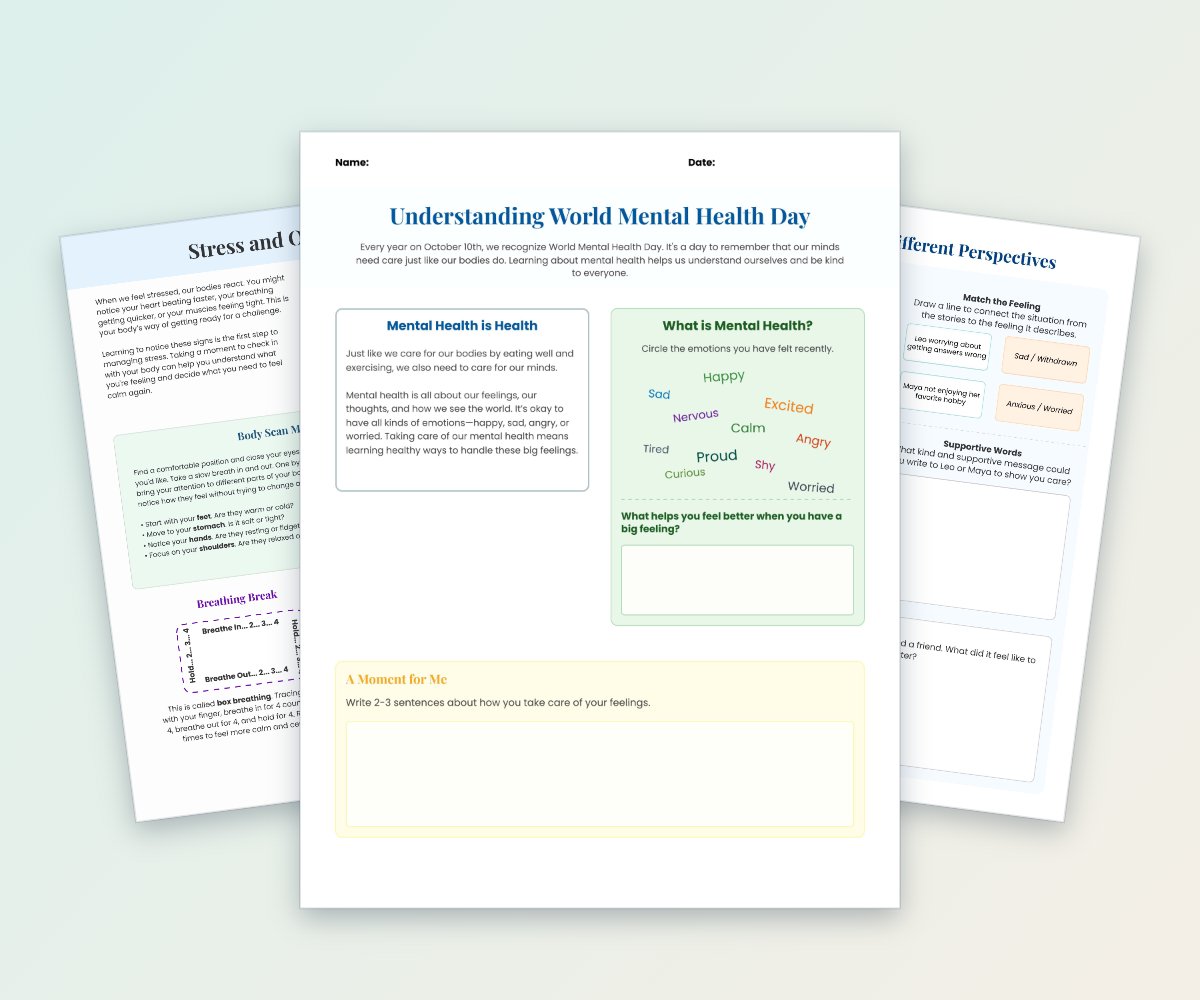
This five-page worksheet introduces mental health, emotions, stress responses, body awareness, and healthy coping strategies.
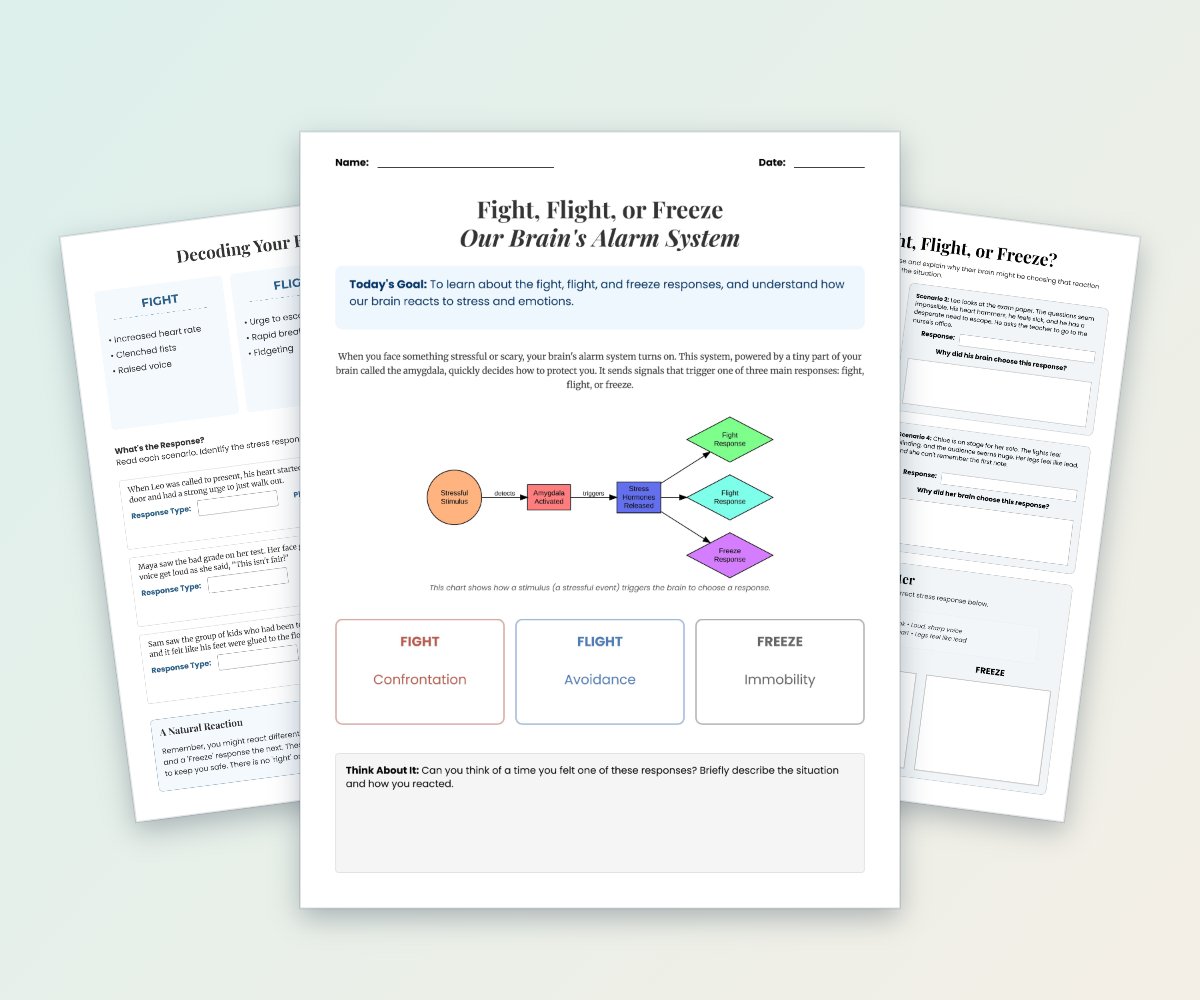
This four-page worksheet introduces the brain’s alarm system and explains fight, flight, and freeze responses.
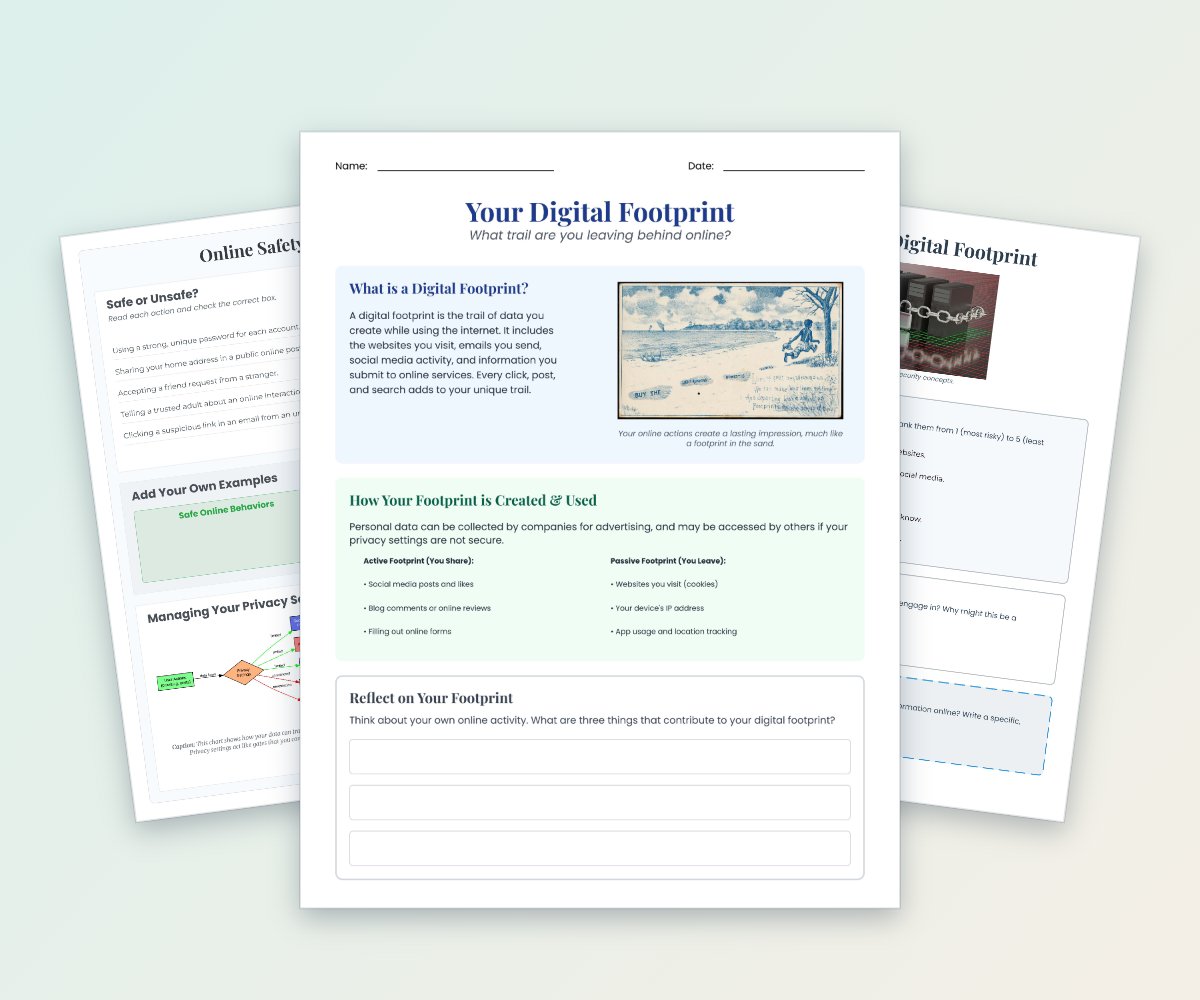
This three-page worksheet introduces digital footprints, active and passive data collection, online safety, privacy settings, and digital risks.