The Wonderful Water Cycle: Guided Notes and Critical Thinking Worksheet
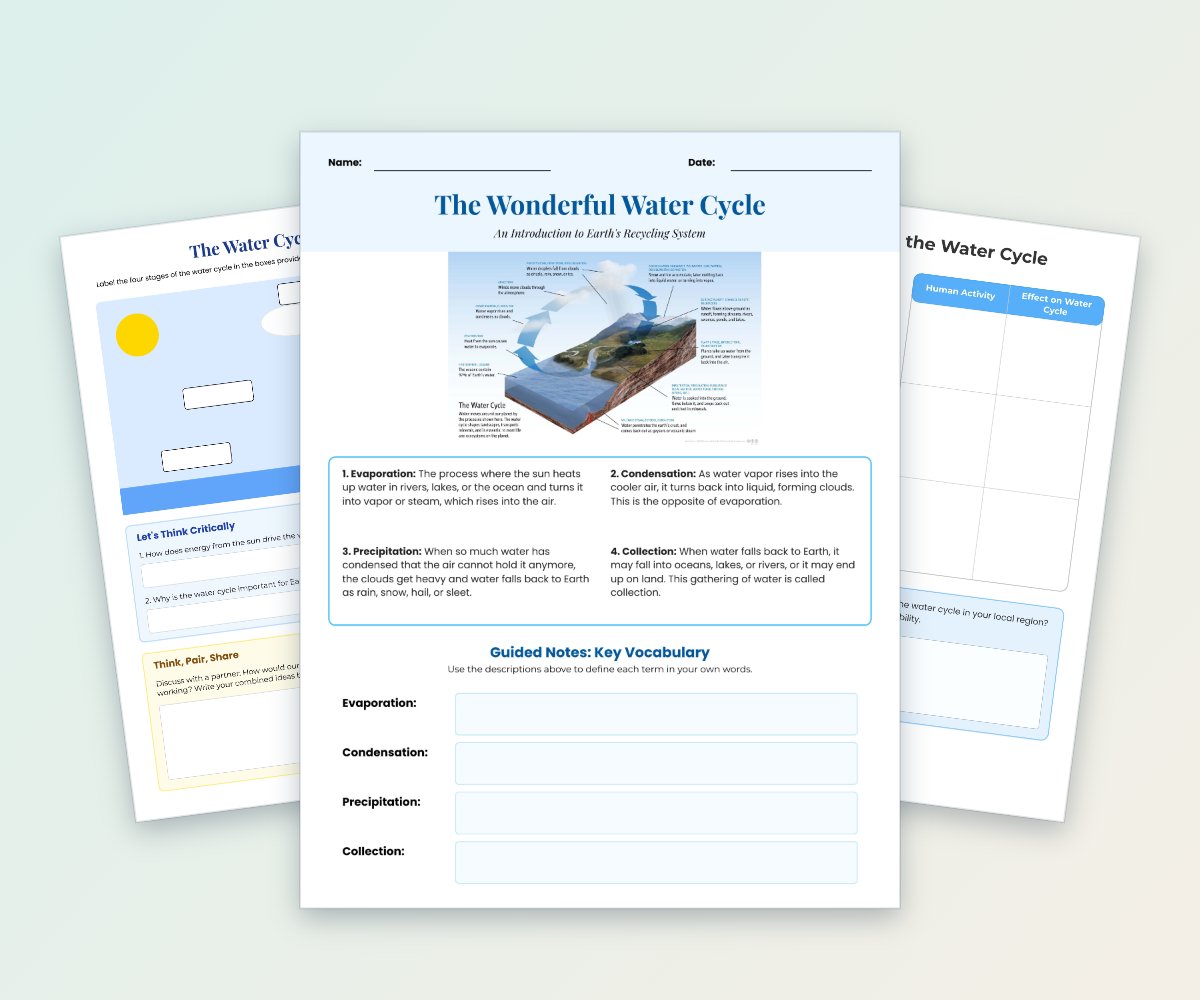
This four-page resource introduces evaporation, condensation, precipitation, and collection through an illustrated water-cycle overview and guided notes.
$3.99
Classroom-ready resources written for grade 1: printable worksheets, slides, activities and planning tools you can download and use straight away. Browse by subject below.
This four-page resource introduces evaporation, condensation, precipitation, and collection through an illustrated water-cycle overview and guided notes.
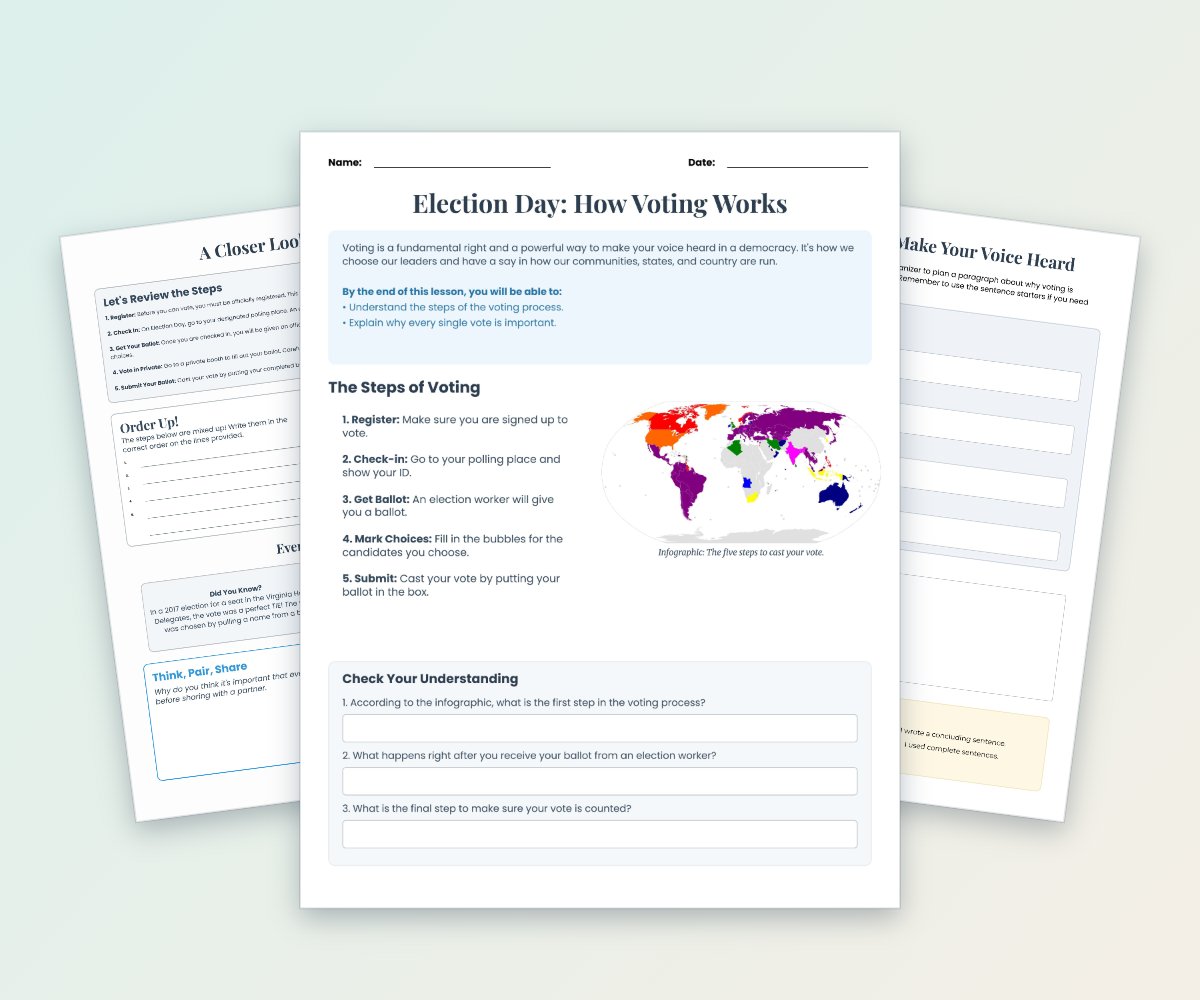
Teach students the five steps of voting, from registration through submitting a ballot.
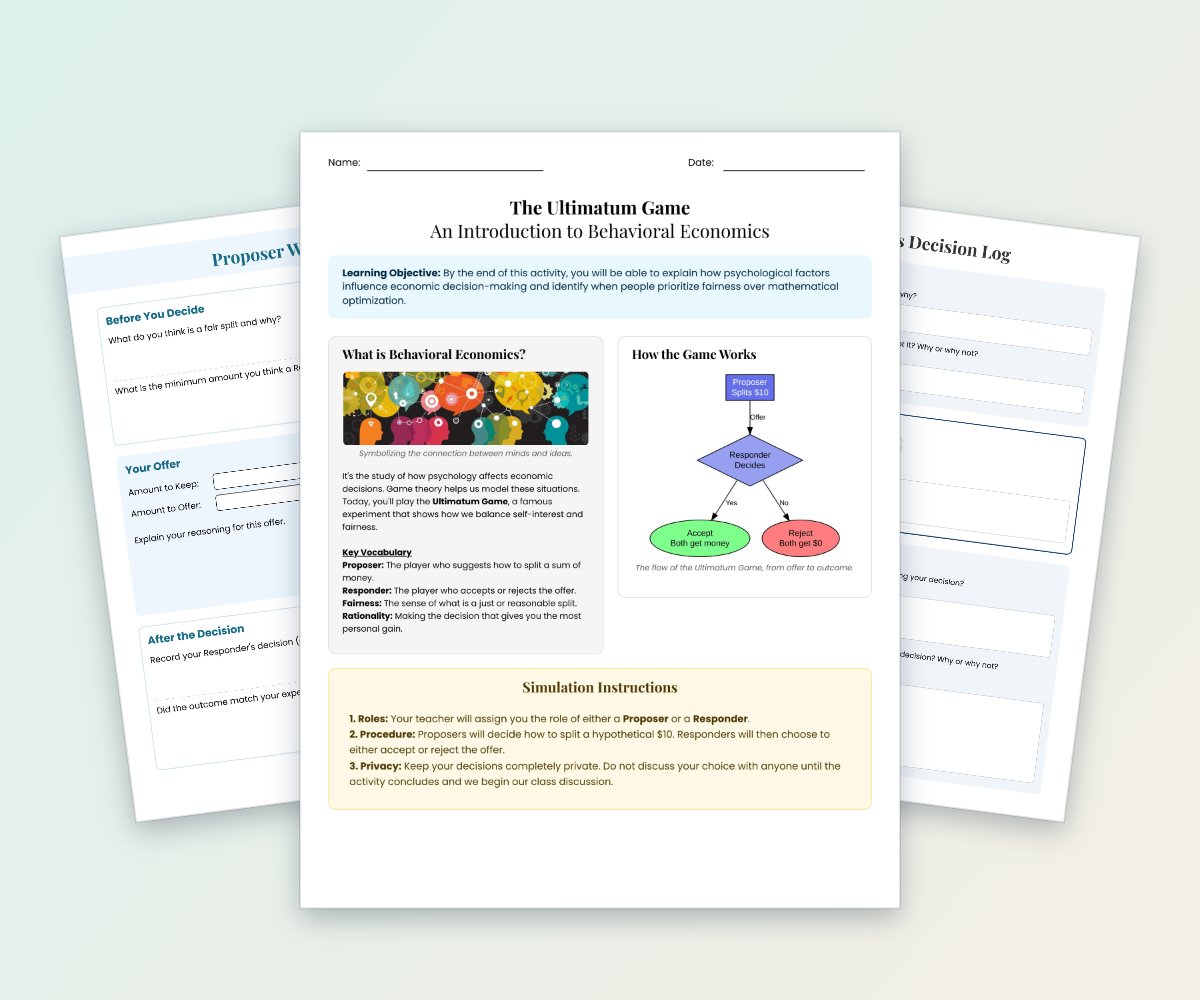
Students explore fairness, rationality, and decision-making through a classroom simulation of the Ultimatum Game.
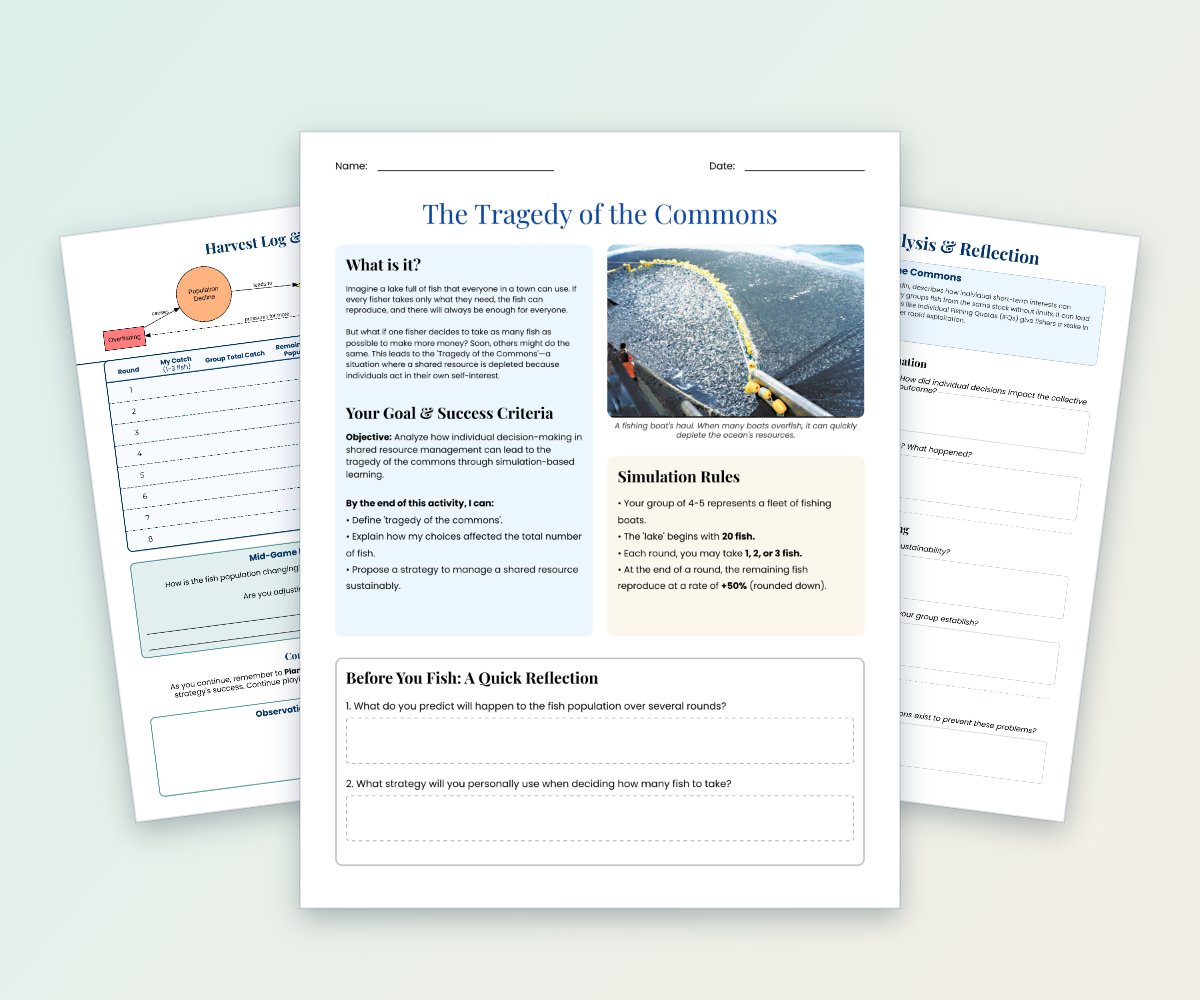
Students participate in an eight-round fishing simulation to explore how individual choices affect shared resources.
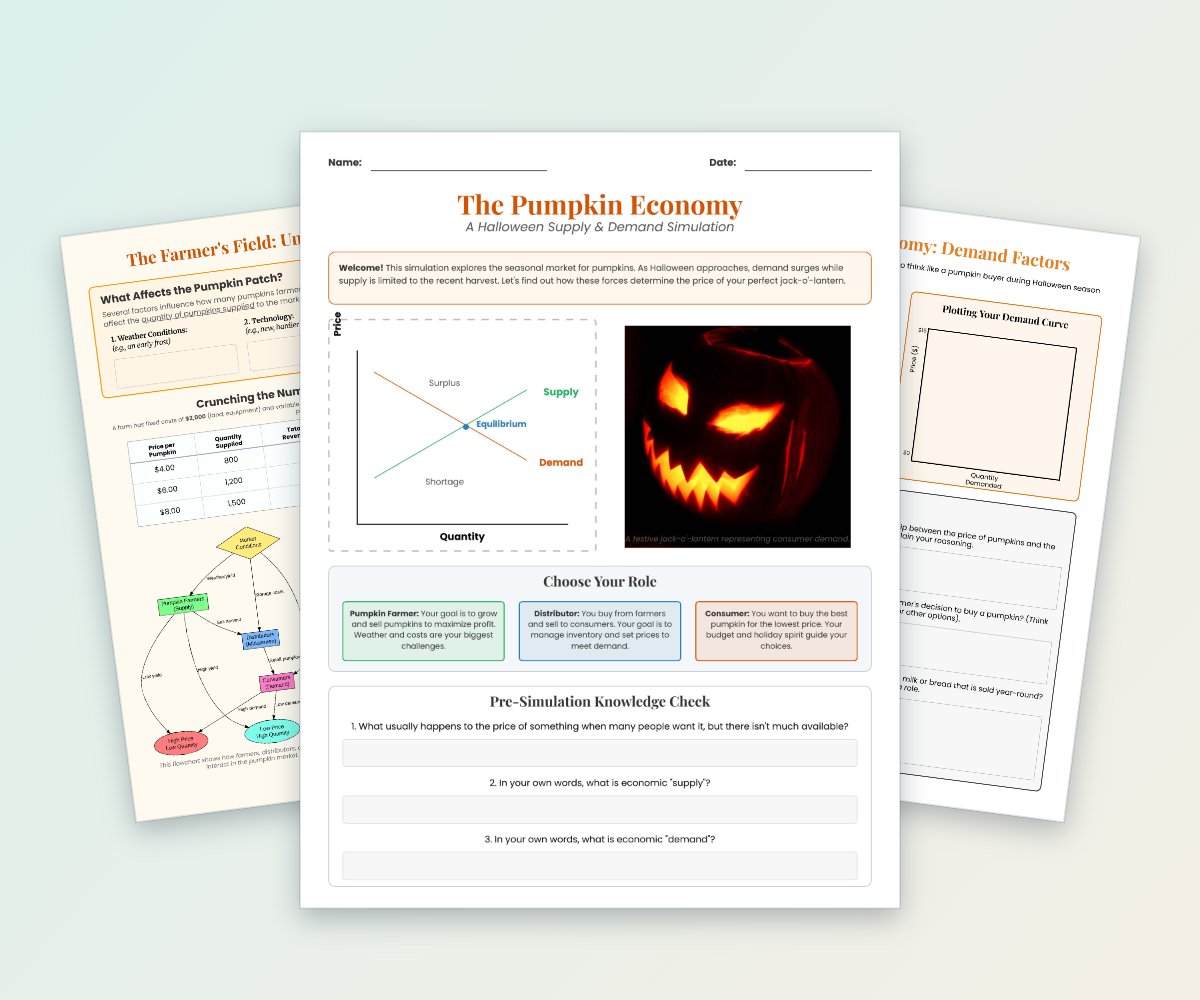
Students take on roles as pumpkin farmers, distributors, and consumers in a Halloween-themed market simulation.
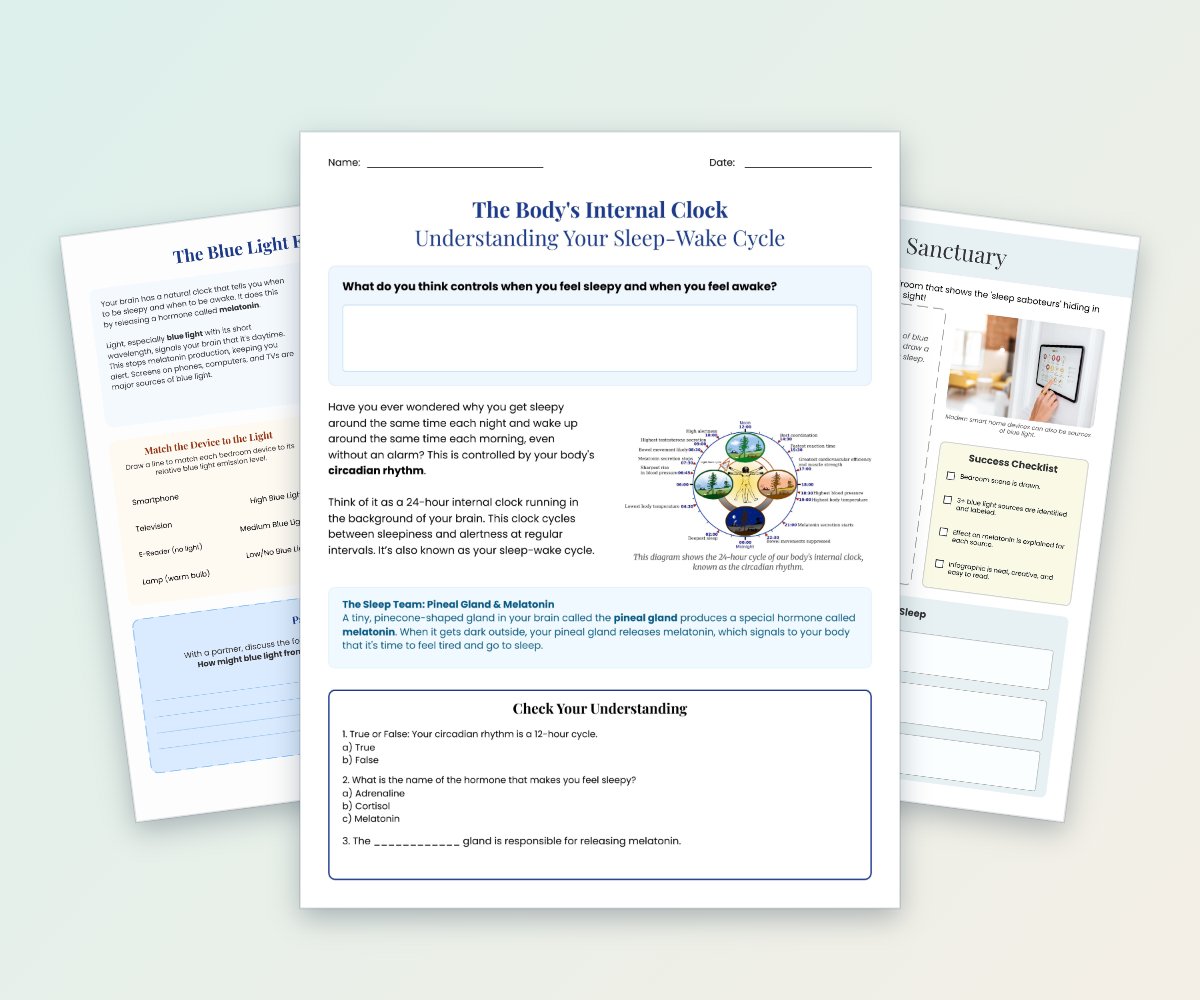
This student worksheet introduces the circadian rhythm, the pineal gland, melatonin, and the effects of blue light on sleep.
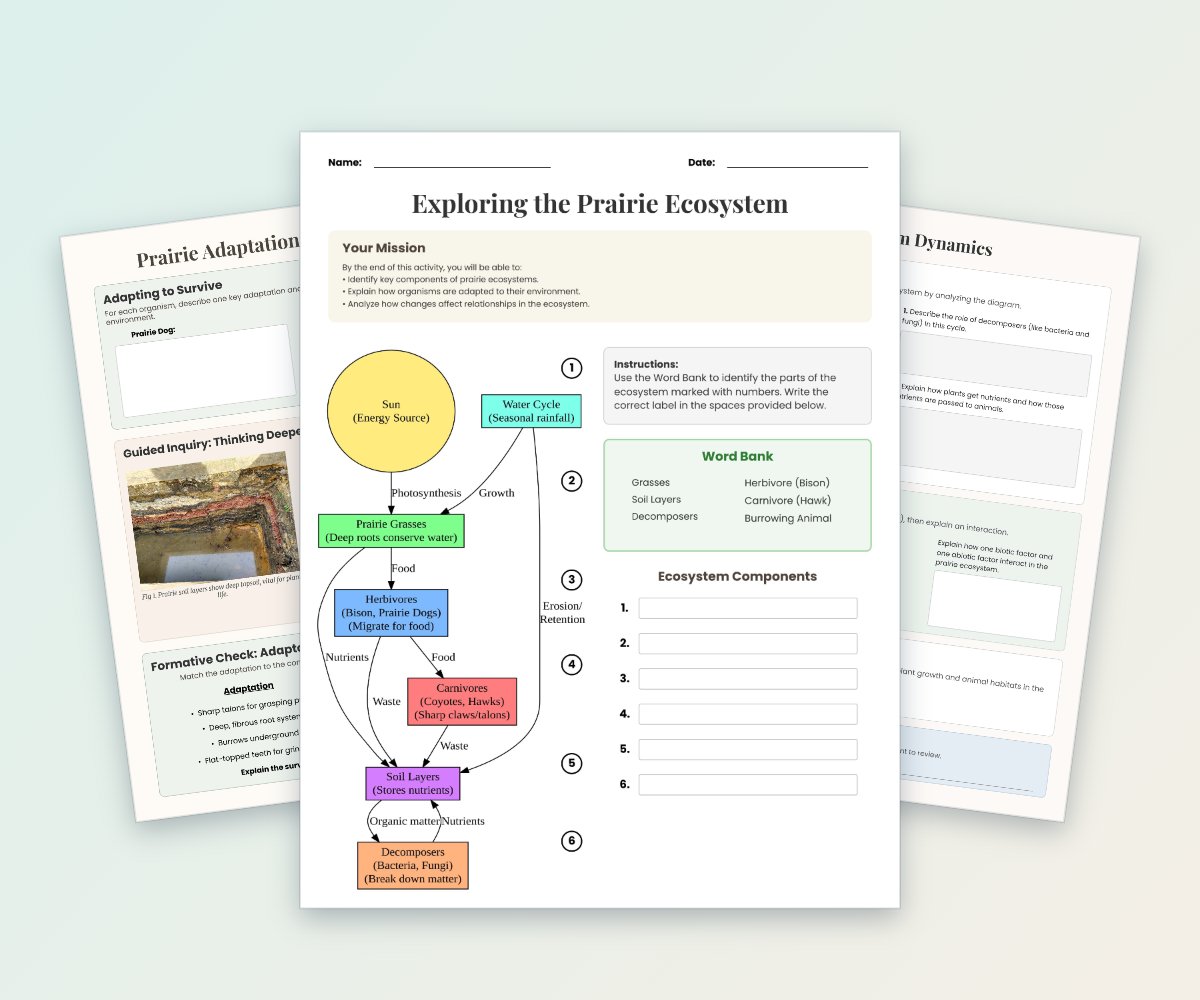
This four-page activity pack guides students through prairie ecosystem components, organism adaptations, energy flow, nutrient cycling, and biotic and abiotic factors.
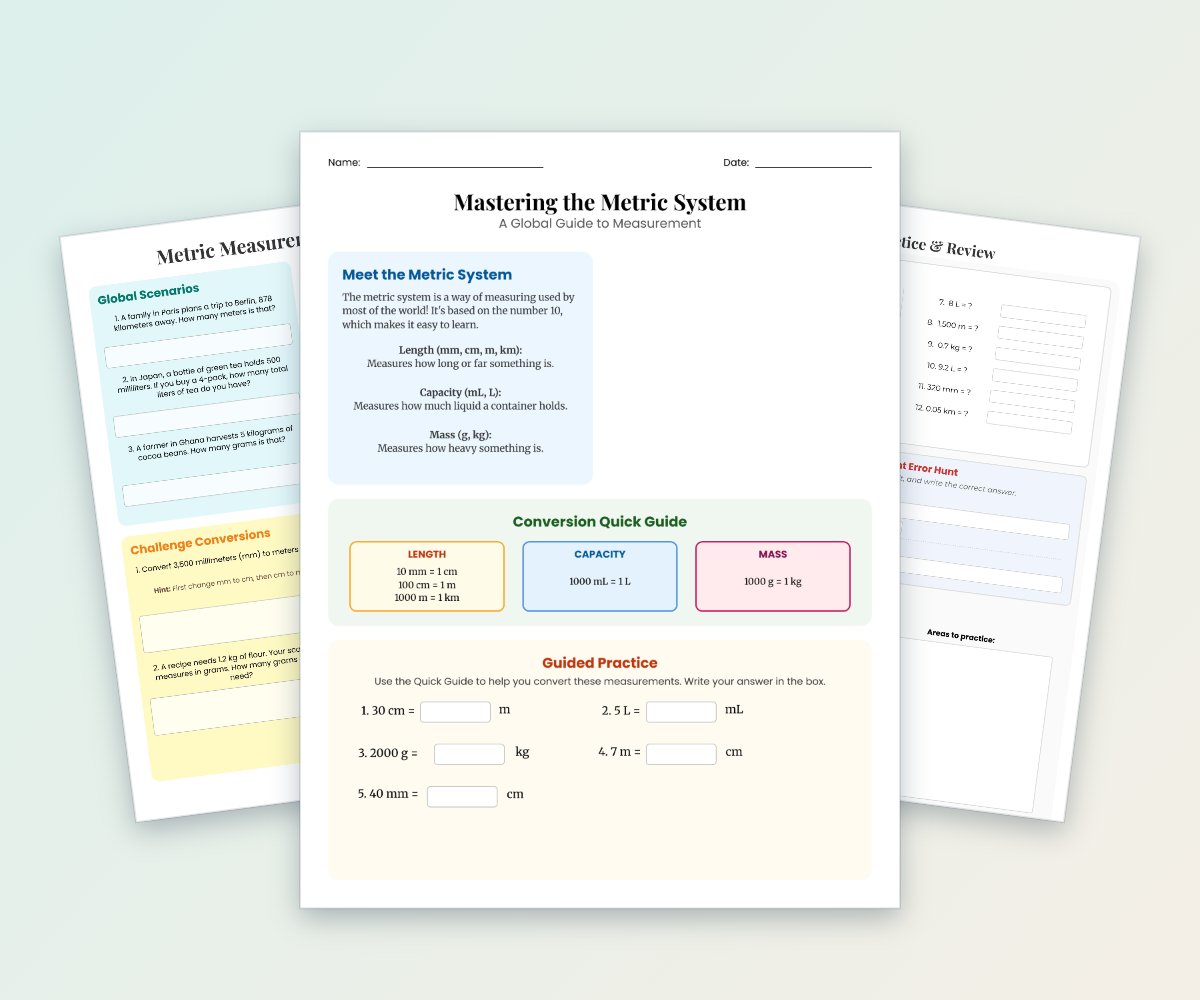
This three-page math resource introduces metric units for length, capacity, and mass, then provides guided practice, global word problems, mixed conversions, comparisons, and error analysis.
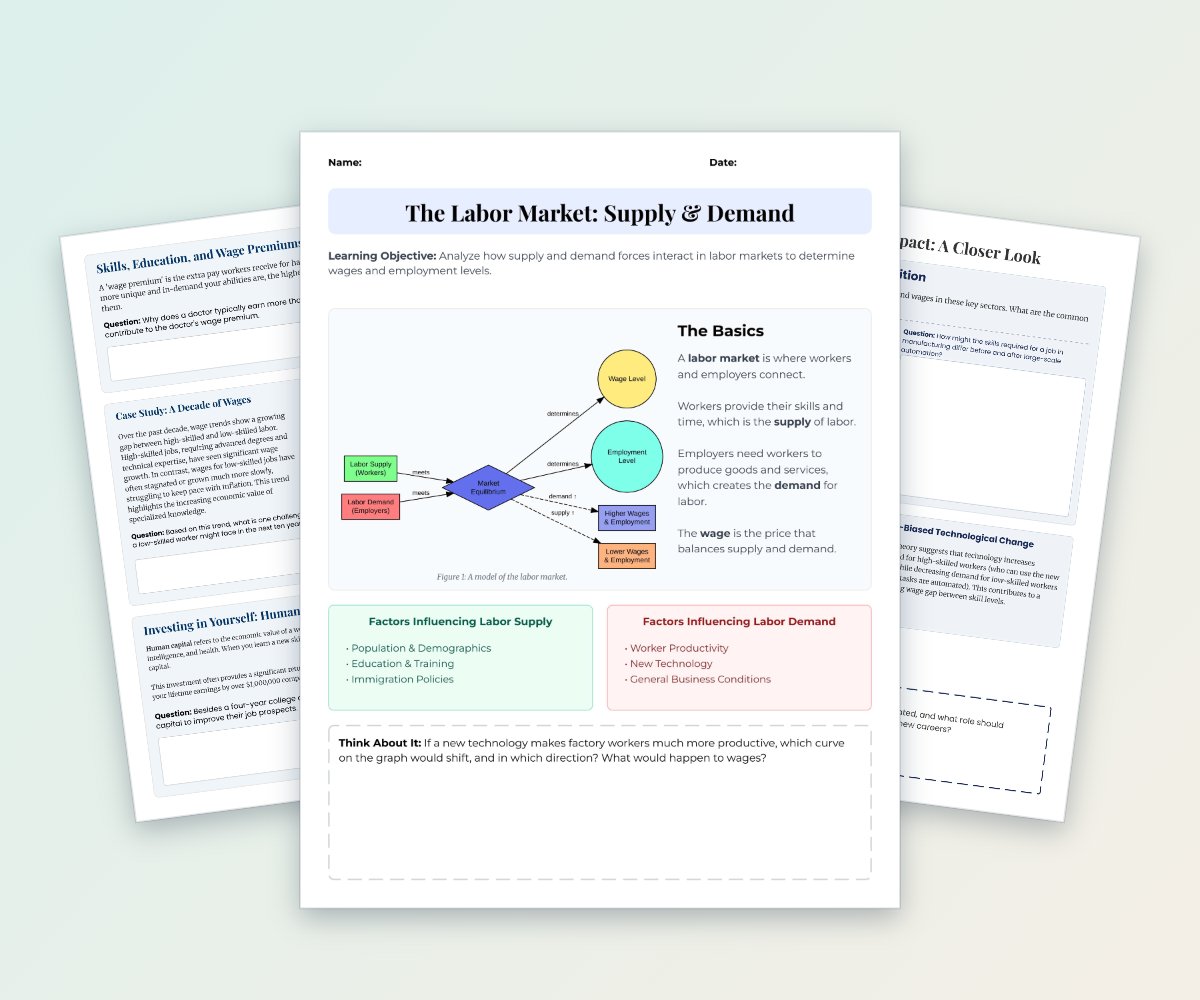
This five-page worksheet introduces labor-market supply and demand, wage determination, employment levels, wage premiums, and human capital.
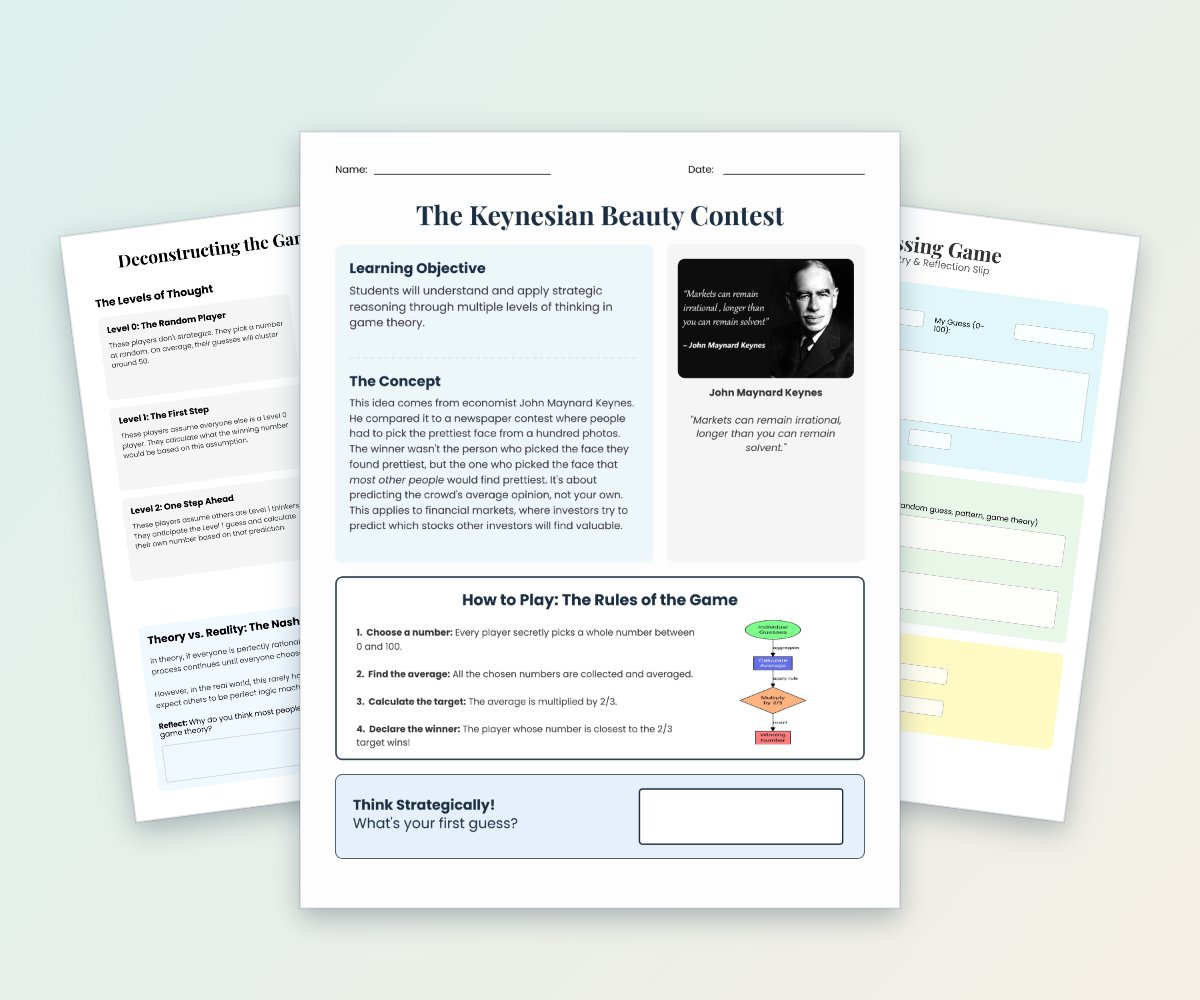
This four-page activity introduces the Keynesian beauty contest through a number-picking game and explains level-k thinking, Nash equilibrium, and bounded rationality.
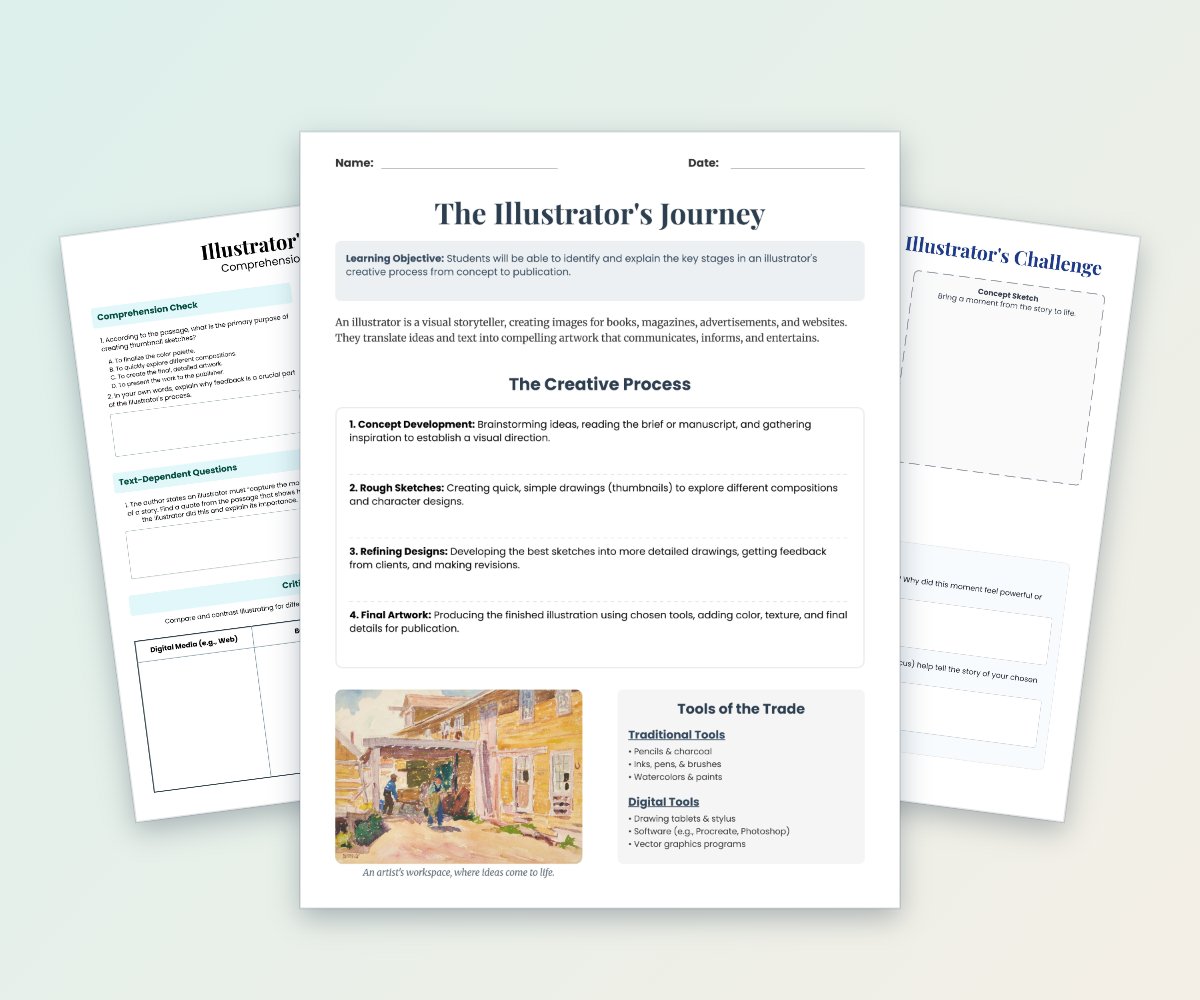
This three-page worksheet introduces the stages of an illustrator’s creative process, from concept development and rough sketches to refinement and final artwork.
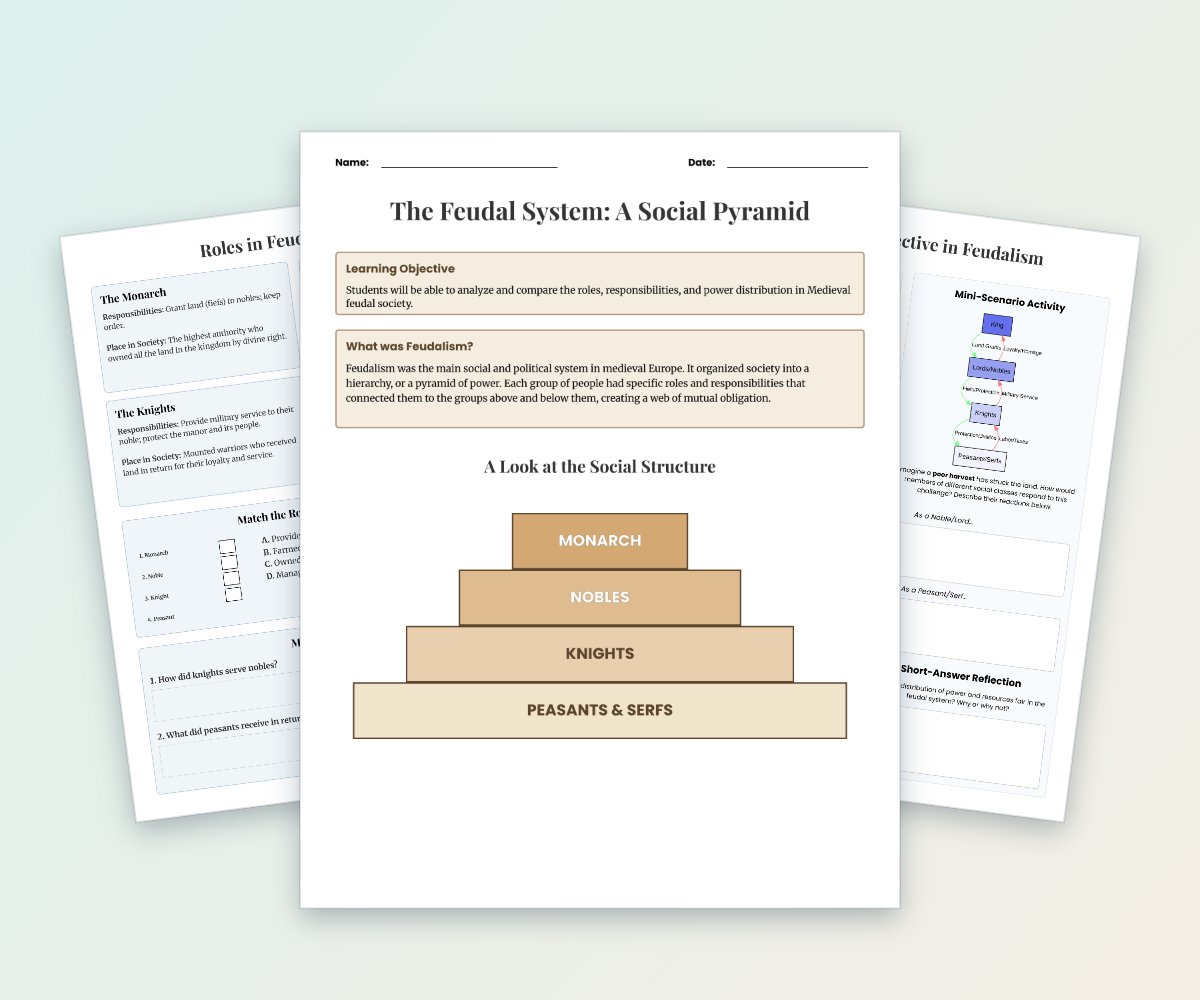
This four-page worksheet introduces the feudal system and examines the roles, responsibilities, power, and relationships among monarchs, nobles, knights, and peasants.
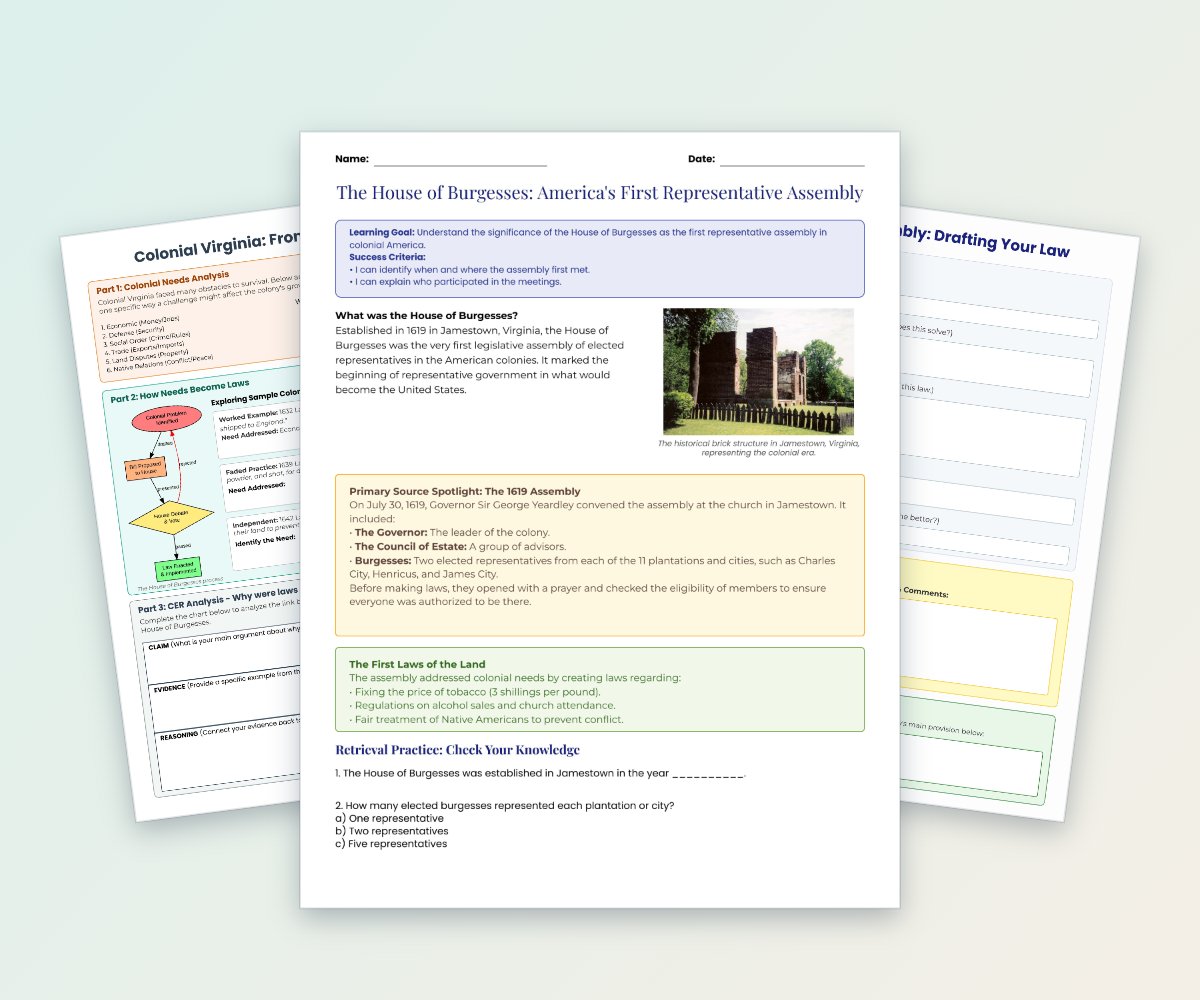
Students learn about the House of Burgesses as an early representative assembly in colonial Virginia.
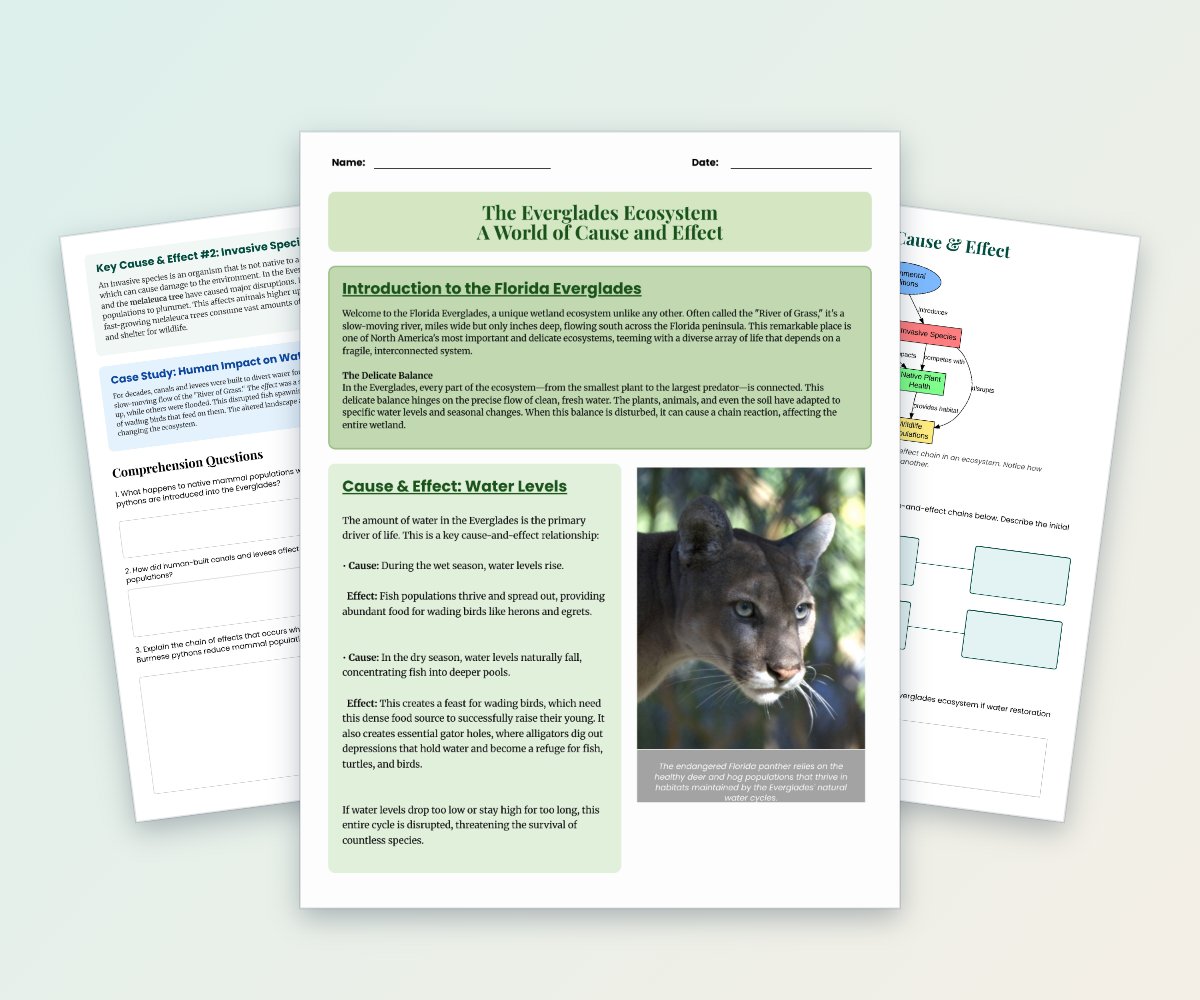
Students explore the Florida Everglades as a connected wetland ecosystem, focusing on water levels, invasive species, and human impacts.
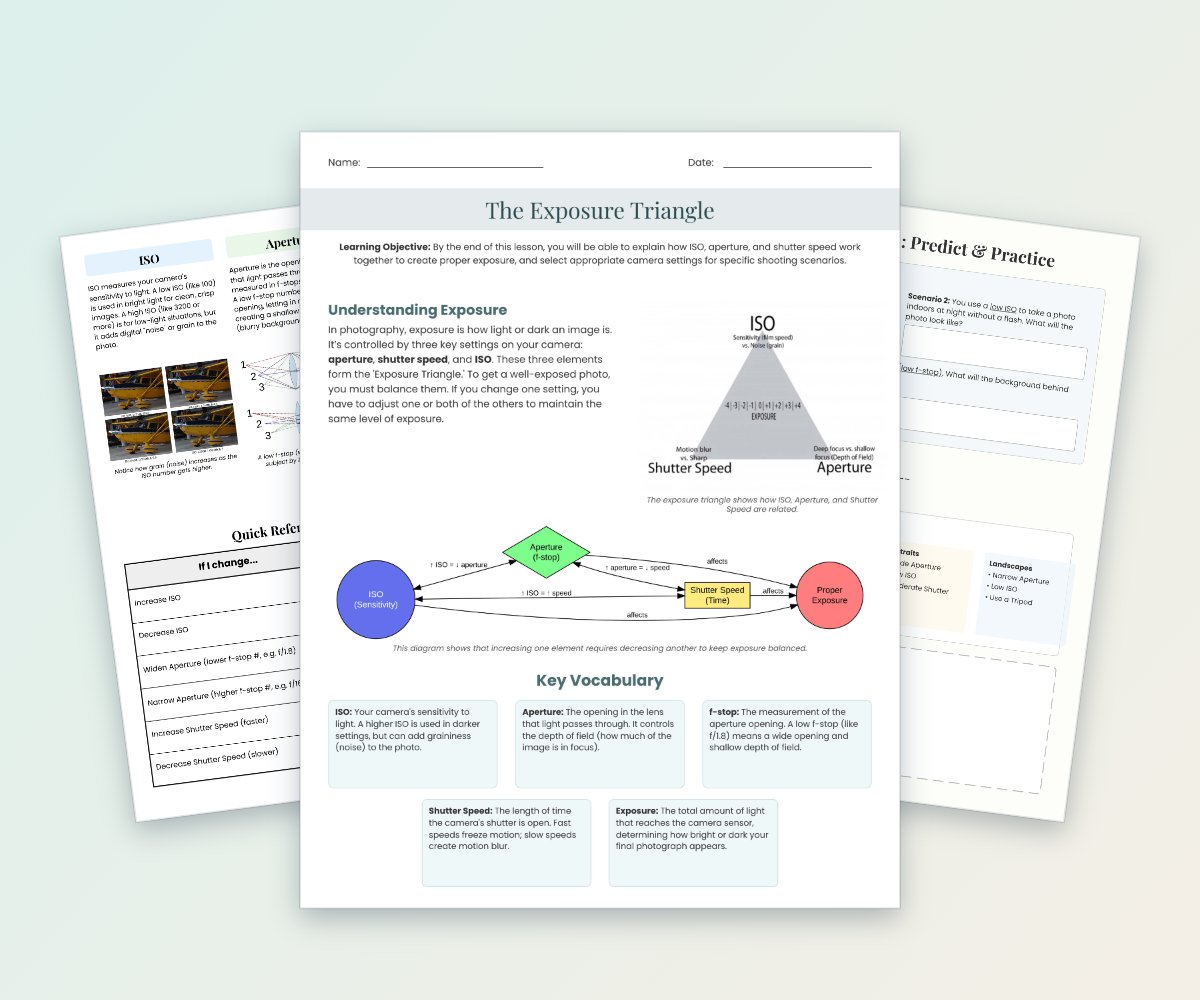
This four-page lesson introduces the relationship between ISO, aperture, and shutter speed.
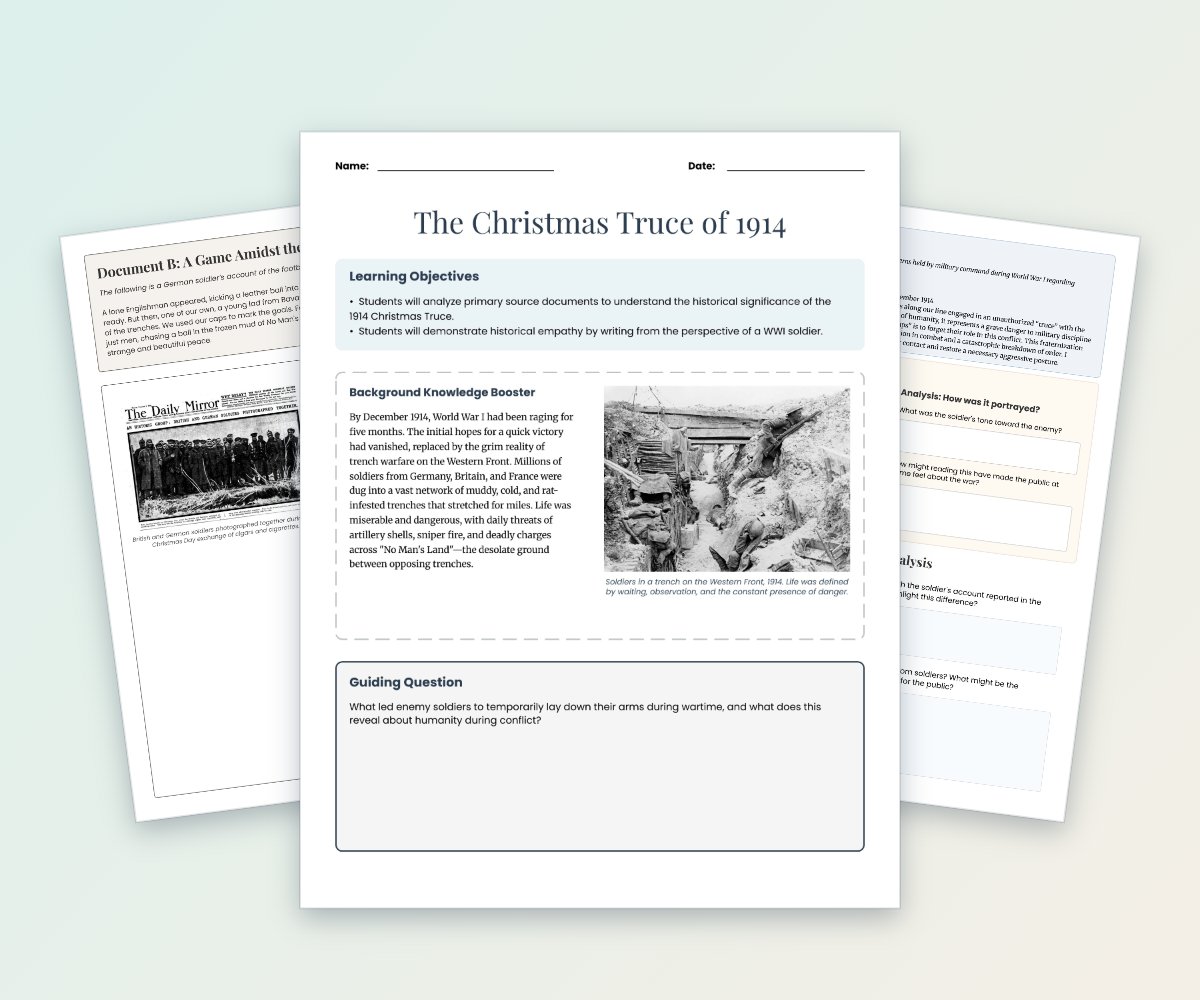
Students examine background information and primary-source-style documents about the 1914 Christmas Truce during World War I.
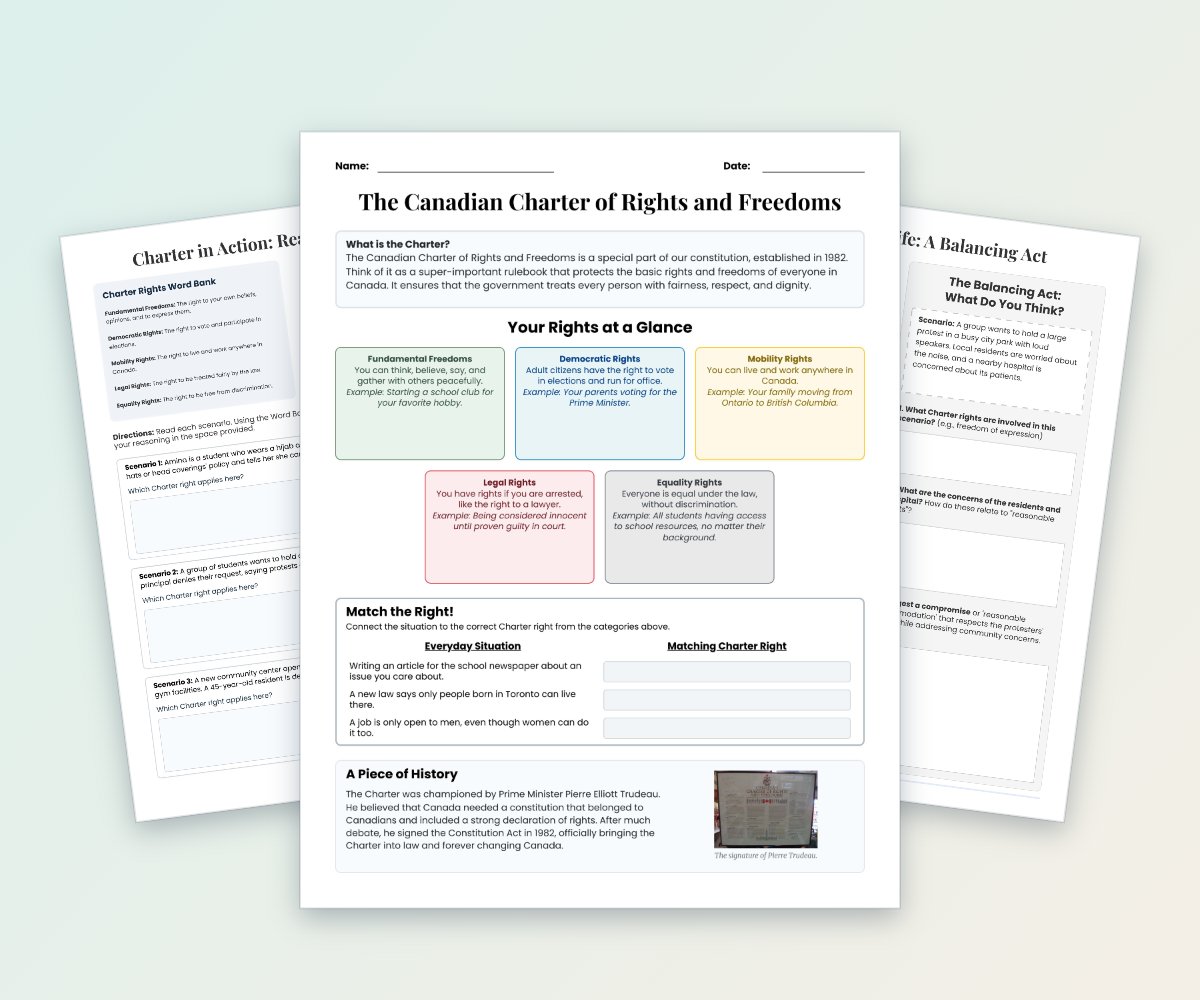
Students learn about fundamental, democratic, mobility, legal, and equality rights protected by the Canadian Charter.
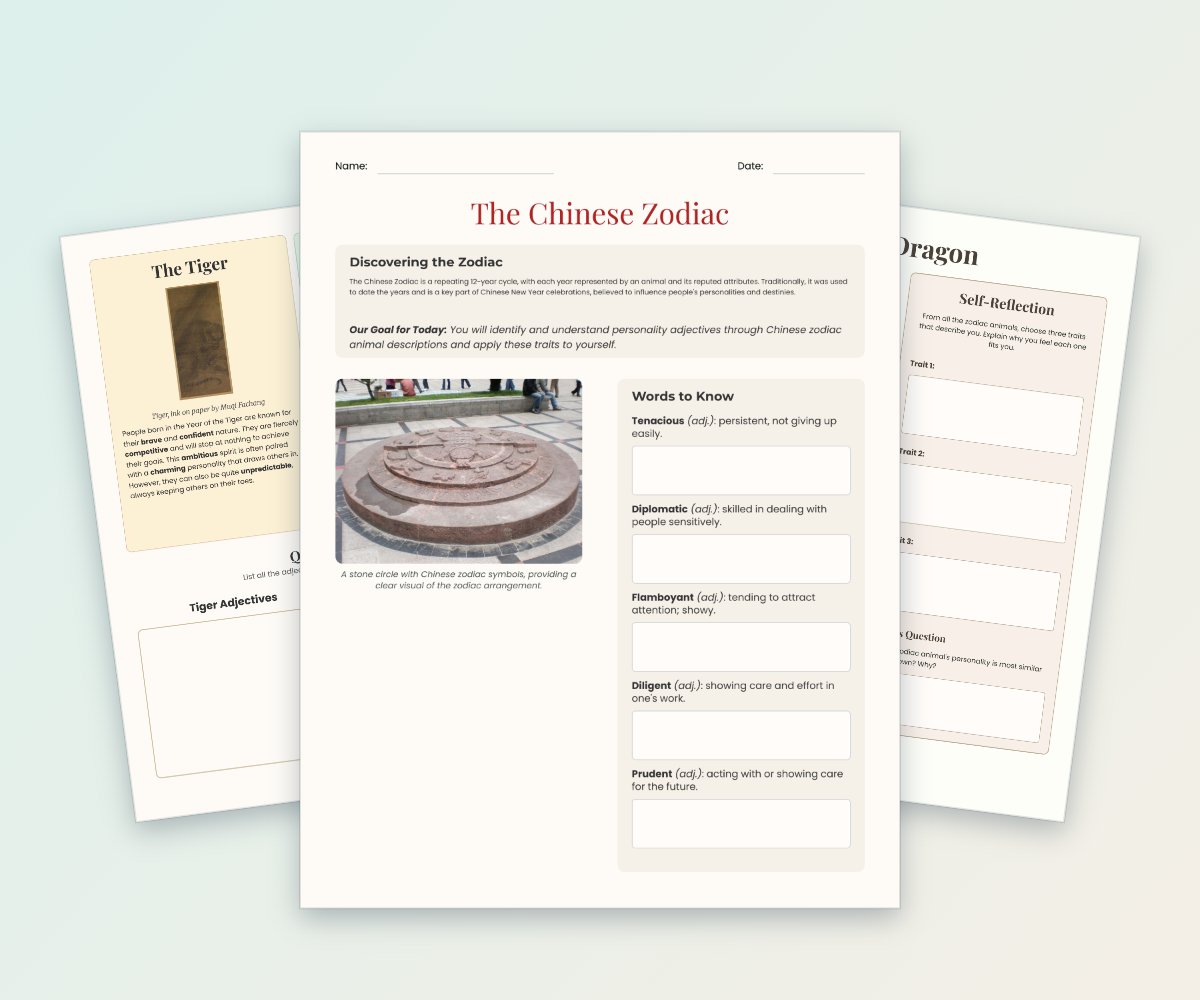
Students explore Chinese Zodiac animal descriptions while identifying and learning personality adjectives such as tenacious, diplomatic, and diligent.
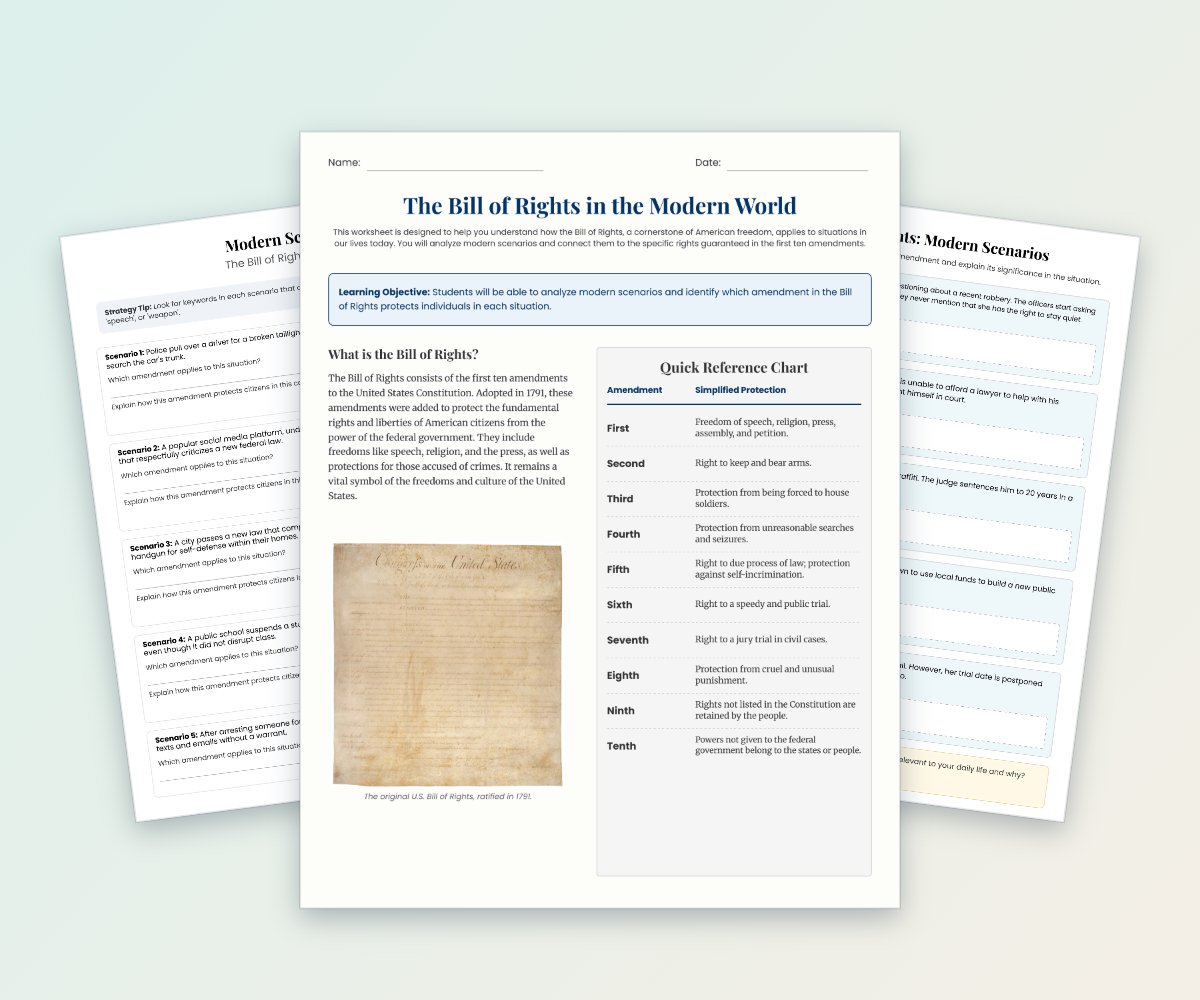
Students review the first ten amendments and analyze modern scenarios involving speech, searches, weapons, and other constitutional protections.
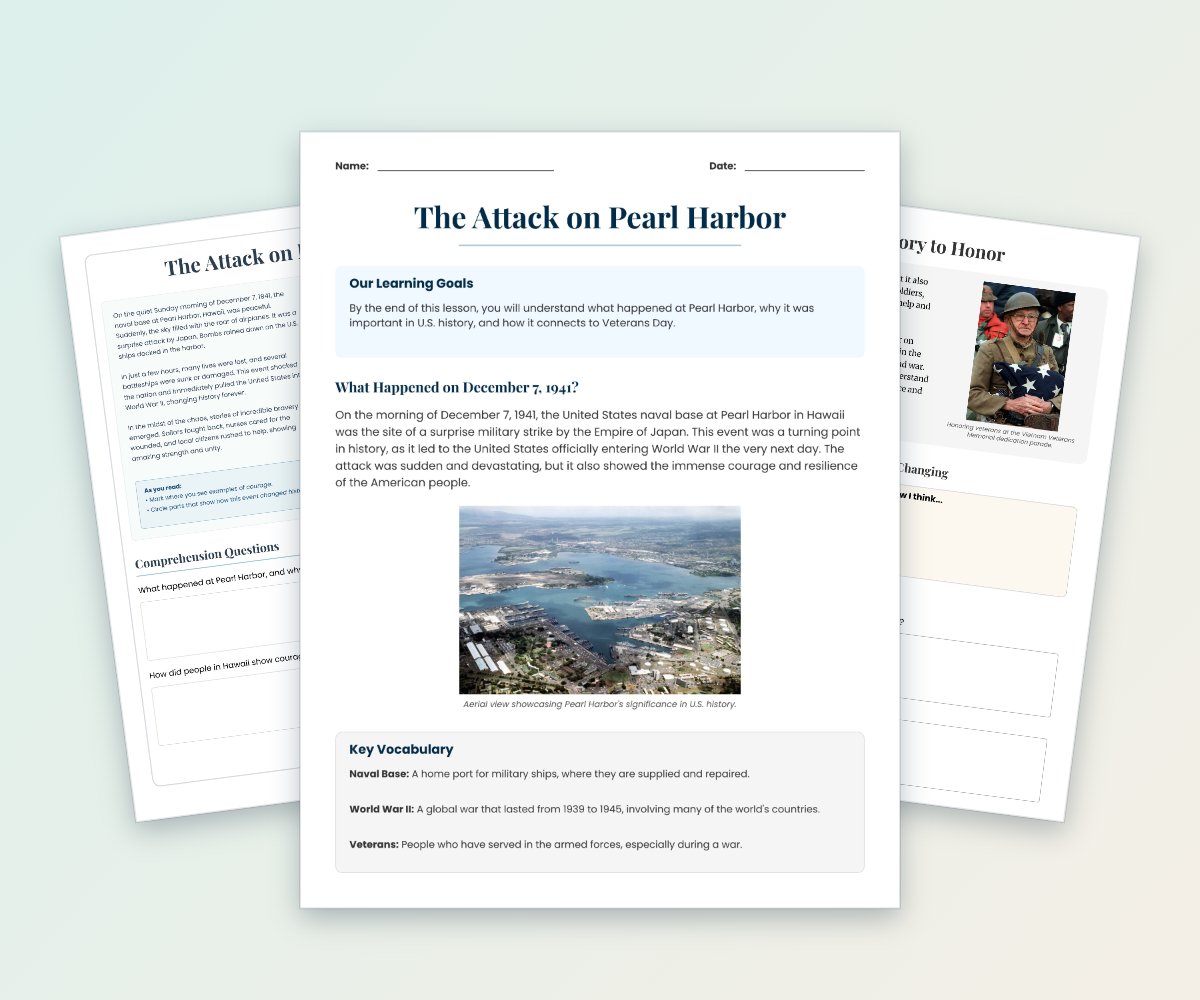
This four-page lesson introduces students to the attack on Pearl Harbor, its historical significance, and its connection to Veterans Day.
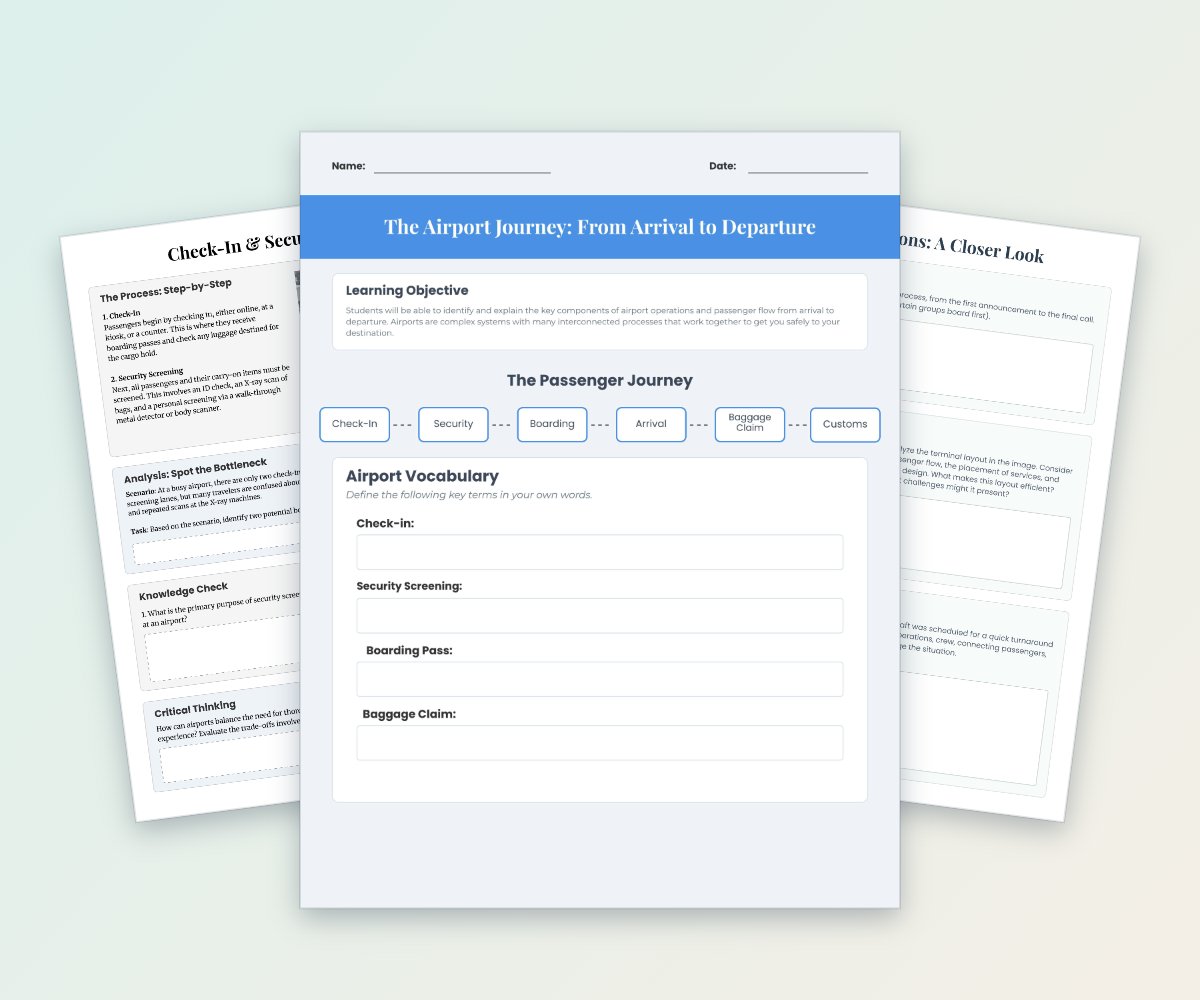
This five-page worksheet guides students through the airport passenger journey from arrival and check-in to security screening and boarding.
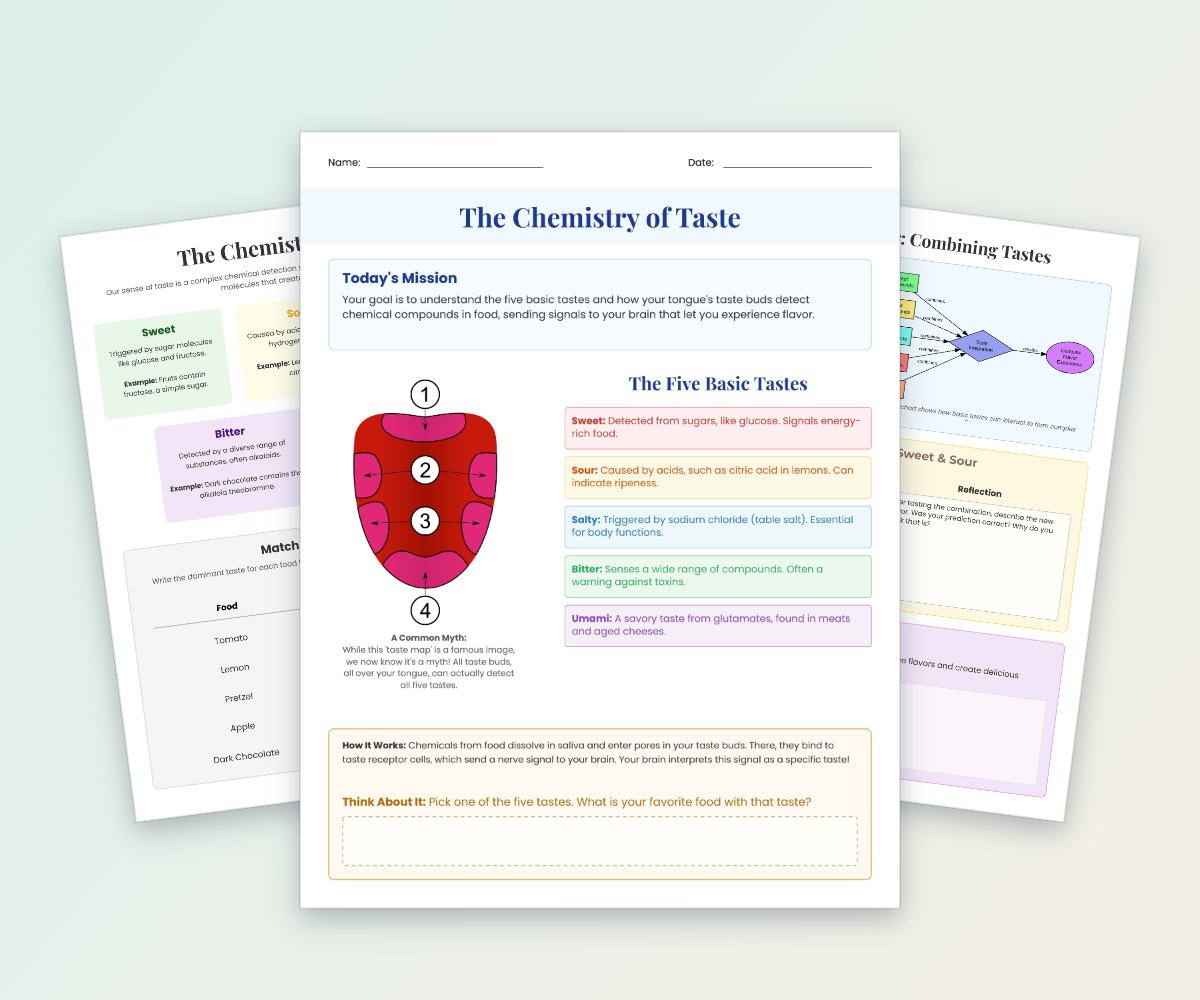
Students explore the five basic tastes, the chemical compounds that create them, and how taste receptors send signals to the brain.
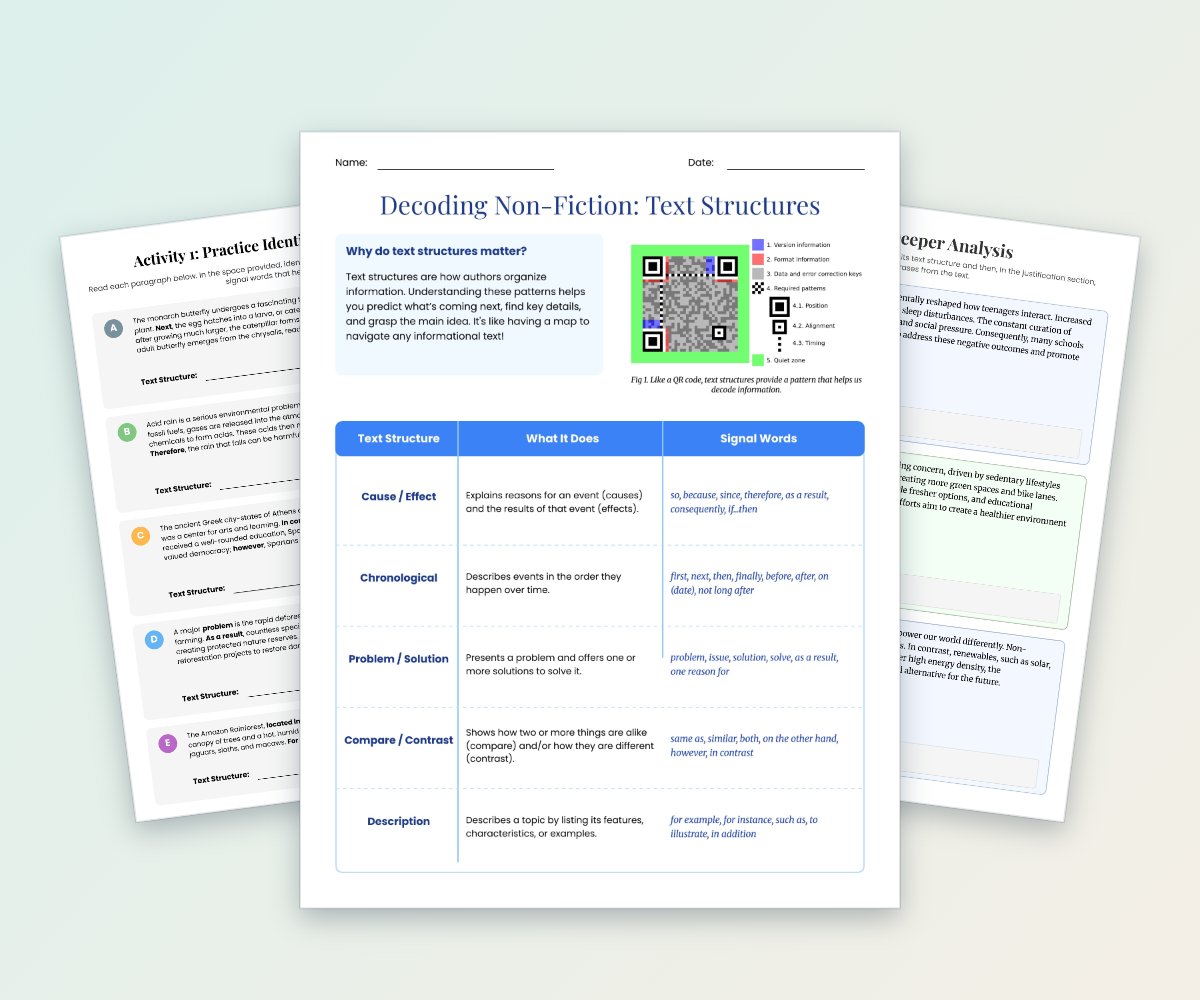
This four-page resource introduces five common nonfiction text structures: cause and effect, chronological order, problem and solution, compare and contrast, and description.
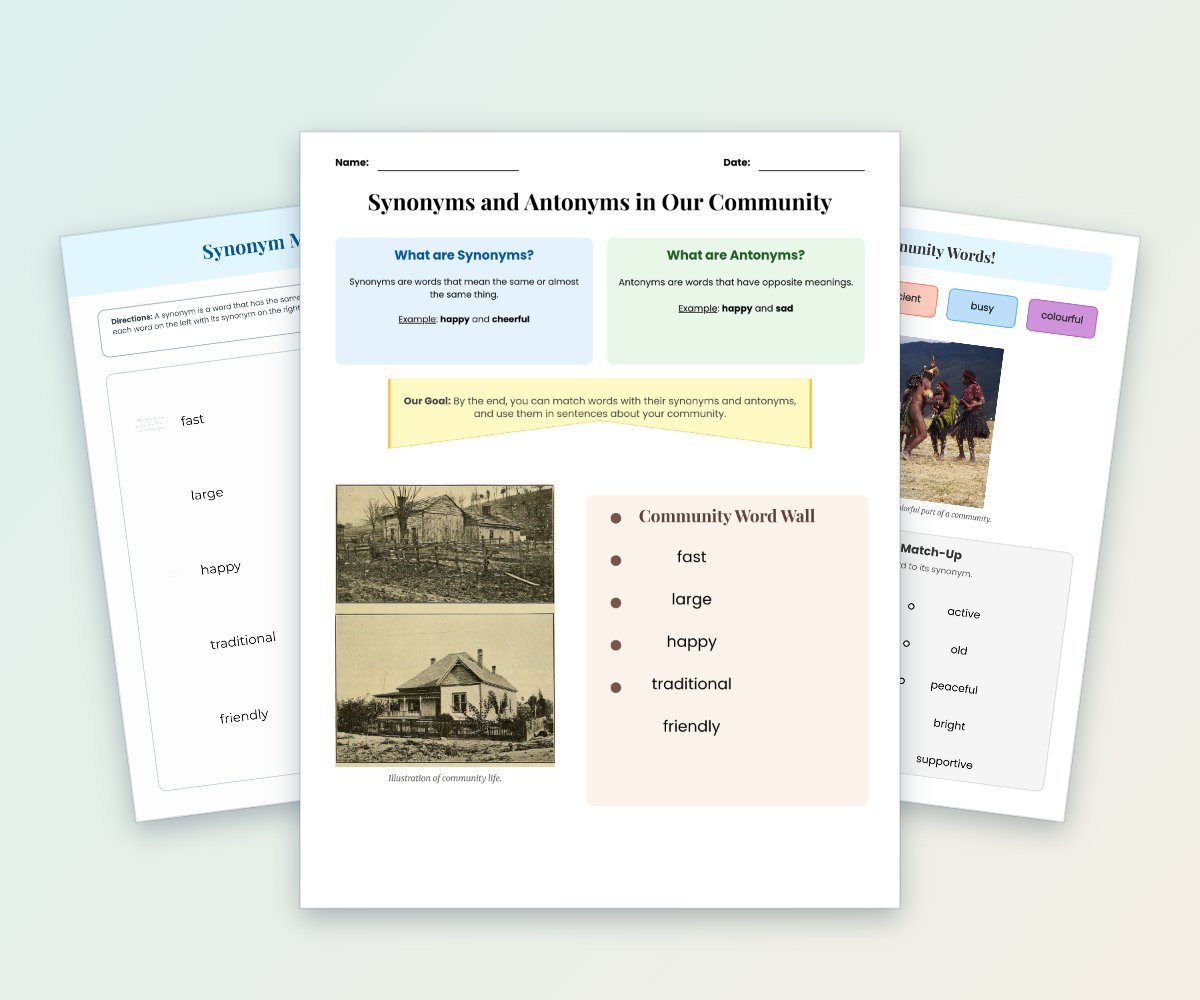
Students learn to identify synonyms and antonyms using community-themed vocabulary.
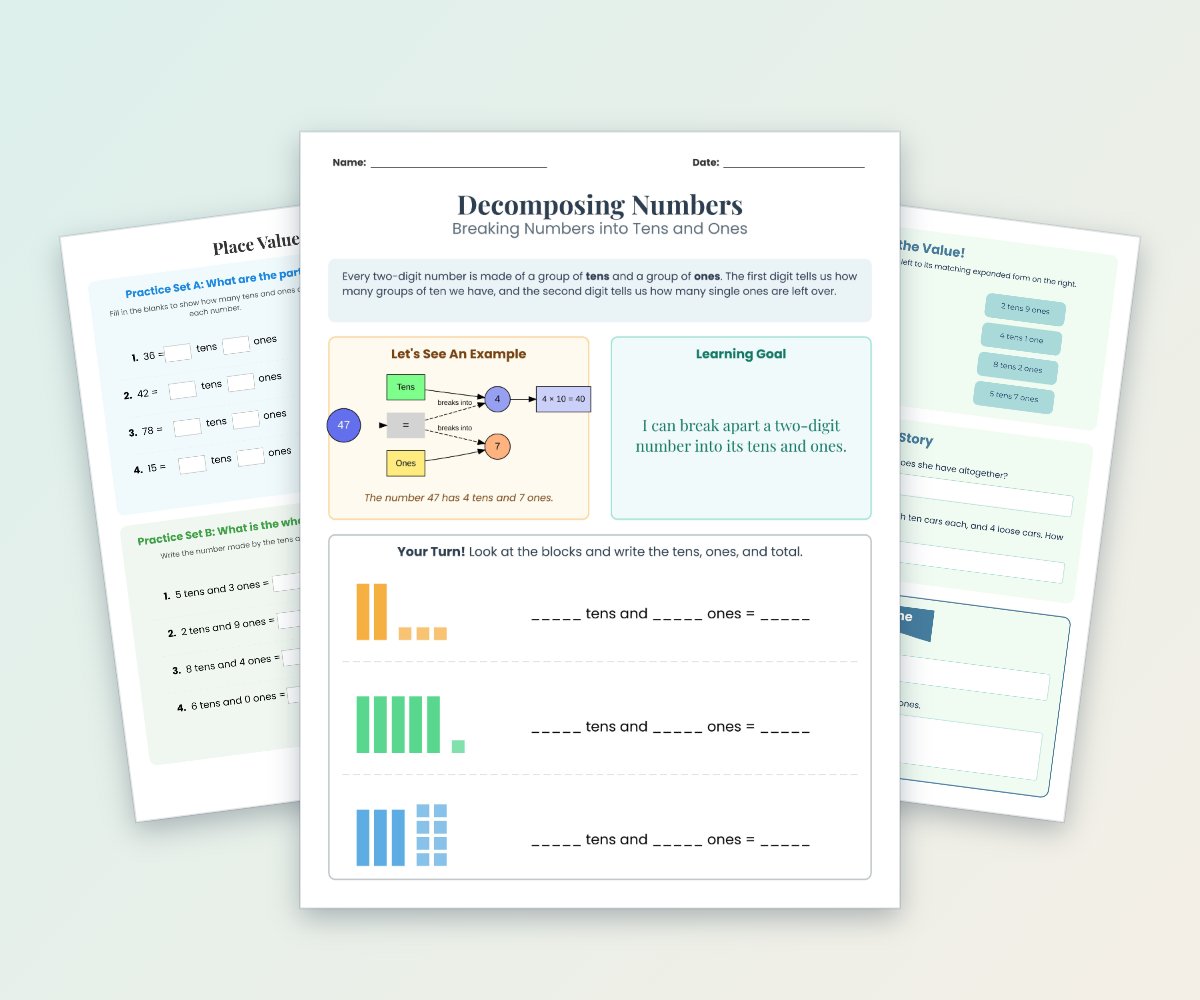
This four-page worksheet resource helps students decompose two-digit numbers into tens and ones using base-ten blocks, expanded forms, matching, and word problems.
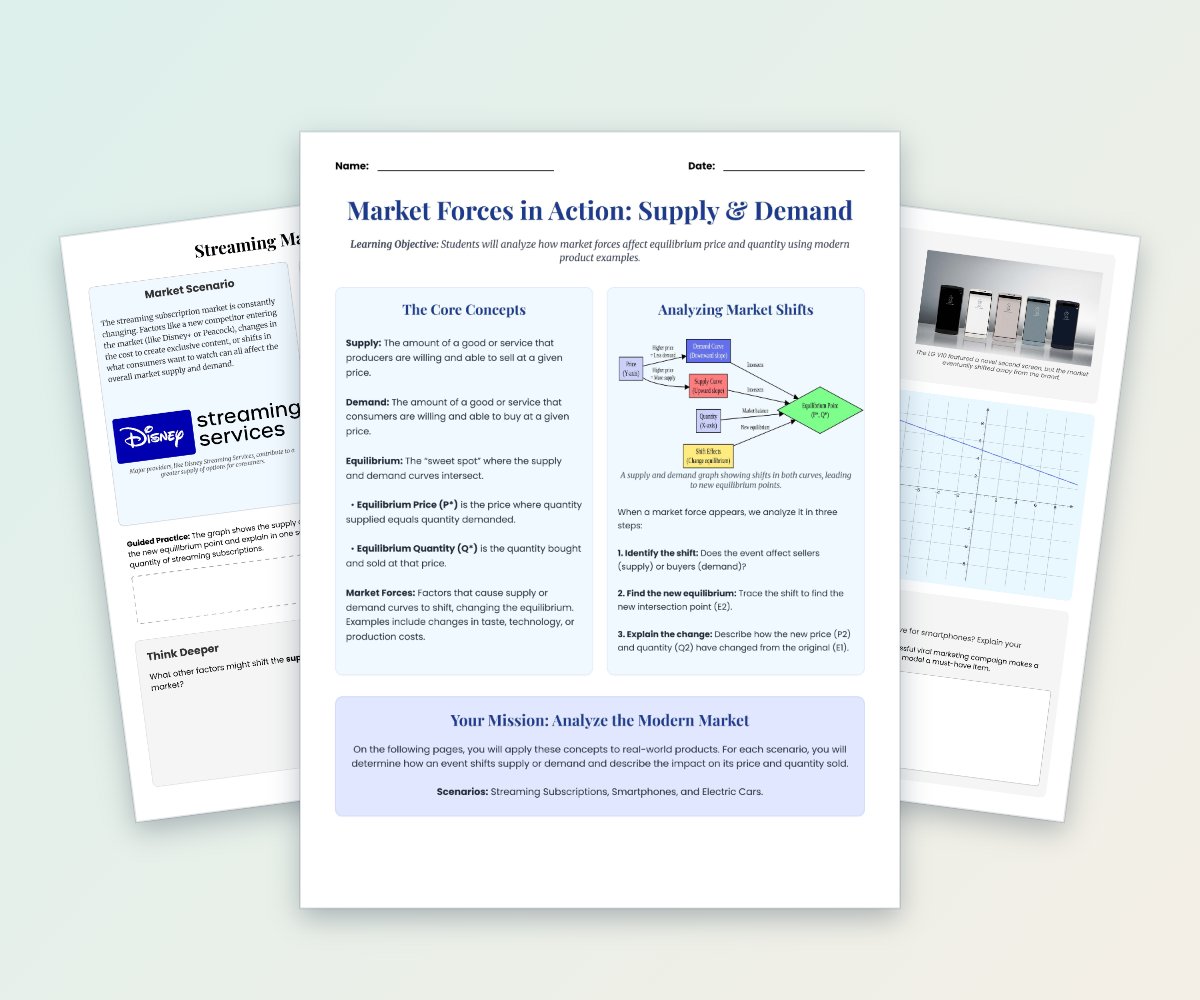
Students learn core supply, demand, and equilibrium concepts before analyzing market shifts in streaming services, smartphones, and electric cars.
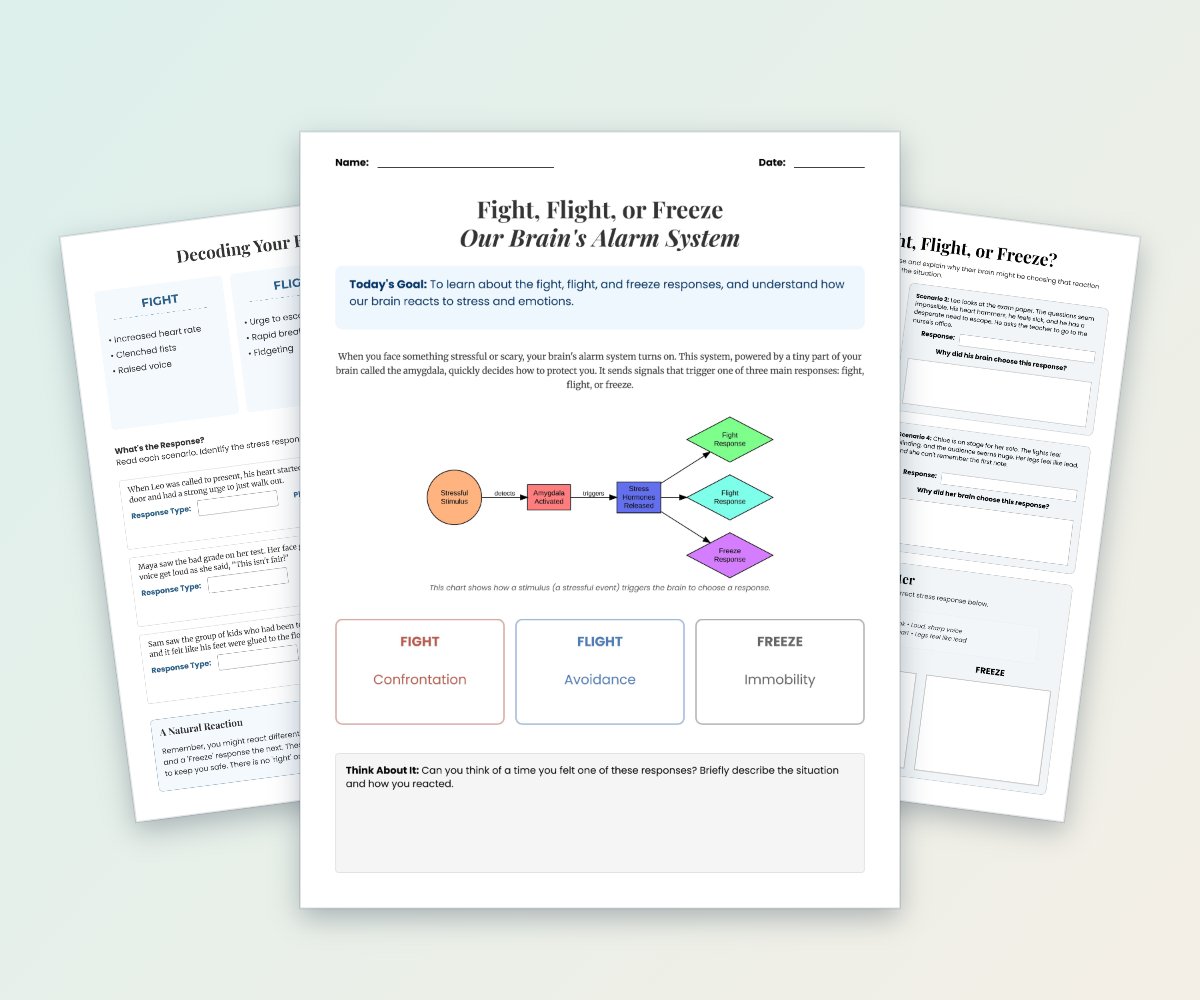
This four-page worksheet introduces the brain’s alarm system and explains fight, flight, and freeze responses.
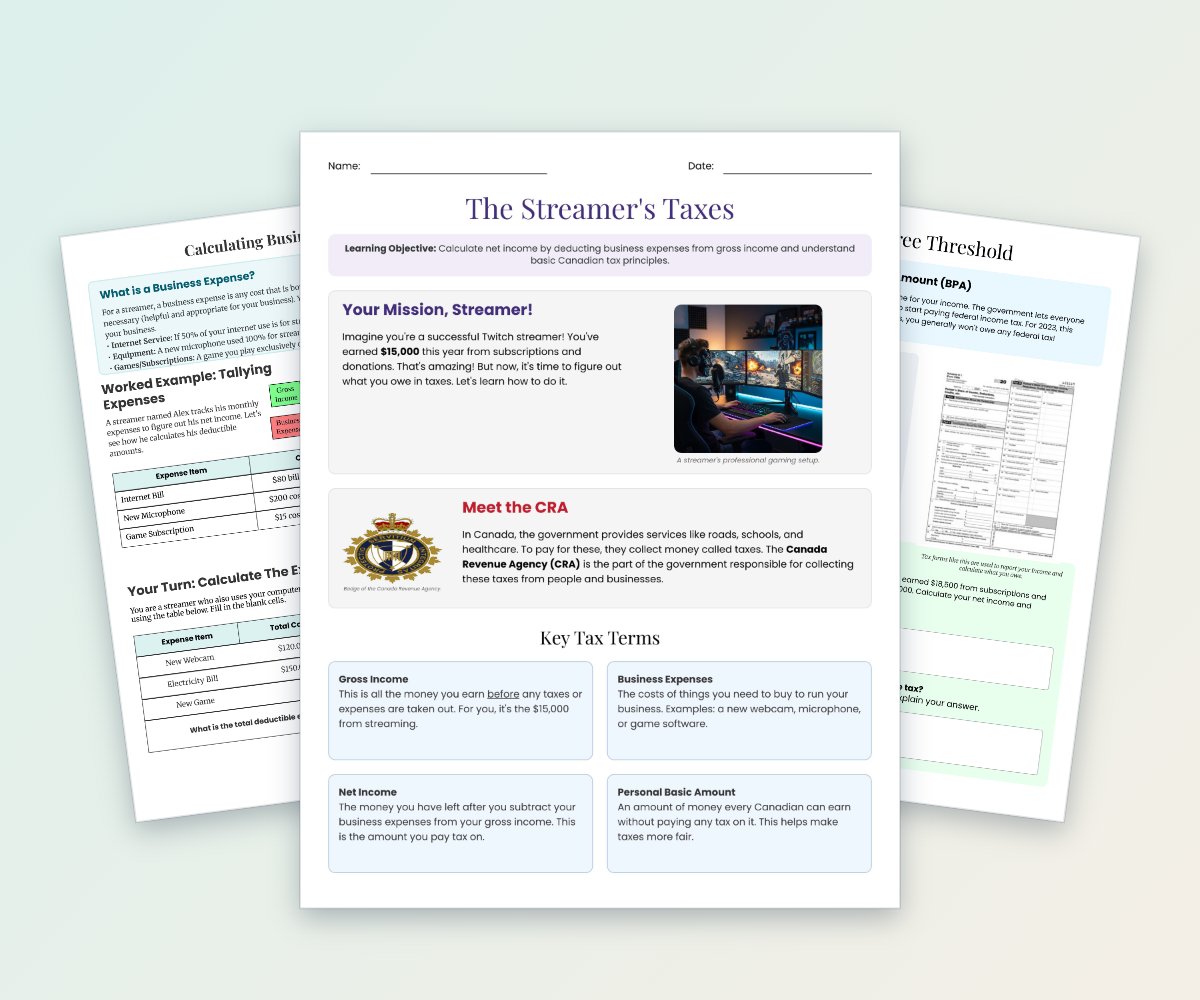
Students explore Canadian tax concepts through a streamer-themed scenario involving gross income, business expenses, deductible costs, and net income.
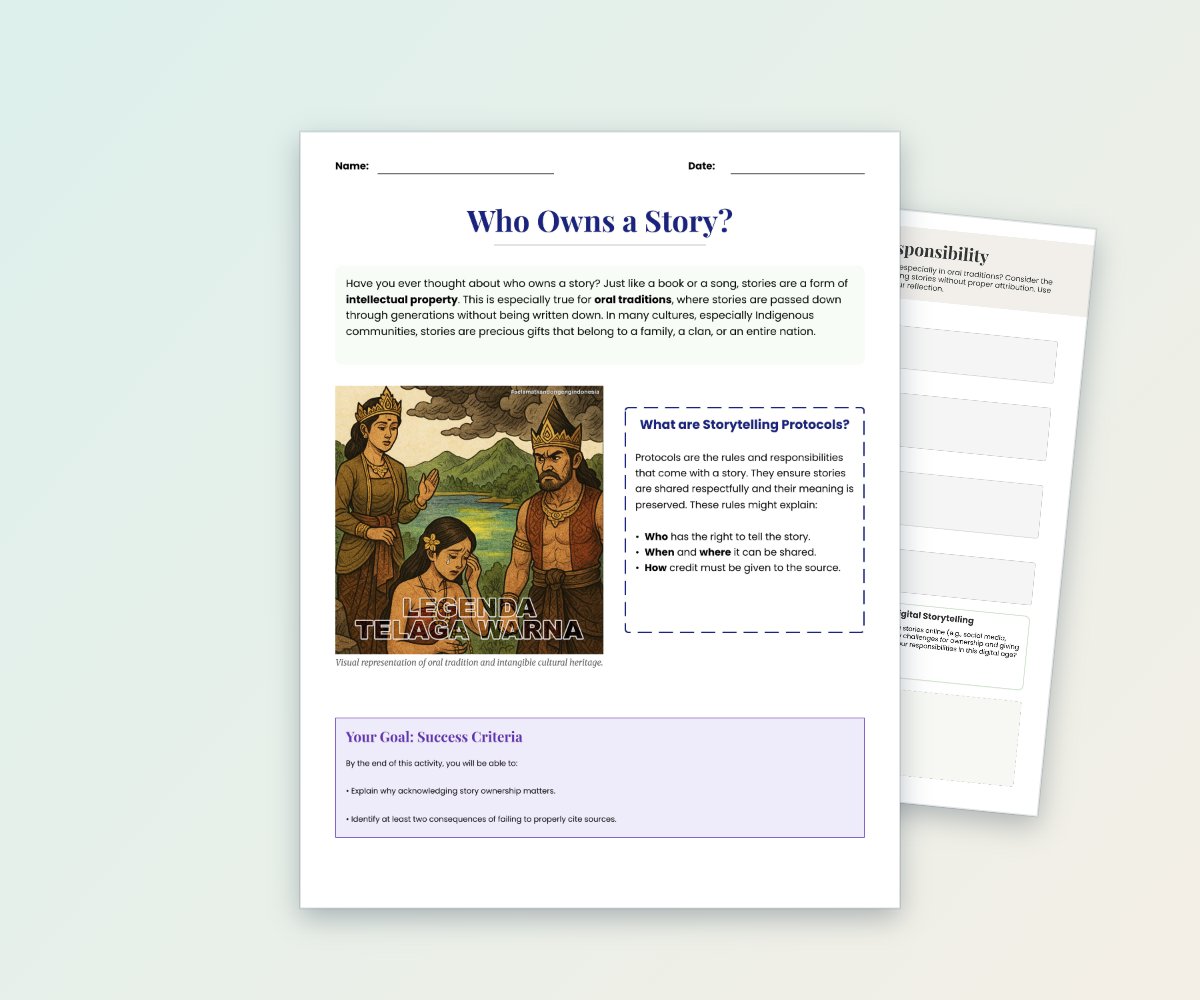
This student activity explores intellectual property, storytelling protocols, and respectful attribution, particularly within oral traditions and Indigenous communities.
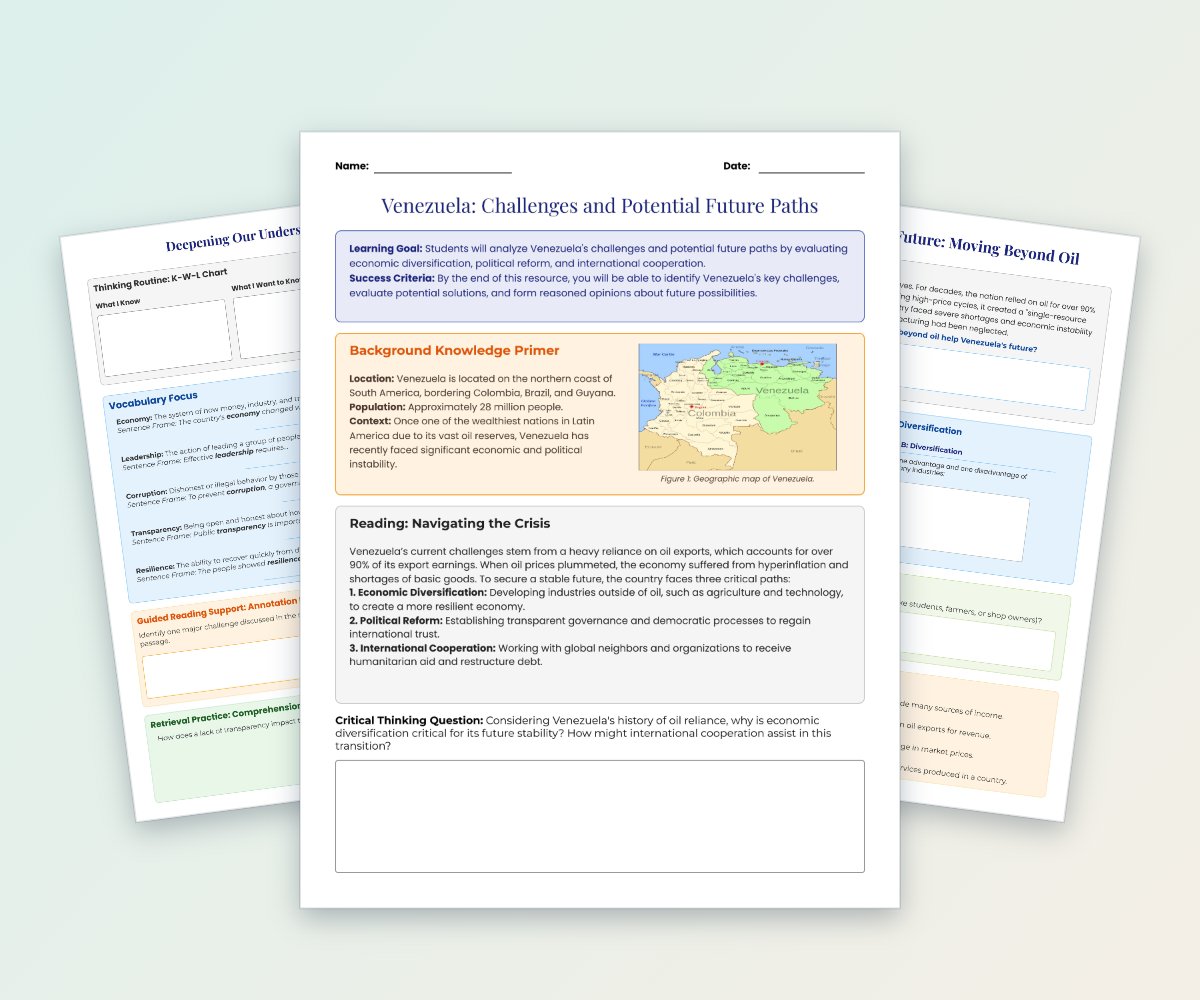
This four-page social studies resource guides students in examining Venezuela's economic reliance on oil, political challenges, and potential future paths.
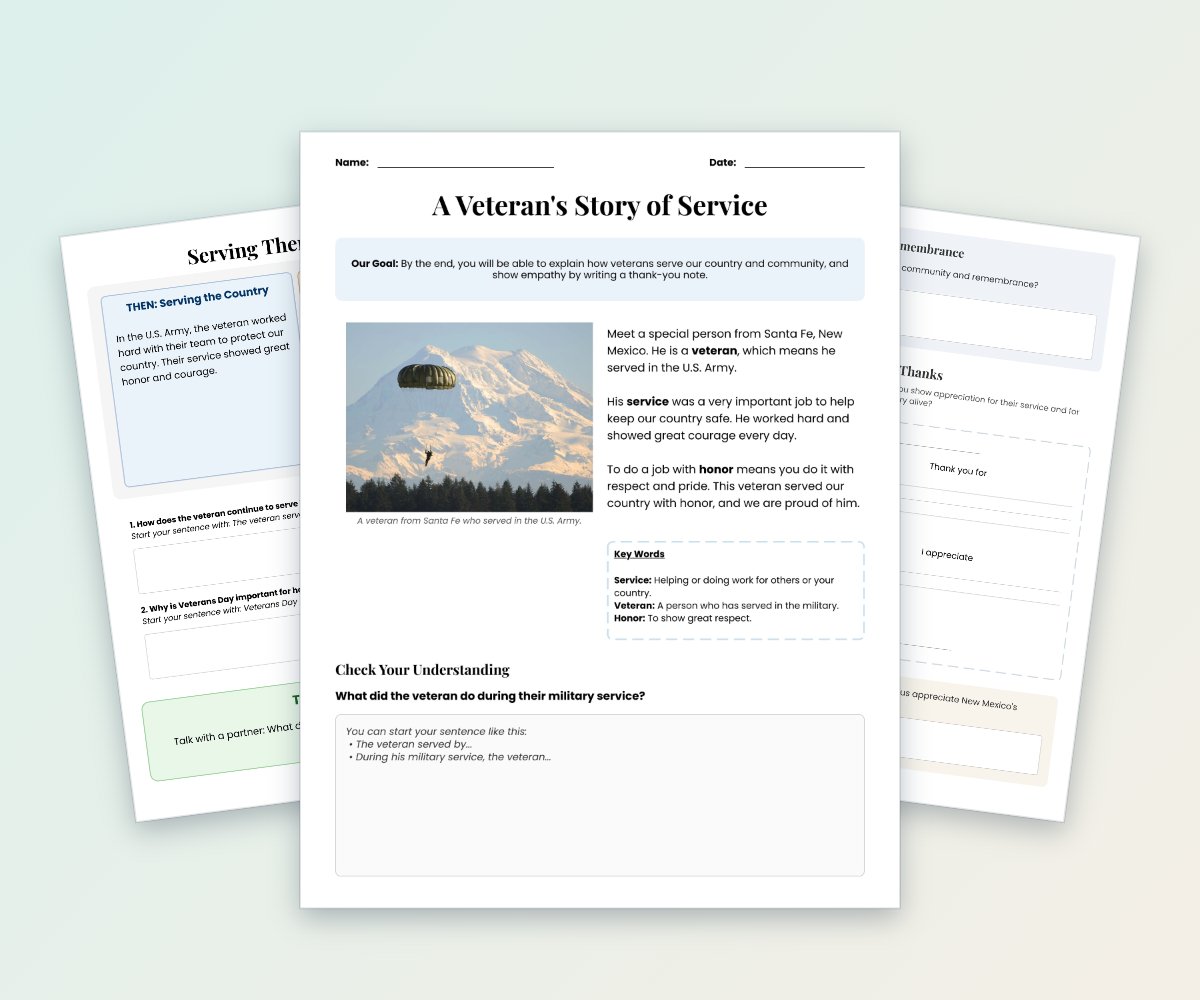
Students learn about a veteran’s military and community service through a short informational passage about a veteran from Santa Fe.
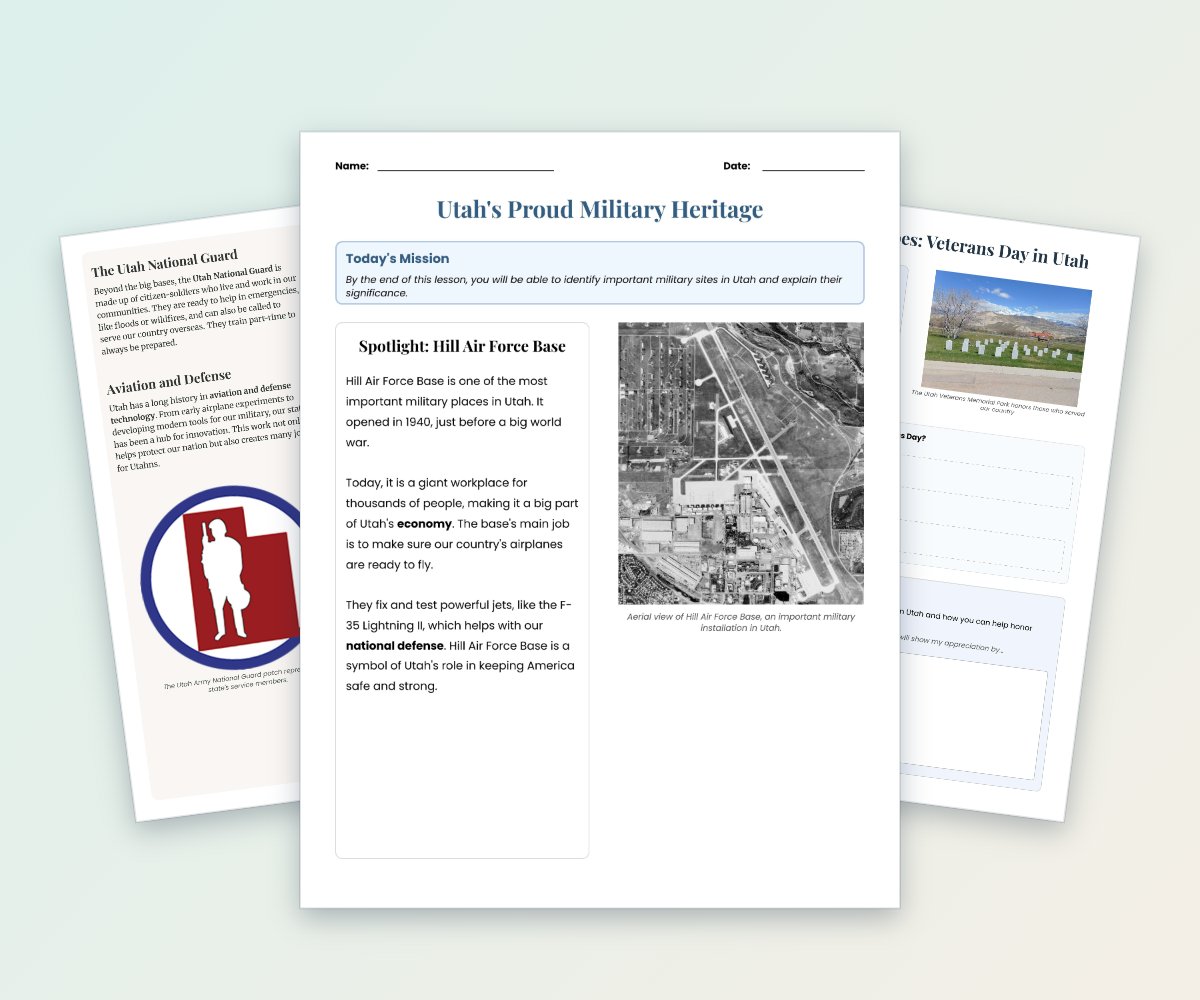
Students learn about Hill Air Force Base, the Utah National Guard, aviation and defense technology, and support for veterans.
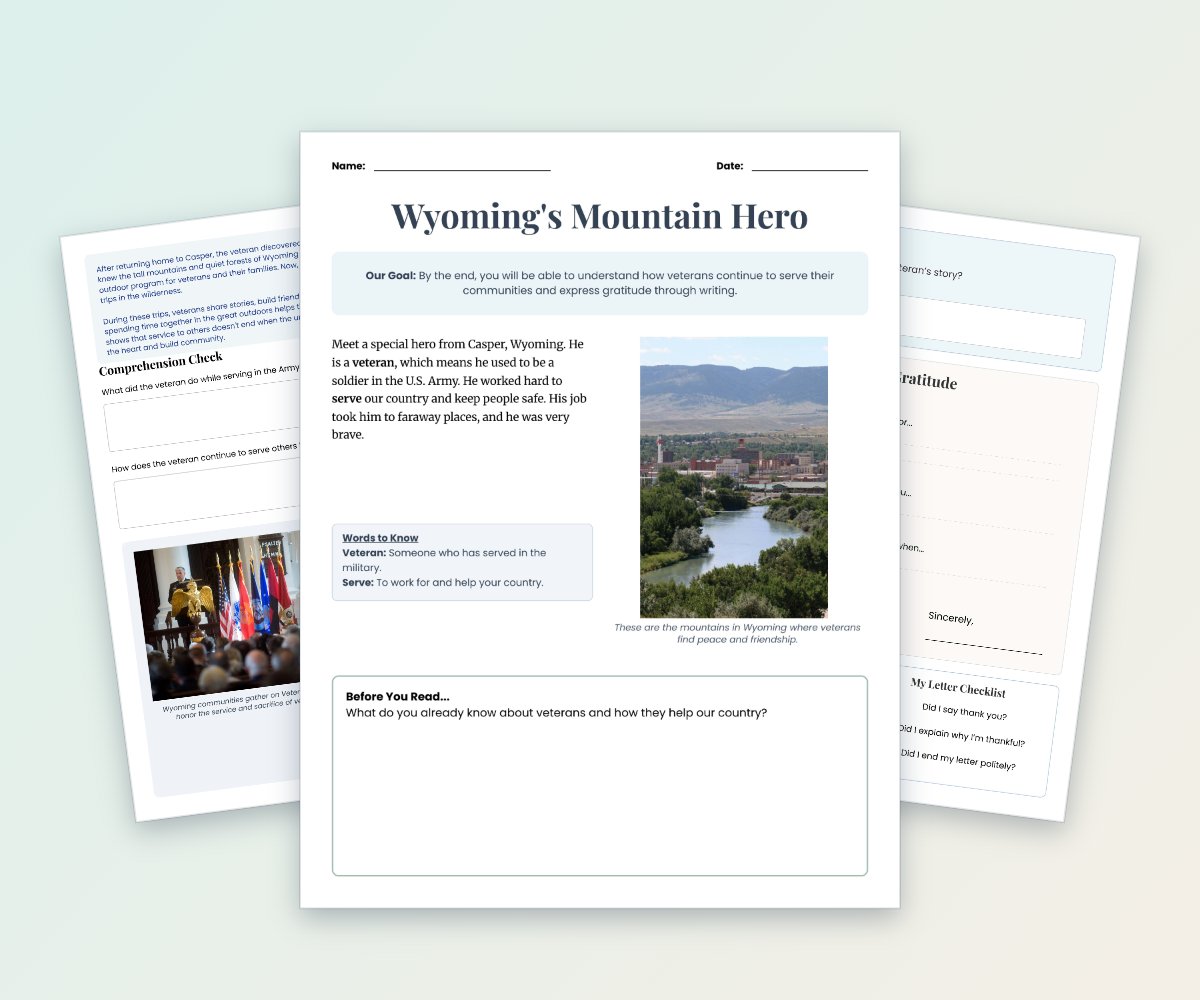
Students read about a Wyoming veteran who supports fellow veterans through outdoor activities, then complete comprehension and reflection questions.
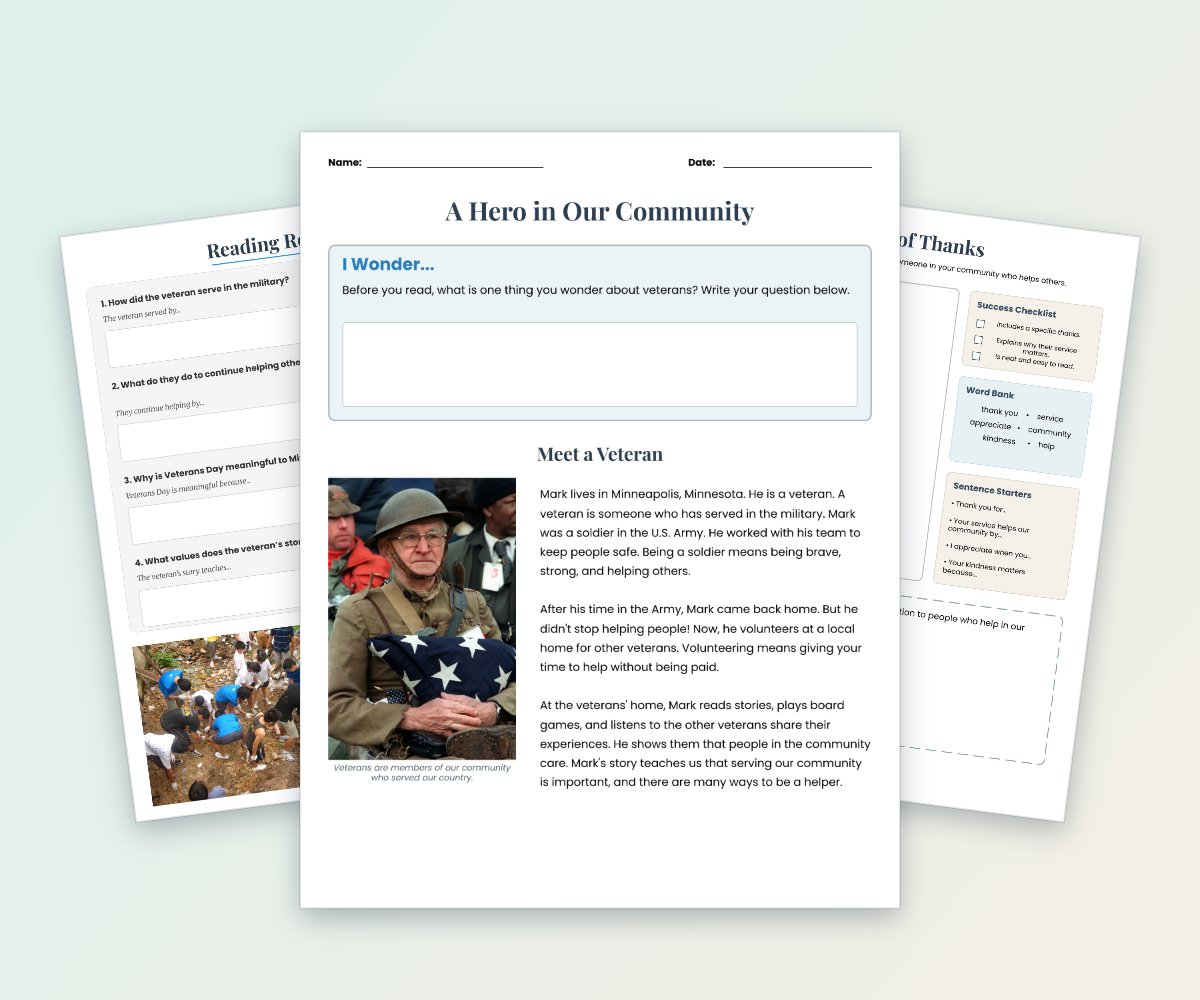
Students read about a veteran’s military service and community volunteering, then answer comprehension and reflection questions.
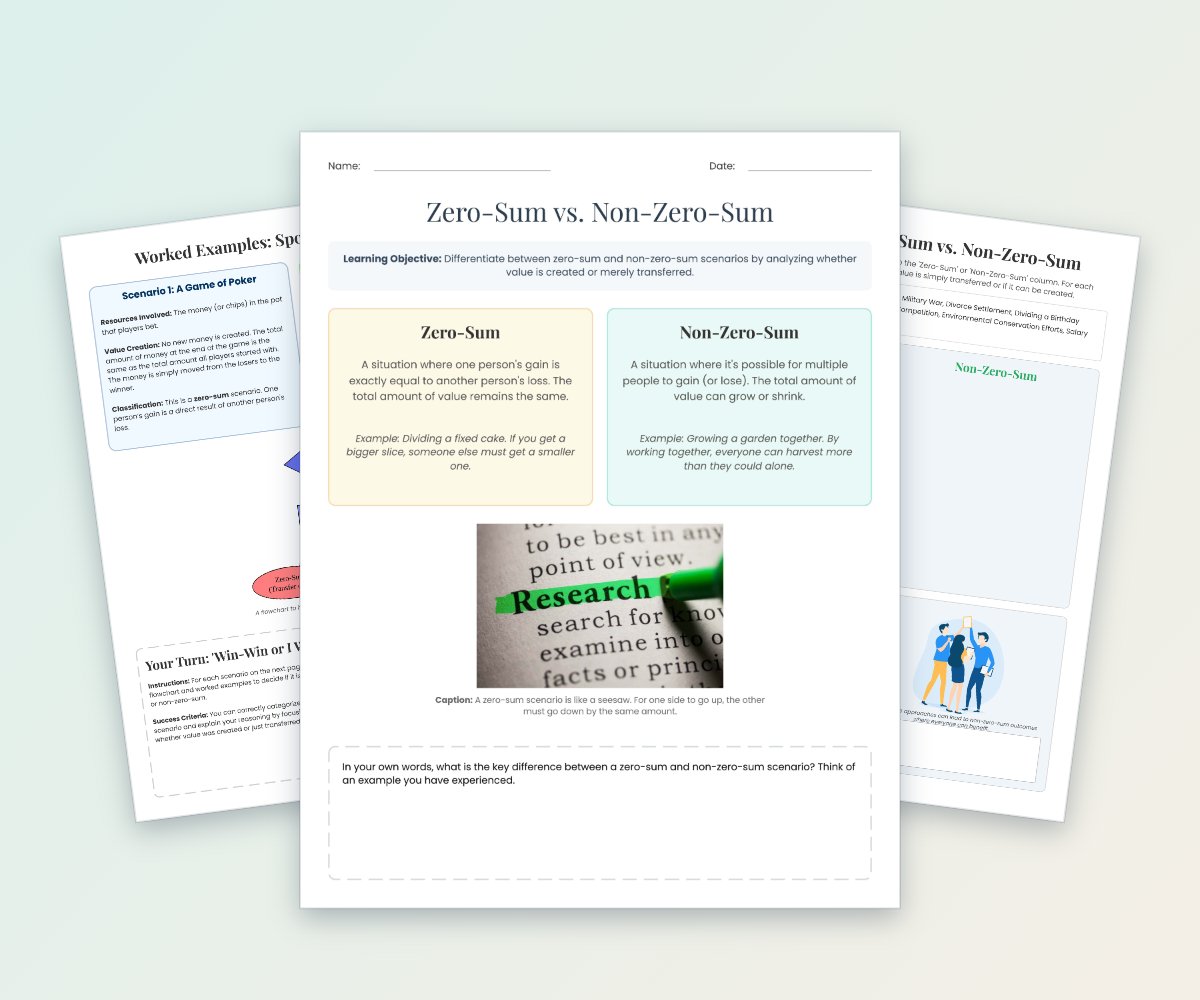
This four-page worksheet introduces zero-sum and non-zero-sum situations through definitions, examples, a decision flowchart, and scenario sorting.
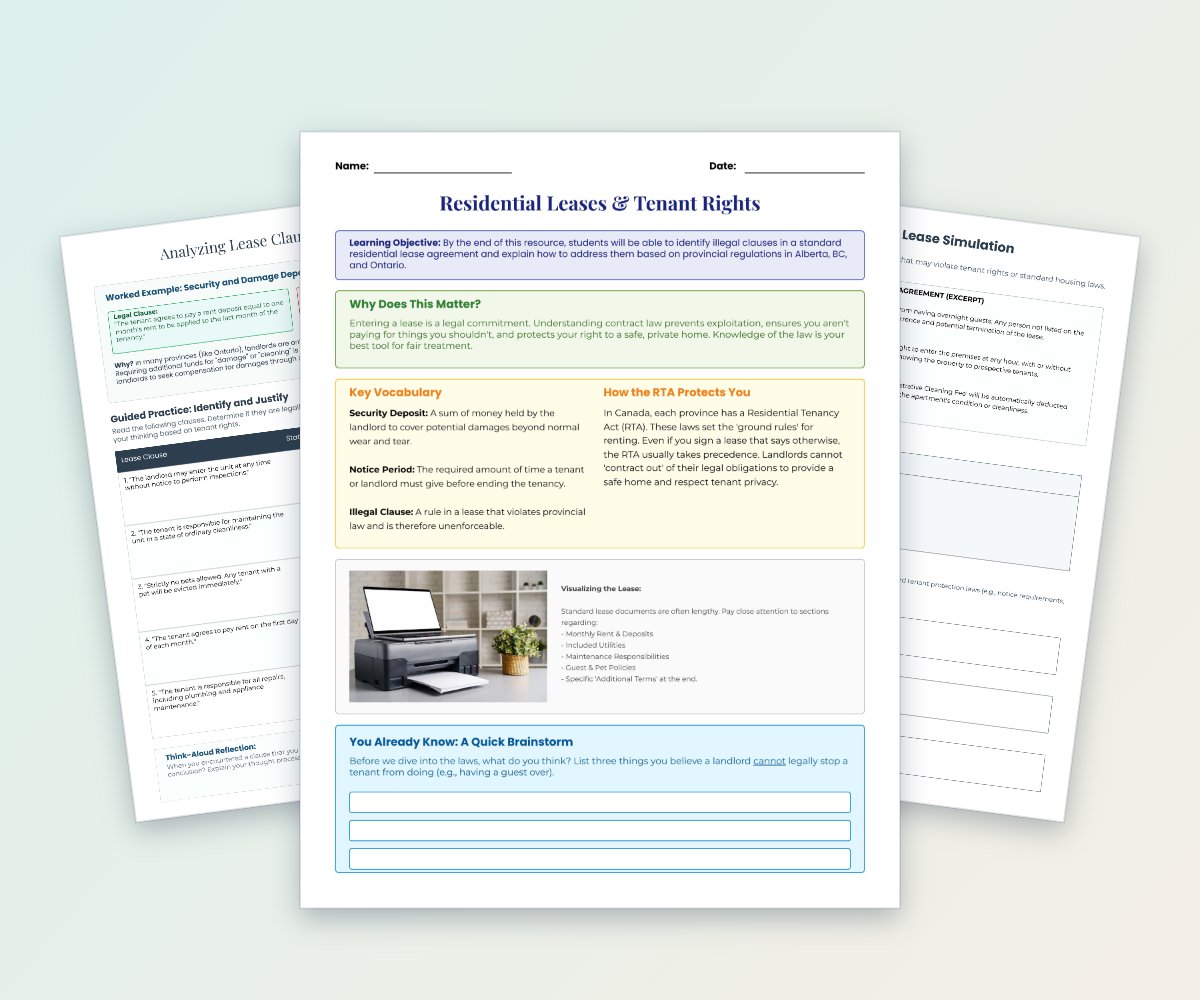
This student resource introduces lease vocabulary, tenant protections, and common legal or void lease clauses.
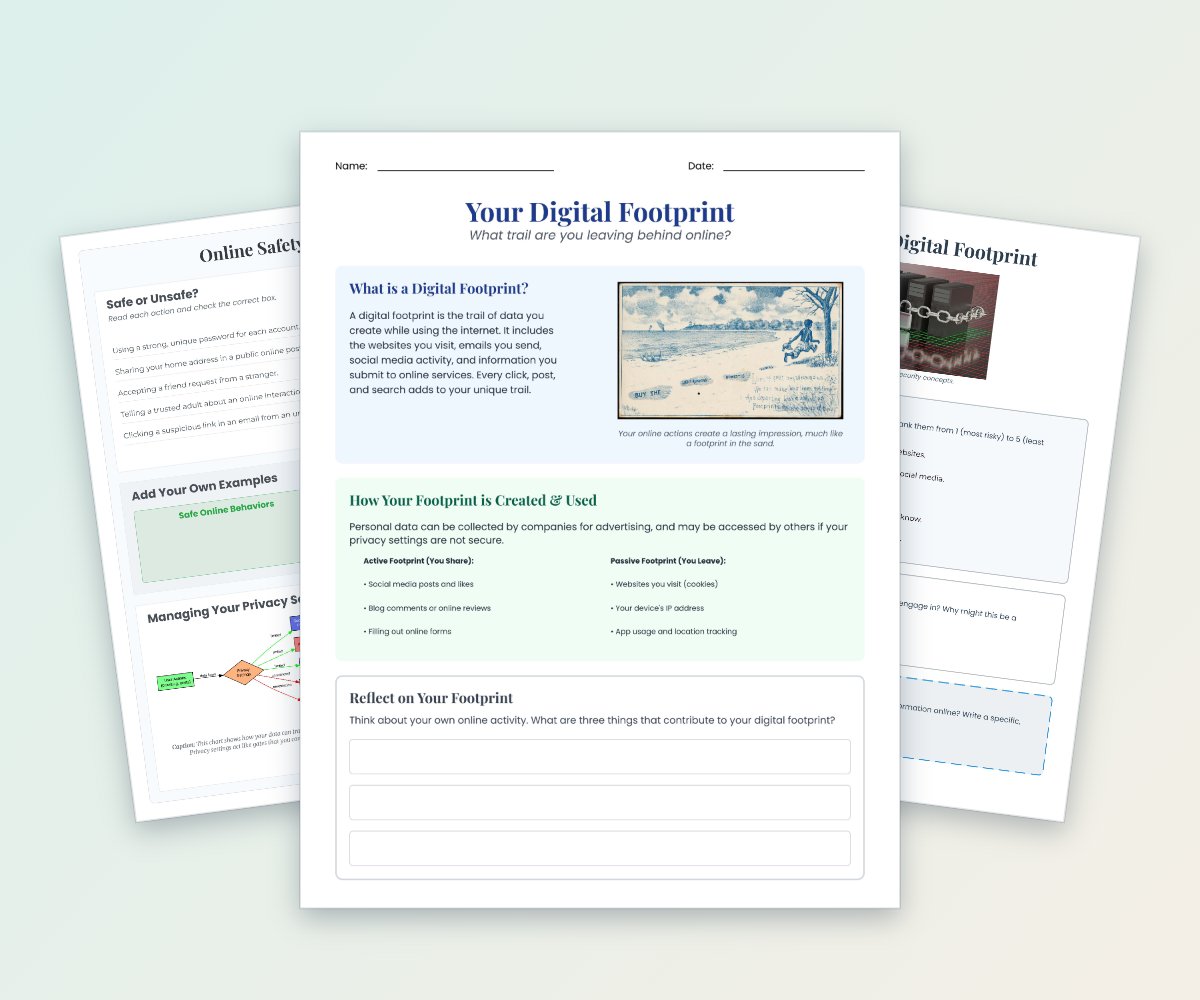
This three-page worksheet introduces digital footprints, active and passive data collection, online safety, privacy settings, and digital risks.
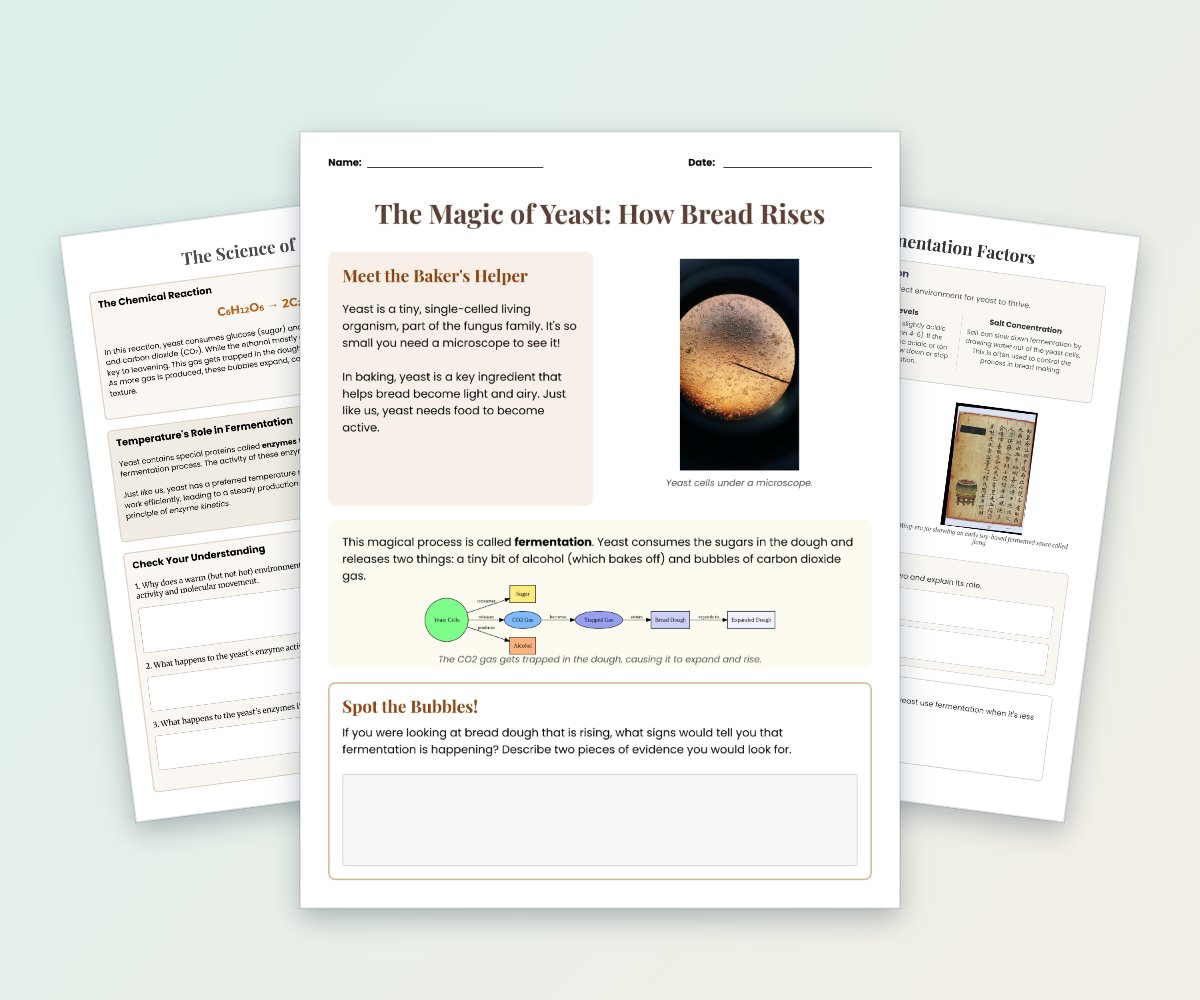
This three-page science worksheet explores how yeast causes bread to rise through fermentation and carbon dioxide production.
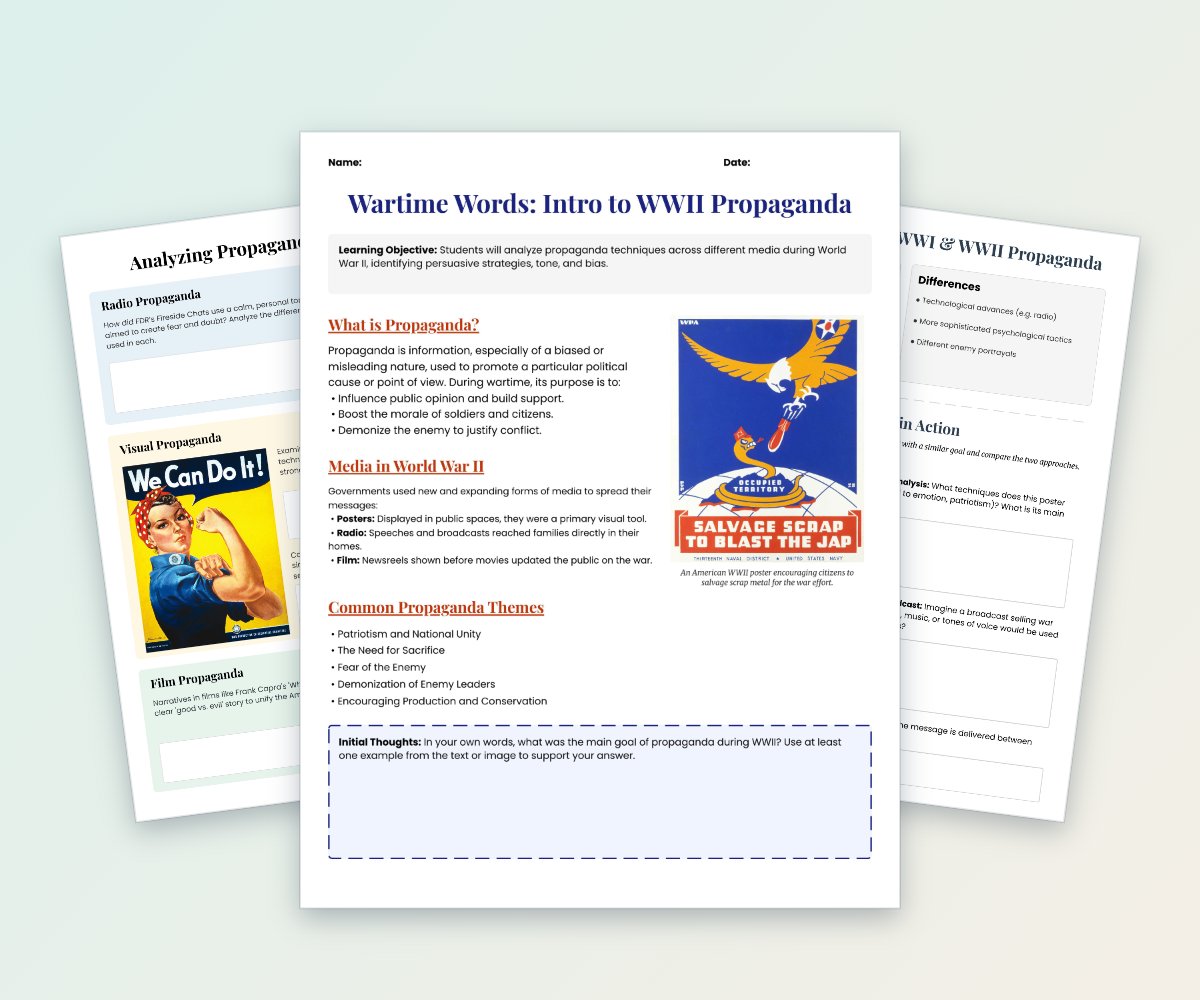
This five-page resource introduces wartime propaganda and guides students in analyzing posters, radio broadcasts, films, emotional appeals, tone, bias, and persuasive techniques.
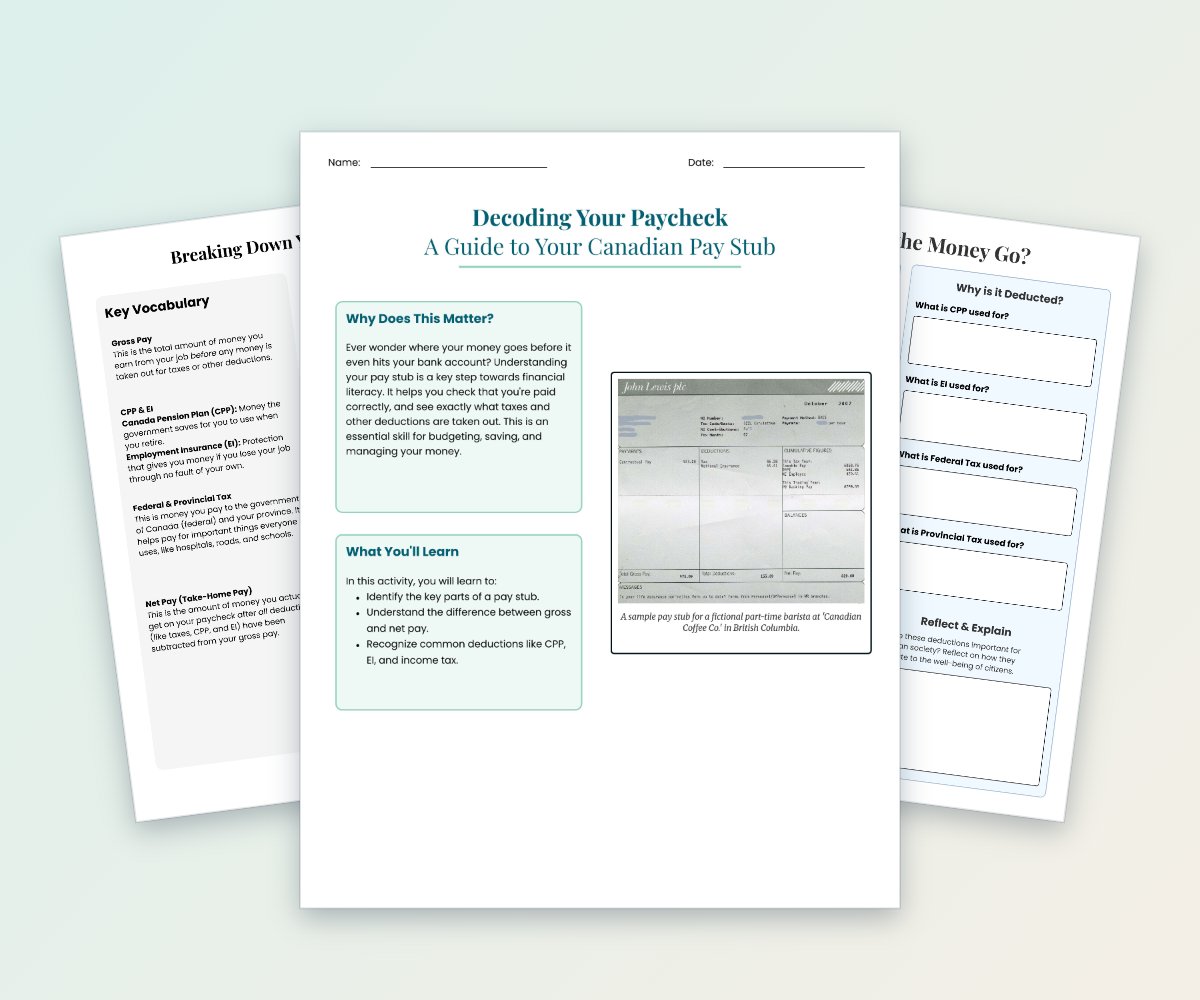
Students learn to identify gross pay, net pay, CPP, Employment Insurance, and federal and provincial tax deductions using a fictional Canadian pay stub.
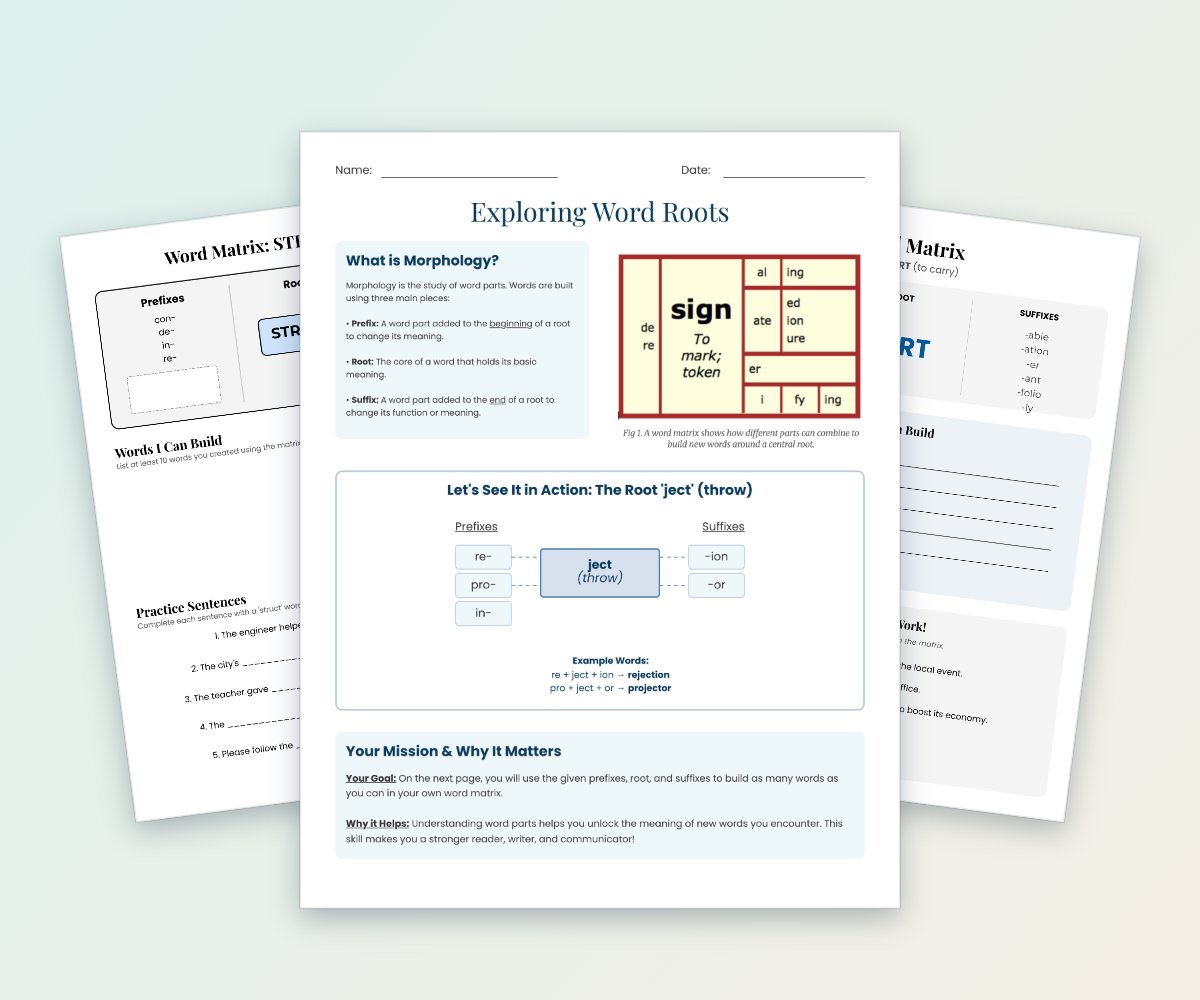
Students learn how prefixes, roots, and suffixes combine to form words and change meaning or function.
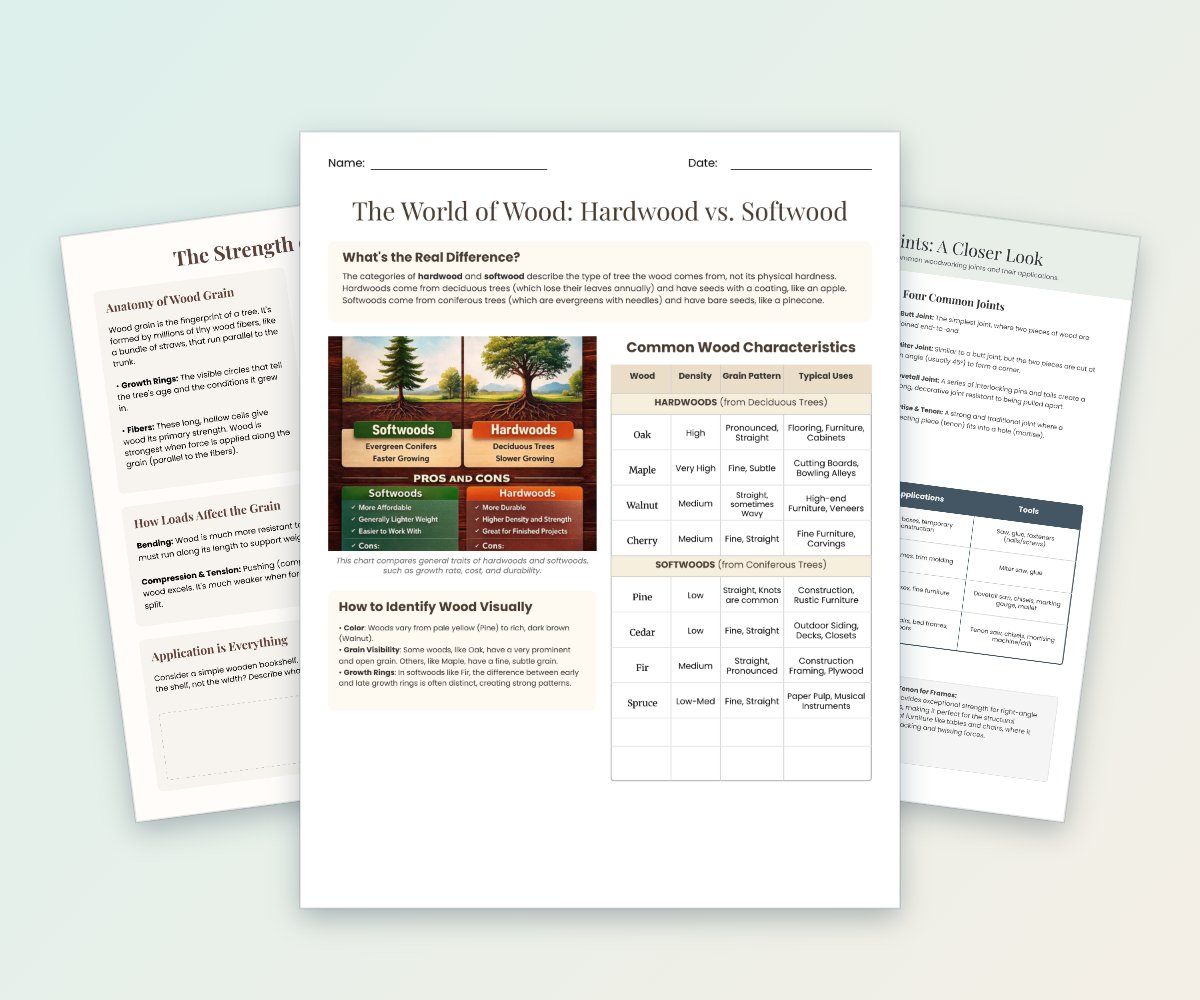
This four-page worksheet introduces hardwoods and softwoods, including their origins, characteristics, uses, and visual identification.
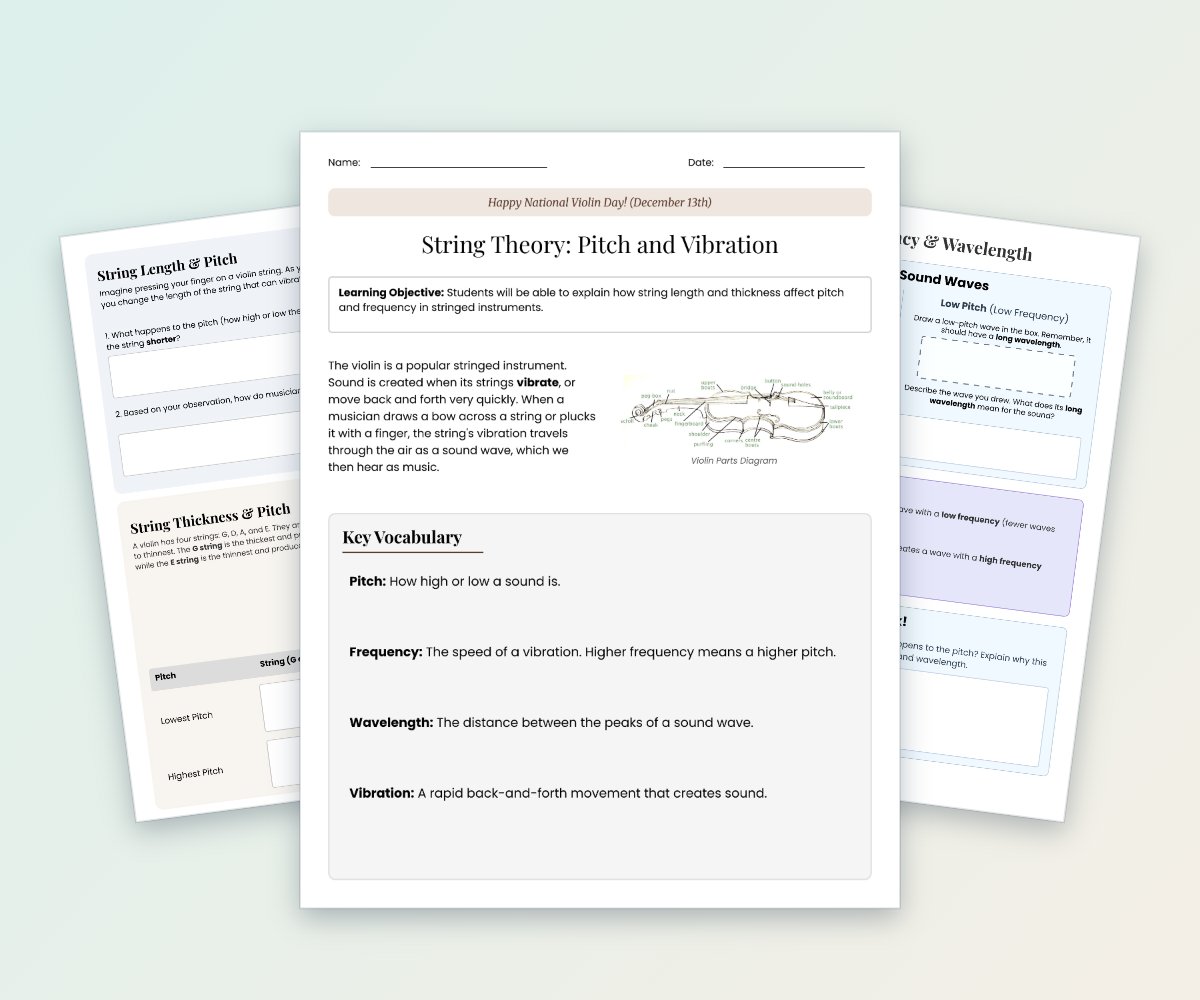
Students explore how string length, thickness, and tension affect pitch and frequency using violin examples.
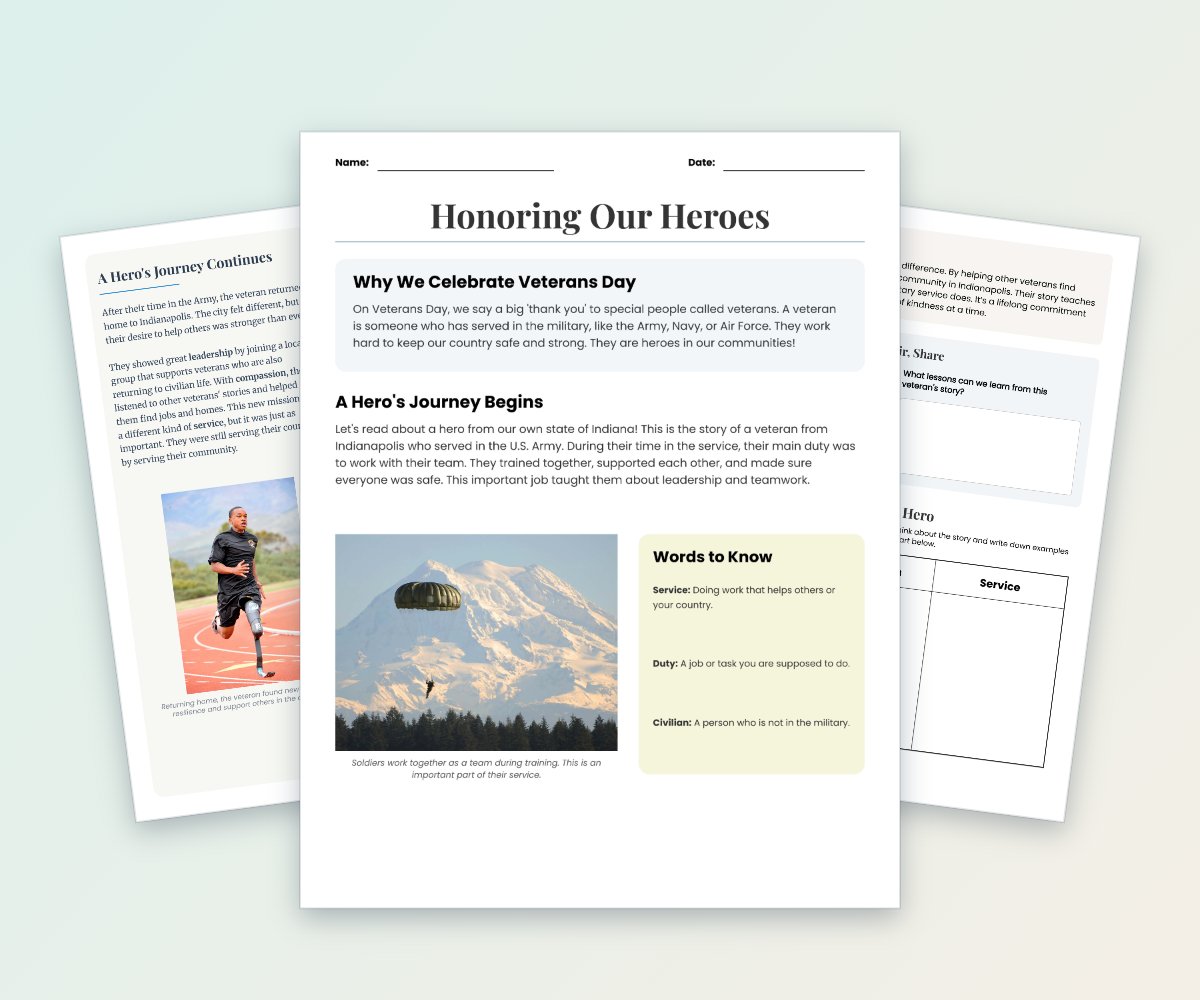
Students learn why Veterans Day is celebrated through a short story about an Indiana veteran’s military and community service.
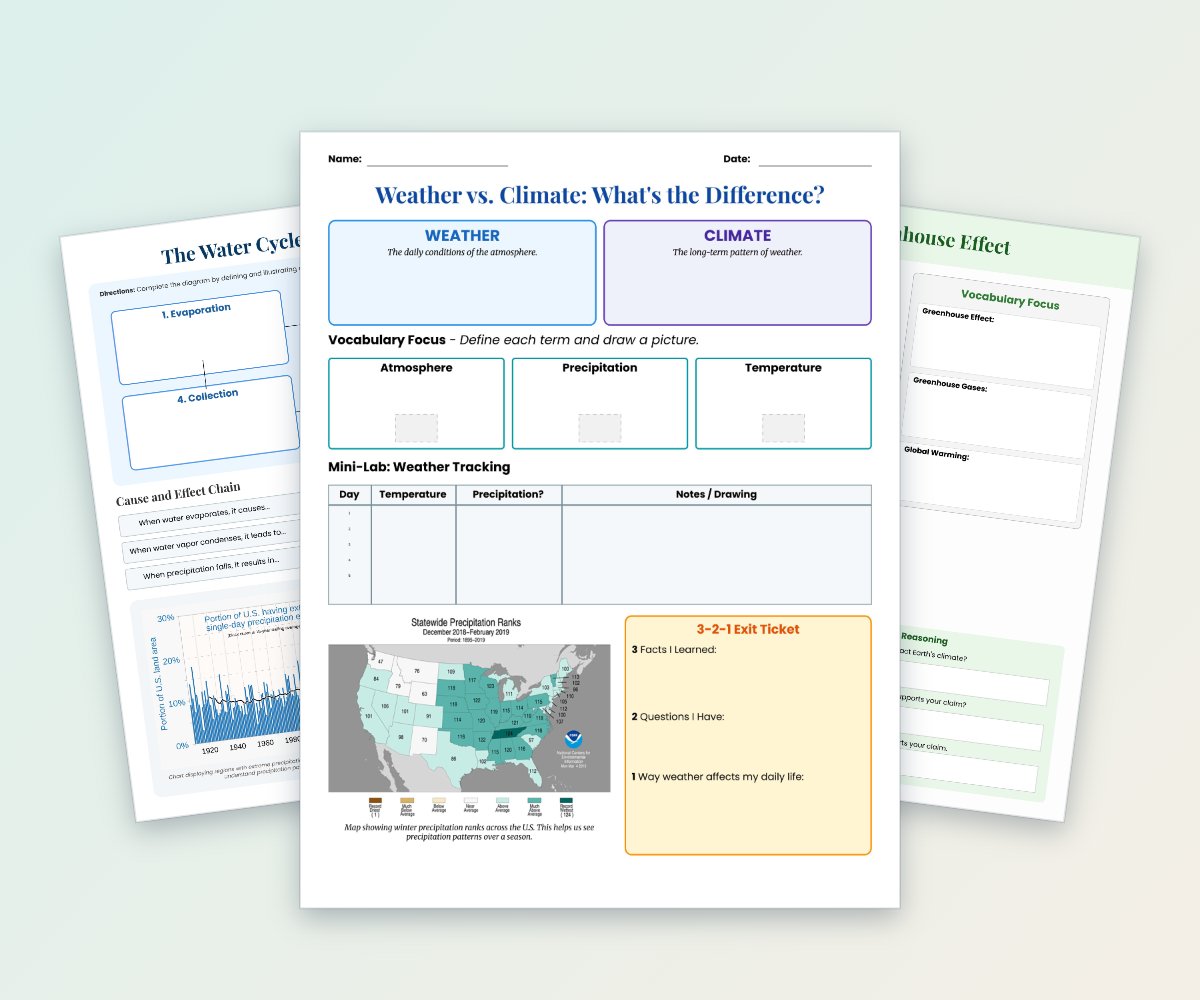
This four-page science activity pack helps students distinguish weather from climate and explore precipitation patterns, the water cycle, and the greenhouse effect.
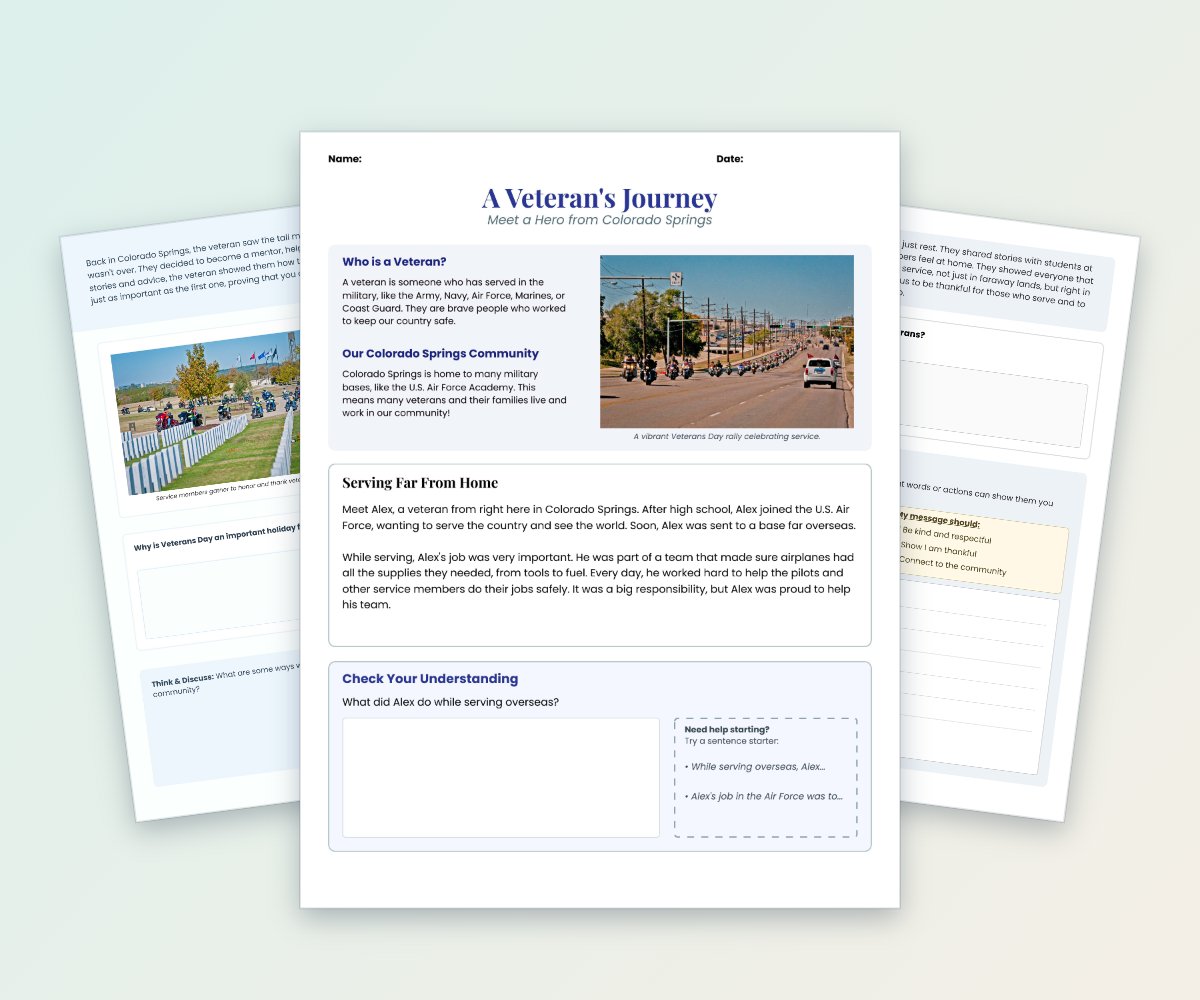
Students learn what veterans do through a relatable story about an Air Force veteran from Colorado Springs.
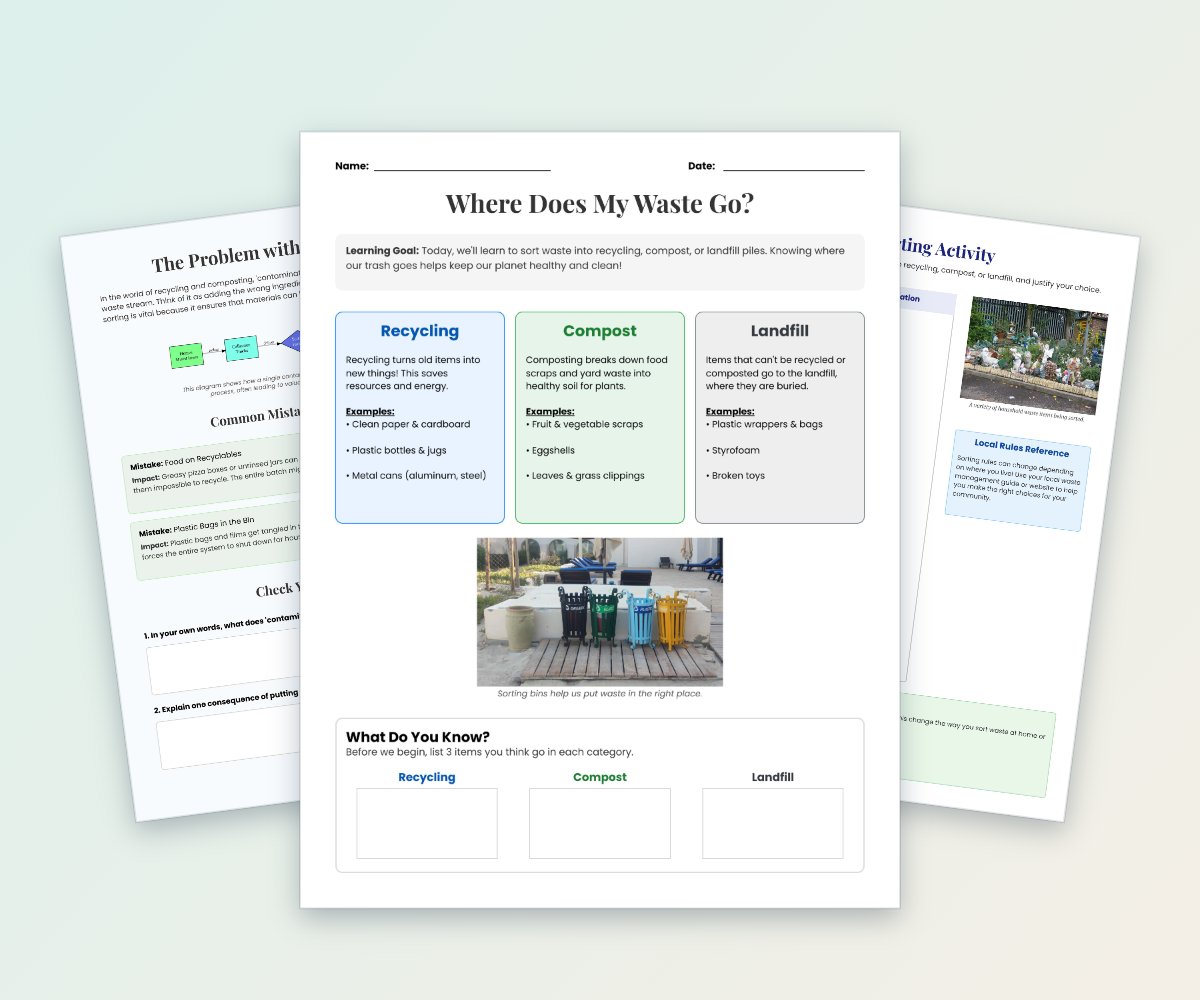
Students learn to classify household waste as recyclable, compostable, or landfill material.
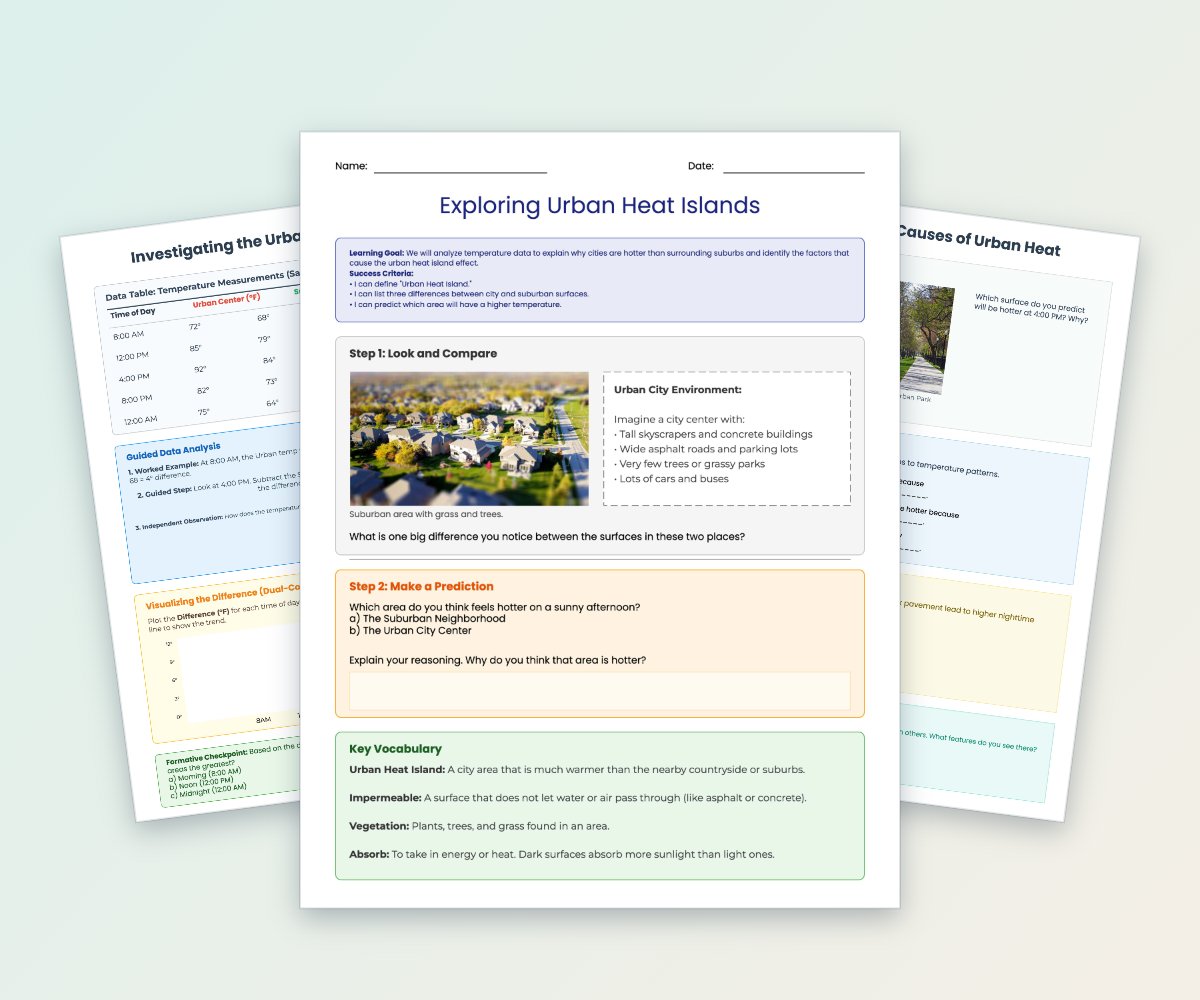
Students investigate why urban areas are warmer than nearby suburban areas using comparisons, temperature data, vocabulary, and guided analysis.